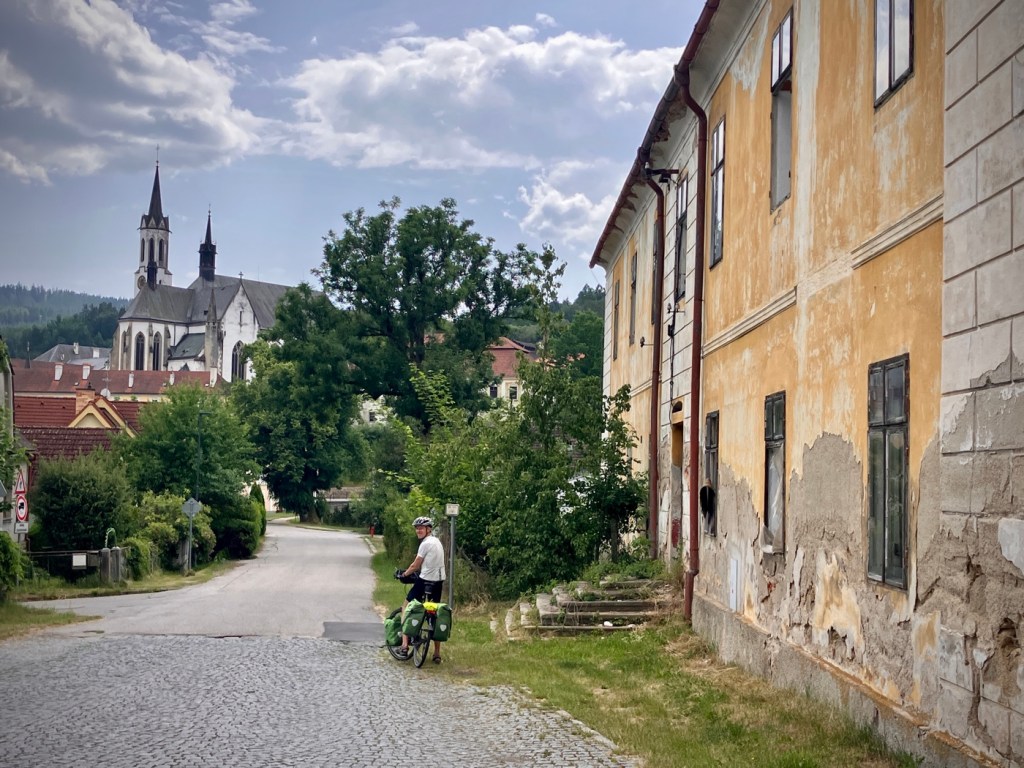
After 10 days of breaking in our bikes, too much headwind, and a busier Danube bike touring scene, it was time for something hillier and wilder. So it was with double excitement we approached the hills and mountains separating Bavaria and Czechia. First of all, I love to cross land borders versus flying into a place. And, we both prefer the challenge of some hills in our bike tours. Well, maybe not this many hills…
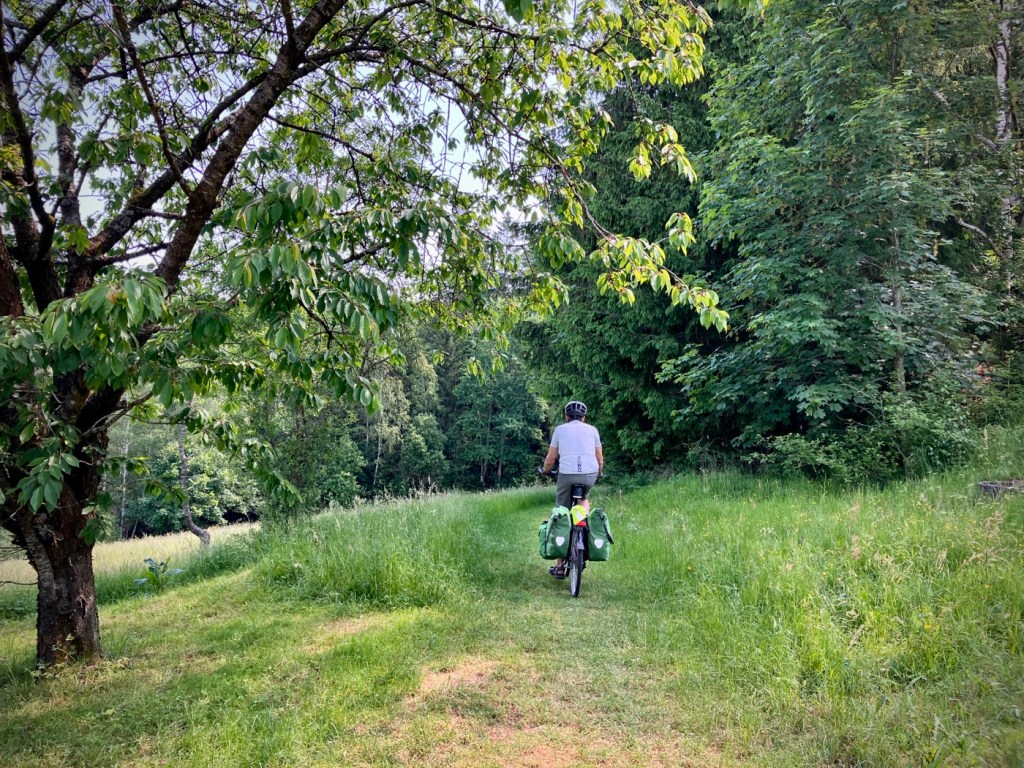

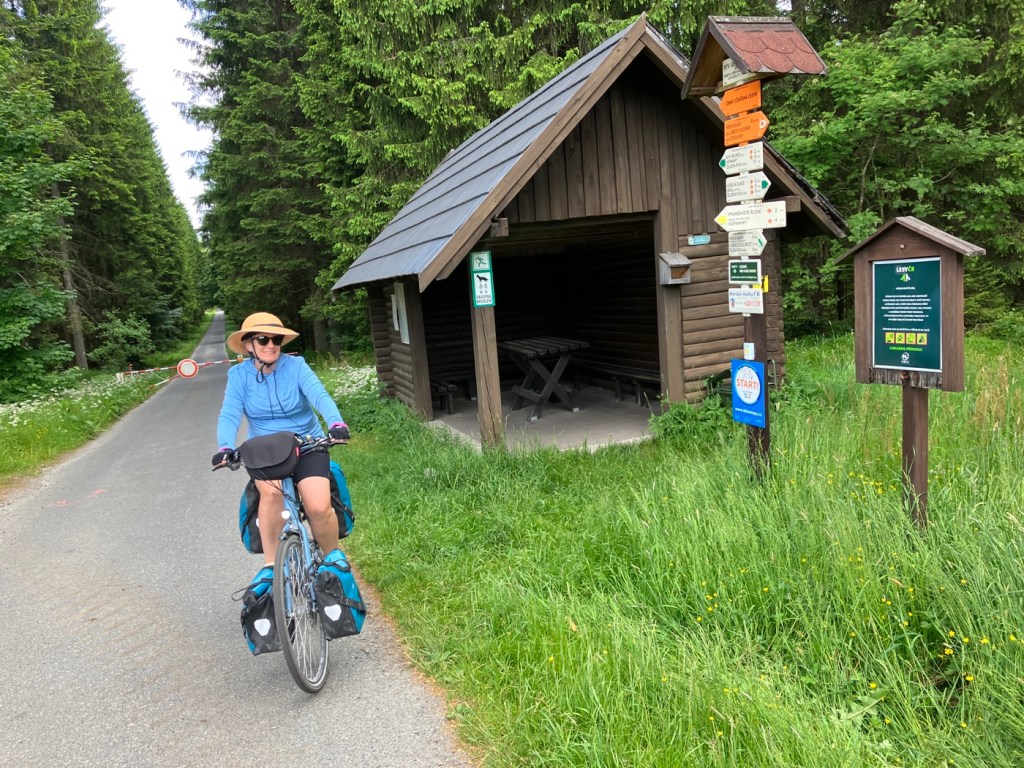
When you cross on foot or bike, you really appreciate the significance of a border. So, as we joined Eurovelo 13, the Iron Curtain Trail, and approached the former border with the Warsaw Pact nations of our childhoods, there was still an excitement.


We both fondly recalled a light snow falling on us 17 years ago while crossing a pass on foot with our backpacks into the younger Czech Republic outside Jelenia Góra, Poland. We got dropped by a bus on the Polish side and then walked down into Harrachov on a wooded fire road. It felt magical and adventurous.
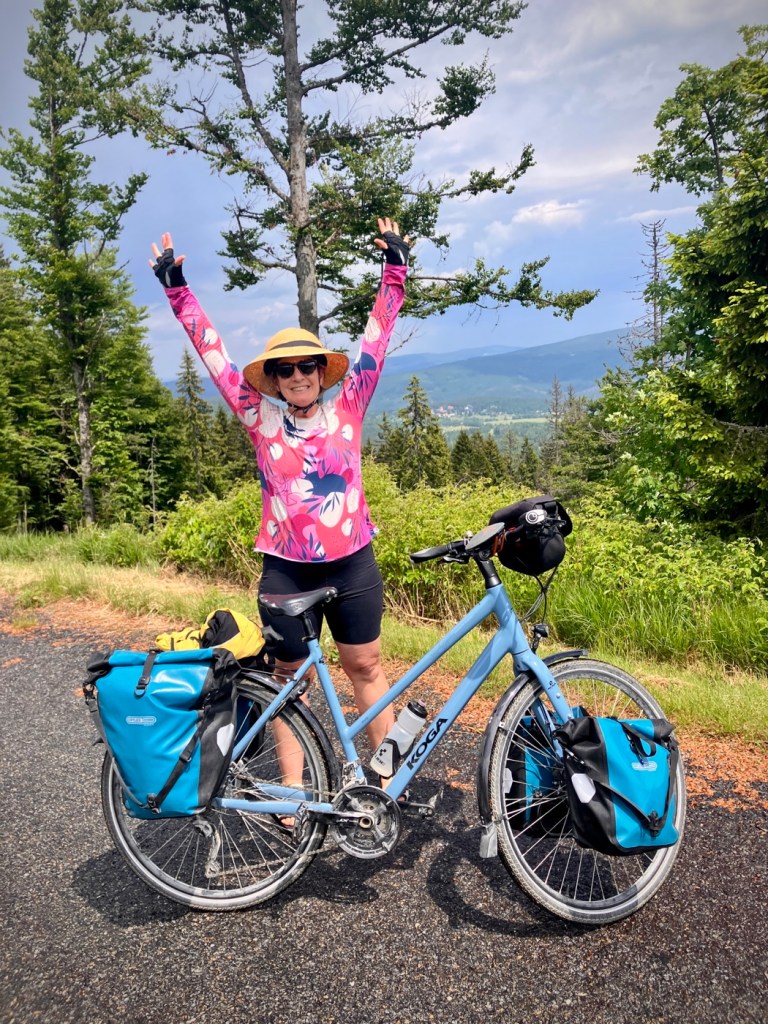
Many of the border crossings are now quite ordinary as developed roads have been upgraded and offer seamless connections in the EU. However, the old edges of forest, mountains, and remote villages on each side of the old divide still show scars from the divide of nearly 45 years. Isolated and cut off from either side, with strict controls on who could be near the border on the Czechia side. Many small villages have come back to life after abandonment or use only by military personnel. Many are ghost ruins and have never come back.
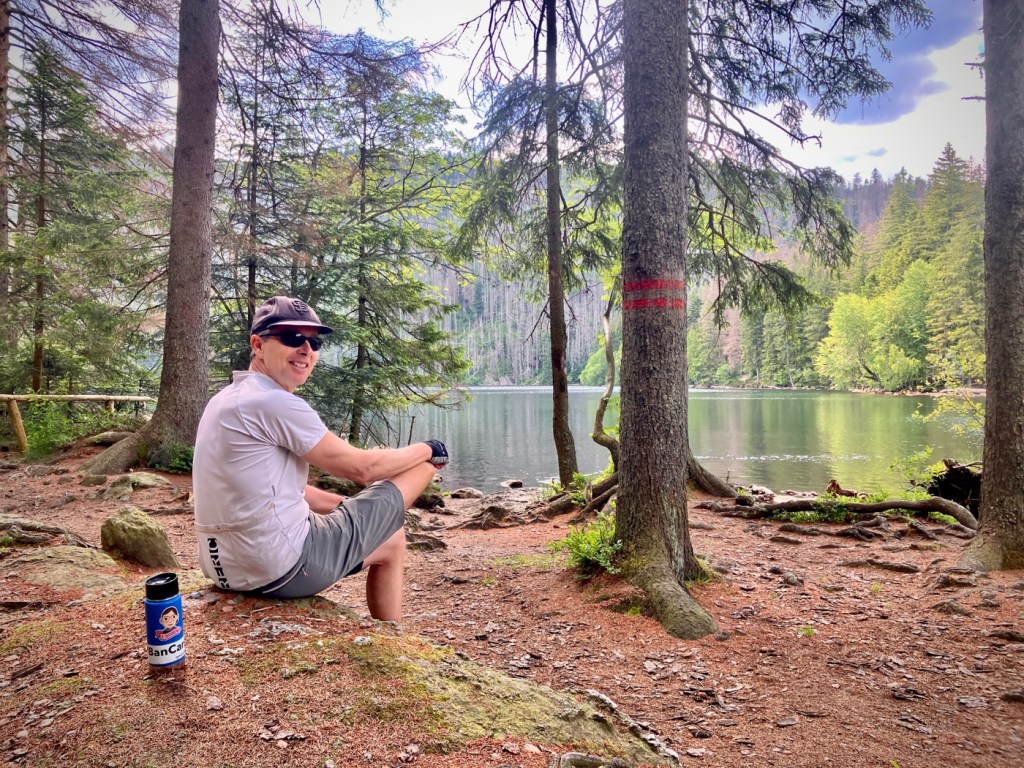


Consequently, this region also makes it a great place to see wildlife and unspoiled nature. Parts of the German Elbe River we cycled in 2019 had a similar dynamic, and the Elbe is still one of the wildest rivers in Central Europe

Another change since we travelled through Eastern Europe in 2006, is the expanded dominance of English as a second language. Back then, anyone over 30 likely spoke some Russian, maybe a bit of German, but with limited English except for the young and educated. Now that age divide is about 50. Ages 30 to 50 often have some English, and many under 25 have excellent English. The schools all now have some English language classes. And when we dive deeper in conversation with the more fluent people, the reasons are varried, but all focus on a desire to be connected to the world, and to appreciate western, and more specifically American culture.


The first English speaker we met was a young waiter at a small resort hotel in the mountains. He was in Czechia on a limited Visa from Moldova and hoped to make enough money to advance his opportunities beyond his home country, which is still one of the poorest in Europe. (Moldova is aspiring to join the EU, but they still have some hurdles to that goal.)

Labor shortages and global imbalances mean that people are in constant motion towards opportunity, and this only ceases if a country or region limits travel and migration. The extreme of this imbalance is the ongoing (and likely getting worse) migration wave from much of Africa into Europe. Desperation and tragedy go hand and hand as the recent and ongoing deaths in the Mediterranean exemplify. There are no easy answers, except to strongly support aid and development in struggling countries combined with humane refuge assimilation and admittance policies.


Germany is a different country since the post 2015 Syrian refuge crisis and many would argue that it’s for the better. However, it’s easy to see how immigrants from such a vastly different culture struggle in a very rigid German culture. America does seem a bit easier on that front. But I digress.


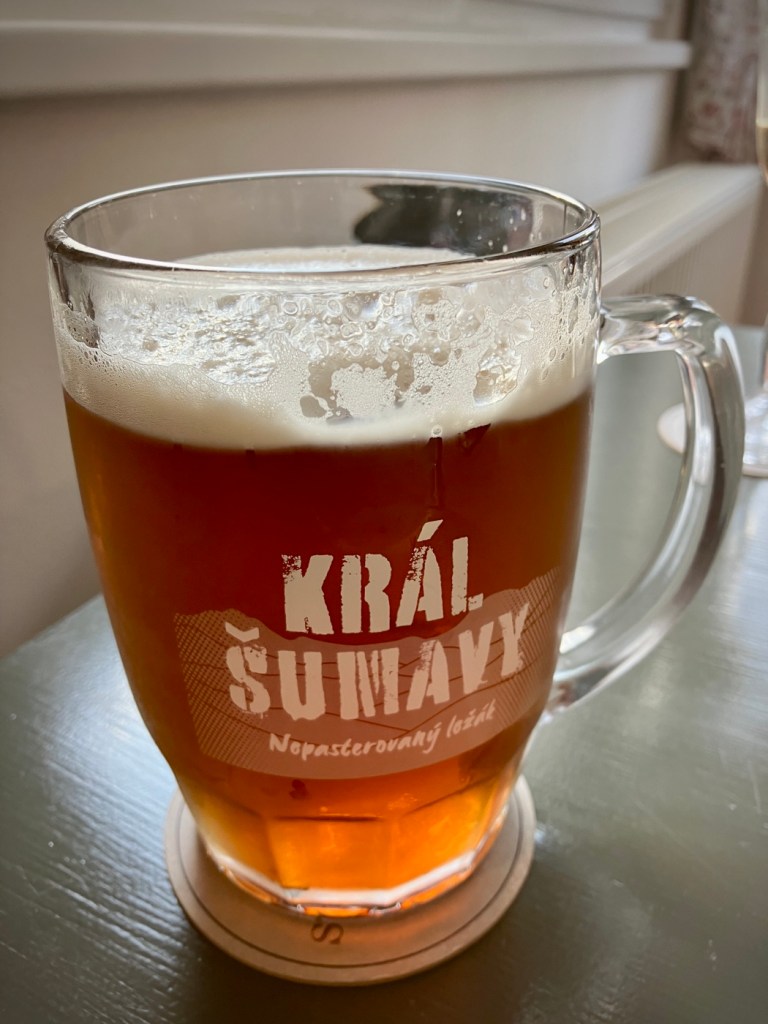
The second person that fascinated us was the niece of an innkeeper at a family Pension in the Sumarva National Park. She translated for her Aunt and Mom as we all chatted at the end of dinner in the rural bar/dining room that felt more like someones cosy house. As it turned out, she was just entering Junior High, and told us that she got straight As in English and Cs in Czech! She was desperate to travel to the US, and obsessed with Manga and Japanese culture as well. Her mom just listened to her in a bit of awe.

Another small pension on the massive Lake Lipno was run by a father and son, and the son, Lucas, was fluent in English based on the fact that his parents put him in an intensive English class in Kindergarten. He’s never looked back and added months in the UK to hone his English skills. He exclusively watches online content in English, including YouTube and online gaming. Apparently online gaming is done all in English and of course, is borderless.


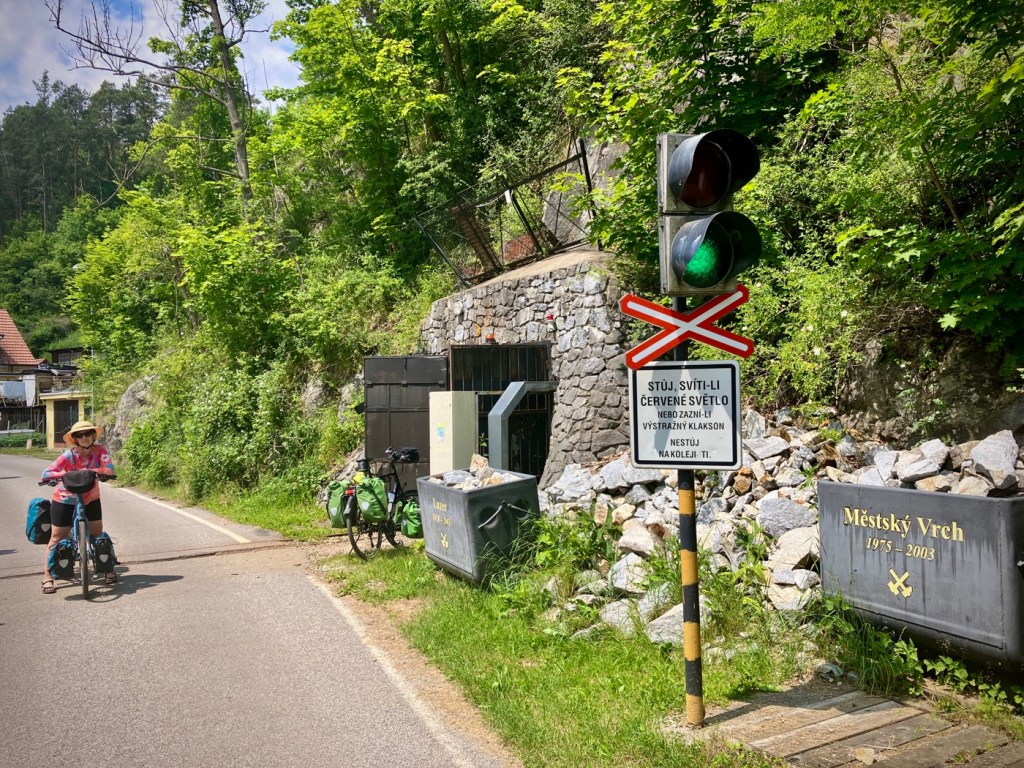
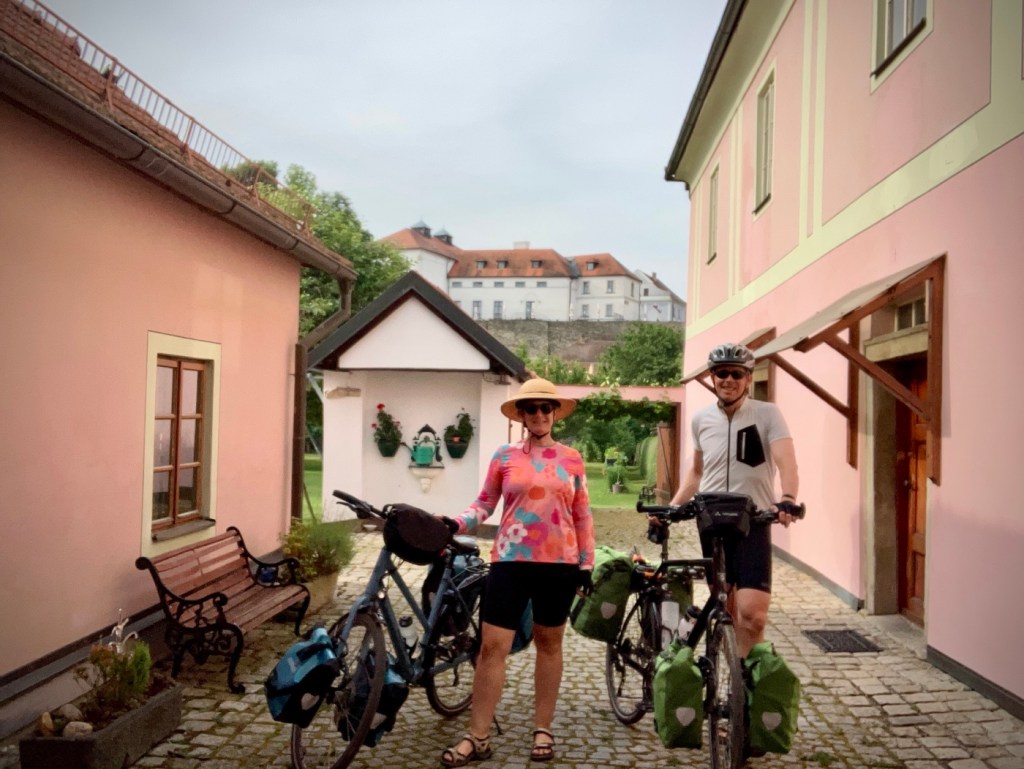
That said, as we travelled further on along the border between Austria and Czechia, we found ourselves really off the beaten track in small valleys isolated by the former Cold War border. Our 10 words of Czech and Cheryl’s German skills have helped, but we have started to feel isolated after awhile without deep English conversations.


The cycling in Czechia (and a bit of Austria) has been mostly fantastic, but really challenging our first week. The terrain of Sumava NP and the Vltava River valley is rugged and steep. Although the main roads meander around the geography more gently, the cycle routes follow little travelled forest and back roads, and are often steep (10-15%+) rough in places, and relentless. But many stretches are also magical smooth pavement with little or no traffic.


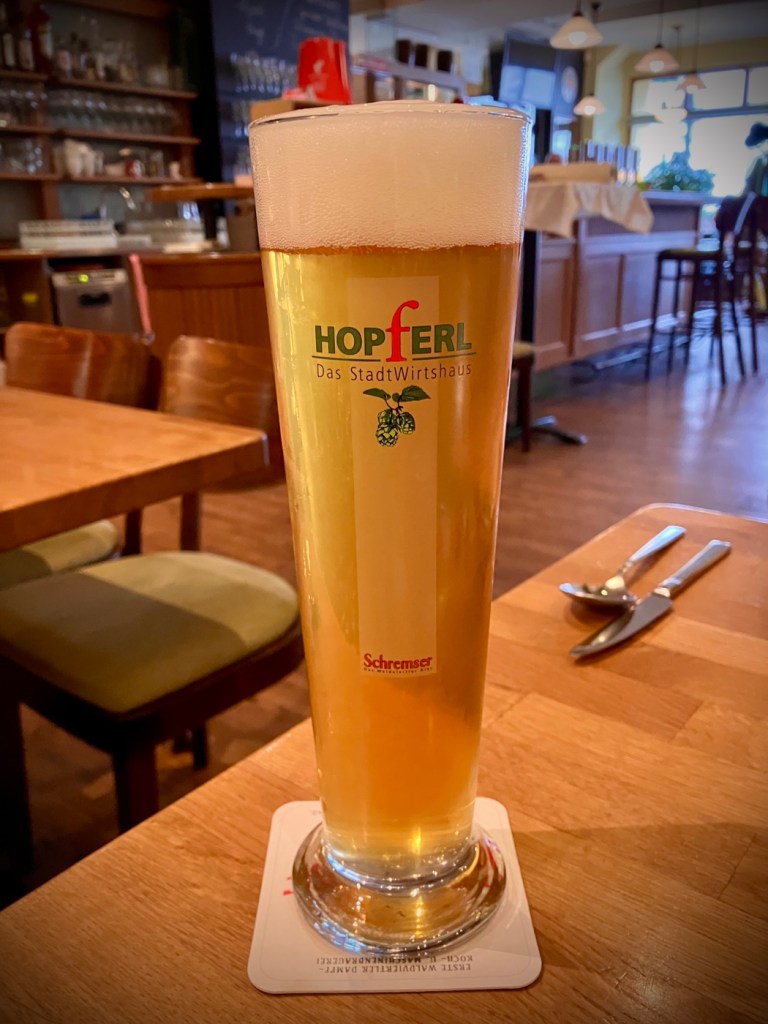
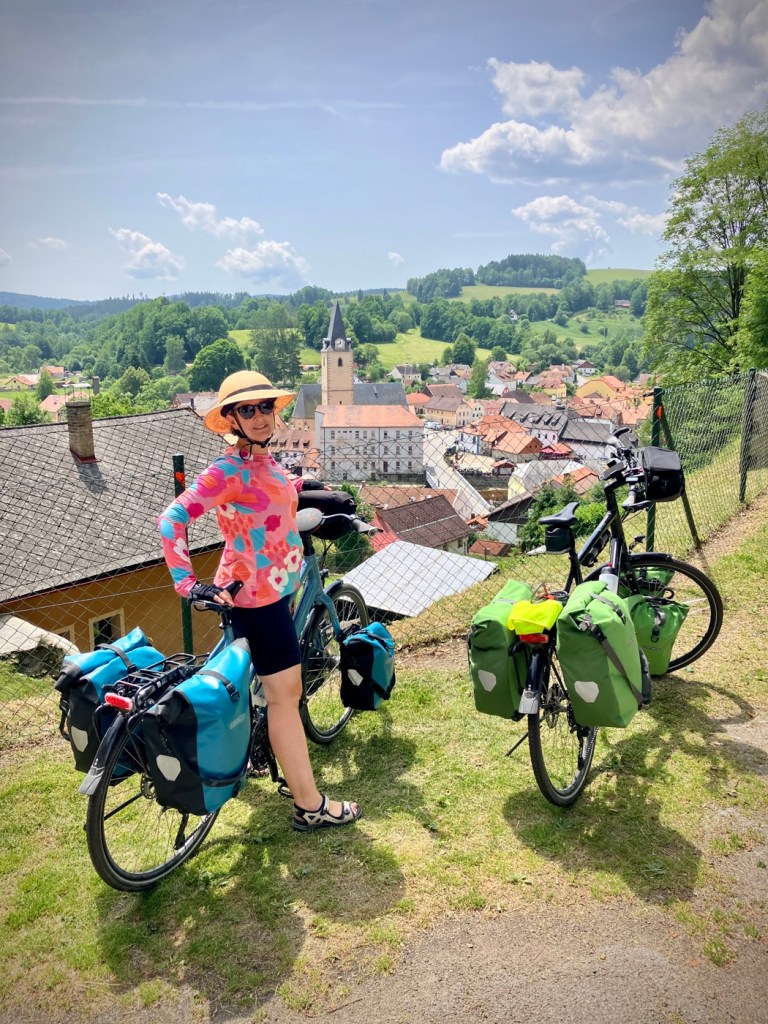
As we approached Moravia, the steepness gave way to more gentle and long undulations.The small city we are in now, Znojmo, has a pleasant old town and prominent position above the river Thaya. It’s quite busy with local tourists and a few German speaking tour groups, but otherwise seems off the international tourist radar. It’s also the heart of the Moravian wine country, so lots of wine tasting options and a great historic brewery complex.


You can sense this border city has rejuvenated significantly in recent years with a pretty tidy old town and lots of new housing, although it still has a decidedly Eastern European feel around the edges, with a bit of scruff and wear.


Tomorrow, we ride again towards Brno across the Znojemská wine district. We are excited to spend three days in Brno and experience some of the energy and sights of Czechia’s second largest city.
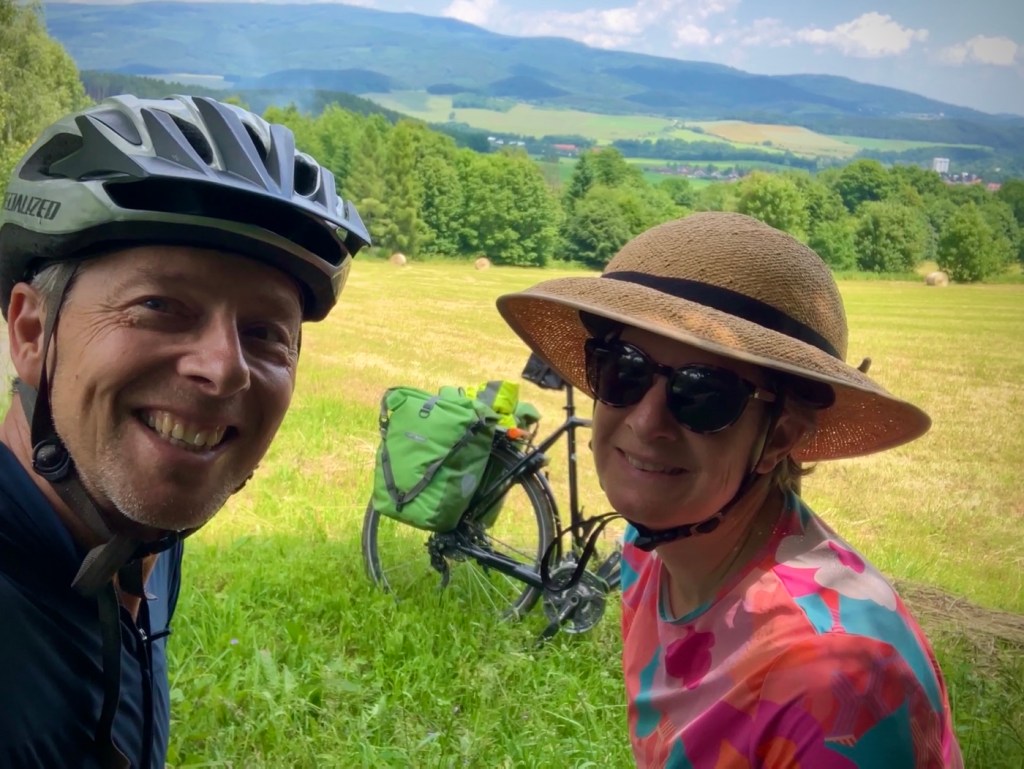
Our Koga touring bikes are still fantastic and a joy to ride, even fully loaded. The heat, wind, and being out in the sun for 8 hours still takes it toll though, not to mention moving into and out of a pension, hotel, apartment or guesthouse every night. But now our bodies are in week four of this tour and getting stronger every day. More on the details of our bike tour in our next post. Happy pedaling!

 Less Car, More Life
Love this very full and well illustrated update. Thank you as ever for sharing!
Thanks Sarah, we were behind on posting as just too wiped out every day!!