To go or not to go? As we planned our trip to Flores, Indonesia, we quickly figured out that we had to fly via Jakarta or Denpensar, Bali to get to Labuan Bajo. Bali made more sense as it is shorter flying from Taipei.

But after spending a week or so on Bali during our 2017-2018 « Java by train, ferry to Bali adventure » we vowed to stay away until the plastic problem was improving and development seemed a bit more sustainable. Bali is a tourism juggernaut, but is often cited as a global example of overdevelopment.

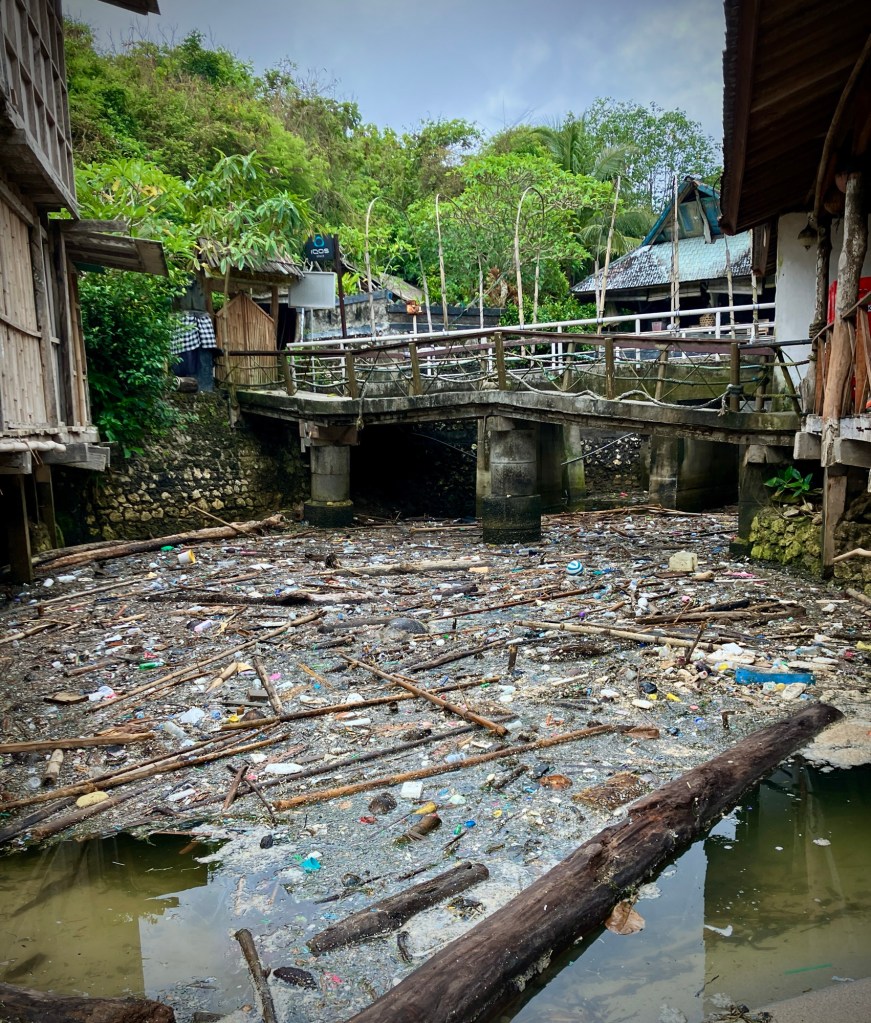
During that trip, we spent time in Pemuteran (NW Coast), Ubud, and Padangbai. The ocean plastic problem here is somewhat seasonal as the rainy season (Nov-Mar) washes much more plastic into the sea from creeks, channels, and other areas. It swirls around the islands and is carried to sea and redeposited into coves and beaches. In 2018, along with some well intentioned Canadians and Aussies, we would spend some time picking up plastic after each high tide left a deep line of plastic debris. But we soon realized the futility of this exercise. And I still have nightmares of my arms stuck in a giant plastic bag and debris flotsam mess in Padangbai, while trying to snorkel at the Blue Lagoon Beach. If you’ve travelled across SE Asia, then you have certainly seen the same challenges in other countries.

So Bali, and much of the developing world, has a massive sanitation, disposal, and plastic problem. If you have been here and not noticed it, then you probably isolated yourself in 5-star resort grounds or have been lucky to be in a clean area during the dry season. And much of Bali is still charming and peaceful. We also generate a huge amount of waste in the US (we’re #1 baby!) but it is generally disposed of properly.


So we decided to spend 3 nights here and assimilate a bit into the tropics after a lot of cold weather and moving about the US and UK. We found a lovely, locally run, small resort on a bluff above Balangan Beach. We know the traffic here is a nightmare, so we planned to just get here and relax with one trip from and to the airport. We walked to a few local restaurants as we could, but basically stayed put for a few days, which is rare for us. The walking is not great on the busy back roads and the maze of historical alleys and streets is generally disconnected and cutoff by development or geography, so taking a scooter or car even to go short distances is the norm in most areas.

We did not want to add to the traffic as much as possible and also strived to minimize our single use plastic use. We almost never use plastic bottles in areas with safe drinking water. And if the tap water passes the sniff and flotsam test, we boil or use our UV SteriPen. The tap water may not always taste the best, but this treatment ensures we won’t get sick from any microbes. The water may still have some undesirable elements, but those generally won’t harm you in limited doses. And as Cheryl likes to say, it may make us stronger!

But regardless of what little steps we take, just traveling here inevitably generates a lot plastic waste that may not be disposed of properly. And of course, so many broader impacts from flying and local transport. Sustainable development is so hard to get right, and even more challenging when the economic disparity between the locals and tourists is so great.


Now I realize that the carbon generation of our travels are not helping the planet and that’s a bigger ethical question for all who get around by jet. But the plastic embedded everywhere here along roads, ditches, coasts, beaches, and forests is visible. And it’s terribly depressing, and we find it nearly impossible to enjoy ourselves in the midst of it. But it’s also symbolic of the overdevelopment and a government that maybe isn’t always looking out for the locals. Not as much free and happy local space left here.

And coupled with the low standard of living and income disparity, we find the whole scene tough to swallow. It’s not that we don’t accept the income disparity, but here it feels like the locals have been pushed to the margins and lost a lot of what makes the area livable, all in the name of even more touristic development.

Maybe Hawaii got it a bit more right by limiting new resort and tourist development expansion the past 30 years. That has made Hawaii an expensive place to travel, but most of the islands are pristine and many areas are protected. There is still the local/tourist tension there for sure, not to mention a legacy of cultural appropriation and displacement. OK, maybe Bhutan is getting it right.


But Bali is a large and complex island with over 4 million people, and 6 million annual visitors, with a huge variety of experiences and places. Indonesia is still a developing country of over 200 million people and tourism brings huge income and opportunities when applied correctly. It’s a lifeline and draws people from other islands to work. Indonesia is also embarking on its goal to spread the love and have higher end tourism in their “10 Balis » initiative. (More on that in our next post)


So we are now off to East Nusa Tenggara or Flores Island as it’s better known for a few weeks of exploration. It’s certainly less developed than Bali and also one of the poorer regions of Indonesia with a vast array of cultures and religions. What will it feel like compared to Bali? Each Indonesian island is so different. Stay tuned.

 Less Car, More Life
thank you for this information. Very good to know!
Hi 🙂 Welcome to Indonesia. It’s always nice to hear people enjoying their stay in Indonesia, kind of a reminder for me that my home country is all about corruption and crime 🙂 I hope you enjoy the rest of your stay and keep us updated x
Thanks for your comment. It may be true, but all our counties have their challenges as you know, right?
Head anywhere North of Ubud and it has virtually no interaction with tourists.Ubud is the Wallace Line of Bali.. everything changes.South Bali has about 50% local inhabitants,the rest from other Islands chasing their dreams.Also another 5-6 million per year tourists, made up of 50-50 domestic and international.Bo wonder South Bali is struggling.