After being surprised by Labuan Bajo’s sidewalks and rapidly developing tourist infrastructure, we flew from Labuan Bajo to Maumere, a small city on the Northeast coast of Flores to start our cross island exploration.
Wuring, a traditional fishing village near MaumereCheryl arriving at Fransiskus Xaverius Seda Airport in Maumere; happy that our Wings Air turboprop made the journey today
We didn’t know exactly what to expect. Maumere is remote and there are only 3 flights a week between Labuan Bajo and Maumere on a Wings Air Turboprop. It was a bit risky itinerary as the flights are often delayed or cancelled in the rainy season, but we lucked out and had a scenic flight along Flores’ north coast. It was a fairly empty flight of locals and maybe 6 tourists. Flores in the rainy season is still a delightfully beautiful exotic experience, but maybe not the best for anyone on a tight schedule. These nomads are not on a tight schedule -:)
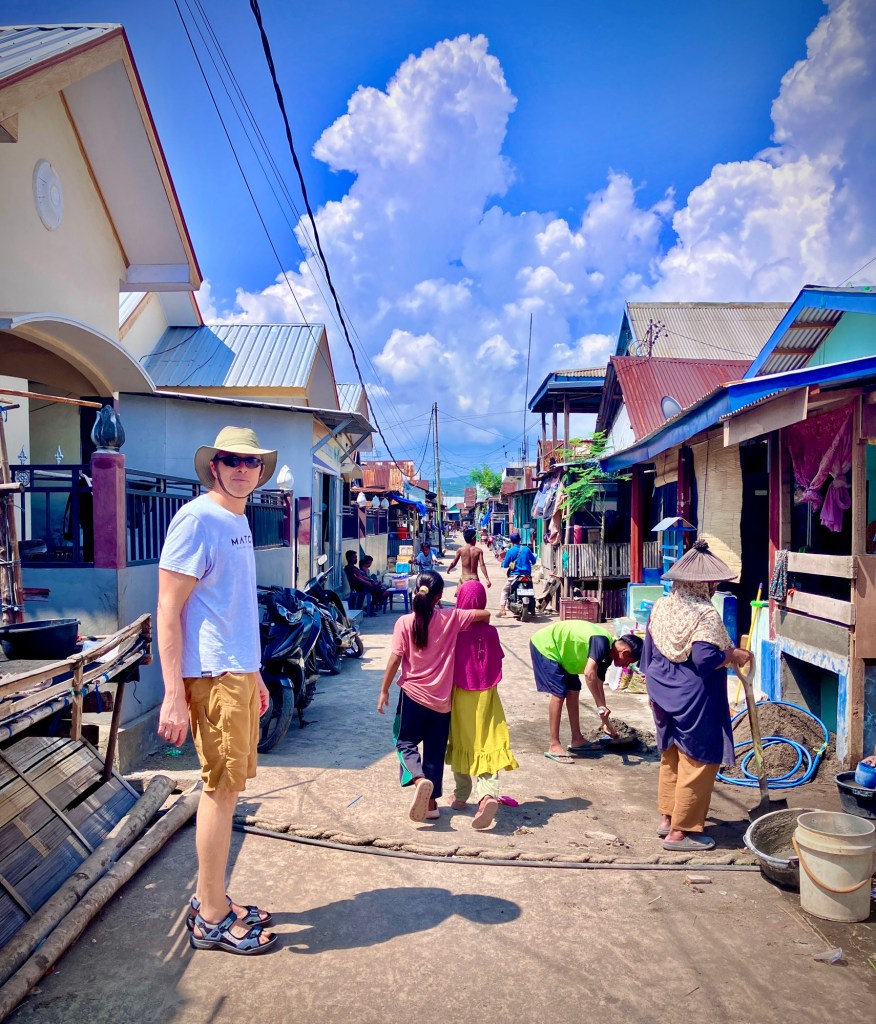
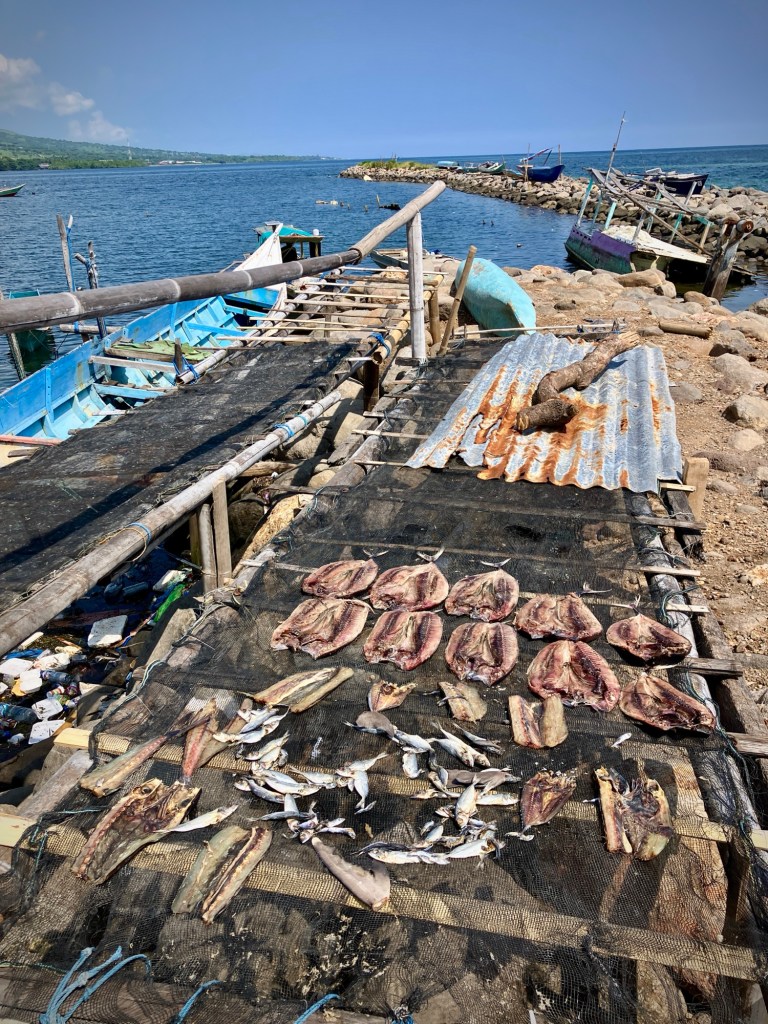
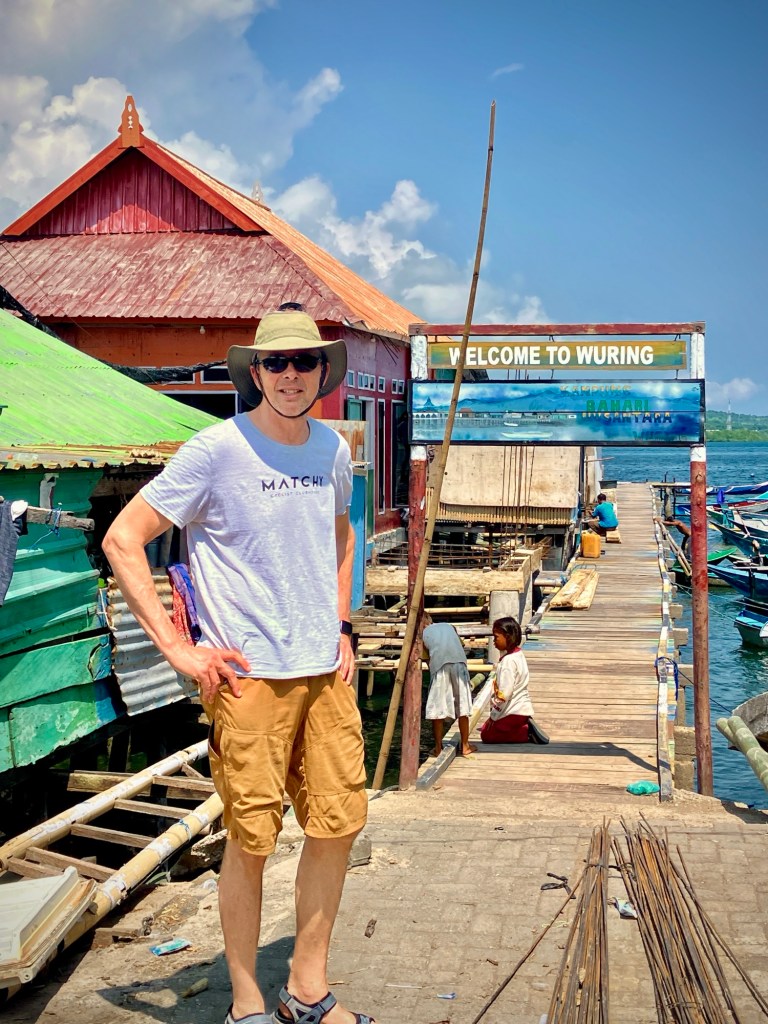
Wuring, or Fisherman’s Village is a predominantly Muslim community settled by notoriously tough sailors from the Bajo, Bugis and Buton tribes, and mostly from neighboring South Sulawesi.Dried fish are a staple of a Flores diet.The structures are almost all on stilts over the water off of two main spurs. We felt a bit awkward walking around as there were no other tourists anywhere. Of course people were friendly and gracious as they went about their daily business and we were definitely a curiosity.Wanting to observe but not disturb.Goats and scooters are other village essentials
We had an extremely friendly driver pick us up from the airport to one of a handful of tourist accommodations along the coast. Maumere proper is a still a work in progress and still recovering from the devastating 1992 earthquake and Tsunami that killed 2,500 people. The 7.8 earthquake damaged or destroyed many structures and was followed just six minutes later by a large tsunami that reflected off part of the coast and adjacent Babi island. Indonesia’s volcanic and seismic activity makes a lot of it a risky place to live, so the people have to be resilient and resourceful. In the Fisherman’s Village alone, a 10 foot (3m) high wave swept through the village in 1992 killing 100.
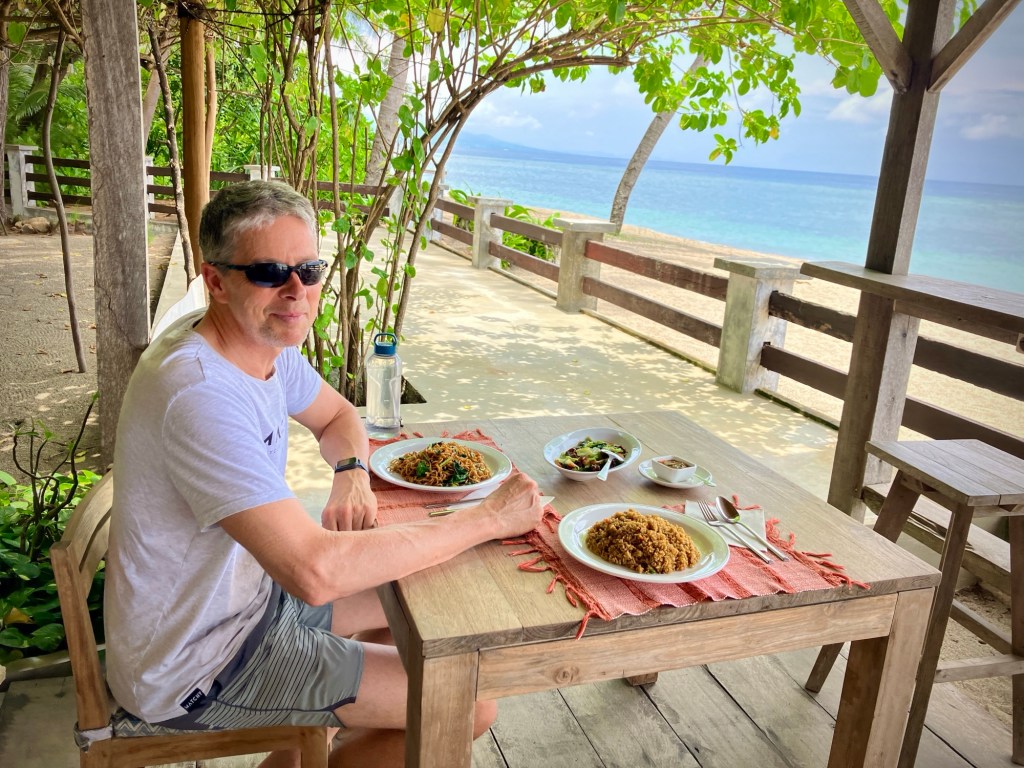
Our nice cabana at the Amrita Resort east of Maumere in the village of Waiara. It was small and we were the only people there the first night.The beach in front of the Amrita is as also popular with the locals and was noticeably cleaner than adjacent areas. They are restoring the reef here and the snorkeling was enjoyable in the morning before the breezes came up.A classic Indonesian lunch, Mie Goreng, Nasi Goreng, Cap Chay, and local Sambal (Fried noodles and rice with chicken, mixed local vegetables, and spicy pepper/salsa)
I have to say, the Fisherman’s village and the Maumere central market were pretty astonishing. We have travelled a lot but were still surprised at the low level of development on Flores and the consistent base of rural subsistence living across the massive island. There is virtually no industry or manufacturing on the island and power outages are frequent. Untreated water is trucked to tanks. Processed food is rare, which is a good thing, as it’s the source of lots of waste and most of it we saw in small minimarts was junk food.
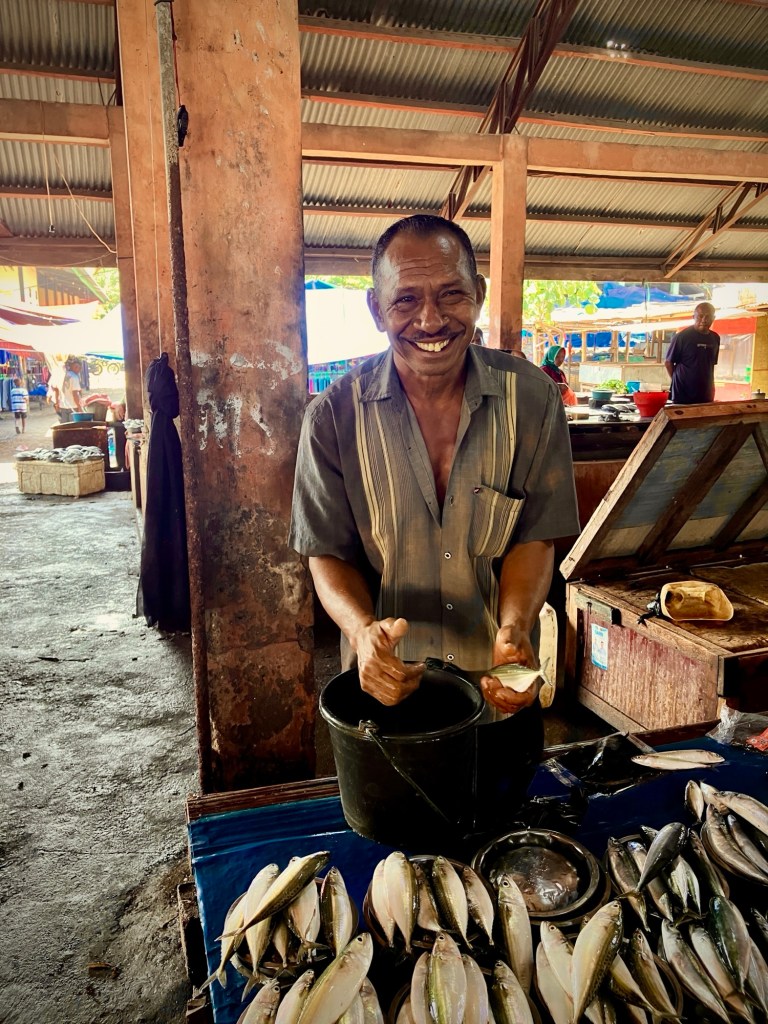
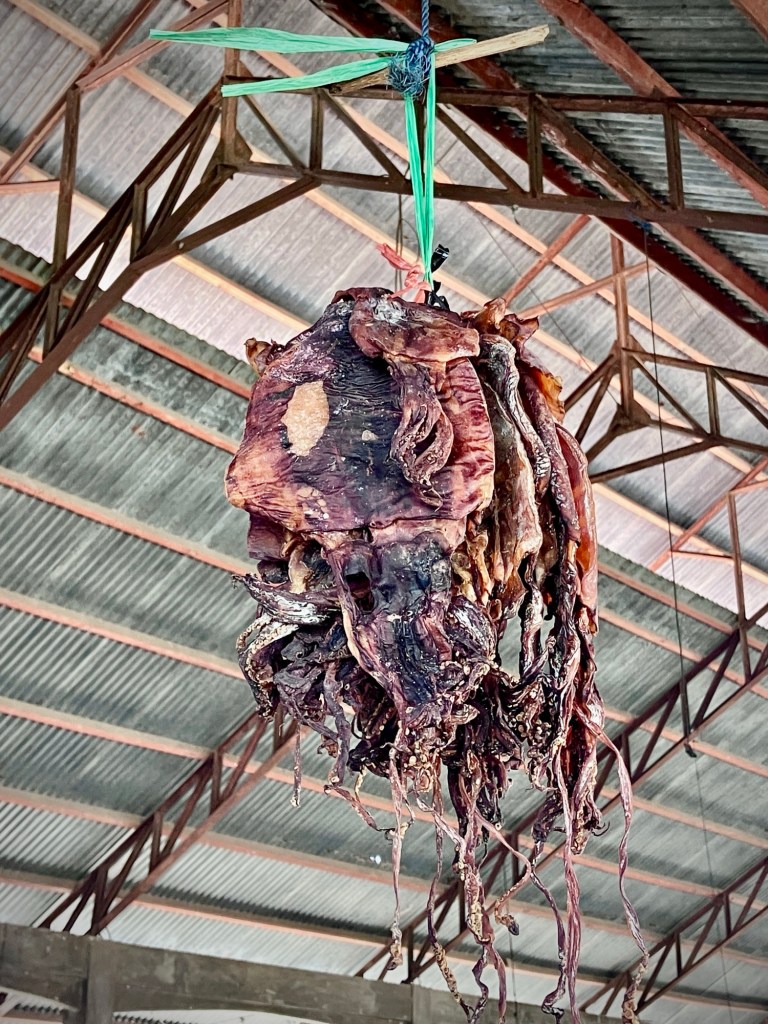
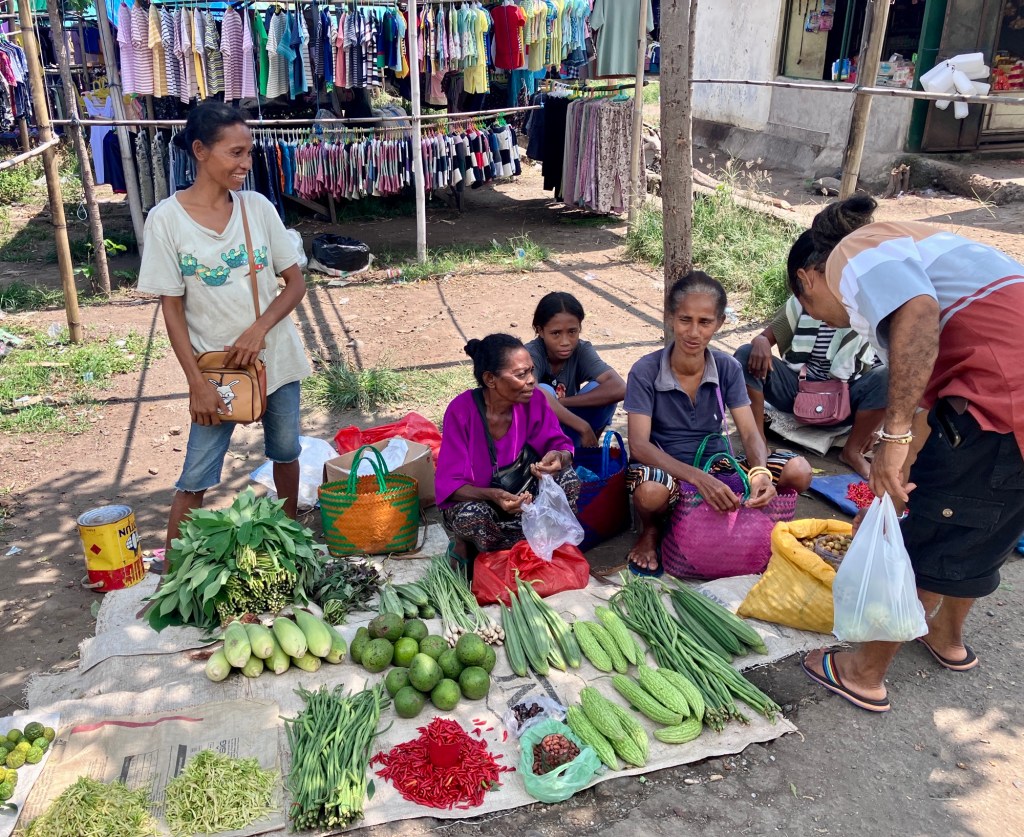
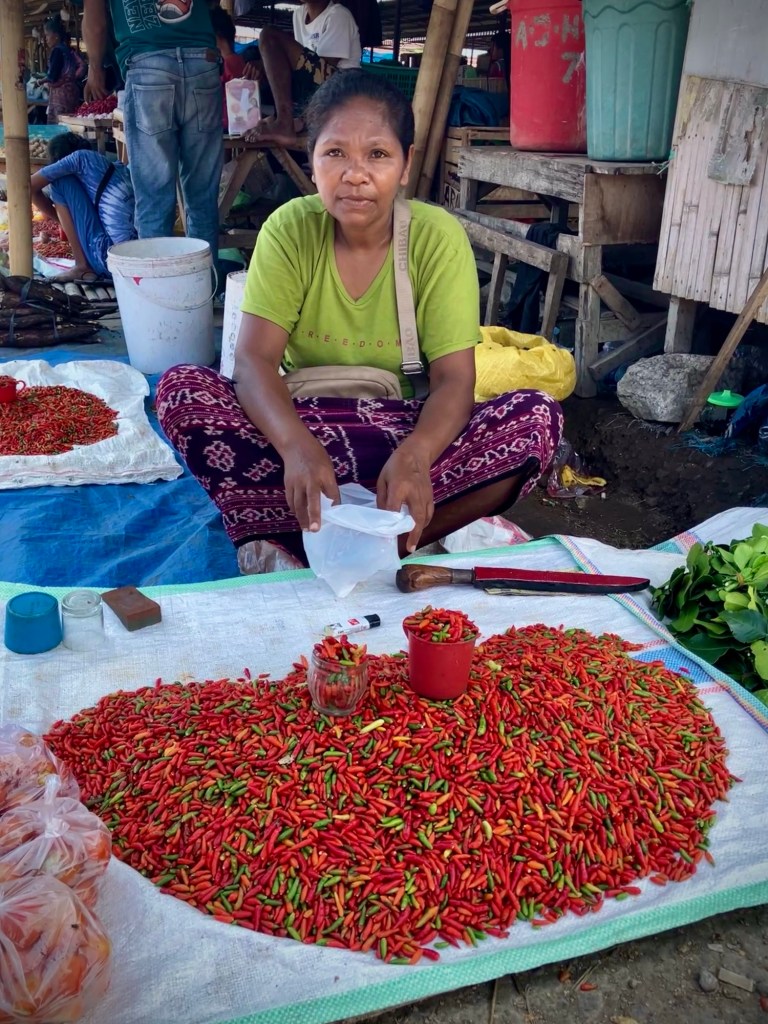
Entering the fish market in Maumere with our brilliant guide and driver for the day, Donatus It was a bit later in the morning and not peak market day, but still a healthy supply of fresh catch and the ubiquitous dried fishFlores smiles.So much fish is dried to preserve and provide a reliable source of food when the fresh catch is lighter. This is likely tuna.Market pride.Dried squid (we think!).A wide choice of local vegetables. Nothing we ate in Flores was processed (except our well traveled Cliff Builders Bar!).Donatus buying a few local specialties for us to tryEverything grows somewhere in Flores due to the elevation variations. These are banana flowers, used in a local dish.And so many peppers for sambal variations.The makings for Betel chewing; Areca nuts, slaked lime, and betel leaves.Taro. The large roots are sold as pig food.Cinnamon, ginger, and turmeric.
Flores had been off the radar to the government until the late 1990’s and the end of the Suharto era. There are complex political and religious dynamics in Indonesia that I won’t even pretend to understand but it is clear that the control and power for the country comes from its heart of Jakarta and Java. It is also key to understand that Flores is predominantly Catholic from the legacy of the Portuguese time of control, although they eventually ceded control of Flores to the Dutch, who officially held control until Indonesia’s independence in 1945. The island is now a mix of Catholics and Muslims, overlaid with traditional Melanesian cultures and beliefs.
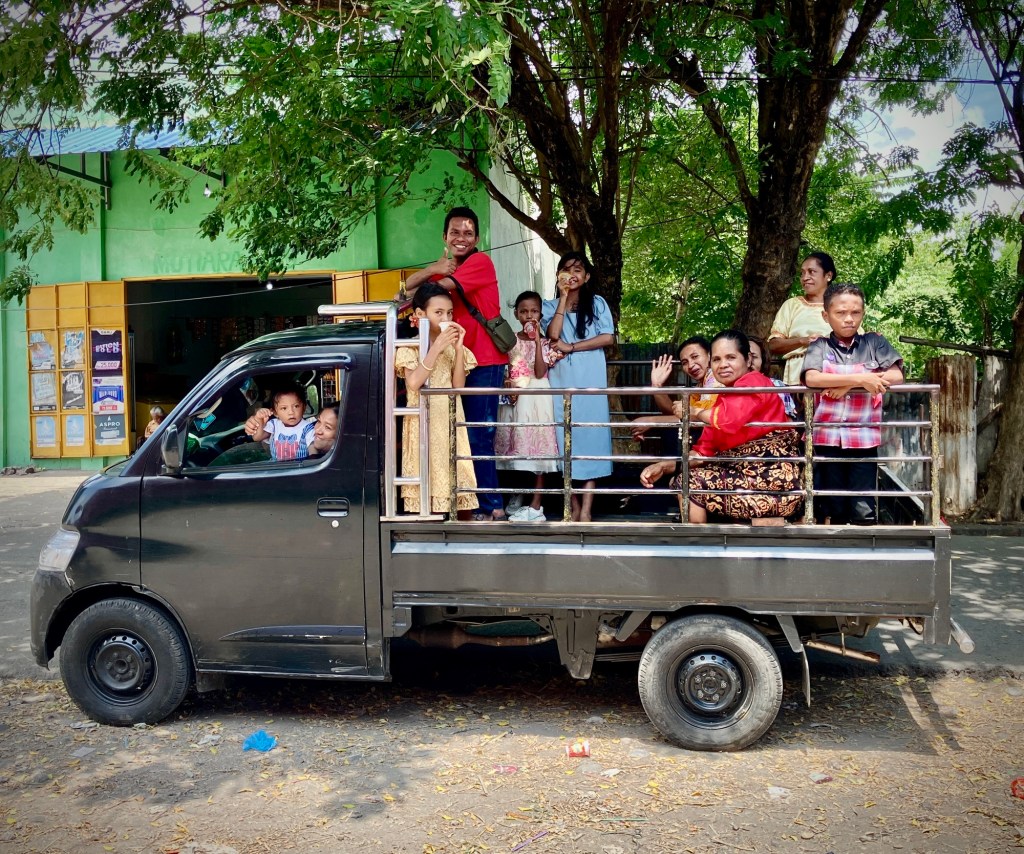
Most transport on Flores is by scooter or shared rides. There are some small and medium size scheduled buses.From the market, a delicious srikava fruit, also known as sugar apples; it kinda melts in your mouth.
The Flores Islanders are very proud (rightly so) of their peaceful coexistence. Our driver and guide from Maumere was Christian but very proud of the coexistence and acceptance, even pointing out small graveyards with alternating Christian and Islamic graves. We sensed no tension anywhere and apparently they celebrate and revel a bit in each others holidays. Flores really is a special place.
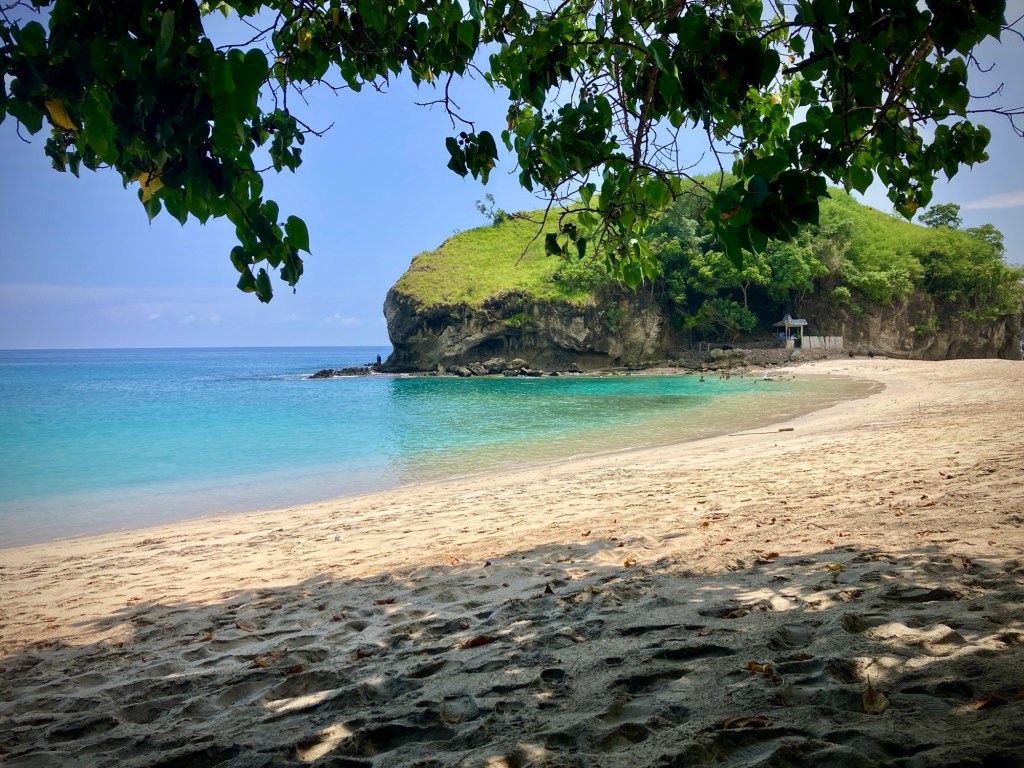
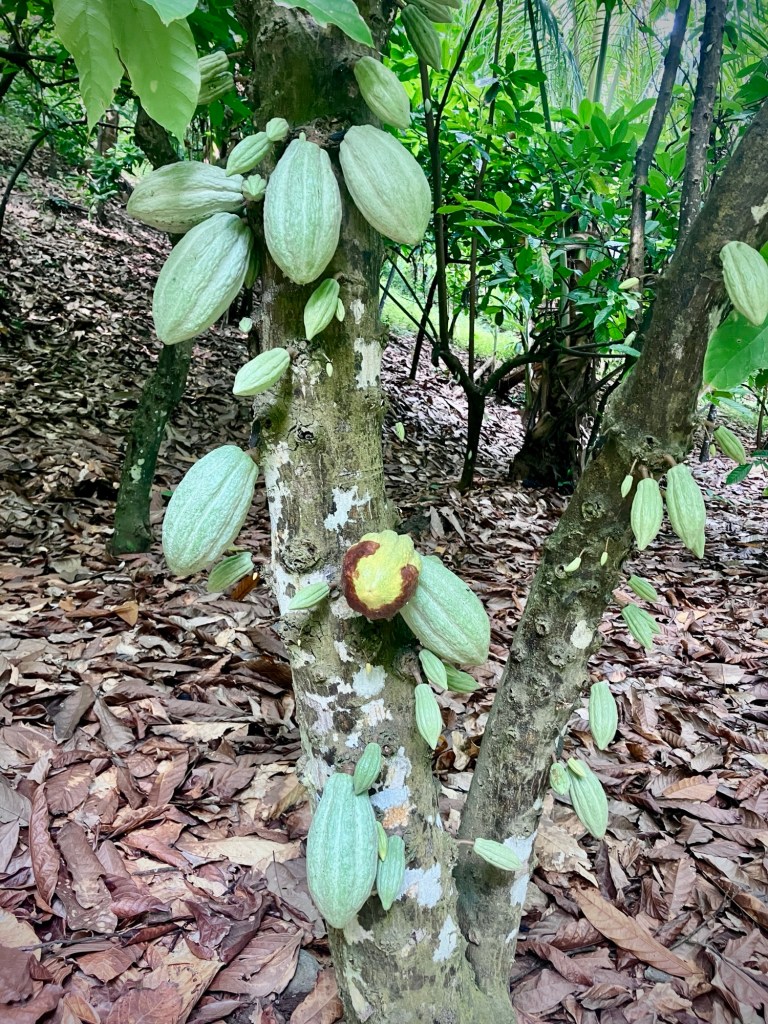
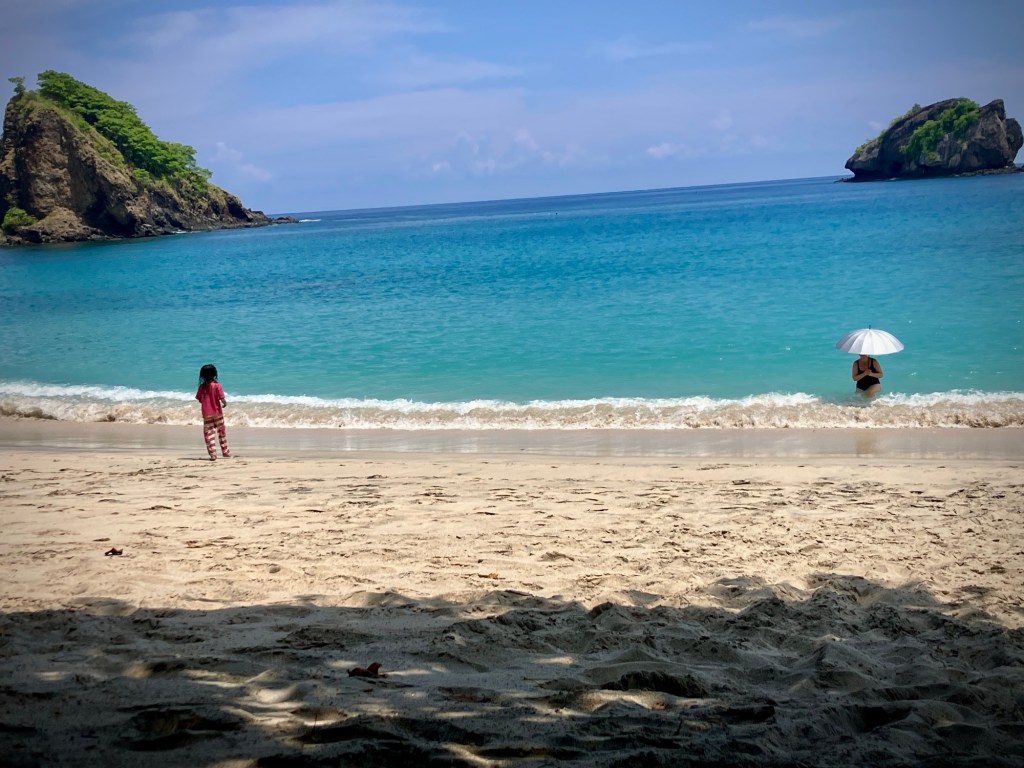
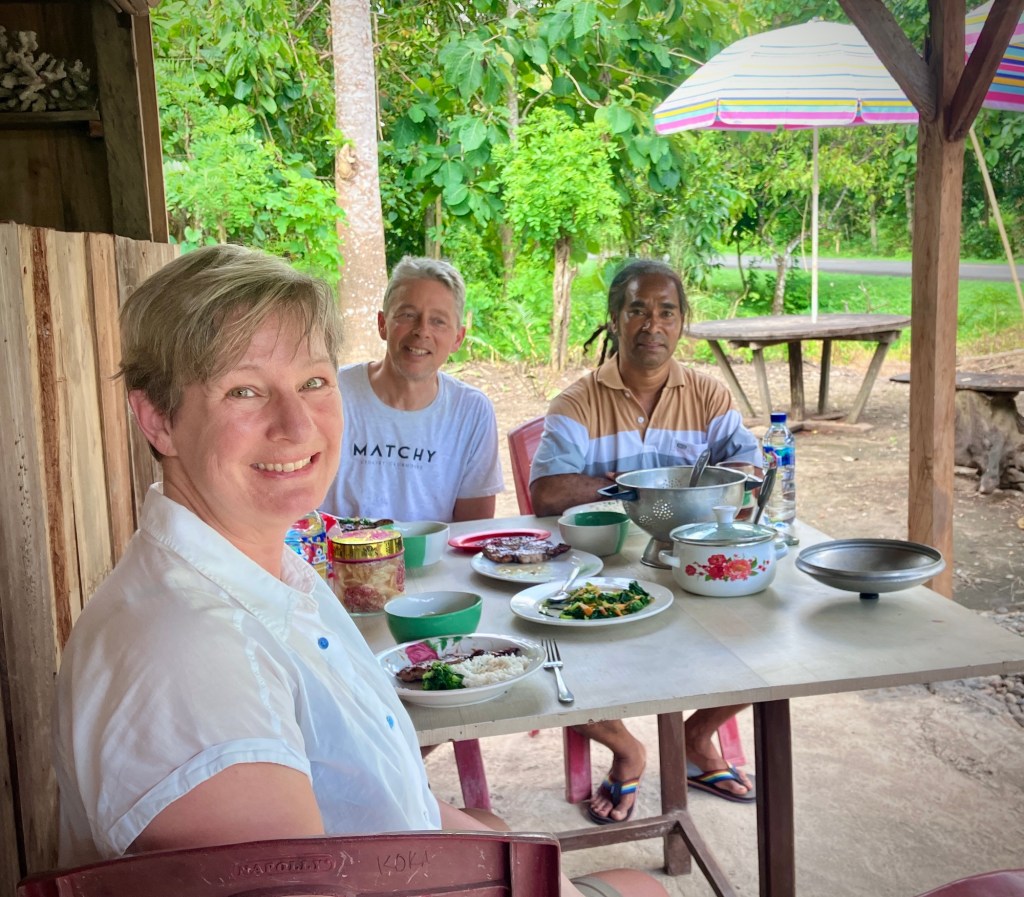
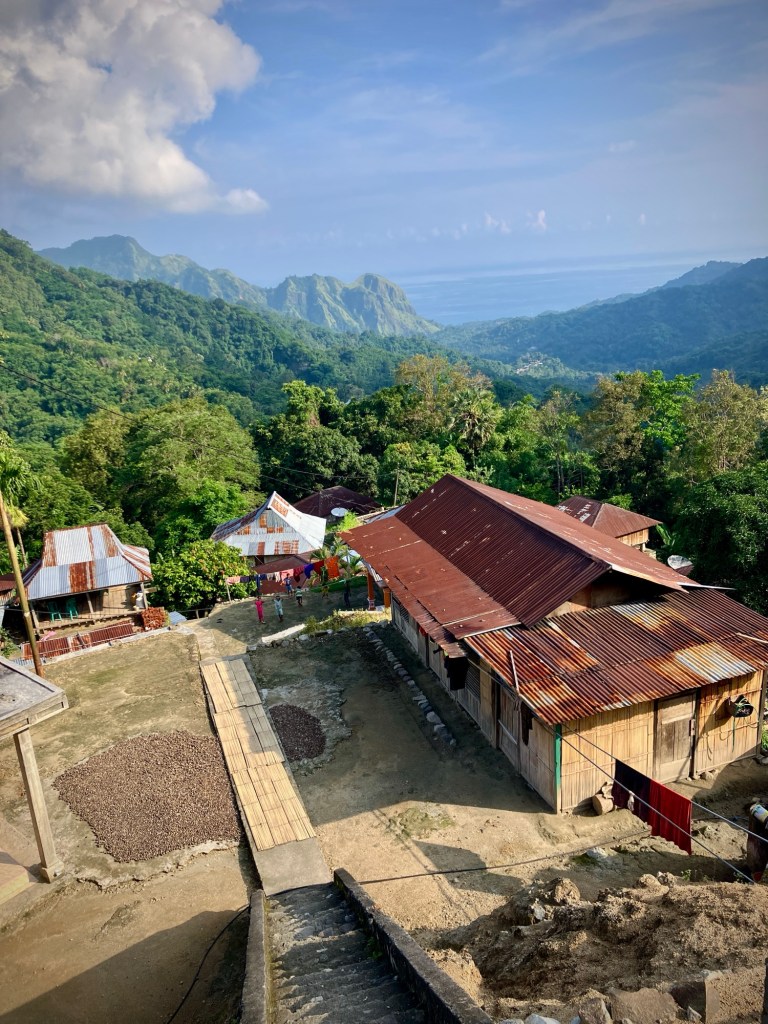
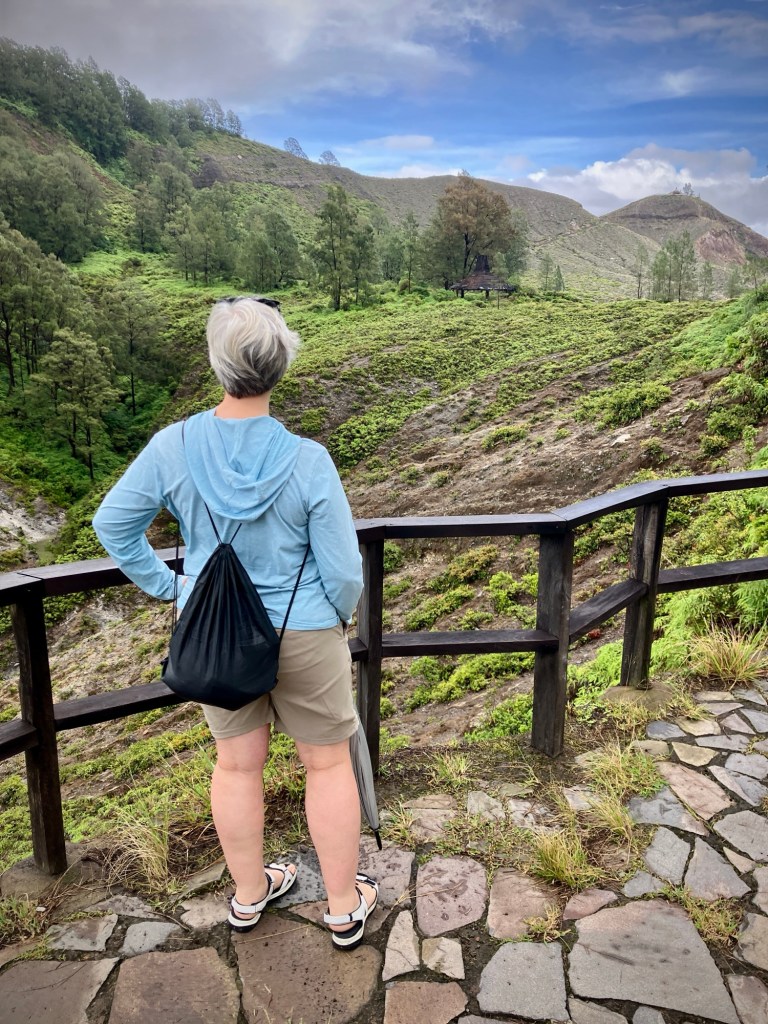
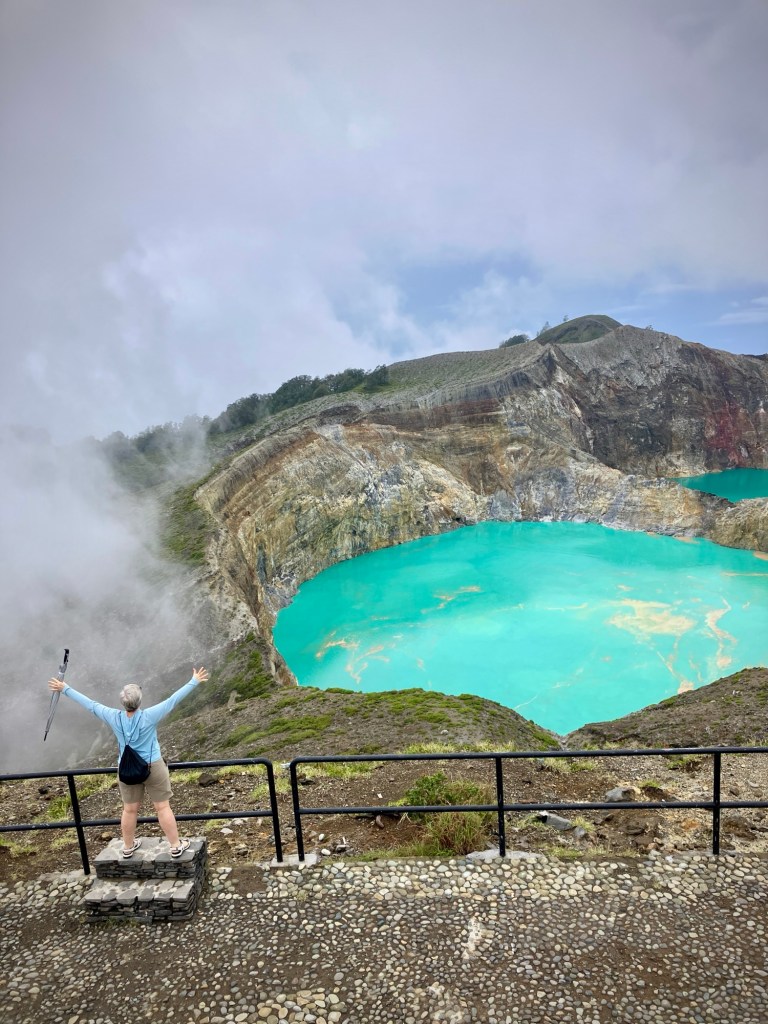
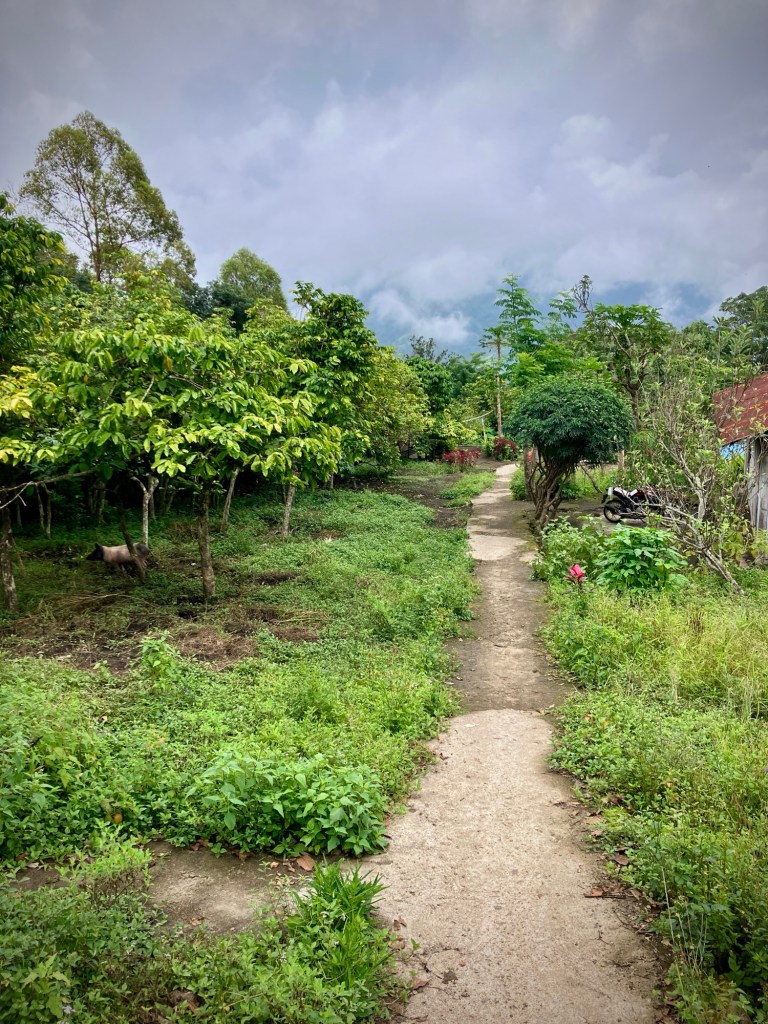
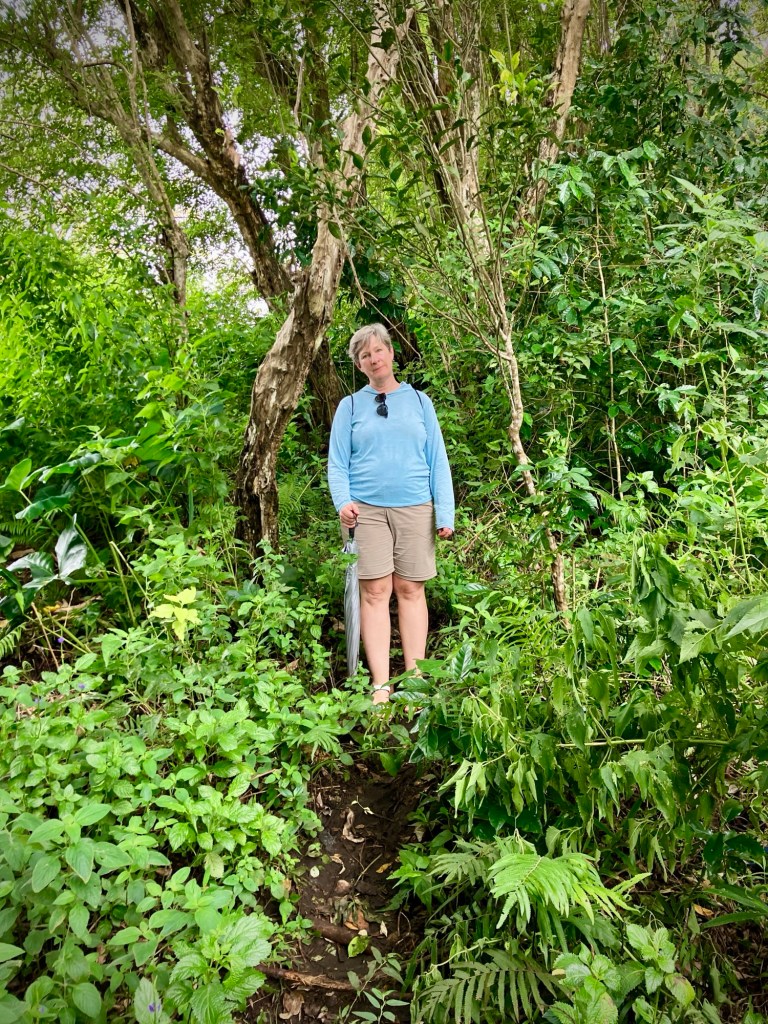
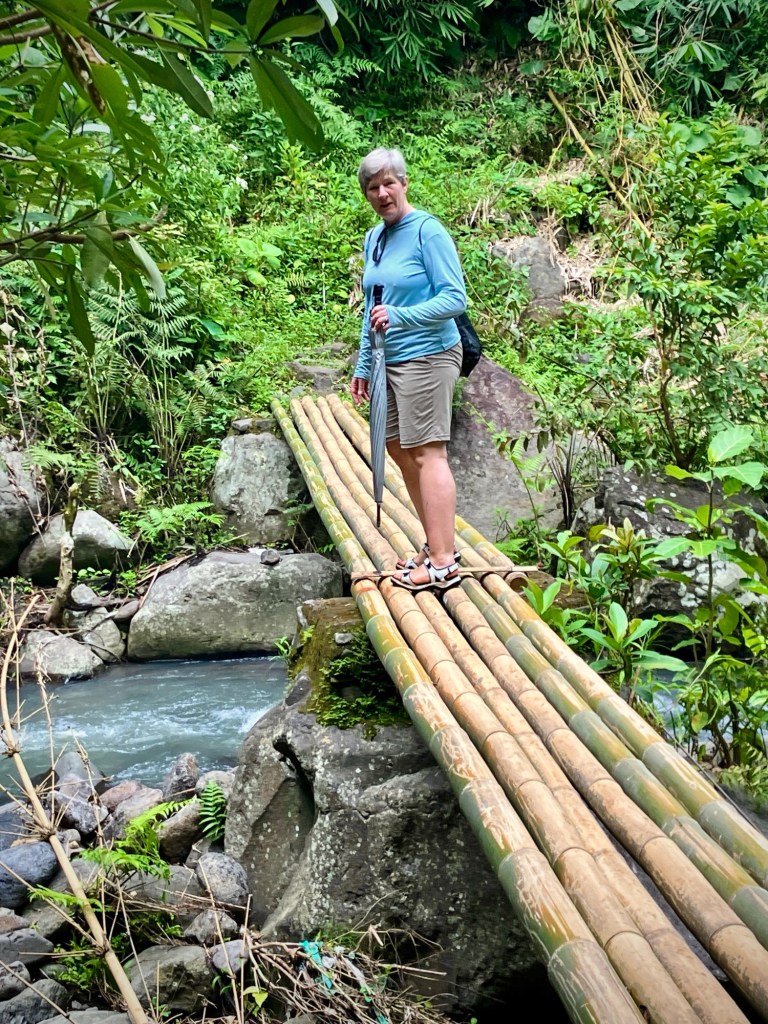
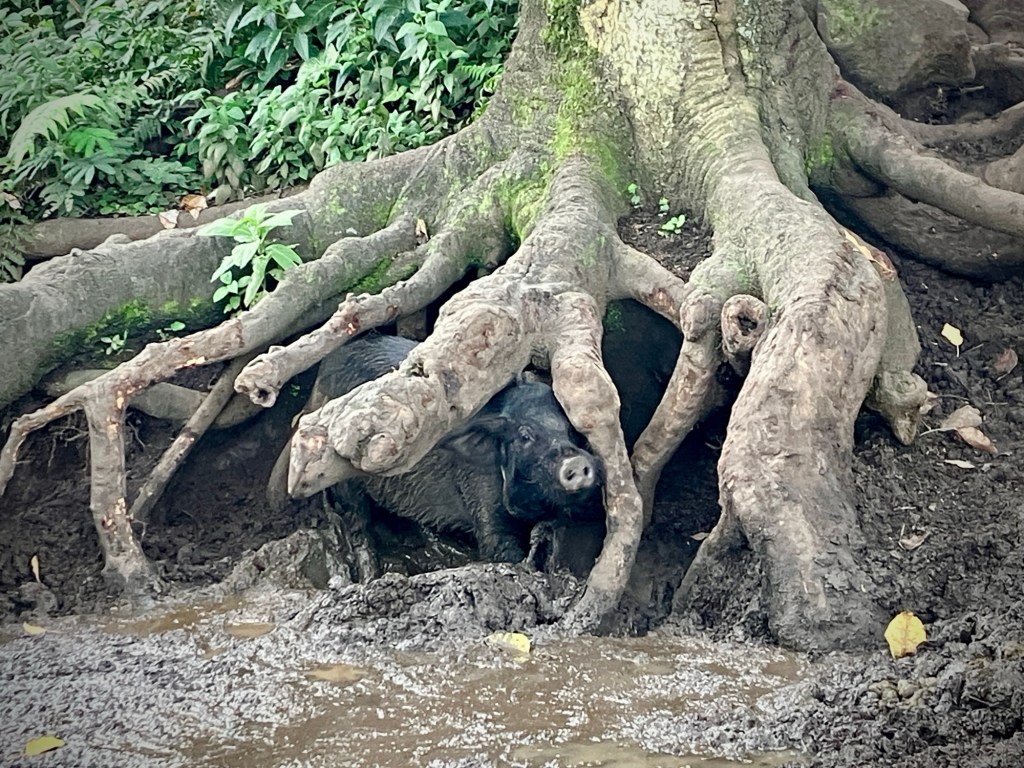
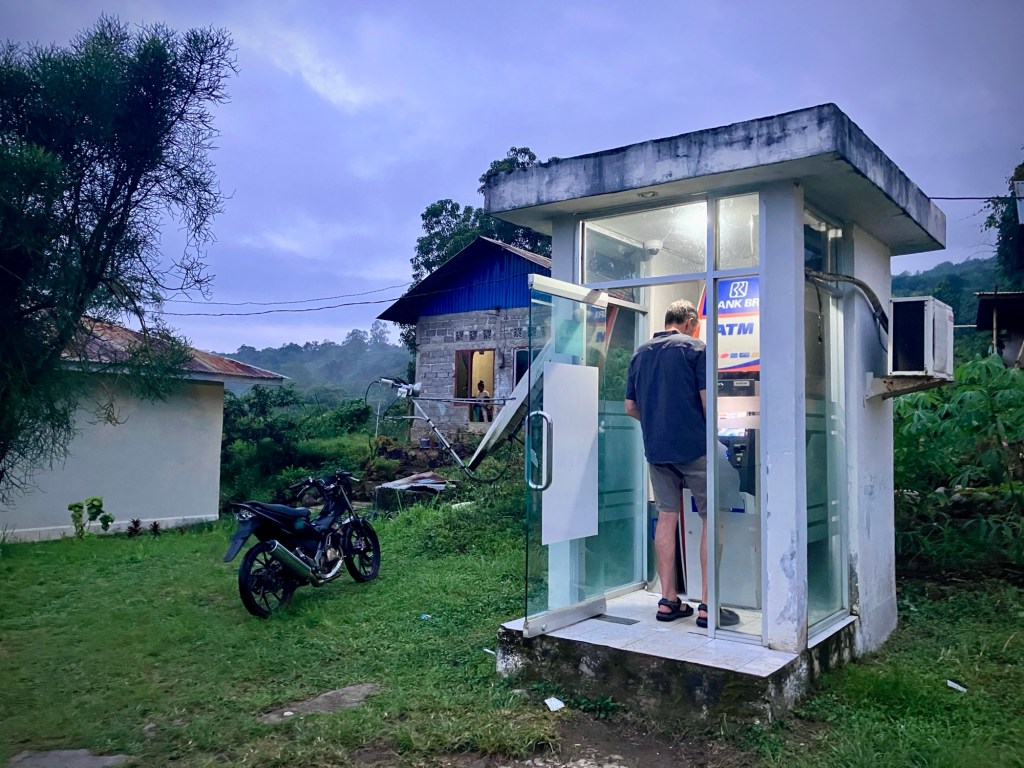
Donatus cracking some Candle nuts for us to try.One of the two idyllic beach coves at Koka Beach.Our stop here was midday and the UV was extreme, but that didn’t stop Cheryl.Cacao trees and pods that give the beach its name.À local girl is baffled by the pale woman under an umbrella.Oh, but the water feels so nice in the oppressive heat of the Flores coast.Grilled fish lunch near Koka Beach, a very pleasant and rustic affair.The Trans-Flores Highway is never straight and winds its way up and down the islands rugged topography. Villages cling to hillsides.Approaching the volcanic lakes of Mt. Kelimutu with anticipation.First views of two of the lakes. No filters.At the summit, I am calm and reflective.Cheryl, on the other hand, is having her moment. We are the only ones here, which feels amazing.By the time we get back down to the upper trailhead, more people show up, including these friendly nuns.And another group posing in the parking area before their trip up to the lakes.We decided to hike down the mountain 5 miles or so to Moni, and the first part was a steep but easy walk on the small road.The lower part of the Mt Kelimutu Road is wide, graded shoulders were a popular and level spot for cattle grazing in the green rainy season. Our next shortcut to Moni started off ok, but then turned steep, muddy, slippery, and overgrown in places.This dog was wondering where we were headed?Thanks to a mostly accurate gps track we eventually found our way and stayed on our feet (yes, umbrellas for their third and fourth purposes; walking sticks and snake clearing!).Cheryl was not pleased with this « shortcut ».Lots of random farming and gathering, including Taro.Uhm, the trail is somewhere there?!We finally made it down to Murundao Waterfall,Near the falls were two streams that were just raging a bit too much in the rainy season to cross by foot. Cheryl’s good balance made it standing across the loose and wonky bamboo. Full disclosure, I crawled across as my high center of gravity and fear of falling onto the rocks below got the best of me. You make different decisions when medical care is potentially very far away.A pig living under tree roots. Safe for now. Our rustic homestay in Moni, Jaya Hill Garden.The lone ATM of Moni (accidentally Wes Anderson).
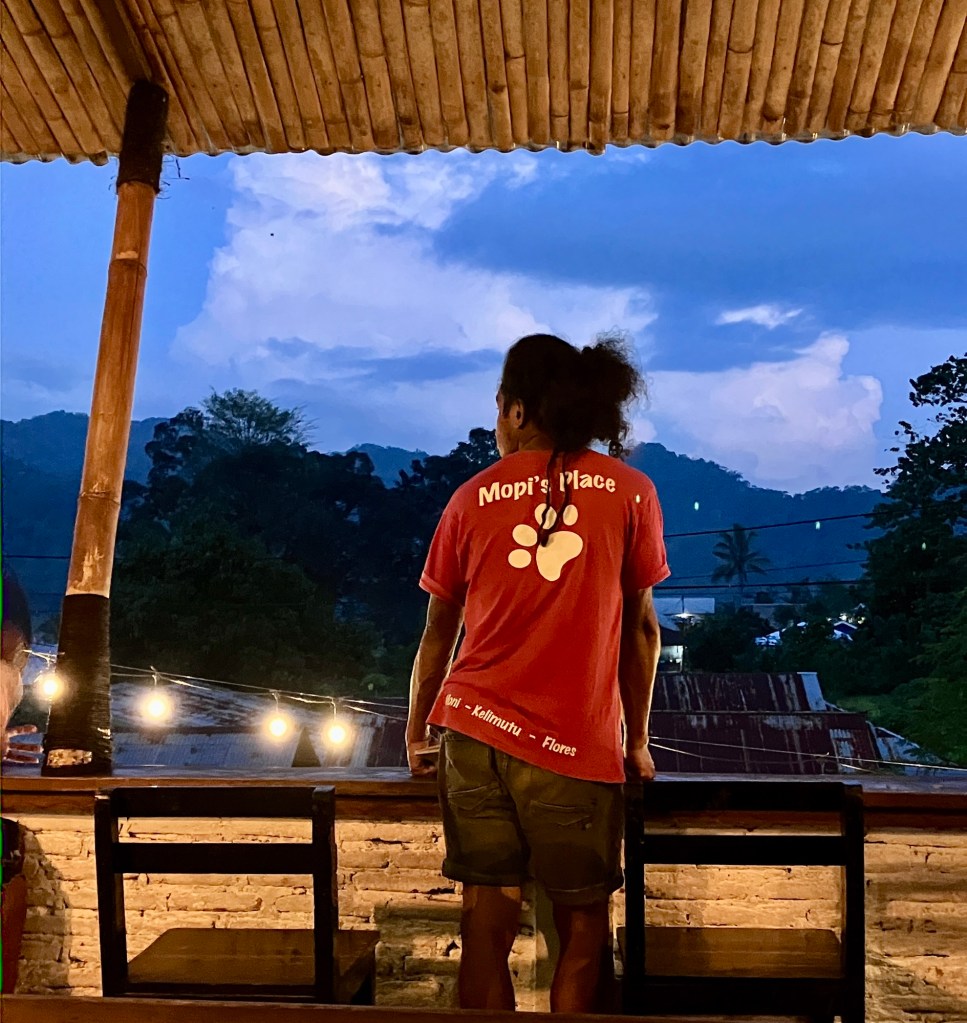
We said goodbye to our great driver from Maumere and spent two nights in the small mountain town of Moni to explore and see Mount Kelimutu. It was great and thankfully a bit cooler at 1000m. Moni has a relaxed vibe and one of the great global travelers bar and restaurant called Mopi’s, run by some local Rastafarians. It was quiet this time of year, but we could imagine a different scene in the peak and dry June/ September season.
The view from Mopi’s Place.The endless jungles and mountains of Flores, so happy we decided to come here.
But we had a lot more of Flores to explore, so let’s get going!
Embarking on the next phase of my life after working as a full-time Civil and Transportation Engineer in the San Francisco for 30 years. My wife and I will be following our shared passions for world travel, culture, and sustainable transport.
View all posts by TravelRich



























 Less Car, More Life