One is amusing, two is a trend. Rich in front of the second Spanish town sign we found.
The drill when we arrive in a new town is as follows. Roll up to the hotel, Rich goes inside while I get the bikes ready to go stay wherever they will spend the night- garage, storage room, corner of the lobby, or occasionally our room. I empty the water bottles and stuff them all in one of my front panniers for easy carrying so we can rinse and refill for tomorrow. Rich checks us in, a new rule in Spain makes this longer than we think it should take. Not just scans or xerox of the passports but address, names, and signatures on either actual paper, or a tablet form. We haul all the bags to the room, frequently at the end of a loooong hallway, dump bags, shower, wash out the days’ cycling clothes and drape them all over the room to dry. If there is a heated towel rail we struggle to figure out how to turn it on to sped up the laundry drying. Chill for a bit then head out.
After a quick early (by Spanish standards) dinner we head to the procession route. It’s Good Friday. We stake out a spot right at a turn.Charmed by the children in the procession. Note the thorny crown with small Jesus on it.I guess due to the hill on which the Cathedral sits, these floats are on wheels. The other two processions we saw were not wheeled.As the darkness came on, the drama heightened.Even without understanding the full meaning, these processions are powerfull.I spend some time imagining everyone ironing their robes and fretting over which shoes to wear.We got a glimpse of snowy mountains as we headed to our Cathedral tour the next morning.The old cathedral tried its hardest to fall down and the tour of the restoration is just amazing. Thank you for the tip Hannah! Another city, another pretty chocolate shop. A sculpture by Juan Jose Eguizabal “El Caminante” The Walker.“The Bullfighter” by Casto Solano. A popular spot to sit and snap a photo.Dinner at a gem of a restaurant near our hotel, Restaurante asturiano “El Chigre ALI13”. This is a cachopo. An Asturian dish of pounded veal stuffed with ham and cheese.What and where is Asturia? Another autonomous region of Spain.
We had never really heard of the Asturian region of Spain. This is our favorite part of travel, finding out about all the things we don’t know. As we headed into the Basque countryside on our bikes we would come to see and understand how different the culture is. At one point we said this is foreign on top of foreign!
Leaving Vitoria-Gasteiz, Easter Sunday, on a colorful trail through an industrial area.Quickly it got rural.Rain and a junior pro bike race. Rich started chatting with Mikel, a local cyclist, and he filled us in on the race and rode us down the big hill for coffee.Our first taste of how friendly and welcoming the Basque cyclists would be. Thank you Mikel.
Even though it was Easter Sunday and we assumed most places would be closed the cafes were open until 2 pm, at which point everyone headed home for Easter lunch with family. We were glad to meet Mikel for many reasons, and I was so happy to have him explain to me that what the road cyclists were calling out to us was “Opa!” which loosely translates as “go up” in Basque. I’m not sure I have the spelling correct, but once I learned that did I call it out to almost every cyclist who passed me on the climbs? Yup.
We said goodbye to Mikel and headed towards Bergara. More tunnels.And stunning new infrastructure too. This is a train trestle.Crossing the Deba River going into Bergara.One of the many beautiful buildings in Bergara.
It is Easter Sunday and we were wondering if anything would be open at all. Would we be able to find a drink and dinner? Answer, yes! The bars and cafe were all open and restaurants were opening up for dinner at 8 or 8:30. We joked that Easter Sunday in Spain shares a tradition with Christmas Eve and Day in the UK – go get a drink. Or a few. On our ride to Bergara I passed a group of young men standing outside a bar smoking and drinking. Oh fun, I thought, my favorite- young dudes drinking. I was greeted with Opa! Fuerte! Hola! and then Hello! when they saw my American flag! Where are you from? A quick exchange and they waved me on my way still cheering. Not what I was expecting at all.
We’ve learned to adapt to Basque time. Pinxos and a drink at 6:30, after a 6:00 paseo (stroll) around town.Our 8:30pm reservation – the earliest we could get. We are the only ones in the restaurant for at least 30 minutes.We’re finishing up at 9:30 and folks are just arriving and ordering drinks.An after dinner walk around town. The lighting was so atmospheric and town so peaceful.The rain soaked cobbles made for an extra pretty evening.Ready to go the next am. We leave our hotel and immediately start our big climb of the day, up to the Elosua pass, 681 m/2,234 feet.Ready to climb? Starting at 160 meters for a 510 meter climb with loaded touring bikes.What a dramatic view.What a tough climb.There’s Bergara, 30 minutes into our climb.An hour into the climb and Rich finds a bench to wait for me.Now we’re seeing other cyclists. Not many bike tourists on this pass (none) so we get loads of hellos and opas!Photo opp or screaming legs break?Clouds are coming in and another view of town, to the far left you can see the train trestle from the day before.Rich had enough time at the top waiting for me that he set up a chair! He graciously gave it up for me once I arrived. My time was two hours up the climb. Not setting any Strava records, that’s for sure.The king of the mountain.Starting down on smooth asphalt. A hint of rain coming on.There is a little tiny Rich in blue. He’s off like a rocket sled on rails.A turn onto a smaller less smooth road to connect us to a rail trail.Another stunning church spire. And onto the Via Verde del Urola.Wildflowers against blazing greenery.Lunch stop in Azkoitia. Iglesia Santa María la Real de la Asuncion. The view down the Urola River. I love how folks hang laundry out the windows, but I would worry about wind taking my clothing and flinging it in the river. Good pegging skills I guess.The wisteria on this riverside building. Dramatic. It was so nice to know we’d find water taps.This was a first. A bike wash station. Just as we headed out of town.Our bikes needed it. They were still showing signs of our muddy Pyrenees crossing and gravel riding in the Navarre.So shiny and clean!
Our audience while at the bike cleaning station was a young mom and her tiny son on his scoot bike. He watched, fascinated, and his mom obliged him by spraying off his little bike when we were done. My Spanish is quite basic but enough to start a conversation, and the little US flags again did their jobs and she switched to excellent English for the rest of the chat.
Hanging with the locals in Aizarnazabal.A day bike touring can feel so long. You really get to experience the changes in terrain and whiplash from city to town to countryside. No grocery stores in town but one bar sold some basics, so eggs it is for breakfast.These stunning sheep across from our casa rural in Aizarnazabal!Curly horns and long fleeces.Heading out in the morning after a scrambled egg feast.Barely two minutes from the hostel and I’m already pushing my bike.Headed through Zarautz to San Sebastián. But first, another hill.Pastry break in Zarautz, a famous surf town and on the Camino del Norte.We came through here two years ago, on foot, with our friends Christine and Cecily.We all sat on this bench two years ago.Camino Pilgrims headed to Zarautz and eventually Santiago de Compostela.Down the hill through the vineyards.Through Orio and a picnic lunch break.We leave the Camino (which we are riding reverse direction here) and head up a steep steep little path to avoid the busier road along the river.Steep enough that Rich comes back to push my bike up some stretches.Stunningly beautiful as we ride by farm land.A perfect weather day. Sunny at times, cloudy at others, no rain. Just us, the road, and the occasional farm vehicle.And there it is! San Sebastián. A three night stay awaits. And a lot of yummy food. But that’s for the next post. The lower heart is Zaragoza, the long gap is the train hop to Pamplona, and then our horseshoe route in the mountains.
Zaragoza. Cathedral-Basilica of Our Lady of the Pillar behind us.
Our first train hop to get me out of the sunny Spanish coast was from Tarragona to Zaragoza. Rich could tell from the map landscape that it would not be a good idea, or fun, to pedal across the plains of Spain with a sun adverse travel companion like me. So trains it was. Mission: get Cheryl to greener northern climes. And it wasn’t even hot yet. So much for our Spanish bike touring, huh?
The Renfe media distances trains in Spain seem to have two distinct types of rolling stock.These older train sets with narrow doors and three steps. This was our first train to Zaragoza.With bike hooks – my nemesis. I can lift my bike up, but only if the train is not moving and I have loads of space. Rich is the bike lifter when it comes to trains.The other type are these lovely wide doored newer train sets. Second train to Pamplona.These newer cars have much easier access: one small step in and loads of leaning space. Of course, you have no idea which train you will get. The waiting is stressful.
Bikes with touring gear on trains are not always, almost never, easy. Our first train hop ended up being the older and less bike friendly train cars. A train station attendant told us the bike car would either be the first or last car, so we waited at the beginning of the platform so the train would go by us and we could see the bike car. First car. Of course. High boarding. Of course. As we ran up the platform to reach the bike car, dodging other passengers and their rolly bags, we knew it would be a fire drill train boarding. Yank the bags off the bikes since they would be too heavy to lift up into the train. Rich grabs the bags and chucks them on the train as I stay on the platform with the bikes. Rich gets through the narrow door with one bike and by now the conductor is blowing his whistle so I grab my bike and attempt to jam it up the stairs as the doors start to close and I search for the door open button with both feet still on the platform and half of my bike through the closing door. We are saved by a super nice Belgium cyclist who is already on the train which started in Barcelona where he lives. He helps Rich get both bikes on and through a second narrow door to the bike hooks. Phew.
A strong rain had just passed so we got a nice ride to our hotel in Zaragoza and got to see this Zaha Hadid designed bridge.
When possible Rich books trains where we get on at the beginning of the run, and get off at the end. Mid trip stops like our boarding in Tarragona can be super challenging, especially if there are bikes other than ours and we have to navigate a bike dance – handlebars tangling, pedals hooking on spokes. Zaragoza was the last stop for this train so we had a calm exit. It would be a one night stay and a second train the next day. And that one ended up being a lovely low floor wide door media distance.
This was a fun first. The hotel brought out a ramp so we could wheel our bikes right into the lobby with panniers still attached.The sky cleared and all of Zaragoza came out for a walk. Zaragoza is in the Aragon Region Spain. Not Basque yet.First stop, the chocolate shop. Do I have room in my panniers for a cake? No.A beer, a glass of wine, and a little bag of chocolates, which I do have room for.After a quick ramen dinner we headed out to join the crowds waiting for a Semena Santa procession. Our second of the trip.Rich deployed his long arms for over the crowd shots.This was a somber and somewhat chilling procession. The drum beats were very loud and los penitentes in their capirotes (cone-shaped hats) were numerous.Our next train left after noon so we had time for a workout in the hotel gym, breakfast, and a walk to see the Roman bath ruins in town. These were discovered (uncovered) in 1972 when a neighbor noticed something in a construction site. Now it’s a museum and the ruins are protected by a canopy.Off and a slight backtracking to the Zaragoza Miraflores train station, so we’d have an end to end journey. Get on at the start, get off at the end in Pamplona. Pamplona is in the Navarre province of Spain. Still not Basque yet.Riding into Pamplona old town for a one night stay.Now the Pinxos feasting begins in earnest.How to choose?All delicious.Hello my darling Gildas. Olive, anchovy, and guindilla peppers. Spicy sweet little peppers pickled in wine vinegar.Pamplona el ayuntamiento, or town hall.Water prep. We each carry two bottles and an extra liter water bag. Once we realized how often we find taps of potable water in Basque towns we stopped filling the water bags and saved the weight.My favorite sign in Spanish and Basque. We would head out of Pamplona on a Camino route, such fun signage. From here we bike. No more train hops.One route for walkers and one for bikers.The Camino markers always make me happy. Fond memories.The still snowy Pyrenees mountains in the distance. Hello friends.The trail unwinds like a ribbon ahead of us.Between Pamplona and Lorca.It’s fun to follow a Camino route. This is the main Camino Frances. We got to greet pilgrims and be greeted with “Buen Camino”.The Way. Vineyards. Hillside town.A countryside stay at Casa Nahia Alojamiento Rural in Lorca. Home made dinner and a bottle of wine. Still in Navarre.Our dining companion was a rainbow.I love a good livestock sign. This cow’s legs look short to me.Wait for the photographer!Oh, actual cows. And yes, they do look a bit short legged. With those distinctive Spanish horns.A quick stop in the town of Estella to buy pastries and start on the Vía Verde del Ferrocarril Vasco-Navarro. We part ways with the Camino Frances here. (Still in Navarre.)Town was super busy with market day and pre Easter holiday shut down so we took our pastries up the trail a bit.The Via Verde is one of the area’s repurposed rail lines. Tunnels and bridges, oh my!Ah, trees. And shade. Tunnels and nice riding surfaces.Signage and sights to see.The surface was quite good for riding, such a treat to ride long car free stretches. The route has a few nice hilly diversions where tunnels have not been restored.Happily listening to a podcast on my Bluetooth speaker and pedaling along.A valley near Metauten reminded us of the Grand Valley in Colorado with stunning mesas. Maybe a little greener.You can see from the map that we were flirting with the foothills. Pamplona to the right, and far left is Vitoria Gastiez. There were good trails keeping us to the valleys, but inevitable climbs up those ridges. The Vasco Navarro Railway Nature Trail Greenway follows the route of the Trenico, which between 1927 and 1967 ran between Estella-Lizarra and Mekolalde (Gipuzkoa)Between Estella-Lizarra, Vitoria-Gazteiz and Bergara (Gipuzkoa) Length: 133,7 km; 27 km in NavarreAncín, in Navarre. A stunning backdrop of oilseed rape. We know it as canola oil but it also used for industrial applications and animal feed. Most Americans call it mustard seed, and both are members of the Brassicaceae family and are cultivated for their oil-rich seeds.Our destination for the night is not far away. The Easter holiday week has been challenging already and this night, Thursday the 17th of April is about to get even more logistically tough.The rail trail gets us through the edge of the Codés mountains. Rail trails will only ever have about a 3-5% max incline, which makes riding them up quite easy, and riding down super fun.More tunnels and bridges, oh my!This trail is loaded with benches and picnic tables, which is so nice. And some are even in the shade.
We arrived in Campezo/Kanpezu – finally in the Basque Country – and checked in to our hostel, Aterpe Kanpezu Hostel, showered, threw a load of laundry in, hung it to dry and then wandered into town. We knew that finding an open restaurant in this small town the night before Good Friday would be challenging- but we assumed one of the restaurants would be open. Open yes, for drinks. Food? Not so much. After asking at three places which all said the kitchen would not be open tonight we were directed to a restaurant down one the main road next to a gas station which had the worst reviews. A range of rude, bad food, slow service. Yippee! They lived down to their reviews and the kitchen didn’t open until 9pm, at which point two hungry cycle tourists would be desperate. Part of the challenge was that now in the Basque Country we encountered what may have been our first Basque only speakers. However, they did have the most delicious home made tortillas, the Spanish potato and egg omelette. So two of those and a drink later we decided we’d survive and headed back to old town.
We found a small Bodega now open and got ice cream bars. Then a bar for drinks and Gildas (anchovies, olives, and peppers). It was an odd food progression but you do what you need to do on Good Friday Eve.We joined the rest of the town enjoying the car free main street and watching the children play while enjoying our drinks.The Spanish do public spaces so well. And everywhere we visited we enjoyed the Paseo, the traditional 6pm evening stroll.Spring blooms over a weathered fence in town.As we were getting on our bikes the morning of Good Friday we heard this van honking as it rolled through town. We realized it was the bread van so we hustled over to buy bread for our picnic lunch. Basque bread van. Shadow photographer.Headed to Vitoria Gasteiz for a two night stay. Only 38 kms, and all on rail trail, right? Not quite.I’m not the only one who finds the cows picturesque.The walled town of Antoñana and our fearless tour guide, Rich.A slightly spooky tunnel.And more bridges.Good Friday Holiday meant a lot of road cyclists out.Other cyclists meant we could follow them to a water source.Trail side cuties.A long dramatic tunnel. And then the sound of a sad trombone. There is a tunnel through the highest part of the mountain ridge that is not open, so the trail diverts up and over.Up up up.But wait. What’s this?My little flag is blowing forward! Tail wind to the rescue.Hat deployed for warm day climb.The summit. It must have been one long tunnel, it was quite a climb.We had a nice decent on asphalt before joining the rail trail again for our final stretch in Vitoria Gastiez.It’s nice to get off the trail and into towns. In Spain churches are our first try for benches for lunch. This one came with a friendly dog who would have happily shared our lunch. You know, to be helpful.I think I will always recognize the shape of a Basque church and spire. We made it to Vitoria-Gasteiz, which is the capital of the Basque Autonomous Community and where we will spend two nights.
Up next, our time in the Basque mountains and why I am now a huge fan of the Basque.
The Happy Travelers. Looking forward to a rest day in Vitoria-Gasteiz.
Spain has been on our bike touring list for years, but we hadn’t made it here yet. Lots of people ask us why not? First off, much of Spain is arid and sunny, two conditions Cheryl (and I) don’t really like in large doses. Second, bike touring routes and infrastructure are known to be better in Northern Europe, so it’s been hard to pass up easier trips (at least to plan) in Belgium, Switzerland, Austria, Chéchia, Italy; Germany, the Netherlands, and Scandinavia.
Last Spring we got so close to Spain, but some nice house sitting opportunities kept us on the French side of the Pyrenees. Finally, I’ve been working on redeveloping my high school French the past few years and didn’t have an interest in muddling my brain with my more recently learned Spanish again. Only one additional language Sim slot in this engineer’s brain!
Cheryl atop the Roman ruins at the Panissars Pass. Cheryl is ready for Spain!The beautiful spring bloom near the French-Spanish Border.
But this year we were determined to give Spain a try and had a plan to ride the coast via Eurovelo 8 more or less to Barcelona and beyond. And if it started to get too arid or sunny for us, then we’d head up towards the mountains and green Basque Country instead. That’s the turn right.
Giving Cheryl a break pushing up the steep and rocky road after crossing the border. Is this really Eurovelo 8?!At the bottom, someone appropriately added “MB-only!” Grafitti to the regional trail sign. A little too late for us, but luckily this hanging tube was not our fate.
Near the Spanish border, we opted for the quieter but hillier route into Spain over the Col de Panisares. Officially this seemed to be the Eurovelo 8 route on most maps and is also called the Pirinexus route, part of the Catalan greenway route network. The French side was paved, quiet, and delightful. But as always with bike touring, we were rewarded with some memorable views, and then punished on the Spanish side with more uphill kickers, steep rocky trails and unridable downhills. No cruising down into Spain.
Looking down to La Jonquera.Maybe we can sleep at this ranch?Our first Spanish cycling underpass/drainage culvert. Not our last.Cool culvert art.
So our entry into Spain was a bit bumpy and we found ourselves at the somewhat grungy and noisy frontier town of La Jonquera at 5pm after just 50 hard earned kilometers. We didn’t have a reservation anywhere as I suspected the day needed flexibility, but there were no good options around. We’ve been without lodging before at 5pm, as it goes with booking on the fly cycle touring.
National Route 2 had a decent shoulder near Figueres. Sometimes you just want to get there!Our hotel in Figueres old town. A bit of street construction meant no car traffic in front of our hotel and limited Saturday night bar noise -:)
So we decided to press onto Figueres on the main N-2 (II) road, as the official Pirinexus route had more dirt, hills, and would likely take us hours. We were both tired and a bit stressed, but knew this was just one of those days we just had to rally. To our pleasant surprise the N-II had a generous 6-foot shoulder the whole way to Figueres, and we made it there in less than an hour and a half, after a truck stop soda infusion. A shower and dinner at our atmospheric old town hotel and all was good.
Hotel Duran in Figueres is family run and had a classic vibe, a fine restaurant and even side rooms that were part museum of local life.We set out the next morning after a brief stop outside the Dali museum. Salvador Dali was born in Figueres in 1904 and you can visit the large museum as well as the house where he was born.Always fun to ride through the cobbled little streets. Catalan felt different than France.Sunday bike touring days always surprise, such as this festival in Bàscara, complete with local Catalan dancing.
Although the dirt route was peaceful and had some nice natural beauty, I wished we had just taken the main road route up and over the pass. But again, I could find no info on the pass routes….not even a good blog. Maybe this blog will help people decide.
A random regional cycling route sign was appreciated, but better routes and signage everywhere would make this area more popular with people traveling by bicycle.Ok, this train bridge still baffles this engineer; why are the webs of these precast beams on the top. It’s upside down, but I guess it works.
We soon figured out this part of Spain does not have as developed a bike touring culture. People ride for sport; roadies, gravel, and mountain bikers, but it seems a small number of long distance tourers. We met a few bike tourists along the coast, but most were Dutch, Belgian, or Canadian. (The French were notably absent.)
Finally some signage, helped by the overlap with some of the Camino de Santiago routes.
The first things that struck me in Spain was the lack of useful signage in this area. No map of the border pass cycle routes, a few town directional signs, and just a few randomly placed EV8 route signs. And never distances. Also, no indication how rocky and unsuitable parts of the Spanish side of this route are for loaded touring bikes. If you are riding into Spain on this coastal route, be ready for a significant decline in signage and infrastructure from France. Routes just end and this is the land of random, short cycleways to nowhere.
Peaceful cycling into Girona along the Ter River.Wisteria blooming everywhere.
But Spain brought so much beauty and a completely different feel from France. Our trip has been perfectly timed for peak spring and the smell of blooming flowers, trees, and thick grasses abounded. The fresh Mediterranean Sea air filled our noses and coated us in a comfortable sheen of the promise of Spring and a new year. Forget the chaos of your home country.
The lively and beautiful arcades of Girona.Watching the bikes go by at “Bagels and Beers” in Girona, which also has delicious “Burgels”.We sort of happened upon the Medieval wall of Girona and couldn’t pass up following it along the city edge and University campus on our rest day.Looking back at the Pyrenees from Girona.Walking the wall offers a great overview of the city.No trip to Girona is complete without visiting some of the famous road cycling stores, including “Eat Sleep Cycle” store and cafe.The surprising Pont de les Peixateroes Velles, designed and built by Gutave Eiffel in 1876Girona’s old town core is actually an ancient and vibrant Jewish Quarter known as “El Cell” occupied from the 12th Century until 1492, when the purge happened.Girona is captivating to explore.Spring light in Girona on the Onyar River
The next day we headed to Girona, a long time dream of mine due to its famous road cycling culture. The ride into Girona was nice on self-selected routes, but loaded touring bikes are an anamoly there, and we soon felt a little out of place as we rode into the main square heaving with people drinking, chatting, strolling, and shopping on a beautiful Sunday spring afternoon. Various kitted out roadies wizzed by and seemed unimpressed that we carrying all our gear for 3 months on our heavy duty human-powered transport machines.
Heading out of Girona to the south, we encountered a group road ride tour of foreign cyclists. They were focused on staying on their bikes, so we didn’t want to bother them. For us, just another day.The roads outside Girona are popular with roadies for a reason.How many famous cyclists have ridden this decent?
We had a nice little apartment to enjoy for two nights in Girona and it’s a beautiful place to explore and hang out. Mixing with the road scene heading out of town was a bit strange, as we’re used to seeing more cycle tourists, and it’s really popular with Americans, so funny to here so much familiar English after so many less visited places.
Spanish pastries.We were following the Via Marina for a while.Cheryl in her latest high tech cycling gear: fuzzy pink Shetland wool sweater. Soon we were at the Mediterranean coast via some more primitive rail underpasses/drainages. But the rare and heavy rains must go somewhere.We started to realize that the EV8 on this stretch of coast would not be bike heaven.Decent riding along some of the coast, but a little dull in places.We mostly picnic, but today cobbled a pre lunch snack at a cafe despite it being 12:30…a challenge cycle touring is Spanish lunch is from 1:30-4pm.The train line runs parallel to the sea along the coast north of Barcelona, making access between the sides challenging at times.Morning departure from our fun all-inclusive hotel in Pineda Del Mar. They had just opened for the season and it was very good value. Fun to mix with holiday makers and get a nice cool swim in the pool.Cheryl wondering if she was back in SoCal!The promenades were lovely, but we could only imagine how welcome shade would be in the hot summers. We were already missing it in early AprilThe sea is beautiful along the Costa Brava. But overall this stretch of EV8 is hit and miss.Catalan architecture charms in the few old towns still left on this part of the coast between the sprawlOur one night stay in Barcelona was pleasant at the Illunion Hotel in El Poblenou who kindly stored our bikes safely overnight.
We cycled towards the coast from Girona and spent two days meandering down to Barcelona. This stretch was not our favorite as the coastal sprawl felt a bit endless and the rail tracks make access between the coast and city sides challenging with loaded touring bikes as some access points are just stairs. But eventually we rolled into the northern neighborhood of Barcelona known as El Poblenou, which is also the core of the superblocks, which cleverly limit through traffic and prioritize pedestrian and bike movements. It was great and such a joy to cycle in most of Barcelona.
Morning school rush hour in El Poblenou meant an armada of kids, parents and bikes. Nice!On our way south by the famous Sagrada Familia.There are some beautiful bikeways in Barcelona, and very well used. Fixing a flat is never fun. Really not fun on a busy road. Thankfully we were at the quarry turnout so had some space.Cheryl ahead on a beautiful stretch of the C-31 from Garraf to Stiges. A rare shot without traffic as this road was almost constant cars and haul trucks to quarries. A shame.Early dinner and drinks in charming Sitges. We still haven’t solved the mystery of a charming coastal spot with outdoor dining and no Gulls. Why are there no gulls here? The April beach scene in Sitges. As we came into town folks were swimming.Costal glam couple.Komoot and and supposed EV8 Route?Ok, another underpass to a trail on the oceanside of the tracks….nope, dead end at rock slope and tiny beach! Cheryl was thoroughly unamused.Not the nicest stretch of Eurovelo and Cheryl not happy in a head wind and sunshine.
From Barcelona, we headed again out to the coast via the EV8, which is a nice route until past the airport, then forces you onto busier roads. It was a tough stretch as I had fixed a flat tire near the airport and then half way through the extremely busy coastal road from Garraf to Sitges, I felt my tire going soft again. Ugh! This time I really examined the tire and found the tiny glass shard culprit. This stretch would be ok on a fast road bike as the cars are very respectful, but on slow touring bikes, the constant traffic and haul trucks made it a somewhat teeth gritting experience. No pictures of the traffic as there are few places so stop and most is guardrailed.
Cool to discover The Torre Del Escorpions or “Scorpio’s Tower”, a funerary monument built by the Romans outside Tarragona in the 2nd century. Our lovely view from our hotel in TarragonaTapas and Sangria in the main square of Tarragona. Set for Friday night people watching, Spanish style.We were excited to see and moved by the solemn Semana Santa processions in Tarragona. We didn’t know at first why everyone was headed towards the Cathedral. We quickly figured it out.The striking coastal Amphitheater of Roman Tarraco used to hold up to 12 thousand spectators until the decline of the empire 5th Century.A big port for Mega-Yachts in Tarragona. The cannon isn’t really aimed at them? Is it?Roman ruins = Feral Cats. This good looking kitty posed for us.Cats also liked the real and just slightly gritty feel of the Part Alta, the historic core of Tarragona.Colorful Tarragona Street Art. Cheryl snapped the pic before she actually read the words.Orange blossom scents filled the air of Tarragona. So many orange trees as street trees.Not a gentrified old town, Tarragona’s old city still is active with daily life.The processions weaved through the city. We were in Tarragona for three nights and watched processions on two nights.More crowds for the Semana Santa Procession. We felt lucky to witness this less touristy and more local version in Tarragona.Real flames added to the drama as night finally falls.The weight of the floats and human strength required to carry them was impressive. The folks carrying this heavy float marched in time and swayed in rhythm.
So after a really pleasant night in Sitges, we rolled onto Tarragona, where we spent three nice nights and rested prior to our turn inland. Tarragona is a small and ancient city with Roman ruins, a fascinating history, and great archeological museum by the old port. One of our favorite smaller museums with a great audio guide. It was also the start of the Semana Santa events, so we got to see two different nights of processions, each with a different vibe and purpose in the run up to Easter.
Finally leaving the pleasant and bike friendly Hotel Astari for the Tarragona train station. But where to next?Well, first some train pastries!Oh, and some buttery Jamin Iberico on rolls.We really liked exploring the layers of history in Tarragona for a few days. A bit of a hidden gem.Where we’ve been so far on this Spanish Sojourn. It’s a big country. Each heart is a place where we slept.Happy cycle tourists on the Spanish Mediterranean…at least for now.
Suddenly you look up and two weeks have gone by! But you think back and can’t believe it was only two weeks ago that we got on our bikes (March 31) and headed to the train station in Annemasse. A hop through Lyon to Avignon to spend the night, and then train to Béziers, and ride on to Narbonne. Phew. That sounds easier than it really is, which is why we spent two nights in Narbonne to get our bike touring mindset on.
The alps coming out to say bon voyage.Lyon’s wonderful bike lanes. Our long train transfer was between stations so we got to leisurely ride across town.Rich’s American flag doing its job and attracting a chat from a local.My panniers match the train. Although the high speed Ouigo train is not for us.One night in Avignon.Ready to get off the train in Béziers.Our plan to get on our way was derailed by a long chat with another bike tourist, Martin from Holland.
Our plan was to use trains to get south and ride in Spain before the weather got hot. Neither of us are happy cycling in hot weather. We had been in Béziers on bikes before, but this time we’d ride out a different direction. After a good long chat with Martin who was also riding a Koga bicycle, it was time for a lunch stop.
Lunch in the shade alongside Le canal du Midi. We brought our little travel chairs with us this trip.We decided to stay in Narbonne for two nights once we realized we’d be arriving quite late in the day, and it gave me an opportunity to have the brakes on my bike fixed.Who could resist this photo stop?Narbonne at dusk. Like a lot of French towns there is a focus on new public space, here a lovely newly redone stretch along the Canal de La Robine.Narbonne Cathedral’s gargoyles. I would love to see these spouting water. But that would mean rain.Creepy. Love it!Canal de La Robine. The work on the canal side path is ongoing to the south.A windy day meant indoor happy hour.The small black poodle being groomed inside this shop would certainly attest to the accolades on the sign.The canal trail. This is going to be a lovely day on a champagne gravel (hat tip to Annie) trail.Or will it? Blocked by fiber optic construction.A 47 kilometer detour. Thankfully a local road cyclist stopped and told us the detour was a fine route, one he rides often.So off we went, better know the marshes.It was a very scenic detour. A bit windy. Was it a headwind or a tailwind? I can’t remember. (Kidding. It was a headwind.)Flamingo sightings.Lunch at the boules court in Bages and a chat with some locals. The flags doing their jobs again by drawing folks in and starting a conversation.Still smiling. It’s chilly enough that my fuzzy pink sweater comes in handy. Bicycle signage is quite good in France.Peyriac de Mer, after a quick snack and map stop. Such a sweet street I stopped on an uphill climb to snap a pic.Although he was technically closed for lunch the owner came out from his apartment behind the shop to sell us some much needed fruits and veggies and home made cookies. Sigean, still in France.Out of Sigean the route climbed up a rocky pass. Definitely best suited to mountain bikes or gravel bikes, but here we go.This look says ‘Yes, I did just fall in that mud puddle’. My rear pannier caught on a branch as I tried to skirt the edge of the puddle and I ended up in the puddle.Ortleib panniers act like bumpers for the bike when you go over sideways. My bike and panniers were fine, I was very muddy with a few scratches on my left leg. Pride? Slightly wounded.Still in France so the signage is still strong.Headed down a very rocky route. Lots of walking the bikes.Leaving Leucate where we spent the night and a bit of time de-mudding me and my gear.Headed to Perpignan and our first good view of the snow capped Pyrenees mountains. Don’t worry, Rich says, we’ll have even closer views. Beach snack stop in Le Barcarès.Getting closer to those mountains along a very nicely paved cycle path.Are we riding or just always stopping to take photos?Oh photos, definitely stopping for photos.Perpignan. The French buildings and palm trees made me smile.The Basse canal, an off shoot of La Têt River. Coming in to Perpignan from the north it didn’t look promising but once in the heart of town it’s charming.Sweet little streets and cafes.Easter is approaching! Easter bunnies.And Easter foxes.Do I love chocolate shops? Yes!Sweet street art.Polite and obvious reminder of where your ciggy butts go.The days are long, sunset at 8:30, so lovely long twilight light.A nice apéritif.A hearty meal.Oops – an entire bottle of red wine. And a lovely chat with a Swiss/Spanish couple. In light of what’s going on in the US some of our conversations have gotten more intense. Not confrontational, but intense.Leaving Perpignan, next stop: Figueres, Spain. In the way: mountains.Ok, next stop actually still in France. Brouilla. But it’s starting to look like Spain.Over a river.Over a bridge. Foothills approaching.Through vineyards. That little orange speck is Rich. Who’s anxious to get to some mountain climbing? He is.This low pass closes not for snow, but for risk of fires.
Unlike France, information on cycle touring routes was a bit spotty as we headed into Spain, but we headed up the pass optimistic about our new adventures coming in Spain. Stay tuned.
Our last trip through Singapore was foiled by a Taylor Swift concert. We didn’t want to pay the expensive hotel room charges so we ended up just flying in, spending a day and flying out. A long layover. This trip we splashed out and stayed at a hotel that has probably caught the eye of many a visitor, the Parkroyal Collection Pickering. We were there for three nights on our way back to Europe.
It’s certainly eye catching with the lofty spaces and masses of greenery.One office tower on the right, and two hotel blocks.A view from the 5th floor where the gym, pool, and garden walk are. The pool was closed for maintenance, but a shuttle took us to the sister hotel 5 mins away to swim.It’s a unique and beautiful building. Looking across the plants to the view.Lounging in the bird cage.The garden walk.All the shade and plants kept the temperature down.The view from our 13th floor room.Shower view!The shower was on a corner with a wraparound view.The breakfast buffet – a little chocolate donut treat.View from the swimming pool area of the other Parkroyal hotel. The famous Marina Bay Sands hotel in the background.Hawker center lunch. Yes, I did splash broth on my nice new t-shirt. And yes, I did get it out.This was on Sunday, so many folks enjoying lunch and buckets of beer.Going up the staircase at Fort Canning.More Sunday picnicking.We followed the signs to the tree tunnel to find an Instagram Tik Tok hoard.All waiting for this shot. I do appreciate how collaborative folks are for their photos, all politely taking turns. But I still don’t really understand why. Further down the tunnel- empty. I need some practice, this was much cuter on the young lady I stole the pose from.The greenery in Singapore is impressive.We missed this greenery and shade in Saigon. Singapore has been all in on greening since the 60s, and it shows.The metro is good and the buses are easy and fast. I so appreciate the shaded bus stops. All cities should have such comfortable bus stops.The bike share system has bikes with child seats.We didn’t see a lot of folks on bikes, the transit is very good, but I think bicycling has a lot of potential in Singapore.Singapore does great messaging on the metro. How to get along on board.Our favorite – Hush-Hush Hannah!One last sweaty hike on the new rail corridor path.Who doesn’t love repurposed rail bridges?At the old quarry – a Black Capped kingfisher. Look at that beak.Our final lunch of soup dumplings before heading to the airport. The Jewel at Changi Airport Singapore. The obligatory waterfall photo.And back to France! Happy travelers with a great friend, Hannah.
It’s always a culture shock to leave Asia for Europe, and we’ve been feeling more fragile and worried about not only our country, the US, but the impact of recent political decisions in the US on the rest of the world. We know that people everywhere want similar things; peace, prosperity, the ability to live and raise a family, and have a home. Our standards for prosperity may differ around the world, but we all deserve the opportunity to have that peaceful home. That is feeling at risk right now. But we pedal on.
Next adventure- bike touring again in France and Spain.
Square peg, round hole. That’s what we say to each other a lot when we’re in a hot and humid place where walking is tough and sweaty and the constant heat makes us cranky. We always need to get some physical activity. Long walks, a hotel gym, or hours of bicycle touring keeps us calm and sane. Without that we quickly become out of sorts. And in some countries it’s really hard for us to get enough exercise, and when one of us gets extra cranky about it, the other says “square peg, round hole”. But, in Vietnam our occasional query of why, why do we do this to ourselves is silenced when we get to experience a place like Cát Tiên National Park.
Monkey marks the spot. That’s Cát Tiên Park.Our lodge host showing us where to catch our predawn ferry for the next days gibbon walk.Cashew nuts. Vietnam is a big cashew grower and exporter.
Cát Tiên is not super popular with western tourists yet, but on weekends it explodes with Vietnamese up from Saigon to experience the countryside and jungle, and catch glimpses of gibbons, silver langurs, macaques, and crocodiles, and lounge by the river enjoying the wide open spaces while drinking beer and singing along to Karaoke. “It has an area of about 720 km2 and protects one of the largest areas of lowland tropical forests left in Vietnam.”
Huge Tung tree in the park. During the American war this area was sprayed with agent orange exfoliant, but the large trees survived and the jungle has grown back.
Our lodge host explained that the park had gained some fame on Tik Tok recently, prompting loads more weekend visitors. It was great to see so many visitors, but we did find that our slightly expensive tours with park guides were mostly if not all western tourists since the prices were quite high for most local tourists. We are always game to spend money trying to spot wildlife since it supports conservation and provides jobs for locals, and, we are fine taking our chances seeing or not seeing wildlife. Our gibbon trek seemed to be going badly after a dark morning walk into the jungle and no sound from the gibbons who usually sing a pre-dawn chorus to each other.
The forest canopy as the sky grew lighter. Come on gibbons, where are you?A German couple on our tour, we were all thrilled to actually spot gibbons. They came swinging through the trees.A male gibbon. Males are black and the females are light brown.Our guide making sure the giant hollow in the tung tree was snake free before letting us in.There were bats inside, and a big spider.On our walk back, a group of Taiwanese birders.Back to the Green Hope Lodge to relax by the river.A walk out for lunch and a cafe stop. The small concrete street was lined with cashew and pomelo trees. Hot enough for Rich to use the shade puddle umbrella.
The dominance of local tourists meant there wasn’t much in the way of food variety in town. Our lodge served food, much the same fairly simple menu served by other lodges and hostels in the area, so even when we walked out to eat somewhere other than our lodge, the food was very similar. There was very little flavor in most of this local tourist variant of Vietnamese Food. We decided that the first place to expand to even a slightly western menu would be super successful. We were there for five nights and by day three we were craving some variety from the fried rice and noodles. A pizza or burger would have been a welcome change.
Making friends at a cafe.Out for a sunset river boat ride to look for birds and more monkeys. We seriously thought our boat driver was going to charge up these rapids! He faked us out and then did a photo shoot.A Bee-eater keeping watch over their nest, which is a perfectly round hole in the riverbank.Fisherman taking up his nets.Our boatman pivoted from fishing to taking visitors in boat tours. He also spends time picking trash out of the river and taking up abandoned fishing nets.He was a pro. Helping us take photos, binoculars to borrow for bird watching, and feeding us pomelos as we looked for macaques – which we saw.And he let Rich drive the boat for a little while.
The travelers to Vietnam who are motorbike or scooter competent or capable have a very different experience than those of us who aren’t comfortable driving a scooter, or who might feel uncomfortable as a scooter passenger. Scooters are the main form of transportation in Vietnam, with locals scootering literally everywhere. Why walk when you can scoot? Families of four, five, sometimes six or seven, all ride on one scooter. Dogs, shopping, all manner of goods are piled on. I do regret that we’re not scooter drivers, but I think that ship has sailed.
Our host insisted on giving us rides to the ferry dock one morning. It was a nice short distance for us to experience being passengers.The ferry coming across the river to take us to the National Park.And then another small boat took us to the island where the Primate Rescue Center was located. What a worthy organization. Most of the monkeys are rescued from the illegal pet trade and most can eventually be released back into the wild.Rich was very happy to perch on a tiny chair and eat some more flavorful Pho for lunch at a small local restaurant.It was a typical small local restaurant, with very good Pho. We were charmed by the small streets and the local custom of evening strolls in the slightly cooler temperatures.Friday and Saturday nights brought not only more visitors but weddings as well.Canopies were set up to make more party space.We were a bit worried about the noise as this party was quite close to our hotel, but the loud sound system was pointed away from us, and quieted down about 11pm.Possibly the bride?
In our constant quest for physical activity we borrowed bikes from the lodge to ride out and visit some local sites – including a cacao farm.
In the rural areas there are still locals on bikes, not everyone scooters. Yes, we’ve made that a verb now. Scootering.Rich on an ill fitting bike. I gave up and turned back to save my wrists from my ill fitting bike, but Rich pressed on and brought me back cocoa powder from the farm.And another Pho lunch. These photos don’t capture the heat and humidity. The owners took pity on us and aimed a fan directly at our table.
We weren’t done trying to see wildlife so the next day we headed off for a hike to Crocodile Lake, to hopefully see crocodiles. Back to the ferry dock, a 20 minute ride in a truck to the trail head, and a 5 kilometer hike to the lake. We got going early since you have a better chance seeing crocodiles early in the day.
I must have said “No more jungle hikes!” at least twenty times in Vietnam- and here I am on another jungle hike! We thought we’d seen big trees already, but this 400 year old Tung was stunning. It’s nicknamed the Thunder Lizard.
Our hike out to the lake felt fast as we had met up with a young Canadian cycle tourist and we chatted the whole way. She had flown into Saigon from New Zealand, bought a bike, and started pedaling. Much cycle touring chat ensued. When we got to the ranger lodge at the lake I waved at the three workers on the boardwalk to the dock and they gestured to come down and yelled “crocodile!”. We hustled down.
It was a bit unclear how the crocodile ended up with an oar on him, but the ranger needed it back before he could head out on the boat to drop the other two off across the lake.Why are you wearing an oar, Mr. Crocodile?I guess he finally got tired of us exclaiming over him and headed back into the lake.With Alison, the intrepid cycle tourist. We were all very happy to have seen a crocodile. There was one more small crocodile sunning by the lake but the big one was the hit of the day.Alison headed out to where her bike was parked and we relaxed and bird watched for a little while.Siamese Crocodiles had disappeared from the lake and were successfully reintroduced in 2002. Gorgeous lizard sunning themselves.Ferry back to the other side of the Dong Nai River.And a very welcome iced coffee at a cafe just up from where the ferry docks.And Allison showed up! She had a problem with loose handlebars and had no Allen wrench. The cafe owner told her to wait, he hopped on his scooter and was back in five minutes with an Allen wrench to fix her handlebars. The Vietnamese are so nice. Maybe not super friendly right off the bat but helpful.And she’s off again! I loved her intrepid spirit. Not sure I could handle the heat cycle touring in Vietnam. She was looking forward to getting to cooler northern areas. That’s the bike she bought for $200 in Saigon when she landed.
Our time at Cát Tiên was ending, a car and driver took us on the 3 hour drive to our hotel in Saigon, the Park Hyatt Saigon, where we were really looking forward to the gym and swimming pool. We like to mix it up when we travel. A basic but comfortable room at a lodge and then a fancy city hotel. Simple food in the countryside and then anything you could want in Saigon.
Including a pretty strong craft beer scene.Hồ Chí Minh City People’s Committee building. With a statue of Hồ Chí Minh in front.Fantastic dinner at The Old Compass Cafe and Bar. Tucked down an alley and up a narrow staircase.
Handling the heat and crowded streets is still tough in Saigon. No one calls it a walkers paradise, that’s for sure. Our schedule was pretty set with a morning swim, breakfast, excursion and lunch out, then retreat to the hotel to relax, cool down, gym and swim, and then out again for dinner.
Big buildings make for shaded streets.The Museum of Ho Chi Min City.Which is a popular wedding photo site.Lots of ducking in to cafes to cool down and relax.Always pick a cafe on a quiet side street.Scooter rush hour!It looks like it takes nerves of steel to ride in Saigon.We don’t have nerves of steel so we opted for a tour through XO Tours.Ready to roll! I think. First stop, a 24 hour street market where we could finally learn the names of some of the fruits we’d been eating.Such amazing selection of fruits and vegetables. Just watch out for folks shopping by scooter.Dinner stop with delicious food and fun company.It was only us and two sweet young Australian guys, and the all female tour drivers were so much fun.The restaurant was in the ground floor apartment of the building where Hong, the woman at the head of the table and one of the company’s founders, grew up.The French and American built apartment blocks in district 10 are a fascinating bit of real live history. Still full of families and shops on the ground floor.A living space carved out of an unused bit, and Hong’s auntie who had stopped by for a visit.Hello Auntie! The building behind us is the new high rise version of public built housing. Newly built but not as well built according to the locals.Definitely higher density, but lacking the community feel of the old blocks.The ground floor apartments are more expensive since you can run a restaurant out front. The old apartment blocks are called vertical villages.Super lively streets of District 10.
Riding around Saigon at night on the back of a scooter is amazing. A bit nerve wracking, but the ladies are so skilled at handling traffic and nervous visitors, all while pointing out sites and explaining Vietnamese life. After the dinner stop Hong took us up to the third floor apartment where she grew up with 15 or so other family members, and where her Uncle still lives.
The water towers which used to be the water supply. The leaking water was a draw for the neighborhood children.Every bit of spare space housed someone. This open air dwelling was at the foot of the staircase.One of the hallways. Every apartment we went by folks inside called out hello and waved. Hong’s Uncle in the apartment which so many family members shared. The ladder behind Rich led to an attic space where a family slept.Looking across at another vertical village.
Hong explained that the people living here always shared the space available. Families moved in to whatever space was livable, and some we western visitors wouldn’t believe was livable. The former trash room? Now an apartment. The final landing on the stairs? Someone’s living space. But we were greeted with smiles and waves. Hong explained that residents were glad that visitors took the time to come to District 10 and see how they lived instead of just staying in wealthy District 1, where our hotel was.
Our drivers waving back to us as we peered over the hallway railingsDessert drinks on our final stop after a scooter ride through the flower market. Tamarind peanut on the left, and coconut and lemon grass jelly.And almost at the end of a unique and moving experience.One last photo of us all pretending to ride one scooter, true Vietnamese style.It was jarring to return to our fancy hotel, and sobering to think about the road Vietnam has traveled. Of course we had to celebrate Saigon’s newest step forward- Metro Line 1, opened in December 2024.Already popular, and with five more lines planned and under construction sure to be a success.Ah, new metro station glamour.Already an Instagram Tik Tok photo shoot location.This line quickly goes above ground as it heads out of downtown, a fun sightseeing ride.Thảo Điền station. A popular ex-pat and foreign worker area.A city still quickly changing.Small tall and big tall.On our last full day, a walk around the river.Our last visit to Saigon was nearly 20 years ago. It is unrecognizable.But still the traditional fishing goes on.And scooters still rule the road.
It was a good reminder that a country can be torn apart, face horrific destruction, pit citizen against citizen, and come out the other side and rebuild.
The Happy Travelers looking forward to an extensive Saigon Metro System.
Sometimes you need to just chill. With fresh memories of Flores, Indonesia we made our way to Dalat, Vietnam, with two single night layovers back in Bali and Ho Chi Minh City. A slow flight itinerary reduced the risk of a missed connection and meant we could enjoy a few nights of assimilation at modest corporate “airport” hotels with gyms and pools. Slow travels.
These travelers happy to be up in the cool climate of Dalat; at least for a bit.
We often get asked where we are going from other travelers and our responses often puzzle people a bit because we move slower than many and when you are nomadic, your needs and desire from travel merge with your needs and desires for general life. You need to back off the travel accelerator a bit and coast more from time to time. Flores, Indonesia was fantastic, but pretty demanding and we were moving frequently since landing in Taipei over a month ago. Our time home in the US was also a bit hectic, with lots of moving about.
What are we looking for? Traditional ways are still embedded in the fabric of Dalat, despite so many new hotels and development. And agriculture is still key.
For example, we decided to spend 17 days in Southern Vietnam visiting just three places, starting with a week in Dalat (or Da Lat). In a normal Vietnam vacation, people might visit 5-10 places, this was also our third visit since 2007, so we didn’t feel the need to spread ourselves too thin. The country is huge, and there is still so much we haven’t seen.
Our home for the week was in the heart of the city on a network of hilly alleys.Our comfy studio space at Feliz HomestayWe loved the view and lively energy of the car free alley we looked out onto. And mostly scooter free.
We had read a lot about Dalat as a favorite with other nomads and expats. But the draw for us really was finding a place to enjoy Southern Vietnam amidst cooler temperatures. After 18 days in Indonesia’s heat, the “City of Eternal Spring” sounded like a solution. And a place with enough to do and explore for a week.
What else do you do on a week apartment stay? Visit the local Go! Hypermarket.Durians were specifically banned in our building but certainly available.Delicious varieties of dragon fruit.Spicy squid snack? Absolutely!
DaLat sits at over 1500m (4900 ft) on the Lam Vien Plateau of the Southern Highlands. It’s surrounded by hills and small mountains and has over 250,000 people in the city and over 650,00 regionally spread out from a fairly dense core. Like so many places in Vietnam, it’s seen tremendous growth and somewhat haphazard development over the past 30 years and many here say it has lost its soul. We could certainly see the development and growth, but it’s still an eminently pleasant place.
Mandatory stop at any bicycle themed coffee shop.“Little plastic chair Street” (our name) was a scene and packed on the weekends with regional tourists.The main roads in the center are closed to traffic on Saturday and Sunday nights, so it turns into a giant street gathering with vendors, food, themed mascots, and a cacophony of music and sound.Cheryl enjoying the quirkyness and people watching on car free weekend nights in Dalat.A week in Dalat meant we could really relax and explore.And yes, civilization and tourists means a fantastic pizza feast at Primavera Italian Restaurant. And my first real red wine in months.The historic Da Lat train station is a charming Art Deco legacy of the French occupation and footprint on the region.They are advancing restoration plans for the entire 84km train line from Da Lat to Thap Cham where it will join the North-South main line. It ceased operations in 1973 when local fighting during the American War got intense. The restoration would be awesome.Warm up sax on the train platform while boarding. Nice.But for now you can enjoy a slow 7km ride to Trai Mat. It was a fun ride, especially when the music started shortly after departure.And then the dancing! Amazing energy on the 9:55am train.Enjoying the views and gardens from the train.Lots of greenhouses and agriculture in the area. Da Lat is a huge supplier of year round produce, flowers, tea, and wine.Vietnam National Railways actually runs the tourist train too, so they will be ready if the entire line is reopened and regular passengers service starts up again. Maybe less dancing and music though?Cheryl and I got the last two seats on the train and were sitting at opposite ends. Luckily, she could spot me in the crowd.
Perhaps it’s not the charming place of yesteryear, but it still offers a lot to the visitor. We felt like if you spent a day or two in Dalat, you might easily miss the charm beneath the bustling main streets. More upscale restaurants, coffee houses, and craft beer is often a sign of the apocalypse, but for us, they were also somewhat welcome. Also, it’s a huge destination for Vietnamese tourists, so mixing in with that scene is always fun; and often more interesting than a place full of foreigners. What do striving middle class Saigonese like to do on their weekend getaways to hills and mountains? Eat, drink coffee, and take lots of selfies.
How to make more of a day of a 30 minute train ride? A temple visit followed by a 7km walk back to town of course. The pine tree forest and areas around Da Lat were actually very pleasant despite this bleak stretch of road.But first some Pho!The menu.Loaded up with lime, peppers, and assorted greens.Classic local Pho Bo with all the fixings. It was the best we had so far on this trip to Vietnam. After our noodle bowl top up, we were very surprised to hear sirens screaming by and leading a women’s bike race through town. Da Lat’s temperate climate and hilly terrain makes it ideal for cycling and training.Off the main road on a bit of a single track adventure back to Da Lat. Cheryl being a trooper amidst my randoneering with the limited maps of Maps.meAs we got back closer to Da Lat, we were rewarded with some of the local development architecture. Not our style. There are dozens of much larger hotel projects sprouting up all around the city.
The temperature in Dalat was perfect for exploring, with peak temperatures of about 72-78F during our stay and lovely evenings that even required pants and a second layer. We also met some interesting people, including a nice couple from Davis, CA who were in Dalat for three months on her work assignment. (Hi Lori & Pete!) It was great to relax over drinks and food with some fellow Californians and get their insights from their extended experience in Vietnam.
The main market in Dalat is lively; but mostly focuses on selling flowers fruits, confections, and regional specialties. Oh, and endless supplies of cold weather gear, in case you need a thick down jacket when the temperature dips to 60 -;).One of 100 stalls all selling the same thing? The peak local tourist season must fuel the business as it was slow when we visited in early March.Dalat is famous for Avocado Ice Cream.We couldn’t resist this charming place in our alley.A beautiful egg coffee at Jera.Or a typical Vietnamese breakfast.Dalat pork meatballs and Bahn Khao (egg custard pancakes).The lively commercial corridor of Phan Đình Phùng just below our guest house alley. Dalat has decent sidewalks and the scooters seem to be making more of an effort to keep some space clear. Got our $4/month SIM cards here too -:)This busy street also had our favorite local wonton and pork noodle joint, Tiệm Mì Tàu CaoDélicate broth and memorable flavor. Although quite walkable, door to door scooter life is still the norm here.Enjoying cool drinks and cool breezes at the classic Thuy Ta Cafe on the lake.Another cool coffee house H.OG after our . morning walk and visit to the Crazy House (which is worth a short visit).A hip coffee house (or two) a day was what the doctor ordered in Dalat.
Our good Vietnamese-American friend from San Francisco (Hi Dan!) thought Dalat was a bit ordinary and reminded him of parts of Northern California. We agree with that, it’s certainly not the most captivating or unique place in Vietnam, but it is an eminently pleasant place to hang out and explore. The hills, valleys, and alleys are fun to wander. And it is the new Vietnam in all its glory, for better or worse. Oh, and we did love the climate!
Sunday is a big wedding day around Dalat as we noticed starting another day of exploration around the lake on foot.As we left the lake to explore the hills, this little guy joined us and seemed to be looking for some companionship. We did not encourage him, but he was relentlessly dedicated. He was also mellow and seemed sweet natured.Cheryl named him « Teller« after the silent member of the entertainment duo « Penn & Teller » since he disappeared often, only to reappear suddenly at your side!One of walk destinations was a bunch of semi abandoned, semi-restored French colonial villas. They were a popular photo shoot spot for wedding parties. Teller liked them too.We briefly looked at this large development in progress and thought we finally lost our little buddy. Nope, here he comes.So we ducked into a fairly fancy coffee house in this upscale neighborhood and thought Teller would give up and maybe wouldn’t be allowed inside the mostly enclosed space.Nope. Teller made himself at home and got a well needed rest! The restaurant owners all seemed to assume he was just our dog and paid us no mind.So well sugared and caffeinated again, we all continued our doggy adventure and soon crossed the tracks to the next neighborhood.Not so fast was the clear message from this pack of dogs that grew to about 12 or more! Alas, Teller’s adventure with us was over. We made it onwards, he did not.More alleys to explore, but already missing our friend.And finding out way home amidst the secret spaces, flowers, and gardensAlways coffee available, even from cute bicycles.
But in addition to the hidden alleys and hills of Dalat, which arguably take some sleuthing (and Maps.me) to find, Dalat is surrounded by hills, trees, and even larger national parks further afield. The challenge for the foreign visitor is finding places that you can actually hike or walk. There are really no published trail maps or networks…private and public land is vague, and access is often restricted. The locals are not really into hiking or even walking for recreation or transportation. A scooter always seems like a smarter solution. But we managed and it was certainly safe enough to walk places, even if sidewalks and road crossings were often a challenge. so we stuck to curated paths, like Dalatana Falls, or just exploring closer to the city center.
Next up, a visit to Datanla Falls, which you can visit by a long alpine slide.Fun people watching at the falls.The three parts of then falls spread up stairs and walkways and are quite impressive although it is all certainly feels a bit manicured and curated.My intensity is visible on the alpine slide as I was trying to reach maximum speed. (But not crash into Cheryl in front of me)As you reach the upper falls, there is even more kitsch and Instagram spots.So we took our turn.Our next stop after the alpine slide and falls via another Grab car ride was the Dalat City Flower Gardens.Giant Bonsai (oxymoron?)Yup, you could crawl in the rear of Dumbo?!Cheryl ready for the midday sun.Giant Dutch clog, always hilarious.The waiting area for a simple car shuttle ride halfway up the mountain. About $7 total each. You have to wait for 6 people which took us nearly 45 minutes as other tour groups loaded up and went. It’s a stupid system and not independent tourist friendly.Cheryl captured my frustration as we finally heard up to our hiking start point. Way too long a wait and too expensive. Next time we’d hike up the whole way. Everyone else was going to the other lower Radar Dish summit for pics and snacks. We wanted to hike!It was a nice hike from the drop off point. And then the peak looks so close.I noticed distance signs seemed to vary widely in accuracy, and a guide we were chatting with on top of the mountain later confirmed!The views and nature were niceLang Biang flora.It gets really steep, so there are ropes to help you up and down. The last 500m would be very tricky in any rain as the surface is clayey and slick.I couldn’t resist a sweaty fast climb to the top, so reached the top of Lang Biang’s 2,167m (7,100ft) a bit before Cheryl.We hiked all the way down the mountain through the lower pine forests as the shuttle cars won’t pick you up part way down the mountain. (Because a stupid system!)We made it! The happy hikers at the scruffy top of Lang Biang.
Was a week in Dalat a good choice? We think so, but it really depends on what you are looking for. Next stop, the serious jungle!
On our second night in Maumere a Portuguese/German couple who had just finished a weeks long motorbike trip on the islands of Indonesia told us that they were headed to Pirate Island for 7 nights, as a final destination and ultimate relaxation to finish their trip. Pirate what what, now? We decided we’d go too, and we would get to meet up with them, Merrick and Isabelle, again. It’s nice to be able to share tips and gather advice from other travelers.
Fabian, from Germany, also headed out to the Island. He was at our hotel in Labuan Bajo, Cool Breezes, so we all walked over to the Pirate office together to board the boat.Leaving Labuan Bajo harbor, and ready to settle into the island vibe. Aaarrggh!
Pirate Island is like summer camp for adults. You buy a package for all meals, there is no air conditioning or hot water, and you have snorkel gear waiting at your glamping tent for you. They also arrange scuba dives. Your tent has a fan, and when we stayed you could turn it on all day and night, but since the island is only powered by solar, in the busy season we read that the fans and the electricity may not be available all day. We brought headlamps which meant we didn’t need to turn on the overhead lights in our tent if we didn’t want to.
Leaving LB and admiring the mountains of Flores Island.After a boat ride of a little less than an hour we arrive. Welcome to Pirate Island.
Rich and I are just the age to keep making allusions to and jokes about Fantasy Island, Survivor, and White Lotus.
The boat which arrives once a day bringing new guests. It’s a shallow water disembark. The lovely staff bring your luggage and shoes off the boat for you.
You start your stay with a welcome drink and an orientation by staff. There is a map to show the snorkeling area, and a red or white flag for when you can snorkel from the beach (white flag high tide), or when you should walk out the jetty (red flag low tide.) Then the lunch buffet (you preorder your choice of main), and check in to your tent.
Our tent. Rich chose sunrise beach, so we got morning sun and then nice deep shade in the afternoon. Our own private bathroom. Relaxing and enjoying the view.The beach aesthetic is lovely. Ready for sunset!The sunset is getting dramatic.Let the relaxation begin. Our first night of two had the most dramatic sunset.Even the staff were out taking golden sunset light photos.A few people watched the sun set from the jetty.Final dramatic moments of the sunset.
The open air dining and hang out spaces were comfortable and had fans blowing a breeze. We had dinner at tables with other folks, but there were plenty of tables at which couples could be by themselves. Did I mention that Pirate Island is adults only? No guests under the age of 16.
Sunrise from our bed. There is a mosquito net. If you prefer not to be woken by the sunrise you would lower the tent flaps, but then you wouldn’t get the nice ocean breezes at night.We let the sun wake us for a six am swim.Coffee and tea are available from about 6:30 am to 9 pm.Super clear water, this is taken from the jetty.
The resort is working to protect and restore the coral reefs. Indonesia suffers from dynamite fishing. Apparently still a challenge to stop. When you snorkel you can see the newly started coral on wire frames. We always like to support tourism that celebrates natural beauty and wildlife as a way of preserving it.
Looking down from the jetty.Baby black tipped reef sharks cruising the shallows.At low tide you start your snorkel by jumping from the jetty. I would have preferred a ladder but it got the job done.Rich went first, I tossed his gear, waited, and then tossed my gear and jumped. Ok, it wasn’t that fast. I had to psyche myself up a bit to jump.
The snorkeling was fantastic, especially at higher tides when you could pass over the entire protected coral area. Massive schools of fish all around and a huge variety of colorful species. Not to mention turtles and sharks.
One of the smaller tents, more budget friendly and using shared bathrooms.All the staff wore cute blue striped shirts and were super helpful and friendly. From 7-9pm each evening was either a movie or a bonfire sing-along with a talented staff guitar player. Seriously like summer camp for adults. It’s always interesting what songs a diverse age and nationality crowd all know. Bob Marley. Yes. Fiona Hill. Yes. Local Indonesia songs, no but so fun to hear.The resident cat, named Grande. Waking from his afternoon nap.Not to be confused with his morning nap.Or his early afternoon sit and stare.Our final morning Rich climbed the hill.He started out with cloud cover.The jetty and a few land sightings.The climb up a rocky trail got him a good view.The sun came out. Ready for another swim. It was hot and humid.Sad to be leaving. Such gorgeous water.Goodbye Pirate Island, two nights was perfect for us.The happy travelers. Up next: Vietnam.
Being driven around is not our ideal way to travel. But Flores Island, with its one National Road and many smaller off shoot roads to attractions and villages, has only a few motor driven options. Scooters are obviously the first choice among locals, but we’re not scooter or motorcycle competent and these roads would be a bad place to learn or practice many folks told us. So, drivers and cars it was. Yes, there are buses, but with the bus trips you can’t stop and enjoy the view or take photos, and apparently they go as fast as they can which makes for a bumpy ride. Not good for anyone prone to motion sickness. We did spot a solo bike tourist but didn’t get to chat.
Indonesia is the world’s third largest rice producer. Rainy season means plenty of water and so much green!
From Moni to our next overnight stay, Ende, the journey shows up on Google maps as 1 hour and 22 minutes driving time. With a few stops along the way to snap photos and have a coffee it was about 2 hours and 30 minutes. Our second driver, hired just for the day, was named Nopi, and he was a lovely calm driver. He got us to Ende in time for a late lunch.
A few of the twists and turns of the National Road. This keeps speed down for sure.On the outskirts of Ende. The steep volcanic mountains are so dramatic.
Would we be able to handle days of being driven? We are so used to traveling on our own and at our own pace. Add in the heat at the stays near the coast and you have a recipe for cranky travelers who aren’t getting enough exercise.
Ende is a long volcanic slope of a town. 86f/30c isn’t too hot, but the 80% humidity gets you.A cold drink in the shaded PariKoro Resto. This great lunch stop was only a 12 minute walk from our hotel.
Ende is not a good walking town. The sun and heat, the long slopes, and the noise from traffic and scooters combine for an unpleasant experience. Until Rich got us off the main roads with a little help from MapsMe.
These young women were practicing a dance and chased us down for photos.And then I got a photo of the photographers.The shady small streets were scooters and pedestrian only. The kids came out to wave hello.
After just one night in Ende we were picked up by our third and final driver, Nyoman, who would take us all the way back to Labuan Bajo over four more days of driving and stops for lunch and to see sights, and one two night stay in Bajawa.
A view from town of your friendly neighborhood volcano. Flores has numerous volcanoes, 14 of which are considered active.First stop, the optical shop so Rich could get his reading glasses fixed.
A few things made the driving not just tolerable but fun. First was of course nice, safe, calm drivers. Second was saying no to air conditioning and just leaving the windows down. Our first driver started this practice, he asked if we would be ok with no AC. Well, we’ll try we said. What a difference it made to be able to see and be seen by the locals. With the tinted windows up they couldn’t see us, and we couldn’t make eye contact, wave and say hello. And we said hello or selamat pagi (good morning) a lot! The kids call out Bulay! when they see a foreigner, or yell Hello Mister! Traveling at 30mph or less because of the twisting roads we got to see a lot. And the experience of driving along seeing the locals and the amazing jungle was unlike any other trip we’ve made.
Lunch stop at Blue Stone Beach. I love my puddle of shade.When dry the stones are not so blue, more gray.But when the water washes over them! Shade break and time for viewing dramatic clouds.A view back towards Ende and some volcanoes.The blue is most likely due to volcanic minerals such as sulphides and rock-forming feldspar. So thank you for that, volcanoes.Still not blasé about volcanic mountains.
Nyoman asked if we wanted to stop by the Mangeruda Hot Springs, and although hot water didn’t sound too appealing we said yes. But first a stop at a huge regional market.
The weekly market was in full swing so Nyoman dropped us off and we walked through.We only stayed on the primary street, but the market stretched back quite a way.So many greens for sale. Without our driver as a guide we didn’t feel as welcomed at this market. We made one pass through and headed on.Mangeruda Hot Springs and Rich heating up. Thank you again volcanoes.Rich says the water was about 95-100f/35-37c.There was also a big, deeper and cooler pool, with rather sharp stones in the bottom.
After Rich had a good soak and I took photos we headed to Bajawa, where we had a two night stay booked at the Bajawa Roo Hotel. Bajawa was our favorite stop on the drive across Flores. Part of that was the town, it was cool at 3,900 feet/1,200 m above sea level – we got to wear our down jackets and long trousers – which made them not ridiculous to bring along. The Bajawa Roo Hotel was a fantastic travelers hotel run by a super friendly and helpful couple, Sri and Moses.
Rich and Martin, who was from Poland and a surfer.Volcano view from our terrace.Down jacket finally came in handy!We were happy to walk to dinner at a Chinese restaurant nearby. Nyoman offered to drive us to and from dinner but we always prefer a walk.Bena Traditional Village was our first stop of our non travel day. Kitty greeter. They look less than delighted to see us.Me and my portable shade.What a colorful chicken. It can feel awkward to wander around the village, but the scarfs we are wearing show that we have registered and made a donation. And I always buy something- this time it was traditional textile.Wood carving decorating the buildings.Toilet buildings were communal.And cats were plentiful.View spot, that’s the ocean out there.
Nyoman showed us the trail to the next traditional village, Tololela. It was an hour walk through stunning jungle. We would meet up with Nyoman again after walking down the very steep road from Tololela.
The roads are in a constant state of repair, especially in rainy season. Hati hati translates as be careful! A woman and a child carrying firewood back to the village.It’s not easy to navigate the jungle with an umbrella. But I did.Almost hidden by ferns.So much intact jungle. Such steep slopes.Palms reaching for the sky.And so much bamboo. Rich added for scale. The bamboo plants were massive.A mixed jungle. No monoculture here.Tololela Village. Again, you stop by the first building on the right and make a donation. It helps the villages stay viable in these modern times.Deep overhangs for shade and rain protection.Wood carvings. I’m not sure why a horse, we didn’t see any.Horns and jawbones.Not just cats, cute dogs too.I was glad that we visited both villages, they had different feelings to them, and I noticed more details at the second village.A chicken strutting past drying candlenuts. The sun was so hot we could hear the nuts sizzling. The nut is used in cooking, and the oil for hair products or illumination.
We headed down the very very steep road, marveling at the scooters taking the sharp turns loaded with several people, met up with Nyoman, and headed back up the mountains for a view restaurant for lunch.
Volcano view at Heaven’s Door Bar & Restaurant.Rich finally got to try the smoked barbecued pork.Dinner with a fellow traveler, Ramon from Catalonia. Sunrise on another travel day.But first a walk into town. Must navigate puppy lane without scooping one up. Bajawa was setting up for a festival and folks were using the walking track in the park.A Catholic Church and a Muslim Mosque across the street from each other. Ramadan was starting in a few days.Goodbye Bajawa! Hello more volcanoes. Nyoman and I stayed in the car while Rich snapped photos.When you look at the route, the twists and turns, it’s really amazing this road exists. And it does suffer from land slides and fallen trees, but it’s the one cross island connection, so when it’s blocked there is a fast effort to reopen it.Our first stop on this almost four hour drive was a Moke home distillery. An alcoholic beverage made from palm tree fruits.A rather simple distillery after the harvesting of the sap from the fruits.The tasting room. Left is the clear very high proof Moke, middle is the same but flavored with spices and sugar, and right is the thick sap condensed down to sugars.The owner and distiller. We are on the coast again and it was hot. Her retail stand on the side of the road. The drivers always know the good lunch stops. Tuna steak, veggies, fries and plenty of sambal.Passed by a local bus. There were usually a few guys riding on the top, and some poultry hanging from the back rack.One night Ruteng at the Ara Garden Inn, 1,100 m, 3,800 ft elevation meant the jackets came out again.An early breakfast so we could get on the road – one final day of driving!A stop at the lingko (circle) rice fields and Rich with our two little guides, 12 and 14 years old. Similar to the traditional villages you make a donation and then are guided up to the viewpoint.Sheno and Clifford explained that the villages which share the field originally each had a pie shaped plot, divided further by families – which makes a spiderweb formation.The National Road has good asphalt, and is shared with a lot of scooters, some cars, and big trucks hauling manufactured goods from other islands and mostly agricultural goods from Flores.
From Ruteng to Labuan Bajo the road climbs over passes and down to the coast twice. The difference in heat is very noticeable. When we finally reached Labuan Bajo Nyoman even shook his head and said “So hot.” He is from Moni which is at 700m/2,200 feet so a bit cooler than the coast. I was pleased to hear that even a local found the weather hot.
The happy travelers in Labuan Bajo again, after 8 days exploring the island.
Crossing the island at 30 mph (or so) was amazing. That is a slow enough speed to leave the windows down and not be wind blown. It’s the right speed to spot things and ask to stop. The jungle goes by slowly enough that you can marvel at the mix of trees and plants. See the cows grazing at the sides of the roads. Laugh at the dogs asleep in the middle of the road (drivers always carefully avoid the dogs). It may not be our favorite mode of travel, but for this trip our more car decision was the right one. Next up: Pirate Island!
And a map! Hearts are where we spent the night.And a larger map. The hearts across Java are from a trip in 2017/2018. The blue dot is us in Dalat, Vietnam right now.
After being surprised by Labuan Bajo’s sidewalks and rapidly developing tourist infrastructure, we flew from Labuan Bajo to Maumere, a small city on the Northeast coast of Flores to start our cross island exploration.
Wuring, a traditional fishing village near MaumereCheryl arriving at Fransiskus Xaverius Seda Airport in Maumere; happy that our Wings Air turboprop made the journey today
We didn’t know exactly what to expect. Maumere is remote and there are only 3 flights a week between Labuan Bajo and Maumere on a Wings Air Turboprop. It was a bit risky itinerary as the flights are often delayed or cancelled in the rainy season, but we lucked out and had a scenic flight along Flores’ north coast. It was a fairly empty flight of locals and maybe 6 tourists. Flores in the rainy season is still a delightfully beautiful exotic experience, but maybe not the best for anyone on a tight schedule. These nomads are not on a tight schedule -:)
Wuring, or Fisherman’s Village is a predominantly Muslim community settled by notoriously tough sailors from the Bajo, Bugis and Buton tribes, and mostly from neighboring South Sulawesi.Dried fish are a staple of a Flores diet.The structures are almost all on stilts over the water off of two main spurs. We felt a bit awkward walking around as there were no other tourists anywhere. Of course people were friendly and gracious as they went about their daily business and we were definitely a curiosity.Wanting to observe but not disturb.Goats and scooters are other village essentials
We had an extremely friendly driver pick us up from the airport to one of a handful of tourist accommodations along the coast. Maumere proper is a still a work in progress and still recovering from the devastating 1992 earthquake and Tsunami that killed 2,500 people. The 7.8 earthquake damaged or destroyed many structures and was followed just six minutes later by a large tsunami that reflected off part of the coast and adjacent Babi island. Indonesia’s volcanic and seismic activity makes a lot of it a risky place to live, so the people have to be resilient and resourceful. In the Fisherman’s Village alone, a 10 foot (3m) high wave swept through the village in 1992 killing 100.
Our nice cabana at the Amrita Resort east of Maumere in the village of Waiara. It was small and we were the only people there the first night.The beach in front of the Amrita is as also popular with the locals and was noticeably cleaner than adjacent areas. They are restoring the reef here and the snorkeling was enjoyable in the morning before the breezes came up.A classic Indonesian lunch, Mie Goreng, Nasi Goreng, Cap Chay, and local Sambal (Fried noodles and rice with chicken, mixed local vegetables, and spicy pepper/salsa)
I have to say, the Fisherman’s village and the Maumere central market were pretty astonishing. We have travelled a lot but were still surprised at the low level of development on Flores and the consistent base of rural subsistence living across the massive island. There is virtually no industry or manufacturing on the island and power outages are frequent. Untreated water is trucked to tanks. Processed food is rare, which is a good thing, as it’s the source of lots of waste and most of it we saw in small minimarts was junk food.
Entering the fish market in Maumere with our brilliant guide and driver for the day, Donatus It was a bit later in the morning and not peak market day, but still a healthy supply of fresh catch and the ubiquitous dried fishFlores smiles.So much fish is dried to preserve and provide a reliable source of food when the fresh catch is lighter. This is likely tuna.Market pride.Dried squid (we think!).A wide choice of local vegetables. Nothing we ate in Flores was processed (except our well traveled Cliff Builders Bar!).Donatus buying a few local specialties for us to tryEverything grows somewhere in Flores due to the elevation variations. These are banana flowers, used in a local dish.And so many peppers for sambal variations.The makings for Betel chewing; Areca nuts, slaked lime, and betel leaves.Taro. The large roots are sold as pig food.Cinnamon, ginger, and turmeric.
Flores had been off the radar to the government until the late 1990’s and the end of the Suharto era. There are complex political and religious dynamics in Indonesia that I won’t even pretend to understand but it is clear that the control and power for the country comes from its heart of Jakarta and Java. It is also key to understand that Flores is predominantly Catholic from the legacy of the Portuguese time of control, although they eventually ceded control of Flores to the Dutch, who officially held control until Indonesia’s independence in 1945. The island is now a mix of Catholics and Muslims, overlaid with traditional Melanesian cultures and beliefs.
Most transport on Flores is by scooter or shared rides. There are some small and medium size scheduled buses.From the market, a delicious srikava fruit, also known as sugar apples; it kinda melts in your mouth.
The Flores Islanders are very proud (rightly so) of their peaceful coexistence. Our driver and guide from Maumere was Christian but very proud of the coexistence and acceptance, even pointing out small graveyards with alternating Christian and Islamic graves. We sensed no tension anywhere and apparently they celebrate and revel a bit in each others holidays. Flores really is a special place.
Donatus cracking some Candle nuts for us to try.One of the two idyllic beach coves at Koka Beach.Our stop here was midday and the UV was extreme, but that didn’t stop Cheryl.Cacao trees and pods that give the beach its name.À local girl is baffled by the pale woman under an umbrella.Oh, but the water feels so nice in the oppressive heat of the Flores coast.Grilled fish lunch near Koka Beach, a very pleasant and rustic affair.The Trans-Flores Highway is never straight and winds its way up and down the islands rugged topography. Villages cling to hillsides.Approaching the volcanic lakes of Mt. Kelimutu with anticipation.First views of two of the lakes. No filters.At the summit, I am calm and reflective.Cheryl, on the other hand, is having her moment. We are the only ones here, which feels amazing.By the time we get back down to the upper trailhead, more people show up, including these friendly nuns.And another group posing in the parking area before their trip up to the lakes.We decided to hike down the mountain 5 miles or so to Moni, and the first part was a steep but easy walk on the small road.The lower part of the Mt Kelimutu Road is wide, graded shoulders were a popular and level spot for cattle grazing in the green rainy season. Our next shortcut to Moni started off ok, but then turned steep, muddy, slippery, and overgrown in places.This dog was wondering where we were headed?Thanks to a mostly accurate gps track we eventually found our way and stayed on our feet (yes, umbrellas for their third and fourth purposes; walking sticks and snake clearing!).Cheryl was not pleased with this « shortcut ».Lots of random farming and gathering, including Taro.Uhm, the trail is somewhere there?!We finally made it down to Murundao Waterfall,Near the falls were two streams that were just raging a bit too much in the rainy season to cross by foot. Cheryl’s good balance made it standing across the loose and wonky bamboo. Full disclosure, I crawled across as my high center of gravity and fear of falling onto the rocks below got the best of me. You make different decisions when medical care is potentially very far away.A pig living under tree roots. Safe for now. Our rustic homestay in Moni, Jaya Hill Garden.The lone ATM of Moni (accidentally Wes Anderson).
We said goodbye to our great driver from Maumere and spent two nights in the small mountain town of Moni to explore and see Mount Kelimutu. It was great and thankfully a bit cooler at 1000m. Moni has a relaxed vibe and one of the great global travelers bar and restaurant called Mopi’s, run by some local Rastafarians. It was quiet this time of year, but we could imagine a different scene in the peak and dry June/ September season.
The view from Mopi’s Place.The endless jungles and mountains of Flores, so happy we decided to come here.
But we had a lot more of Flores to explore, so let’s get going!
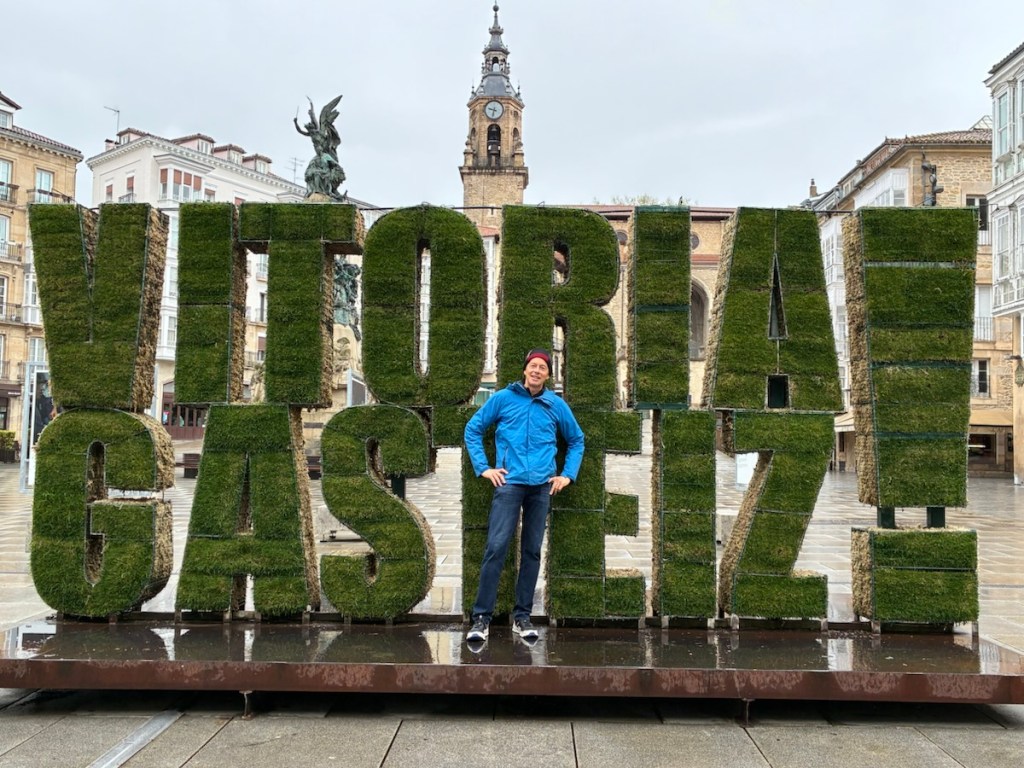


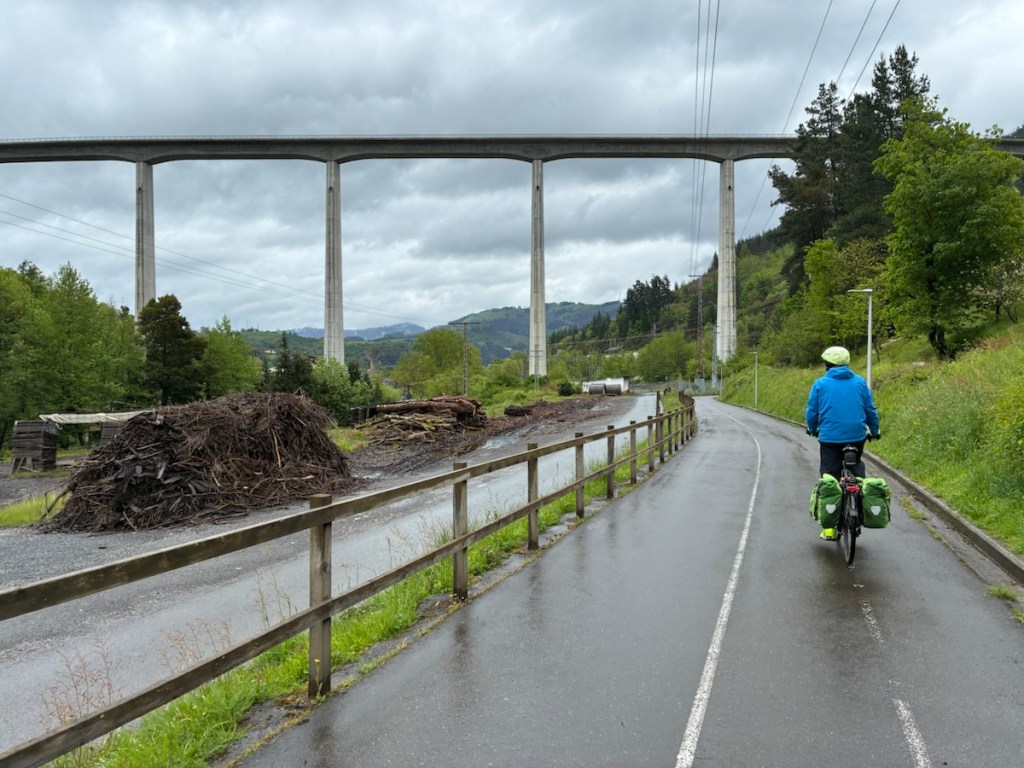


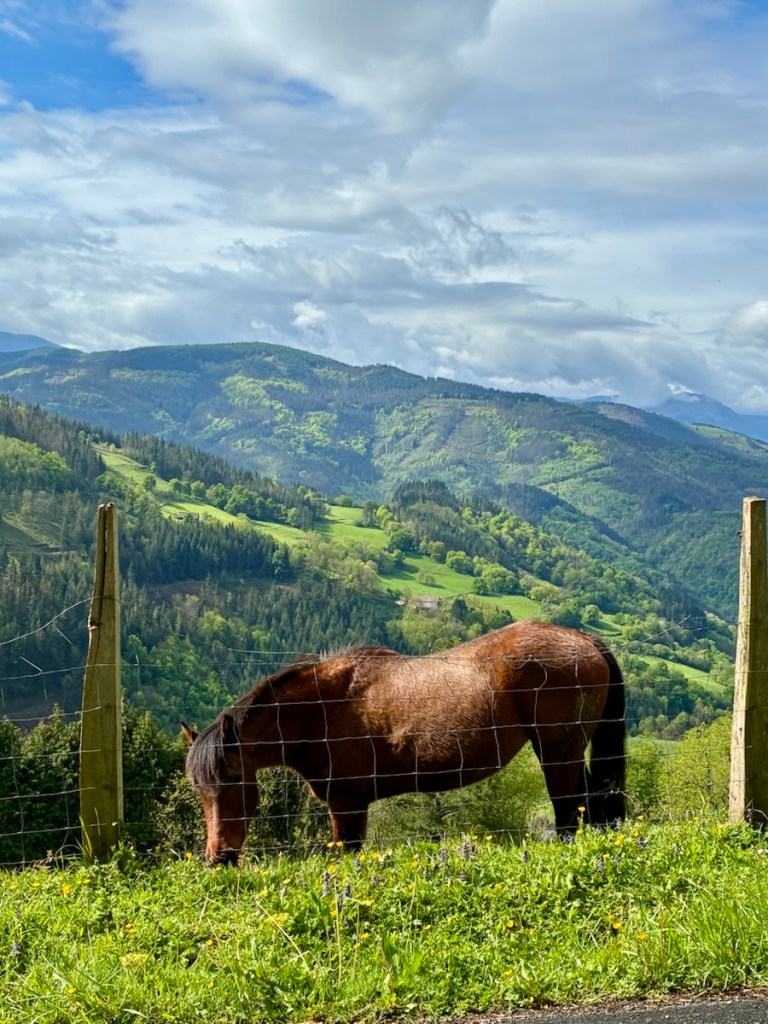


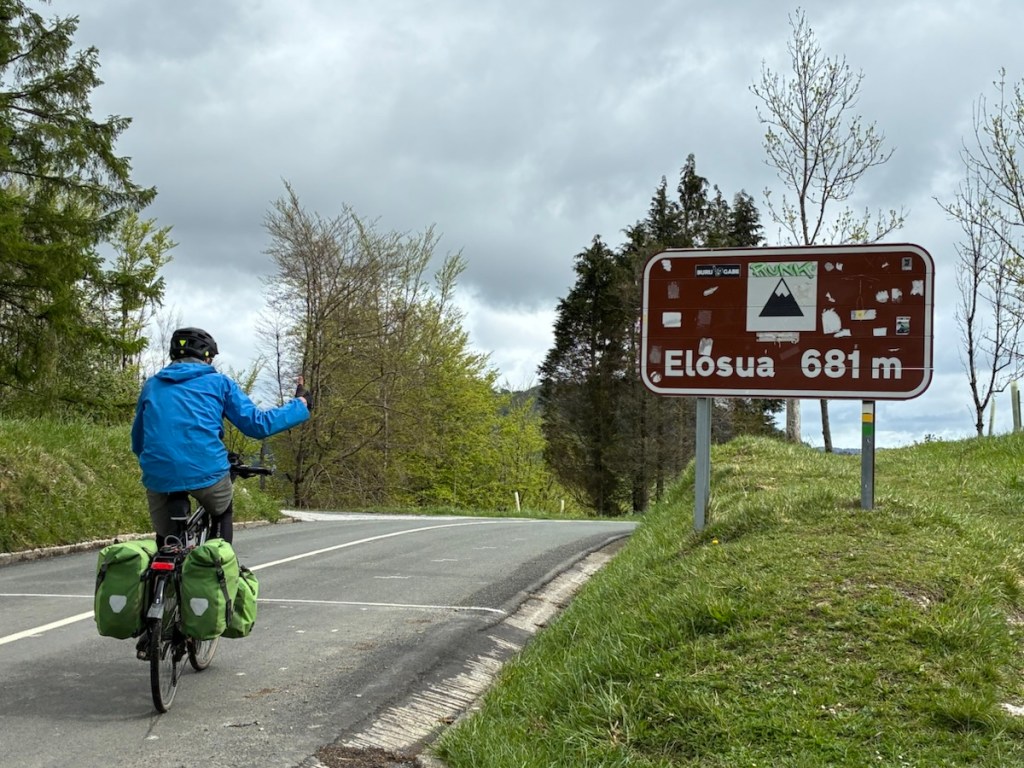


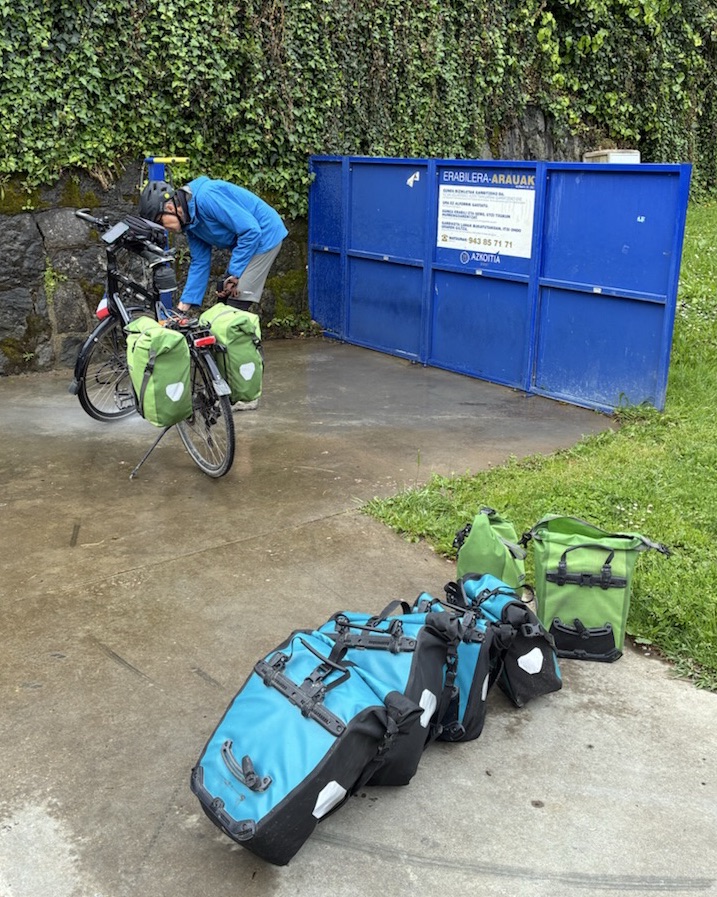


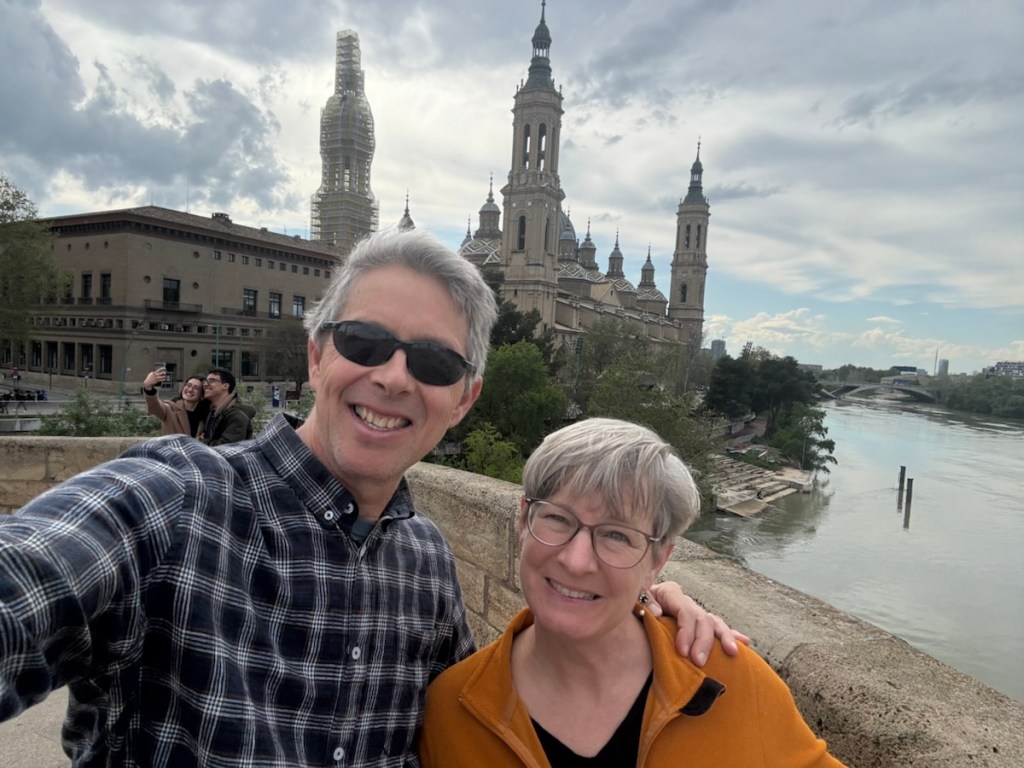
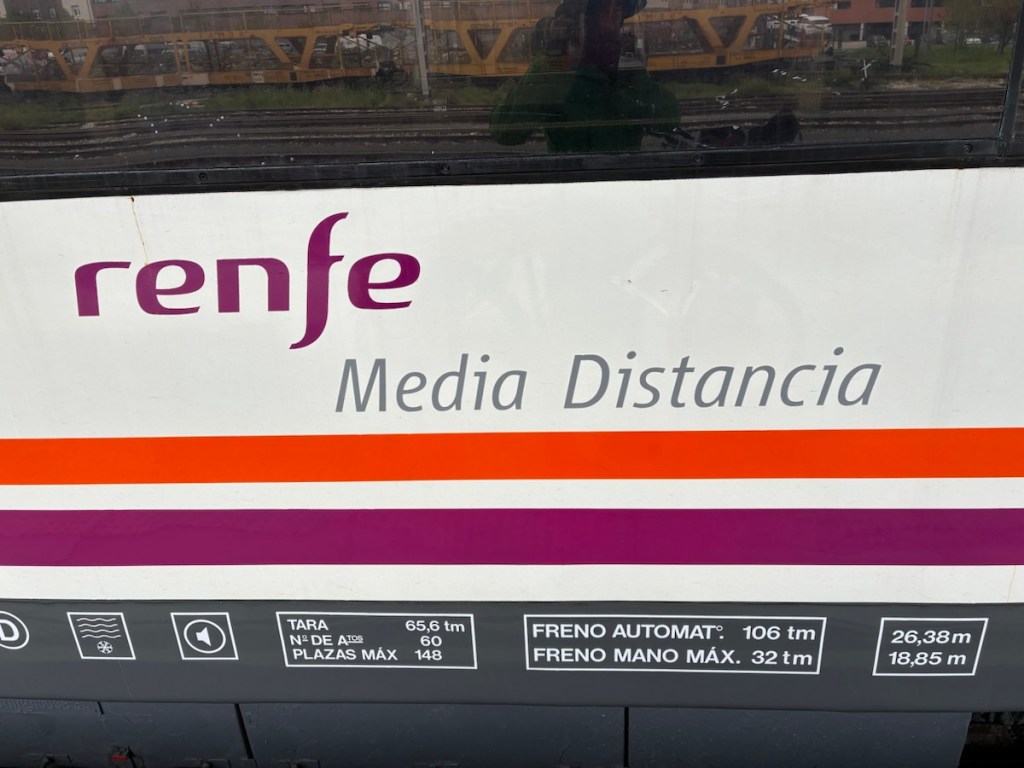

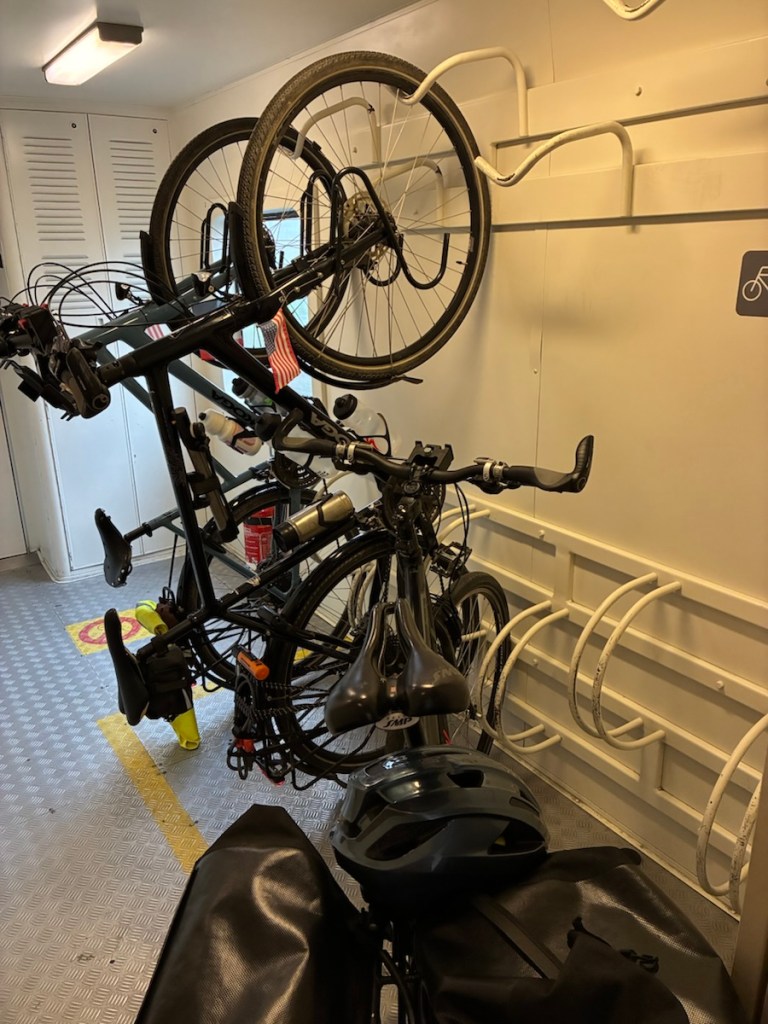


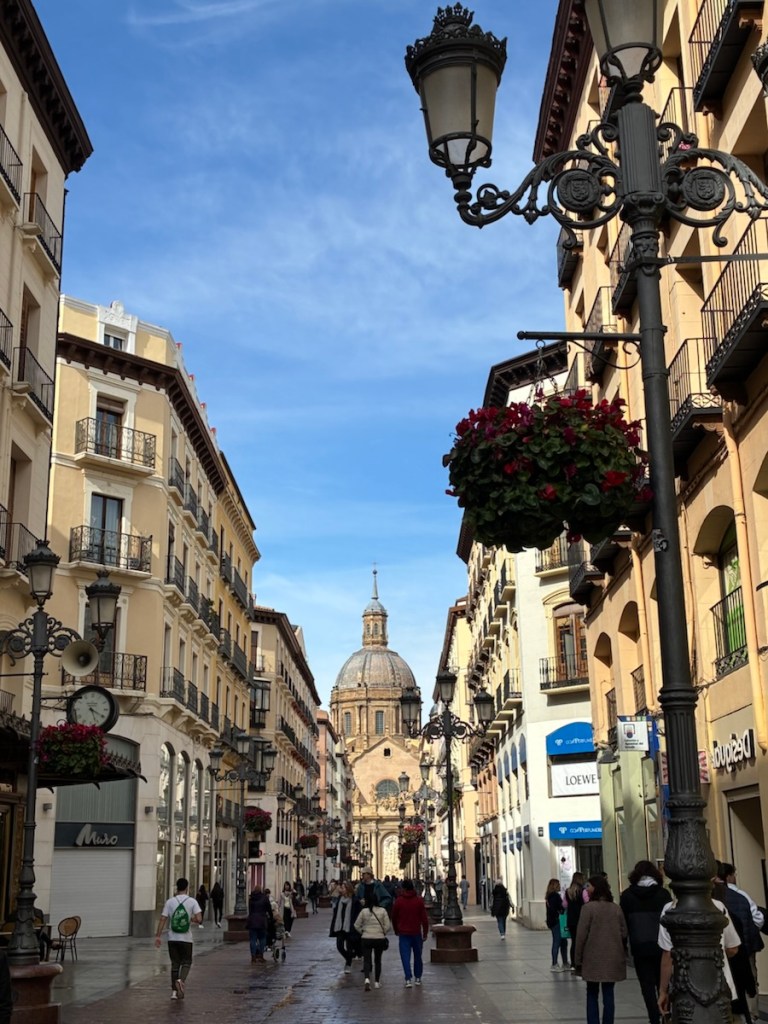
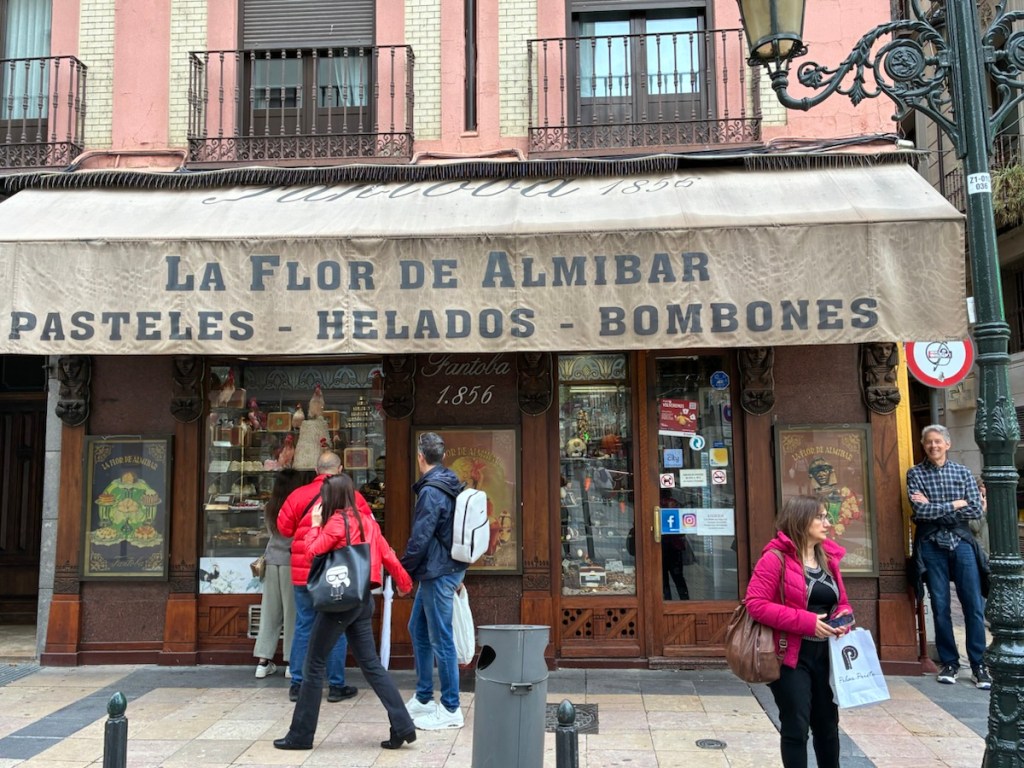


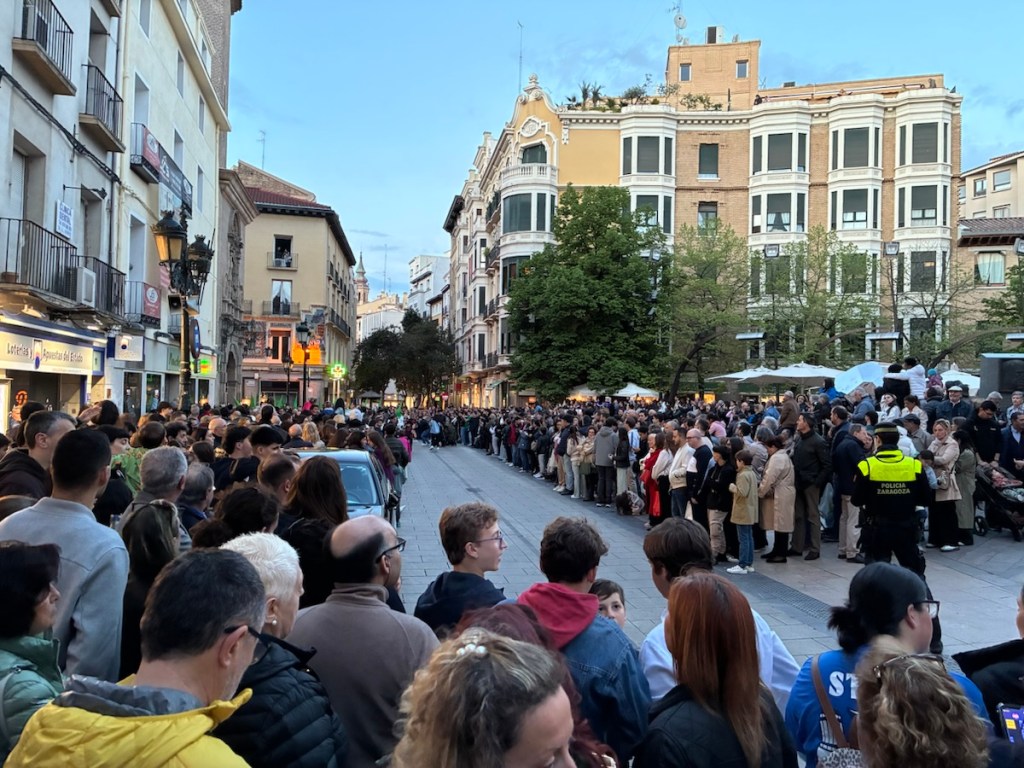
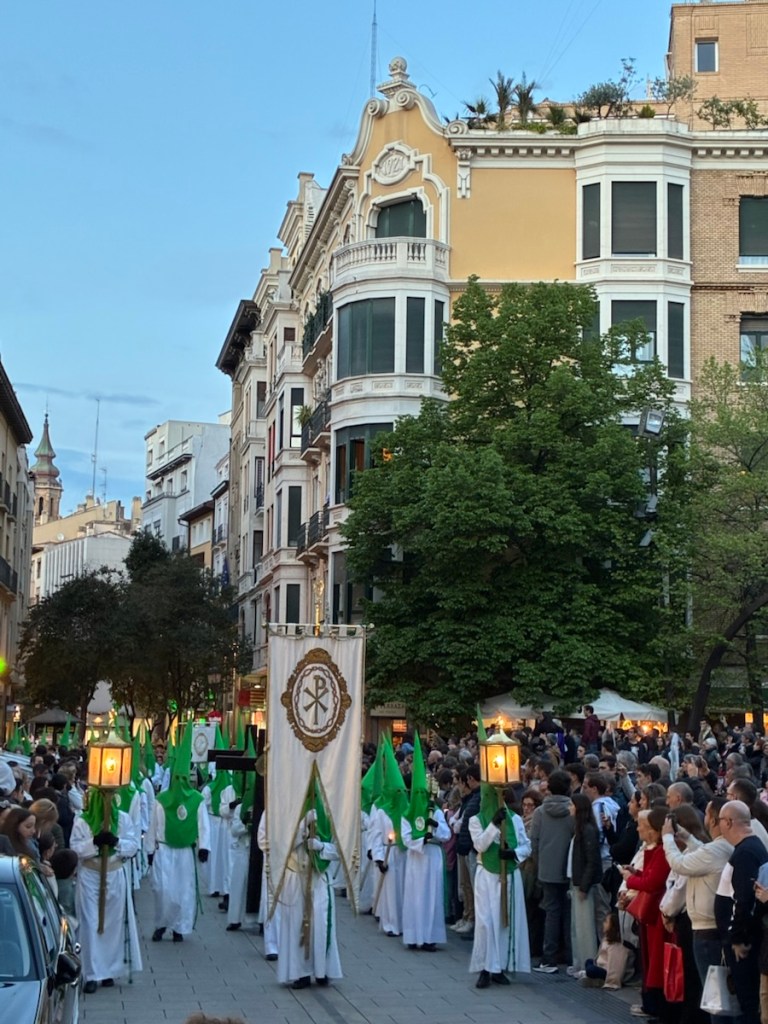


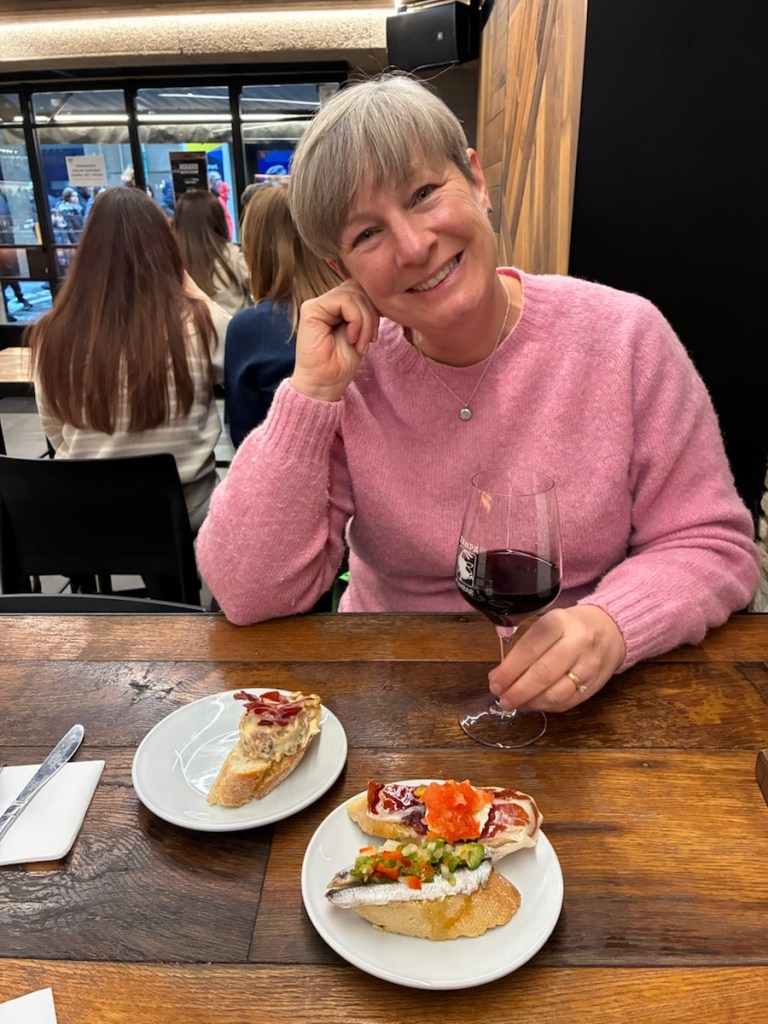


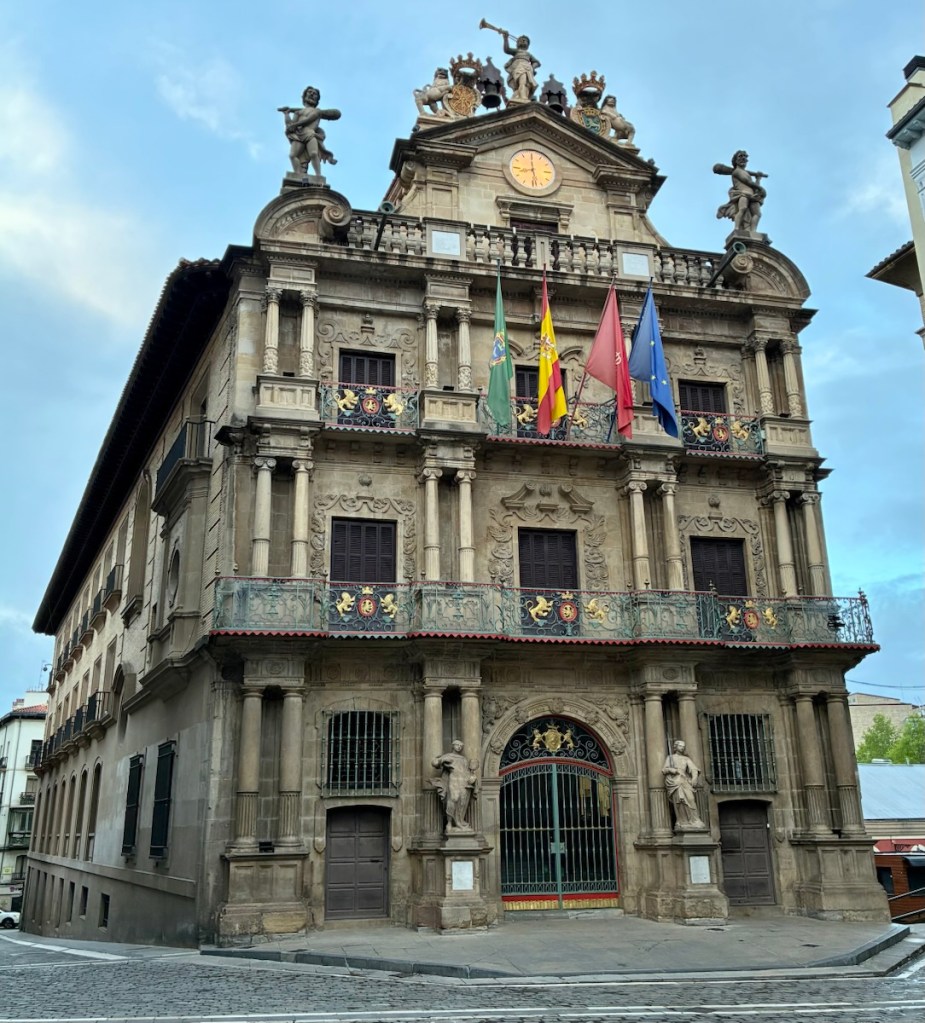
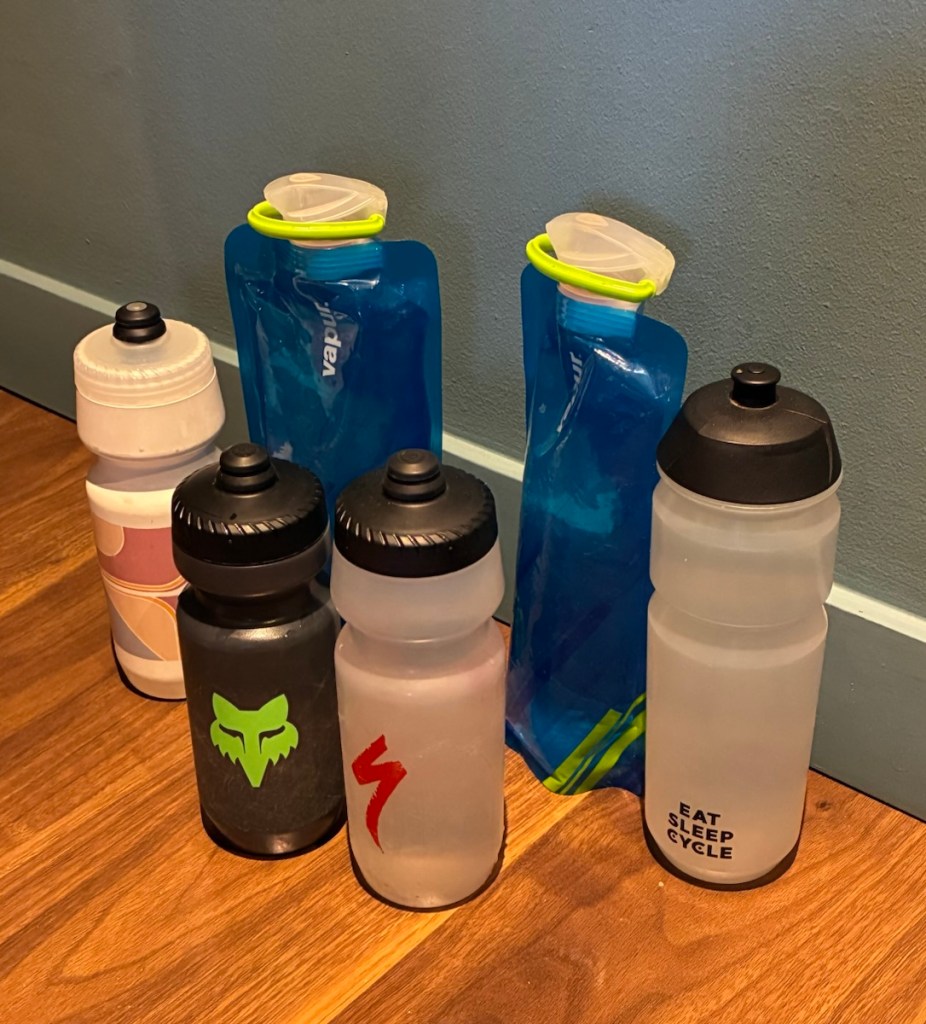


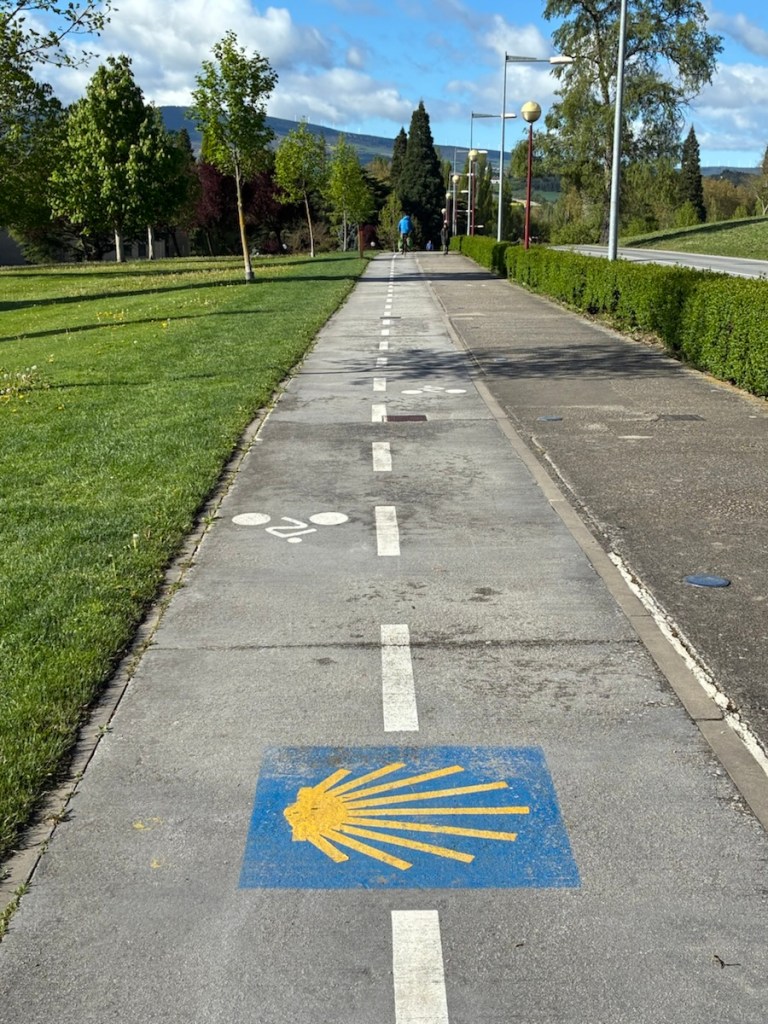

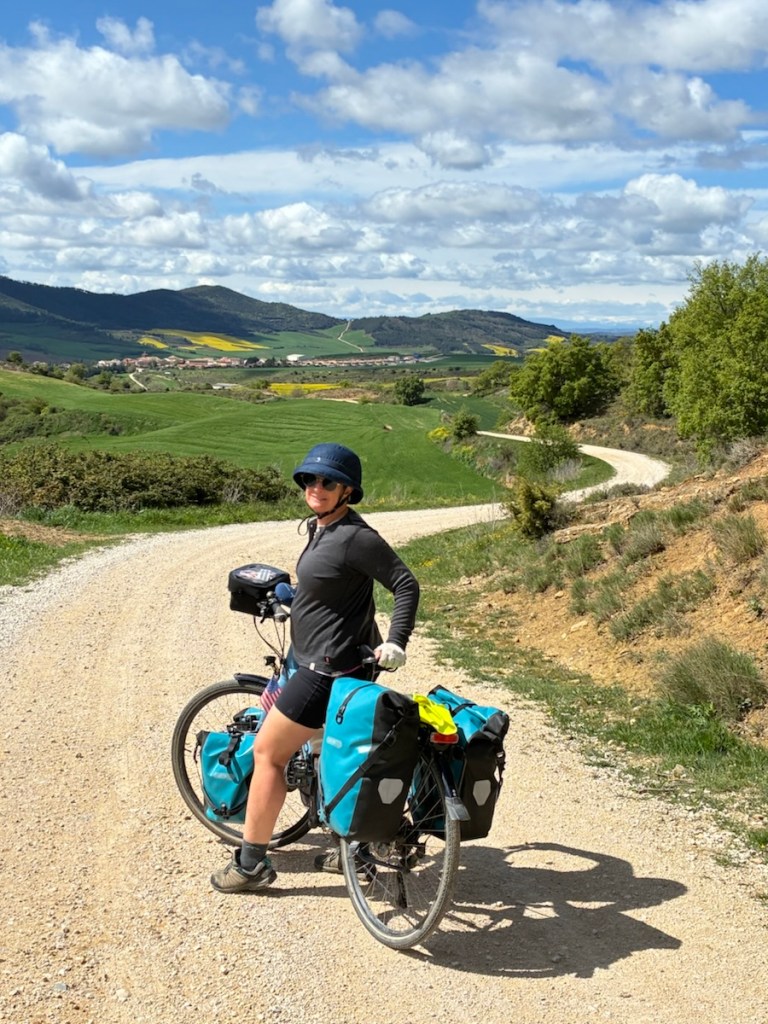
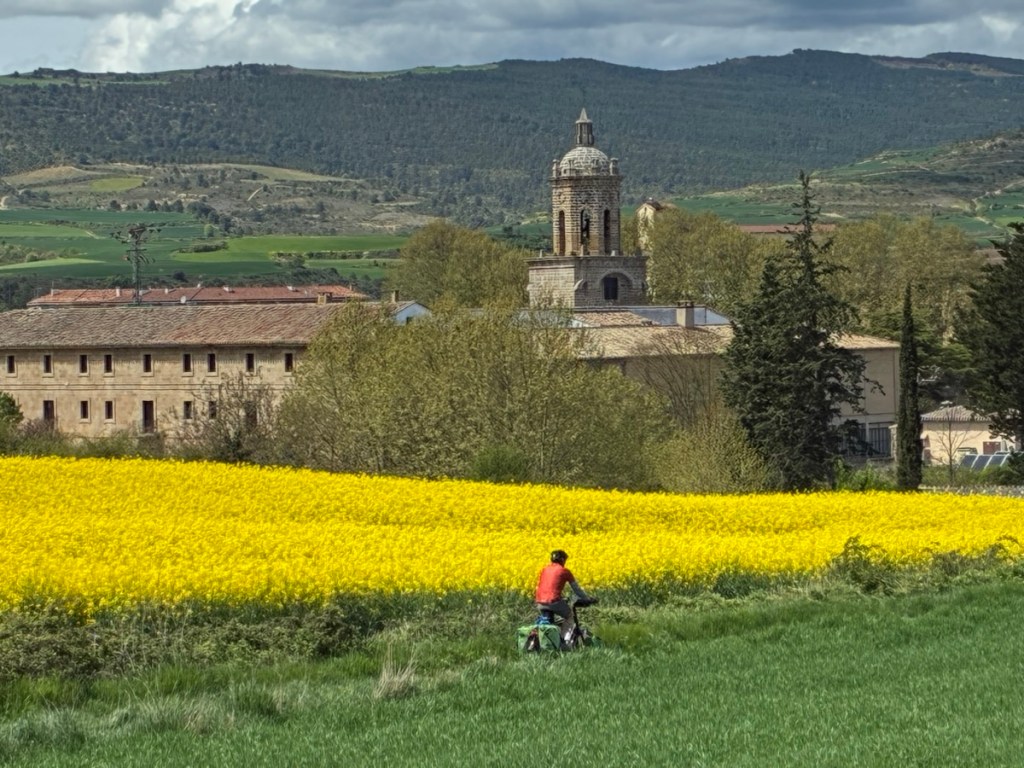
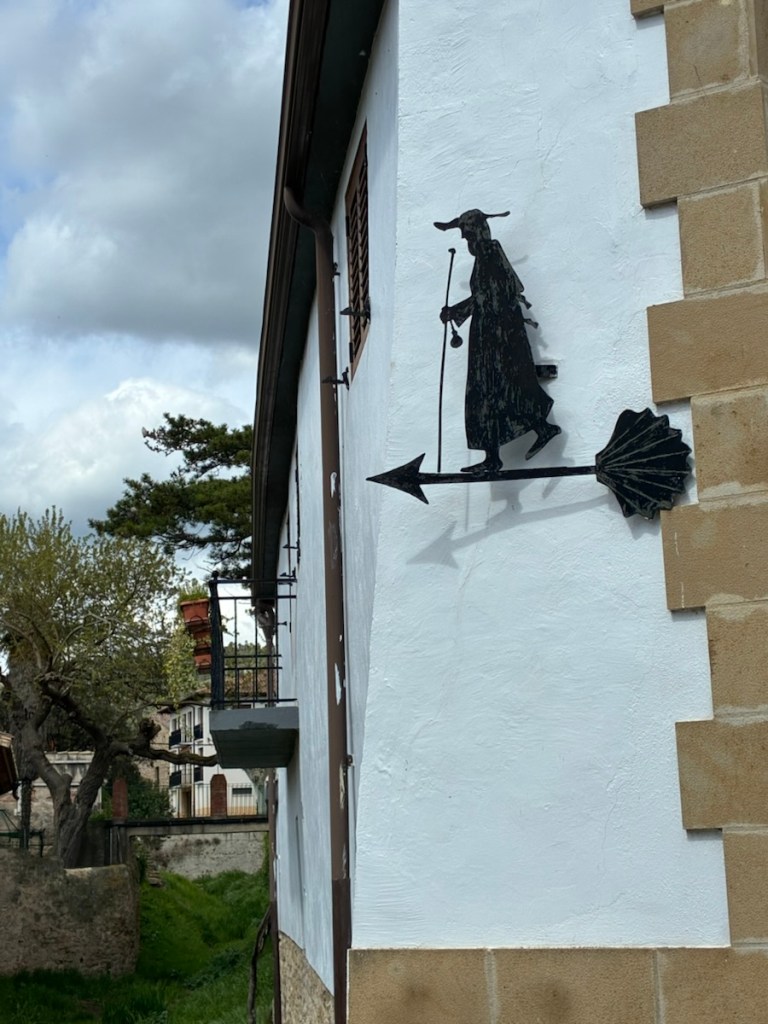

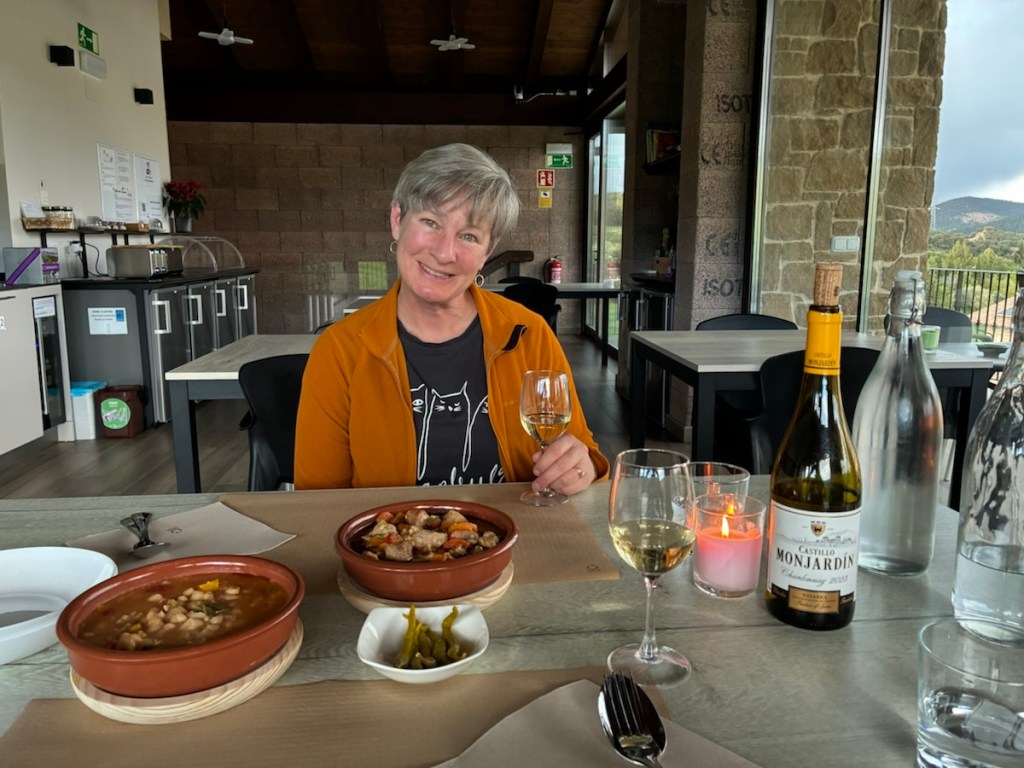
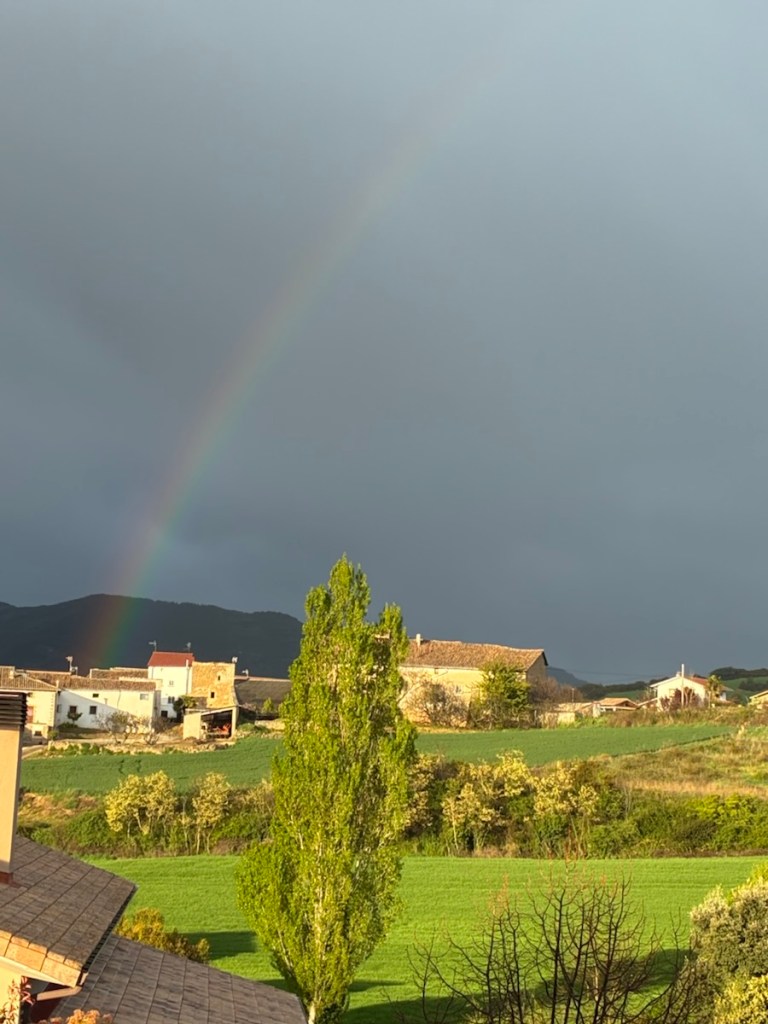


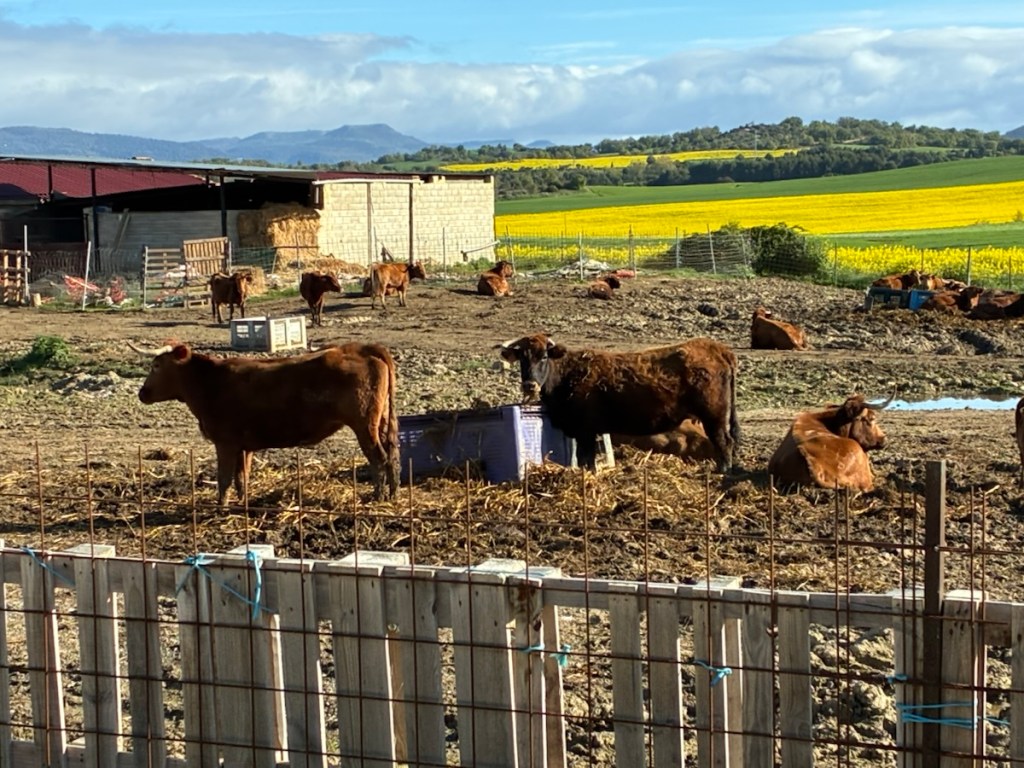
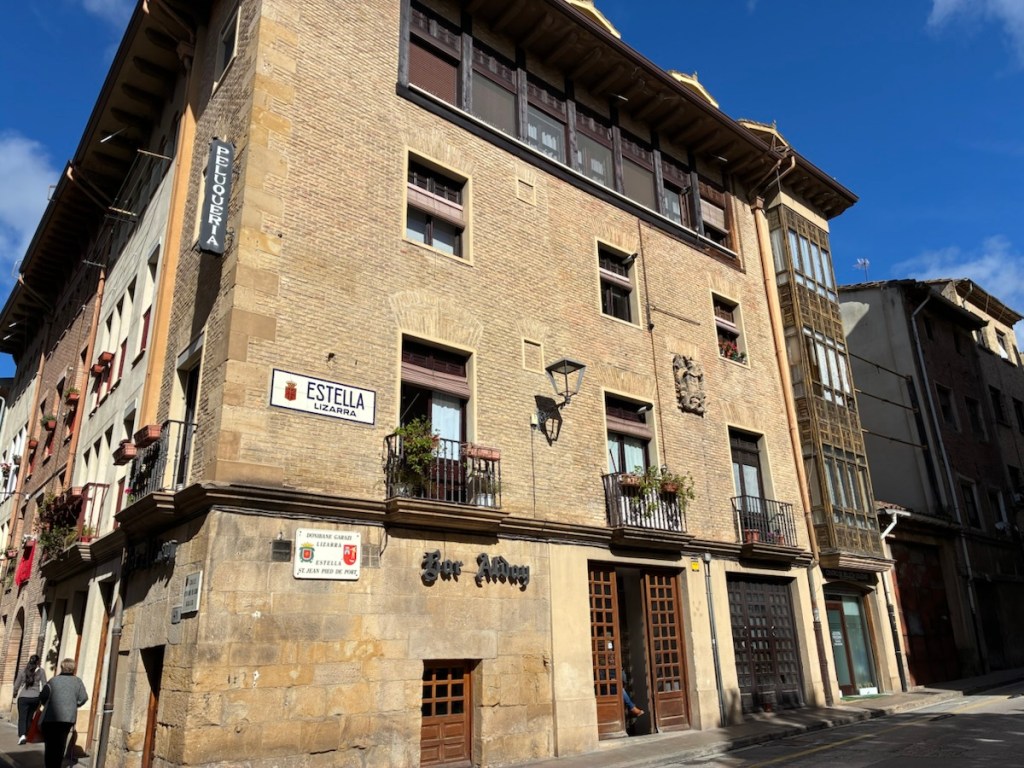

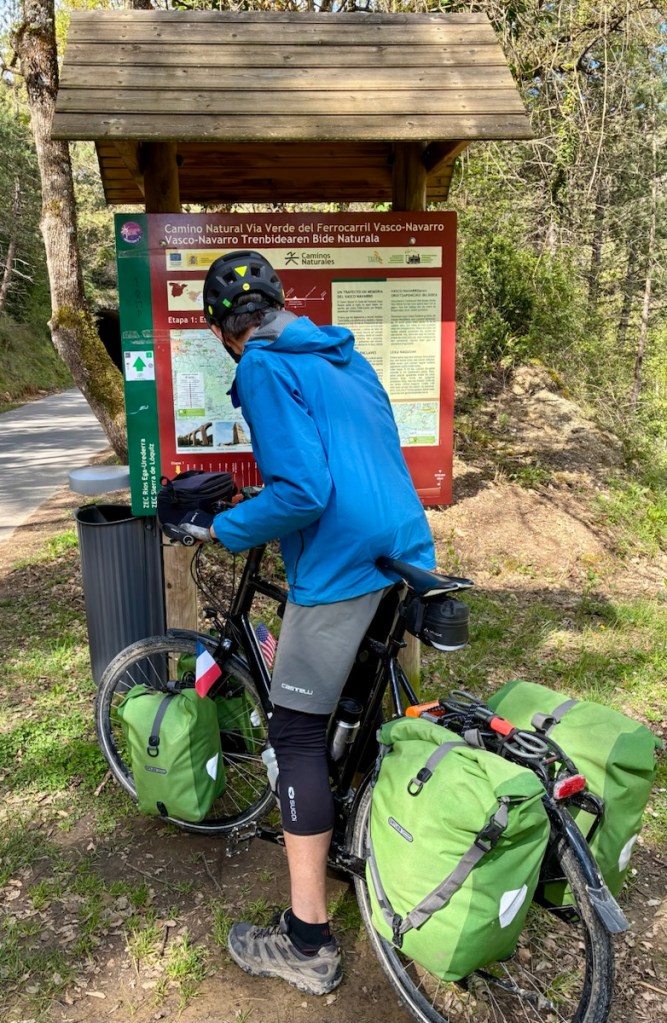
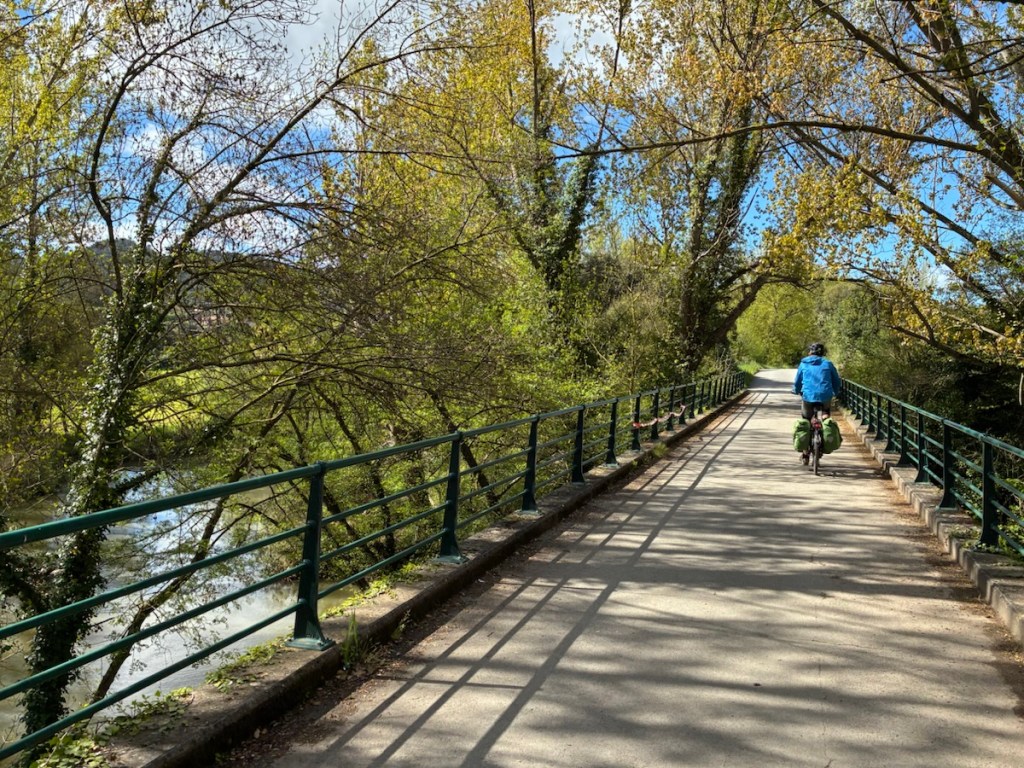
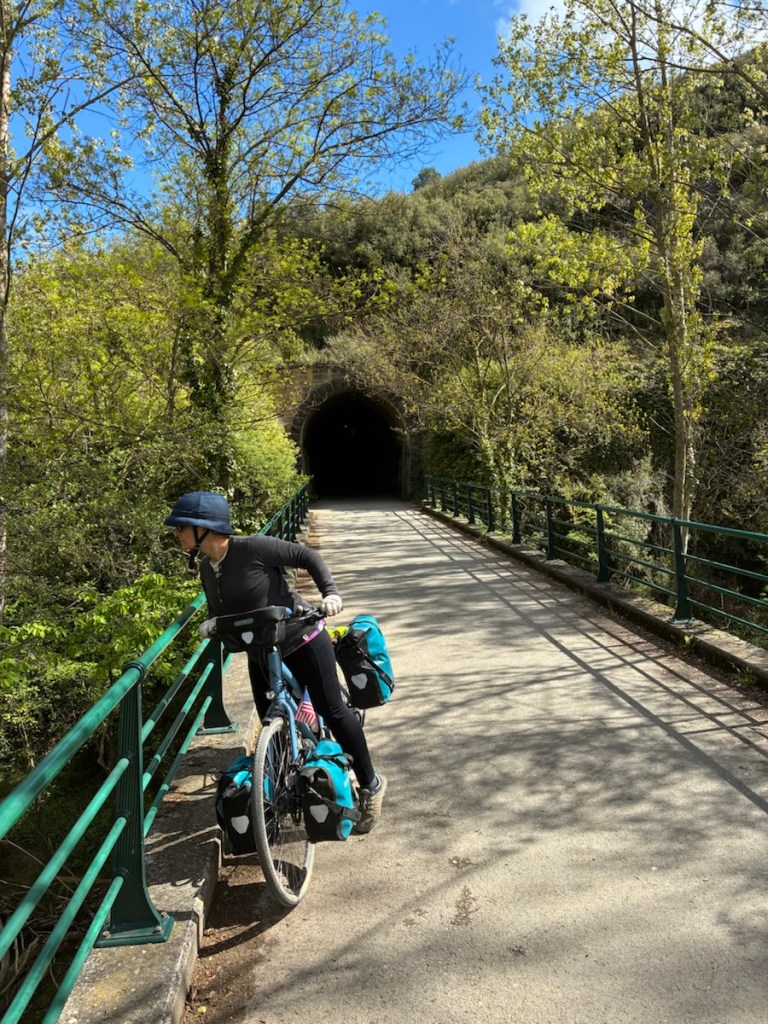


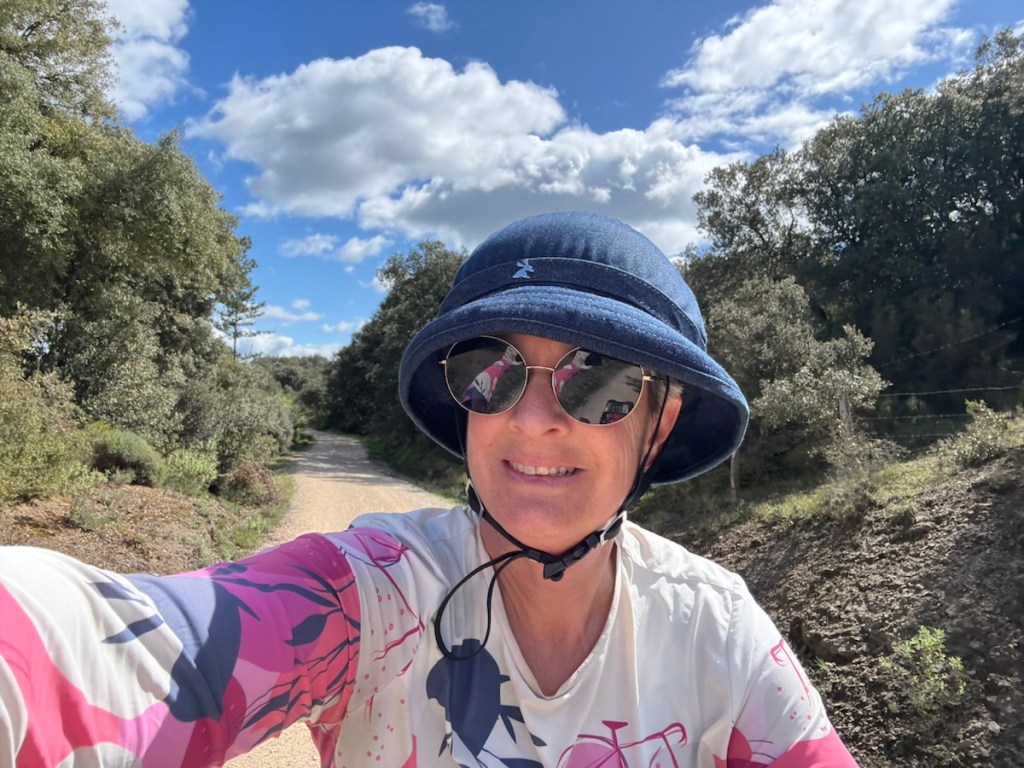

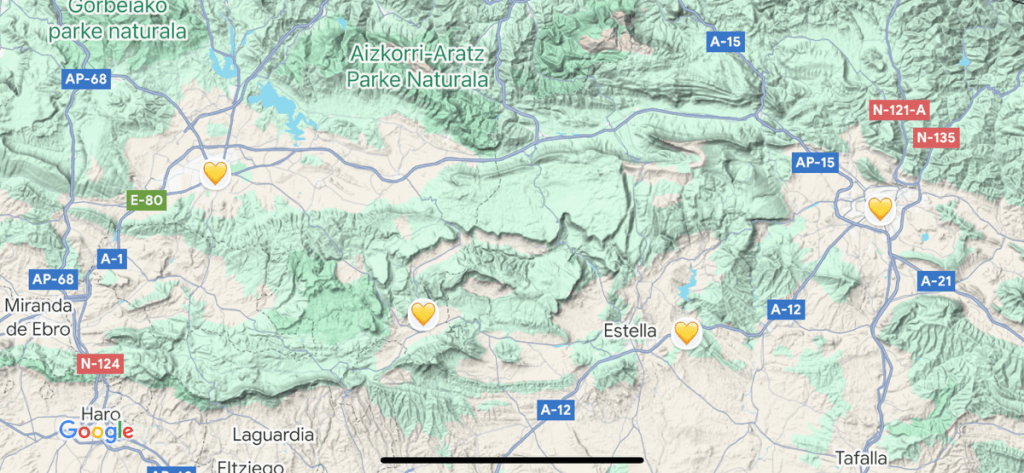

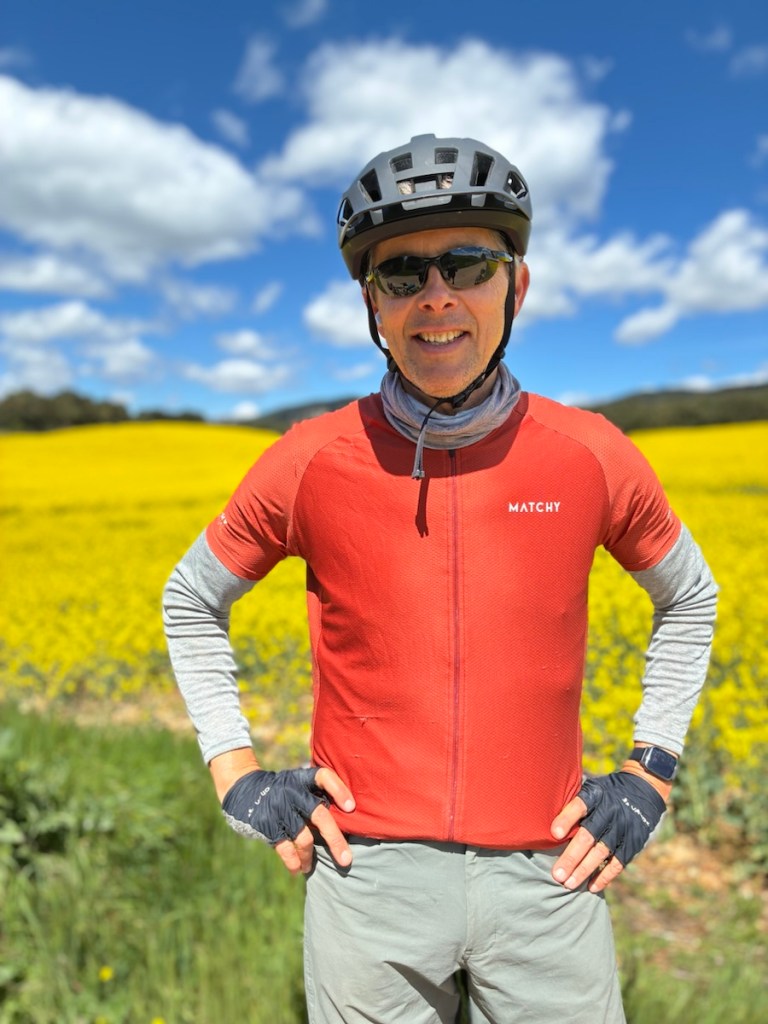


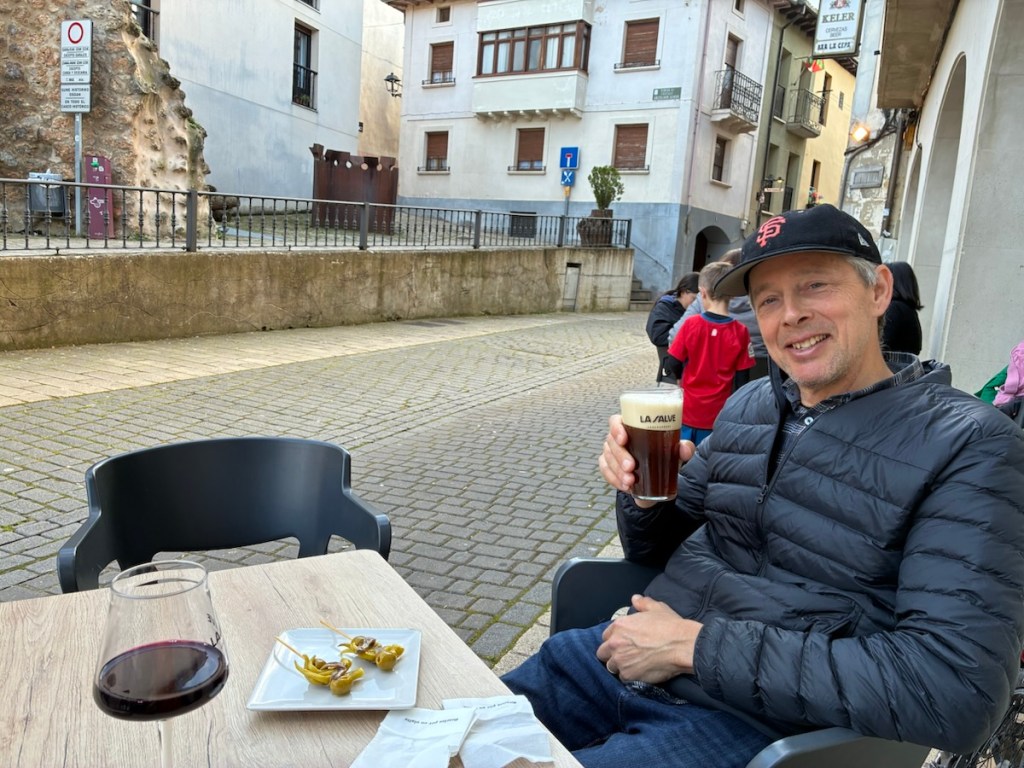

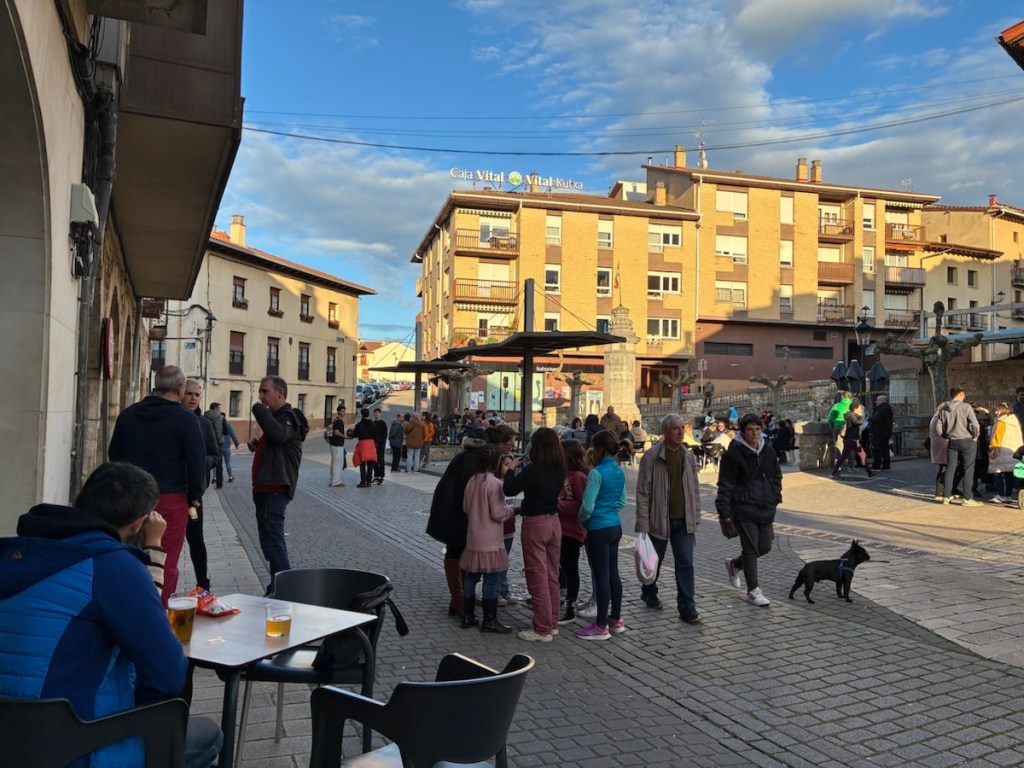
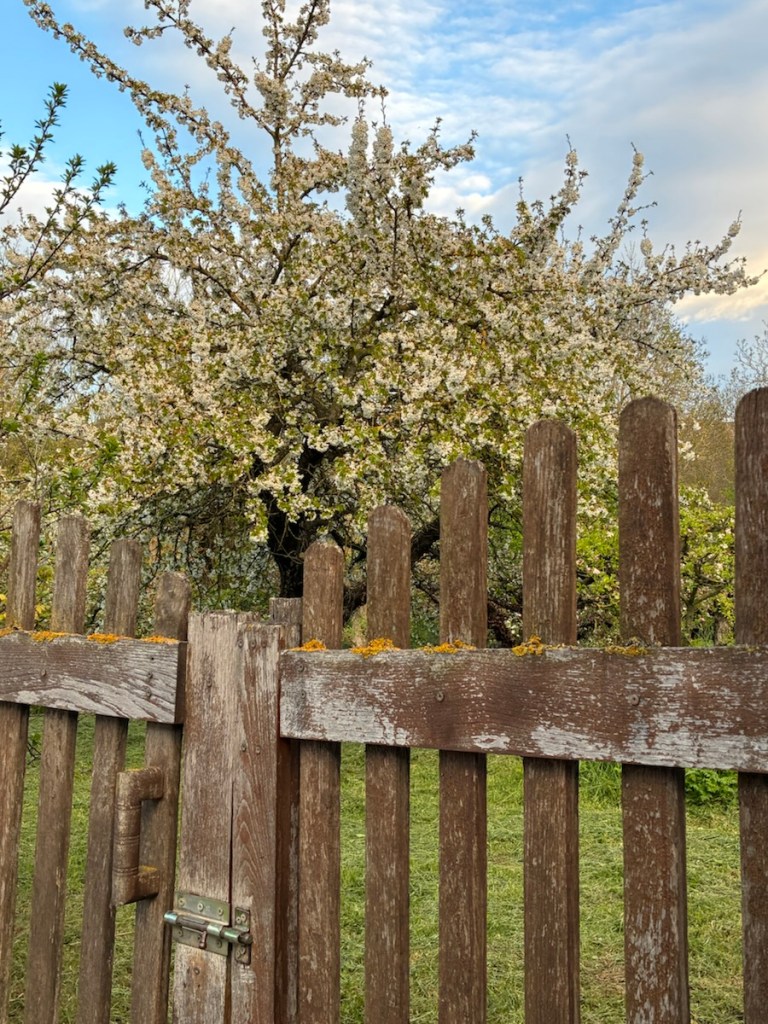

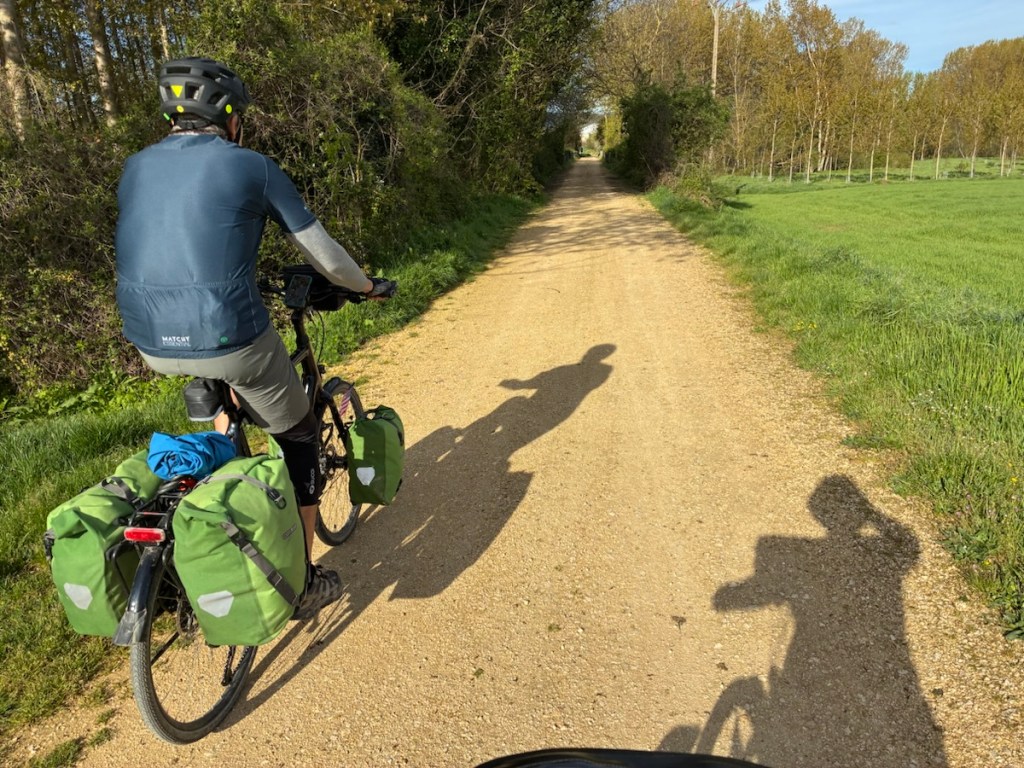


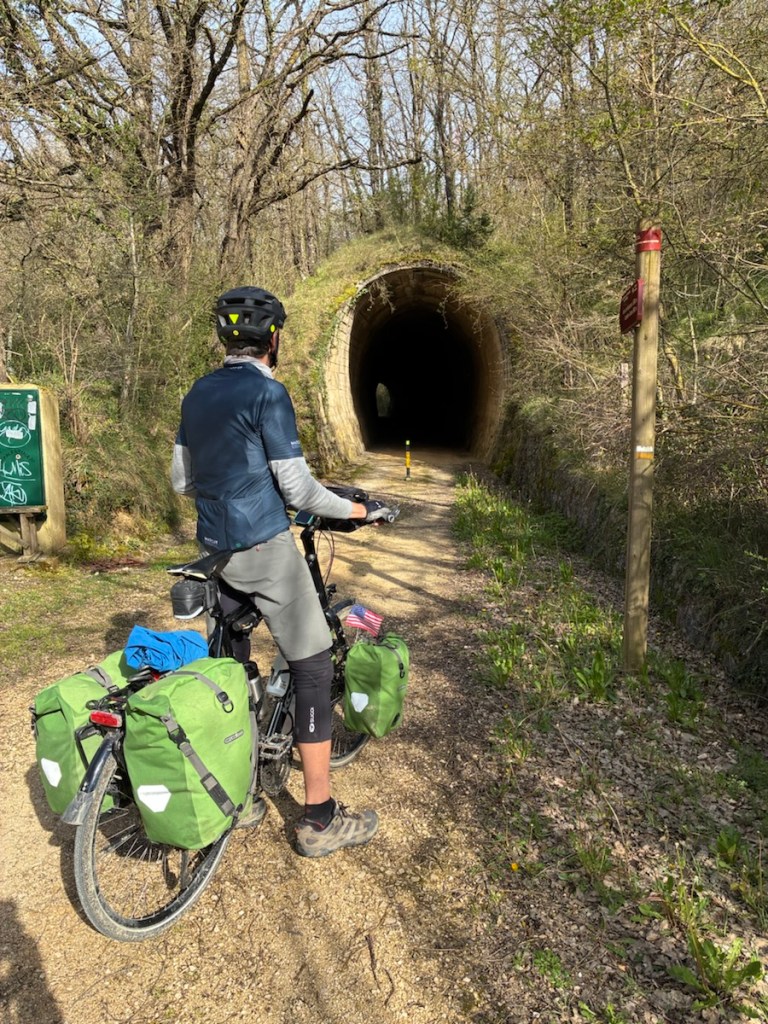


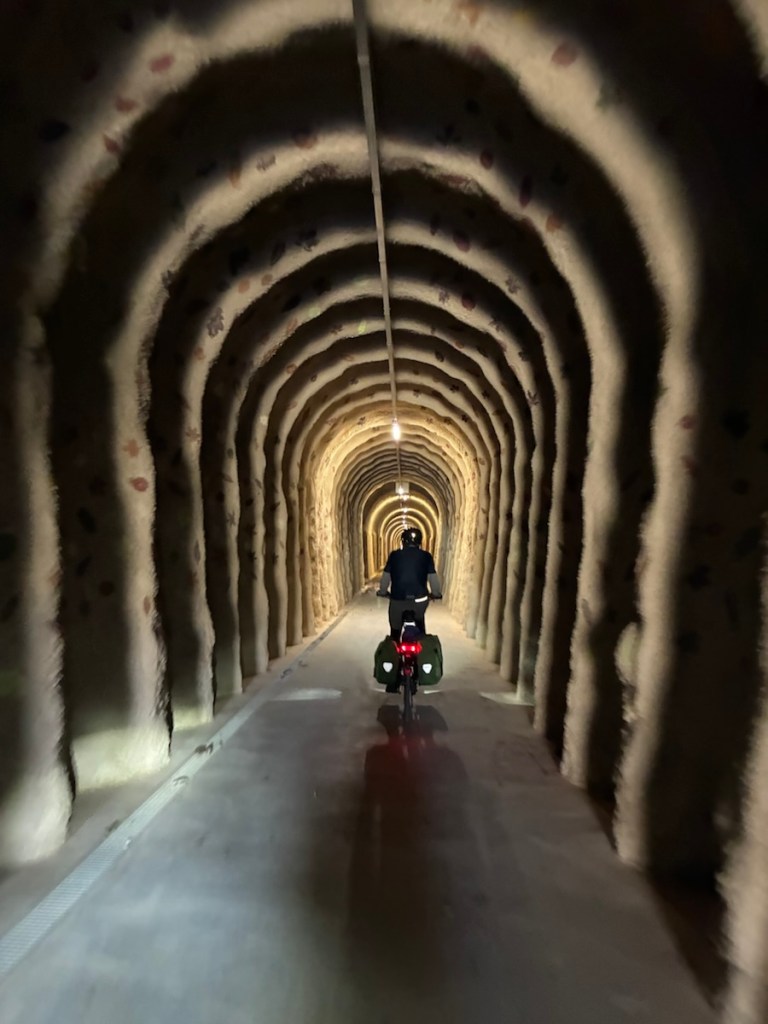
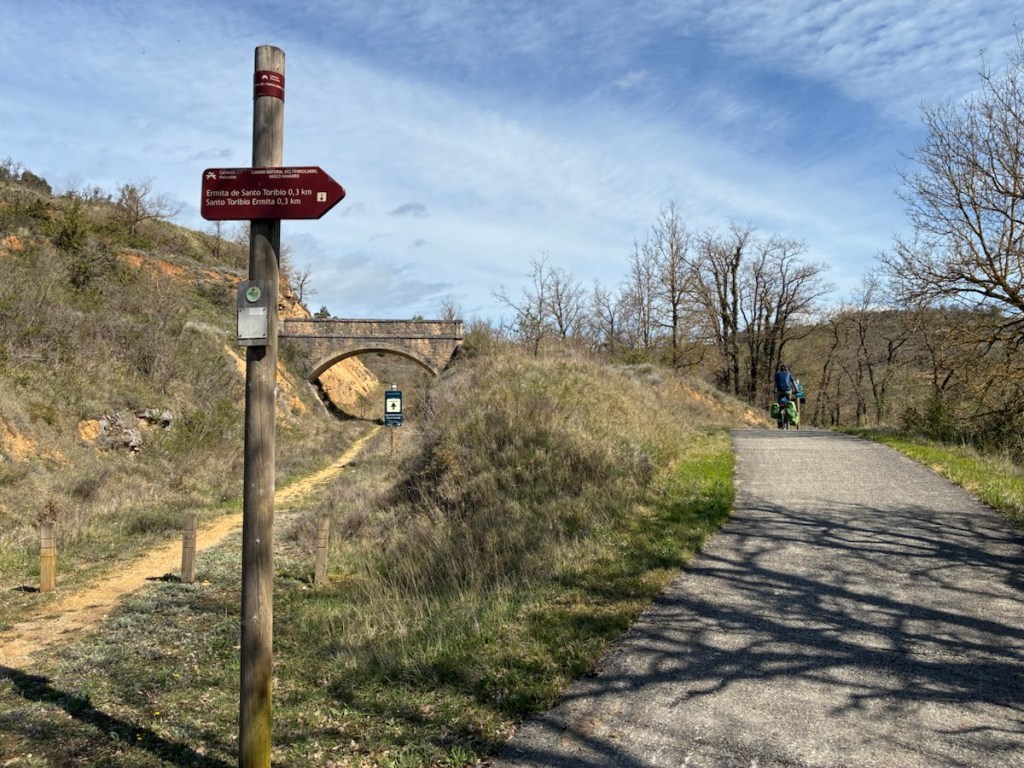

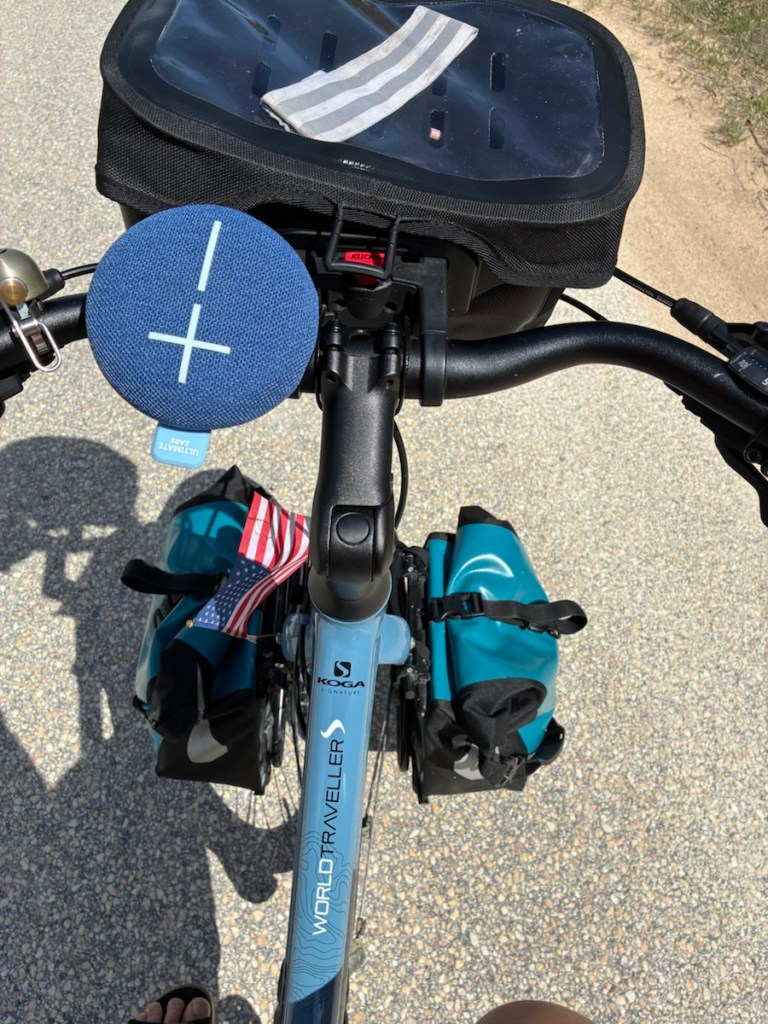
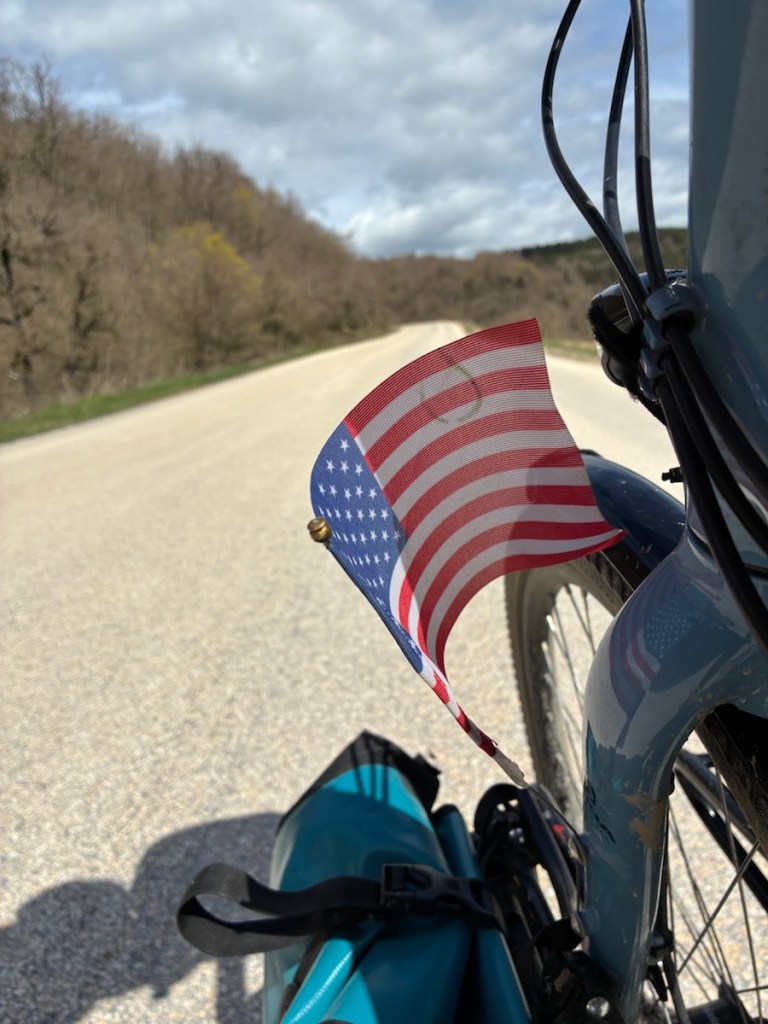
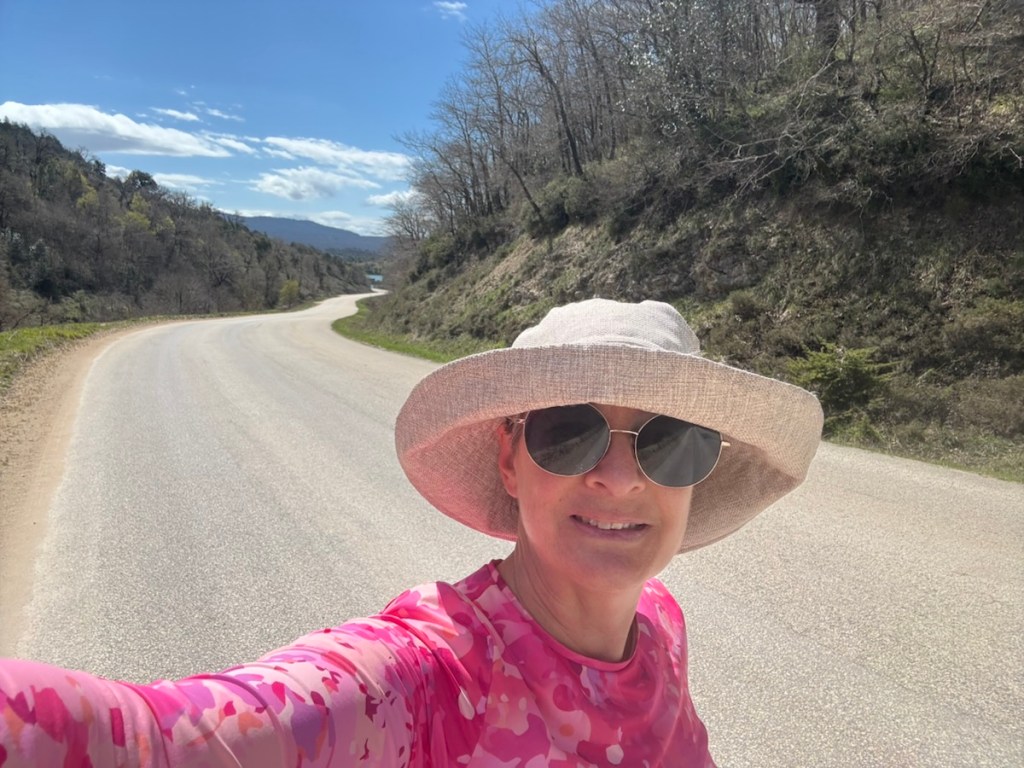


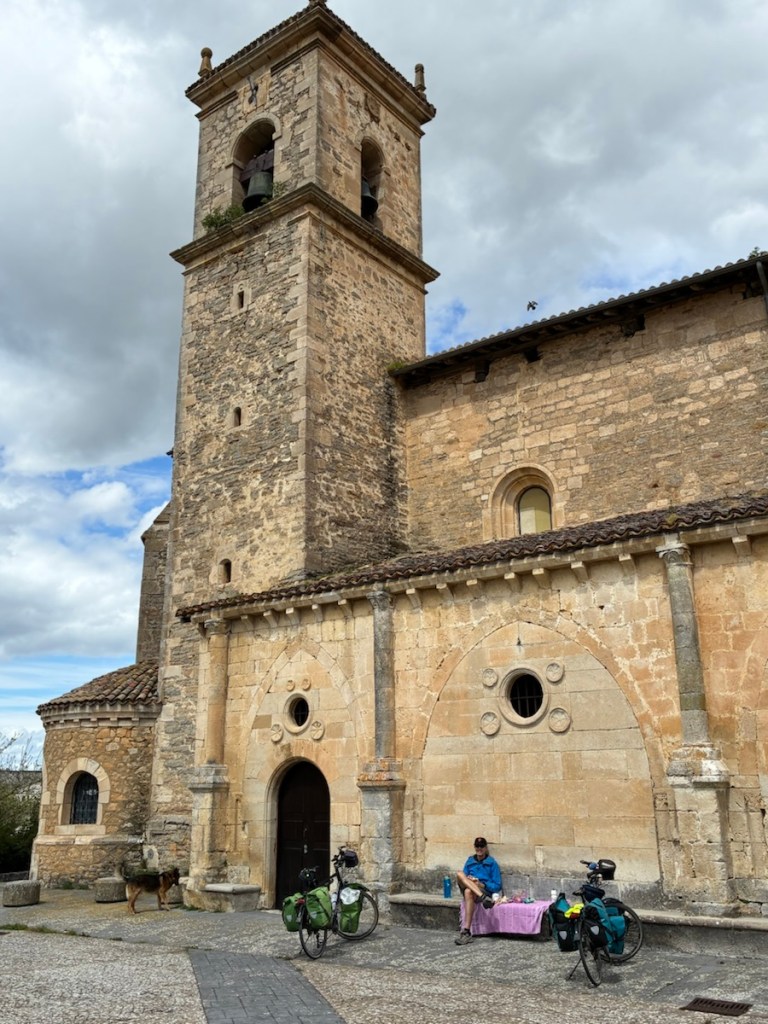


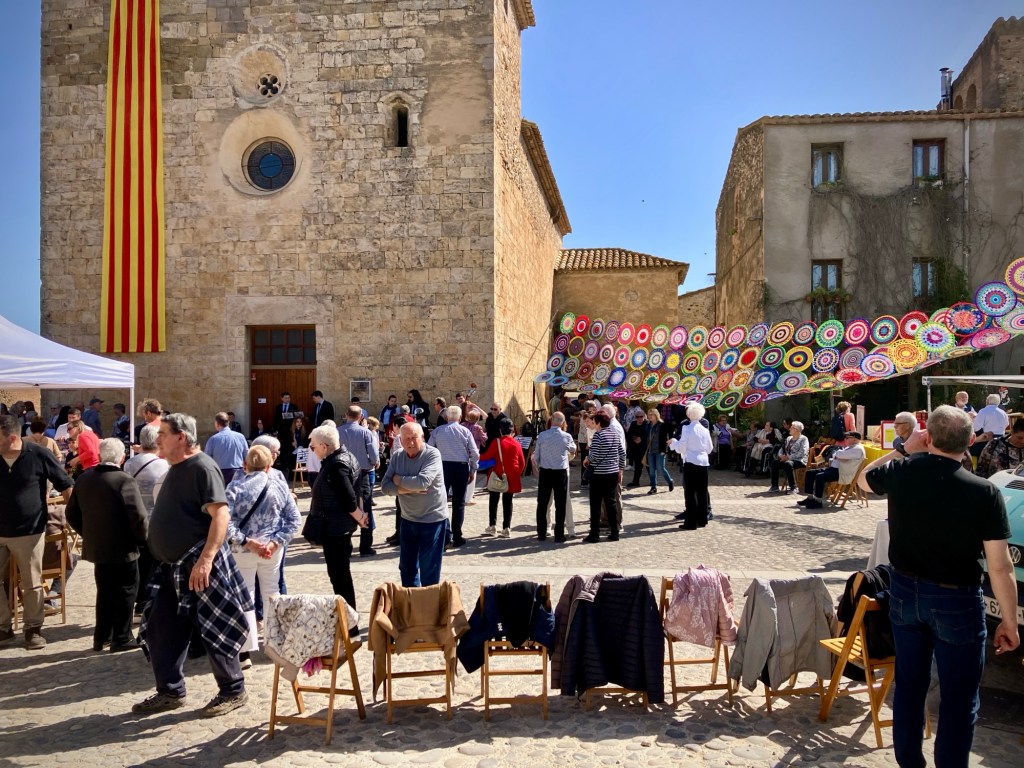


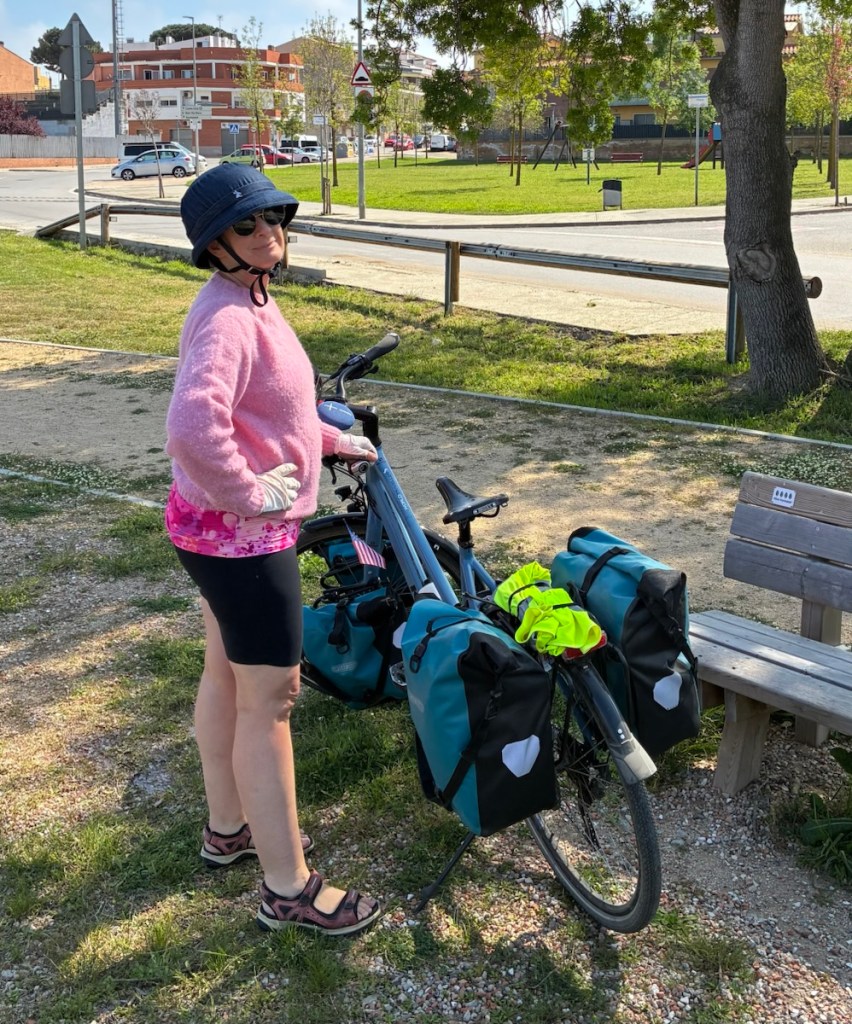
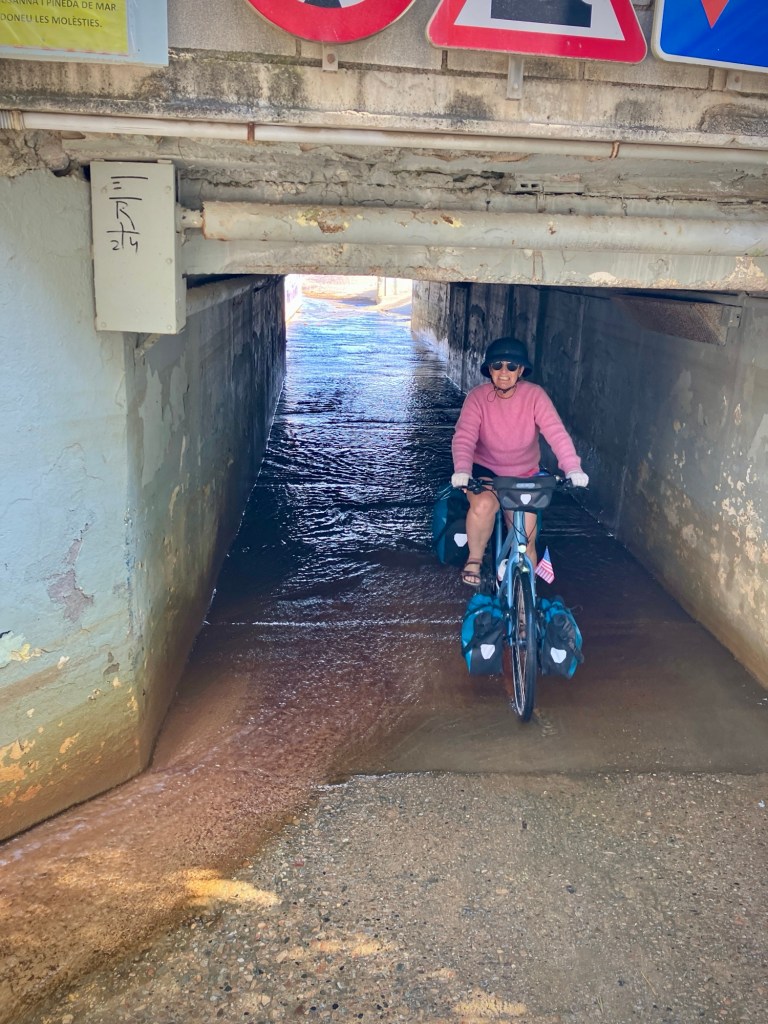


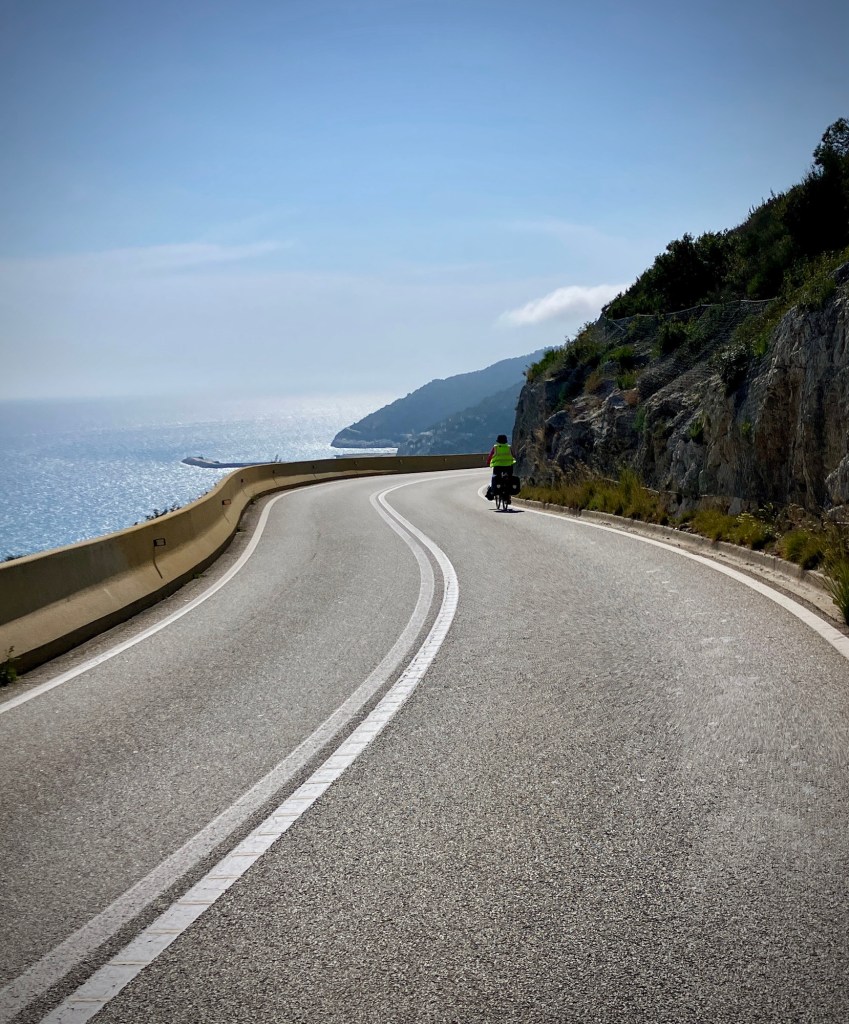


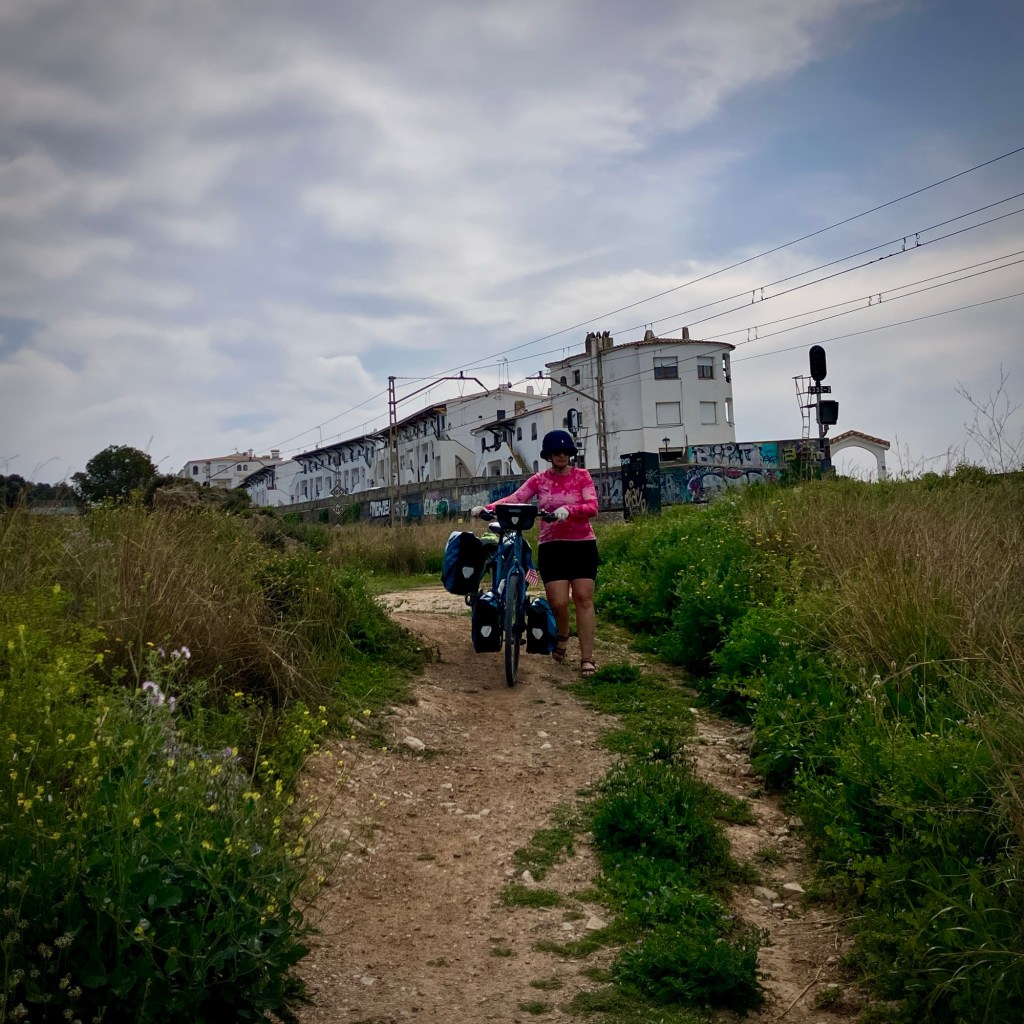


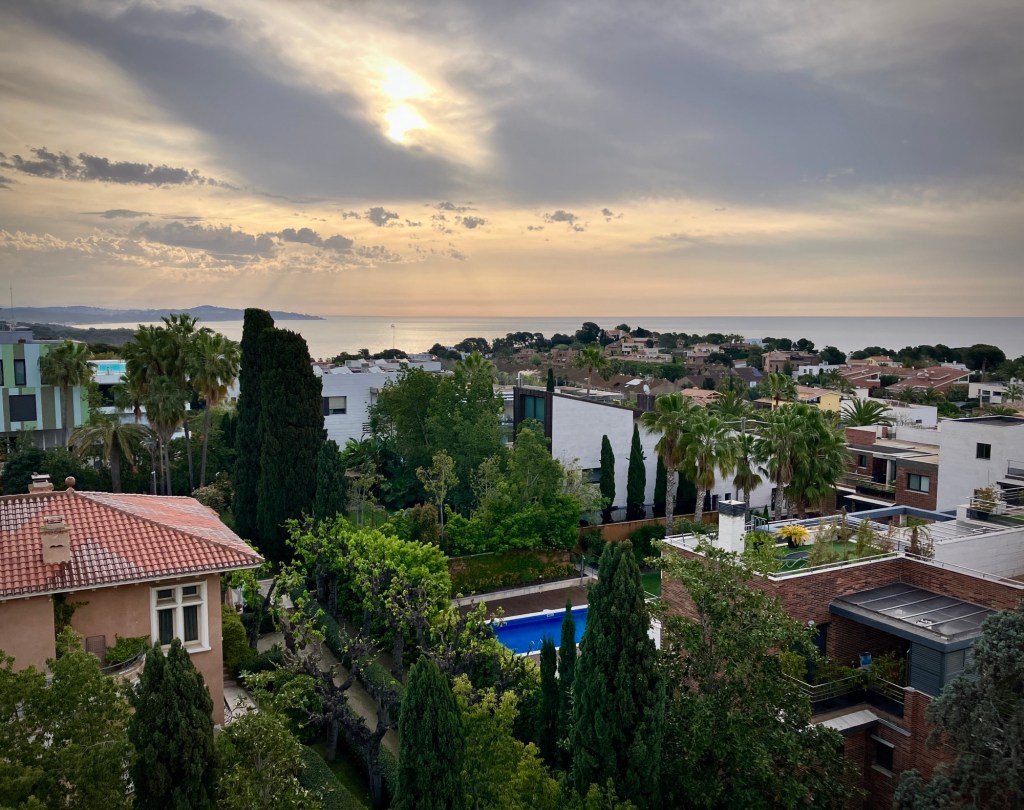


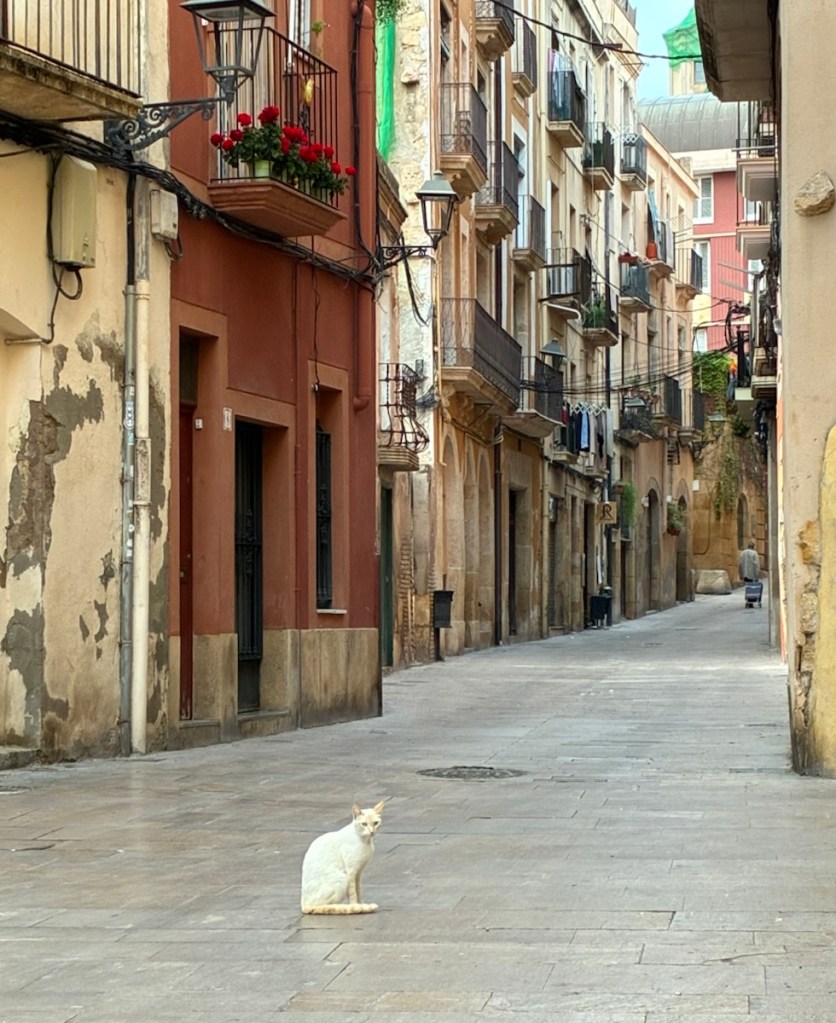


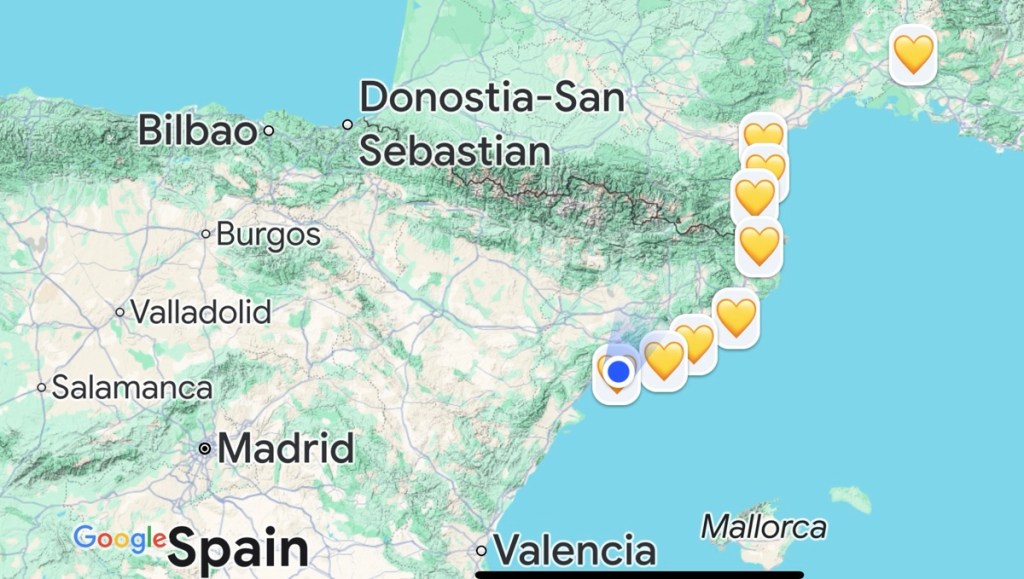


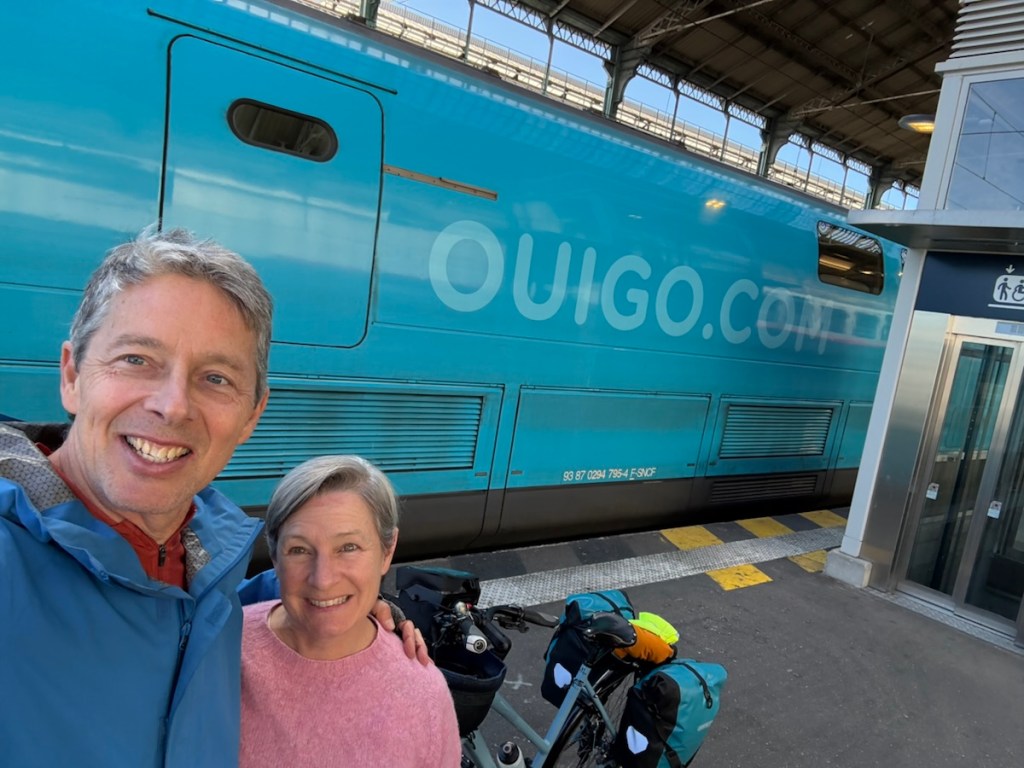
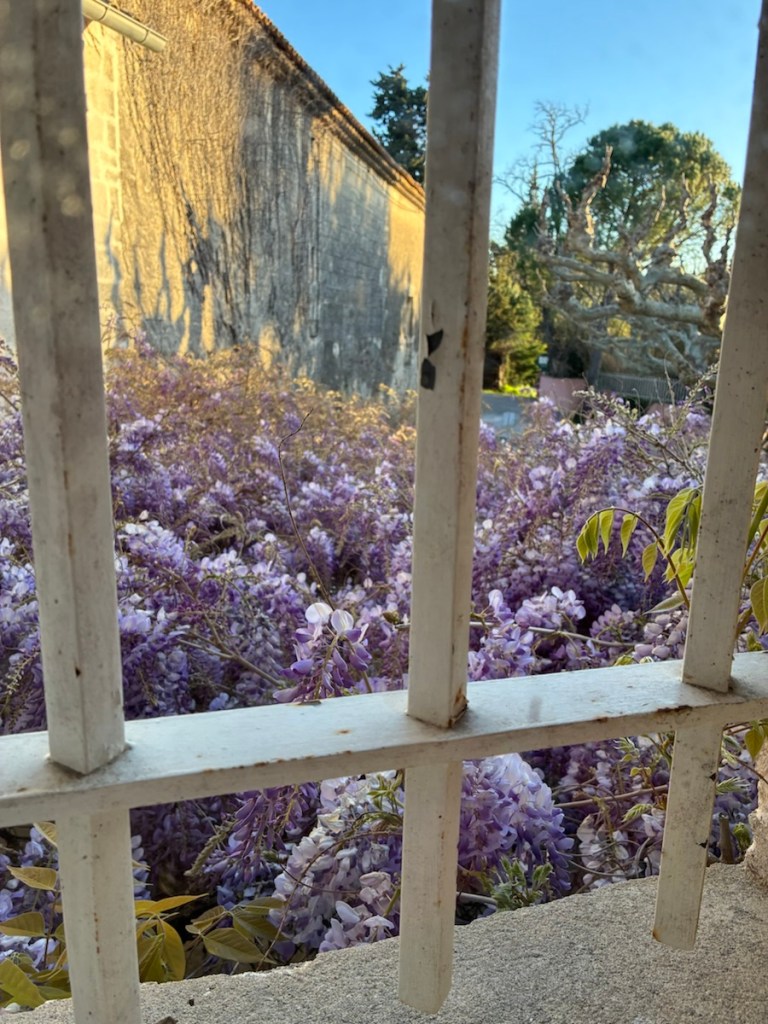


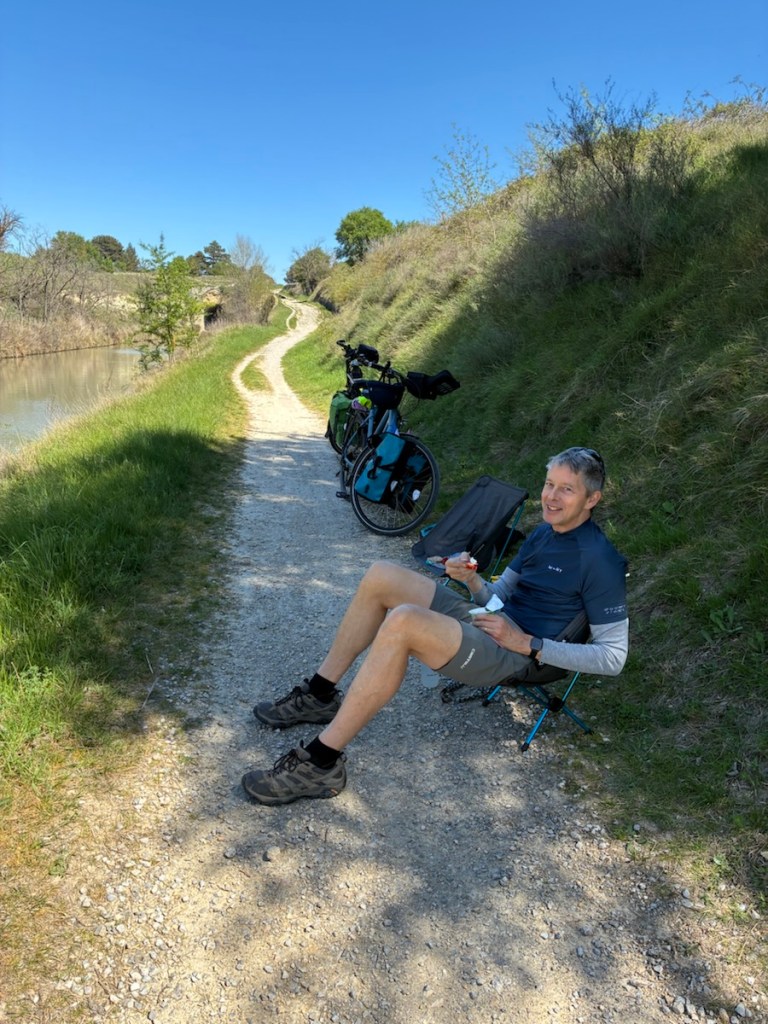
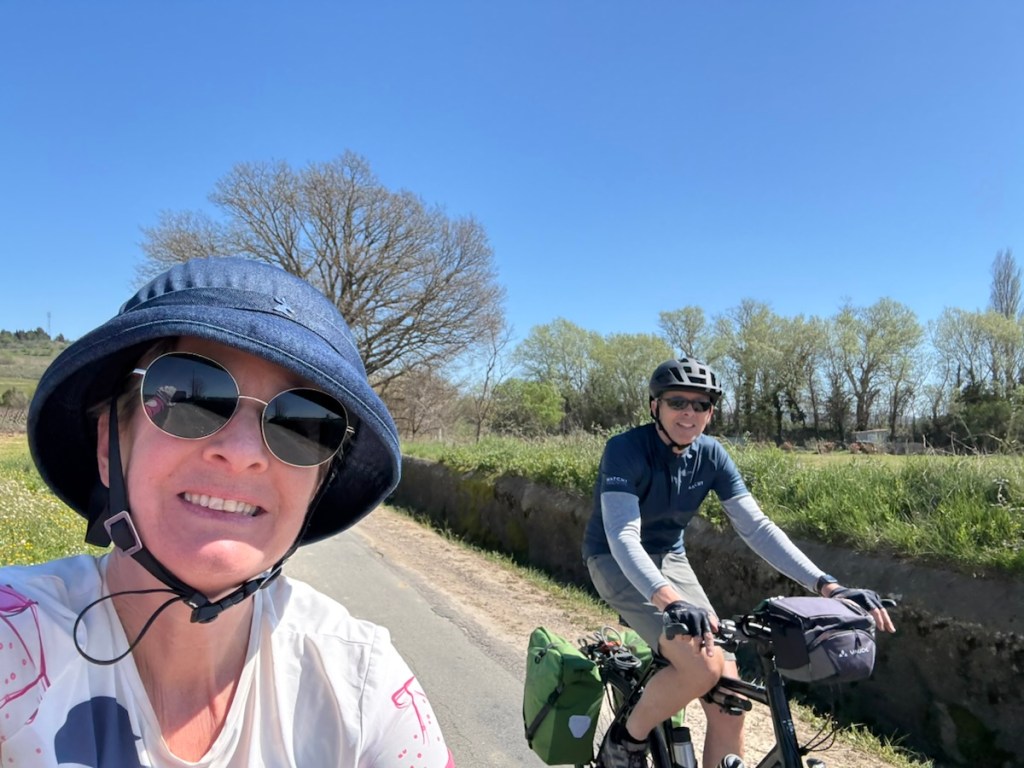
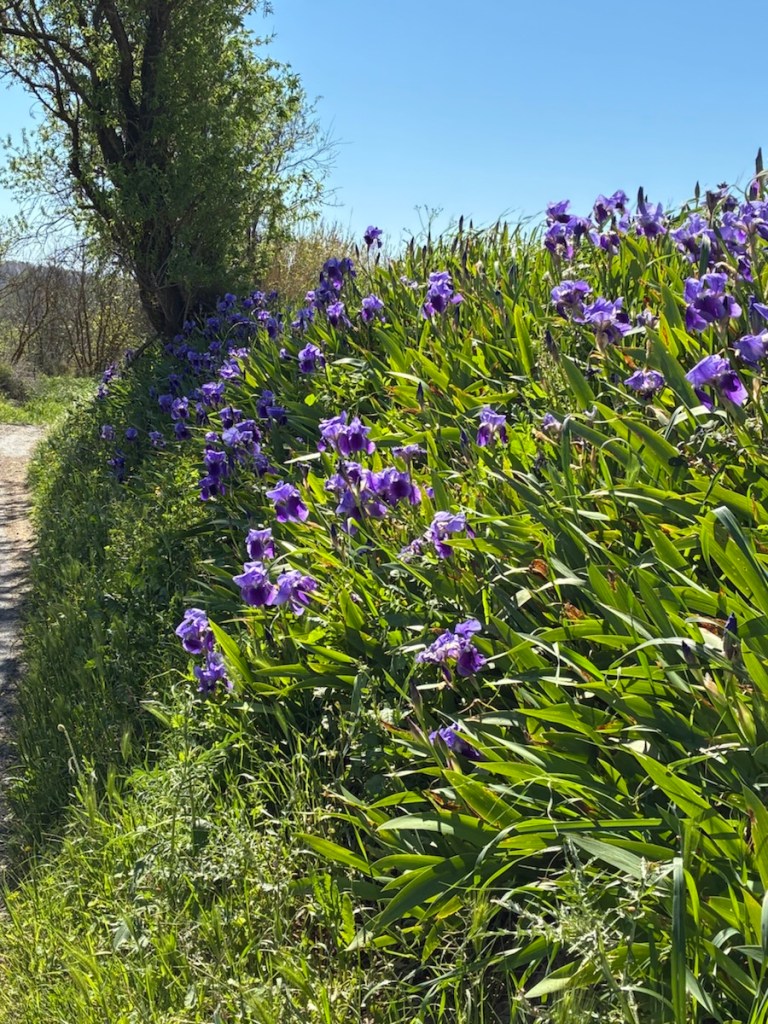
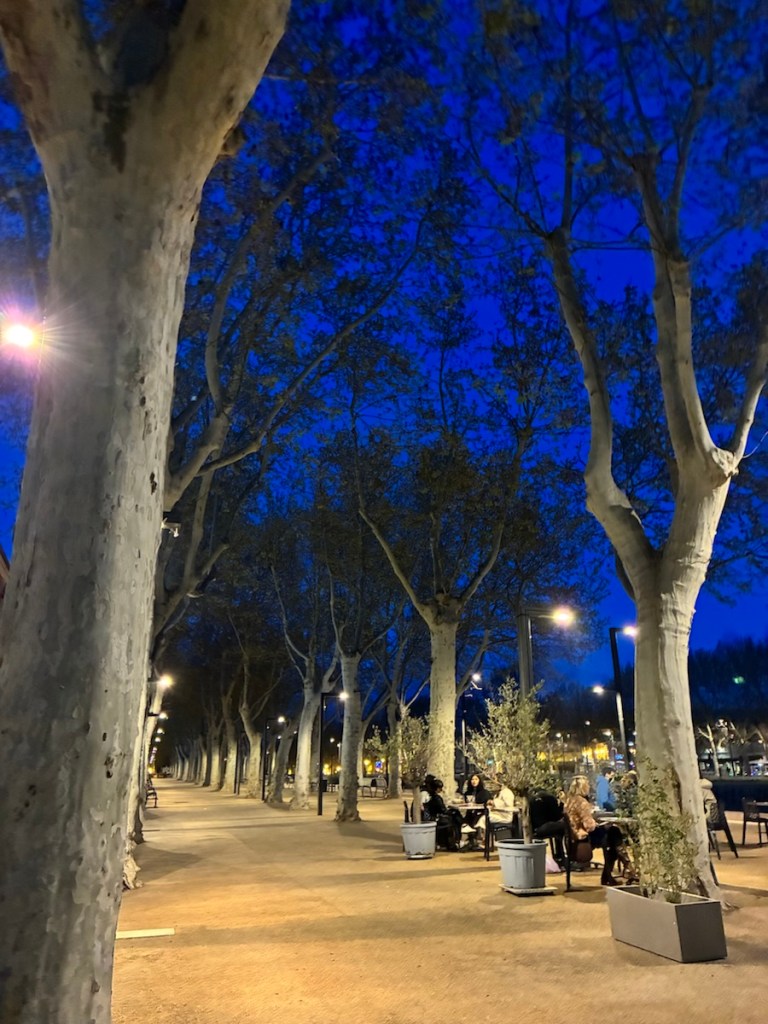
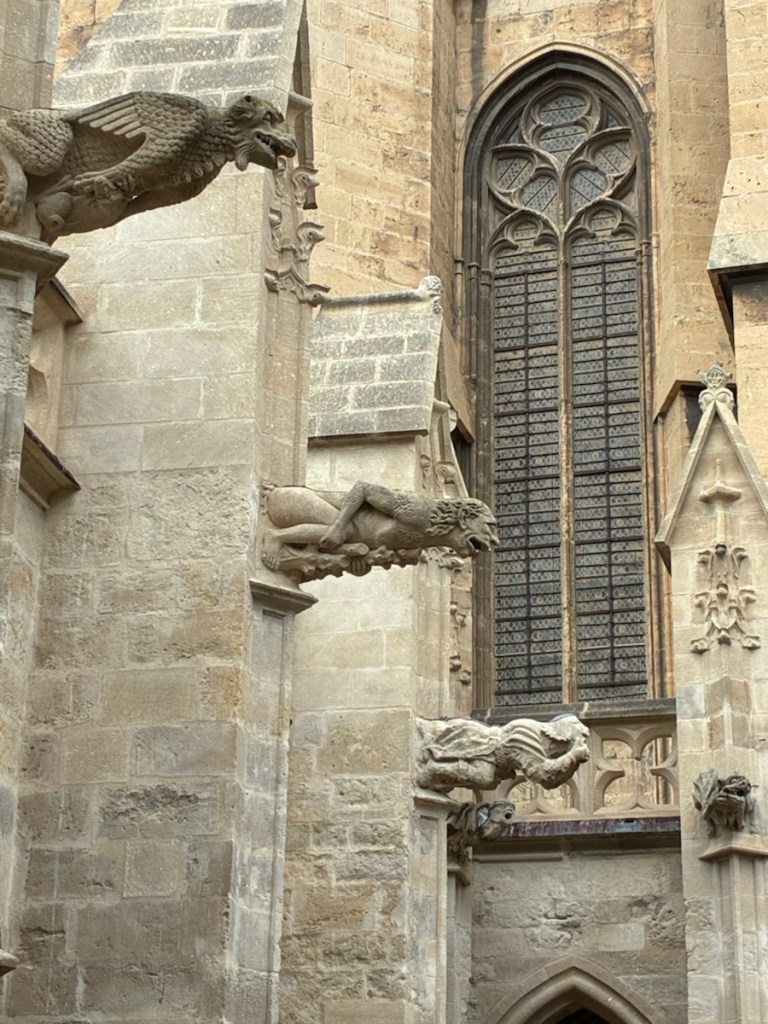


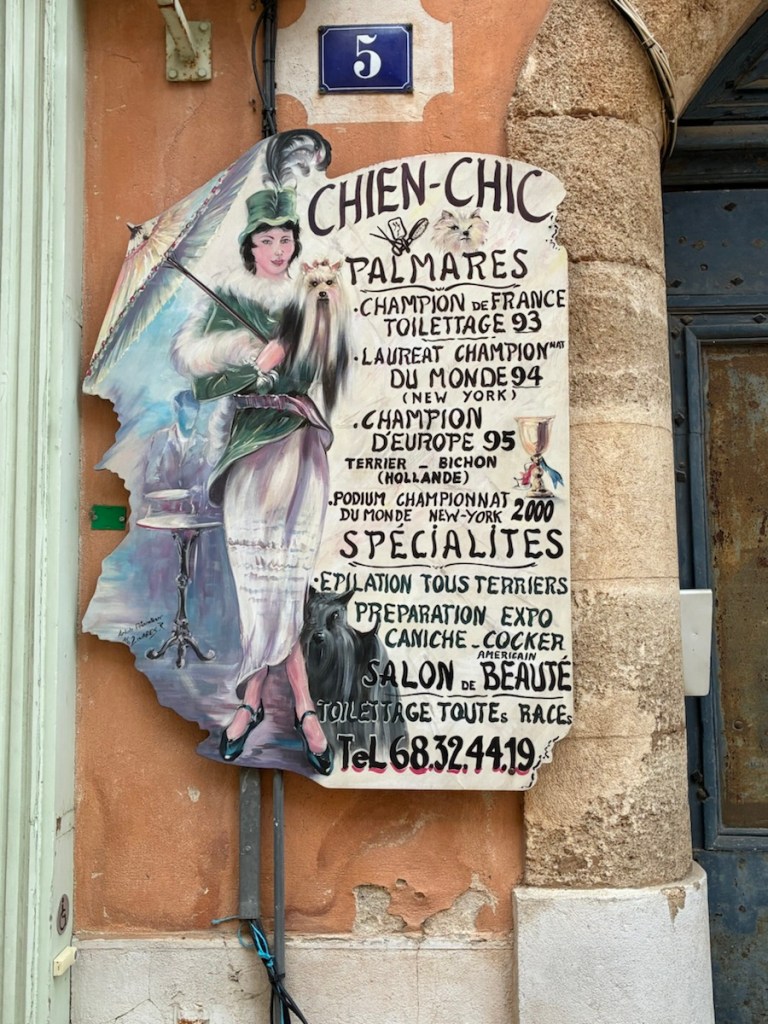
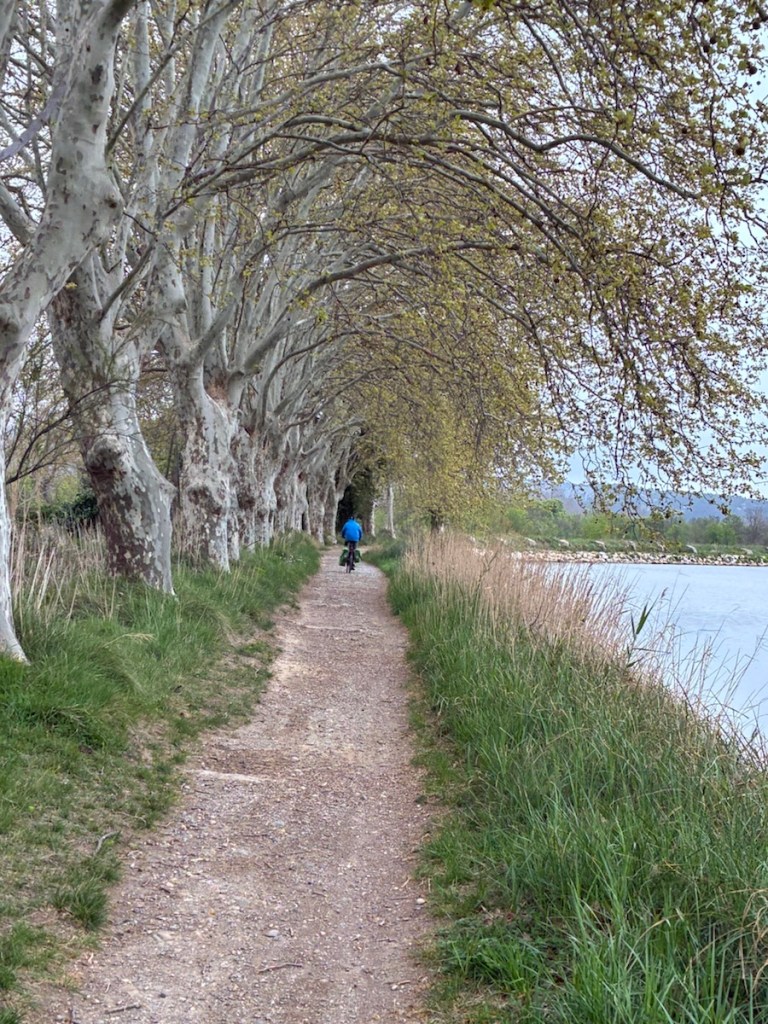
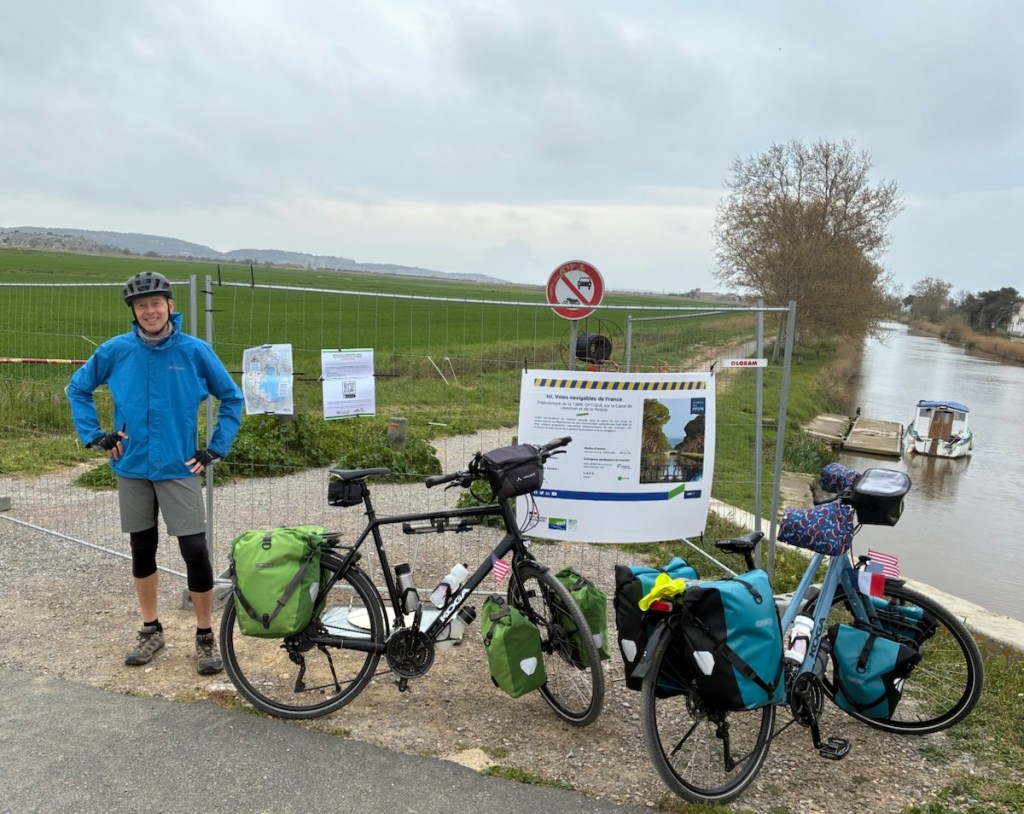
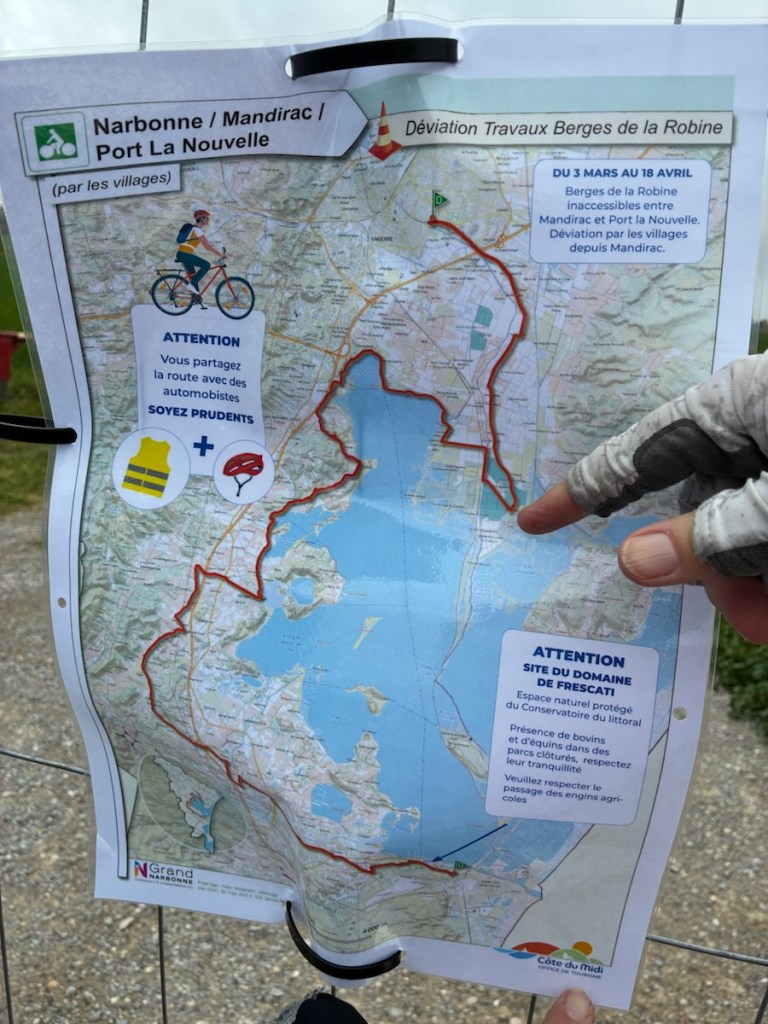

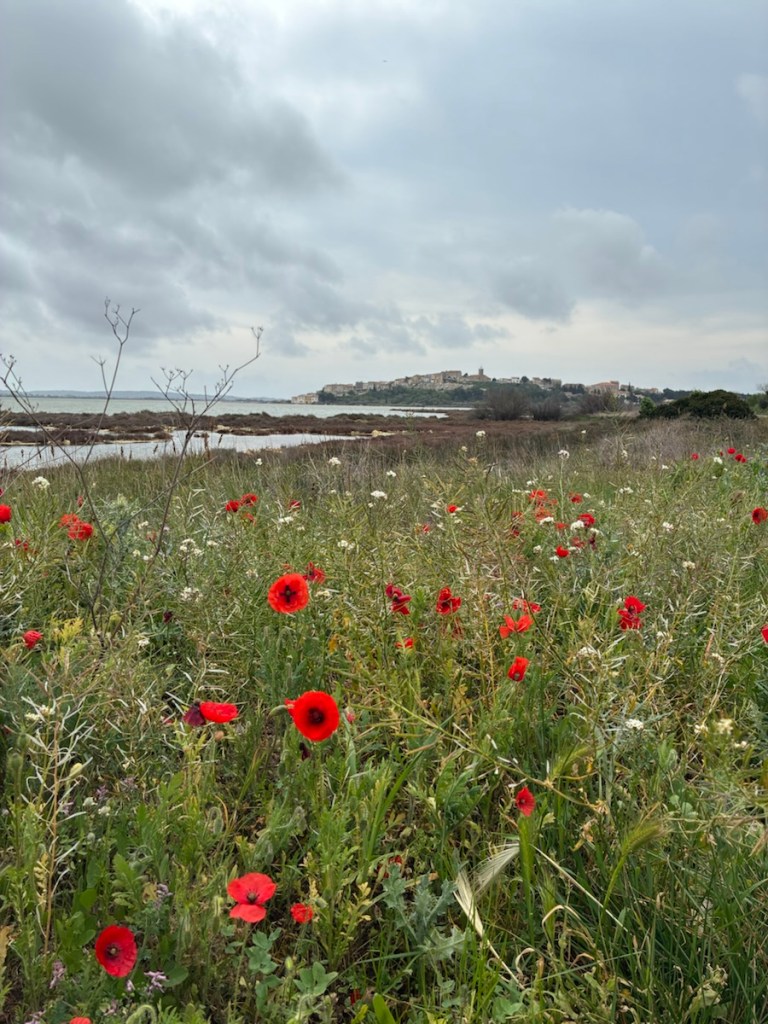
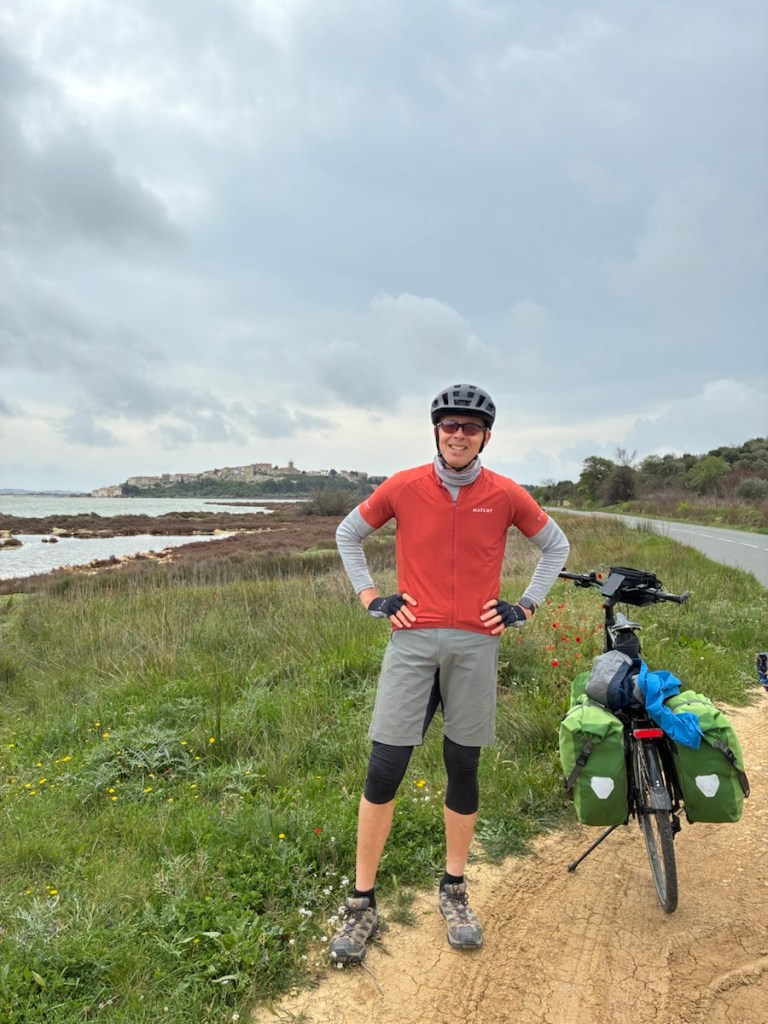

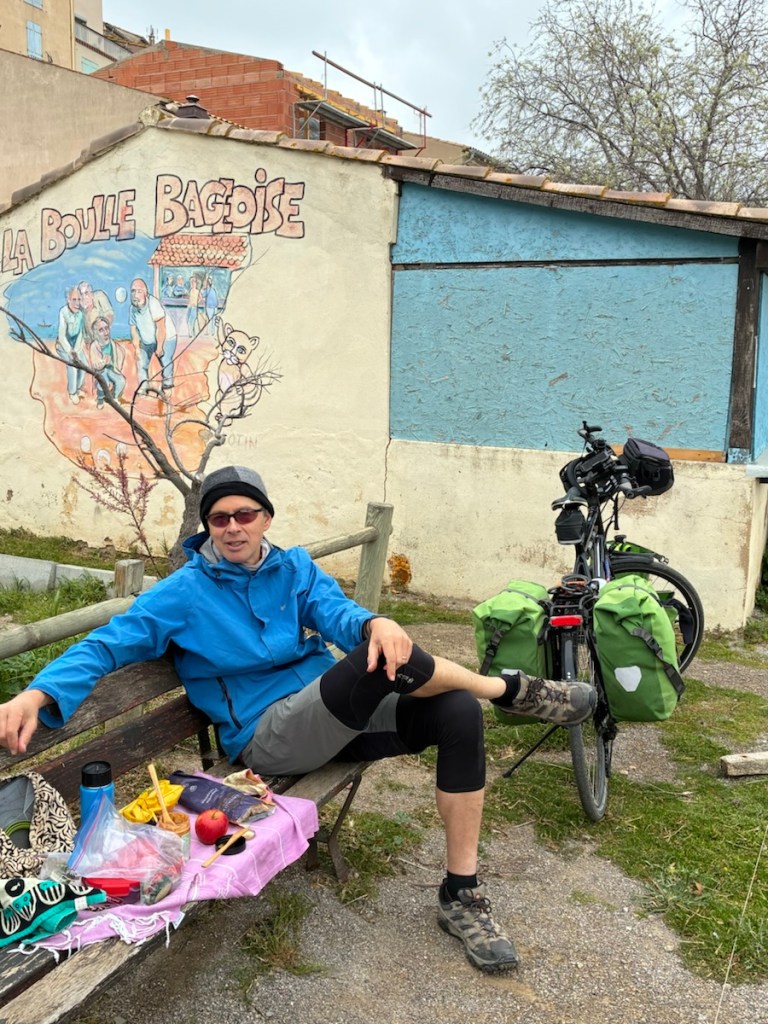
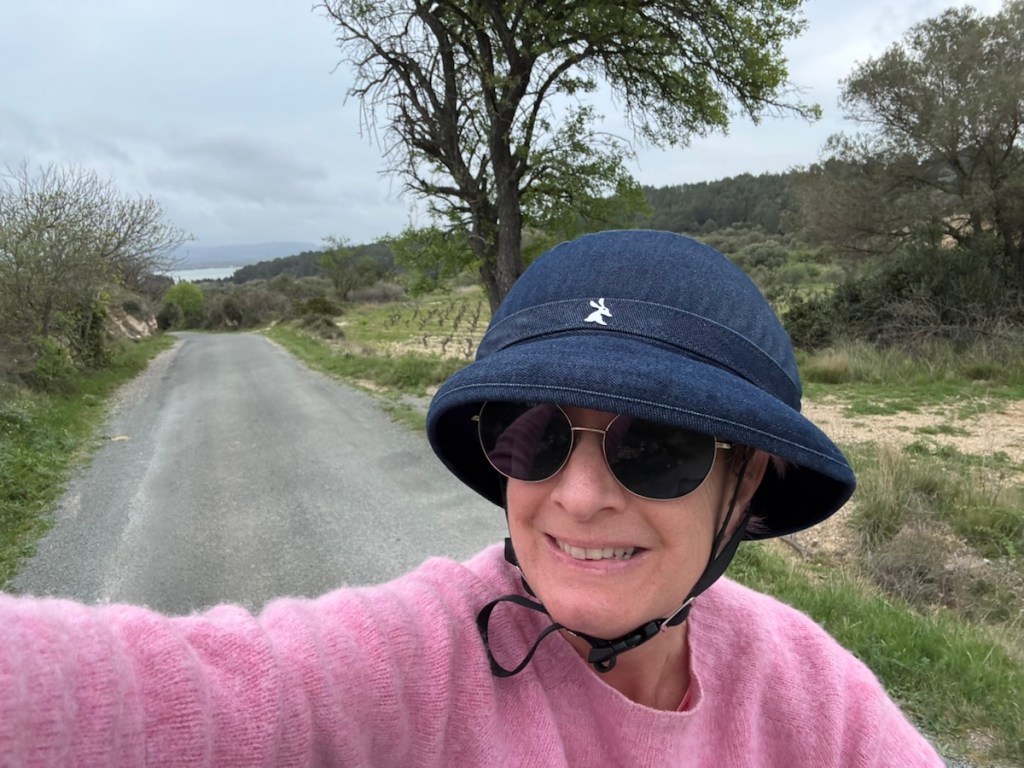
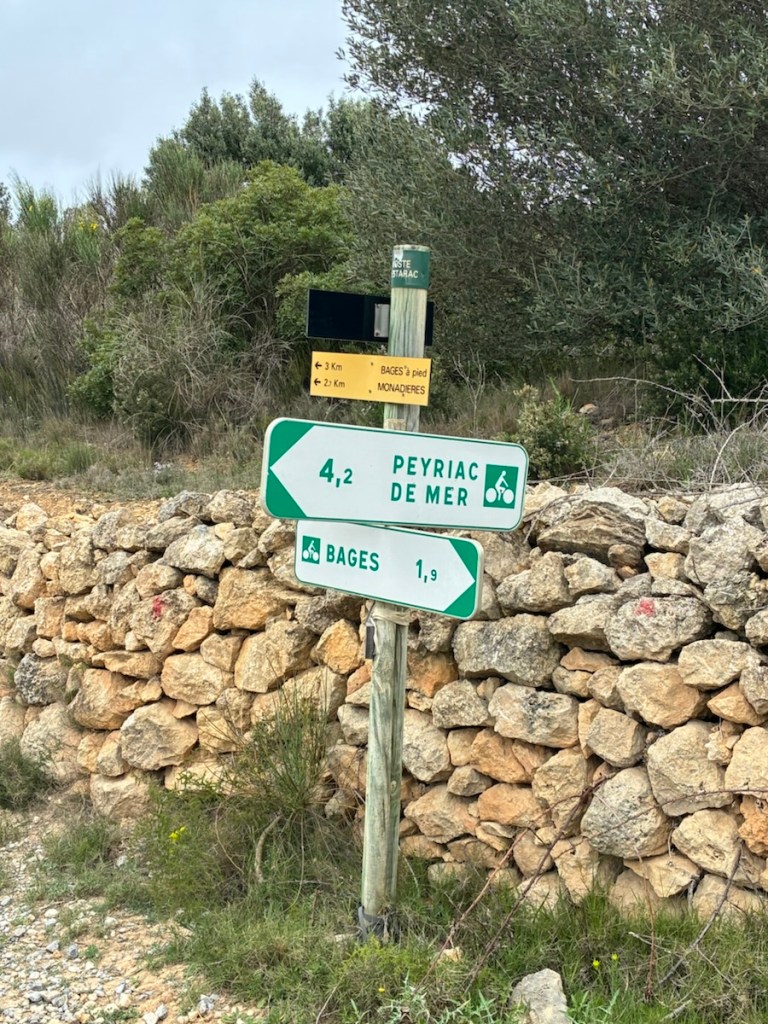
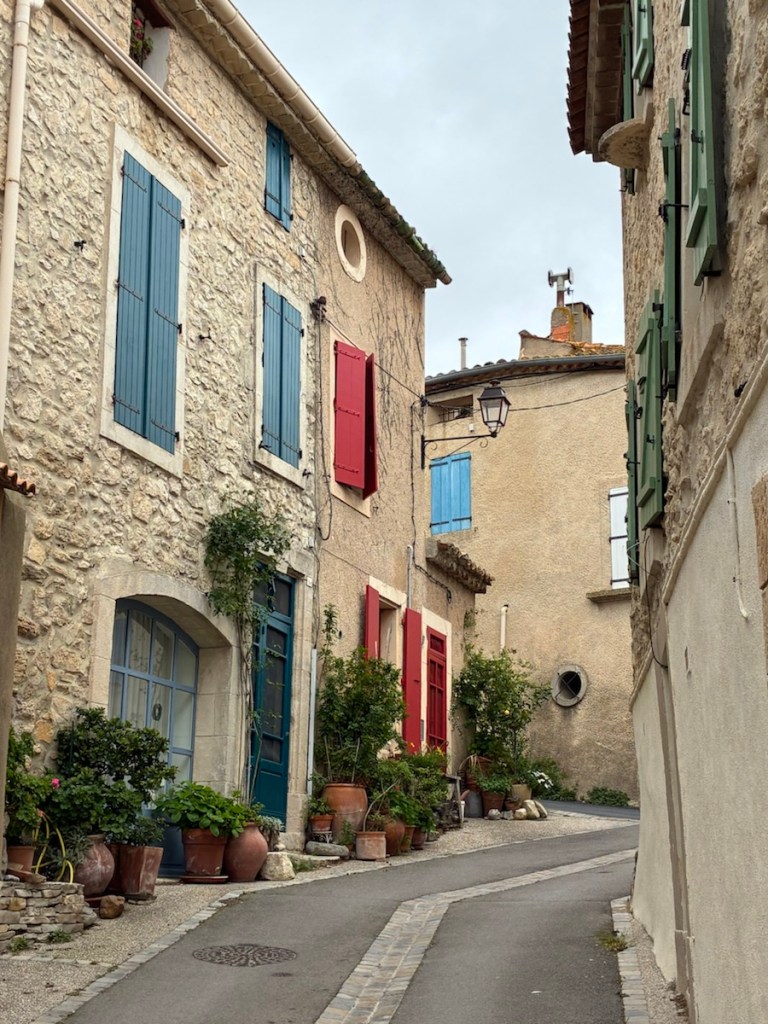
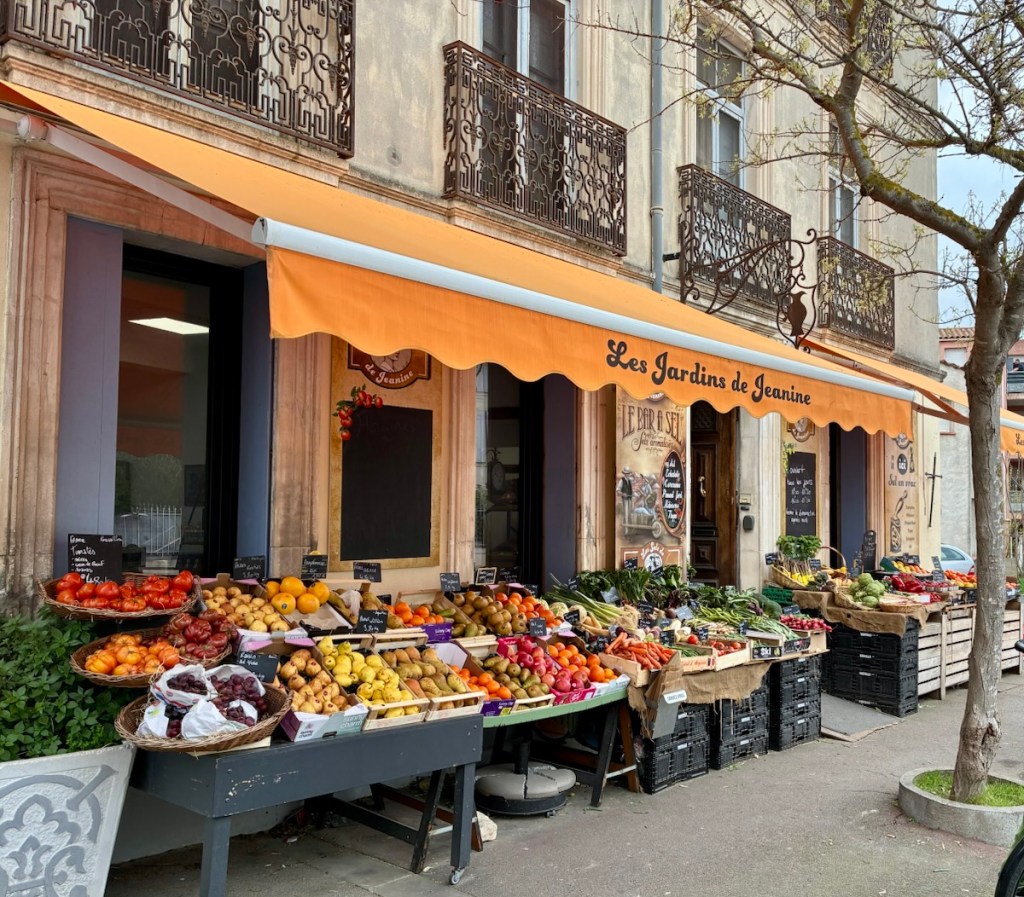
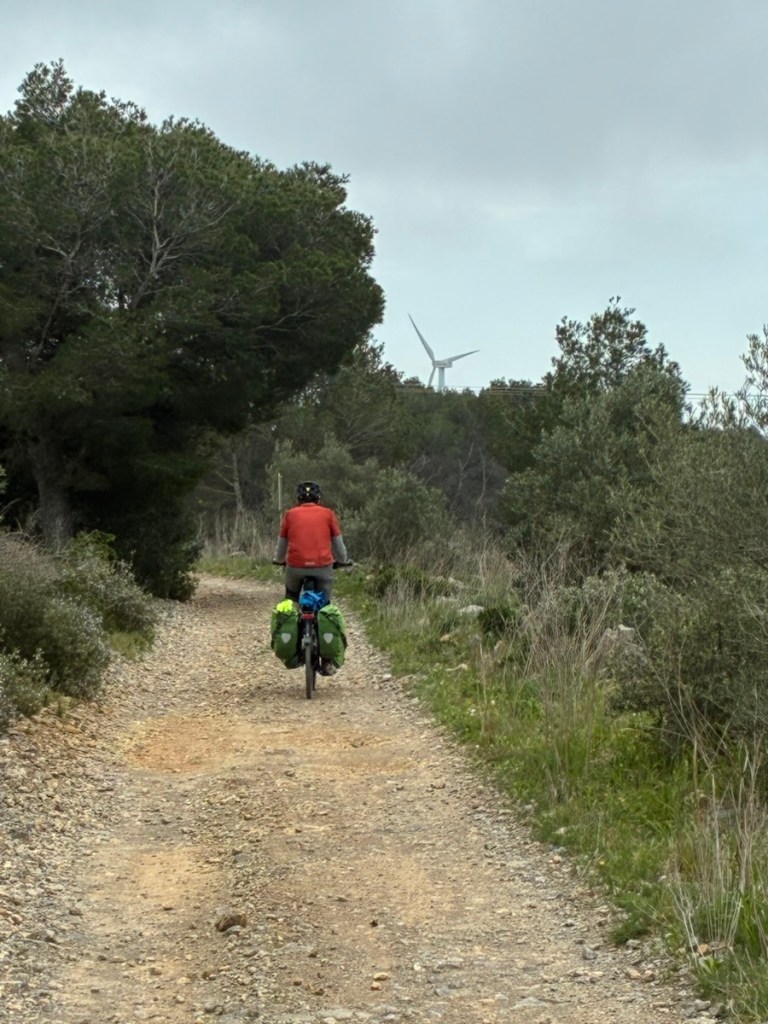
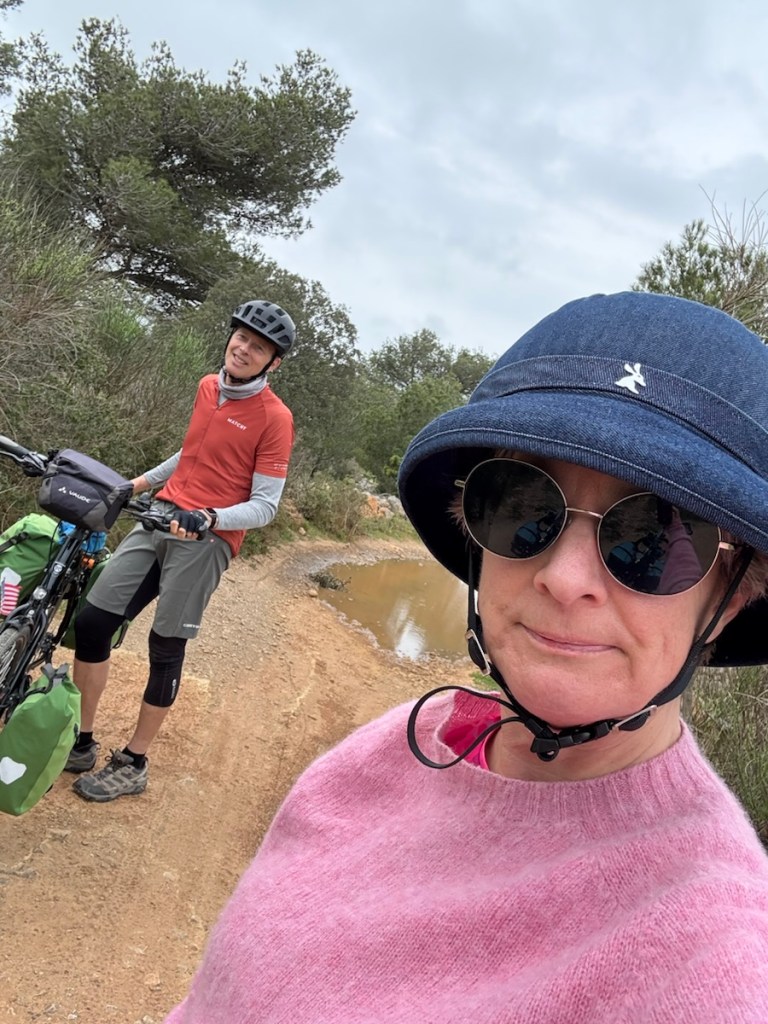
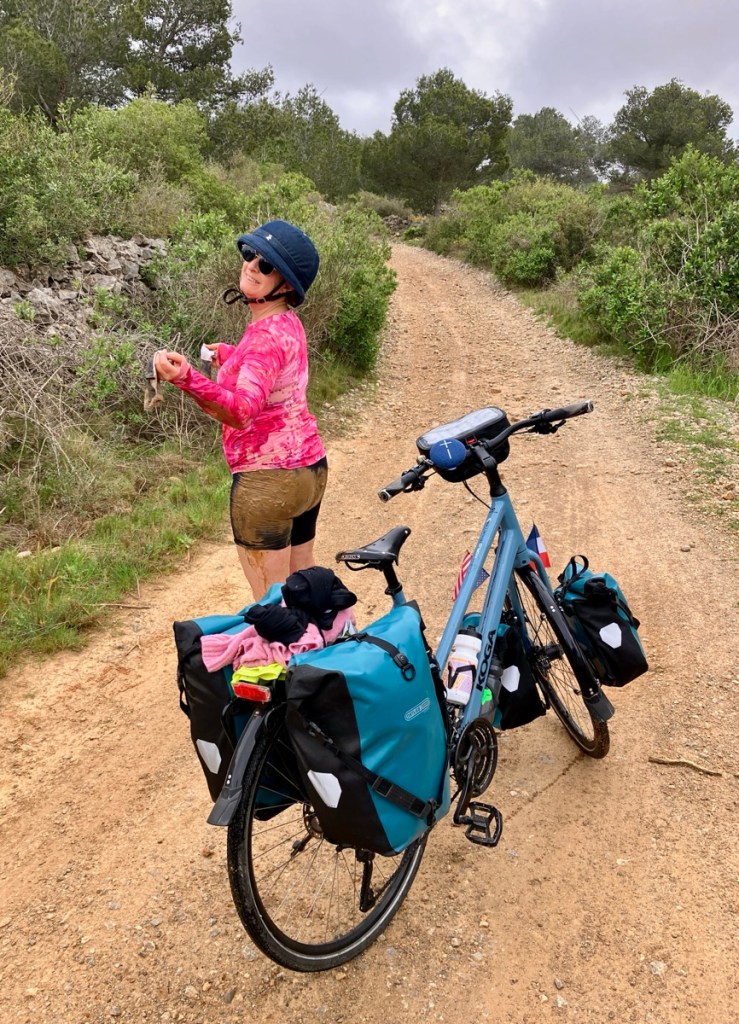

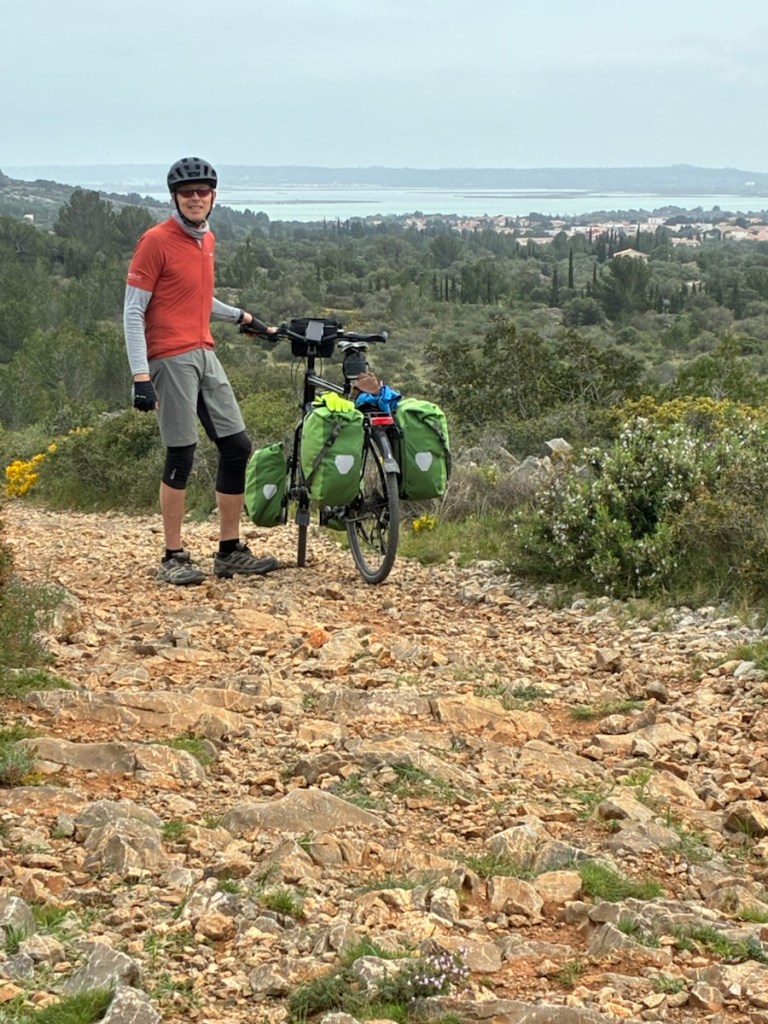
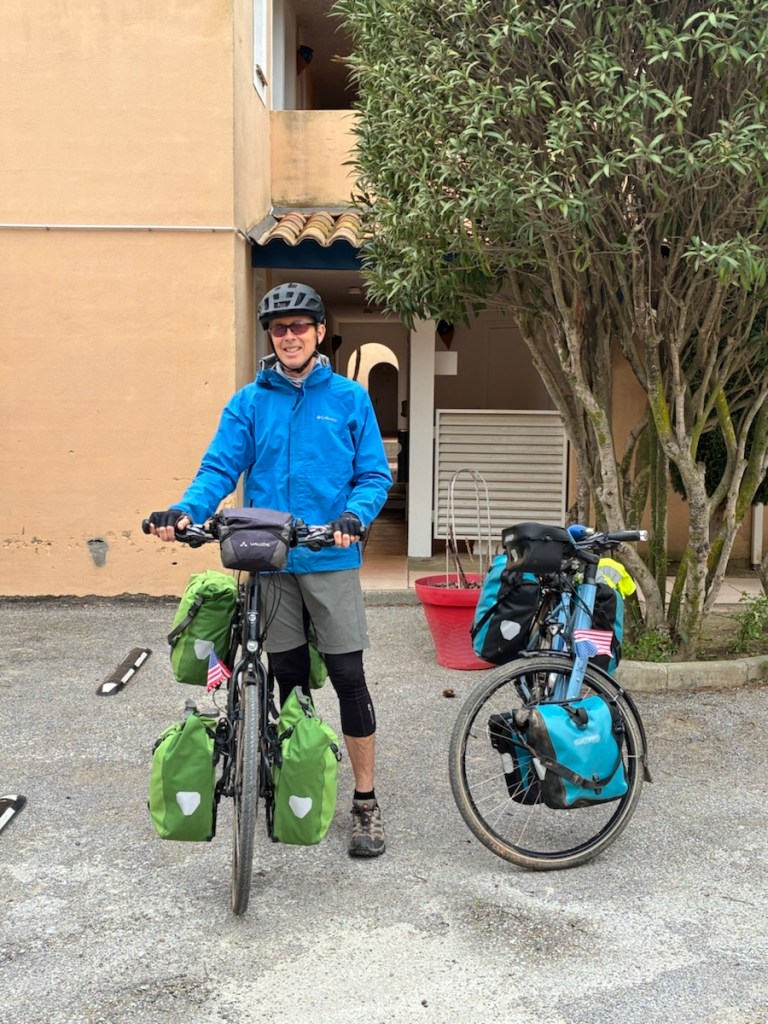
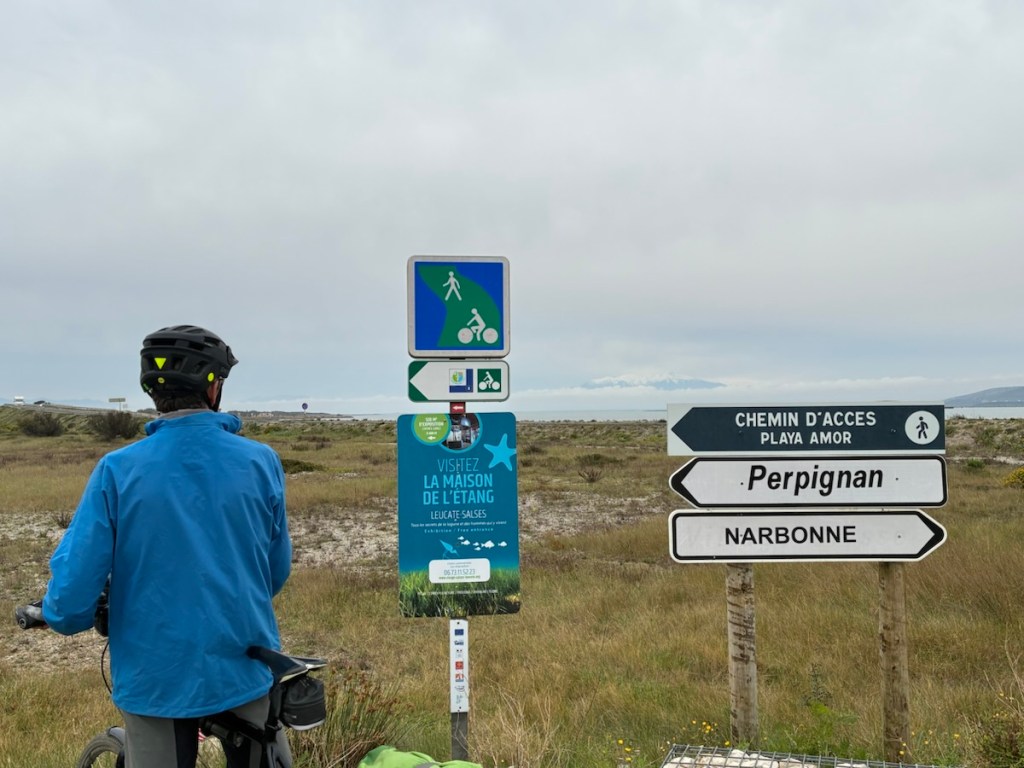


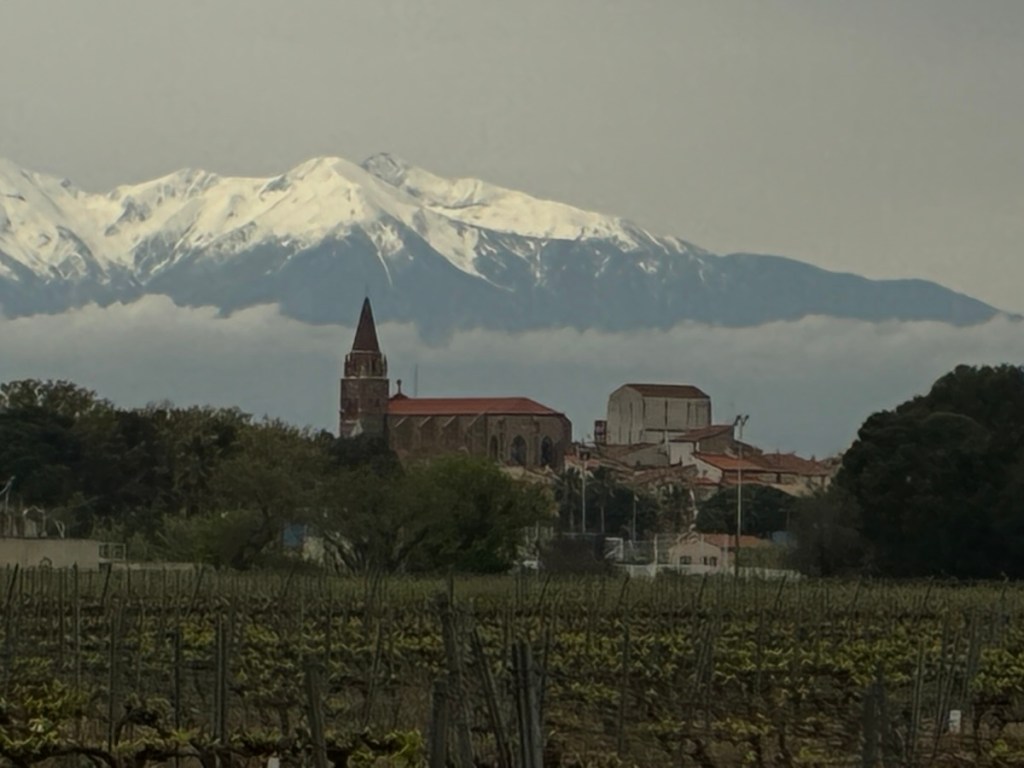
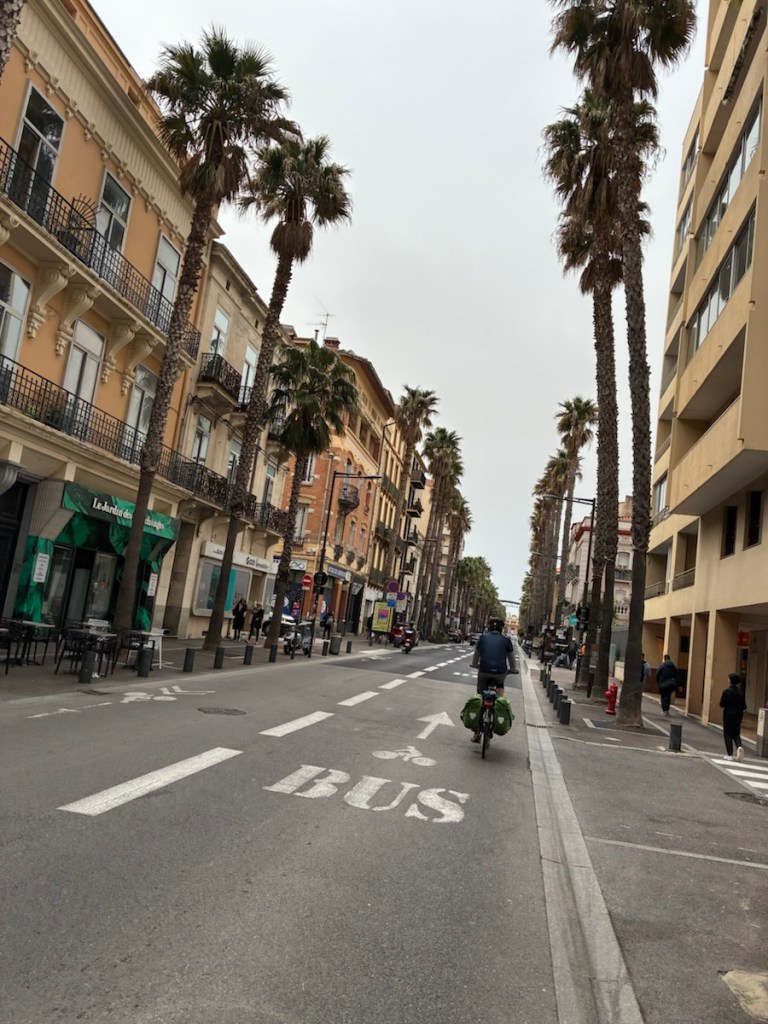
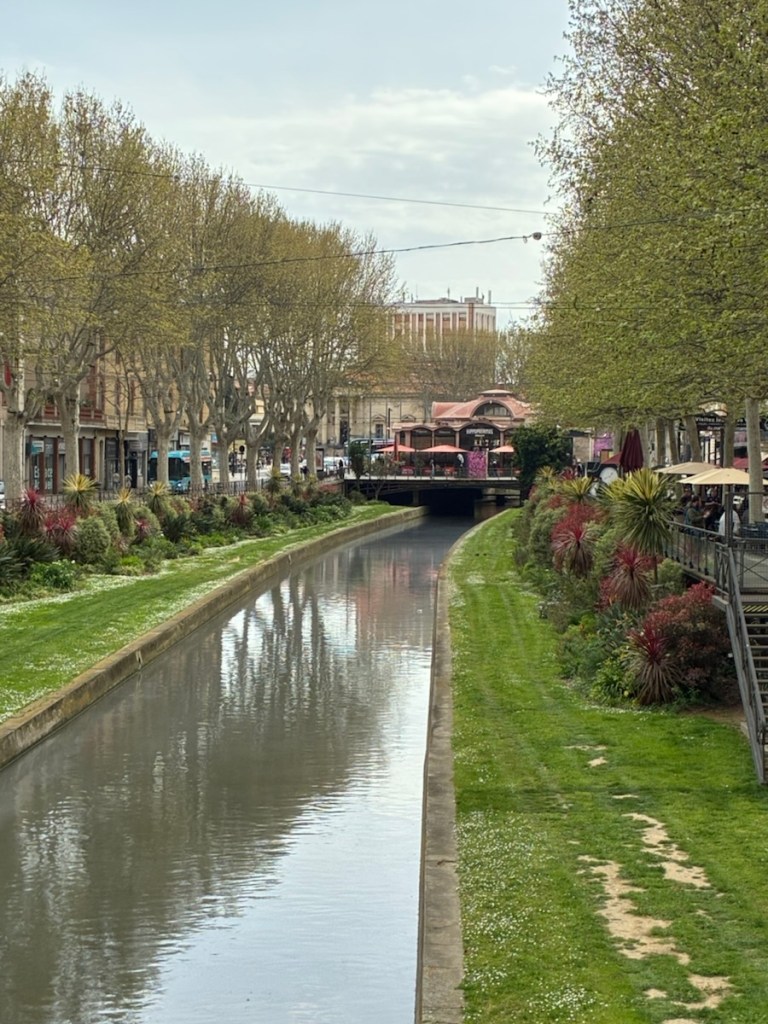


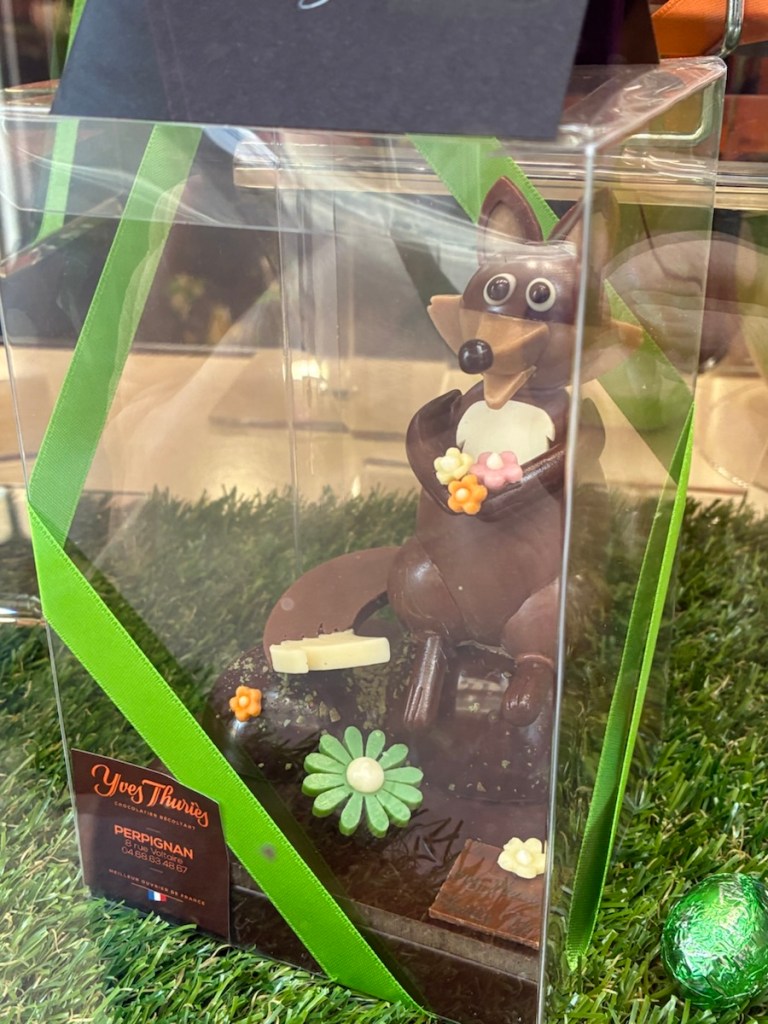

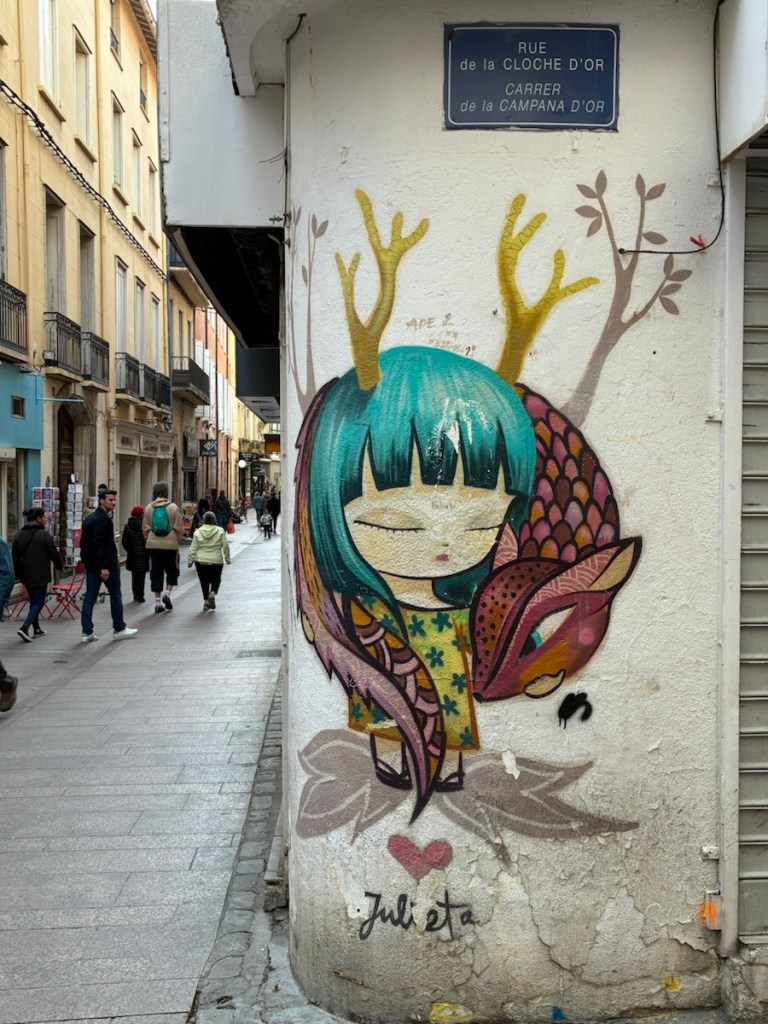
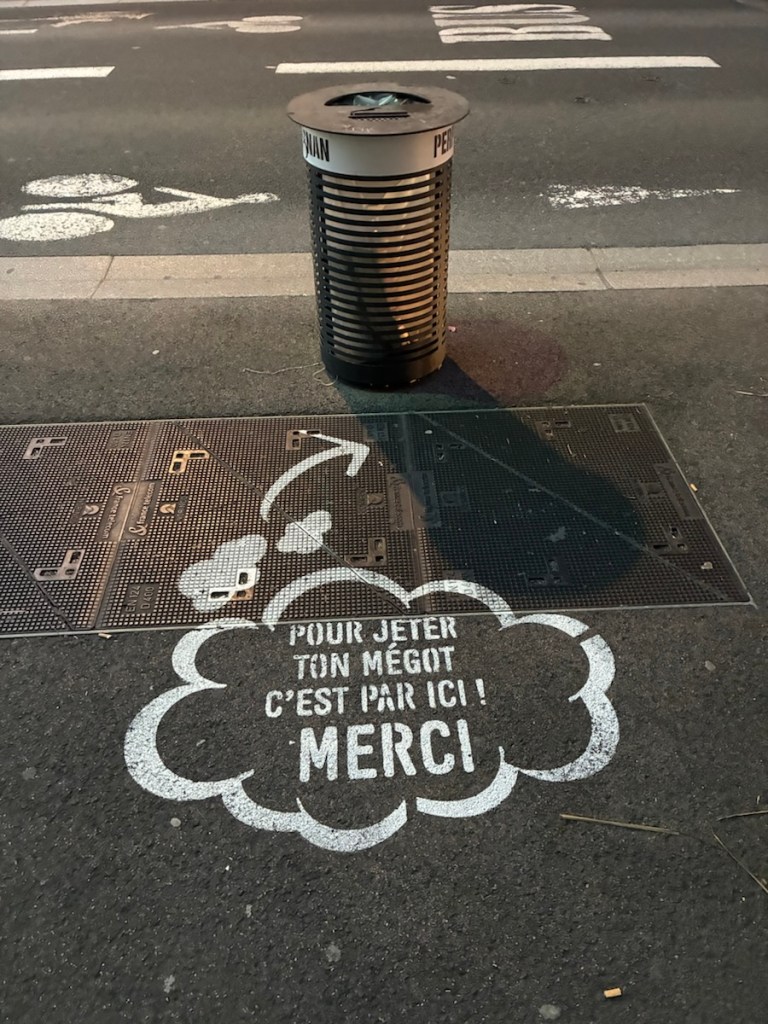

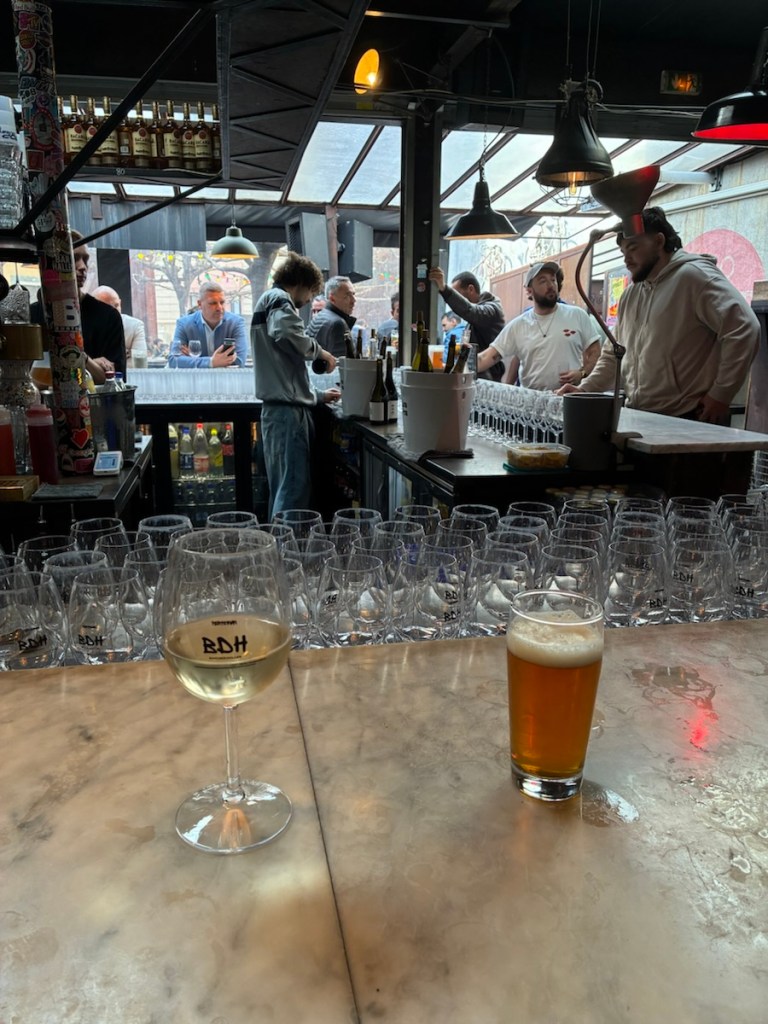


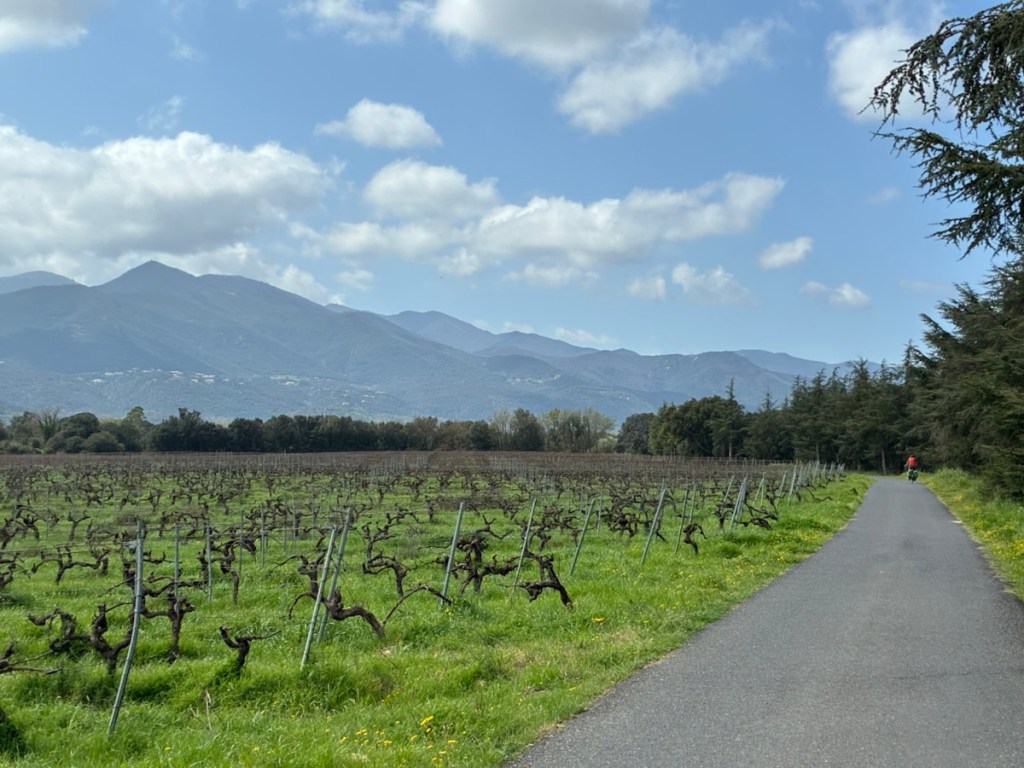
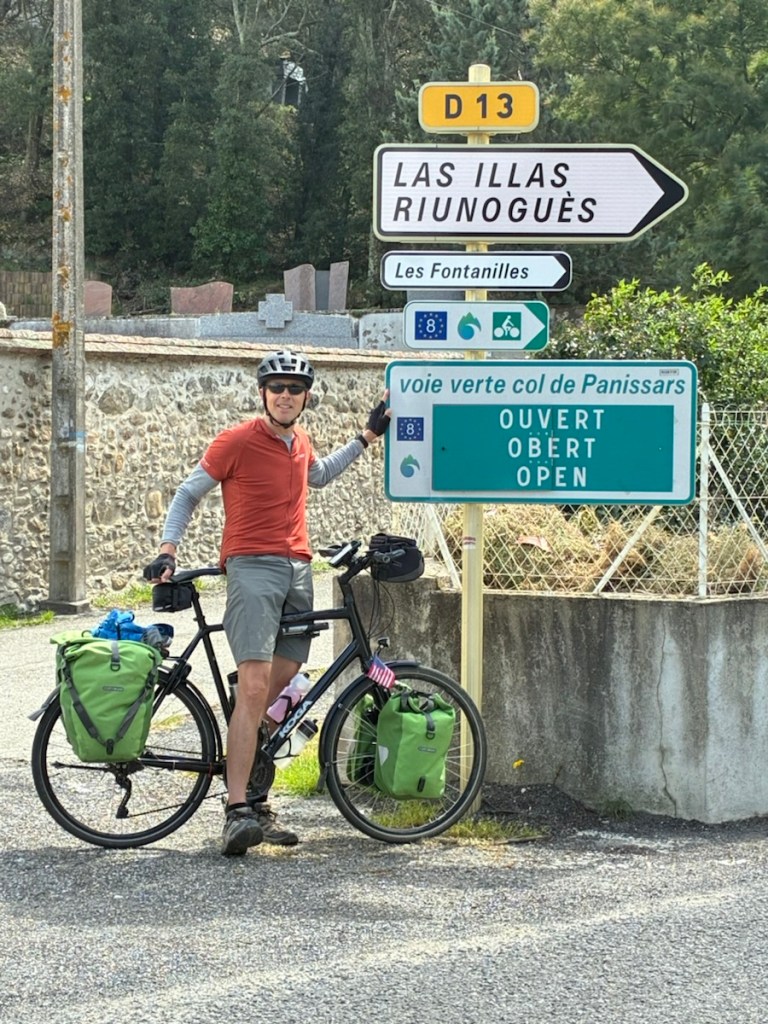
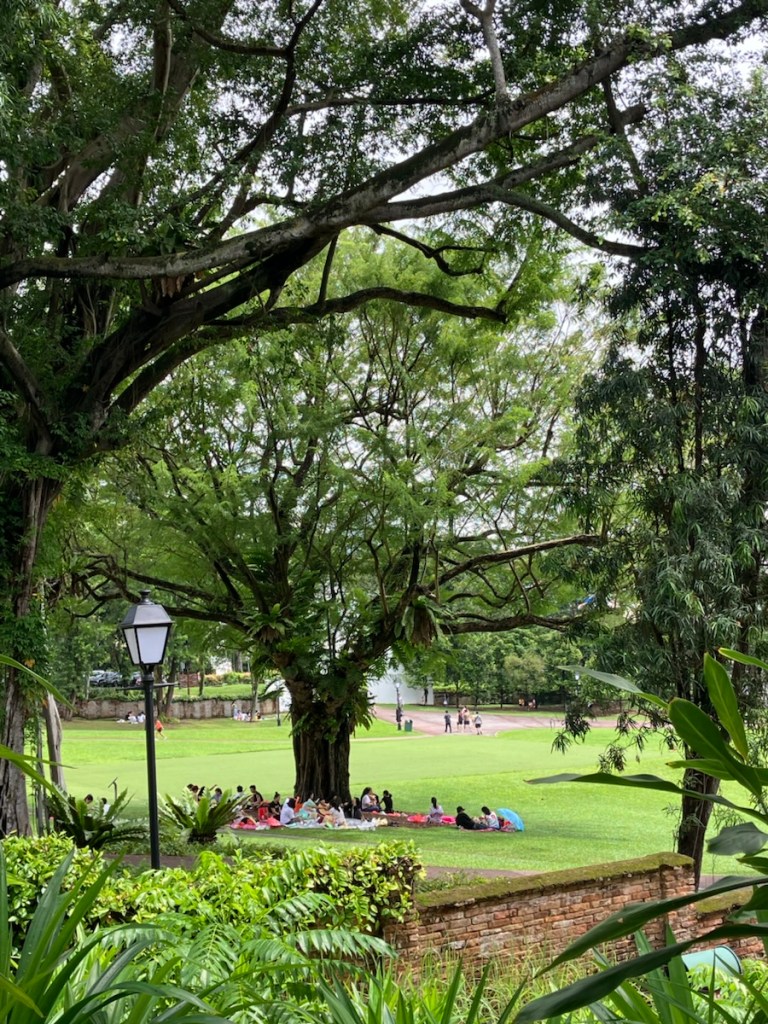

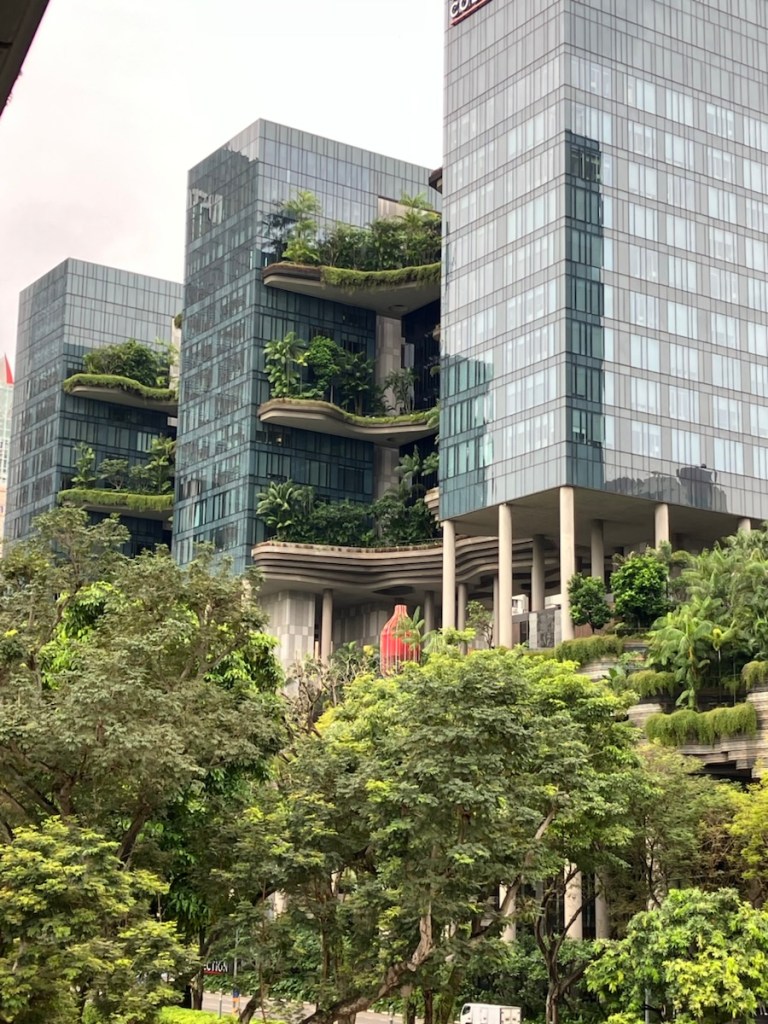
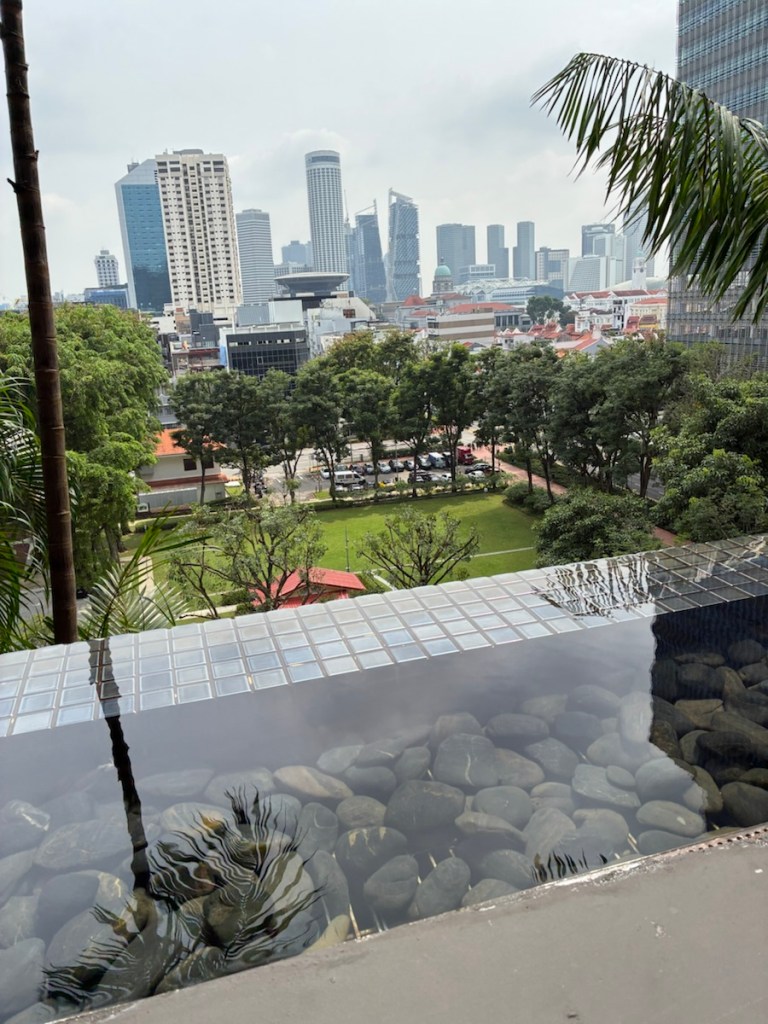
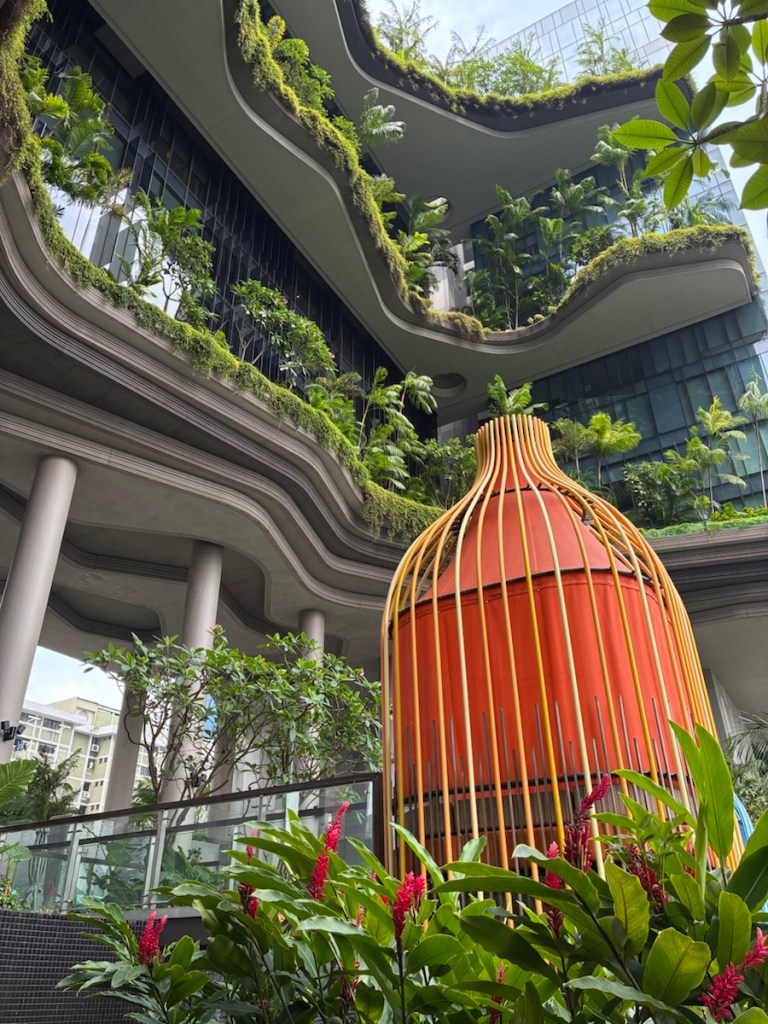

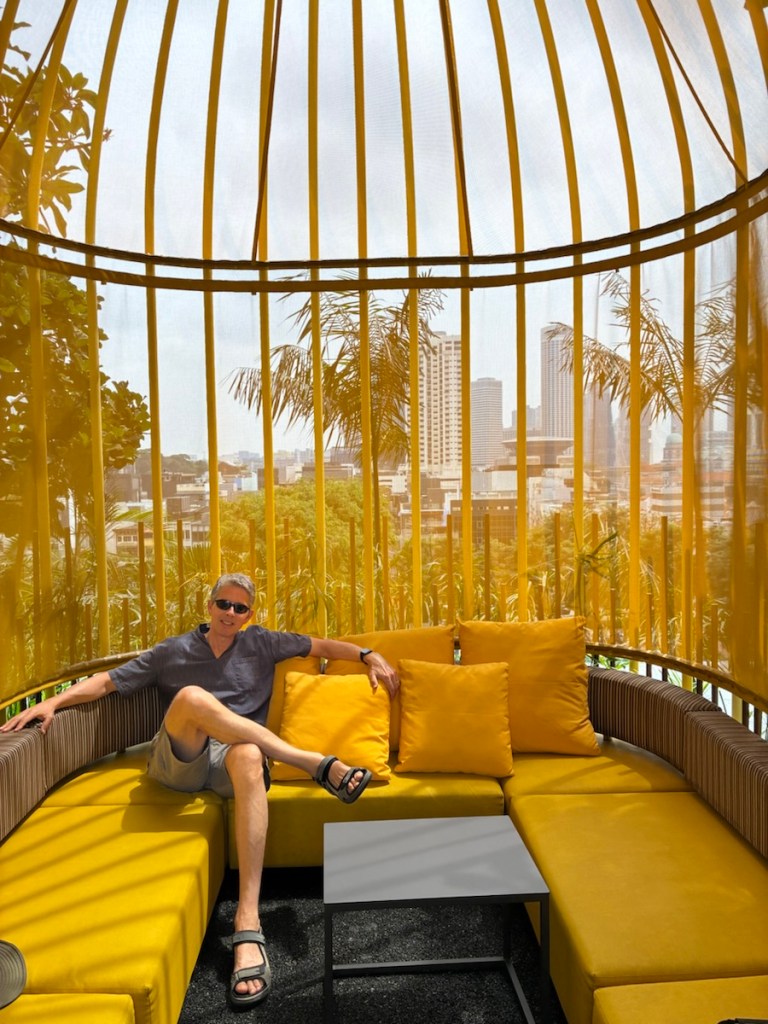

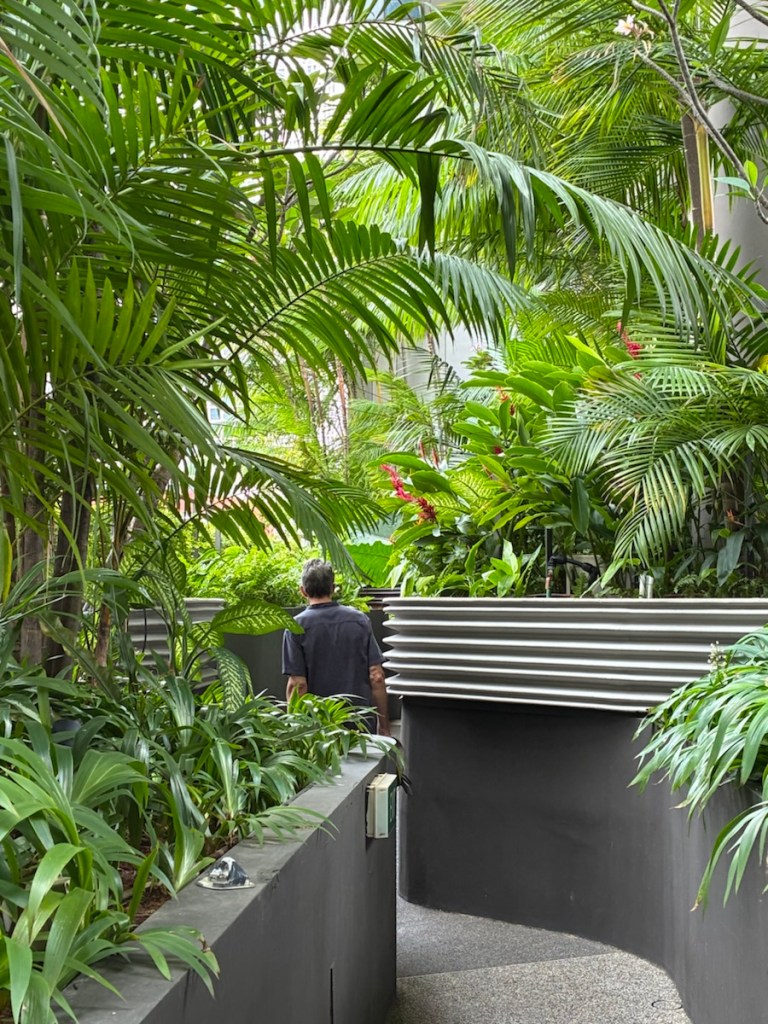
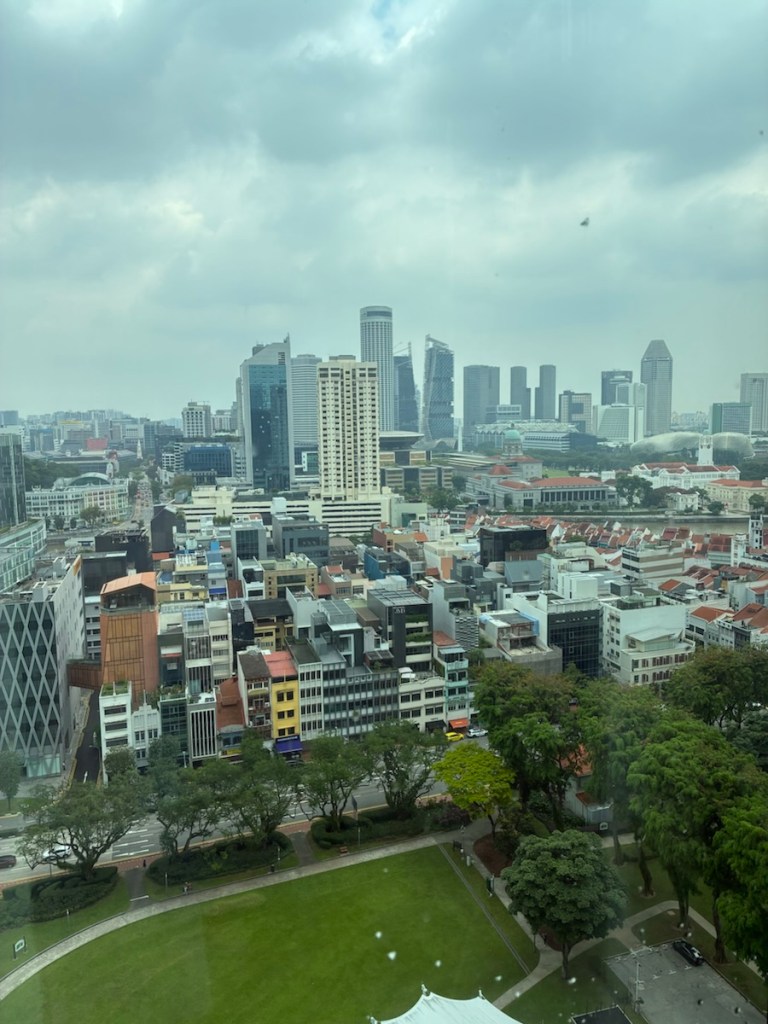

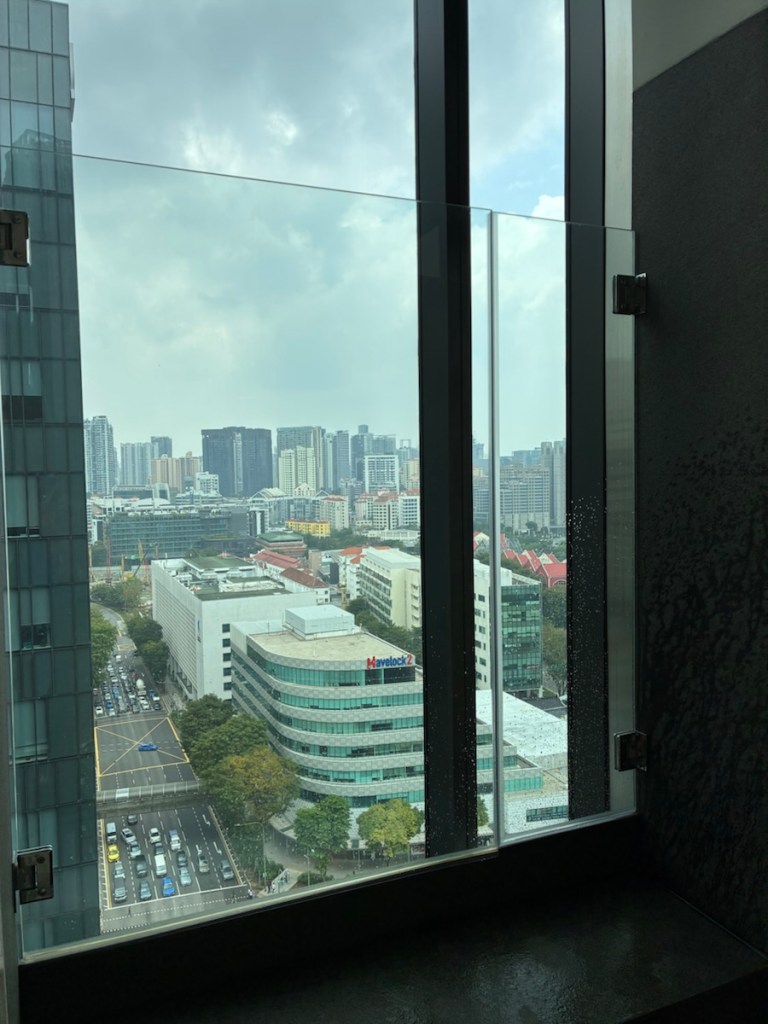

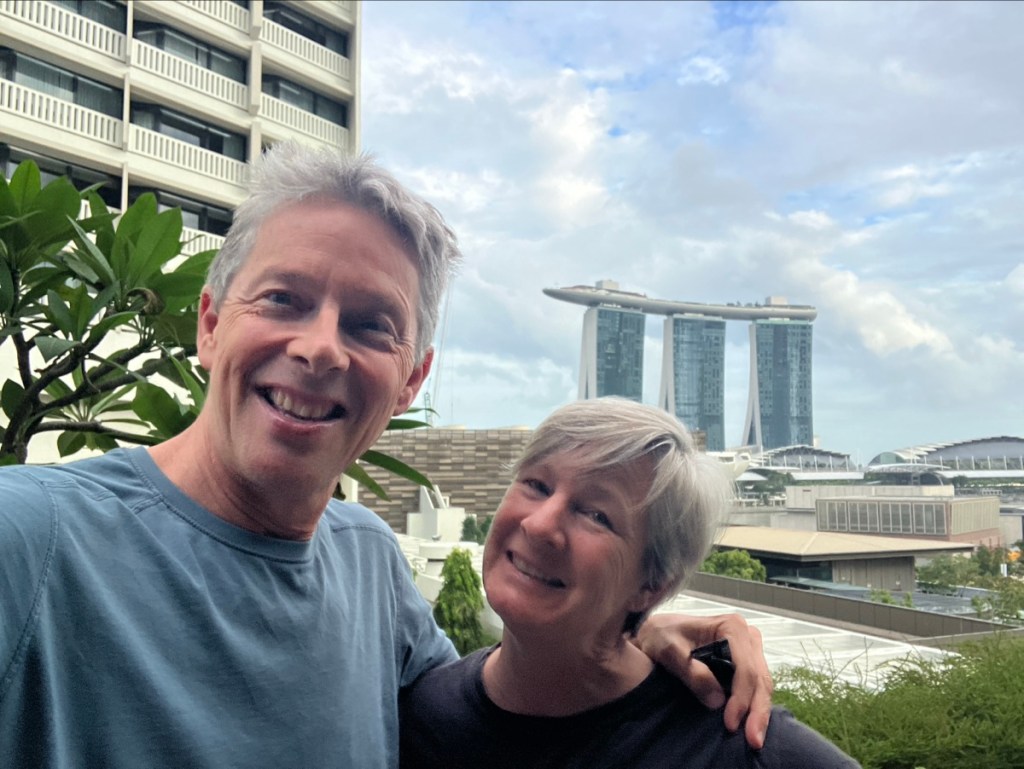


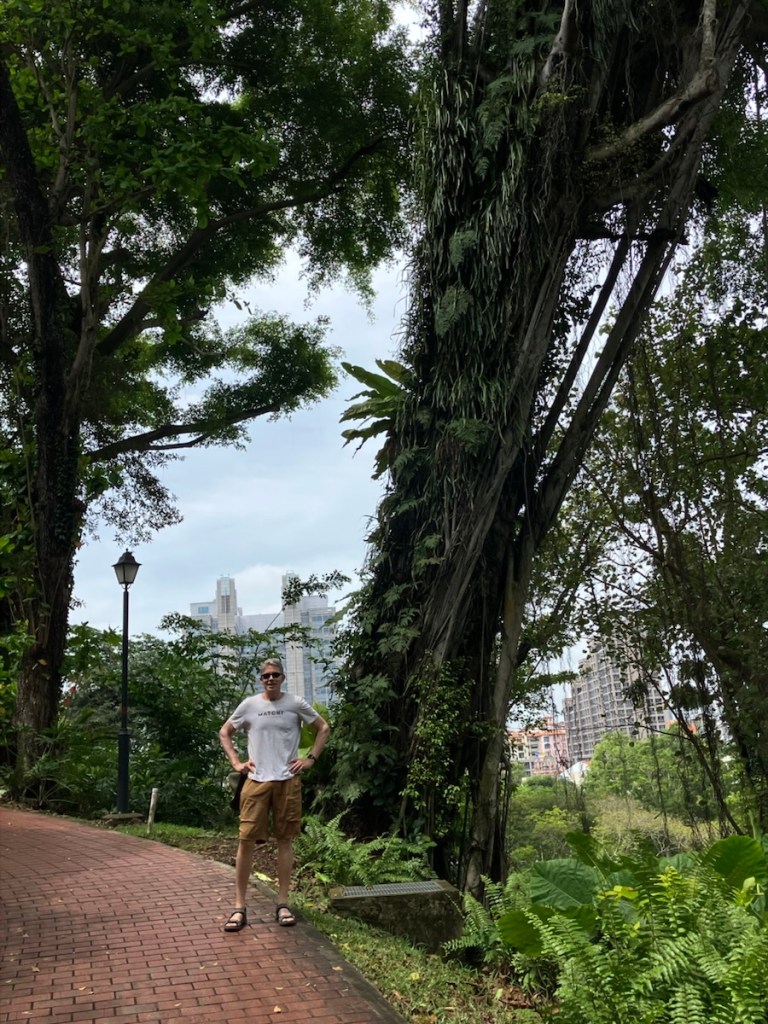

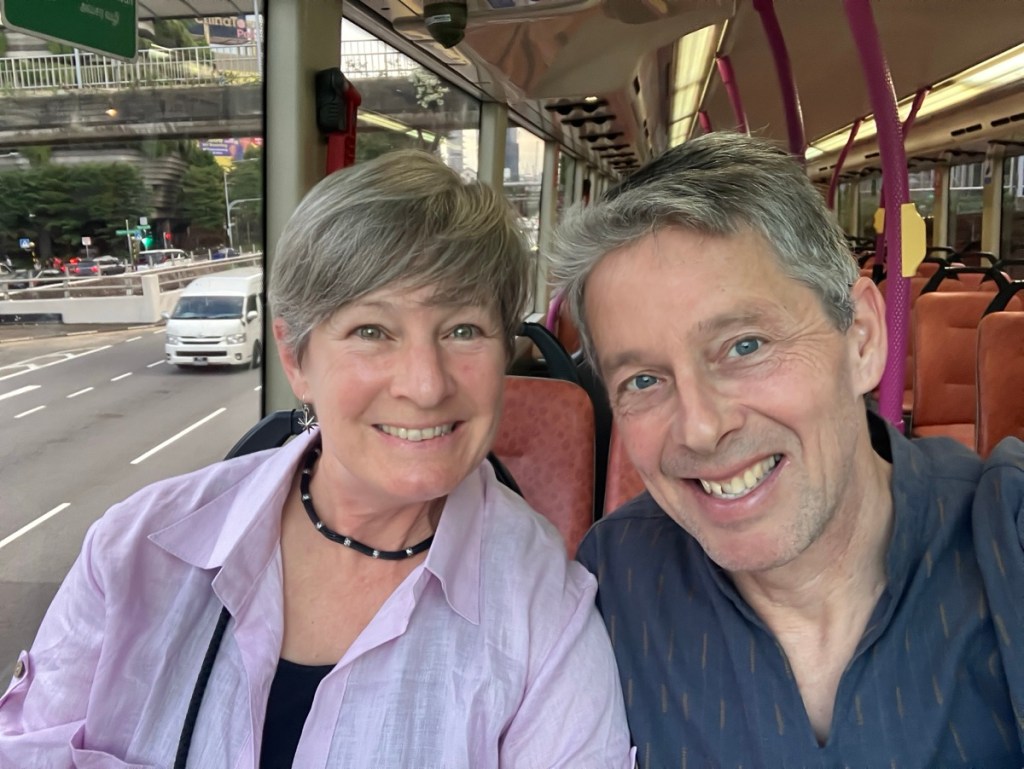





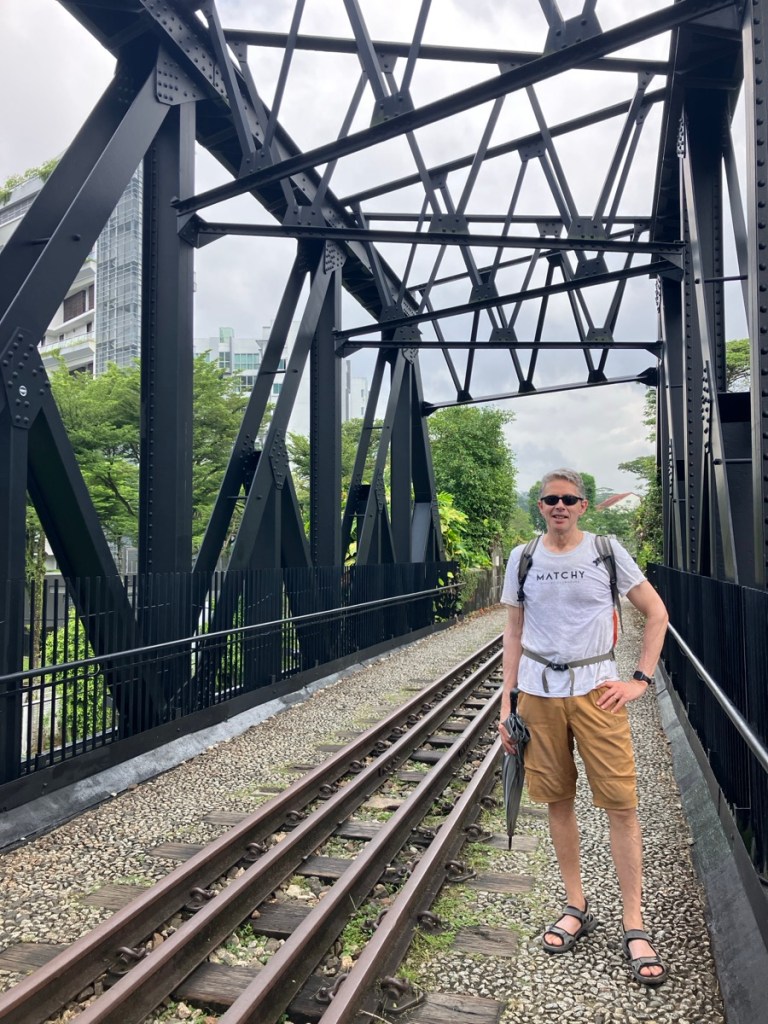
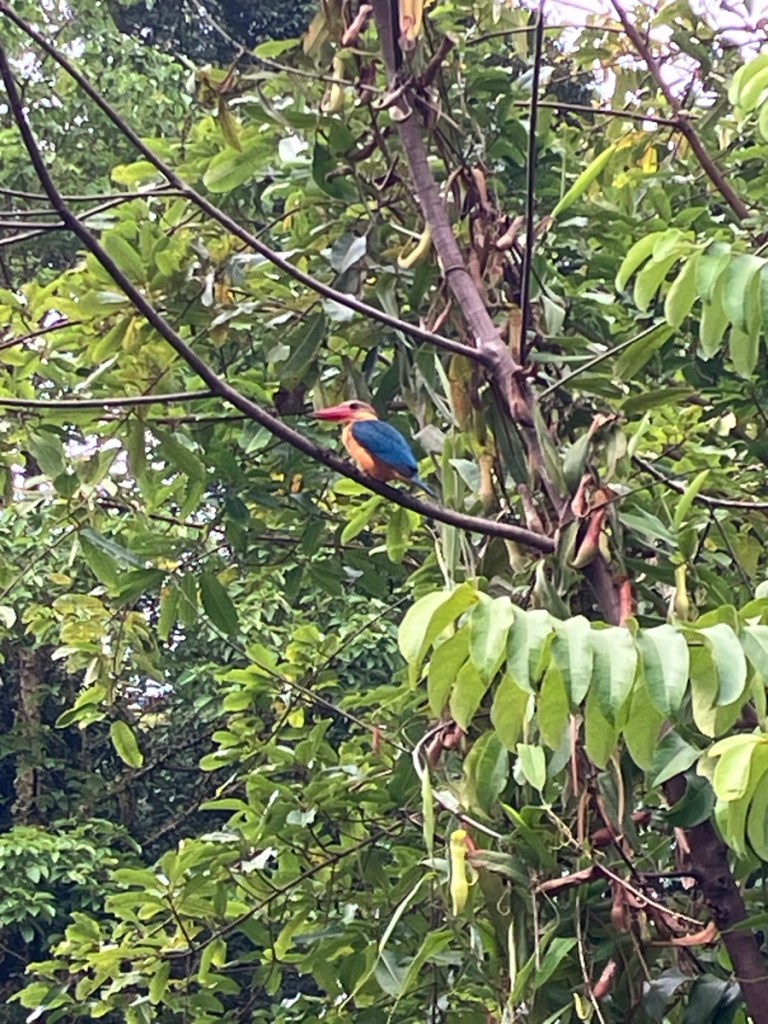

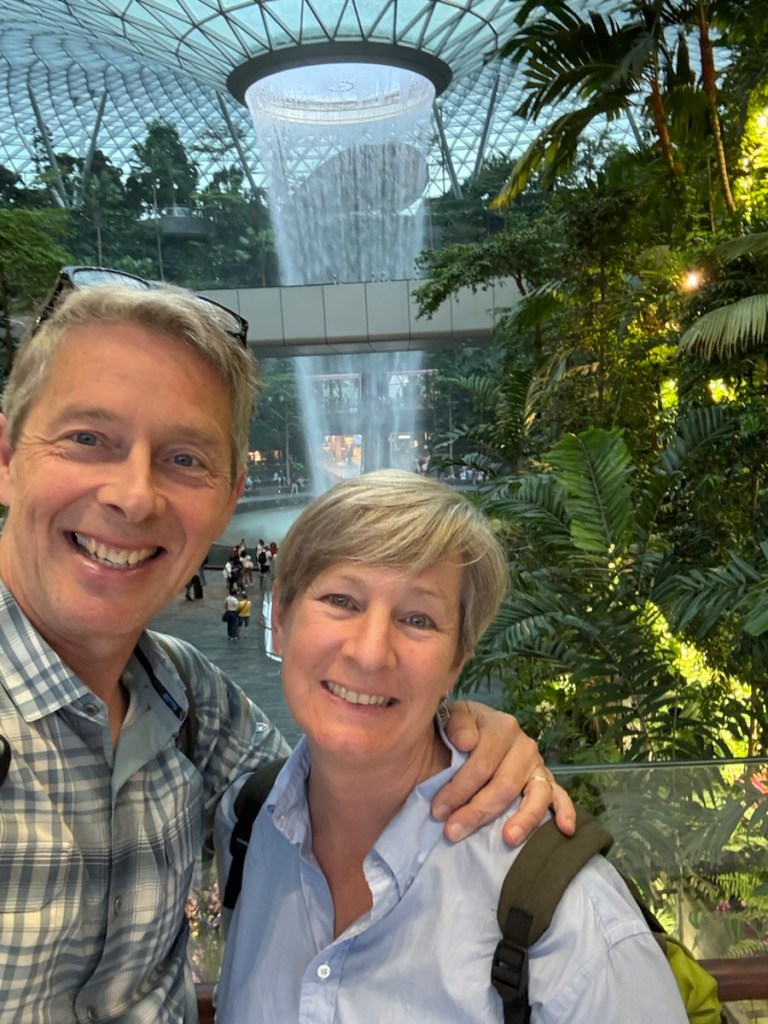


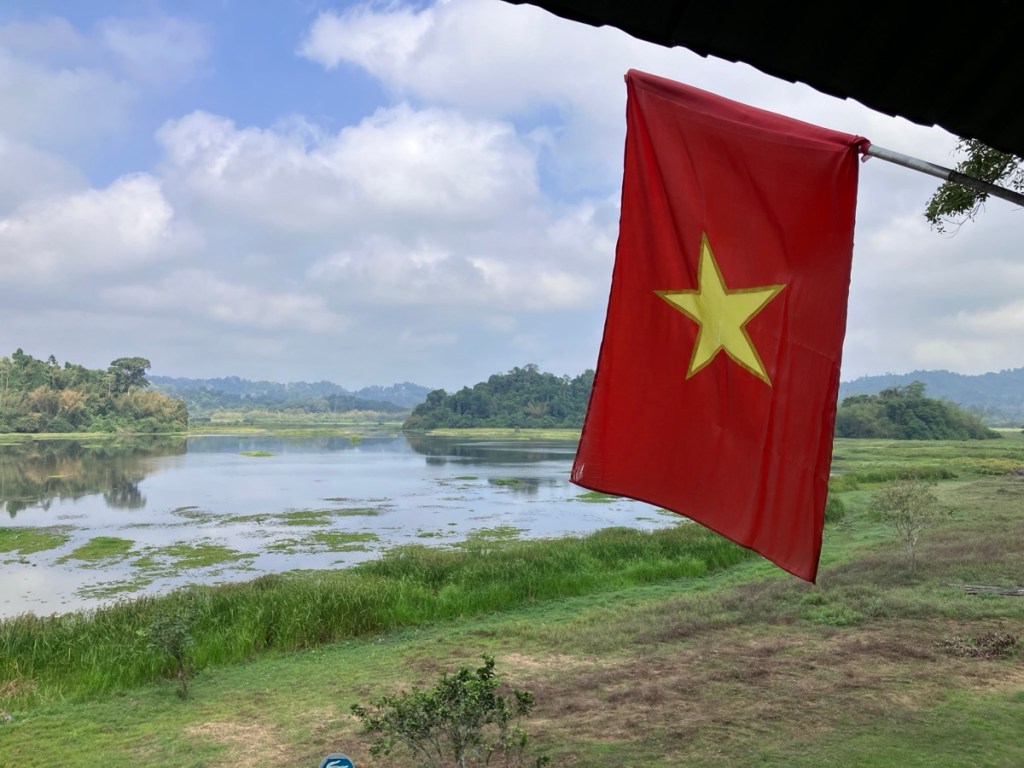


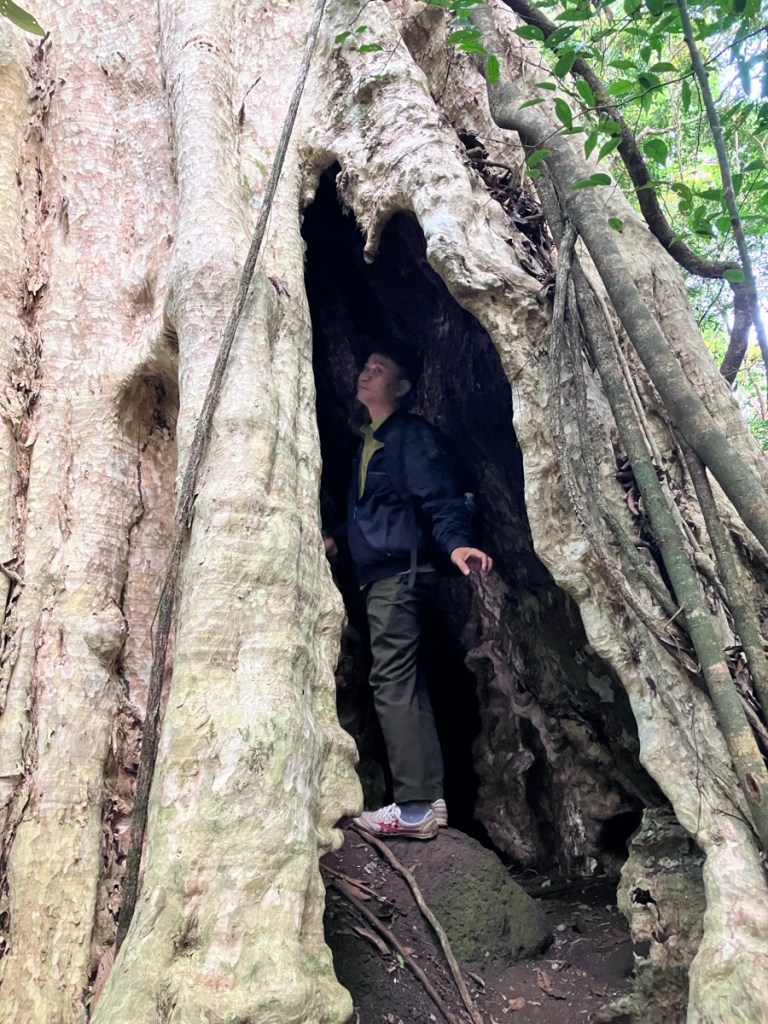


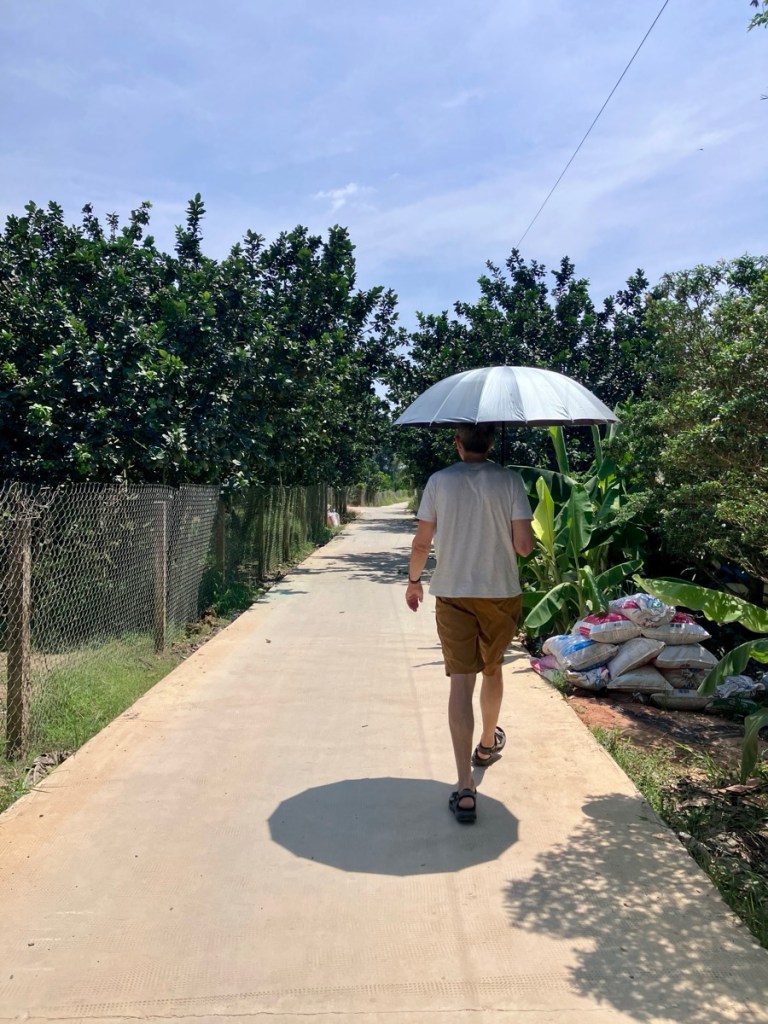
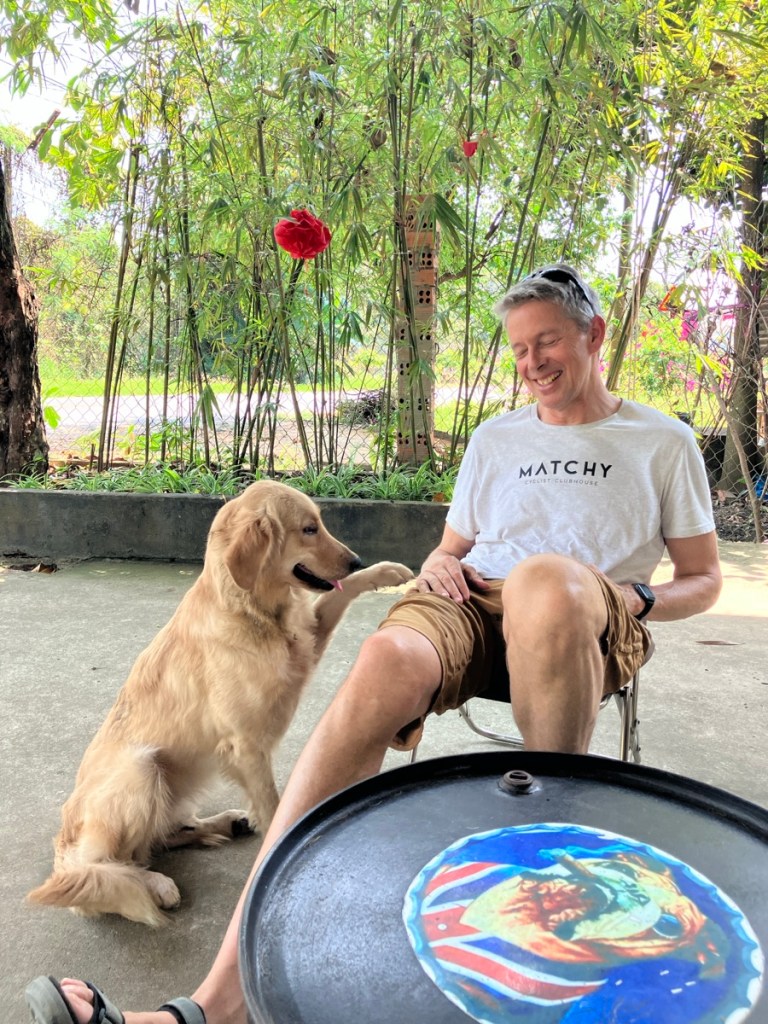
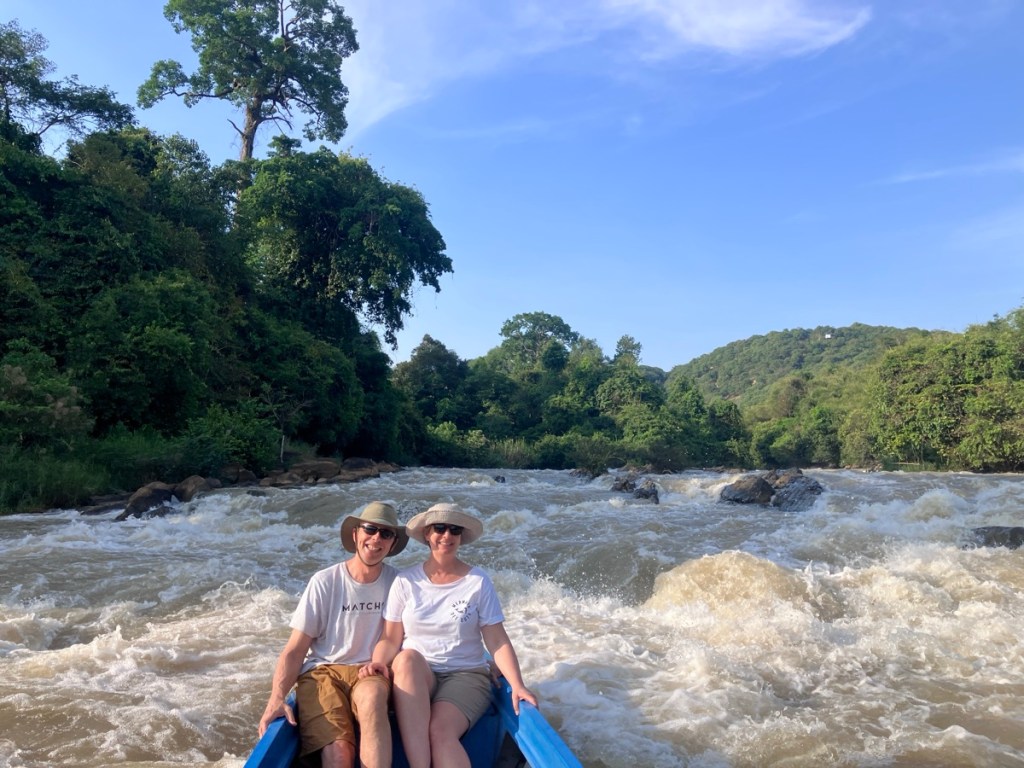
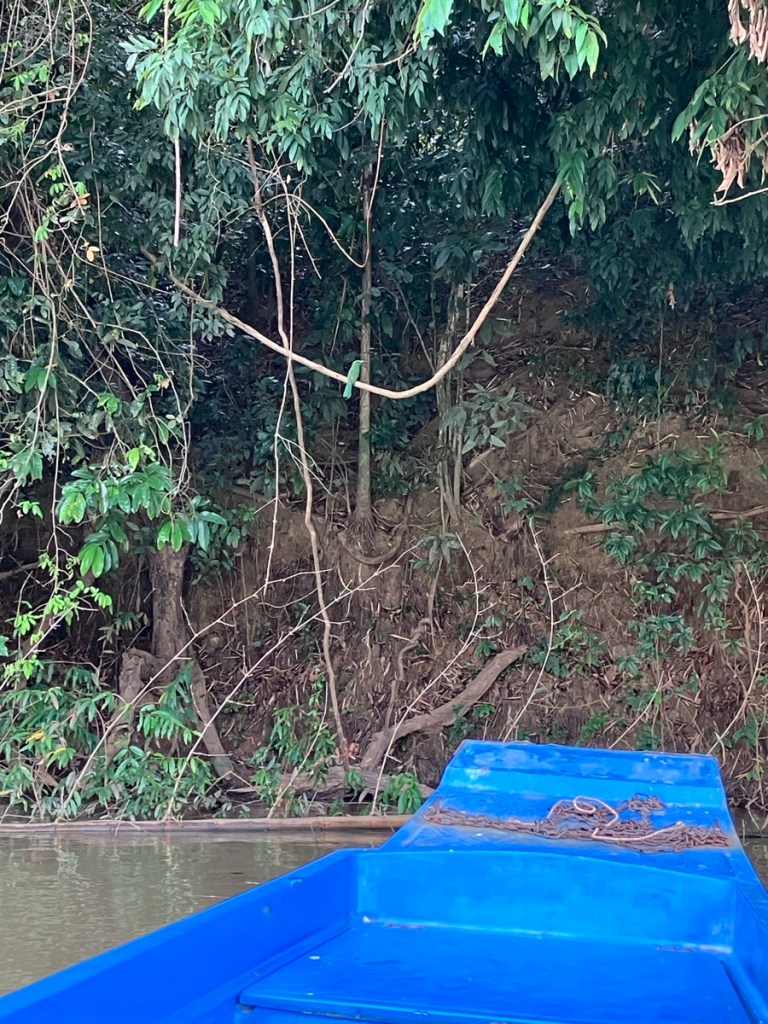
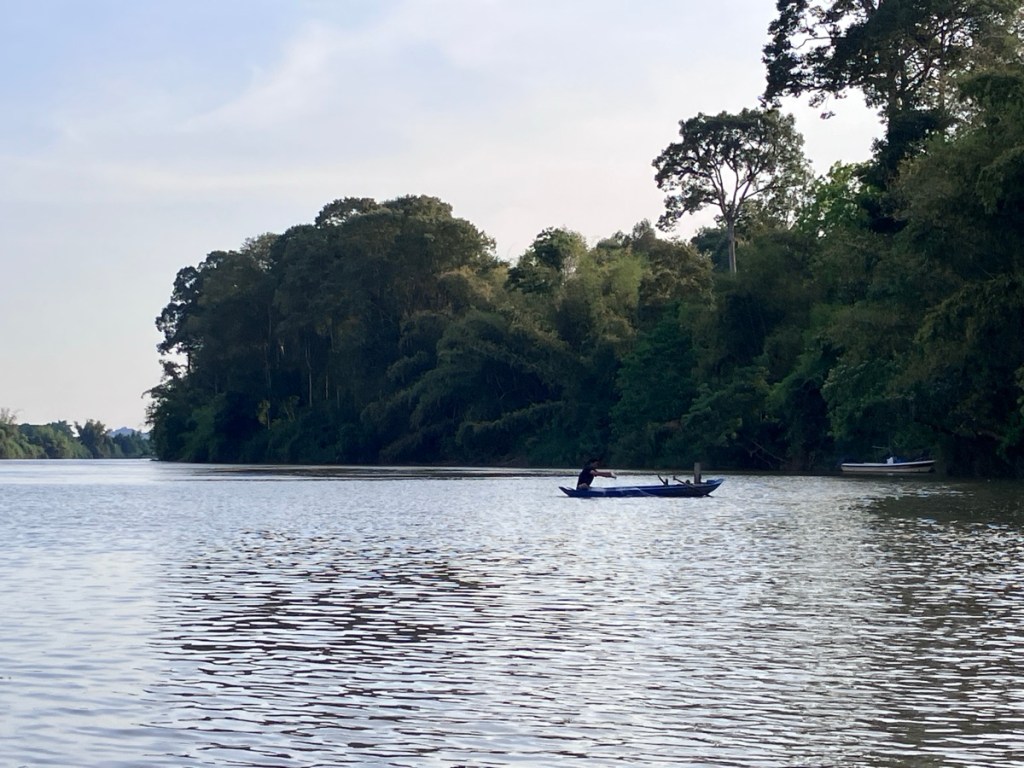

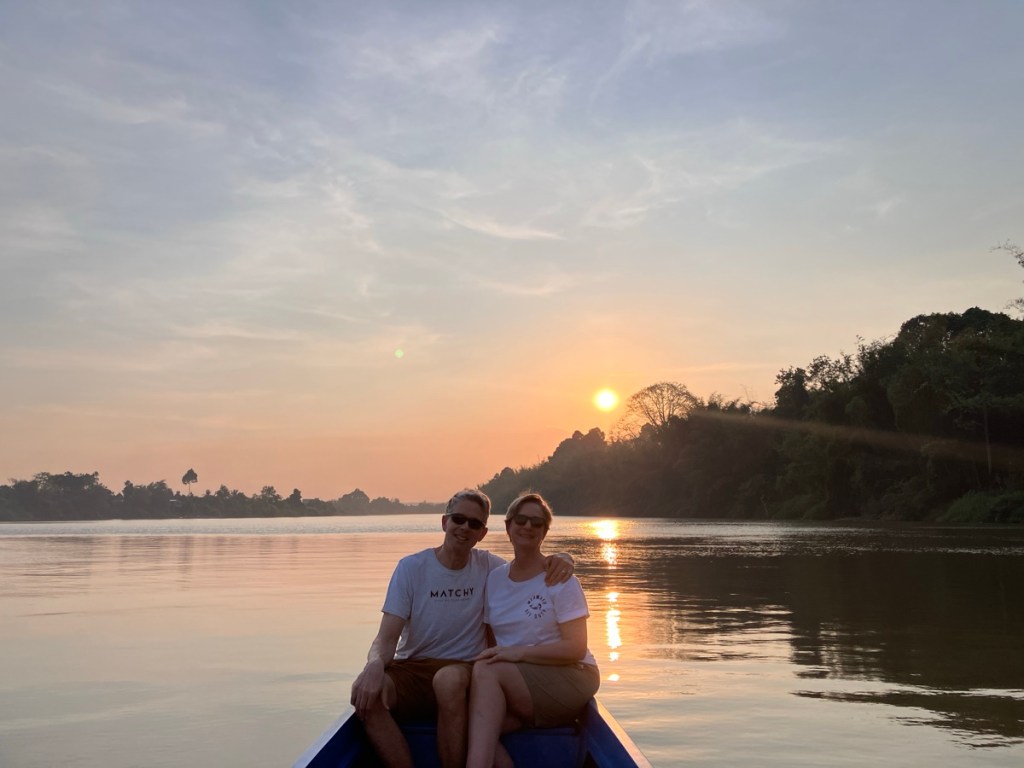
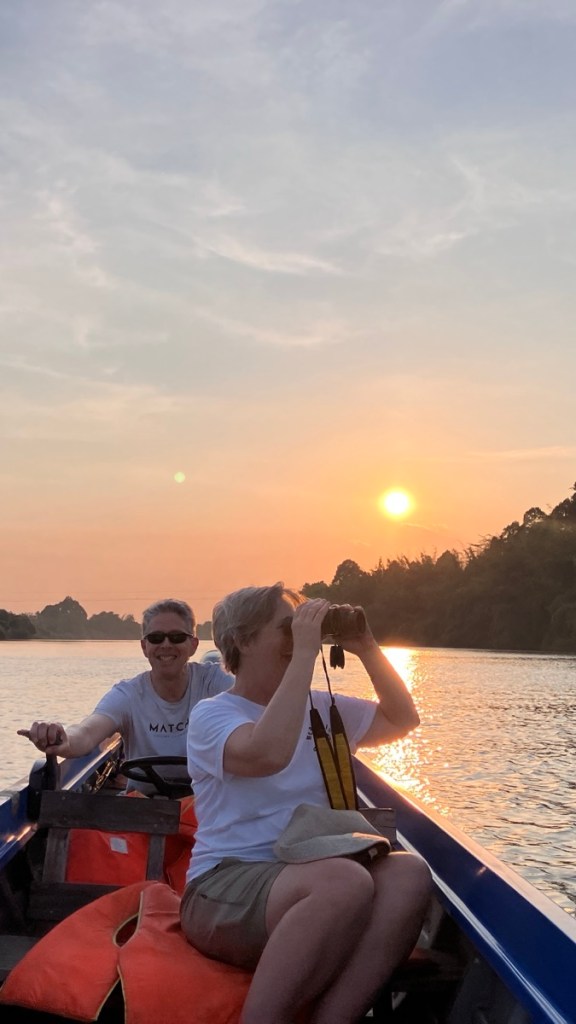

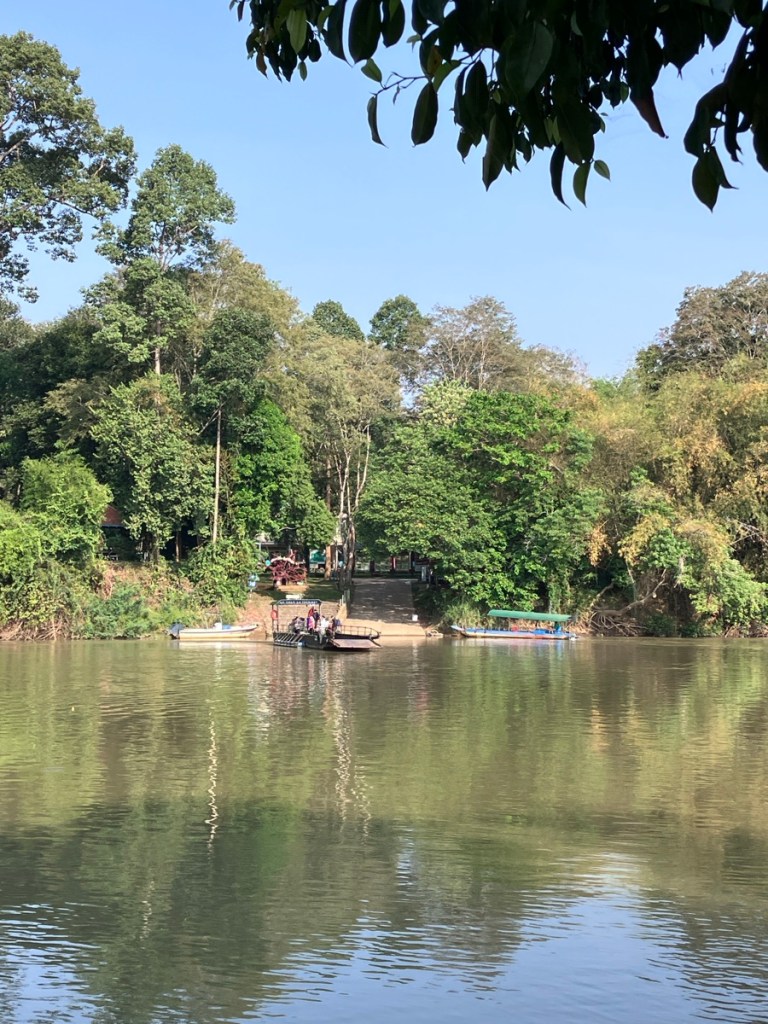

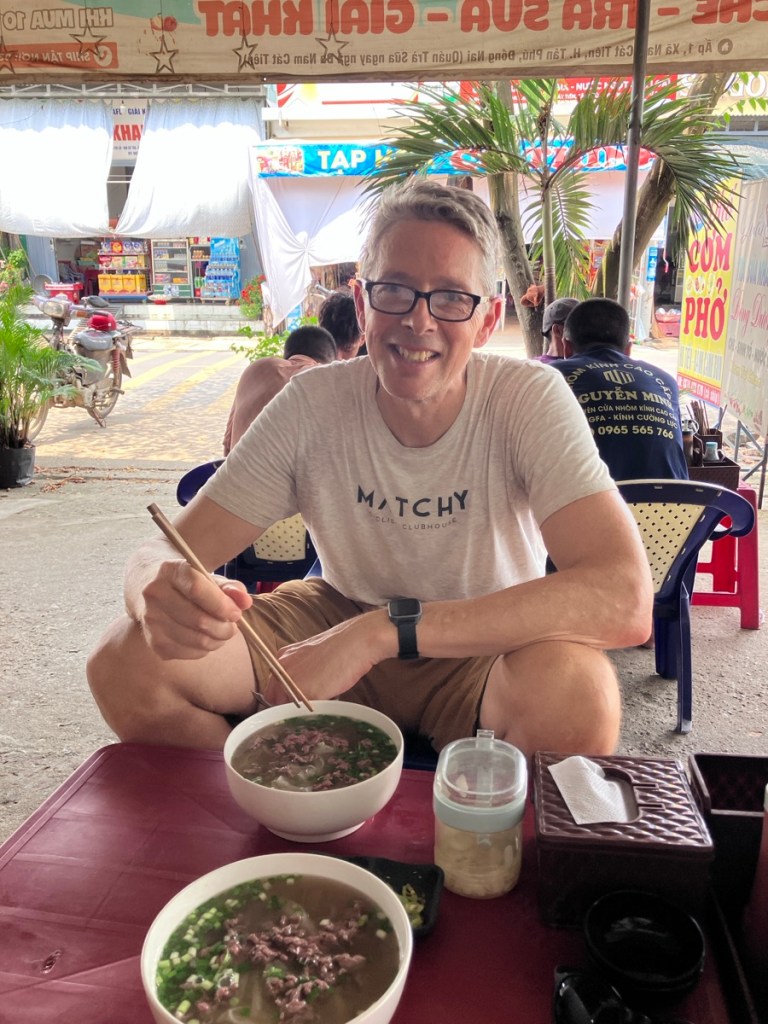


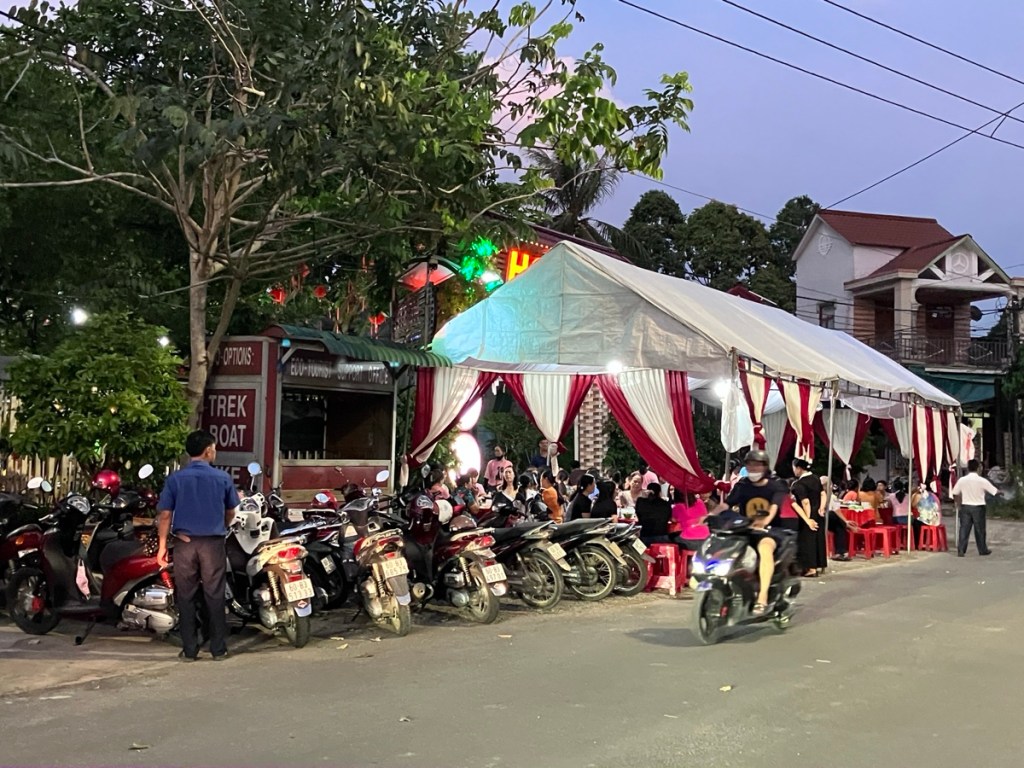
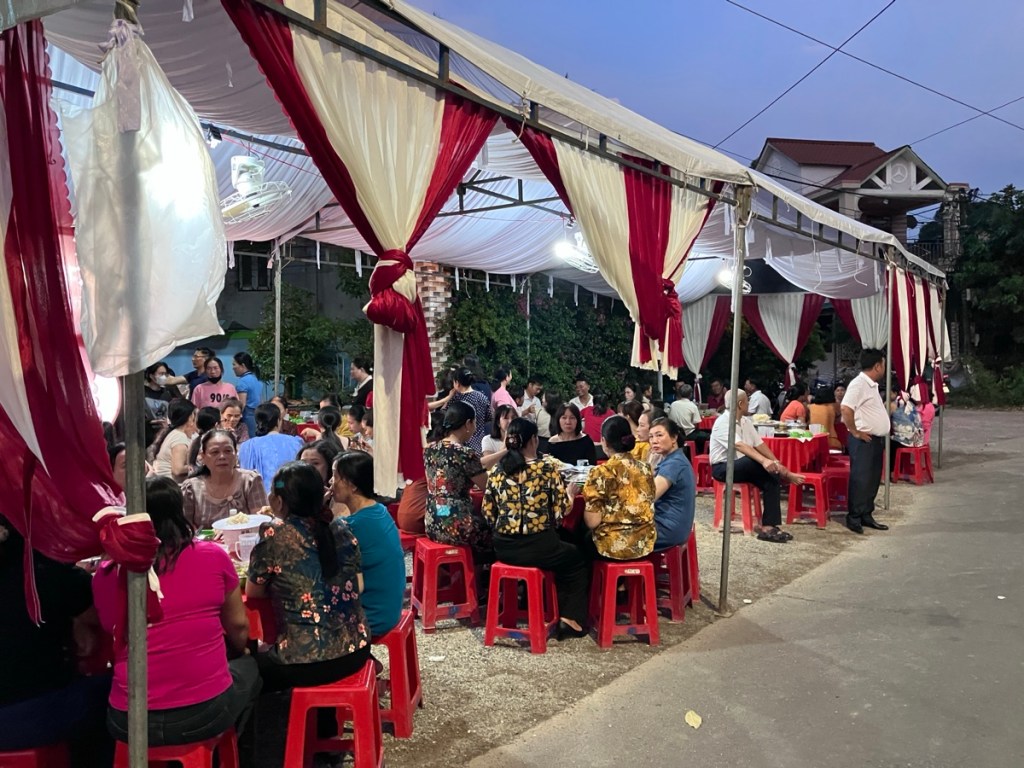


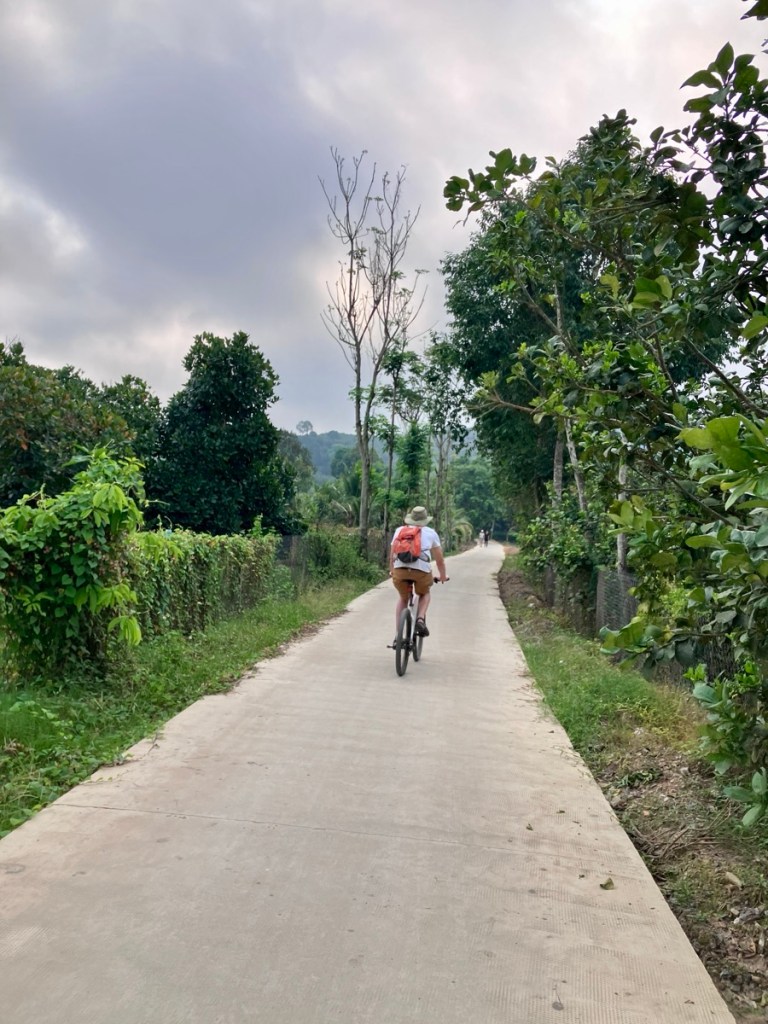
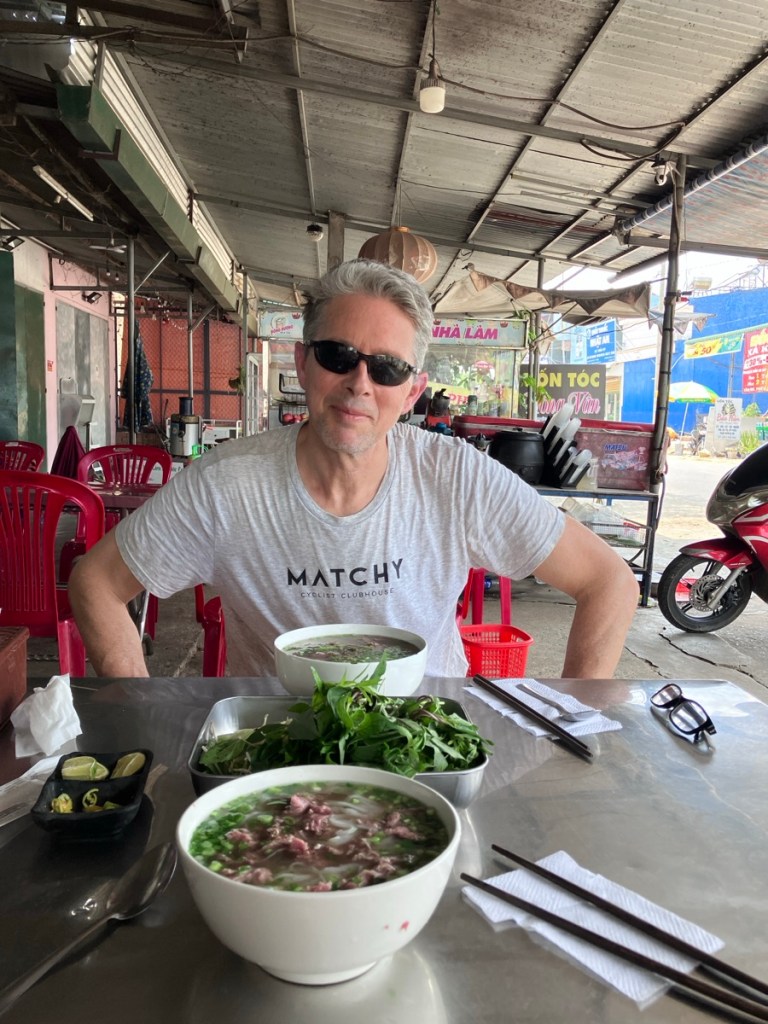

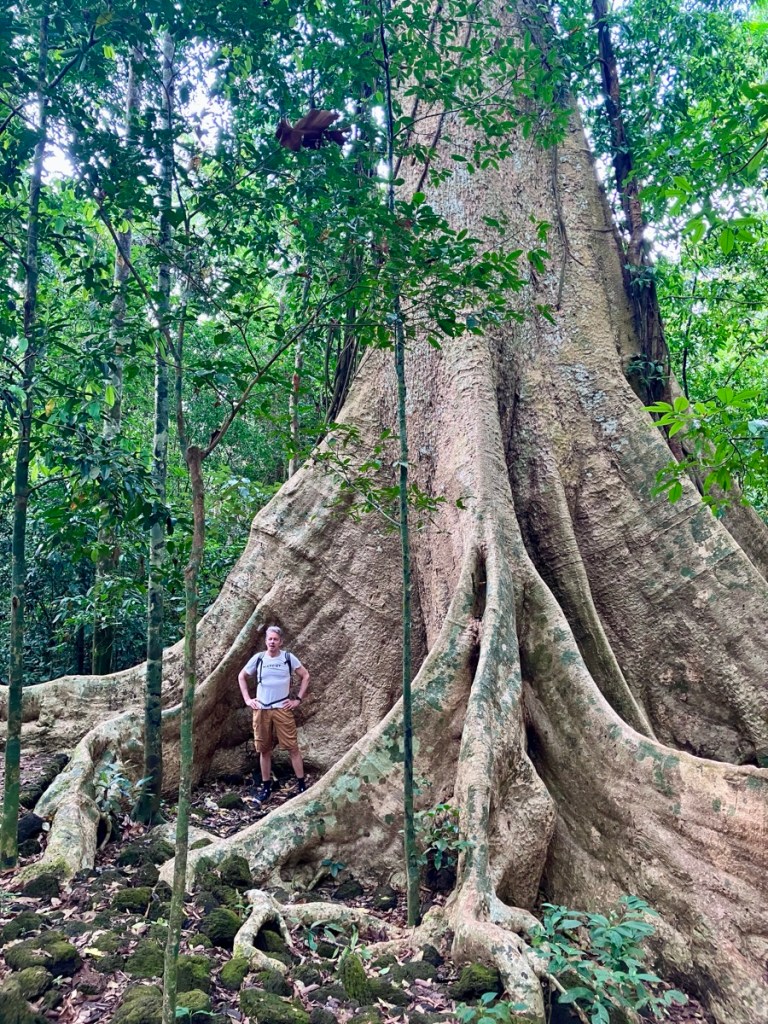
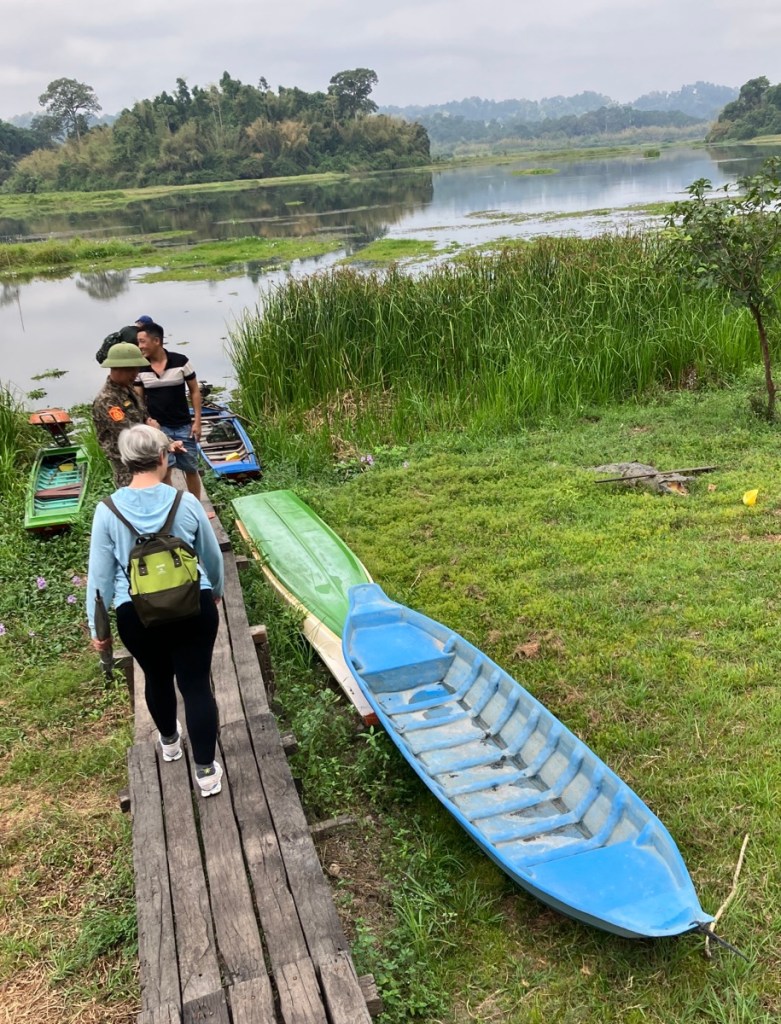

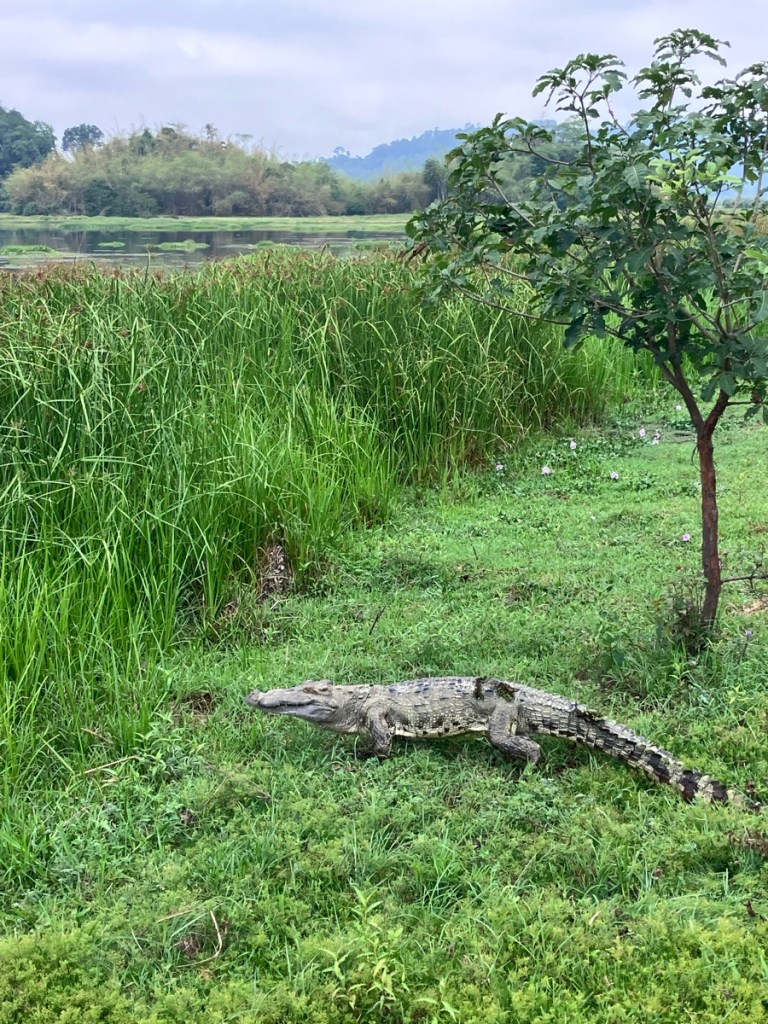
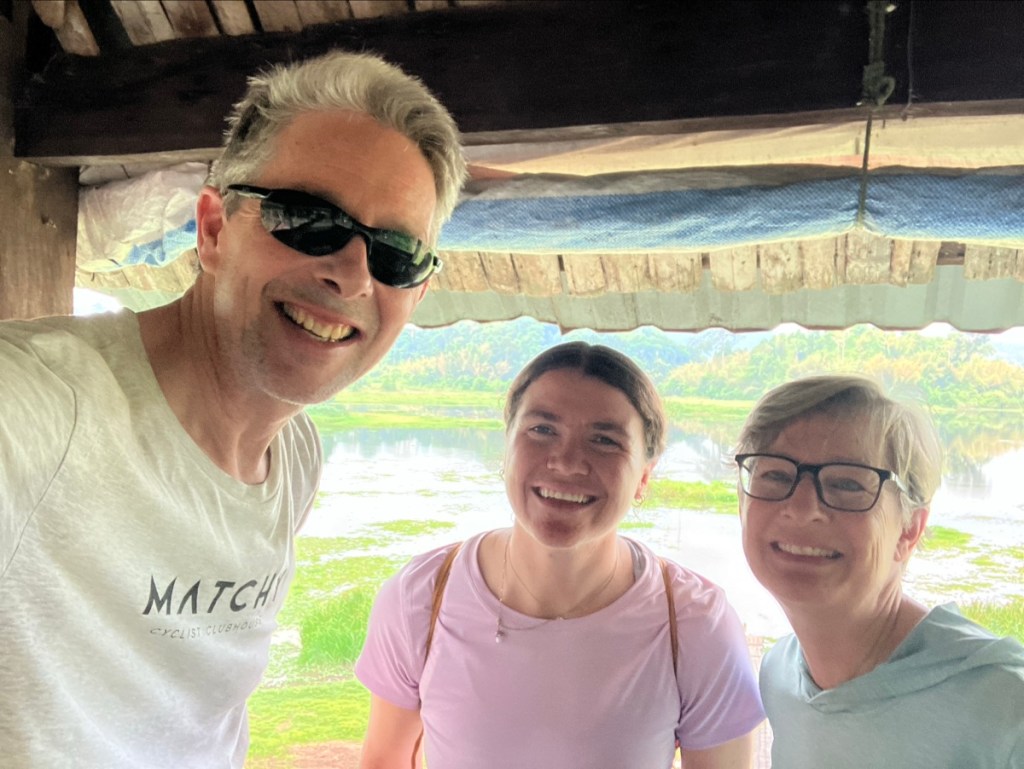


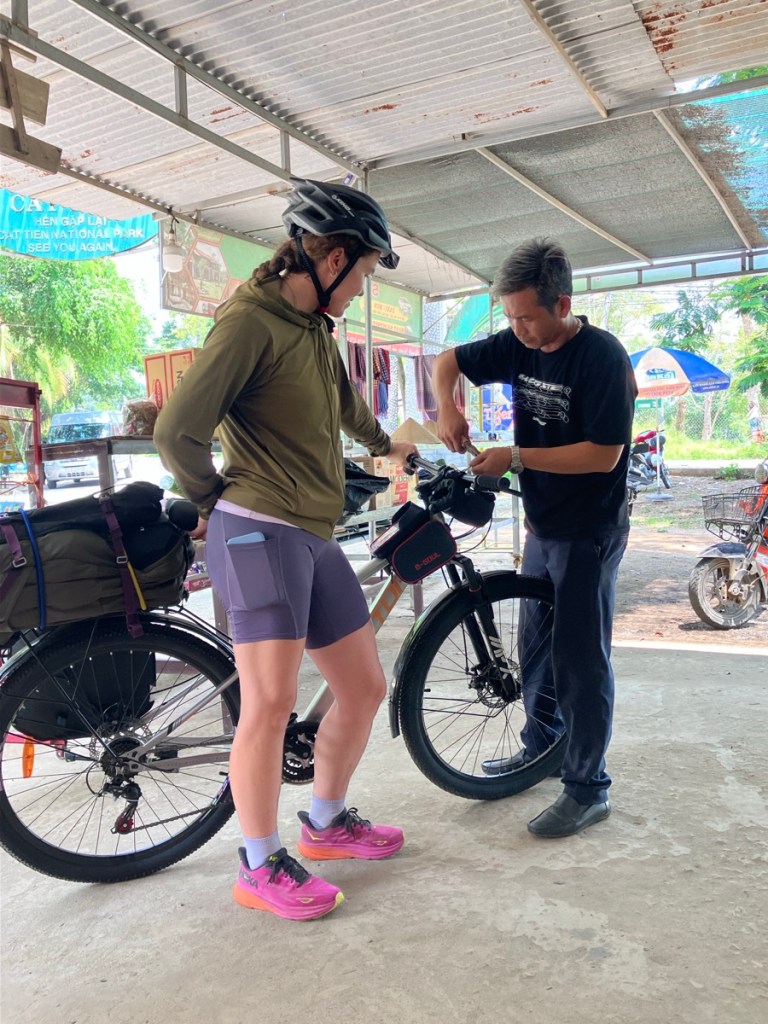


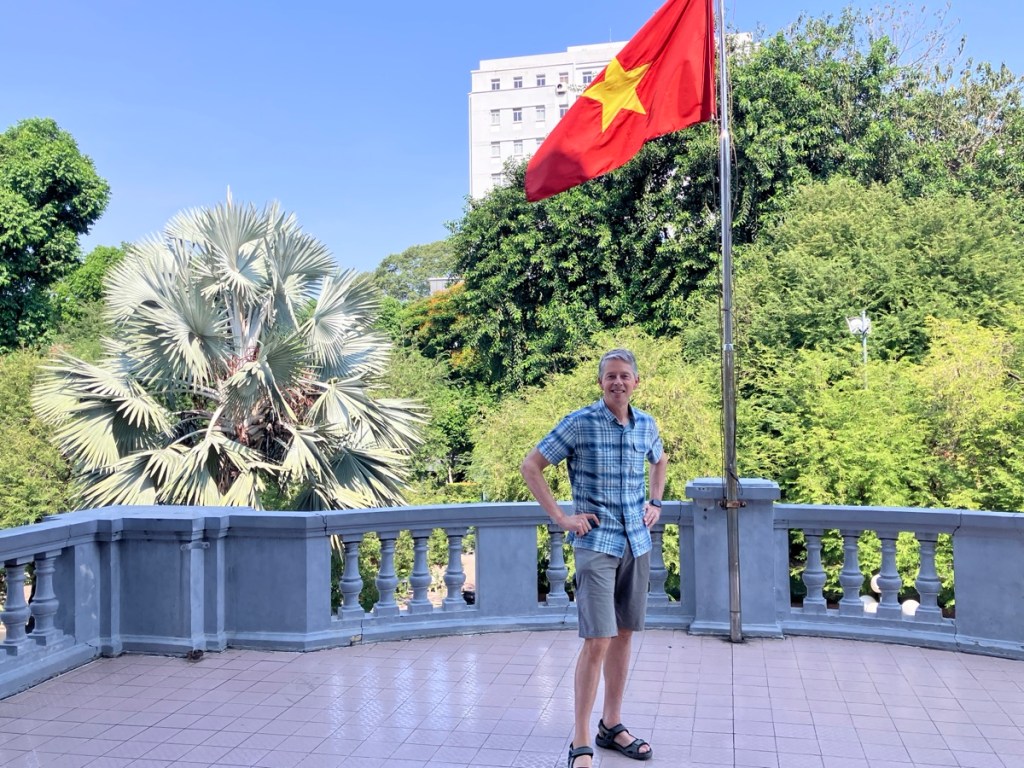
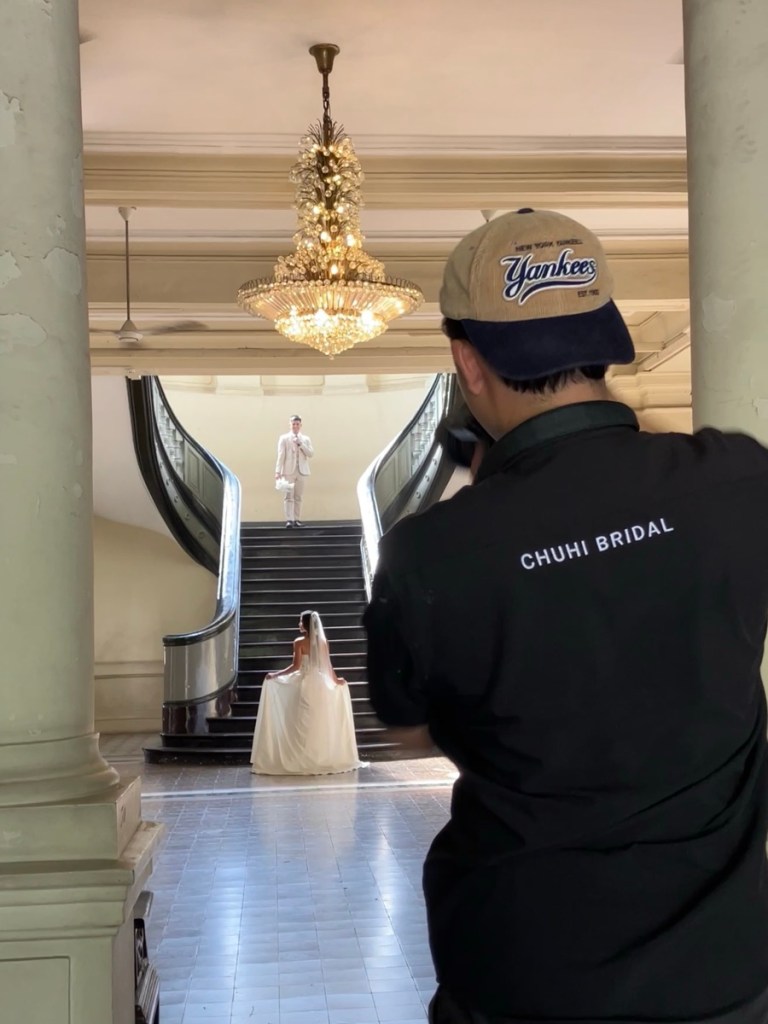

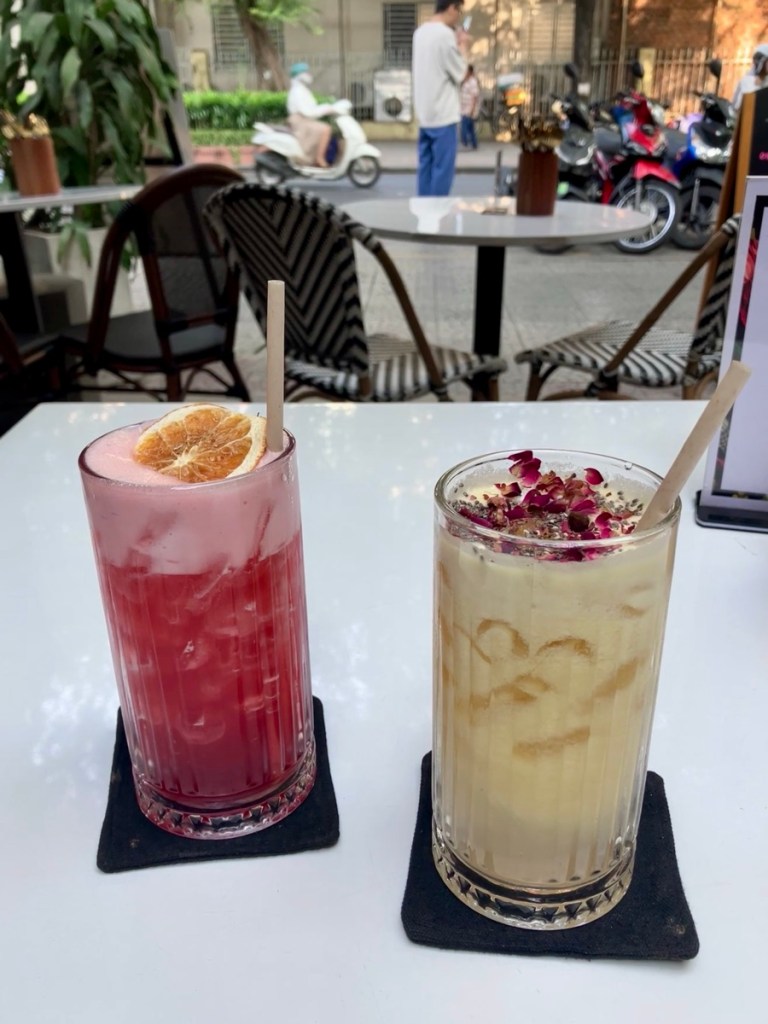
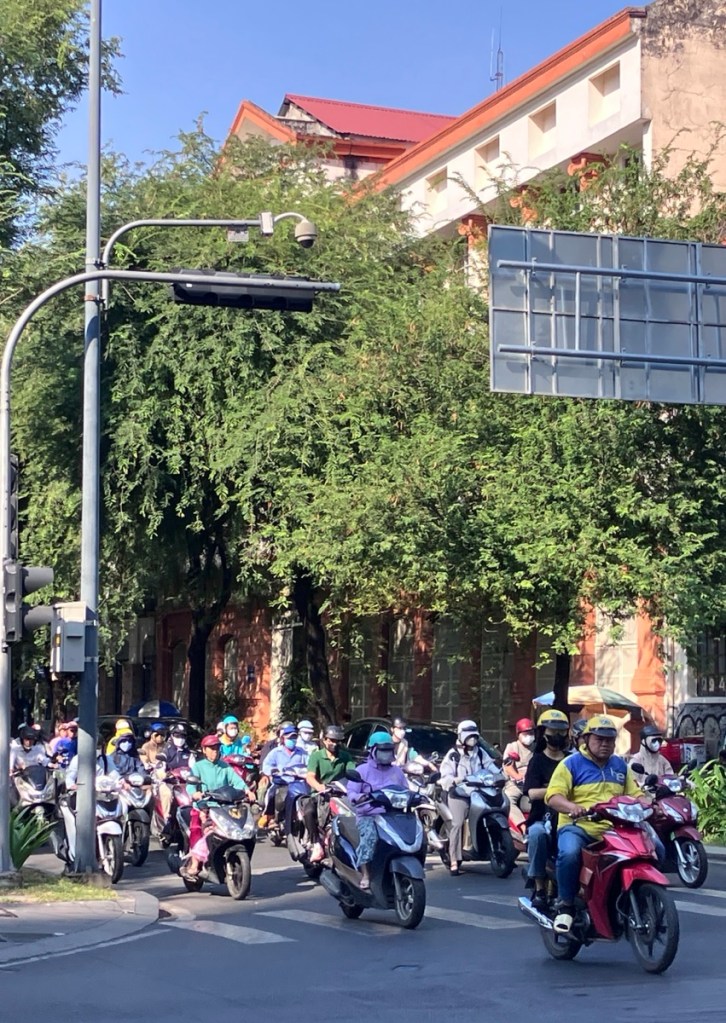

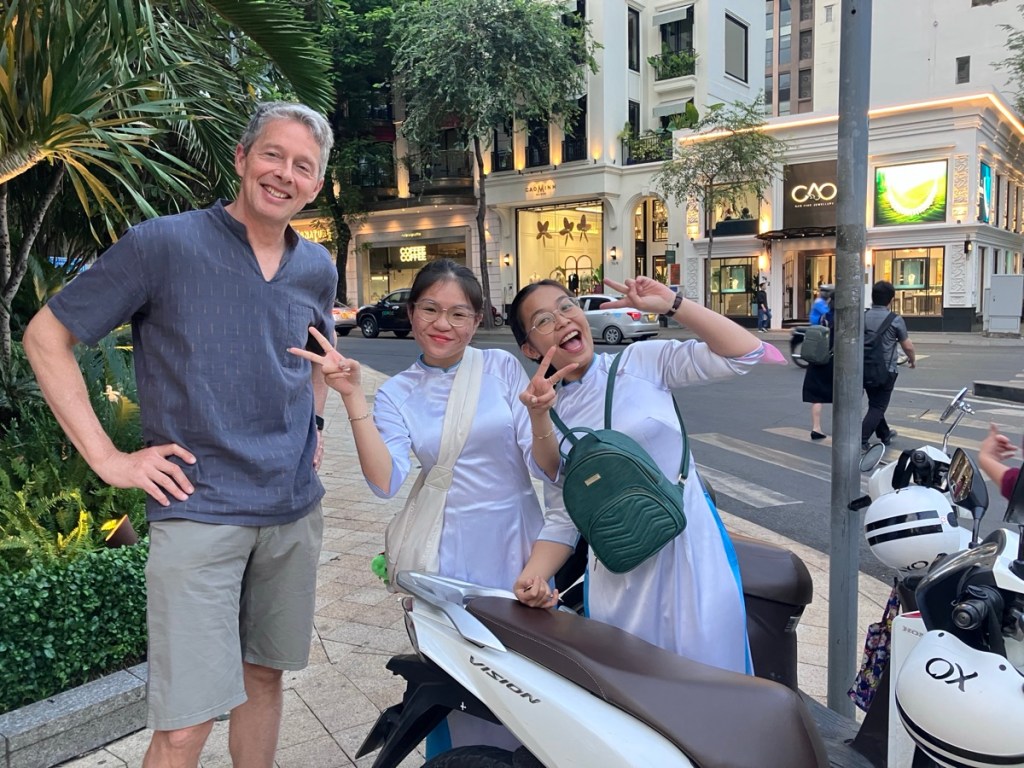


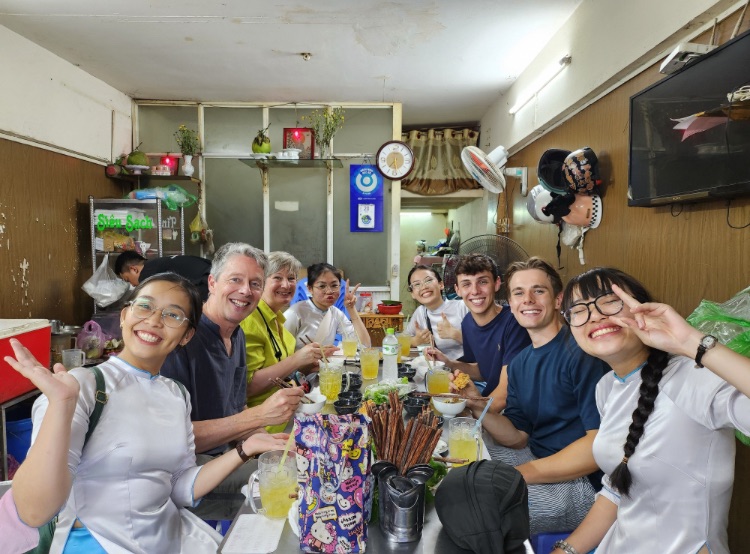
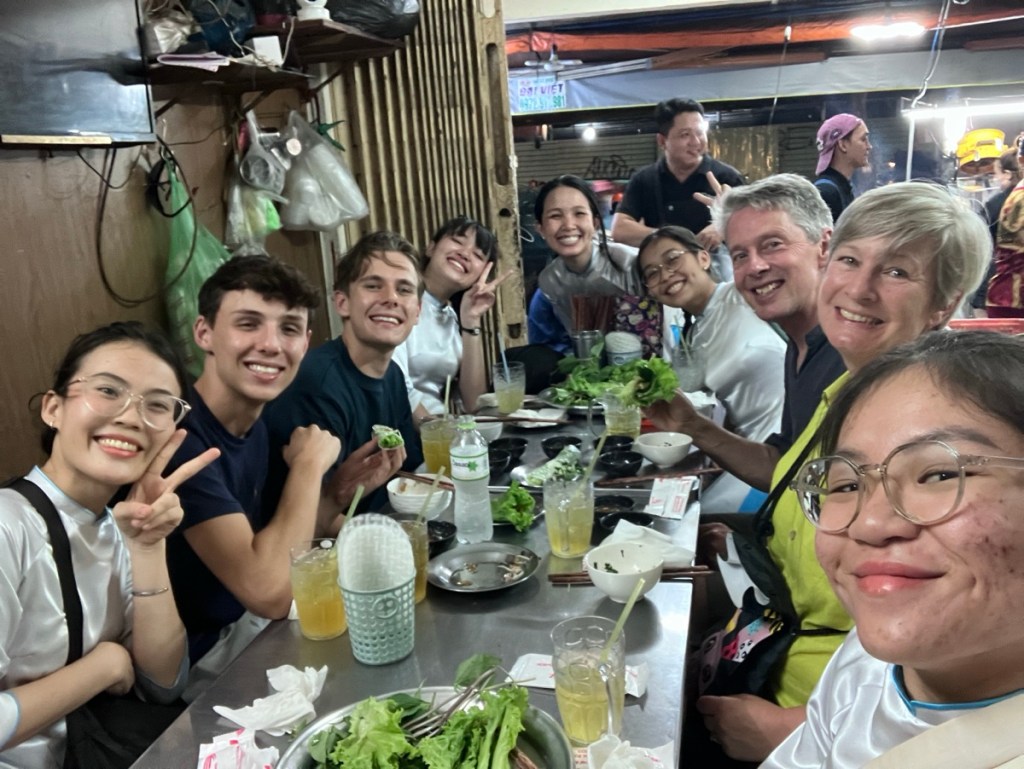
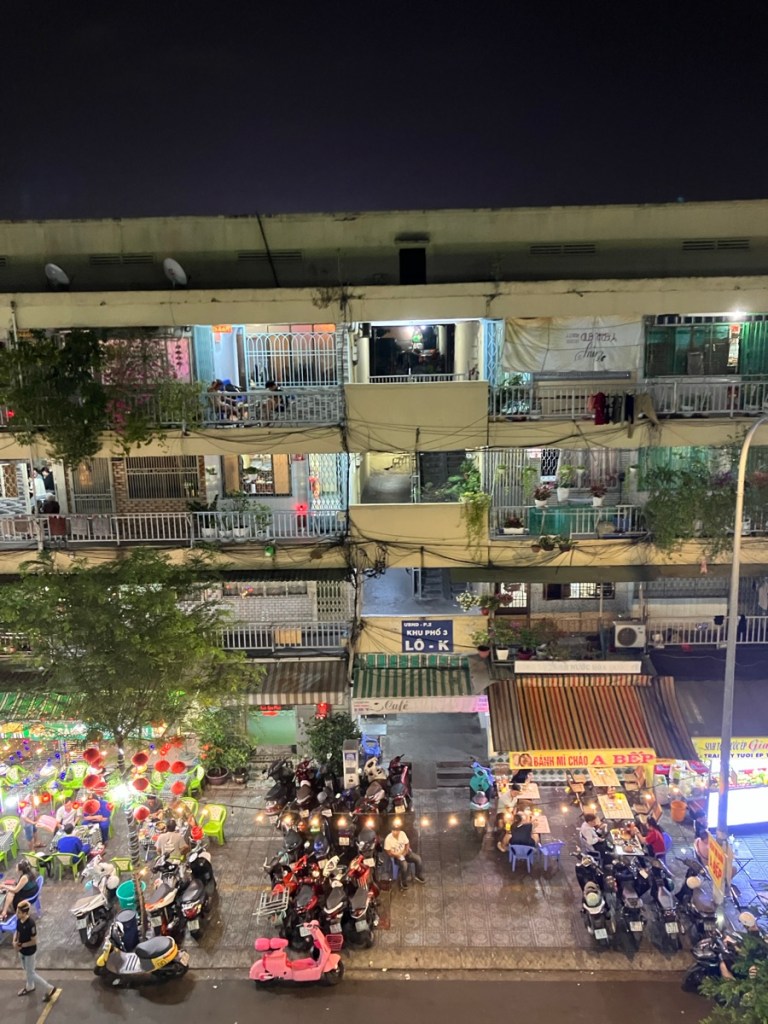

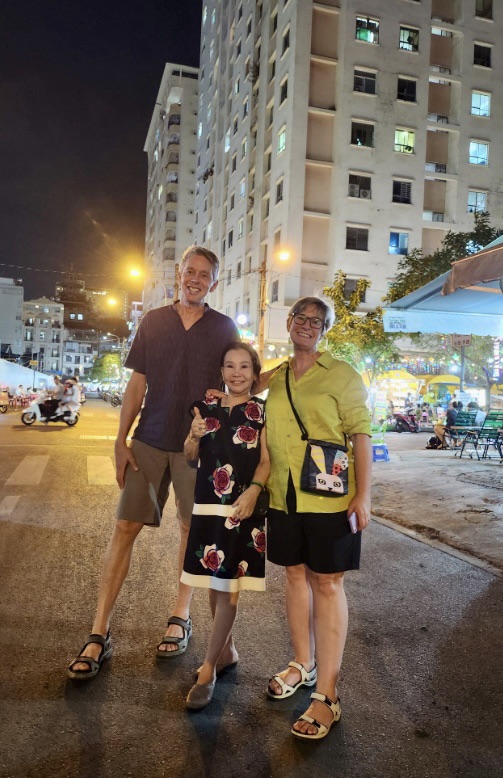

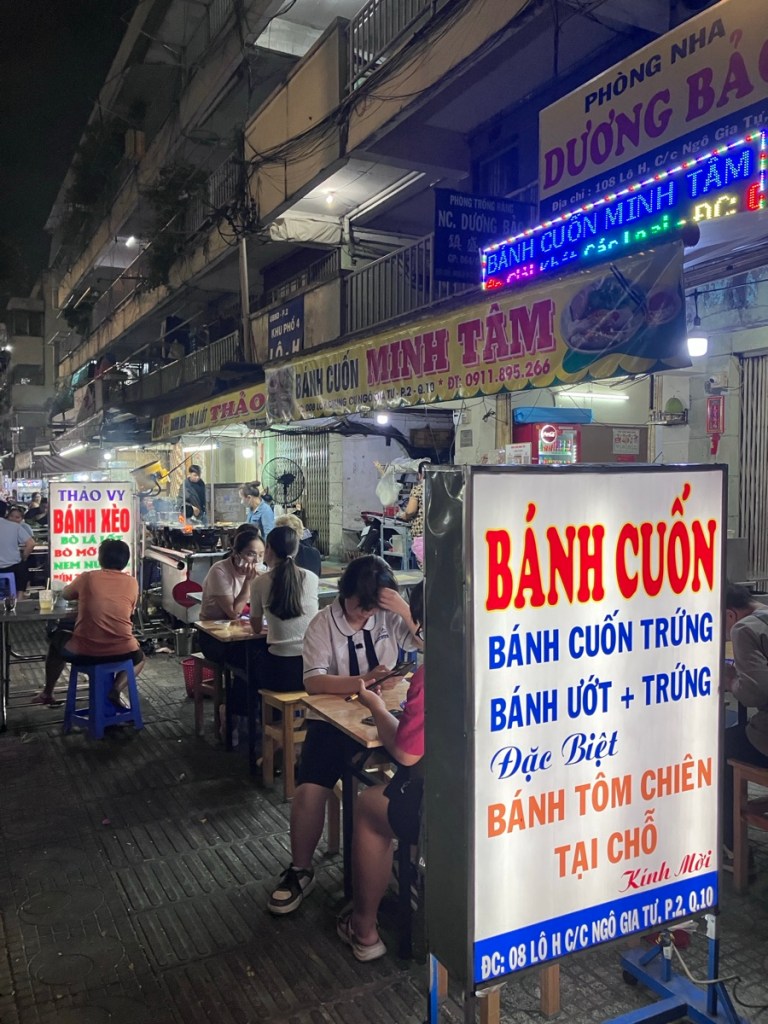

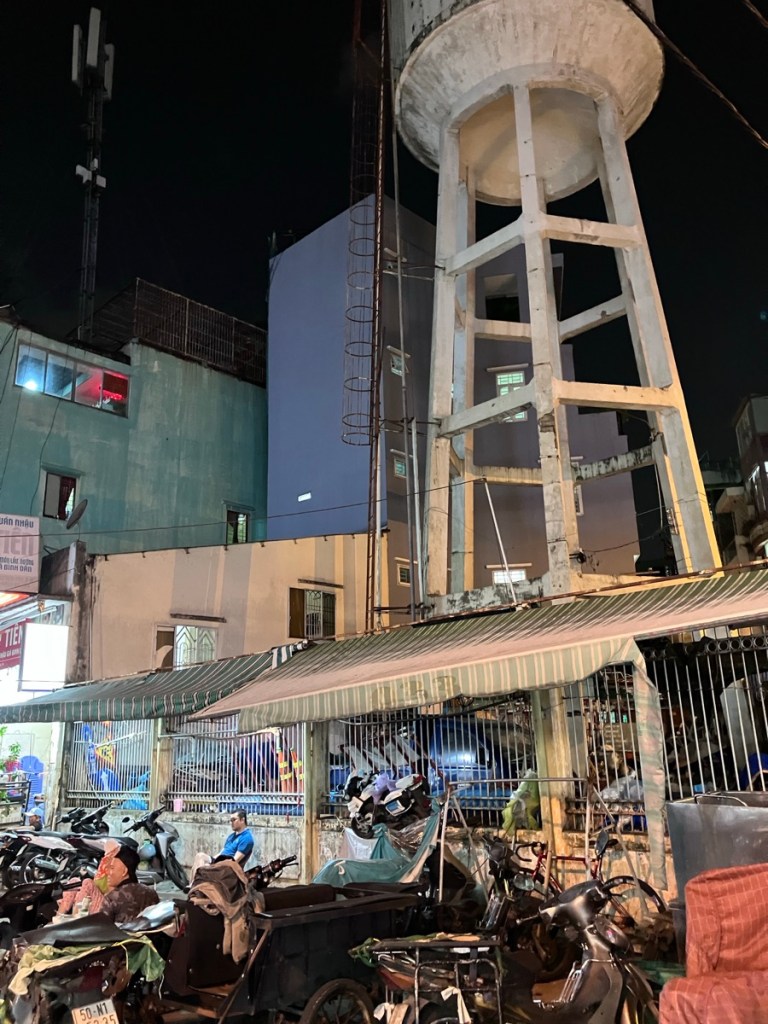

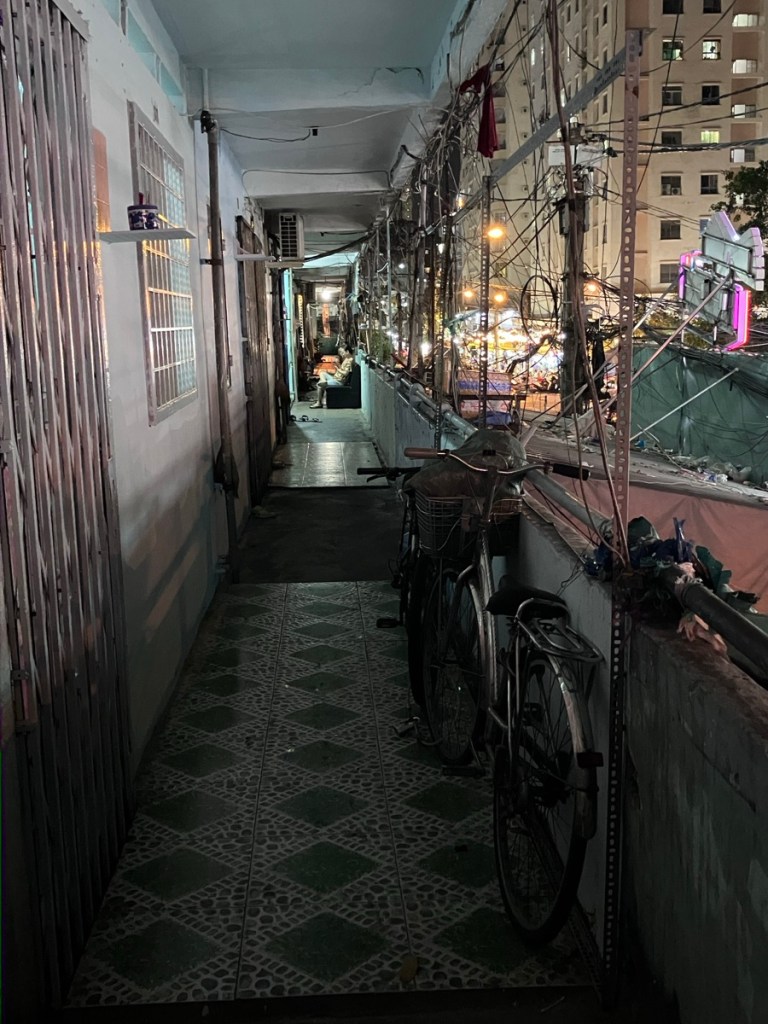
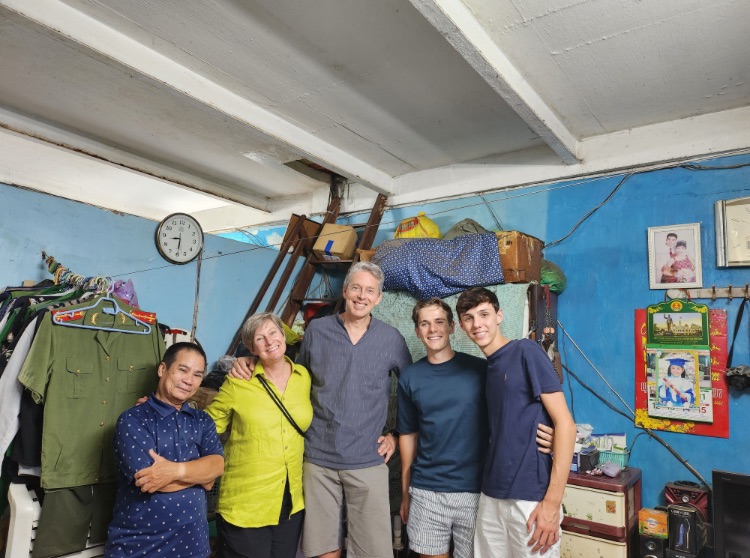
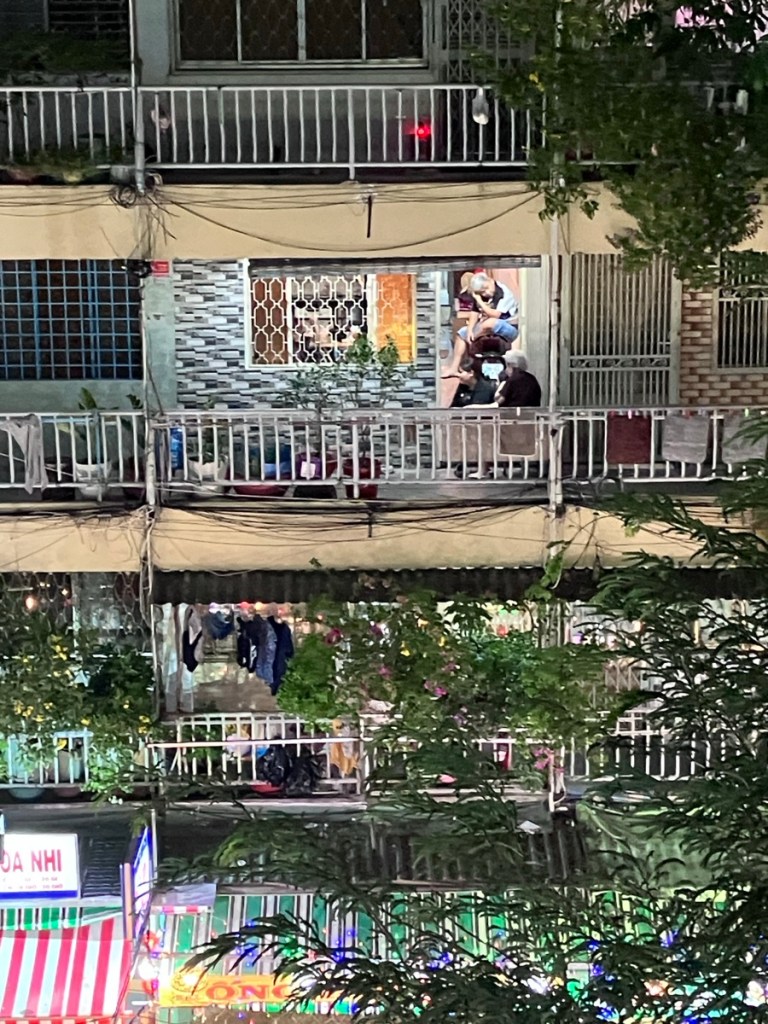
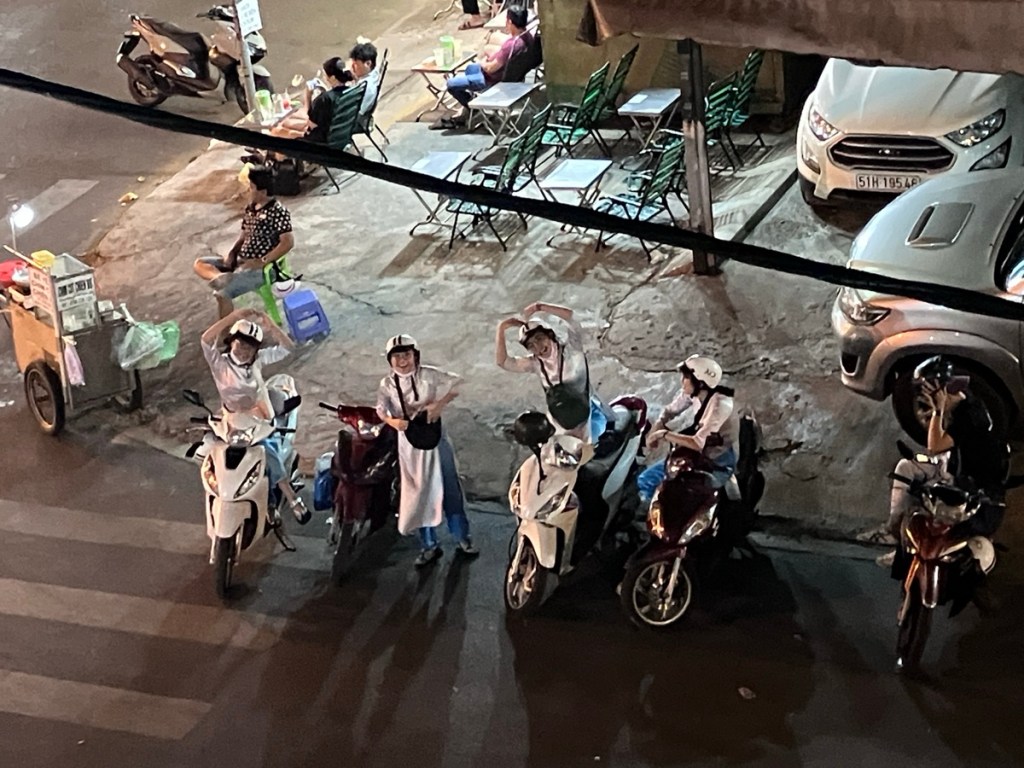





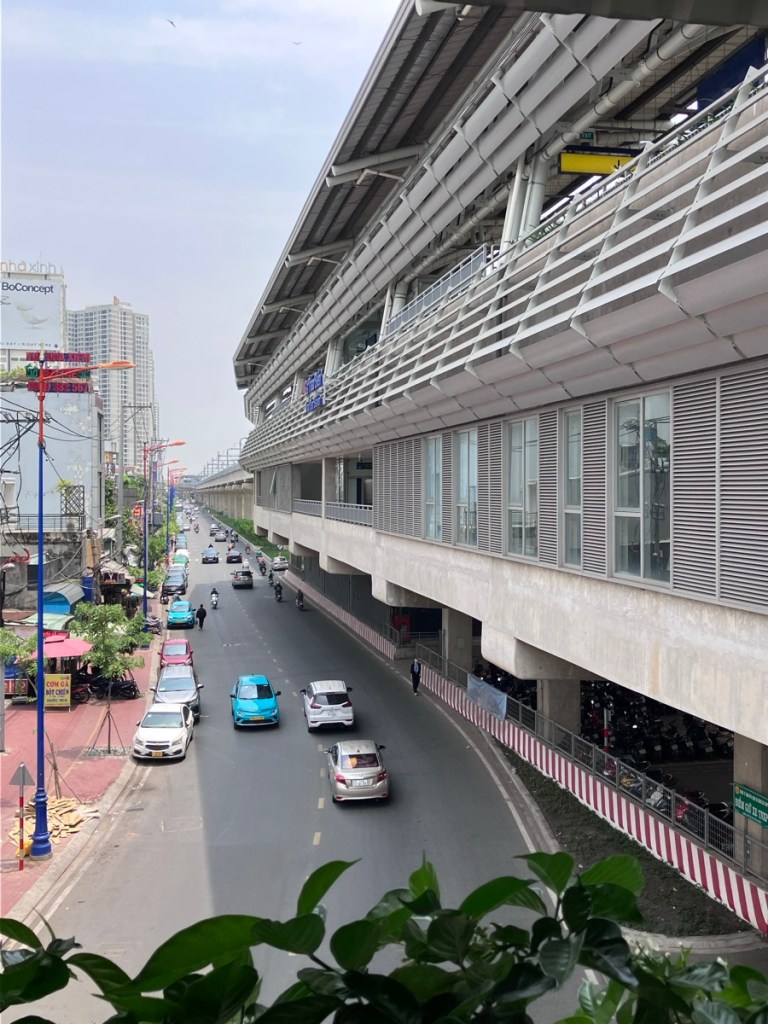
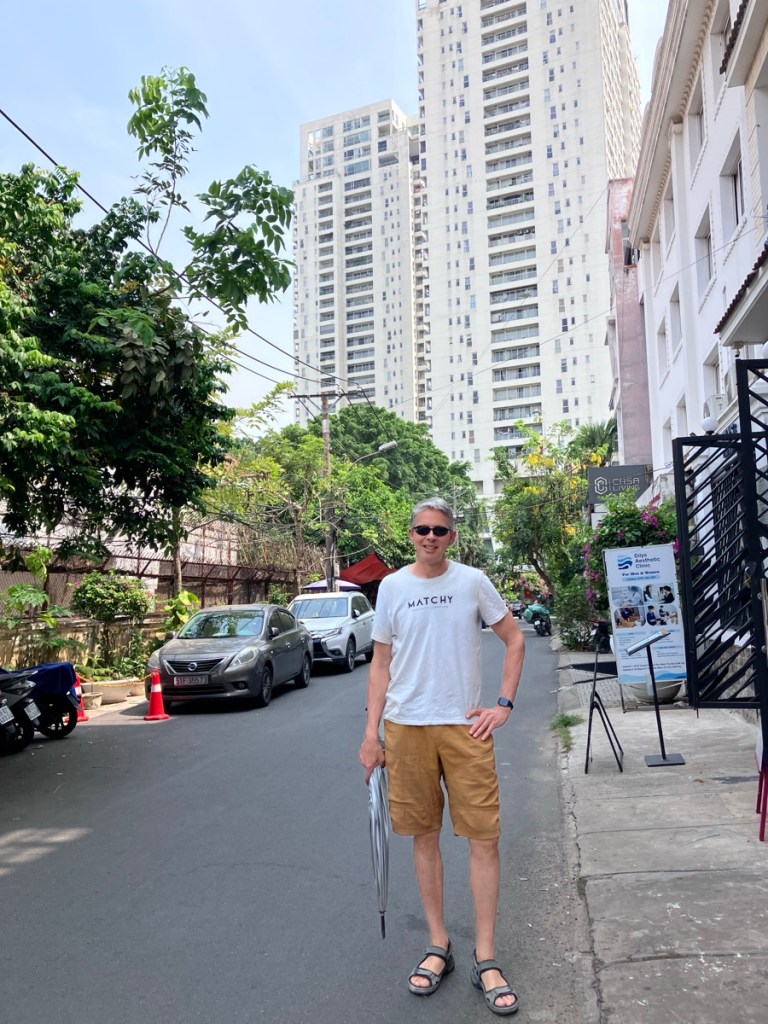

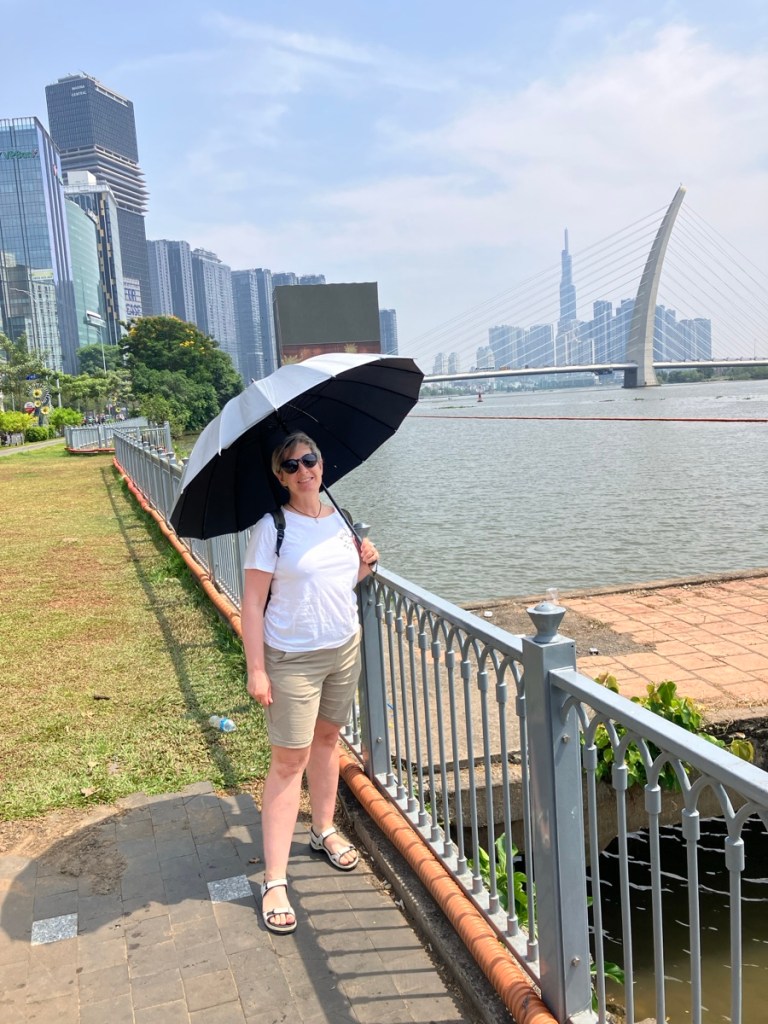


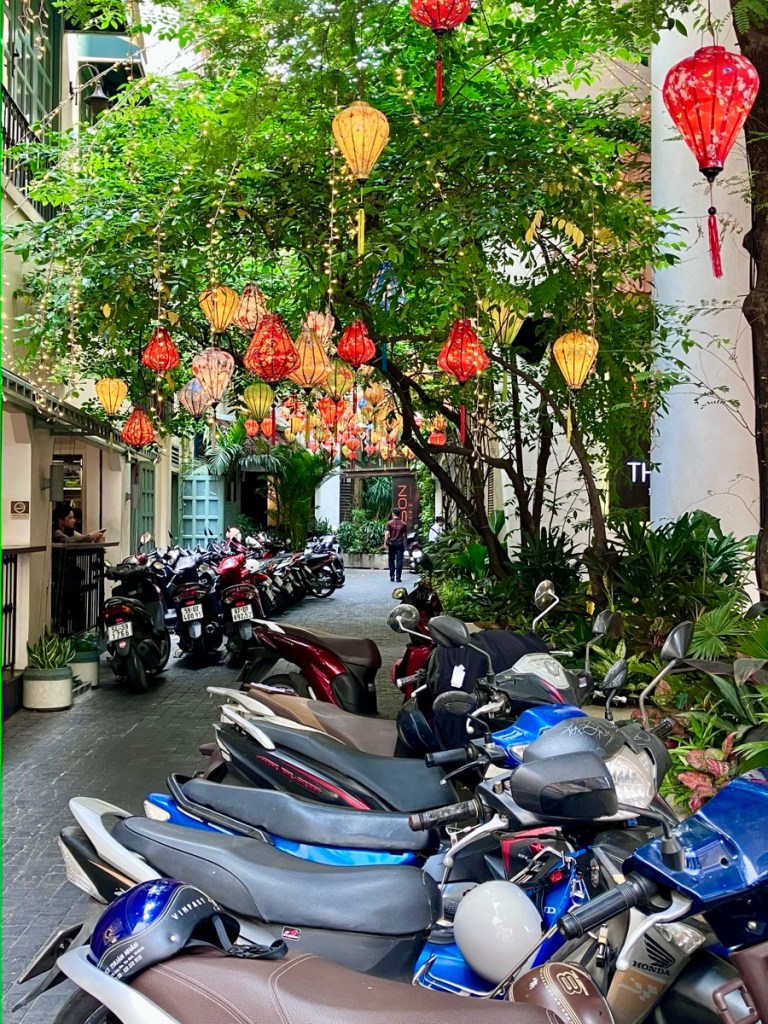
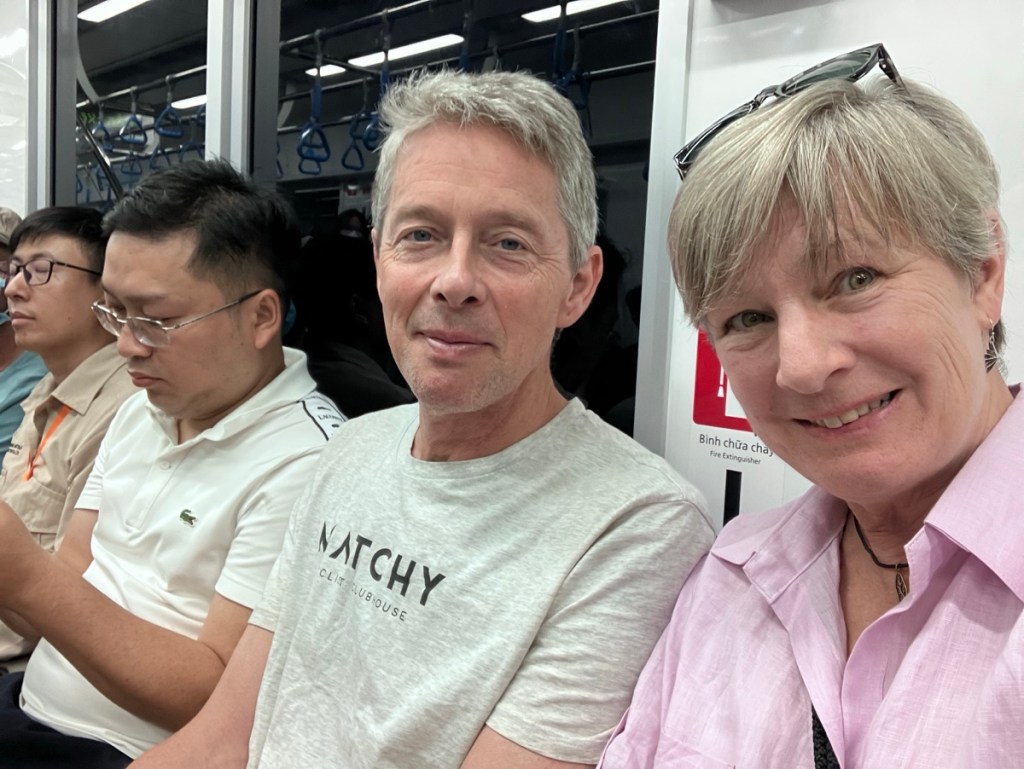

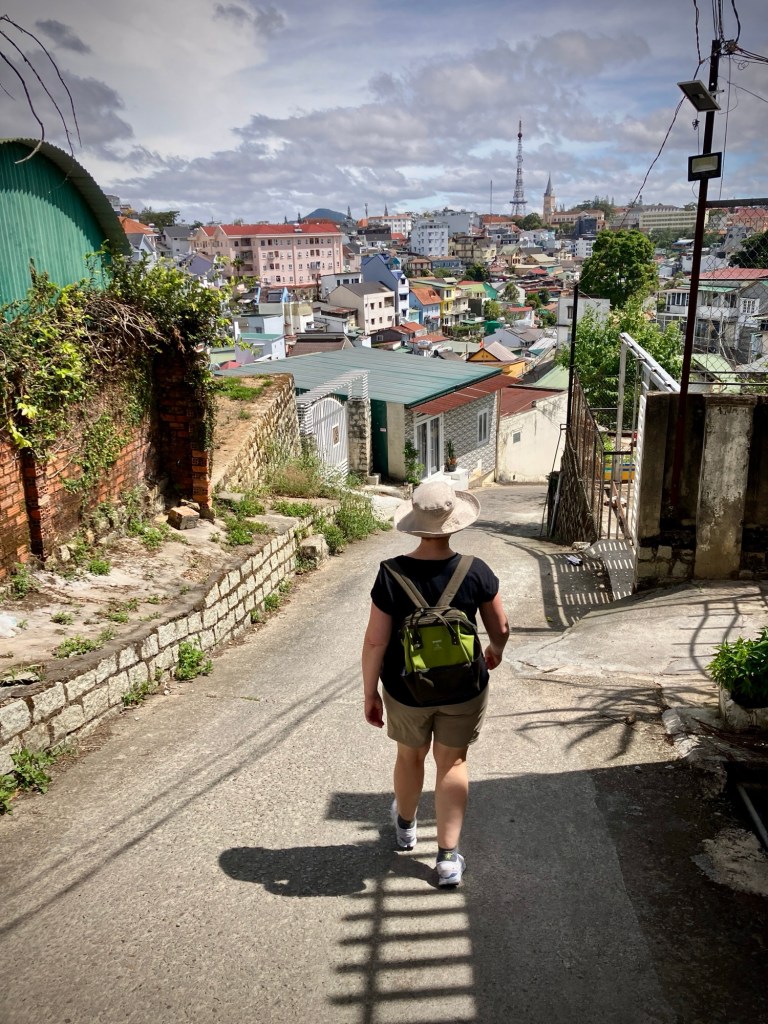

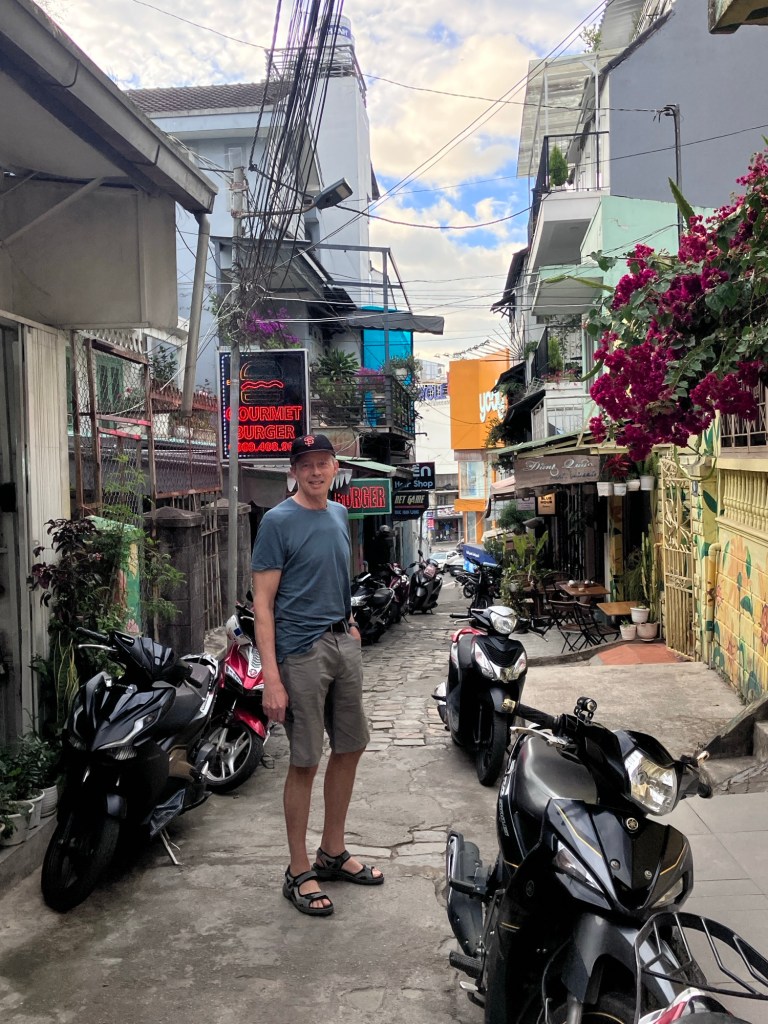



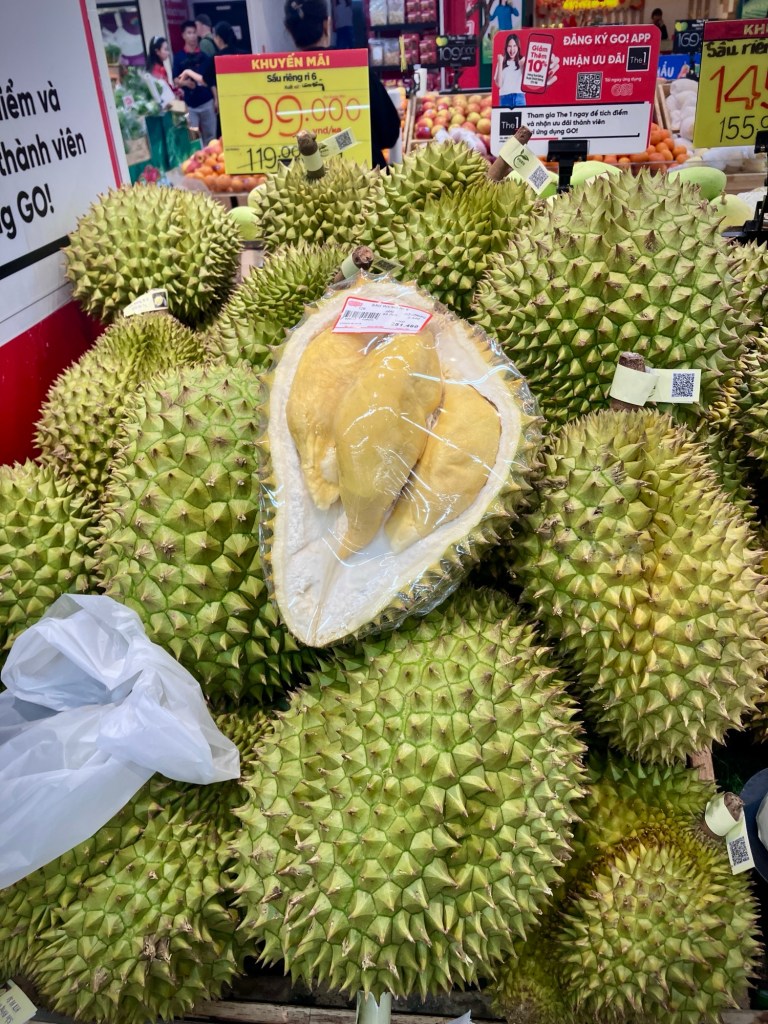

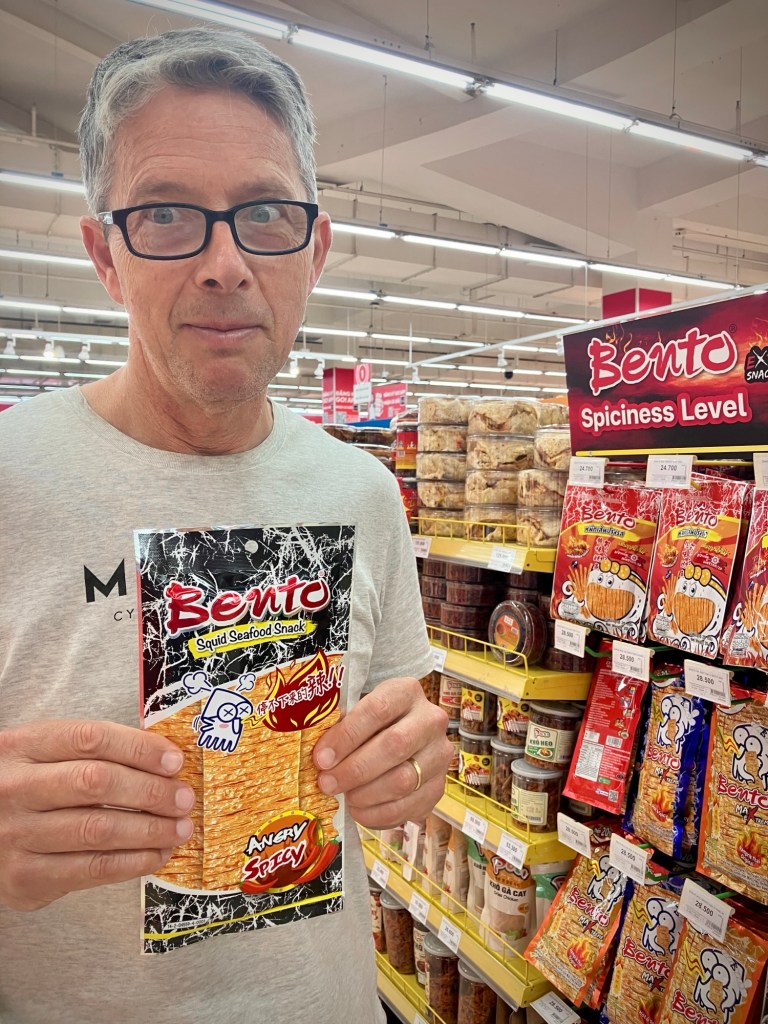
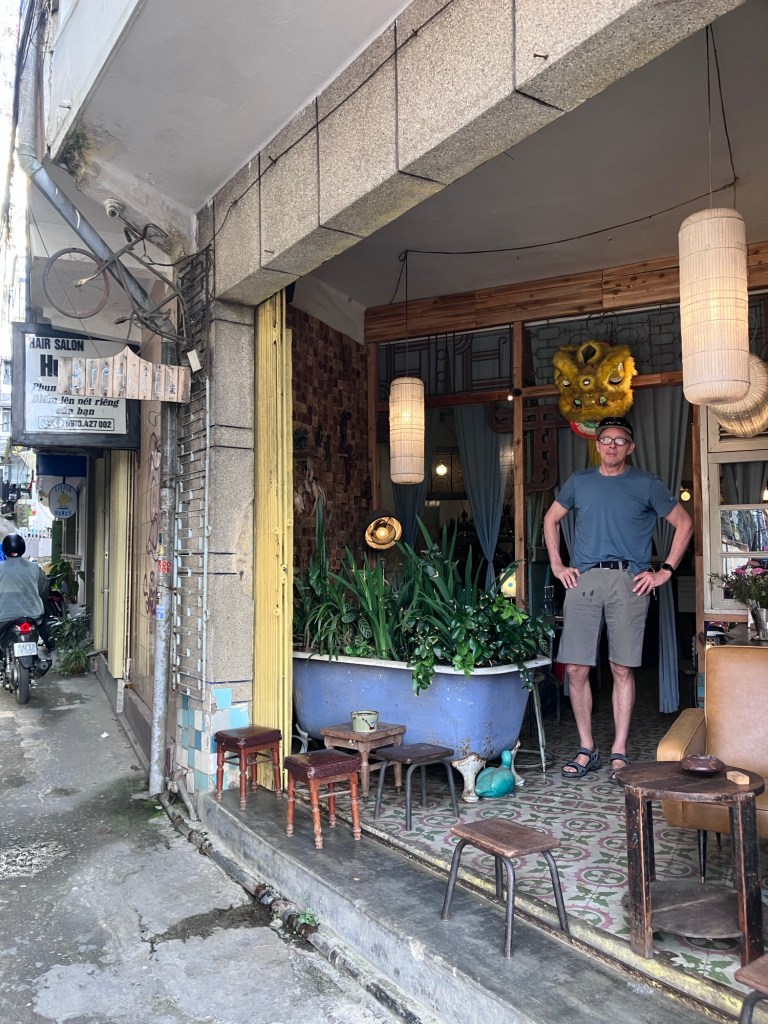

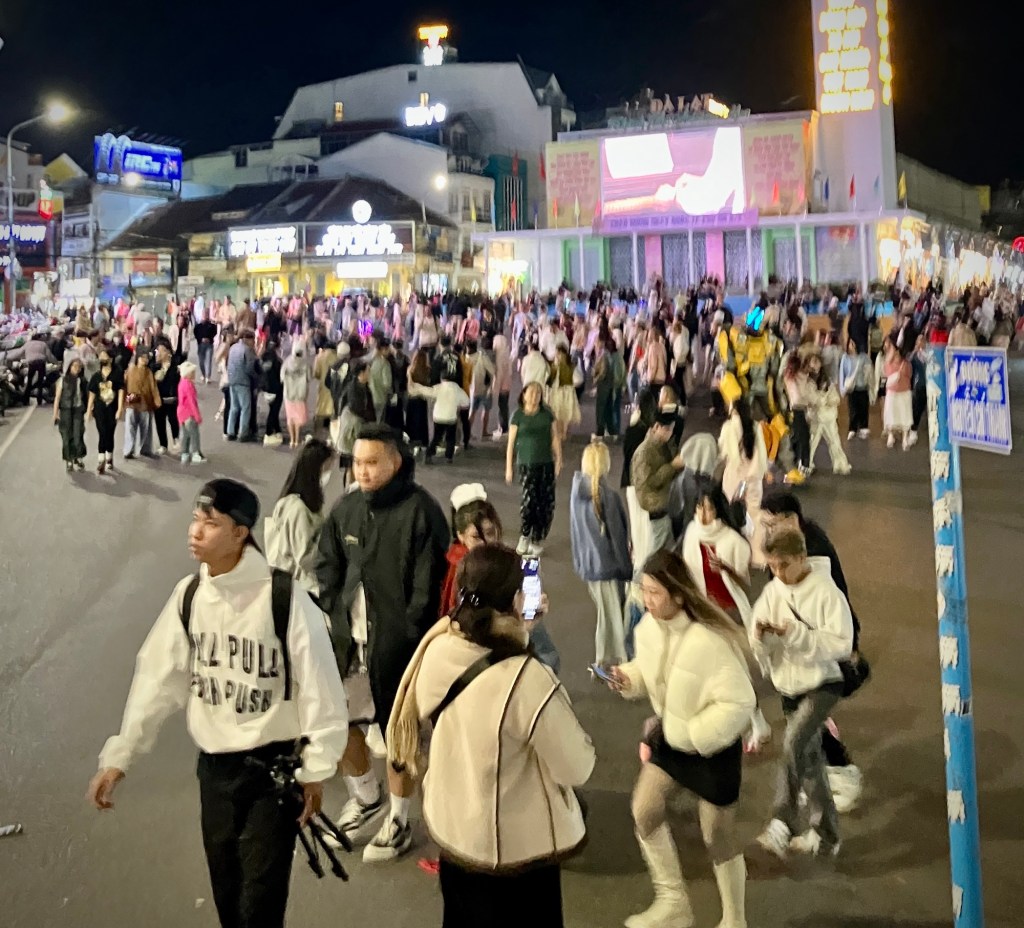


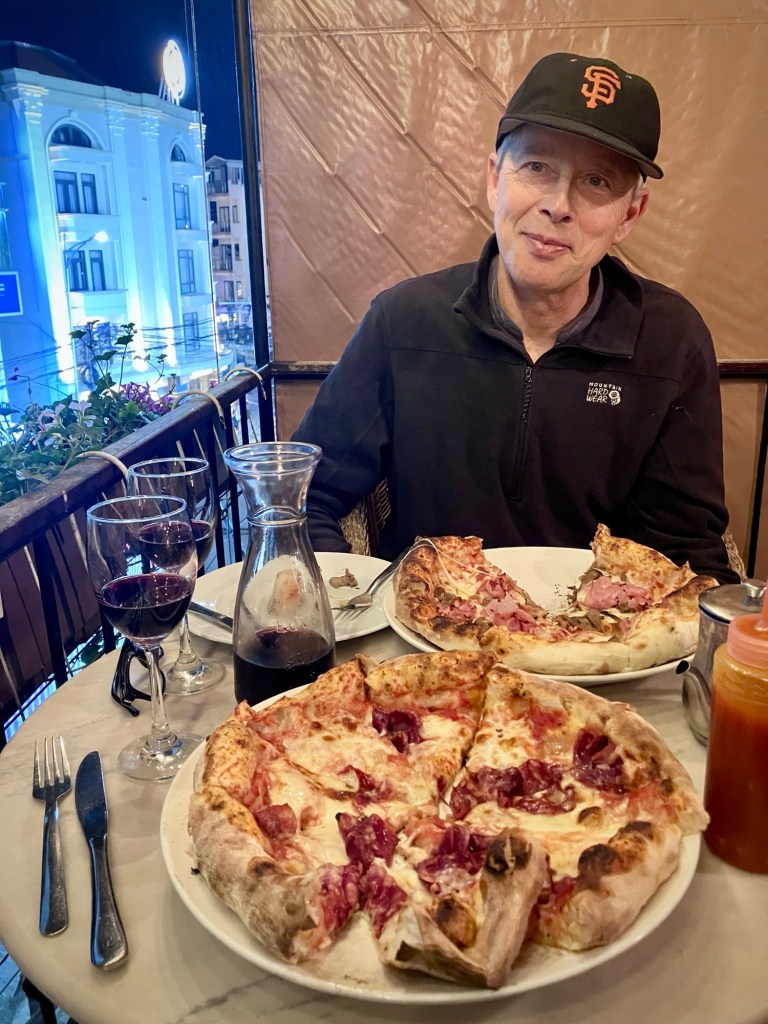


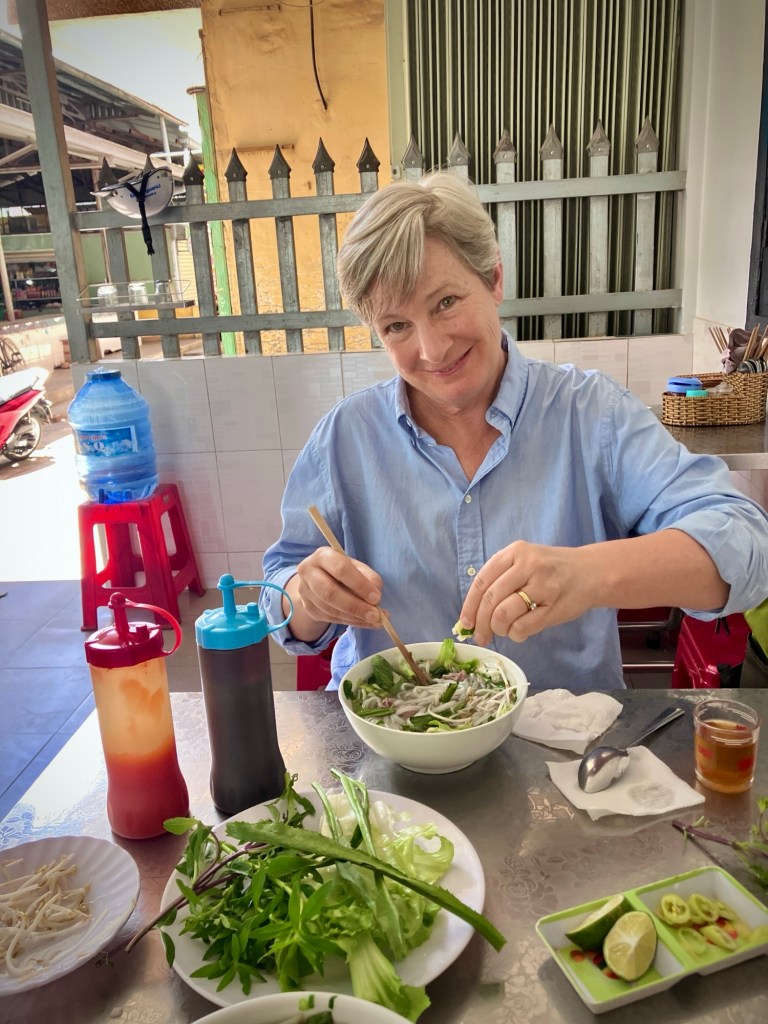
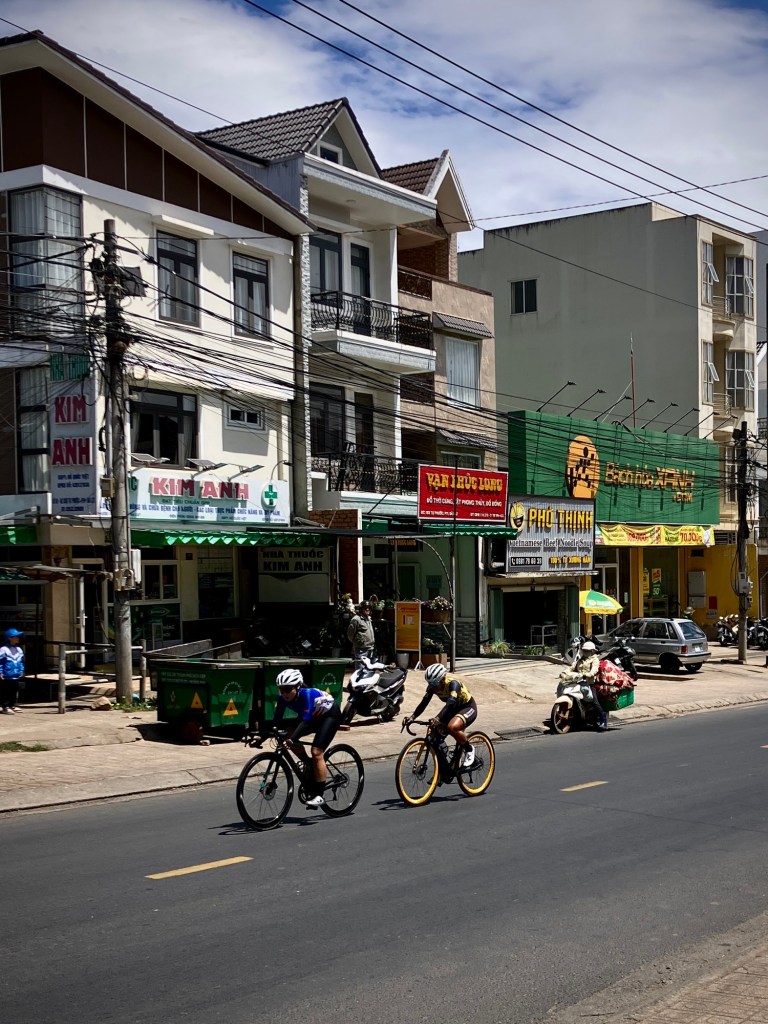
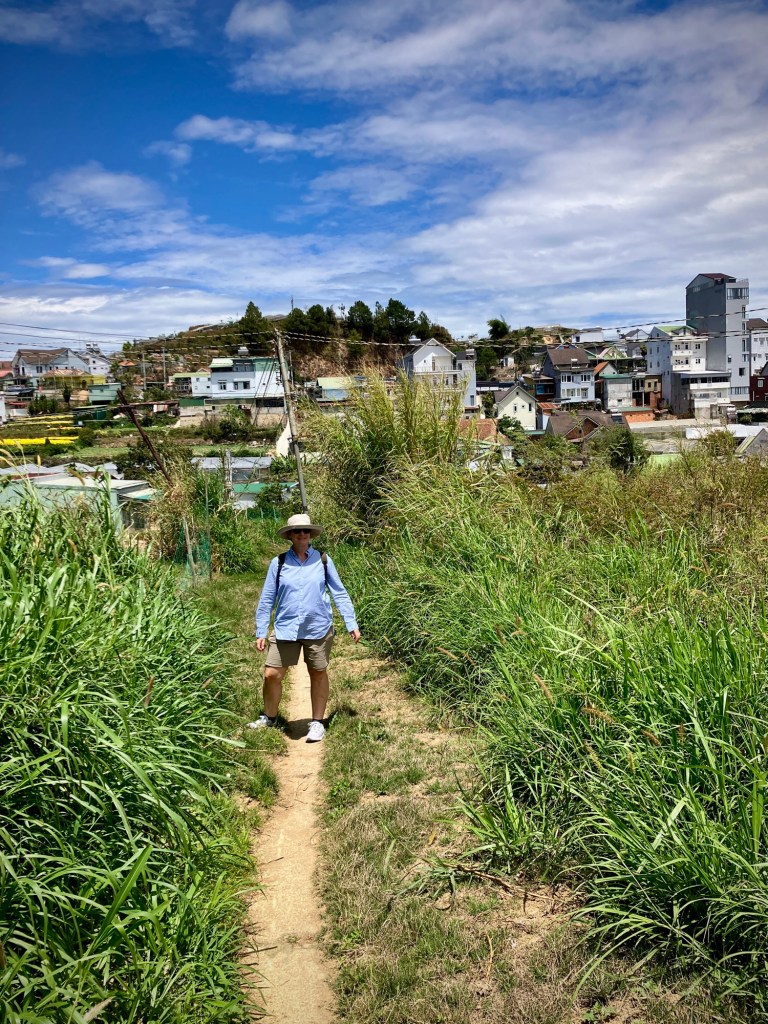


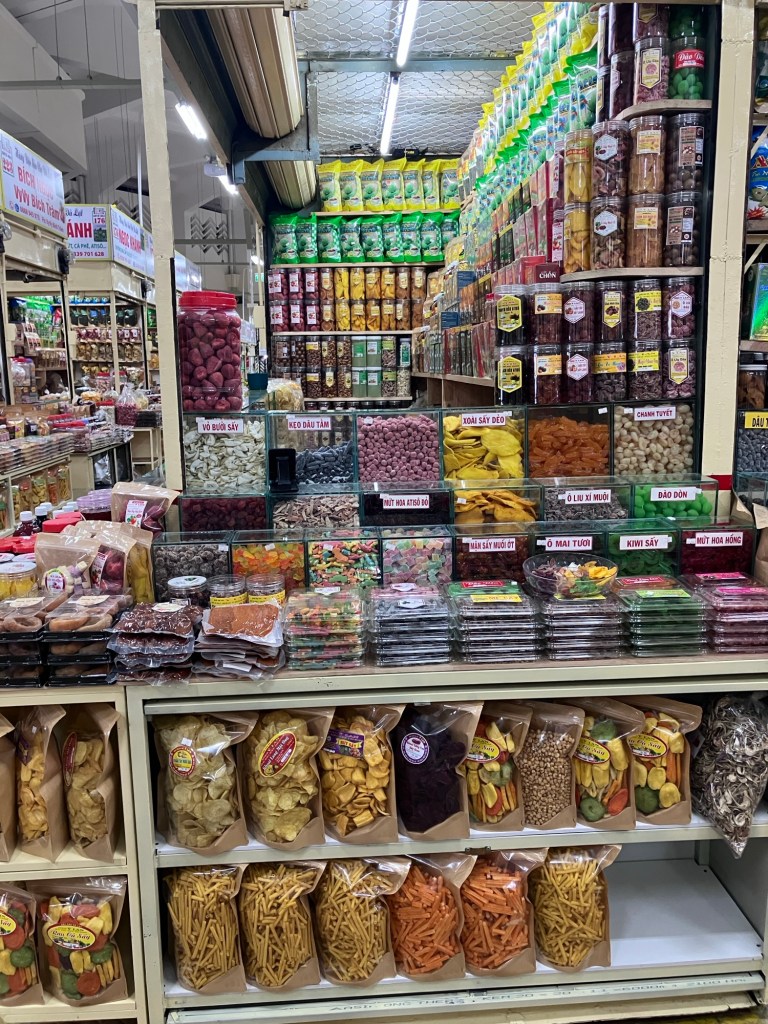


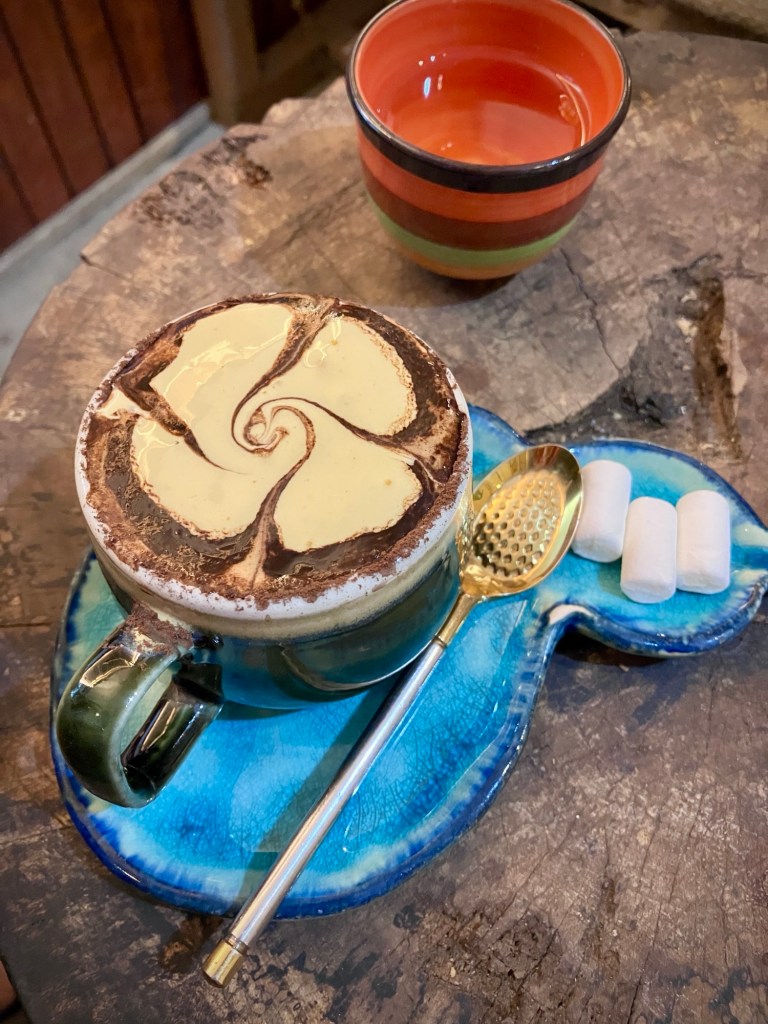

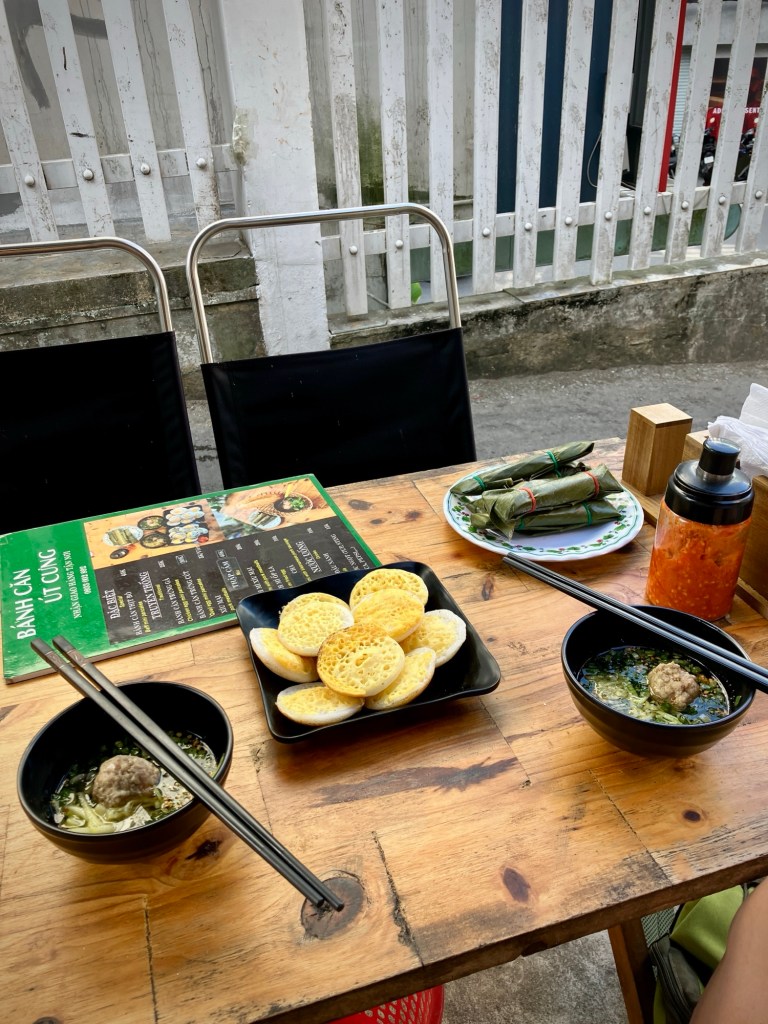
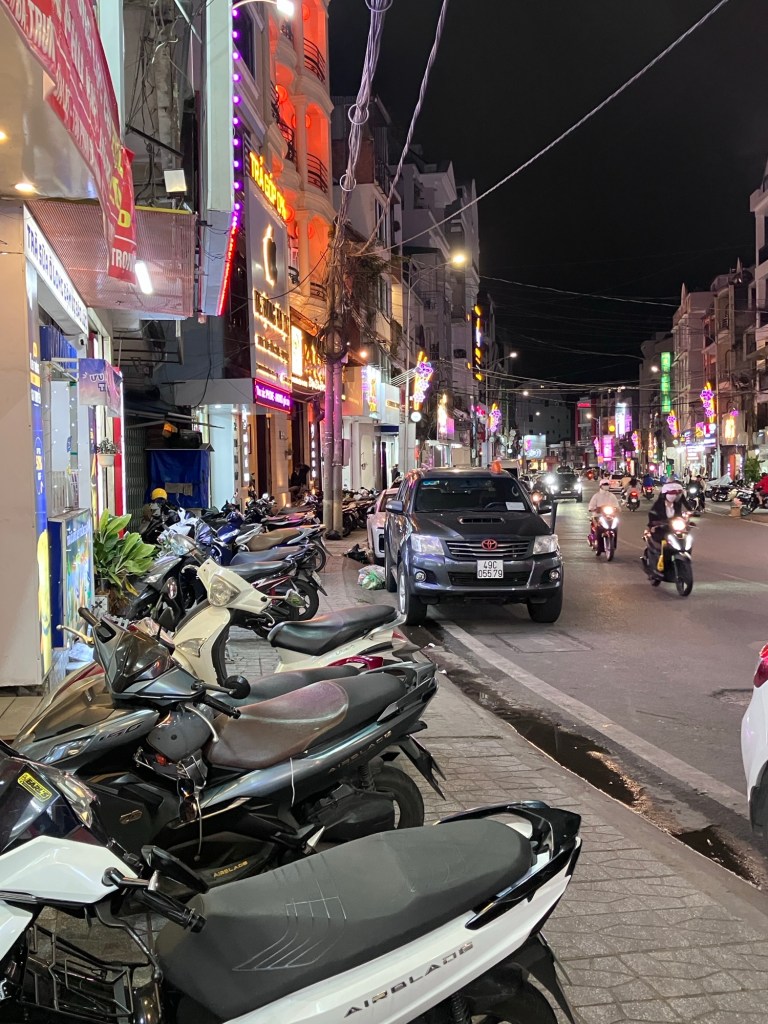
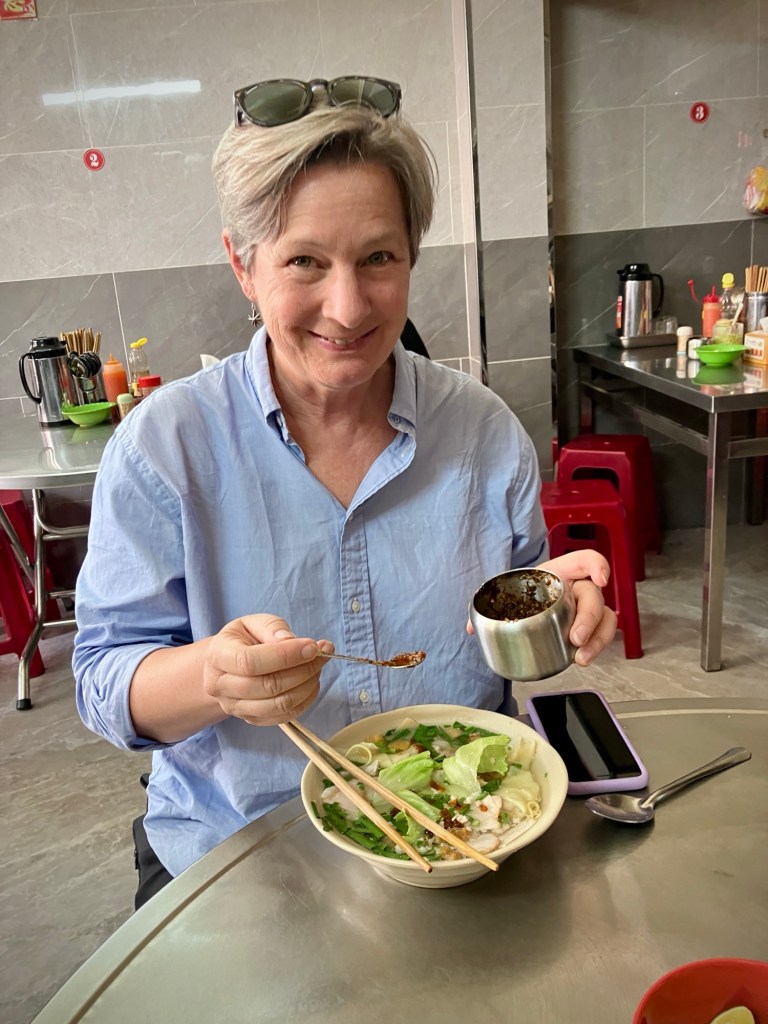
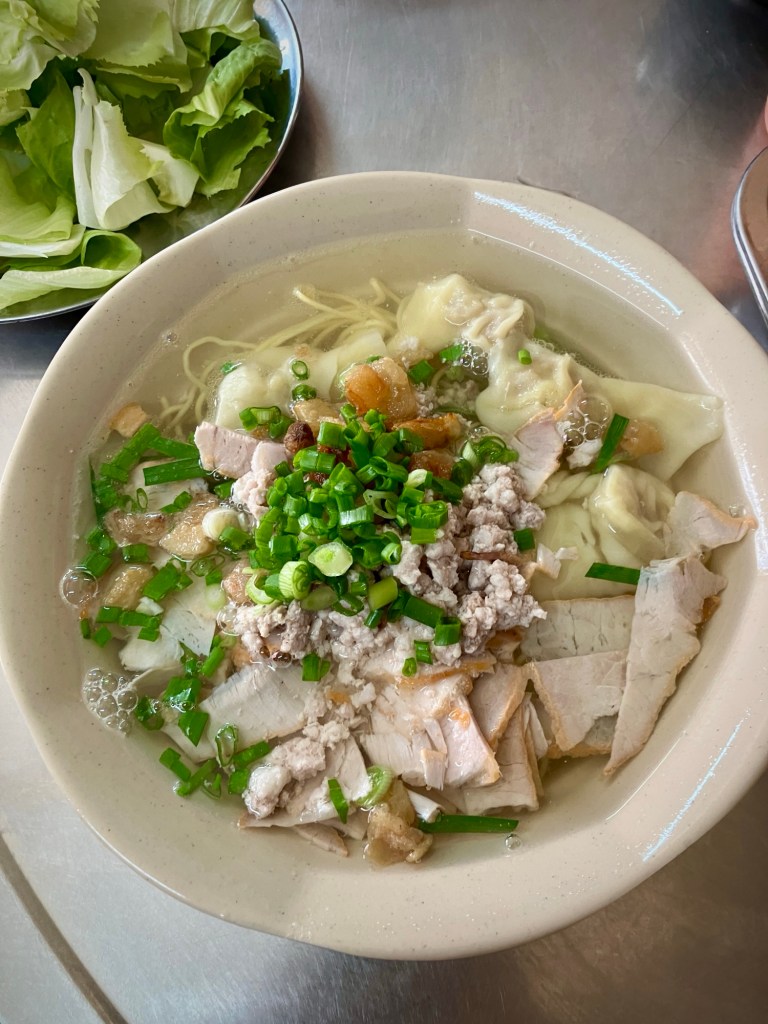


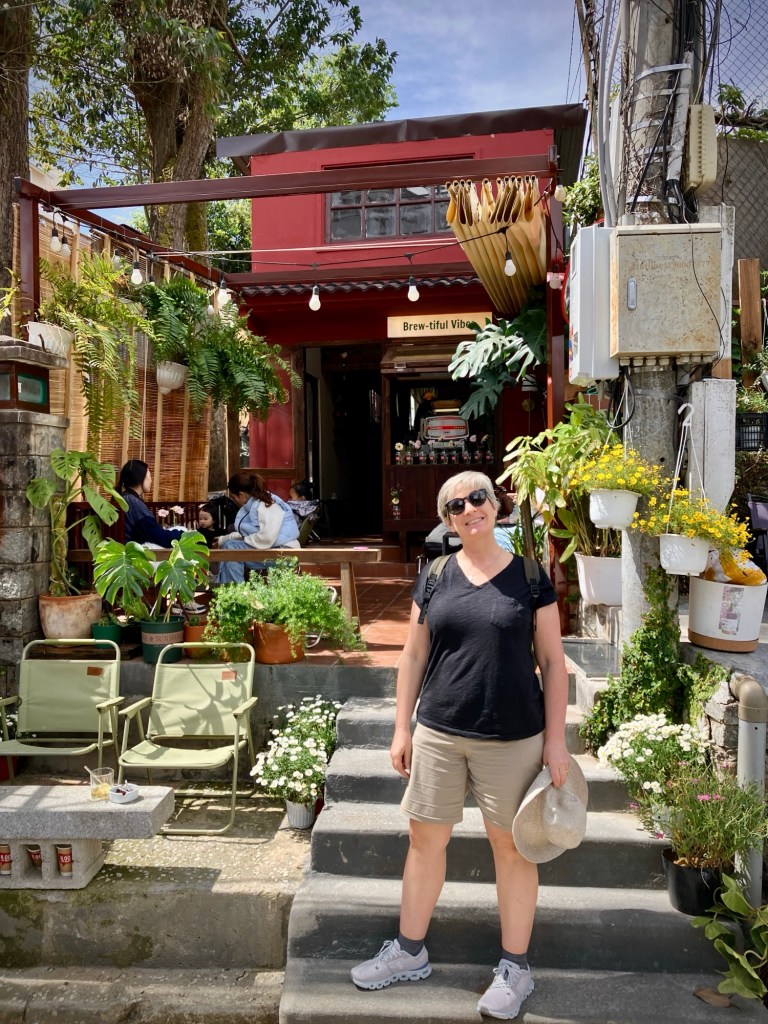


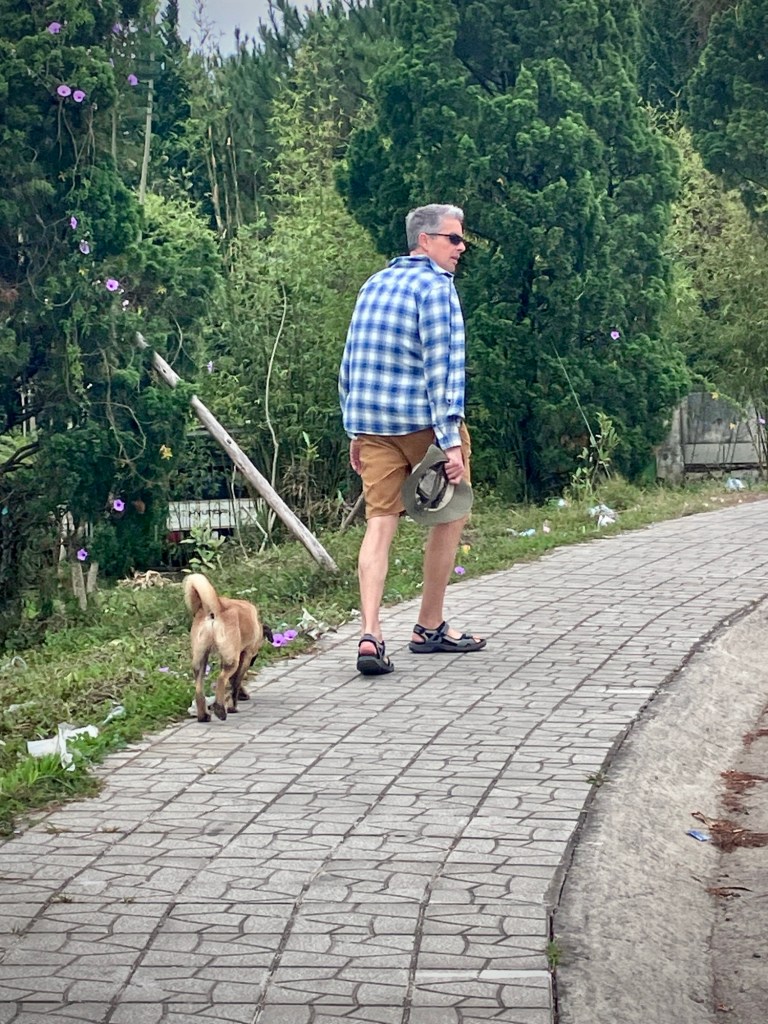


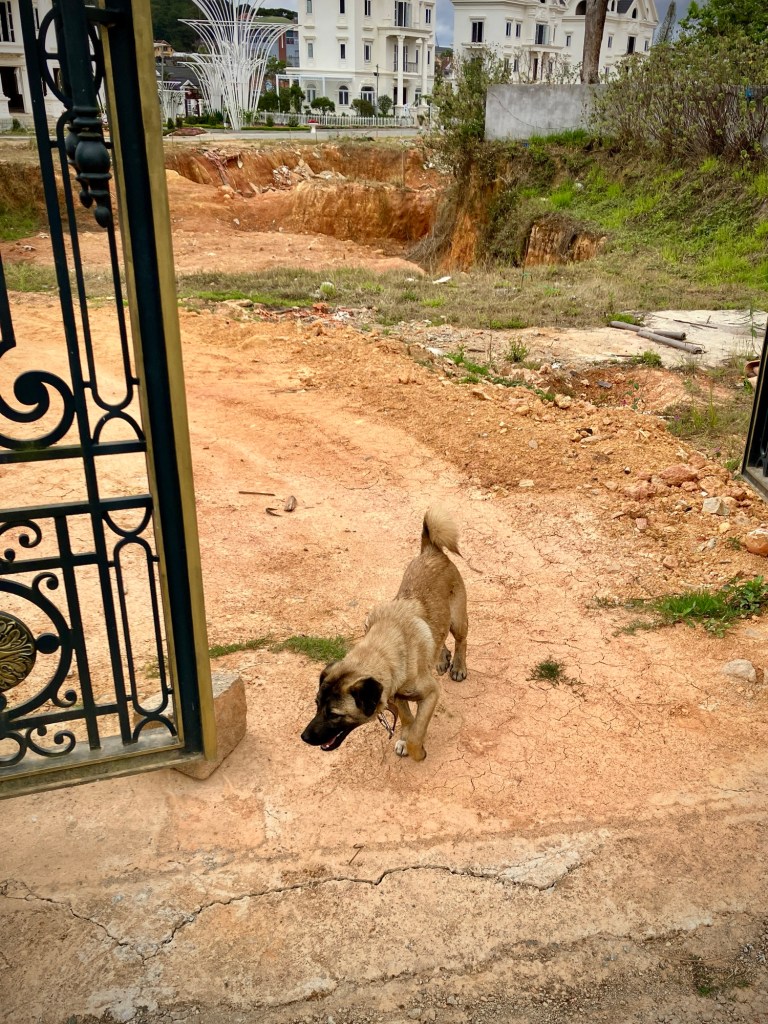

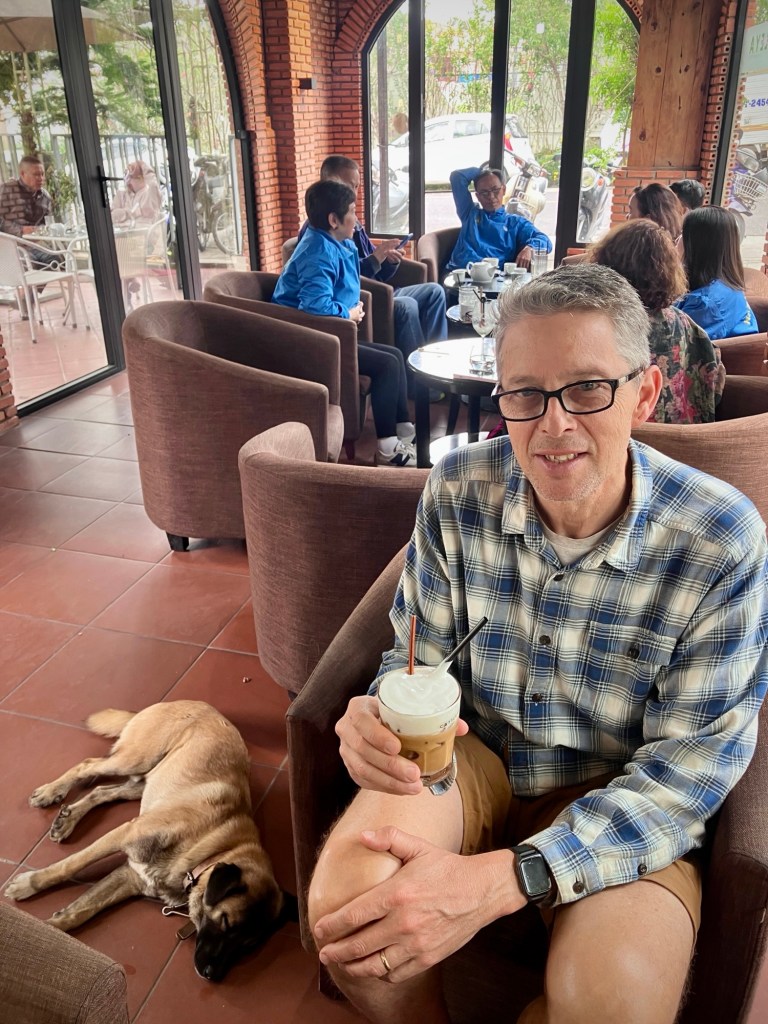
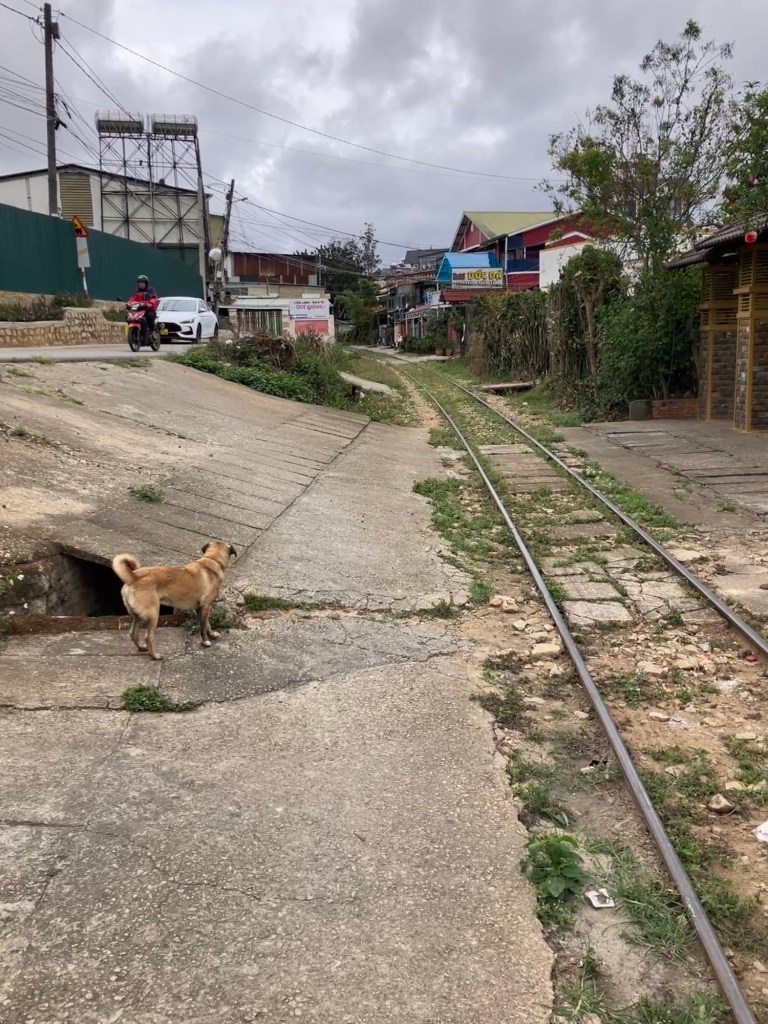
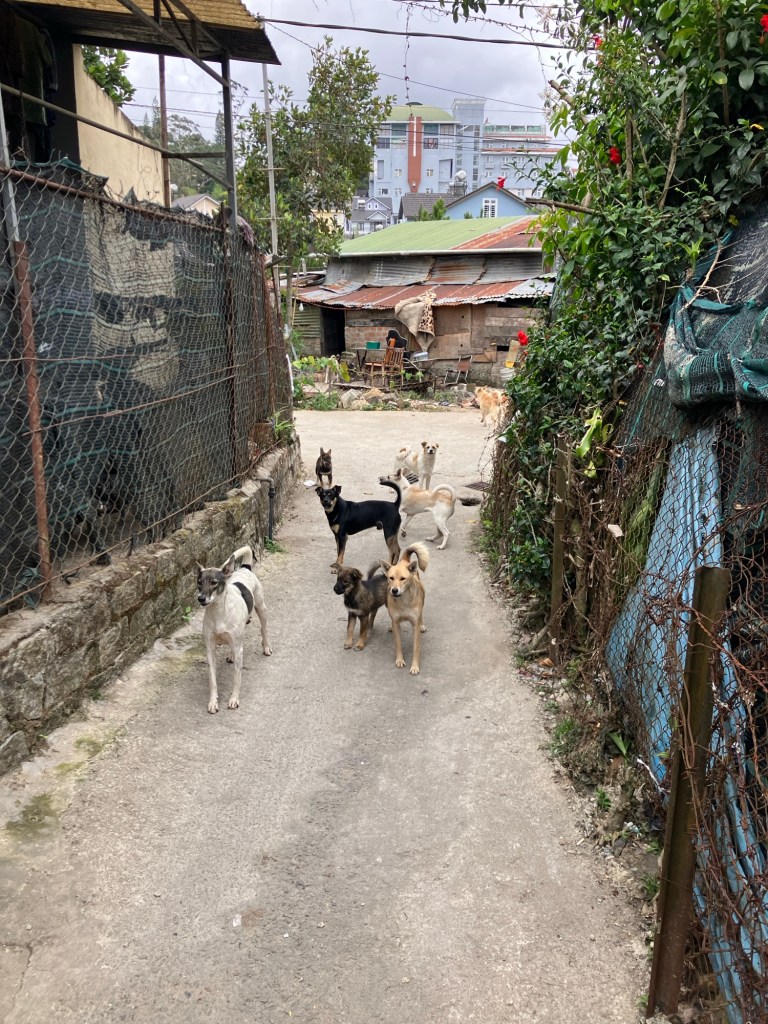
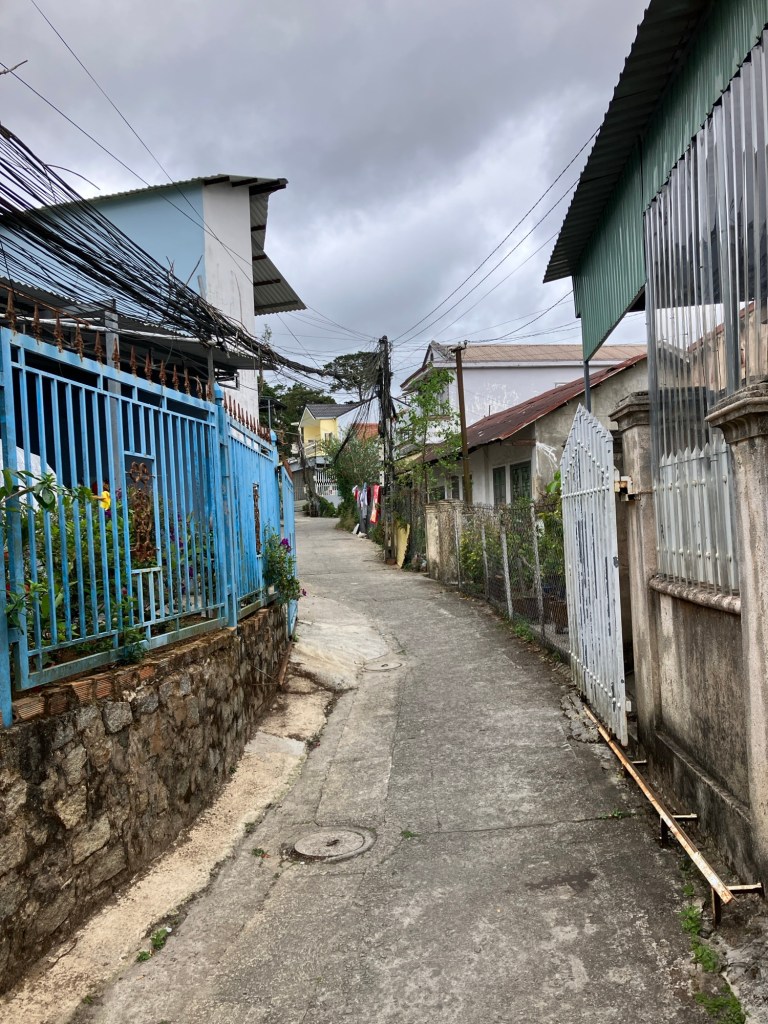
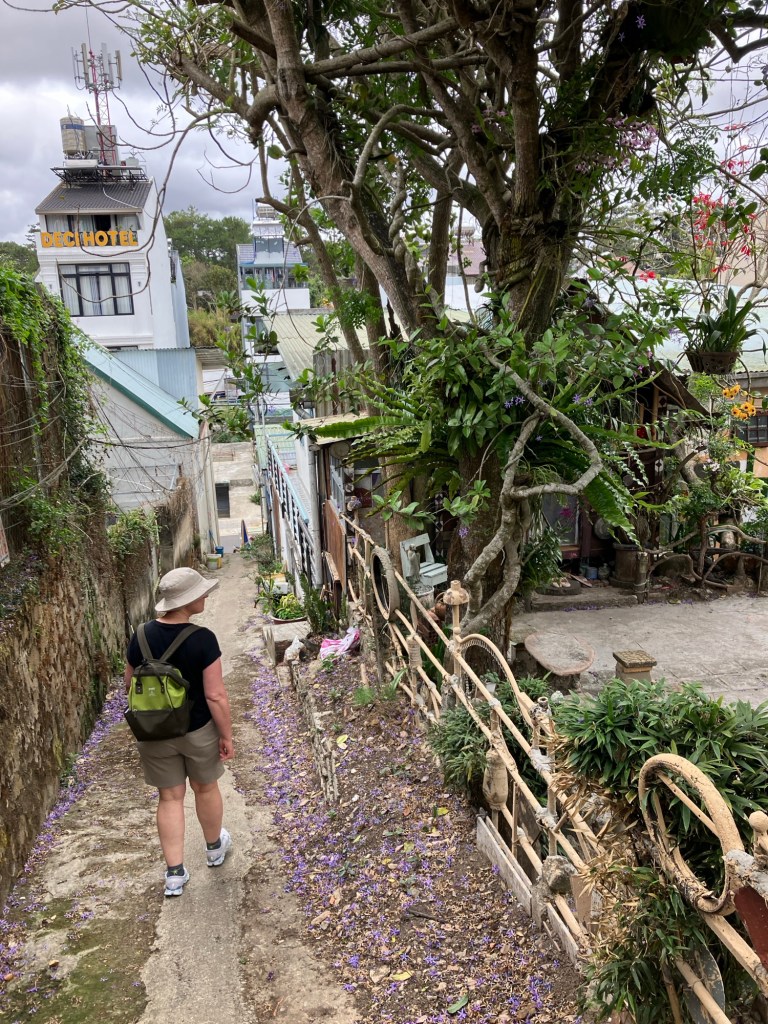


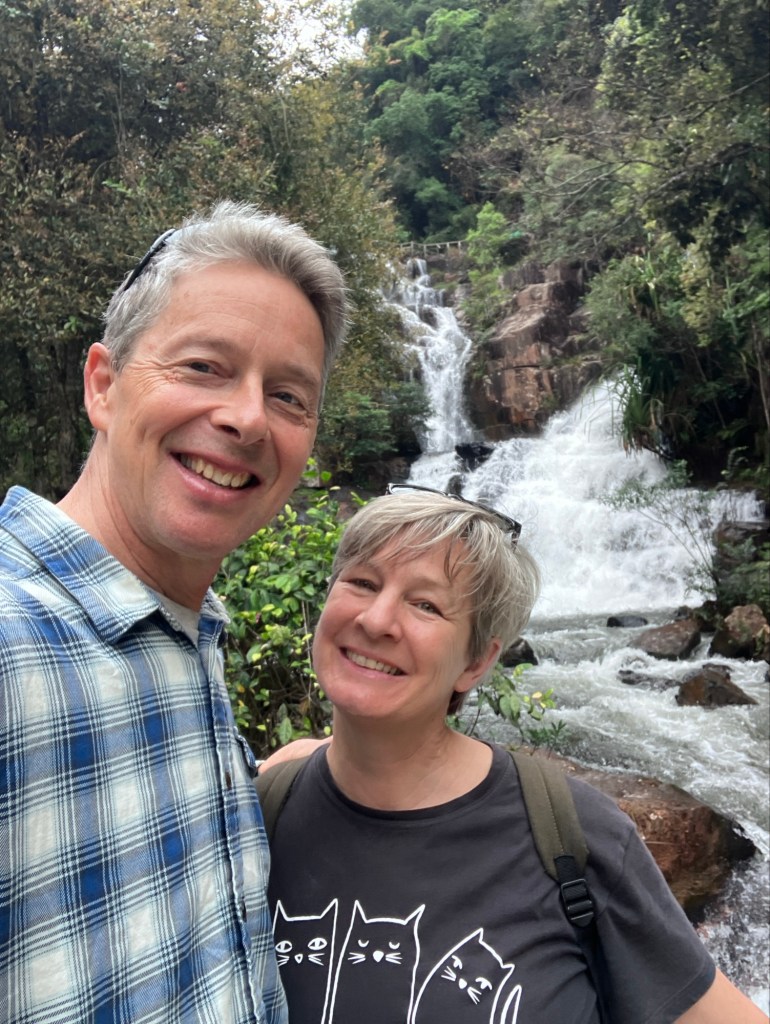
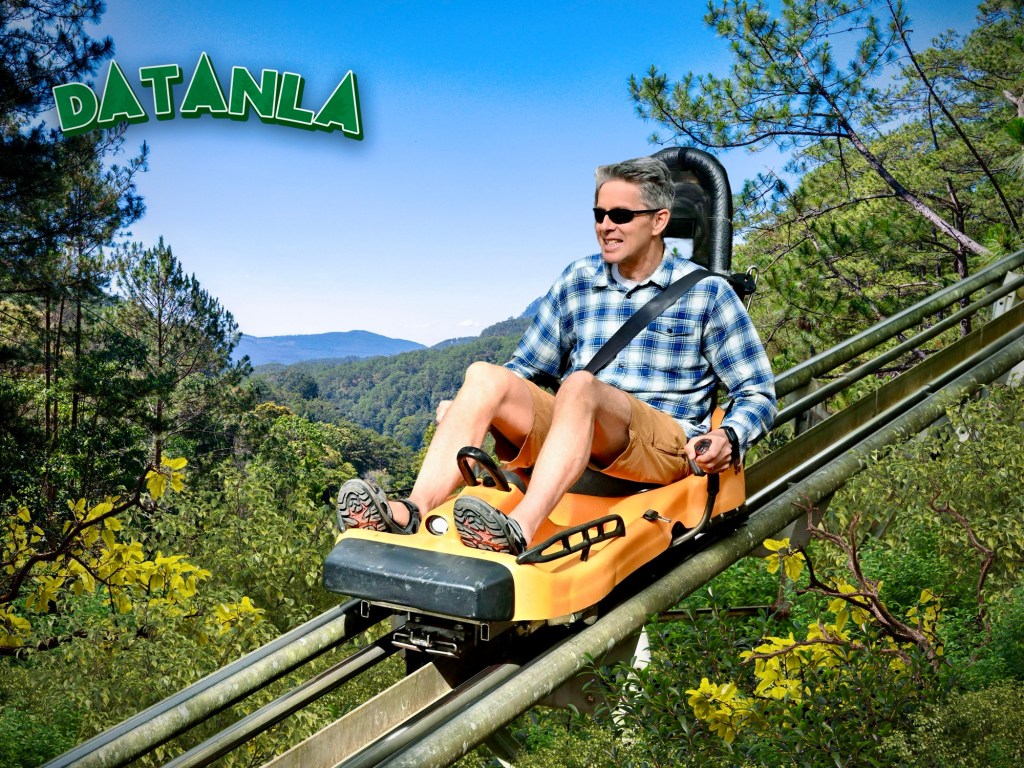


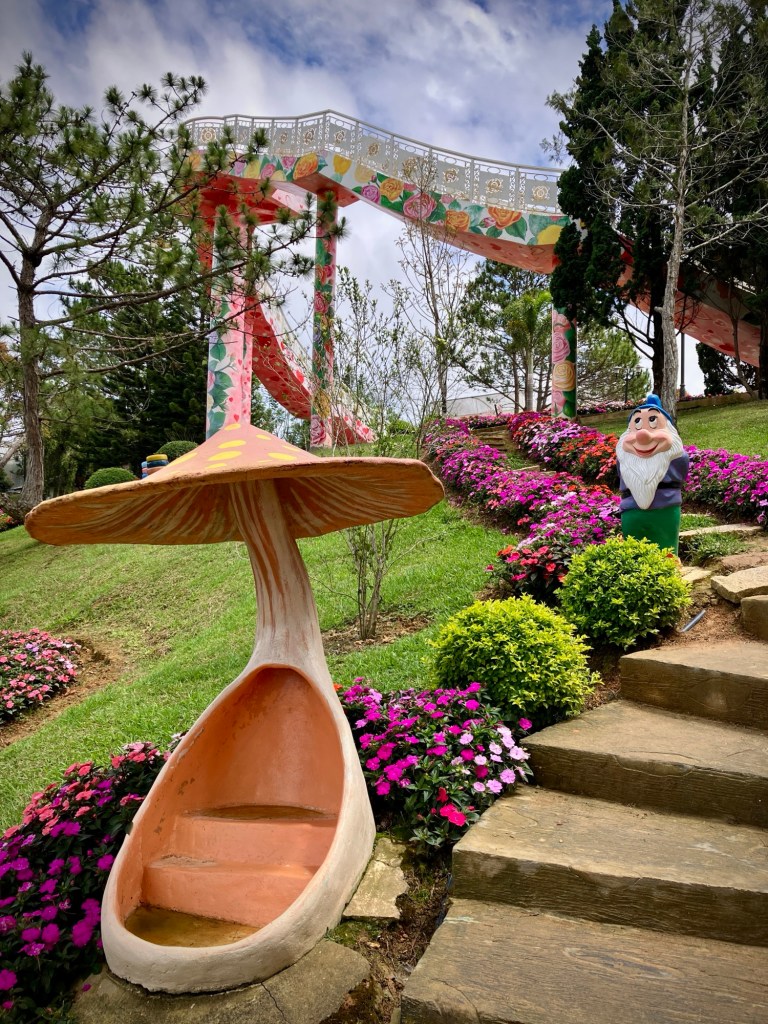
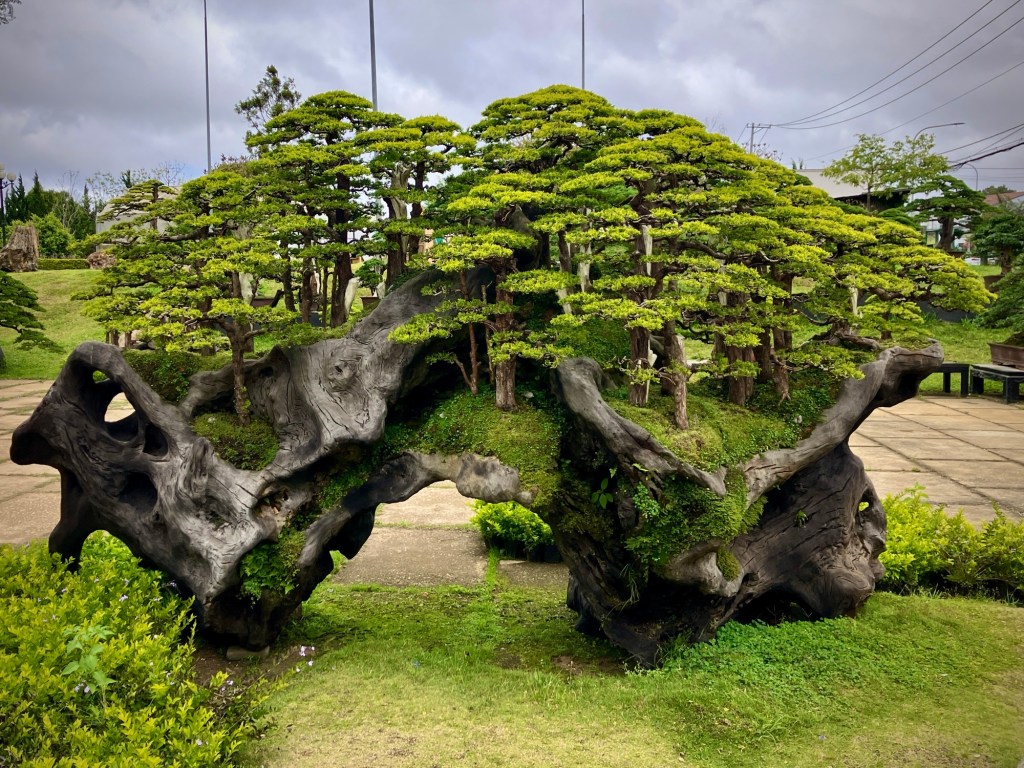

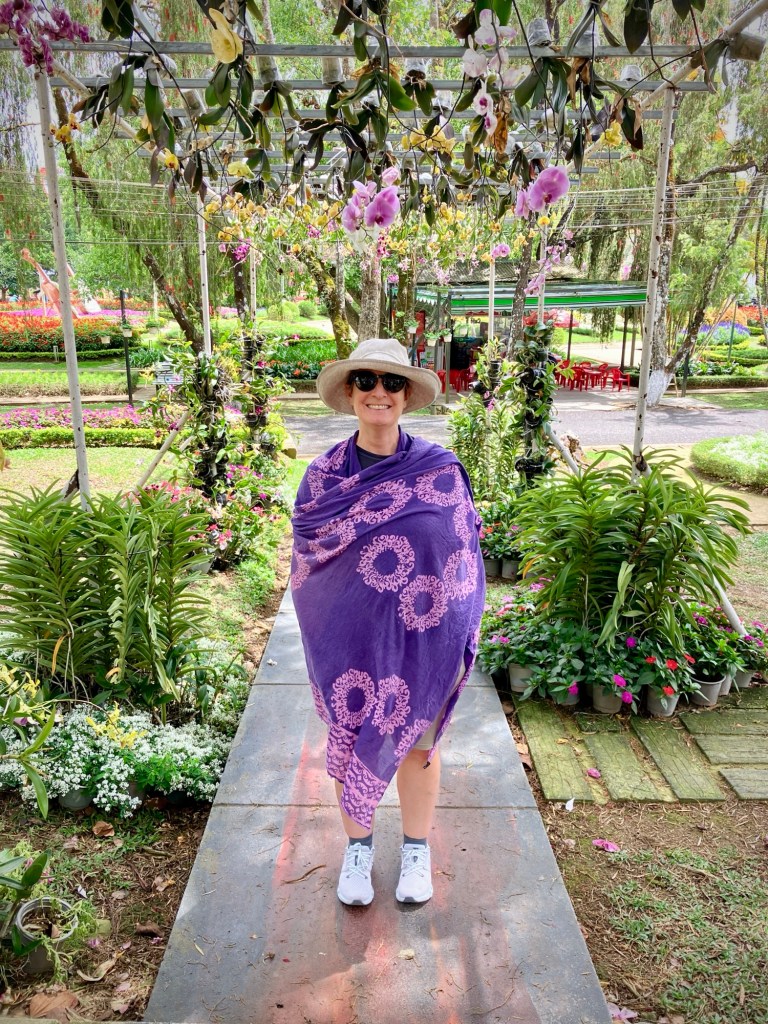

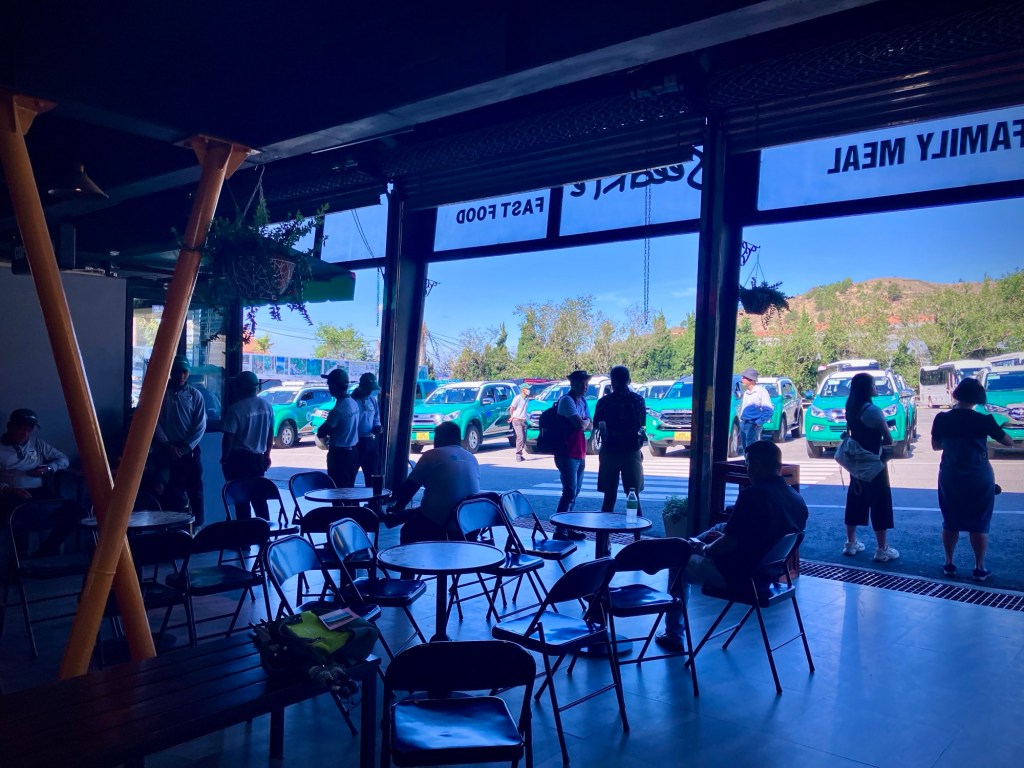
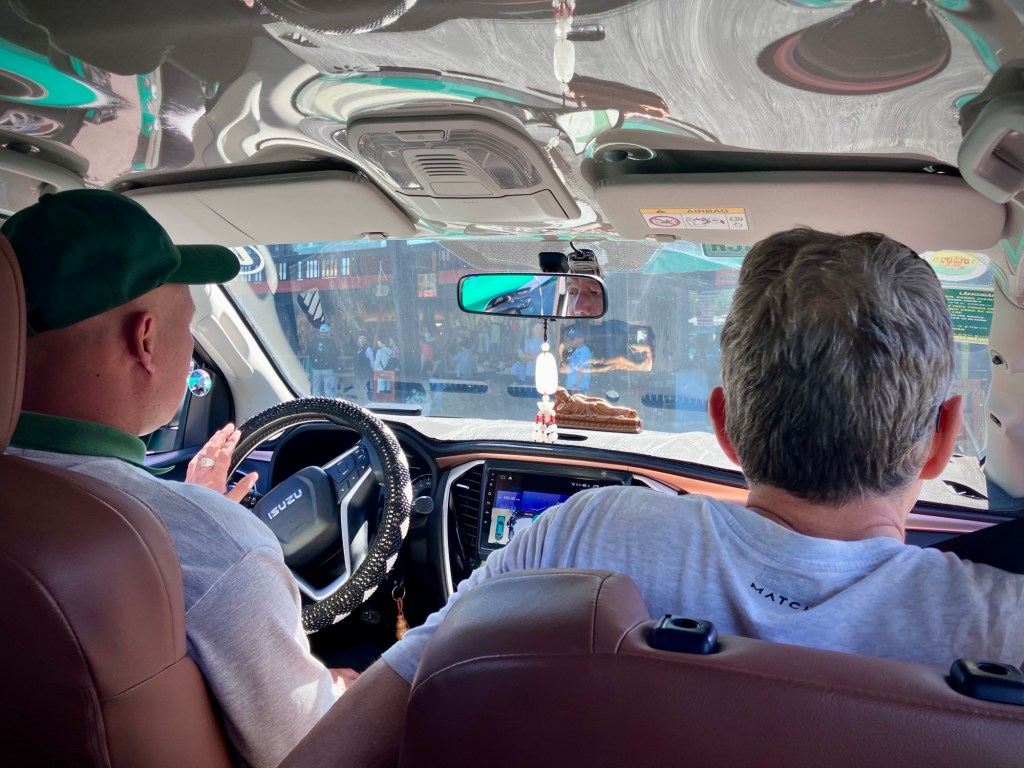
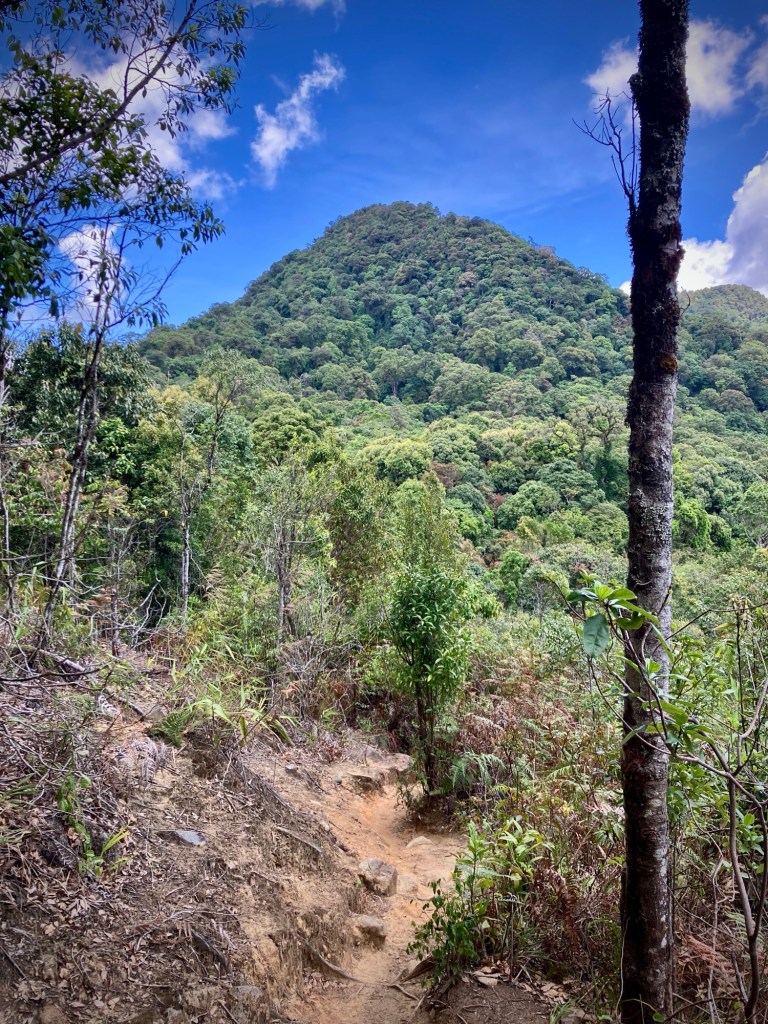


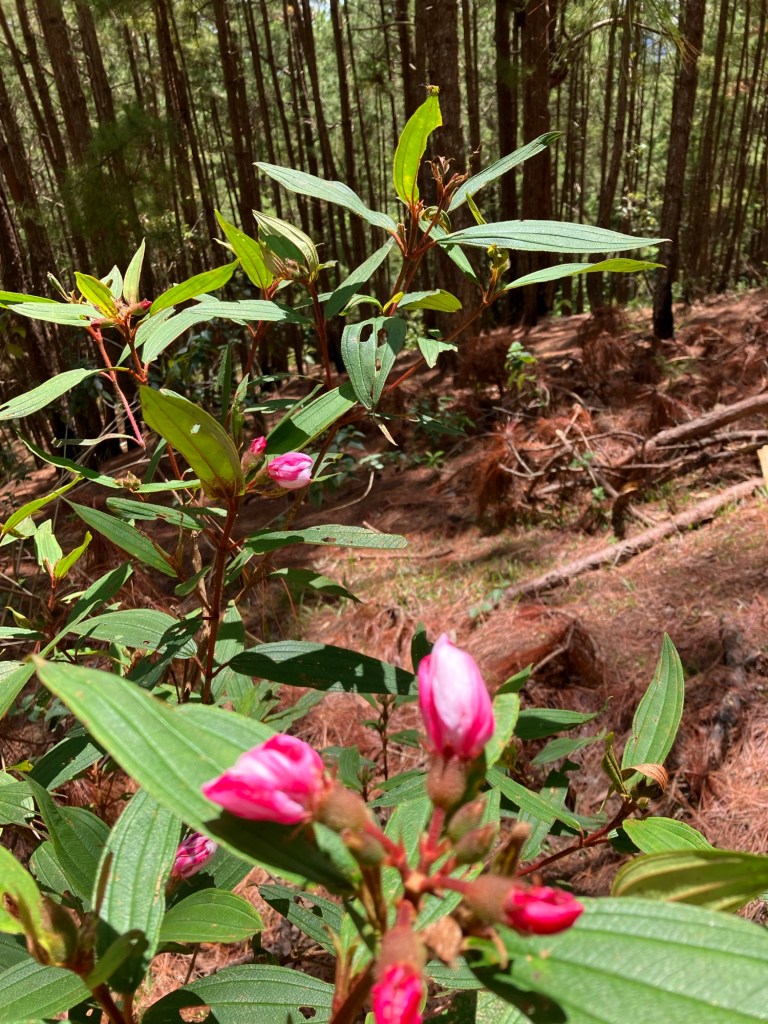

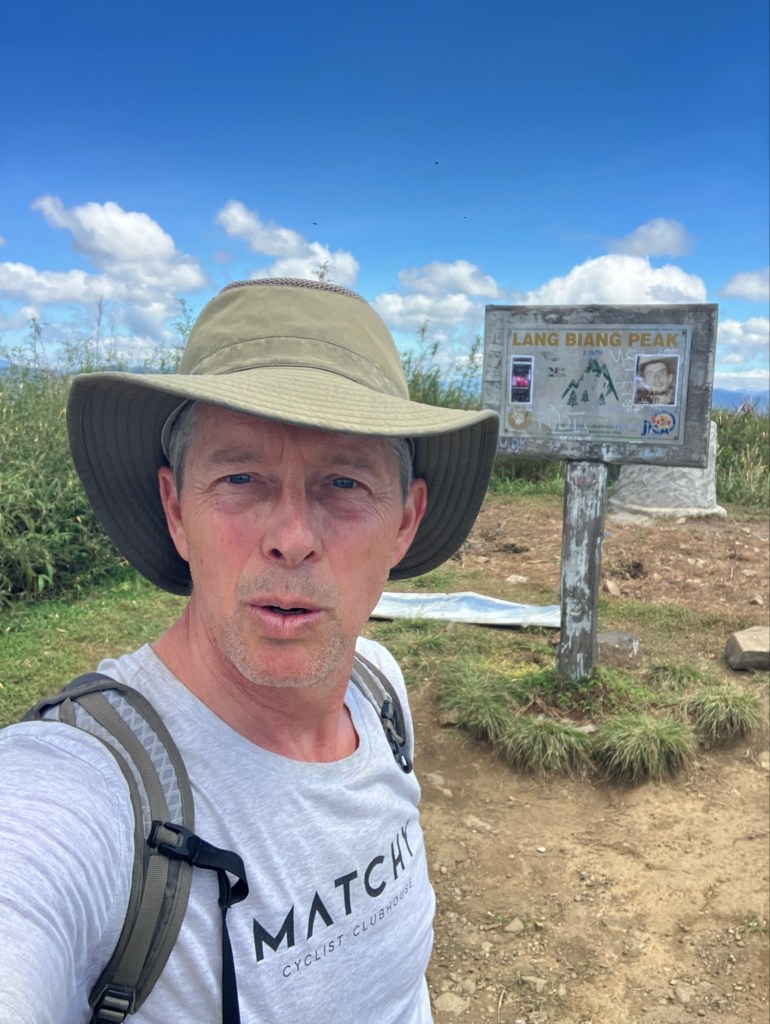
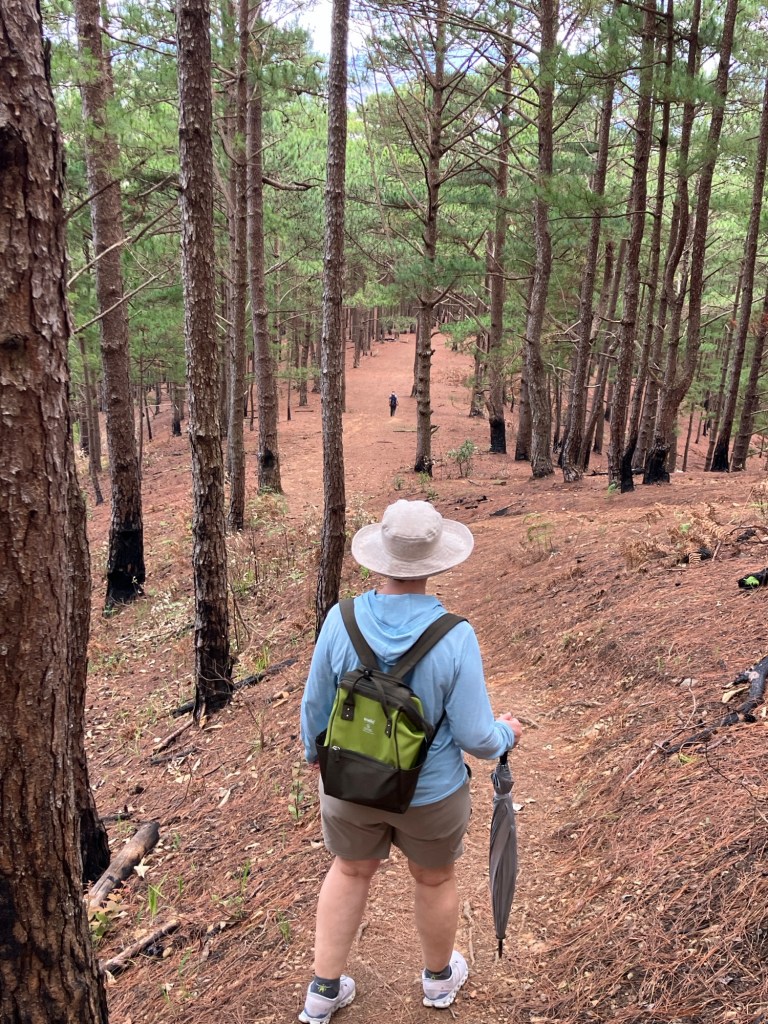
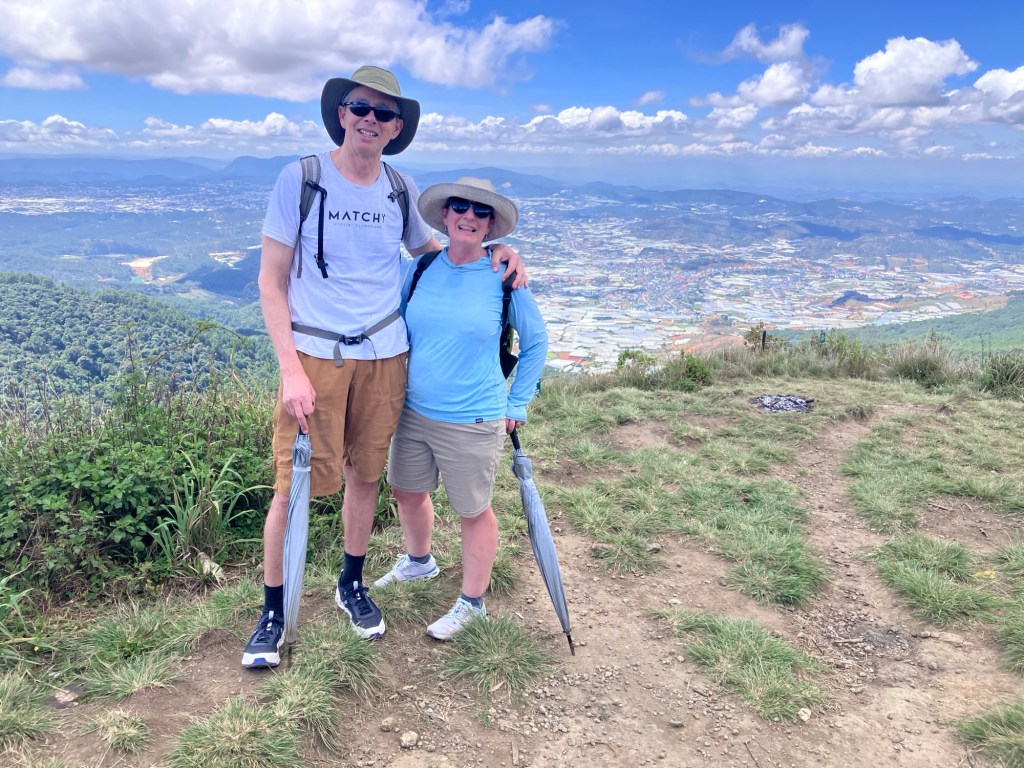
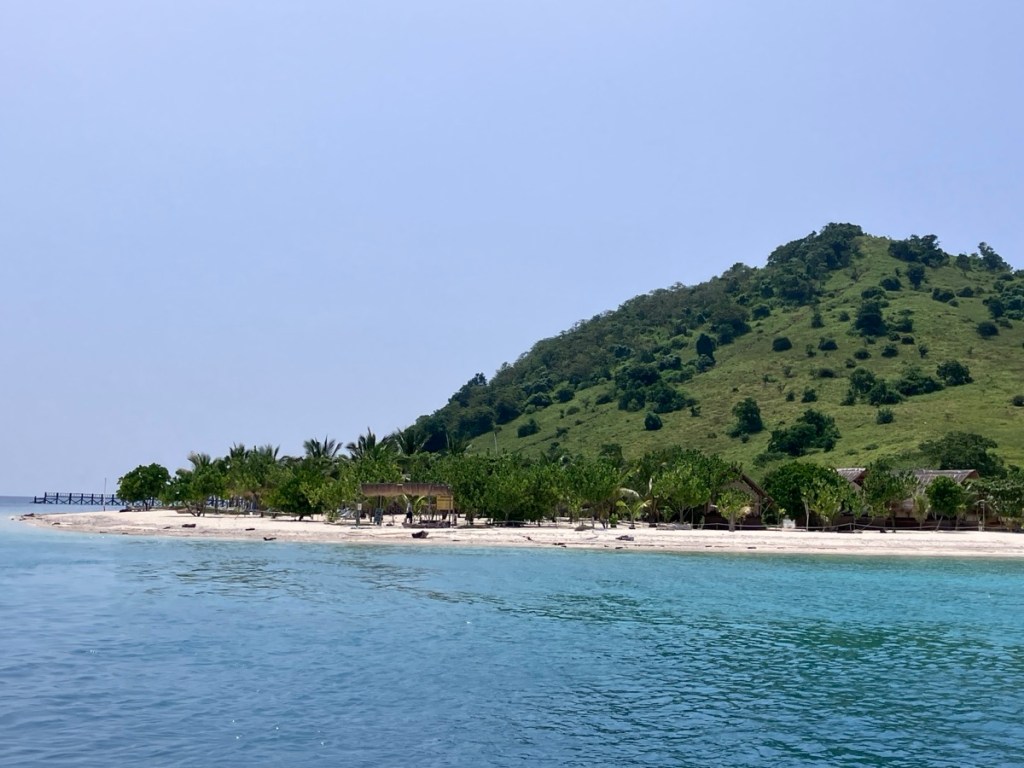

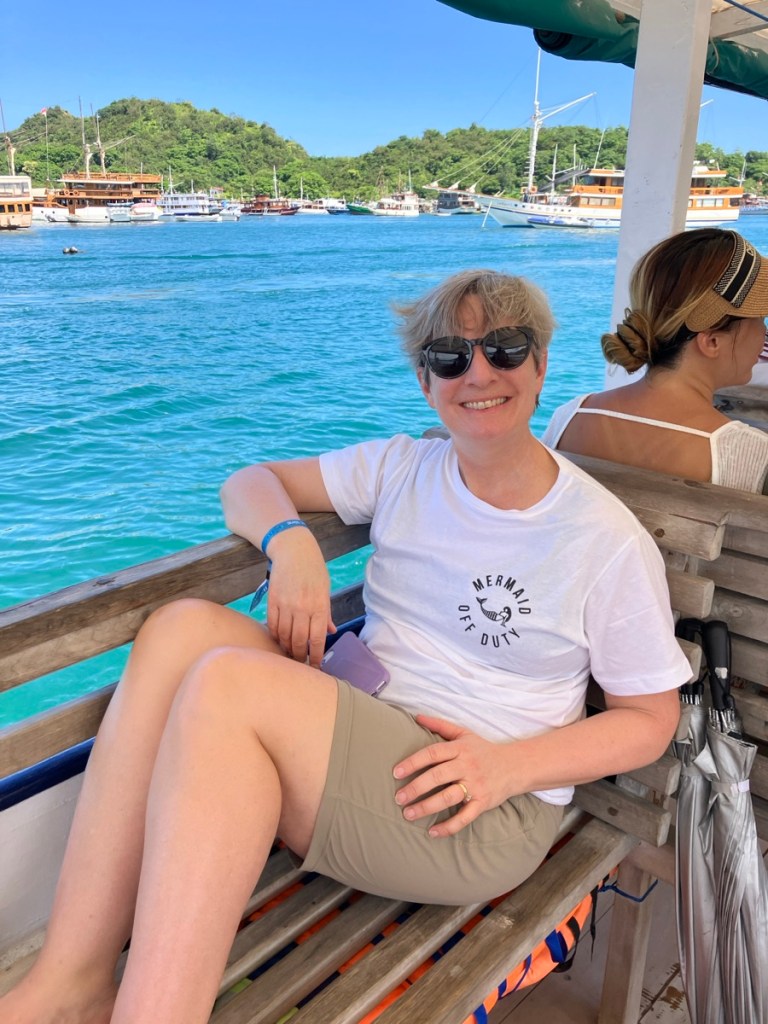


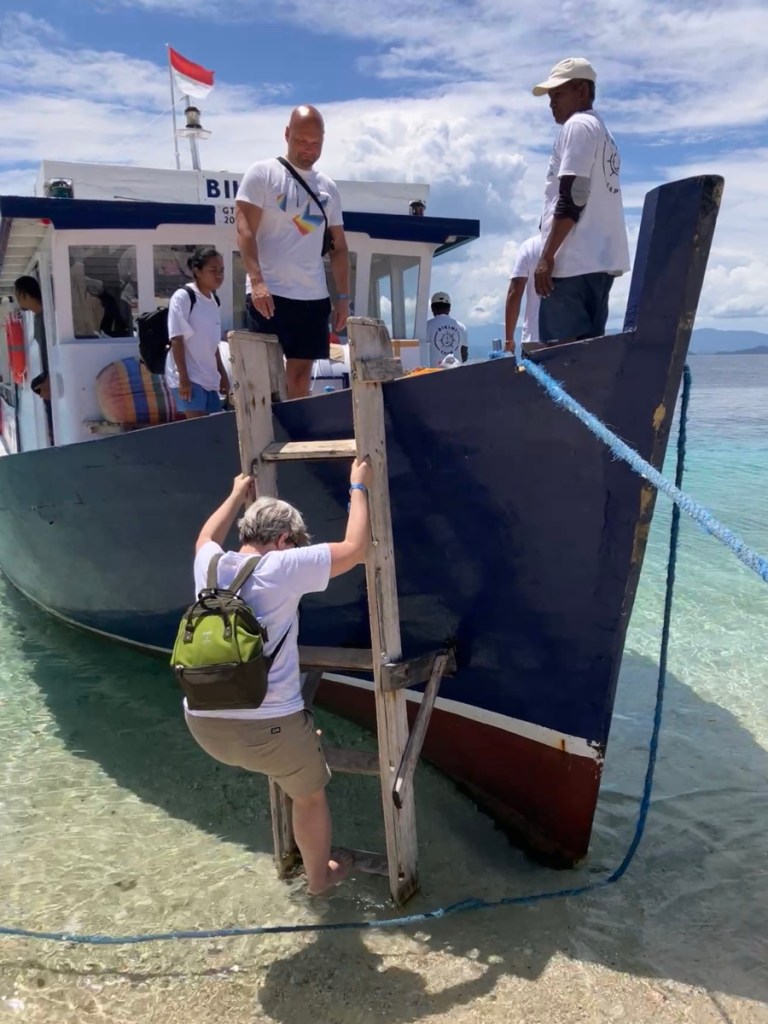
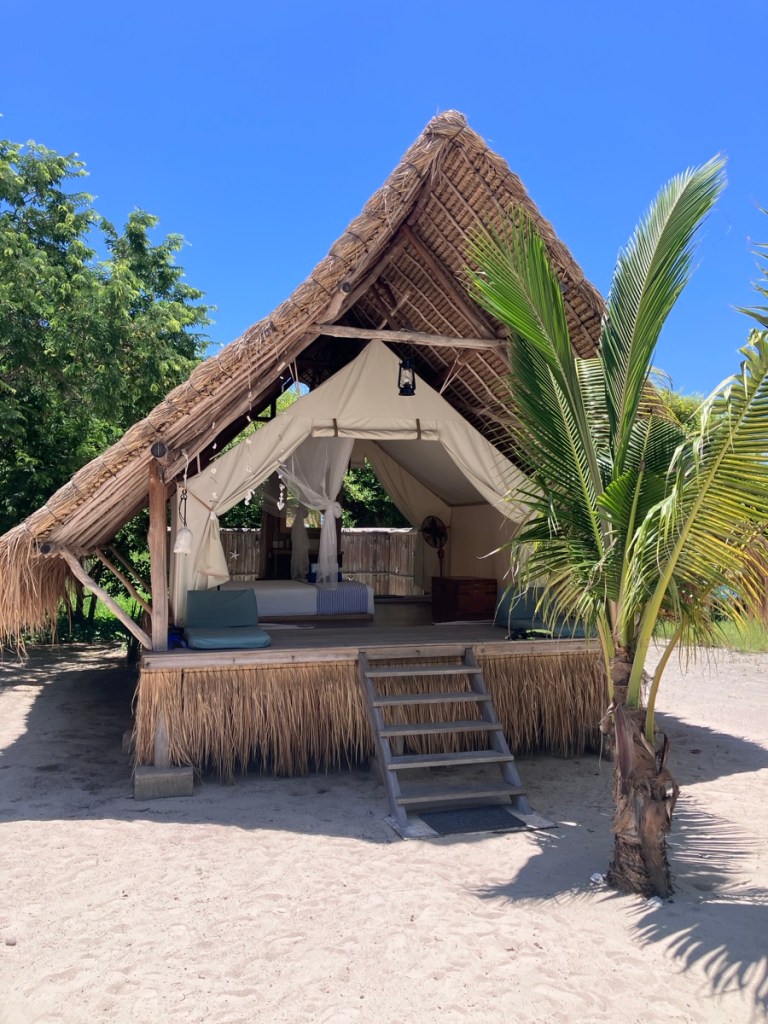



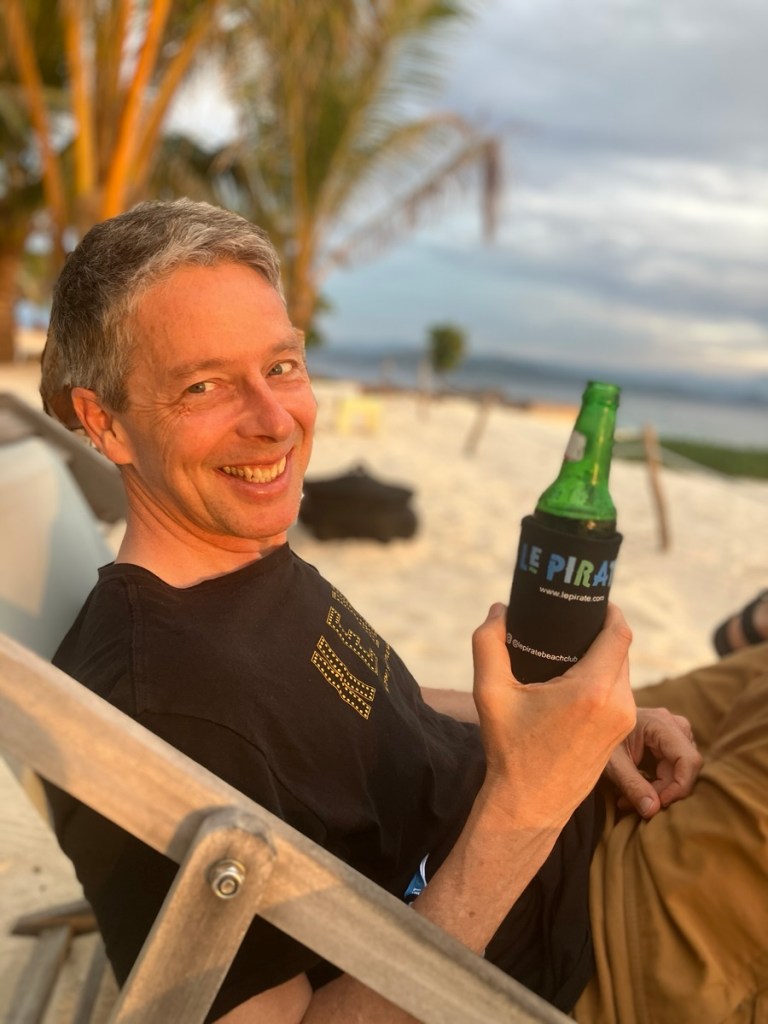
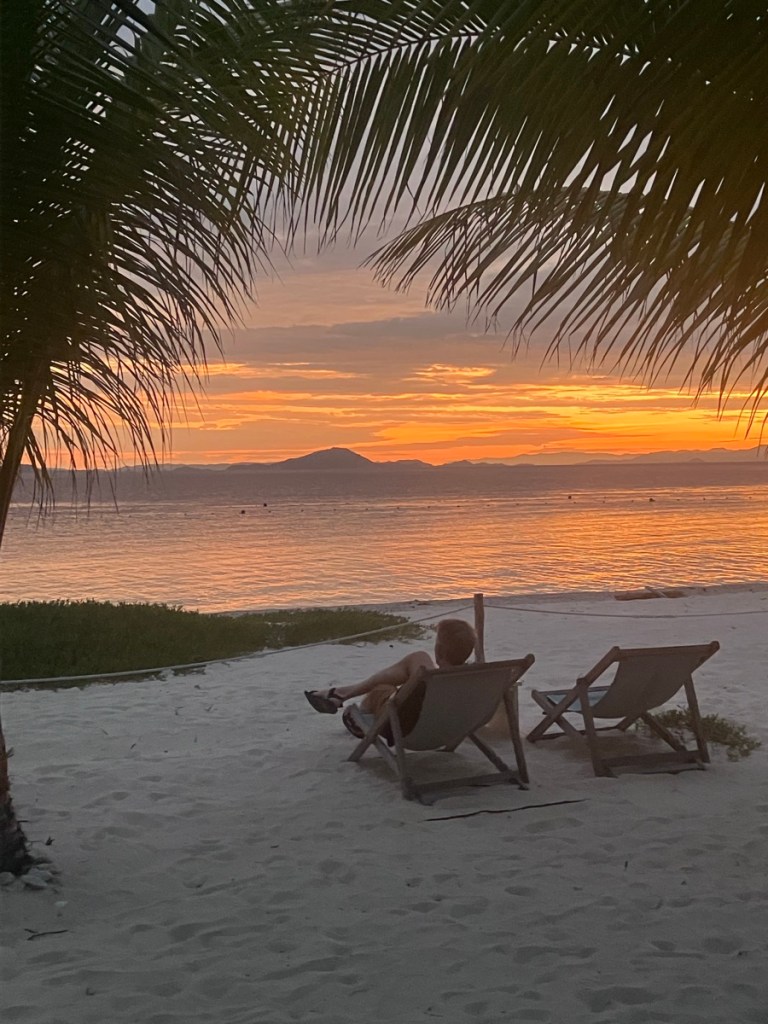
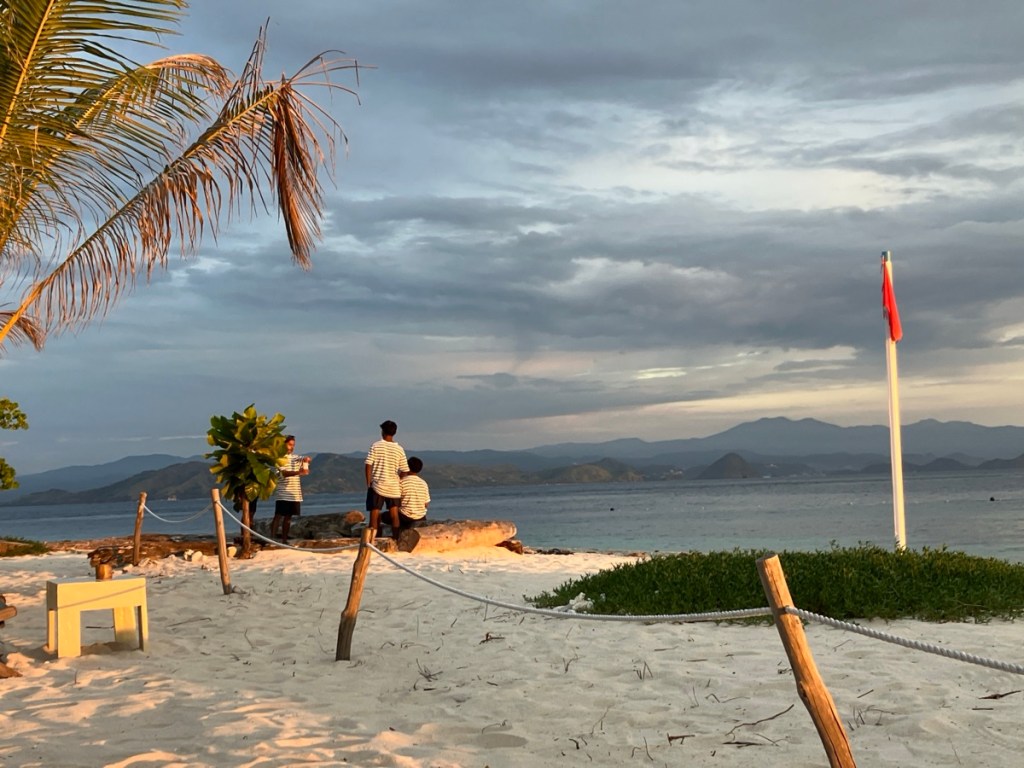
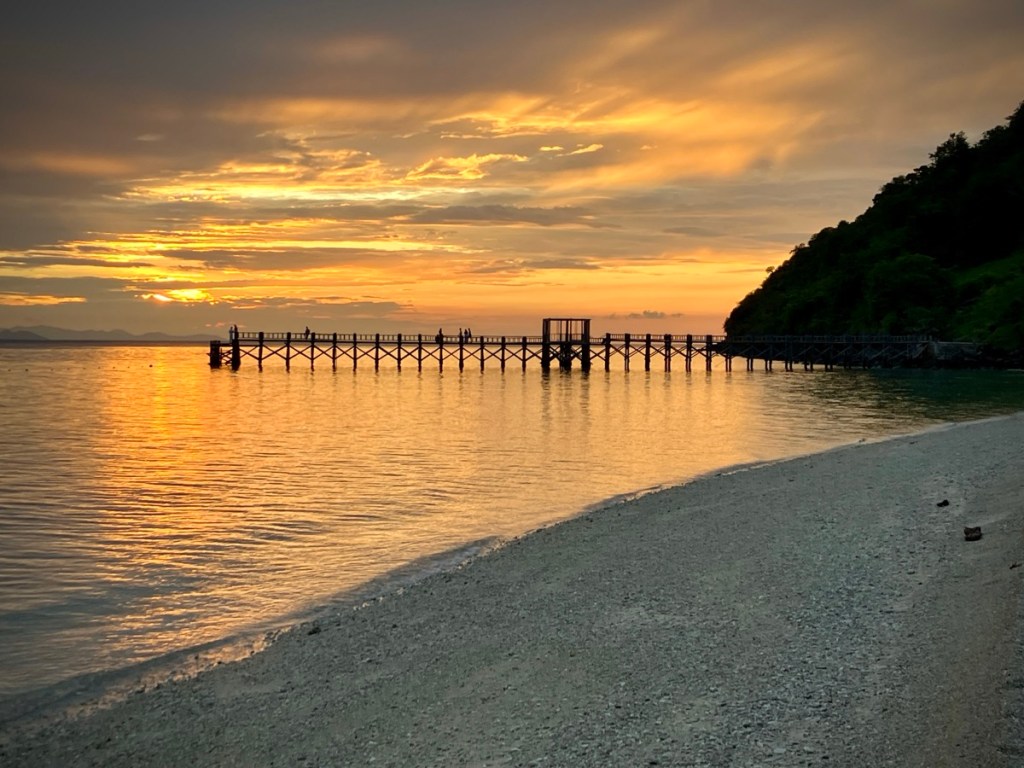

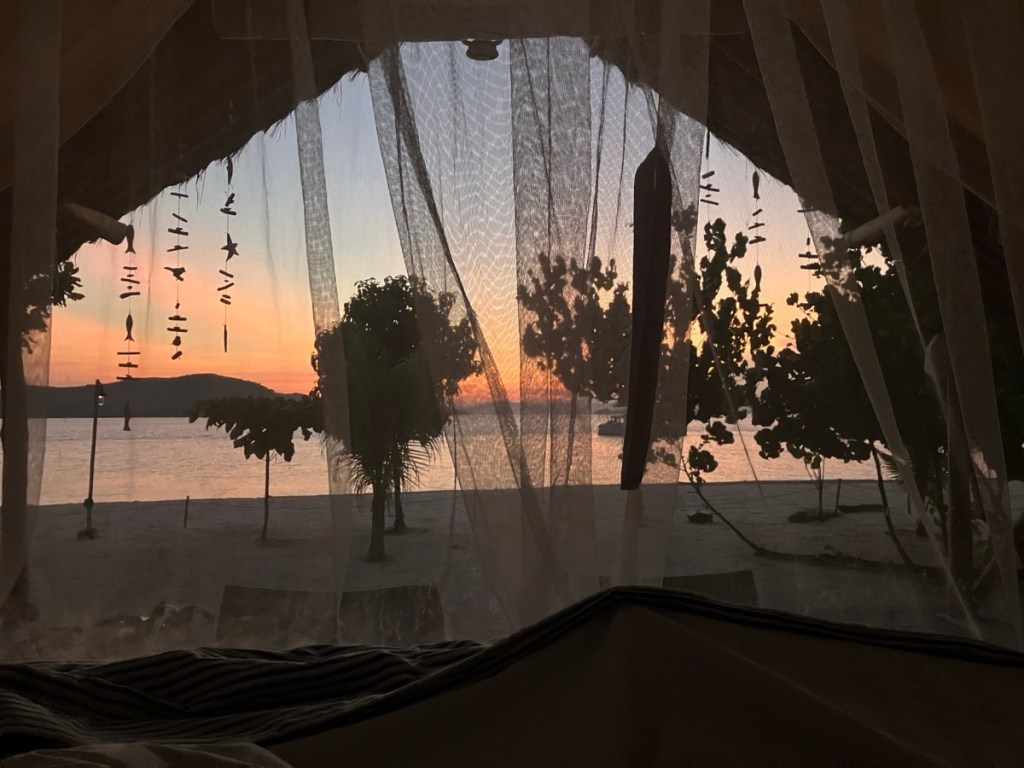

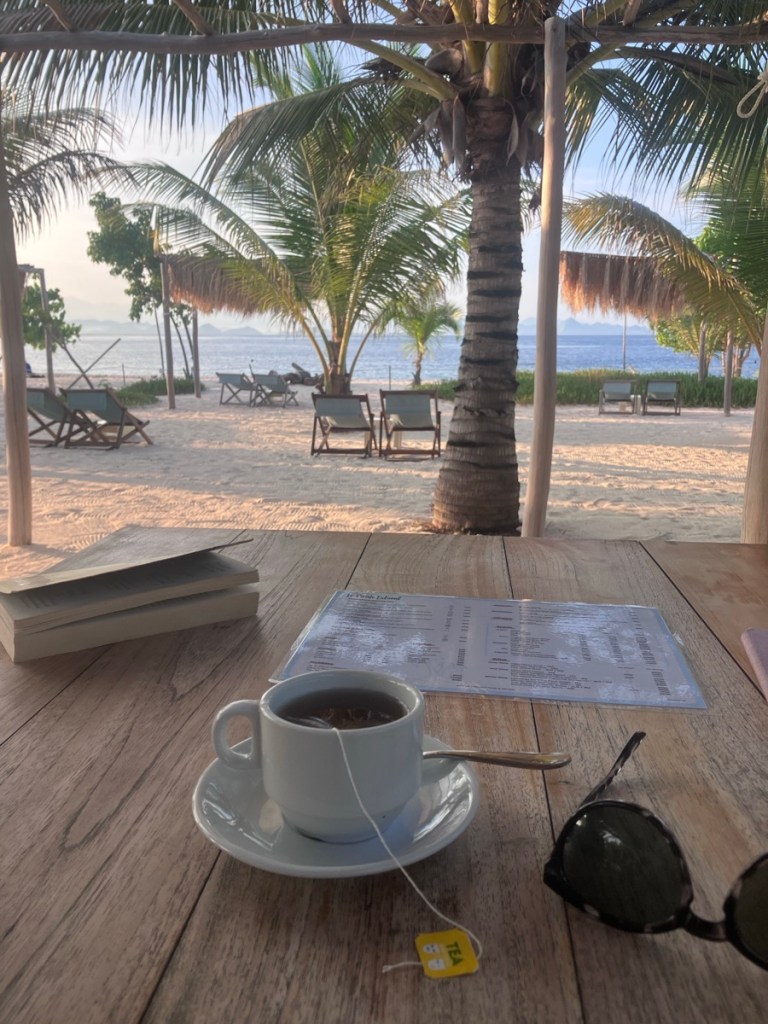
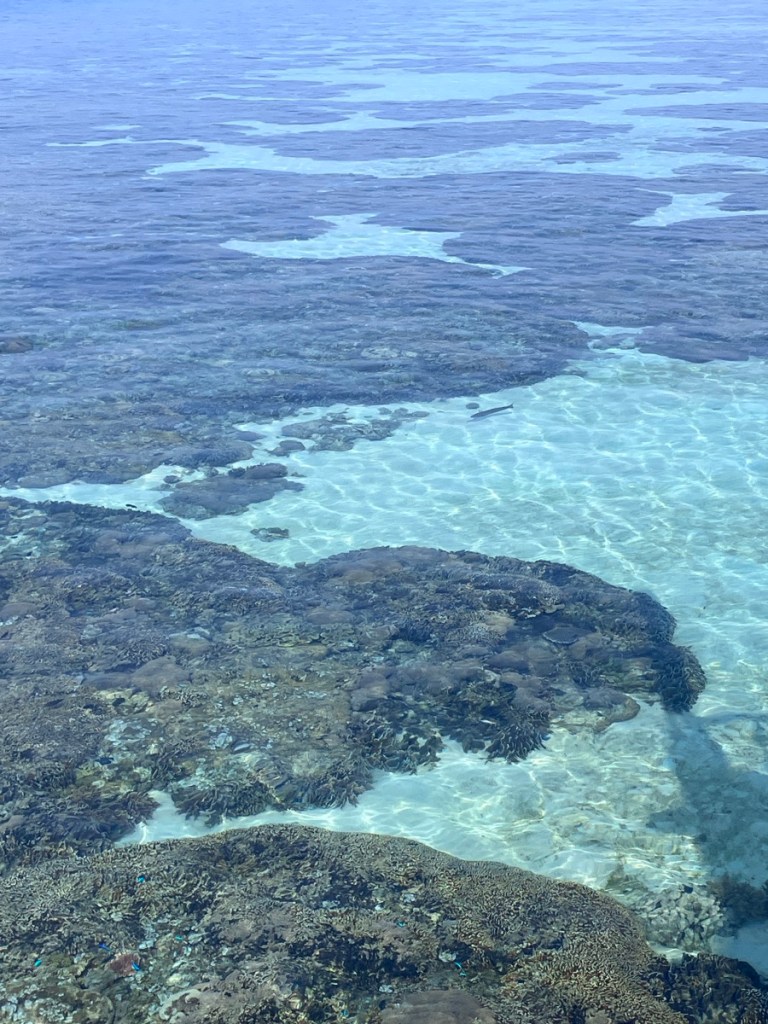
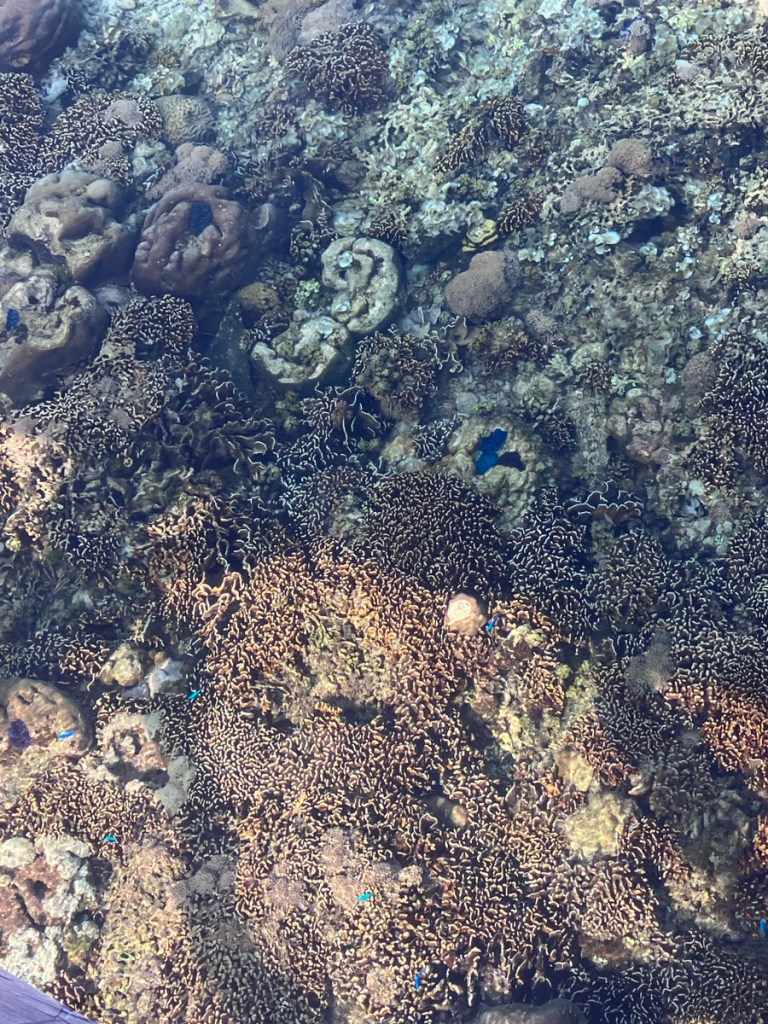
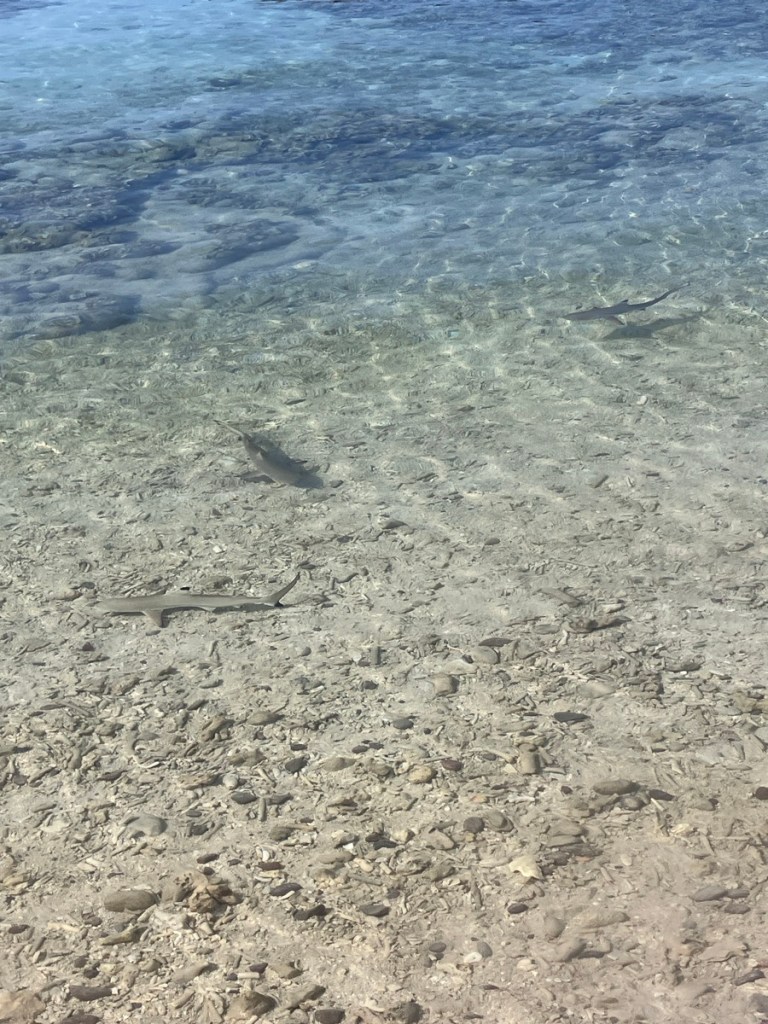
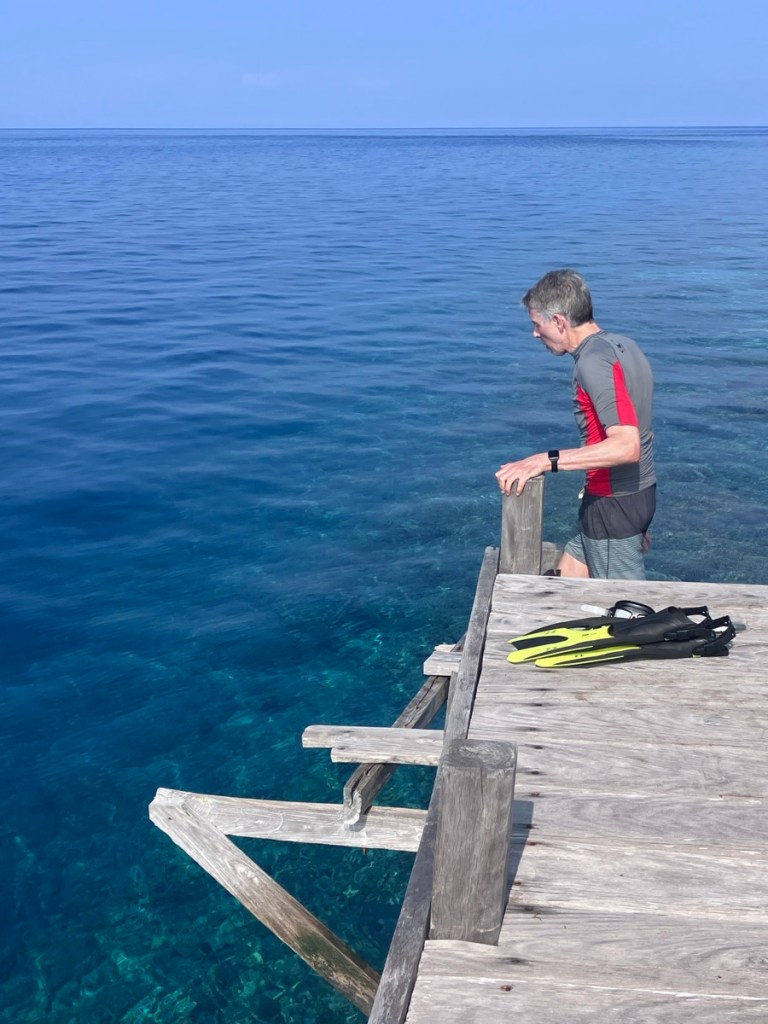

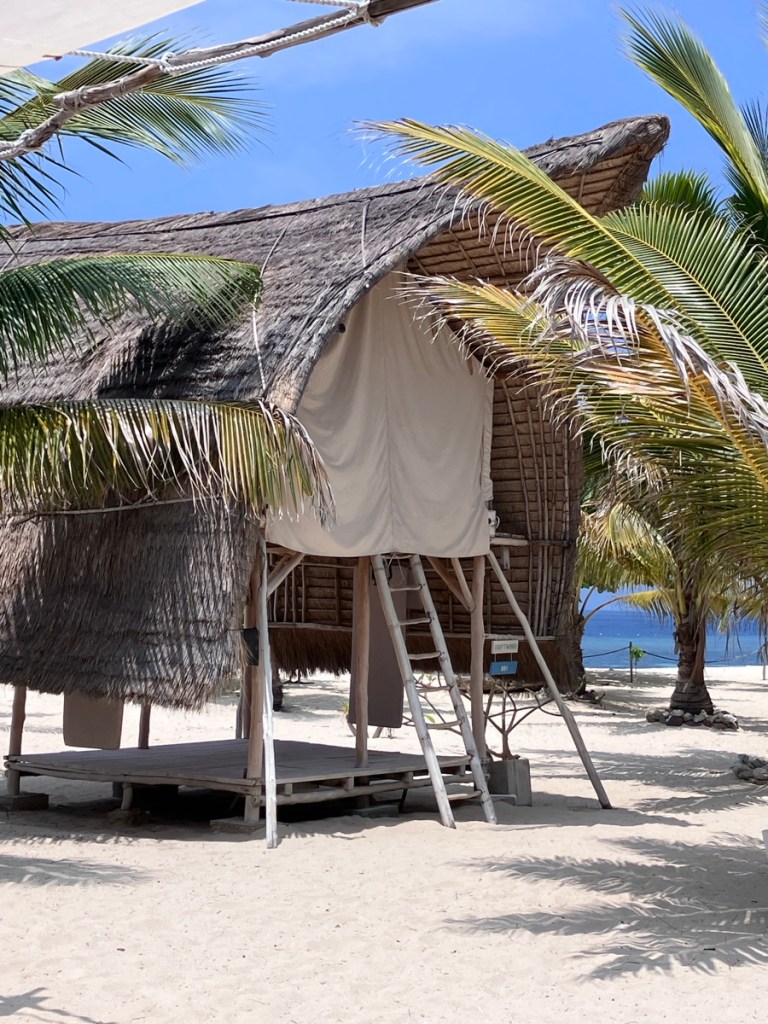
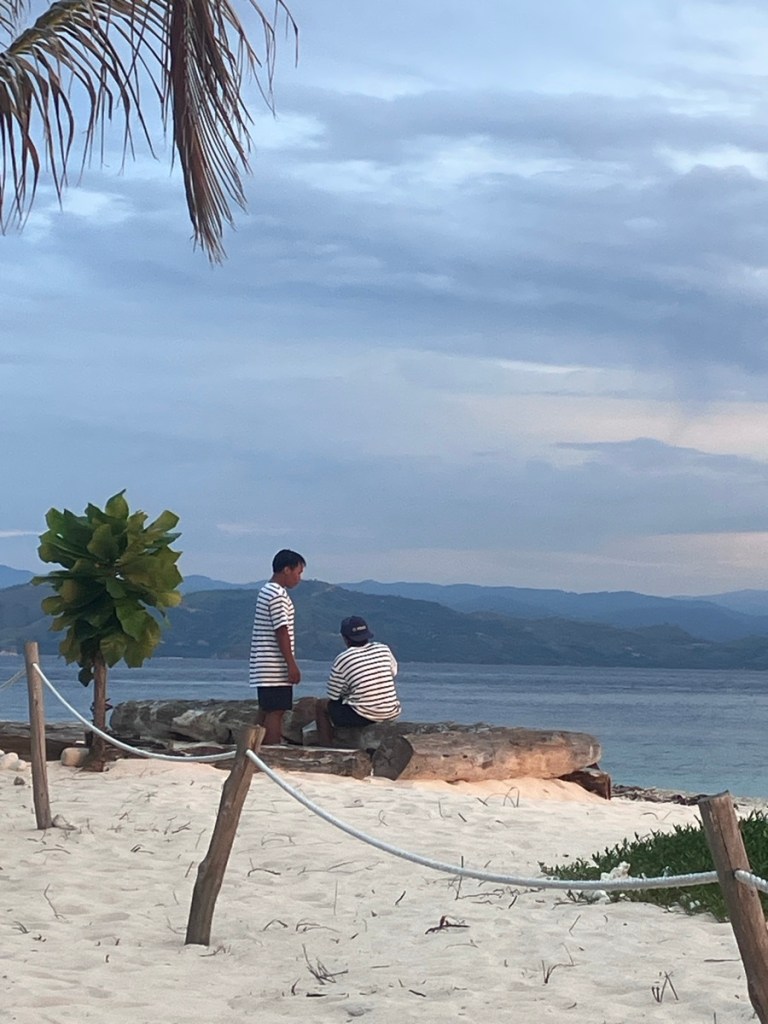
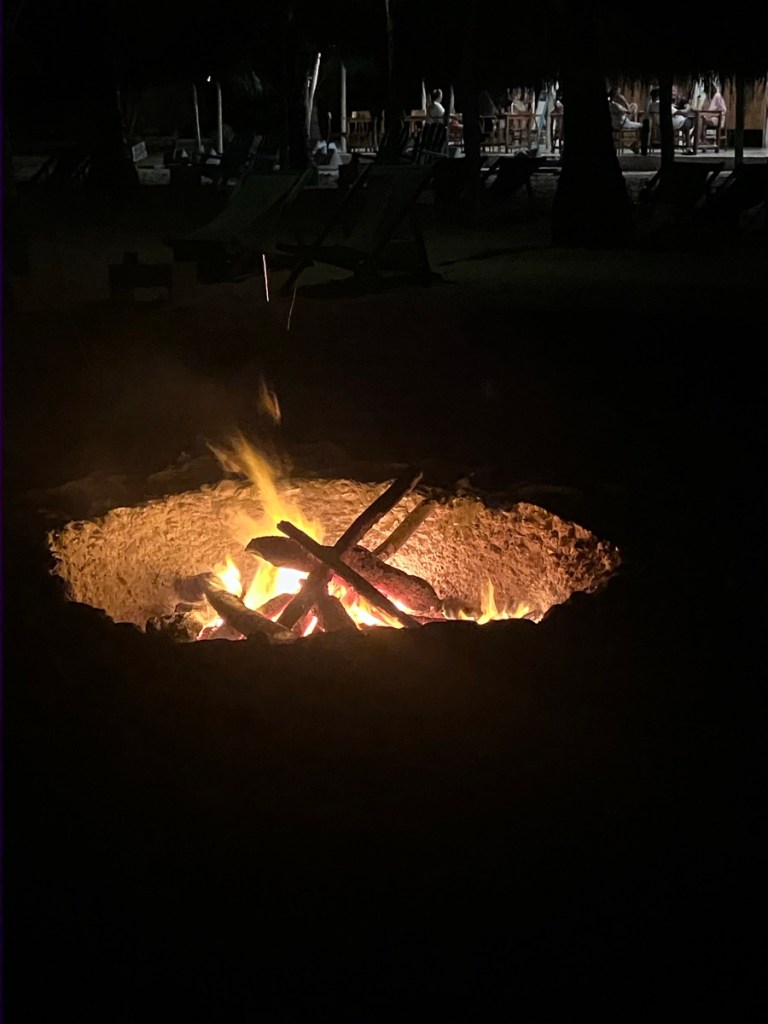

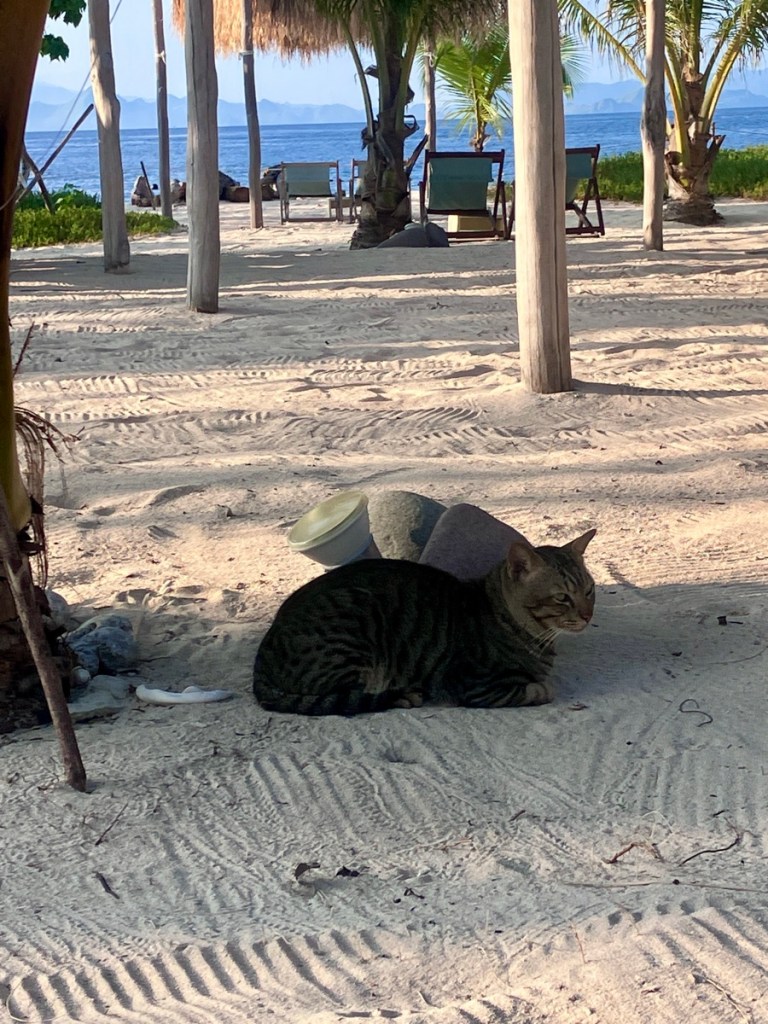





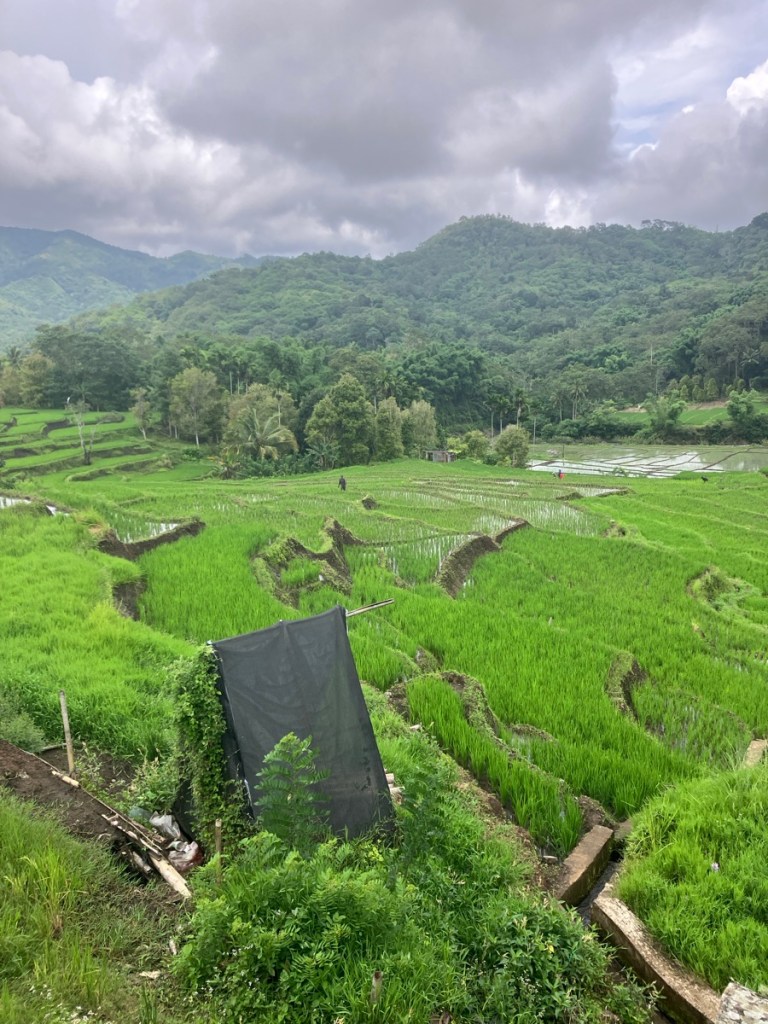
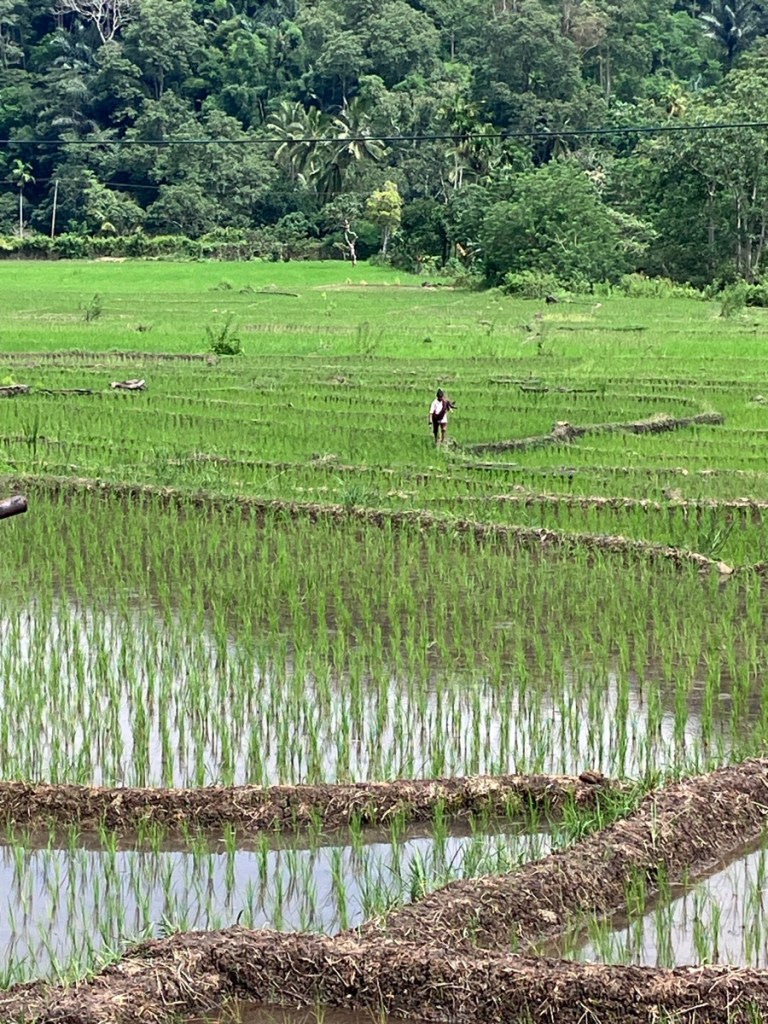
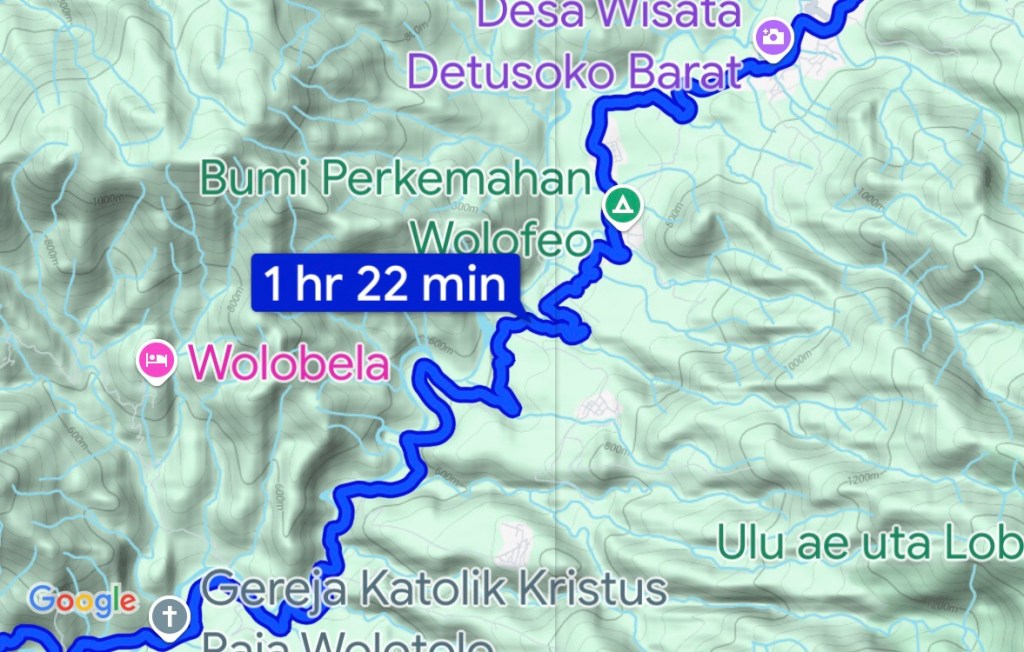


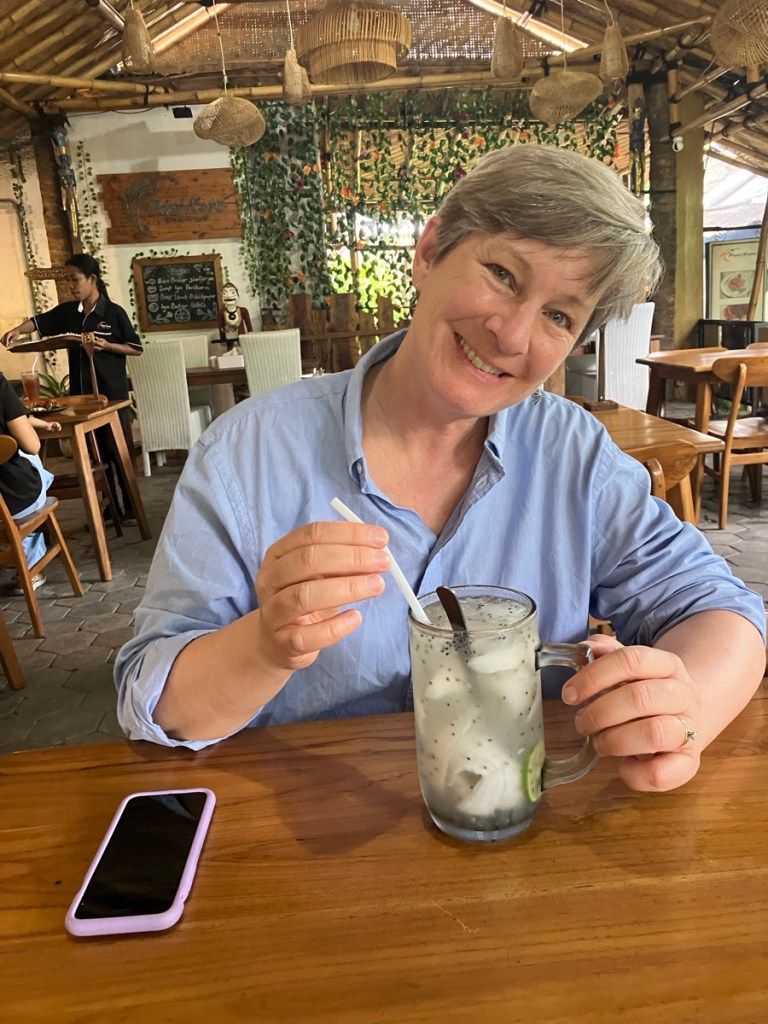


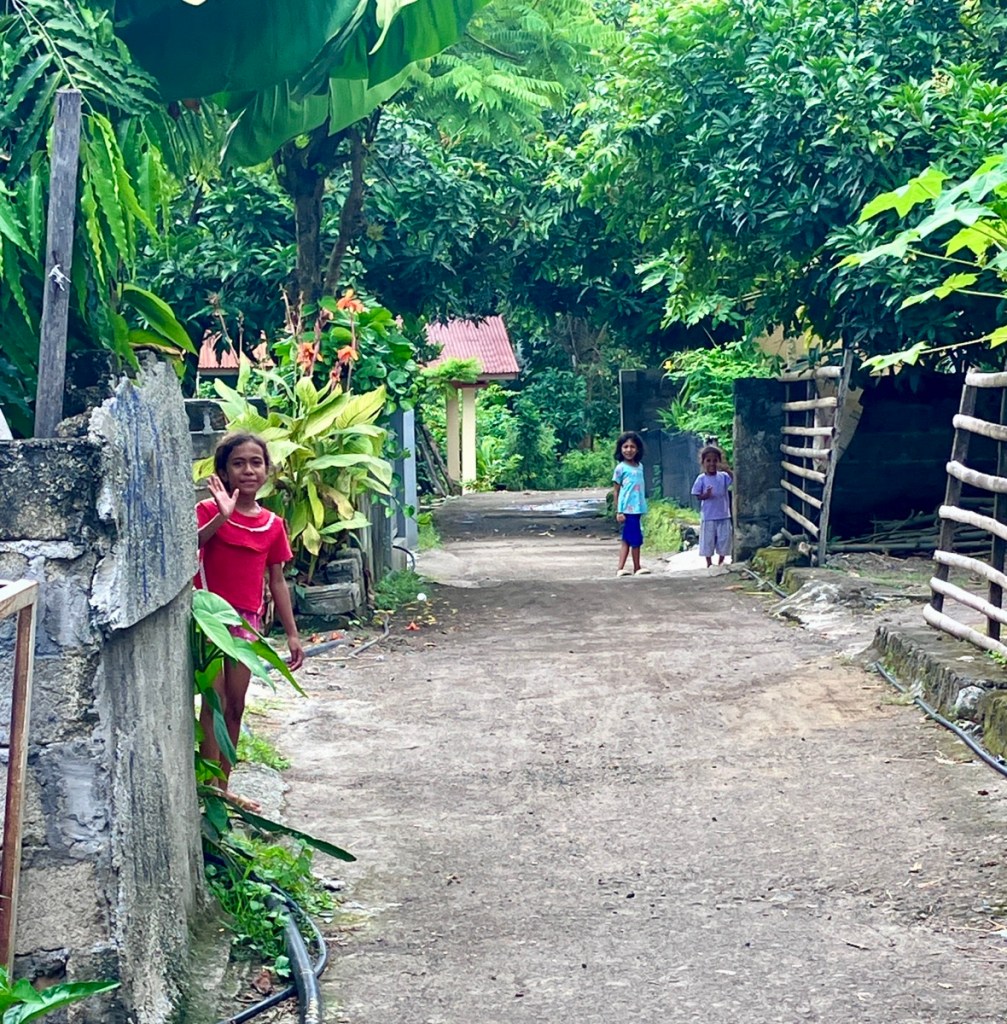
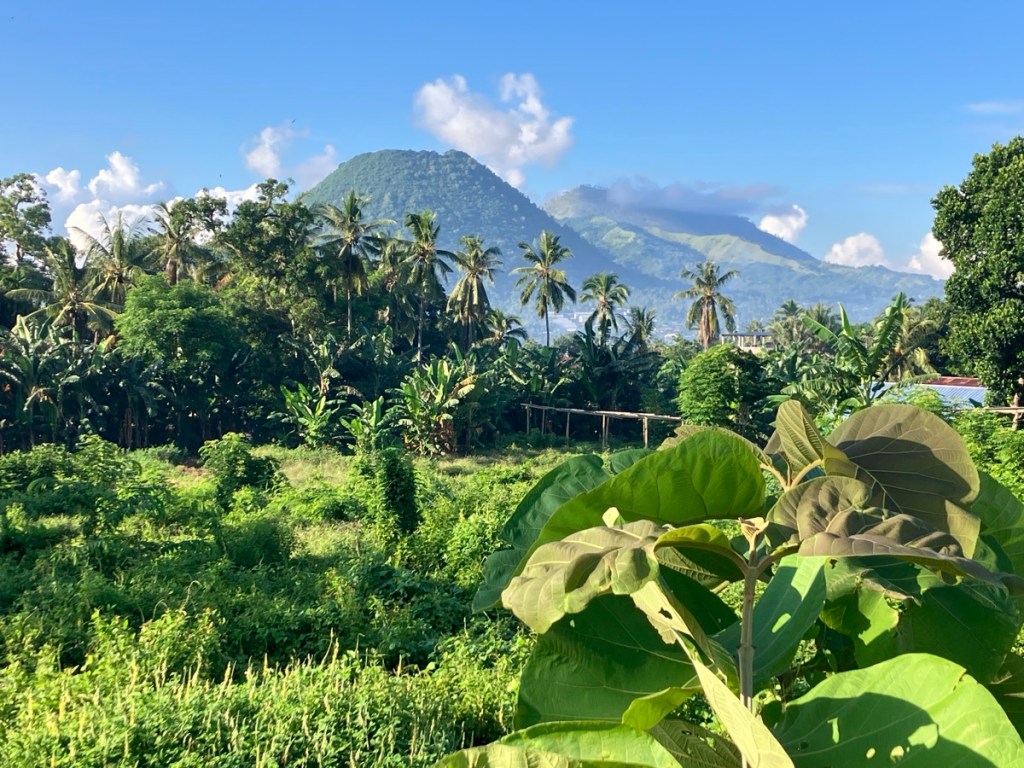


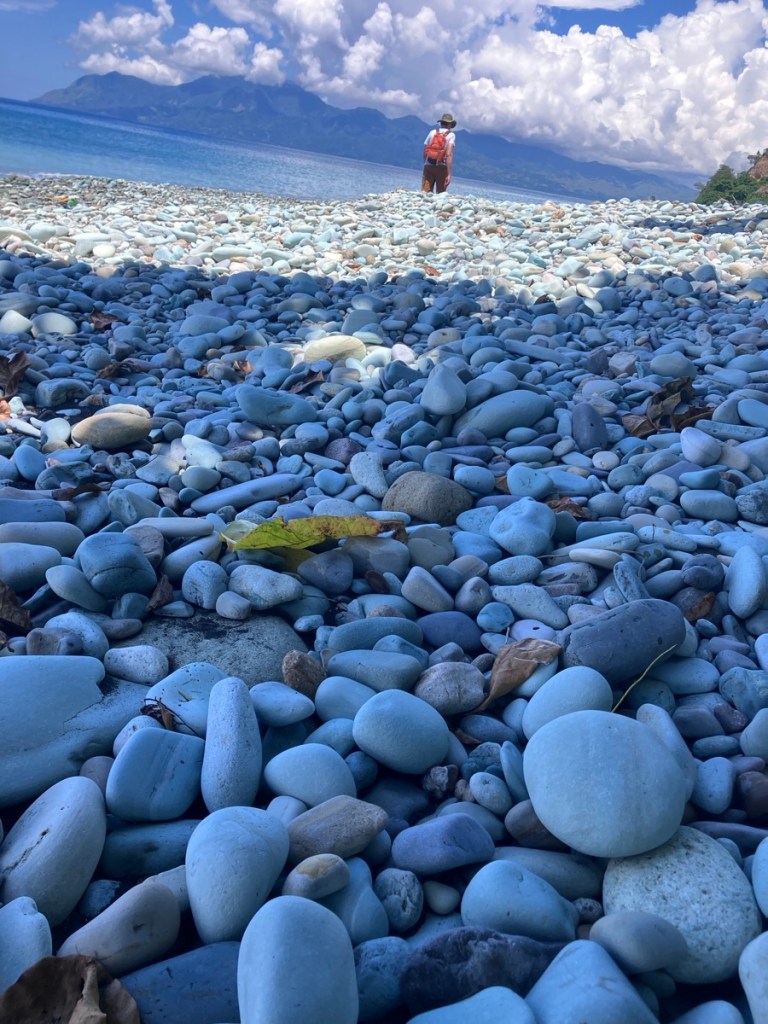
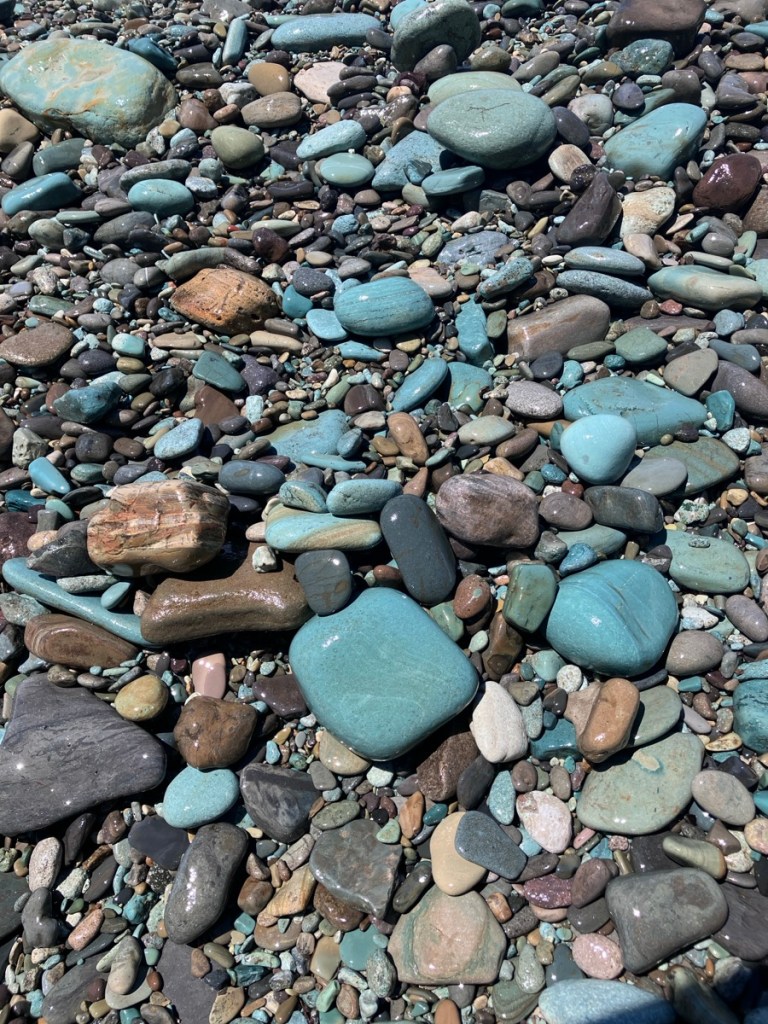

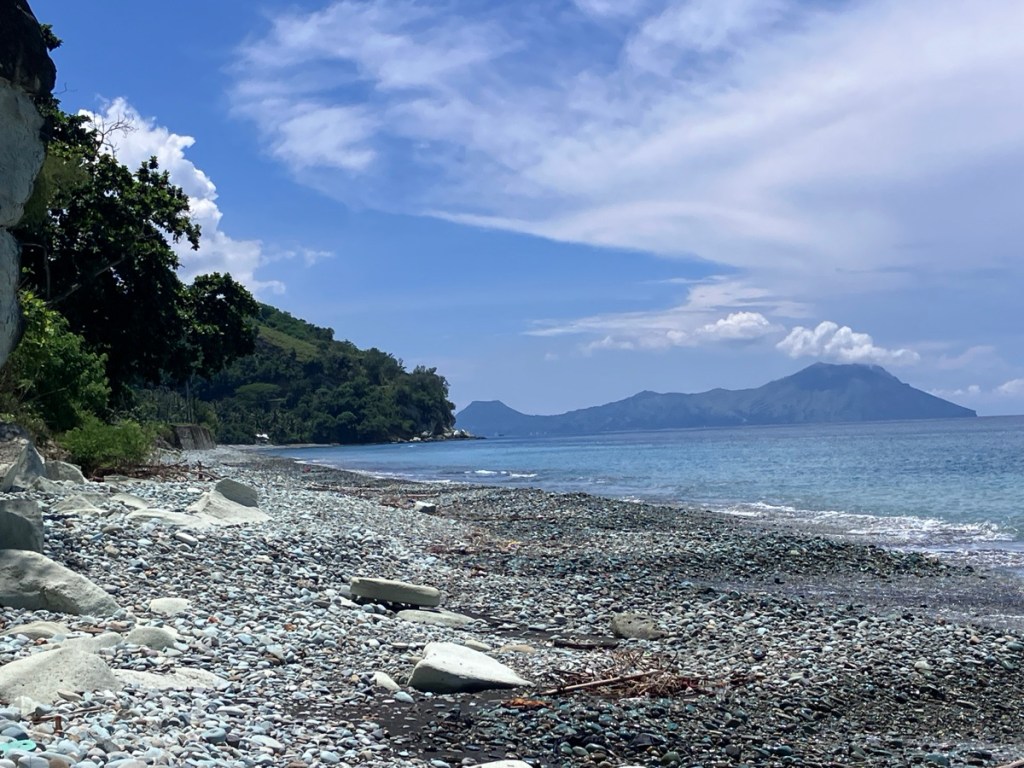
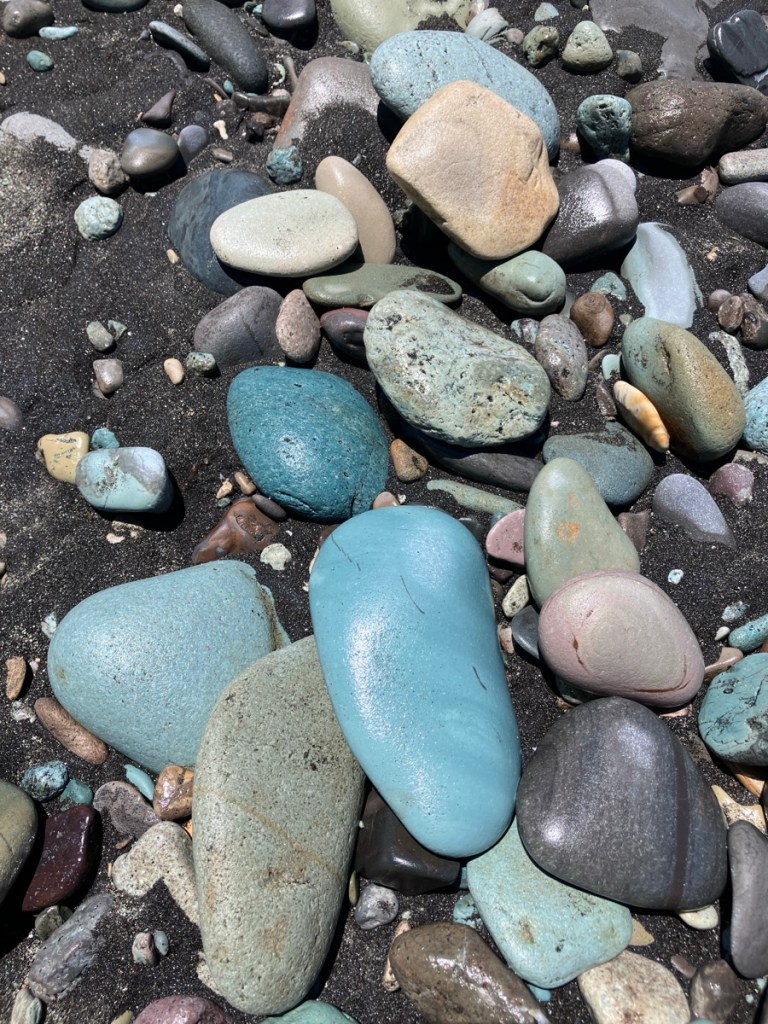

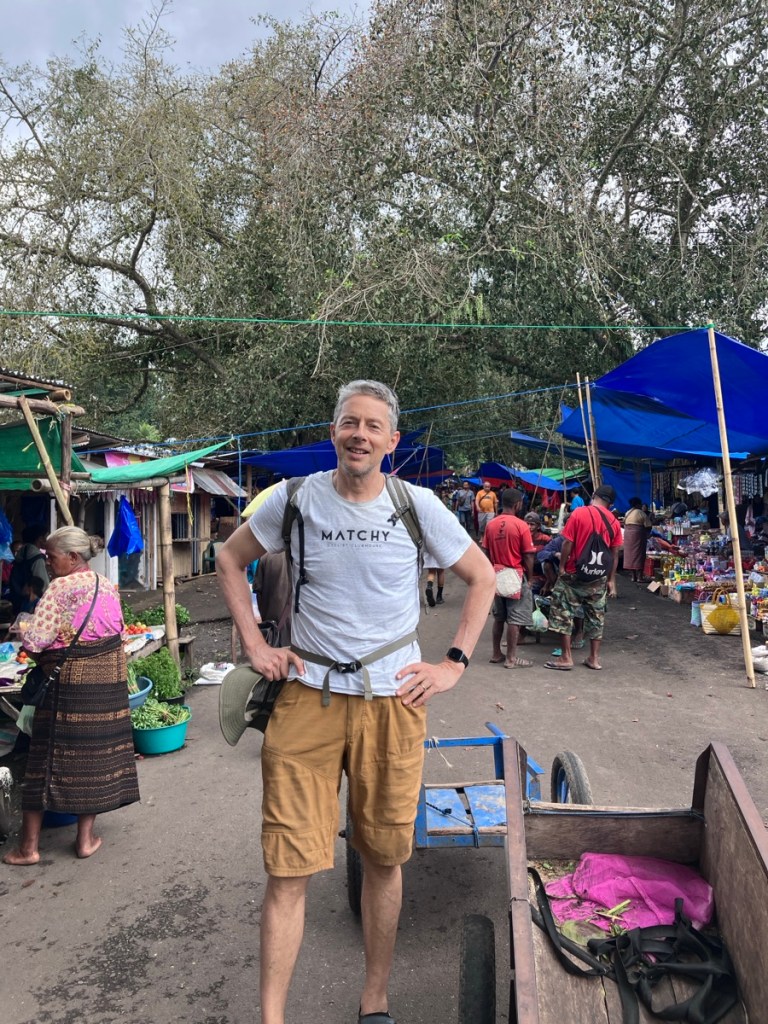
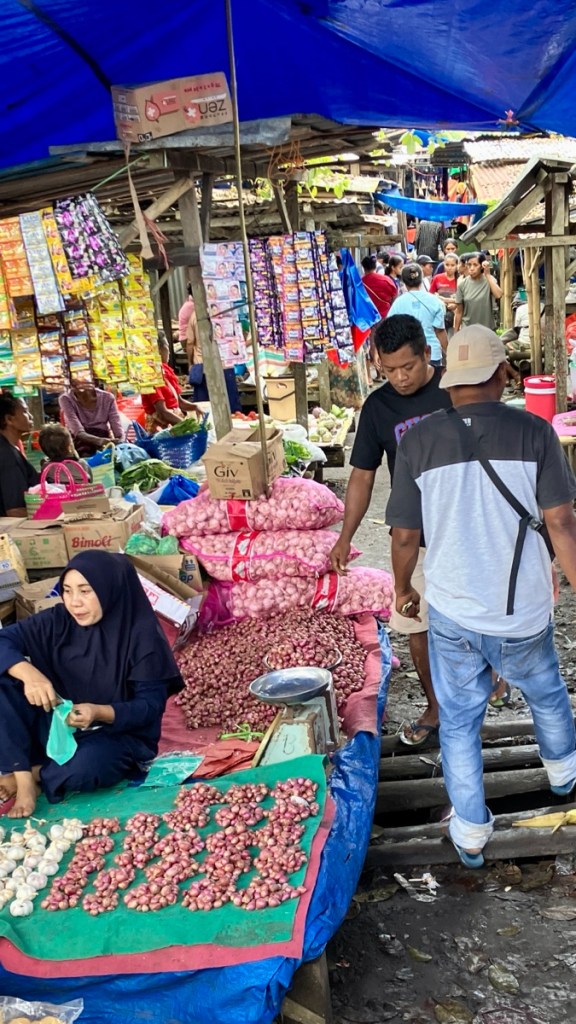

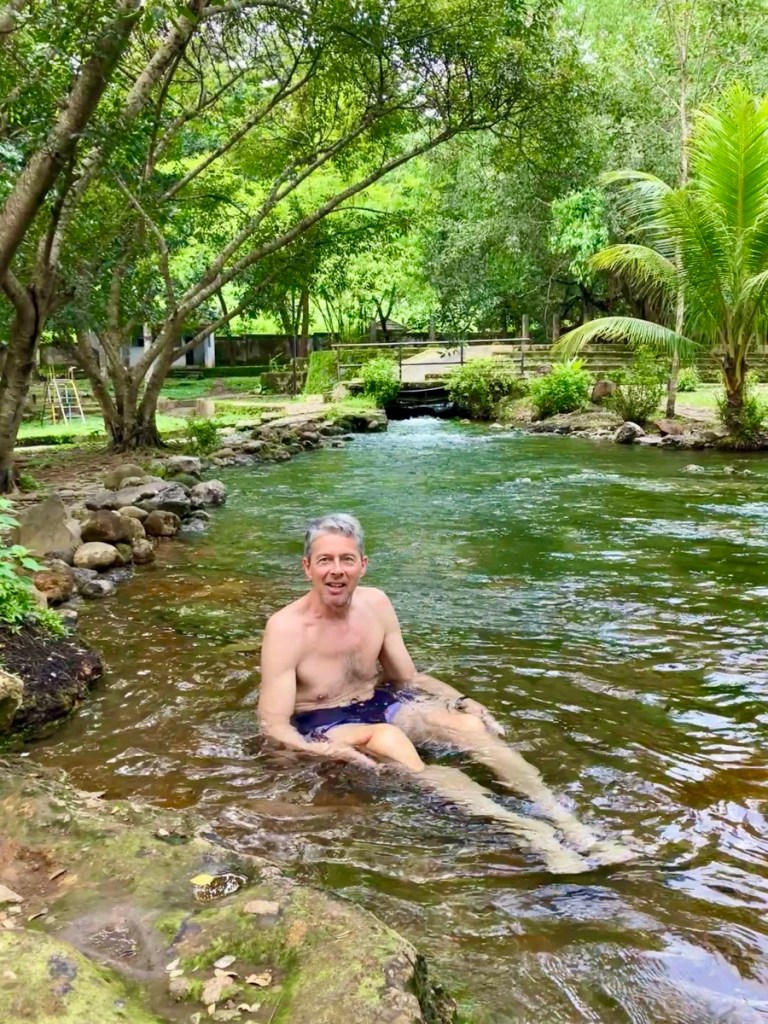
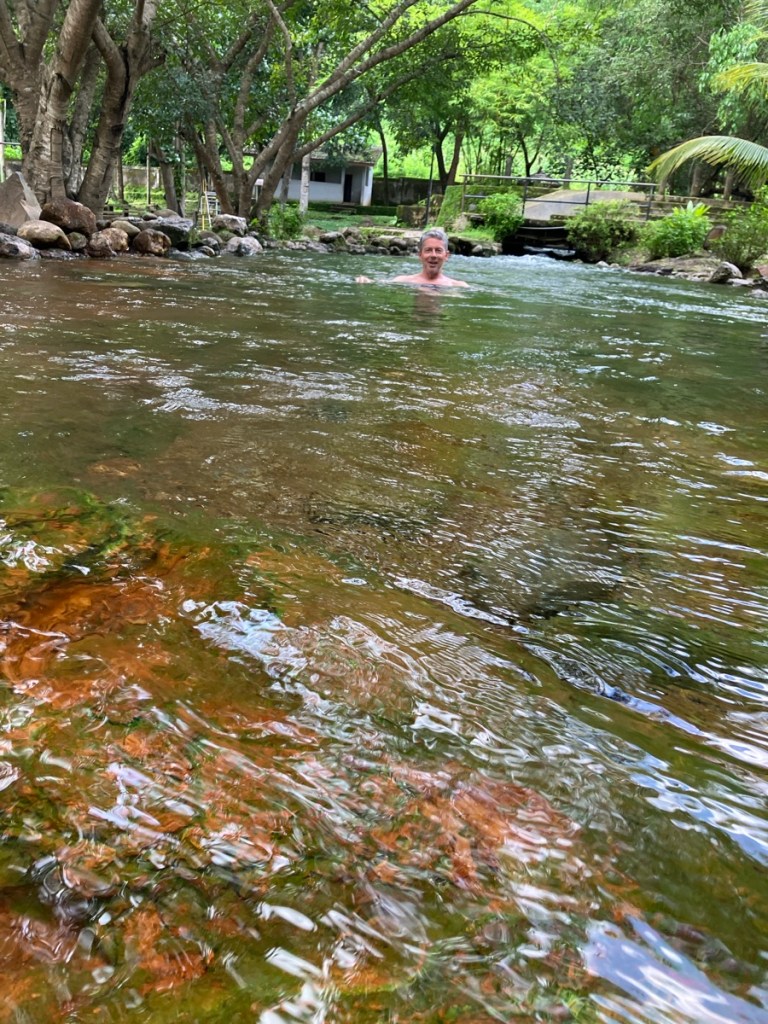


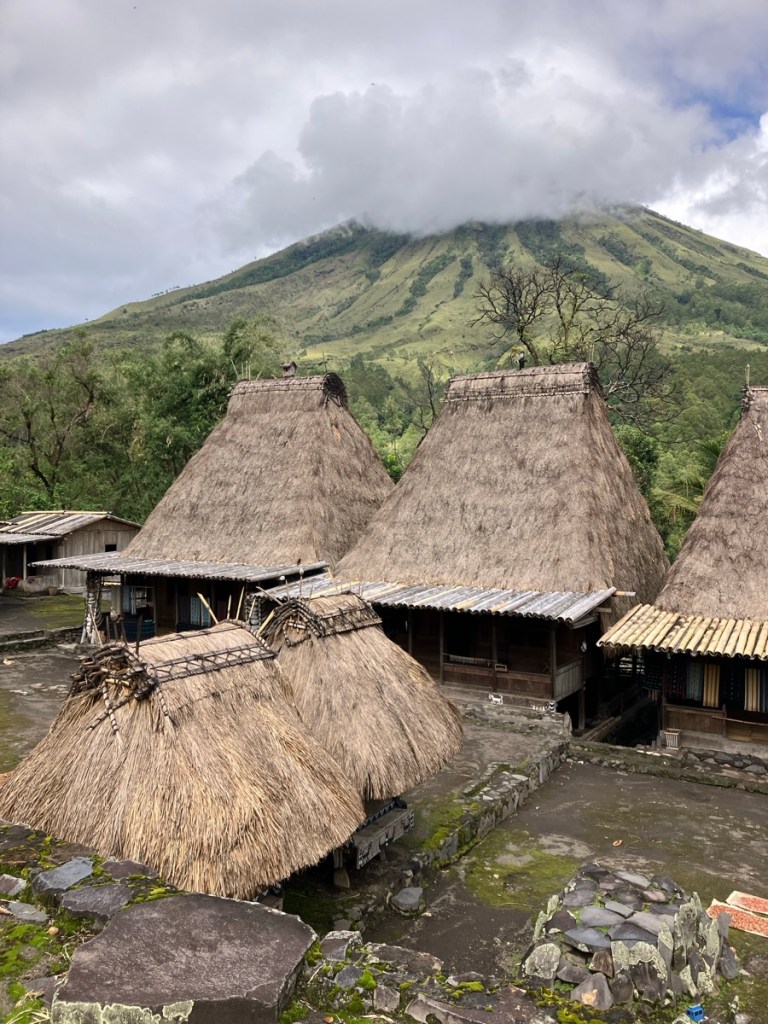
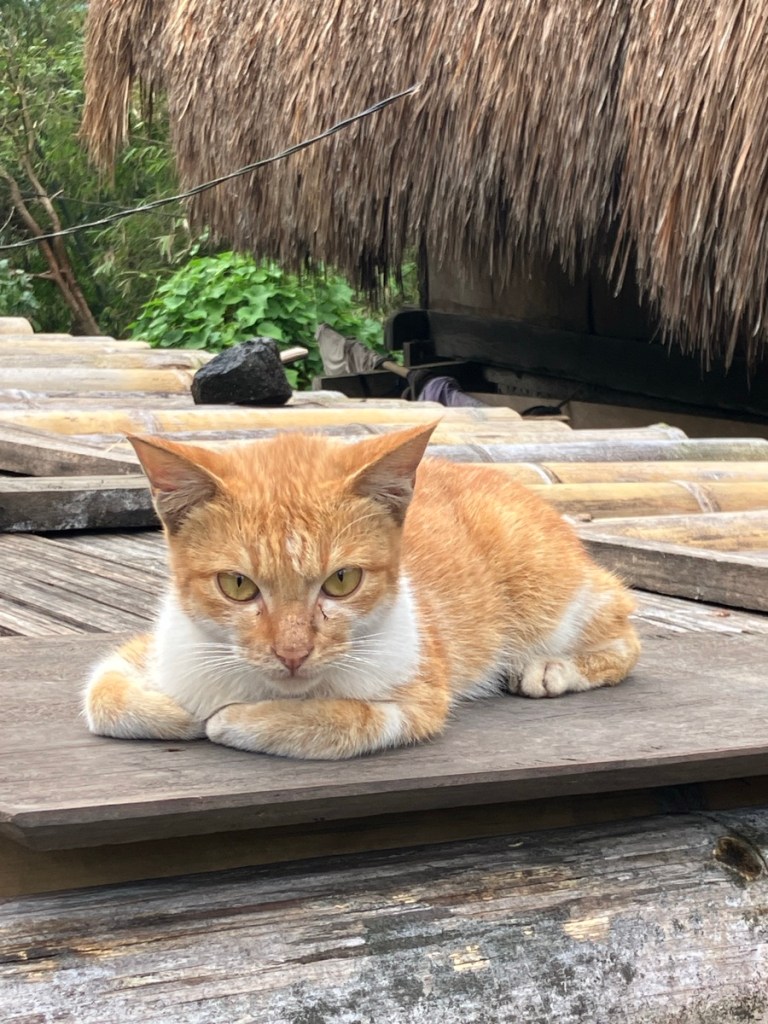
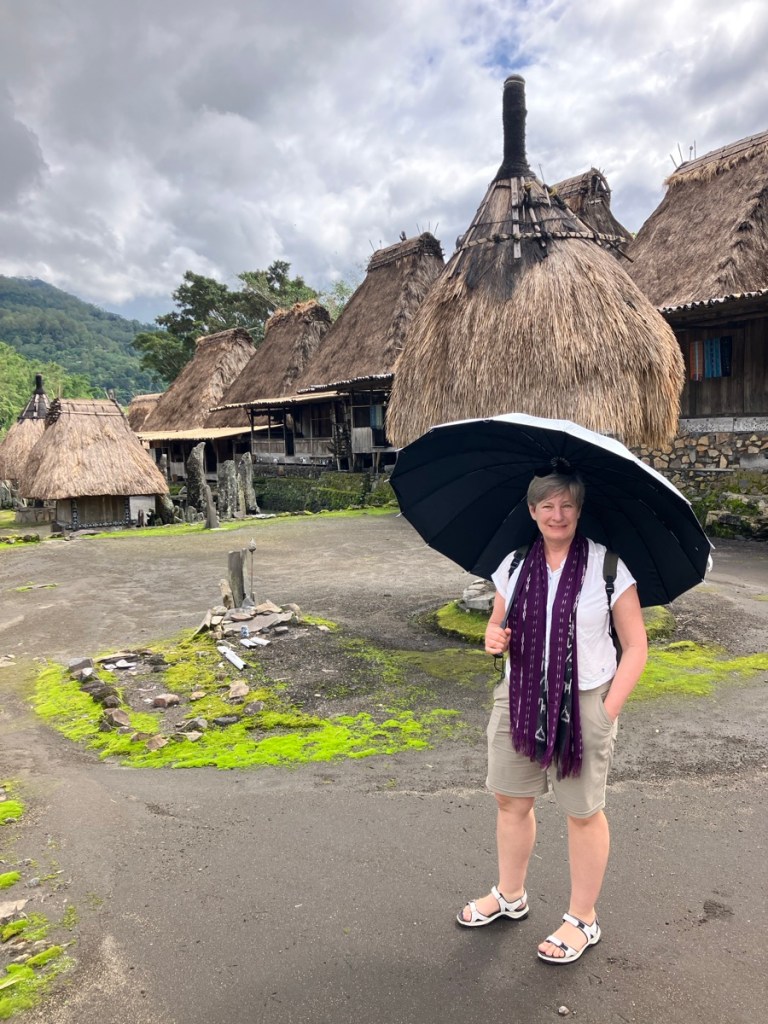
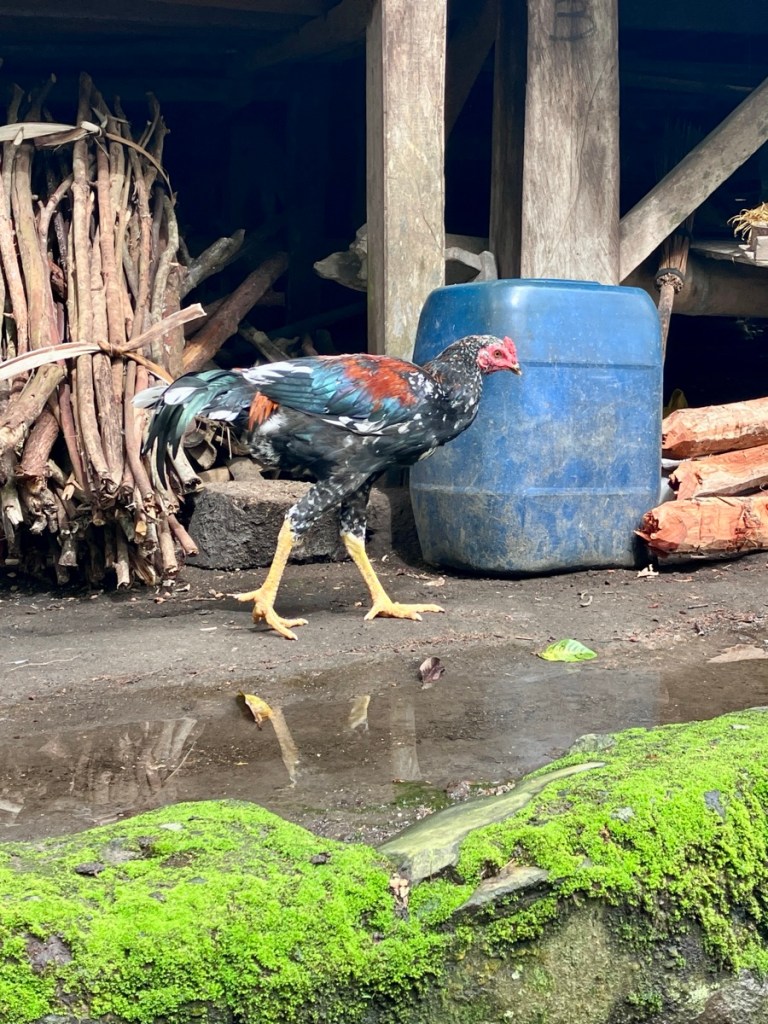
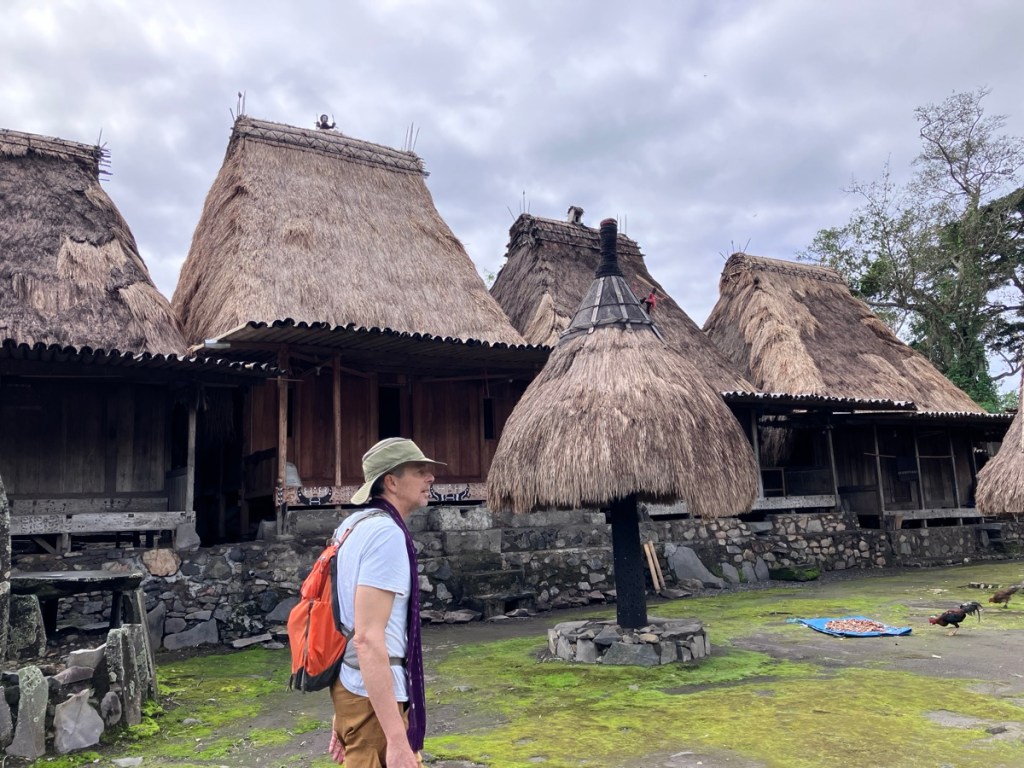


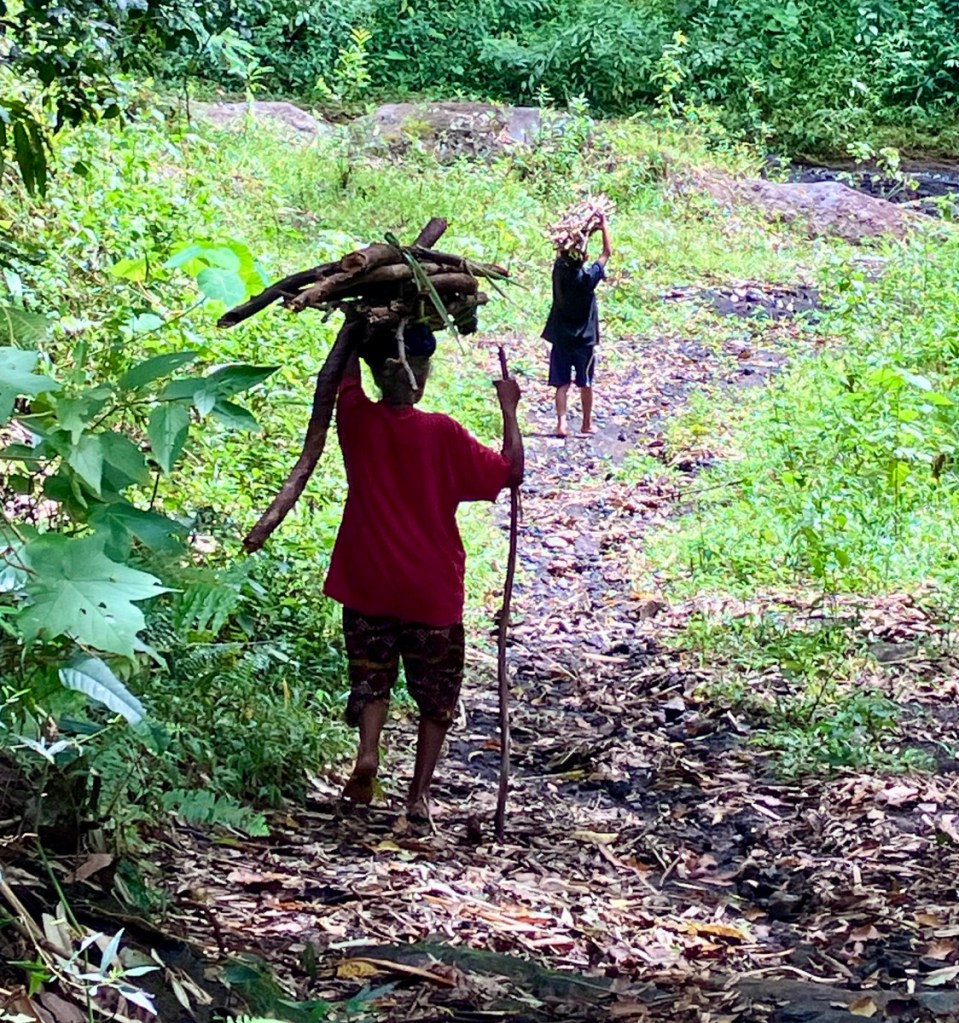


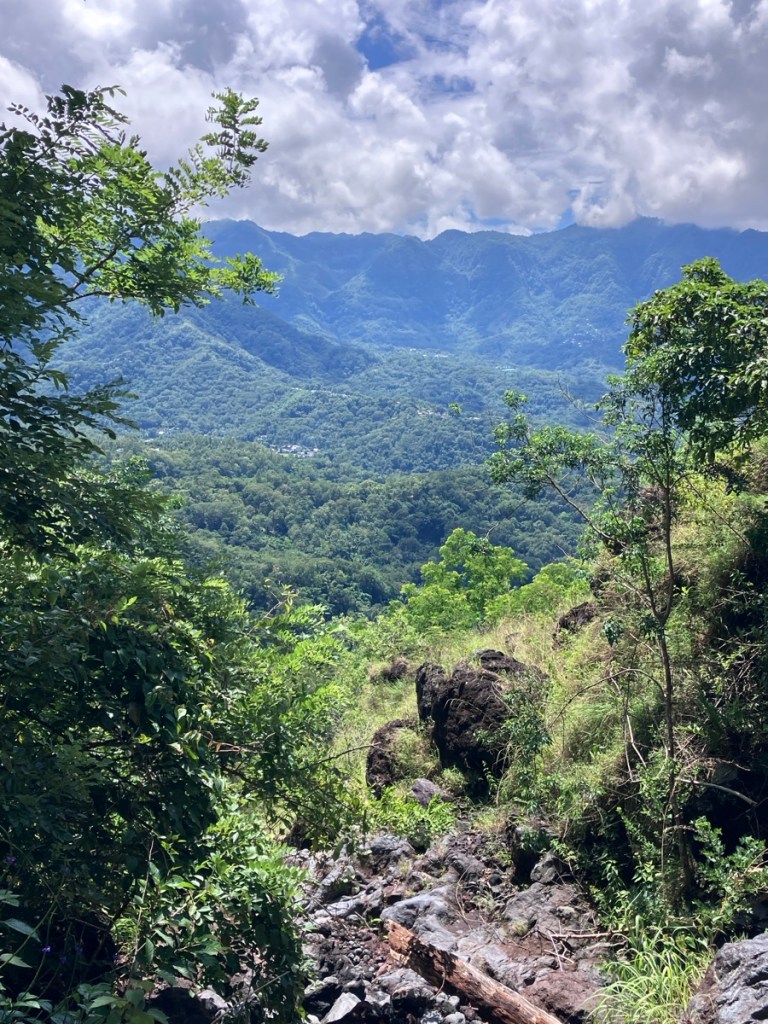
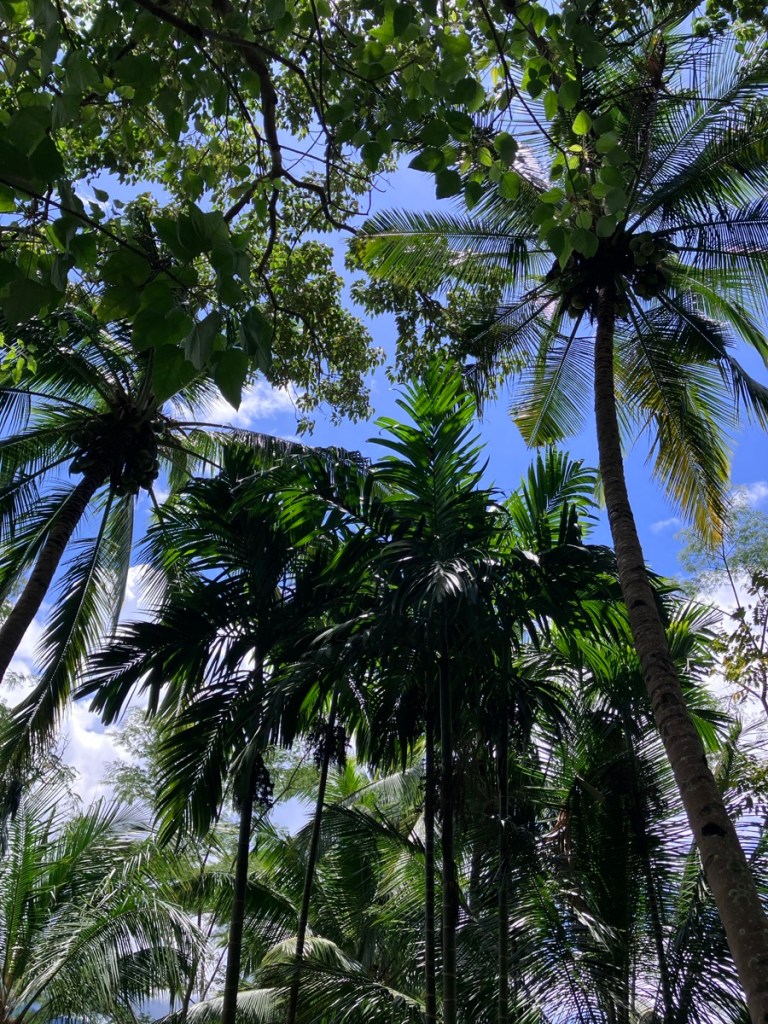
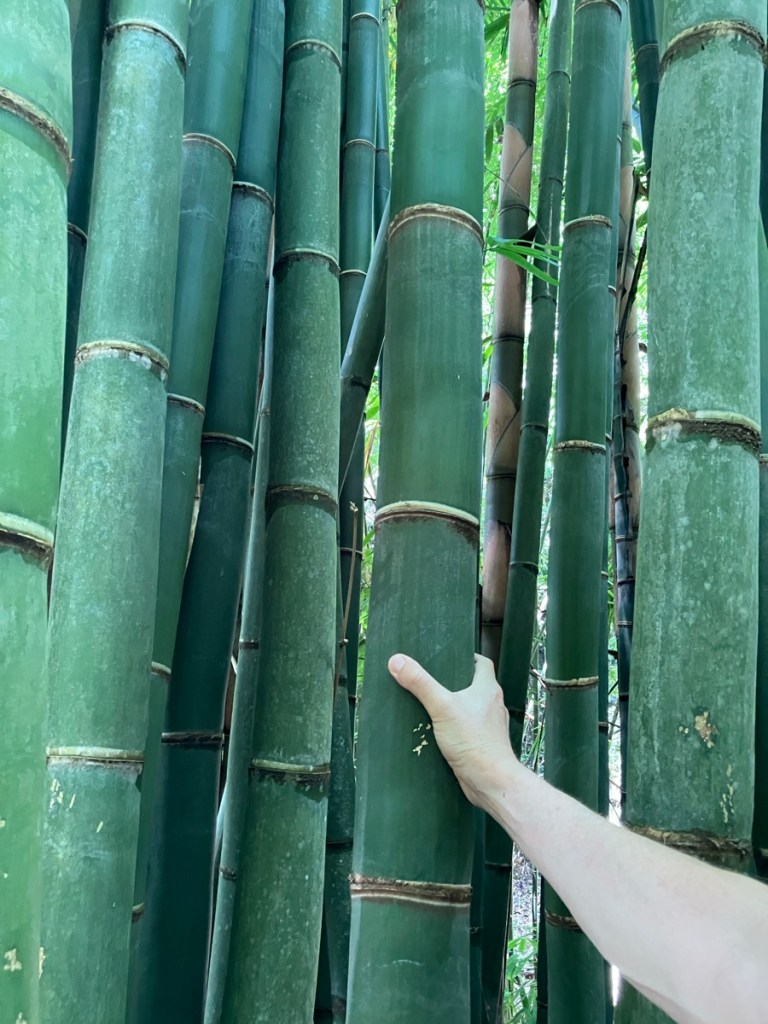


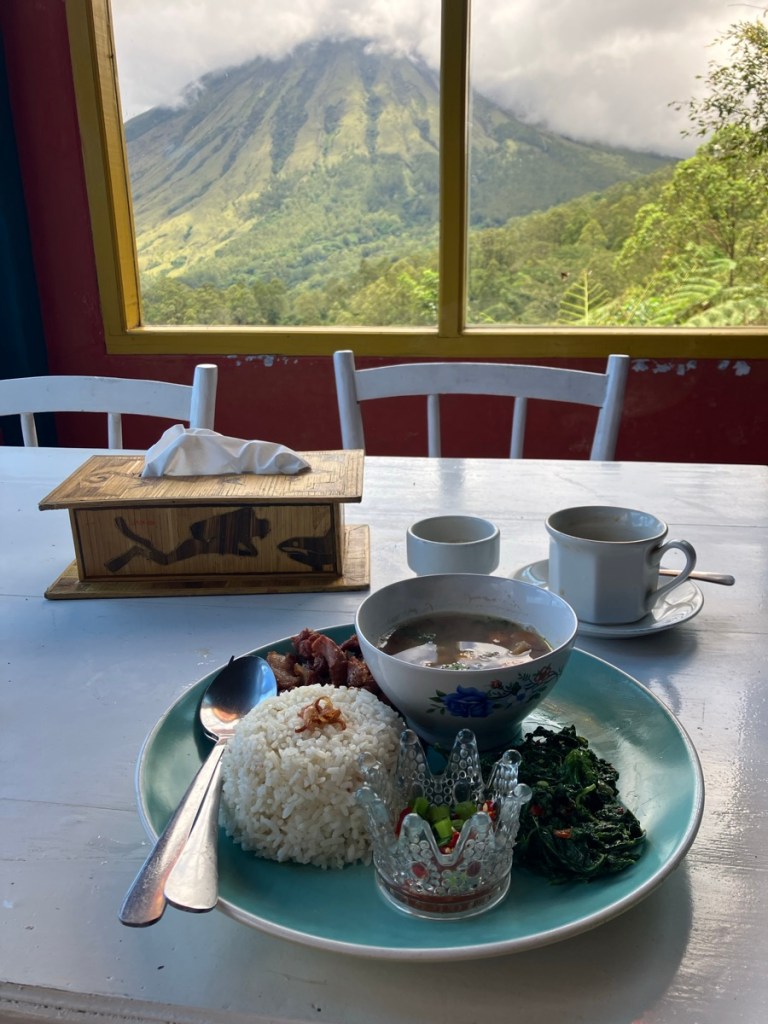
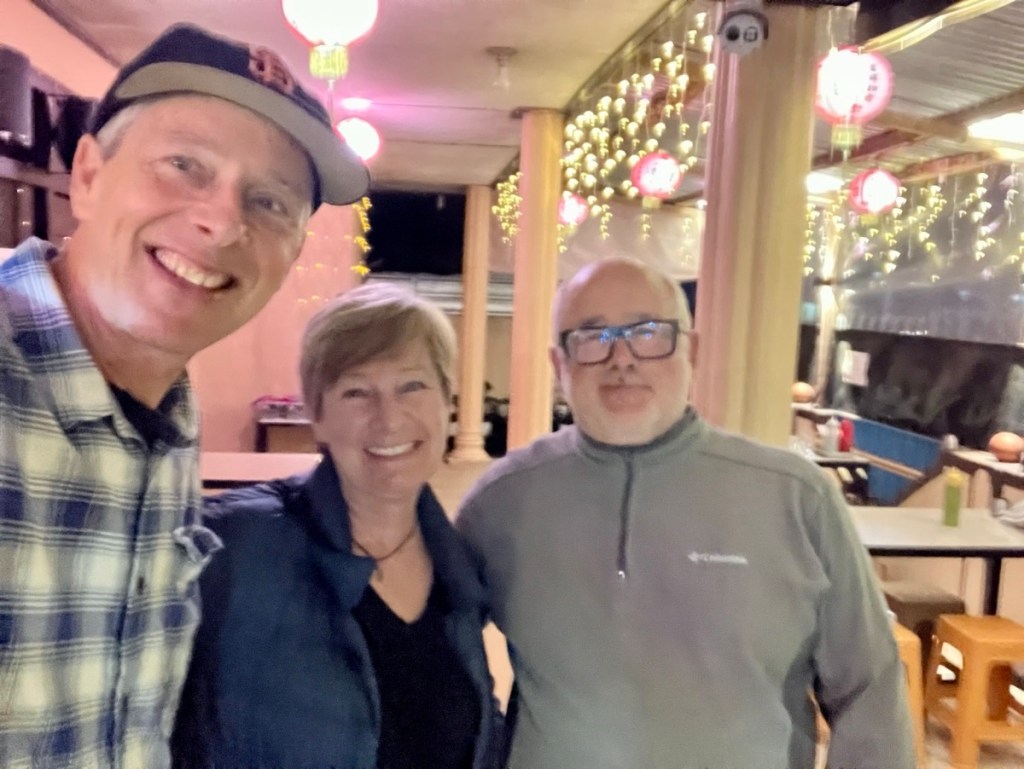


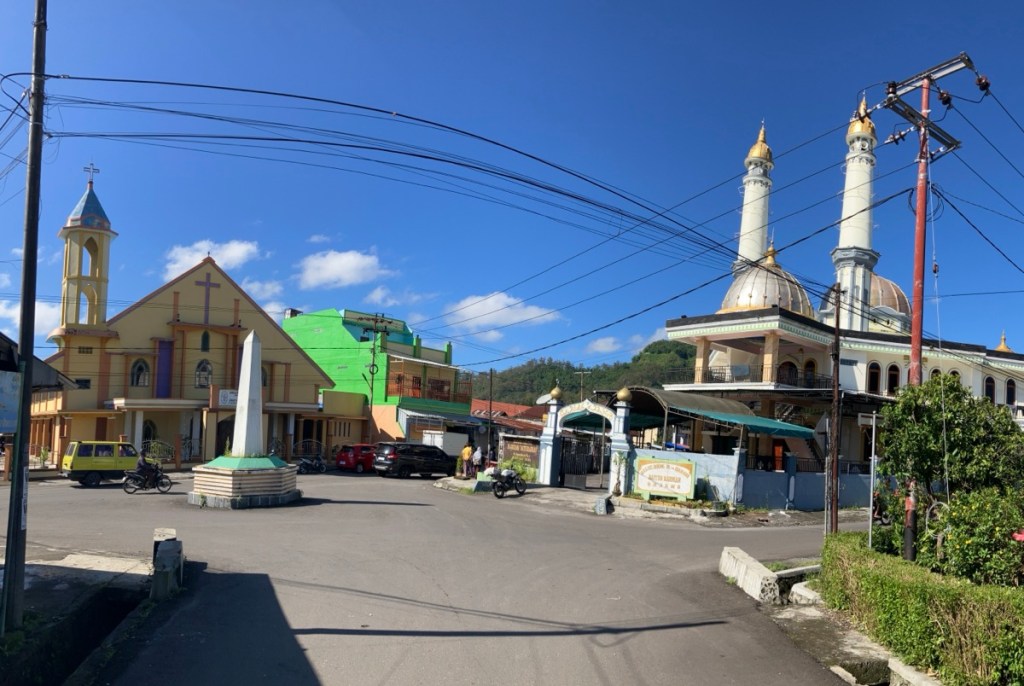


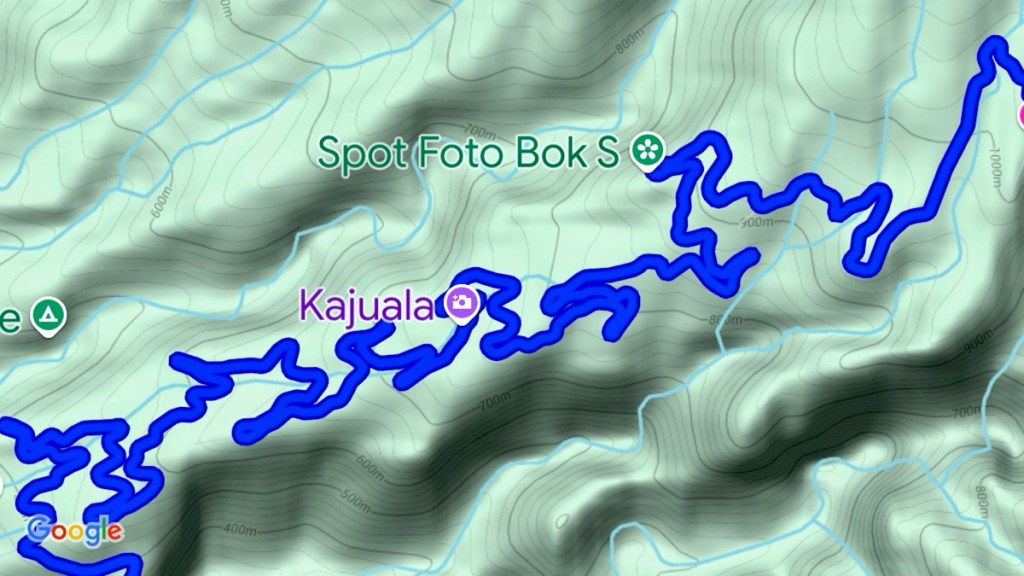
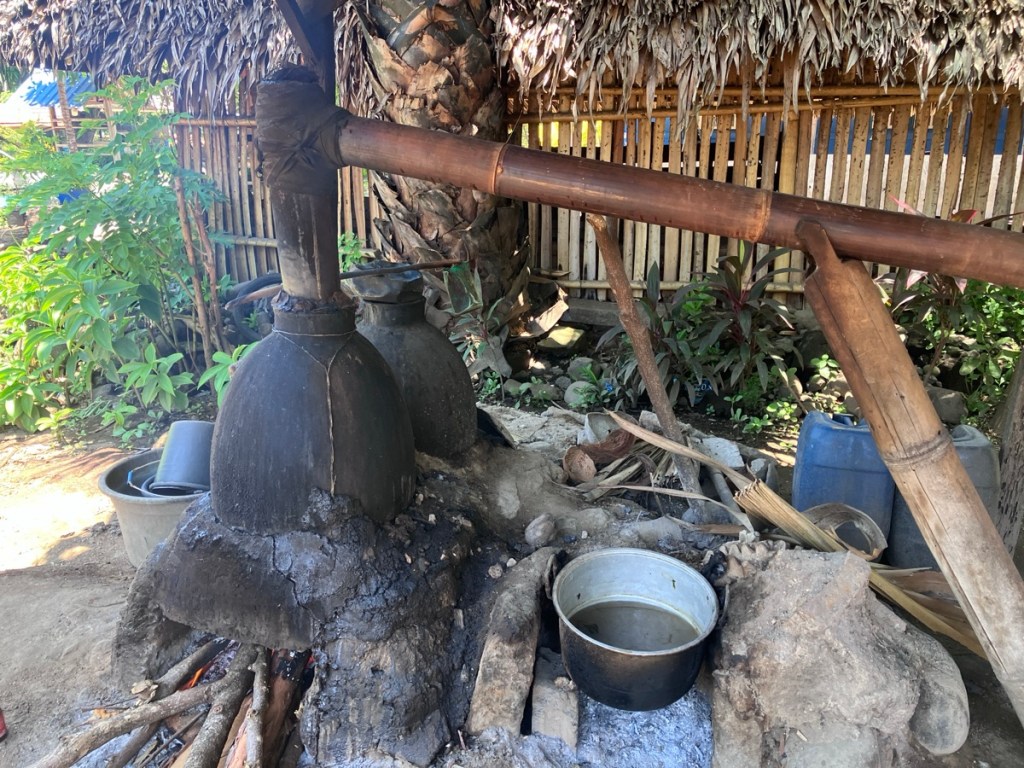
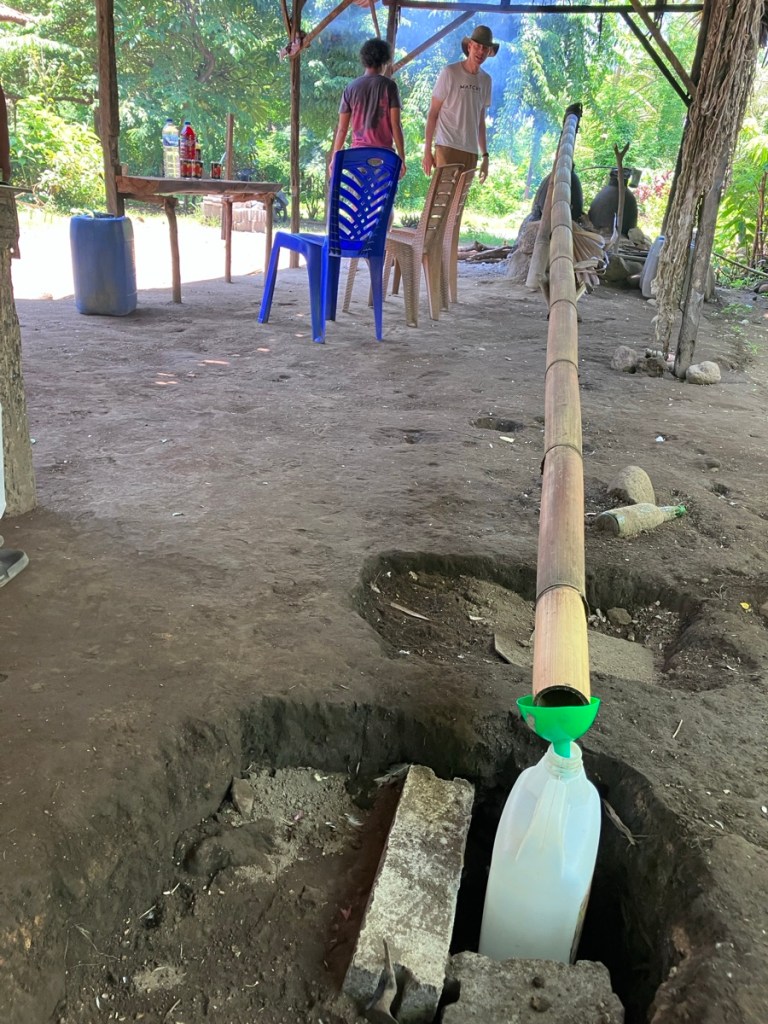
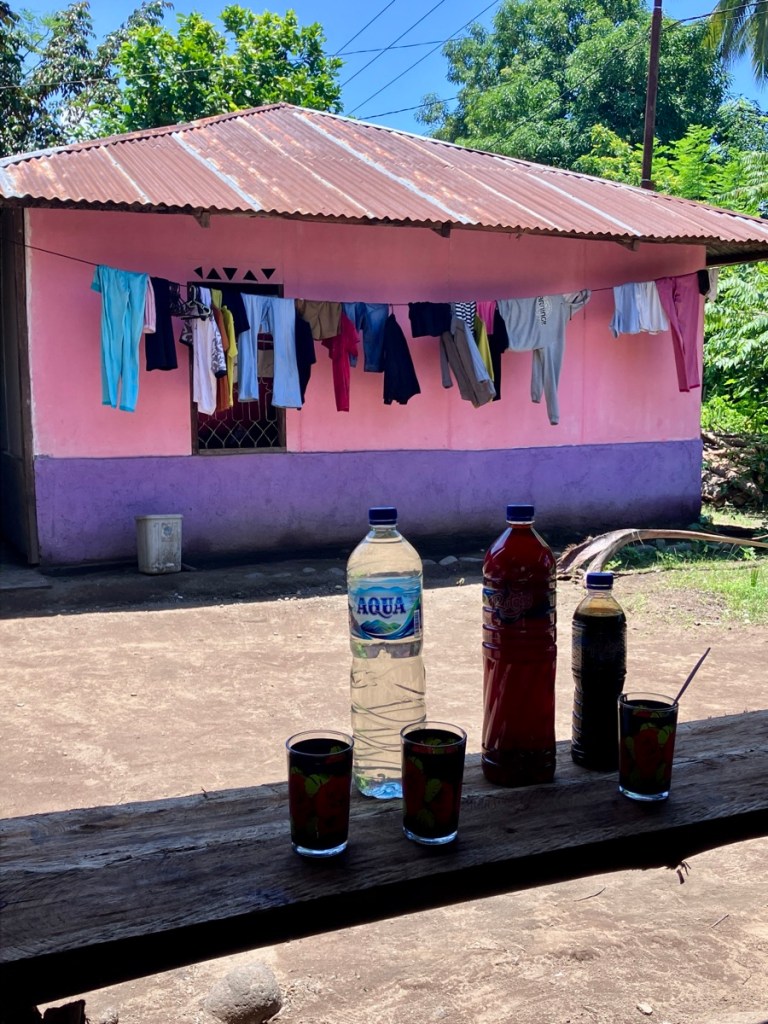

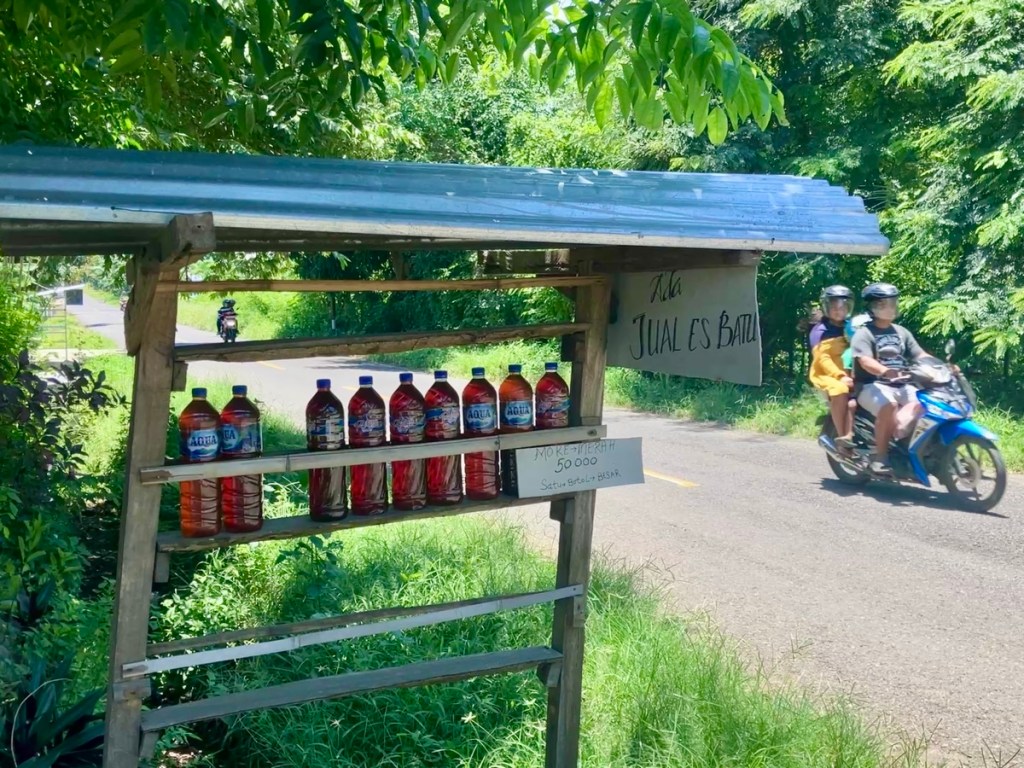
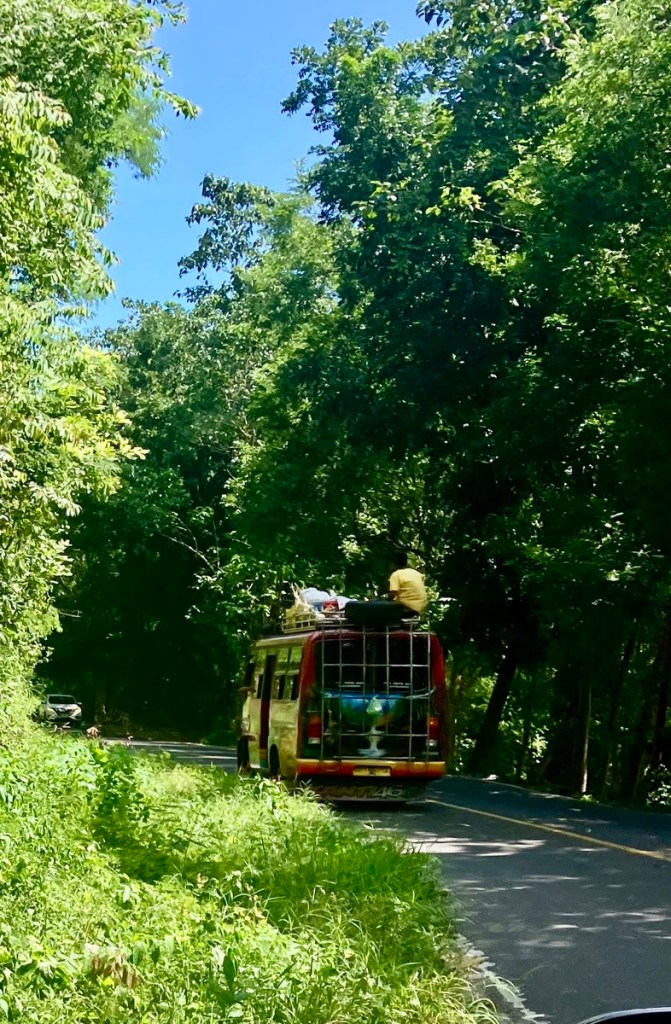


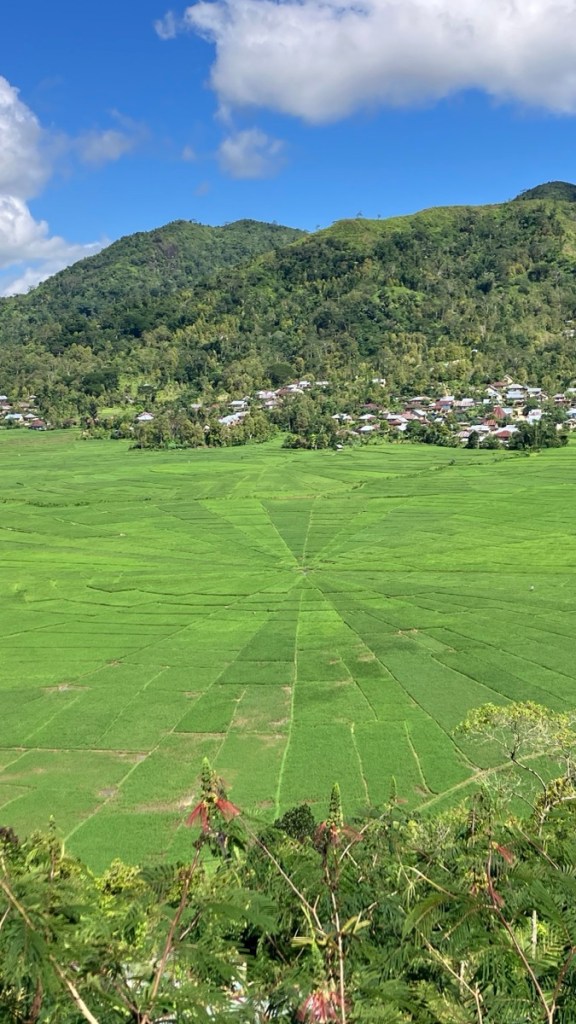
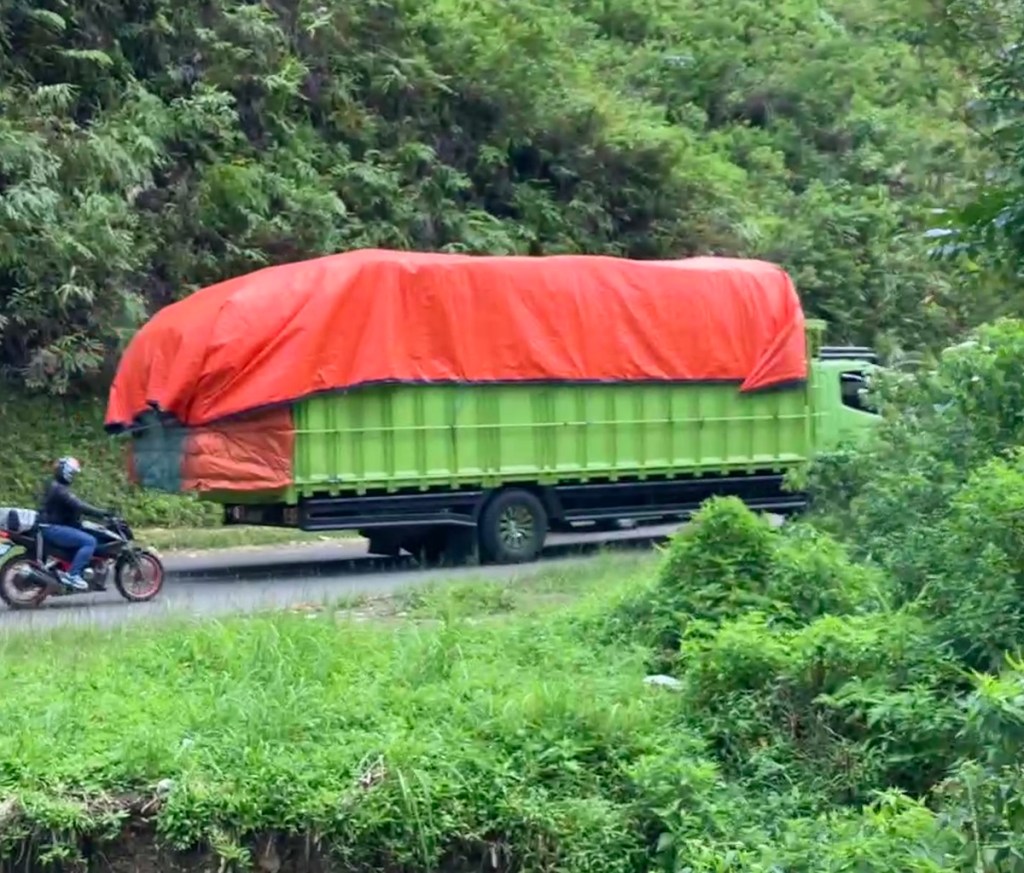


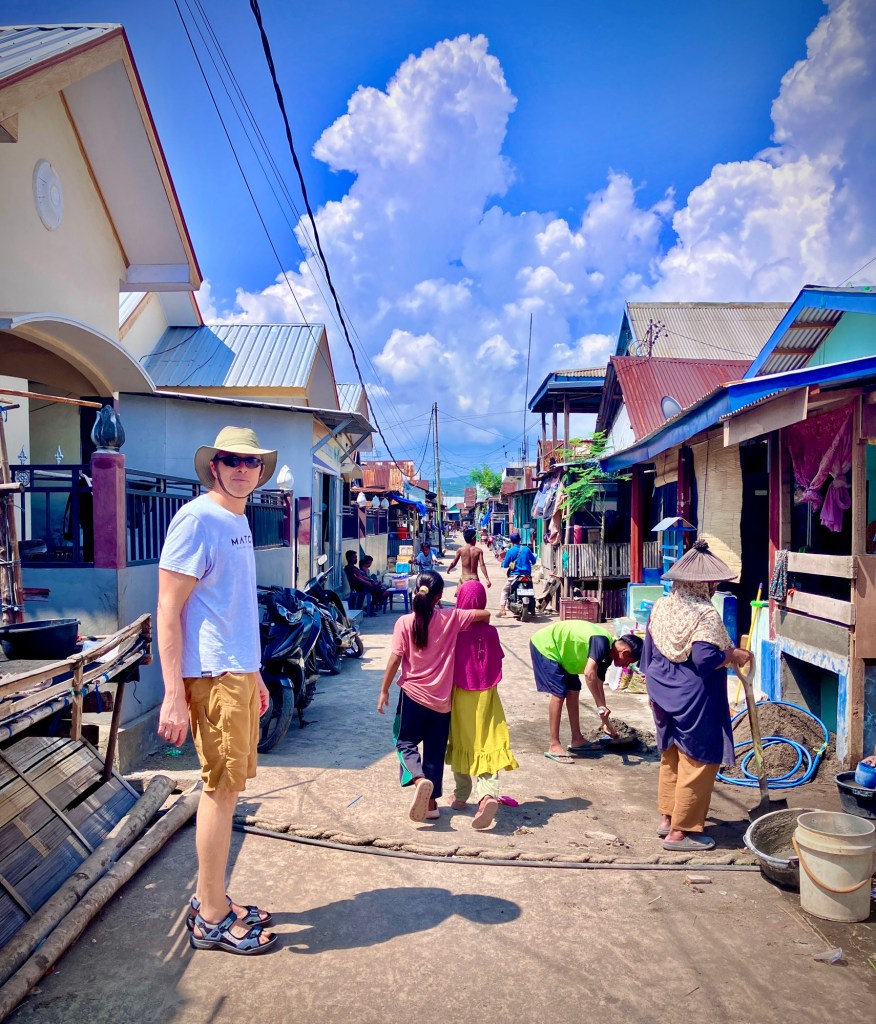
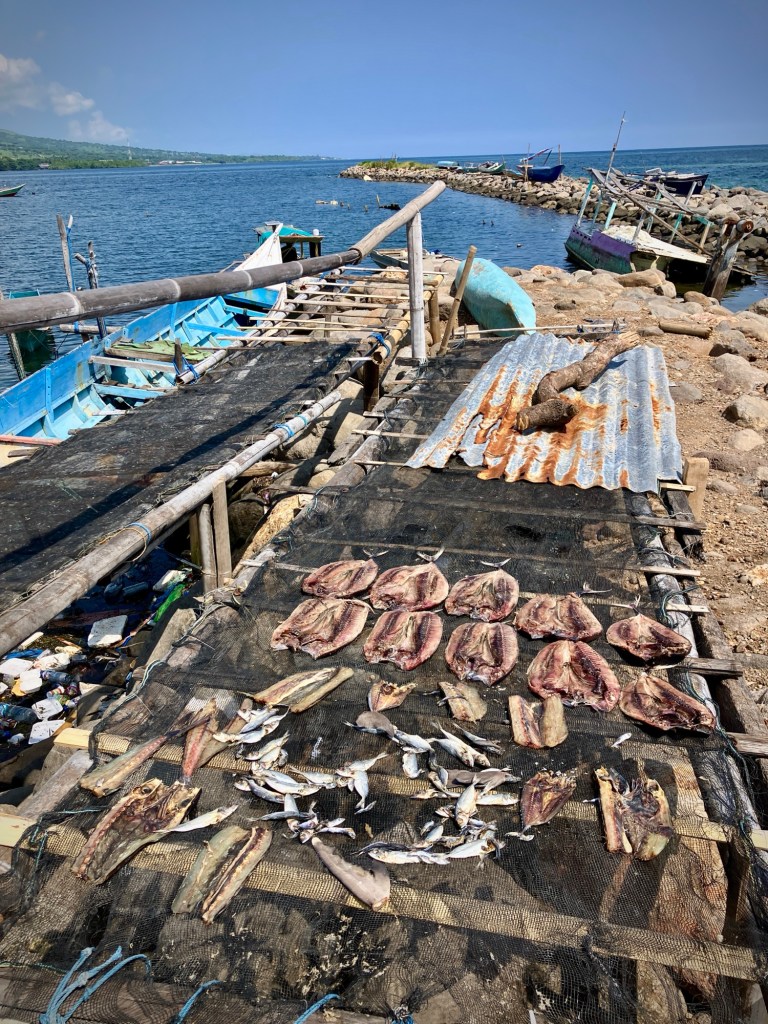

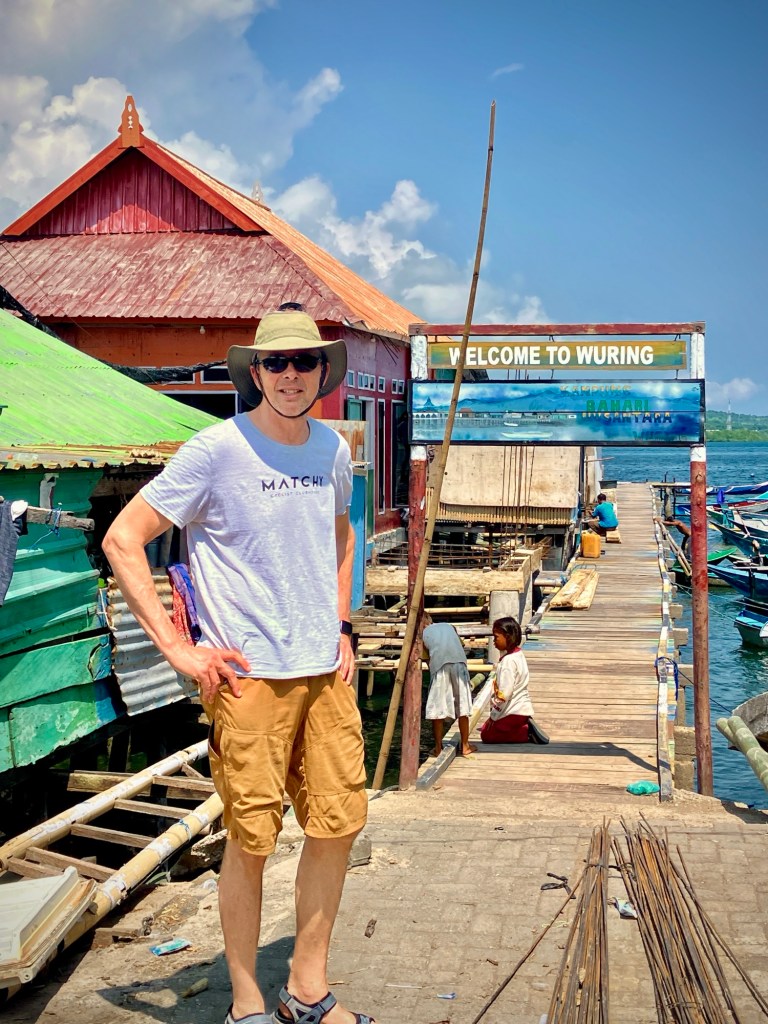


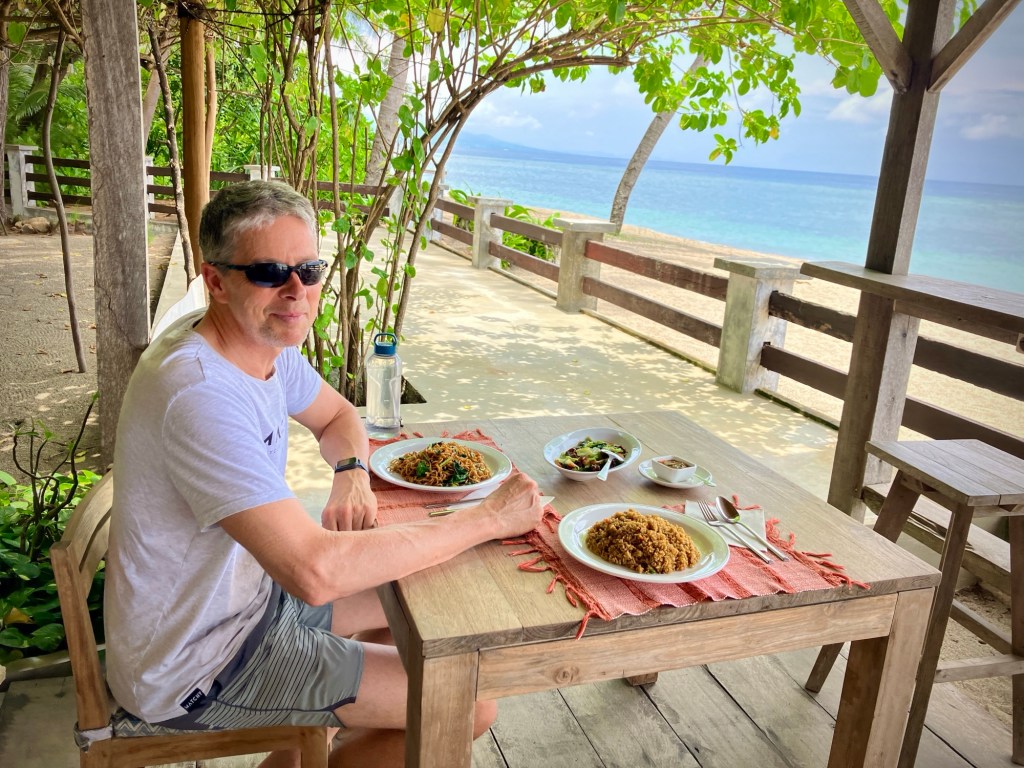


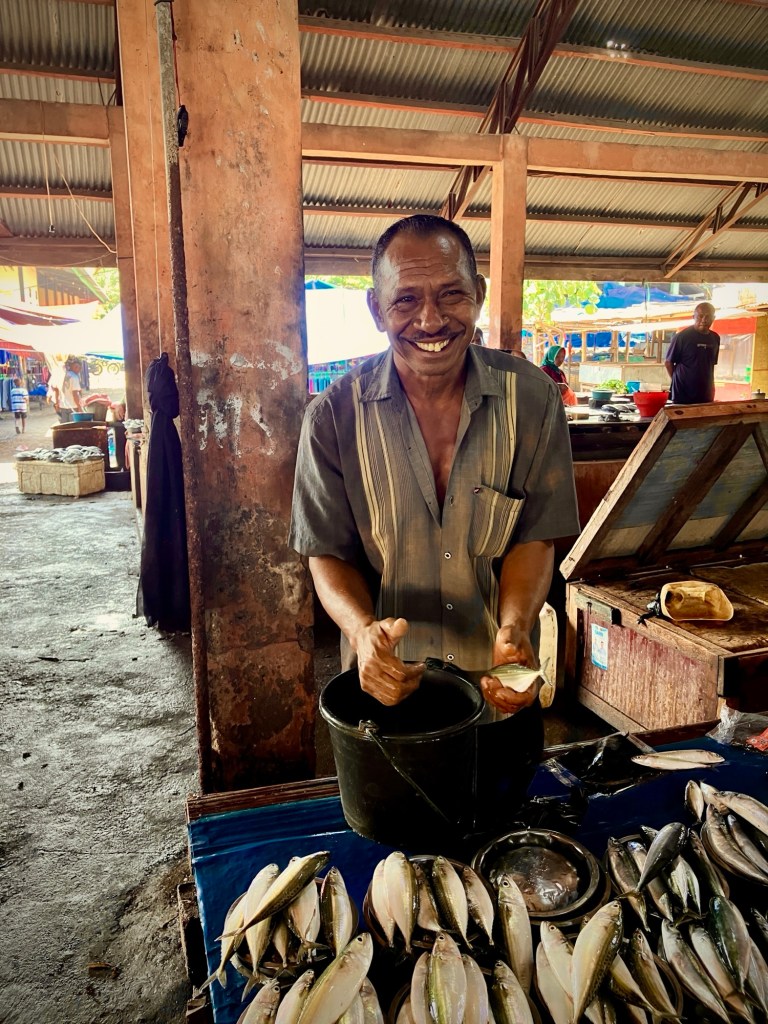


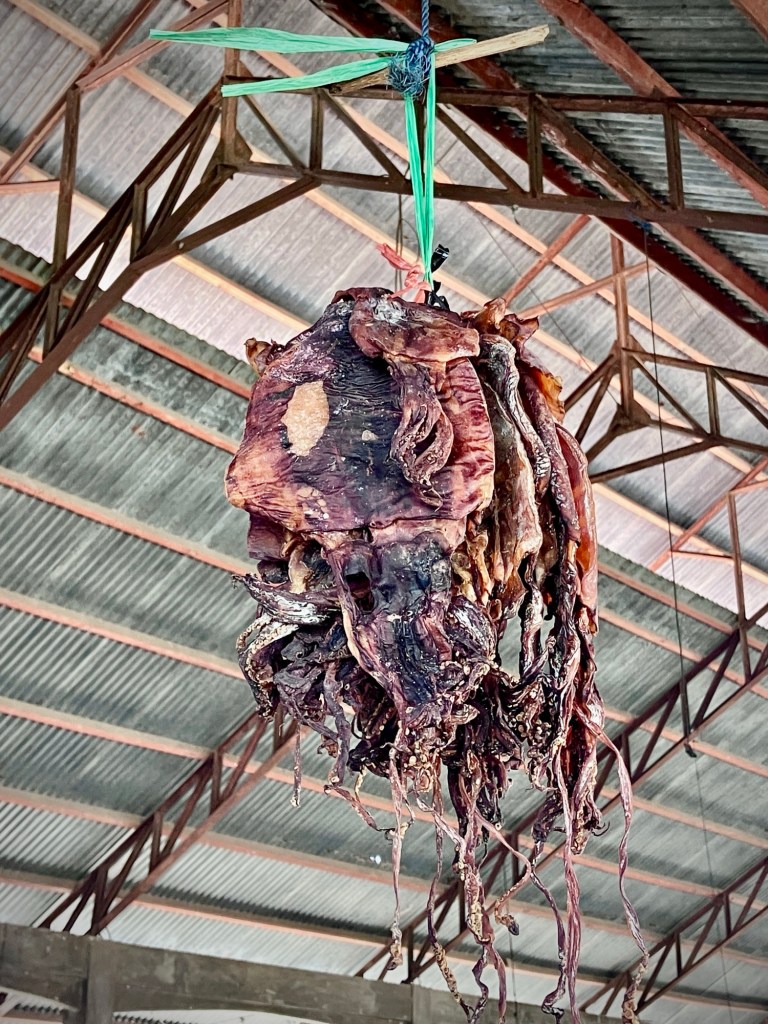

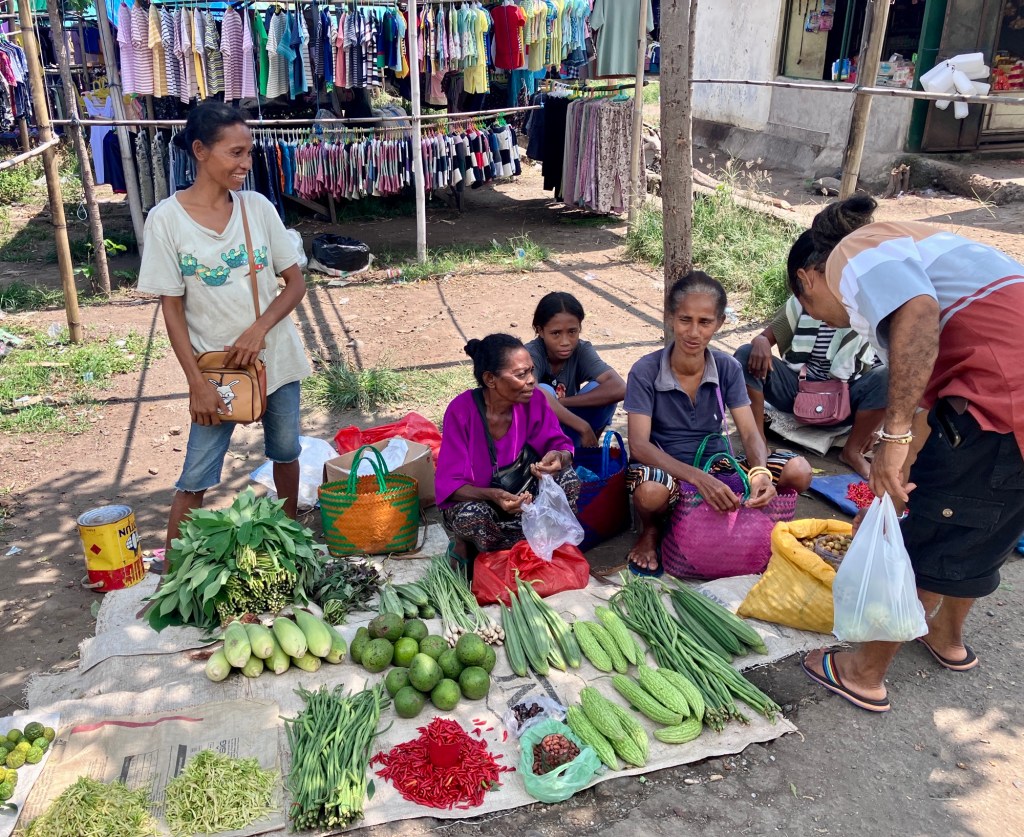

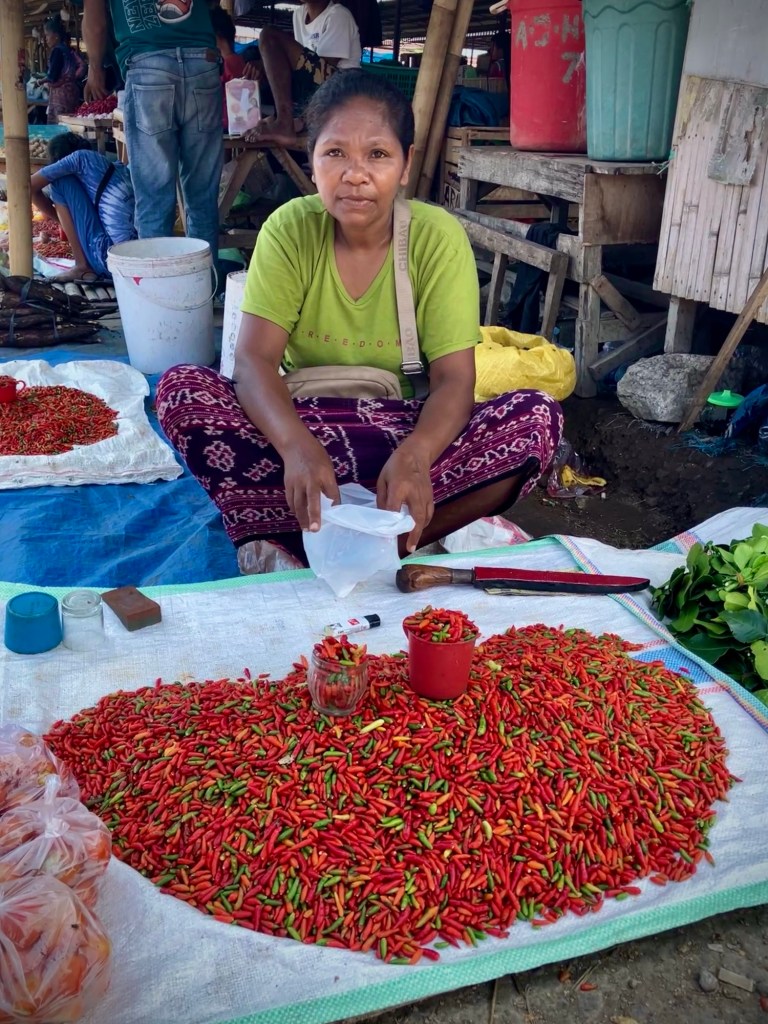


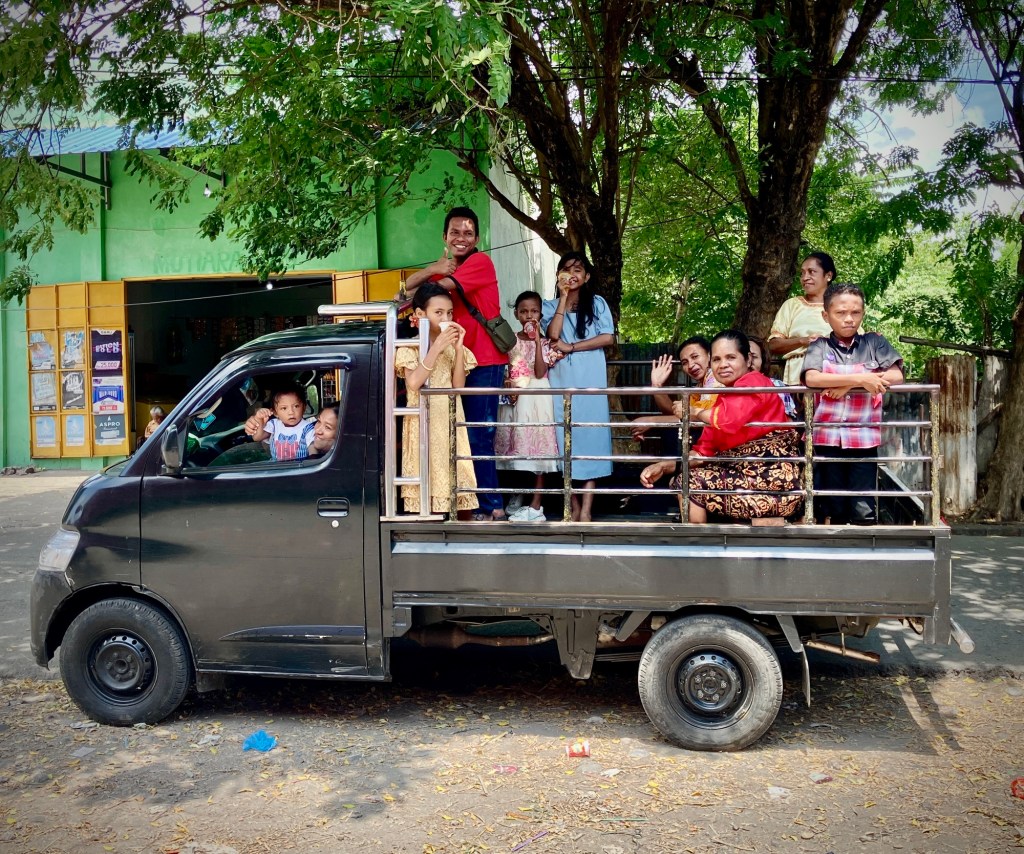


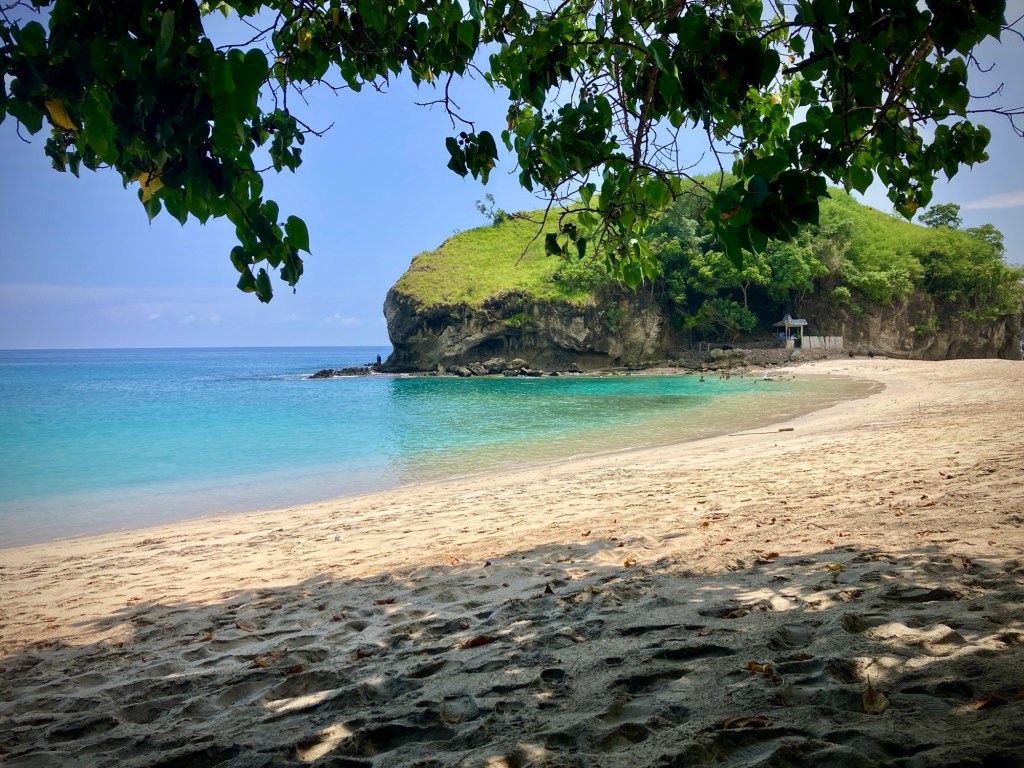

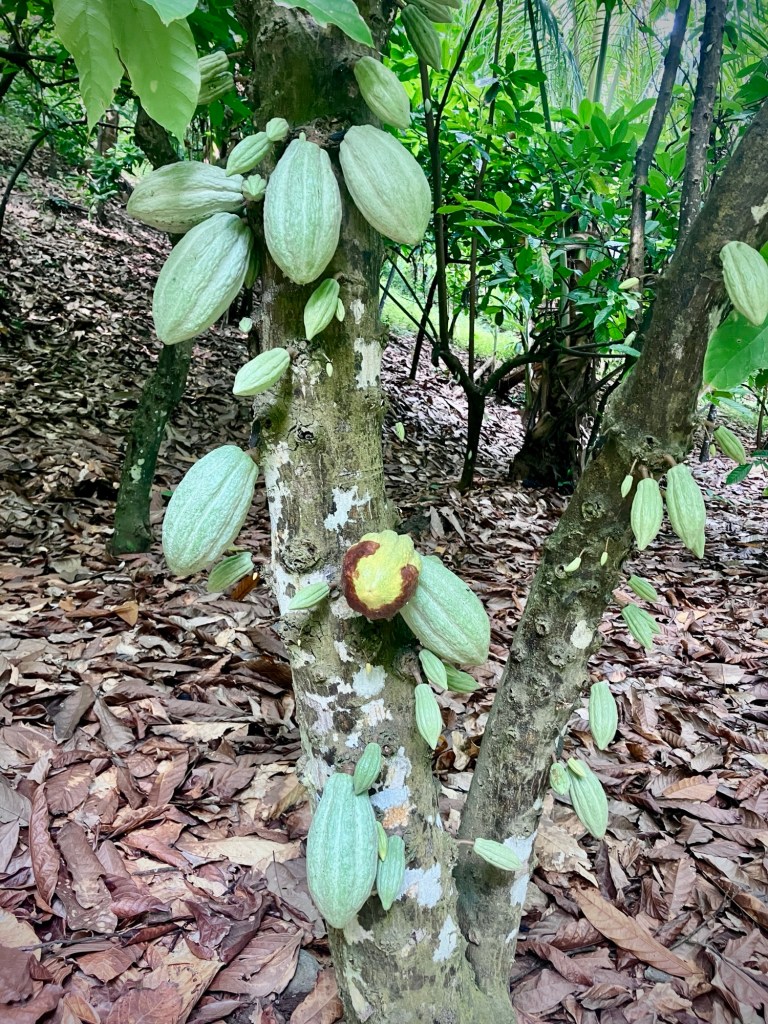
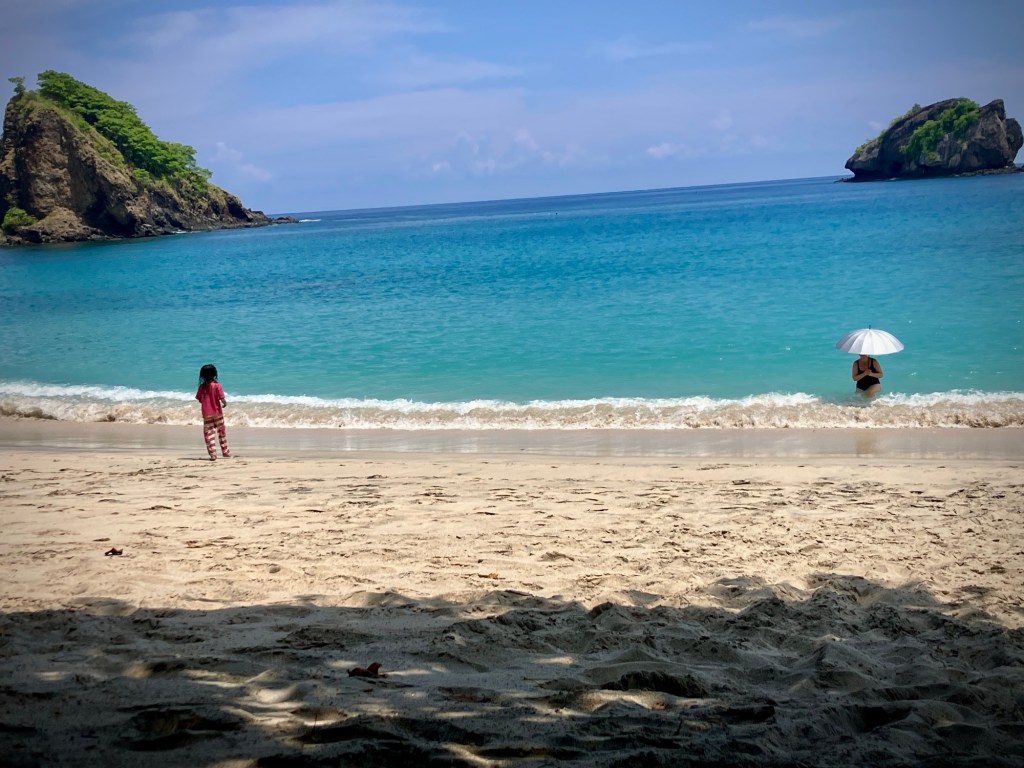

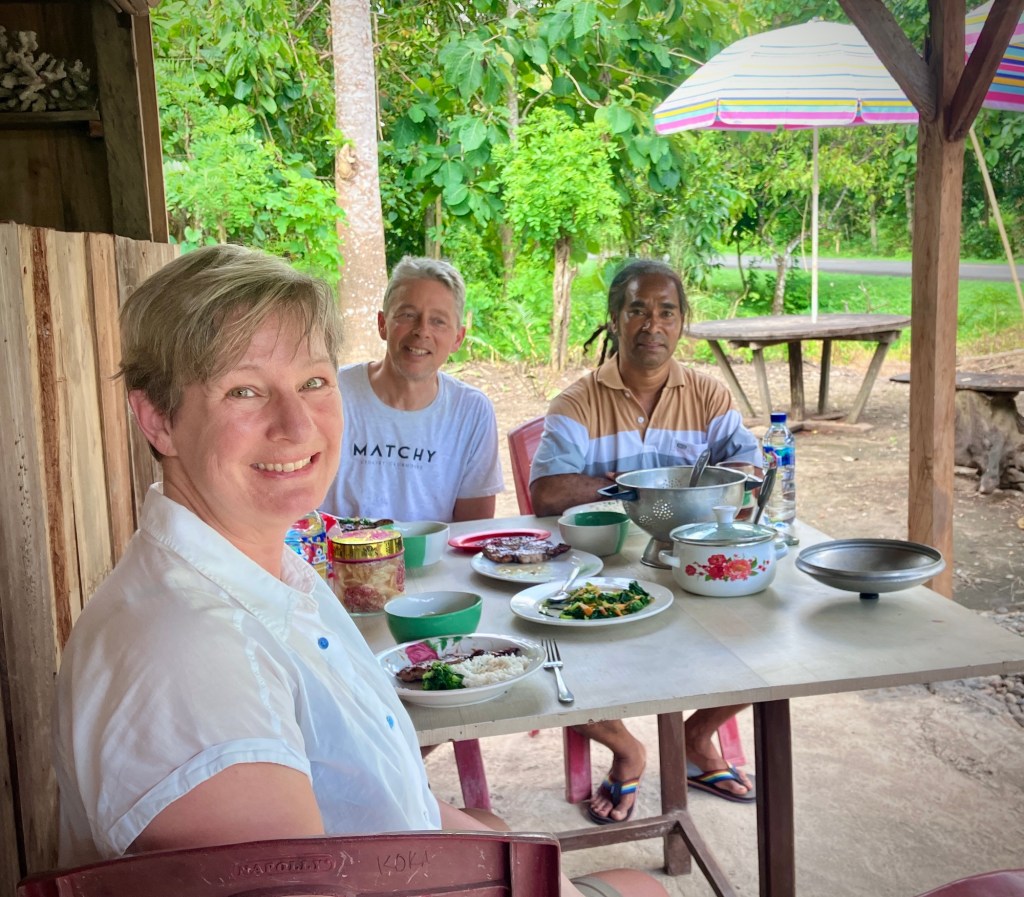
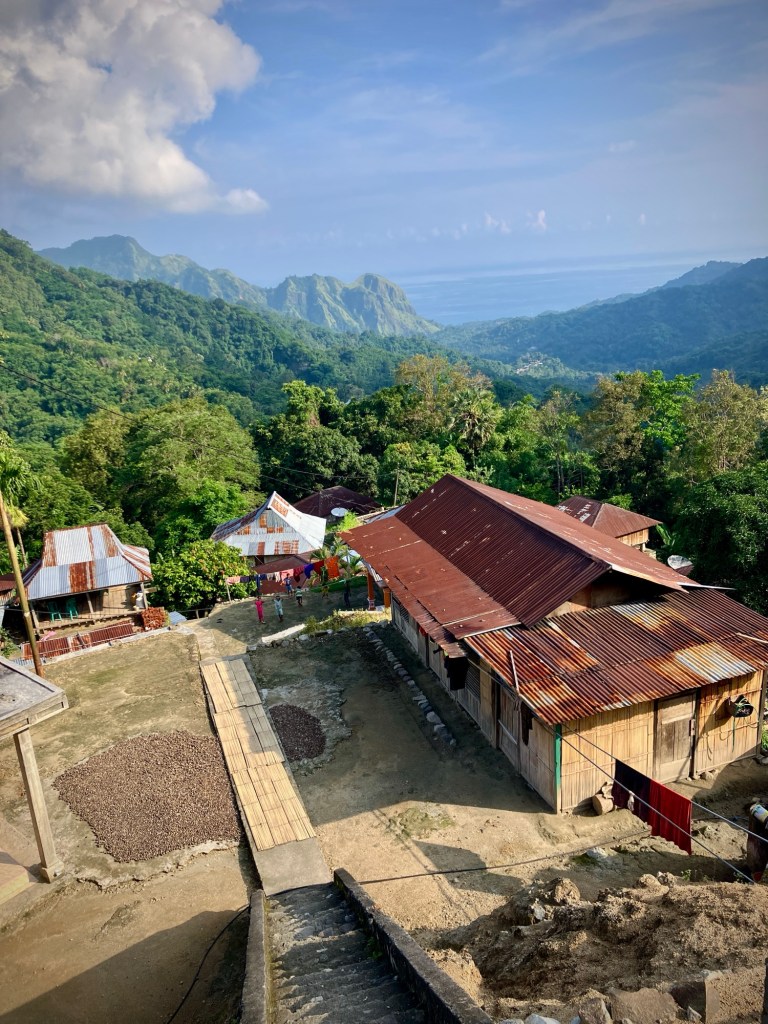
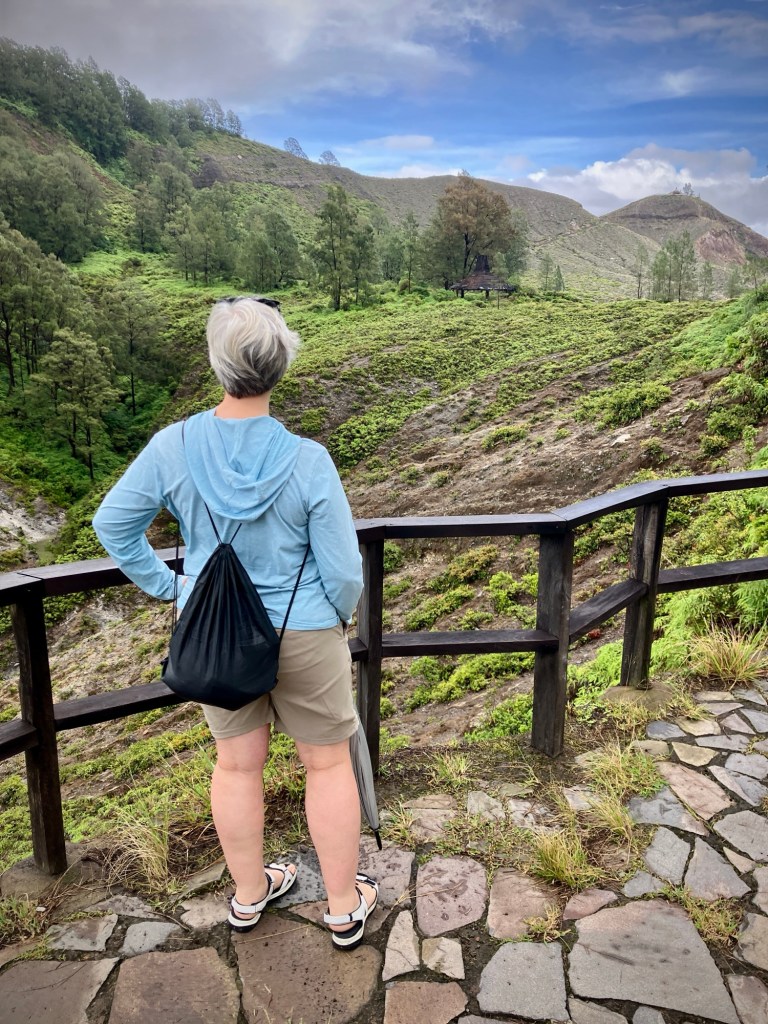


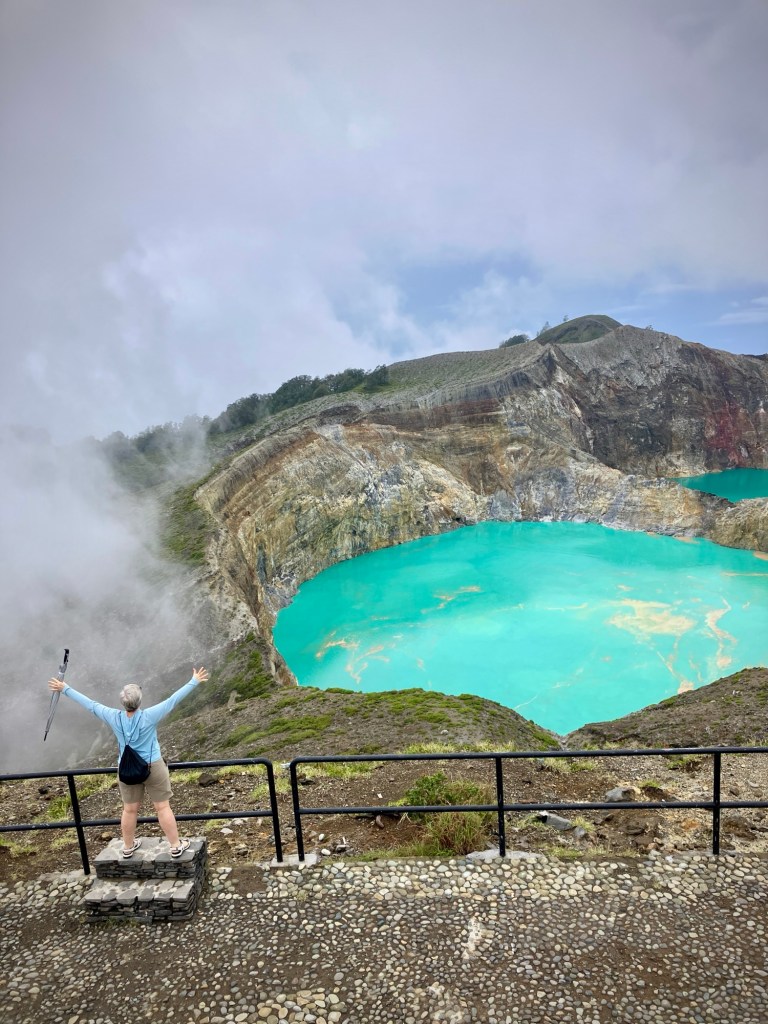


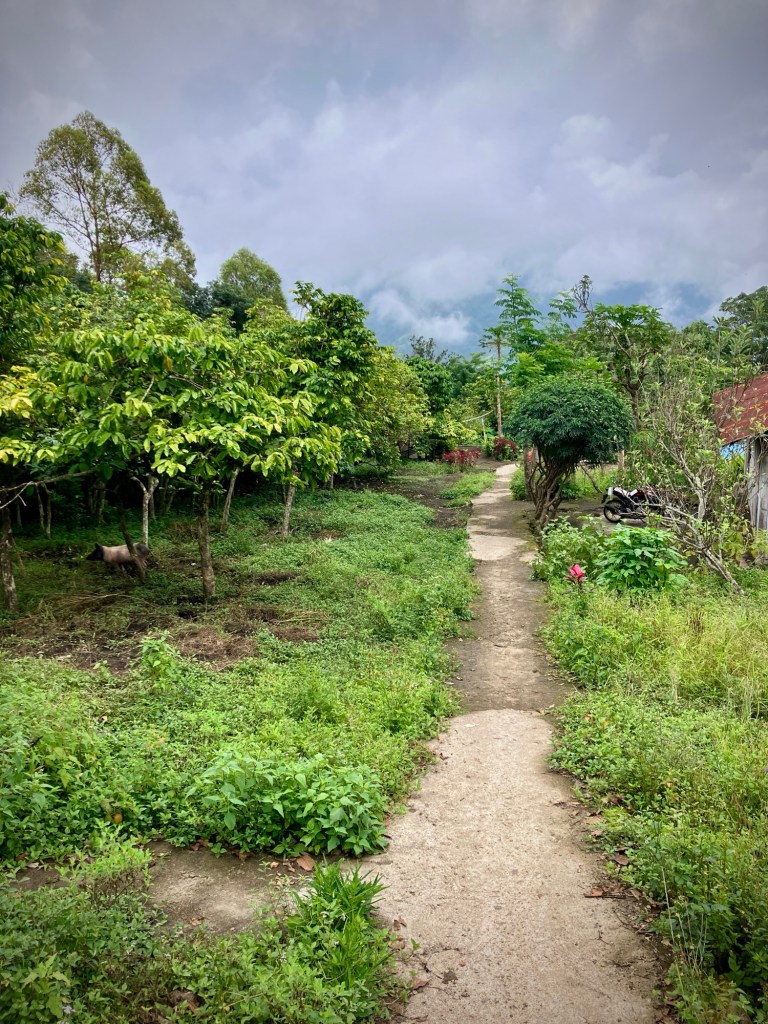


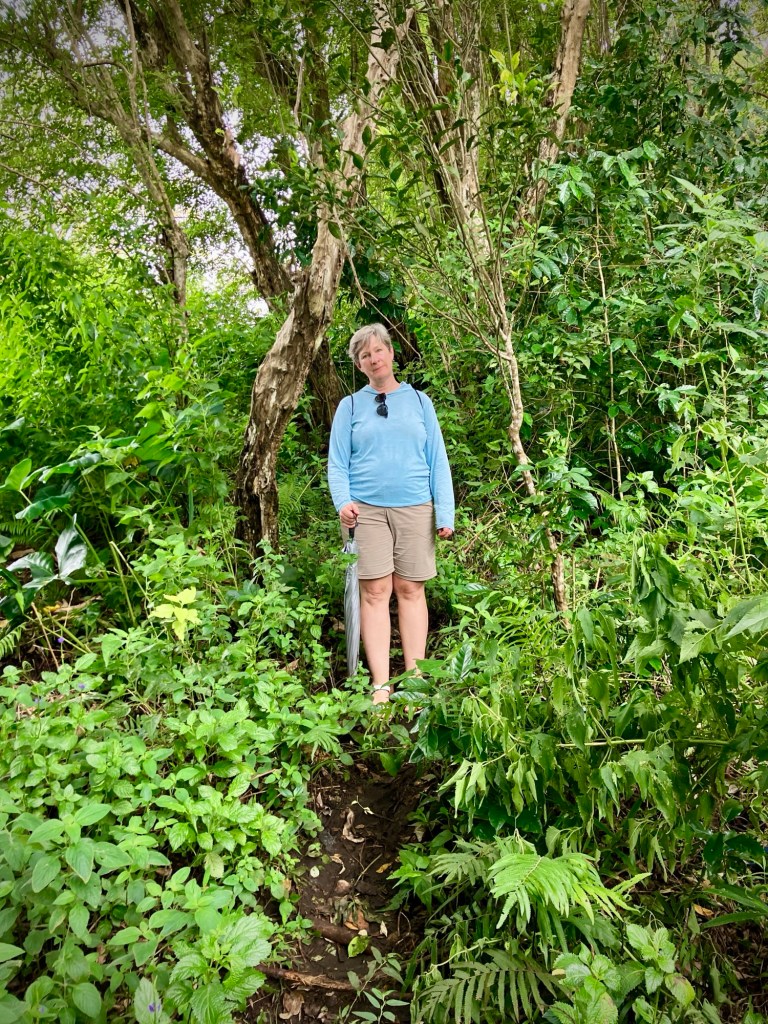


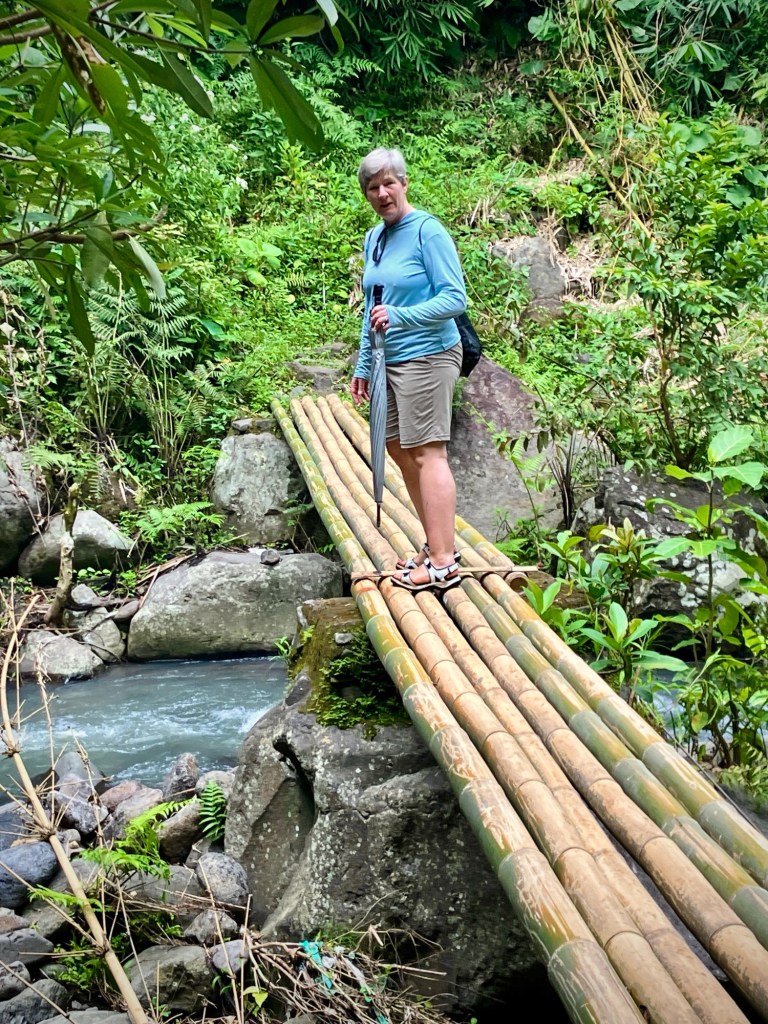
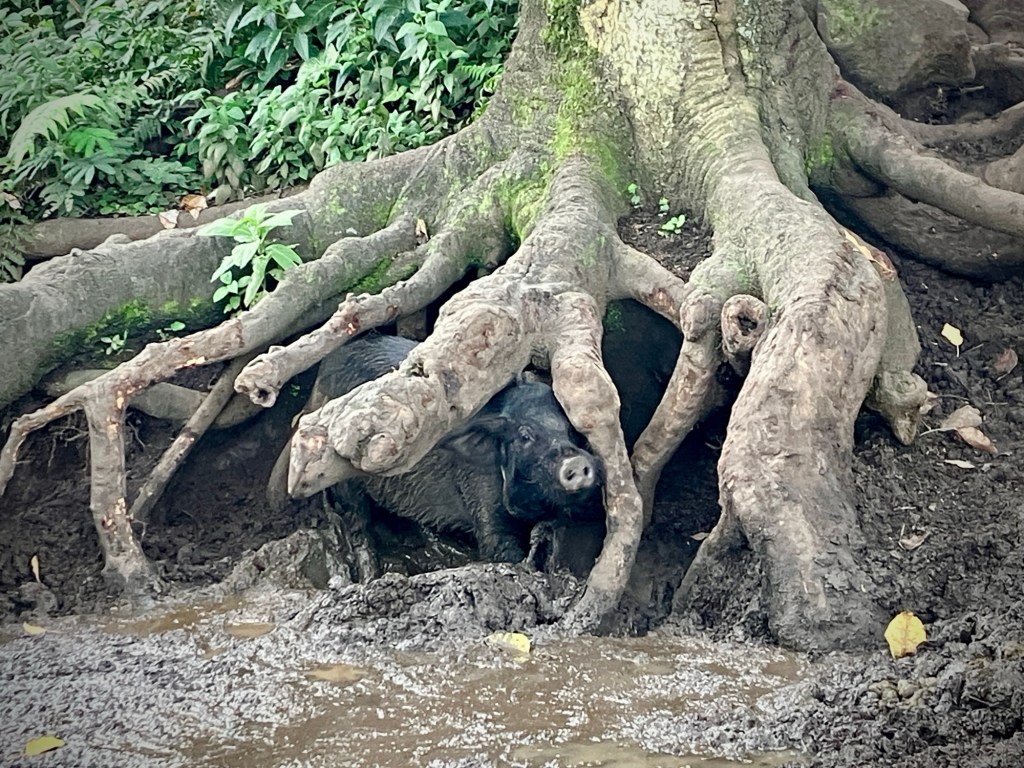

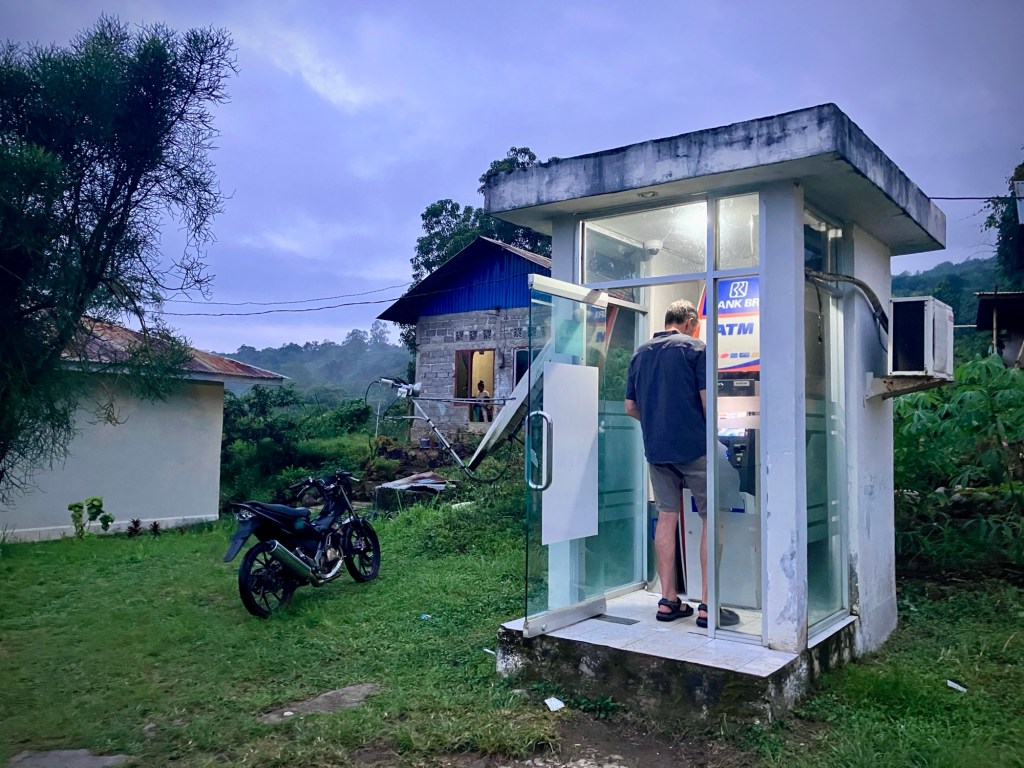
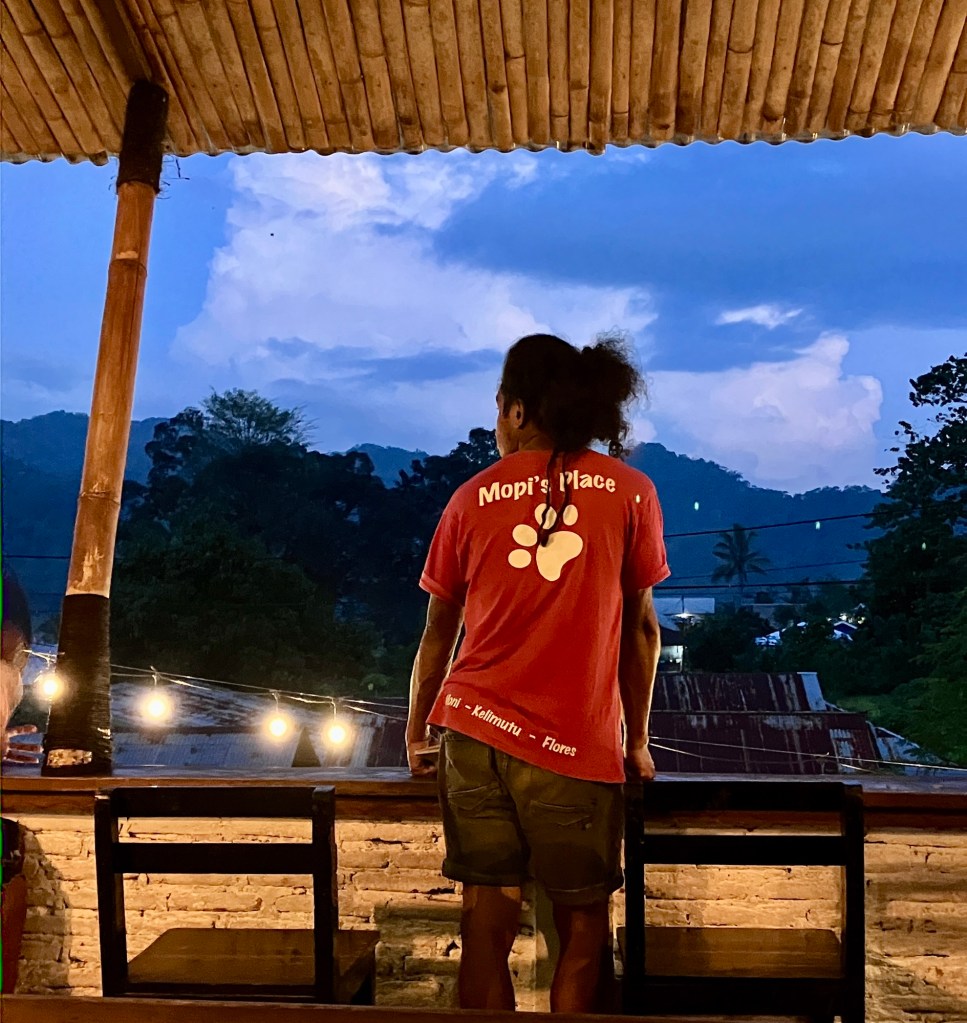
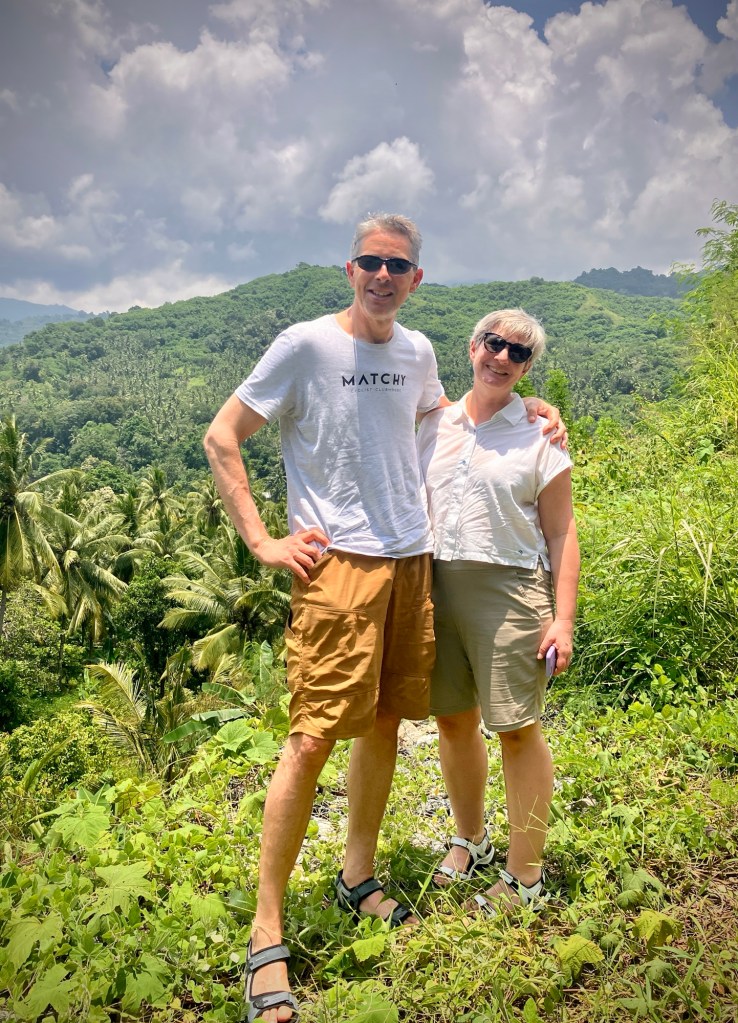
 Less Car, More Life