Apologies for the long gap in posts, but we’re now back in France and finally catching up on our past month of adventures. So how’d we get back to France from Salzburg? Cycling through the Alps and some trains of course!
Descending on the Alpe-Adria Route into Italy.
We really enjoyed our few days off the bikes in Salzburg, but as always, were eager to get back exploring. We find that more than two days off the bikes can put us off our game (like the Tour de France, eh?), so it felt good to roll out and head up the beautiful Salzach River towards the towering spires and massifs of the Alpes. Ok, maybe a little intimidating too.
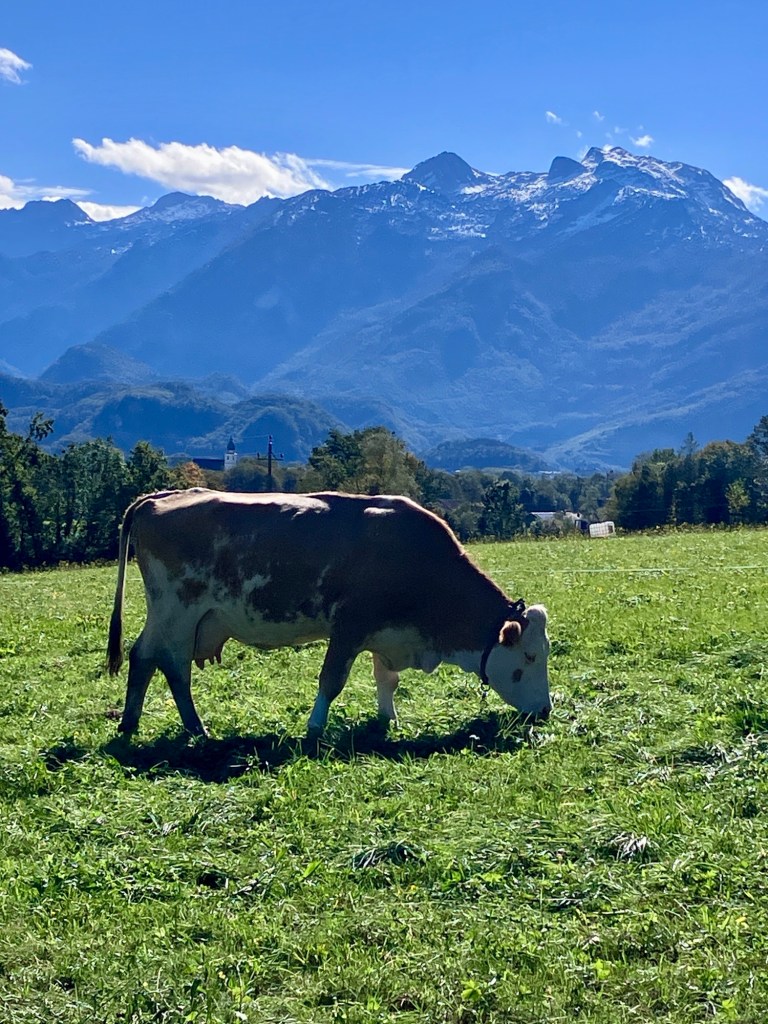
Starting up the Alpe-Adria on the Salzach River.Cows and sunshine!
The Alpe-Adria is a long distance cycling route that starts in Salzburg and covers 415 km over the Alps, all the way down to the Adriatic Sea at Grado, Italy. This spectacular route was (mostly) completed between 2006 and 2009.
I’m ready, let’s do this!The beautiful Salzach river valley.Leaving the river and approaching Route 159 and the gorge; all looks innocent.It was too hectic to take photos, so a bit of the narrow section from Google street view. Somehow looks calmer and no 18-wheelers in their views! And there is the train if you’d like.This look after the gorge sums up my feelings. « That kinda sucked! »
The first day was about 65km to the pleasant and somewhat upscale town of Sankt Johann im Pomgau. It was a tougher day than expected for a number of reasons. It was all upstream and uphill, although there were not many big climbs. Second, we had a good headwind, which made even the flat river sections tiring. Finally, there is a gap in the route that requires you to ride on a narrow two lane road through a gorge.
The route continues on route 159 to Bischofshofen, but there was now a shoulder.
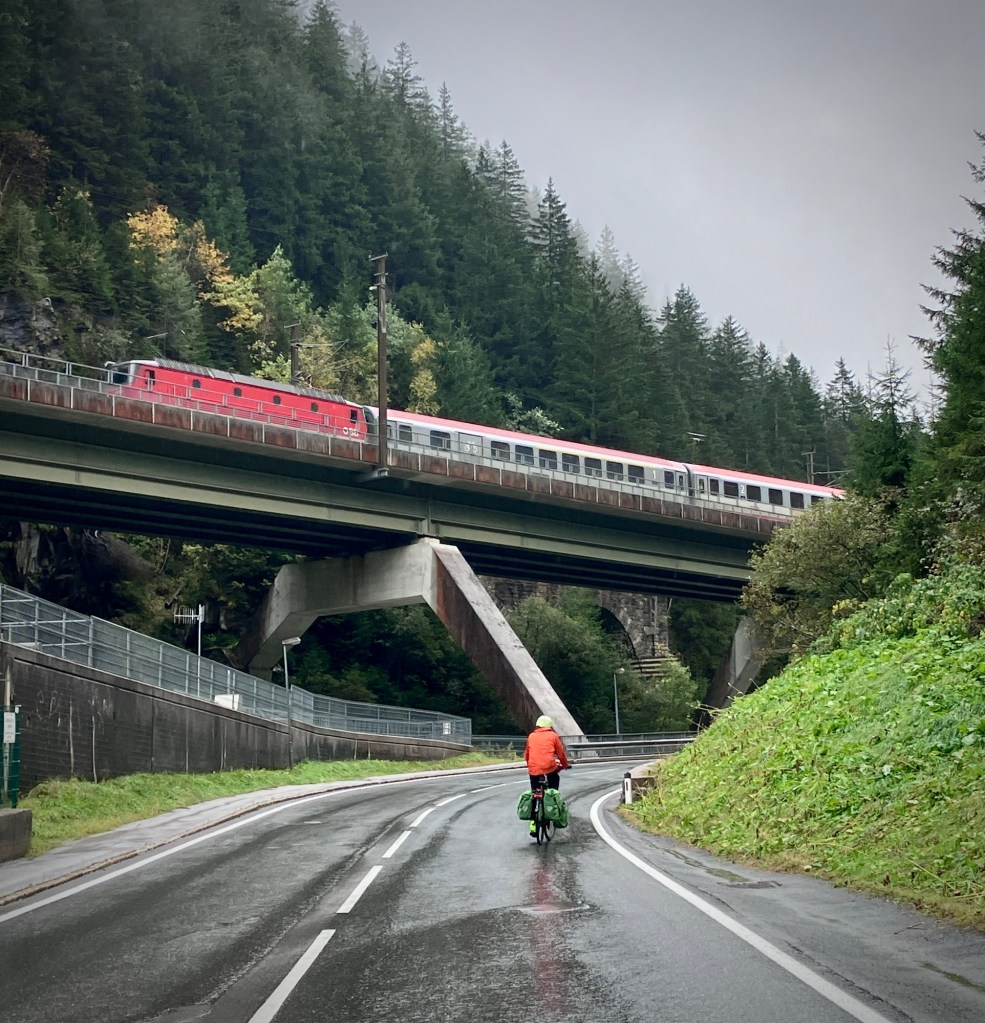
The worst section is from Salzachlamm to Werfen, which has about 5km without any shoulder, lots of trucks, and a barrier hemming you in on both sides. Yes, it was a bit sketchy and we had to grit our teeth a few times as large trucks approached at good speed from both directions. But it was daytime and we were fairly confident that the regional truck and car drivers would be looking for cyclists on this stretch.
Burg Honenwerfen loomed over us as we crested a small pass along the river. These valleys have been strategic trading routes for centuries.
So although we made it just fine, we asked ourselves, “would we ride it again?” No! So we have to recommend skipping it with a quick train train hop on the S3 (S-Bahn) from Golling to Werfen. It was the only traffic impacted gap in the otherwise enjoyable Alpe-Adria route, so we hope they figure out a solution in the gorge to make it a bit less stressful. It seemed that many cyclists rode to the restaurant near Pass Lueg and either turned around or perhaps got a shuttle as we saw no cyclists on the narrow and truck filled stretch. We now know why. It would be better if you’re on fast road or bike packing setup, as you’d be narrower and faster. For now, we can add it to the many stretches of road around the world we will only ride once!
But all good in Sankt Johann with a nice meal and white wine.Day 2 of the route brought peaceful and rolling climbs away from the main roads. Our favorite kind of touring.Turning up the valley towards Bad Gastein, there a few long tunnels with protected bikeways. Noise cancelling earbuds are awesome for loud tunnel stretches!Ah, this is more like it, a new and separate bike/ped tunnel! Overall, we were impressed with Austrian cycle infrastructure as it seemed to have more recent investment than Germany.Bad Gastein.
Our next day to Bad Gastein was dramatic and all along quiet roads and paths. The profile was again mostly uphill as we continued towards the main spine of the Alps. But the long profile hid some of the up and down rolling terrain along the edge of the valley. It was fun (roller coaster!) but the last stretch up to Bad Gastein was very steep so required some pushing and patience.
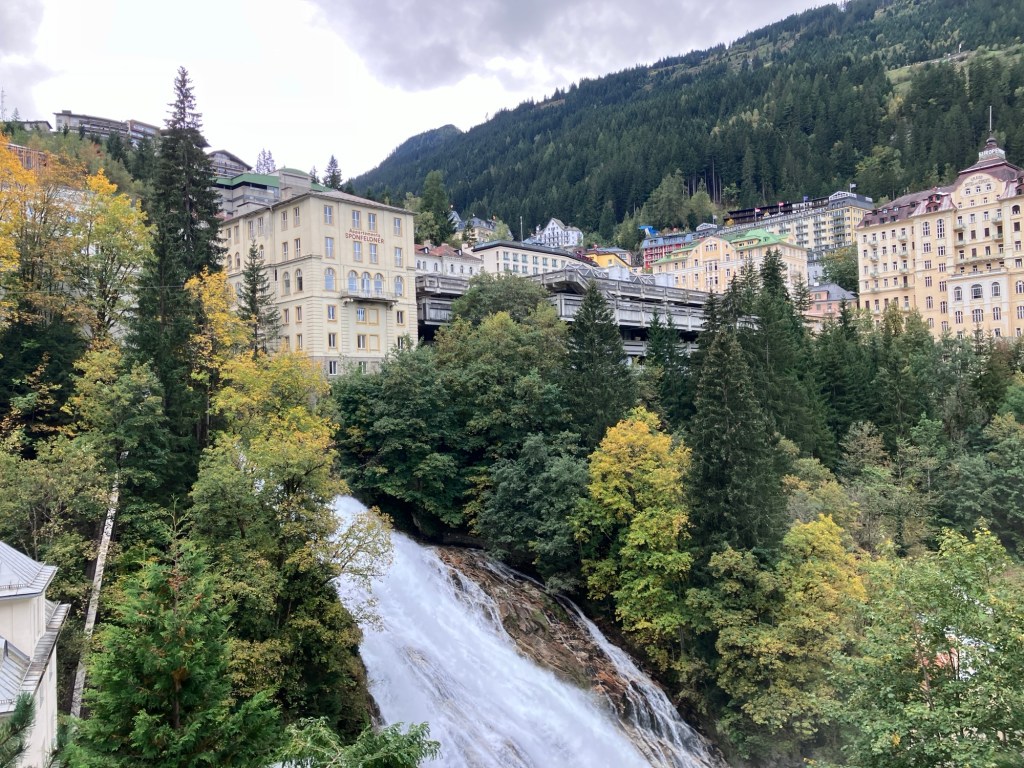
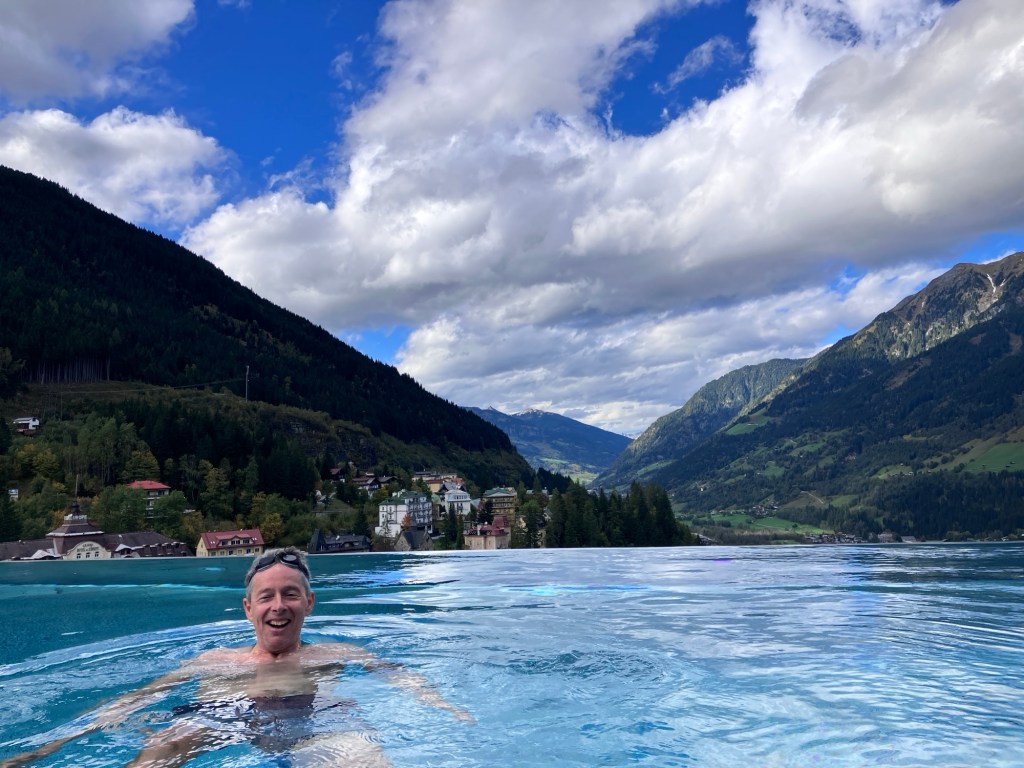
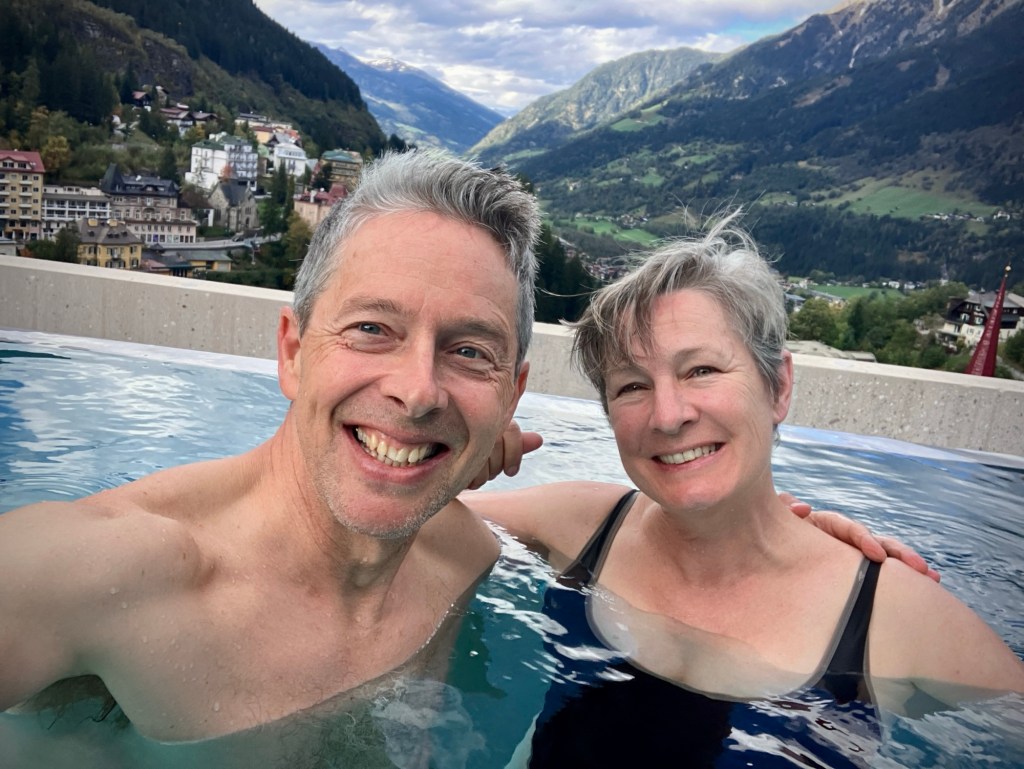
The mighty falls in Bad Gastein are a constant sight and sound in the lower part of the city.The heated rooftop infinity pool at Bade Schloss felt so good. There’s a sauna too.And great pizza refuel at Pizza Napoli, which seems to be run by one passionate chef/owner.The rewards of swing season cycle touring.The terrace at Bade Schloss looking across at their sister hotel, the Straubinger Grand. It was chilly but atmospheric.
The reward was the « discovery » of Bad Gastein, as we hadn’t ever heard of it prior to this journey. We highly recommend a stop here and staying at the Bade Schloss hotel if possible. (It was a bargain in late September) It just reopened in 2023 with a dramatic remodel to three historic buildings, as well as a new 14 story concrete tower. Ok, the tower is a bit of a sight from afar, but the rooms and rooftop pool are wonderful. And the setting next to the roaring falls incredible. It’s a faded spa town with belle epoque buildings and a bit of a Wes Anderson vibe.
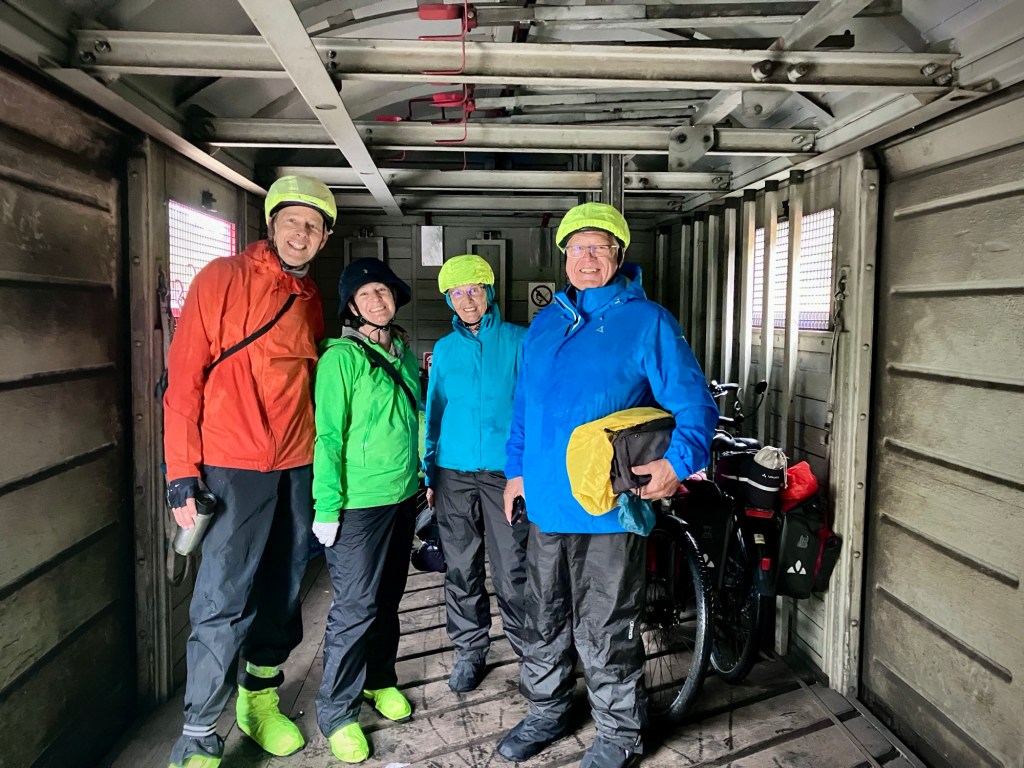
And an impressive breakfast.Fueled up for the short ride to the pass in our well used rain gear.Constant cascades to please the senses, a slight reward for all the rain.Getting close, but don’t panic, that’s not OUR train!Buying tickets for the Tauerbahn in Böckstein. Only 4 bikes on this rainy late September Day. It’s about €10 each, a bargain to avoid a 1000m climb (and snow.).No question where the bikes go.
The nice thing about stopping in Bad Gastein for the night was that it was just a relatively easy 7km climb to the train portal. Yup, the official Alpe Adria does not go up and over the highest passes, but utilizes the hourly Tauernbahn shuttle between the Austrian States of Salzburg and Carinthia. The 10 minute train ride takes cars and bikes through the mountain and is a fun way to feel both the accomplishment of a pass without the reality of a high pass, including weather challenges in late September. (Note that the tunnel will be closed until July 2025 for engineering works.)
A chance to chat with some friendly Germans from Düsseldorf. Apparently in summer, there can be over 100 bikes jammed in this train car We emerged on the Carinthian side of the tunnel to even heavier rain, so decided to try to wait it out a bit before heading down the next valley. But fun to watch the cars load on the next train.
Contrary to our hope for sunshine on the southern side of the train pass; the rain just got heavier as we headed down the fairly steep and relentless switchbacks on the other side. My disc brake pads even started to crystallize a bit trying to control my loaded tanks’ speed. But eventually the rain ended and the terrain flattened out and we made our way to Spittal am der Drau for the night. Another relatively short but memorable day.
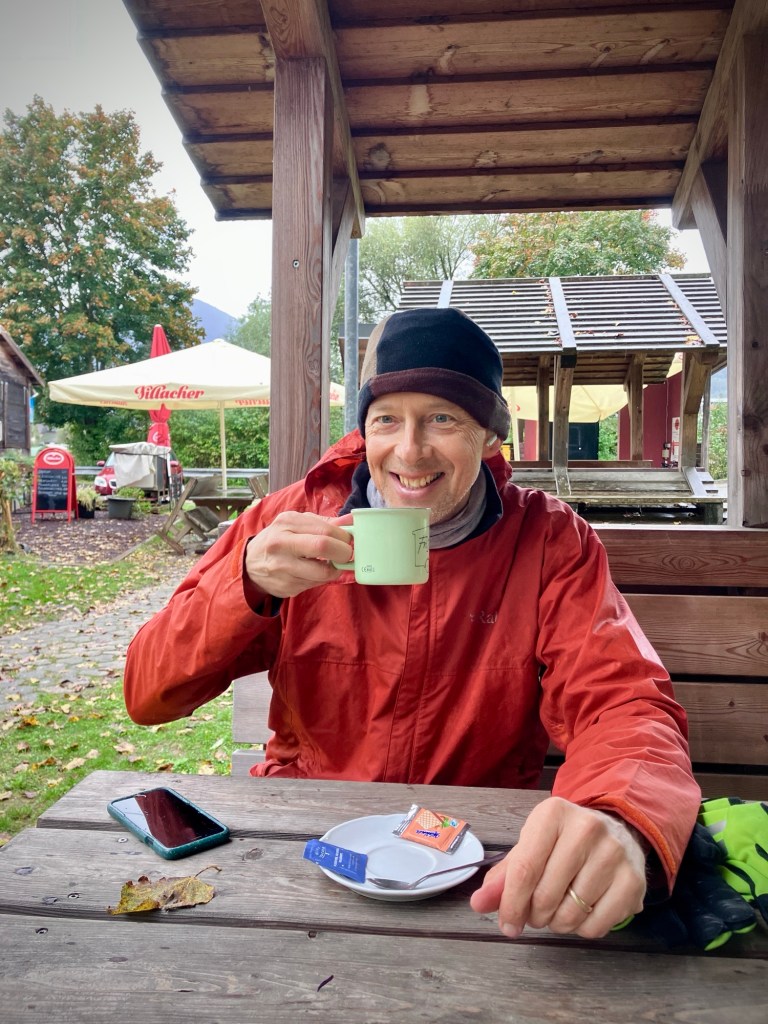
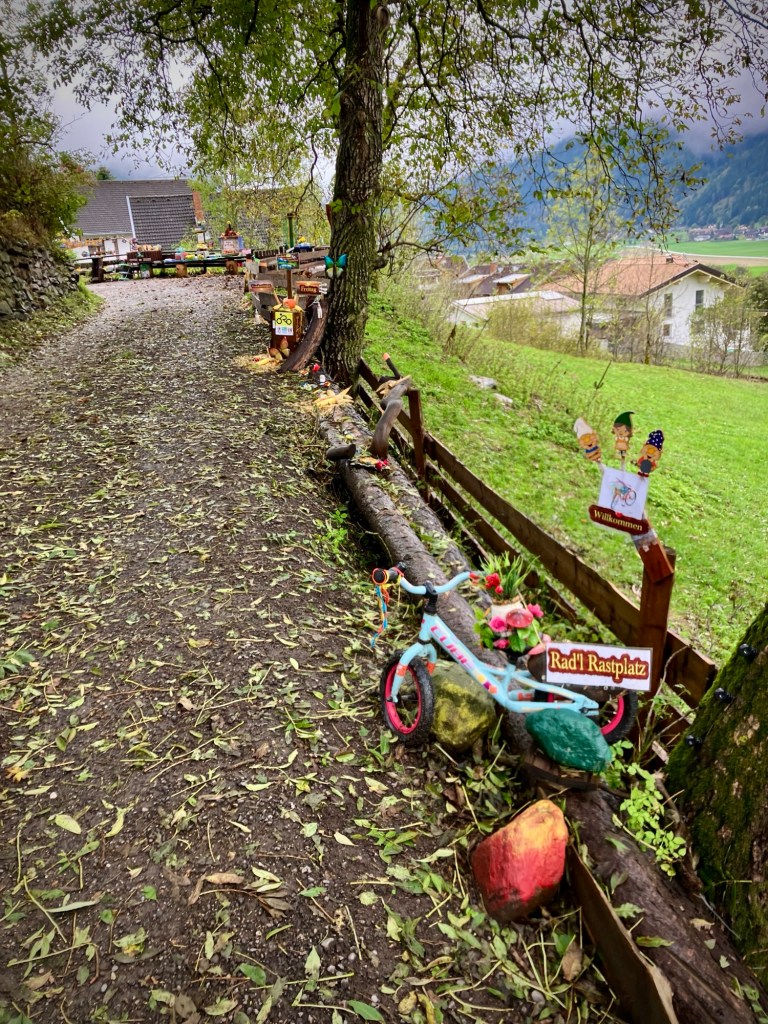
The amazing works of vertical infrastructure in the Austrian Alps.And nice rest stops.Yup, this works…if it was only sunny!And unlike most of Germany, plenty of public TrinkwasserRare spot to duck out of the rain on another mizzle-y day to Villach.A welcome coffee stand for this coffee achiever.The locals provided their own rest stops for cyclists on the Alpe-Adria. This sprawling one had lots of food, bike repair supplies and a guest book. All free with donation box -:).The friendly but somewhat incongruous Hacienda Mexicana hotel and restaurant in Spittal am der Brau. The room was good, and I’d love to say we found good Mexican Food in the middle of Austria, but …
The next day was another relentlessly rainy day with few places to stop and escape the weather. This is definitely a challenge on many long distance cycle routes; there may be lots of nice benches and even tables, but there are rarely covered rest areas, so bridge underpasses or farmers barn overhangs become your best bets.
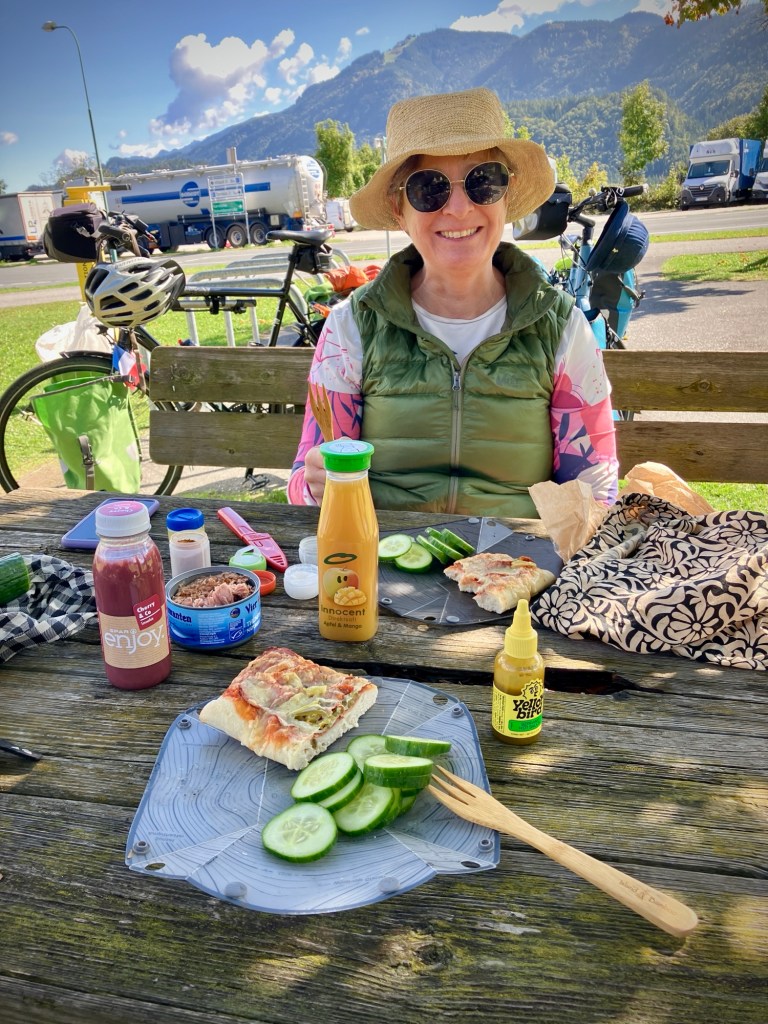
Lots of cool bridge and tunnel engineeing in Austria.Overnight in Villach, an enjoyable stop at the recommended Palais 26 Hotel.Typical picnic lunch near the Italian border. Focaccia with various toppings are the new go to quick snack at small stores and groceries Note my mini bottle of Serrano Hot Sauce -:).Near the Italian border at the pass.
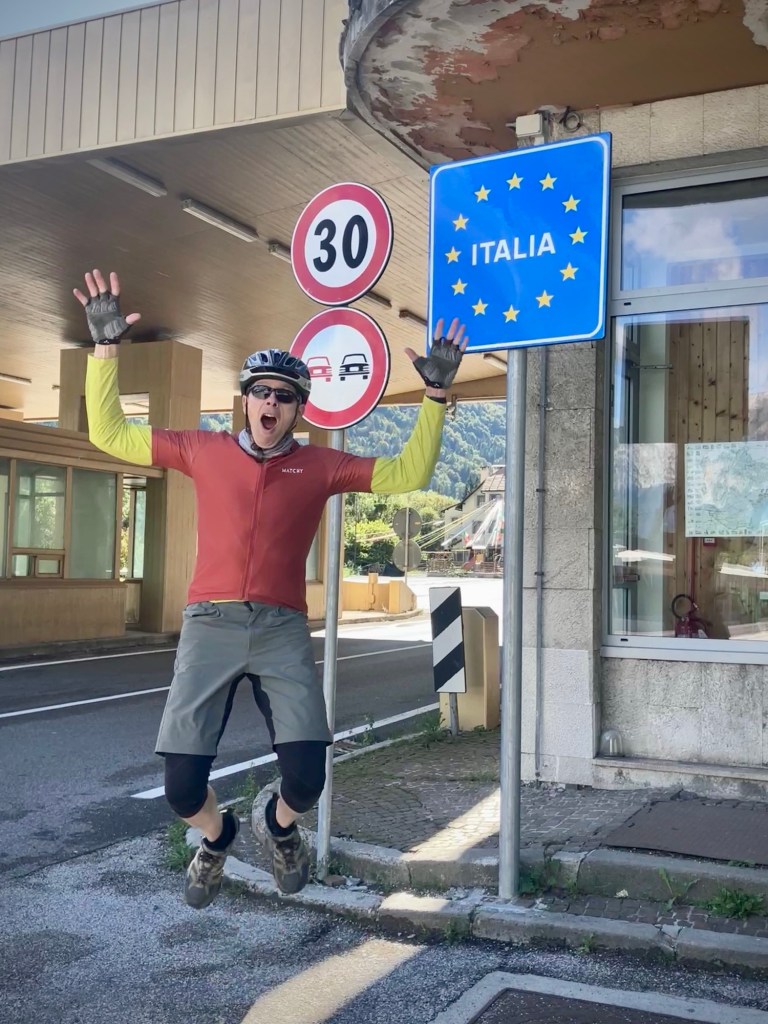
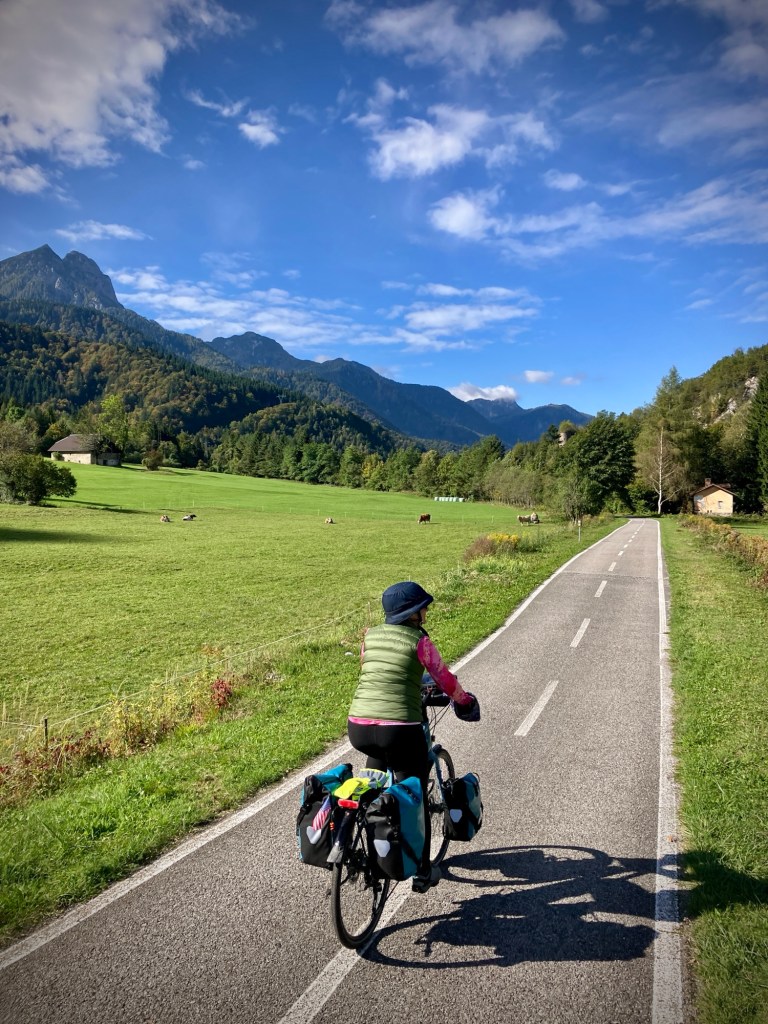
As we rode over the second pass into Italy, we could notice the terrain and vegetation changing somewhat from the north side of the Alps. The most popular and scenic part of the route is the downhill decent from Tarvisio to Venzone along the former Pontebba rail route. It’s a spectacular route of viaducts, tunnels, and waterfalls.
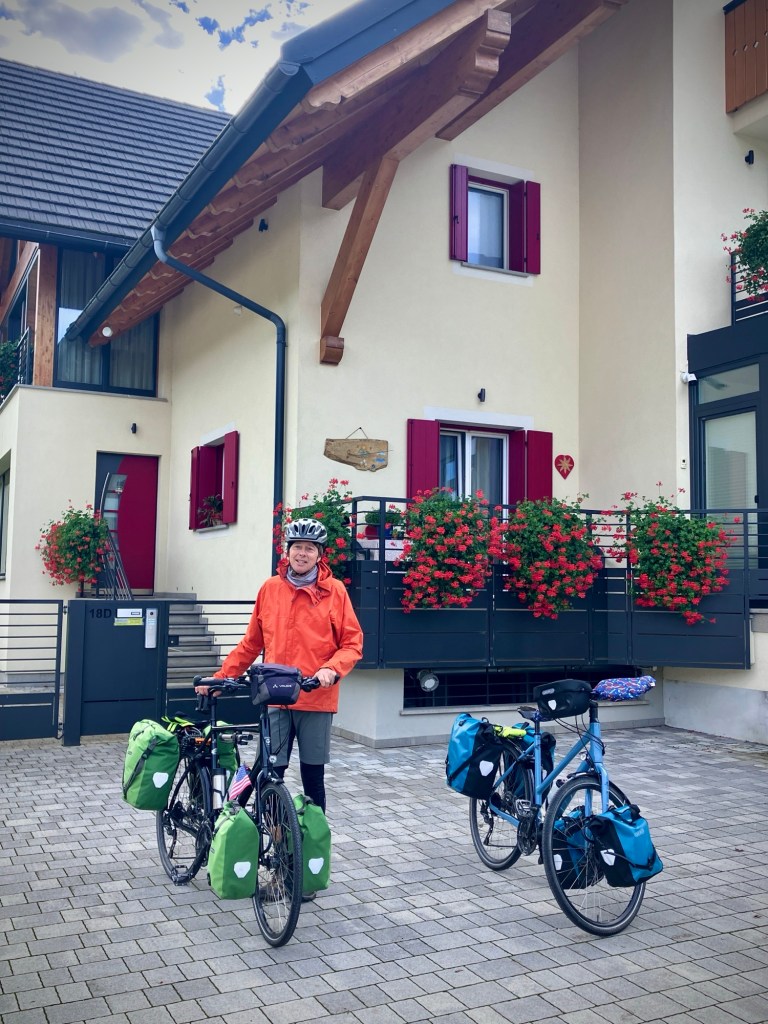
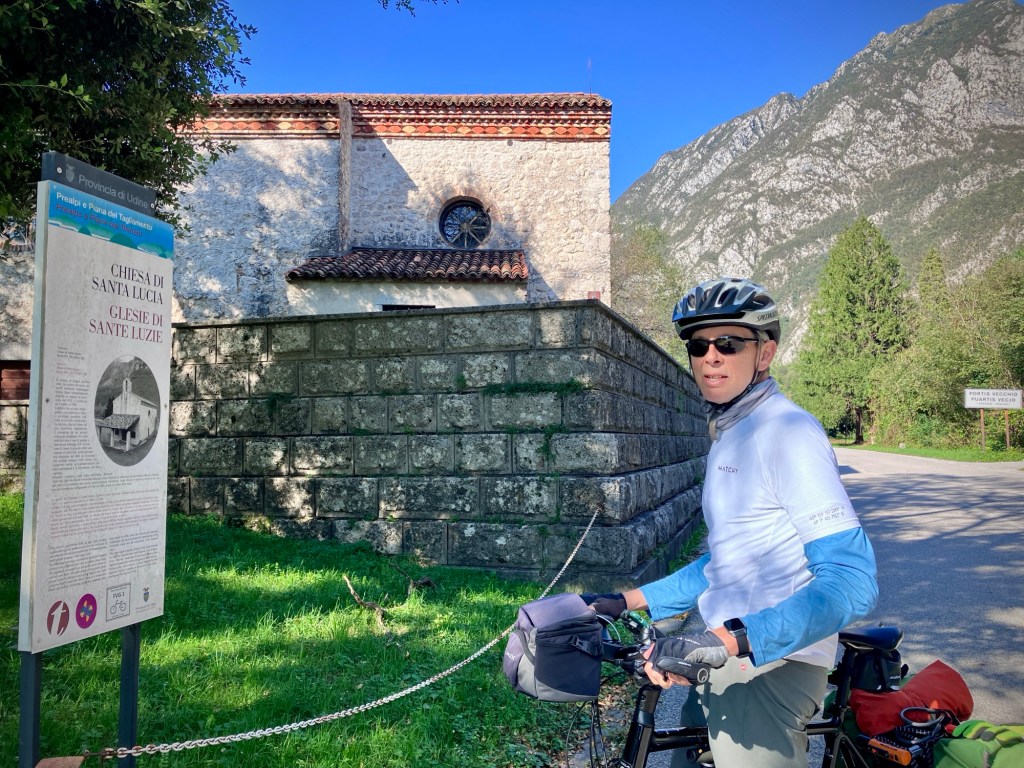
The Italian Border…we think.I was excited to be in Italy again.Cruisin’ over the crest.Also so close to Slovenia here…it was tempting!Heading out for an all downhill day from the lovely AlBuondi B&B in Camparosso.The stretch of former railway starts here and is perfect cycling bliss.The Pontebba Railway was converted into this segment of the route in the 2000s. There is a newer (and straighter) rail line that now traverses the pass and valley.And too many tunnels to count… (ok there are 22)17th c. Church = shady lunch spotMy intrepid tour client.Did we mention the perfect pavement?Always great to see a Critical Mass sticker elsewhere in the world. Not to mention an arty Woodstock -:)This 40km descent was a treat!Most of the original rail bridges were retrofitted for trail use.And constant views of the Dolomites.
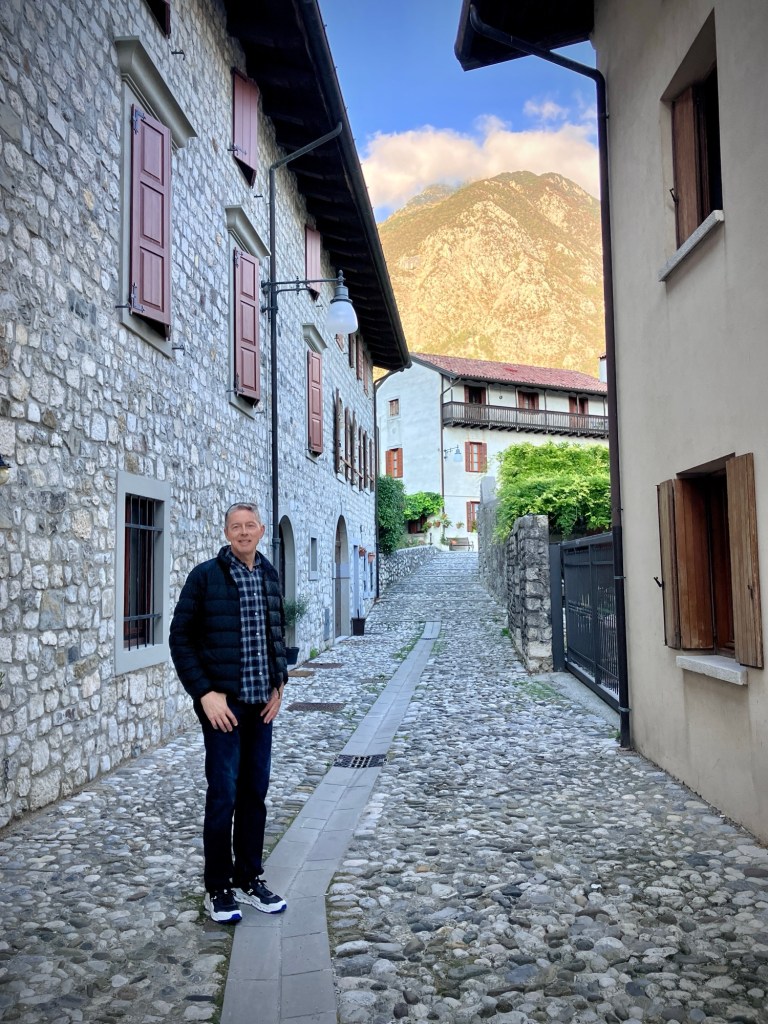
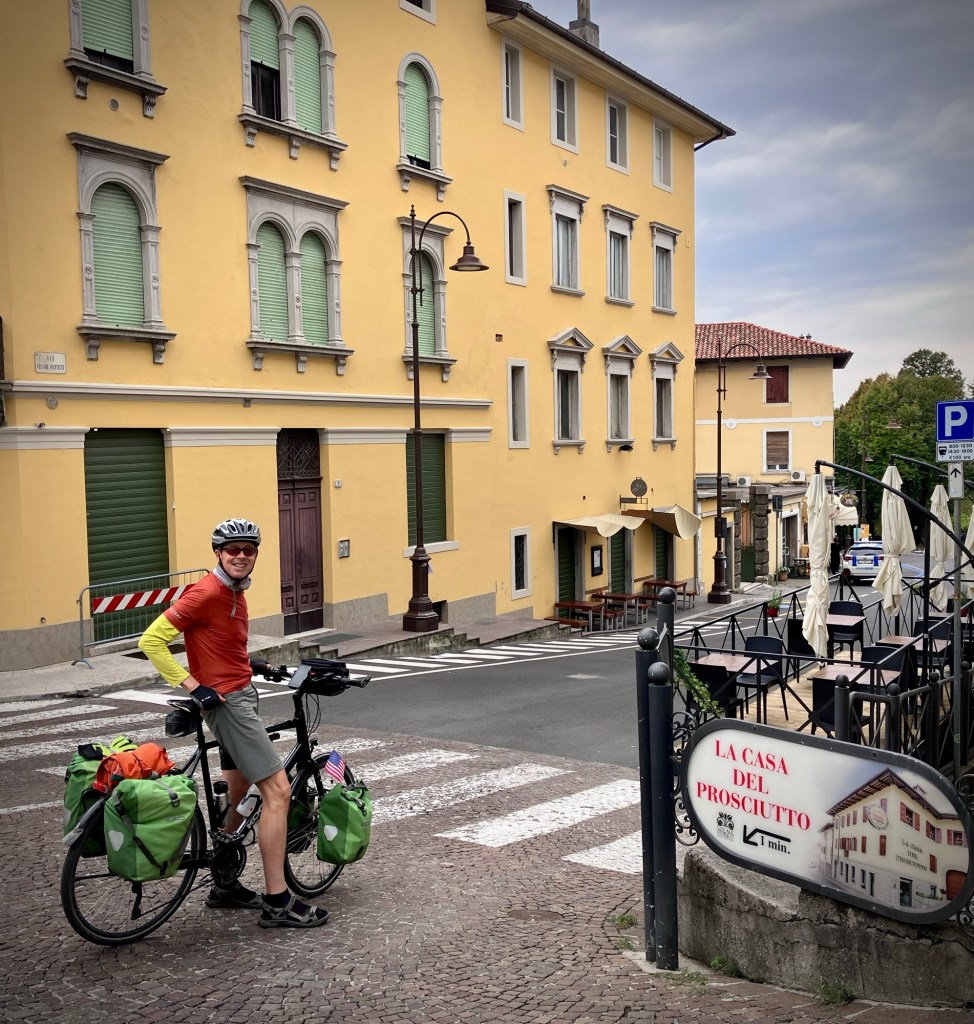
After a relaxing night at an apartment in the old town of Venzone, we took the recommendation of our cyclist host and rode an alternate route to Udine via the west side of the river valley and eventually back through San Gabriele del Fruili to Udine. The route was very nice and had some steep hills, a surprise pro bike race, and a chance to sample its famous prosciutto.
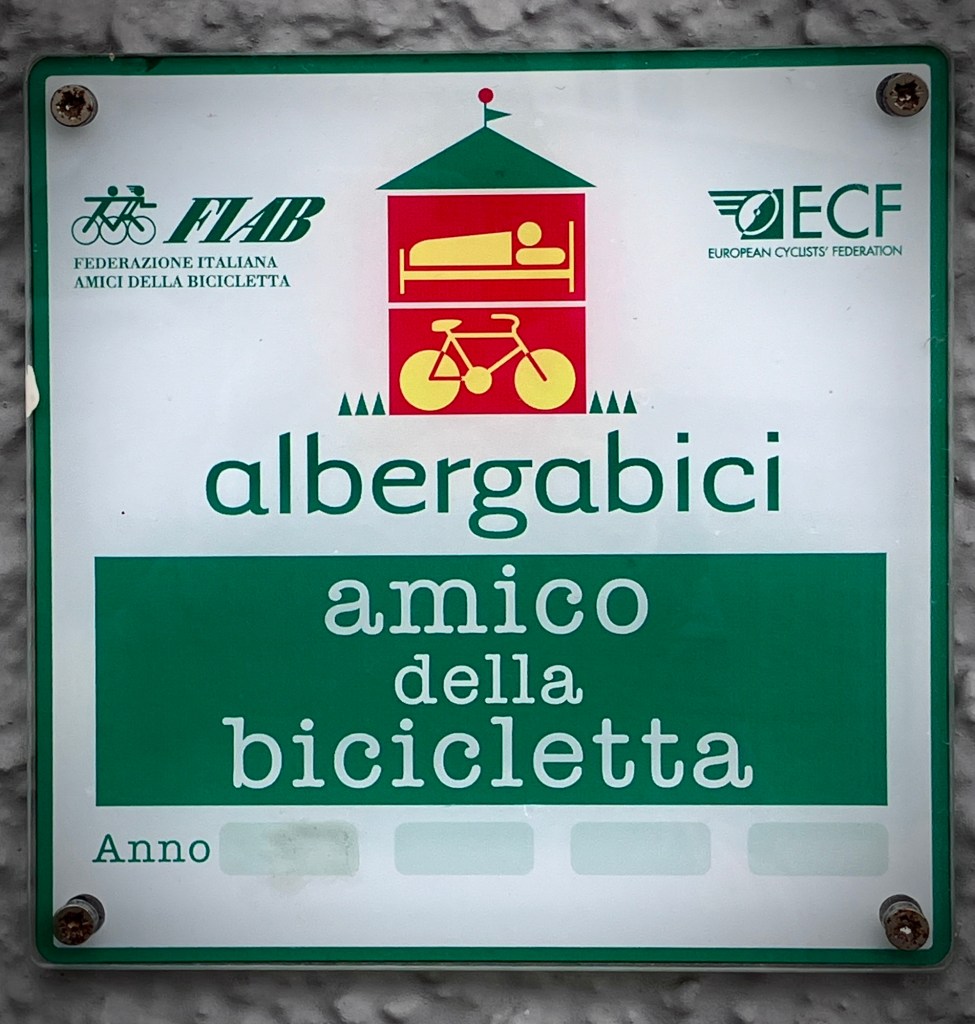
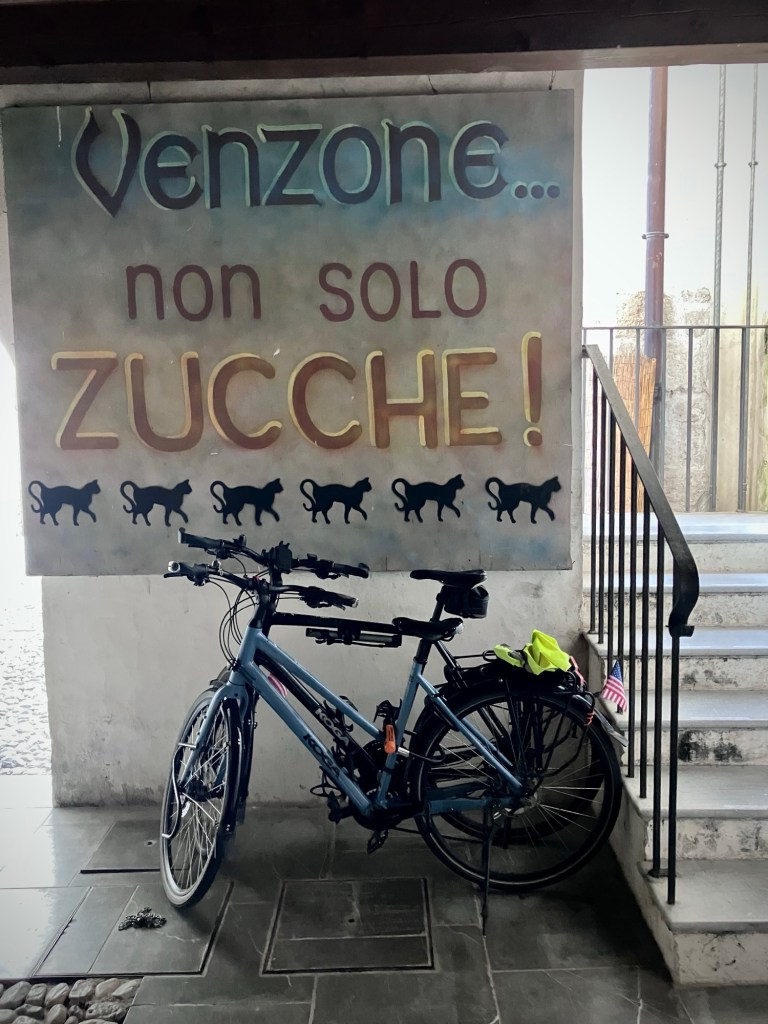
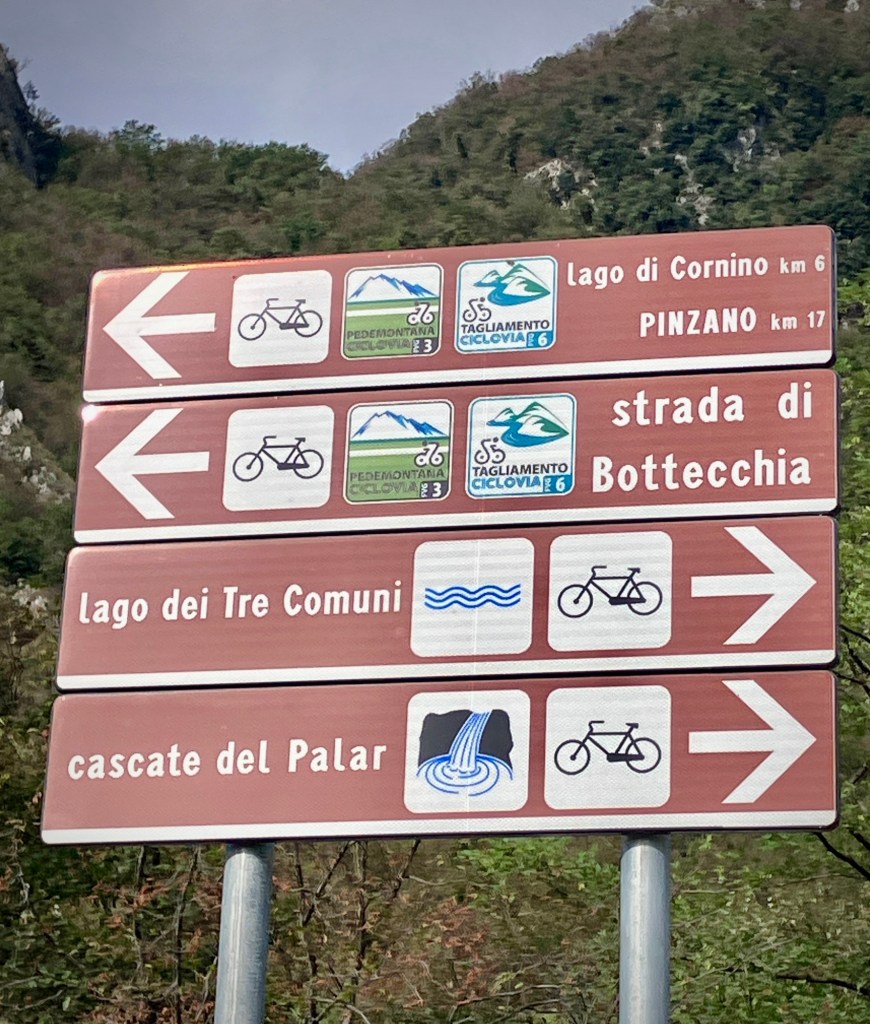
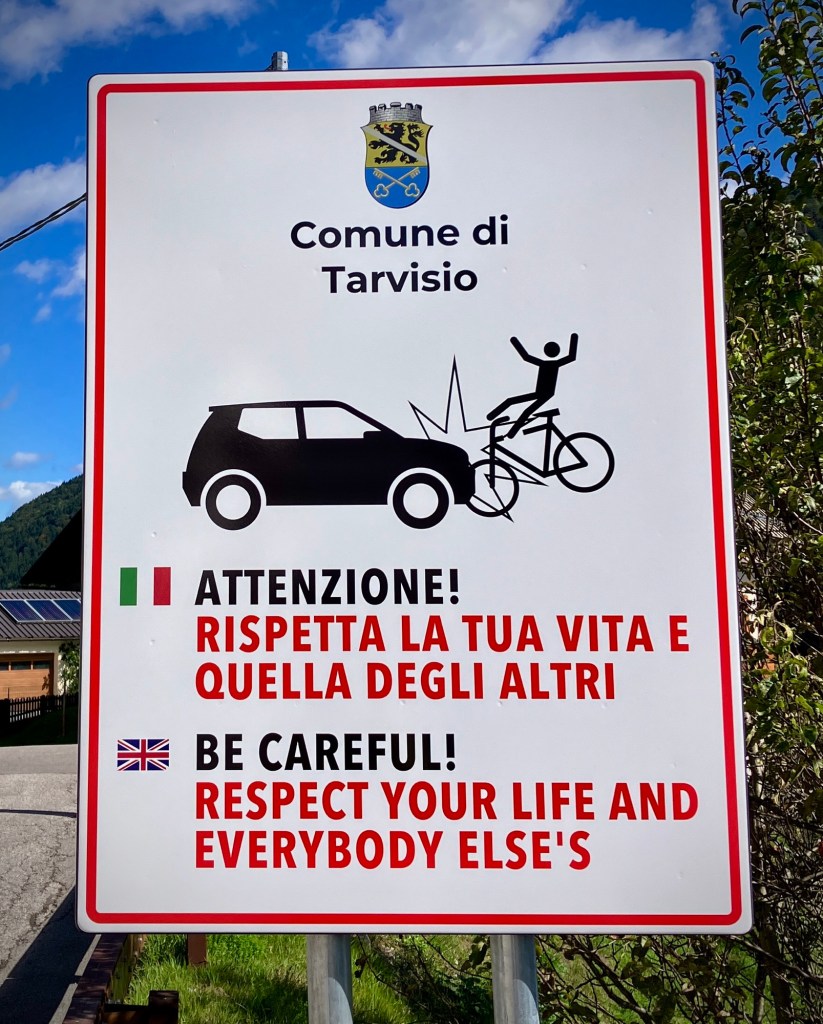
Vemzone is a tiny walled town that you can explore in a few hours.Venzone suffered two devastating earthquakes in 1976, but showed amazing resiliency by rebuilding most historic buildings block by (numbered) block.This rubble in the center of Venzone is a reminder that not everything got rebuilt from the quakes.Renato, our friendly and helpful apartment host in Venzone.The sign for bicycle friendly lodging in Italy.A chance to do proper laundry!Bike storage for the night protected by cats.The area around Venzone is now a seismic and building engineering research center, with various reinforcement and repair designs being tested in real time on historic structures.Chilly for October 1st but not raining!The beautiful and broad Tagliamento River.Off the Alpe Adria, but still nice regional routes.On the Tagliamento regional routes.The story of Ottavio Bottechia, the first Italian winner of the Tour De France was more intriguing than we imagined.This giant roadside bicycle memorial in Girona del Fruili celebrated 100 years since his historic 1924 Tour win. His body was found injured and unconscious here in 1927 and he died shortly thereafter after. Was he murdered? Too liberal for Mussolini? The mystery remains. It’s a nice reminder but we did notice that the Italian drivers were more agressive and less considerate than their Austrian counterparts.Watching for the Eurasian Gryphons at the Riserva Naturale Regionale del Lago di CorninoThe gryphons have been successfully reintroduced and protected across southern Europe. We spotted a bunch with impressive wingspans up to 8 feet.San Gabriele del Friuli is famous for its buttery and luscious prosciutto.There was a bike race starting in the center of San Gabriele, so we got our prosciutto supplies and headed out of town a quiet way down into a steep river valley. Quiet, so we thought!Suddenly not so quiet as the motorbikes cleared the way for the race.Cheryl caught on a steep climb by the field. She was not amused but the spectators were.Cheryl literally got overtaken by the peloton on her touring bike and we were still laughing about it.Finally done with our Alpe-Adria adventure; the happy cyclists in Udine, Italy
So we almost did the entire Alpe-Adria route except the last flat stretch to Prado. We diverted west at Udine towards Milan as we had a hard deadline with our long distance train back to Geneva and hoped to find some more rolling hills. But more on that soon in our next post. Ciao!
We’ve been traveling long enough now, entering our fourth year of nomadic life, that we have a good sense of when we need firm plans and when we can wing it. We planned on Salzburg. Always a good idea in popular cities to book ahead. Rich found a new hotel outside of old town that is one of the increasing number of hotels with no reception or staff. The Numa Salzburg Vogelweider. All automated check in and check out. Worked well. We could walk to old town in 20 minutes, it had a bike storage room, kitchenette, and grocery store across the street. As we looked at restaurants recommended by a friend’s Aunt (thanks Gisela and Tante Hannah) we saw that slightly ominous Google maps message that every traveler fears: Hours may vary due to St. Rupert’s Day.
Hey Saint Rupert. How you doing?
Thank you for the warning Google. Now who is this Saint Rupert? And what might his day mean to our stay in Salzburg?
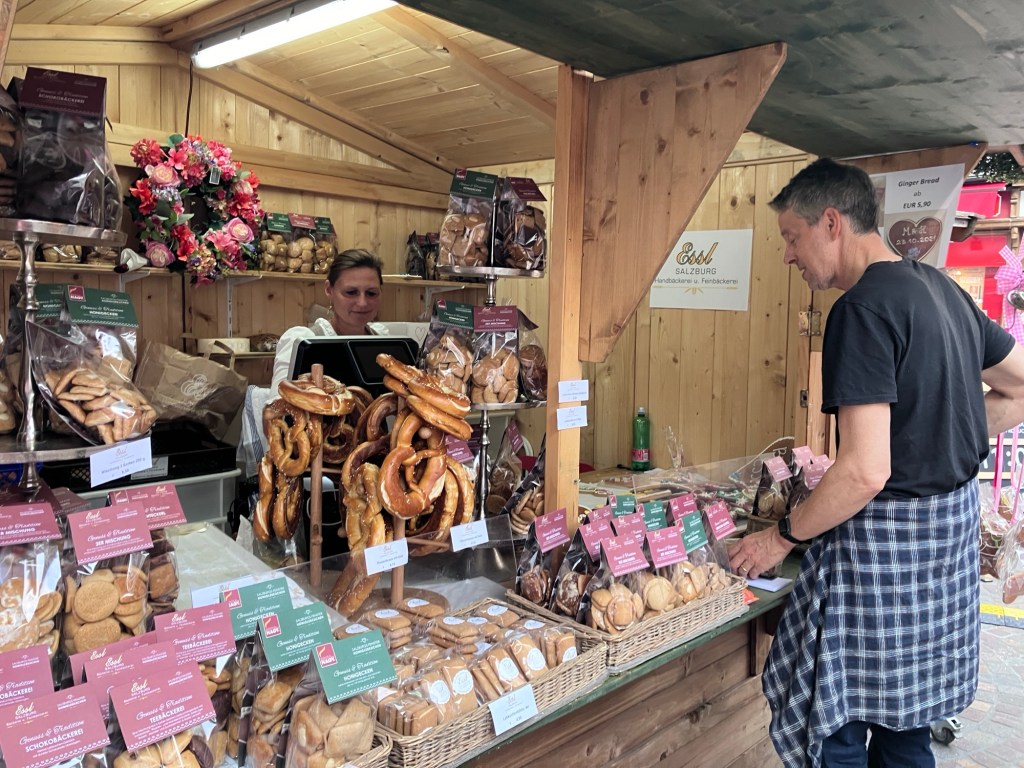
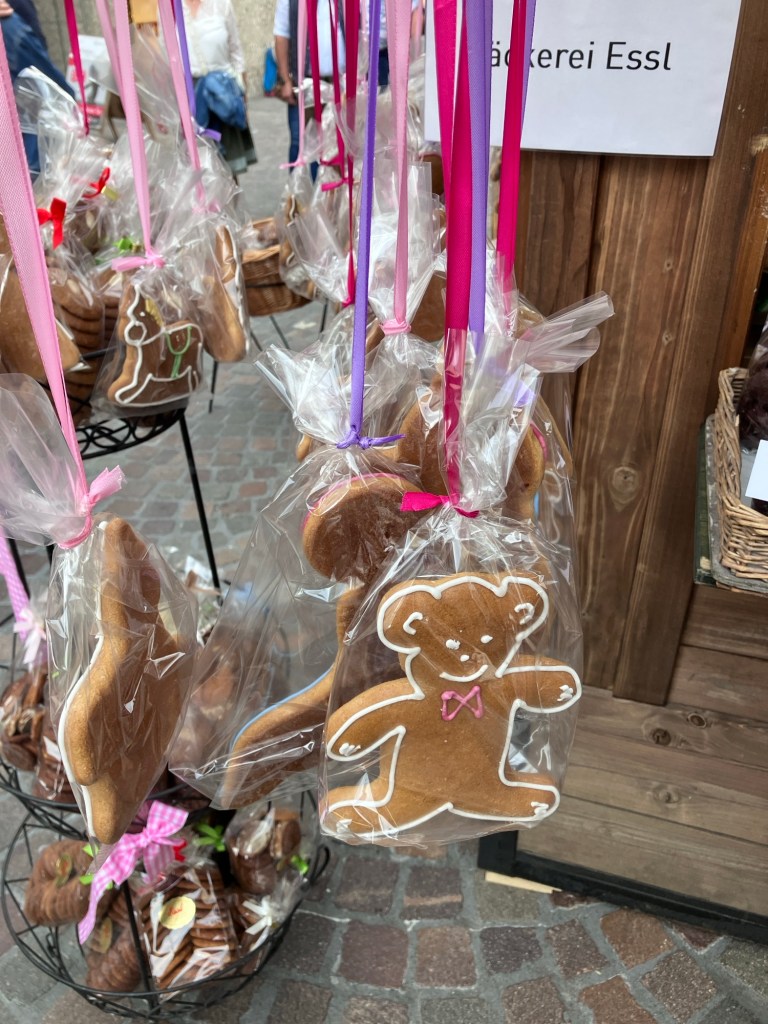
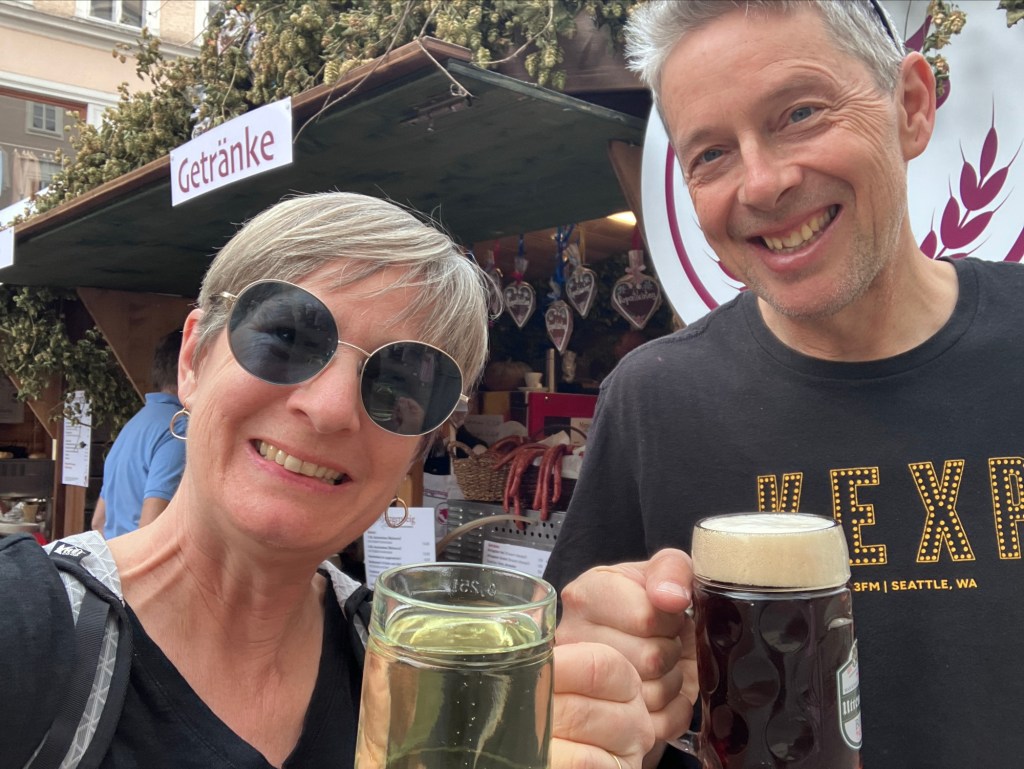
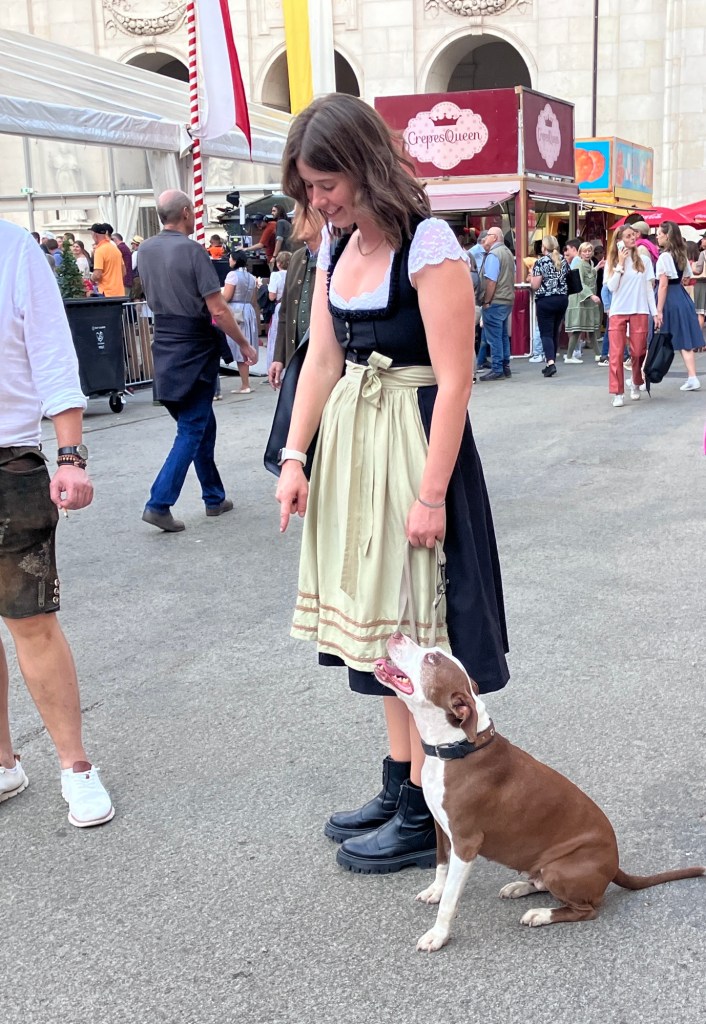
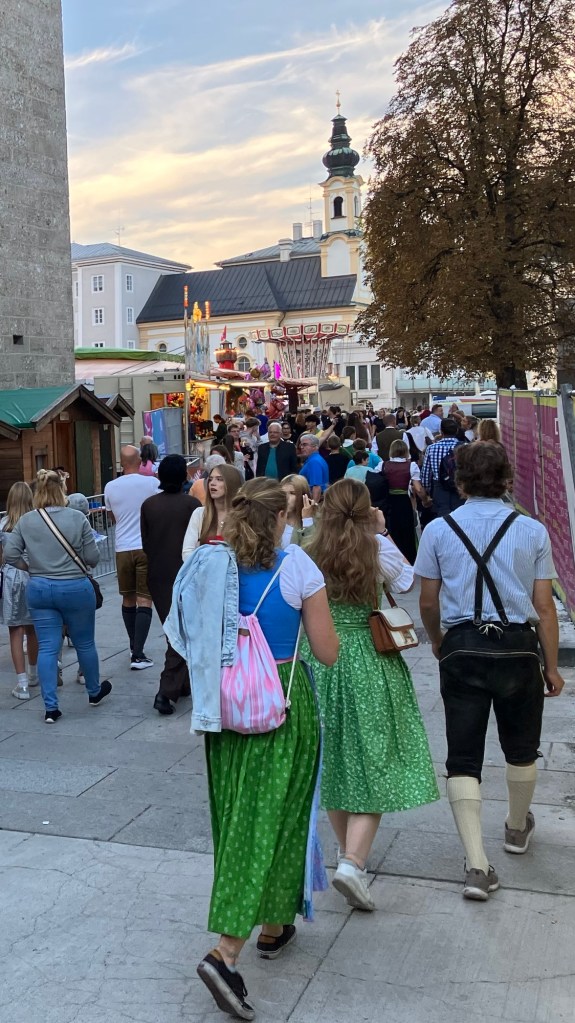
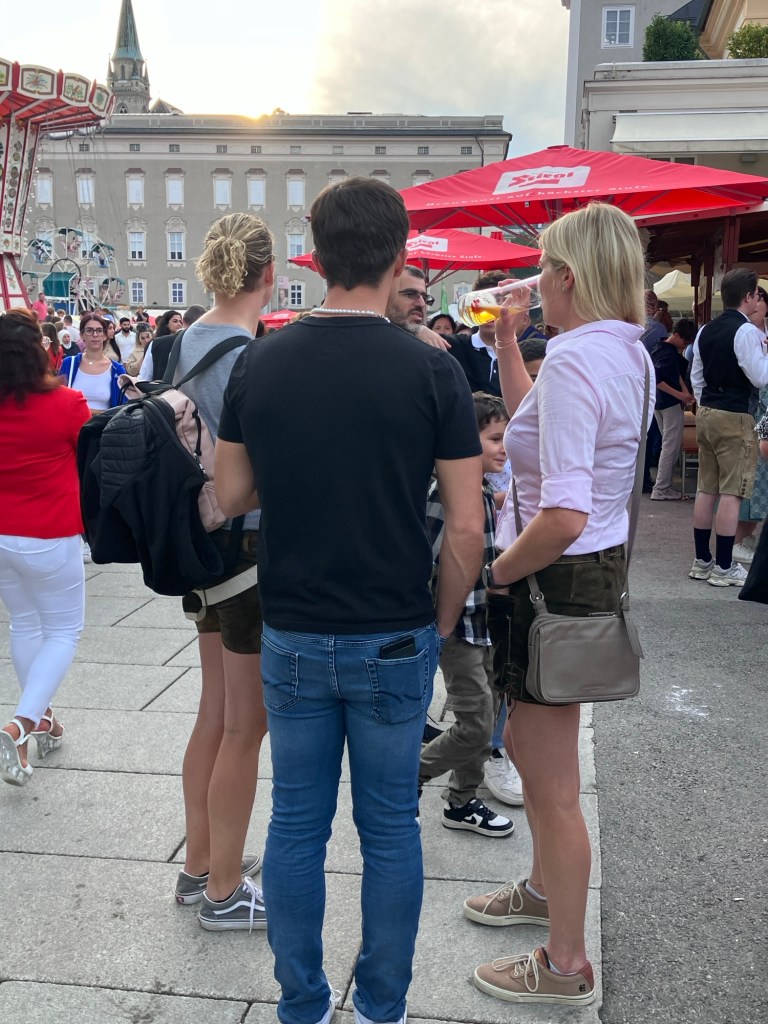
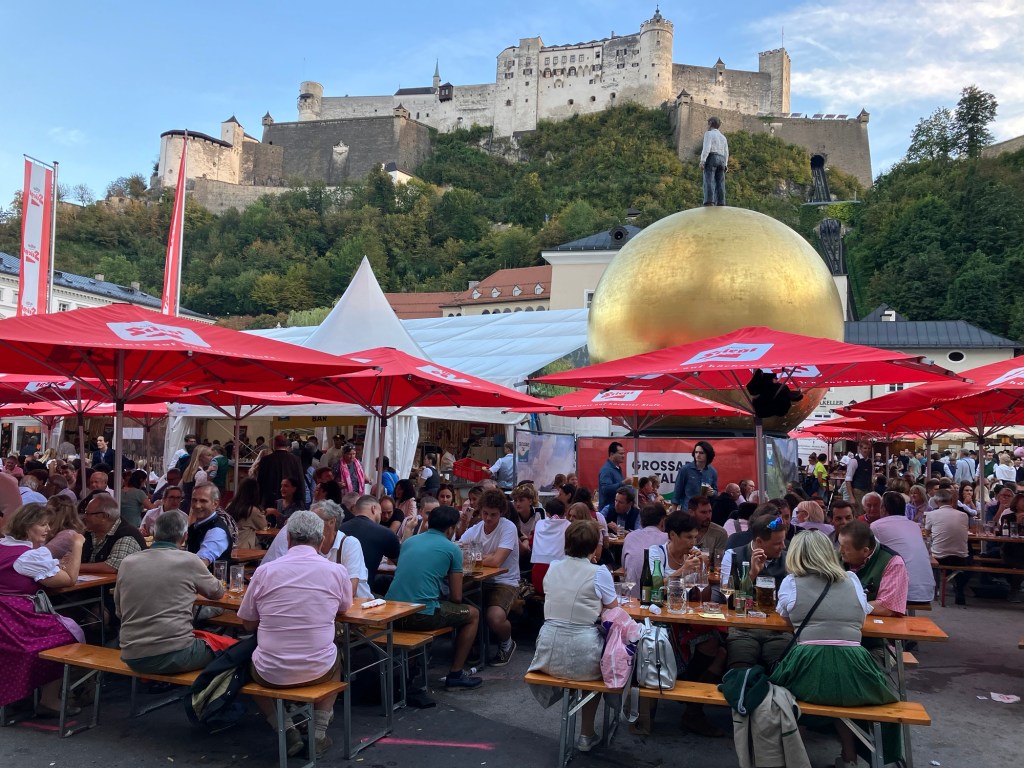
A festival? With stalls selling all kinds of things like cookies?And beer and wine? (That wine stein was not as huge as this photo makes it look.)And table seating for drinks and food.With loads of happy people in Tracht, or traditional dress.And lots of families having fun.
Saint Rupert is, among other things for which he is venerated, the patron Saint of Salzburg. Born around 660, he is usually portrayed with a vessel of salt, as he helped establish the salt mining industry around the city which he named for salt: Salzburg. And, the city throws him one heck of a five day festival every year around Sept. 24, which is the day his relics (bones) were transferred to the Salzburg Cathedral in 774.
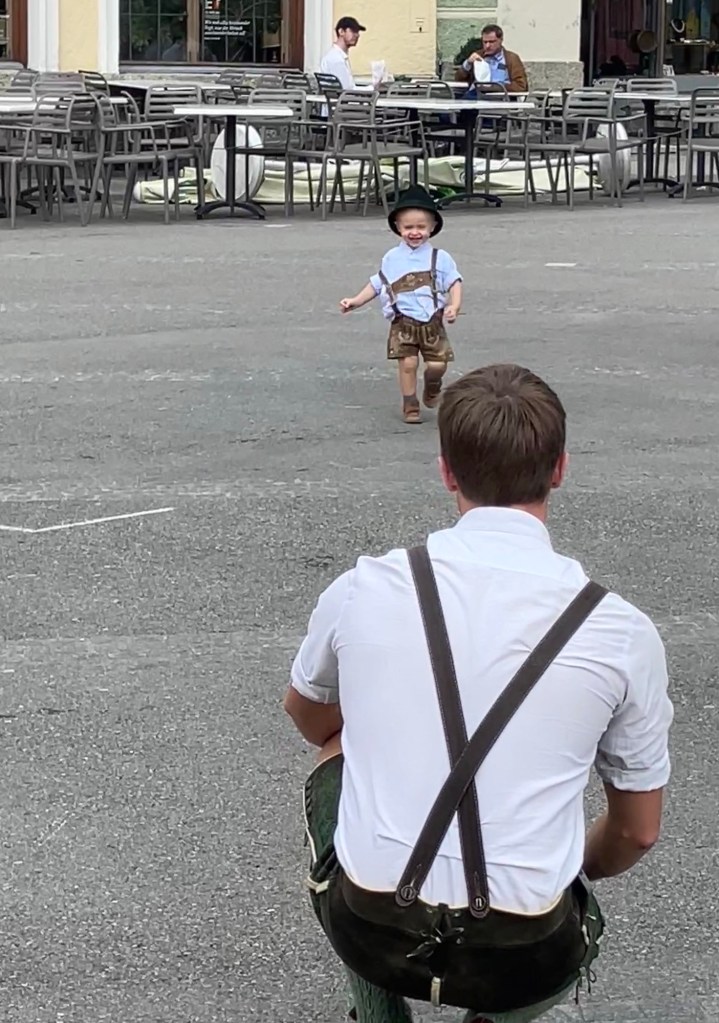
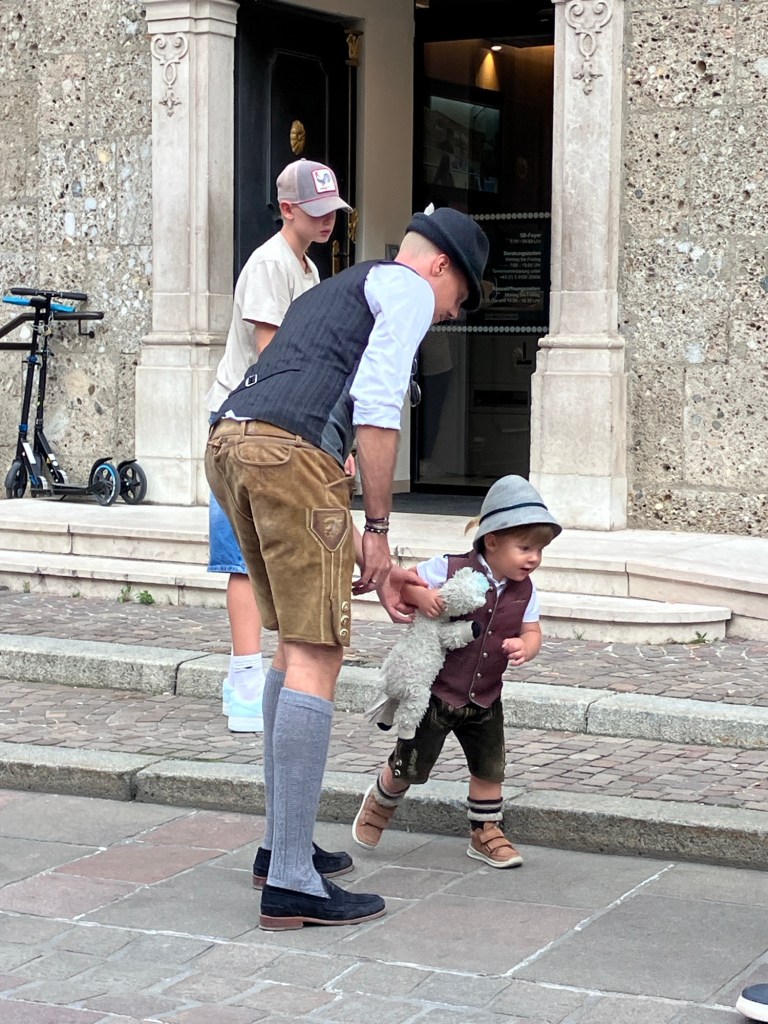
Folks are encouraged to wear Tracht, traditional dress, and they do. Nothing cuter than a little one in Lederhosen.The lederhosen are everywhere!The city makes a lovely backdrop for the festival.
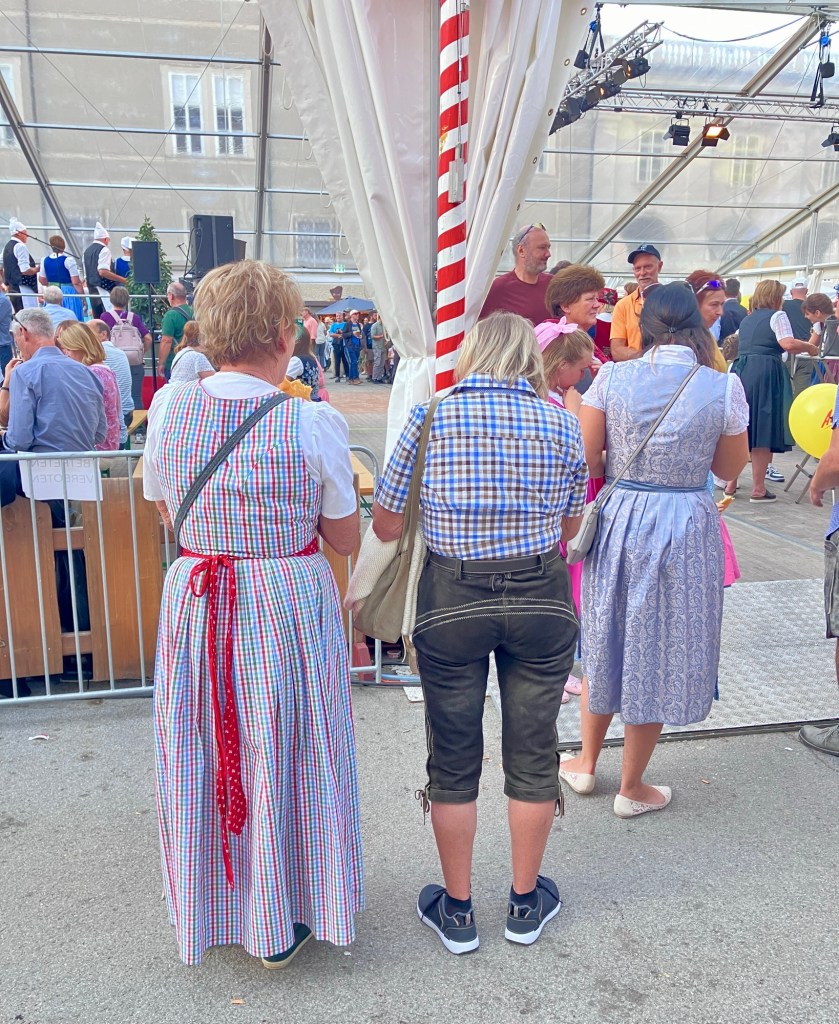
Traditional dress, or Tracht, is more popular now in Austria and Bavaria than it was ten or so years ago. I love this. But, I do admit that I have a little squeamishness about the clear gender lines of the outfits. What if you as a woman don’t particularly like dresses (Dirndls)? Why, I asked Rich, don’t ladies wear lederhosen? Well the ladies are way ahead of me and they are wearing lederhosen.
Dirdnl or lederhosen. Whatever you prefer.More ladies in lederhosen.Short short lederhosen.
We visited the festival, which is centered around the cathedral, all three nights we were in town. we spent our two rest days walking around the city, hanging out in our hotel catching up on laundry and travel planning, and resting up for our climb over the alps to Italy.
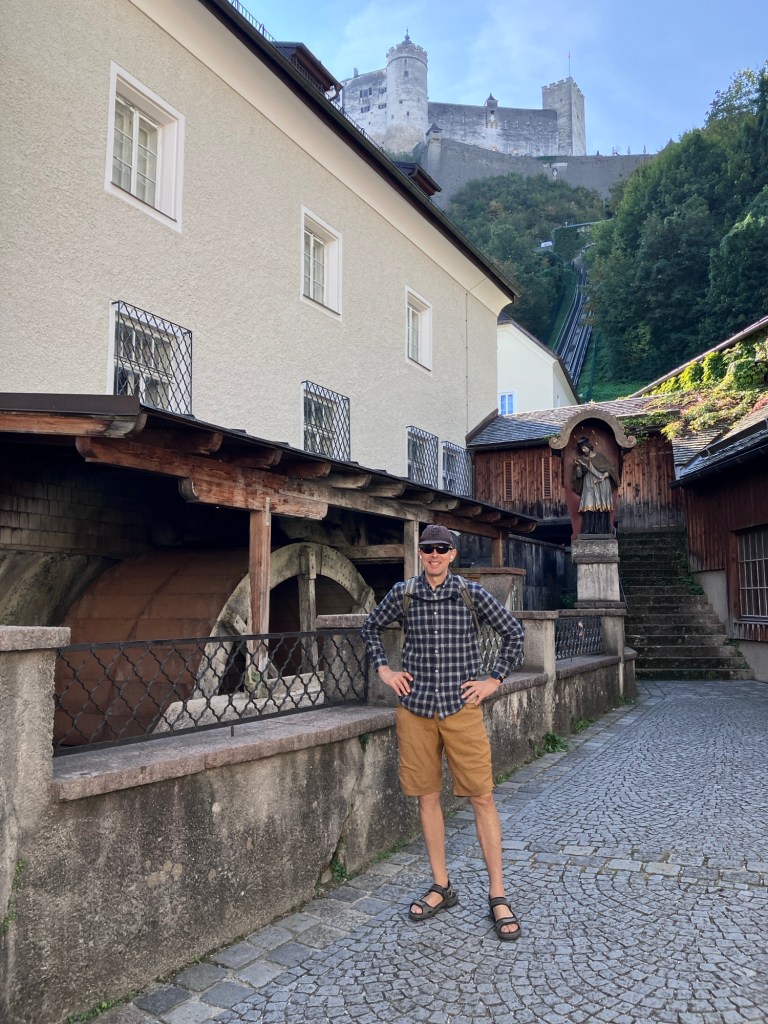
We put in our earbuds and did the Rick Steves walking tour early in the morning. Before the crowds got going.St. Peter’s Cemetery.Visiting the cathedral while it’s quiet.The water mill, built in the 17th century and in use up to 1958. Restored in 1975. Hohensalzburg Fortress in the background.A restorative caffeinated beverage later and we were ready to climb up above the old town.The edge of old town butts into Mönchsberg hill. Literally.Up we go. Up to Mönchsberg, one of the five mountains of Salzburg.Getting a bird’s eye view. And leaving the increasingly crowded old town behind.Charming little winding streets on Mönchsberg.And warnings of ferocious dogs!Who’s a good boy?And stunning views of the fortress (which we skipped visiting.).But enjoyed photographing.The cathedral from on high.Between walking to old town and climbing up Mönchsberg, and back to old town that evening for festival fun, our first “rest day” totaled over 10 miles/16 kilometers of walking.Mirabell Gardens and Palace.Mirabell Palace and a happy second rest day. It’s not often I talk Rich into two rest days in a row. But it was my 60th birthday.
Spending all of our days on bikes doesn’t mean we’re tired of thinking about bikes on rest days. We enjoy seeing what cities have done for bikes. Bikes are one of the best ways to get around a city. Our second rest day we spent avoiding the morning rain and doing laundry, and then walking around admiring bike infrastructure. Before going back to the festival. Gotta love a five day festival. And what did we eat while in Salzburg? Raman twice, once for dinner and once for lunch, Indian food for dinner once, and burgers at the festival. We usually go for Asian food when we’re in cities since it can be tough to find while biking in rural areas. Gotta get our eat around the world fix.
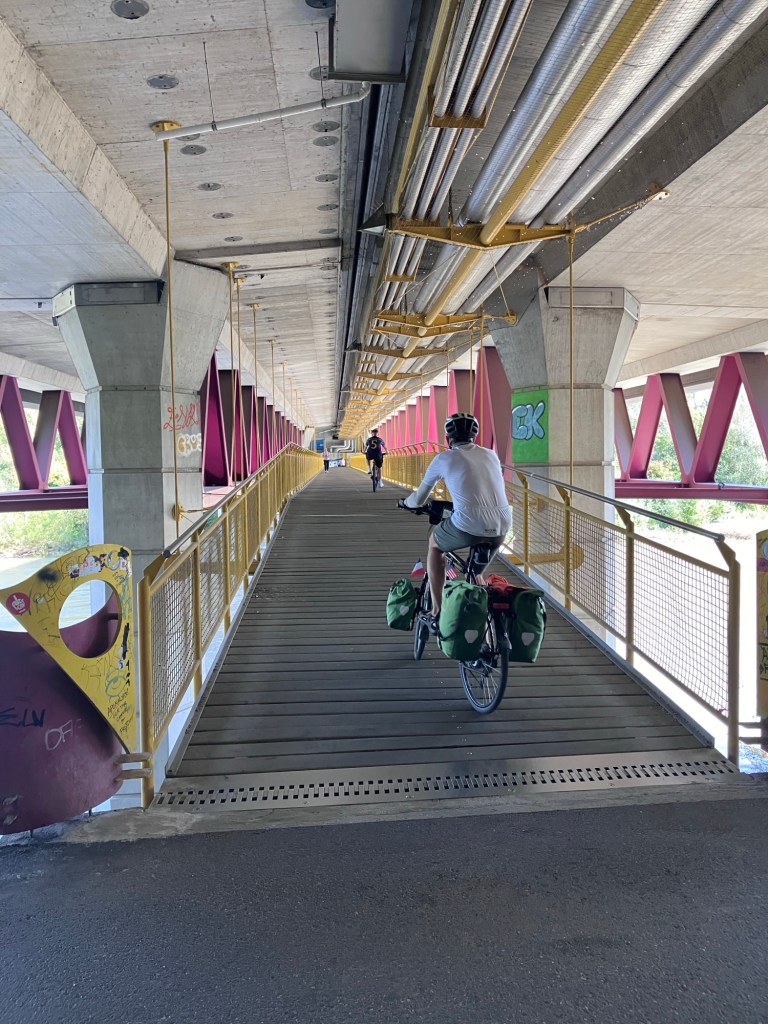
Our first hint that Salzburg would be a good bike city was this bike path hung under a bridge over the Salzach River on our way into the city.The bike station at Schallmoos train station.So many bikes parked in a relatively small space.My favorite sign. Except bikes. No entry, except bikes. One way street, except bikes. No right turn, except bikes. Love it.I’m sure every city has bike theft problems, but the seemingly carefree locking of bikes sends a nice message.
Wandering around old town admiring the shops full of things we don’t buy is another fun pastime.
Fancy umbrellas. Yes please, but how to carry on a bike tour?Wheels of cheese! Impractical.Little chocolate hedgehogs! Ok, these I would have bought if the shop was open.Old town got busy in the evenings.And the famous sites of Salzburg played second fiddle to Saint Rupert.Rich’s favorite. A half liter of draft dunkel.Sunset from Mirabell Gardens.Our trip so far. Far left heart is Geneva area, train to Zurich, and the blue dot is us in Salzburg. Hmmm…there seems to be a big mountain range between us and our next country, Italy. Did we rest enough?The happy travelers and their rest days strategy.
To Californians who are accustomed to having to drive hours to leave the state there’s a funny thrill to crossing country borders. Even the non-controlled sometimes unapparent borders of the EU.
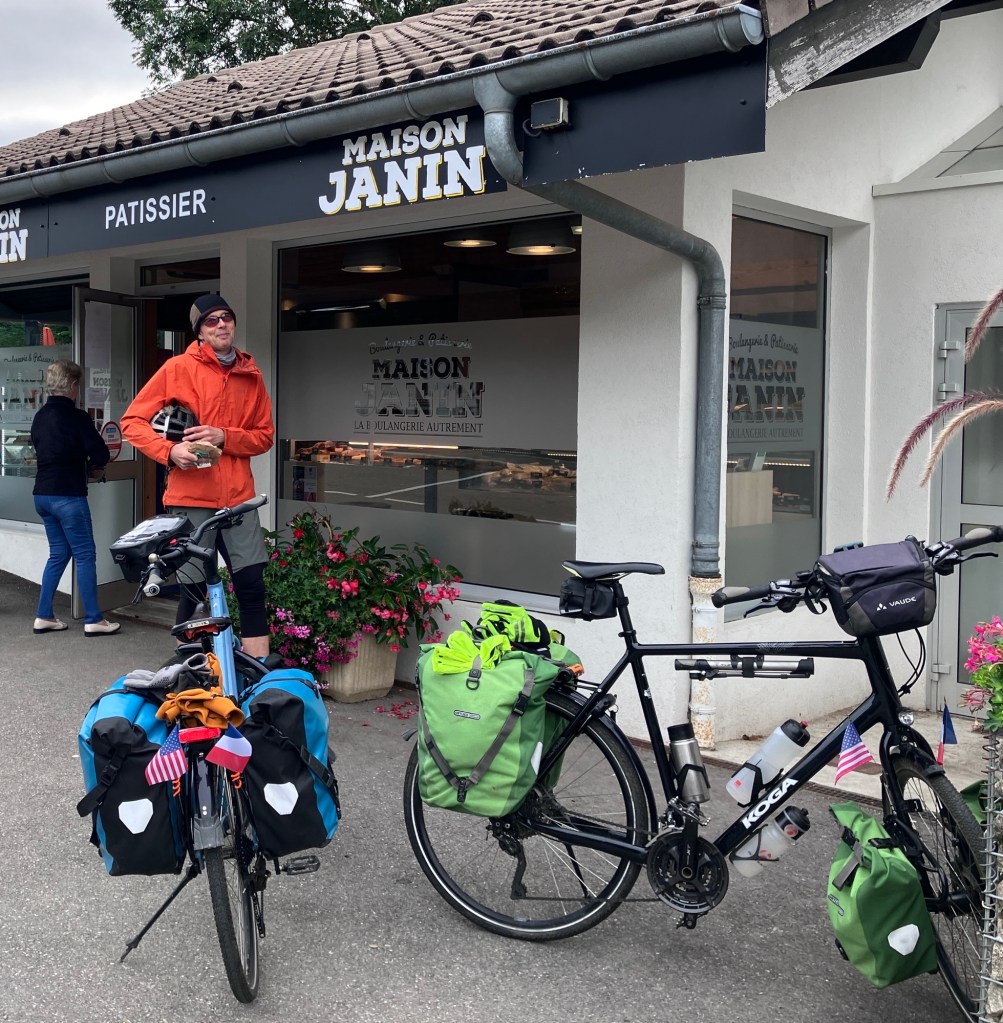
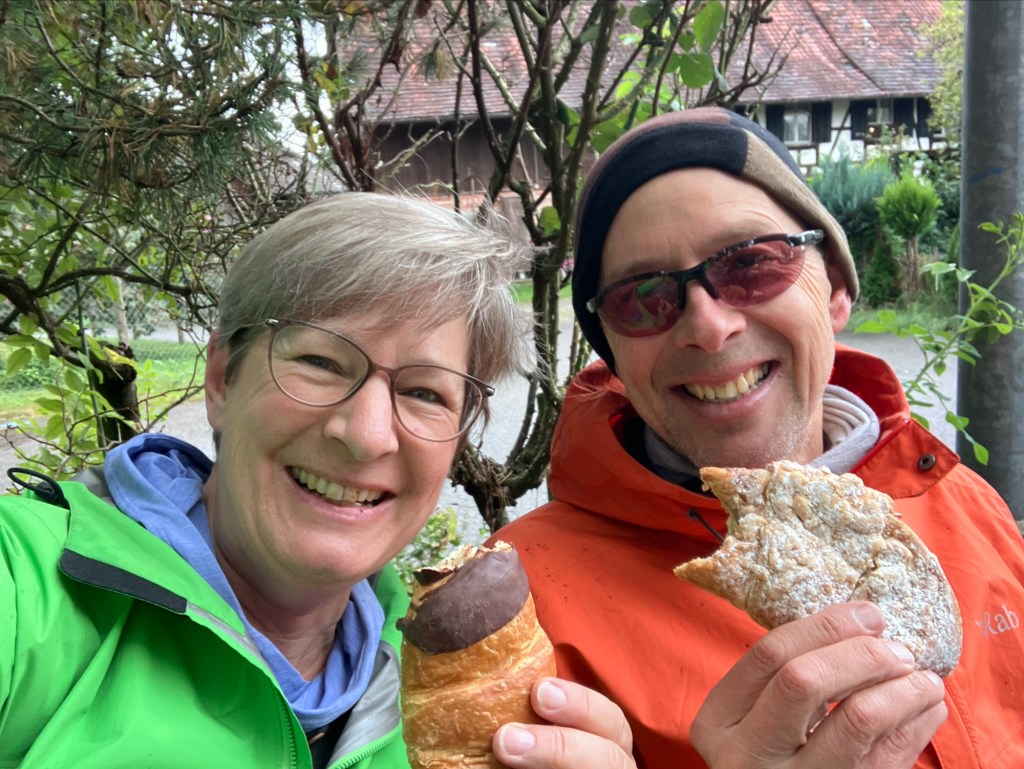
Heading out of the Vallée Verte, France. And into a cool and wet weather pattern.First stop: Boulangerie. On to Switzerland.Even more fun when you ride a fantastic bikeway from France into Switzerland.
A map of our travels by bikes in Europe would look like the wanderings of a neighborhood cat, on a large scale. Between vacations when we worked and our post retirement bike tours we’ve crossed, criss crossed, meandered, train hopped, ferry hopped, head down and pedaled, woken up with no plan, gone with the tail wind, and any other description you can think of about our pedaling in Europe.
In Geneva enjoying our pastry break.Le Jet d’Eau in Lake Geneva.Where to now?The train station!
Our last bike tour, spring of 2024, started the same way, pedaling to Geneva, but we pedaled right through and out the Via Rhona. This time we hopped a train to Zurich, Switzerland, to get us to a new starting point.
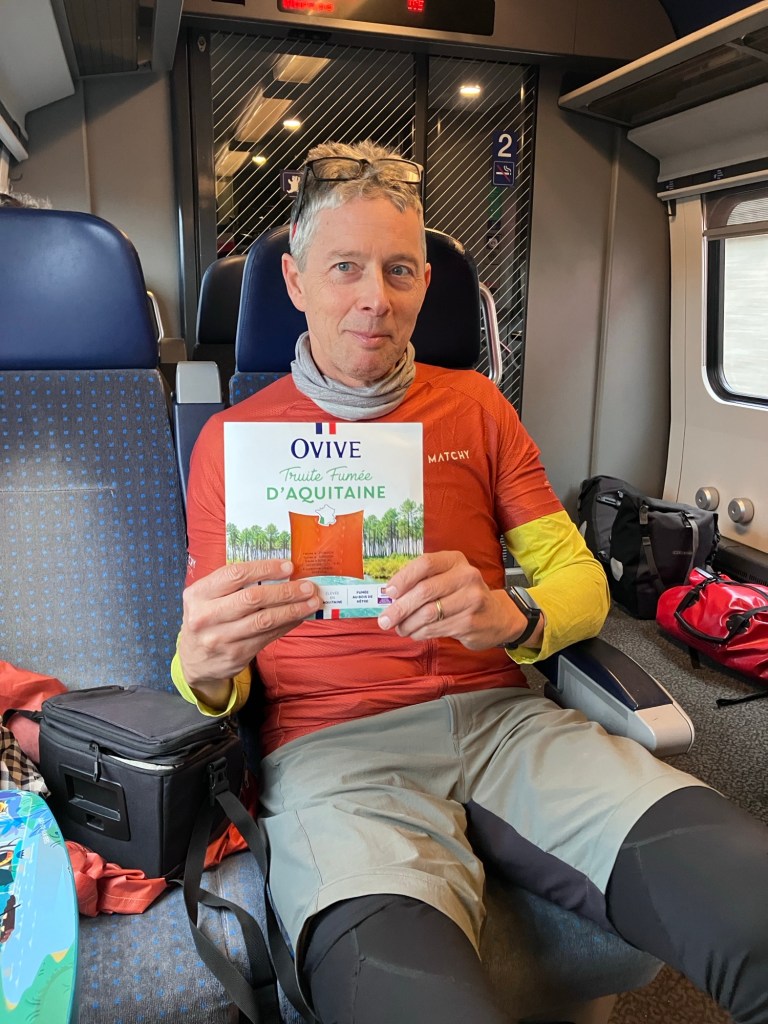
Dueling train lunch decisions. Gazpacho for me, not Rich’s favorite.Smoked trout for Rich, not my favorite.We stopped outside the train station in Zürich to put on all of our rain gear and started the 10k ride to our hotel.Any dry spot in a storm is welcome.
After a good nights sleep, which was very welcome as the jet lag got us bad this time, we headed out towards Wil, Switzerland. Riding out of Zurich was like riding out of any city, getting through big box store areas, crossing highways and motorways, through large roundabouts, and finally seeing the wide open countryside. Well, almost any city. In the Netherlands of course, you can easily ride anywhere – including into and out of big cities. We still reminisce about our ride through Utrecht a few years back and how absolutely easy it was.
Ah. A bikeway into the countryside.Now we ride! Welcome to my world. And don’t feed me, said the sign on his fence.
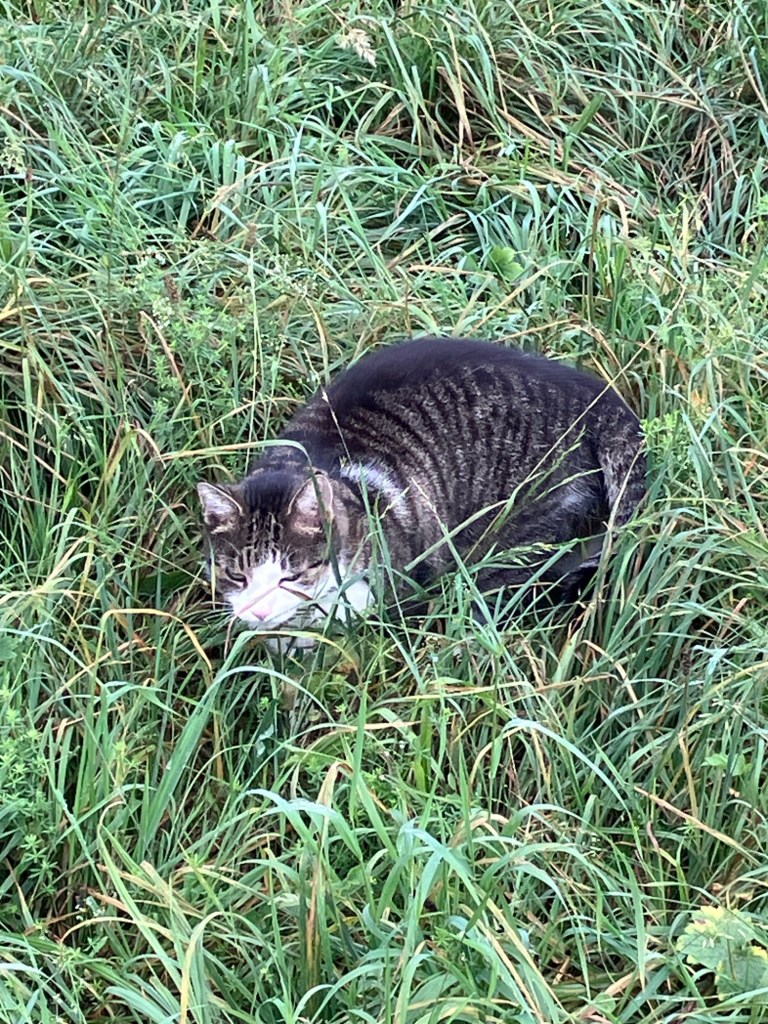
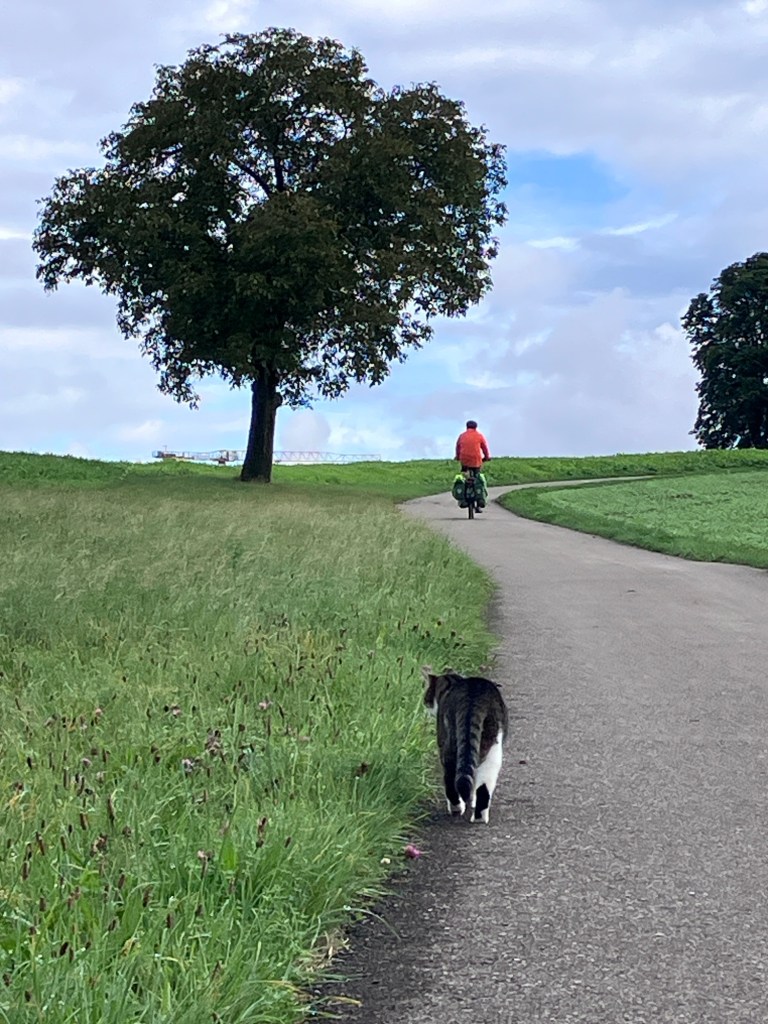
One of our pastimes while traveling is building the perfect country, taking our favorite things from each place we visit and adding them to our fictional nation. We didn’t get very far on this ride before I was reminded of my favorite thing from Switzerland, Austria, and Germany. So many farm cats wandering the fields.
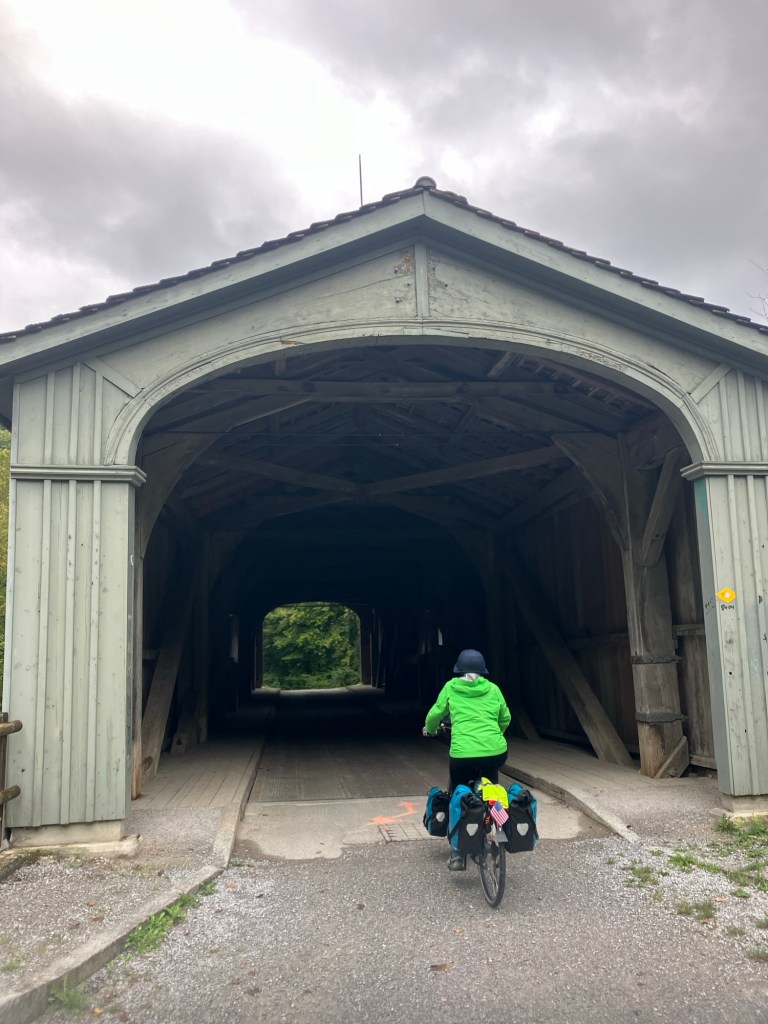
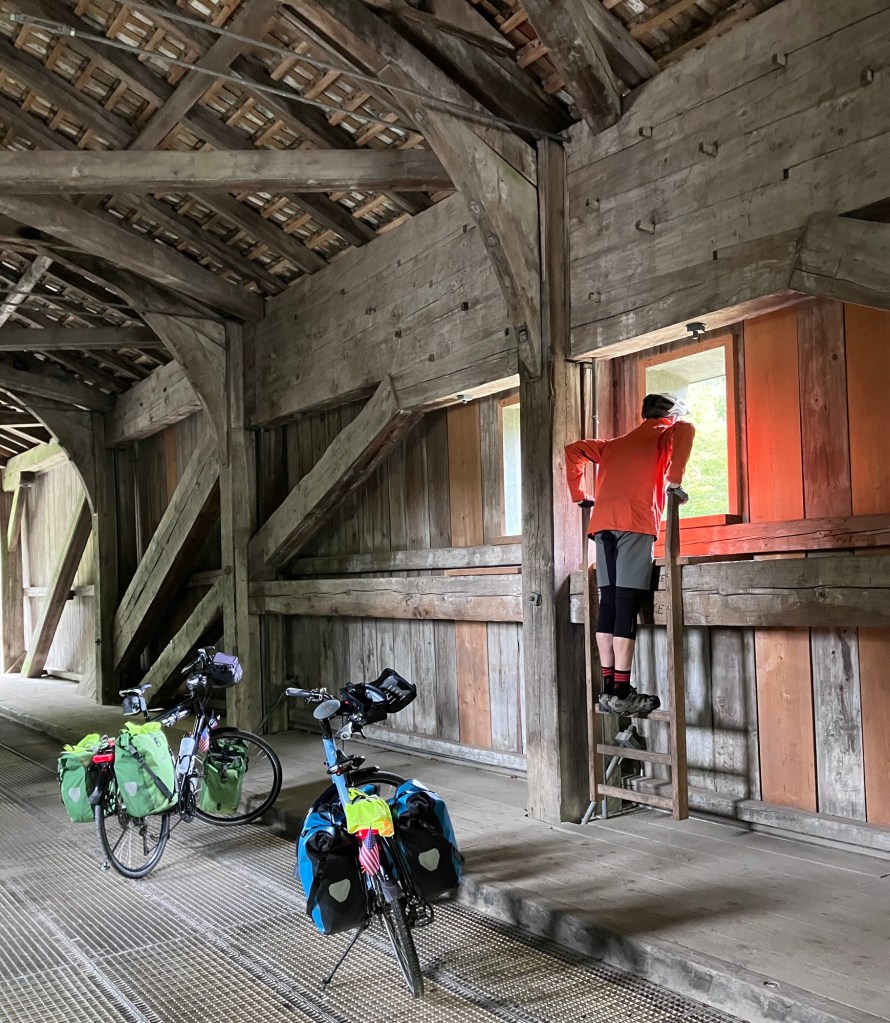
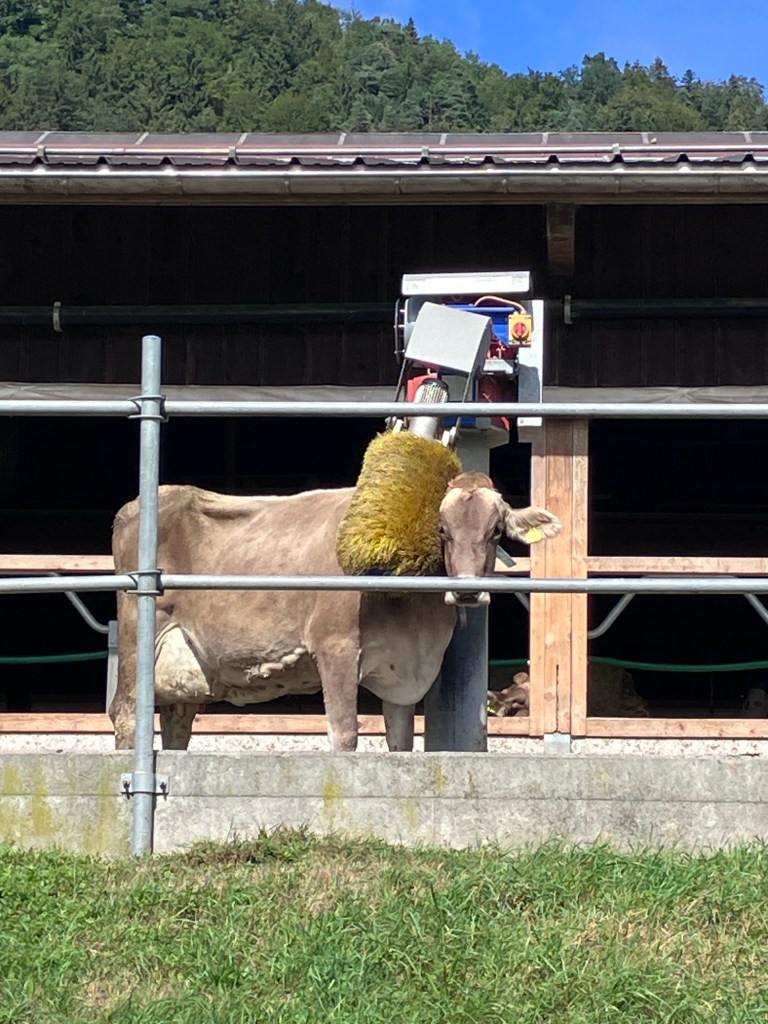
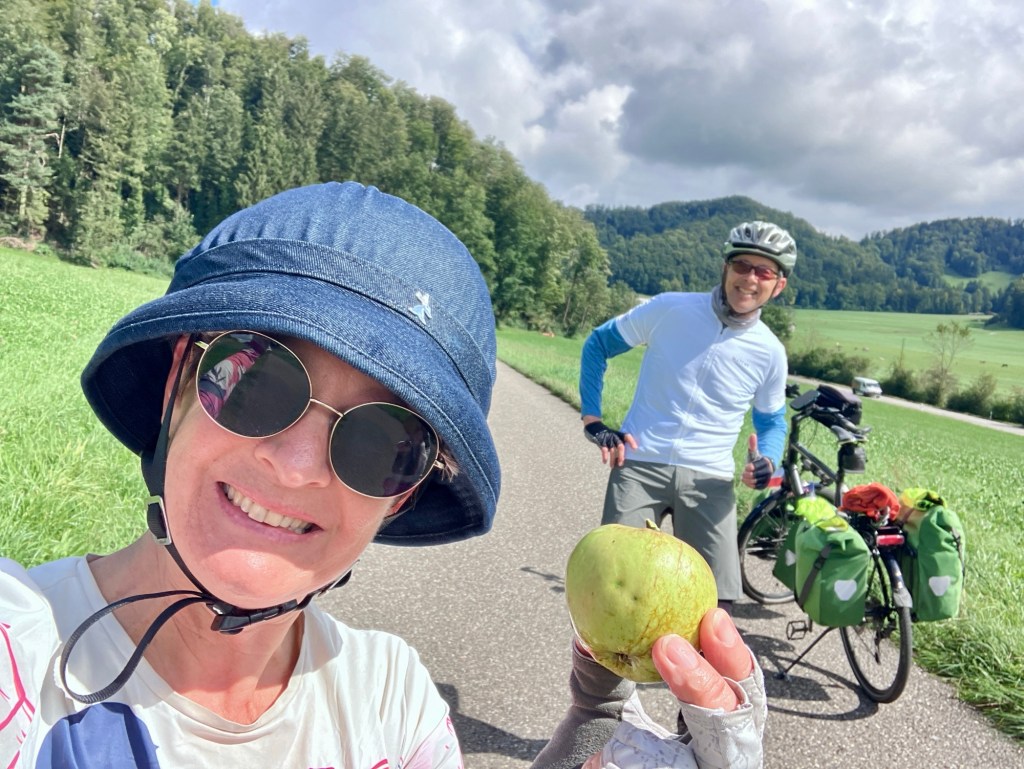
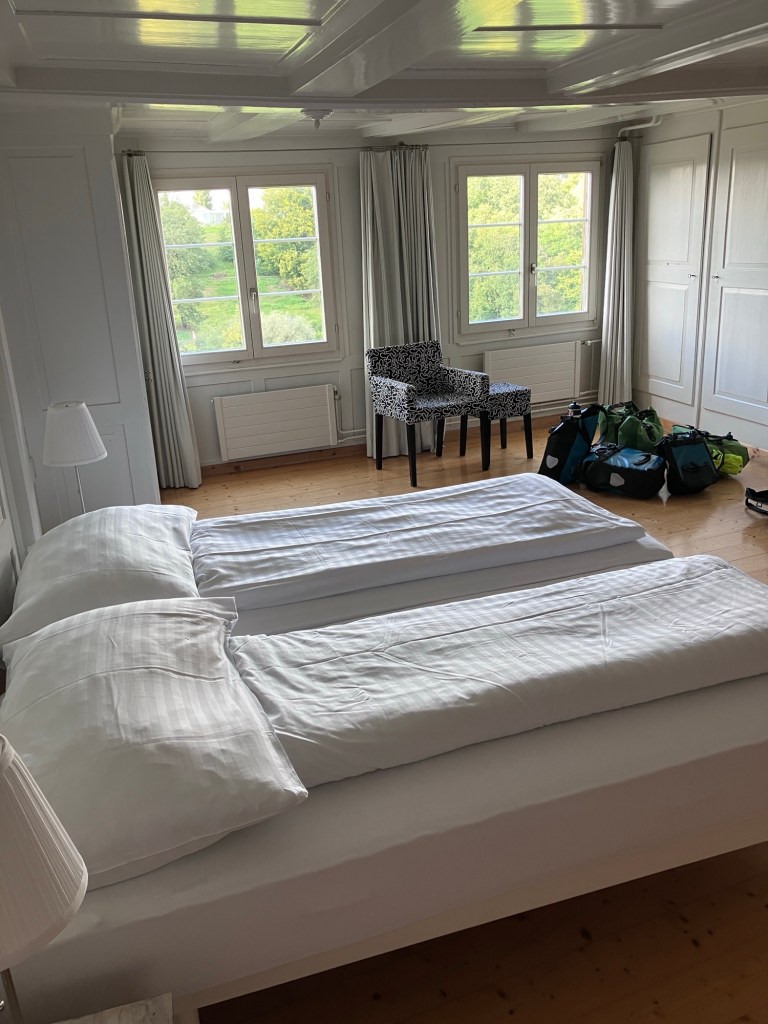
Usually the farm cats are too far away or too skittish for photos, but this one came over for a visit.And then started following Rich up the road.Covered bridge! This covered bridge had windows and ladders so you could admire the view.Some cow barns have automatic scratchers which start turning when the cow leans into the brush.I’m sure the locals and farmers laugh to see us snapping photos of their farmyard animals, but who can resist chickens wearing feathered footies?Smooth smooth asphalt on the bike paths.Apple season! There are so many apple trees. Well tended orchards and random trail side trees. We only pick apples from those which are not obviously part of someone’s orchard.Gardens are still blooming. Our lovely historic room in Wil. This is before we dumped the contents of our panniers everywhere.The view over Wil from our hotel. The clouds are so dramatic.
We’d been lucking out with the weather, grey skies and threatening clouds and we got to Wil before the rain and hail front moved through. The hail did catch us out without an umbrella and forced a dinner decision on us – the close burger place versus the Thai place which would have meant arriving drenched. And did we walk out of our hotel right past a big bucket of umbrellas to borrow? Yes. Lesson learned.
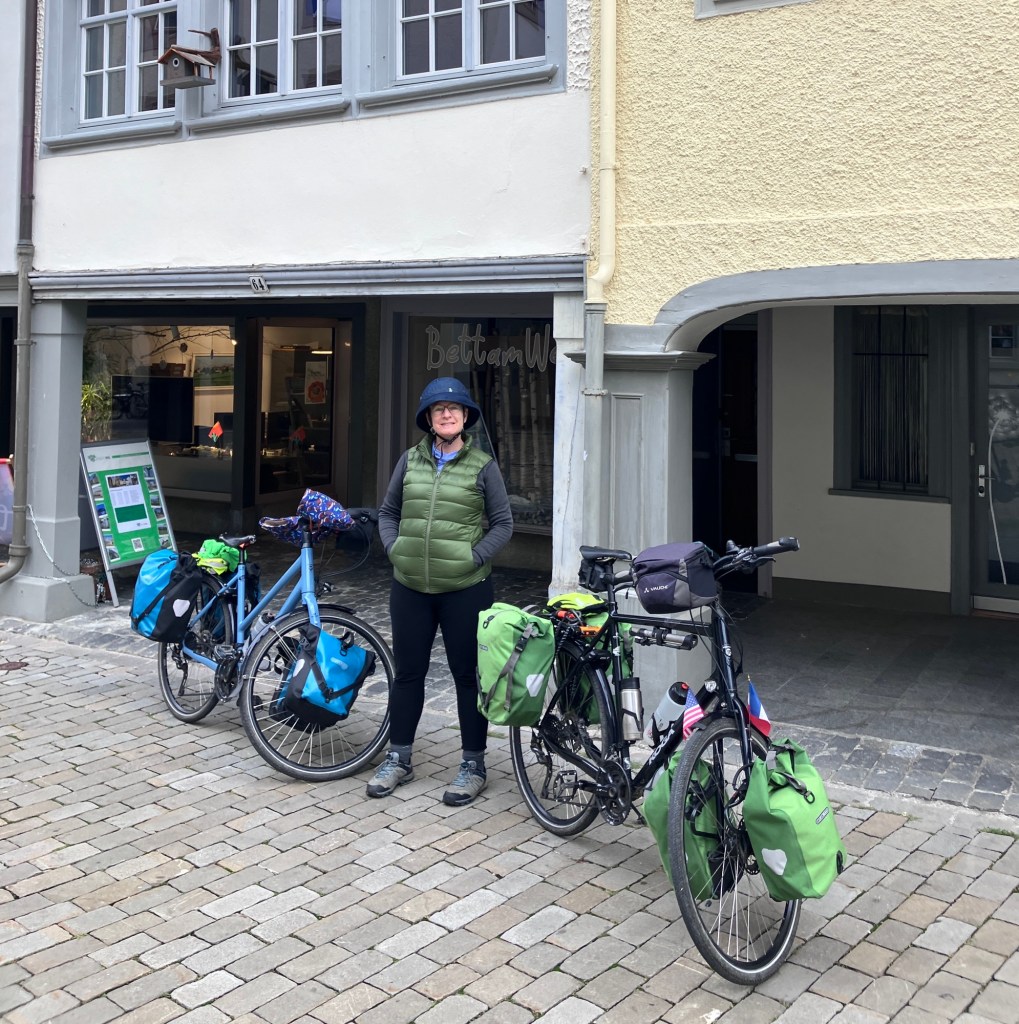
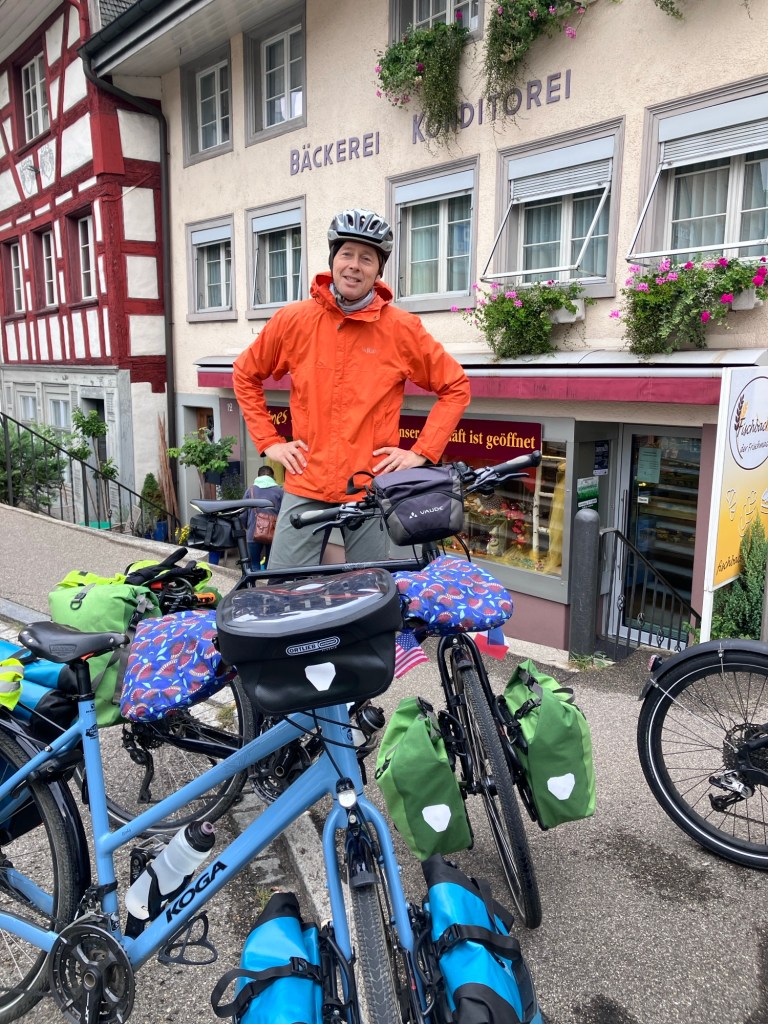
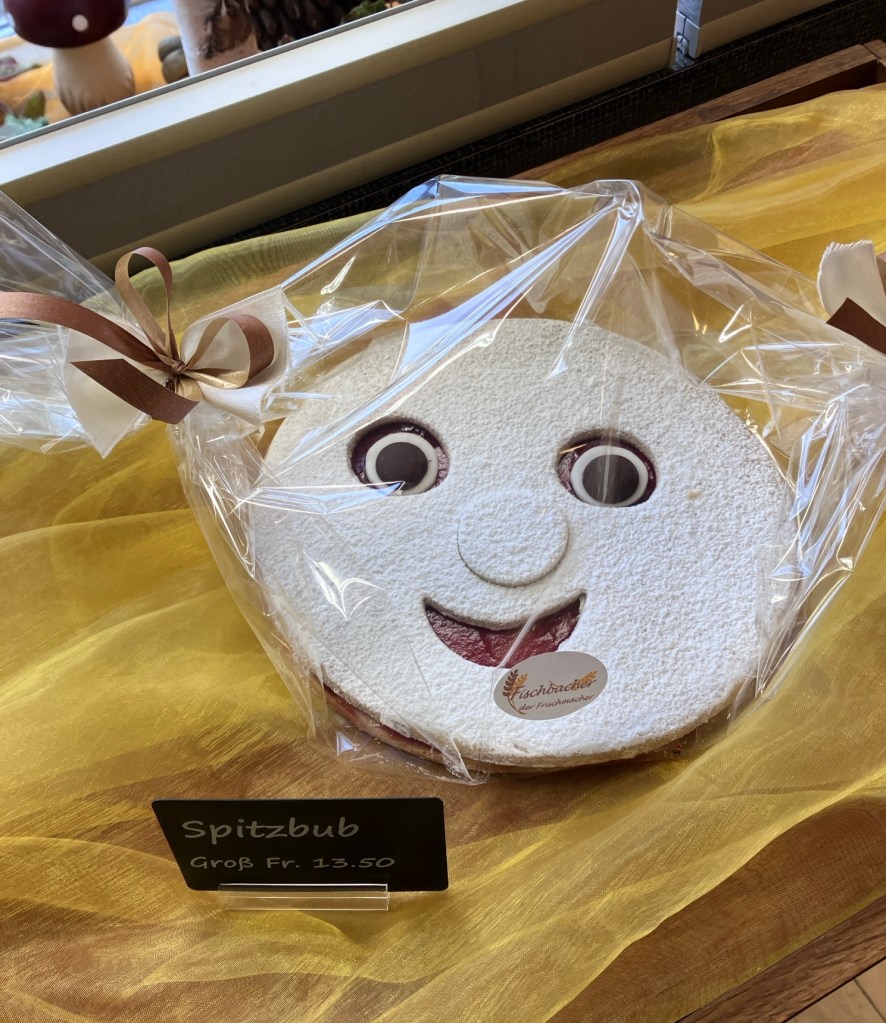
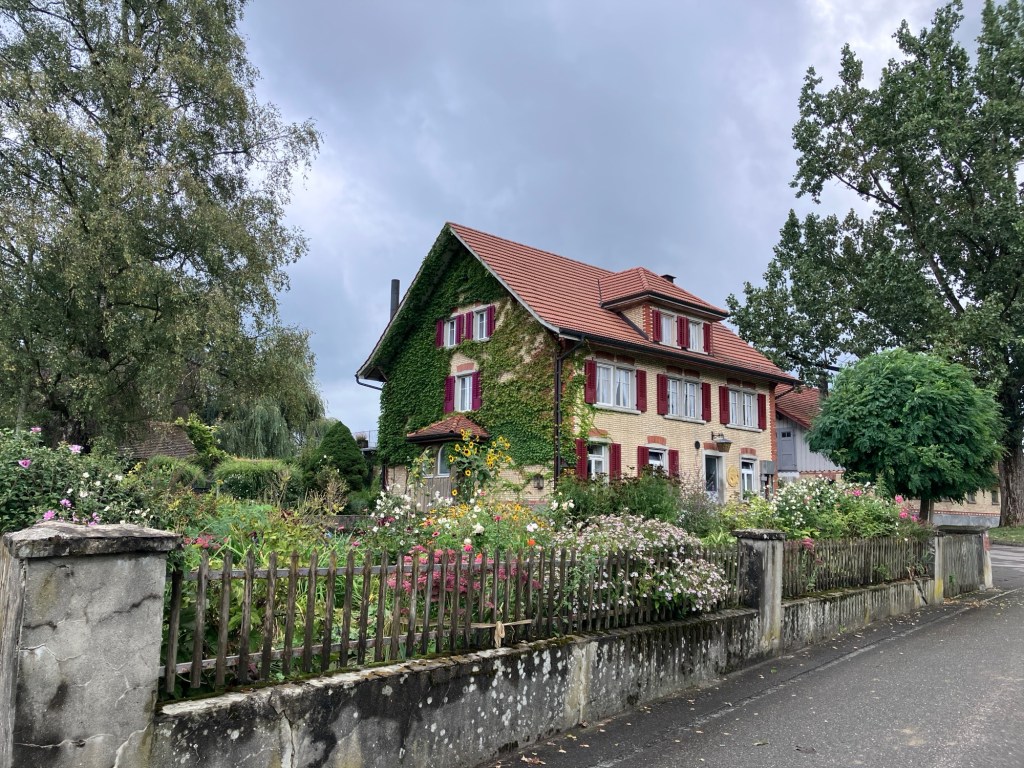
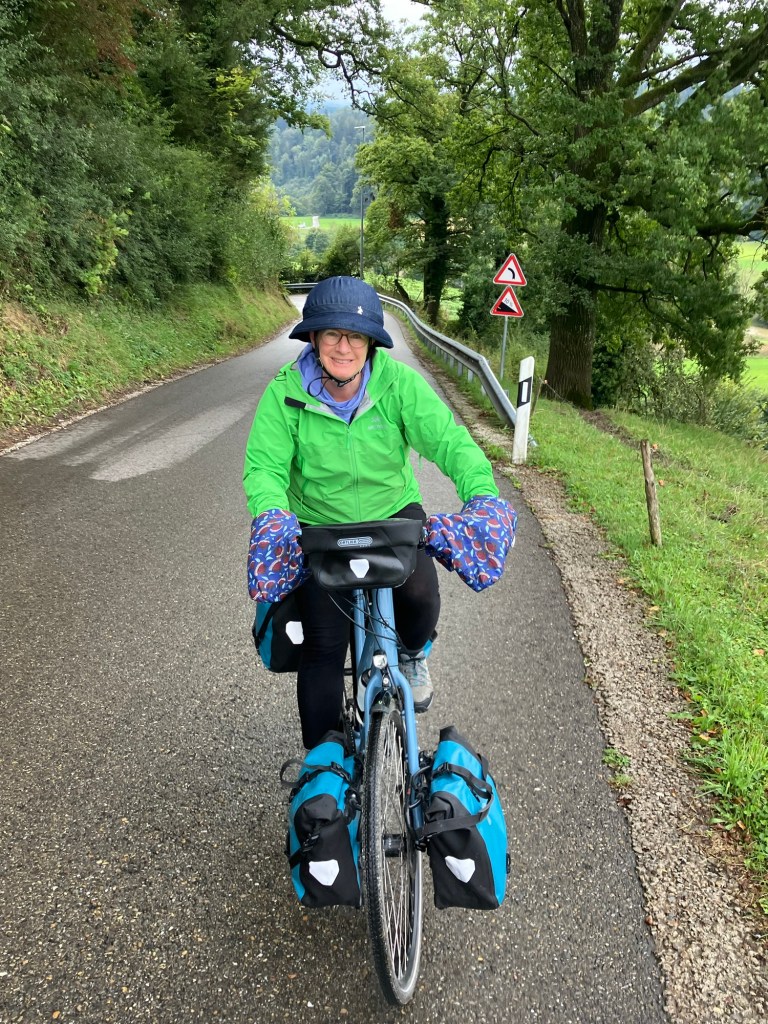
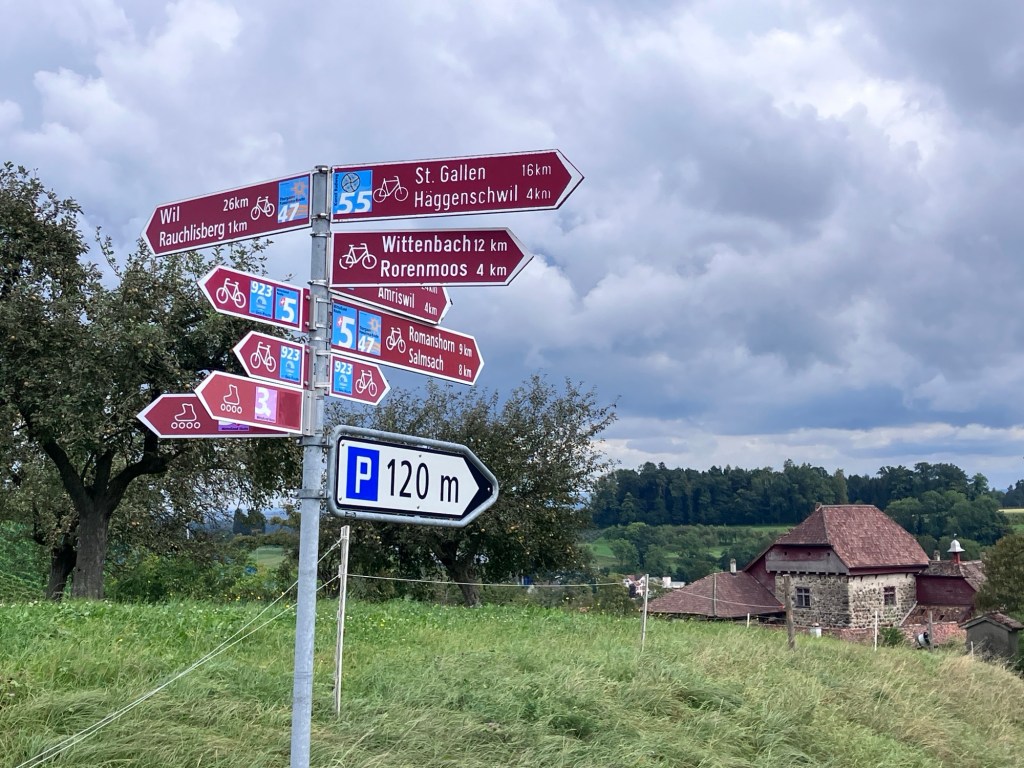
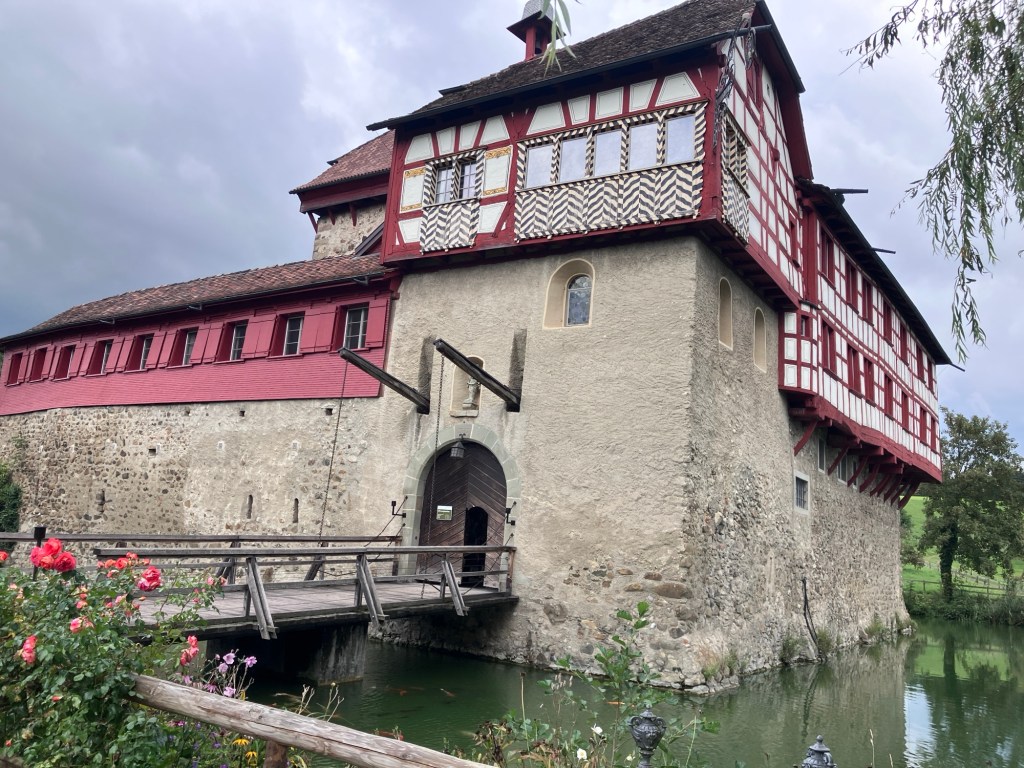
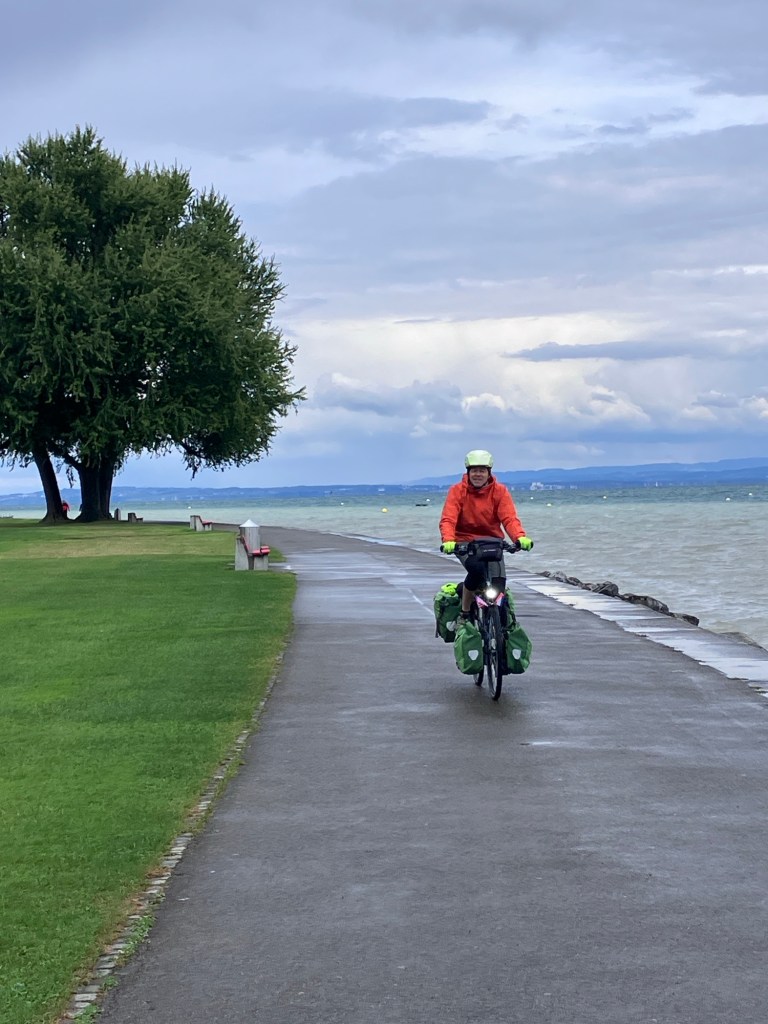
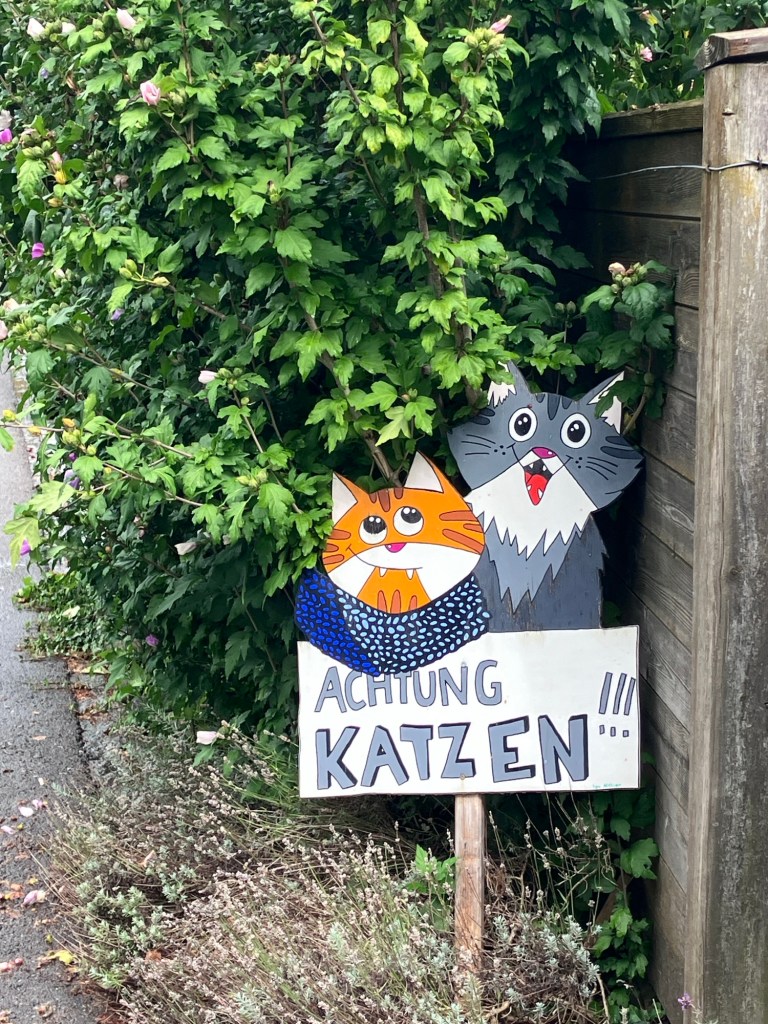
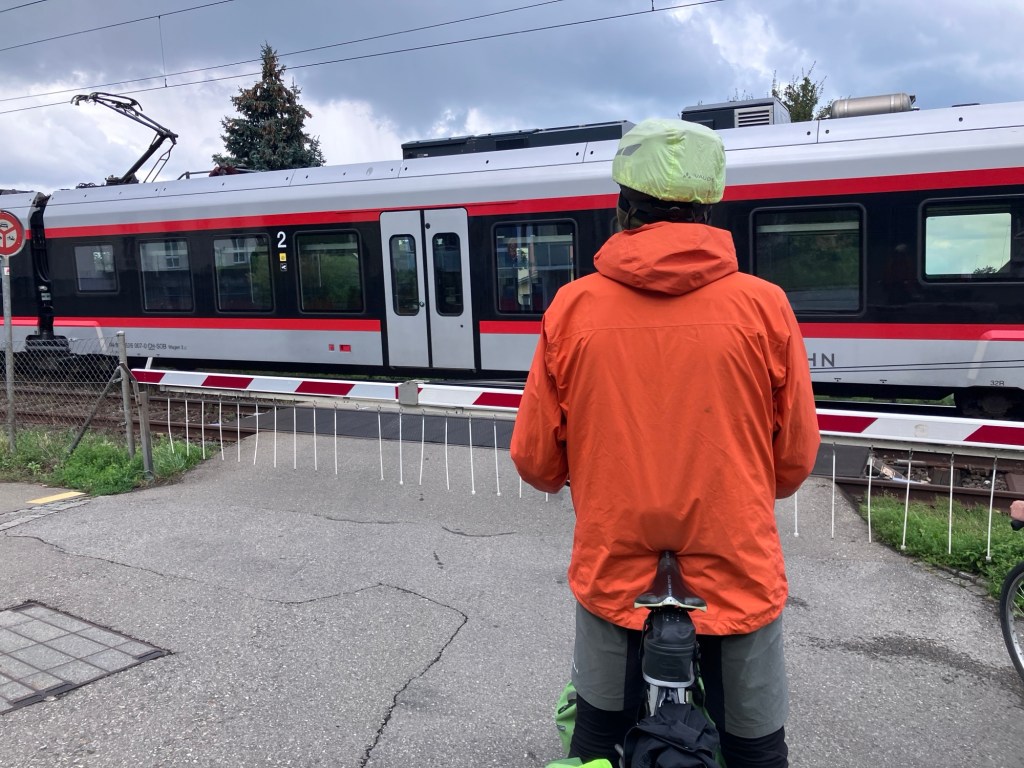
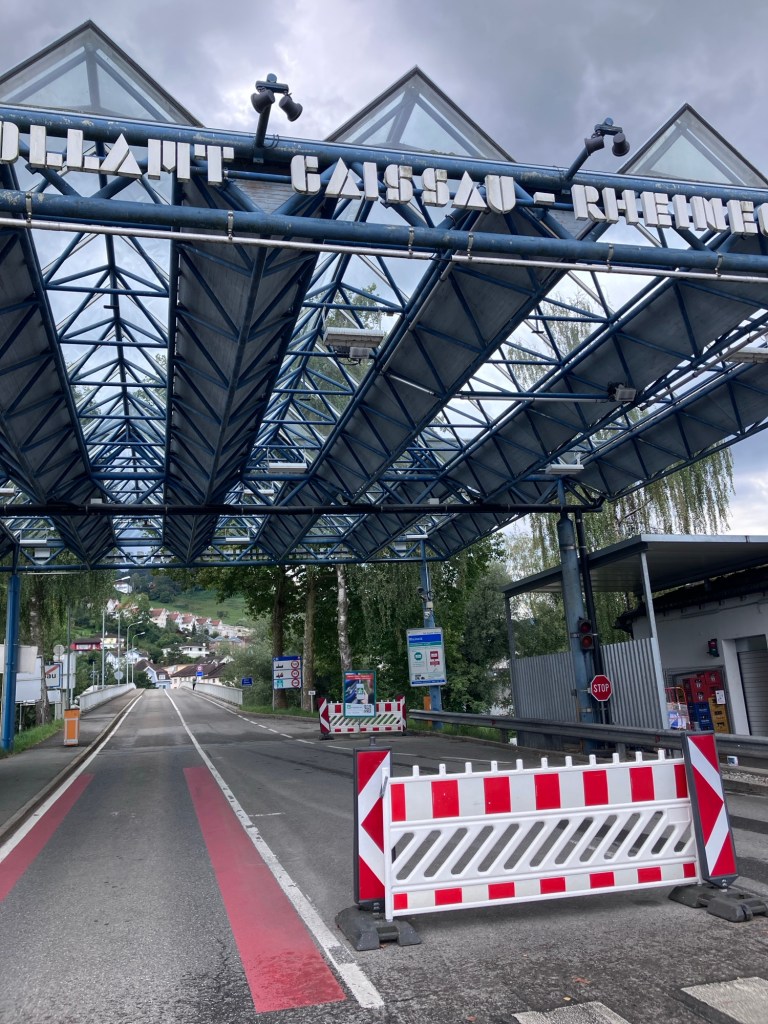
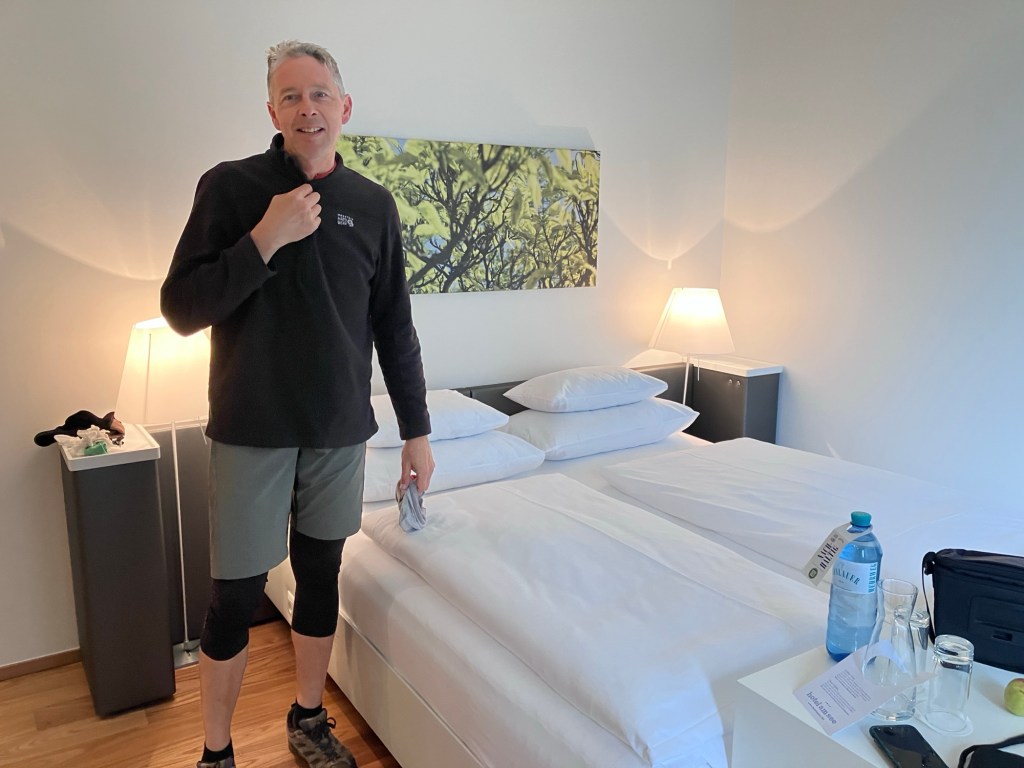
Heading out after our second and last night in Switzerland. It was a cold morning.What’s the first stop? A bakery. Always.No, this giant cookie did not come with us.Another covered bridge.Apple trees so loaded that their limbs are propped up.More apple trees. And threatening skies.The villages, all centered around a farm, are so charming.And welcoming. With benches and a fountain. A perfect place for a pastry break. And then the rain came down.And a very nice woman across the street invited us to shelter under her barn overhang. Climbing up, we’re almost out of Switzerland now, about to cross into Austria. My handle bar covers are still working well. Keeping my hands warm and dry.Beautiful Swiss cows wondering why we are leaving Switzerland. The signage makes you feel so welcome as a cyclist or hiker.Schloss Hagenwil. We went inside and had a look around. Mostly restaurant space but quite stunning.The chapel. Hagenwil is the only intact water castle remaining in Eastern Switzerland. Imagine what it took to build and maintain this castle.Lake Constance to the Swiss and Austrians or Bodensee to the Germans. Attention Cats! Or Danger Cats!?A train crossing. That’s an Austrian train. We’re so close!Wait! How did we get on this side of the border already? We’re in Austria after crossing a little bike pedestrian bridge.To refresh your Austrian geography, here is a map. The little left side tail which touches the lake is where we entered. That’s Lake Constance.Our one night in Austria would be in Hard, and we were both quite impressed with the space for bikes and pedestrians on this bridge into town. The engineer said “Now that’s how you build a bike lane on a bridge.” Yes, we’re looking at you West Span SF Oakland Bay Bridge.Another pristine hotel room. Before bag explosion. As a bonus, it started to hail just after we checked in. This early and cold storm, named Boris, will dump snow on the Alps and cause flooding in Czechia and Austria. We are fine though.Another cold and wet day. I’m clutching my tea thermos which is extra swaddled to keep it warm. And a bag of pastries.My favorite: quark tasha. Like a cheese danish. And a photo bombing Rich.
Riding through the countryside gives us a bucolic look at a place. It’s unique and refreshing to us, coming from the western USA, to be able to ride from town to town on safe connected pathways. We are used to some cities, including our own San Francisco, being quite bicycle friendly, but if you were to ride town to town, or city to town in the US, you would find almost no bicycle infrastructure. You would simply be sharing the road with large fast moving motor vehicles. That’s why crossing county borders by bike like we are still thrills us. It’s why we travel, to see what it’s like away from home. To get to do something we don’t do in the Western US.
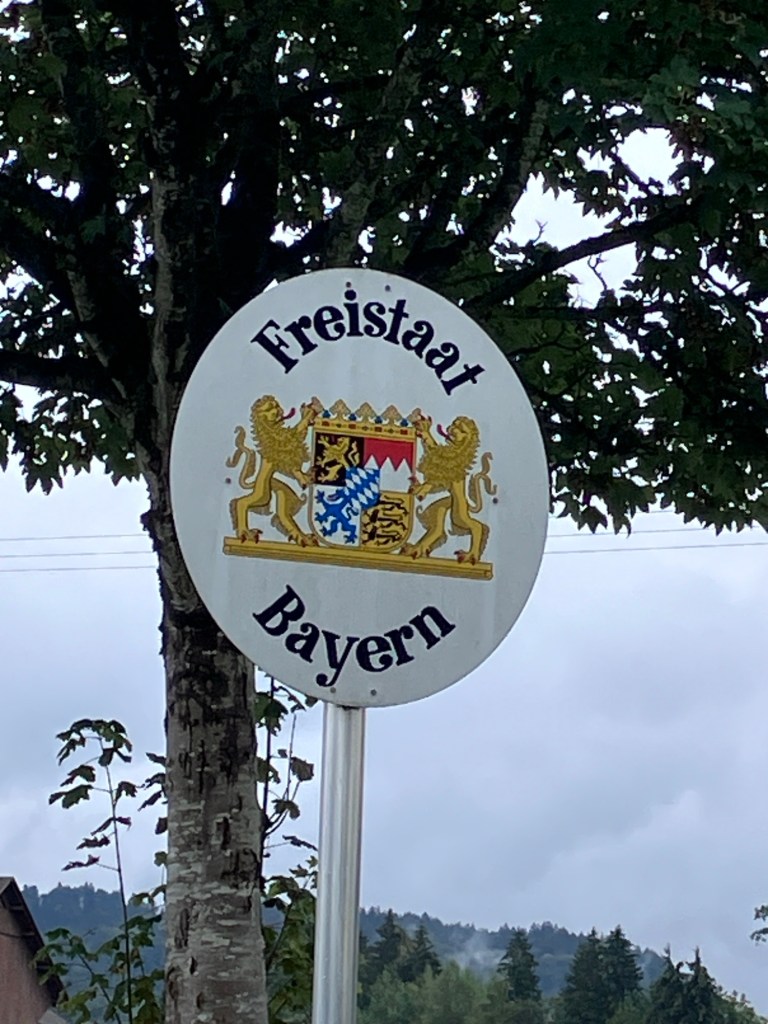
And speaking of borders, hello Germany! Country four, day four.Bavaria. The southernmost state of Germany’s five states, and the largest by land mass.The happy travelers- some cold wet days have tested us, but we’re still standing.
































































 Less Car, More Life