Palace of Versailles. 8:30 am on a Wednesday in November.
Museum planning can be quite a challenge in Paris. First – which museums? Choosing between the 136 options looks daunting. Even when you narrow it down to the 111 listed in the great book our friend Nancy brought with her, that’s too many for a one month visit. Second – which days are they closed? Monday is a popular closure day, so going to a museum that isn’t closed on Monday means it might be a bit more crowded than usual.
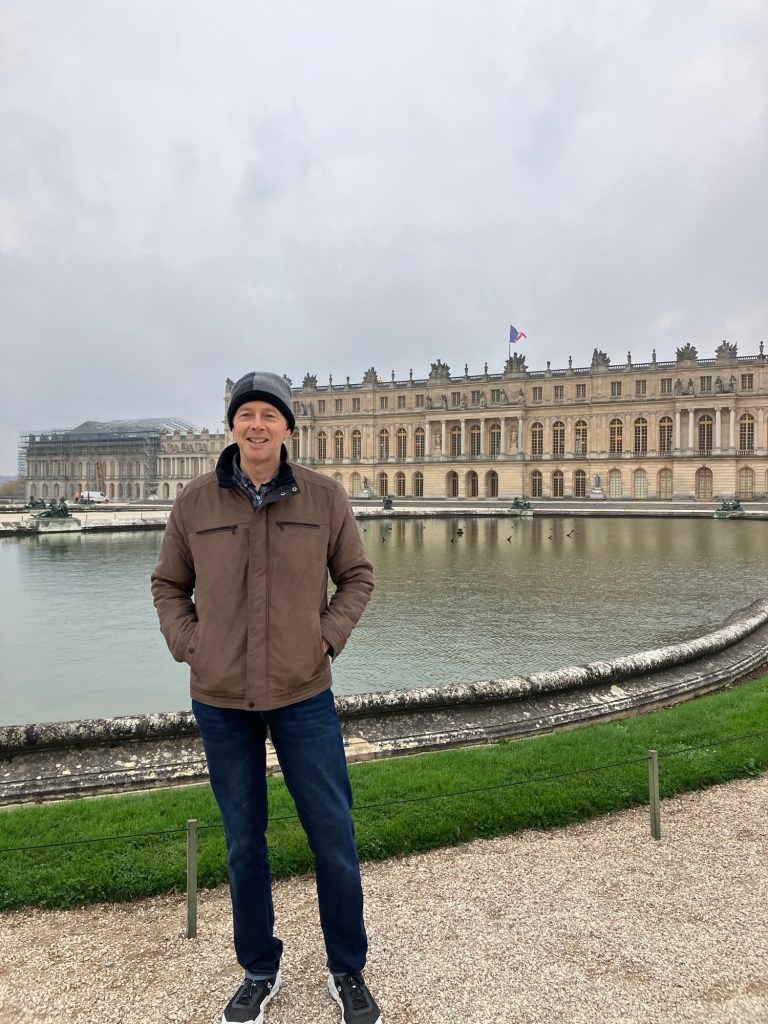
Two horses and humans walking through the forecourt of the Palace of Versailles. I think they were just locals who use the park as a cut through. The noise of hooves on cobblestones sounded like time travel.Looking down the gardens of the Palace.The palace opened at 9, so we used our 30 minutes to check out the view.Getting going early had the pay off of no crowds. And cold November weather helped too.
Versailles probably wouldn’t be fun for us crowd adverse people in Spring or Summer, so this might be our one and only visit to this A List site.
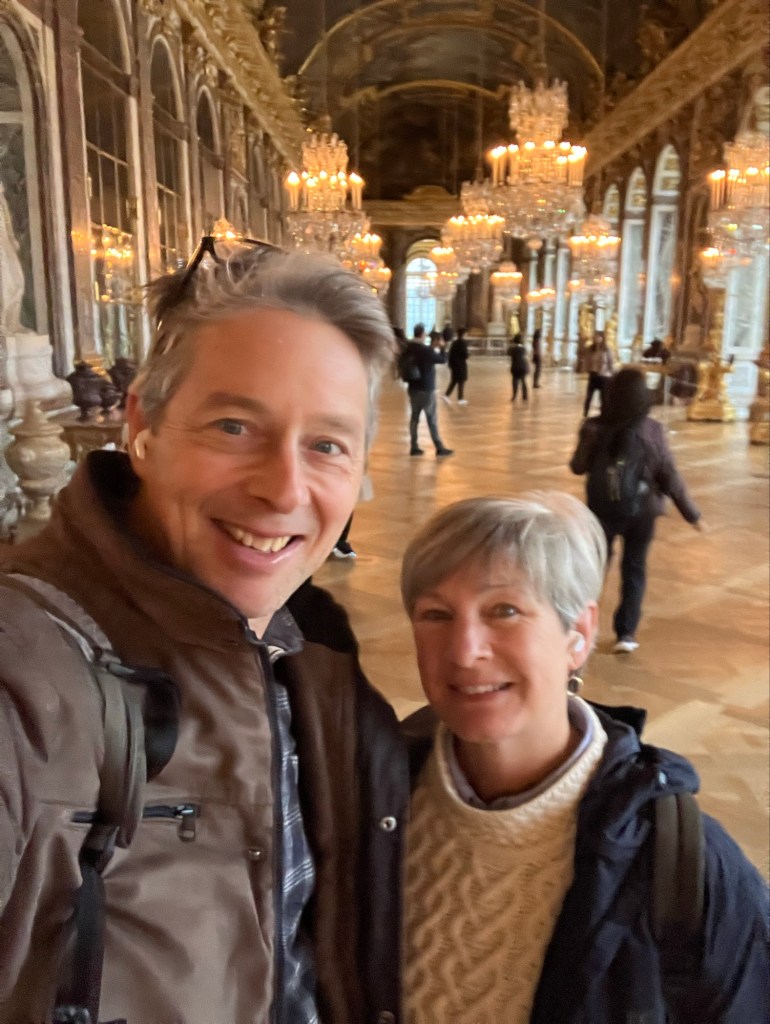
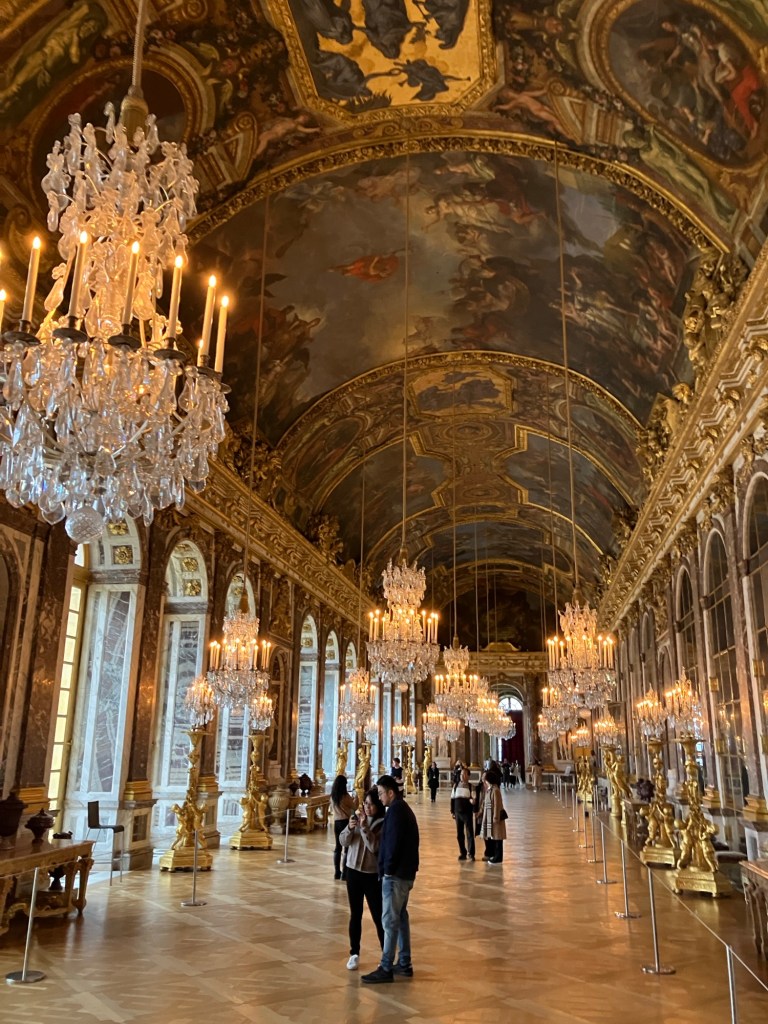
The Hall of Mirrors with our fellow early arrivals.As we walked around we kept joking “now why was there a revolution?” in response to the luxury on display.Pensive gazing out the window while listening to the quite good app based audio guide.Miles of parquet flooring! Shiny too! Make sure to budget enough time to explore Petit Trianón.Sophora Japonica, or Japanese pagoda tree, planted in 1764 for Marie-Antoinette near the Petit Trianón.Temple de l’Amour. The folly in the English Garden of the Petit Trianon.The Petit Trianon, a laughing American tourist, and the classical angel statue. The app based audio guide covered a lot.The “Water Mill” in the Queen’s Hamlet.The Hamlet had a rough time surviving but several renovations later, you have a good idea of what it was like originally.It is a peaceful respite from the grandeur of the Palace.
While we waited to get into the Palace there was a little guy, probably about seven years old, having a meltdown about having to visit the palace. He screamed and cried and his adult spent some time talking him down. He uttered a memorable phrase which we filed away for future use: “This is the stupidest thing in the entire stupid world!”
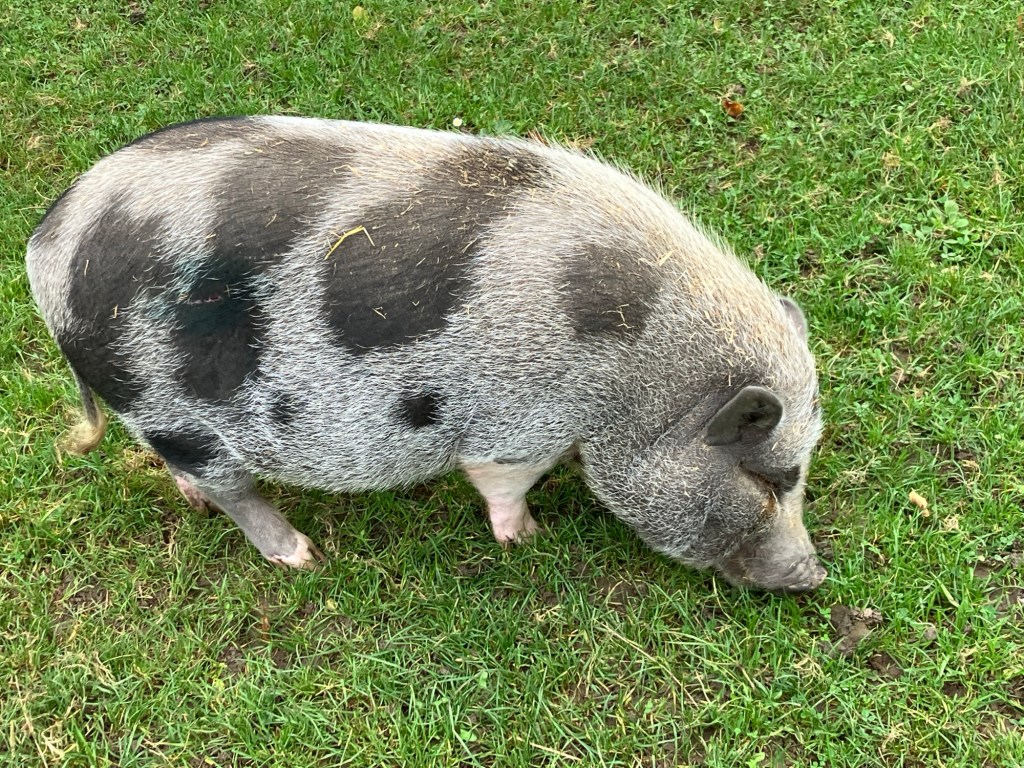
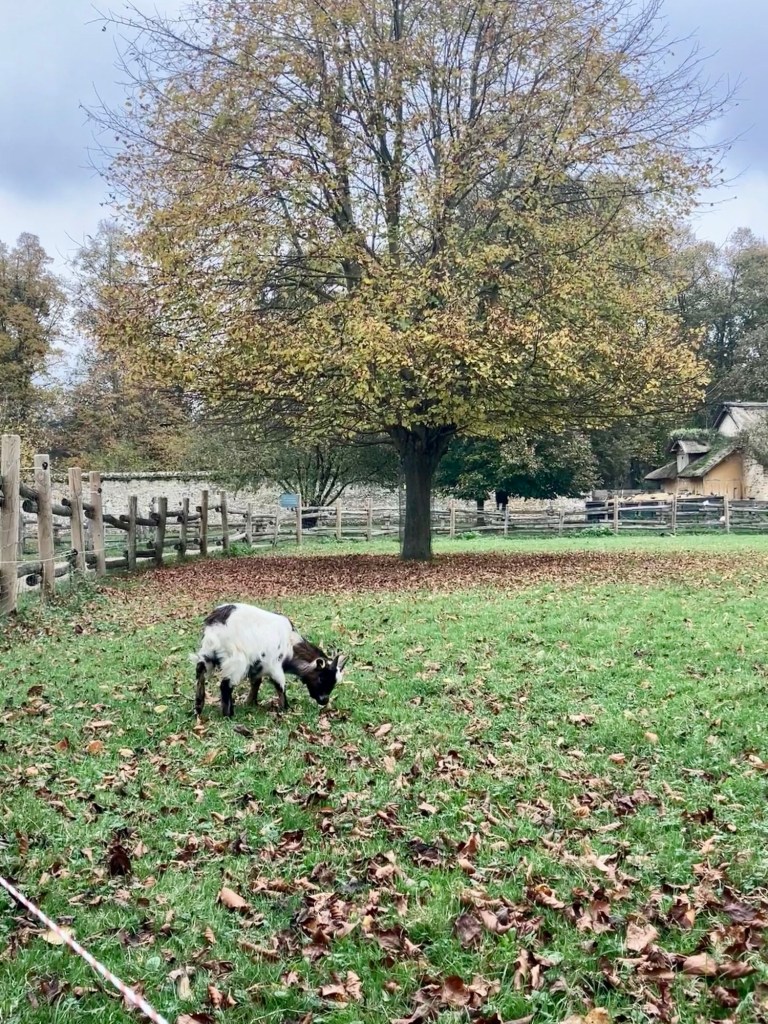
I sure hope that little guy made it to the hamlet and got to see the farm animals.I’m sure the pigs, goats, and bunnies would have cheered him up. Not stupid.
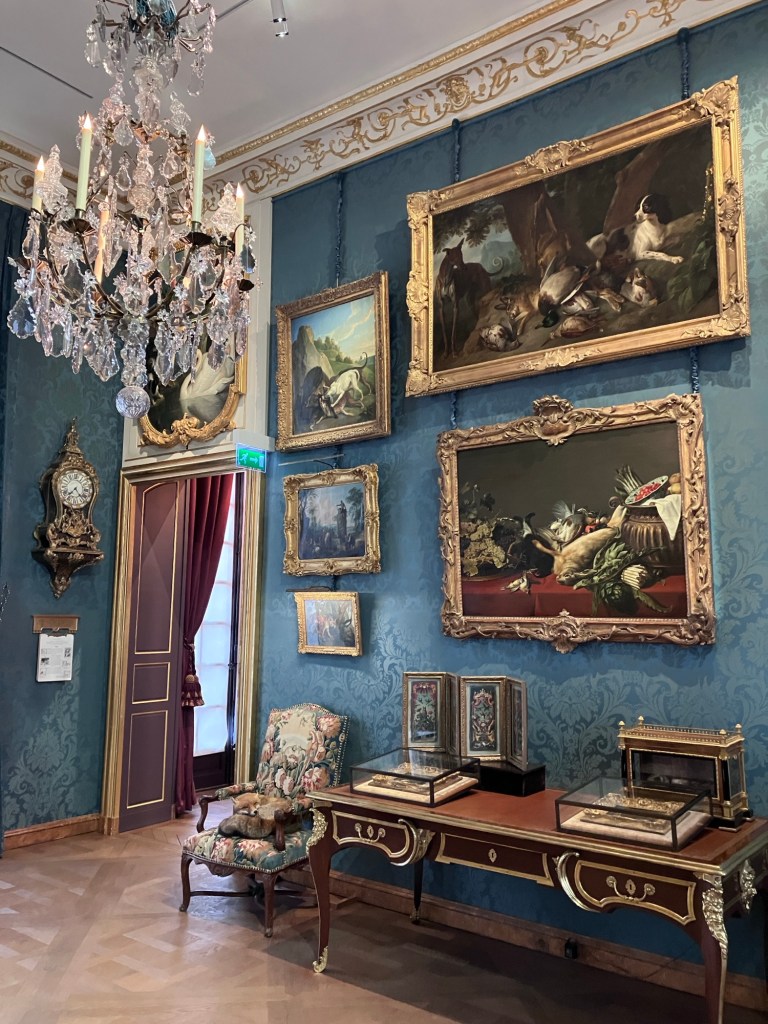
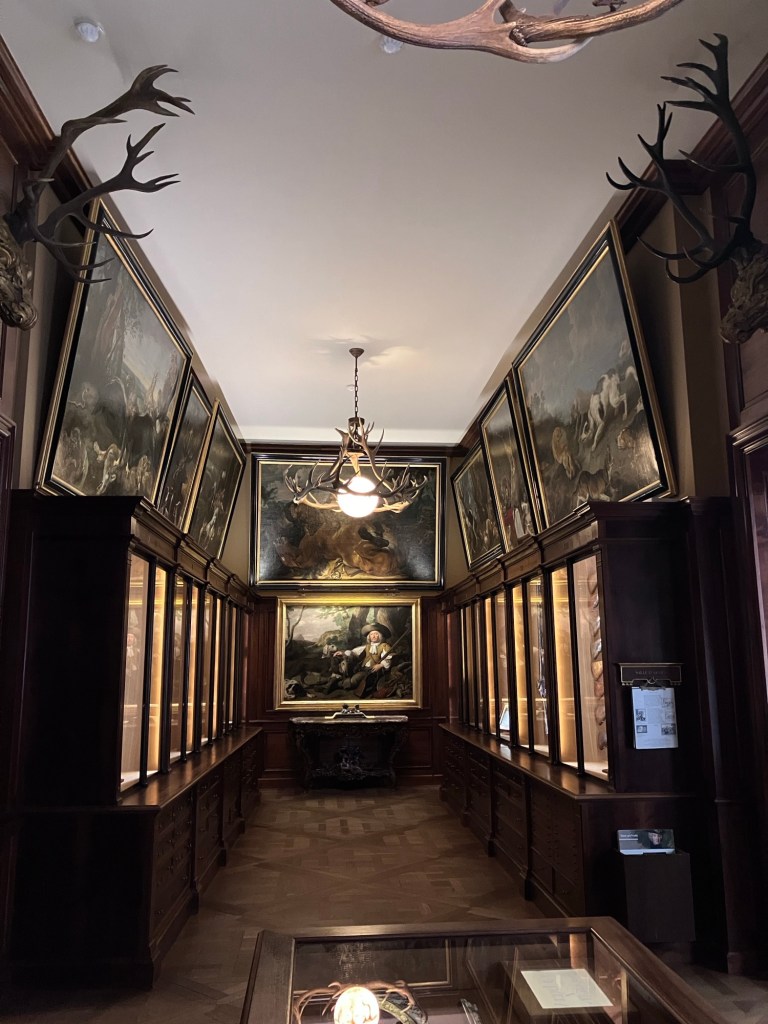
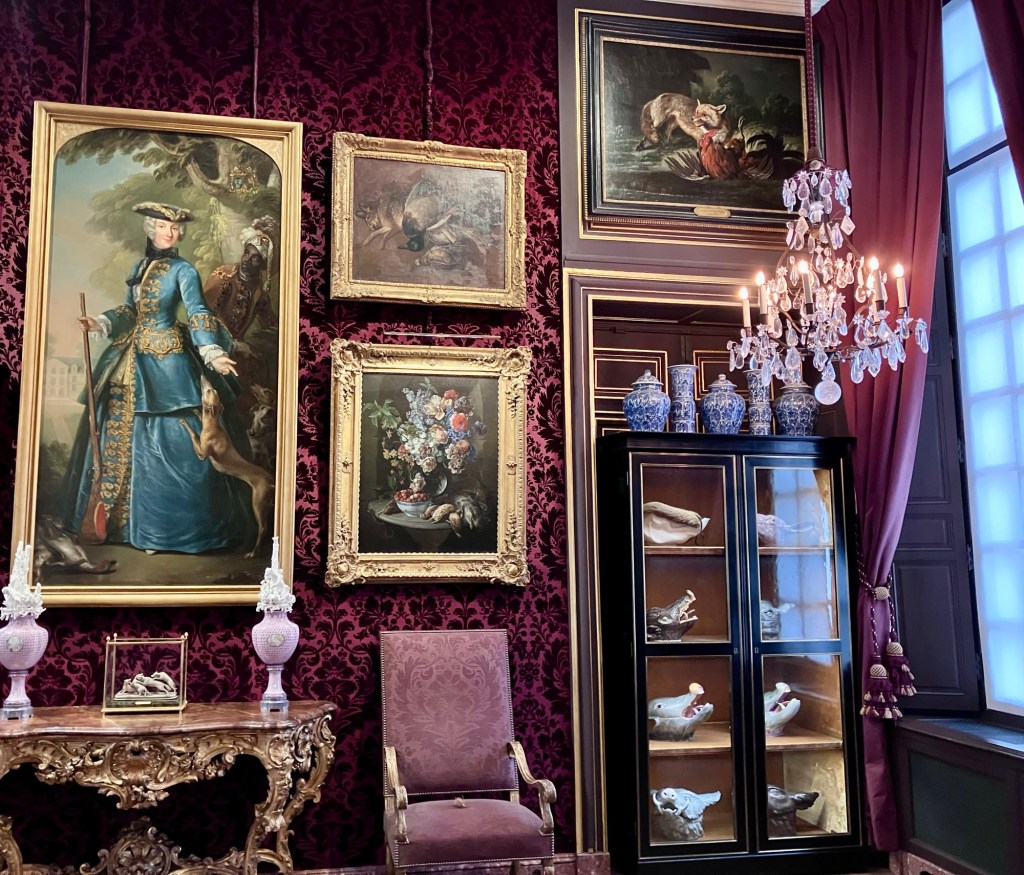
So how else do we decide on museums to visit? Well, when you go to a lot of museums in France, and in the world, you see connections. At a museum in – Lyon? Dijon? I honestly can’t remember – a little card said about a missing painting: currently on display at Musée de la Chasse et de la Nature in Paris. What what what? That sounds fascinating. So it was marked on a Google map and Rich remembered and off we went.
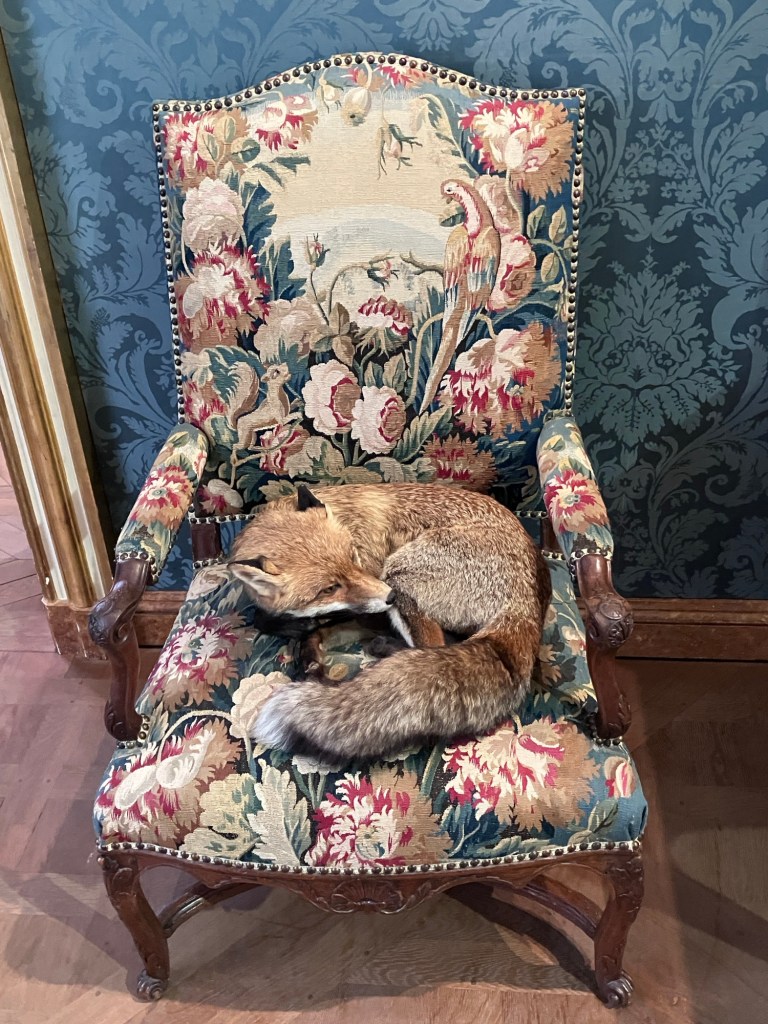
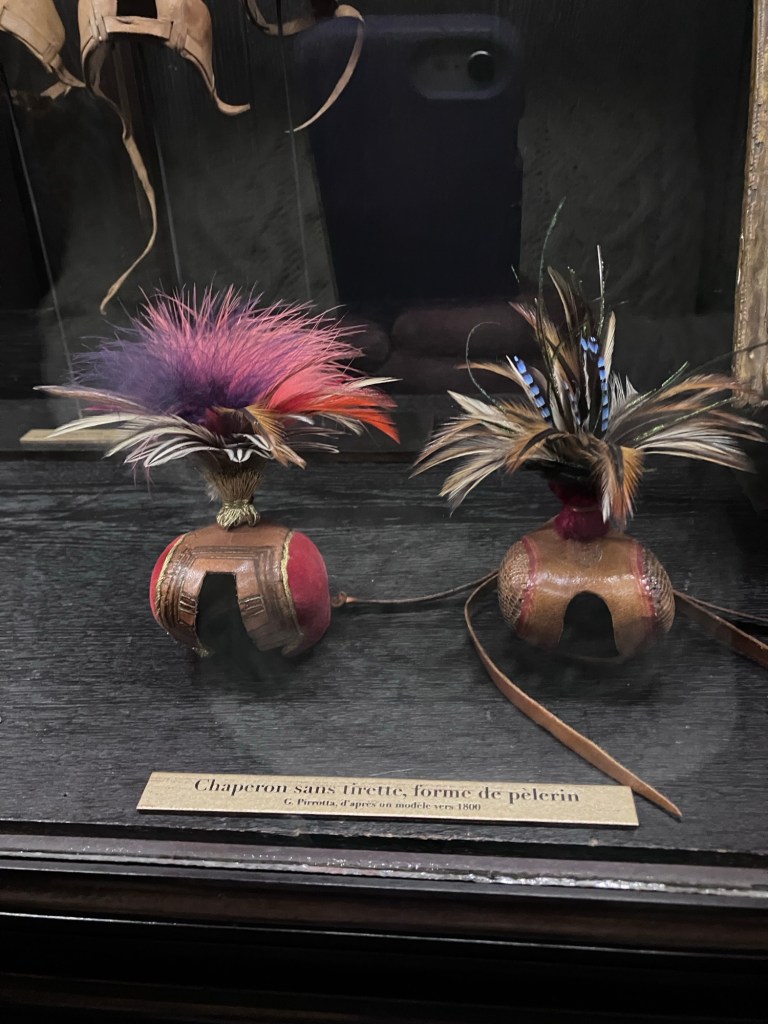
The museum is in an old Hôtel particulier. A grand urban mansion.Yes, that’s a stuffed fox curled up on the chair. The rooms were themed, and simply beautiful.Don’t let the name of the museum put you off. It’s not really a celebration of blood sports, but more humans relationship with nature and animals.The falconry room.Adorable little hoods for the falcons to wear. Putting feathers on a bird.
Even with only a month in Paris it was so fun to circle around topics or artists and come across them in different exhibits or even in cemeteries.
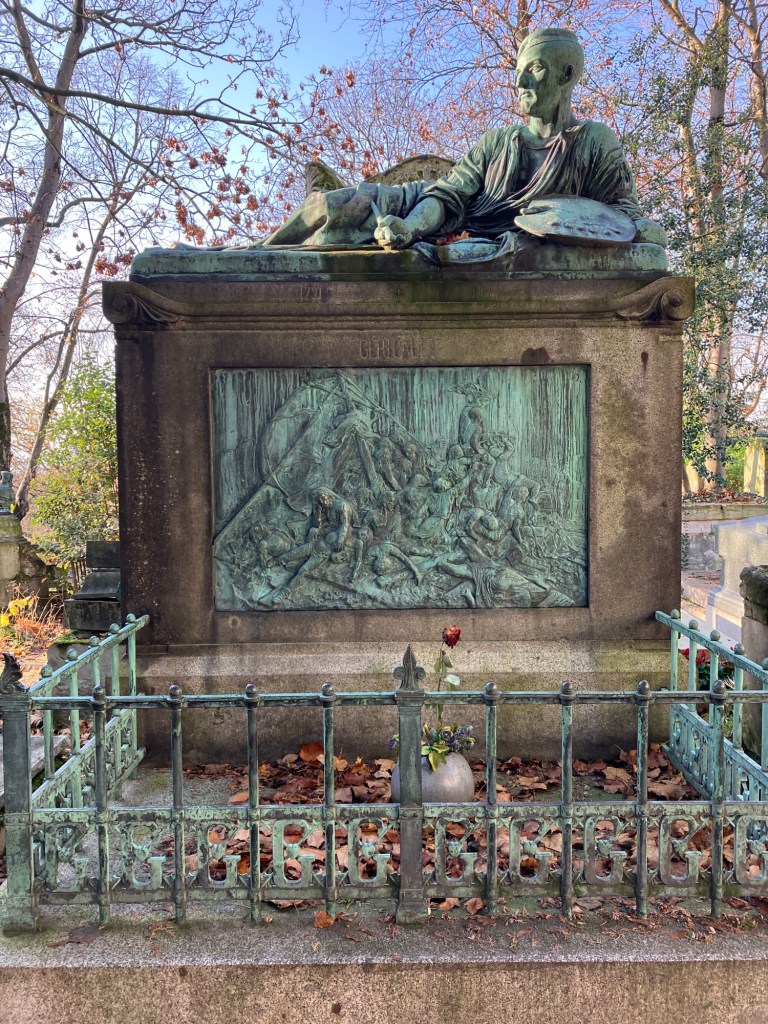
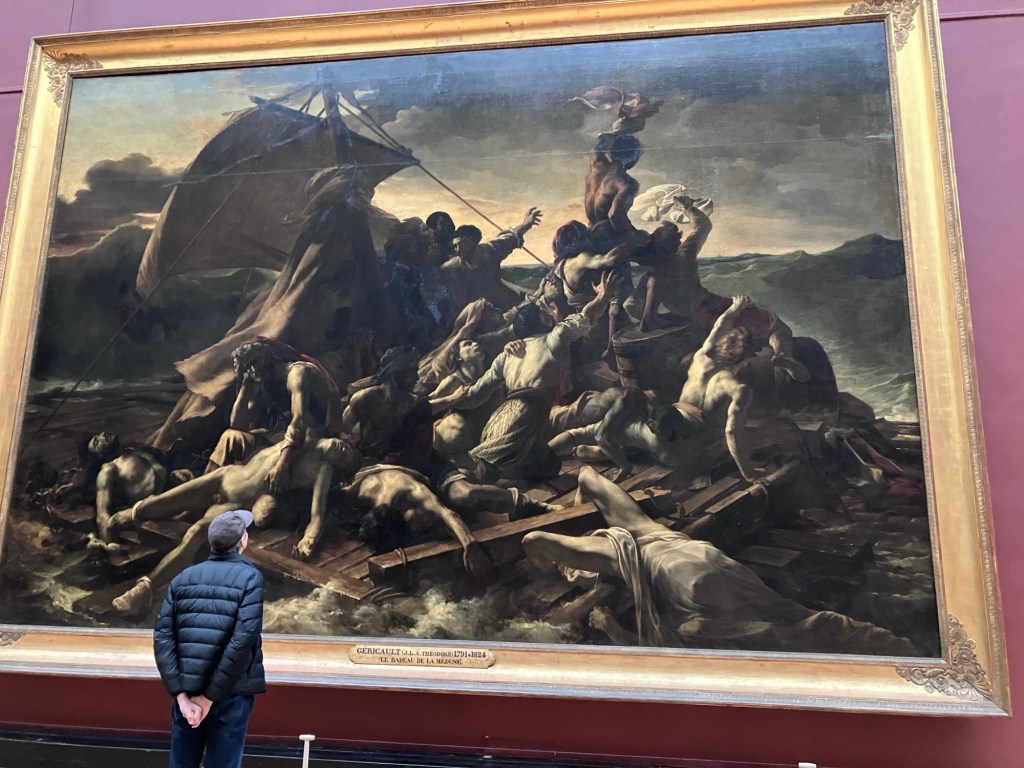
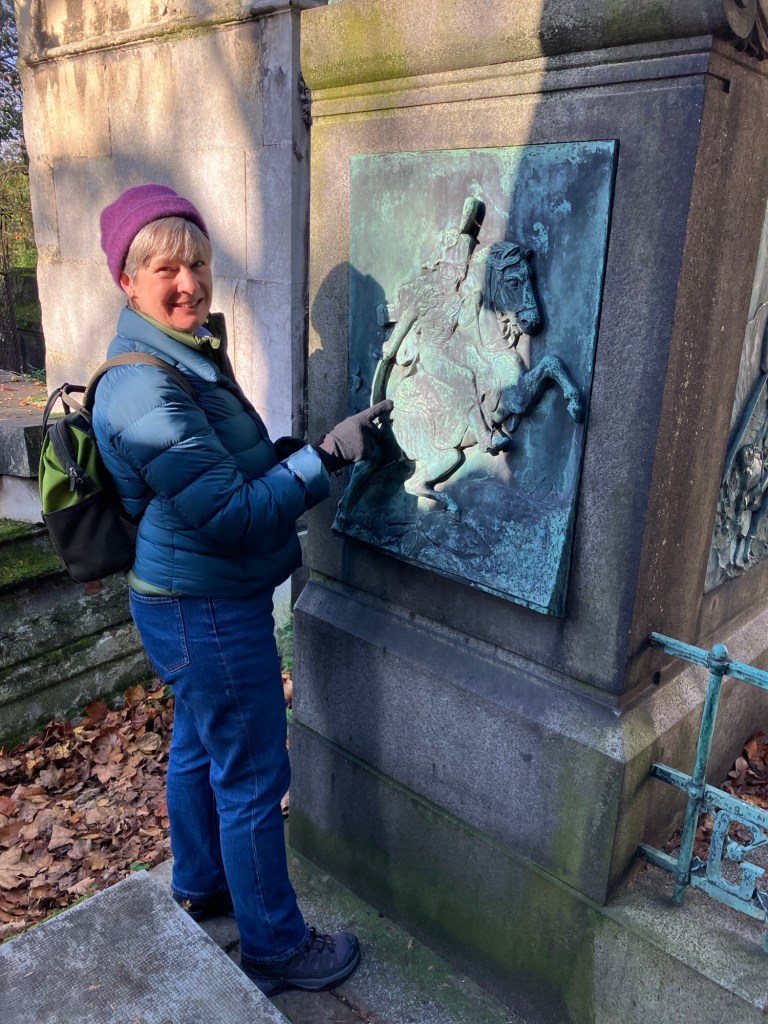
The grave of Théodore Géricault, in Cimetière du Père-Lachaise.One of our early morning Louvre visits was specifically to visit The Raft of the Medusa, by Géricault.Alone with this massive canvas.Which is replicated in bronze on his tomb.A cold and grim subject. Again, the smiling American tourist.
A college friend (thank you Jen) reminded me of the chapter in Julian Barnes’ book History of the World in 10 1/2 Chapters, chapter five, Shipwreck, which relays the story of the creation of this painting and the history behind it.
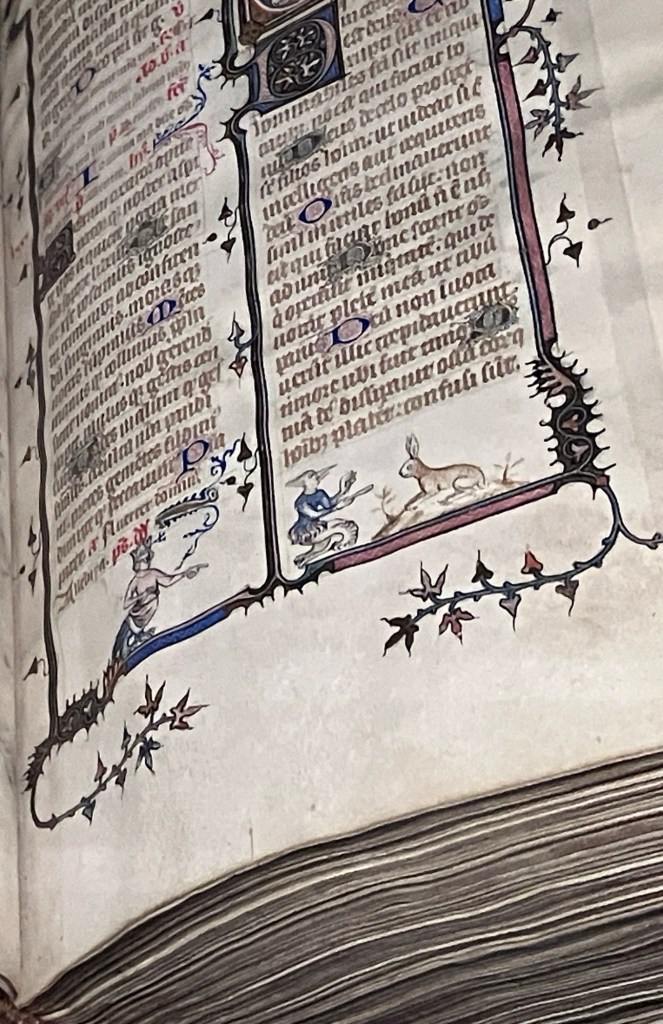
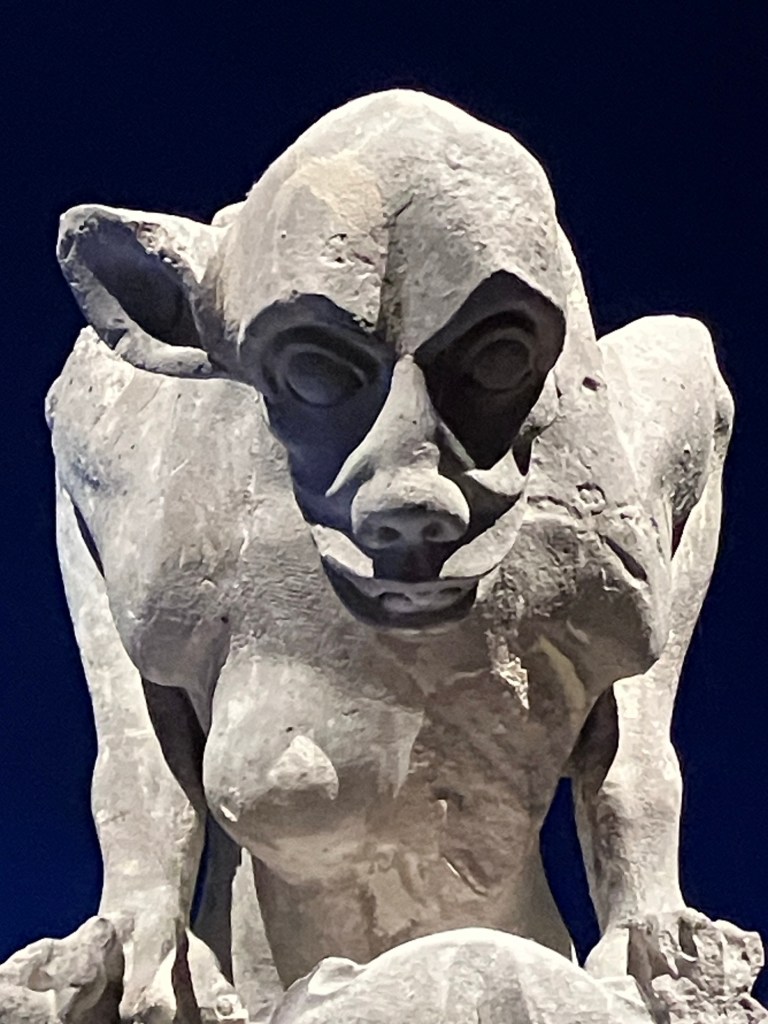
The artist visited morgues to achieve the correct shade of skin tone. Not far from The Raft in the Louvre is another famous Géricault painting: The Charging Chasseur, or An Officer of the Imperial Horse Guards Charging.Which is also recreated on the artist’s tomb.At our final Louvre Visit to see this exhibition, Figures of the Fool.Here was another work by Théodore Géricault, The Woman with Gambling Mania (French: La Folle Monomane du jeu) from 1822.I can’t be the only one who goes through museum exhibits hoping for fun reproductions in the gift shop? These marginalia of little monsters or grotesque characters would have made fantastic pieces for the museum shop.Chimeras of Notre-Dame de Paris: Monster Leaning on the Parapet Paris, 1847-1862
Although we missed the re-opening of Notre Dame by a few days, we did get to see four chimeras removed during a restoration in the 1800s. Gargoyles spout water away from a building, chimeras are ornamental, adding to the overall atmosphere of the Cathedral.
Such a moody and beautiful presentation.Chimeras of Notre-Dame de Paris: The Pelican The Lioness Monster Leaning on the Parapet The Wandering Jew.
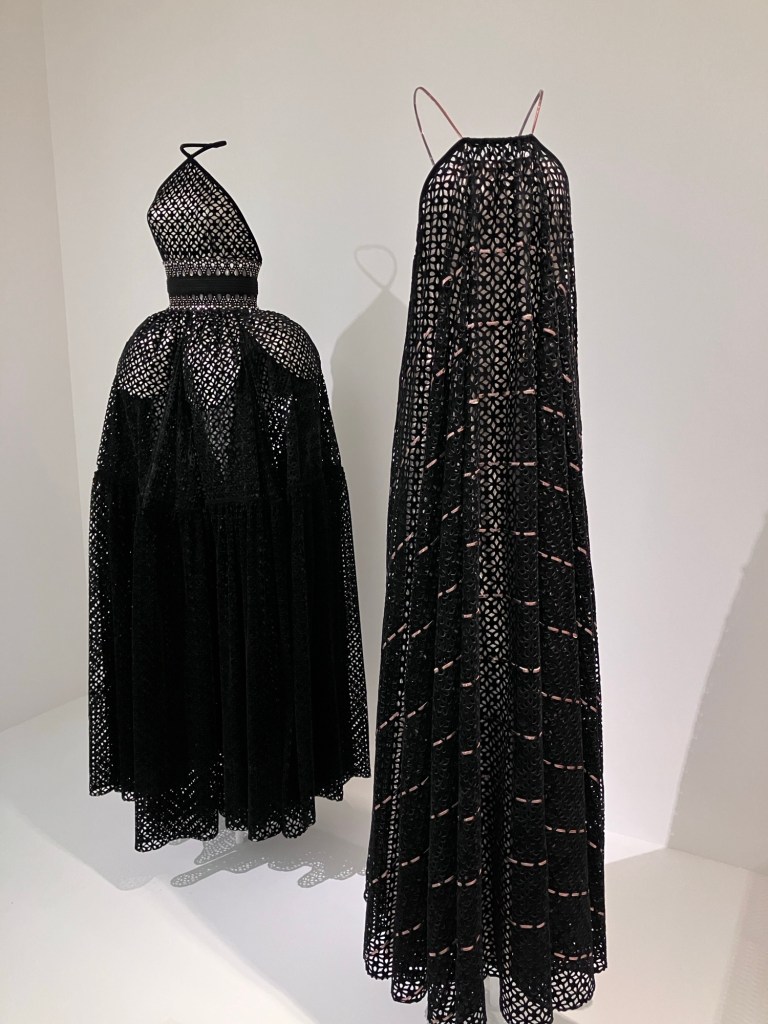
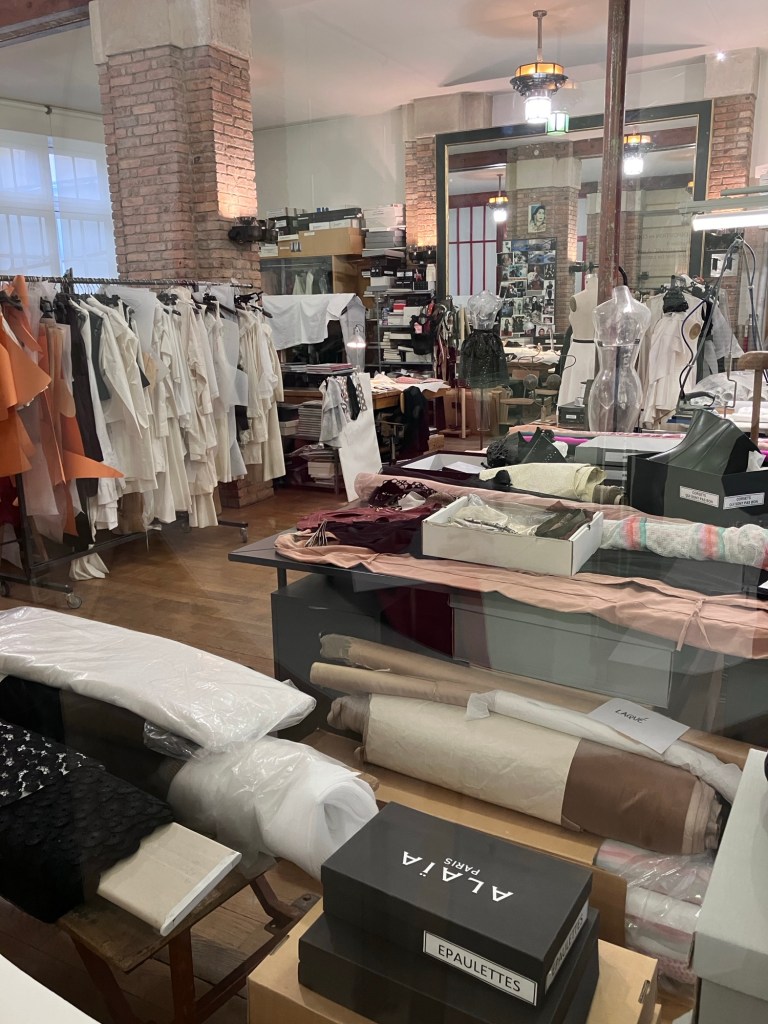
We also visited the Musée d’Orsay for the Gustave Caillebotte exhibit, amazing, and Nancy and I went to the Azzedine Alaïa museum. He was a talented and famous Tunisian couturier and shoe designer.
Laser cut velvet. Gown or work of art?Beautiful and beautifully displayed.We loved the window which let you see his atelier. Left exactly as it was when he died.
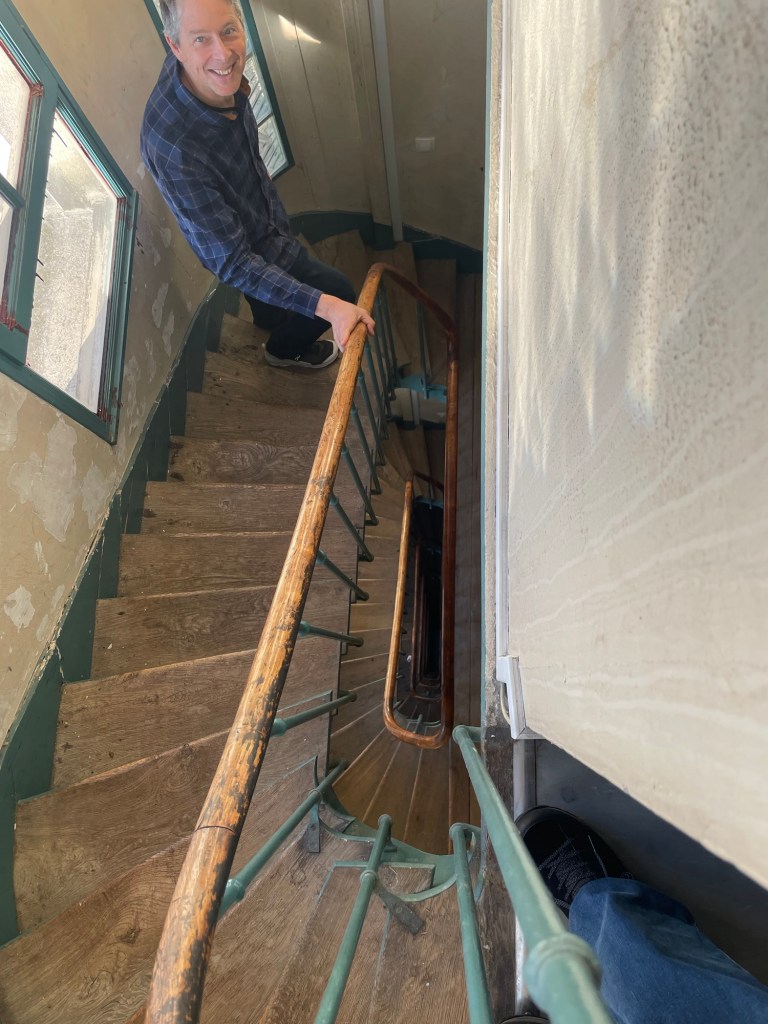
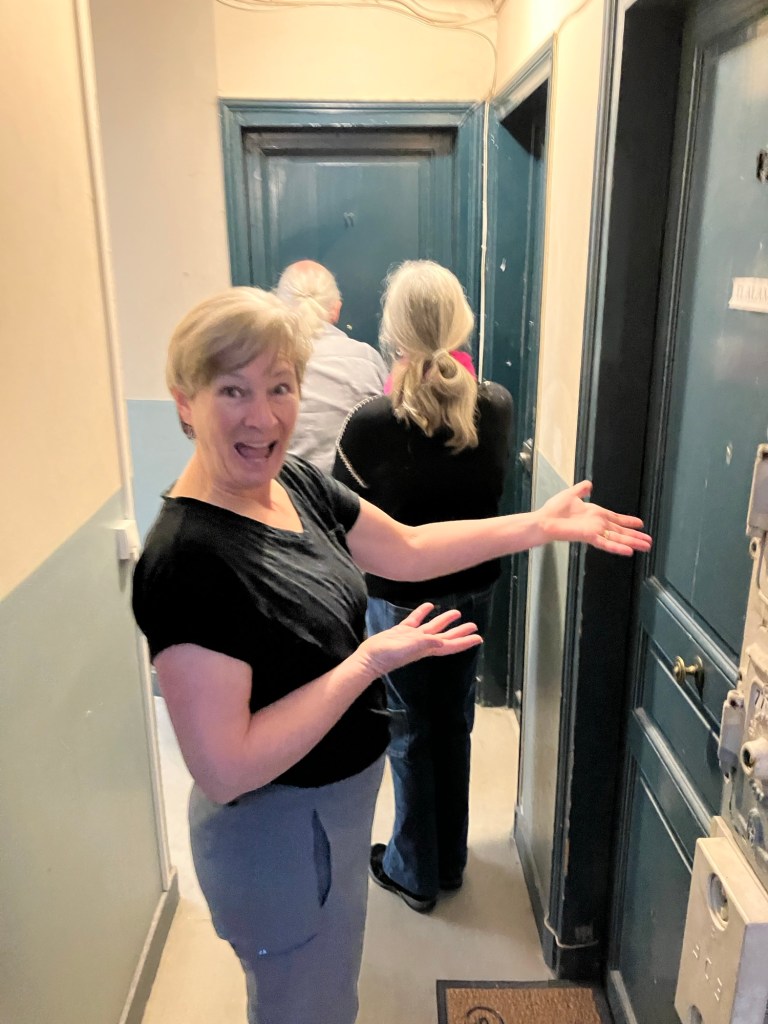
There were other museums we visited – my head is still spinning from what we saw – and of course, the best museum of all: the city itself. Thanks to our new friend Roy, whom Nancy met on her flight over to Paris, we even got to see a Chambre de bonne. These small top floor maids rooms on Baron Haussmann’s 19th century mansions. Ever since listening to this 99% Invisible podcast about Chambre de bonnes I’ve wanted to see one. But how? Well, have a friend who makes friends.
Hi Roy! Thank you again for showing us a side of Paris we wouldn’t have seen without you.The servants staircase.The corridor of doors to small, very small, apartments. Some have been joined together to make more useable spaces.How happy am I? In a Chambre de bonne. The view! Eiffel Tower one direction, Basilique du Sacré-Cœur the other.Those very top windows will be the Chambre de bonnes in this building.
Everyone who travels will tell you that the most amazing experiences are not found in guide books. They happen. You walk by them, if you’re lucky and open to saying yes, you get to have unexpected and delightful times, and even better with friends.
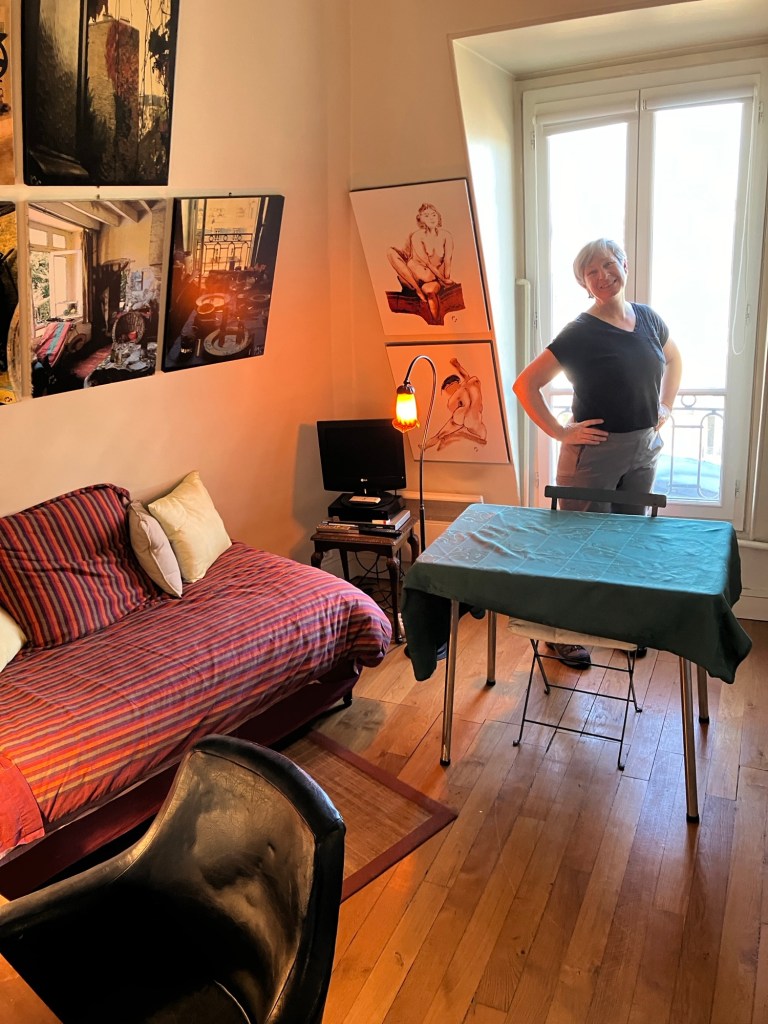
When we came through Paris in May, on our fantastic bike tour through France, we visited our friend Jason who was on sabbatical from his professorship and staying in an apartment he found through sabbatical homes. It turned out that he and his wife could only take two of the three month final increment on the lease and he asked us if we would like to take the third month. Yes – was our pretty fast reply. Since we’d stayed at an apart hotel just up the street from the apartment we knew we’d like the neighborhood, and we’d been to the apartment for dinner so it was an easy decision. And a great decision.
The neighborhood street market, Tuesday and Friday. An early visit to avoid crowds later.The wide sidewalks of Bd de Reuilly in our 12th arrondissement neighborhood.Windows that face La Promenade Plantée. A greenway somewhat similar to the high line in NYC. Those windows and iron balcony just scream ‘Paris’ to me.
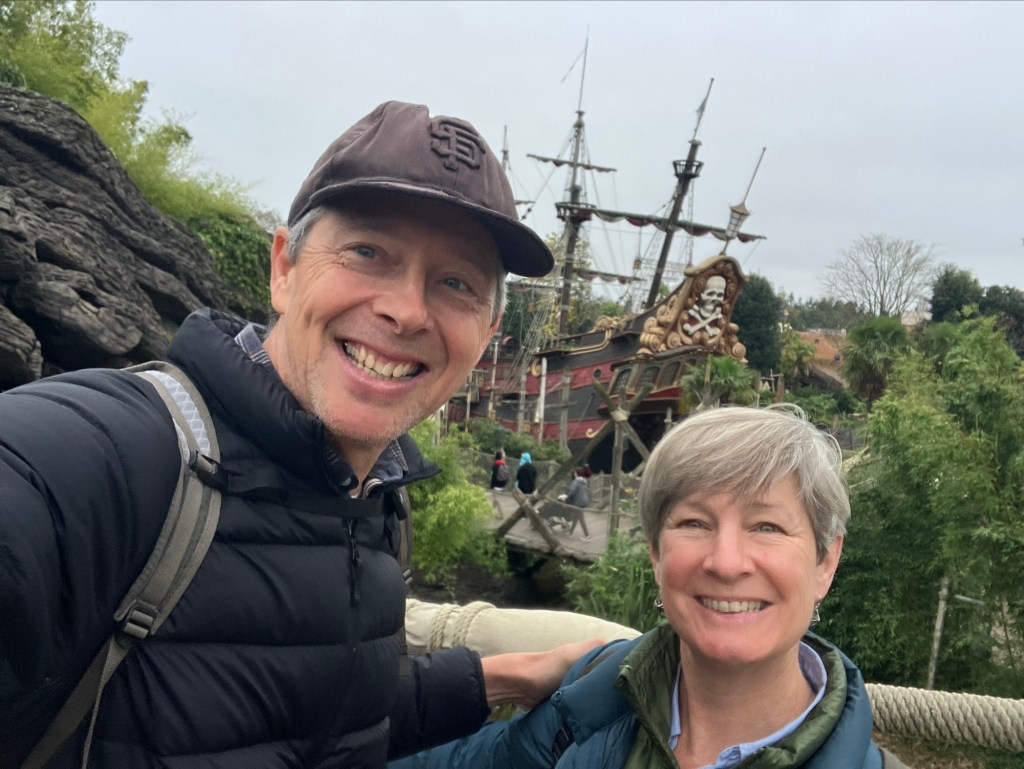
We hit the ground running with our Amis du Louvre cards and a trip to Disneyland Paris. The high and the low? The culture and the pop? Mona Lisa and Micky Mouse!
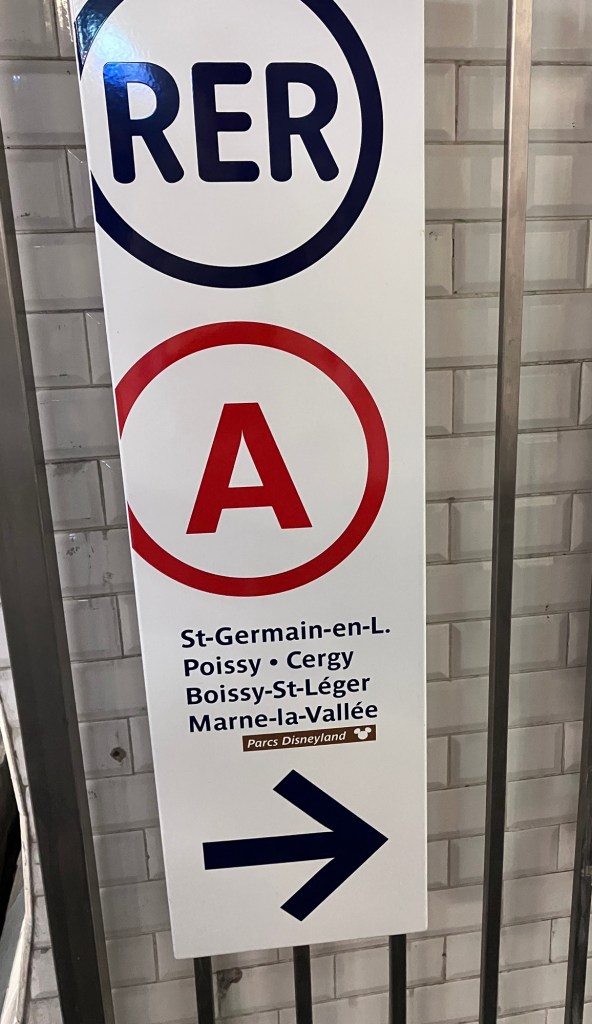
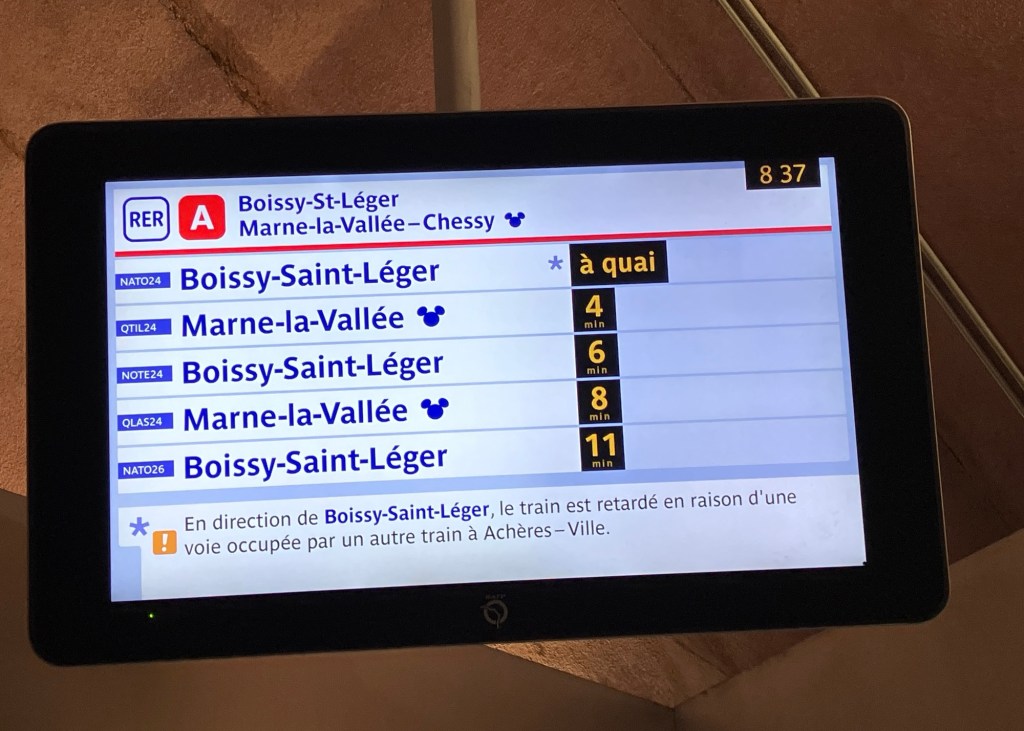
The RER A goes right to Disneyland. One transfer from our apartment, metro to RER.The mouse ears on the train departure signs are pretty darn cute. And helpful.Exit to Disneyland.
As huge fans of public transportation we were thrilled to take a train right to the entrance of Disneyland. We’re both very familiar with Disneyland Anaheim so we spent the day making comparisons and ranking the rides between the two parks. Paris for the transportation win, for sure. And our monthly Navigo passes (~€80) covered the entire trip, as well as all metro and trains in the Paris area (Zones 1-5)
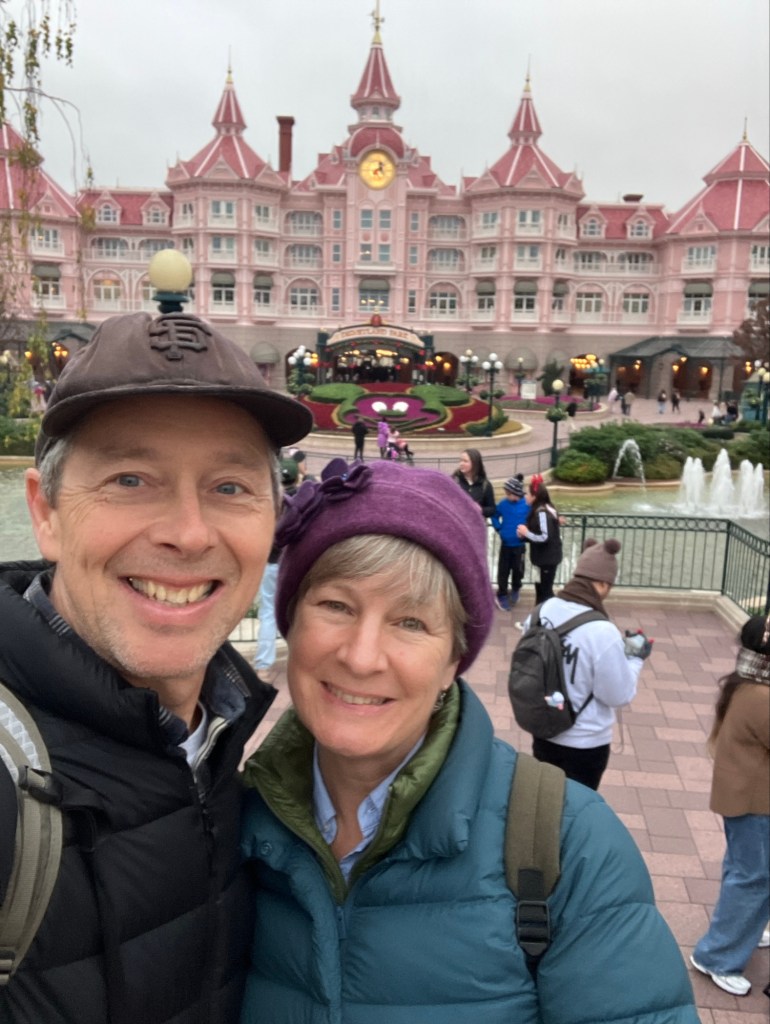
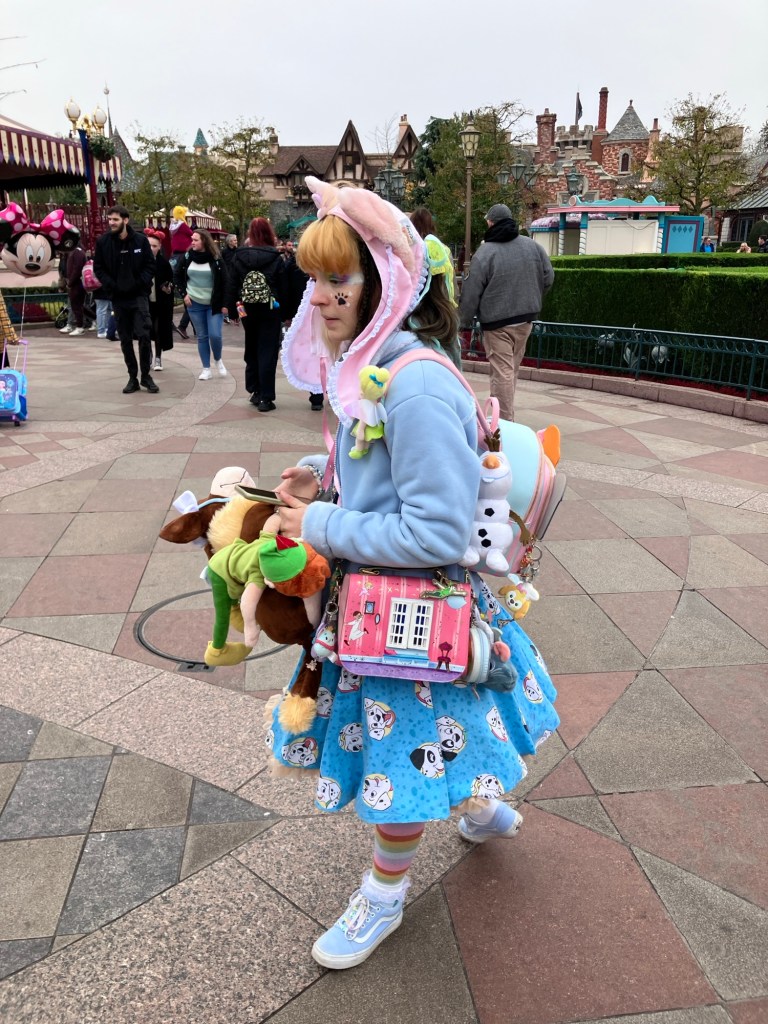
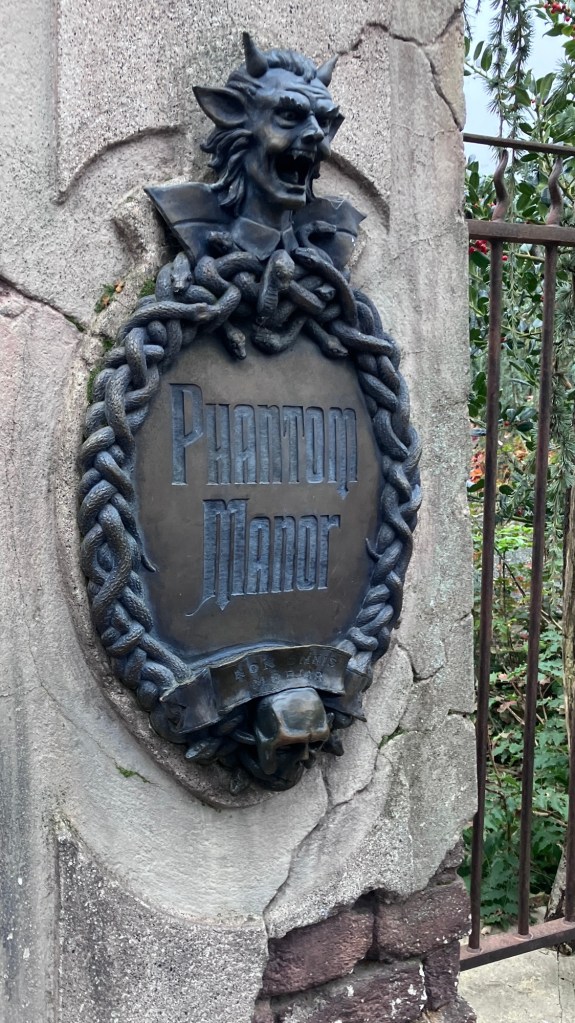
It was a grey and chilly day at the happiest place on earth.I sort of expected Europeans to be a bit blasé about Disneyland, maybe treat it as a brash American import. Nope. Disney fans are Disney fans. Thunder Mountain Paris for the win! Most of the ride is on this island, so you start and end through a tunnel. Phantom Manor, The Haunted Mansion in Anaheim. Both are fun, similar layouts, nothing terribly different, except the spooky French in lieu of English. Très amusant!Hyperspace mountain. My new nemesis. Before the ride. I should have paid attention to the signs warning about motion sickness. And noticed the shoulder harnesses.
It is right there in the name. Hyperspace. Not just space. I’m used to the one in Anaheim which is pretty much a simple rollercoaster in the dark. I knew right away this one was a mistake. It went upside down twice. We now call it the brain scrambler. I lurched off the ride to find a bench, feeling pretty shaken up and a bit nauseous. I am past rollercoaster age, I decided. I’ve always avoided rides that go in a circle, the worst motion sickness ride for me is the spinning tea cups, but this one really was awful. Even Rich thought it was a bit much in the dark, and he loves rollercoasters.
The only thing I could face was Small World. Go ahead. Start humming the song.
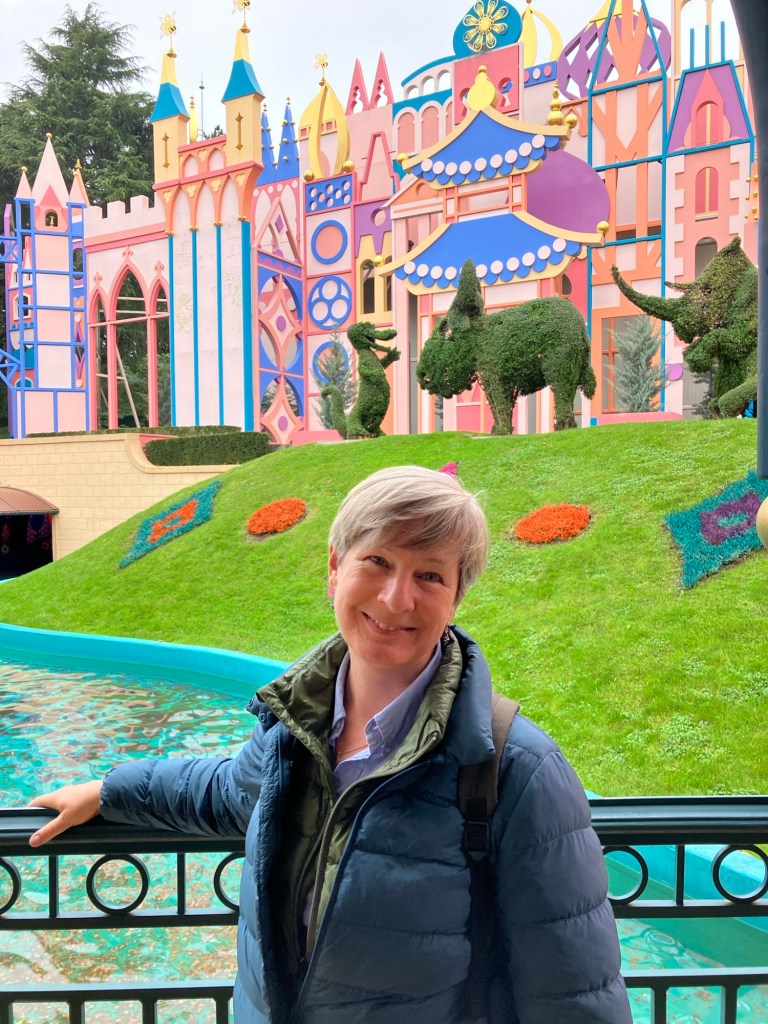
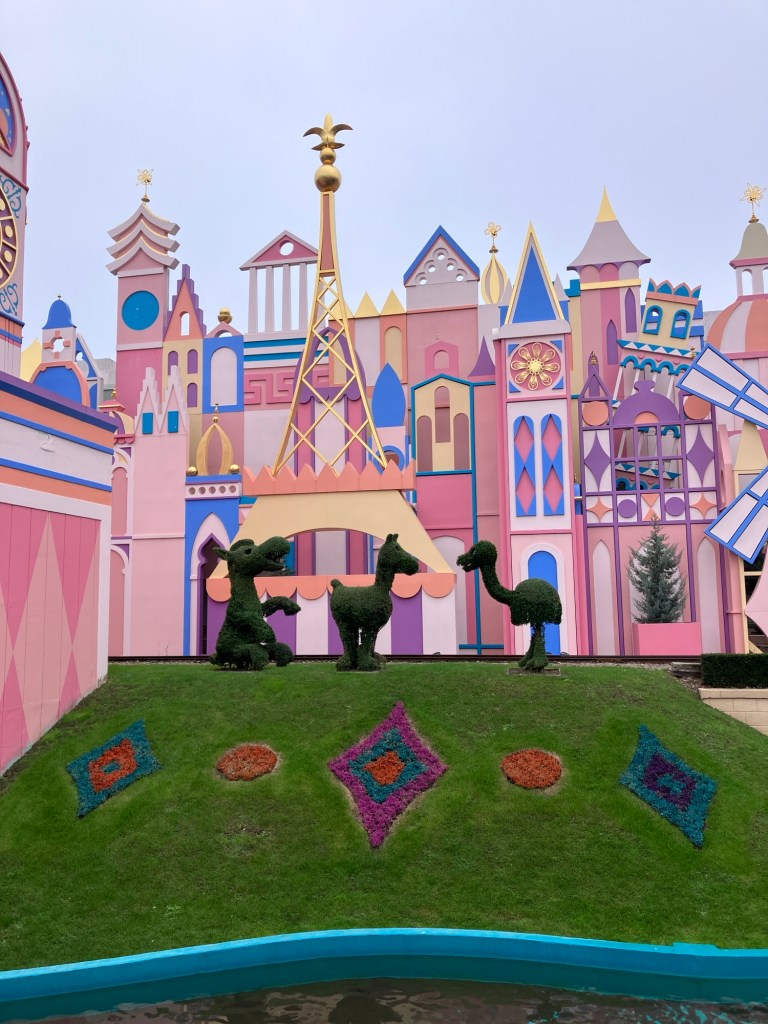
The grounds of Small World are more extensive in California, with more topiary animals, but the ride felt fresher and more culturally correct in Paris. One of the biggest differences we noticed was how quickly the lines for the rides go under cover in Paris. In Southern California you can be outdoors quite comfortably year round, and the rain isn’t torrential. It was chilly and a bit drizzly when we visited and we were glad for the shelter.
Recovered from my brain shaking. A big motivation to visit was that we were there during a very quiet time. The Halloween decorations were down and Christmas decorations not yet fully up, so it’s not a popular time to visit.But, being efficient Disneyland, some holiday decorations were already up.We could bore you much more with our detailed observations of how Paris is different than Anaheim, but won’t. Ask us the next time we see you in person about Pirates of the Caribbean. We have thoughts.Le Château de la Belle au Bois Dormant.
On to the high culture: we learned about the friends of the Louvre card from our Paris apartment connection, Jason. Not only do you get to go to the Louvre as often as you want, you also get a different entrance, at the Passage Richelieu, so no big line like at the pyramid or in the Carousel Mall.
Rich cracking the map.
We had visited the Louvre once before and it was a lesson in frustration. The audio guide is a Nintendo based handheld gizmo which is confusing to operate, even for people younger than us. Signage is not great, the layout is labyrinthine, and you will walk miles and miles finding the art you want to see. But it’s the Louvre! On display: 35,000 works of art. In the collection: 500,000.
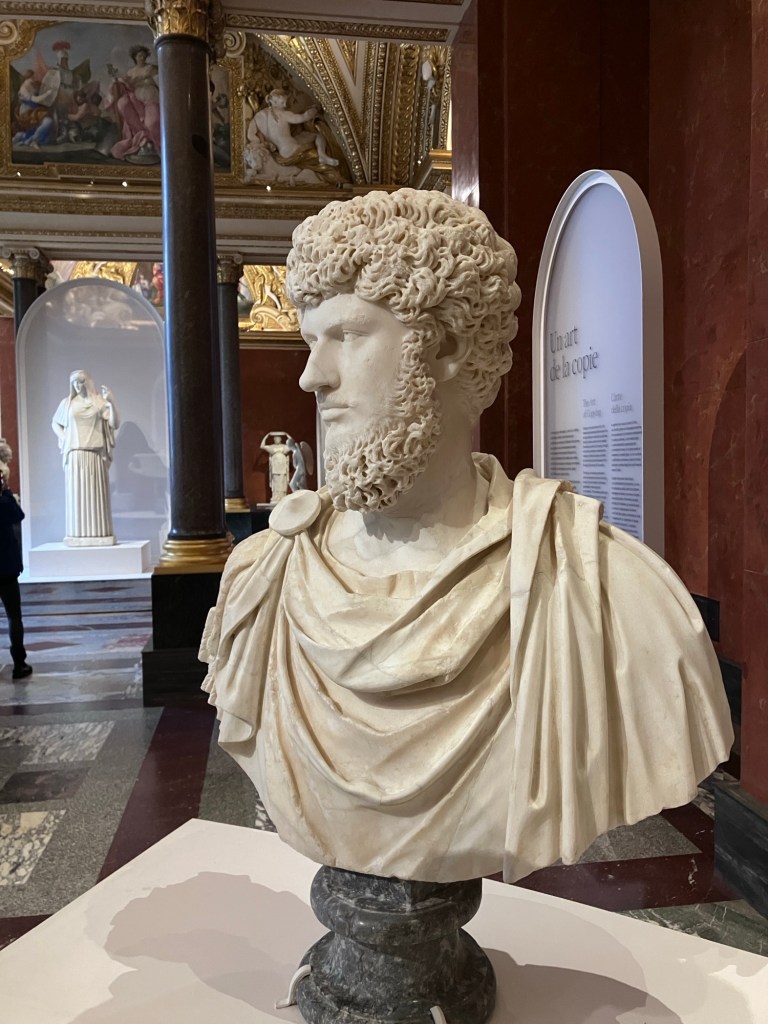
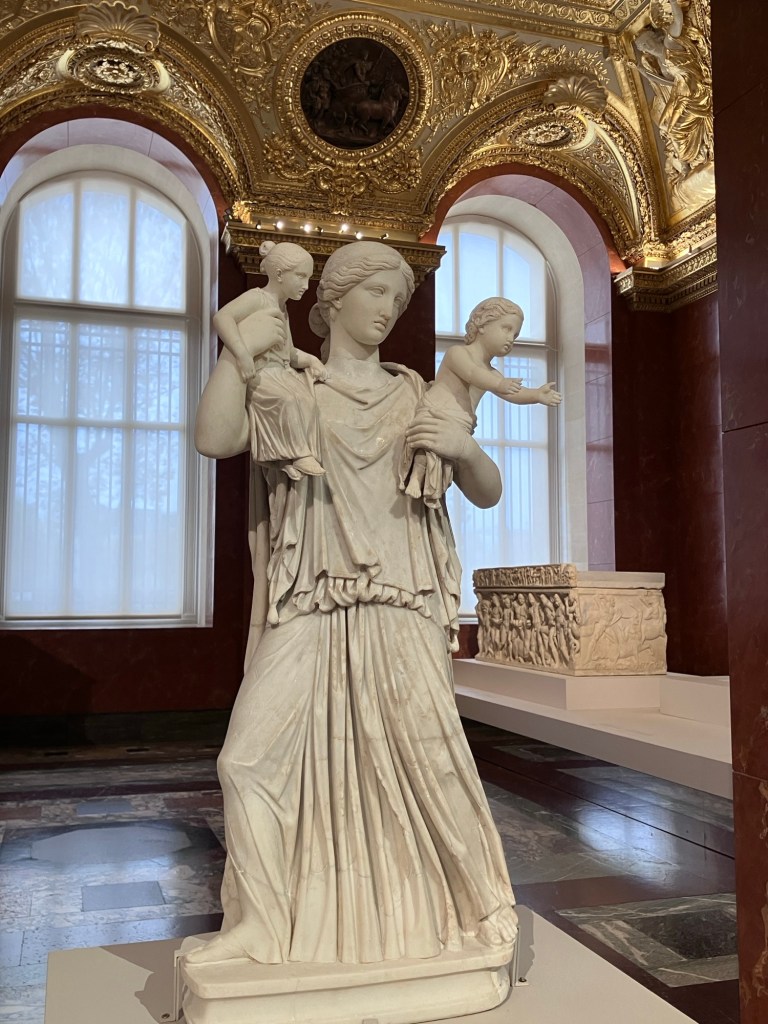
In the newly renovated Anne of Austria Summer Apartments, the Torlonia Collection.The marble sculptures are on display outside of Italy for the first time.Amazing detail.An early Birkenstock?Rich added for scale in front of a massive painting.
We visited the Louvre six times this visit. Once was only to visit the bathrooms and get a coffee, which was a mistake since it was afternoon and very busy, but we will share what we learned. The Friends of the Louvre card – fantastic if you can make it work. We had it mailed to our Paris Apartment, and we applied from within France. Sunday am turned out to be a fantastic time to visit. At peak times the crowds are thick, but for an hour or two Sunday am we wandered the halls and galleries of the less popular wings and rooms with very few other visitors. We even peeked at the Mona Lisa – no, no selfie.
A happy Louvre visitor. This is in a room just past the Mona Lisa, The salle Mollien Room 700, Denon wing, Level 1. The Red Rooms, Les Salles Rouges.
We visited three special exhibits during our six visits, The Torloni Collection, Figures de Fou, and A New Look at Watteau. We kept reminding ourselves how extensive the Louvre collection is that they can mount amazingly specific exhibits by plumbing the depths of their own collections. And when you view the Louvre outside from the I.M.Pei pyramid and understand how little of the connected buildings is display and how much is storage and other use – it’s overwhelming.
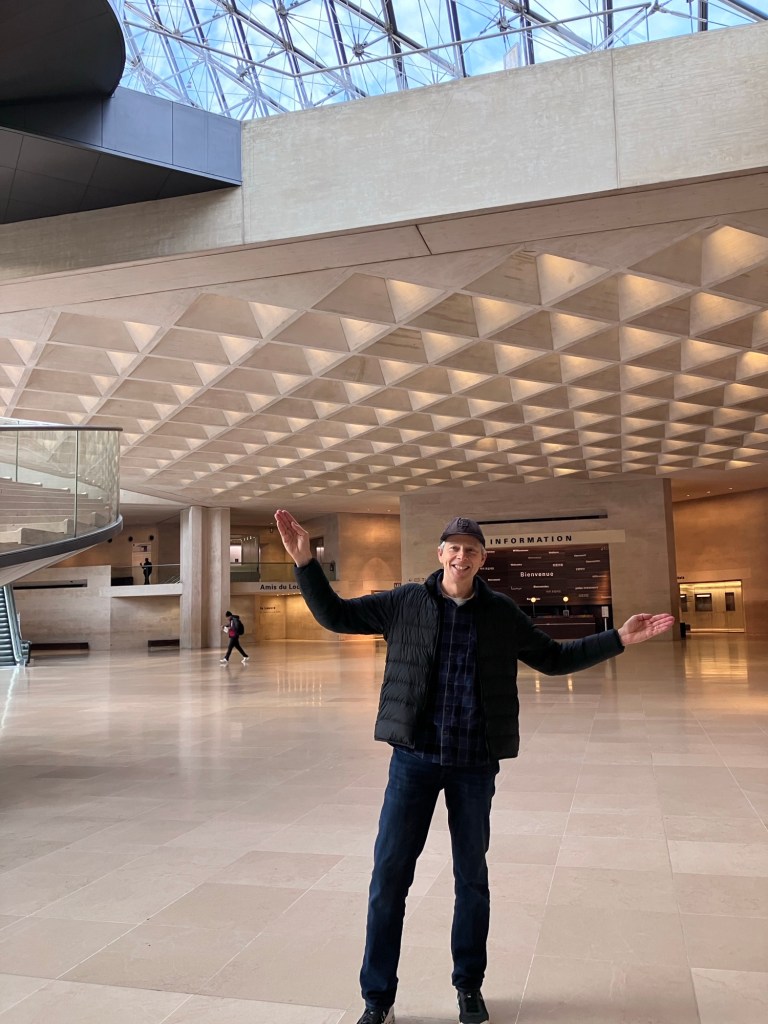
Under the pyramid at 9:02 am. My fearless tour guide. If you aren’t one, find yourself a map friend who won’t get lost in the many rooms and levels of this museum.Leaving on a Sunday at 11:24. After coffee at the Starbucks in the Louvre (!). Still not super crowded but the line to get in through security is now very long.
There will be more Louvre photos in later posts, but our recommendation is to get yourself a Friends of the Louvre card if you can. We paid 120€ for both of us, good for a year and allows you some discounts at other museums and into the Louvre Abu Dabi. Not sure we’ll use that benefit but who knows! The usual museum card coffee and gift shop 10% discount too. We ended every visit with a caffeine break.
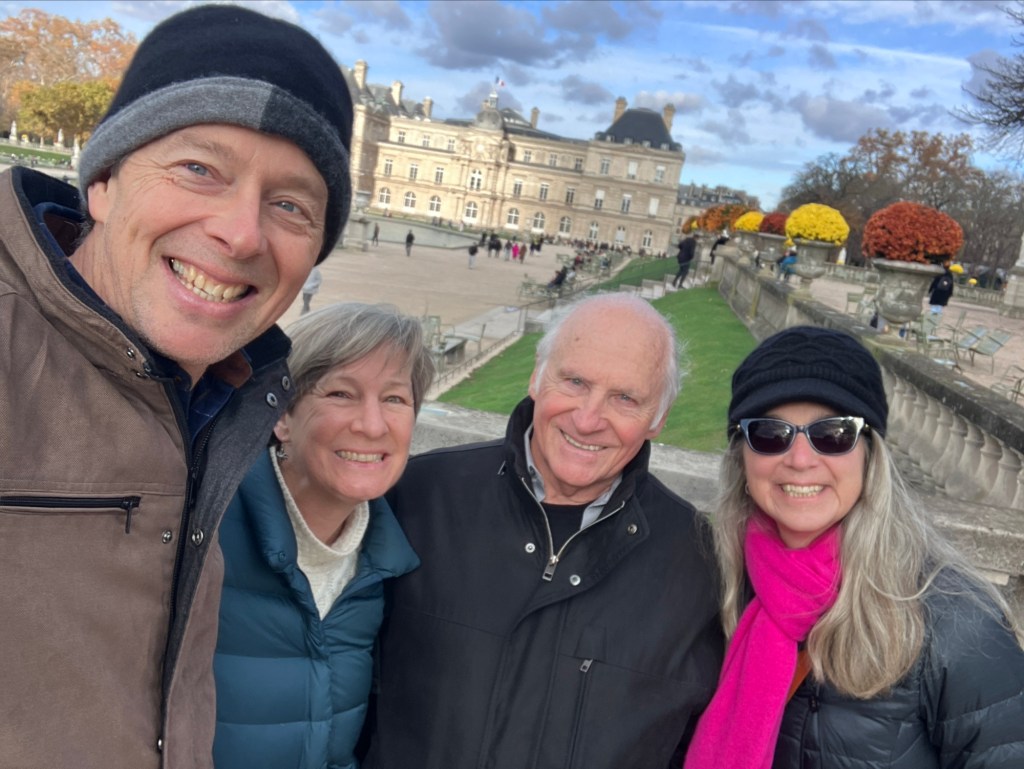
The Happy Travelers in the sun at Luxembourg gardens.
Some of the special exhibits will have their app based audio guides, Figures of the Fool did, so check before you go and bring your earbuds. We searched on line for paintings we knew we wanted to see and read write ups to each other standing in front of the paintings. There are small bathrooms scattered along the galleries, some very well hidden, so if the line is long at the main bathrooms- and it will be ladies – try to find one up in the galleries. More from Paris soon. We just arrived in the UK for a nice long stay, until January 14th, happy holidays to all.
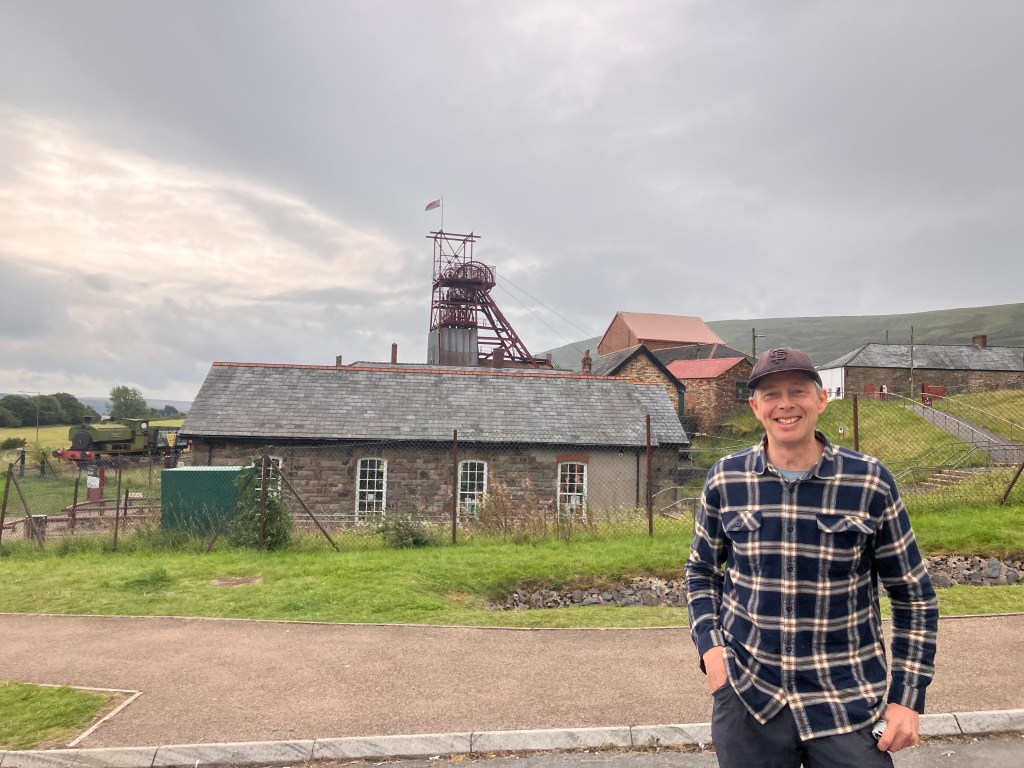
Rich at the Big Pit Coal Museum in Pontypool, Wales.
What makes us happy? Returning a rental car! Although we were so grateful to have the opportunity to explore the valleys of South Wales, driving is never our favorite form of transportation. Really I should clarify that Rich drives and I try to be helpful and supportive. As he noted today after we returned the car in Cardiff, we’re not the first couple to get into a fight in a rental car. But, for the moments of stress and breathless passing of other cars on narrow streets (knowing that a damaged wing mirror was £200 per the rental agency, and we saw plenty of cars with damaged mirrors.), there was so much excitement and happiness as we got to visit places that would have been impossible on public transit or as day trips by bike from our house sit.
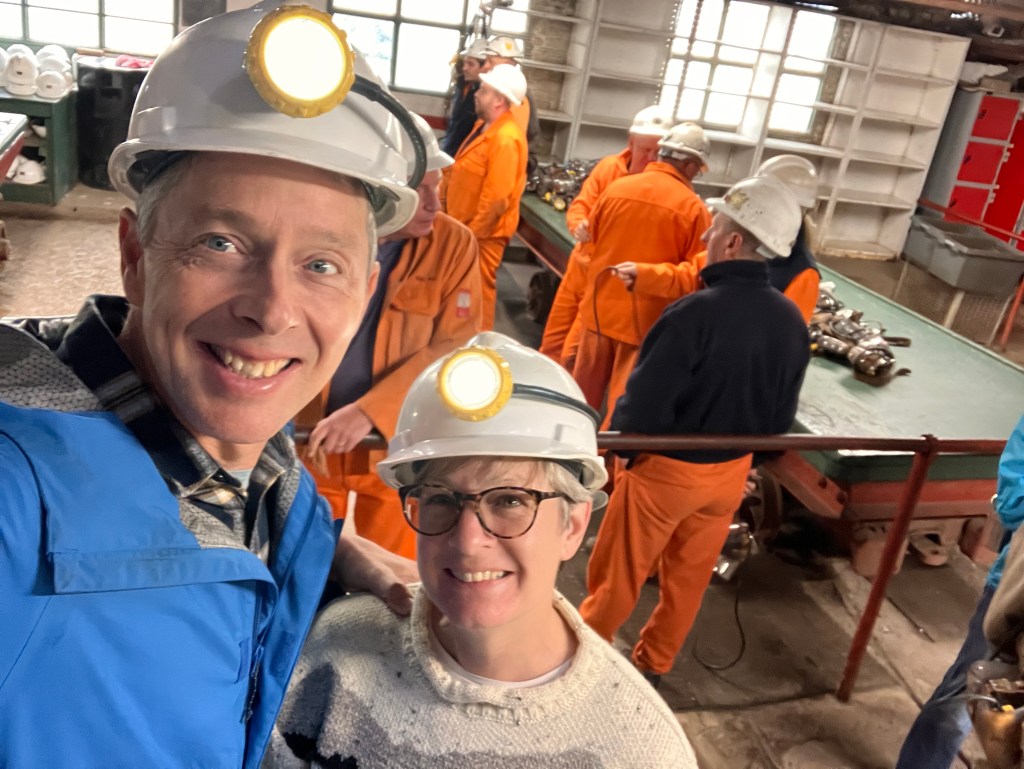
Ready to descend into the pit by cage.
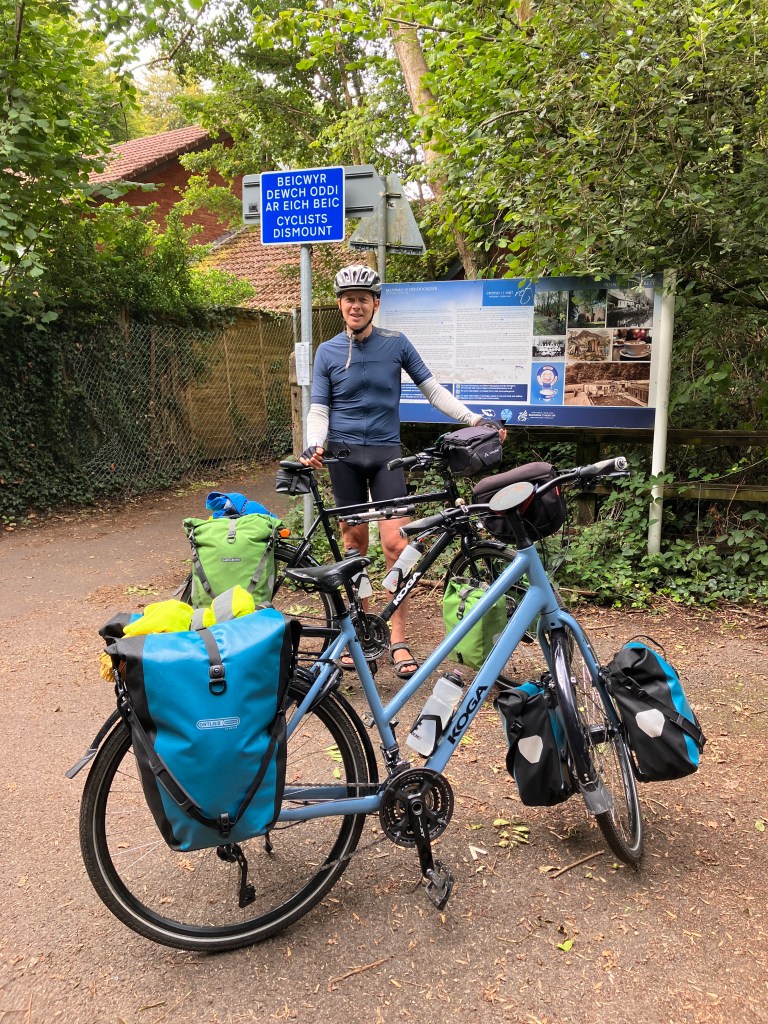
Wales is beautiful. The coal valleys of south Wales have such a rich and heart wrenching history. The Big Pit Coal Museum is so packed with history and details and artifacts and machinery it’s overwhelming. But, the history of Wales is everywhere in this region. Our introduction to Welsh coal mining history started with our bike ride from Cardiff to Treorchy, where we had a lovely house sit for 12 days.
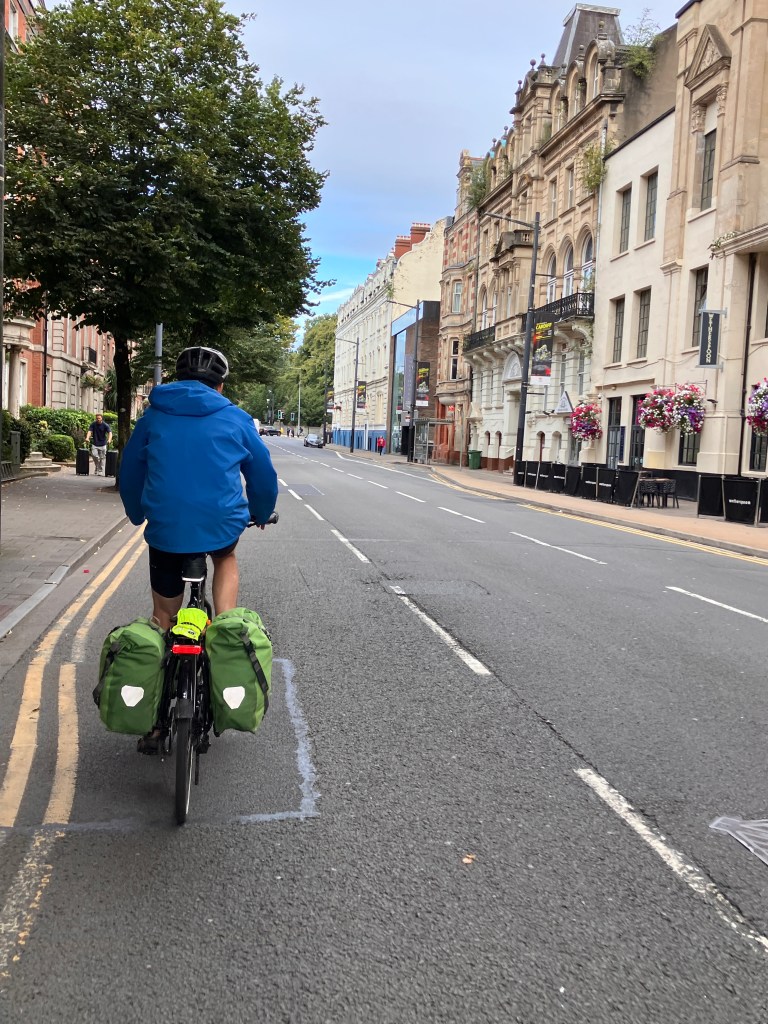
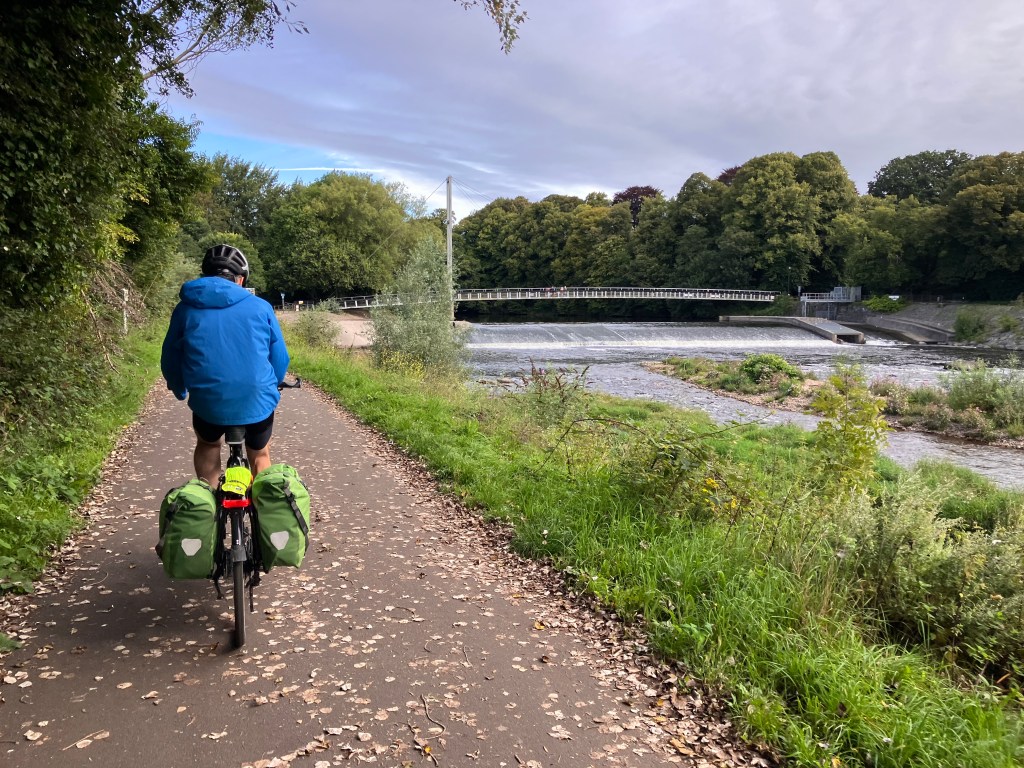
Rolling out of central Cardiff to the Taff River trail. A very quick transition from city streets to the river trail.Helmets off to all the agencies who coordinated the trail and history information boards.Eurovello 1 bike route.I wonder how many rail-trails we’ve ridden? Lunch in Pontypridd. A lovely surprise of a town.
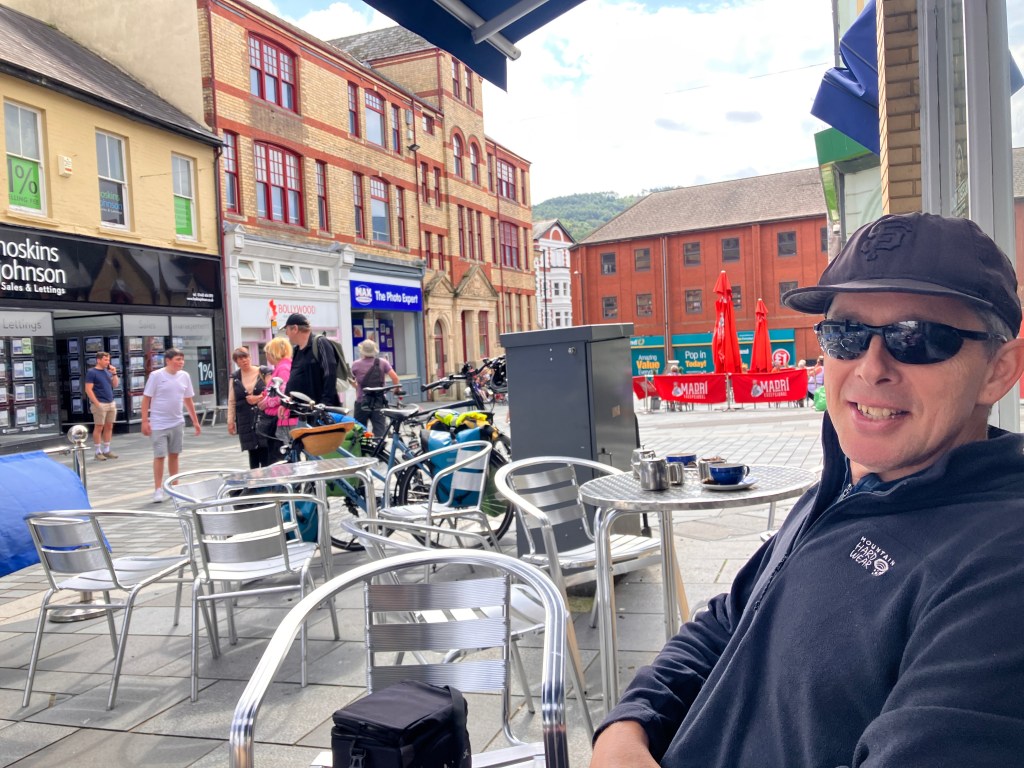
Riding into a town where you hope to have lunch and finding not a high street cowering in the face of car traffic, but instead a pedestrianized charming core really made us happy. We usually have to search for a spot where we can keep an eye on our bikes while we eat, maybe through a window or from an outside table hopefully with some shade and not to close to car traffic, but Pontypridd made our day with its car free and wonderfully lively shopping streets.
Not one little pedestrian section, but an actual network. Window shopping by bike while rolling slowly through town.Barry Sidings Countryside Park.
Pontypridd is the beginning of the Rhondda Fawr Valley, named for the Rhondda River. As we would learn, coal mining changed the valley from a sparsely populated rural area to a teeming coal based economy.
Always stop for the information boards. Those in the Rhondda Valley and along the Taff Trail are particularly compelling.
The transition to coal came with a very high price. As the above photo states “ In Britain between 1868 and 1914 a miner was killed on average every six hours and seriously injured every two.”
The Rhondda River. The geology makes for such a dramatic river course.A colliery looming over the river.Rich riding into Porth, and one of our first views of the terrace houses that were built to house the colliers and their families. At the high point of our climb from the Rhondda Fach valley before we dropped down into Rhondda Fawr.
We settled in to our lovely house sit with the wonderful cat Tibbs, for whom we quickly came up with a variety of nicknames, as we charmed and fed our way into her heart, and she into ours.
A snoozer and a champion lap sitter.
We had arranged a get together with another nomad couple who were in their campervan not far from us. We met up for a walk and a pub lunch and hours of chatting. When you live a nomad lifestyle like ours it’s nice to chat with others with the same kind of life. We always learn so much from other nomads and come away with great recommendations for places to visit and how to overcome challenges.
Hi Steve and Linda! Hope to meet up again somewhere in the world. The cage. Don’t call it a lift or an elevator!
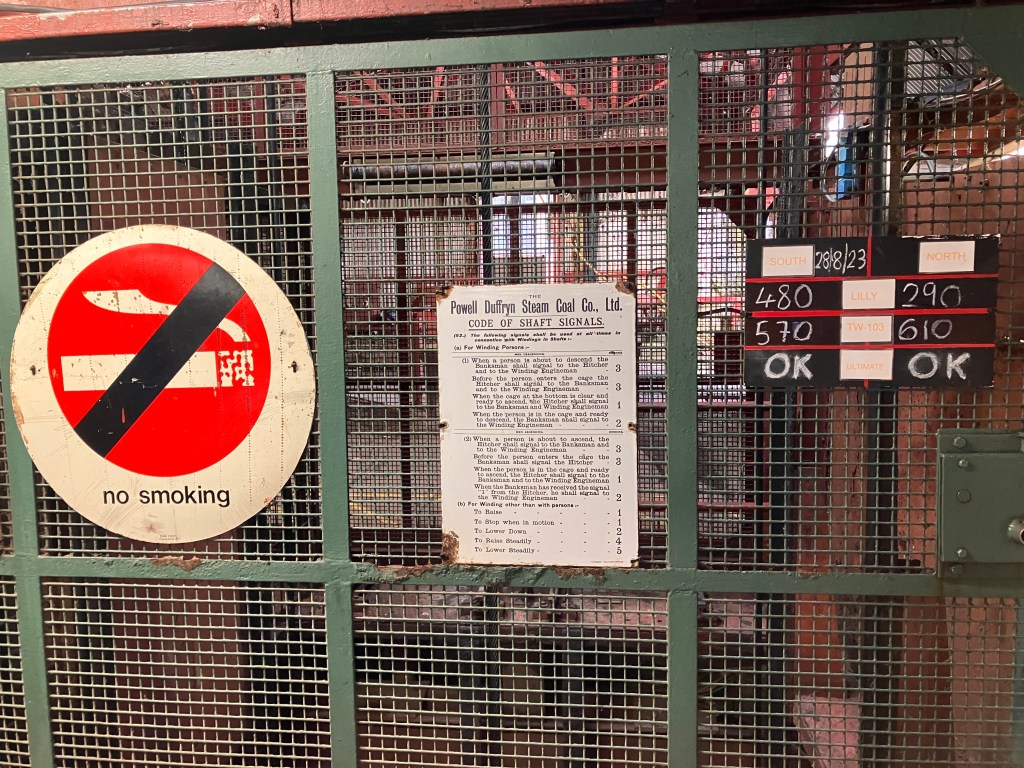
The first question you get about your visit to the Big Pit National Coal Museum is “Did you go down?” Down into the mine in the cage. At 300 feet below ground this isn’t one of the deepest mines in Wales, but the hour long tour, led by a miner, is so unique and educational. No phones or cameras are allowed down since although this isn’t a working mine, it is still considered an active site and anything that could possibly trigger a spark or has a battery is not allowed. It’s a good thing to be forced to leave your phone behind occasionally, you do focus more, and images are etched into your memory instead of saved in your camera. As we stood in the stall area where the pit ponies had been stabled, our guide, Peter, had us all switch off our headlamps to experience the complete darkness of the mine.
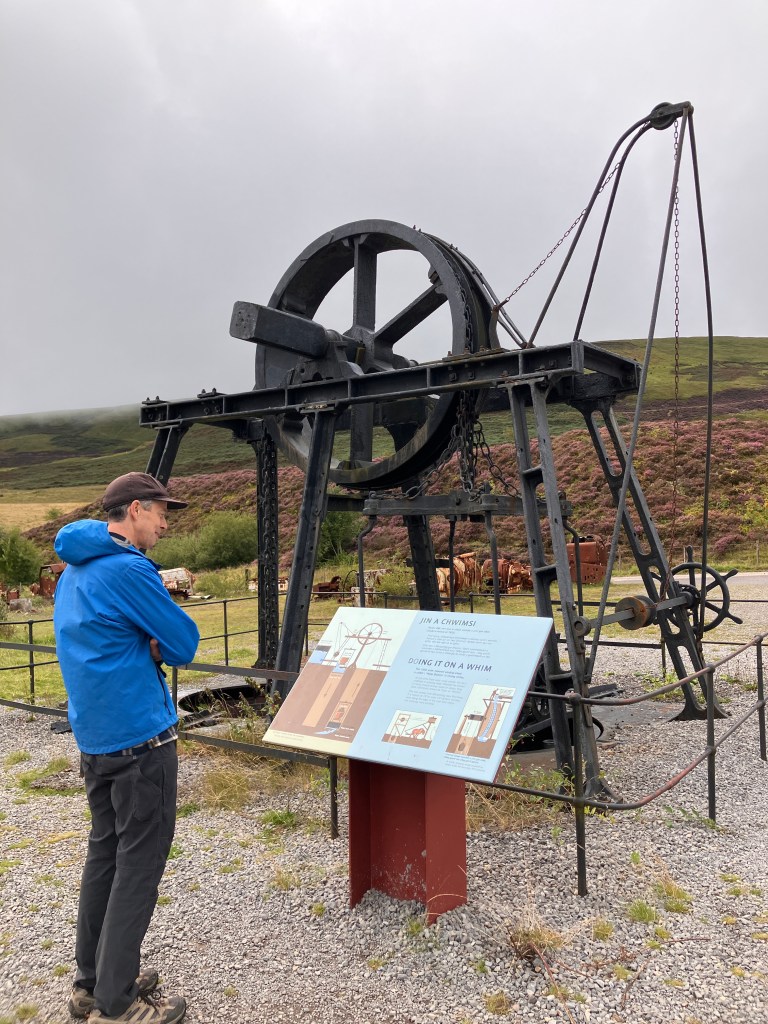
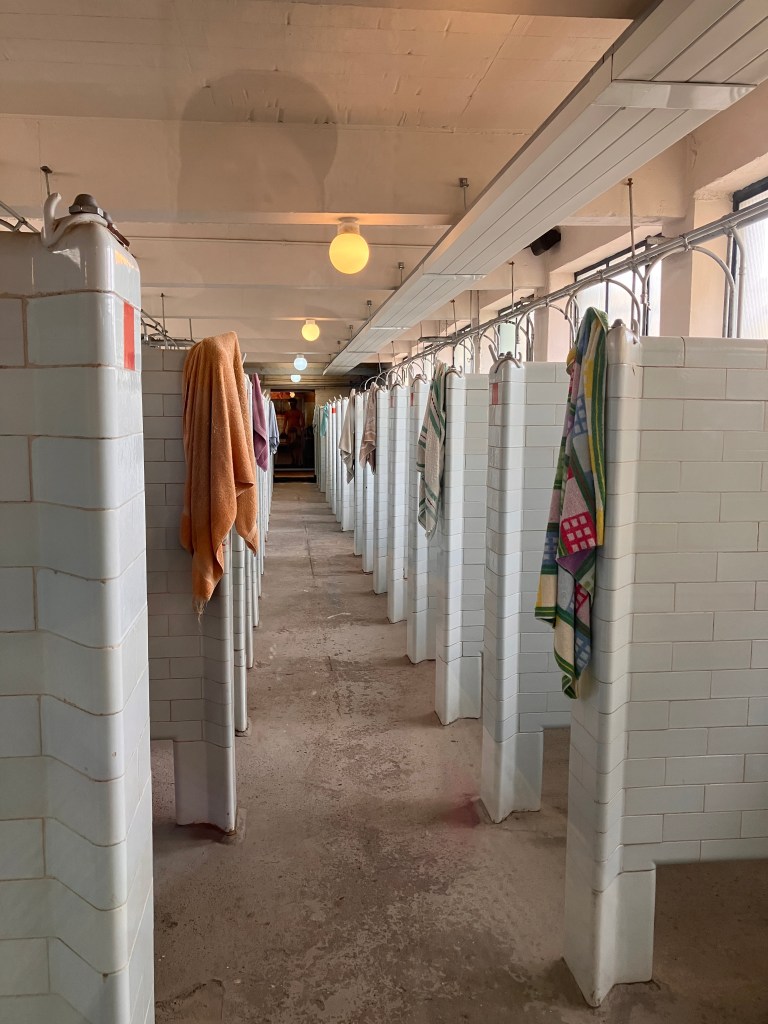
Big Pit, big Rich, and the moors of Blaenafon.An 1850s water powered winding wheel.We were told by locals how they remember riding buses with men just off shift at mines, and how dirty and dusty they were. The baths helped change that.Lockers in the miners bath house. Utilitarian and much welcome shower facilities.
We learned so much about the life of the miners, and although the grit, strength,and pride of the miners is clear, it was a grueling job done under some inhumane conditions.
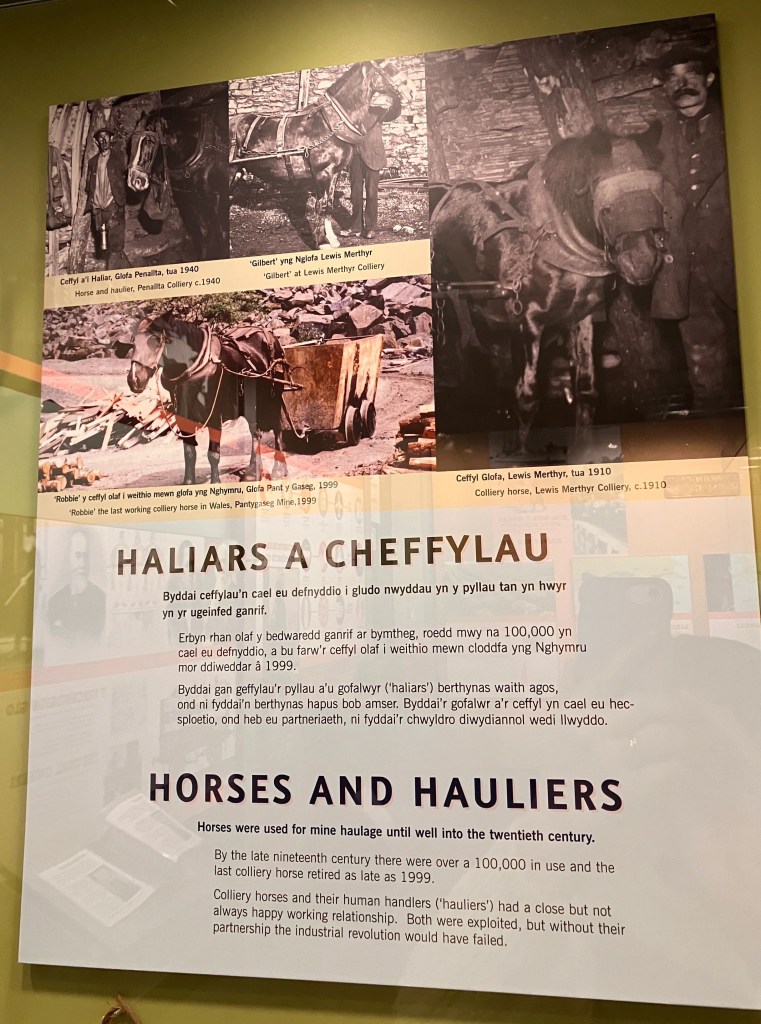
Biographical information on some of the lockers was intense. Yes, miners started as young as 12, even younger before the 1842 regulations passed.Happily examining all the mining items – so much information.The horses of the coal mines.
Our tour guide called them pit ponies, and the stalls where they lived when not working were 300 feet underground. Although that was awful, and hard to imagine, it was pointed out that the ponies were assets for which the company had spent money, and so they had a vested interest in keeping the ponies healthy. The same couldn’t be said for the miners.
Big Pit Coal Museum.
We went away with a much fuller understanding of what coal meant to Wales, and why the coal mined in South Wales was so valuable. As with many extraction based economies, the profits went to the owners and investors, and when the mines were nationalized and ultimately shut down, entire areas were plunged into poverty. I felt the Big Pit did a good job of telling the story of coal, and its impacts on Wales, negative and positive. The museum hasn’t been updated to include the impacts of fossil fuels on our planet, that would be a good challenge for new curation. I can imagine a team of museum scientists adding a fascinating section on climate change and the impact of coal. Although the story of the mines is about the folks working and living in Wales, the reach is global.
Our next visit was to St. Fagans National Museum of History.
Visiting museums can add up for families, taking the kids for a day out and paying per person can get expensive. I really like that the National Museums in Wales charge for parking, but entry is free. There are ample opportunities to donate either in cash or with tap cards, and we always do. This was my second visit to St. Fagans, I visited decades ago with my friend Hannah who grew up in Wales. We couldn’t remember exactly when it was that we visited, but we think about 30 years ago.
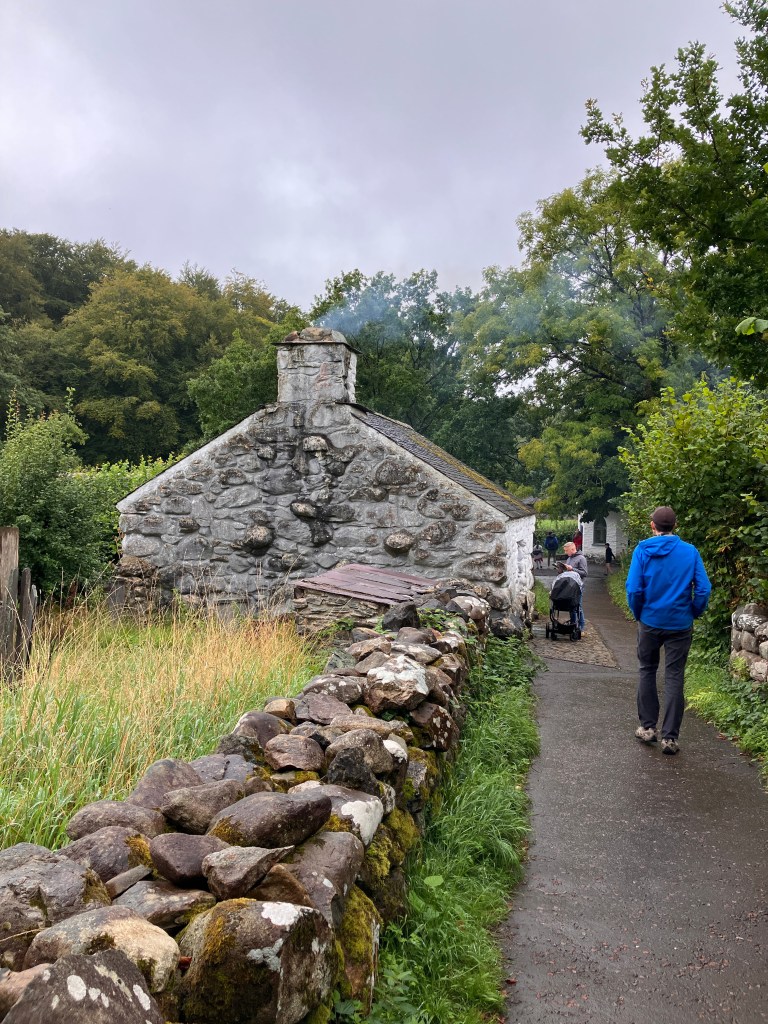
Do you see the smoke from the cottage beyond the sheep field?
If you are imagining a large building full of glass cases with artifacts, stop right now! This is an open air museum, with buildings relocated from all across Wales, rebuilt on site and furnished according to the time period being featured. That noise you just heard was me squealing with delight- this is my favorite kind of museum. You get to walk around lovely grounds and go into buildings that look as if the inhabitants have just stepped out. Since it was a chilly rainy day most of the buildings had fires burning which upped the level of atmosphere.
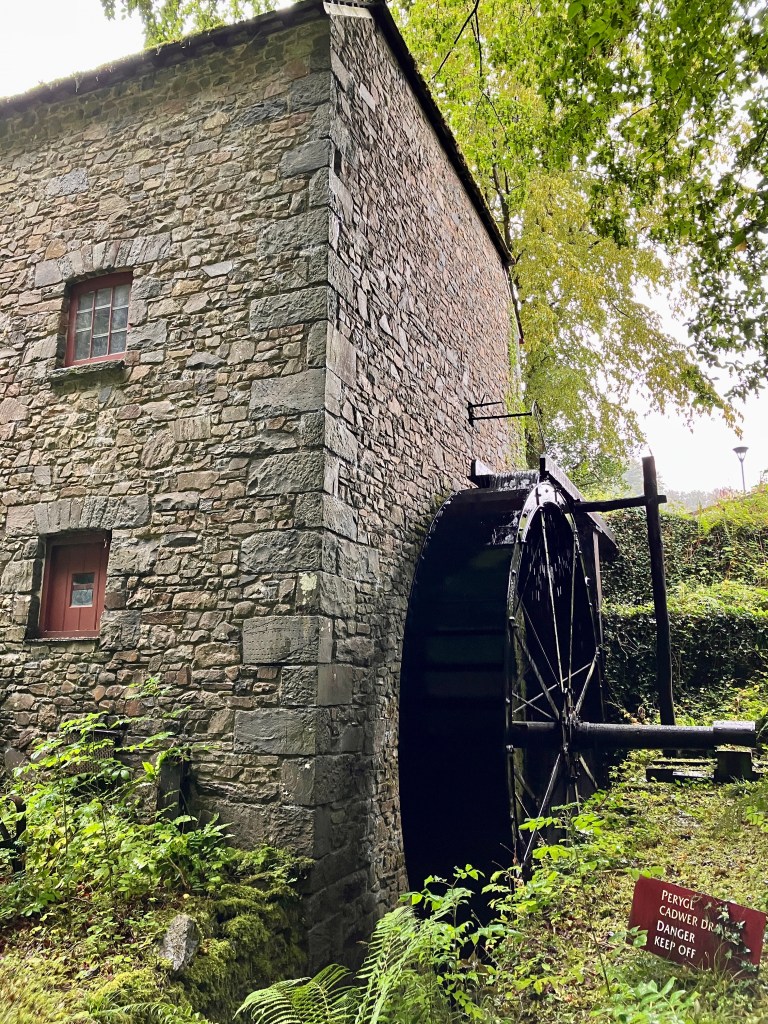
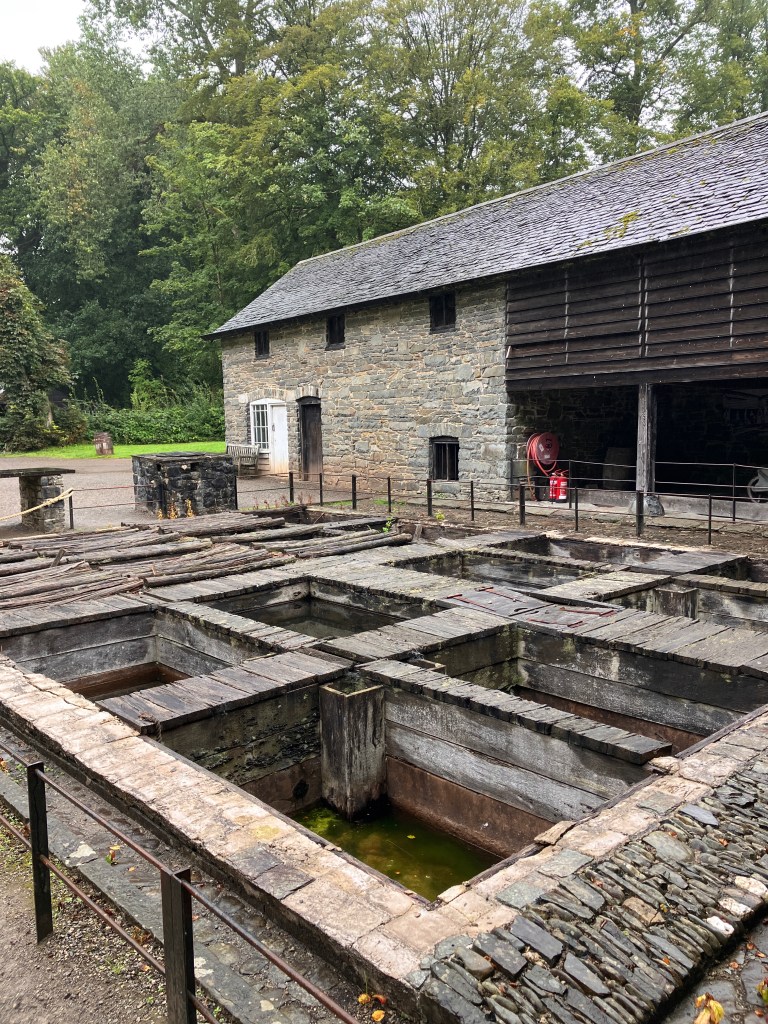
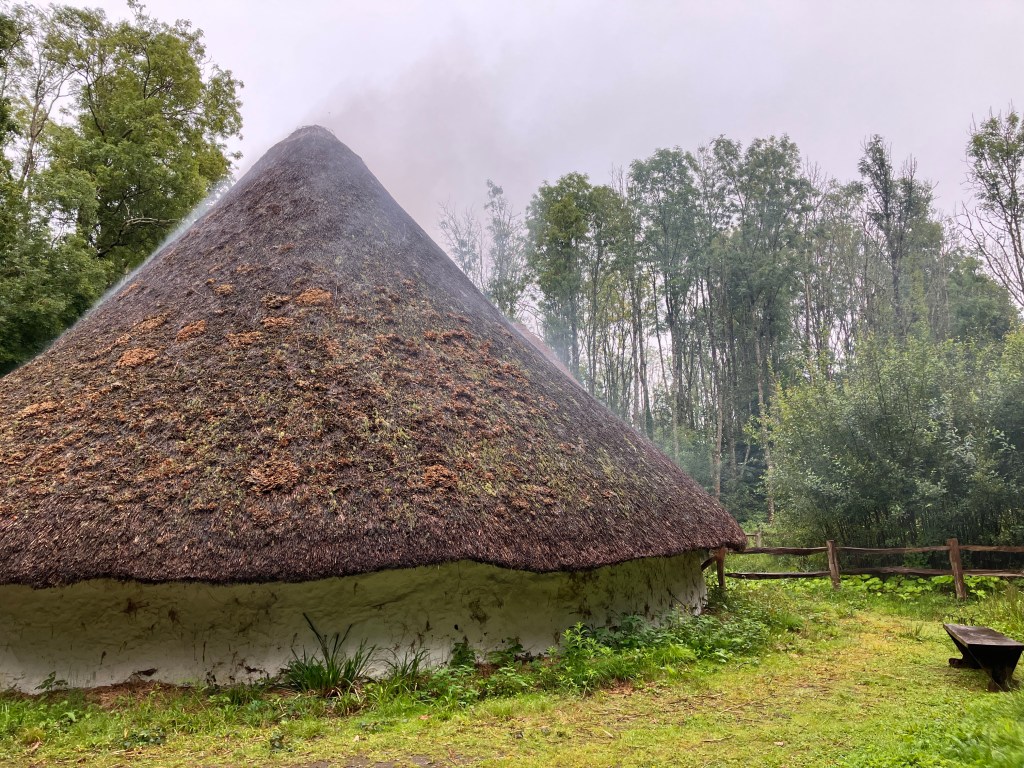
A pigsty. Why is it round? Because pigs dig, and the lack of corners helped prevent them from digging out.I love water wheels as much as I love open air museums. A tannery. We visited an active tannery in Morocco and it looked so similar. This one smells a bit better, and is now occupied by newts, which we sadly did not see. After a stop for tea and Bara Brith, a traditional Welsh tea bread, it was off to the Stone Age huts! Rich is trying to look cranky but he was as excited as me. Ok, maybe not quite. Why is the thatched roof steaming? It’s smoke. From the fire built on the floor. No chimney meant the smoke just seeped out.In case you are wondering, yes, it was very smoky inside. The very knowledgeable staff member inside was wisely seated on a log, staying low and mostly out of the smoke. Information signs in Welsh and English gave good background and showed where the building originated.
A museum guide told me that since I had last visited, approximately ten buildings had been added to the site. The decision to include a building depends on quite a few factors, including a compelling back story or history about the structure.
1544 farmhouse.Just walking around the 100 acre parkland was pleasant.
Possibly my favorite buildings at St. Fagans are the terrace row houses. The six are displayed as they would have been in 1805, 1855, 1895, 1925 1955 and 1985. Originally there would have been a community oven at the end of the row in which the women would bake bread. Terrace houses are all over Welsh coal country, so ubiquitous you can almost stop noticing them.
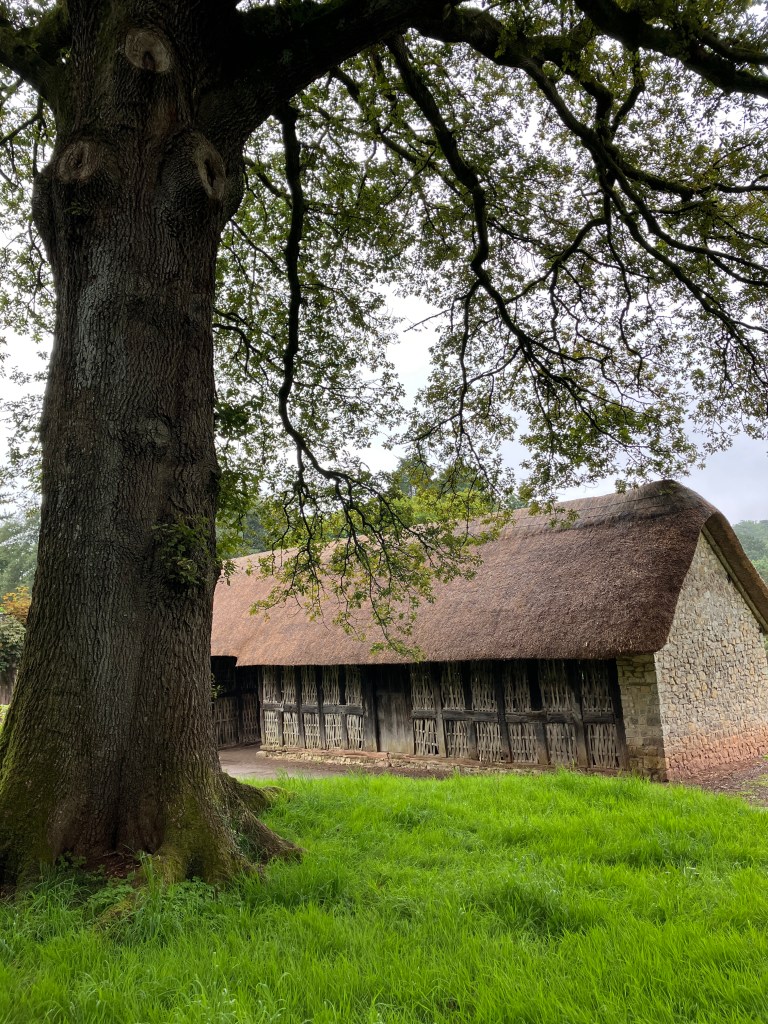
From the Big Pit Coal Mining Museum.A street in Treorchy. We were told by a local there were 16 mines near town. I was pleased to get a photo with not many cars blocking the view of the houses.Looking down on Cwm-parc terrace houses as we climbed the hill out of Treorchy. There once was a colliery in the valley to the left of the photo.Looking towards the terrace houses from the gardens. When you entered the houses you started to see the modernization through the decades.The outhouse. Rich warming up in front of the fire, while managing to not hit his head on the decor.A cock fighting pit inside a purpose built building. Stryd Lydan Barn. From the museum description: A cruck and timber-framed barn, the walls are wattled using flat chestnut laths woven vertically through horizontal staves. The building is thatched with wheat straw.
The grounds at St. Fagans are absolutely worth a visit even if you don’t care about old buildings and history. Which would be impossible, I think, once you start walking and reading the signs and imagining how life was for folks who lived in these houses. Happy to have gotten to visit both these National Museums, we returned the rental car and got ready to pedal out of Treorchy and on to visit good friends in Tenby over a few days of Welsh heat wave.
The happy travelers in Pontypridd (The name Pontypridd is from “Pont-y-tŷ-pridd” the Welsh for “bridge by the earthen house”) Thank you Wikipedia.
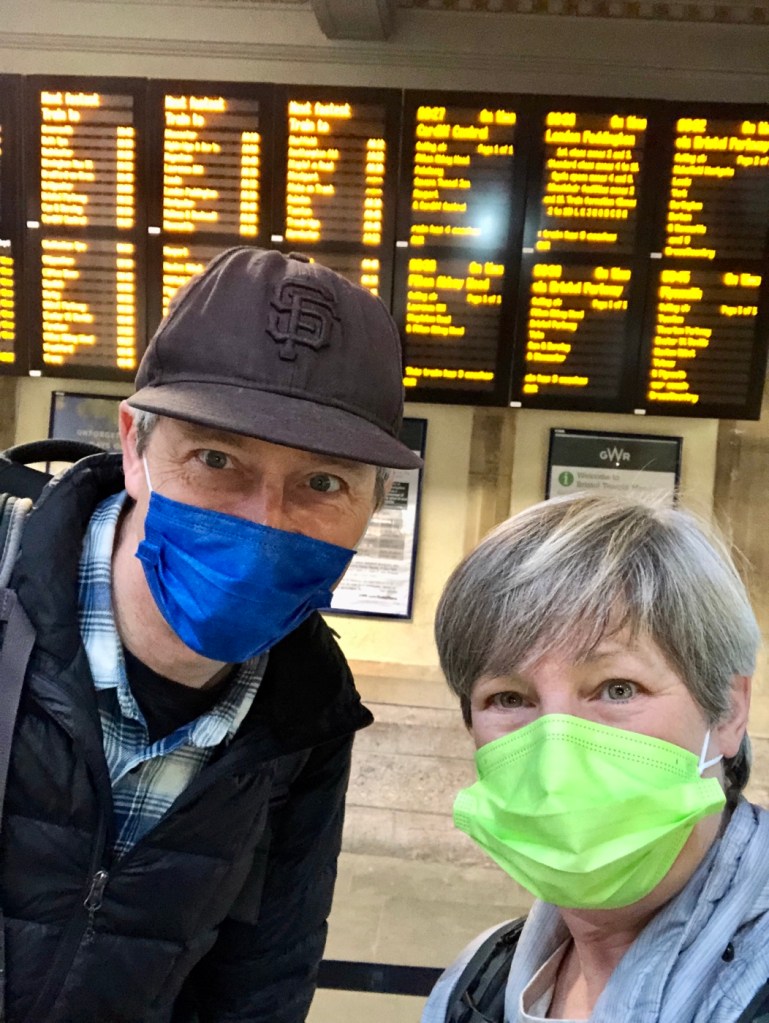
In front of the big board at Bristol Temple Mead Station.
As we wait to sort out our booster records we’ve really started to take delight in our snap travel decisions. Our last booked evening in Bristol Rich asked, where should we go next? My reply was “How easy to get to the Jurassic Coast? Looks fairly close.”
Stop for salads from the M&S fine foods. We try to never board a train without snacks or lunch. Waiting for our train.
And the travel planner makes it happen. I’ve wanted to visit Lyme Regis since reading the novel Remarkable Creatures, about Mary Anning, the renowned fossilist.
At Axminster station, about to catch the bus to Lyme Regis.Wheeling and walking from the bus to our guest house.
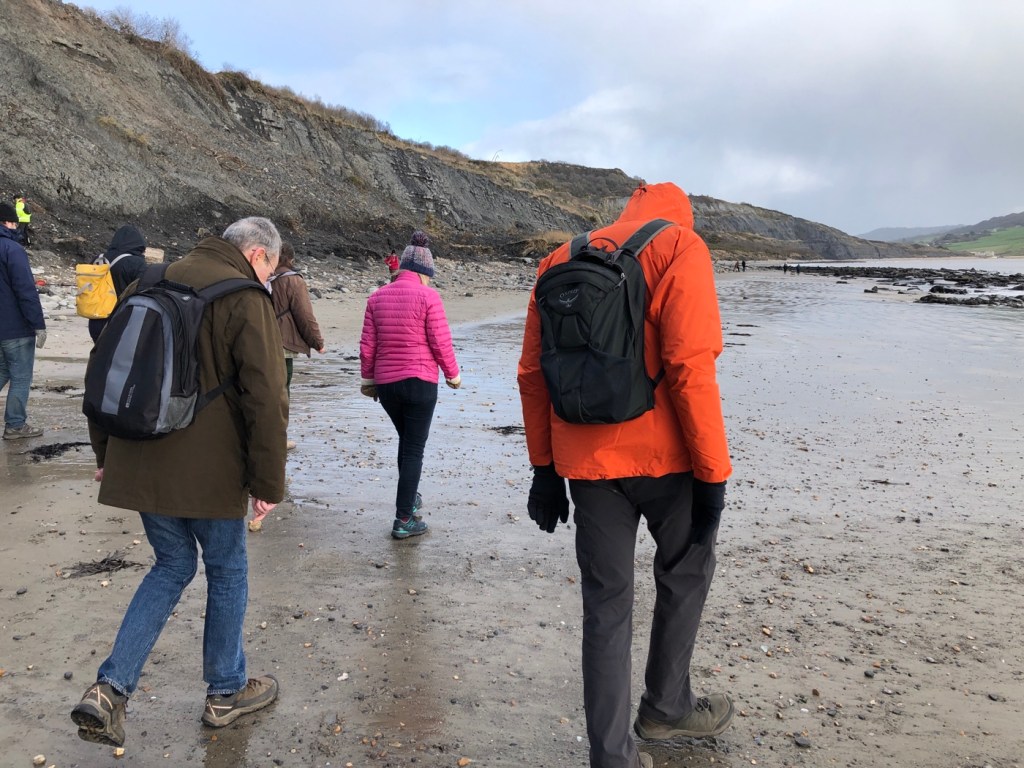
Lyme Regis is the heart of the Jurassic Coast. We had a lovely day and a half of hiking, which I now realize we could have spent fossil hunting. Oh yes, I caught the fossil bug. I caught it bad.
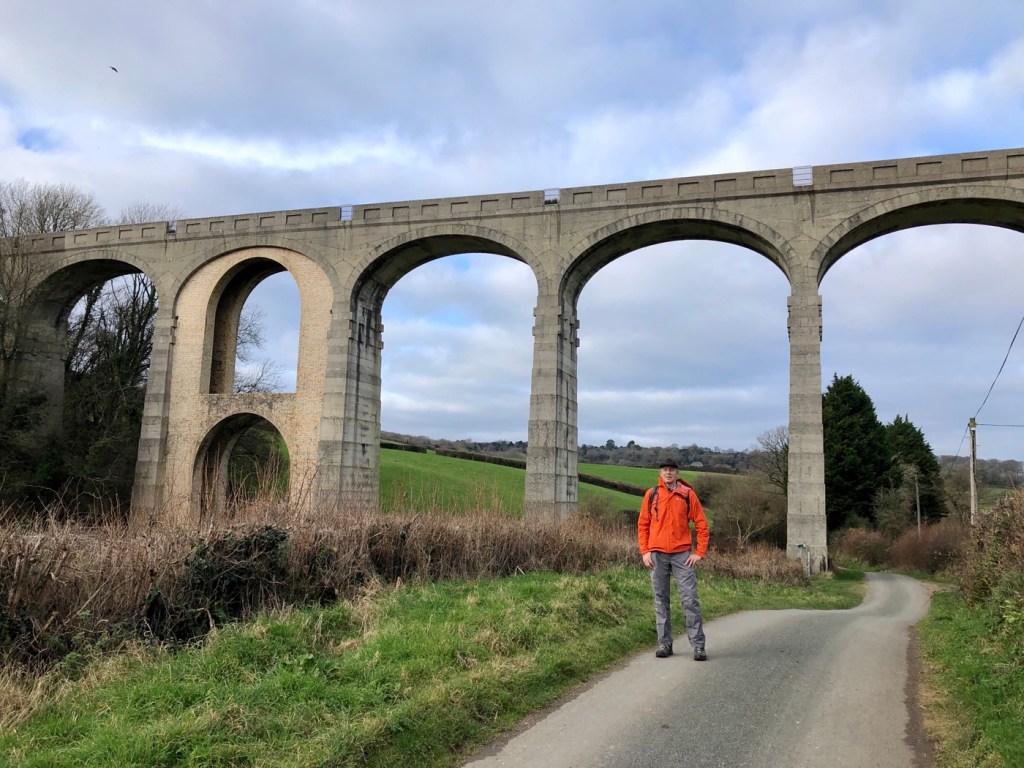
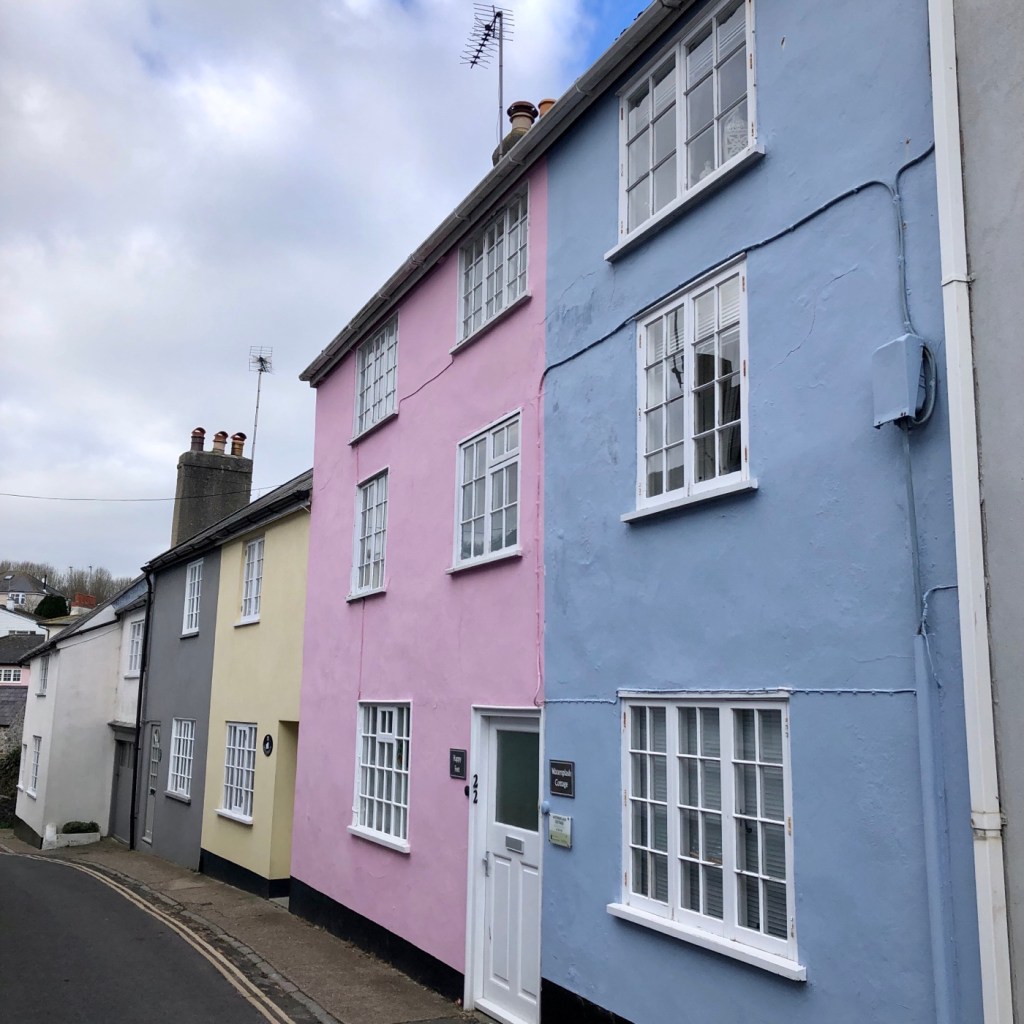
The old train viaduct at Uplyme. A lovely afternoon hike. Could have been hunting fossils.Beautiful houses in Lyme Regis on a street that slopes down to the fossil beach.Goofing around on the Cobb, of French Lieutenant’s Woman and Jane Austin’s Persuasion fame – just up from the fossil beach.
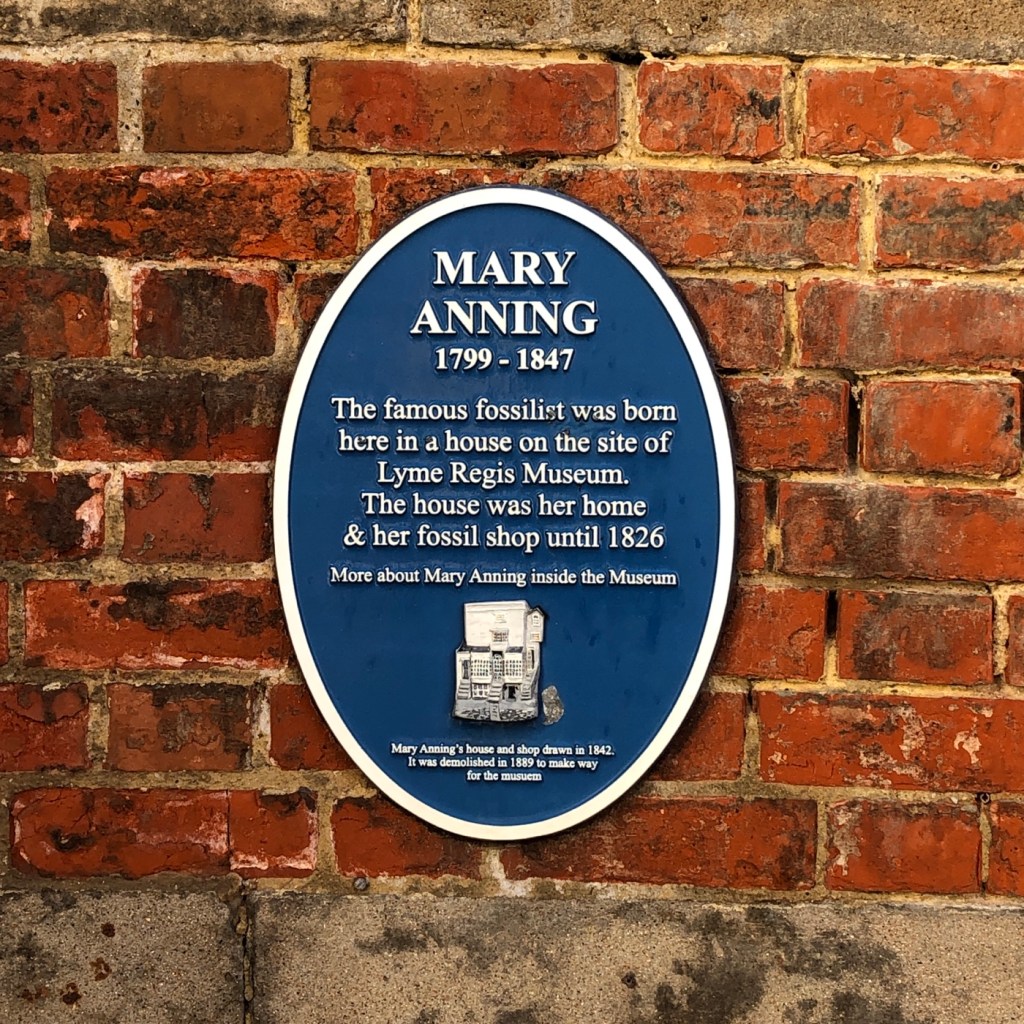
The Lyme Regis museum, built on the site of Mary Anning’s house, offers a fossil talk and walk. We bought tickets for Friday, our last day in town, thinking we had plenty of time to do that and catch our bus to the train station.
Apparently her house flooded with high tides and storms. A new sea wall changed that allowing the museum to be built.
The fossil talk was amazing, we learned so much. I learned we didn’t leave enough time for actual fossil hunting.
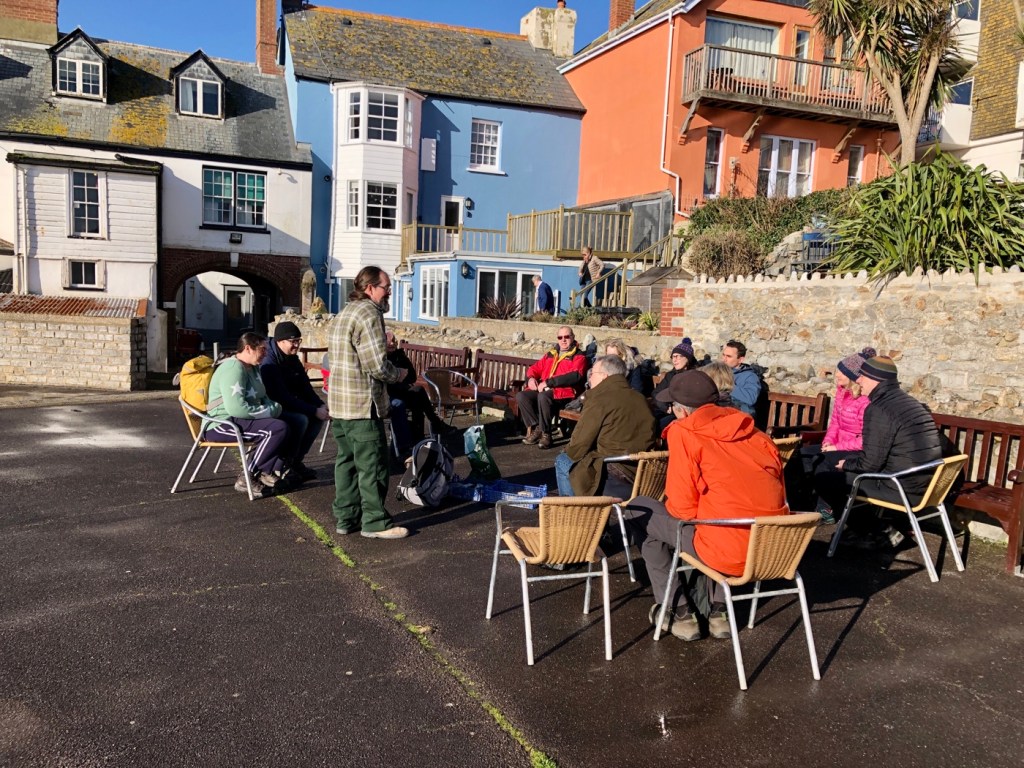
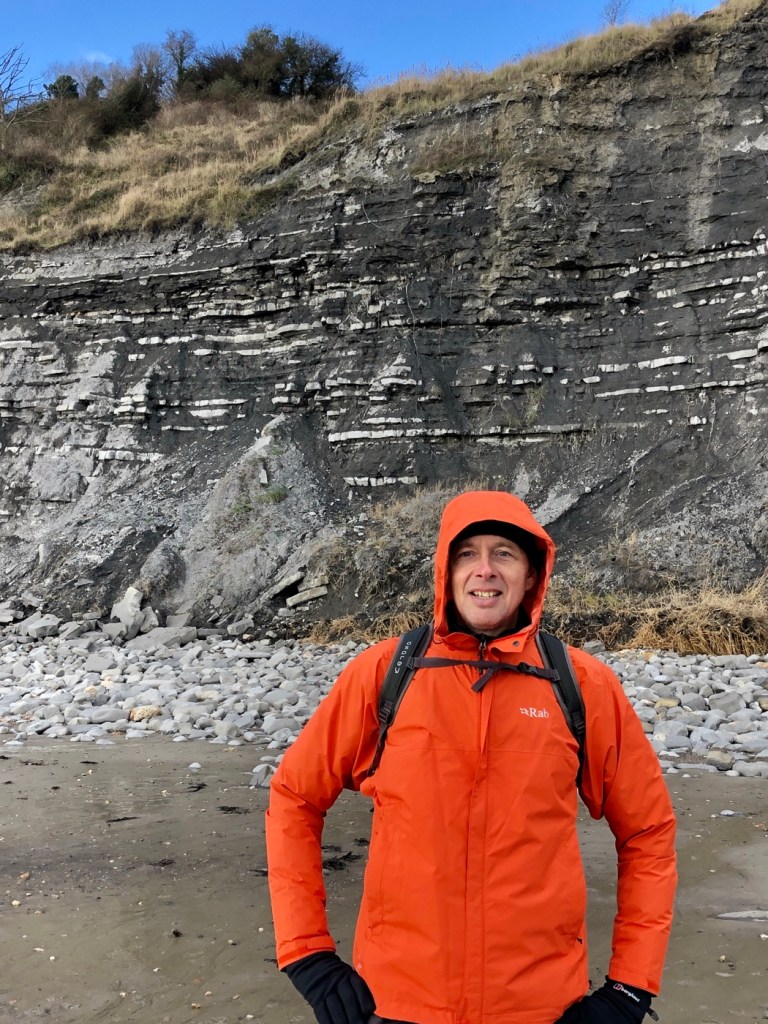
The wonderful geologist who talked us through what to expect and look for. And answered all the whys of this area. Fossil hunting. Everyone has their gaze turned towards the sand. There really are fossils just laying on the sand.The limestone cliffs where the fossils are before they landslide onto the beach. And my intrepid fossil hunter.
The best time to fossil hunt is after a big storm has caused land slips and churned up the beach. We were on the beach after days of mild weather, so not prime fossil time. And it was still amazing. Apparently after a storm the professionals are at the beach before dawn with headlamps and hammers. There are no prohibitions about hunting, just warnings. As our geologist told us, if you don’t get the fossils the ocean will. But don’t let the cliffs get you. They let loose on a regular basis. He kept us away from the cliff bases and focused on the tidal zone.
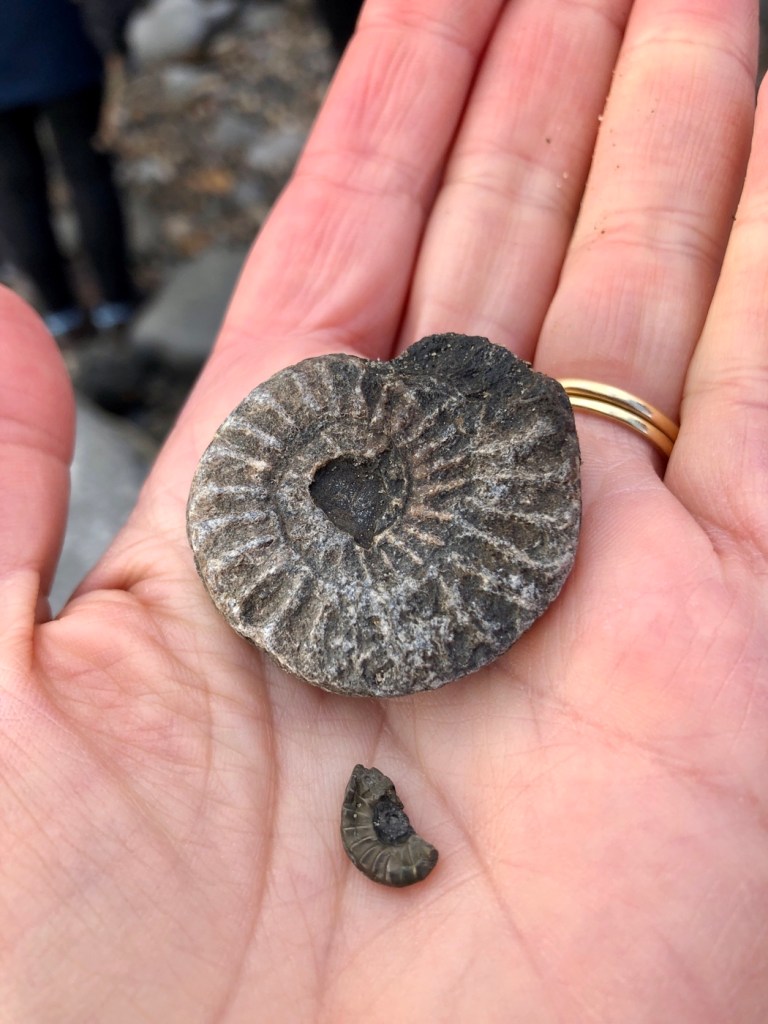
Looking earthward for fossils.Two different versions of fossilized ammenonites. The small partial one is iron pyritized.
I’ll let wiki explain how these jewel like fossils happen: Organisms may become pyritized when they are in marine sediments saturated with iron sulfides. (Pyrite is iron sulfide.) As organic matter decays it releases sulfide which reacts with dissolved iron in the surrounding waters. … Some pyritized fossils include Precambrian microfossils, marine arthropods and plants.
A tribute to Mary Anning on the coast path. Her dog Tray and a Plesiosaurus skeleton in metal on a section of fence.
Sadly, we only had a short time on the beach before we had to leave to catch our bus to the train. But we will definitely be back to fossil hunt again.
The happy travelers take a sunset usie. Should have been fossil hunting.
Our next snap travel decision was to go on to Plymouth by train. Since we were so far down SW England, why not go farther? so we did. We’re in an apartment in Plymouth for a while. Where will we go next? And how will we get there? Stay tuned.
Isambard Kingdom Brunel …a name hard to forget, especially in Bristol, England. As a professional Civil Engineer, it was so refreshing to see an engineer given their proper dues, as it’s usually the Architects that get (or take?!) all the credit for innovative projects. And boy did I K Brunel do it all: Paddington Station, the Great Western Railway, Thames Tunnel, SS Great Britain, and my personal favorite, the Clifton Suspension Bridge. His designs are credited with revolutionizing public transport and modern engineering.
Engineers are great, aren’t they….
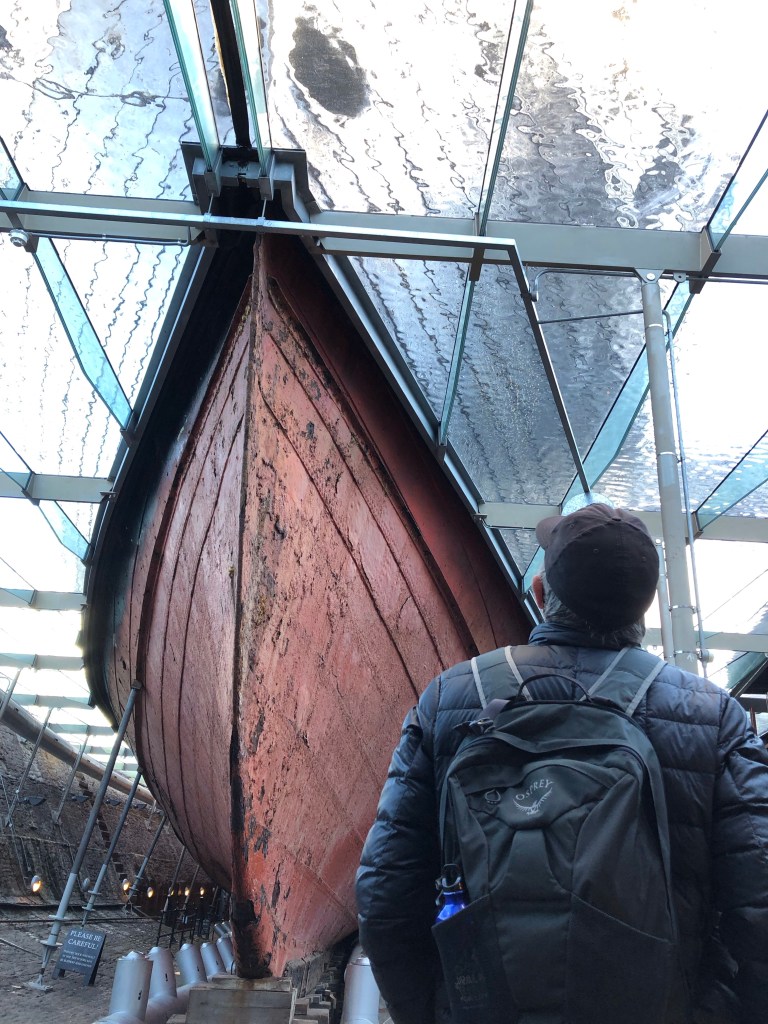
We started our Brunel tour at the fantastic SS Great Britain, which is a magnificently preserved and restored steamship that Brunel designed in the 1830s and was the largest steamship in the world when it launched in 1843.
In the Dry Dock – that’s water up there!
I think the best way to see the ship is to start below the water in the dry dock. It allows you to appreciate the scale of the ship, as well as understand how the unique hull was constructed and is being preserved. It takes a massive array of dehumidifiers running 24/7 to keep any further corrosion of the steel hull at bay. The array keeps at about 20% relative humidity, similar conditions to “the deserts of Arizona”, and paralleling the path of millions of other retirees being preserved in the Sunbelt.
Brunel chose to use a new and highly efficient propeller for the SS Great Britain, shaving weeks off a Transatlantic journey
You also can see how they moved the ship from its near demise in the Falkland Islands in 1970 and dragged it all the way back home to Bristol on a special barge. But the dedication to restoration didn’t stop at the exterior of the ship. The cabins have been fully restored with the sights, sounds, and yes, smells of the ship when it served as a passenger ship to the US and Australia.
The Kitchen…spooky realism abounds, as even rats can be seen moving about the cupboards.
The Steerage class quarters are strikingly small, but as a docent pointed out, still offered those crammed in 4 1/2 foot bunks a chance at better conditions and more opportunity in the New World. Life in the early industrial revolution days of Britain was hard. The crew barely had it better, as had to toil all hours shoveling coal into the furnace and keeping the ship going over grueling 3 week to 6 month journeys. Of course first class was quite grand and the Titanic-like dining hall is now available as a wedding venue, minus the swells and nausea of the open seas. (As it turns out, Brunel’s hull design was a little unstable…until a later wood extension was added to to the keel)
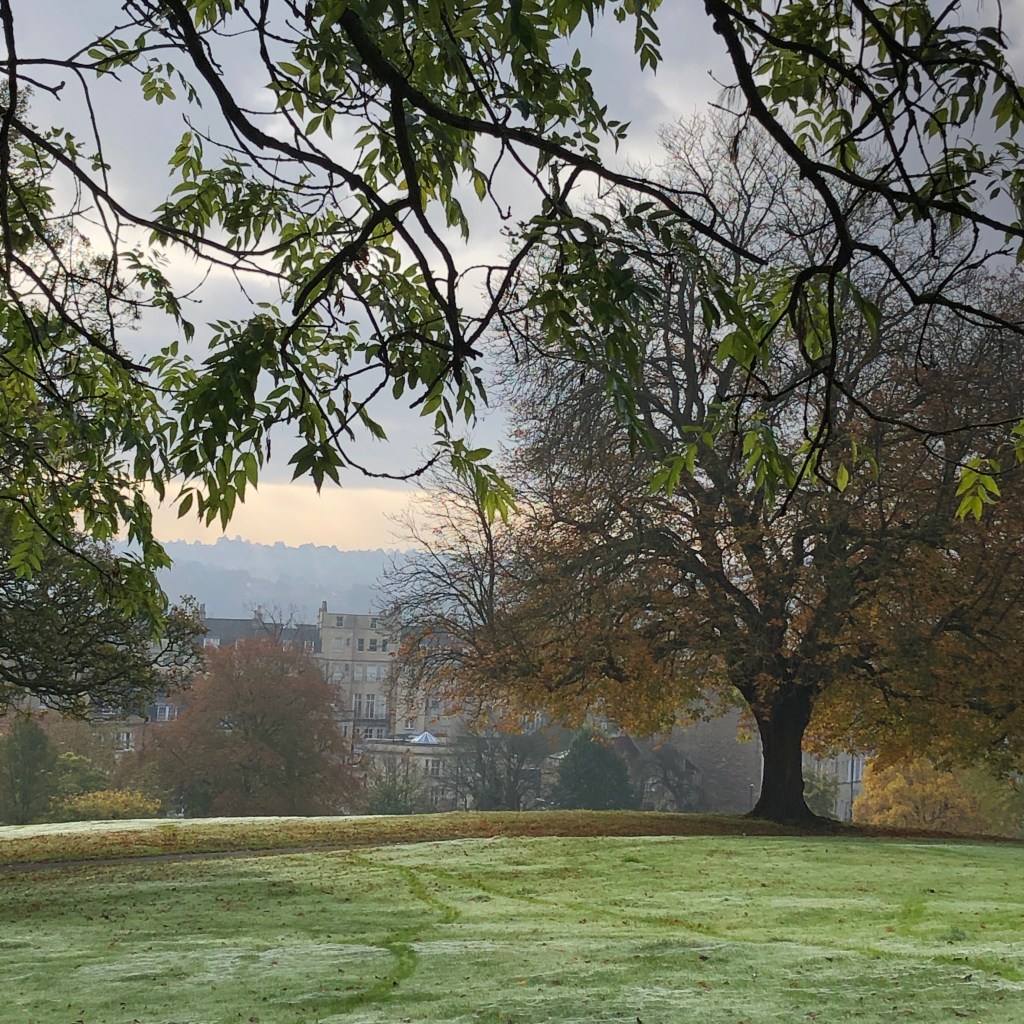
Morning dew on Brandon Hill, Bristol
Bristol and Bath were both a pleasant surprise. The crisp fall weather and foliage were perfect for exploring on foot and both cities offer fascinating sites, museums, culture, and vibrant food scenes.
Proper tea and a scone at the American Museum and Gardens in Bath
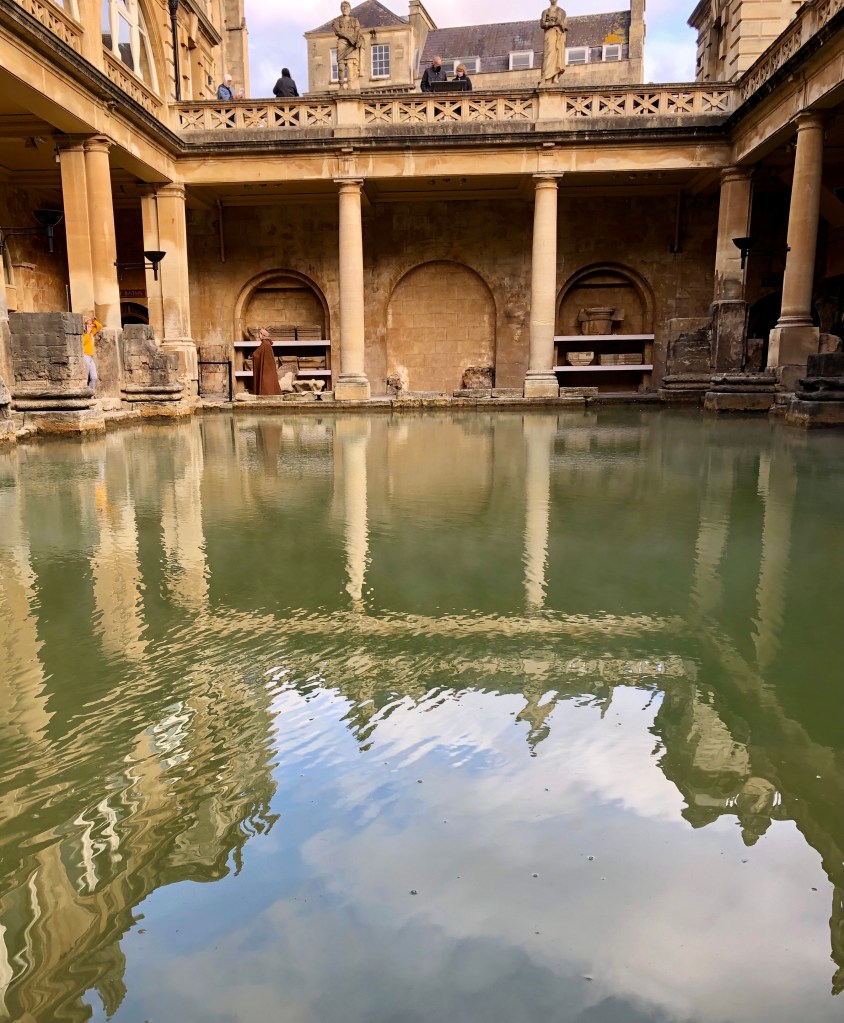
Bath is like a living Georgian museum, pleasantly frozen in the 1770’s, while Bristol offers a modern revitalized waterfront, lots of history, and more diversity, all supported by a large University population. The American Museum has beautiful views and a offers a unique British perspective on American history and culture. The Roman Baths are the big attraction and surprisingly engaging with brilliant holograms in each room and an audio tour featuring humor of Bill Bryson.
As much as you want to, you shouldn’t touch the water at the Roman Baths
After 3 nights up the hill in Bath near the Royal Crescent, we decided to stay just 7 minutes away from the Temple Meads station in Bristol. The Station itself is worth a look, and yes, I K Brunel provided the base design and inspiration for the main station as the terminus of his Great Western Railway from Paddington in London. How was he so many places? (4 hours of sleep helped apparently)
The Temple Gardens out the back door of our hotel
After a day on the waterfront and Brunel museum, we decided to explore more neighborhoods and walked out through the pleasant and upscale Clifton village. We walked back through the University and along Gloucester Road, which is full of an eclectic mix of shops, pubs, and restaurants. 8 miles overall and great walking up and down the undulating hills, with constant surprises and new views.
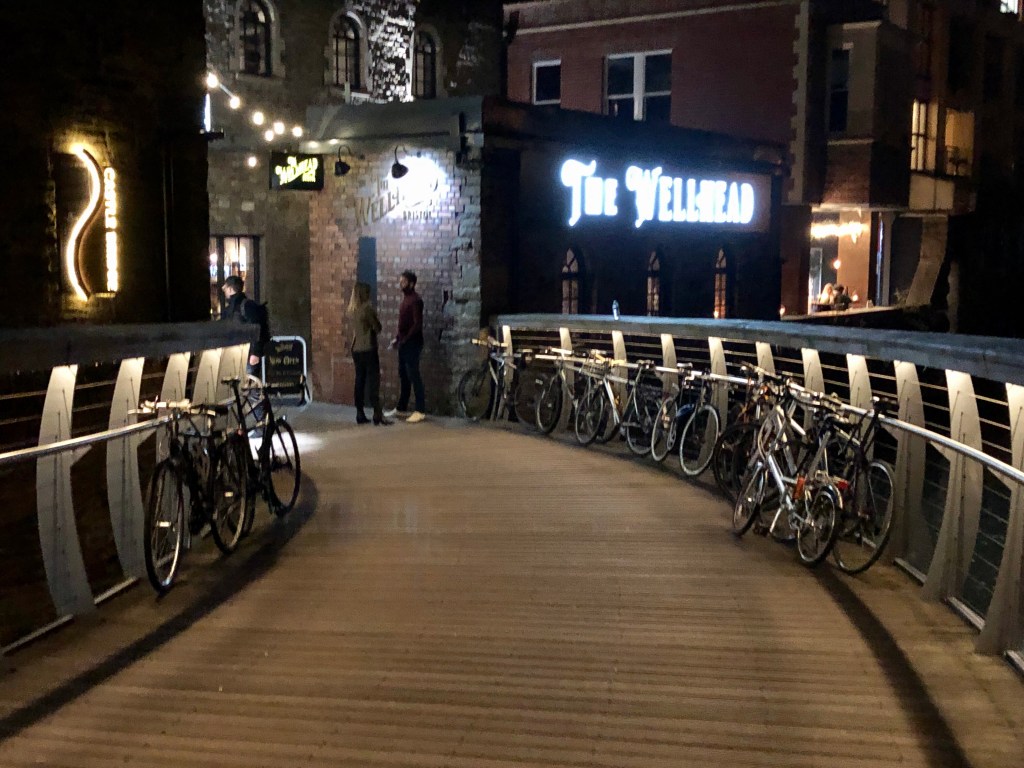
The Castle Bridge opened in 2017, offering an inspiring human powered crossing of the Bristol Harbour (but still not enough bike parking!)
But the hands-down thrill of the day was the Clifton Suspension Bridge. A structure that highlights the need for visionary technical leadership and perseverance. Brunel’s original design took over 35 years to be built. He succeeded in a design competition in 1830 with his proposed bold 700- foot steel chain suspension span. This span allowed a full span of the gorge, which was key to the intrinsic beauty of the structure in the unique context of the Avon River Gorge. But many, including his father, doubted that such a span could be built. Unfortunately, cost overruns and contractor financial trouble (sound familiar) put the half completed project on hold by 1843. Luckily, the bridge was finally completed in 1864 with the assistance of other designers, but sadly 5 years after Brunel died. And like many of his bold designs, the ultimate bridge required some design modifications to the deck to make it stiffer, as his original design would have likely failed in high winds. Engineering is a constant process of improvement and optimization.
The 1,300-foot long Clifton Suspension Bridge soars more than 300-feet above the Avon Gorge…so nice!
But his vision survives and his grand engineering projects are still serving millions of people today. So anytime someone doubts that a large infrastructure project can ever be finished or if a new design innovation can really work, just shout out the name of Isambard Kingdom Brunel. Or say it three times if you can!
Favorite thing about London? The transport. Transport for London (TFL) has quite a task keeping the underground, overground, and all the amazing buses moving. Once again, Citymapper for the London win. Using that app allows us to get anywhere in London on any mode. Turn by turn call out bike directions, we love you, especially the dock to dock bike share feature. As Rich notes, that was the missing piece when using bikeshare and directions. If you aren’t using Citymapper as your preferred transit/mobility app, give it a try, we think it’s the best.
Backpack mode in the tube. It was a shock to have everything on our backs instead of on our bikes.
We met up with one of our fantastic nieces for lunch and a walk. We biked around on the cycle share Boris Bikes, also known as Santander Cycles. we went to the Imperial War Museum and lost track of time in the amazingly well curated World War 2 exhibit. We didn’t take many photos. Too busy enjoying the city.
After lunch walk on the Grand Union Canal. I have a thing for narrow boats and locks.
The Imperial War Museum reminded us of how great museums can be. The WW2 exhibit was next level curating. Diverse, engaging, and accessible. It made me want to write a sternly worded email to the Louvre about the problems we saw there while visiting Paris. We had been in the Louvre for about 3 hours when my wonderful husband said “Do they even exhibit any female artists?” And I thought I was the staunch feminist in this marriage! Good question, I replied, proudly. The top item on my sternly worded email to the Louvre would be a request that they call out in a map, or with specifically marked or colored description tags, the few female artists they have on display.
London bikeshares.
When I did an online search for information on female artists at the Louvre it turned out we had noticed several, without being aware that they were works by female artists. I don’t believe any of the art covered in the needlessly complicated audio guide, (Nintendo based, a big hit with the mostly over 55 users I’m sure), was woman painted. Next in my email I’ll mention the badly laid out cloak room/lockers, lack of drinking fountains, lack of signage and directions, and the exit through the shopping mall with again, no signage on how to exit the shopping mall. The art is, of course, amazing, but the curation is not up to date. We certainly didn’t plan our Louvre trip very well, we never even made it to one wing – we simply couldn’t find it – but as Rich said, a well curated museum shouldn’t need a plan of attack. It should be more intuitive and obvious where you want to go.
Pub lunch photo taken by our amazing niece.
We have reveled in being able to communicate again with our move to English speaking UK. After so many weeks in countries where we spoke the language poorly (Rich’s French is pretty good, mine is awful), how nice to understand and be understood. It was also lovely to meet up with friends from SF, and our grad school attending niece. After many weeks of mostly each other for company we both enjoyed the time with friends and family. Where next? Off to Wales.
We’re in Zermatt, Switzerland, which is famous for skiing, being car free, and the Matterhorn. OK, that car free part might only be relevant to some for its fame, but it was a big reason why we came here.
Golden hour selfie with the Matterhorn being imposing in the background.
Who reads in room magazines at their hotel? Me! Zermatt Magazine has a super interesting article about the first woman to go up, and summit the Matterhorn – get ready, it’s earlier than you might think. And, like much of women’s history, kind of sort of ignored a bit.
This plaque was placed on the Zermatter Walk of Climb in …. 2019. A bit late, thinks me.This plaque outside the Zermatt museum is a bit misleading, An Italian woman came close to summiting in 1867.
Per the excellent hotel magazine article (I’m a big fan of airline magazines too.), an 18 year old Italian woman, Félicité Carrel was the first woman to attempt to summit but had to turn back 100 meters from the summit as the wind came up, caught her wide skirts, and almost blew her off the mountain. Take a moment and imagine that, climbing in skirts- big skirts.
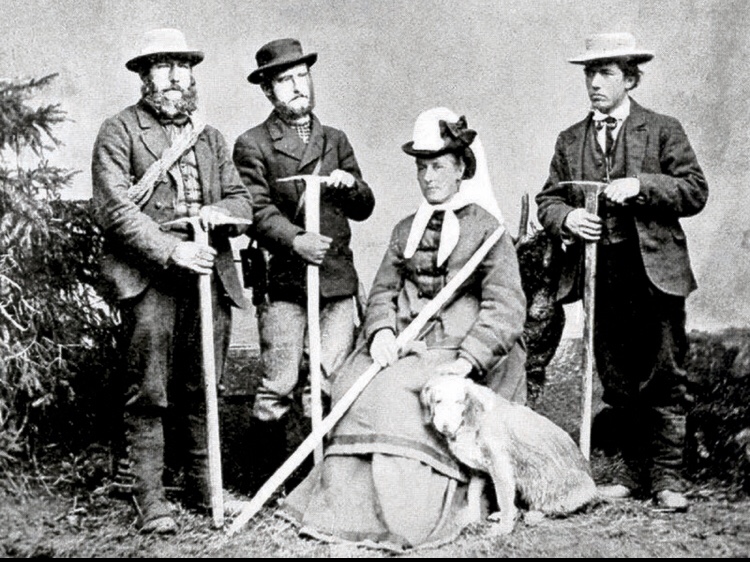
This American climber got there a bit late, the British climber Walker heard she was on her way to Zermatt and quickly got her team in place to try for, and reach, the summit.
Did I care about mountain climbing women before reading this article? No. Had I even thought about when women started mountaineering in the Alps? No again. But I made a point of going to find the plaques on the street and visiting the Zermatt museum because of the article.
The museum is trying to address the fact that women have been left out of so much cataloging of history. These orange signs were a new addition, reminding visitors that there were women and they were not included in the official accounts.
There’s Lucy Walker, on the right – the one in the dress. Bad photo, sorry.These orange placards alerted you to a bit of missing history.
Oh yes, the excellent article by Thomas Rieder also points out that that the woman from Liverpool, Ms Lucy Walker, summited the Matterhorn only six years after the first ascent by Edward Whymper and team. Read that and think about Mt. Everest which took 22 years for a woman, Junko Tabei from Japan, to follow the first summit of Hillary/Norgay in 1953.
The American climber Brevoort, photo from Wikipedia.
I get overwhelmed just looking at that mountain and imagining climbing it. But I am so grateful to this excellent opportunity to add meaning to our visit here. Hotel room magazines for the win. Museums for the win, and adding women back into history as a goal.
The mountain has more meaning for me now. It’s not just a beautiful background.


























































 Less Car, More Life