Our cat sit in Luxembourg was great for getting to explore the area, and with the free transit we keep raving about, we did explore. But, our big fluffy charge, the Maine Coon Cat, kept us on our toes.
She was allowed out on the balcony and roofline.She would do a circuit and return by the window on the other side.With scaffolding around the building however, she figured out how to get down to the ground.
Our hosts got messages from the neighbors alerting them to her escape via the scaffolding. After we tempted her back with treats and carried her in, we kept the doors and windows closed or cracked. There was a bit of hot spell so the house was stuffy and warm as a result. And yes, she managed to get out again, and yes, it was a kerfuffle, but we had some great hikes, fun side trips into Luxembourg City, and enjoyed cooking and watching a big screen tv.
The view from the Luxembourg City History Museum.A wedding dress made from the silk of an American parachute.Their 1945 wedding portrait. The human spirit endures. Imagine what trying times those were to embrace the future and go forward. Bravely.Statue of Charlotte, Grand Duchess of Luxembourg from 1919 to 1964.Luxembourg coat of arms.
Luxembourg City is an interesting place. The country and city are very wealthy, with the highest per capita GDP in the world. Its population of 681k people makes it the least populated country in Europe, and half of its population is foreign born. It reminded us both of Geneva, another capital of wealth and finance, with a similar feel to us of tidy, and calm, but not much in the way of organic city life with messiness and bustle. Pleasant, beautiful in places, easy to get around with free transit, but missing a sense of culture. Or, with a culture that is difficult for the visitor to find and appreciate.
Hike day! A short bus ride to Mersch and a quick stop to admire the dragon fountain, emblem of the town. And up into the hills on the well marked hiking and mountain biking trails.The sandstone rock formations were fantastic.Confused legs, what’s with the hiking – we usually just bike.OK legs, have a rest.The next day it was a train trip to the town of Wiltz.We had lunch and a wander around town.I love the old hanging signs. And a beautiful clock.Old and new hanging sign.The history museum had a big section on beer and breweries.And then back to our kitty cat on the (all together now) Free Train!Our bikes were feeling left out so we went out for a spin and a grocery store run.And to admire the catapult, or trebuchet, at Pettingen Castle.Carved detail of a dragon.The climbs in Luxembourg are not huge, but long sustained climbs with rewarding views. Oh, and sometimes very steep too.On our last day we took the bus back into Luxembourg City to have another look around.It was a quiet Sunday morning.It’s a beautiful old town.The Alzette River makes a horseshoe bend through the city.Is that a funicular? Is it free?Yes and yes. The Pfaffenthal-Kirchberg Funicular.Our cat sit was over and it was back on the bikes to ride out of Luxembourg and on to Germany which would be our fifth country of this bike tour.The cows of Luxembourg will miss us, I’m sure.This was the field where we stopped to watch and listen to skylarks. And we got a fantastic lunch spot. We call these BarcaLoungers.The signposts with so many routes!The Betzder Panorama Tour Shortcut!That’s Germany over there.We’re about to drop down to the Mosel (or Moselle) River, I have my downhill smile on!The Moselle River is the border between Luxembourg and Germany here.Right before we leave Luxembourg there is a bike repair station. Is it to prove to arriving Germans that Luxembourg is welcoming to cyclists? Or to wish you good luck on your time in Germany? Whatever the intent, very nice.A sad border shot. There was a constant flow of cars so no car free photo. Vineyards along the Moselle.The happy Travelers at the confluence of the Mosell and the Saar Rivers. Not the most dramatic confluence.
As it always goes on these long bike tours, we were both getting a bit burnt out. The cat sit was not as comfortable as we had hoped, but we did get to rest and recharge. But I was happy to bid farewell to that huge mess of fluff and attitude. We hoped a change of county would help, Germany and beer gardens? Will that put a pep back in our pedals?
Massat with snowy mountains on a lovely spring morning.
Our cycling trip could be called the nooks and crannies of France. As Rich mentioned we have a few anchors we plan around, and a house sit in Massat was one of these anchors. It’s a great feeling to be flexible enough to accept a house sit in rural France, tucked up a valley near the Pyrenees. We were up for the challenge of how to get there, and how to spend a week there without a car.
A leisurely ride up the Salat River.We did not become immune to the beauty of the Pyrenees.
One of the cycling tricks we’ve learned is to ride through the traditional French lunch break, especially when we’re on roads instead of trails or bikeways. There is a rush of traffic just before noon, as everyone dashes to the bakery to buy bread for lunch, dashes home, or pulls over at a restaurant to eat lunch, but then we have the roads to ourselves for about an hour. So we either stop for our picnic lunch early or late, and pedal through the quiet time.
Enjoying a local craft beer in the town square of Massat.
At the brewery in Saint Gaudens we were told by the bartender that Massat’s own local beer, BIM, was very good, and that Massat had a lot of baba cools. He and Rich were conversing in French and English so it took us a while to figure out that baba cool is French slang for hippie. Fantastic! We’re San Franciscans at heart so we love hippies and the culture that comes with them.
Heading up the 150m/500 ft climb from Massat village over 2.7k/2 miles to our house sit. A curious local watches.Our first days in Massat were sunny and warm.
Our wonderful hosts confirmed that the area did indeed have a lot of folks who lived off grid, and raised their own food, and helped create an easy going communal vibe. Like many small villages in France there was a lot of depopulation in the 1830s and 1840s. The thriving town of Massat went through crop failures and epidemics that saw the town shrink dramatically.
Always read the tourist information boards.Right outside the butcher shop.
It’s not surprising that a hippie/back to the land movement saw Massat as a fantastic place to settle. It’s an idyllic place, with so many small valleys and farmland and houses that have been fixed up and maintained by French, German, and British, all with the underpinnings of a traditional French village.
We were certainly living the traditional life, walking or biking to town to get our food and wine.And enjoying our lunch al fresco while the weather held.There were hikes starting from our doorstep.The trails wound past old stone buildings.And homes reached on tracks that would possibly maybe accommodate a car.Peaceful little valleys to see.Farm fresh eggs to buy, watched over by a dog who observed us in silence.
None of the map or trail apps we usually use are useful in this part of France, but our host pulled out her topographical maps and marked a few hikes for us in highlighter. We’re always happy to get off the bikes for a few days and work our hiking muscles.
These old troughs are always tempting for a drink, but most are marked non-potable water.We had a day of sunny hiking, stayed in for a rainy day, and headed out again on a changeable day.More curious locals.Between the topo maps and the local signage we got some good hiking in.We’ve been seeing these upside down town signs all over rural France. It’s a quiet protest or reminder from the farmers about conditions for agricultural families, and the difficulties around farming.
Spending time in rural France as a tourist it would be easy to simply soak up the charm and not think about how life is for locals, especially those who make their living off the land. But the time we’ve spent in the Haute Savoie at our friends’ place watching the long hours their neighbors who are farmers work, and now having this time in Massat, we have a huge appreciation for the hard work of farming. My sister in Colorado raises cattle so I have a good idea of how hard the work around food production is. Our hosts had a wood fired hot tub and after getting it heated up, which took about four hours, we’d sit in comfort and watch the sun go down. Across the valley we could hear the farmer getting his sheep moved to a new pasture with the help of his sheepdog. At times like that we are really reminded of our privilege. Just as when in the Haute Savoie the farmers will be haying at 9 in the evening to get ahead of predicted rain, while we relax on the terrace. Farmers and those of us who depend on farmers – everyone – are more closely linked than many of us acknowledge.
The wood fired hot tub, and Rich, who never met a hot tub challenge he wouldn’t accept.
Our French countryside week included two cats and two donkeys to care for. The donkeys were easy since they were grazing and only needed a daily check in and carrot. One cat we barely saw as she was super shy, but the other, a three legged charmer who couldn’t use the cat flap and never passed up a lap sitting opportunity, was a constant source of amusement.
A donkey accepting her daily carrot.Oh, a lap. This cat was in heaven with the two dogs off traveling with their humans and all the laps to himself.I must be near a human.Oh hi, are we having breakfast now? Or preferably, on a human. A warm cat and a wood fired stove got us through a few cold days.Some books and chocolate within reach, and the kitty and I were as happy as we could be.
Before we left our house sit we needed to replace the wine our hosts had graciously offered up. They told us that if we needed to replenish the seemingly limitless 5 liter boxes of local wine to go to the wine shop in town and the proprietor would sort us out. Although we didn’t empty the boxes we wanted to be good house sitters, and we were curious about the shop, so we did coast down to town on our bikes.
So many local wines, beer, and spirits. A treasure of a shop.Some huge bottles.And some caskets for bring your own bottle.The friendly owner knew exactly who we were, he is friends with our hosts, and sorted us out with two new 5 liter boxes of wine, one red, one white. After a stop at the grocery store it was back up the hill with ten liters of wine. Rich did the toting.We did one ride towards Col de Port, it was a grey day and misting. I turned around once it got cold but Rich pressed on until the rain and cold turned him around too. The area is loaded with road cyclists, so many beautiful views and small roads.The other donkey, less friendly but still adorable.
We loved our house sit near Massat. Spending a week in a renovated stone farm house, lighting fires to stay warm, and cooking all of our meals in is such a wonderful break when we’re bike touring. The house was cozy and comfortable, and the area is stunning. We both agree that for us living in such a rural area is not something we want to do. Although we used our feet and bicycles for our week there, for the long haul you would need a car. We saw locals on bikes and e-bikes, which is great, but the closest major town, Saint-Girons with the fantastic Saturday market, is 27 kilometers away. And, as we discovered when we left our house sit on Saturday, hundreds (if not thousands!) of locals drive to Saint-Girons for that market. It made for a not so fantastic ride down the valley. French car drivers are quite good around cyclists for the most part, but a few encounters with impatient drivers on that ride down were enough to put me off. One challenge of living off the grid in a rural area is having to get to things in your old car or van.
Goodbye lovely quiet valley.Goodbye Massat and your stunning views. Hello 60k ride to Boussens to catch a train.
Once we got to and through Saint-Girons and its market day crush of cars we got onto the rail trail to Boussens. Ah, rail trail. Separated from automobiles, catching glimpses of life as you pedal by and through towns: a garden party here, a Boules tournament there, hawks and buzzards soaring overhead. And it was slightly downhill all the way to our train. Yes it’s a bit stressful for the planner having to get us 60k in time for a train, but we made it.
Our train started at Boussens, and ended in Toulouse. That’s our favorite situation, no rushing on or off with all our panniers and bikes to wrangle.The Toulouse Pl. du Capitole. This building is a Toulouse treasure. It’s the city hall, the opera, and where a series of stunning paintings by Henri-Martin are displayed.The artist is known for his large scale works adorning public buildings- where else would this fit?His work is described as having a melancholy, dreaminess and mystery.
Leaving a house sit is always a bit of work, we always want to leave the house squeaky clean for the hosts to come home to, and make sure all the animals are where they should be with sufficient food and water. Add the travel day to that and we decided a rest day in Toulouse was a good idea. We had spent a day in Toulouse but there was definitely more to see. It was a treat to have a full day to walk around Toulouse. Another French city that is working hard to make itself a pedestrian, public transportation, and bike friendly place.
Like this construction site! It’s an expansion of the Metro system.And this street being brought into the modern word of bike and pedestrian friendliness.Great cities don’t happen by accident, they have to be created and modernized to tame car traffic and let folks live a happy life without needing cars for every trip.The small winding streets of Toulouse are great to walk.Sunset light on the Canal de Brienne. The happy Travelers and the Garonne River in Toulouse.A map! It’s fun to see the spots where we’ve stayed. Our house sit is the far right heart on the lower line of hearts. Flirting with the Pyrenees indeed.
People frequently ask Cheryl and I how we plan our travel filled trips and lives and it’s sometimes hard to explain. But let me try. Basically we start with a rough 6 month plan defined by our major goals and travel legs to and from continents (i.e SFO-Asia, Europe-America) We adjust these plans as needed for any Visa issues and always work around a desire to see family and friends for holidays or special occasions like weddings.
The broad and jagged Pyrenees are a stunning sight in early Spring.
For example, last fall, we blocked out a 3 month spring window in Europe that would be dedicated to bike touring before returning to the US again for a wedding in June. We also wanted to spend more time in Asia. We had no visa issues for Malaysia or Taiwan, but on the European continent, we are subject to the visa-free rules limiting us to no more than than 90 days in the Schengen zone. (Most of the EU – Ireland + Norway and Switzerland)
Cheryl descending one of the many climbs in the foothills of the French Pyrenees.
Then we factor the weather. So for a bit more warmth, we headed south first from Geneva to chase the European Spring. And winter in Asia is generally a bit cooler, as it was in the rainier season of Borneo. Add to that my desire to work on my French and we further refined our cycle touring itinerary. France, and lots of it!
The citadel of Carcassonne is stunning and constantly appears wherever you at in town.
The next ingredient in the travel planning mix is some house sits. We love house sitting and wanted to work a few breaks in during our spring bike tour. Cheryl had been dilligently looking for sits while we were still in Asia but we didn’t find good matches until we had already set off down the Rhône. But due to Cheryl’s excellent filtering and immediate responsiveness to opportunities, we finally found good matches, and now have two one-week house sits in April. These sits formed the basis of our plans in Southwestern France.
Our beautiful house sitting companion.The magnificent view of La Cité in Carcassonne from our house sit verandaChâteau Comtal, a 12th-century castle within La Cité.Cheryl inside the Citadel La Cité has some charming streets and cafes, but is pretty touristy with the requisite splash of tackiness.
The first sit was in Carcassonne; famous for its massive UNESCO world heritage medieval city and citadel that overlays a site dating back to Greco-Roman times. It’s one of the most picturesque scenes in France. We were both excited as neither of us had been there before. We were also very glad to be over our pesky colds by the time we rolled in to meet our American Ex-pat hosts.
The sit was in a large house ca. 1930 with a beautiful indoor/outdoor cat and we had a nice dinner out with our hosts at the base of the nearby La Cité. We almost always meet our hosts and often spend the evening prior to learn the ropes of the house, pets, and area. It’s one of our favorite parts of housesitting.
Cute draft horses, complete with adorable fly guards, can take you around the Citadel.Sizing up the fortress in La Cité.
They had mentioned in our video chat that the area was not very bike friendly, but to be honest, we often hear that from folks, but then find it later to be ok. But as we departed the pleasant Canal Du Midi path from Castelnaudary for local roads outside the city, it became apparent that they were right. Where were the nice bikeways and lanes popping up all over other French cities in the past 10 years?!
This rather sad buffered bike lane ran exactly one block near the train station.Not an inspiring walking environment on many of the newer roads around Carcassonne.Cars on the sidewalks always tells us a lot about the priorities of a place. This was typical of many neighborhoods in Carcasonne.
As we made our way around the “new” city (La Bastide), our Komoot bike directions had us on a 3 lane traffic filled perimeter road.”“Seriously Komoot, this is the best route!!?“ Not a bike lane or facility in sight. We did eventually find a few sad and neglected stretches of bikeways on side roads, but indeed, Carcasonne is not a bike town. Not at all. It amazed us how the vibe of transportation varies in cities by the priorities set by planners, culture, and of course, the infrastructure. We’ve especially noticed stark differences in SW France, as some places seem stuck back in the 1970’s. It especially struck us on our day trip into Toulouse. Toulouse has controlled access to the city core, wide sidewalks, abundant transit, and lots of bikes. We liked it so much that we are going to spend a few nights there as we head back north.
Toulouse had a car problem too in the 1950s, but now Place du Capitole is a vibrant pedestrian space. (With a garage underneath.)We expected to see some of the nicer streetscapes of France in Carcasonne, like this Dutch style intersection in Toulouse.The Pont Neuf in Toulouse only one has one lane for car traffic, wide bikeways and pedestrian space, and a dedicated bus lane.
Perhaps the city administrators in Carcasonne didn’t apply for federal or regional money. But most likely here, the overwhelming presence and management of 3 to 4 million annual visitors to the star attraction dominated the transportation planning. Get the traffic and tour buses through. It’s also very windy, including the week we were there. It was not pleasant and to be honest, didn’t make you want to be outdoors at all. Perhaps the allure of the automobile is explained a bit.
Lovely outdoor spaces in charming Toulouse where cars are kept at bay. It was also windy in Toulouse, but more protected by its sinuous old grid.
Again, for some, Carcasonne could be magical, and it does have some nice areas along the Canal du Midi and river. But as car-free walkers and bikers, it was not as enjoyable as so many other places we’ve been in France. It didn’t have a village feel, and cars seemed to be everywhere, and the core of the “new city”, Bastide Saint Louis had almost all roads open to fast moving and aggressive cars with narrow sidewalks. Certainly, we enjoyed our time relaxing in the spacious house with the cute cat, but the City itself did not make our top travel lists.
Carcasonne train station is undergoing a much needed renovation to add accessibly between platforms, but it’s not always easy to squeeze in elevator shafts in old stations. We planned for extra time when we left to transfer our bikes and bags up and down the stairs to access the platforms.
You should come to Carcassone, but probably just to visit the ancient La Cité. And since it gets millions of visitors, perhaps an early morning or late afternoon/evening would be best. (Rick Stevees concurs -:) As I noted, our visit to was also influenced by the near constant presence of winds, often blowing 20-30mph+; so cafes and outdoor dining options were less while we were there. We were starting to hypothesize that the La Cité fortress was not really built for defense from marauders, but for the incessant winds! It was nice inside the walls -:)
The first TER train from Carcassonne to Toulouse made about 10 stops and had 6 bike hooks. Crowds varied but we just held onto our bikes and leaned or used door jump seats.Changing trains in Toulouse was easy with low boarding TER trains and elevators to platforms The IC train (14143) to Lourdes had reservable spaces under a luggage rack. Perfect to store our bikes without panniers. Our assigned seats were automatically in same car with view of bikes. Nice work SNCF!Millions visit and make pilgrimages to Lourdes every year and the city has streets lined with places to buy religious goods and dozens (and dozens!) of big hotels. It felt a little like Catholic Disneyland to us.As soon as we left the station in Lourdes, we were struck by the sight of the immense basilica, Our Lady of the Rosary.But soon we were rewarded with our first views of the high Pyrenees and the endless backroads in the foothills.But the first climb reminded us both that the Pyrenees are quite rugged and the roads steep in places, like this 12-15% grade outside Lourdes. These are not the Alps.
Based on our second sit, I looked for a good route from Carcassonne in the central Pyrenees. I started from the intriguing V81 regional route which shows up on Komoot when you select bicycle touring mode. Since we only had a week, I had TER train plans to Perpignan and daily cycling routes mapped from the Mediterranean side on the East. But a few days prior, I noted massive headwinds were predicted in that area (like 20-50 mph) which make the thousands of feet of climbing and valleys even more miserable. So I revised last minute and we headed west by train to Lourdes, where more favorable (and less) wind would likely greet us for the week. And that it did. We are blessed with our freedom right now and do appreciate it every day, but you need to be flexible in plans and comfortable that it will all work out. We always learn as we go.
Dramatic skies in Tarbes, just minutes before an epic lighting and hail storm! We had made it to our hotel for the evening just in time -:).Typical small church in the Haute Pyrénées.We always love to see nice signage reminding drivers to give cyclists at least 1.5m when passing. And French drivers are pretty good at honoring the law. Mostly.A break in the weather at Lac de la Arrêt Darré
So wet set off by train from Carcassonne with a good transfer in Toulouse. We had to squeeze a bit on the first TER train and leaned with our loaded bikes near the door as the bike hooks were virtually full and impossible to use with our gear and the modest crowds. But the French are pretty easy going and helpful, so it was fine. Our second train from Toulouse to Lourdes was an Intercity and we actually had reservations for two of the three bike spaces. It was a modern train set with low boarding and leaning space for bikes and straps to secure them. Heavenly! We actually got to sit in our seats and enjoy our lunch and coffee/tea -:).
Mesmerizing layers of stone and mortar walls.Further up into the forest.Route 81 from Tarbes did indeed take us up on a huge plateau with very dramatic views and weather. Before a cold rain descended on us at the end of Day 2 to Galan.Few services out here, but wait, what’s this?! An automated boulangerie!Success, tapped my credit card and et voila, a Pain Au Chocolat, even in a tiny Pyrenean village. Vive La France!Full rain gear drying out a bit as we rode onto our Chambre D’Hote.A nice warm homemade dinner at the friendly Le Clos de la Bastide in Galan.
Lourdes is a huge pilgrimage site for Catholics and Our Lady of Lourdes is a title of the Blessed Virgin Mary recalling her apparitions in 1858 in the grotto to Saint Bernadette Soubirous, a fourteen-year-old peasant girl. The spring at the grotto is said to have healing powers, so millions come every year to seek its healing properties, often near the end of their lives. Although we didn’t go inside or see anything up close due to all our gear, the scene around the Basilica is quite unique and you can’t help but be touched by people’s faith.
Galan was a sweet little village in which to spend the night.Exploring little Galan at sunset. And a touring cyclists constant risk!
The cycling from Lourdes was immediately spectacular and sensually rewarding on a balmy spring day. And unlike some of the busier Eurovelos, the regional routes tend to have fewer cycle tourists, especially this early in the season. I like to compare the Eurovelos to National parks and local routes to State parks; Often just as spectacular with way fewer crowds. A big front came through late in the first day and it went from 77f/25c to 40f/4c in about two hours with hail the size of marbles. It coated the ground and changed the mood dramatically as we set out the next day back in a late winter feel. The storm continued a bit the next day and we battled a bit of cold rain, but it also cleared enough to see freshly coated mountains across the horizon. A memorable day of cycle touring, as so many are.
Our third day in greeted us with sunshine and spectacular views of the Haute Pyrenees. The V81 bobs and weaves in and out of valleys and over smaller ridges toward the bigger peaks across the entire French side of the range. It’s a great route.Although the V81 route was well signed and Komoot kept us on track (mostly), we’re constantly looking for a good picnic lunch spot in the next village.Abandoned chateau? Nope, no benches.We settled on this bench behind a church and a bit out of the wind. ok in a pinch.Endless rural valleys, and a lot of up and down. Almost no one in sight.Quirkyness abounds in the Pyrenees.An homage to the squirrel?!
After Tarbes, lodging along this route is pretty sparse as you only go through a few major towns/villages, but this is where Chambre D’hôtes come to the rescue as you can find lodging, dinner, and breakfast along with a great local experience and family hosts. Many of the apartment rentals in this region are more seasonal for summer or larger places with 2 or more bedrooms, which make them unpractical and poor value for an overnight stay. Another option is to duck off the route a bit to find lodging as we did near Montrejeau. In summer, more people certainly camp as well.
Lodging on this stretch of the V81 is limited this time of year, but we found a great little apartment (€55) for the night in Montréjeau. Laundry, cooking in, and bike storage!The impressive Saint-Bertrand-de-Comminges Cathedral. A site with layers of history dating back to a Roman Colony of 30,000 people. It later became a pilgrimage stop on the way to Santiago de Compostela.Up the hill and through one of the three old city gates. Car access is limited and most people park down in the valley.The ornate organ inside the basilica is considered onw of the best classical organs in Europe.Sun and coffee break outside the Basilica. We fill our stainless steel thermoses every day with coffee (me) and tea (Cheryl) as cafes and stops are few and far between in this rural region.A lending library and artistic bench. Even the smallest villages have charm and peacefulness.We lucked out when it was lunch break on this bridge construction project over the Garonne as the resting workers were fine with us passing and saved us 10km of extra peddling!After successfully charming the construction workers, we continued on in warming temperatures that gave us a taste of summer here.Cheryl thrilled to sample more artisan chocolates at 9 am from Aztek at the recently opened Halle Gourmande in Saint Gaudens.My new favorite from the same food hall, a “Jésuite” pastry.
But our six days of cycling was magical, especially as we are stronger now and the climbing is a bit more rewarding, not just painful. We both feel great after being sick for a bit. And Cheryl is now back to her champion climber status, although one or both of us still have to hike-a bike a few relentlessly steep sections. No shame in pushing a 30 kilo bike load. We are indeed carrying a lot of weight for three months of activities, and three seasons. (often all in one day). We keep discussing what winter gear we can mail back to the Haute Savoie, but then winter rears its head again and we’re glad for all the gear.
The Pyrenees have a good craft beer scene and I was thrilled to chat and taste at the friendly Brasserie Artisanale D’Ariege-Pyrénées in Saint Girons. Opened since 2005, it’s still fairly small, but excellent.More rolling hills and mountain vistas to explore.Saint-Girons was our final stop before our next house sit and is a lively and friendly market town on the Salat River.The old town of Saint Girons.The weekly Saturday market in Saint Girons is not to be missed. A huge sprawling market of fresh foods, music, crafts, and anything else you might need.Up the valley to our house sit during another unusually warm spring day in the mountains.Another day, another UNESCO world heritage site!Getting excited to reach our next adventure in Massat, but more on that next post!
So we are now at our second house sit near the small village of Massat, where we are experiencing the magic of spring in the Pyrenees and plotting our further adventure on our bikes. More on that from Cheryl soon. Happy Spring!
The view from our hotel room of the Sarawak River.
Kuching, the city of cats, was the jumping off place for our Batang Ai rainforest adventure in the previous post. Friends who know Borneo well (hi Ruth and Gary!) had said it was a nice relaxing city, and so it was. Rich booked us a newly renovated river view room at the Hilton and we settled in for nine nights, with two nights off in the rain forest in the middle. Kuching means cat in Malay, and that was enough for me. Cats, here we come.
Let’s go find those cats! This cat themed trash can looked like a good place to start.Kitty? You in here? The pedestrian bridge across the river made for nice walking, although it didn’t really connect through to the promenade on the other side of the river.
The big trees along the river shade a lovely promenade leading to the dramatic pedestrian bridge, and it’s a popular destination day and night. Lunar New Year celebrations were still going on so there were loads of visitors, and the city had a fun and busy vibe.
Certainly the Cat Museum was a good place to find cats, right?Here we come!Is this where the cats are?A bemused Rich as we realized the cat museum looked like the house of a cat fanatic. Minus actual cats.Cats in literature. 3D cat posters. Cat art.
The Cat Museum had cat everything, but no actual cats. This is a museum that would be a waste of time for travelers with fewer days to spend in Kuching. But Rich and I had a good laugh at the silly and kitschy collection, wondered how the “museum” ended up in the City Council building, and how it kept going. Our ticket price of about 60 cents was well spent, we figured, and on we went to explore more of this City of Cats.
There were plenty of cats represented in art and decor around town. Wire sculpture of a cat.Even cat lights along the river. I appreciate a city that leans in to its shtick.Found a very pregnant cat to pet. Of course this one went right to Rich.The chefs at a restaurant on the promenade not only fed this cat, but also gave it shelter from the rain with a cat and dog themed umbrella.
Searching for cats was fun, but couldn’t occupy all of our time in Kuching. It was still the rainy season in Borneo so we had some cloudy and wet days which was fine with us, the rain keeps the heat down. We try to walk as many places as possible, heat be damned, and walk we did. The Spring shopping mall was only 3 kilometers from our hotel, so we got out early one morning and headed off. We knew we would be facing some not wonderful walking conditions, we’d seen that much from our trip in from the airport. Kuching lacks public transport, with one bus line that makes a big loop around the city with arrival times every two hours, and lacks good pedestrian infrastructure. Things like cross walks and pedestrian lights are far and few between.
Sidewalks mostly exist, complete with raised tactile paving for those with vision problems.Kuching is a very green city. The walking on this overcast morning was pleasant.You see interesting things when you go on foot.And then you get to an intersection with no ped crossing. It was Sunday morning so not a lot of car traffic, fairly easy to dash across.And the sidewalk vanishes just short of the mall.
We don’t set out to find flaws in cities, but when we try to live our usual lives, walking, biking and taking transit, we realize where the weak links are. That makes us think about what it’s like for people who live in Kuching. Without frequent public transportation from the outer areas to the riverfront and commercial areas, people need to own cars, or use Grab rides to get around. Owning a car is a big financial commitment no matter where you live, and much of the money spent on automobiles is money that is not spent at local businesses – a point transit activists make everywhere. As for walking for transportation, we saw barely any other folks on foot once we left the riverfront commercial area. Like no one.
Walking to the nearby Borneo Cultures Museum, the building at the left, was fine.
As tourists we can stay near attractions we can walk to. But we see the car dependency, such as the big parking lots near attractions like the Borneo Cultures Museum- which is a fantastic and well curated museum. We joke that if you don’t see the entrance you can assume it’s closest to the parking lot.
The Borneo Cultures Museum was newly built and opened in 2022 – great museum.A display about the traditional Iban weaving known as Pua Kumbu.
It was good to go to the museum before our trip to the rainforest stay at the Nanga Sumpa Lodge. The introduction we got to Iban traditions at the museum was a good first step, we had questions to ask our guide, and were introduced to the Chief whose photo appears in the museum.
My chai at the museum cafe, the gift shop was also well curated.Since we didn’t see orangutans at Nanga Sumpa Lodge, it was off to Semenggoh after we came back to Kuching
Semenggoh Wildlife Center is a 1,600 acre/653 hectares forest with a population of semi wild orangutans who are fed to supplement their wild diet. The acreage is not enough to support the animals with wild naturally occurring food. Founded as a sanctuary for rescued orangutans, the center has an established population with babies regularly joining the group. Visitors are let in morning and afternoon for the feedings of sweet potatoes, bananas, coconut, papayas, oranges, sugar canes, pineapples and hard boiled eggs. There is no guarantee that the orangutans will show up, they may just stay in the forest eating naturally growing fruit, especially during g fruiting season which it was. Thankfully the draw of food was enough to tempt out four the morning we went.
Food?A reserve worker headed out to the feeding platform with a basket of food.Staff on the platform watching for orangutans. The workers make whooping noises to let the apes know food is available.Humans waiting patiently for the orangutans. Here comes a momma and baby, and her toddler aged offspring.There are no blasé visitors when the apes swing into view in the forest.
Semenggoh is about 20 minutes south of Kuching by car, 30 minutes north will get you to the jetty at Kampung Bako to take a boat to Bako National Park, which is on a peninsula reachable only when the tide is high enough for the boats to get through. For both of our trips we hired a driver we met on our rain forest adventure and he dropped us off and picked us up from both visits.
Disembarking at Telok Assam beach.It’s a fun way to start the day – feels a bit survivor-ish.
We were super lucky to share a boat with Katherine and Chris (hello you two!) from Seattle, and we all hit it off so well we spent the day together hiking and marveling at the wildlife.
Our first look at the park.The rock formations are the result of erosion stripping away sedimentary rock to leave the thick, resistant sandstone behind.A dramatic chunk of sandstone.A forest on top, highlighting the blue sky.
The park is very well run, with check in at the registration desk, overnight accommodations with reservations required, and well marked trails and maps. And the animal viewing! Really amazing. As our driver Ali said, Bako is for animals. Proboscis monkeys, silver leaf monkeys, and macaques. We also saw a flying lemur sleeping the day away in a tree, and a pit viper. And adorable bearded pigs.
Mama and youngsters having breakfast.Oh yes, no swimming at Bako due to saltwater crocodiles. Photo by Katherine.Headed out for hike number one.We first saw a proboscis monkey spotted by Rich. Katherine’s photo- much better than mine.No shortage of trails. You would have plenty to do with a two night stay.The trails are well marked but tiring with the up and down and heat and humidity. Our first beach. There should have been a monkey warning sign. We were quickly joined by a macaque who was certain he could bully us into feeding him.The monkey took this for an invitation. Oh! Backpacks. Must mean food.I am patient. I am persistent. I am monkey.Katherine looking at shells. Monkey waiting.It was so nice to have people to share the hike with – so glad we met!
After lunch Rich, Katherine, and Chris headed out for a second hike and I stayed behind to read and mind the extra gear, and watch macaques marauding the cafe.
Stunted mangrove forest.The view from Bako to Santubong Peninsula.Gorgeous rock formations.A pit viper.Back on the boat after a successful and happy day.
Spending a week plus in one place means you get to do the little things that might not be on the top of your must do list. From our first day in Kuching we saw the little boats plying the river. Although the lovely pedestrian bridge crosses the river, you cannot go directly right from that bridge to the waterfront promenade. So, we took a little boat. A tambang (motorised water taxi).
A fishing boat.A tambang at night.Heading to a boat to cross the river.Settled in for the 1 minute ride.Our captain. Paying the captain.
The short boat ride took us across the river to Kampung Boyang, which was a fun glimpse of what most of Kuching probably looked like a few decades ago. A botanical garden and The Brooke Gallery at Fort Margherita, which told more of the history of the English dynasty of White Rajahs who governed Sarawak for 100 years. It’s a fascinating bit of history with colonization overtones, but one which is remembered with what seems to genuine respect for the Brooke family. Of course, both museums dedicated to the history of the Brookes are funded by the Brooke Foundation, so there’s that.
Kampung Boyan.Signage for the sights- I love the hornbill mascot.
We certainly found enough to do, and enough good places to eat, to make our time in Kuching very enjoyable. It was a bonus that our hotel had a newly renovated gym and a big swimming pool(about to be renovated). Mornings were spent exploring, Lunch out, afternoons were at the gym and pool. Then it was back out for a walk and dinner.
Delicious thosai lunch at Ceylonese Restaurant Sdn Bhd. We also had dinner here twice, once with Katherine and Chris which was great as we ordered a lot of different items.The Granary Kitchen + Bar, one lunch and one dinner. Lunch was a local menu and dinner was western.And every day started with the fantastic breakfast buffet at the Hilton.Rich buying our lunch, steamed buns, from Kuching’s youngest business man.I’m still stunned by the green landscape, even in the city. Any land gives rise to a dense green.One last cat themed photo.
We’re in Kuala Lumpur now, so glad we had such a good long stay in Borneo. Even with over three weeks there is still a lot more fun to be had. Did we adjust to the heat and humidity? Not really. It’s hotter here now in KL and it’s quite draining, even three weeks on. We’re just not hot weather folks. Mild San Francisco weather for 30 years will do that.
Borneo. Our places stayed: Koto Kinabalu, Mt. Kinabalu Park, Mulu National Park, Miri, Kuching, Batang Ai National Park, Kuching again.The happy travelers.
Walking across the border from Albania to North Macedonia, on Lake Ohrid.
When we decided to do all our Albanian travel by bus and an occasional taxi, we knew it wasn’t going to be the easiest way to travel, but as we say to each other “We may see fewer places, but we will experience more”. The trip to Lake Ohrid was a great example of more experiences.
See more of less. Ooooh, travel motto t-shirt? Have I loved every bus trip? No. They have their ups and downs. Occasional motion sickness, drivers who smoke. But the pay off is that we both get to sightsee, we get to experience the same transportation the locals use, and you never know what your day will be like. Seamless? Almost seamless? Complete mess? Who knows? So off we go.
Pogradec Albania, the bus station where we arrived from Korçë. Step one.Loading our bags into a taxi. Or just a car. Not really sure. Step two.
We walked to the bus station in Korçë, and quickly caught our bus to Pogradec. A town at the foot of Lake Ohrid. When we got off the bus in Pogradec, Albania, and walked towards the street, the driver of another bus asked us “Tirana?” No, Ohrid, we replied. He hooked his thumb towards another guy, “Ask him, he’s the boss.” The Boss agreed to drive us to the border for 1,000 Lek, or $10.00. Albania is a fascinating contradiction of confusing yet surprisingly hassle free. Tourism is still pretty new here, so bus schedules are not set in stone or well documented, but there seems to be very little scamming or property crime directed at tourists. This was a good example, we didn’t even leave the bus parking lot and the first person we interacted with sorted us out. A bit gruff, but helpful.
Lake Ohrid, first glimpse.A welcome sign at the North Macedonia border.
The Boss dropped us right at the border and we put on our backpacks and lined up behind a car and three day tripping Italian tourists (no luggage), and had our passports stamped. Then it was about a kilometer long walk to the North Macedonia border control.
Approaching the North Macedonia border control on foot, step three.Taking a trail down off the road to Monastery Saint Naum, where we think we can catch a bus to Ohrid.Crossing the springs which feed into the lake and are a destination and popular sight.The minibus was easy to find. Second and final bus of the day! Step four.Step 4.5, try to get in to apartment. We didn’t have cell coverage in Ohrid so Rich had to buy a coffee and use a cafe WiFi to reach the apartment manager. And walk down and back up the hill again.And a cup of tea on our balcony overlooking the lake. Successful transition. We were excited to get out and walk the streets, first stop was the Church of Holy Mother, Kamensko. Devotional candles.No photos inside, but the outside was beautiful.With a sweeping view across the town to the mountains.The main street is a lovely pedestrian promenade. And the evening walk, xjiro in Albanian, is popular.Hanging out by the ferry dock as the sun sets.Still buying wine for the label.Dusk from our balcony.
We had originally planned on 3 nights in Ohrid but switched to 4 nights for two main reasons, we liked our little apartment, which had a kitchen shared with two other units, and we were meeting up with other travelers from a Facebook group I belong to, Go With Less. We’ve done meet ups a few times and it’s always been really fun. You automatically have so much in common with other constant travelers, you get to trade tips, and share stories without having to explain what it is you’re doing.
The traditional old buildings in Ohrid have increasing floor space on each level, leading to this fun streetscape where the top floors of buildings across the street from each other are almost touching.I like the streetlights which mimic the building silhouette. Some people thought they were a bit cheesy, but not me.
Ohrid is an UNESCO Cultural World Heritage site and has enough fascinating places to keep a visitor busy for several days, more if you enjoy walking the hills and coastal path, as we did. And if you like friendly cats, this is your town.
Oh, hello. Where to start?How about the ancient theater. Quite a view from the seats.Up to Samuel’s Fortress (Самоилова тврдина) for a view over the city.Rich surveys the town. N. Macedonia wins the big flag award. They fly impressively huge flags, very eye catching.Down a trail and we pass by the Church of Saints Clement and Panteleimon (Православна црква „Свети Климент и Пантелејмон“). And the Church of Saint John the Theologian (Црква „Свети Јован Богослов“). Are you starting to understand how many churches there are in Ohrid? Apparently at one time there were 365 churches, one for each day of the year. The stone paved coast path is a lovely walk.Back to the main street for a snack. Our old friend from Turkey – a Simit! Called a gjevrek here. Checking out the promenade south of town, also a great space.And a break for tea and coffee at the cafe where we used the wifi. And discovered how friendly some of the cats are.That night we had dinner with fellow travelers Doris, Ron, Peter, and Karen – all super nice Canadians. We met up again the next evening as well.
Get ready for a lot of cat photos. Our final day’s walk involved so many cats who were happy to be pet, to be picked up (unusual for free roaming cats), and would purr in my arms.
Heading out along the boardwalk. First victim! Hello beautiful.I didn’t make it very far before this one needed a cuddle too.Then we were handed off to the cat who hangs out at the Chuch of St. John the Theologian. I shall lounge here and look aloof. No you won’t! Come here kitty!Rich is now saying “Put the cat down. Let’s keep walking.”Kitty says “Me too?” They stopped at the edge of their territory. Lunch break in town. The pot of beans is called Tavche Gravche. A traditional Macedonian dish made with beans, onions, peppers, and tomatoes. Delicious. After a post lunch nap and shower it was back out to find more cats to pet. And visit Church of Holy Mary Peryvleptos Црква „Богородица Перивлепта“ which had amazing frescoes but didn’t allow photos inside.The view from the church plaza, more of the traditional houses.One last kitty to wish us farewell, and we were off back to Albania. The Happy Travelers at Samuel’s Fort.
We’re just headed back to Tirana now, but the next post will cover Elbasan, a decidedly non- touristy city, and Berat, the City of Windows.
Rich did a great job plotting our stops around Albania and North Macedonia. Tirana the northernmost heart, on the coast heading south – Vlorë, Himarë, Sarandë, then inland to Gjirokastër, Korçë, Ohrid, Elbasan, Rebat and back to Triana. Phew!
It’s a travel cliche; you can read all you like, but until you touch the ground and meet the people, you’ll never get a true sense of a place. And some places feel particularly dynamic with extreme drama in their recent history or a promising future dawning. Albania is smack dab in the middle of a multi generational transformation. And we are here now.
A greener future for Albania and new opportunities to join the EU.This was NOT how I pictured “chaotic and congested” Tirana.Bikeways now connect a lot of central Tirana. Some double as walkways…We were lucky to enjoy the recent renovation of the Pyramid of Tirana by MVRDV Architects and Arup. You can now climb the stairs on all sides and enjoy a variety of public spaces and views of central Tirana. It’s cool.It’s become quite a hang out space. Took some waiting to get a photo without young people climbing the stairs.The stunning renovation of the Pyramid includes TUMO, an educational organization focused on teaching youth innovation skills such as software, robotics, and animation.
Albania’s history gives it a very unique character. It came out of the gates slowly from the years of a repressive and isolationist government with continued troubles in the 90’s and modest economic growth until recently. But now it’s now on a faster rise and you can sense the optimism here. But it still has a GDP per capita about 1/3 that of Croatia and Greece, and challenges remain.
A delicious first dinner at Era restaurant in Tirana, which does creative takes of Albanian classics like this meatballs with pistachio Of course I had to try one of the signature micro brews of Albania, Birra e Gjyshit, in the name of global research. It’s good.
But why are people so chill? Why is car ownership so low and why are the drivers surprisingly considerate of pedestrians and bikes? We started observing the character of the people in line for our flight from Geneva. Pretty chill. The Tirana customs and immigration was chill. Getting a SIM card? Chill. Taxi? Fixed fare and you guessed it, chill! In fact, adapting to just how chill people can be here takes some adjustment. (Especially my Type A personality!) It’s clearly a legacy of the past, but defines the present here. The young people do have a more energetic and engaged vibe.
Many things are a work in progress, especially in the coastal areas; the view from a cafe where we stopped briefly for lunch and a swim after Buntrint.Tirana’s underground BunkArt2 Museum was a good overview of Albania’s communist era. Bike culture had been here a lot longer than the recent car culture, and Albania still has one of the lowest car ownership rates in Europe.
One thing travellers often refer to when describing a country is the “hassle factor”. How difficult is it to get around, complete transactions, order food, get money, etc? Albania scores well on this front as interactions tend to be straightforward and prices are generally clear. (Exception: some taxis…which really is a global problem!) It can also be little things like making change for large bills spit out by ATMs. No problem in Albania. Credit cards are also taken at some places, especially in bigger cities and everywhere in trendy neighborhoods of Tirana (like Blokku).
Heading to the “North-South Bus Station” in Tirana. Cracking the code for the bus and minibus system is one of the bigger challenges for travelers in Albania.That look says; ok, where the heck is the bus to Vlorë?! But no worries as we just walked around a bit and were quickly pointed to the right bus. Take a seat and pay on board. Generally.
I would recommend bringing a healthy supply of Euros as this can make it easier and cheaper to pay at places priced in Euros (most lodging). And note that all ATMs charge $5-$8 per withdrawal, so withdraw as many Lek as you can per transaction to minimize fees.
The minibuses or “Furgón” also transport packages such as these giant boxes taking 6 seats on our run. We were worried for the guys in front of the boxes in case of a sudden stop 😬.Vlorë comes alive in the evening with pleasant sidewalk dining and great people watching. We had a good chat with the nice guys at the next table who were from the UAE.
Our strategy for a mid October visit was to head to the coast first as many places do start to shut down, and by early November only the bigger coastal destinations (such as Sarandë) still have a lot of life. We’d then explore the inland cities and villages in the mountains and high interior.
Our hotel had a fleet of free bikes which was great for getting around cycle friendly Vlorë and to our favorite swimming spot.The promenade and small Azar Beach about 4 km south of central Vlorë offered turquoise water and better swimming than the main stretches of Lungomare.Swimming near a Barrel Jellyfish (?) which just look beautiful and don’t have nasty stings (right?).
The strategy paid off as we still had nice weather, the beaches were still swimable, and enough was open to have a rewarding experience. We loved the chilled vibe of late season, and still met some nice fellow travelers, but if you want more of a scene, come earlier. If you want a full on party, packed nightclubs, and crazy beach scene, come in late July and August!
First course of seafood and perfect linguini at the wonderful little Skerdi Restaurant in Vlorë. The friendly owner/chef cooks amazing seafood and pastas.Nothing but bones. A clean removal.And this is what we call “Raki face”. We don’t seek out Raki in Albania, but with so many friendly restauranteurs, the Raki finds us.
We decided to stop in the small coastal city of Vlorë on the way to the more popular parts of the coast and were really glad we did. Vlorë is extremely pleasant and has a wonderful primary shopping and restaurant street as well as a long beach promenade, all with heavily used bikeways.
The public buses in Vlorë are easy and clean. You can board any door and just pay the fare collector who comes around, and makes change. (40 lek)Vlorë’s bus station is a long curb lined with shady cafes. Waiting for our 10am minibus to Himarë…until we were told it actually leaves at 11:30. Another coffee, please.The minibus station…finding out schedules can be tough. Ask around or stop by the day before about the time you want to leave. Hotels and guest houses can also help a lot.Our Transbus to Hiramë left Vlorë at 11:30 and arrived at 2:20 with one 20 minute bathroom and cafe stop. The trip is spectacular/slightly scary over the coastal mountains.Sunset view from our apartment along Potami Beach in Himarë
The trip south from Vlorë heads over the Llogora Pass, with a stunning 3,000 foot decent towards the ocean. Traffic is still remarkably light and little towns dot the coast; some a bit charming and others more scruffy and modern. Himarë (or Himara) was very pleasant but it’s vibe was much more beach town than the real city scene of Vlorë. But it’s a spectacular setting and the 3 beaches around the bay of the City are pretty nice.
Sheep herder on the beachfront of Himarë.Local markets abound with the ubiquitous cucumbers, peppers, tomatoes, onions, eggplant, and spices which make up most dishes. Some longer trails such as the Albanian coastal trail have been established recently but in general, hiking is an adventure using partially mapped roads, fire roads, and foot paths.Grapes and vines adorn many house; on the way to Livadi beach from HimarëPomegranates and citrus.Olive trees were often mixed with ferns, which felt a bit out of place in the arid environment. Olives and olive oil are a base of life in the region. And delicious.Livadhi Beach…our favorite and a short hike from Himarë with some nice shade (at the undeveloped southern end).Ionian Sea paradise at Livadhi.By mid October many of the beach restaurants in our neighborhood had closed, so we made this friendly Taverna PiroΣia our home in Himarë as we preferred its vibe (and the walk) to main town.And then the power went out during a rain storm, making for a romantic IPhone candlelight setting. Power can still be a bit spotty in Albania.Zucchini pie, a Greek village salad, and Lamb “Juvetsi”. There are many Greek or Albanian-Greek restaurants in this coastal region.Did I mention the restaurant cats?How can you say no?
Our next bus leg to Sarandë went well as the nice host of our apartment confirmed the minibus time and walked us to board (south of the main stop in Himara) where we found the driver had reserved two upfront seats for us based on her call to him. So nice. The Albanians we have met have been kind to a fault; but sometimes it takes a bit to draw them out from their extremely low-key nature. But it is really nice to travel here.
Central produce market in SarandëCafé culture is strong here. Chilling in Sarandë
Since we were out of the main part of town in Himare, we decided to go for a centrally located family hotel in Sarandë. It was nice to enjoy the main pedestrian beachfront promenade in low season, and have access to more of the city’s less touristy restaurants. Yet we still could swim in the main beach with just a 5-10 minute walk. Just a few people still “beaching” at this time, but the water was still nice, with just a slight chill. (~20-22 deg C)
My dog buddy followed us to the bus stop in Sarandë and was determined to go to Butrint with us.The forum at Butrint. Although not as intact as Pompei, Herculaneum, or Ephesus, we were able to fill in the structural and decorative gaps from our experiences there.Exploring Butrint Archeological Park just before the big crowds. Sea level rise is a problem for the site.Layers of history at Butrint include the Greeks, Romans, and Byzantine empires.Much of the original city defensive walls are intact.This is one of the few mosaics visible in Butrint as most are kept covered by sand to protect them from the elements.
Our central location in Sarandë also meant easy access to the municipal buses that run every 30 to 60 minutes right to Butrint National Park. (200 lek) However, the bus stops at 3 or 4 places along the main road out of Sarandë, so you can still catch the city bus a few km or more south of the city center, which is now an endless line of new boutique hotels, apartment buildings, and mostly seasonal businesses.
The springs and wells of Butrint were a reason for its early success.The Butrint museum has some interesting artifacts and info but could use a refresh. Apparently a vastly expanded visitors center is in the works as visitation has grown quickly.We loved the natural setting of Butrint.This cat was opting for back door boarding on the bus back to Sarandë.But then changed their mind.We stopped briefly for a swim at the main beach in Ksamil (pronounced “Sam-ill”) but it was not our scene. In summer, no part of the beach is free and you have to pay for a sunbed.Nicely painted utility substation.There are many unfinished/abandoned buildings on the fringes of Sarandë, and unfortunately a pretty serious garbage and sanitation problem.
It’s been an enlightening time so far in Albania, and we have been charmed by the pace of life here and optimism we are seeing for the future. We will be rooting for a positive trajectory in this complex world and region, and hopeful that more of their talented and educated youth stay to build a stronger future. But for now, we all get to enjoy this snapshot in time.
Cat curious why these tourists are wandering in his hill neighborhood above Sarandë.A memorable visit to the Albanian Riviera, but ready to explore inland.
One of the longest public foot baths in Japan, the Sakurajima Volcanic Shore Park and Footbath, with Sakurajima, an active volcano and the source of the hot water, steaming away in the background. Kagoshima Prefecture.
There are things you know about a country before you arrive and are looking forward to – food, specific sights, cultural norms that are different from your own and therefore fascinating – but the things that catch you by surprise are the gifts of travel.
Shimabara, Nagasaki Prefecture, is known as the city where Koi swim in the canals, full of plentiful spring water.
Plentiful water. Still a mind bending notion to someone raised in Southern California. The city of Shimabara has a castle, a lovely neighborhood of samurai houses, and so much free flowing water. Water under tea houses where koi appear to float in midair, a visual trick of the crystal clear water. Water running between houses in fern lined canals. Water fountains with ladles handy so you know the water is drinkable. So much water. And yes, some of it hot thanks to Mount Unzen, an active volcano which rises and steams and bubbles a short bus ride away.
The sight and sound of running water is calming. No koi in this canal, they are only in specific controlled areas. Just a street. With a canal. Folks walk by. Locals garden. The postal workers do their jobs. Me: OMG! Water! So much water! A tea house with floating koi. How much water is there in town? So much that even your lunch spot will have a tiny stream running through the restaurant.
After admiring the water in one neighborhood, we had lunch, a lovely set menu which is a wonderfully easy thing to order. Then we headed to a spot on the map marked as public foot bath. So far all the water had been cold and clear. Foot bath? That sounds interesting.
Yutorogi Foot Bath. This water is hot. Maybe 36c/99 f. It comes out of this stone trough.The hot water fills the basin. The people sit and soak their barking dogs Aaahhh. It’s not a fancy place. Just a nice spot next to a parking lot where anyone can sit, relax, and put your feet in water warmed by a volcano.Right next to the foot bath is this public fountain. The sign tells you the mineral content and that it’s safe to drink. So I did. It’s hot, look at how pink my hand is. You can see the mineral deposits here and in the foot bath.
Feet refreshed and ready for more walking we headed off to see the neighborhood of samurai homes. The canal which runs through the neighborhood was a perk for these high ranking, hereditary, military nobility.
But first, we must drink from every fountain we pass. No ladle, some were removed during Covid.Ladle! Drink on.Replace ladle when quenched.And walk on to the samurai street. Note the walls of volcanic stones.The houses are occupied, but several have opened the front historical parts to curious visitors.
We headed back to our hotel, craving a proper onsen soak, but first we had to pass another fountain, and stop for another drink. How could we pass up this lovely landscaped fountain, which seemed to be part of the neighboring house’s garden.
Ladle and sign- all good. Drink!How can we drink so much water, you ask? Plenty of restrooms in Japan, we reply.
One easy bus ride from our waterfront hotel took us winding up the mountain. The bubbling mud and steam clouds of Obamachounzen quickly let you know this volcano is not playing around. “An eruption in 1991 generated a pyroclastic flow that killed 43 people, including three volcanologists. “ The slopes of the mountain down to the sea will look familiar to anyone who has visited the big island of Hawaii. Lava field slopes.
An awesome sound, bubbling and steaming.Oh! Kitty! Popular sights in Japan frequently have cute cats to distract you from the sight.
Even though we hadn’t done much walking yet, just a few kilometers around the steamy and bubbly area of Obamacho Unzen, we headed right to the public foot bath.
A pleasant setting.Some very pink feet. This one was hot. Probably 110f/43c. Hot enough that you took your feet out to cool quite quickly. Rich enjoying his foot bath.
We did a lovely hike after the foot bath and enjoyed the views of the volcano while having a picnic on an observation platform – keeping a wary eye on the plumes of steam. Then it was a bus back to the hotel, a lovely relaxing onsen and outdoor rotenburo soak at our hotel, and dinner at a local Izakaya. It was time to move on to Kagoshima, which was a ferry ride and train ride away. But first – foot bath by the ferry terminal!
We walked from our hotel to the ferry terminal, got our tickets, and headed over to the footbath.This water was warm, not hot, and quite clear compared to others. We guess it was 90f/32c.You can see the ladle behind Rich. If you so choose you could drink this warm water – before it enters the foot bath.Again next to a parking lot. But quite a bit of seating space. The bath is emptied and cleaned each morning, it opens at 9 am. It was just refilling when we arrived.That face says no, I don’t want to leave the foot bath.But our ferry awaited, and we got a fantastic view of Mount Unzen as we headed out.
The blessings of volcanos. Hot springs. There are more than 27,000 hot springs in Japan. The volume of water that flows from them is 2.6 million liters per minute. I was a volcano fan before this trip to Japan, now I’m a volcano fanatic. And we weren’t done yet! Next up, a ferry from Kagoshima to see the slopes of Mount Sakurajima and yes, another foot bath.
Cute mascot, but this active volcano erupted in 2022 and triggered evacuation orders. Rocks fell as far as 3 kilometers/1.8 miles away. The city of Kagoshima behind Rich and his happy feet. This foot bath was hotter near the source, and cooled down as you moved further away from the spigot.Looking the other way, towards the active volcano. The visitors center showed the helmets school children have to wear on eruption risk days as they walk to school.This water was not as clear, maybe more mineral content? But it felt wonderful on this cool cloudy day. Quite warm but not hot. The happy travelers, we took a bus to the observatory to have a closer view of the volcano.
We’re in Korea as of today, but still catching up on all the fun we had in Japan. I was struck by the relationship the Japanese have with their volcanos. The idea of the blessings of volcanoes, and the use of the hot spring water, gives the volcanoes a different feel. Yes, potentially deadly, but also useful and part of life. Japan has the potential to harness this geothermal energy, mostly unrealized so far, but what an additional blessing that could be. But our feet were happy to take advantage of the blessings of the volcanoes.
I love the rush and excitement of flying into a new place. And since we transferred through Tokyo on ANA, we flew into the closer Songshan city airport (TSA) and had a window seat on a long double loop around the dramatic hills and skyscrapers of Taipei….a free aerial tour of the city where we would spend our next week!
Lunar New Year Bunny Seats on the 89th Floor of Taipei 101Lost? You can almost always spy Taipei 101 wherever you are.
Note that most longer flights go out of the much larger and more distant Taoyuan International Airport (TPE). But both have good rail connections right to the center, so no worries if you fly into or out of TPE.
Waterfalls, mountains, and forest
Taipei is a world class city that just doesn’t rise to the top of most (western) tourists lists. But we think the Portuguese nailed it with the name “Formosa”, as it is a beautiful, prosperous, and free place.
Local Agriculture in the Pingxi District
It’s certainly a place that is receiving more attention in the global news due to the complex geo-politics associated with its status and ultra strategic location in the South China Sea. We enjoyed learning so much more about the history of Taiwan. It has left a unique legacy on the psyche of the country.
Ximen, The walkable downtown of Taipei
After the Qing Dynasty lost the Sino-Japanese War in 1895, they ceded Taiwan and the Japanese colonized and controlled Taiwan for over 50 years. When their occupation finally ended after World War II. a dictatorship initially led by Chiang Kai-Shek ruled for the next 40 years under the KMT party, with strict repression of free speech, detentions, and killings known as the “White Terror”.
Getting dizzy in Taipei 101The massive damper on the 88th floor of Taipei 101 has a series of cute damper babies…this one was my favorite. Way to make science cute.
By the late 80’s, a slow transition to a more open and democratic Taiwan started, and after the election of the Democratic Progressive Party (DPP) in 2016, it has solidified its place as a liberal and forward looking democracy.
The Pingxi train and Shifen suspension bridge
They were the first Asian state to legalize gay marriage in 2019 and have 42%+ representation of women in the parliament as well as a female president. The Scandinavia of Asia?! Almost, but there is still a huge gender wage gap and other legacy issues of a male dominated business world.
Bali and Tamsui are easily reachable by MRT and ferry for seaside strolling or cycling
However, we could feel the positive energy and openness in Taipei, although all within a society that still values social stability and conformity. It’s an interesting mix but definitely a positive one to experience, even as an outsider.
Run Up to the Lunar New Year on Dihua StreetCutest local fire station ever, Tamsui
Here’s the Top 10 reasons we loved our week in Taipei and why you might too:
1. The Food – you can see Cheryl’s last two posts for lots of details on the food scene…great food everywhere, and the amazing and exciting night markets.
Ready for the year of the rabbitFood and SO many boba tea shops…Taiwan invented it and continues to reinvent it for the rest of the world.
2. Unique culture – fun and quirky with a rich history influenced by indigenous, Han Chinese, Japanese, and western culture. There is also a strong fascination with Korean pop culture and clothing. It’s not quite like anywhere else, it’s Taiwan.
Cute = Taiwan Check in option at Tinguan Airport…no takers? Cat/bartender at the Tipsy Dragon in Songshan
3. Efficiency AND Kindness – This is a neat and orderly city…people follow the rules and you will enjoy yourself more if you do too. Or at least make an effort. It’s an easy, extremely collaborative society, and everyone has built in empathy and spacial radar systems. You’ll never bump into someone or have them cut or push too much, even in crowds…it’s infectious and relaxing once you embrace the system.
Graceful and spacious MRT stations, many outside the core are aerial with quiet platforms, views, and pleasant breezes. No center running freeway noise here.Stand right, walk left…always!
4. The MRT! – a comprehensive and modern system that carries 2 Million passengers a day. Buy a EasyCard (IC Card) at either airport station for 100 NTD (New Taiwanese $, or about $3 US), load some fare and then tap in and out like the locals for 50c to $1 a trip. We had the airport station agent add 300 to each to start, so paid 800 NTD. If you get a funny beep or issue with your card, there is always a helpful staff person nearby.
The MRT is integrated with neighborhoods, creating nice station area plazas such as this one in ShilinNeighborhood pride in Shilin
There are also real time predictions at all MRT and most bus stops, so don’t be intimidated to use buses as well. Big numbers on the front…tap on and off with your IC card when you ride at the front or back doors. So easy.
Keeping an eye on train operations in Jintong
5. Bathrooms – Seriously, Taiwan is the most bathroomed place on the planet (interested to hear about others!?). Every station has one (or two), public parks, museums, attractions, malls, night markets, parking garages, busy neighborhoods….you get the idea. And all free and clean, which really does reduce travel stress and the need to go into “camel mode” walking about like in some counties.
Fun, inviting, and yes, bathrooms in Pinxi DistrictAlways so close
6. Greenery – Parks, long greenways (140km of bike paths!), and lush hills and mountains make for a pleasant backdrop, plus potted street plants liven up even the drabbest streets.
Street plants seem to be a craze in Taipei and make the vast downtown neighborhoods a bit more livable Ahead of the curve…the cool interchangeable scooter batteries of the Gogoro energy systemAlley greenery (and the ubiquitous Food Panda!)
7. Clean air – not perfect but good for such a large city due to great public transit, fairly clean vehicles, frequent coastal and island breezes, and the greenery noted above.
Spiritual moss on Jiantan Mountain Building around tree or tree within building?
8. Safety – Traffic is pretty organized and street crime seems virtually non existent. One of our only social gaffs was inadvertently moving a women’s notepad/binder/IPad? from a back garden of a coffee shop…we thought it belonged to the shop, and she came out surprised to see us in her seat…we offered to move, but she refused and headed to another spot upstairs. Oops.
Pocket temple in TamsuiMore fun at the Onsen Museum in the hot spring town of Beitou…via MRT of course.The historic Pingxi Train line runs 13km from Sandiaoling to Jintong runs hourly, so you can hop off and on or walk between stations.
9. Hiking and cycling culture – a great proportion of the world’s quality bicycles are made here (not to mention 90% of the worlds fast semiconductors), and they actually push cycle touring as a key component of their tourist advertising. On this first “winter” visit, we only grazed the endless mountain and forest trails that crisscross the spine of Taiwan… with many accessible by public transit.
Morning walk up Jiantin Mountain You can walk from the edges of the city far into the mountains and take a train or bus back.E-bikes for Spaniels…so green
10. Mixing with the locals – not many western tourists makes for a more exotic feel. And at least some English in most places makes interactions more rewarding. We’ve discovered this cool Asian capital, right-:)
Cheryl drying out one of the many cats of Houtong Cat VillageCats keeping an eye out on the purpose built cat bridge in HoutongCat food on the cat bridge
Maybe you’ve been here and are nodding along, but if not, consider at least a stopover in Taipei on your next travels to Asia, or better yet, spend a few weeks or a month traveling around the whole island. Rail circles the island and the more developed west coast has a high speed rail network that takes you all the way south in about 2 hours.
So much to explore outside of Taipei…Shifen village between trains.We only dabbled on the local trains, but there is a whole island to explore!
The more you learn about the people, history and culture, the more you will understand the how complex the geo-political conundrum really is. Our hope is strong for a positive future for Taiwan and we definitely plan to come back soon to explore by bicycle.
Happy New Year! We’re just winding down our second house sit in Seattle and after almost 2 weeks, we’ve learned a lot about life during winter in Puget Sound. As expected, it is wetter, colder, and darker than the SF Bay Area winter. No real surprise there.
The amazing Cheryl and Seward Park along Lake WashingtonFully equipped kitchens, one of house sittings many perks
But “living” in two different untouristed residential neighborhoods has allowed us the opportunity to experience a bit more realistic perspective. We’ve walked to the parks, grocery stores, and restaurants that we might use if we lived here. We have to decide to walk, take a bus, or drive as yes, life in most of Seattle would be fairly limited without a car for some trips ( We’d also have bikes of course).
Cute cats, another perk Not to mention security detail! Kubota Garden – a Japanese garden oasis and one of Seattle’s 485 parks!
People are very laid back compared to SF and friendly if you engage them, but sidewalk or trail greetings are not a given. Just all a bit reserved here. Nordic roots maybe play a part in this. Or maybe it’s the fact that the area draws more introverts with the weather and open space of the Northwest. Where can I hide in the wet woods? Seattle for sure.
Coal Creek Falls in Cougar Mountain Regional Wildland ParkCougar Mountain Reserve was previously an active coal mine…ferns hide the legacy pits!Cheryl never listens!
Seattle has been cool and intriguing to the nation for years, but especially since the rise of grunge and SubPop records in the late 80’s and early 90’s. We’ve been here many times, including multiple bike tours and I’ve been listening to the amazing KEXP for years on the web.
The glassy north side view of Seattle’s skyline with our friend Christine.
We always enjoy it, but how would it be in the dead of winter? Well, we still love it. The magnificent firs, cedars, and other evergreens are in frequent view and are so soothing along with the occasional spectacular Mountain View’s. But it IS cold and damp, and we’ve only had two doses of sunshine in two weeks. Other than an unusual ice storm our first few days, the rain has always been on and off.
The mighty Olympic Mountains from Queen Anne near downtown Seattle. The core and inner neighborhoods are very walkable.
But like the locals, it’s really not an issue if you have decent gear or just ignore it and run or walk in the rain. It’s just water Californians, don’t freak out like a cat in a bathtub! We haven’t freaked out.
More cute cats to keep us warm in Seattle What’s that thing on the ground behind Cheryl? Rare winter sun in Seattle.
So we’ve surmised that cozy and warm housing is a key to happiness here as there is no fallback to walk in regenerative sunshine in winter, like SF. Oh, and Vitamin D supplements left over from our last dark winter in the UK are just what the doctor ordered. And we’d also need to scale back our pace a bit…which is good.
A rite of passage in the PNW…drive thru Espresso near Mount Vernon. Caffeine brightens the gray days
Another place we’ve been intrigued about, mostly from afar, is the City of Bellingham which is two counties and about 90 miles north of Seattle. Close, but a very separate place. We bike toured through the area during late summer many years ago and found it beautiful and it felt a bit undiscovered. It’s no longer undiscovered by any means after articles in the New York Times and appearances on endless “best places to retire” lists.
Lake Whatcom…drinking water and recreation source for Bellingham.
We only had two brief days to explore the city and environs but it is a very nice place. Funky but somewhat vibrant downtown, hills, views, forest, lakes, mountains and many parks. It’s also only about an hour by car to Vancouver, Canada, although the border crossing can slow things down.
Downtown Bellingham is funky and hip boosted by 16,000 students at Western Washington University Old building charm in Bellingham
Could we live here? Sure, it’s very cool. But at this point in our lives, we still crave a bit more urban density, diversity, and a variety of neighborhoods to explore. Seattle has this AND access to the outdoors, although maybe not as close or as as quickly to remote wilderness as Bellingham.
Afternoon Chai and a Cortado at Makeworth Coffee Roasters – Bellingham Chic.
So the decision to live somewhere else for awhile is not easy for us and is not easy when you’ve been in the blissful bubble of San Francisco, which is so eminently walkable, very bikeable, and still full of creative people, variable cultures, and amazing food. We always compare places to these high bars.
Whatcom Falls Park in Bellingham. Including a landmark WPA bridge. A legacy logging railroad trestle in Bellingham who’s days are unfortunately numbered due to collapse and flood risk.
But SF has its problems, especially affordability, exacerbated by a lack of new housing and stagnant neighborhood planning. The financial disparities are tough and strain everything. Seattle has similar issues, but has more of a relief valve in buildable area and housing options. But we also have deep roots and hundreds of friends and family in the Bay Area. We would miss them but are convinced we could find some good friends here too…we just might need to start the conversation!
Breadfarm in the quirky artist hamlet of Bow…very picturesque but we didn’t think the bread lived up to the scene.Enjoy your pastry and coffee by an inlet of Puget Sound Unfortunately, the King tides and the lowlands around Samish Bay don’t always mix well.
But no need to fret about where we land yet as we have decided to wander the globe for another year. We stayed in 130 different places in 2022….yup, that is a lot, so settling down somewhere now would be a bit like hitting a travel brick wall at 100mph. Other stats for 2022 FYI: 45 days of house sitting (9 cats, 2 horses, 2 bunnies), 61 days in apartments, 146 days in hotels (apart hotels, B&Bs, Inns, and pensions), 3 nights on transport(planes, trains, and a ferry), and finally 110 days with friends and family (thank you all-:). Whew!
Where will we go in 2023?
So tomorrow we meander a few days back to the Bay Area for final prep and friend catch up before heading on our next big adventure in Asia…first stop, Taiwan. So excited!
Happy travelers ready for 2023!
Happy New Year and Happy Travels. Maybe we’ll see you out there!
Let’s get this part out of the way up front. This road trip does involve a car. I would love to say we figured out a way to do this trip car free, but we didn’t. Do we love road-trips? Well yes, they are a great way to explore the western USA. And who doesn’t love the idea of (safely) cruising up the coast singing along to the radio?
Bye bye California. Oregon and Washington here we come.
In a movie of this road trip you’d now have a montage of us visiting our storage unit to pick up cold weather and water proof gear and excitedly stuffing the rental car with this and that (A cooler! An air filter! Bike helmets! Rain gear!) Upbeat fun music would play. And what would be the music playing when we have to take all of that stuff out of the car each night and into a hotel? Some mournful march. So many bags.
Yes. Rolling luggage cart in use.
Going from one backpack each to this excess of luggage is quite a shock. We’re also toting around groceries from our stay in SF, since we’re house sitting in Seattle and we love the opportunity to cook. And has anyone ever stayed organized during a road trip? Not us.
After a lovely night with friends near Redding our first stop is for spring water.Every available bottle filled with spring water.The travel planner was thinking about the coming storm and the pass we needed to get over. This smile says, get moving please.The happy travelers in front of the spring which is the headwaters of the Sacramento River.
There is something about heading north from San Francisco which always excites us. North. Towards wilderness. Towards mountains and coastline. Remote stretches of road and big views. Not south towards bigger population centers, but north.
North, where The State of Jefferson is proposed. Wikipedia will explain it in full.What heart doesn’t thrill to the blacktop stretching out for miles under a big sky? A stop in Ashland Oregon for coffee and chai.
Still racing that storm which eventually wrecked havoc on much of the US, and coated Seattle in ice, we spent a night in Eugene and got an early start to make it to Seattle and our first house sit, the temperature dropping sharply each hour, and the ice day looming.
Chilly picnic sites of the world. Turkey chili on a cold night, cozy at our house sit.Seattle’s Mayor asked everyone to stay home during the ice event. Barnacle was happy to oblige.
Snow. Freezing temperatures. Sleet. Streets and sidewalks were solid sheets of ice. Thankfully we went grocery shopping right after we got to our two cat house sit, so we were well equipped to stay inside with the kitties and wait for the thaw. We did put on our boots at one point and opened the front door. The ice on the front steps convinced us to just go back inside. We were regretting not grabbing our traction devices for our boots during our storage unit rampage of stuff accumulation.
Barnacle and Lucy snuggled in for the day.But even the cats were getting cabin fever. Kitty on a leash! She was thrilled to be a bit closer to the birds she had stalked through the window. (That is continuing construction of Seattle light rail behind me.)
Once the snow and ice had melted we took one of the cats outside on her leash and harness. Seattle weather wasn’t done with us yet though. During our last morning at the house sit high winds caused a power outage. Now I regretted not having the small solar lantern I always take camping. Rich regretted not grabbing the headlamp he had held up in the storage unit. Thankfully, we had noticed where our host kept candles and matches, so, congratulating ourselves on our adaptability we began to pack up by candlelight.
Overcast morning, candle and iPhone light.
So what was the draw to Seattle in December, you might wonder? Good friends were going to be visiting family in Seattle and generously included us in their Christmas celebrations. We found two different Trustedhousesitters in two different Seattle neighborhoods, and jumped at the opportunity to explore a city we are familiar with, but want to know better.
Christmas morning is even better with musical friends.
As we travel we wonder a lot about when and where me might settle eventually. Back in SF? Somewhere around Seattle? It might be difficult to understand how unstressed we are by our lack of future living plans, but we’re really enjoying our travel life. When we aren’t trying desperately to find something in a pile of luggage. Solution? Less stuff!
Merry Christmas and Happy New Year from the happy travelers.
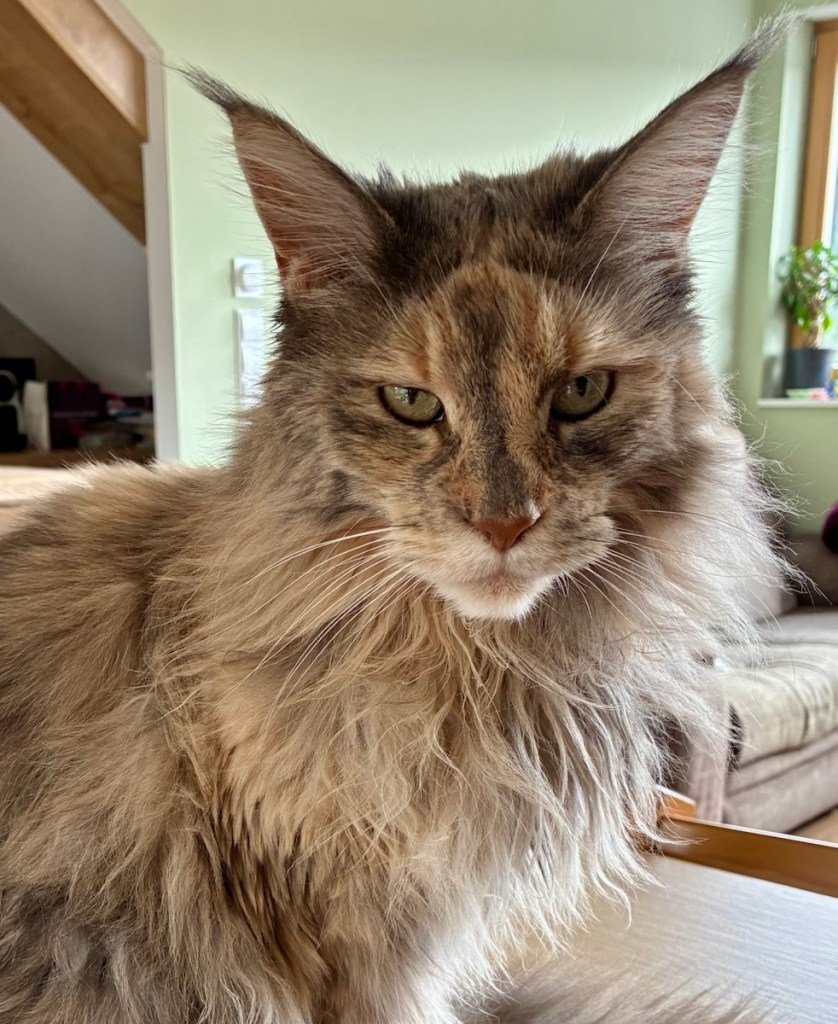
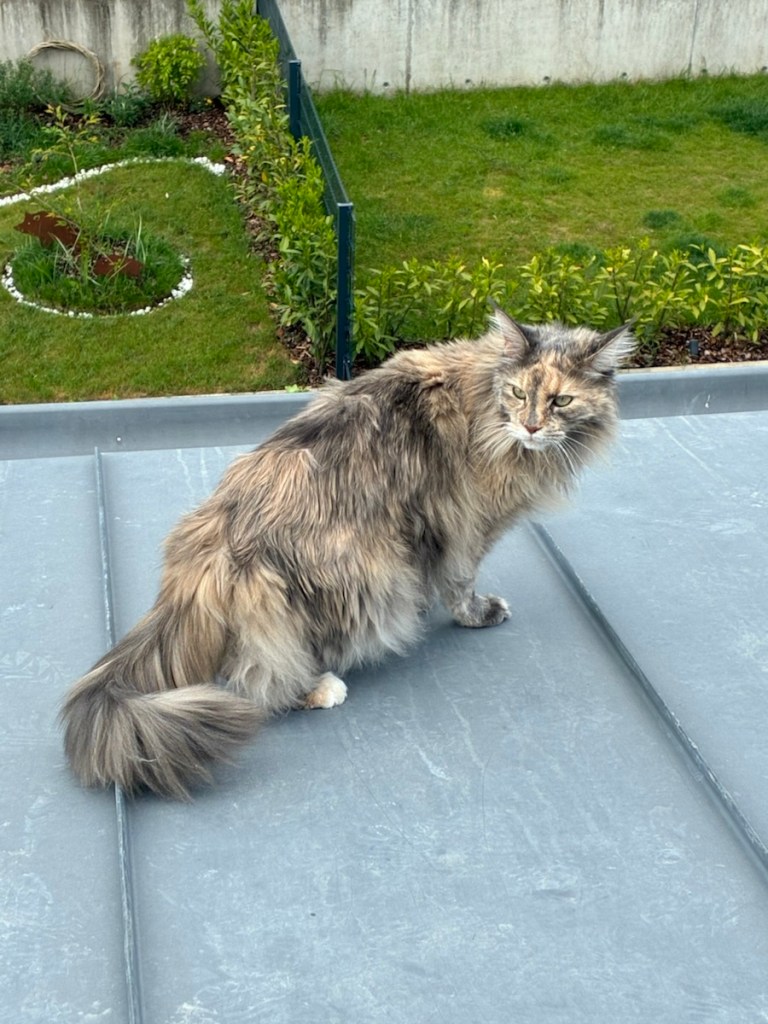


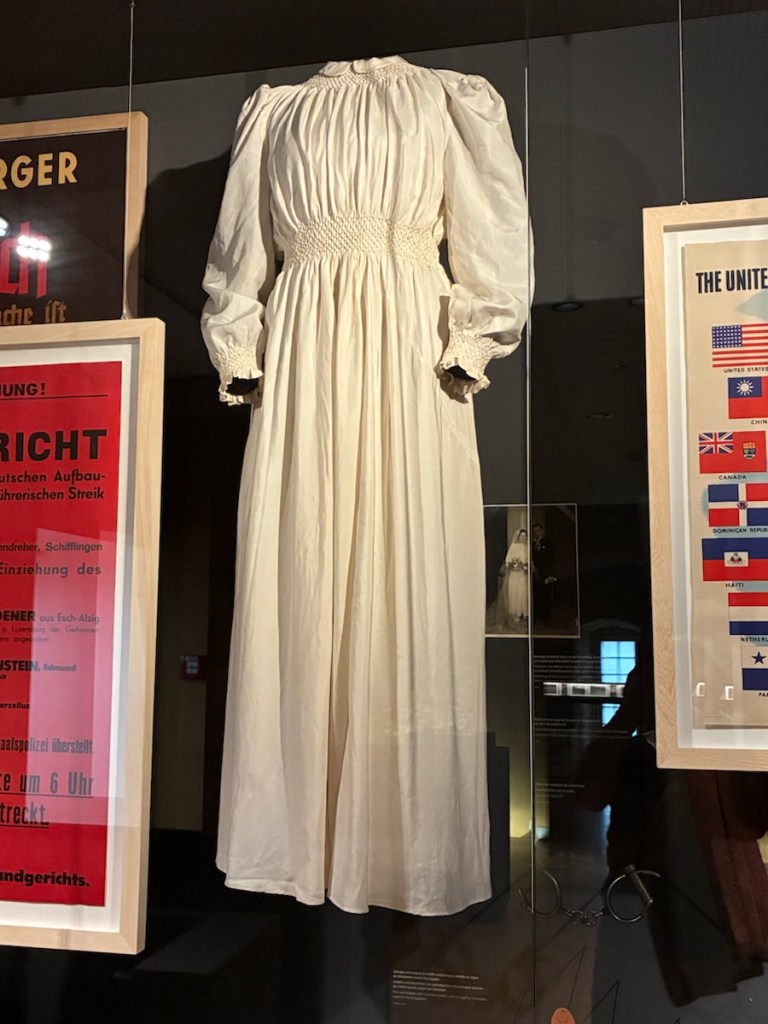
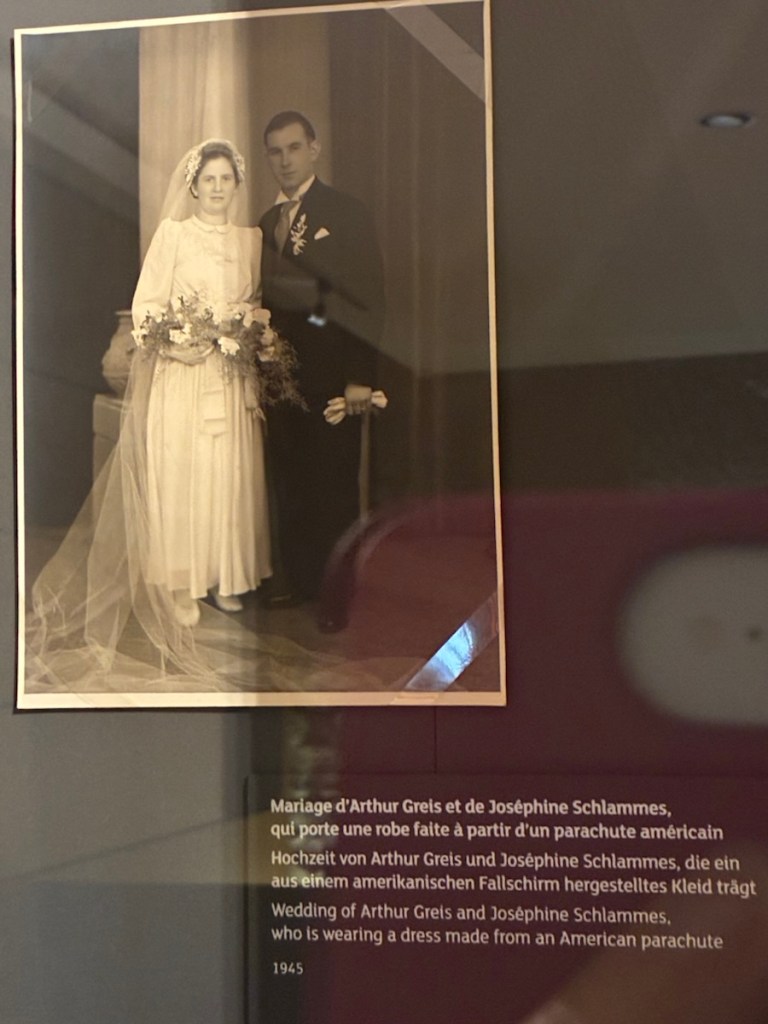
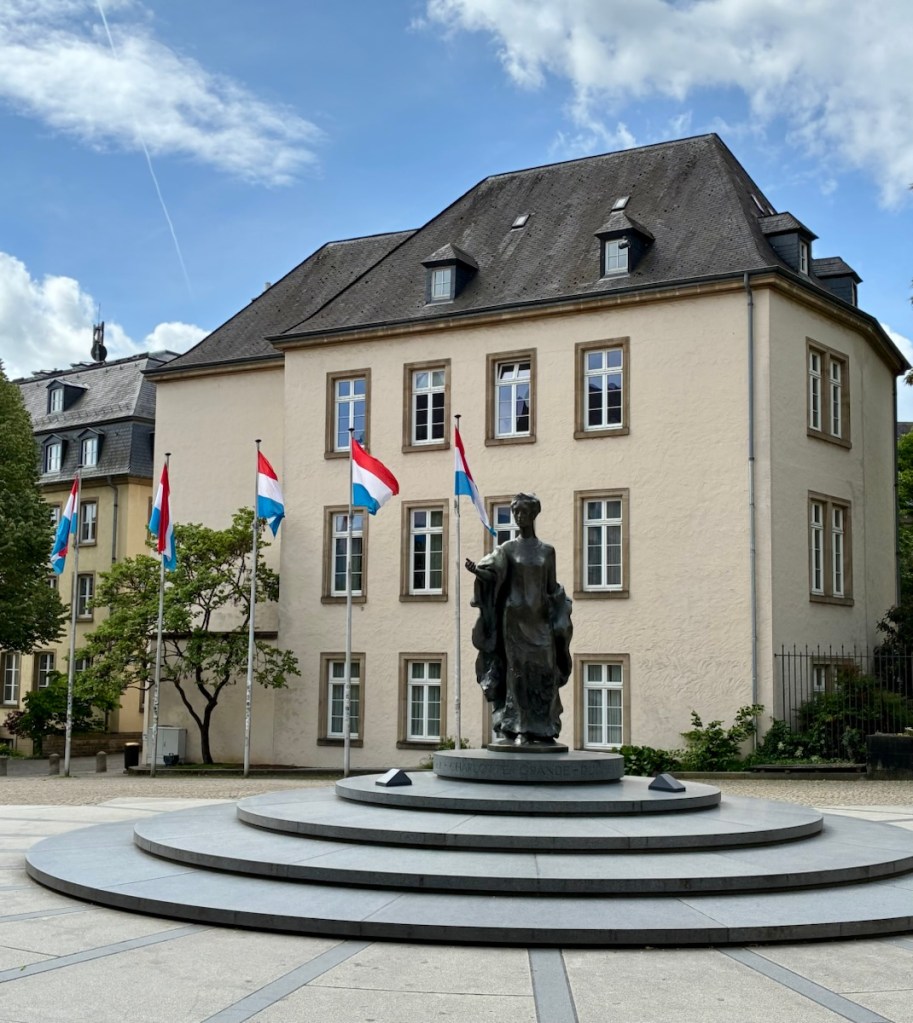
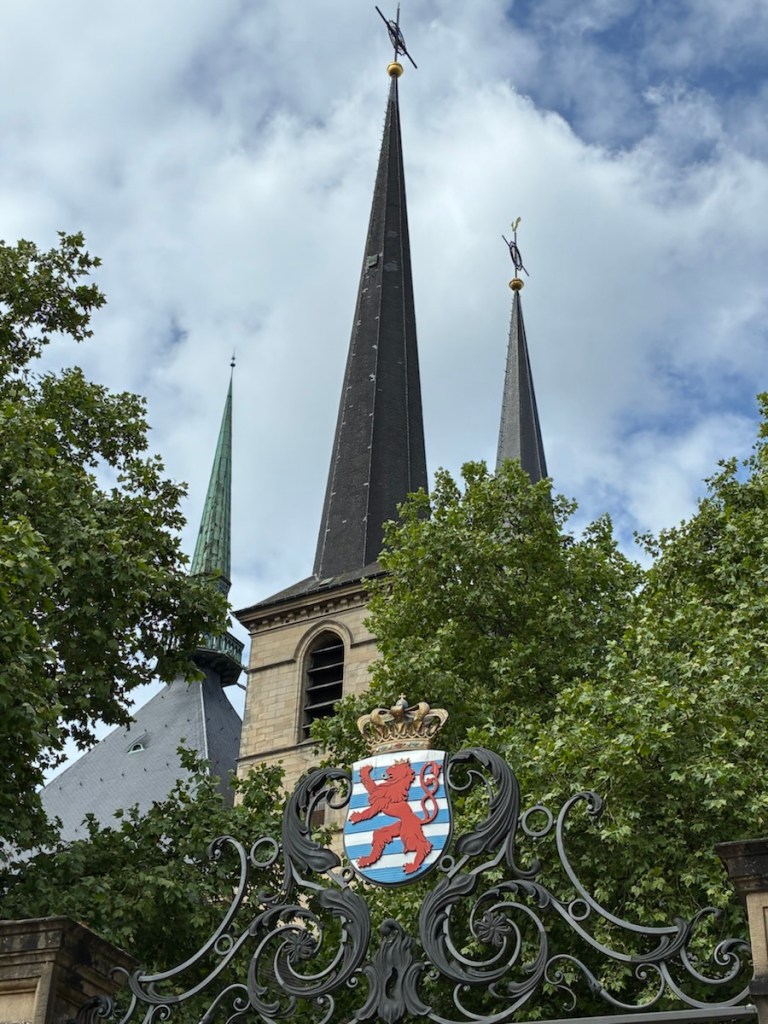

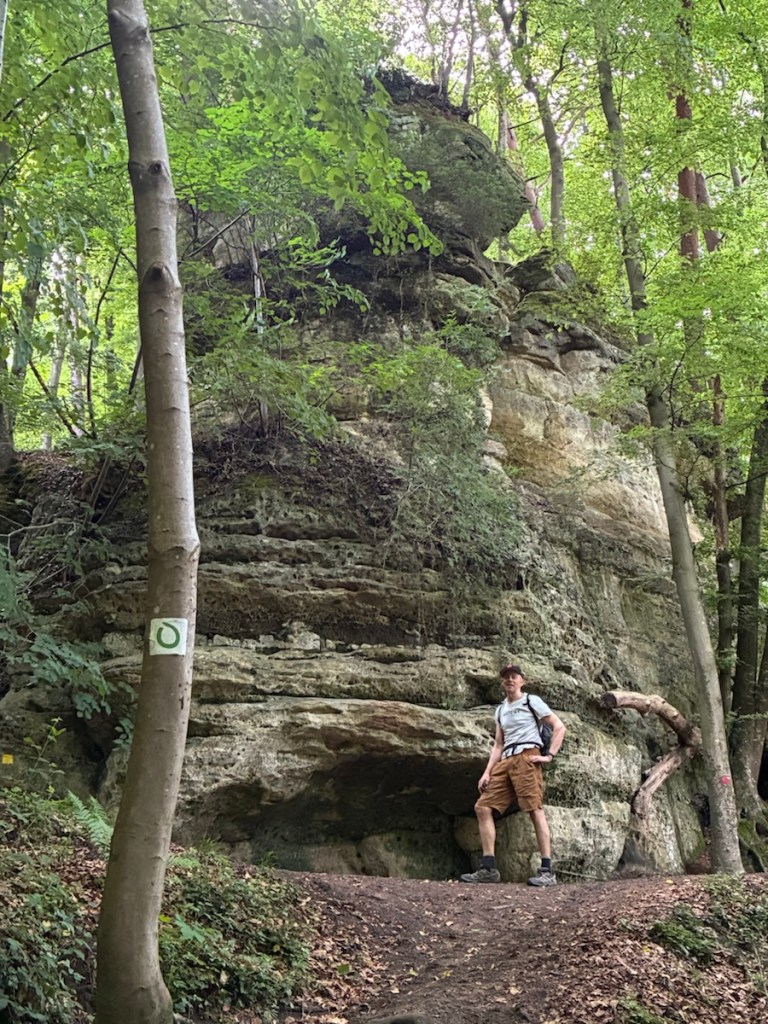

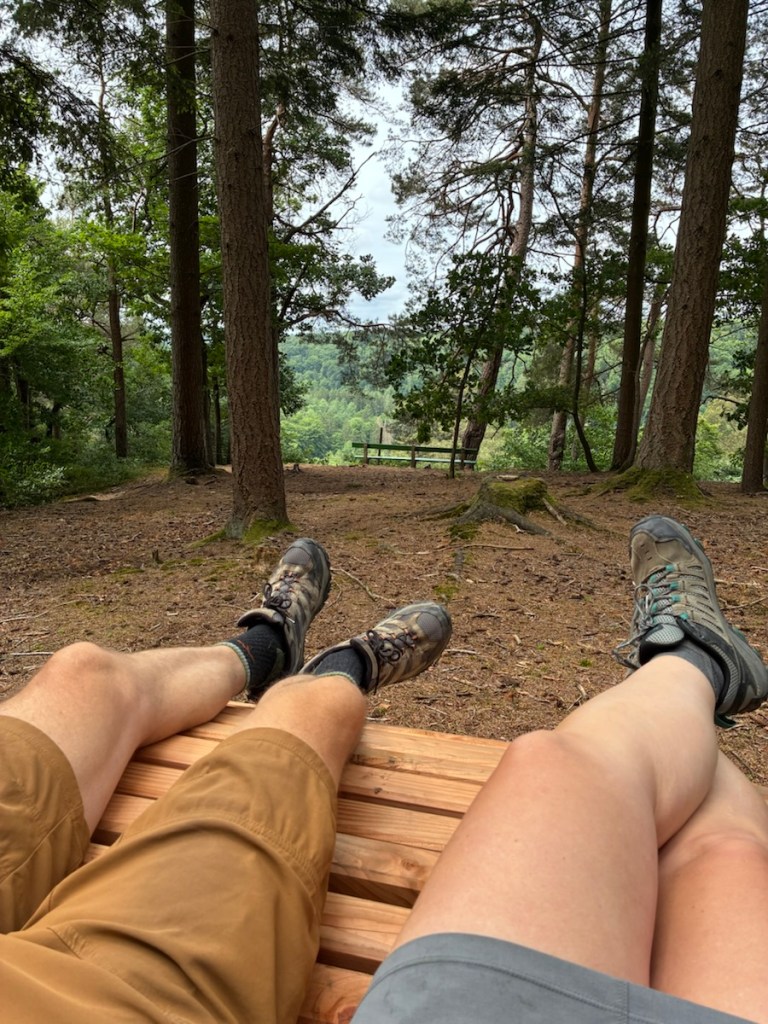

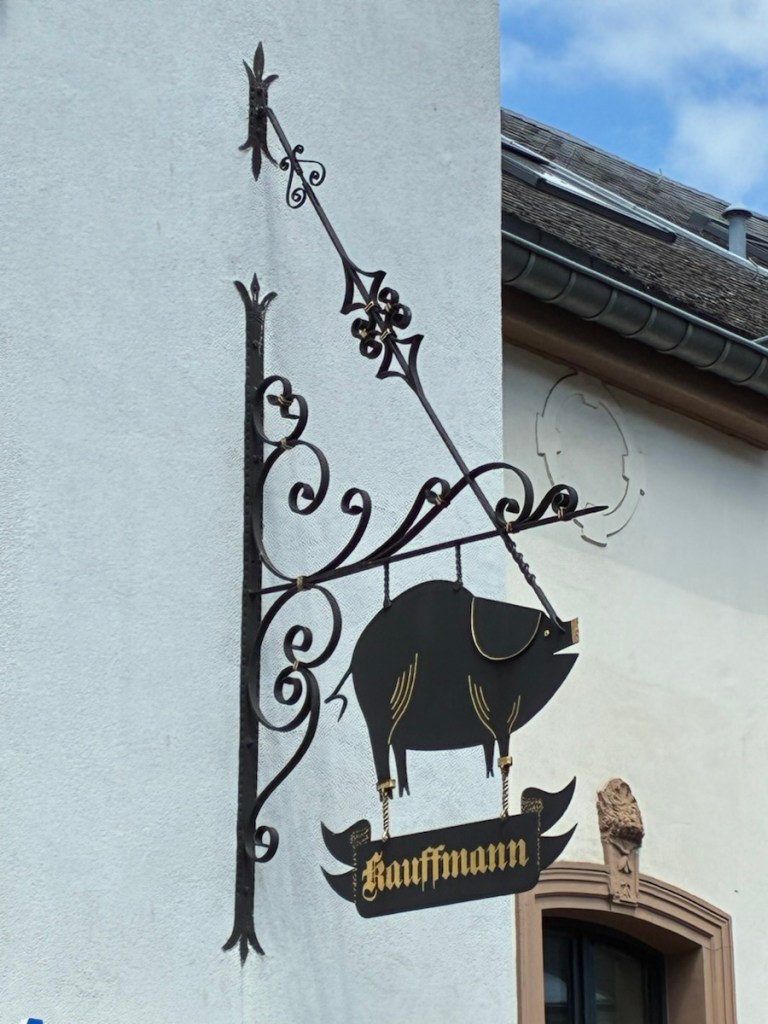
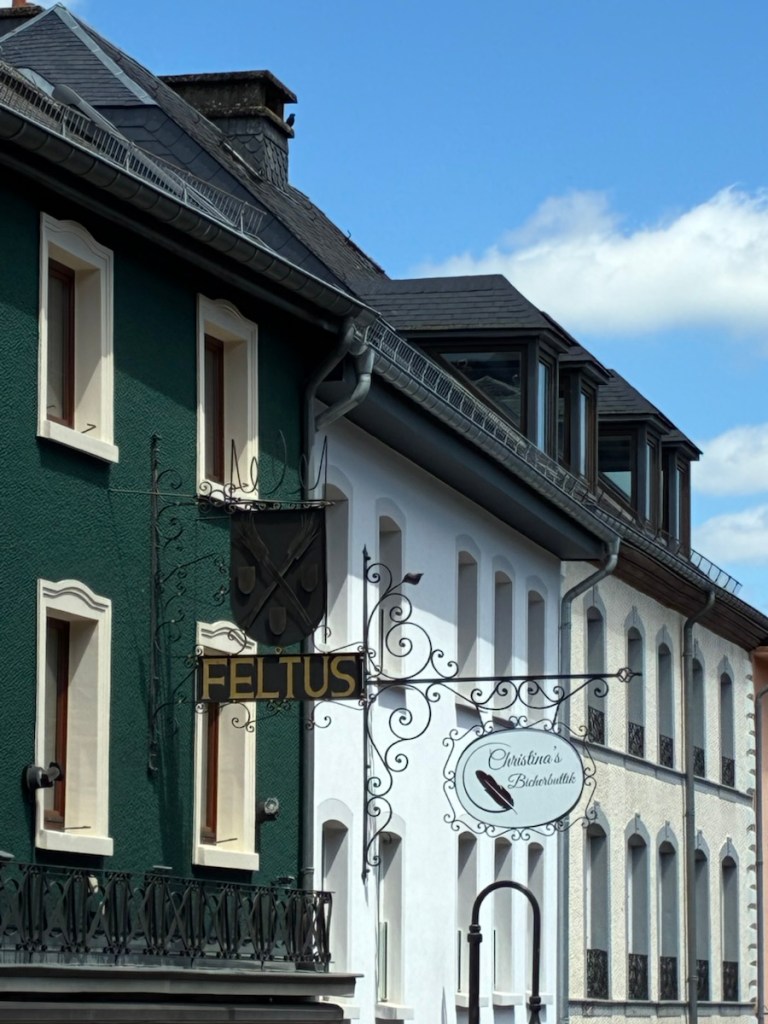


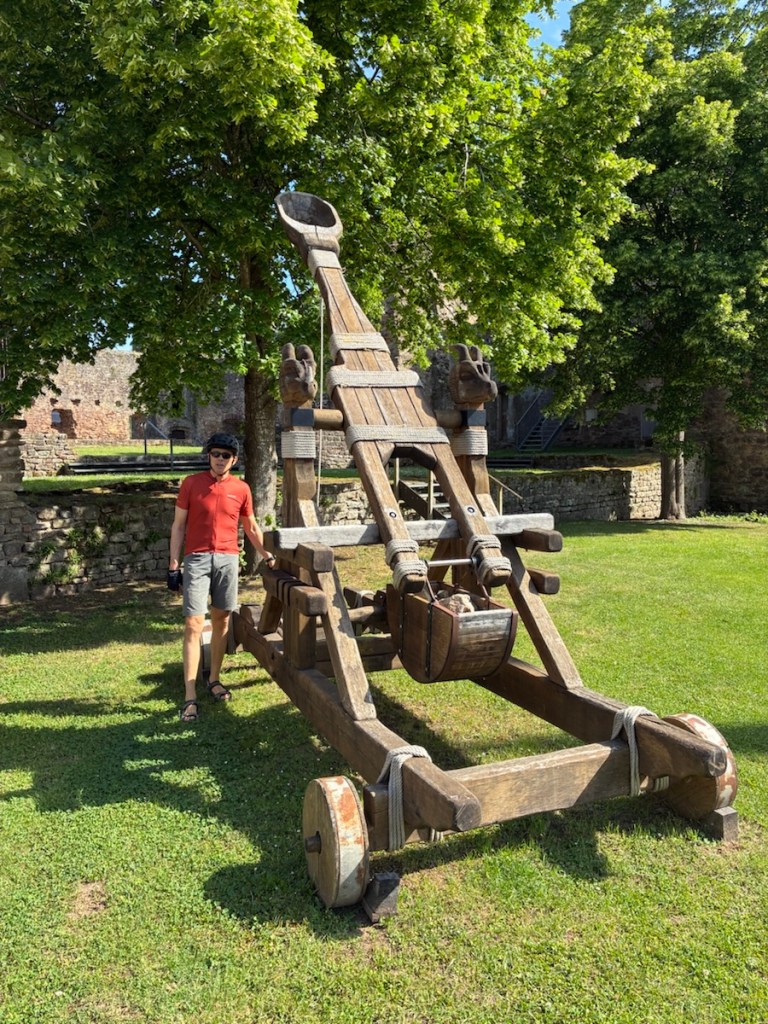


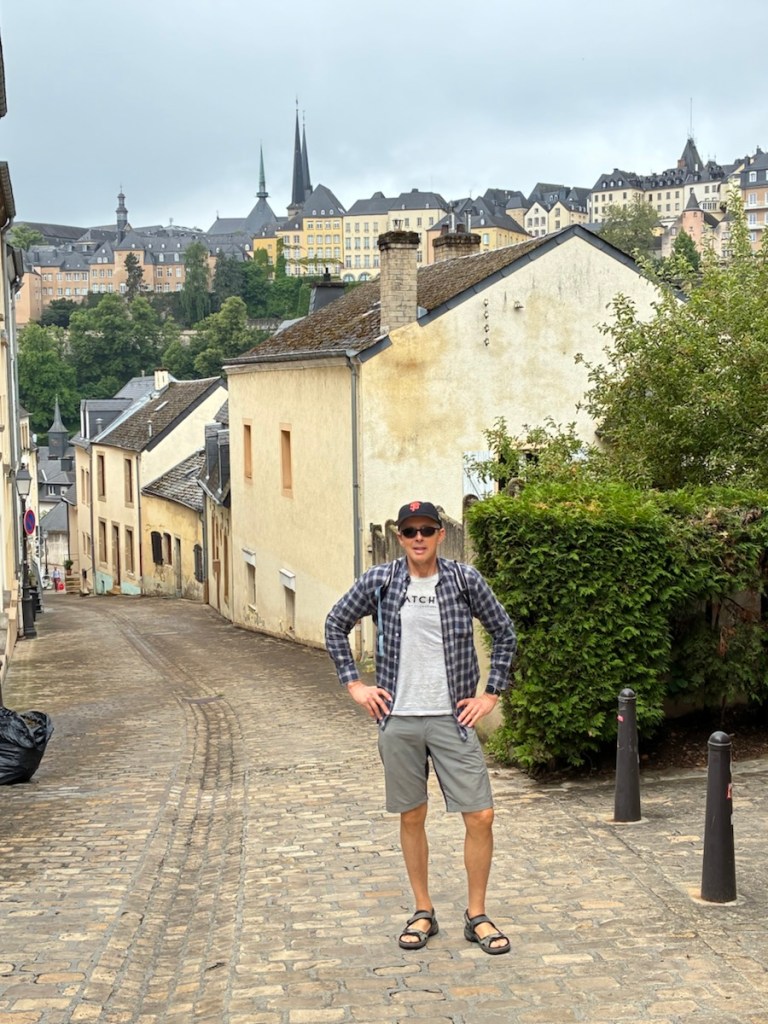
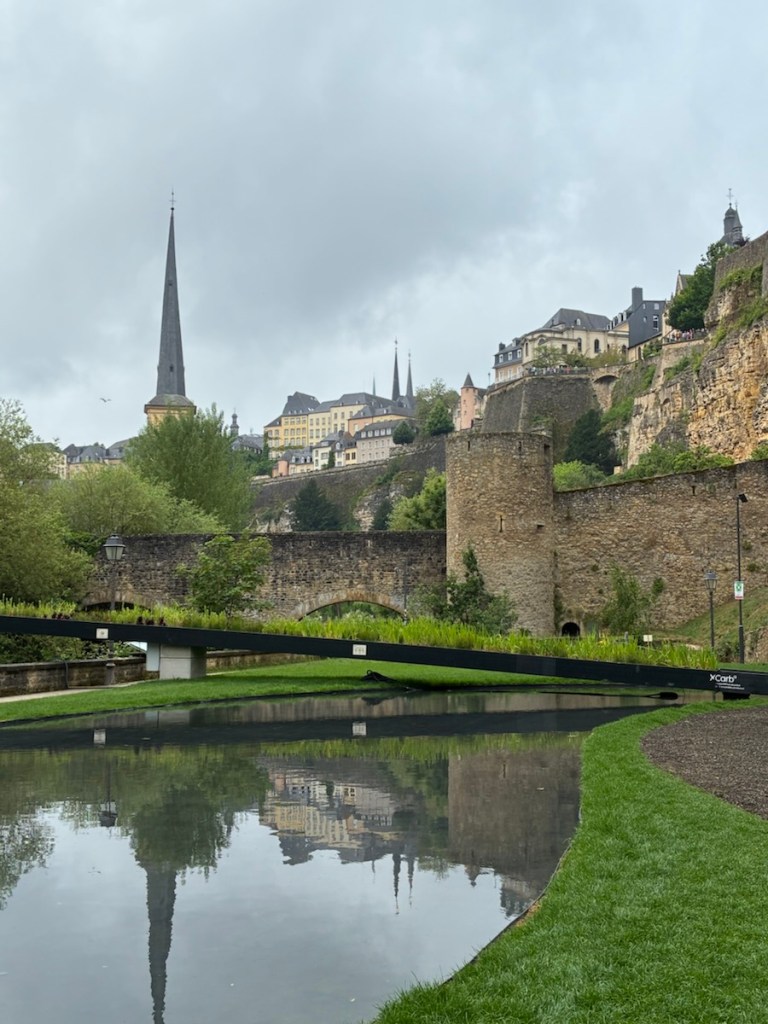

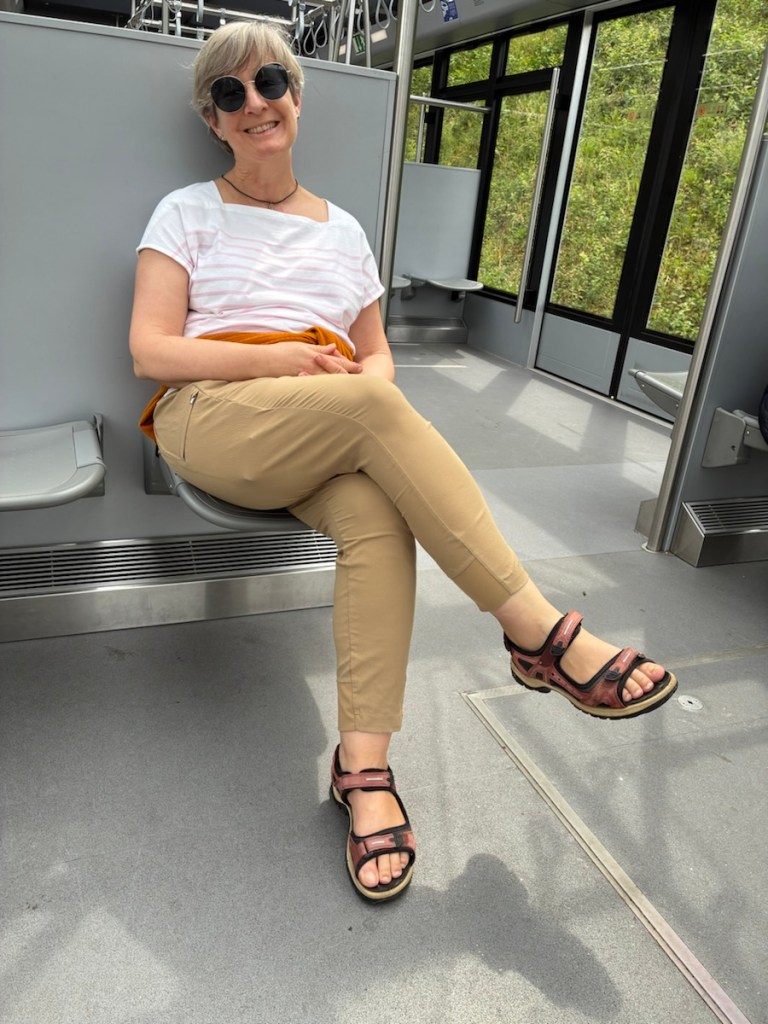

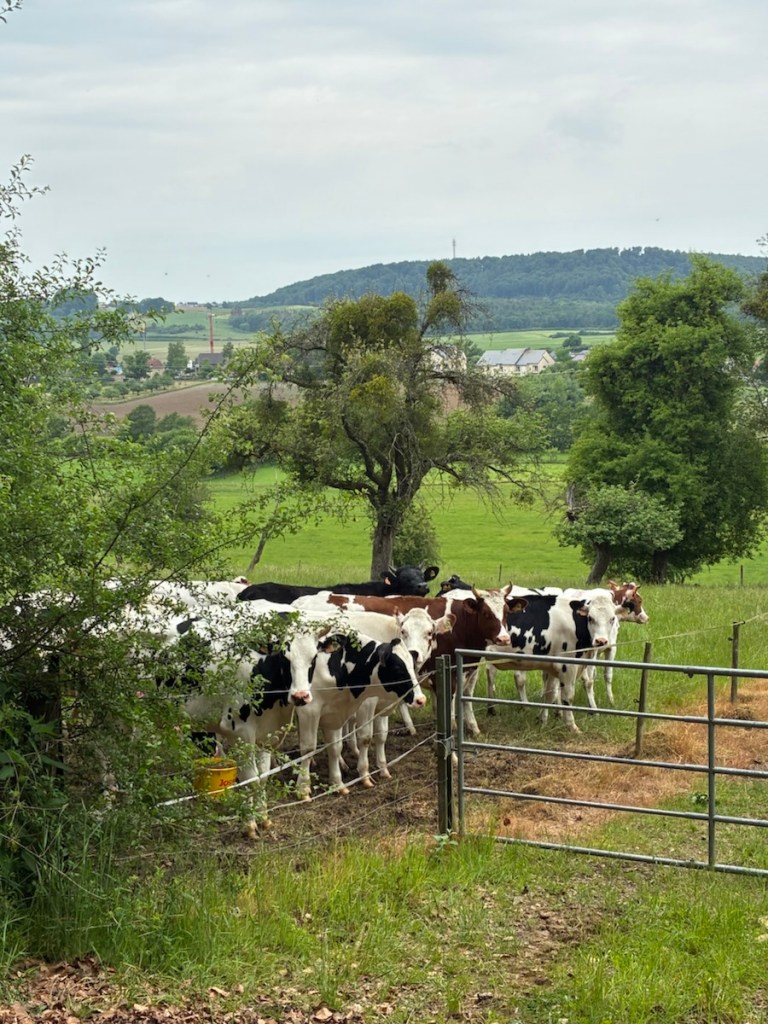
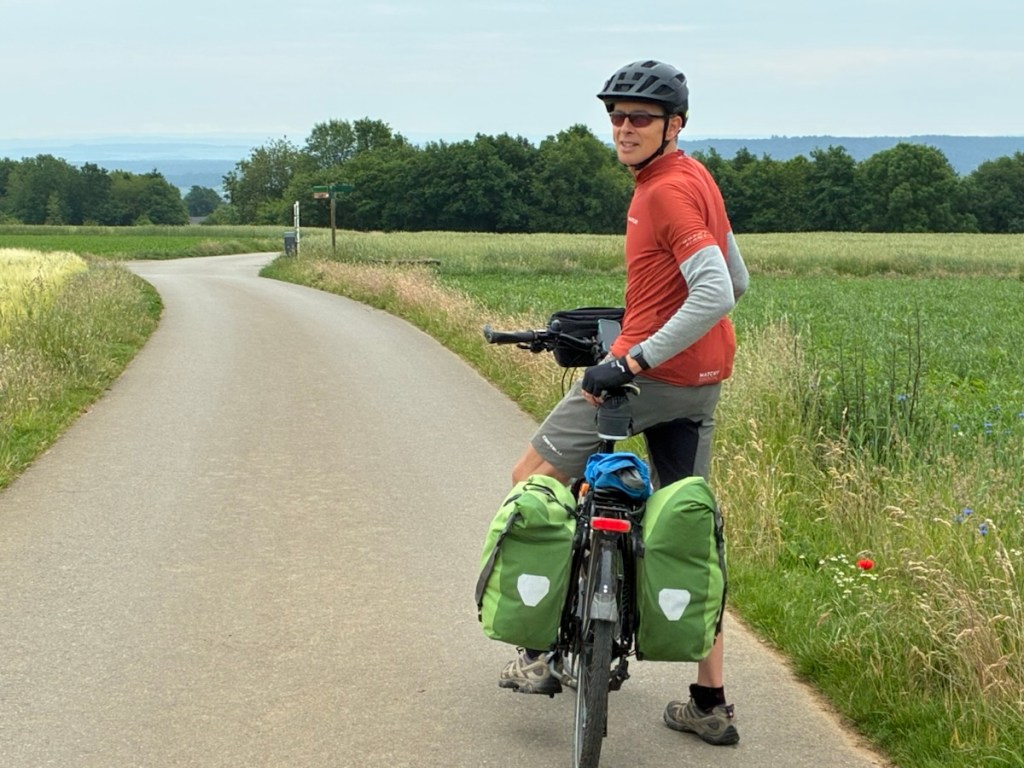
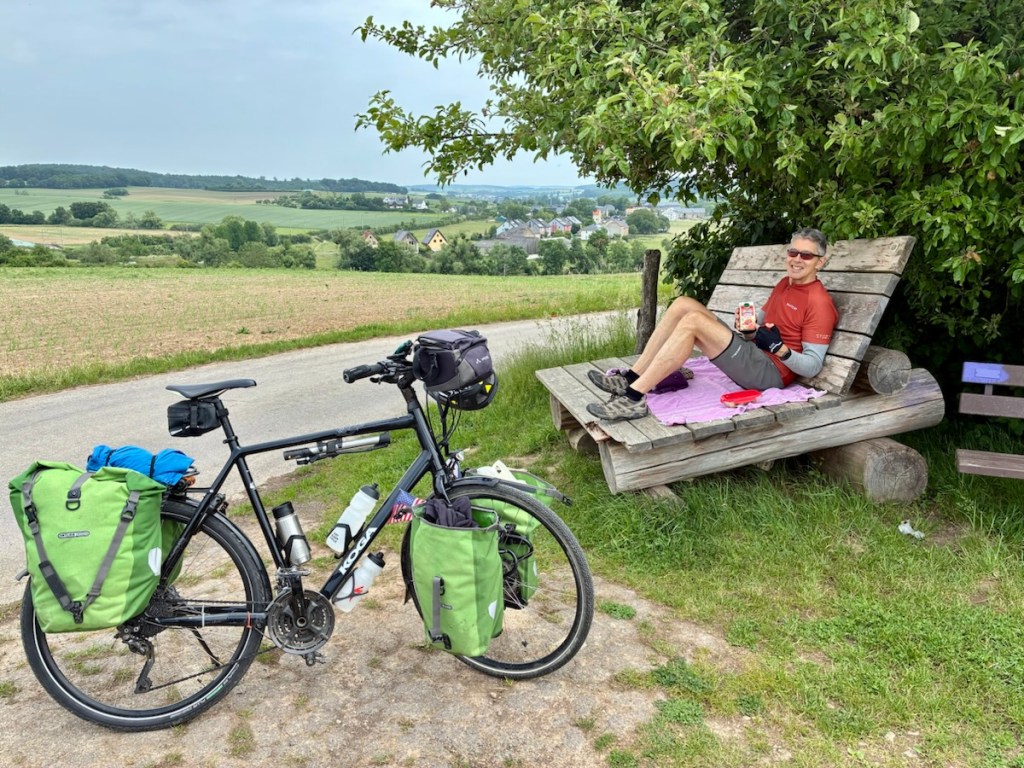

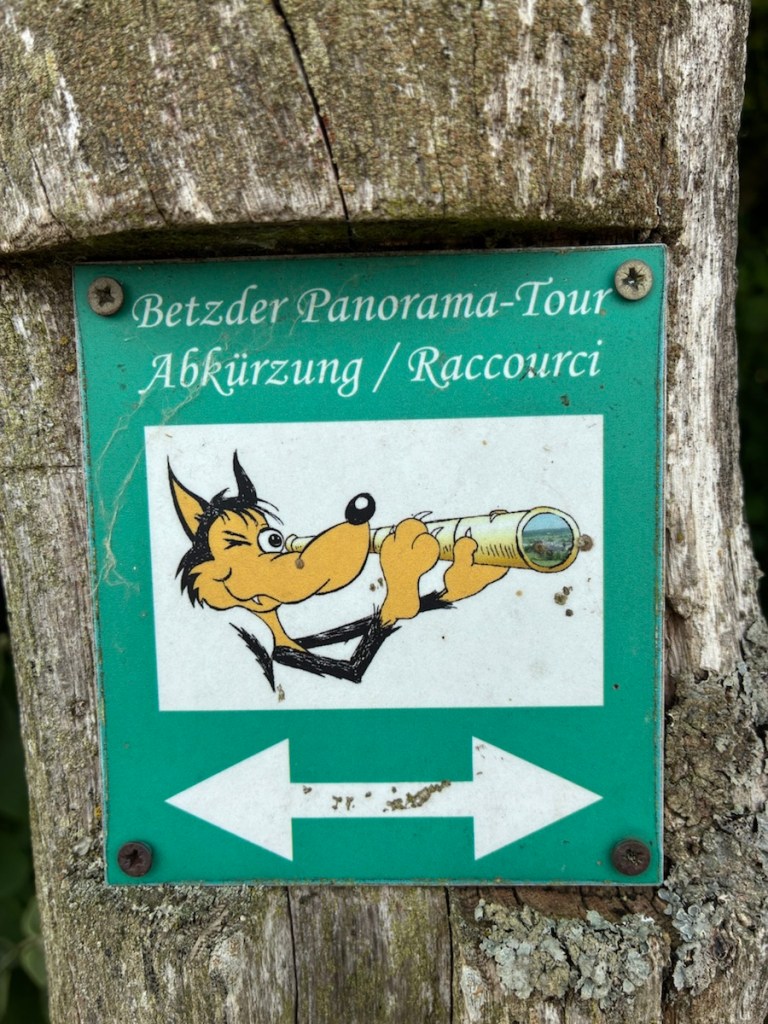
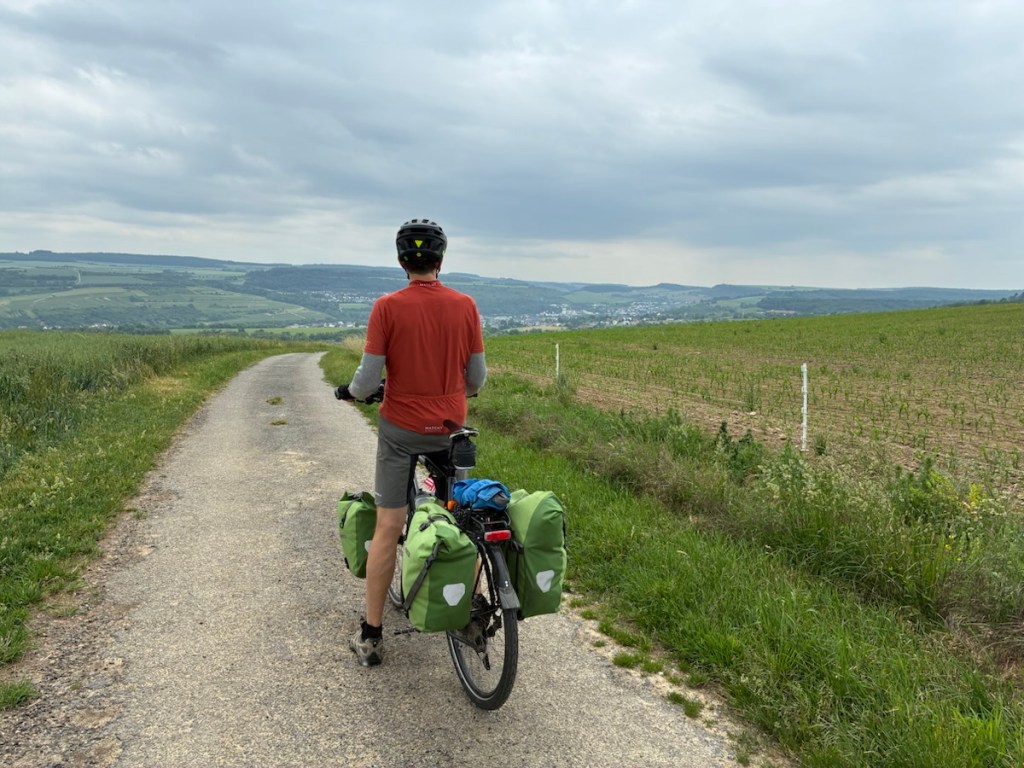


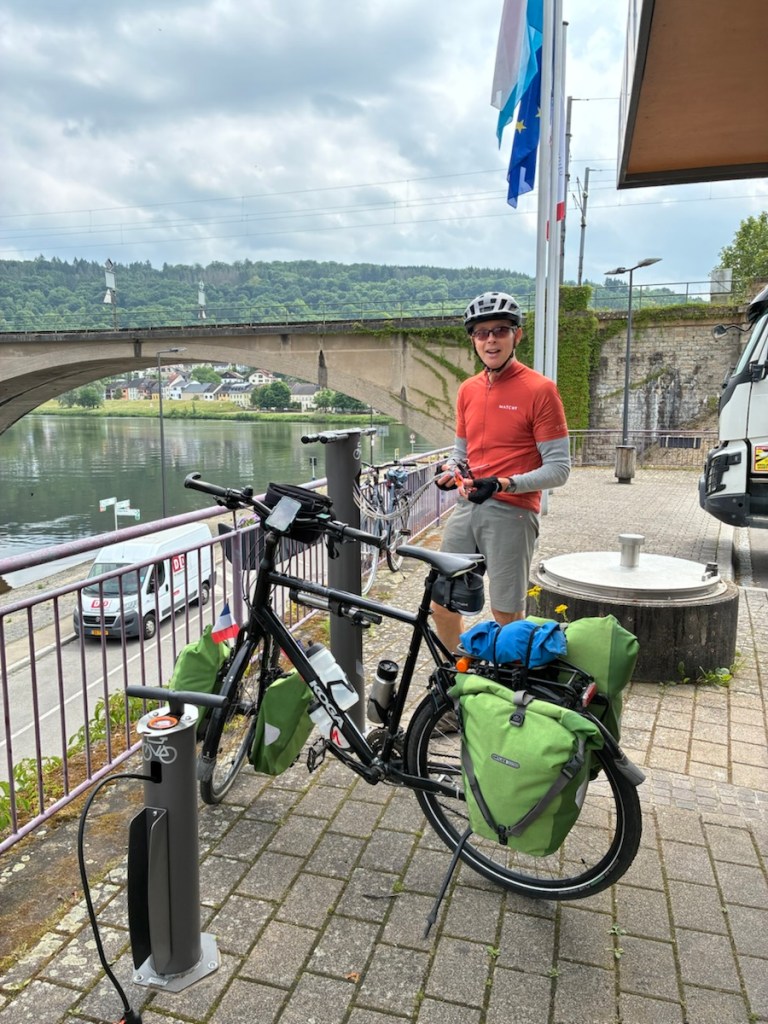

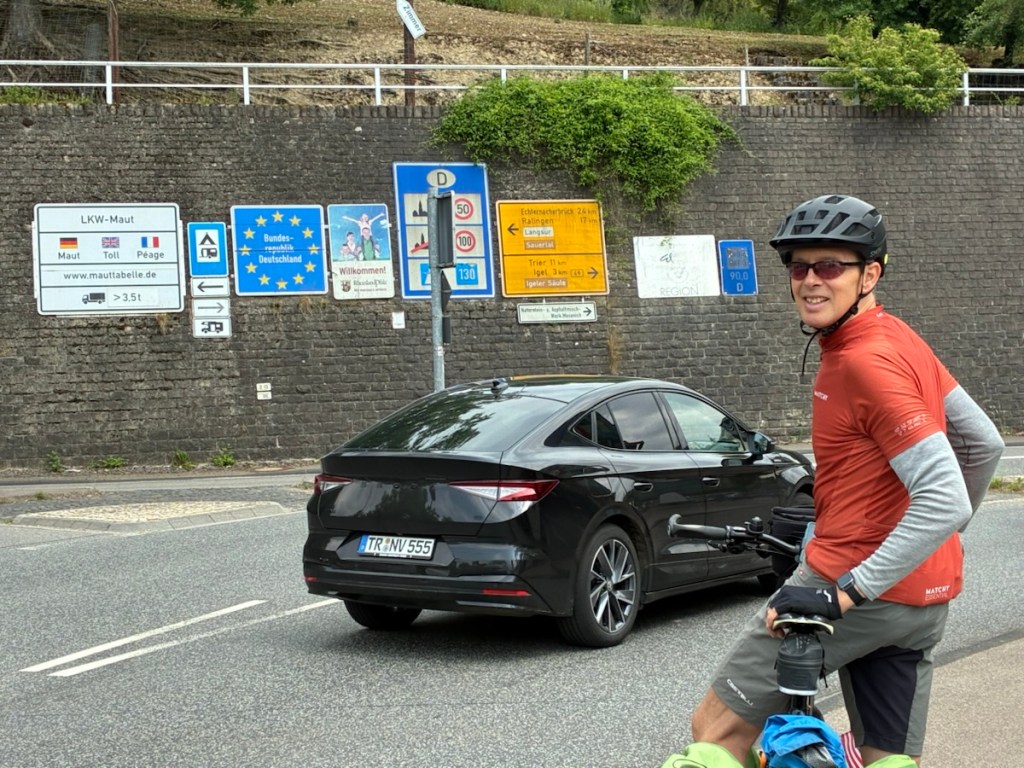
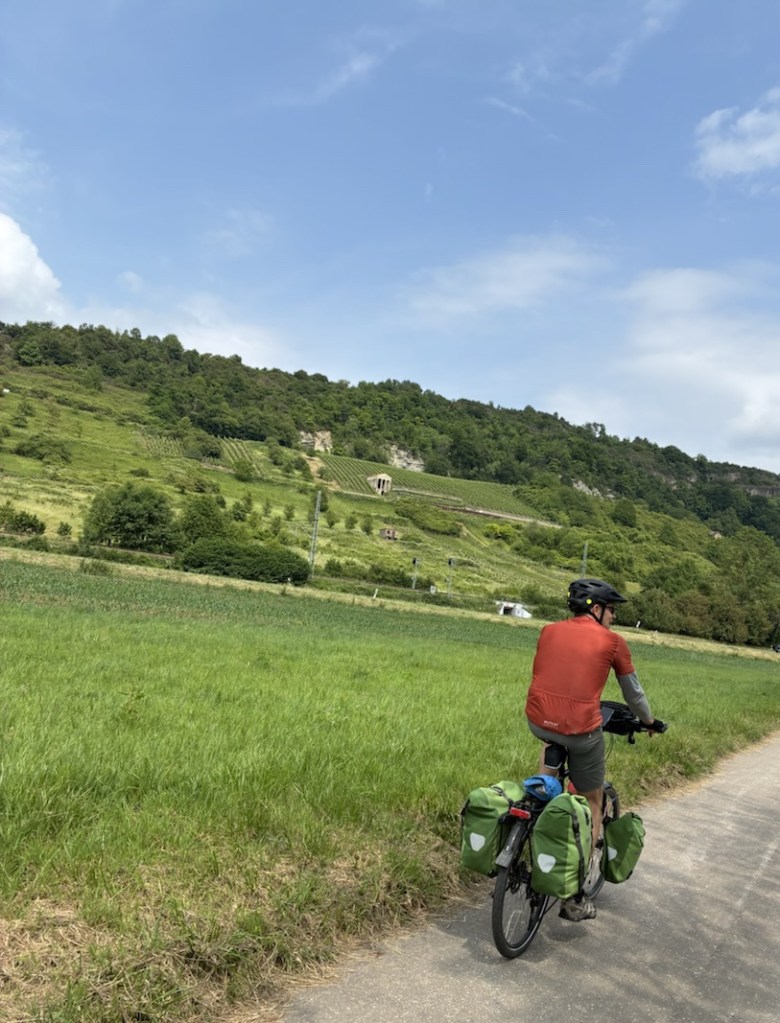
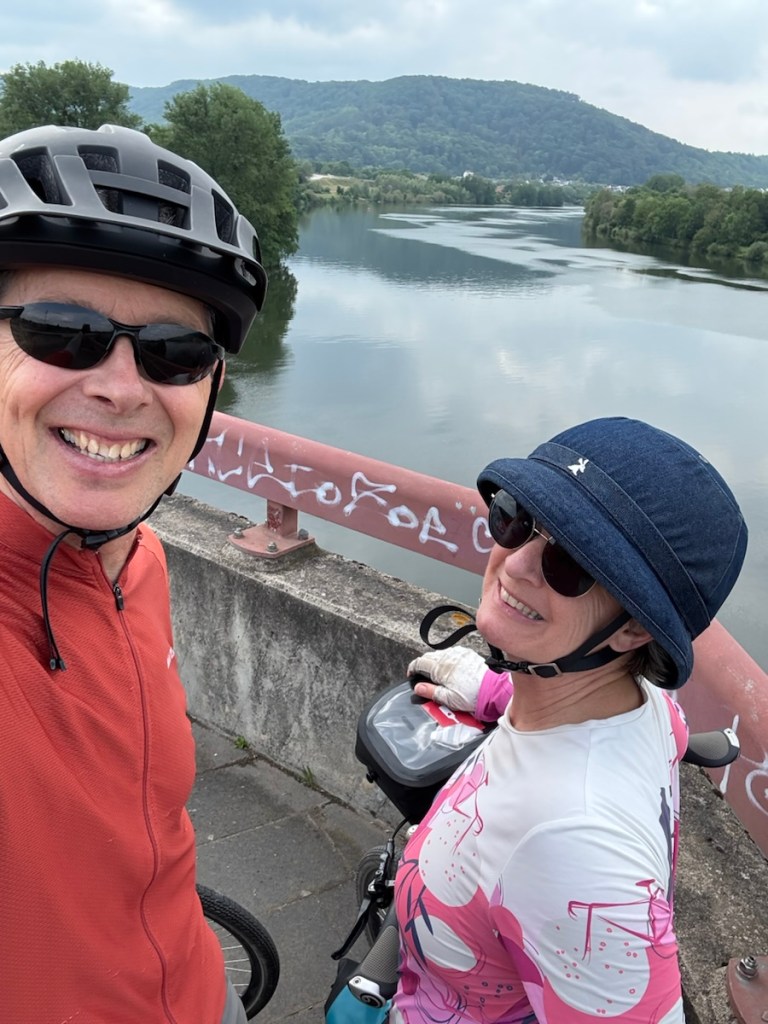


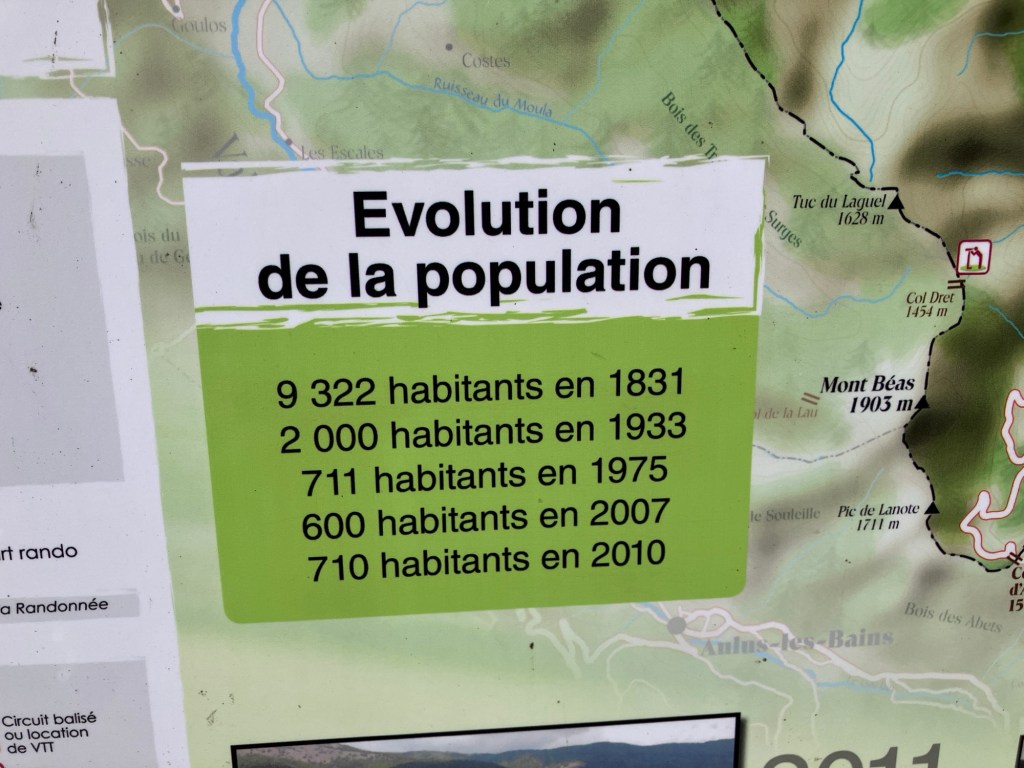
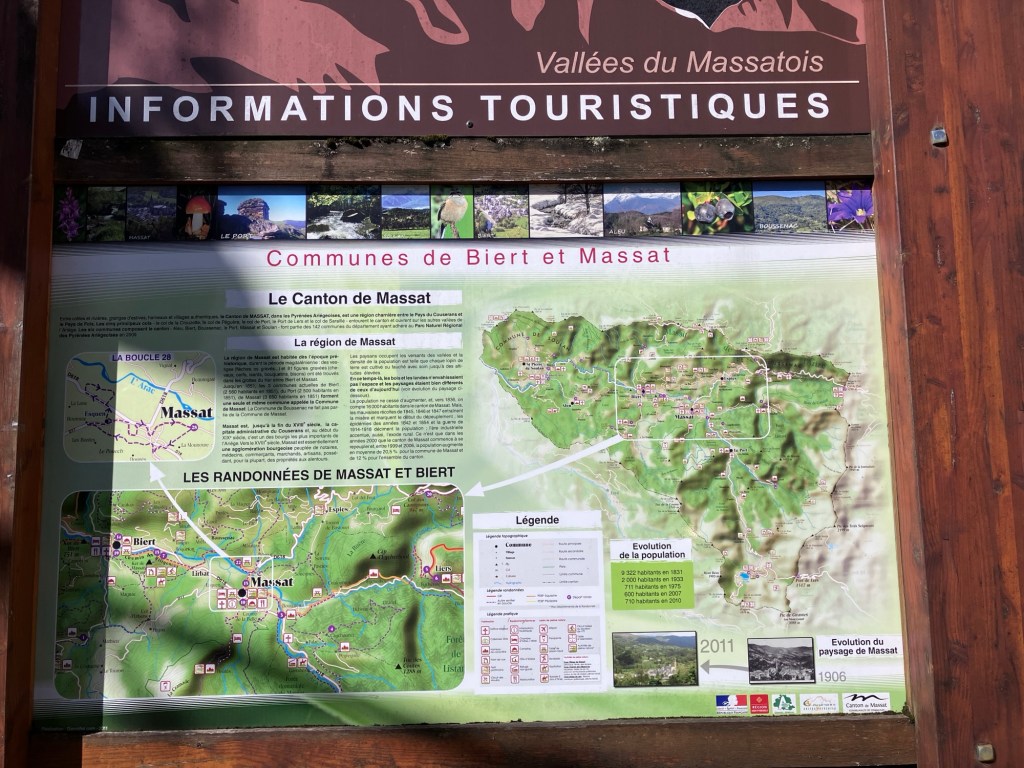


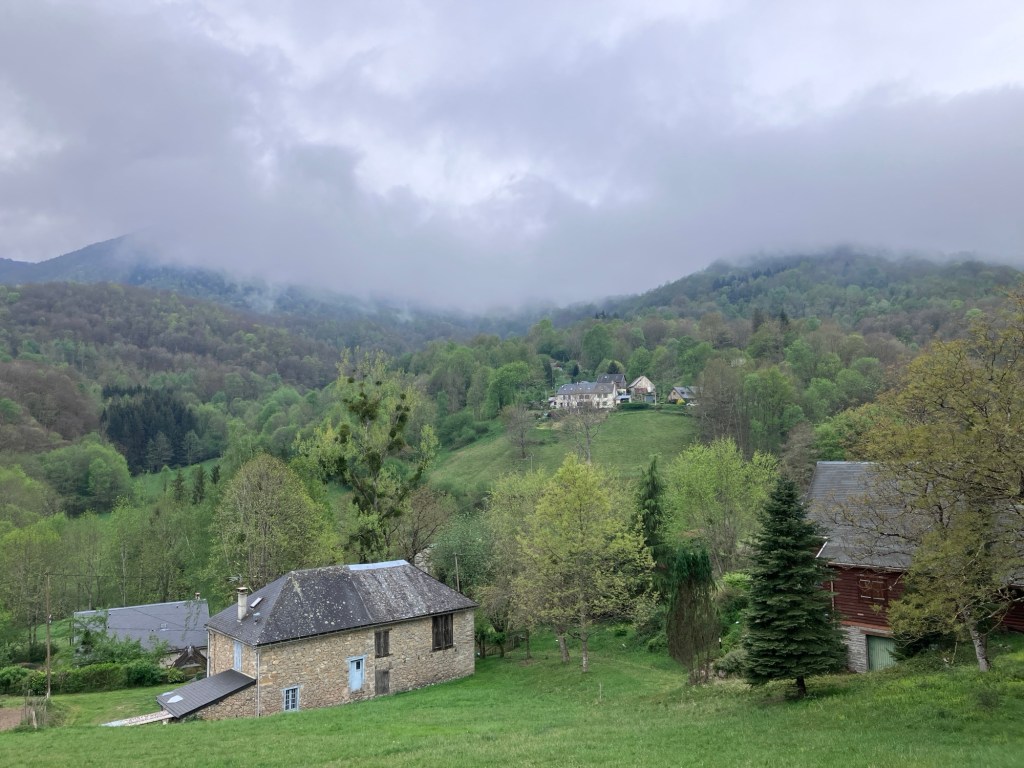
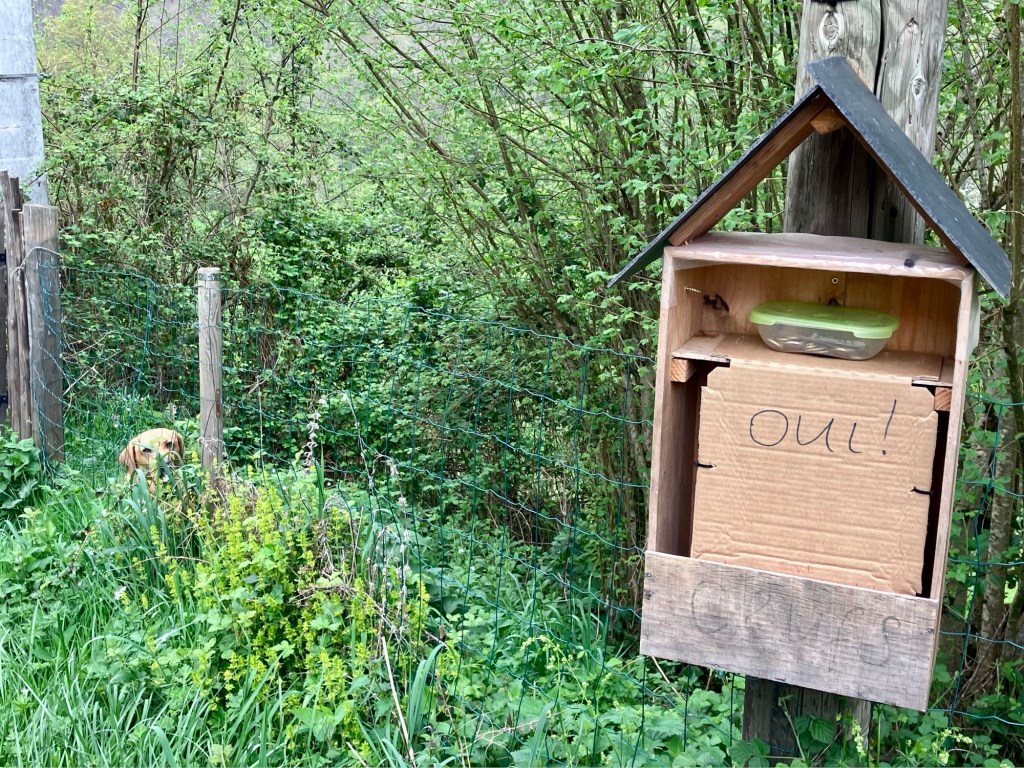


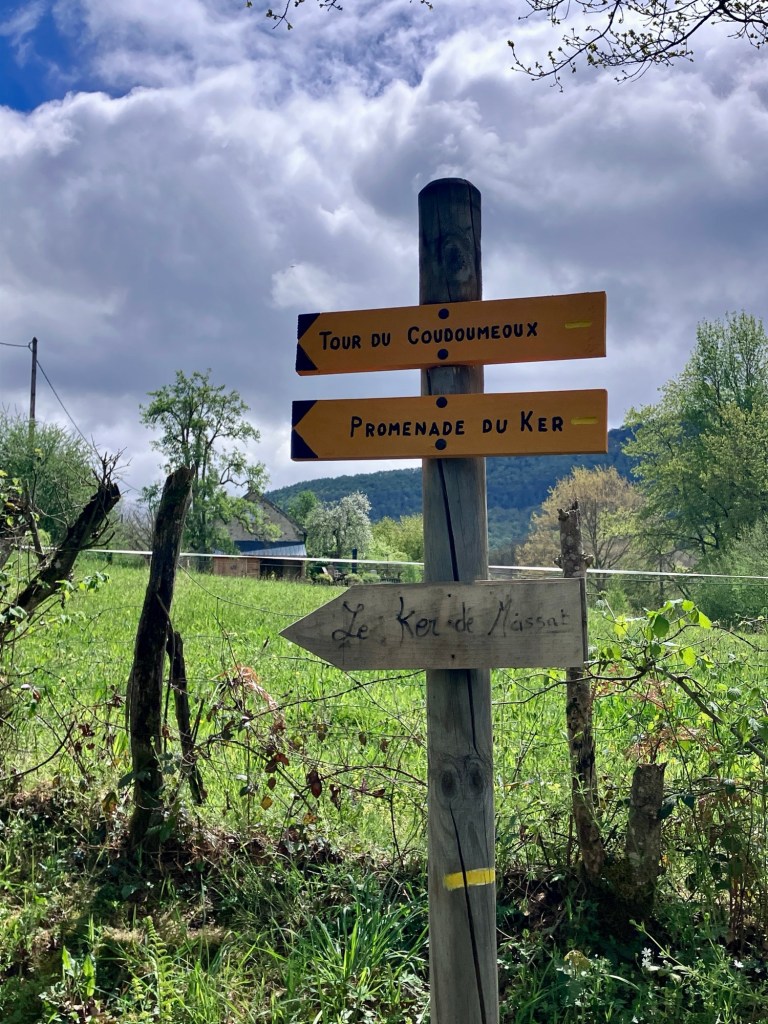


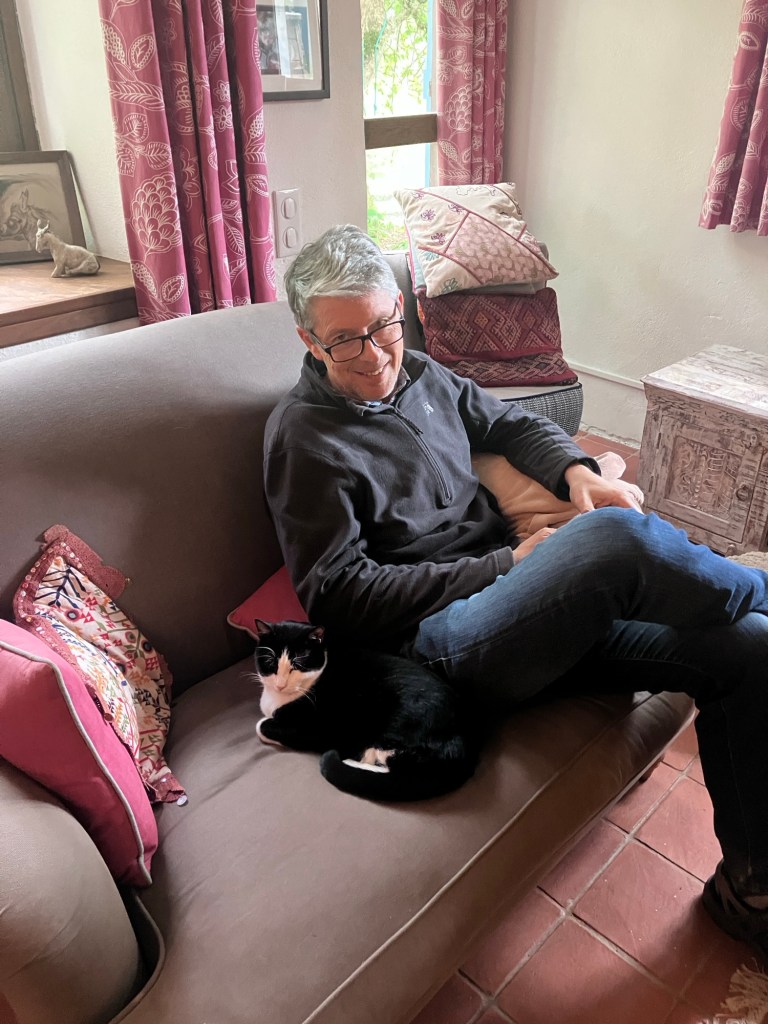


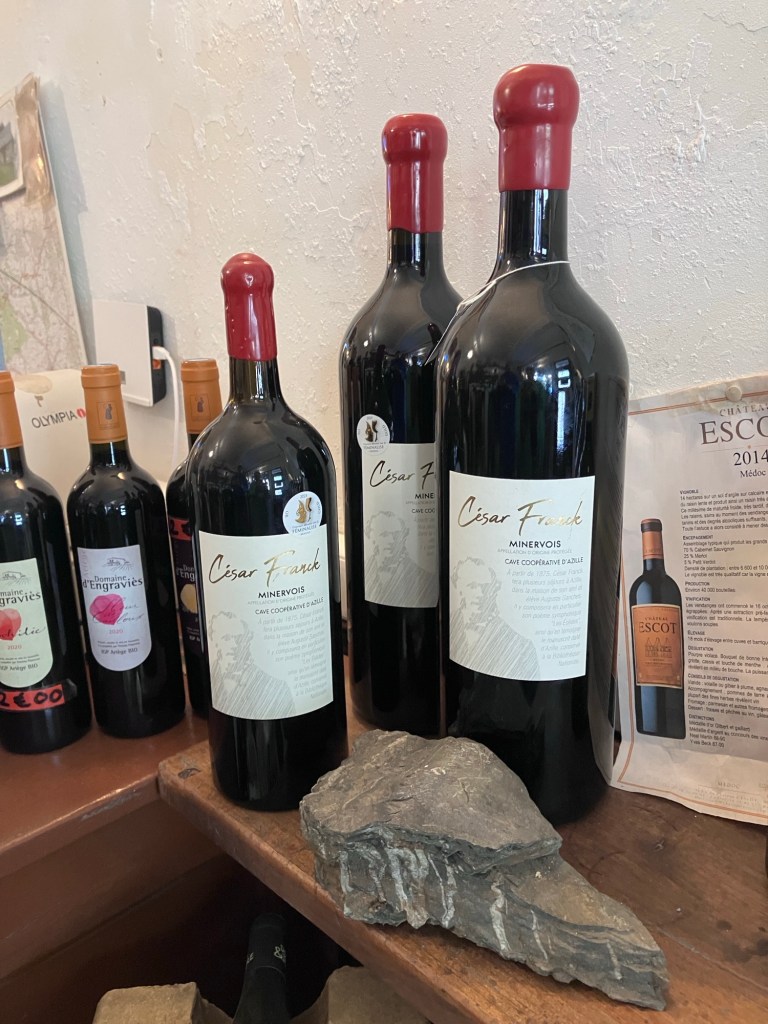
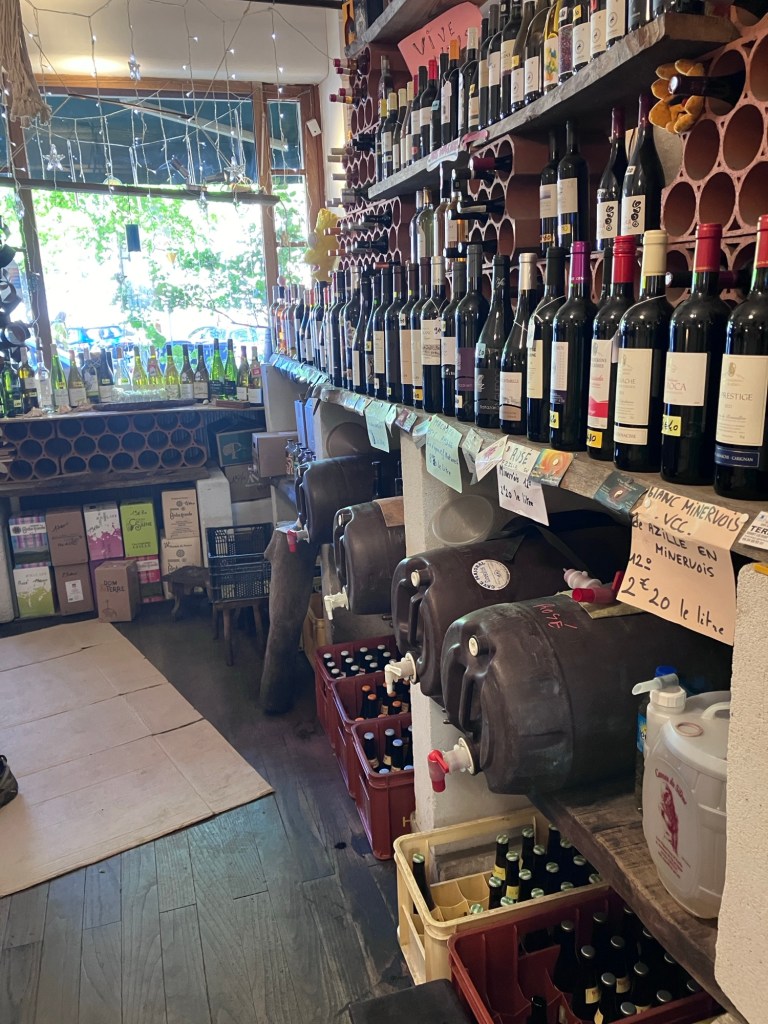


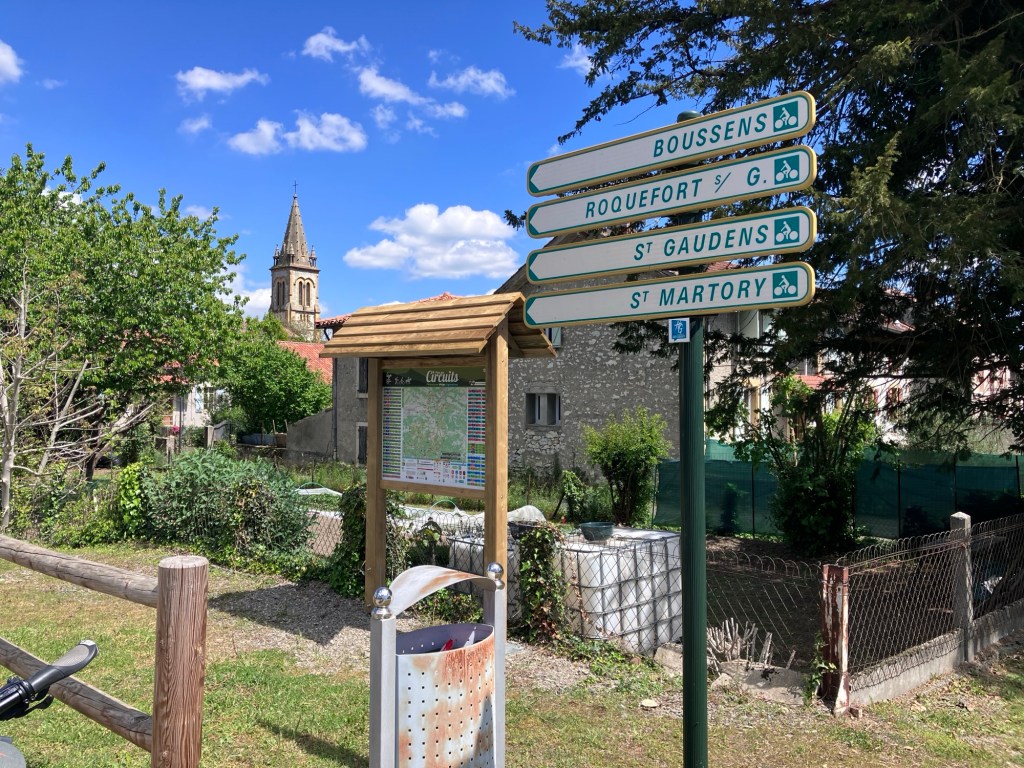


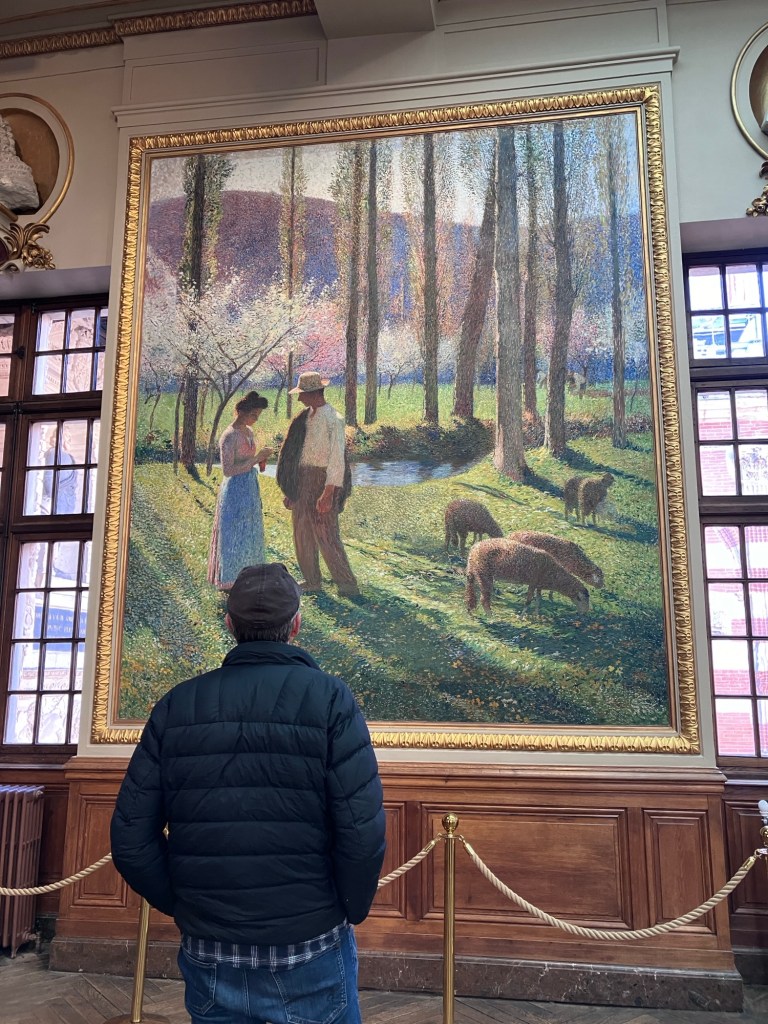


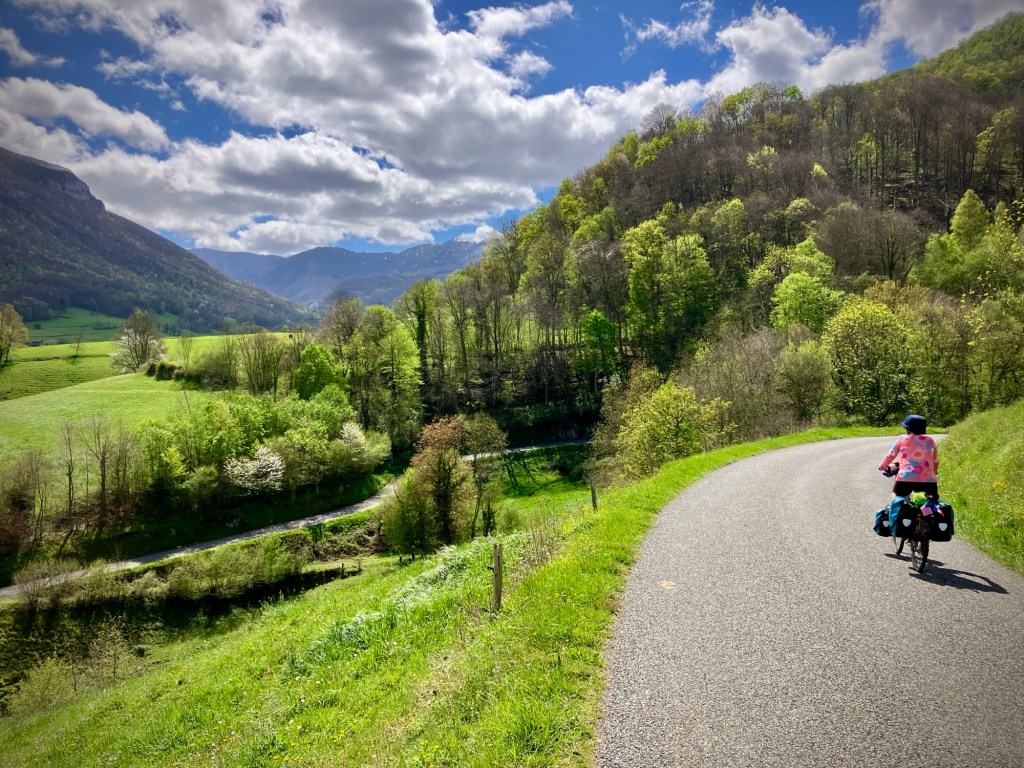


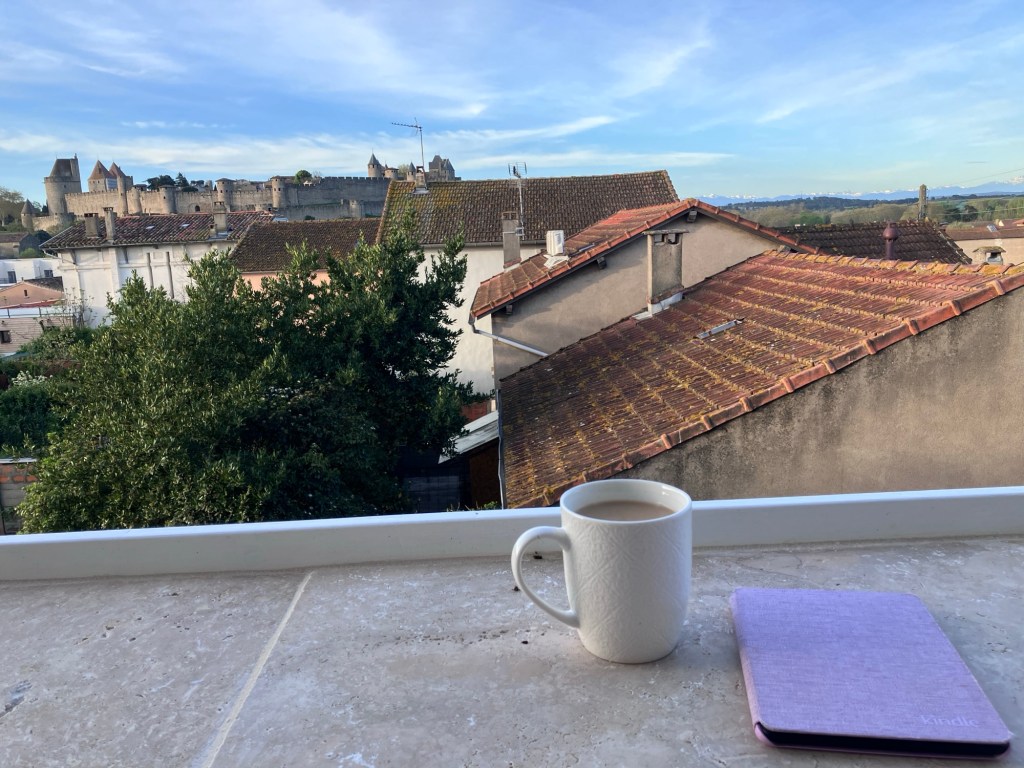
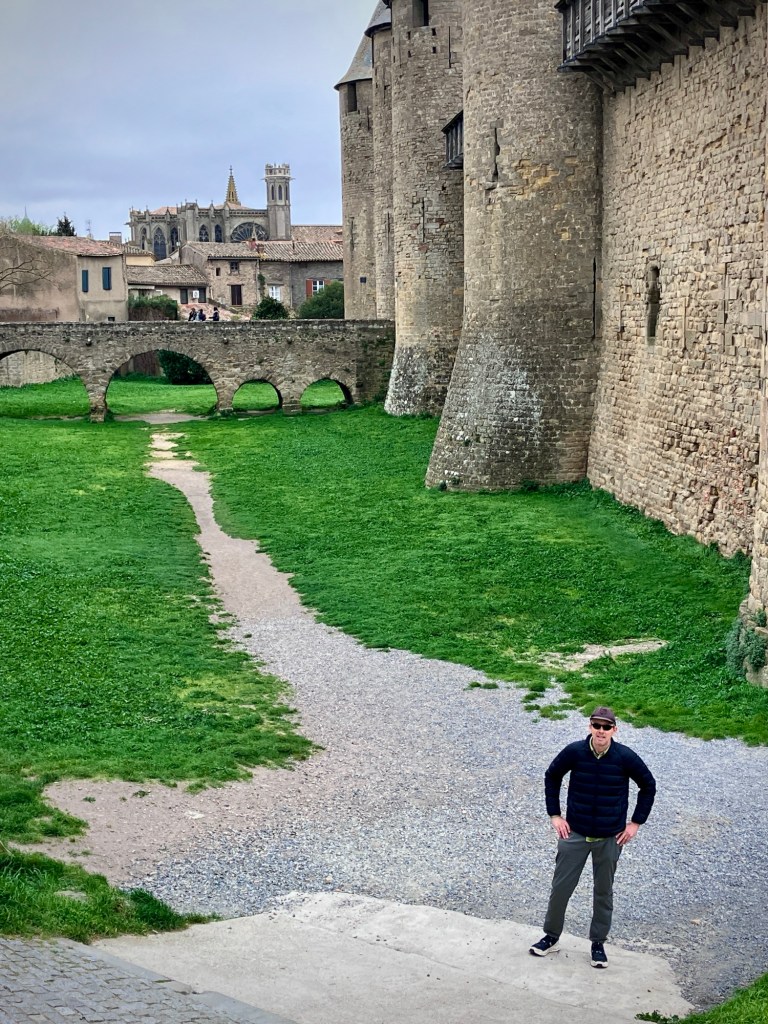
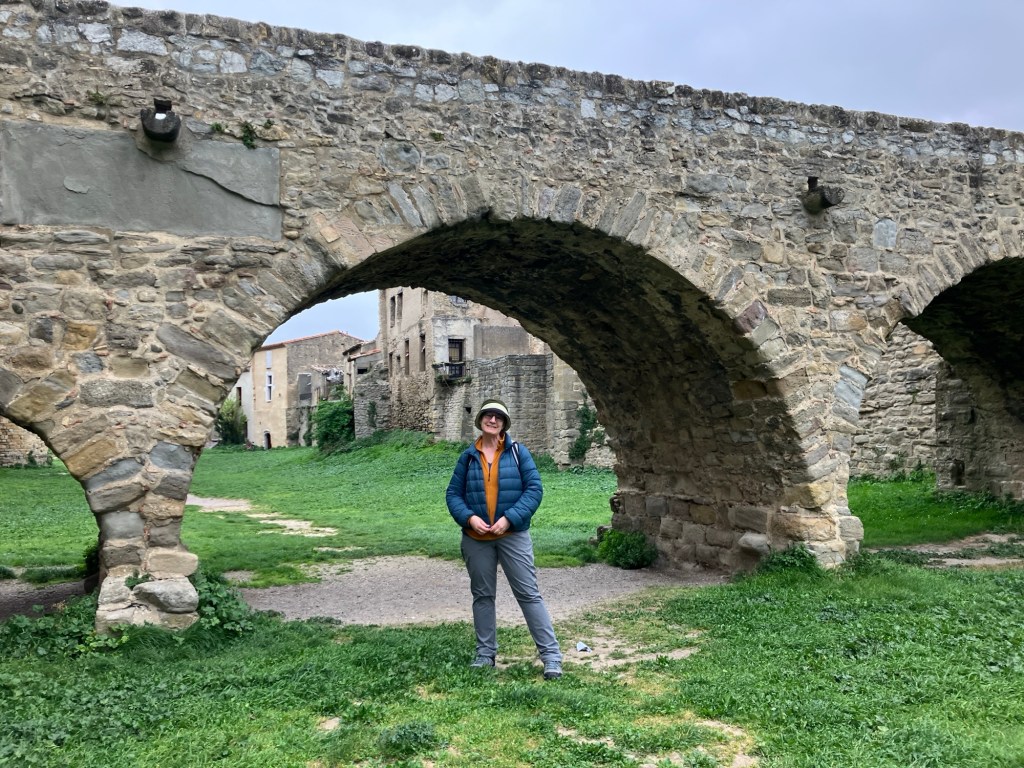

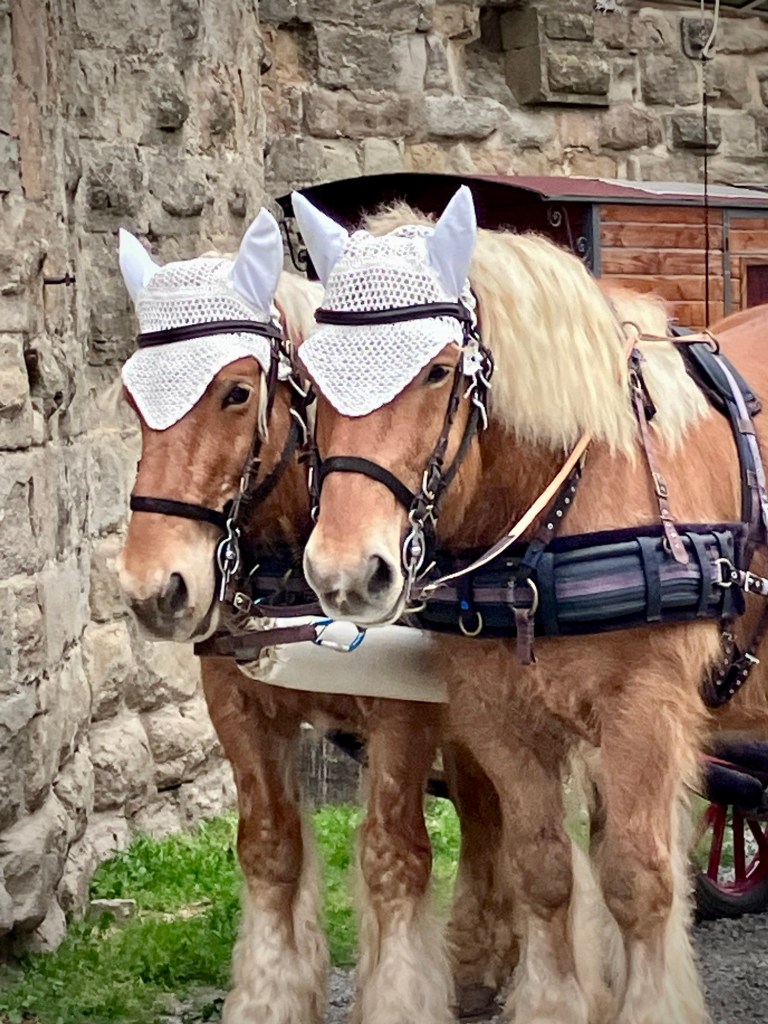
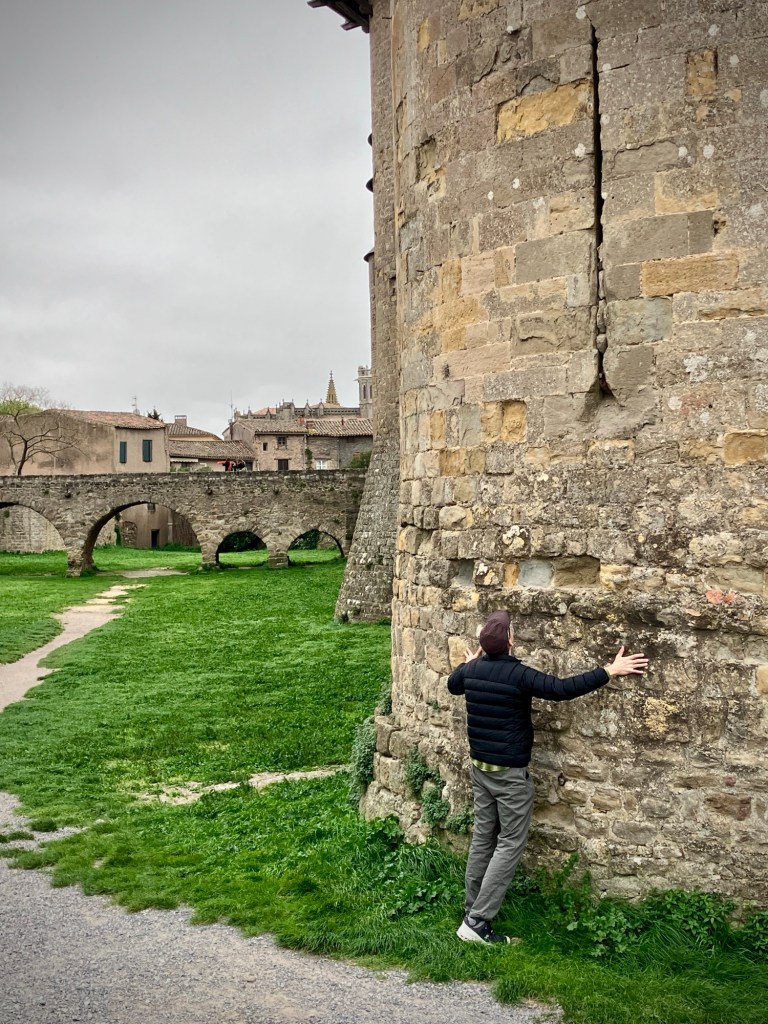
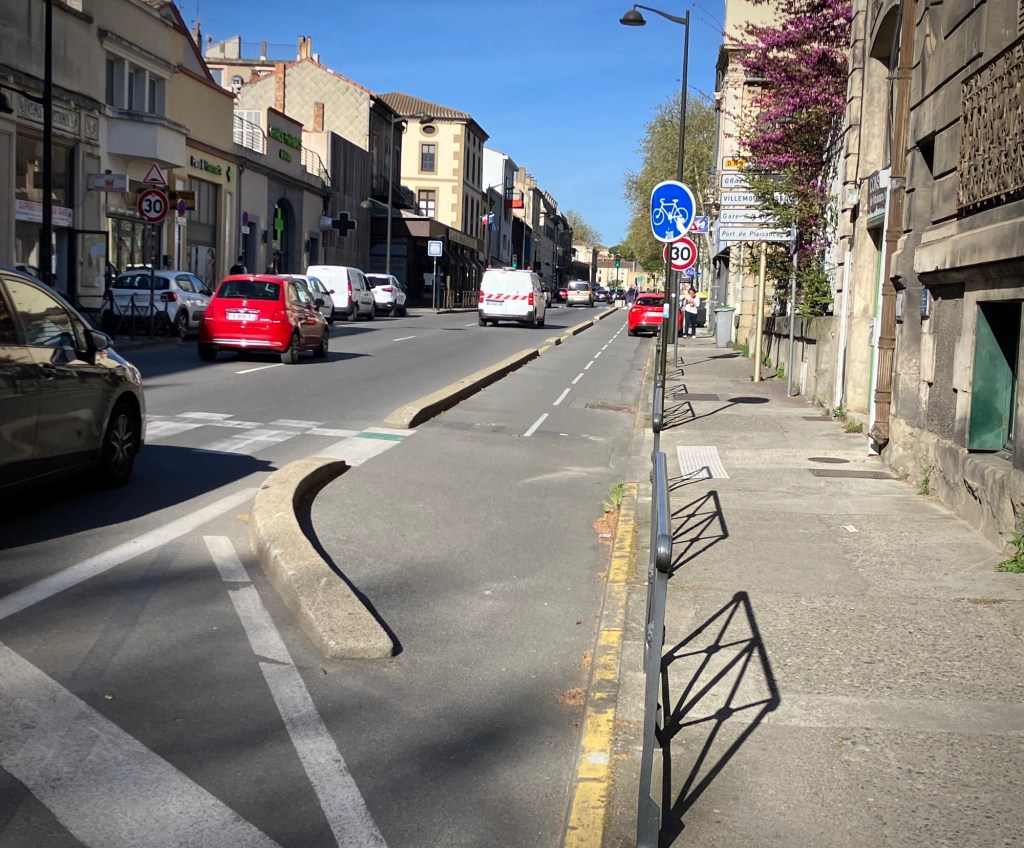

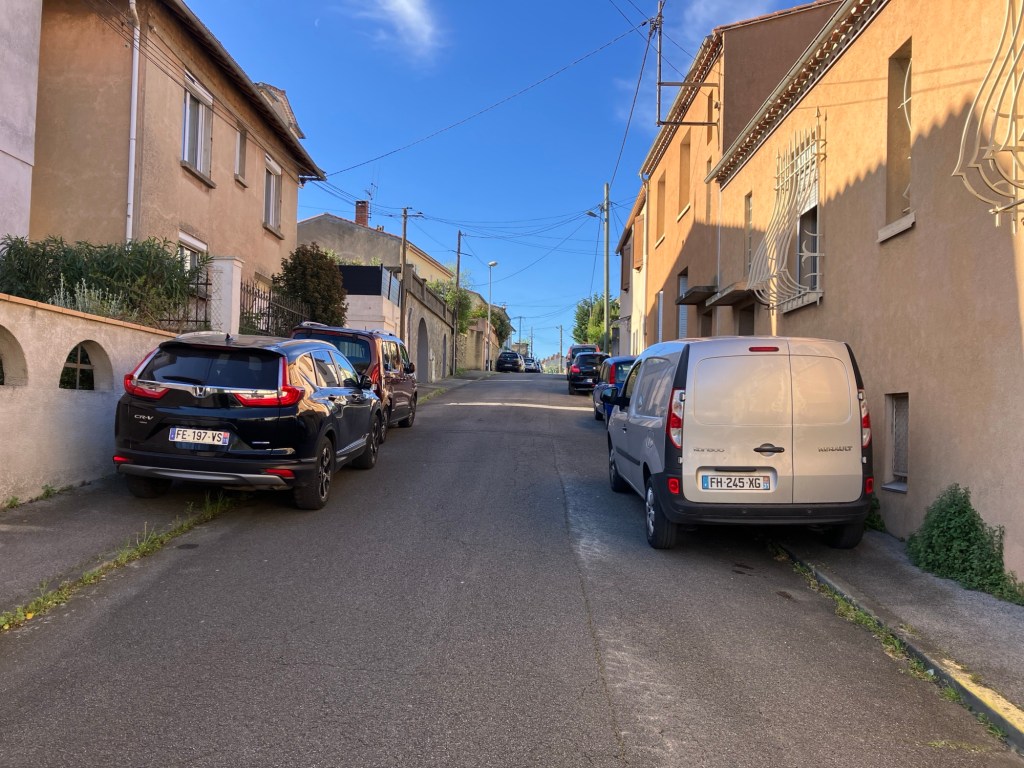
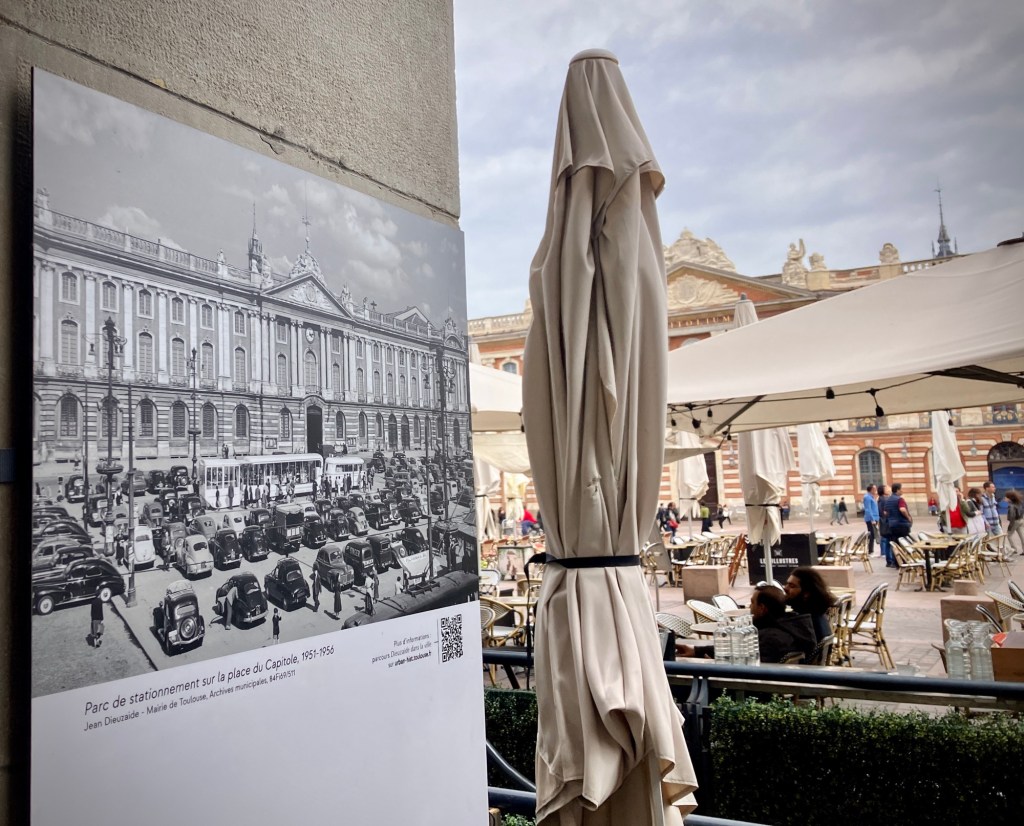


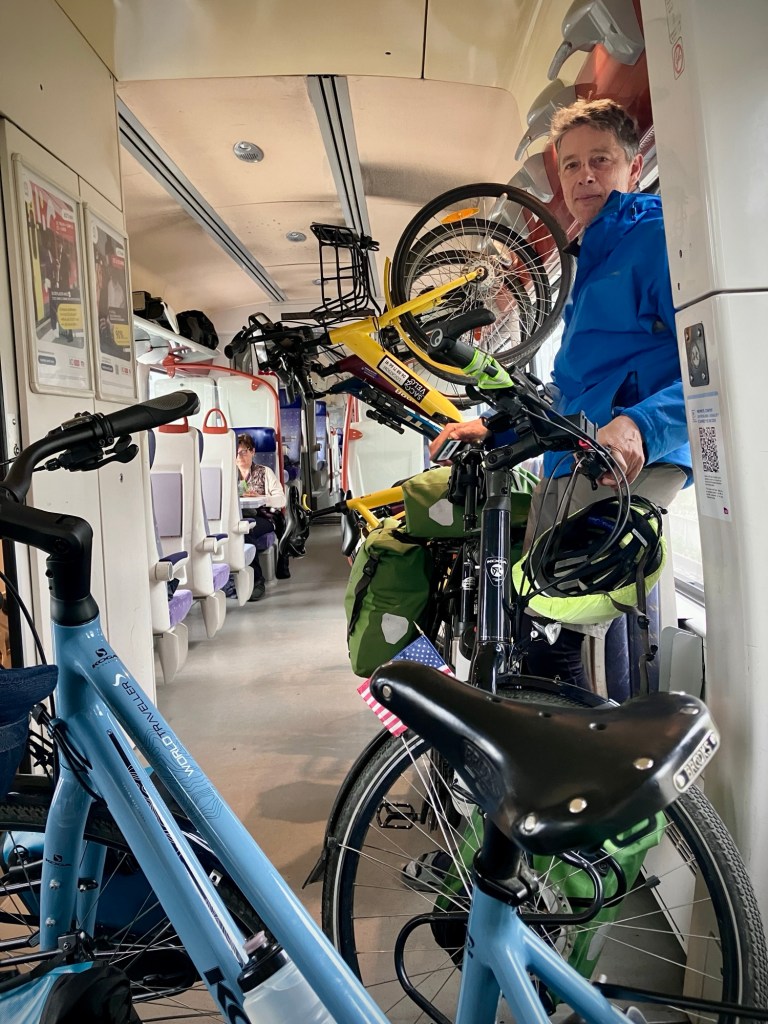
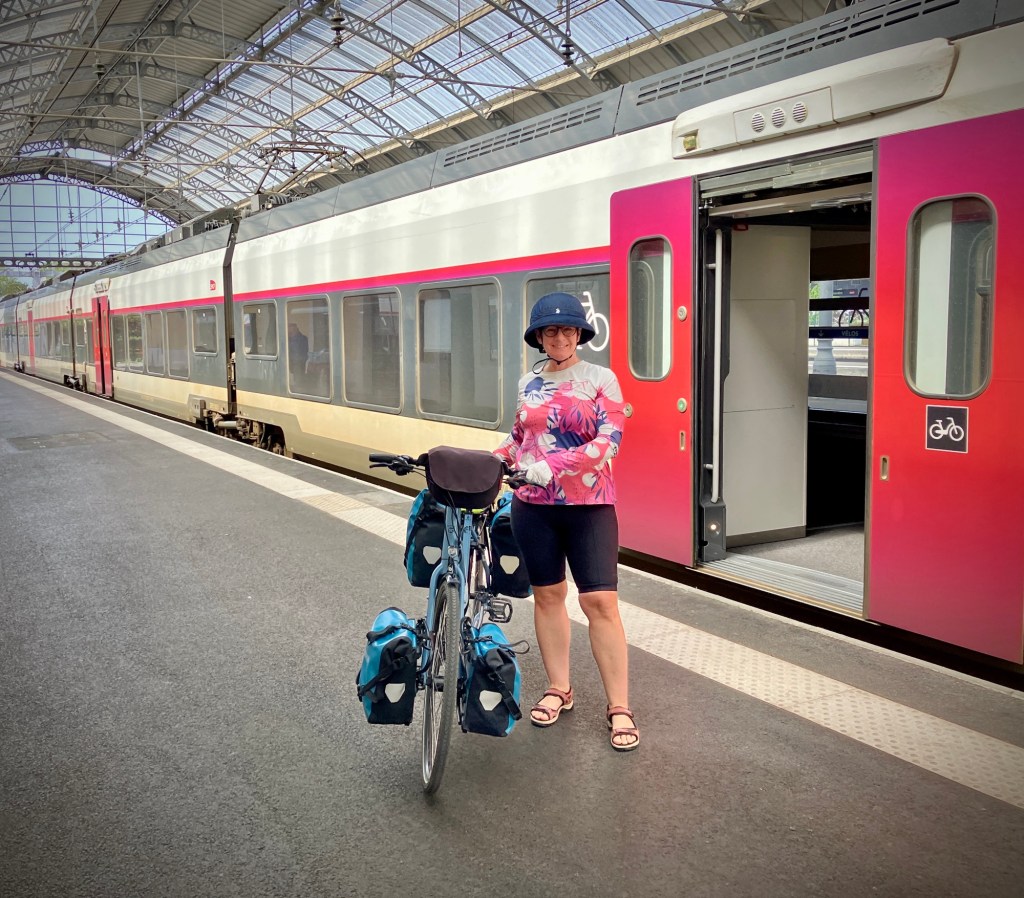


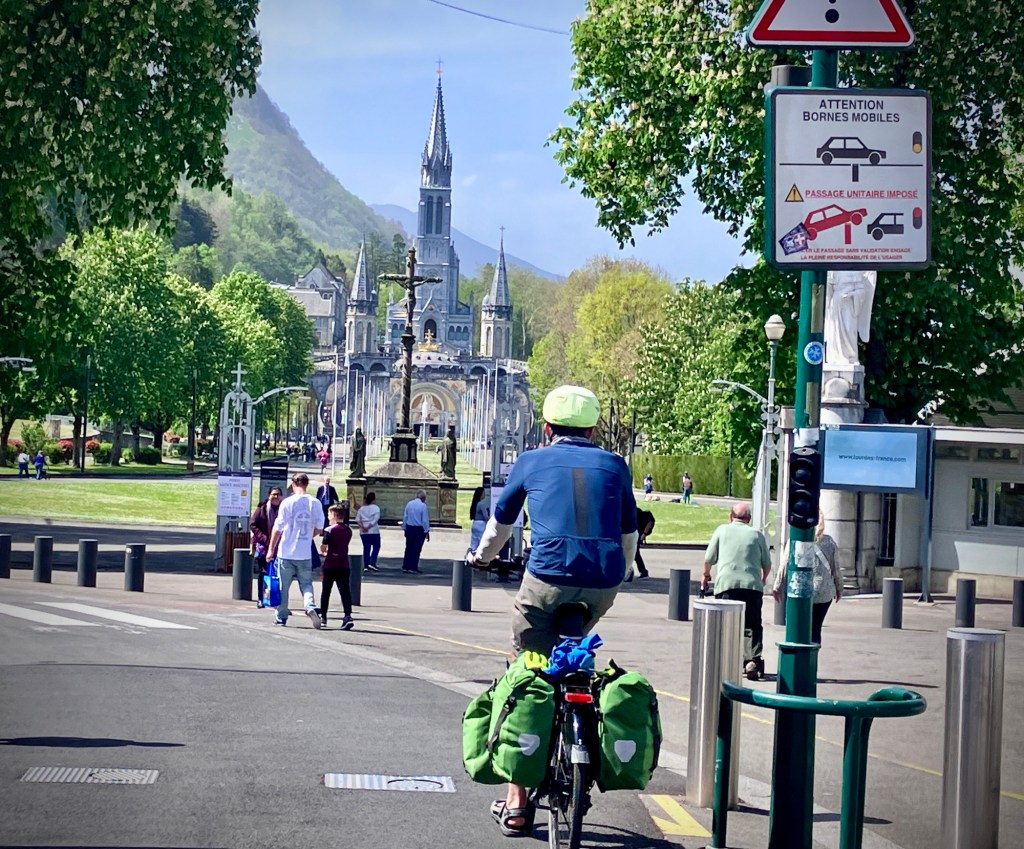
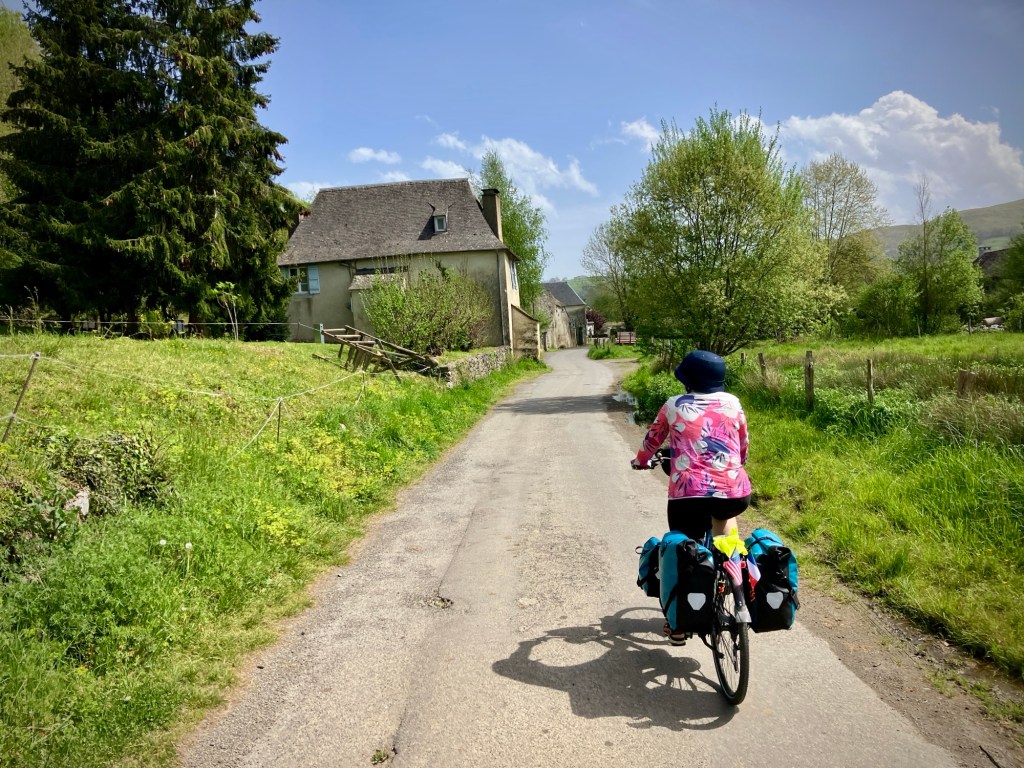
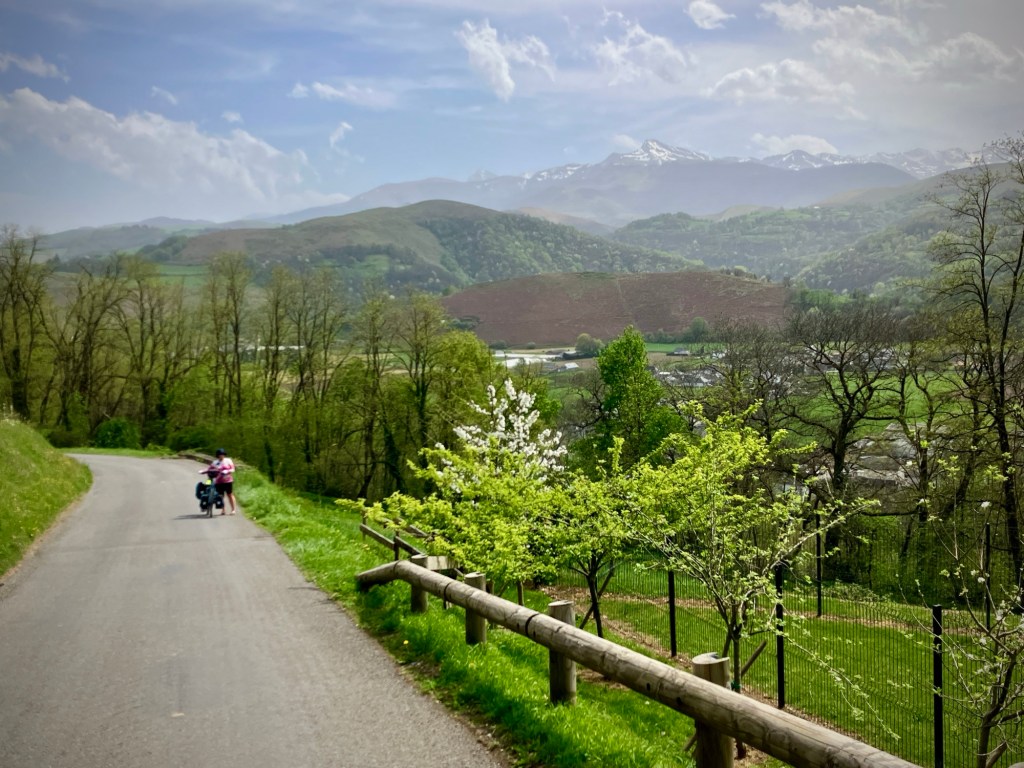
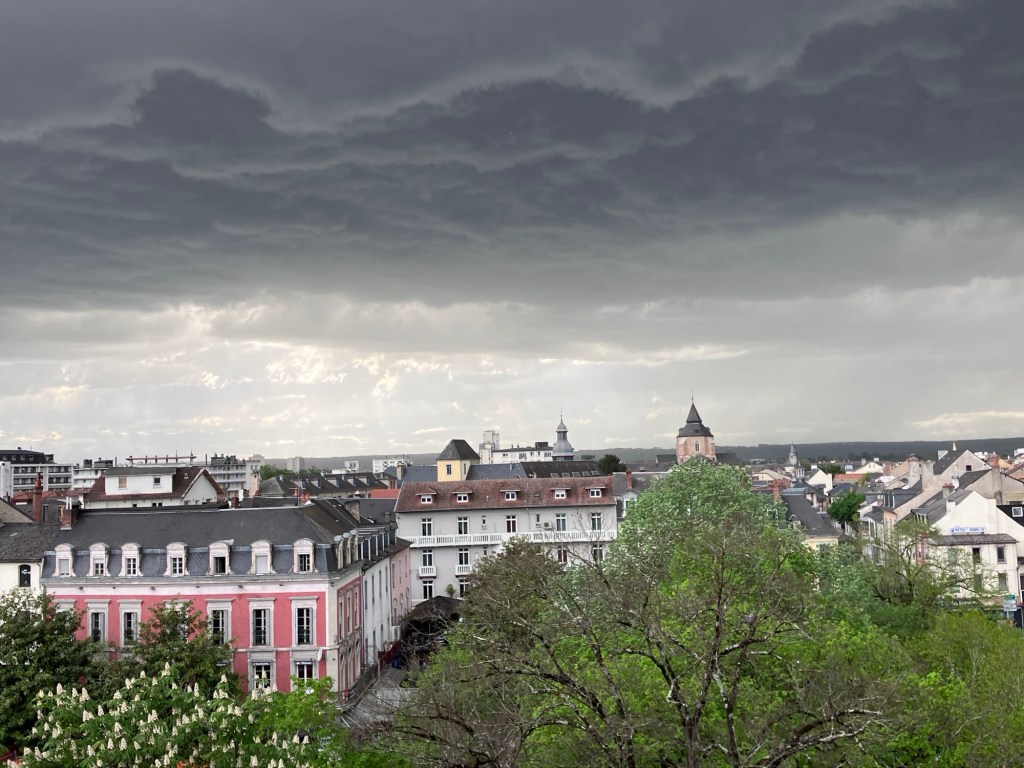


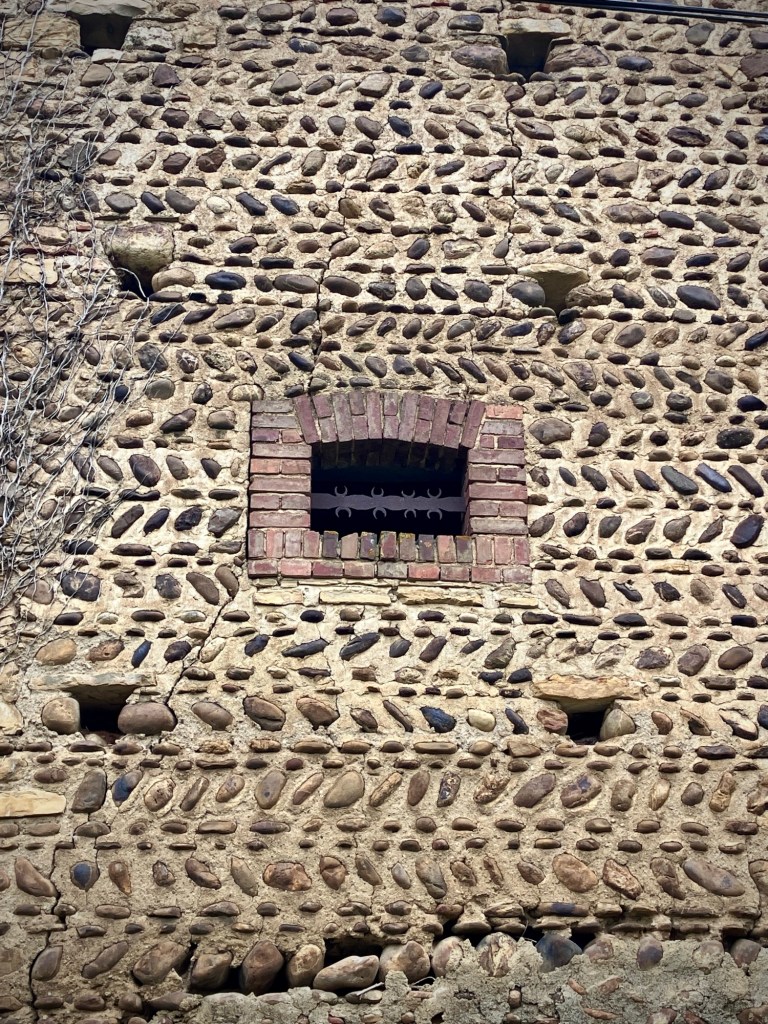
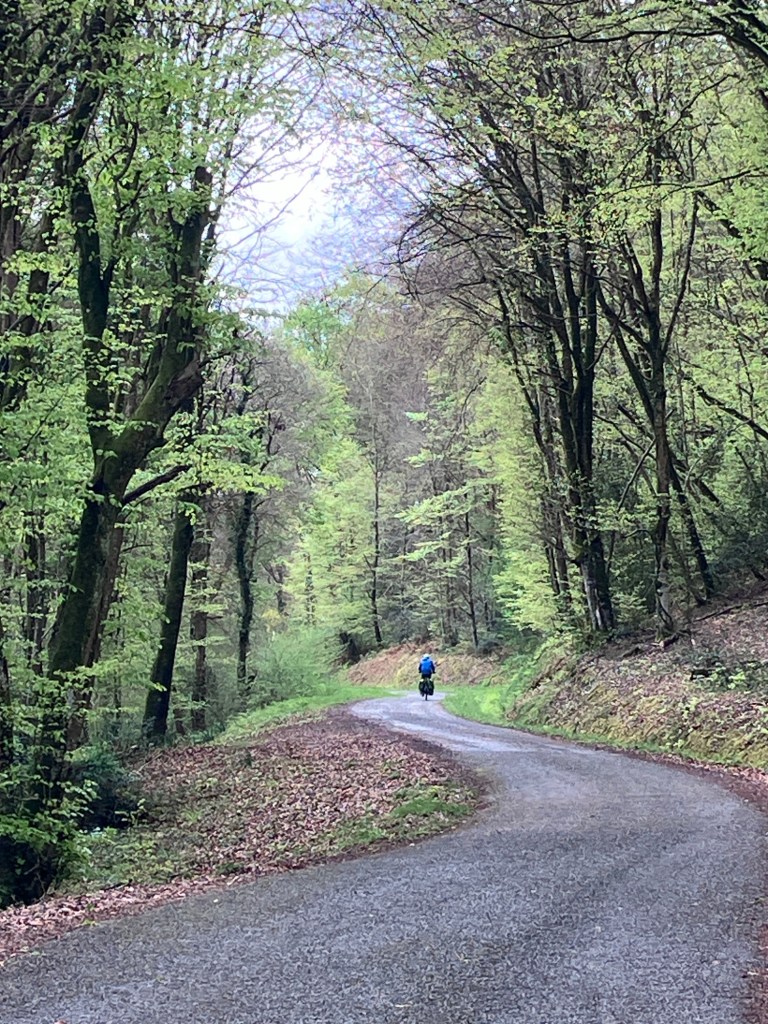
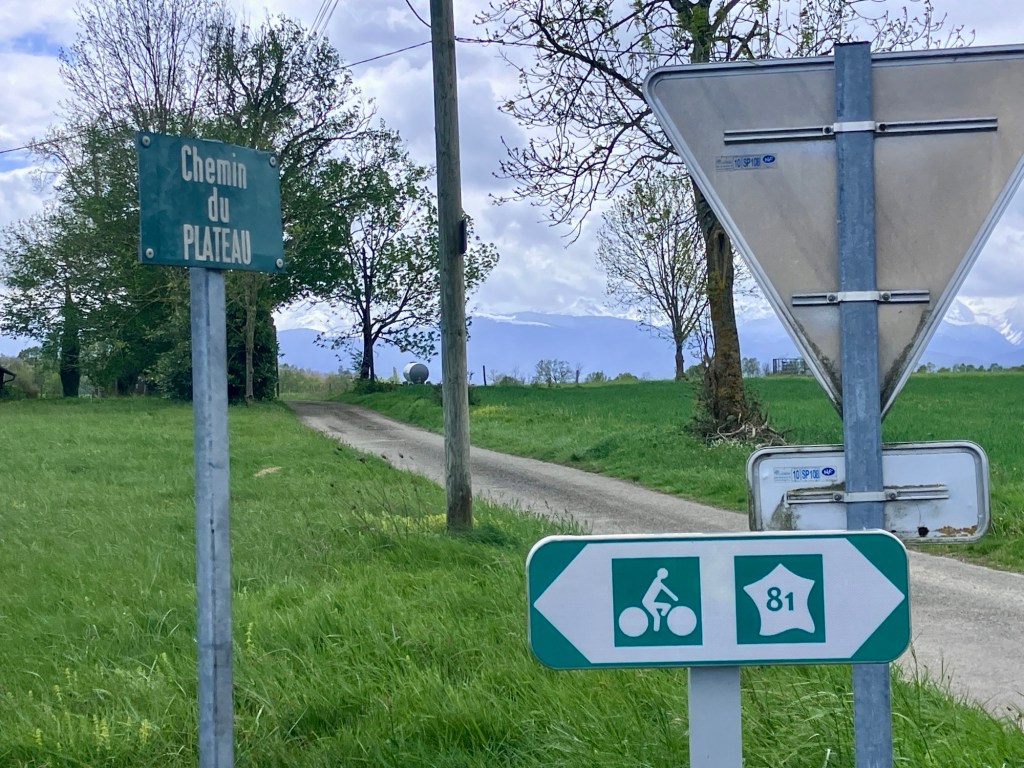


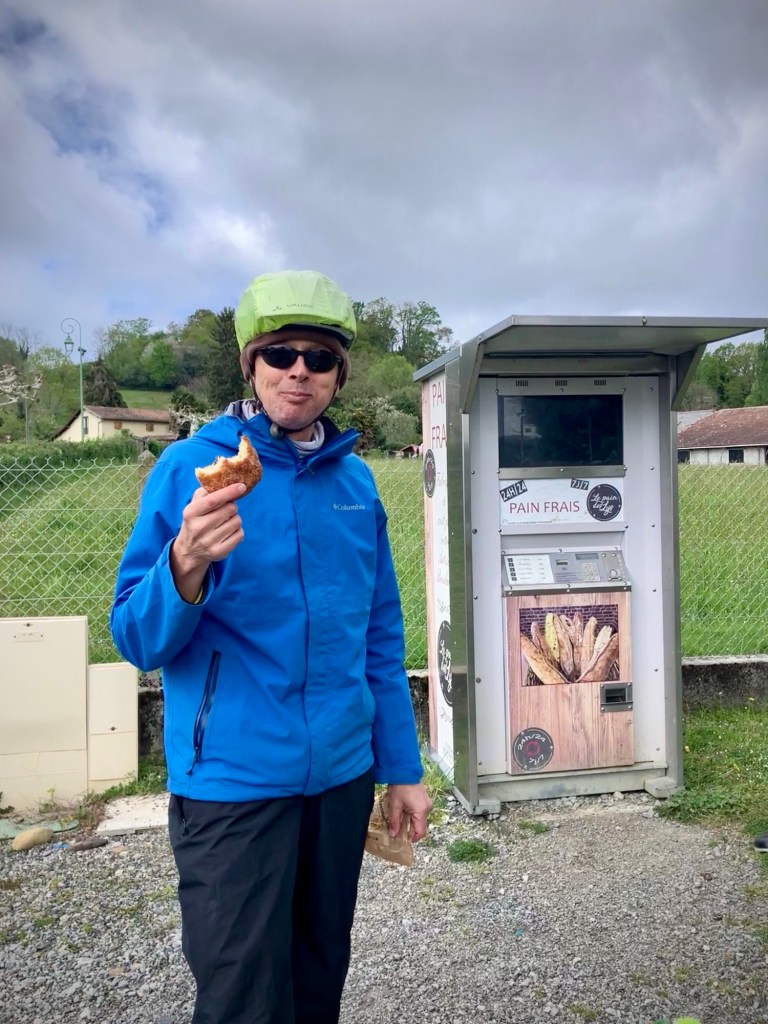
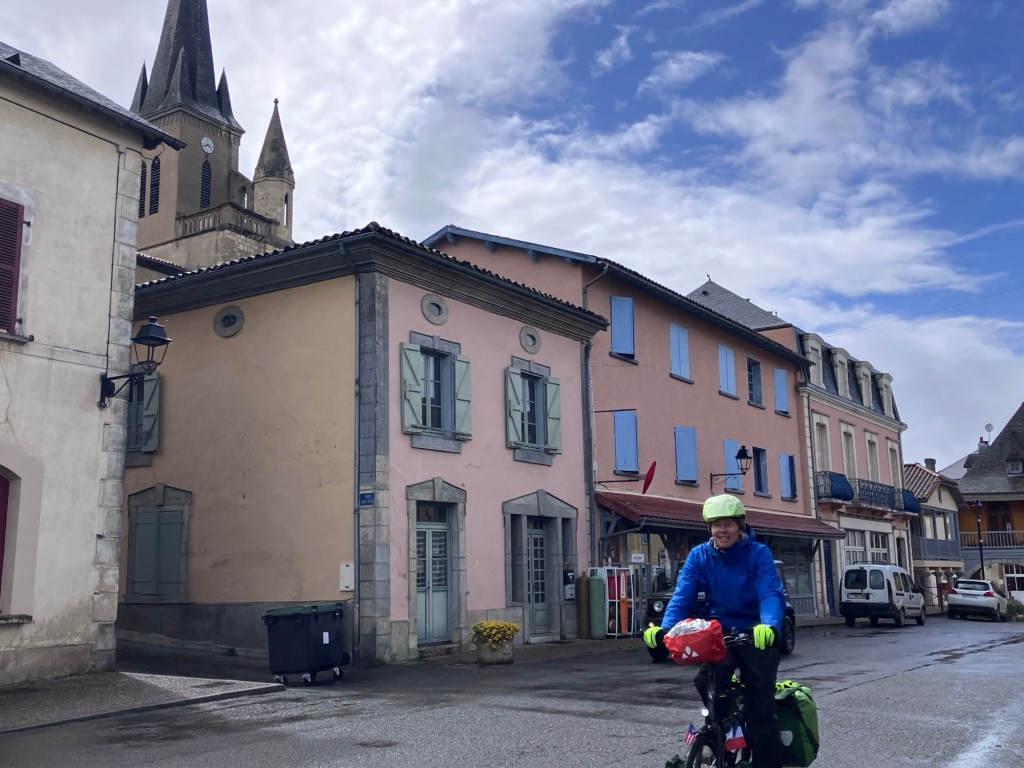


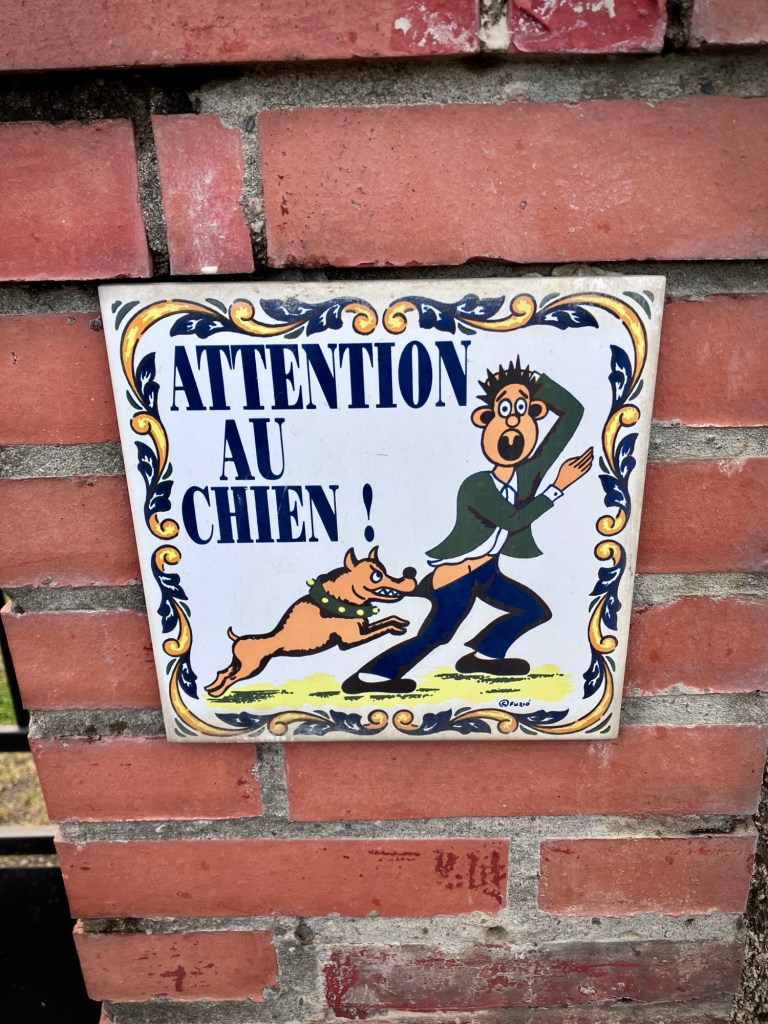

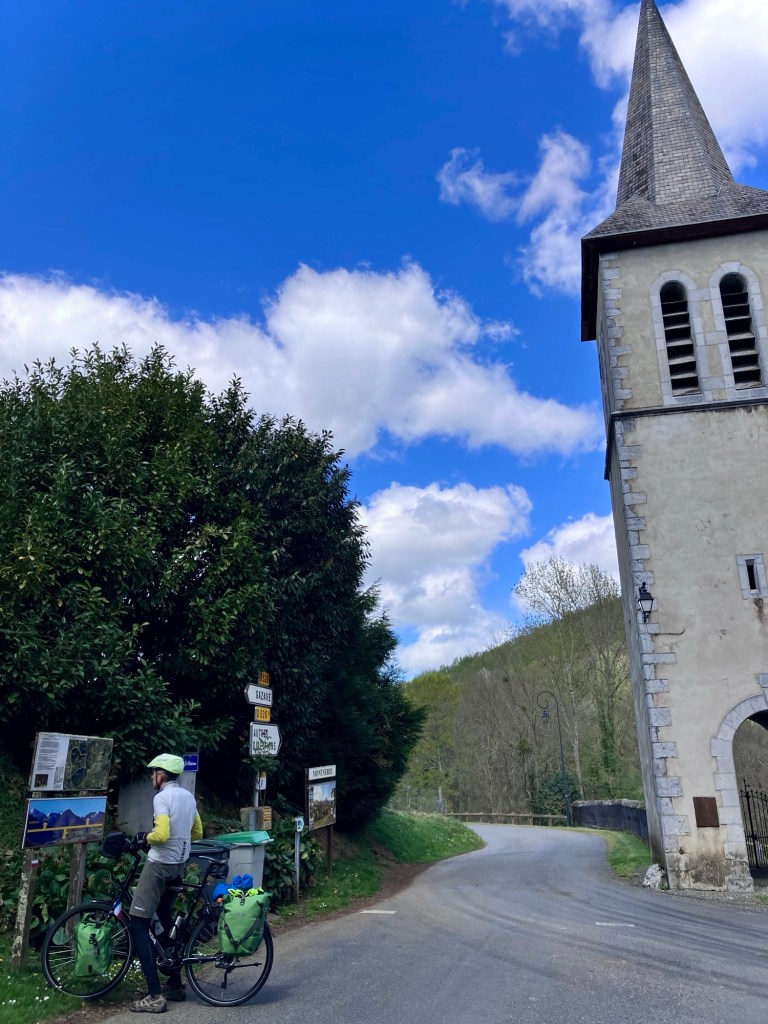
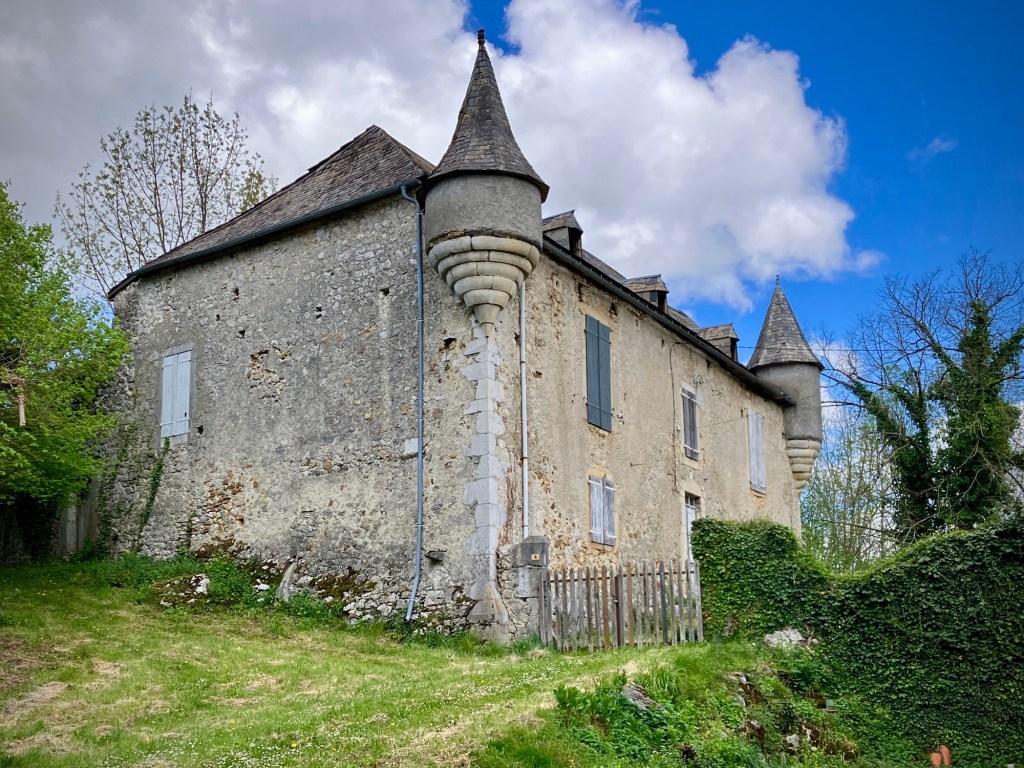
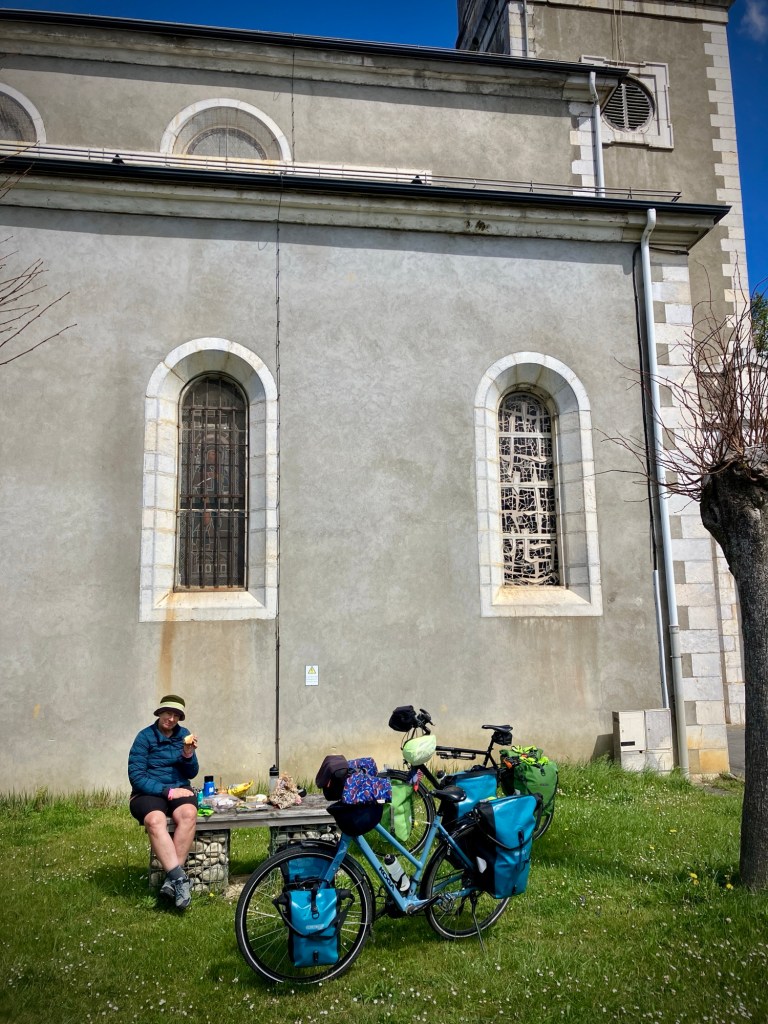
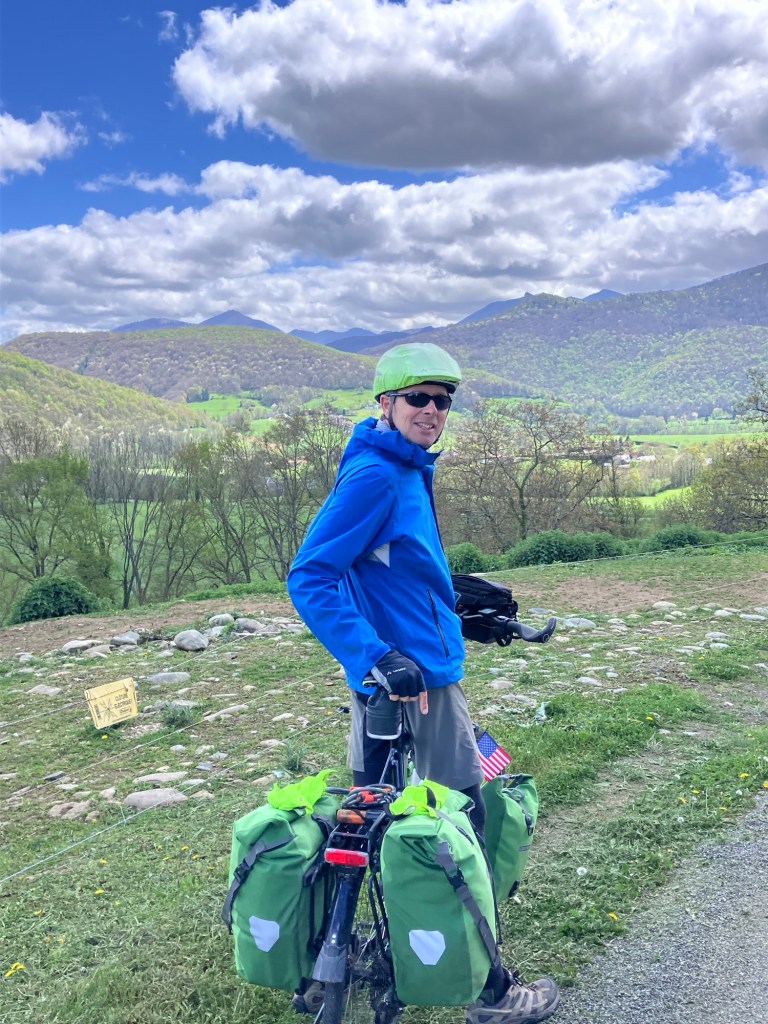


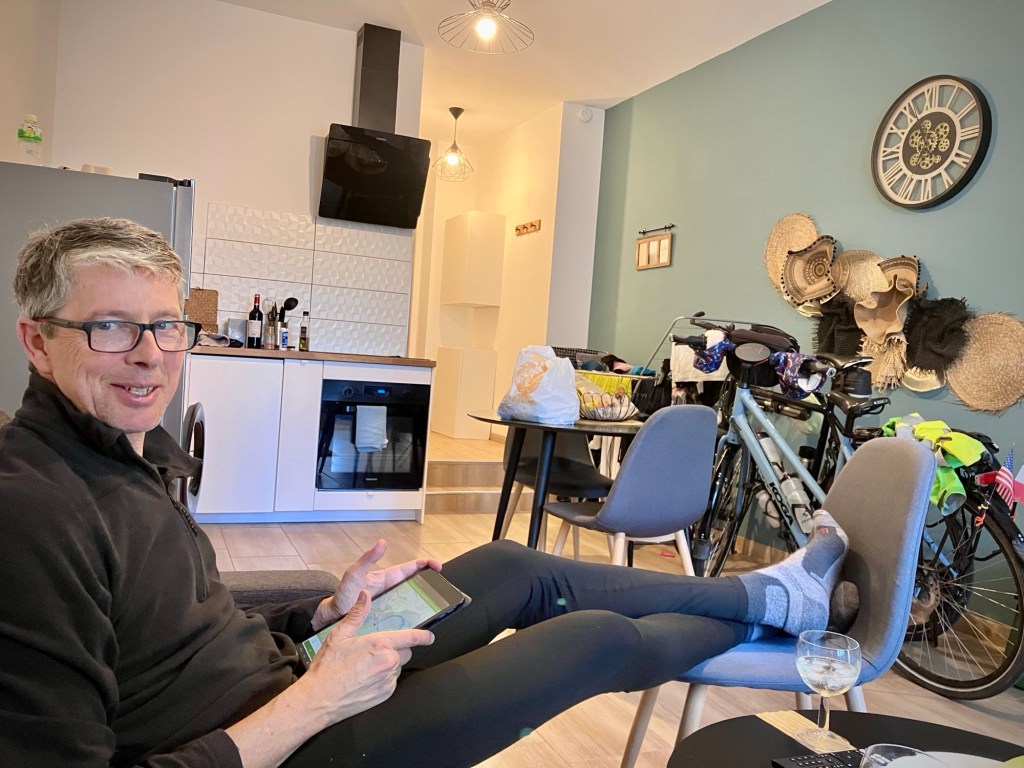


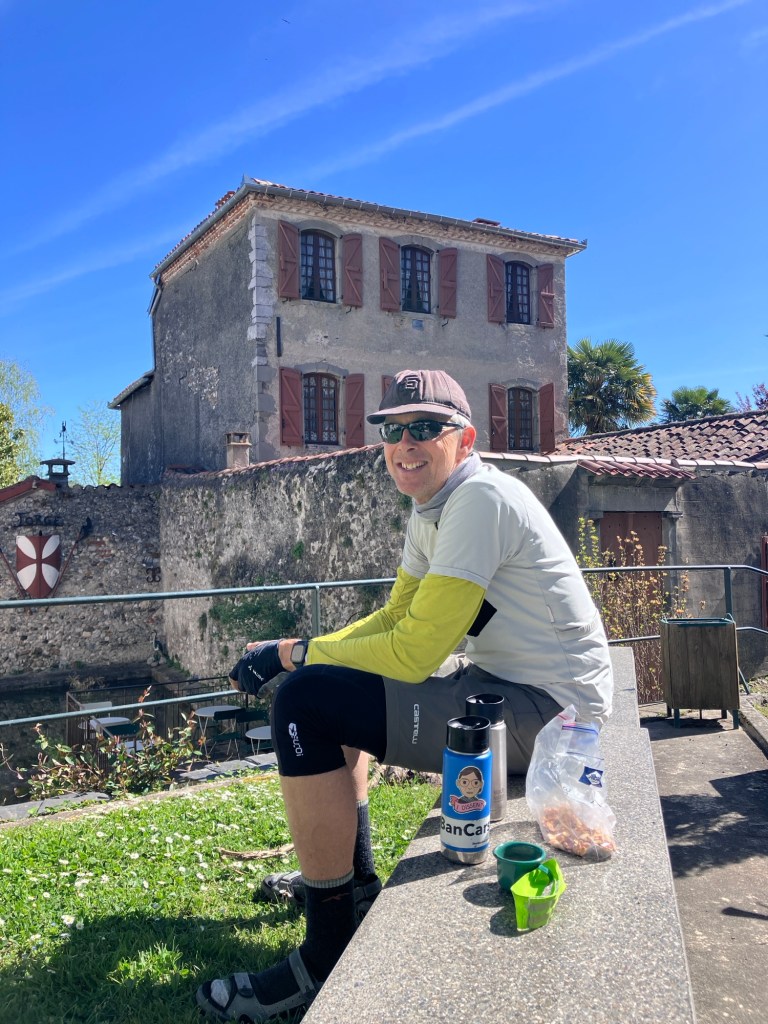

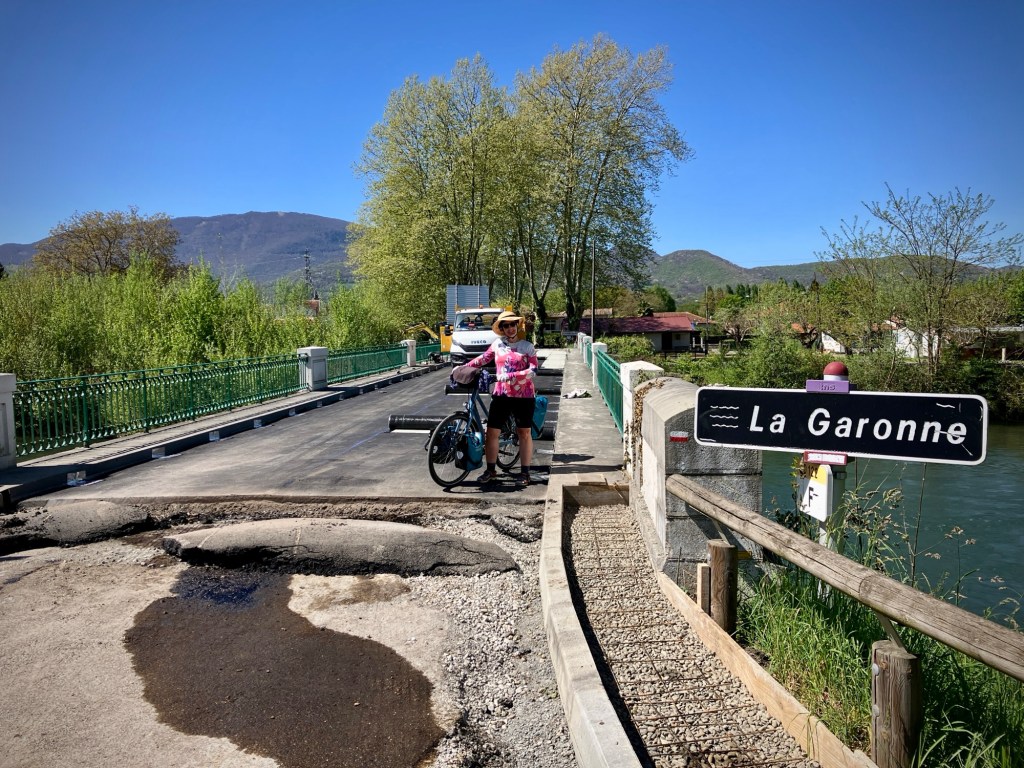
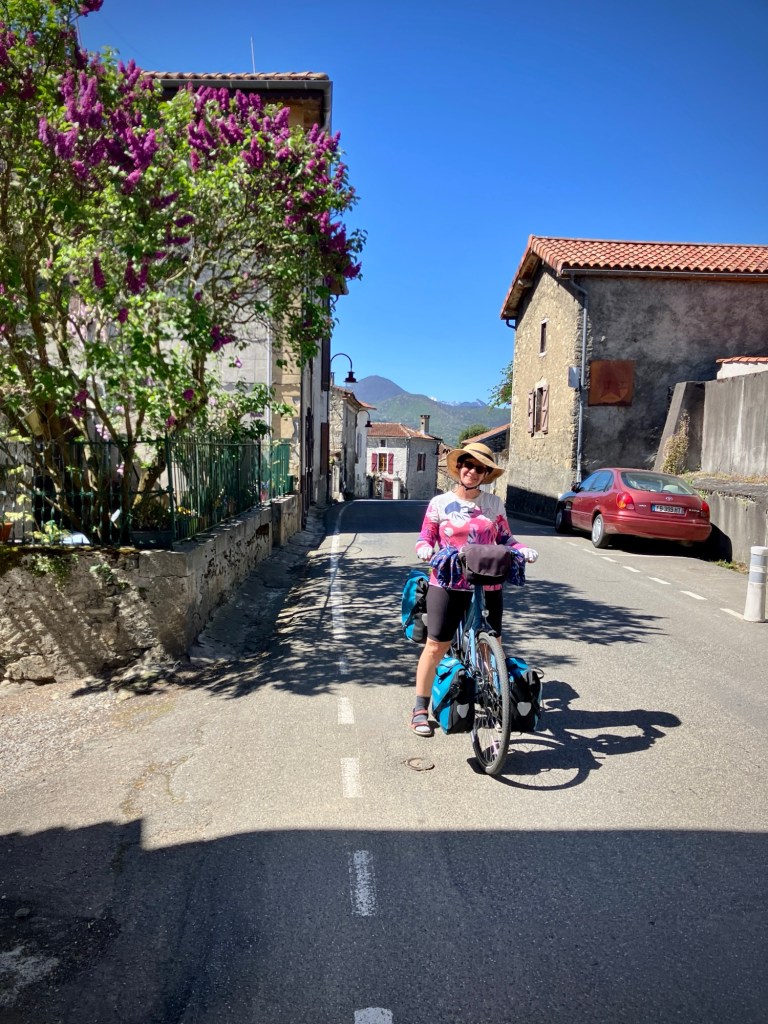


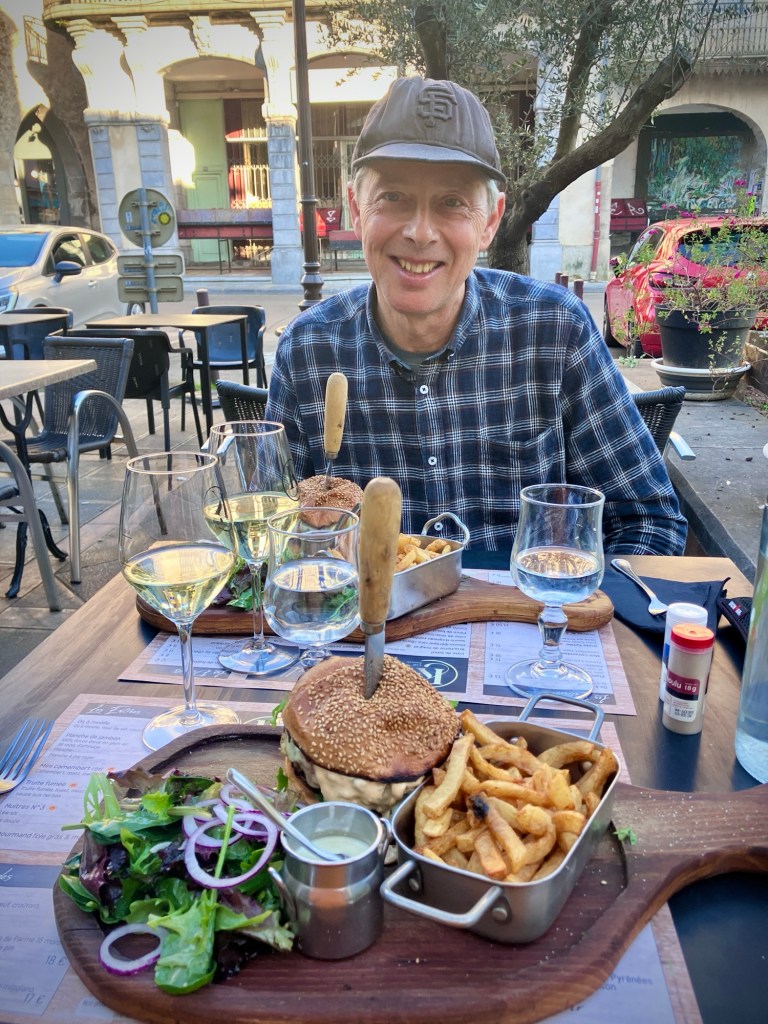
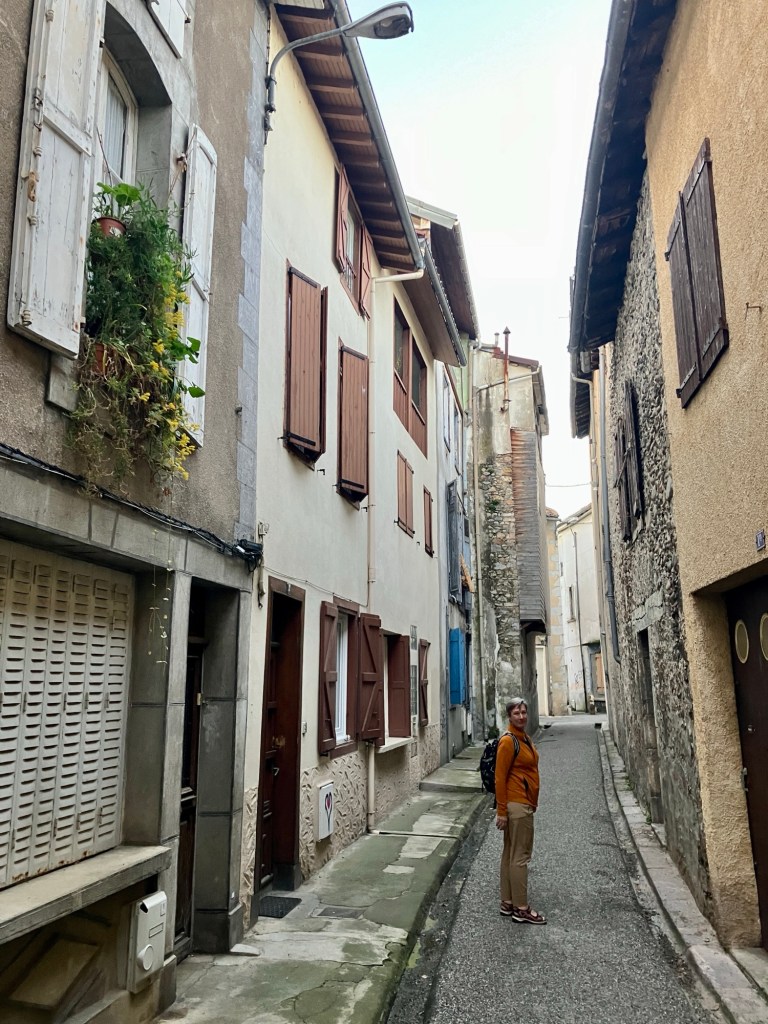


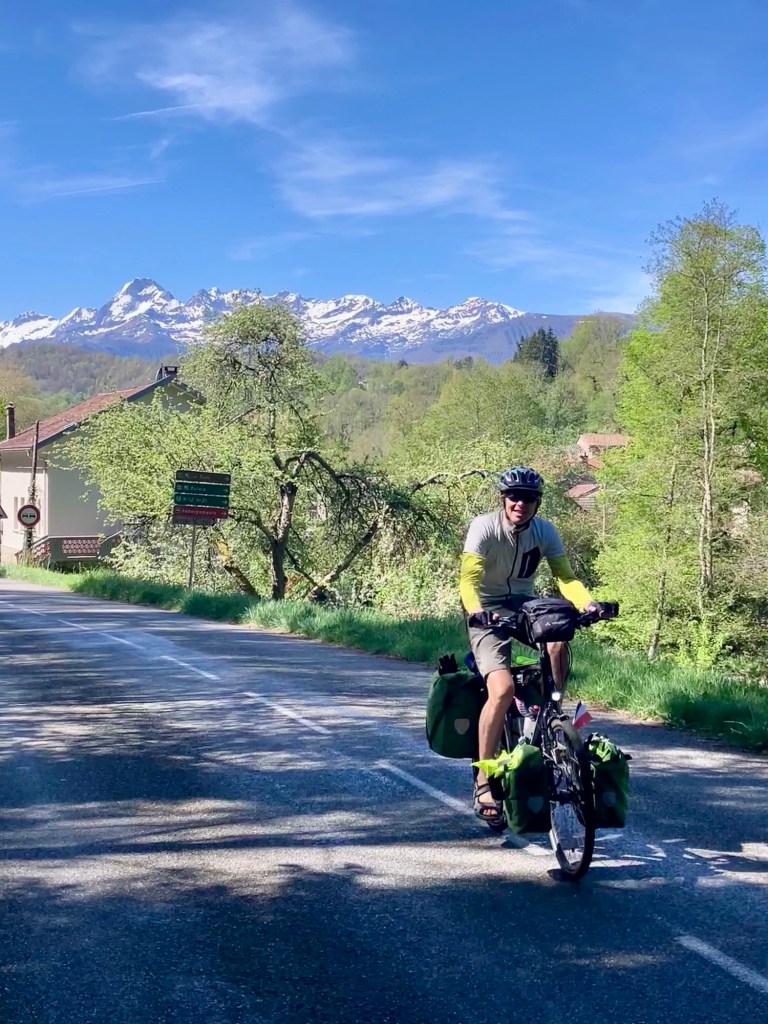
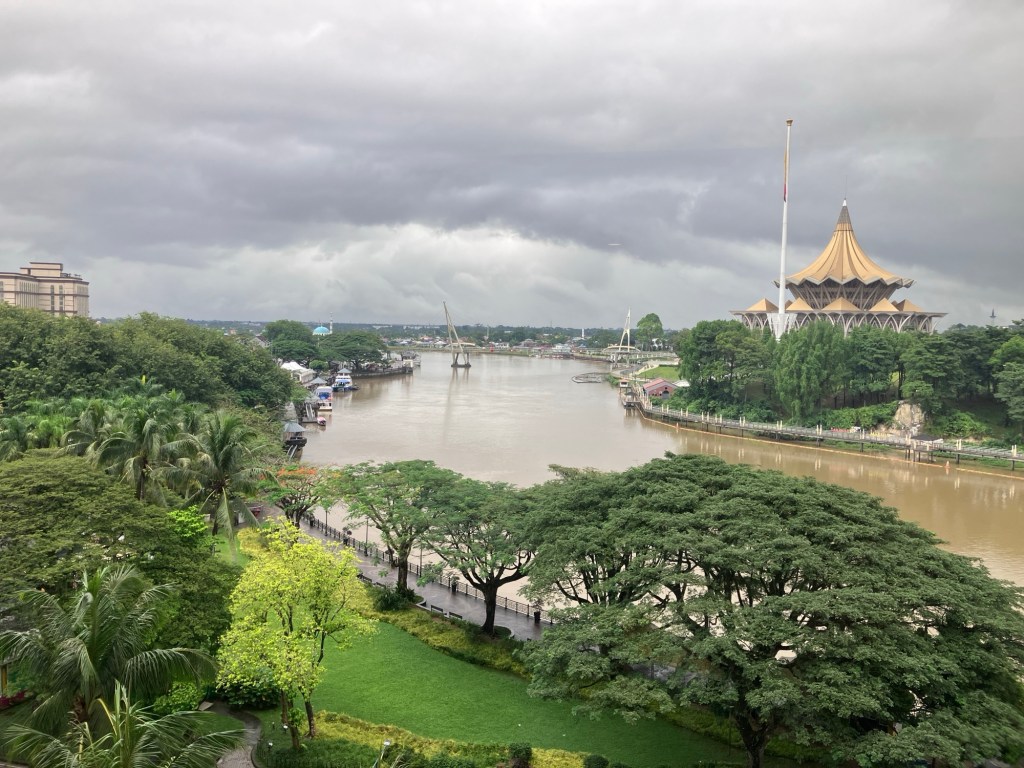


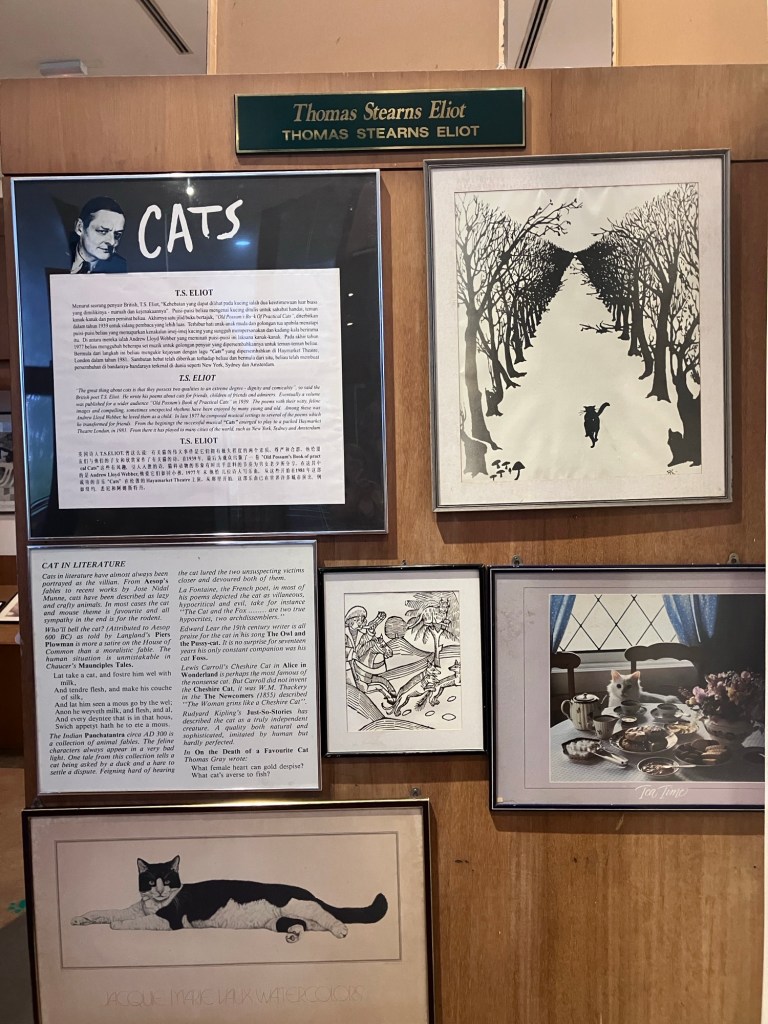
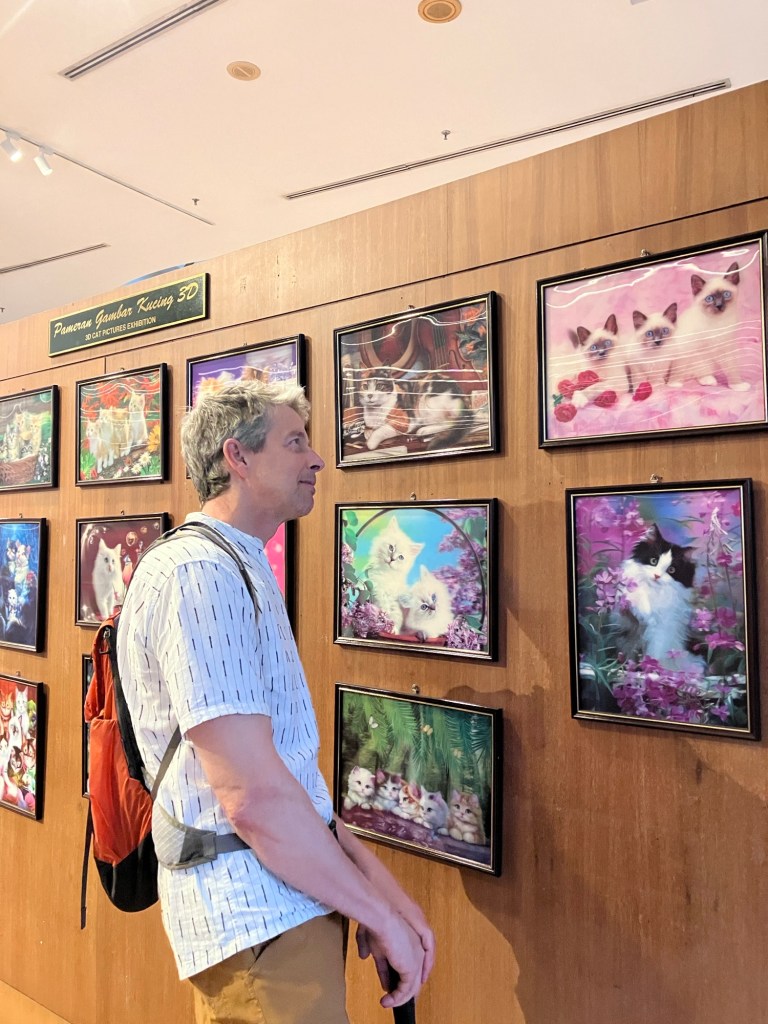

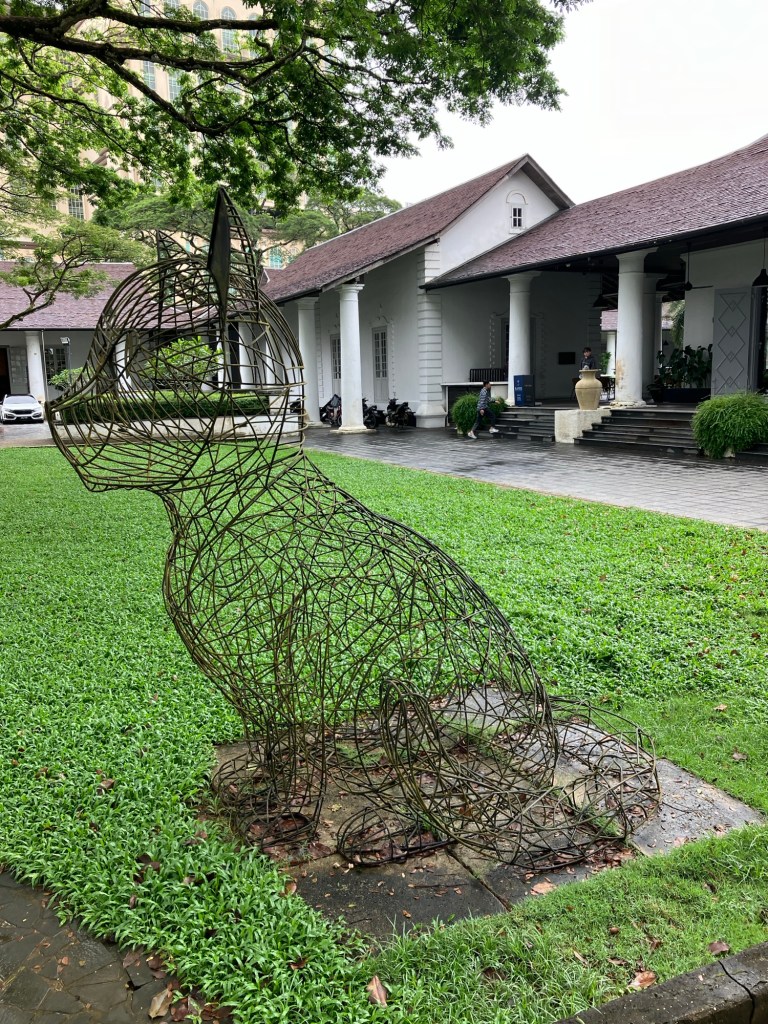
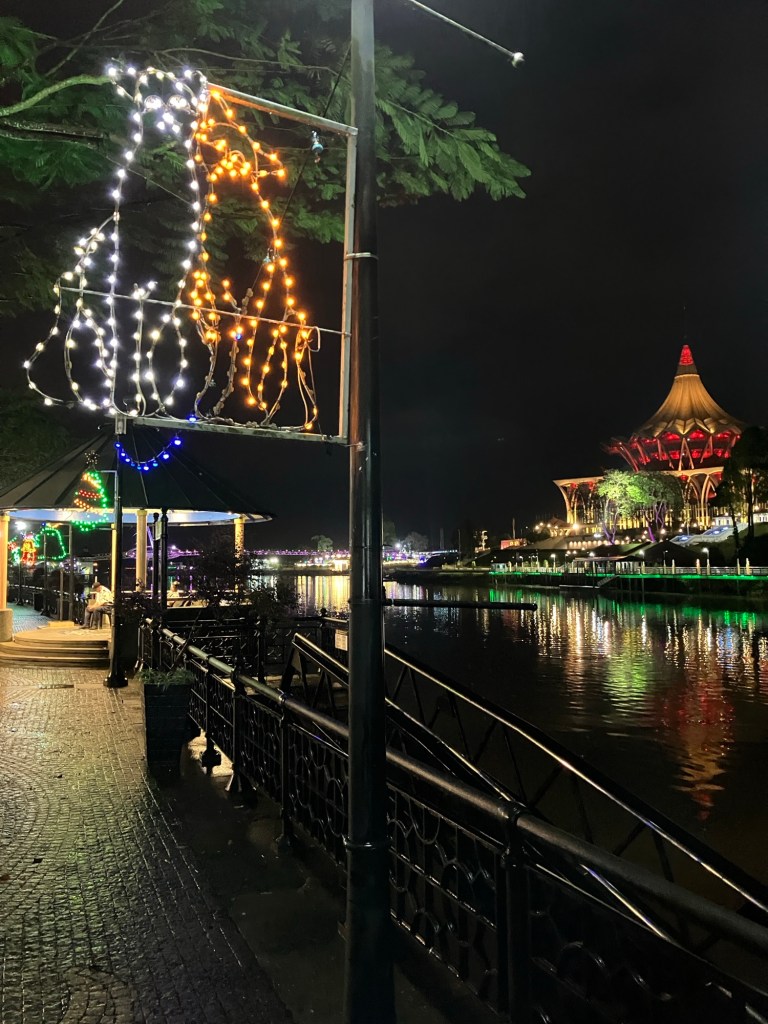


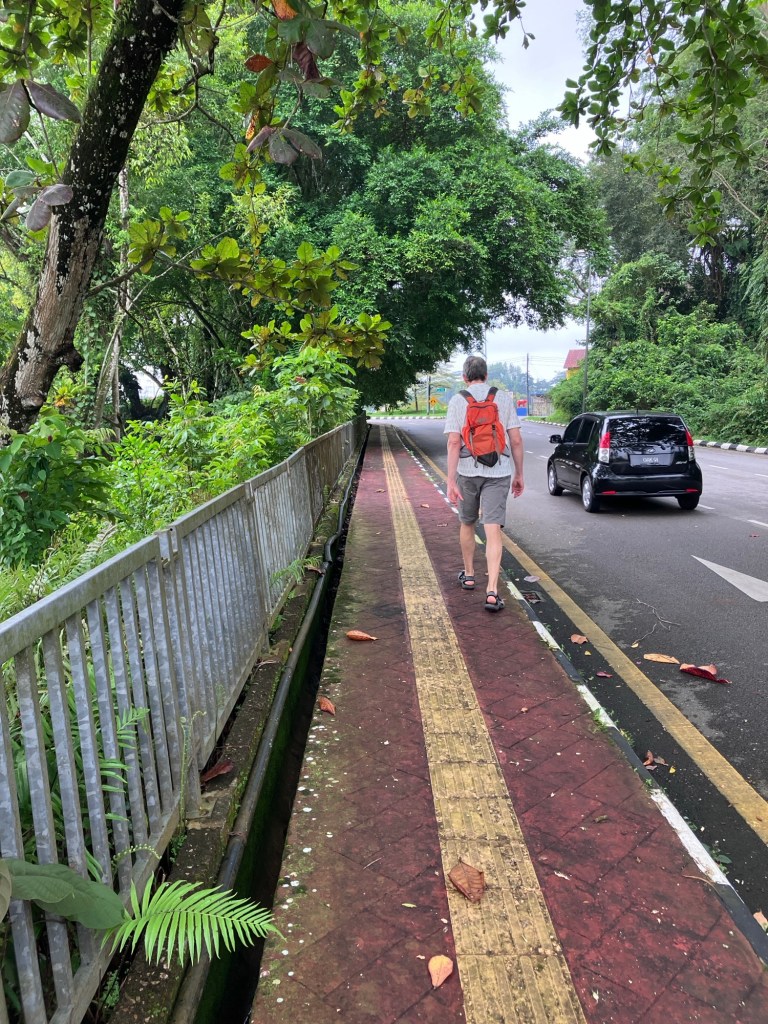

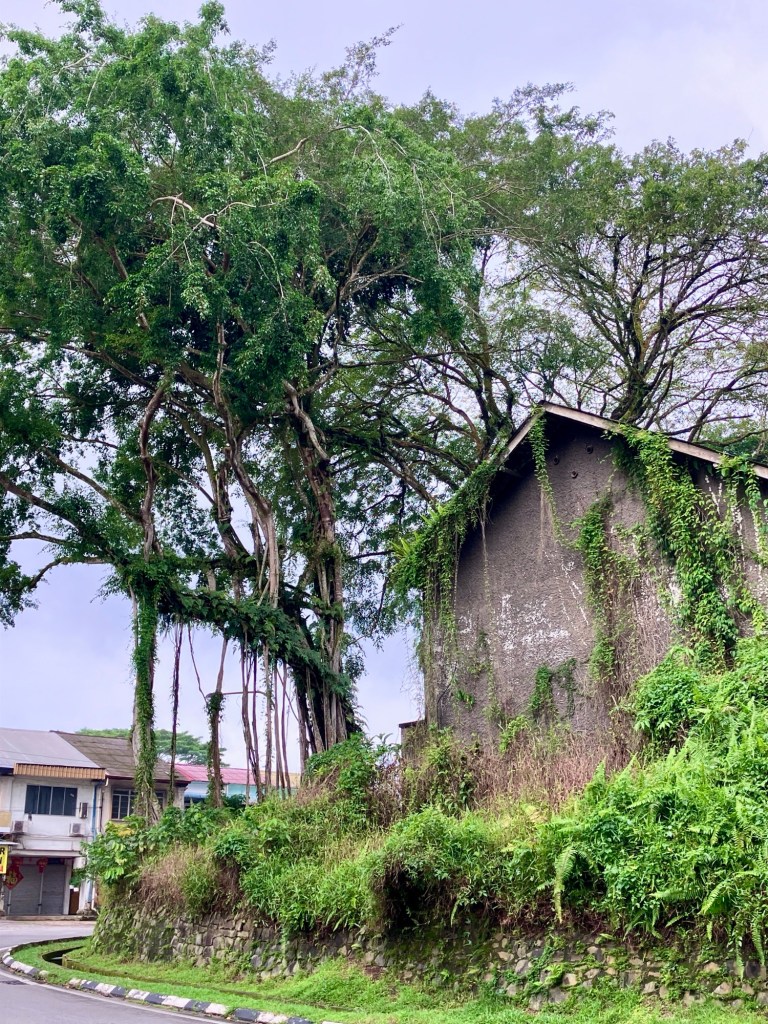


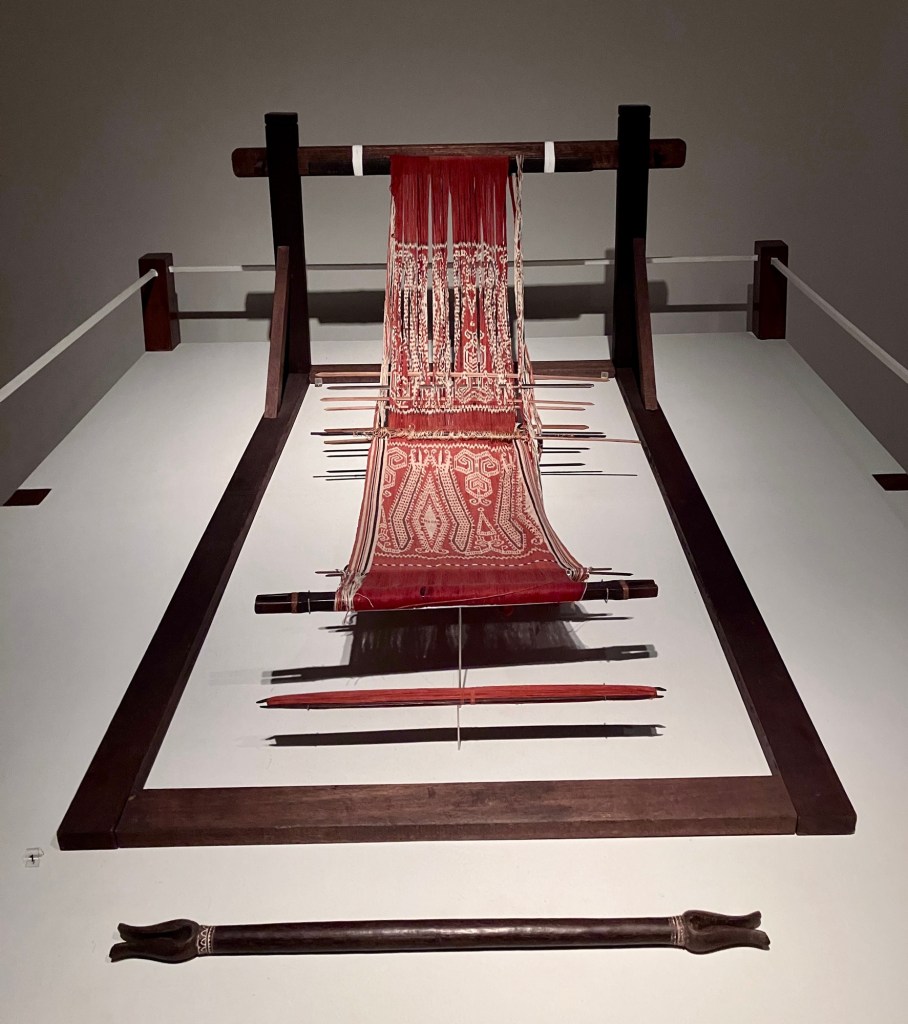
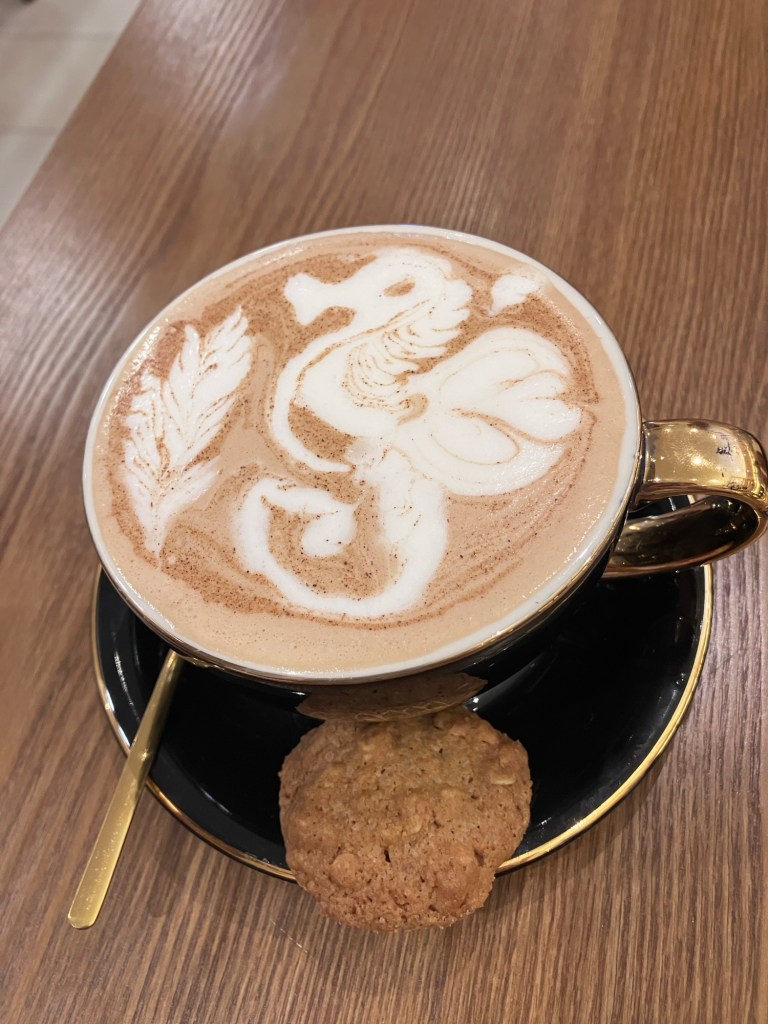


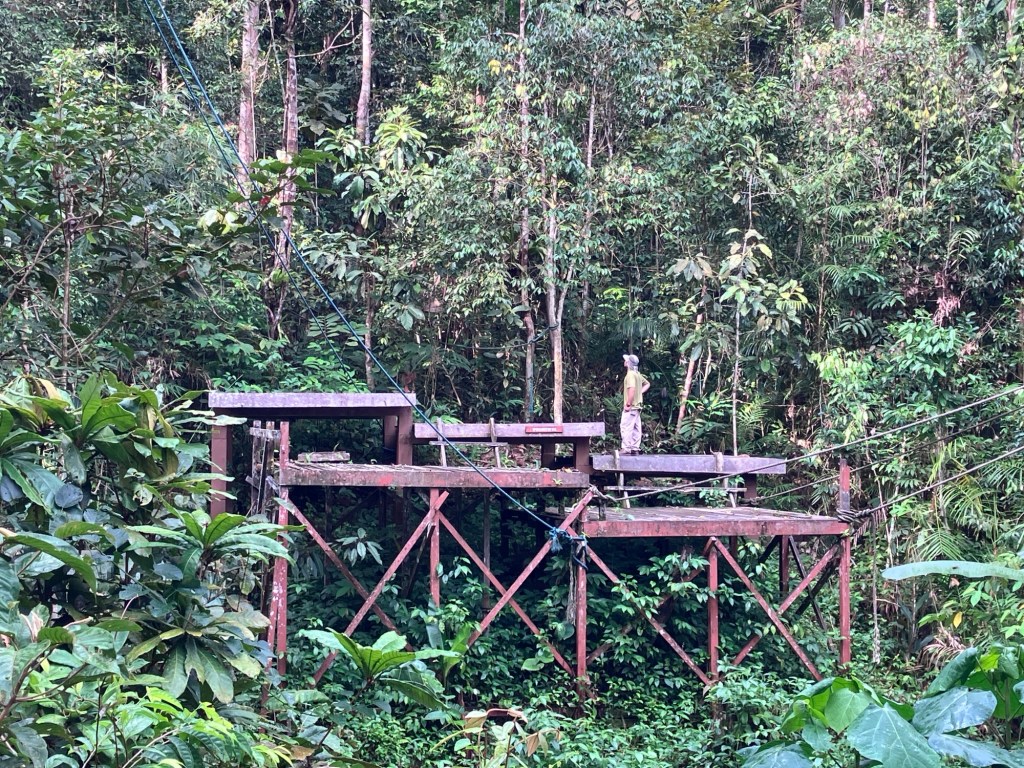

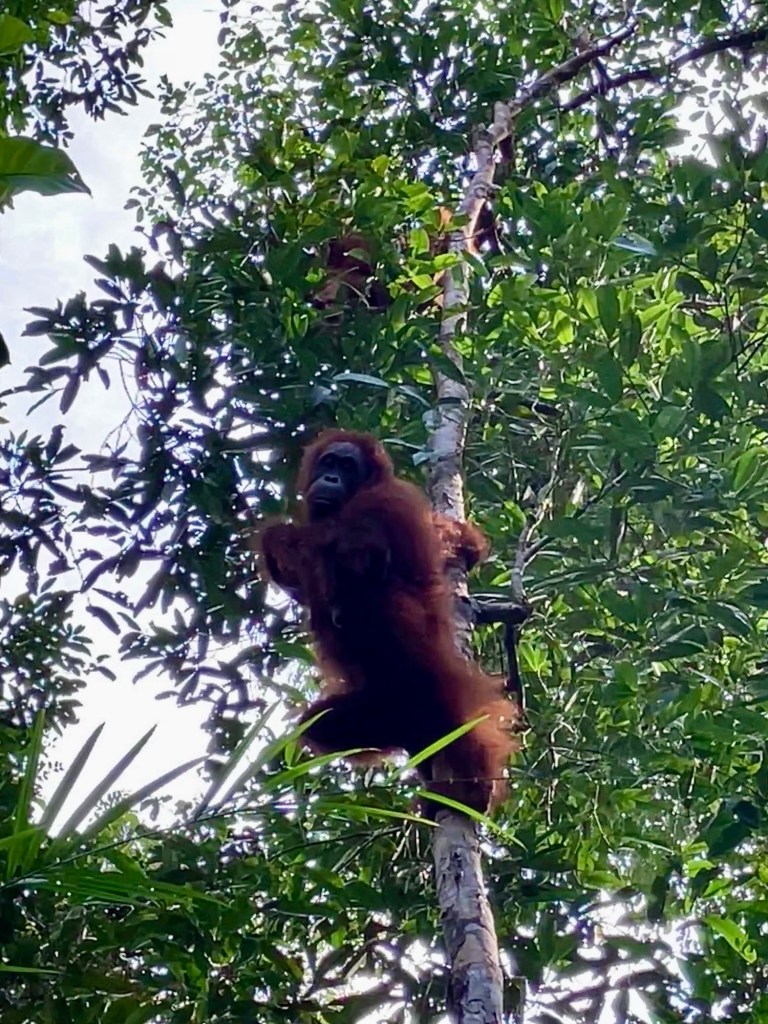

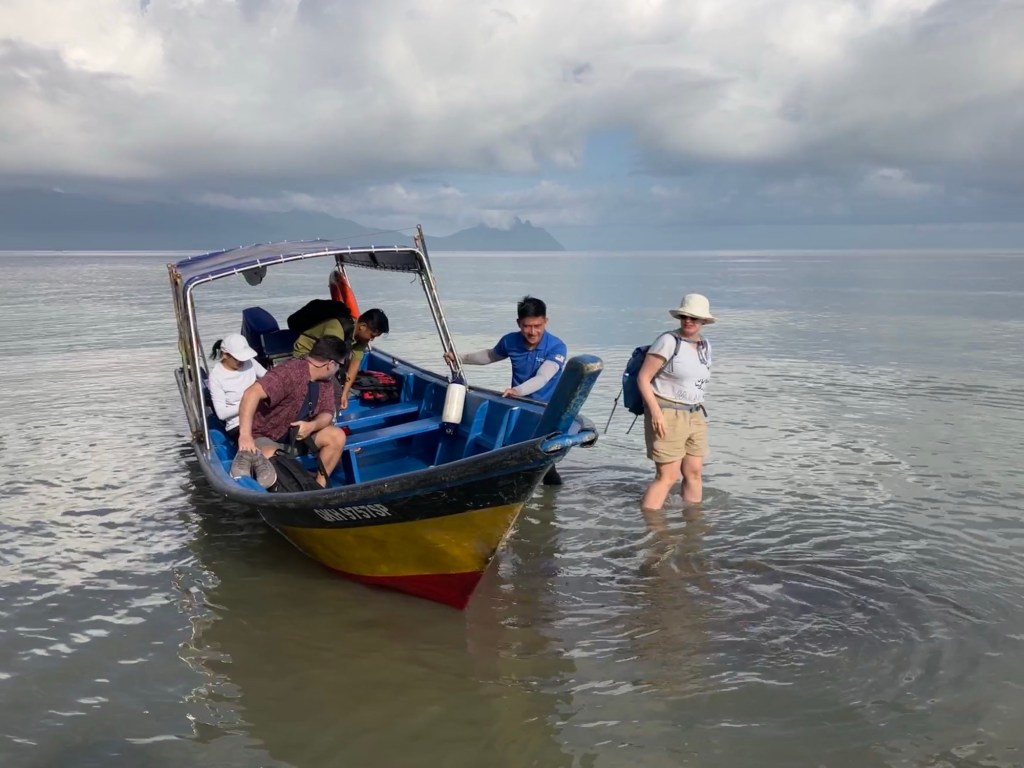
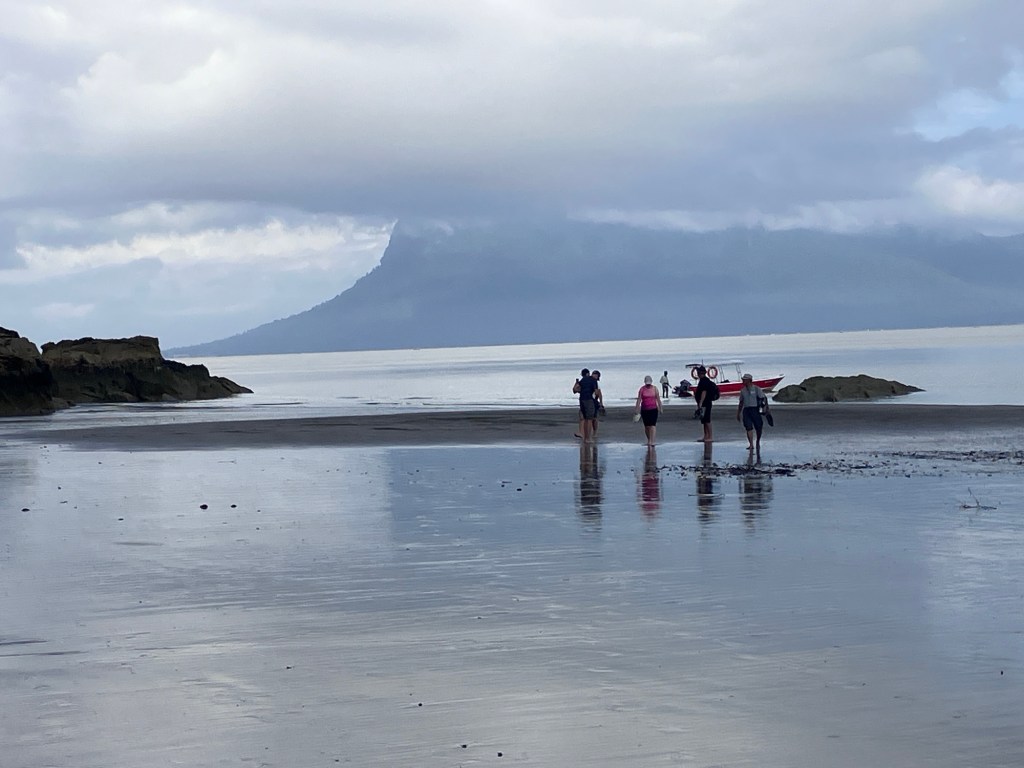

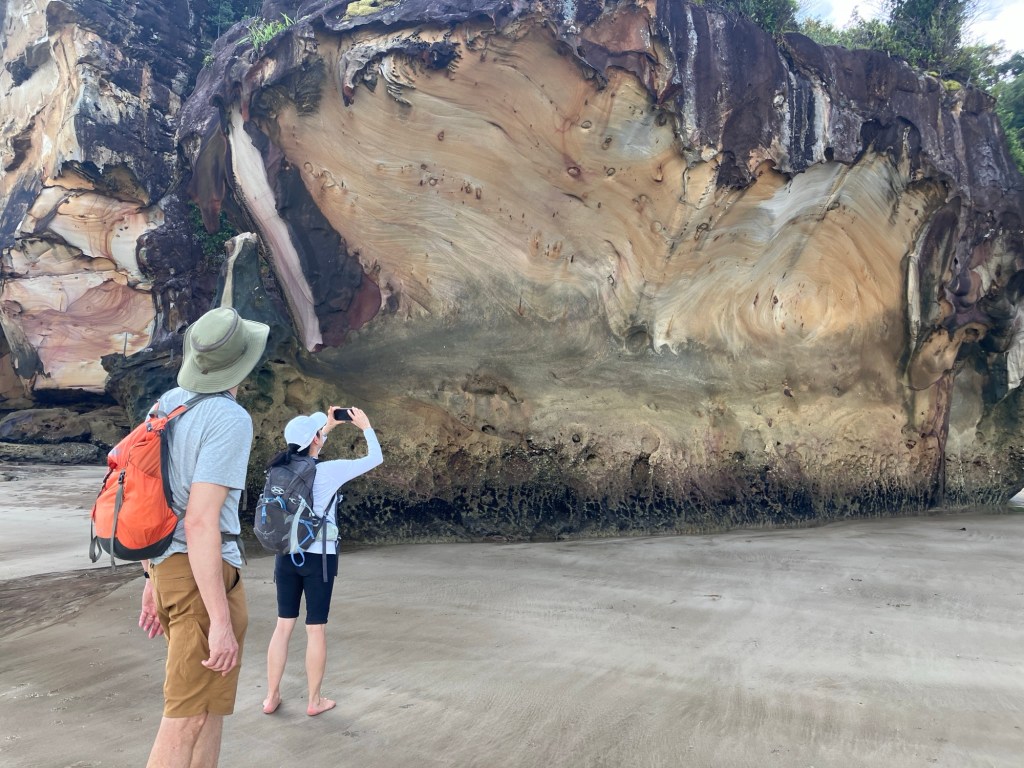


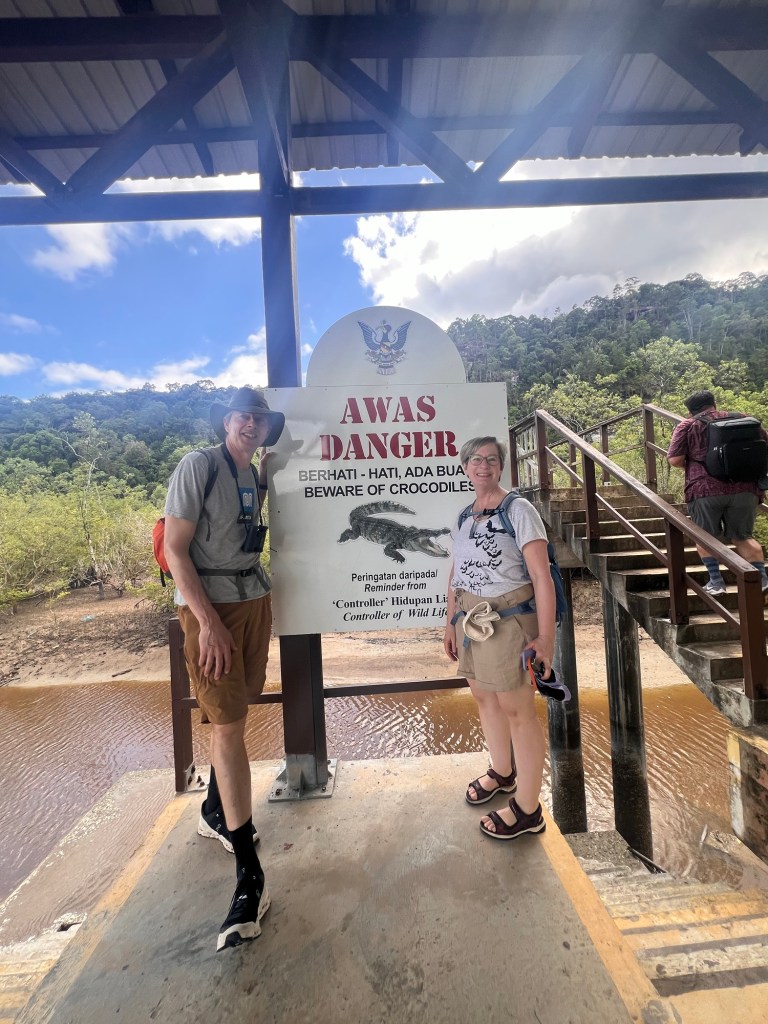
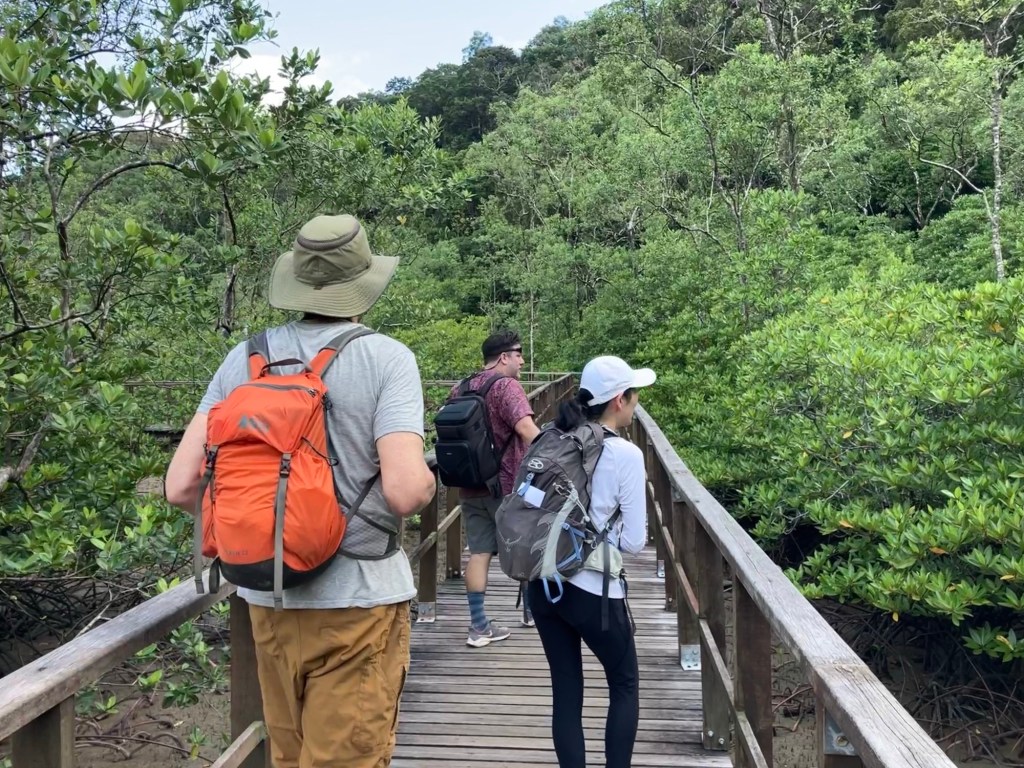
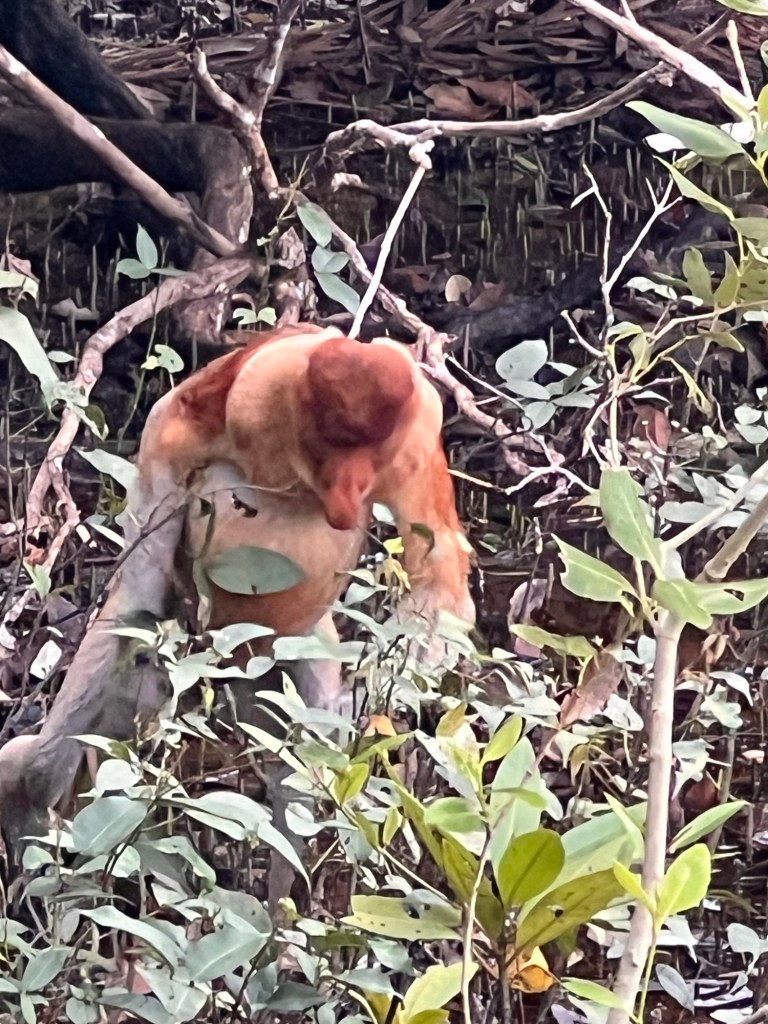

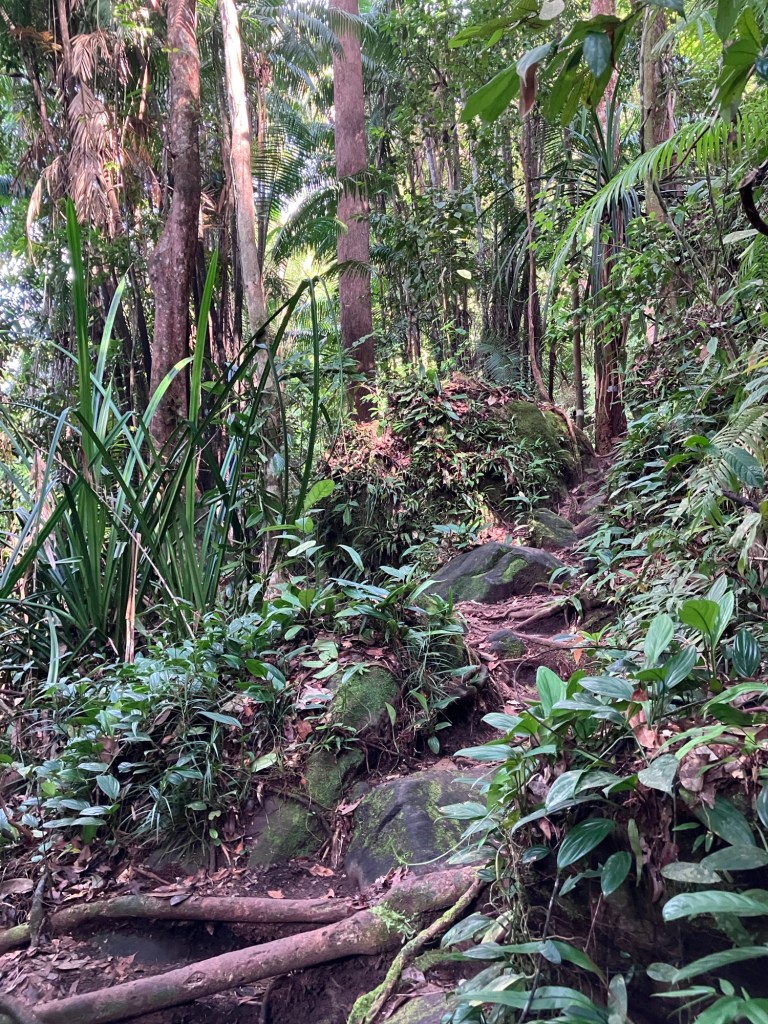
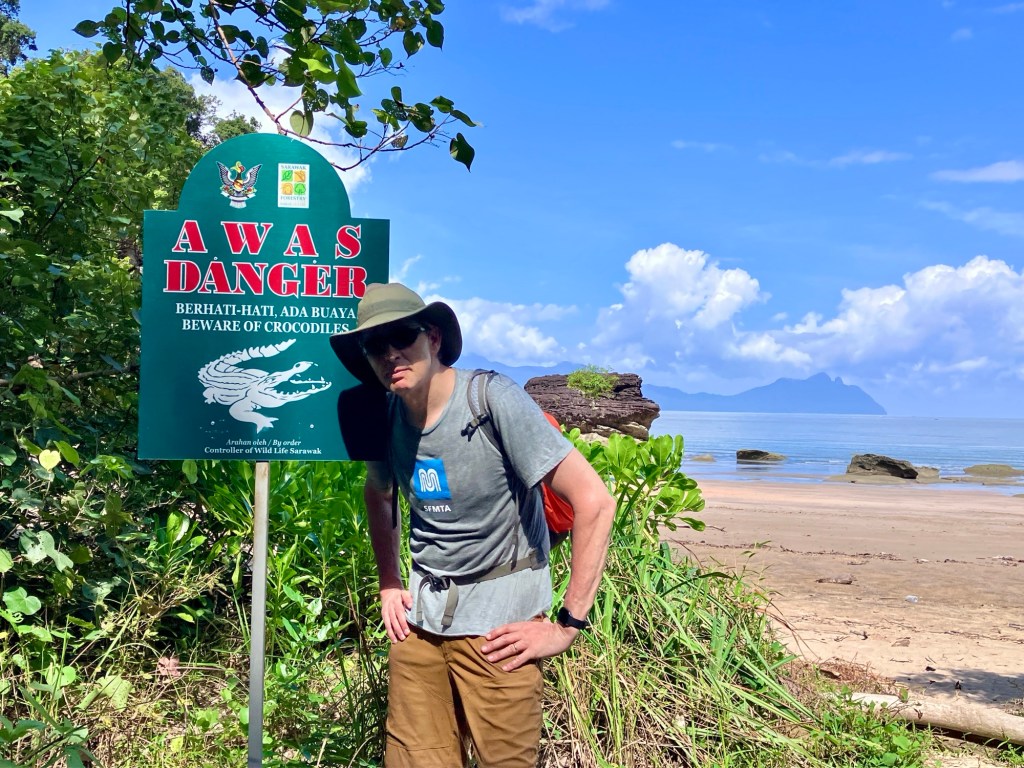


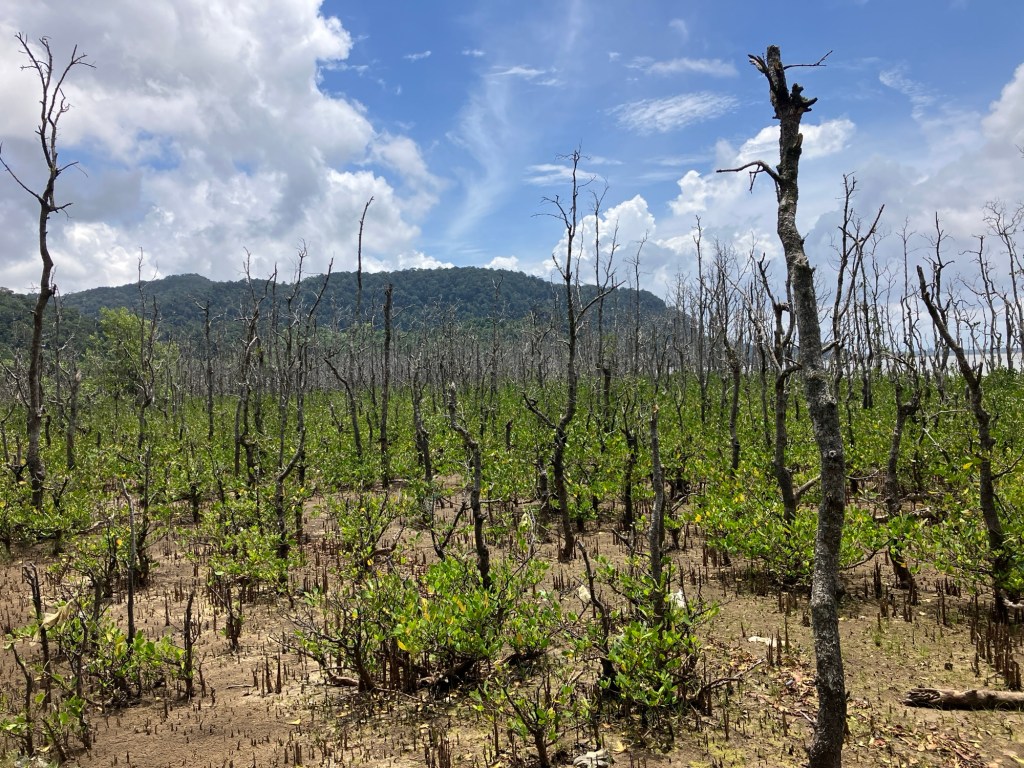
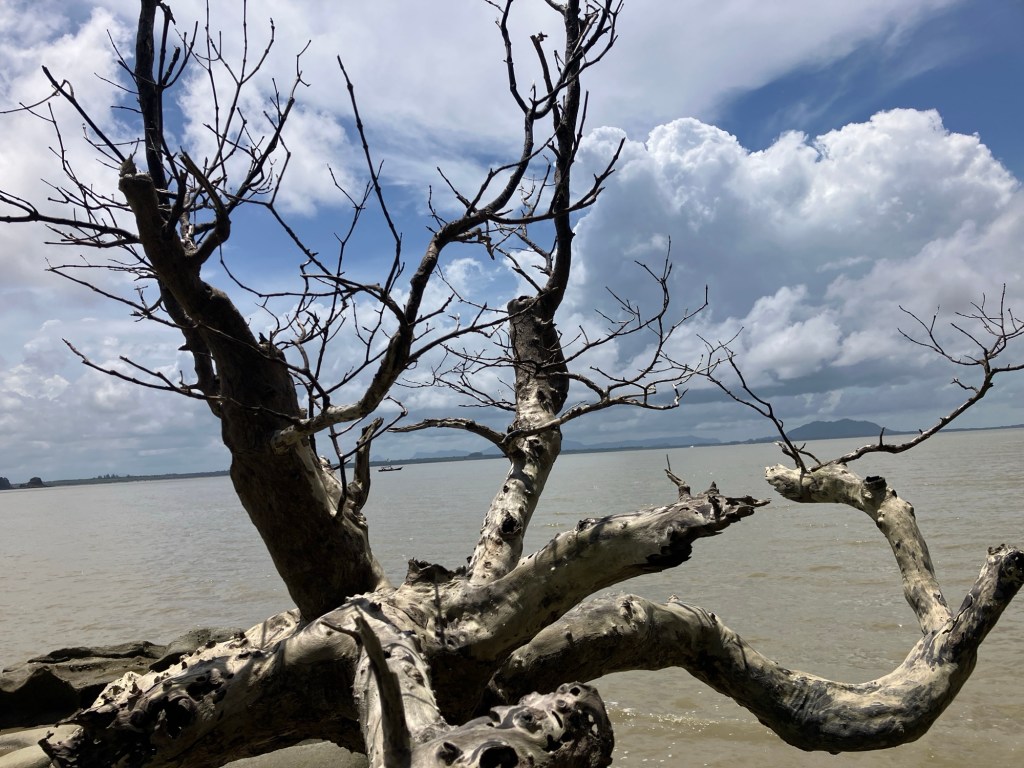


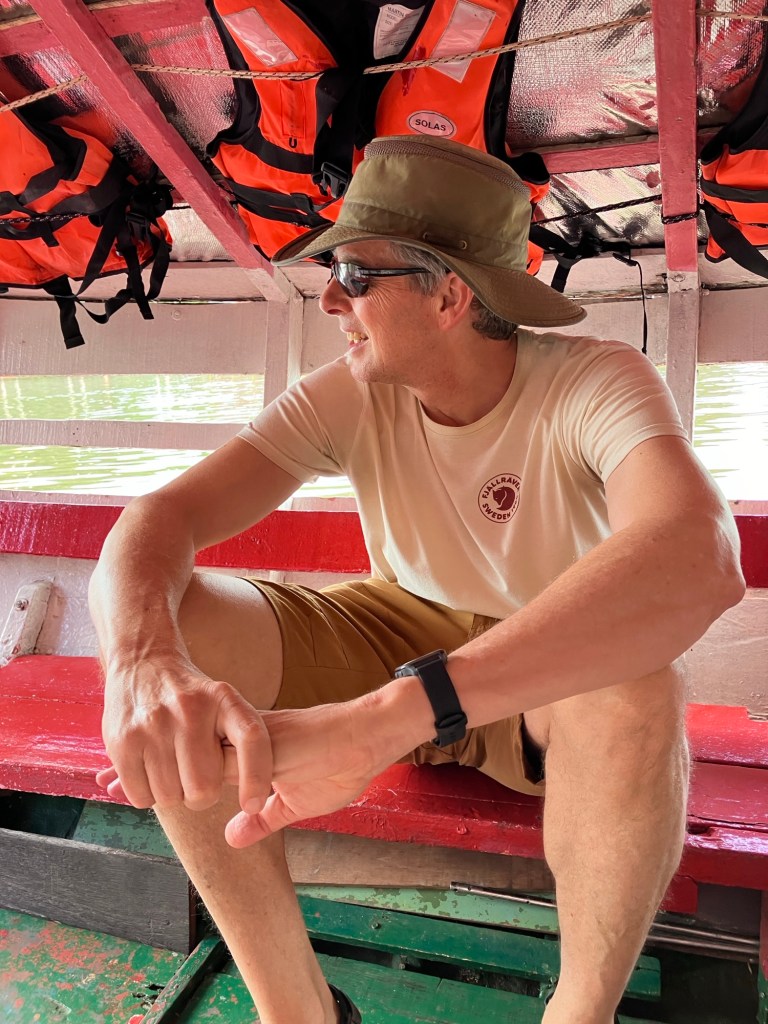


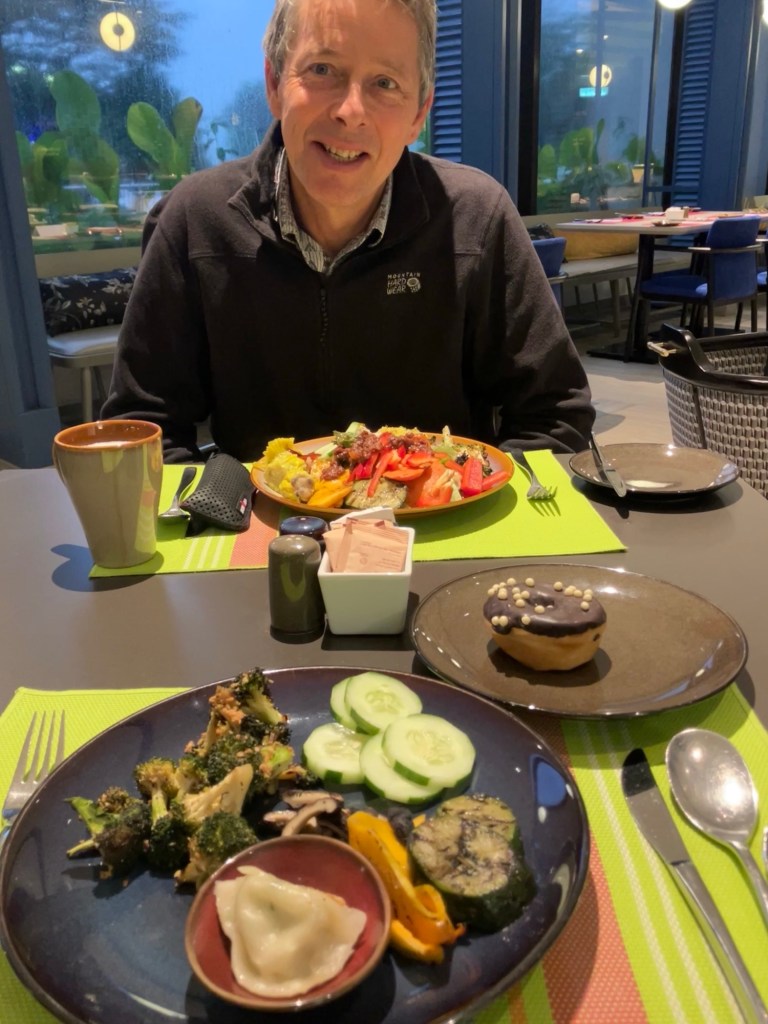


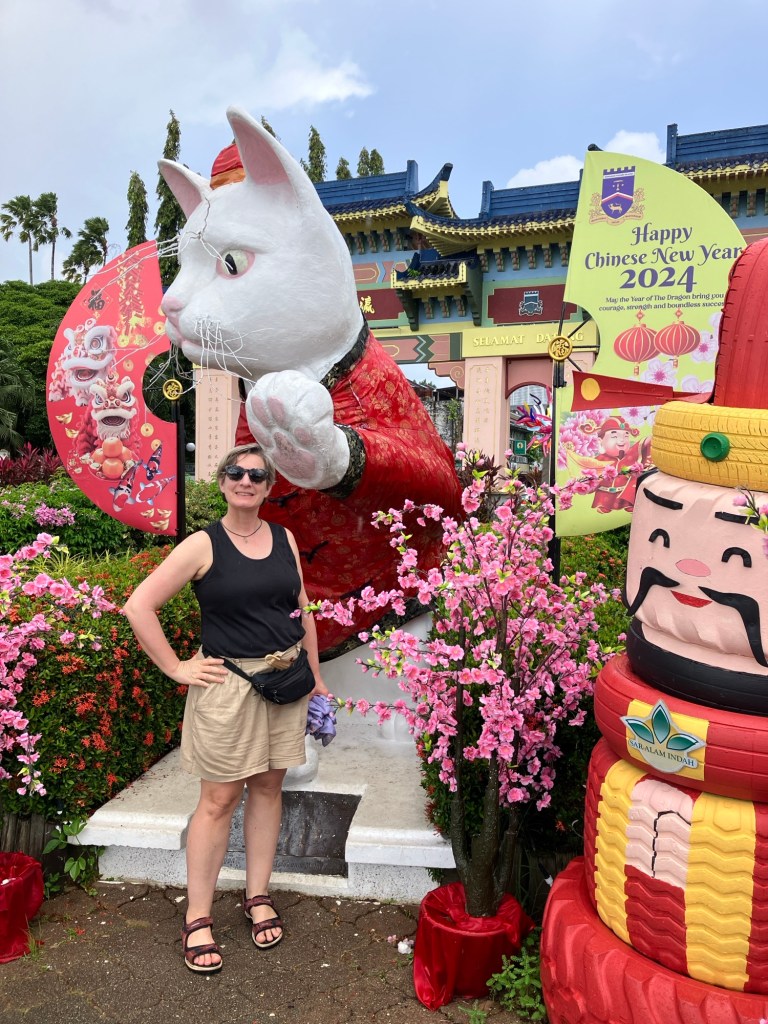


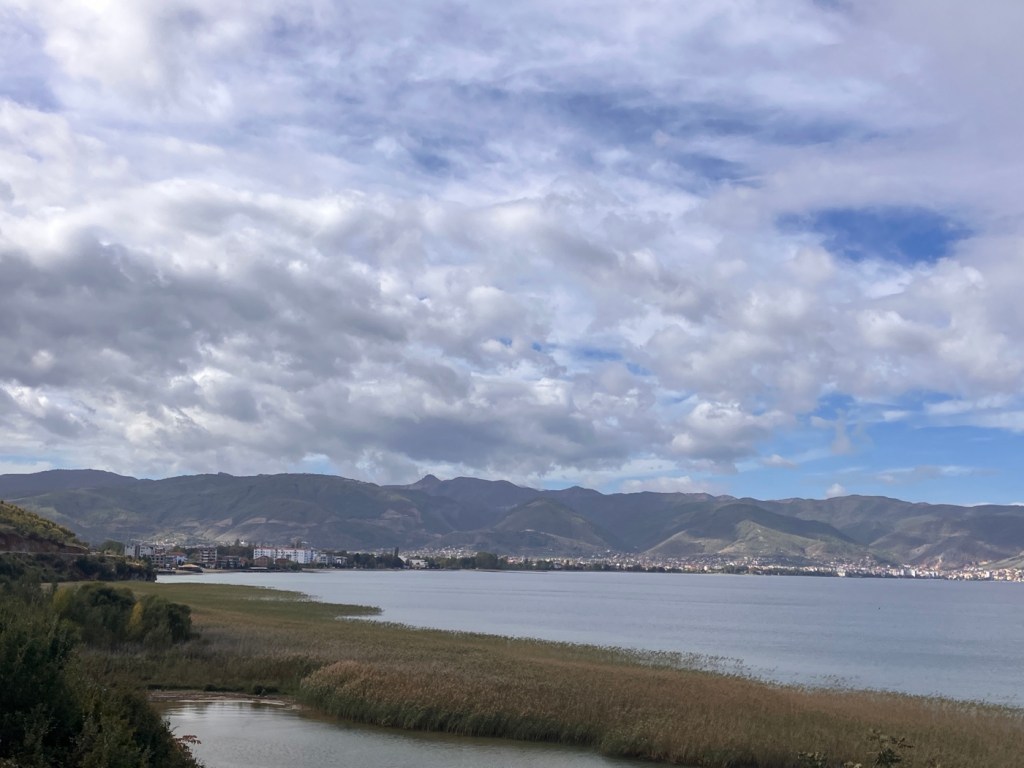
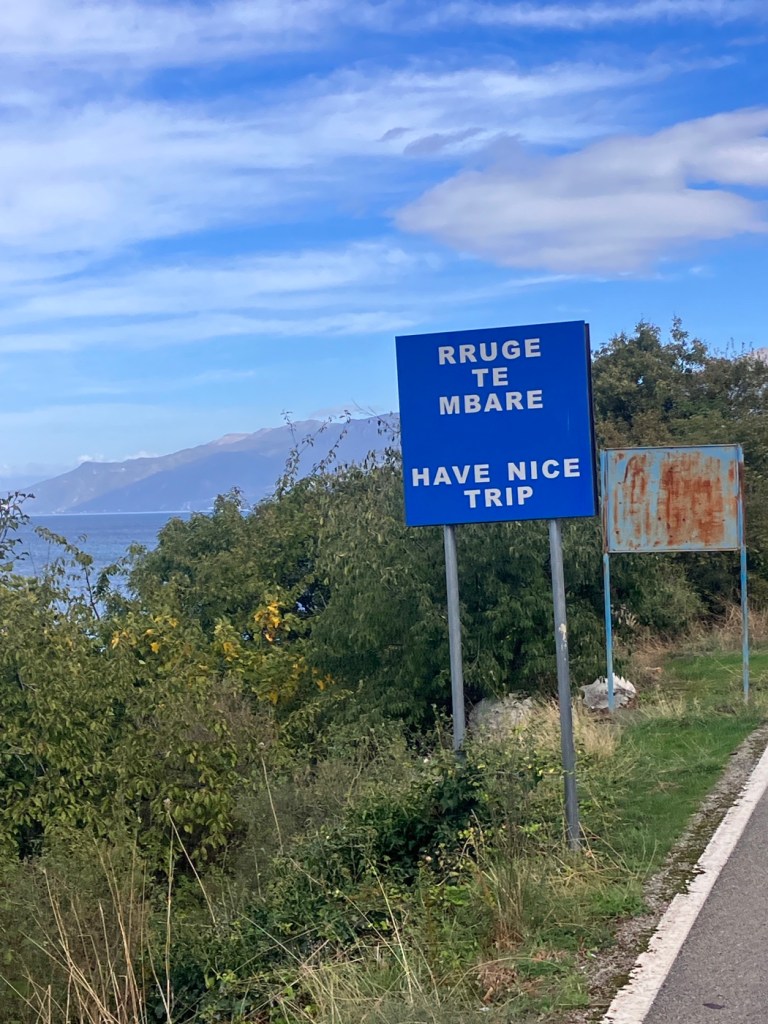
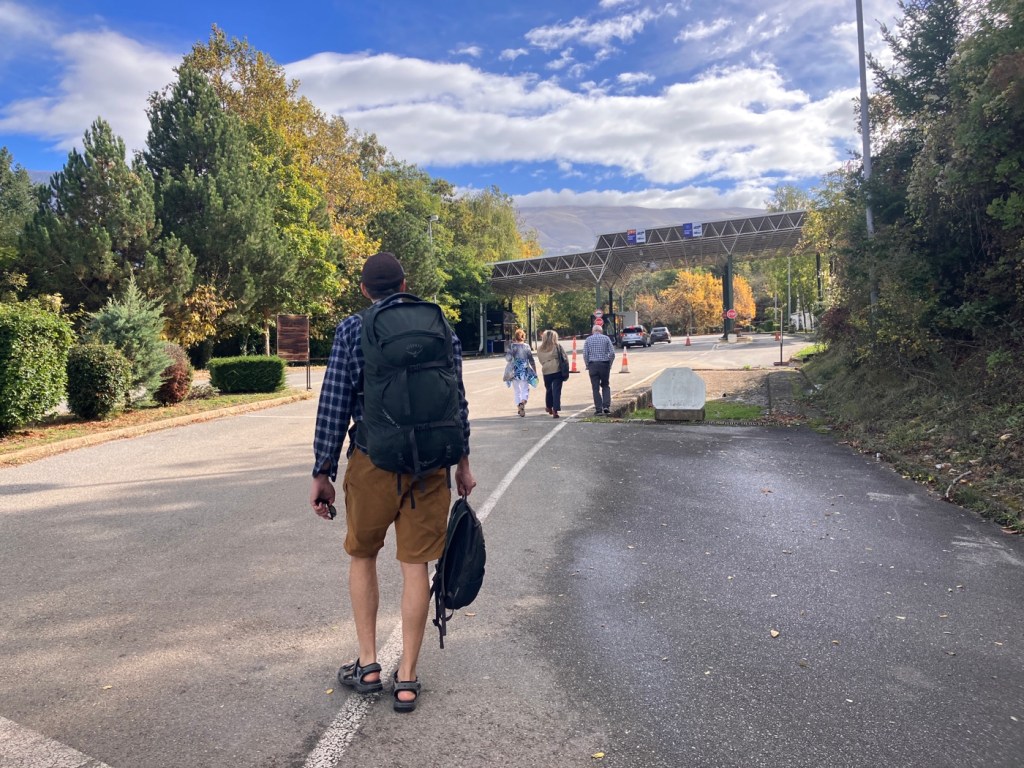

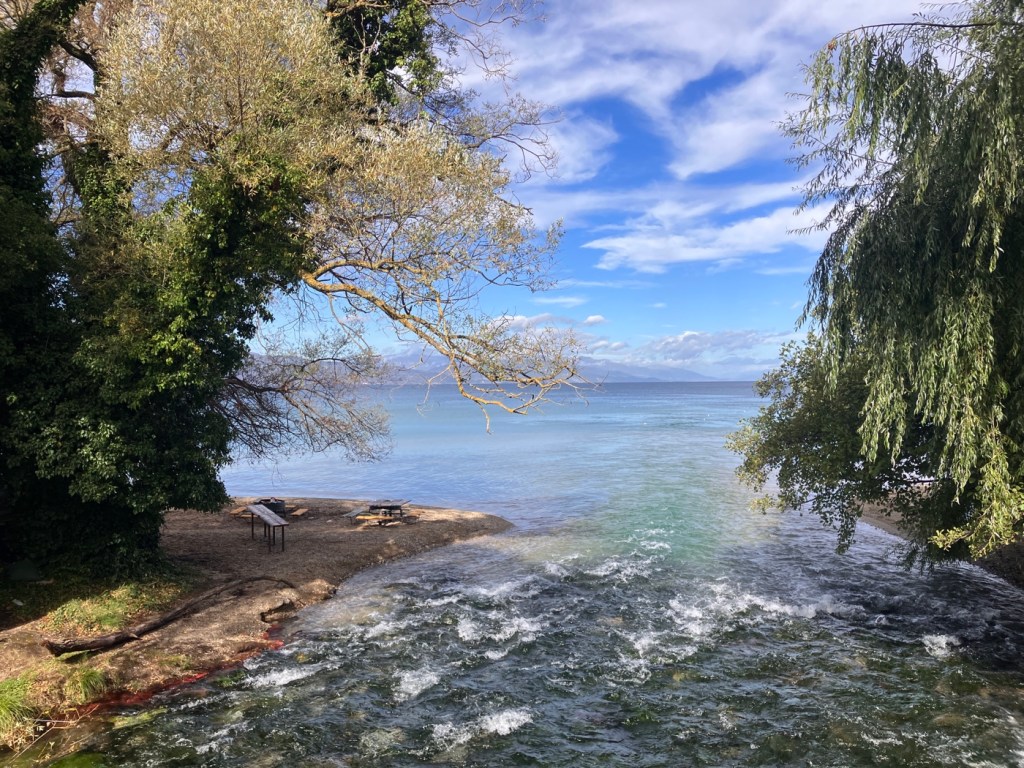
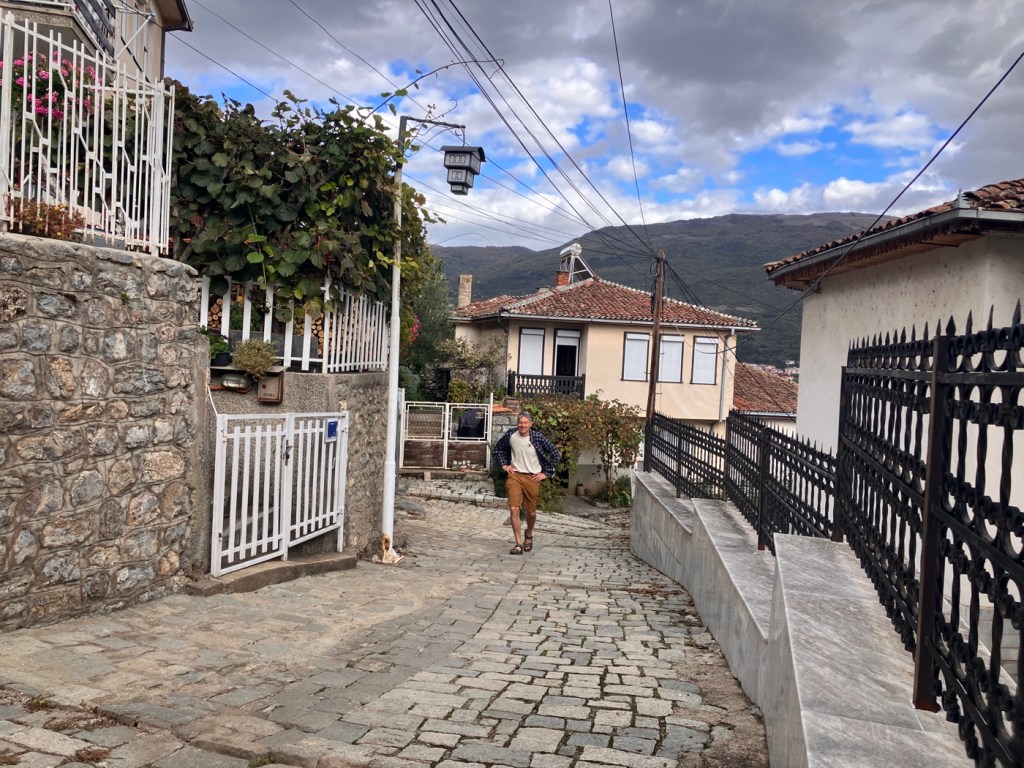


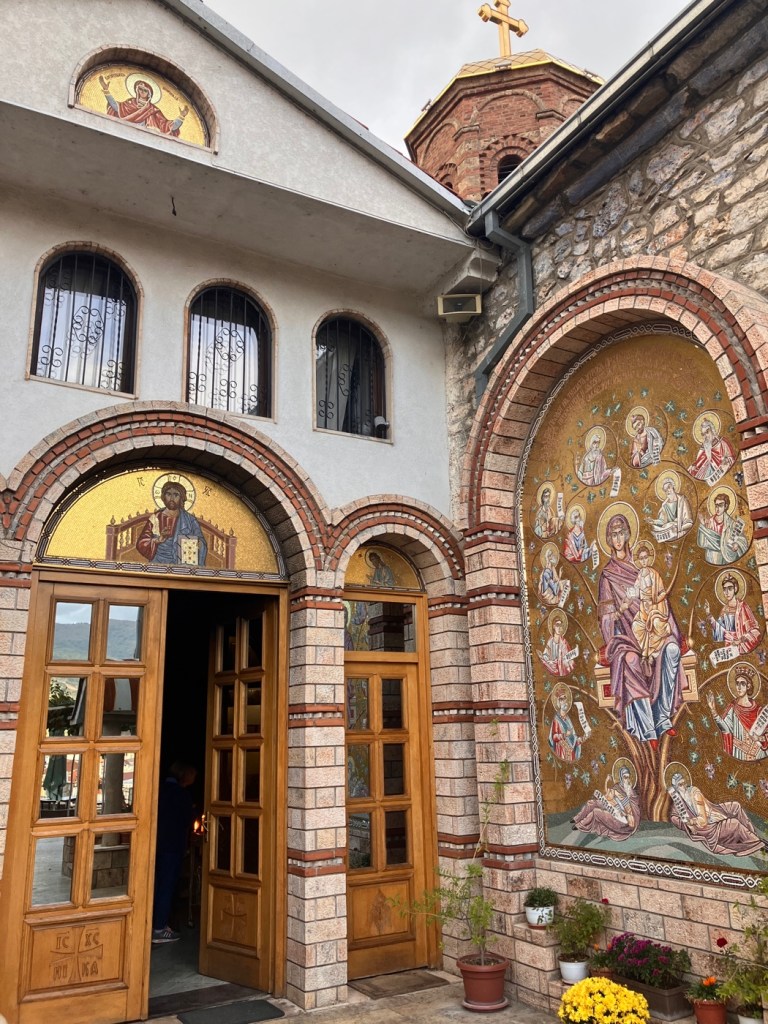


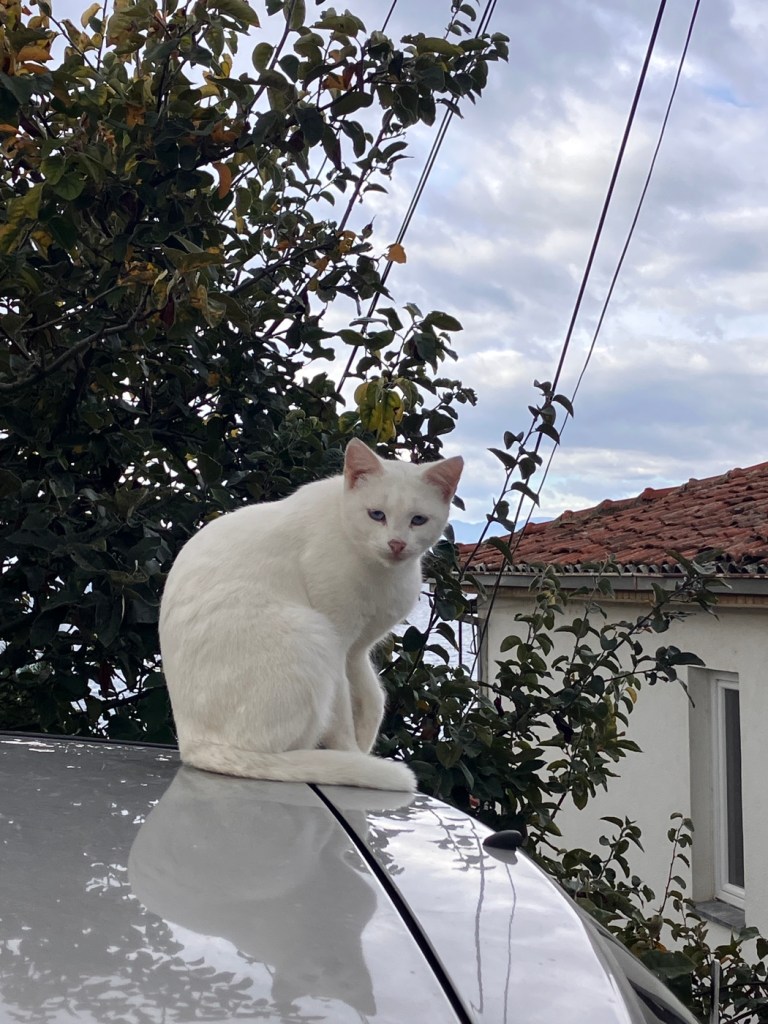
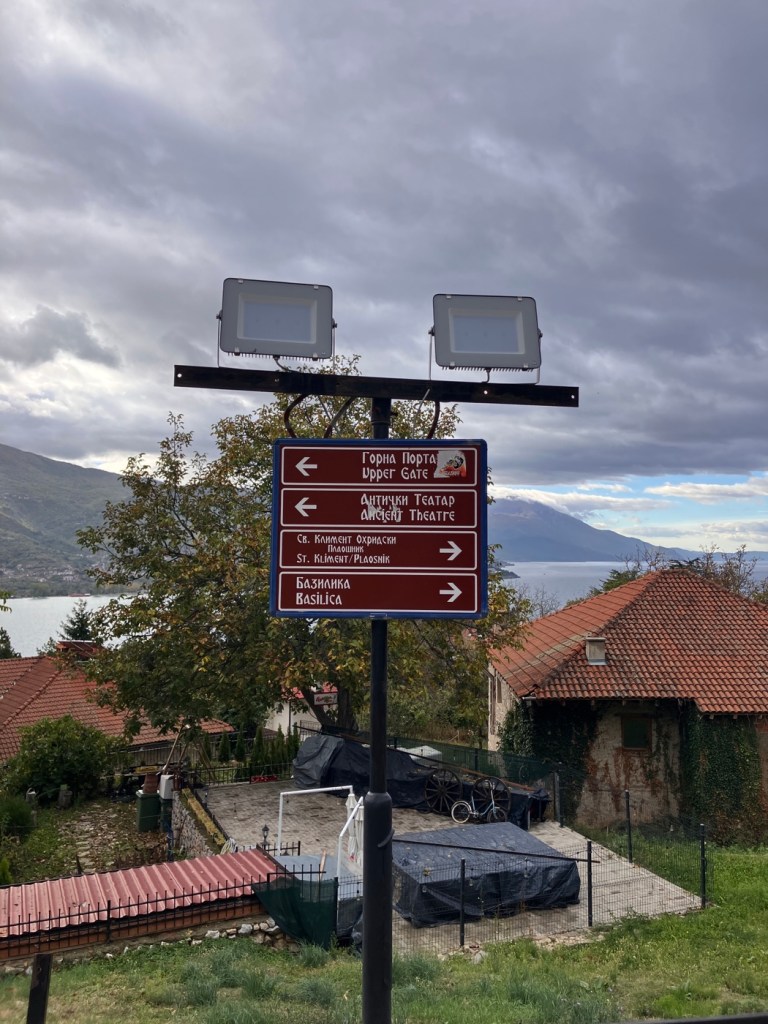


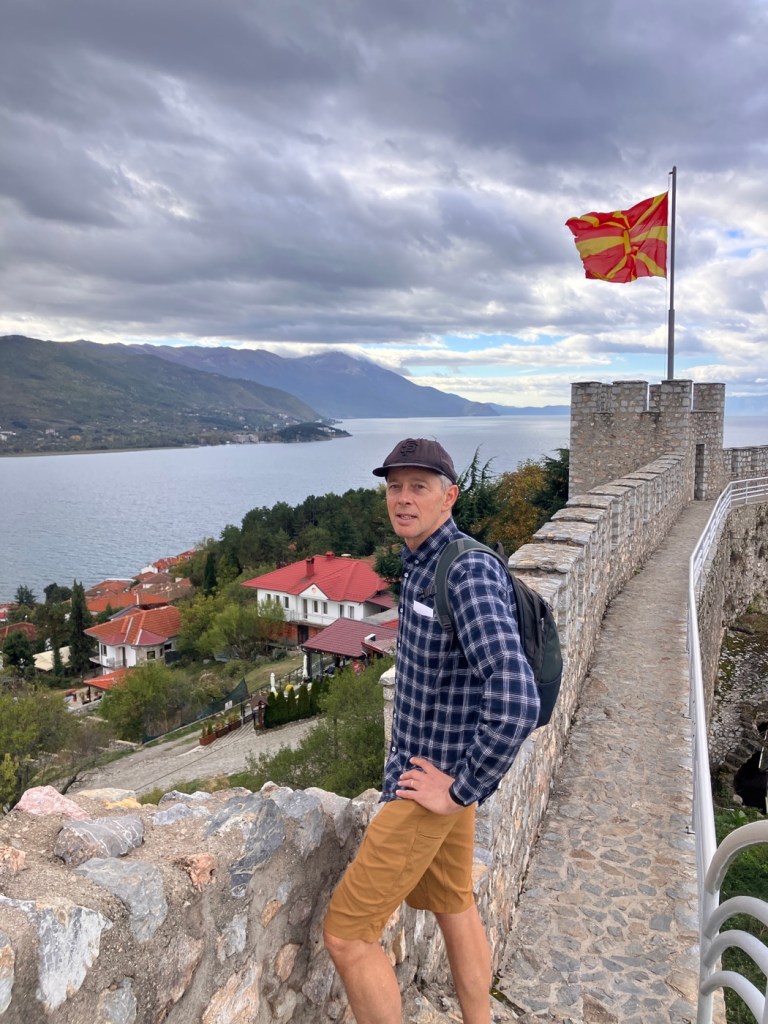


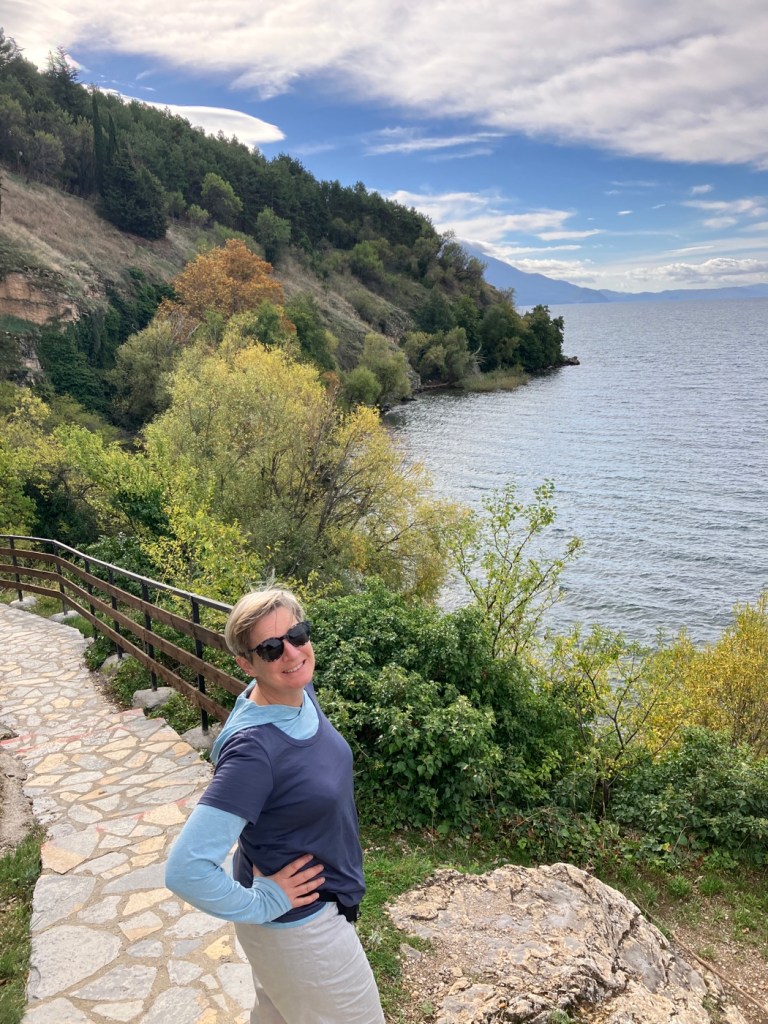
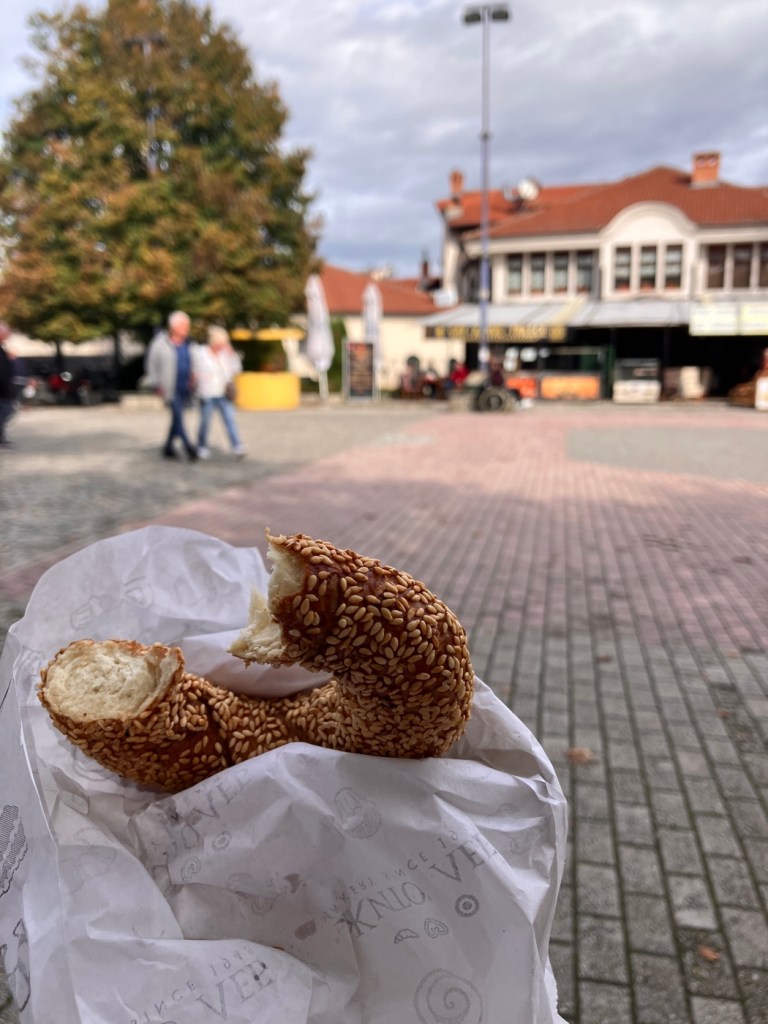

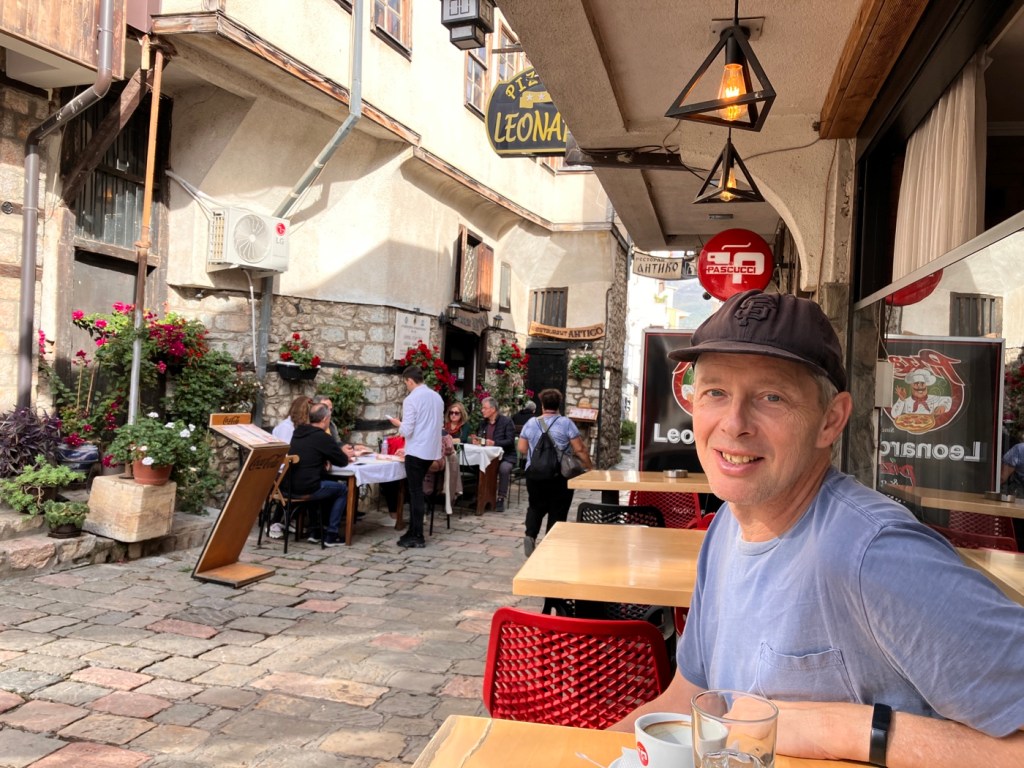

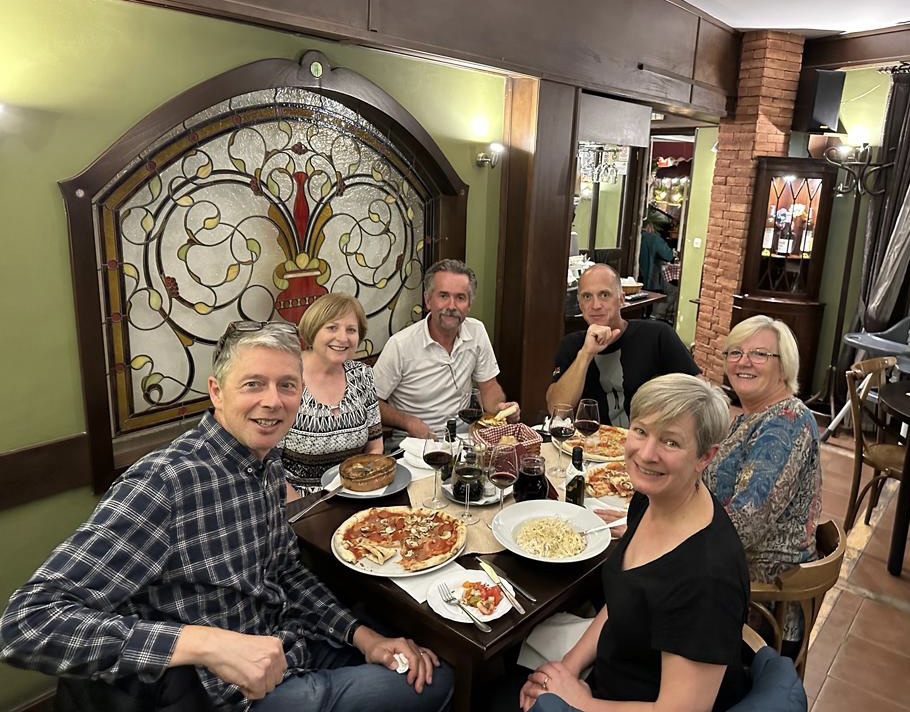

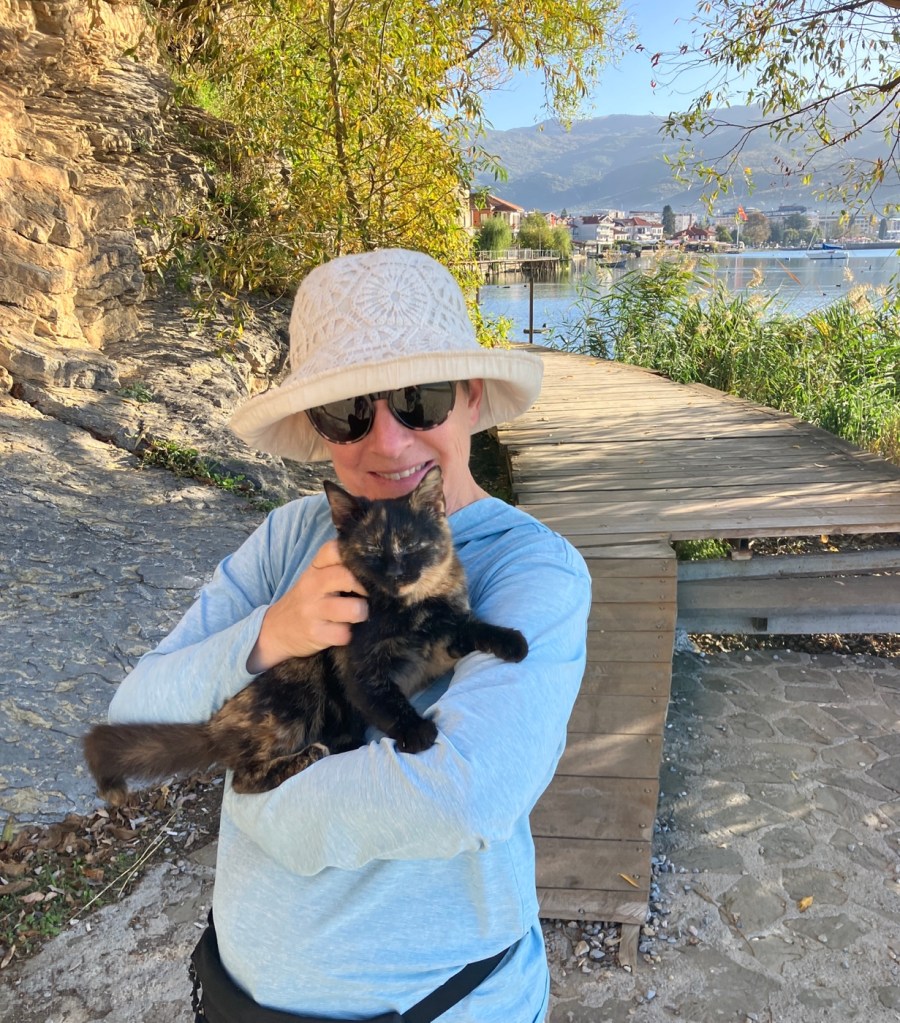

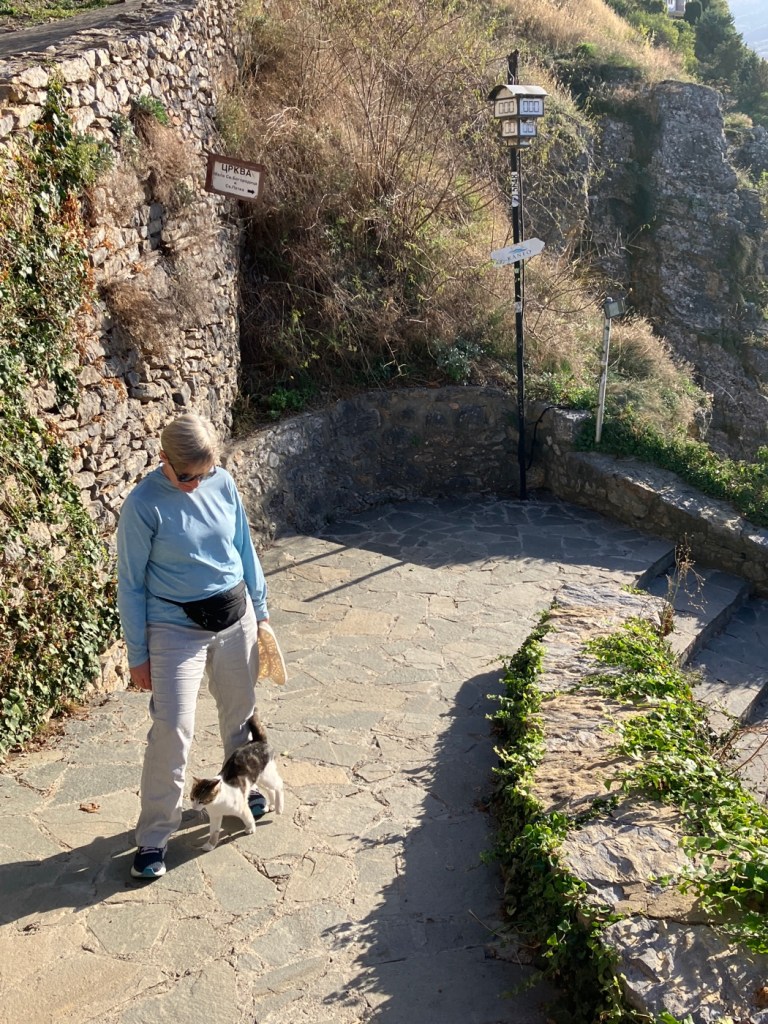


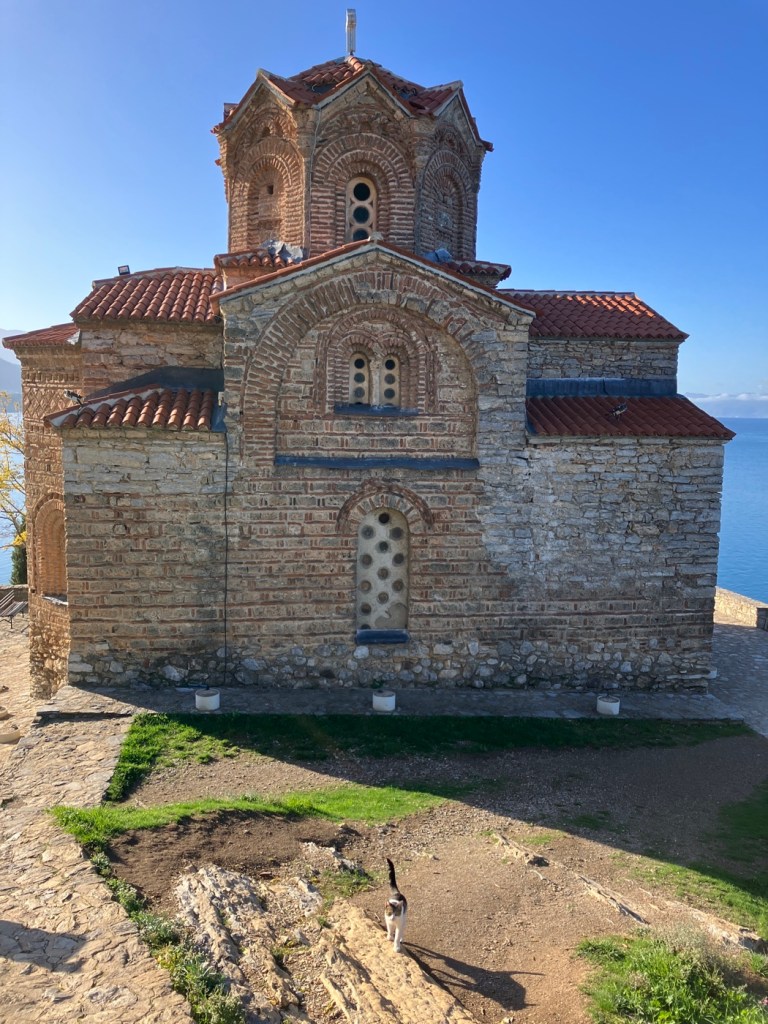


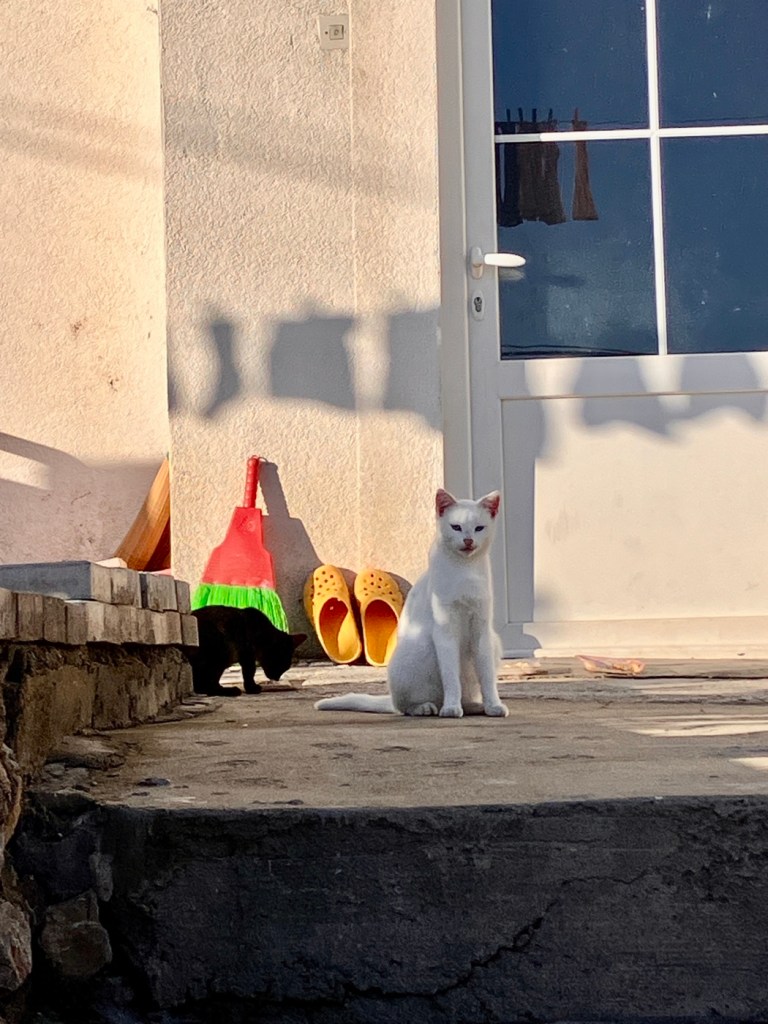

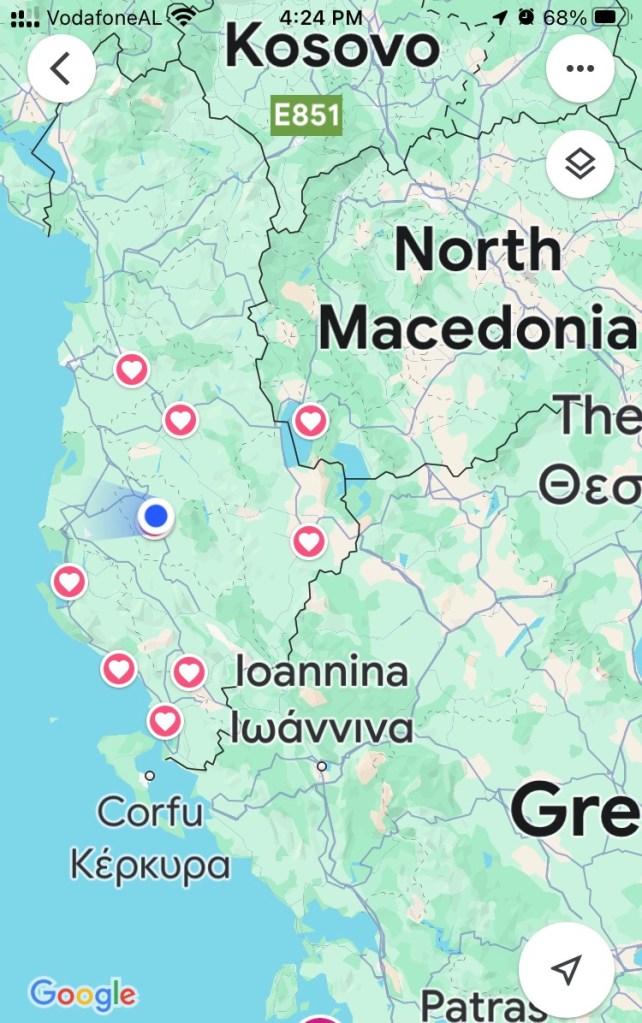


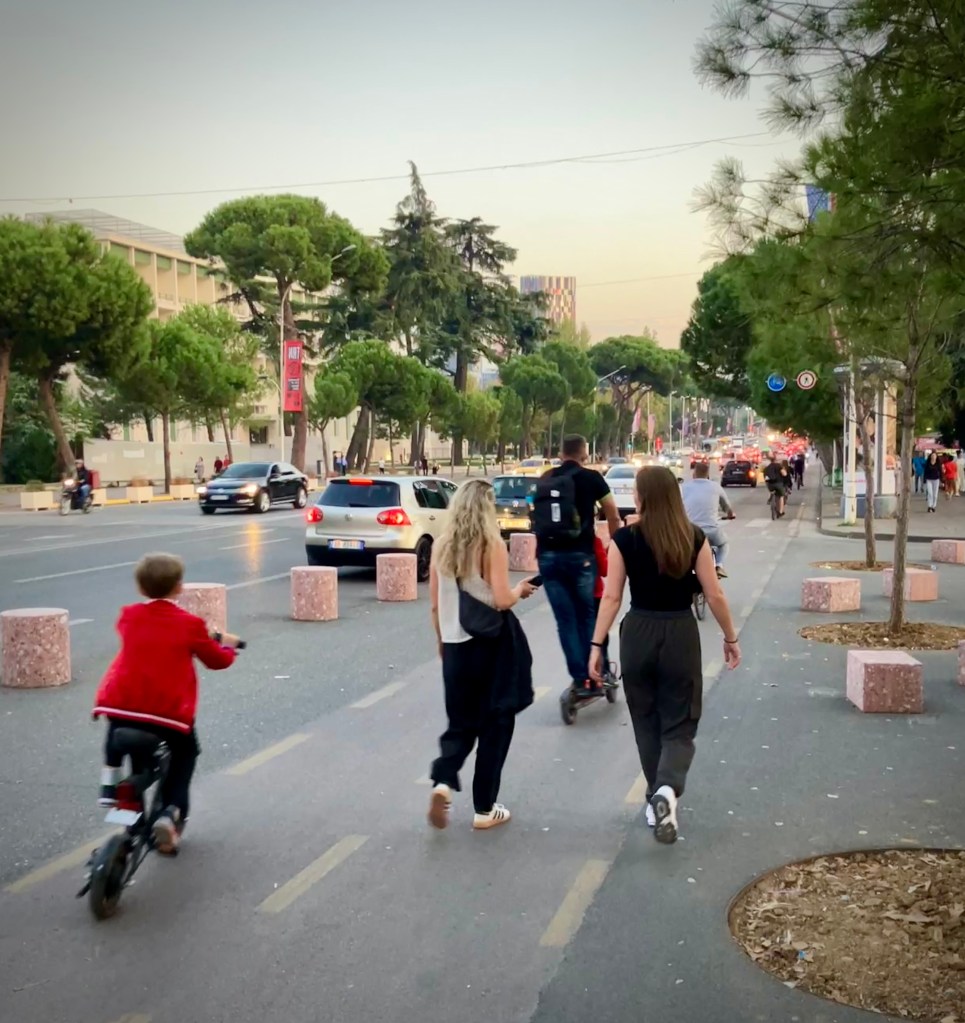


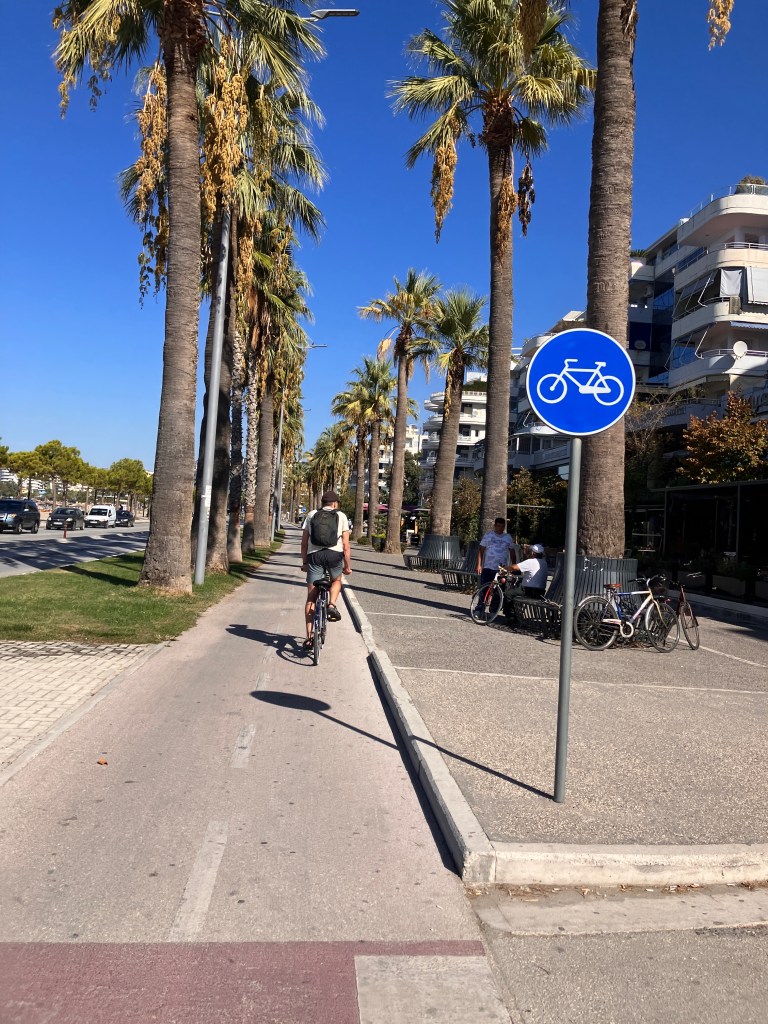


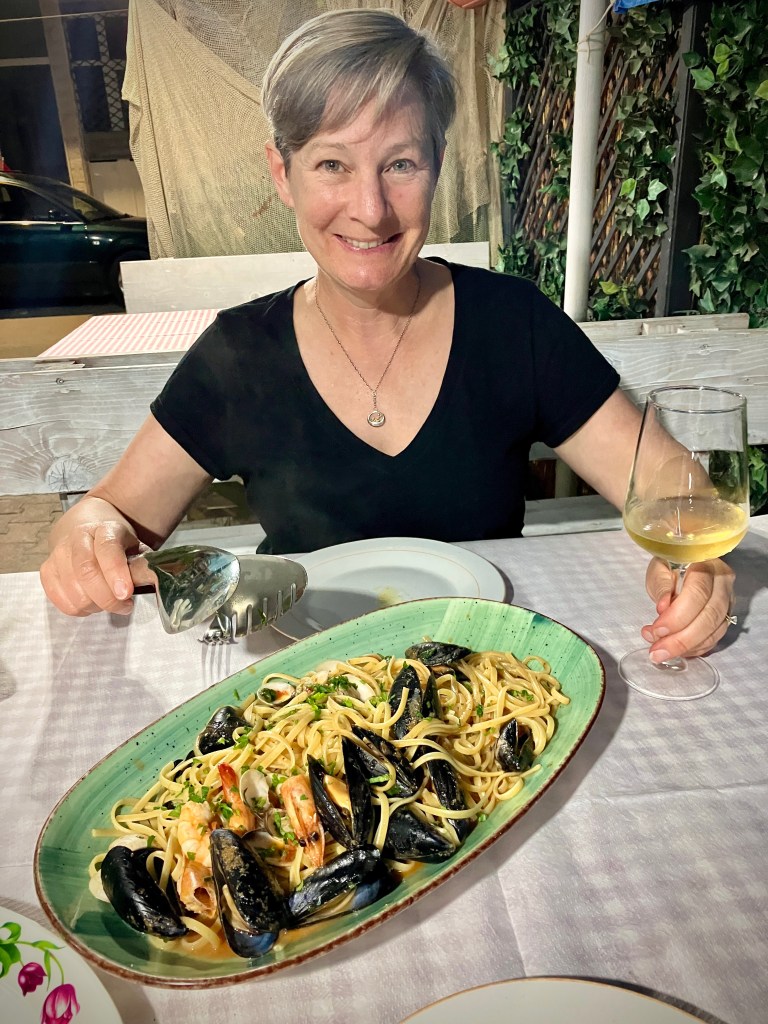

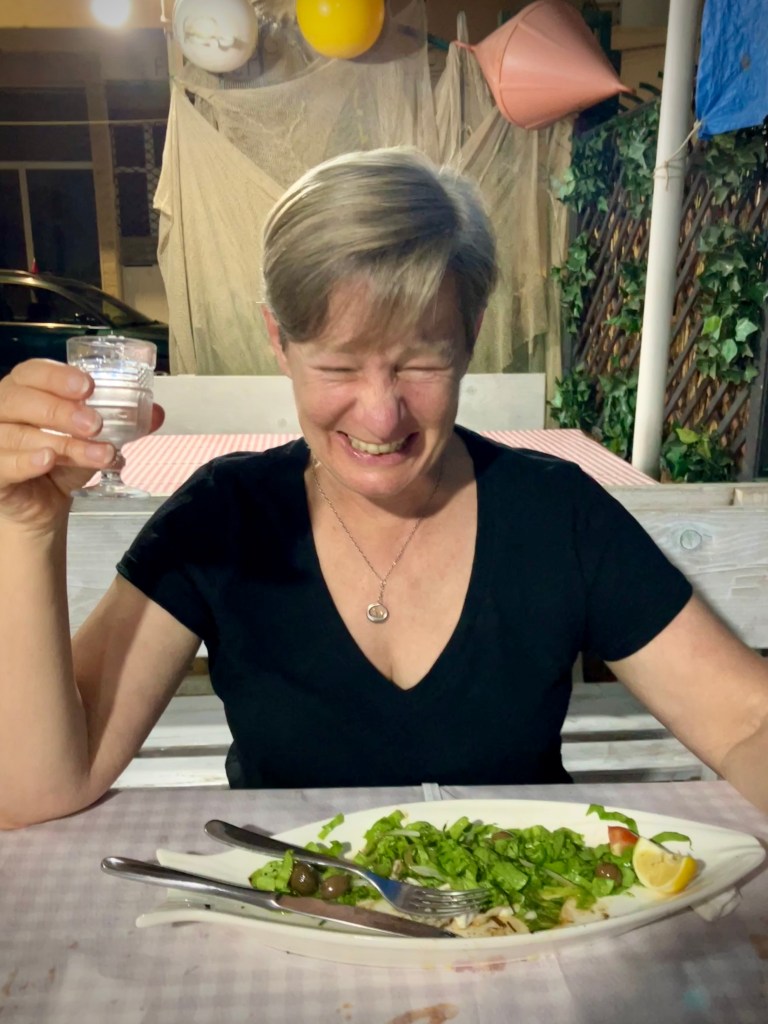


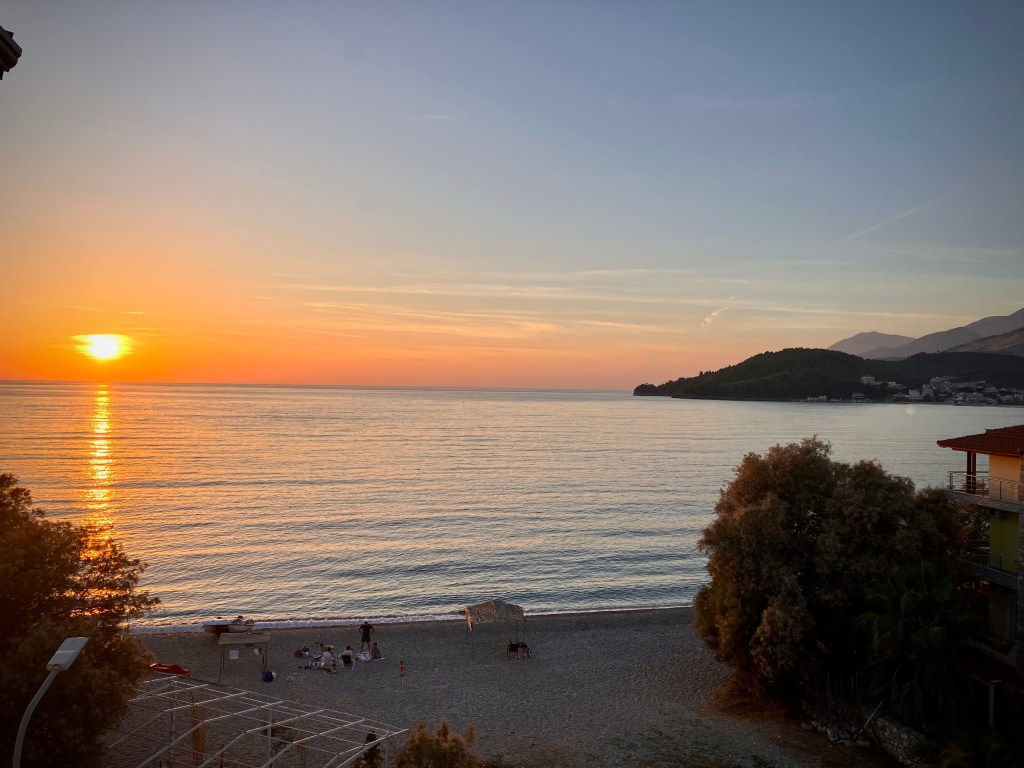


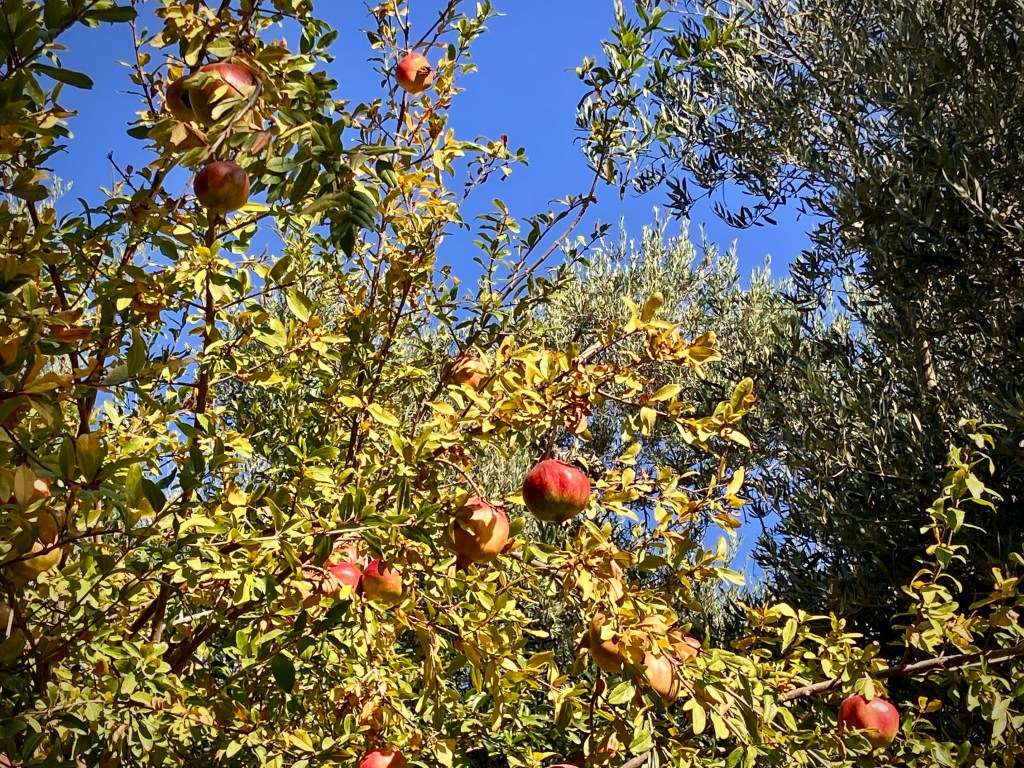
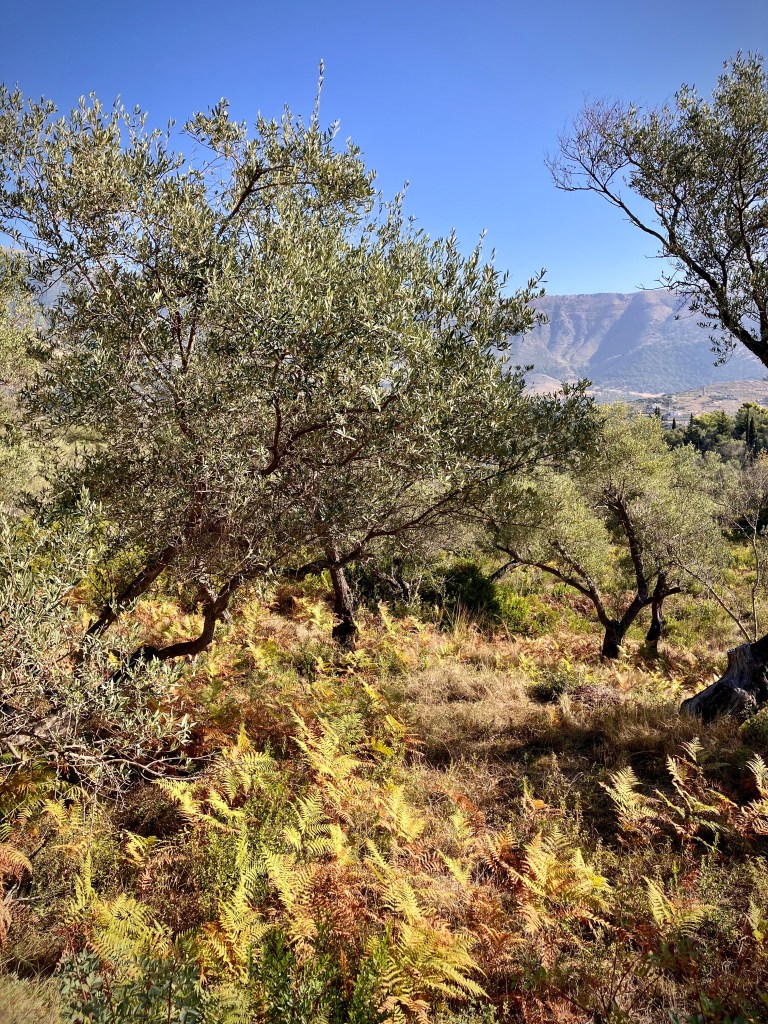

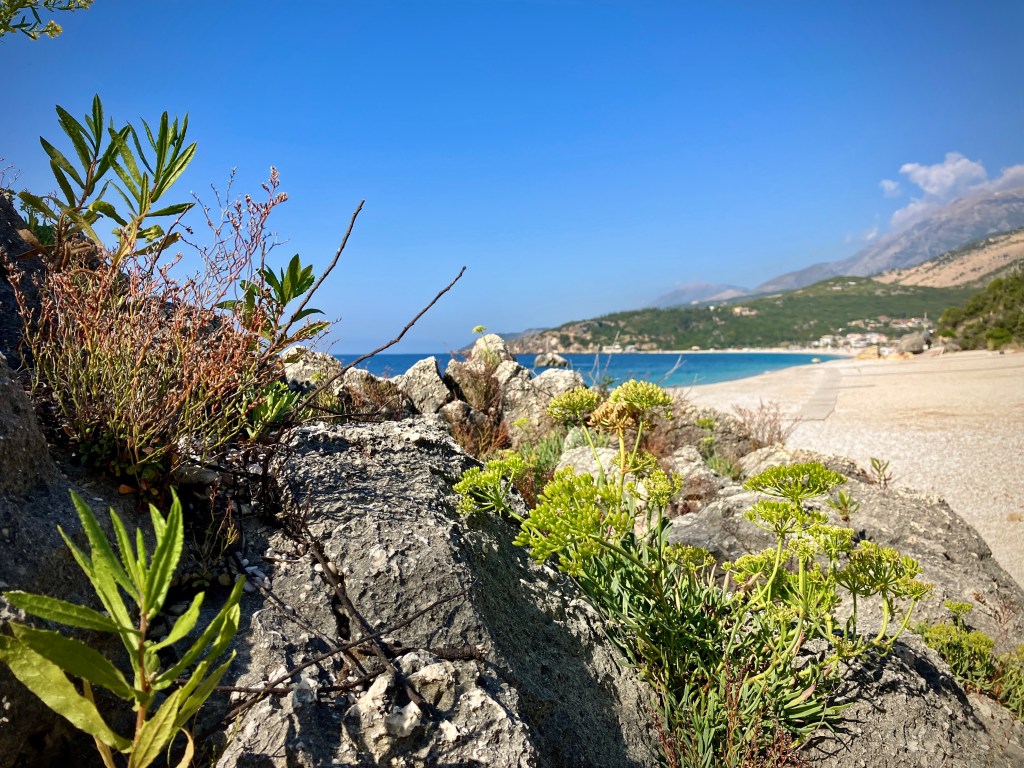
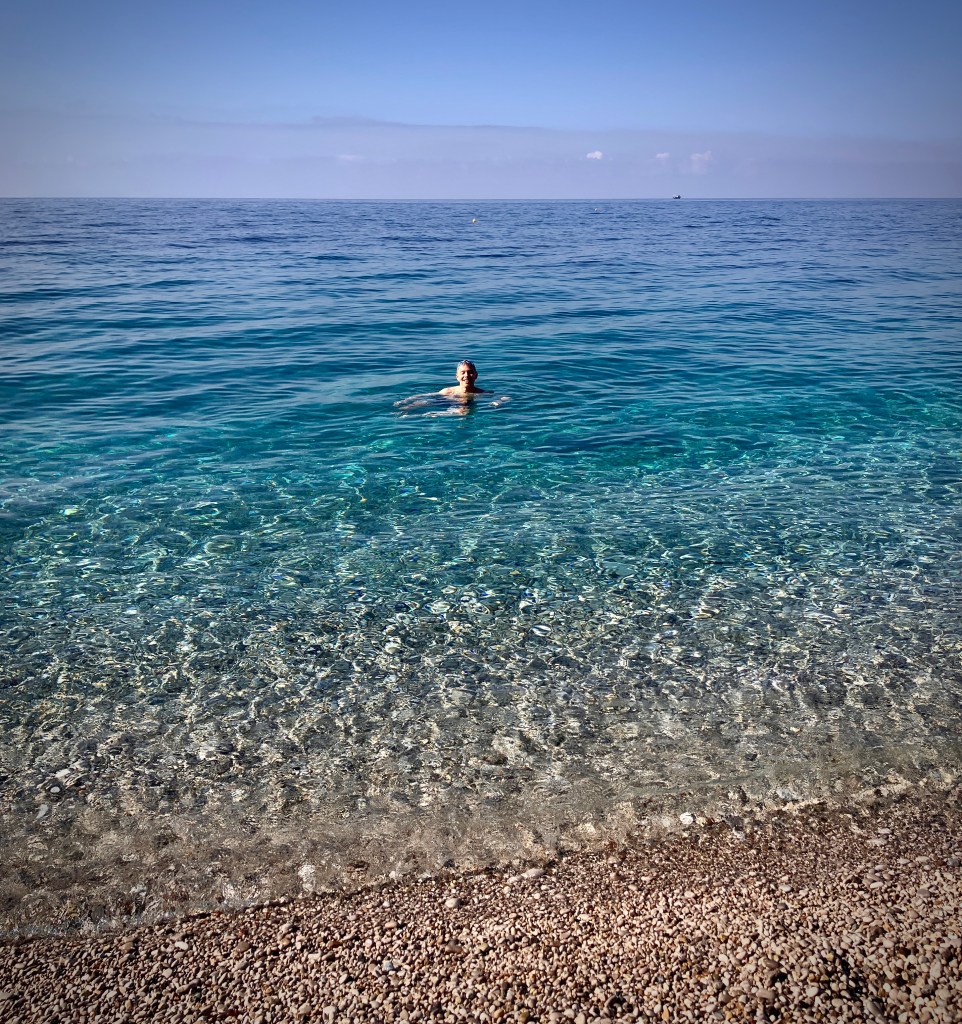

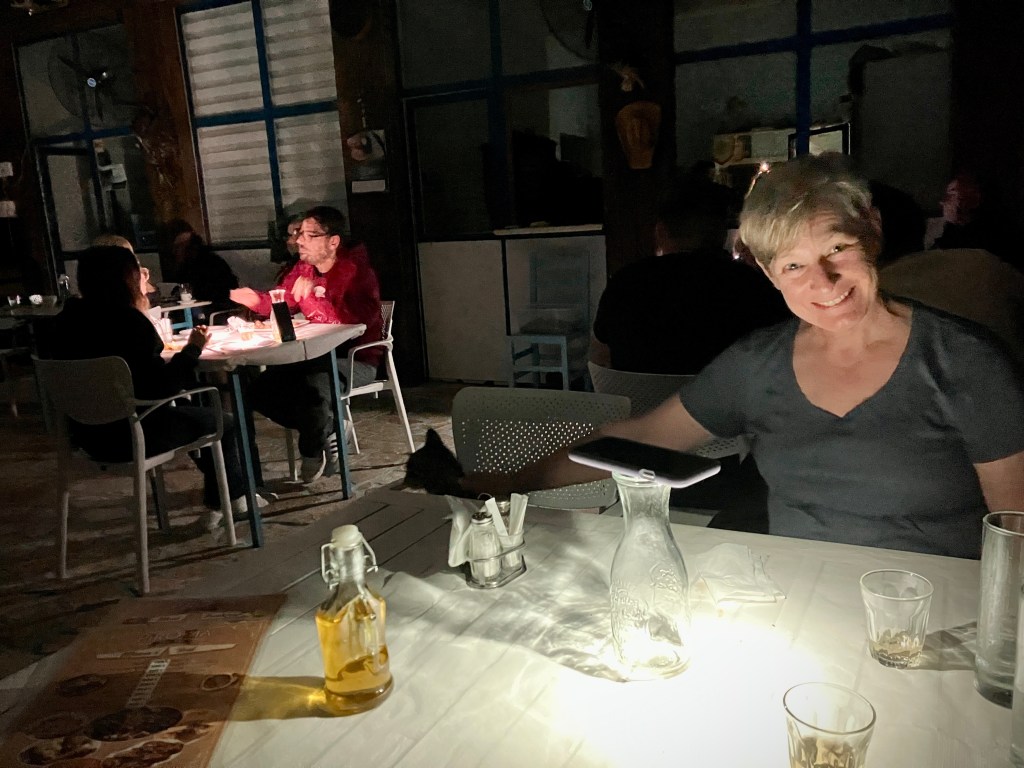
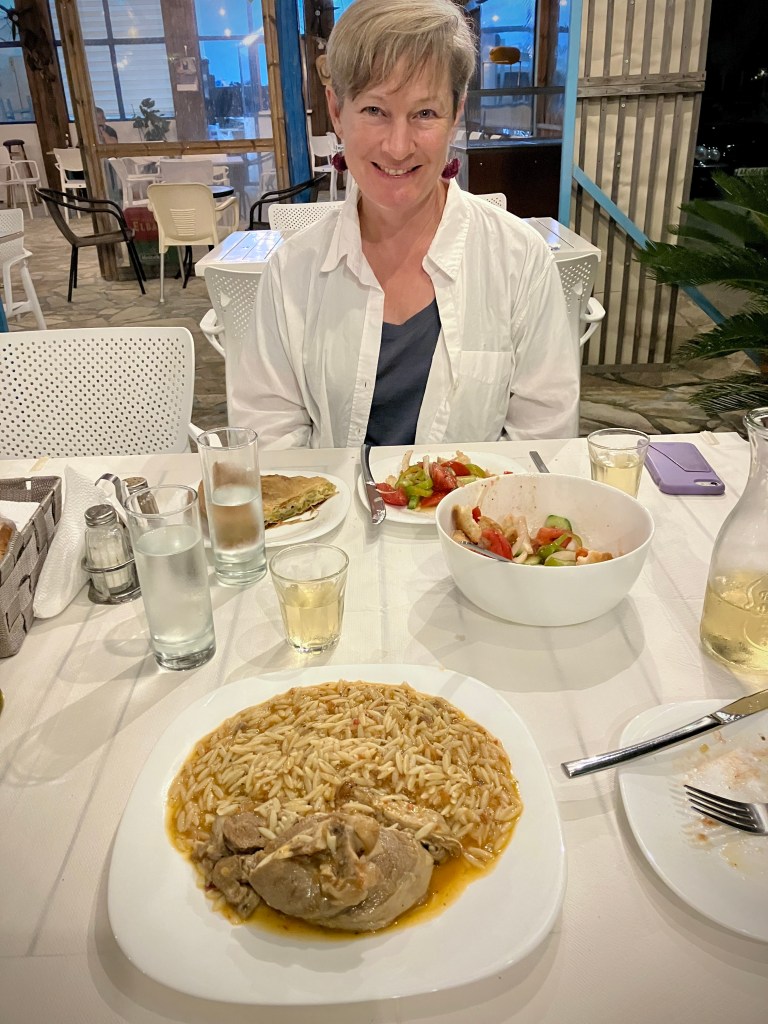
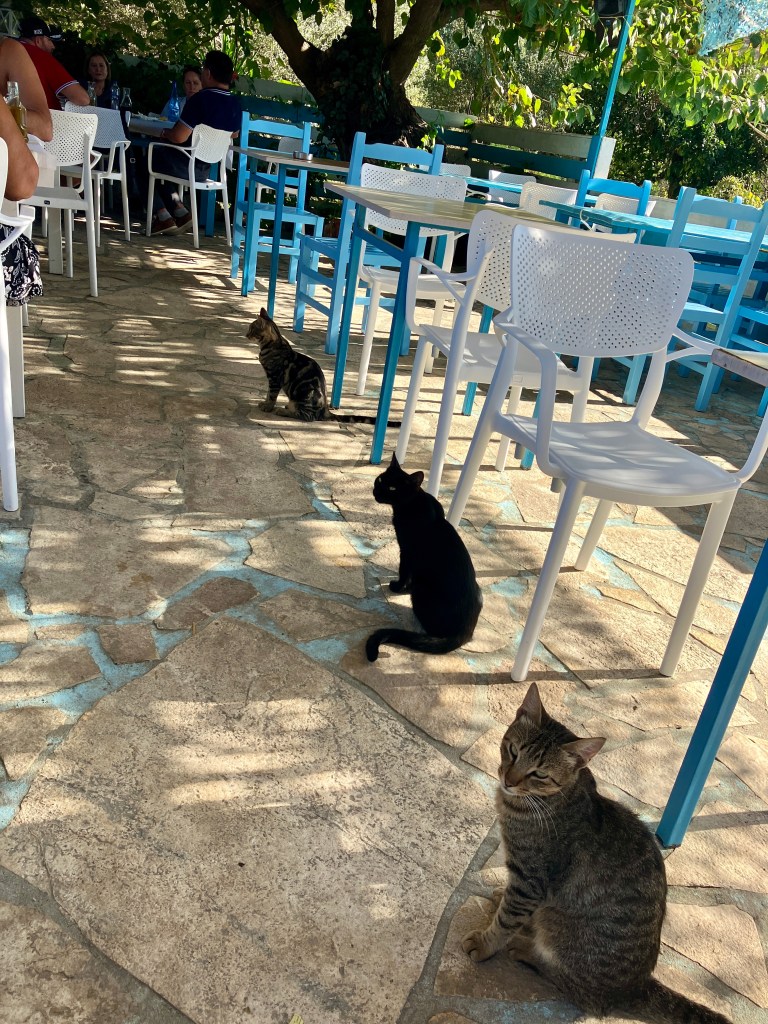
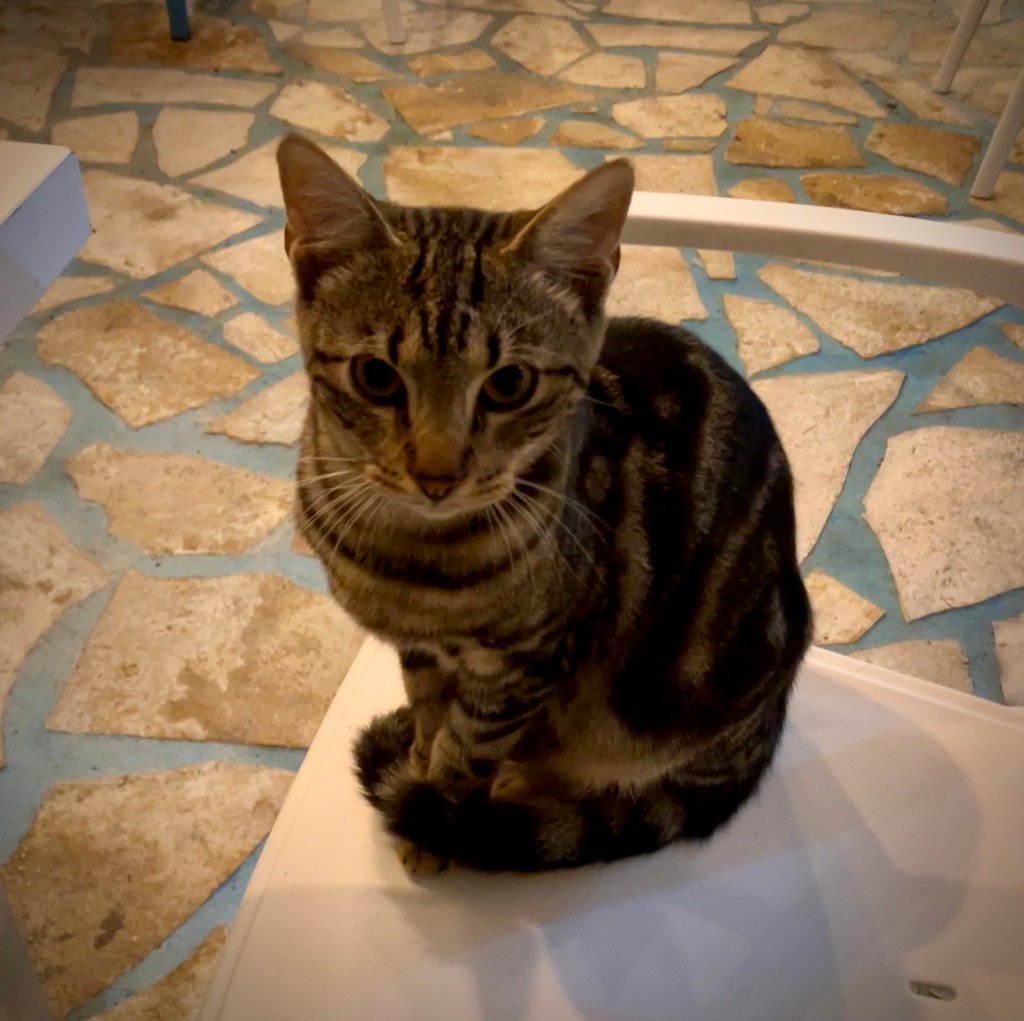


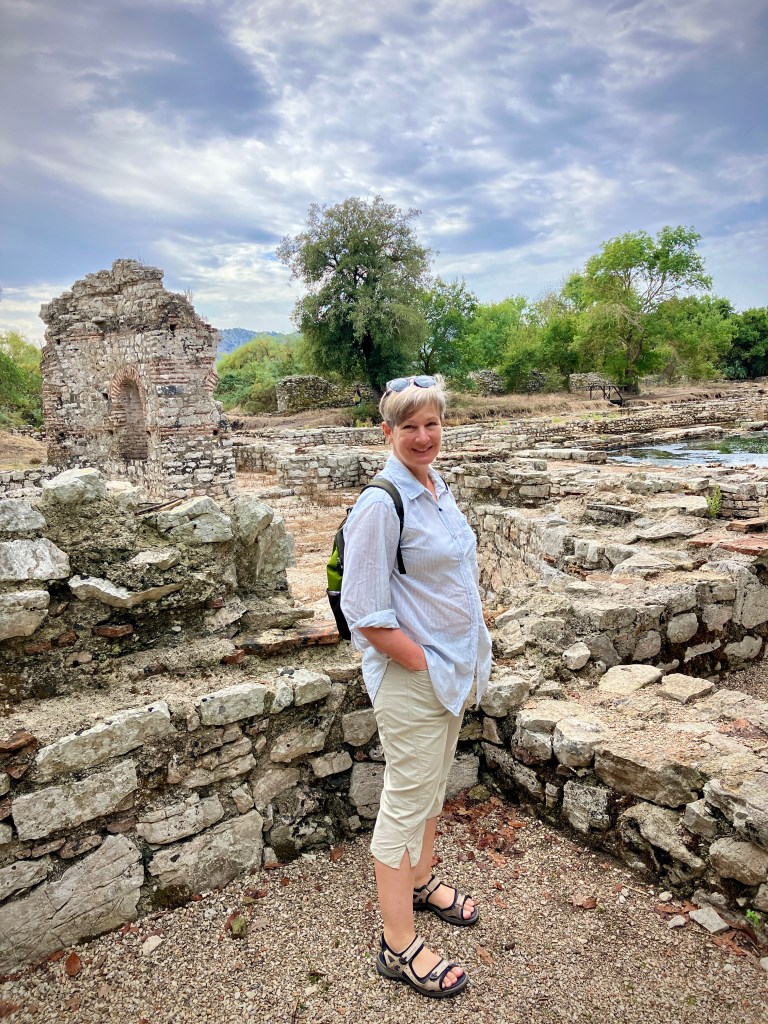
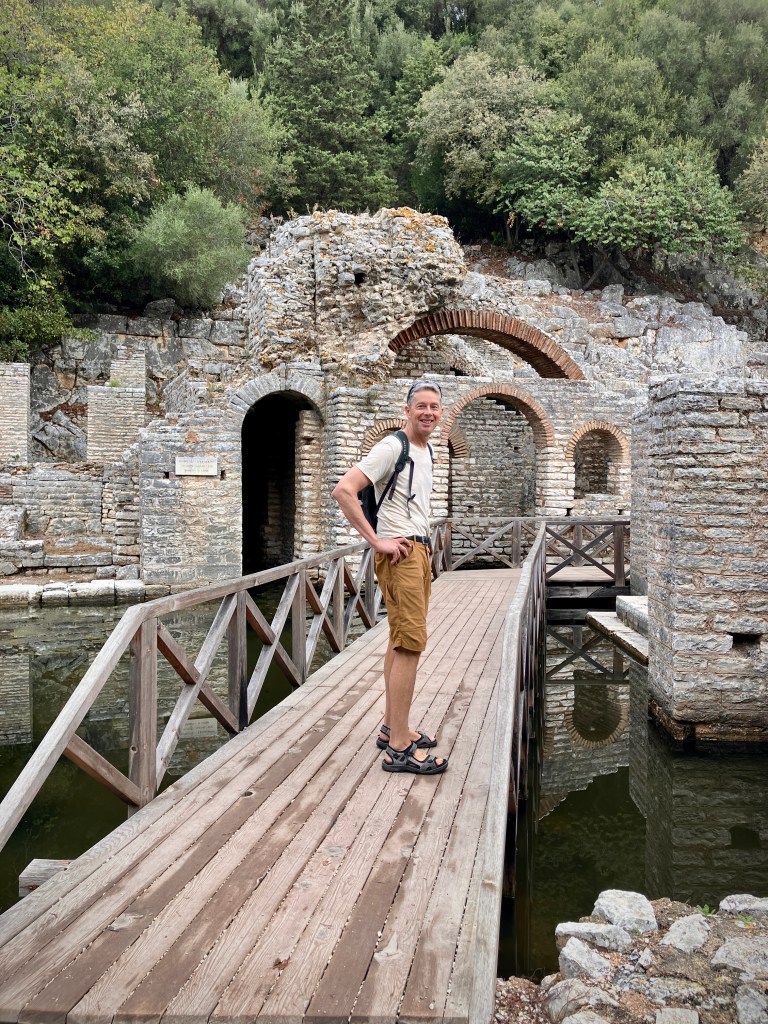
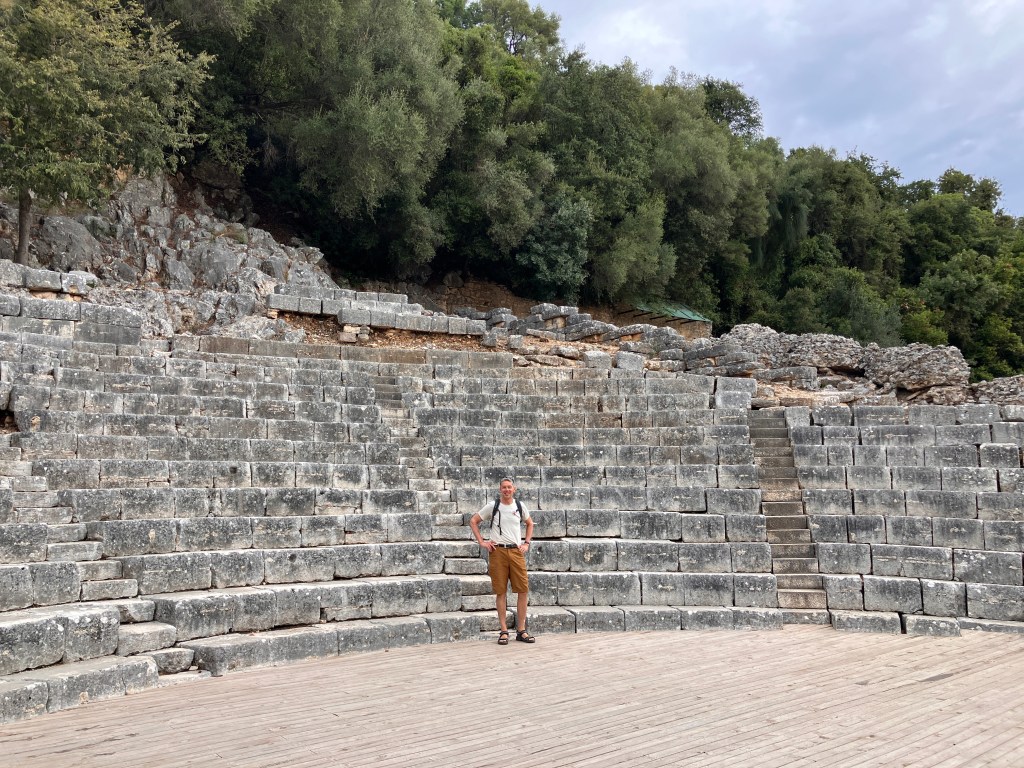

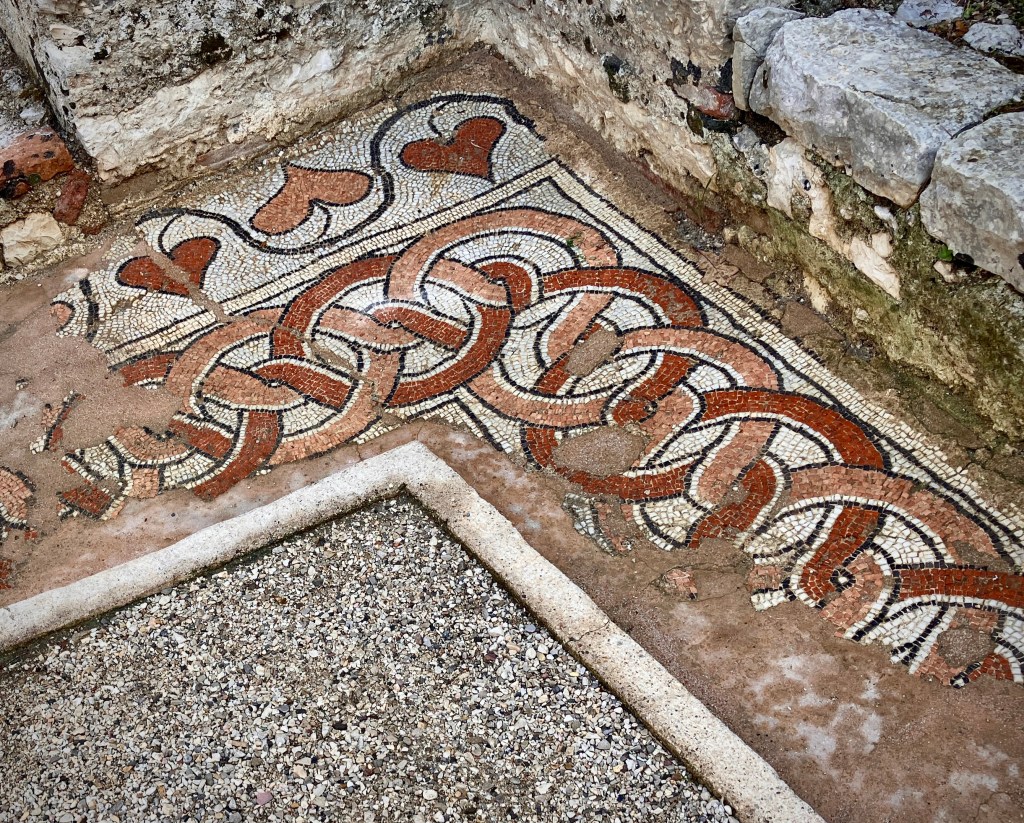


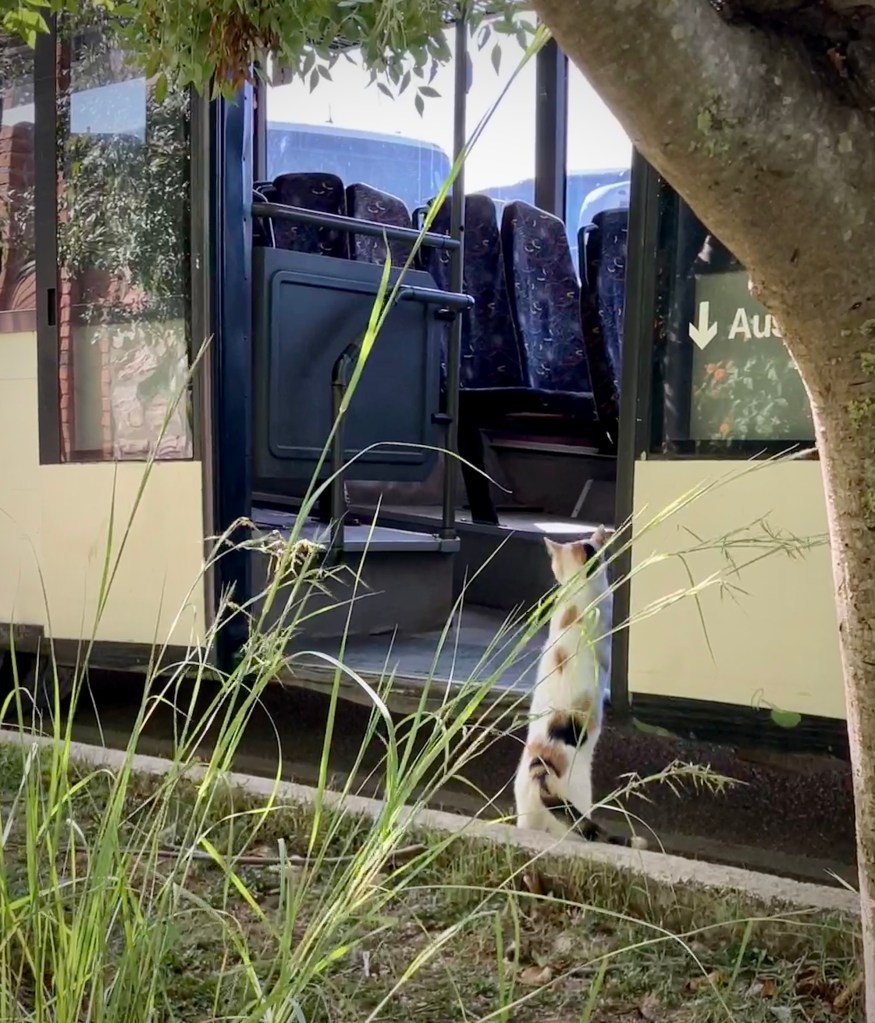

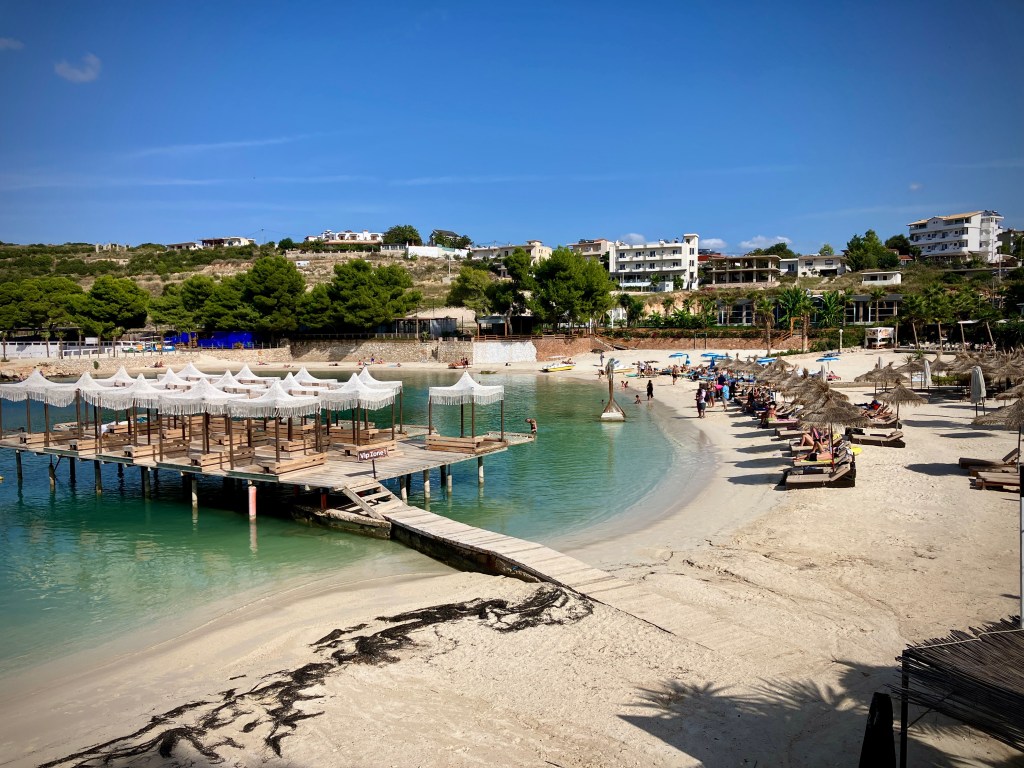
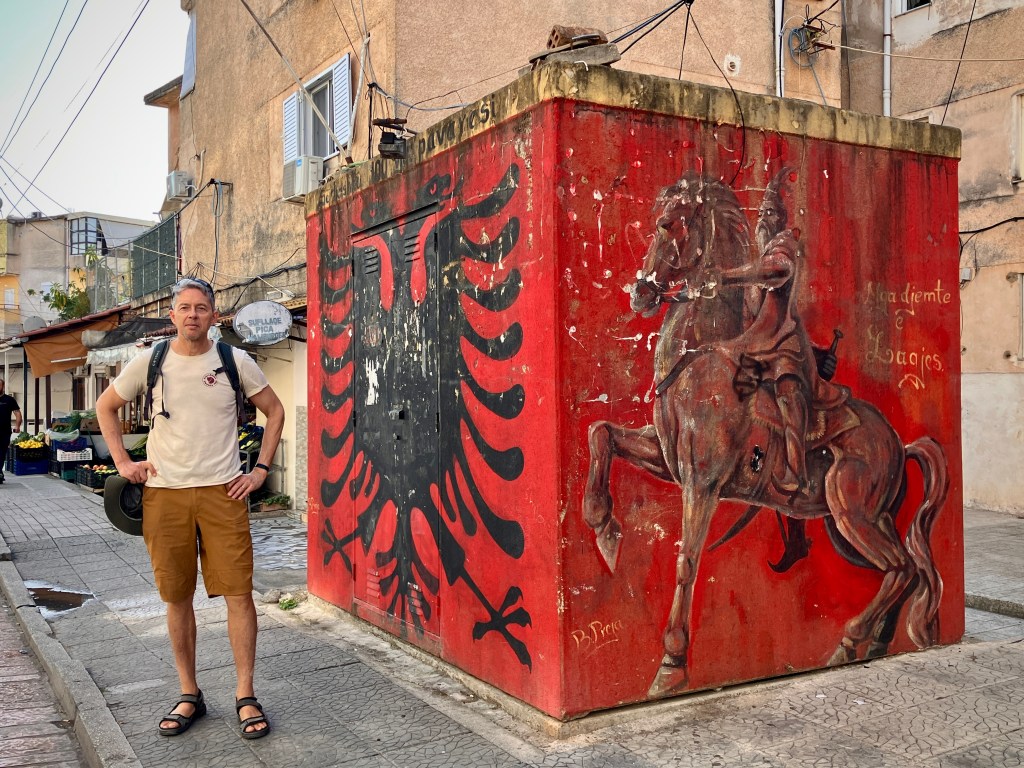

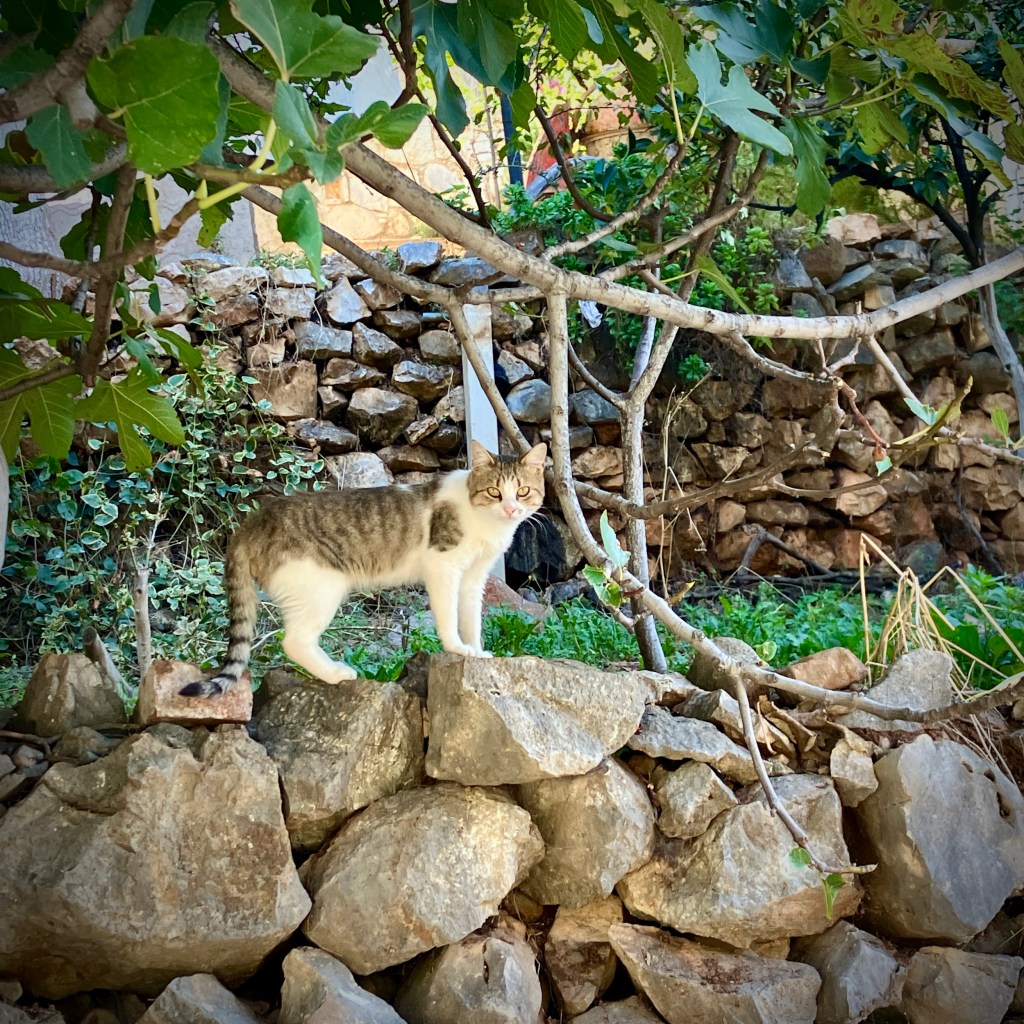

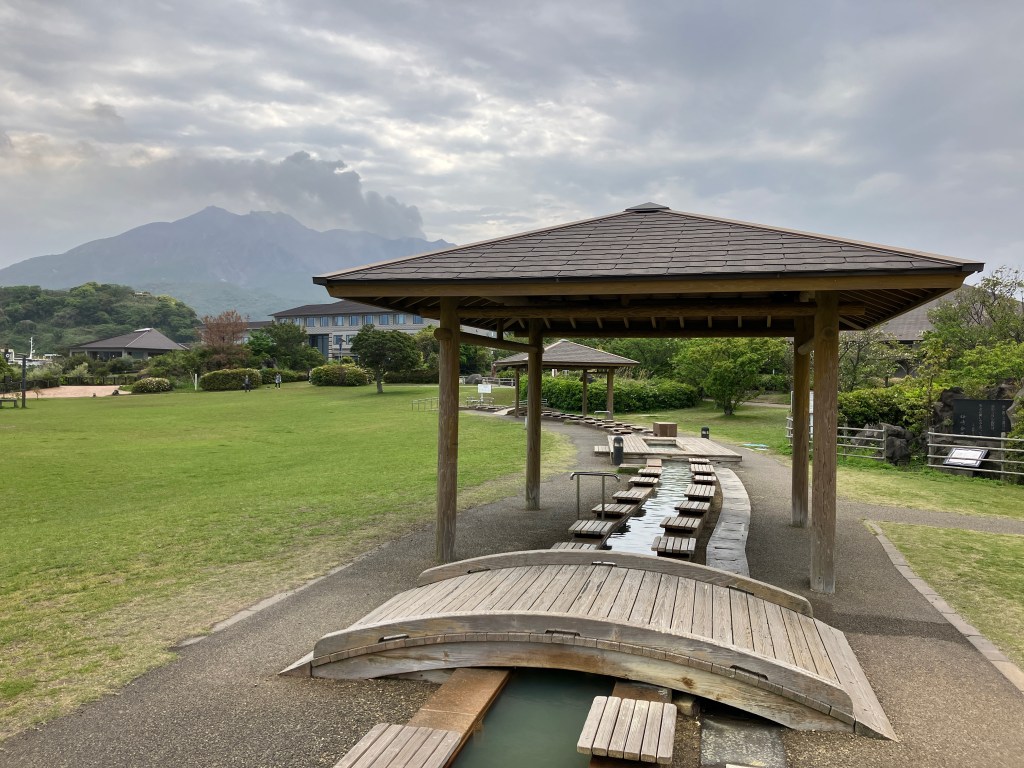


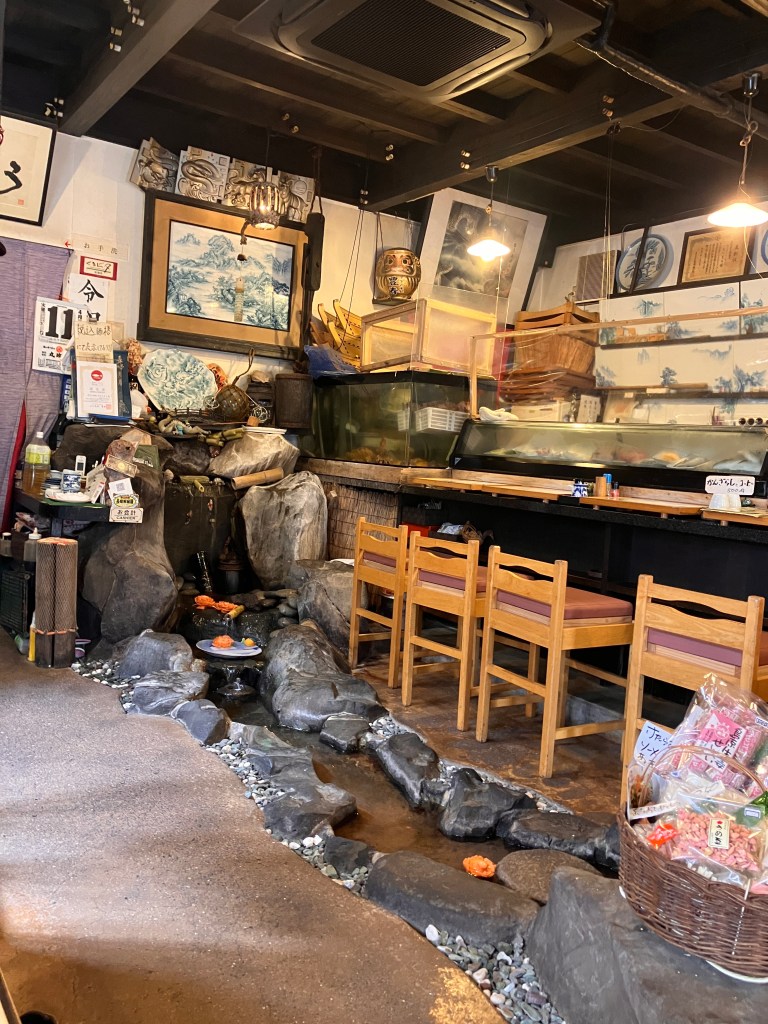
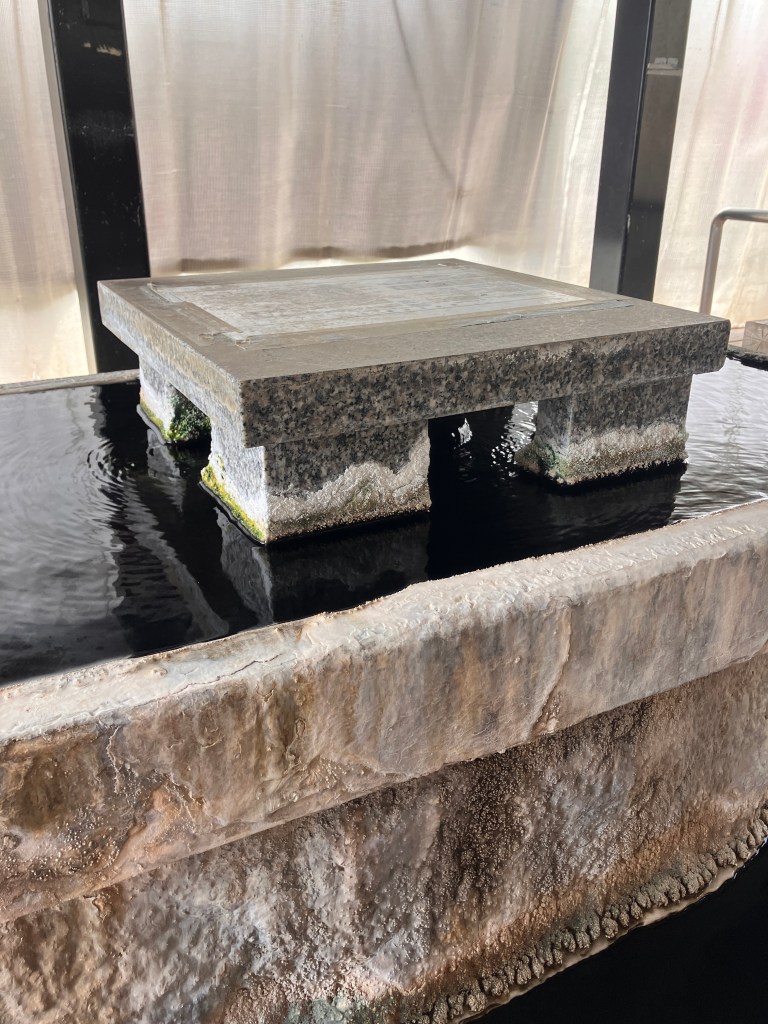

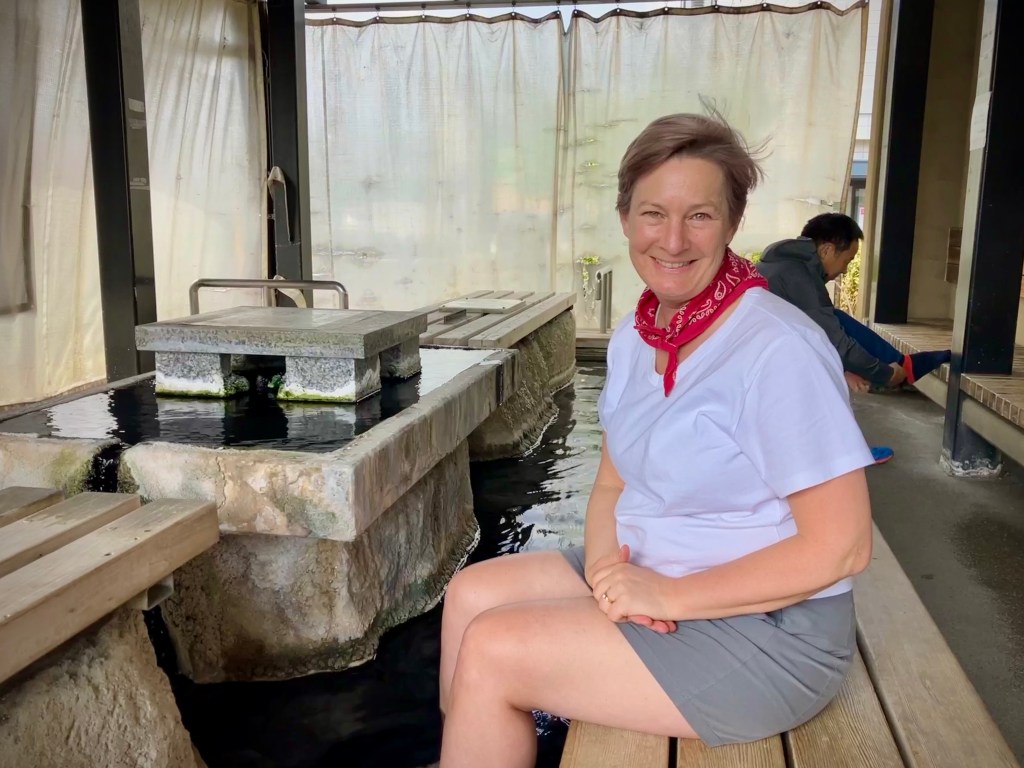


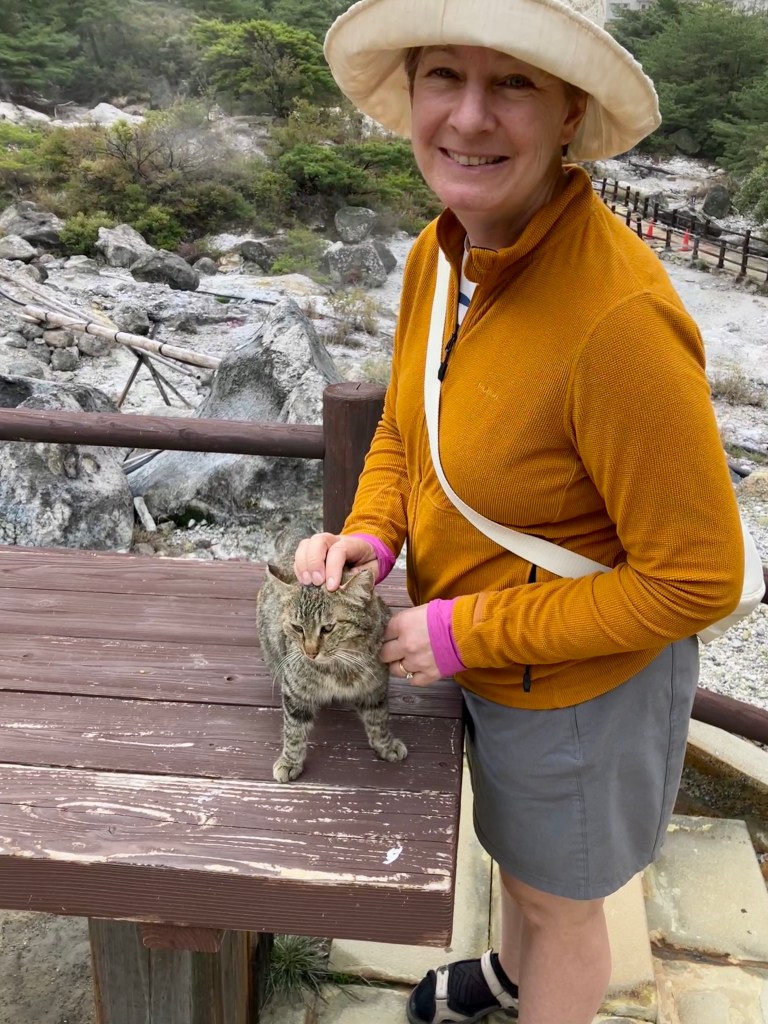
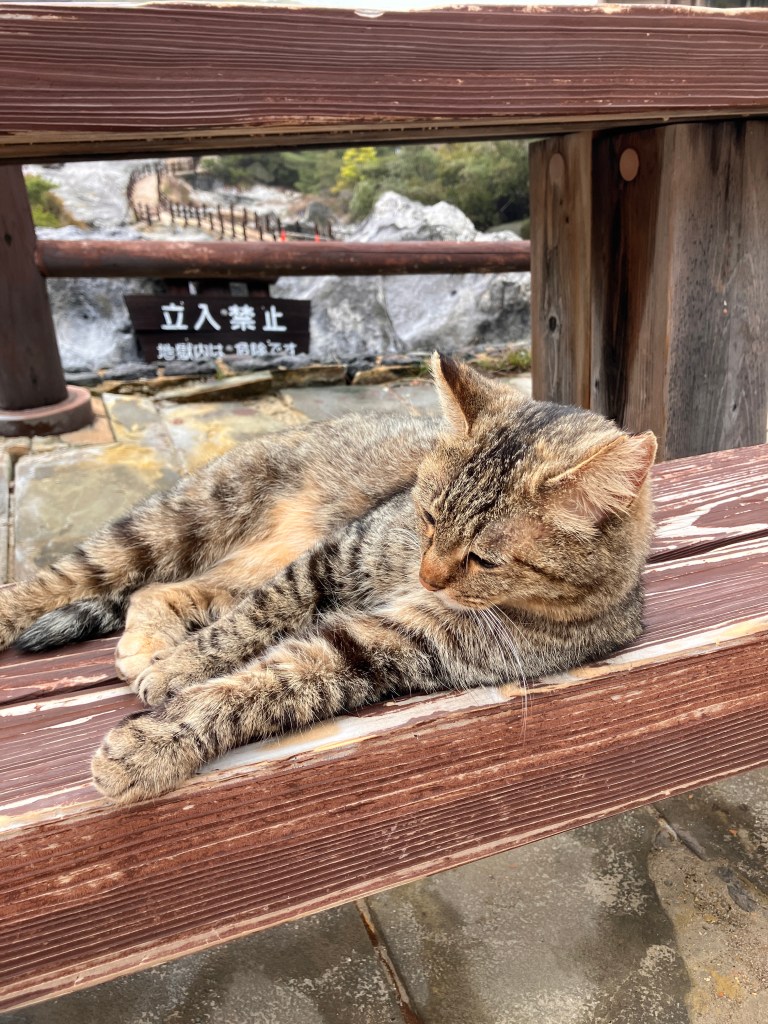


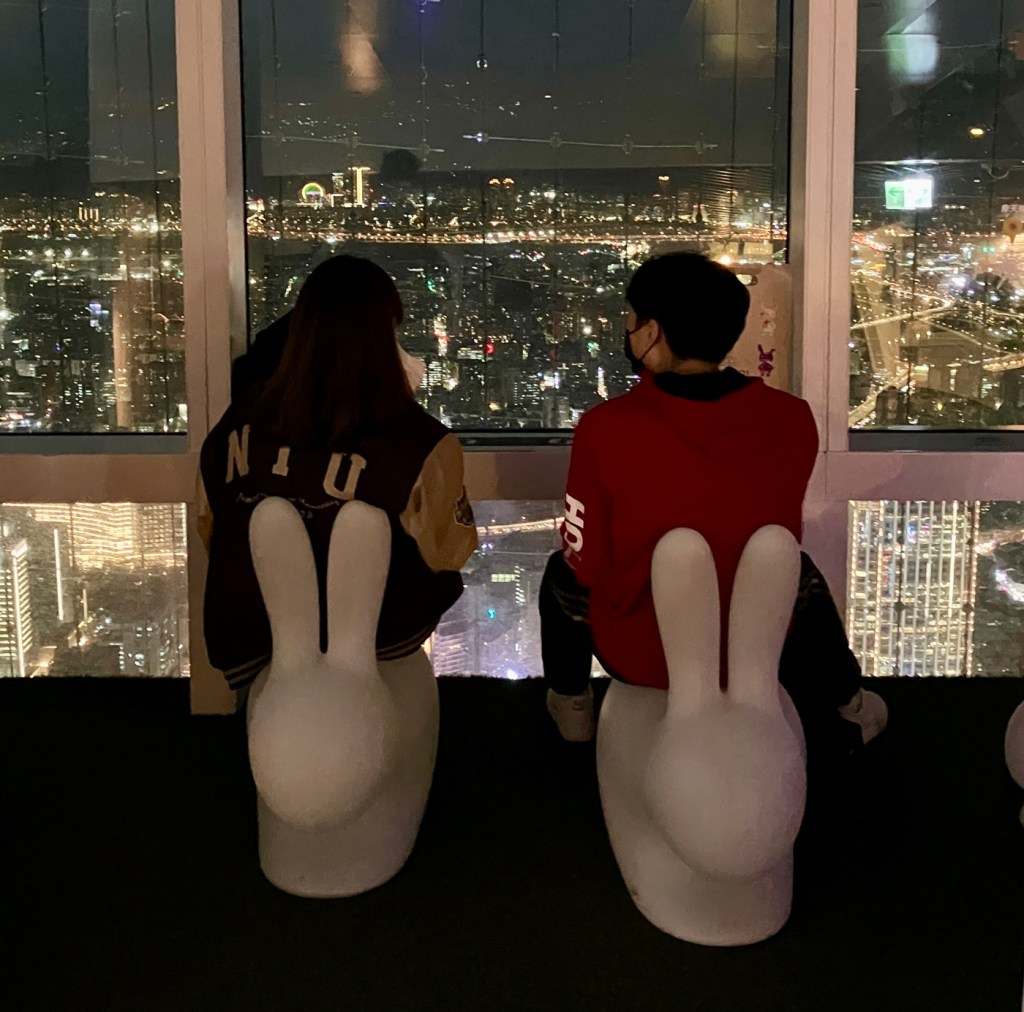

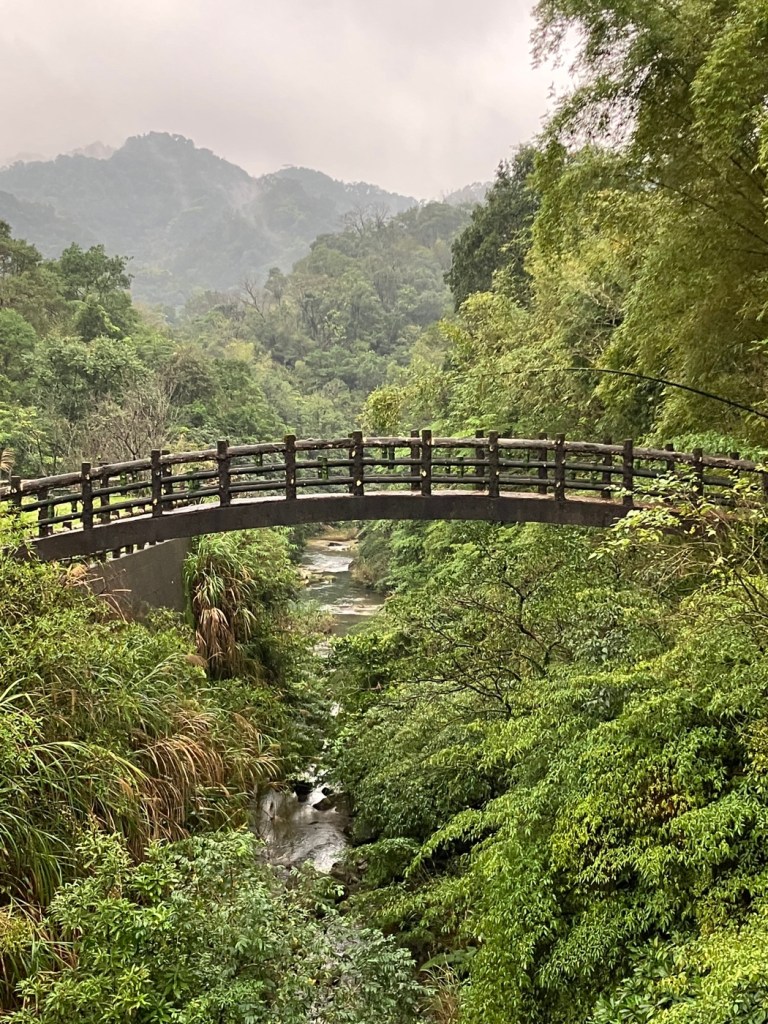


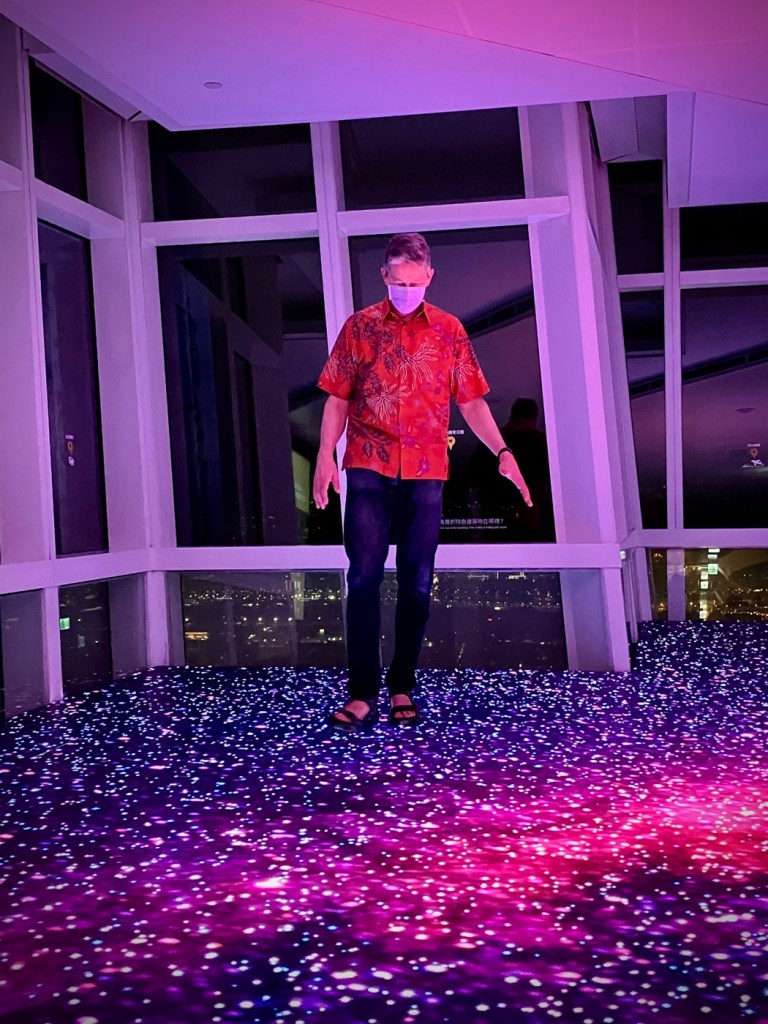


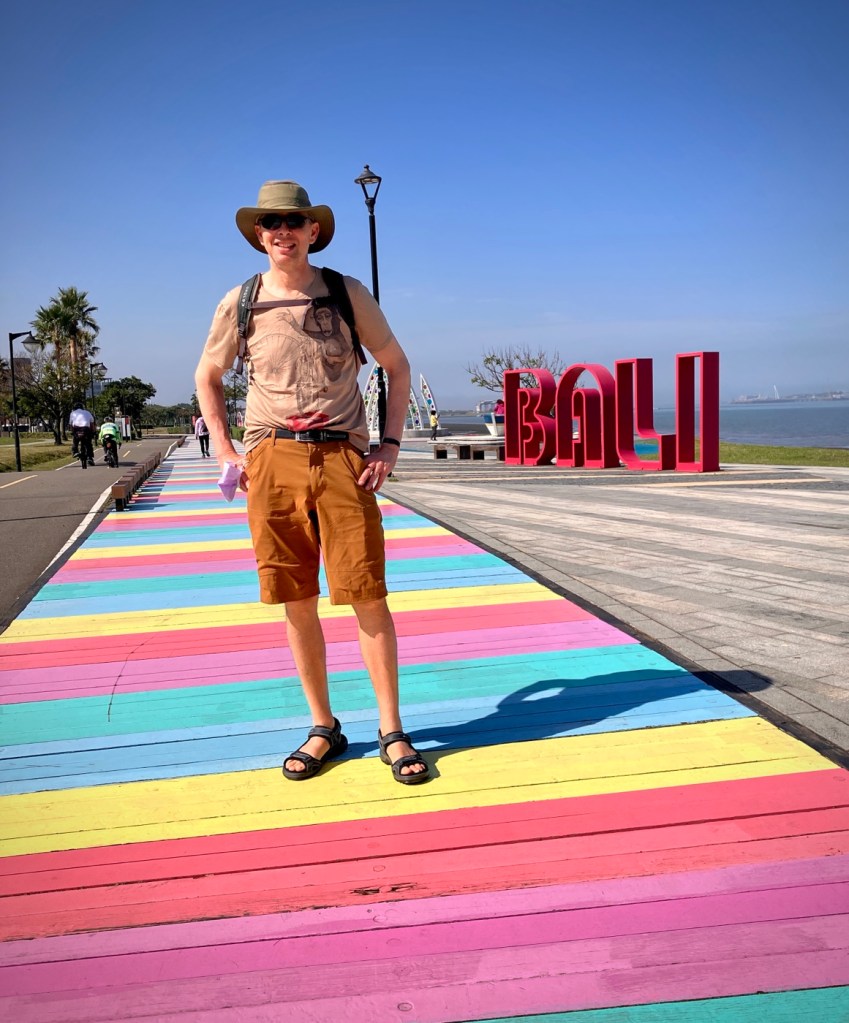
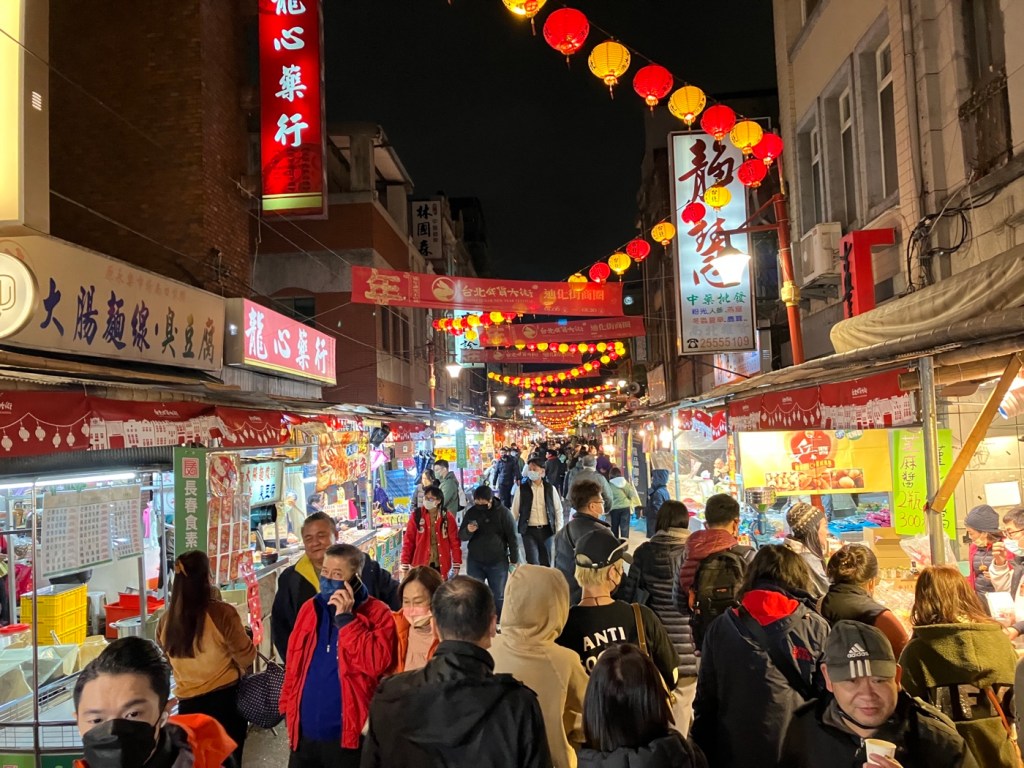

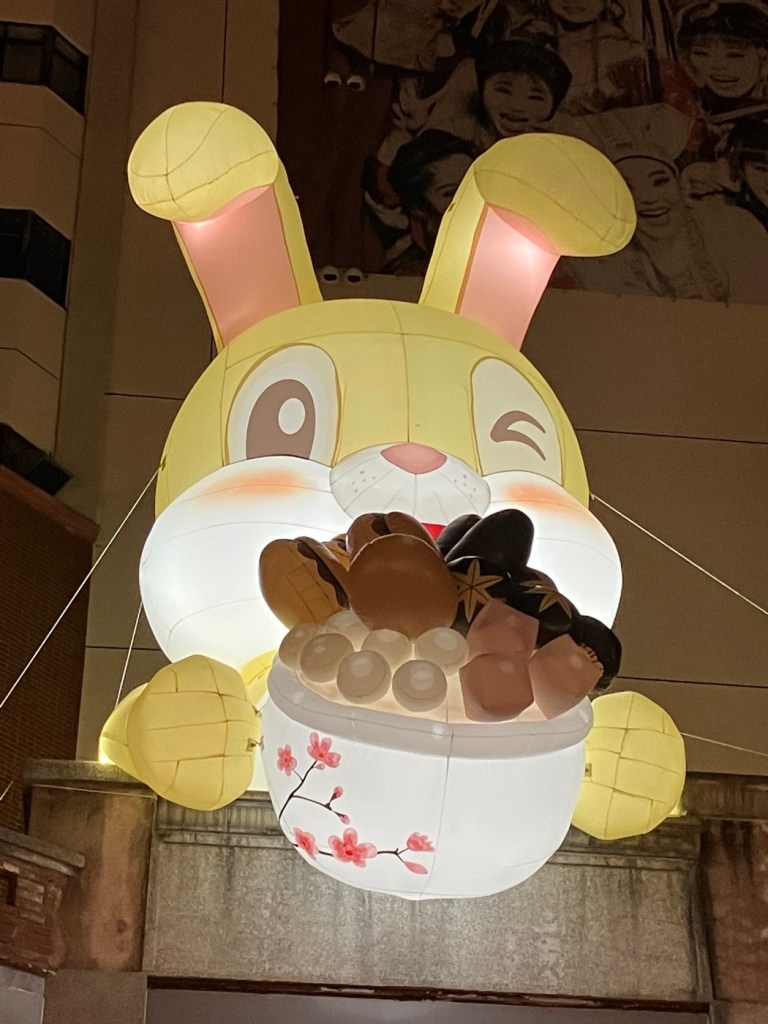
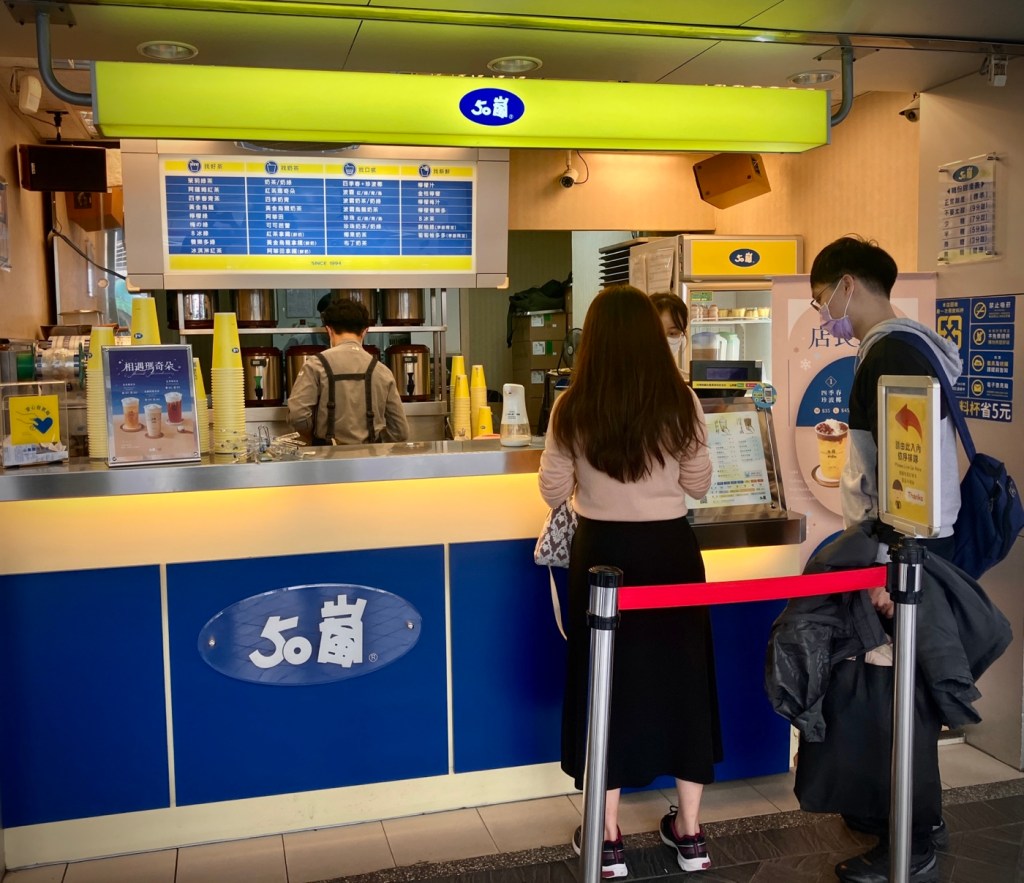

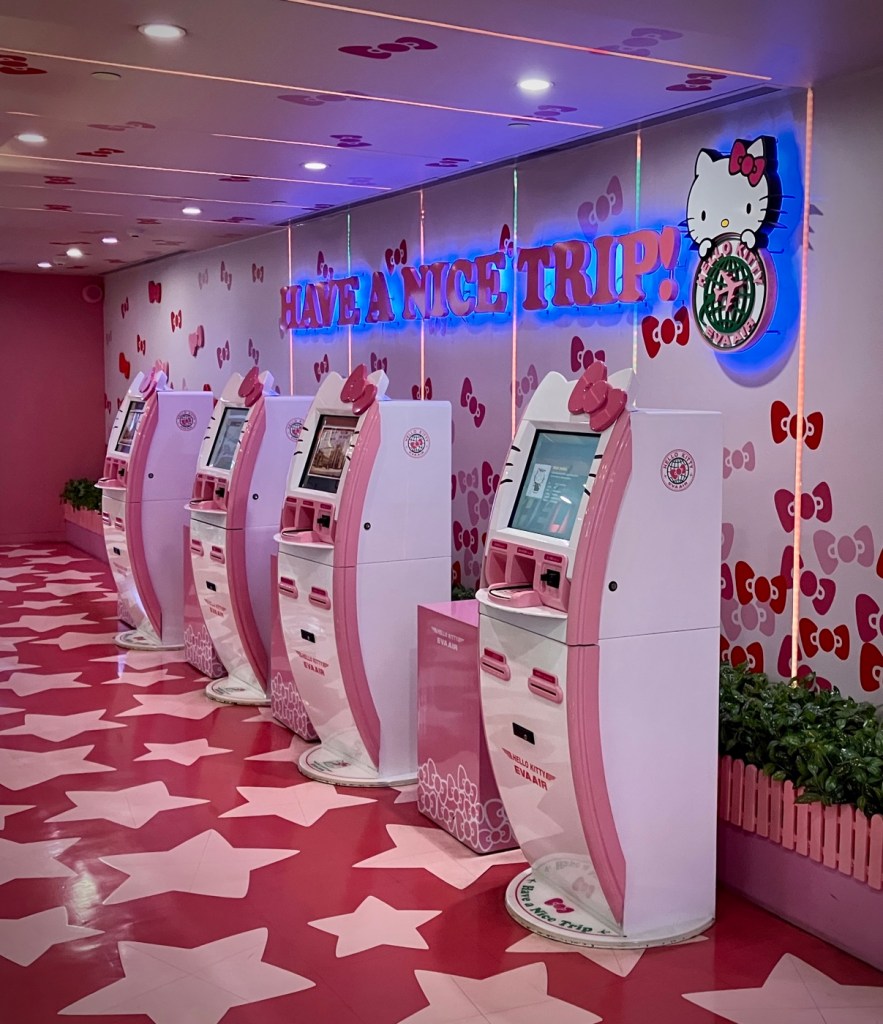

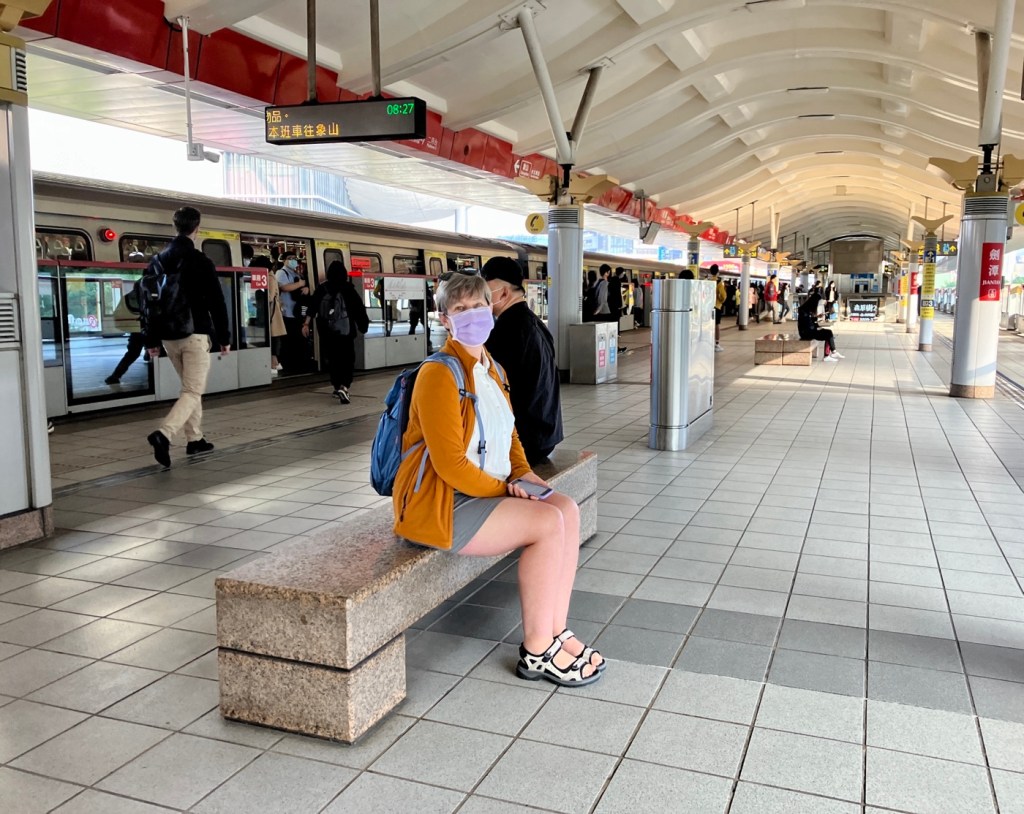

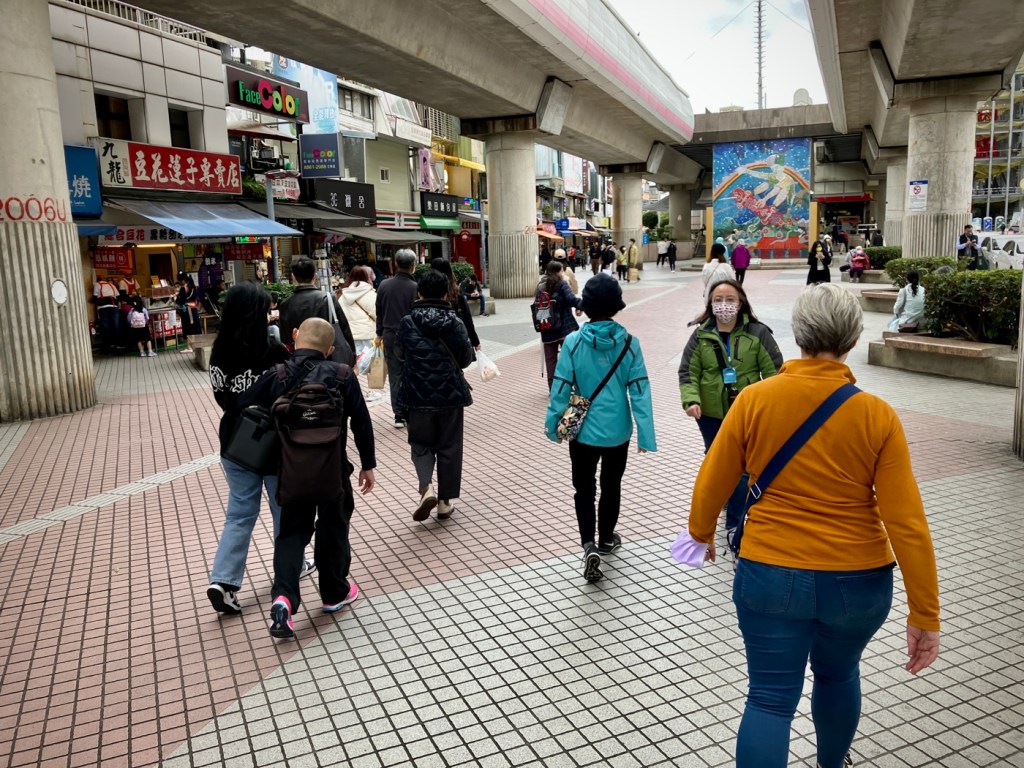


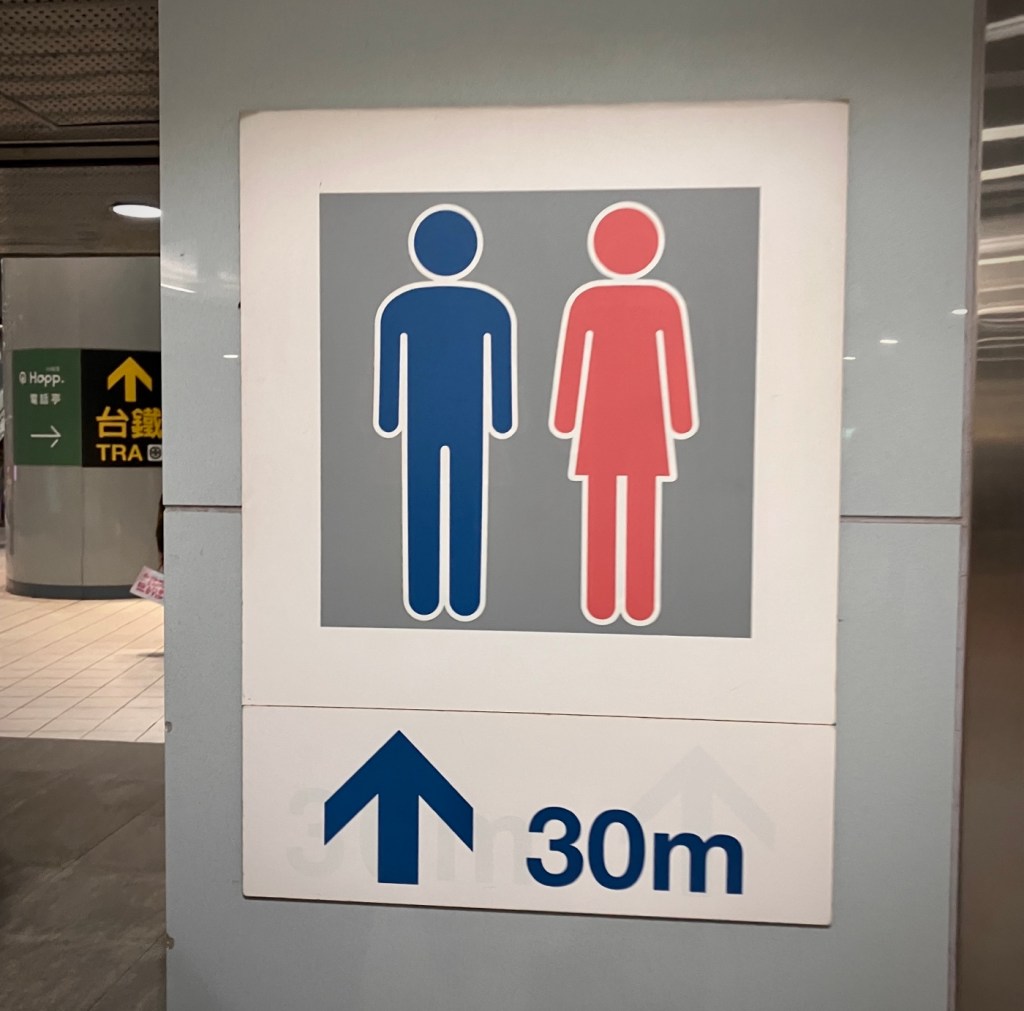
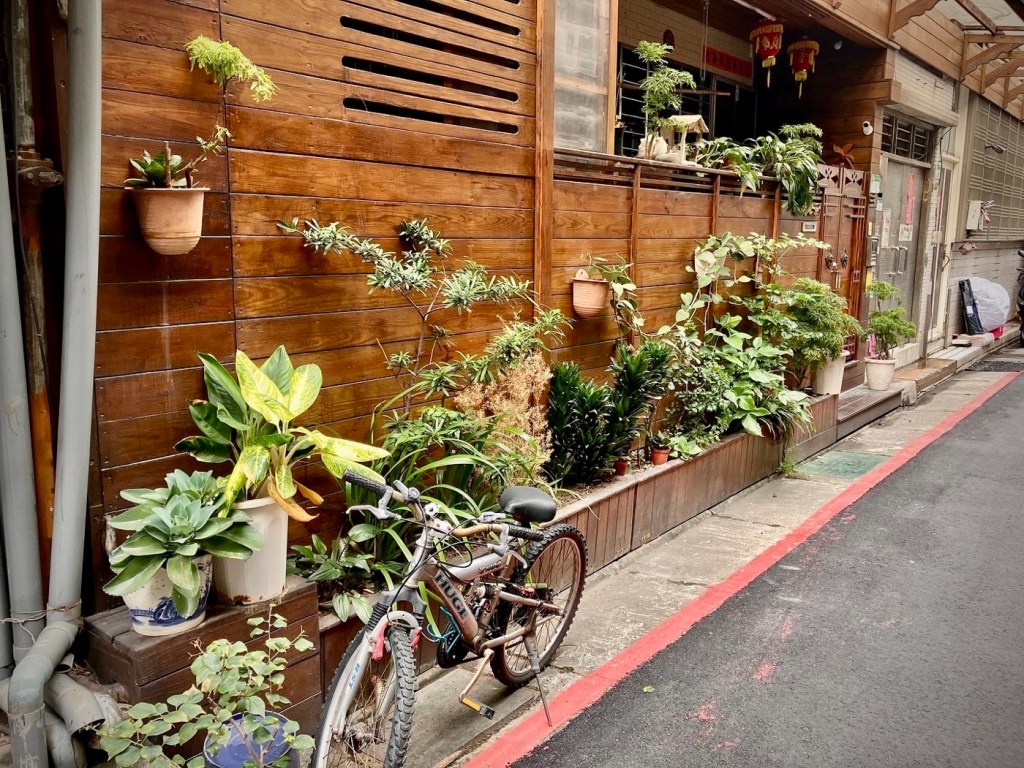

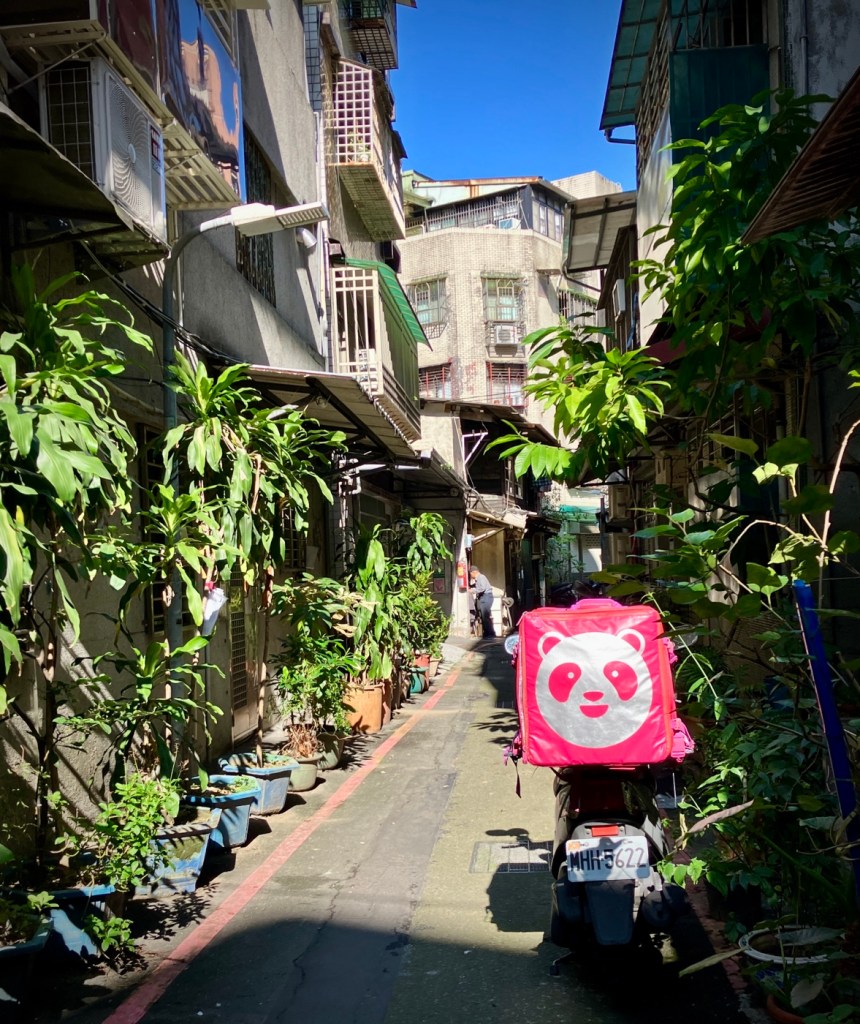
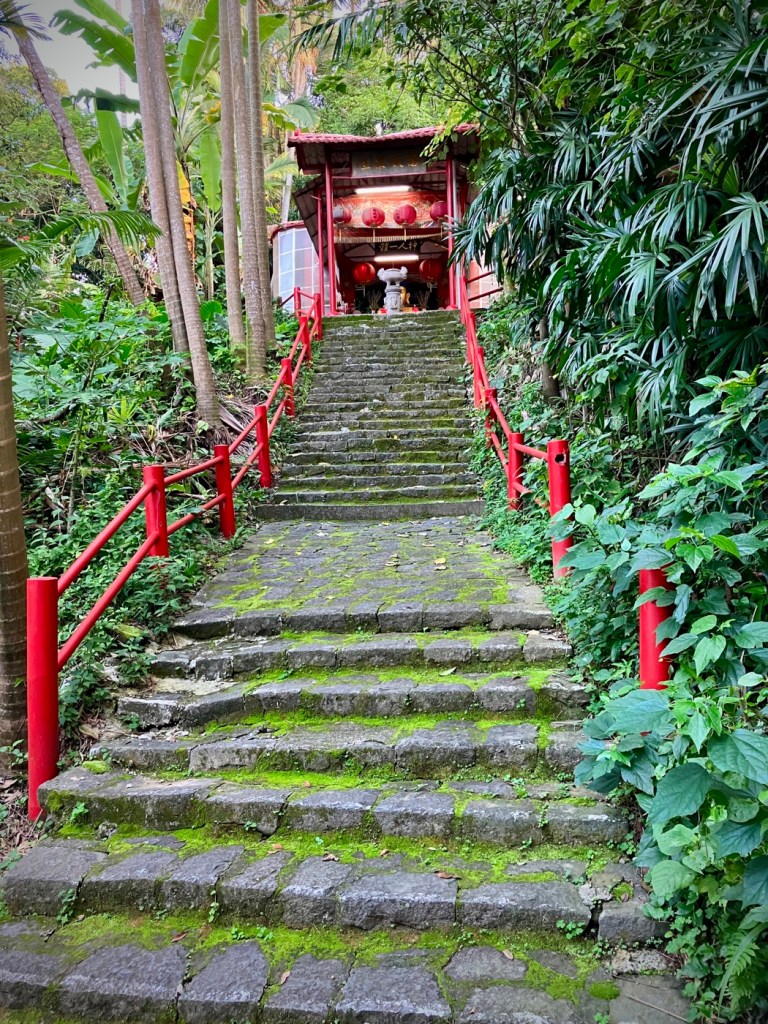
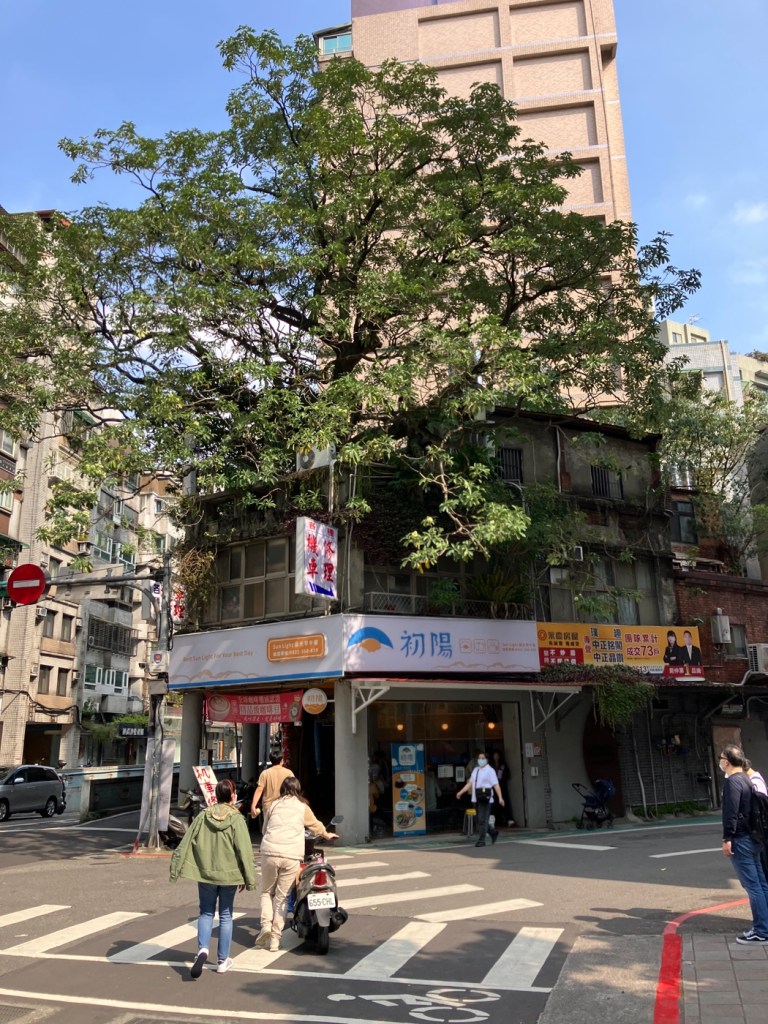

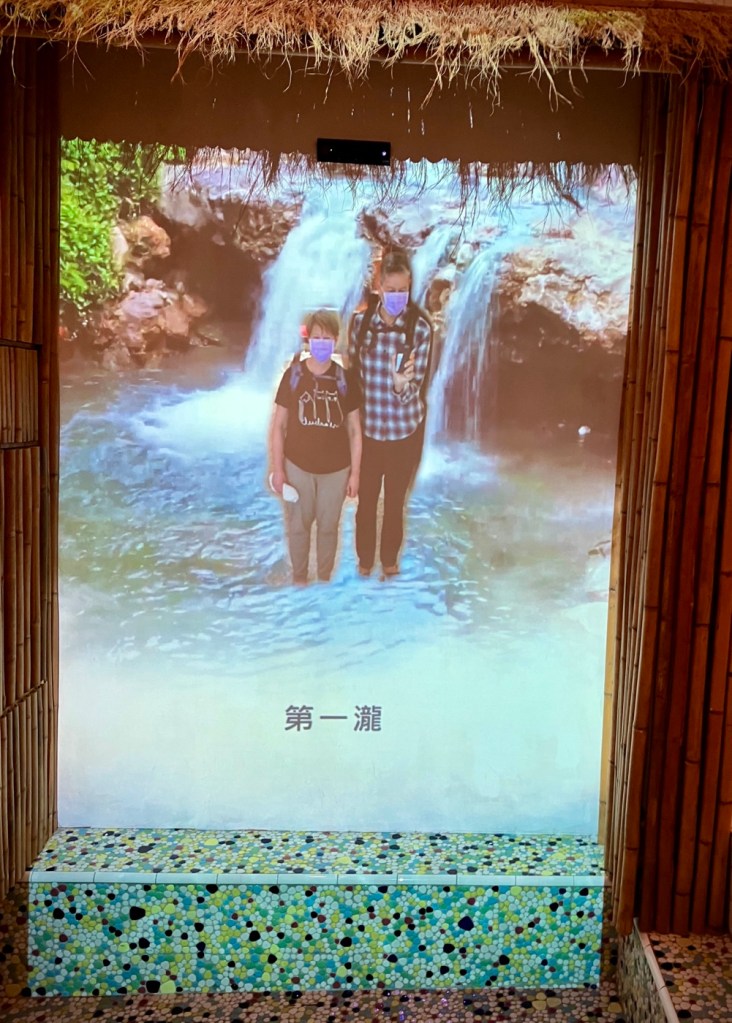


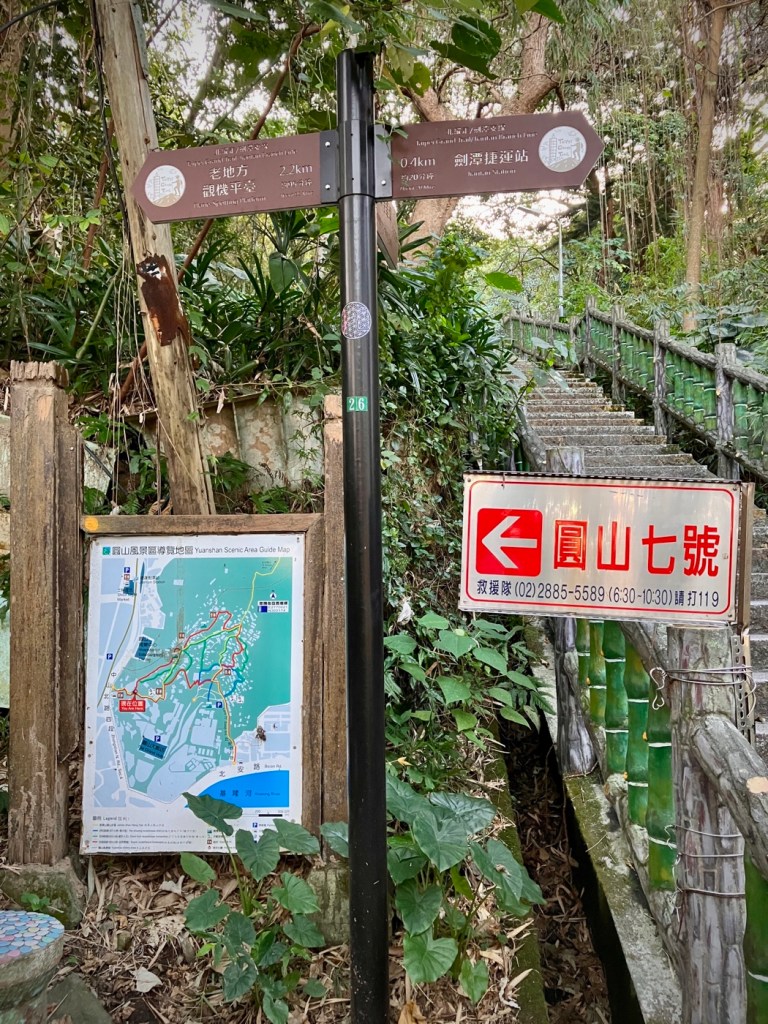

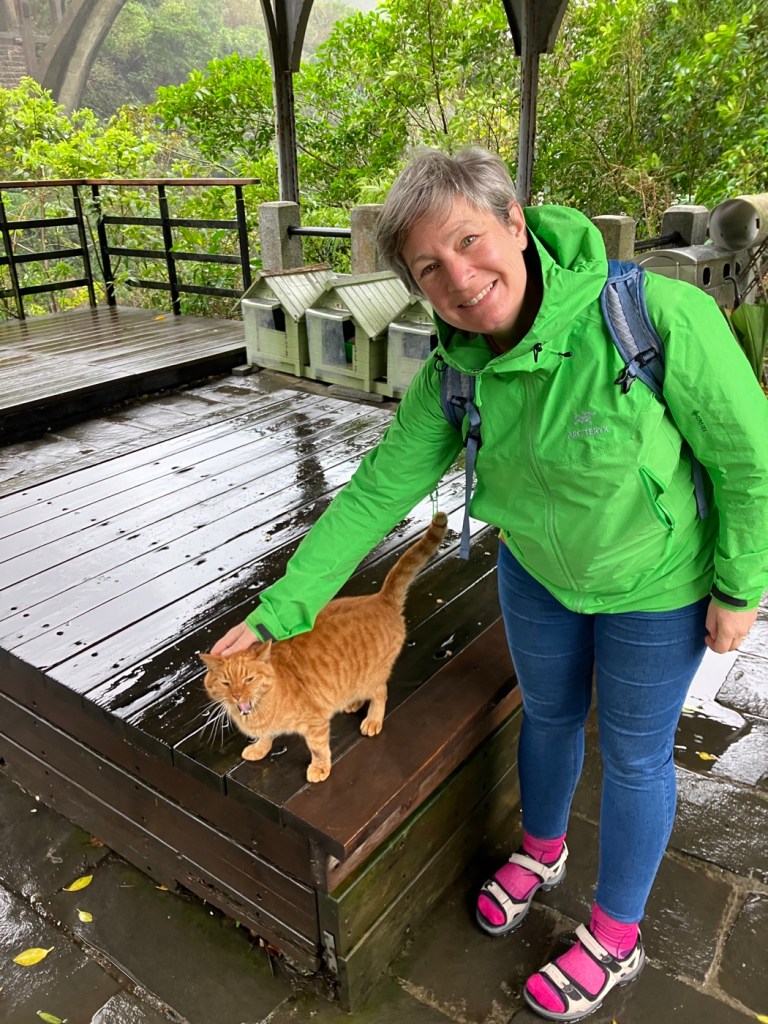

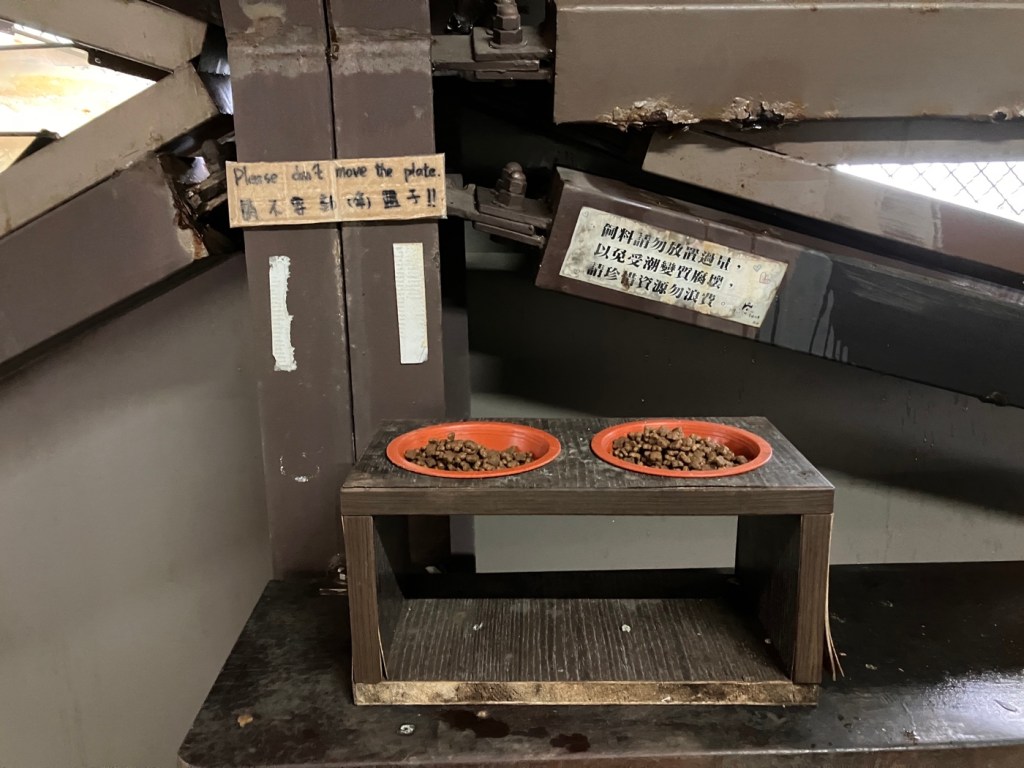


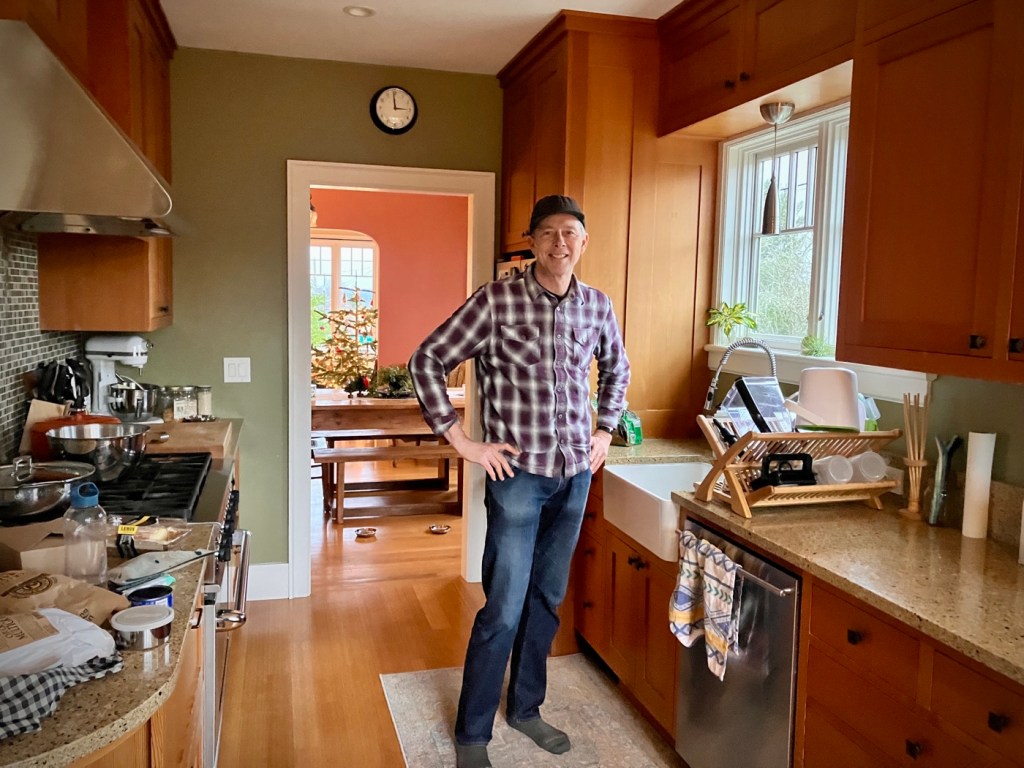
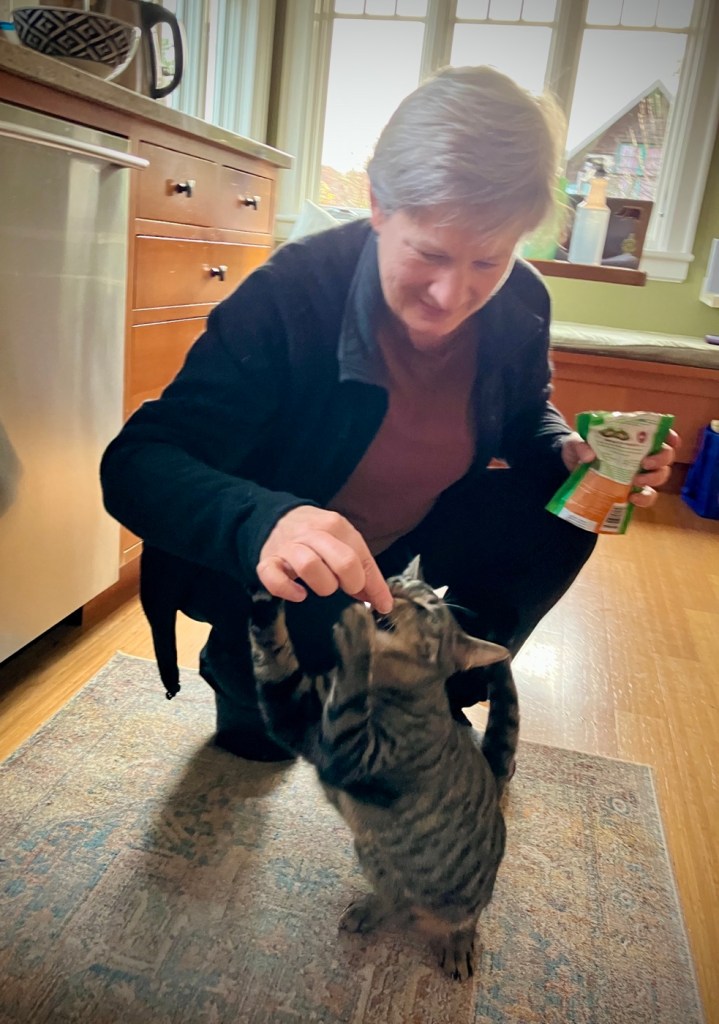
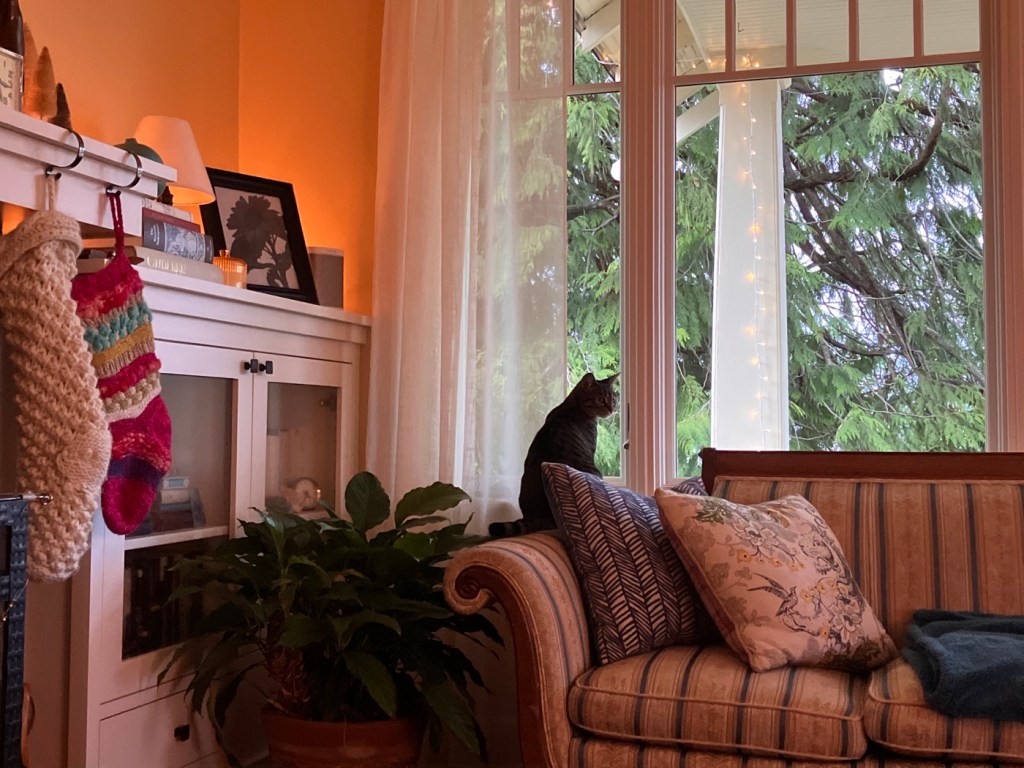

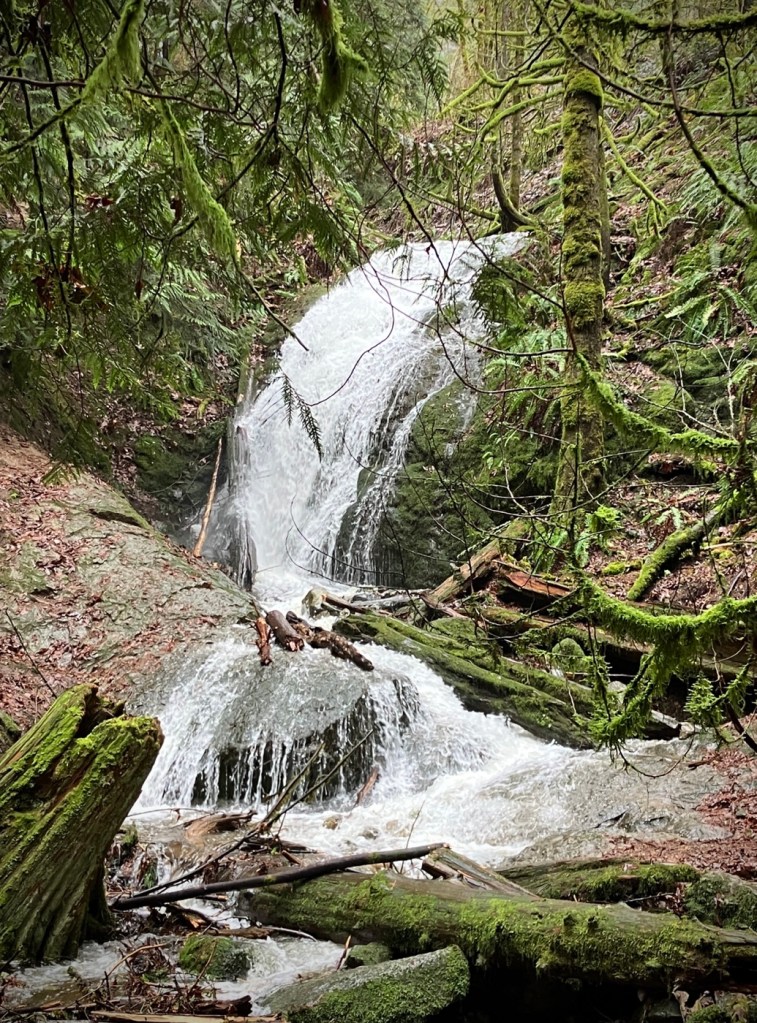

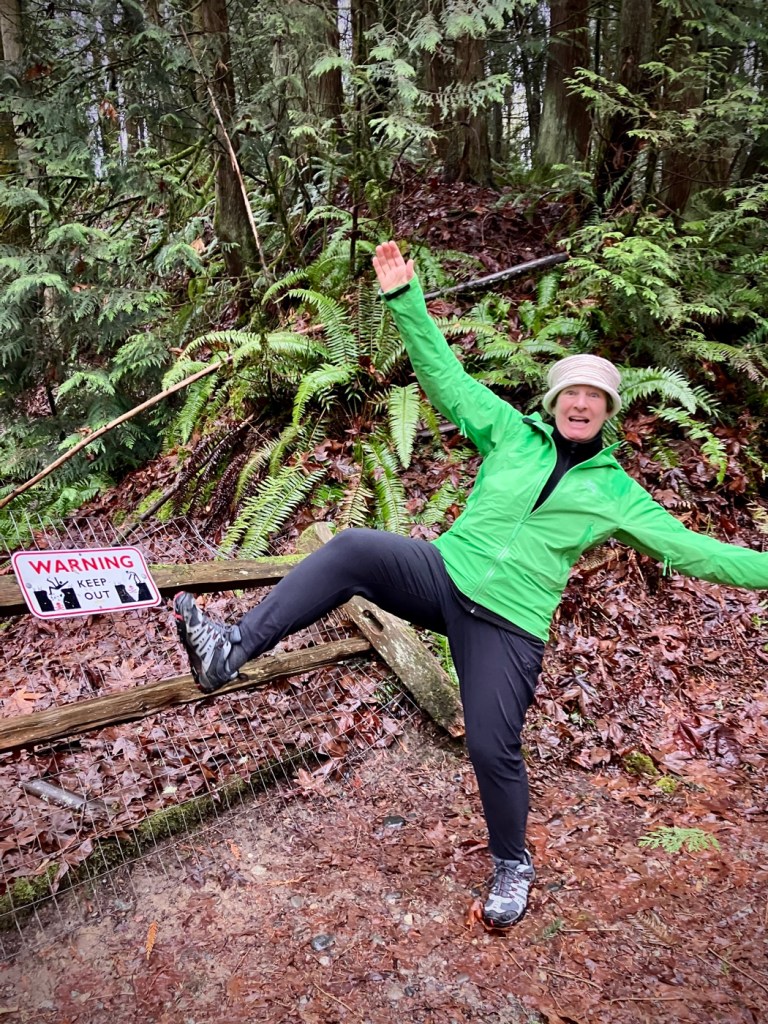
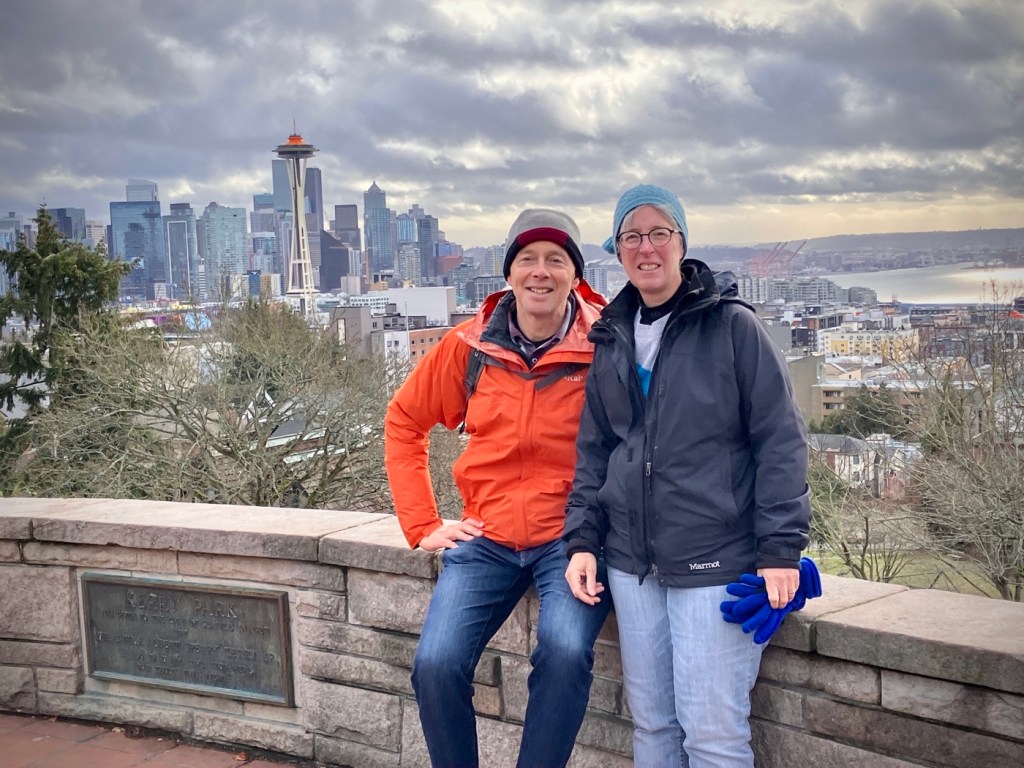
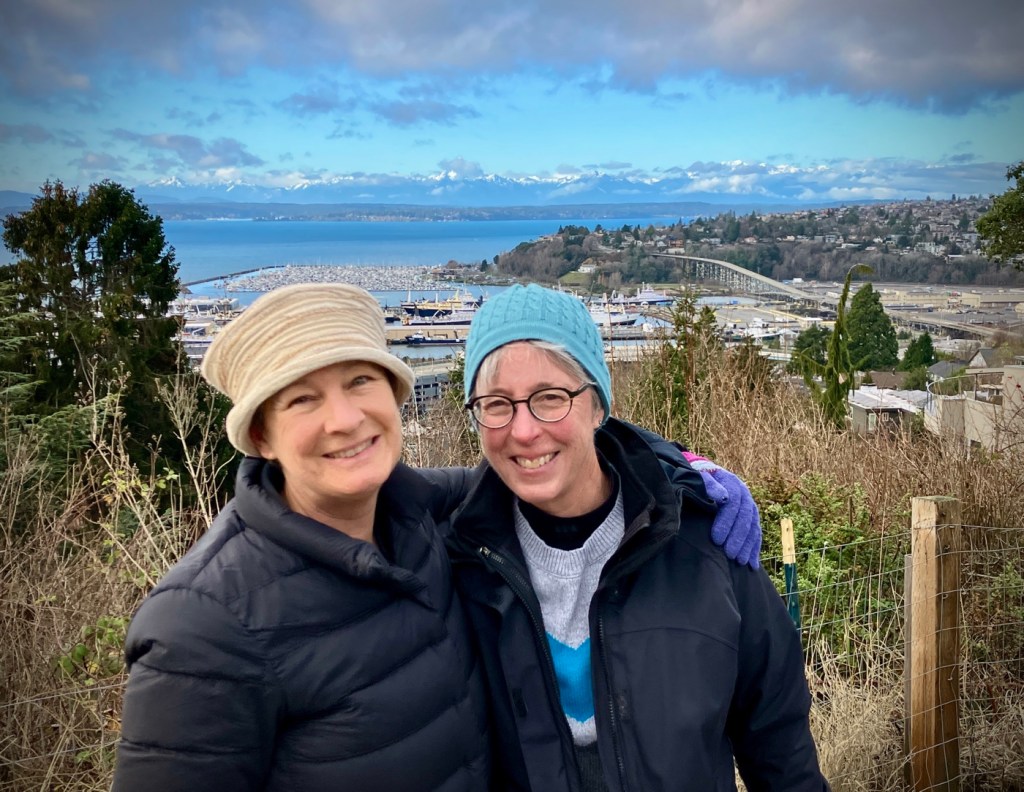
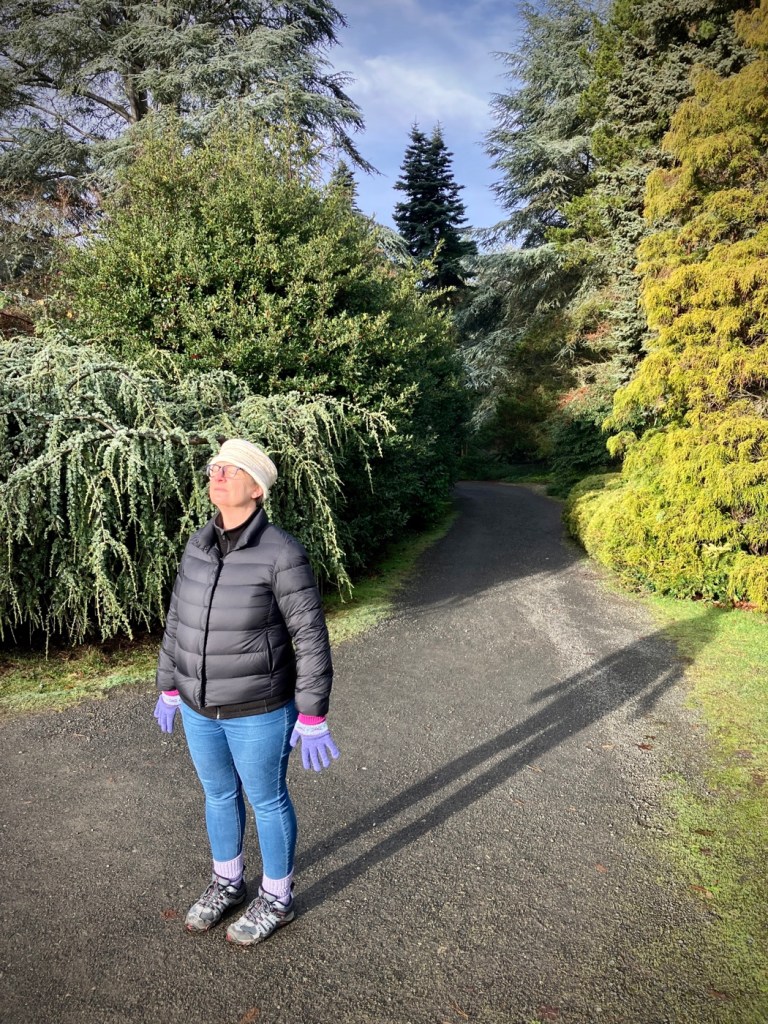


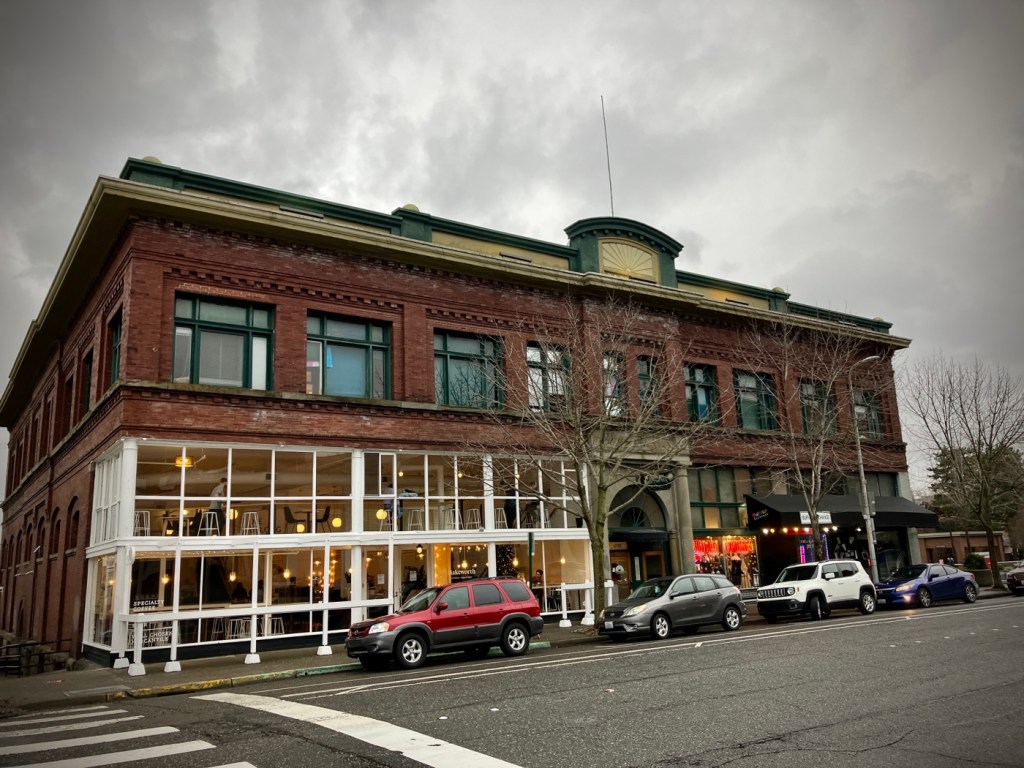
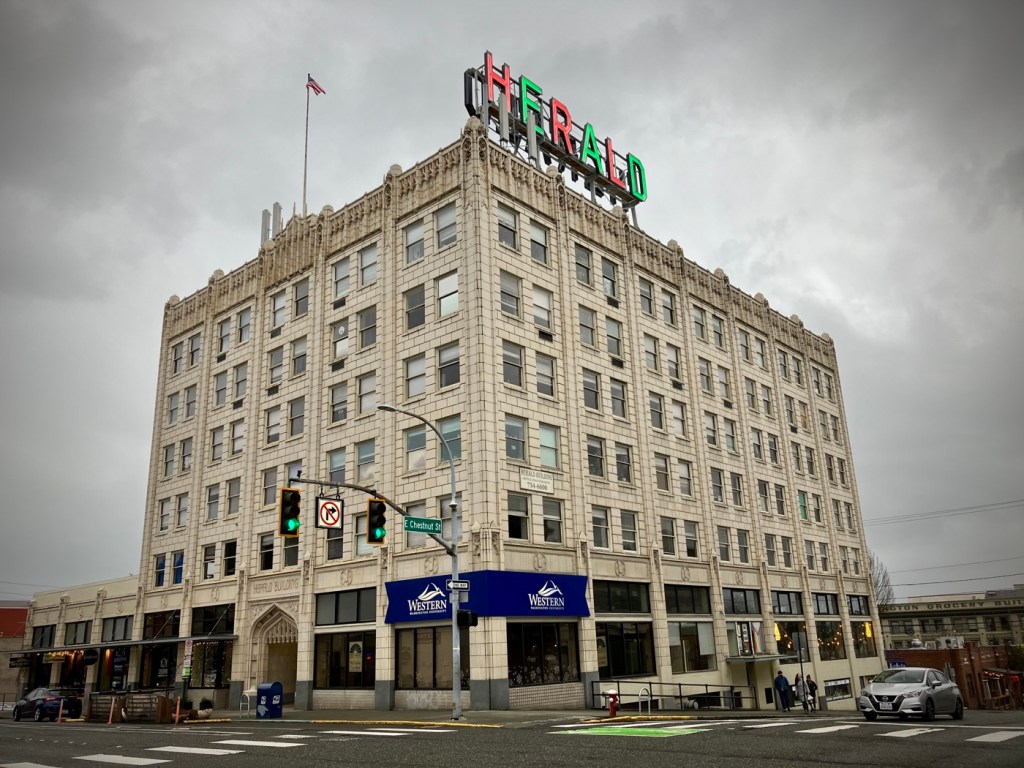
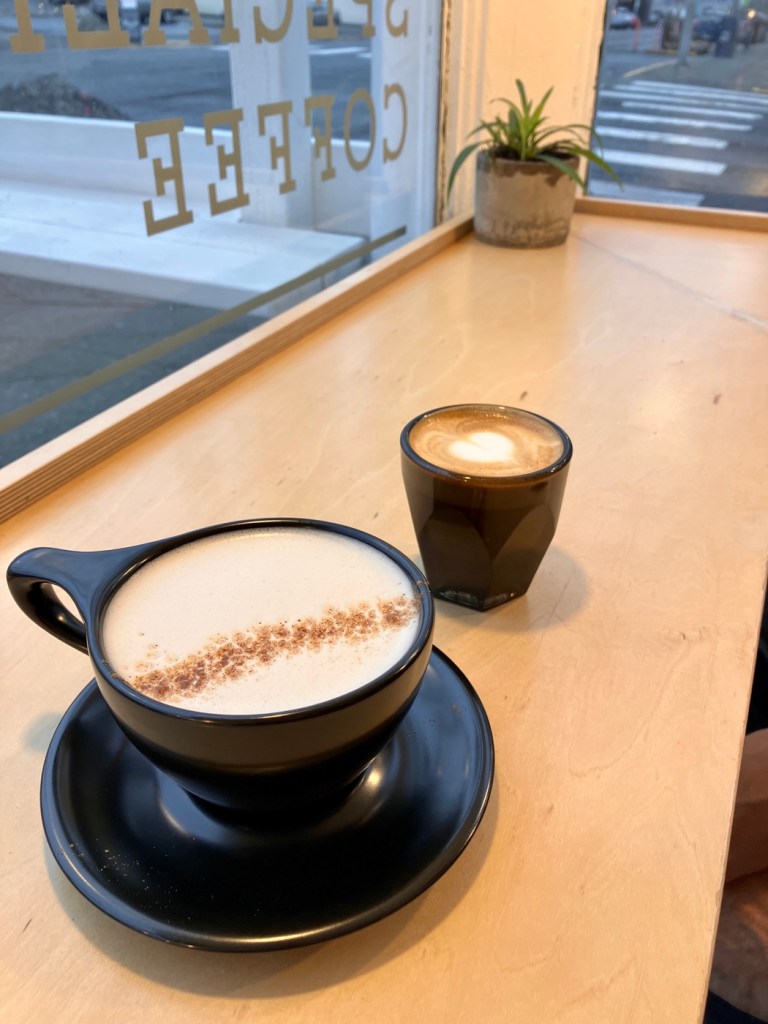

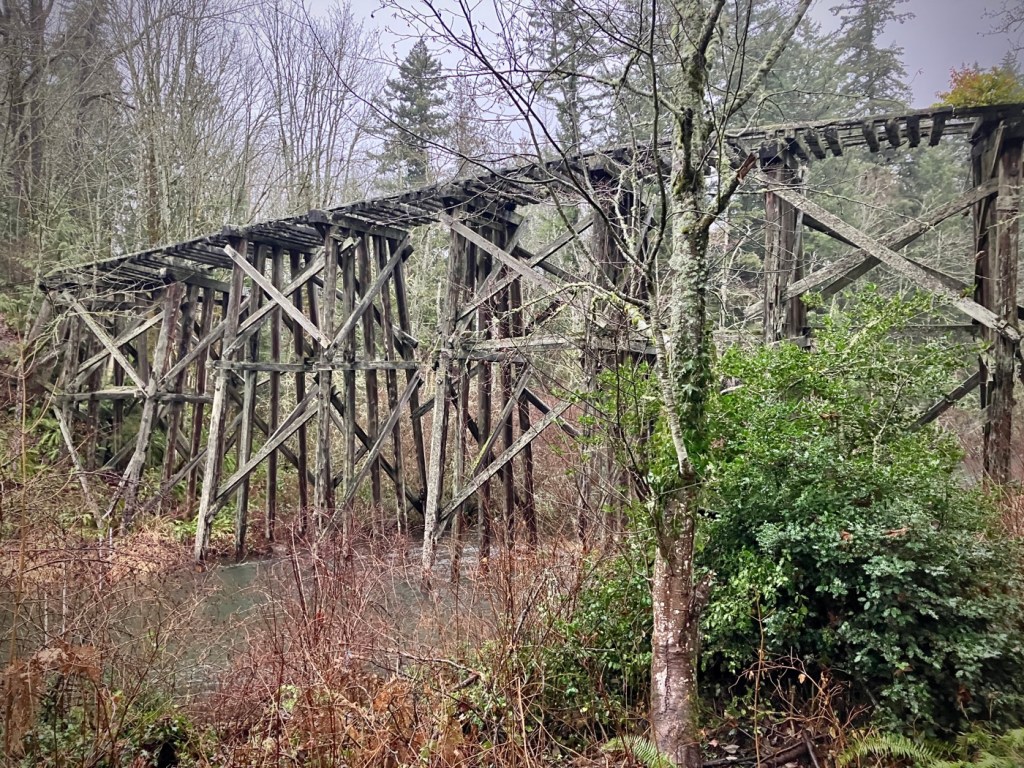
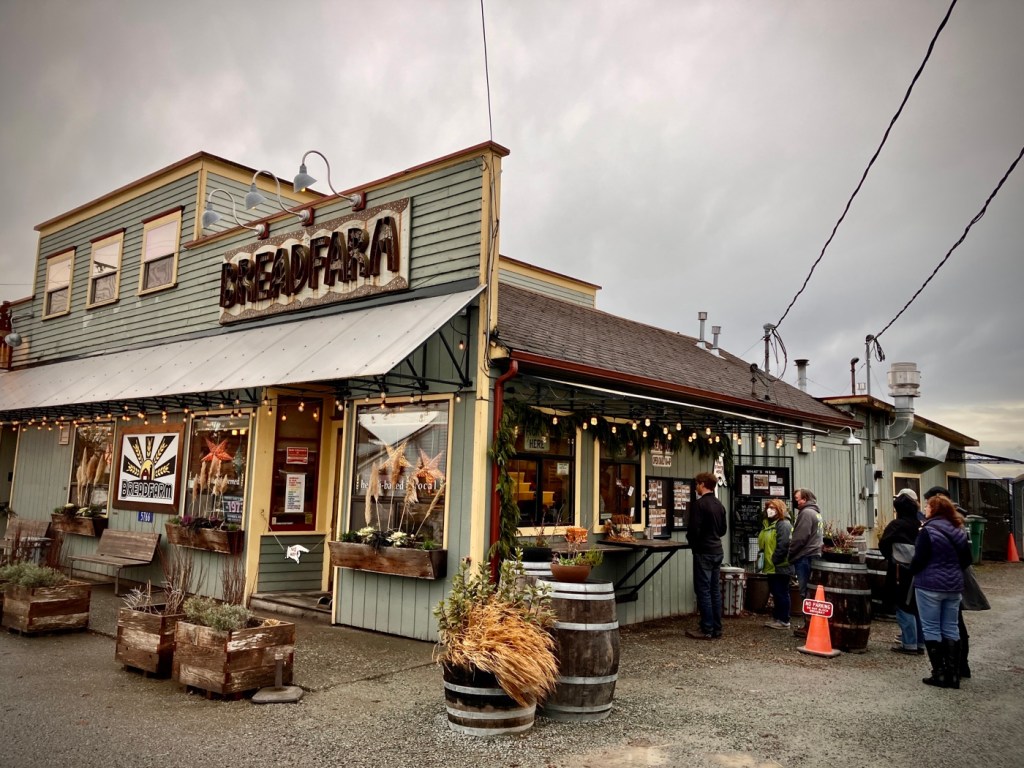


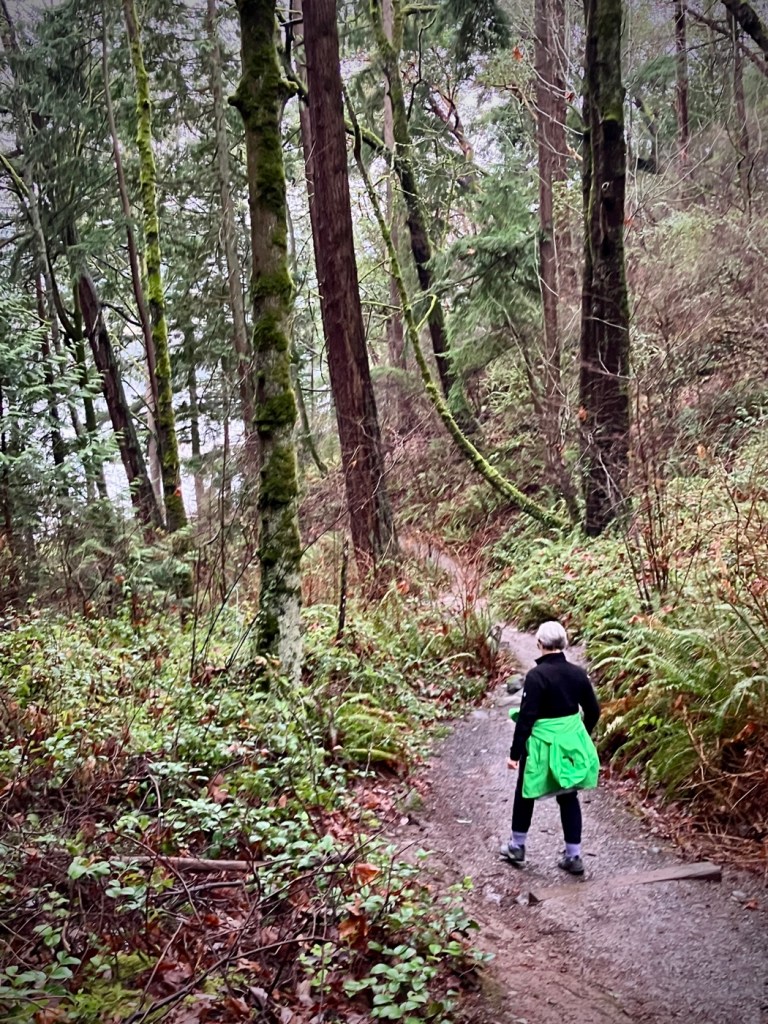


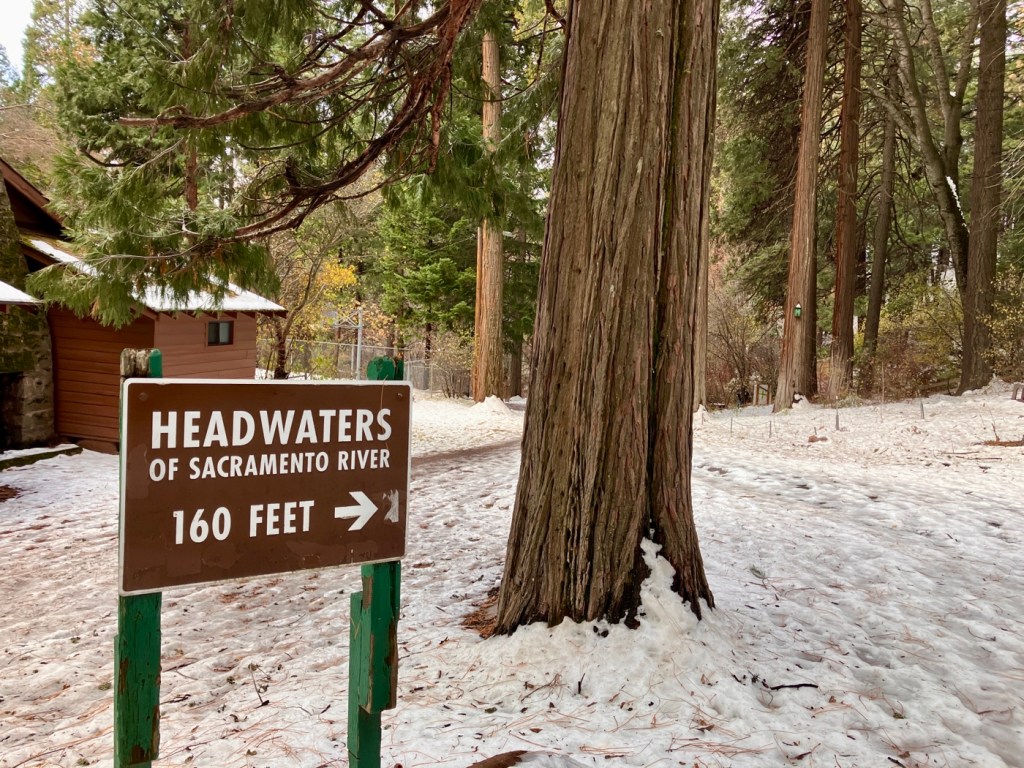

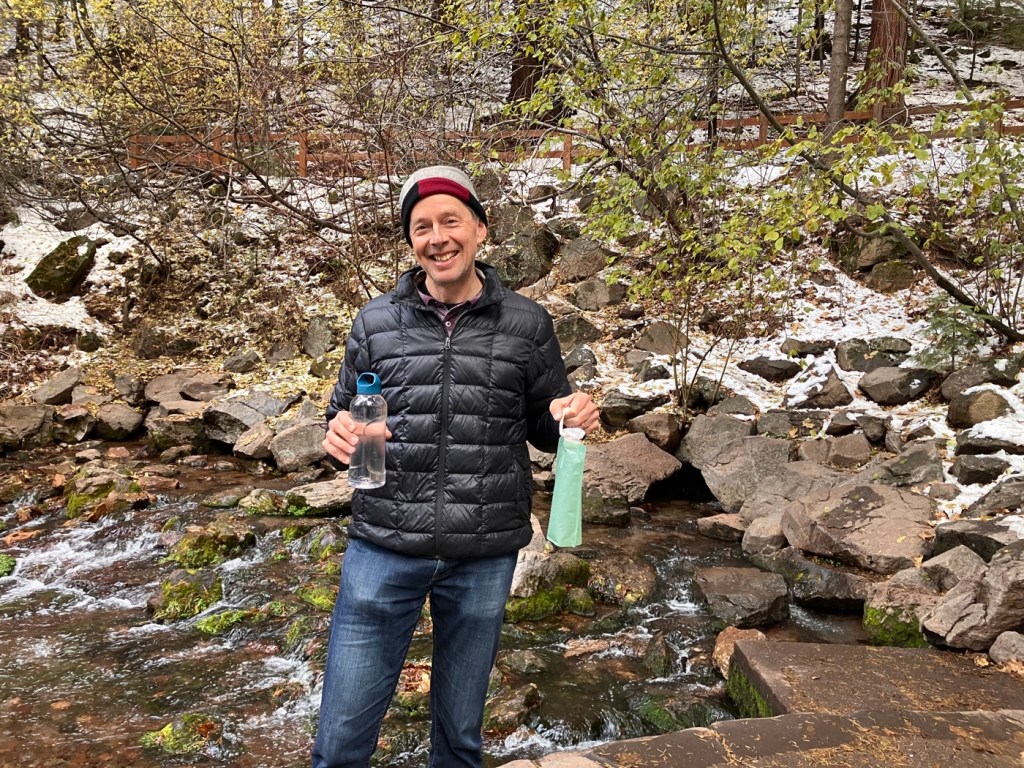
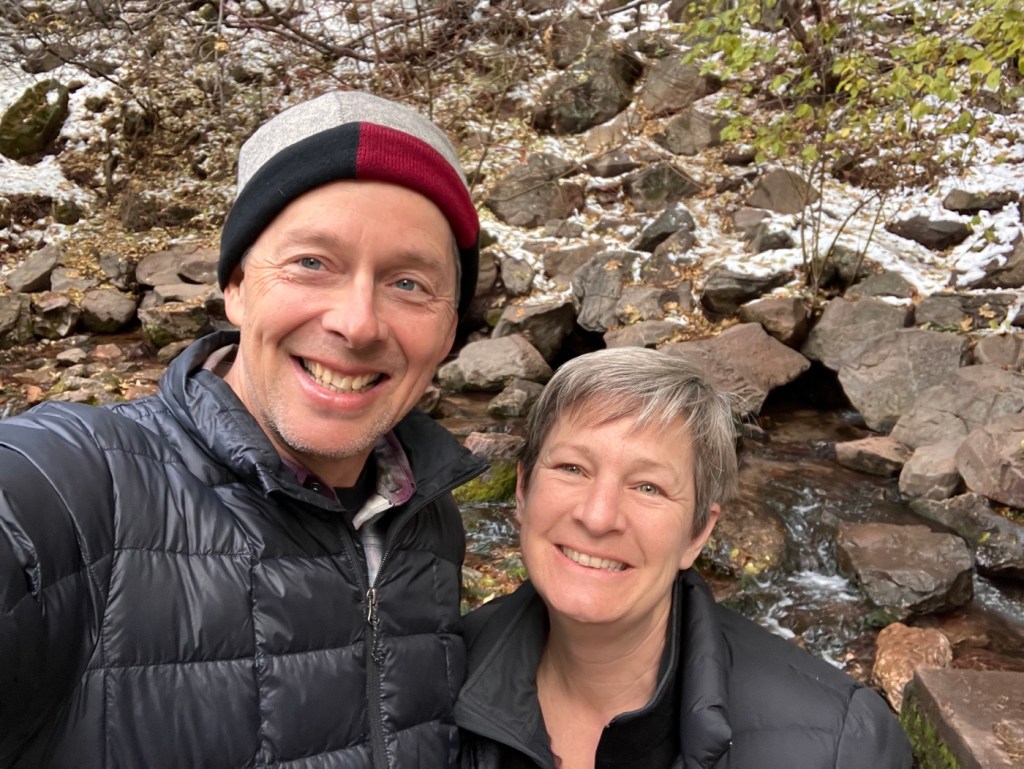


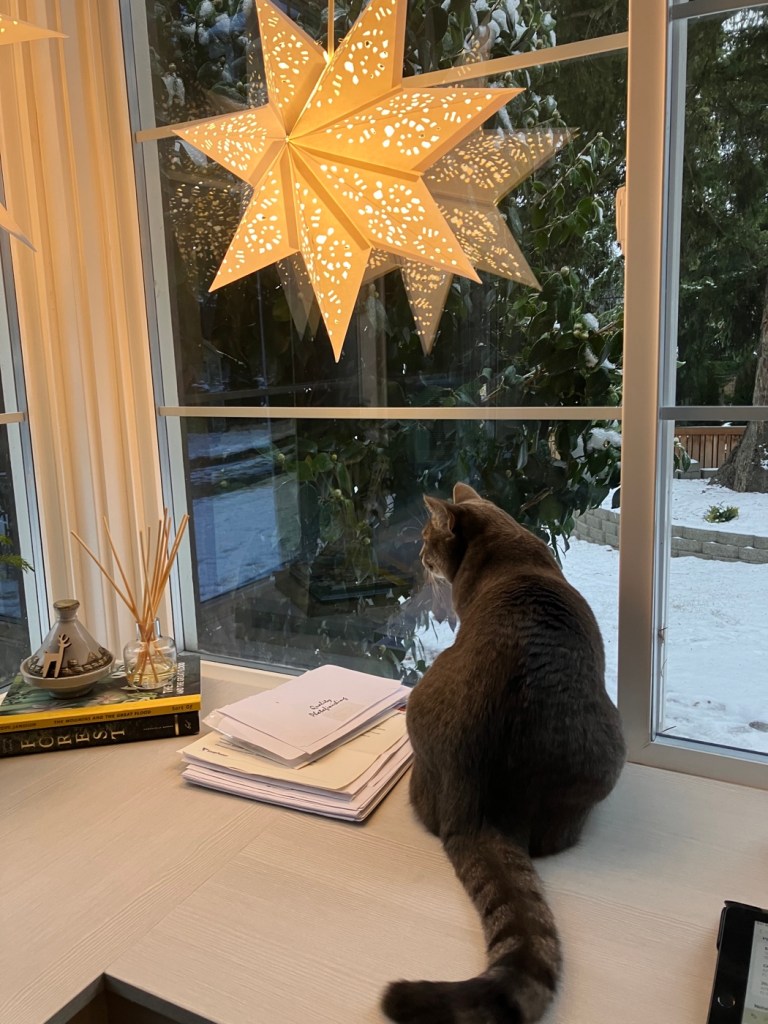


 Less Car, More Life