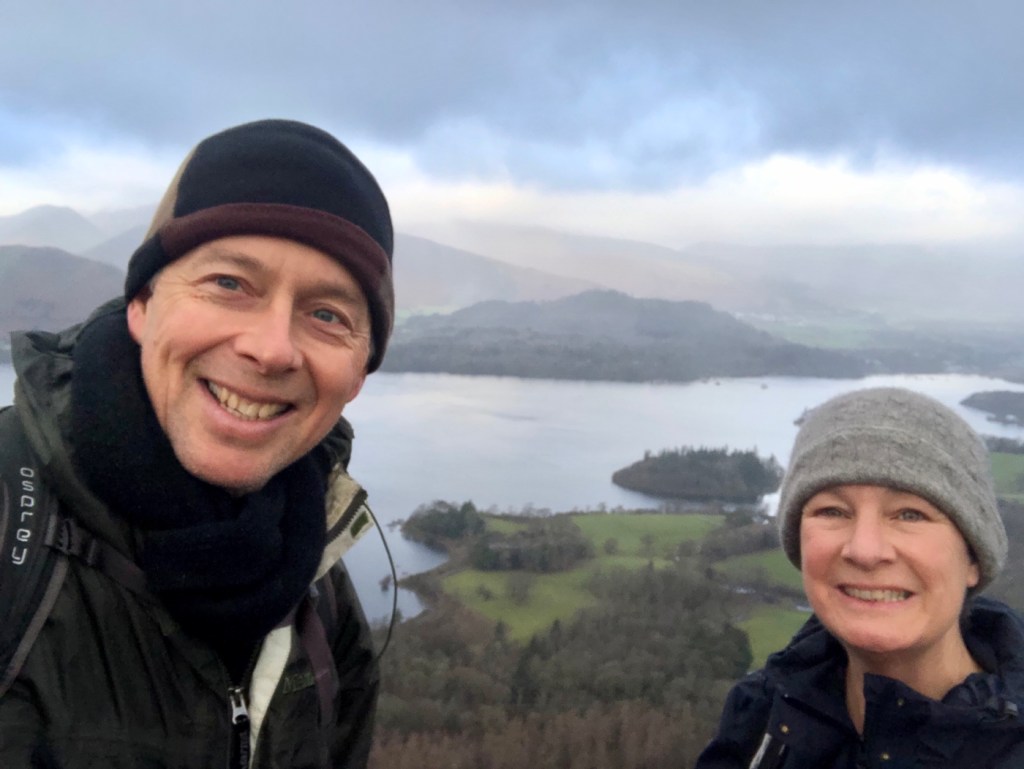
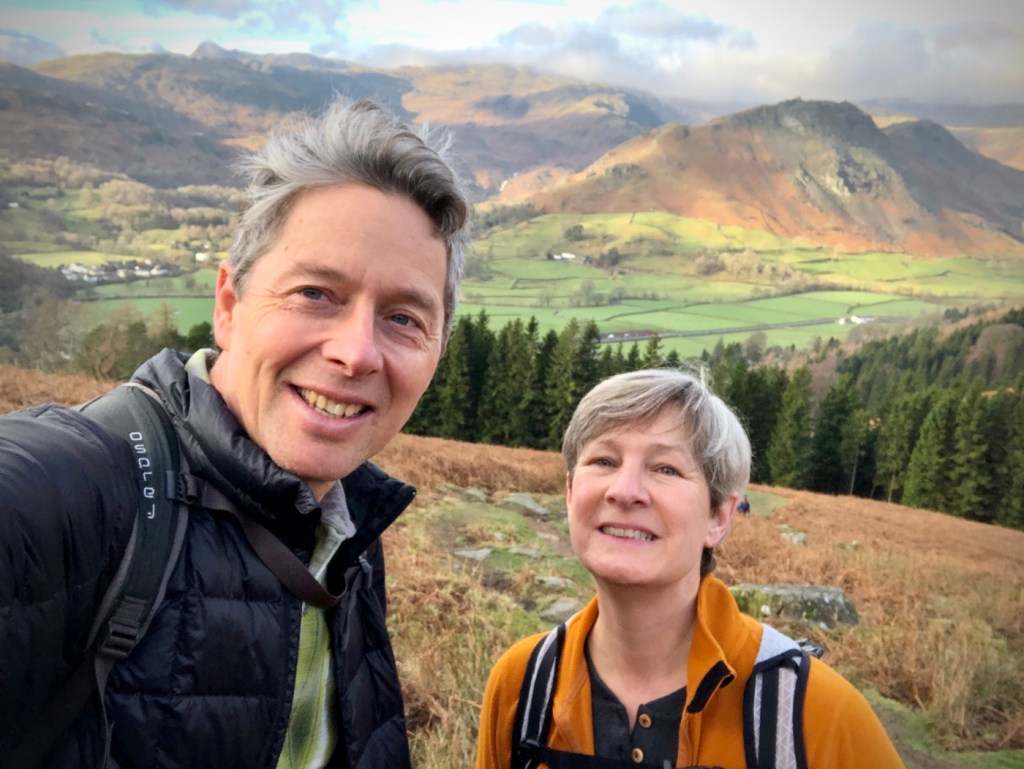
What makes time in the French alps better? Good friends.

When we end a bike trip nothing feels better than taking a nice break at our wonderful generous friends’ house in the Vallée Verte, France. We shop for food and cook in every day instead of searching for open grocery stores and restaurants. We have leisurely mornings and afternoon naps.
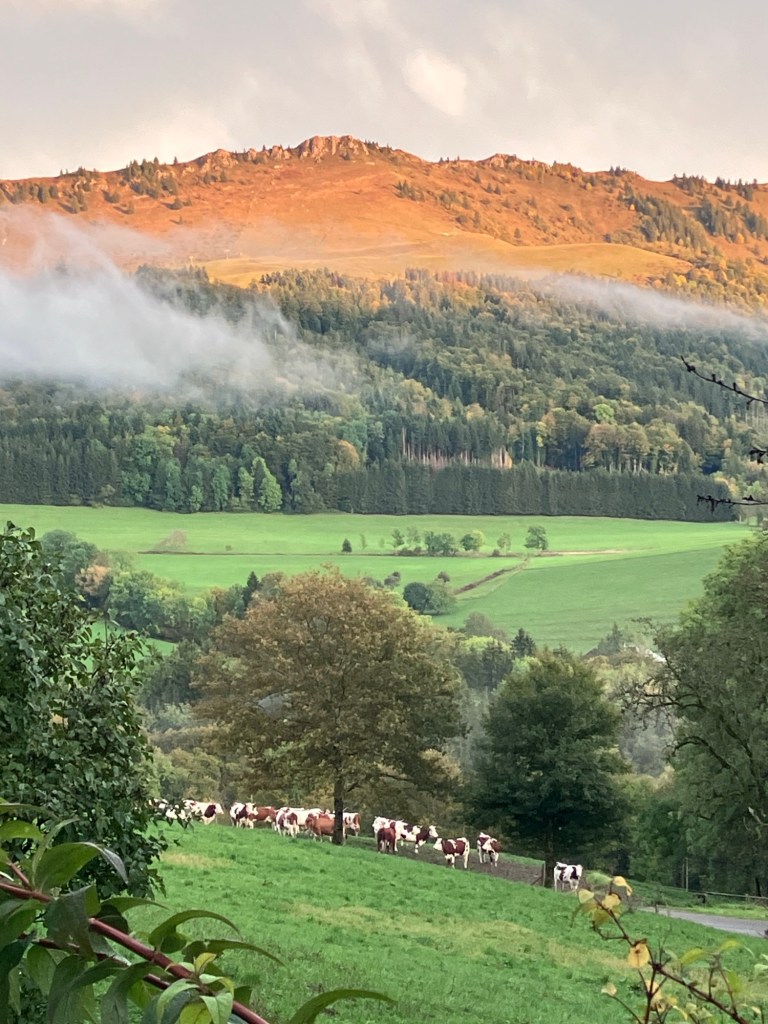
We watch the alpine glow and the cows waiting to go back to their barn.

But this break was even better since we had our dear friends Christine and Cecily joining us for a week. Usually we spend our time in the alps hiking from the house, catching up on stuff, travel planning, cleaning and storing the bikes and trying to help around the house. Their visit gave us the kick in our pants to rent a car and actually get out and see some of the alps. We joke that for folks who have spent so much time in the area we hadn’t seen many of the local sights.
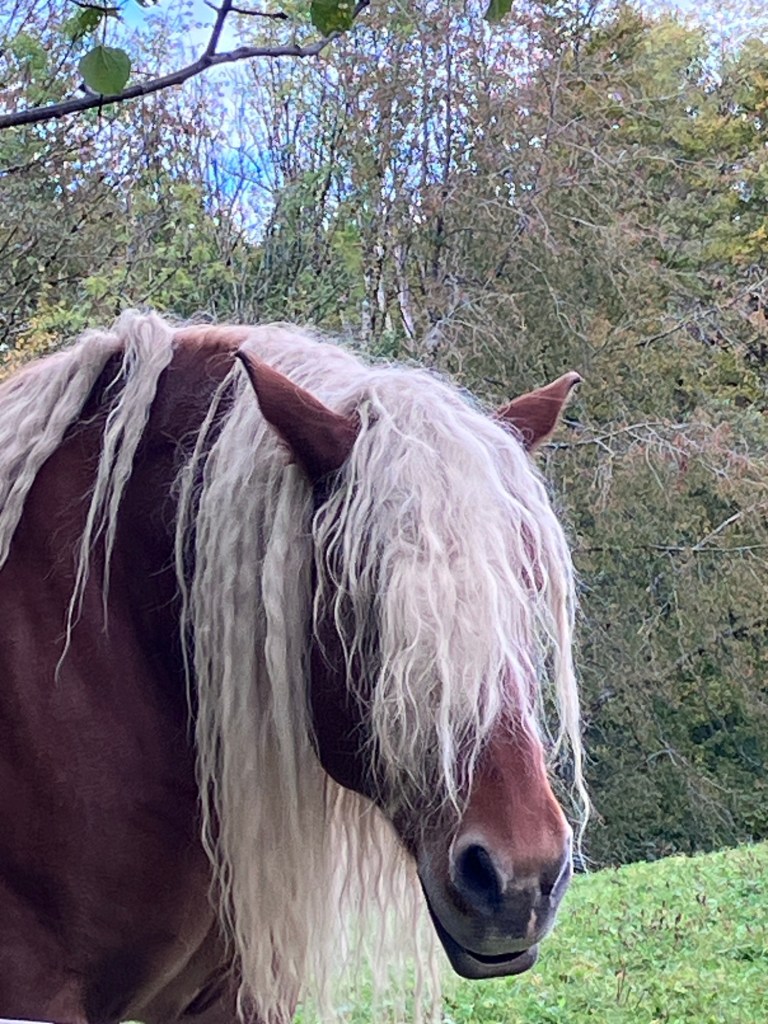
A rock star hairdo horse.

The best way we know to get over jet lag is physical activity in the sunshine. Thankfully the weather cooperated for our first hike, Plaine Joux up to Pointe de Miribel.

Blast the jet lag hike!
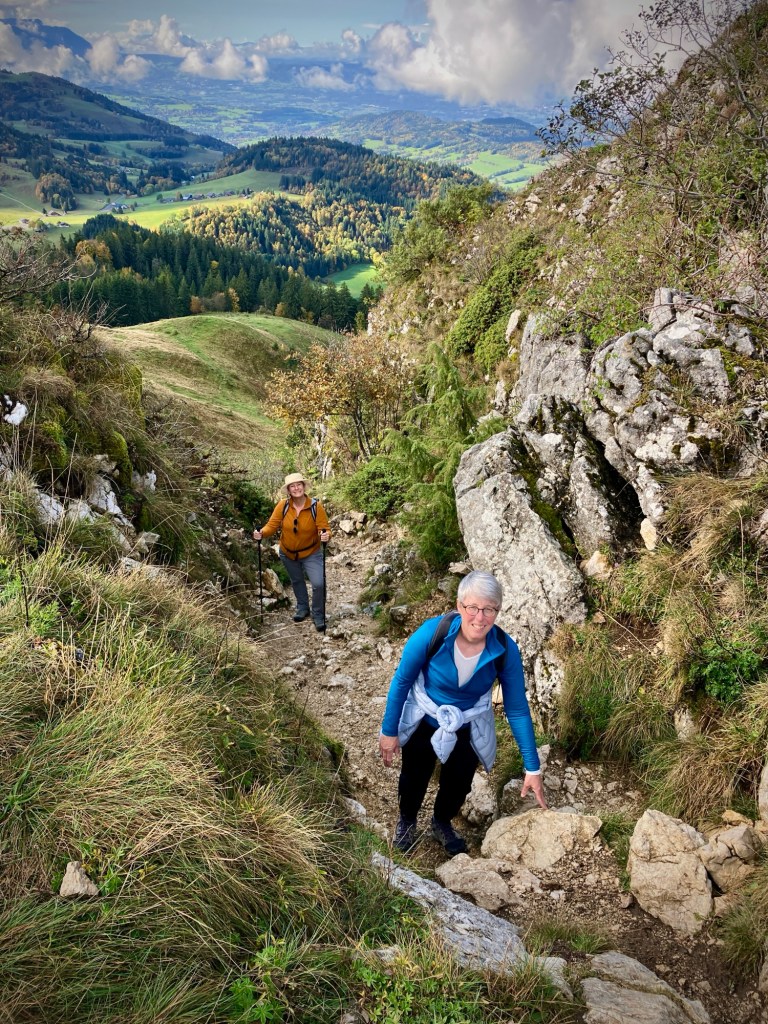
Up we go.
Remember to turn around to see the high alps playing peek a boo through the clouds.
The last super steep bit.
The summit! Photo credit to the nice Australian lady hiking with her dog.
I can never get enough of the views – those huge clouds.
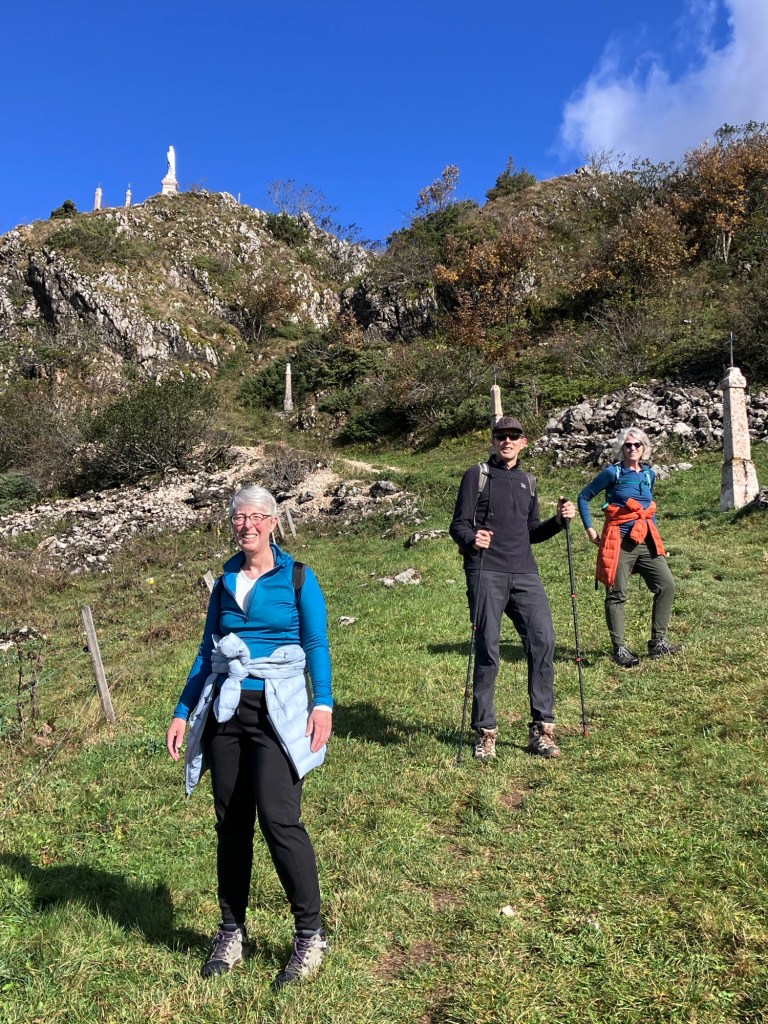
And the wonderful friends.

The nice hiker with the dog warned us there was a herd of goats with their guard dog on our chosen route down. The dog barked at her and her dog, just so we knew. My sister in Colorado has had these big white guard dogs for her livestock for years so I assured everyone that they aren’t dangerous, just protective. Well, the big white dog did indeed bark at us, but calmed down after we greeted them with good doggie voices.
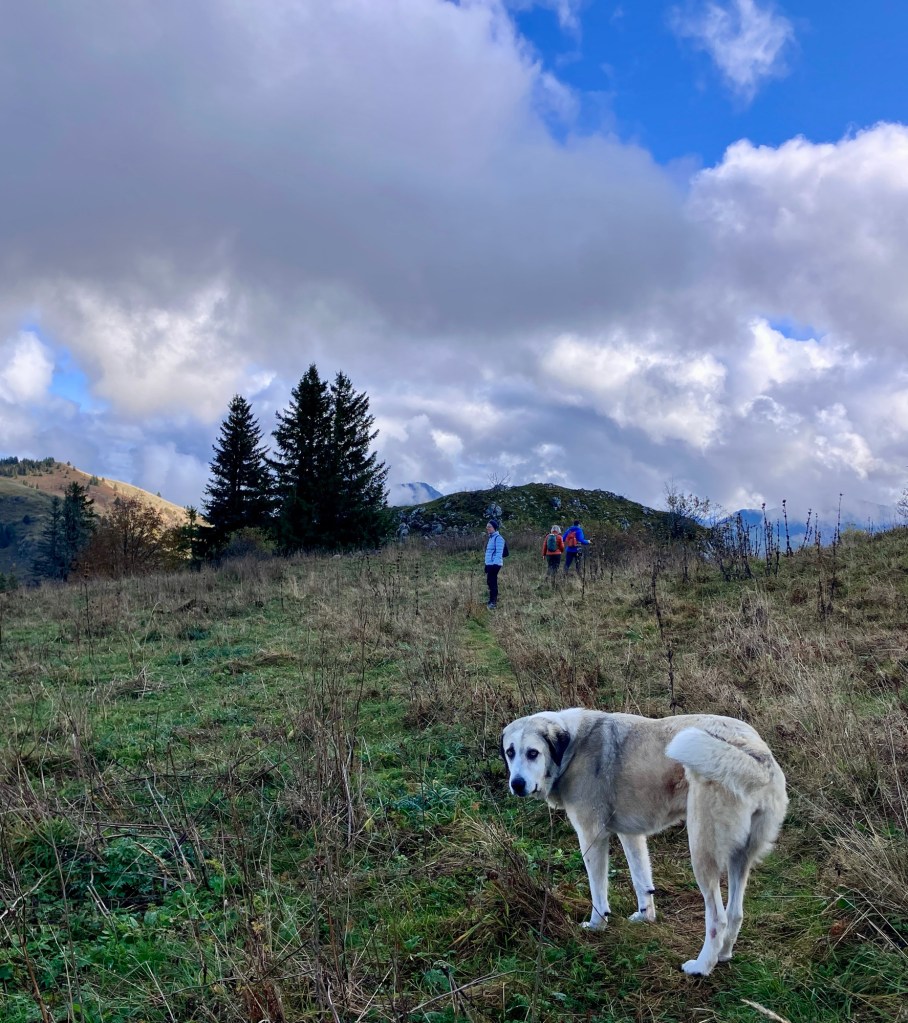
I’m just protecting my flock.
And I will escort you out of my territory.
If we had done our hike in reverse we would have seen this information sign before meeting the big dog.
The fall colors were changing every day.
For jet lag busting hike number two Rich and Cecily both had their fall appropriate colors on.
Lac Léman under the fog.

After a day just hiking from the house, we headed by car to Sixt-Fer-à-Cheval. The weather was rainy but we all just suited up in our rain gear and headed out on a fantastic waterfall loop.

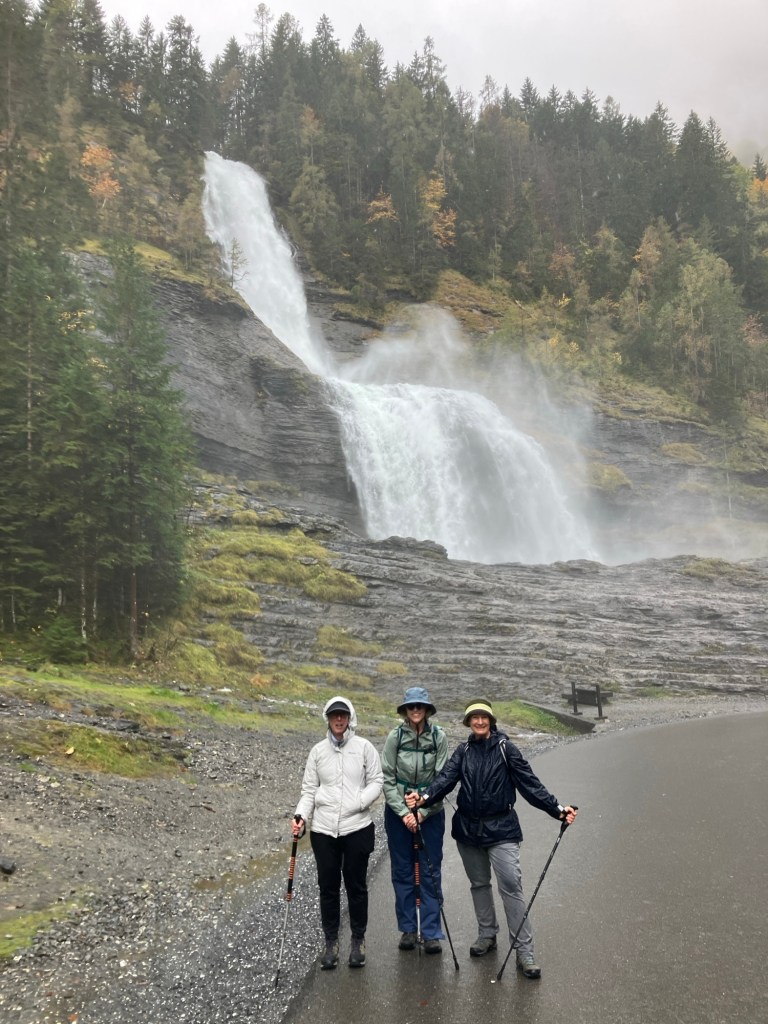
Cheryl and Christine. Friends for 42 years.
It was hard to know if it was rain or mist from the waterfall. Whatever- it was wet.
A wet day meant we had the trails almost to ourselves.
Cecily and Christine enjoying the break in the rain and the fall colors.
The mix of trees makes for dramatic vistas. As did all the uphill hiking.
Framed waterfall. It was all downhill after this point.

The next day our destination was Chambéry, which is south of Lac du Bourget. A nice walk around the old town, a visit to the Musée Savoisien and lunch.

Musée Savoisien had a great exhibit on houses of the Savoie region, and how and why they were constructed as they were.
Really detailed architectural models of the different house types.
The museum also celebrated one of the region’s most famous dishes.
Tartiflette– potatoes, lardon, onions and reblochon cheese.

At a traditional Savoie restaurant for lunch, Christine had the tartiflette, which was delicious but rich. We all agreed it is not an everyday meal. But so luscious.
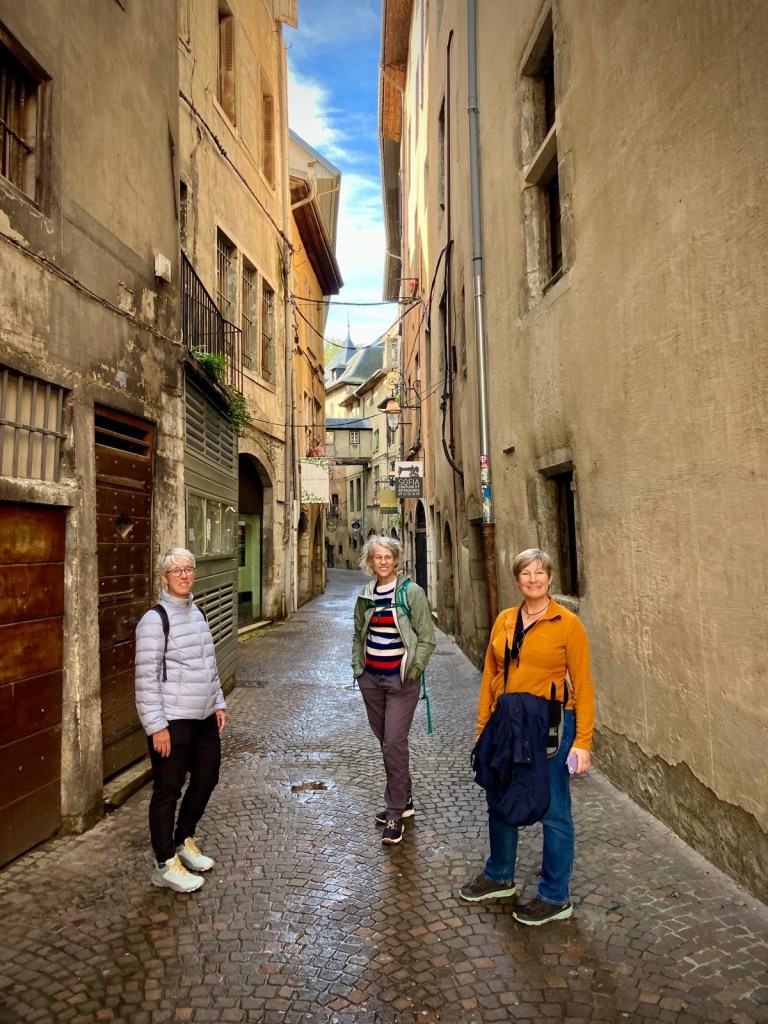
Rich captured what we called “our album cover shot”.

We learned a good lesson about renting cars, always add the second driver even though it costs more. Since Rich did all the driving he didn’t get to enjoy the scenery as much as the rest of us. We’re spoiled from California where the rule is that the spouse is always covered when it comes to rental cars. We should have added me as a driver so Rich could relax and enjoy the scenery too. So, with that in mind we took the train the next day. Rich still had to drive us to the train station but then we all got to admire the scenery from La Roche-sur-Foron to Annecy.

Train station usie.
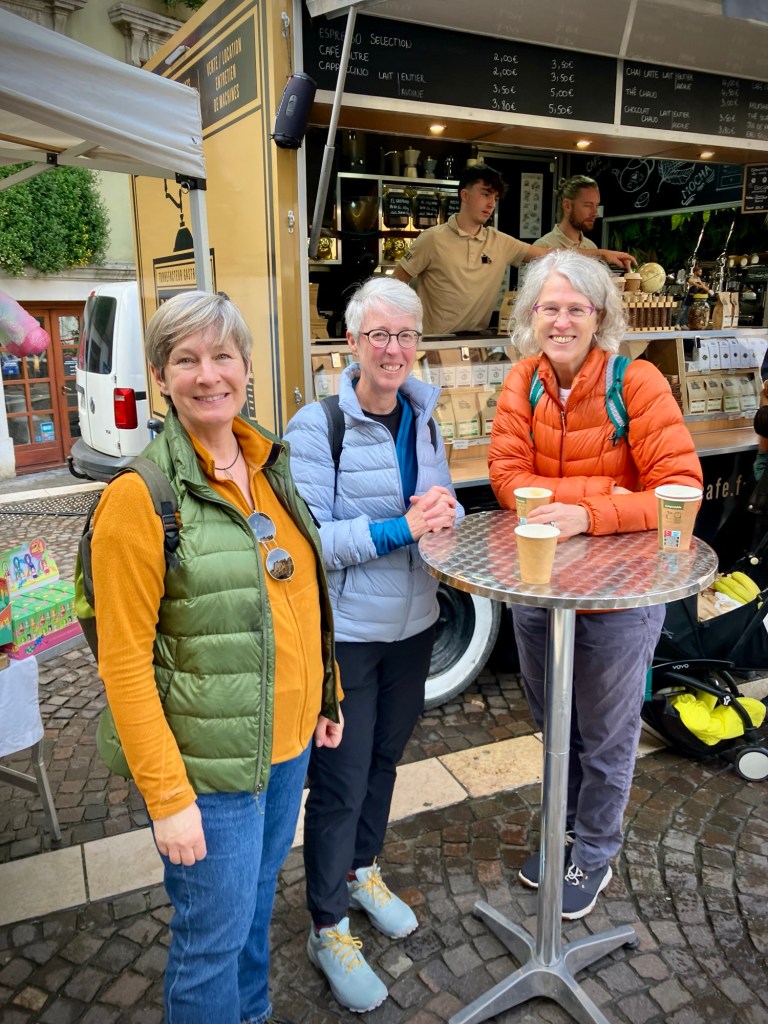
First stop in Annecy, where it was market day, a coffee cart.
Fueled up to walk around town.
One of Annecy’s beautiful rivers, Le Thiou. With fun and impressively sited fish graffiti.
Cecily and Christine in the old town.
Such a picturesque place. The water is crystal clear.
Can’t stop taking photos!
We weren’t the only tourists in town, but it wasn’t super busy. Just pleasantly hopping.
The perfect case for retirement, lounging in chairs by the lake.

After a day at home, shopping and doing an airport run to pick up Hannah, we headed off the next day to Chamonix, a new place for the four Americans. The very impressive roadway leading to Chamonix and the Mont Blanc tunnel was mostly empty since the tunnel is closed for works until December 16, 2024. That made for a lovely traffic free drive along the impressive viaduct roads.

The top of Mont Blanc was shrouded in clouds, but we now had Hannah with us!
Even with the peak covered the view is impressive.
Another potential album cover.
A glacial river and a glacier. Oh, and Cecily and Christine!
Hannah and Cheryl, friends for 40 years. I do love being able to say that. Long term friends are so wonderful.
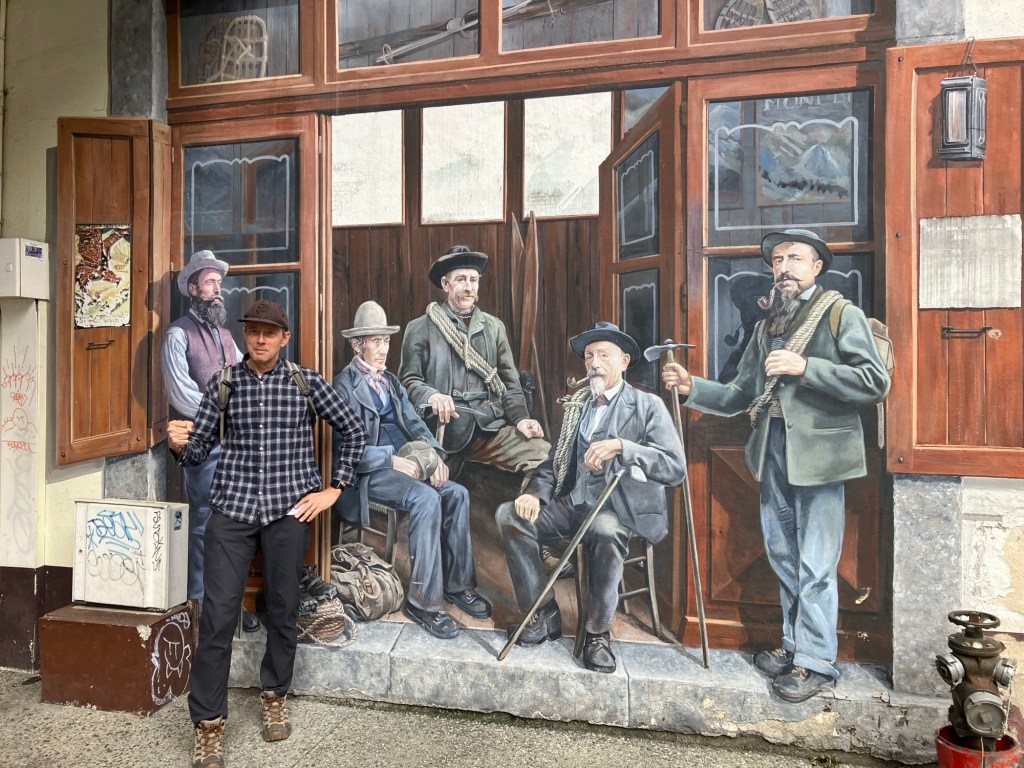
Rich in front of a mural of famous mountain climbers.

Sadly we had to say to goodbye to Cecily and Christine as they were off by train to Italy for another friend’s 70th birthday party. We dropped them at Annemasse train station, they took the local Léman Express to Geneva, and then trains to Turin. Such a fantastic way to travel.

See you soon!

When we made our nomadic decision it was our hope that we would have friends meet up with us in various places. This visit by Cecily and Christine was so energizing and wonderful. To get to share one of our favorite places, the Vallée Verte, with two of our favorite people was fantastic. The biggest downside to our life as nomads is missing friends and family.

We also had bonus time with Hannah our wonderful host, and some lovely weather to enjoy.
We got in some more good hiking.
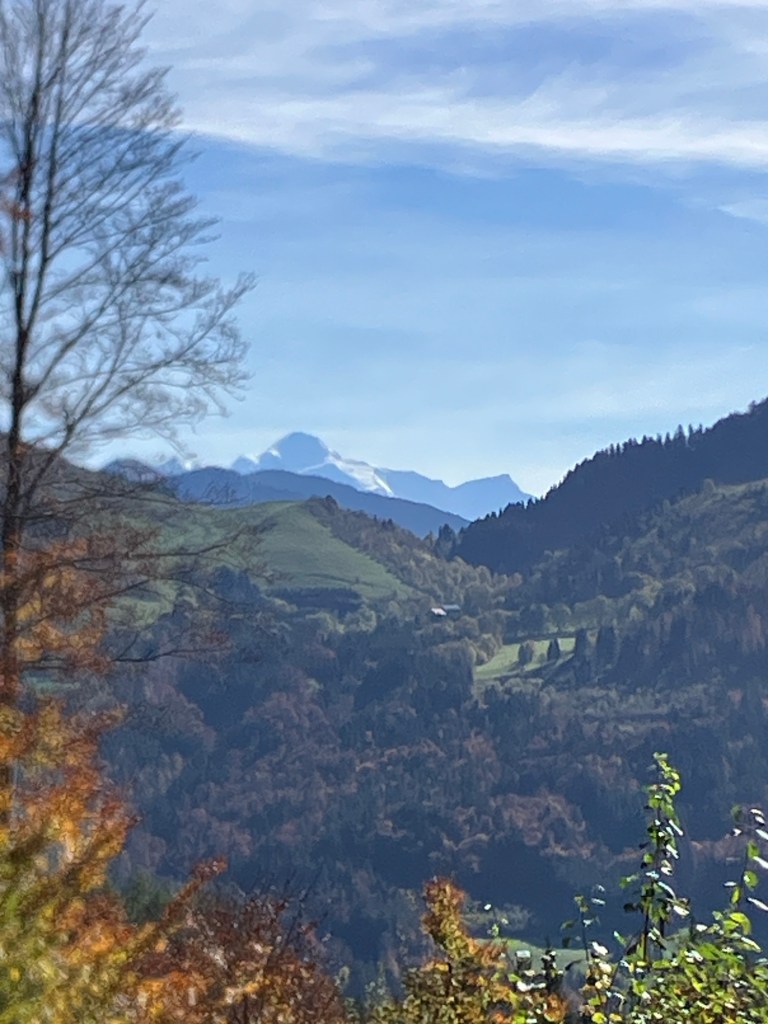
And got high enough to catch a glimpse of the reclusive top of Mont Blanc.
Framed by fall color.
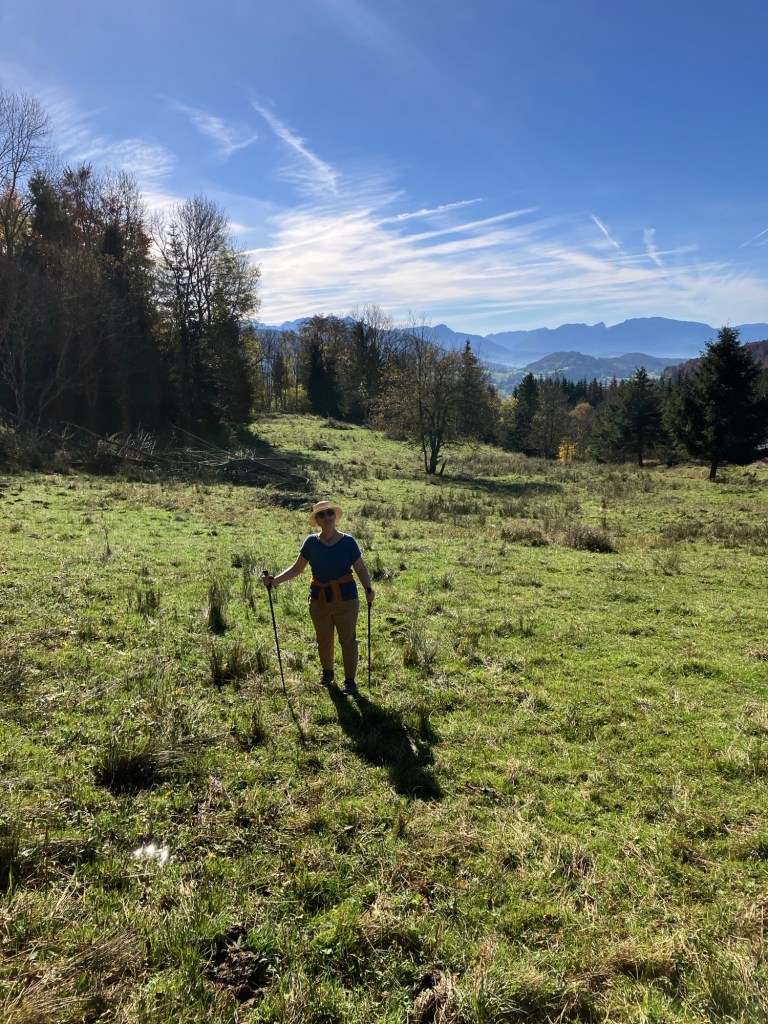
That might look like a dry field, it was actually wet and swampy.
The sign for the cooperative cheese monger in Boëge.
Which has a fantastic cheese vending machine with curated selections, open 24/7. For those cheese emergencies.
Calf in the mist.

Too soon it was time for Rich and I to shoulder our backpacks and head off ourselves. Hannah’s family had arrived so we left them in good spirts and got a lift to the train station in Annemasse.

After our challenging trains with bikes time the previous few weeks we were giddy to have only backpacks. This is so easy! We kept saying to each other.
The travel planner enjoying his stress free train ride.

We were working our way to Paris for a month stay and more visits from friends, but first we had a few stays along the way. More on that in the next post.

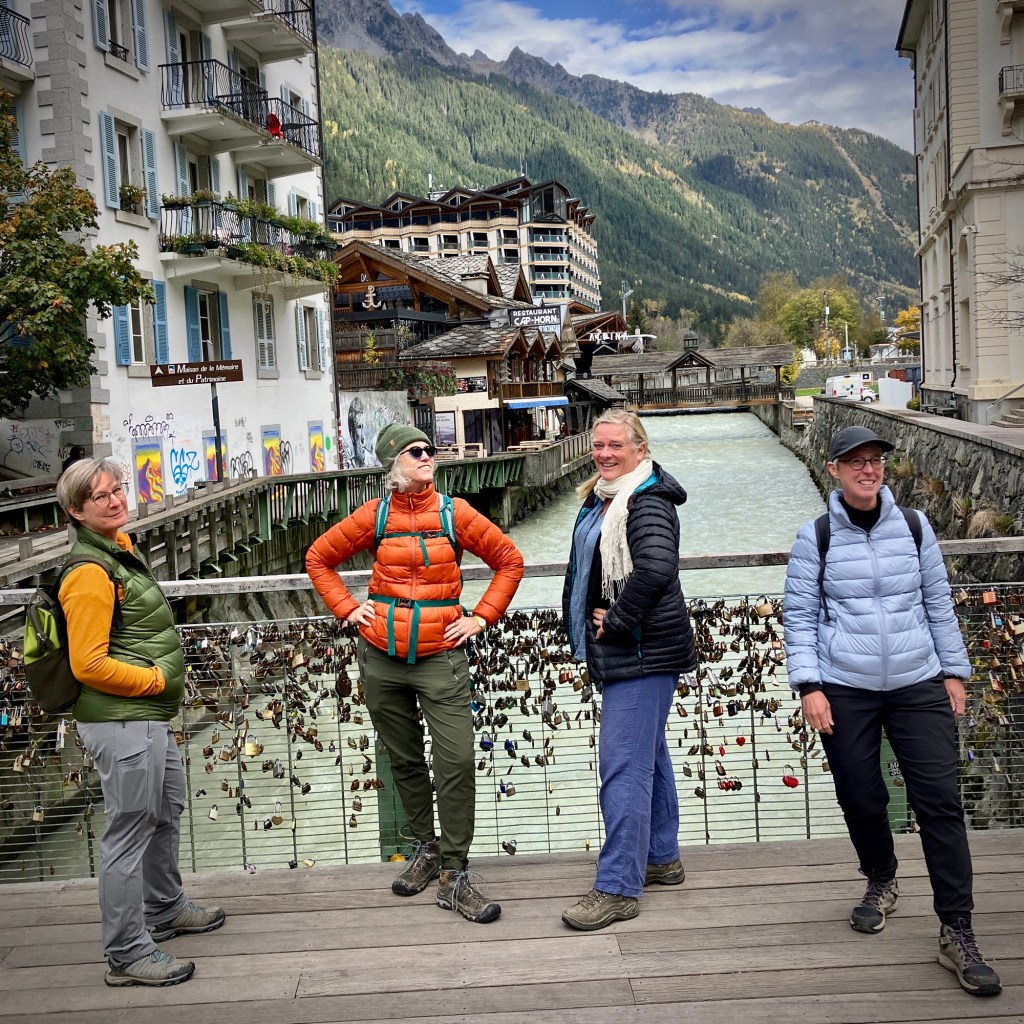
The happy travelers in Chamonix. Life is even better when shared with friends.

Hikes of the world: Lambir Hills edition.

Almost everywhere we go in the world, we hike. Urban hikes. High desert hike. Hot and sweaty jungle hikes. Gorgeous countryside hikes. Dodgy alongside busy road hikes. Amazing coastal hikes. British pub hikes.

Wait, what?

Rich is very good at finding hikes for us to do. And he’s a fast and strong hiker. The more uphill there is, the happier he is. I’m not fast and frequently get grumpy going uphill.

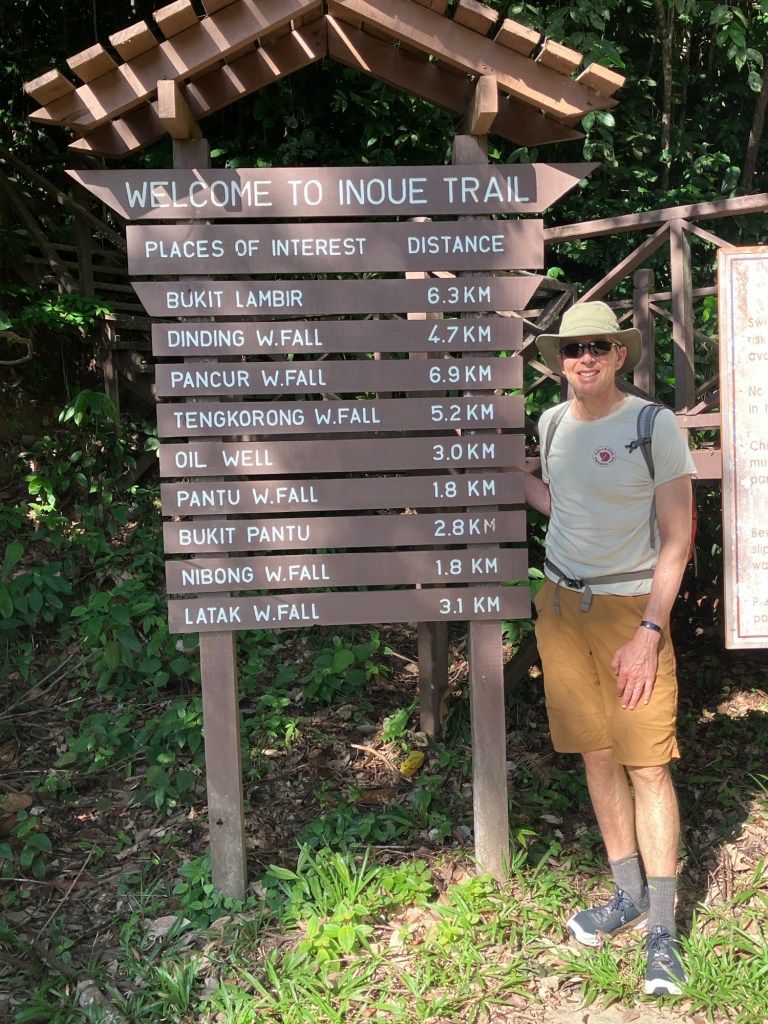
Lambir Hills, outside of Miri, Borneo.

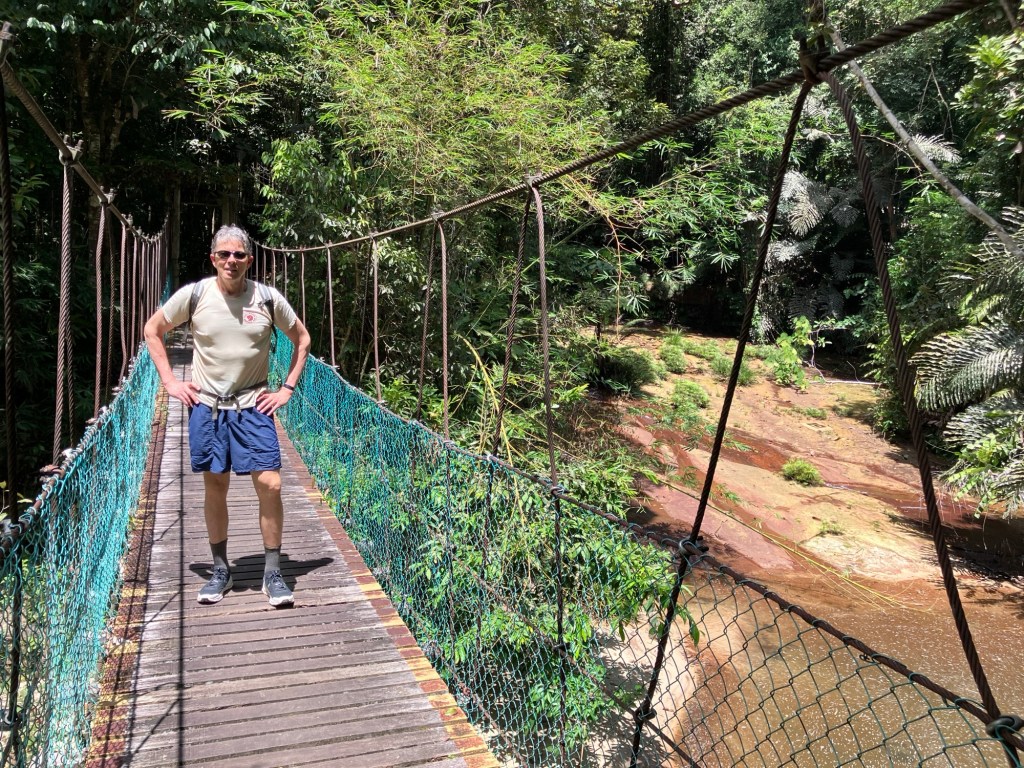
Hiking in the jungles and rain forests of Borneo is a challenge. Heat and humidity punish you, and the frequent heavy rains punish the trails, making them more like creek beds than trails.

These could be easy day hike distances in a different climate and with different trail conditions.
Hiking with a fan. Every little bit of breeze helps.
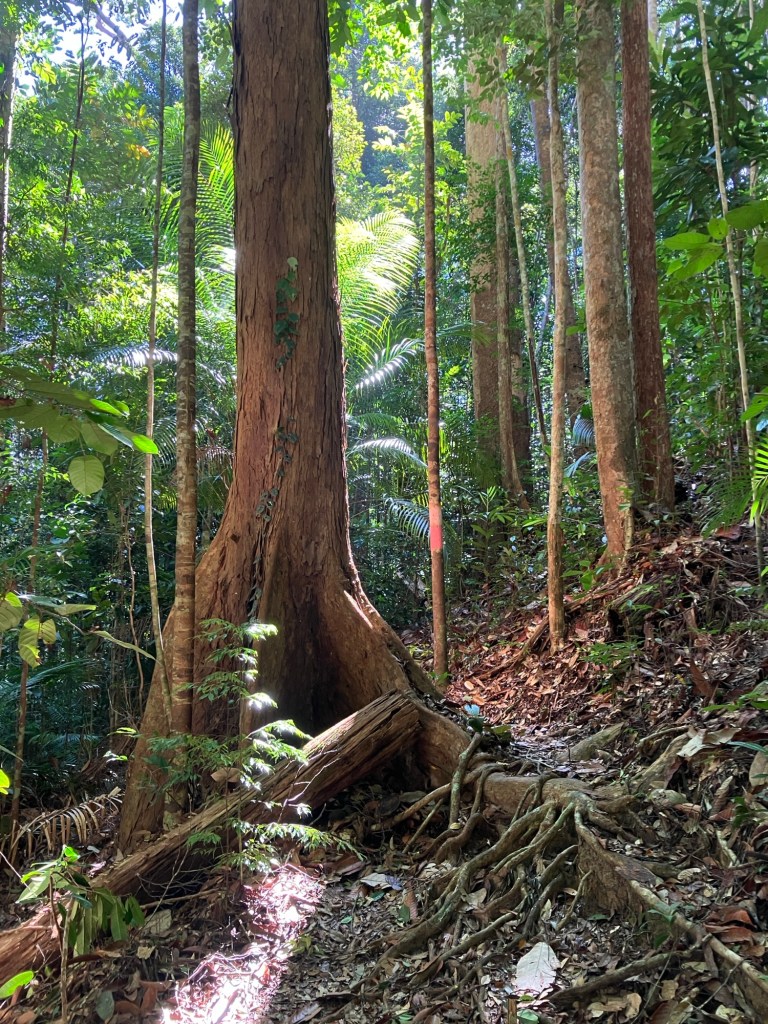
Our Lambir Hills hike started off nicely. Uphill on a decent trail. Huge trees.
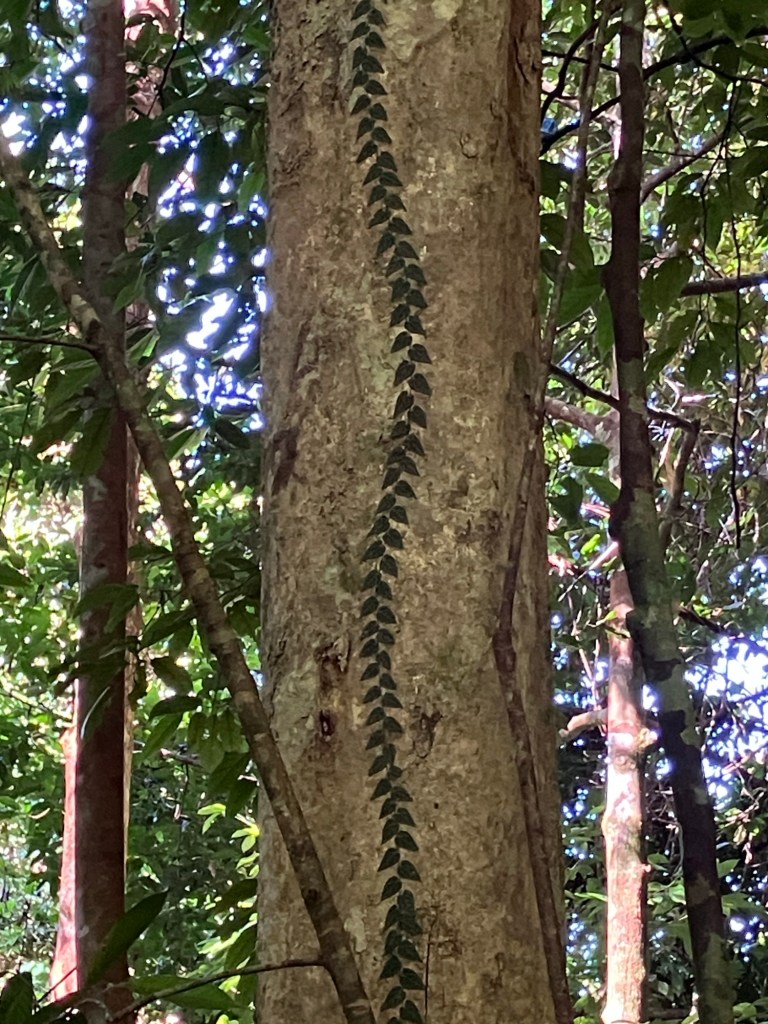
Unknown to us vegetation. This climbing vine is so perfectly symmetrical. Looks like a tree zipper.
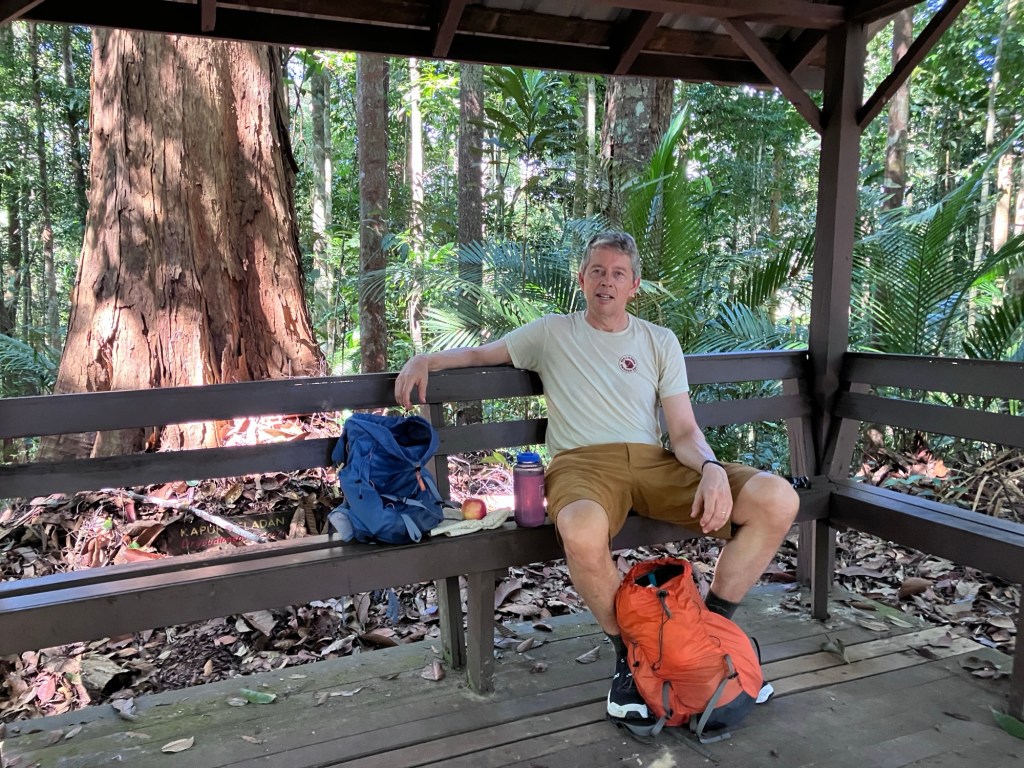
A nice shaded rest stop.

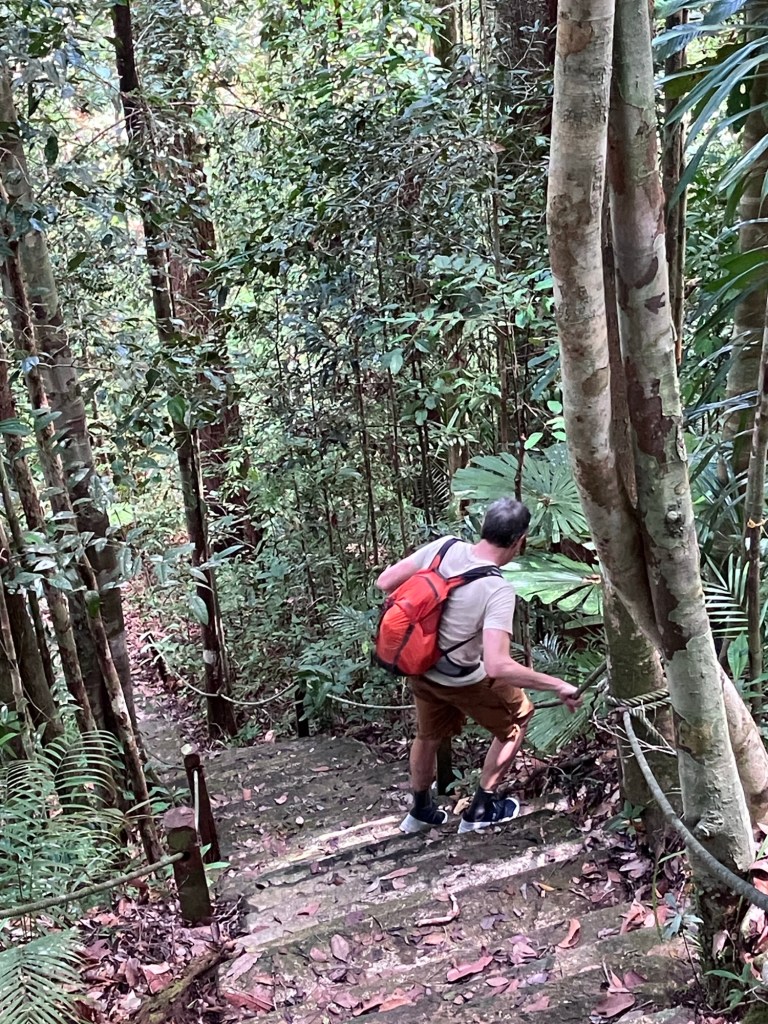
There seemed to be a period in Malaysian Borneo when trails were built and park buildings were constructed. Maybe 20 years ago, maybe 15? But maintenance is tough to keep ahead of. Or it’s not funded. It was sad to see the state of not just the trails, but some the other park infrastructure as well. After we crested the top of our climb the trail started to deteriorate. As it dipped up and down into drainage after drainage, ropes appeared to help you haul yourself up or steady yourself down the very rutted trail.

Up we go.
And down we go.
And up we go. Trail maintenance must be almost impossible on these trails.
We saw one other group of hikers, they were better equipped, with trekking poles and matching hiking shirts. They were just getting to the tough part.
My “we are not amused” look.

So what do I do when I’m not loving the hike I’m on? First, I remind myself why we hike. We hike because we like to see places only reachable on foot, and so we can keep on hiking. During a long bicycle tour two years ago we forgot to stop riding and take rest/hike days so we could work our hiking muscles. We found ourselves in fantastic biking shape and hurting on long walks and hikes.

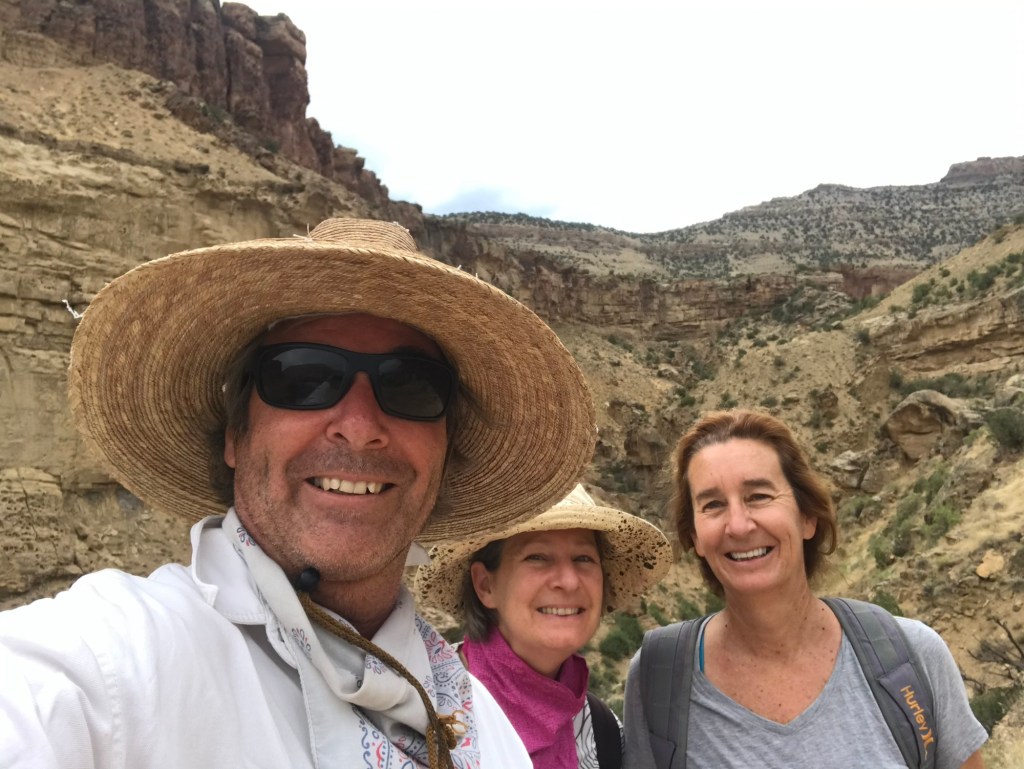
That’s not Malaysia! With our dear friends Cecily and Christine in Seattle, December 2023.
More dear friends in Wales, Hannah, Erik, and Thea. 2023.

Second on my list of hiking distractions is to remember hikes with people we love.

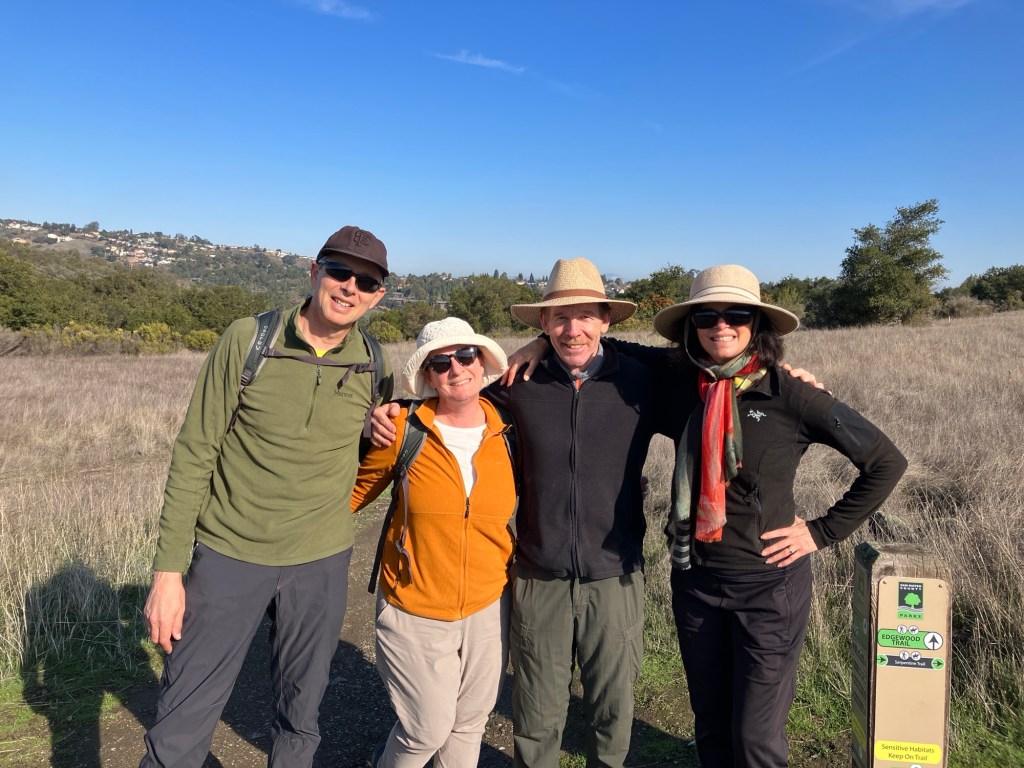
Christine, Annie, and Erika. Seattle December 2023.
My brother Steve and sister-in-law Claire, Pismo Beach California, 2017.
My brother Steve and my sister Kathy, Colorado 2020.
Rich, Mike, and Milo. California, 2021.
Mike and Kathy, California 2022.

We’ve had some of our best discussions, and come to some of our most life directing decisions while hiking. What have we decided while hiking? Whether or not to have children. Should we sell our place and travel. Do we need to actually own a car. Answers, no, yes, and no.

Above Tetouan, Morocco, 2021.
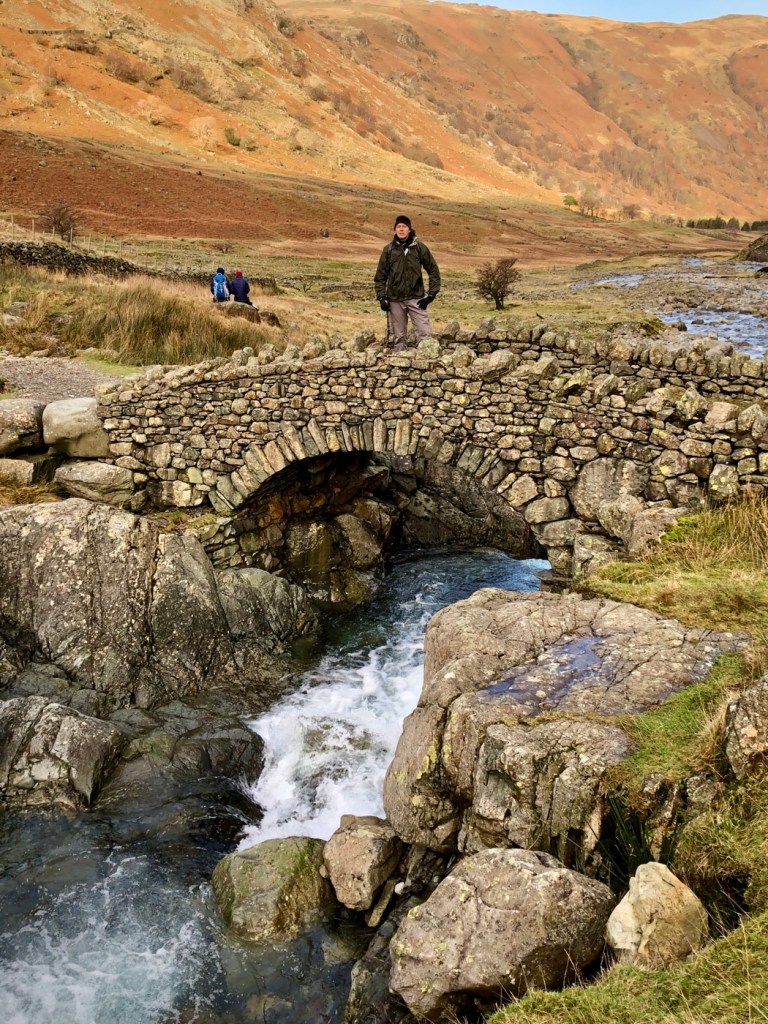
UK, the Lake District, January 2022.
On the Camino del Norte with Cecily and Christine, Spain, October 2022.
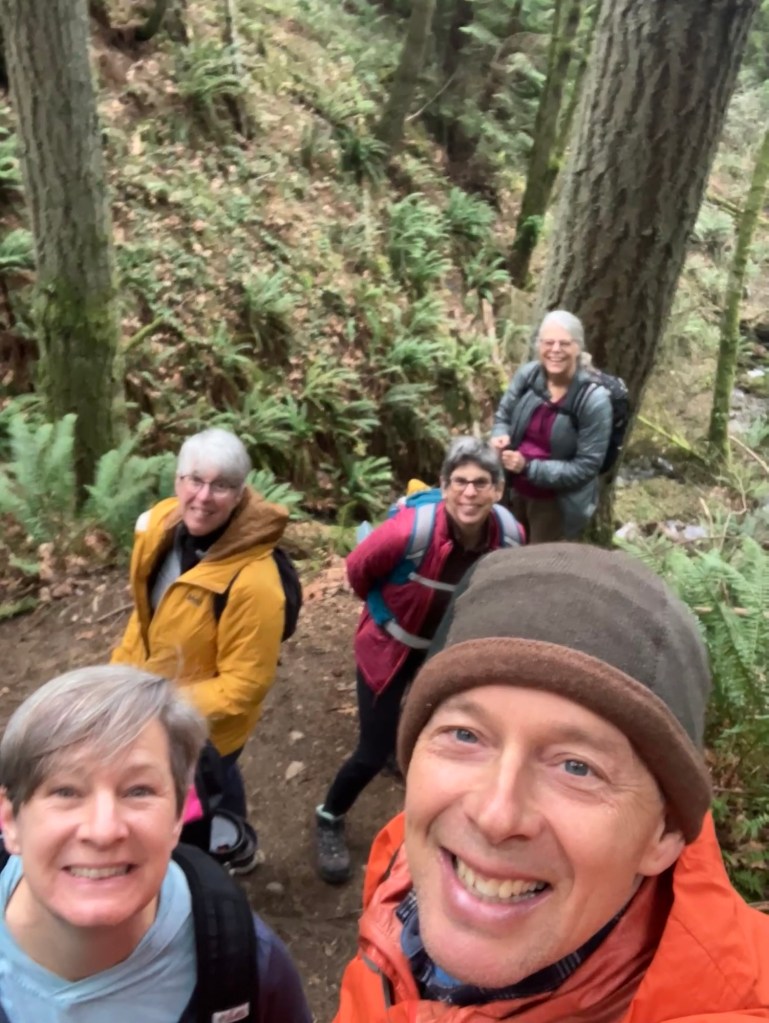
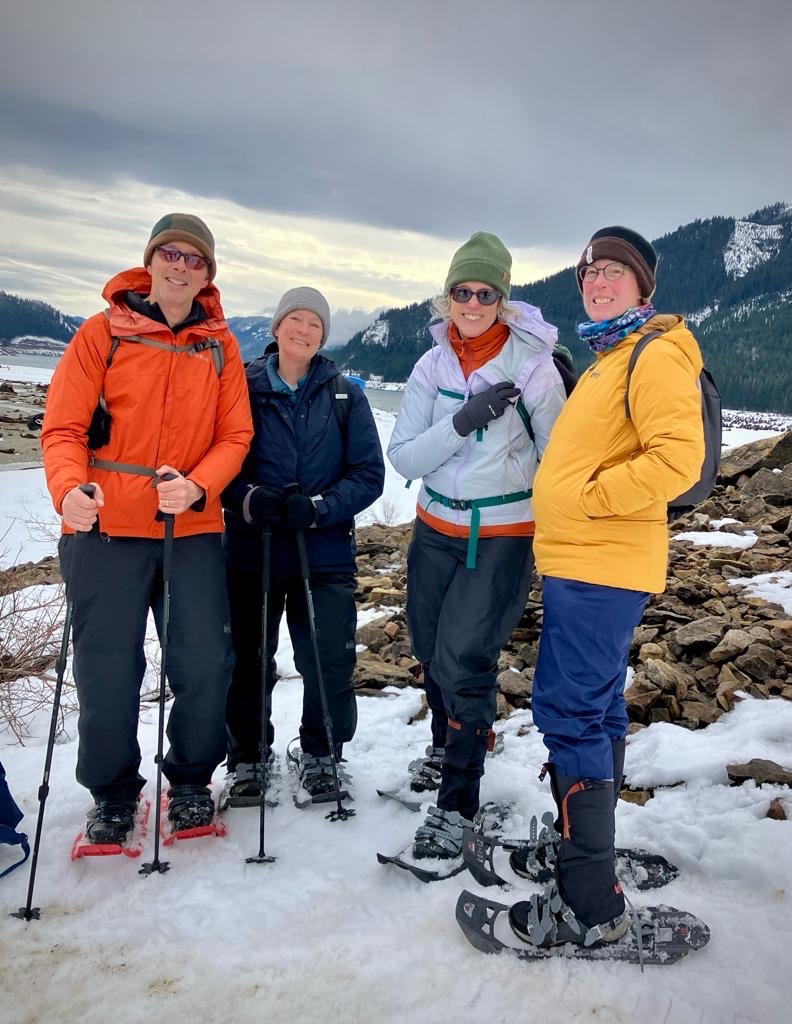
Snowshoeing with Cecily and Christine, Snoqualmie WA, 2023. Oh, that cold weather. Hard to remember what cold is like when you’re in Borneo.

Every hike has its tough elements. The moments when you wonder why you hike. But then nature reveals itself and you remember again why you hike.

Huge tree reaching for the light.
These trees did not let you forget you were in a rainforest.
The canopy is far overhead.
No surprise there is a lot of water.
Including a waterfall at mile 5. From the waterfall it was only a kilometer back to the park office where our Grab car would pick us up.
A very refreshing swim.

The rainforest is stunning, but I was happy the hike was over and our air conditioned hotel beckoned.

Oh you thought this jungle was done with you?
Thankfully Rich did a quick step back and did not tread on this snake. Not a pit viper but we still gave him respectful space.
From the park office to the waterfall is a popular trail, and in better shape than the rest of the park.
A view of Miri from our hotel room.
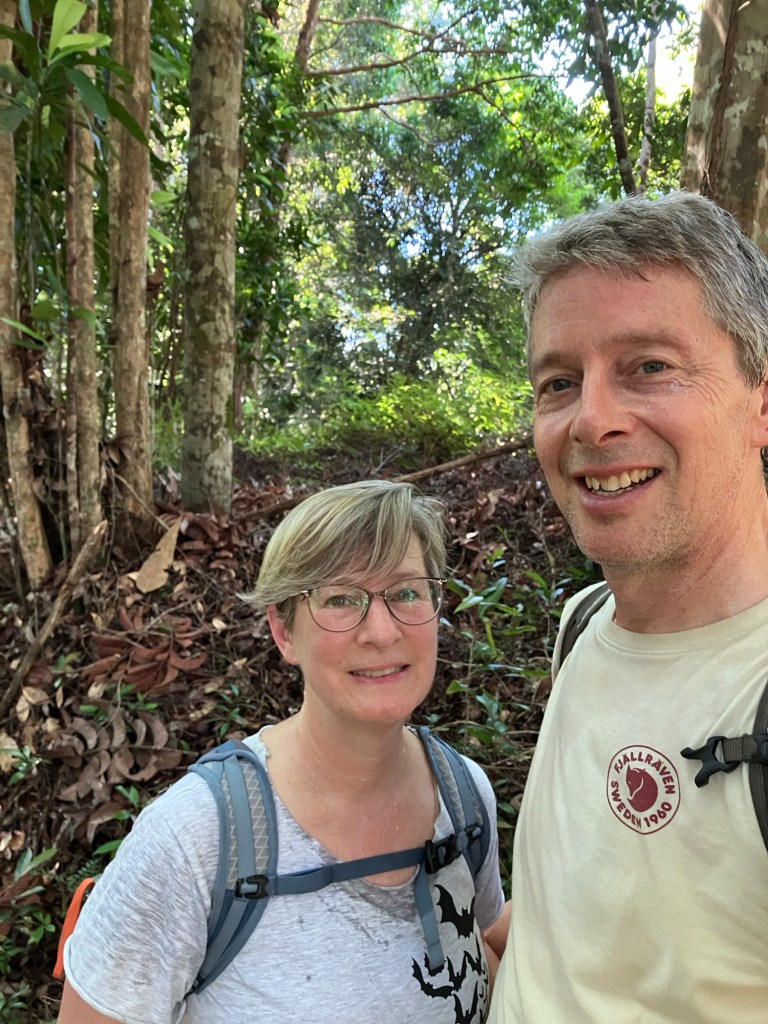
The hot, sweaty, pink, but happy travelers.

We’re in Kuching now, the city of cats, and heading out for a jungle lodge experience at Batang Ai, at the Nanga Sumpa Lodge, early tomorrow.

Housesitting side trips to fascinating museums.

I love a small specialized museum. A specific topic, a single person or industry, the narrower the focus the better.

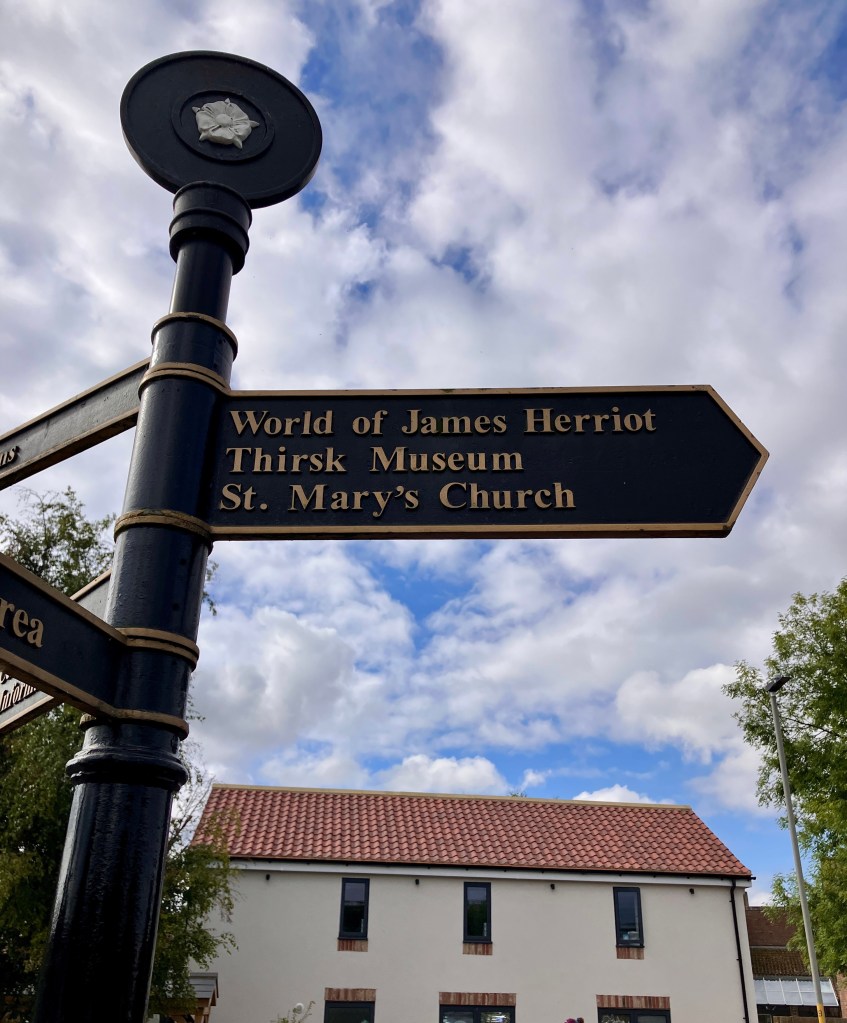
The World of James Herriot. A great museum in the town of Thirsk.
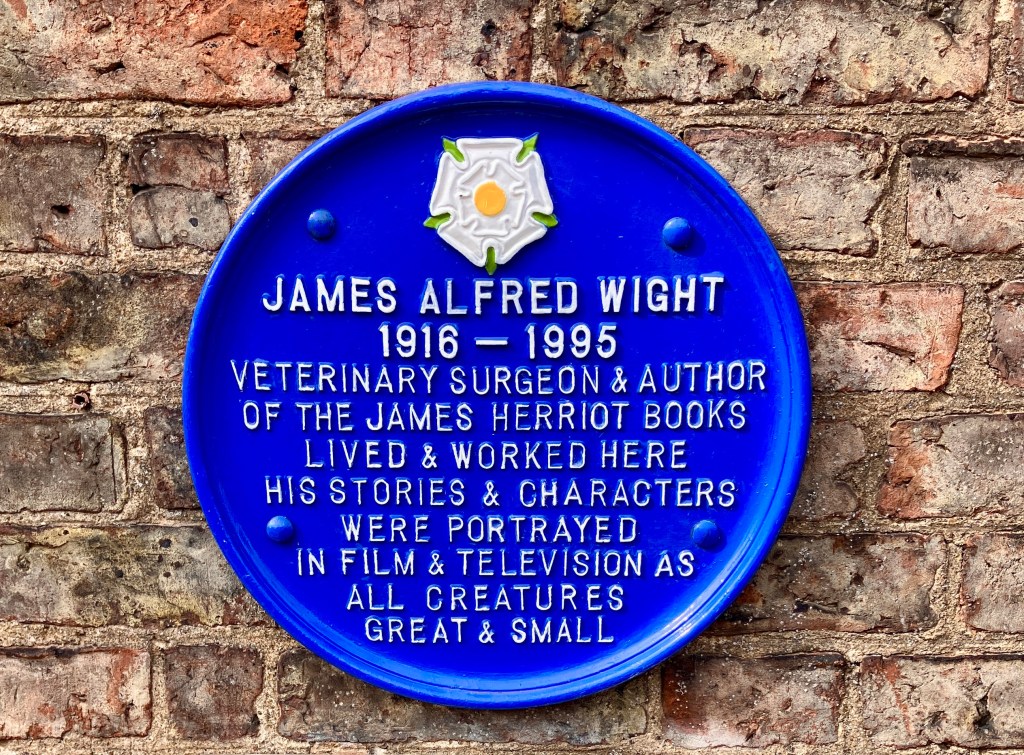
Did I know he used a pen name? Maybe I’d read that before, but what a thrill to see this historical marker.

Doing my research about the area where we booked a house sit, I searched on museums. I quickly extracted a promise from Rich that we would not miss this one. James Herriot’s books were a big hit with my sister and I when they were published in the US starting in 1975. She went on to become a veterinarian. Did the books have an influence on her? I asked her and she said “They probably did.” How could they not?

A peek into the dispensing closet.
If the equipment in the consulting room looks old and slightly off putting, the veterinary medicine museum on the next floor up will certainly give you the shivers.
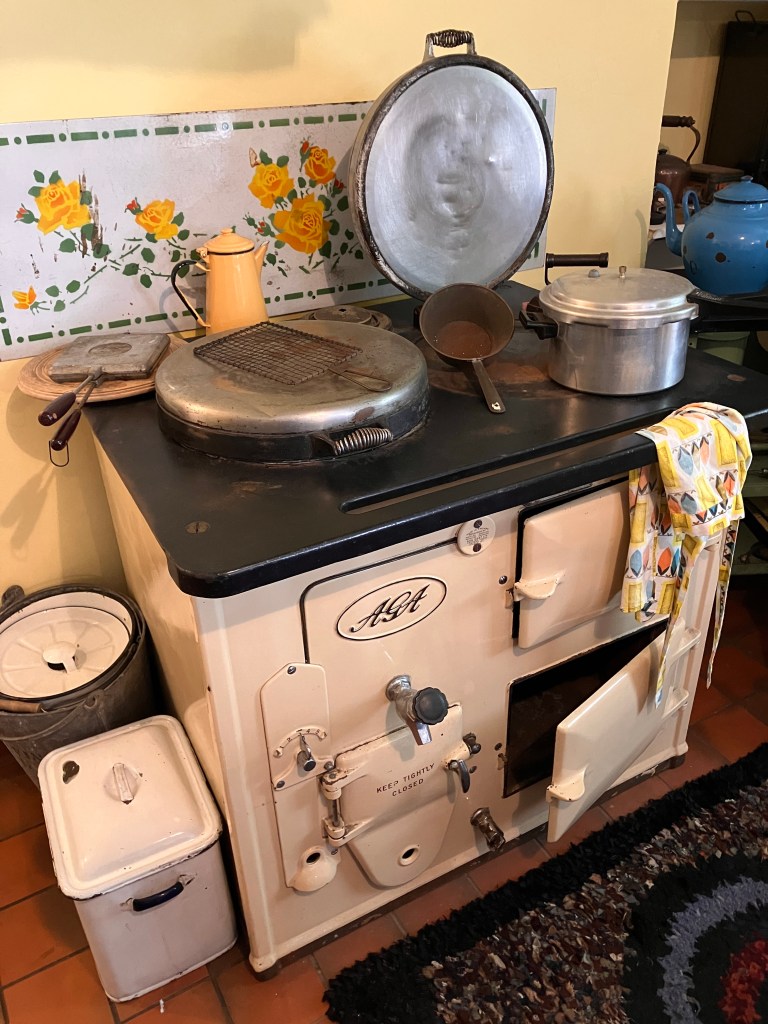
A lovely old Aga stove in the kitchen.

If you’re not watching the current adaptation of All Creatures Great and Small, or haven’t seen the older versions, you might be tempted to start watching after a visit to this museum. Even a long time fan like me learned a few fun tidbits. Since it was frowned upon for a Vet to advertise, Alfred James Wight choose a pen name, the surname of a favorite Scottish footballer, James Herriot.

Rich with a statue of the author in the garden.
Strong sales in the US helped propel sales around the world.
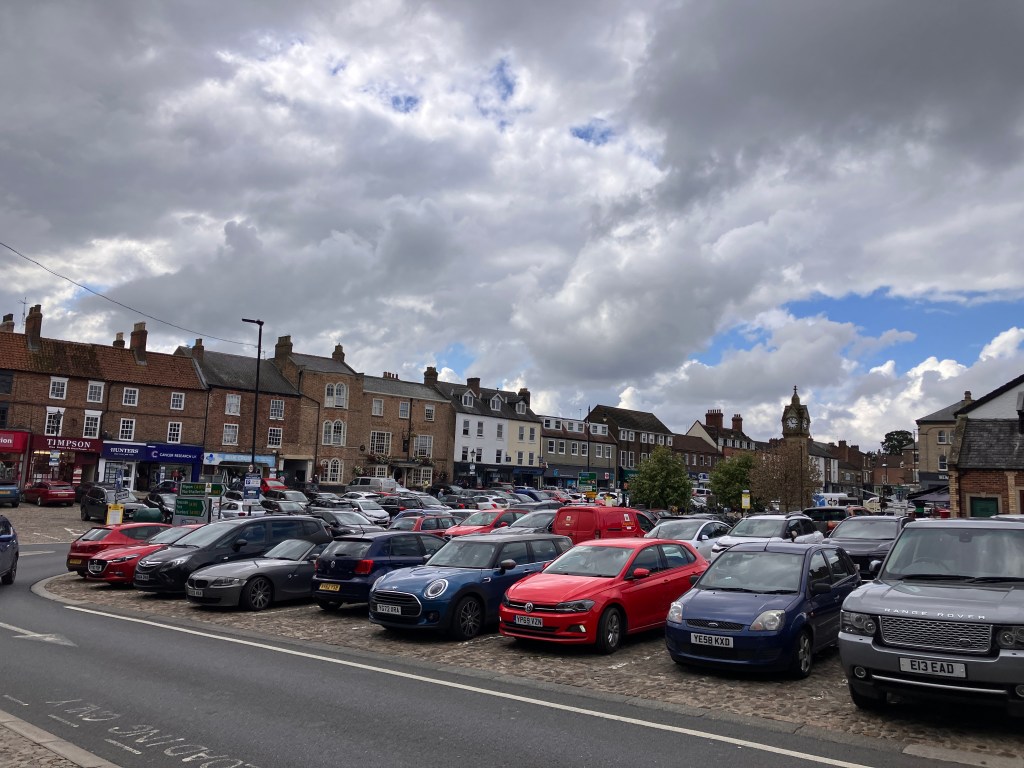
Thirsk is a charming town with gorgeous brick buildings.
Of course, we wouldn’t be us if we didn’t lament the scourge of parked cars in the center of town. It was beyond my photography skills to get a photo of the buildings without cars marring the scene.
World of James Herriot. Definitely worth a visit.

We had a rental car during this house sit, which was in a small town without bus service. Although the train station at Darlington was only about a 20 minute cycle away, there was nowhere safe to lock our touring bikes at the station. There were bikes locked there, but our bikes would have stood out like sore thumbs, or tempting morsels, among the commuter bikes. Could we have enjoyed a day out knowing our bikes were not really safe at the train station? No. So the rental car gave us the freedom to roam Yorkshire. And we took advantage of it.

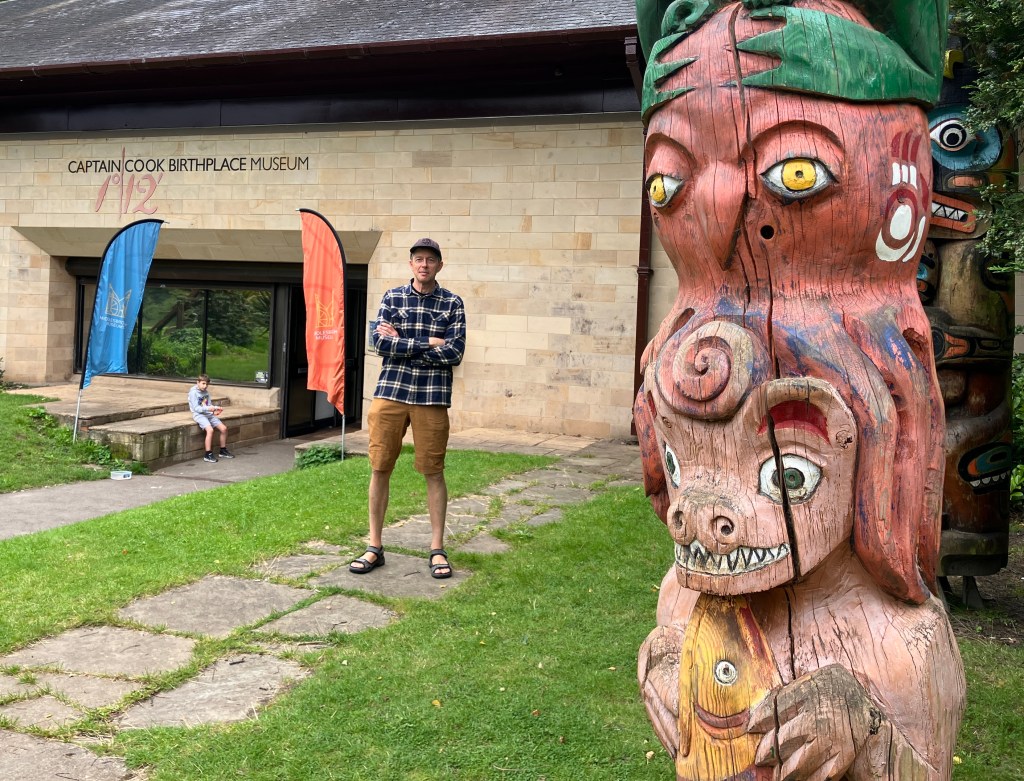
Captain Cook Birthplace Museum, in Marton-in-Cleveland.

While my bike was in the shop for a tune up we checked out the map and a museum caught my eye. Captain Cook’s birthplace! We’ve been to the big island of Hawaii a few times and kayaked to the white obelisk memorial at Kealakekua Bay where Captain Cook died. Or was killed, more correctly. The opportunity to bookend the life of the famous cartographer, explorer, and naval officer was not to be passed by. It was a good little museum, and gave us a new appreciation for how brave and talented Cook was. From the Hawaiian point of view, which is the one we’re familiar with, his arrival – the first documented European to visit the Hawaiian Islands – was the beginning of the end of the Hawaiian Kingdom. This museum gave us a more full picture of the man, rather than just the image of the man who began the destruction of native Hawaiian culture.

My brave explorer exploring the museum.
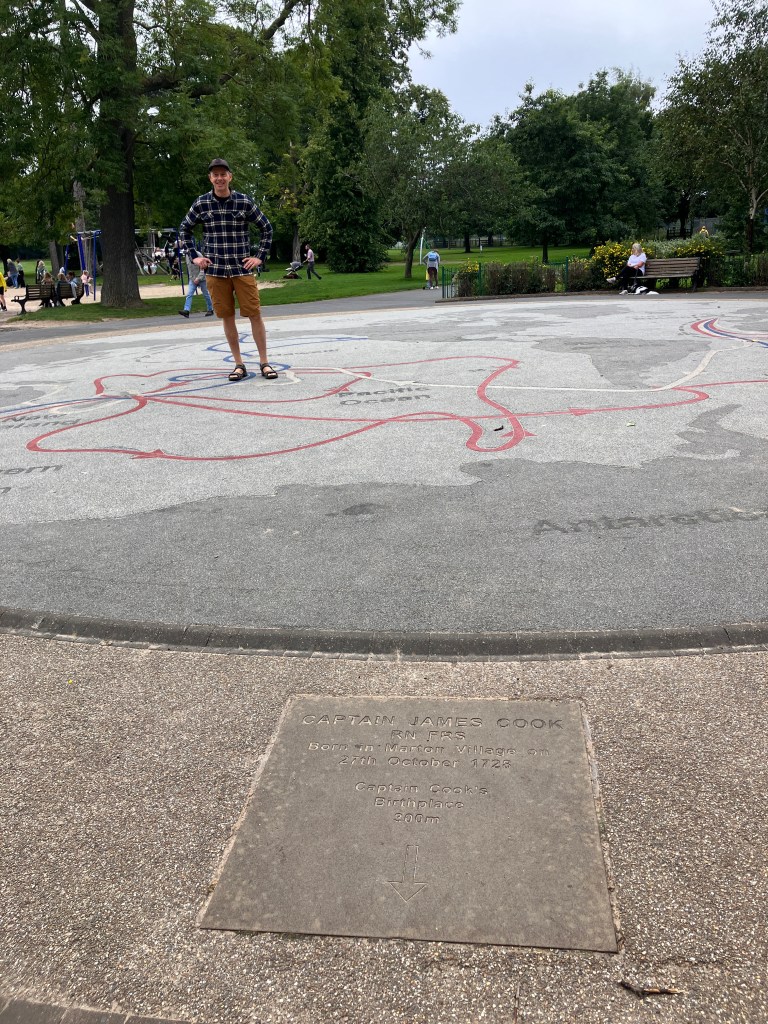
This urn marks the place where the Cook family cottage stood and where Cook was born in 1728. The cottage was leveled by a new landowner in 1790. The family had moved on in 1736.
A large scale map showing the three pacific voyages of Captain Cook.
The voyages started at Plymouth Harbor.
And the third voyage ended for Captain Cook on the island of Hawaii.

Cook’s first voyage was to Tahiti, where he and a team of astronomers observed the transit of Venus across the sun in 1769. The transit helped astronomers to calculate the distance between the sun and the earth. The HMS Endeavor then went on to explore the uncharted, by Europeans, southern oceans.

We left the museum with a new respect for Captain Cook and empathy for his end in the beautiful Hawaiian Islands. That is a successful museum.

The Yorkshire Dales.

Our next car enabled outing was not a museum, exactly, although the Yorkshire Dales could be viewed as a timeless experience. Not a living museum, but a living and evolving region.

The village of Reeth, and a chat with a cyclist who was riding coast to coast across this part of Britain. If you check out a map, the narrow waist of Britain crosses this area.
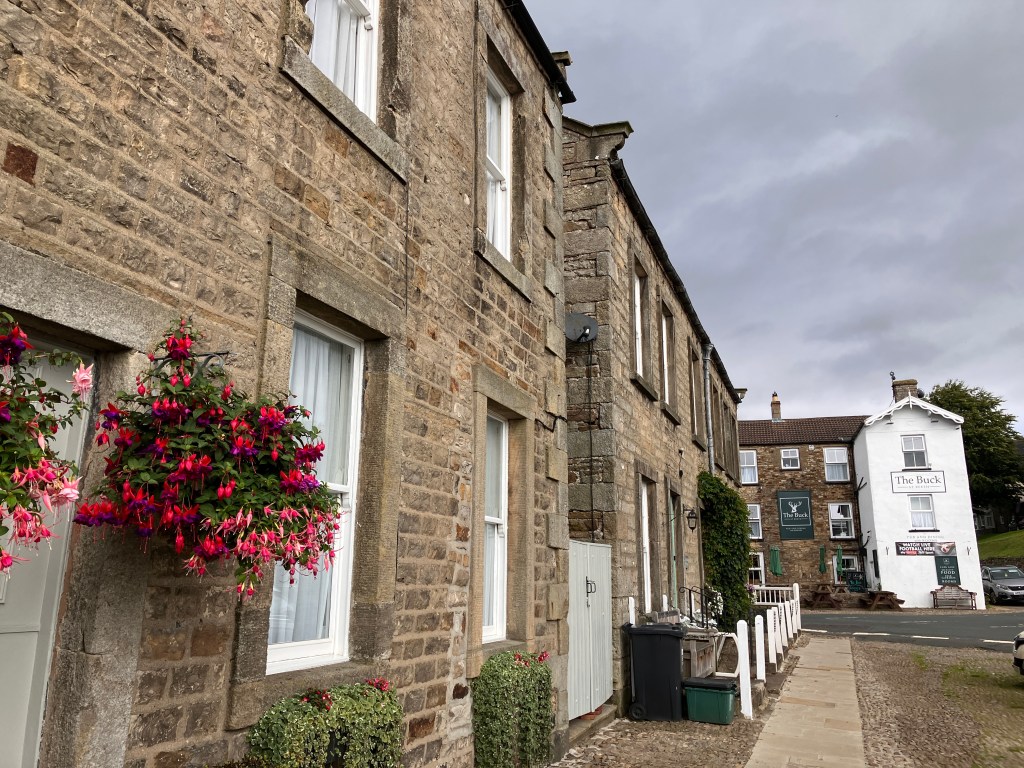
The grey stone buildings are pleasantly uniform in color.
Public footpaths across gorgeous green countryside and along the River Swale.
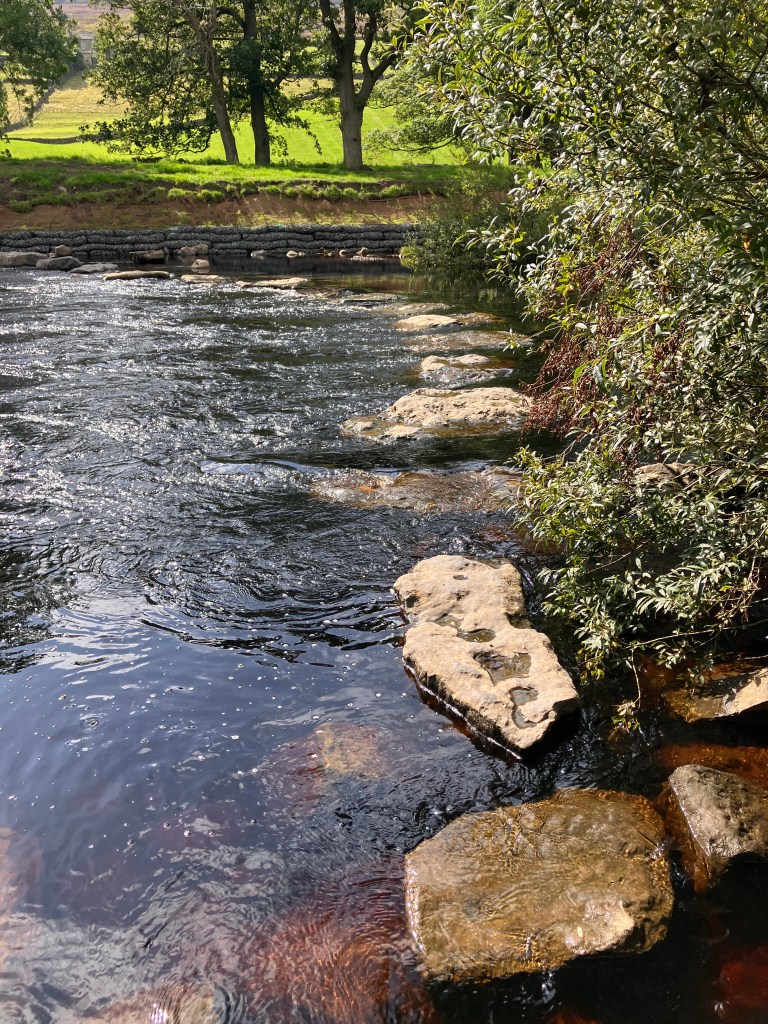
The River Swale was running higher than these stepping stones could handle. Divert.

Fueled with a picnic lunch we headed out for a loop hike that quickly got rerouted due to a high running river.

Any direction you ramble and anywhere you look, beauty.

We rambled from a sunny green valley to a windy and mizzly (misty drizzle) ridge. Always under the watchful eyes of sheep.

Is this building abandoned? No, says the resident sheep.
The heather was blooming.
The wind and mizzle was blowing.
The stones are put to good use.
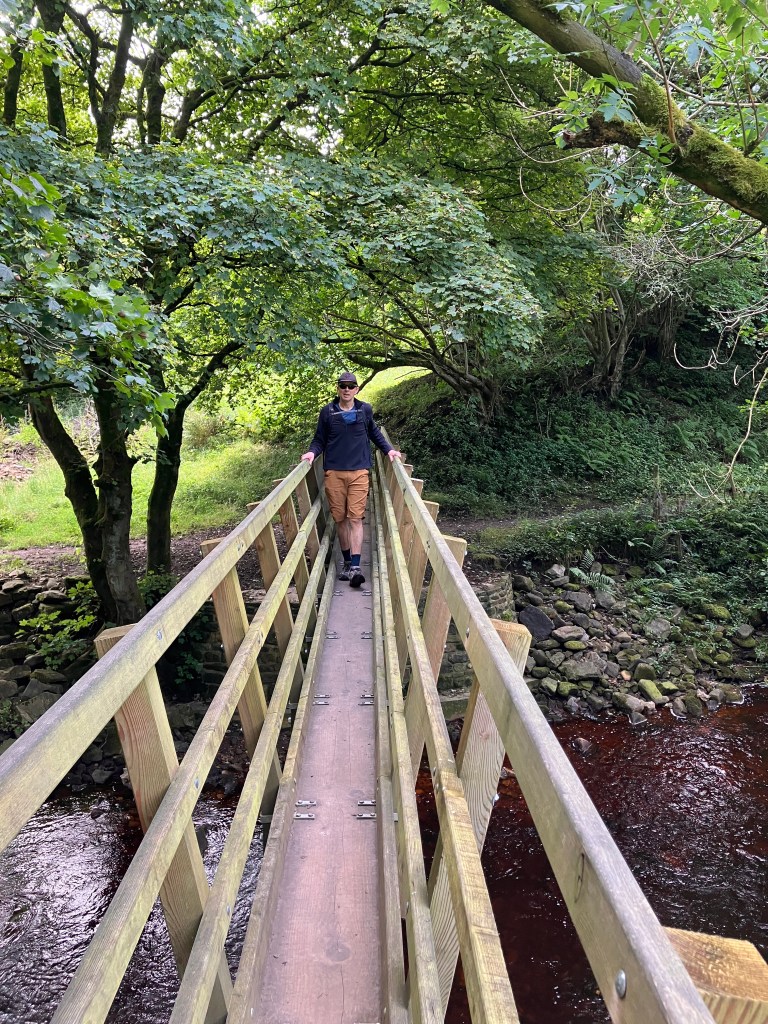
So impressed with the dedication to keeping the foot paths passable.
The engineer appreciated this tunnel with livestock gate, or stile.
I am still in love with the greystone buildings and walls.

We rambled over bridges and through a tunnel, had a quick lunch sheltered from the wind and watched by sheep, and as we came to the last bit of our loop, we were confronted by a sign. Cattle free alternative route, with an arrow. Pointing to a sheep, of course.

Cattle free, but not sheep free.

I know there are folks who are frightened of cattle, it’s understandable, they are huge! But I’m not. I’m respectful of their size, but not scared of them. But the next sign gave us pause.

Oh. Bull…. I read Ferdinand the Bull enough as a child to recognize the universal nose ring and horns on the sign that means bull in the field.

Bull in field. We’ve encountered this sign before in our UK rambling, but never actually encountered a bull. So, through the stile we went. First field, empty. We continued to the second field, also empty. Then we had a choice, a divergence of paths worn in the grass. One to a marked stile, one going to the right across a tumbled rock wall. We kept on the marked path and when we reached the stile we could see the cattle at the bottom of the pasture, quite close to the stile leading out of the pasture. Any country side person would have laughed to hear us discuss the situation. “Is that a bull?” “No, I think that’s just a heifer.” We started to cross the stile and then, from behind a lovely stone out building sauntered the bull.

Photo taken from the safety of the other side of the stone wall.

Reverse course! Back to the other path, climb over the tumbled down stone wall and hope we don’t have to cross Mr. Big and Scary’s field. We did. We ended up behind the stone out building and had to cross about 30 yards of field and before we got to the end, when we had to cut left, towards the bull and heifers and calves, to exit the field. Quietly. Calmly. Discussing what to do if charged by a bull. Neither of us knew. Bear, mountain lion, those we have been taught to react to, but a charging bull? No. Well, we said, think of a bullfighter. They jump aside at the last moment and bulls can’t change direction quickly. So we’ll go with that. Thankfully the bull totally ignored us, and we exited the field with new respect for bull signs.

Hey bull.

So, for future reference, I did look it up, and if you are charged by a bull, step to the side and run in the direction from which the bull came and run in a zig zag pattern- the bulk of a bull makes it hard for them to quickly change direction. Throw your backpack or shirt to distract the bull. While running in a zig zag pattern. Or, just pay attention to the signs and avoid the bull. I’m going with that one in the future.

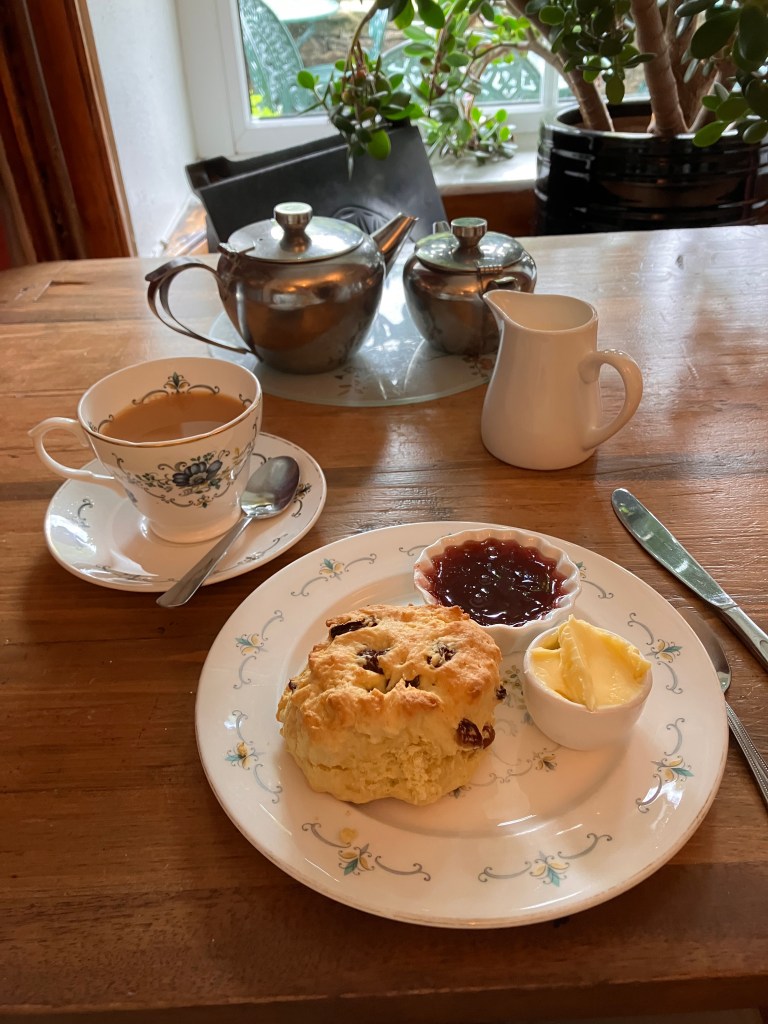
Restorative tea and scone in Swale.

Having safely negotiated the bull and his herd we went for tea, coffee, and scones. I totally give the tea award to Yorkshire. The Yorkshire Gold tea bags I love taste even better made with yummy Yorkshire water. Honestly some of the best tea I’ve ever had. And always an extra pot of hot water to make even more tea!

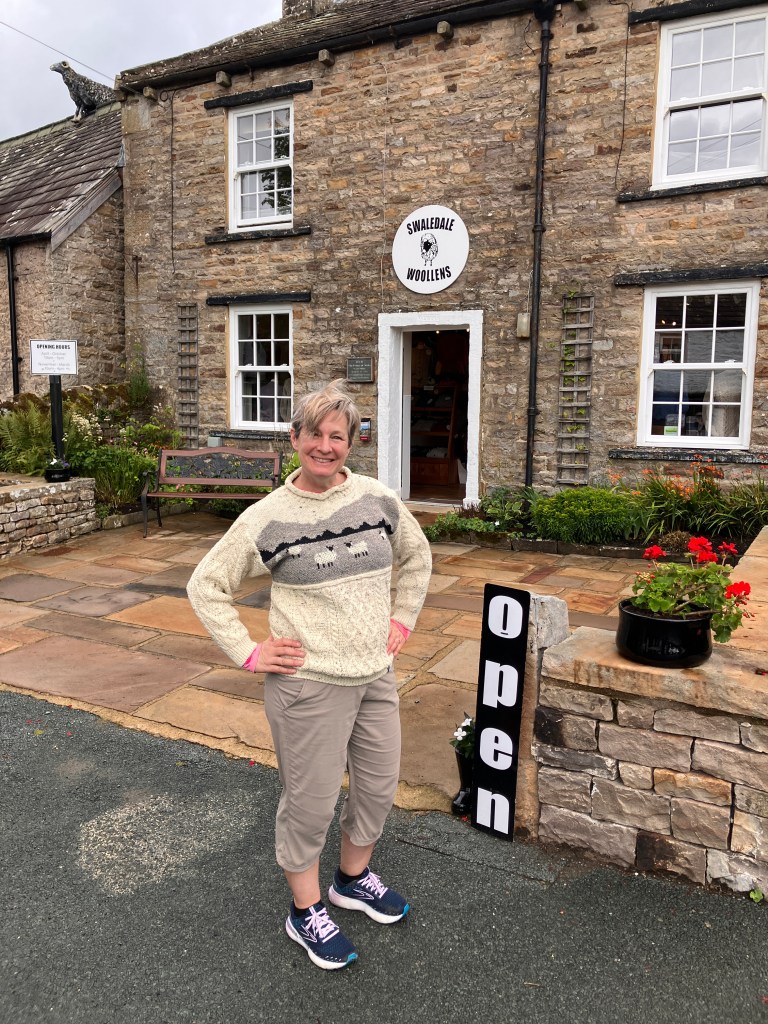
Sheep sweater. Like the San Francisco tourists caught out by cold wind and fog and forced to buy Alcatraz sweatshirts, I bought a wool sweater. With a sheep pattern!

With our Yorkshire/Durham County housesit wrapping up, we got ready to endure a two train day from Darlington to London, then on to Cardiff, Wales. UK trains with bikes can be stressful. But we made it. More fun museums and cats await us in Wales.

The Happy Travelers in Ripon.

Mega trail around a mega city. Seoul, Korea.

A view from our first mountain park hike.

We knew that Koreans love to hike. Even if we hadn’t known that before coming to Seoul the sheer quantity of hikers using the metro would have tipped us off. Boots, backpacks, hiking poles, sun hats, we felt right at home with these transit enabled hikers. We hadn’t planned on turning our time in Seoul into a multi day hiking expedition, but that’s the joy of travel. Sometimes you just never know what’s going to happen and what you’ll find in a new place.

A view from our second or third mountain hike.
A view from the Seoul Trail.

You may be realizing that what these views have in common is that we are looking down at the city. Down as in ‘we climbed a lot of darn steps to get up here’.

Looking at one mountain park we climbed, the little one to the right, while climbing another mountain park. Playing the game called find our high rise.
The air was quite clear on our first hiking day. Rain was coming in a few days so we hiked three days in a row.

Rich found the first hike for us by seeing the mountain park from our 12th floor window and navigating us there hoping there would be a trail. There was. And there was an amazing accessible boardwalk style trail all the way up to a temple and a cafe. Maps.me was helpful, showing some trails, and Alltrails had some as well, but lacking a great mapping site we relied on Rich’s wonderful navigation skills.

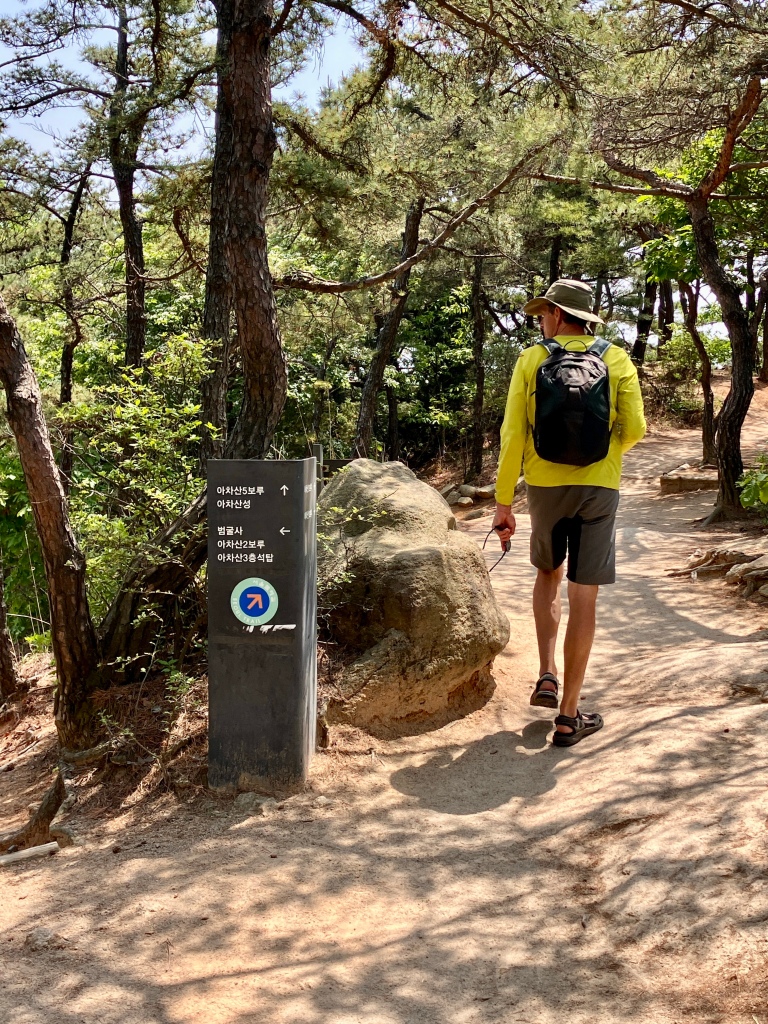
Once we were on the trails the signage was quite good.
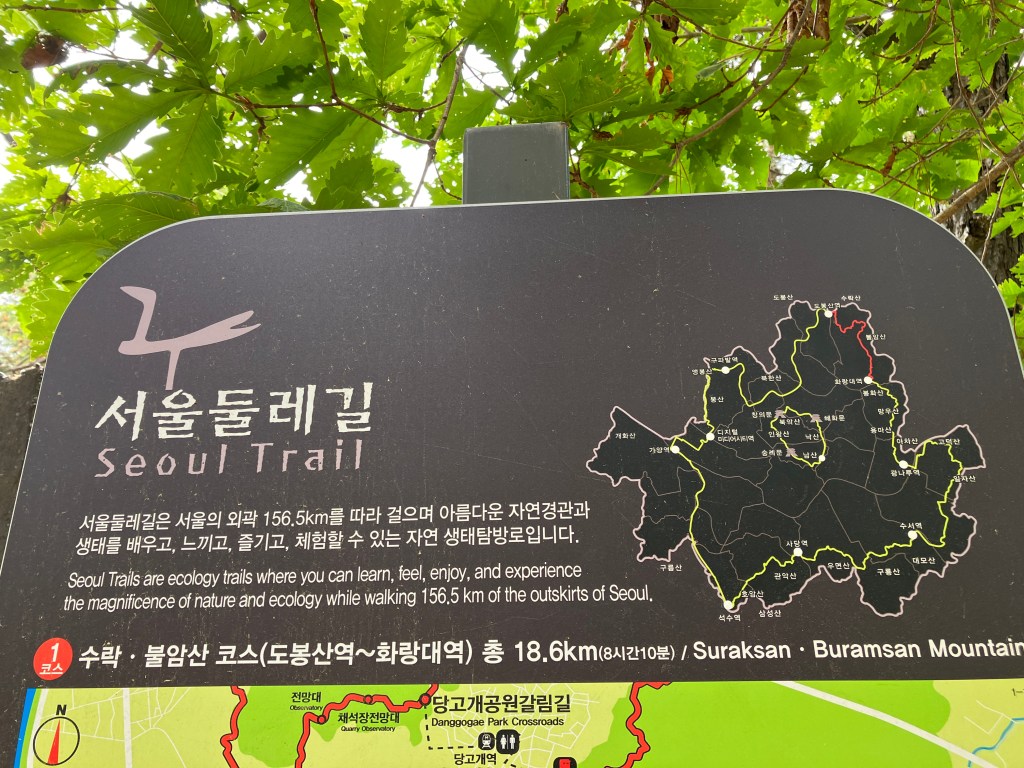
Very comprehensive signage on the Seoul trail.

Since hikers are getting to and from their hikes on the metro, there are also signs to get you to the trails from the neighborhoods.

Turn here to get to the Seoul trail.
A comprehensive hiker sign. I like they have a backpack and a pole. And a big version in case you fail to see the smaller sign.
Seoul wraps around and up to some impressive mountains, when you get off the metro you see this. Head that way.

The signage and maps varied in detail, and confusingly played fast and loose with having north be at the top, but on the whole you were well taken care of, signage wise.

A big view of mountains and the trail networks. Including metro stations.
A map showing the 156 kilometers of the Seoul trail.

Not only was the number of trail opportunities great, the amenities along the trails, and the construction of the trails were impressive. Very nicely maintained steps, benches and picnic spots, restrooms, and my new favorite thing – carpeted trails. It looks like jute, or coir, and for stretches that are steep up or down, or could get quite muddy, it’s super helpful. It also stops the usual trail ruts from forming, or the footsteps turning into hardened mud. And dang, carpeted trails – what’s not to love about that?

This one was new. You can appreciate the weave.
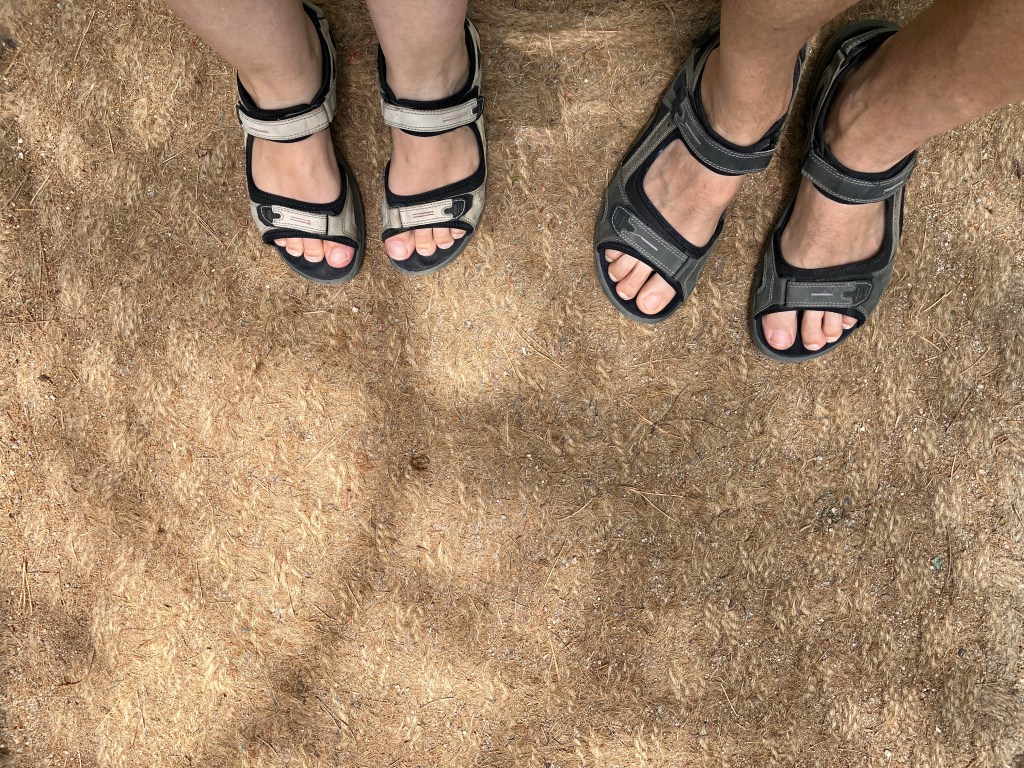
A more worn in stretch of trail carpet. And our much worn Ecco sandals.
Restrooms, clean and with potable water unless otherwise noted.
A pine grove with plenty of picnic benches.
Seating and shade.
An accessible trail gently climbs towards the view spot.
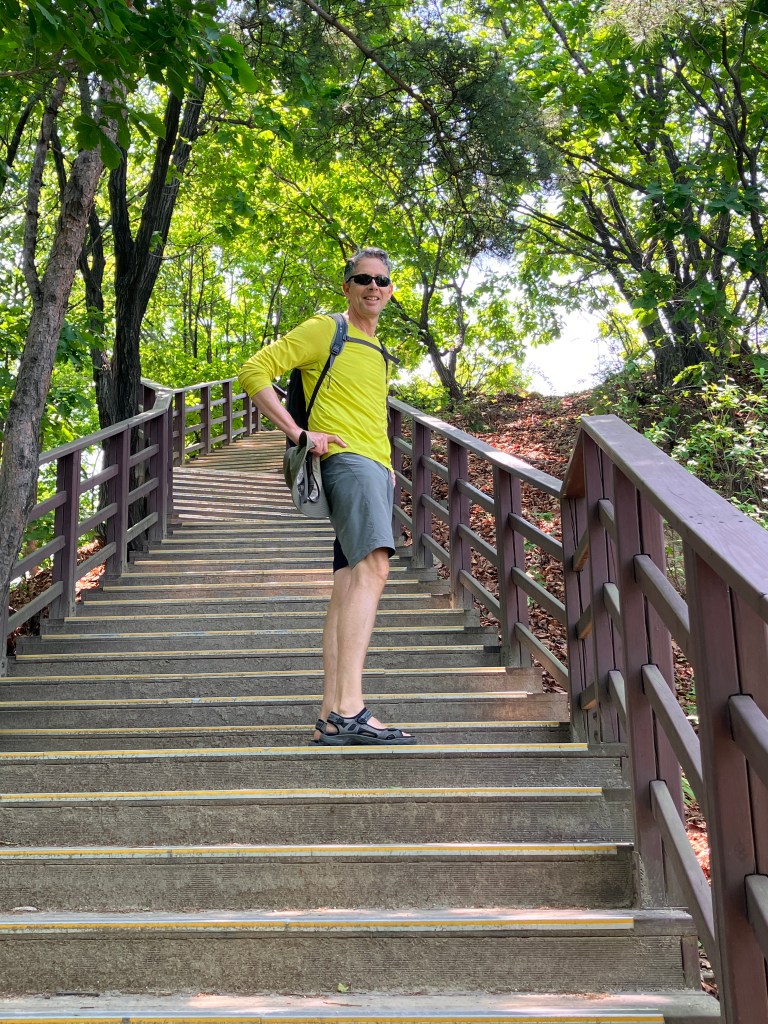
Where there were stairs they were also well built and maintained. And usually wide enough to handle the crowds of enthusiastic hikers. This was a weekday so there was not as many people as we imagine show up on weekends.
Rich heading up.
And up.
And then down. This hike day, a section of the Seoul Trail, had about 2,000 steps.

It’s not unusual for us to come to a city and skip the A list sights. Doing things we love to do, like hiking or biking, or even just walking city streets, gives us more insight into what life is really like in a place like Seoul. Seeing the neighborhoods far from the tourist friendly zones. Going into restaurants with basically zero idea what kind of food they serve. And hiking trails like these, full of locals. I tell Rich he’s never happier then when there are zero other western tourists. I developed a rating scale for him of tourist bombs – a high of five is a lot of tourists and not going to result in a happy Rich, and a low of one is good, but zero is better. After the tourist bomb rating is the wide eyed locals rating – which shows how surprised the locals seem to be to spot two big foreigners on their trail or in their small neighborhood restaurant. Our best hike was zero tourist bombs, and five wide eyed locals, the highest rating possible in my new rating scale.

A friendly fellow hiker. Even with few common words he and Rich got along over pointing out buildings.
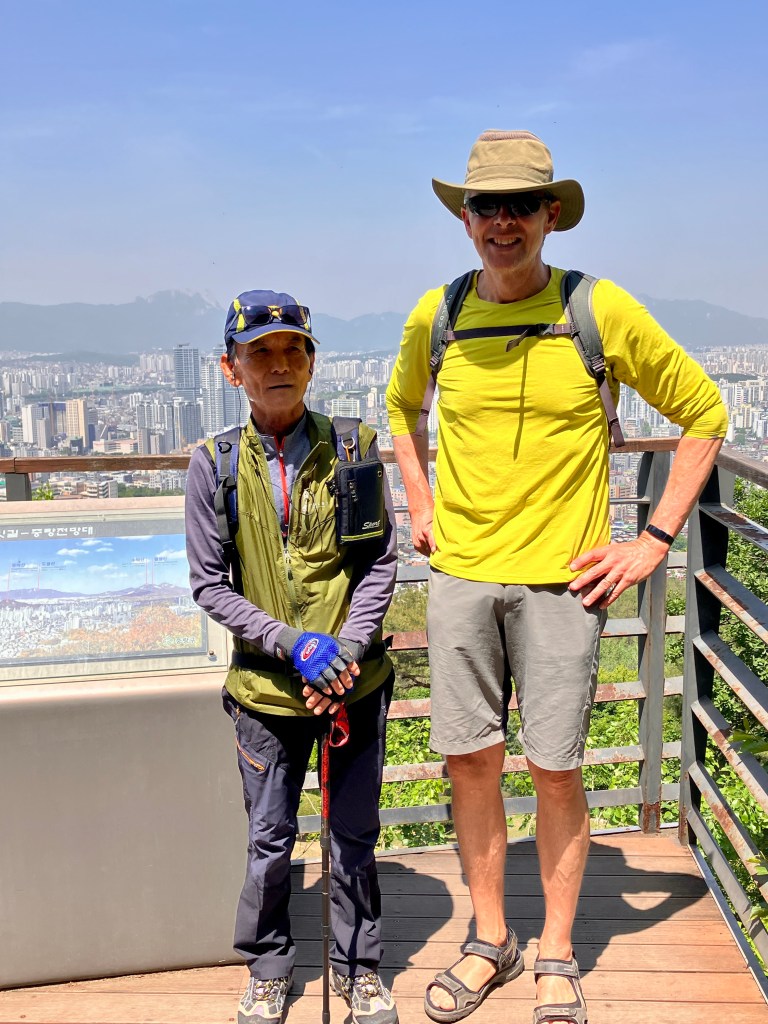
This is a typical hiking outfit for the locals. Rich’s is not! Our sandals were definitely unusual.

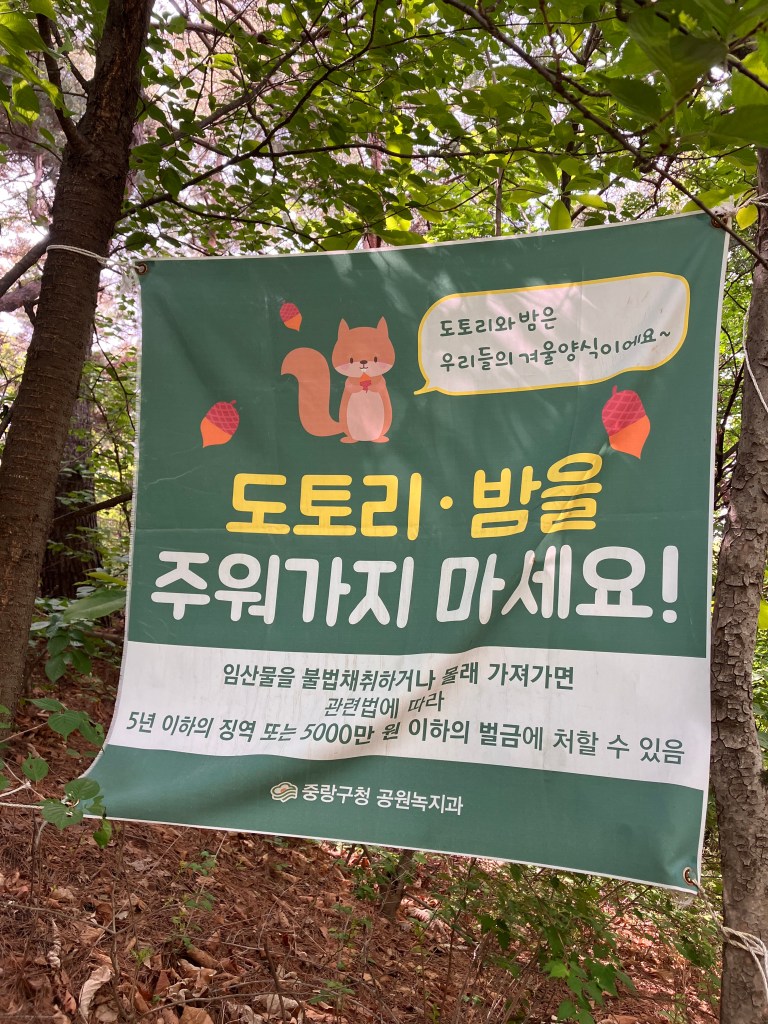
In addition to good trail signs, there are informational signs about archaeological sites, and signs asking folks to please not collect acorns and chestnuts as the wildlife depend on them.

Good informational signs with english translation.
This cute squirrel would like you to leave their food alone.
Another reminder to leave nuts on the ground for forage.

You might be thinking, ok, so that’s all impressive and interesting, but lots of places have trails, and signs, and views. Well hold on to your sun hats, there’s more.

Stamps! Like the stamps we didn’t collect along the Seoul to Busan bike route, and in Japanese train stations, there are also stamps we didn’t collect along the Seoul Trail.
So cute. Each station has a unique stamp.
These. What are they, you ask?
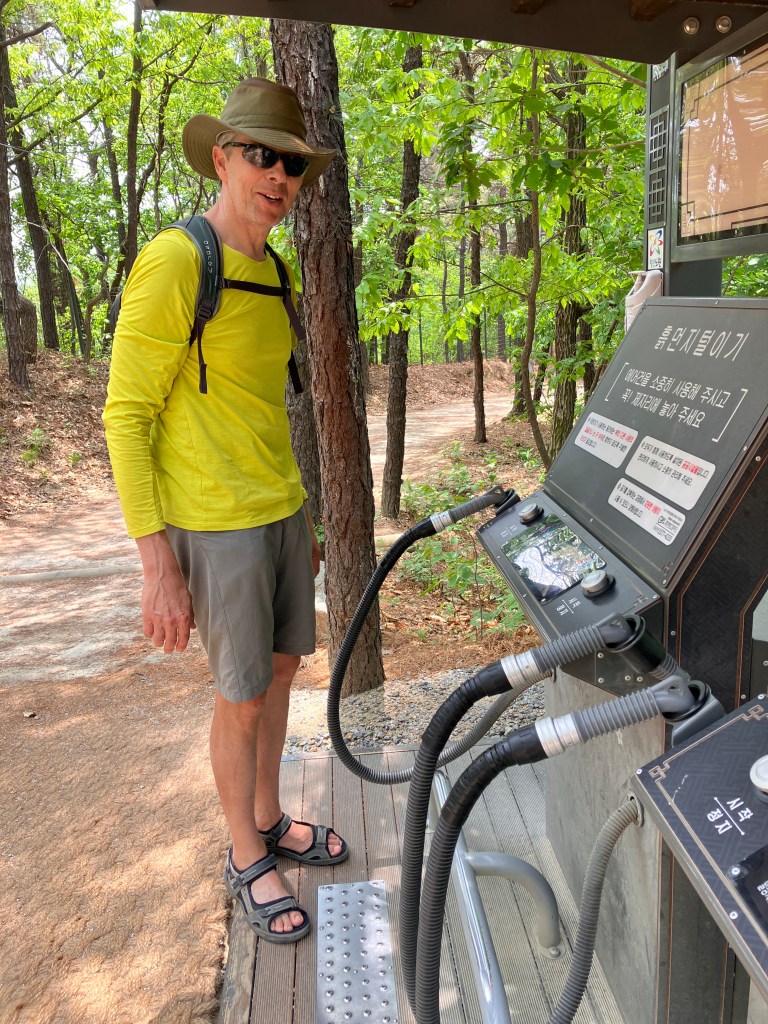
Compressed air blowers. To remove the dust from your shoes and trousers before you head back into civilization.
The sight of these meant you were nearing the end of your hike. Or a connection out to a neighborhood or metro station.
Felt nice to dust off our sandals and legs.
Rock stacking. In California this is discouraged behavior, but here it has Buddhist origins, although some folks apparently just like the challenge, adding a rock as they walk by.
Ribbon blaze markings, so you can keep to the Seoul Trail at crossroads.
A group of adorable young hikers, an entire class went by us, greeting us in Korean. We were charmed.

The unexpected pleasure of hiking in Seoul was highlighted by all the amazing views. As you climbed up, wrapped around, or climbed down a mountain park, you got new views of a different part of this mega city.

A view across graves to a cityscape and another mountain.
This high stretch reminded us of Desolation Wilderness near Lake Tahoe.
But we never had views like this in Desolation.
Scrambling down towards the city and a metro station.
Getting closer to civilization and lunch, passing by a community garden site.
The reward? Tofu Bibimbap. It was delicious and I let it sizzle in its dolsot (Korean stone bowl) so the rice got nicely crisped on the bottom.

I want to include some tips for hiking in Seoul: Keep your metro card charged up, all the hikes we did are transit friendly. Bring snacks or lunch, the smaller neighborhood parks might have a cafe, but the longer trails that we hiked didn’t. Bring water, we were able to refill on all of our hikes eventually, but bring enough water to last for most of your hike just in case. Now, how to find hikes. You can assume that every mountain you see has trails, but finding a trailhead might be a little tricky. Rich used a combination of google maps, maps.me and All Trails. You can find information about the Seoul Trail at English.Seoul.go.kr and on our links page. If you find yourself confused, ask a local or follow someone in hiking gear.

The happy hikers on one of our Seoul hikes.

We’re at Incheon Airport now, slightly dreading the 12 hour fight to the US. I will definitely do a post about the food we ate while in Korea. The good, the not my favorite, and the mysterious that Google translate failed to help us understand. See you soon San Francisco.

Cruising the Southwest Coast

We rolled into Plymouth by bus and train from Lyme Regis on a Friday eve after our day of (not enough for Cheryl) fossil hunting. We found a nice comfortable apartment east of downtown, which was on the edge of a redeveloped, light industrial area, but proved walkable enough, and close to the Mt Edgecombe ferry and nicely restored Royal William Naval Yard.

Pondering our next moves near Bosigran Castle, Cornwall

Hotels are always busier on weekends these days (still little business travel) so apartments are often a good solution, with the added bonus of being able to cook and avoid busy restaurant nights out.

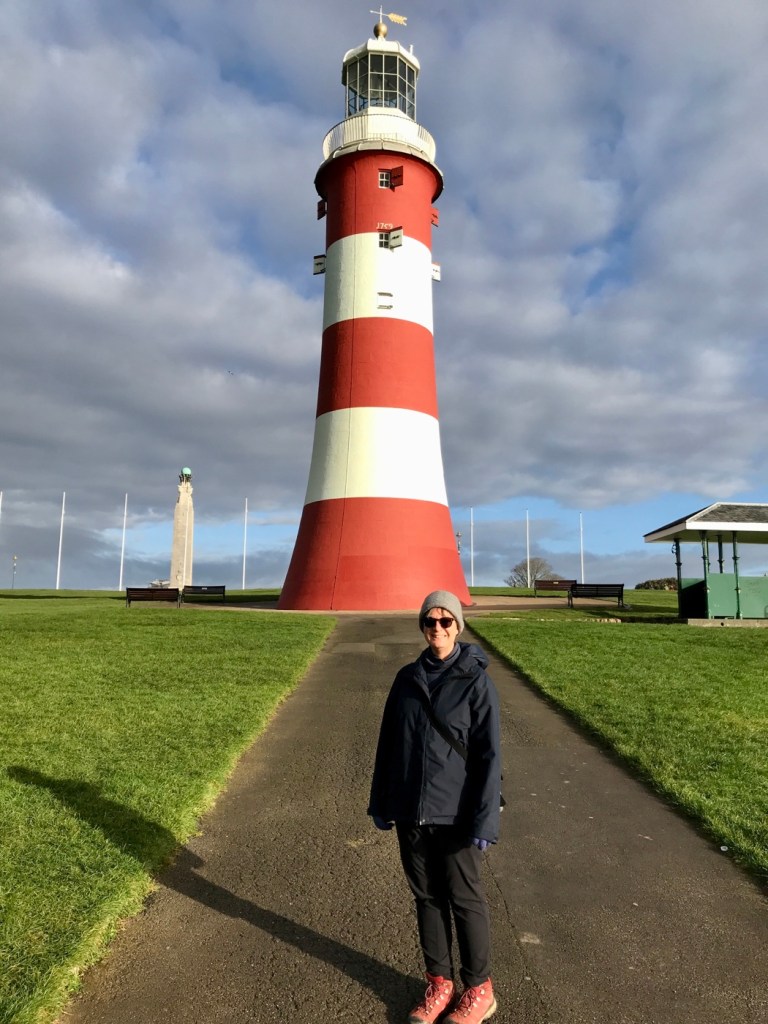
Smeaton’s Tower Lighthouse that used to mark the treacherous Eddystone reef near Plymouth.

We stayed 5 nights in Plymouth, as a bit of a breather, and to figure out our next moves. To be honest, 5 days was perhaps a day too long, even with side excursions; as Plymouth has a few interesting sights, but suffered badly from the Blitz.

Yes, the Fab Four were here!
Cheryl and our friendly local Greg on the Mt Edgecombe Ferry… hiking AFTER his morning swim off the “Hoe” of Plymouth.
Mt Edgcumbe wandering from Maker to Kingsand, just a 10 minute ferry ride from Plymouth

The core of downtown was rebuilt in the 50’s with a vast scale and the worst of minimalist/brutalist post-war “architecture” and urban planning. The cobbled Barbican and harbor areas are nice and certainly have charm, but the Mayflower Museum was disappointing. But we did enjoy some cosy pubs, the people were friendly, and the countryside nearby is beautiful.

So happy to get on a bike up the Plym River pathway…an easy bus day trip to trailhead rental (Plymouth Bike Hire).
Cycling up to a bakery in Yelverton – Dartmoor National Park
Wheal Martyn Clay Works in Devon…the outdoor museum is a hydro-mechanical playground, and the vast tailings mounds are known as the “Cornish Alps”.
One of many working water wheels that used to be used to process the clay; while the still very active clay mining business is now mostly mechanized.

One of the amazing aspects of long term travel is how much can change in a week. We’ve been enjoying the UK for two months now; but are both feeling the desire to move on to some new adventures. So while we waited somewhat nervously for our booster record and NHS registration to process, we decided we’d shake up our moods by changing modes for a week.

Mmm…freshly made veggie Cornish Pasty in artsy and charming St. Ives.
The Penrith peninsula of Cornwall; spring was in the air.

Yup, we’ve rented a car for the week to get into the nooks and crannies of Devon and Cornwall a bit more, as there are many places that are just impractical to get to by other means. It’s been a great brain challenge to drive a manual transmission left hand shifting while left side driving on the ubiquitous hedge rows of the region. Always ready to stop, and many snap decisions to back up and breathe in to let an on coming vehicle pass with inches to spare. Maybe not as fun for Cheryl as a passenger though!

About as far SW you can get in the UK, with shockingly turquoise waters and granite that feels sub-alpine.
The Merry Maidens stone circle near Mousehole, the rock sizes are tapered to account for the slope of the land…impressive Neolithic applied science.

We’ve also kept the driving to a minimum and always make sure to spend more time out the car walking and exploring. By the way, you can totally visit the region by train and bus, and see a lot…and we’d never consider renting a car in season, as the region is apparently overwhelmed. And we’ll definitely be ready to turn in our keys in a few more days!

What’s over that cliff Cheryl?
Ah yes, a colony of seals lounging on the pocket beach near The Lizard, the southernmost point in the mainland UK.
We walked to Lands End from Senner Cove…always better to approach the tourist hot spots from a distance and walk a few miles instead of a few yards from the car park.

And it’s been a fantastic week, as the coastline is truly stunning and few crowds until the school holidays start in the next few weeks. But alas, we have literally run out of England at Lands End and The Lizard, so we’ve decided to move onto new adventures on the continent. And yes, we’ve finally sorted our vaccine records (Thank you NHS!) so are headed to France this week by the slow boat. Stay tuned and happy travels!

Mousehole, Cornwall…memories of dinner here with my father 35+ years ago …. you don’t forget great travels, especially with family.

Leaning in to slow travel.

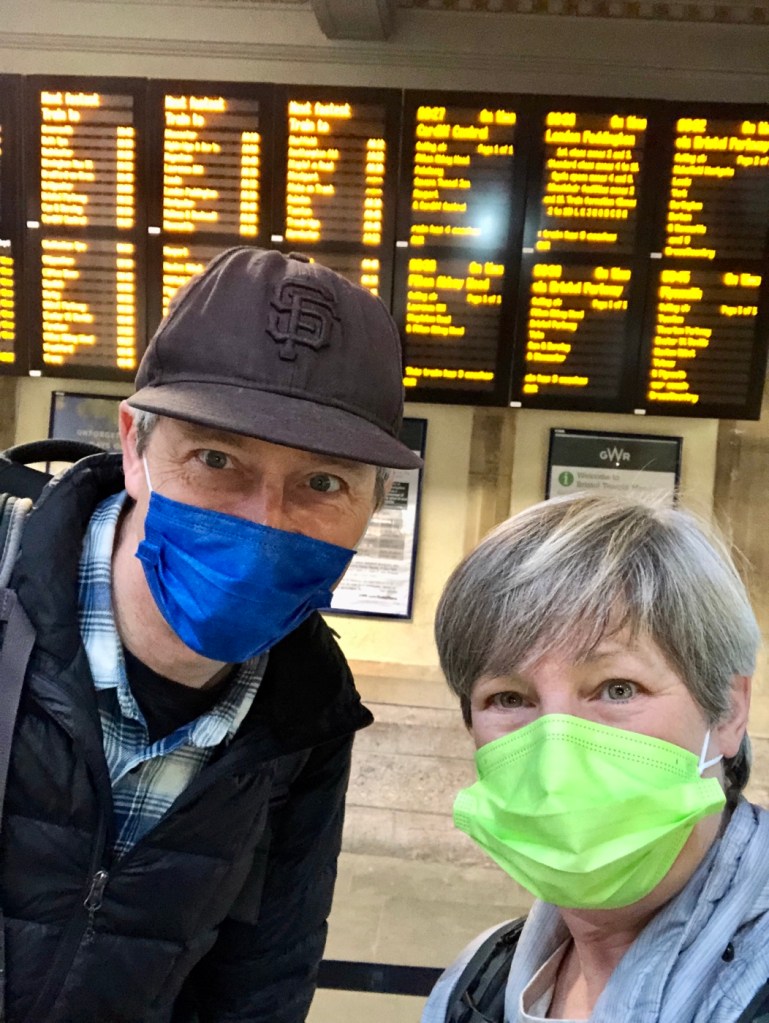
In front of the big board at Bristol Temple Mead Station.

As we wait to sort out our booster records we’ve really started to take delight in our snap travel decisions. Our last booked evening in Bristol Rich asked, where should we go next? My reply was “How easy to get to the Jurassic Coast? Looks fairly close.”

Stop for salads from the M&S fine foods. We try to never board a train without snacks or lunch.
Waiting for our train.

And the travel planner makes it happen. I’ve wanted to visit Lyme Regis since reading the novel Remarkable Creatures, about Mary Anning, the renowned fossilist.

At Axminster station, about to catch the bus to Lyme Regis.
Wheeling and walking from the bus to our guest house.

Lyme Regis is the heart of the Jurassic Coast. We had a lovely day and a half of hiking, which I now realize we could have spent fossil hunting. Oh yes, I caught the fossil bug. I caught it bad.
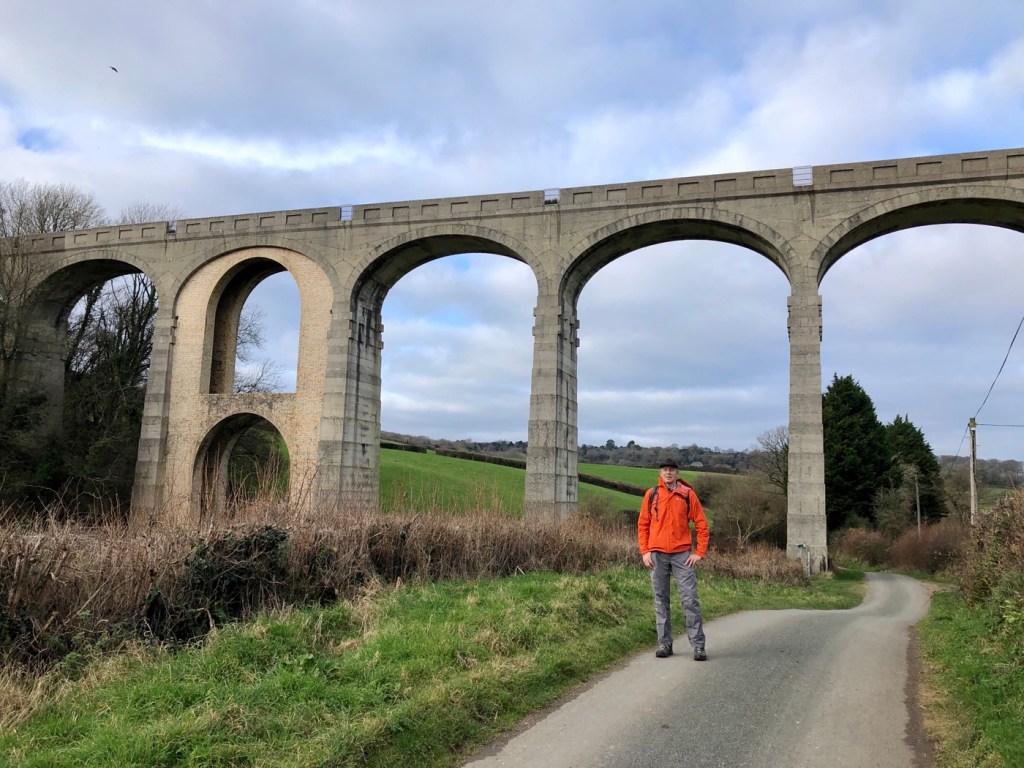
The old train viaduct at Uplyme. A lovely afternoon hike. Could have been hunting fossils.
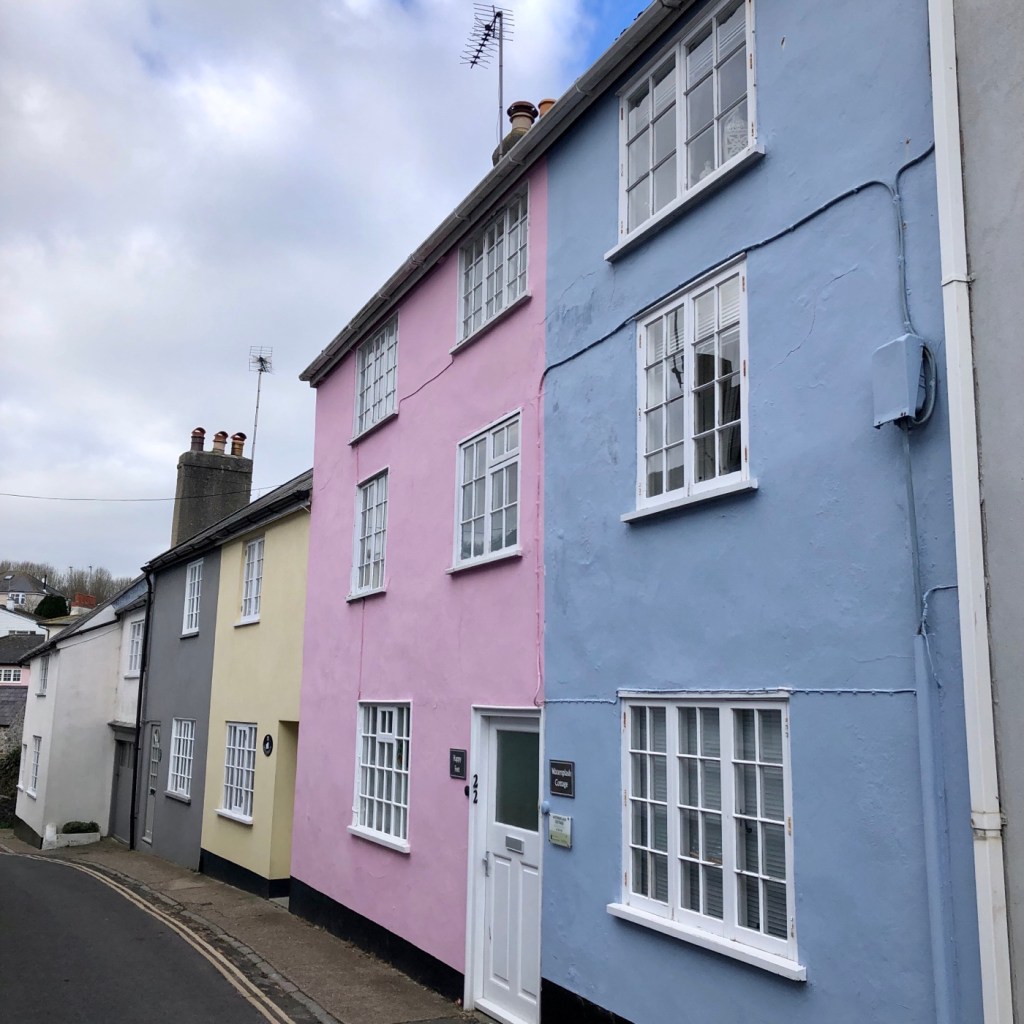
Beautiful houses in Lyme Regis on a street that slopes down to the fossil beach.
Goofing around on the Cobb, of French Lieutenant’s Woman and Jane Austin’s Persuasion fame – just up from the fossil beach.

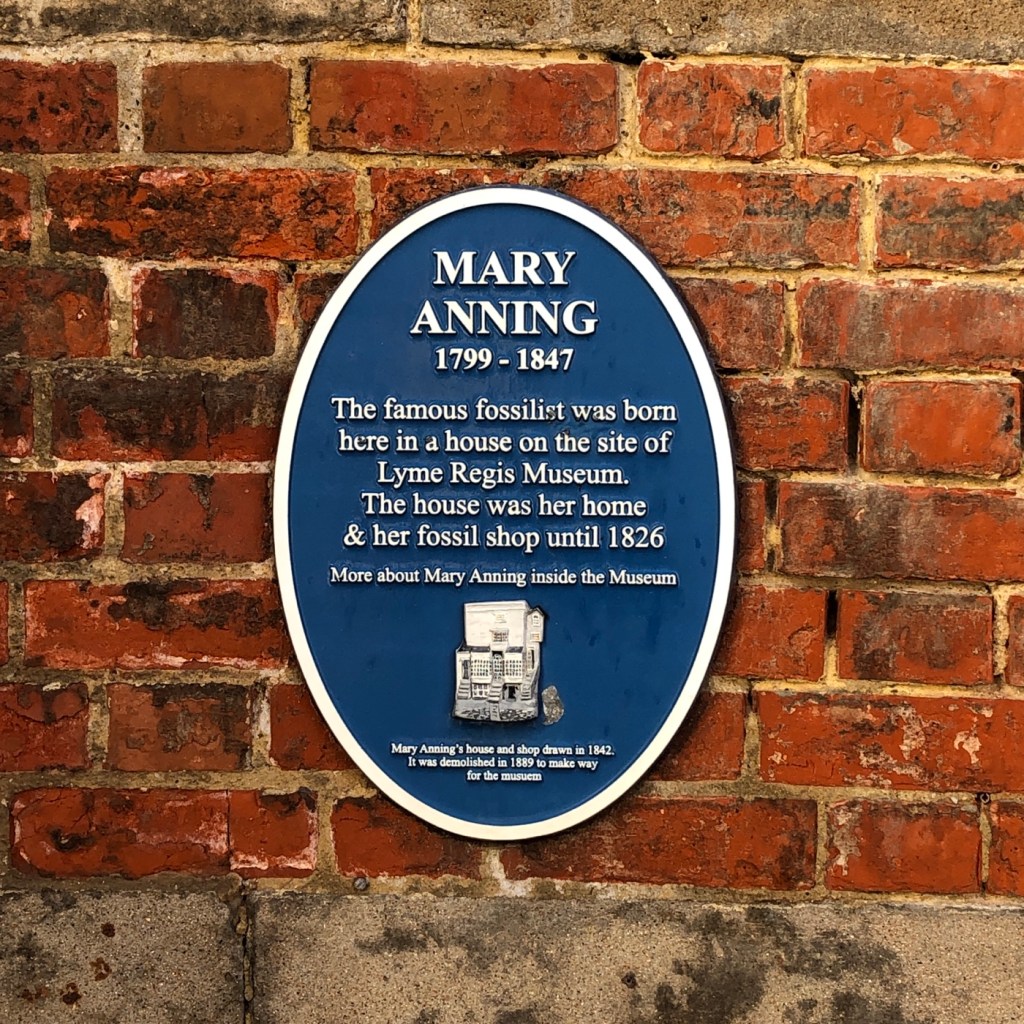
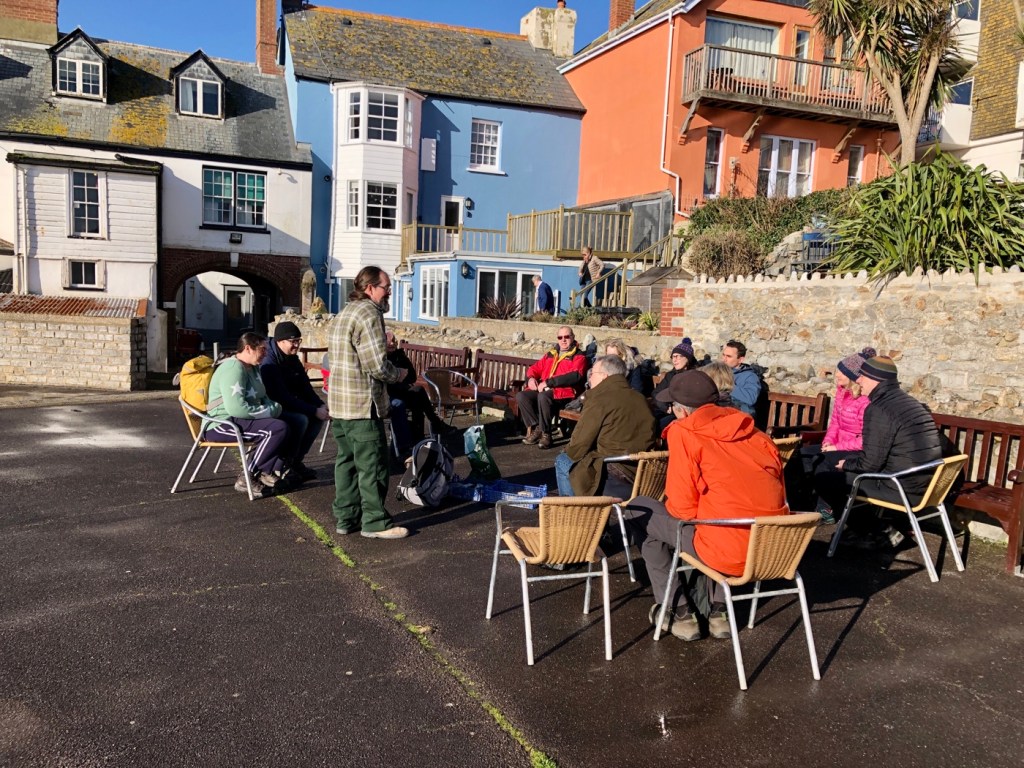
The Lyme Regis museum, built on the site of Mary Anning’s house, offers a fossil talk and walk. We bought tickets for Friday, our last day in town, thinking we had plenty of time to do that and catch our bus to the train station.

Apparently her house flooded with high tides and storms. A new sea wall changed that allowing the museum to be built.

The fossil talk was amazing, we learned so much. I learned we didn’t leave enough time for actual fossil hunting.

The wonderful geologist who talked us through what to expect and look for. And answered all the whys of this area.
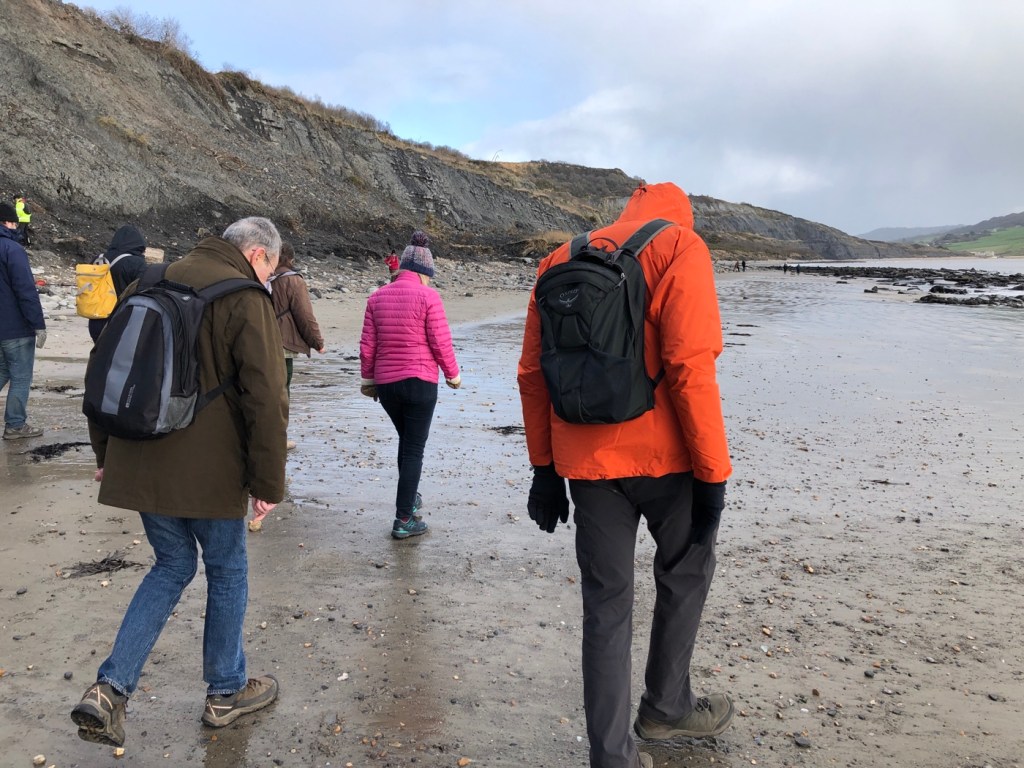
Fossil hunting. Everyone has their gaze turned towards the sand. There really are fossils just laying on the sand.
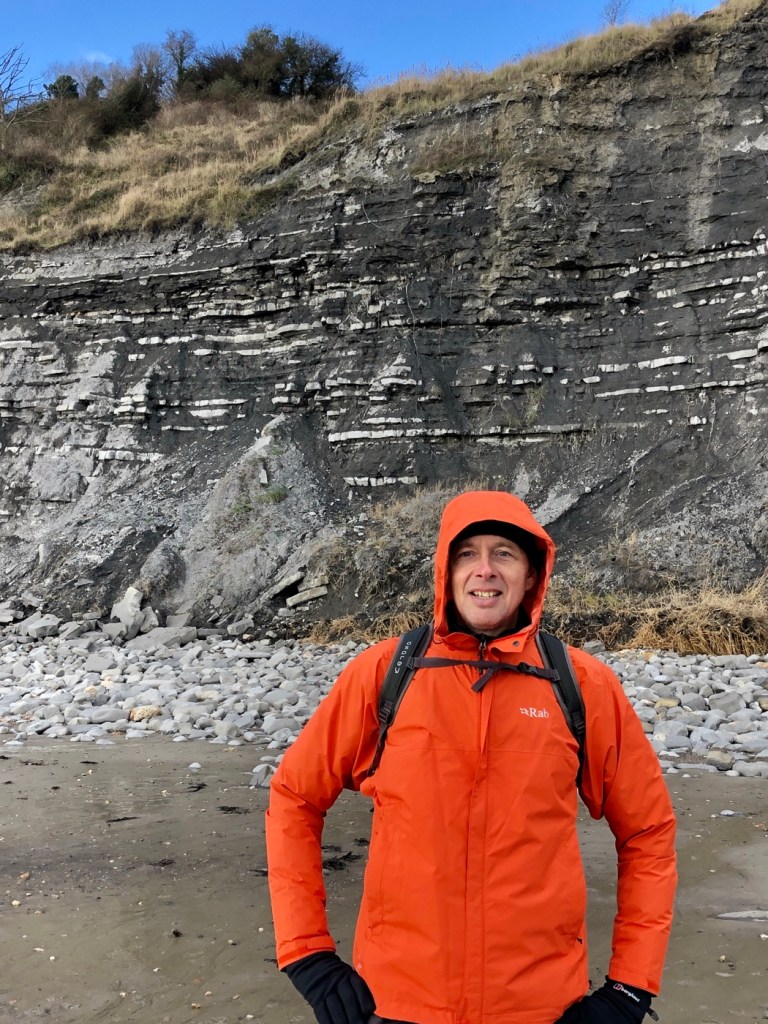
The limestone cliffs where the fossils are before they landslide onto the beach. And my intrepid fossil hunter.

The best time to fossil hunt is after a big storm has caused land slips and churned up the beach. We were on the beach after days of mild weather, so not prime fossil time. And it was still amazing. Apparently after a storm the professionals are at the beach before dawn with headlamps and hammers. There are no prohibitions about hunting, just warnings. As our geologist told us, if you don’t get the fossils the ocean will. But don’t let the cliffs get you. They let loose on a regular basis. He kept us away from the cliff bases and focused on the tidal zone.

Looking earthward for fossils.
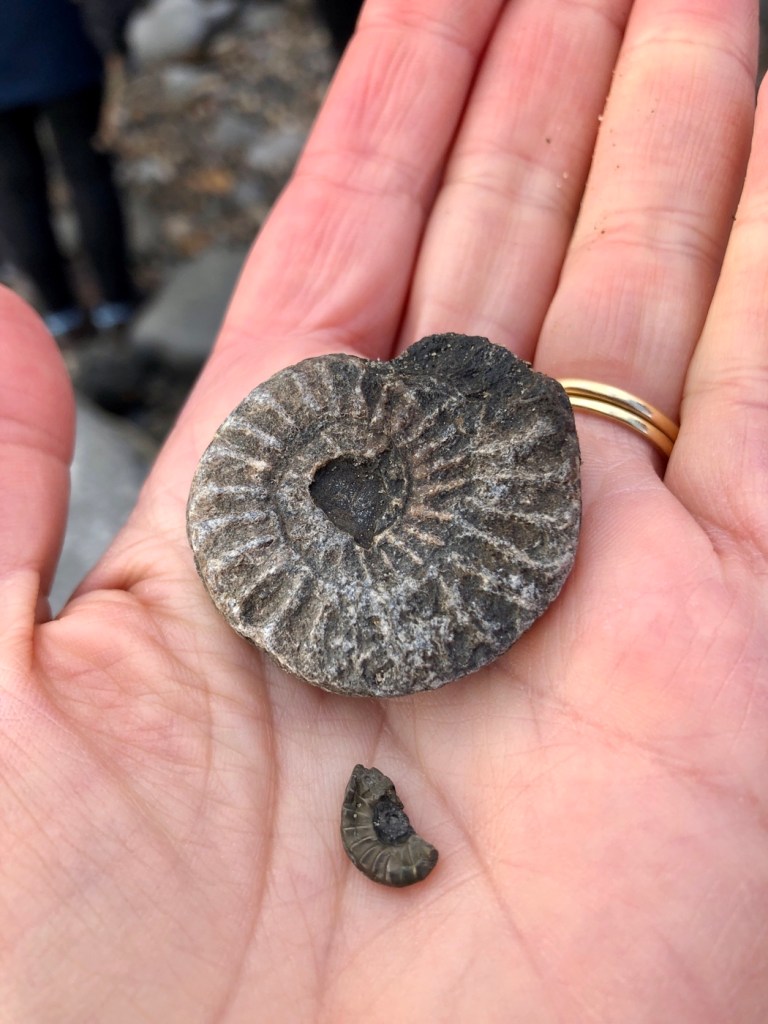
Two different versions of fossilized ammenonites. The small partial one is iron pyritized.

I’ll let wiki explain how these jewel like fossils happen: Organisms may become pyritized when they are in marine sediments saturated with iron sulfides. (Pyrite is iron sulfide.) As organic matter decays it releases sulfide which reacts with dissolved iron in the surrounding waters. … Some pyritized fossils include Precambrian microfossils, marine arthropods and plants.

A tribute to Mary Anning on the coast path. Her dog Tray and a Plesiosaurus skeleton in metal on a section of fence.

Sadly, we only had a short time on the beach before we had to leave to catch our bus to the train. But we will definitely be back to fossil hunt again.

The happy travelers take a sunset usie. Should have been fossil hunting.

Our next snap travel decision was to go on to Plymouth by train. Since we were so far down SW England, why not go farther? so we did. We’re in an apartment in Plymouth for a while. Where will we go next? And how will we get there? Stay tuned.

Doing the Booster Limbo

We left the beautiful and empty lake district via an easy one connection train trip to western Wales, and have been enjoying a lovely week in Tenby, courtesy again of our endlessly generous friends.

The moist and green footpaths around Tenby

The weather has been favorable as well, with little rain, and temperatures pushing 50 most days, as this is often one of the warmest locations in the UK.

Daffodils reminding us that spring is on the way!
The nicely renovated Manchester Piccadilly Station – our only transfer from Kendal to Carmarthen, Wales

We even had the opportunity to part ways for a few days, as Cheryl went to Cheltenham in the Cotswolds with our host, and another old friend for a ladies getaway, while the guys stayed behind in Tenby.

Cream Tea at the Ivy in Cheltenham

Although we almost always enjoy each other’s company, It was good for both of us to have some independent time for a change, and a bit of an odd sensation after so much intense time together the past 6 months.

The boys on a beautiful day on the Pembrokeshire Coast

Long term travel with a partner definitely requires a special relationship, and a lot of give and take. Luckily this comes naturally to Cheryl and I, but we still have to both respect each other’s personal space, independent desires, and known quirks (Just mine of course, Cheryl is perfect -;)

Watchful eyes in Cheltenham

Meanwhile the world continues to spin and adjust to Omicron, although we are happily past the early January peak in the UK. We certainly hope that the world gets to some endemic normalcy in 2022, but there are a lot of challenges, including proper global vaccination supply. As for us, we know we are lucky to be traveling at all and are still so thankful to the NHS for providing us a booster shot in December, as this allowed us to continue our travels with more protection and in a responsible manner.

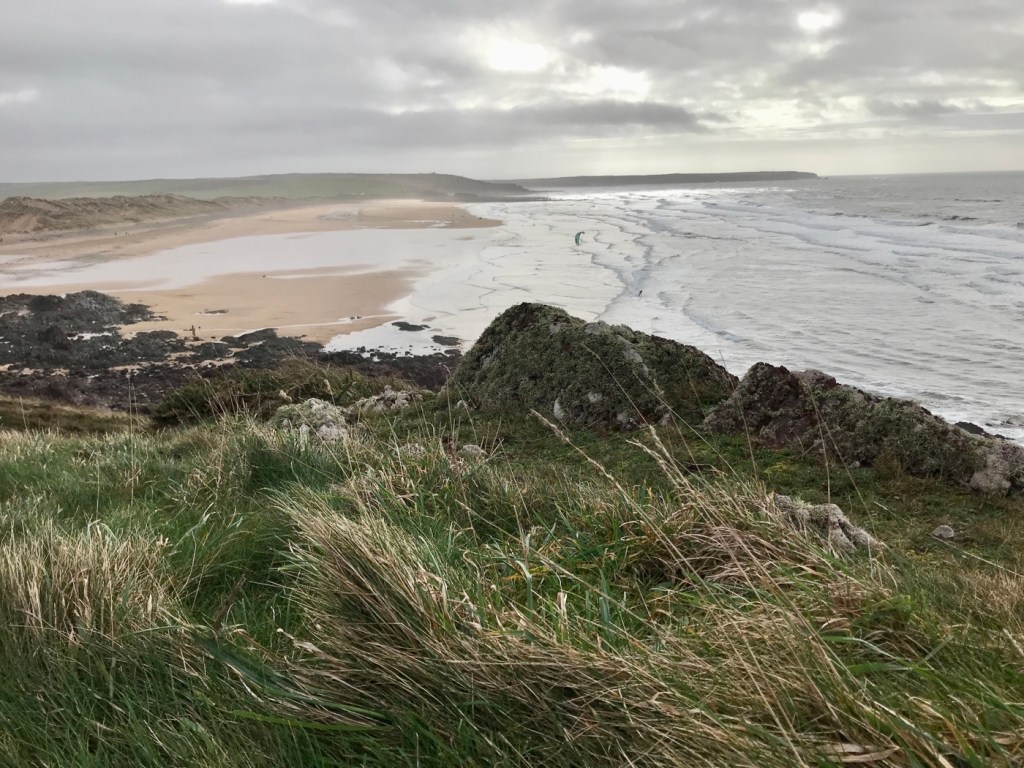
Freshwater West Beach – a favorite of surfers and kite surfers (yes, it’s often breezy)

However, since we weren’t registered in the NHS system, we only have small hand written vaccine cards recording our booster. We were given a heads up that this could be an issue going forward, especially for travel documentation, and indeed this month, we have found that our electronic (EU) COVID passports have now expired in most countries, as there has been a new standardization around a 270 day (9 month) validity from original vaccines without a booster.

Walking alone along the cliffs near Tenby reminded me not to get too lost in that podcast

So we need to get our booster vaccines we received in December into a more usable electronic format. We think we have found a solution as you can actually register with a local GP surgery in England as a non-resident, and access the record after being assigned an NHS number. We could have registered in Wales in theory, but the health systems are actually quite separate and we were warned that the transfer of the record from England could be fairly quick or take months…something that wouldn’t work for our desired onward travels to France and Italy.

The Fresh Ponds of the Stackpole Estate. Back when you just made ponds for your amusement, but now a perfect habitat for migratory bids

So we set off to Bristol, England yesterday to try to get registered in the area after some initial success online and with some phone calls to various practices that are still accepting new patients. Many are full or shut off due to COVID and/or ongoing GP shortage issues in the UK. Health systems are strained everywhere.

Up and down the coast path to Saundersfoot

As a bonus, we had a bit of an adventurous day getting to Bristol, England yesterday due to signaling issues disrupting a west wales Main line. When our first train leg was cancelled (and next train in 4 hours!) we quickly booked a taxi to the next transfer station, where our onward journey was still shown on time; however, then found out that the problem was still down the line. Doh!

Oh Oh, no trains going from Carmarthen!

Luckily, after some confusion, Transport for Wales did manage to rustle up a few small mini buses to get us past the issue. And in fact, the friendly driver offered to drive the 20 or so of us to a more convenient station for quicker connections and we ultimately got to Bristol an hour earlier than scheduled, by catching a connecting train with two minutes to spare. Small travel win!

Two full hands in Cardiff; happy transfer after making our trains to Bristol

But we are in a sort of limbo while we try to sort out our booster record, but we will try to make the best of it. And it’s interesting to return to the Bristol-Bath, an area that we really enjoyed in our first visit last fall. You so often say in travel life, “we should come back here some time to see more, etc….” But you rarely do. This is one revelation we discuss as we travel new places now; do you think we’ll come back here someday? Yes, no, maybe….but always realizing that regardless, travel to a place is always a snapshot in time, and a unique experience.

The Hanoi we fell in love with in 2007 was not the same Hanoi in our 2017 return. Of course, the UK does have many places that haven’t changed much 500 (or 5000) years, but the country is still a very different place than 5 years ago, as it has a whole different vibe post-Brexit, and mid-pandemic. The travel experience is a complex blend of a place’s physical infrastructure, social, political, and environmental influences, all filtered though the lens of your personal attitude and biases.

Back in cool Bristol, cool brew pubs and bike bridges included

So what next? Excellent question. On our 7 hour train ride last week from the Lake District, we had some time to think about 2022 and develop some broad scenarios. The challenge is to parse out our 90 allowed Schengen days in the prime spring/summer/fall. Some of the goals include more bike touring in Northern Europe, Scandinavia, and the Baltics….tied to the Grand Depart of the 2022 Tour de France in Denmark on July 1st. (Hotel reserved a year ago -:).

Our friend Gary’s dog Misty on the way to the pub lunch at the Stackpole Inn

In the nearer term, we are looking to do some more exploring in Italy, perhaps walking some of the beaten tourist routes more off-season, such as the Cinque Terre, or Venice. Then “home” to the US of a for a month to see as many friends and families as we can ( and consume as many burritos as humanly possible!)…..then back across the pond to explore Turkey for a month, a place we have long wanted to visit, before swapping out for our bikes again. Central and Southern Africa are also on the short list for later in the year, as well as the Camino Del Norte in the fall. Of course, these are all subject to quick pivot as needed based on the state of the world.

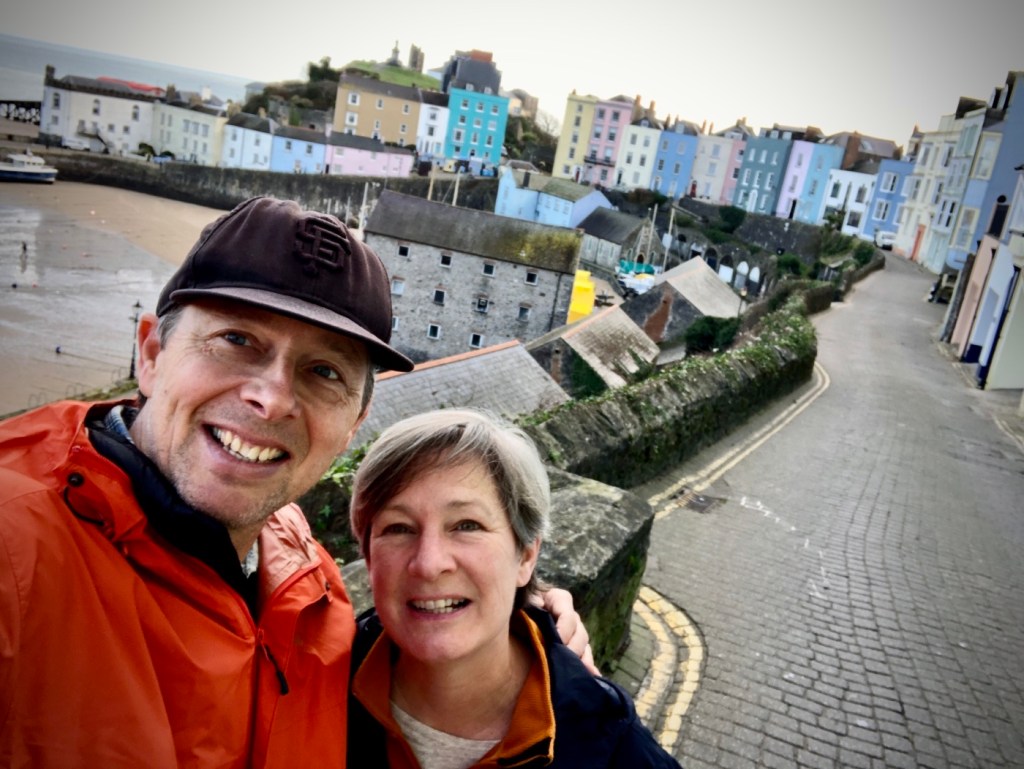
Colorful Tenby Harbour

So hopefully the blizzards are clearing and the sun is starting to shine a bit more wherever you are, as we emerge from a long dark winter, and the burdens of a pandemic. For now we move on in the UK with the uncertainty that has become a way of life.

Happy travels!

Beauty all around us.

Above Ambleside.

Nine days of hiking. And we haven’t even scratched the surface of the available trails. We’ve moved a bit south to the very lovely market town of Kendal, known as the gateway to the Lakes District. The terrain here is less craggy and peaky, more rolling hills and sweeping vistas, but just as beautiful as the Lake District proper and with just as much amazing hiking.

Stone circle of Castlerigg.

The stone walls, the farm animals, our interactions with friendly hikers, and of course the pints at the pub garden at the end of our hikes have been keeping us well entertained. I’m fascinated with the many different types of stiles that get us over fences and walls while keeping the sheep and cattle contained.

Ladder stile over a wall.
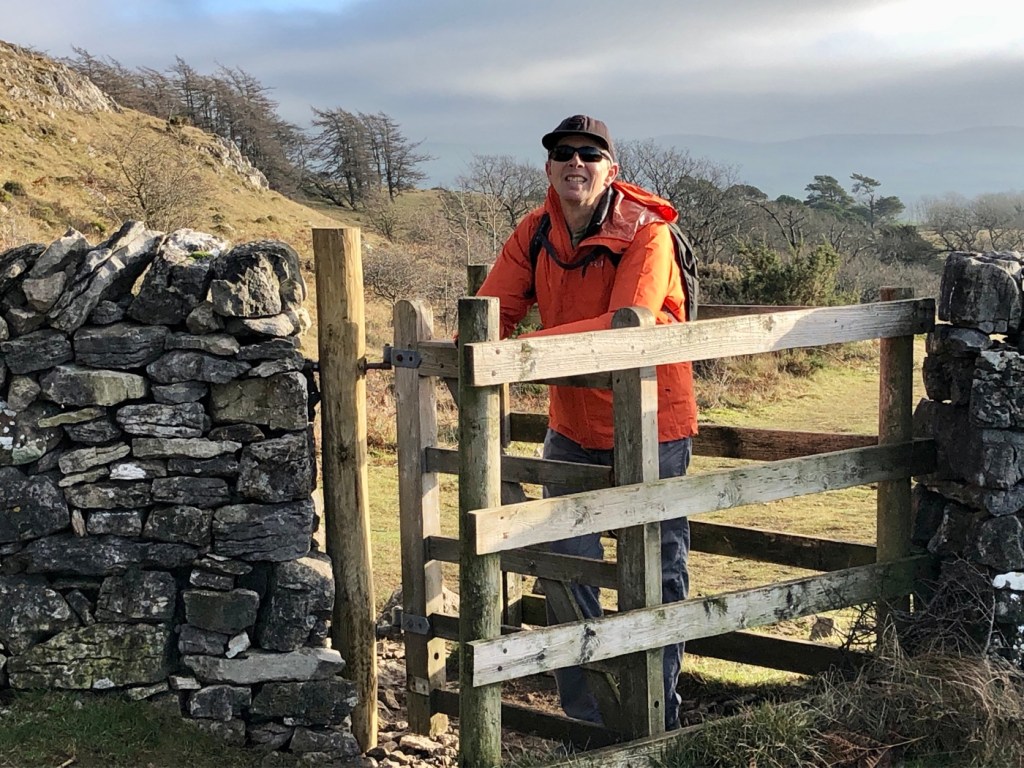
Classic wooden stile over a fence.
A narrow gap with a tiny gate.
A very narrow gap, requires even Rich to squeeze through. This is actually called a squeeze stile.
One of my favorites, stone steps up a stone wall.
More robust steps, usually there is a small gap at the top, and here, a metal bar across the gap.
A rather fancy ladder and platform stile, outside Cartmel.

Along with clamoring over stiles we’ve opened, and correctly closed and secured, many gates. Many many gates. So many gates we joke that we now have masters degrees in gate-ology.

The farmers depend on hikers properly closing gates. We make sure we do.
A kissing gate, it simply swings and requires no securing.
I appreciate these signs educating hikers about the animals in the fields.

We’ve had some lovely chats with other hikers. The fell runners and the one tarn (lake) swimmer we saw have impressed us with their hardiness. And, we’ve stopped to talk to hikers who are well into their 70s and 80s. We say to each other after those interactions, with luck that will be us, years from now, still happily hiking together.

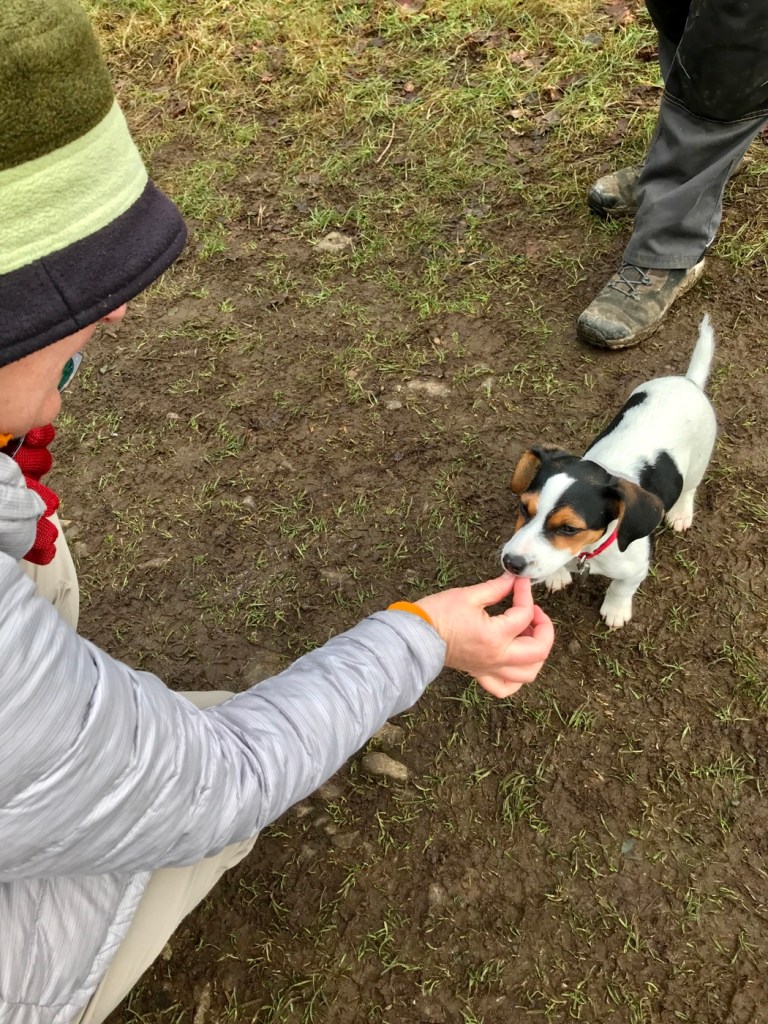
Zoe, a 4 month old Jack Russel terrier, accepting a treat supplied by her human.

As we’d hoped, the Covid curve seems to have peaked here in the UK. We’re glad we’ve stayed in apartments and kept out of crowded places as long as we have. Yes we’ve had some very chilly pints and cups of tea outside, but it’s been the right thing for us to do.

A foggy view on the River Eea.

We’ve seen so much stunning countryside. This time in the Lake District in winter was not something we planned on, but we’re enjoying it so much. Travel in the time of Covid is stressful, we think we’re doing a good job keeping ourselves relatively calm and certainly well exercised.

Muddy boots and the green green hills of Cumbria.
Sunrise over the River Kent with Kendal Castle ruins on the hill. This is the view from our apartment.

What’s next? Back to our good friends in Wales. After that, uncertain at this point. We need to get our COVID booster shots entered into the EU tracking system so we have the ability to abide by vaccination rules in France, as our current Pass Sanitaires are now invalid without the booster info being updated. It’s probably easiest to do this while in France. So, maybe France is next.

The happy travelers on the road to who knows where.

Car Free in the Lake District in Winter?…Why Yes!

We moved on from lovely Liverpool late last week and arrived Keswick by train and bus (locally pronounced Kehz-ick) on a spectacularly snowy day in the Lake District.

Dramatic winter skies ascending near Grasmere

We were very glad that our professional bus driver was plying the slushy mountain roads, especially on the sheer edges of deep lakes; nevertheless, we did take note of the emergency window systems on the bus! (avoiding what I called a double decker bus watery grave…-;)

Can we do this without a car?

Our decision to base in Keswick was based on a number of factors, but primarily that we could get there by public transit, and numerous lines route from there to other parts of the National Park. It also has a few museums, nice shops, and many services in town, including a great regional supermarket, Booth’s.

Our row cottage in Keswick came with a friendly outdoor kitty neighbor no charge and a 5-10 minute walk to town or the bus
Cheryl trying to cajole an adorable Lake District sheep to follow her home

Oh, it also happens to be very quaint, with a lovely pedestrianized core and footpaths heading in every direction, including along the large Derwant Waters, what we in America might call a lake!

Morning light on Derwentwater in the Lake District NP

We actually wavered a bit about whether we “needed” to rent a car, but then read about many others visiting car-free and thriving with the great regional transit system. After 6 days here, we know it was 100% the right decision for us.

The 78 bus to the end of the line at Seatoller…schedules, a shelter, and multiple trailheads
Cheryl ready to hike…the other friendly passengers were day tripping photography buffs from Manchester

Our decision also considered the fact that this area is heavily impacted by car traffic, much like the National Parks in the US. Nevertheless, the car parks and road are still surprisingly busy here mid week in January, as driving is still seen as the easiest and best way for most to experience the park. Despite some pay parking in many of the towns and villages, the roads are still free and there is an abundance of free parking available.

Hey, there goes our bus!

But it’s not just about the carbon footprint of driving for us. We’ve seen the impacts automobile congestion, noise, and pollution have on communities. When practical, we don’t want to contribute unnecessarily to the problem. Although traffic is fairly light in the middle of winter now, it apparently is extremely congested most of the year, and a nightmare in holiday periods.

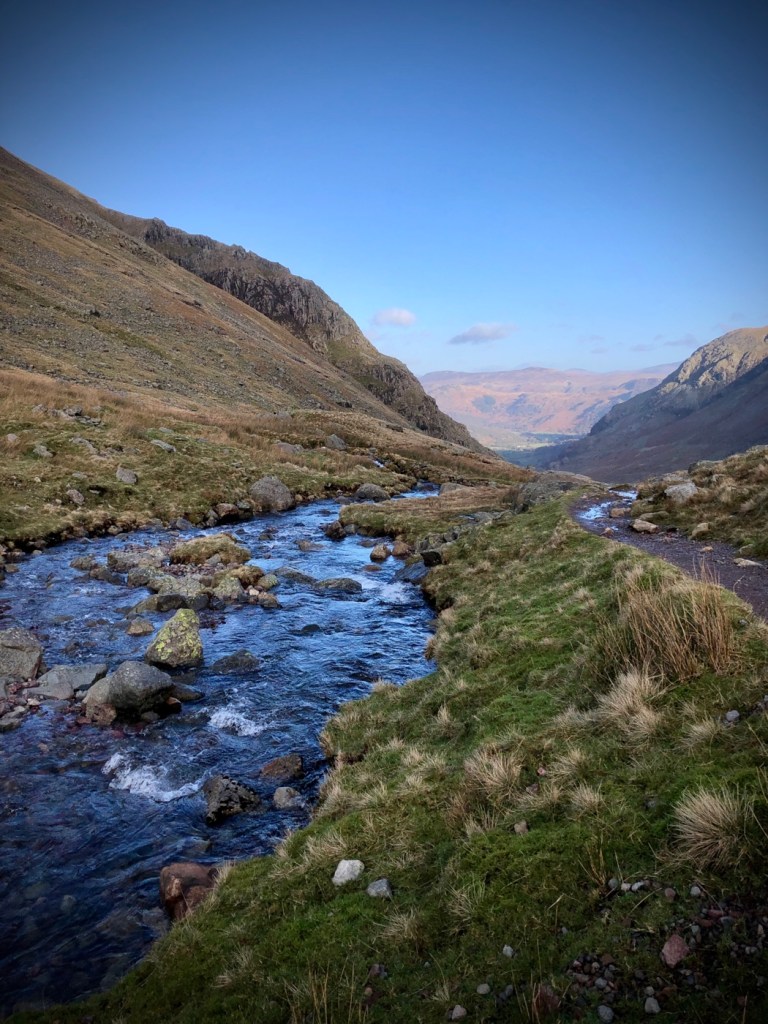
On the way to Styhead Tarn; did we mention there is water everywhere!

The typical scenic two lane roads barely fit two bus widths (they slow to pass) or even some large cars and trucks! Luckily most people in the UK still drive pretty small cars, but they still impact the safety and experience of the bikes and walkers that also use most roads. Many drivers here go too fast for conditions and it can be nerve wracking even on small unmarked country lanes.

Fragile sub-alpine tundra above 500m
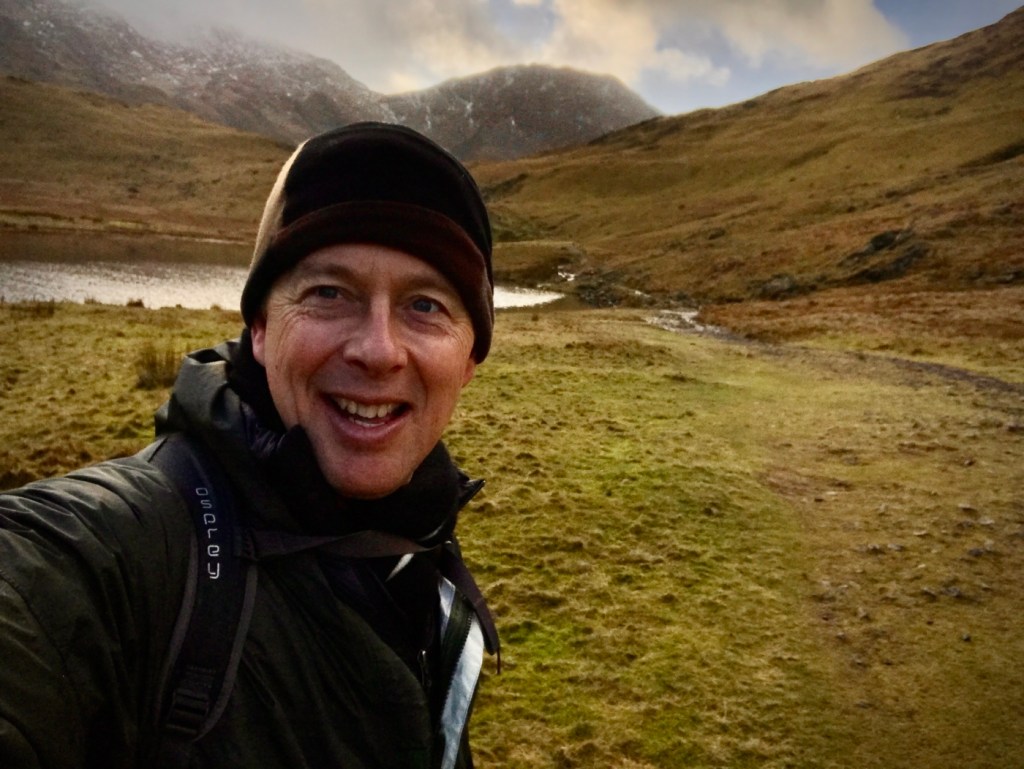
The surprising alpine world of northwest England…Styhead Tarn near the Great Gable

National Parks and holiday areas have specific problems, and many have now taken to managing traffic through various methods, such as fees, closures, parking management, and shuttles/transit. The Lake District National Parks is no different and really is trying to address the problem by providing a really good bus system at fairly reasonable (but not cheap) prices.

Returning on the upper deck just before the early winter sun set
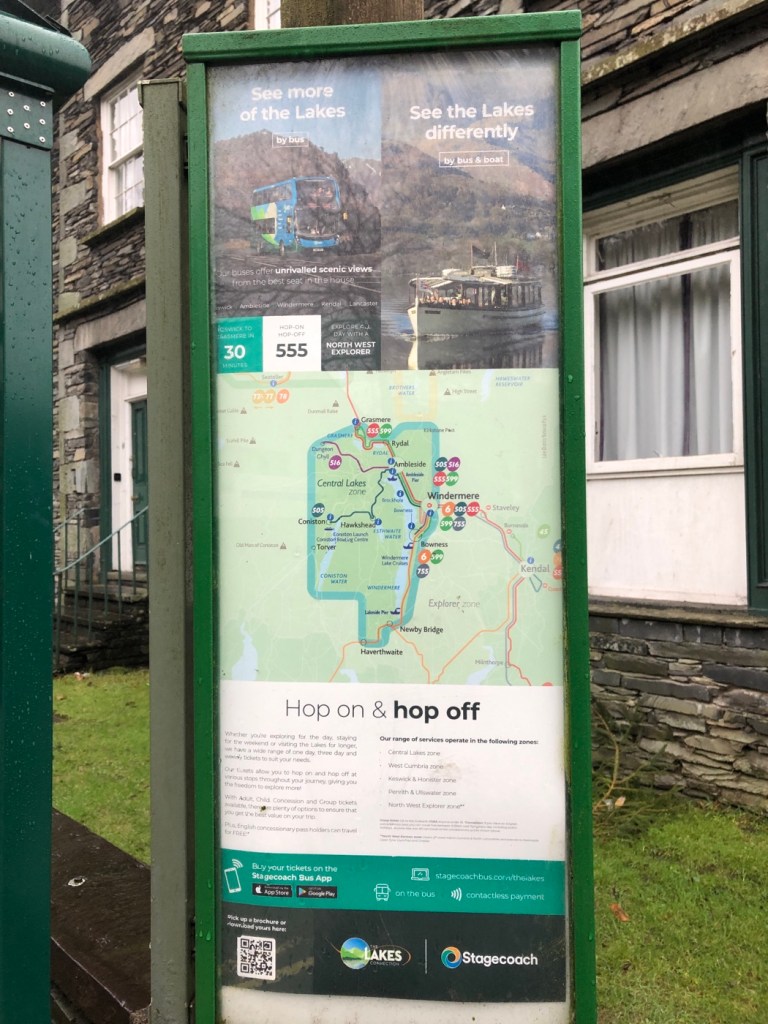
The backbone 555 bus runs throughout the core of the district and will connect you to the train in Windemere…closed double deck BTW

The buses are reliable, extensive, clean, and even a joy with double deck service on the some lines and 1/2 open top double deck service on two shorter lines through very scenic areas. So the buses really do double as sightseeing and transit for locals and visitors alike.

Yes, it WAS chilly on the open top bus, but the views will keep you warm

The other key is easy payment. The Stagecoach bus system offers payment by any tap cars/Apple Pay, etc for single/day trips or you can buy a loadable smart card right from the driver £1 fee for week or month passes.

Information is key! Most stops had schedules and route info.

We bought the 7 day gold pass form £29 each, which allows unlimited travel on the entire systems, which extends to the coast and all the gateway/border cities of the whole district.

Less sun, more dramatic colors
Walla Crag view on a misty winter day
But the sun was out today!

The only suggestion we would make to the Stagecoach bus system is to make the pass an 8-day or 7+1 trip pass, as many holiday rentals are 7-nights, so you generally have 8 days of travel. We are going to have to buy another day pass for our last day out of the park…. a minor annoyance. Let’s make this an even easier decision for people.

Gourmet Scotch Eggs from the Keswick farmers market are the ultimate winter hiking food

So we highly recommend coming to the Lake District in the winter. Although the transit system runs a little less frequently, and a few of the lines to very remote areas are peak season only, you will have a lot of the typically crowded places to yourself. Just make sure to always bring your waterproofs, and leave the car behind.

The intrepid travelers press on despite some serious hat head

Lunch time on Mont Forchant

We continued to relax and recoup in the beautiful Vallée Verte by setting out and exploring by foot from our home base, soaking in the endless connected footpaths, trails, and rural roads of France. Our goal yesterday was Mont Forchant, a 1500m peak at the head of the valley known for steep approaches and rewarding views.

Headed up valley

We could have driven to a trailhead and and made an easy two hour peak bag, but what fun is that? So we walked about 10 miles up into the wooded paths with over 2,000 feet of climbing! By walking, we got to stroll through two small villages and lots of rural pleasantness.

Roads plenty quiet to walk
The final push to the summit

So we were hopeful of promised views on Mont Blanc in the distance, but alas, the clouds were still thick on this typical summer day. But it at least cleared enough to see down the valley, and the the clouds made for cooler hiking.

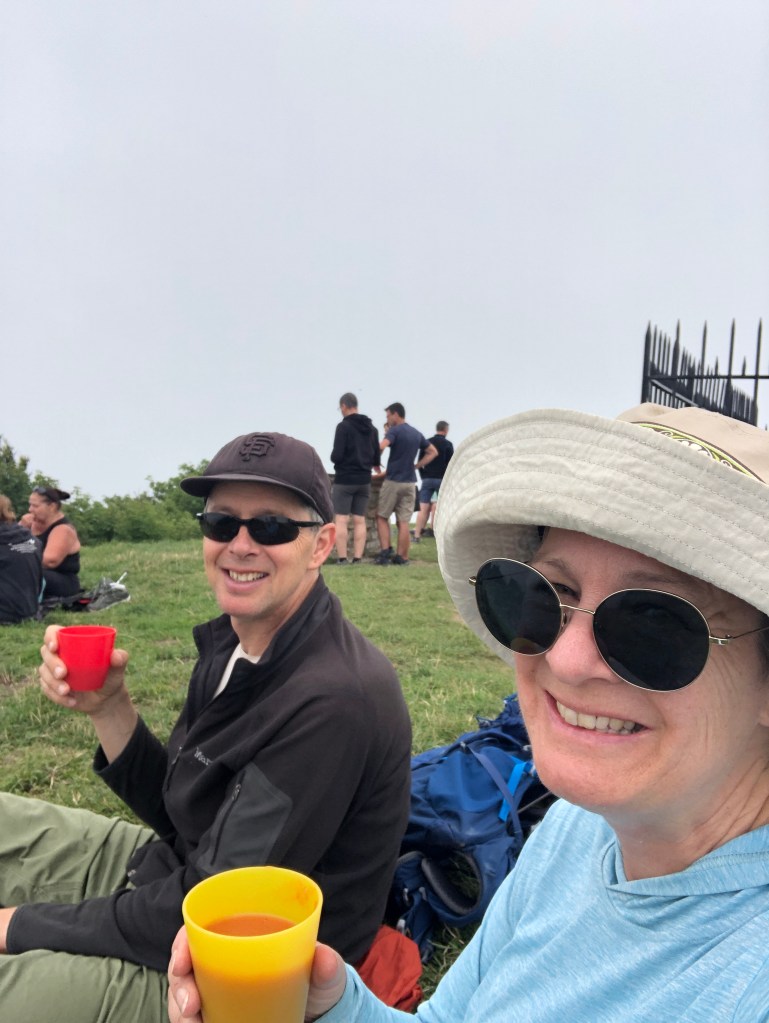
Gazpacho and sándwiches on Mont Forchant

And this being France in August, there was plenty of company at the summit, all enjoying their leisurely picnic lunches. We relished the background buzz of French around us, as it seems this was a locals only place today, along with two very happy Americans.