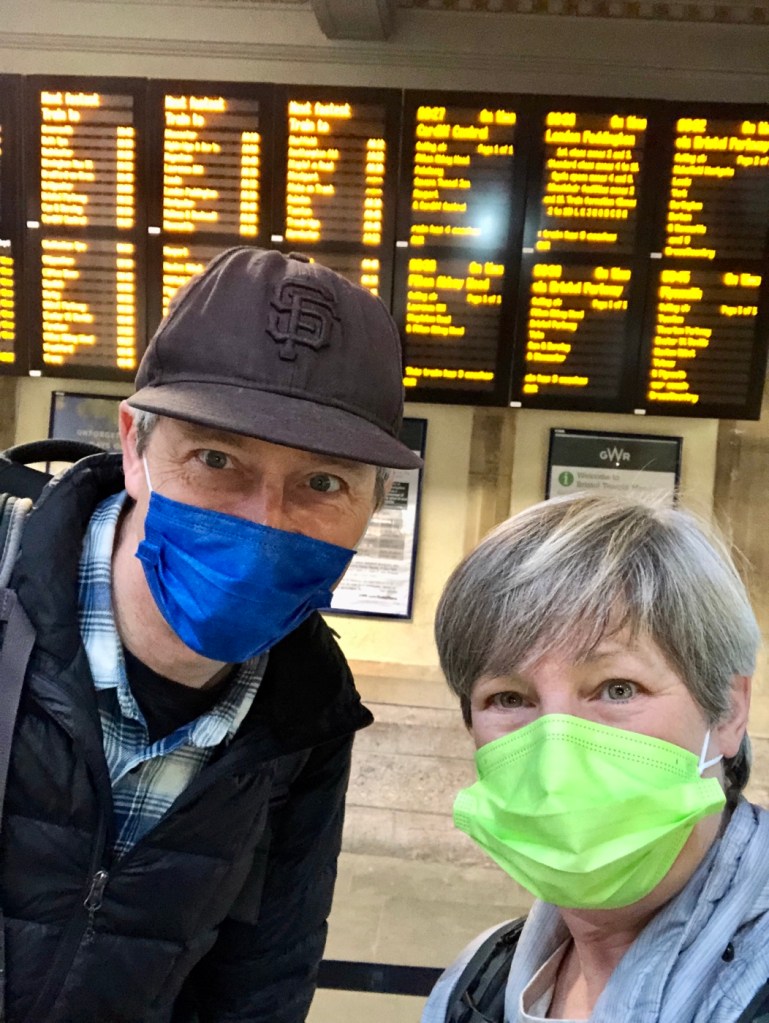
In front of the big board at Bristol Temple Mead Station.
As we wait to sort out our booster records we’ve really started to take delight in our snap travel decisions. Our last booked evening in Bristol Rich asked, where should we go next? My reply was “How easy to get to the Jurassic Coast? Looks fairly close.”
Stop for salads from the M&S fine foods. We try to never board a train without snacks or lunch. Waiting for our train.
And the travel planner makes it happen. I’ve wanted to visit Lyme Regis since reading the novel Remarkable Creatures, about Mary Anning, the renowned fossilist.
At Axminster station, about to catch the bus to Lyme Regis.Wheeling and walking from the bus to our guest house.
Lyme Regis is the heart of the Jurassic Coast. We had a lovely day and a half of hiking, which I now realize we could have spent fossil hunting. Oh yes, I caught the fossil bug. I caught it bad.
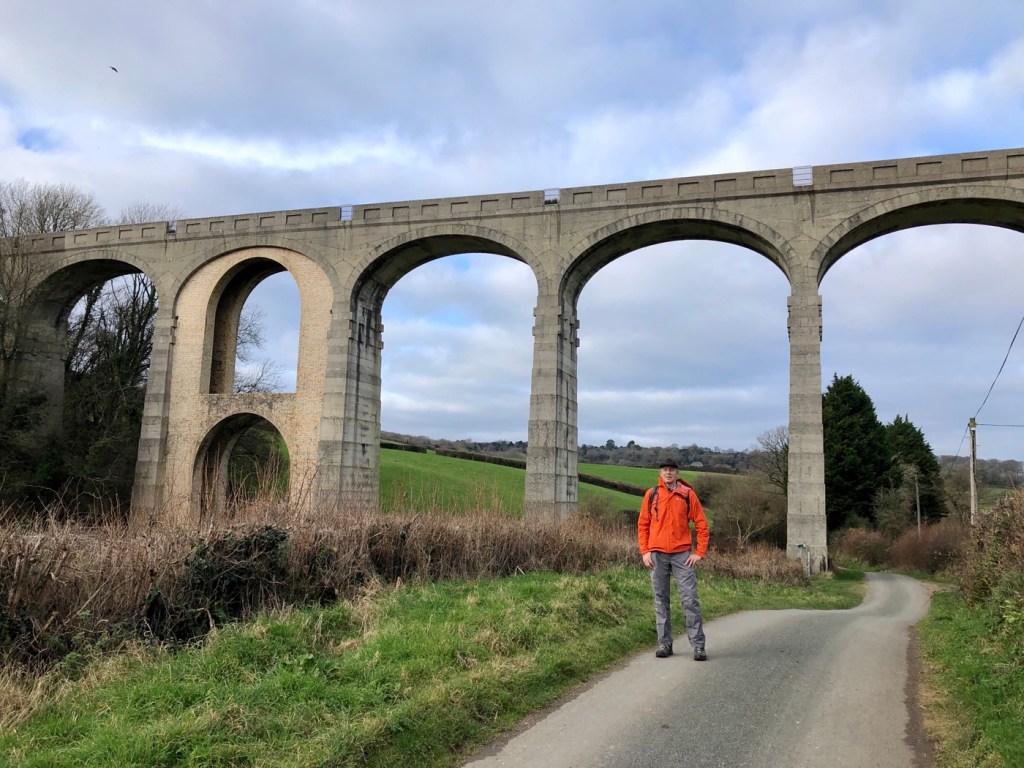
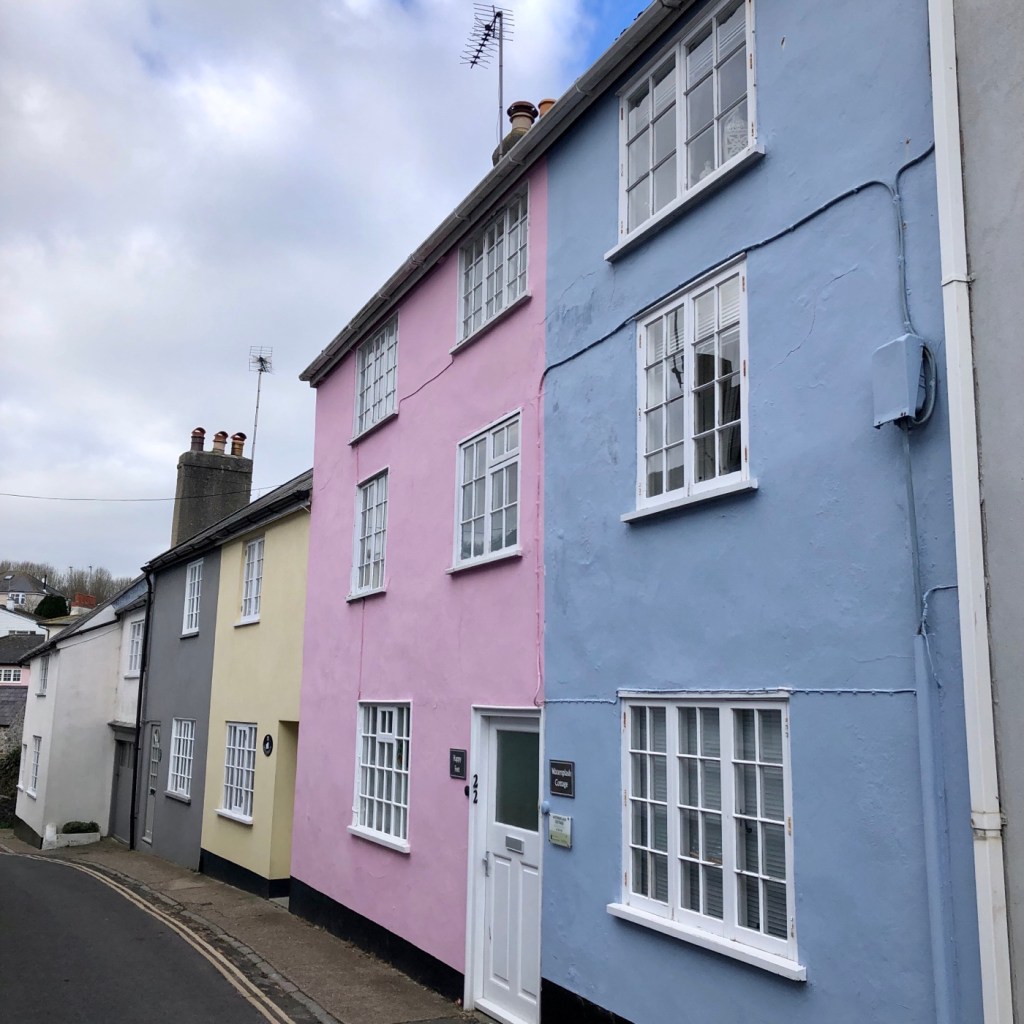
The old train viaduct at Uplyme. A lovely afternoon hike. Could have been hunting fossils.Beautiful houses in Lyme Regis on a street that slopes down to the fossil beach.Goofing around on the Cobb, of French Lieutenant’s Woman and Jane Austin’s Persuasion fame – just up from the fossil beach.
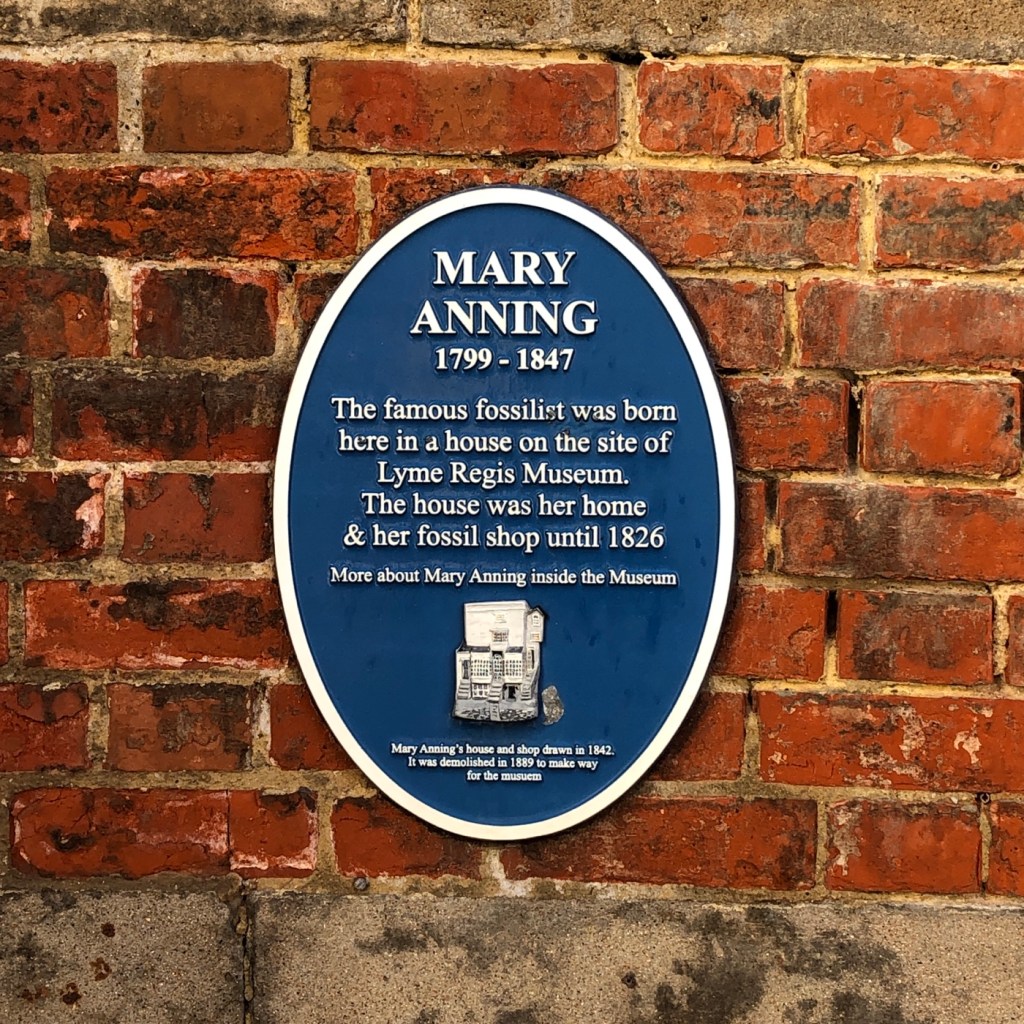
The Lyme Regis museum, built on the site of Mary Anning’s house, offers a fossil talk and walk. We bought tickets for Friday, our last day in town, thinking we had plenty of time to do that and catch our bus to the train station.
Apparently her house flooded with high tides and storms. A new sea wall changed that allowing the museum to be built.
The fossil talk was amazing, we learned so much. I learned we didn’t leave enough time for actual fossil hunting.
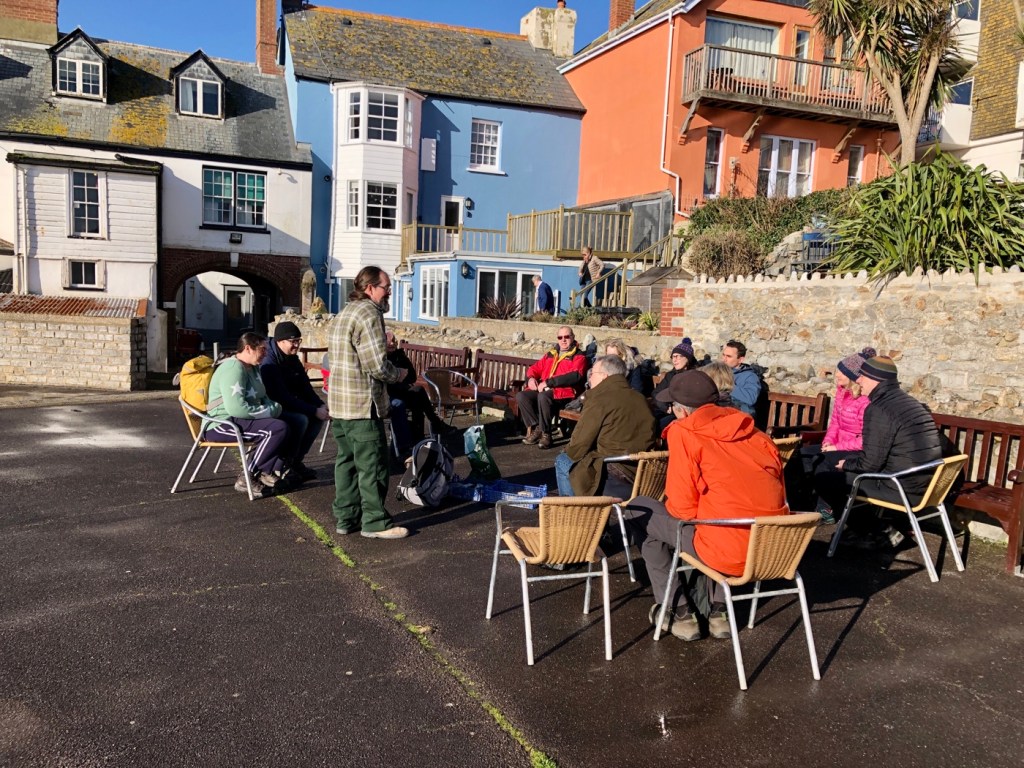
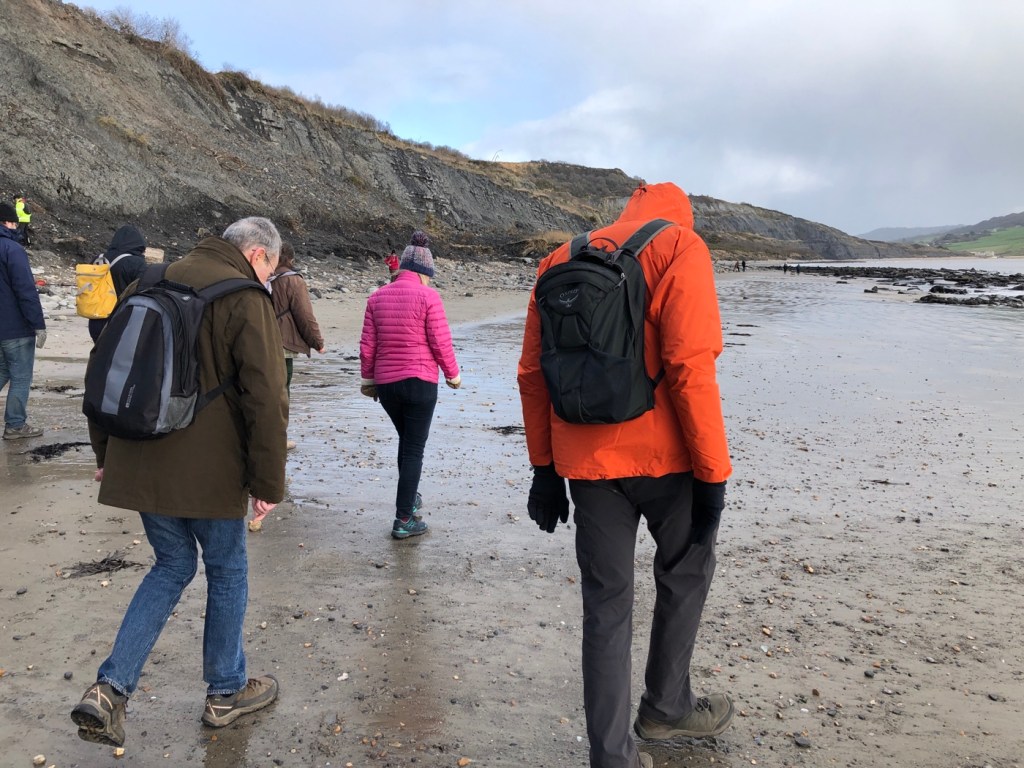
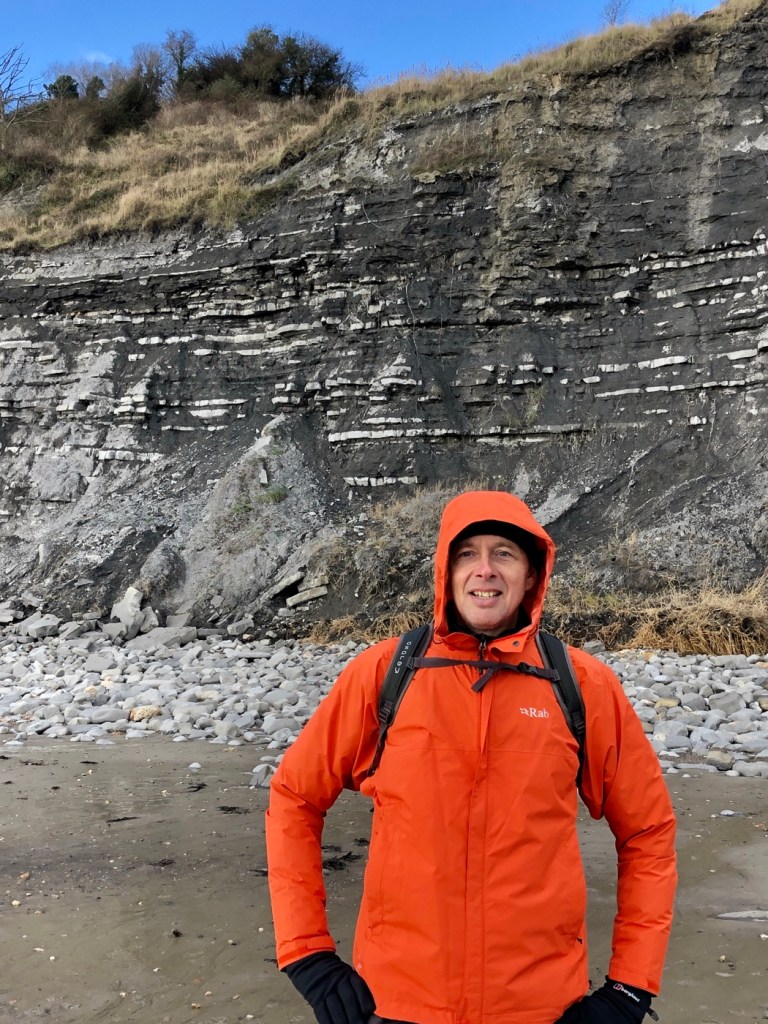
The wonderful geologist who talked us through what to expect and look for. And answered all the whys of this area. Fossil hunting. Everyone has their gaze turned towards the sand. There really are fossils just laying on the sand.The limestone cliffs where the fossils are before they landslide onto the beach. And my intrepid fossil hunter.
The best time to fossil hunt is after a big storm has caused land slips and churned up the beach. We were on the beach after days of mild weather, so not prime fossil time. And it was still amazing. Apparently after a storm the professionals are at the beach before dawn with headlamps and hammers. There are no prohibitions about hunting, just warnings. As our geologist told us, if you don’t get the fossils the ocean will. But don’t let the cliffs get you. They let loose on a regular basis. He kept us away from the cliff bases and focused on the tidal zone.
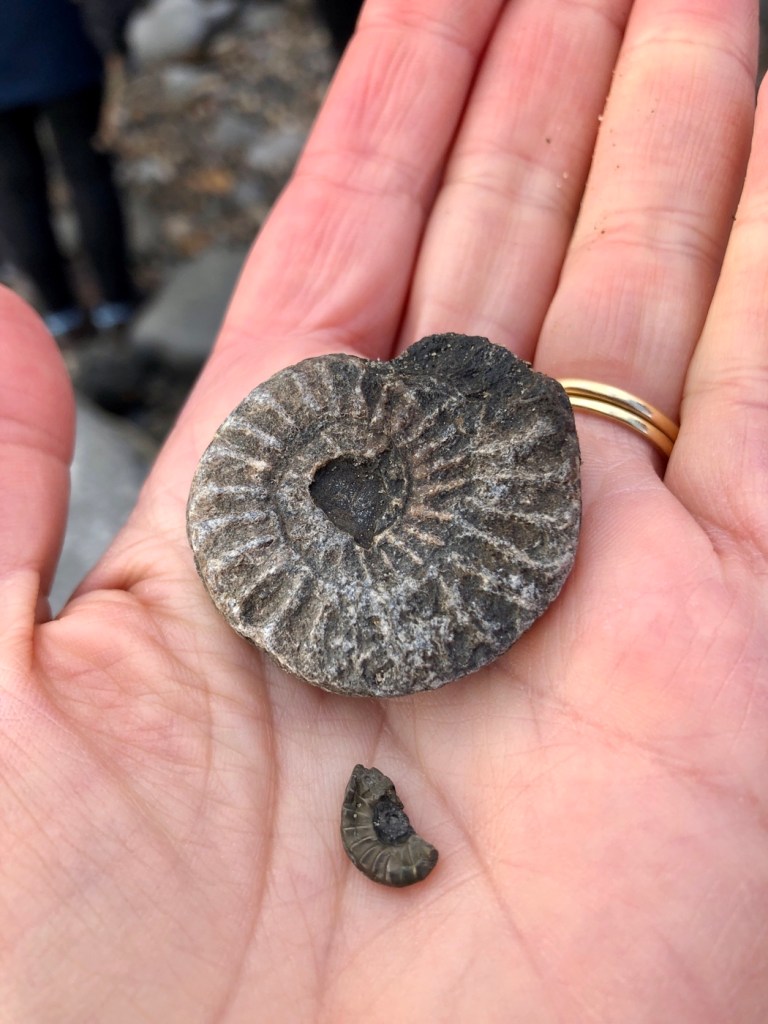
Looking earthward for fossils.Two different versions of fossilized ammenonites. The small partial one is iron pyritized.
I’ll let wiki explain how these jewel like fossils happen: Organisms may become pyritized when they are in marine sediments saturated with iron sulfides. (Pyrite is iron sulfide.) As organic matter decays it releases sulfide which reacts with dissolved iron in the surrounding waters. … Some pyritized fossils include Precambrian microfossils, marine arthropods and plants.
A tribute to Mary Anning on the coast path. Her dog Tray and a Plesiosaurus skeleton in metal on a section of fence.
Sadly, we only had a short time on the beach before we had to leave to catch our bus to the train. But we will definitely be back to fossil hunt again.
The happy travelers take a sunset usie. Should have been fossil hunting.
Our next snap travel decision was to go on to Plymouth by train. Since we were so far down SW England, why not go farther? so we did. We’re in an apartment in Plymouth for a while. Where will we go next? And how will we get there? Stay tuned.
We left the beautiful and empty lake district via an easy one connection train trip to western Wales, and have been enjoying a lovely week in Tenby, courtesy again of our endlessly generous friends.
The moist and green footpaths around Tenby
The weather has been favorable as well, with little rain, and temperatures pushing 50 most days, as this is often one of the warmest locations in the UK.
Daffodils reminding us that spring is on the way! The nicely renovated Manchester Piccadilly Station – our only transfer from Kendal to Carmarthen, Wales
We even had the opportunity to part ways for a few days, as Cheryl went to Cheltenham in the Cotswolds with our host, and another old friend for a ladies getaway, while the guys stayed behind in Tenby.
Cream Tea at the Ivy in Cheltenham
Although we almost always enjoy each other’s company, It was good for both of us to have some independent time for a change, and a bit of an odd sensation after so much intense time together the past 6 months.
The boys on a beautiful day on the Pembrokeshire Coast
Long term travel with a partner definitely requires a special relationship, and a lot of give and take. Luckily this comes naturally to Cheryl and I, but we still have to both respect each other’s personal space, independent desires, and known quirks (Just mine of course, Cheryl is perfect -;)
Watchful eyes in Cheltenham
Meanwhile the world continues to spin and adjust to Omicron, although we are happily past the early January peak in the UK. We certainly hope that the world gets to some endemic normalcy in 2022, but there are a lot of challenges, including proper global vaccination supply. As for us, we know we are lucky to be traveling at all and are still so thankful to the NHS for providing us a booster shot in December, as this allowed us to continue our travels with more protection and in a responsible manner.
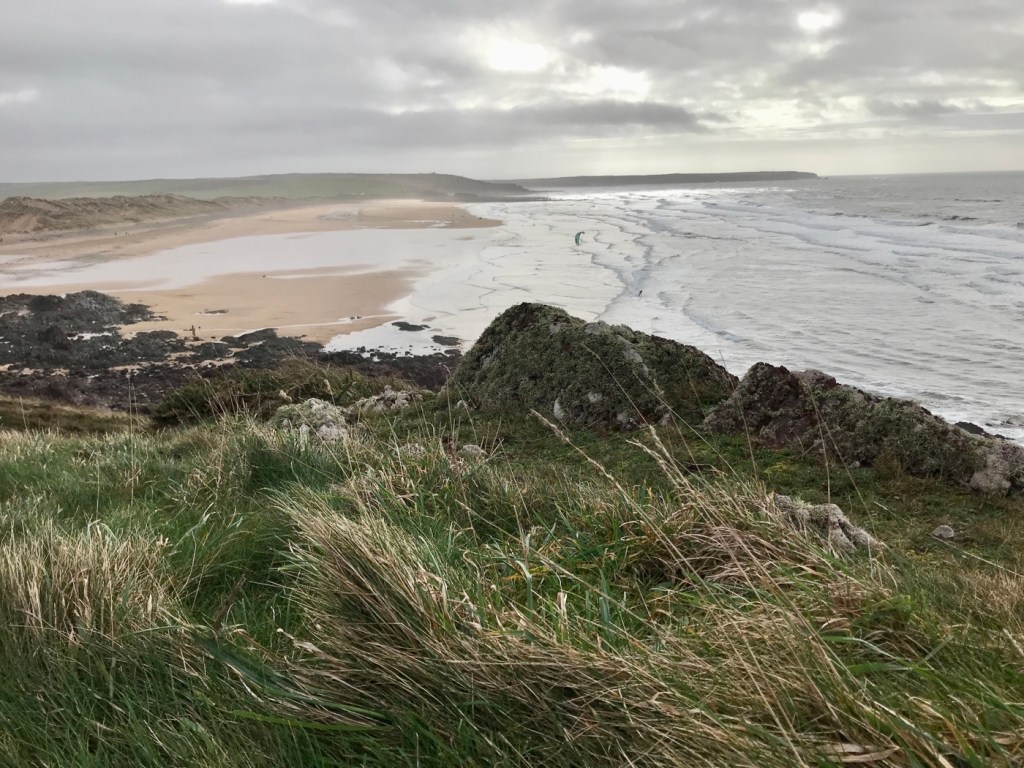
Freshwater West Beach – a favorite of surfers and kite surfers (yes, it’s often breezy)
However, since we weren’t registered in the NHS system, we only have small hand written vaccine cards recording our booster. We were given a heads up that this could be an issue going forward, especially for travel documentation, and indeed this month, we have found that our electronic (EU) COVID passports have now expired in most countries, as there has been a new standardization around a 270 day (9 month) validity from original vaccines without a booster.
Walking alone along the cliffs near Tenby reminded me not to get too lost in that podcast
So we need to get our booster vaccines we received in December into a more usable electronic format. We think we have found a solution as you can actually register with a local GP surgery in England as a non-resident, and access the record after being assigned an NHS number. We could have registered in Wales in theory, but the health systems are actually quite separate and we were warned that the transfer of the record from England could be fairly quick or take months…something that wouldn’t work for our desired onward travels to France and Italy.
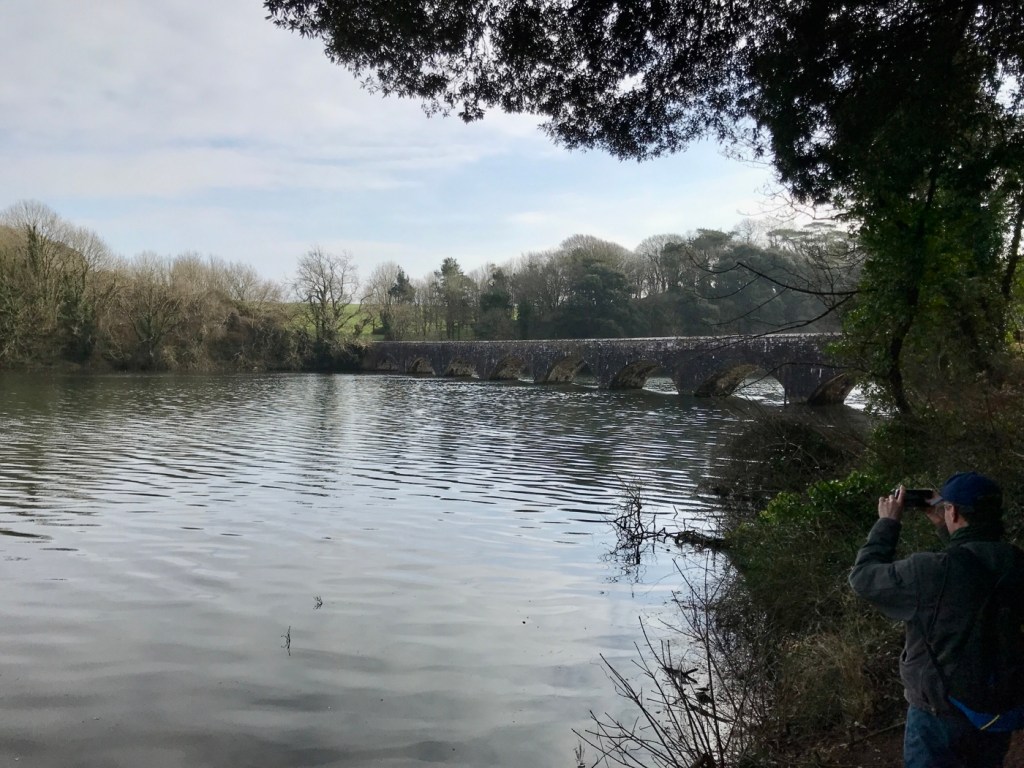
The Fresh Ponds of the Stackpole Estate. Back when you just made ponds for your amusement, but now a perfect habitat for migratory bids
So we set off to Bristol, England yesterday to try to get registered in the area after some initial success online and with some phone calls to various practices that are still accepting new patients. Many are full or shut off due to COVID and/or ongoing GP shortage issues in the UK. Health systems are strained everywhere.
Up and down the coast path to Saundersfoot
As a bonus, we had a bit of an adventurous day getting to Bristol, England yesterday due to signaling issues disrupting a west wales Main line. When our first train leg was cancelled (and next train in 4 hours!) we quickly booked a taxi to the next transfer station, where our onward journey was still shown on time; however, then found out that the problem was still down the line. Doh!
Oh Oh, no trains going from Carmarthen!
Luckily, after some confusion, Transport for Wales did manage to rustle up a few small mini buses to get us past the issue. And in fact, the friendly driver offered to drive the 20 or so of us to a more convenient station for quicker connections and we ultimately got to Bristol an hour earlier than scheduled, by catching a connecting train with two minutes to spare. Small travel win!
Two full hands in Cardiff; happy transfer after making our trains to Bristol
But we are in a sort of limbo while we try to sort out our booster record, but we will try to make the best of it. And it’s interesting to return to the Bristol-Bath, an area that we really enjoyed in our first visit last fall. You so often say in travel life, “we should come back here some time to see more, etc….” But you rarely do. This is one revelation we discuss as we travel new places now; do you think we’ll come back here someday? Yes, no, maybe….but always realizing that regardless, travel to a place is always a snapshot in time, and a unique experience.
The Hanoi we fell in love with in 2007 was not the same Hanoi in our 2017 return. Of course, the UK does have many places that haven’t changed much 500 (or 5000) years, but the country is still a very different place than 5 years ago, as it has a whole different vibe post-Brexit, and mid-pandemic. The travel experience is a complex blend of a place’s physical infrastructure, social, political, and environmental influences, all filtered though the lens of your personal attitude and biases.
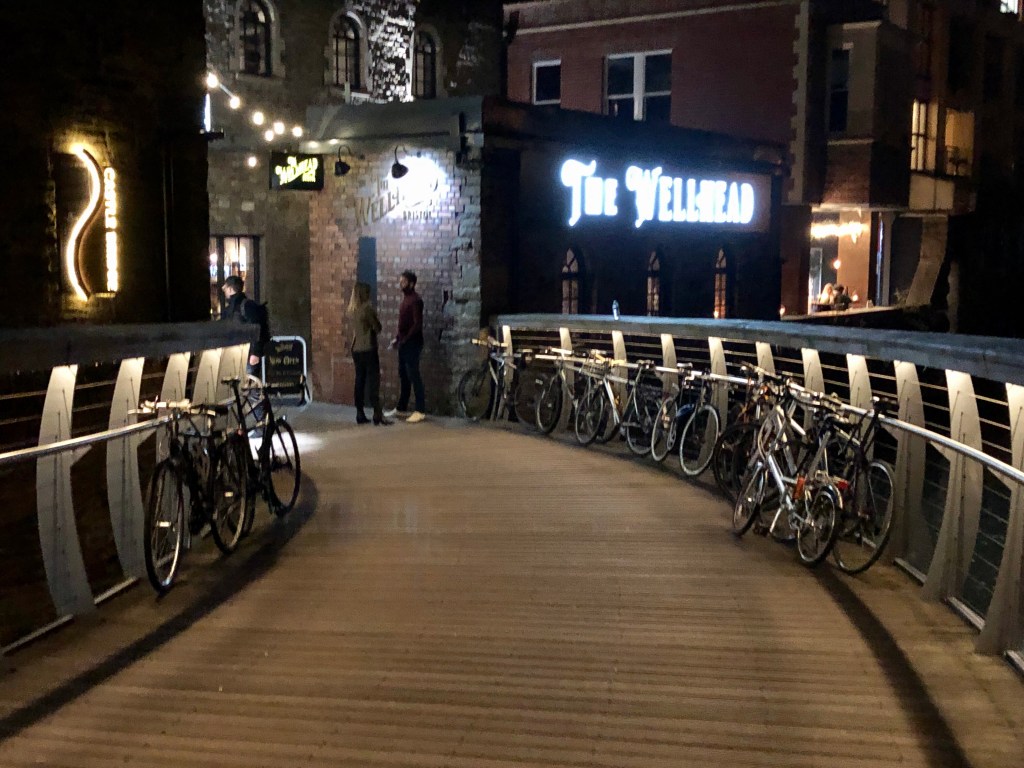
Back in cool Bristol, cool brew pubs and bike bridges included
So what next? Excellent question. On our 7 hour train ride last week from the Lake District, we had some time to think about 2022 and develop some broad scenarios. The challenge is to parse out our 90 allowed Schengen days in the prime spring/summer/fall. Some of the goals include more bike touring in Northern Europe, Scandinavia, and the Baltics….tied to the Grand Depart of the 2022 Tour de France in Denmark on July 1st. (Hotel reserved a year ago -:).
Our friend Gary’s dog Misty on the way to the pub lunch at the Stackpole Inn
In the nearer term, we are looking to do some more exploring in Italy, perhaps walking some of the beaten tourist routes more off-season, such as the Cinque Terre, or Venice. Then “home” to the US of a for a month to see as many friends and families as we can ( and consume as many burritos as humanly possible!)…..then back across the pond to explore Turkey for a month, a place we have long wanted to visit, before swapping out for our bikes again. Central and Southern Africa are also on the short list for later in the year, as well as the Camino Del Norte in the fall. Of course, these are all subject to quick pivot as needed based on the state of the world.
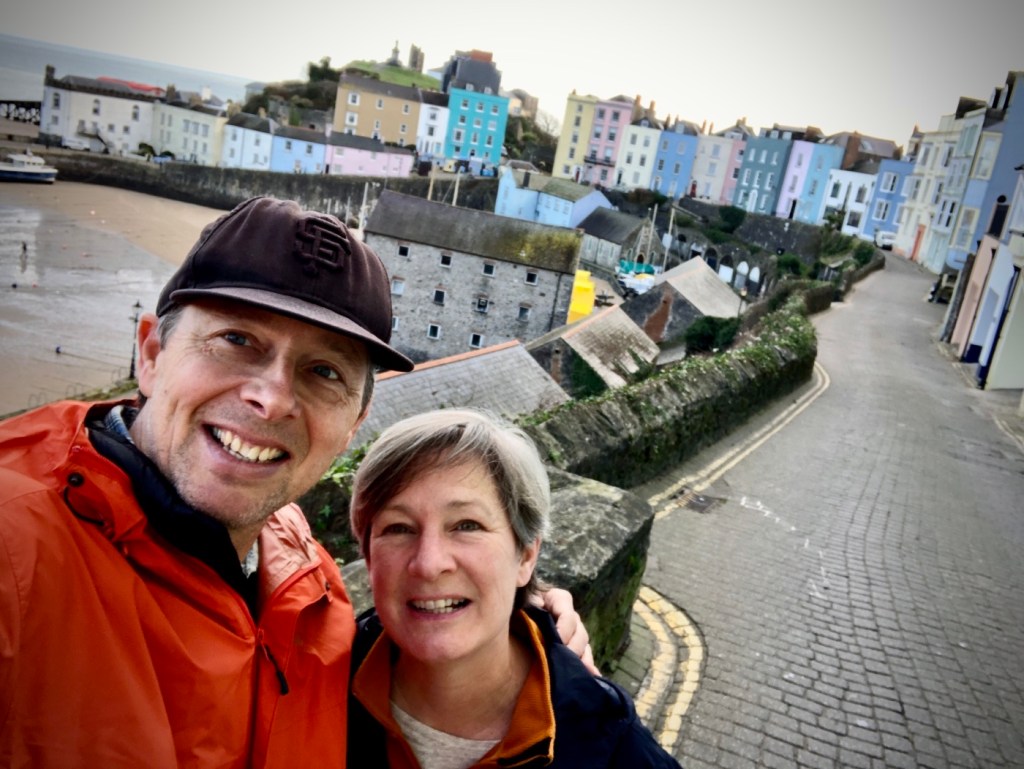
Colorful Tenby Harbour
So hopefully the blizzards are clearing and the sun is starting to shine a bit more wherever you are, as we emerge from a long dark winter, and the burdens of a pandemic. For now we move on in the UK with the uncertainty that has become a way of life.
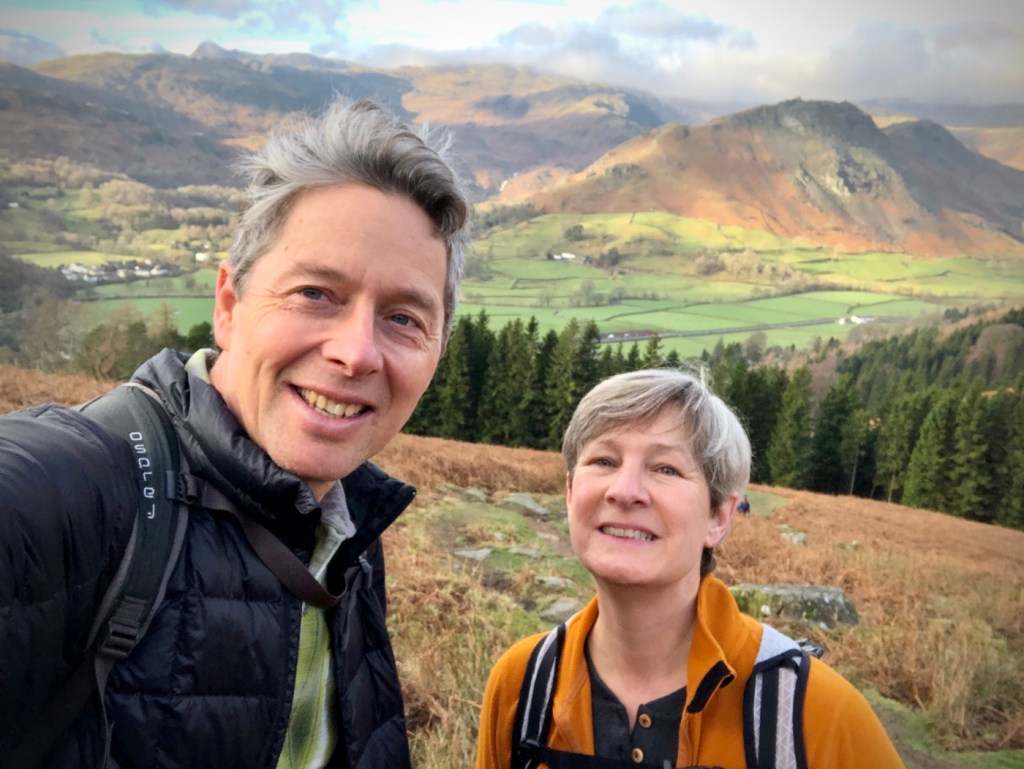
Nine days of hiking. And we haven’t even scratched the surface of the available trails. We’ve moved a bit south to the very lovely market town of Kendal, known as the gateway to the Lakes District. The terrain here is less craggy and peaky, more rolling hills and sweeping vistas, but just as beautiful as the Lake District proper and with just as much amazing hiking.
Stone circle of Castlerigg.
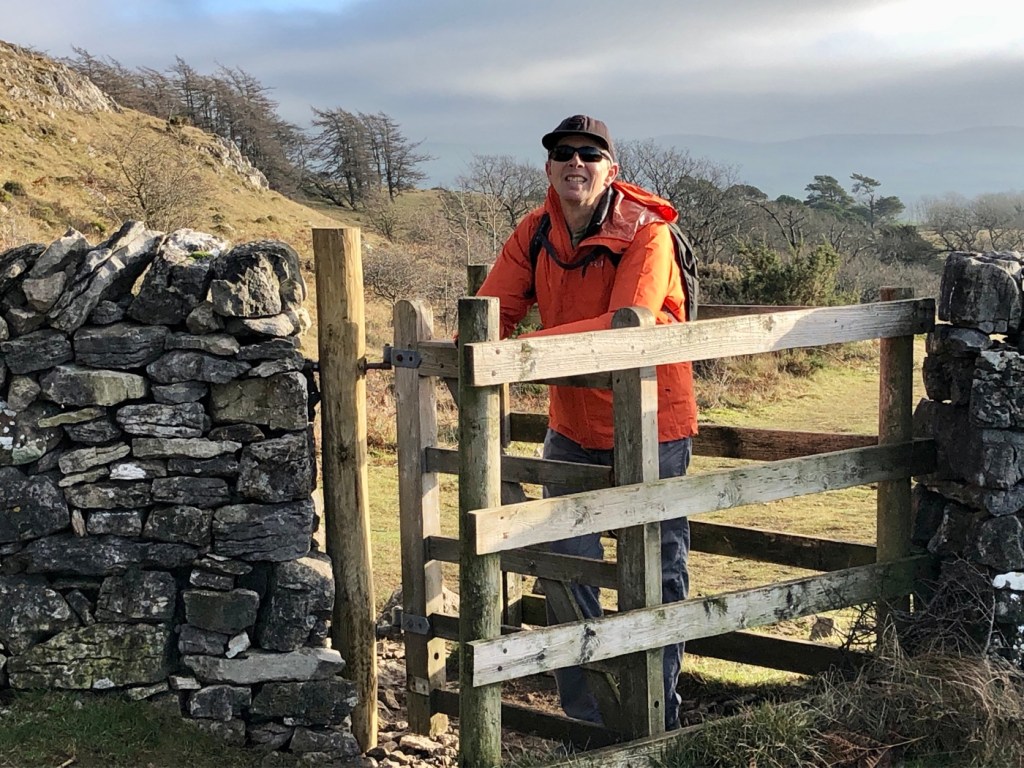
The stone walls, the farm animals, our interactions with friendly hikers, and of course the pints at the pub garden at the end of our hikes have been keeping us well entertained. I’m fascinated with the many different types of stiles that get us over fences and walls while keeping the sheep and cattle contained.
Ladder stile over a wall.Classic wooden stile over a fence.A narrow gap with a tiny gate.A very narrow gap, requires even Rich to squeeze through. This is actually called a squeeze stile.One of my favorites, stone steps up a stone wall.More robust steps, usually there is a small gap at the top, and here, a metal bar across the gap.A rather fancy ladder and platform stile, outside Cartmel.
Along with clamoring over stiles we’ve opened, and correctly closed and secured, many gates. Many many gates. So many gates we joke that we now have masters degrees in gate-ology.
The farmers depend on hikers properly closing gates. We make sure we do.A kissing gate, it simply swings and requires no securing.I appreciate these signs educating hikers about the animals in the fields.
We’ve had some lovely chats with other hikers. The fell runners and the one tarn (lake) swimmer we saw have impressed us with their hardiness. And, we’ve stopped to talk to hikers who are well into their 70s and 80s. We say to each other after those interactions, with luck that will be us, years from now, still happily hiking together.
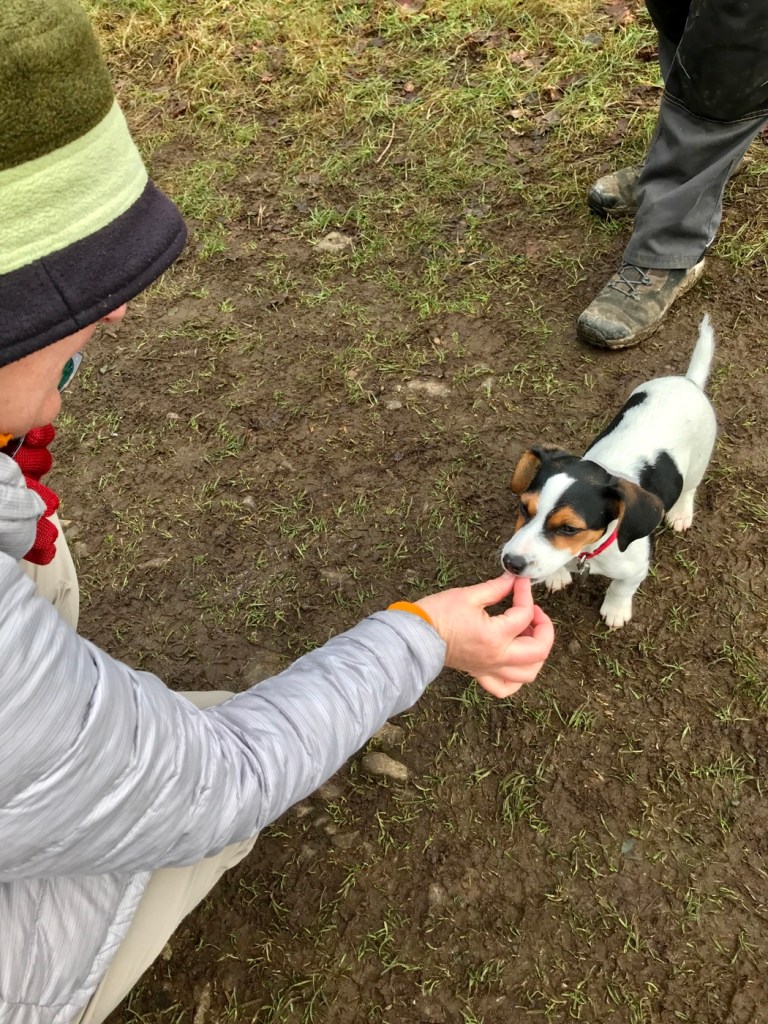
Zoe, a 4 month old Jack Russel terrier, accepting a treat supplied by her human.
As we’d hoped, the Covid curve seems to have peaked here in the UK. We’re glad we’ve stayed in apartments and kept out of crowded places as long as we have. Yes we’ve had some very chilly pints and cups of tea outside, but it’s been the right thing for us to do.
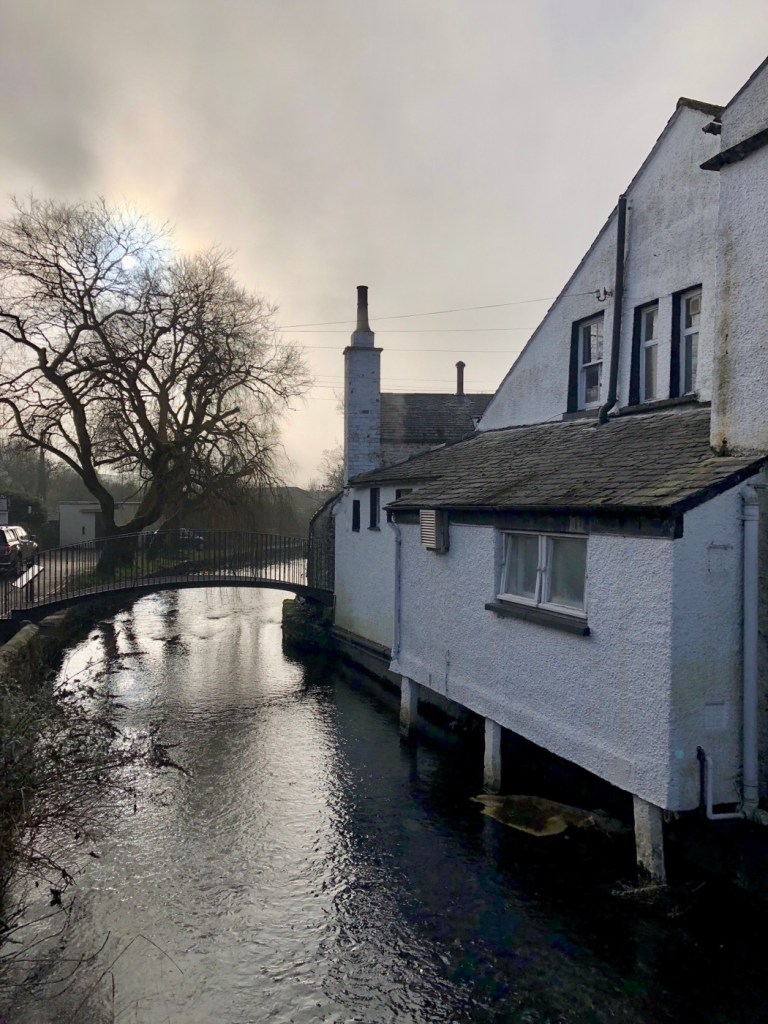
A foggy view on the River Eea.
We’ve seen so much stunning countryside. This time in the Lake District in winter was not something we planned on, but we’re enjoying it so much. Travel in the time of Covid is stressful, we think we’re doing a good job keeping ourselves relatively calm and certainly well exercised.
Muddy boots and the green green hills of Cumbria.Sunrise over the River Kent with Kendal Castle ruins on the hill. This is the view from our apartment.
What’s next? Back to our good friends in Wales. After that, uncertain at this point. We need to get our COVID booster shots entered into the EU tracking system so we have the ability to abide by vaccination rules in France, as our current Pass Sanitaires are now invalid without the booster info being updated. It’s probably easiest to do this while in France. So, maybe France is next.
The happy travelers on the road to who knows where.
We moved on from lovely Liverpool late last week and arrived Keswick by train and bus (locally pronounced Kehz-ick) on a spectacularly snowy day in the Lake District.
Dramatic winter skies ascending near Grasmere
We were very glad that our professional bus driver was plying the slushy mountain roads, especially on the sheer edges of deep lakes; nevertheless, we did take note of the emergency window systems on the bus! (avoiding what I called a double decker bus watery grave…-;)
Can we do this without a car?
Our decision to base in Keswick was based on a number of factors, but primarily that we could get there by public transit, and numerous lines route from there to other parts of the National Park. It also has a few museums, nice shops, and many services in town, including a great regional supermarket, Booth’s.
Our row cottage in Keswick came with a friendly outdoor kitty neighbor no charge and a 5-10 minute walk to town or the busCheryl trying to cajole an adorable Lake District sheep to follow her home
Oh, it also happens to be very quaint, with a lovely pedestrianized core and footpaths heading in every direction, including along the large Derwant Waters, what we in America might call a lake!
Morning light on Derwentwater in the Lake District NP
We actually wavered a bit about whether we “needed” to rent a car, but then read about many others visiting car-free and thriving with the great regional transit system. After 6 days here, we know it was 100% the right decision for us.
The 78 bus to the end of the line at Seatoller…schedules, a shelter, and multiple trailheadsCheryl ready to hike…the other friendly passengers were day tripping photography buffs from Manchester
Our decision also considered the fact that this area is heavily impacted by car traffic, much like the National Parks in the US. Nevertheless, the car parks and road are still surprisingly busy here mid week in January, as driving is still seen as the easiest and best way for most to experience the park. Despite some pay parking in many of the towns and villages, the roads are still free and there is an abundance of free parking available.
Hey, there goes our bus!
But it’s not just about the carbon footprint of driving for us. We’ve seen the impacts automobile congestion, noise, and pollution have on communities. When practical, we don’t want to contribute unnecessarily to the problem. Although traffic is fairly light in the middle of winter now, it apparently is extremely congested most of the year, and a nightmare in holiday periods.
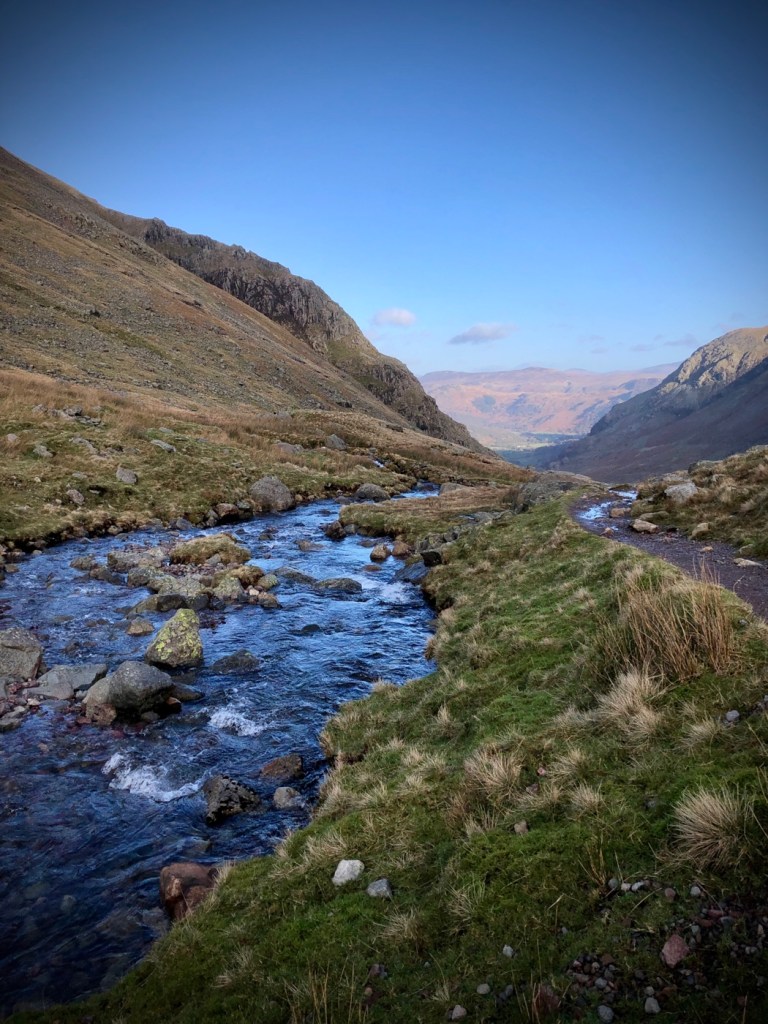
On the way to Styhead Tarn; did we mention there is water everywhere!
The typical scenic two lane roads barely fit two bus widths (they slow to pass) or even some large cars and trucks! Luckily most people in the UK still drive pretty small cars, but they still impact the safety and experience of the bikes and walkers that also use most roads. Many drivers here go too fast for conditions and it can be nerve wracking even on small unmarked country lanes.
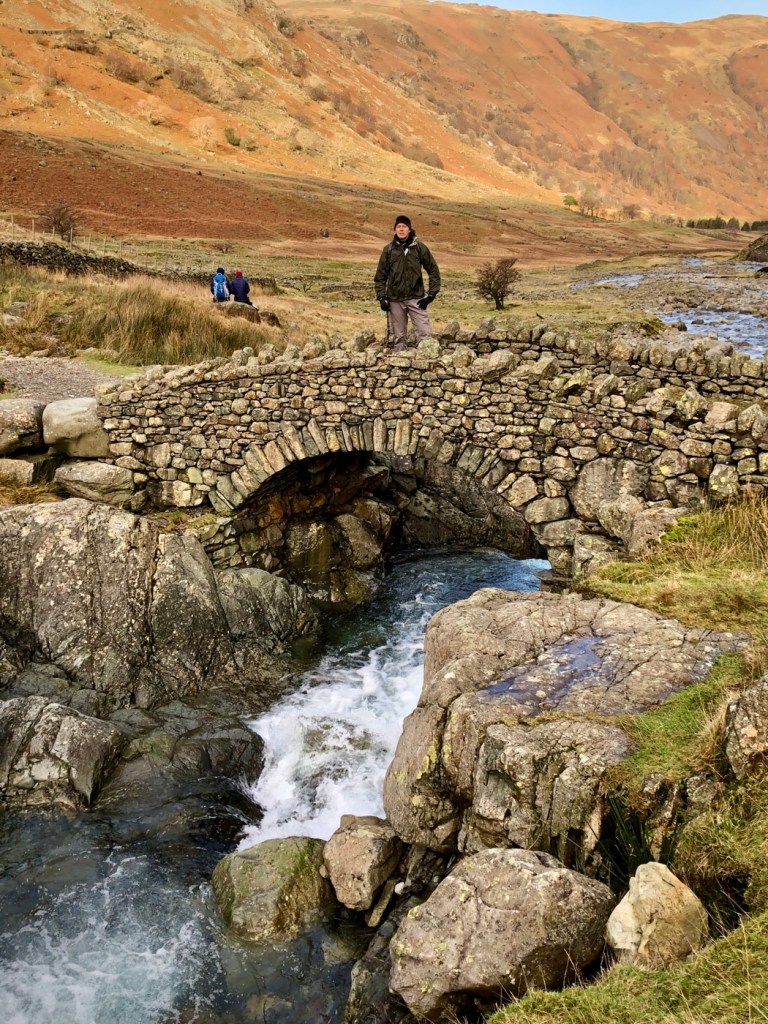
Fragile sub-alpine tundra above 500mThe surprising alpine world of northwest England…Styhead Tarn near the Great Gable
National Parks and holiday areas have specific problems, and many have now taken to managing traffic through various methods, such as fees, closures, parking management, and shuttles/transit. The Lake District National Parks is no different and really is trying to address the problem by providing a really good bus system at fairly reasonable (but not cheap) prices.
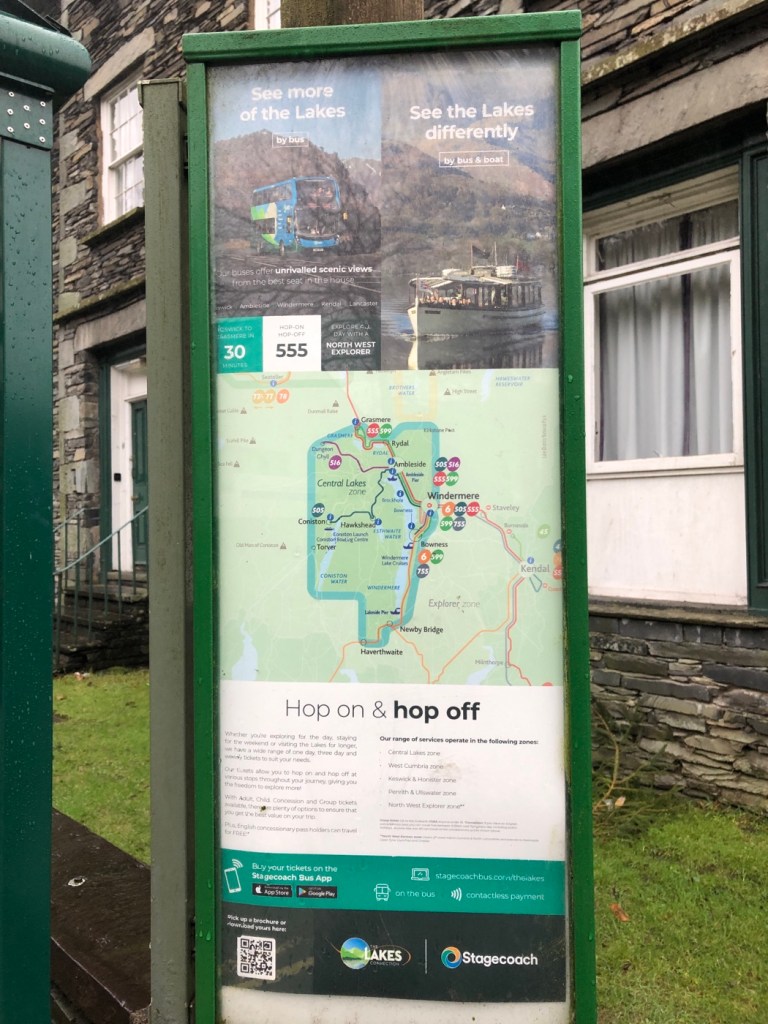
Returning on the upper deck just before the early winter sun setThe backbone 555 bus runs throughout the core of the district and will connect you to the train in Windemere…closed double deck BTW
The buses are reliable, extensive, clean, and even a joy with double deck service on the some lines and 1/2 open top double deck service on two shorter lines through very scenic areas. So the buses really do double as sightseeing and transit for locals and visitors alike.
Yes, it WAS chilly on the open top bus, but the views will keep you warm
The other key is easy payment. The Stagecoach bus system offers payment by any tap cars/Apple Pay, etc for single/day trips or you can buy a loadable smart card right from the driver £1 fee for week or month passes.
Information is key! Most stops had schedules and route info.
We bought the 7 day gold pass form £29 each, which allows unlimited travel on the entire systems, which extends to the coast and all the gateway/border cities of the whole district.
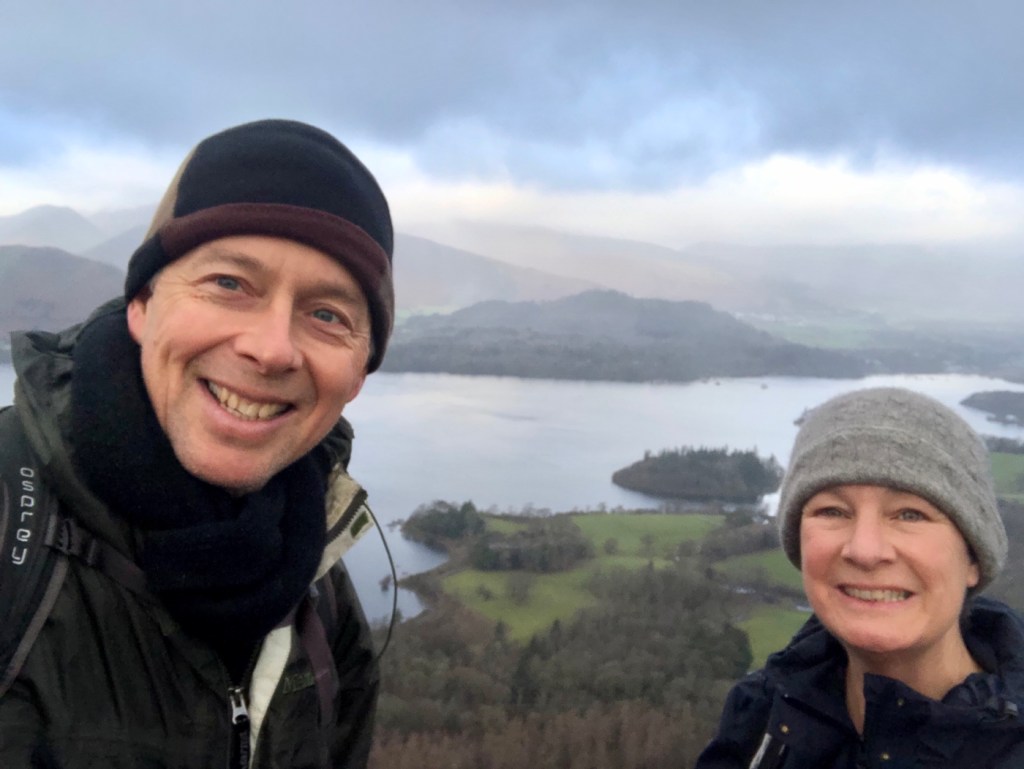
Less sun, more dramatic colorsWalla Crag view on a misty winter day But the sun was out today!
The only suggestion we would make to the Stagecoach bus system is to make the pass an 8-day or 7+1 trip pass, as many holiday rentals are 7-nights, so you generally have 8 days of travel. We are going to have to buy another day pass for our last day out of the park…. a minor annoyance. Let’s make this an even easier decision for people.
Gourmet Scotch Eggs from the Keswick farmers market are the ultimate winter hiking food
So we highly recommend coming to the Lake District in the winter. Although the transit system runs a little less frequently, and a few of the lines to very remote areas are peak season only, you will have a lot of the typically crowded places to yourself. Just make sure to always bring your waterproofs, and leave the car behind.
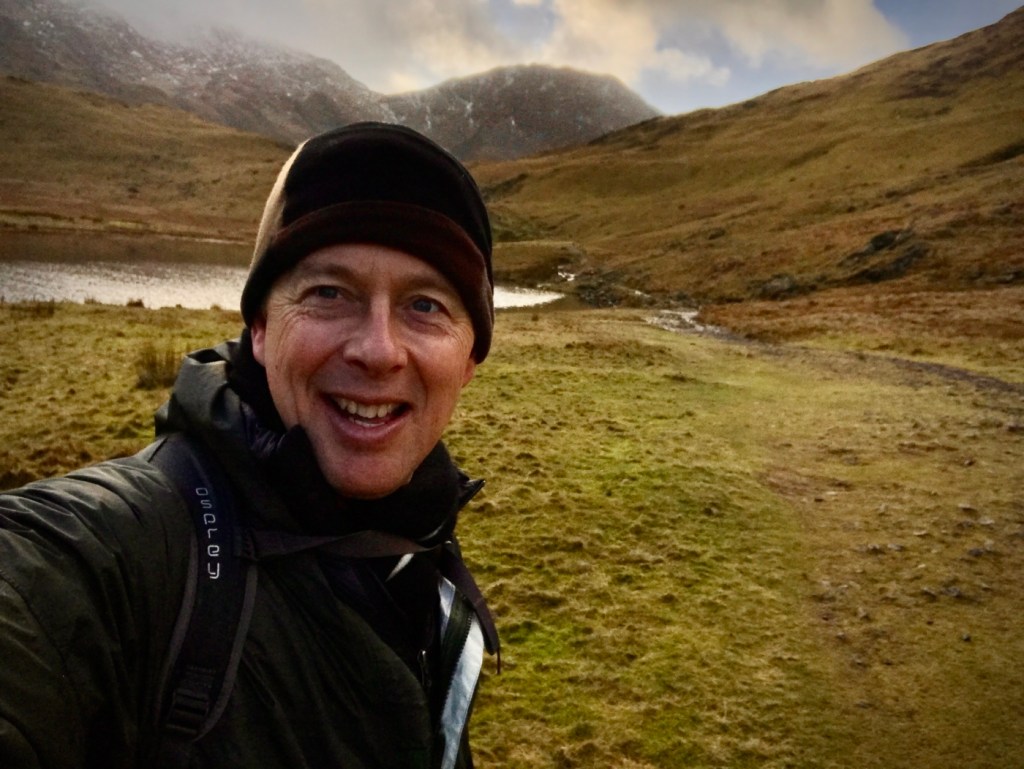
The intrepid travelers press on despite some serious hat head
Leaving London for Liverpool on an early tube to train.
We joke. Sort of. This is an island, and the COVID rates are quite high. The prevalence of Omicron has changed how we’re traveling and what we’re doing. Travel from the UK to France is still not allowed, but Germany is again allowing travel from the UK. We had planned to go back to France but that was impossible. The testing requirements and test costs to go to Ireland put us off going there. So, hello Liverpool!
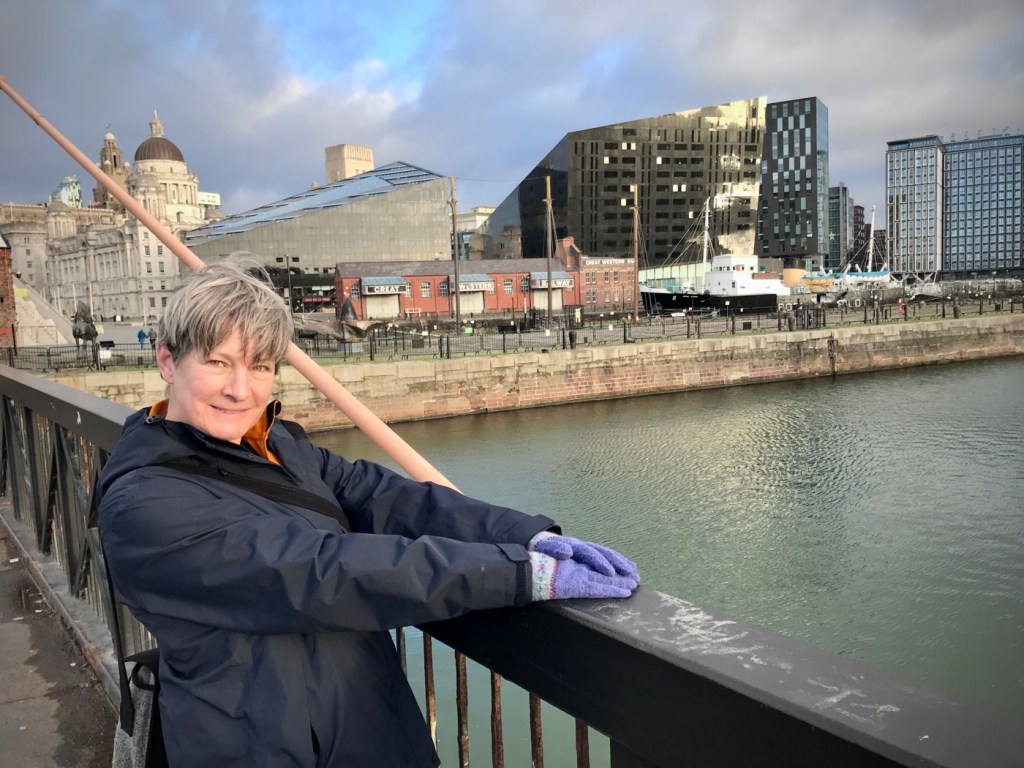
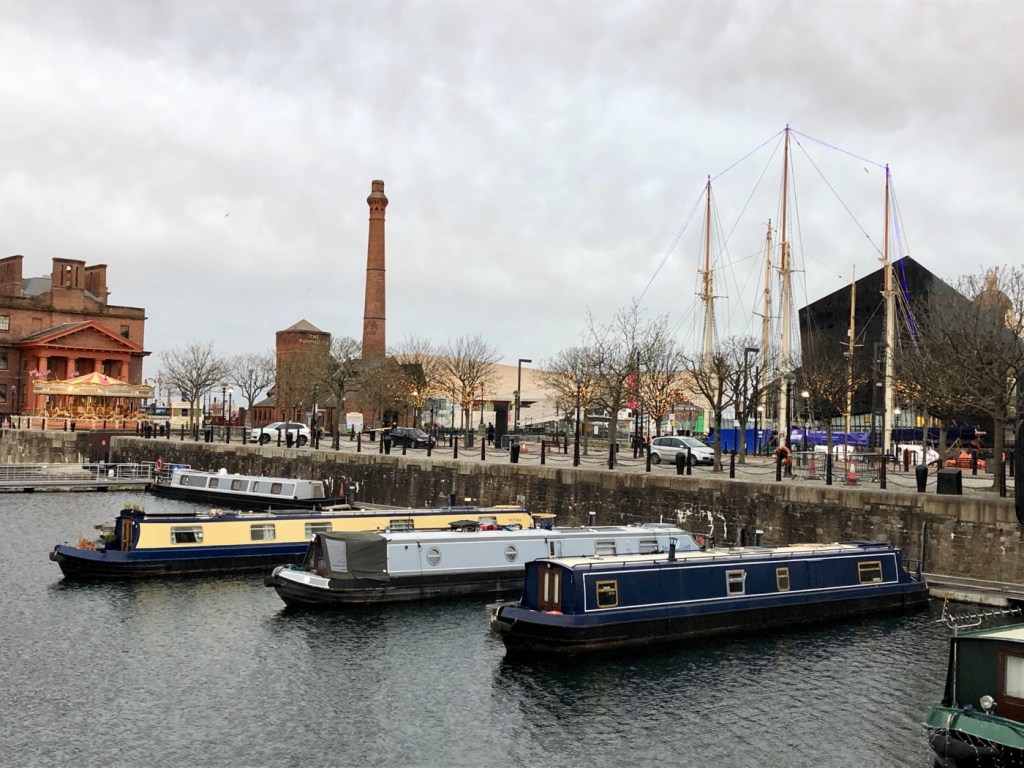
Hello Liverpool. By the Albert Docks, Museum of Liverpool in the background.The River Mersey and a large ferry.The historic wet docks of Liverpool.
Liverpool was recommended to us for its museums, and it has absolutely lived up to the recommendation. So far we’ve visited the Museum of Liverpool, The Tate Liverpool, The Walker Gallery, the Maritime Museum, which includes the International Museum of Slavery – so much to see that we went twice – and today the British Music Experience.
Old lock miter gates, not in use at this location but impressive to see.
Why so many museum visits? Well, they are quite good, and it’s dang cold out. We’re still walking a lot, so many interesting things to see here, but when you don’t have many options to warm up inside, it’s back to a museum. It helps that most of the museums are free. We always donate at the donation points but it means that popping in for an hour and to use the bathroom is easy.
Liverpool Cathedral is the largest cathedral and religious building in Britain. Seriously huge. One of the many fascinating brick buildings around town.
We’re hoping the COVID rates will calm down in the next few weeks, but until then we keep on being safe and staying out of crowded pubs and restaurants. We’ve had lunch inside at empty restaurants, and cooked our own dinner in our hotel room kitchen, but mostly we bundle up and look for sheltered pub gardens and heat lamps.
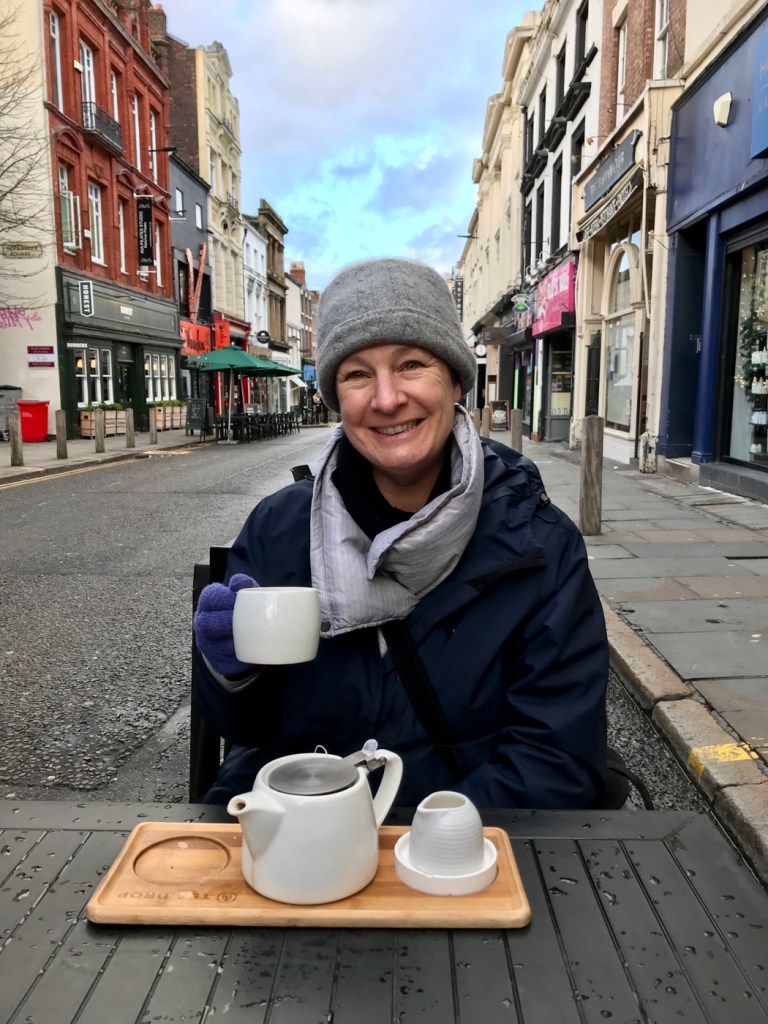
Albert Dock – heat lamp and sheltered.Rope Walks neighborhood for tea. No shelter, no heat lamp. Pub garden, shelter and blankets, no heat lamps.COVID cold weather unicorn: pub garden with shelter, heat lamps, and next door pizza take away. The lovely bartender even brings out utensils and a pizza cutter for our calzones.
We knew that travel during the time of COVID would be challenging and changeable, so we roll with it. Would we recommend a winter trip to Liverpool? It’s not the easiest time to be a tourist, but there is plenty to do here and the locals are very friendly. We’re so glad we got the opportunity to spend time here. I do miss sitting inside cozy pubs though.
The chilly but happy travelers.
We move on to the Lake District tomorrow to do some hiking. We’ll take the train and plan to rely on the reportedly very good bus system to get to and from hikes. As COVID testing and travel rules change frequently, we continue to make no firm plans, only scenarios.
Castle tour on a grey day. So lucky to have family to spend time with.
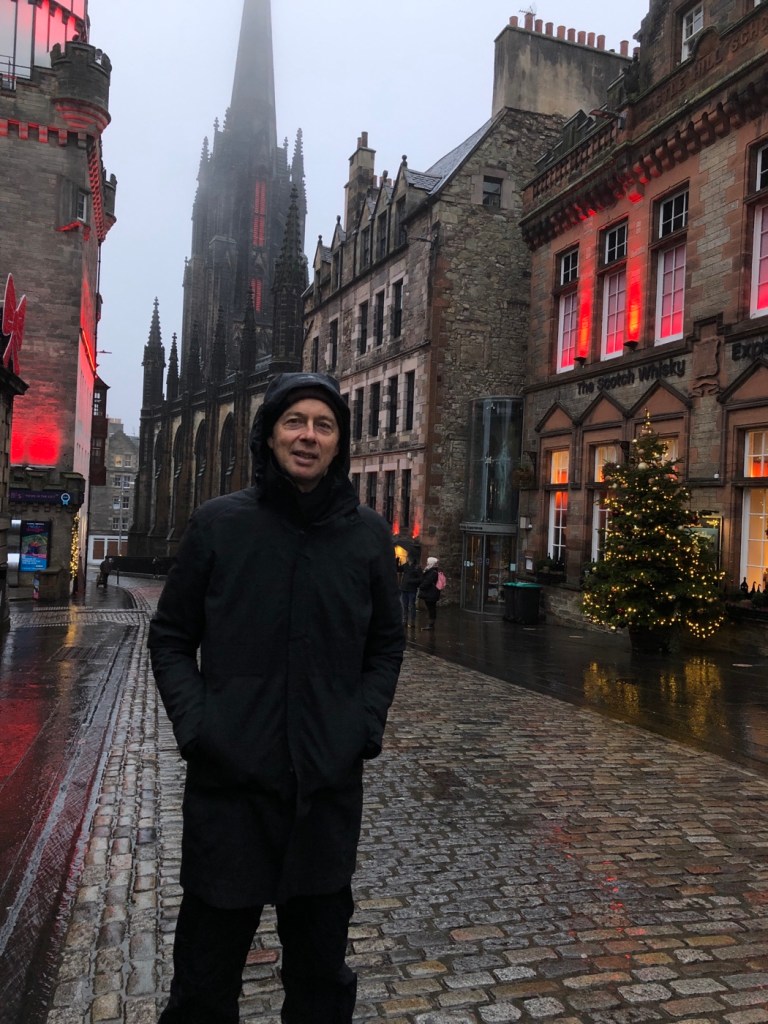
Edinburgh is a delightful city. The hills and stairways remind us of San Francisco- but with very different architecture. To see gothic spires dark against a cloudy sky, and the castle lit up with red lights as you turn to look back climbing a staircase reminds us how lucky we are to be traveling, even with the added challenges.
Who cares about a little rain? Not us. And not the locals apparently, not many umbrellas in sight, just jackets with hoods.
We’ve been in an apartment near Grassmarket with my sister and her youngest daughter, and what a joy to get to spend so much time with them, to light the fire after long walks and all curl up with books.
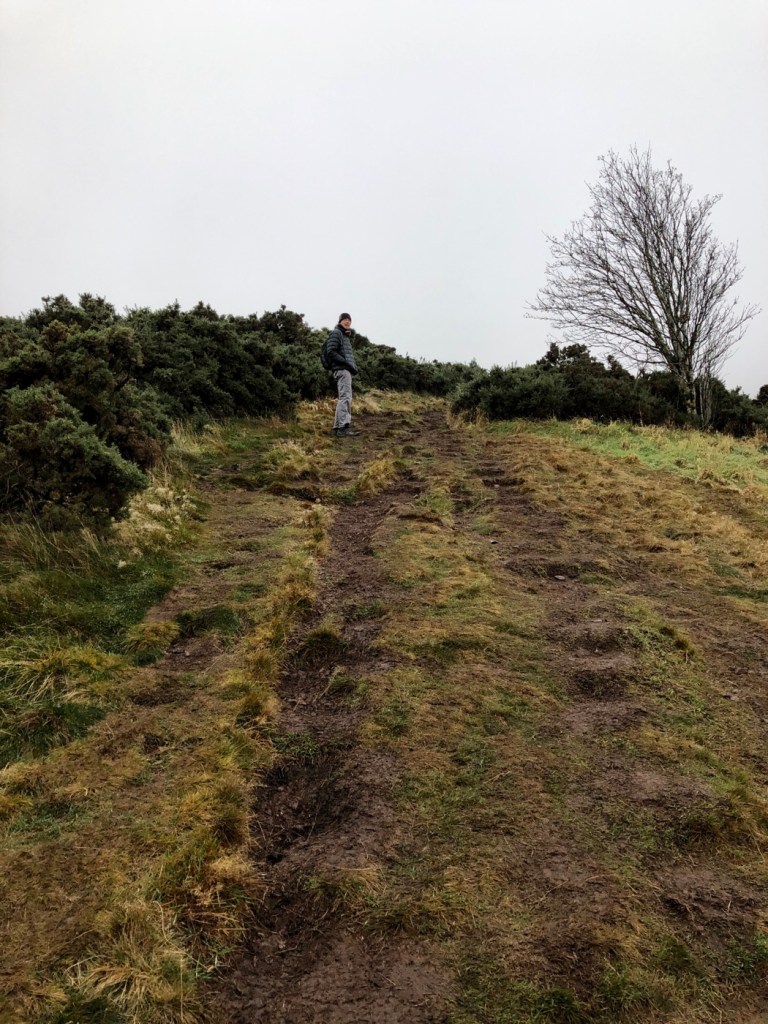
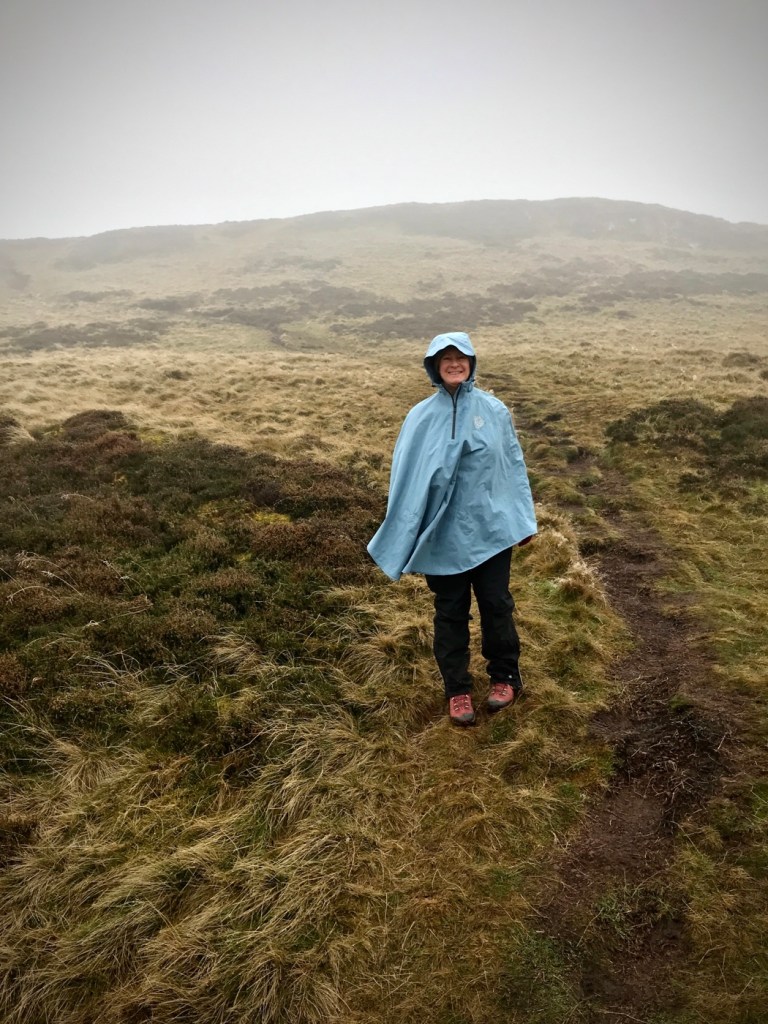
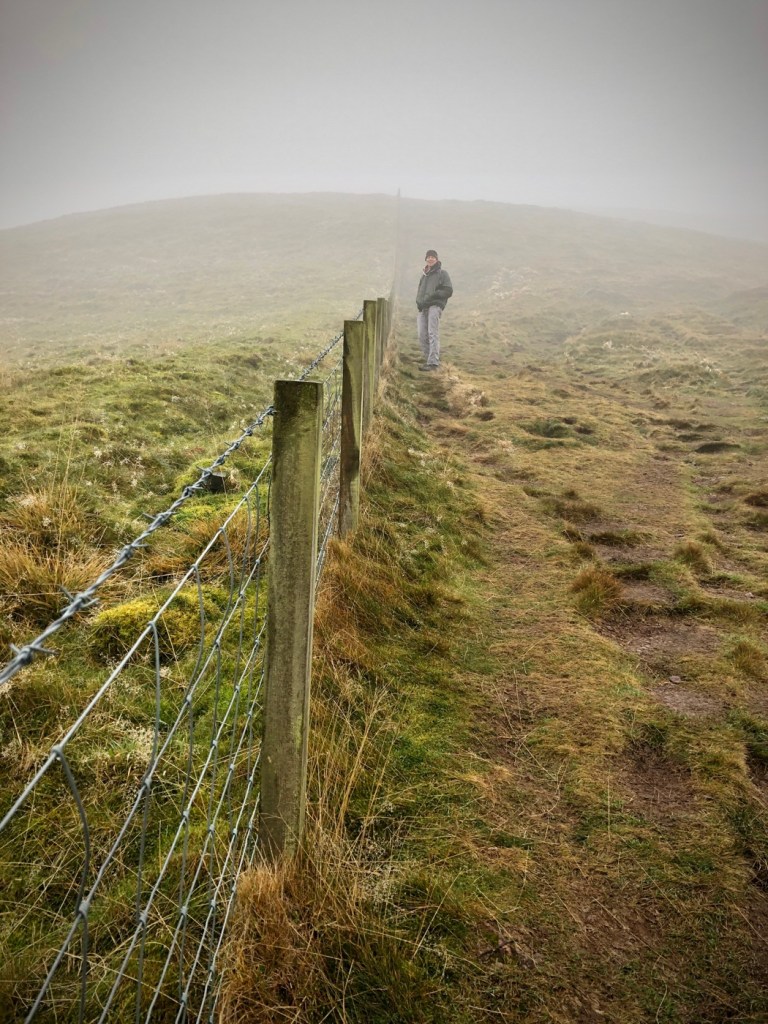
Dramatic skies from Arthur’s Seat, the ancient volcano.Rich and I took a bus ride out to Pentland Hills for a hike.For years we’ve had a running joke about Scottish trail builders not believing in switchbacks. And here we are, going straight up the mountain.As we climbed the fog thickened and the distant views were cloaked, but that made us notice the smaller vignettes instead.Ice on the barbed wire.Iced over grass.Beautiful colors and my intrepid travel planner.
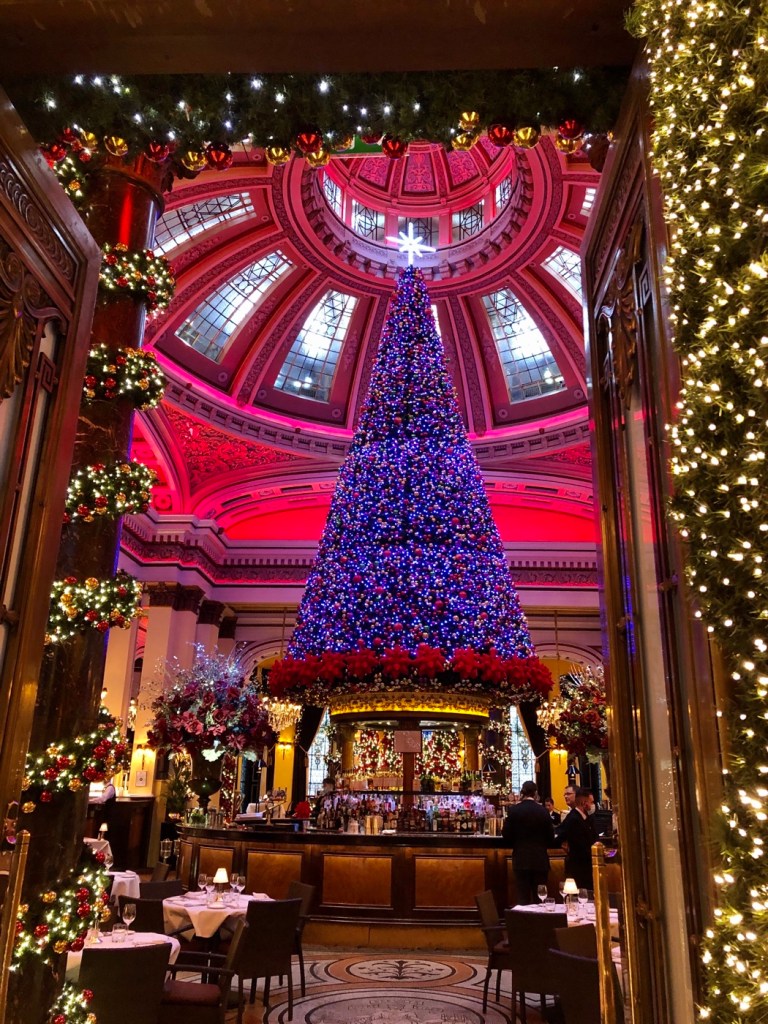
Even with COVID crimping plans a bit (no pub fireside sitting this trip) with all of us boosted and being cautious we did some indoor activities, such as tea at The Dome. An early time slot meant we were mostly alone. The Dome was decorated enough to satisfy even my love for Christmas cheer.
The former bank building takes a lot of garlands.The Christmas tree at the bar does not disappoint. And there’s the dome.Oh yes, the trays of yummy food.
In keeping with these COVID times we did stick to mostly outdoor activities. Please don’t think that’s a hardship in a place as beautiful as Scotland. In a city as dramatic as Edinburgh you want to spend a lot time exploring and stopping to look around.
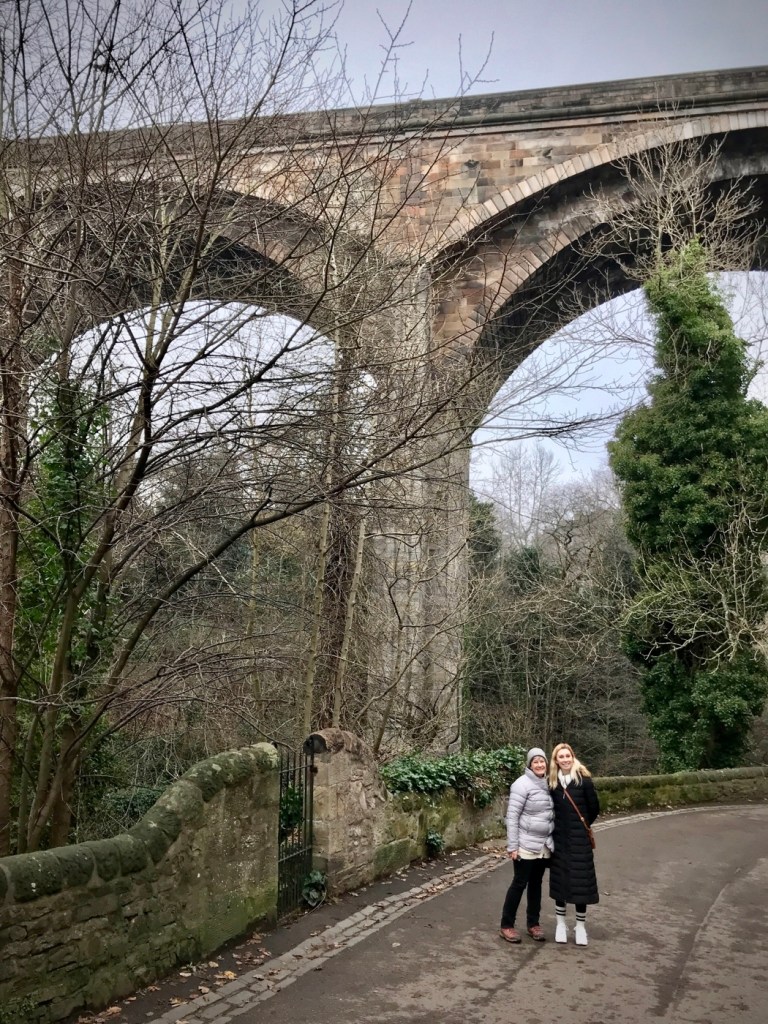
Dean Village on the Water of Leith. My fellow happy travelers.The Dean Bridge.
Traveling with a civil engineer means there will be pauses to admire impressive infrastructure. ”The bridge was one of the last major works before retirement of the bridge designer, civil engineer Thomas Telford, and was completed in 1831 when he was seventy-three years old.”
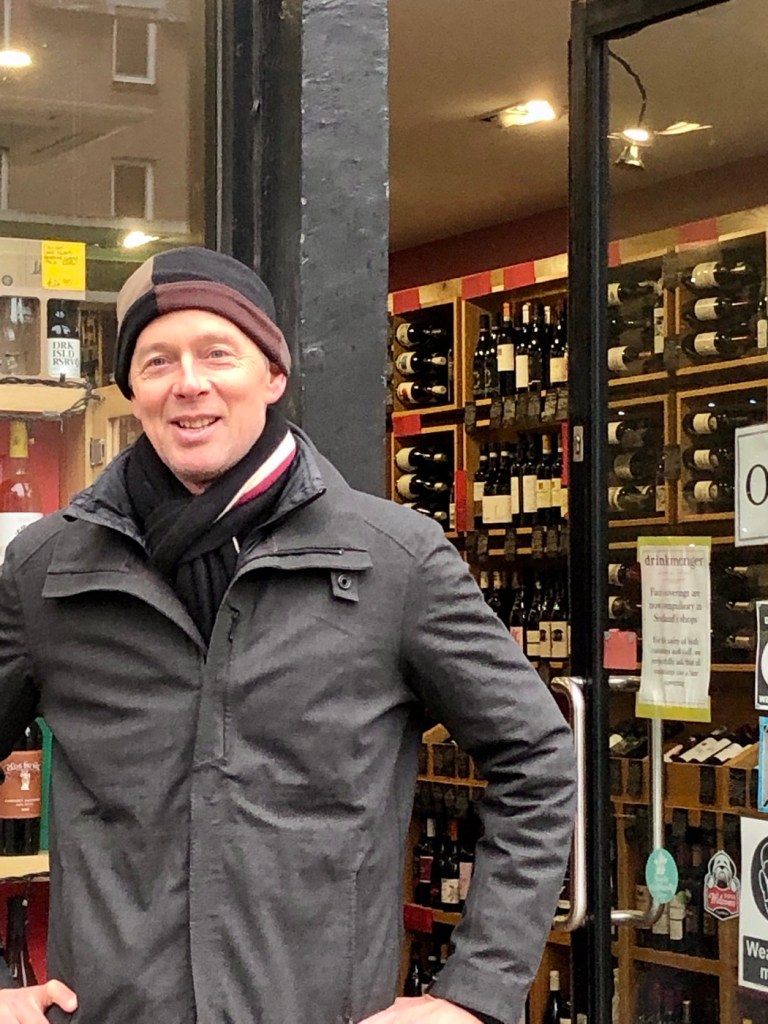
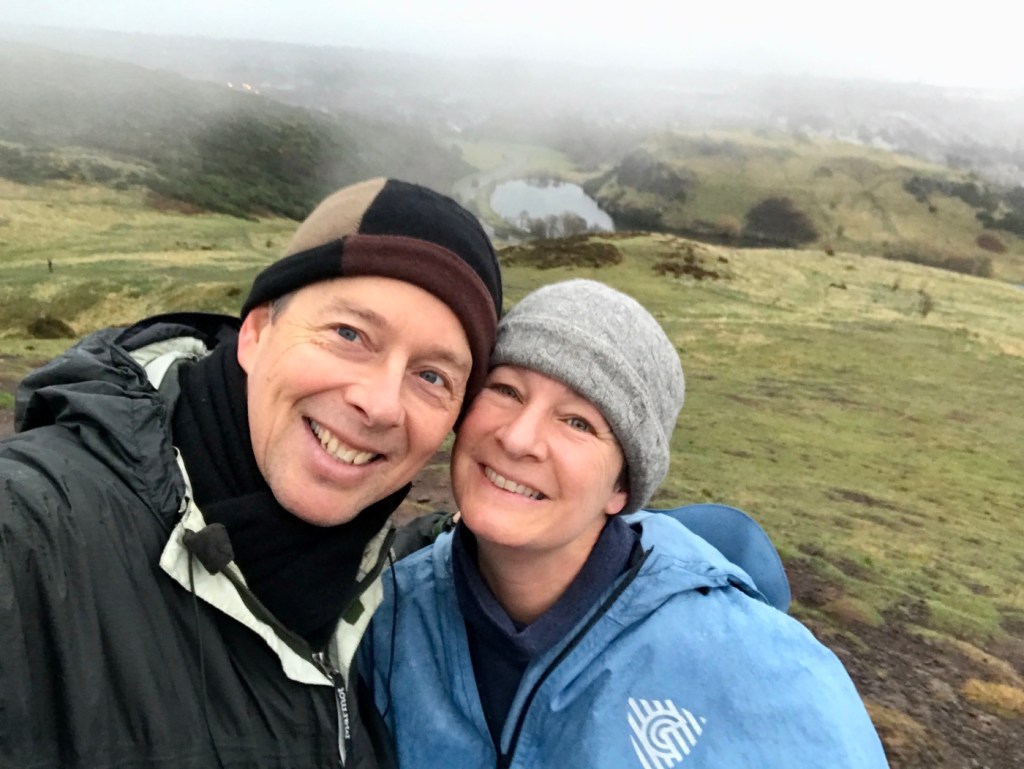
Edinburgh Castle from the western kirkyard shortcut – avoids the climb over the mound.The wall of whiskey at The Drinkmonger. Another safe activity is buying and drinking whiskey.No such thing as bad weather, just bad clothing. Rich shows how it’s done.Greyfriars Kirkyard. Love the drama of bare branches against a grey sky.The Happy Travelers on Arthur’s Seat. Fog light is quite flattering.
Today we bid farewell to Scotland and head to London for a week. After that, who knows. We’re eyeing a few places in the UK to do some hiking, or, if France decides folks coming from the UK can again enter France, back to Paris. Stay safe friends and family. Wherever we are we will stay safe as well.
The Tower Bridge and the recently boostered travelers.
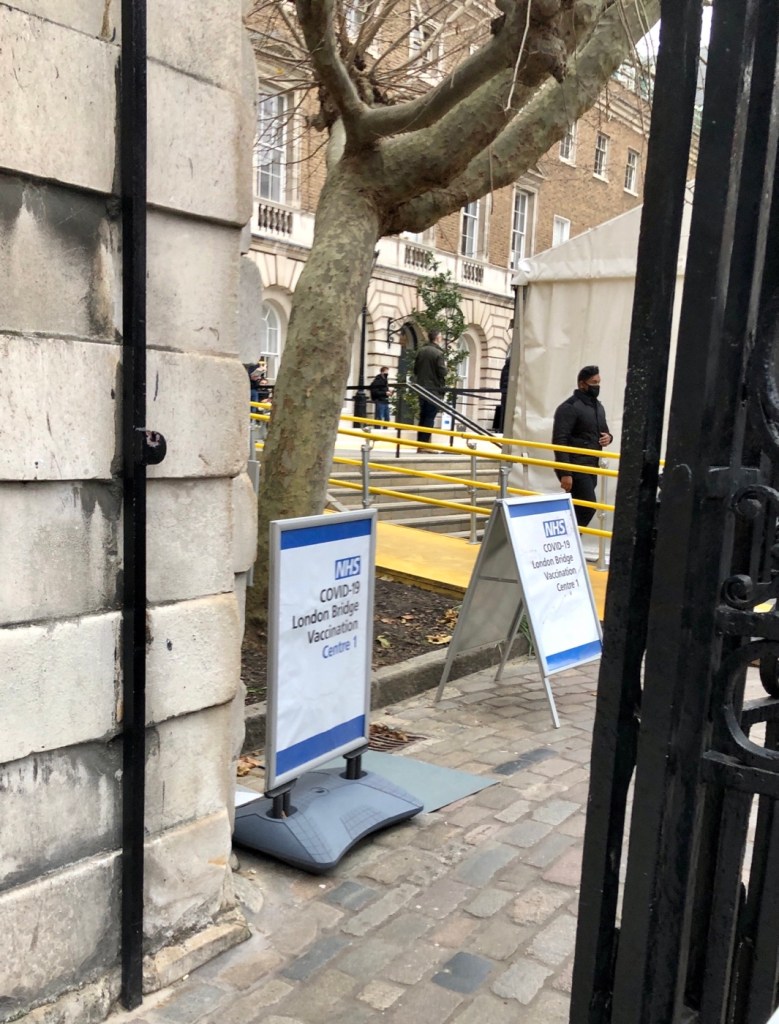
The Eurostar from Paris to London delivered us to a world where Omicron was causing worry and rising cases. Our first task was our required COVID test, and our next task was to find a place to get our booster shots. A bit of on line searching led us to Guys St. Thomas hospital, some standing in line and some waiting in chairs, and two hours later we were boosted.
The unassuming site of our boosters. There was no charge even for foreigners, so we went on line and donated money to the hospital.
While we wait the seven days for our immune systems to ramp up their responses we stay out in the fresh, healthy, bracing, clean, cold, brisk outside.
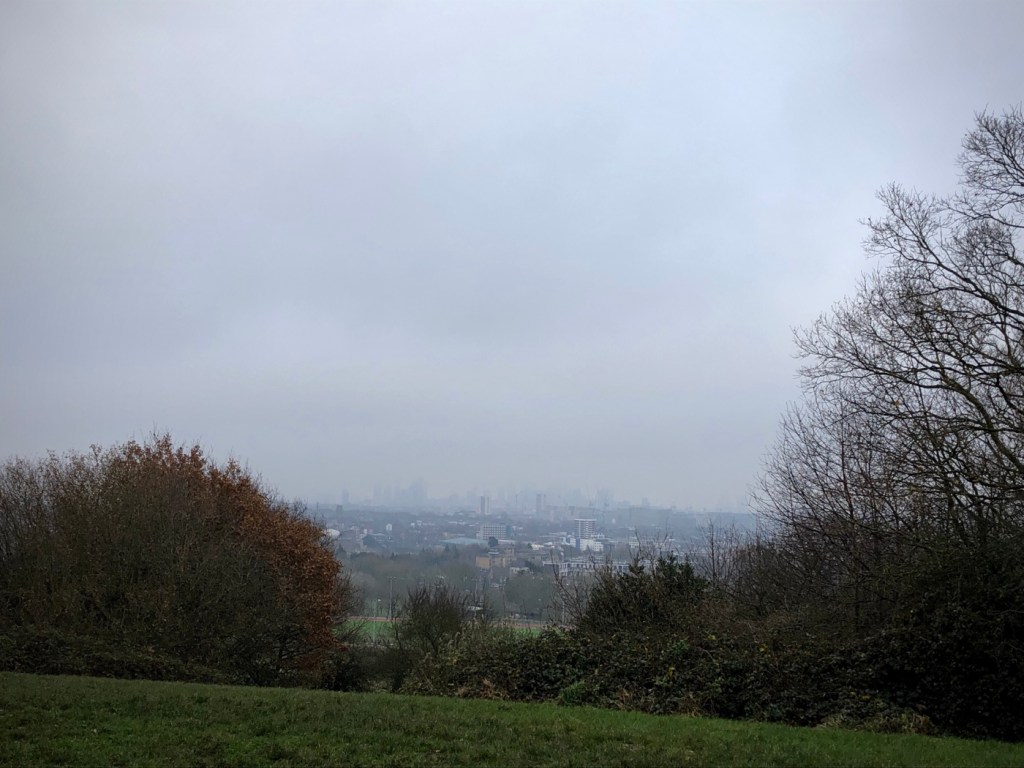
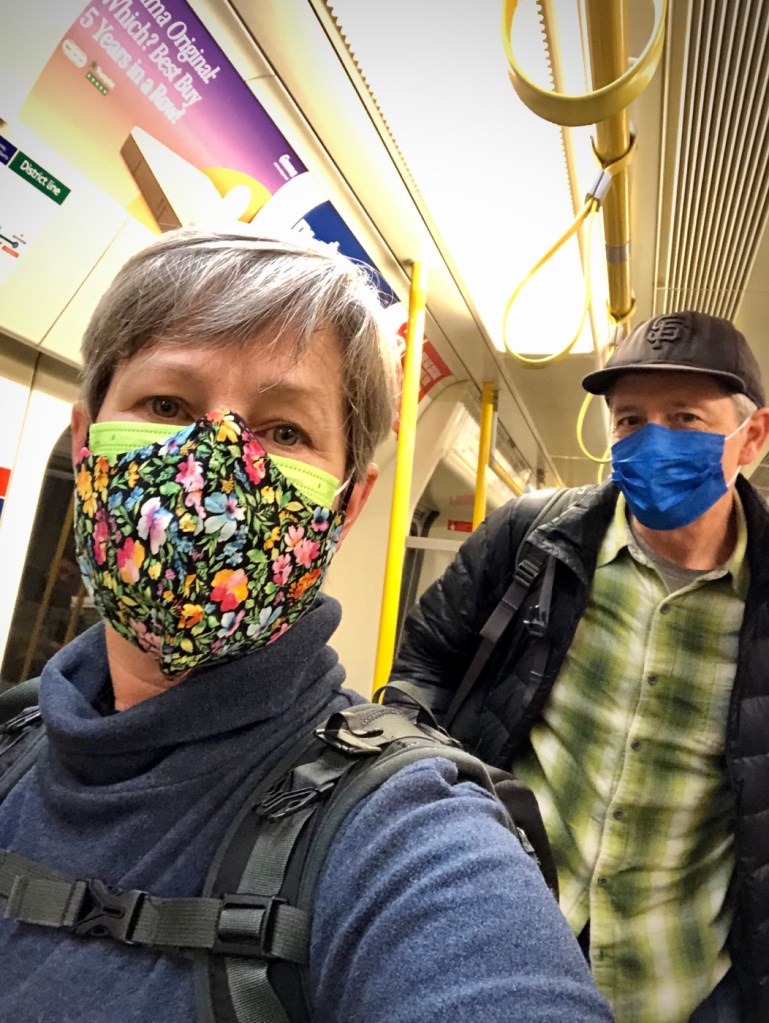
Family! So lucky to have these two to spend time with. Walking the Regents Canal.We visit outdoor beer gardens and order pizza, bundled up.Order your pizza and meet their bicycle delivery person out front.Walking on Hampstead Heath, the view from Parliament Hill.Pint of cider at lunch in another pub garden.Take out dinner in our hotel room. The glamorous side of travel during COVID. This made me feel for everyone who has quarantined in a hotel room during the time of COVID. Masked up, windows open, enjoying the top deck of a London bus.
No lie, it freaks us out to see pubs and restaurants full of unmasked people enjoying themselves in London. We watch the COVID numbers rise and retreat even further into our safe behavior. With our Christmas plans shifting and changing we get on the tube and to the train station to head to Edinburgh.
Early Sunday tube ride. The numbers of transit riders are down again in this new wave of Omicron.At Kings Cross Station to get on a train to Edinburgh.Auld Reekie. Edinburgh. Hello.The Happy Travelers out in the fresh air of Scotland.
Merry Christmas, Happy Holidays and stay safe all.
Leicester, you had me at your statues of women. Alice Hawkins.
“Alice Hawkins was a leading English suffragette among the boot and shoe machinists of Leicester. She went to prison five times for acts committed as part of the Women’s Social and Political Union militant campaign.” Five times to prison. That is commitment and bravery. Is that what we all need to do to force action on climate change?
Honoring the female workforce of Leicester, this seamstress works tirelessly on a stocking seam. Hosiery was an important part of Leicester manufacturing.
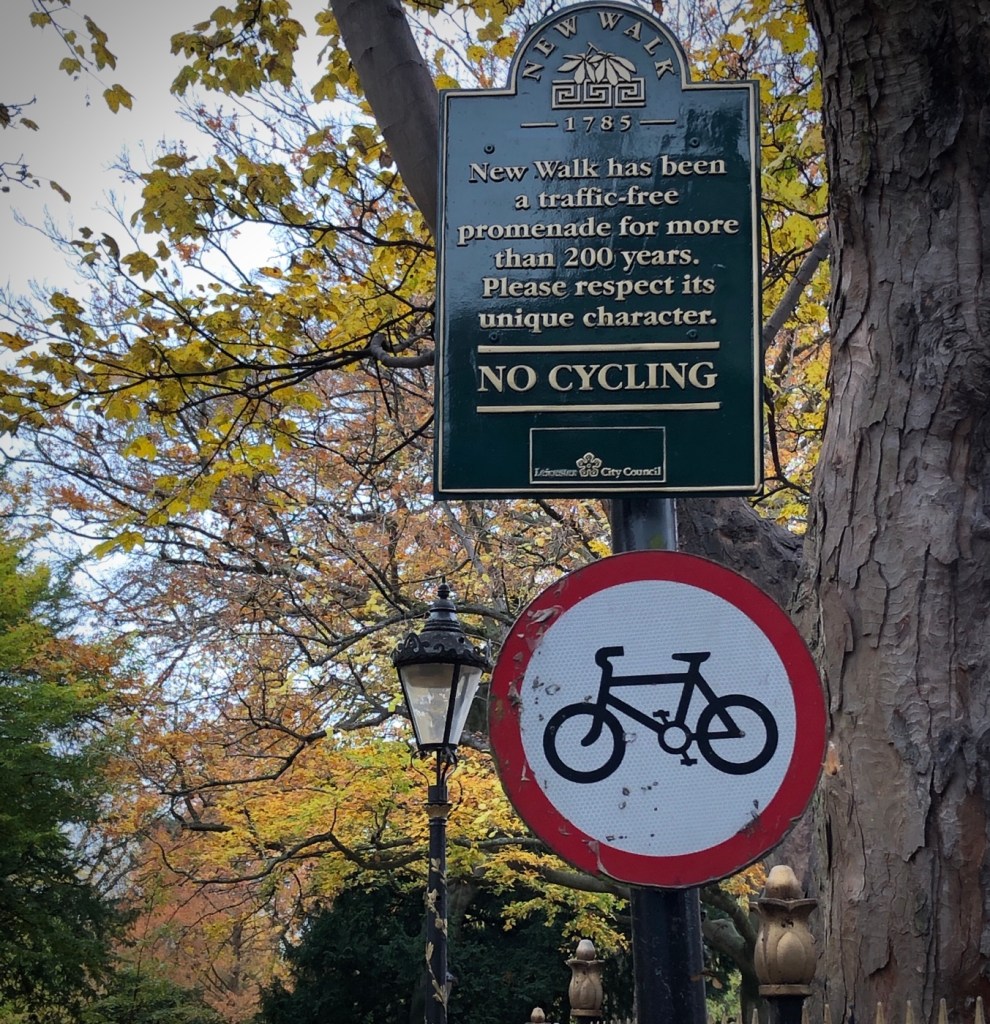
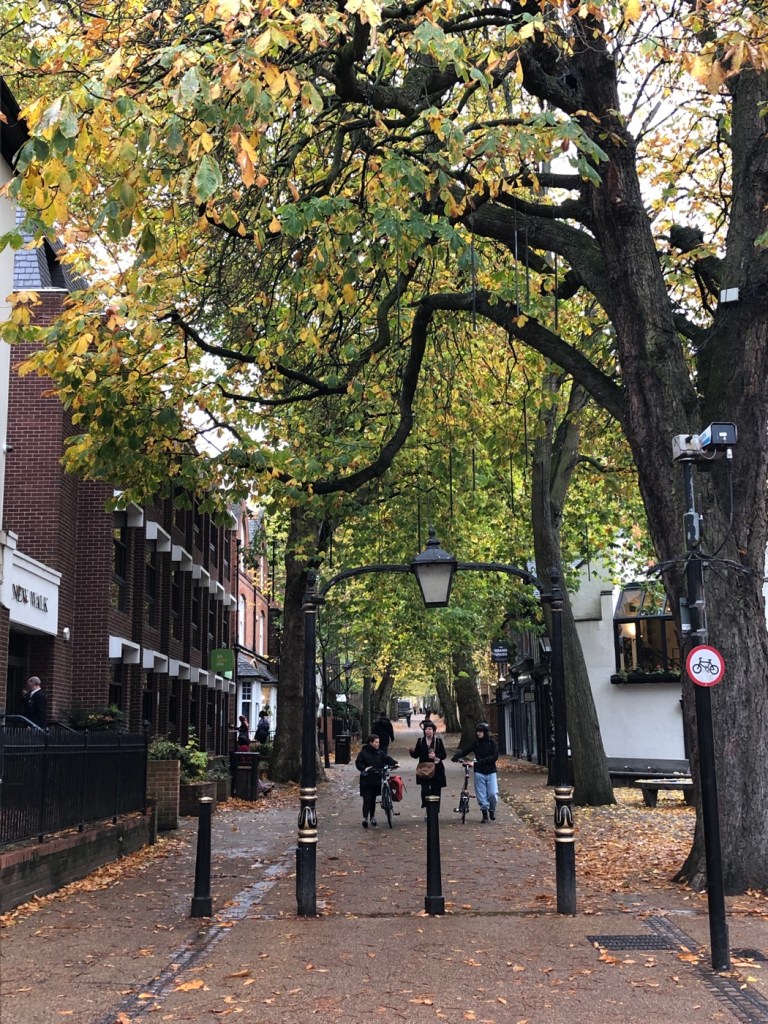
Our niece picked us up at the train station and we walked The New Walk, a 200 year old pedestrian street.
Very impressed that this lovely promenade never fell to the incessant demands of car traffic. It is a lovely way to walk and connects Leicester University with the downtown.Closer to the University. Looking very autumnal. And yes, Rich added for scale.Nottingham & Beeston Canal.
We took a day trip into Nottingham, only 20 minutes on the fast train, and did what we do wherever we are: walked. In this case along the canal for more of a favorite activity, narrow boat peeping. There are no boats on the move right now but plenty moored up.
Castle Marina. Where narrow boats spend the fall and winter.Lunch at Ye Olde Trip to Jerusalem. Built into the sandstone walls surrounding the castle. Nottingham has quite a cave thing going on.
And back in Leicester we saw the statue of Thomas Cook, a name well known to travelers, holiday package bookers, and high street strollers. The man who first sent travelers off on package tours was indeed born and started his business in Leicester. The first trip he organized was to Nottingham. From Leicester. He was also a temperance man, so you can be sure those first tours were not big partying tours.
There is a nice display about Mr. Cook in the Leicester museum.At the University of Leicester, happy travelers.
So thank you Midlands, there is more to you than most people might expect. And now, back to London for one night and off to Morocco. And thank you to our niece for having us to stay.
Isambard Kingdom Brunel …a name hard to forget, especially in Bristol, England. As a professional Civil Engineer, it was so refreshing to see an engineer given their proper dues, as it’s usually the Architects that get (or take?!) all the credit for innovative projects. And boy did I K Brunel do it all: Paddington Station, the Great Western Railway, Thames Tunnel, SS Great Britain, and my personal favorite, the Clifton Suspension Bridge. His designs are credited with revolutionizing public transport and modern engineering.
Engineers are great, aren’t they….
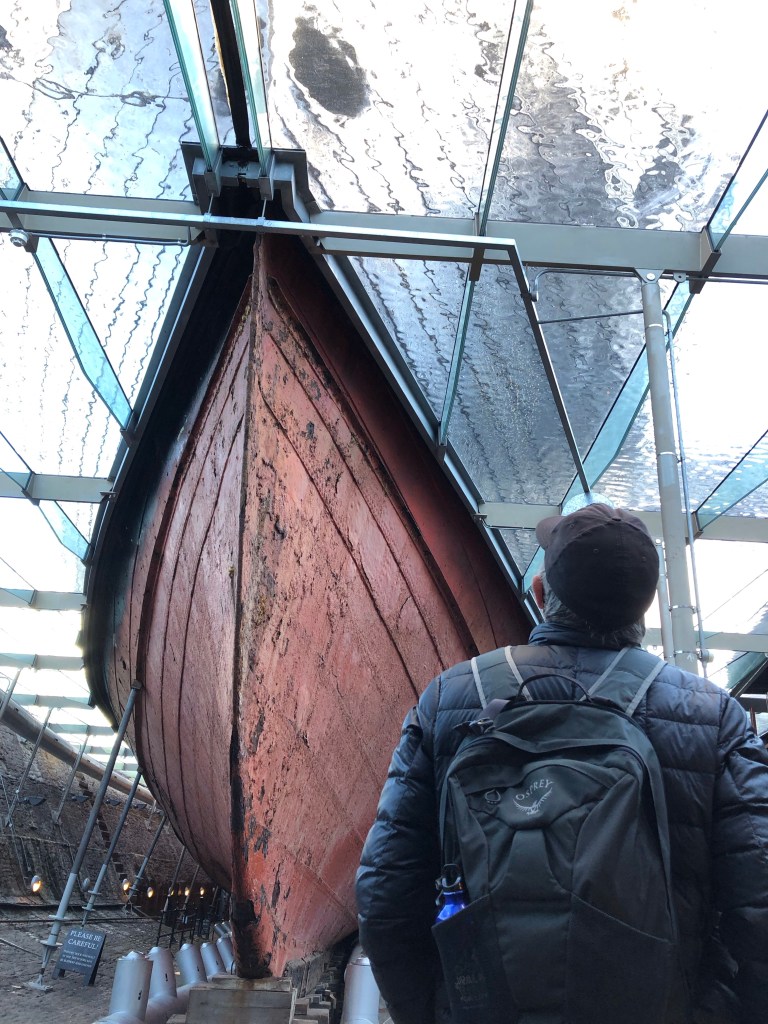
We started our Brunel tour at the fantastic SS Great Britain, which is a magnificently preserved and restored steamship that Brunel designed in the 1830s and was the largest steamship in the world when it launched in 1843.
In the Dry Dock – that’s water up there!
I think the best way to see the ship is to start below the water in the dry dock. It allows you to appreciate the scale of the ship, as well as understand how the unique hull was constructed and is being preserved. It takes a massive array of dehumidifiers running 24/7 to keep any further corrosion of the steel hull at bay. The array keeps at about 20% relative humidity, similar conditions to “the deserts of Arizona”, and paralleling the path of millions of other retirees being preserved in the Sunbelt.
Brunel chose to use a new and highly efficient propeller for the SS Great Britain, shaving weeks off a Transatlantic journey
You also can see how they moved the ship from its near demise in the Falkland Islands in 1970 and dragged it all the way back home to Bristol on a special barge. But the dedication to restoration didn’t stop at the exterior of the ship. The cabins have been fully restored with the sights, sounds, and yes, smells of the ship when it served as a passenger ship to the US and Australia.
The Kitchen…spooky realism abounds, as even rats can be seen moving about the cupboards.
The Steerage class quarters are strikingly small, but as a docent pointed out, still offered those crammed in 4 1/2 foot bunks a chance at better conditions and more opportunity in the New World. Life in the early industrial revolution days of Britain was hard. The crew barely had it better, as had to toil all hours shoveling coal into the furnace and keeping the ship going over grueling 3 week to 6 month journeys. Of course first class was quite grand and the Titanic-like dining hall is now available as a wedding venue, minus the swells and nausea of the open seas. (As it turns out, Brunel’s hull design was a little unstable…until a later wood extension was added to to the keel)
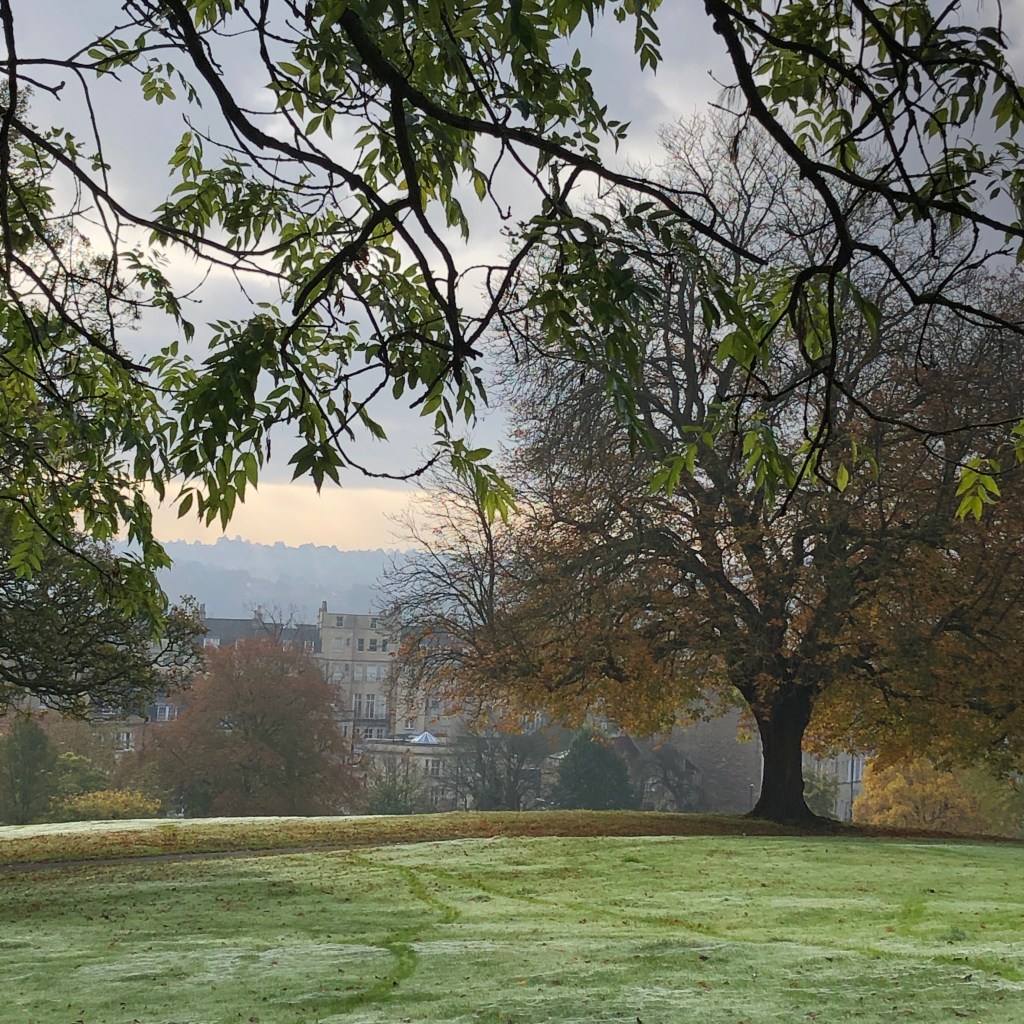
Morning dew on Brandon Hill, Bristol
Bristol and Bath were both a pleasant surprise. The crisp fall weather and foliage were perfect for exploring on foot and both cities offer fascinating sites, museums, culture, and vibrant food scenes.
Proper tea and a scone at the American Museum and Gardens in Bath
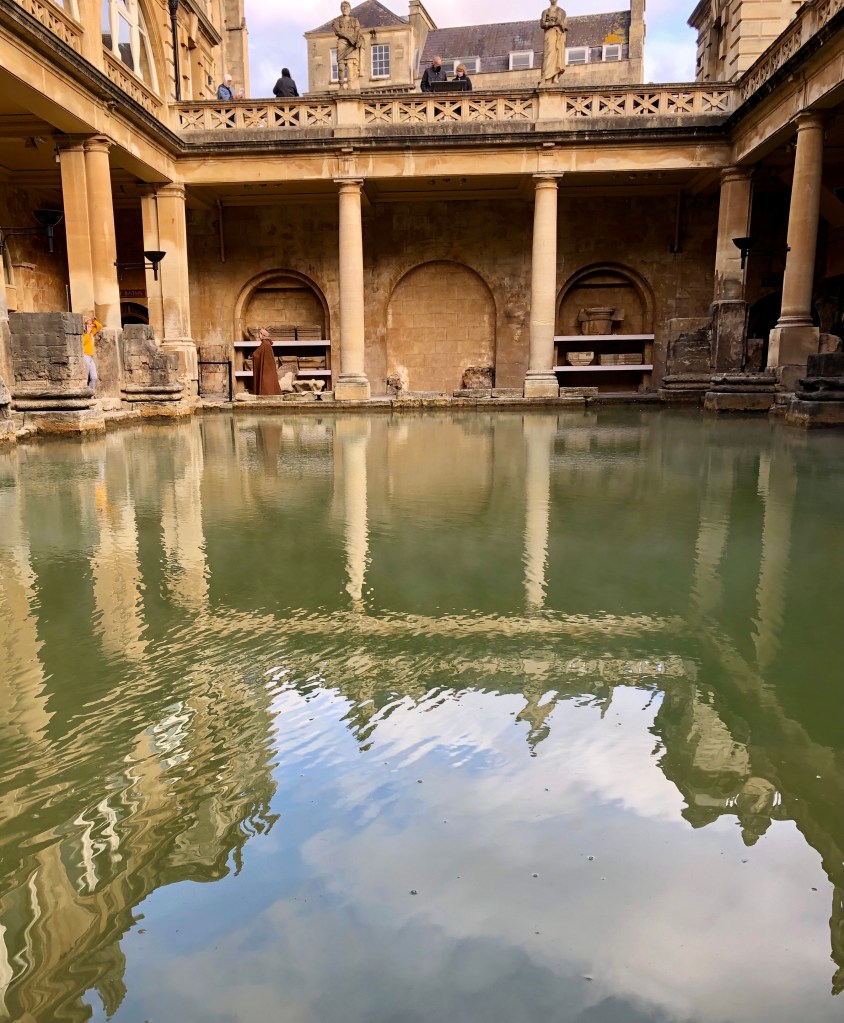
Bath is like a living Georgian museum, pleasantly frozen in the 1770’s, while Bristol offers a modern revitalized waterfront, lots of history, and more diversity, all supported by a large University population. The American Museum has beautiful views and a offers a unique British perspective on American history and culture. The Roman Baths are the big attraction and surprisingly engaging with brilliant holograms in each room and an audio tour featuring humor of Bill Bryson.
As much as you want to, you shouldn’t touch the water at the Roman Baths
After 3 nights up the hill in Bath near the Royal Crescent, we decided to stay just 7 minutes away from the Temple Meads station in Bristol. The Station itself is worth a look, and yes, I K Brunel provided the base design and inspiration for the main station as the terminus of his Great Western Railway from Paddington in London. How was he so many places? (4 hours of sleep helped apparently)
The Temple Gardens out the back door of our hotel
After a day on the waterfront and Brunel museum, we decided to explore more neighborhoods and walked out through the pleasant and upscale Clifton village. We walked back through the University and along Gloucester Road, which is full of an eclectic mix of shops, pubs, and restaurants. 8 miles overall and great walking up and down the undulating hills, with constant surprises and new views.
The Castle Bridge opened in 2017, offering an inspiring human powered crossing of the Bristol Harbour (but still not enough bike parking!)
But the hands-down thrill of the day was the Clifton Suspension Bridge. A structure that highlights the need for visionary technical leadership and perseverance. Brunel’s original design took over 35 years to be built. He succeeded in a design competition in 1830 with his proposed bold 700- foot steel chain suspension span. This span allowed a full span of the gorge, which was key to the intrinsic beauty of the structure in the unique context of the Avon River Gorge. But many, including his father, doubted that such a span could be built. Unfortunately, cost overruns and contractor financial trouble (sound familiar) put the half completed project on hold by 1843. Luckily, the bridge was finally completed in 1864 with the assistance of other designers, but sadly 5 years after Brunel died. And like many of his bold designs, the ultimate bridge required some design modifications to the deck to make it stiffer, as his original design would have likely failed in high winds. Engineering is a constant process of improvement and optimization.
The 1,300-foot long Clifton Suspension Bridge soars more than 300-feet above the Avon Gorge…so nice!
But his vision survives and his grand engineering projects are still serving millions of people today. So anytime someone doubts that a large infrastructure project can ever be finished or if a new design innovation can really work, just shout out the name of Isambard Kingdom Brunel. Or say it three times if you can!
Owning the room. Lounging on top of the mini fridge.
We found my favorite pub in the entire world. Yes, we’ve been to cat cafes around the world – oh, we’ve seen some things.
Cats gotta box sit.
A cat cafe in Thailand with color matched cats. A resort in Malaysia with dozens of well behaved rescued cats who happily lounged at the pool, in your room, and under the tables at the restaurant. A San Francisco cat cafe where you could adopt the cats. We’ve discussed the absence of cat bars and what you could call one. Suds and Siamese. Pints and Pussies. Ale and Alley Cats.
A pint of milk please.
But here in Bristol we visited The Bag of Nails. Going forward always referred to as Kitty Heaven. Cats for me, beers for him. Kitties on the bar, kitties on your lap, at one point eight cats were visible in this not large pub. Oh, did I not mention that my wonderful travel guy is allergic to cats?
So of course the cats love him. First lap sitter goes right to Rich.
Cat cafes tend to be very controlled environments. More so in California due to health regulations. Here at Kitty Heaven the list of amusing but serious rules includes one definitely aimed at me “no squealing.”.
A Siamese scans the room.
We only stayed for one pint, but what a happy pint it was.
Sit at the bar for more cat access. Besides the cats being adorable, you can be fairly confident that you have at least one thing in common with the other patrons: you all like cats.The rules.
Vinyl on the sound system. Beer in hand. Cat on lap. Heaven.
The boxes are labeled. Little black kitty on the move.Oh yeah, no idiot pub crawls!
If you’re a cat lover and in Bristol, it’s a great place to visit. Review the rules first and do not squeal.




















































 Less Car, More Life