Hiking along the middle fork of the Snoqualmie River.
Now that we have a home base again, what is it going to be like to travel? We spent four years with only a storage unit in California, so there were no worries about a house, or about things and stuff. We had with us what we had with us. It all got packed up and moved with us every time. A lot of thoughts and worries can now swirl around our brains. The house. The small garden. Our friends and neighbors. And, an even bigger worry is how will we be greeted in the world now that American leadership has lost even more international credibility and respect?
After seven months of no international travel – except one fun train trip to Vancouver BC – have we lost our nomad travel mojo? Well, we’re about to find out. We’re headed out for seven weeks of bike touring in France.
Cheese puff mimicking a rocky ridge.
One big thing we don’t have to fret about is boxing and flying with our bikes. Our wonderful Koga World Traveler S bikes are still in France at our ‘What Did We Do to Deserve Such Good Friends’ place. We don’t really have to worry too much about our home either, since another set of WDWDDSGF will be checking in on it when house sitters aren’t in residence. We don’t need any new vaccinations or visas. So, any real worry is all in our heads.
Every heart is a place where we’ve slept.
But the biggest cloud over our American heads is what our country is doing to the rest of the world and ourselves. We always bike tour with small American flags flying from our bikes. We know that everyone’s first question about travelers is “Where are they from?” The flags answer that question and start a lot of fun conversations with folks. This time we’re adding a No Kings flag to show our dismay over our current leadership.
No Kings.
We can’t hide our nationality, we don’t pretend to be Canadian- which is always silly but particularly rude these days, in light of how we’ve been treating our lovely neighbors to the north. We’re American. It’s obvious in so many ways. So, we’ll see how the conversations are going to be different on this trip.
Riding the Centennial Trail out of Snohomish. Trying to get myself in at least a little bike touring shape. That’s my new US touring bike. Rich is already in shape, he just has to practice waiting for me!After a final cold snap and snow, spring is here in Seattle. Cherry trees on the UW Campus are a good indicator of spring. Spring fever and cherry blossoms.
What is our basic itinerary? A fun meet up with friends in the Haute-Savoie, and sort out our bikes, then Brittany and Normandy, and Paris. The travel planner (Rich) has many ideas and tricks up his sleeve. And, since he’s actually had time to travel plan, bookings for the first week or two! Our usual fly by the seat of our pants travel isn’t necessary when he has time on a laptop to research and plan. His one client (me) has absolute confidence in him.
Headed to the Seattle airport on Link light rail.
So here we go! More from the roads of France later. As our SF friend BikeDave always said: “Have a nice ride home.”
We continued our Northwest summer ramble out of Seattle and headed up I-5 about an hour and a half to Bellingham, WA.
Emerald or « Toad Lake » near Belingham, Washington.
Closer to Vancouver than Seattle, Bellingham frequently appears on “Best places to retire is the USA” lists or click bait, and for good reason. It’s a small city (90k) on Puget Sound in a beautiful natural setting, kept vibrant by the constant youthful churn of 14,000 students at Western Washington University. This was our third visit to Bellingham, but the first time we had spent a week.
My summer bike at Clayton Beach, part of Larrabee State Park and the Chuckanut Mountains
Our house sit was across from a small lake at the edge of town, but amazingly secluded up in a steep vale in the local foothills of the Cascades. Our responsibilities included a very sweet outdoor dog and seven chickens. The dog was reportedly standoffish but we soon bonded with him and enjoyed some fun walks around the lake and woods.
Lake loop with an enthusiastic leader Our dog letting me know he was ready for a walk!Our house sit included all the fresh eggs we could eat!
House sitting is great for really trying out new locales to see if it a place we may want to spend more time or even settle for a time. We really liked Bellingham in the summer and had considered settling here at one point, but think now that we still need a bit more city in our next home.
Downtown Bellingham is in the process of reimagining its industrial waterfront with popular interim uses as a wild bmx track, shipping container bars and restaurants, and summer festivals.
The Pacific Northwest and Seattle in particular are so different than the Bay Area we called home for most of the past 30 years. We are used to the pace and competition of dense SF living and you really notice the difference in the Seattle area. We are the angsty rushed city folk here. The massive amount of wealth and economic prosperity generated in San Francisco and Silicon Valley has put pressure on every aspect of living; cost, housing, services, transportation. We lived a great life in San Francisco by keeping our work and home close and cycling, walking, or transiting most places.
Riding the #40 bus in Seattle. It’s fairly extensive, clean and reliable, but can we live comfortably without a car here?
And our double income, no kids (DINKS) life kept us comfortable financially. But we could feel the strain the past 20 years on services and the vast gulf that was growing between “knowledge workers” and those in service or more traditional blue collar roles. San Francisco and California has tried to fight this trend with social programs (minimum wage, city health plans, affordable housing, etc) but it can’t keep up with the demand for housing. It’s a global problem in wealthier areas of the planet, but especially evident in California.
Cycling the boardwalk to the Fairhaven neighborhood of Bellingham, arguably its most charming area.The Bellingham area is unrivaled for mountain biking, including expert crazy bike only downhill runs
So back to Seattle. Seattle has a lot of the same challenges as the Bay Area, including tech wealth and escalating housing costs. But as we noted in our winter visit Seattle blogs, they ARE building more and have looser zoning laws near transit by right. (meaning NIMBYs can’t stop it) DADUs (Detached Accessory Housing Unit!), townhomes and condos are sprouting all over the city in almost every neighborhood.
Great to meet and chat with fellow nomads at a meetup in Edmunds, WA
All this fairly random looking new housing looks strange to us as we’ve hardly see any housing construction in San Francisco, except the thousands of units concentrated South of Market, Mid and Upper Market Street Areas, and a few other pockets and buildings. But they are often not in the areas where most people want to live.
Great Pho at Miss Pho in Crown Hill. The diversity and quality of the food in Seattle is first rate, but unlike SF, you may need to search for it in strip malls.
Seattle is building more where people want to live, as well as very dense high rise residential in First Hill, and the South Lake Union edge of downtown. Add to this an ever expanding light rail metro system (thanks to a $54B 2018 bond measure) and you have a fairly dynamic feel to the City. It’s almost twice the size of SF, and feels more spread out, especially from north to south. It generally doesn’t have the magical density and intimate feeling walking from neighborhood to neighborhood as San Francisco and many more trips are by car. This is a big difference for us to adjust to if we settle in Seattle.
Golden Gardens Beach Park; beautiful and swimable, if you don’t mind chilly water!The Puget Sound beaches are more for exploration than swimming
SF is dense but could and should be denser, with more new buildings all over the western half of the city, where the weather and transit are great. But NIMBYs, Prop 13, and zoning keep the city at a relative standstill. It’s created a bit of a housing doom loop, since new housing construction is so expensive, that it’s not even affordable for developers selling condos for 1-2 million each. We’ve blogged on this on our past visits, but the issue just gets bigger and bigger and plays a big role in our decision on where we might settle down next in the World (if we do -;).
« Bruun Idon » at Lincoln Park, one of Thomas Dambu’s six troll sculptures in the region and made entirely of recycled/reused materials.The wooden boat center on Lake Union.
But to be honest, the biggest difference we noticed in Seattle this stay was the pace of life and what I like to call the “expectation of goodness.” People here are more patient and expect that you are, and are acting honestly and in the public good. A friend of mine in SF noted to me that Seattle today is what SF was like in the 80s and 90s. A bit slower, more provincial, and where everyone was not quite so full of themselves. It’s a cutthroat world in the Bay Area…not quite New York City levels yet, but noticeably more manic than the Pacific Northwest cities. Seattle’s slightly slower pace is attractive to us in our early retirement.
The Iconic Aurora Bridge built in 1932 connects Fremont to Queen Anne
So after a pleasant week exploring the trails and cycling paths of the beautiful Bellingham area, we headed back to Seattle for our final house sit of the trip in the Ballard/Sunset Hill neighborhood. We loved the area as it’s very quiet traffic wise and has a nice grid of roads cut off on the western side edge by a bluff and Puget Sound. There are some views toward the Olympic Mountain Range that allows you to get out of the trees.
Cheryl tending our house sit Pea Patch, a community garden system throughout Seattle’s neighborhoods. Garden fresh tomatoes and beans from the Pea PatchWatch Kitten in BallardSampling some beers at Lucky Envelope, one of over a dozen craft breweries in Ballard alone!Another magnificent troll outside the National Nordic Museum in Ballard Cheryl contemplates how to get some of the endless driftwood to our future garden.Our house sit kitten testing breakfast table boundaries.
The grid layout of most of Seattle makes walking and biking very tenable, but the hills are a challenge, even coming from San Francisco!? Why? Because the large masses of each neighborhood often rise up and fall over long distances, meaning a trip back up to your house can mean climbing up gradual hills for 10, 20, or even 50 blocks! And much of the east-west geography is steep, so cross town journeys can be steep in places.
The Neighborhood Greenways are a nice way to get around by bike in Seattle. The hills and rough pavement mean that wider tires and electric assist would be a great addition for getting around realistically by bikeEnjoying Ballard’s Scandinavian roots with good friends Cecily and Christine at Skål Beer Hall.
Oh but the trees, mountains, and water interplay are so nice! And there is a good bike network with some famous long distance rail trails, such as the 20 mile Burke Gilman, which links up much of the interior shoreline of North Seattle. I was able to do a 35 mile north Lake Washington loop from North Seattle almost entirely on separated paths…very nice.
Saying goodbye to Seattle summer for now with one final swim in Lake Washington….so nice and different from the always cold S.F. Bay.
So we loaded up the rental car and headed early out of Seattle for the 2 day drive back to San Francisco, again with an overnight in Ashland. The drive is possible in one long 13+ hour day, but we never like to drive more than half of that in a day. Heck, we don’t like to drive to the grocery store, but sometimes a car is the most convenient way and it is a chance to listen to some good podcasts and music!
Enjoying a road bike ride back in the Bay AreaAnd saying hello to some UK friends Frank and Liv in Alamo Square on a lovely fog-free evening.
Our four days back in the Bay Area were busy with sorting gear at the storage unit, haircuts, finances, Covid/flu shots, etc. but also some nice time with friends. But we now just arrived back to our euro-base in France after a successful and fairly pleasant one-way journey on Condor Airways. (SFO-FRA-GVA)
So happy to be back in the Vallée Verte
Now we’ll relax a bit, get over our jet lag, sort our gear, and get ready to head out on the bikes for another fall bike tour adventure in a few days. More on that soon. A Bientôt!
Even on long travels, the end of any travel segment can start to drain your enthusiasm as you start thinking about the next phase of your journey, or worse, the work waiting for you back home.
Heading to Albertville on a beautiful spring day in the Alps. Our minds are now addicted to new.
We’ve all had that end of vacation feeling or remember our childhood summers of freedom coming to a close in late August (Ugh!). But one of the reasons we gave up or locked up most of our material possessions three years ago was to experience the world without that constant end of trip deadline. No limits or boundaries. It’s a magical feeling and one I appreciate more and more as we traverse the world. We are lucky and know it. We recommend everyone tries it someday.
Spring in the Place de la Liberation of Dijon
But our last few weeks of spring bike touring in France took a concerted effort to stay focused and motivated. Don’t get me wrong, parts of it were wonderful, and some warm spring (summer?) weather gave us a “vacation from our vacation” feeling in Annecy, a perfect cap to our recent journey.
Signaling my intentions for Cheryl and the locals in Dijon. Église Saint-Michel in the distance. BTW, French cyclists don’t signal much, and seem to thrive on the organic flow familiar to the Dutch.
After a brisk morning cycle to our train hop from Les Laumes – Alésia on the Burgundy Canal, we rolled into Dijon Ville station mid-day. We were pleased to see a train platform ramp and the option of an at-grade exit to the street. Outside the station was a bikeway towards center ville. This abundance of bike infrastructure is one of the major reasons why we’ve been exploring France by bike for nearly 3 months!
Dijon Gare. We love platform access ramps; the best station solution for all when space permits.
This was our second visit to Dijon while cycle touring, but this time we planned to spend two nights to allow a bit more time to explore the beautiful city at the heart of Burgundy. It’s an extremely pleasant and lively city, with a bike and pedestrian oriented core, parks, and beautiful architecture. Free museums and a wide array of food options add to the draw. It’s also extremely well connected by train on the Paris-Lyon mainline.
History plaques add to the joy of wandering historic Dijon. Many stately buildings with grand courtyards were built by the wealthy in the mid 1700’s. Vive la Révolution!A few hours to kill before checking into our bike friendly hotel. Often nomadic life includes sitting on park benches; maybe travel planning, reading a book, or just watching the world go by.This area of Dijon was being upgraded this year to meet the Mayor’s goals for livability. We noticed a lot of new streetscape improvements and tree planting in urban areas of France.Upgrading to City 2.0 – more walkable, more trees, and limited car traffic.E-bike cargo and mail delivery is really put to the test in France and the perfect tool for compact urban centers.What is behind these beautiful blue doors?
After enjoying a day off the bikes in Dijon, we had planned to continue south and east towards the Jura mountains and Geneva. But as I looked into the details of our planned route, I was thinking maybe we needed a Plan B.
Jardin Darcy at sunset.Le chien de la Tabac.Access to the Dijon city center is controlled by retractable bollards, making it a pedestrian and bicycle oasis.
First, there was a lot of flat sections of the Burgundy canal and Doubs River to pass along with a likely headwind. Blah. Second, lodging with food in the Jura is very limited and I was challenged to find places to stay early season once we climbed up to the 3,000+ foot plateau. (Probably better to camp up there.) Third, more unseasonably cold weather and rain was predicted. No thank you.
High boarding train to Lyon. Local TER trains are your best bet with bikes or IC trains with bike space reservation. TGVs also serve this corridor but have very limited bike space, so only work with advanced planning.Two hooks with pretty easy access inside.
So we pivoted last minute and instead caught a train south to Valence via Lyon, and headed up the Isère River valley into the heart of the Alps. It was the route I had originally scoped for our return to the Vallée Verte. It has a lot more lodging options, lower elevations, and trains for backup. More importantly, we were excited by this new route, which is a key component of (nomadic) life. It’s good to suffer sometimes for the sake of a goal, but also ok to make sensible choices for yourself.
A perfect cafe to people watch in Dijon.The Musée des Beux Arts permanent collections are free and it houses a wonderful collection of art, sculpture, and antiquities.Paulus Potter’s “Head of a Sheep” at the Dijon Musée des Beaux-Arts.
The Isère River enters the Rhône north of Valence and is the namesake of the Department that is a part of the region of Rhône-Alps. We had actually passed through Valence in March on the Via Rhôna, so had to retrace a bit of our route upstream this time. Strangely, the lower part of the Isère River is actually still in the department of the Drôme.
The skies are starting to look threatening as we head up the Rhône near Valence.Spring really is here!Great bike bridges on the Via Rhôna and Isère An homage to our favorite woodland creature.
We just beat the forecast rain to our first night stay in Romans-sur-Isère, but were a bit stunned by the somewhat incessant and gridlocked traffic through this old riverside industrial city. We slogged through to get to our surprisingly charming lodging on the edge of the city, and walked back into the center of the town in the rain for dinner. We did find a (the?) fun and friendly place to get a drink and dinner and everyone was very nice to the two noticeable American cycle tourists. The town clearly gets few cycle tourists, although sits on the recently developed V63/V62 cycle route know collectively as “La Belle Via”.
Heading into Romans-sur-Isère. We hadn’t hit the traffic jams yet.Heading out in the rain the next day from the very nice Hôtel L’Orée du Parc.Full rain suit and a feigned smile during a slight rain breakWe did manage a pastry rain break under a shop awning. Can’t let our French baked goods levels get too low.
We love to learn about the history of places, even for a one night stay, and Romans has been influenced by its strategic location on trading routes and a major river. Shoe manufacturing is still a business and there is a small museum dedicated to the industry that was unfortunately closed by the time we rolled into town. Further down river are abundant walnut orchards. On the way out of town, we learned another source of major traffic was a nuclear fuel manufacturing facility. But Romans is not a bicycle city and the bike infrastructure was sad or non-existant. There was a renovation of part of the Main Street in progress which may help the pedestrian environnement, but otherwise it seemed to be a bit overrun by cars and parking.
We were following the V63 cycle route up (and down) the Isère which includes some dedicated path sections, but mostly quiet roads.Hills, rain, and another forced smile.
The challenge of the next day was 84km to Grenoble which would have been manageable except it was raining out the door and rarely stopped. We had a low point this day as the traffic getting out of Romans, steep hills, and incessant rain seemed to zap the energy and motivation of Cheryl, and I could sense it. We both have our bad days, but generally one of us keeps it mentally together. Today we were both just a bit over it. Travel, rain, eating out…all of it.
The Isère river valley was beautiful, even on this moody and stormy dayA lunch snack at a welcomed picnic area was cut short as we saw a massive thunderstorm front approaching. Ride fast!
We did manage to miss the worst of an epic thunderstorm and hail in a farmers shed. Cheryl is a travel trooper and rarely complians, but the ups and downs of 10 weeks of cycle touring was weighing us both down. (I generally complain first -;) We had a train bailout option in the small town of Vinay, but arrived to just miss a train prior to a 2 hour gap in service. The days lack of progress sent me into a travel tailspin too, and let’s just say, that afternoon was one of the low points of our France sojourn.
Made it to a farmers shed just in time for the skies to open up.The rain and hail let up a bit finally so we headed back out.Rain booties on, trousers off. It’s a look.
But the sun came out as we waited for our train. and the short train hop to Grenoble was fine. The city was lively and green, and the next day was beautiful. Travel and cycle touring can propel you on a rollercoaster of emotions, but that is why we continue on. The next day IS generally better -:) .
Grenoble was home to the 1968 Winter Olympics and now 700,000 people live in its region, making it the biggest metro region in the Alps.Nope, not a cute animal, but the 2024 Paris Olympic mascot takes the shape and form of a Phrygian cap; a symbol of freedom and revolution! Love the theme and inclusion of a Paralympic prosthetic leg.There was a surprising abundance of street art and murals in Grenoble.Hey, Grenoble is cool!Love the green tram tracks (but not all the rain).Next level cargo bikes in a seriously green city.Trams and bikes, what’s not to love?!The cranky travelers recovering in Grenoble and ready to explore another day.
We loved Grenoble but only stayed a night as hotels were unusually expensive due to a conference. We vowed to come back and explore more there soon as it’s nearby the Vallée Verte and has a lot of top museums, not to mention outdoor adventure in every direction. The next two days cycling further up the valley were inspiring and relatively short, so allowed for plenty of time to stop at sights, take photos, and bask in our positive attitude!
The ride out of Grenoble was flat but pleasant along the Isère River and valley.But soon heads up some small hills into the Coeur de Savoie.The Savoie wine production region near Chingin.Cheryl heading to the wine!Views and history at Chateau LaViolette, a very friendly and lovingly restored B&B in the Porte-de-Savoie. This magnificent cypress tree was over 200 years old.Views from LaViolette of vineyards famous for Mondeuse Noir and Jacquere. The infamous land sliding Mt Granier is obscured by clouds.Our next day was greeted by spectacularly blue skies cycling the D201 road to Albertville. We passed on the steep climb to the historic Château de Miolans.A wonderful day rolling through the tidy and historic villages of the Savoie.Usually there is a great water source in these mountains…just need to make sure you see the “Eau Potable” sign.The D201 road rolls up and down along the edge of the valley towards Albertville and is a great alternative to the flat V62 route in the bottom of the valley.
We found a nice little apartment in Albertville to spend the first two nights of the long Corpus Christi holiday weekend, as Albertville is actually not much of a tourist town, despite hosting the 1992 Winter Olympics. It’s pleasant enough and was a good place to relax, do laundry, and explore a bit, but otherwise would recommend other places in the Alps for scenery and charm. It has the old Olympic park and a small medieval town, Conflans, on an adjacent bluff. We realized all the charming Olympic shots you saw in 1992 were probably of Conflans, not Albertville per se.
Our cozy apartment in Albertville had convenient balcony drying The medieval village of Conflans is just a short walk up the hill from downtown Albertville. We really enjoyed learning more about life and history of the Savoie at the small museum.Spring fragrance in Conflans.La Bicyclette in Albertville is a great bike themed bar with craft beers, a very pleasant garden, and of course, wine -:) .Heading out of Albertville for a short day to Annecy. How can we make this longer and more fun?Taking the rolling side gravel and dirt paths instead of the paved cycle path.Happy to snag a lunch bench on this busy holiday weekend.Another side excursion to get some views and hills.Oops, too much hill and wicked steep in parts! A bike push assist.Yup, the trail goes through this farmhouse. We’ve learned that France is quite liberal with protecting historic rights-of-way and unless there is a clear Privé sign, we press on.Cheryl enjoying the side excursion downhill.Fun descent in a bit of mud. First one to fall down buys the wine!
After Albertville, we had an easy day to Annecy planned, but I did my best to make it a bit more challenging as we couldn’t get into our apartment there until 5:30. But the weather was spectacular and the route a joy, minus a few rough patches off road. We got to the south end of Lake Annecy just after lunch, where our route joined the 40km lake loop. It seemed that most of France was outside that day as the weather was finally warm. We merged into the pathway mix of fast and slow, families and dogs, and racers kitted out still thinking they might achieve their personal Strava best weaving around thousands of people. It was fun and the scene was memorable as we got closer to the center of Annecy.
You can circle Lake Annecy on cycle routes which is a very popular day trip.The lake path was full on France the Sunday of a long holiday weekend (Corpus Christi).We were waiting for a mishap in the Sunday spring fever and lakeside chaos, but it all seemed to work out.So this is what cycle touring in warm weather is like! We felt the joy of everyone as well, since we’d been experiencing the same wet and cold spring across France.Chillin in the lake on the hottest day of our spring trip.Postcard shot, Annecy.Annecy’s lakefront has the historic aire of a long visited and cherished place for relaxation.The enchanting crystal waters of Le Thiou, a short river that flows out of Lake Annecy and is one of the clearest in the world. It eventually flows into the Fier and Rhône.
Annecy is a lovely French city with a great density, beautiful lake front, summer swimming, boating, and strolling. It benefits from easy access by train including daily direct TGVs to Paris. For our California friends…imagine a 2 hour train from San Francisco to North Lake Tahoe. We can only dream.
New play space for people as Annecy had recently expanded the car free core.Bollard access again keeps the lakeside traffic out of old town core.The lake and mountains are omnipresent.We stayed another night in Annecy after the holiday rush to enjoy a more tranquil experience and more swimming!Beers with friendly British cycle tourists we met on the path. Greetings Clive and Alan!Swimming with the swans.Big hair on Lake Annecy.
Our final route from Annecy to the Vallée Verte included a morning train hop as the V62 route is sadly incomplete and we’d been warned about the road near Cruseilles. The terrain is steep and rugged north of Annecy and it would be too long to do in one day as well. So we enjoyed a scenic hop on Line 2 of the recently upgraded and completed Léman Express system centered around Geneva. The trains are modern, frequent, and bike friendly. Bike space is somewhat limited, so we imagine at peak times it could be challenging, but we had a very peaceful ride on the 10am train which starts Annecy. Note that you need to buy a Swiss bike day pass if you stay on the system into Switzerland. (we did not.) The fixed price Swiss bike day pass (regardless of distance) is not a cycle friendly solution for short hops and really should be revised by SBB.
The final day push up the Col de Perret. Cheryl climbing with little effort and record speed; a testament to our almost 3 months on the bikes France does fresh vending like no others. This wonderful 24/7 farm shop had artisan yogurt, cheeses, eggs, and a wide variety of vegetables.Biggest farm vending ever near Reignier. We got fresh broccoli and some yogurt. A great solution for staffing costs while still providing access to fresh foods.Vallée Verte welcome committeeFeeding our kitchen scraps to the neighbors pig; strangely they don’t like cabbage.Reunited with our great friends and their visiting family for a spectacular day hike in the Alps.Happy to be back in the Vallée Verte after another successful bike tour.
We shaved over an hour off our last time climbing up the high valley route and felt a strong sense of accomplishment as we rolled into our friend’s house again. We appreciate everyday of our freedom. Happy travels!
Although we’ve spent a lot more time in the peaceful countryside over the past three years, we still love cities. We know the potential benefits of proximity and convenience. We love efficient transit and the embedded health gains offered by traveling on foot to a myriad of urban destinations.
Petronas towers in KLCC. Where can we walk from here?
So after our Borneo adventure, we decided to return to Kuala Lumpur (KL) after 10 years and spend a week soaking up its multiethnic mix, food, and smattering of sights. It’s changed and grown a lot, and mostly for the better on the transit and walking front.
Indeed, KL has developed rapidly
So this post is about our brief experience getting around only by foot and metro for a week. First. we choose to stay in a centrally located high rise apartment complex in the KLCC (city center) that had pools, gym and was close to two major transit lines. The amenities at KL apartments and hotels are nice, and relatively affordable. And pools and a gym can be an effective way to avoid the heat of the day.
Fenced and hemmed in on a major street. It’s often single file and one way jockeying. The newer sidewalks are better.Sidewalks are often used for other uses than walking.But the food in KL is awesome, such as this curry laksa, and great food courts hidden away in shopping centers and office buildings
It’s key to note that as KL has proudly developed from a swampy tin mining village over the past 100 years into a city of over 2 million, in a region known as the the Klang valley that has over 7 million people. Its human scaled grid of walkable Kampungs has mostly been replaced and overlain by a network of developments, asphalt and slip ramps and arterials designed to move people around (almost) solely by automobile. This is a very different trajectory than some other Asian cities such as Hong Kong or Tokyo that have had layers of transit systems functioning for over a hundred years and never lost their core walkability. It’s much smaller than Bangkok and has developed much later when the automobile has been king.
The 57th floor sky pool at the Ascott Star was an experience and great way to beat the heat. We were not suffering this week.Buildings are often wrapped in one or two additional asphalt lanes for “local circulation”Masses of people fighting for measly sidewalk space near the Petronas Towers. Did I mention the food? Old school KL open air Indian Food at the Sai Hills CornerPedestrian pain by design. A ridiculous 15 second crossing at the major intersection of Jin Sultan Ismail and Jalan P Ranlee in KLCC.
This continued mega development has been masterminded by leaders, designers, and developers that see a vision of auto-only travel. But there are changes afoot as the realization that moving EVERYONE in a car is not possible with the sort of real density being built in much of KL, and especially the KLCC. We noted at least a dozen new high rise buildings under construction in the core. And they are big and tall, and often have a mall or retail.
As somewhat overwhelming and dystopian it feels at times, I think it’s really an amazing city center as the lack of a grid makes a random, somewhat circular pattern of buildings swirling around the hub of the city at KLCC Park and the beautiful Petronas twin towers. And you can walk on most streets and get between sites via transit and foot. But it’s not always easy. Cars are always first priority.
But to be fair about walking, we have to talk about the heat. My god the heat! It’s hot most of the time and only mildly dips in the evenings and early mornings. The lowest temperature EVER recorded in KL is 64F (18C), a temperature our native San Francisco barely exceeds on average day! March starts to get hotter in KL and it topped out at 95 (35C)for much for our stay. It did cool off the last few days and some rain and cloud cover kept it to 32C/89F which makes waking more bearable from midday onwards. With full sun, the vast stretches of asphalt and concrete heat up and limit the cooling possible at street level, even into late evening. But anywhere with trees is pleasant and notably cooler.
Cars blocking both ends of a bus stop in KLCC.Crossing the Saloma Link pedestrian bridge, a beautiful and critical link between KLCC and Kampung Baru that opened in 2018.Crossing the highways and Klang River to Kampung Baru.Walking through Kampung Baru makes you appreciate the immense urbanization that has occurred in the rest of KL.Old school Malaysian life in Kampung Baru.More people walking and biking in this human scaled and gridded neighborhood.
And other issues wear you down. The ubiquitous forecourts, now even more essential for ride hailing trips, dominate the streetscape. You must cross or share the space with moving cars, And slip, frontage, and garage access ways define the pedestrian environment. As a lifelong advocate (and sometimes designer) for better walking environments, KL offers a huge opportunity. Sidewalks come and go, curb heights are massive (perhaps for storm drainage?) and pedestrian crossings few and far between.
But from what we’ve experienced in our brief week, you CAN walk in a lot of KL, especially in the city center (KLCC) and adjacent dense neighborhoods.
What else do you do in KL for a week? Get a haircut at the mall!
Mass rail transit started late here, but is now starting to change the center of gravity of movement. We especially loved the new Yellow line which opened in 2022, and has excellent design standards for comfort and station access. The older lines (such as red and blue) are have lower capacity and get packed at rush hour; even requiring guards to monitor and control platform crowding from the mezzanine or concourse levels. Clearly, people want to take transit or are choosing it over the congestion and cost of car ownership. But capacity and design have not matched road building to date; but with two more metro lines being built and set to open in the next 10 years, things may get even better.
There is some tropical randomness and greenery at street level which keeps things interesting and cooler. This is Ficus racemosa, the cluster fig. Edible. Macaques eat this and humans make it into chutneys.
The City leaders are now recognizing that walking trips are essential in the core and in station areas. But outside the center neighborhood, most areas are still designed as disconnected nodes of business or residential developments with masses of parking.
Bikes are decorations only in most of KL.Bukit Bintang is another refreshingly human scaled neighborhood.The 1km pedestrian skyway links a few malls and buildings south of Petronas Towers. It’s nice to have a somewhat cooler walkway, but not a great overall solution to lousy streets.
The inefficiency adds cost to everything and may be an extra reason why KL is such the labor draw. It’s one of the few places in Malaysia where you can live and work without a car. Car ownership is a huge burden on a striving lower and middle class. All of the Borneo cities we spent time in had virtually no public transit and were fairly spread out. With modest wages; car transport and maintenance is a huge part of the monthly budget.
Some riverside amenities- like the mist cloud- make taking a walk more appealing.The boardwalk was fun to explore.
Interestingly enough, scooter culture is small in Malaysia. It’s hot, distances are far, and there is a long rainy season. It’s also further along the development scale than its neighbors like Thailand and Indonesia, where scooters are still huge. But an average car costs 5-10x more than a scooter.
This is a disease all over the developing and developed world. Many cities and suburbs in the United States lack a good walking environment and culture, so I’m not singling out KL or Malaysia, for a unique deficiency, just noting that it could be so much better with some real focus on pedestrian access, comfort, and connectivity. Wider sidewalks, more crosswalks, and more trees and canopies. New buildings need proper pedestrian access. Pedestrian signage and more dignity for pedestrians. It won’t be easy as most of the built environment of KL was really (and sometimes comically) built 100% for cars.
The colorful steps to Batu Caves – part natural wonder, part Hindu temple Sure, it’s really touristy, but at least we could take the metro here!
But we enjoyed our time in KL and managed to do everything we wanted by walking and metro, except our airport Grab trips (you can take a train from KL Central to the airport!). You need to be patient, plan your walking as early in the morning as possible, and navigate on the shady sides of major streets. KL is not going to crack any top ten walkable cities list soon, but we hope when we return again in 10 years that it has realized even more of the promise we saw on this trip.
Perhaps a Taylor Swift Fan on the MRT in Singapore?This super friendly superfan from Bangkok was ready with smiles and friendship bracelets!
After leaving KL, we got to spend part of a day in Singapore as we connected late back to Europe out of Changi Airport. We had originally planned to spend a few days in Singapore, but the Taylor Swift effect was strong and hotel prices crazy surrounding her 6 sold out shows. The only shows in SE Asia.
The beautiful Park Royal Hotel in Singapore doubles the green growing potential of its site with vertical gardens.
Singapore is a testament to dense, but livable urbanism. It’s eminently walkable and pedestrian friendly, with very little traffic. It’s achieved this by famous green design and a transit first policy. KL should strive for some of the success of its tiny neighbor.
Enough tine for a fix of delicious Chicken Rice at the Maxwell Street Hawker Center.The Singapore National Gallery is worthy of a half day exploration and made these layover travelers very happy -:)
So it’s goodbye to Asia for now. We’re now back in Europe and have started our late winter bicycle adventure…more on that soon…
Ah Borneo, the name for me summons visions of exotic jungles, wildlife, beaches or mountains. And who knew Borneo was the third largest island in the world, somewhat bizarrely split between Indonesia, Malaysia, and the tiny sultanate of Brunei. We have decided to focus on the Malaysian side of Borneo as it’s a bit more tourist friendly and jumping between both sides actually involves a lot more travel and flights. Seeing more of less is still our favorite way.
The 13,500 foot Mount Kinabalu shows itself only briefly most morningsOur first sunset view in Kota Kinabalu or KK as the the locals refer to it.
We also vividly recall our great three week trip to peninsular Malaysia about 10 years ago. So as we touched down in Kota Kinabalu, the capital of the state of Sabah, we were both very excited. Not quite a new country for us, but a very new place. And there is so much to see and experience here.
Kota Kinabalu greeted us with multiple street celebrations and night markets; including the excellent Api Api food market Friday and Saturday Nights on Gaya Street.
The multi cultural melting pot is striking here with an intoxicating mix of customs, manners, religion, and of course, food. Malay (Muslim), Chinese, Indian, and a mix of indigenous and intermixed cultures means that you’ll always be guessing where someone is from.
So many choices and I was very tempted by whatever this spicy beef rib meat was going into, possibly a version of beef Rendang?But we soon saw a modest line at this stall. This was the man responsible for some magic Mee Goring…we called him grandpa, as he made each batch one (or two) at a time at a very mesmerizing pace. Luckily we got in line early as it grew to near an hour behind us!And finally perfect Penang Style Mee Goring
To add to the excitement and challenges, our travels have coincided with the lunar new year celebrations in Asia. A month long celebration of the year of the (Wooden) Dragon, with the actual lunar new year on February 10th. So my challenge as the travel planner was to figure out how to work around the potential high lodging costs and travel bottlenecks of the peak of the holiday from about the 9th to 14th. More on the success of our strategy in our next post.
Visiting Asia during the Lunar New Year period means surprise festivals and celebrations pop up everywhereVery friendly locals in KK. Cheryl was thrilled to see these young ladies lion dancing.Do not miss lunch at the Sri Latha Curry House in KK. The veggie and chicken curry sets were both colorful and flavorful.The KK Wetland Ramsar Site is close on the edge of the city and has about 2km of boardwalk walkways and viewing platforms. We visited during low tide so mudskipper and crab viewing was prime. More birds at high tide.Mud boots available if you want to wade through a short muddy section off boardwalk. We passed as nothing my size (US 14!) anyway, and the walkways were sufficient.So, since India last year, I’m now a nacent birder and Borneo has an dizzying array of species. I only spotted a few of the 80 species reported just at this wetland center.Cheryl slightly bemused at my intensity on spotting the White-Collared Kingfisher from a bird blind at the wetlands center.
We like Malaysia, but it it’s always tough for us to have to rely on cars so much to get around as there is no real public transit in Sabah. Grab is the dominant ride hail App here and it works pretty well and is cheap. So we have been using it and make sure we tip well as all ride hail and delivery drivers of the world often seem to be underpaid and under appreciated.
The Sabah museum complex has two separate museums and a dozen or so outdoor buildings from various cultures of Sabah.The outdoor cultural building area of the Sabah grounds was quite nice, and we had it to ourselves. It could use a little more curation and text on each building.The Sabah Museum Complex in KK.It is hot in Borneo. So hot and so humid, but this raised indigenous house was surprisingly cool late morning…so we sat still and appreciated the wisdom of pre a/c design.There were only a few people at the small and mildly engaging Islamic Civilization Museum, but there was a sweet cat.Athée Islamic Cultural Museum, a beduk drum from Indonesia made with palm wood, cowhide, and tied with rattan …. (SF note: this would be SO cool on Hippie Hill!).Even I couldn’t resist this sweet kitty while waiting for our return Grab ride. Grab is a ride hail App that is essential in Malaysia if you are not on a tour or renting a car.
Mount Kinabalu dominates this corner of Sabah and occasionally in clear weather, mostly the mornings, you can even see it from KK. It’s also a popular summit climb and epic if it’s clear; but we decided for a number of reasons to skip it. First off; February is still the rainy season here and climbs can be rained out or miserable. I also opted to travel light for 2+ months of travel with just my trusty Ecco sandals and very light running shoes/trainers. An additional pair of size 14 hiking boots takes half my Osprey pack. Oh, and it’s a slog up and down 8,000 feet in 36 hours with a 2am wake up.
At 4,095 meters (13,500 feet) Mount Kinabalu is impressive from a sea level sunrise in KK
There are lodging options outside the park if you have a car but keeping to our blog mantra, we just used a Grab to get to the Park HQ and stayed for 2 nights at the lodging run by Santera. It’s all a bit pricy for what you get; but you are paying for a great location next to the trails, forest and park utilty road. As well as spectacular views of the mountain when clear.
We did a loop our first afternoon up the Pandanus to the Kiau View trail…probably best in the morning when you are likely to get more views. Happy on the trail in Borneo.Fungi and spores everywhere in the slightly more temperate rain forest at 1,600m.One of the many beautiful orchids in the botanical gardens.
The hiking trails were interesting, but except for the main Silau Silau Trail, not too well maintained. The small botanical gardens boardwalk loop walk is worth doing with a guide (free at 9am or 3pm) as otherwise you’ll miss a lot.
Ok; it’s a bit muddy, steep, but all is ok on our first foray into the NP forest…then it started to rain, and with rain comes leeches.We made it to the end of the trail but Cheryl was not thrilled with her two leach discoveries… we’ll spare you photo of the welt on the bottom of her foot.And then Cheryl had to remove this from between my toes…a credit card comes in handy , but this guy had his fill of my blood.
It dumped rain for hours the second afternoon and evening, making the forest and creeks rage with water. We felt bad for the climbers that had set out that morning, but perhaps they missed the worst of it by getting to the first shelter by late afternoon.
This mini Raffesia flower startled us when pointed out by some fellow hikers.The rainforest around Mount Kinabalu is stunning in some sunlight.The Medinila were one of the delightful things blooming in FebruaryA fungus city just above the forest floor.All this mushroom needs is a gnome.No leeches on Day 2 with pants tucked into socks and no rain in the morning.We were surprised to learn of the tragic death of 18 climbers on the mountain in the large 2015 earthquake. A huge rock pinnacle let go and also trapped some 100+ climbers. The lodging in the park ranges from hostel to suites, and there is a decent and pleasant restaurant open for all meals.Pitcher plants awaiting lunch.
Getting back to KK 2 days later was a bit more challenging as no Grab drivers would respond out on the remote location (not surprisingly) and we ended up booking a car back through the park HQ. It all worked out fine; but was about double the Grab rate; even with our generous App tipping.
Back in KK for two nights, we took an early boat to Mamutik Island and were able to snag the end of a picnic table in the shade and have some time to swim with some fish in peace.Our early boat out to the island. Lots of families travelling during the peak Lunar New Year holiday. Fun to let go and be part of the celebrations.Our boat captain was definitely racing the adjacent competition to the island. We won as he kicked in large twin engines…ha!
We opted for an apartment near Jettleson Quay in a giant new high rise complex as hotels had already doubled in cost with the run up to the New Year. It was conveniently just a few minutes walk to the boat docks to the islands, but was loud with concrete block echoes, and music and road noise about due to pre-holiday festivities.
Mamutik Island and Mount Kinabalu before the rest of the daytrippers arrived. Those sole footprints are mine.Monitor Lizards roam all the islands of Tunku Abdul Rahman National Park.
I had hesitations in visiting one or more of the Islands off the coast of KK after reading about overcrowding and trash issues. We didn’t want to add to the problem, but it did seem that trash issue were more discussed pre-pandemic. We also opted for just one island, as you can visit one, two, or three islands in semi scheduled service from one of many boat/tour operators. The crowds did show up later morning but it was not bad, as trash disposal was good and the water seemed clean. Kudos to the park management for this, but they still should revamp and consolidate the many competing boat services, and work on the supply side of plastic, which is everywhere and in everything in Malaysia.
We were pleasantly surprised to see good garbage control on the island and almost no trash on the beach or in the water. Lunar New Year Instagramming was part of the attraction at these busy islands. Lots of shade as the midday sun is fierce here. Only the Westerners sat on the beach in full sun, and swim costumes are modest both for cultural norms and sun protection.Very pleasant in the shade with a breeze.Happy Travellers enjoying the Lunar New Year vibe in Borneo.At Kota Kinabalu Airport heading to our next adventure in Sarawak.
Our first week in Borneo was intense. And all peak travel has its ups and downs, but the blessing of having time is to be able to smooth out the bumps and go with the flow a bit more. Sure, Lunar New Year partying meant getting less sleep a few nights in KK, but the festivals, food, and people make up for it. We’re here now and savoring every moment. Happy New Year!
The scruffy charm of the South Bohemian border town of Vyšší Brod.
After 10 days of breaking in our bikes, too much headwind, and a busier Danube bike touring scene, it was time for something hillier and wilder. So it was with double excitement we approached the hills and mountains separating Bavaria and Czechia. First of all, I love to cross land borders versus flying into a place. And, we both prefer the challenge of some hills in our bike tours. Well, maybe not this many hills…
A German farm road ends and the trail heads into the woods.“Over the river and through the woods to Czechia we go”.
When you cross on foot or bike, you really appreciate the significance of a border. So, as we joined Eurovelo 13, the Iron Curtain Trail, and approached the former border with the Warsaw Pact nations of our childhoods, there was still an excitement.
Suddenly a border marker where a barbed wire fence use to stand.Lush wooded highlands of the Plezn region of Sumava National Park.
We both fondly recalled a light snow falling on us 17 years ago while crossing a pass on foot with our backpacks into the younger Czech Republic outside Jelenia Góra, Poland. We got dropped by a bus on the Polish side and then walked down into Harrachov on a wooded fire road. It felt magical and adventurous.
Cheryl celebrates a high point after a very steep climb….we were ramping up fast to the relentless climbs of the region.
Many of the border crossings are now quite ordinary as developed roads have been upgraded and offer seamless connections in the EU. However, the old edges of forest, mountains, and remote villages on each side of the old divide still show scars from the divide of nearly 45 years. Isolated and cut off from either side, with strict controls on who could be near the border on the Czechia side. Many small villages have come back to life after abandonment or use only by military personnel. Many are ghost ruins and have never come back.
A promised tea break at the mythical Černé Jezero (Black Lake).The signature National Park in SW Czechia.The reward of Day 3 in Southern Sumava; beutiful river views, gentle grades, and buttery new pavement.
Consequently, this region also makes it a great place to see wildlife and unspoiled nature. Parts of the German Elbe River we cycled in 2019 had a similar dynamic, and the Elbe is still one of the wildest rivers in Central Europe
The wilds of Eurovelo 13.Finally some downhill and a morning start gliding down through the trees.
Another change since we travelled through Eastern Europe in 2006, is the expanded dominance of English as a second language. Back then, anyone over 30 likely spoke some Russian, maybe a bit of German, but with limited English except for the young and educated. Now that age divide is about 50. Ages 30 to 50 often have some English, and many under 25 have excellent English. The schools all now have some English language classes. And when we dive deeper in conversation with the more fluent people, the reasons are varried, but all focus on a desire to be connected to the world, and to appreciate western, and more specifically American culture.
Chair Zeros for the win and a shady river view break.Ready to head out for our third day in the mountains from the idyllic Penzione Ida.It’s green in Sumava NP for a reason.We soon learned that Czechs have a good sense of humor…even the sign vandals.
The first English speaker we met was a young waiter at a small resort hotel in the mountains. He was in Czechia on a limited Visa from Moldova and hoped to make enough money to advance his opportunities beyond his home country, which is still one of the poorest in Europe. (Moldova is aspiring to join the EU, but they still have some hurdles to that goal.)
Yes, the beer in Czechia is great and scientifically proven recovery beverage-:).But a brunch beer break on the Vltava River? Sort of. A refreshing Birrel Pomelo alcohol free beer on tap.
Labor shortages and global imbalances mean that people are in constant motion towards opportunity, and this only ceases if a country or region limits travel and migration. The extreme of this imbalance is the ongoing (and likely getting worse) migration wave from much of Africa into Europe. Desperation and tragedy go hand and hand as the recent and ongoing deaths in the Mediterranean exemplify. There are no easy answers, except to strongly support aid and development in struggling countries combined with humane refuge assimilation and admittance policies.
Typical of many small border areas, a new pedestrian bridge now connects Leopoldschlag, Austria to Czechia.A restored church just across the border from Hammern, Austria, but no more Czech village here. People in towns near the Iron Curtain border were displaced and the areas were either abandoned or used for security purposes.
Germany is a different country since the post 2015 Syrian refuge crisis and many would argue that it’s for the better. However, it’s easy to see how immigrants from such a vastly different culture struggle in a very rigid German culture. America does seem a bit easier on that front. But I digress.
Beautiful river towns, castles, and churches surprised us around every corner in South Bohemia. Picnicking is easy with our snap fold bowls/plates.Late spring flowers photobomb.Cheryl smiling despite knowing that a ride down to the beautiful river town always means a climb out the other side!
The second person that fascinated us was the niece of an innkeeper at a family Pension in the Sumarva National Park. She translated for her Aunt and Mom as we all chatted at the end of dinner in the rural bar/dining room that felt more like someones cosy house. As it turned out, she was just entering Junior High, and told us that she got straight As in English and Cs in Czech! She was desperate to travel to the US, and obsessed with Manga and Japanese culture as well. Her mom just listened to her in a bit of awe.
On a very local “cycle route” between Lake Lipno and Český. Panniers crossed first.
Another small pension on the massive Lake Lipno was run by a father and son, and the son, Lucas, was fluent in English based on the fact that his parents put him in an intensive English class in Kindergarten. He’s never looked back and added months in the UK to hone his English skills. He exclusively watches online content in English, including YouTube and online gaming. Apparently online gaming is done all in English and of course, is borderless.
Český Krumlov was a great choice for a multi day heat wave break off the bikes. Touristy for sure, but lots of charm and quiet nearby.The recommended Josef Seidel Museum in Český Krumlov, a beautifully restored 1905 house and photography studio.Josef Seidel, despite being German, managed to survive post WWII resettlement. His son took over the photography business and survived until the early 2000’s.Josef was the de facto historian of the regions and captured, preserved, and shared thousands of photos on glass slides from life in early 1900s South Bohemia.Very effective building traffic protection in the old town.We love the expanded hours and small markets of Czechia (versus rigid hours of Germany!) but this 24/7 off-hours staff free market was a step further. Upload your verified ID to an app and scan QR to enter and shop. Historic graphite mines near Český Krumlov.Leaving the peaceful gardens of The Orangerie in Český Krumlov.
That said, as we travelled further on along the border between Austria and Czechia, we found ourselves really off the beaten track in small valleys isolated by the former Cold War border. Our 10 words of Czech and Cheryl’s German skills have helped, but we have started to feel isolated after awhile without deep English conversations.
The local dunkel at Gasthoff Pammer in Leopoldschlag, Austria.Lunch along the EV13, rarely were we competing for a spot.
The cycling in Czechia (and a bit of Austria) has been mostly fantastic, but really challenging our first week. The terrain of Sumava NP and the Vltava River valley is rugged and steep. Although the main roads meander around the geography more gently, the cycle routes follow little travelled forest and back roads, and are often steep (10-15%+) rough in places, and relentless. But many stretches are also magical smooth pavement with little or no traffic.
“Tunak!”Little tins of tuna spread has become a staple for lunches with bread, cheese, pepper and cucumber.A more gourmet meal in Gmünd, Austria. Fresh Spargle (Asparagus) Risotto topped by lightly crusted catfish. And the local Austrian Beer to complement.
As we approached Moravia, the steepness gave way to more gentle and long undulations.The small city we are in now, Znojmo, has a pleasant old town and prominent position above the river Thaya. It’s quite busy with local tourists and a few German speaking tour groups, but otherwise seems off the international tourist radar. It’s also the heart of the Moravian wine country, so lots of wine tasting options and a great historic brewery complex.
Another unexpected surprise along our route was Glashütte Andreas Apfelthaler in little Nagelberg, Austria.These painted (somewhat creepy) gnomes are popular in the region.
You can sense this border city has rejuvenated significantly in recent years with a pretty tidy old town and lots of new housing, although it still has a decidedly Eastern European feel around the edges, with a bit of scruff and wear.
Outside Vyšší Brod …conditions really vary on Eurovelo 13 and sometime pushing 80lbs of bike load is the only option!The Austrian-Czechia border. Cheryl’s happy too since much of the border is also the high point ridgeline (or a river).
Tomorrow, we ride again towards Brno across the Znojemská wine district. We are excited to spend three days in Brno and experience some of the energy and sights of Czechia’s second largest city.
My happy face means we’re on our bikes and off the beaten path in peak tourist season.
Our Koga touring bikes are still fantastic and a joy to ride, even fully loaded. The heat, wind, and being out in the sun for 8 hours still takes it toll though, not to mention moving into and out of a pension, hotel, apartment or guesthouse every night. But now our bodies are in week four of this tour and getting stronger every day. More on the details of our bike tour in our next post. Happy pedaling!
We’re back. Back in Europe, back in France and Germany, and back on our bikes!
New blue and green camouflage on the Danube.
We spent two weeks after our return from Korea catching up with friends and family in Colorado, California, and then another week to relax and prep for cycle touring in lovely France. But flying through 17 time zones in 2 weeks was not easy. Our 12 hour flight in a packed cabin from Seoul to Dallas was a particular low point, and our circadian rhythms really took a hit. I’ve vowed from now on we’ll only fly West around the globe as it always seems easier that direction -;)
Rolling out of Ulm, Germany on Day 5. New bikes complete with matching panniers, a first for us in 20 years of cycle touring!A spring boules game with our endlessly kind hosts in the Vallèe Verte
Luckily we had some relaxed days to get over our jet lag visiting family in Grand Junction, CO. It really is easier to return when not heading into the office the next day! We were also lucky to score two saver business class seats with miles on Swiss Air (booked months ago) for our trip back to Europe.
Our typical 20 minute walk to get bread in the Vallée Verte, France. Still a bit dazed from the jet lag.La Petite Boulangerie in Habère-Poche.Baguette in hand, pastries in the pack.Wisteria in full spring bloom in the lower alps. Our hiking goal, the Pointe de Miribel. A cow posing in the Haute Savoie with Mount Blanc in the distance.Contemplating a Julie Andrews moment.
We also recharged our social souls catching up with as many friends as possible in the Bay Area. And as always, many thanks to all our families and dear friends who hosted us during our stay, including so many delicious meals. We also managed to keep a constant supply of burritos in our blood stream, hopefully holding us for months overseas.
Waiting for our train at Genève Coravin Station with our very awkward bike luggage. It took three trains to get to Freiburg from Geneva, but was seamless on Swiss and German Rail (and BTW, cheaper to book on DB than SBB App).First test ride on our new Koga World Traveller-S Bikes at the friendly and efficient Zweirad Hanser in central Freiburg.
We set off in this leg of our nomadic wanderings with a very specific goal; picking up two new touring bikes that we decided to give each other for our 25th wedding anniversary last year. We picked Koga World Traveller-S bikes, since we tried them in a shop in Groningen last year. Luckily; we found a nice shop and Koga dealer in Freiburg, Germany who were willing to take our orders over 3 months ago from Sri Lanka.
Complementary estate wine bottled by our bike shop…one bottle for each new bike -:)Freiburg is truly one of the greenest cities on earth, and our new apartment building had a massive bike garage and green roof, complete with bee hives.First of two days at a bigger bike shop in Freiburg accessory shopping, eventually getting a new seat, front and tail packs, four panniers, phone holder, and cyclocomputer.
We spent 3 days in Freiburg getting the bikes configured and tweaked to our liking and then headed out to start another planned 4+ months with our bikes. We were both a bit nervous starting out on our new set ups and were relieved to finally get pedaling again.
Hanging out at Caffé Bicicletta in sunny Freiburg, but excited to get touring!On the S-Bahn to Hinterzarten up in the Black Forest; are we touring yet??!!
The Koga signature bikes are nicely configured and allowed us a good amount of customization via their website. After some nervous days in France wondering if they’d be ready on time, we heard that they would likely be delivered to the shop in Freiburg on the day we planned to arrive! Perfect timing from the cycling gods (and Dutch Koga craftspeople). Koga strives to deliver in 12 weeks and they were pretty close as we had ordered about 13 1/2 weeks prior in Sri Lanka.
Off the train and ready to ride, but wait, first some critical provisions!Taking a break on a long first day climb, again, why didn’t we get E-bikes?!Some rough patches over the Schwarzwald on Day 1. We gave the bikes a full workout.A break in the Black Forest at one of the ubiquitous small shrines (or as Cheryl likes to say, “Cheeses with Jesus” -:).
Our first day included a short link by train to bridge a busy main road (or super steep mountain option) up to the higher parts of Black Forest. This allowed us to ride nicer roads and trails onwards to Donaueschingen. It was still a hilly and varied 52k first day with 2,500 feet of climbing and lots of dirt sections.
At the source of the Danube in Donaueschingen. The Donauquelle is a bubbling clear spring, but fed by the upstream Breg and Furtwangen rivers.EuroVelo 6 and the Danube cycle routes are a mix of buttery pavement, dirt, and gravel, but all in pretty good condition.We have been greeted by unusually warm spring weather, so always happy to find some shade.First gear quirk to resolve as my panniers both popped off the bike. Luckily, this kitty was ready to help.Off the bikes enjoying early evening light near Beuron.
But it was beautiful and the new bikes are a joy. We love our old steel bikes, but these bikes are built to be loaded, handle wonderfully, and have geometries that make long days on dirt and old town cobbles so much nicer. We opted for a classic 3×10 Deore XT drivetrain, including fantastic hydraulic disc brakes. Koga includes nice built in racks, strong kickstand, fenders, and dynamo hub lights.
Smiles on Day 2…our seat bones still didn’t hurt too much…yet.We exchanged many “Bonjours” with this nice French couple as our paces were nearly matched for a few days.There are many covered bridges on the upper Danube since it’s still small enough to span with wood.Loving my new bike.We brought our ultralight camp chair on this tour, which means any pleasant patch of shade is a potential break spot.Wishing this tunnel was open to bikes as our cycle trail went up and down and all around the first few days.An emergency Chair Zero break at the side of trail. Sometime brush and the ubiquitous stinging nettles can make finding a break spot tough in spring time.I haven’t lost Cheryl yet in her bright colors.More artistic German bridge engineering.
After 4 beautiful days cycling in the Black Forest and upper Danube, we took a rest day (Ruhetag!). Ulm is a nice small city on the Danube with a cathedral famous for having the highest spire in Europe, easy to spot cycling into town. Our rest day coincided with a local holiday in Baden-Württemberg and Bavaria, Corpus Christi.
Mandatory 11 O’Clock pastry break. This was a divinely dense cheesecake like cherry treat.
We then spent the next two days along the more agricultural parts of the Danube Valley and are now enjoying another day off the bikes in Ingolstadt. We’ve mixed our routes up a bit to try to stay in woodland as it’s been warm and sunny, but primarily have followed Eurovelo 6, “Atlantic to the Black Sea”, which runs an incredible 4700km from eastern France via the Loire and Rhine, and then along the Danube to the Black Sea.
Always love the signage and choices cycling in Europe. It’s liberating on bicycles to know you can get anywhere relatively safely.
We head out tomorrow to do another 80km to Regensburg, but after that, the upcoming sections on the Danube, especially Donau to Vienna and Budapest are some of the most popular bike touring segments in the world. (And for good reason).
Paying homage to the Schwein farmers in the area, a German diet staple.Late spring colors on the Danube
But thousands of bikes on each side of the river, with an awkward mix of the inexperienced and e-bikes thrown in, will make us a bit crazy and claustrophobic. So we plan to the explore that heart of the route more off-season, some early spring or late fall. We are always glad to trade some rain, cold weather and earlier darkness for a more peaceful experience.
A massive platter of tasty Greek food hit the spot in Riedlingen as our metabolisms started to fire up on Day 3.
But the upper segments of the Danube are much less toured, and have been generally blissful. As Cheryl knows, I’m a lot happier off the beaten track, at least a bit, and tend to break out in hives when in tourist clusters these days. Sometimes we lean in to being tourists, but other times it’s just life for us now, so we need to make our own adventure. After Regensburg, we may use our €49 monthly DeutschBahn tickets again to head east towards Czechia.
Cheryl loving her new bike in the limestone gorges of the Buchhalde-Oberes Donautal
But this is the magic of our third year of nomadic travels. We relish flexibility and the ability to change course on short notice. It’s also our third year in a row touring in Europe, and I definitely am seeing the landscape through slightly different eyes. We’ve seen hundreds of quaint squares, rivers, bridges, and old towns. Places are starting to look more normal, and a bit less exotic. But I also have a warm feeling of joy that we are able to control our destiny in life for now. Explore where we want, linger where we want. But we also have enough life experience and years of hard work to appreciate it all. And we know life can throw us all surprises at anytime, so for now, we roll on into the summer, thankful for everything.
Always a new surprise on the Eurovelo Happy to be the two friendly American cycle tourists in a little German Town no one has heard of (Riedlingen)
Remember, the smaller places can be even more rewarding than fighting the crowds in the most popular cities. Happy summer travels all and hope to see a few of you along the way!
We’ve been so thoroughly enjoying every day in Japan that we haven’t had much time or energy left to Blog. It’s a fantastic place to travel. But no place is perfect, and Japan has its weaknesses too, especially in the bike and pedestrian realm.
Exploring the hills and stairways of Nagasaki was a joy in the crisp spring weather.
We’ve been travelling our preferred way by train, bus, ferry, streetcar, subway, and bike. With a lot of walking to the beach to explore and get to our lodging. We’ve been luxuriating in the clean, punctual, and extensive intercity train system. And the local public transit is always clean and reliable, if not always fast.
A shiny new Shinkansen on the recent extension to Kagoshima – marvelous and so fastA single car train on the Shimabara railway, operated and conducted by one person! Many small lines in Japan have shut down, and how long can the last private lines survive?
So here are a few transport observations. For you transport wonks and mega walkers, they may give you the same joy and a maybe bit of frustration if you visit.
You can enjoy great connections in Japan, like the end of the line in Shimabara, with a ferry across the street that will take you to a bus and a Shinkansen line.
1. JR Rail Pass- Unless you are going to only visit a few cities or rent a car, then it’s a no brainer to get one of these passes subsidized for tourists. We bought two three-week passes and planned our trip to max its benefit to a 4 week visit by setting the activation for the day we left Tokyo and expiring when we get to Fukuoaka, where we are spending our last 3 days. This way we were able to exchange our vouchers at off peak time at Shinjuku station and avoid the mob we saw at Narita airport trying to exchange them to use immediately from the Airport. We instead bought $20 local rail tickets to central Tokyo. It was then easy and cheap to get IC (tap) Transit cards to get around for a few subway and loop rail trips in Tokyo until leaving Tokyo for Kanazawa.
JR Raíl stations are always clean, orderly, and the major ones have lots of food and shopping options and lots of vending machines
2. IC Card – Good for transit in most major cities. There are a dozen or so “brands” by region and they can mostly be used in other cities, although acceptance is a bit hit or miss outside the home zones. Don’t put too much on it initially, 5,000 yen ($40) is my recommendation, as you can always top it up but it’s hard to get a refund. You can also use them at many convenience stores.
Buses run EXACTLY on timetables, so real time predictions really aren’t needed. And you may have them to yourself in more rural areas
3. Train Seat reservations – With your JR Pass, you can make free seat reservations for most higher speed trains (and Shinkansens). I found that I could get our choice if I booked at least 2 days prior to our next trip. You can do it at green JR Ticket machines in almost all JR stations. So I’d often get our seats for our next leg when we arrived to a city. If you book too early and want to change your trains later, you won’t be able to do it at a machine if the new journey overlaps with the old one. You will have to go to a JR ticket office which could take some time at busier times and stations. But, you can alway board in the unreserved cars, so no serious worries other than maybe sitting apart or standing for a bit.
The worlds skinniest tram boarding platforms in Kagoshima next to 3 underutilized traffic lanes….hmmmThese poor tram passengers have lined up to wait for the lights to change, just to get off the narrow tram platform to the sidewalk.
4. Buses and Trams – they run on schedule (especially buses). You board at the back door and tap your IC card if available or if not, take a little paper ticket from a dispenser that indicates your boarding zone. You always pay at the front door as you leave, calculating your fare from the easy digital sign at the front. Put your stop ticket and fare in the box or machine. They can always make change. This also applies to some of the small independent (Non JR) local trains. Once you get the hang of it, it’s pretty straightforward (Especially with IC Card), but it seems pretty inefficient at crowded times as many people still pay cash fares. There is a flow from the back of the bus towards the front door, but it doesn’t match the ease and speed of a proof of payment system.
Navigating the local systems can be challengingGoogle maps can really help as it has most timetables (but not all) available in navigation, but you still often need to id your bus in Kanji script or just be at the right place on time, because the bus will be.
5. Walking – You will do a lot of walking in Japan which is mostly great, and wandering the alleys, hidden temple stairways, and quiet back streets is one of the great joys of Japan. One downside though is that the arterial traffic signal timings are long, so get ready to wait for for 2-3 minutes at some crossings. It’s very annoying, and really delays walking trips across town. The only time you see Japanese run is for crossings, as they know it’s a long wait if you miss the light.
The cats and temples are always worth the long pedestrian lights A series of historic stone bridges line the Nakashima River in Nagasaki.
Also, pedestrian crossings can be spread out on major arterials, with occasional overhead or underpass ped crossings in lieu of at grade crosswalks. It seems like a legacy of 1960s traffic engineering that continues in philosophy today, but stairwell underpasses are not good for an aging population.
State of the art ramen ordering machine. Automation and an aging population go hand in hand as labor is getting scarcer every year in Japan A unique pork and lemon broth at Menya Always ramen in Nagasaki
So what about Jaywalking? A few people, especially in larger cities will jump a signal or cross midway, but 98% of Japanese wait until the light is fully green. As time has gone on in our travels here, we are getting less and less patient, and will cross at will when it makes sense and traffic is clear. We are surely going to incite a pedestrian revolt here!
The main shopping arcade doubles as a cycleway in Takamatsu. It does provide weather protection to cyclists but is hectic in the evening rush hour when shoppers are outHappy walking; riding bikes is not allowed in the busier hours or areas of the arcades
6. Bikes: There are many more than you think, especially in flatter cities. But the bikes share most sidewalks and it’s all a bit chaotic, which could be solved by more on street protected lanes. Cyclists routinely cut corners and swerve across intersections and are an outlier to order on the streets. (Yeah cyclists!)
Amazing underground automated bike storage in Takamatsu. “Hello Cycling” bike shares were located in underground bike parking facilities in Takamatsu and the App was (mostly) English and foreign credit card friendly.
So my quick transport report card for Japan based on our scientific analysis:
Trains – A-….ok, amazing at a high level, but deductions for lack of App based e-tickets/seats please…and stringent bike policies keep it from A+
There are themed trains too, including a Hello Kitty Shinkansen (missed it) and our train to TakamatsuAnd the theme continues inside…Apanman is a beloved TV series based on Takashi Yanese’s picture books that he produced for over 40 years.Even to the WC
Buses: B+ Reliable; on schedule, and fair pricing but they get stuck at long traffic lights too, so can be slow in cities. And there are few express buses. BRT?
Buses in rural areas are reliable, but sometimes only run hourly or a few times a day
Walking: B- Wider sidewalks are needed in many places. Alleys and many quiet urban streets are very pleasant and low stress to walk, but many arterial sidewalks are a bit narrow or degraded by detectable rubber strips. I appreciate that these assist the vision impaired, but sidewalks are just not wide enough to accommodate them and side by side walking space. There seems to be a legacy of traffic lanes and road capacity. Giving more road cross section to peds, bikes and tram boarding is needed. Smart traffic signals could be used to mitigate lane reductions. Many heavy pedestrian neighborhoods in Tokyo and other larger cities have nice wide sidewalks in a new generation of streetscape designs, but many places still have a 1970s-1990s feel.
Rush hour on the sidewalks of Matsayuma. Wide here, but a slick rock surface makes cycling in the rain a bit dodgy.
Cycling: C+ Quiet back streets and sidewalk cycleways do the trick, but more on street protected bikeways are needed everywhere
Yashima National Park – nice beaches on Shikoku but a little chilly to swim yet Cycling to Yashima NP from Takamatsu was pleasant on sidewalk paths and quiet roads
But enough nitpicking. As a traveler, the lack of personal safety concerns and good transport frees you up to focus on the unique culture, sights, and most of all, the food and friendly people. And oh man the food is SO good.
Smiles allowed, but ramen is serious lunchtime business at Ramenya Mass in NagasakiSmall izakayas are the souls of Japan. Dedication to craft and coziness abound Pure soba and dashi heaven
And it’s good value for most lodging and food, as long as you are willing to give up western norms and keep some distance from the tourist hot spots. The yen has weakened against most currencies over the past 5 years, so it’s a great time to travel here. Except in Tokyo, there are great 3 to 4 star Hotels in the $100-$125 range, and a bit more on the weekends, especially Saturday nights. And most include breakfast.
Wonderfully cozy 3rd floor jazz bar in Nagasaki . The owner played us his tenor sax music while we chatted. The Japanese love classic jazz. And so do I.In addition to hot and cold drinks, vending machines in Japan are used for almost everything; even fresh soba noodles
If you go for more modest 1-2 star hotels, then you can find many in the $70-$90 range. Remote or resort area hotels (often with Onsen or Rotemburo baths) are definitely higher in the $150-$300+, so will be a splurge if on a budget. It’s definitely better value than most of the US, and similar to Europe, although I think a bit cheaper overall. A few other lodging tips. Book some nice Ryokan or Onsen properties well in advance as they are lovely, but don’t do anything but go up in price or sell out. Small or exclusive places are not into last minute bargains.
A Western-Japanese hybrid room in Shinabara. This hotel had lovely Onsen and Rotemburo (outside baths) and more spacious rooms than most urban hotelsNaoshima IslandInstagram of Instagramers on NaoshimaMore bikes to explore Naoshima…these with a bit of eboost
And big western brand hotels in major cities here often 2-3x as expensive as local alternatives for a similar (or better) product. Avoid them, unless you only have a week and a surplus of loyalty points to burn. (For example, during the Sakura of late March, Marriott properties in Tokyo ranged from $600-$2000/night!). Big waste of money.
Kochi on Shikoku is a bit off the beaten track but worth the effort for its friendliness Kochi’s famous seared Bonito (Katsuo) has ruined us for life for lesser fish. Delicious.
Another tip. Many western style rooms are cosy in Japan, at 120-180 sq ft, but if you book a twin instead of a “double”, the rooms are larger at 180-250 sq ft. They have two full or queen beds that can usually be pushed together. So you have a lot more space, often for just a bit more money. “Twins or Quads” seem to sell out first as locals know this too,
We found a small traditional house to rent on Naoshima Island. Wood and Tatami mats were a refreshing break from city hotels (and it had a washing machine!)Even a basic meal is pleasant in Japan
But as great as it is to travel here, it’s not all easy, as travel in Japan has its own breed of travel stress due to constant language and cultural nuances. And the country faces a battery of challenges, including rural depopulation, economic stagnation, and a location in an increasingly volatile region, just to name a few.
You have to open the doors to know what awaits you in JapanCats seem to guard popular spots such as Unzen National Volcanic Park, and are looked after by the locals.
But we are judging against a high bar, as we are already talking about coming back to bike tour, renting an apartment for a month in Tokyo, or even a car tour to see more rural sights that are tough or impossible by public transit. If you do want to rent a car in Japan you will need an international driver’s license.
Zen, spring water, and Coi at a tea house in ShimabaraAlways ask for the local Sake as we did at this family run Izakaya in Shimabara
We are excited to head to South Korea next week, but first we are going to eat as much amazing food as we can in quirky and cosy settings, served by some of the most dedicated and friendly people in the world.
My favorite travel companion enjoying some cozy afternoon teaJapan makes us smile
Back in my 30’s I told my husband that I reserved the right to have a breast lift in my 50s. As a larger breasted woman I knew a time was coming when the complicated relationship I had with my chest would become simply annoying – like a party guest who overstays their welcome, and I imagined, in a non specific way, doing something about it.
Post surgery. We are both relieved to have the actual surgery complete.
And then for twenty years or so I pretty much forgot about the idea of surgery. I bought more expensive bras which did a good job of keeping me feeling confident and fairly comfortable. And my breasts were just something about me. Something I never really liked, but just part of who I was. But what woman hasn’t been annoyed or shamed or maddened by someone commenting on her breasts. Or her body in general. Not just men commenting, but mostly men.
One view from my hospital bed. The IV drip.
And then, in May 2022, the New York Times published this article by the talented writer Melissa Febos. The Feminist Case for Breast Reduction.
It was a lightbulb going on. An ah-ha moment. She had the words that I had never searched for about what it was like to live with unwanted attention for an accidental genetic attribute. I am sure that my sometimes quite prickly personality comes in part from people feeling free to comment on my breasts from a terribly early age. What 12 or 13 year old has the language or confidence to clap back at an adult man or peer boy who has absolutely overstepped today’s standards, but not the standards of the 1970s? Want to see a young girl shrink into herself? Comment on her body.
The other view from my hospital room.
I started researching breast reduction and started really resenting the limitations large breasts cause, and resenting even more the objectification society puts on women. I shared my feelings with my wonderful husband and he was, as expected, amazing and accepting and supportive.
We discussed where. The US was not really on our radar since the cost would be higher there and we both have a high level of comfort with healthcare around the world. We considered Türkiye, we’d been there last April and felt that Istanbul or Izmir would be good places to stay for a few weeks. But Thailand rose to the top of the list because I read good things about experiences there, and we know and enjoy Bangkok. And we hadn’t been to Thailand for five years, and could work it into broader Asia travels. Thailand is well known for medical tourism, so you can find a lot of information on line.
Hospital breakfast. Once Rich let the nursing staff know I’d prefer the Thai menu to the western menu the food got really good.
I contacted a company called Medical Departures and was sent two quotes for two different hospitals and doctors. I choose Yanhee International Hospital because they specialize in cosmetic and plastic surgery, and because it is right next to an MRT line, the Blue Line. Yup, our desire to have good access to public transit does influence all our decisions. I was able to research the Doctor on line and got a sense of his level of experience and how many of these types of surgeries he had preformed. I arranged two appointments, a consultation and an actual surgery date. These were confirmed December 1, 2022, for January 19th for consultation and mammogram, and 20th for surgery.
We could also order food from the hospital cafe to be delivered to the room. For myself and for Rich. So when the only thing that sounded good was pad see ew, we got that.
We both agreed that if anything felt off, or if either of us wasn’t comfortable with the hospital or Doctor we’d hit the brakes. I didn’t share our plan with anyone- sorry good friends and family, I needed to be in my bubble about this and didn’t think I could handle any kind of reaction from my nearest and dearest. I have pledged to never do that again. Rich took the brunt of that decision since he had no one to support him. So, for anyone else considering this, consider your partner’s need for support versus your desire for privacy. We had each other for support, which was enough for us, for this decision.
Asian water lizard in a canal near the hospital. Nothing to do with this post but how cool!
The incredibly well staffed hospital was clearly signed with a specific check-in desk for international customers, and we were accompanied up to a waiting room and given a number. For our consultation appointment we did spend the usual amount of time waiting before meeting the doctor, and then a lot of time waiting to complete the blood draw, EKG, mammogram, ultrasound mammogram, and chest x-ray. We broke the cardinal rule of hospital visits – we failed to bring a phone charger. And snacks. We both felt a little shaken when at first the Doctor seemed to have no idea that we had booked a surgery date already, but then the international coordinator, a young man with a clipboard, showed up and all was well.
The hospital.
Six hours of tests, signing consent forms, paying with a credit card, waiting, and one lunch in the hospital cafe later, we were sent off with an appointment slip for the next day and instructions for me to neither eat nor drink anything after midnight.
After the first follow up appointment.
I’m not sure international elective surgery is for everyone, you need a certain level of acceptance that you’re going to feel at a loss at times. When two nurses are chatting in Thai while trying and failing to get an IV in the back of your hand – that requires a strong belief that all will be well. Turns out I have small and deep veins in my hands so after 3 tries (yikes!), the very calm anesthesiologist whom I’d met the day before told me he would put the IV in my hand once I was under. Phew!
Out for a walk a few days after surgery.
Not since I was a child with a fractured jaw have I been put under general anesthesia so I have no experience to compare this to. Was it what we in the US would consider usual? No idea. I breathed in through my mouth as instructed and woke up to a nurse gently patting my cheeks and saying Madam, Madam. It was three or four hours later and when they rolled me back to my room there was my husband. What a welcome sight. I’m sure he has more to say about what it’s like to be the one waiting for surgery to be over, but I will be forever grateful for his support and planning skills and calm manner.
A comfy room with a view in which to recover. The air quality has been pretty bad at times, and fine at other times, depending on the wind.
Apparently in the US this surgery is sometimes accompanied by an overnight stay in the hospital, sometimes a same day discharge, but at this hospital they planned for a three night stay. I asked for a two night stay after the first night, since all seemed to be going well, and the Doctor agreed.
We’ve just returned from the first follow up appointment where some of the stitches were removed and the dressings changed. We will have one more follow appointment in five days where the final stitches will be removed and off we’ll go to our next adventure.
The happy and relieved travelers post international surgery experience.
One final thought, I’ve been grateful to be strong and healthy for so long. Able to do everything I want to do – bicycle tour, hike long distances, travel with Rich, enjoy family and friends – now I look forward to doing everything I do with a bit more comfort. As I was signing consent forms the day before surgery the lovely Thai nurse, dressed as all female staff were in fitted lavender skirts and jackets, with matching nurse hats, said “Madam, this is consent form for breast reduction.“ she broke from form for a moment and sighed, and gestured to her own chest, “And god has not given me enough.” So many of us have complicated relationships with our bodies. I’m glad to have been able to make mine a bit less complicated.
We’ve been talking about doing the Camino Del Norte for years, ever since we did the Camino Inglés and loved it. So here we are. Rich and I started in Irún and we met our friends Christine and Cecily in San Sebastián, and from there we will all walk to Bilbao.
Beer tap at a galatian restaurant in Irún. That octopus looks shocked. Probably because he’s on the menu. Heading out of Irún, up to the Hermitage of Guadalupe.On the ridge with an ocean view.
We won’t be going all the way to Santiago this time. Time constraints. But we are thrilled to be able to hike with friends.
Views like this are the reward for the climbs. Looking back down into Irún.Our first night in Pasai Donibane, just across from the larger city of PasaiaThe scene in Pasai Donibane. Pretty quiet. Very scenic.Breakfast in Pasai Donibane, see that yellow arrow on the wall? That’s a Camino marker. We follow those.A pedestrian ferry across the harbor. A nice start to the day, being ferried across. A steep start to the actual walking. Ah. Reward view.Smiles on arriving in San Sebastián. Look at that water. And smiles because…Friends arrive! So happy to be together in Spain with good friends. We went on a food tour – yes, I was excited by the cheesecake stop. Bar hopping with drinks and pintxos.The Happy Pilgrims. Ready to leave San Sebastián. The way can be rocky.The way is frequently beautiful.Pilgrims on the road ahead.All the happy travelers in Zarautz, Spain.
Not many words in this post. The day gets away from you with 13 miles of walking, a lot of catching up to do, and tired legs to rest. Buen Camino!
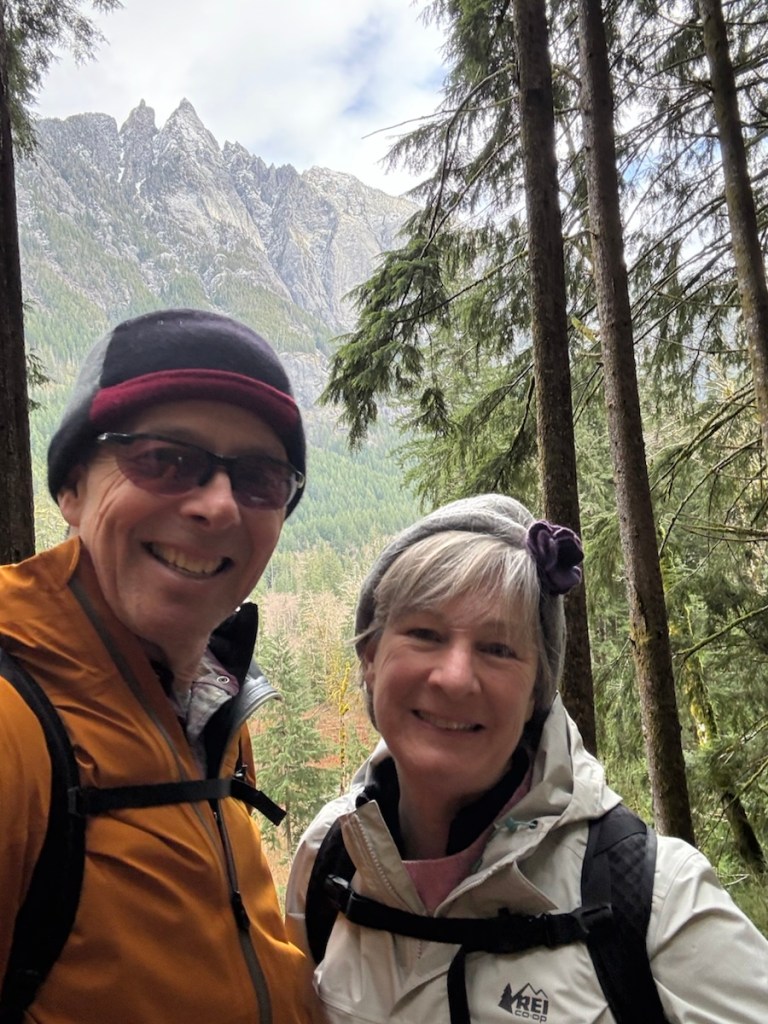
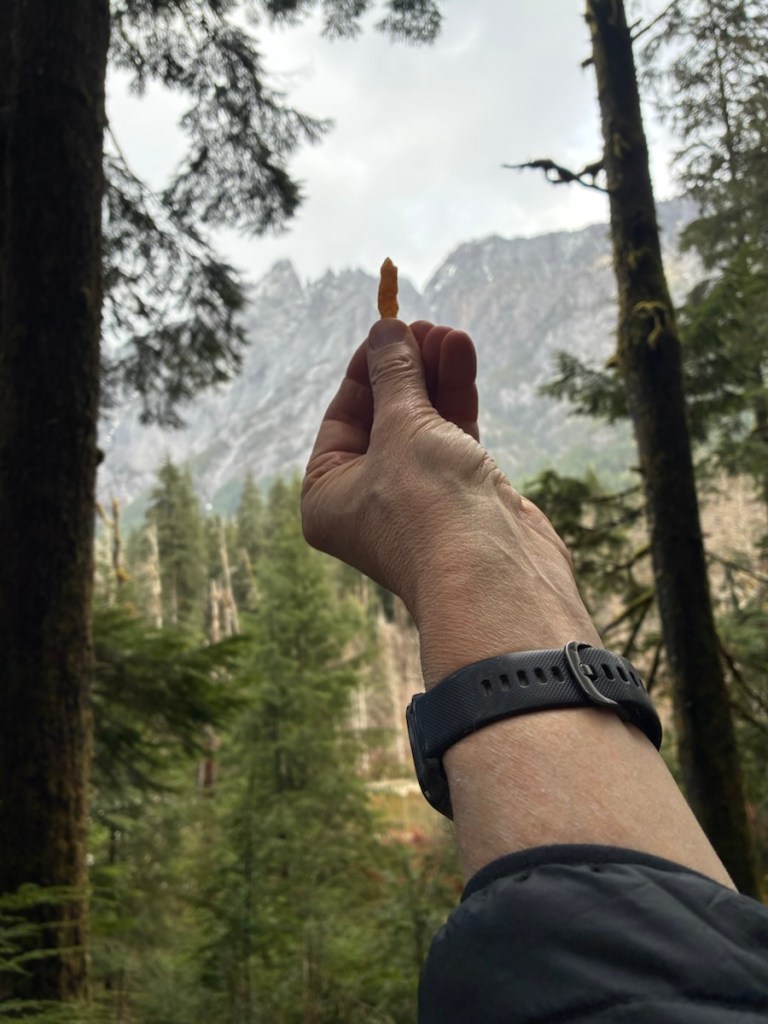
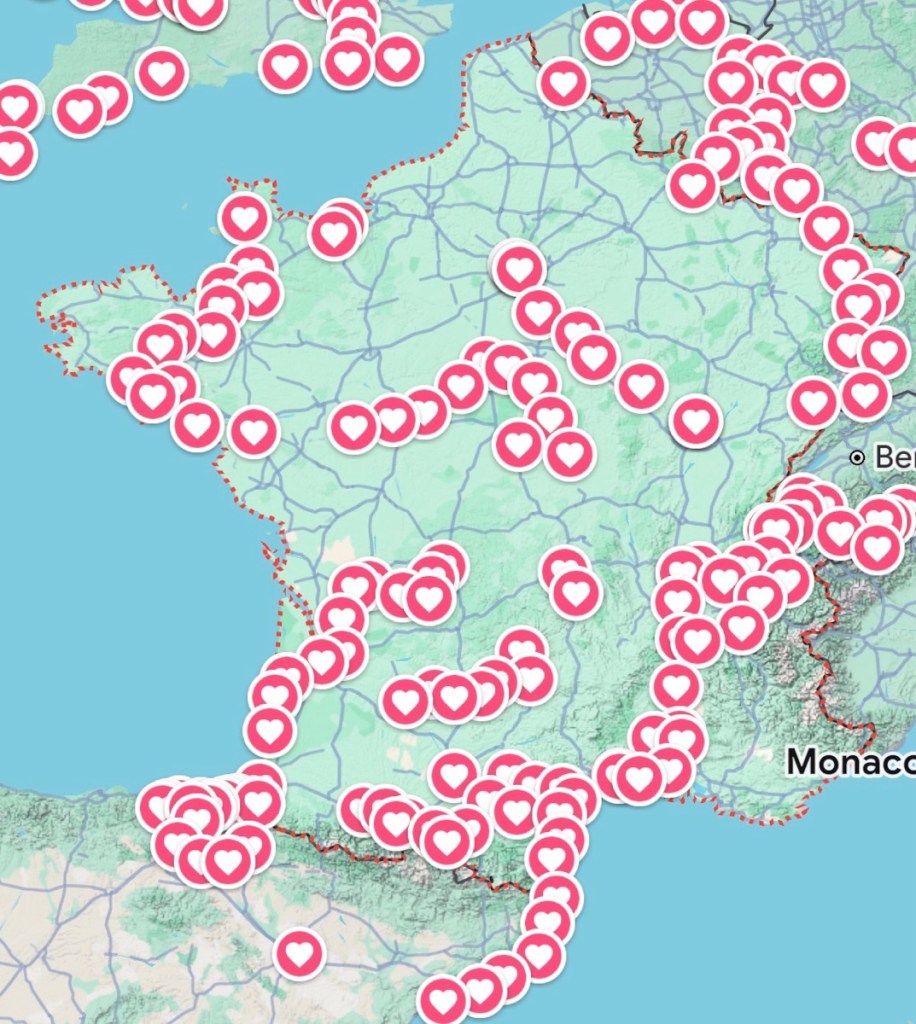
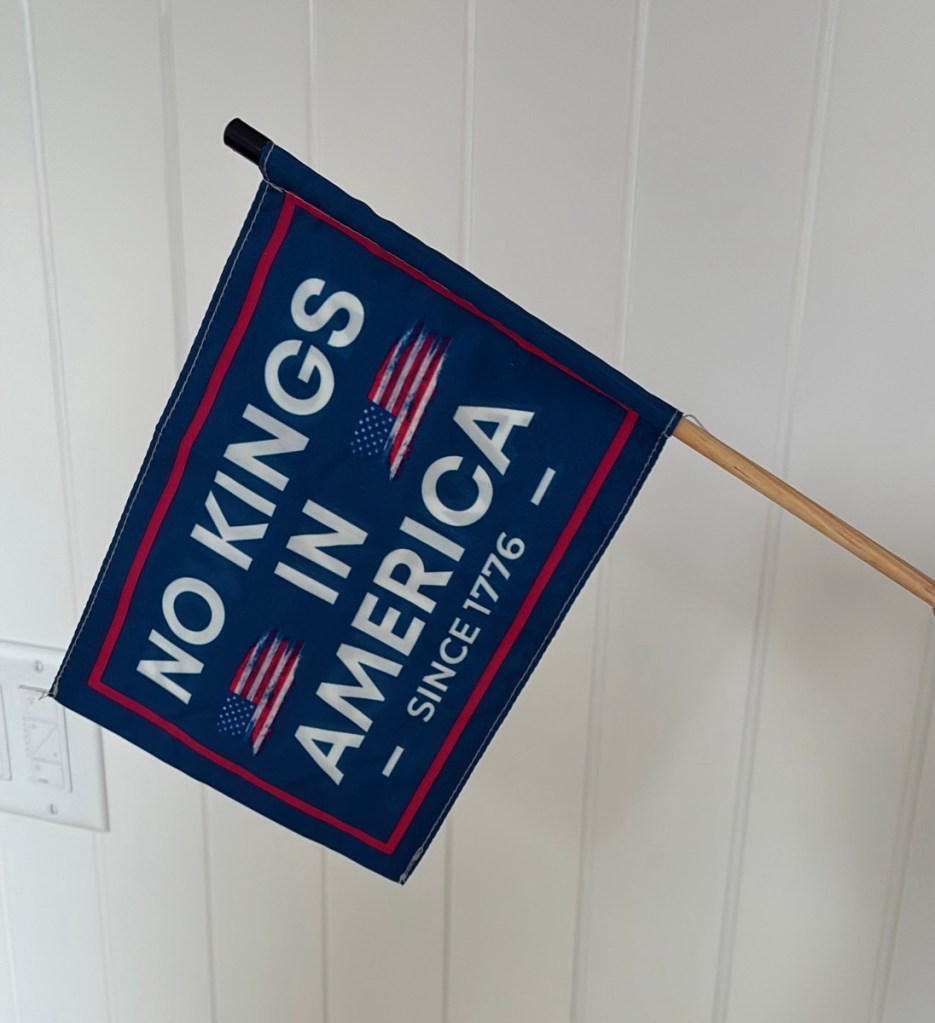
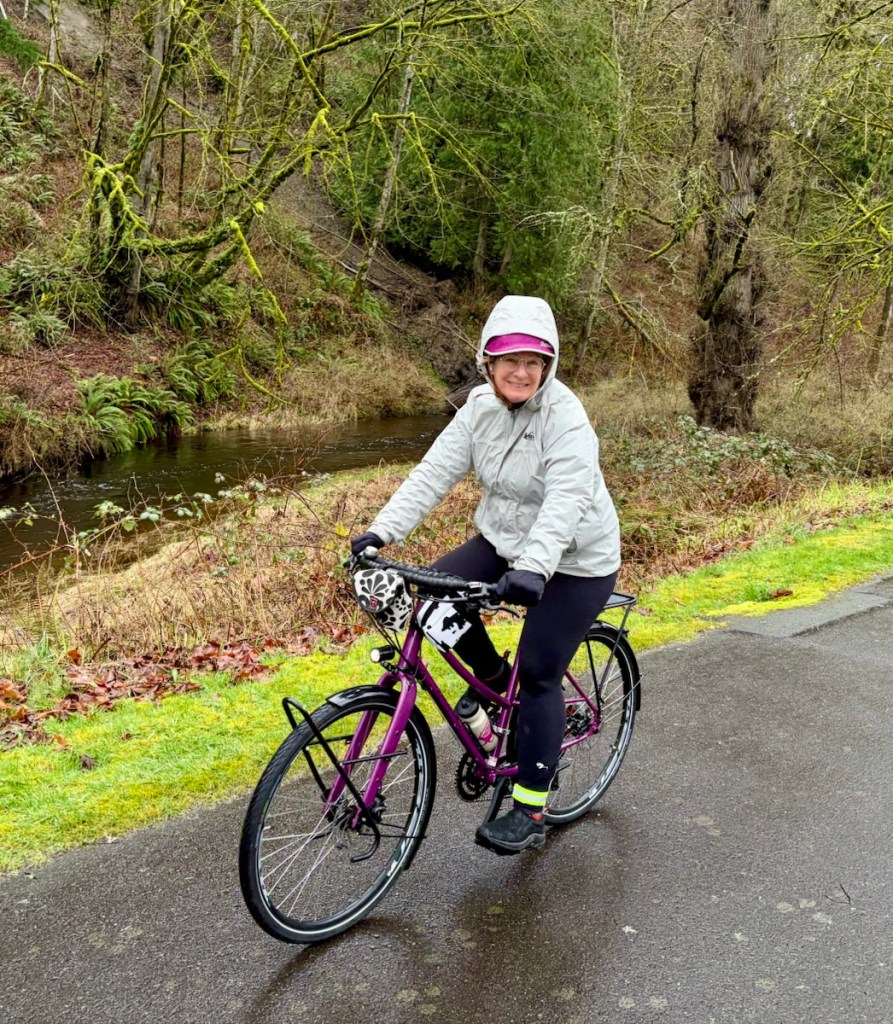
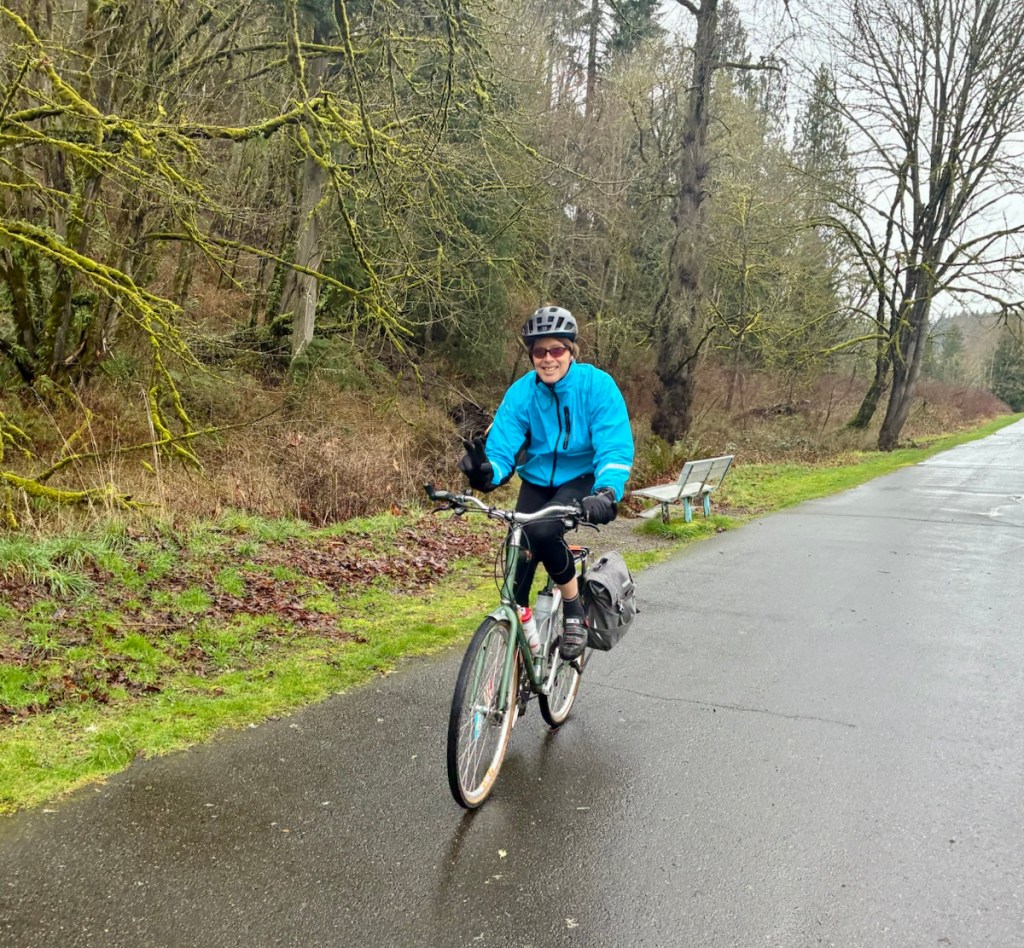
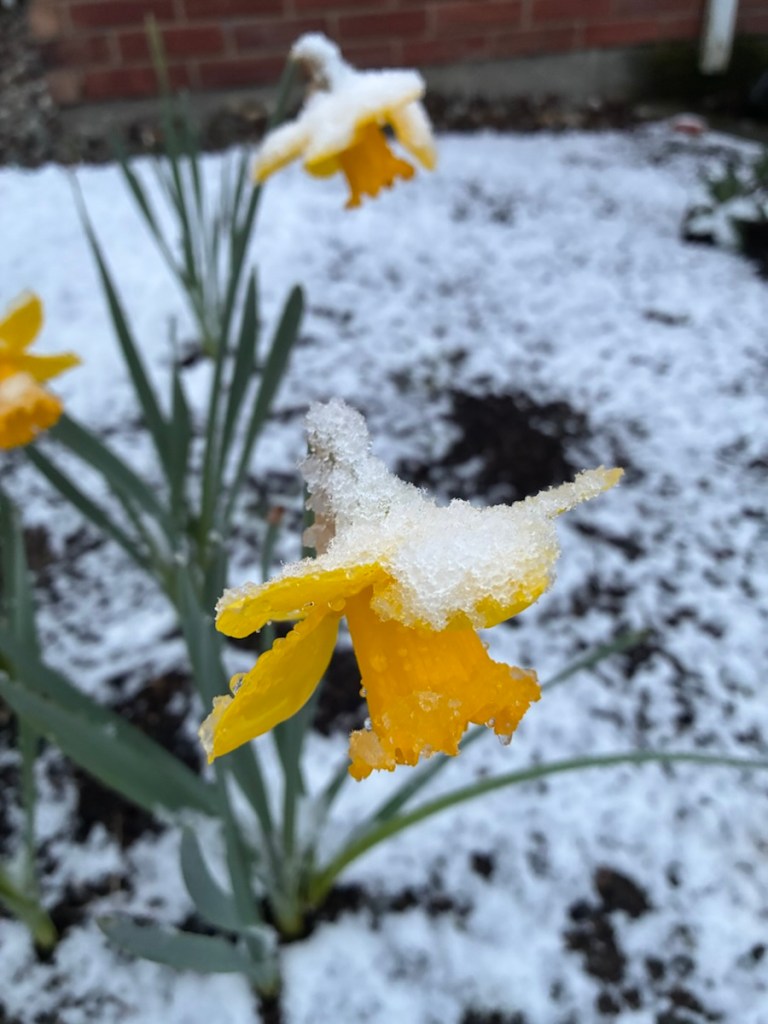
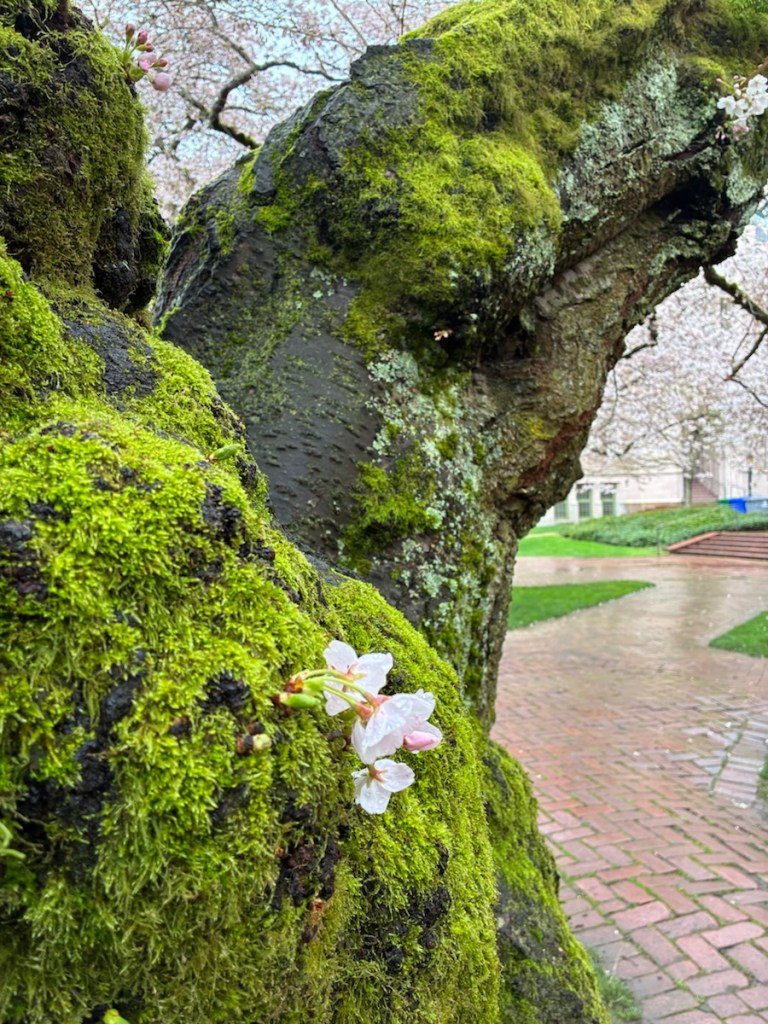
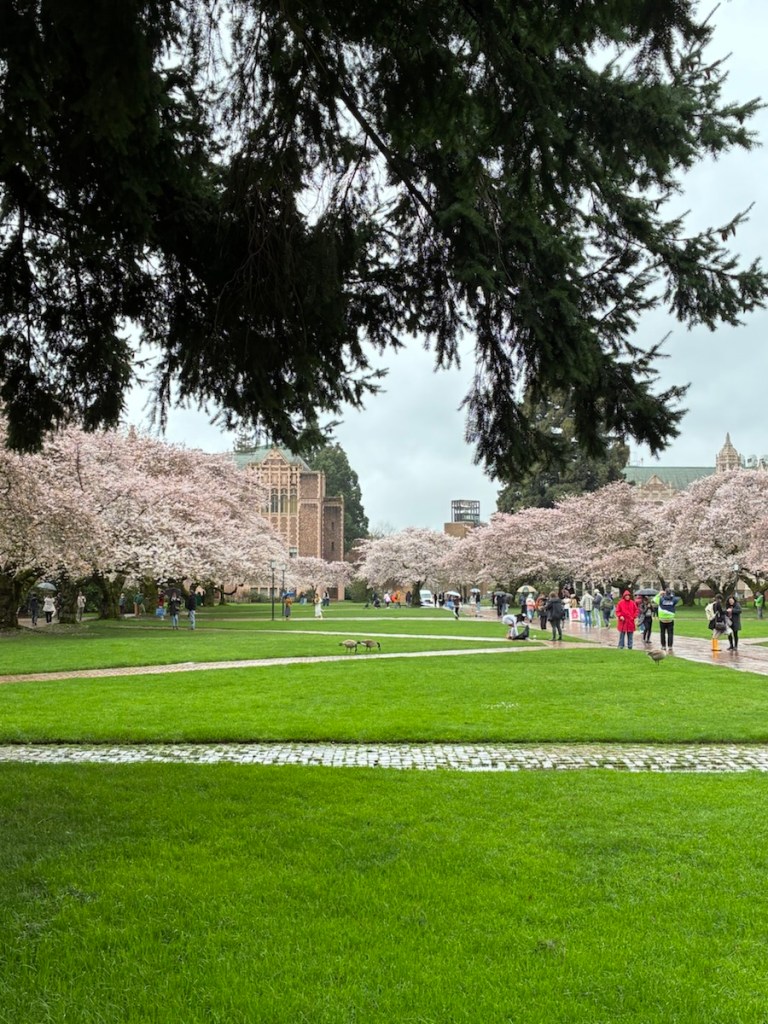
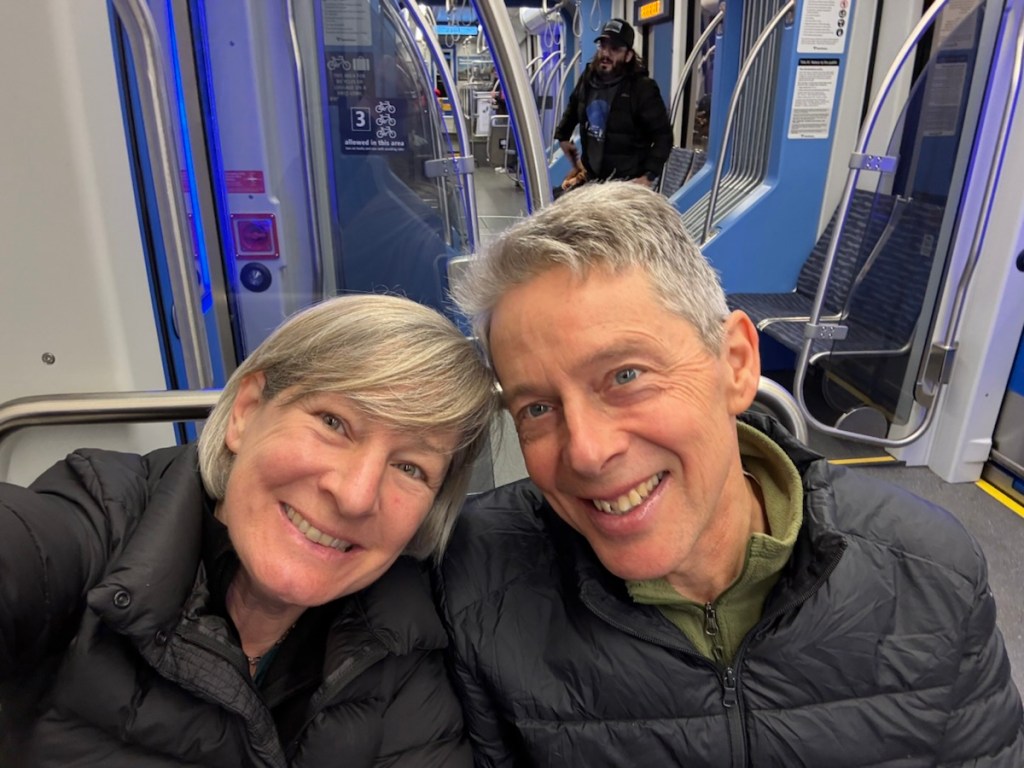

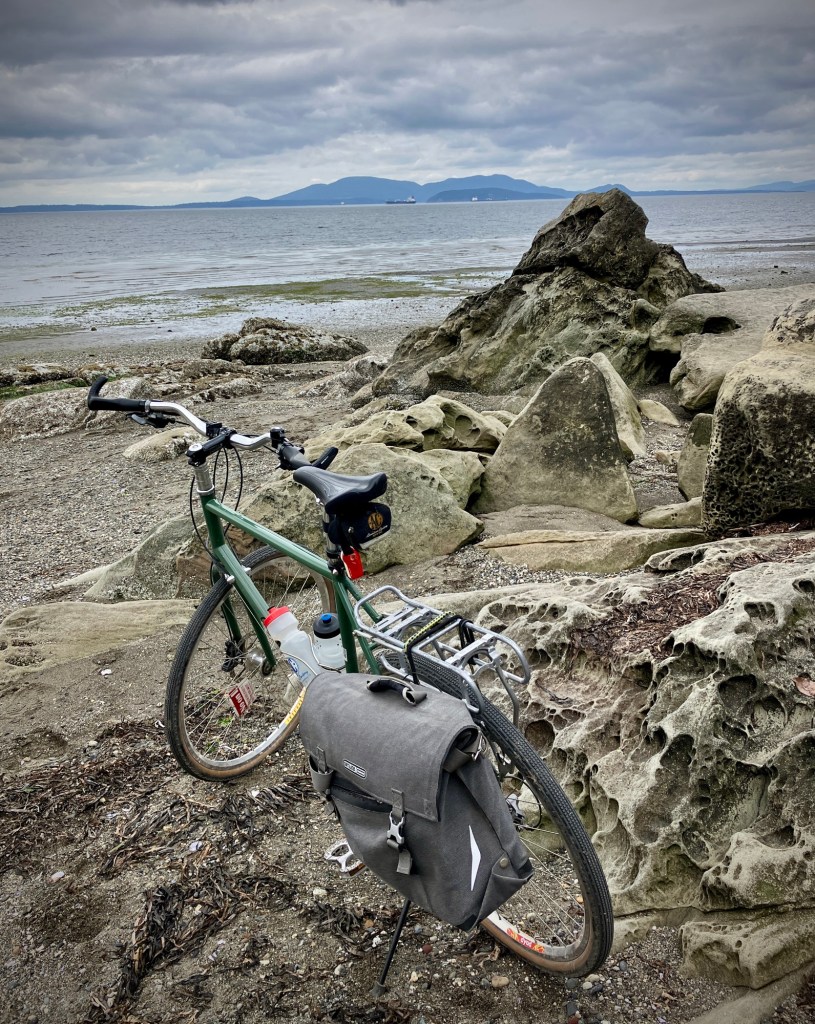

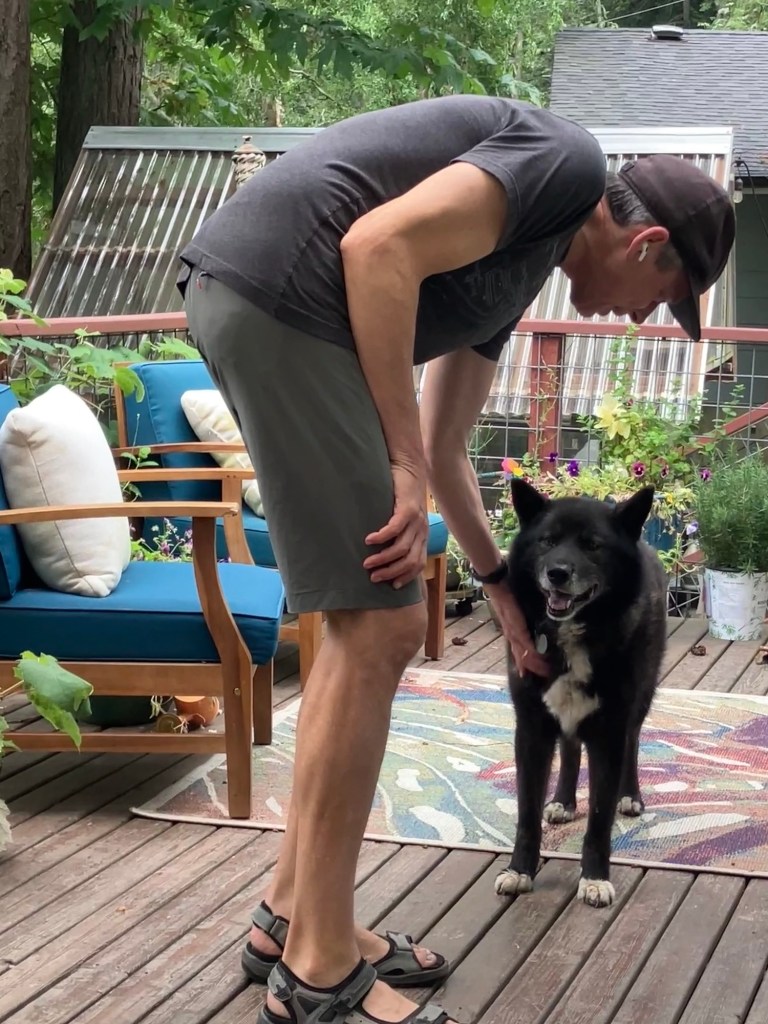
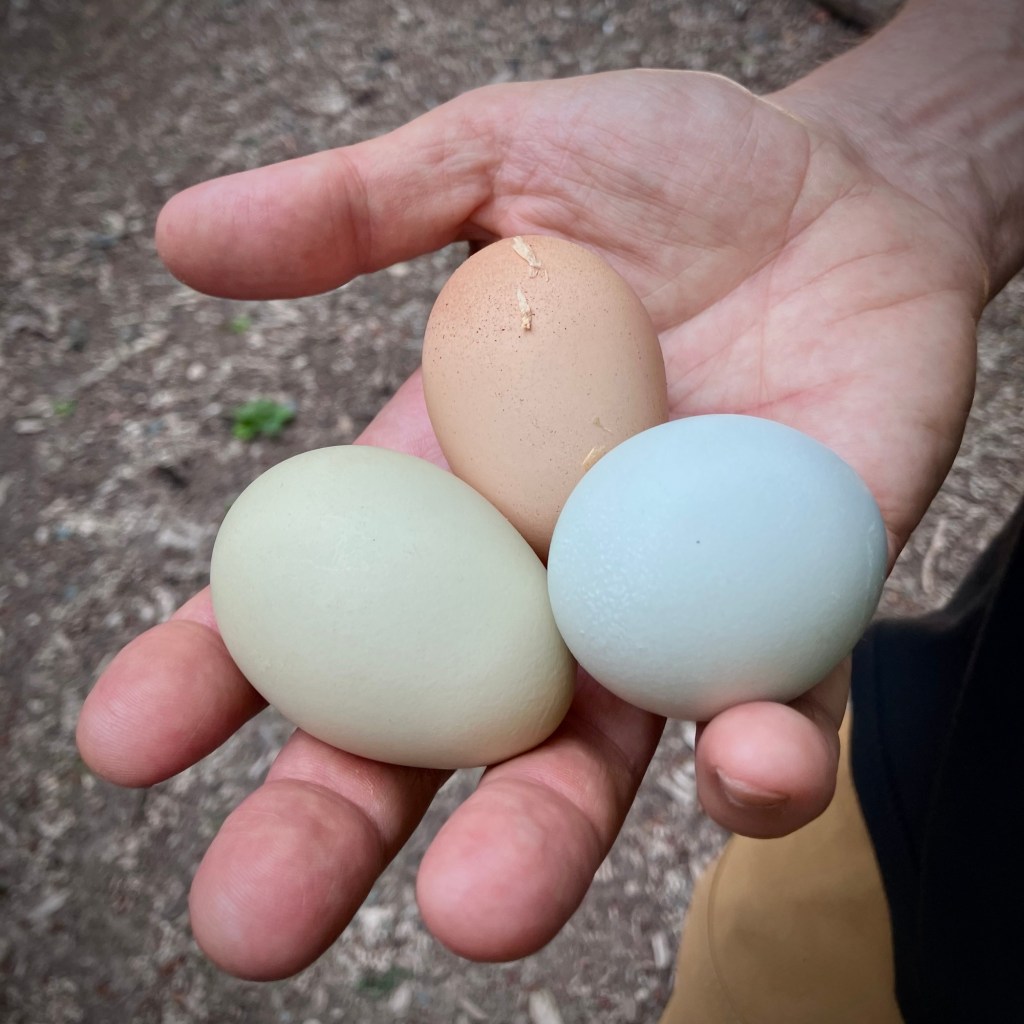
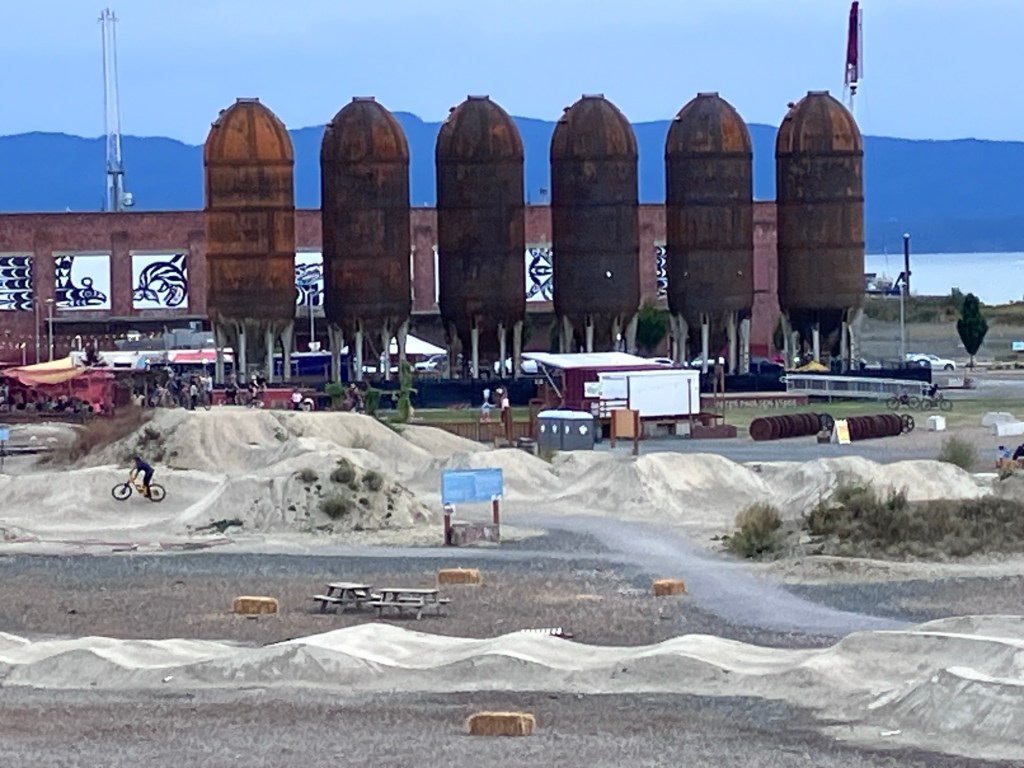
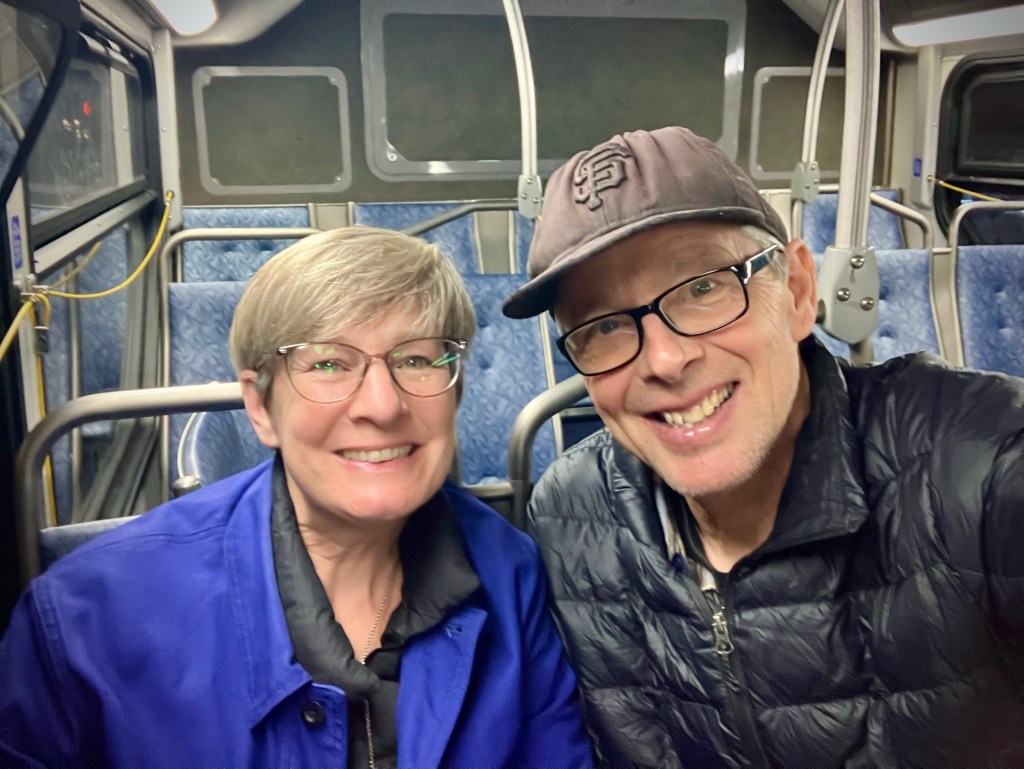
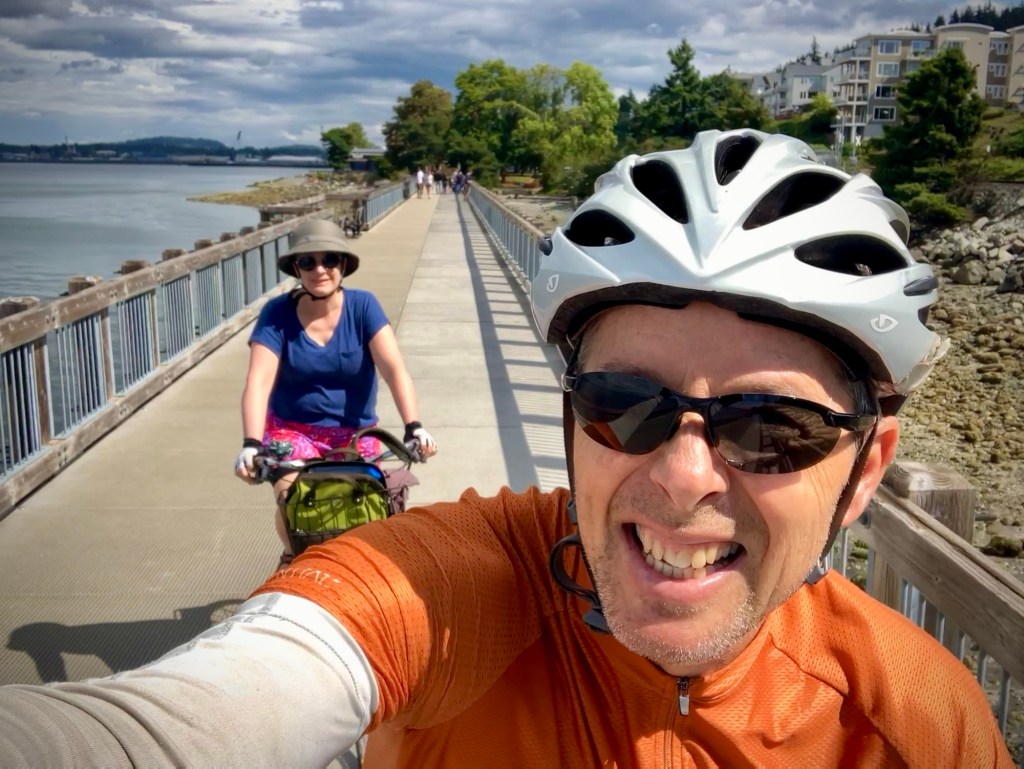

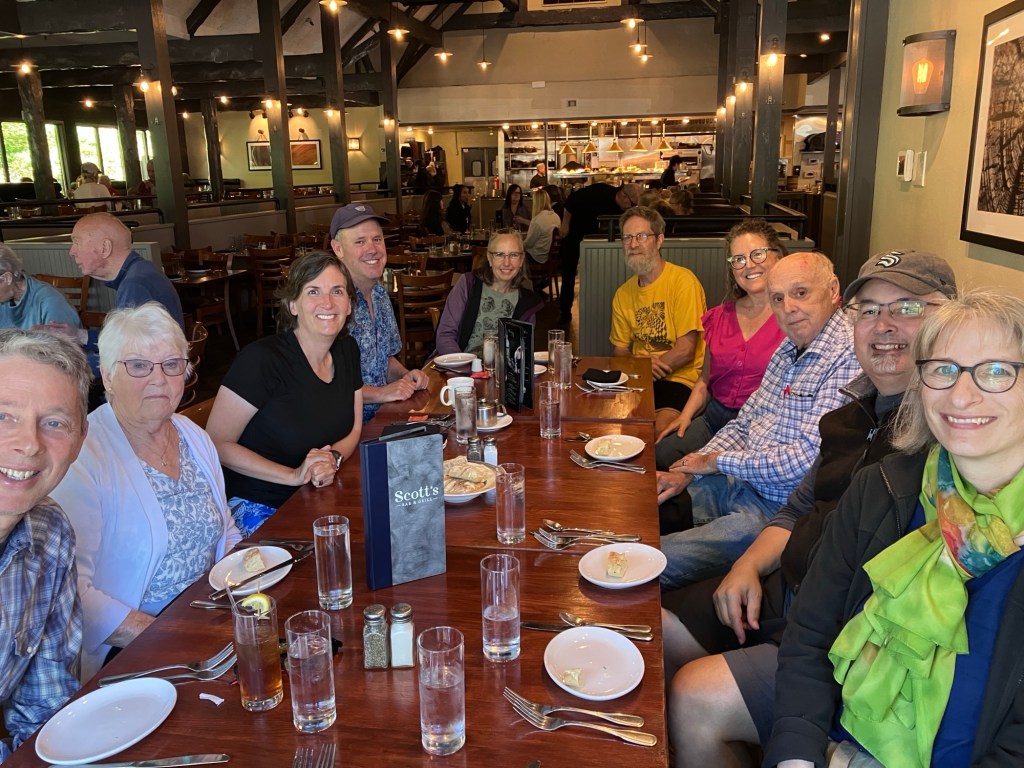


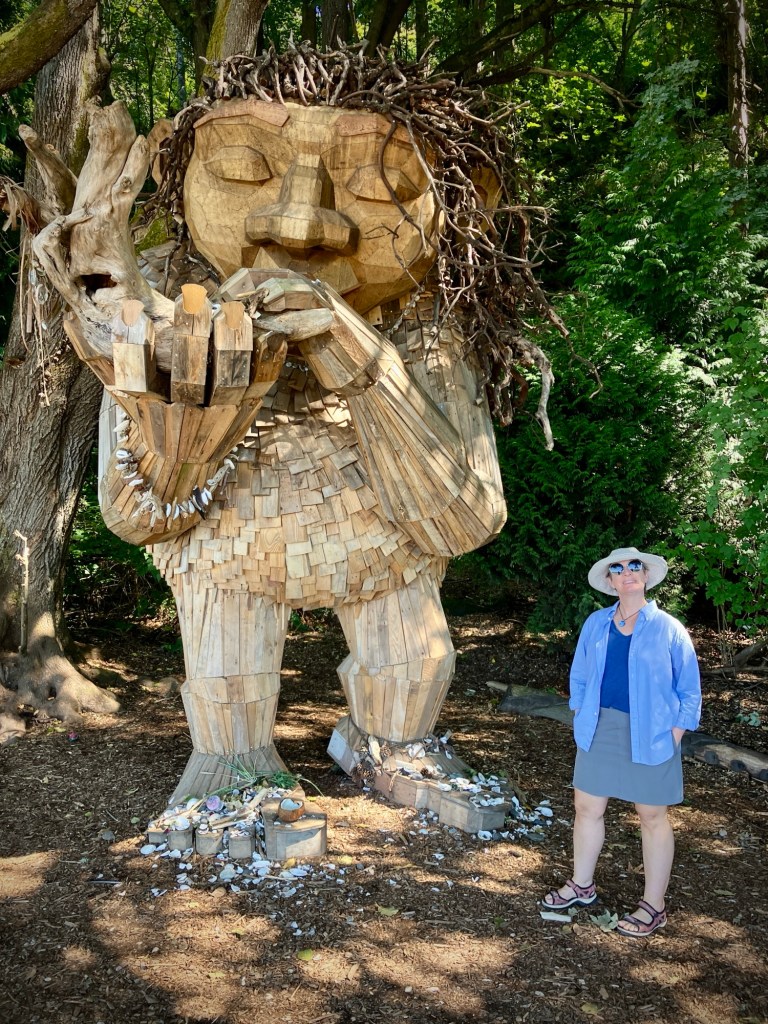
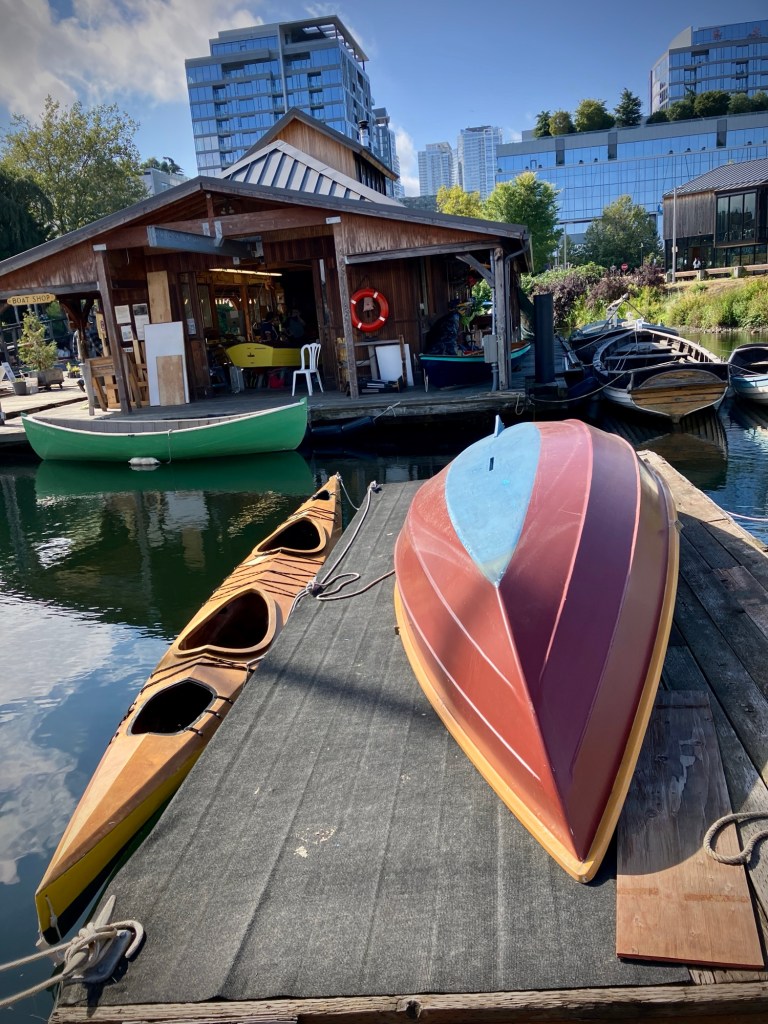
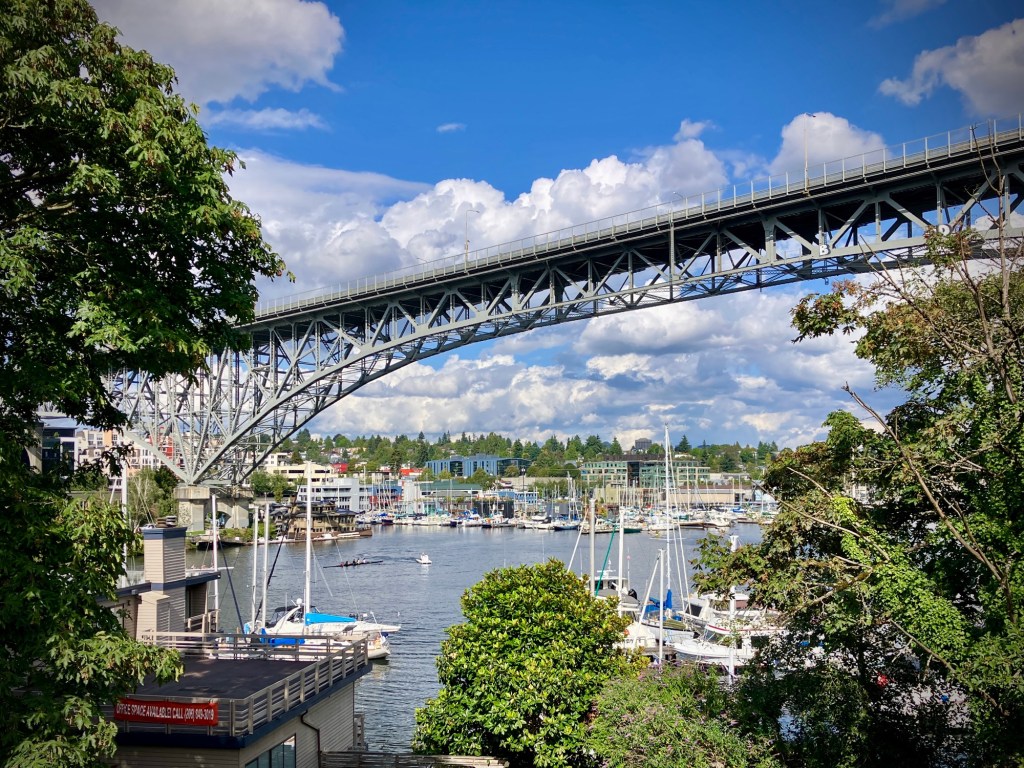

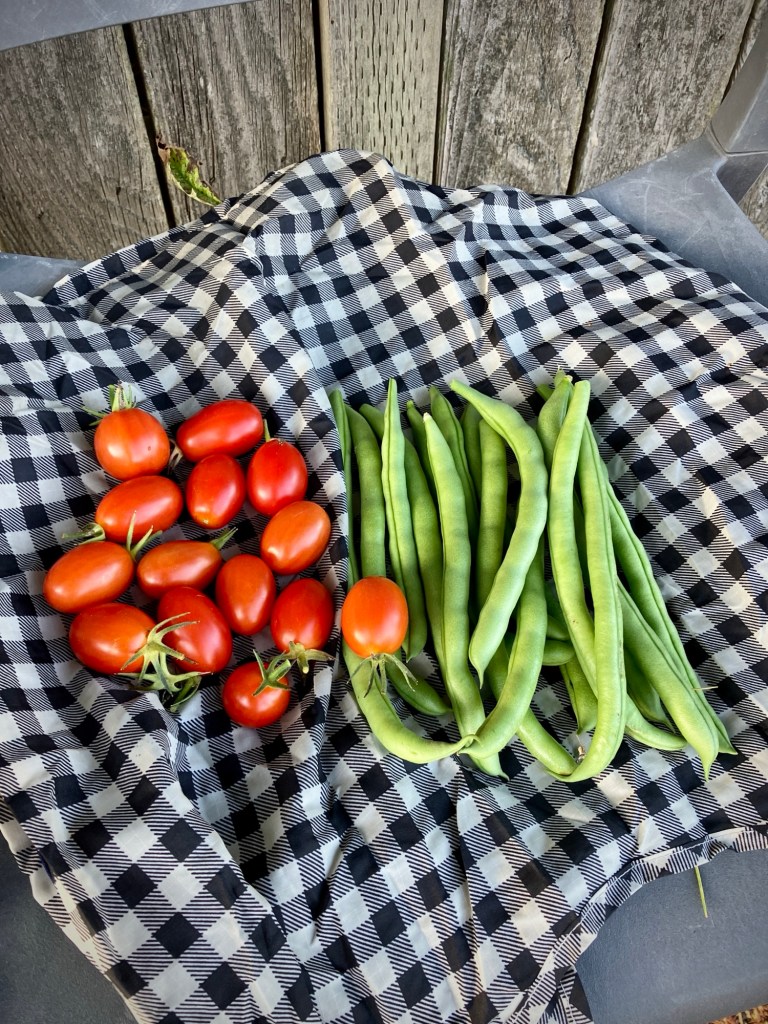
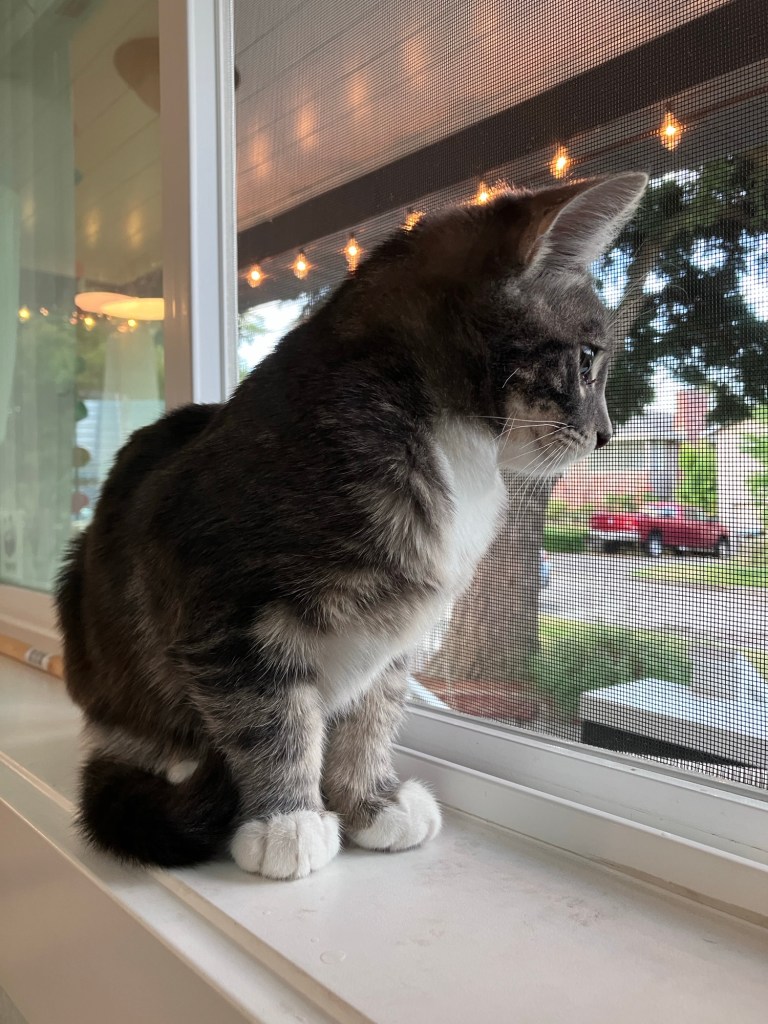

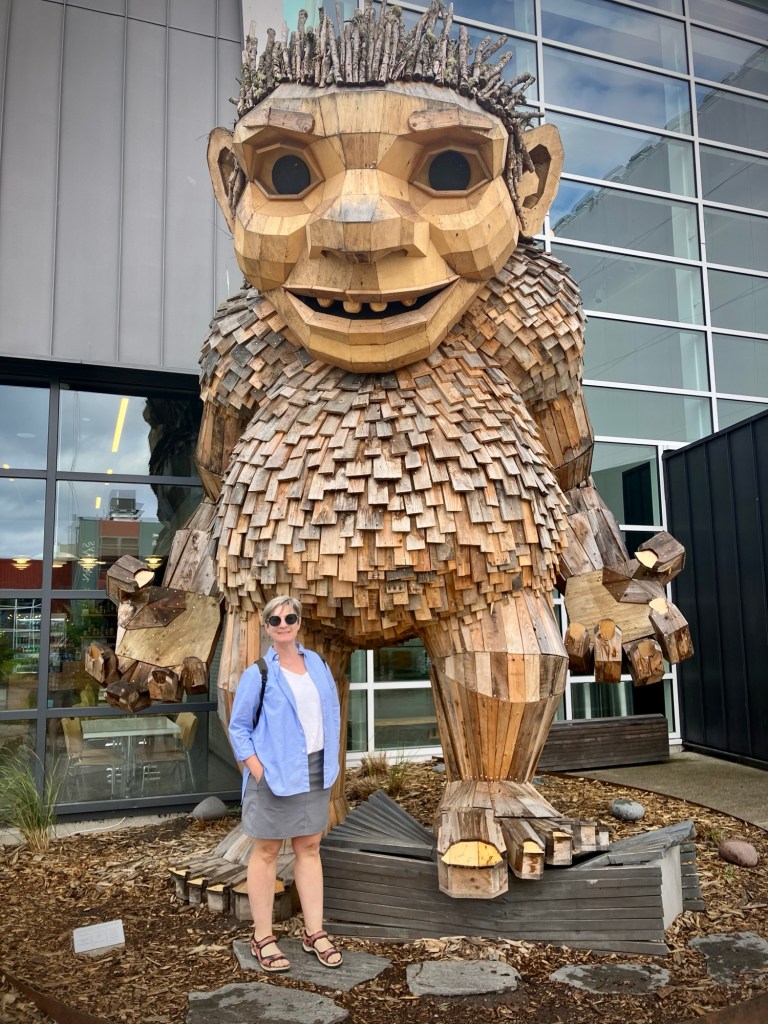


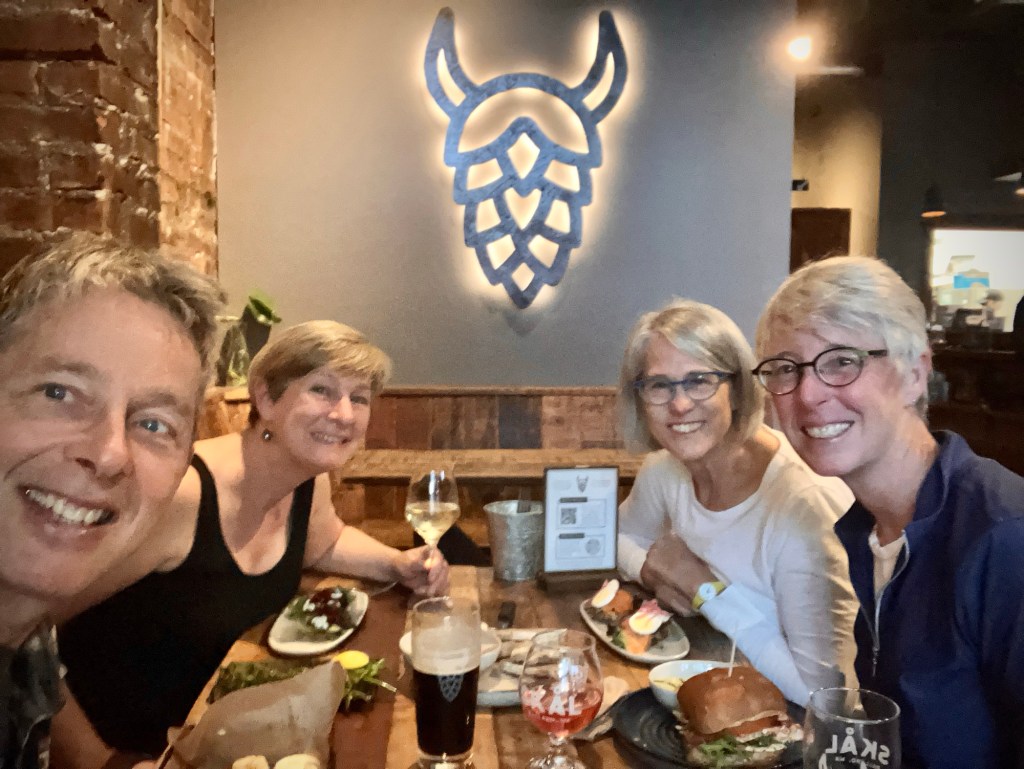


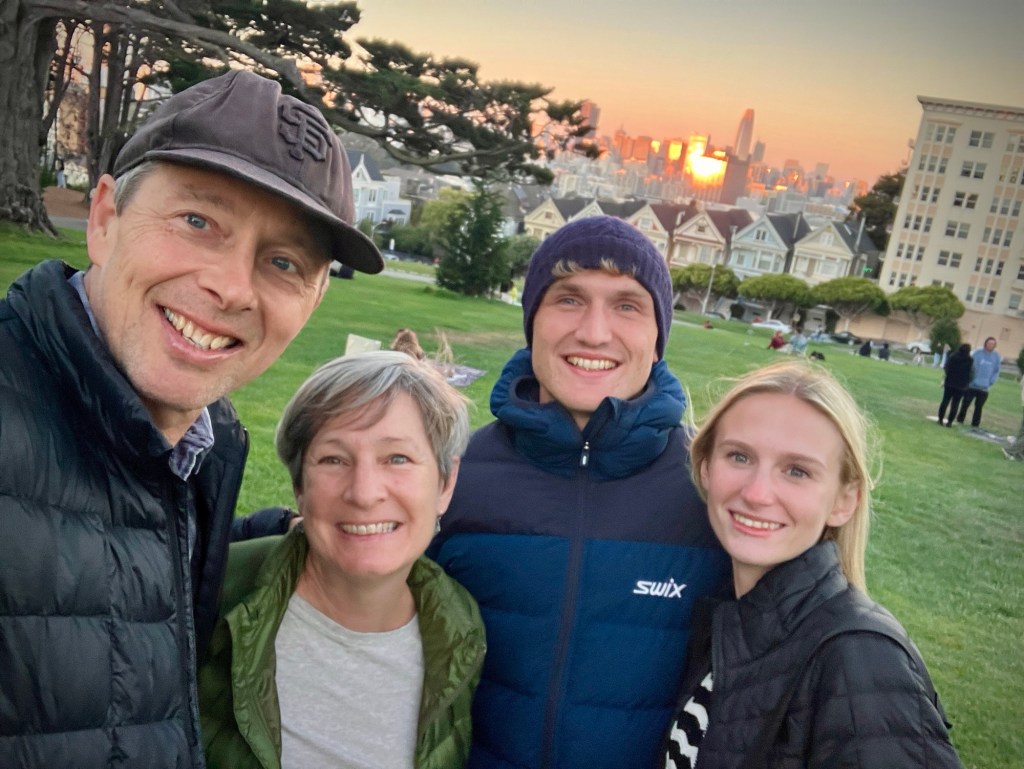

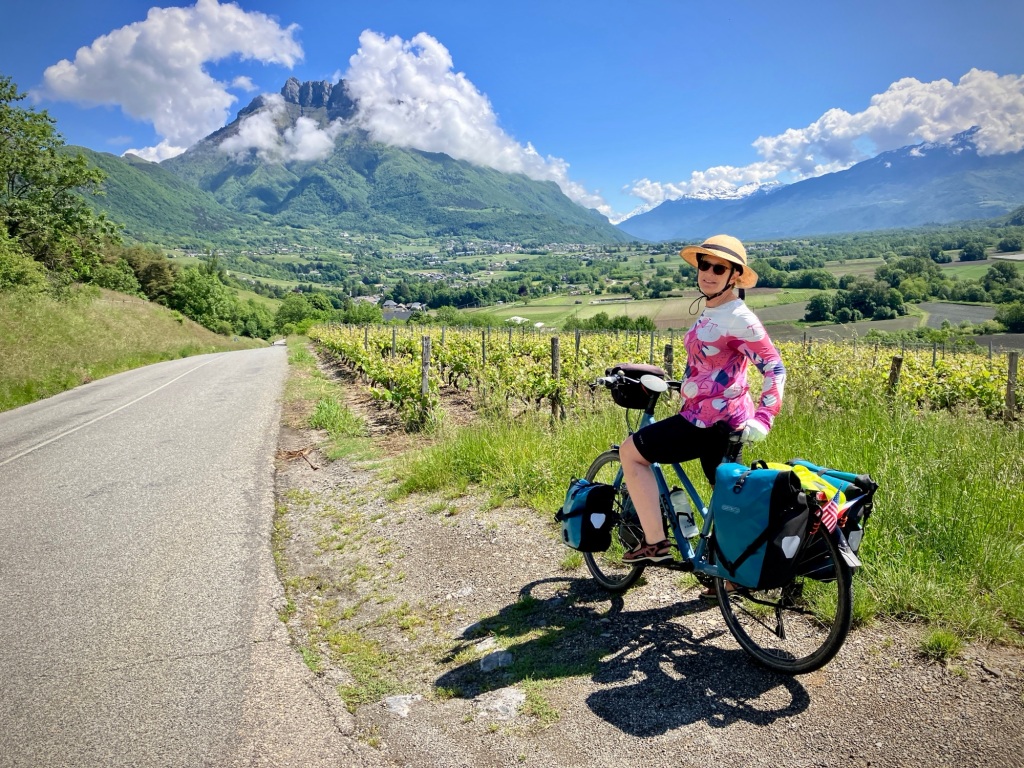
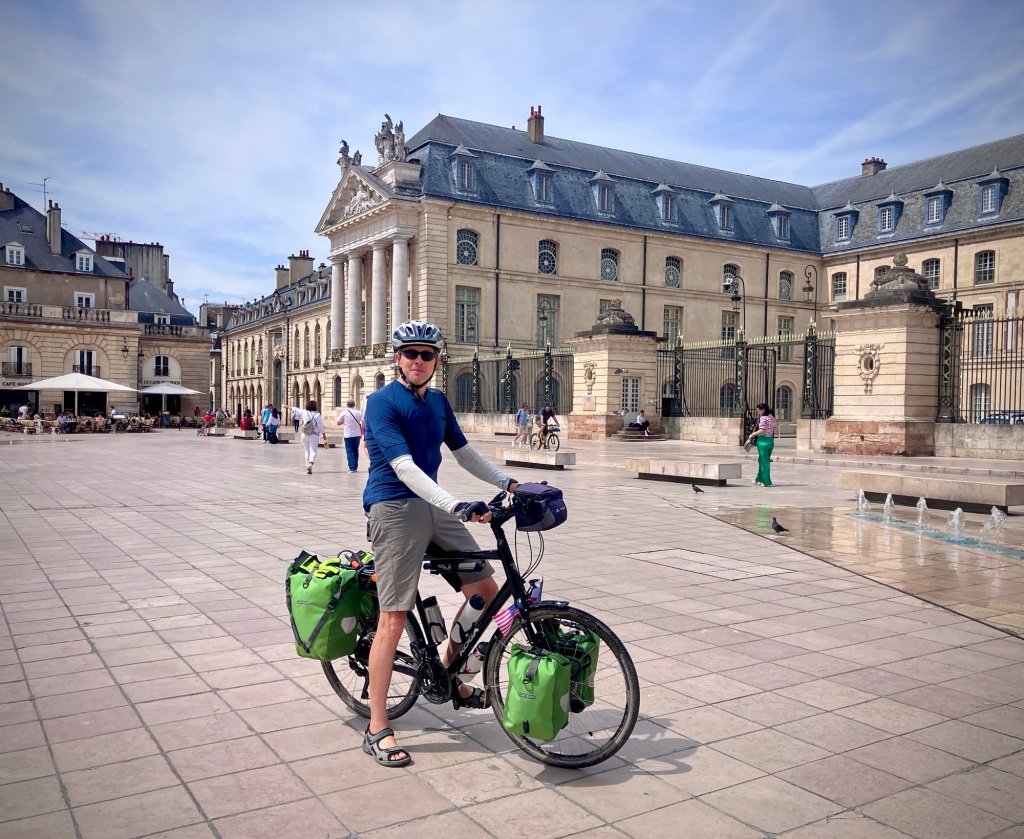
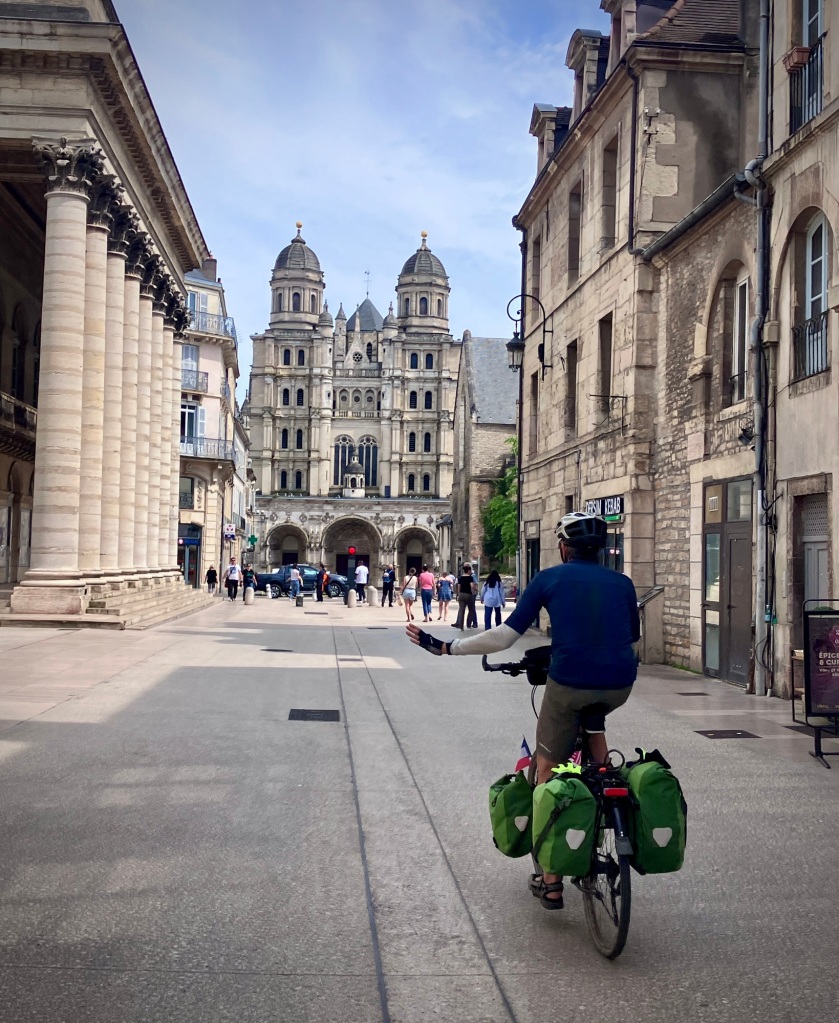


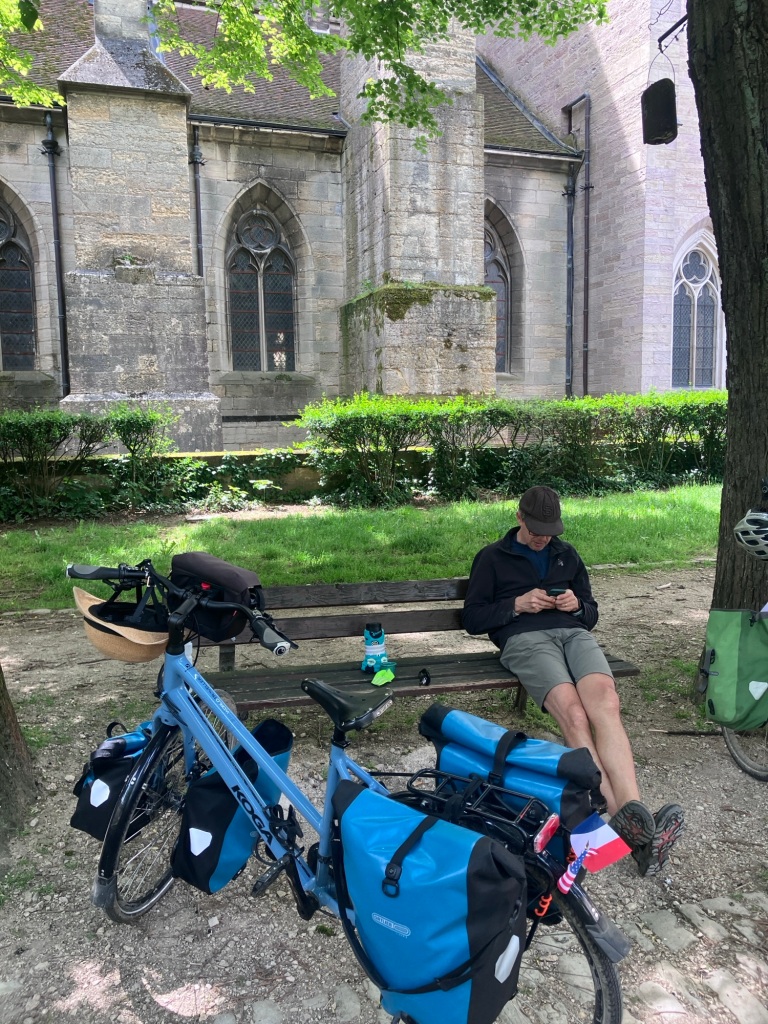
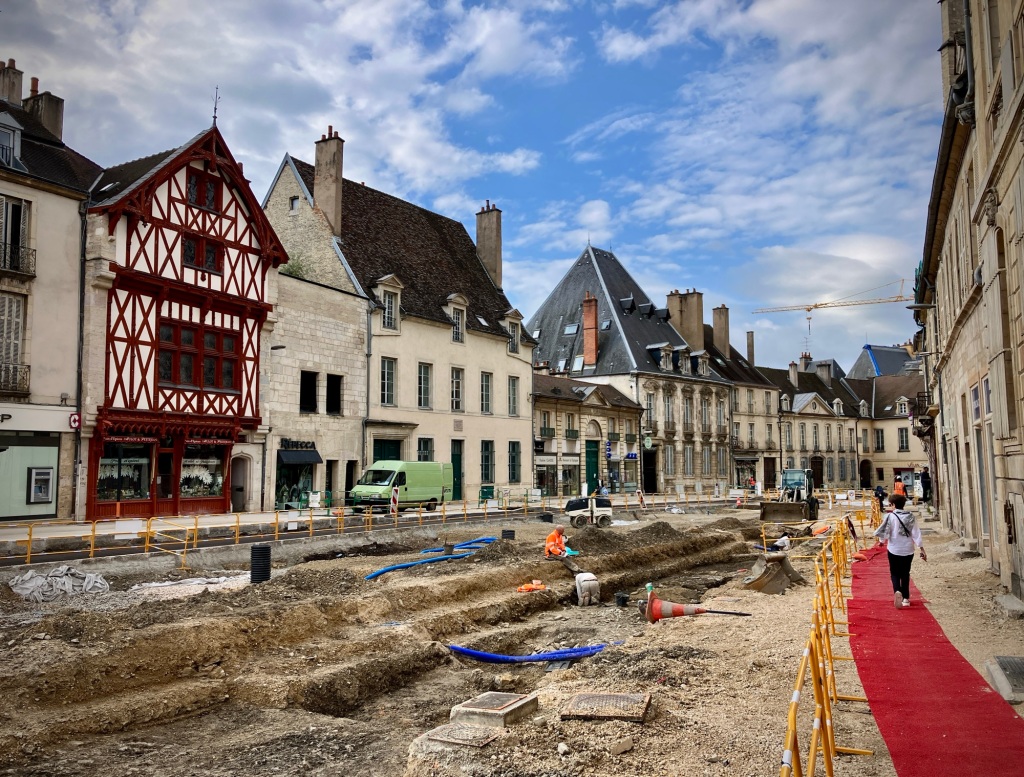
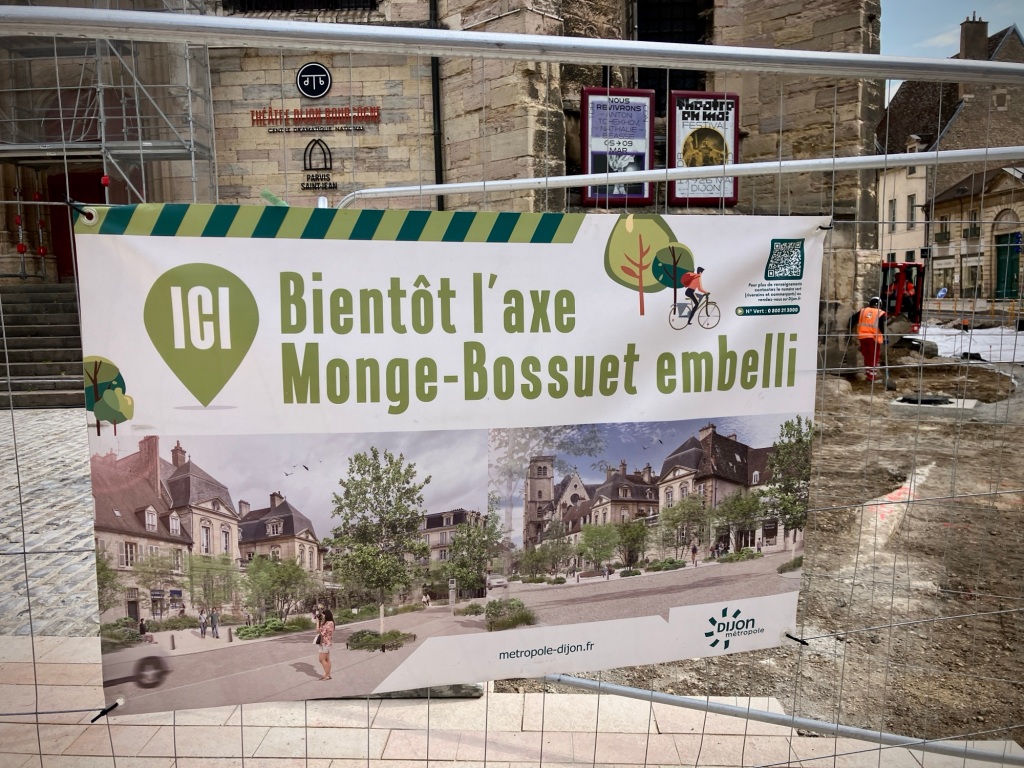
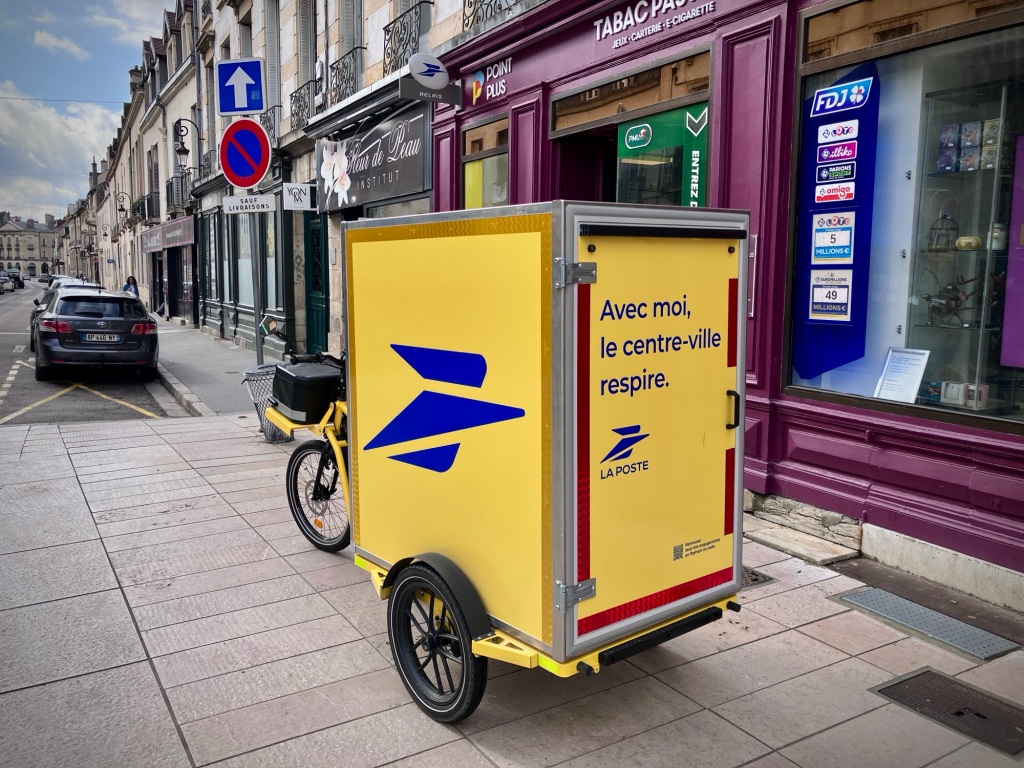
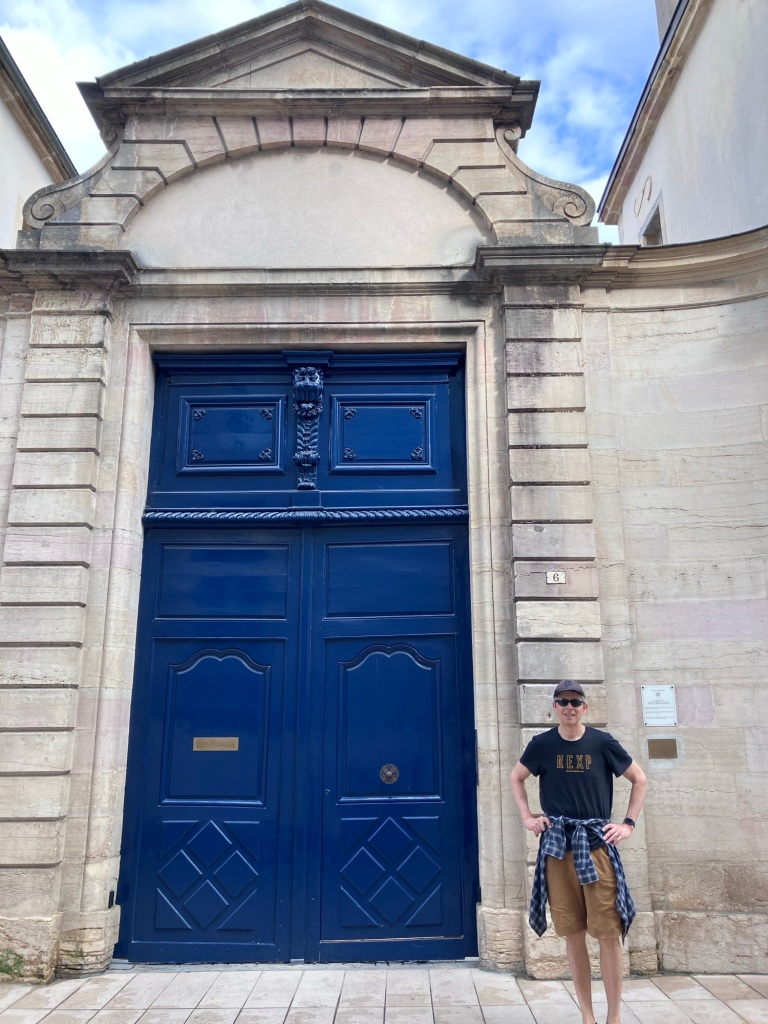

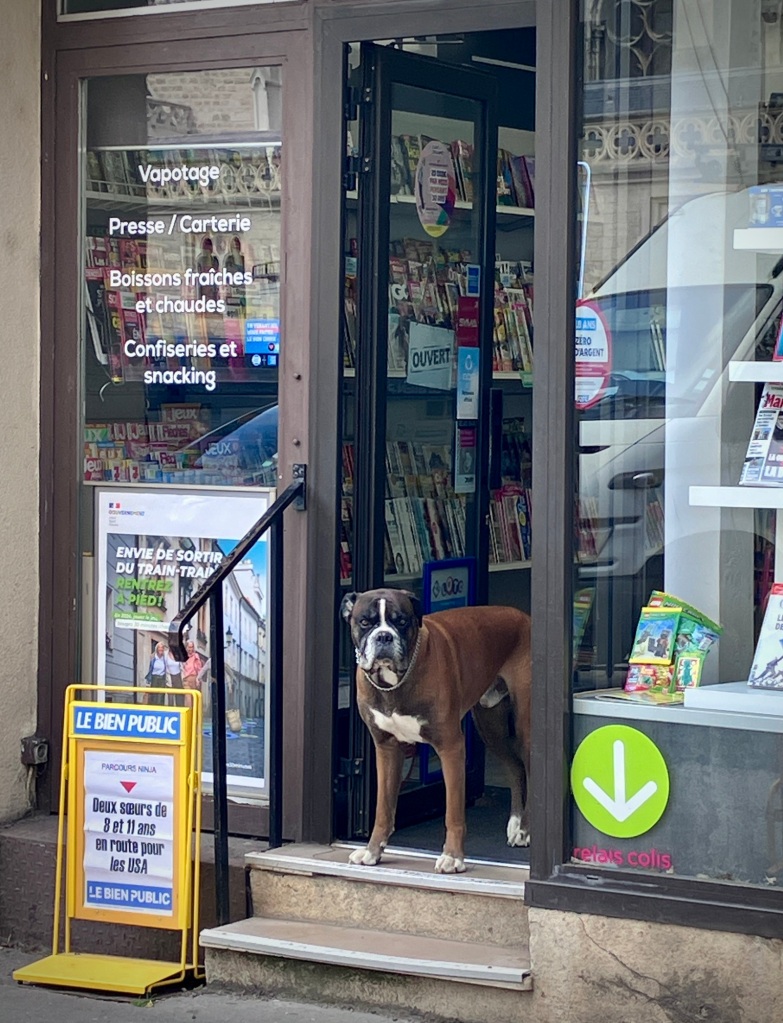
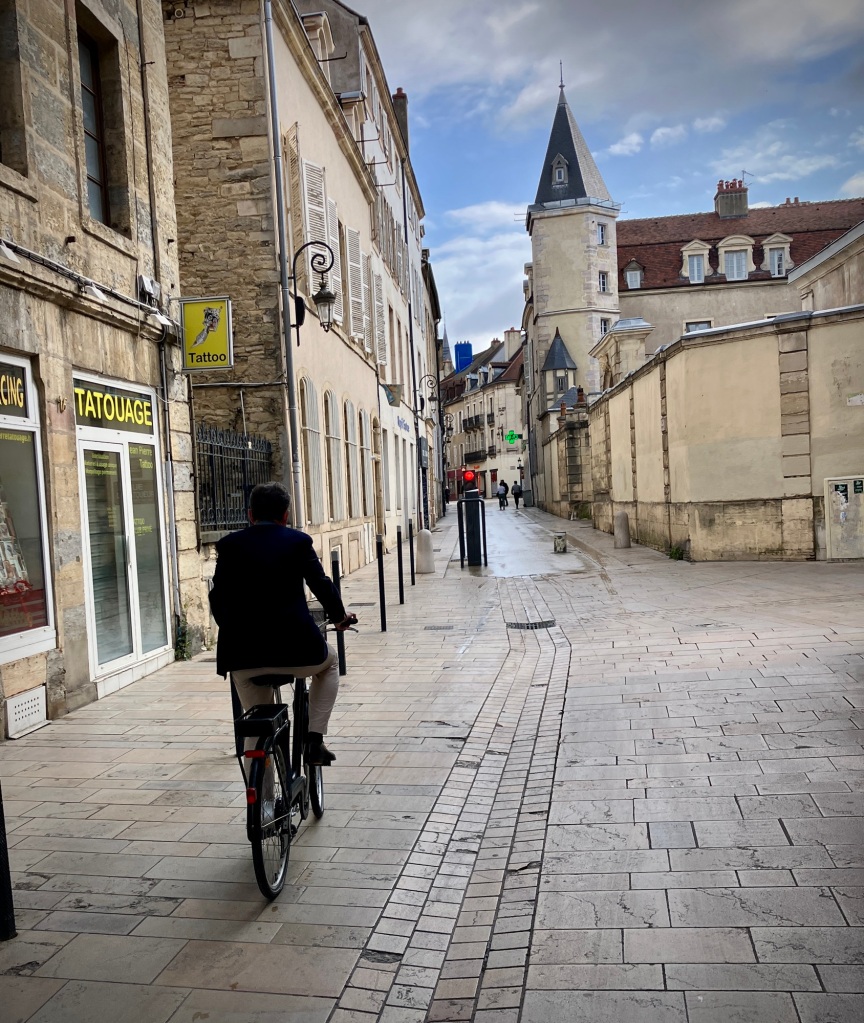
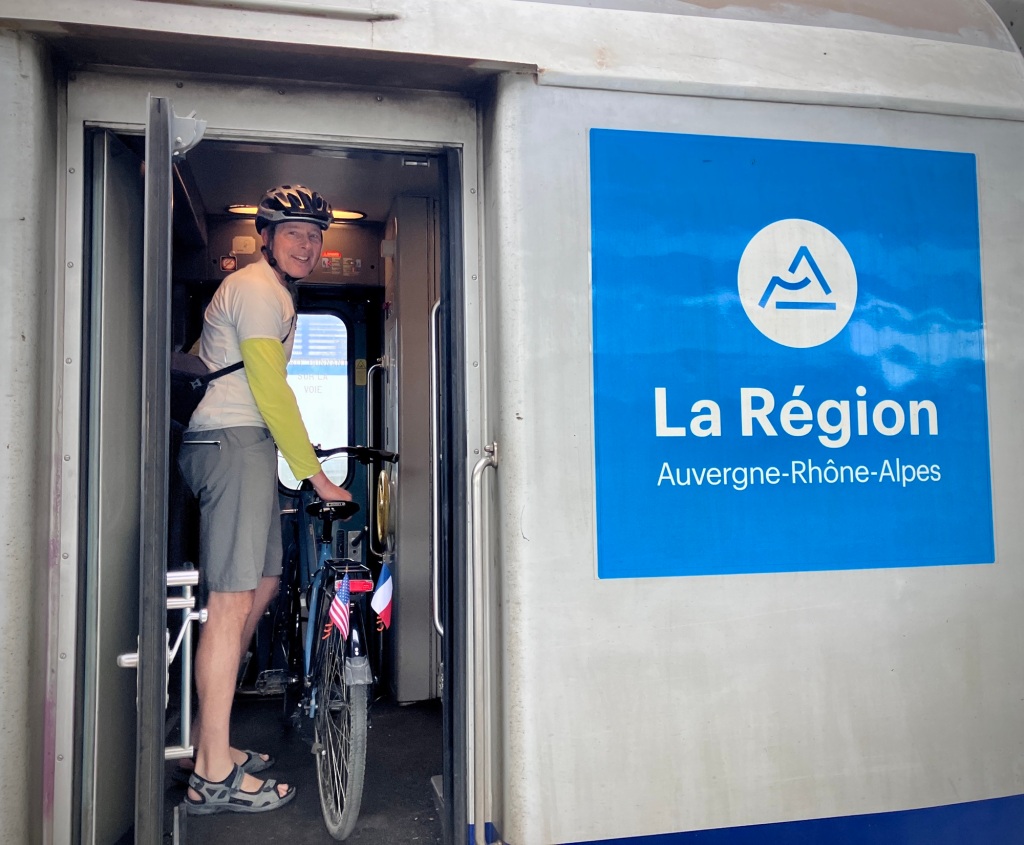
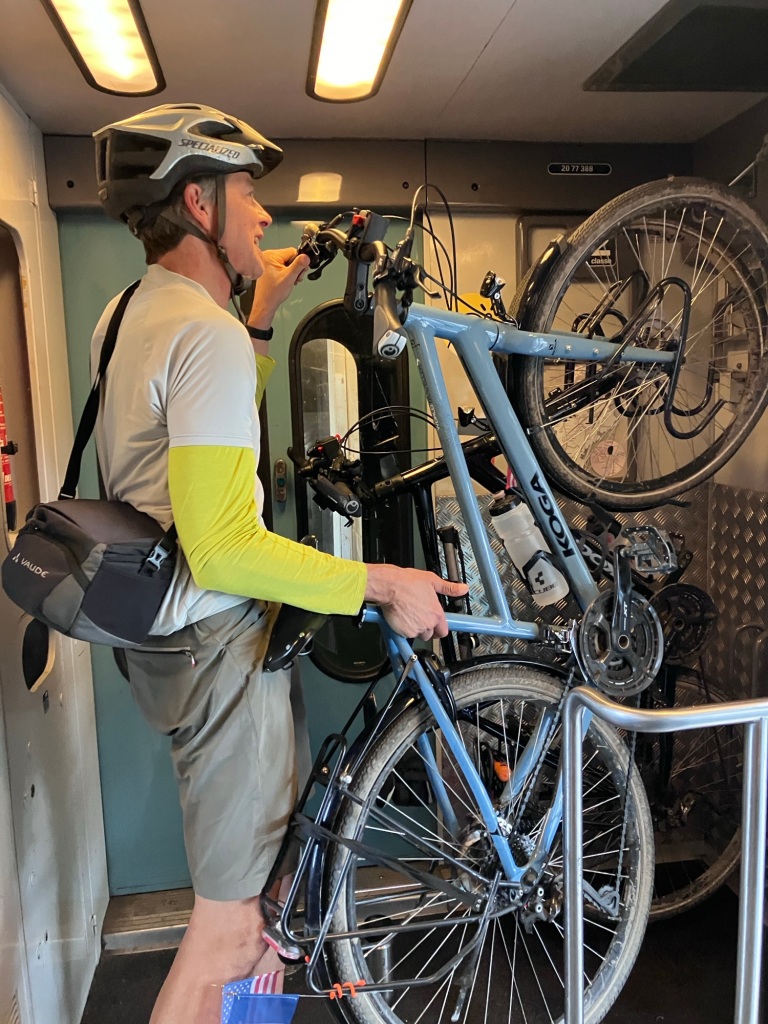
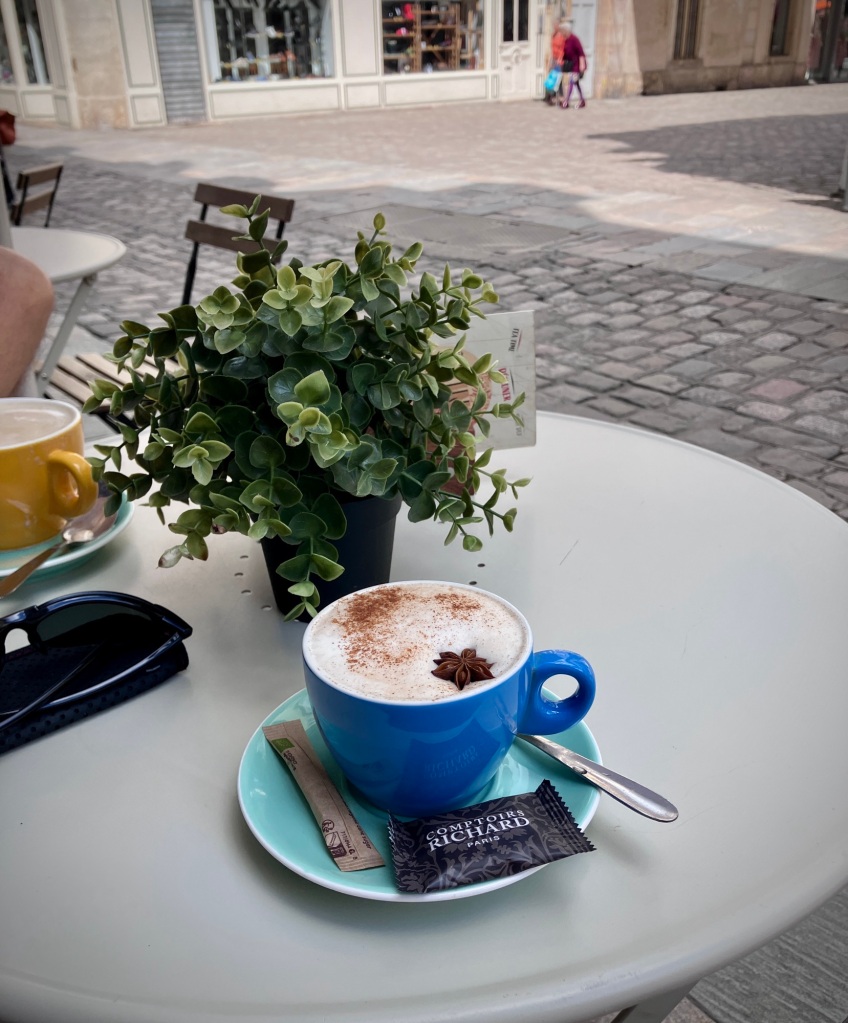
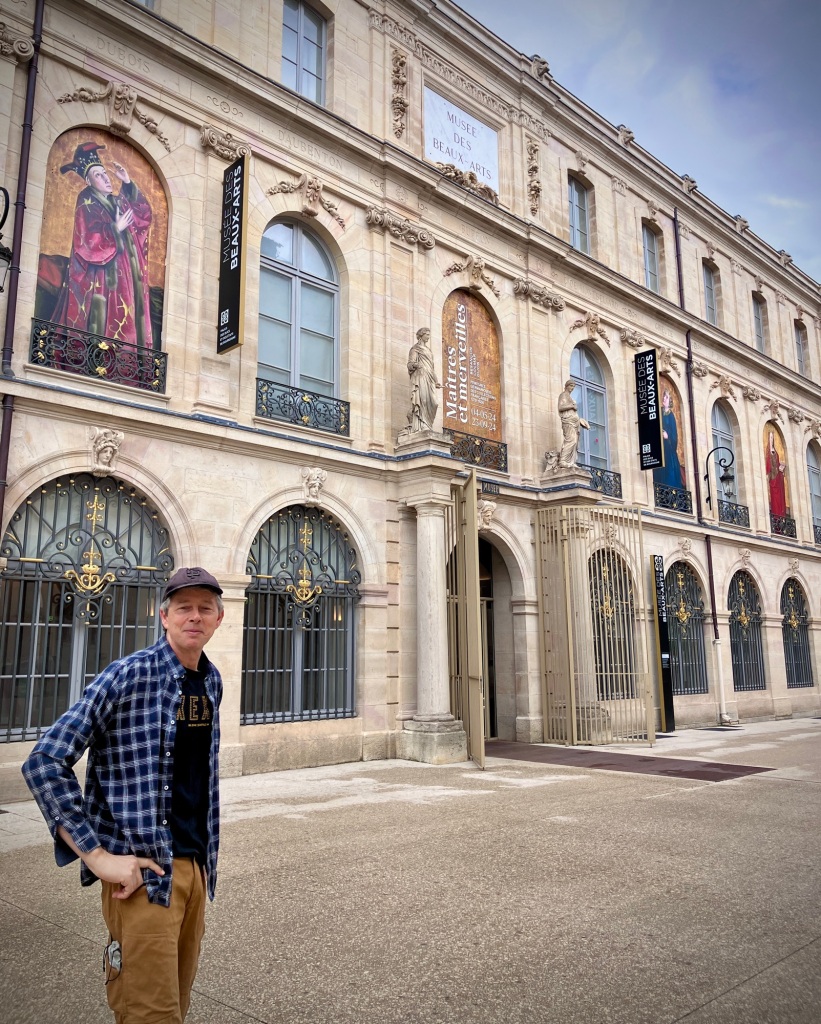
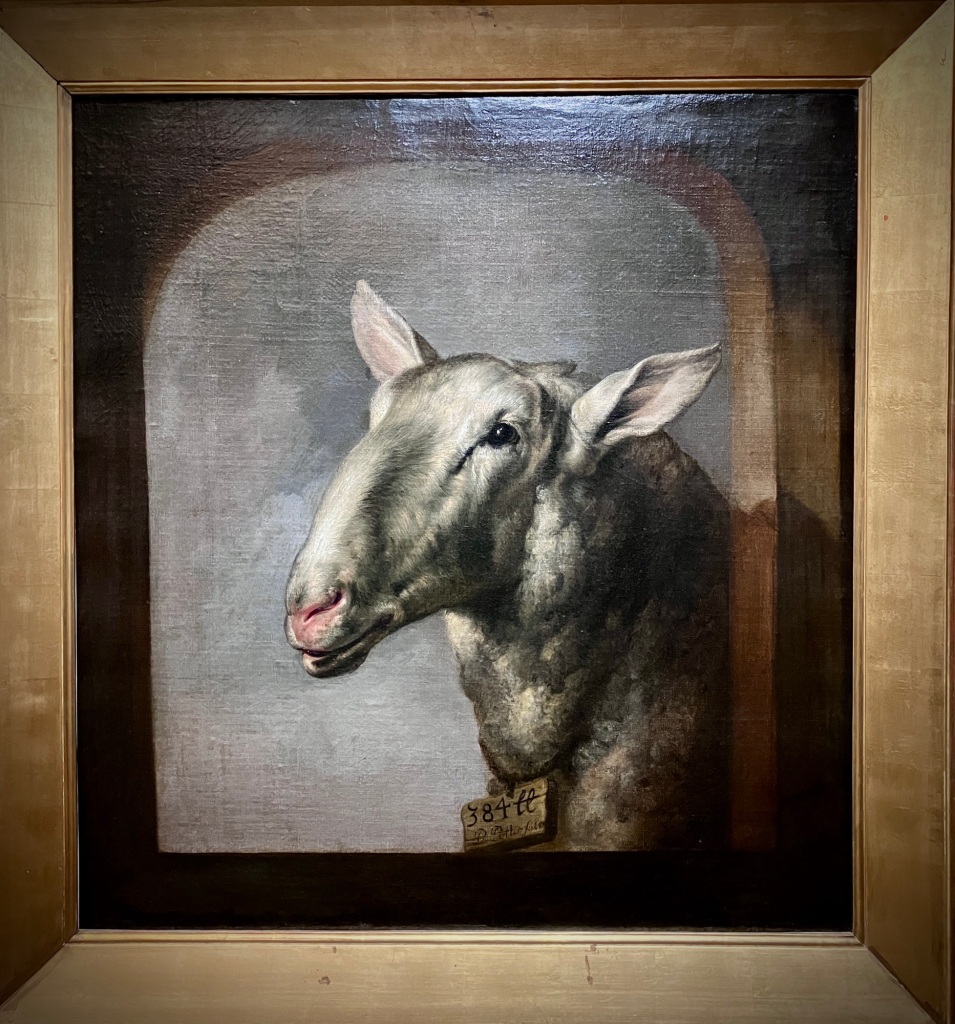
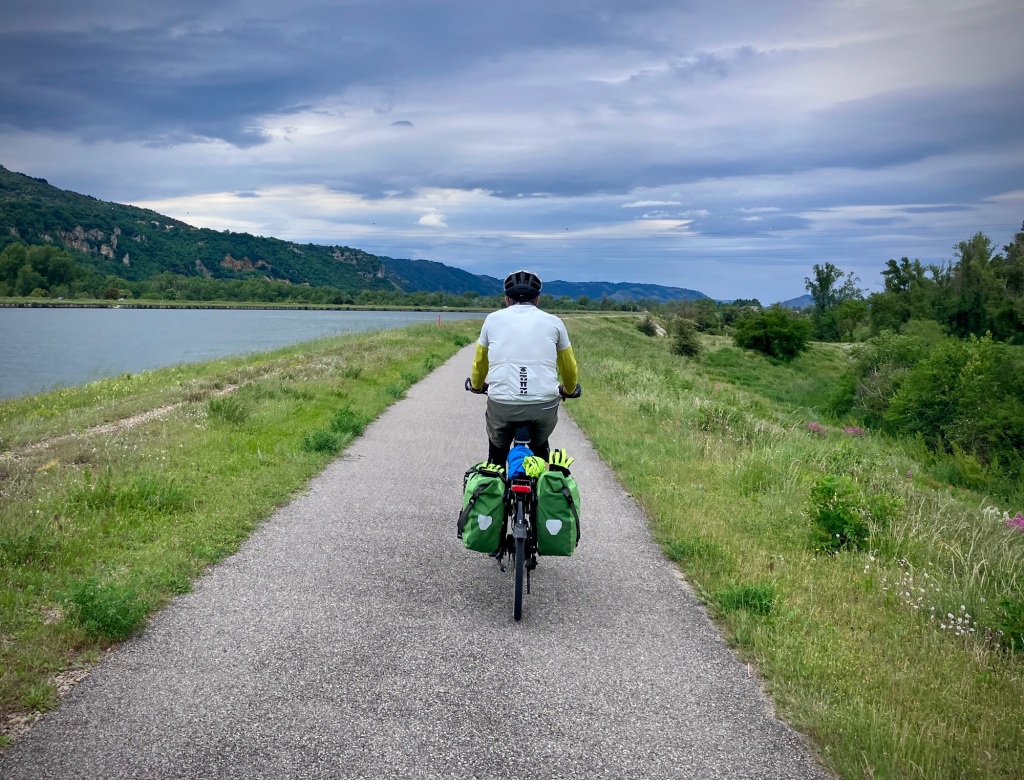
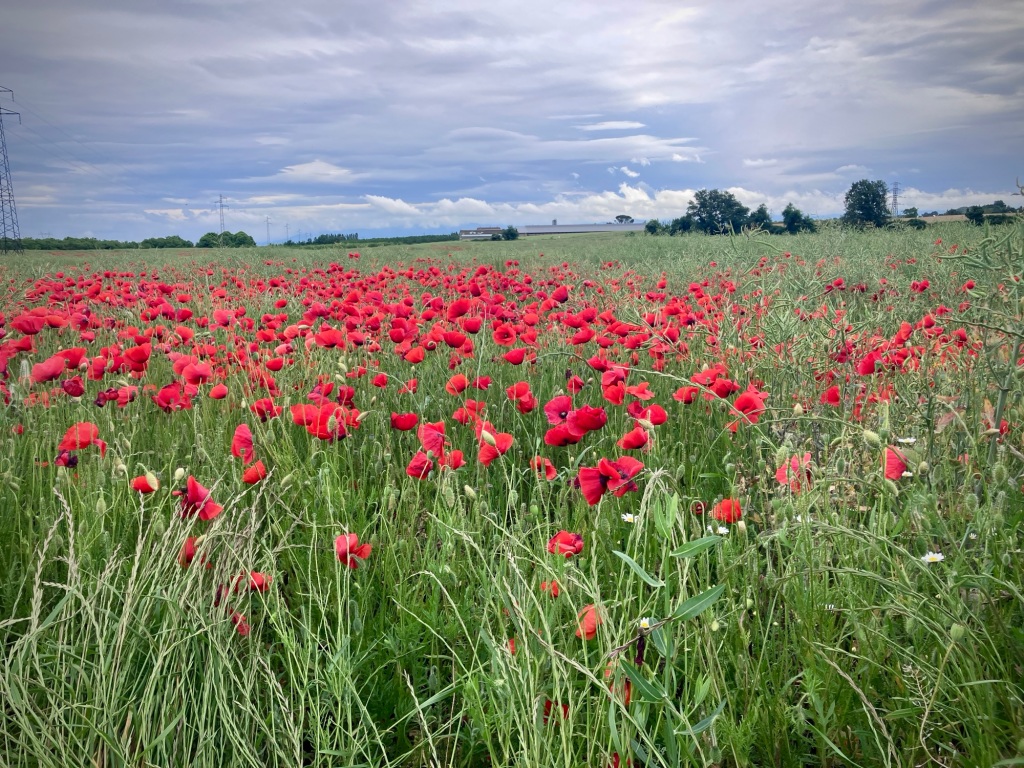

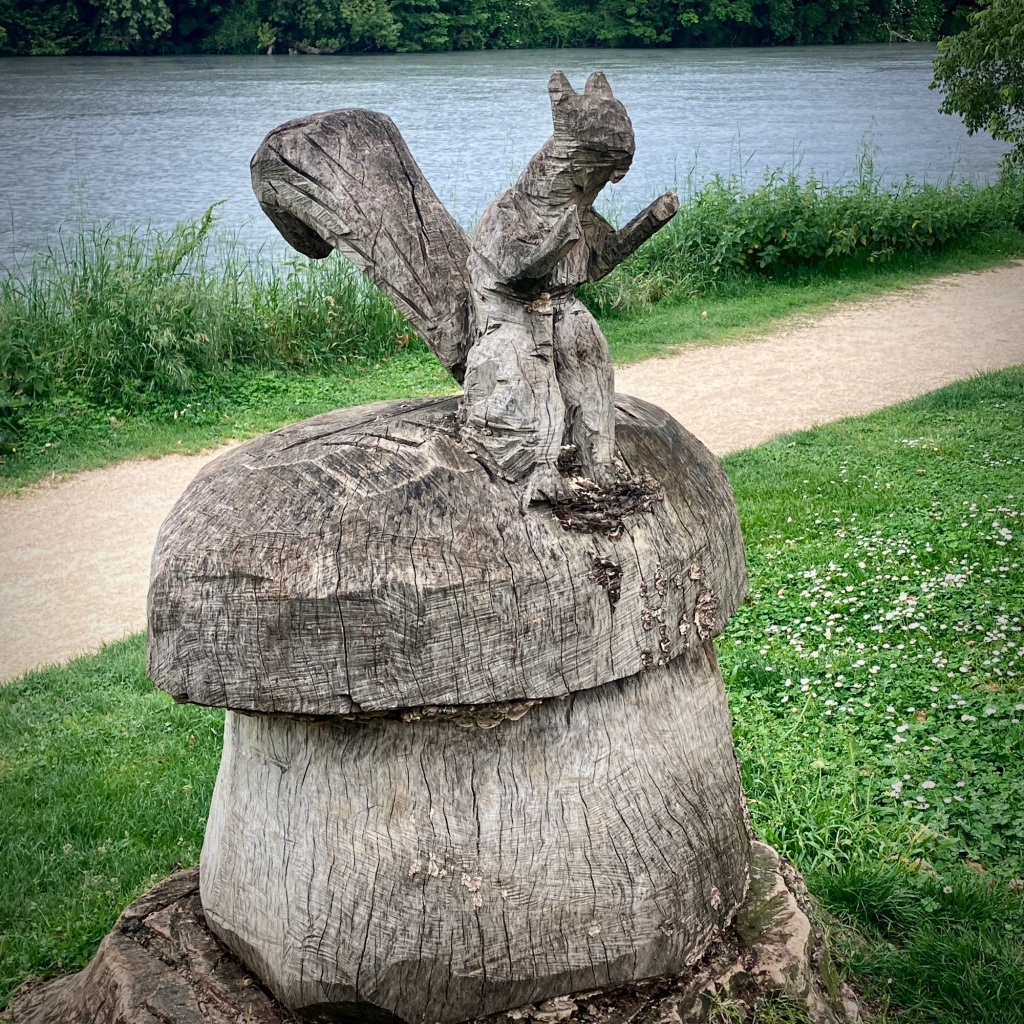
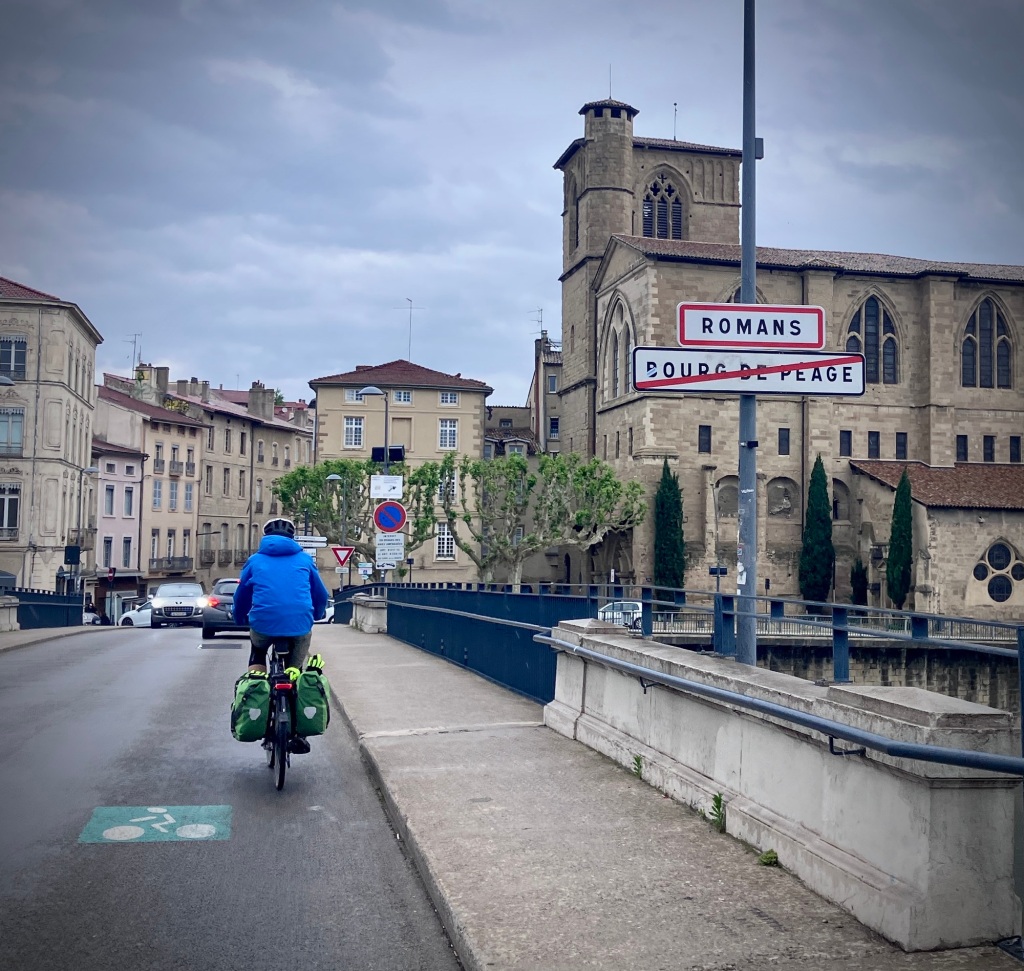
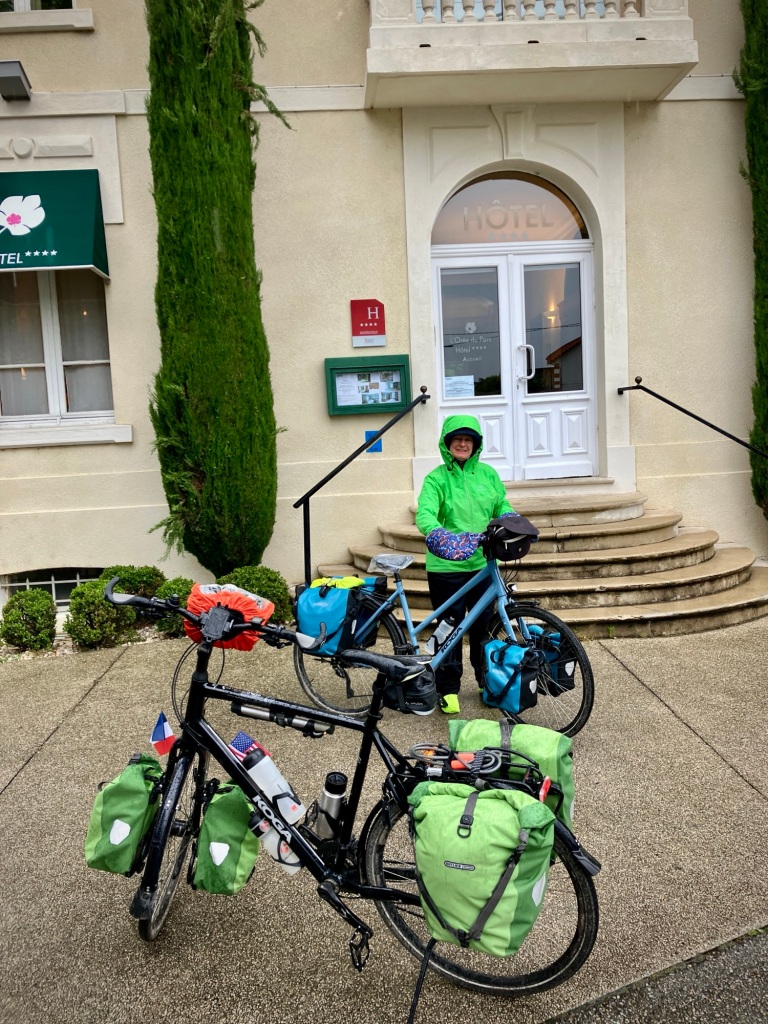
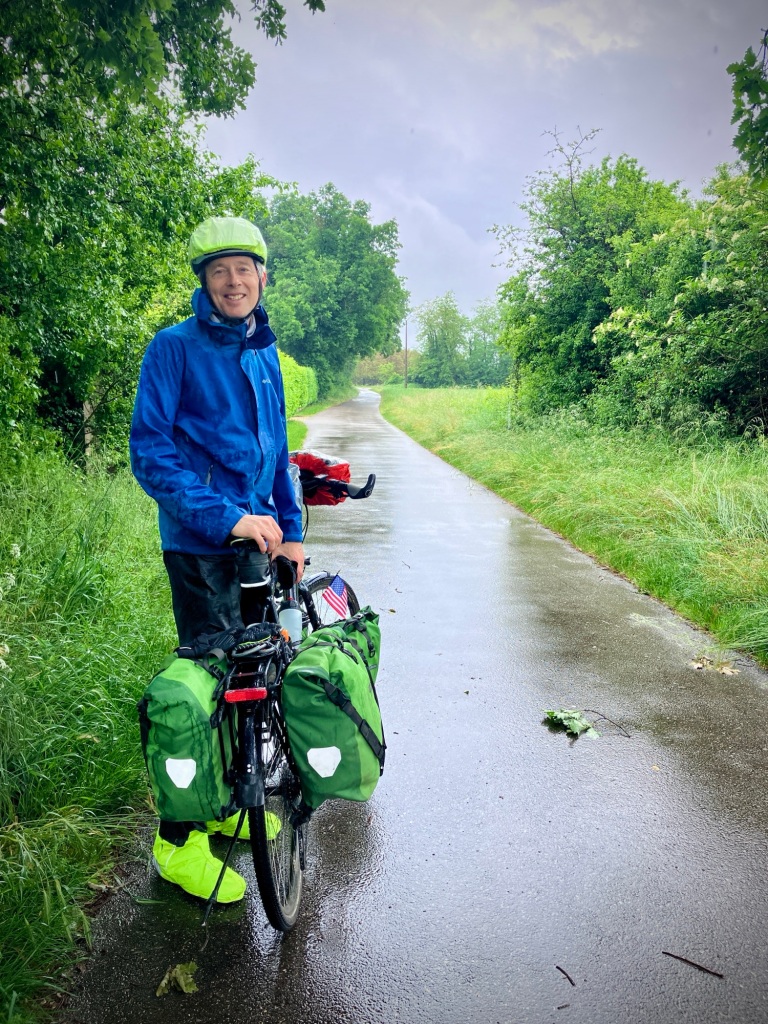

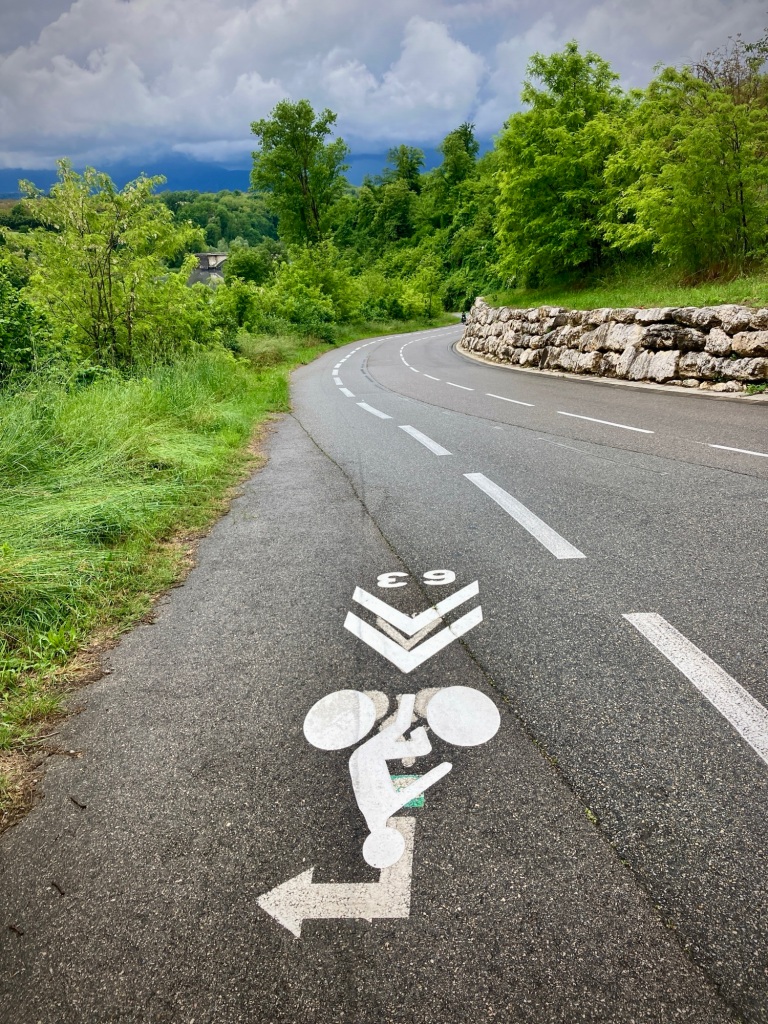

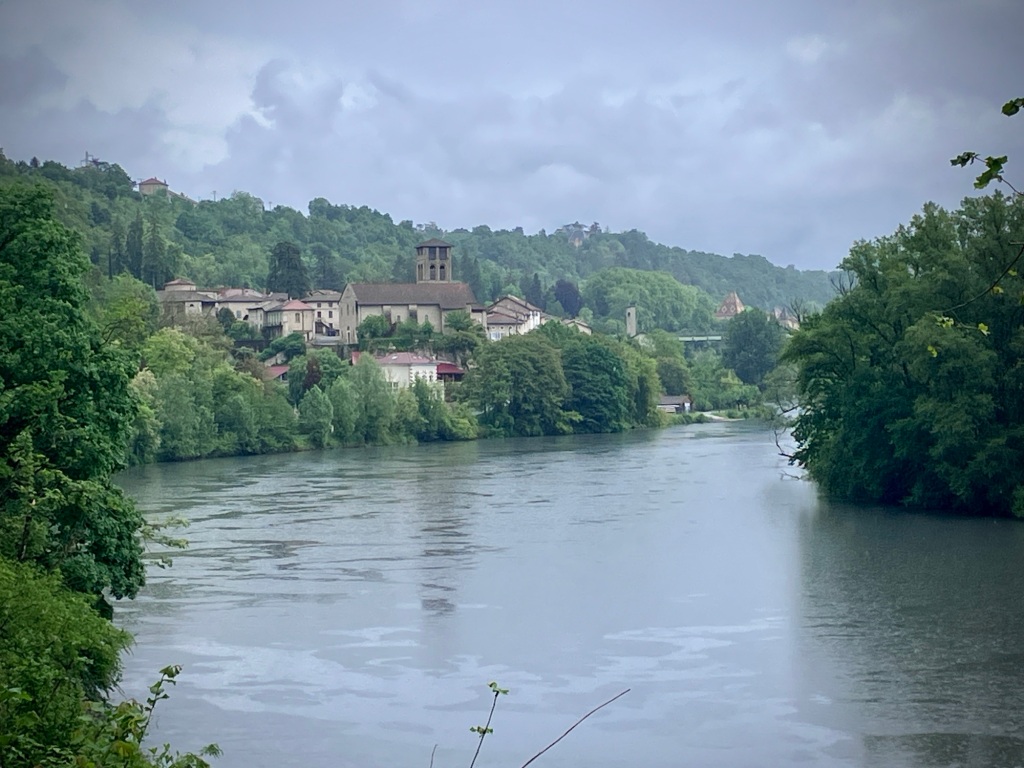
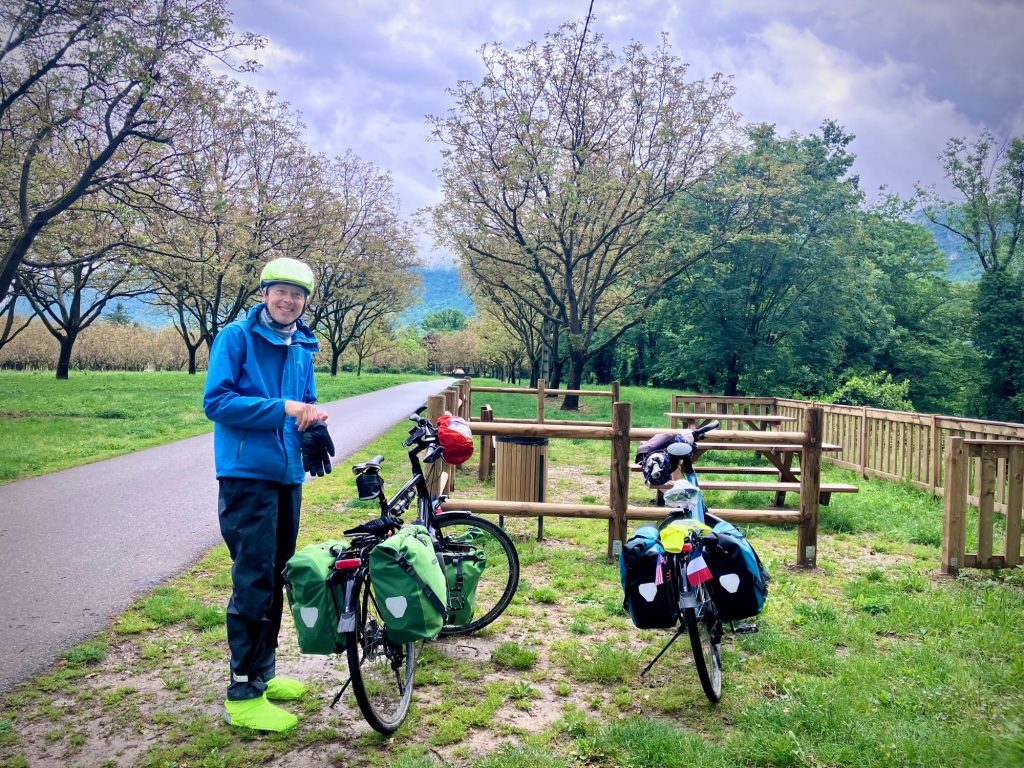
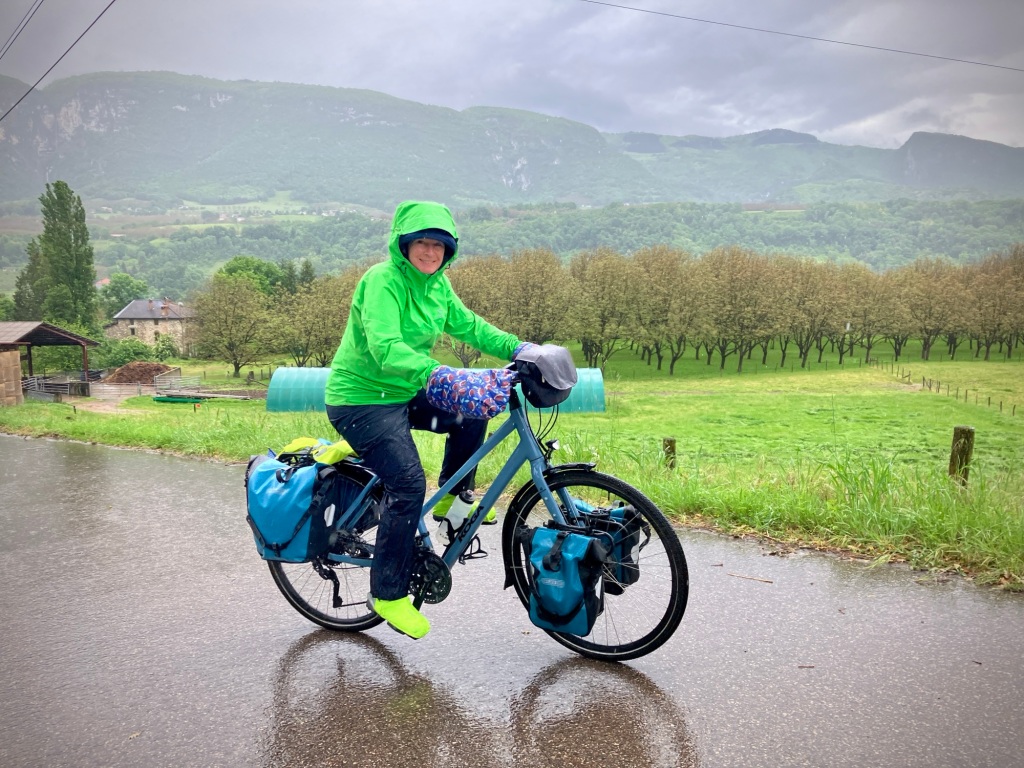
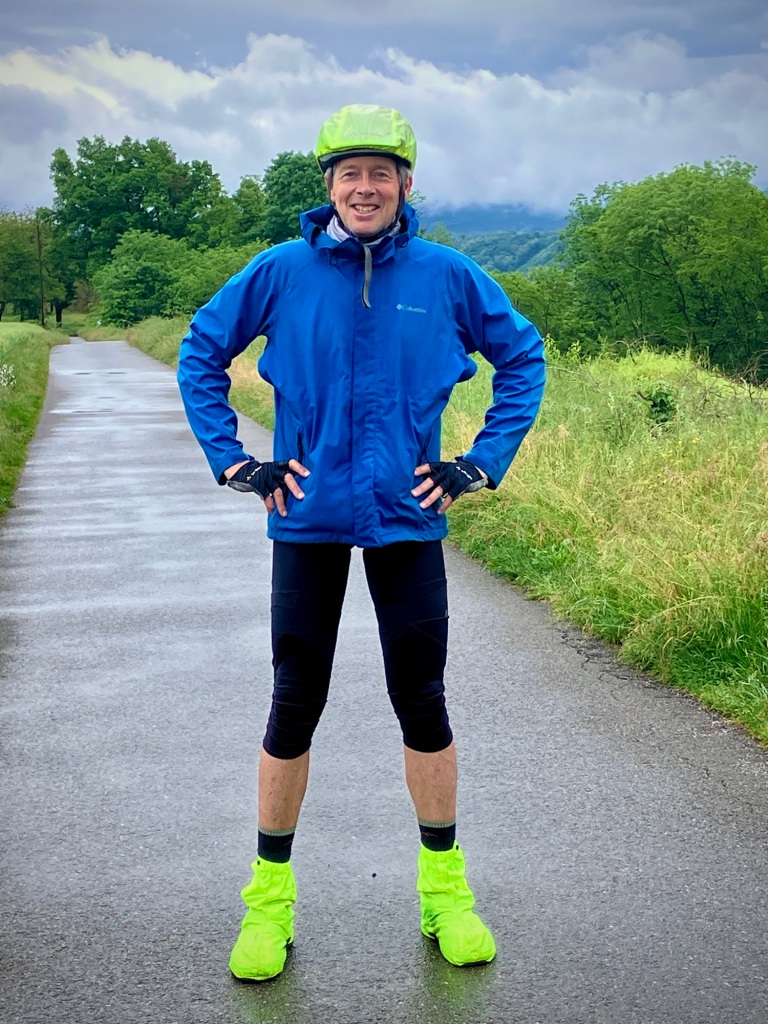

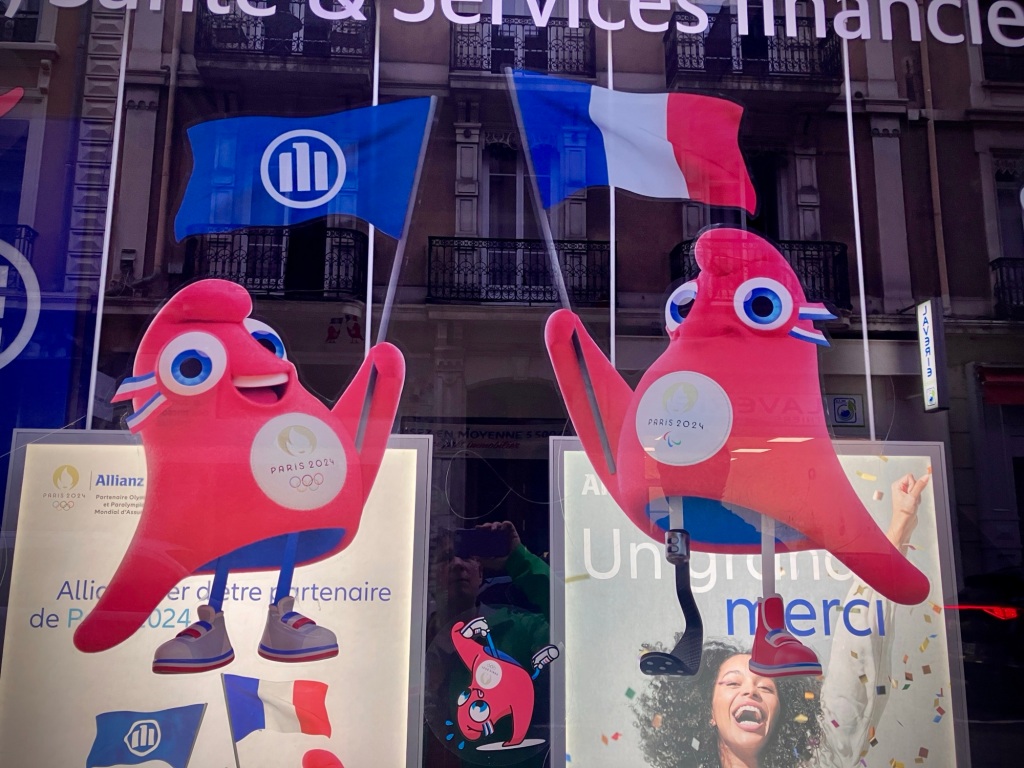
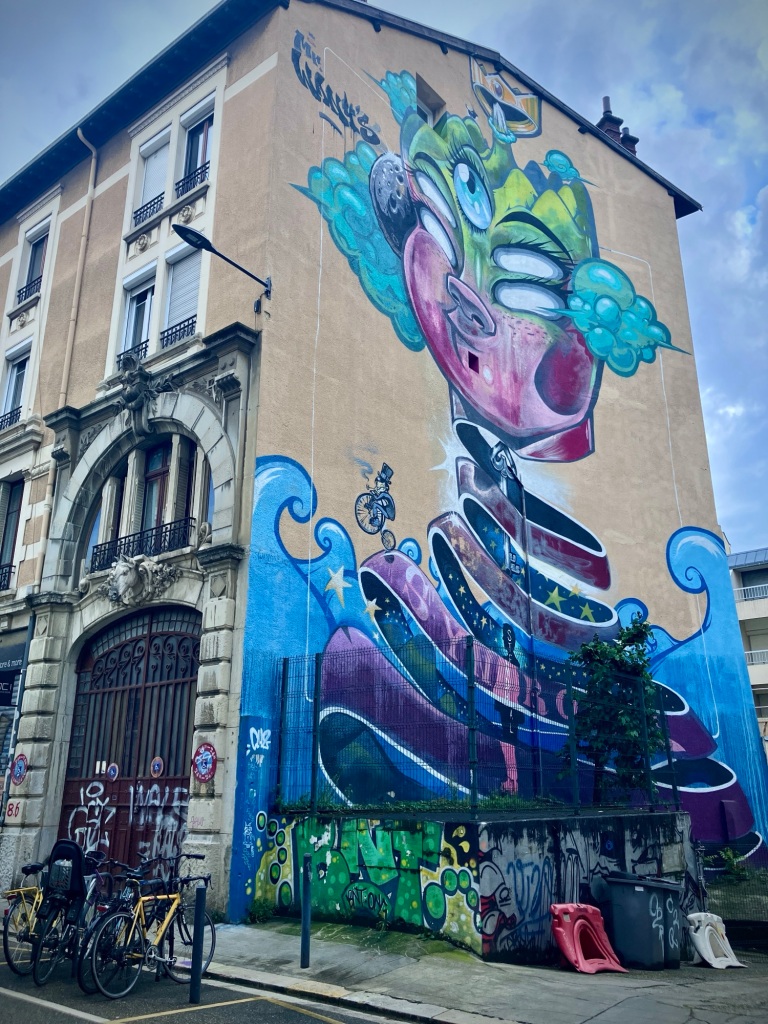
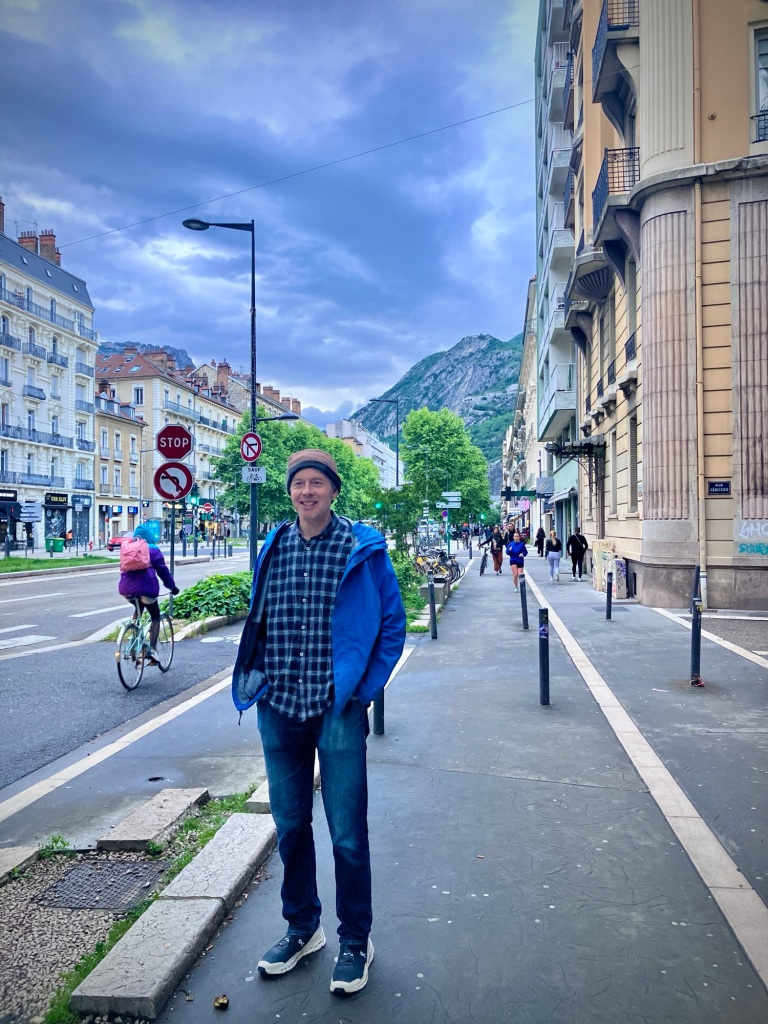
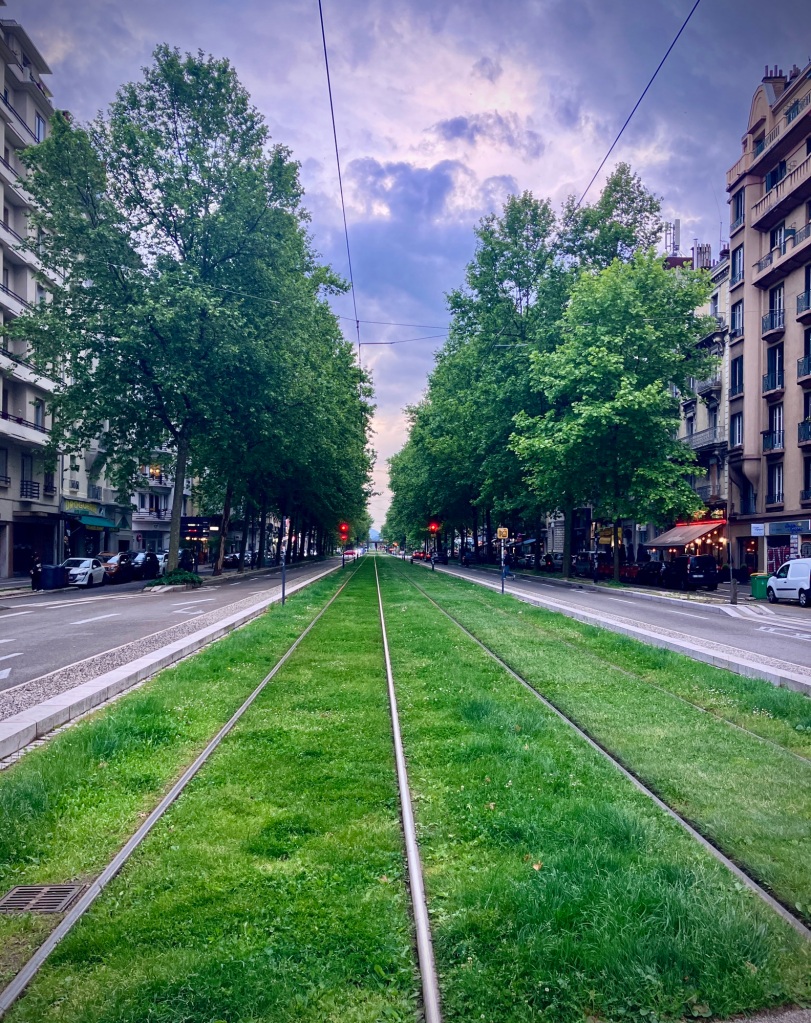
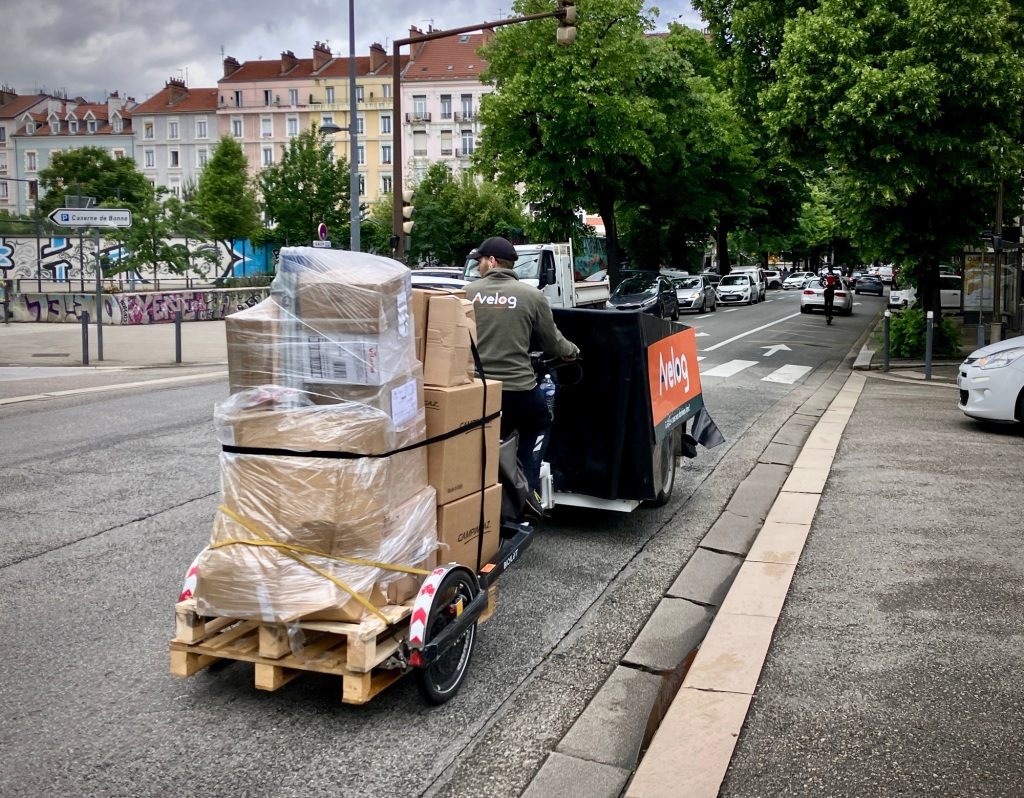

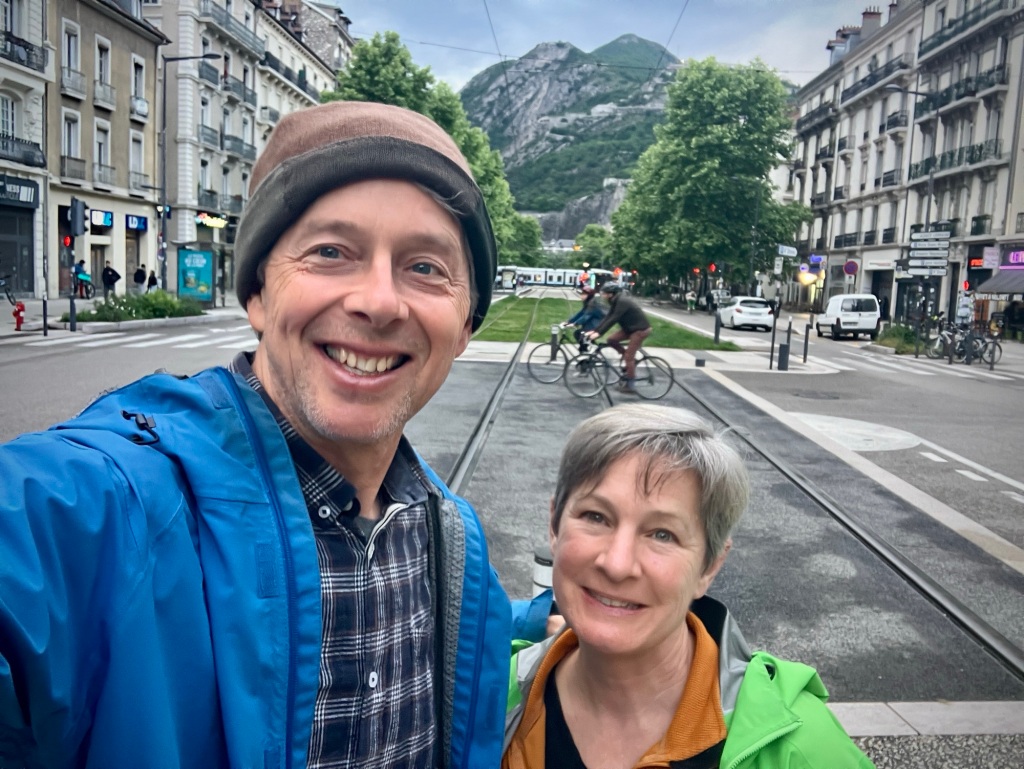
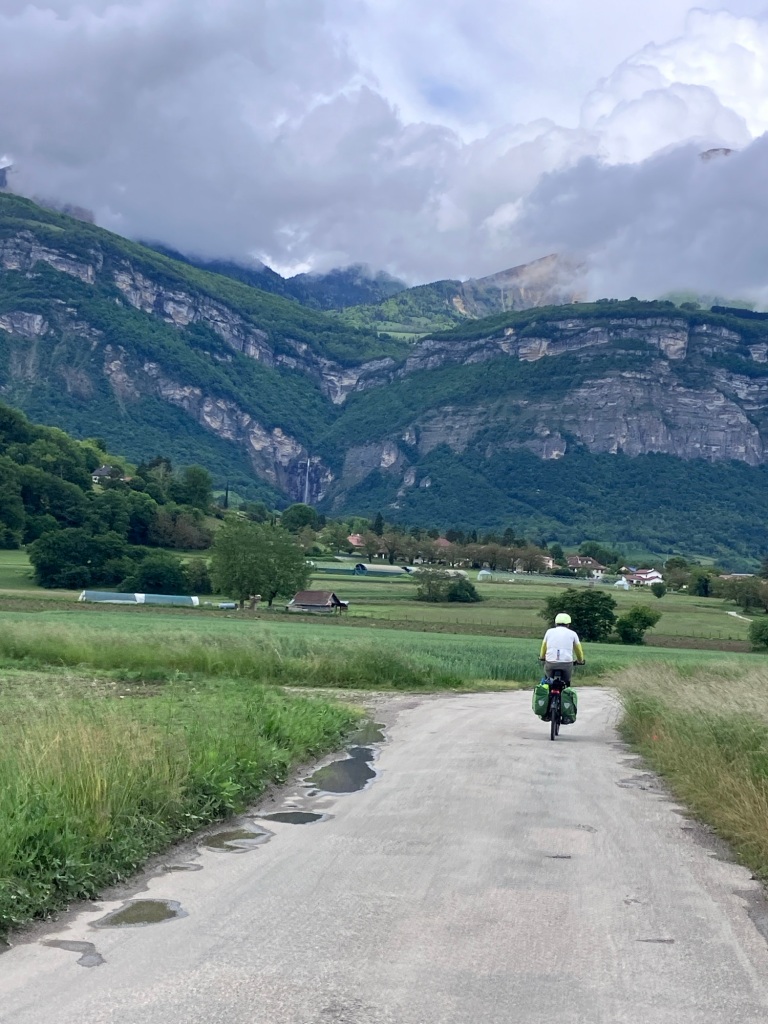
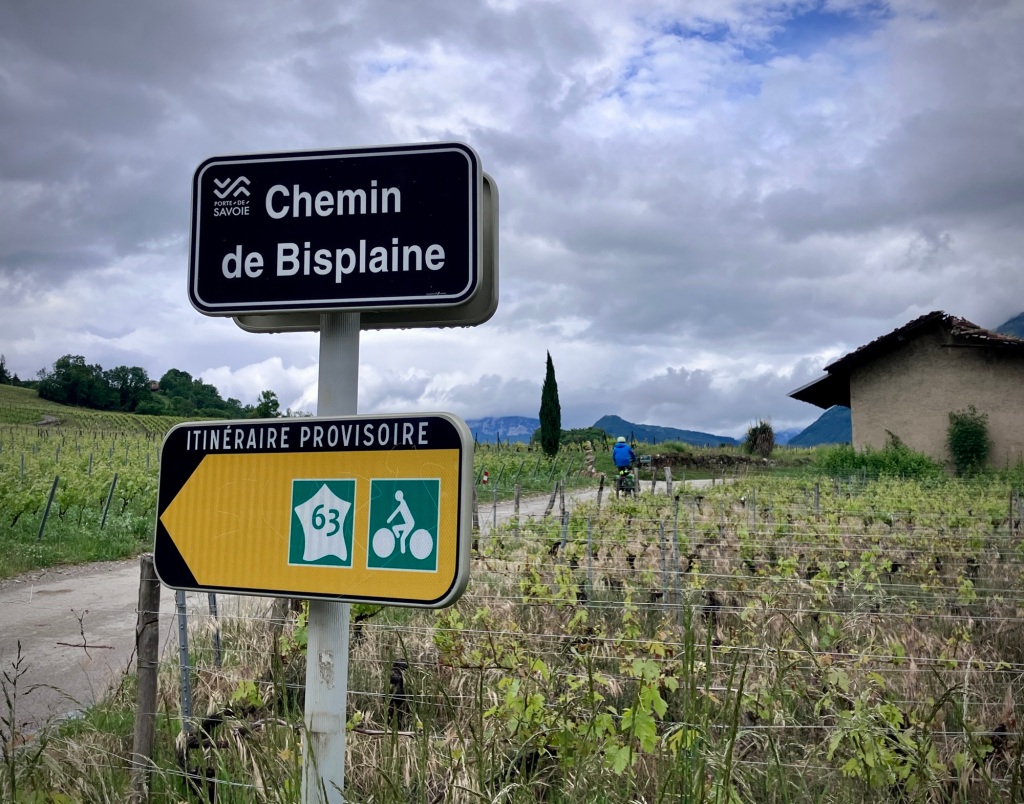
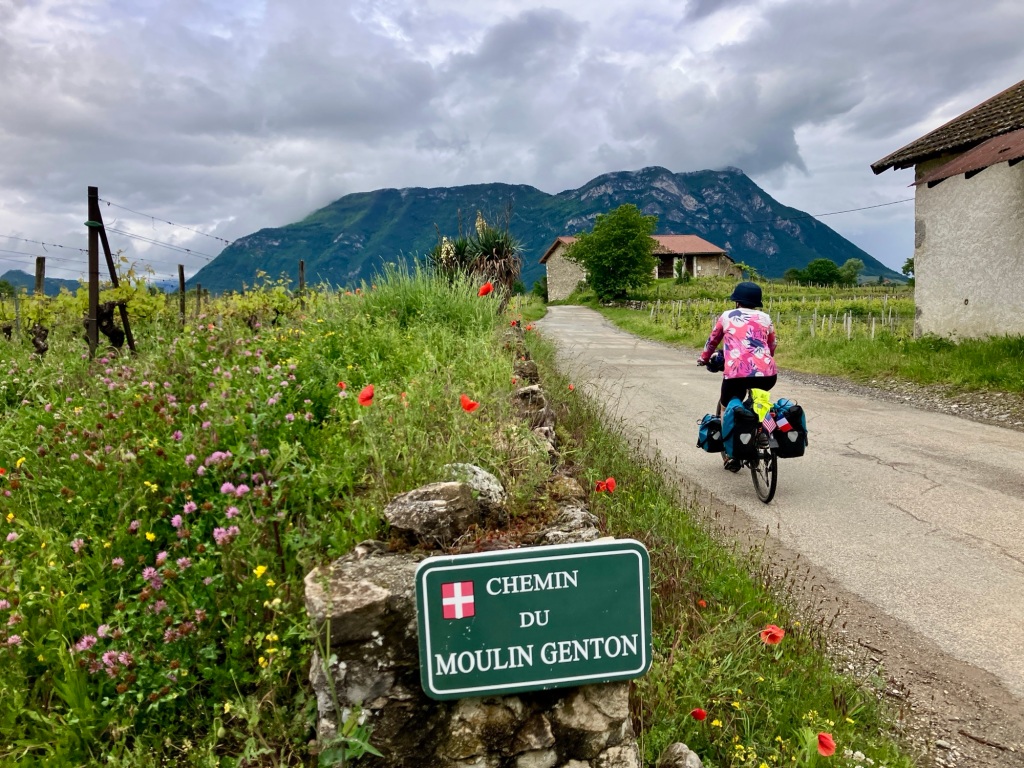
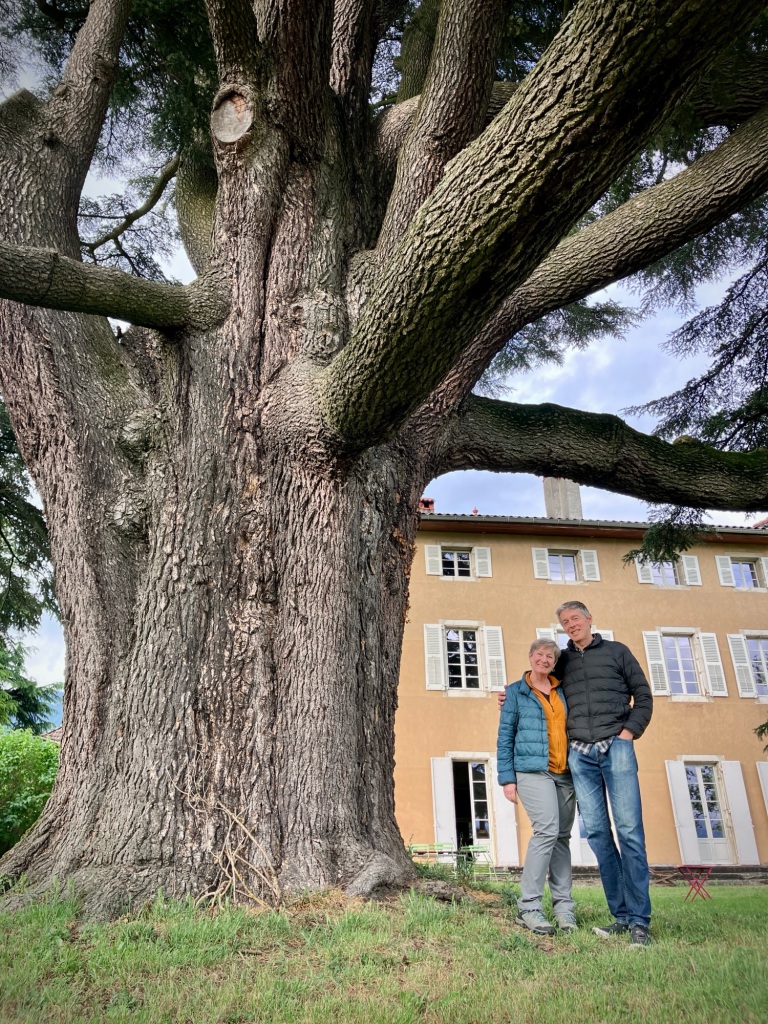
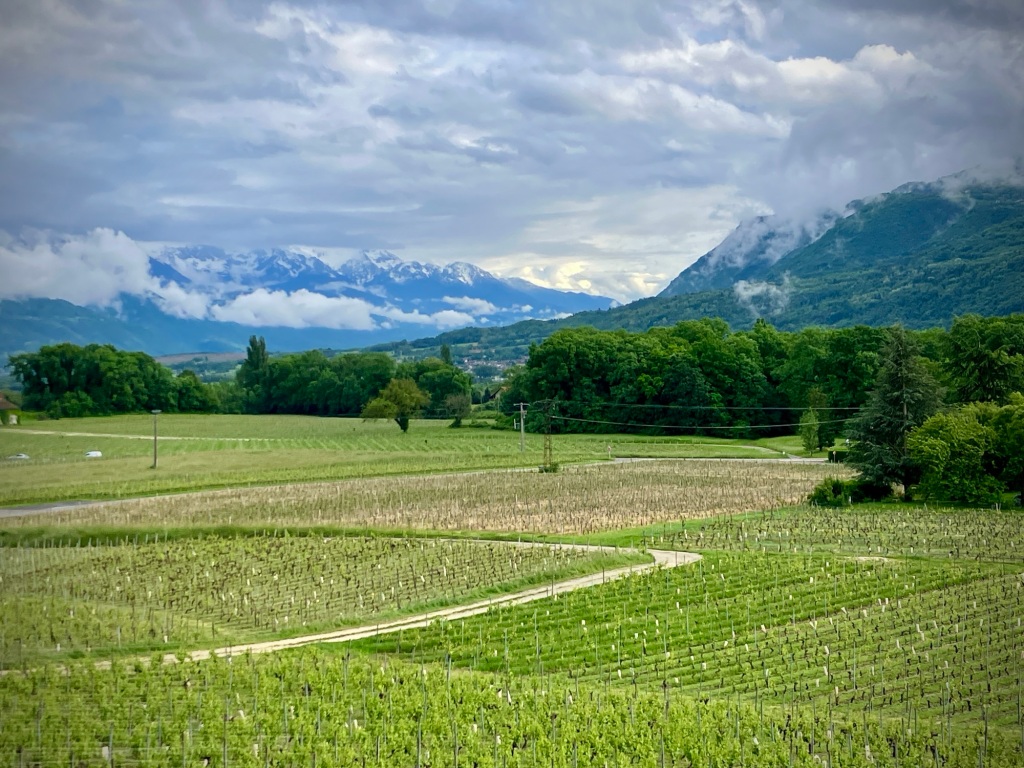
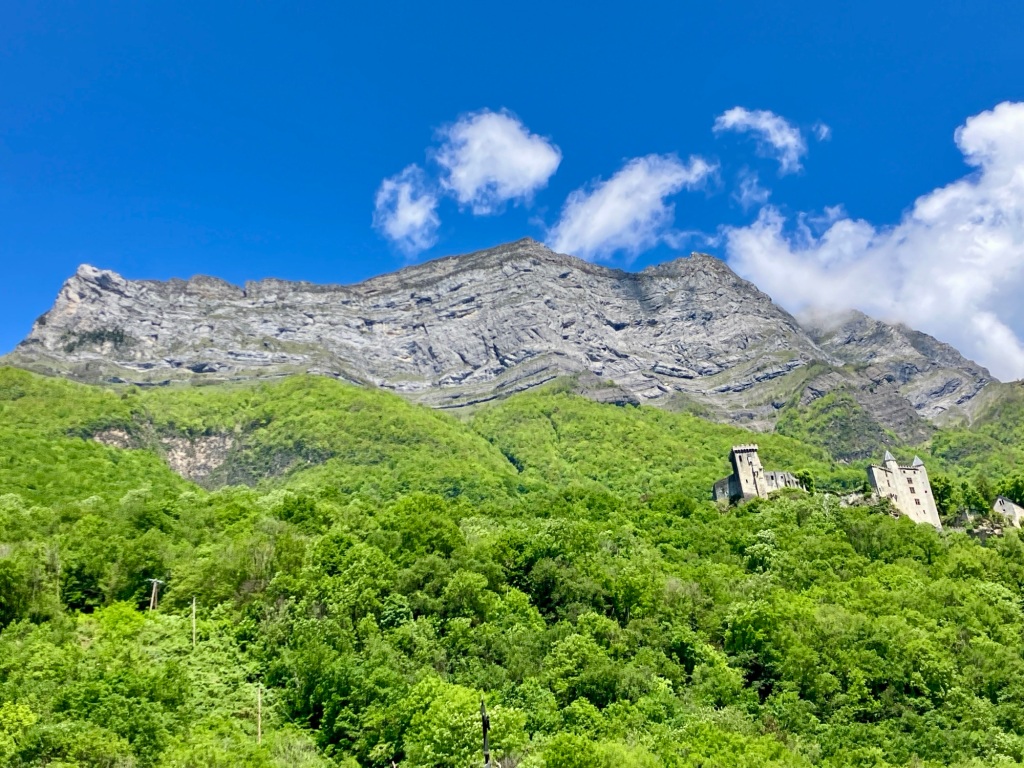
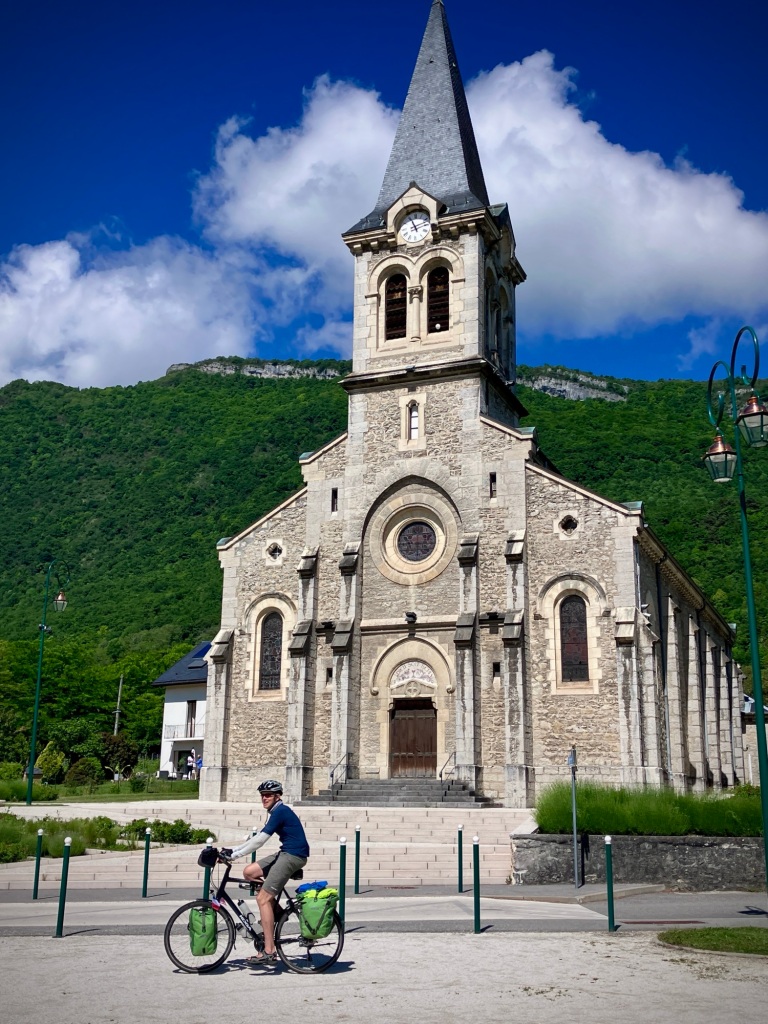
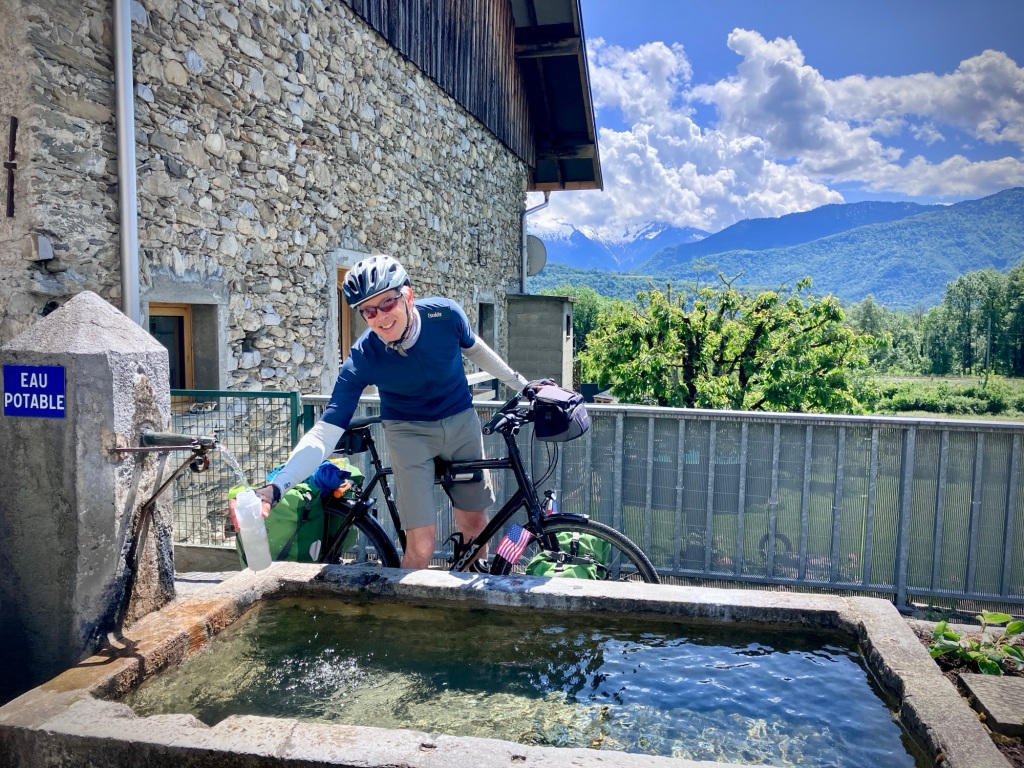
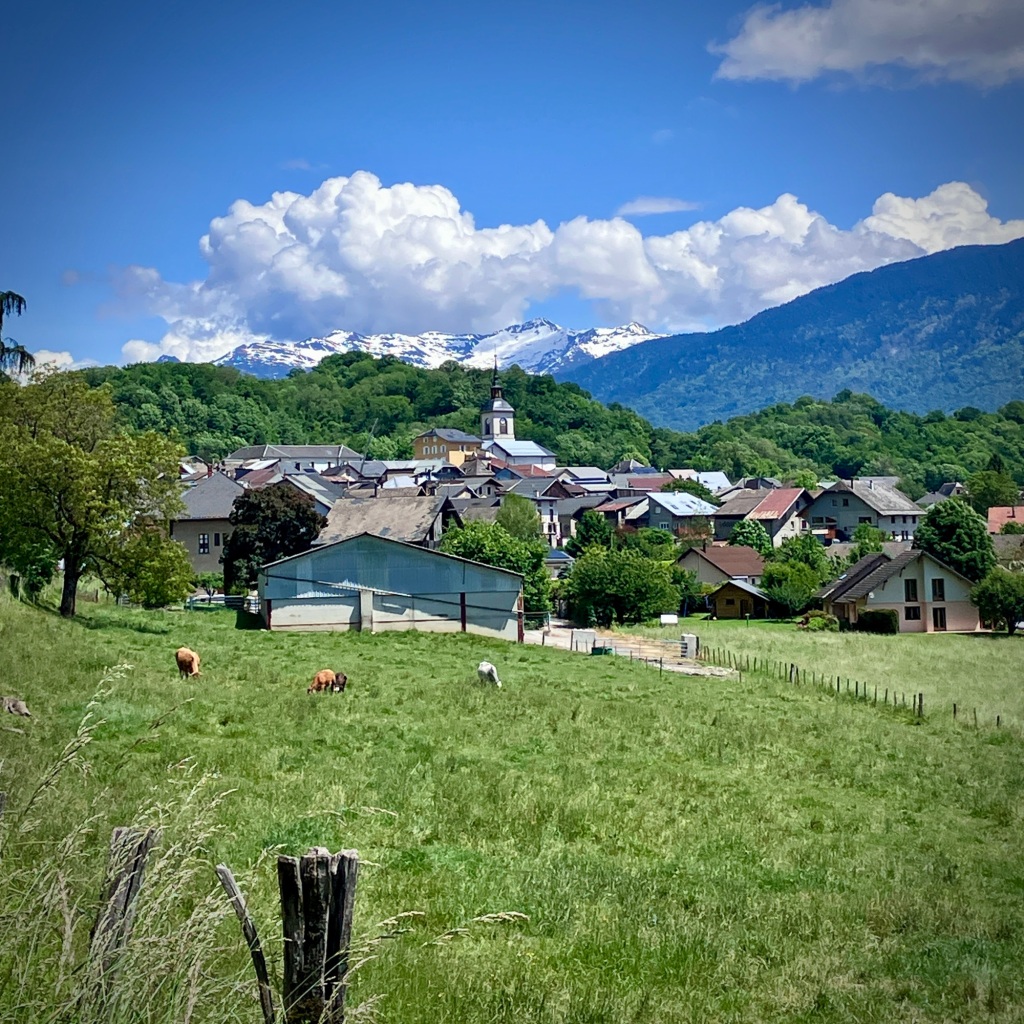
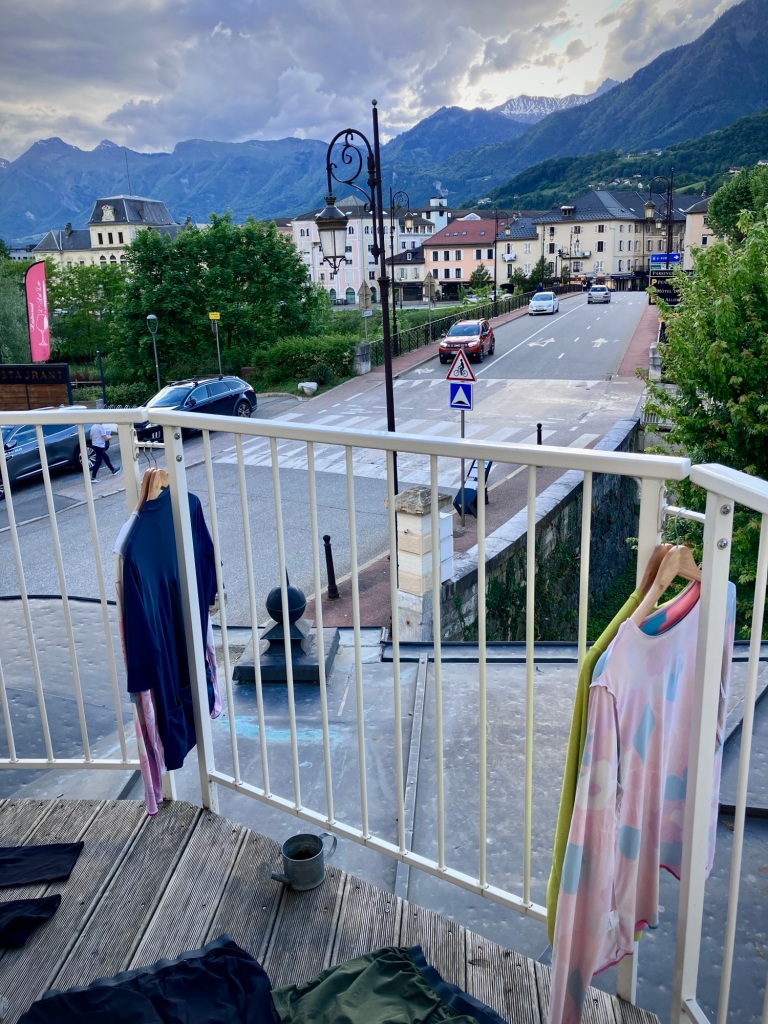

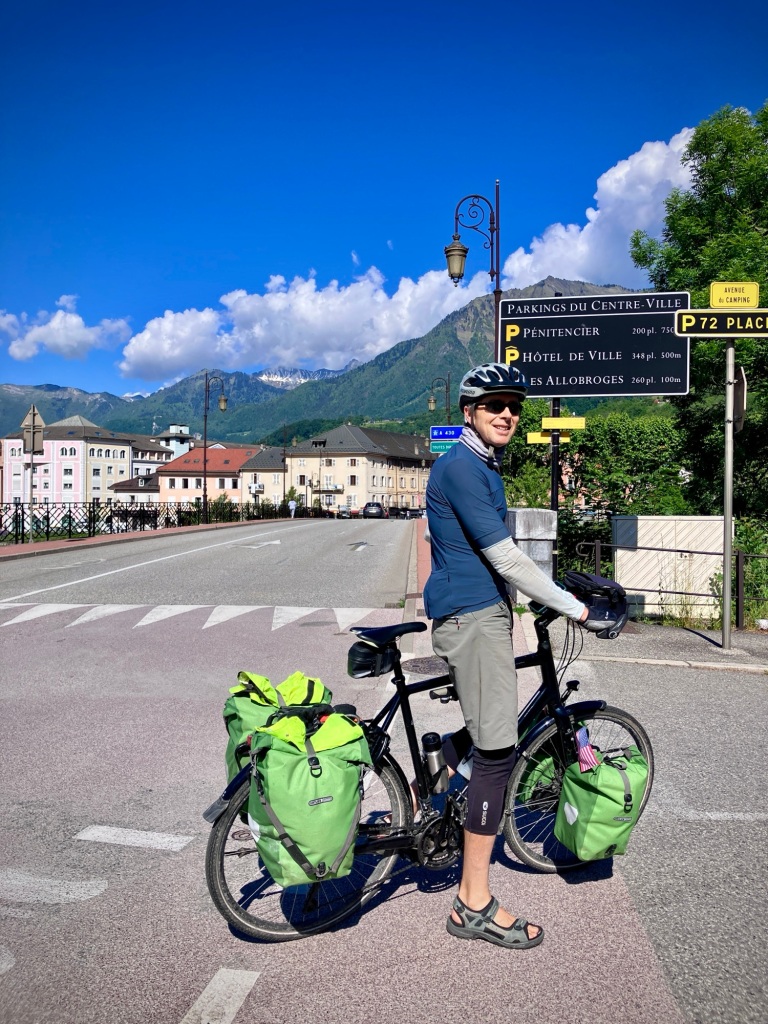
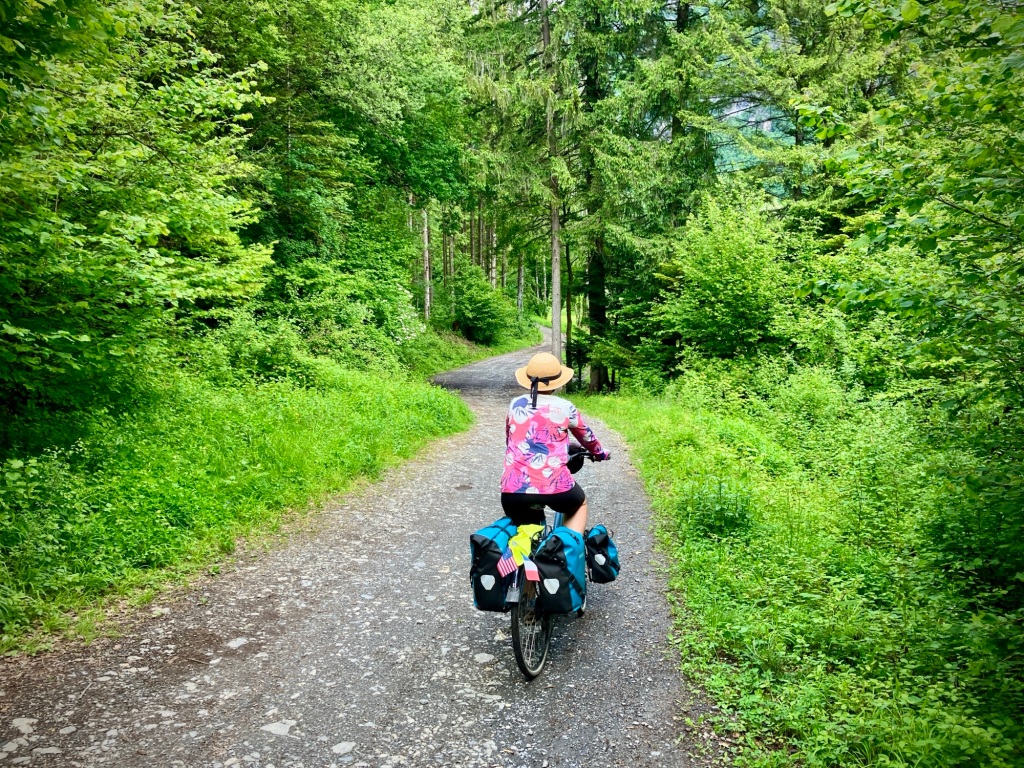
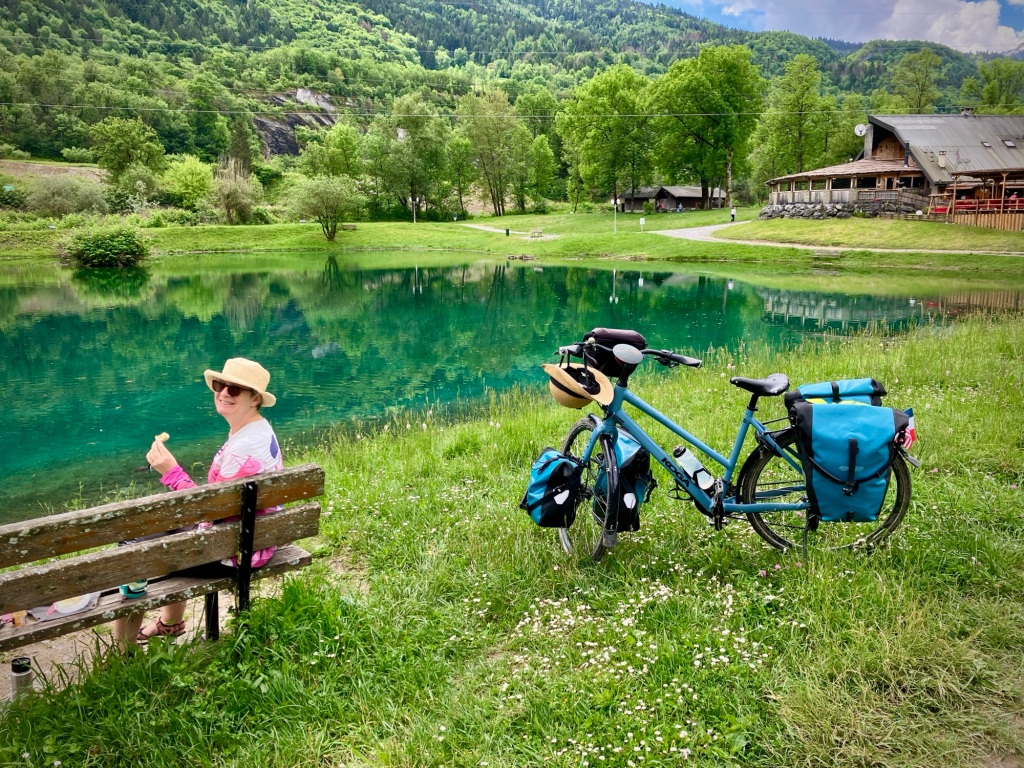
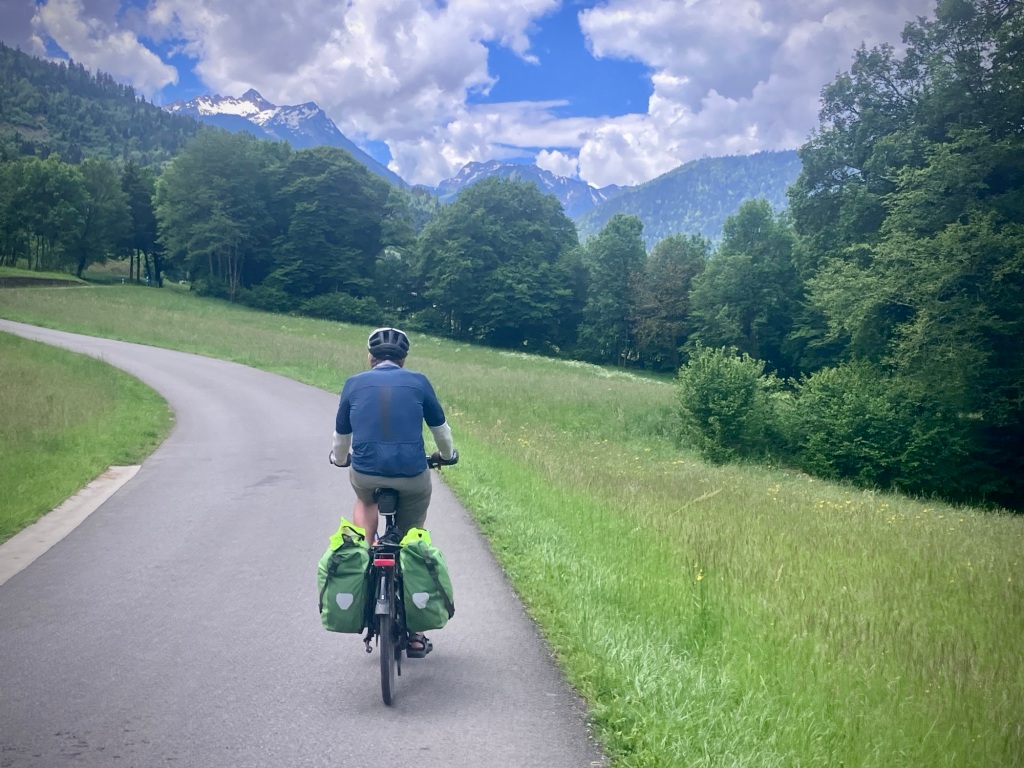
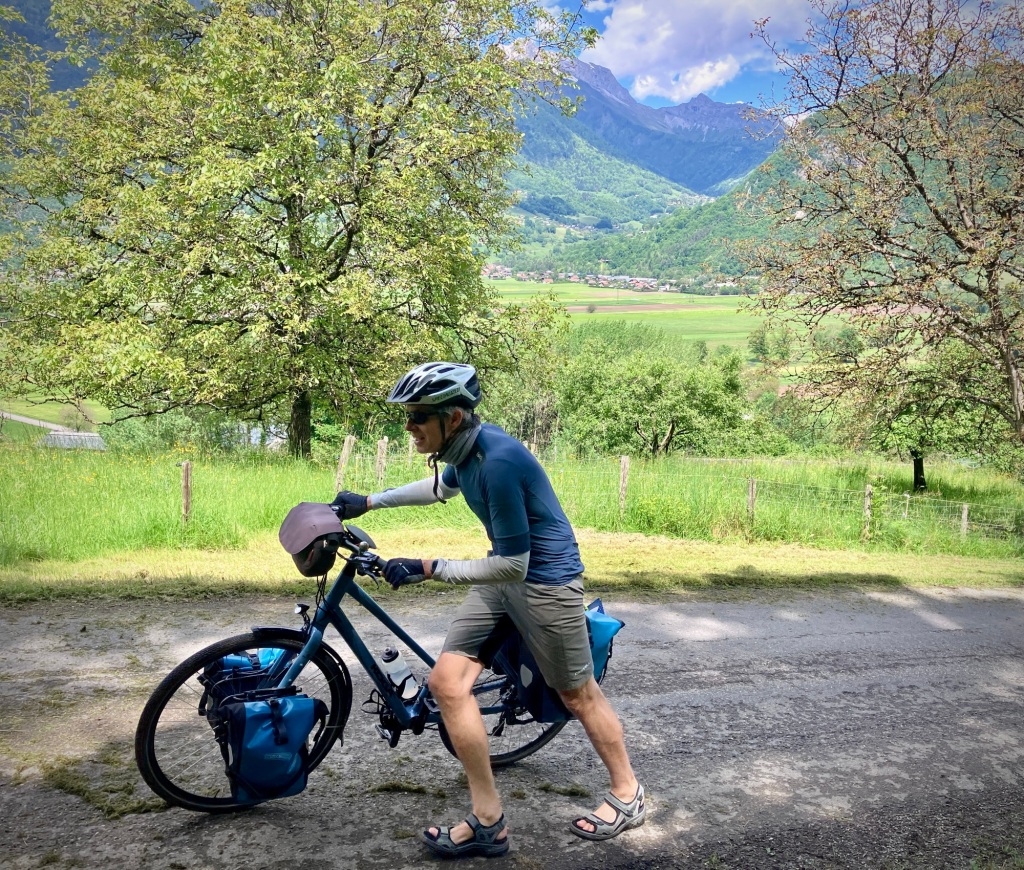
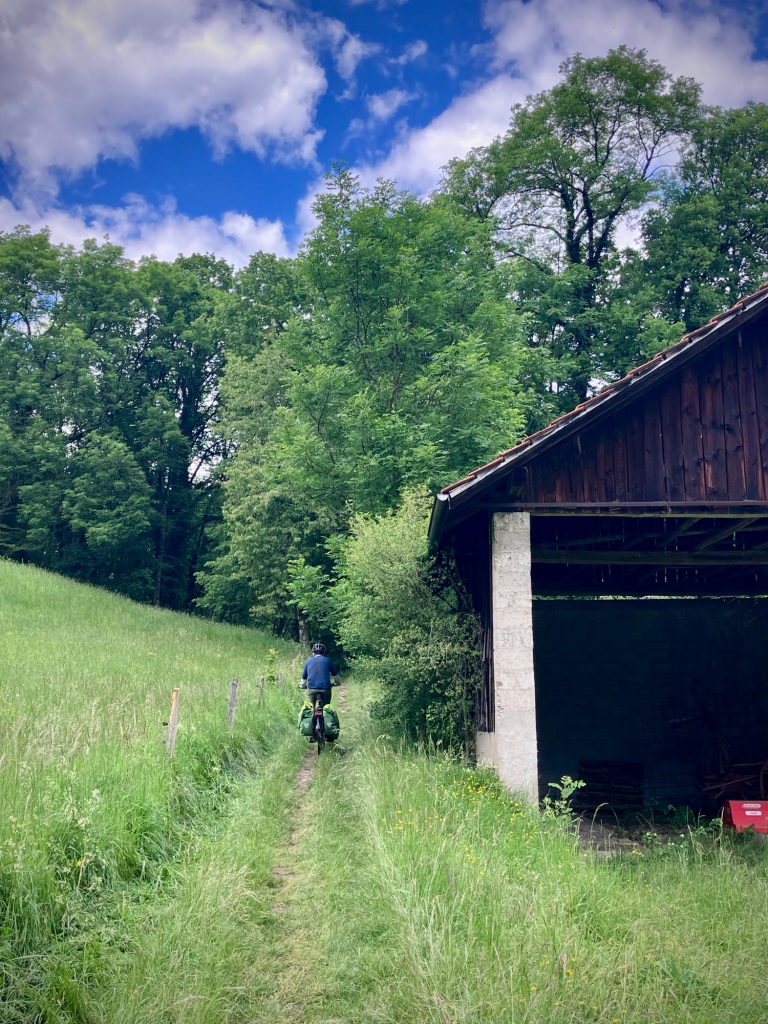

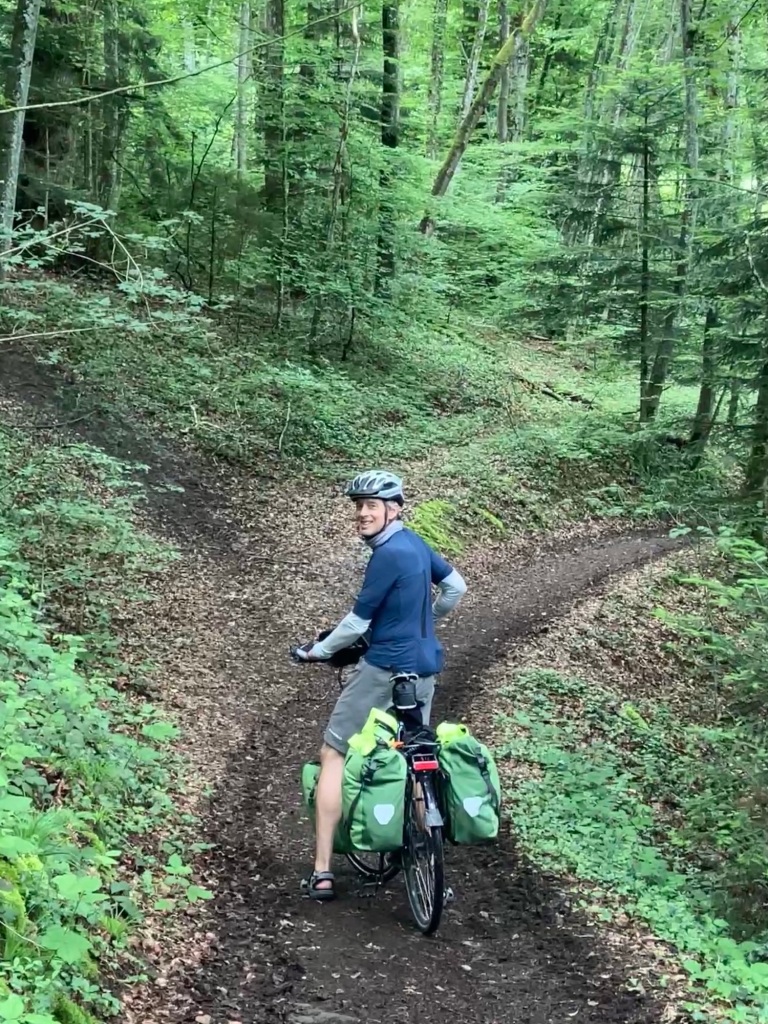


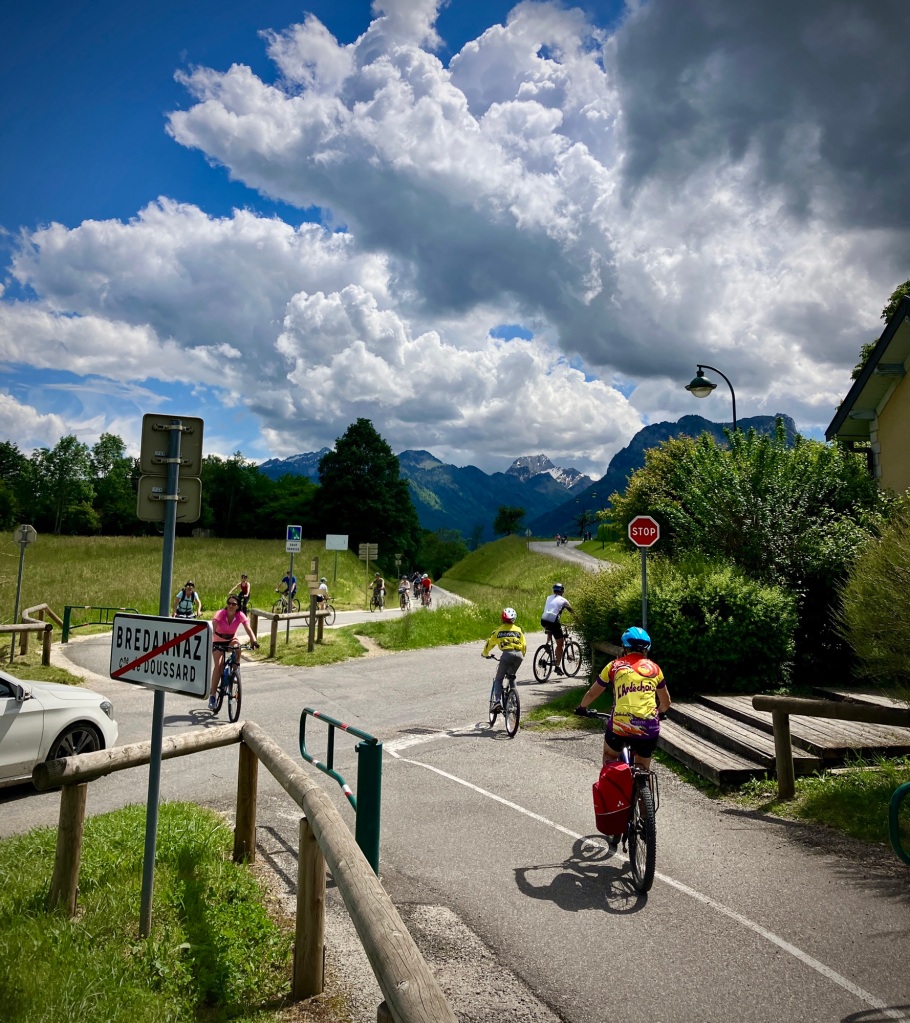
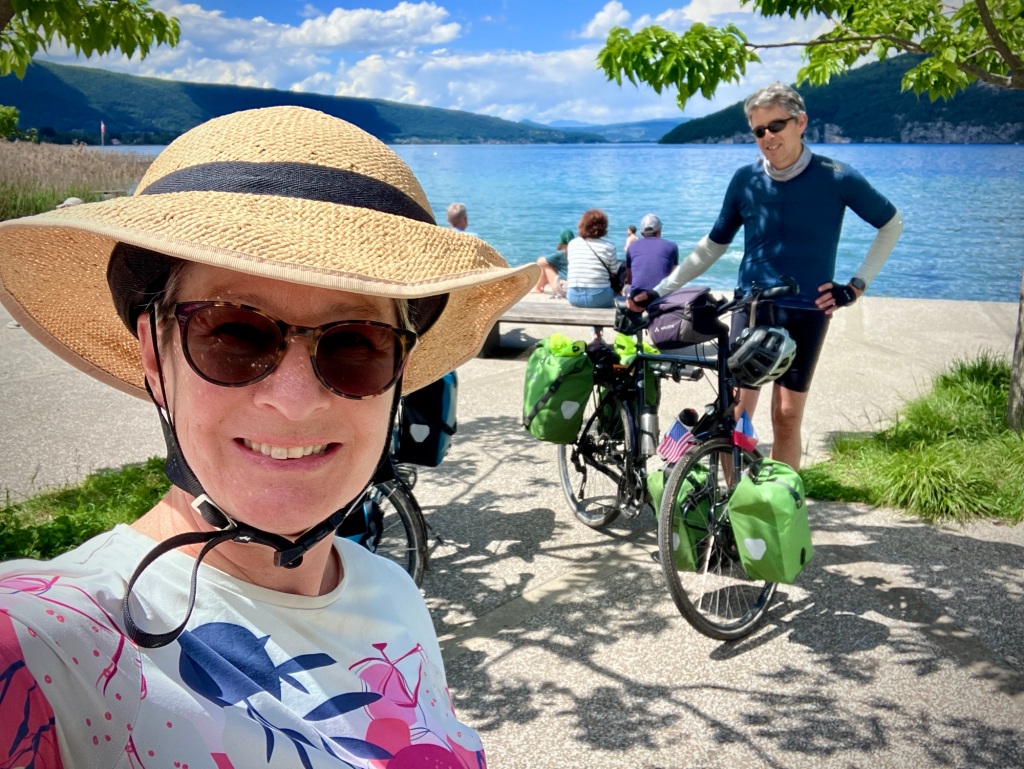
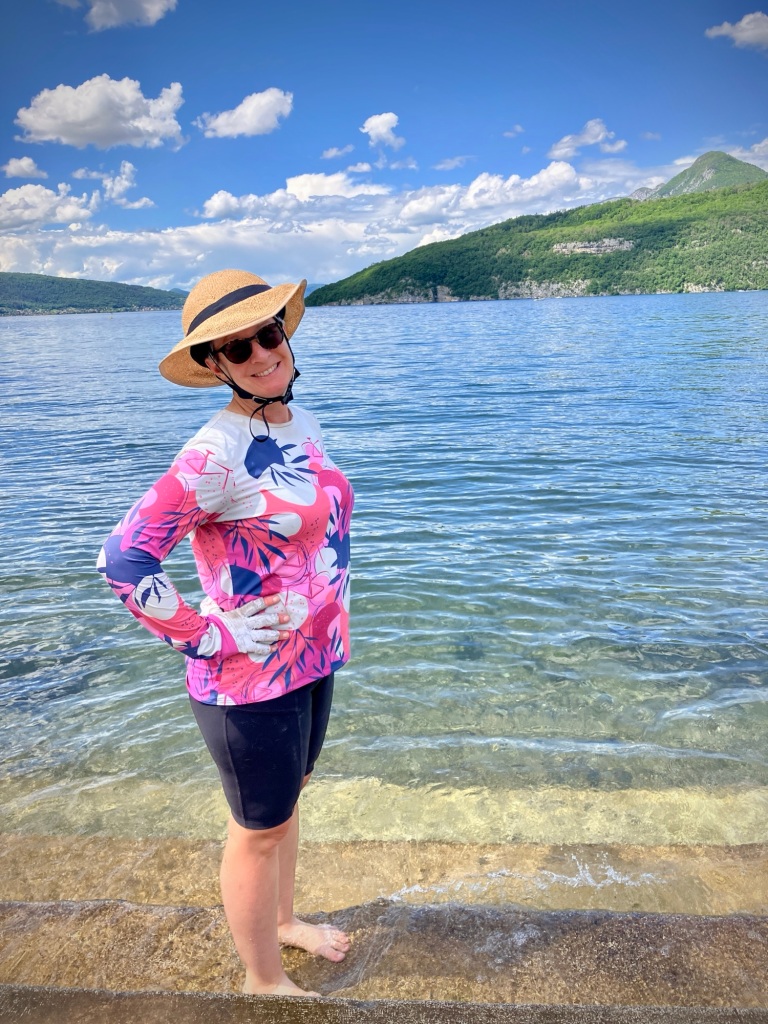

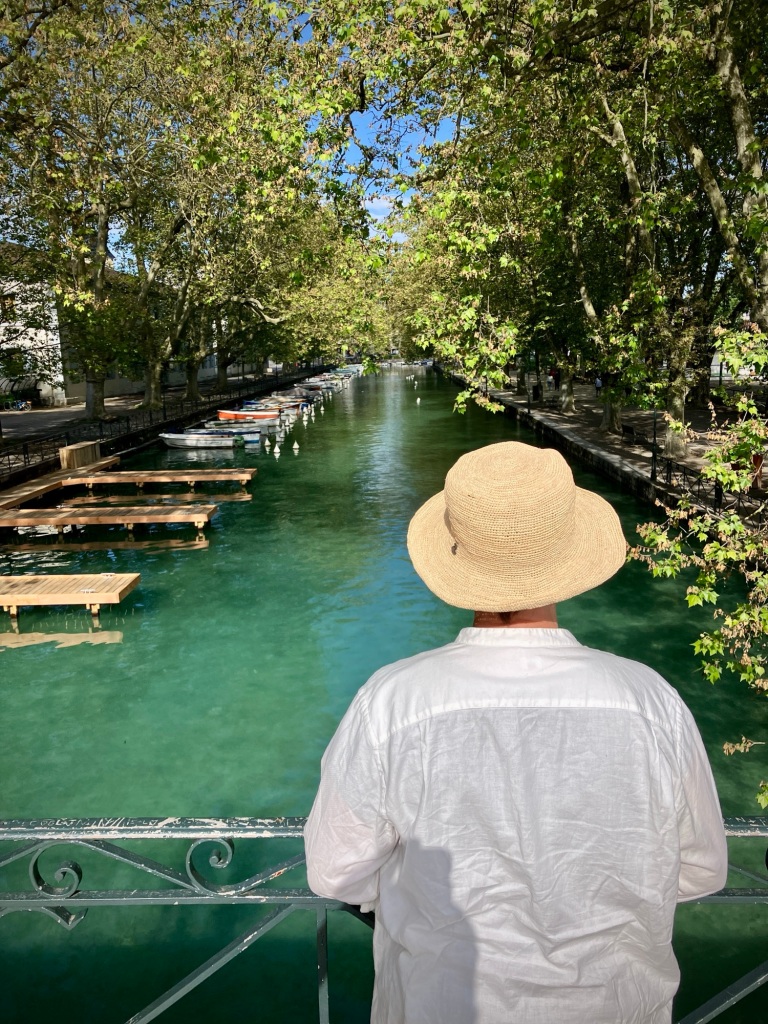
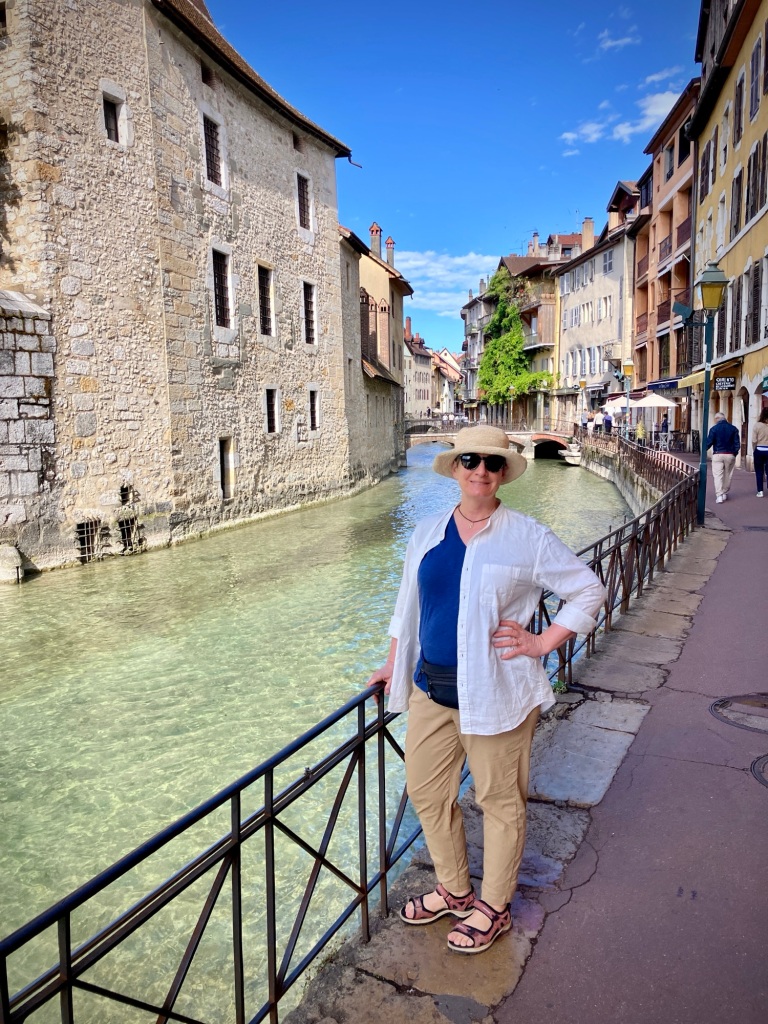
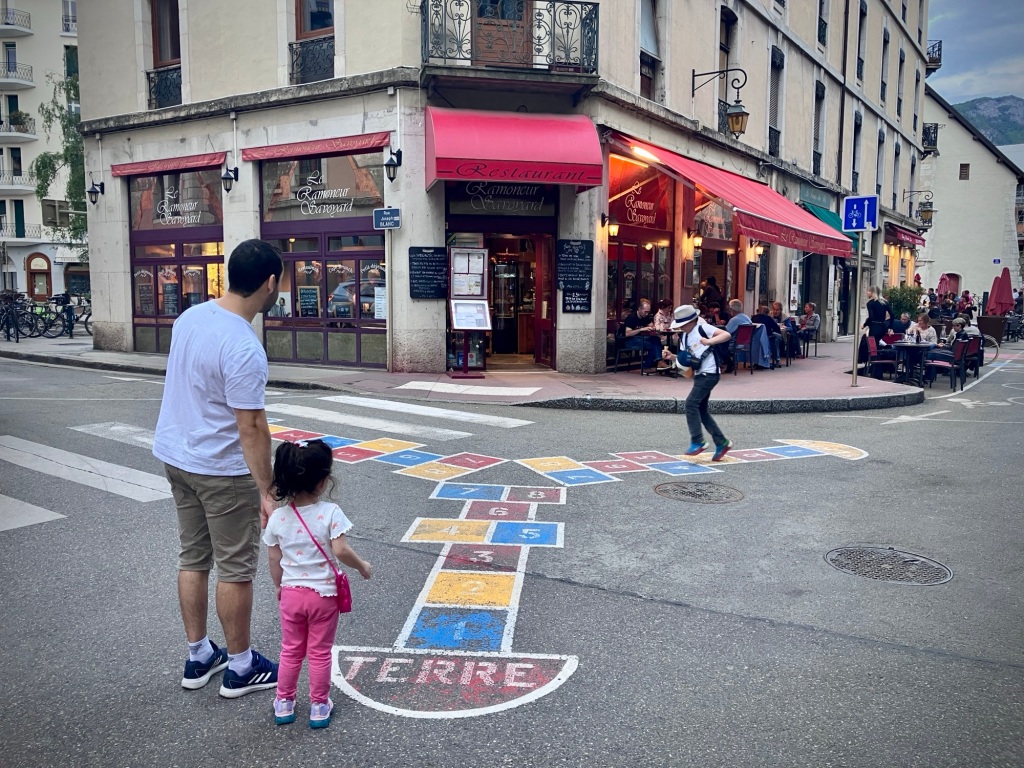
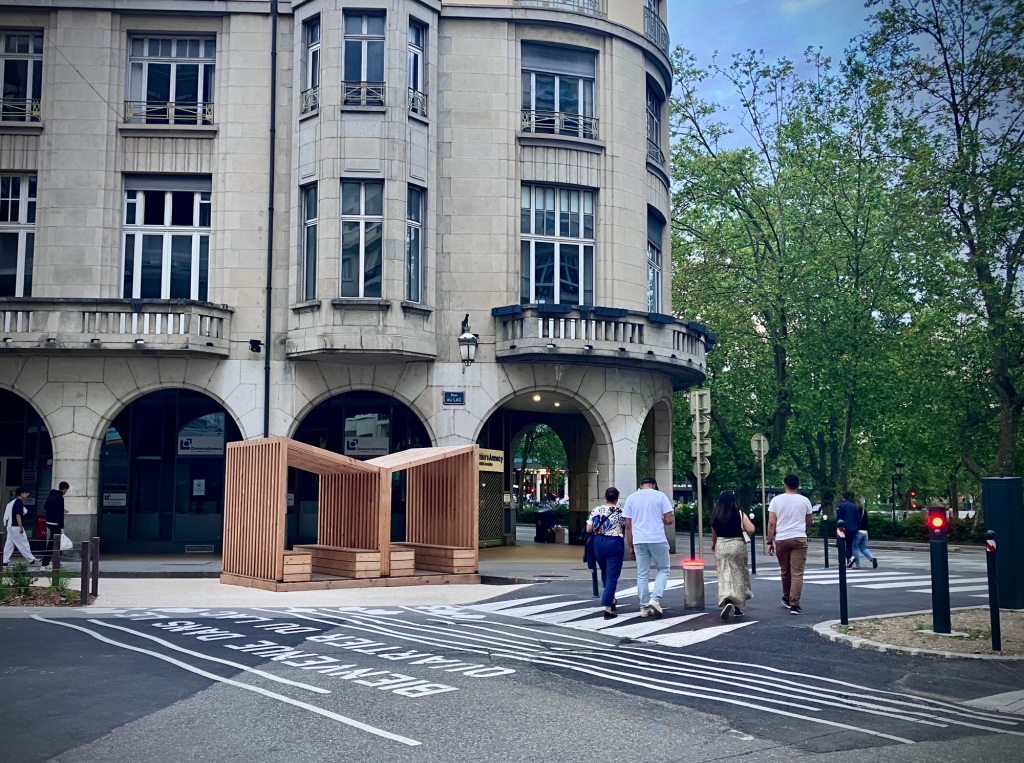
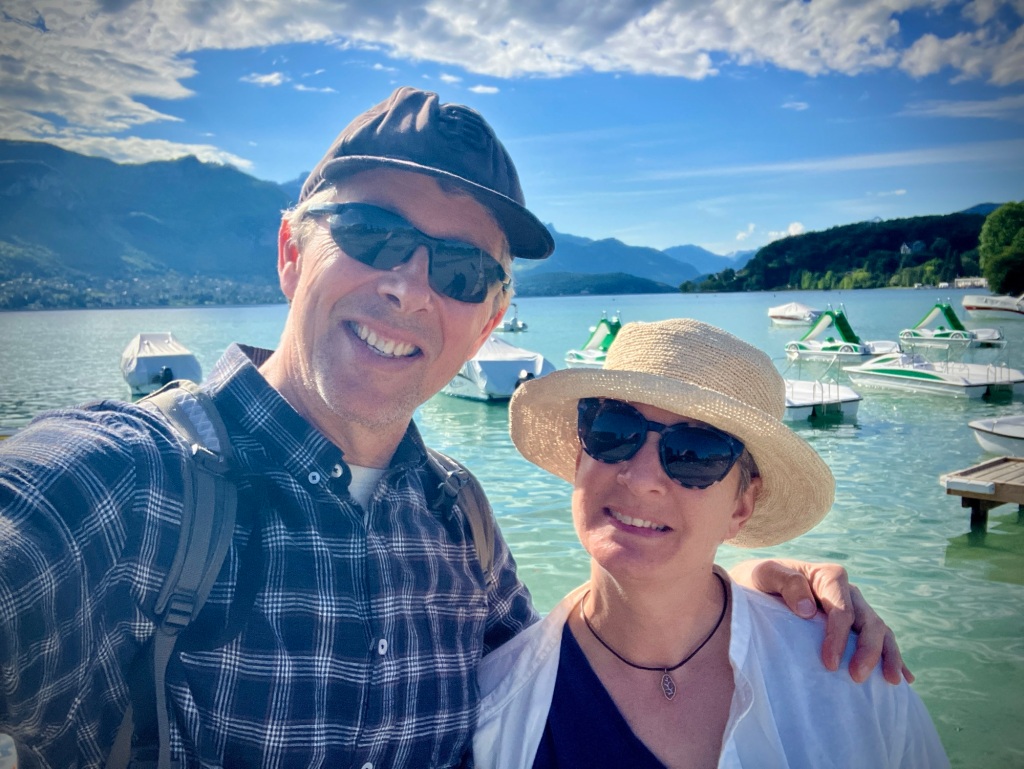

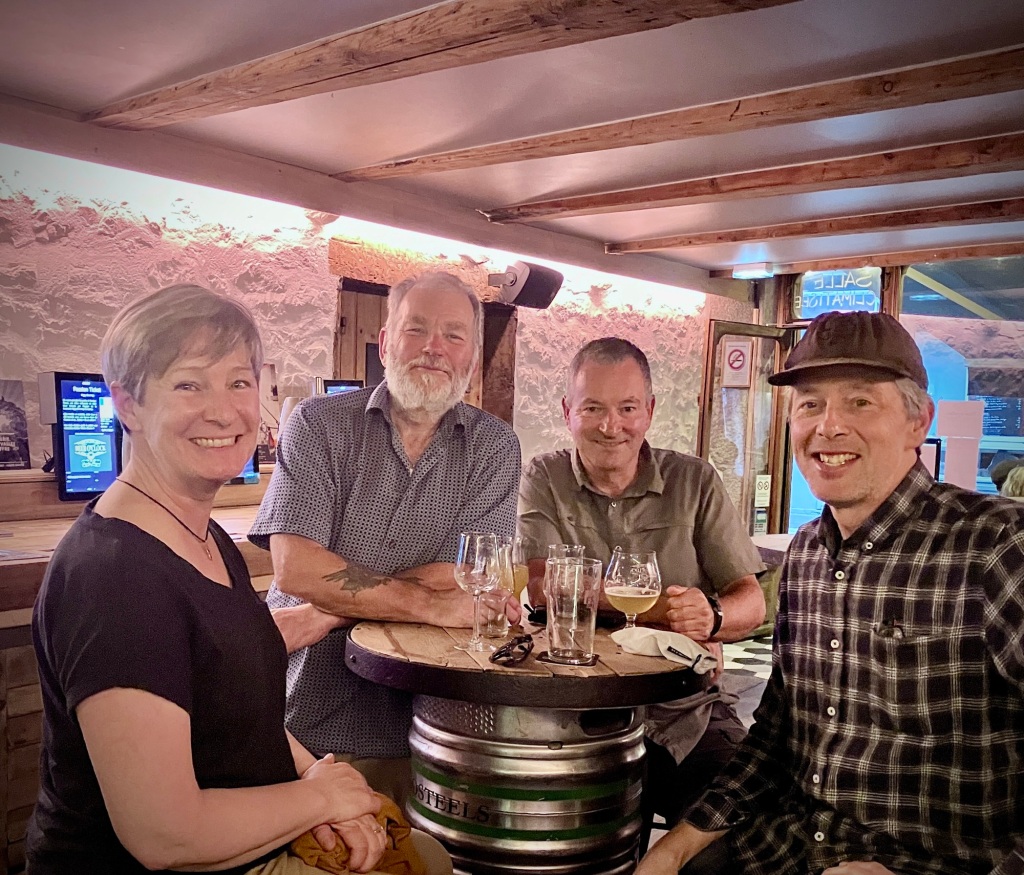
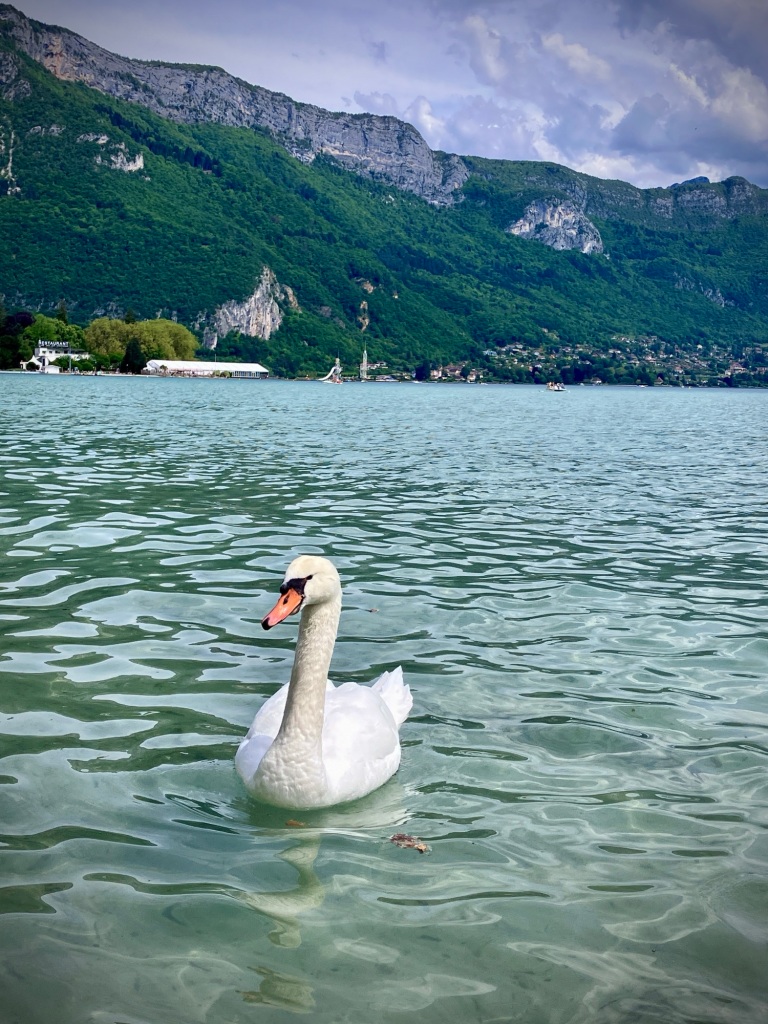
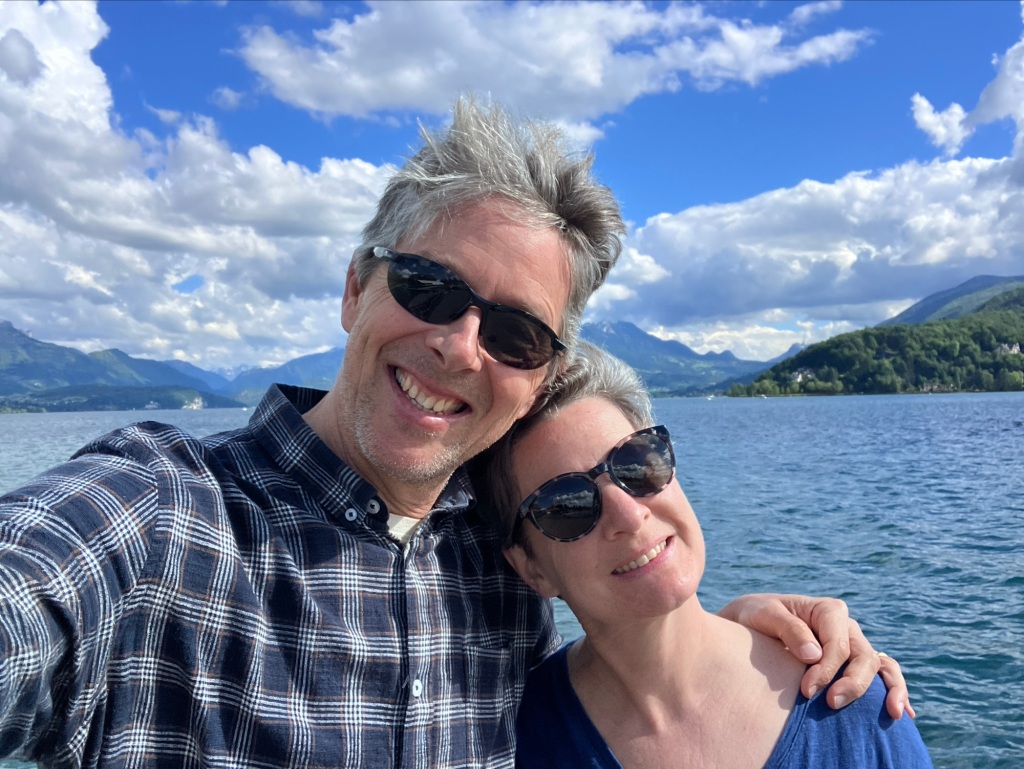
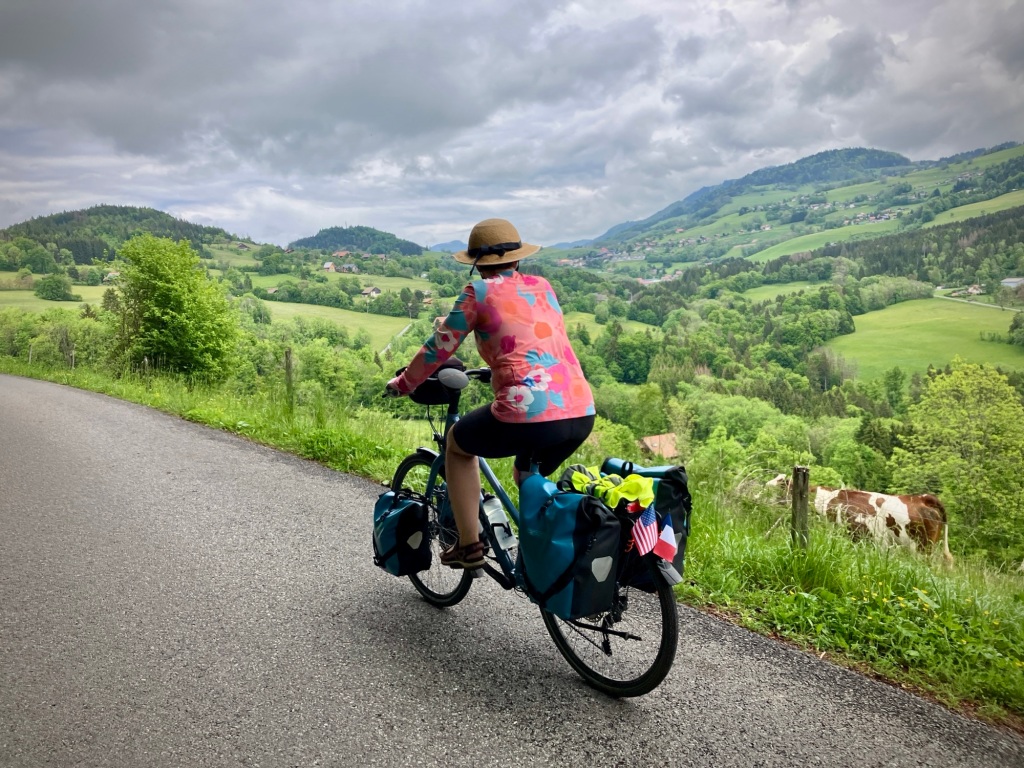
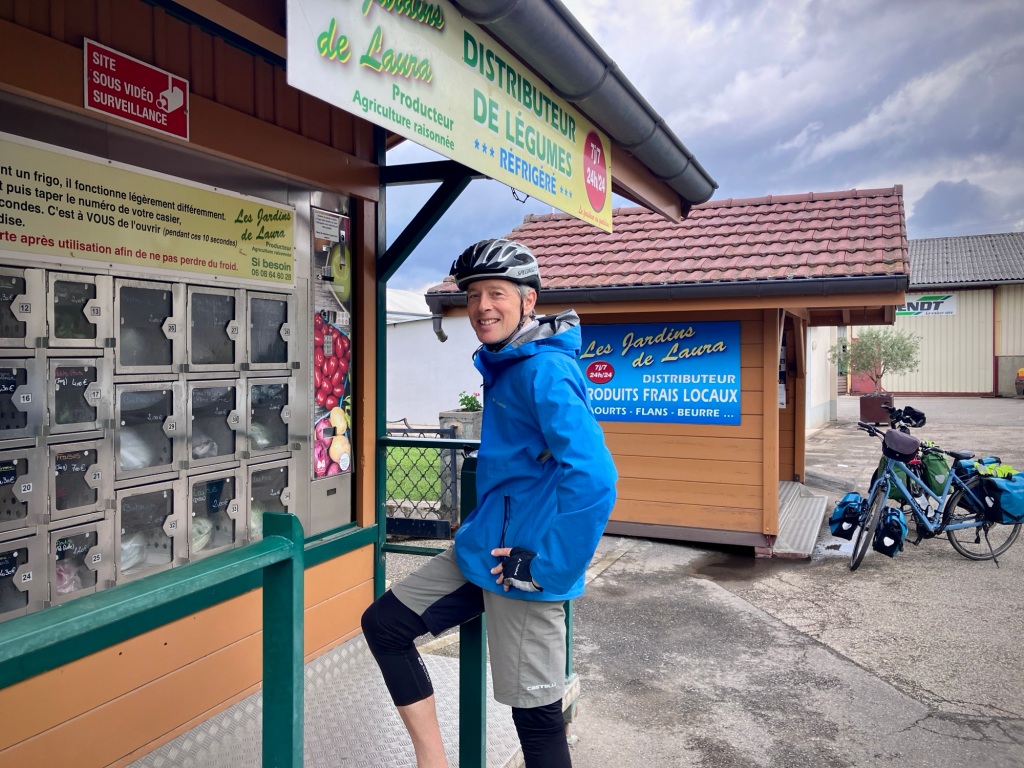

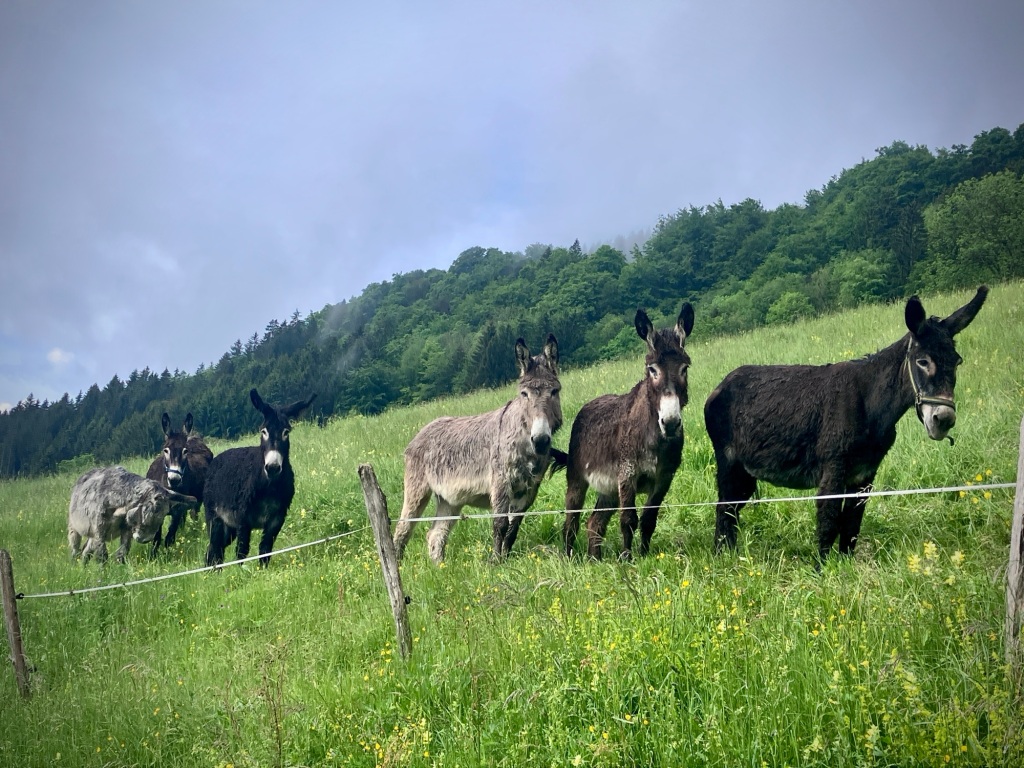
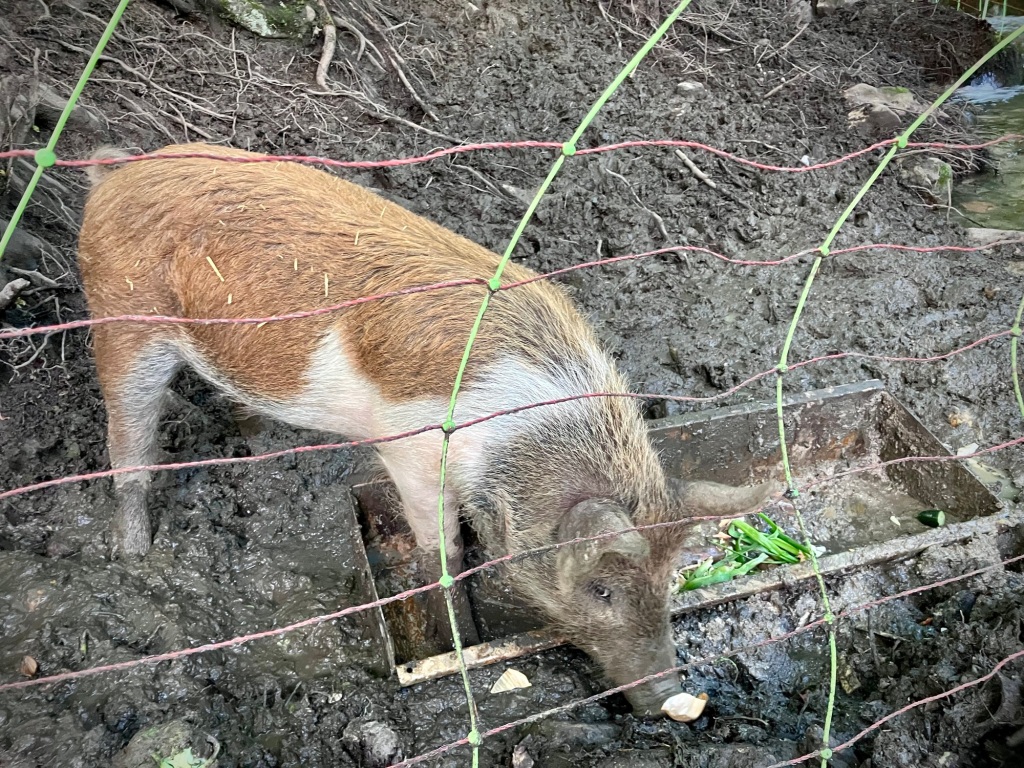
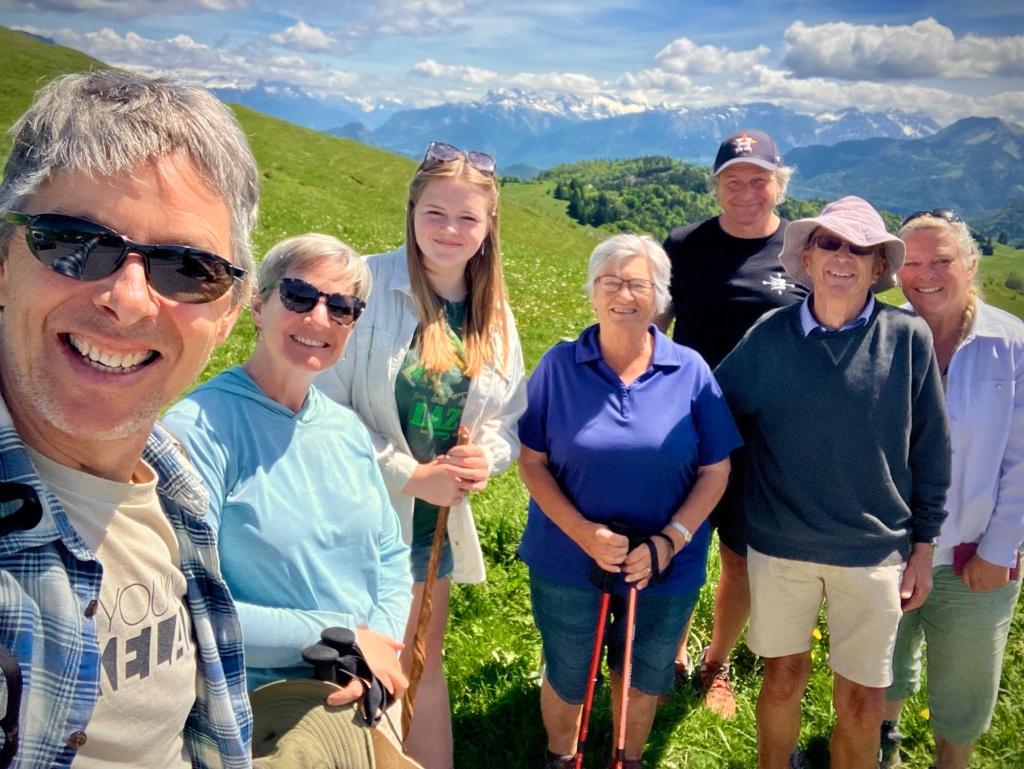
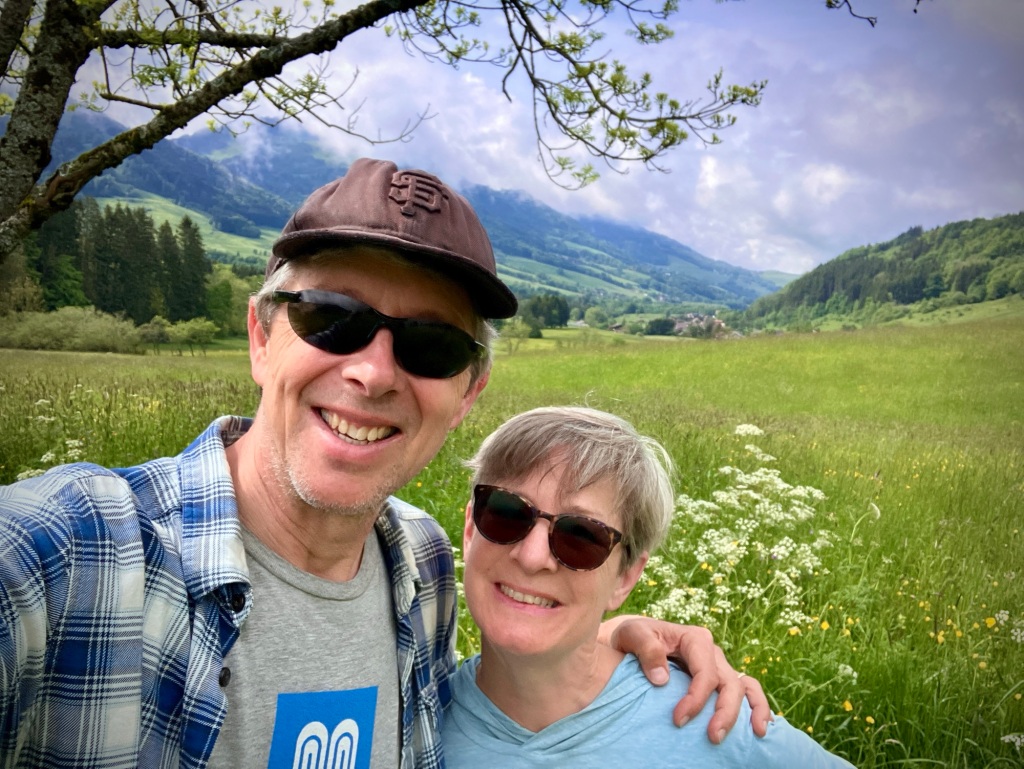


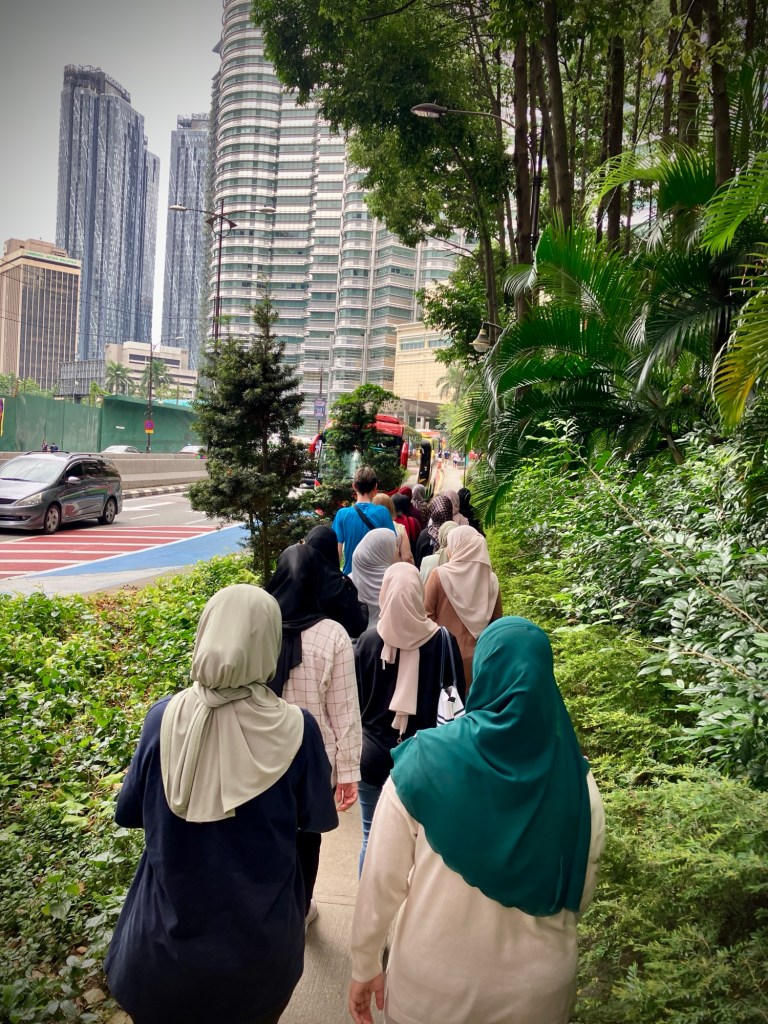
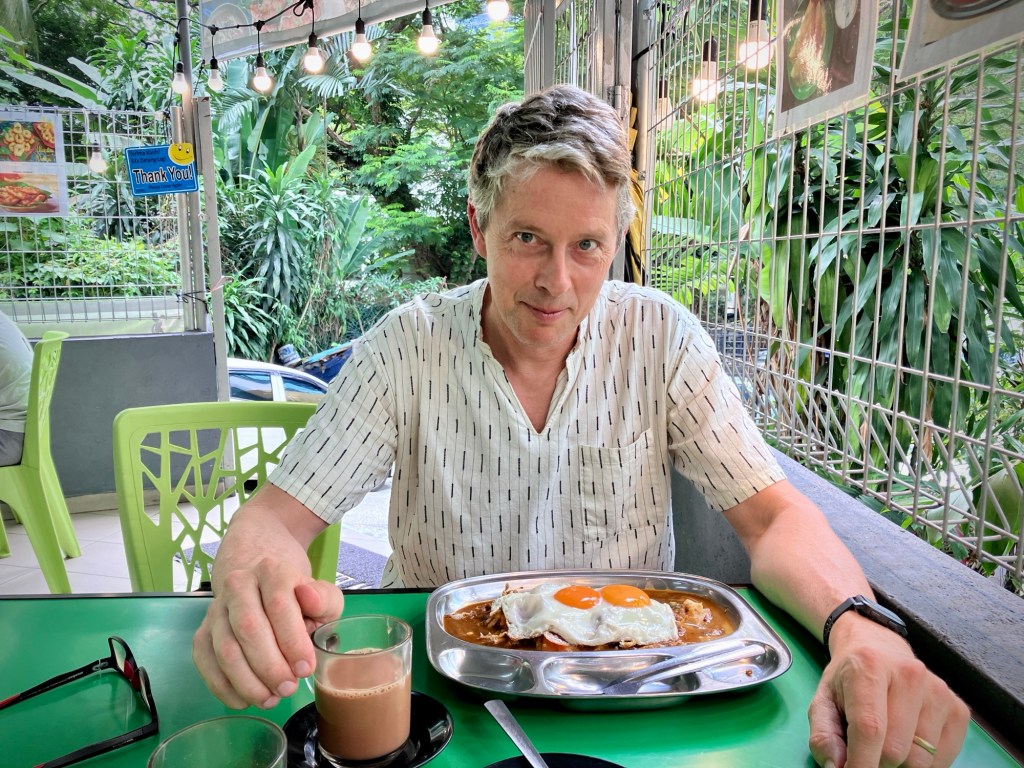


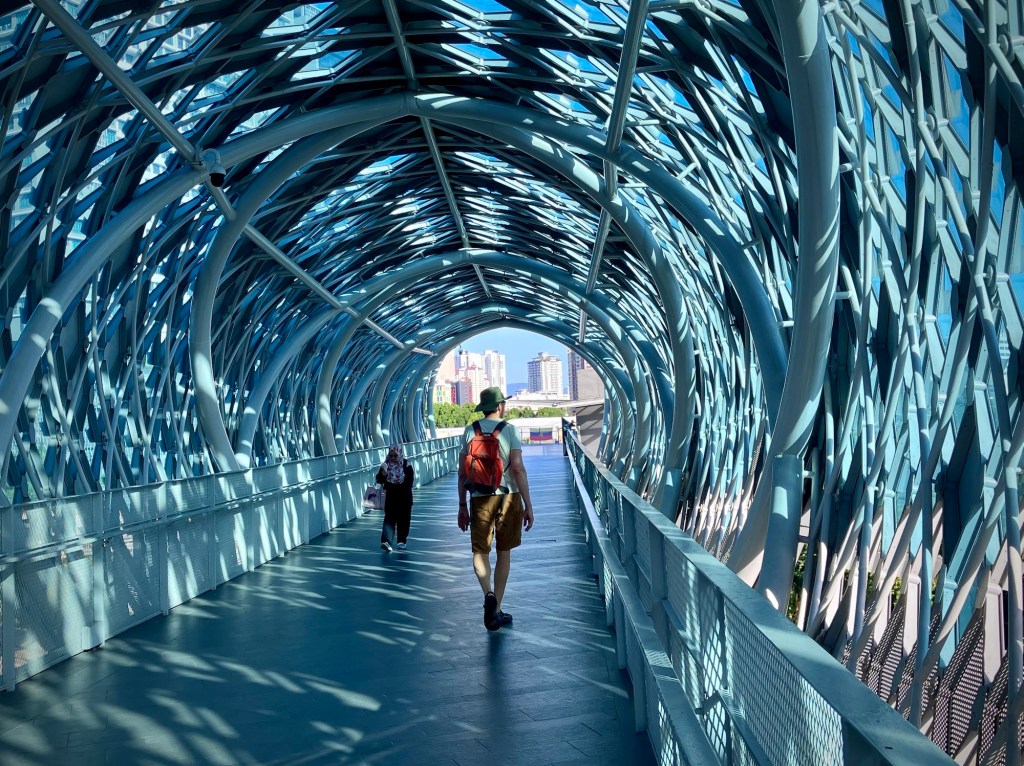




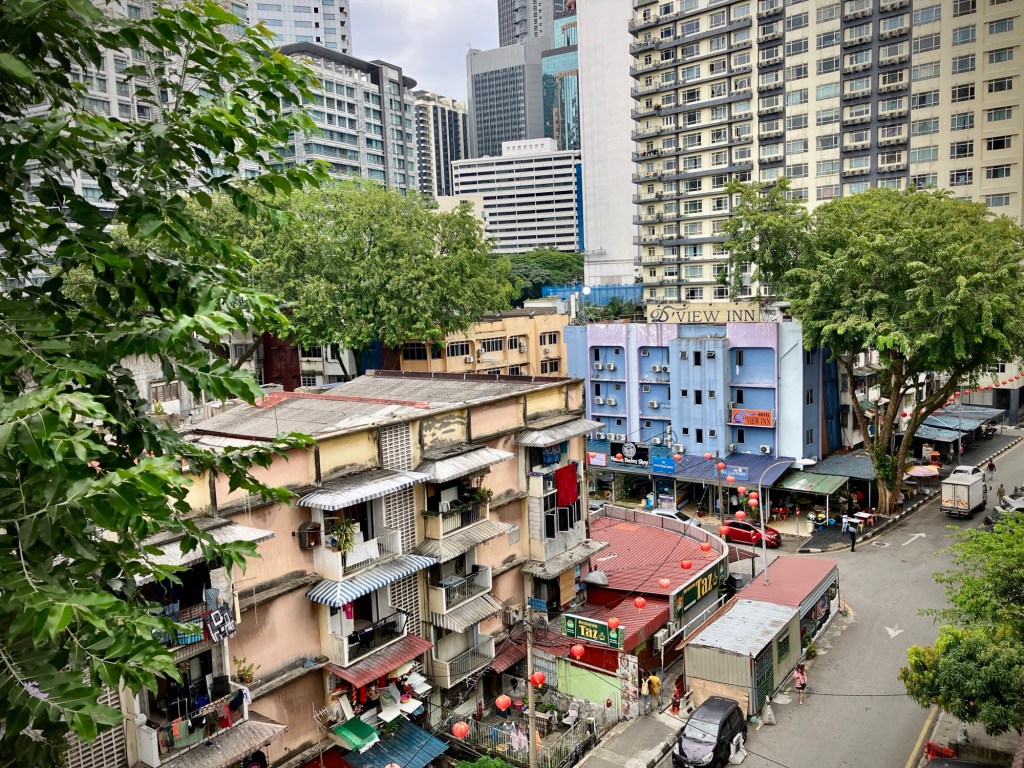


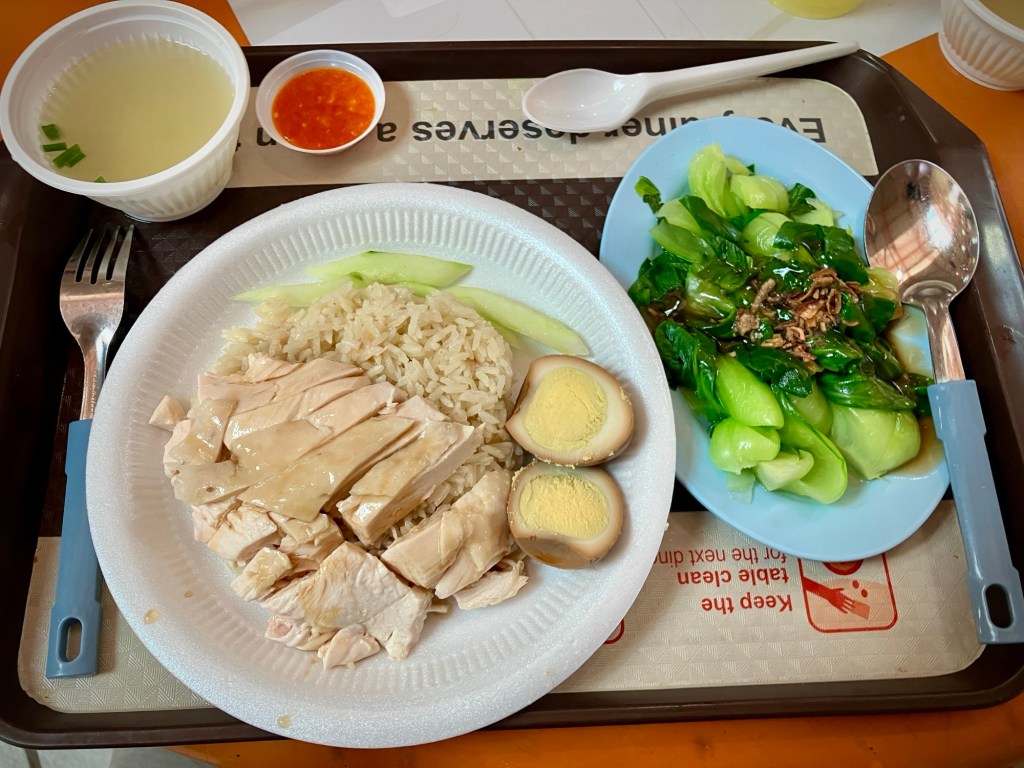
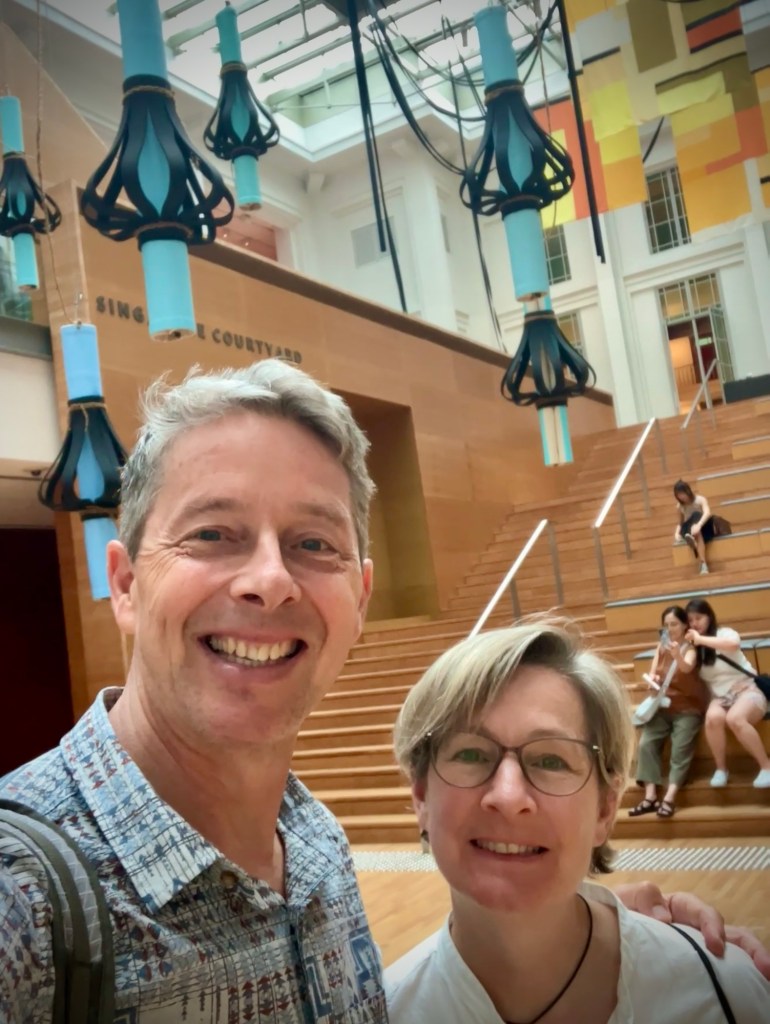


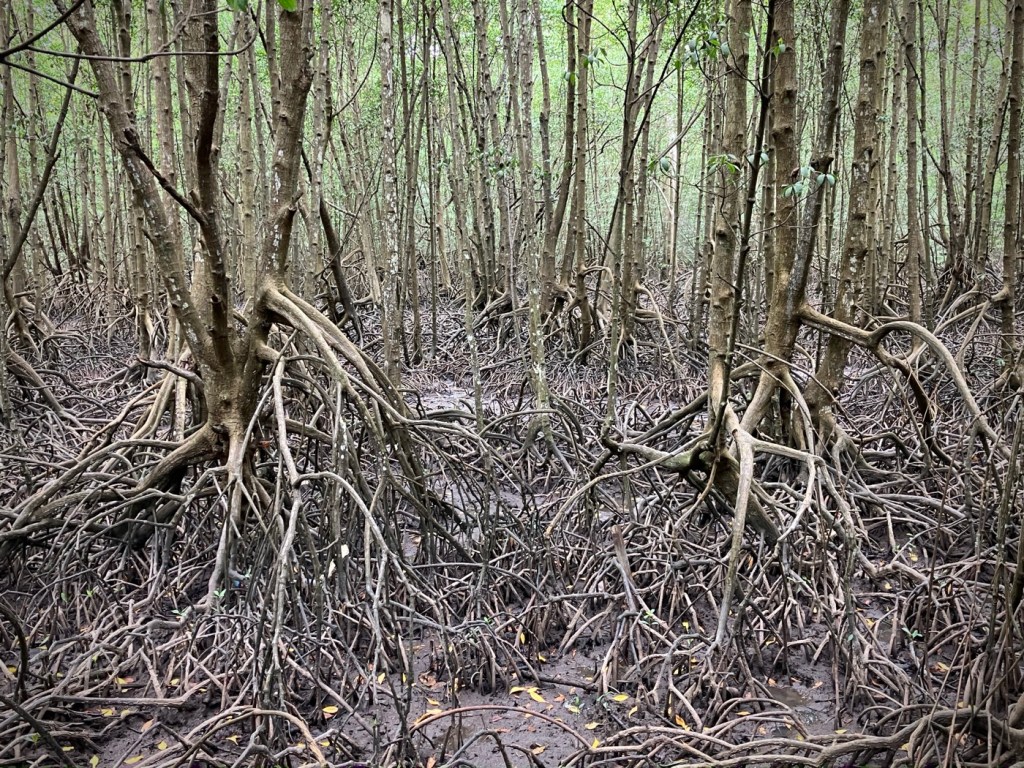


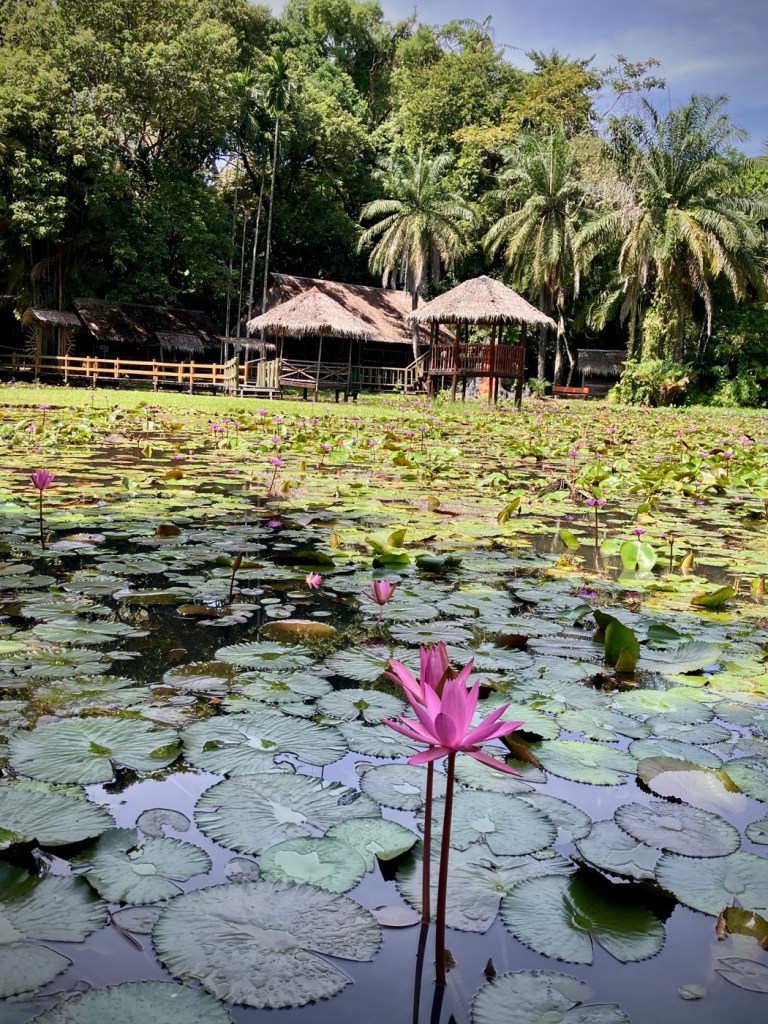
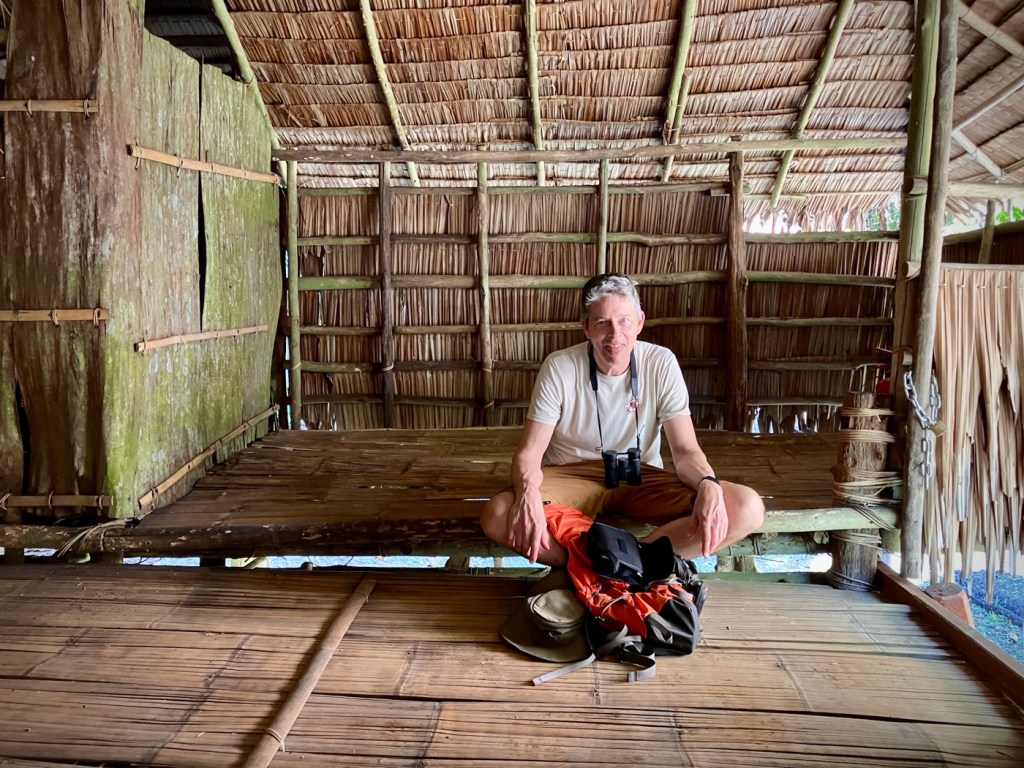

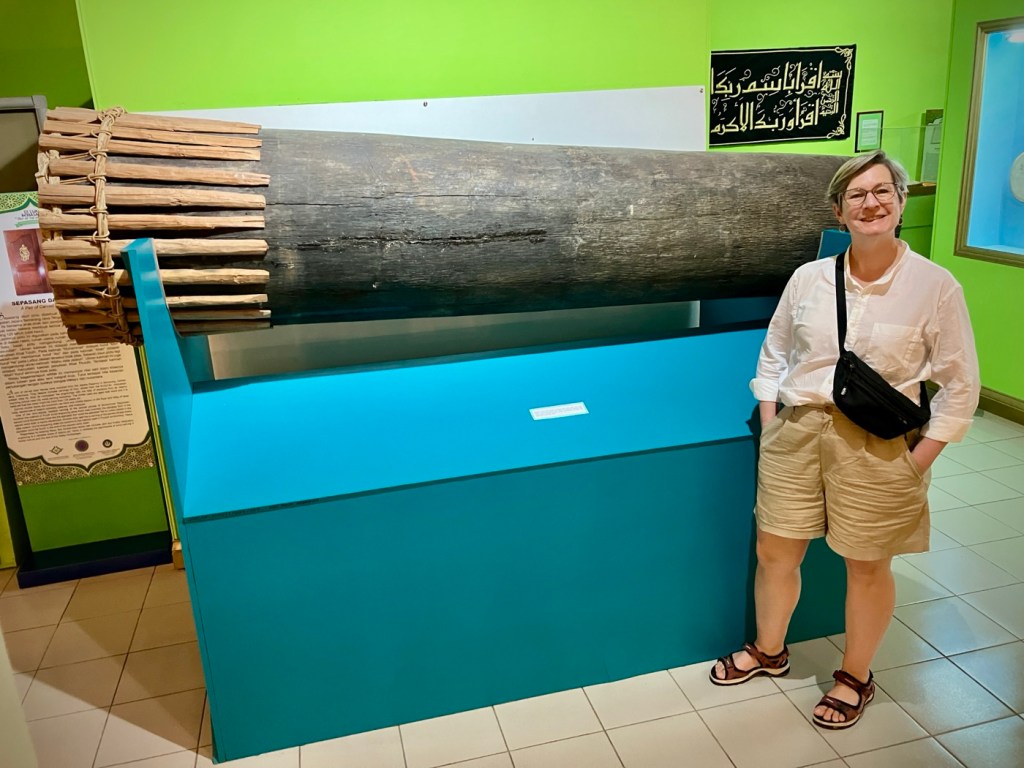


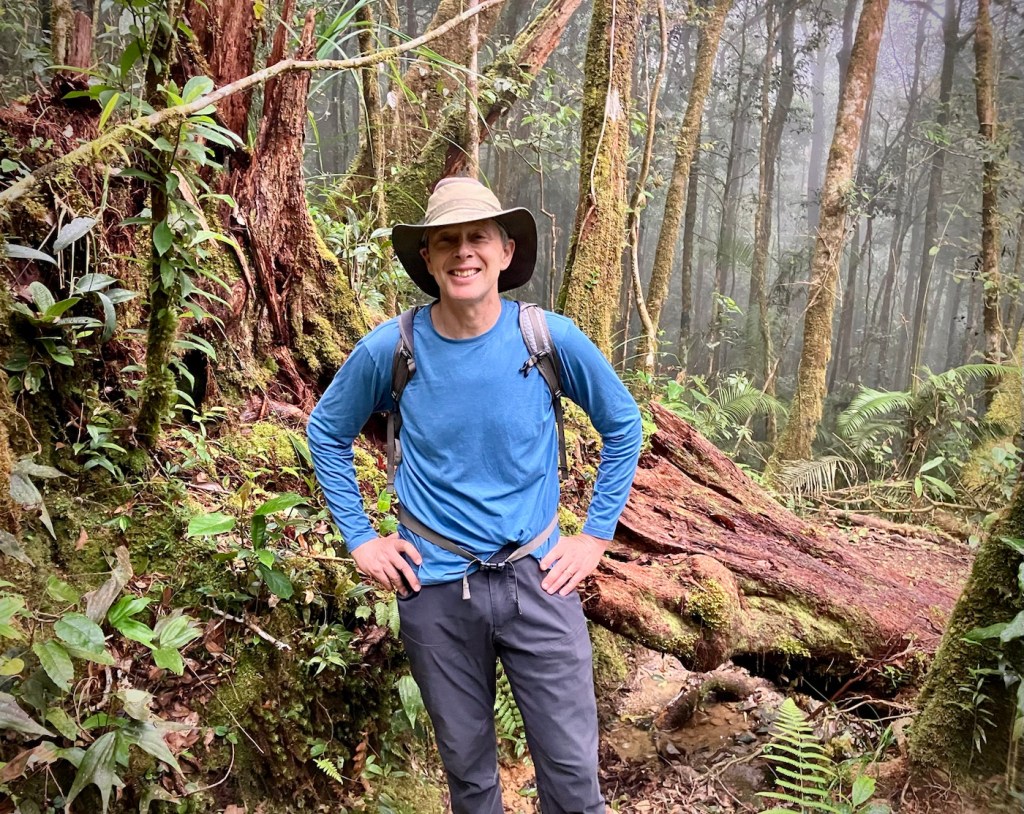


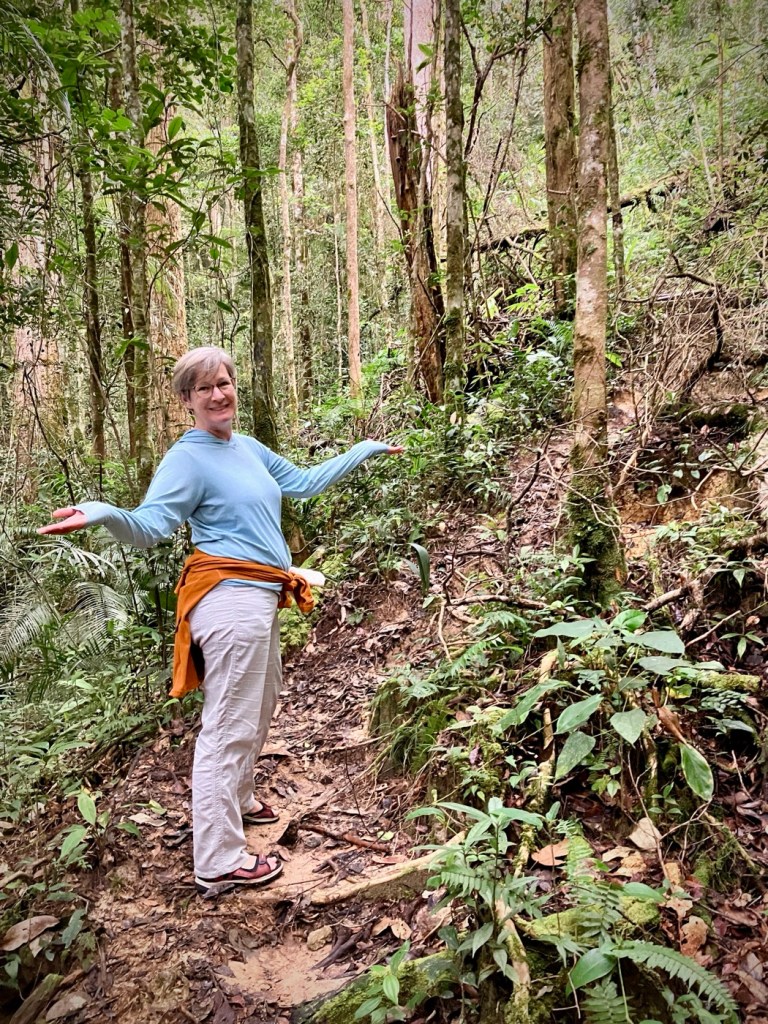
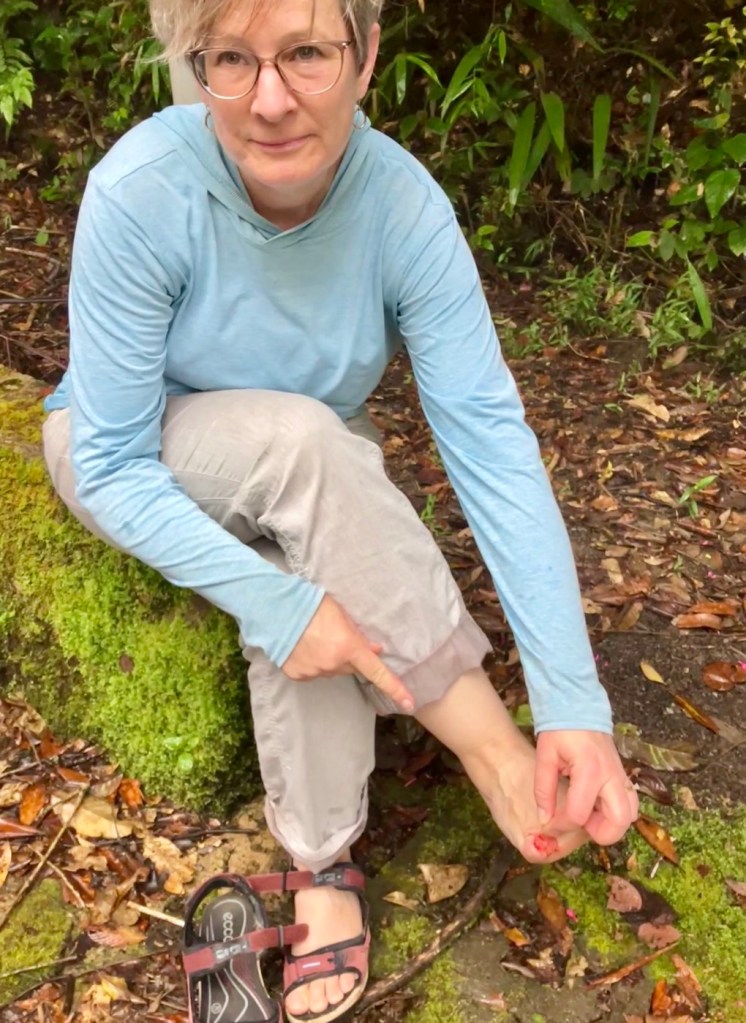

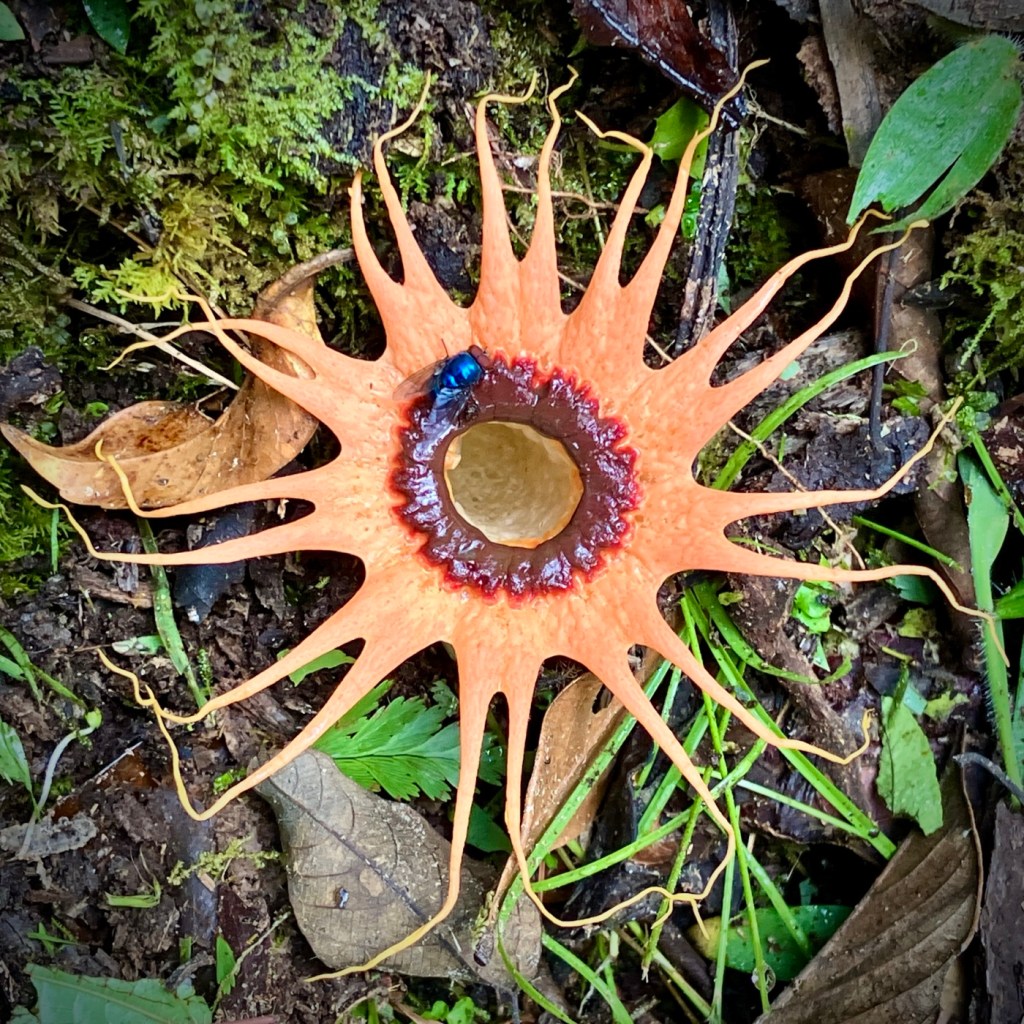


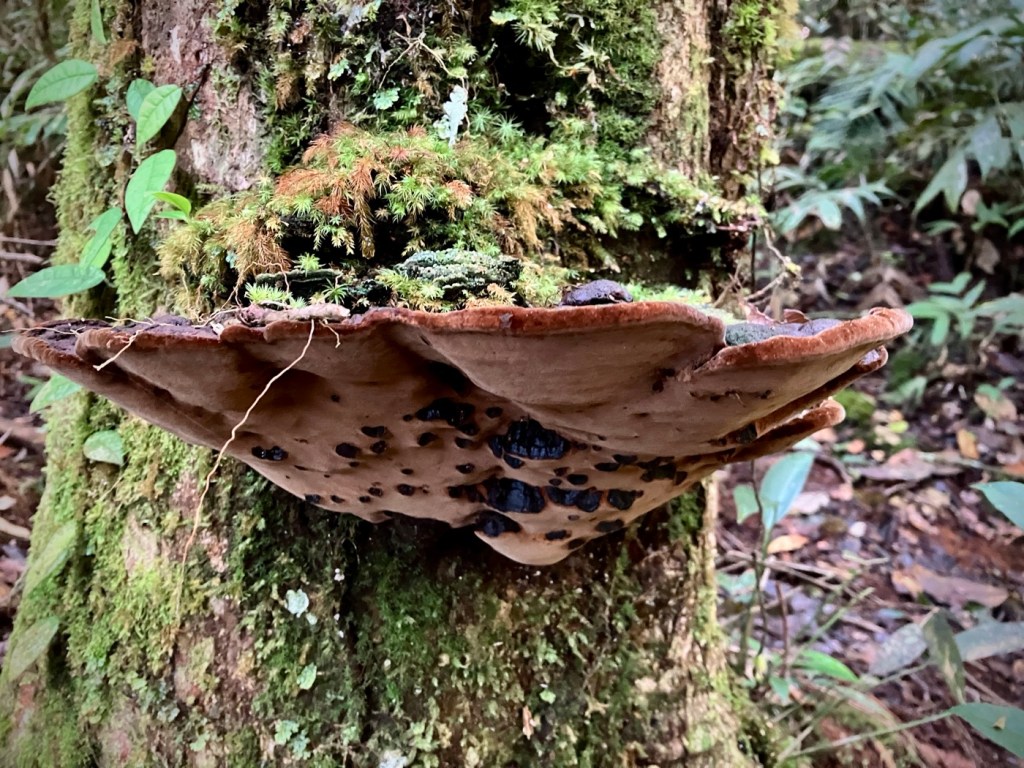
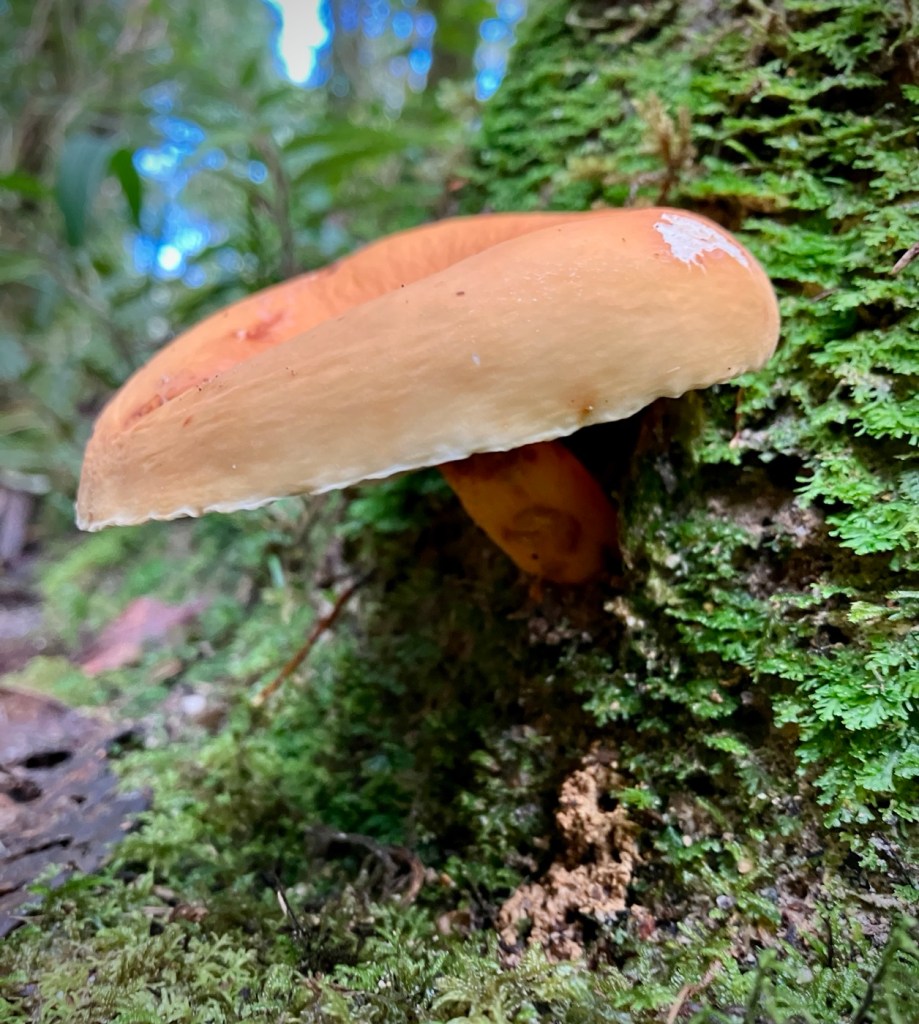
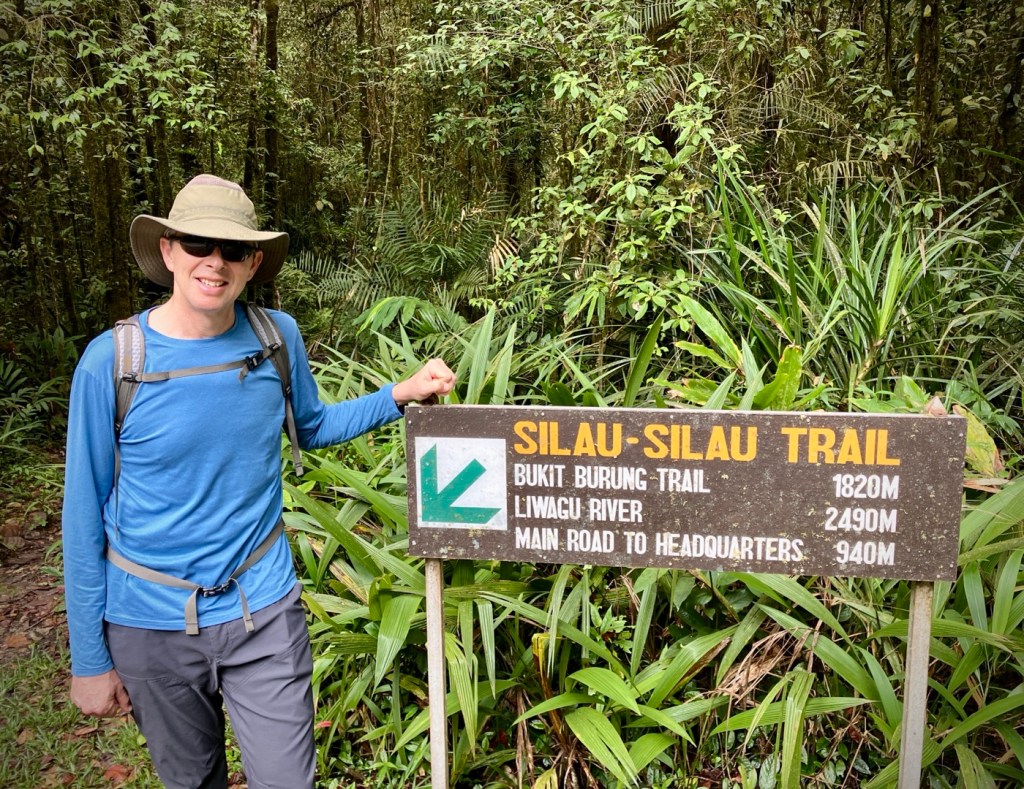

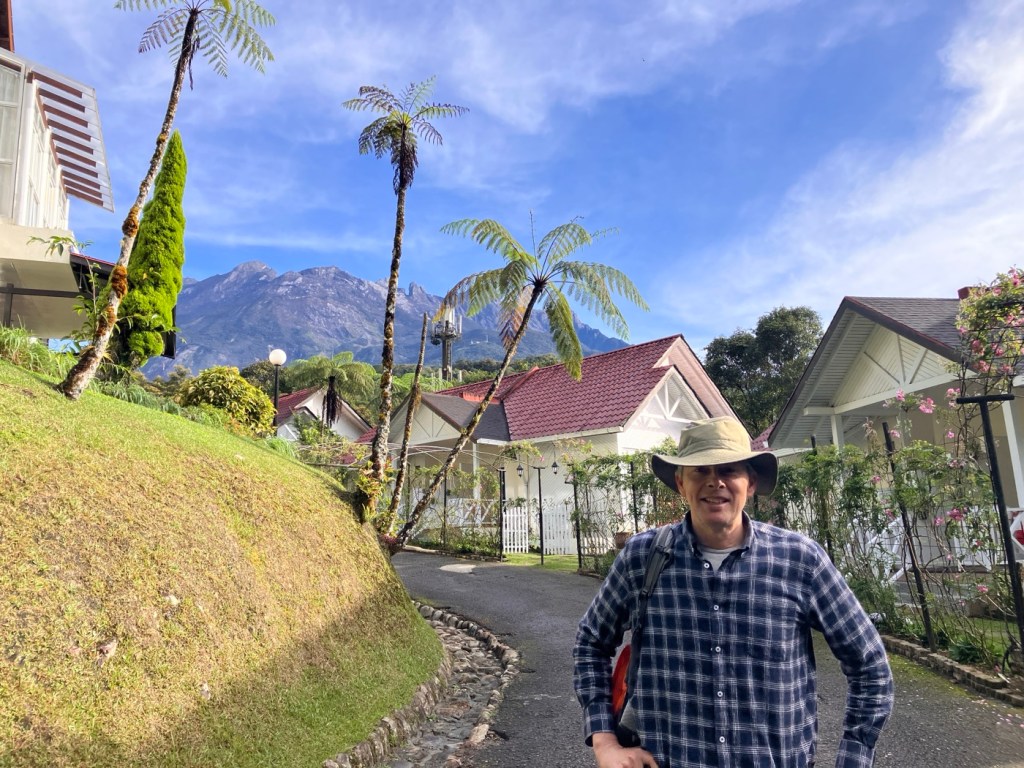


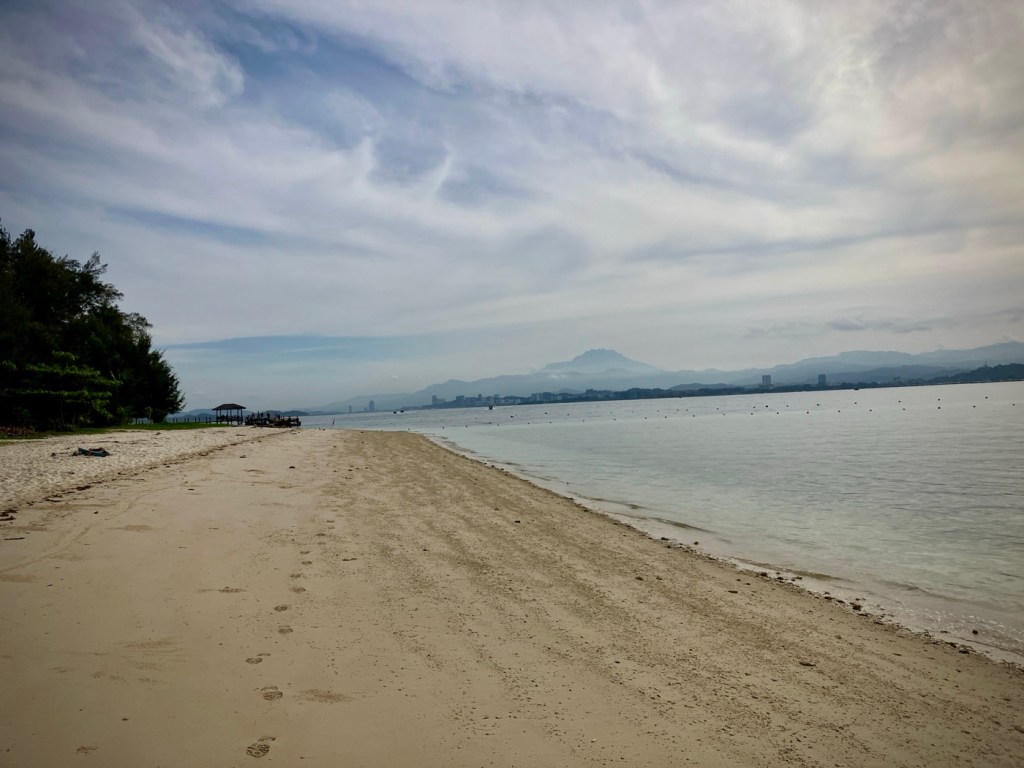
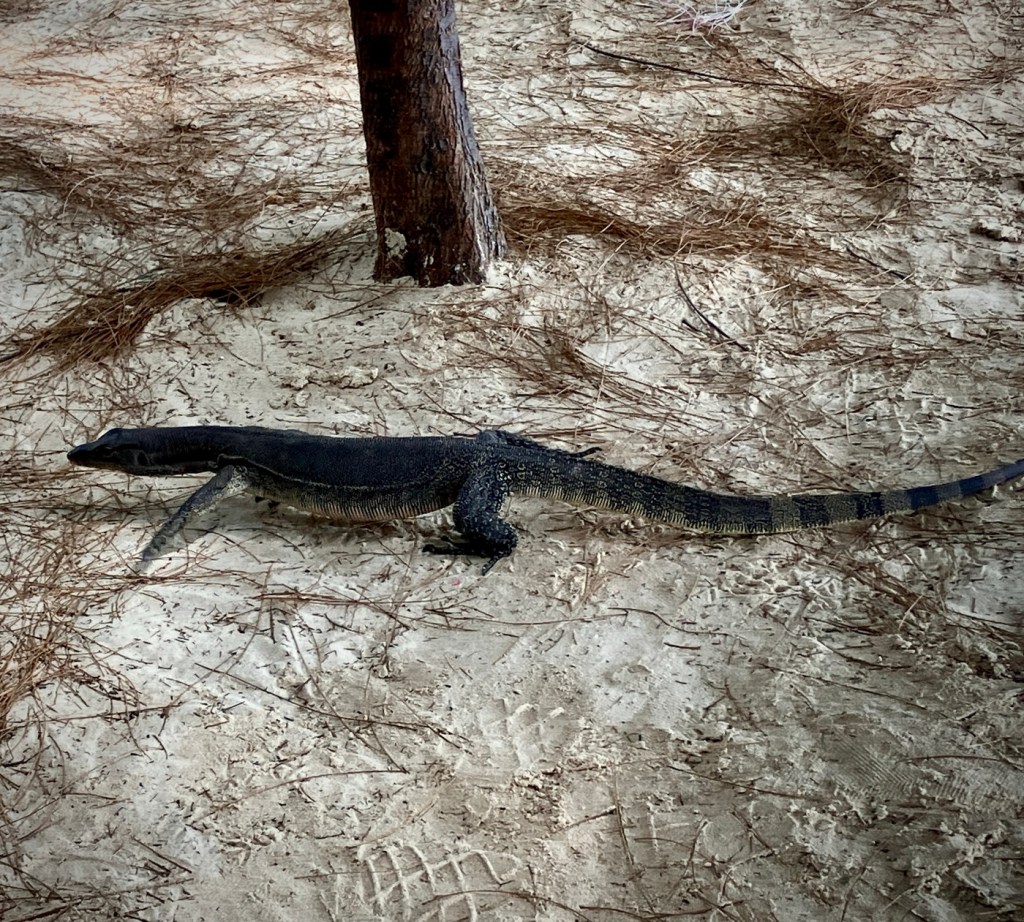


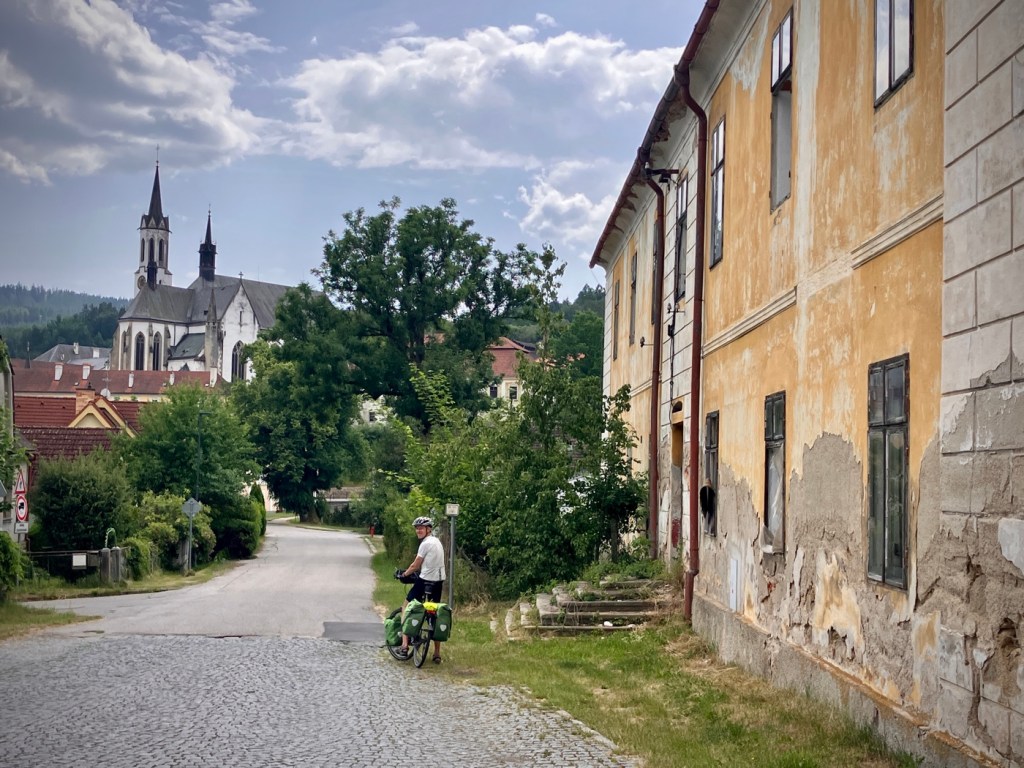
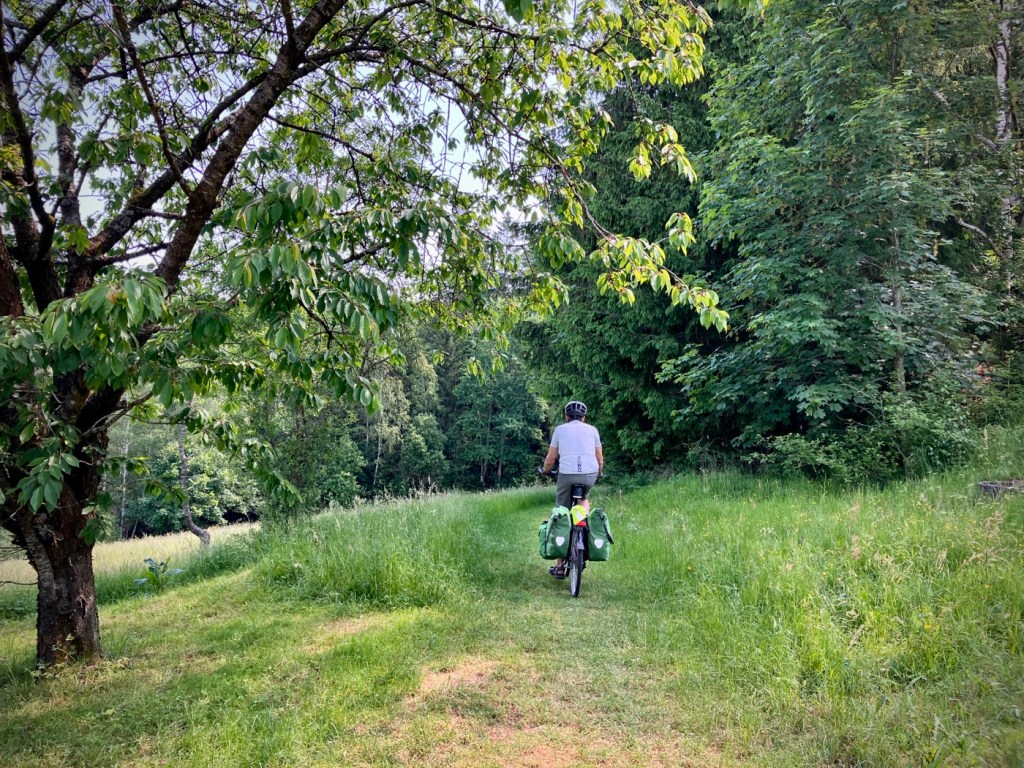


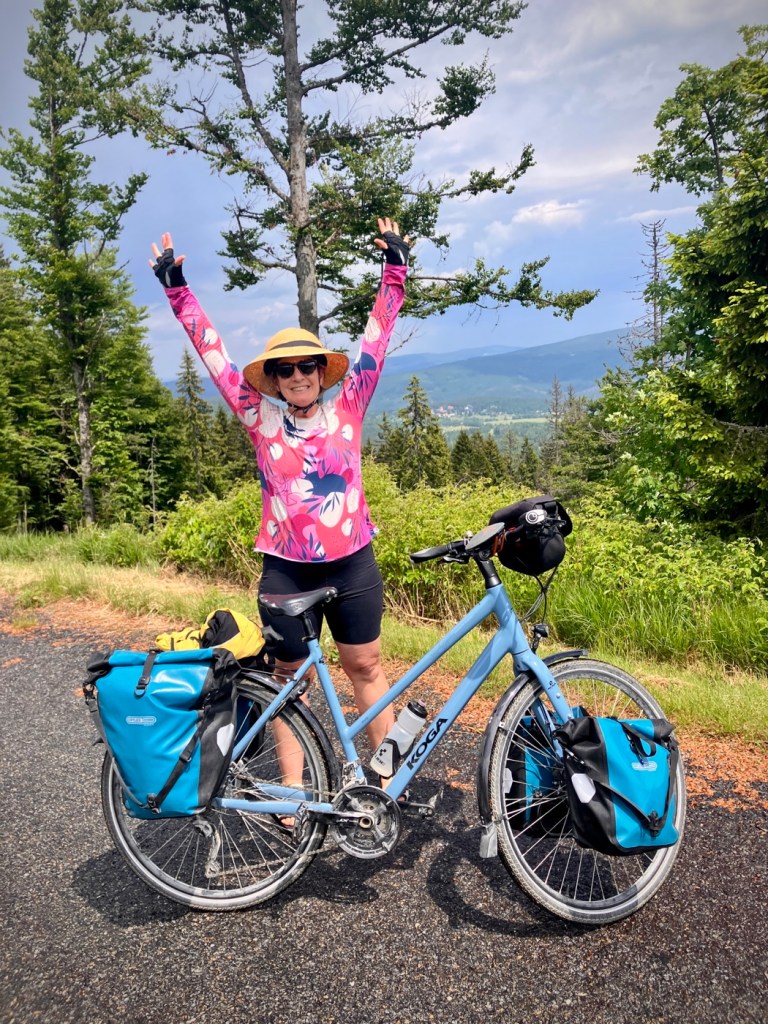
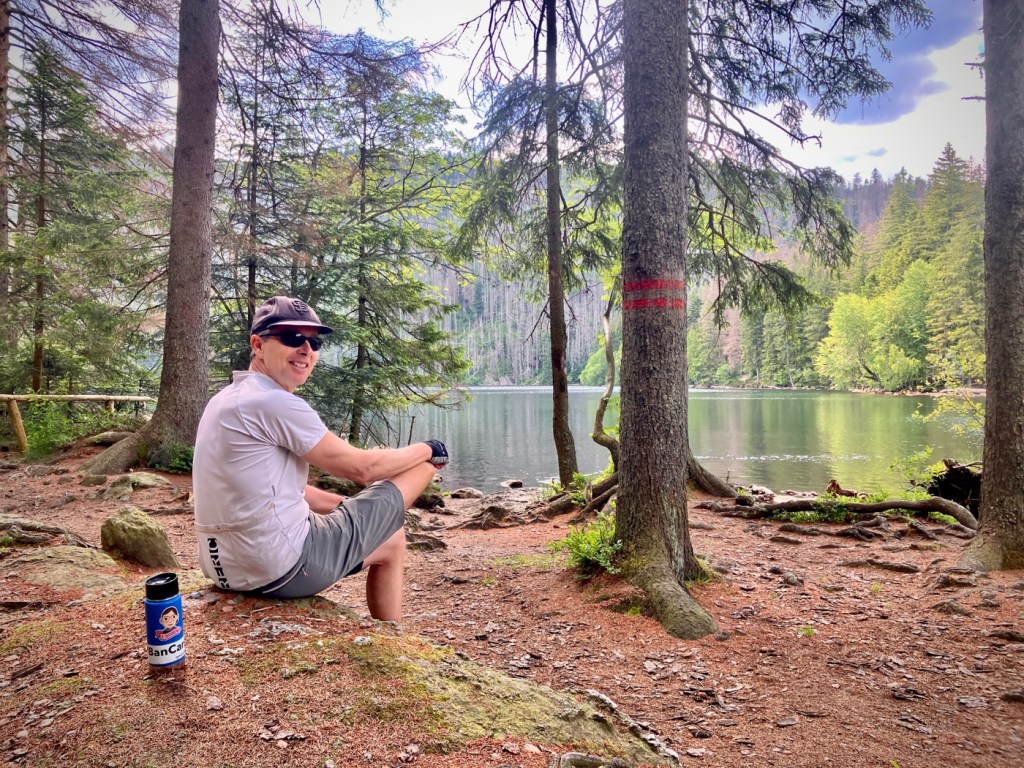


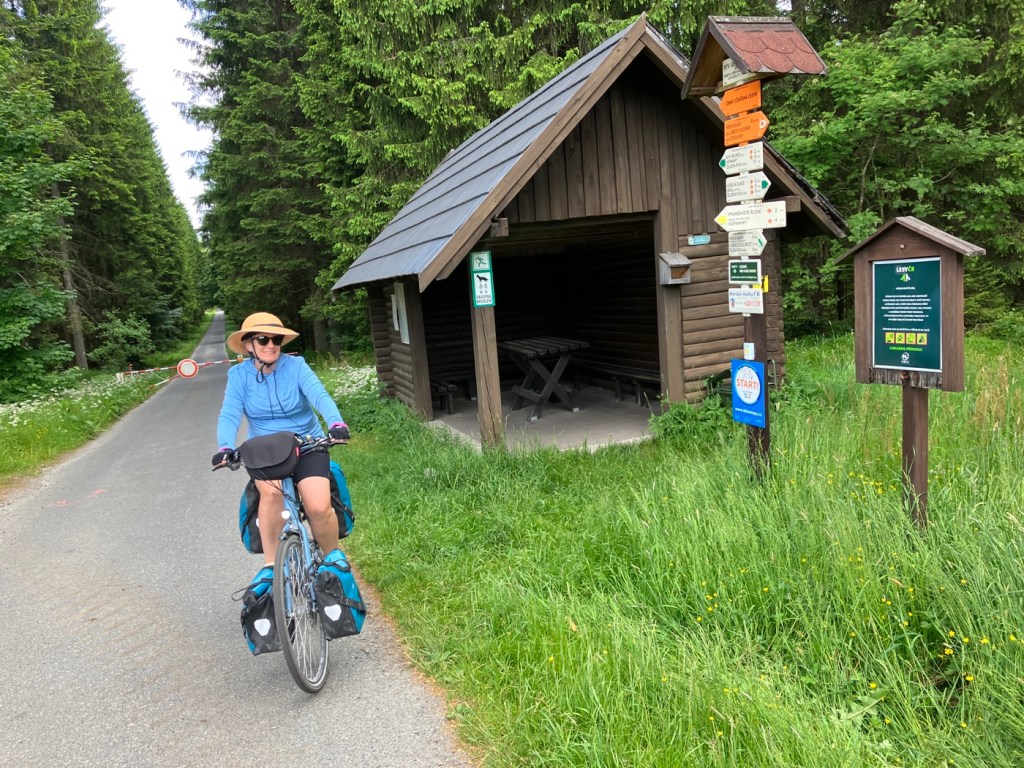


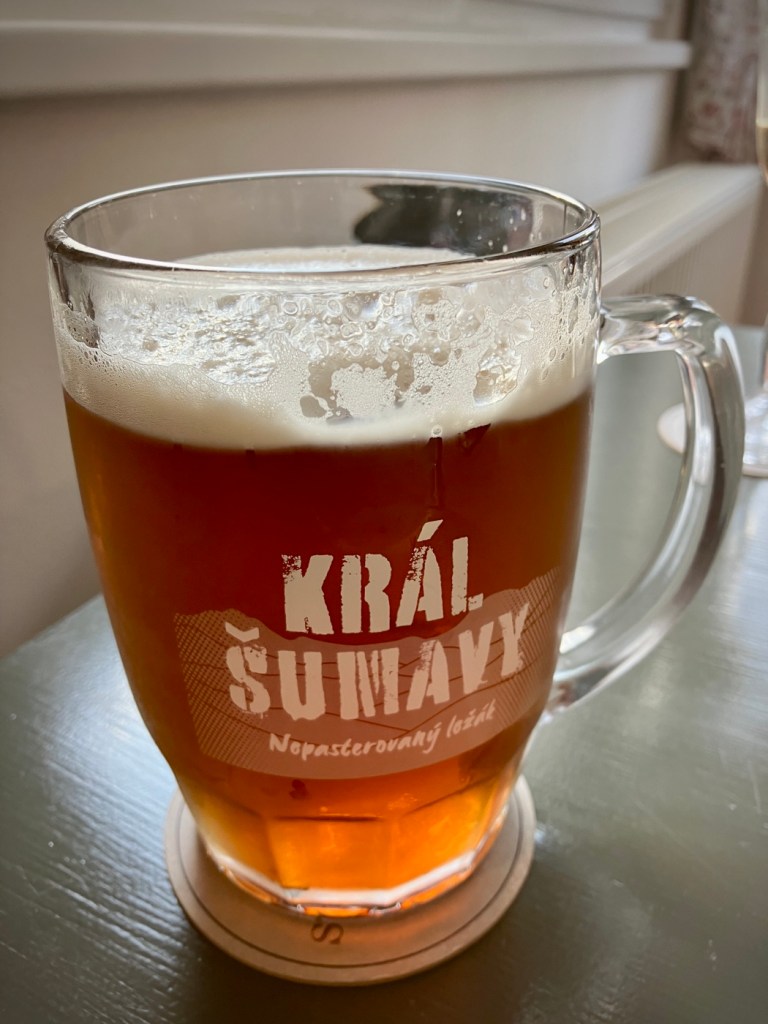


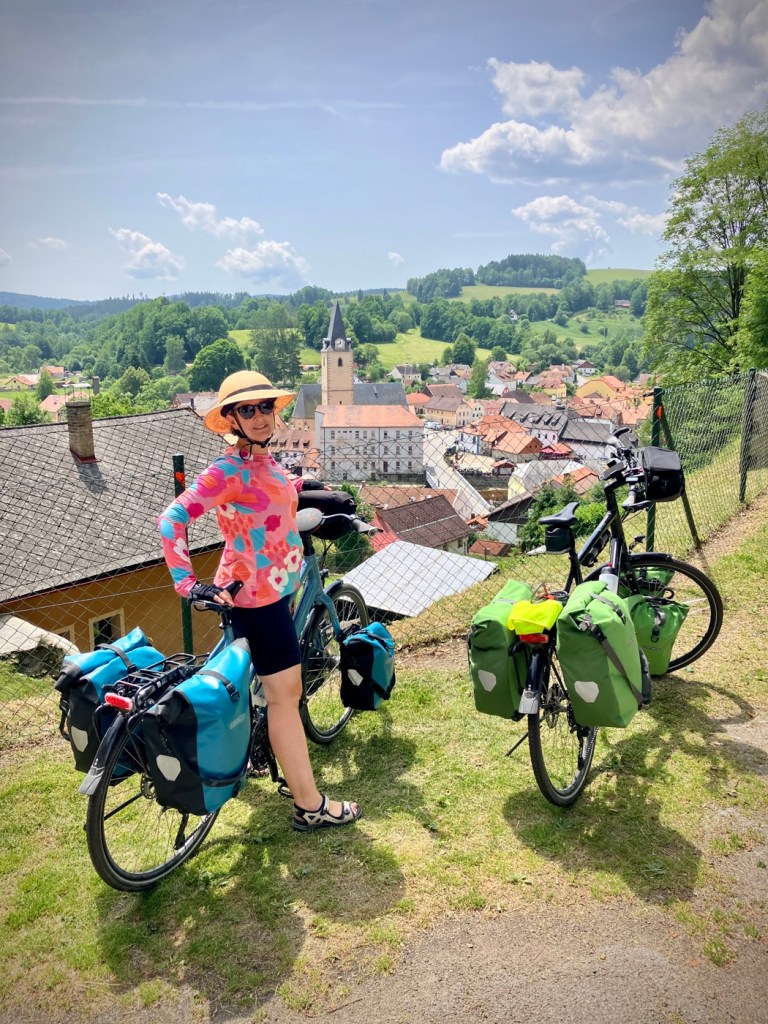


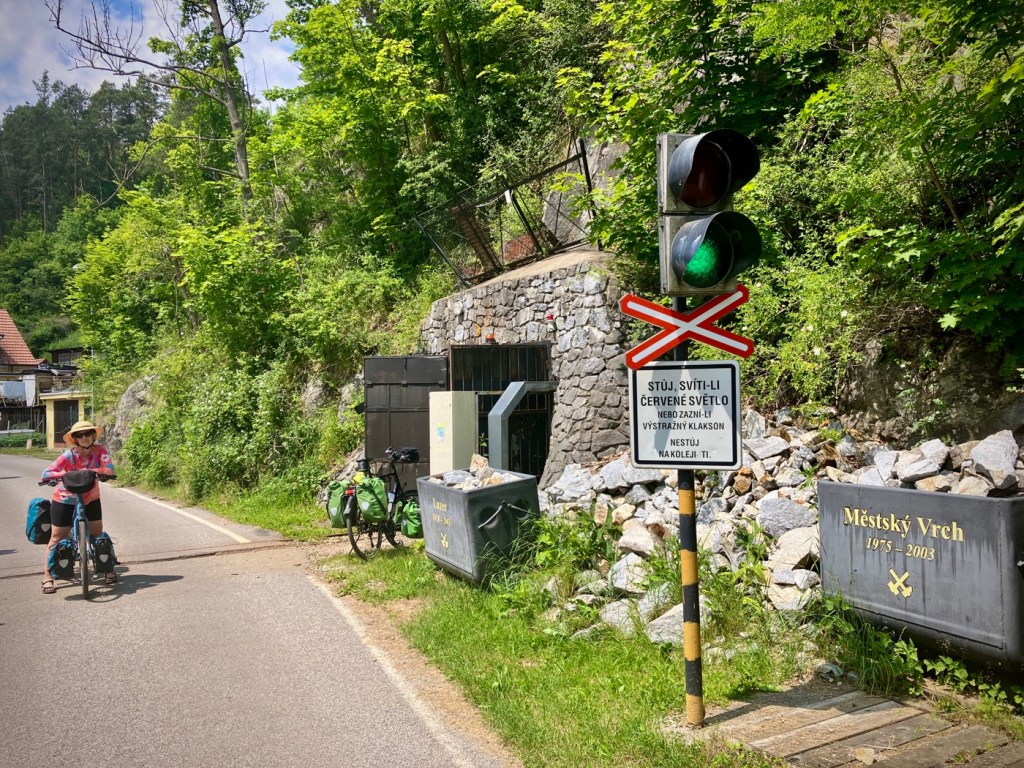
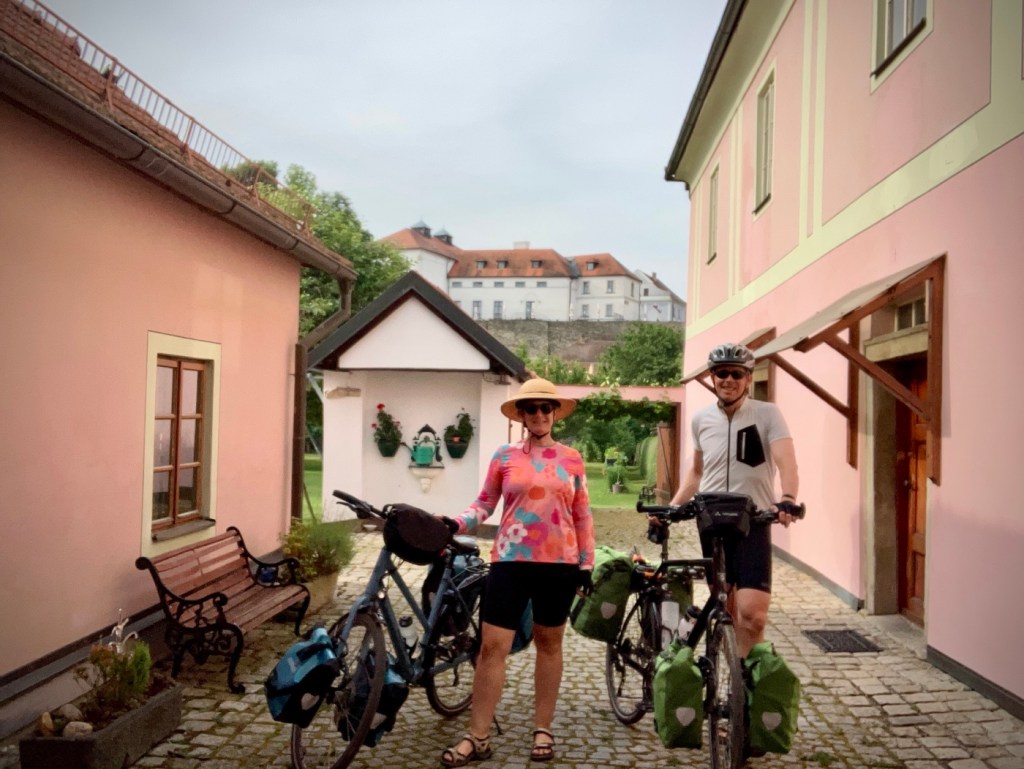


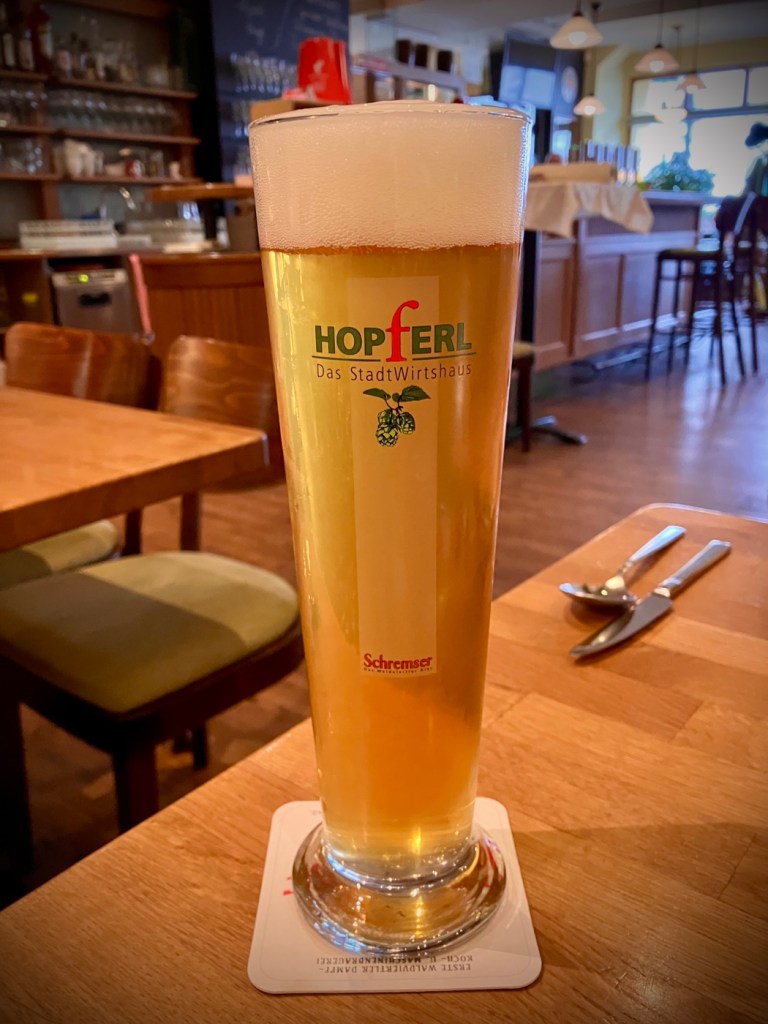


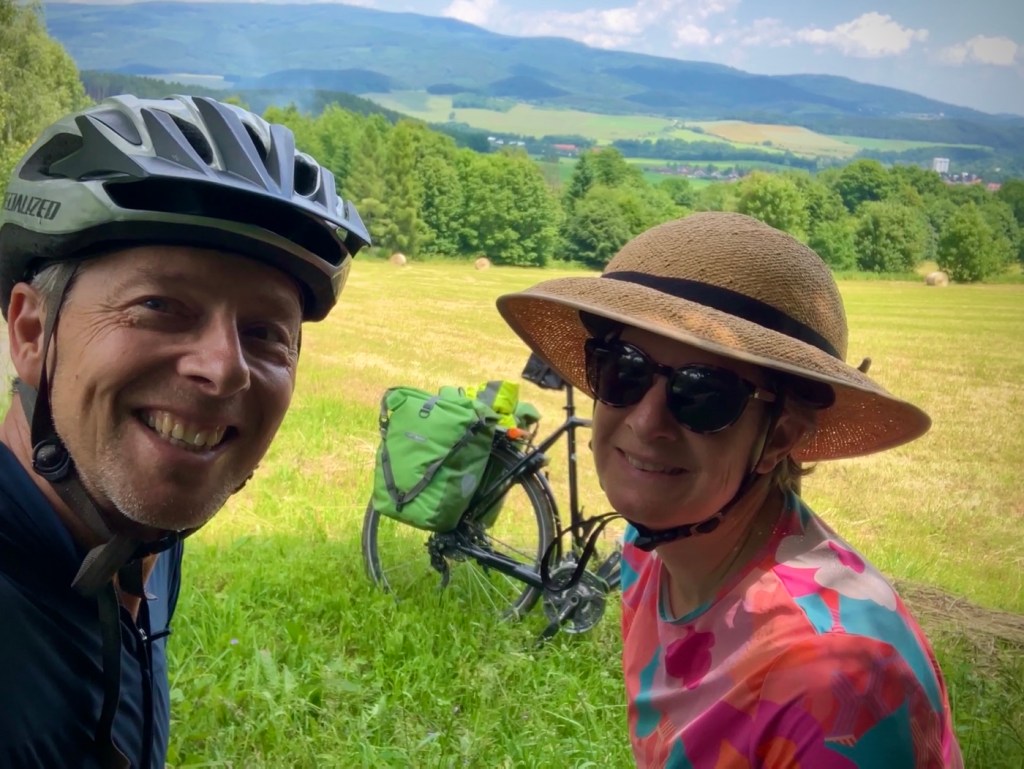


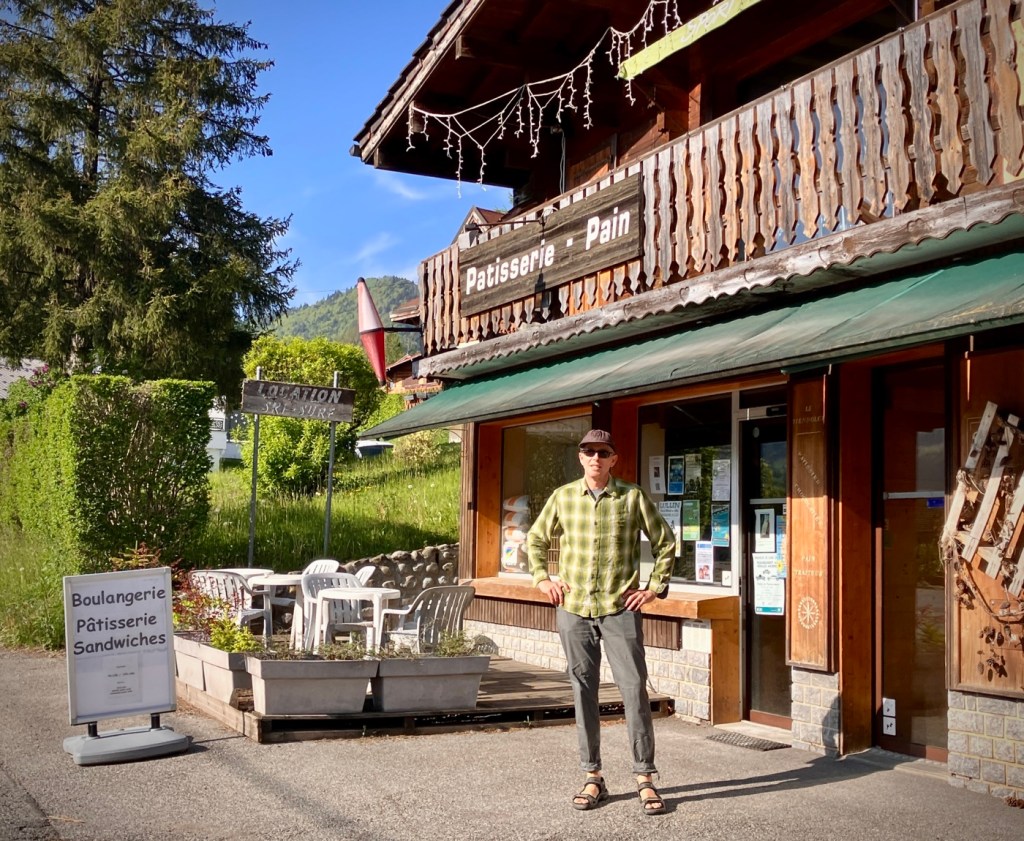


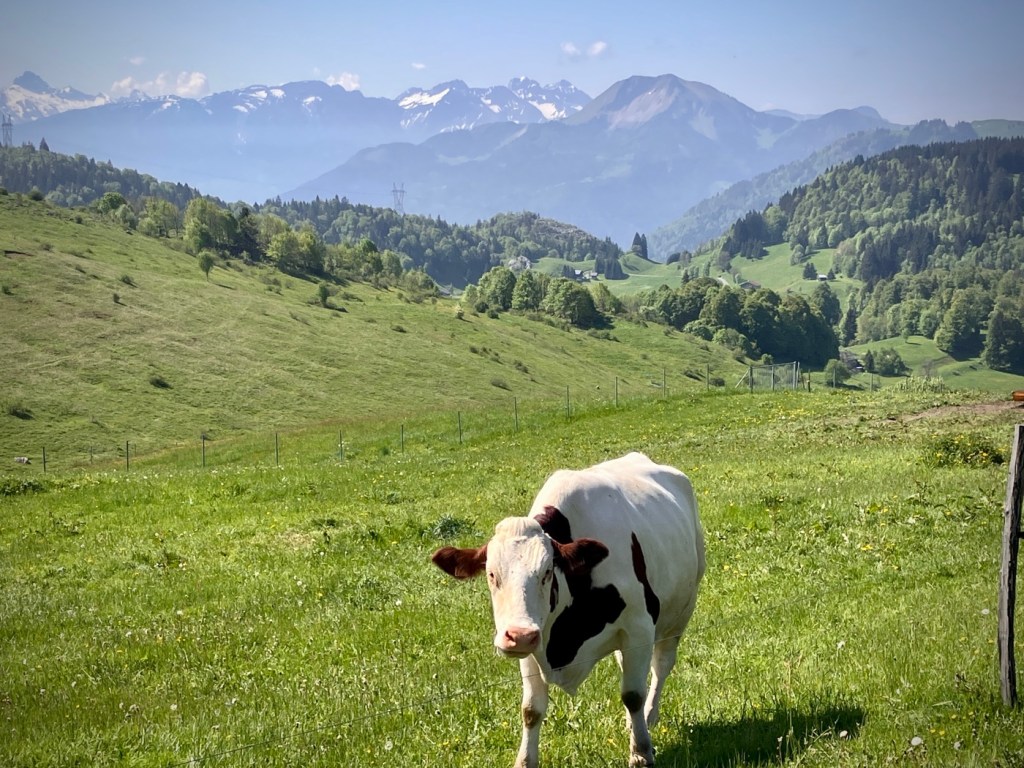


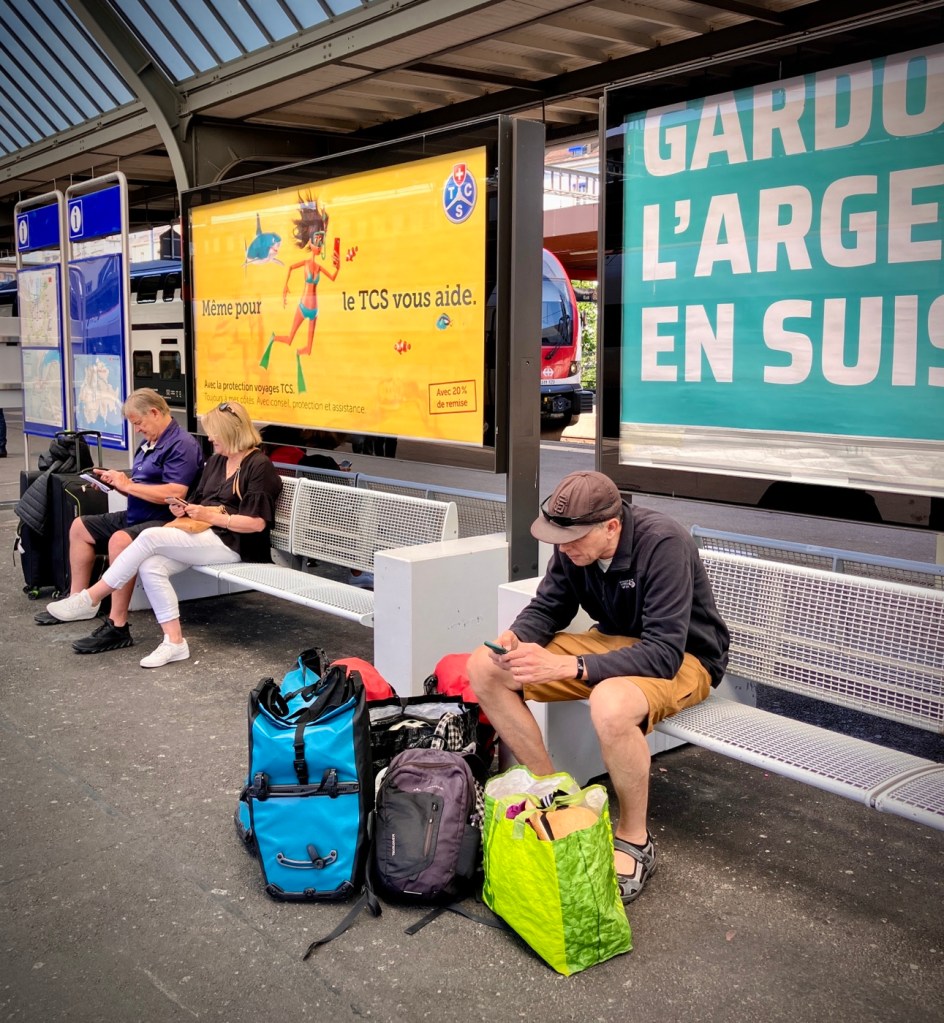
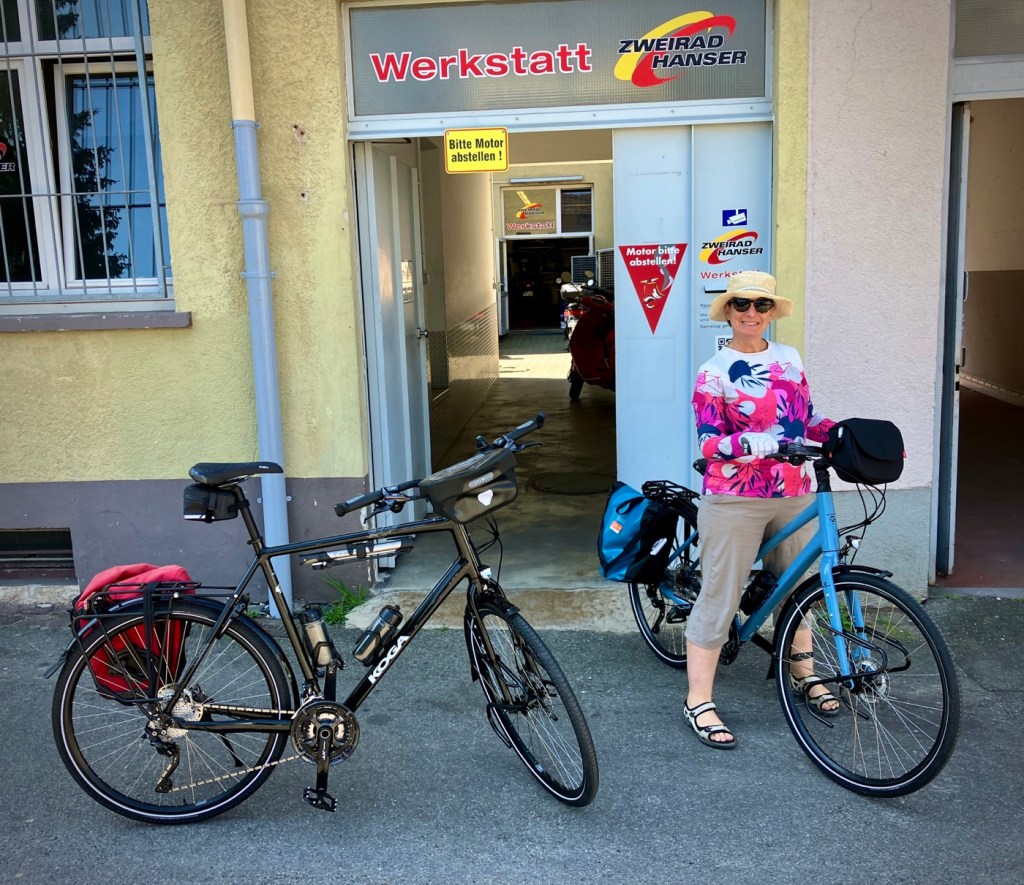


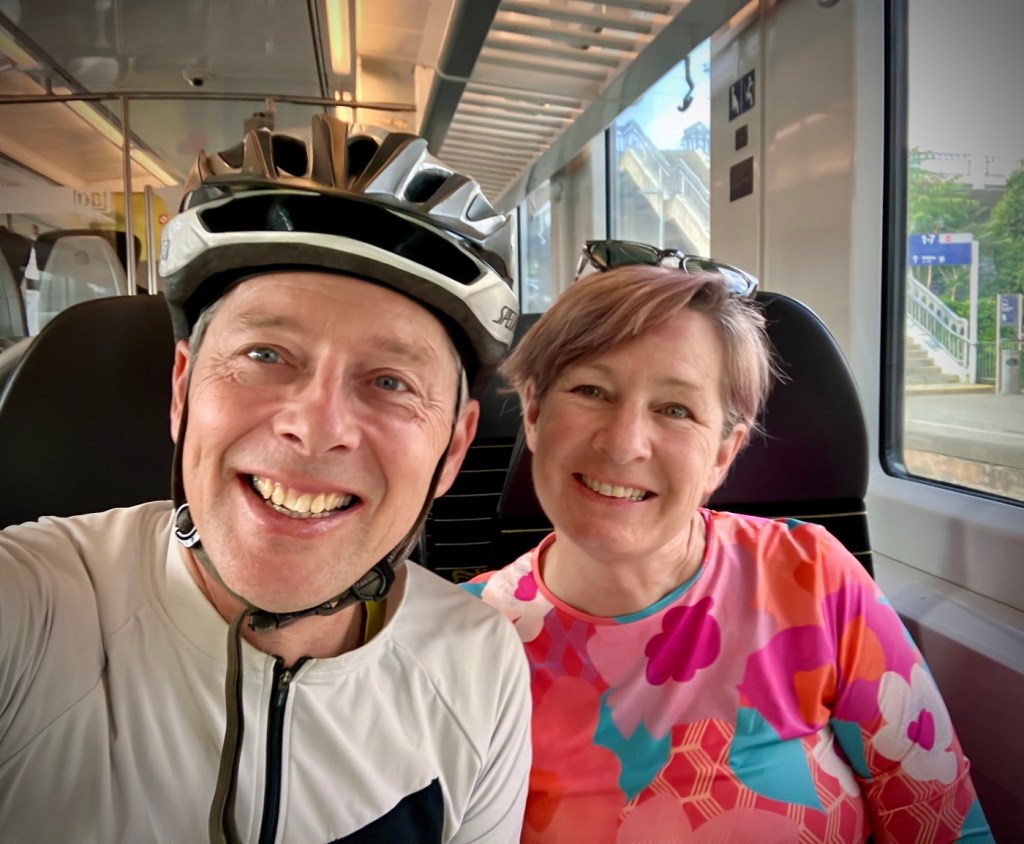
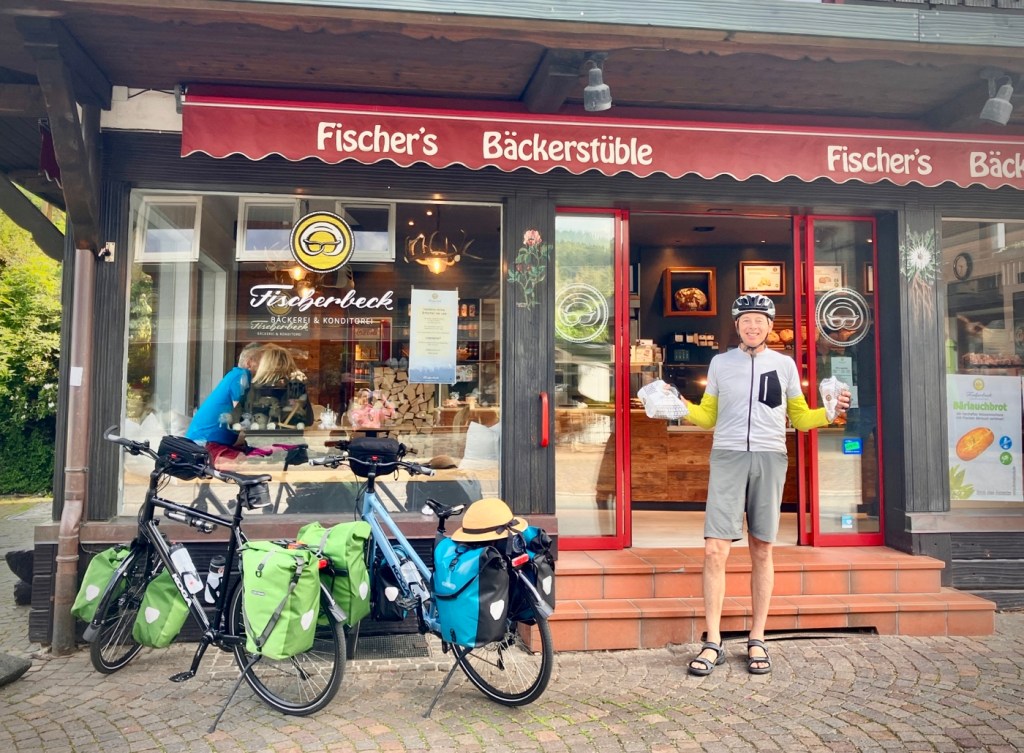


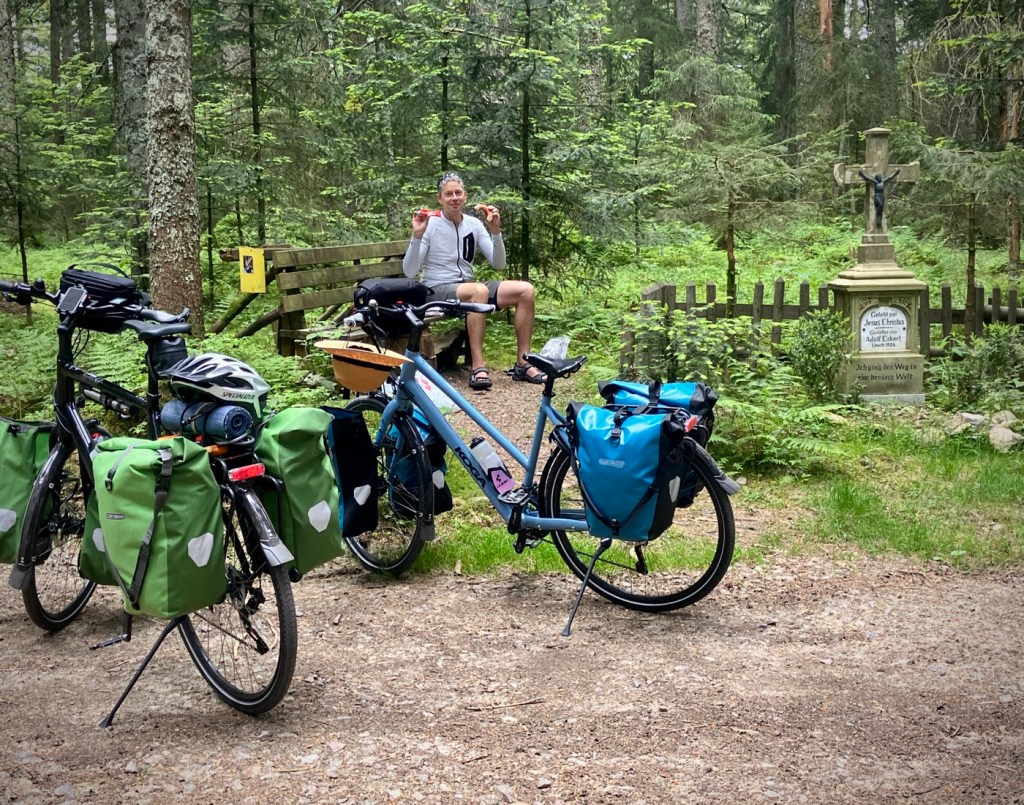


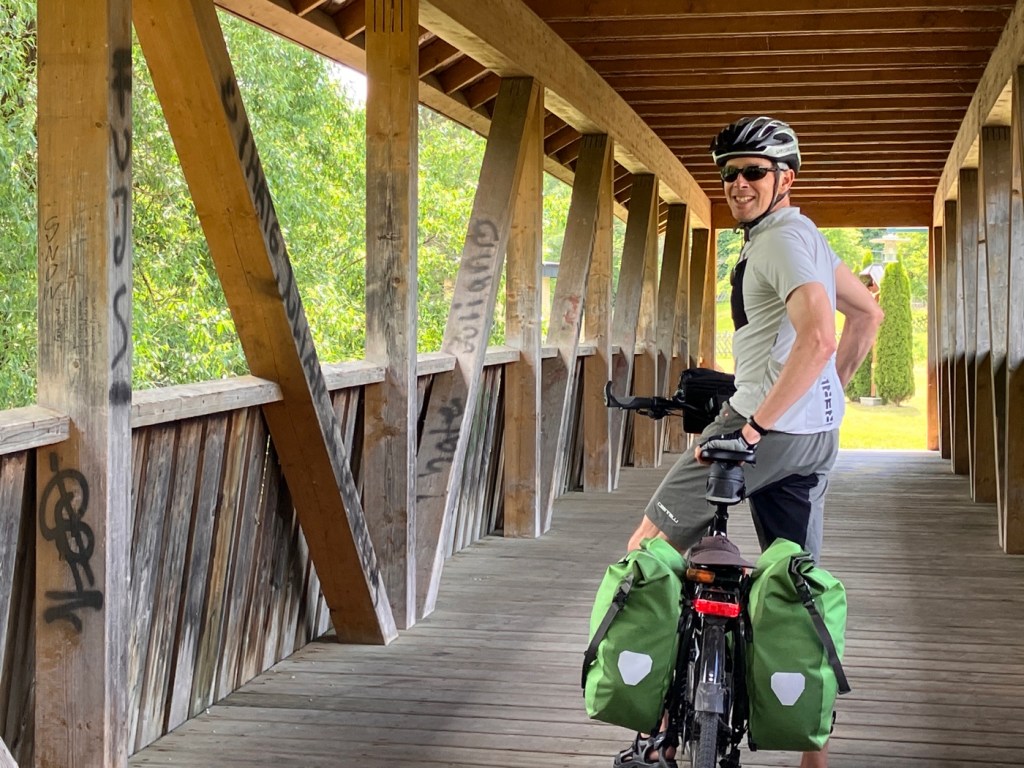


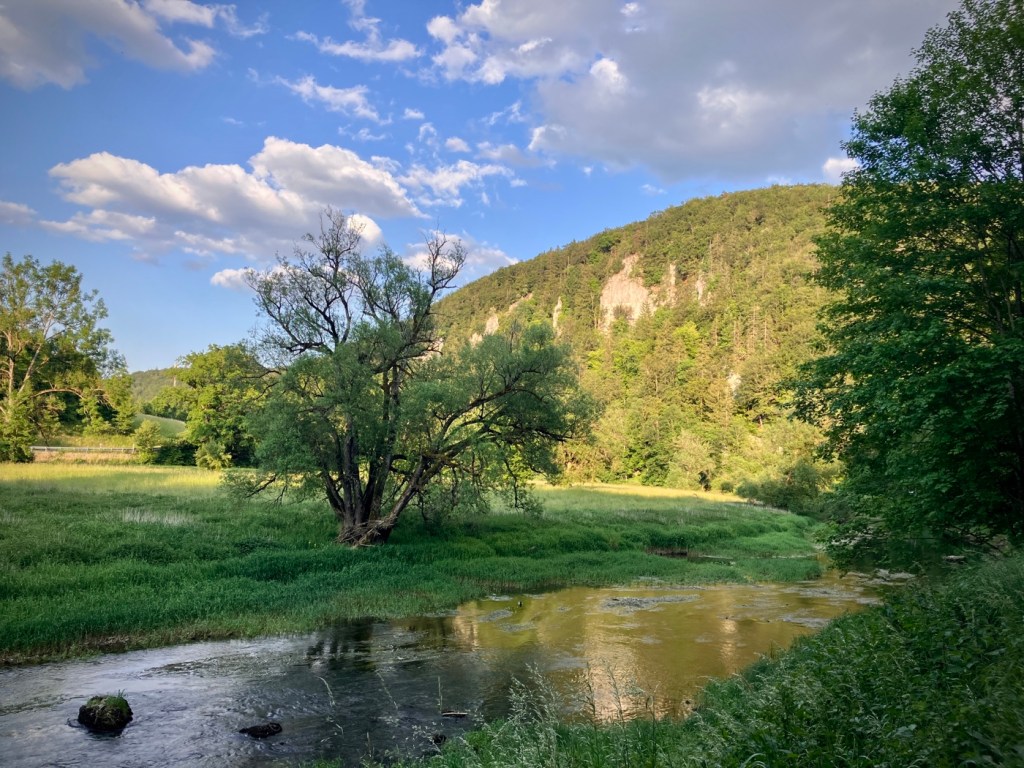


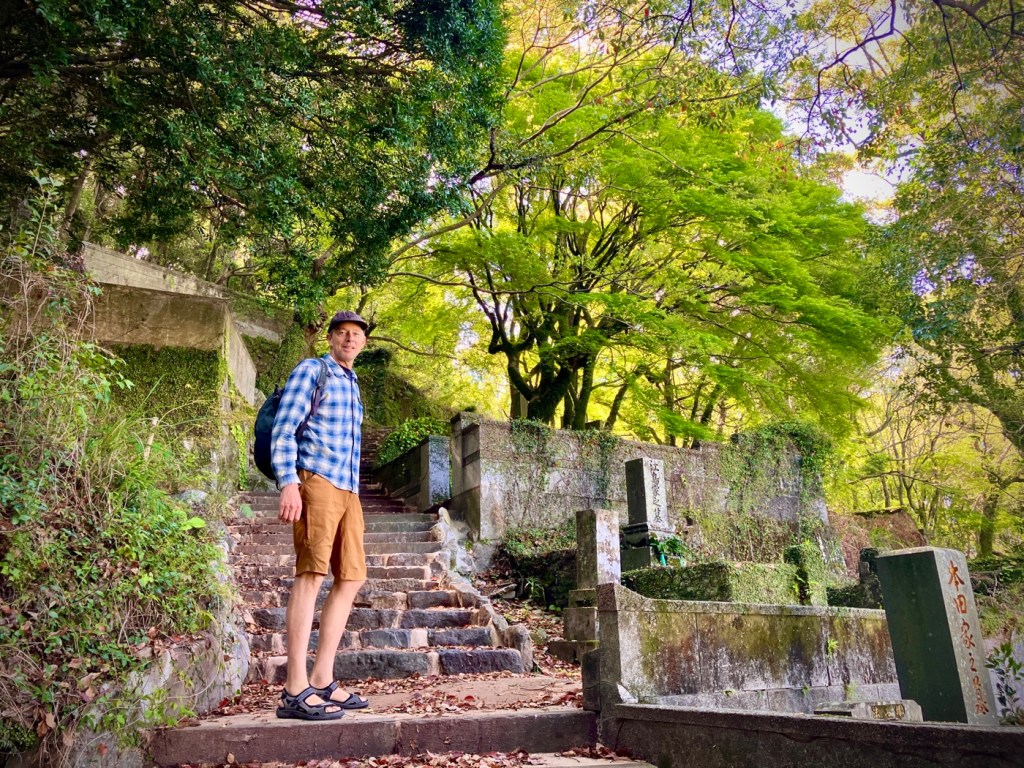
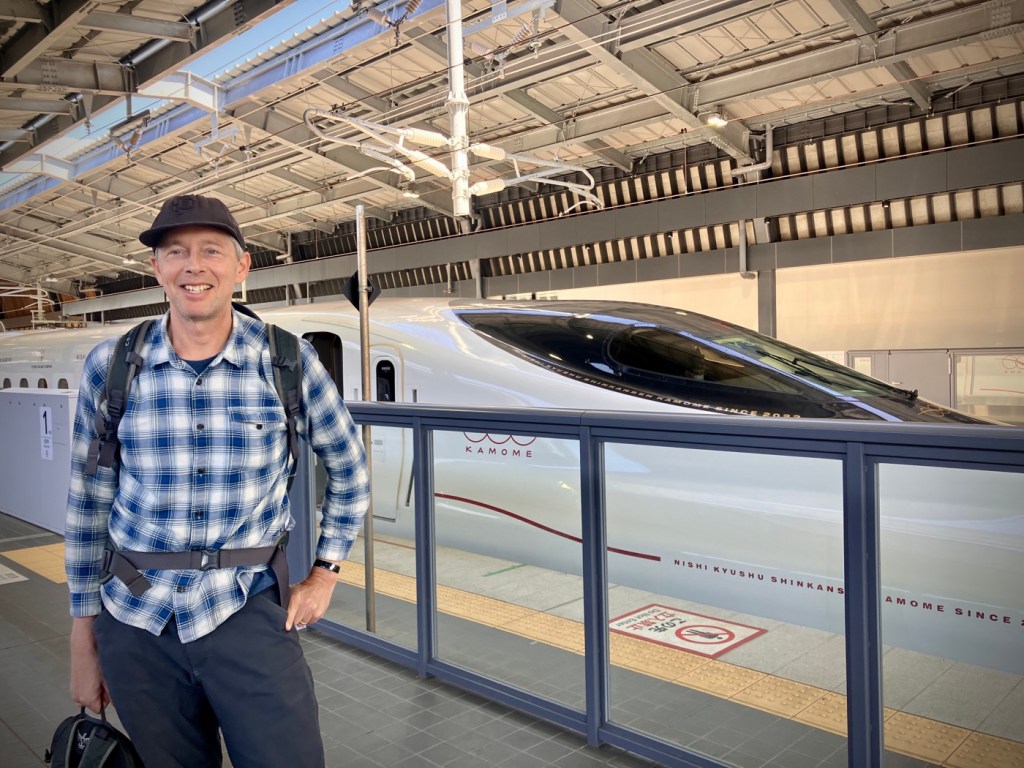
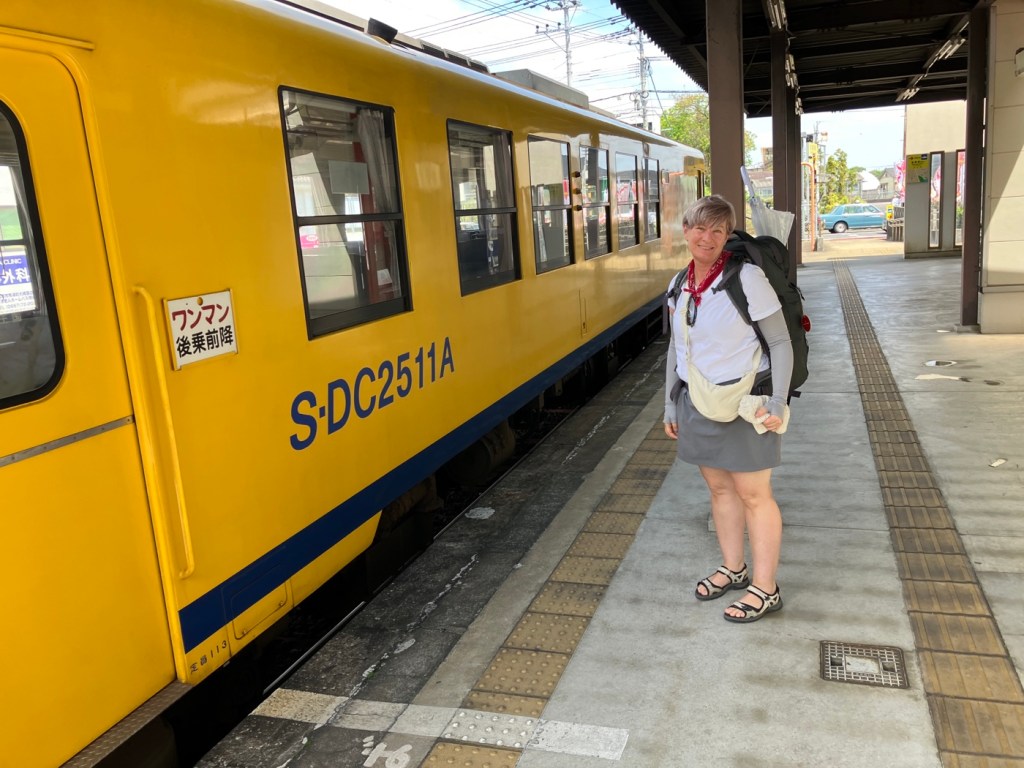
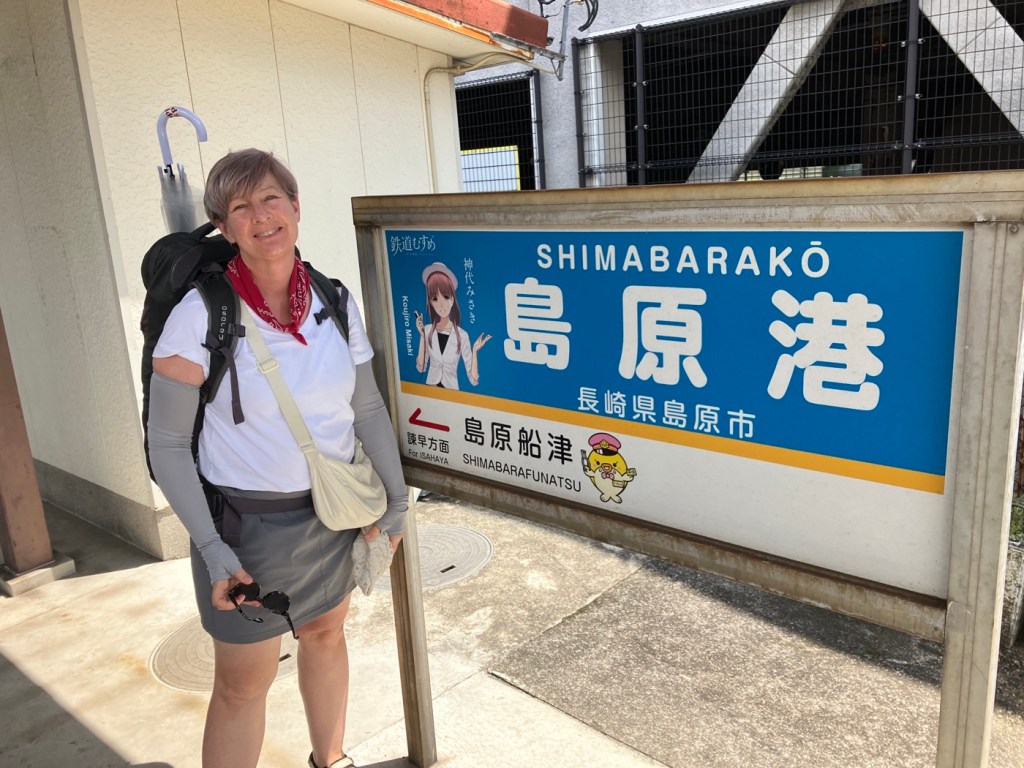
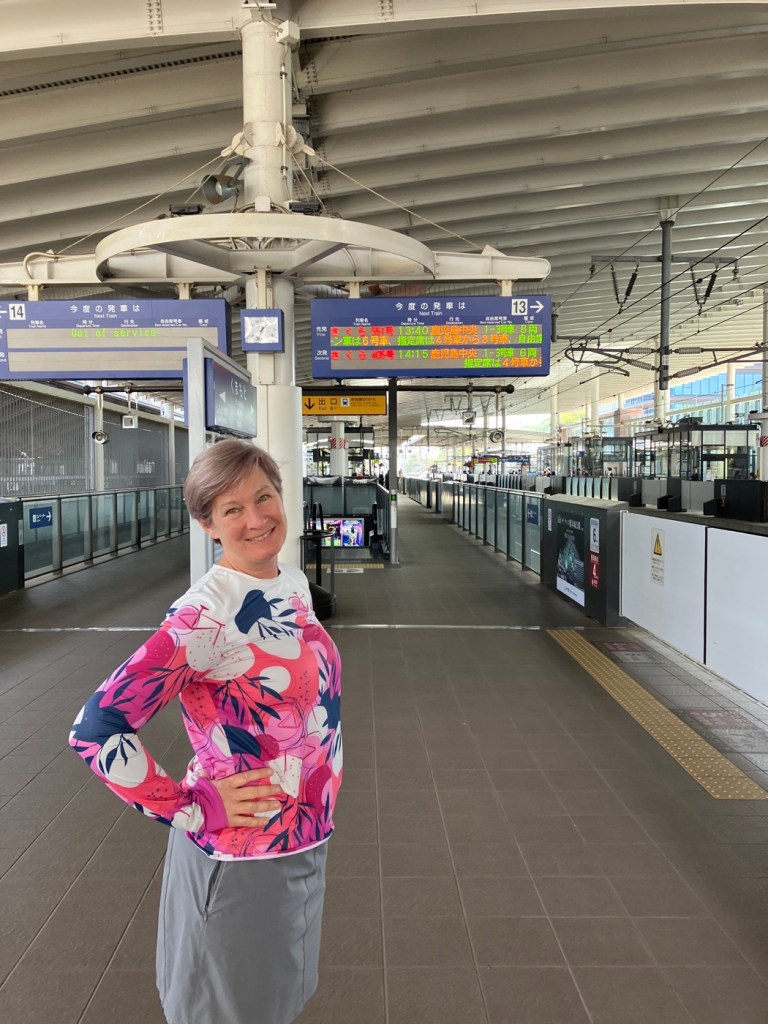

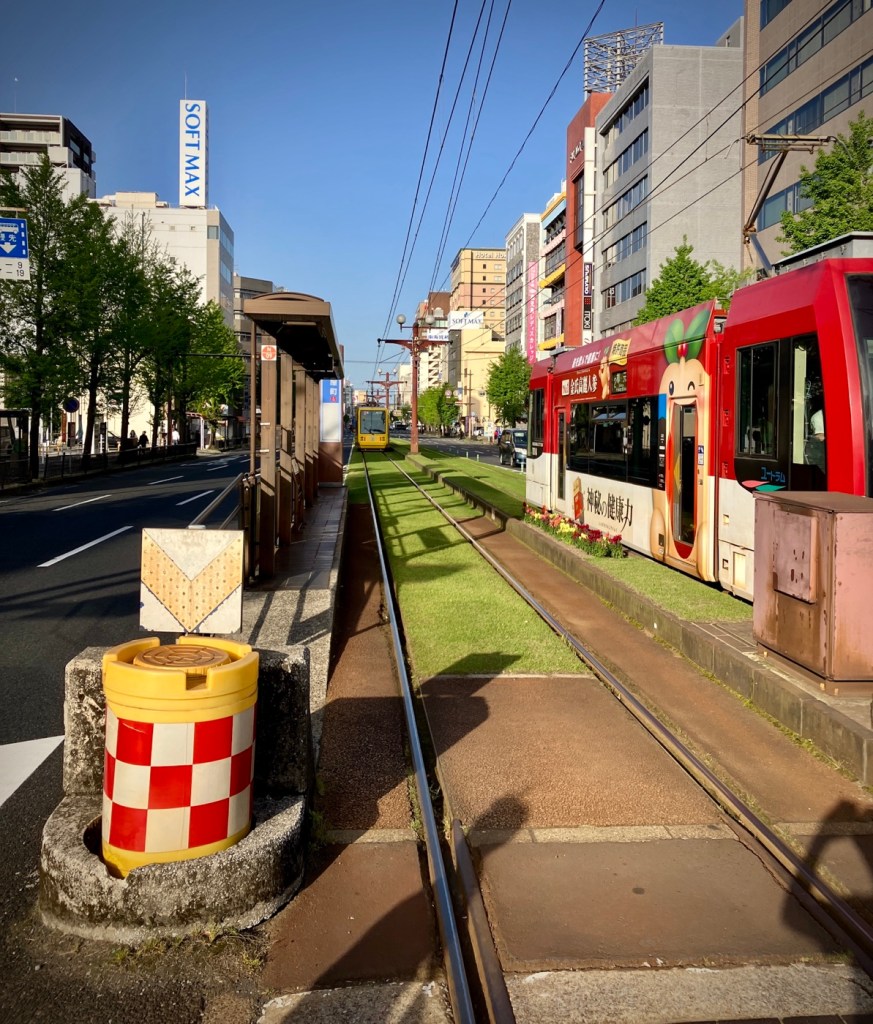


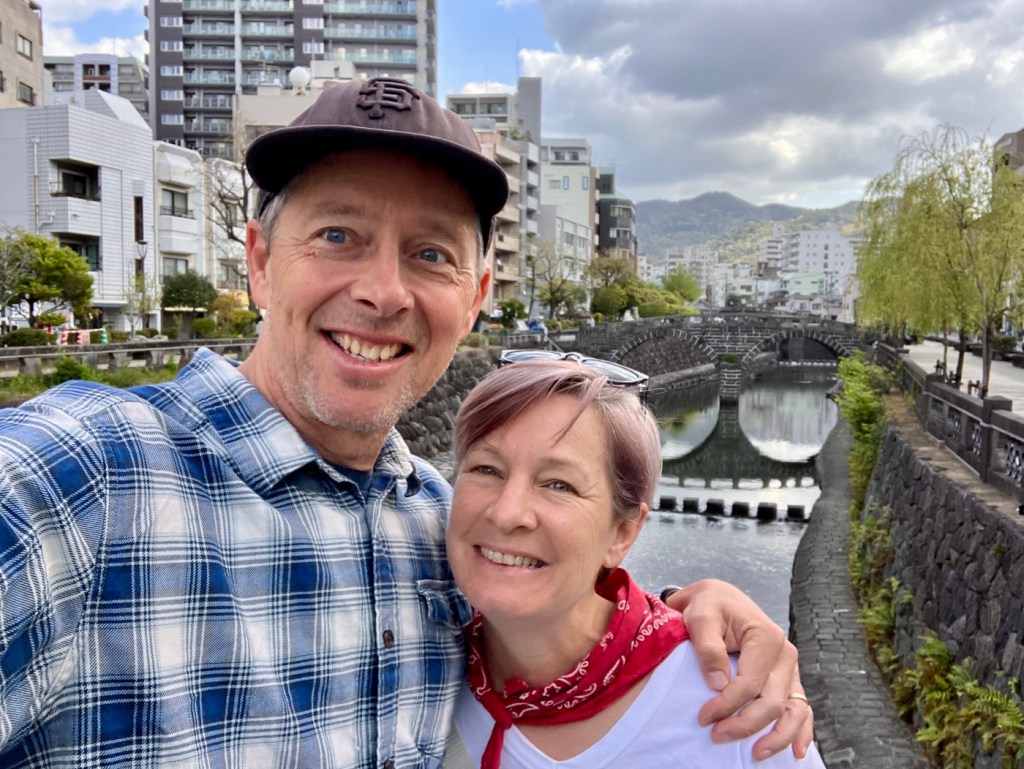

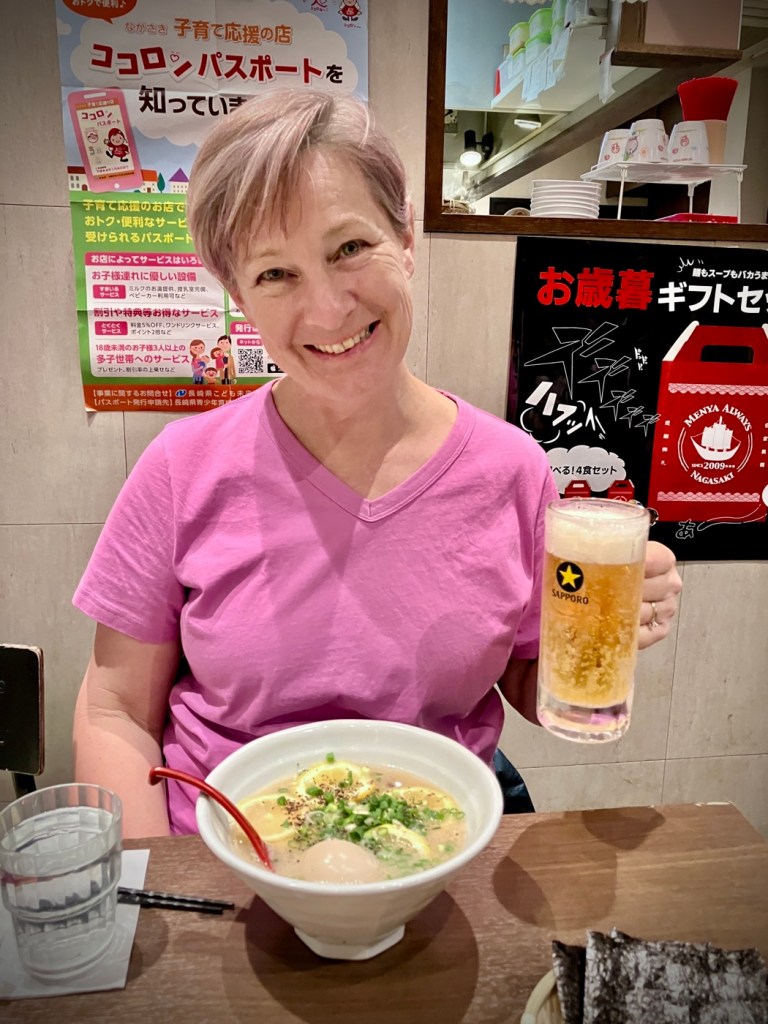


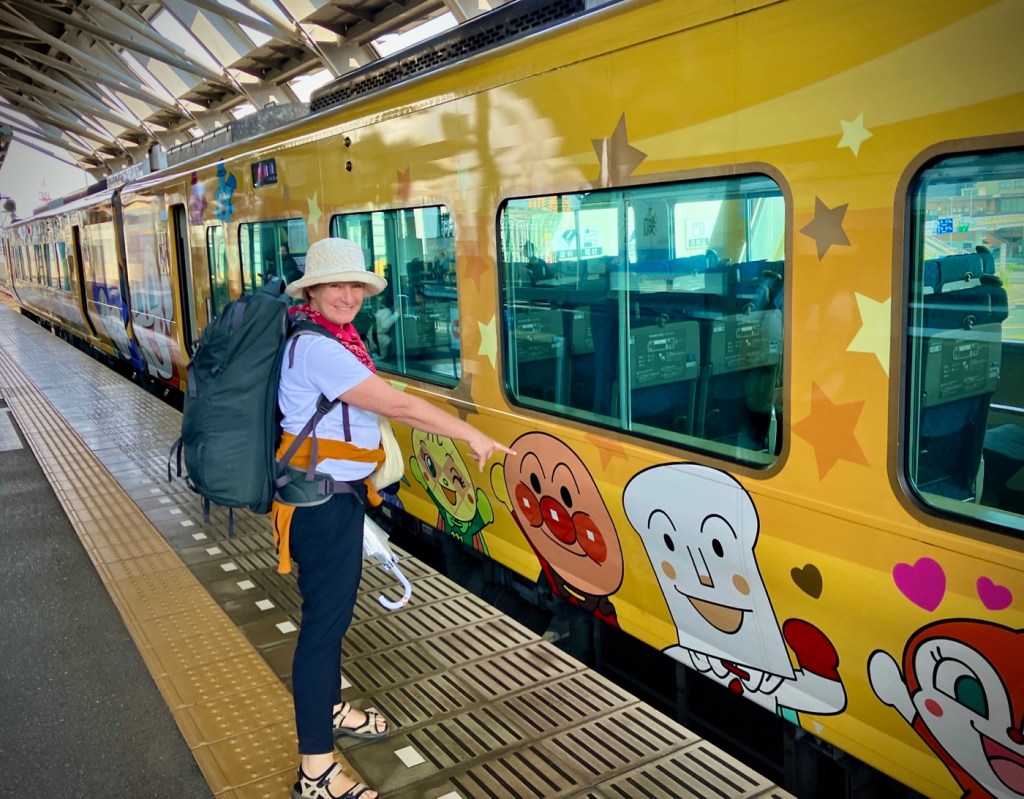

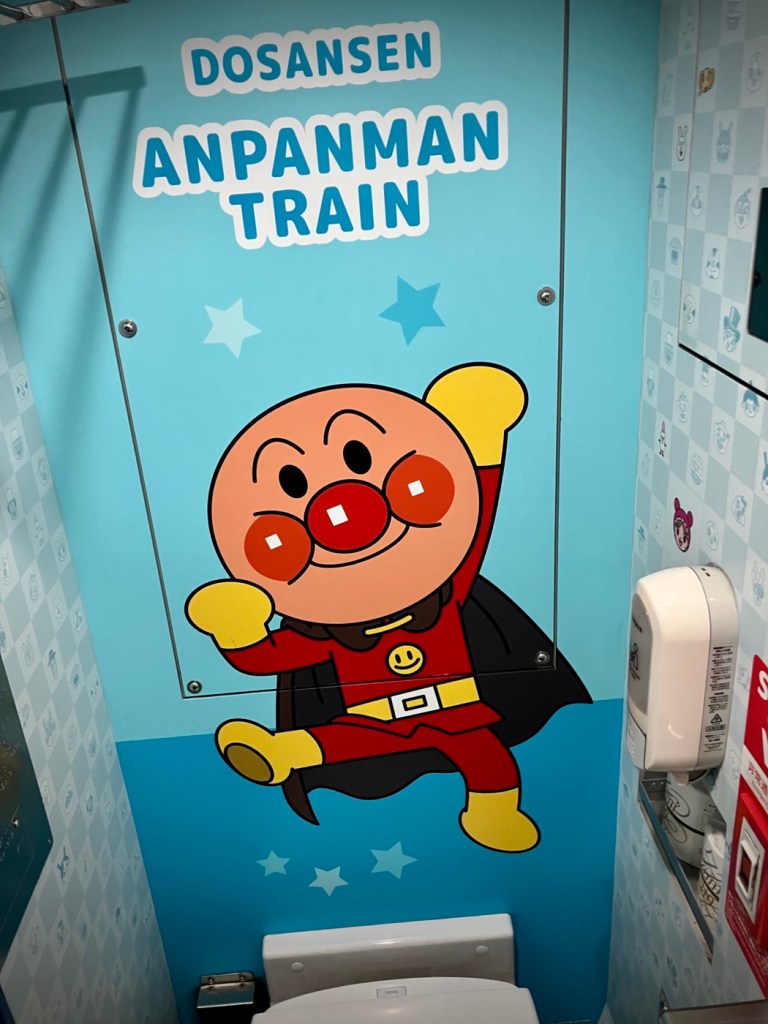
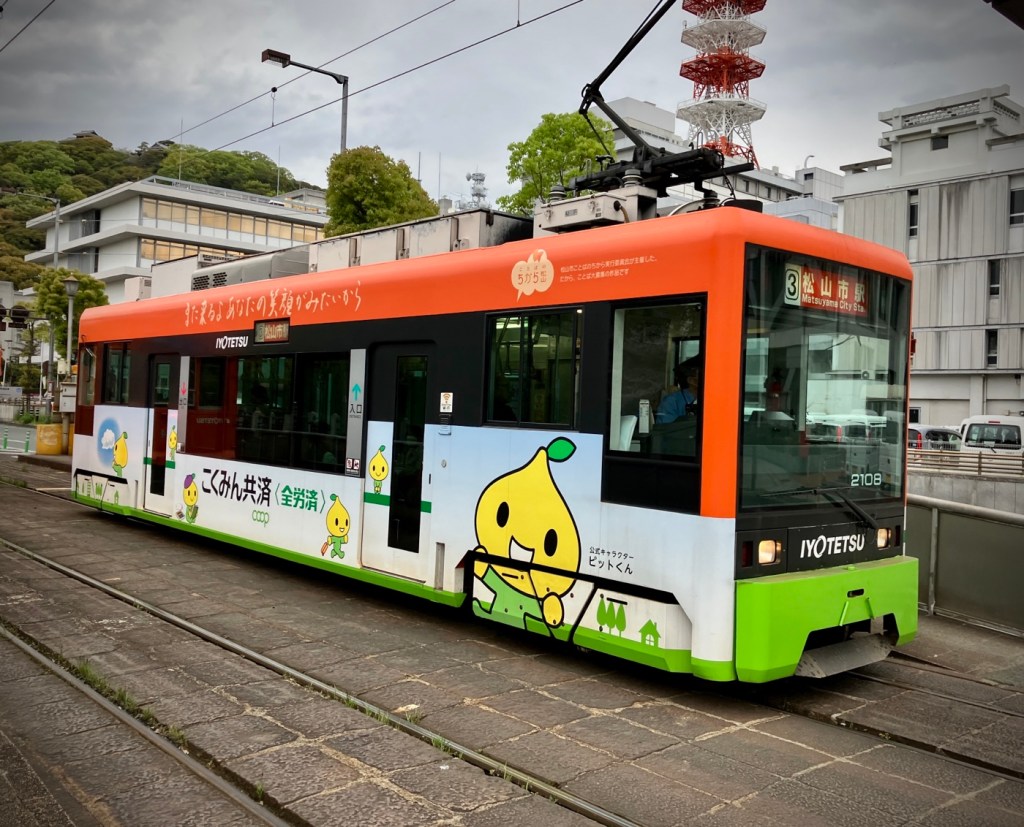
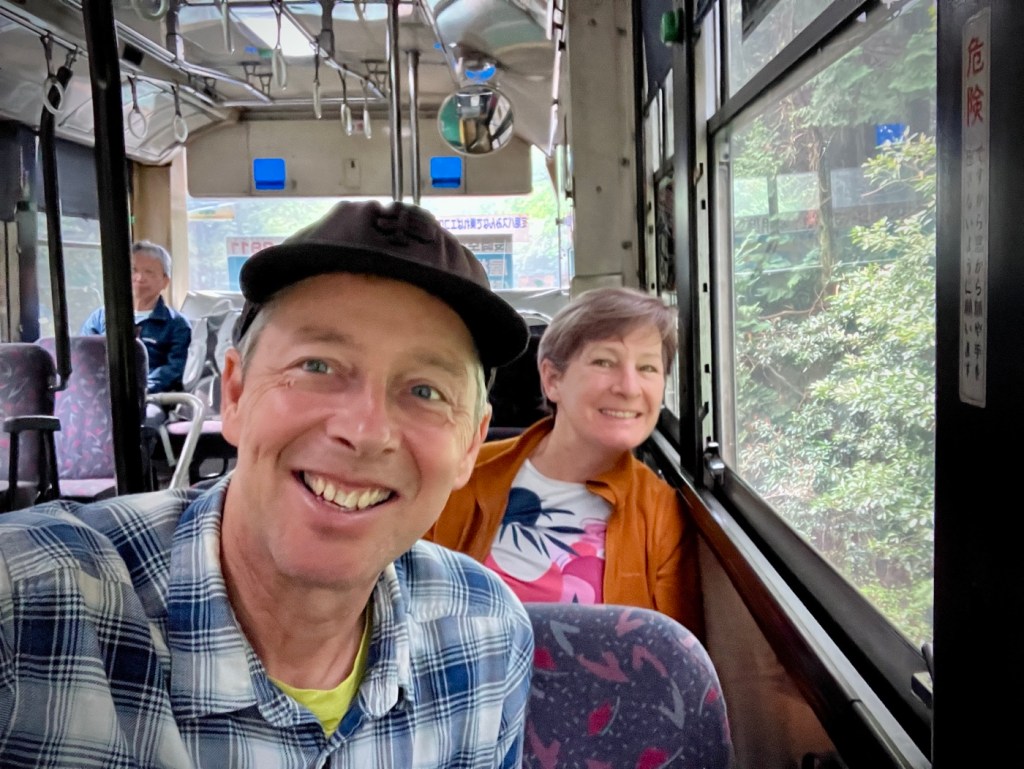

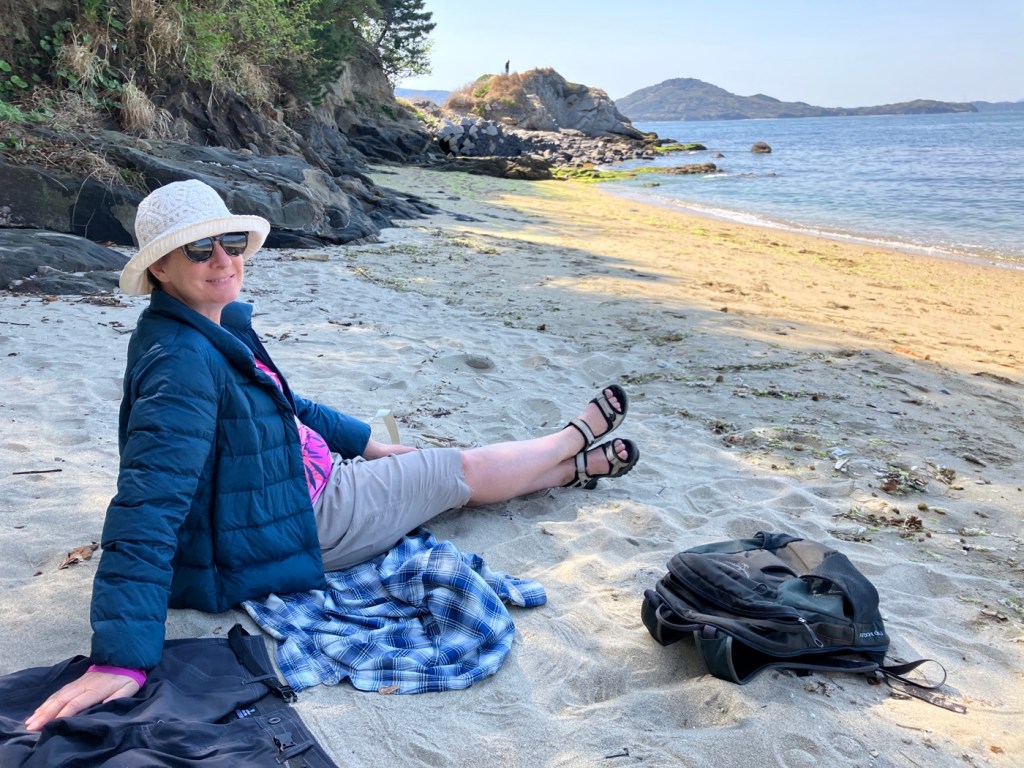
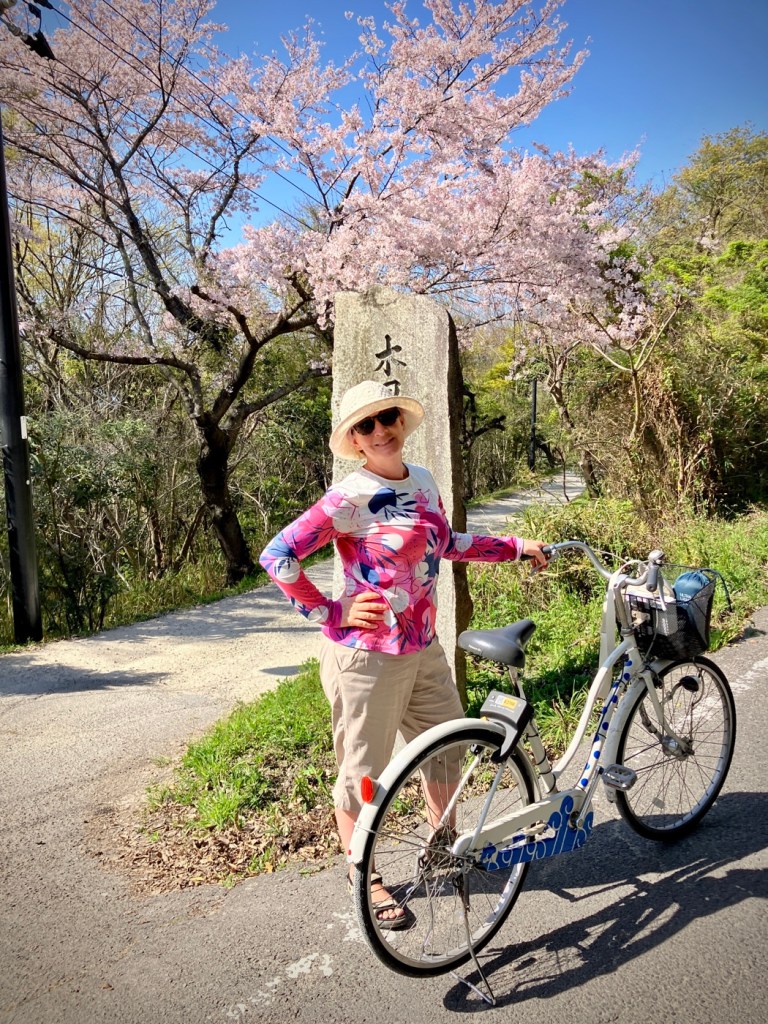
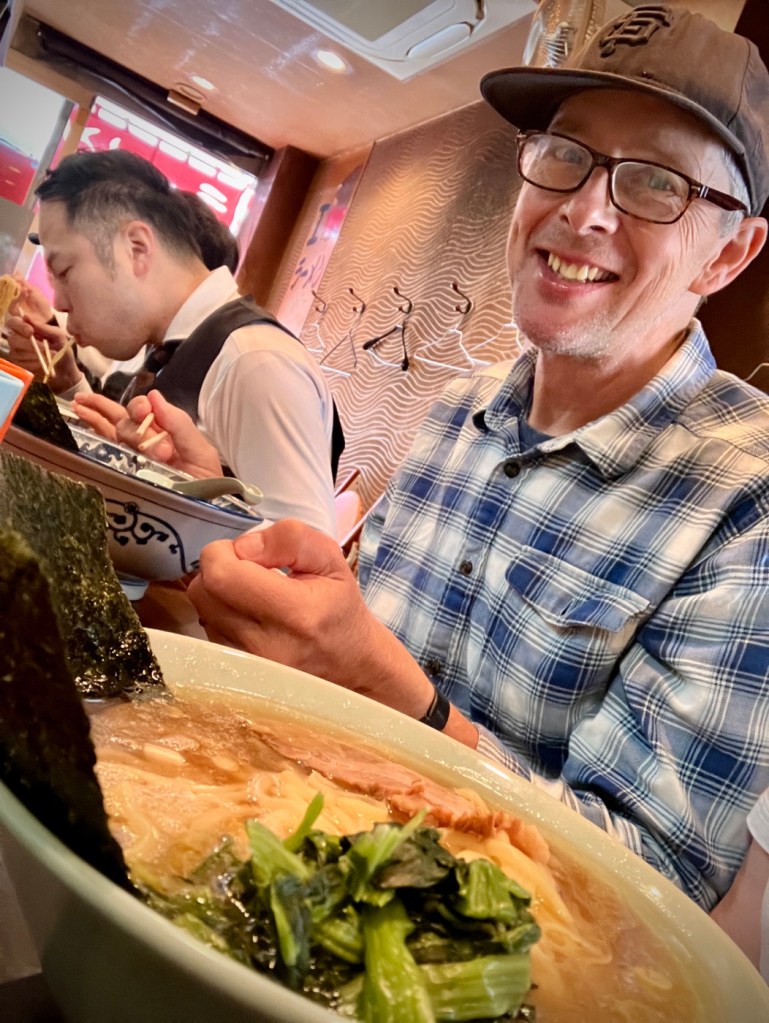
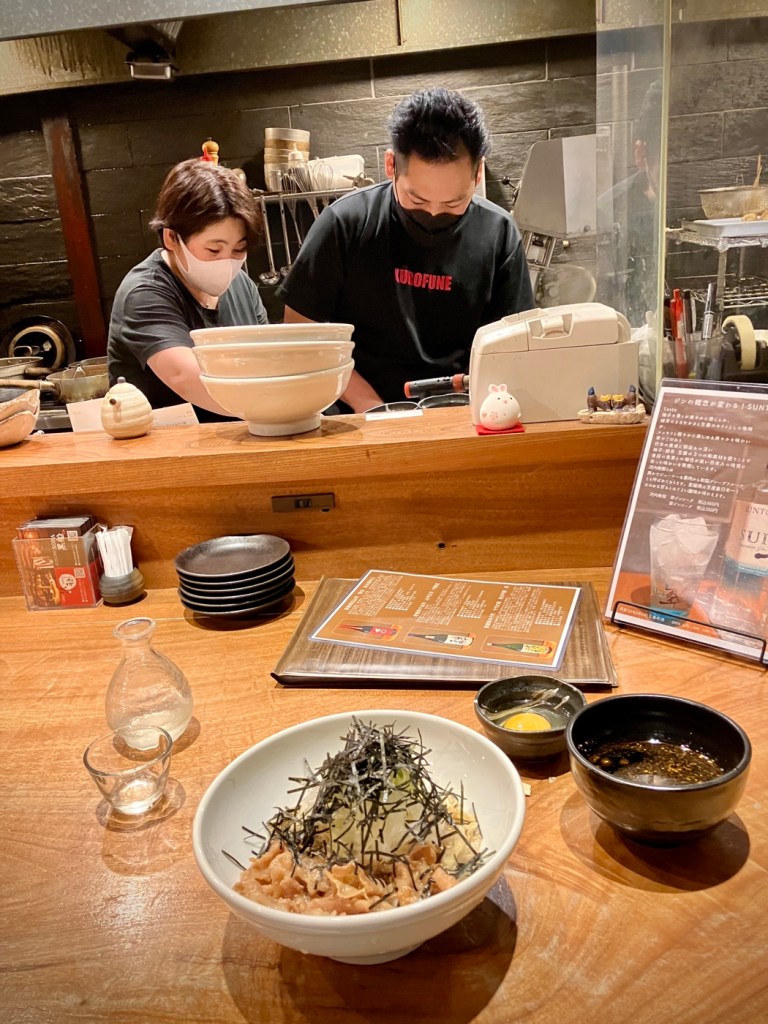

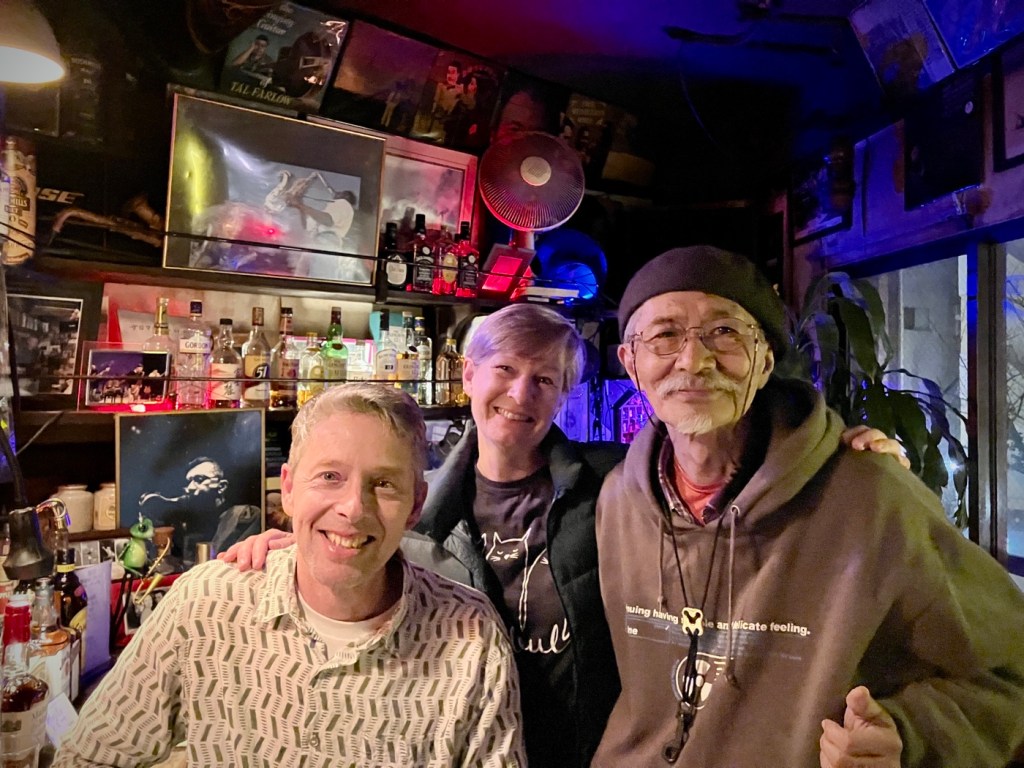


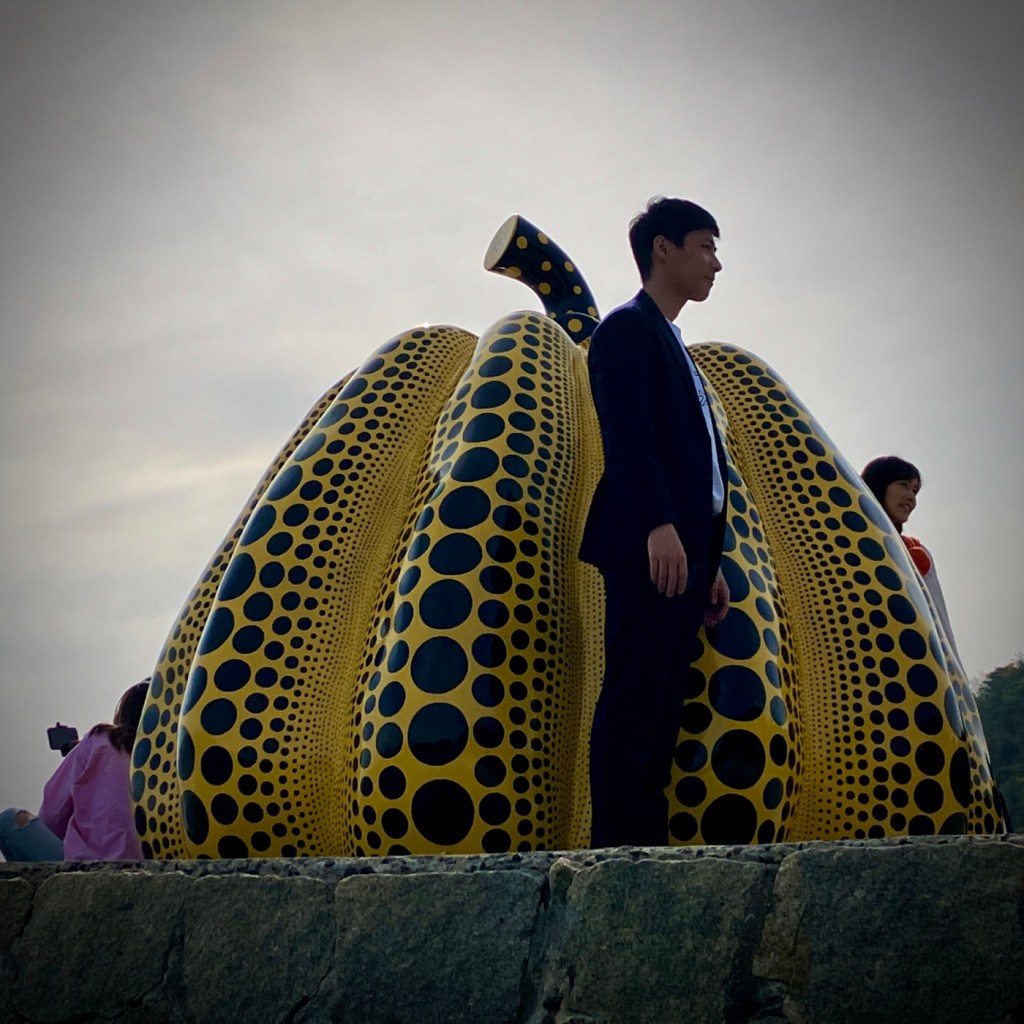
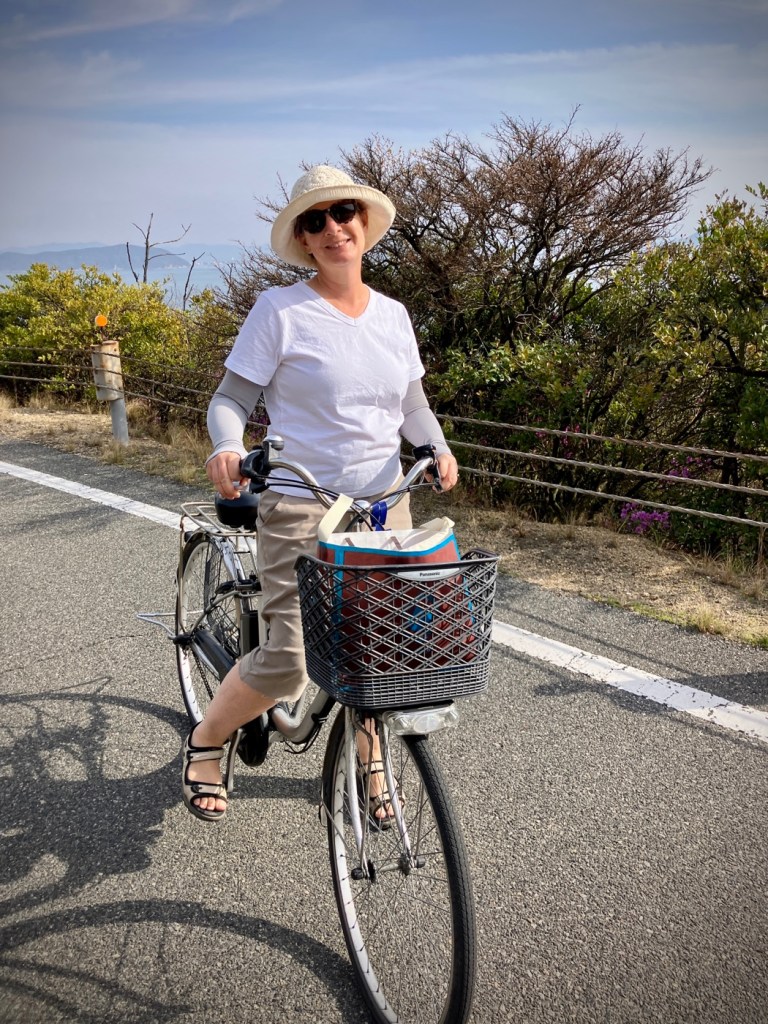
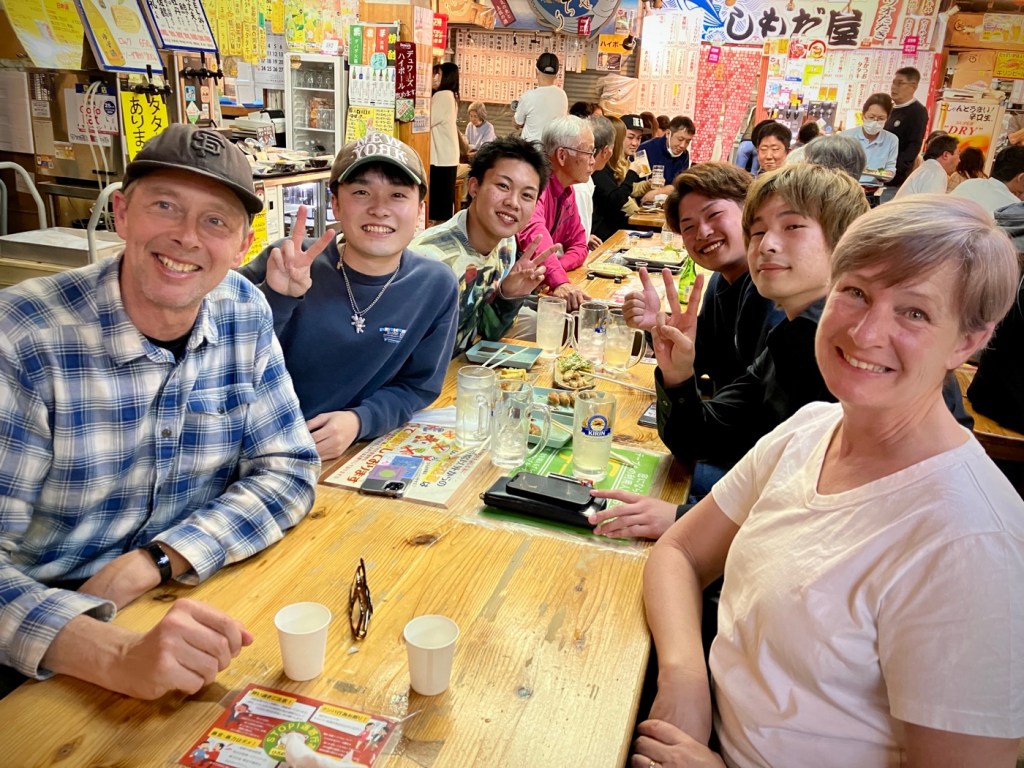


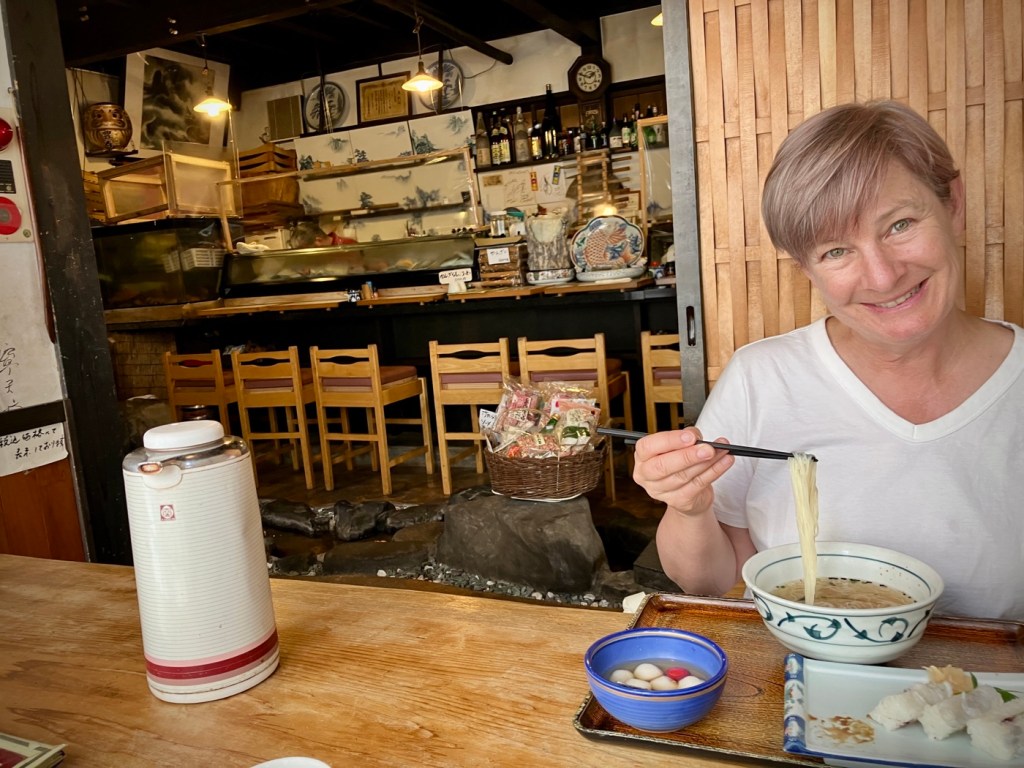
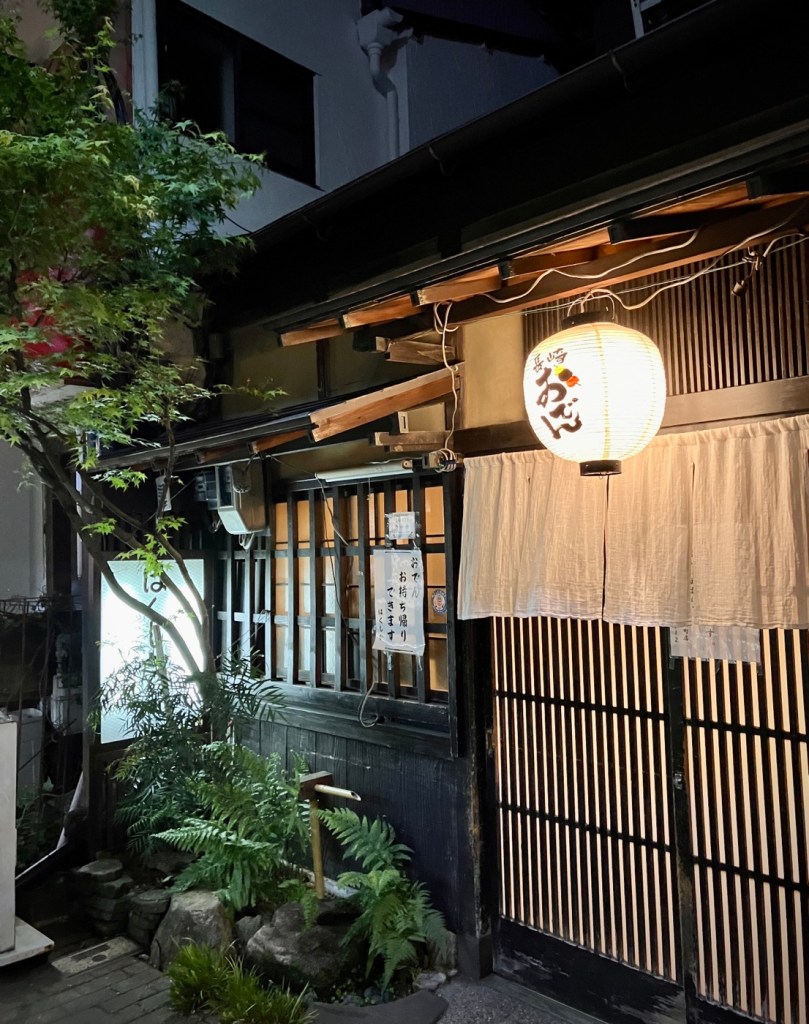
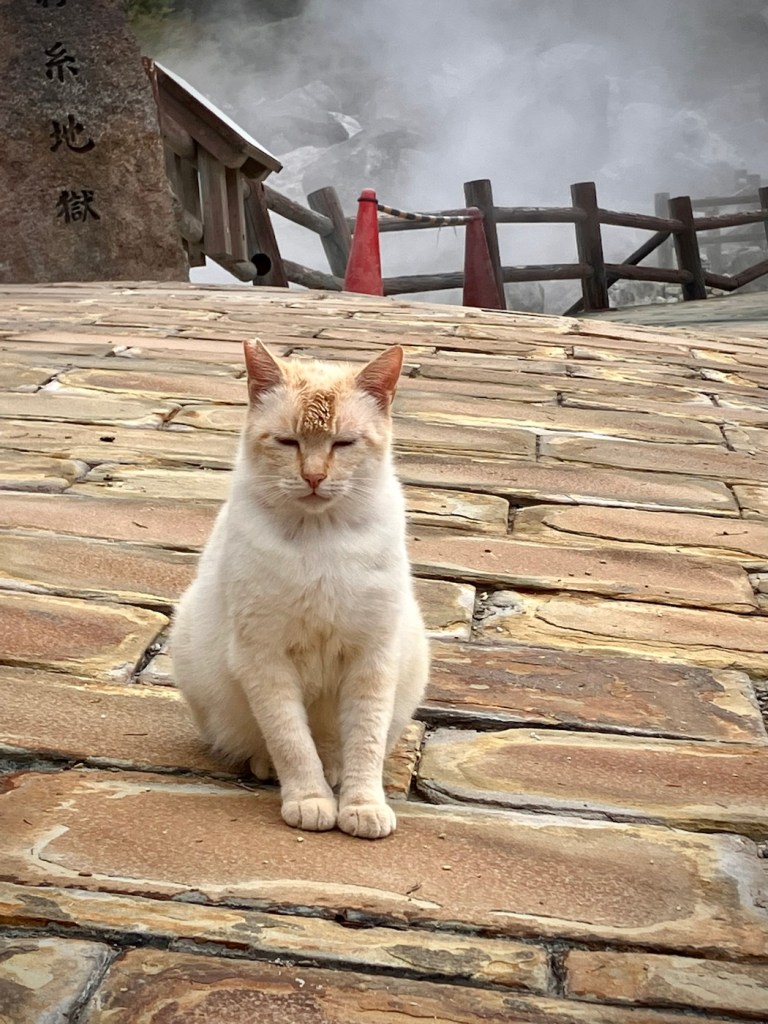
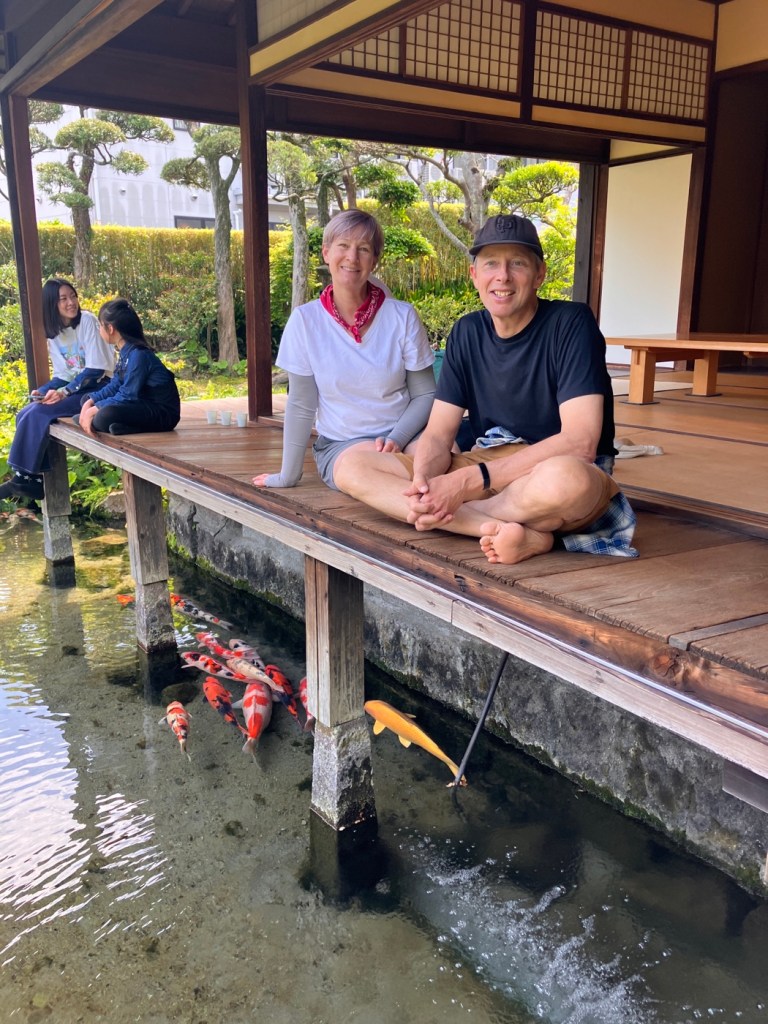
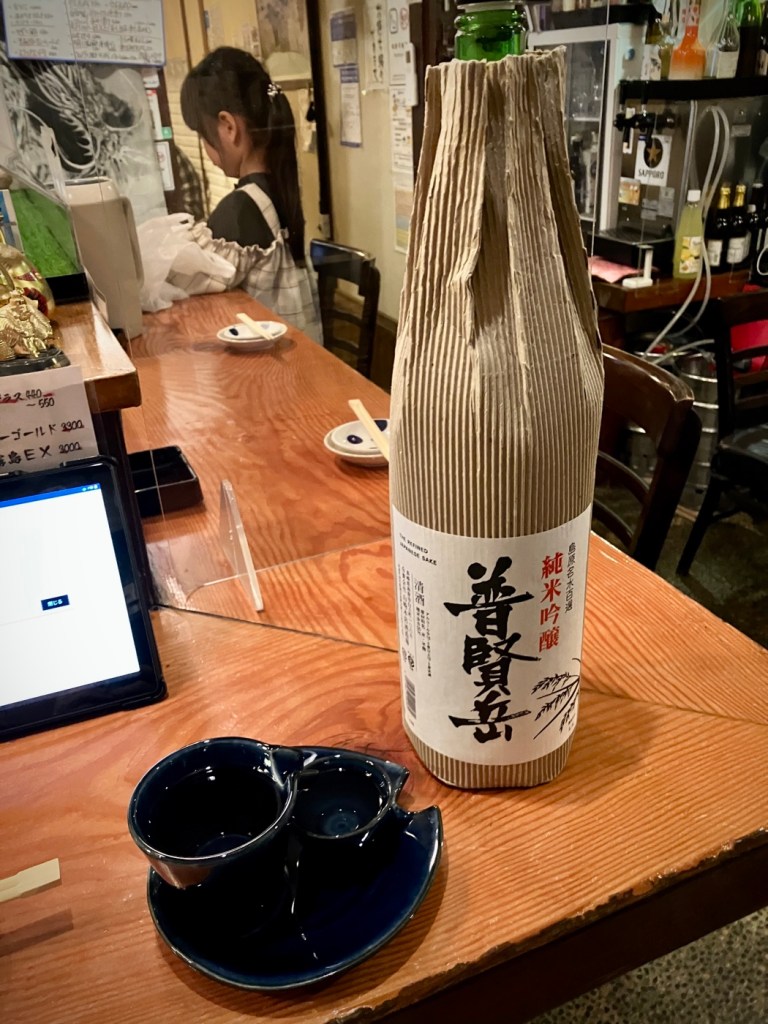
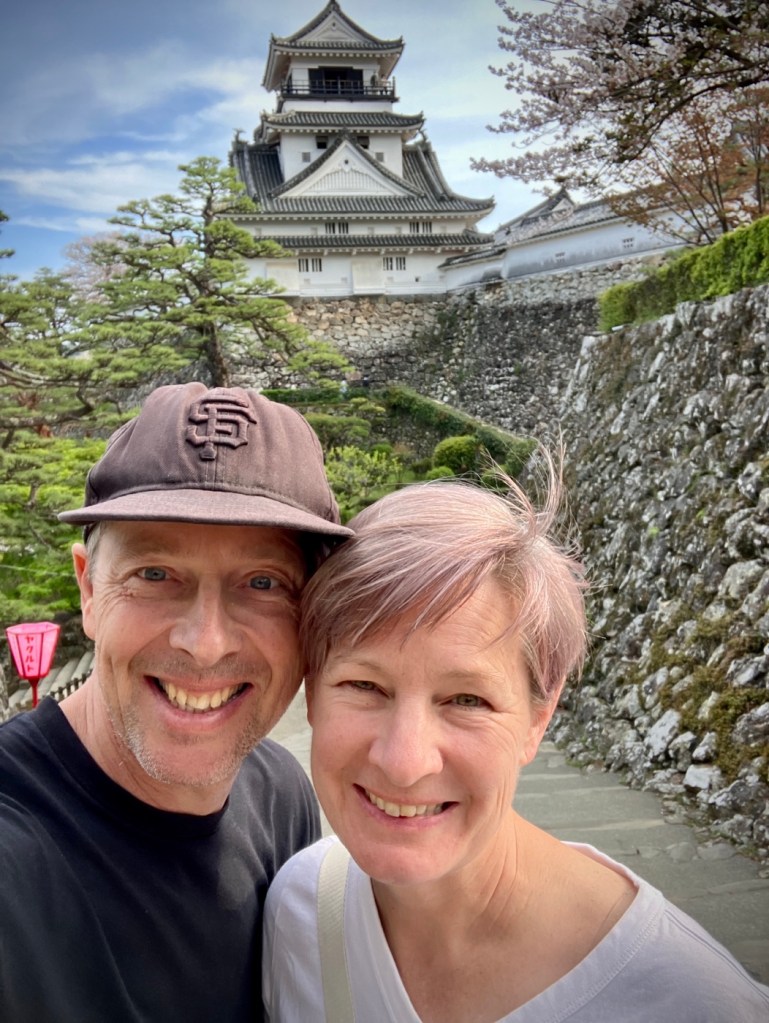


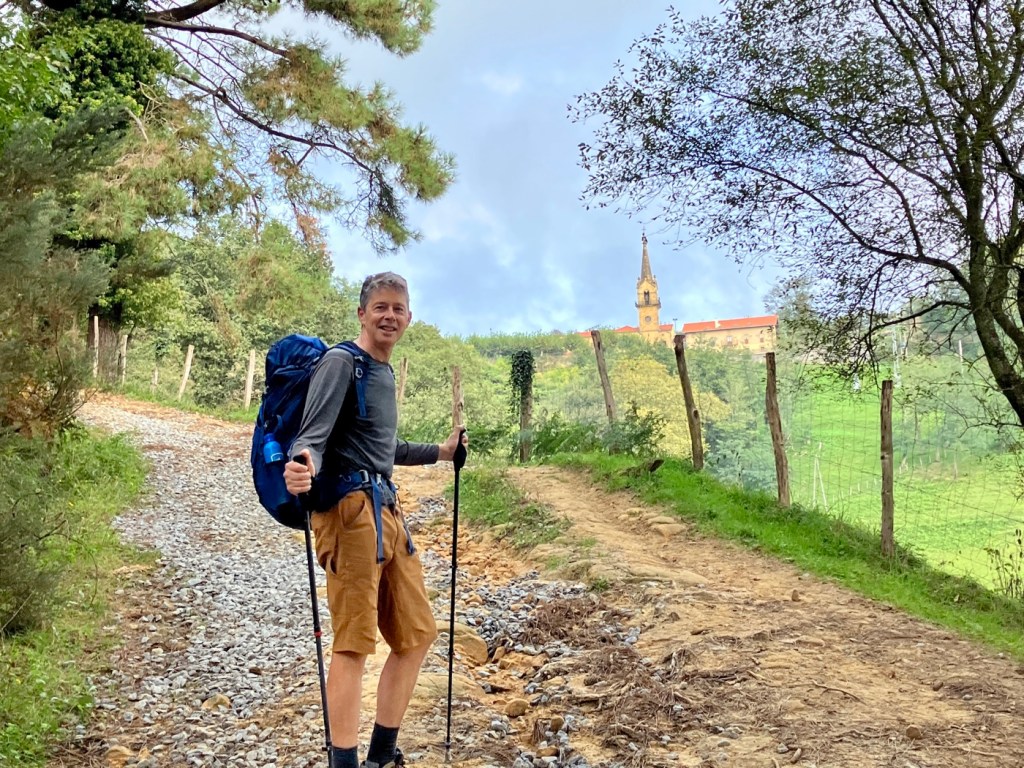


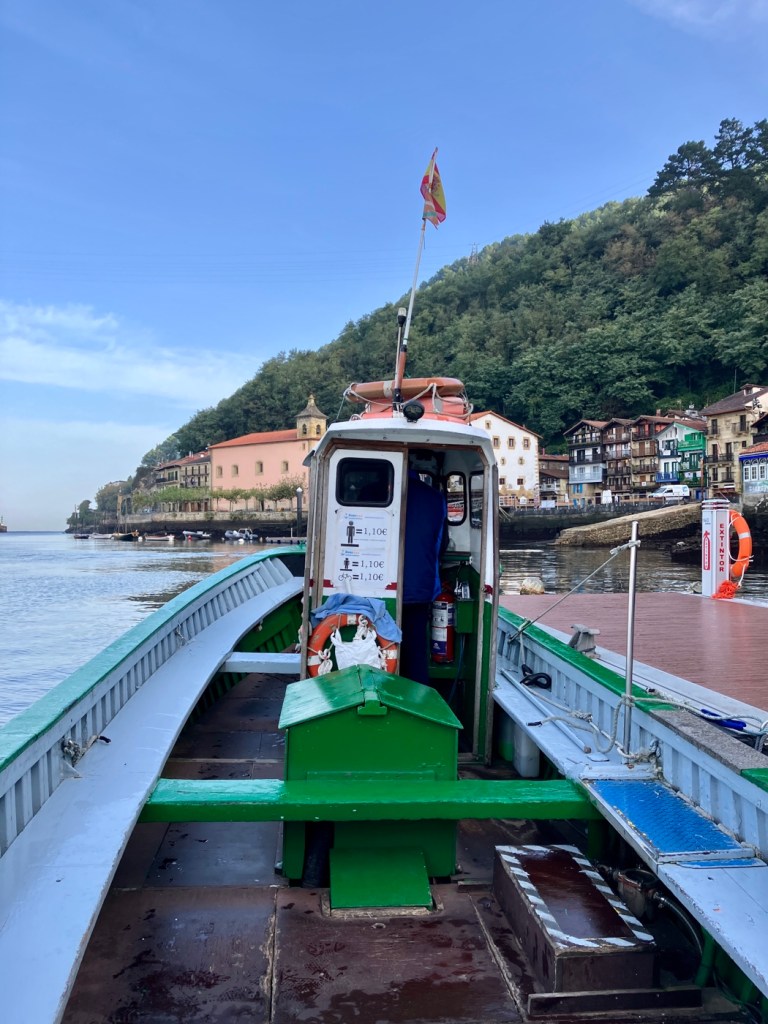

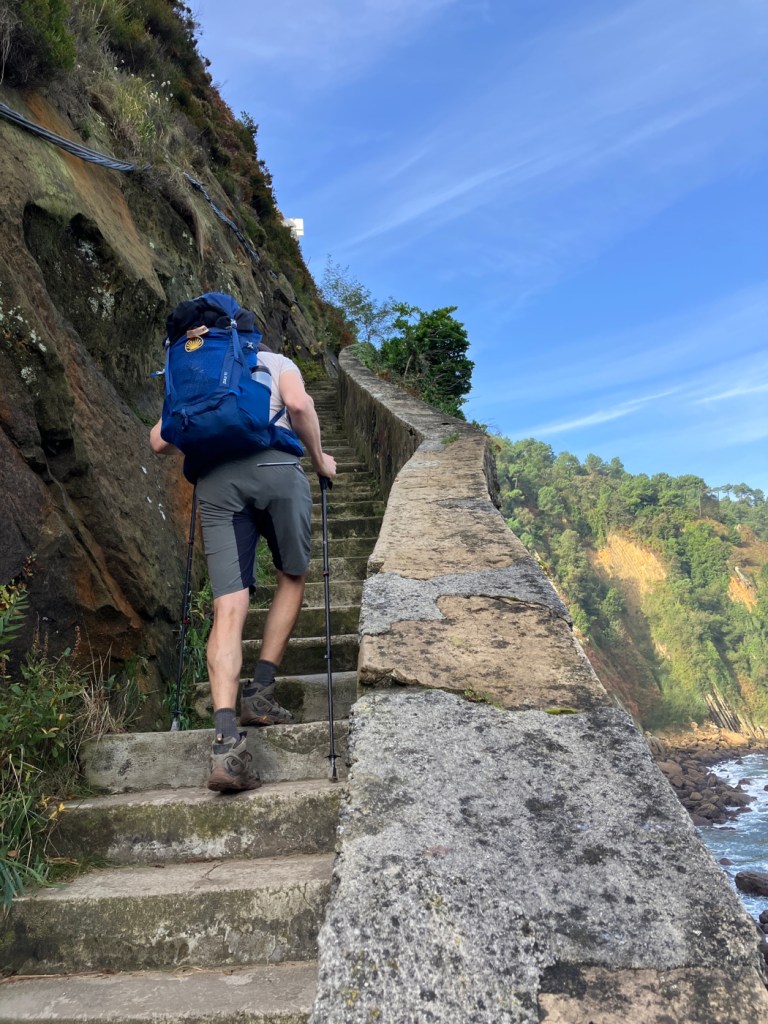
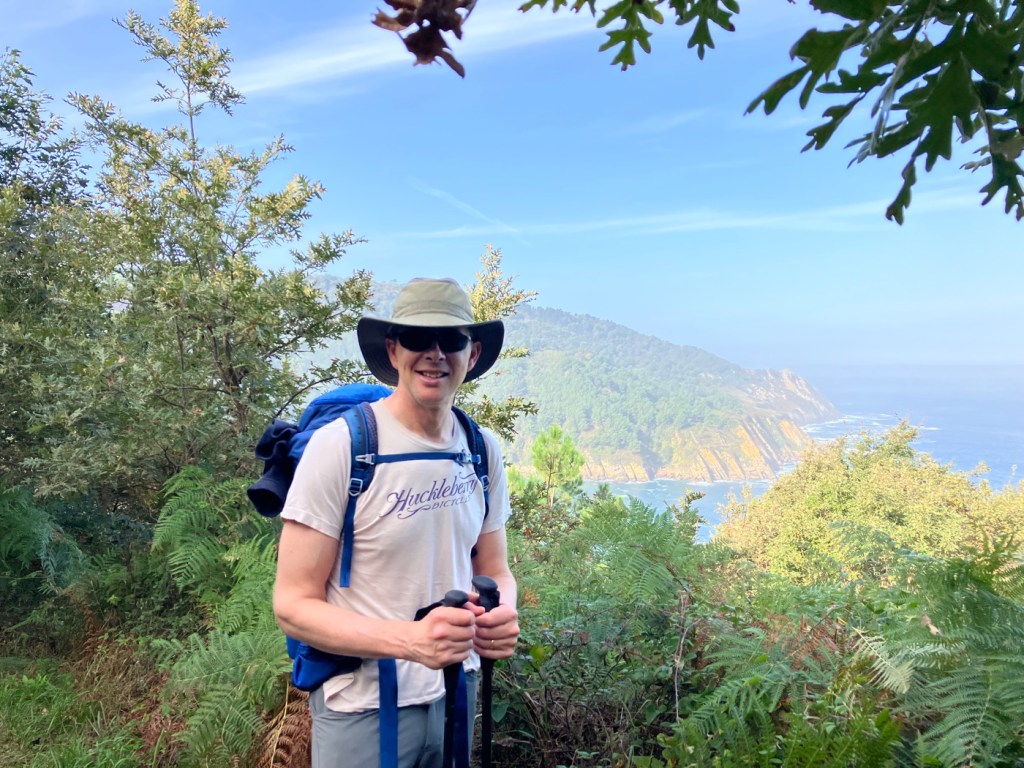
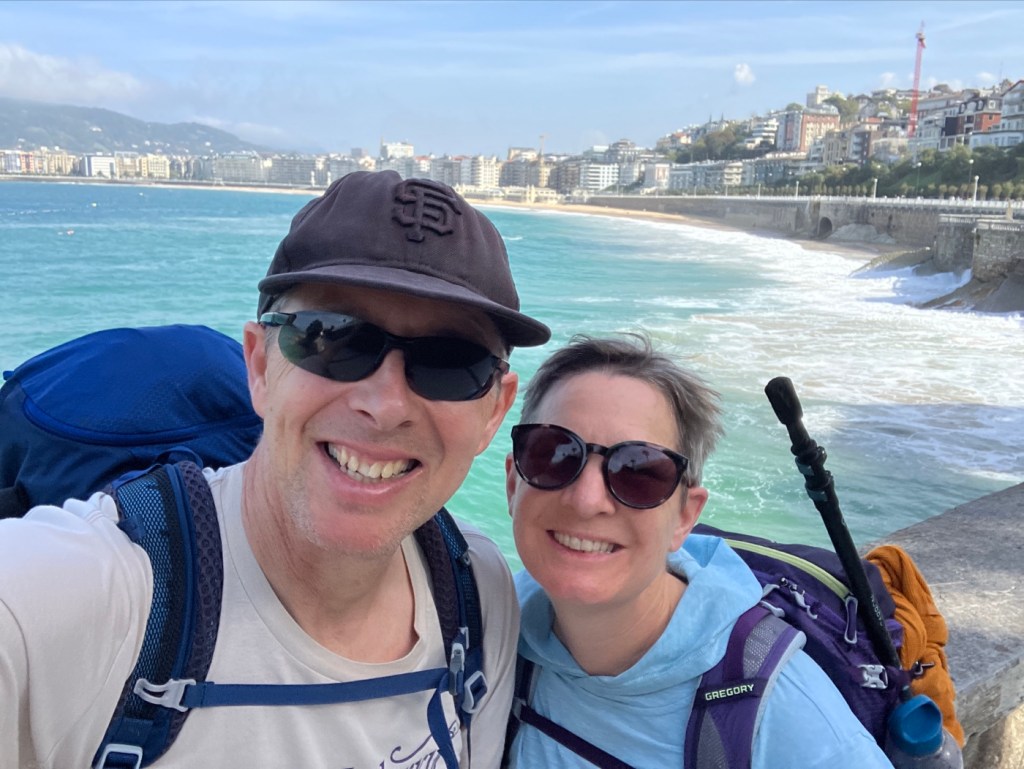
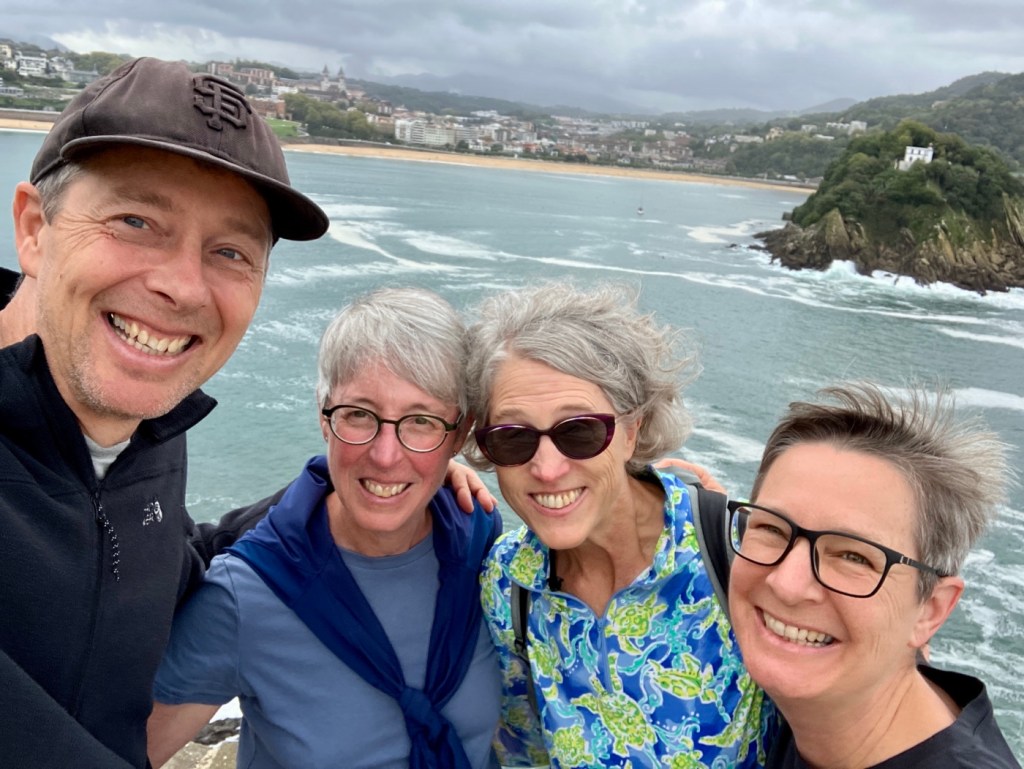

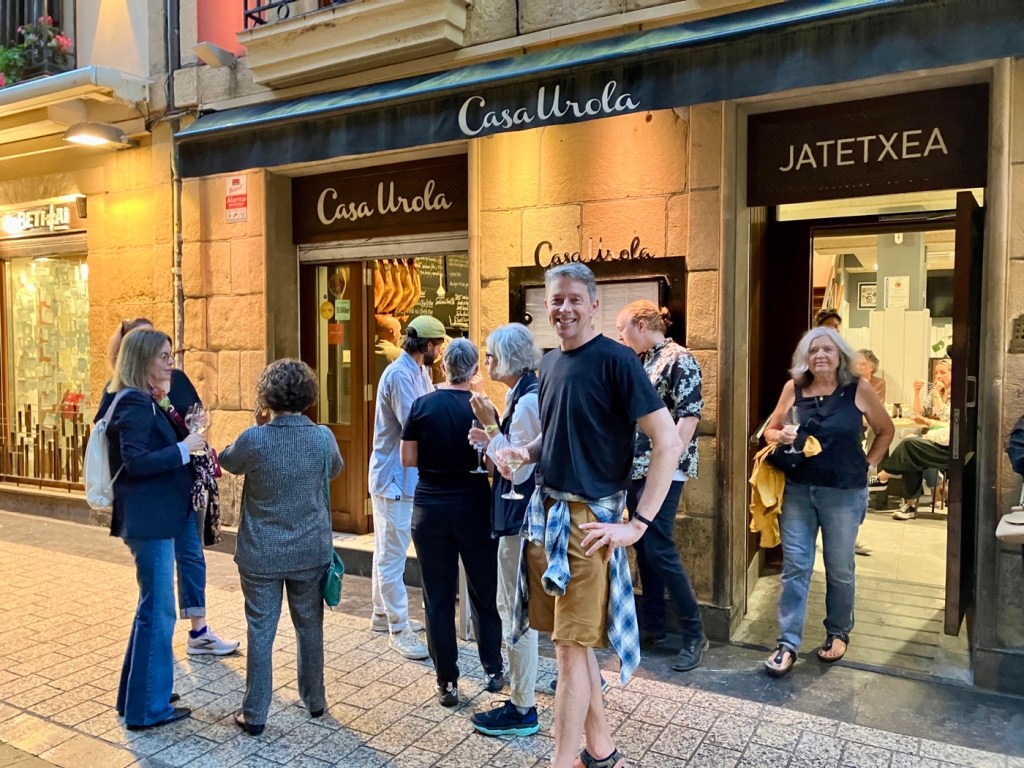
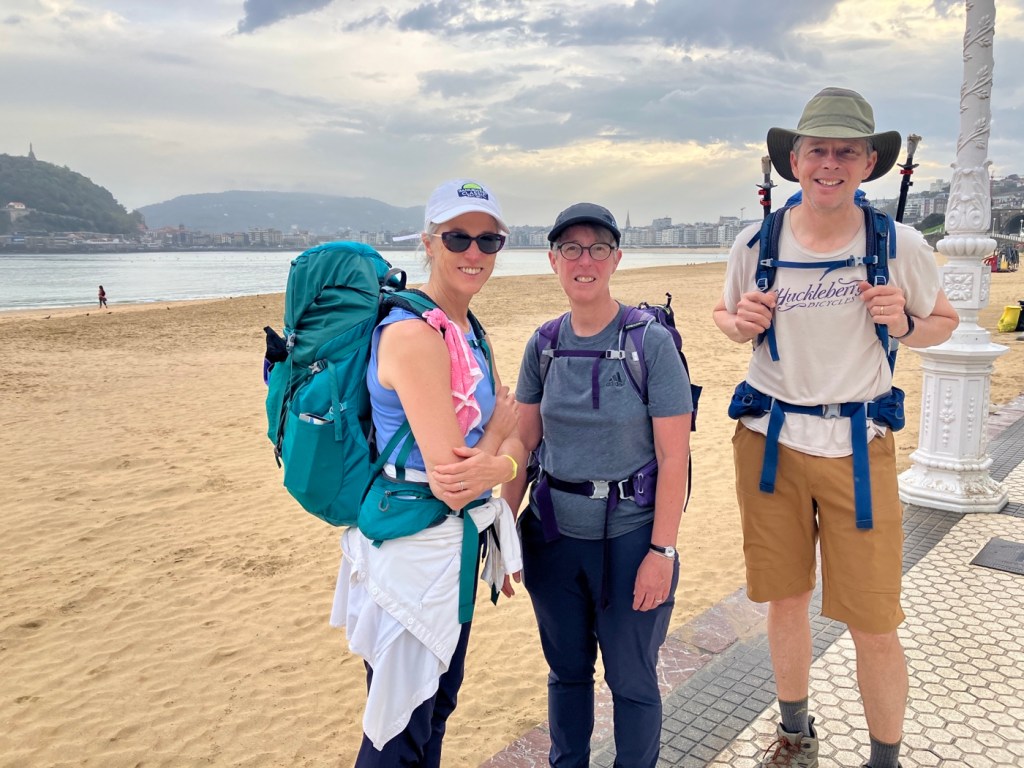


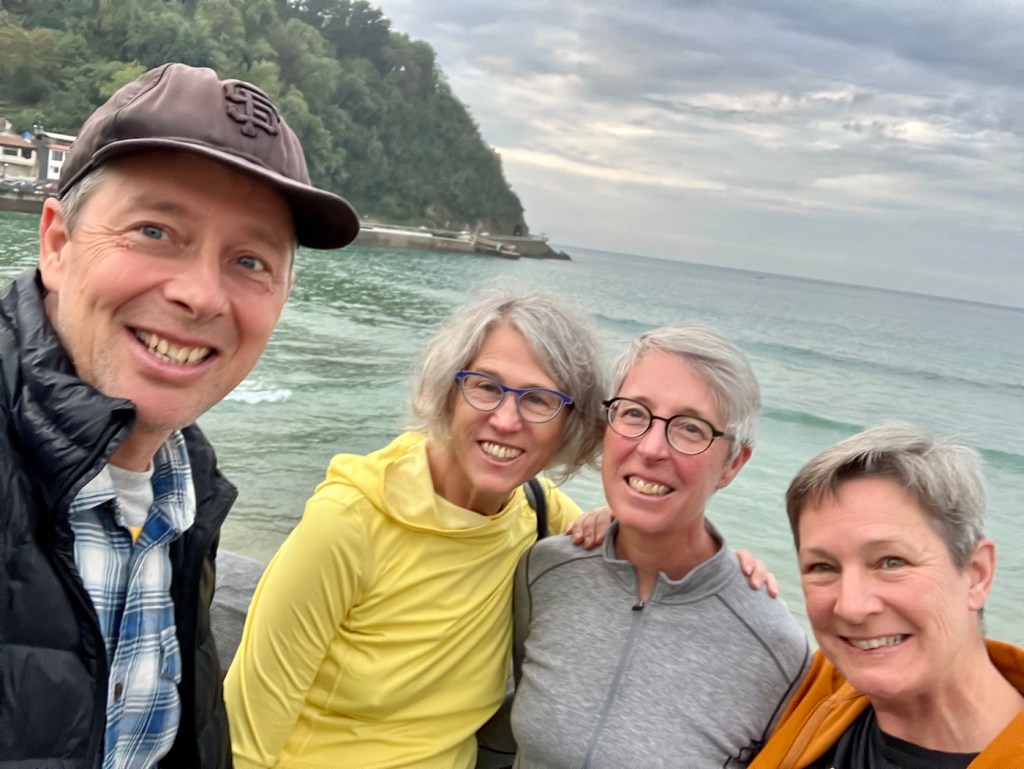
 Less Car, More Life