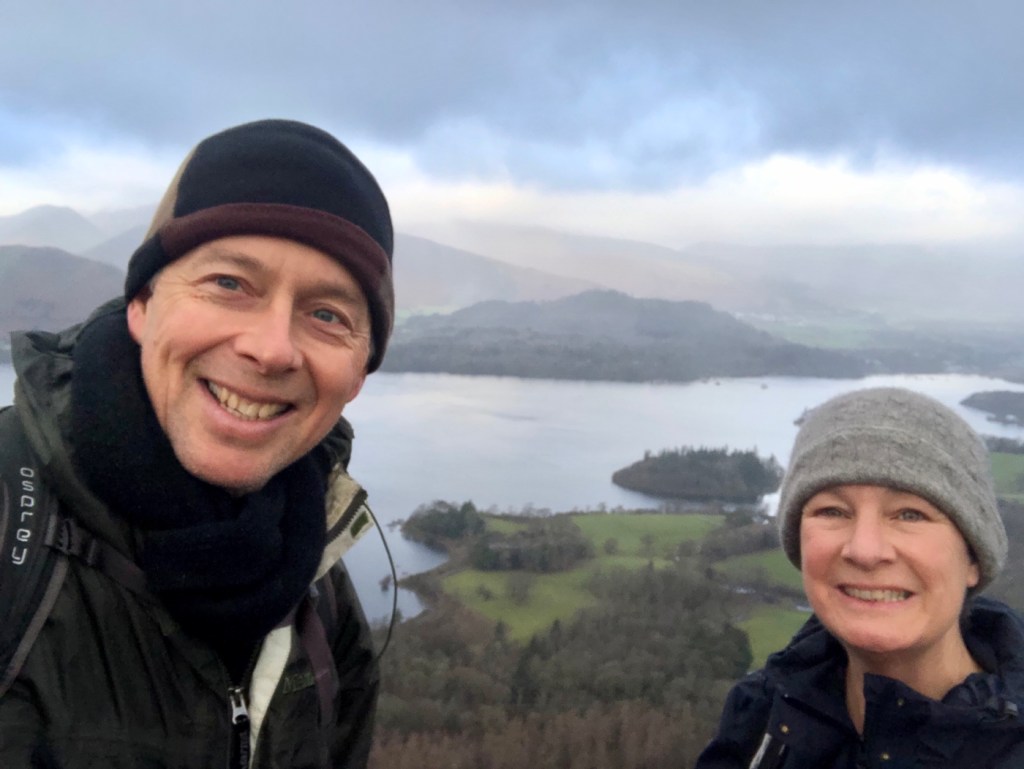
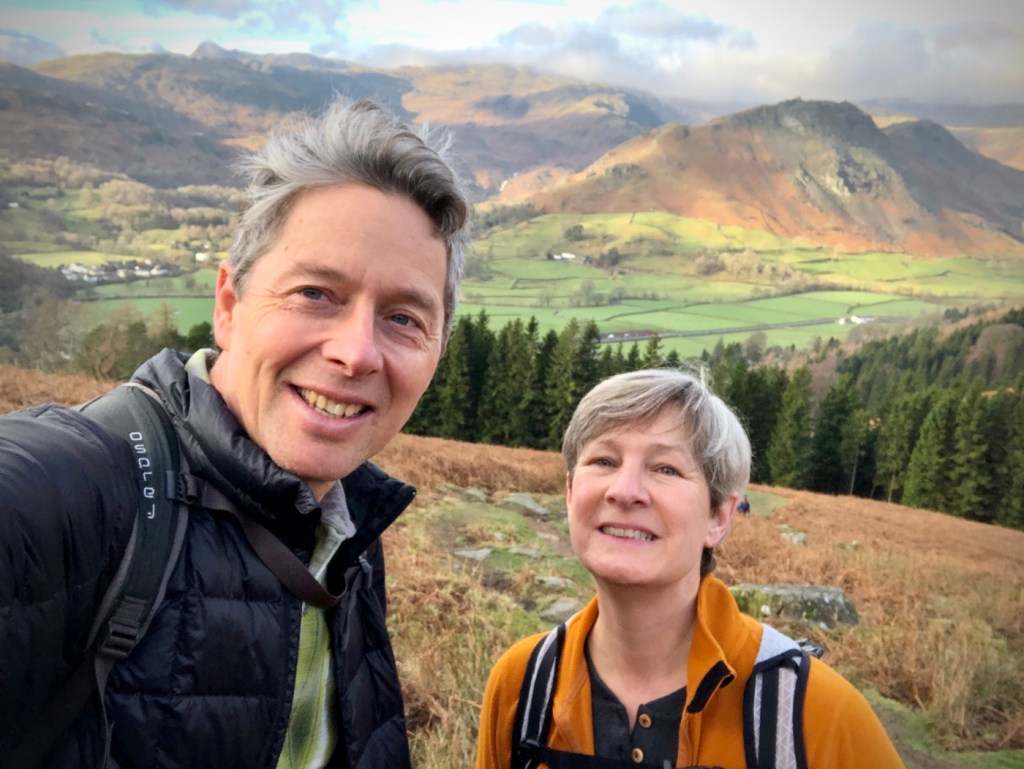
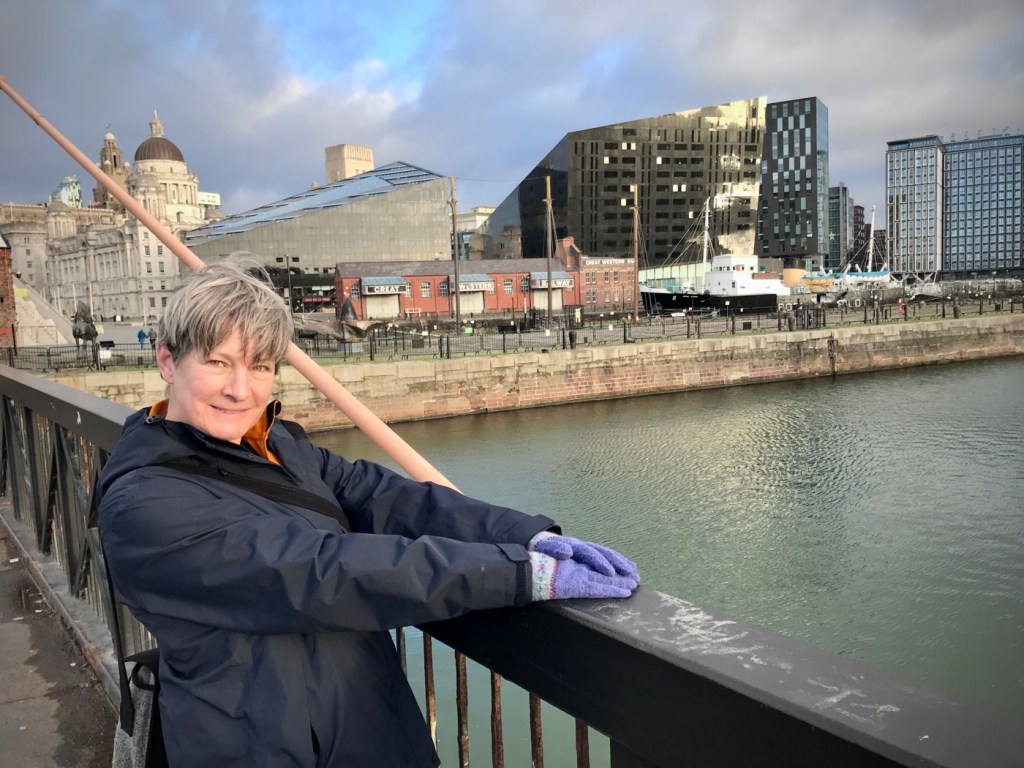
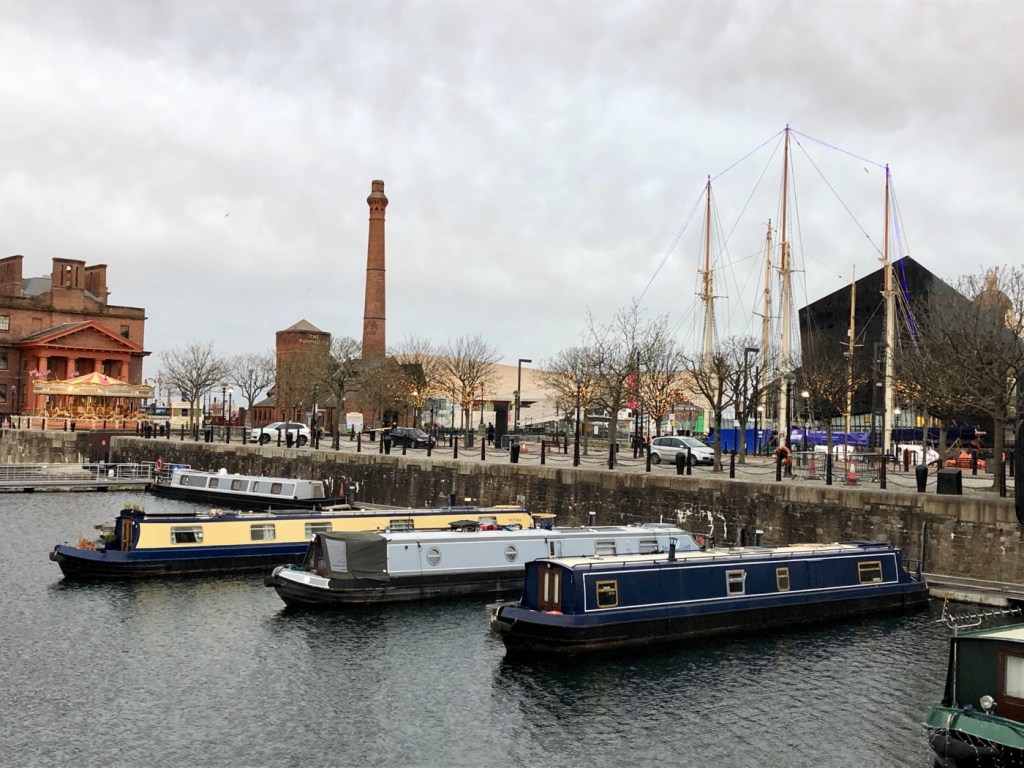
It’s getting awkward…

Hello empty restaurant, we will be your only lunch customers.

Morocco welcomes about 6 million tourists a year, per 2019 numbers. That’s an average of 17,000 per day. When we arrived in November to Tangier we could tell that numbers were low, tourism was just picking up, but there were other tourists. Other folks at our Riad, other slightly stunned faces getting lost in the Medina, other tables at restaurants occupied by non locals.

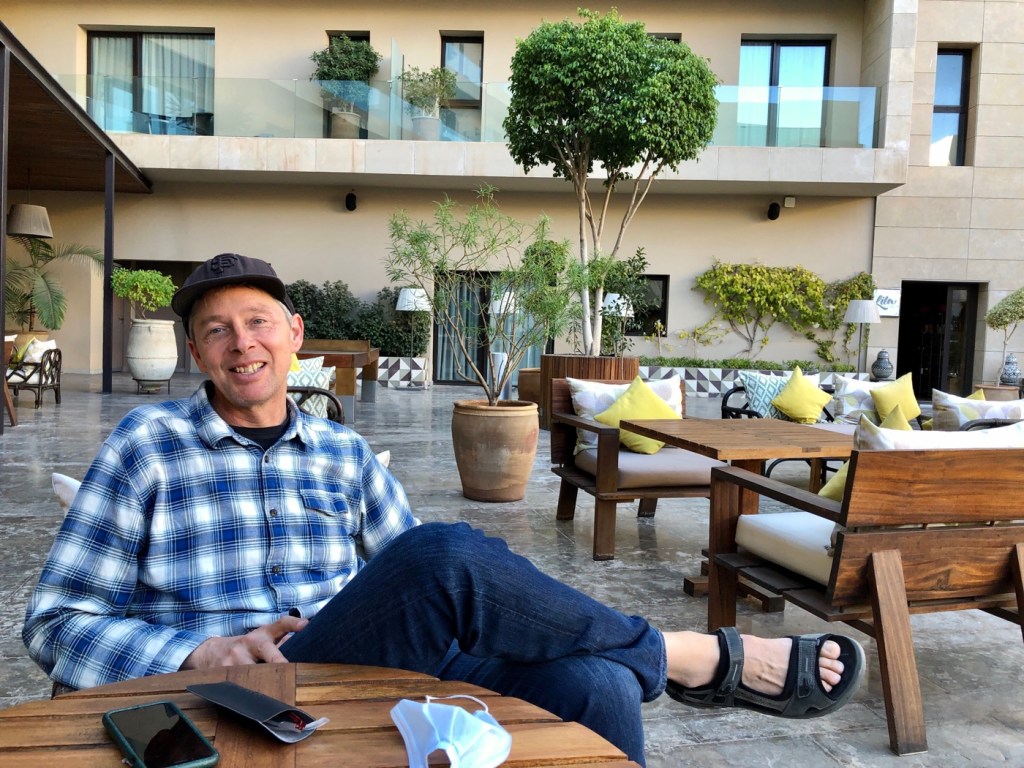
Rich enjoying a lovely meal in Essaouira. One other group showed up at what is, according to reviews, a very popular and busy farm to table restaurant.

When the travel ban to Morocco was announced and the borders closed to incoming flights on November 30th, the numbers of other tourists started going down, and of course was not replenished. We were in Meknes when that news came, and we could tell the mood soured at the Riads and restaurants which had made themselves tourist friendly, only to be told once again they would be without tourists, without a livelihood.

The proprietor was very gracious and explained the limited menu being served. We were the only ones again.

Moroccans are some of the most welcoming and friendly people you will meet. It hurts us to see the numbers of travelers going down and down as folks find flights out, like a lovely Canadian brother and sister we met, or the nice guy from the UK who was on a 10 day trip. It’s more noticeable in a town like Essaouira, which is a very popular town with travelers and tourists.

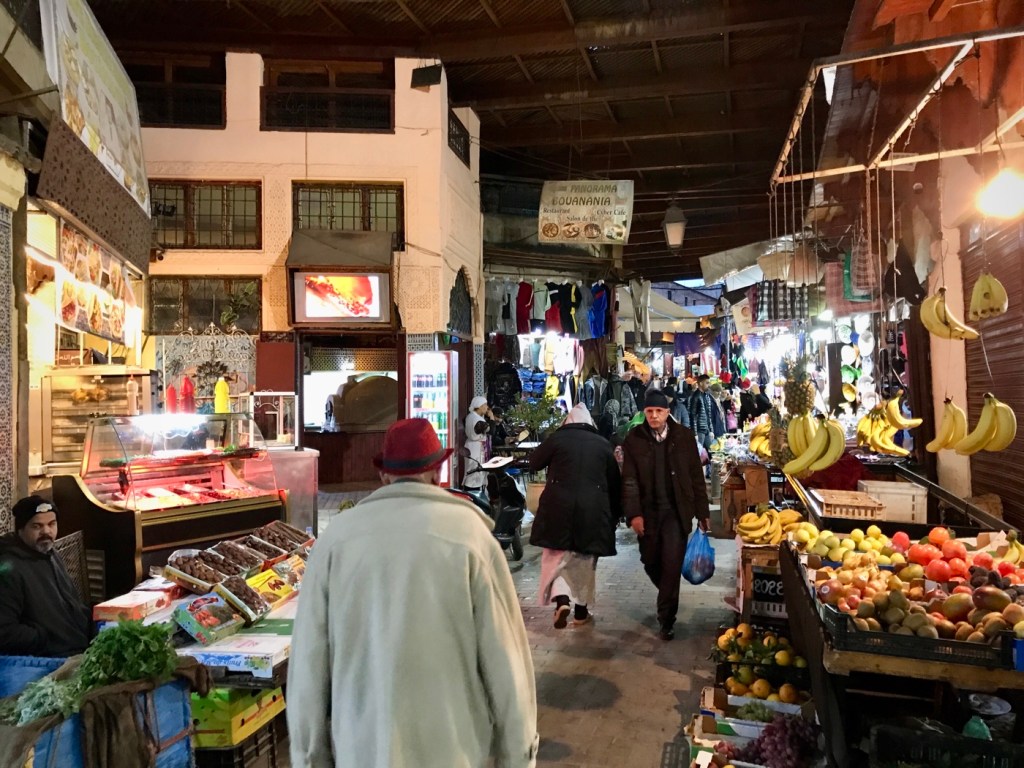
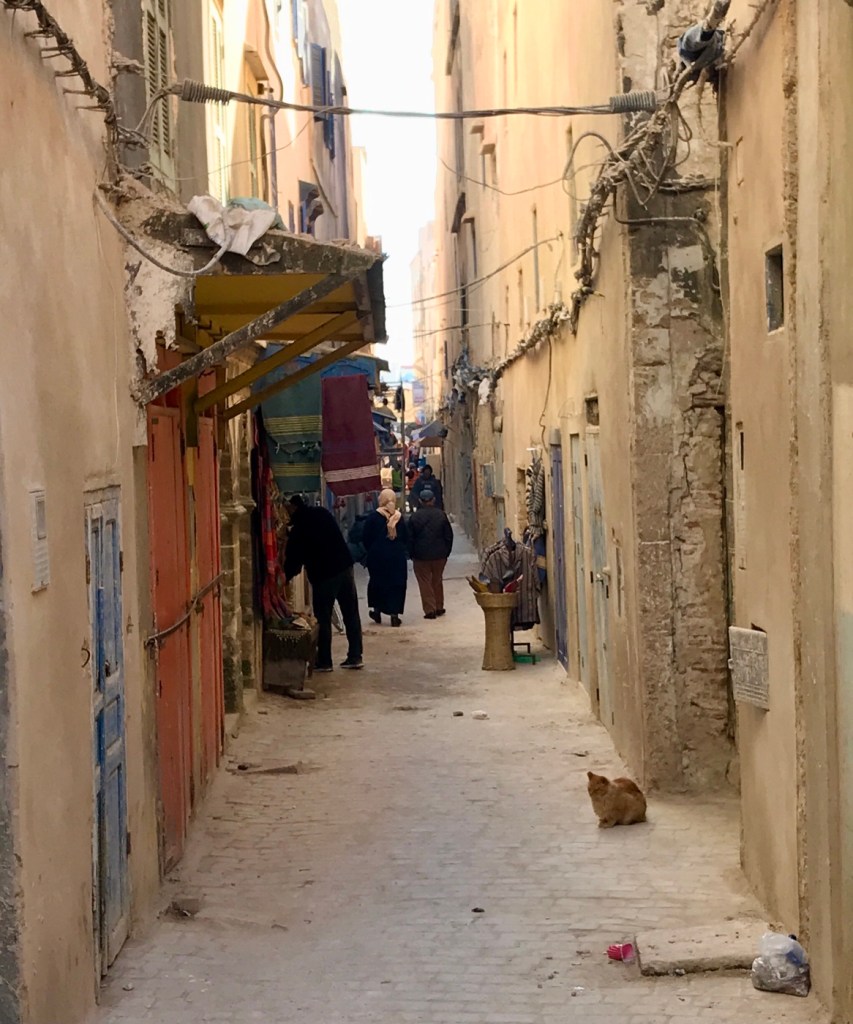
The Medina is always interesting, and people were only kind and helpful.
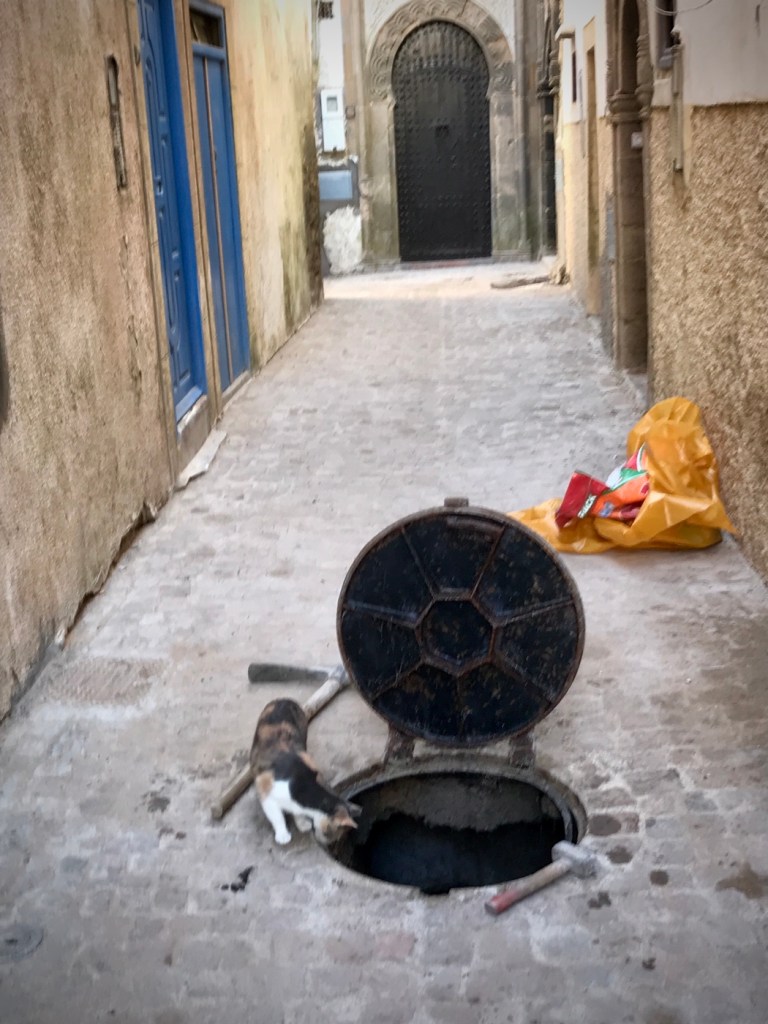
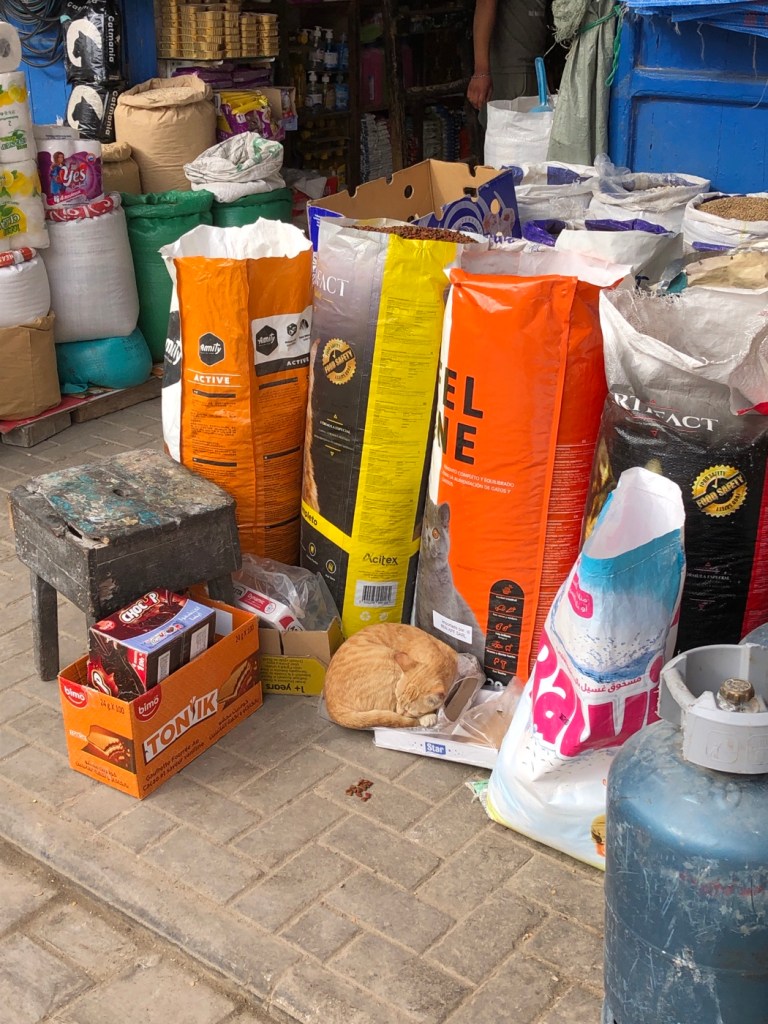
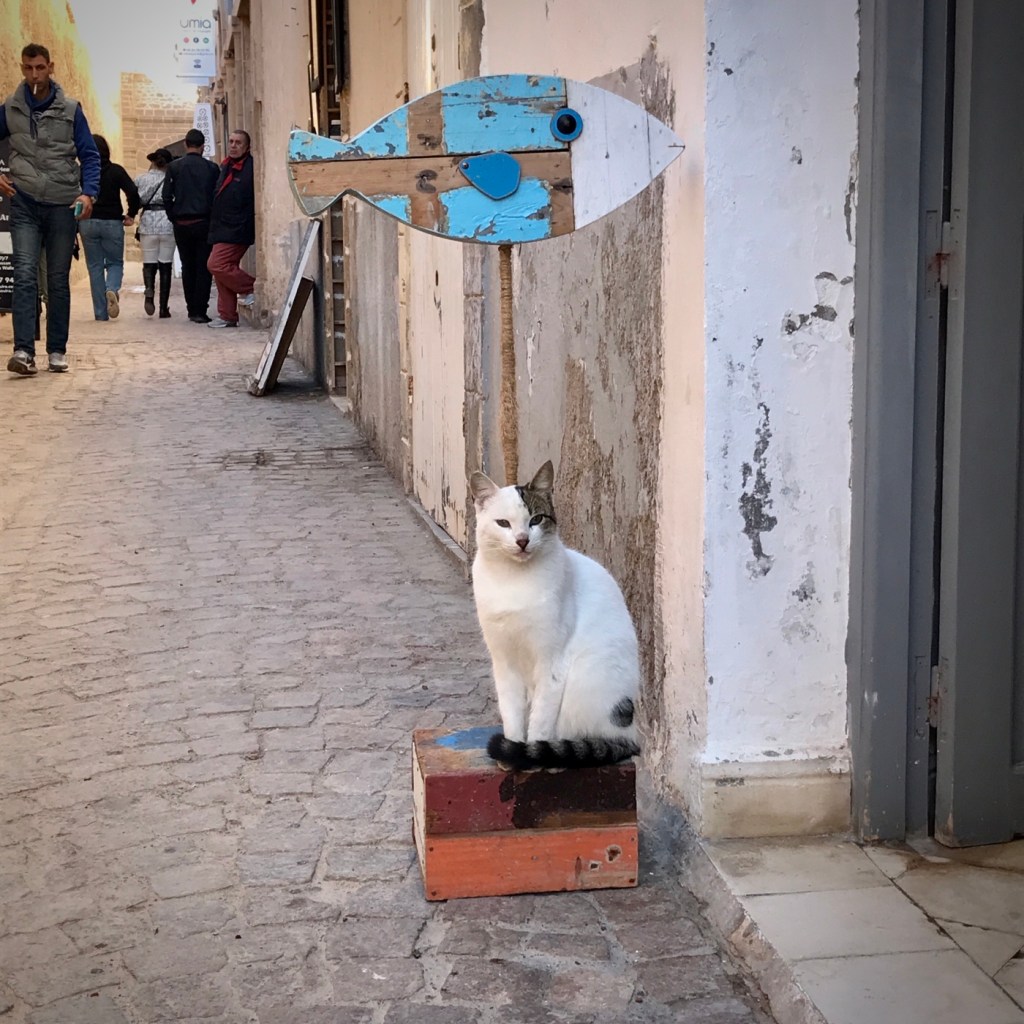
The smart Medina cat sleeps by the large bags of cat food.

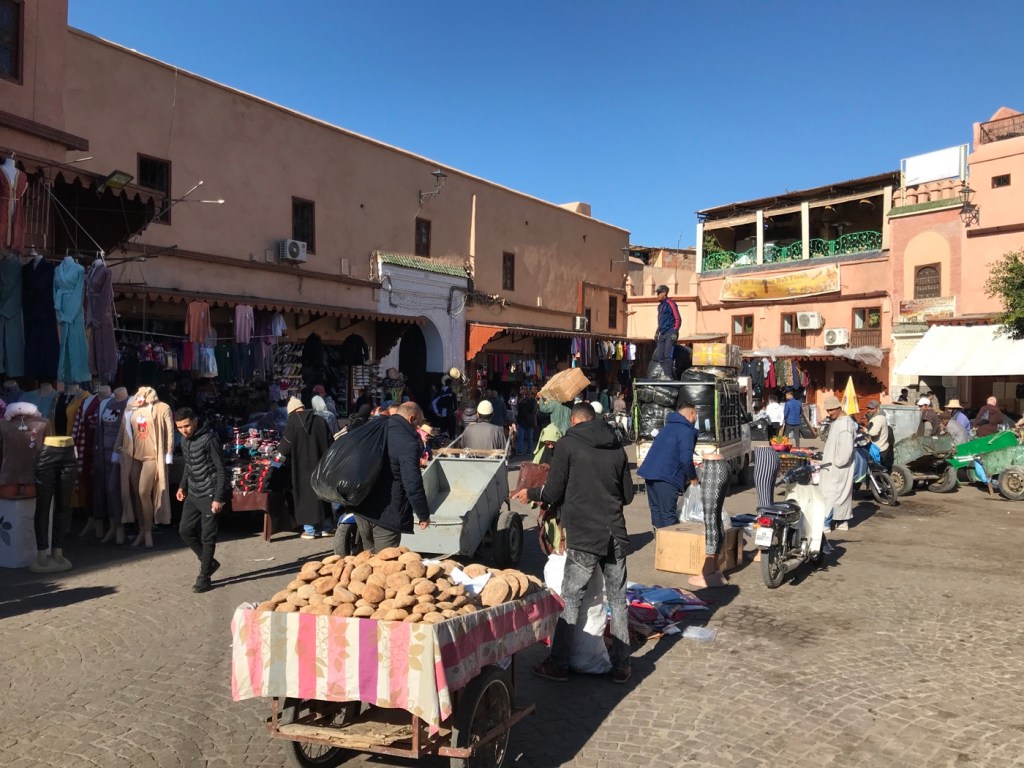
There is a sweet spot of travel which we seek out and love – not too crowded, off peak or shoulder season, places are open but not busy, locals aren’t overwhelmed with visitors – this is not that time. This is too empty. Restaurants not opening because why bother? Vendors with no tourist customers and no tourist money coming in. It feels awkward to be the only customers in a restaurant, the only non locals strolling the shop lined Medina streets. We feel so bad for the economic hit being taken and wish we could somehow make up for the missing thousands of tourists, but of course we can’t. So we are extra nice, we tip extra large, and inside we cringe.

This one looks like they take no nonsense from anyone, cat or human.
After six days in Essaouira Rich had committed the “grid” to memory. I just followed him.

We feel totally safe here, COVID numbers are low, vaccination rates are high, but we do hope that our planned December 14th flight out will happen, and Morocco will be down two more tourists. We’ve already decided that if for some reason we don’t get out, we’ll go to Rabat again, which is a city that doesn’t depend on tourists and where we could just live life without feeling so awkward.

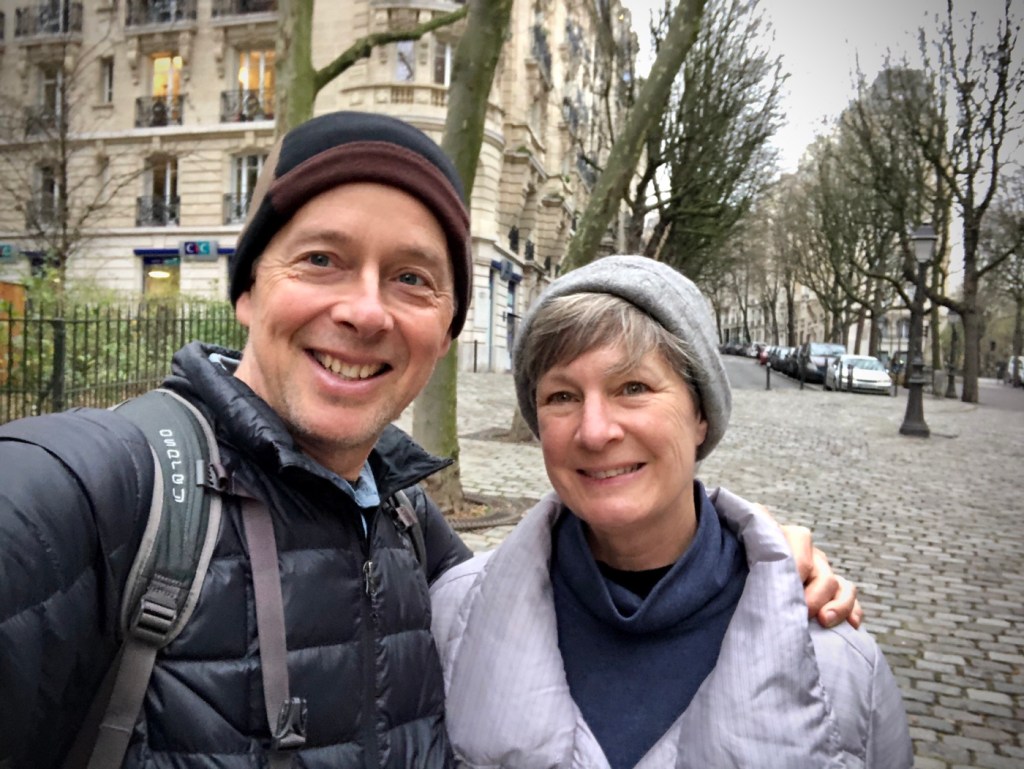
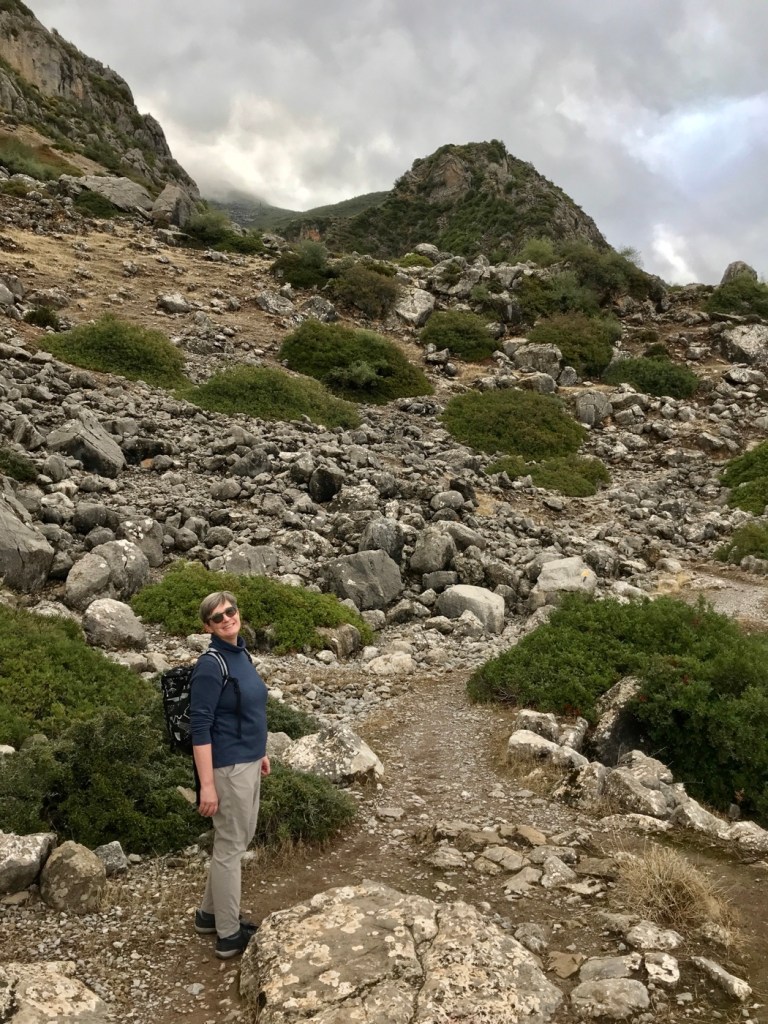
Awkwardly happy travelers.

It’s an interesting and challenging time to be traveling. We knew that COVID wasn’t done with the world yet, and we had discussed a scenario such as this. Stay safe all, we’ve left the coast and are heading for the Atlas Mountains.

Essaouira easy life.

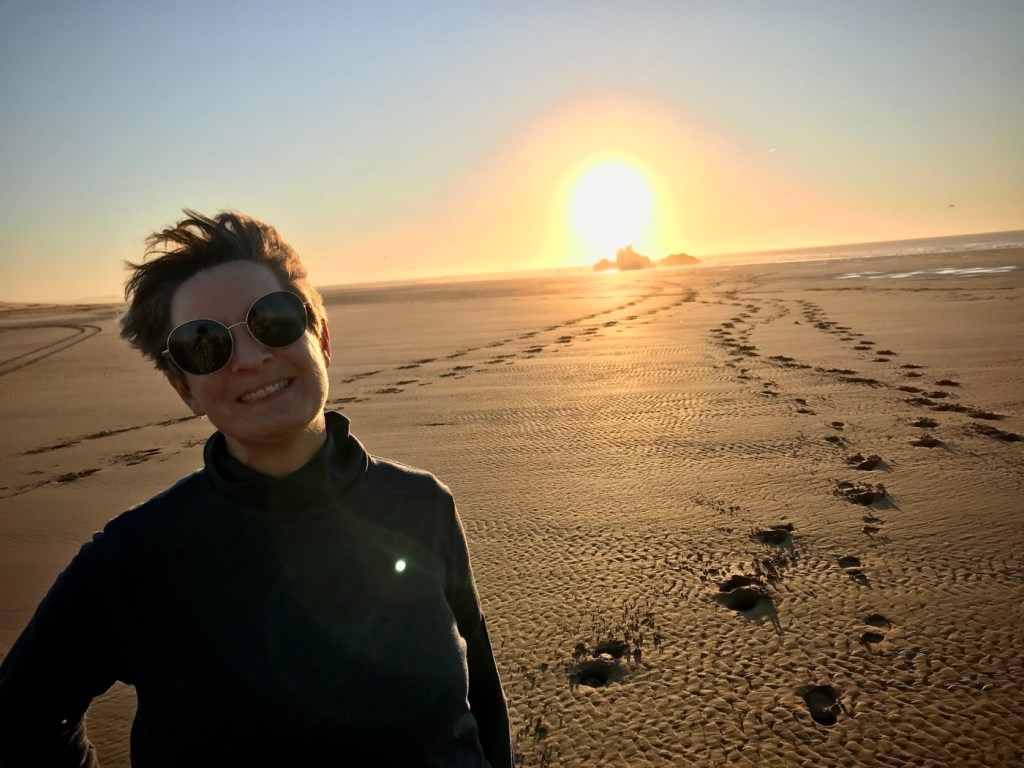
The travel planner leaping into the sunset.

Easy but not completely stress free. Although we have no jobs or children to get back to, and our friends and family will understand if we miss Christmas in the UK, it’s an odd feeling, not knowing if things will ease up or tighten down. Will we go or will we stay.

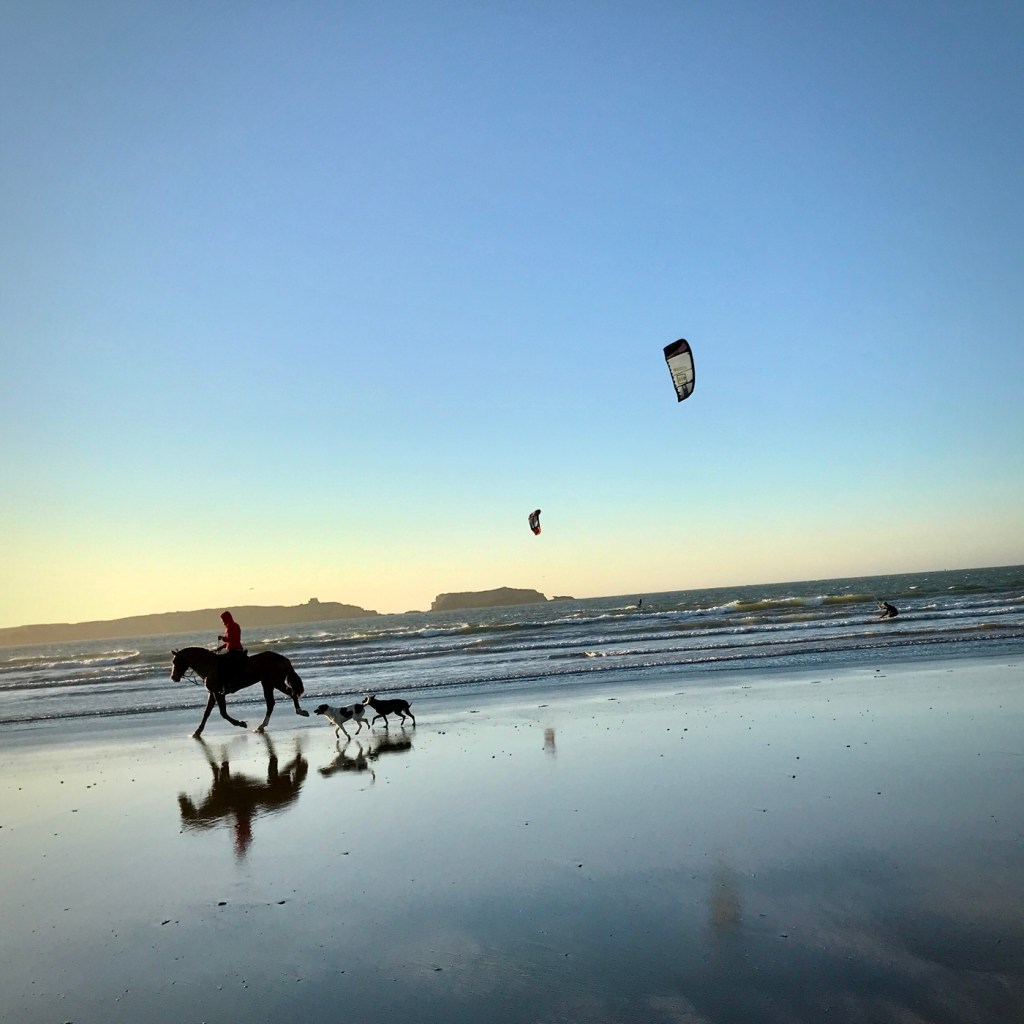
Horse and hounds and kite surfing.

We’re in an apartment in the Medina with a gorgeous view and a treacherous staircase. We go up and down saying big step, little step, medium, big, medium, medium, small – oh, big! It’s almost but not quite spiral to add to the fun. We look out to the ocean and the ramparts which were used in Game of Thrones. The rooftop terrace offers another stunning view, but the wind which makes Essaouira a windsurfing hot spot also makes terrace life a bit tricky. My glasses almost got swept off the table and out to sea.

Wine glass holding firm against the wind on the rooftop terrace of the second apartment.
Somewhere along these ramparts the Mother of Dragons did her thing.
Sunday morning at low tide there were so many Football games going on. The wide beach at low tide is a great games field.
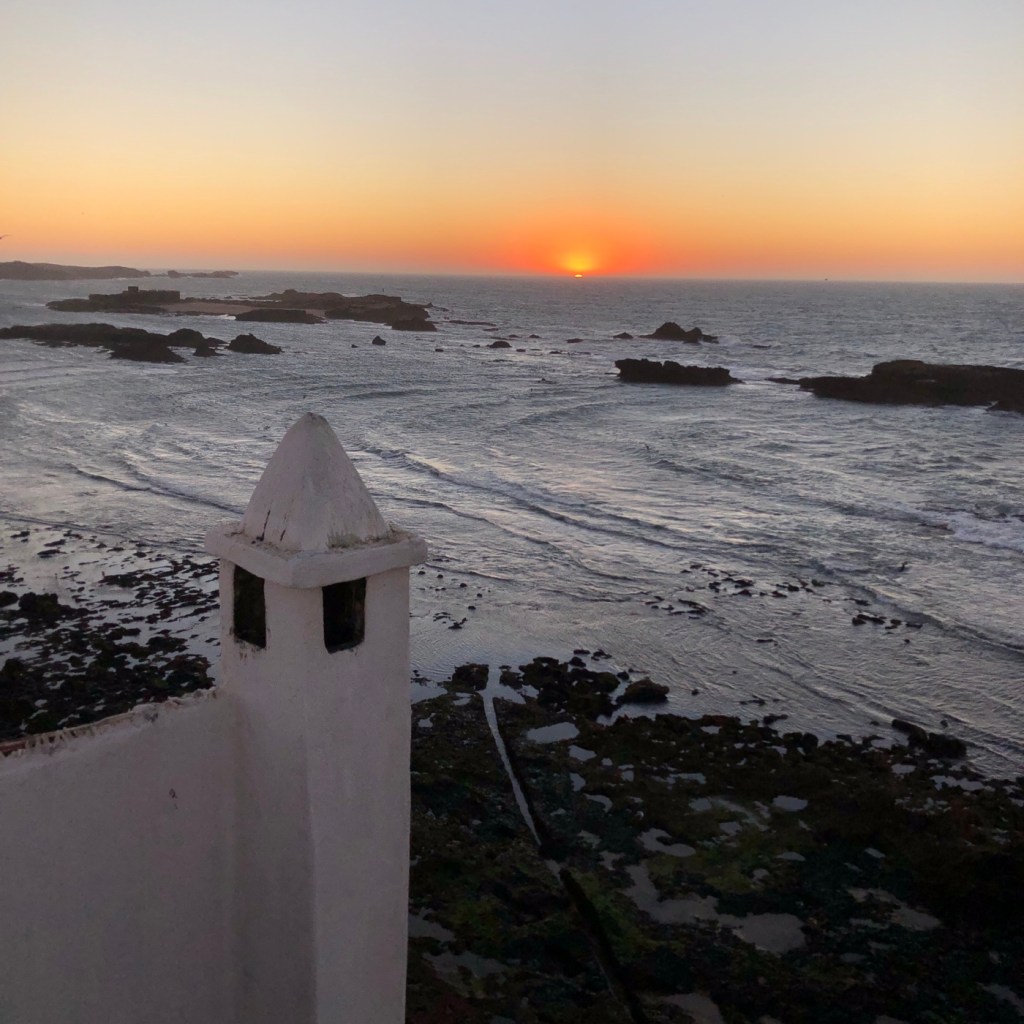
Another beautiful sunset.
We spend some time watching the tides.
We spend time on the beach.
We spend time greeting kitties in the Kasbah.
The view from our living room where we sit and read. Rich’s feet added for scale.
Essaouira. Sure is easy on the eyes, say these happy travelers.

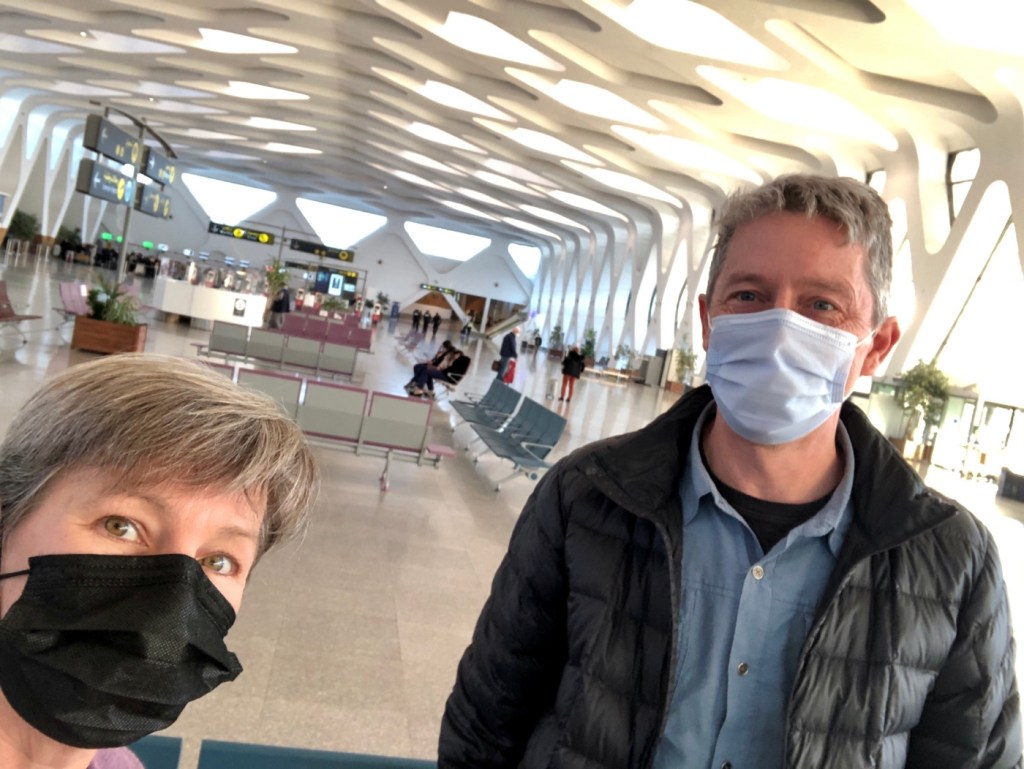
We head to Marrakech in a few days, and maybe on a flight on to the UK a few days after that. Rich is busy figuring out what the current requirements are, and where and when to get our COVID tests. But for now we are happy here in Essaouira, eating good food, going on beach walks, and enjoying our little apartment.

Oh-Ohmicron!

We headed out of Chefchouen on Thursday morning, and despite the light drizzle, decided to walk the mile or so out of the Medina down to the bus station.

CTM buses connect everywhere

It was nice to stretch out the legs before the 4+ hour trip to Fes via the generally pleasant and reliable CTM bus line.

Cheryl in her Cleverhood, perfect for rainy travel and keeping your pack dry too!
Bonus of a long bus journey is the midway food stop: amazing charcoal grilled spiced lamb…oh so good!

We could have also taken a ‘petit taxi’, which are everywhere and serve mostly locals, often in shared rides. They generally don’t use meters, especially for tourists, so always agree a quick price before getting in; not much hassle, but it helps to know the ballpark fare by asking your Riad contact or researching online.

These sidewalks were made for walking

One thing we love about Morocco are the prevalence of good sidewalks on most city streets, even in some rural areas. They are often a non slip surface (sandstone?) and patterned in a brick and tan color; and often accompanied by nice street lights.

Sidewalks even good enough for these cats

Chefchaouen had more tourists than Tanger and Tetouan (almost zero!), so it was interesting to see how a more tourist oriented mountain town was recovering from from pandemic travel impacts.

Heading up into the Rif Mountains

It has a lot going for it besides the picturesque blue and tidy Medina. There is lots of good hiking nearby, even right from town. The Rif Mountains dramatically rise thousands of feet above and were shrouded in a magical autumnal cloud mist.

Some young new friends who probably haven’t seen many tourists in past 20 months…lots of smiles and English practice.

We have learned that hiking and outdoor activity is always a huge boost to our mental state when embarking on more culturally foreign travels. So we were pleased to get in a nice few hours of hiking up beyond the Spanish Mosque.

Waiting for tea at the aptly named Cafe Panorama, which is well disguised as a family homestead.

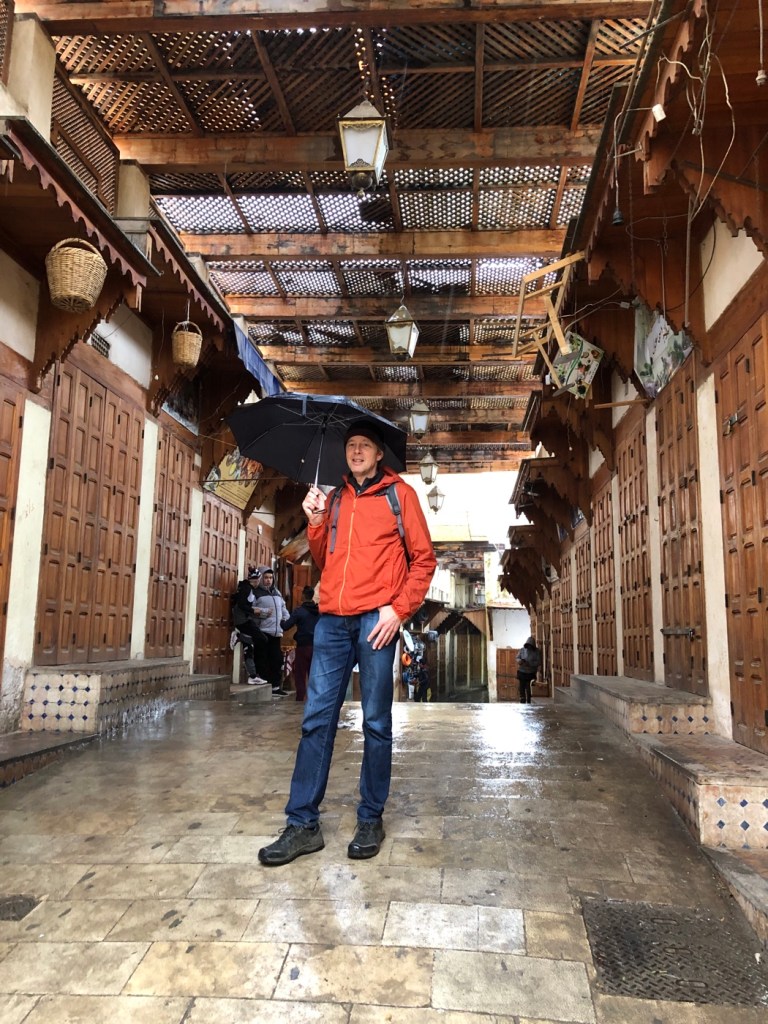
Admittedly, we headed to Fès with a bit of Medina burnout. But after setting out into the pre Jummah (Friday prayers) frenzy of the markets on a Thursday afternoon, we were soon both jolted back into sensory overload.

The Bronze Market in Fès

The scale; scents, sights, and sounds of the vegetable, meat, spice, and trade markets that spread out along the Medina edge near our Riad and the Place r’cif was surreal and a travel moment we won’t soon forget.

A calm section of the Fès Souk

But we woke up the next day to the news of the new variant, and both realized that the fragile recovery of much of the world may be pushed back again. It makes us immediately sad for those we have met in our travels that really depend on tourism, as well as parks, conservation, and resources.

Live snails by the scoop

All flights are cancelled out of 8 Southern African countries and restrictions popping up elsewhere quickly. But with Omicron cases showing up in other counties, it’s just too soon to make a drastic decision. The safest decision would have probably been to stay in San Francisco…but that ship has long sailed! So where to go and what to do?

Long bean soup in a bubbling clay pot by the Creek – the perfect post hike treat

Options to return to Europe or the US may prove to be less safe or the variant may prove not a game changer in risk with the vaccinated. Or it may be worse? So we’ve decided to press on for now, unless the state department really advises to leave. Morocco still has very low COVID rates and a relatively high vaccination success at ~65%.

Bab BouJeloud (“Blue Gate”) in Fes: the Medina gates used to close at 6pm and you had to get permission to enter into by the gatekeeper!

We also just heard that flights into Morocco have been suspended for two weeks! Everyone here dependent on travelers is visibly depressed. We feel so bad for them and everyone suffering through the past 20 months. And especially as the European holiday season was approaching.

We’re not sure how this might impact our ability to get out of the country, but we’ll be just down the street from the US Embassy in Rabat, so can just go knock on the door, right?! Stay tuned and stay safe!

Why so blue Chefchaouen?

A view of the blue city from a hike out of town.

When you get to Chefchaouen you will hear and read various reasons for the blue walls, blue walkways, and blue fences. The color was brought with the Jewish refugees from Spain, the color keeps the mosquitoes away, it was discovered in the 70s to be a tourist draw – but I know the real reason. It’s a fantastic backdrop for photographing cats.

Grey and white tabby stripes look good against periwinkle blue.
Vibrant blue makes this little black kitten stand out.
White is dramatic.
A calico, a blue door, and colorful hardware.
Cats colonized every comfortable spot.
Blue blue blue – cat!
Who is fascinated with who?
Some are petable.
They sit on boxes.
They sit on trash cans.
They relax and enjoy life.
Happy travelers above the blue city.

We’re currently in Fes, headed to Meknes.

Two fun trips from Tetouan.

Tetouan seems not to be on the main tourist route here in Morocco, which is a shame. We had four great days here, enough time to fully explore the Medina, and the new town, and take two trips out of the city proper.

Our first was an afternoon trip via taxi (16 MAD, about 15 minutes, we tipped by rounding up to 20) across the river and up the hills to be dropped off near Café Ba Imran. There are some roads to walk along both in the pine trees to the left with your back to the view, and along the mountain road to the right. Tetouan has some hiking gold still to embrace. All it would take is some marked trails in the Rif mountains and tourists like us would flock in the cooler months, and summer for the tougher travelers, to hike up and marvel at the views. End with a mint tea at the cafe and then walk back down the way the taxi came up and you will catch another taxi in no time. Especially on a weekend when this is a popular family spot. We took the smaller yellow taxis and found the drivers were friendly and didn’t haggle over the price. We did have a local help us tell the driver where to go on the outbound trip. Holding up the iPhone map might have worked as well, but friendly locals to the rescue again.

The view back to town.
A walk along a road under construction.

Our hill walking trip was fun and uneventful, but our next day trip was super fun and eventful. And beautiful. And eye opening.

Rich and the rental car.

We had read on another blog that renting a car and driving the coast road to El Jebha was a nice day trip out of town. Thank you other blogger whom I cannot find right now. Rich did some research and found a well recommended, responsive, and nearby rental agency, so off we went on Monday morning to drive in Morocco. This might not be a big deal for some travelers who rent cars a lot, but we prefer to travel by bus, train, or under our own power, and I don’t drive much at all so the driving falls to Rich. Thankfully we both know how to drive manual transmissions which is what you tend to get when renting outside the US.

We saw lovely promenades along beautiful but empty beaches. Oued Laou is a summer hot spot we suspect, but quiet on a November Monday.
We had a second breakfast near the beach.
We drove along enjoying the sights and marveling at how quickly the rural areas started.
The road was obviously an important economic link for locals. There were not many cars but many people walking and shared rides/taxis in old Mercedes sedans.
A lunch of grilled fish in El Jebha.
The grilled fish was delicious.
The oceanfront restaurant had us at pink tablecloths and potted plants.

Well, we thought after lunch as we turned around to drive the winding steep road back to Tetouan, this is working out really well. Cue laughter. We stopped to get petrol on the way back and Rich moved the car from the pumps to outside the toilets.

Yup.

When he got back in to start up again, the clutch failed. That car was not going to start or move. The makings of a panicked situation? Disaster? A big mess? No. The owner of the rental agency had a tow truck to us 20 minutes after Rich sent a WhatsApp. We shared our location, sat down for a glass of mint tea ready to wait, and Abdul was there with a tow truck in short order. Thankfully we were at a petrol station when the clutch failed, not on a narrow or steep stretch of road with no cell signal. That might have been a disaster.

Relief, and the realization that we were going to get a ride in the tow truck.

What could have been a pretty awful situation turned into another opportunity to chat with a local in a mix of Spanish and English. Abdul drove with a local radio station playing, we chatted, Rich got to enjoy the view as a passenger, the sunset was beautiful and all was well.

Riding high.
The view through the windshield.

When unexpected things happen we put on our Rick Steves voice and say “Just think of it as another opportunity to connect with locals and have a different experience.”.

The happy travelers enjoying the coast before our tow truck trip.

We’re now in Chefchaouen and then on to Fes. Happy Thanksgiving to our American friends and family.

Morocco, four nights in.

The vista from a Medina rooftop in Tetouan.

Our first stop in Morocco was Tangier for two nights. Our friend Dan (Hi Dan!) provided great advice – don’t book your first night in the Medina – so hard to find and if you arrive from the airport via taxi they can’t drop you at the door of your place. Finding your way to a location in the Medina can be hard/impossible/frustrating/overwhelming.

On the edge of the Medina in Tangier. The 15th century Portuguese fort wall looking nice in the sunset. This was the view the from our guesthouse terrace.

Moroccan people are super friendly and feel a particular bond with Americans, the diplomatic history goes back to the 1786 Moroccan–American Treaty of Friendship.

Tombeaux Phéniciens, Tangier. On a bright, windy Sunday.
One day in and I already felt that I was 10% mint tea. And I was happy about that.
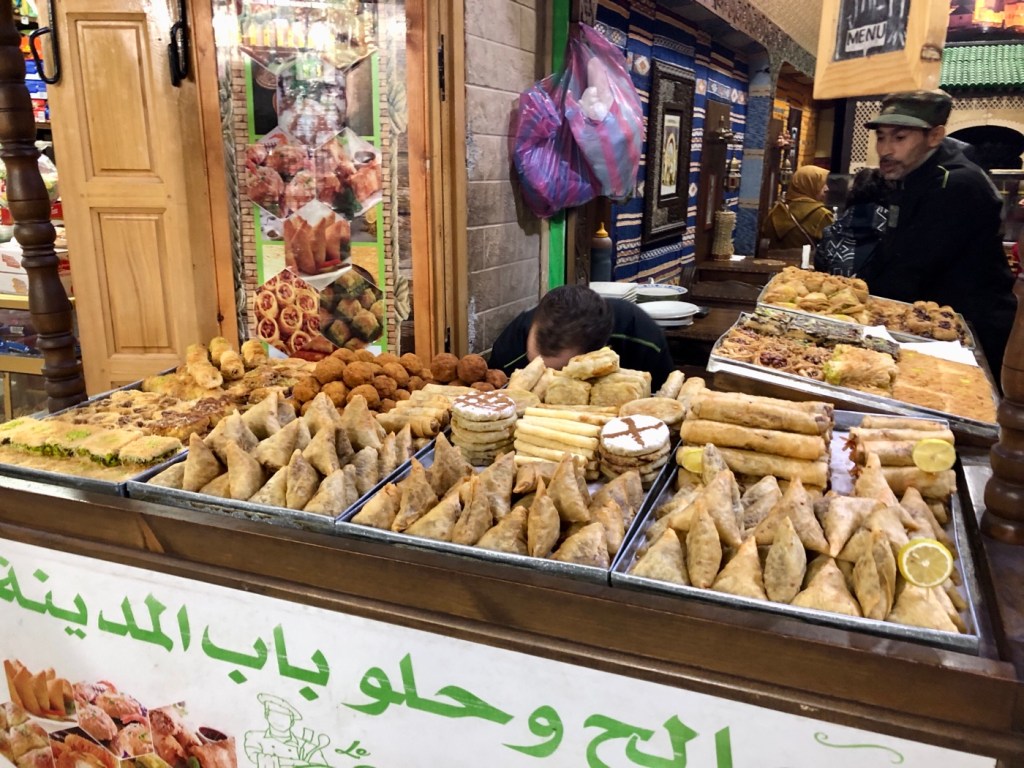
A sweet shop. Where to start?
Upper left corner and work our way along. All delicious.
Oh yes, there are many cats in the Medina.
Lunch time and juice time. Mint citron on the left, orange on the right.

After two nights in Tangier we hopped a bus to Tetouan, about an hour away. We had to take a taxi to the bus station and we were reminded of a valuable travel tip in Muslim countries – Friday is the holy day when the afternoon prayers are a huge draw, emptying the streets of men and therefore taxi drivers. We left a lot of time to get to the bus station via taxi, and with some unsolicited help from a local (small monetary tip, why not, he did help) we got a taxi and made our bus with plenty of time to spare.

Tetouan on a dramatic cloudy day.

Tetouan is not a big tourist town, and the locals, for the most part, seem to take pride in not making a big deal about tourists. You can stroll the ancient Medina with only the occasional accidental tour guide, and get genuinely helpful directions. The best tip we were given was to look for the center stones in the narrow alleys for some guidance: 3 stones is a main street leading to a gate where you can exit the Medina, 2 stones means a lesser street leading to a main street, 1 stone – dead end residential street. I say street, but they are small alleys, no cars here.

Children run free in the Medina streets. Note the 2 stones in the center. Small street which will lead to a main street.

And those accidental tour guides? They sometimes are focused on getting you to a shop, sometimes really just helping. But you do end up seeing some interesting things when you pick up your accidental tour guide. Being firmly polite and friendly works just fine when you’ve had enough and want to leave. It may take a few tries to lose your new friend but they will ultimately say goodbye after you thank them.

Men working a loom. No hard sell from anyone, just a slice of life thanks to our accidental tour guide.
The product for sale.
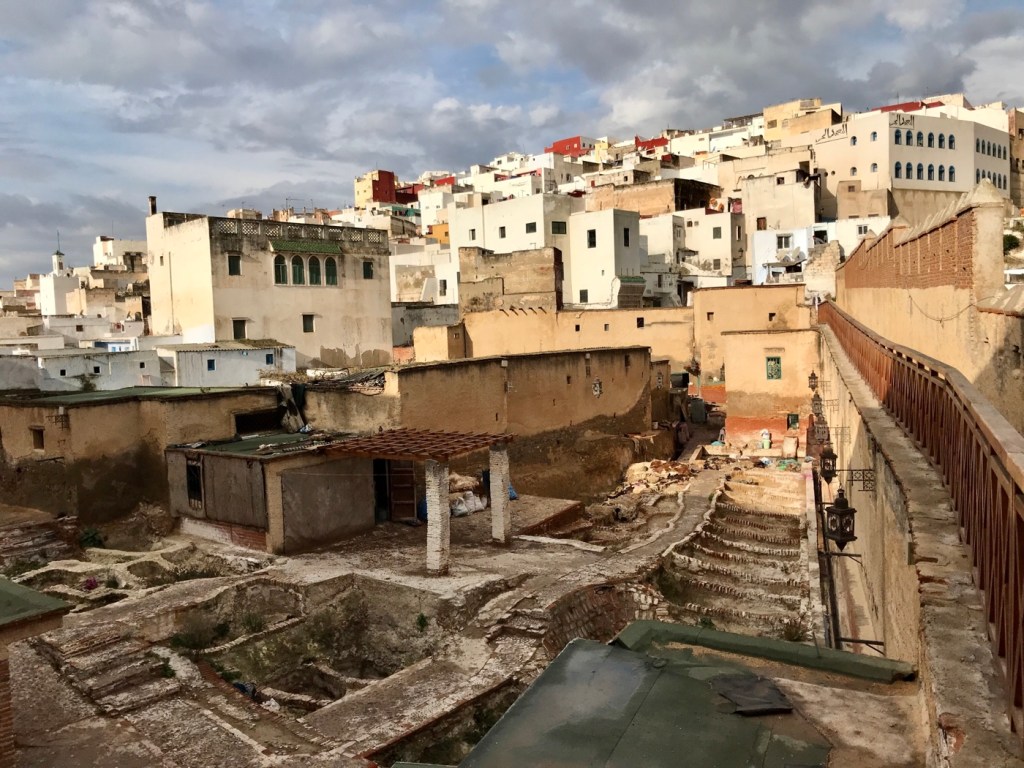
Guided through the ancient tannery by our ATG.
Tannery cat!
A pharmacy in a lovely old building. Thank you ATG.

Even if you come to Morocco with zero intentions to buy a beautiful Moroccan rug you will end up in a rug shop at some point. We did, thanks to our ATG. Since we have no home right now and all our worldly possessions are in a storage unit we did not succumb to the temptation. But I can understand why people buy rugs here: they are gorgeous. I’m partial to the flat weave rugs, and who knows – a small rug may end up in our luggage.

.

Rich and our friendly accidental tour guide. He took us to a great view spot, tried to get us into a closed museum by knocking repeatedly on the door, and we finally said goodbye, happy to have met.

We think we hit a sweet spot here in Morocco when locals are happy to have tourists back, there are not many of us yet, and not yet tired of the problems that tourists can bring. We are happy to be here and the locals seem happy to have us here.

Happy travelers looking forward to more time in Morocco.

Seville

Of course I start with an orange tree.

I had heard that the street trees in Seville are orange trees, Seville orange trees, the bitter oranges used to make marmalade, but I hadn’t expected quite so many orange trees.

Oranges and moorish architecture.

How many oranges trees? Reports vary, 14,000? 25,000? They do well in the climate and provide shade year round. Important in the hot summer months.

Orange trees surround a peaceful plaza.

The city employs people to gather the dropped oranges, and recently has started using the fruit to create electricity through fermentation. Most Seville oranges grown in the region are exported to Britain to make marmalade. But there are plenty on the streets here for youngsters to use as impromptu footballs. The scent of blossoms must be lovely in the spring.

I did my best to help out, having marmalade with breakfast and buying chocolate covered orange peels.

We also did our best on the tapas front. Vegetarians look away. Wandering the narrow streets we looked for small places where we could sit outside or in a window and watch the street life. One spot took us 3 evenings to get into, it was very small. The first evening we went at 8pm – ha! Good luck. The second evening we tried at 6:30, nope – already full. Finally we got there at 5:50 and scored a table in a window.

Note the jamón legs hanging above the bar.
Jamón ibérico. Now hanging out on our table.
We did it, got into the tiny bar.

Mission accomplished and appetites calmed we headed out to a flamenco performance on International Flamenco Day. It was just an hour long and stunning.

They wisely forbade photos until the very end when they said photograph away. I imagine it would be super distracting to look out at the audience and see phones held aloft.

We walked. And walked. And walked the narrow streets. Some so small I could touch both walls, some wider with cars just squeezing through, tires squealing as they slowly hit the curbs.
No cars here.
Rich added for scale. The narrow street leading to our hotel.
I need to start asking for a different pose.
Ah, there we go. Jumping for joy in a car free street.
Lunch outside in the Triana district.
Happy travelers. Off to Morocco next.

West Sussex in Autumn

The edge of an island.
Once again we are so thankful to have friends to visit and stay with. Would we have done this amazing coastal walk without our generous friends having us to stay and spending a day driving to the trailhead at Birling Gap and hiking with us? Probably not, and we’re so glad we got to see this coastline on a sunny day.

To my eyes it looks as if a giant ripped the edge off the land.
When hiking somewhere with amazing geology try to go with two world class geologists. You certainly learn a lot.
And if there is a calm Labrador along, all the better. Lunch break on the way to Cuckmere Haven.
Tide going out. Not far enough to walk back along the beach though. No desire to chance being caught.
The walk back was through woods and fields. Better then getting caught by the tide.
Arundel Castle, beautiful and the site of an audacious heist in May 2021 of Mary Queen of Scots rosary beads, carried to her execution in 1587. Folks arrested, but where is the loot?
Public footpaths for the win!
Waiting for one of the four trains it took us to get to our friends (rerouted due to previous‘incident’. It would have been only two trains if we’d transited through London, but Rich loves a travel challenge.
As I’ve mentioned before, our car free travel in the UK is facilitated by friends willing to pick us up and drop us off at various train stations. We appreciate it so much.
Gazing with adoring eyes. Or, just hoping for breakfast?

The Midlands

Leicester, you had me at your statues of women. Alice Hawkins.

“Alice Hawkins was a leading English suffragette among the boot and shoe machinists of Leicester. She went to prison five times for acts committed as part of the Women’s Social and Political Union militant campaign.” Five times to prison. That is commitment and bravery. Is that what we all need to do to force action on climate change?

Honoring the female workforce of Leicester, this seamstress works tirelessly on a stocking seam. Hosiery was an important part of Leicester manufacturing.

Our niece picked us up at the train station and we walked The New Walk, a 200 year old pedestrian street.

Very impressed that this lovely promenade never fell to the incessant demands of car traffic.
It is a lovely way to walk and connects Leicester University with the downtown.
Closer to the University. Looking very autumnal. And yes, Rich added for scale.
Nottingham & Beeston Canal.

We took a day trip into Nottingham, only 20 minutes on the fast train, and did what we do wherever we are: walked. In this case along the canal for more of a favorite activity, narrow boat peeping. There are no boats on the move right now but plenty moored up.

Castle Marina. Where narrow boats spend the fall and winter.
Lunch at Ye Olde Trip to Jerusalem. Built into the sandstone walls surrounding the castle. Nottingham has quite a cave thing going on.

And back in Leicester we saw the statue of Thomas Cook, a name well known to travelers, holiday package bookers, and high street strollers. The man who first sent travelers off on package tours was indeed born and started his business in Leicester. The first trip he organized was to Nottingham. From Leicester. He was also a temperance man, so you can be sure those first tours were not big partying tours.

There is a nice display about Mr. Cook in the Leicester museum.
At the University of Leicester, happy travelers.

So thank you Midlands, there is more to you than most people might expect. And now, back to London for one night and off to Morocco. And thank you to our niece for having us to stay.

The Engineer as Hero

Isambard Kingdom Brunel …a name hard to forget, especially in Bristol, England. As a professional Civil Engineer, it was so refreshing to see an engineer given their proper dues, as it’s usually the Architects that get (or take?!) all the credit for innovative projects. And boy did I K Brunel do it all: Paddington Station, the Great Western Railway, Thames Tunnel, SS Great Britain, and my personal favorite, the Clifton Suspension Bridge. His designs are credited with revolutionizing public transport and modern engineering.

Engineers are great, aren’t they….

We started our Brunel tour at the fantastic SS Great Britain, which is a magnificently preserved and restored steamship that Brunel designed in the 1830s and was the largest steamship in the world when it launched in 1843.

In the Dry Dock – that’s water up there!

I think the best way to see the ship is to start below the water in the dry dock. It allows you to appreciate the scale of the ship, as well as understand how the unique hull was constructed and is being preserved. It takes a massive array of dehumidifiers running 24/7 to keep any further corrosion of the steel hull at bay. The array keeps at about 20% relative humidity, similar conditions to “the deserts of Arizona”, and paralleling the path of millions of other retirees being preserved in the Sunbelt.

Brunel chose to use a new and highly efficient propeller for the SS Great Britain, shaving weeks off a Transatlantic journey

You also can see how they moved the ship from its near demise in the Falkland Islands in 1970 and dragged it all the way back home to Bristol on a special barge. But the dedication to restoration didn’t stop at the exterior of the ship. The cabins have been fully restored with the sights, sounds, and yes, smells of the ship when it served as a passenger ship to the US and Australia.

The Kitchen…spooky realism abounds, as even rats can be seen moving about the cupboards.

The Steerage class quarters are strikingly small, but as a docent pointed out, still offered those crammed in 4 1/2 foot bunks a chance at better conditions and more opportunity in the New World. Life in the early industrial revolution days of Britain was hard. The crew barely had it better, as had to toil all hours shoveling coal into the furnace and keeping the ship going over grueling 3 week to 6 month journeys. Of course first class was quite grand and the Titanic-like dining hall is now available as a wedding venue, minus the swells and nausea of the open seas. (As it turns out, Brunel’s hull design was a little unstable…until a later wood extension was added to to the keel)

Morning dew on Brandon Hill, Bristol

Bristol and Bath were both a pleasant surprise. The crisp fall weather and foliage were perfect for exploring on foot and both cities offer fascinating sites, museums, culture, and vibrant food scenes.

Proper tea and a scone at the American Museum and Gardens in Bath

Bath is like a living Georgian museum, pleasantly frozen in the 1770’s, while Bristol offers a modern revitalized waterfront, lots of history, and more diversity, all supported by a large University population. The American Museum has beautiful views and a offers a unique British perspective on American history and culture. The Roman Baths are the big attraction and surprisingly engaging with brilliant holograms in each room and an audio tour featuring humor of Bill Bryson.

As much as you want to, you shouldn’t touch the water at the Roman Baths

After 3 nights up the hill in Bath near the Royal Crescent, we decided to stay just 7 minutes away from the Temple Meads station in Bristol. The Station itself is worth a look, and yes, I K Brunel provided the base design and inspiration for the main station as the terminus of his Great Western Railway from Paddington in London. How was he so many places? (4 hours of sleep helped apparently)

The Temple Gardens out the back door of our hotel

After a day on the waterfront and Brunel museum, we decided to explore more neighborhoods and walked out through the pleasant and upscale Clifton village. We walked back through the University and along Gloucester Road, which is full of an eclectic mix of shops, pubs, and restaurants. 8 miles overall and great walking up and down the undulating hills, with constant surprises and new views.

The Castle Bridge opened in 2017, offering an inspiring human powered crossing of the Bristol Harbour (but still not enough bike parking!)

But the hands-down thrill of the day was the Clifton Suspension Bridge. A structure that highlights the need for visionary technical leadership and perseverance. Brunel’s original design took over 35 years to be built. He succeeded in a design competition in 1830 with his proposed bold 700- foot steel chain suspension span. This span allowed a full span of the gorge, which was key to the intrinsic beauty of the structure in the unique context of the Avon River Gorge. But many, including his father, doubted that such a span could be built. Unfortunately, cost overruns and contractor financial trouble (sound familiar) put the half completed project on hold by 1843. Luckily, the bridge was finally completed in 1864 with the assistance of other designers, but sadly 5 years after Brunel died. And like many of his bold designs, the ultimate bridge required some design modifications to the deck to make it stiffer, as his original design would have likely failed in high winds. Engineering is a constant process of improvement and optimization.

The 1,300-foot long Clifton Suspension Bridge soars more than 300-feet above the Avon Gorge…so nice!

But his vision survives and his grand engineering projects are still serving millions of people today. So anytime someone doubts that a large infrastructure project can ever be finished or if a new design innovation can really work, just shout out the name of Isambard Kingdom Brunel. Or say it three times if you can!