After barely getting all our wet gear dry in a hotel room with no heated towel rack, and only barely warm radiators, we loaded up and took the train for a boost from Aurillac towards Issoire.
Even after a long date with the hair dryer my shoes are still a bit damp. Ready to roll off the train in Brassac-les-Mines.
Our train ride took us through a tunnel and got us past the Parc naturel régional des Volcans d’Auvergne, a mountainous area with ski slopes. Looking out the train windows as we emerged from the tunnel I was quite thankful to not be pedaling, although the area was gorgeous.
The Allier River was still raging from all the rain.Raging muddy rivers were starting to seem normal.Now we’re on the Via Allier. The French regional routes are super scenic.Riding through Orsonnette. We’ve entered the Puy-de-Dôme department.“The love is in the Fields.” We needed help with this translation, thank you Finn. The look of the buildings has changed. No more slate roofs and buttery yellow stone buildings, now it’s red roofs and more of a grey or brown tone.The cats are still cute in this new region.Climbing up a ridge towards Lamontgie. Grey skies, but still dry.Lunch stop at a bench with a lovely church view. And the rain started.Quick, stop in front of that beautiful gate at Château de Parentignat.
It will come as no surprise to Europeans and perhaps a medium to big surprise to Americans what an impactful holiday May 1st is in Europe. May Day, Labour Day, or Fête du Travail will see shops and museums closed, and many restaurants as well. We planned two nights in Issoire since the weather on May Day was scheduled to be rainy again. We cozied up in our hotel room after dinner on April 30th and planned to rest, read, travel plan and blog. We went out to find lunch and see what might be open for dinner. Lunch was a Chinese restaurant, and we saw a few other places open, brasseries and cafes mostly. However, when we ventured back out in the rain for dinner, we were having no luck. Those businesses which had been open for lunch were now closed. Uh oh. Panic setting in. Rich spotted a restaurant whose hours on line proclaimed a 7pm opening. The metal shutter was half open and people were inside! Success? Not exactly. The four guys inside were staff having a Fête du Travail celebration. When the Manager, Hugo, figured out we were Americans he hustled us inside for a drink.
Enjoying a Fête du Travail drink and camaraderie. They may have been a few drinks ahead of us but we had a fantastic 45 minutes talking and laughing.
What had been a slight stop of desperation in Issoire turned into a memorable experience. Towns with fewer tourists seem to lead to fun interactions. No one in Issoire is tired of American tourists clumping around town.
Abbatiale Saint-Austremoine which has uniquely painted walls and columns.Rainy streets on our way to an Indian restaurant for dinner. We ate there both nights, it was that good and open!
Farewell Issoire, thanks to the hospitality of a crew of celebrating workers we had a memorable time. But, May 2nd and we’re back out into the rain to ride to Clermont-Ferrand. We’re timing our train from there to arrive in Paris for a four night stay to catch up with friends, so we have a two night stay planned in Clermont-Ferrand. The amazing travel planner Rich figured out the puzzle of loaded touring bikes/trains/Paris.
Still raining.Allier River still flooded.Nothing like a climb to warm you up on a chilly morning. Col de la Croix des Gardes.From here we get a lovely decent to Clermont-Ferrand.Dramatic volcanic mountains with a dusting of snow.Equally dramatic Pain Suisse enjoyed in Vic-le-Comte. My favorite riding snack in France. Pain Suisse is brioche dough filled with crème pâtisserie and chocolate chips.A perfect square for a pasty break.Nice signage.Some lovely new pavement on the cycle track.An old water mill on a side street of Les Martres-de-Veyre.This signage was worth making Rich turn around and come back for a drama shot.
We didn’t expect much of Clermont-Ferrand. Rich had read that it wasn’t that charming a town. It’s funny how quickly and easily we can have our minds made up, or changed about a place. Coming in up a climb up a commercial street, grump grump grump. Construction zone, grump grump. Oh! A plaza. Oh, street cars. Hey, we’re really liking this town.
Drying out our fluorescent yellow shoe covers after another day of rainy riding.Fascinating rubber tired single rail streetcars.The town is bordered by the volcanic Chaîne des Puys mountains. Which makes for some fantastic views, like this one of the Puy-de-Dôme.And the stunning Notre-Dame of Assumption Cathedral? Not dirt or soot blackened as you might first assume. Carved from black lava stone! It really stands out from the red roofs when viewed from Parc Montjuzet.Very dramatic, the black spires against a grey sky.The black stone makes for some fantastic contrast.This building is like a giant pumice stone. Well, not exactly. It’s made from scoria which is denser than pumice.Black lava griffin fountain.Inside the cathedral. The black stone makes the lighting and windows really pop.
What else did we enjoy about Clermont-Ferrand?
Fountains which had drinkable water were clearly marked with this symbol.A water glass. Drink away.L’Adventure Michelin. A museum all things Michelin here at the headquarters of the company.The Michelin Man band.A gift shop with a wall of maps.And we learned why the streetcars are rubber tired. Yup, Michelin money.It’s a university town. With 140k students come some good restaurants. We had Mexican food. The best we’ve found in Europe so far.The graceful Pl. de Jaude, just outside our hotel, had a statue of Vercingétorix. He was a Gallic king and chieftain.The statue is by our old friend Frédéric Auguste Bartholdi, who also created Liberty Enlightening the World (the Statue of Liberty) and whose own statue we saw in Colmar, France.
And yes, the weather did dry out for our day of fun in Clermond-Ferrand. It got a bit windy but our next mode of transportation was a train to Paris so no worries about wind. Rich booked us on a train that started in Clermont-Ferrand and ended at Gare de Paris Bercy. With loaded touring bikes end to end trains are so much less stressful than trying to board and disembark mid line. One more story about how wonderful people are in cities that aren’t overwhelmed with tourists. We got to the train station super early, as we do, and as we stood staring up at the big board, waiting for a platform to be listed for our train, a station police offer came over and asked where we were going. When we said Paris, he leaned in and told us it would be platform H. The doors won’t be open yet, he added, but you can go to the platform now. The train is there. Super grateful to get a jump on the eventual platform rush we headed to the elevator to do the one by one transfer down and back up. The elevators barely hold one loaded touring bike, so we’re slow, taking turns in the elevator. Once out at the platform an SNCF train worker helped us find the bike car, and our seats. By the time the rush of passengers got to the platform we were settled in.
We were as chill as this little guy on the train.He developed a bit of a fascination for Rich.The happy travelers thinking ahead to Paris and friends to visit!
After a nice rest day exploring Cahors, Cheryl and I continued our spring tour further up the valley of the Lot River. The middle Lot is a magical place of endless meandering and pretty villages with a variety of terrain to match.
Riding out of Cahors over the Devil’s Bridge The Middle Lot is still navigable with occasional weirs and locks
The route out of Cahors immediately took us up a hearty 300m climb over a ridge, but the reward was a descent down to the beautiful Saint Cirq de Papopie. It’s a storybook medieval village perched on a rocky edge above the Lot. Our friend Dan had mentioned his time in this area and we thank him for the tip.
The route does not always hug the river and has some pretty decent climbs to connect the rugged and remote parts of the riverApparently we were also on the Vagabond route…very appropriate.Cheryl was fascinated with these mortarless stone buildings known as capitelles or cazelles, which are endemic to the regionAnd another oneAnd a wiff of wild mint for the descent
Apparently tourism exploded in the town after a popular French television shown voted it the most scenic place in France in 2012. We can’t disagree with that call. It was sparsely visited the weekday we passed through and is really a beautiful spot.
Our first view of Saint Cirq Lapopie We couldn’t pass up this prime view spot to picnic on some yummy quiche and veggiesAfter lunch ussie Sometimes I do some further exploration while Cheryl minds the bikes and maybe reads a bit. « Oh no, you go ahead »
The ride from Cahors to Cajarc spans the Parc Naturel des Causses du Quercy from west to east. The villages are extremely tidy, with some restored houses, cottages, and farm buildings. There are also nice sections along the cliff walls, and the roads are not busy. We made it to the scenic village of Cajarc and our Logis inn (with dinner!) after a rewarding day of cycling, and I began to plan our next day.
Saint Cirq feels like a movie set. Picture perfect and so tidy What’s this? Fossils on the canyon walls?We love interpretive fossil trails. This was a nautilus from the old sea bed.Many piped water taps have still been off for the « season », but we found most of the hand pump and twist wells delivered.
But the weather was starting to get tough. The next day a front was coming through with winds of 25mph and gusts to 50, and if we headed up the Lot route it would be right into the headwind. Yuck. We could shorten the day to account for the wind, but instead decided to head over the big limestone ridge to the next valley of the river Célé and the small city of Figeac.
Another interesting Komoot trail choice from our grocery diversion out of Carjac. But one of our mottos is “never go backwards!”. It usually works out.Le Célé River.Inside the ruins of the Abbey Saint Pierre, parts of which date back to the 9th-11th centuries.The ruins are atmospheric and the adjoining church has been restored and is still active.Carved stonework of the abbey.
I had picked a fairly direct route using my goto navigation App Komoot, and mentioned this to the friendly hotel host as I checked out. Good thing as he suggested an alternate route that turned out to be a gem. More climbing and longer, but it would take us deep into the scenic Célé river valley and keep us in the park longer.
The climb was quiet and the aspect of the huge limestone gorge that defines the Cele valley protected us from a lot of the wind, or at least made the ride alternate between headwind and freakish tailwinds off the canyon walls. But you can’t escape gale winds and the last 10k into Figeac were exposed and a bit hellacious, with grit blowing in our eyes and branches falling from trees. But we made it to town before the rain started to dump and salvaged a memorable day from a potentially mundane slog.
A power picnic lunch in Marchihac-sur-Célé. PB and banana on Wassa crispsCheryl demonstrating how to spread the peanut butter with the back of the wooden spoon, so it’s easier to clean -:)We are always impressed with the French dedication to a proper and social lunch. Despite the increasing cold and winds, we watched behind us as they set up tables and laid out a spread of food.
Figeac is a pleasant river town with enough of a buzz on Saturday night for us to get rejected at our first Creperie restaurant pick, so we settled on a fast and casual burger place and a beer before we had a meltdown. We were very hungry and a worn out from the wind.
Canyon walls for wind protection, yeah!House built into canyon walls.Onwards along the Célé.A 3 star village is always worth a stop.Riding through the old town gate to find our second break stop.Et voilà, a sheltered picnic spot.This route is along one of the French Camino routes and we were surprised by the number of pilgrims/walkers we saw in this region. Almost no other cycle tourists.Another restored mill house.And accompanying millstone. Our friend Nancy says you can tell what kind of grain was processed by the groove pattern.Getting closer to Figeac, and the wind picking up.Wind filtered Wisteria pedals in old town Figeac.Hotel view of the Célé in Figeac.
We wanted to get back to the Lot valley, so that meant going back up over the plateau of the river canyons on Sunday morning. But we are pretty strong now and Cheryl powered up over the two fairly steep climbs. Here’s the thing with loaded touring bikes, they are actually surprising easy on flats a gentle grades, even carrying 20 kilos or more. A 4 or 5% grade is pretty sustainable for longer climbs, but each percentage increase after that really makes a difference. Physics, gravity, and vectors. Over 8-10% and you may need to start serpentine S tracks across the road to keep on the saddle for a longer climb. You can even stay in the bike for short bursts of 12-15% grade, but it’s tough to sustain.
Heading out of Figeac along the Célé.This climb indicates an average grade of 7%, fairly manageable.
Touring bikes are so much more sensitive to headwind and grade than a lightweight road or mountain bike. They fly downhills with the extra weight and often act as sails with a hefty tailwind. As we continued to push up some of the steeper hills, you can’t help but think about the extra junk in your bags; the two kryptonite locks, cable, tools, 4 spare tubes (really?), ground coffee, binoculars, a small backpack, a yoga mat…extra socks and shirts, and my biggest luxury, 3 pairs of footwear. The thing is we are living on our bikes for three months and really appreciate the extra gear at times and when we are off the bikes for house sits or city stays. So we press on with twice as much weight as we could manage for a short tour.
Goodbye Figeac. Very green and lush in this wet European spring.Banana recharge, a reliable favorite.A horse intrigued by the two bright things on wheels.This is a popular hiking area with its limestone cliffs and jagged valleys.And pilgrims are sometimes sharing the road with us.Initial hazards of our descent back to the Lot.
Once over the climb we followed a Komoot route that took us down the side of a mountain on a rutted farm track that turned into a rocky debris blocked ravine and creek bed with steep edges. It turned a “10 minutes flying down to the river for our coffee/tea break” into an epic reconnaissance and stream forge that ranks up as our most memorable.
Hmm, Komoot is routing us down this muddy farm track. Better have some tea now as we discuss options. It looks like only a kilometer or so down to the valley bottom and a paved road, and the alternative was way back and up, so we decide to go for it.Hmm, the gps trail drops left down a rutted gorge blocked by tree so we decide to try to the farm field.After a reconnaissance mission to the creek gorge on foot, we found a spot where we could maneuver the barb wire and get the bikes and gear underneath. Cheryl followed determined not to turn back!A muddy mess.Resigned to walking the gear down the creek to a spot we could get up the embankment. That trail you see was blocked by a large tree fall and landslide.Yup, the water is cold.Worst Komoot routing ever!Out of this pickle. A sense of accomplishment and amazingly no torn gear or flat tires as the area was littered with thorns and briars.
So we wiped off our bags and bikes, changed into our sandals, and put our soaked shoes and socks on our racks. Luckily, we were cheered up quickly as the remaining 35km up the Lot to Entraygues-sur-Truyère was peaceful and scenic. Our room for the night in Entraygues was up a big steep hill from town, which meant a bit of pushing. But the kind host was waiting for us at the door and offered to dry our shoes by the fireplace and gave us some fresh juice and cake. We would survive. And better yet, one proper restaurant in town was indeed open Sunday night, so that meant a bit of wine to warm us up.
Back on the Lot!Riding up the Upper Lot, wet shoes getting some air on the rackSant Partèm is the Occitan name for Saint Parthem. Occitan is still spoken in southern France, and bits of Spain and Italy Saint Parthem had a bit of a hippy (baba cool!) vibe, including 60s and 70s music on a dozen mounted speakers from village end to end. We assumed it didn’t play all night?!We entered another national park briefly.We noticed the houses getting even fancier and were very well kept.And more wisteria.
But that night set me (the travel planner) into a bit of a panic. I had planned that we would continue East on the V86 Lot route another 100k through the hilly Parc Naturel de L’Aubrac and then catch a local train north to get us closer to our booked train link to Paris. But I discovered part of that local train line was shut with replacement buses that don’t take bikes.
And the weather forecast was grim. Rain and lots of it the next day. No trains and no alternate routes out of this immensely rugged junction of mountains and river valleys. I explained this to Cheryl and she said, “Yup, we’re in a bit of a pickle.”
Le Lot route V86 continues and a somewhat mysterious sign about communities with burlesque names? Anyone?Entraygues is dramatically located at the confluence of the Lot and the Truyère rivers. The Truyère is the muddy one.
Instead I decided that heading north to Aurillac was our best option, as from there we could catch a train over the highest parts of the Massif Central. But the routes would be tough, especially in a cold rain. We could try to wait the rain out a day, but that put our train travel on May 1st, a French holiday and the trains were very limited out of Aurillac. And there were flood warnings.
So we decided to ride.
Leaving the lovely and cozy Le Clos St. George. Its verandas and views would be even more stunning in better weather.The rain was light as we started up the Truyère The first tiny shelter for a yogurt and pastry. The cold rain had already soaked us.
How do I manage difficult days for my favorite (and only) client. First off, I try to note some of the difficulties of the day, especially climbing. But the key is to not overdo it. Don’t talk about too much. I knew this day was going to be extremely challenging, both mentally and physically. Our route climbed up and down short steep climbs up the Truyere and Goal rivers, up a steep ridge climb and finally up to the huge rolling plateau that separated us from Aurilliac. We are now better at eating something every hour and staying hydrated, but it’s hard in a constant and cool rain. And there were no real towns or villages for the entire route.
It was remote and a bit creepy as we headed further off the main routes and up the Gaul River. The hills and walls were flooded with oozing water and we didn’t see a car or person for quite awhile.This tiny hamlet had a welcome little shelter and even a person who I was able to ask about our route onwards, gunshy from our Komoot mud and river adventure the day before.Not a soul outside all day, even to hike the GR65 route. Hmm, maybe it was the relentless rain, cold, or flood warnings?Finally up on the plateau after 3,000 feet of climbing, and the cows are in awe. Or dumbfounded.The rain lightened up a bit, but never stopped.
Perhaps the worst part of the route was the main road we had to join for our plateau and descent. There was an option on quieter roads, but that added another 15k and 300m of climbing, and we decided that was even worse as we were cold and a bit shattered. So we decided to grit out our teeth for the direct route. It had speeds of 80-100km and was fairly busy with fast traffic and some big trucks, with no real shoulder. But sometimes you need to take some chances and we had some pretty bright clothes and lights. Thankfully the drivers were all pretty good, and the pavement was very smooth, so it was manageable but certainly not a segment we’d relish.
At the end of 30km of wet cold and steep climbs. Cheryl was a trooper but not loving this day. This is where we got on the busy D920 main road to Aurillac. No photos.Boarding the train to Issoire the following day
But when we did finally roll into town and dripped our way through the lobby of hotel, there was not just relief, but a sense of accomplishment. We did it. It was over 1000m of relentless and occasionally steep climbing. And we could catch the train the next morning over the Massif Central to continue our tour. We were out of our little pickle. Happy travels!
Pushing up from a lunch break spot on the Lot River.
After our rest day in Toulouse we hopped on a regional train, a TER, and got a jump on a strong headwind day to Tonneins, which is on the Garrone River, the same river as Toulouse. The Lot River and the Garrone come together at the confluence just southeast of Tonneins, so we rode east to meet up with the Lot and head upriver.
Our first sight of the mighty Lot River, in Clairac.The Lot ends where it meets the Garrone in the west.Look at that river course. So many bends and horseshoes.
One of the allures of riding a river is that you tend to stay on fairly flat ground. But, if you want to ride some hills you get that opportunity when you ride up to the towns along the rivers which are mostly tucked up high and dry above flood level. Or, you take a route up onto a ridge above the river. Most folks would think that flat riding along a river is ideal, but it does get a bit dull, and our legs and rear ends appreciate the hill climbs and coasting downhill.
Another view of Clairac from the bridge on our way to a grocery store.A quiet tree lined road. Our train ride did not deliver us beyond the wind, we had a gusty day.Feeling like bridge trolls at our lunch spot. But it was sheltered from the wind.Castelmoron-sur-Lot.The regional route Rich was following on his map was V86.
La Vallée du Lot à vélo, the V86, like many bike routes, takes you to scenic spots and through town on very picturesque and historic streets. What can at first seem like a gratuitous turn or two, ends up somewhere lovely.
Castelmoron-sur-Lot felt like taking a step back in time. We had much more of this feeling to come as we continued up the Lot.The reward for a day of battling the wind? Indian food for dinner and a bottle of local white wine in Villeneuve-sur-Lot.Porte de Pujols, the last bit of the ramparts that surrounded the city in the 14th century.Crossing the river on our way out Villeneuve-sur-Lot. The Lot is known for flooding, these buildings look ready for it.Use your imagination to erase the billboard and the bollards and you could be back in the 14th century. Oh and Rich, erase that bike tourist in your mind too. And the car.
Work continues on the Vélo routes, and the mapping app Rich uses, Koomoot, isn’t always completely up to date. Sometimes new signs will contradict Koomoot directions. We had one of those contradictions at a single track trail by a rail line. Koomoot wanted us to cross the rails on a road behind us and stay in the right bank of the river. We ultimately chose the single track.
The sign was brand new. I love the added on ‘camping’ sign. Across a rail bridge.It’s always such a mental boost to get to ride where automobiles cannot go. Bike touring is hard, but the rewards are fantastic.V86 for the win. The new routing took us to le Moulin de Lustrac. A perfect spot for a snack break.Built about 1296. Right around the time work was being done to make the Lot navigable by building dams, facilitating the movement of goods from Quercy to Bordeaux.A very impressive set of mill buildings.Who doesn’t love a door that opens to a drop into water?And a reminder of more recent history.Another cool old mill building at Monsempron-Libos. This one definitely has folks living in it. I wonder what it’s like to have water flowing under your house?Another stunning historic building on the Lot. No idea what it is.A bridge over the Lot with a sign showing the bends in the river.Puy-l’Évêque is on the narrow neck of a horseshoe bend of the river, and our next night’s stay. Our sense of riding back in time got stronger when we went for a walk before dinner.The narrow side streets are named for the trades that were practiced on them, street of tanners, tinters, etc.One of the small streets.Looking over the medieval buildings to the River.Kitty looking over the city. Nearly a fifth of the residences are holiday homes. The buildings are beautifully kept up.
A stretch of nice weather, no wind, and a beautiful river to ride. We were moving each night, riding happily along, but moving always means unpacking and packing. It gets tiring. Especially with bike panniers. What a mess.
We go from this in the morning.To this. All tidily packed up and at the grocery store to get lunch provisions.It was quite cold that morning as we pedaled past vineyards and waved to folks walking the Camino de Santiago. One of the routes through France goes right along the route we were riding.The route is well marked and takes advantage of parts of an old railroad line.Riding along the old railway route through Castelfranc.And back over the river to Albas. This agricultural area of the Lot is mostly vineyards, all in the Cahors AOC wine region. Another beautiful place up on a hill above the river.Which means riding up up up. But if you were cold this warms you up.Rich added for scale by the big fake wine bottle.The trail stayed above the river for a while. I’d forgotten how cold it was until I see I’m wearing my down jacket. And a wool sweater.Near Douelle, a chateaux above the river. All of these towns were also ports for the shipping of wine along the river, headed to Bordeaux.Lunchtime in Doulle, where a small park had a table and chairs for us to enjoy.Approaching Pradines, yes, another town in a bend on the river. A view across the vineyards.
Our next stop was Cahors, where we checked into our hotel and immediately decided to stay another extra night. Our hotel room overlooked the famous Pont Valentré, a medieval three tower six arch bridge. We got to town in plenty of time to unpack, shower, relax a bit and head out to a chocolate shop.
My supply of chocolate was getting low. I love the window display at L’éclat Du Noir. I look for the independent chocolate shops.And Rich looks for the independent beer bars.
Our rest day was lovely, we walked around town, visited the Musée Henri-Martin, whose paintings we also saw in Toulouse, and had a vegetarian lunch. And napped.
It was a good choice of rest day, since it rained quite a bit.Post museum, post lunch, on our way to a nap through the charming old streets of Cahor. A scallop shell showing the way of St. James and the bridge in the background.The bridge is a stunner. The chocolate is delicious. The view from our hotel room. The Best Western Plus Hôtel Divona Cahors. The happy travelers and that amazing bridge.
Stay tuned for more Lot River. The cold wet European spring is certainly not super great for bike touring, but we’ll take cold over rain. Unfortunately, some rain is in our future. The highs and lows of traveling by bikes.
Massat with snowy mountains on a lovely spring morning.
Our cycling trip could be called the nooks and crannies of France. As Rich mentioned we have a few anchors we plan around, and a house sit in Massat was one of these anchors. It’s a great feeling to be flexible enough to accept a house sit in rural France, tucked up a valley near the Pyrenees. We were up for the challenge of how to get there, and how to spend a week there without a car.
A leisurely ride up the Salat River.We did not become immune to the beauty of the Pyrenees.
One of the cycling tricks we’ve learned is to ride through the traditional French lunch break, especially when we’re on roads instead of trails or bikeways. There is a rush of traffic just before noon, as everyone dashes to the bakery to buy bread for lunch, dashes home, or pulls over at a restaurant to eat lunch, but then we have the roads to ourselves for about an hour. So we either stop for our picnic lunch early or late, and pedal through the quiet time.
Enjoying a local craft beer in the town square of Massat.
At the brewery in Saint Gaudens we were told by the bartender that Massat’s own local beer, BIM, was very good, and that Massat had a lot of baba cools. He and Rich were conversing in French and English so it took us a while to figure out that baba cool is French slang for hippie. Fantastic! We’re San Franciscans at heart so we love hippies and the culture that comes with them.
Heading up the 150m/500 ft climb from Massat village over 2.7k/2 miles to our house sit. A curious local watches.Our first days in Massat were sunny and warm.
Our wonderful hosts confirmed that the area did indeed have a lot of folks who lived off grid, and raised their own food, and helped create an easy going communal vibe. Like many small villages in France there was a lot of depopulation in the 1830s and 1840s. The thriving town of Massat went through crop failures and epidemics that saw the town shrink dramatically.
Always read the tourist information boards.Right outside the butcher shop.
It’s not surprising that a hippie/back to the land movement saw Massat as a fantastic place to settle. It’s an idyllic place, with so many small valleys and farmland and houses that have been fixed up and maintained by French, German, and British, all with the underpinnings of a traditional French village.
We were certainly living the traditional life, walking or biking to town to get our food and wine.And enjoying our lunch al fresco while the weather held.There were hikes starting from our doorstep.The trails wound past old stone buildings.And homes reached on tracks that would possibly maybe accommodate a car.Peaceful little valleys to see.Farm fresh eggs to buy, watched over by a dog who observed us in silence.
None of the map or trail apps we usually use are useful in this part of France, but our host pulled out her topographical maps and marked a few hikes for us in highlighter. We’re always happy to get off the bikes for a few days and work our hiking muscles.
These old troughs are always tempting for a drink, but most are marked non-potable water.We had a day of sunny hiking, stayed in for a rainy day, and headed out again on a changeable day.More curious locals.Between the topo maps and the local signage we got some good hiking in.We’ve been seeing these upside down town signs all over rural France. It’s a quiet protest or reminder from the farmers about conditions for agricultural families, and the difficulties around farming.
Spending time in rural France as a tourist it would be easy to simply soak up the charm and not think about how life is for locals, especially those who make their living off the land. But the time we’ve spent in the Haute Savoie at our friends’ place watching the long hours their neighbors who are farmers work, and now having this time in Massat, we have a huge appreciation for the hard work of farming. My sister in Colorado raises cattle so I have a good idea of how hard the work around food production is. Our hosts had a wood fired hot tub and after getting it heated up, which took about four hours, we’d sit in comfort and watch the sun go down. Across the valley we could hear the farmer getting his sheep moved to a new pasture with the help of his sheepdog. At times like that we are really reminded of our privilege. Just as when in the Haute Savoie the farmers will be haying at 9 in the evening to get ahead of predicted rain, while we relax on the terrace. Farmers and those of us who depend on farmers – everyone – are more closely linked than many of us acknowledge.
The wood fired hot tub, and Rich, who never met a hot tub challenge he wouldn’t accept.
Our French countryside week included two cats and two donkeys to care for. The donkeys were easy since they were grazing and only needed a daily check in and carrot. One cat we barely saw as she was super shy, but the other, a three legged charmer who couldn’t use the cat flap and never passed up a lap sitting opportunity, was a constant source of amusement.
A donkey accepting her daily carrot.Oh, a lap. This cat was in heaven with the two dogs off traveling with their humans and all the laps to himself.I must be near a human.Oh hi, are we having breakfast now? Or preferably, on a human. A warm cat and a wood fired stove got us through a few cold days.Some books and chocolate within reach, and the kitty and I were as happy as we could be.
Before we left our house sit we needed to replace the wine our hosts had graciously offered up. They told us that if we needed to replenish the seemingly limitless 5 liter boxes of local wine to go to the wine shop in town and the proprietor would sort us out. Although we didn’t empty the boxes we wanted to be good house sitters, and we were curious about the shop, so we did coast down to town on our bikes.
So many local wines, beer, and spirits. A treasure of a shop.Some huge bottles.And some caskets for bring your own bottle.The friendly owner knew exactly who we were, he is friends with our hosts, and sorted us out with two new 5 liter boxes of wine, one red, one white. After a stop at the grocery store it was back up the hill with ten liters of wine. Rich did the toting.We did one ride towards Col de Port, it was a grey day and misting. I turned around once it got cold but Rich pressed on until the rain and cold turned him around too. The area is loaded with road cyclists, so many beautiful views and small roads.The other donkey, less friendly but still adorable.
We loved our house sit near Massat. Spending a week in a renovated stone farm house, lighting fires to stay warm, and cooking all of our meals in is such a wonderful break when we’re bike touring. The house was cozy and comfortable, and the area is stunning. We both agree that for us living in such a rural area is not something we want to do. Although we used our feet and bicycles for our week there, for the long haul you would need a car. We saw locals on bikes and e-bikes, which is great, but the closest major town, Saint-Girons with the fantastic Saturday market, is 27 kilometers away. And, as we discovered when we left our house sit on Saturday, hundreds (if not thousands!) of locals drive to Saint-Girons for that market. It made for a not so fantastic ride down the valley. French car drivers are quite good around cyclists for the most part, but a few encounters with impatient drivers on that ride down were enough to put me off. One challenge of living off the grid in a rural area is having to get to things in your old car or van.
Goodbye lovely quiet valley.Goodbye Massat and your stunning views. Hello 60k ride to Boussens to catch a train.
Once we got to and through Saint-Girons and its market day crush of cars we got onto the rail trail to Boussens. Ah, rail trail. Separated from automobiles, catching glimpses of life as you pedal by and through towns: a garden party here, a Boules tournament there, hawks and buzzards soaring overhead. And it was slightly downhill all the way to our train. Yes it’s a bit stressful for the planner having to get us 60k in time for a train, but we made it.
Our train started at Boussens, and ended in Toulouse. That’s our favorite situation, no rushing on or off with all our panniers and bikes to wrangle.The Toulouse Pl. du Capitole. This building is a Toulouse treasure. It’s the city hall, the opera, and where a series of stunning paintings by Henri-Martin are displayed.The artist is known for his large scale works adorning public buildings- where else would this fit?His work is described as having a melancholy, dreaminess and mystery.
Leaving a house sit is always a bit of work, we always want to leave the house squeaky clean for the hosts to come home to, and make sure all the animals are where they should be with sufficient food and water. Add the travel day to that and we decided a rest day in Toulouse was a good idea. We had spent a day in Toulouse but there was definitely more to see. It was a treat to have a full day to walk around Toulouse. Another French city that is working hard to make itself a pedestrian, public transportation, and bike friendly place.
Like this construction site! It’s an expansion of the Metro system.And this street being brought into the modern word of bike and pedestrian friendliness.Great cities don’t happen by accident, they have to be created and modernized to tame car traffic and let folks live a happy life without needing cars for every trip.The small winding streets of Toulouse are great to walk.Sunset light on the Canal de Brienne. The happy Travelers and the Garonne River in Toulouse.A map! It’s fun to see the spots where we’ve stayed. Our house sit is the far right heart on the lower line of hearts. Flirting with the Pyrenees indeed.
People frequently ask Cheryl and I how we plan our travel filled trips and lives and it’s sometimes hard to explain. But let me try. Basically we start with a rough 6 month plan defined by our major goals and travel legs to and from continents (i.e SFO-Asia, Europe-America) We adjust these plans as needed for any Visa issues and always work around a desire to see family and friends for holidays or special occasions like weddings.
The broad and jagged Pyrenees are a stunning sight in early Spring.
For example, last fall, we blocked out a 3 month spring window in Europe that would be dedicated to bike touring before returning to the US again for a wedding in June. We also wanted to spend more time in Asia. We had no visa issues for Malaysia or Taiwan, but on the European continent, we are subject to the visa-free rules limiting us to no more than than 90 days in the Schengen zone. (Most of the EU – Ireland + Norway and Switzerland)
Cheryl descending one of the many climbs in the foothills of the French Pyrenees.
Then we factor the weather. So for a bit more warmth, we headed south first from Geneva to chase the European Spring. And winter in Asia is generally a bit cooler, as it was in the rainier season of Borneo. Add to that my desire to work on my French and we further refined our cycle touring itinerary. France, and lots of it!
The citadel of Carcassonne is stunning and constantly appears wherever you at in town.
The next ingredient in the travel planning mix is some house sits. We love house sitting and wanted to work a few breaks in during our spring bike tour. Cheryl had been dilligently looking for sits while we were still in Asia but we didn’t find good matches until we had already set off down the Rhône. But due to Cheryl’s excellent filtering and immediate responsiveness to opportunities, we finally found good matches, and now have two one-week house sits in April. These sits formed the basis of our plans in Southwestern France.
Our beautiful house sitting companion.The magnificent view of La Cité in Carcassonne from our house sit verandaChâteau Comtal, a 12th-century castle within La Cité.Cheryl inside the Citadel La Cité has some charming streets and cafes, but is pretty touristy with the requisite splash of tackiness.
The first sit was in Carcassonne; famous for its massive UNESCO world heritage medieval city and citadel that overlays a site dating back to Greco-Roman times. It’s one of the most picturesque scenes in France. We were both excited as neither of us had been there before. We were also very glad to be over our pesky colds by the time we rolled in to meet our American Ex-pat hosts.
The sit was in a large house ca. 1930 with a beautiful indoor/outdoor cat and we had a nice dinner out with our hosts at the base of the nearby La Cité. We almost always meet our hosts and often spend the evening prior to learn the ropes of the house, pets, and area. It’s one of our favorite parts of housesitting.
Cute draft horses, complete with adorable fly guards, can take you around the Citadel.Sizing up the fortress in La Cité.
They had mentioned in our video chat that the area was not very bike friendly, but to be honest, we often hear that from folks, but then find it later to be ok. But as we departed the pleasant Canal Du Midi path from Castelnaudary for local roads outside the city, it became apparent that they were right. Where were the nice bikeways and lanes popping up all over other French cities in the past 10 years?!
This rather sad buffered bike lane ran exactly one block near the train station.Not an inspiring walking environment on many of the newer roads around Carcassonne.Cars on the sidewalks always tells us a lot about the priorities of a place. This was typical of many neighborhoods in Carcasonne.
As we made our way around the “new” city (La Bastide), our Komoot bike directions had us on a 3 lane traffic filled perimeter road.”“Seriously Komoot, this is the best route!!?“ Not a bike lane or facility in sight. We did eventually find a few sad and neglected stretches of bikeways on side roads, but indeed, Carcasonne is not a bike town. Not at all. It amazed us how the vibe of transportation varies in cities by the priorities set by planners, culture, and of course, the infrastructure. We’ve especially noticed stark differences in SW France, as some places seem stuck back in the 1970’s. It especially struck us on our day trip into Toulouse. Toulouse has controlled access to the city core, wide sidewalks, abundant transit, and lots of bikes. We liked it so much that we are going to spend a few nights there as we head back north.
Toulouse had a car problem too in the 1950s, but now Place du Capitole is a vibrant pedestrian space. (With a garage underneath.)We expected to see some of the nicer streetscapes of France in Carcasonne, like this Dutch style intersection in Toulouse.The Pont Neuf in Toulouse only one has one lane for car traffic, wide bikeways and pedestrian space, and a dedicated bus lane.
Perhaps the city administrators in Carcasonne didn’t apply for federal or regional money. But most likely here, the overwhelming presence and management of 3 to 4 million annual visitors to the star attraction dominated the transportation planning. Get the traffic and tour buses through. It’s also very windy, including the week we were there. It was not pleasant and to be honest, didn’t make you want to be outdoors at all. Perhaps the allure of the automobile is explained a bit.
Lovely outdoor spaces in charming Toulouse where cars are kept at bay. It was also windy in Toulouse, but more protected by its sinuous old grid.
Again, for some, Carcasonne could be magical, and it does have some nice areas along the Canal du Midi and river. But as car-free walkers and bikers, it was not as enjoyable as so many other places we’ve been in France. It didn’t have a village feel, and cars seemed to be everywhere, and the core of the “new city”, Bastide Saint Louis had almost all roads open to fast moving and aggressive cars with narrow sidewalks. Certainly, we enjoyed our time relaxing in the spacious house with the cute cat, but the City itself did not make our top travel lists.
Carcasonne train station is undergoing a much needed renovation to add accessibly between platforms, but it’s not always easy to squeeze in elevator shafts in old stations. We planned for extra time when we left to transfer our bikes and bags up and down the stairs to access the platforms.
You should come to Carcassone, but probably just to visit the ancient La Cité. And since it gets millions of visitors, perhaps an early morning or late afternoon/evening would be best. (Rick Stevees concurs -:) As I noted, our visit to was also influenced by the near constant presence of winds, often blowing 20-30mph+; so cafes and outdoor dining options were less while we were there. We were starting to hypothesize that the La Cité fortress was not really built for defense from marauders, but for the incessant winds! It was nice inside the walls -:)
The first TER train from Carcassonne to Toulouse made about 10 stops and had 6 bike hooks. Crowds varied but we just held onto our bikes and leaned or used door jump seats.Changing trains in Toulouse was easy with low boarding TER trains and elevators to platforms The IC train (14143) to Lourdes had reservable spaces under a luggage rack. Perfect to store our bikes without panniers. Our assigned seats were automatically in same car with view of bikes. Nice work SNCF!Millions visit and make pilgrimages to Lourdes every year and the city has streets lined with places to buy religious goods and dozens (and dozens!) of big hotels. It felt a little like Catholic Disneyland to us.As soon as we left the station in Lourdes, we were struck by the sight of the immense basilica, Our Lady of the Rosary.But soon we were rewarded with our first views of the high Pyrenees and the endless backroads in the foothills.But the first climb reminded us both that the Pyrenees are quite rugged and the roads steep in places, like this 12-15% grade outside Lourdes. These are not the Alps.
Based on our second sit, I looked for a good route from Carcassonne in the central Pyrenees. I started from the intriguing V81 regional route which shows up on Komoot when you select bicycle touring mode. Since we only had a week, I had TER train plans to Perpignan and daily cycling routes mapped from the Mediterranean side on the East. But a few days prior, I noted massive headwinds were predicted in that area (like 20-50 mph) which make the thousands of feet of climbing and valleys even more miserable. So I revised last minute and we headed west by train to Lourdes, where more favorable (and less) wind would likely greet us for the week. And that it did. We are blessed with our freedom right now and do appreciate it every day, but you need to be flexible in plans and comfortable that it will all work out. We always learn as we go.
Dramatic skies in Tarbes, just minutes before an epic lighting and hail storm! We had made it to our hotel for the evening just in time -:).Typical small church in the Haute Pyrénées.We always love to see nice signage reminding drivers to give cyclists at least 1.5m when passing. And French drivers are pretty good at honoring the law. Mostly.A break in the weather at Lac de la Arrêt Darré
So wet set off by train from Carcassonne with a good transfer in Toulouse. We had to squeeze a bit on the first TER train and leaned with our loaded bikes near the door as the bike hooks were virtually full and impossible to use with our gear and the modest crowds. But the French are pretty easy going and helpful, so it was fine. Our second train from Toulouse to Lourdes was an Intercity and we actually had reservations for two of the three bike spaces. It was a modern train set with low boarding and leaning space for bikes and straps to secure them. Heavenly! We actually got to sit in our seats and enjoy our lunch and coffee/tea -:).
Mesmerizing layers of stone and mortar walls.Further up into the forest.Route 81 from Tarbes did indeed take us up on a huge plateau with very dramatic views and weather. Before a cold rain descended on us at the end of Day 2 to Galan.Few services out here, but wait, what’s this?! An automated boulangerie!Success, tapped my credit card and et voila, a Pain Au Chocolat, even in a tiny Pyrenean village. Vive La France!Full rain gear drying out a bit as we rode onto our Chambre D’Hote.A nice warm homemade dinner at the friendly Le Clos de la Bastide in Galan.
Lourdes is a huge pilgrimage site for Catholics and Our Lady of Lourdes is a title of the Blessed Virgin Mary recalling her apparitions in 1858 in the grotto to Saint Bernadette Soubirous, a fourteen-year-old peasant girl. The spring at the grotto is said to have healing powers, so millions come every year to seek its healing properties, often near the end of their lives. Although we didn’t go inside or see anything up close due to all our gear, the scene around the Basilica is quite unique and you can’t help but be touched by people’s faith.
Galan was a sweet little village in which to spend the night.Exploring little Galan at sunset. And a touring cyclists constant risk!
The cycling from Lourdes was immediately spectacular and sensually rewarding on a balmy spring day. And unlike some of the busier Eurovelos, the regional routes tend to have fewer cycle tourists, especially this early in the season. I like to compare the Eurovelos to National parks and local routes to State parks; Often just as spectacular with way fewer crowds. A big front came through late in the first day and it went from 77f/25c to 40f/4c in about two hours with hail the size of marbles. It coated the ground and changed the mood dramatically as we set out the next day back in a late winter feel. The storm continued a bit the next day and we battled a bit of cold rain, but it also cleared enough to see freshly coated mountains across the horizon. A memorable day of cycle touring, as so many are.
Our third day in greeted us with sunshine and spectacular views of the Haute Pyrenees. The V81 bobs and weaves in and out of valleys and over smaller ridges toward the bigger peaks across the entire French side of the range. It’s a great route.Although the V81 route was well signed and Komoot kept us on track (mostly), we’re constantly looking for a good picnic lunch spot in the next village.Abandoned chateau? Nope, no benches.We settled on this bench behind a church and a bit out of the wind. ok in a pinch.Endless rural valleys, and a lot of up and down. Almost no one in sight.Quirkyness abounds in the Pyrenees.An homage to the squirrel?!
After Tarbes, lodging along this route is pretty sparse as you only go through a few major towns/villages, but this is where Chambre D’hôtes come to the rescue as you can find lodging, dinner, and breakfast along with a great local experience and family hosts. Many of the apartment rentals in this region are more seasonal for summer or larger places with 2 or more bedrooms, which make them unpractical and poor value for an overnight stay. Another option is to duck off the route a bit to find lodging as we did near Montrejeau. In summer, more people certainly camp as well.
Lodging on this stretch of the V81 is limited this time of year, but we found a great little apartment (€55) for the night in Montréjeau. Laundry, cooking in, and bike storage!The impressive Saint-Bertrand-de-Comminges Cathedral. A site with layers of history dating back to a Roman Colony of 30,000 people. It later became a pilgrimage stop on the way to Santiago de Compostela.Up the hill and through one of the three old city gates. Car access is limited and most people park down in the valley.The ornate organ inside the basilica is considered onw of the best classical organs in Europe.Sun and coffee break outside the Basilica. We fill our stainless steel thermoses every day with coffee (me) and tea (Cheryl) as cafes and stops are few and far between in this rural region.A lending library and artistic bench. Even the smallest villages have charm and peacefulness.We lucked out when it was lunch break on this bridge construction project over the Garonne as the resting workers were fine with us passing and saved us 10km of extra peddling!After successfully charming the construction workers, we continued on in warming temperatures that gave us a taste of summer here.Cheryl thrilled to sample more artisan chocolates at 9 am from Aztek at the recently opened Halle Gourmande in Saint Gaudens.My new favorite from the same food hall, a “Jésuite” pastry.
But our six days of cycling was magical, especially as we are stronger now and the climbing is a bit more rewarding, not just painful. We both feel great after being sick for a bit. And Cheryl is now back to her champion climber status, although one or both of us still have to hike-a bike a few relentlessly steep sections. No shame in pushing a 30 kilo bike load. We are indeed carrying a lot of weight for three months of activities, and three seasons. (often all in one day). We keep discussing what winter gear we can mail back to the Haute Savoie, but then winter rears its head again and we’re glad for all the gear.
The Pyrenees have a good craft beer scene and I was thrilled to chat and taste at the friendly Brasserie Artisanale D’Ariege-Pyrénées in Saint Girons. Opened since 2005, it’s still fairly small, but excellent.More rolling hills and mountain vistas to explore.Saint-Girons was our final stop before our next house sit and is a lively and friendly market town on the Salat River.The old town of Saint Girons.The weekly Saturday market in Saint Girons is not to be missed. A huge sprawling market of fresh foods, music, crafts, and anything else you might need.Up the valley to our house sit during another unusually warm spring day in the mountains.Another day, another UNESCO world heritage site!Getting excited to reach our next adventure in Massat, but more on that next post!
So we are now at our second house sit near the small village of Massat, where we are experiencing the magic of spring in the Pyrenees and plotting our further adventure on our bikes. More on that from Cheryl soon. Happy Spring!
In Montpellier. Rich feeling better, Cheryl coming down with the Spring French Cough.
The wind we battled down the end of the ViaRhôna bike route and the edges of the Carmargue and salt marshes of the sea did not let up as we approached Montpellier. As we turned inland the wind blowing across the bridge over the estuaries almost knocked me over.
Ha! Not this time wind. Still upright.
Being San Francisco cyclists, we know crosswinds. The Golden Gate Bridge crosswind has knocked over many an unsuspecting cyclist, so I was ready for this exposed bridge. It’s quite a feeling on a loaded touring bike to be hit with a crosswind so hard you feel as if you can just lean on it, tilt at a motorbike in a curve angle, and still stay upright.
L’Arbre Blanc (White Tree) housing tower on the Lez River in Montpellier.It seriously looks like a rendering, we stopped to marvel at the design. So unique.
Coming into Montpellier we felt the city buffer the wind and saw this completely unique building. Sou Fujimoto led the team on this stunning design, as our architect friend Gisela clued us in. She’s our go to with building questions. It also clued us in that we were close to arriving at our hotel for a two night stay.
Dusk in the city.Calm plazas and beautifully lit up buildings.Glowing light looks so cozy.
Why, I wondered, looking at my photos, were so many of Montpellier at night? Oh yes, we had holed up in our hotel room for almost an entire rainy day. We had breakfast at the hotel and ate the lunch food we’d bought and not eaten the day before. A kettle and mini-fridge kept us happy. We finally emerged in the evening to find dinner and admire the city. For years we’d been referring to Montpellier as “the city of tomorrow, today”, from a trip in 2018 when we marveled at the new tram system. Now we got to marvel at how bicycle and pedestrian friendly the city is as well.
A stylish tram under a full moon.Running errands on a tram. Unicorn on a monument. Haven’t seen that before.Headed out on one Montpellier’s fantastic bike lanes before the rain started.
Something that made it so nice to bike and walk around Montpellier were the concrete curbs protecting bikes lanes and also keeping cars from changing lanes approaching intersections. You knew if a car was turning right by which lane they were in, no possibility of swerving at the last moment. That’s a nice feeling for those of us not encased in tons of steel. We were off to the train station to spend the worst part of the storm on a train. If the train was running. The wind and waves along the coast where the tracks run were causing delays but our train did leave, only 30 mines late. Seeing so many other folks with bikes was worrying, since the train technically only takes six bikes. But as you can see from the photos with a collaborative attitude extra cyclists can squeeze into almost any space. Thank you SNCF for not be sticklers for rules.
It’s dumping with rain, but we’re cozy on a train busy with other cyclists.A big group of Irish cyclists riding a pilgrimage to Lourdes were also on the train. The wind was so strong it was unsafe to ride, especially on lightweight road bikes.
Rich spends a lot of time planning our routes, booking accommodation, and figuring out train rescue hops, like this one. We took this train to Béziers. Where? That was our question too. We didn’t have high expectations and knew nothing about Béziers but it turned out to be a lovely place to spend one night. France is loaded with small cities like this (population 80k), that are firmly off the foreign tourist track. There is an August bull fighting festival here that attracts one million visitors over five days, but we wondered where they all stay as hotels are not abundant.
Beautifully redone plaza area.Way too much mayonnaise in the sandwich! Rich in front of the Pont Ferroviaire de l’Orb. His third favorite aqueduct in France. Favorite, Pont du Gard, second favorite Pont-Canal du Briare across the Loire River. Cheryl on the Pont Ferroviaire de l’Orb which carries the Canal du Midi over the Orb River. Another picturesque bridge, Pont Vieux. The city has done a great job restoring the bridge and linking it to the Cathedral via new plazas, walkways, and elevators.View of Cathédrale Saint-Nazaire from the bridge. And the bridge from the cathedral.Dinner at Les Bons Amis. We might have both felt a bit under the weather, but not that bad as the local wine still tasted so nice!Ready to ride the canal du Midi. Off we go.Made it all of 2 kilometers before our first stop, at Les 9 Écluses de Fonseranes. Yes, a flight of 9 locks on the Canal du Midi.A view back to the cathedral. At another stop where we added to our bikes the little flags we bought in Montpellier.Hello, we are Americans with an affinity for France.
The little flags were Rich’s idea. What is the first thing you wonder about tourists? Where are they from? Sometimes you can tell, sometimes not. So, in order to answer that question for all the folks we cross paths with – little flags. Do we wish we’d gotten them earlier? Yes! Have we noticed folks noticing them? Absolutely. It might be confirmation bias on our part, but we do think they make folks friendlier and car drivers nicer. Rich has his on the front of his bike, and mine are on my back. We inform folks coming and going.
A glimpse of the Pyrenees, snow capped. Lunch near the Abbaye de Fontcaude, which was closed. Saved us from having to decide if it was worth stopping to go inside.Cazedarnes. Vineyards everywhere you look. This is the Languedoc region.And this is why it can take me so long to catch up with Rich. I’m constantly stopping to snap pics.
After a fairly short day riding, and a night in Cessenon-sur-Orb at a Chambre d’hote where Rich put his French skills to the test, and where we failed to convince the other couple at dinner, from the Vichy region, that Paris is actually quite bike friendly, we headed out to a gem of cycling – La Voie Verte Passa Païs (the Passa Païs greenway) which stretches a total of 237 kilometers and first follows the Orb River.
Yup, stopped again. Not tired of vineyards yet.Rich admiring the view and waiting for me.We saw a few other cyclists on their road bikes, this must be such a popular local road, it’s beautiful.Such smooth asphalt.Very few cars on a Thursday morning.My French road sign language learning program is going well. Another picturesque stone building and another stop to take a photo. Roquebrun, another gorgeous town we get to see. It’s so easy to pull over for a photo when traveling by bike.600 folks call this town in the Occitanie region home.In summer there are kayakers and canoeists, but wine production is the main economy.After Roquebrun the roads starts to climb. Rich amuses himself by taking photos of his newly flag adorned bike as he waits for me.Vieussan. The next adorable town. The geology along the Orb is eye catching.Little Black Greeter Kitty of Vieussan. We pulled over up the road and they came running up for cuddles.Happy cyclist and happy kitty.A serious embarrassment of views along this route.I like the simplicity of the signs telling you which river you are crossing.A yellow bridge over the river Orb and toothy mountains.
A frequent problem we have is the lack of benches along cycling routes. And benches in the shade are even rarer. We’ve learned to head into towns where you can usually find a bench by the church, or in a shady old town street.
Old town narrow streets in Olargues. Must be a bench here somewhere.And there was. Of course as soon as rode out of town there was a lovely park with picnic tables as well, but our old town perch had atmosphere.The park with tables looking back at Olargues. We’re now following Le Jaur River to the west.
This section of the Passa Païs is on an old railroad right of way. There is ongoing work to the route so not every bridge is bike ready yet, but enough are that you avoid most descents to and climbs out of river or creek valleys.
Railtrail smiles.A nice gentle climb leaving Olargues.Oh yeah. Look at that dip we got to avoid. Bridges go over.And the route goes under footpaths.
As I mentioned, the route is still being worked on. At some points you are routed off the rail trail. Obviously the planners are doing their best to keep us off busy roads, but occasionally that means very quiet, very steep roads. Lumpy, as Rich calls it.
This road was car free, which was good, since I was grumpy. A 10% grade will do that.Distract myself with the sweeping views.Rich found a bench with a view of one of the bridges our climb probably avoided.Wild lavender growing out of the hillside.Ah. Back to the rail trail.
The day from Cessenon-sur-Orb to Labastide-Rouairoux was beautiful and varied. We had lovely smooth roads, newly constructed rail trail, quiet small roads, and stunning views and villages. It was a tougher day than we anticipated since it was a long climb, gentle most of the way but still up for 20-30k. It’s more tiring to ride long flattish days since you are in the same position on the bike, using the same muscles, hour after hour. We were thrilled to crest the pass of the route and through a long tunnel – avoiding the very highest ridge – and coast into Labastide-Rouairoux, which is a former textile town. The rail route we were riding had brought wool to the town and taken fabric away.
The long tunnel which delivered us to the valley of the Thoré River.The tunnel meant a change of valleys, and a dramatic change of climate as it was now exposed to the moisture from the Atlantic. Suddenly it was green and lush.After a fantastic night at Chambres d’hôtes Residence Le Petit Paradis, with great dinner time conversation and a delicious breakfast, it was back on the trail.I was sad that we didn’t get to town in time to visit the textile museum. An old mill on the River Thoré. This mill valley started to remind us of the coal valleys of Wales.As Rich had been promising me the day before, our start was 100% downhill. Looking back towards Labastide-Rouairoux. Our friends who know Wales will understand our comparison.Ah, nothing like coasting downhill on a rail trail. Me in the rear screaming “I love bike touring!”.So green again. But spring had not come to this area.We went from vineyards to dairy cows. It felt like a different country.Artists had been hired to create works along the trail. Which meant more stopping for me! Rich didn’t even have to wonder where I was – squirrel!Artistic underpass – Droit dans le mur? Straight into the wall?Lunch in Caucalières. A table by the river.And a few Easter chocolates to keep us going.Next stop, Castres. We both love that Véloccitanie branding.Dramatic geology on Le Thoré River.The outskirts of Castres. I do love a French gate leading to a chateau. This huge chateau was in the midst of office parks, an interesting juxtaposition.Castres! Where we would spend two nights, still trying to get over our chesty coughing colds and hoping for the wind to calm down. That’s l’Agout River. So many rivers.We had a great rest day in Castres. A visit to the Goya Museum, a small but mighty and well curated place.French burgers. A tried and tested rest day cure. For whatever ails you.Best photo to capture the day of riding between Castres and Castelnaudry. It was a lovely ride, much along the canal du Midi but I just wanted a nap. Yay for the nap loungers.
We spent two nights in Castres and two nights in Castelnaudry. We have a house and cat sit in Carcassone so we had some time to bumble along and take it easy, which was great since neither of us were yet up to full speed.
After a good night’s sleep, out for a walk. Écluses de Saint-Roch, a four flight lock on the canal du Midi.The basin, carved out of the canal to make a port and regulate the water supply to the locks. It’s also a popular spot for folks to rent boats to cruise the canal.A French canal boat.Castelnaudry is the home of Cassoulet. Delicious. Super filling and very rich.Leaving our AirBnB which is in an old convent turned language school.Back on the canal and by more locks.Each old lock keeper’s house had these distance signs.Still impressed with the views of the Pyrenees. More good bike route signage and branding.A shady part of the canal.And a sign explaining all the work to re-shade stretches. So many new young trees were being planted, it was great to see.It’s good to know that future generations will have rows of trees like this.Bench! In the shade! On the canal du Midi. We’re getting close to Carcassone.
Phew! That was a lot of photos. Rich is way too busy travel planning to find time to write, he proofs and adds and corrects details. It’s not easy to move so much in an area that’s not ramped up for travel season yet. It can take him a long time to find a place for us to stay where we can also find dinner, and has a bed big enough to fit a big tall American. But we made it to Carcassone alive and well and ready for our house sit. And mostly but not fully recovered from the French Spring Cough.
Le Grau-du-Roi, our first real sight of the Mediterranean after two days of salt marshes around the Carmague.
The Via Rhôna. We started with snow, rain, and hail, and ended about 800k later in sunshine and wind.
Each heart is a place we stayed on our ride down through Southeastern France.
When we start a specific EuroVelo route, or any other point to point cycle tour, we always assure each other that we can absolutely take a train boost if needed. I’m happy to report we didn’t take a train, bus, or taxi for the ViaRhôna. We rode the entire way. The blue dot is us in Montpellier, our 15th night since leaving our friends’ house in the Alps. We spent two nights in Lyon seeing friends, and two nights Uzés to have a needed rest day.
Day two of riding. All rain gear was used. We were glad the rain was never sustained, but just occasional showers or hail.Still smiling in the face of dicey weather.South of Lyon the route is still undergoing some work and much is labelled “Itinéraire Provisoire”In some spots even Rich needed to push his bike. Or as the kids call it – hike a bike.
The one stretch we might recommend skipping is between Lyon and Vienne. You can take a local TER train for 30 minutes out of Lyon. The cycle route was mostly on street, with some narrow bike lanes, poor pavement, and quite a bit of diverting around industrial sites, mixed with off street trail riding. We’re not purists who insist on riding every kilometer, and more realistic about having a good (and safe) time, while not suffering TOO much. There will always be enough accidental or incidental suffering on a bike tour, so, if you can skip some known unpleasantness- go for it. That said, it was rideable and ok if you want to do every km of the route.
But, this historic bridge across the river at Givors was beautiful. We would have missed that via train.And missed this! As a long time and avid Tour de France watcher Rich appreciates riding through the historic stages of le Tour.Chris Fromme from the 2013 Tour.
Our first night after Lyon was in Les Roches-de-Condrieu, at a small hotel called Hotel-Restaurant Le Bellevue. A decent hotel above a fantastic restaurant, as are many in the Logis network of locally owned lodging.
Bare vineyards. We’ve never toured this early in the year.Another view of the Rhône River from our little balcony (good for drying laundry) at the Bellevue.Yup, being those folks who snap photos of their food. Fantastic pumpkin soup.Didn’t snap a photo of the main, but here’s dessert. My Black Forest inspired cake and Rich’s artistic layered confection avec use crème glace
Usually we seek out something casual and simple for dinner, after a hotel breakfast buffet and a picnic lunch. But, when in a small town with not many close by options we sometimes choose the hotel restaurant; especially in France. I am always impressed and grateful with the way the French approach food. Even in a restaurant like this, which I would consider fancy and upscale, the service is lovely and straightforward. No attitude, no showy or flashy flourishes, just good service and delicious food.
Well fed and riding along the river, day two past Lyon.Rest stop in Chevany. Still chilly.Andancette. We’re riding along the borders of the Drôme and the Ardèche regions. It’s warming up. Jackets off.If cool old bridges are your thing, the Rhône is a great river to ride. Many of the suspension bridges date back to the 1880sTournon-sur-Rhône where the Passerelle Marc-Seguin is a pedestrian and bike only bridge. Even when exhausted it’s great to go for a walk after dinner.Leaving our bike friendly Gite Le Pied Du Géant in Tournon sur Rhône. And a strong tailwind is finally blowing!Monday morning on the bikes on the Rhône. Such an amazing experience and much more fun than Monday morning staff meetings.Dramatic view from Valence of the Ardeche mountains. We went into town to get lunch supplies.The route crosses the river quite often. Which means you get to ride across these stunning bridges.Stopping on a bridge for a photo is not always an option, but we got one.
Montélimar was night 3 past Lyon, and as we headed there we had peek a boo views with Mont Ventoux all day. Mont Ventoux is the stuff of Tour legends, and its white top can be mistaken for snow when it’s only its bare limestone 1,910 m (6,266 ft) elevation.
Mount Ventoux.Bicycle themed decor along the route is always appreciated.Lavender fields not yet blooming and blue shutters. Still beautiful.Riding by Avignon. We crossed the river and went right by. We did stop to admire this ancient communal laundry. I’m always fascinated by these.The spring coming out of the hill.A constant source of water.Riding towards Théziers, we’re in the Occitanie region. It feels very Mediterranean. Riding by Montfrin. We ride by a lot of beautiful villages. If we stopped at all of them we’d never get anywhere.
At this point we veered off the Rhone and EuroVelo 17 to visit a famous Roman aqueduct, the Pont du Gard, and spend two nights in Uzés for a rest. Regional routes V66 and V60 take you to the Pont du Gard and Uzes mostly on a beautiful route and rail-trail.
Remoulins, and an Allée of Plane trees. Getting close to the Pont du Gard.No self respecting civil engineer could pass up the opportunity to visit this marvel built in the first century AD.In the summer folks canoe under the aqueduct in the Gardon River.We followed the rules and walked our bikes across.
Our two night stay in Uzés was very relaxing. We cooked in one night, walked the small and fancy old town by daylight and night, visited the cathedral, and walked by the Gardon River below town.
My street at night, this black cat seems to think.It’s a beautiful old town, very fixed up. At the cathedral, a campanile, the Tour Fenestrelle.A view from our walk out of town. Gotta keep the legs used to hiking.Pathways wind around outside the city walls.Loaded up in the courtyard of our apartment.Sometimes staying in old town with touring bikes is a pain. But this ground floor flat worked out perfectly and was beautifully restored.
We rode back down to the Rhône and rejoined EV17 through the Tunnel voie verte Beaucaire. It really felt like a change of climate and zones, as if once through that fairly short tunnel we were in a drier much more Mediterranean climate.
Tunnel voie verte Beaucaire.Dramatic lighting inside the tunnel.Sunshine? Time for my wide brimmed helmet hat!Cactus as landscaping.Another fun and car-free bridge.
Our next stopover was Arles. Famous for its association with Van Gogh and a stunning Roman amphitheater and coliseum, and visited by many tourists every year. Rich had booked us a hotel out of old town – much easier with loaded touring bikes – and since we assumed that once at our hotel we might not have the energy and enthusiasm to walk back into old town, we did a bike through visit. During a busier season I would not recommend visiting old towns with big loaded bikes but Arles was pretty quiet on this Friday afternoon in late March. So we biked around and admired town and the sights for a few hours before heading to our hotel.
What? This is a sight.Easter chocolate acquired. On to the famous sights.Arles Hotel del Ville.I love how the coliseum is right in the center of town. And, how folks had built homes inside the walls at one point. “The clearing and restoration of the Roman monuments started in August 1822. This major decision taken by the city council was to remain a main objective for 100 years. This meant the compulsory purchase of the houses built, both inside the building and onto the façade, then their demolition.”Our bikes take us everywhere.It’s easy to explore by bike. Dead end? No problem.
After Arles we had one more night before reaching the Mediterranean, in Aigues-Mortes. Unfortunately, Rich was developing a nasty cold, complete with a hacking cough and burning sinuses. And, to make the final part of the ViaRhôna even more painful – the headwind gods decided to pay us a sustained visit.
The most unusual bridge over the Rhône. It was bike and pedestrian only and obviously a favorite of local taggers.Homage to the black bulls of Carmague.
So, filing this under you never know what you don’t know: France still has bullfighting. The arena in Arles hosts bullfights in the summer. I shouldn’t be surprised that this activity traditionally exists in France as well as Spain, what’s a border, really. France has a law protecting bullfighting as a long standing cultural tradition. From what I can find online it seems that the bulls are no longer killed. So there’s that.
Black Carmague cows, or steer, or maybe young bulls? The white horses of the Carmague are semi feral and we did see some roaming ones. This one is behind fences.This stretch of the route is very poorly benched and exposed. Nowhere for tired bike tourists to sit and have lunch. So, a rather unsatisfying stand up snack.A stop for birdwatching.Muskrat being quite adorable. Flat. Marshy. Very windy. Water on both sides. Beautiful but not a super fun ride on this windy day.Heading into Aigues-Mortes for dinner. It’s a fascinating old city, but we were tired, Rich was sick, so we only did a quick walk around before and after dinner.Aigues-Mortes is an old walled city with fortifications dating to the 13th century.
Rich didn’t get much to time to rest up, as we could have stayed two nights at Aigues-Mortes but the hotel was a bit overpriced and we knew that after the headwind a rainstorm was coming so we wanted to press on to Montpellier and spend two nights there. So, out into the wind it was. Oh, and the train spur to Nimes from here was not running due to work.
Aigues-Mortes by day. It’s on the Canal du Rhône à Sête.La Baleine sea salt production. Those are salt piles behind Rich.Greater Flamingos. We didn’t think we’d see them on this trip as they mostly stay further east in the Carmague. Head down into the wind I’m pedaling along and glance right…hit the brakes! Flamingos!Bull fight poster at Grau-Du-Roi.The arena where the bull fight will be.And finally, the Mediterranean Sea. It’s hard to capture how windy it was this day. The sand was blowing and we had to be careful to not let our bikes get knocked over when we parked them.Hold on tight to that bike and smile! Ignore the head cold that is coming for you too.Across the sand dunes is La Grande-Motte, a seaside resort and port built in the 1960s and 70s with a unique pyramid architecture style.La Grande-Motte.Happy that we will soon turn inland towards Montpellier for a rest day.
With the Via Rhôna complete, and two more months of bicycle touring ahead of us – what do we think of the Via Rhôna? I enjoyed it, the river isn’t as wild or beautifully stunning as parts of the Loire, nor is the route as complete. Parts are definitely still under development. But, with a route passing through so many municipalities there must be so much negotiating and planning behind it. Certain areas were so well marked with fantastic new protected lanes and intersections, loads of benches and rest areas for weary cyclists, and other stretches had almost nothing beyond an occasional sign.
The happy travelers ready to pedal inland, get over our colds, and out of the wind.
I think the Carmague is a place I’d like to return to with a car. Apparently the mosquitos get thick during the summer and then you wish for wind, but the bird watching is fantastic. As we were pushing along into the wind I did slightly envy the visitors in cars, but I know, that as always, we have a more up close experience from the seats of our bikes.
That’s a little tiny Rich, headed into a rain and hail storm along the Via Rhôna.
Be careful what you wish for. How many times in Borneo and Kuala Lumpur did I wish for cooler weather? We swore to each other we wouldn’t complain about any cold weather when we reached France and were reunited with our touring bicycles.
What does the transition look like? It looks like this at first.And like this. The sorting and decision making.But we get to this. Loaded and ready to ride downhill in the cold. Wearing all our cold weather gear day one.Rain trousers not only keep you dry, but make sitting down anywhere super easy. Wet bench? Who cares. Follow the Via Rhôna signs for 815 kilometers.
I would love to report that we kept to that promise to not complain about the cold, but we did not. I would also love to say it was easy once we rolled out on two bikes with four panniers each. It was fantastic but not easy. It took some getting used to.
The bare trees and grey skies make dramatic landscapes. Tabac stop for chocolate milk. A good riding snack and the only place open Sunday afternoon!Sheltering from hail in a farmer’s yard.The Via Rhôna is well signed.The most adorable trail signage ever?After a morning ride through Switzerland, back to France. Borders still resonate with us, especially when crossed by bike.Yes, I’m on this ride too! Wet weather and thick gloves make pictures hard to take. Riding away from our first night stay in Valleiry.The route has lovely pavement in stretches. Pasty and tea break. We can usually count on churches to have benches.With bare trees you get a better view, like of this rail bridge over the shockingly blue Rhône River.Sometimes the chateaus hide behind corners and you don’t see them unless you look back. The Rhône River and a backdrop of snowy mountains.Another chilly morning in Chanaz. Day 3 back on the bikes. Those oven mitt looking things are my new bike sleeves, to keep my hands warm. Made in France.
It’s not easy to get back in the groove of bike touring. After months off the bikes it’s a bit painful to ride day after day. But, the best way to get into bike touring shape is to bike tour. So, on we go.
I like the signage. It makes you feel welcome.Getting to closer to Lyon where we were meeting up with friends. (Hi Justina and Joe!)Route side bike decor.I’m a bit far behind Rich at this point. So, just taking photos of the scenery.The cliffs are dramatic, and the stone buildings echo the colors of the mountains of the Rhône-Alpes region. A community oven in an old stone building.Across the street, a water tap which was much appreciated as most are still turned off for the season.Proof that spring is near. Daffodils. The bridges across the river are majestic. And the river itself is no slouch.More pastries, best raisin swirl we’ve had, and the weather is warming up.Blooms and blue sky.Well placed picnic table. View of the river and a chateau.Small bottles of delicious white wine. I love this country!Rolling out of Jons. I just noticed how my rain jacket complements Rich’s panniers. And his mine.Riding into Lyon. Looking forward to seeing friends, and happy the weather is warming up.One last break along the river before getting into Lyon proper.Lyon, more proof spring is coming.Someone in the Jean-Macé neighborhood is filling in cracked sidewalks with mosaic tile. Gorgeous.I got to sit and tour Lyon via streetcar. Very relaxing.Rich creating an accidental face at the EuroNews building near the Confluence in the 2nd Arrondissement in Lyon.Colorful view of the Vieux neighborhood from the Musée Cinéma et Miniature. Well worth a visit of several hours.Sunset over the Gare de part Dieu. From our Ibis hotel room if we opened the double paned windows we could hear the platform announcements.The happy travelers even happier with friends. Thank you J&J!
The biggest impact of starting a bike tour is how pleasantly tired we are at the end of the day. Oh the sleeping is fantastic. Such deep sleep. Hiking in Wales last summer we met a guy who was powering up a hill with a loaded backpack on. Are you training for something, I asked him? No, just tiring myself out so I’ll sleep, he said. That’s us this week. So tired I can’t find many words for this post. More later from the Via Rhôna south of Lyon.
Picnic spots of the world. Relaxing along the Loire River.
We got a bit spoiled with the bike infrastructure riding out of La Boule – Escoublac, Brittany. As we continue to happily notice, France is really stepping up their bicycle and pedestrian game. It’s so nice to feel welcomed and cared for while bike touring. And it sure looks as if it’s having an impact on local trips made by bicycle in towns we went through.
The newly redone section of La Boule – Escoublac promenade. Even more bike and ped space.A new section of off street cycle path in Pornichet. Saint-Nazaire continues the bicycle love. The port in the distance.
We were headed to Saint-Nazaire to cross the bridge over the mouth of the Loire River and hang a left up the river path. We’ve ridden other sections of the Loire in years past, and had been impressed with how wild and wide sections of the river are. Our last ride on the Loire was downriver towards the Bay of Biscay and the North Atlantic Sea, but we ran out of time before we could reach the end. This time we would start at the mouth, or delta, and head up river. But first, we had to get to and cross the Pont de Saint-Nazaire. A big bridge accessible through the working port.
Into the port area, bike lanes still apparent.Oh. New signage. Watch out for workers walking.Love this.
Let’s talk about how difficult it can be to get info on cycling conditions. We’ve faced challenging bridges before, and even been shuttled over bridges. We knew this one would be tough, but Rich couldn’t find many photos or info online about the actual lanes or shoulders, other than to see it was not great, and we hadn’t seen any other bike tourists for a while so no asking for first hand experiences. As we got to the approach of the bridge there was a bus stop with information on the shuttle bus with bike trailer that ran from May through September 24, all week, and then on weekends only. It was Friday, September 29. Yup. We’d have to ride. I have no photos of our ride across the bridge. As I was concentrating on staying as far right in the 2 foot shoulder as I could, without bashing my panniers into the guardrail, I briefly considered snapping a photo but decided I would rather live. It was pretty nasty. French drivers are good, but the lane configuration was one lane in our direction, two lanes in the other, and a closed lane on the far side.
That face says “F***k. We made it.”Yikes! That was not fun.
If we had been riding the other direction we would have had an empty lane next to us, but in our direction we were next to a lane of car and truck traffic. I could see that the drivers were passing Rich as carefully as they could, and pulling into the oncoming lane when they could, but Rich, ahead of me, couldn’t see how I was getting along.
Once we got across and looked back I had two thoughts: damn, that sucked, and oh, that’s why the red stripes on the cute worker emblems on the path. It’s the paint job of the bridge.
We met two French cycle tourists heading towards the bridge later that day who said they had booked a shuttle, with a taxi company, we finally figured out. So that would be my recommendation to anyone interested in crossing the Saint-Nazaire Bridge by bike when the shuttle bus is off season, especially if is windy (which thankfully it was not on our crossing).
That bridge is on our list: Do not ride. Ah…La Loire à Vélo. Recovering with a pastry and juice break.Historic and still active fishing shacks, with crane nets, in the delta of the river. Modern port activities across the river, historic shacks on our side.
With the bridge behind us we headed up the Loire, enjoying the wide open grassy marshlands and plenty of bird life. Our destination for that night was Nantes.
Good signage. Nantes here we come.
Hunting season starts in France in September, which is when we are usually bike touring. We had seen boar hunts in the past and got out of the area as quickly as we could. This trip we saw even more hunting going on since we were right at the beginning of the season opening.
Look out for cyclists, tractors, and hunters.High visibility vest does double duty.
It was a bit nerve wracking to ride a stretch between Mt. St. Michel and St. Malo and have hunters shooting in the fields on either side of us. That’s when we got out our fluorescent accessories, which are always a good thing to have with you when cycling.
Along the Loire it was boar hunting. Complete with baying hound dogs and signs along the road.Some recent hunting tragedies mean the rules have tightened up a bit, this boar hunt looked to be very organized.Free ferry across the river at Le Pellerin to get to Nantes.Drat. Too short a ferry ride to even get my book out.Not every stretch of road is picturesque. Coming in to Nantes along the train tracks, still a nice bike lane though.
If you are ever looking for a lovely city in France that is less crowded, and a bit more off the tourist radar, we highly recommend Nantes. We spent two nights there and were very impressed with work that’s been done in the past few decades to make the city greener and give it a really pleasant ambiance. I think it’s another of those places to visit that the French are well aware of but maybe no one tells the tourists? Well, we’re telling you – it’s lovely. So many beautiful streets in the old town and lovely plazas where people gather, bike lanes, trams, and even with a World Cup Rugby match on it was super enjoyable.
One of the streets of Feydeau, previously an island in the river until the arms of the river around it were filled in between 1926 and 1946.Another street in Feydeau, looking north towards Centre-Ville.A rest day means we get to visit sights, like Les Machines de l’Île , on an actual river in the Loire. A steampunks dream. Here, a spider to give you nightmares.An old industrial site houses loads of mechanized wood and metal animals, which the workers load up with visitors and operate. Ever wanted to ride a giant ant?This heron raised up on a gantry crane and “flew” with passengers on the back and in the two baskets.Beautiful old buildings.Tree shaded plazas with streetcars.Château des ducs de Bretagne. I do love a moat.Off to the train station. We need a boost to get us back to our home base near Geneva. Enough lallygagging. Bikes loaded on the hooks (our least favorite train set up – notice how far Rich’s handlebars stick out into the aisle.).On the train and still travel planning. 90 kms later and off at Angers. Three cheers for a ramp off the platform. So much easier then elevators.The high water mark from an 1856 flood. We stopped for the water tap but I appreciate a good flood information board.“It was after the big flood of the Loire in 1150 that Henri II Plantagenêt, Count of Anjou and King of England, ordered the construction of a dyke all along the Northern part of the riverside.” Riding on the levee was fascinating.We were headed to Saumur for the night.
Once a delicate San Franciscan always a delicate San Franciscan. The weather was lovely, if a bit warm for us. 82f/26c as we rode along, and a bit hotter in the afternoon. Thankfully as we rode up river we entered the Tuffeau stone region: https://en.wikipedia.org/wiki/Tuffeau_stone Where there is tuffeau there are caves created by the mining of tuffeau stones. Where there are caves there are streams of cold air coming out of the caves to cool hot cyclists.
Ahhh. Natural air conditioning. People have been living in the caves since quarrying or mining of the stone began in the 11th century.
Riding along and getting a blast of cold air, sometimes from a cave you couldn’t even see through the undergrowth, or from one set up as storage for nearby cave house dwellers, called les troglodytes, was very refreshing. We didn’t swim in the Loire, but we did stop and wade into the refreshing water and tried to convince the small fish to nibble our toes – no luck.
The school of fish were curious but cautious.It’s nice to arrive at your hotel in time to shower and relax. Rich is in the swimming pool. Château De Saumur in the background.
The lovely light color of the tuffeau stone is luminous in the evening light. After a nice galette dinner we walked up to the Château to admire the view and watch bats swirl around the walls.
Another advantage of a post dinner visit is having the Château to ourselves.Rich admiring the view of the Loiré.You’d think we’d be tired, but no, plenty of energy to take flattering evening light photos.I’m distracted by the bats.Loaded up and ready to go.
We were starting our last full day of cycle touring, from Saumur to Villandry, about 55 kms. It was going to be another pretty hot day so we wanted to get going and try to beat the afternoon heat. From Villandry it would be a short ride to Tours to catch a train to Lyon, one night in Lyon, and catch a train to Geneva.
Back to our river path.Making some good time through the shady trees.Wait! What’s this? Troglodyte Route? No way! The bike route goes into the cave. Well there goes any idea of a fast day.It was an old road for commerce winding into the mountain. Where rock had been mined people set up houses and food storage.Rich ducking under an impressive fig tree. Notice the door and house number to the right.Out to the sunshine again.The little driveways leading to cave houses are so intriguing.The cave houses stay the same temperature year round. Nice on a hot day like this one.
The former quarries or mines have been turned into houses, restaurants, wine cellars, and mushroom growing caves.
Really good info plaques. Of course I don’t speak French so I have to stop and Google translate each one. We’ve made it less than 7km so far.So unique. So shaded. So cool.A good pictorial of the history of the caves. Of course I still had to translate it. Not getting far this morning. They had little stone buildings in the vineyards connected to a shaft down which they tossed the grapes to the press. We emerged from the cave streets of Souzay and were in the vineyards. It was harvest and crush season and trucks were trundling to and fro.Grapes ready to harvest.
We both noticed that our tires were making funny noises and both thought we’d gotten flats. That slightly velcro noise a bike tire makes as it’s losing air. Worrying. But we realized that the trucks carrying grapes, and carrying stems post crush, had left a sticky residue on the streets which was now stuck to our tires making them sticky. We’ll take sticky grape juice over a flat tire any day.
Nice pavement. A bit sticky though.Stems dumped on the edge of a field. You could smell the crush everywhere. That wonderful ‘making wine’ smell.Art galleries and restaurants. All in caves. We will definitely come back to this area again. Back to the river. A shady bench to take a break. A well timed picnic table for our lunch stop. We are now riding along the sunny levee road and the temperature is climbing.The river to the left, I’m on the levee road, and the houses to the right of the levee. You ride along at the level of their upper floor windows. And sunny. Rich avoiding the pavé by riding in the narrow dirt shoulder. We know this trick from many years of watching Paris-Roubaix.Ah, a tree shaded lane to Villandry, where our hotel is …at the top of the hill! Good mood soon recovered.
The only upside to a hotel at the top of the hill is the ride back down in the morning. And the view. We headed out to catch a long local train to Lyon. Most train routing would involve a trip up to Paris and back down to Lyon by TGV, but the slower local train is worth the extra time since we wouldn’t have to change trains with our bikes. I appreciate the opportunity to read on a nice long train ride.
Now we’re on the Cher River, and it’s cooler.Autumn colors coming along.Grand Moulin
“Built on the river Cher by Jacques de Beaune, François I’s Superintendent of Finances in the first quarter of the 16th century, The Great Mill is noteworthy for its sliding mechanism suspended above the water. This ingenious mechanism, which is usually used between the arches of bridges, enabled the mill to work all year round, regardless of the water level.” This mill remained active until 1973, when a new mill was built just inland.
Fields of brown sunflowers say it’s time to head in for the season. And we’re almost out of Schengen days.Tours train station. That’s our train arriving behind Rich, one platform away.Bikes secured. Ready for the six hour trip to Lyon.
We had a nice night in Lyon, another very bike friendly city. After a little discussion with the bike friendly hotel which initially wanted to charge us to park the bikes in their garage, the manager saw our point about being bike friendly and relented. We had a nice Thai meal, went to a craft beer bar, and to bed. Big city advantages.
Enjoying the river path in the morning before we ride to the train station.A direct ride to the train station on a protected path.
The train from Lyon to Geneva is about 2 hours, then we were going to ride all the way to our home away from home, our good friends’ house in the Vallée Verte. It was our first time riding all the way up the valley, a very scenic 33kms/22 miles, but with almost 914m/ 3,000 feet of climbing. But scenic! Well stocked with snacks and having eaten lunch we headed off. It wasn’t easy, but it wasn’t as difficult as I thought it would be. I had visions of sending Rich ahead to get a car to rescue me, or flagging down a passerby to take my bags and lighten the load – as if my French were up to the challenge! – but I made it.
Up we go.Hello alps.Still going up. There was some significant downhill since we choose a quiet route that went over a higher pass instead of direct. Made it! A nice sense of accomplishment to have arrived under our own power.
Even though we both had tired legs the next day it was wonderful to ride all the way up to our familiar and much loved French home. Four+ months of bike touring was a new record for us. The new bikes really made it fantastic. If you’ve backpacked it’s the same feeling of self sufficiency and being ready to go anywhere. Now, we are in Albania. We took our first flight in almost five months from Geneva to Tirana, Albania. More from Albania soon.
The Happy Travelers with our new haircuts in Triana, Albania.
The fearless leader of our tour of Brittany. In Normandy.
Rich and I joke that he is a tour leader with one client: me. He plans routes and navigates, books hotels, fixes mechanical issues on the bikes, and here in France, is also our translator. I provide restaurant and museum research, maintain a positive attitude in the group, and look for cats.
Off the ferry and on the bikes. Parc du Château des Ravalet. Hello France.The long stone farm buildings are so captivating.
Our tour started later than we normally get riding, the ferry docked at 2pm at Cherbourg, Normandy, and we had a hotel reservation in Port-Bail-sur-Mer, about 42km/26m south. That was our only reservation and destination. The first day riding in a new area means getting used to the traffic and temperament of the drivers, shifting to riding on the right hand side of the road, being charmed by the buildings and gardens, and bonjour-ing everyone I see.
The restaurant across the street from our hotel.Our first look at the tidal flats of Normandy. Sunset casts a golden light on the Church of Our Lady.
I get a bit stressed by eating out in France at first. My French is minimal at best, and I can find the handwritten chalk board menus difficult to read.
Oh yes, I’m reminded that I have entered the land of chalk board menus and delicious food. Moules marinières with frites. An easy choice in the land of seafood. The tide rushes in so quickly, and the water is so clear.
Switching to bike touring mode again after a lovely summer of long stays at house sits and with friends is a little tough. We tend to stay only one night in places until we need a rest day, but after a long day riding, the checking in, lugging bags, unpacking, doing shower or sink laundry, have dinner, sleep, breakfast and repeat, seems overwhelming the first few days. “Did we get bad at this?” I asked Rich. He was wondering the same thing, but, it only took a few days for what felt like too much, to become normal again.
Ready to roll from Port-Bail-sur-Mer. Panniers are perfect on the bike, but awkward off the bike.On to a multi use trail. Very relaxing riding.You know you’re in France when……you have baked goods strapped to your rack.The almost daily bakery stop, today in Lessay. Which is followed by the daily search for a bench in the shade upon which to enjoy the pastries at about the 20k mark. This one was in a cemetery. And an hour or two later, the search for a lunch spot. A picnic table is a welcome sight.
It’s not all about food, although food is important and delicious here, we also have a lot of stops to read history markers. Our first few days followed the path of General Patton’s Third Army as they broke through Normandy. We had a lot of history to ride though. Towns have streets named 28 of July, and further on 29 of July, to mark the day General Patton and the troops marched through, and bridges have plaques commemorating the march. It’s always spine tingling to read of what the French went through, and how much destruction was caused.
Pont de la Roque, bombed by the Allies to try to prevent the German troops from escaping. Welcome bike and pedestrian improvements in towns and villages. This road into Granville looked very new.
Over the last few years we’ve noticed France becoming more and more bicycle friendly. Towns have more car free space, speed limits have been lowered nationwide in town limits and signs put up showing that people on foot and bike have priority. Wider sidewalks with bollards, separated bike lanes, and rules for car drivers to give 1.5 meter passing space to bicyclists (1 m in town) have all made quite a difference. We love pedaling into a town and seeing the completed work, or the work underway, as France has pledged a billion euro more to make streets safer for bikes and pedestrians.
We had previously only seen this street treatment in Denmark. Bike lanes and a car lane shared by both directions of car traffic.In Denmark the bike lanes are red, here in France just marked by a dashed white line.Outdoor dining in Granville. That’s a bottle of cider. An extension of summer. Outdoor space still up and running.Sunrise, Port de Hérel. The view is from our room at the Ibis hotel.Heading out of Granville, another nice wide bike lane.How many times will I call a town charming? Bacilly was charming.
Our third night would be spent near Mont Saint-Michel, and it would be our final night in Normandy. We would cross into Brittany just west of Mont Saint-Michel.
Riding the coast of Normandy means skirting a lot of river estuaries, at Le Val-Saint-Père.Do not let your dog chase the Agneau de pré-salé (salt marsh lamb). A specialty of the area. This way to Le Mont.Now this way. The coast route is squiggly. There it is. We’d been catching glimpses of it all day as we rode, but this view – it’s otherworldly.
Rich booked the hotel near Le Mont just the day before. Off season means much more availability, even on a Saturday night. We debated riding right out to Le Mont before checking in at our hotel but we decided to check in, shower, leave the bags and ride back out the 5 kilometers so we could lock our bikes and walk around. The causeway leading out to Le Mont is only open to shuttle buses, bikes, and pedestrians.
Hotel Rose. Such character. But even better, we had a cabin with resident friendly cat whom we promptly named Deuce, for our cabin, number 12.Here we come, Mt. St. Michel! Denied! The causeway was closed to bikes for a light show extravaganza that evening.We retreated to the dam which was built to settle the sand from the incoming tide and avoid the river silting up. We got a nice photo with Le Mont.Did a little pouting.Watched some adorable tourists all get their Instagram shots.And back to our hotel for a bottle of wine and an Afgani dinner from the food truck run by the hotel owner’s sister and her husband.
Do not think we gave up. Even though the mosquitoes were feasting on us as we watched the wave from the incoming tide travel up the river to the dam, no staying for the extravaganza for us, we decided to get up with the sunrise and ride back out to Le Mont.
The next morning, rain was headed our way but we were not deterred. This is pre caffeine. Success. At the island with a dramatic sky.We were ready for the rain.Yikes! Let’s get this island viewing under way! Early Sunday morning and rain rolling in means very few other tourists. The Abby has a 1,300 year history. One other small group was walking around when we first arrived but we only saw them once.The rain and the tide rolling in. The medieval streets below the abbey.Although the shops cater to the tourists, the bones of the town remain visible. It was well worth getting up early and braving the threat of rain to see the Mont with so few other tourists. And back to our hotel for breakfast and much needed coffee and tea.
With the history of WW2 still so close, and much documented by historical markers and plaques, I had to look up what happened to Le Mont during that time. As you can guess it was held and occupied for four years and two months and – to our delight – we read it was liberated by one American, Private Freeman Brougher. You read that correctly, one Private in a jeep with two British reporters. Read the entire story here for a jolt of emotion and a few fantastic photos: https://warfarehistorynetwork.com/article/freeing-mont-saint-michel/
Photo from the article. More photos in the link to the website.
Although the rain held off for our visit to the island we were eventually caught after checking out of the hotel and heading out. We had to shelter to let the hardest rain pass by.
Barely on the road and already stopping to put our rain gear.The weather cleared as we continued along the coast, past windmills.And past these funny amphibious boats. They are used to harvest mussels. They can drive along the road, across the beach, and into the sea where the mussels are growing on pilings.Picnic spots of the world. We had managed to get to a small shop just before it closed for Sunday afternoon
There is a lovely feeling of familiarity, going from Wales to Brittany. Both are Celtic lands and we find similarities that catch us by surprise. The style of the old buildings, the way the doors and windows are framed by brick, certain words, and, arriving in Saint Malo, reading that Saint Malo arrived in Brittany from Wales. He was one of the seven founding saints of Brittany.
We had to look up this city emblem, it’s a dog.
Saint Malo is the setting for the book All the Light We Cannot See, which we both read, and we were reminded of that fact by our friend Bob (Hi Bob! Thanks!).
Another super bike friendly French city.With loads of beaches. Walking along the old ramparts. The city has a history of pirates! We stayed out in a neighborhood called Saint-Servan-sur-Mer. We rode our bikes down to a lovely harbor for high tide swims both mornings.You can see how the tide and ramp makes for a great swimming spot.Lovely sunsets.Rich added for scale. The happy travelers, just before a swim.
So far, some pretty fierce headwinds aside, we’re really enjoying Britanny. The history, the food (the butter and the salted caramel made from the butter!), and friendly people. Especially once we’ve pedaled away from the tourist areas – then we really enjoy the opportunities to chat with locals who don’t often get Americans pedaling through town. On we go!
The star is where we landed, the hearts are where we slept. The blue dot was me when I snapped this pic from google maps. (For you Ruth!)
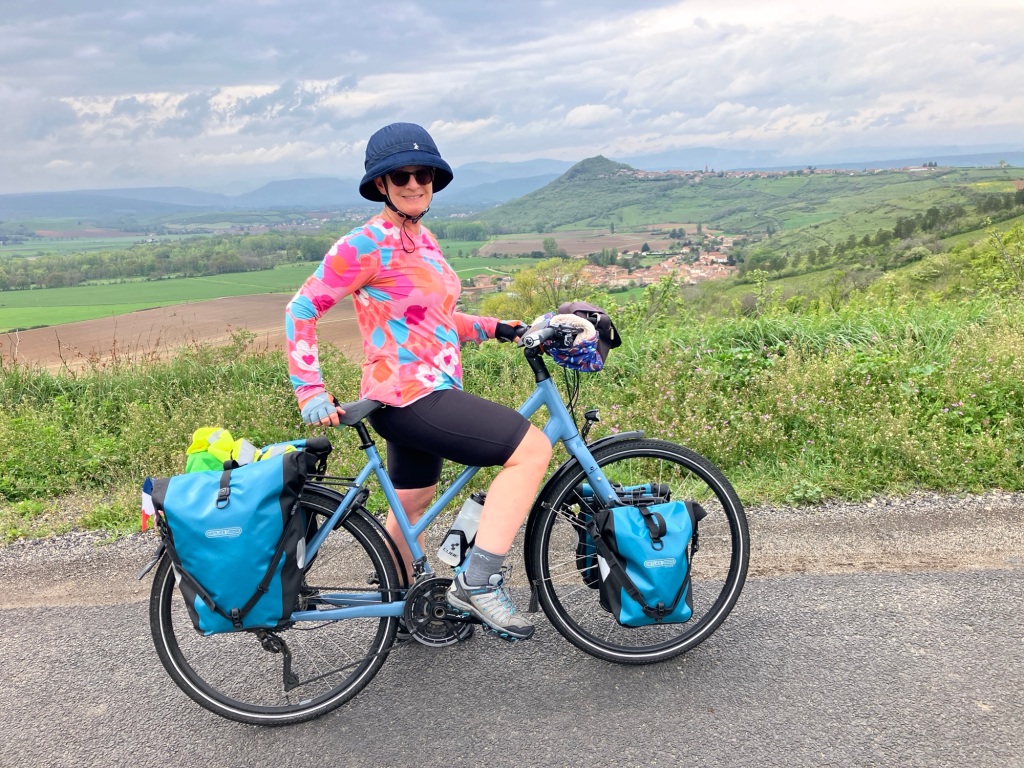
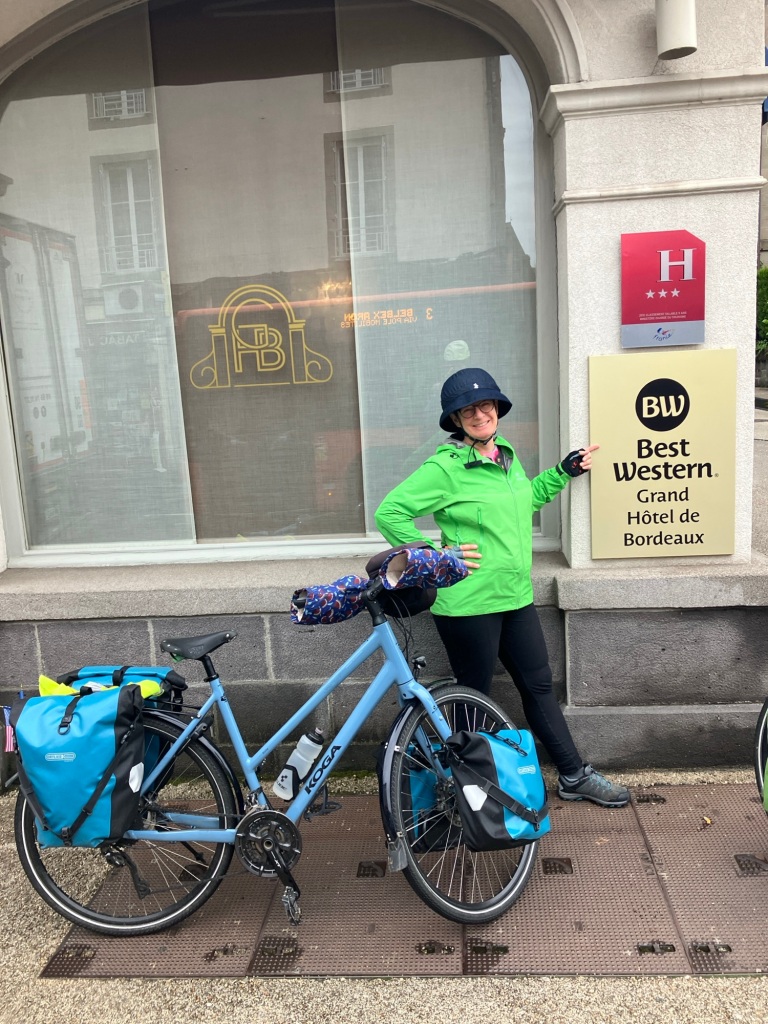
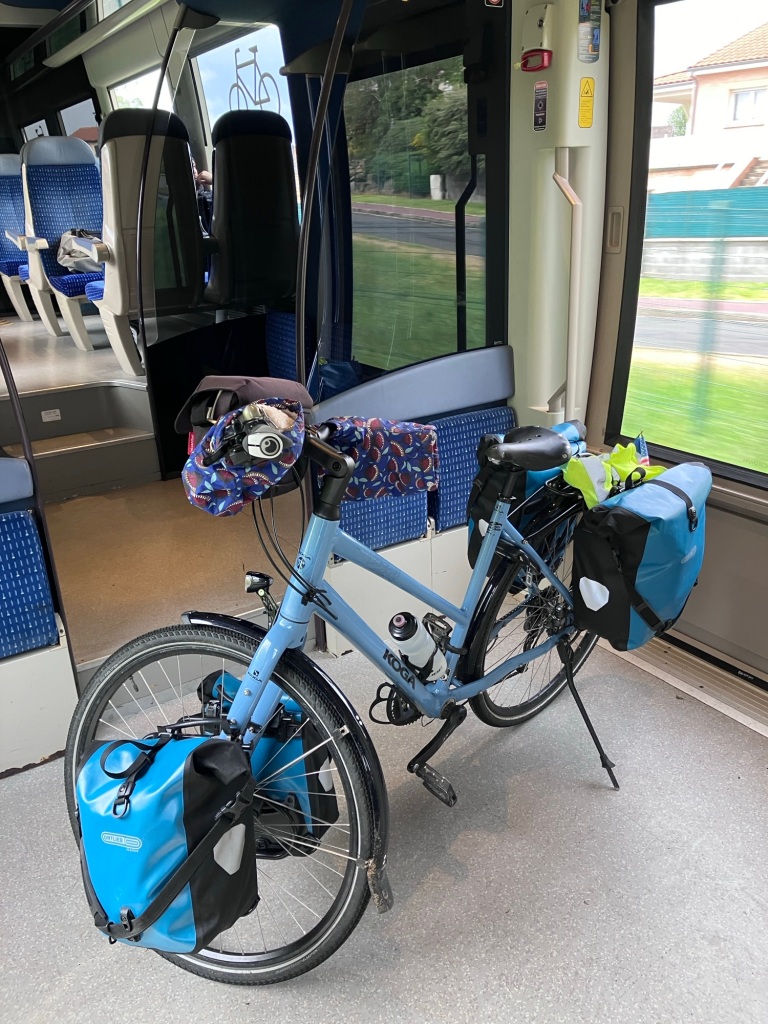
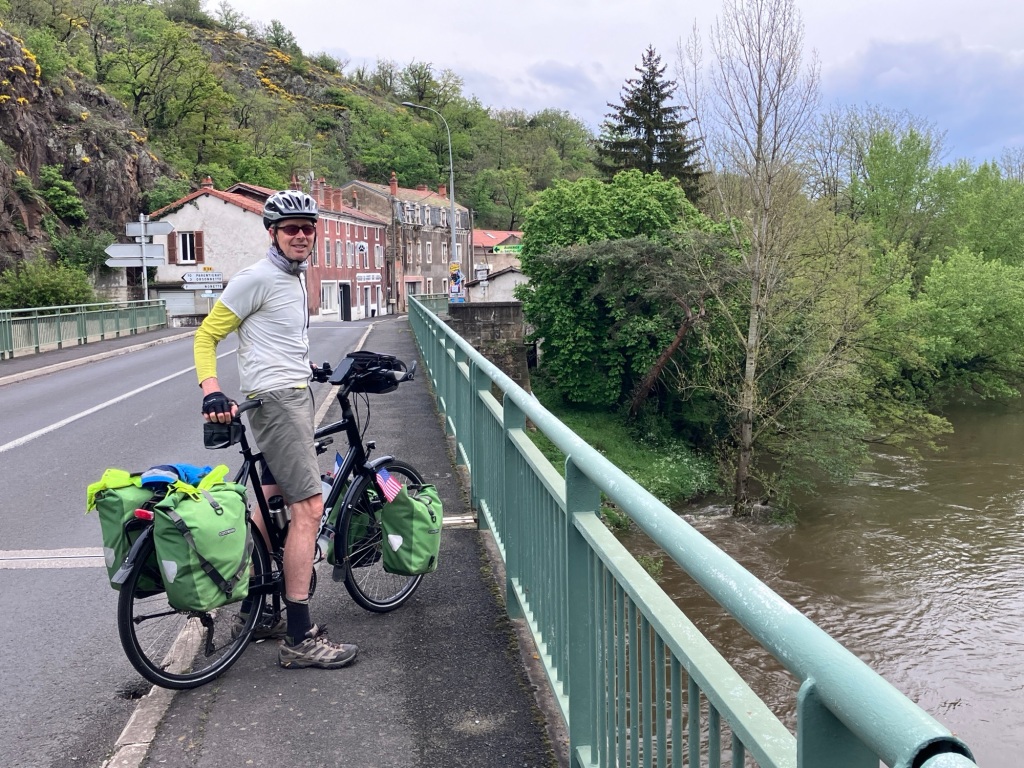
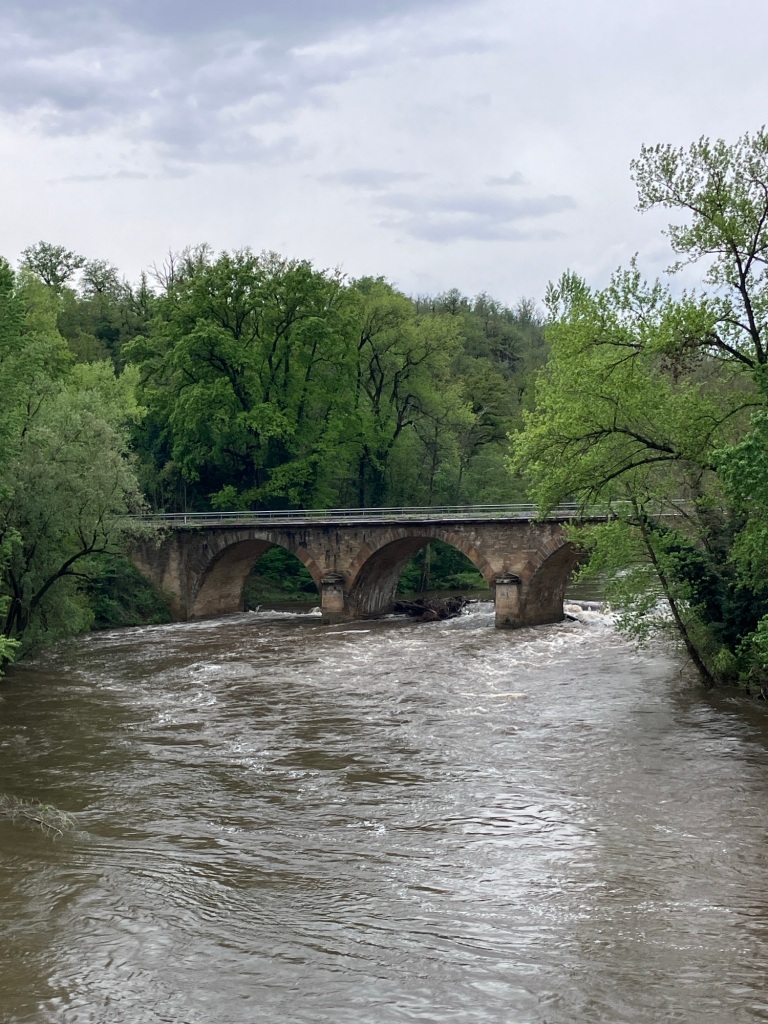
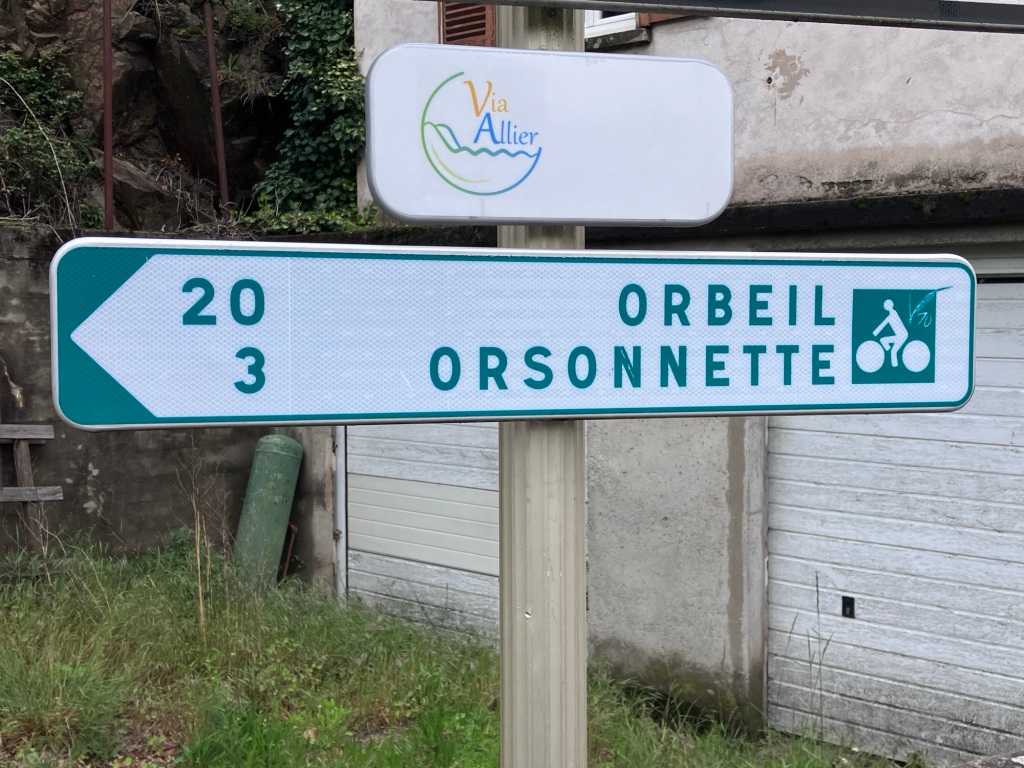
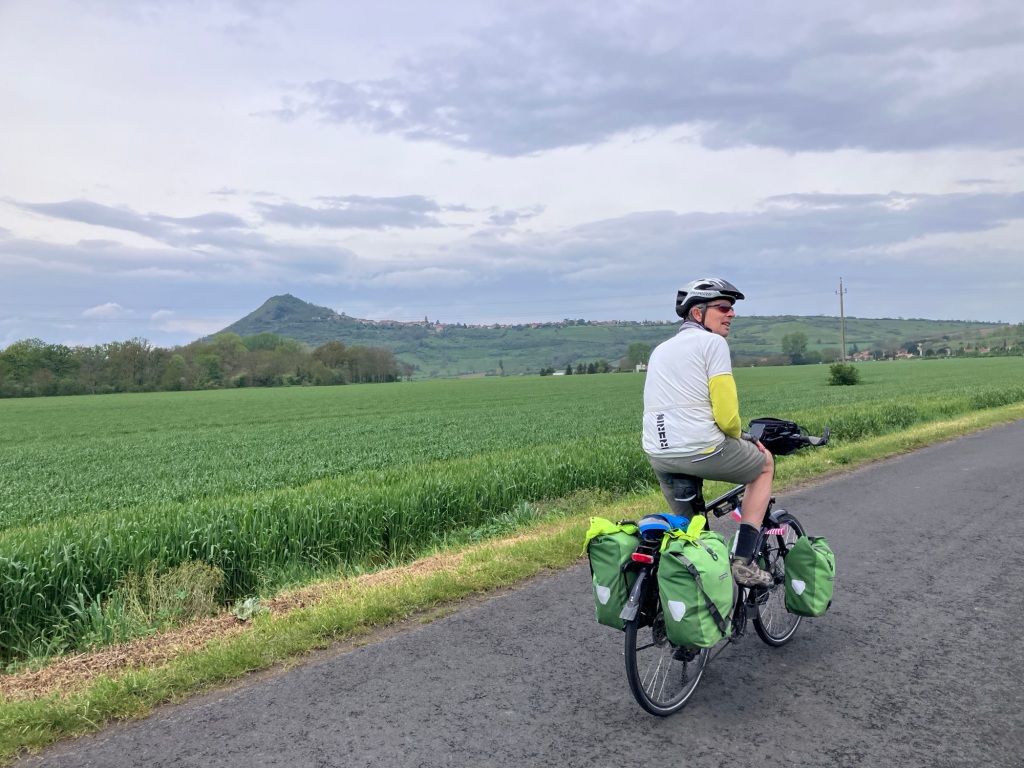
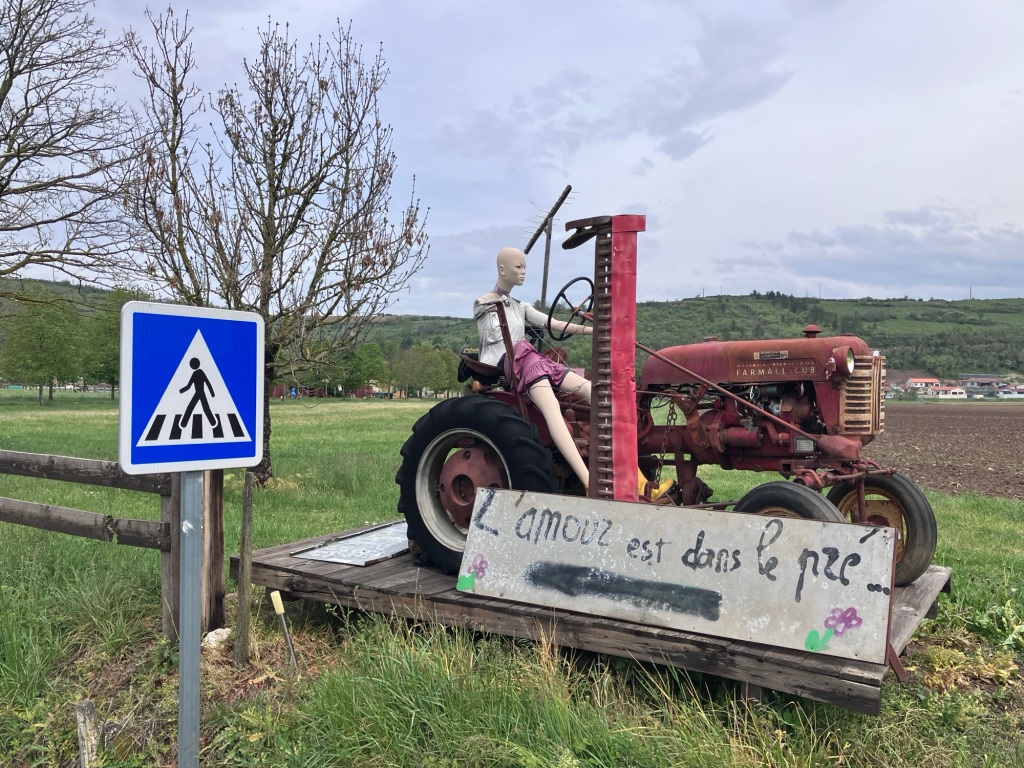
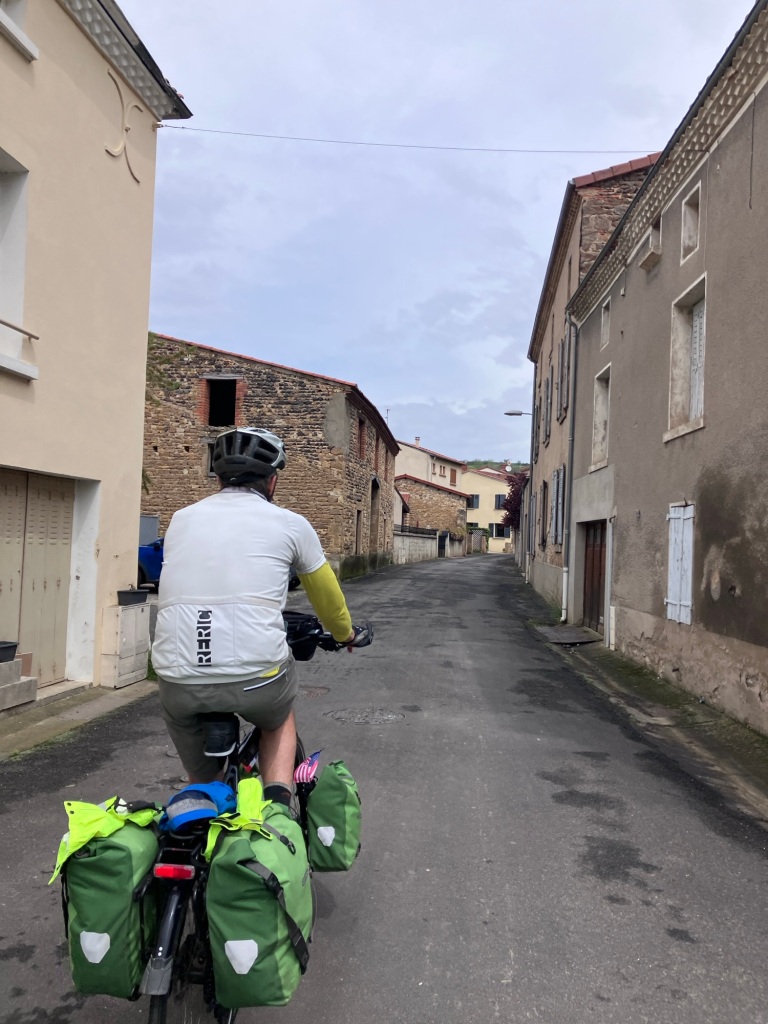
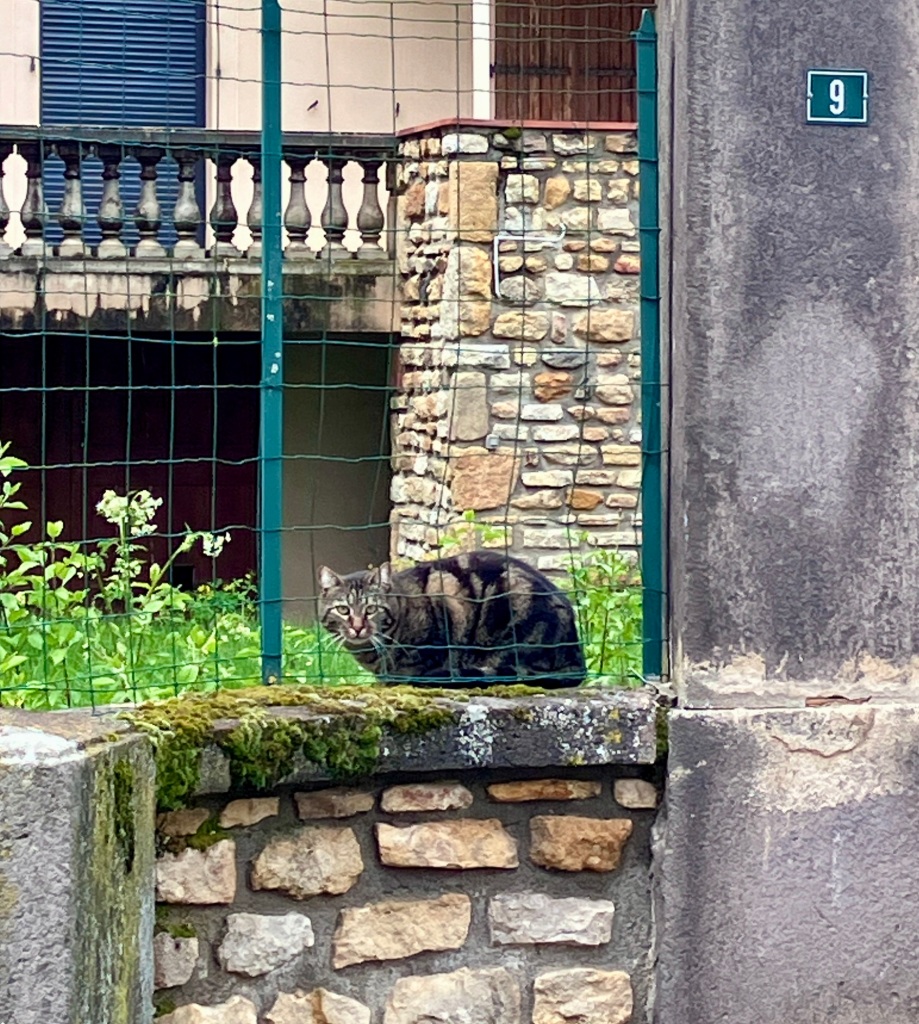
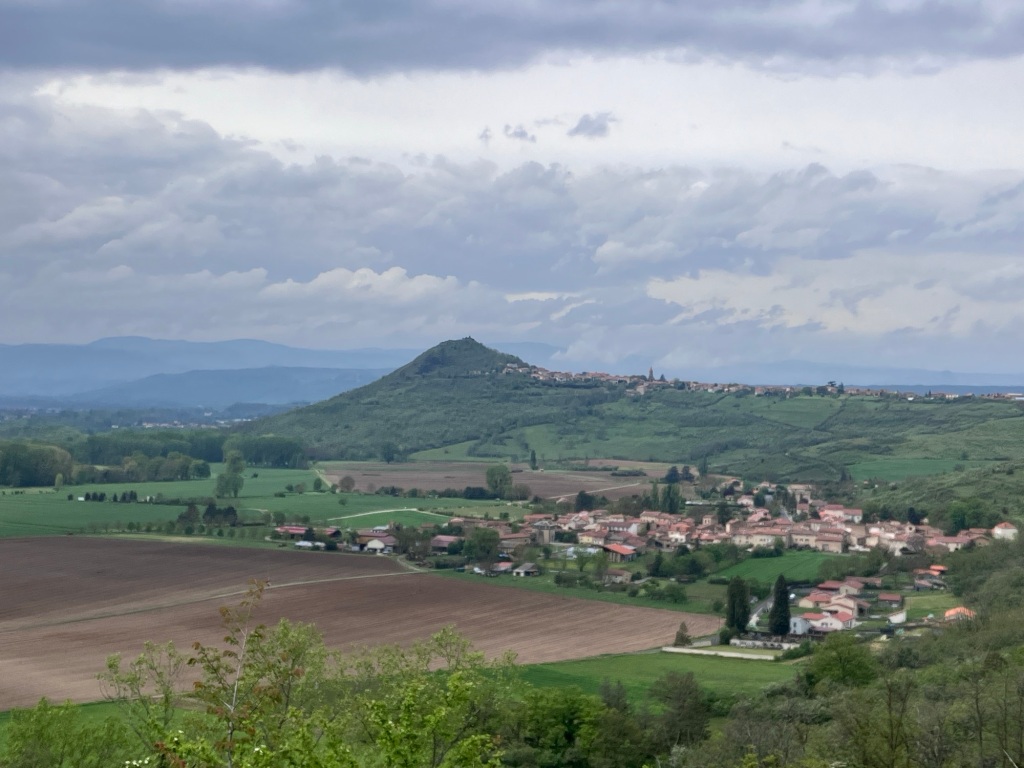
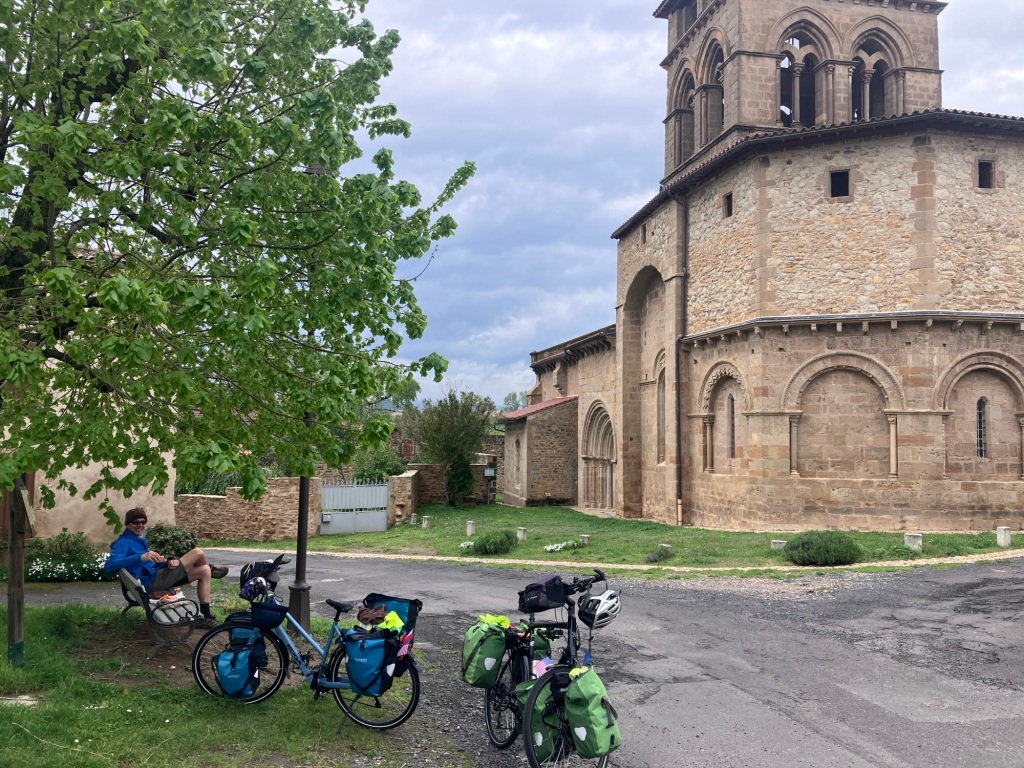
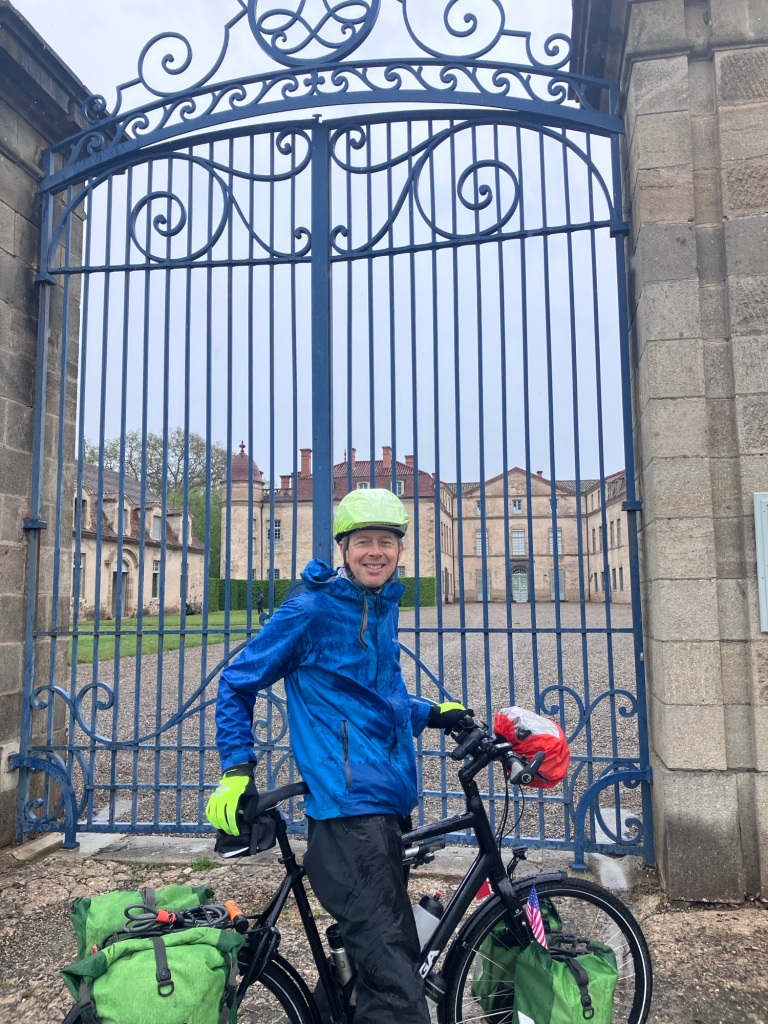
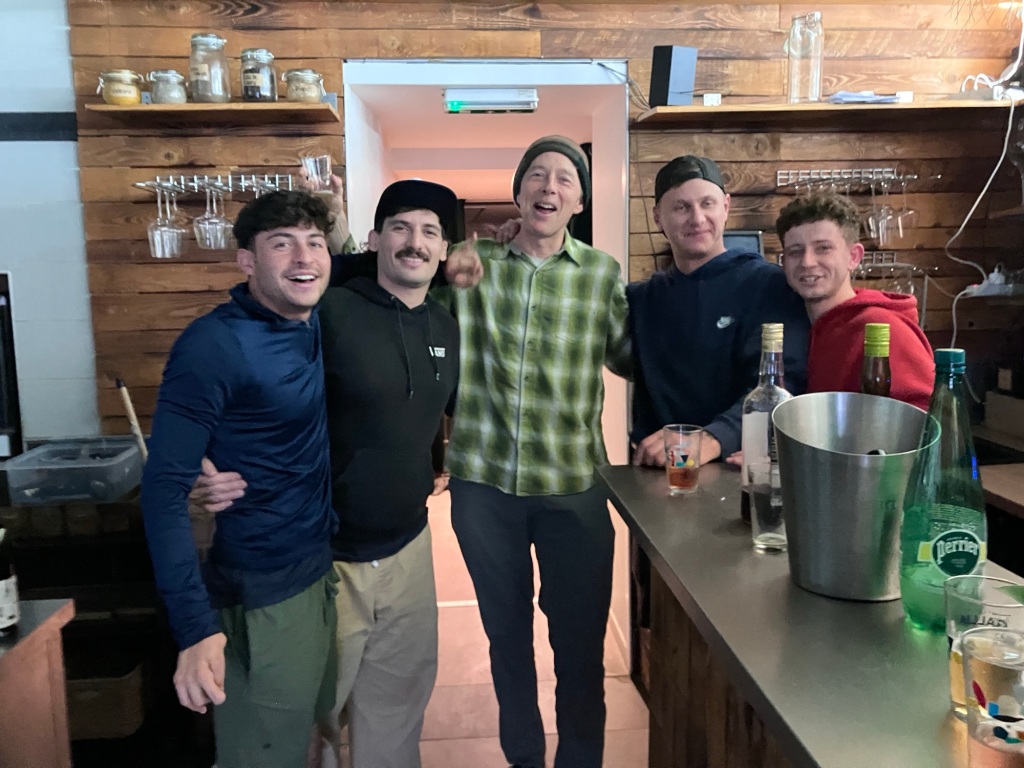
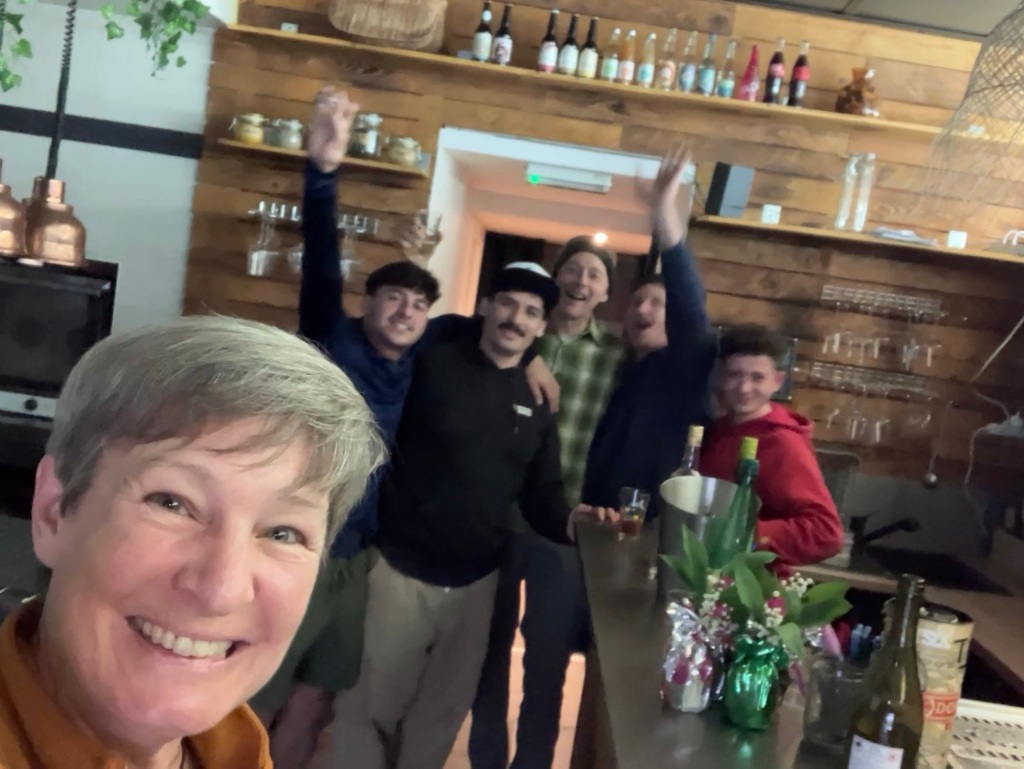
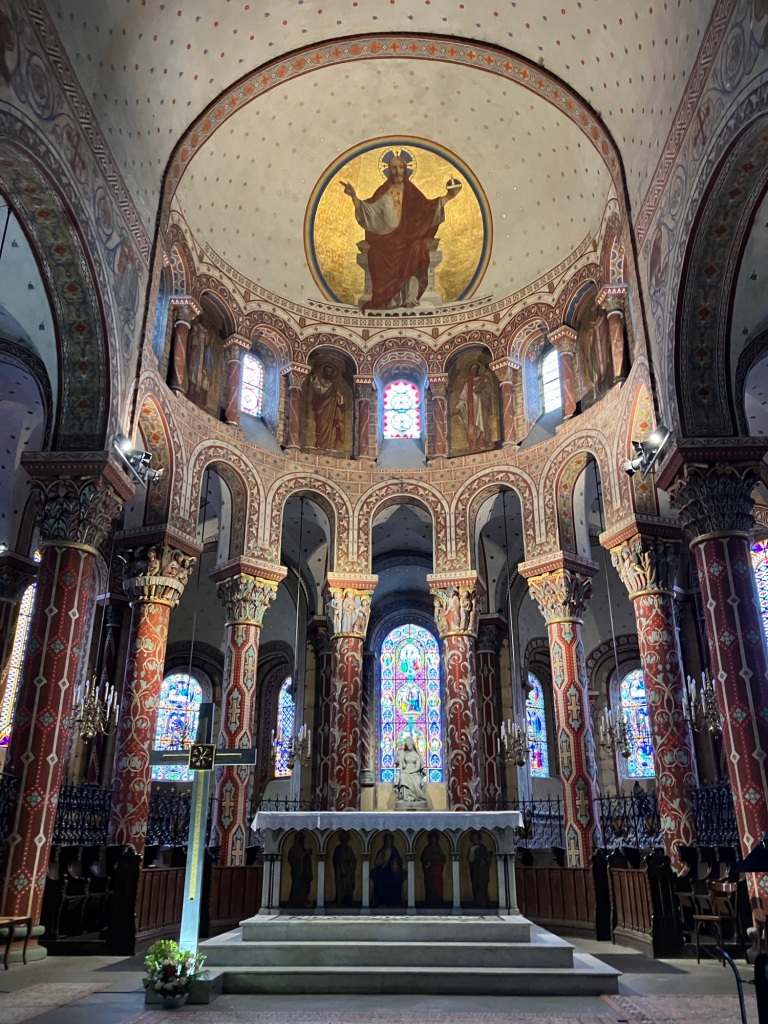
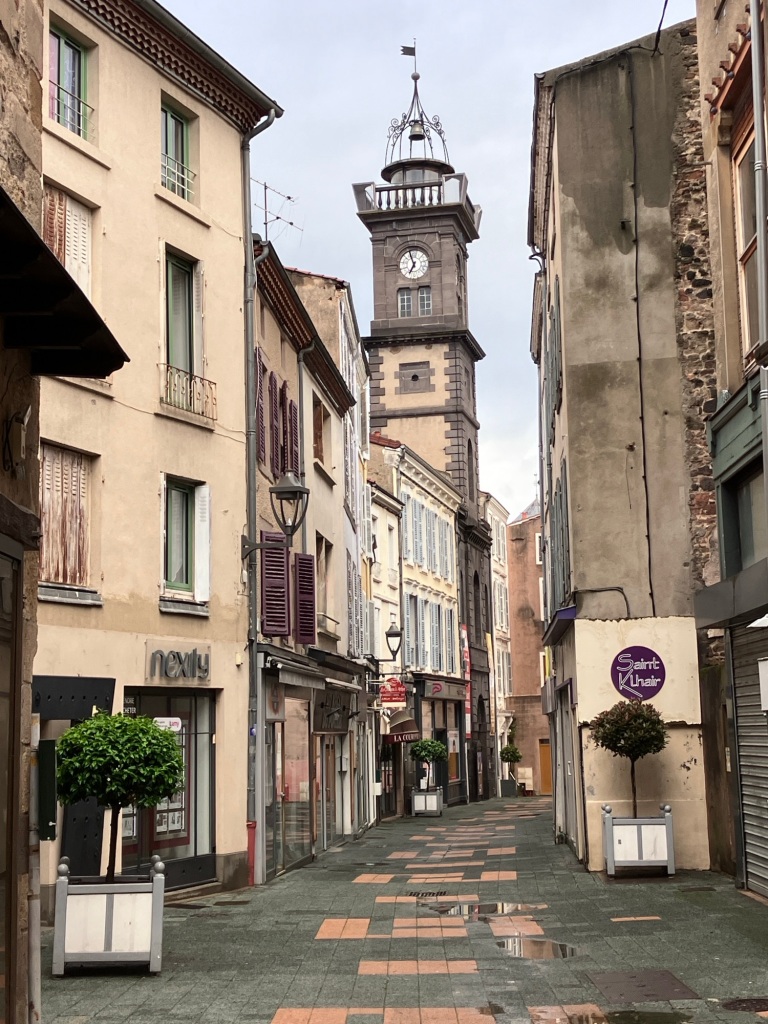
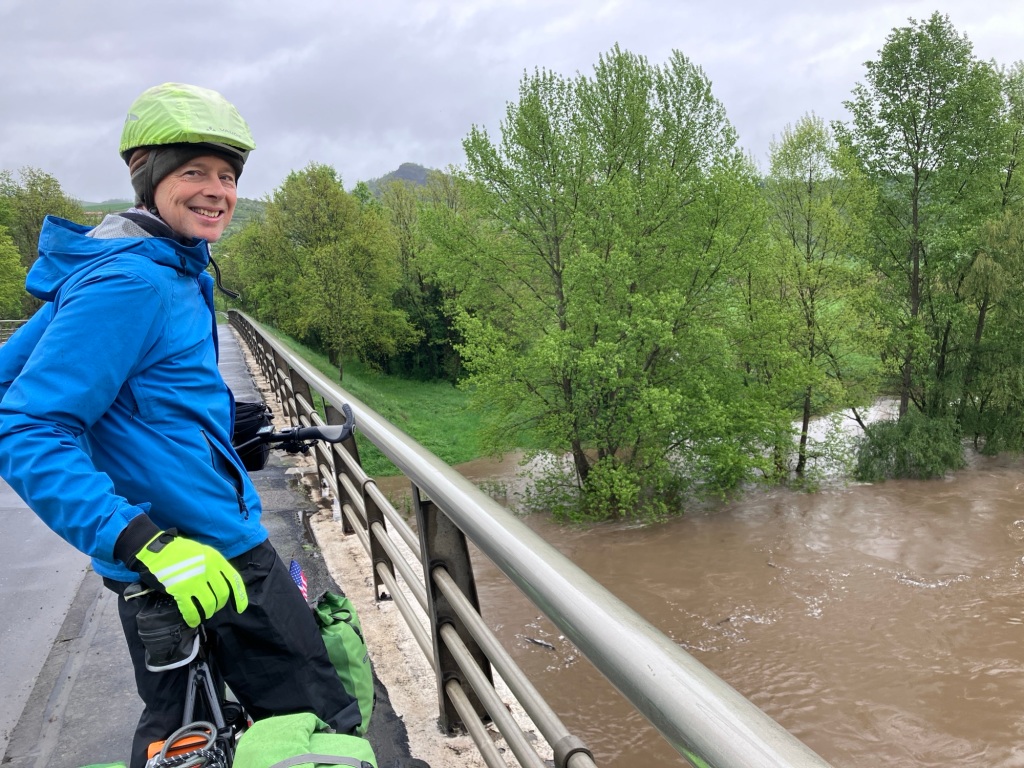
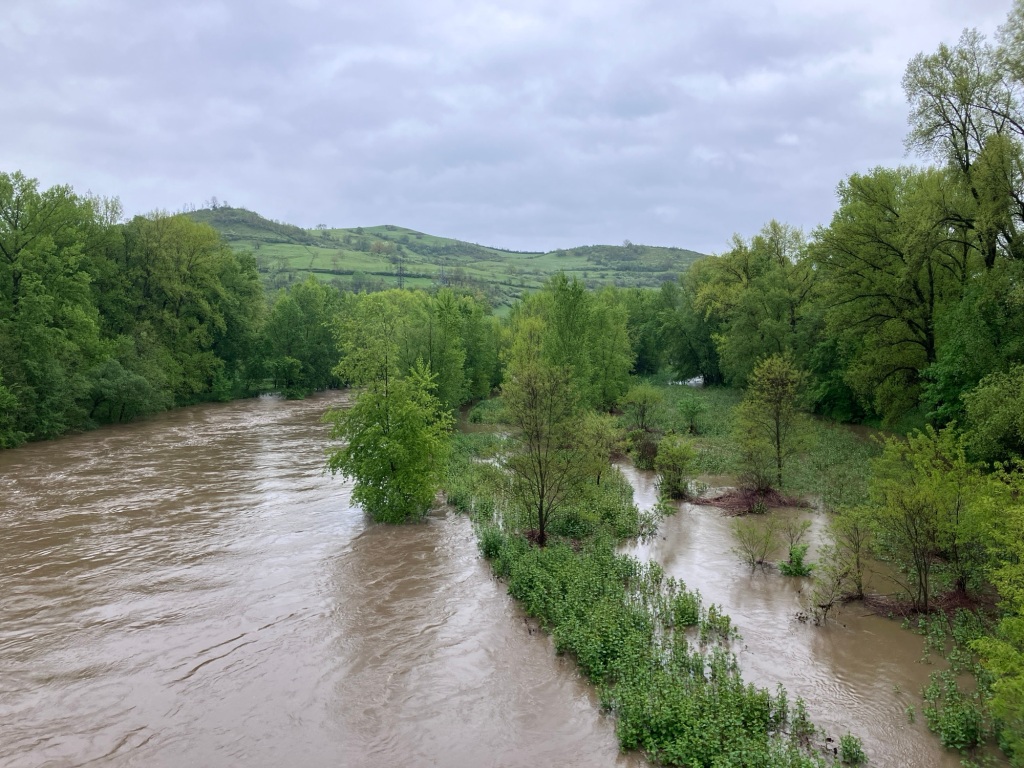
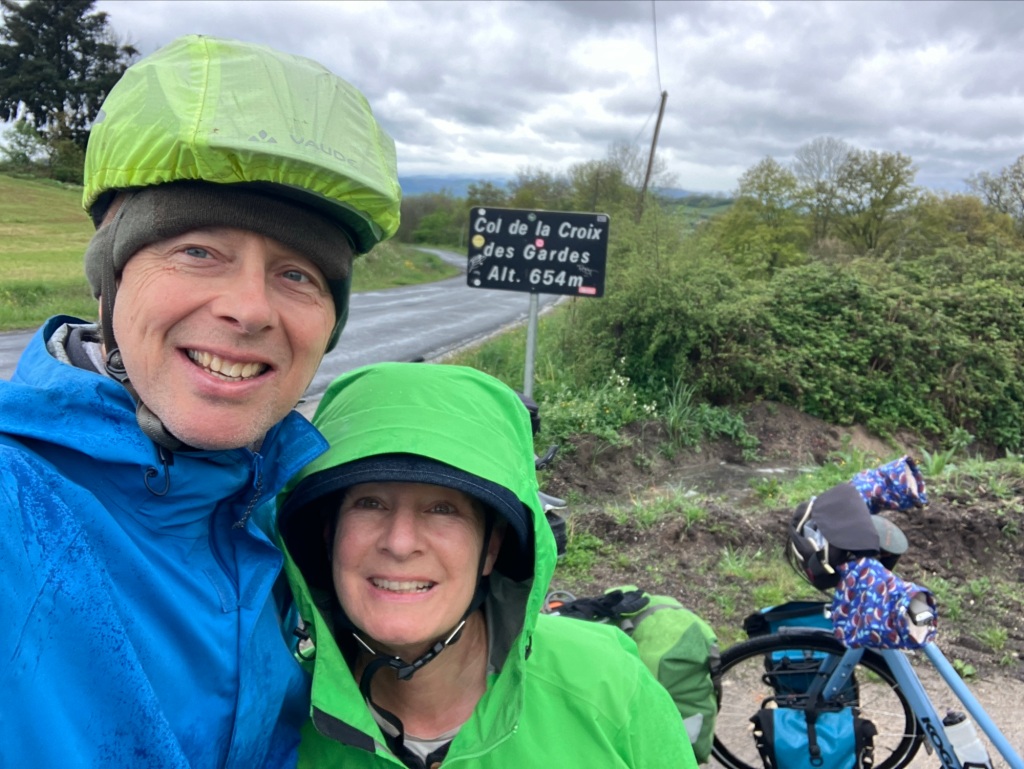
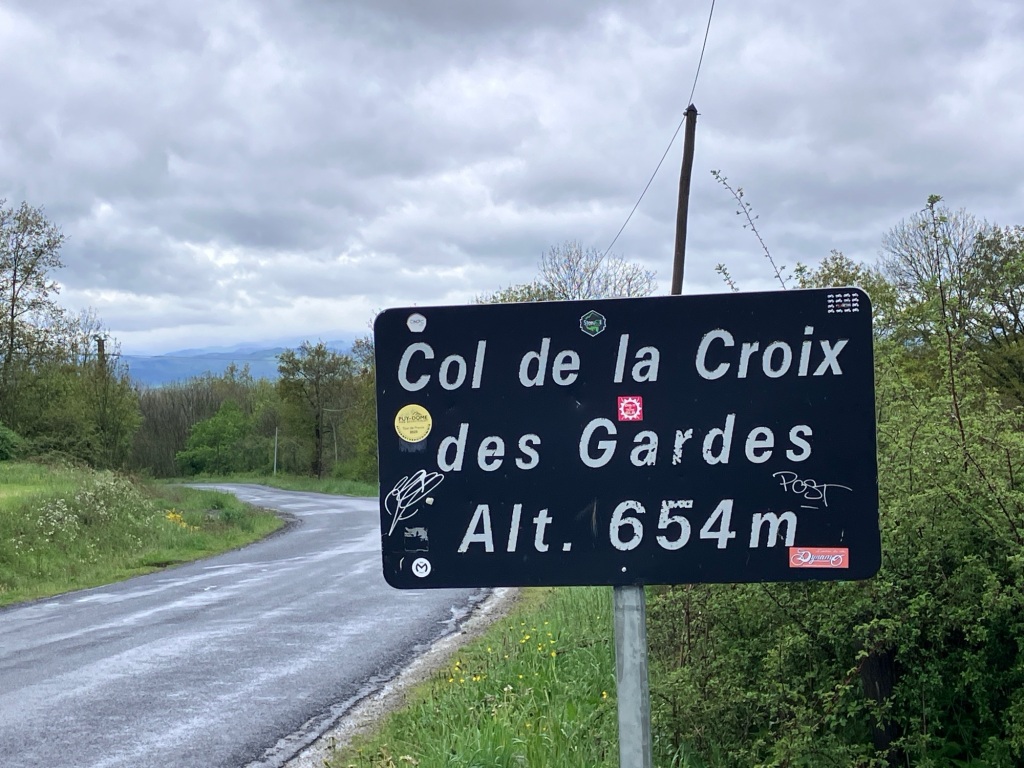
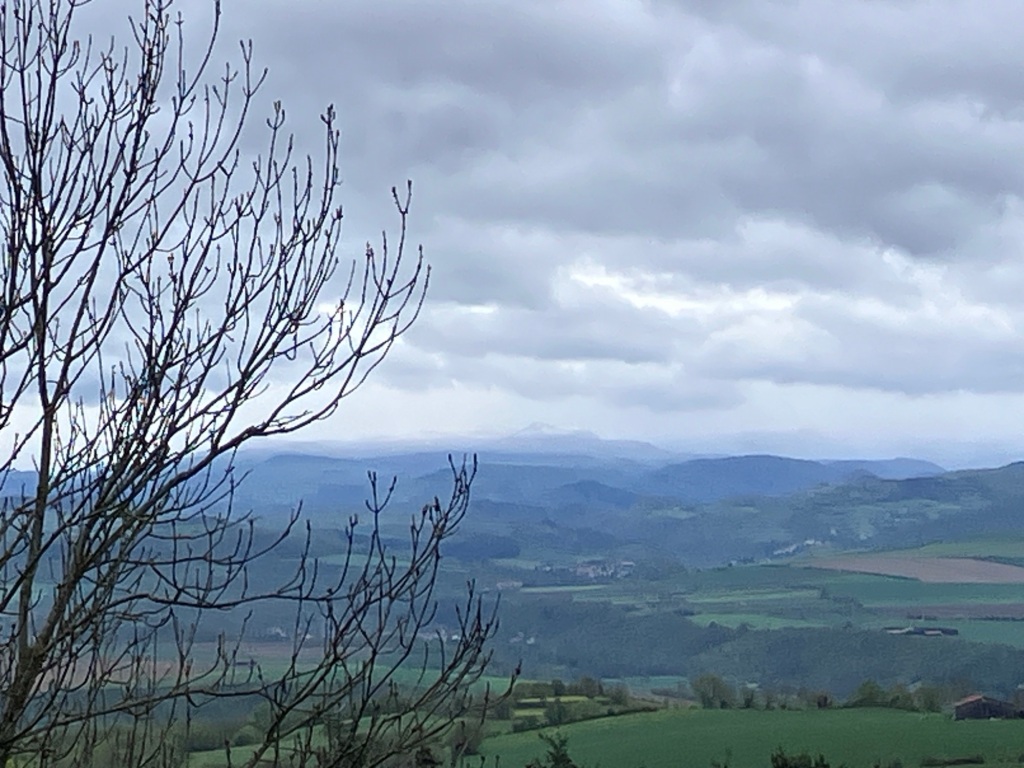
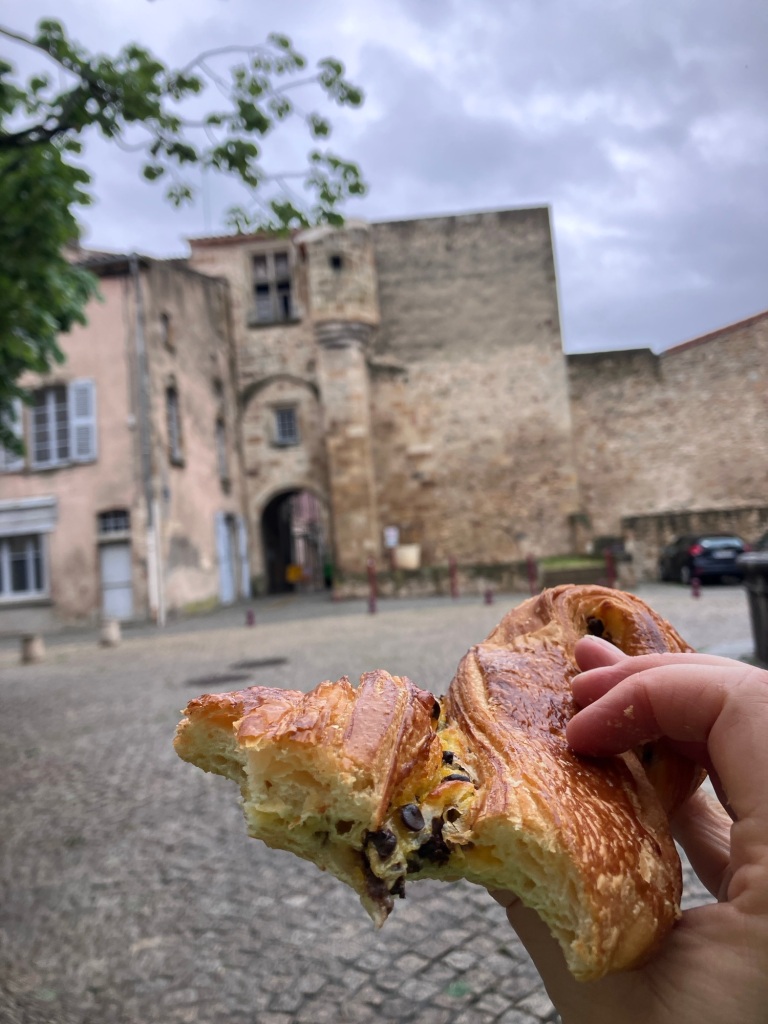
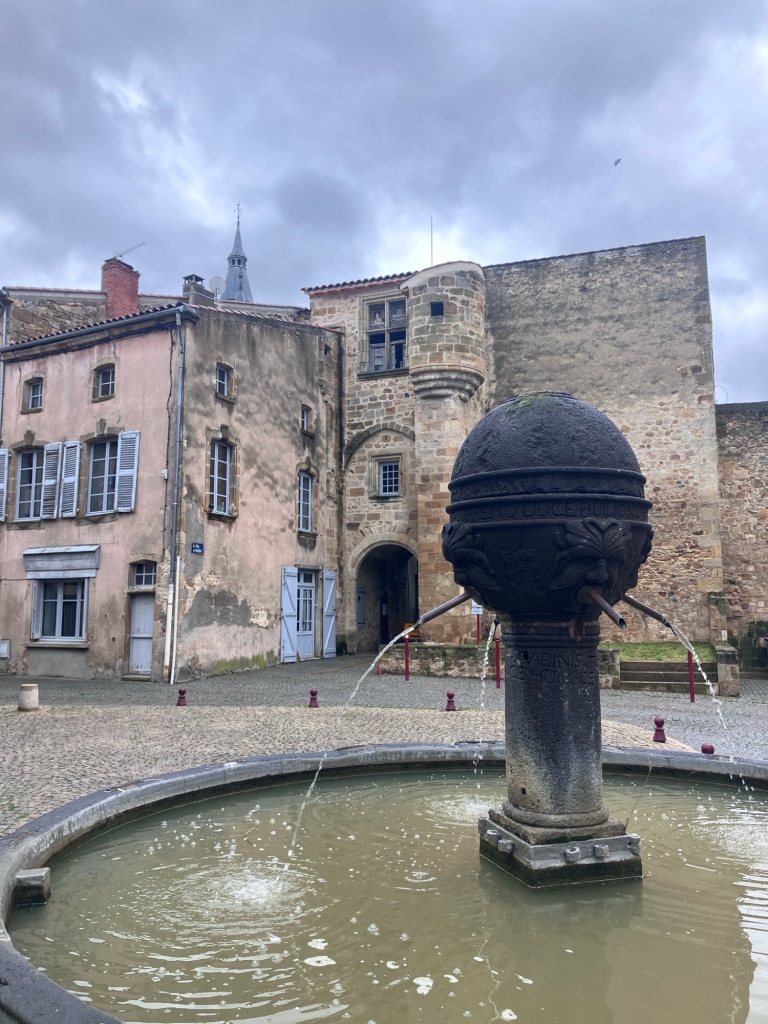
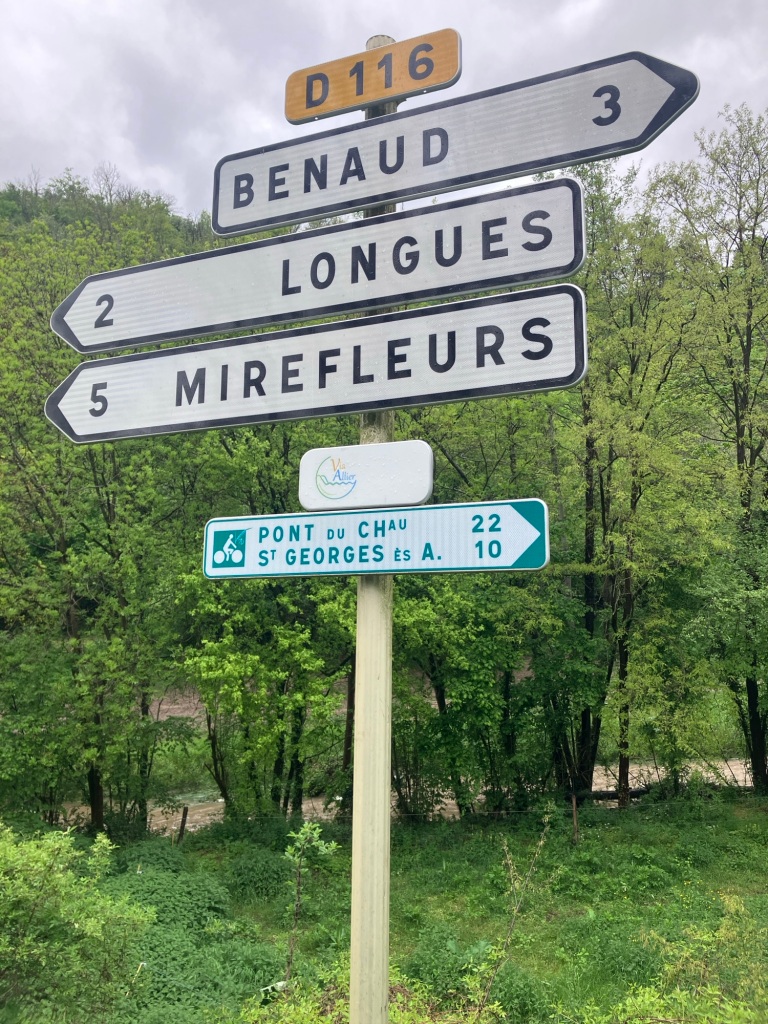
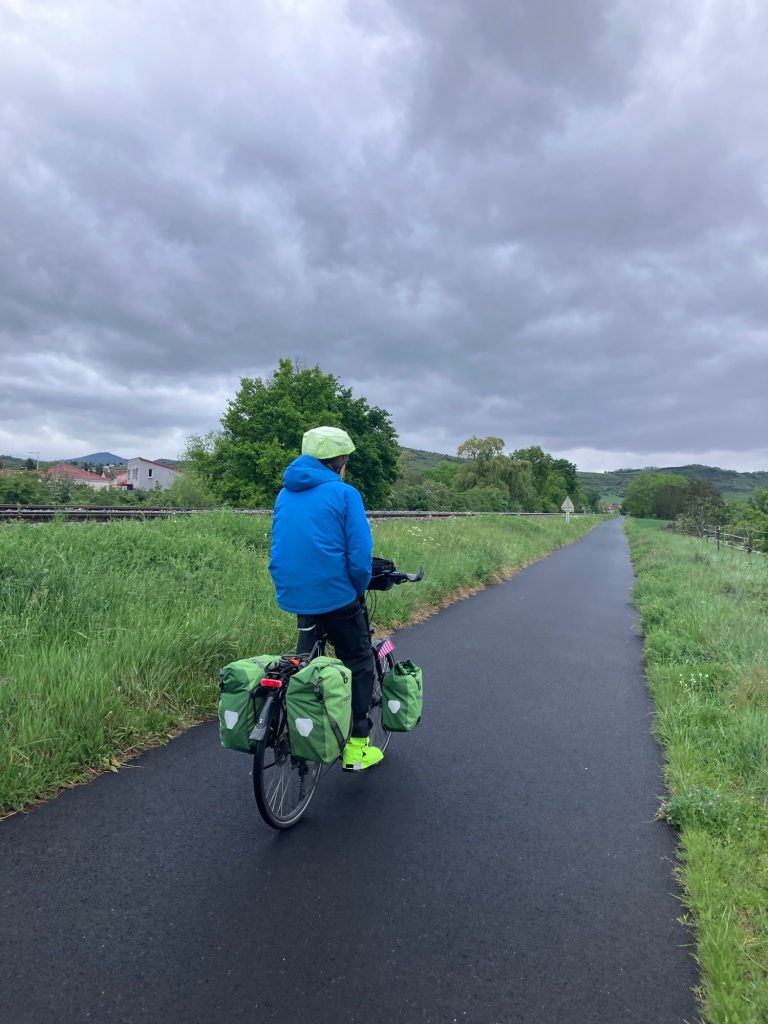
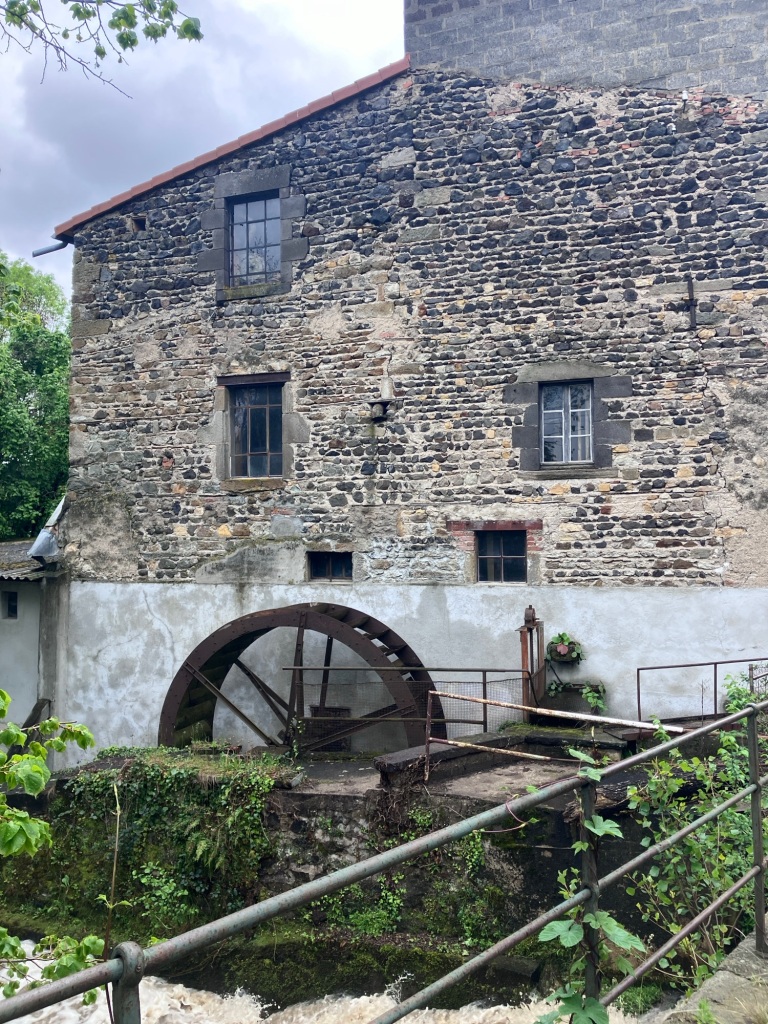
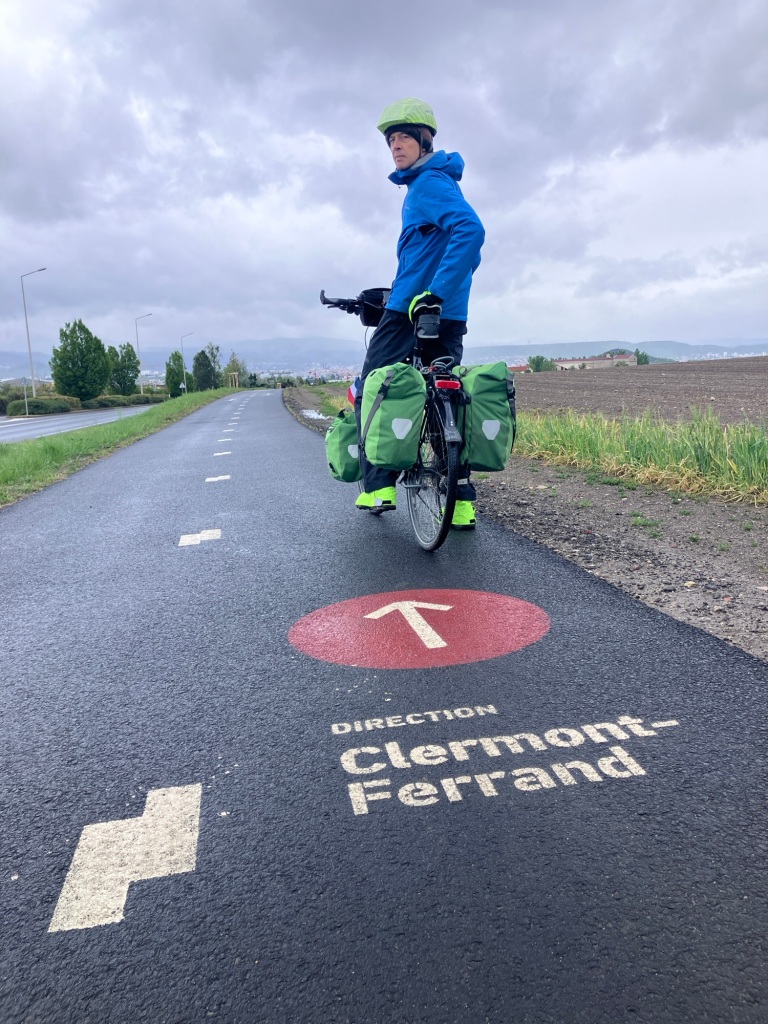
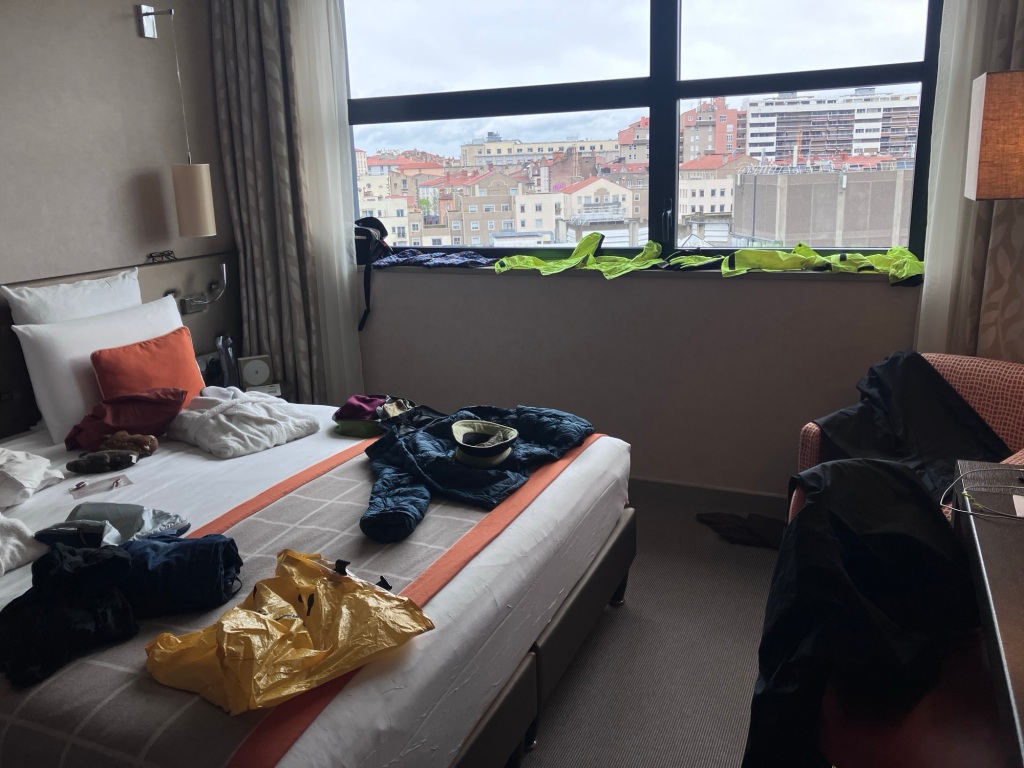
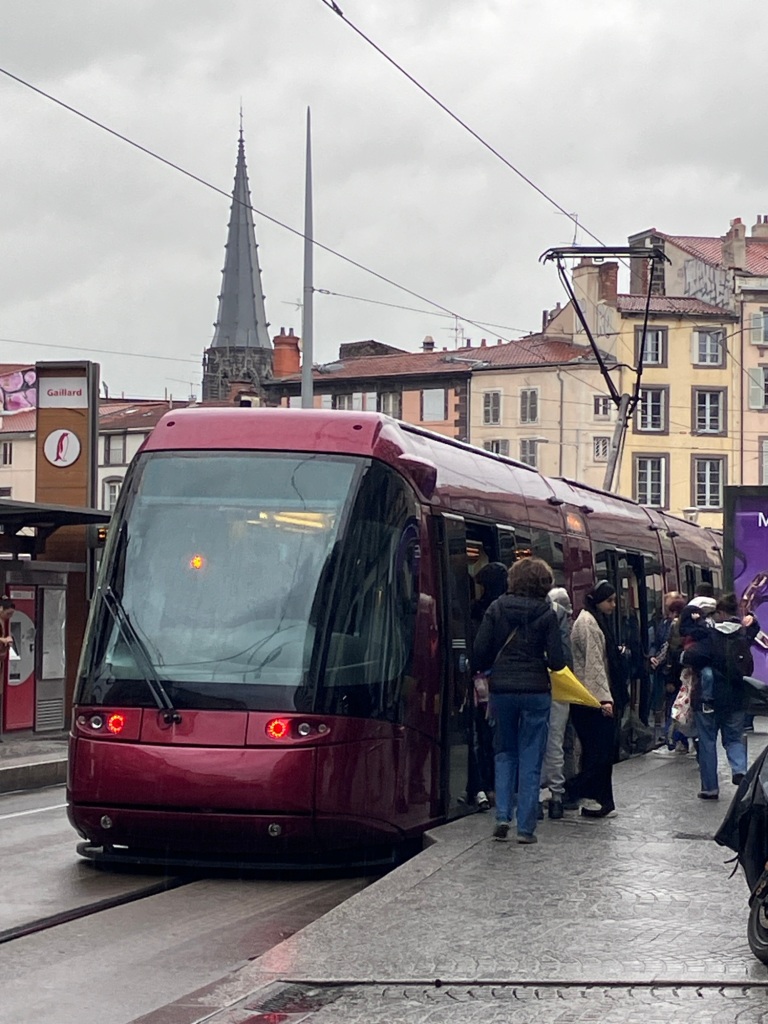
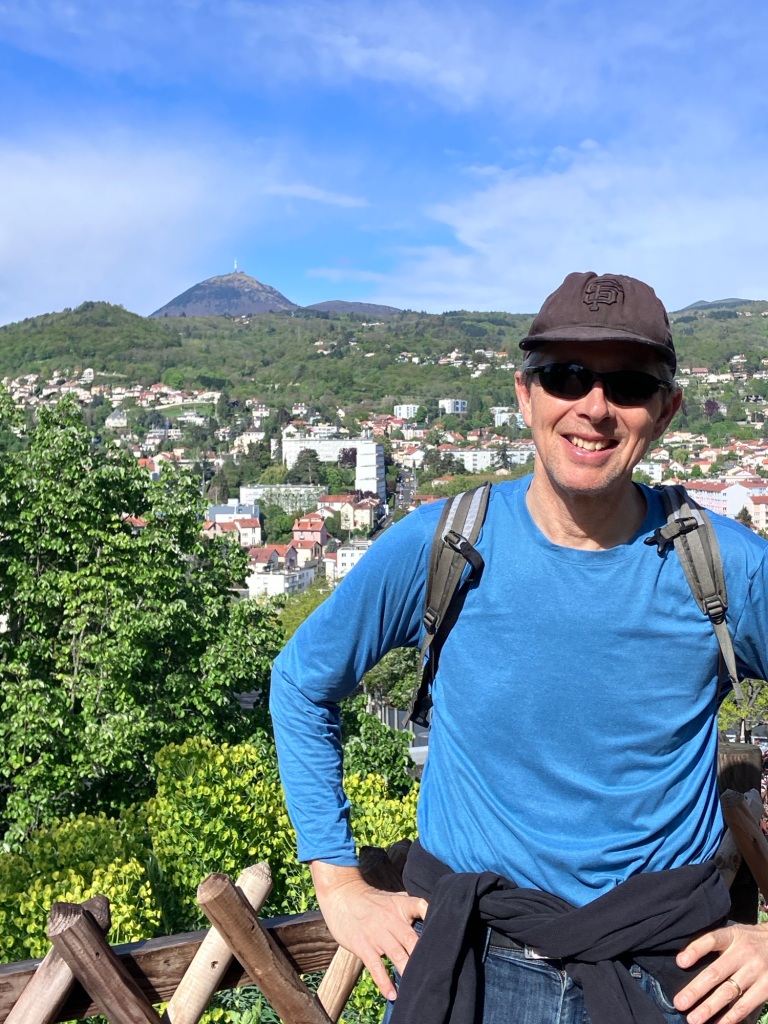
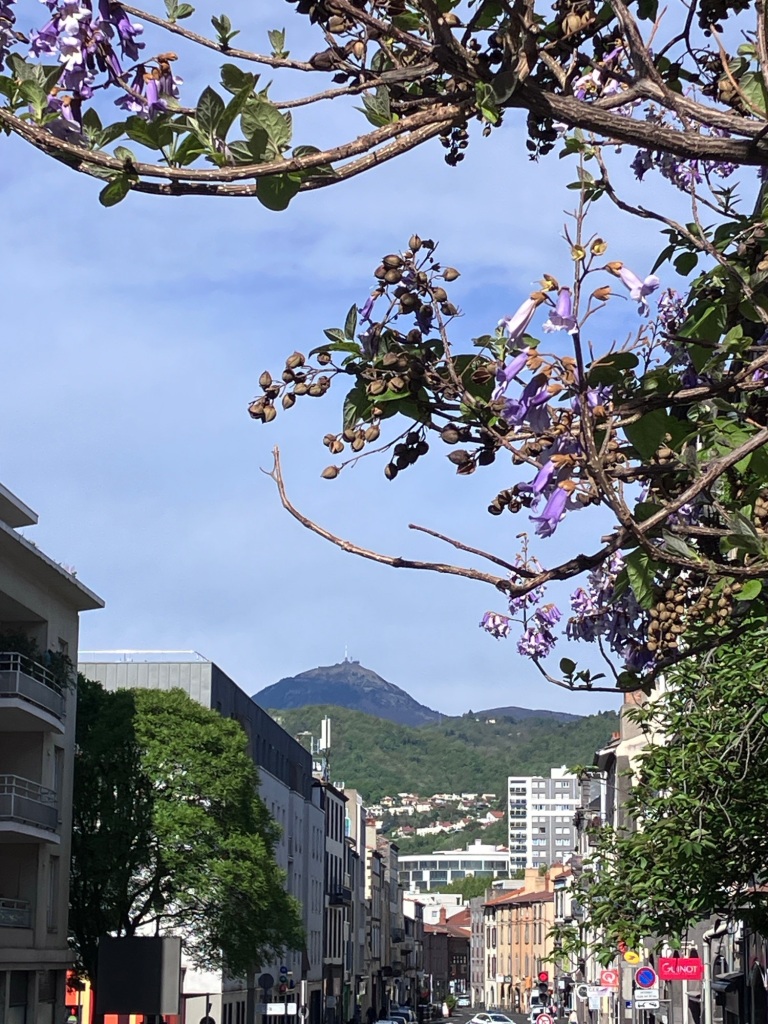
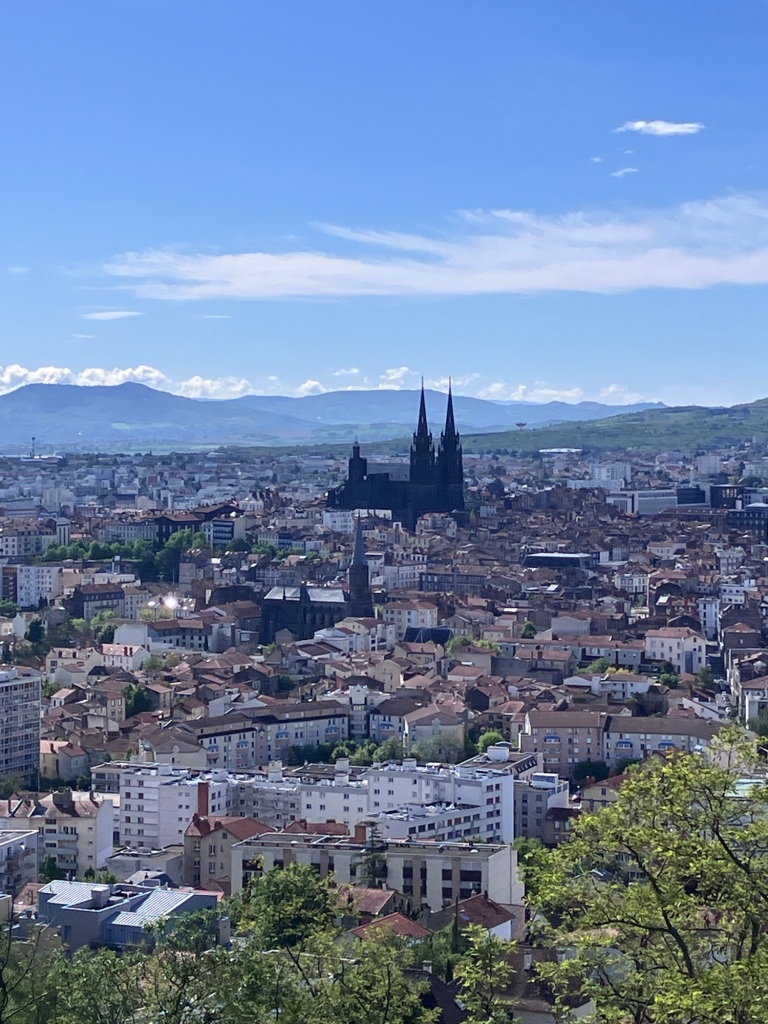
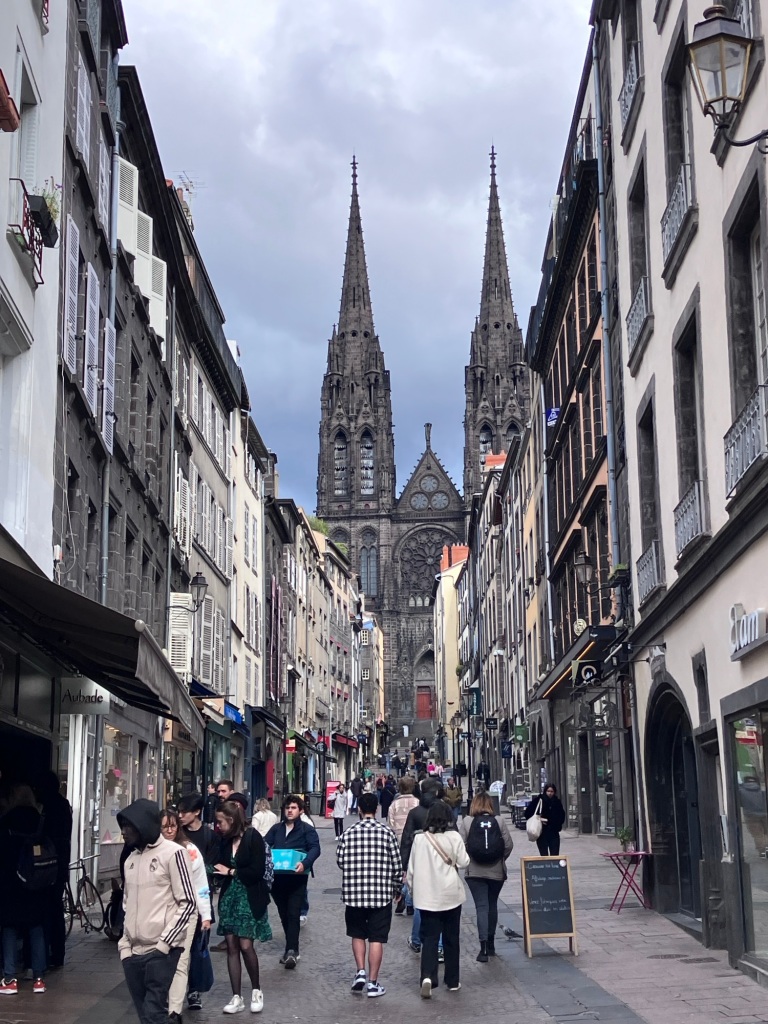
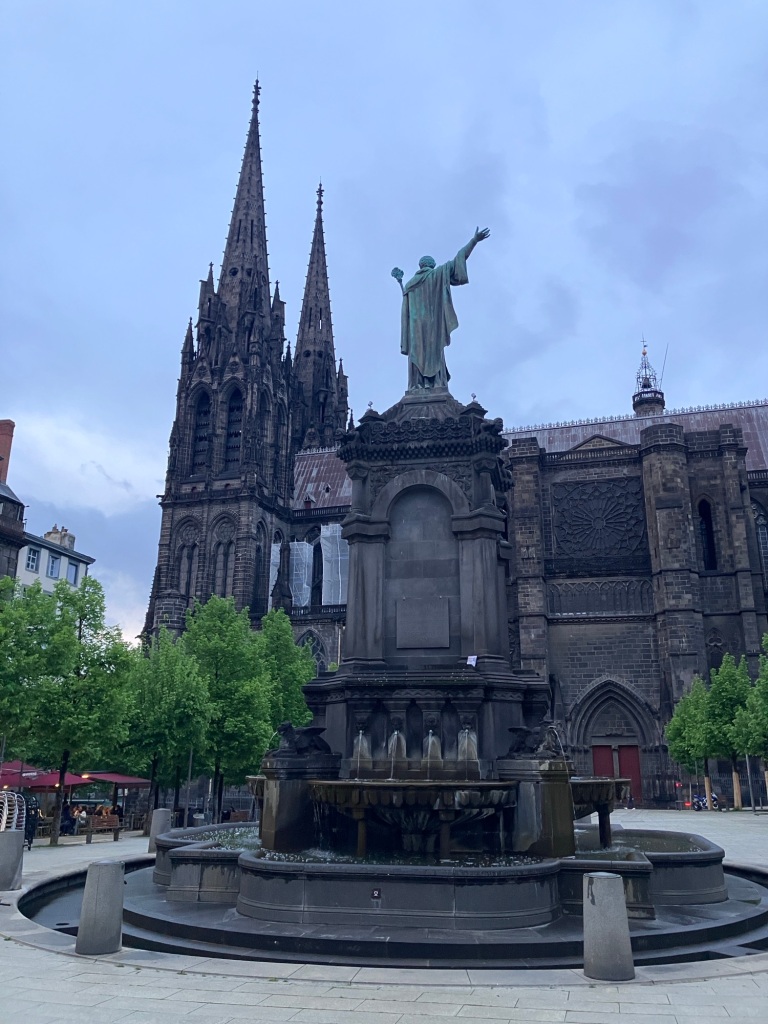

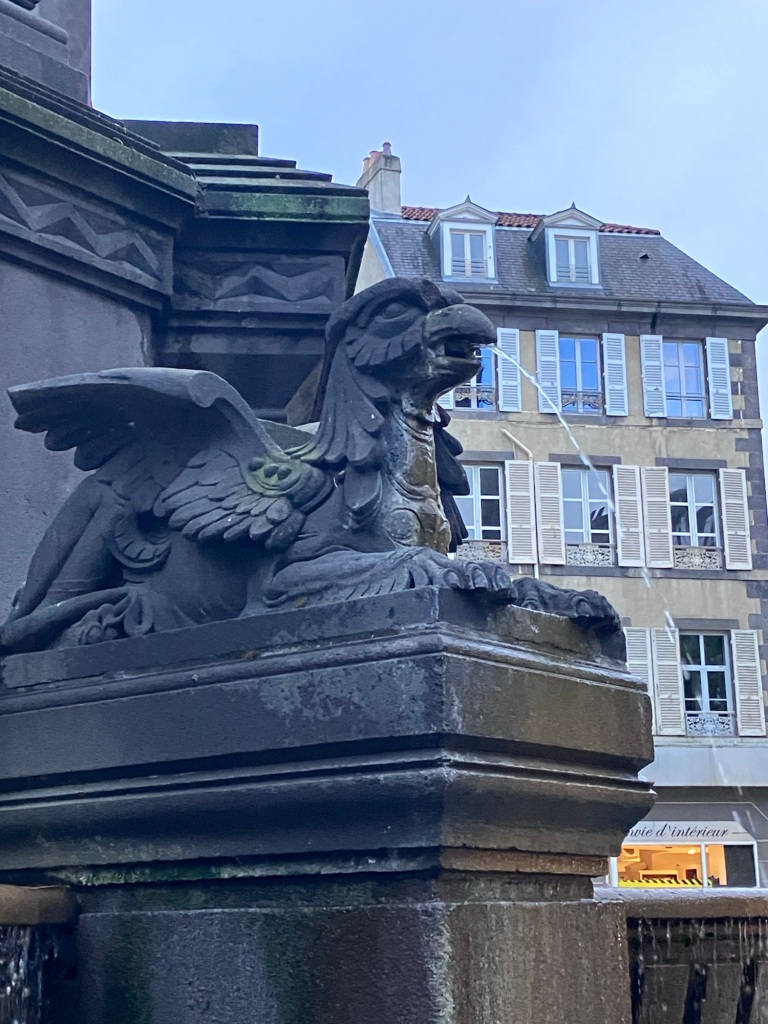
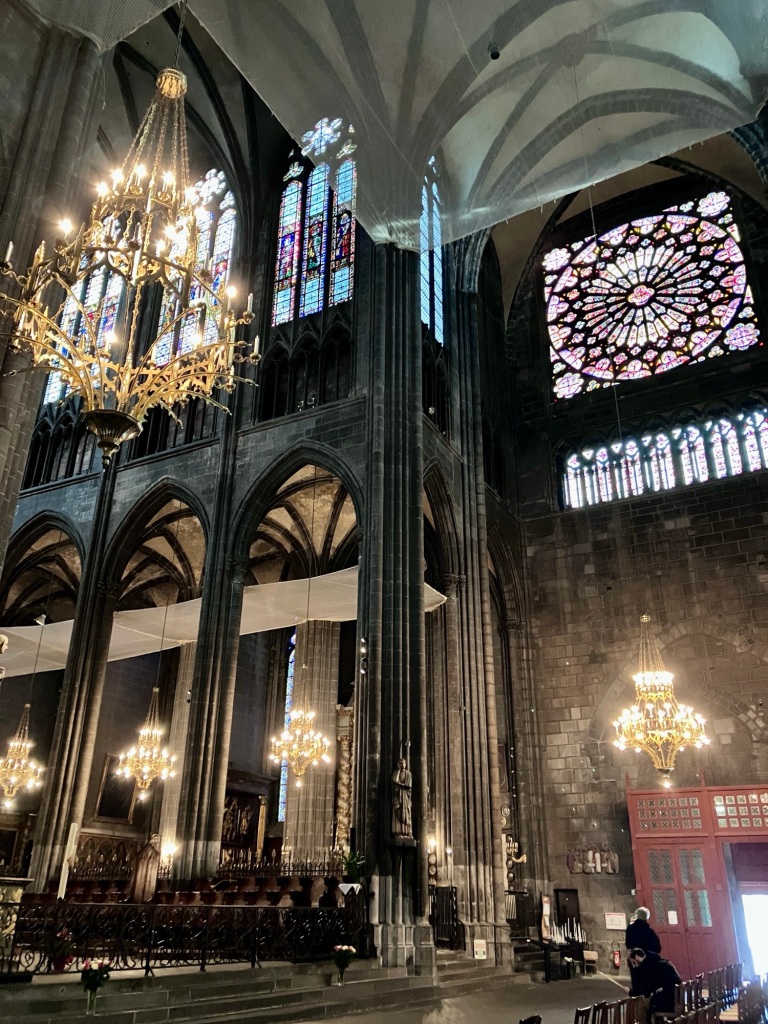
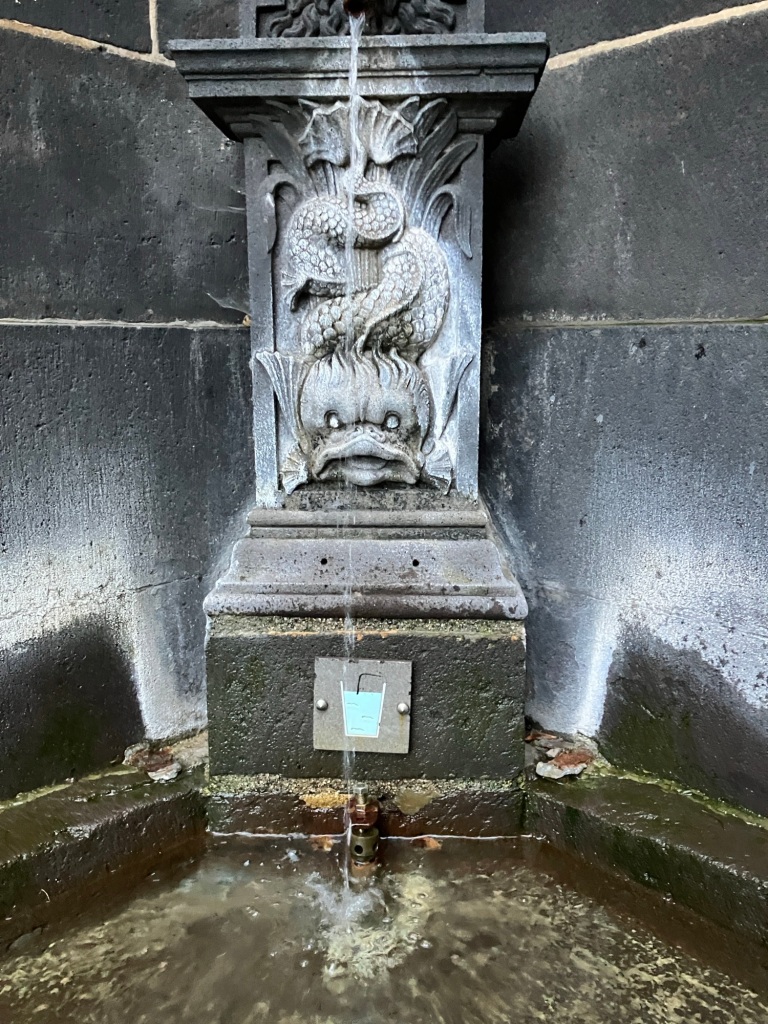
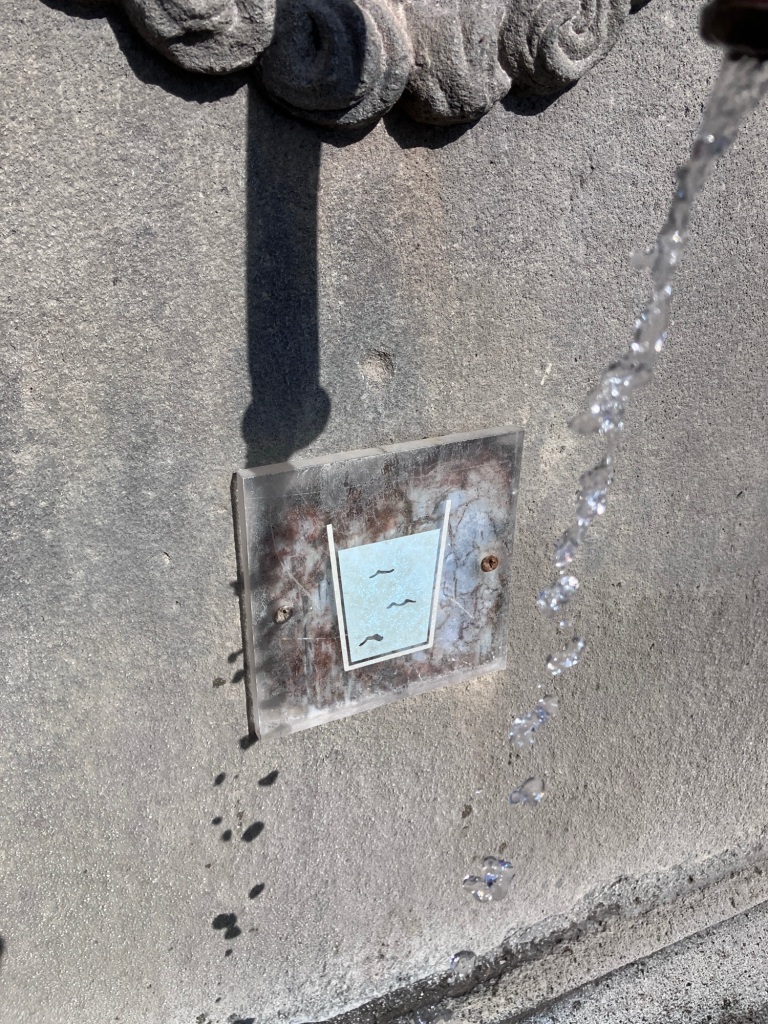
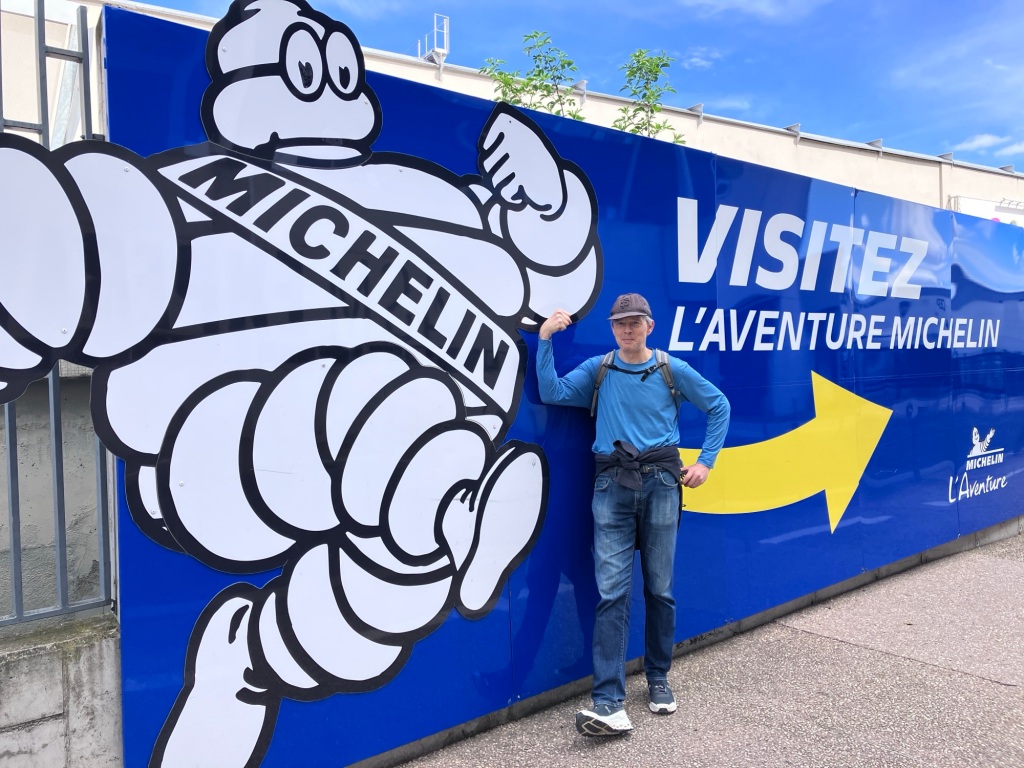
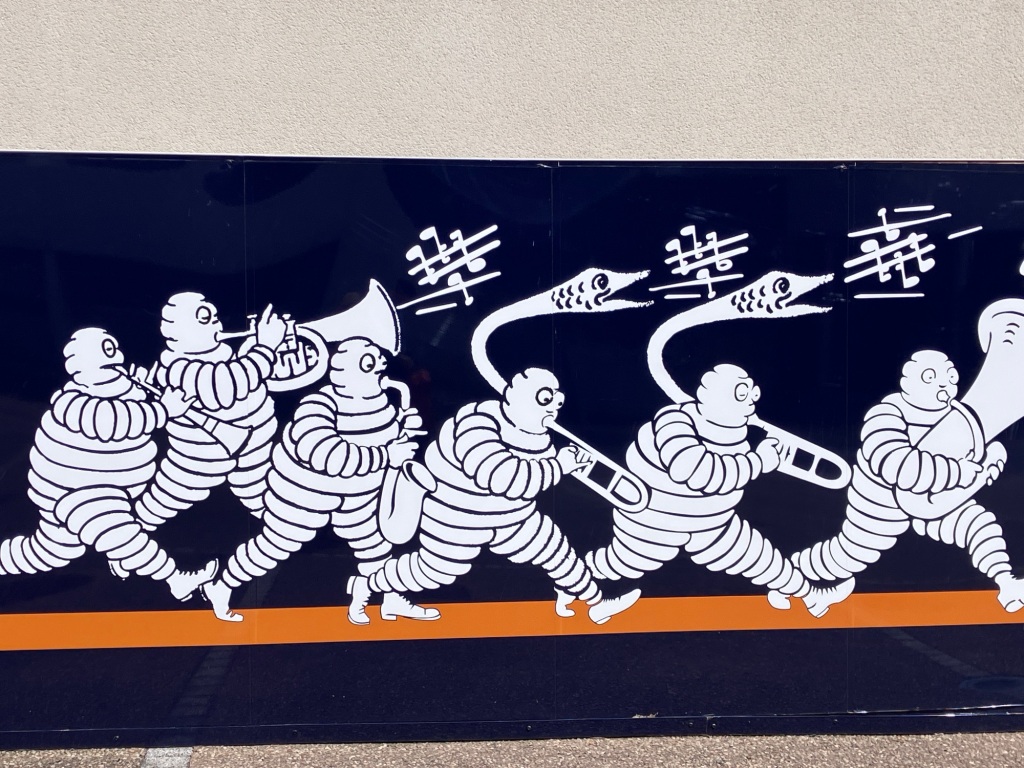
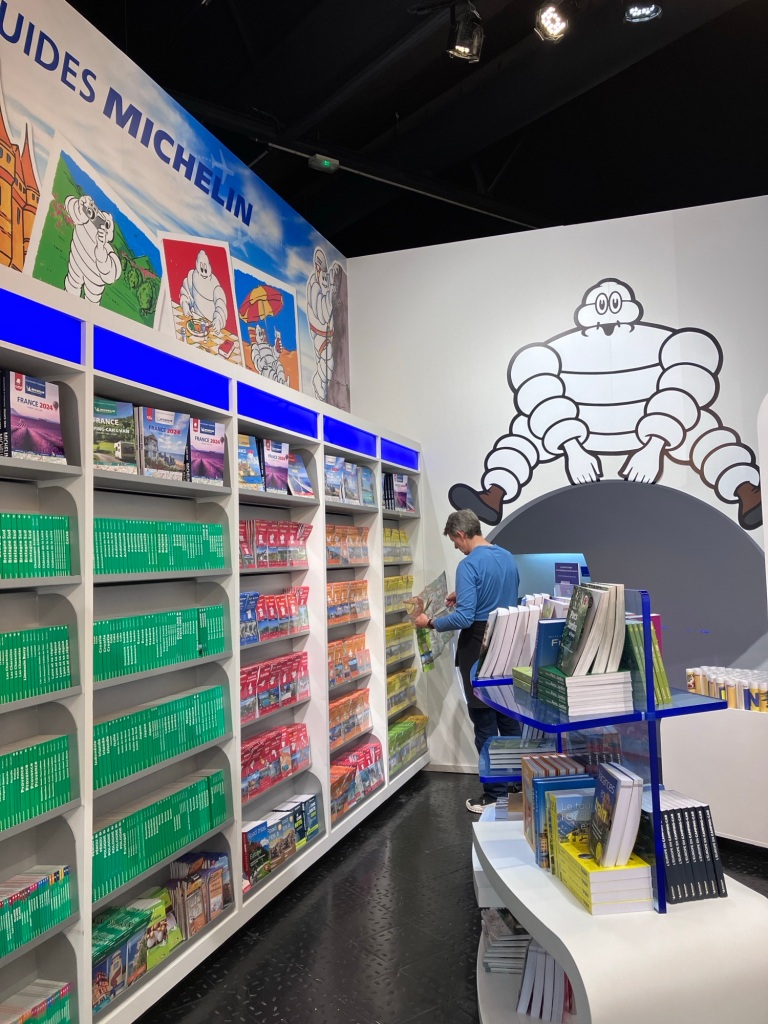
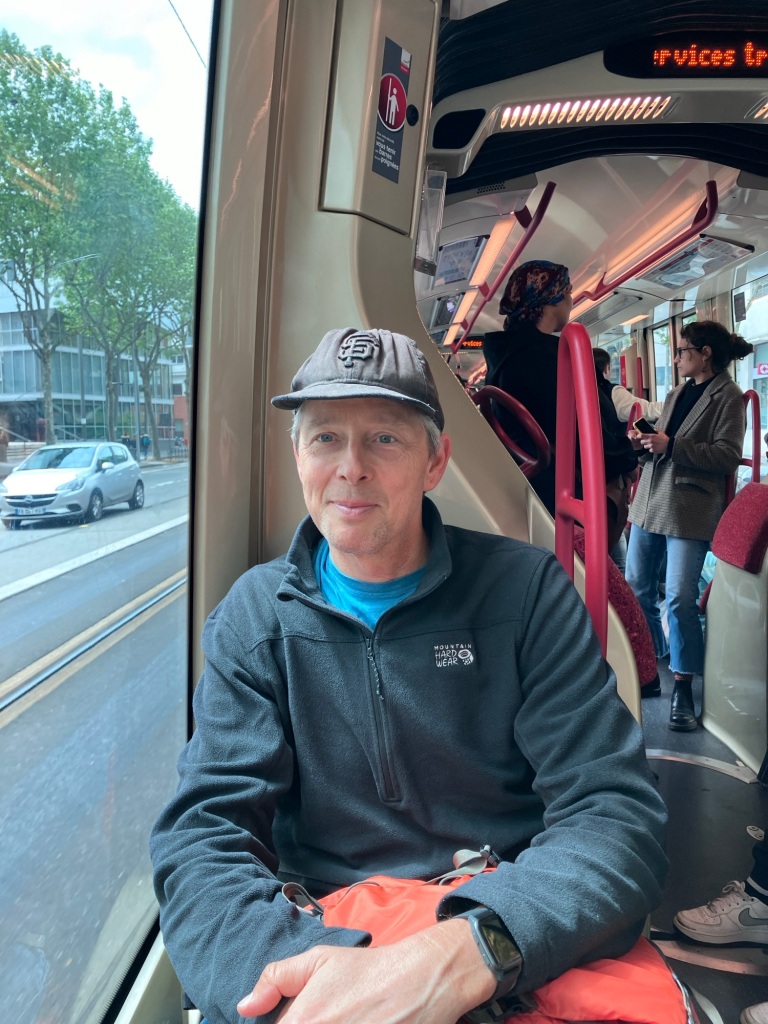
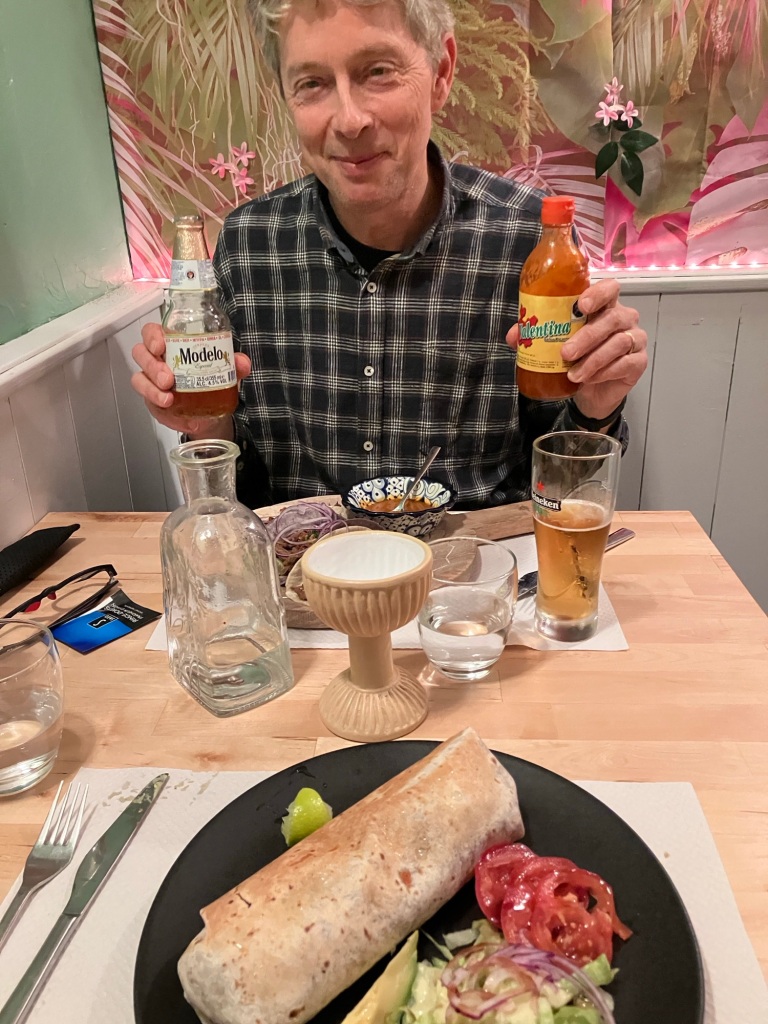
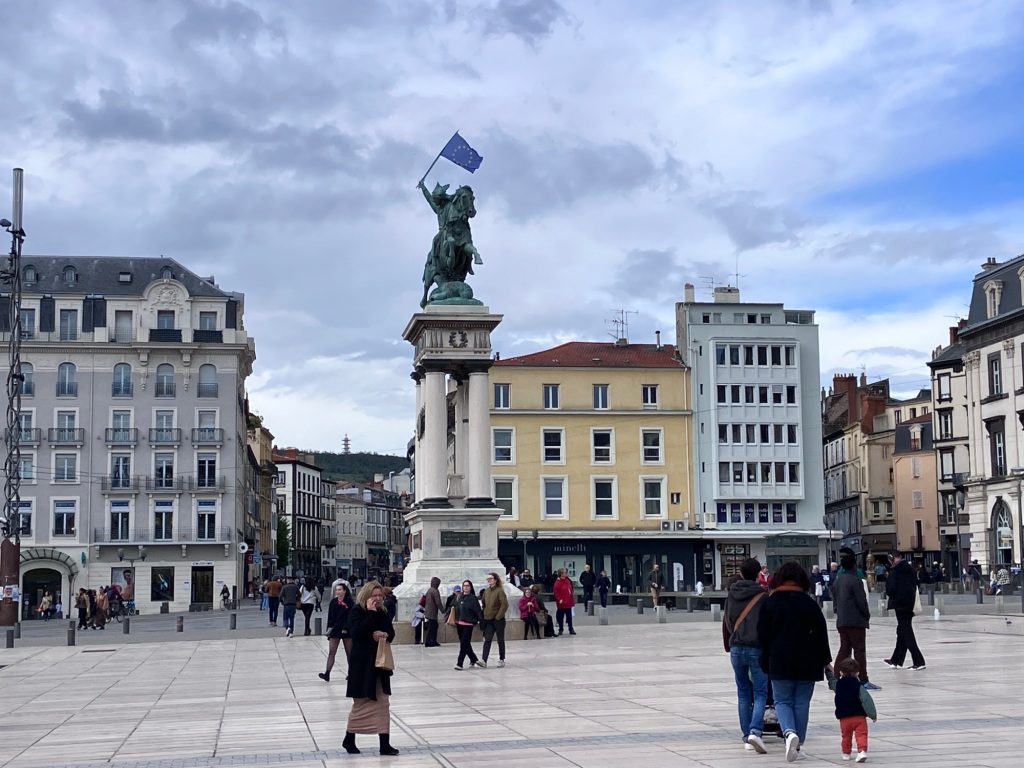
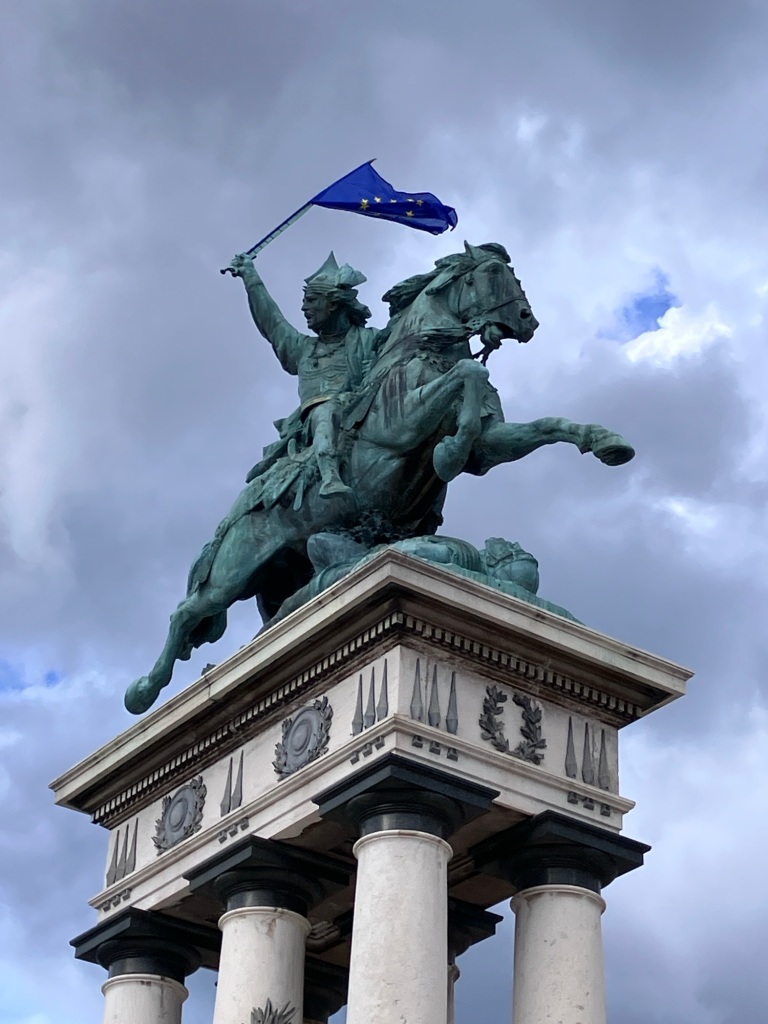
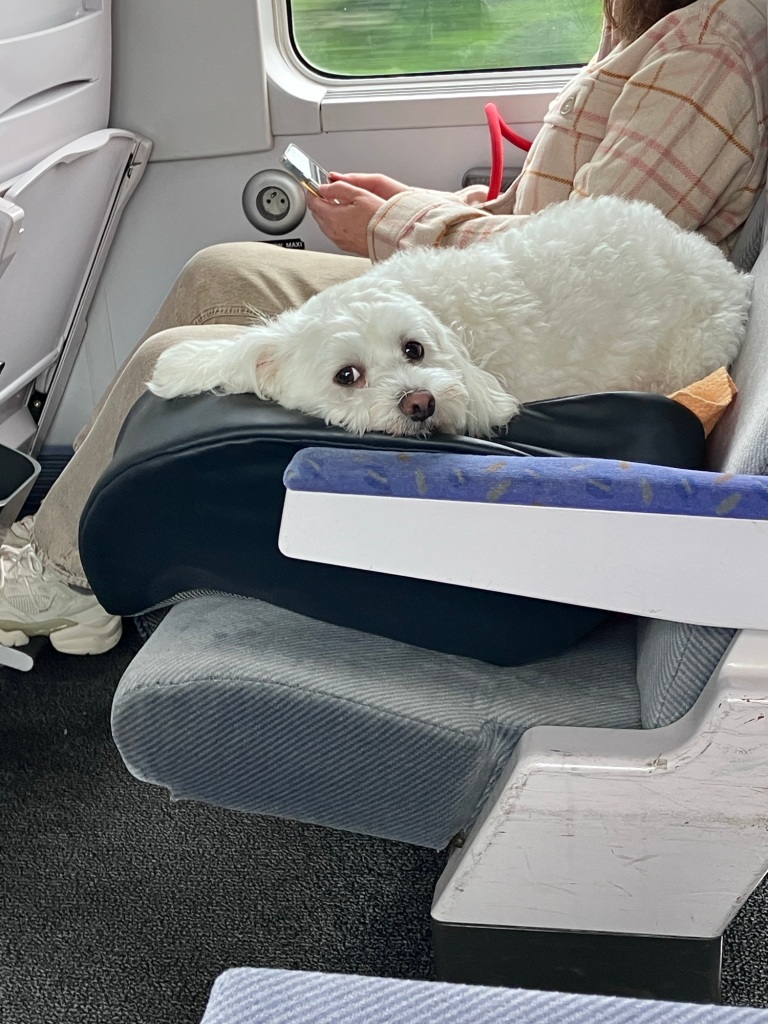
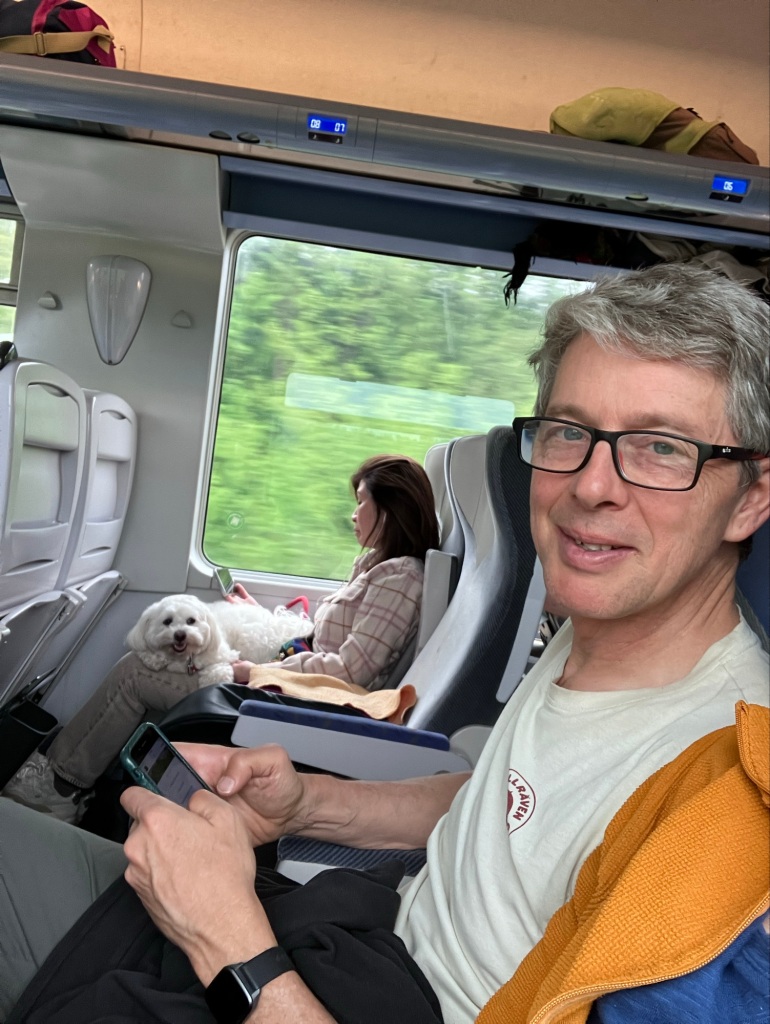
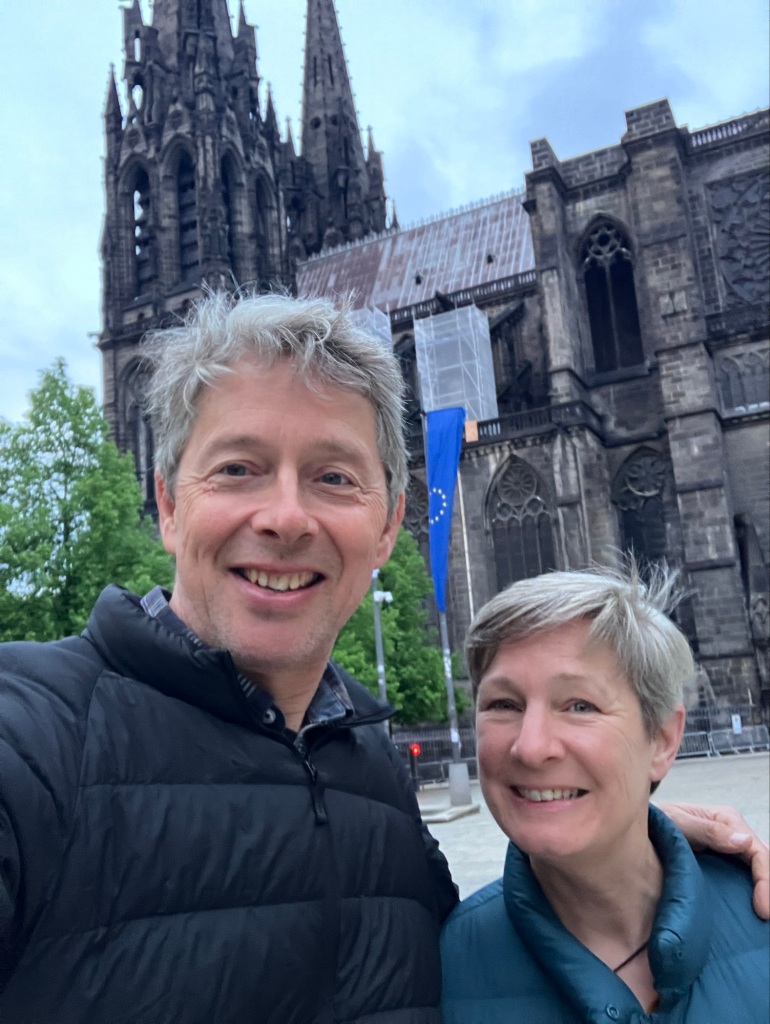


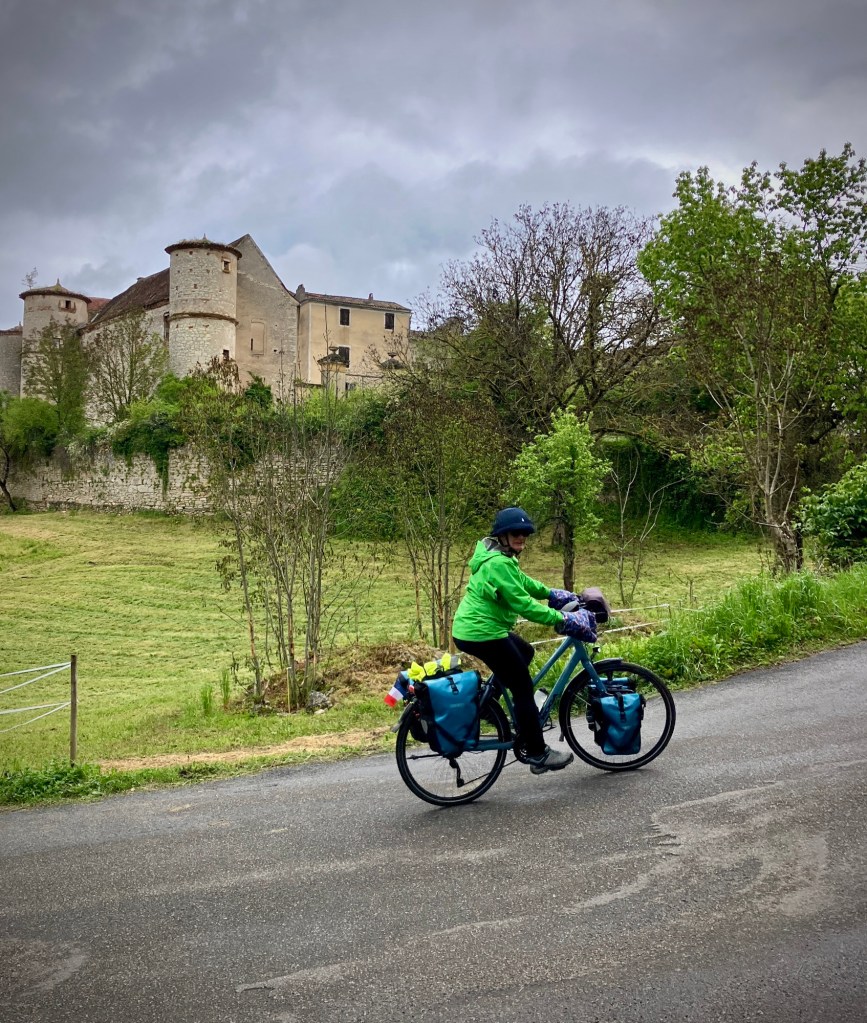

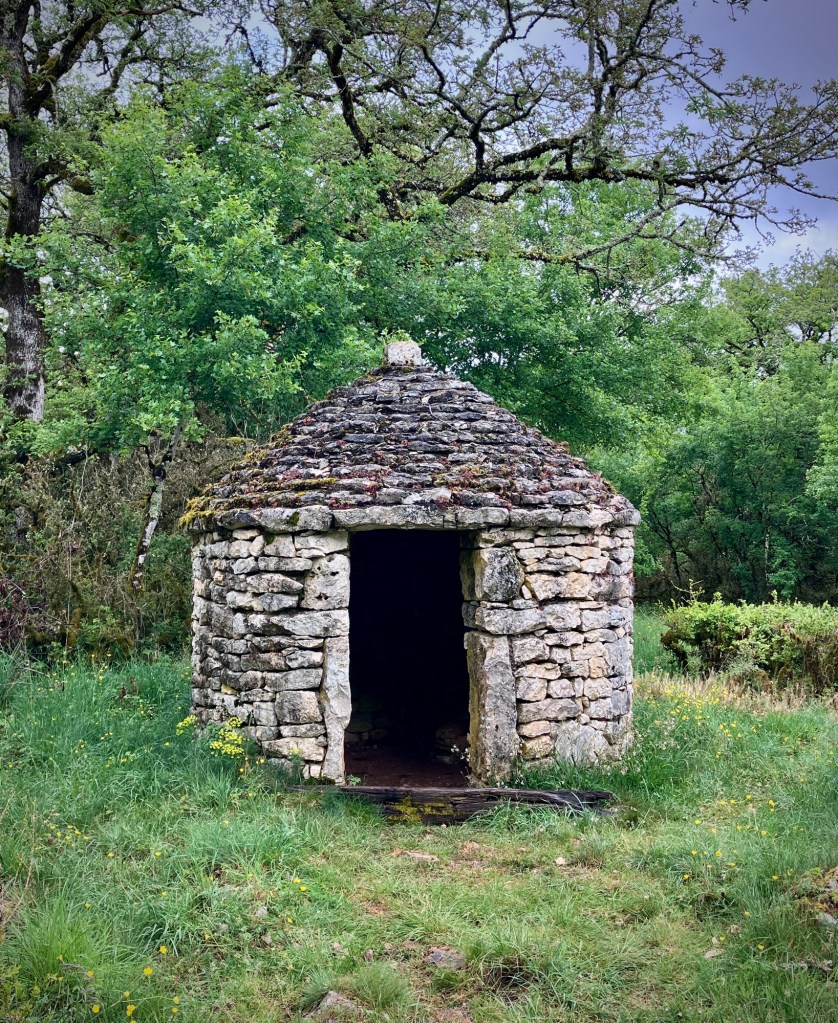
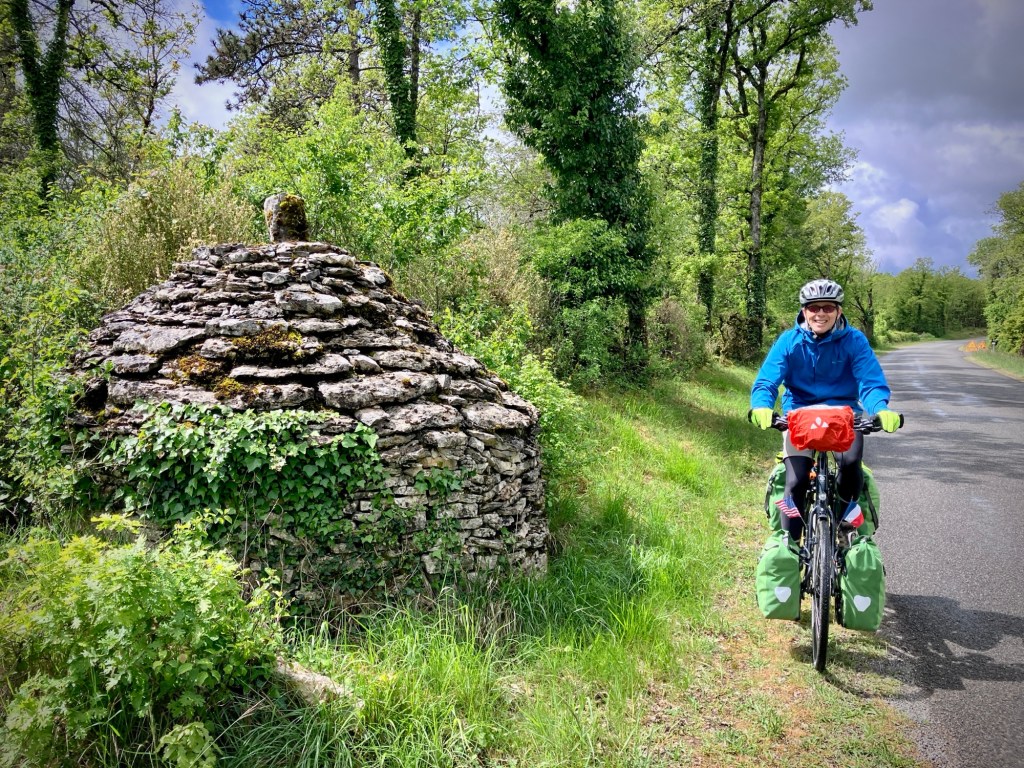


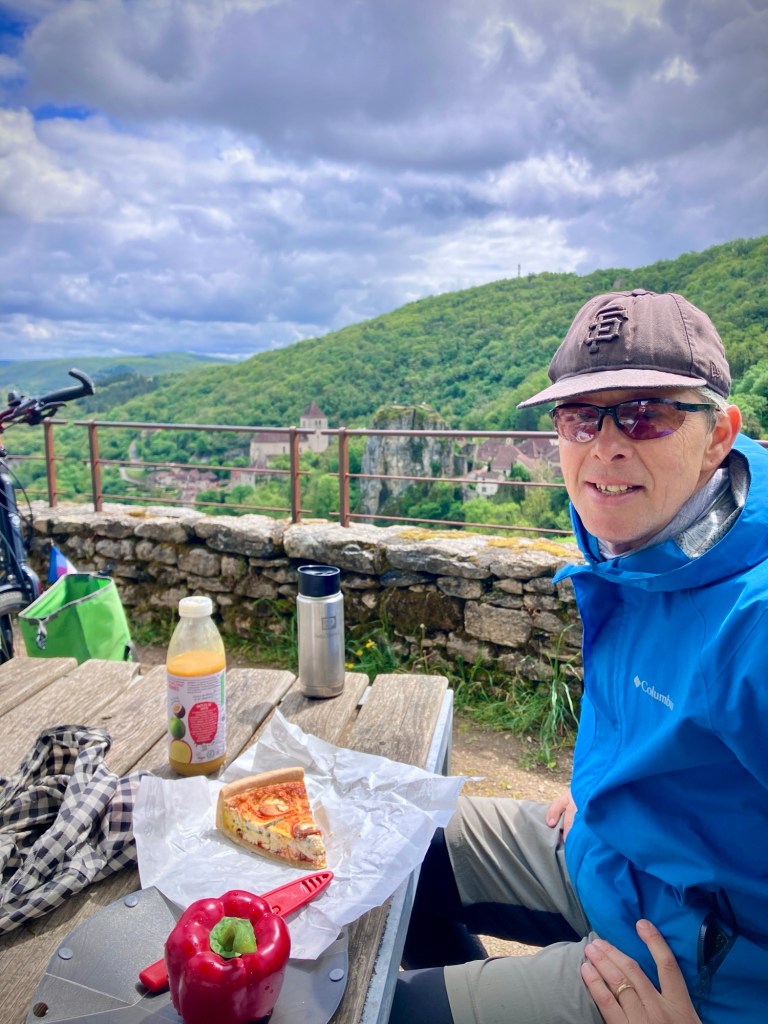

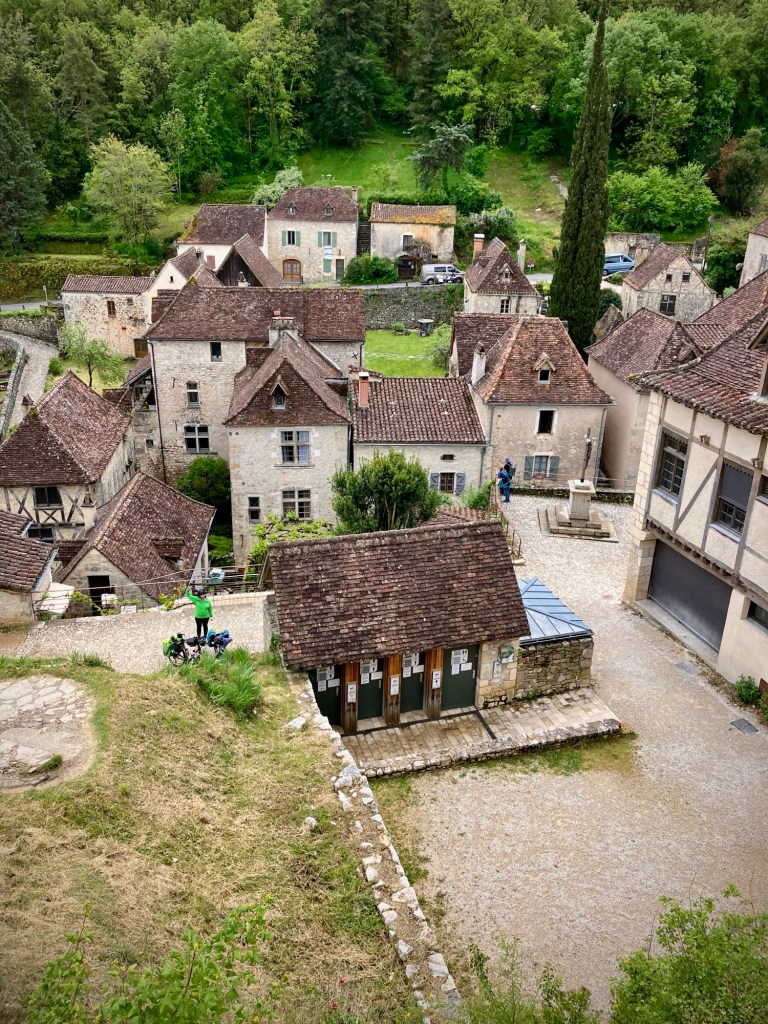
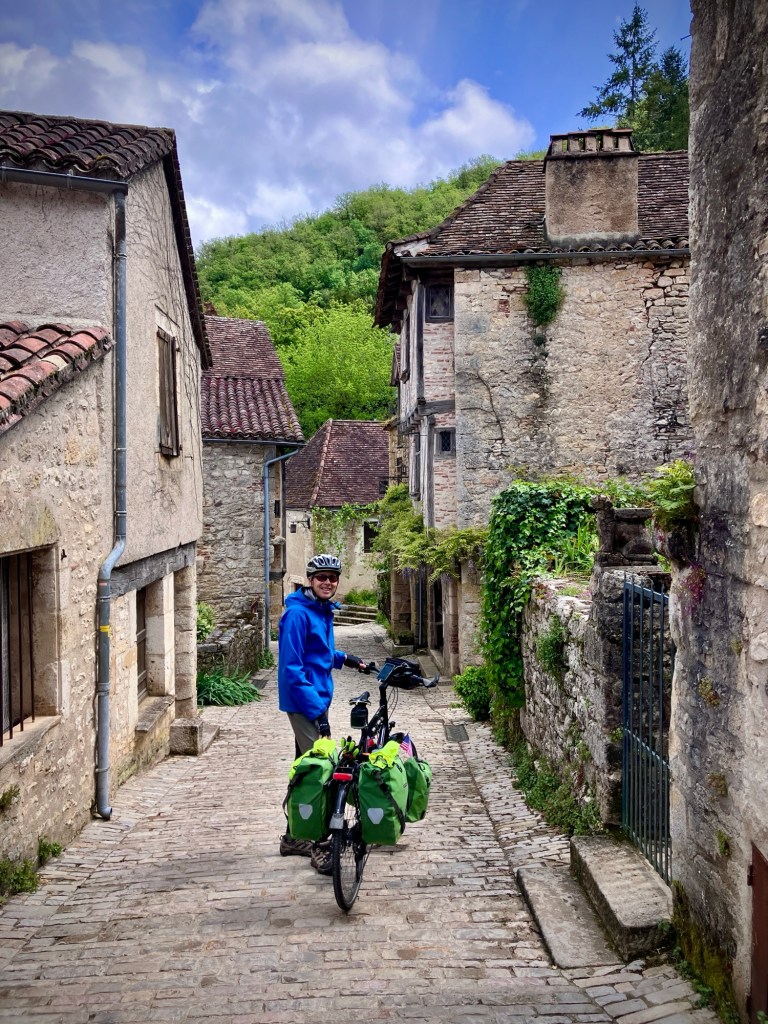
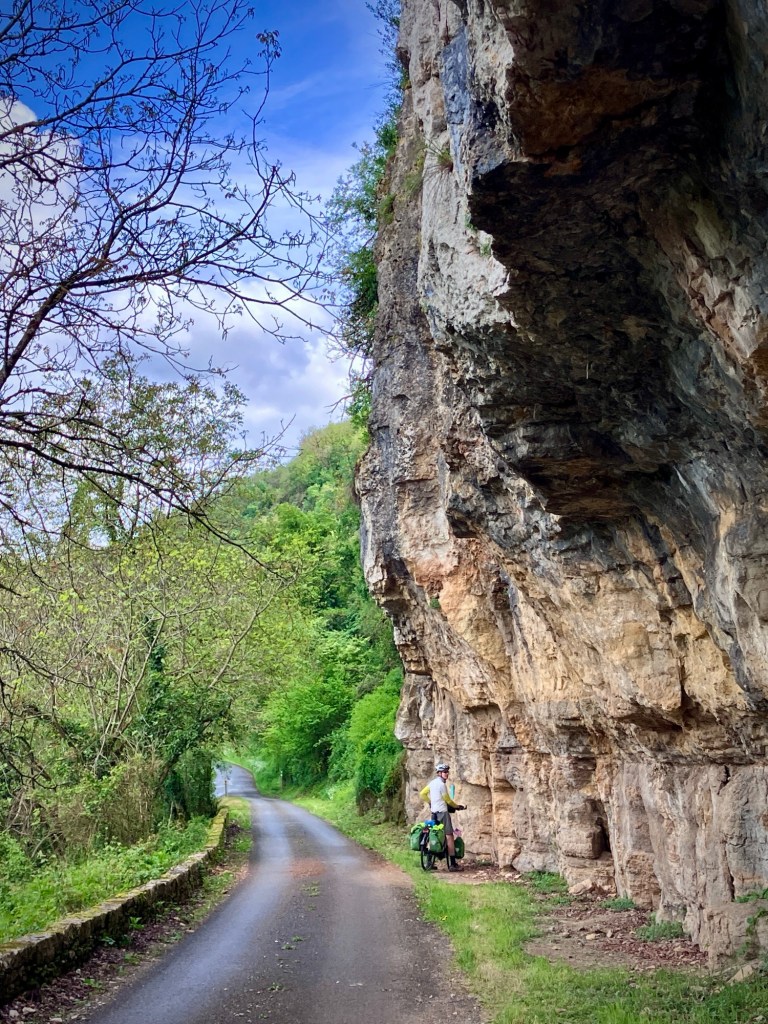

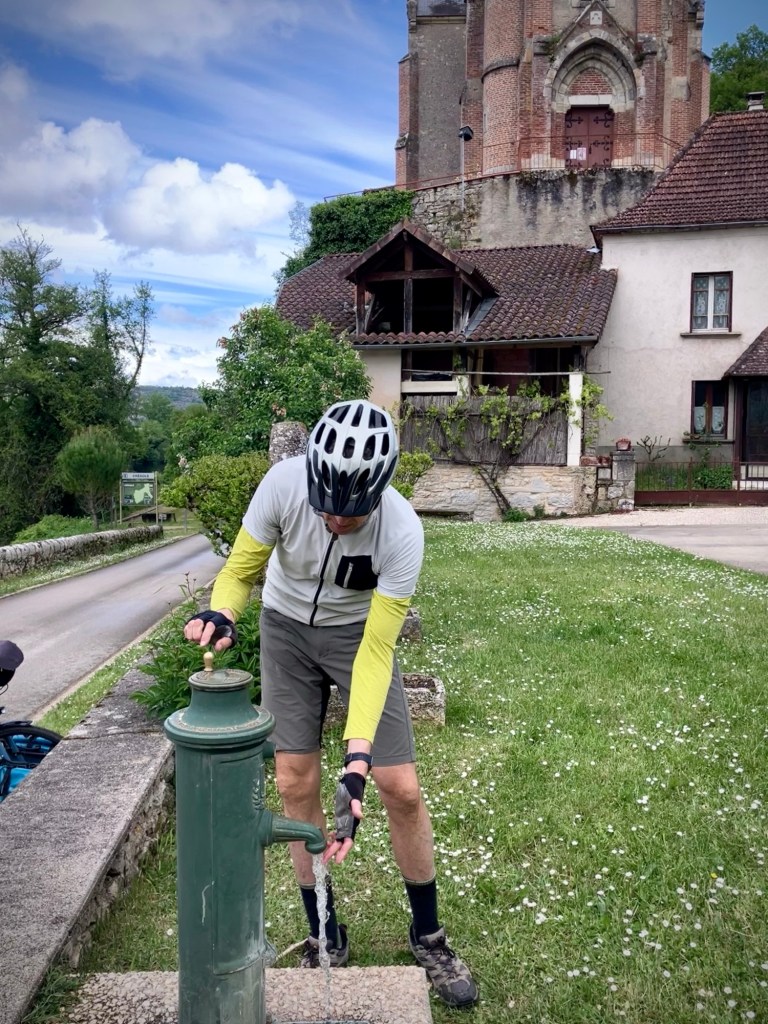
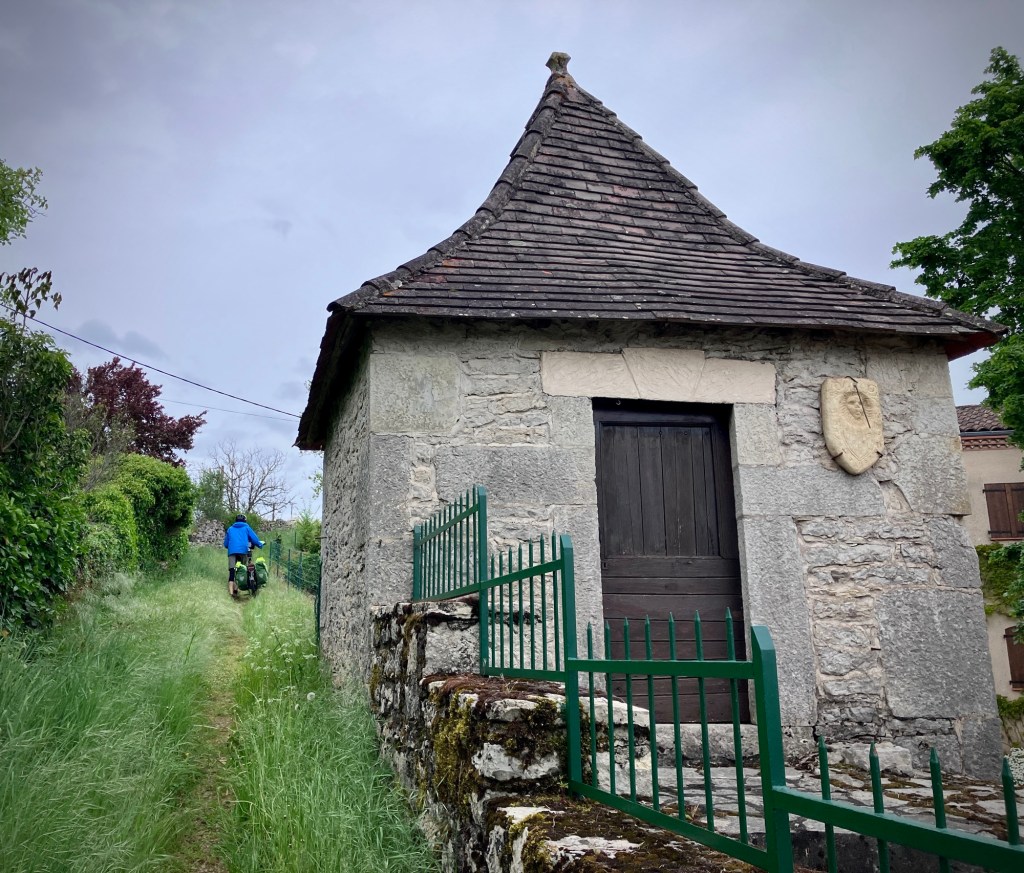
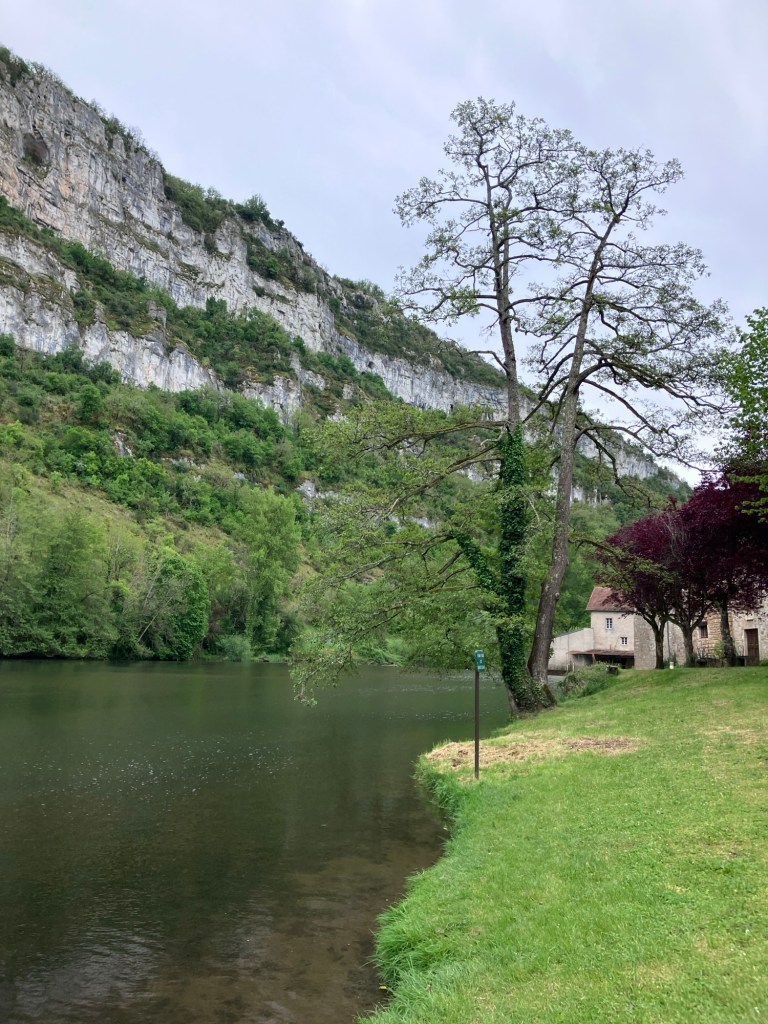
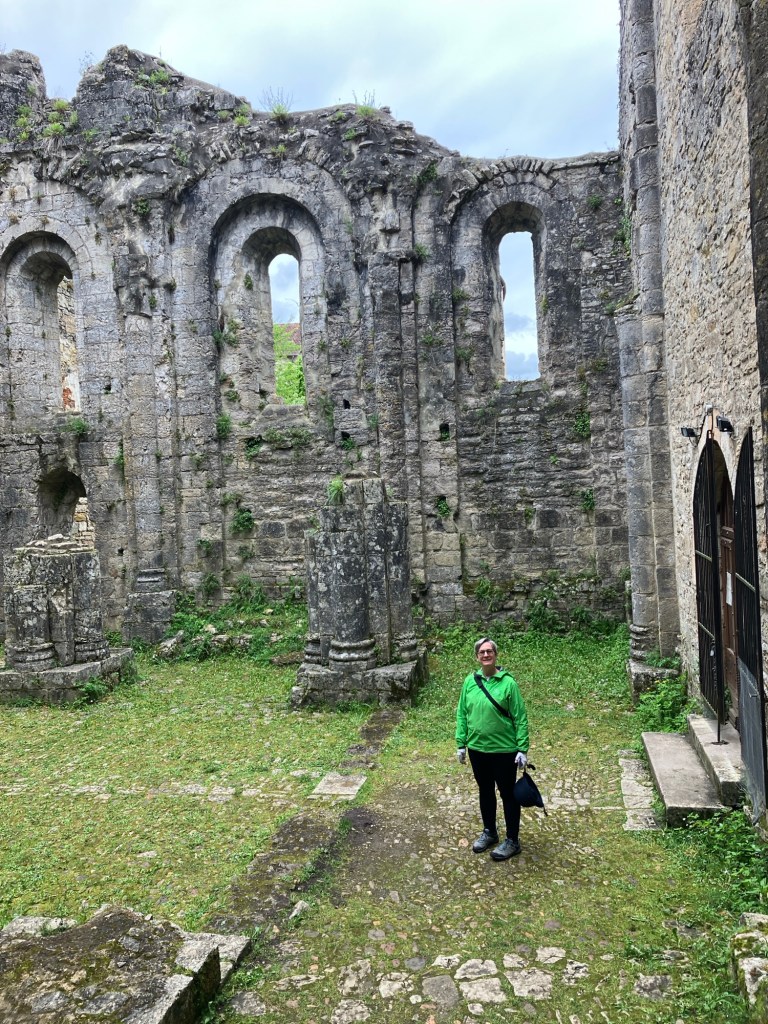
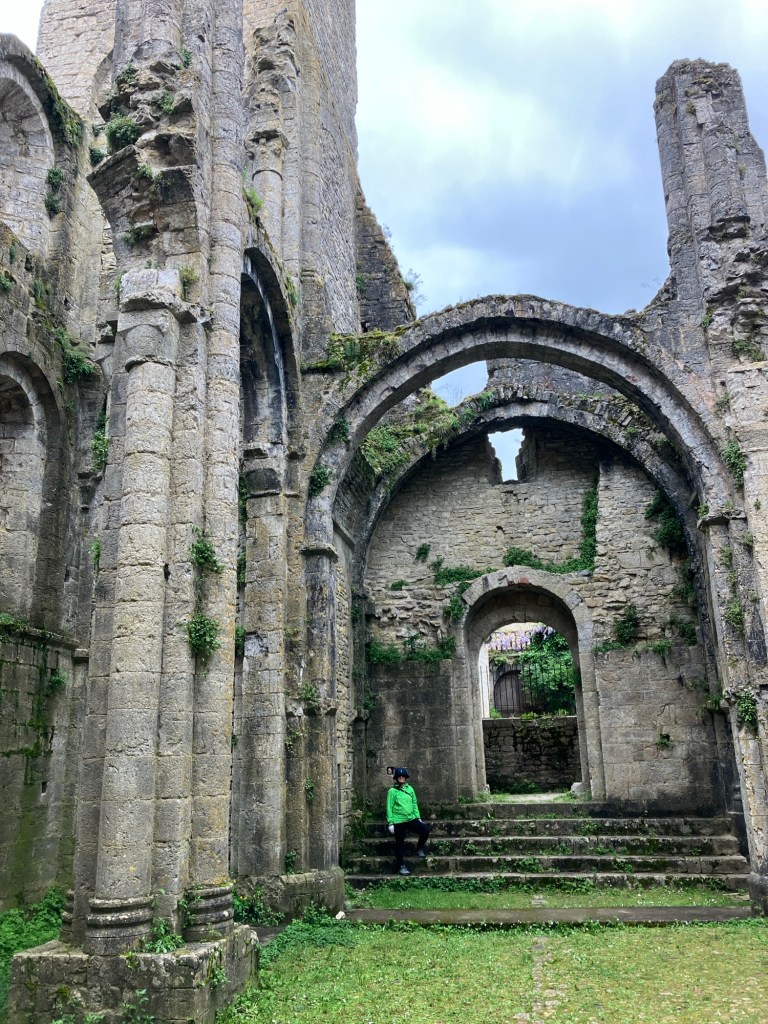


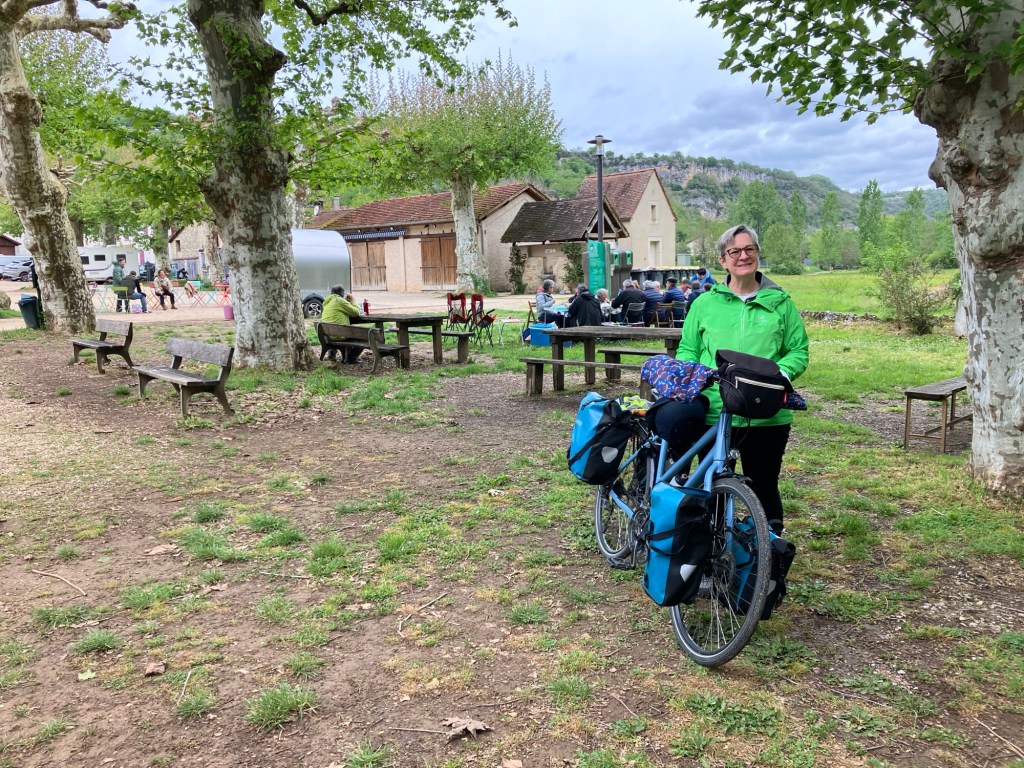
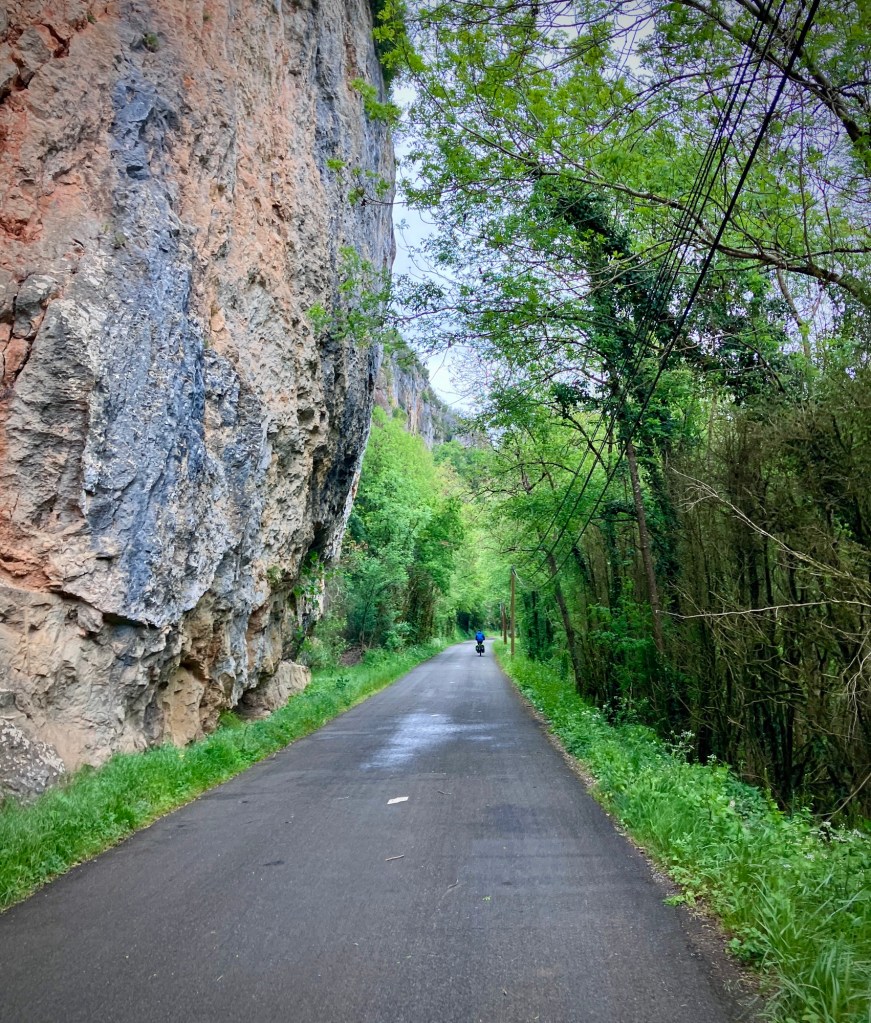


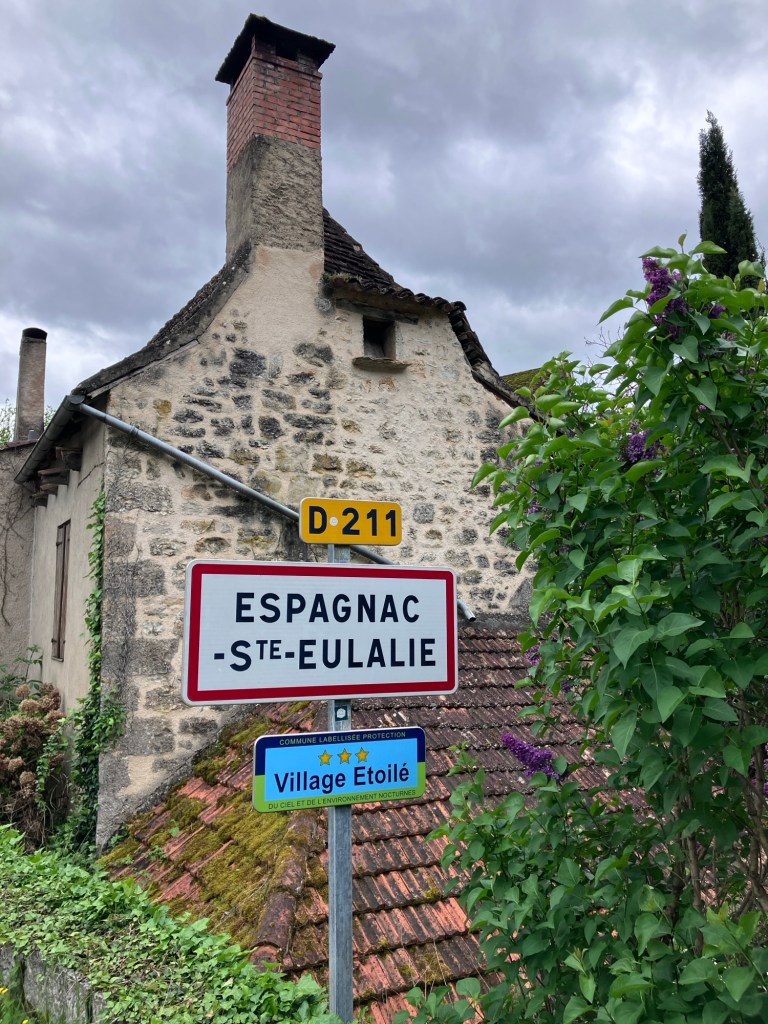
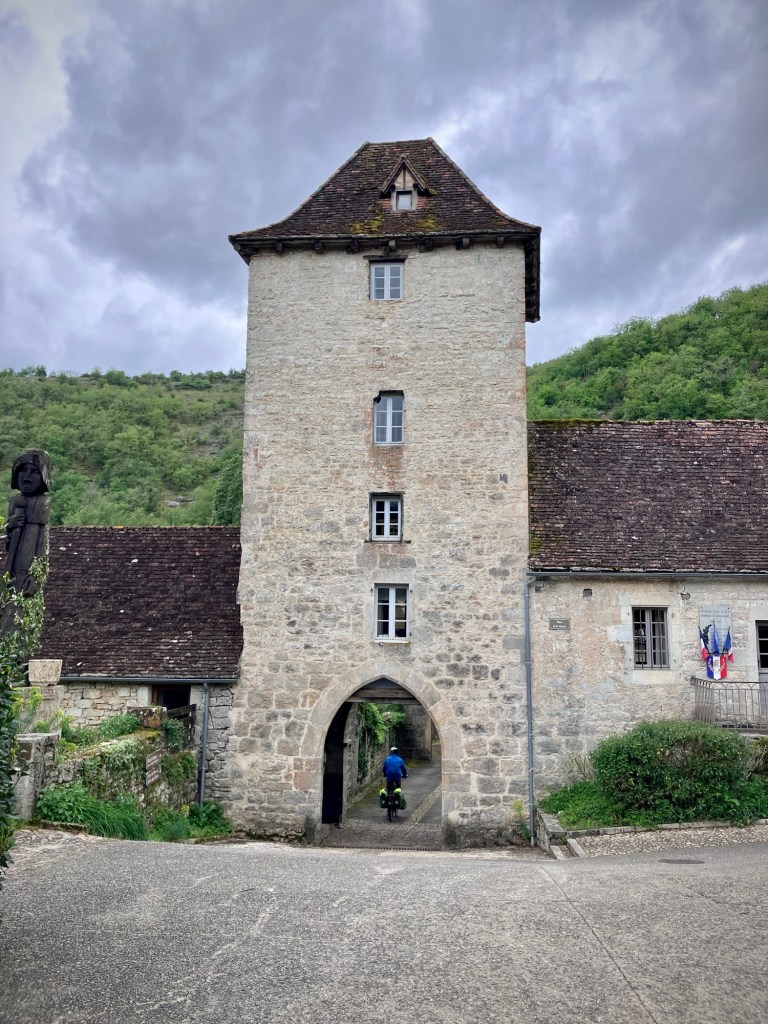
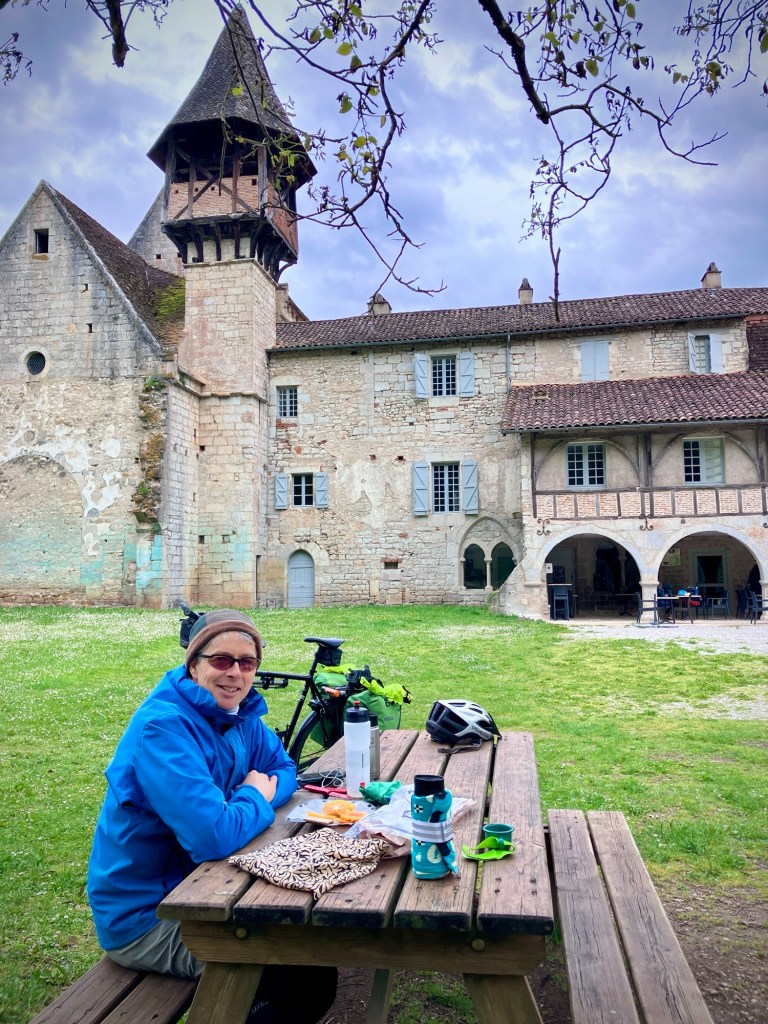

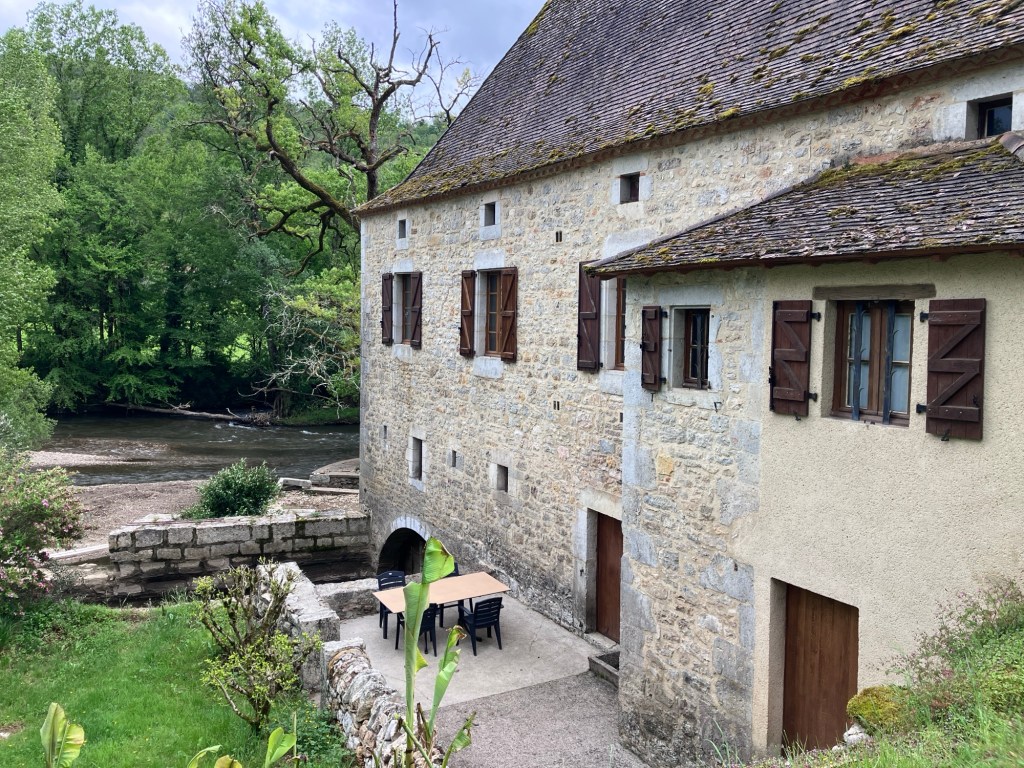
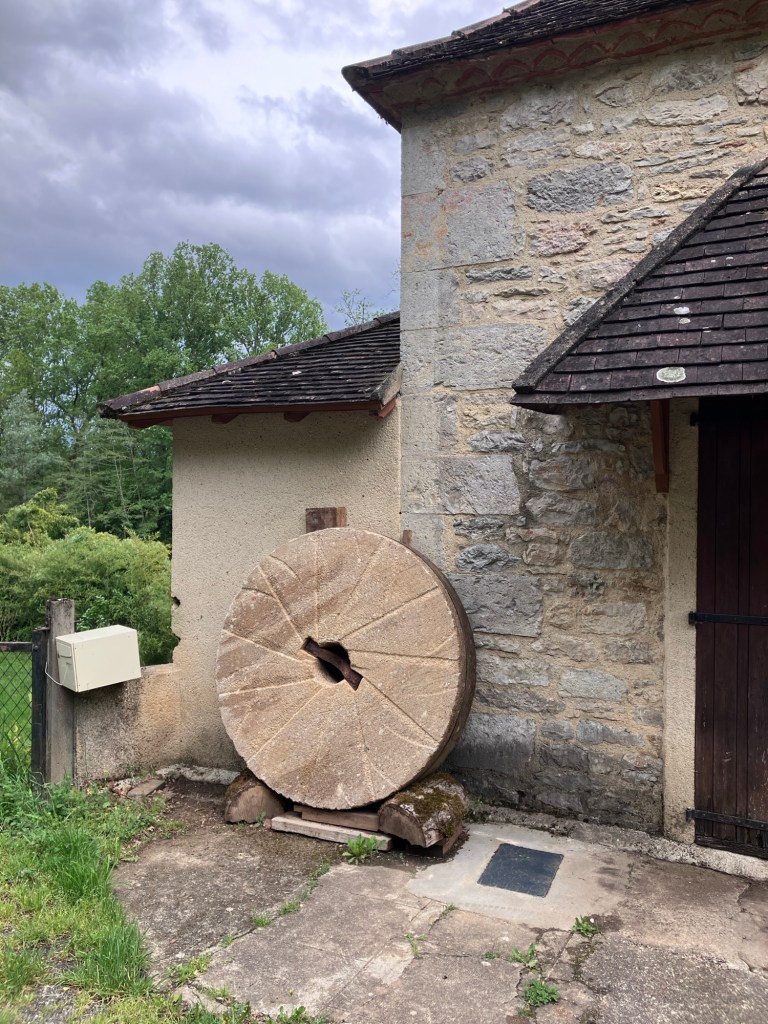

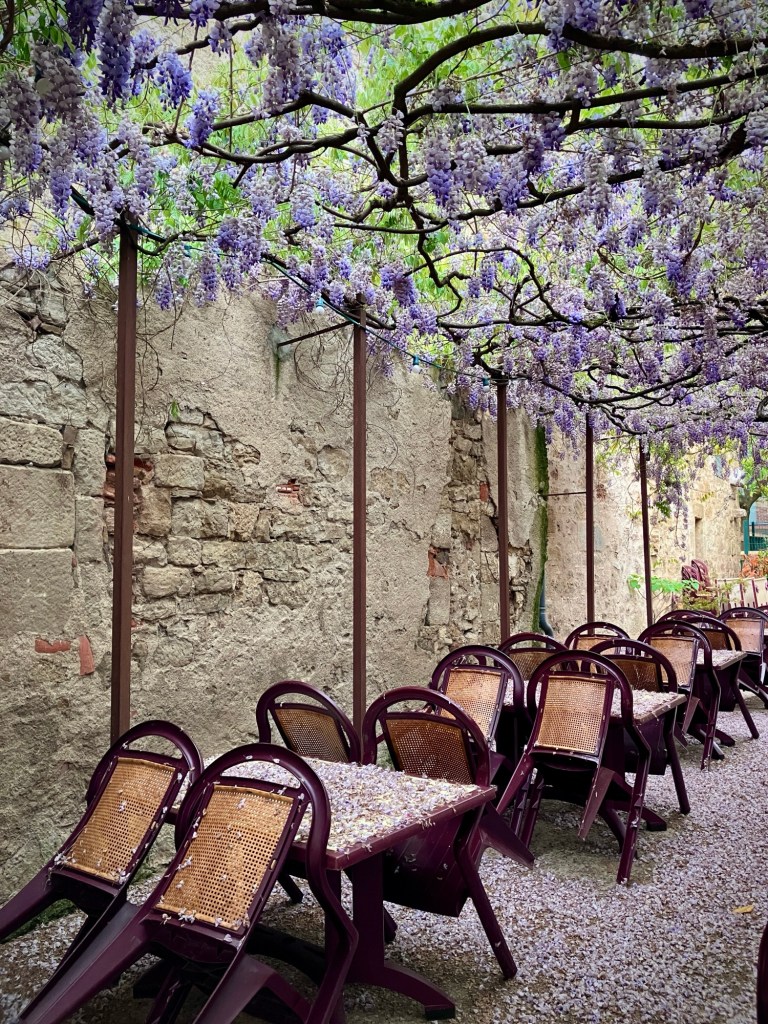
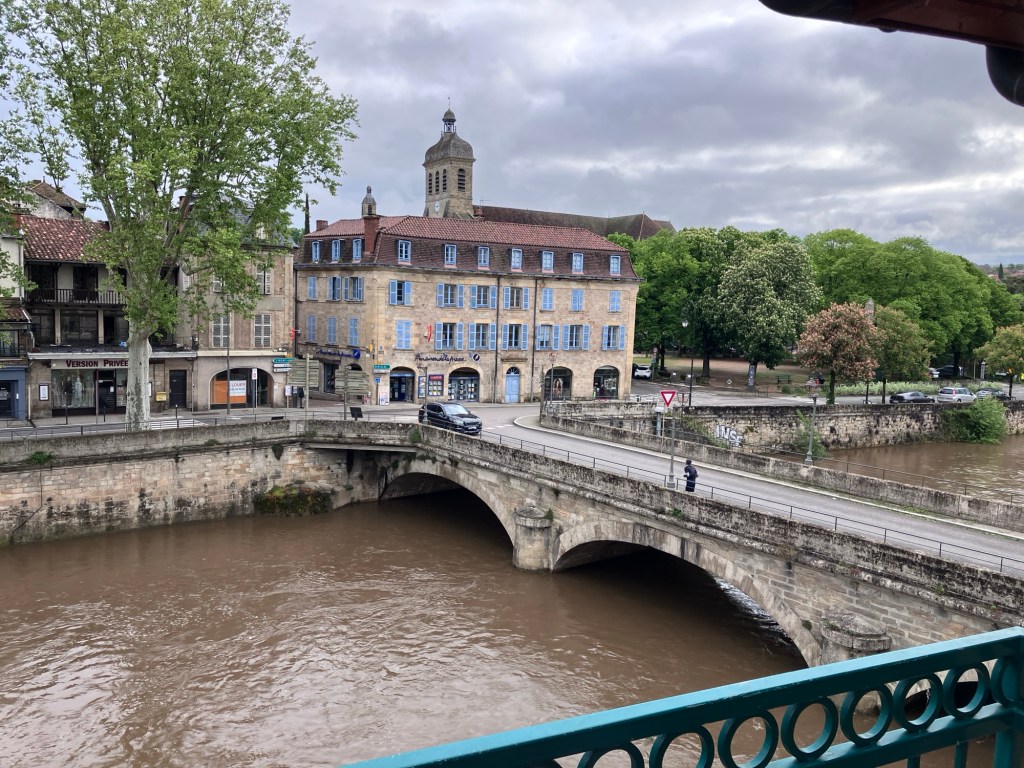
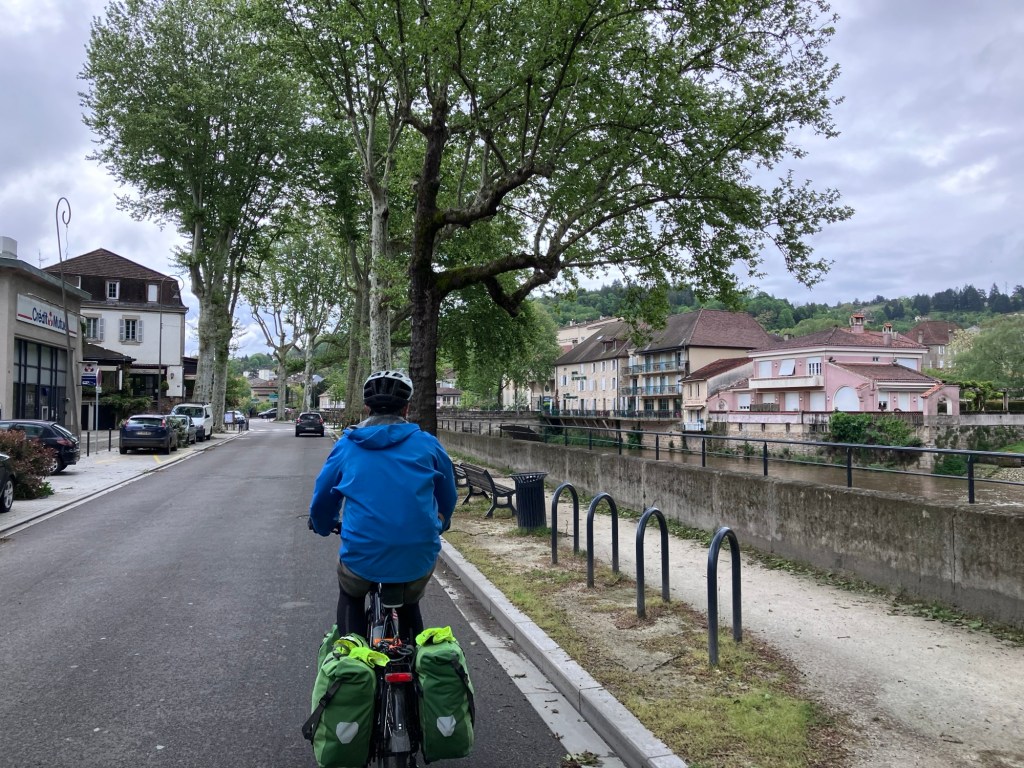
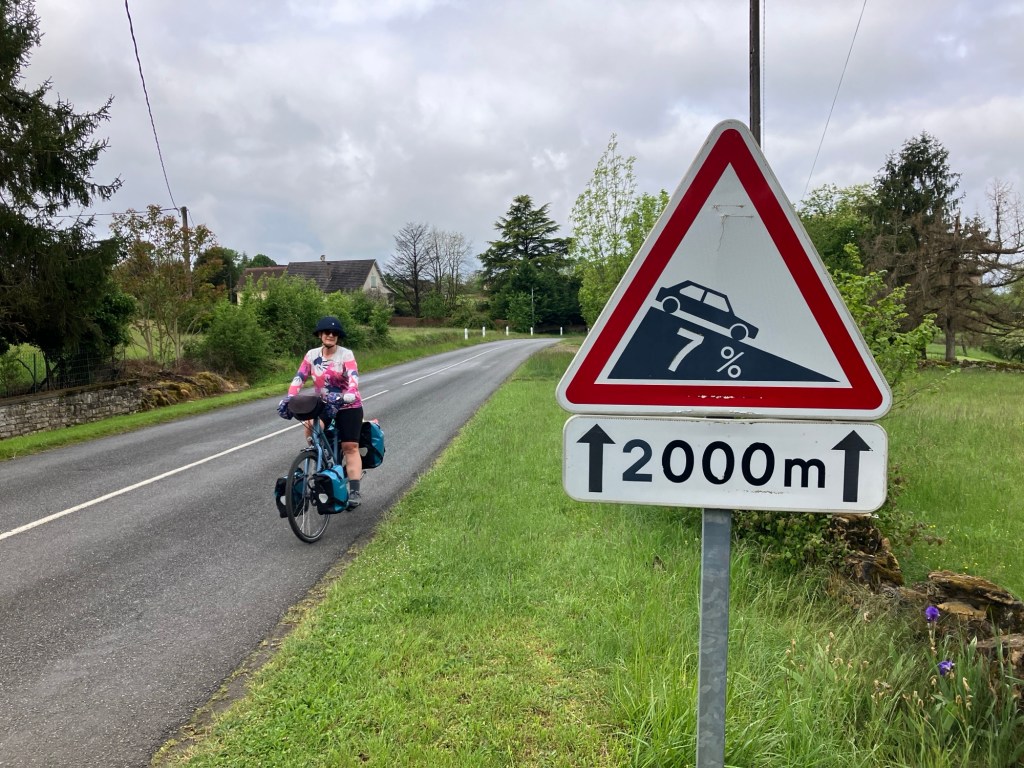
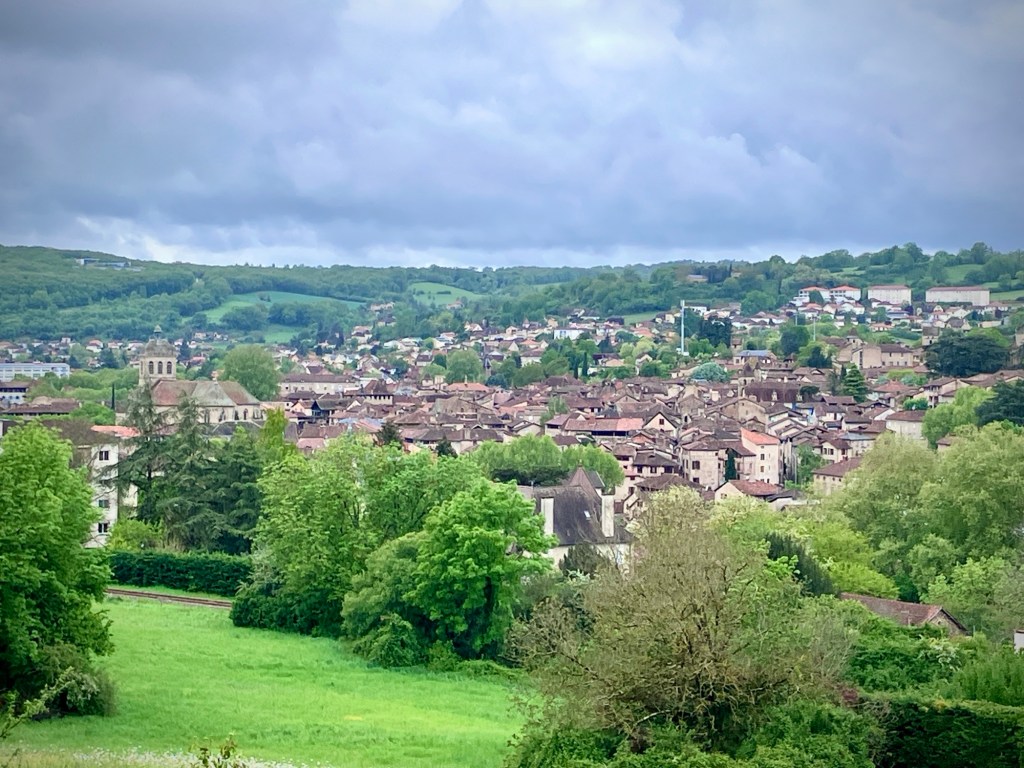
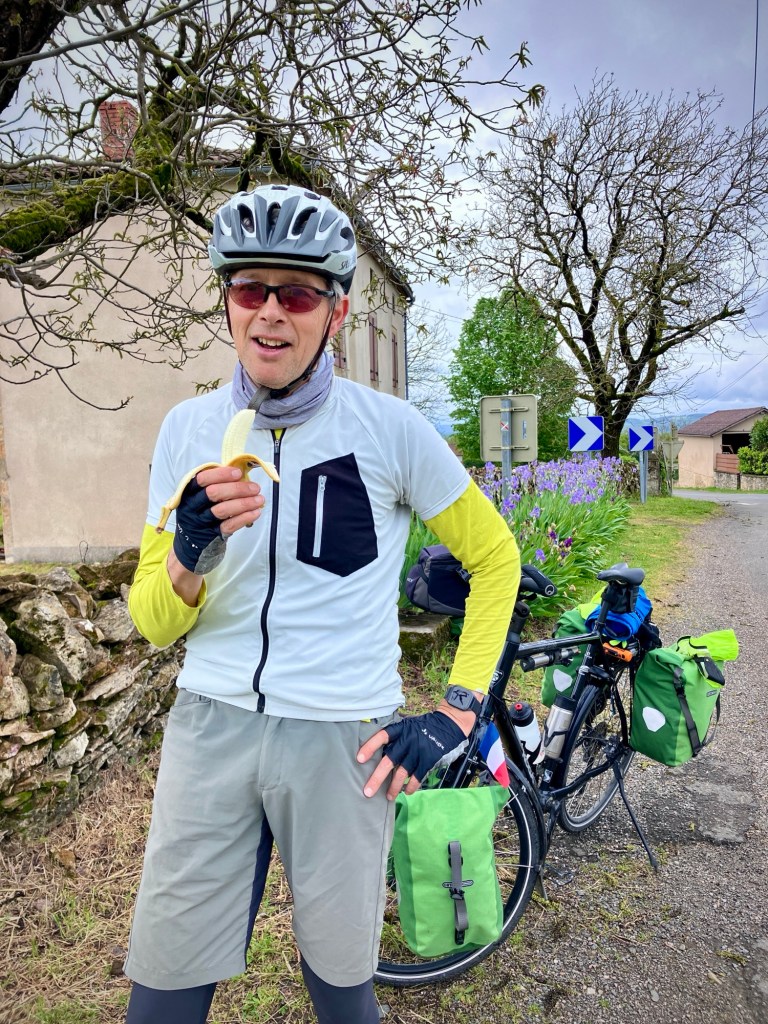


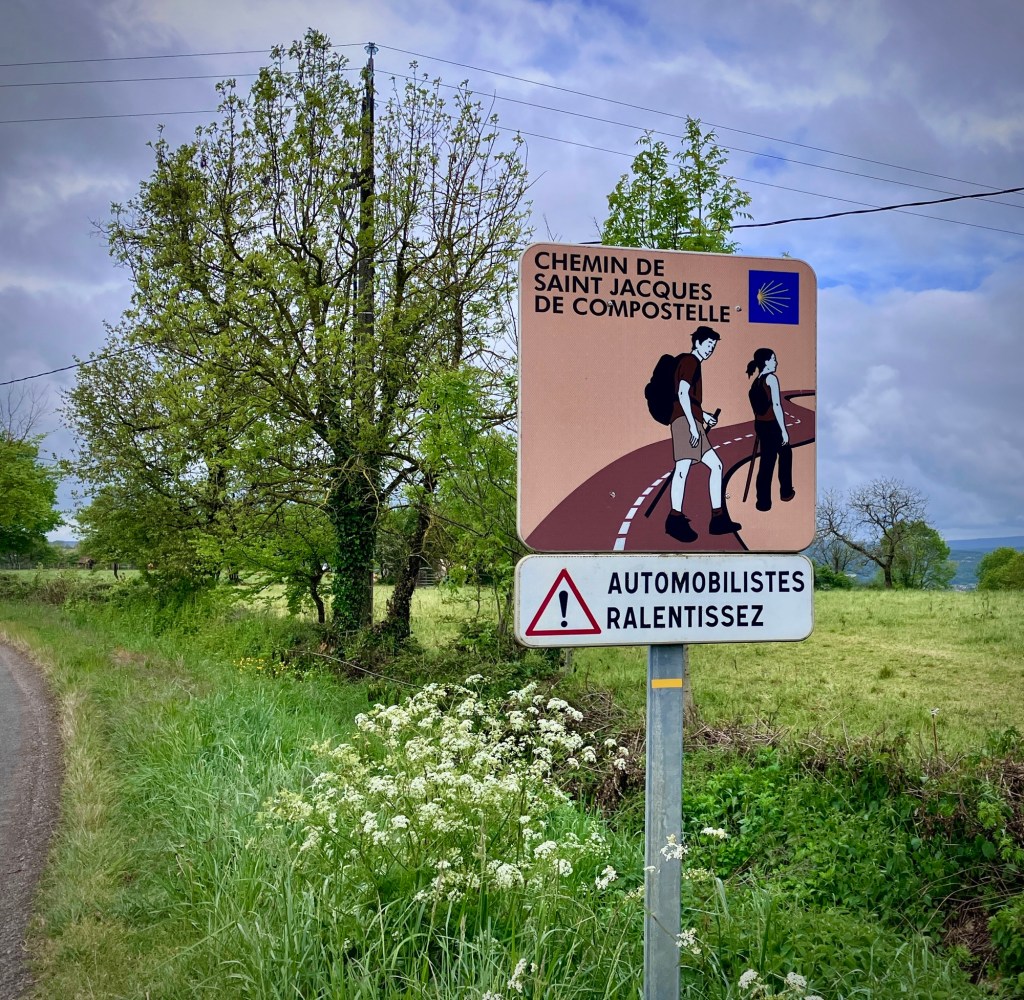
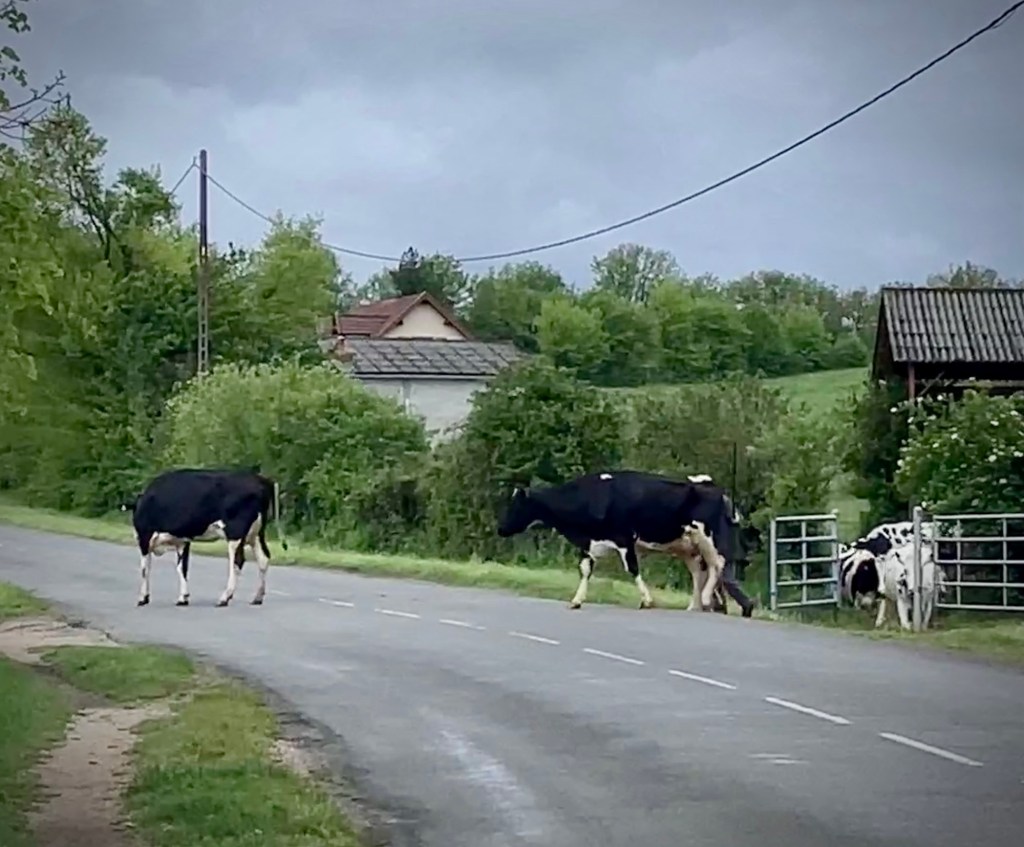
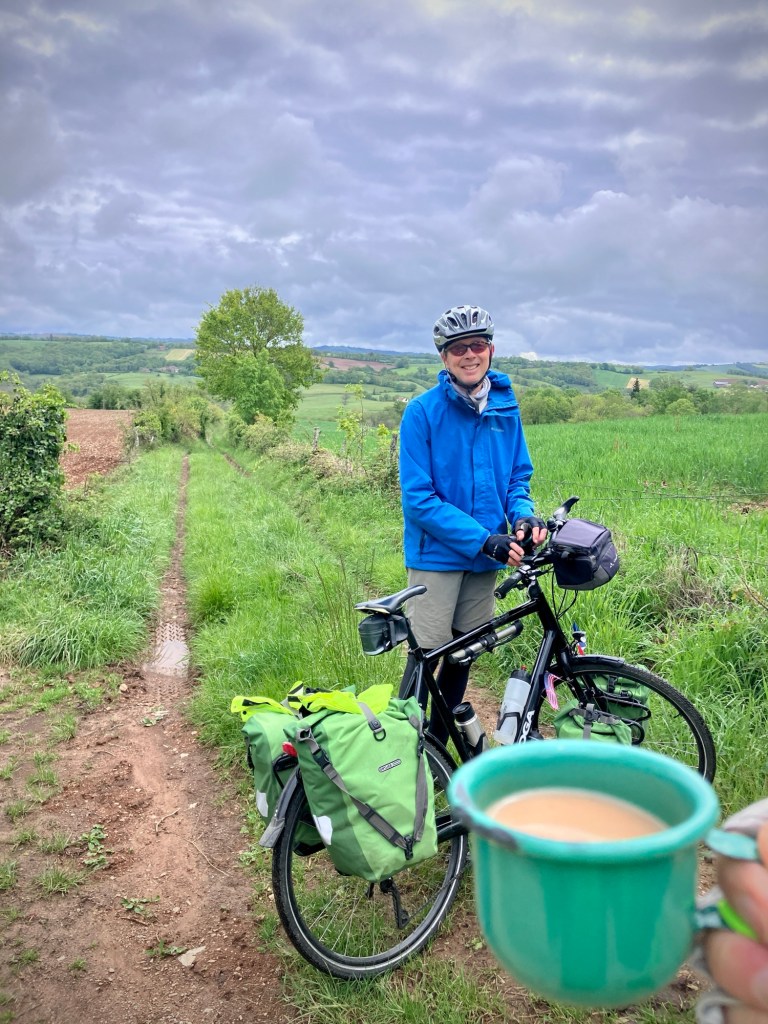
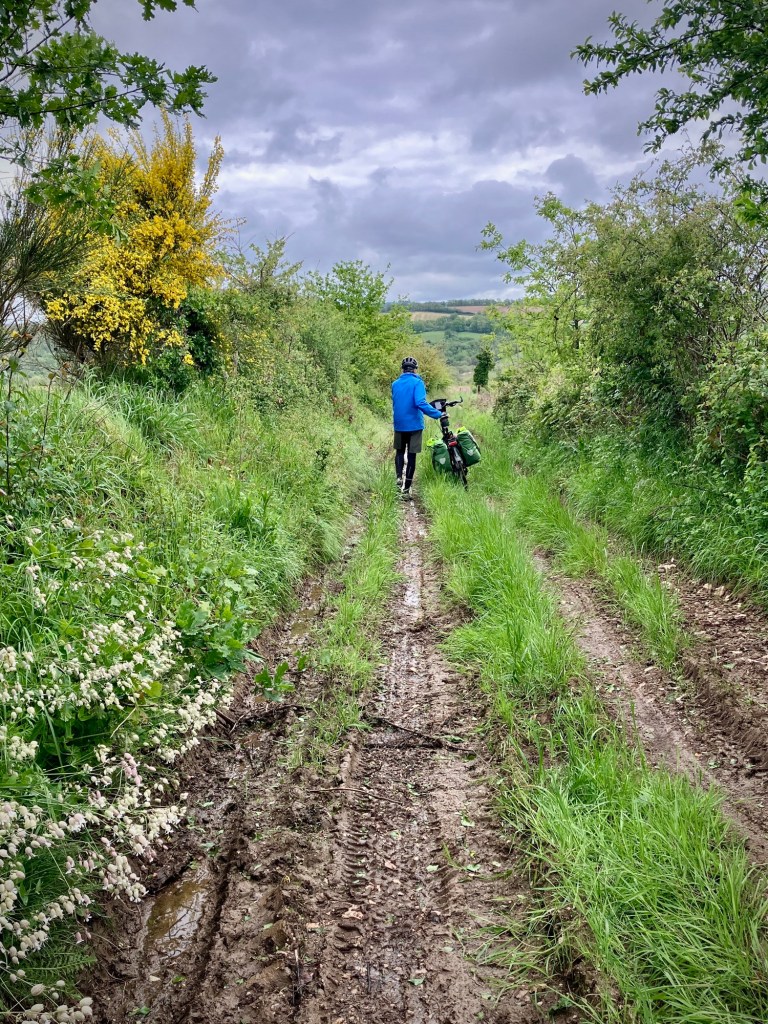
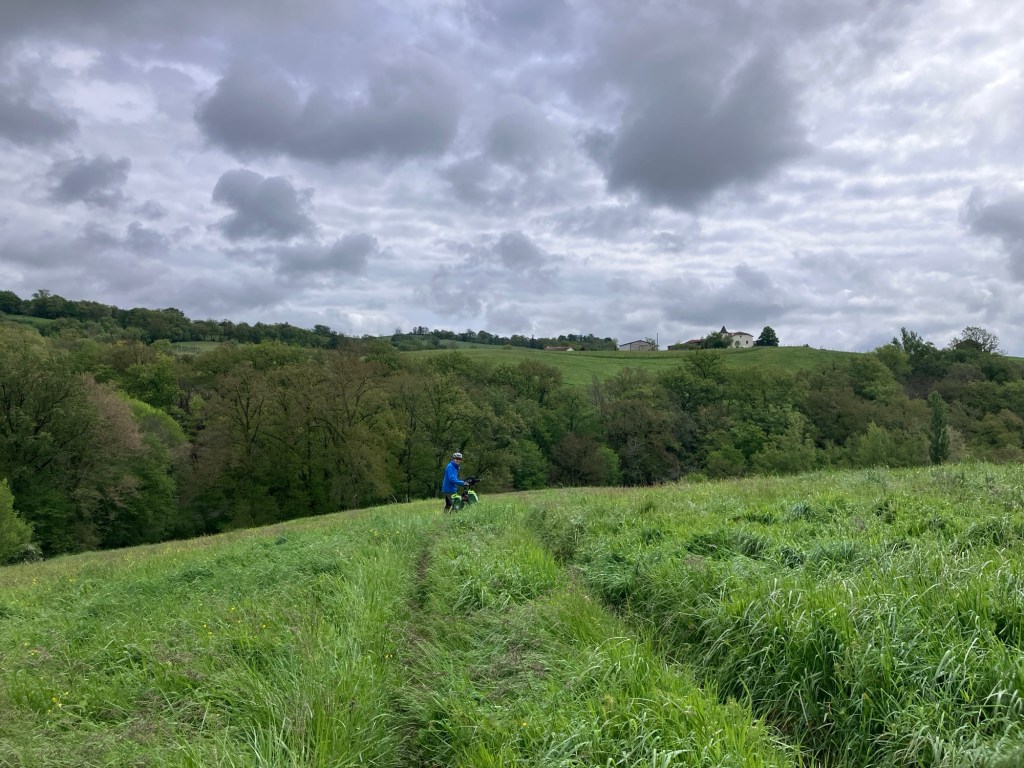
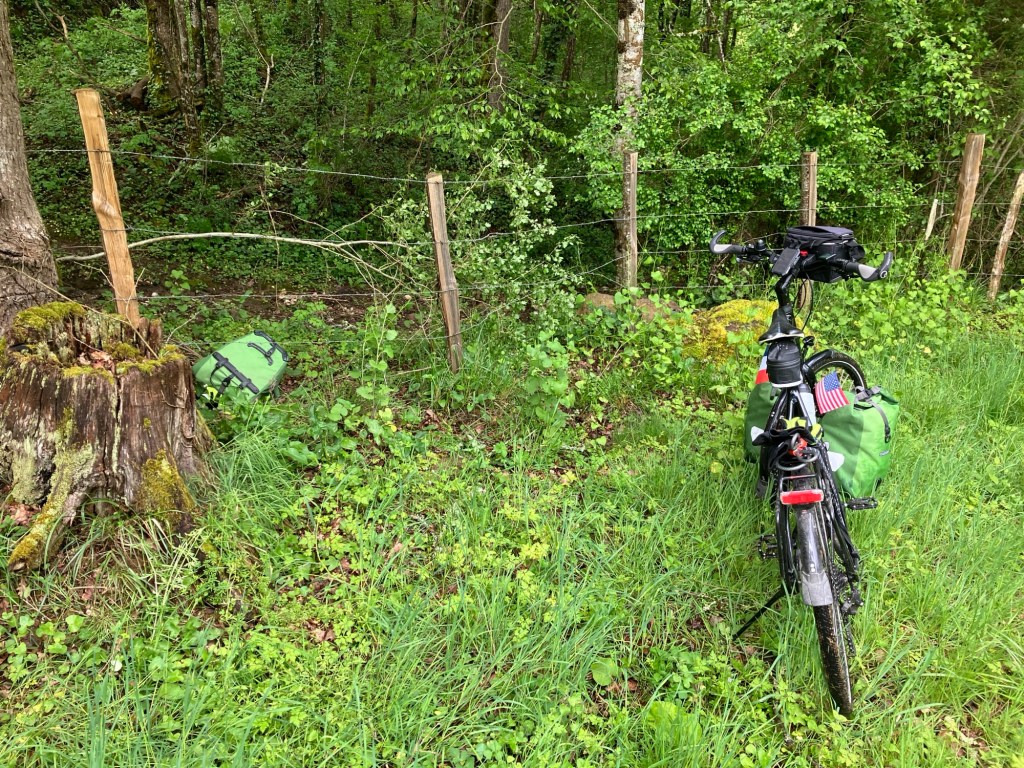
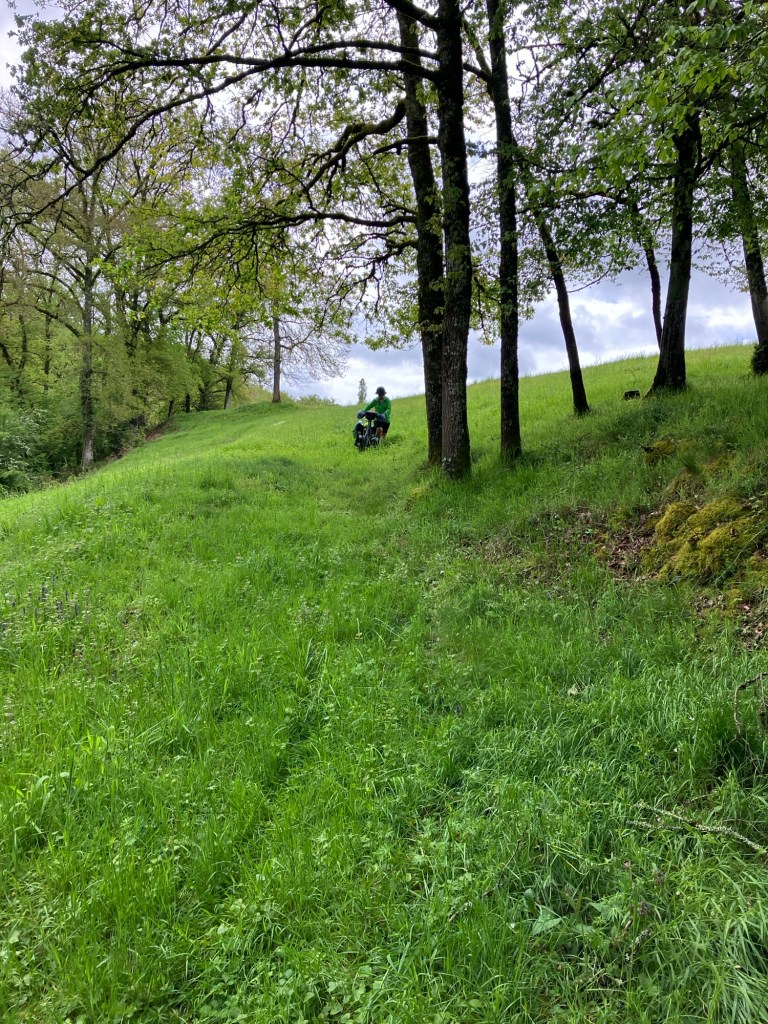

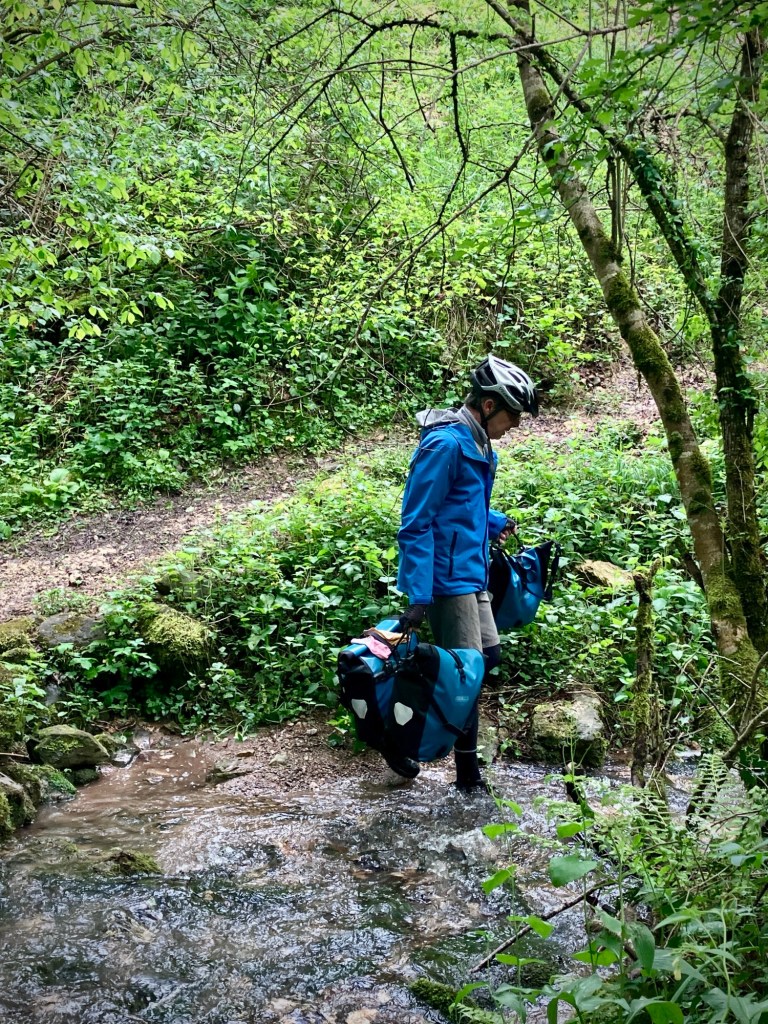

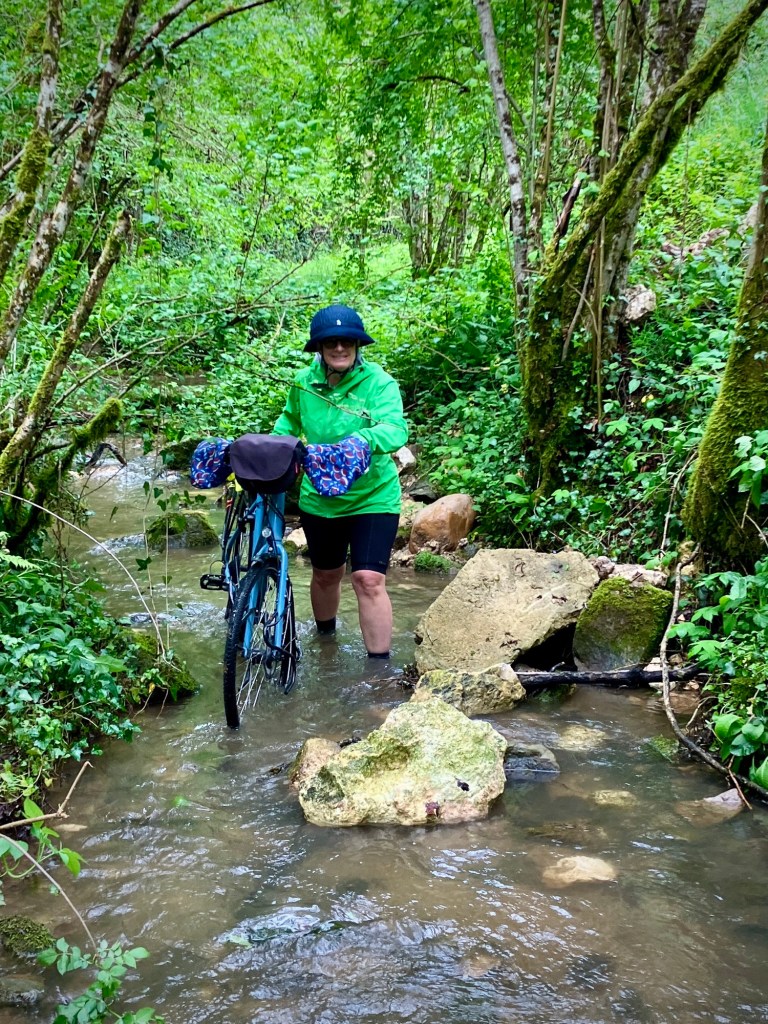

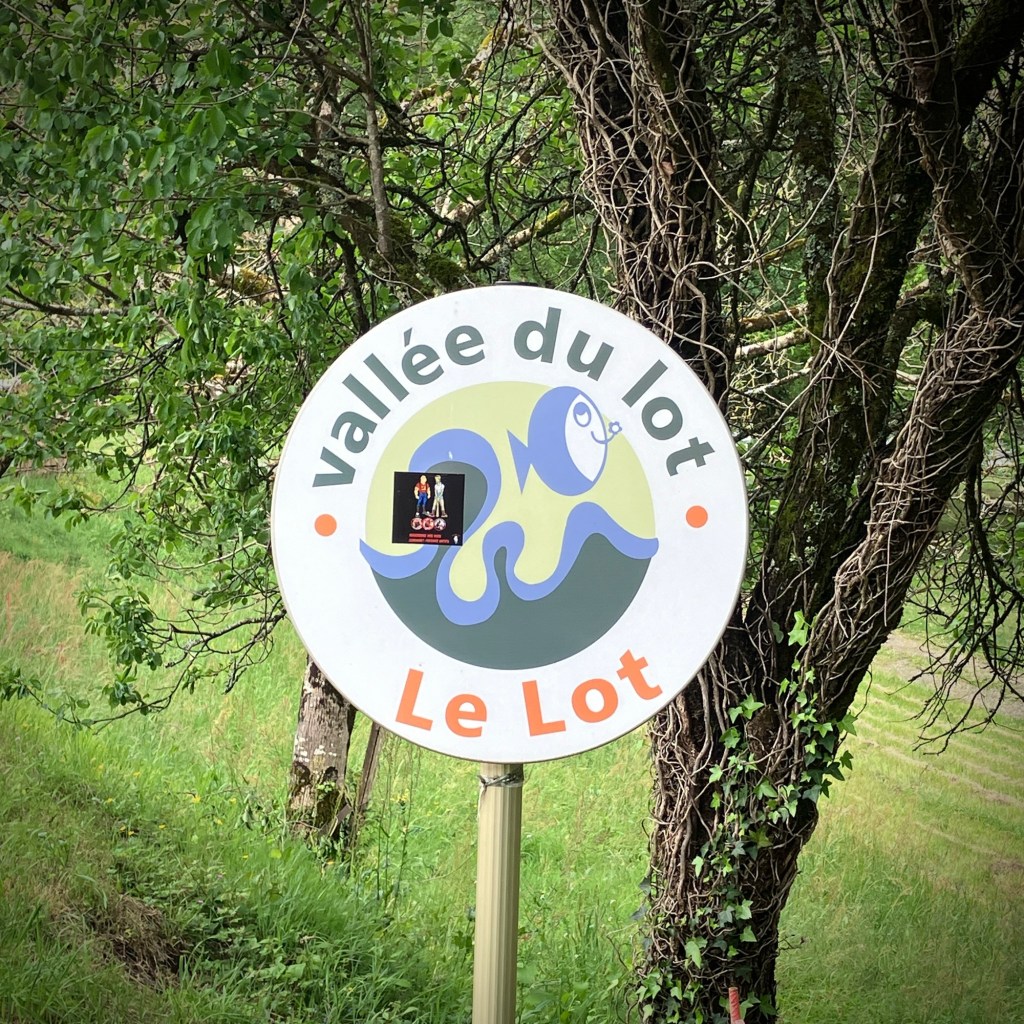


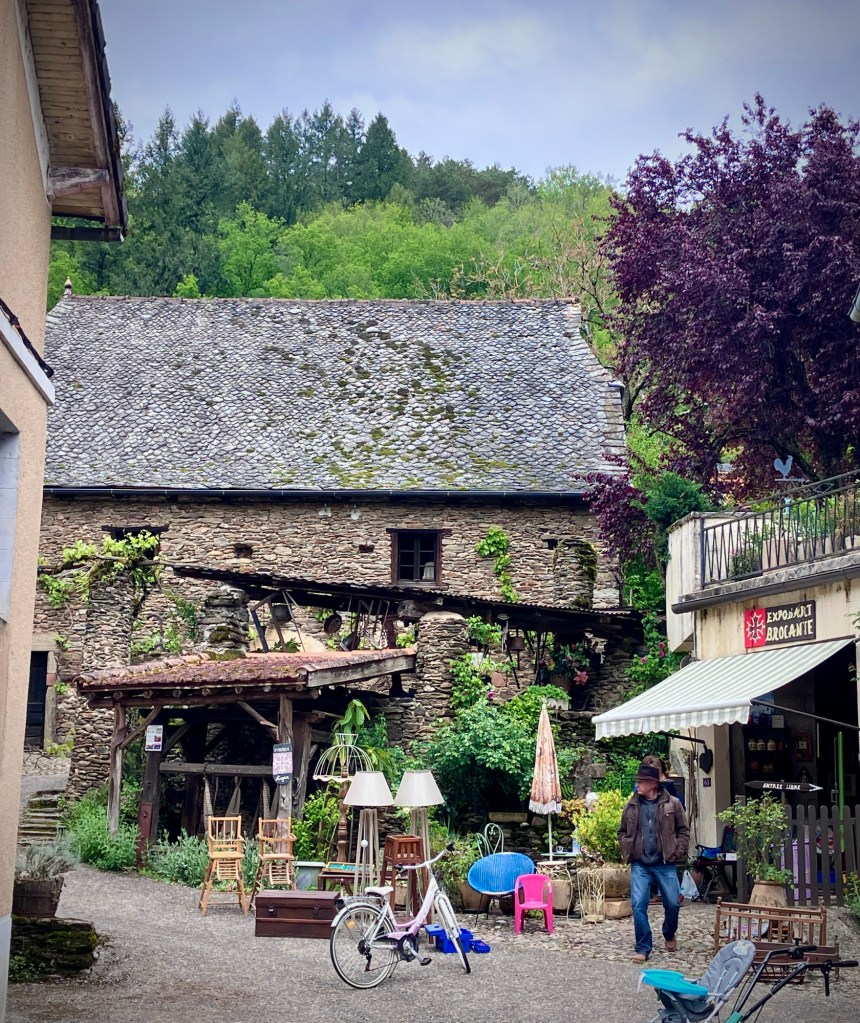
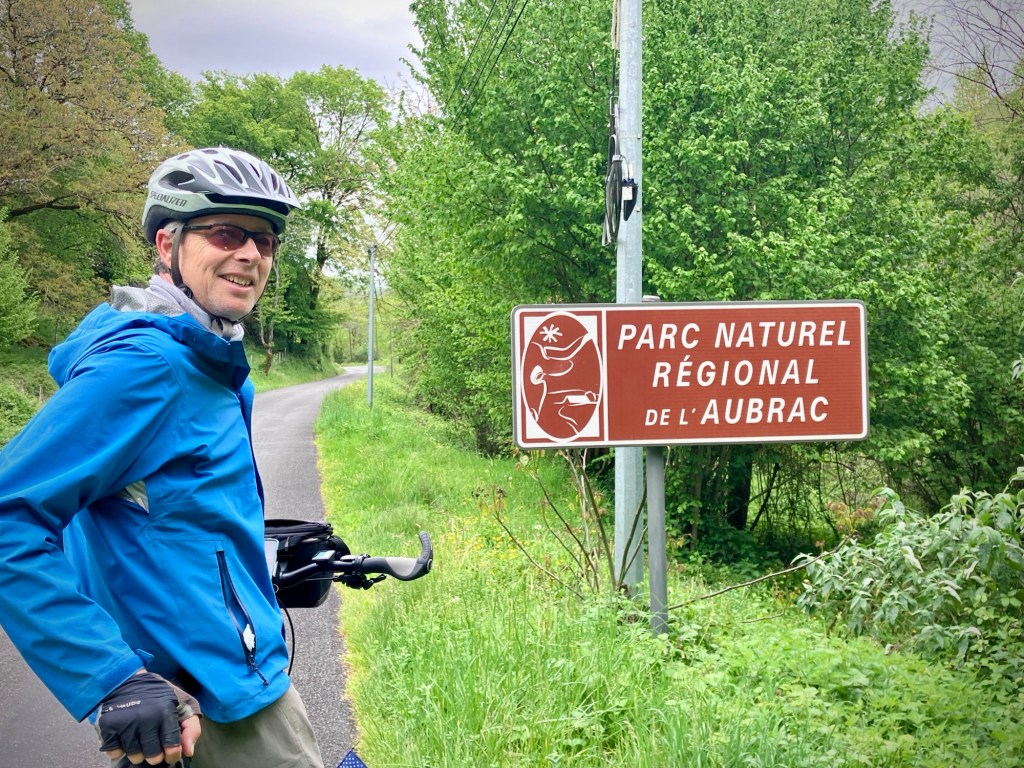
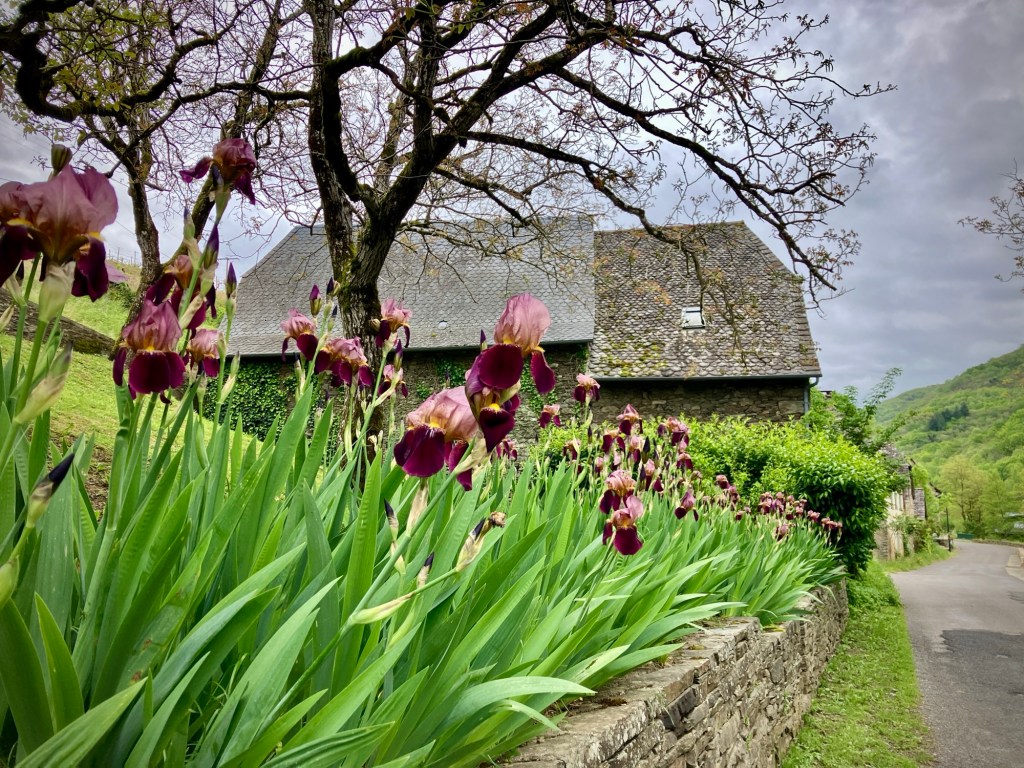
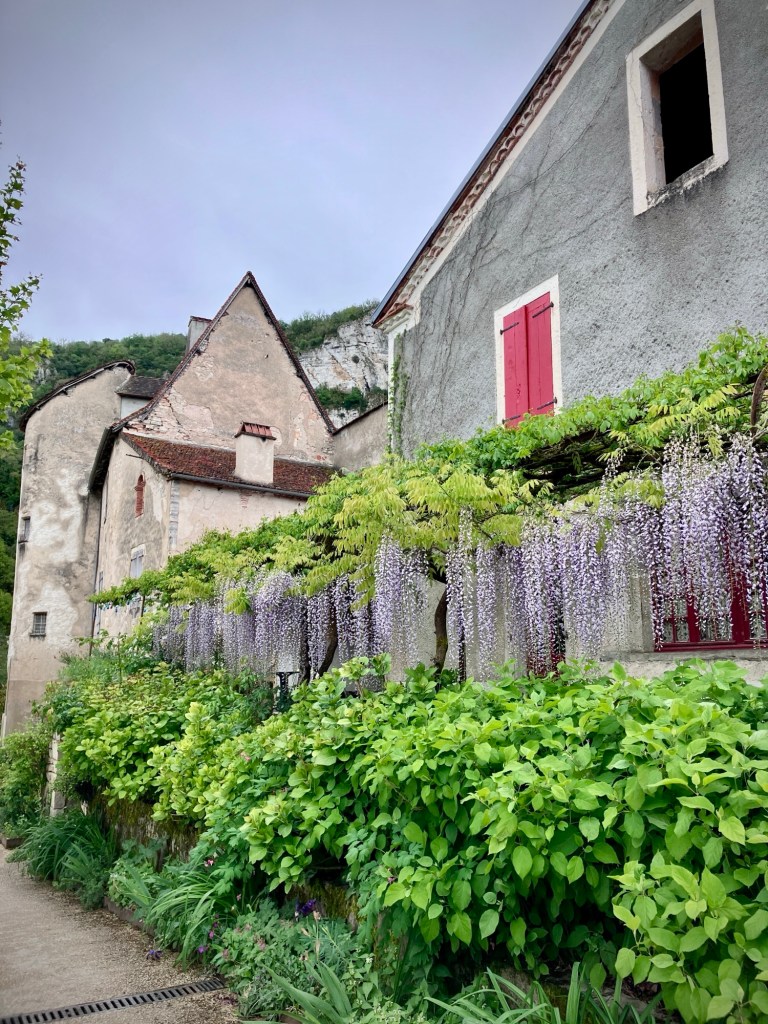


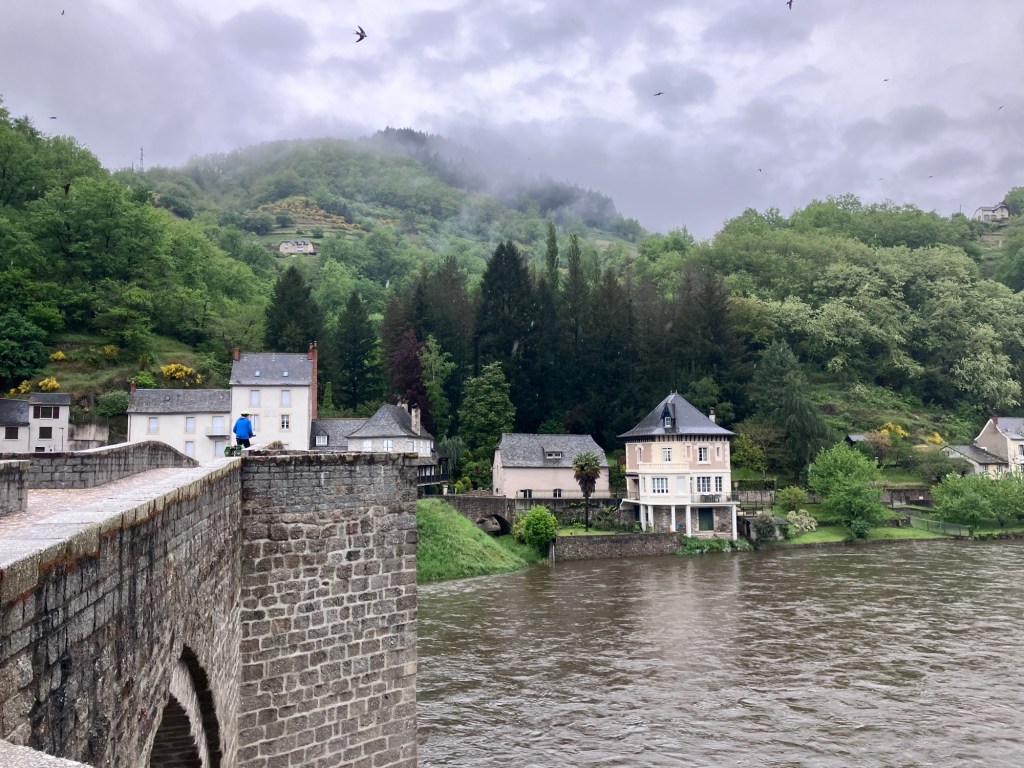


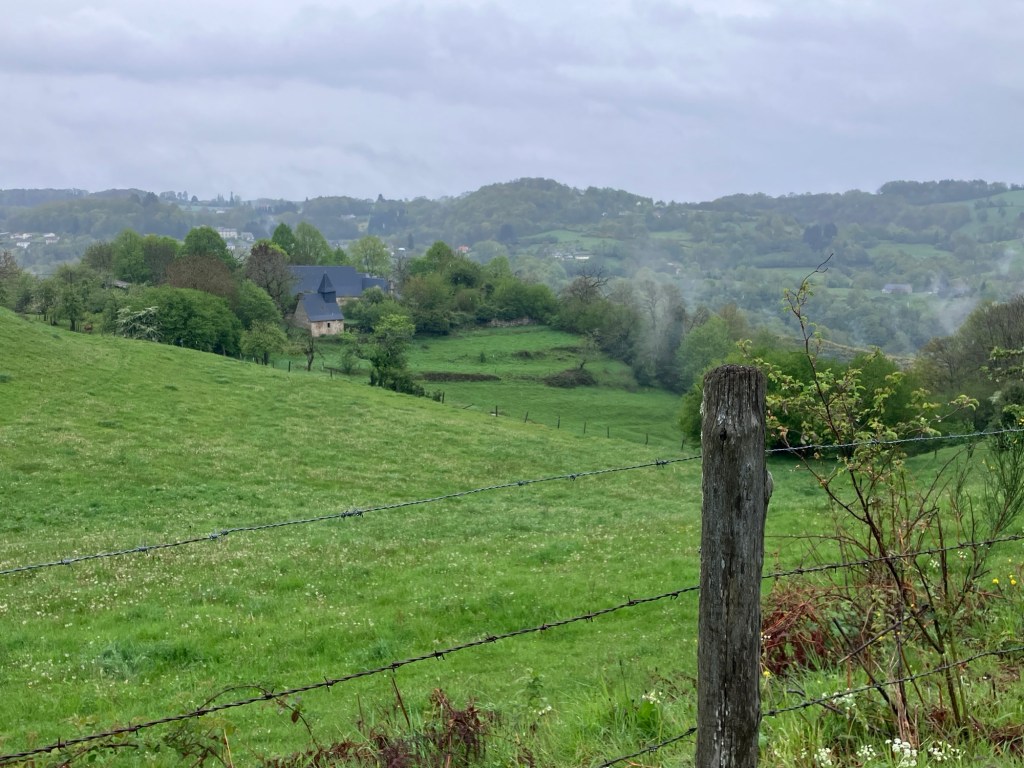
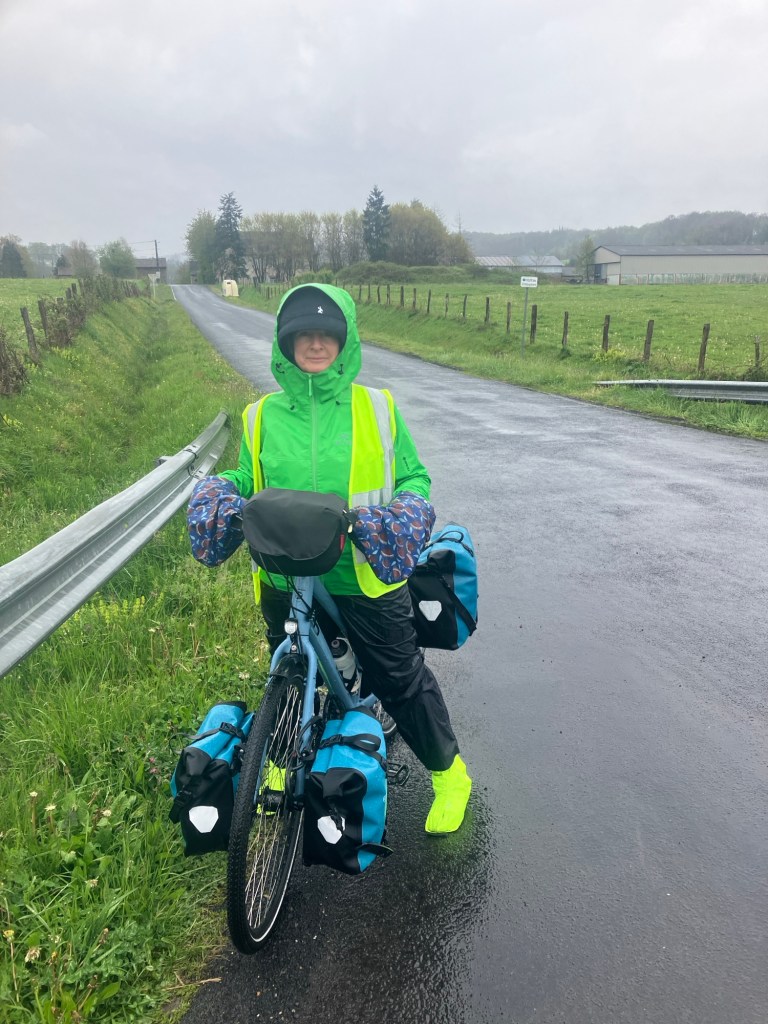


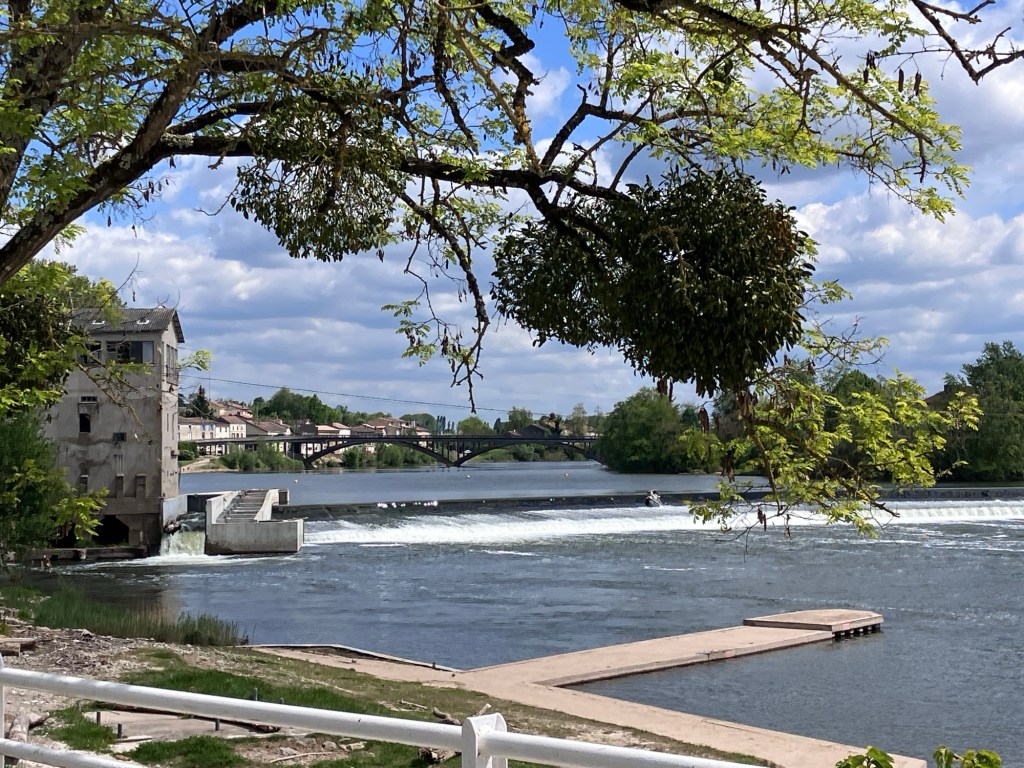
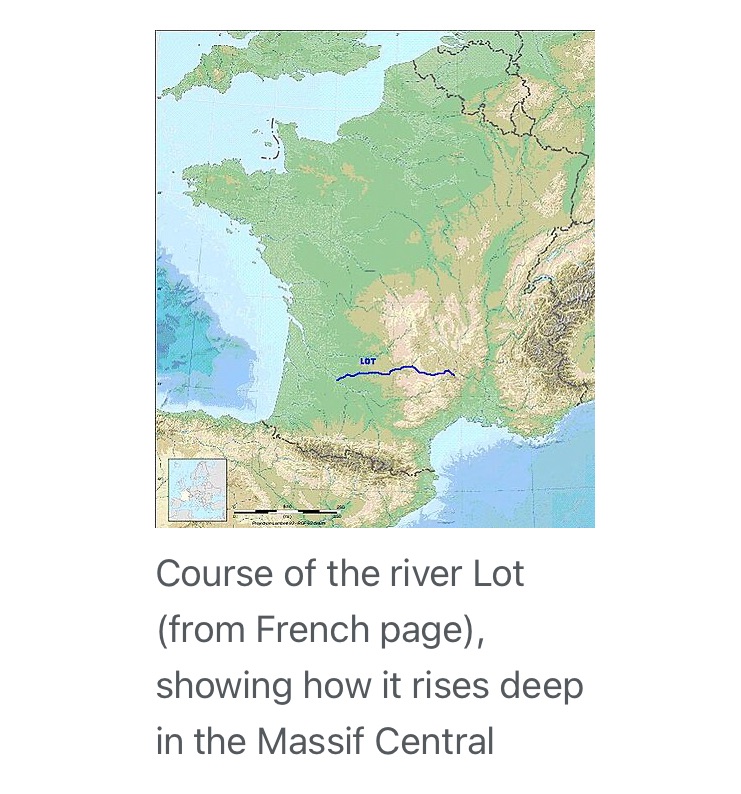

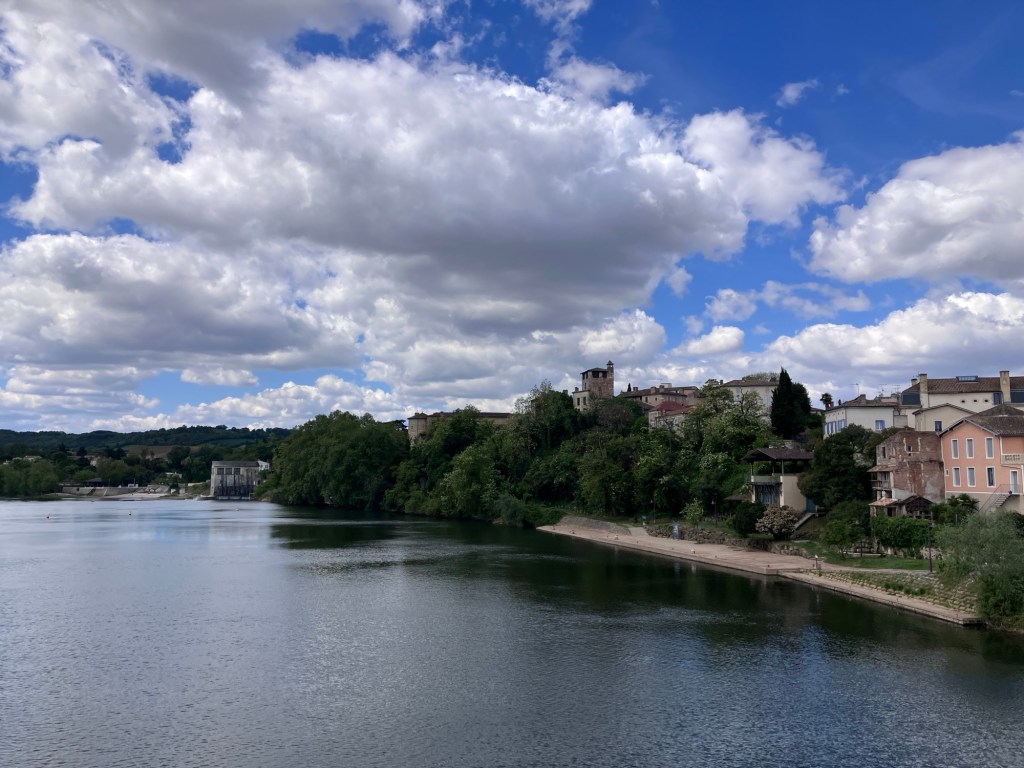


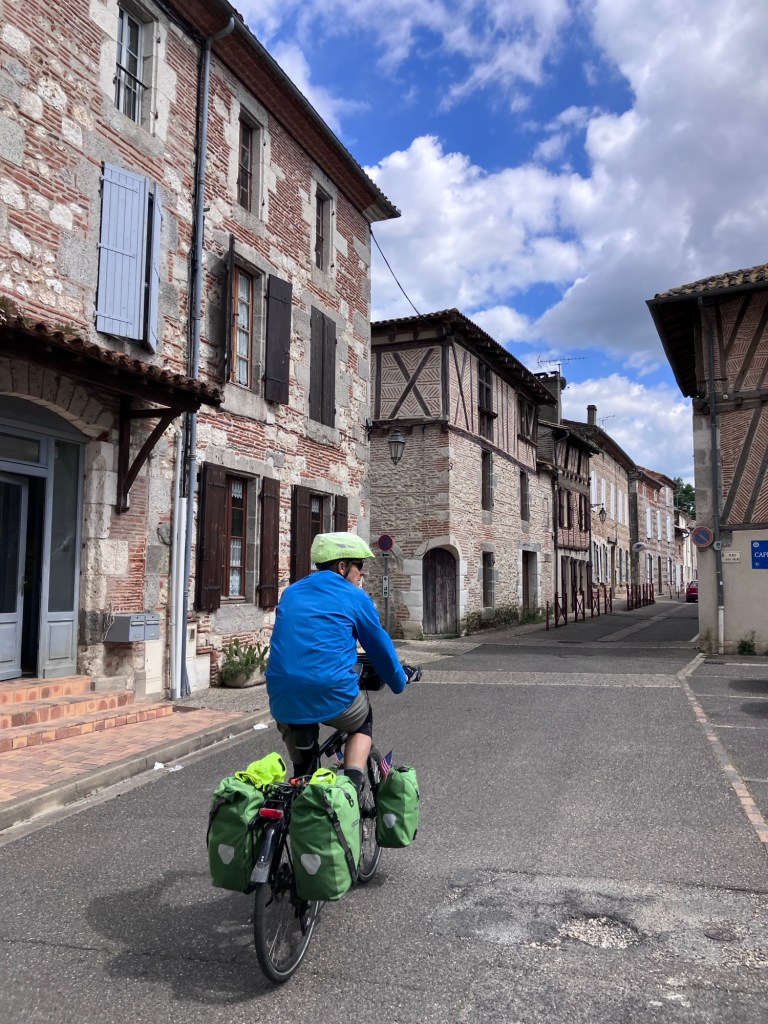
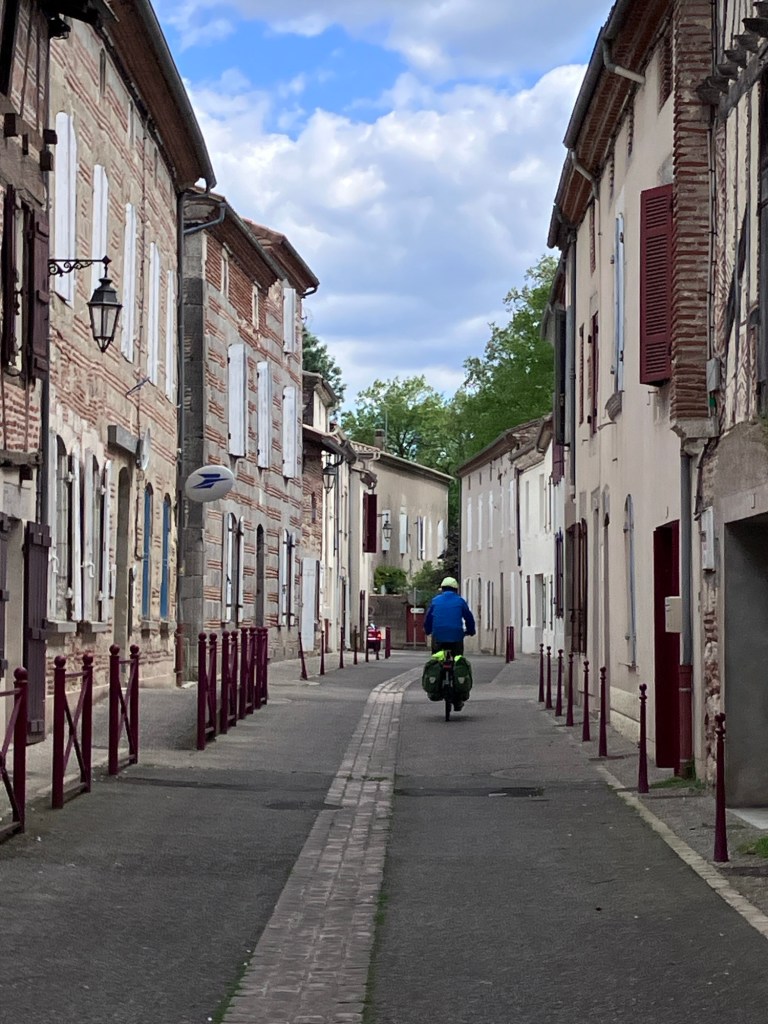


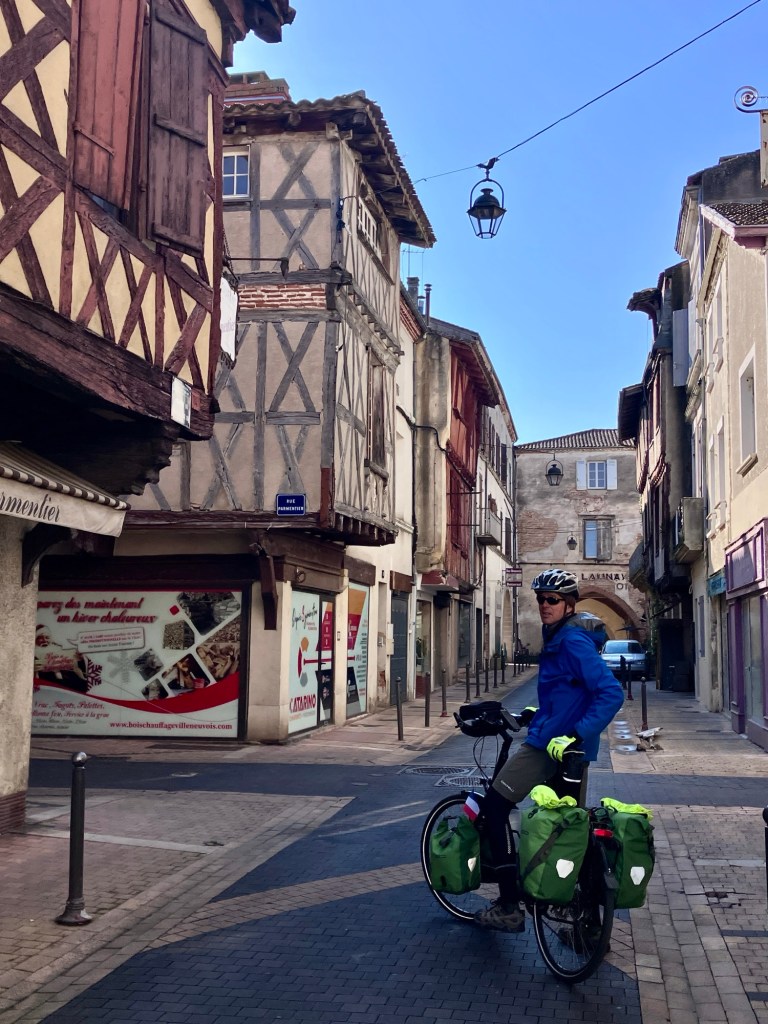
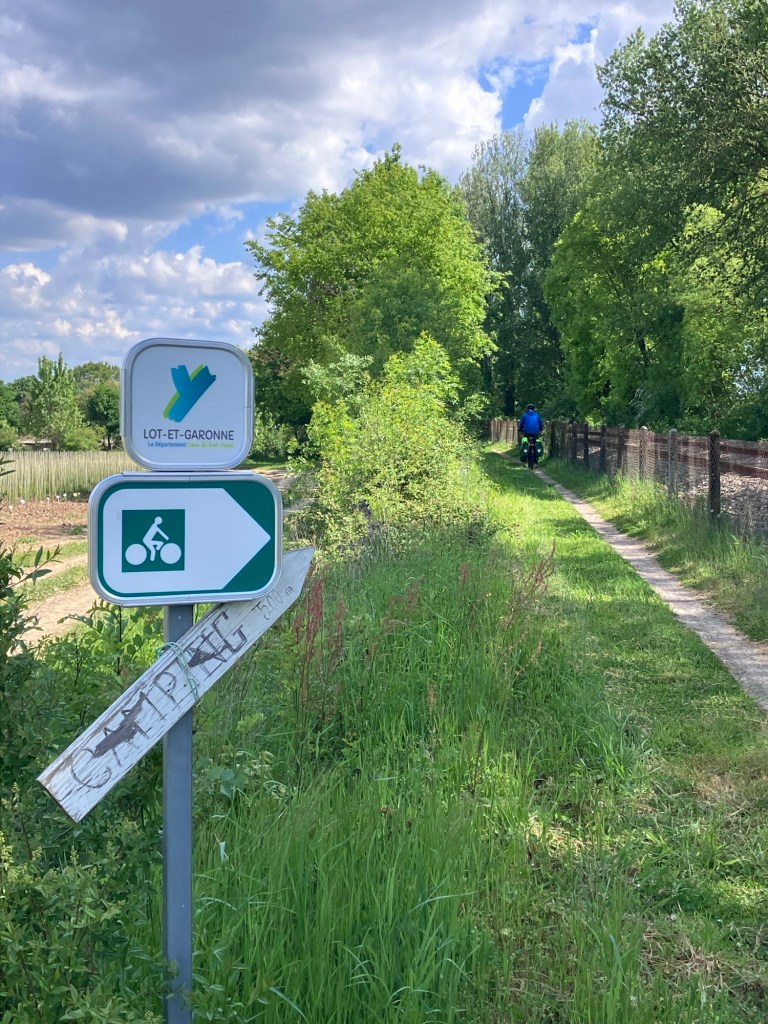


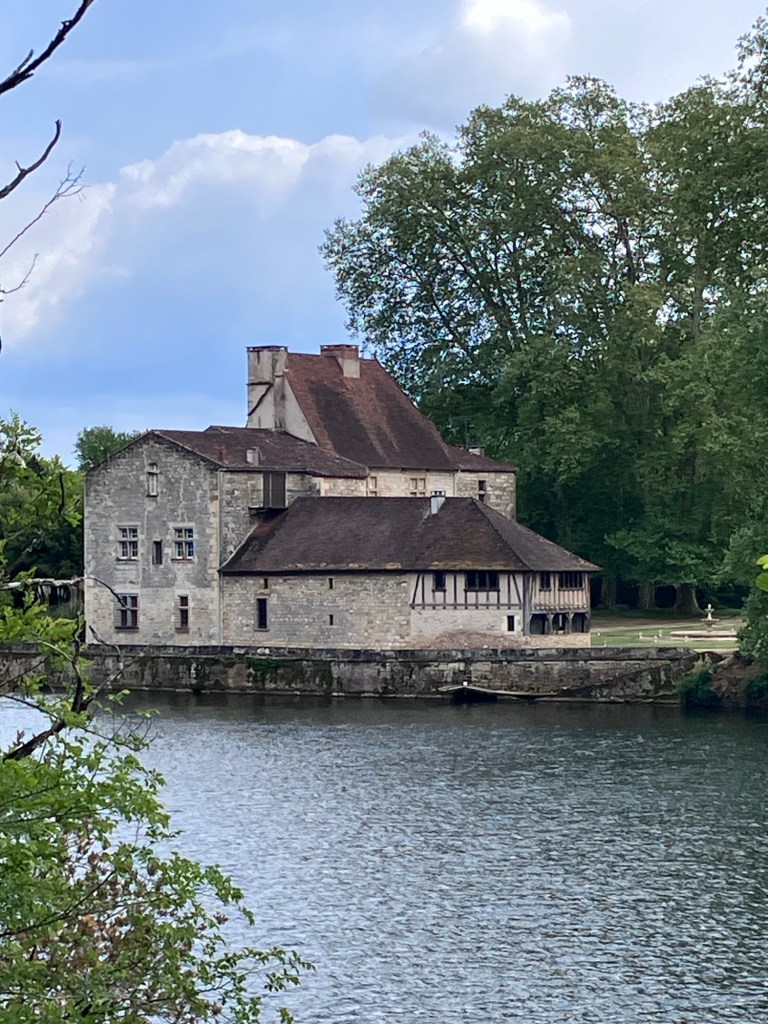


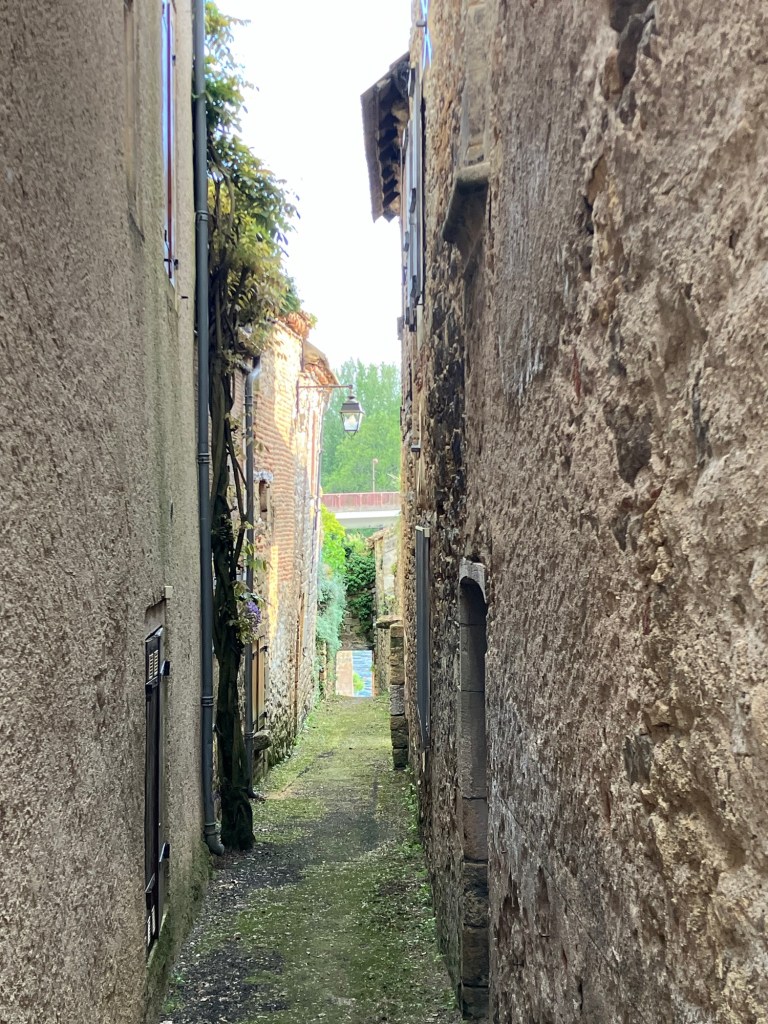

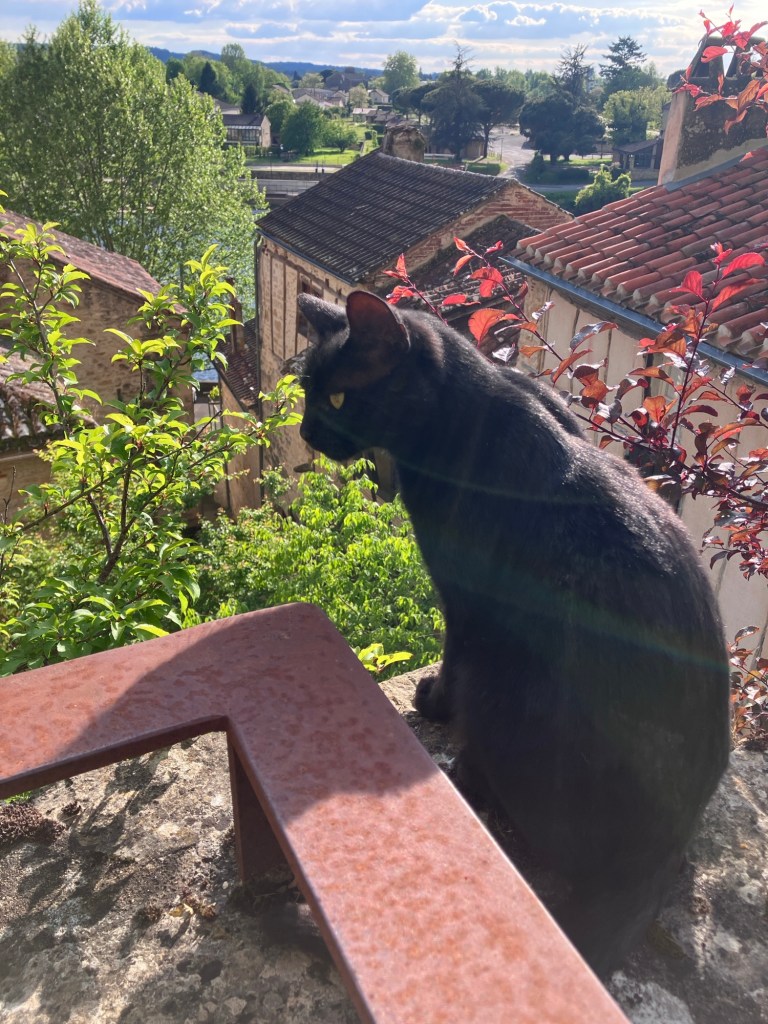

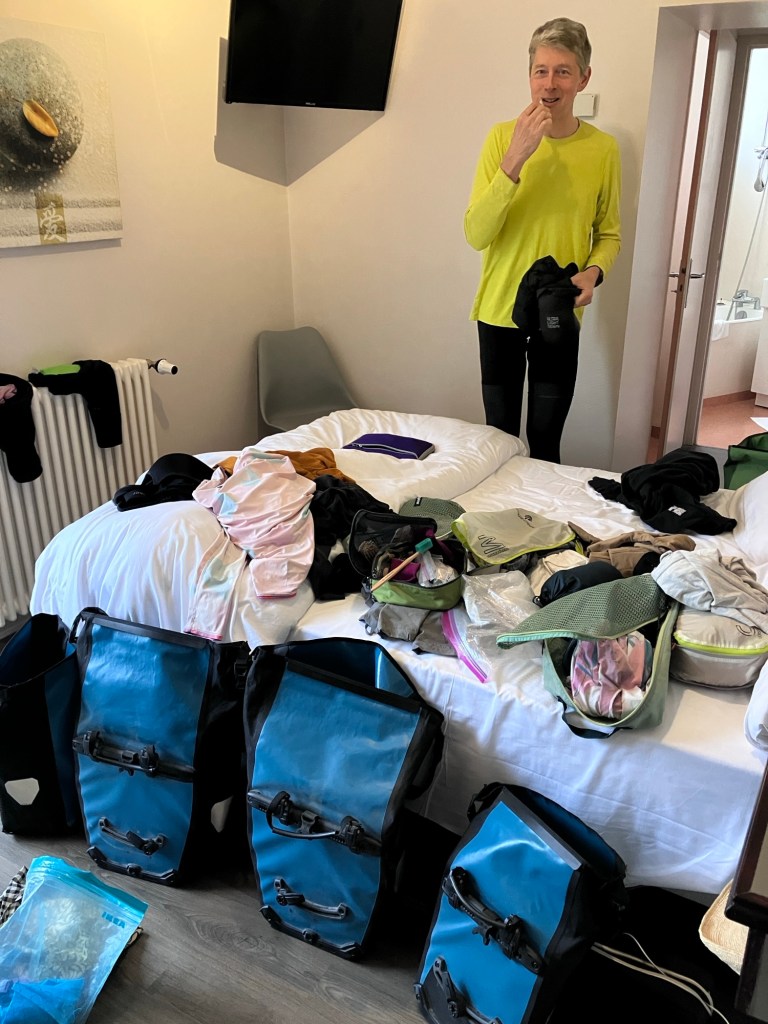
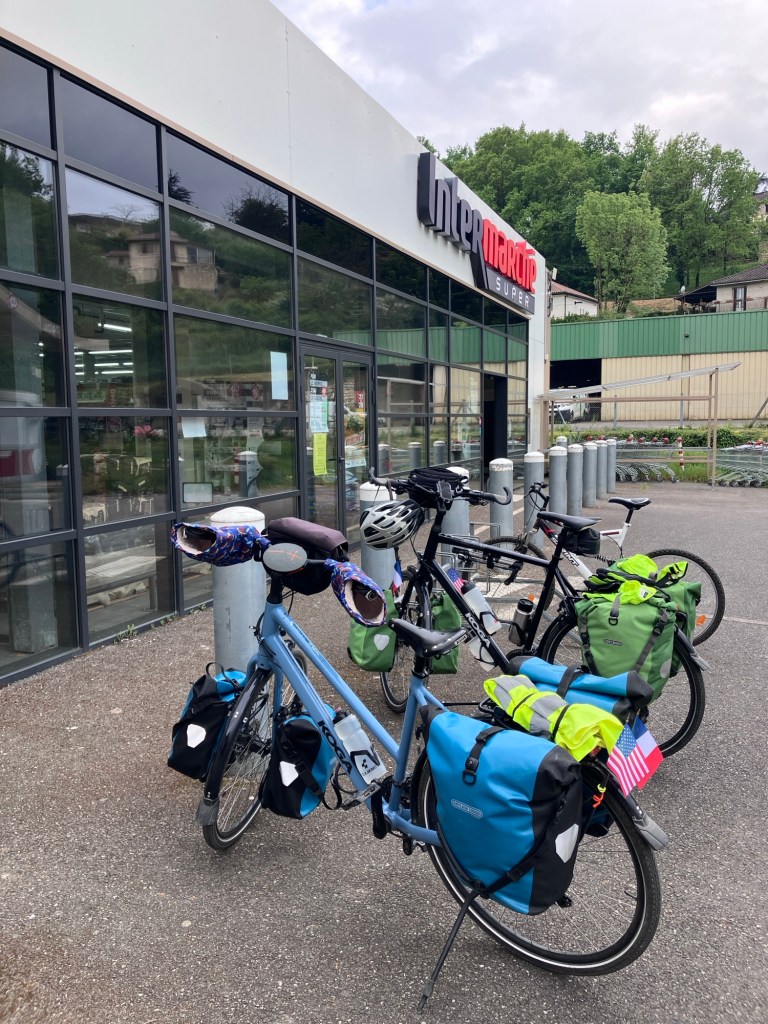


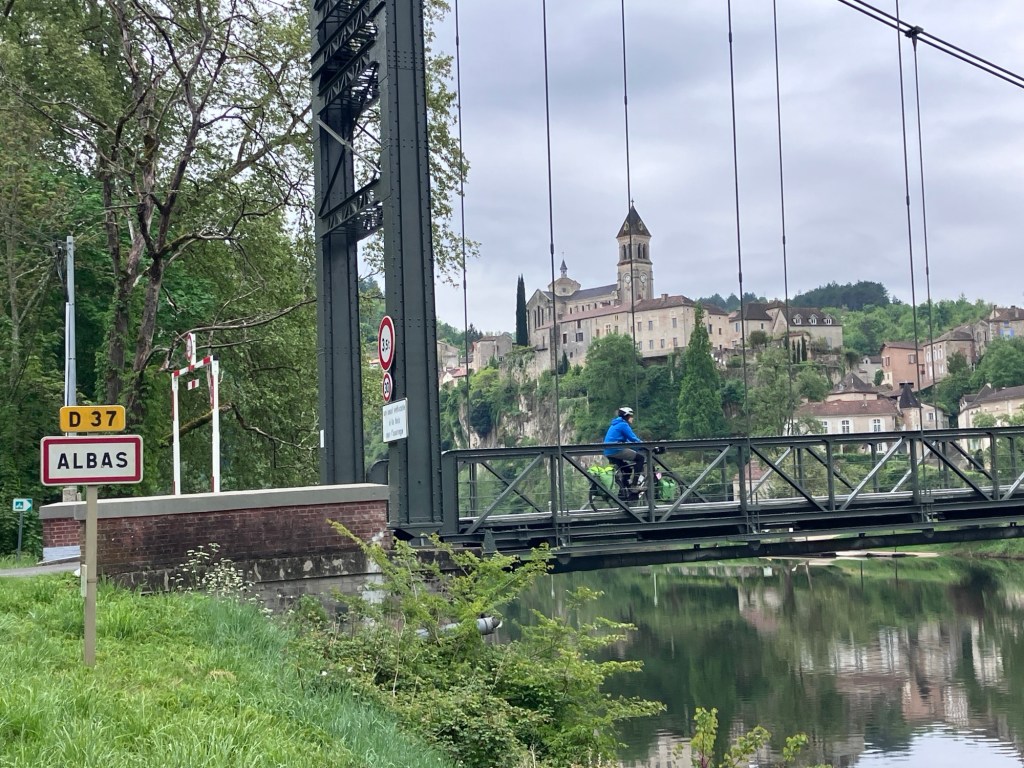
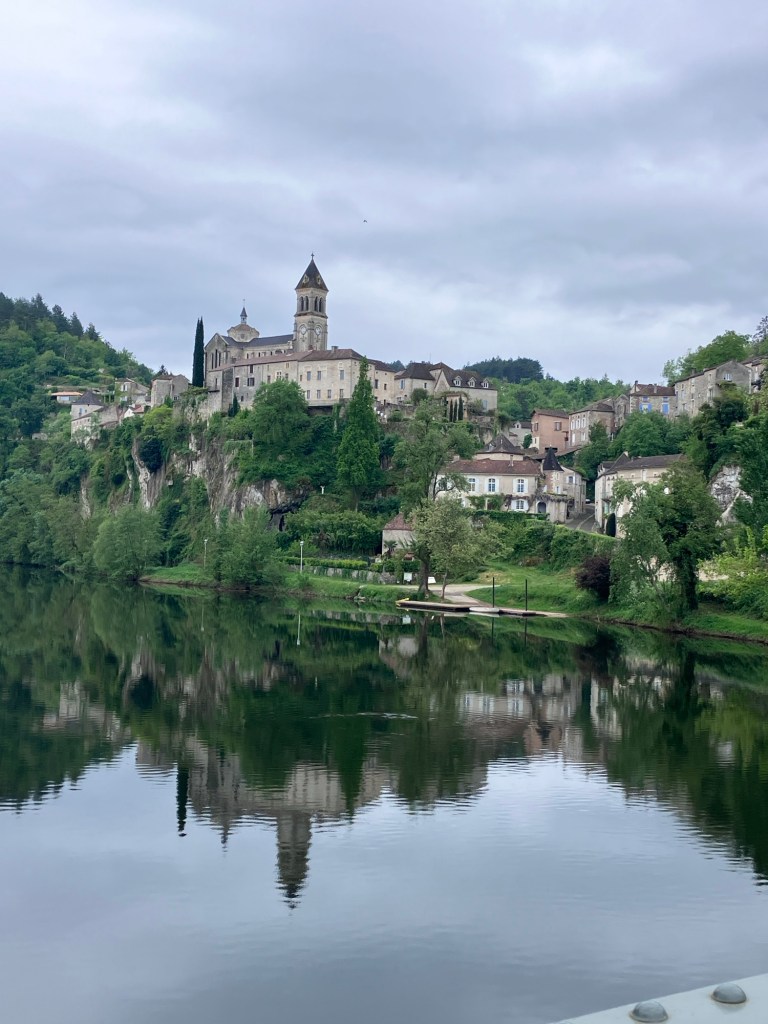


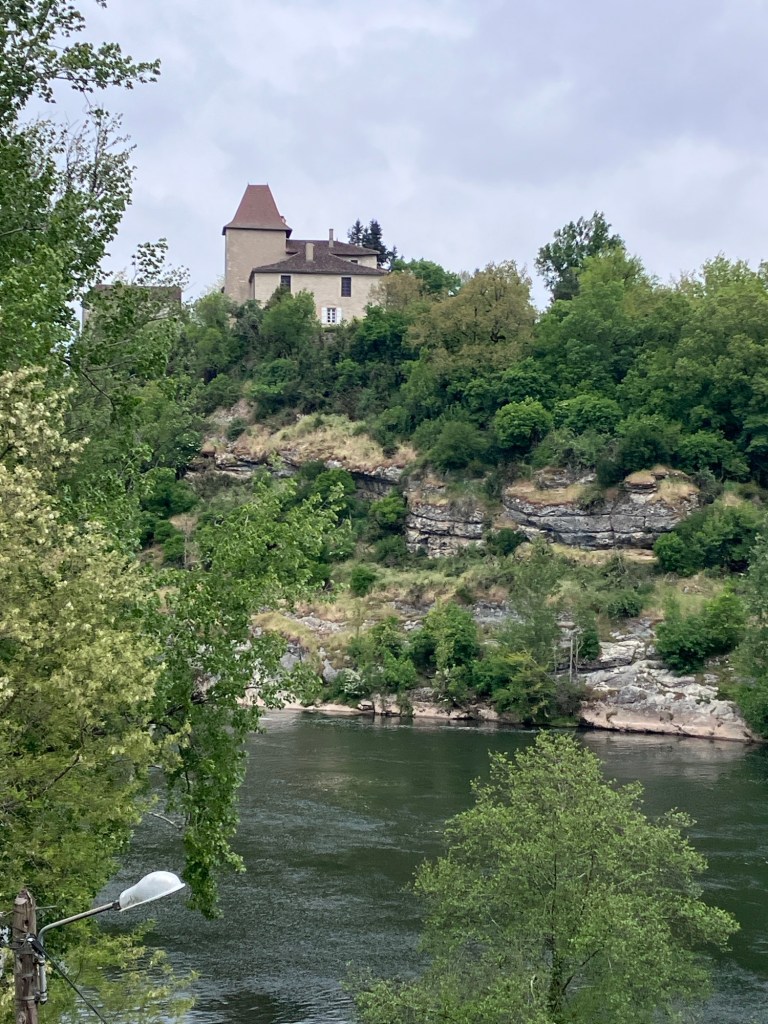


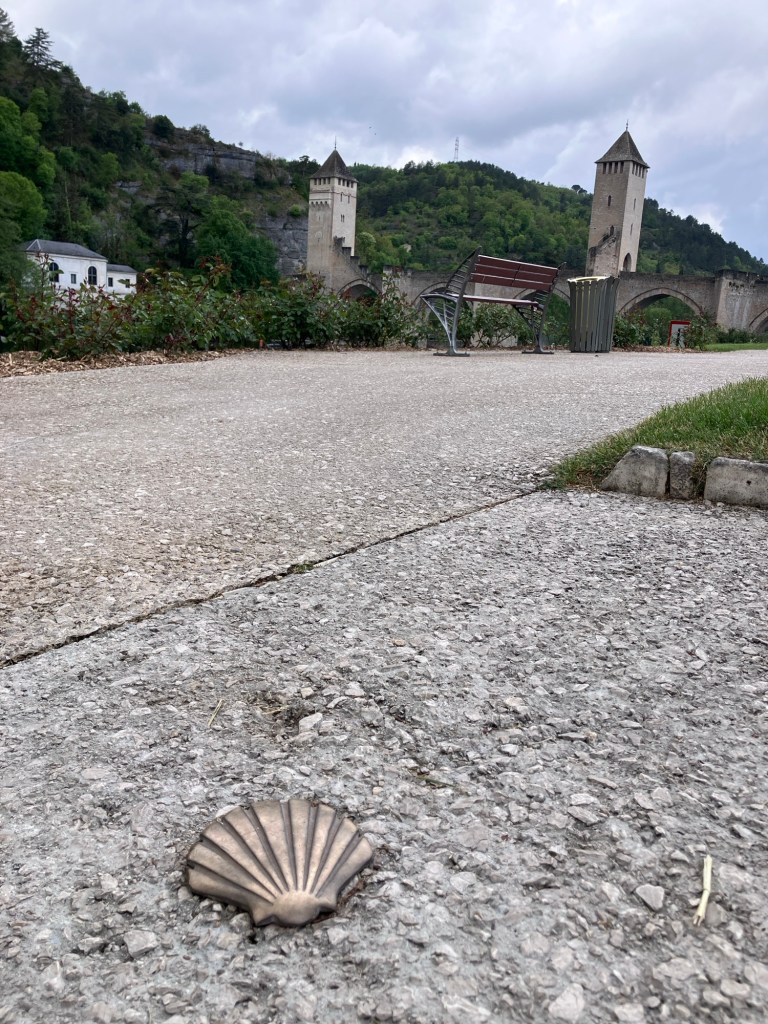
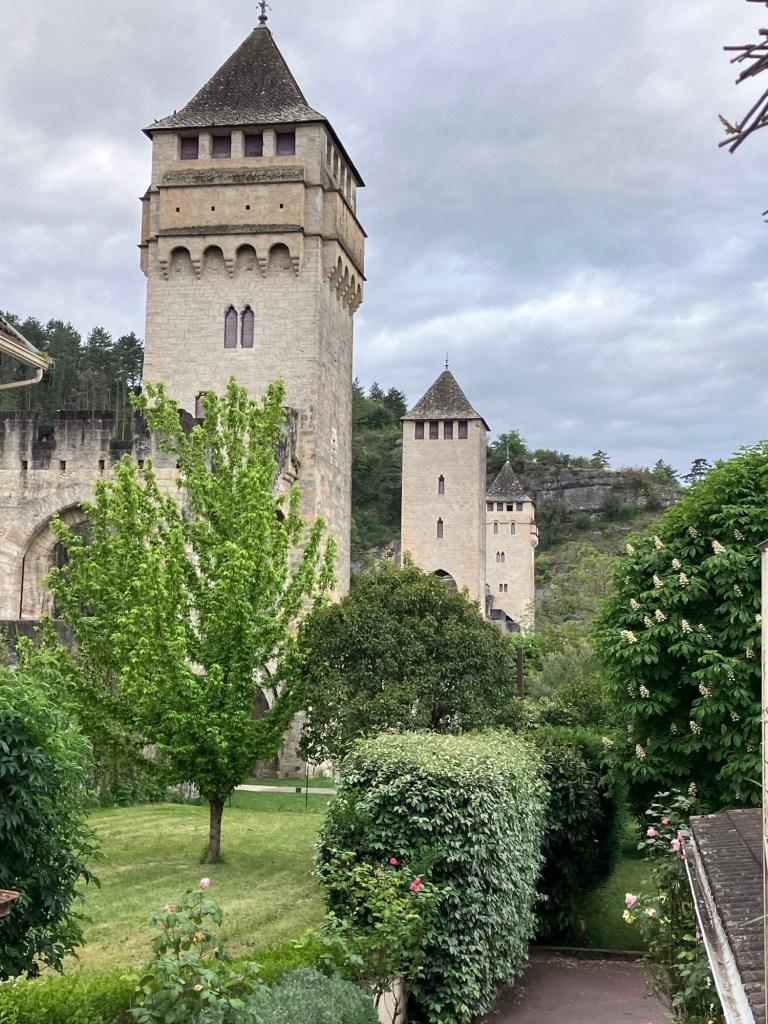


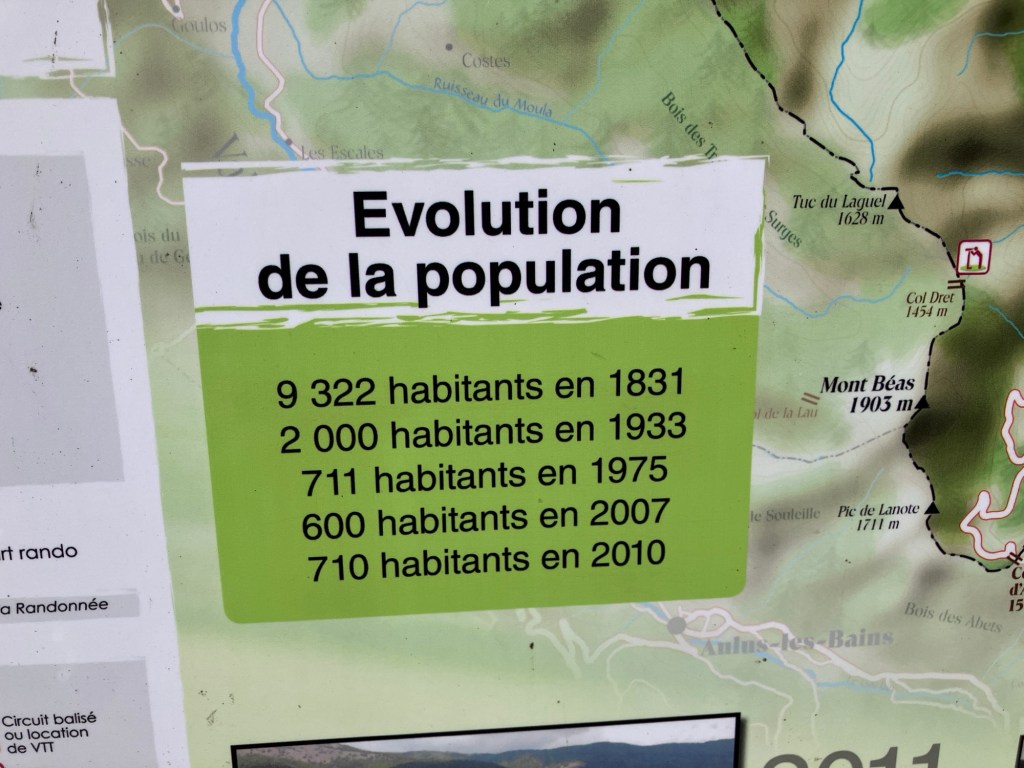
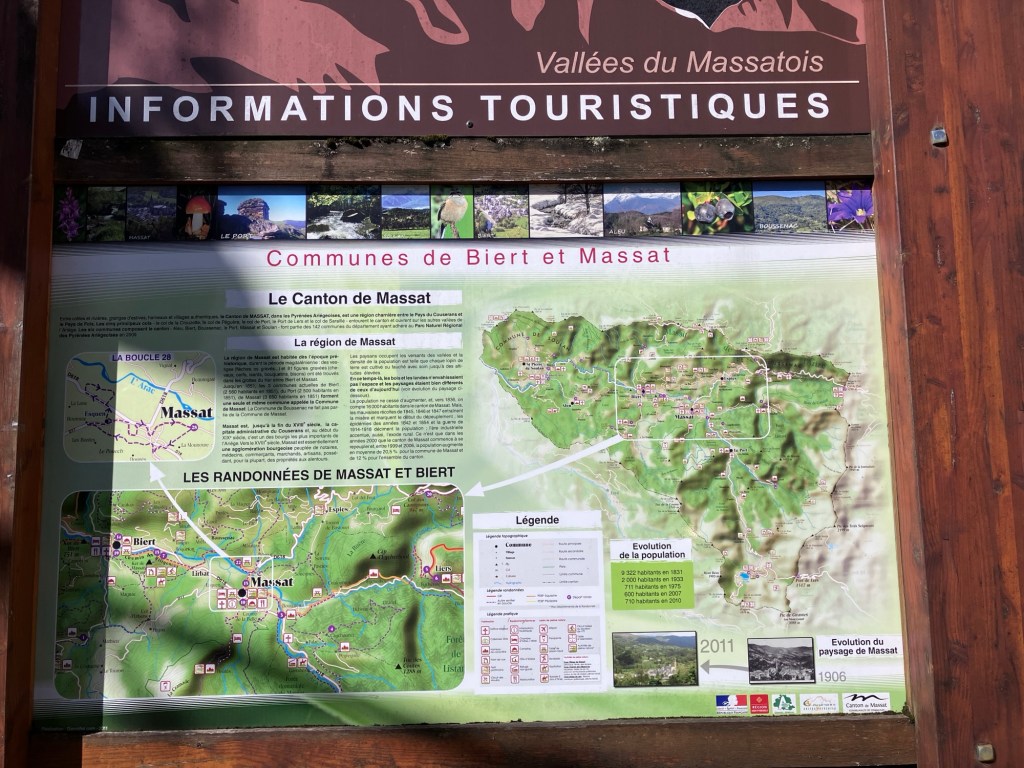


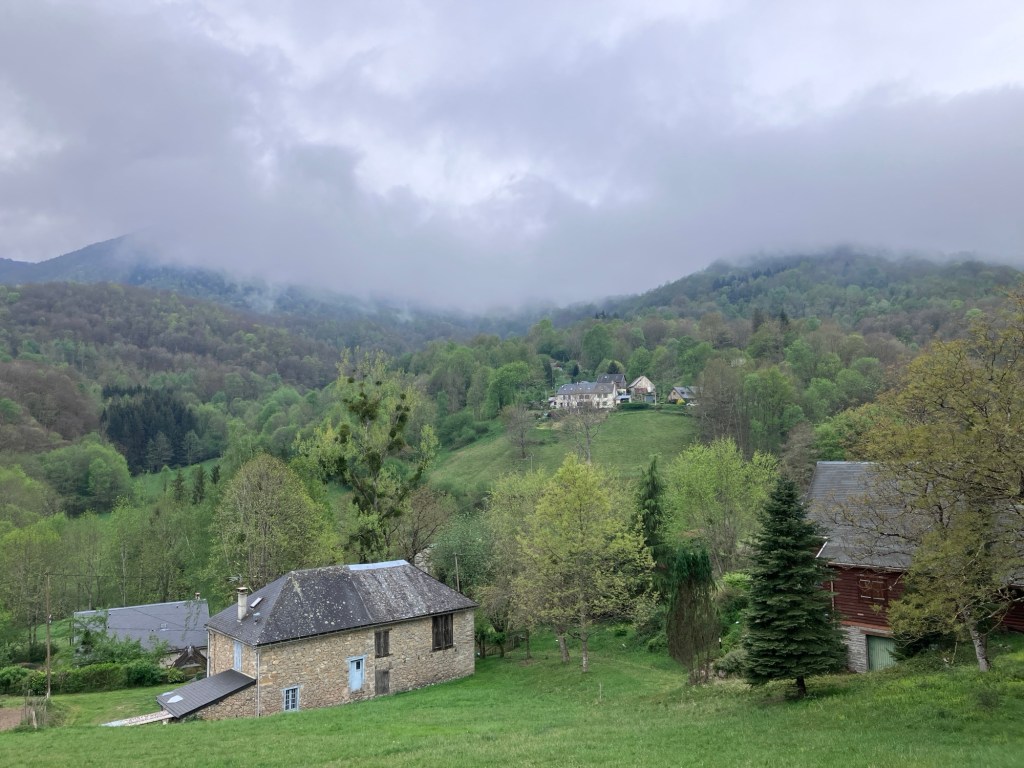
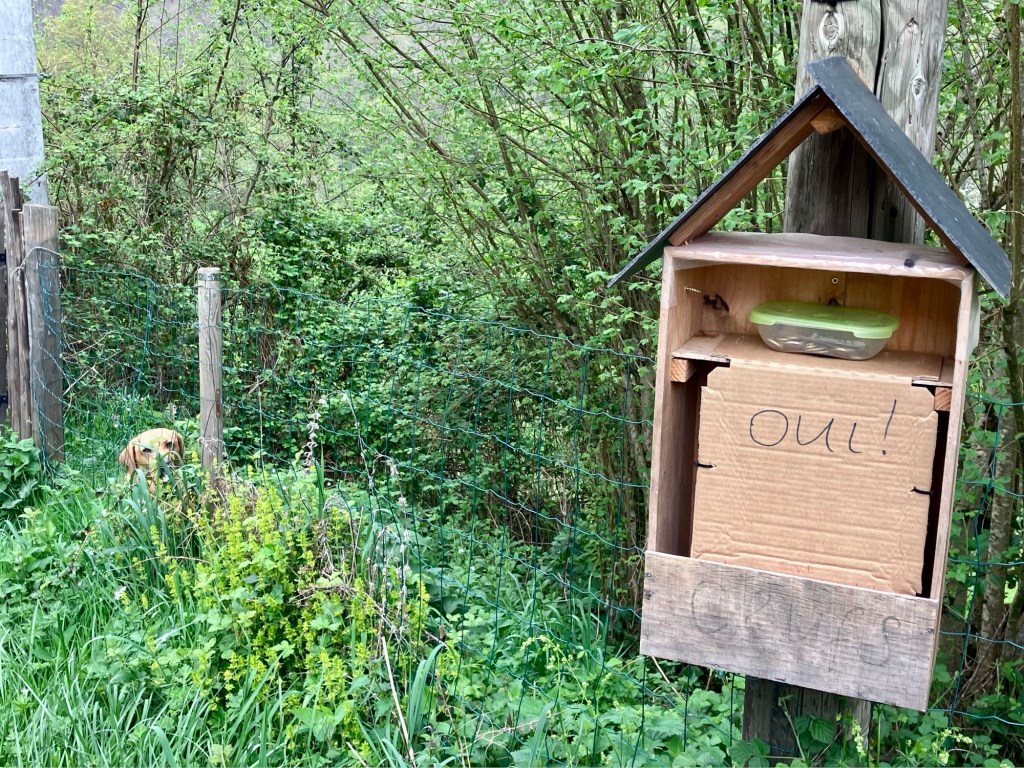


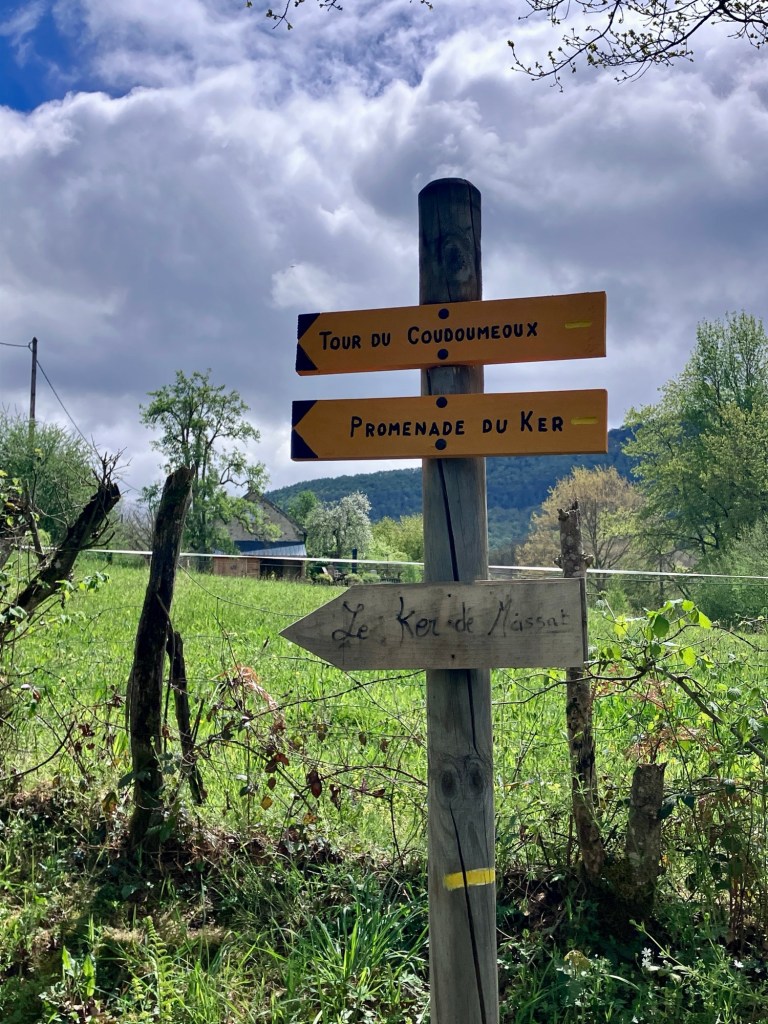


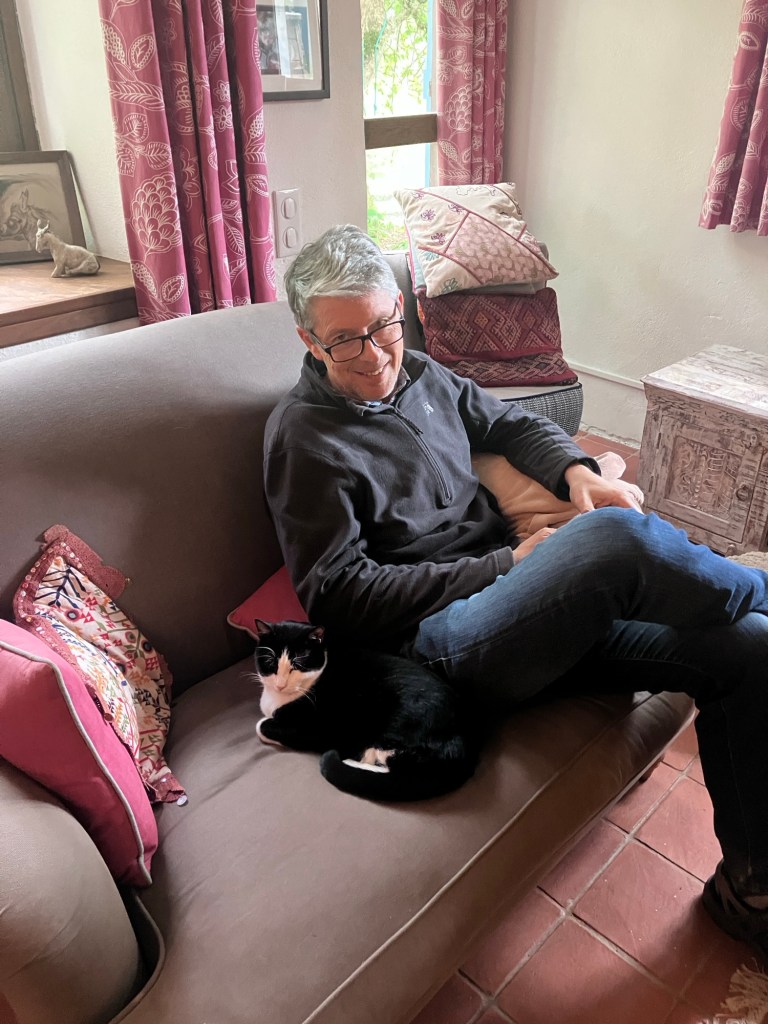


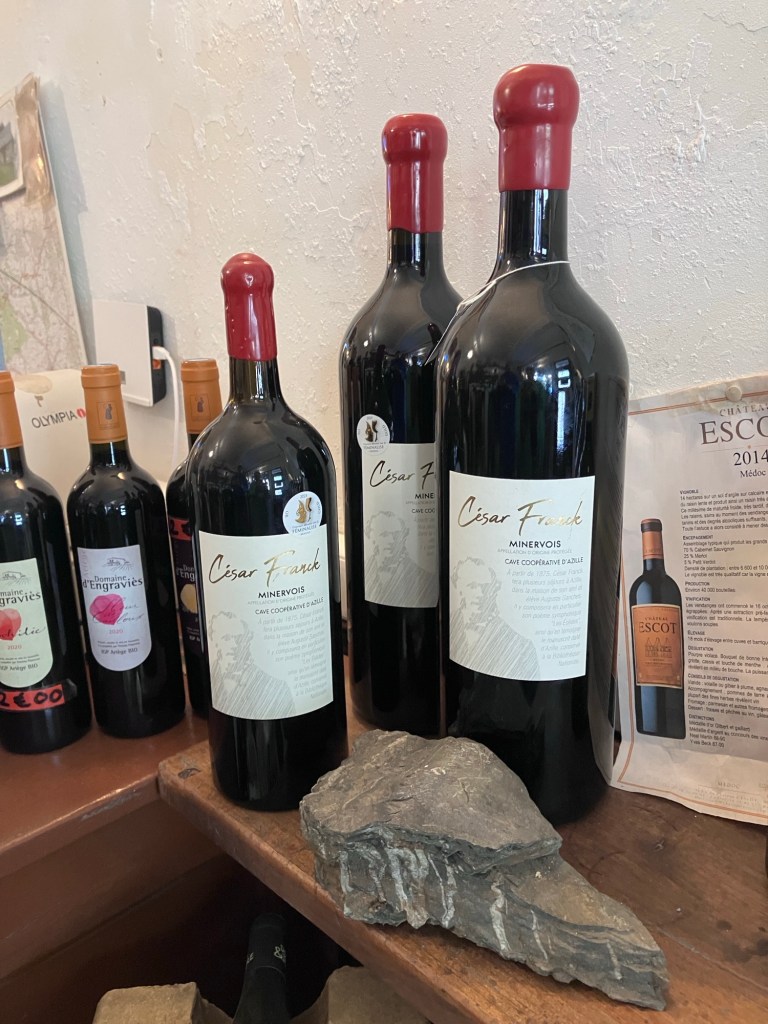
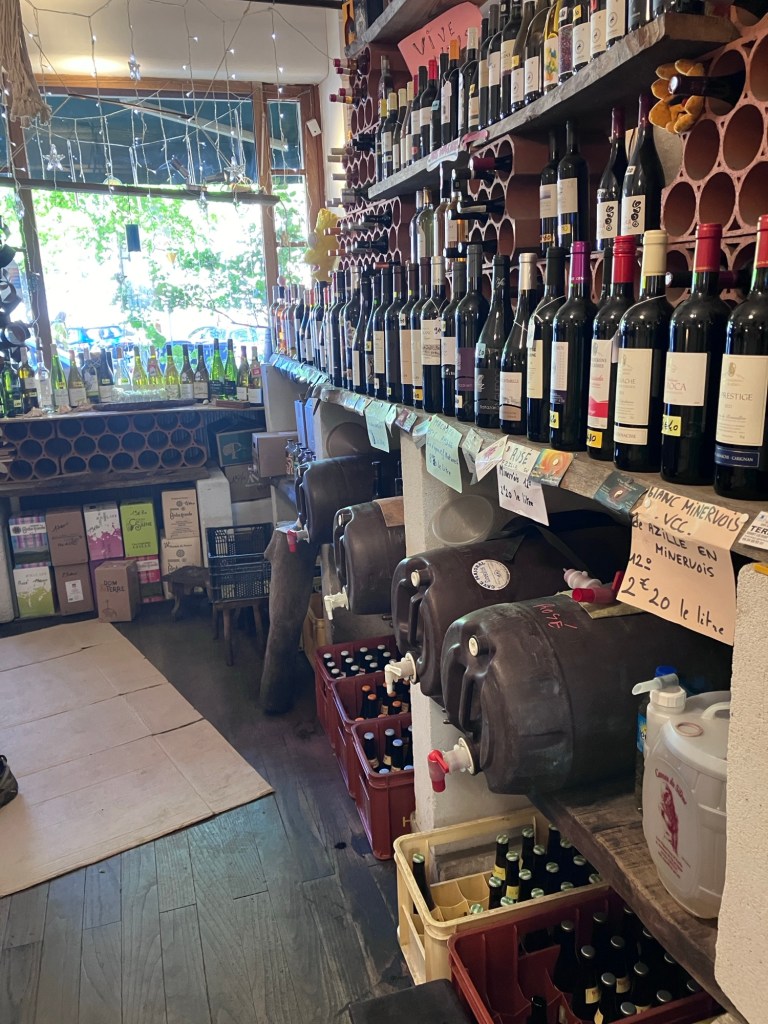


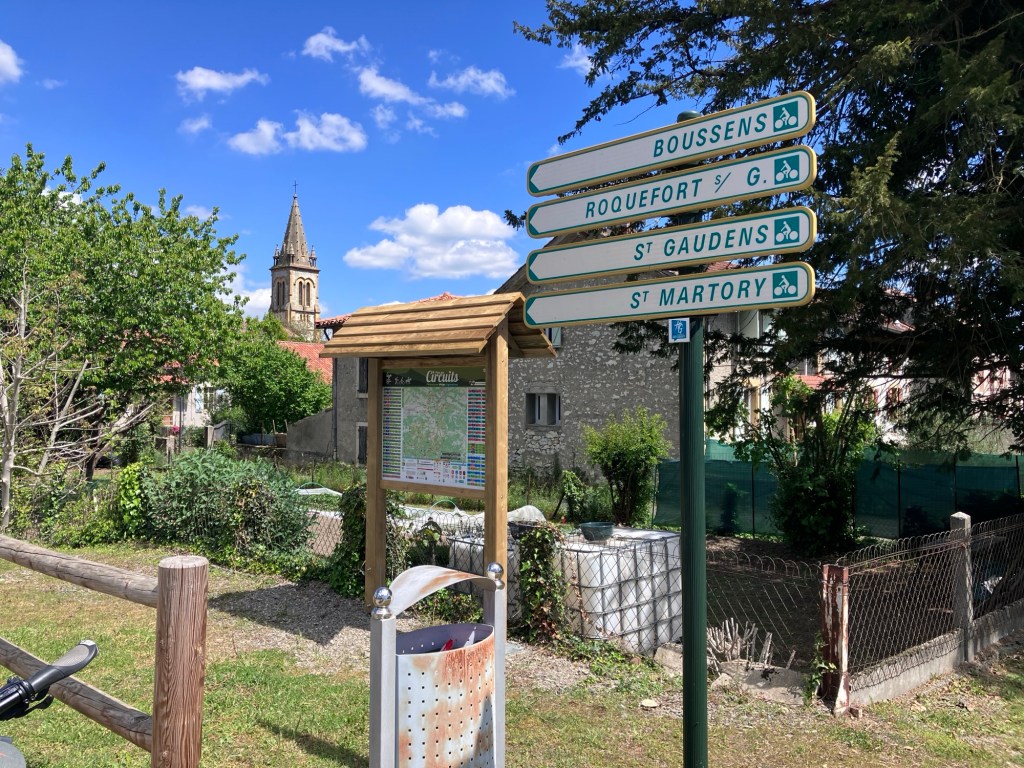


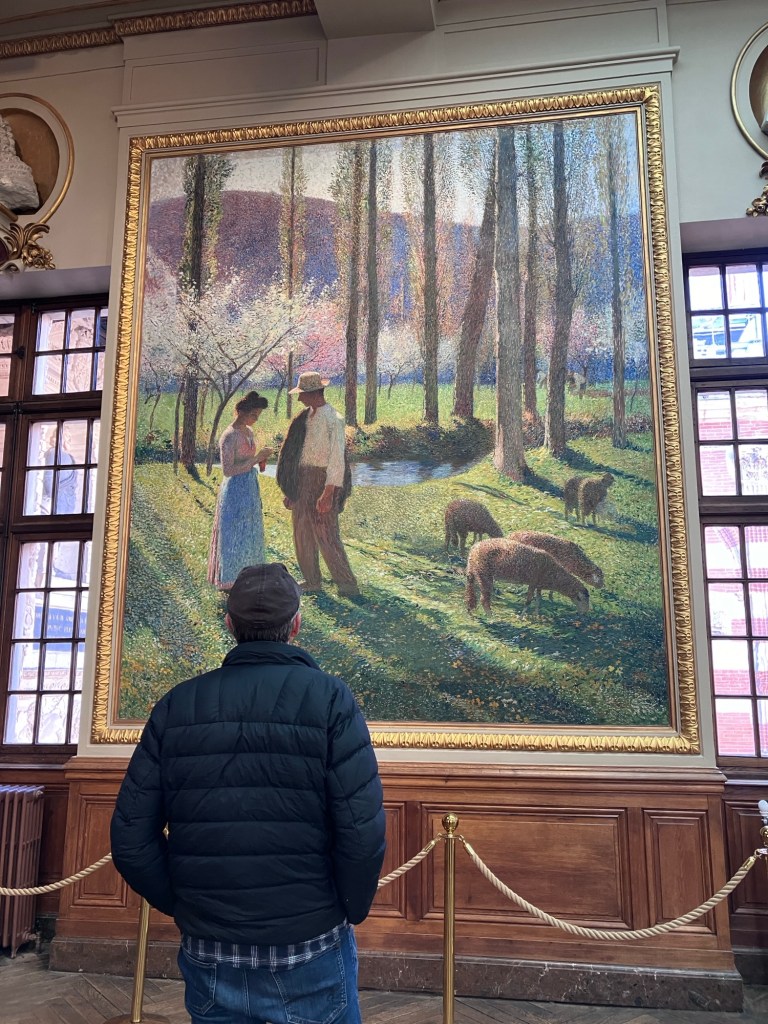


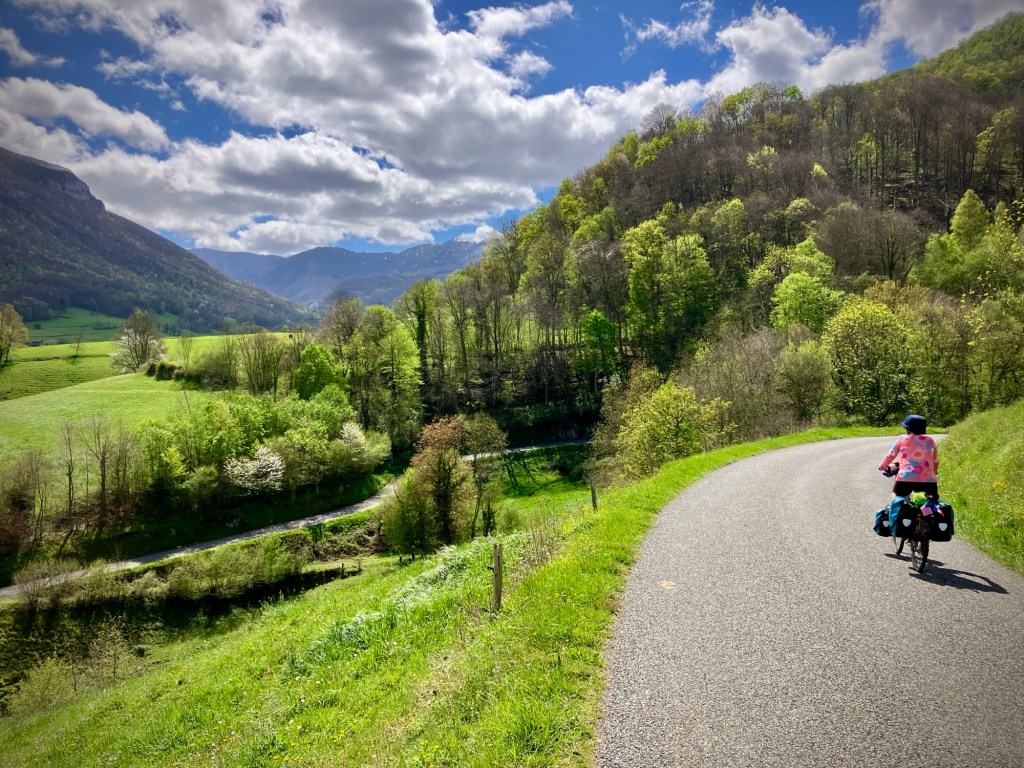


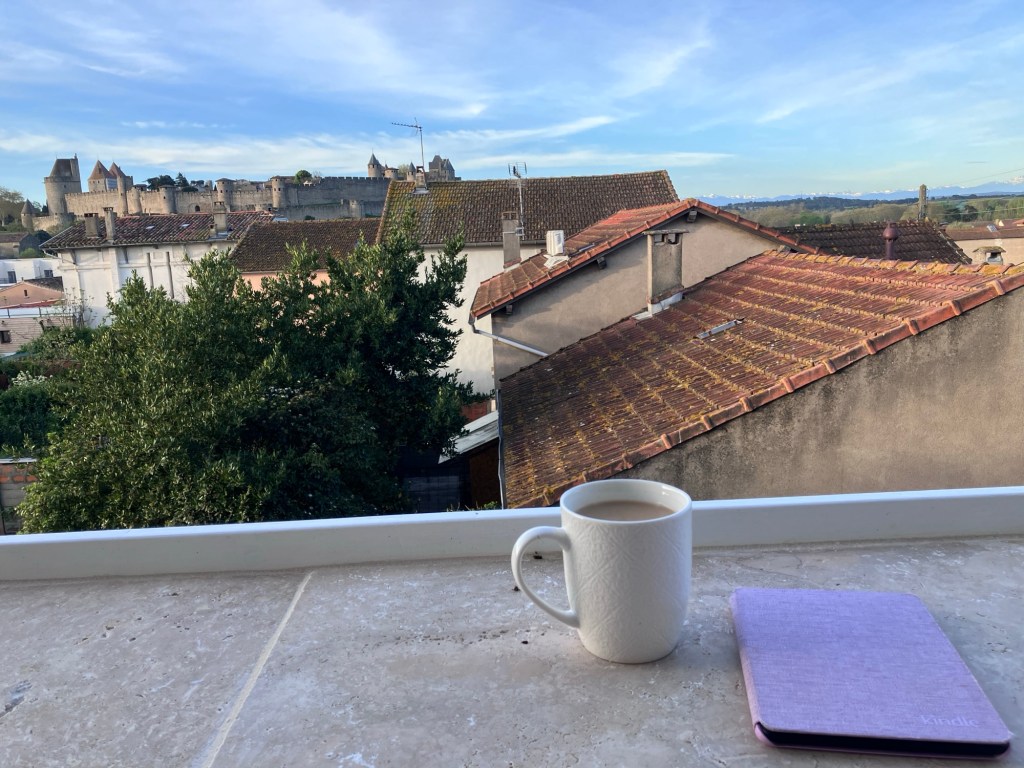
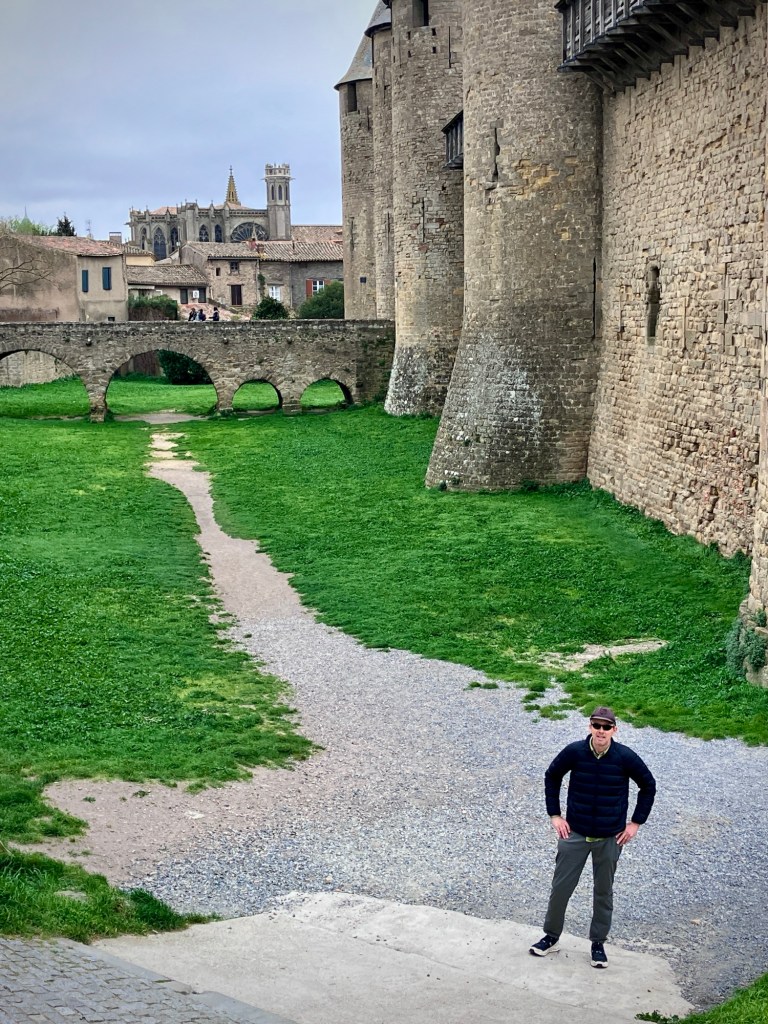
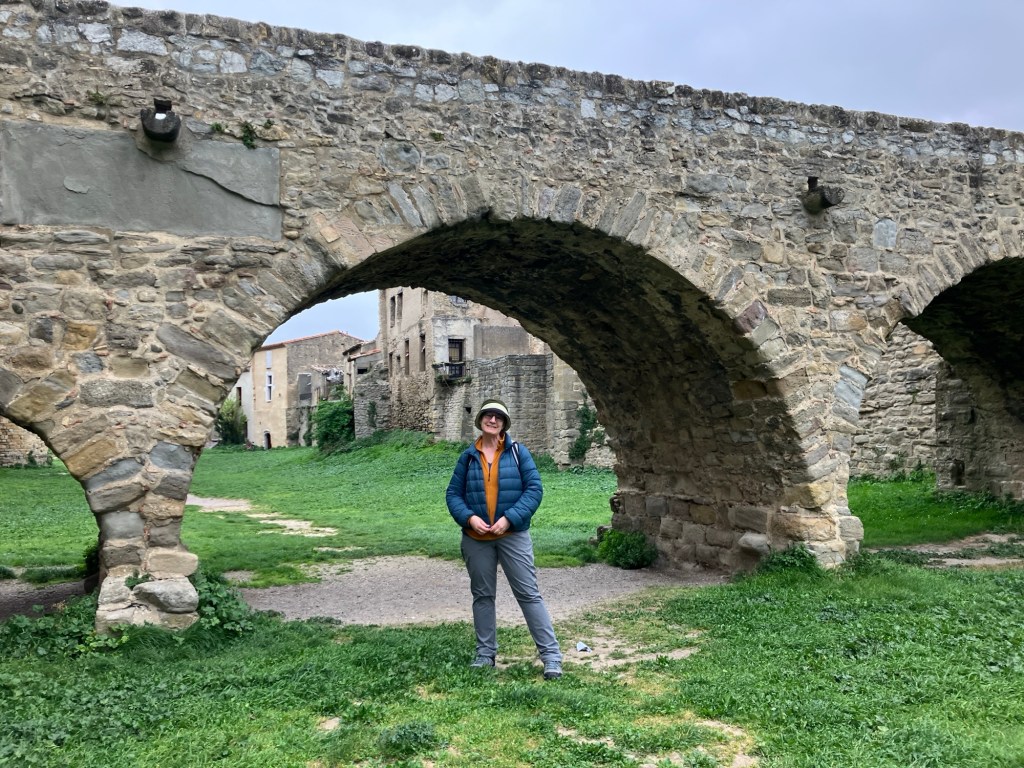

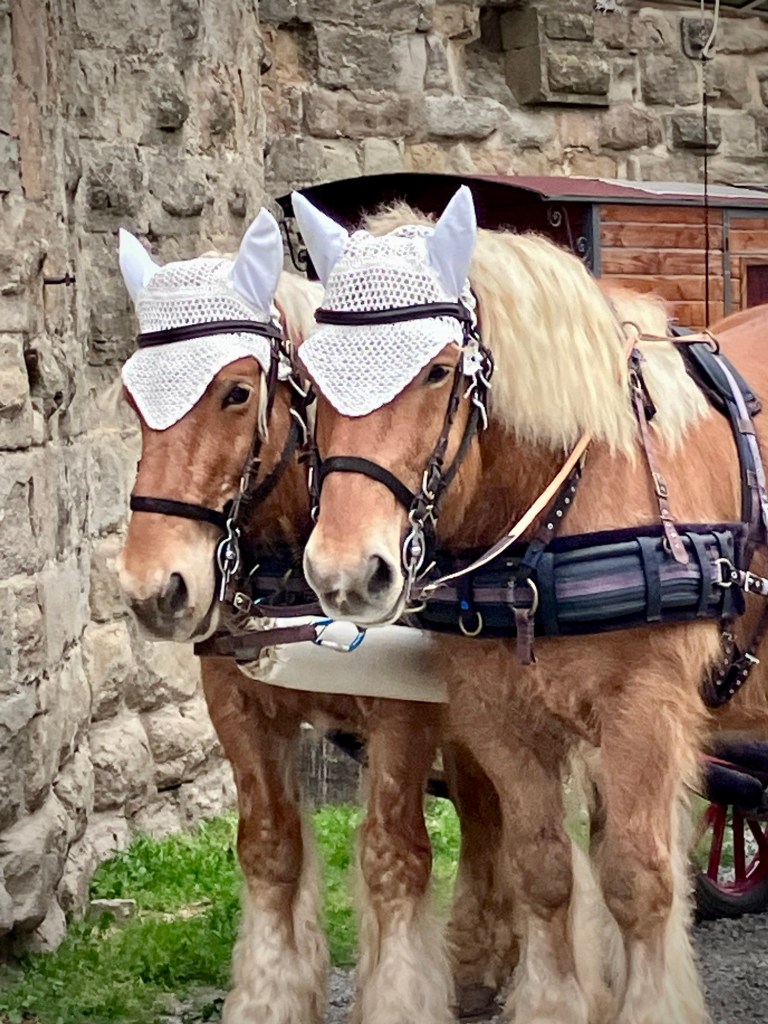
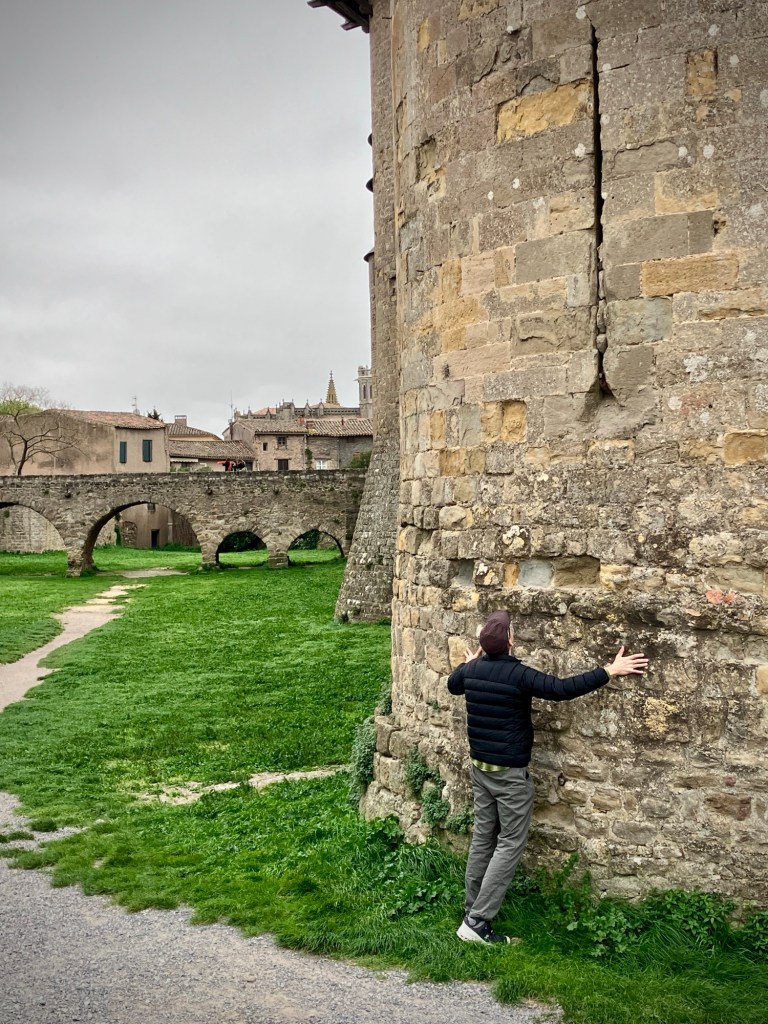
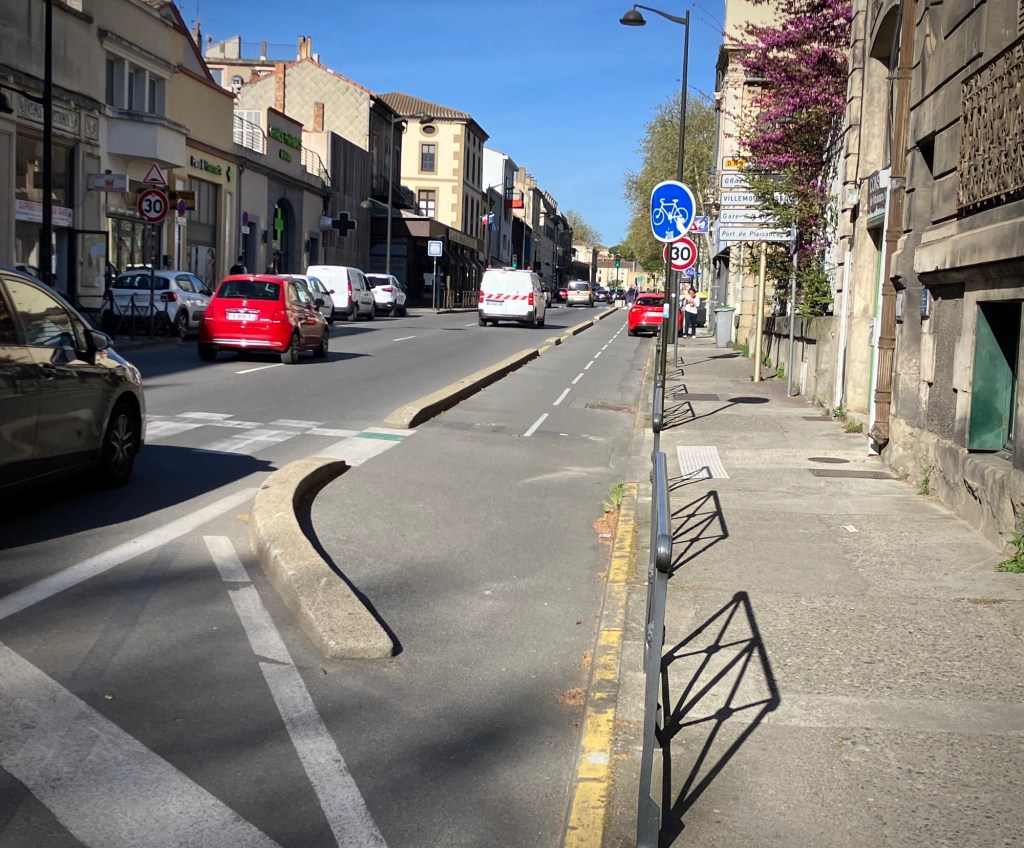

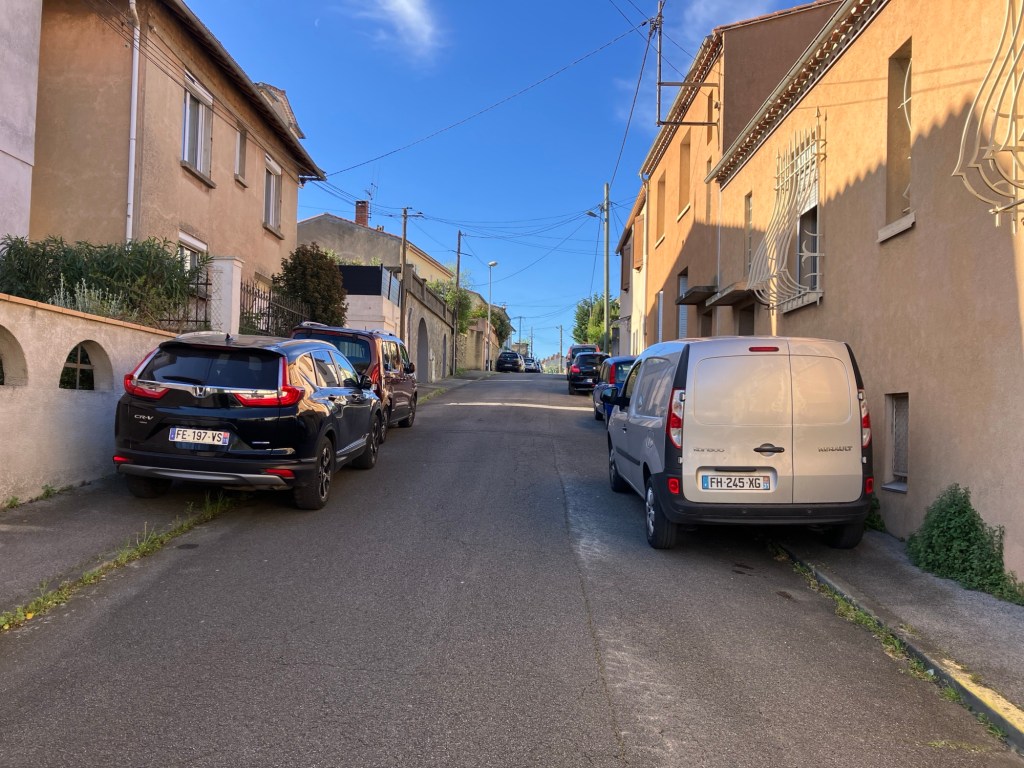
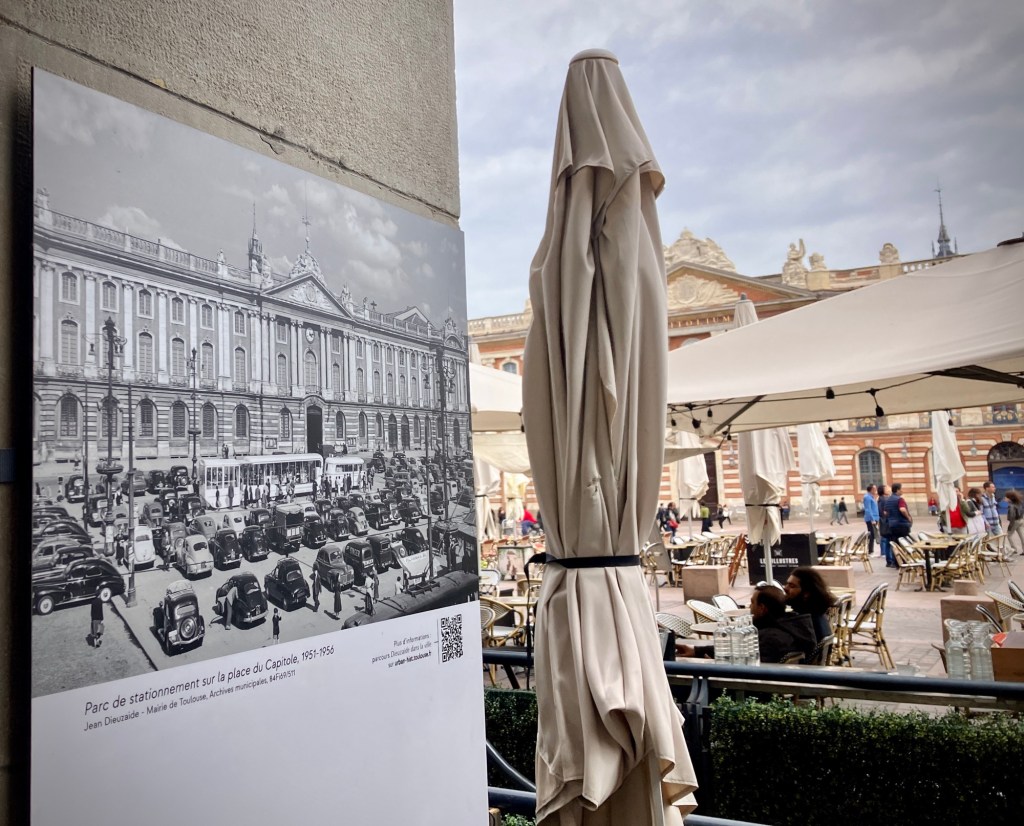


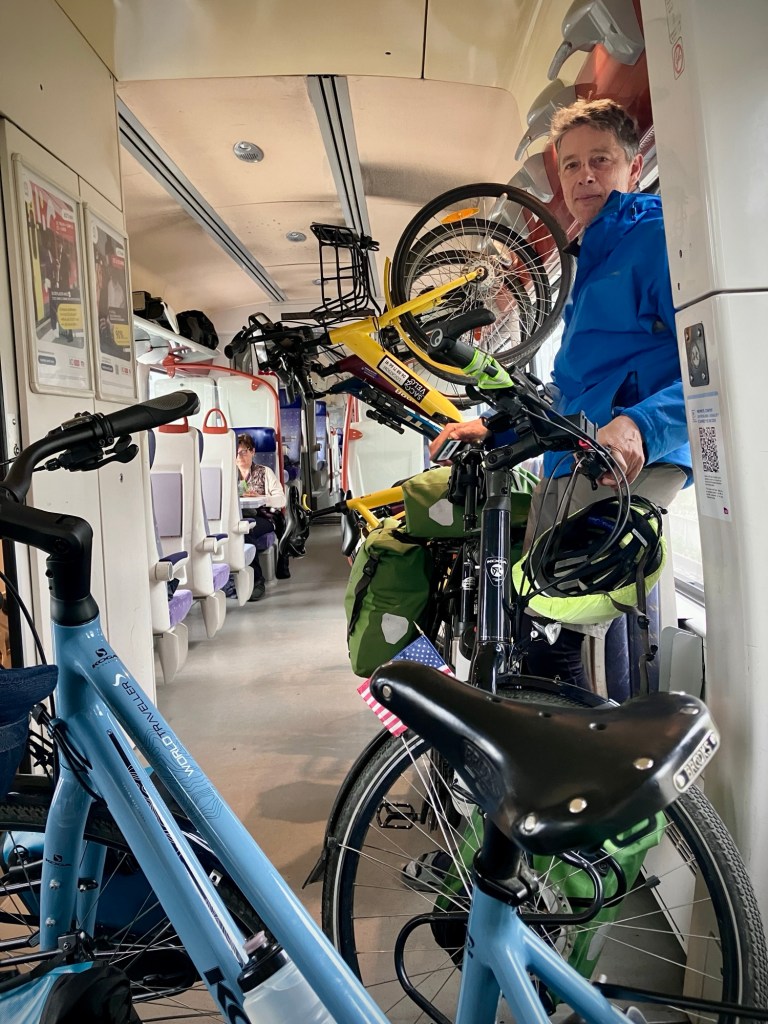
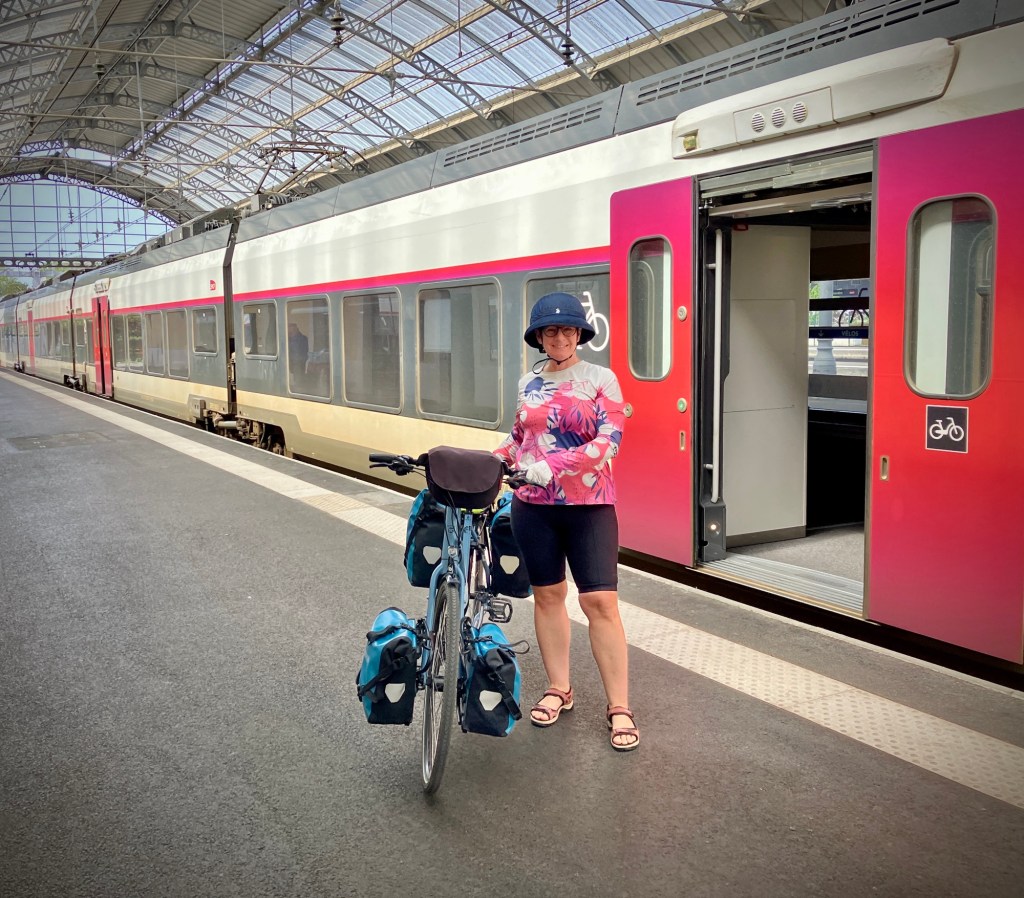


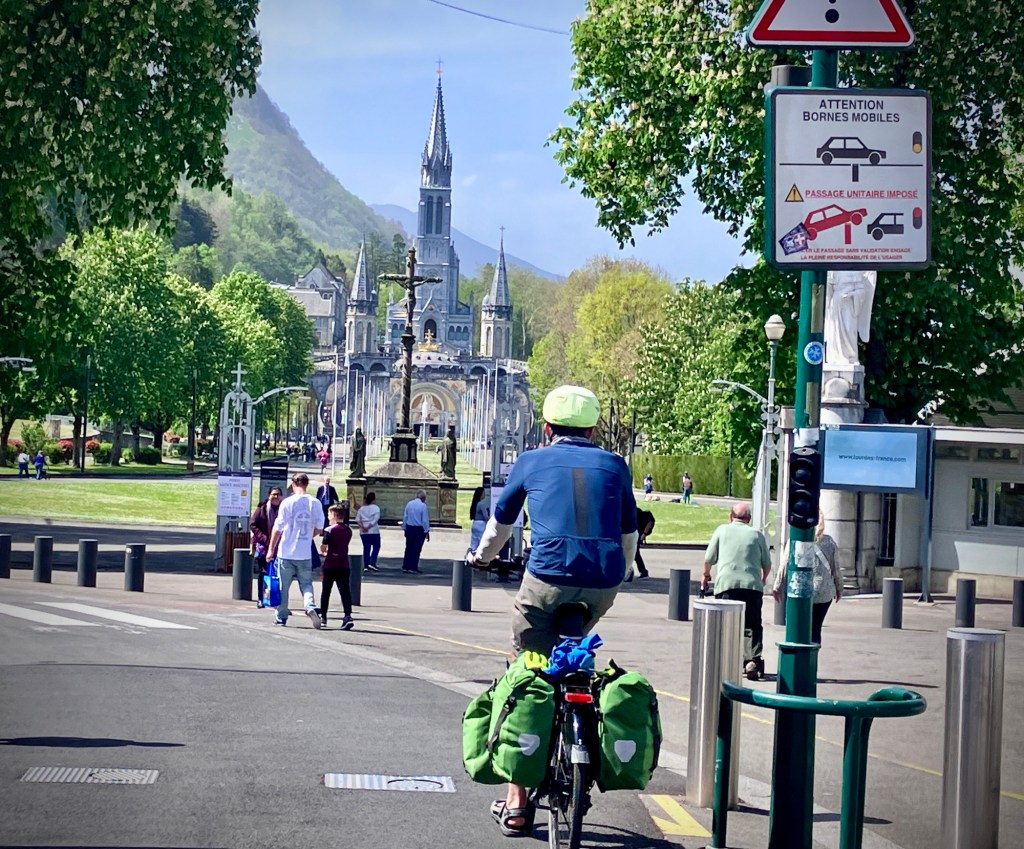
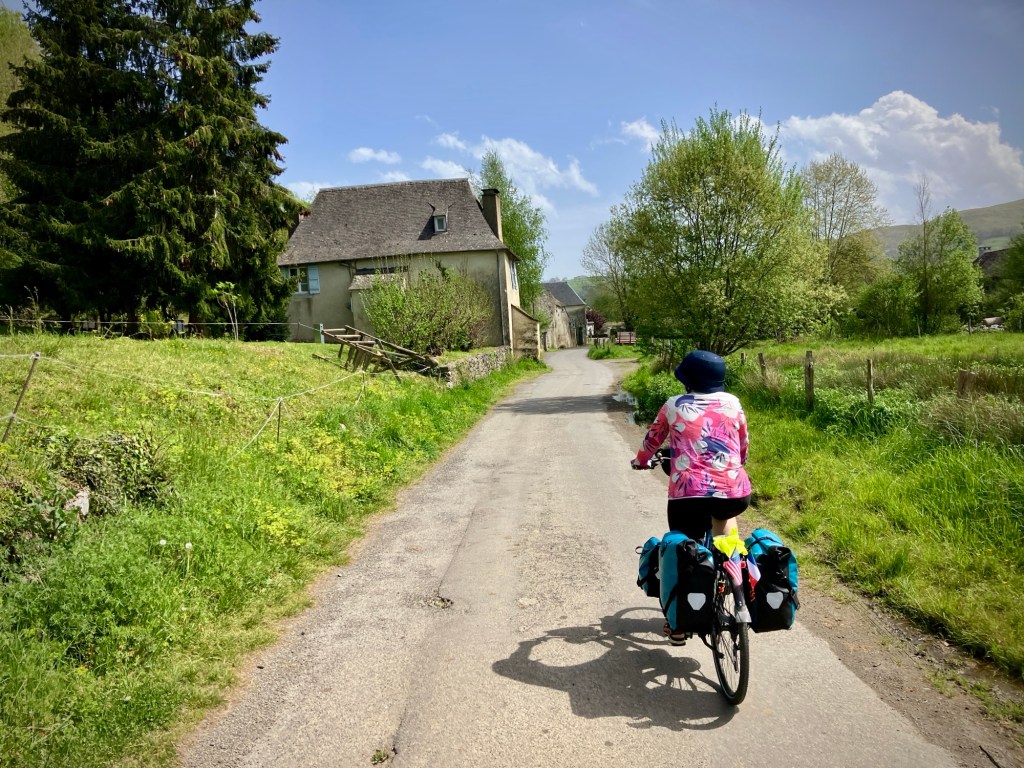
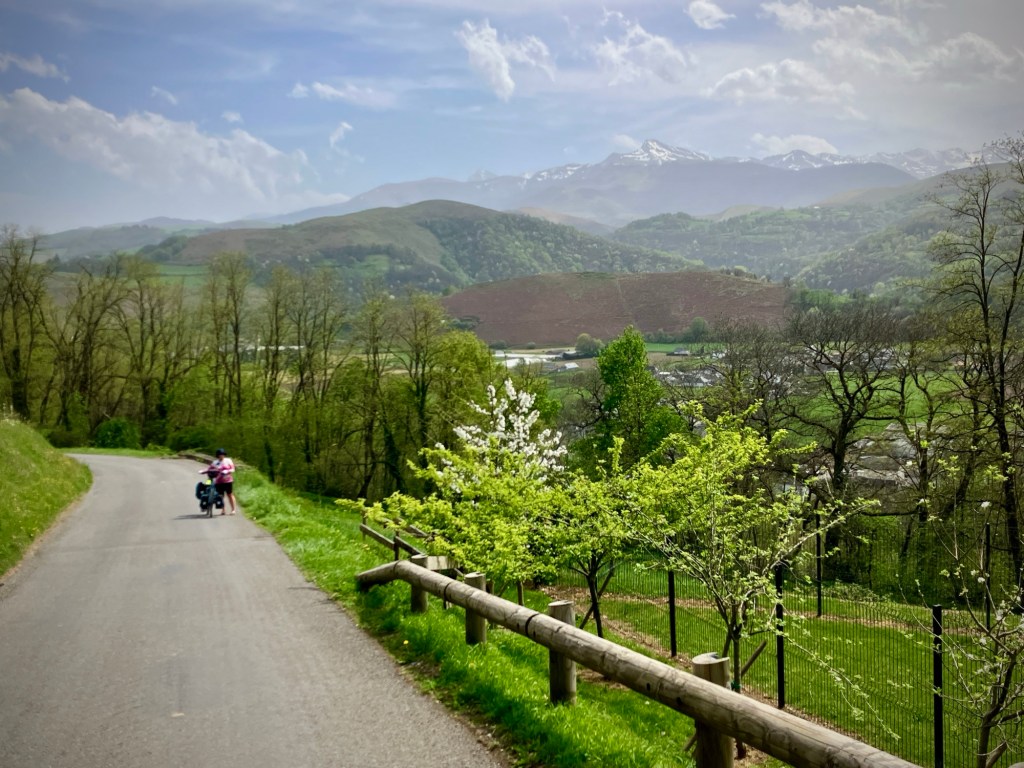
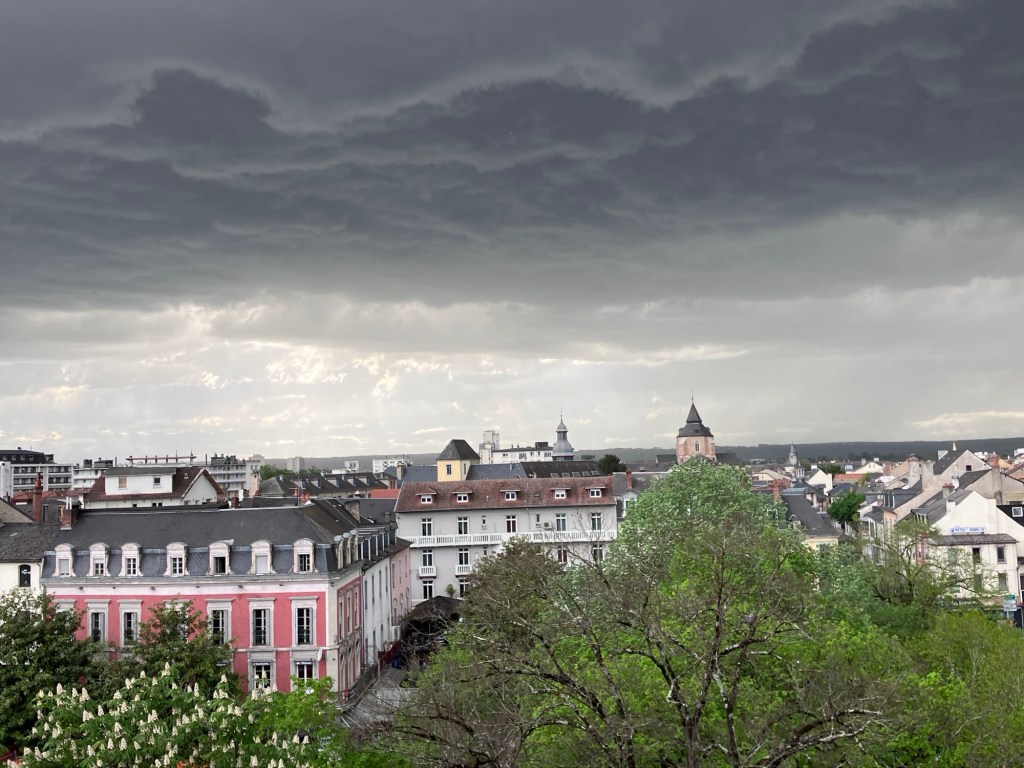


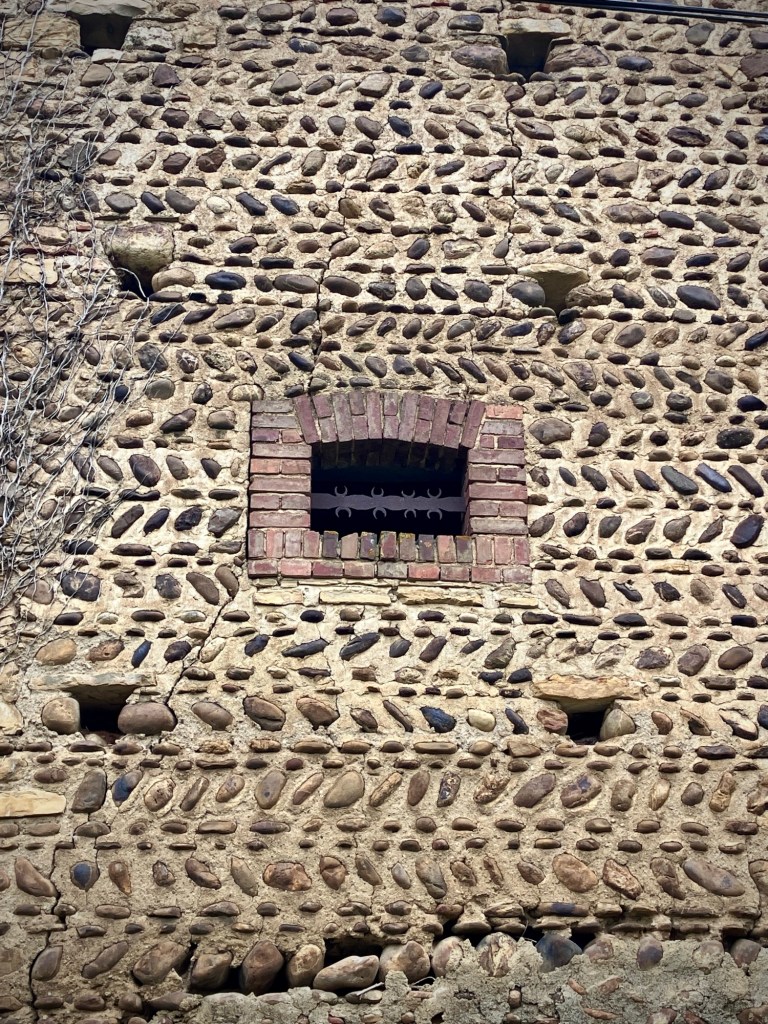
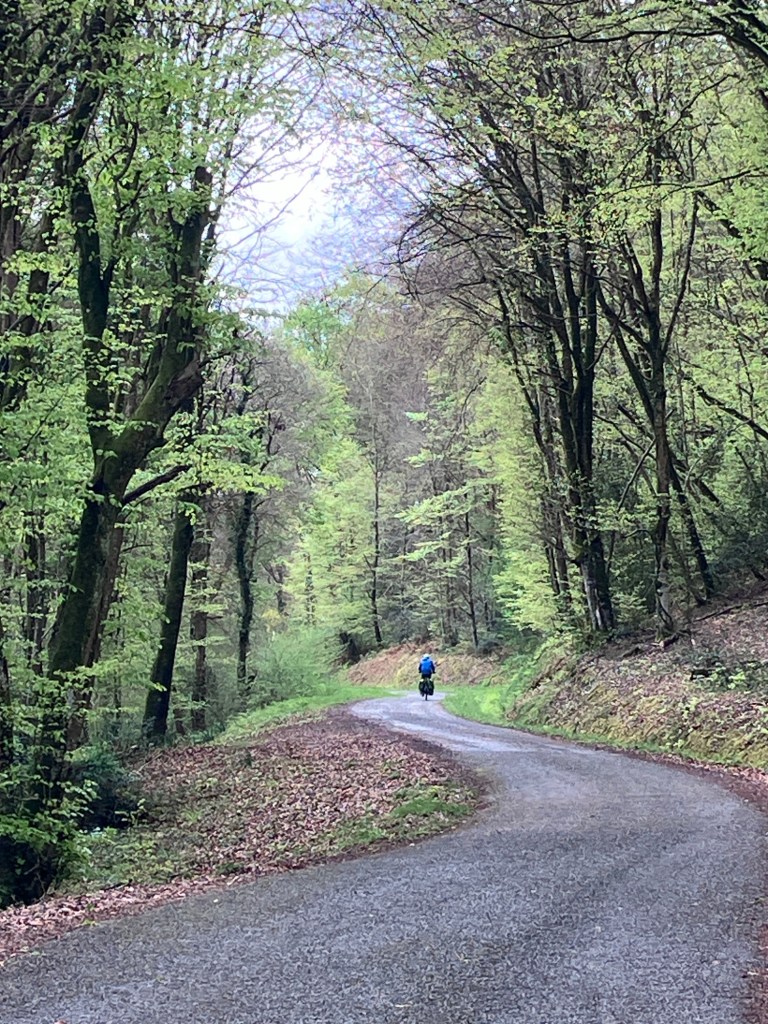
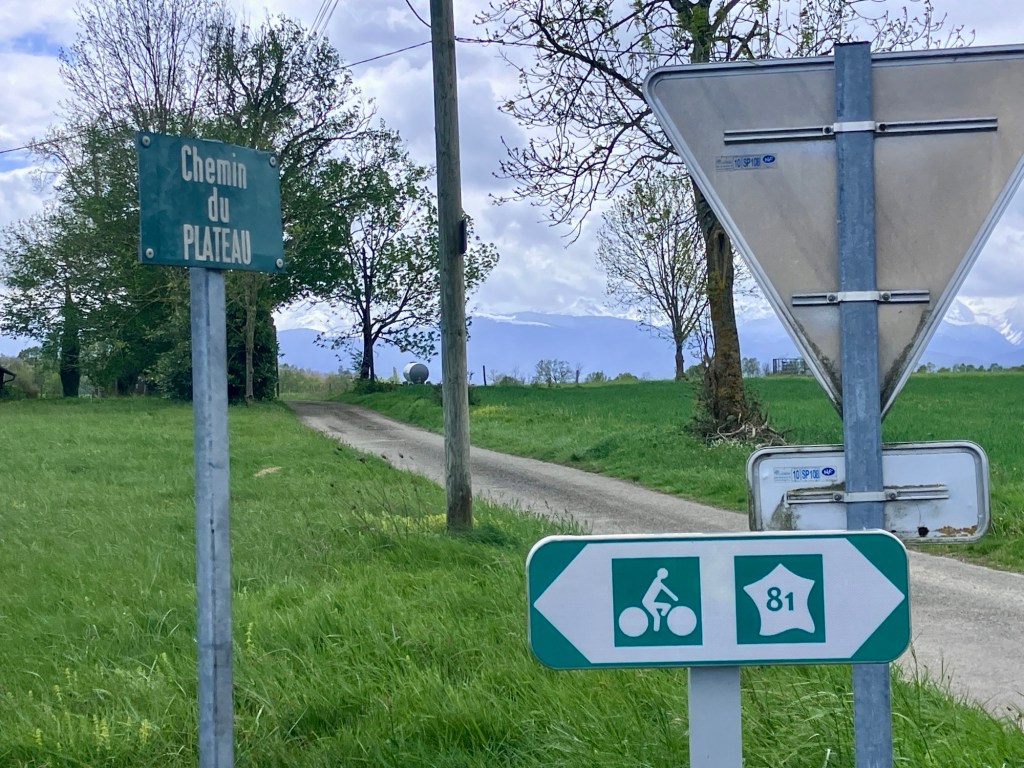


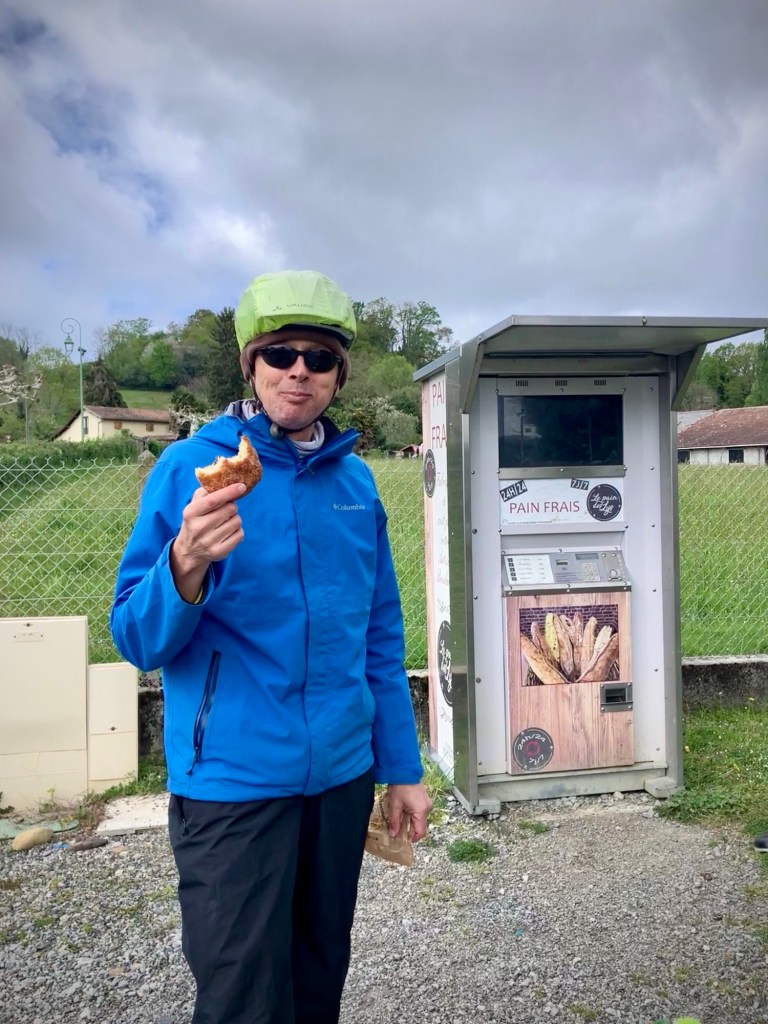
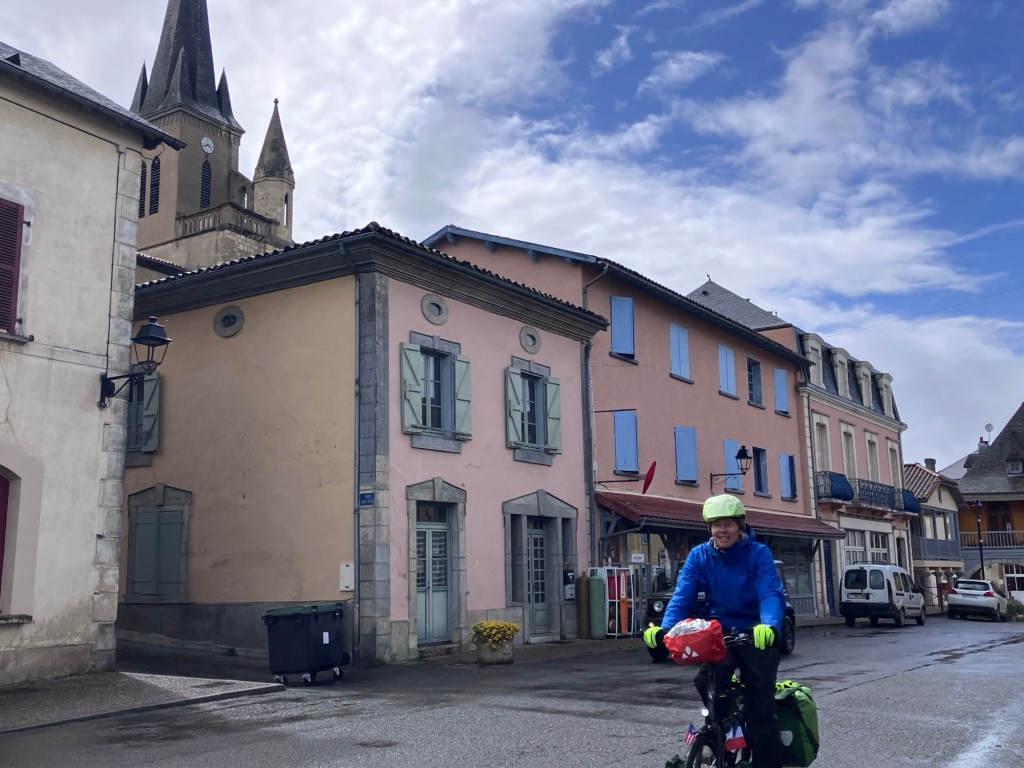

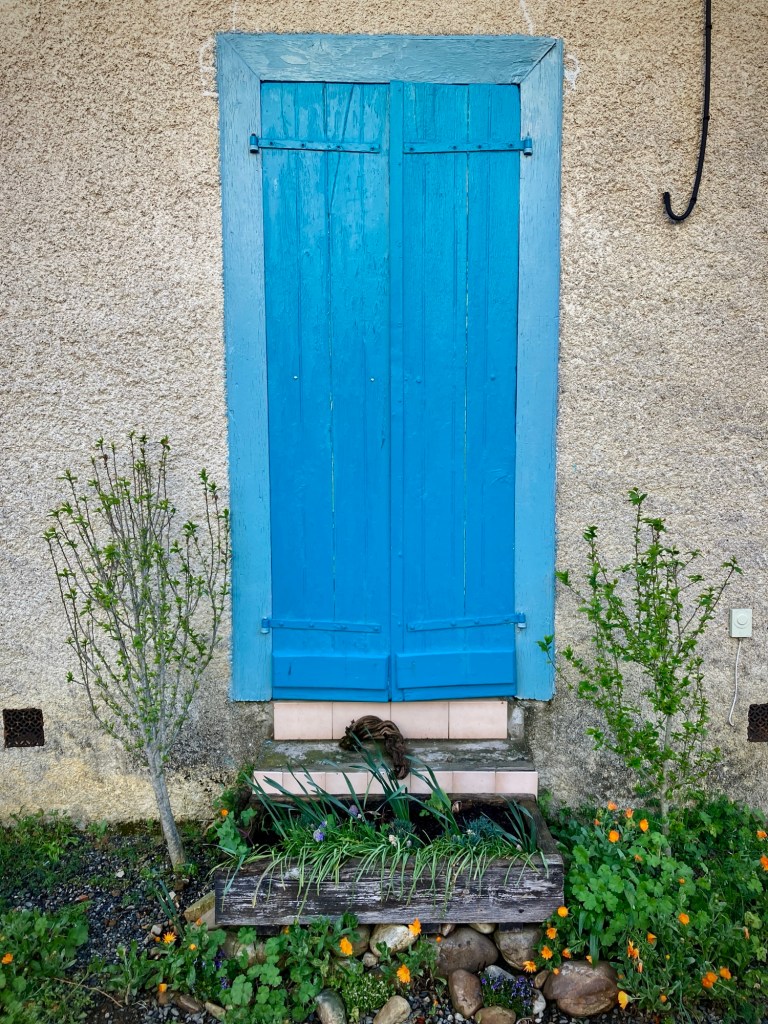

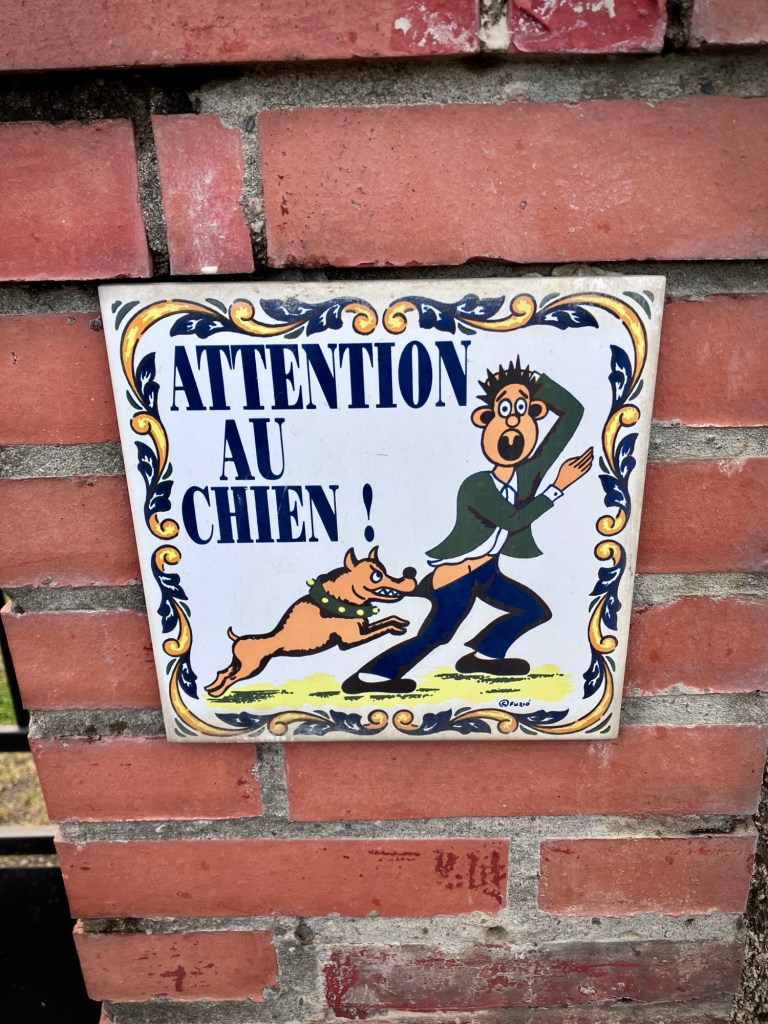

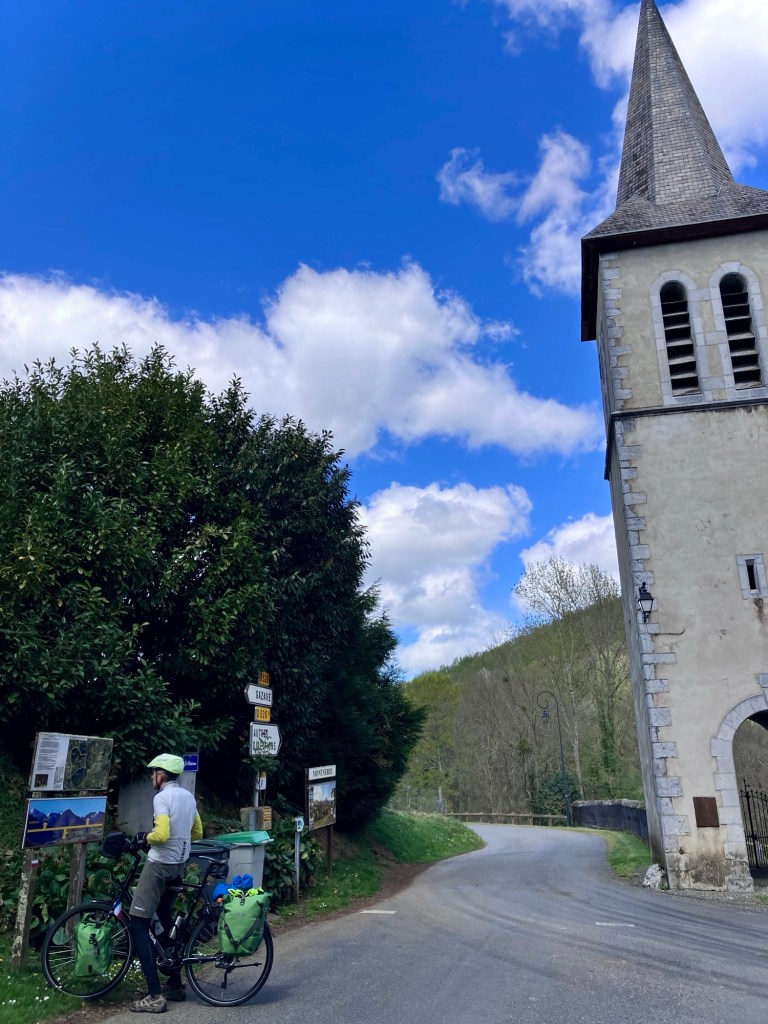
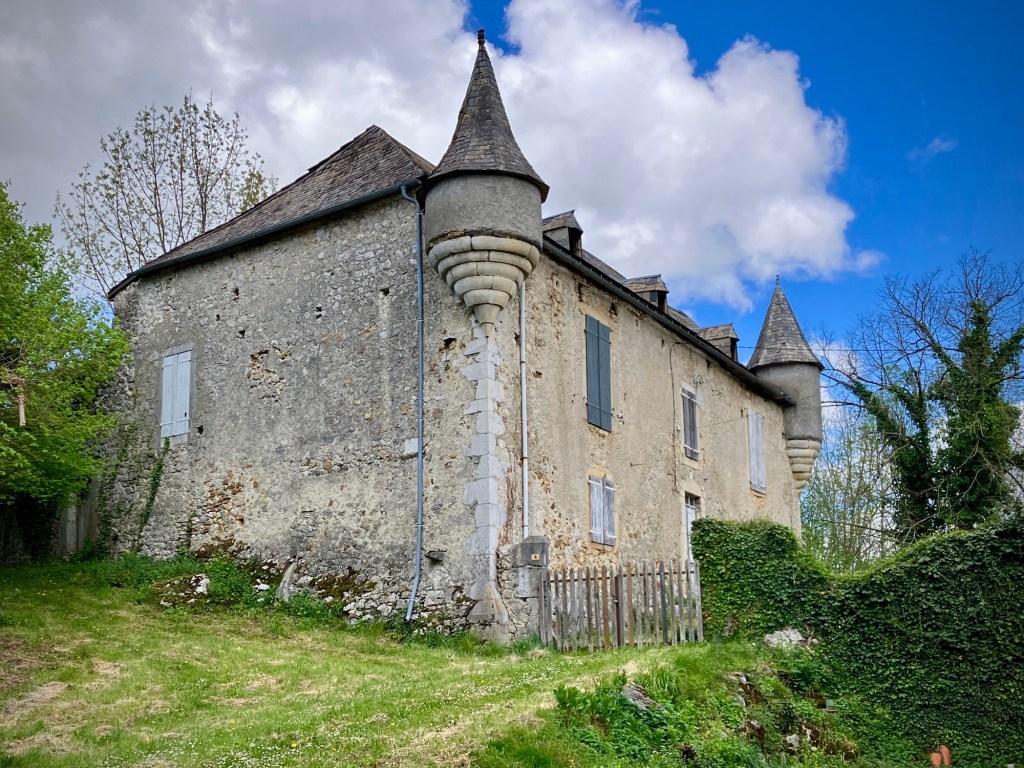
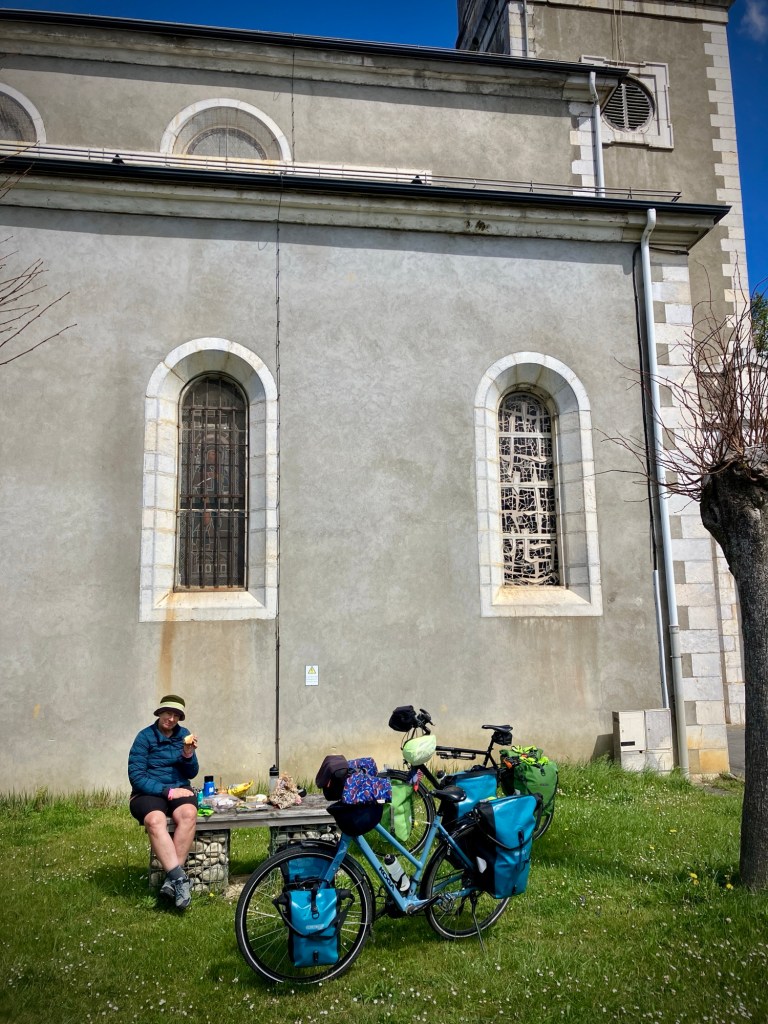
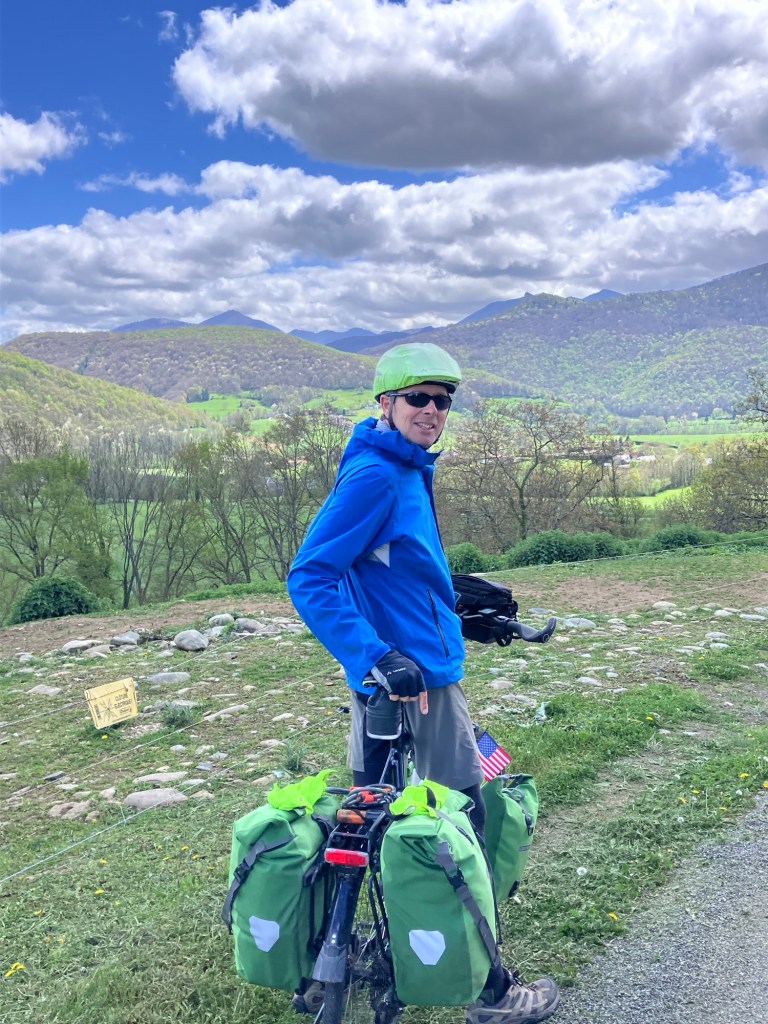


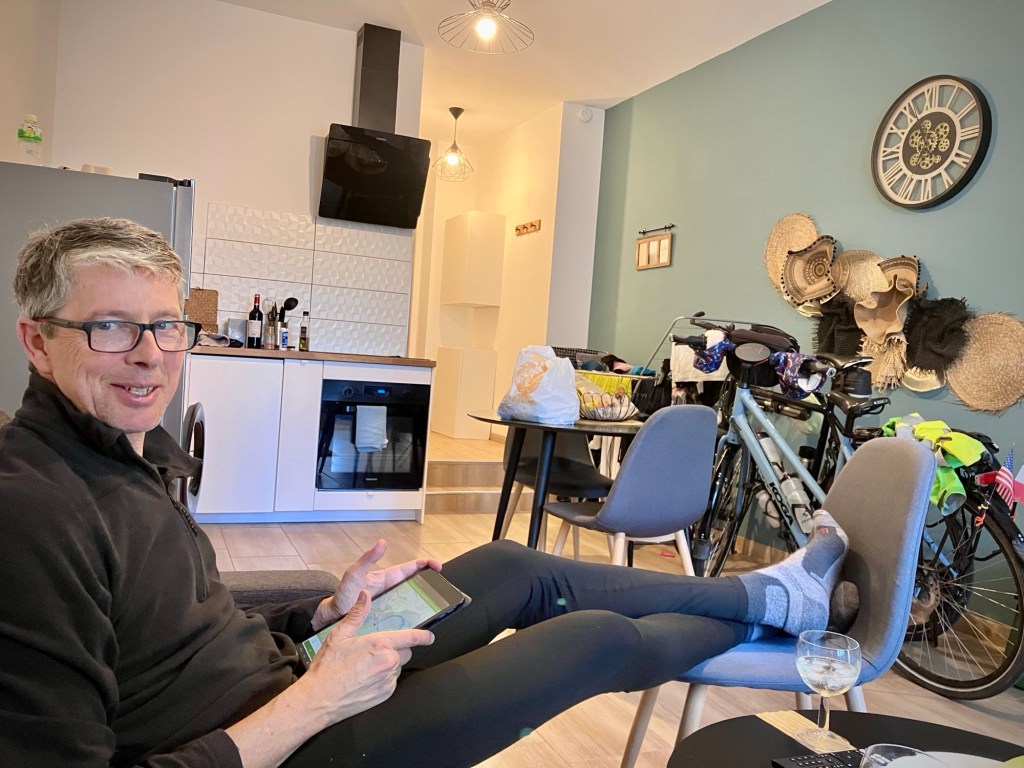


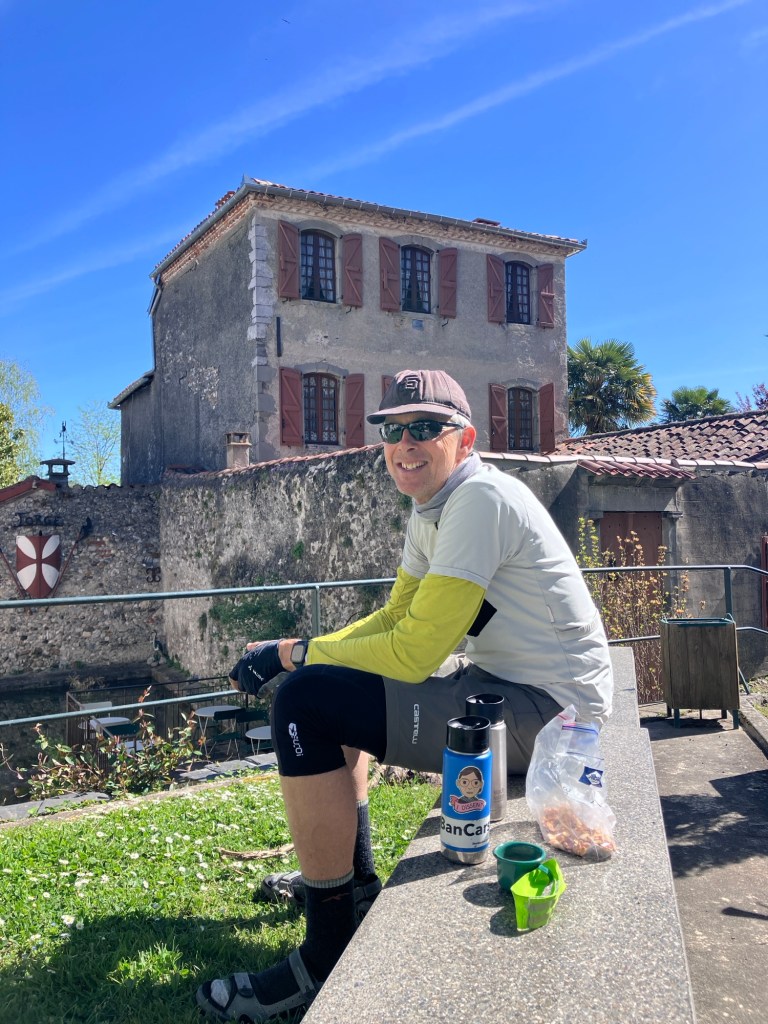

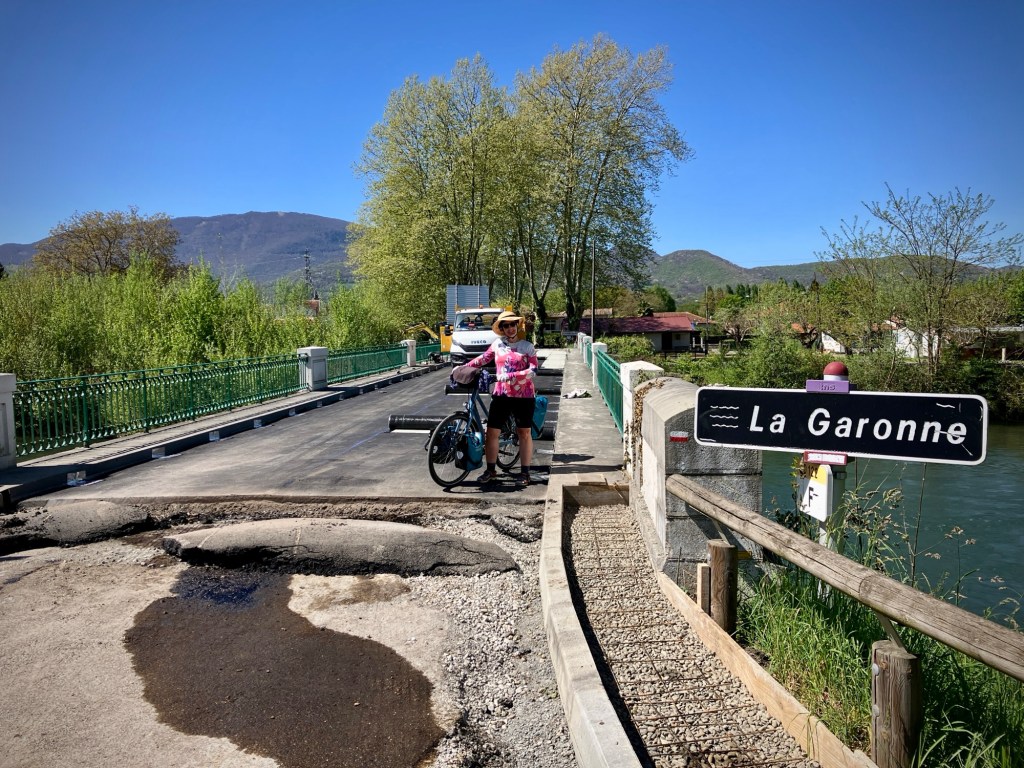
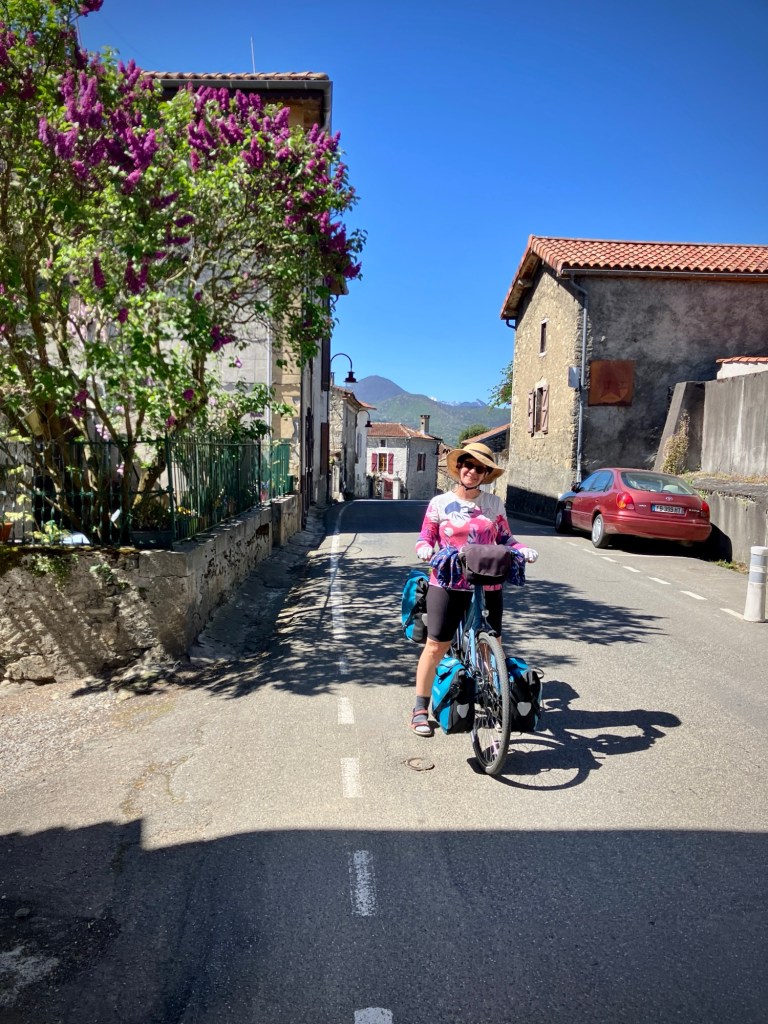


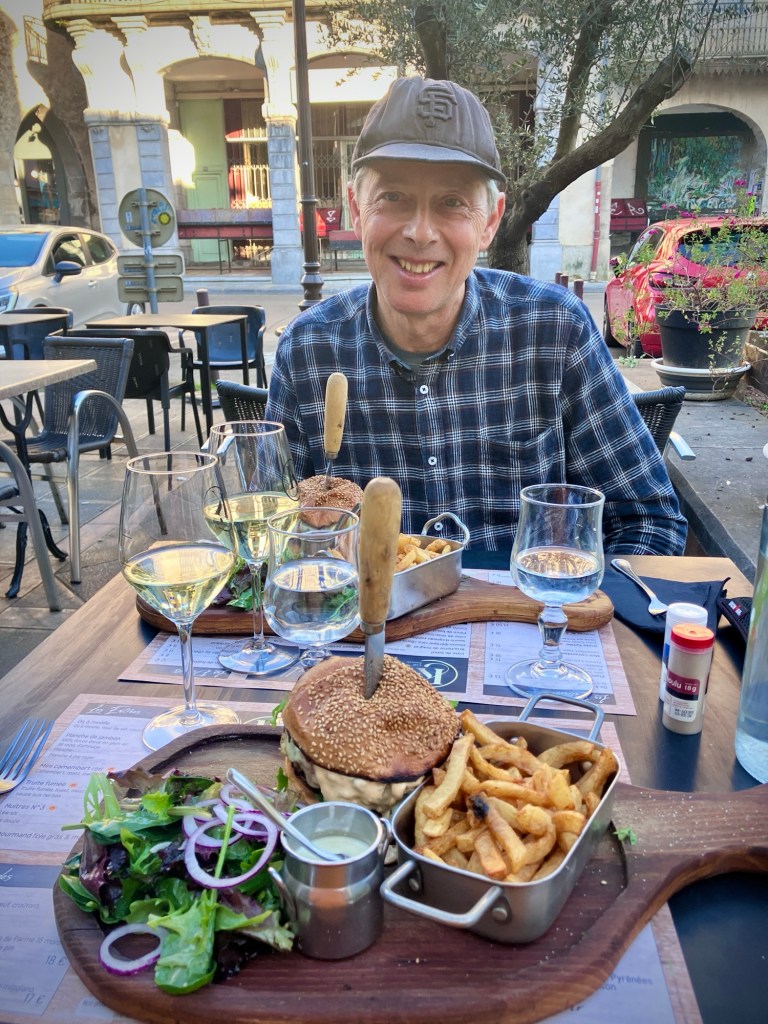
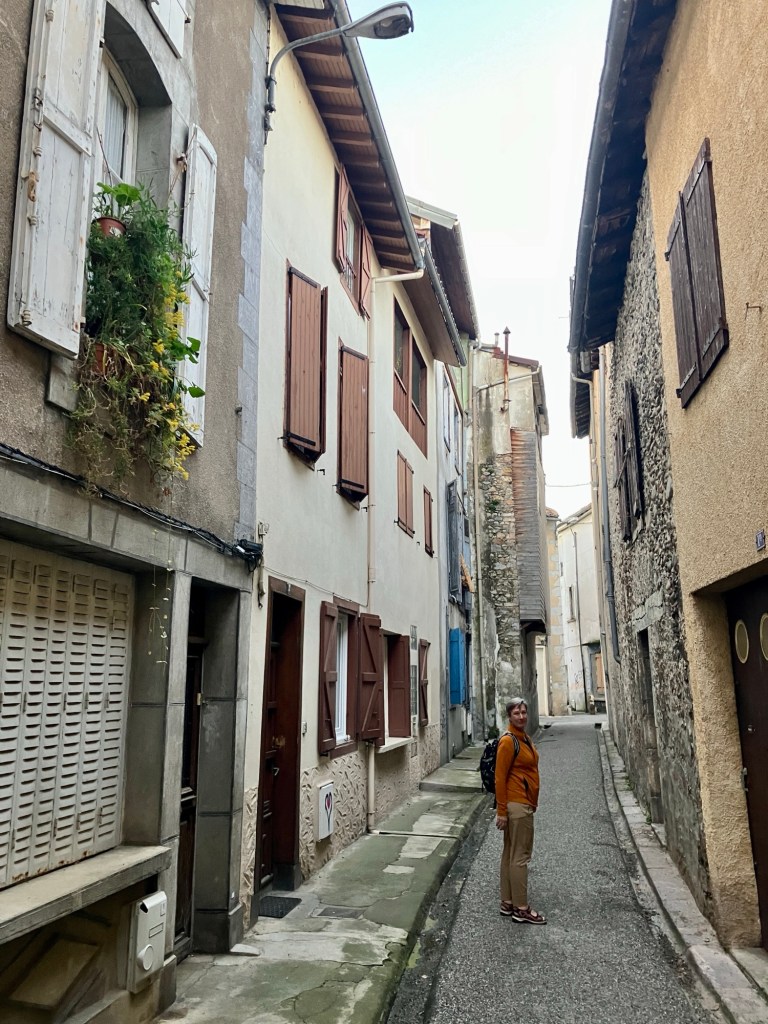


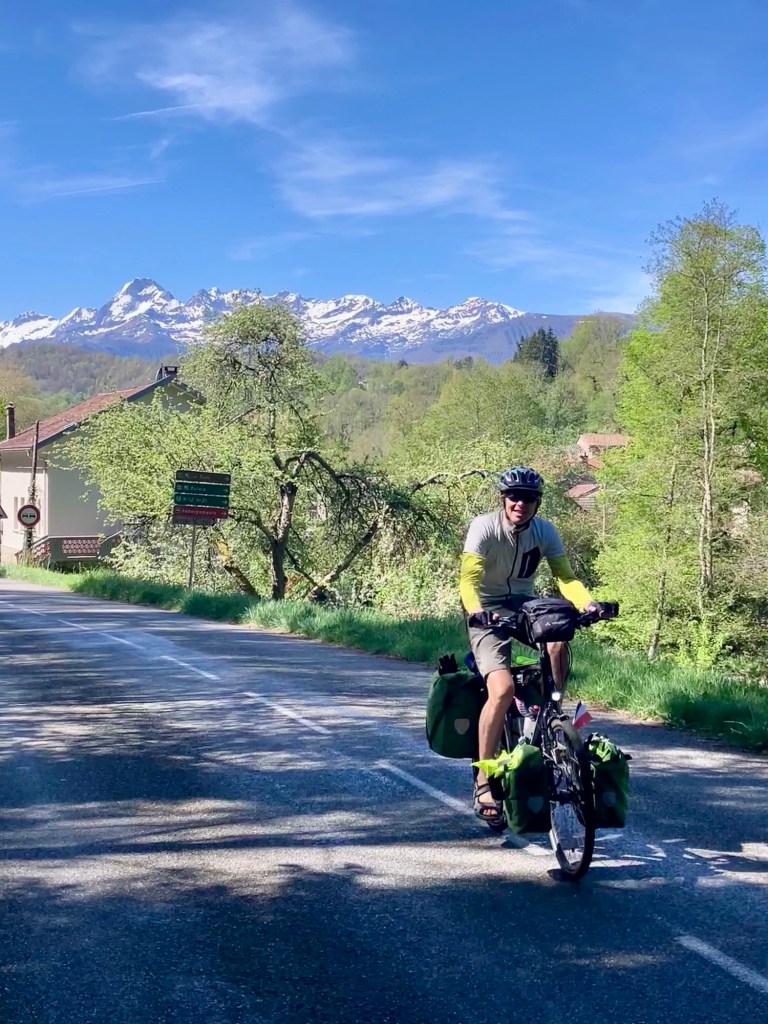


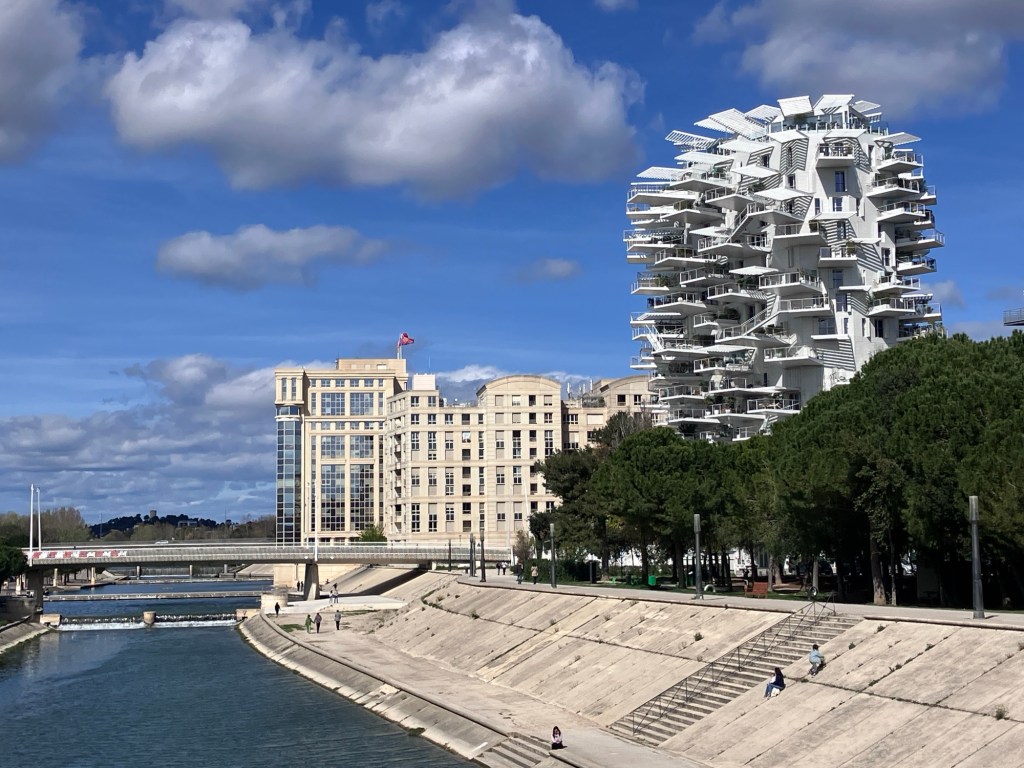

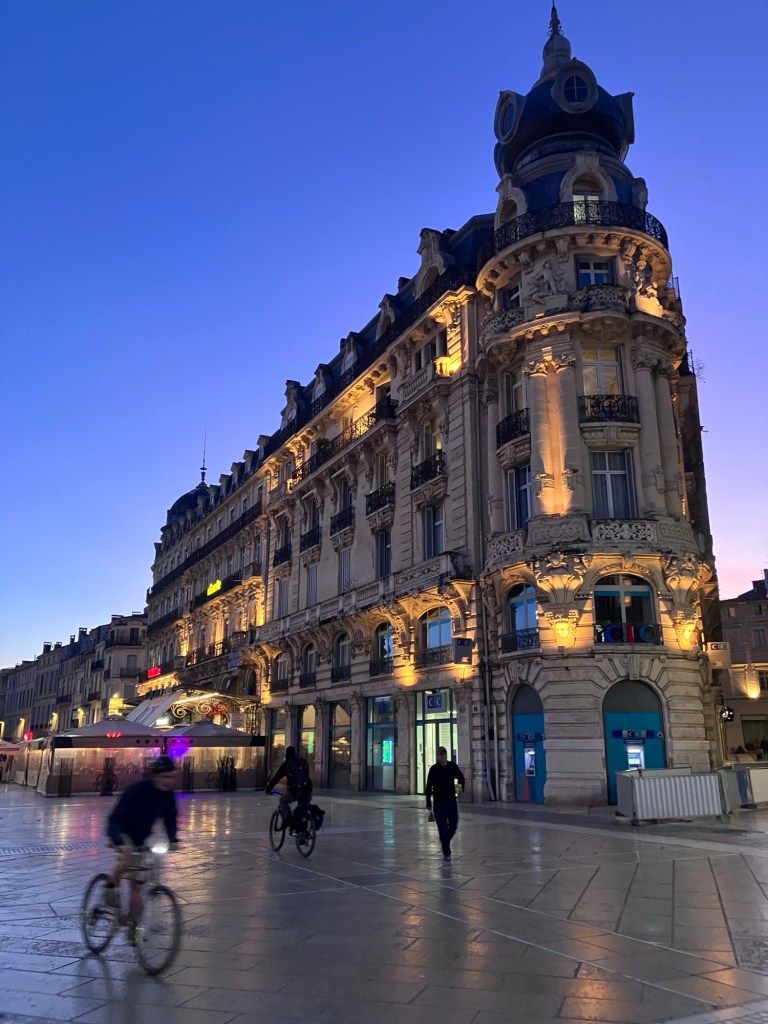
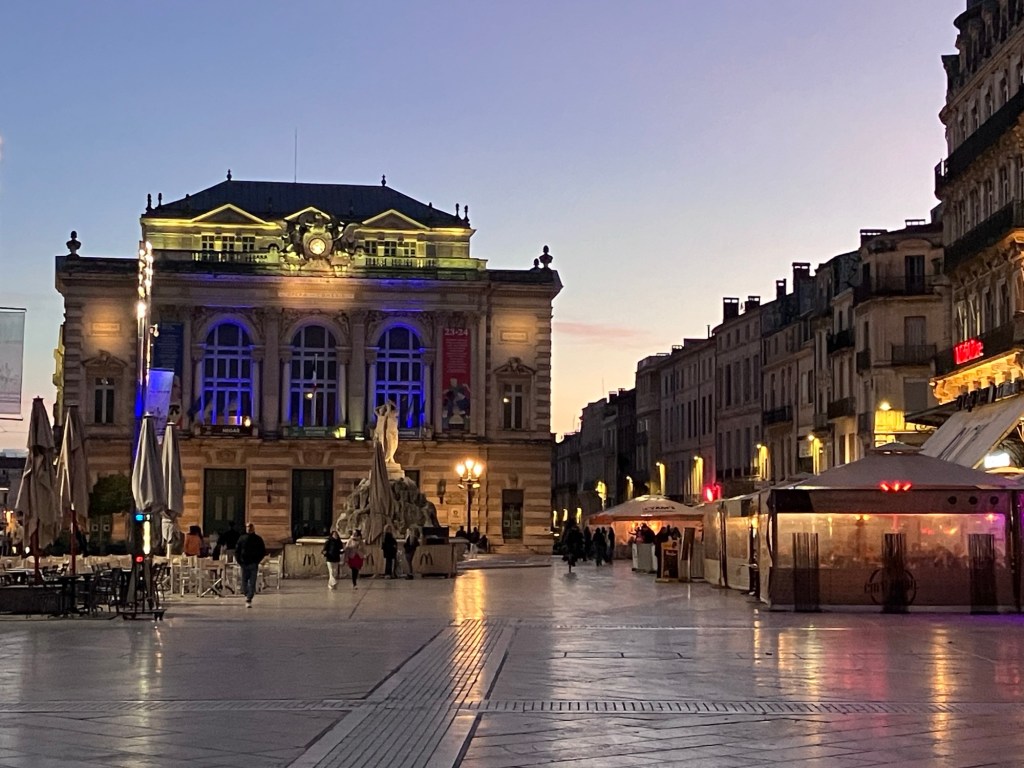
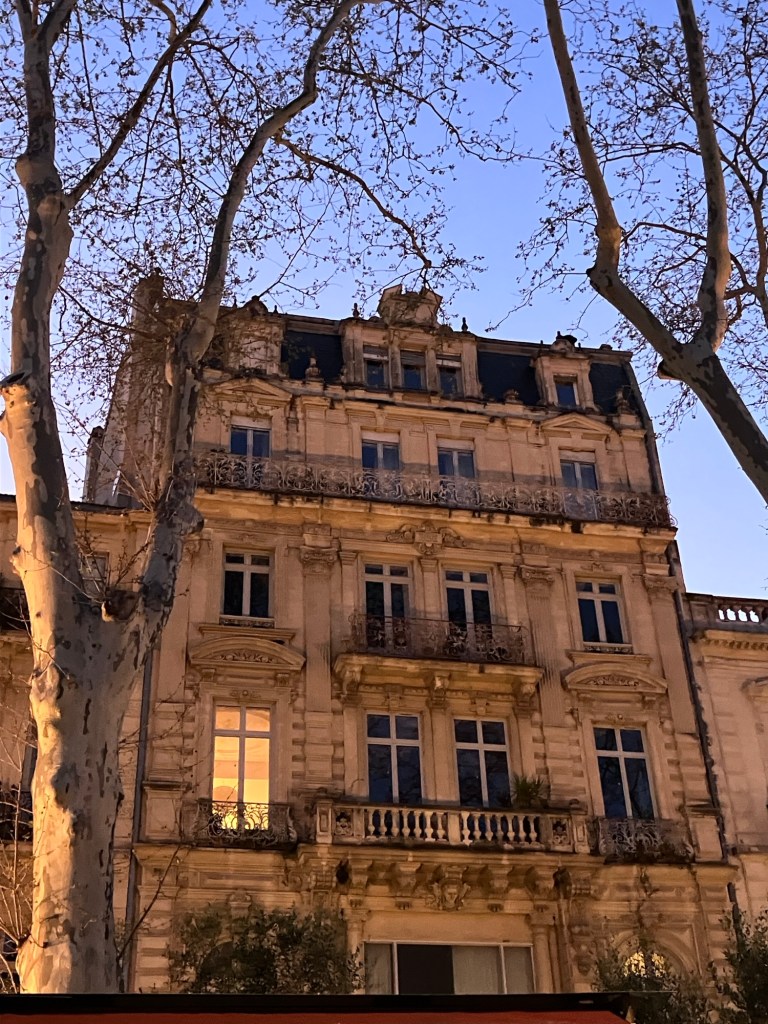
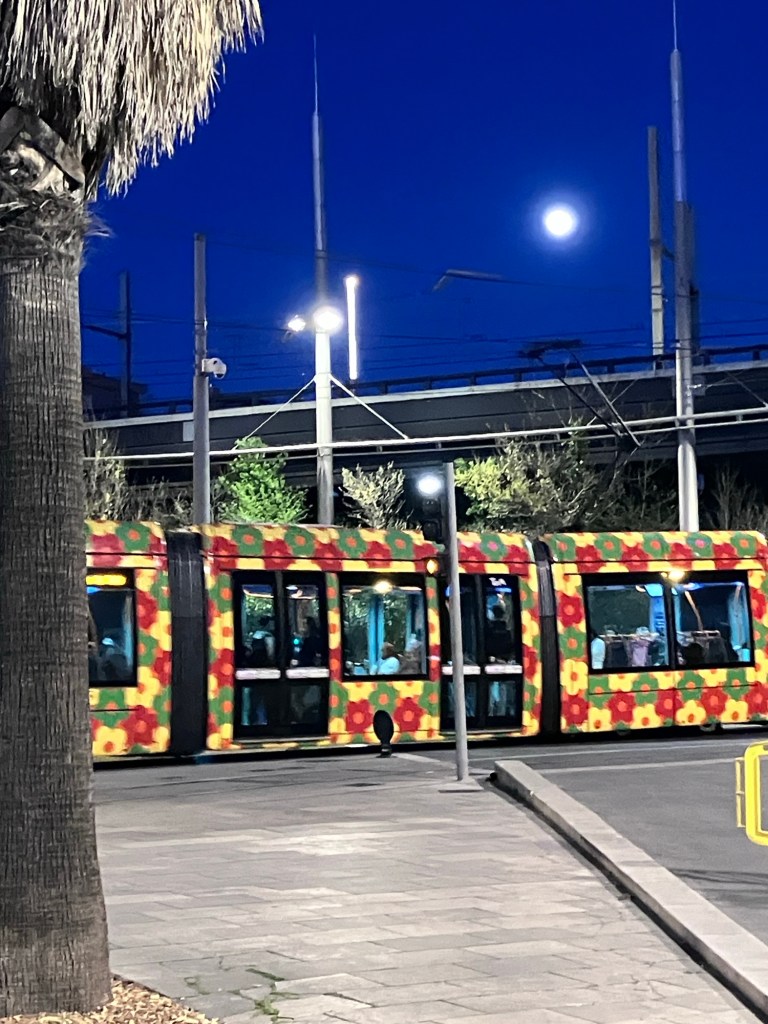

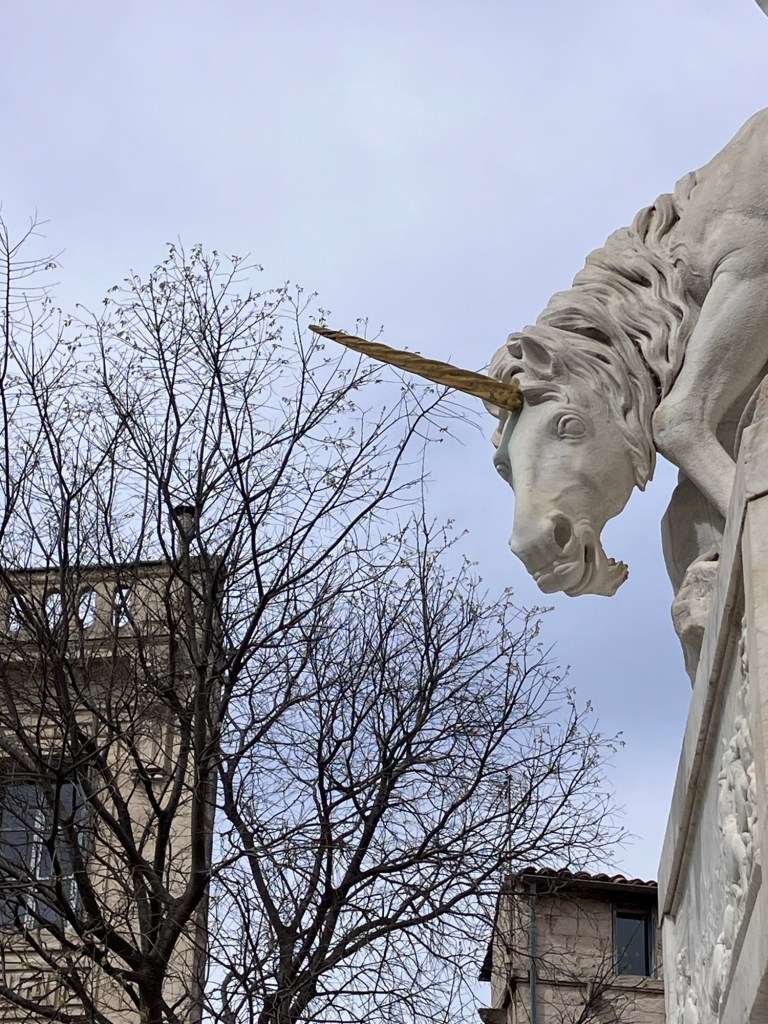


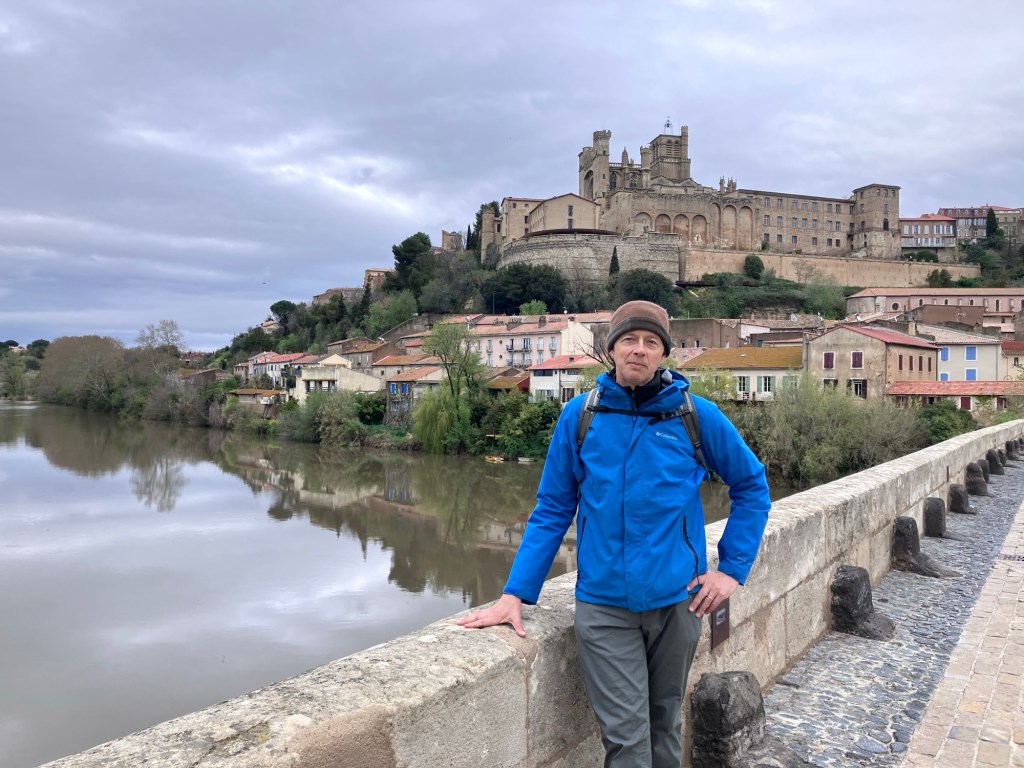
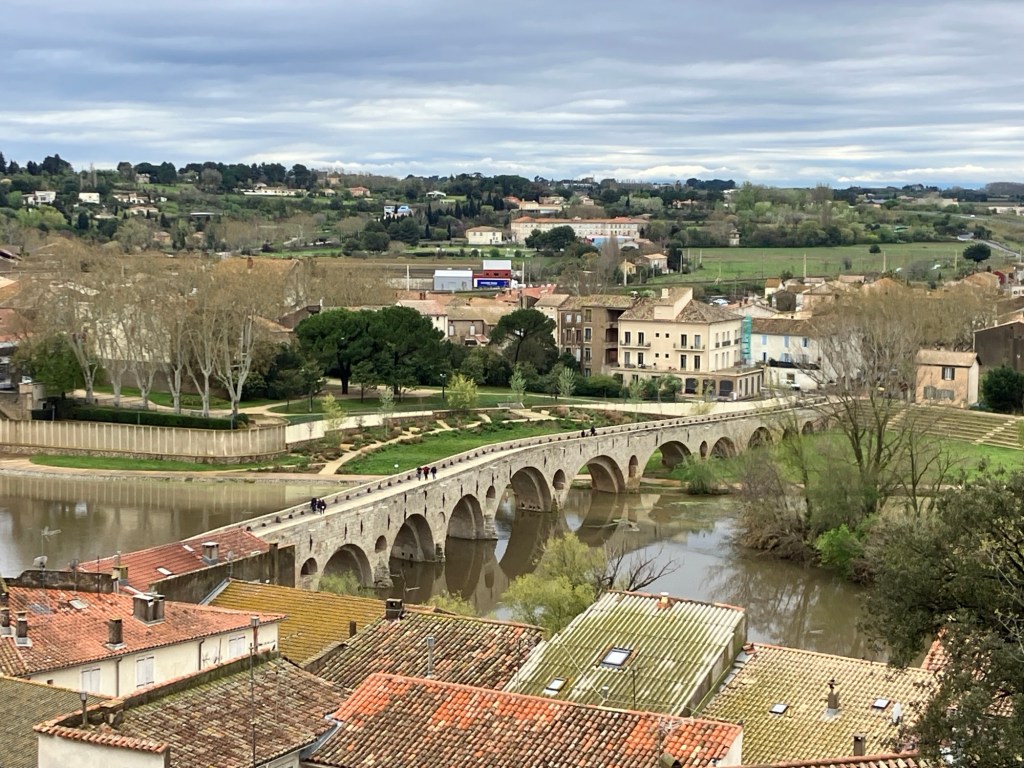


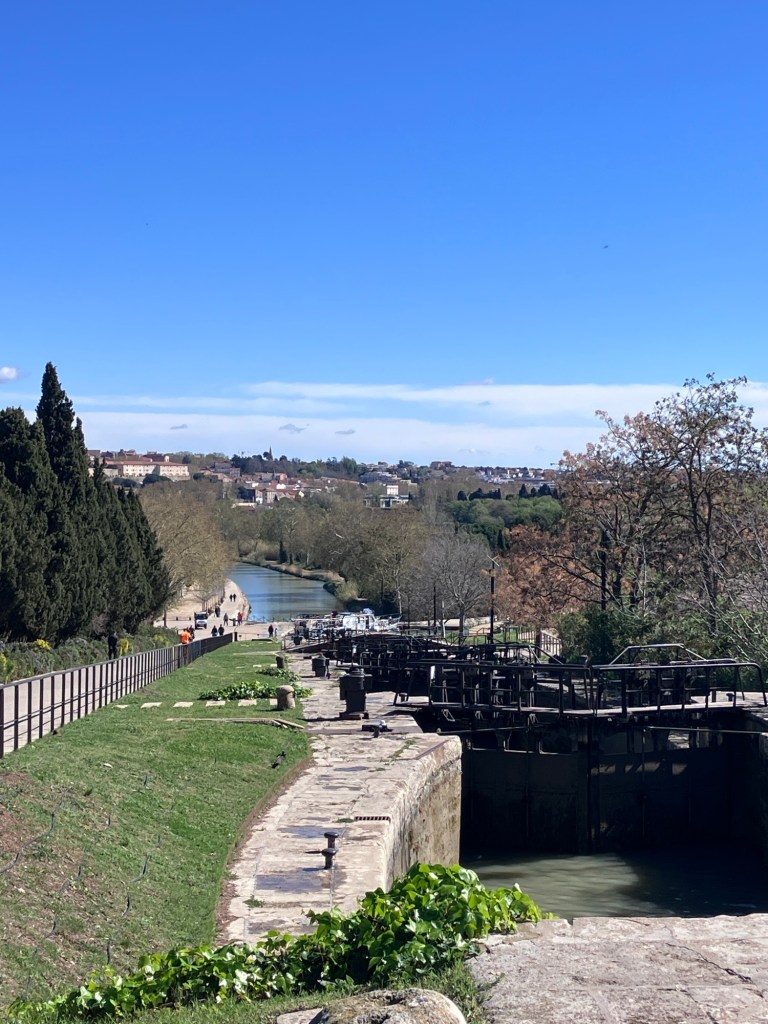


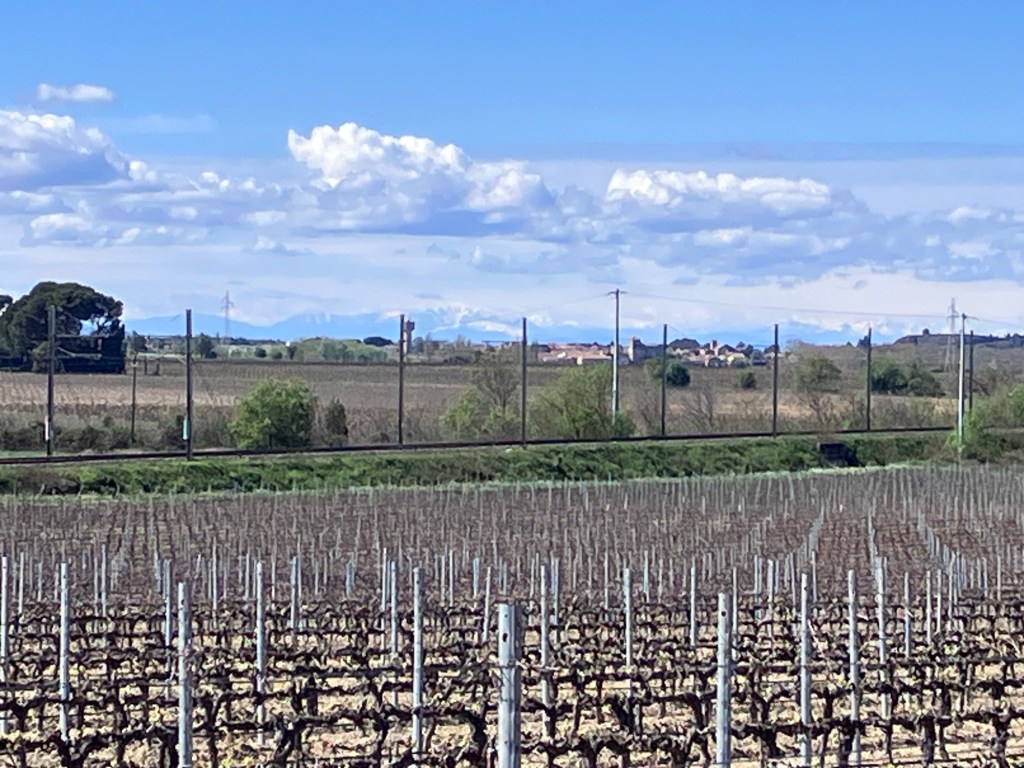


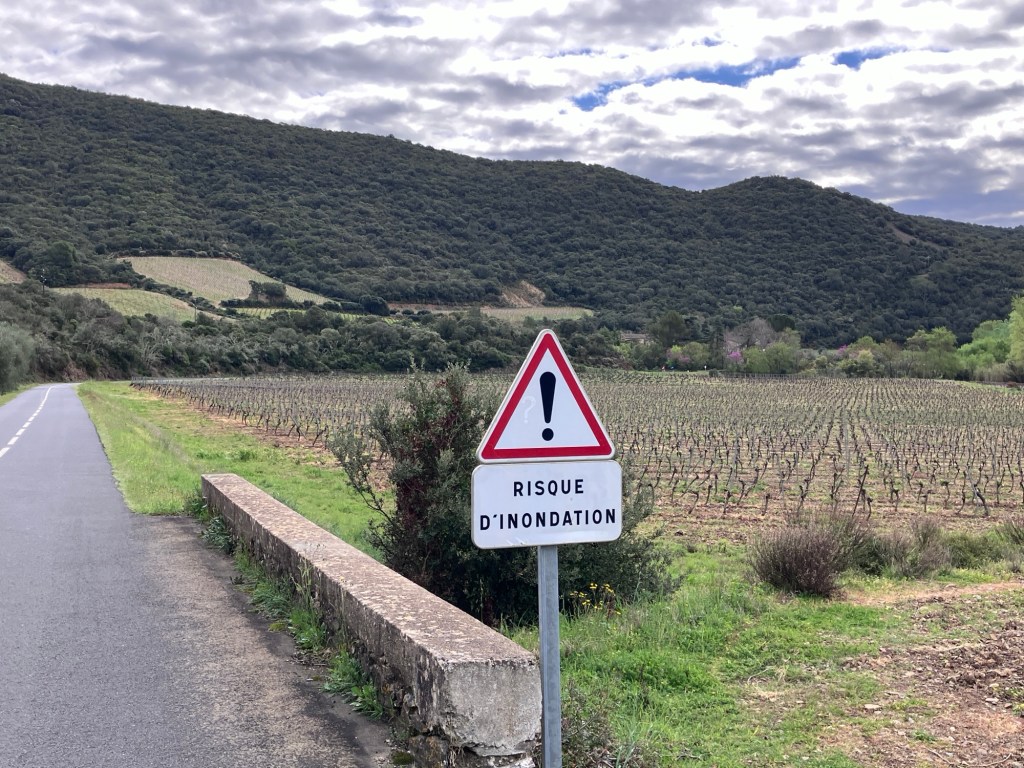
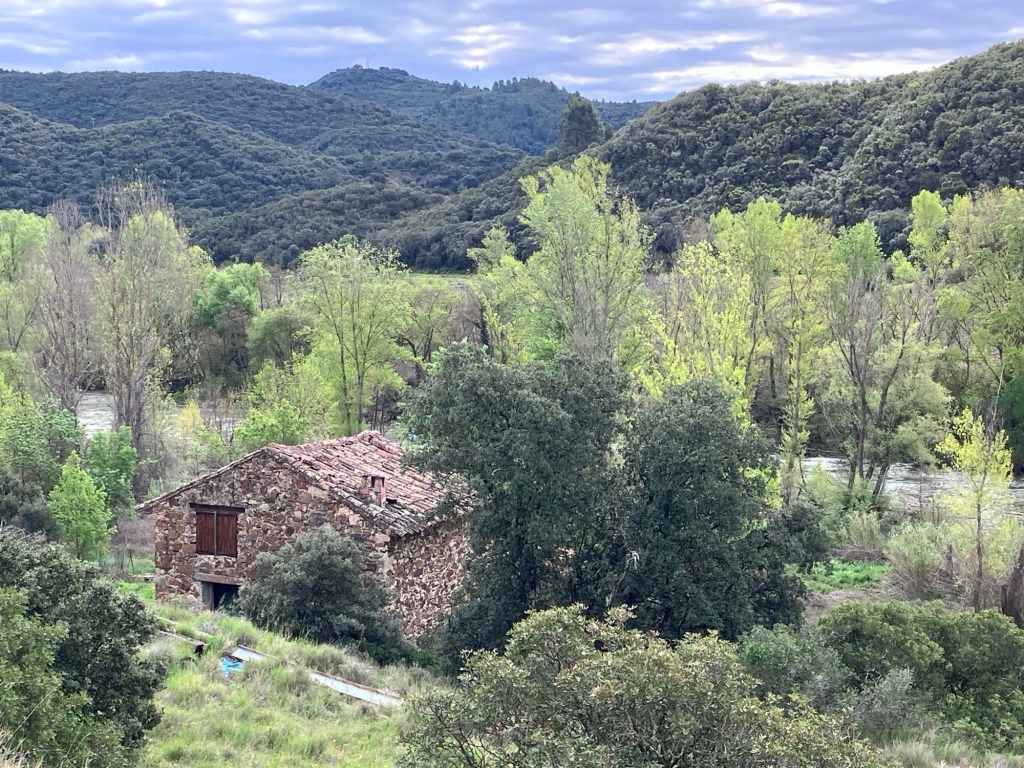
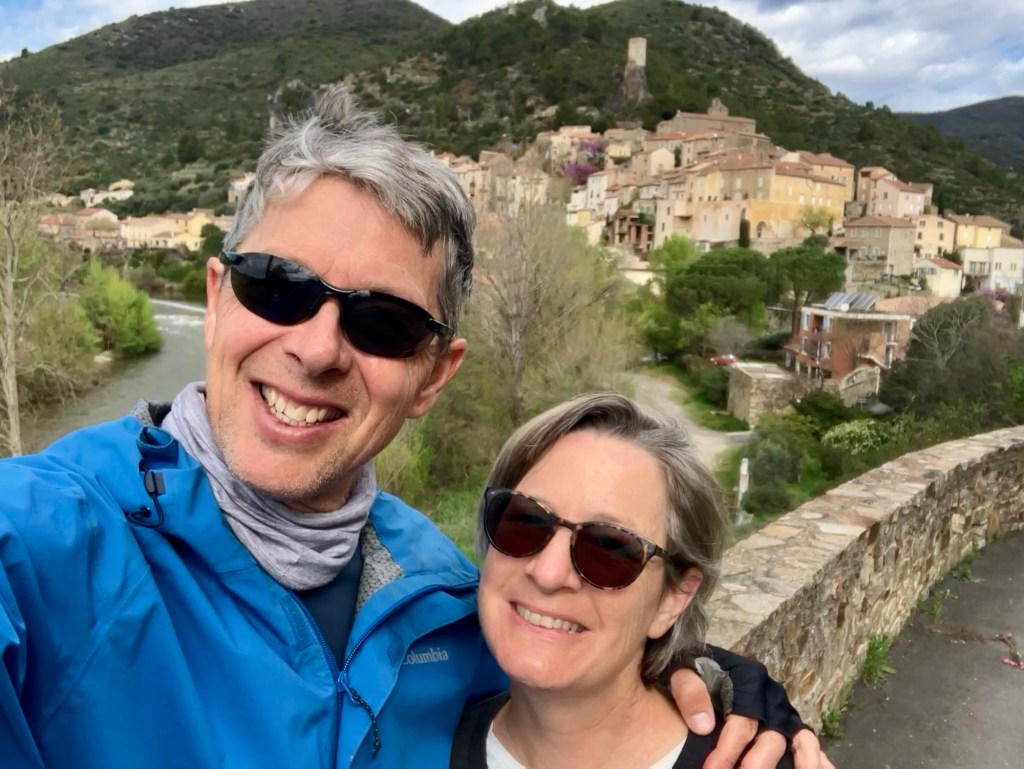


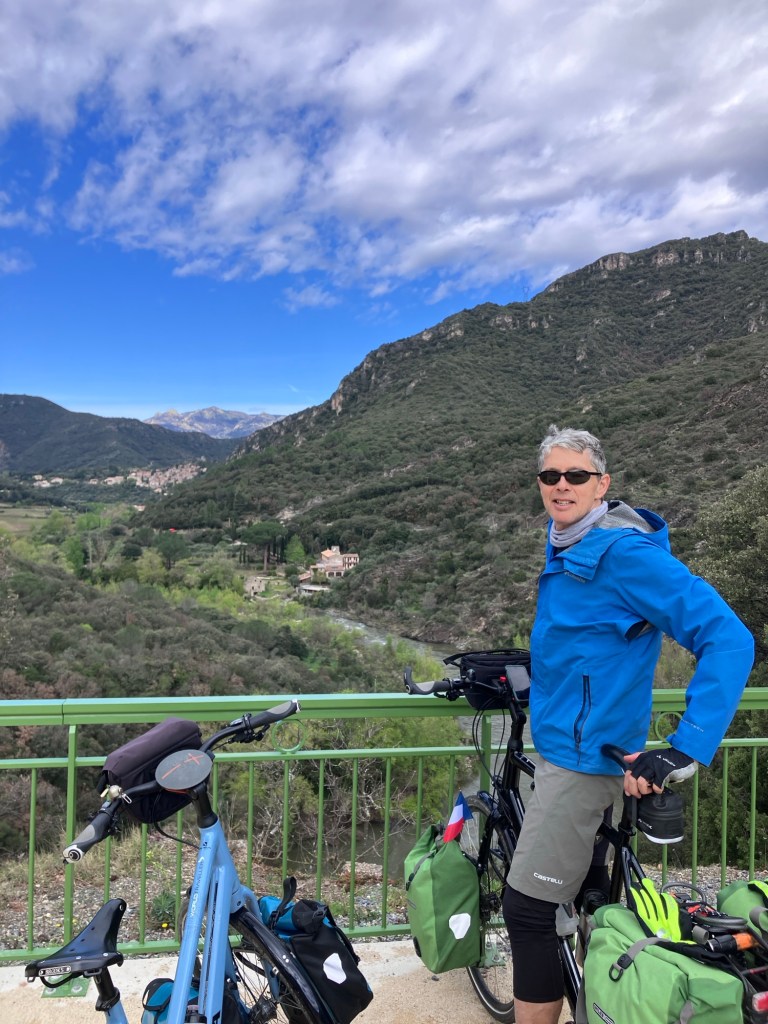


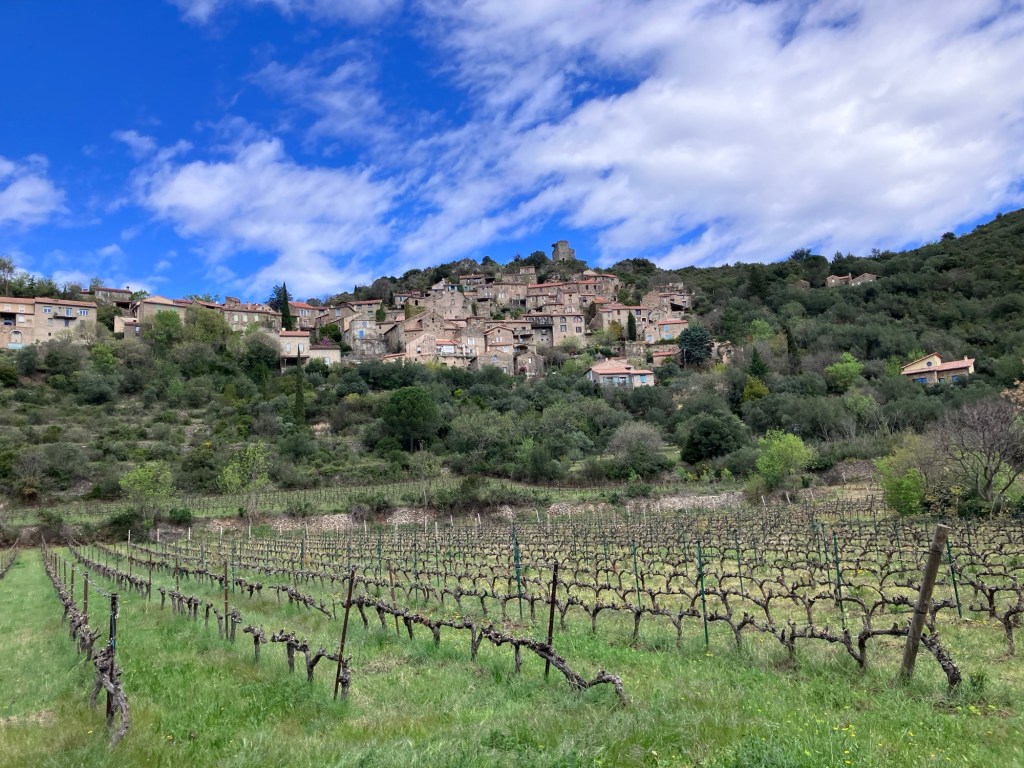


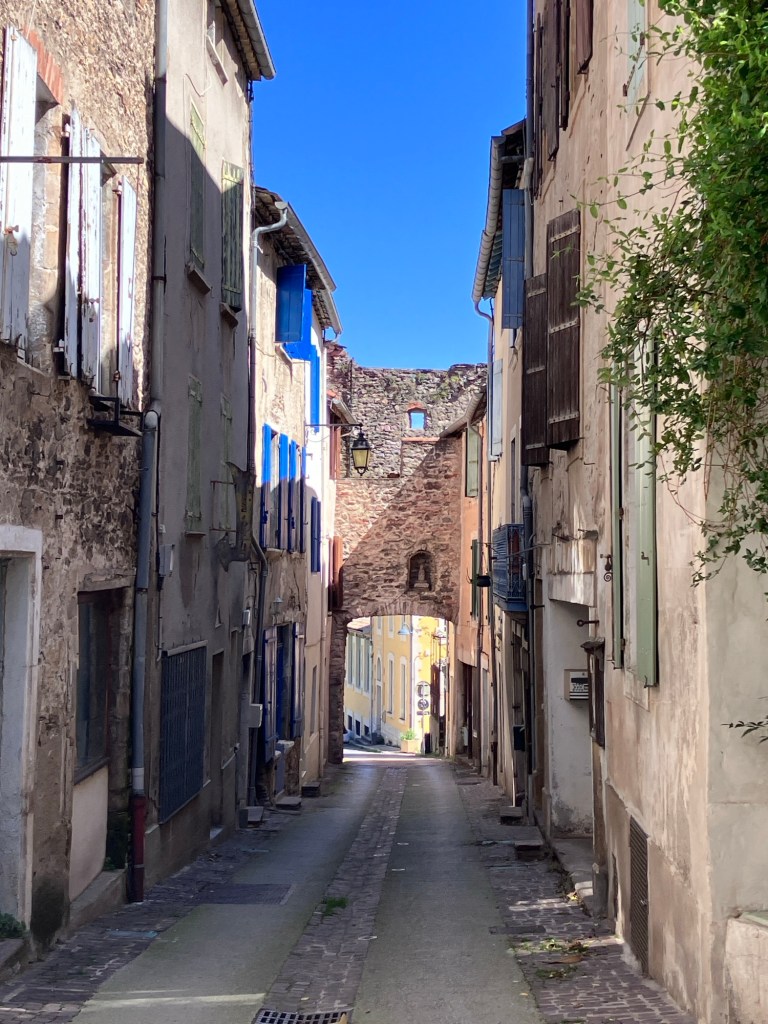

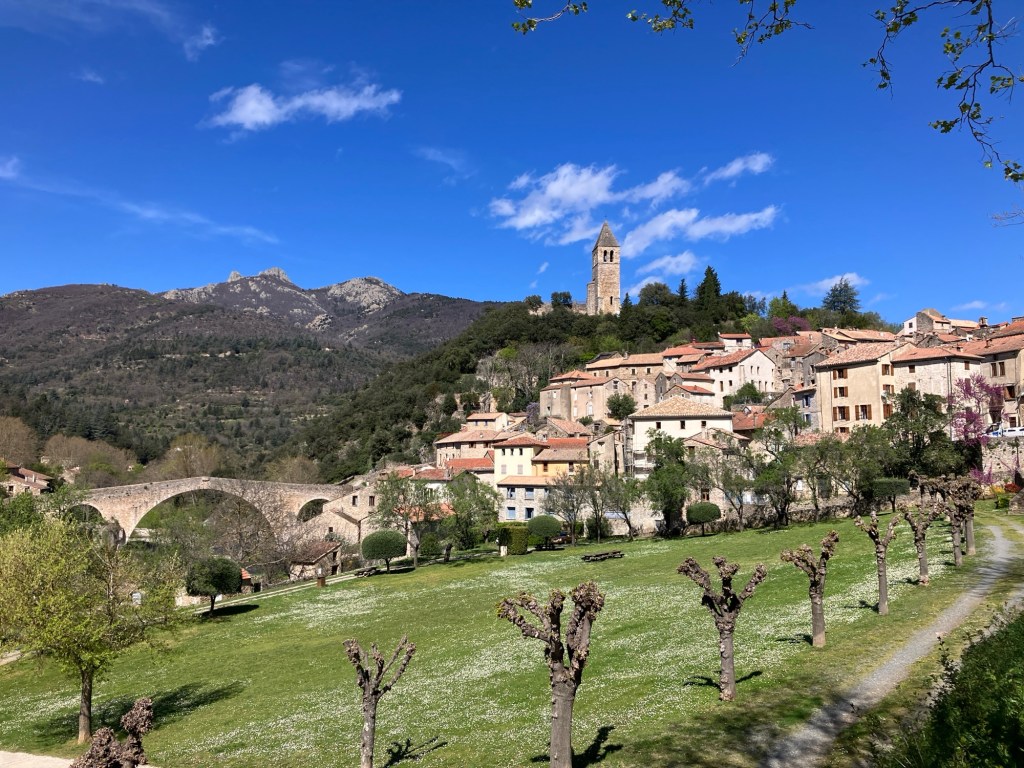


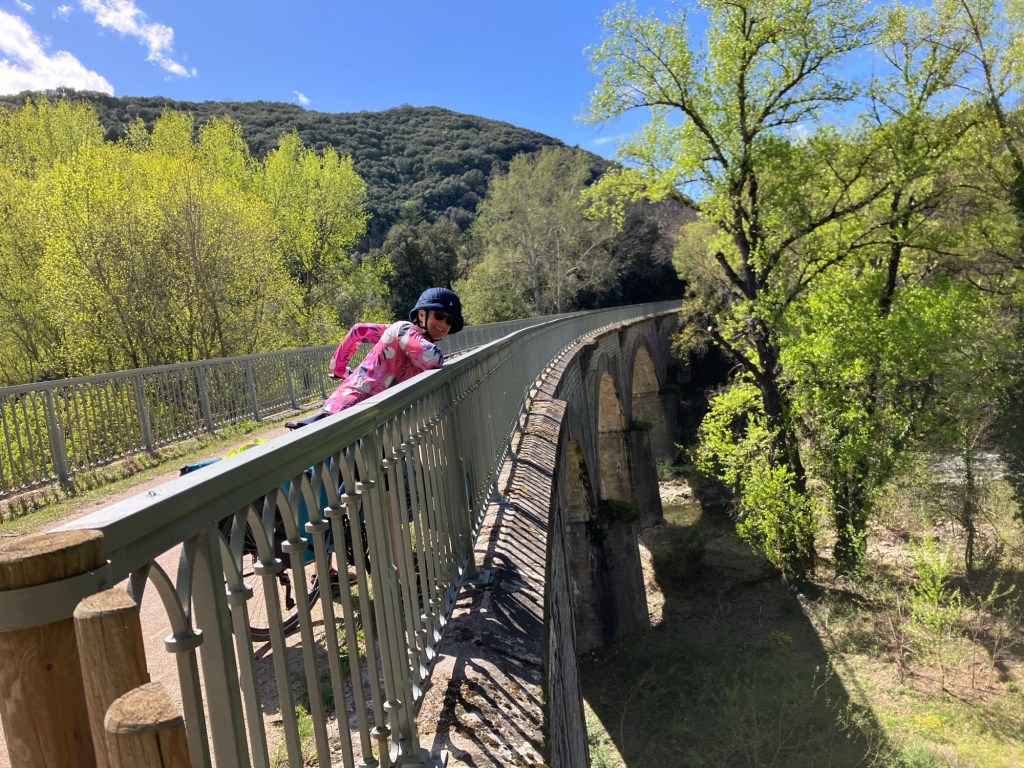


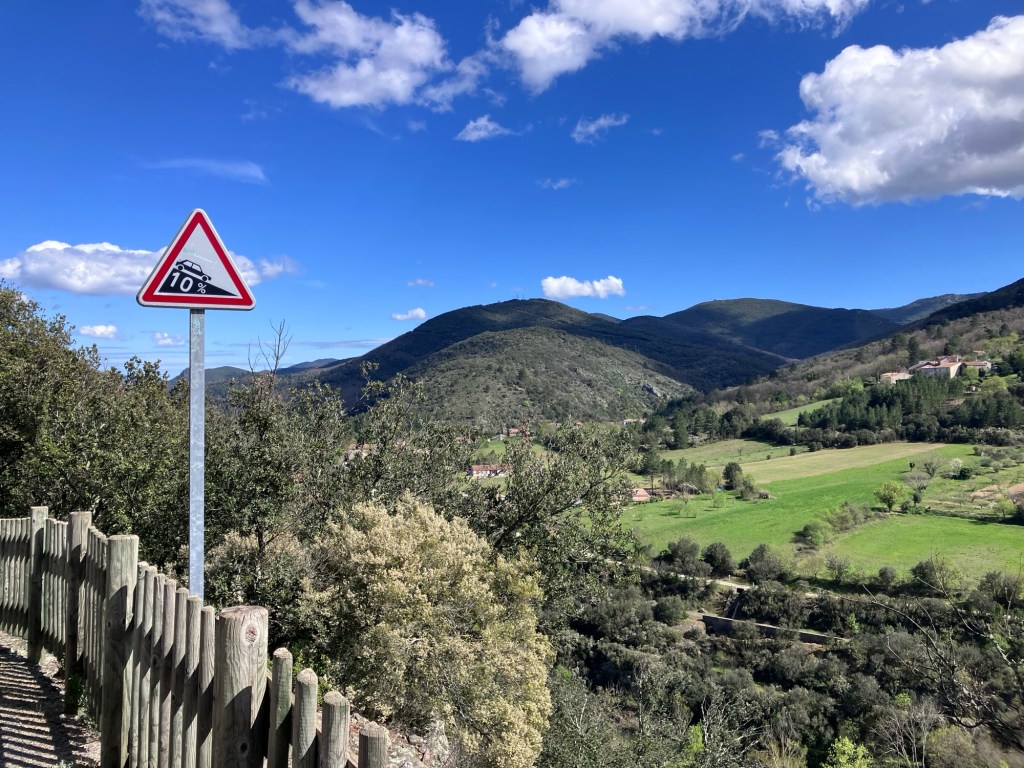
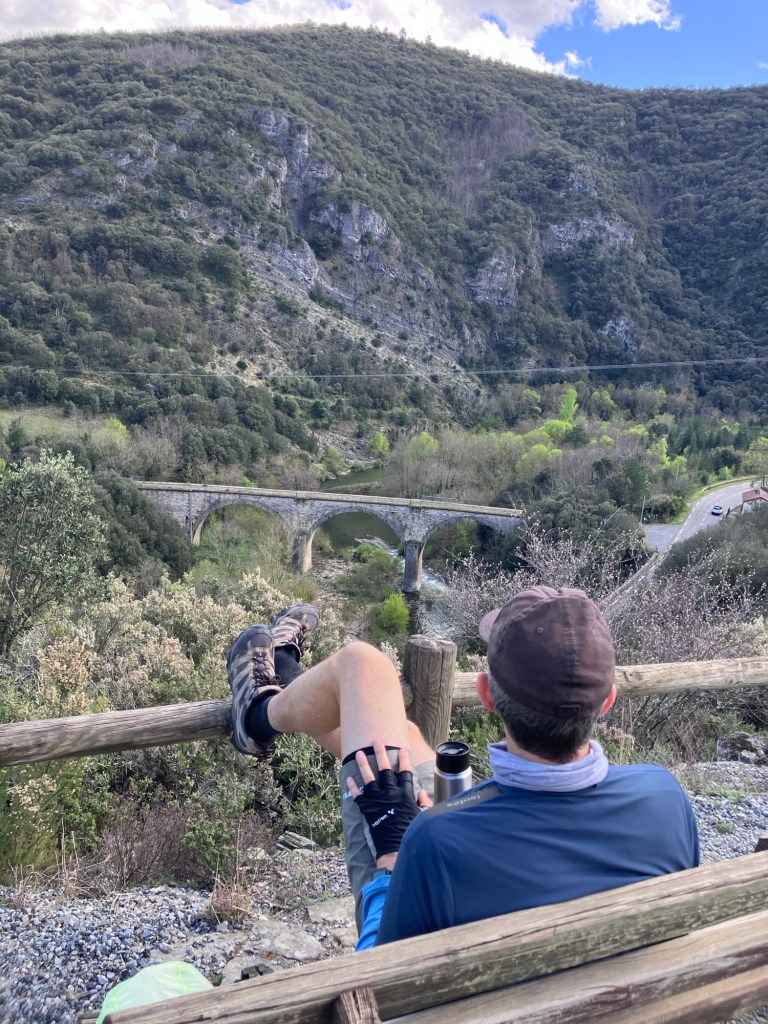
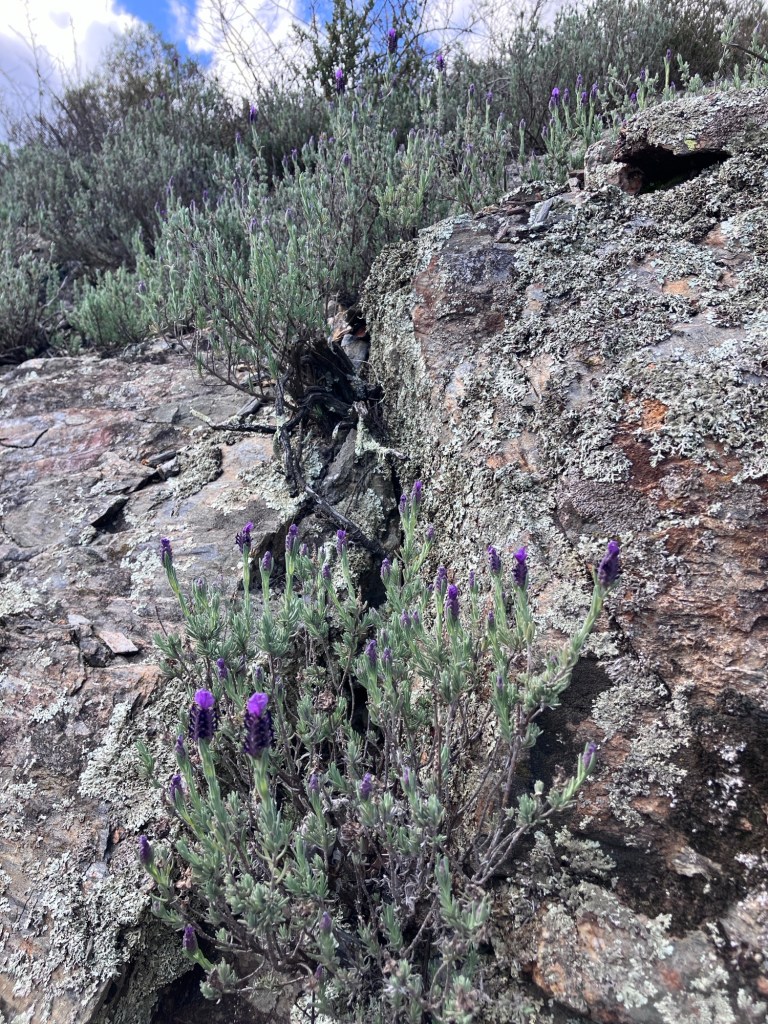
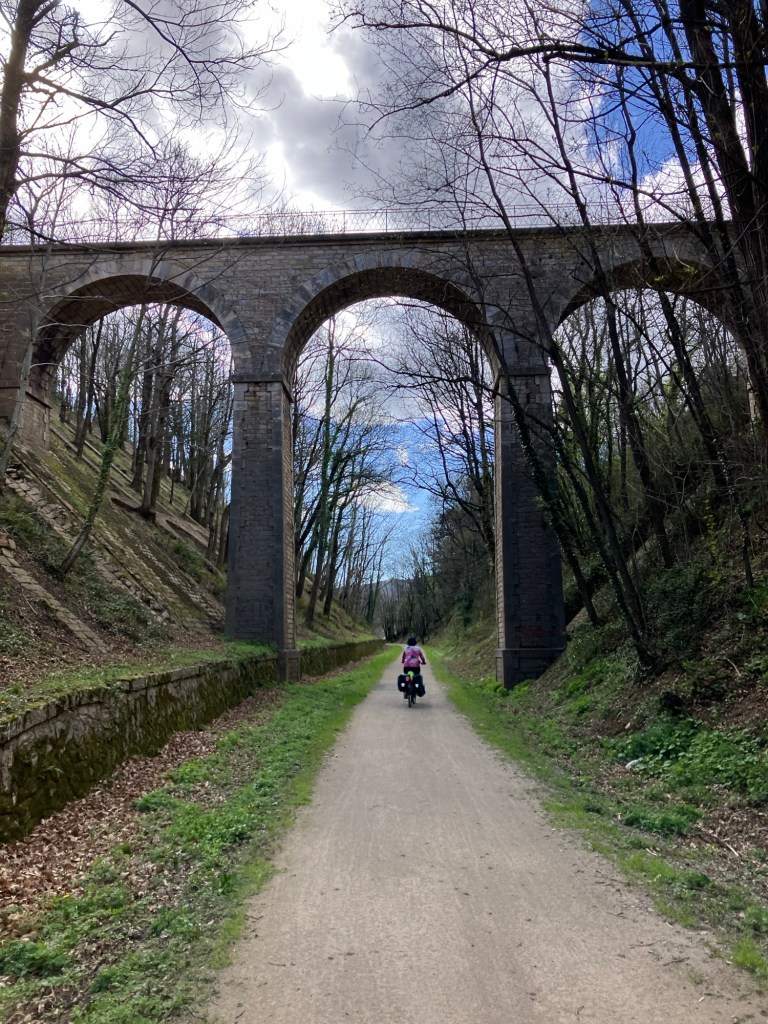


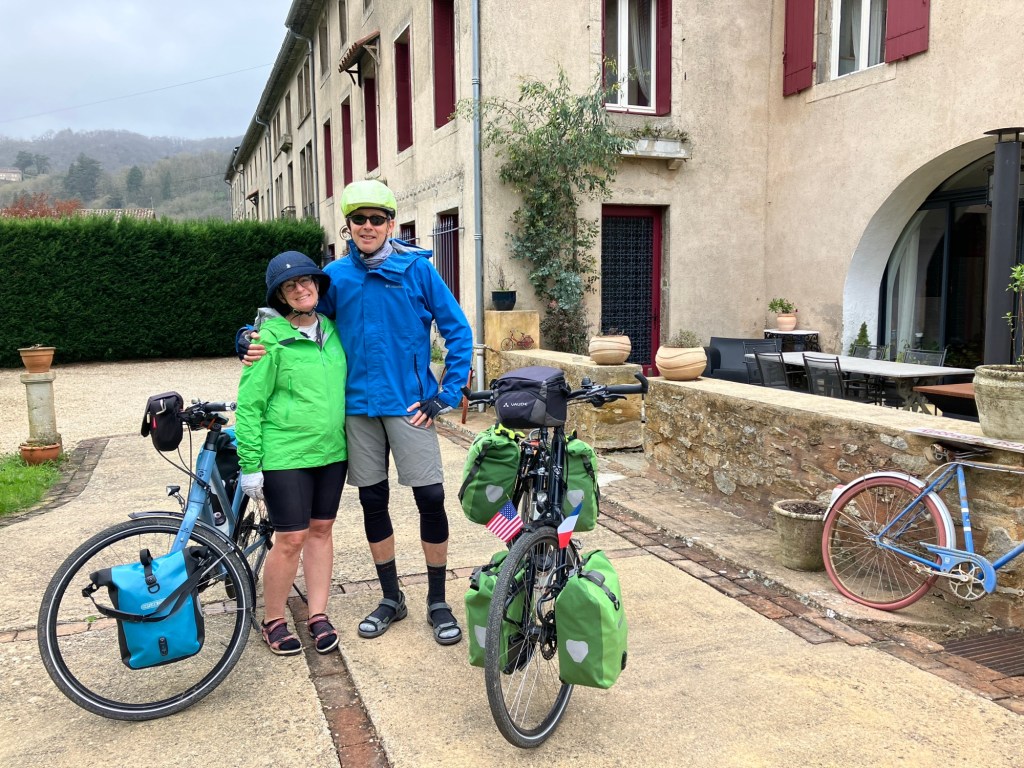


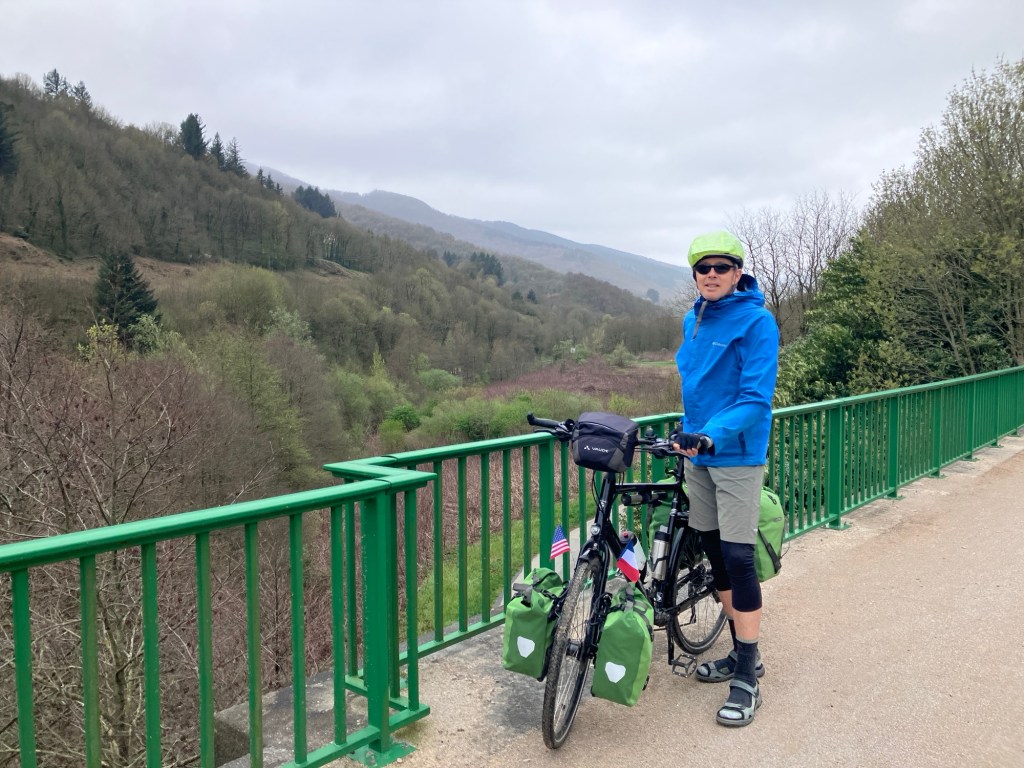


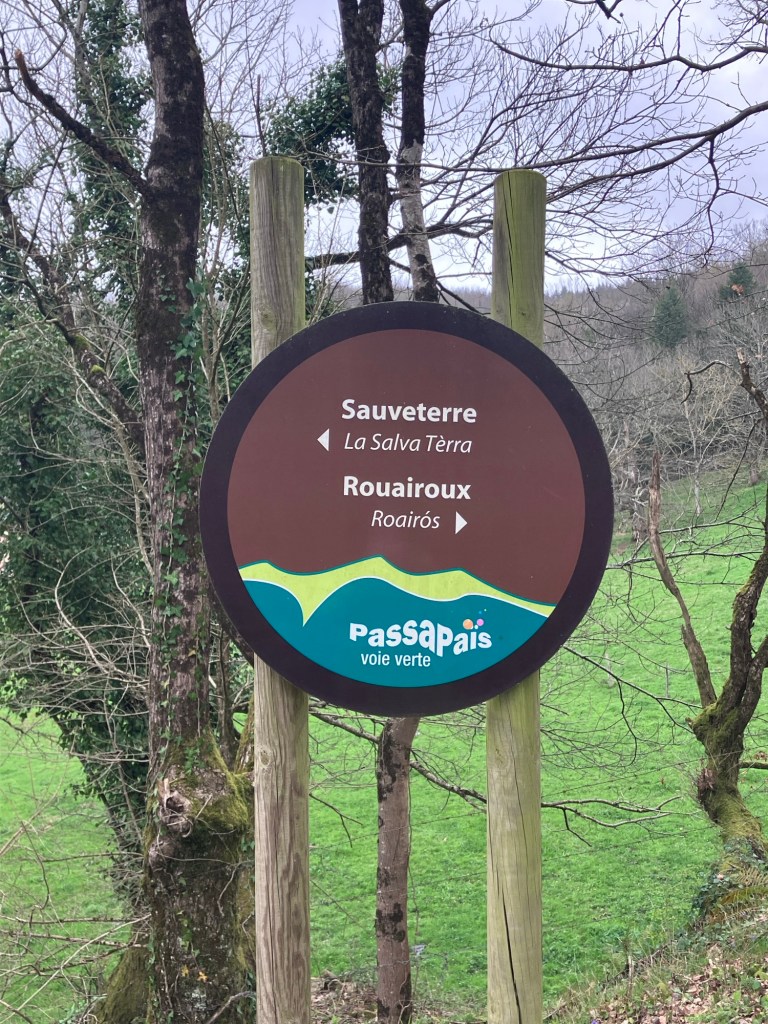

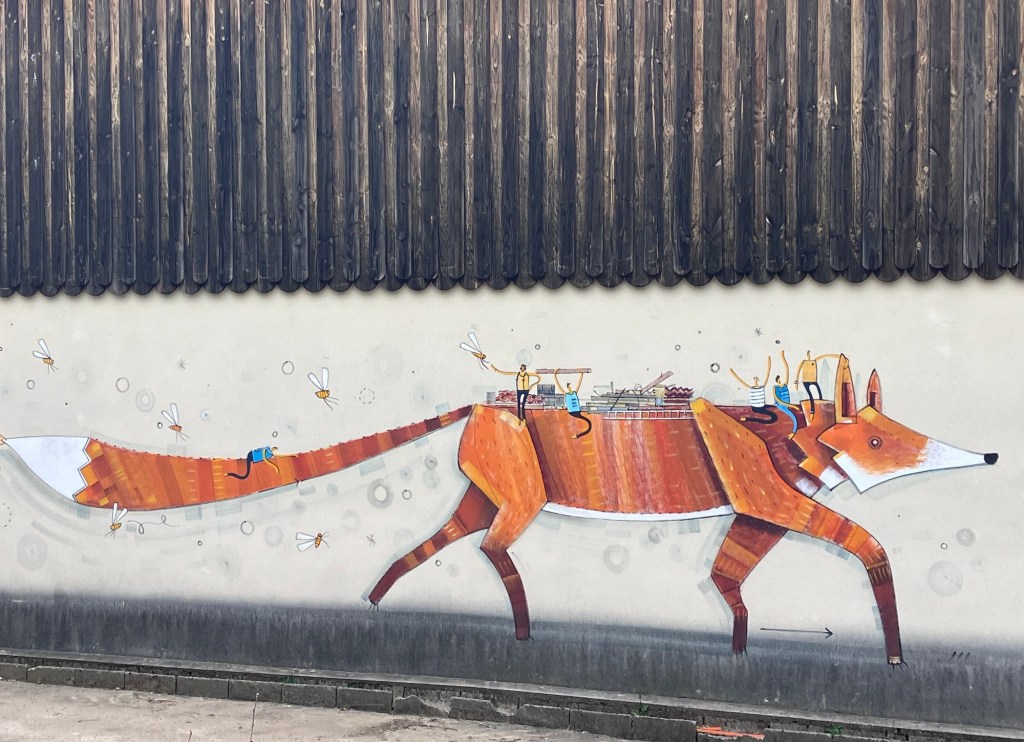
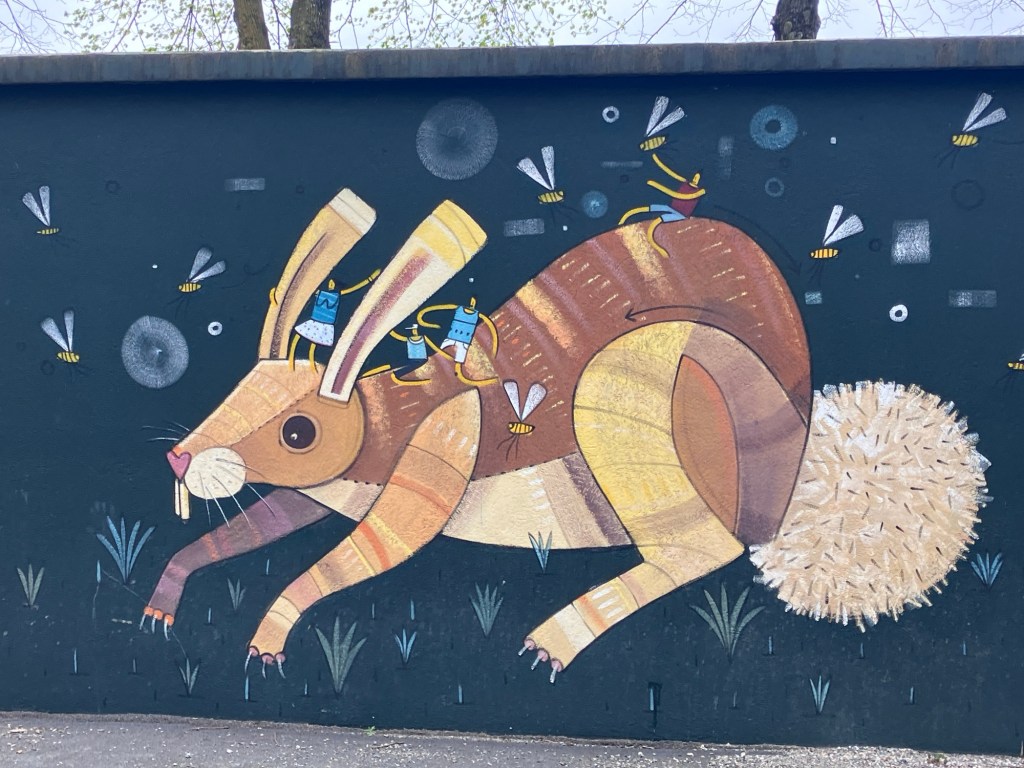
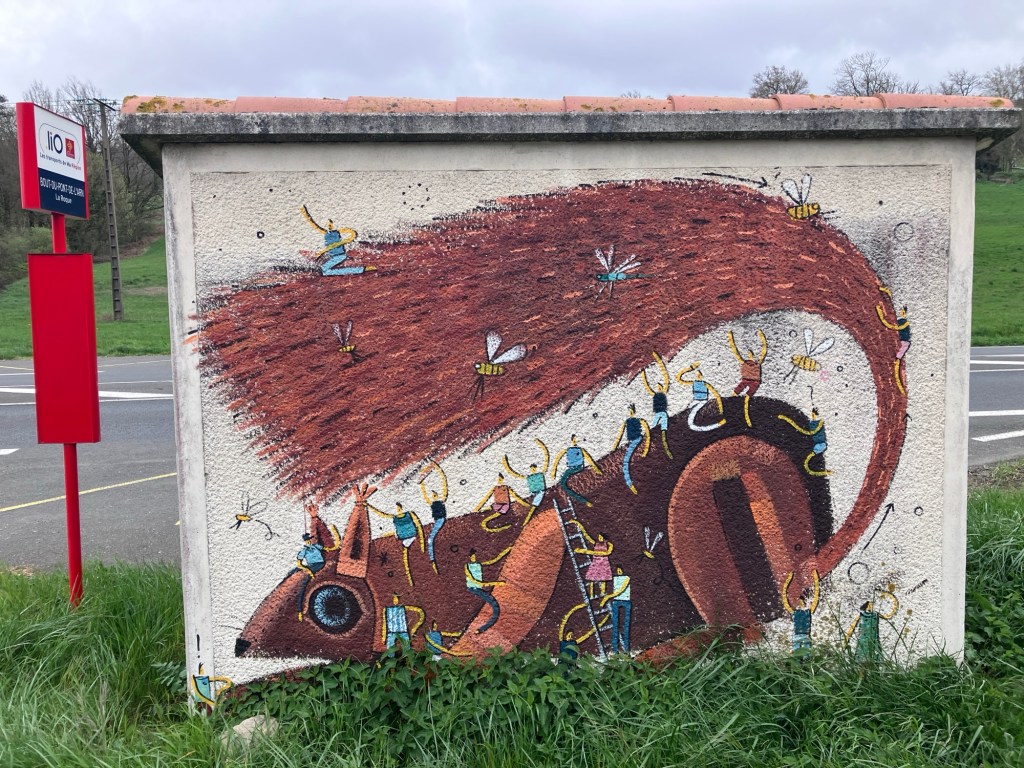

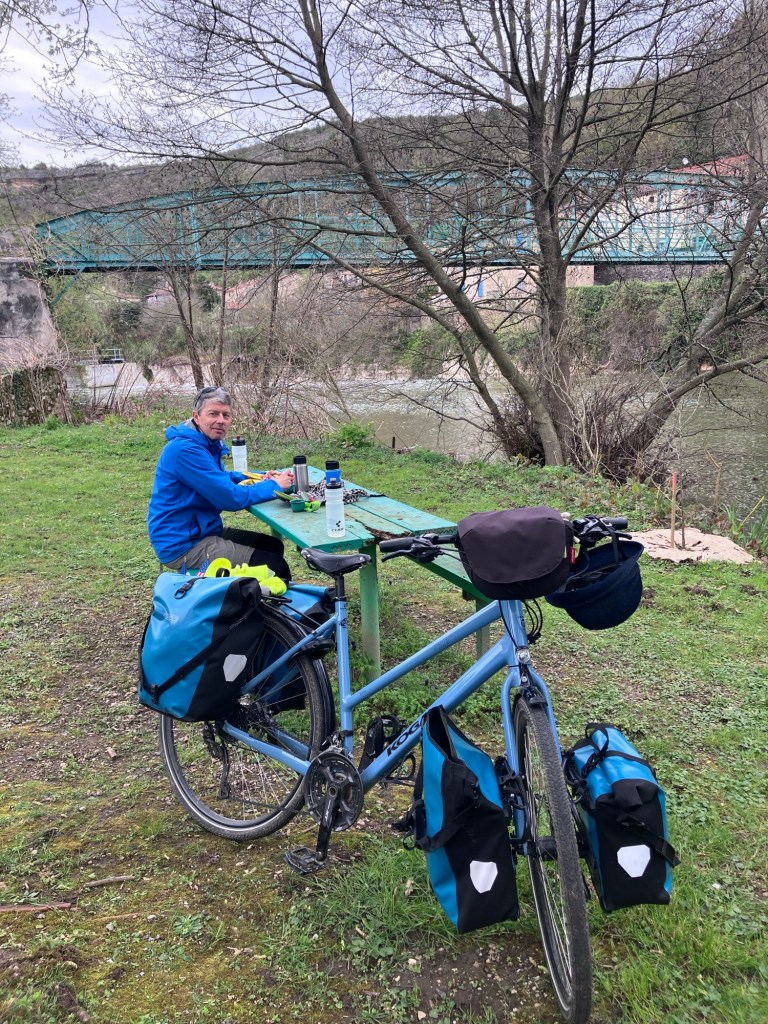
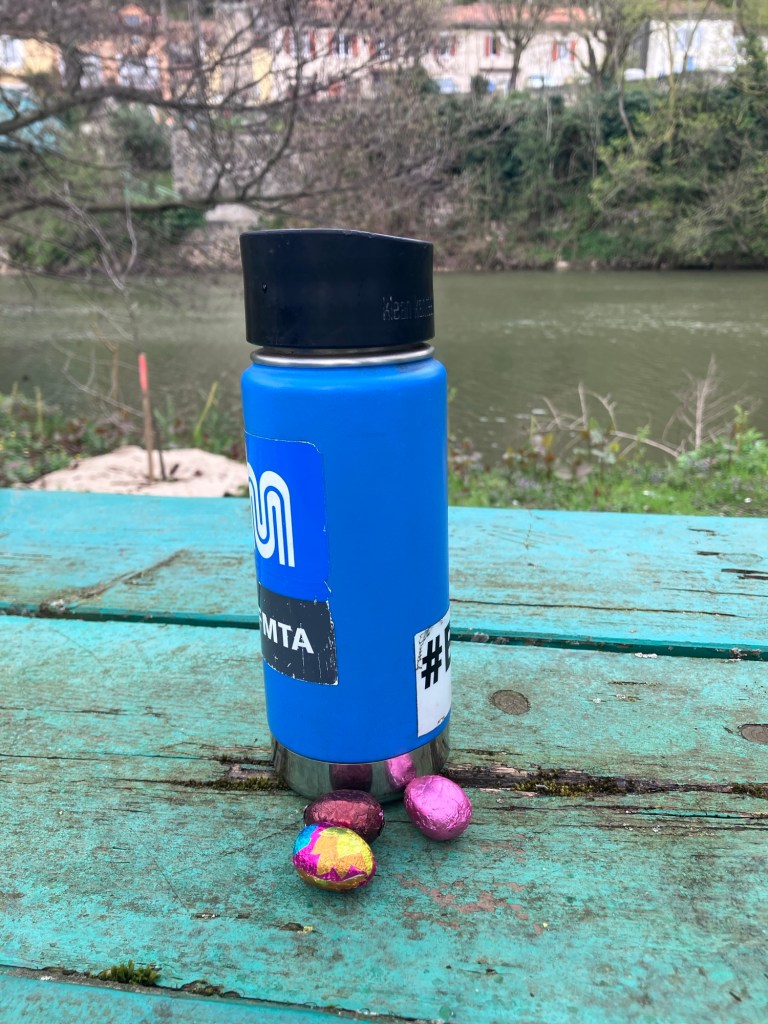

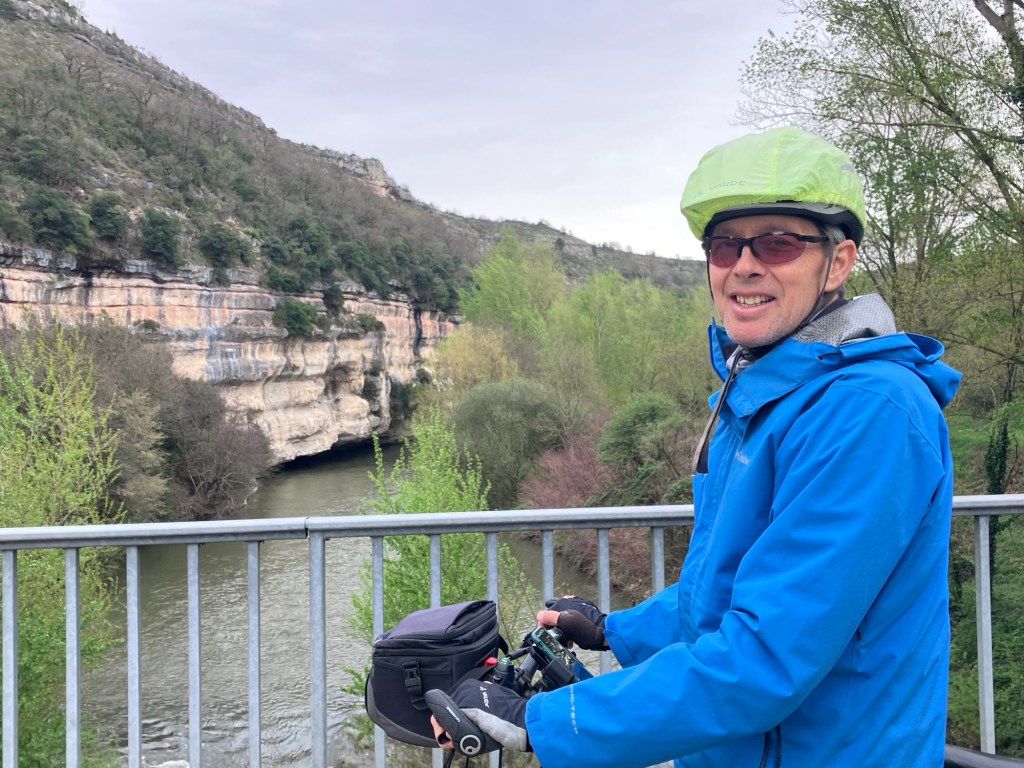

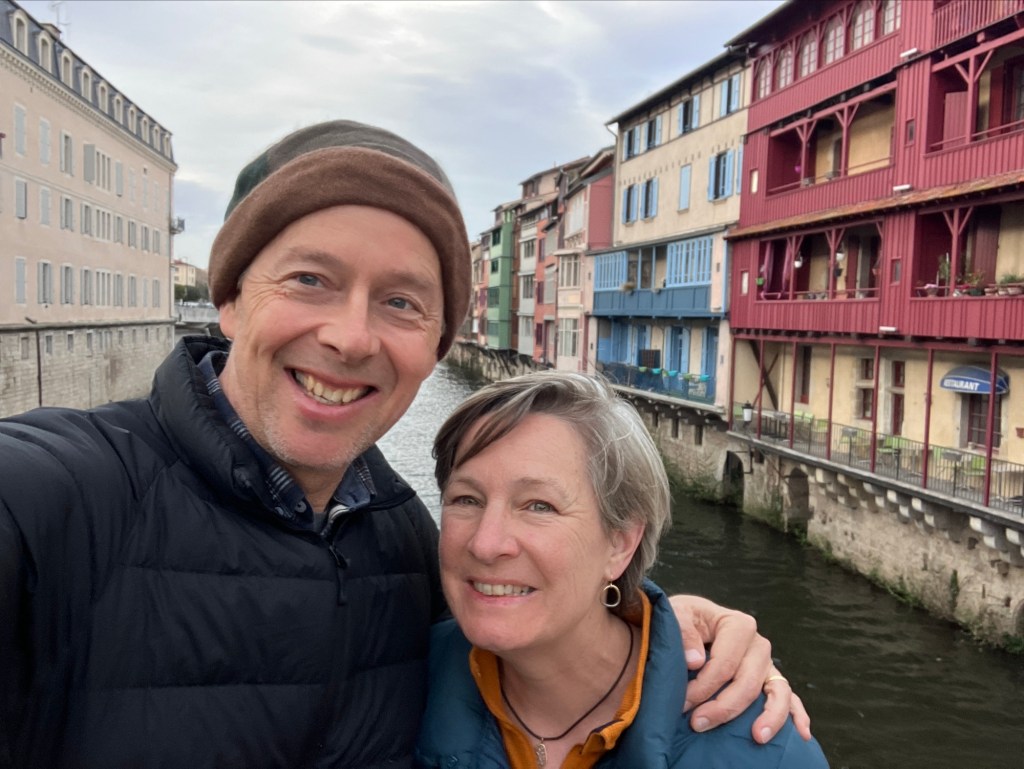
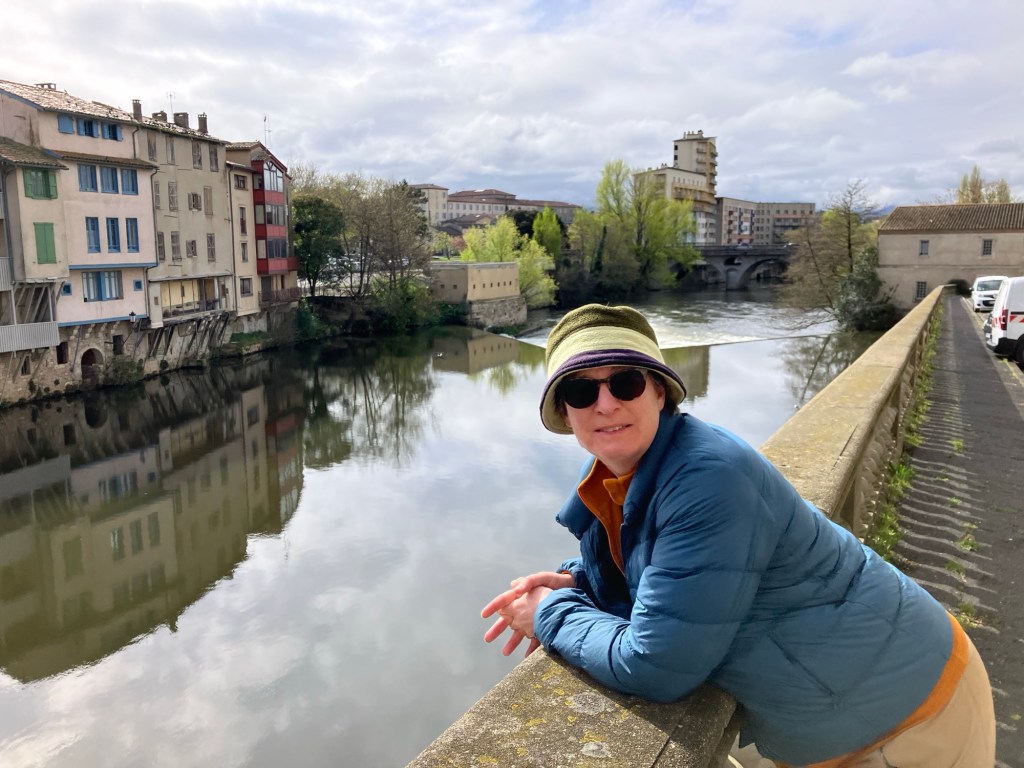
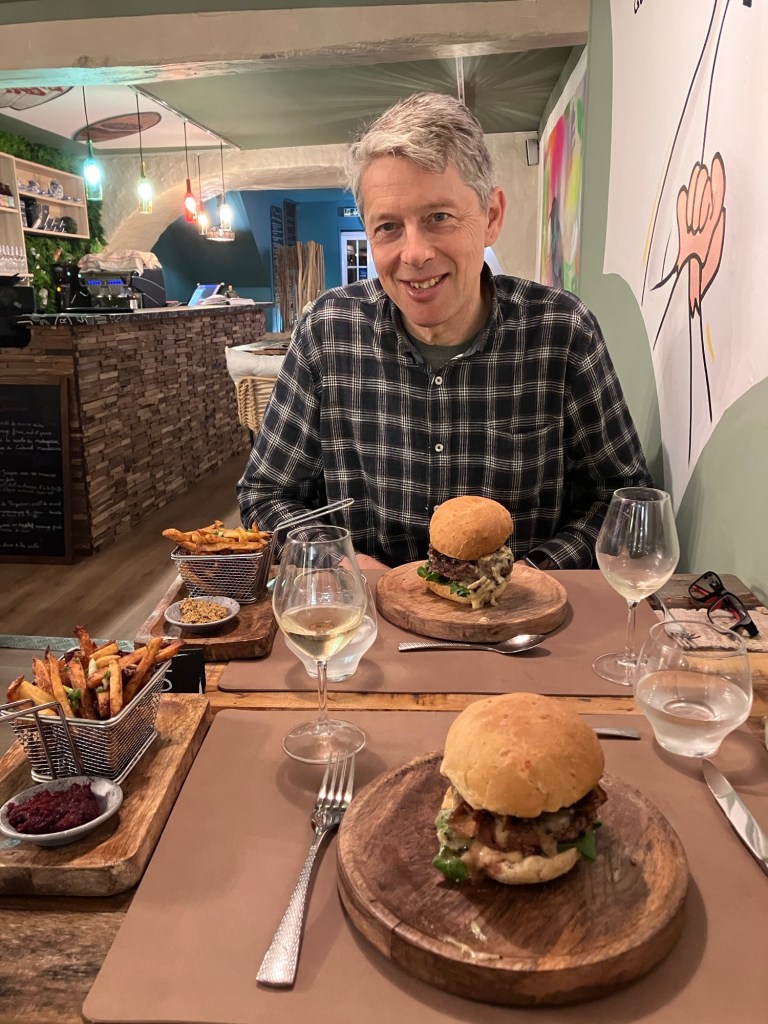

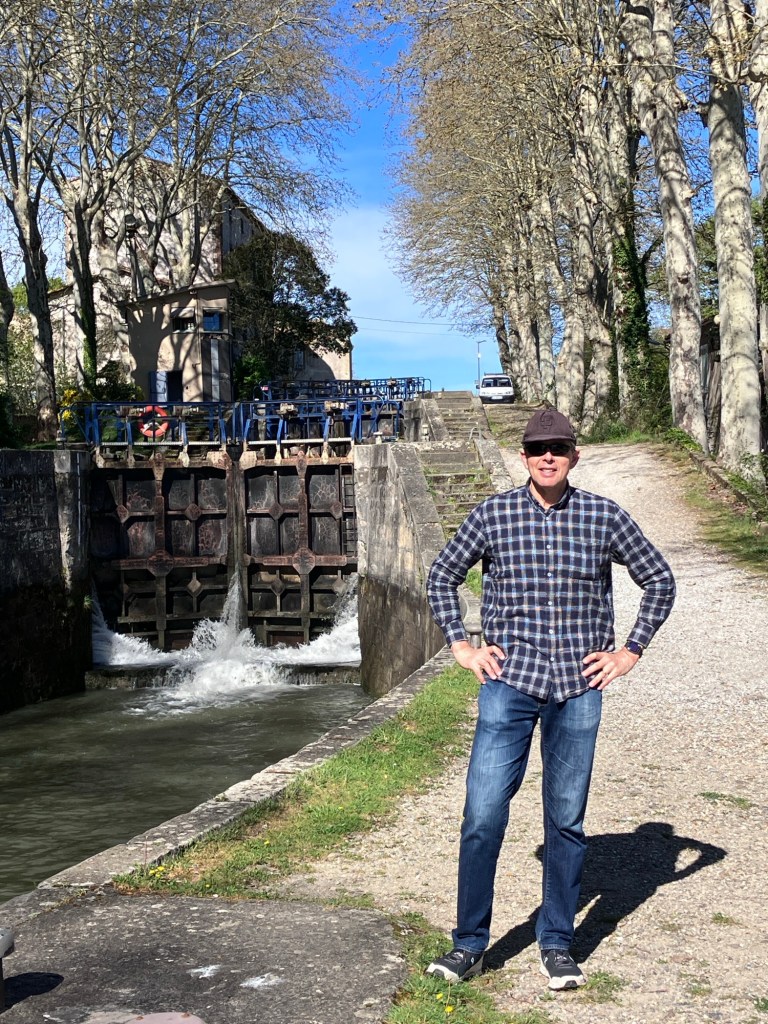


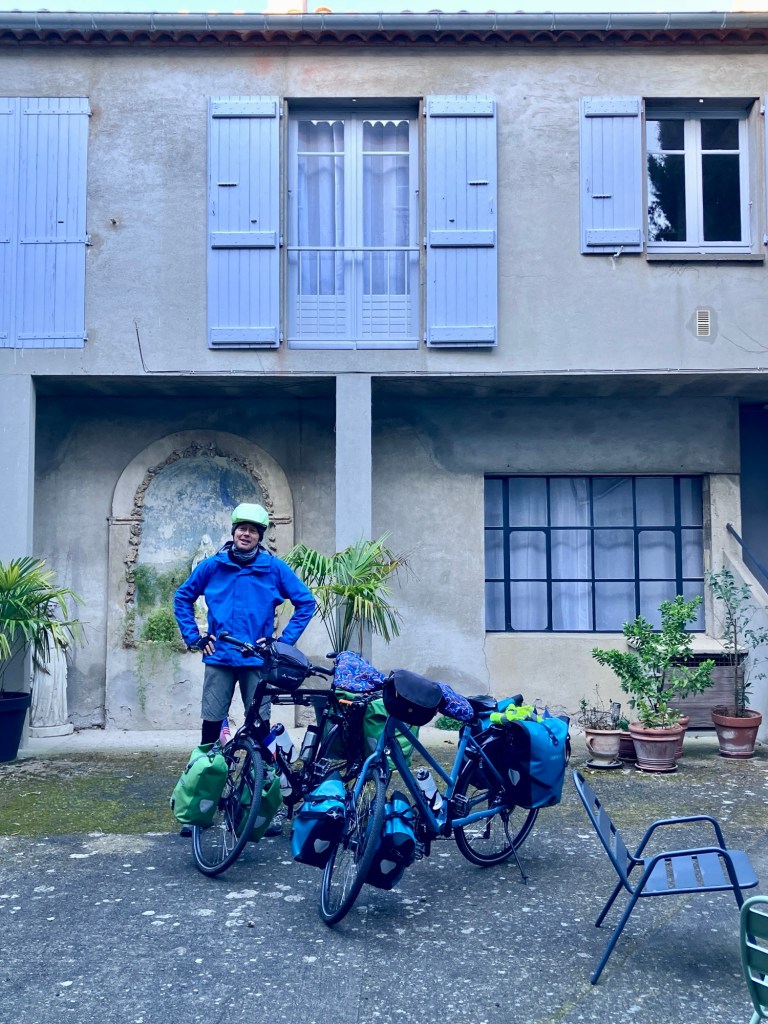
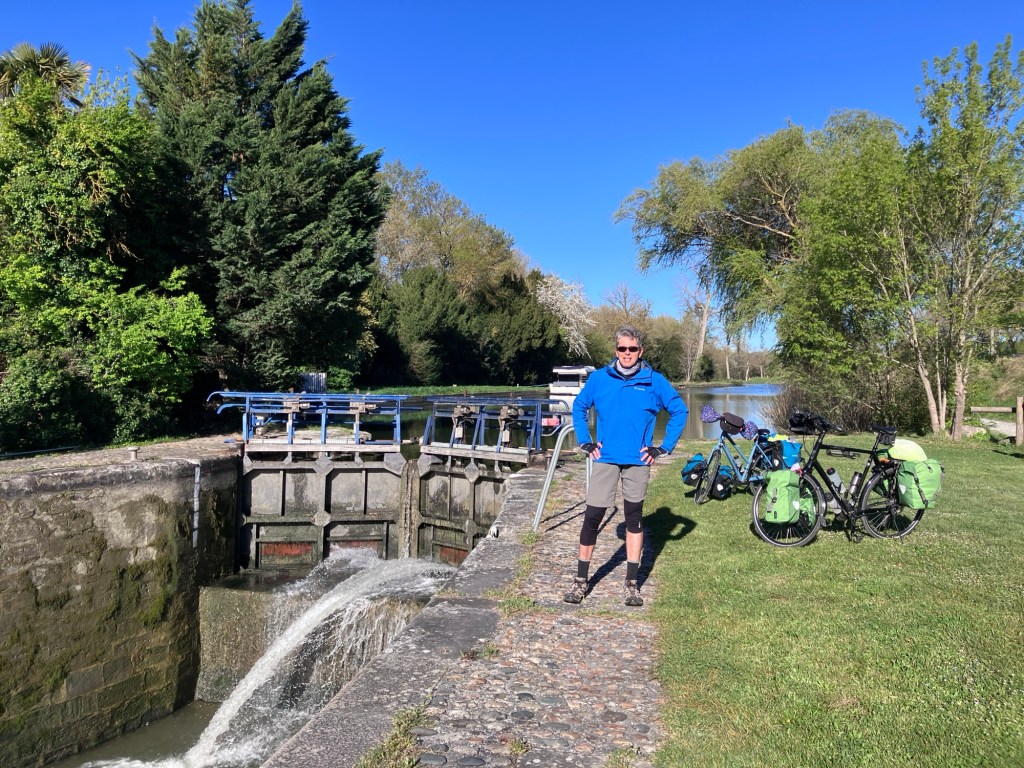

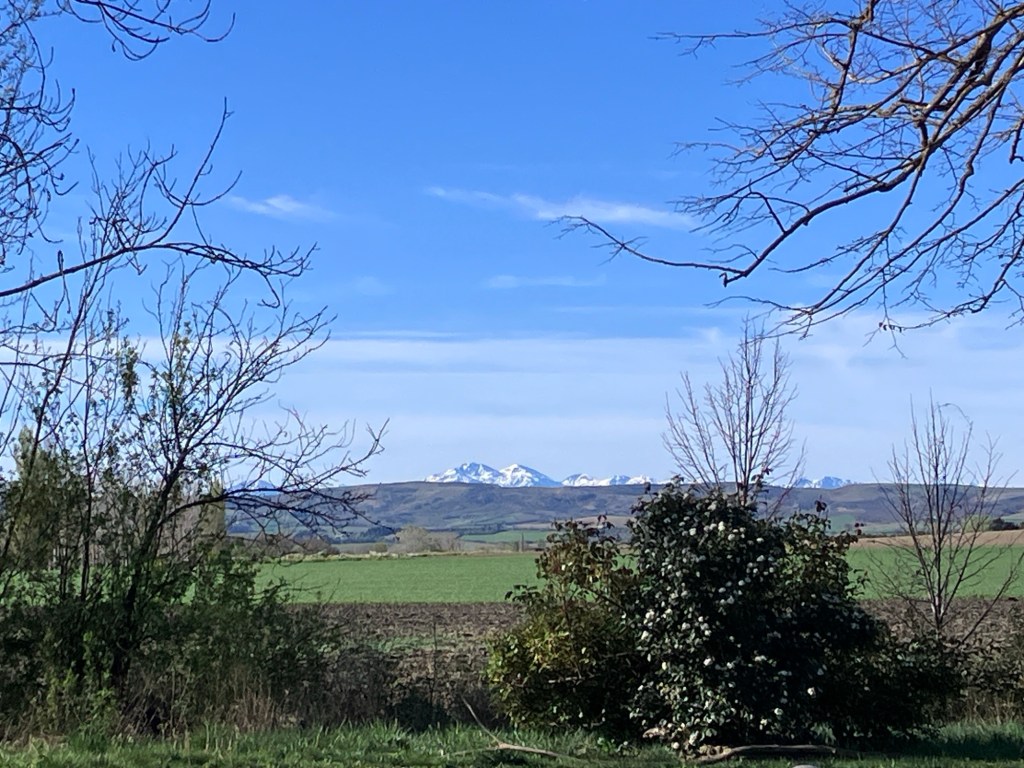

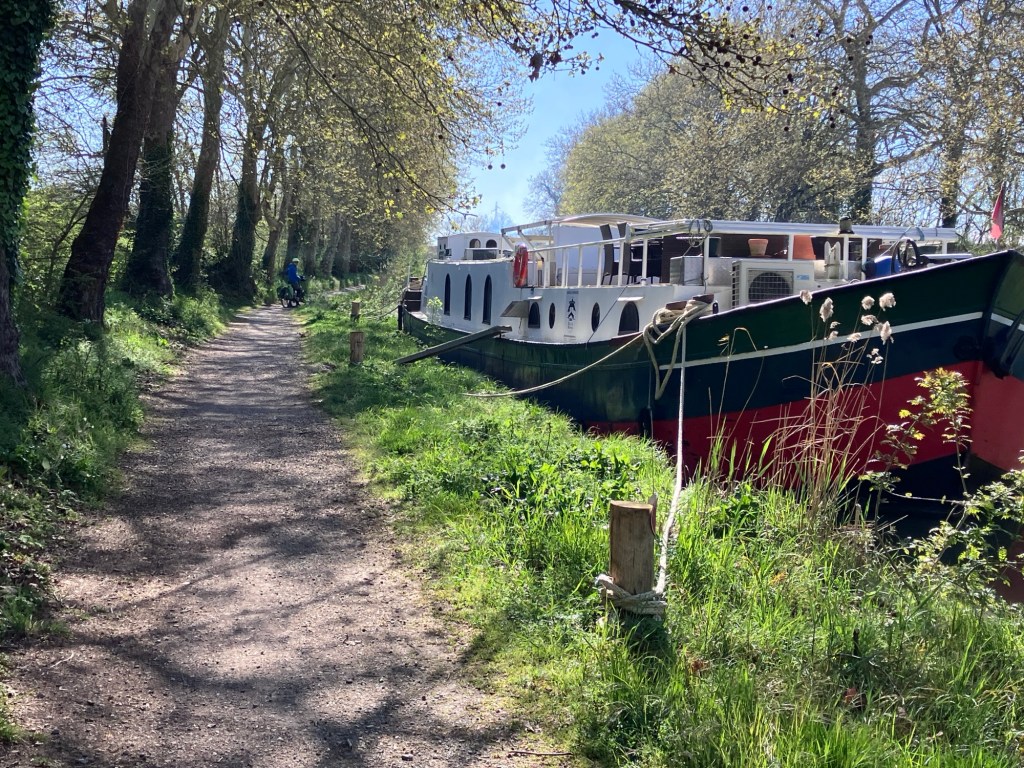
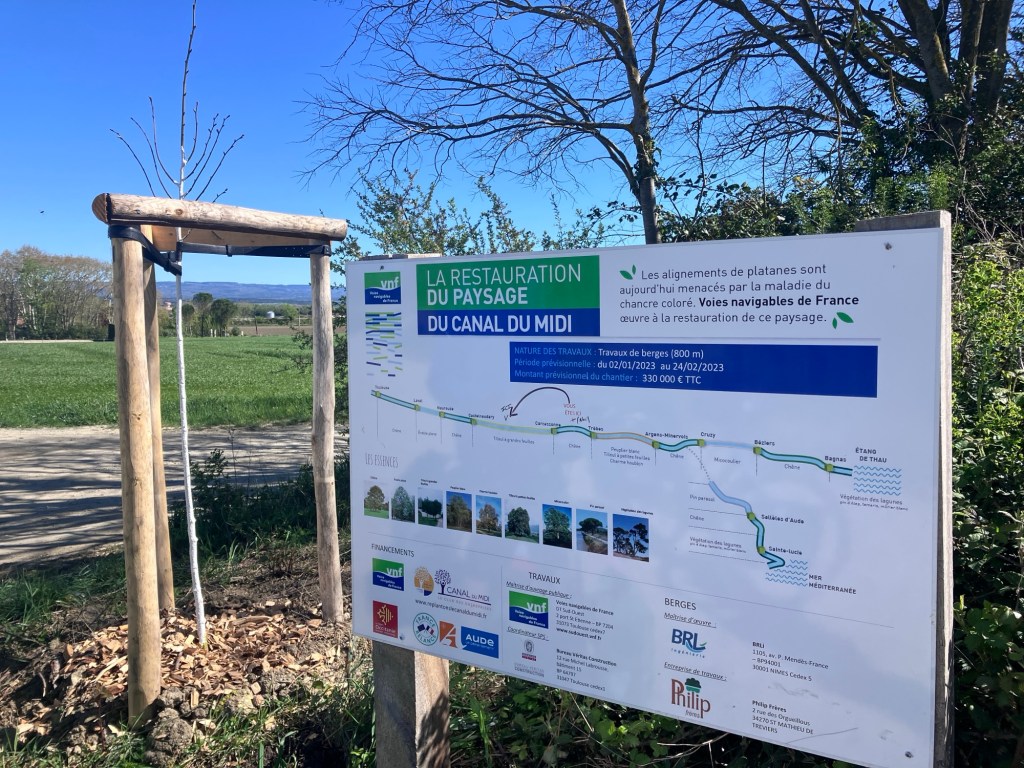


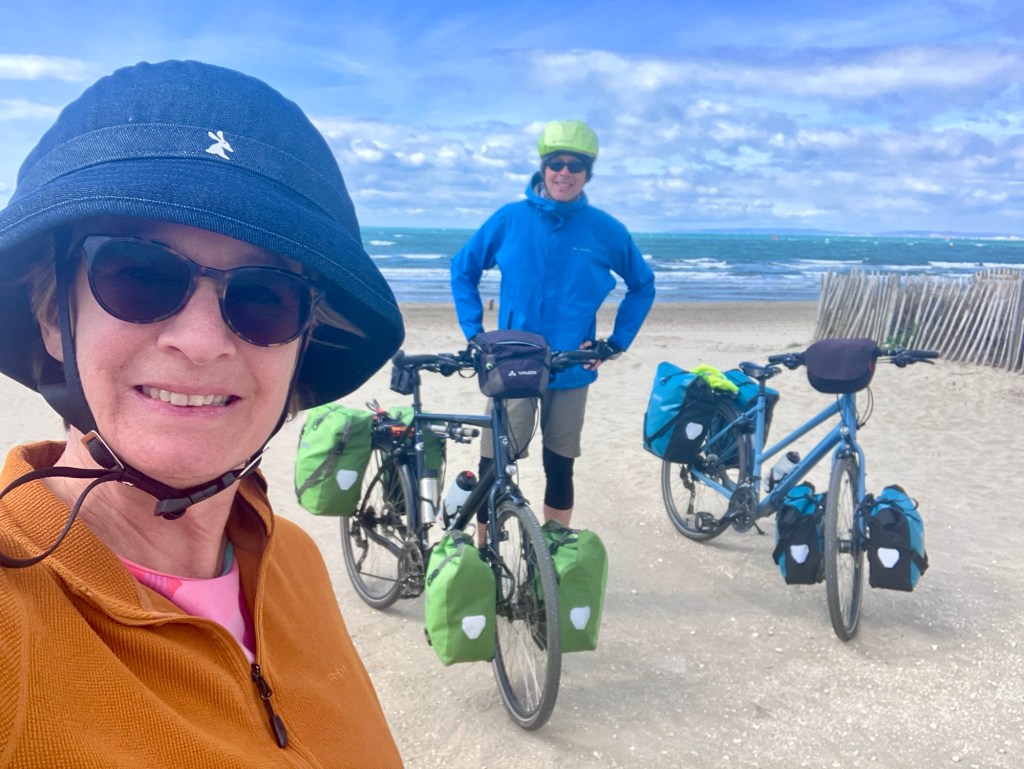

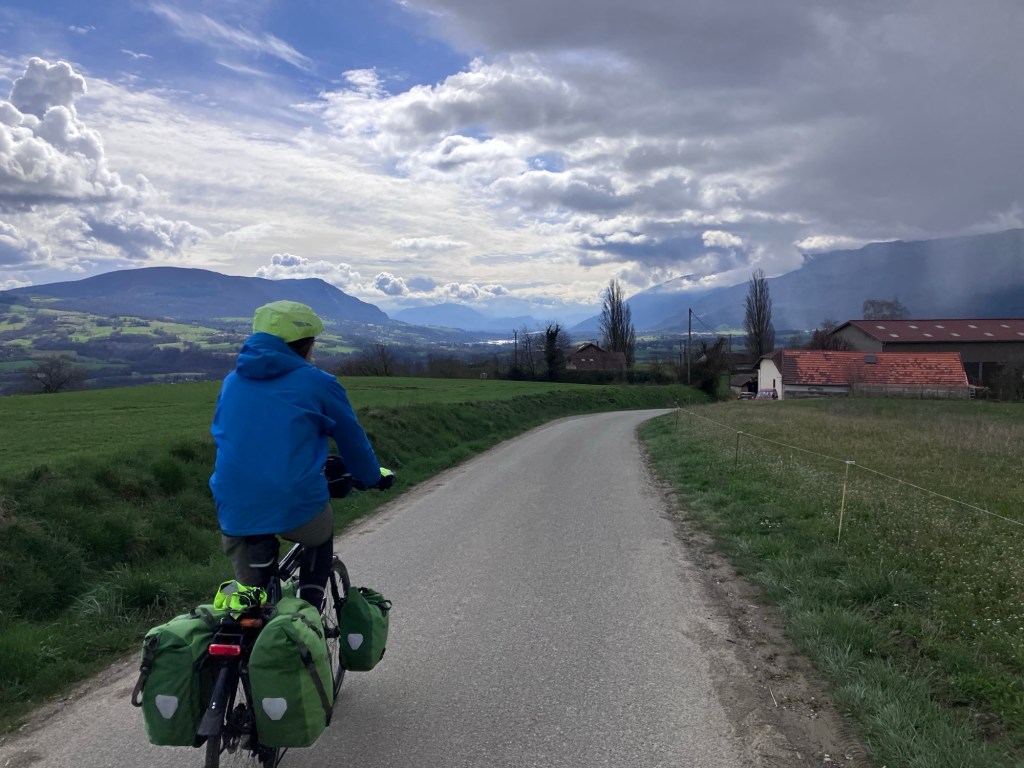
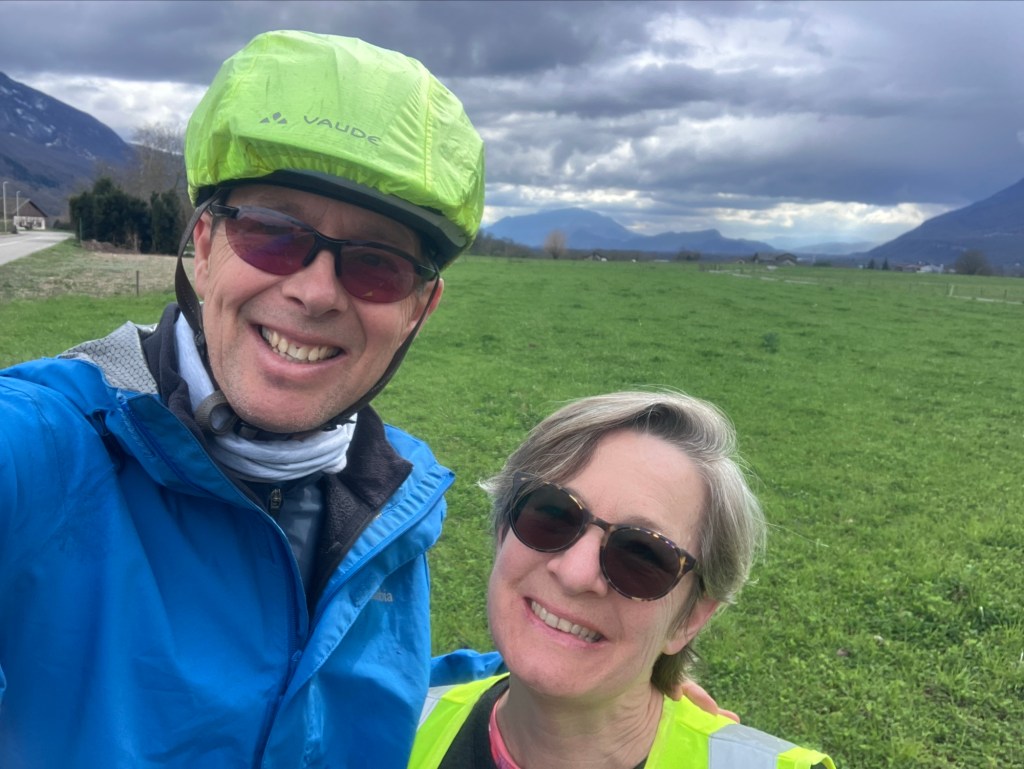
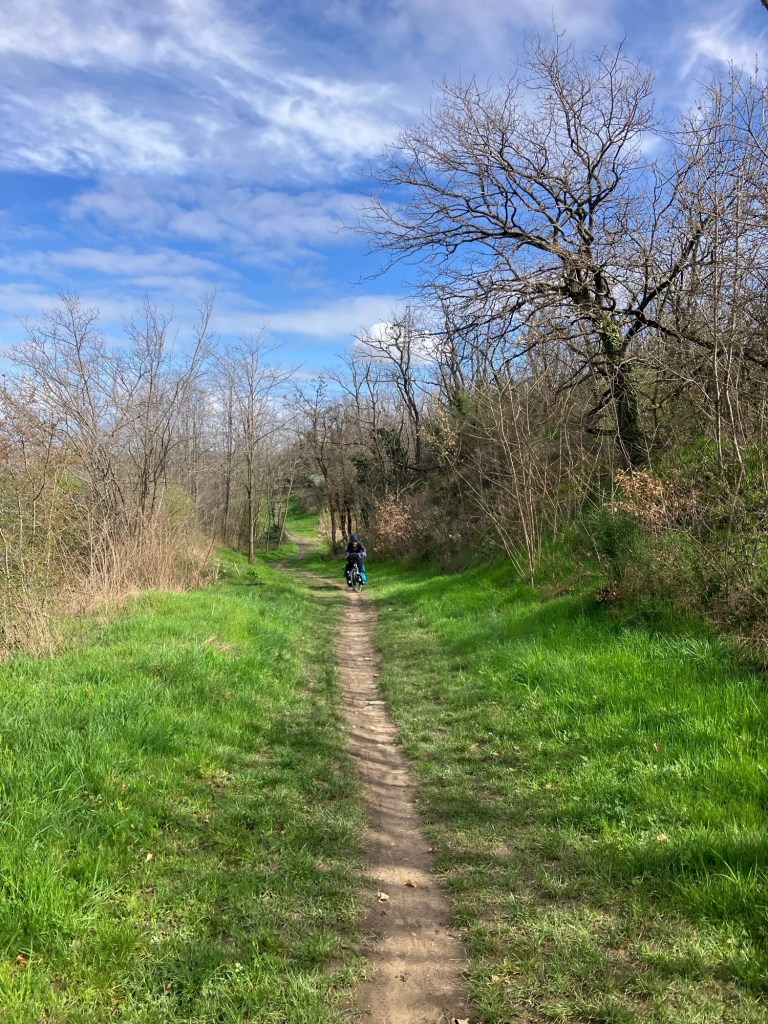


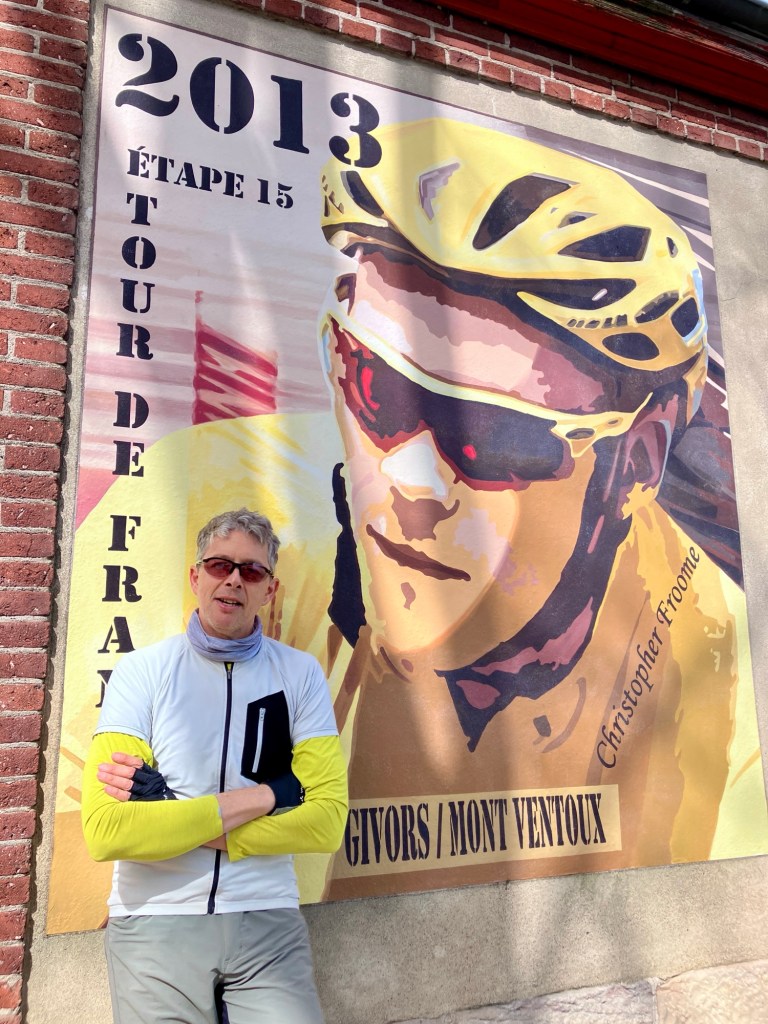


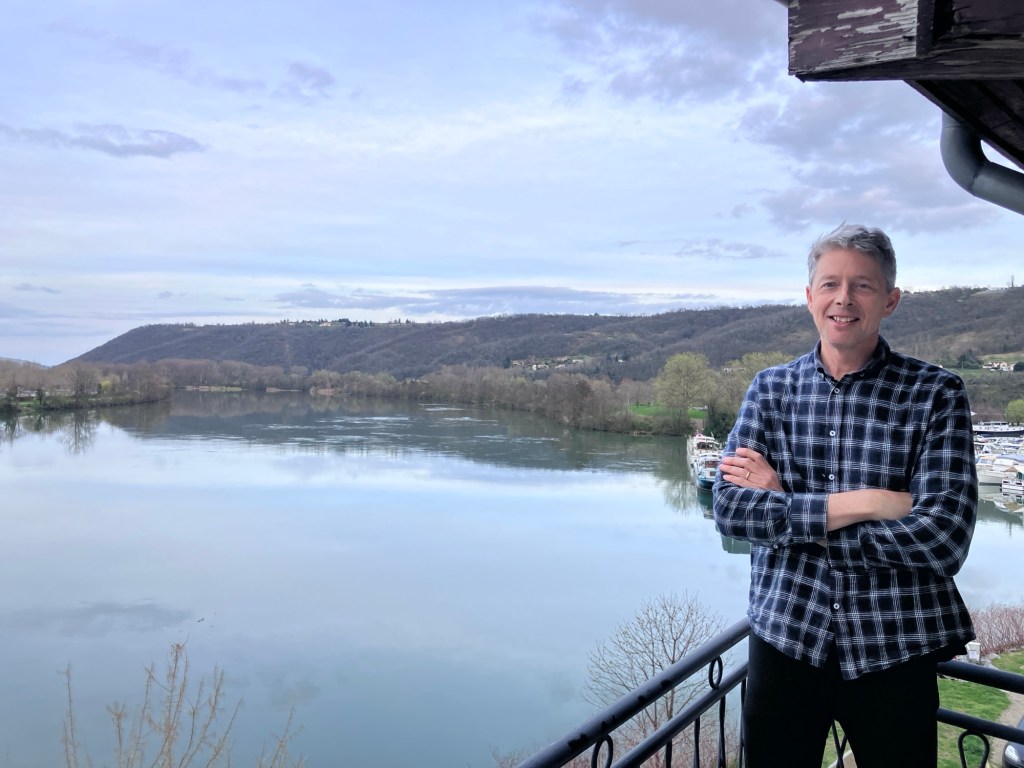
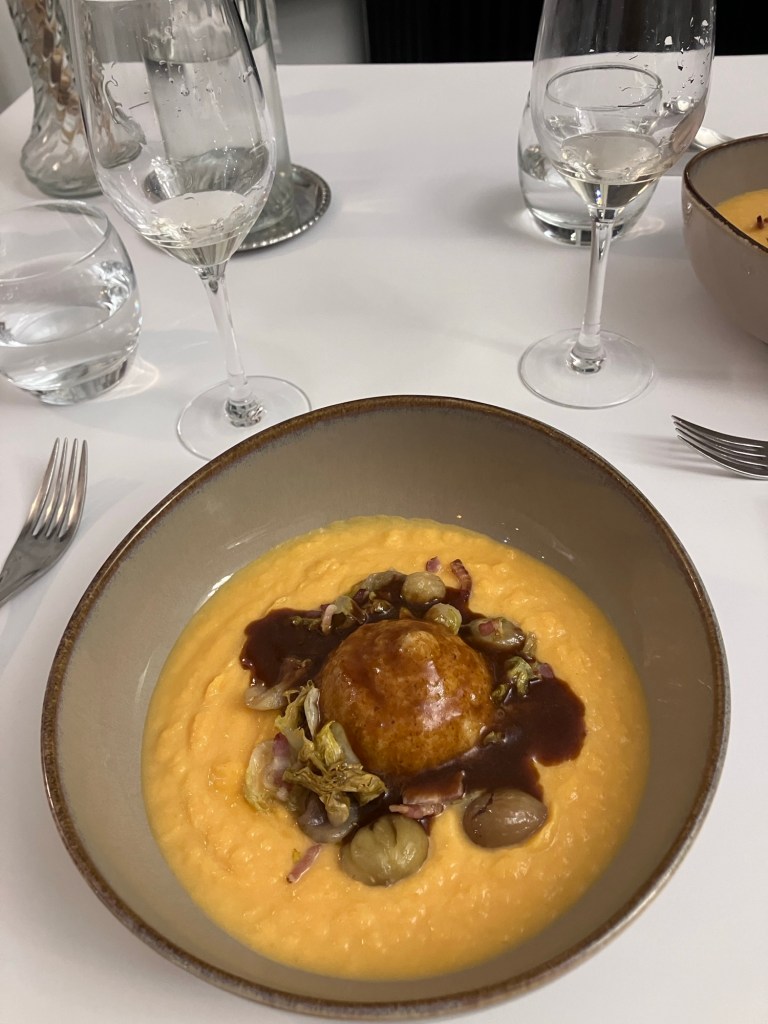


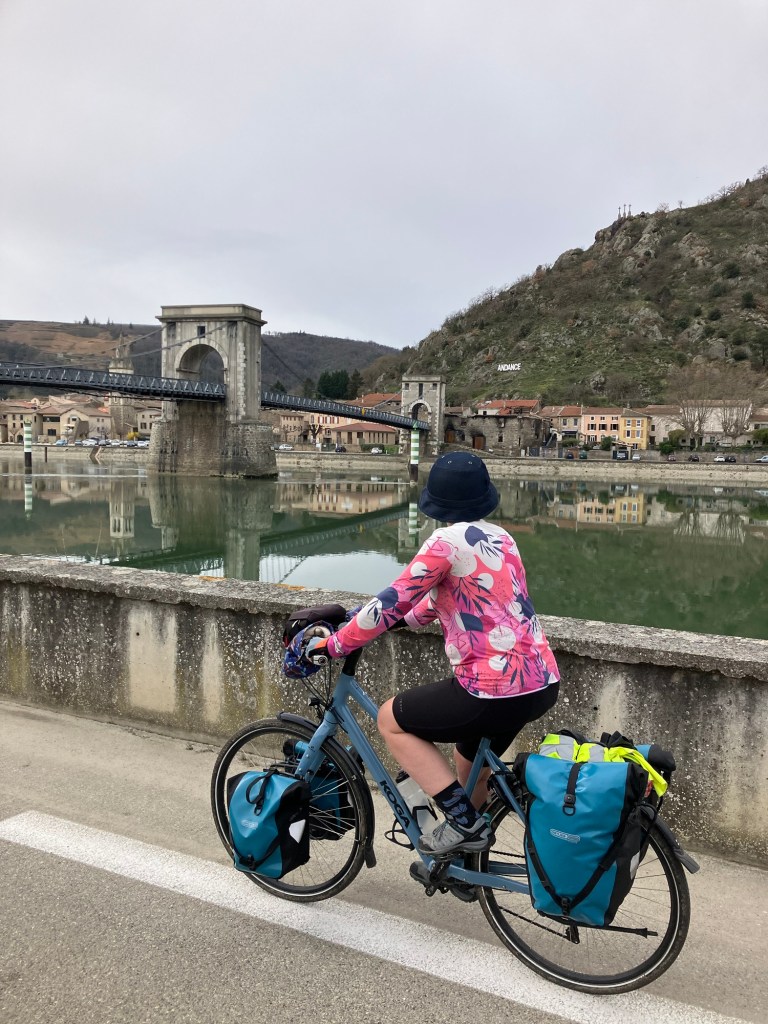


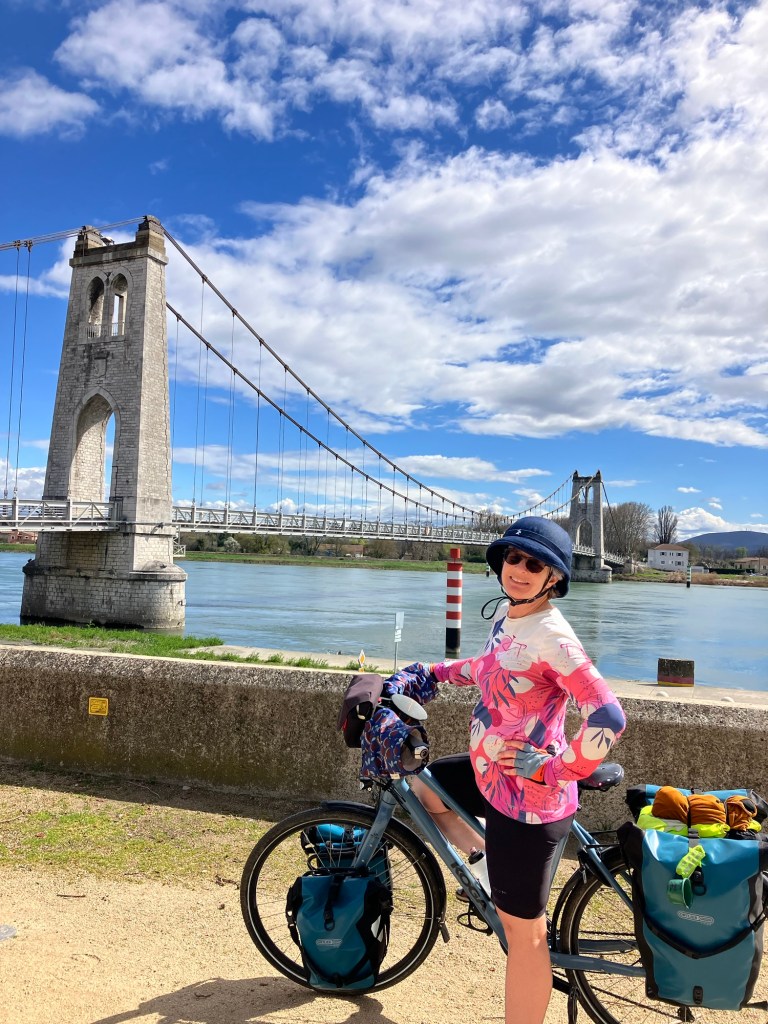
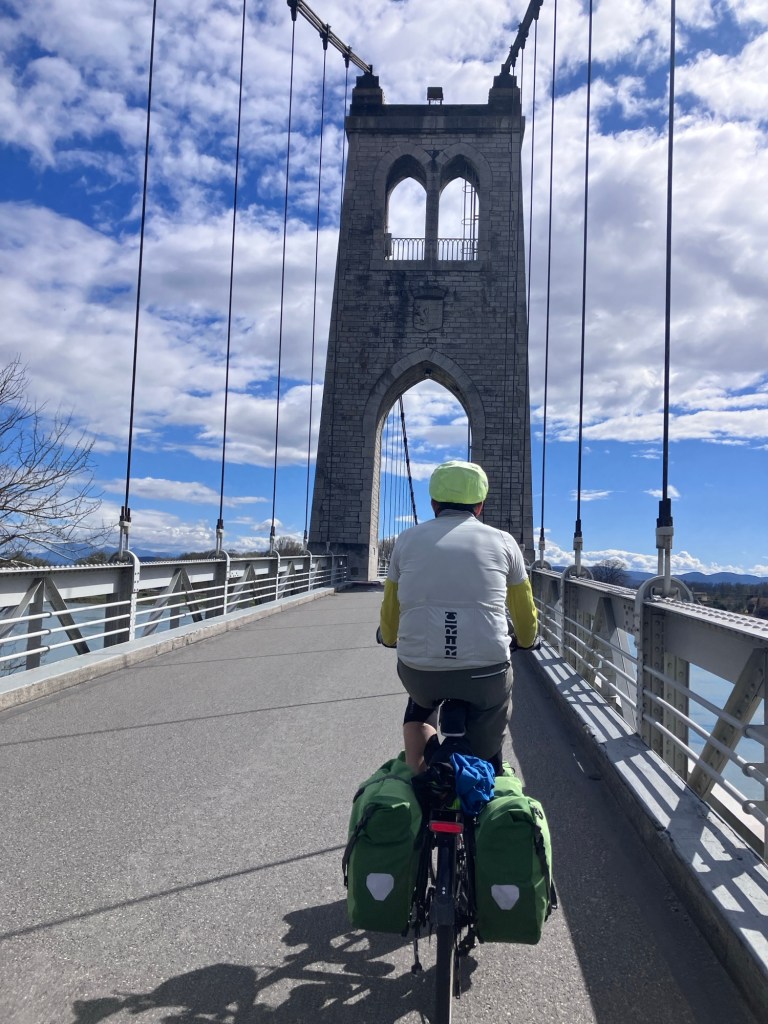


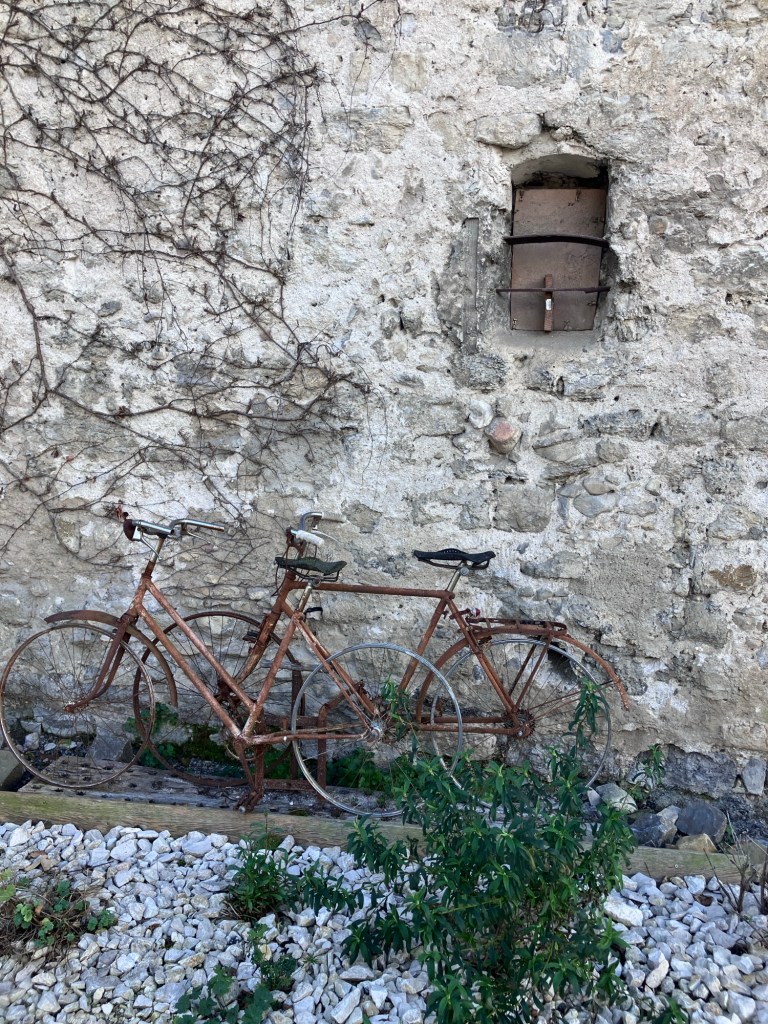


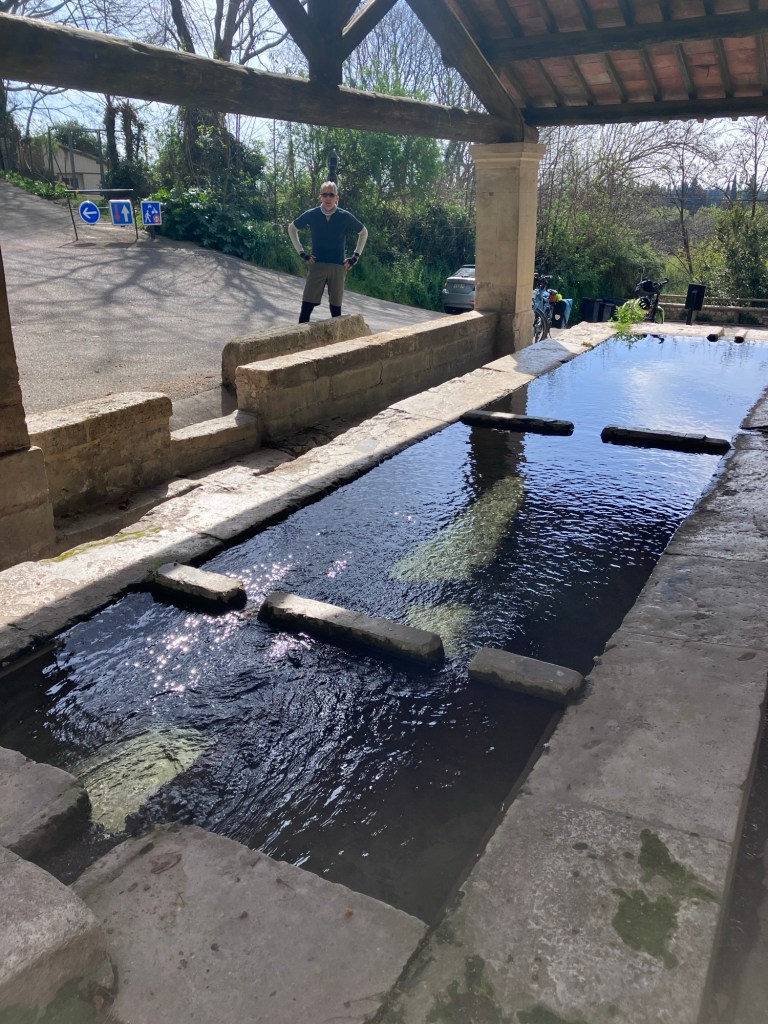

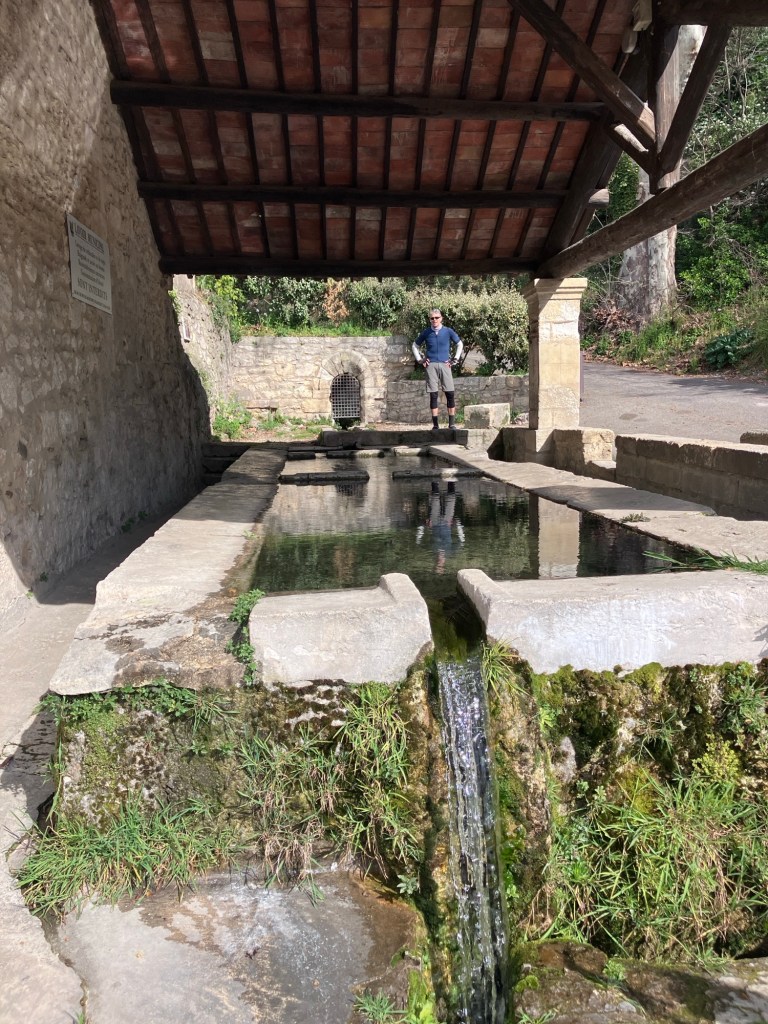


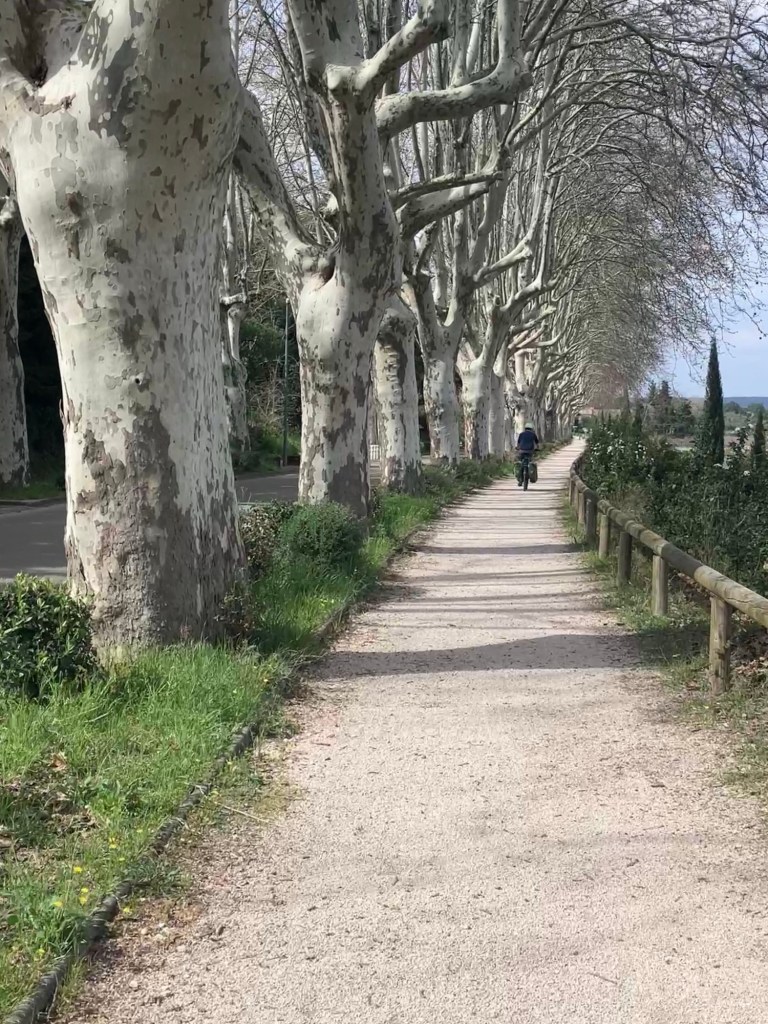
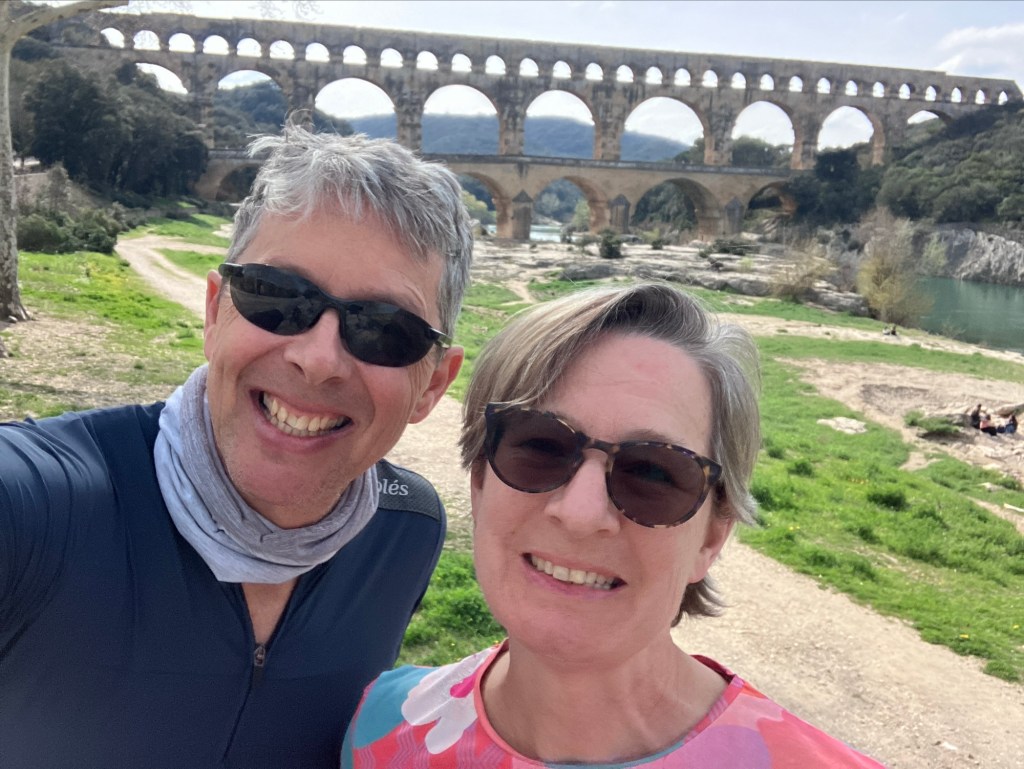
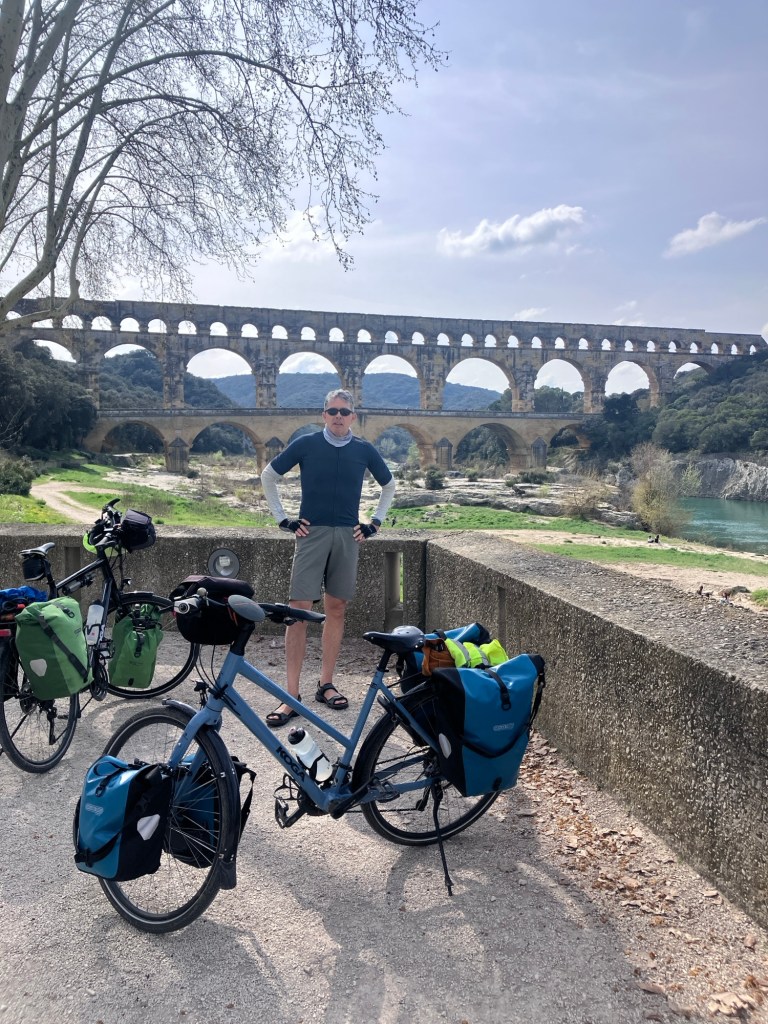
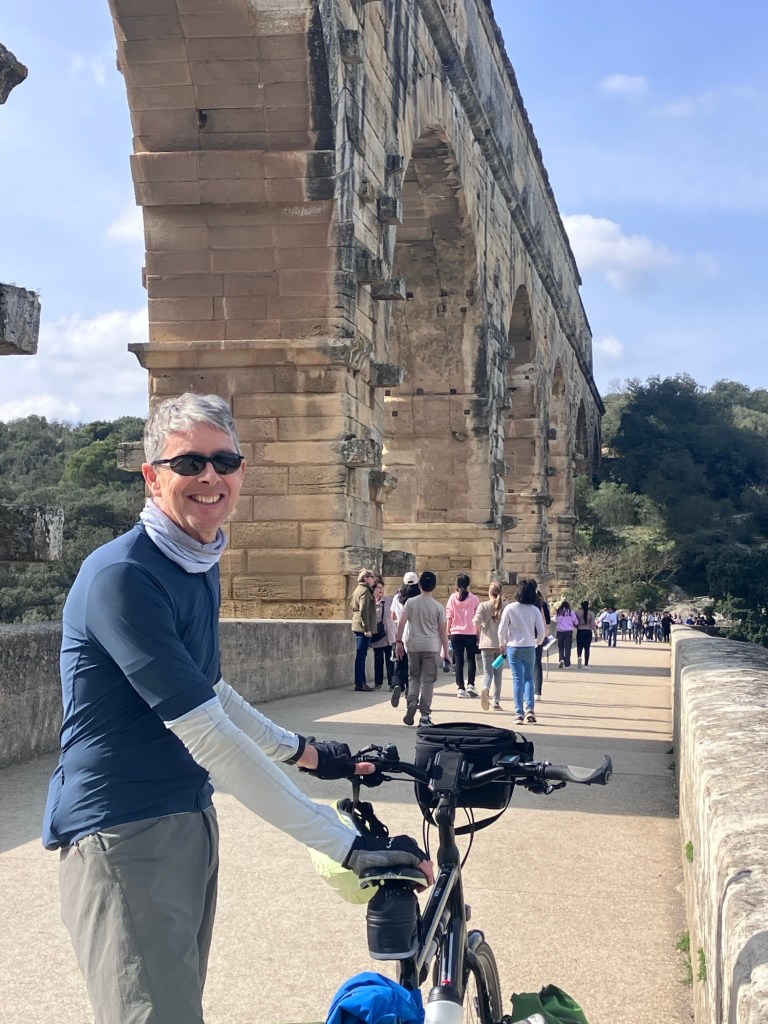


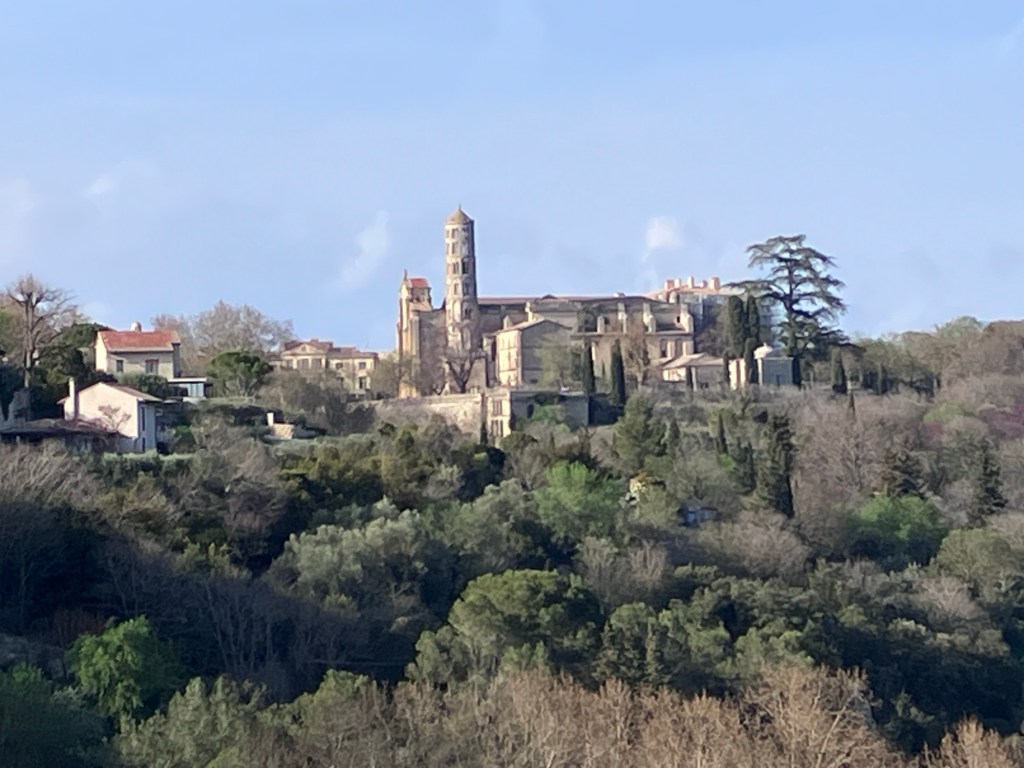
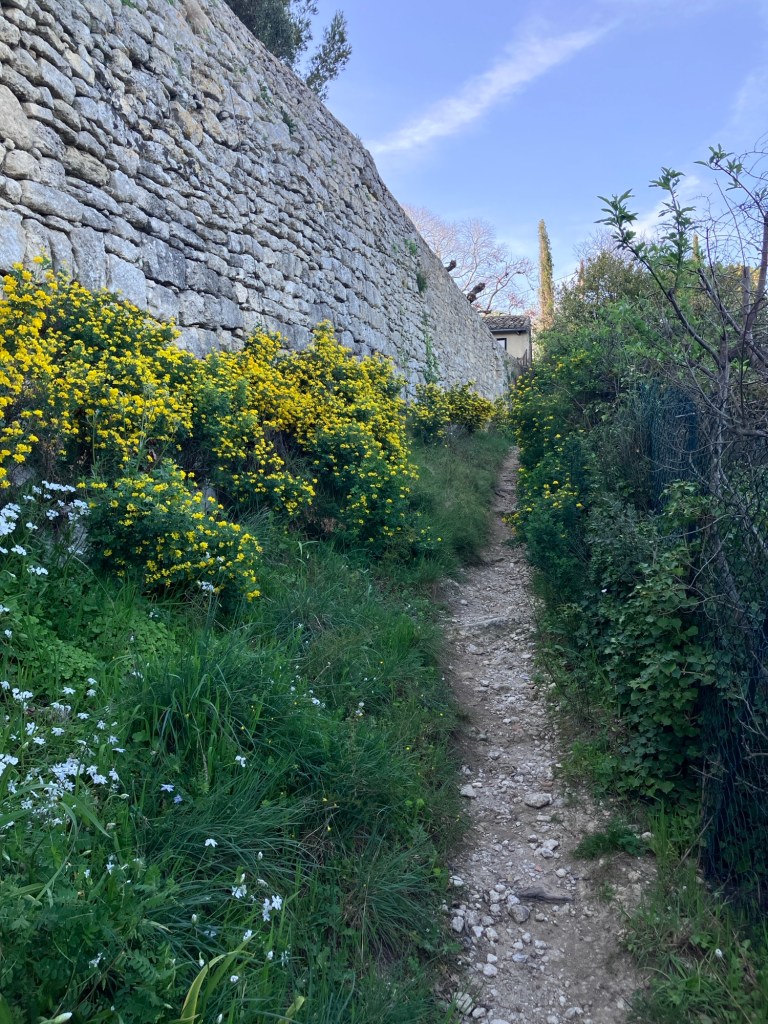


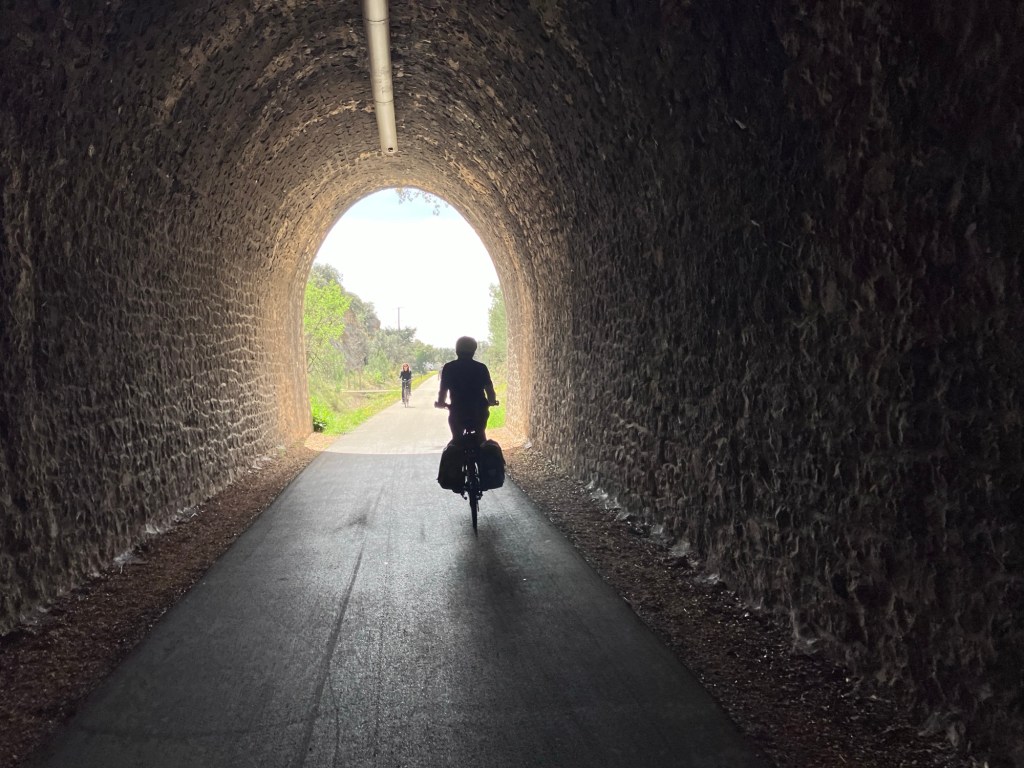
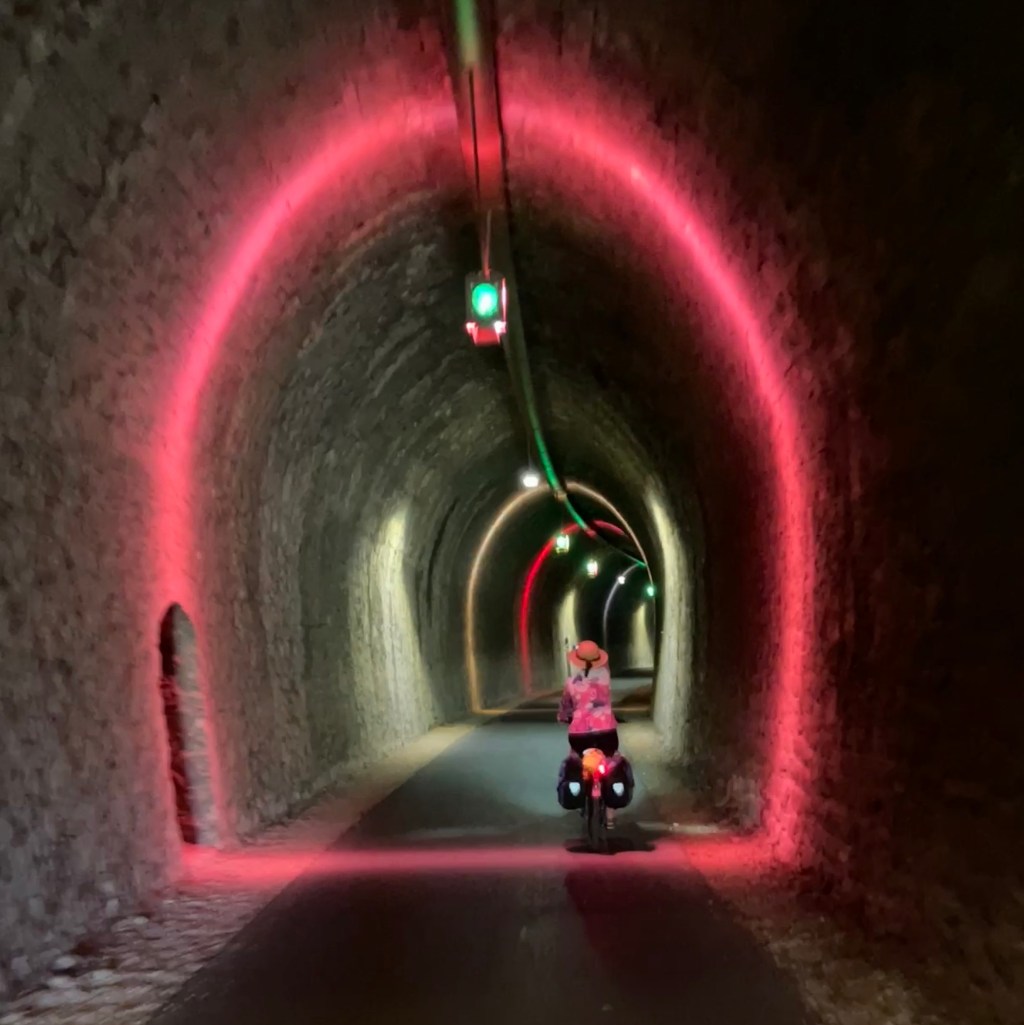


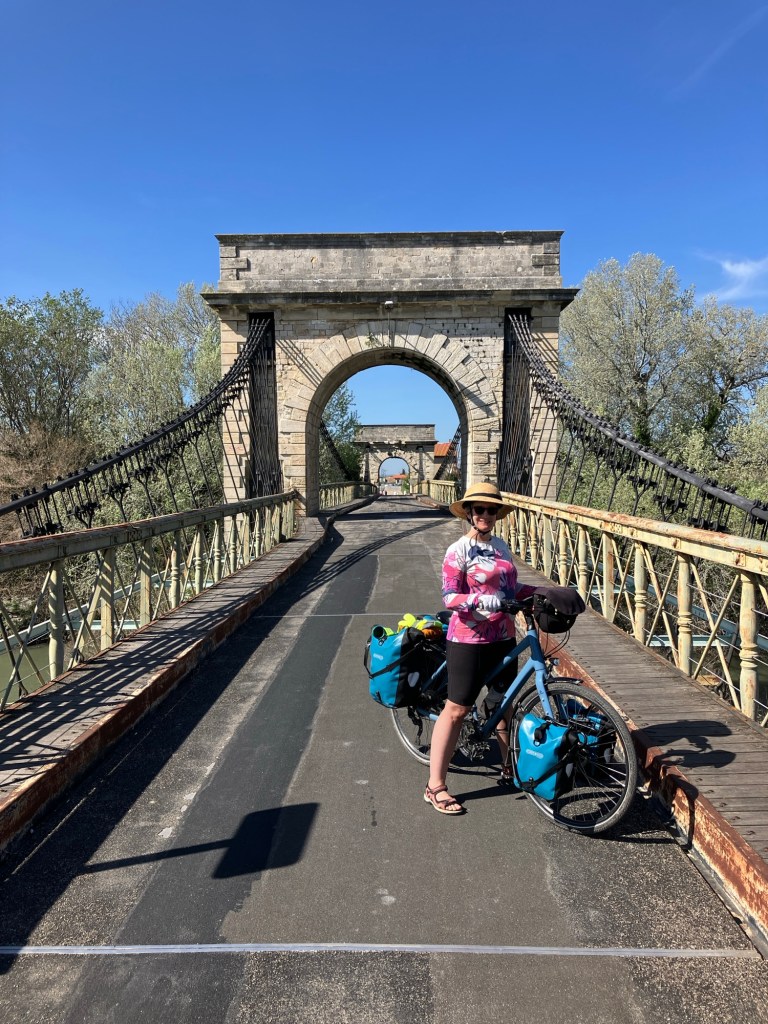

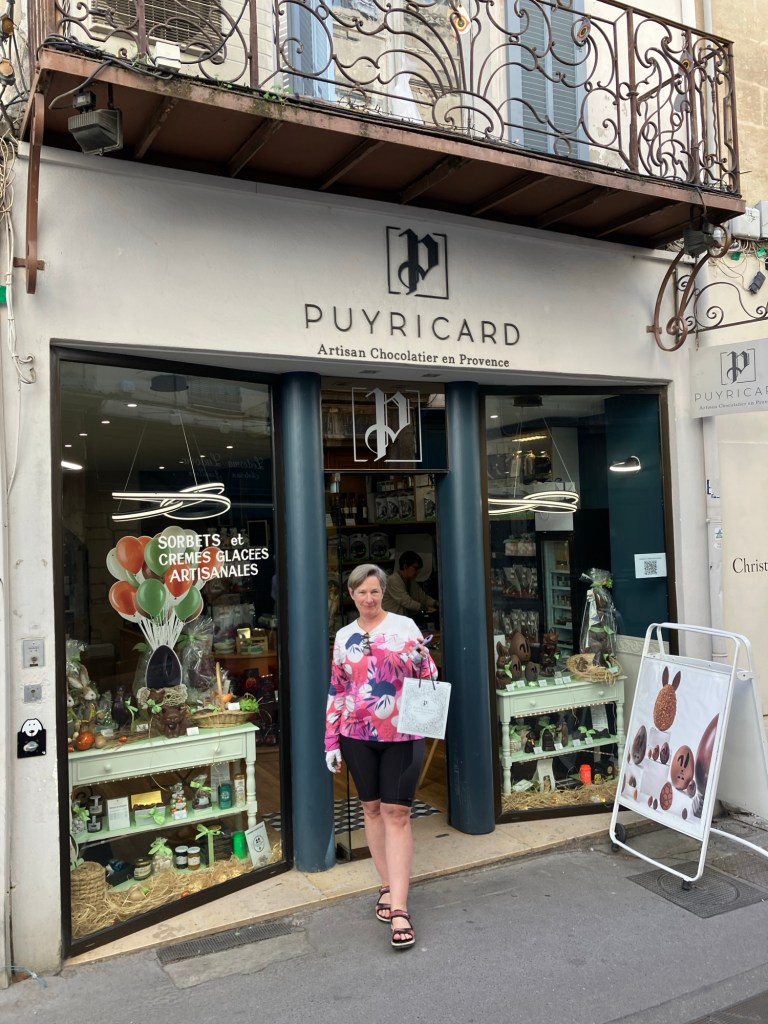
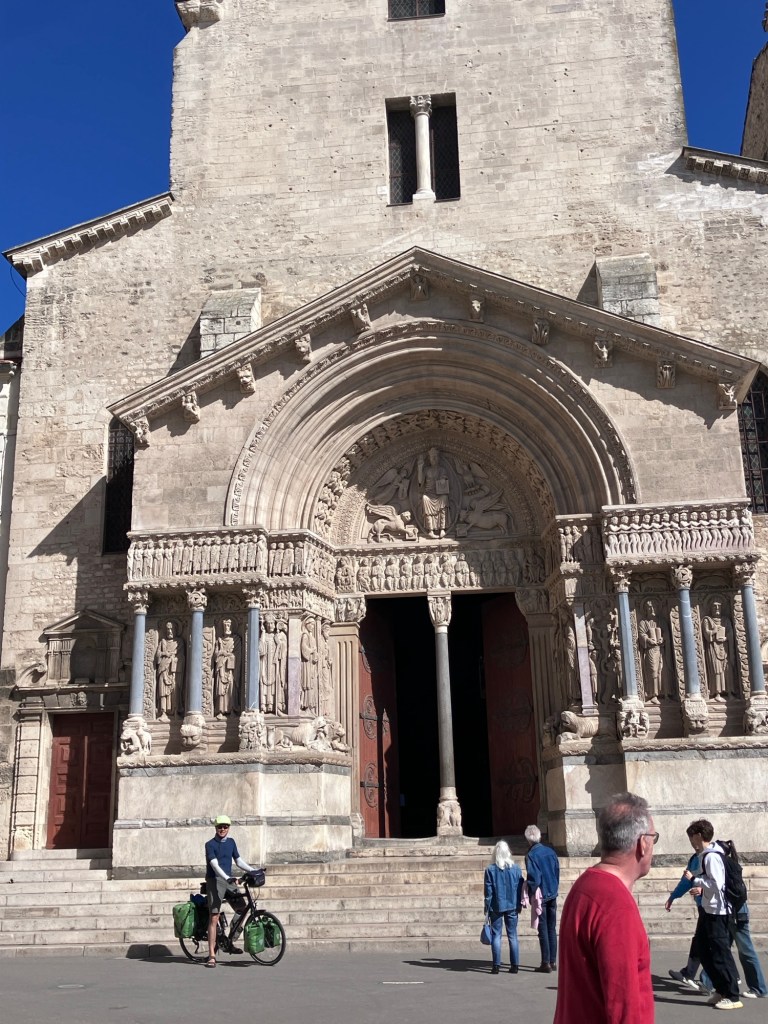
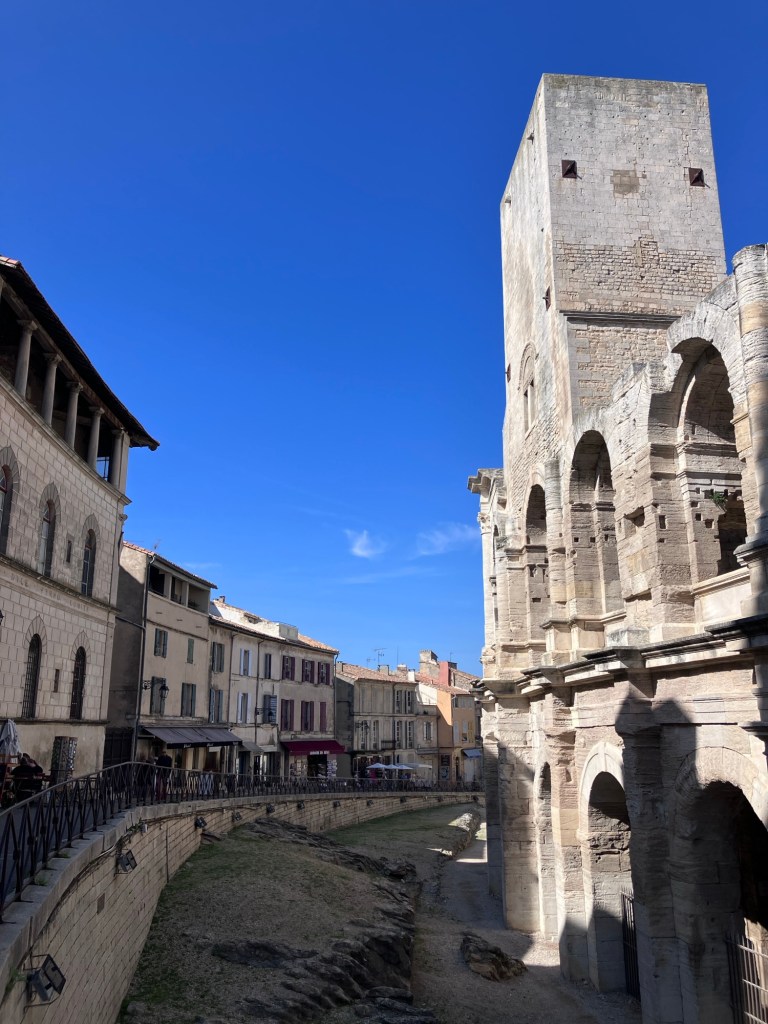

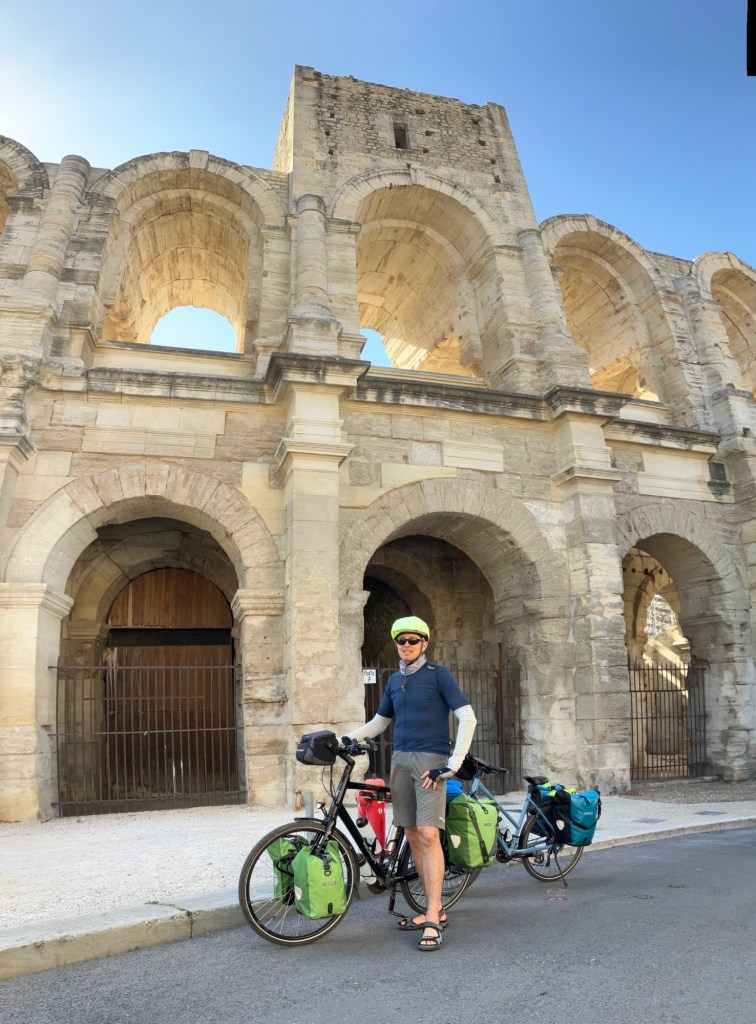

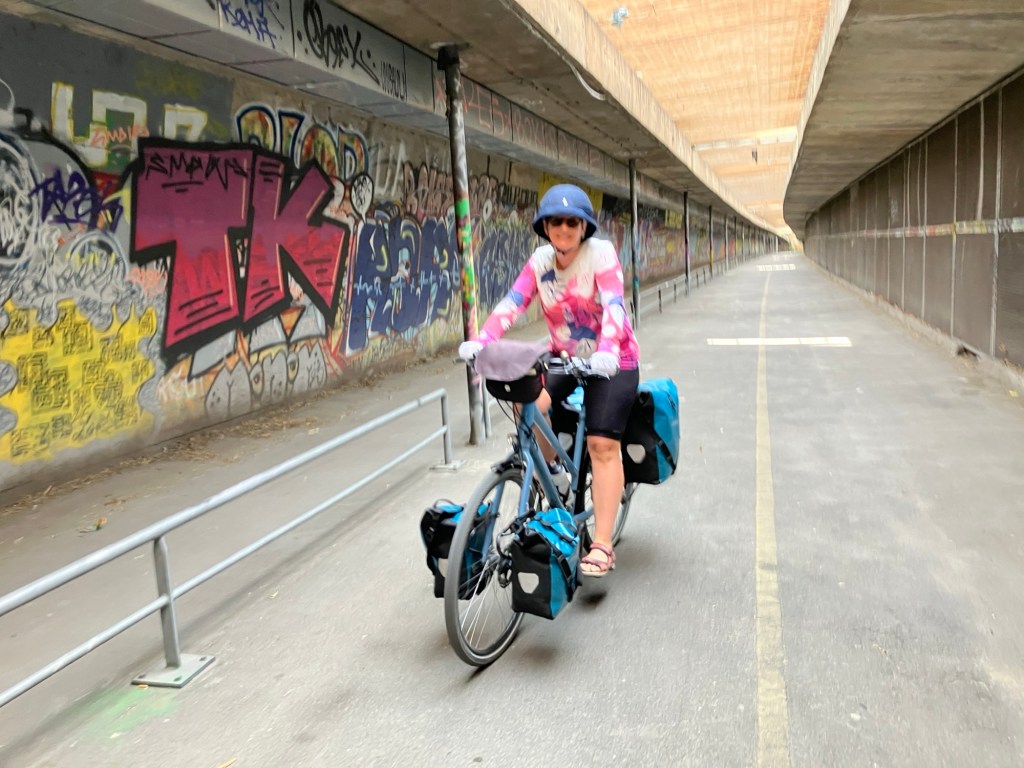

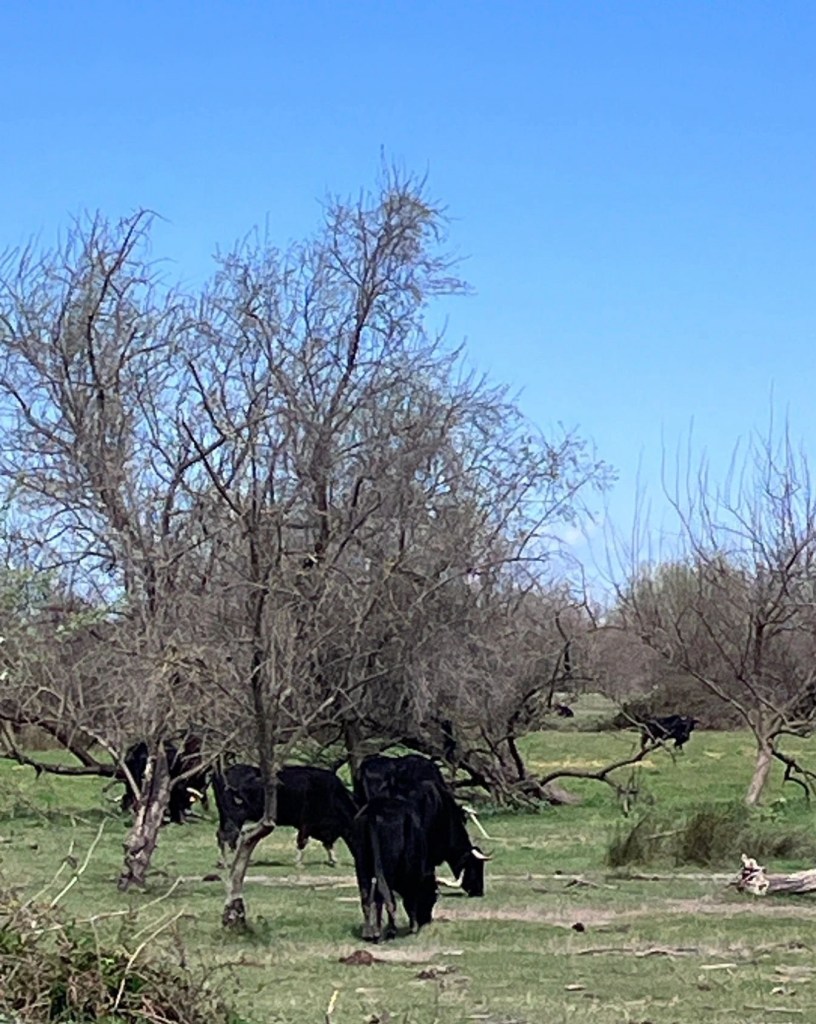

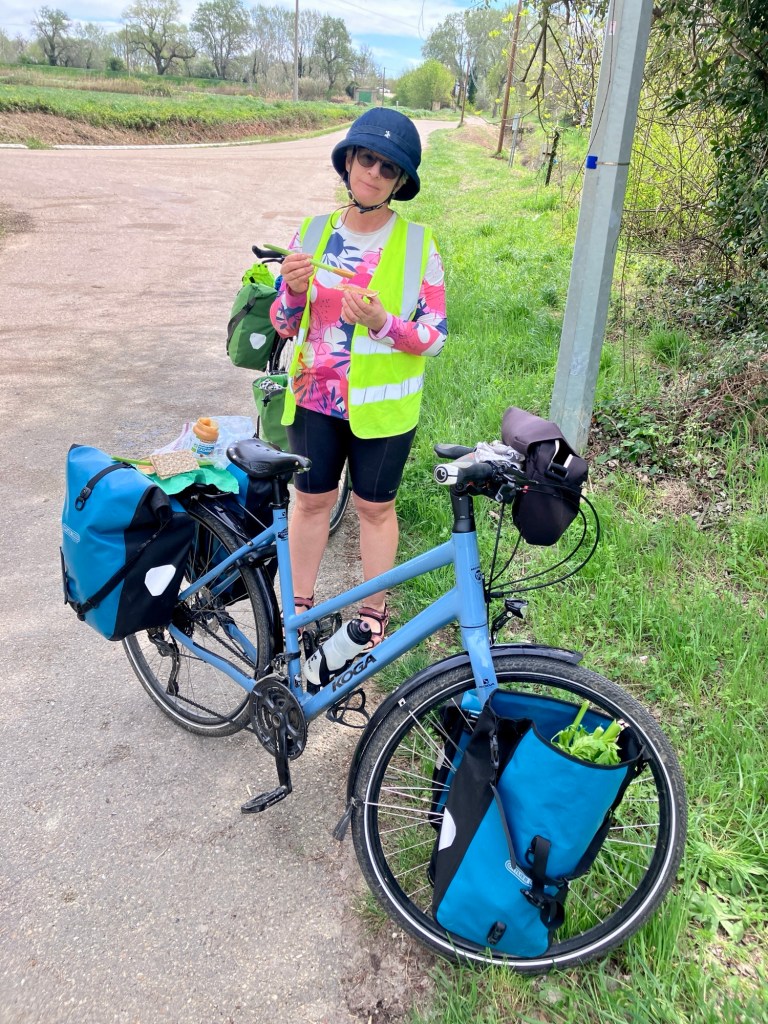
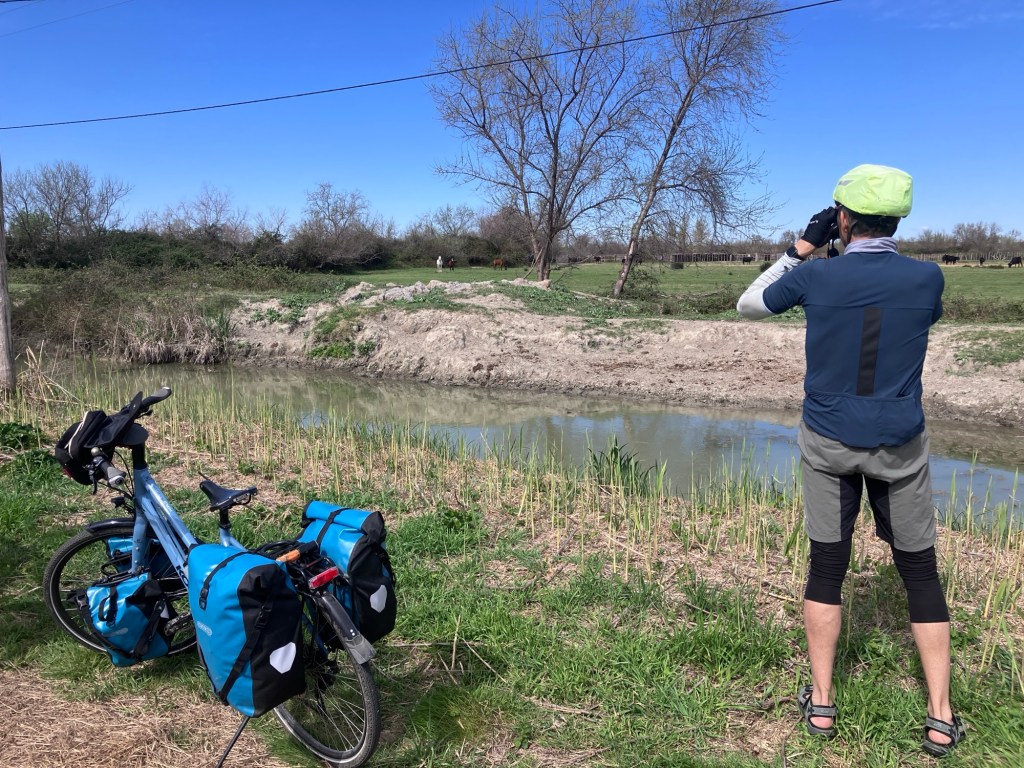
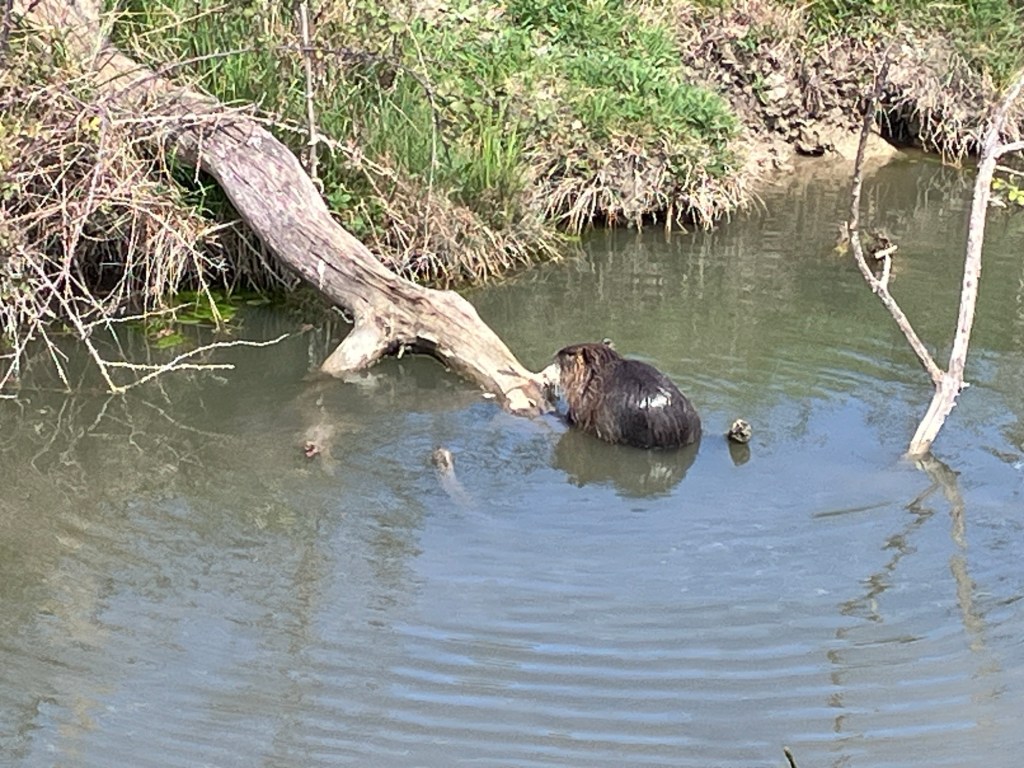


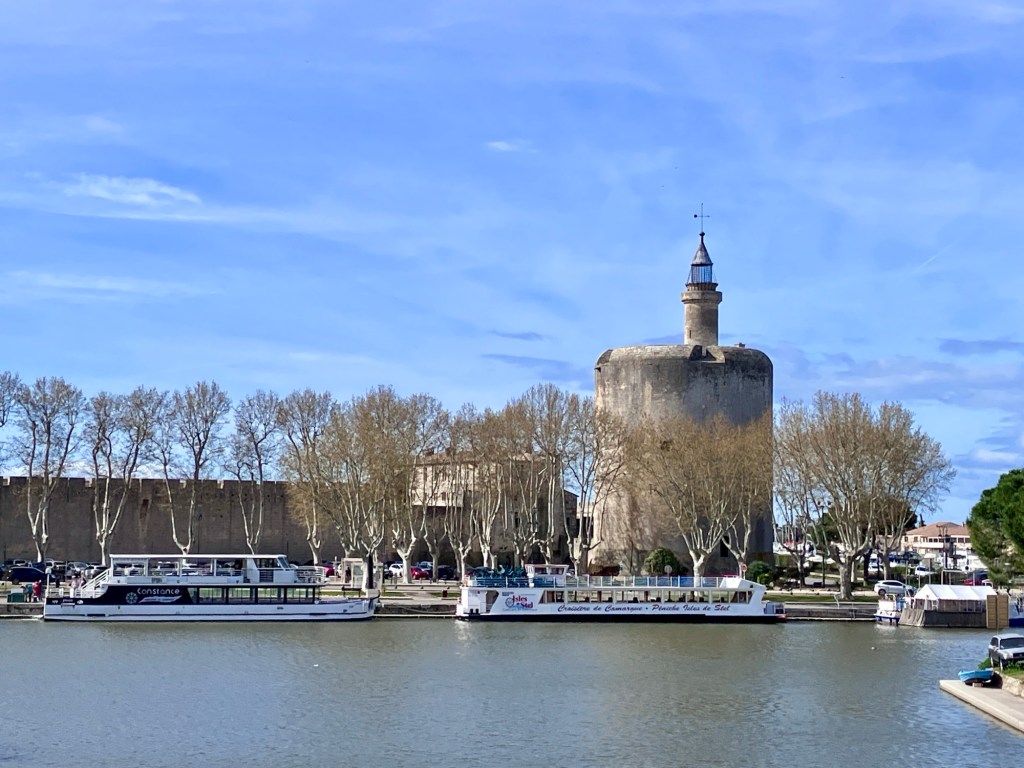


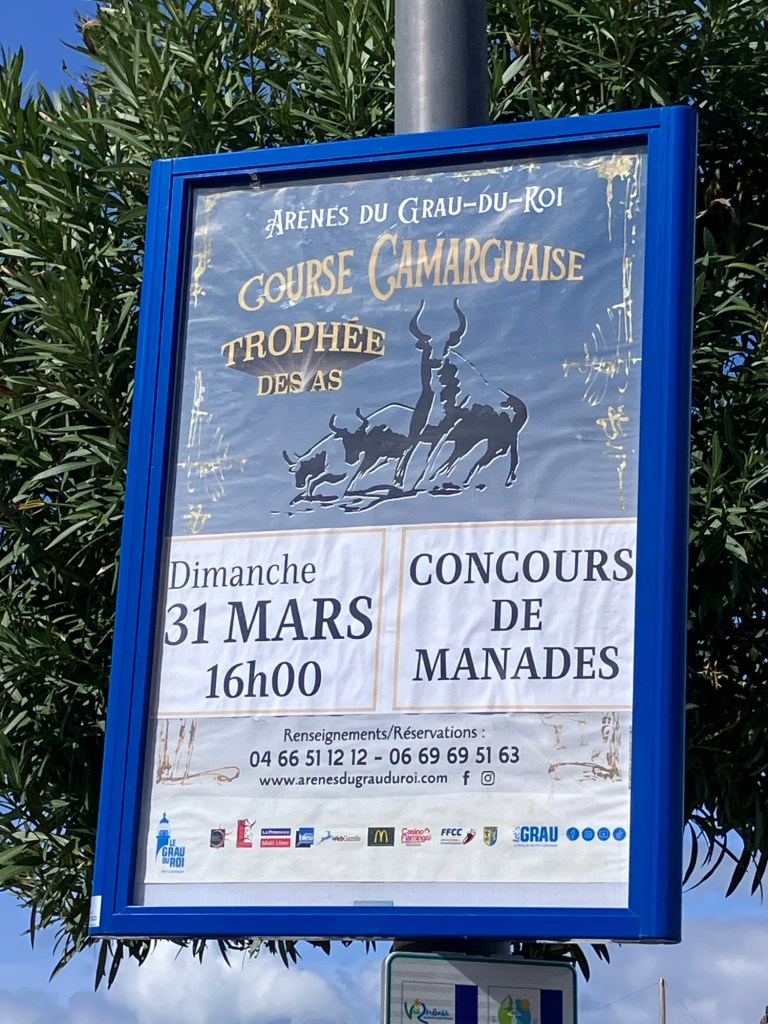


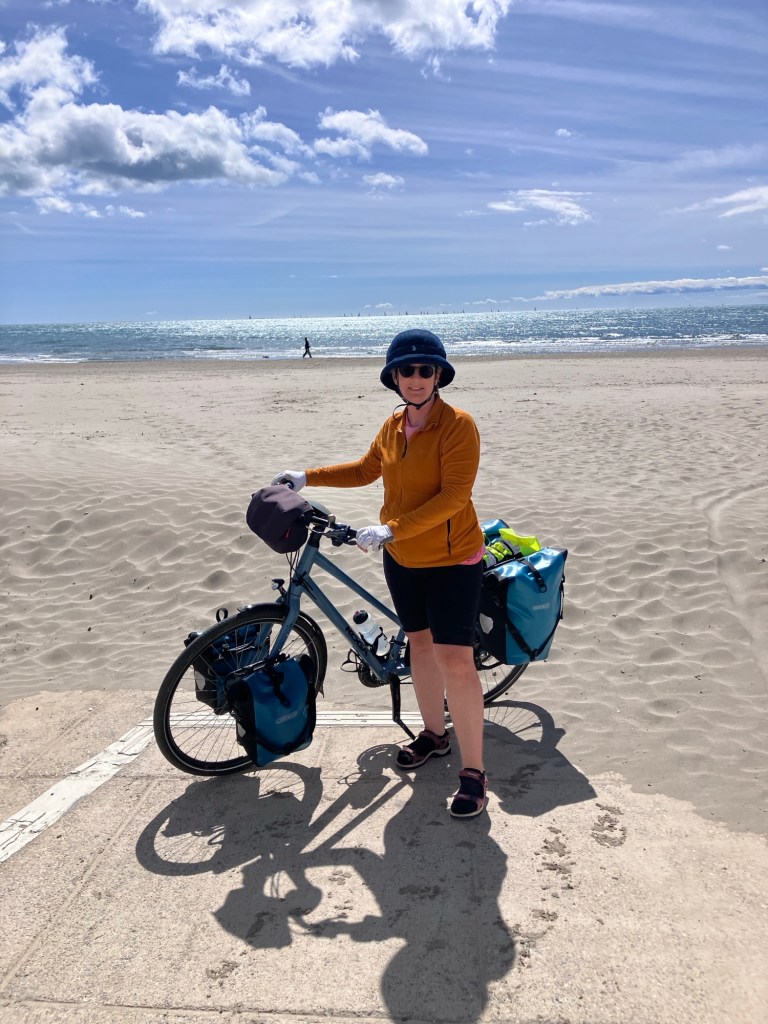

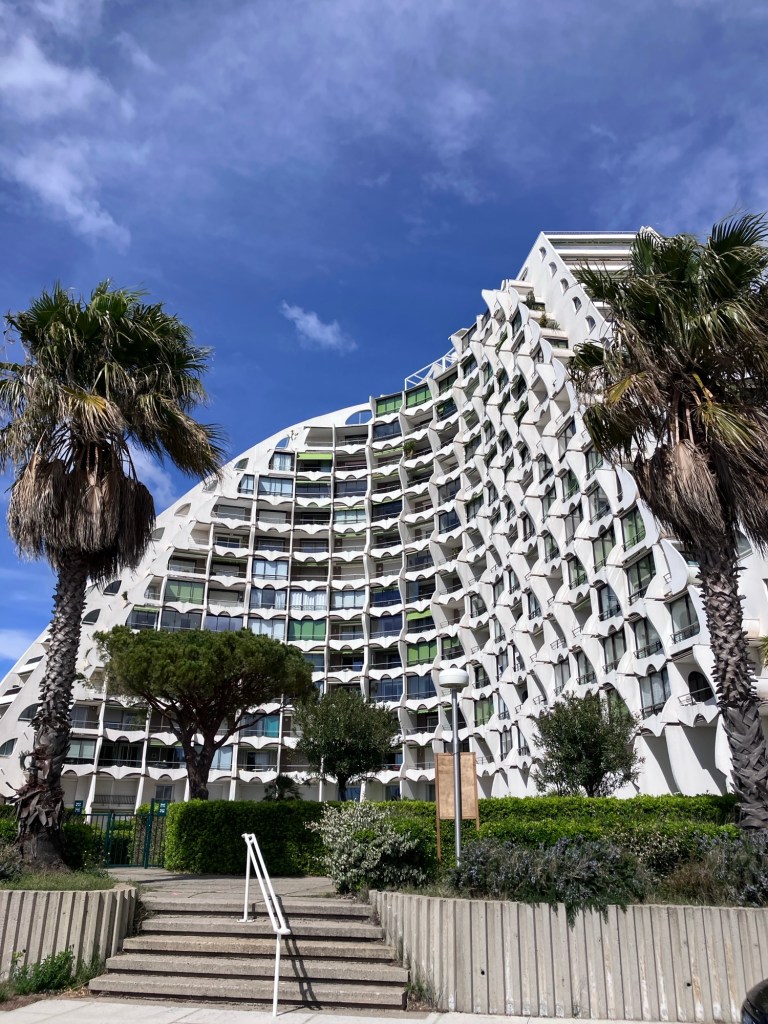

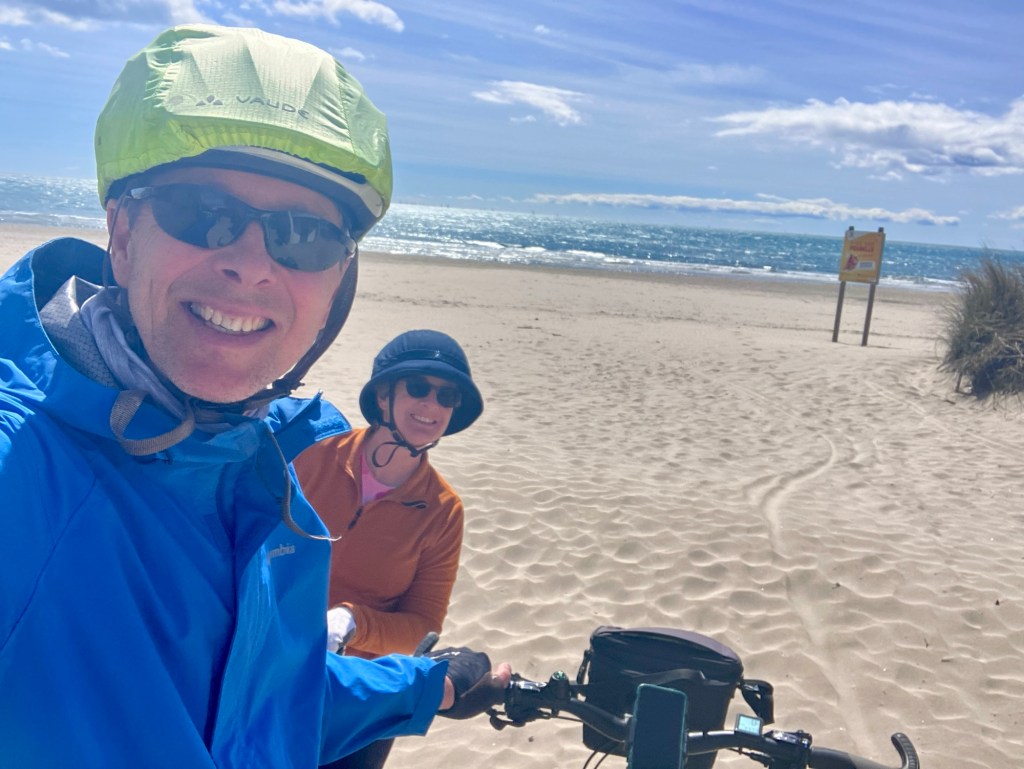
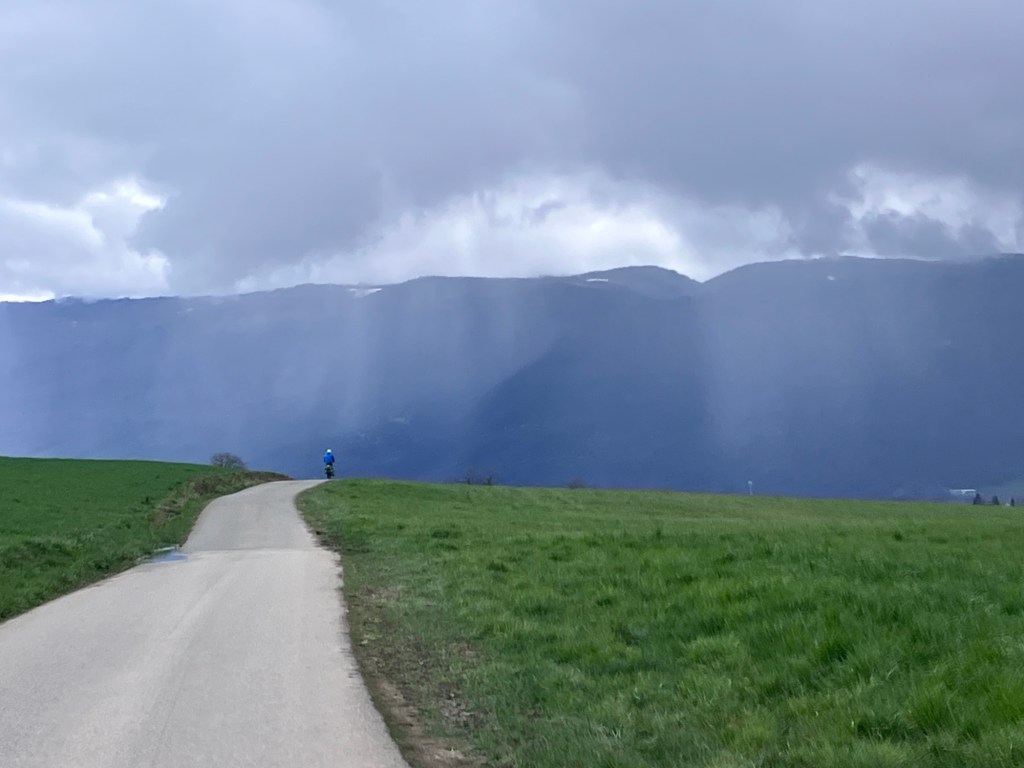


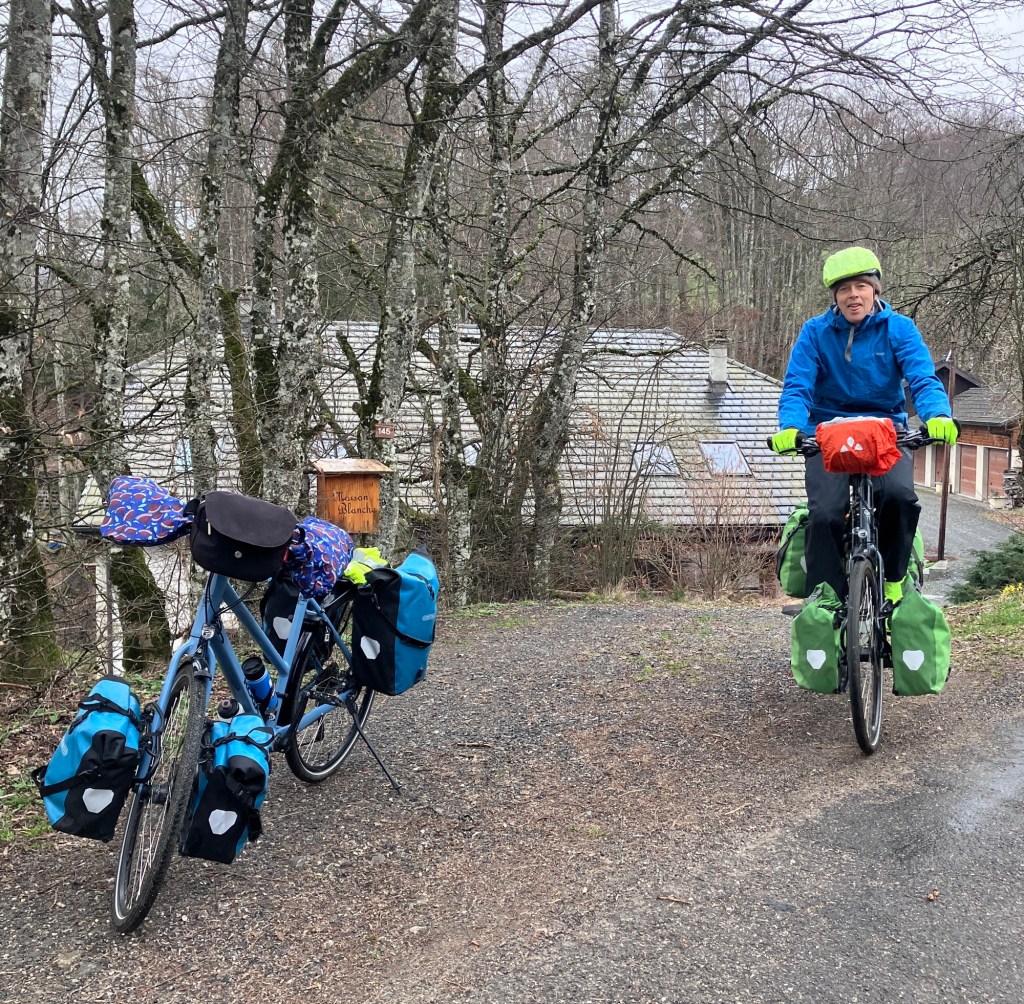
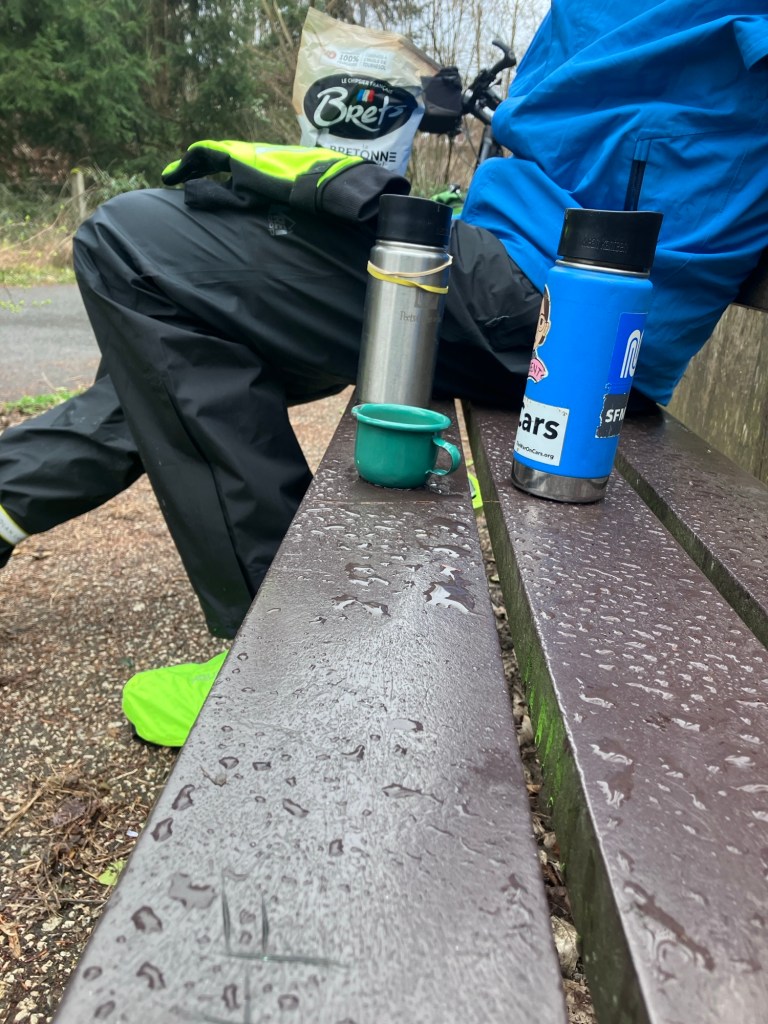

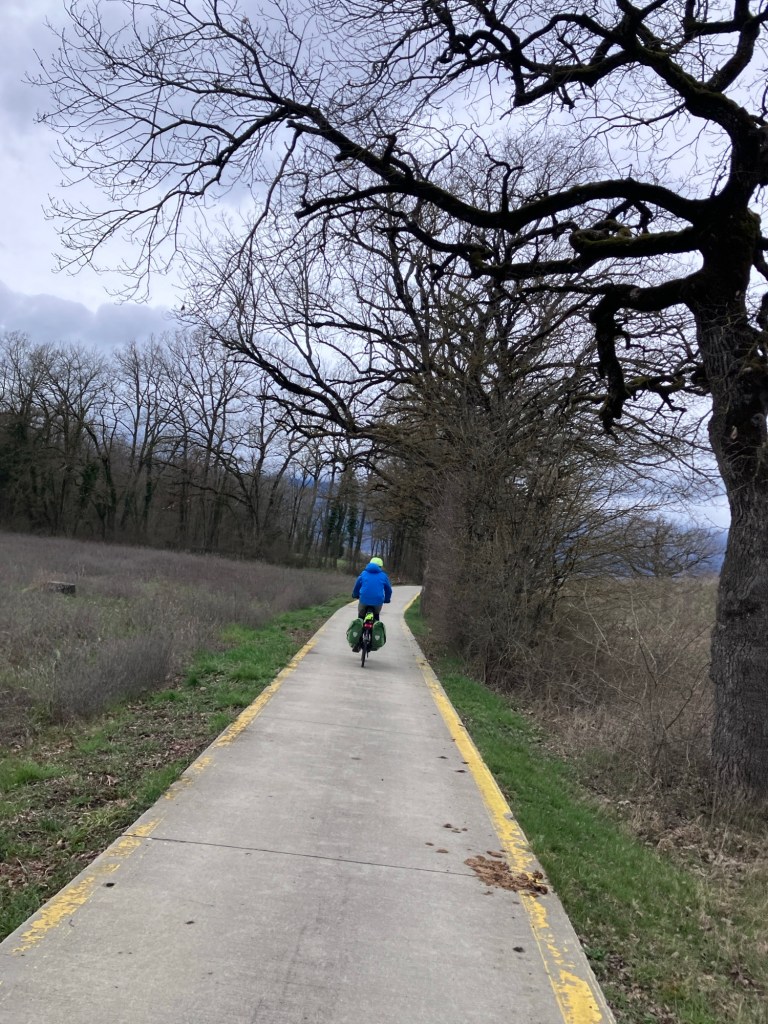


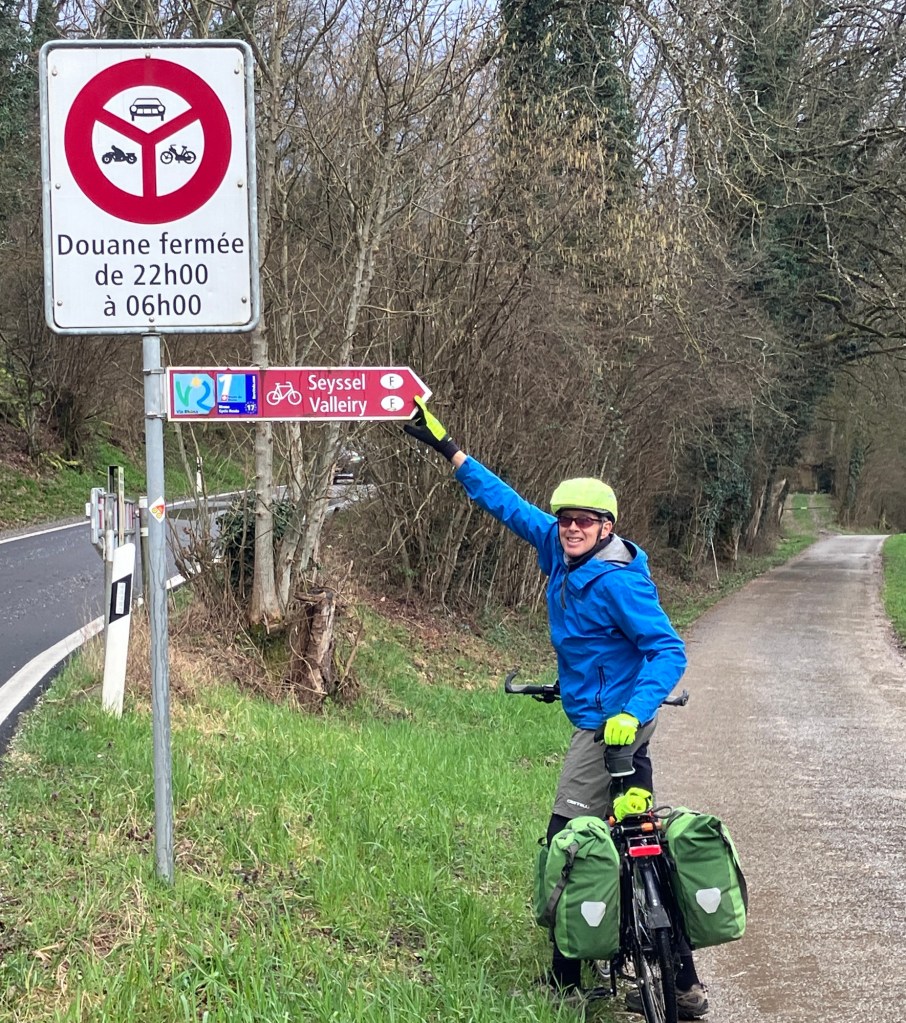


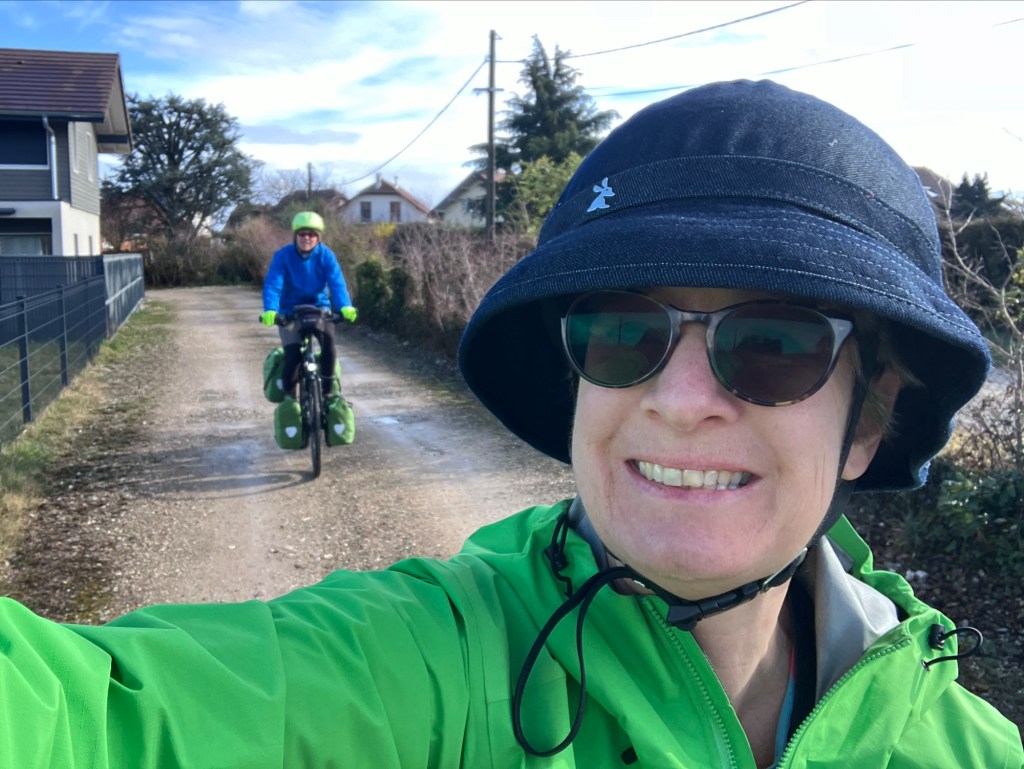

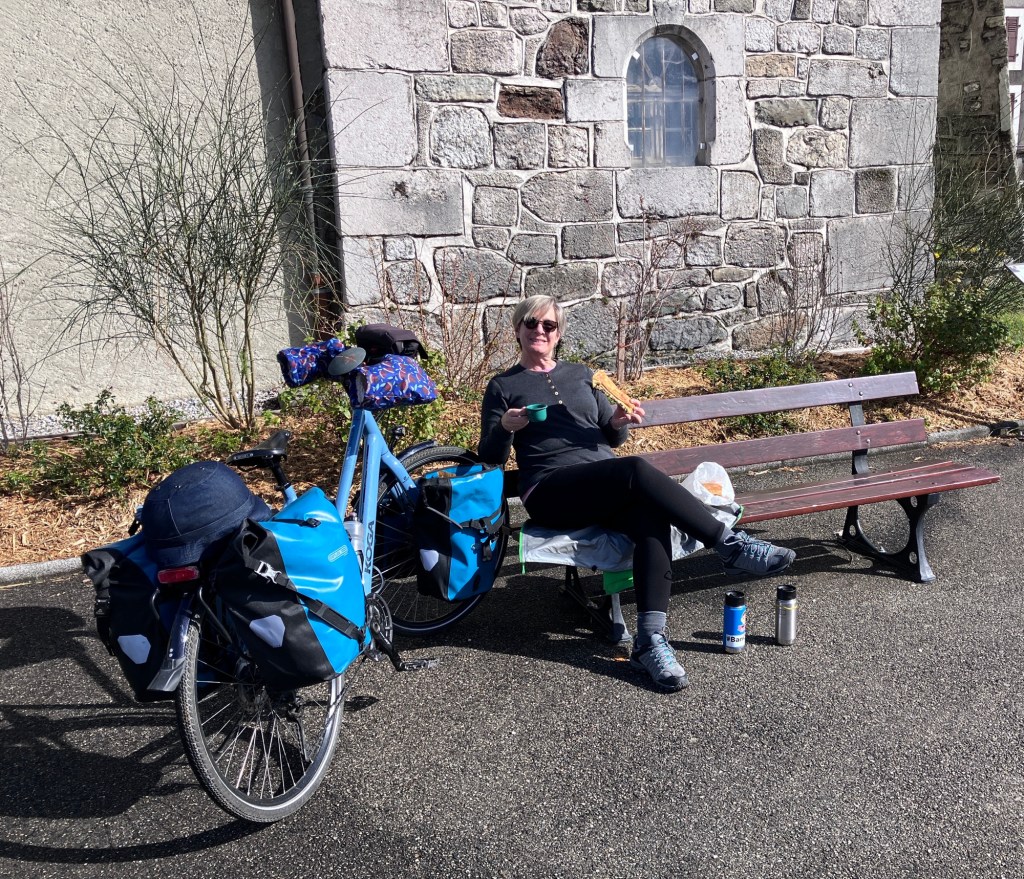
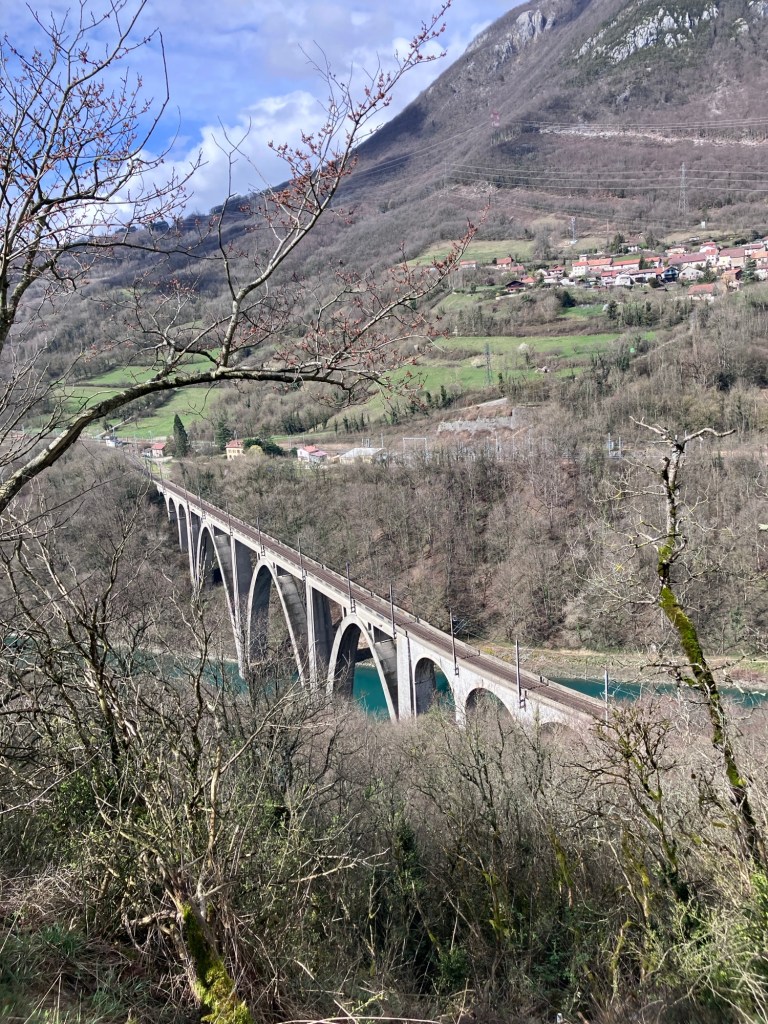

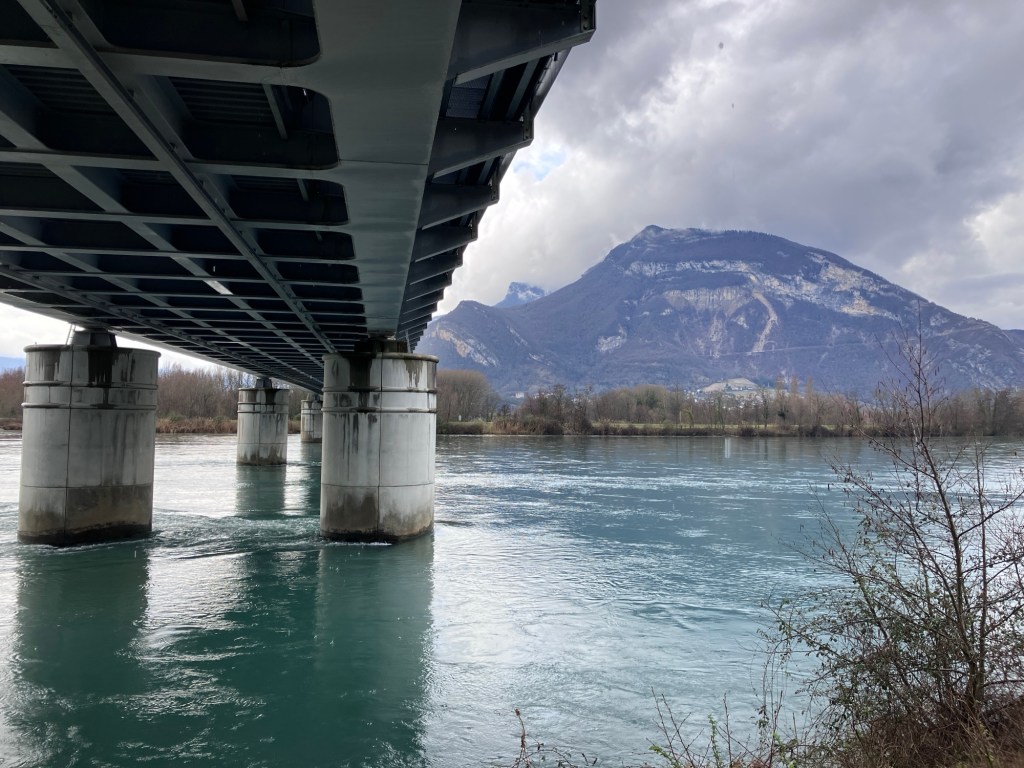


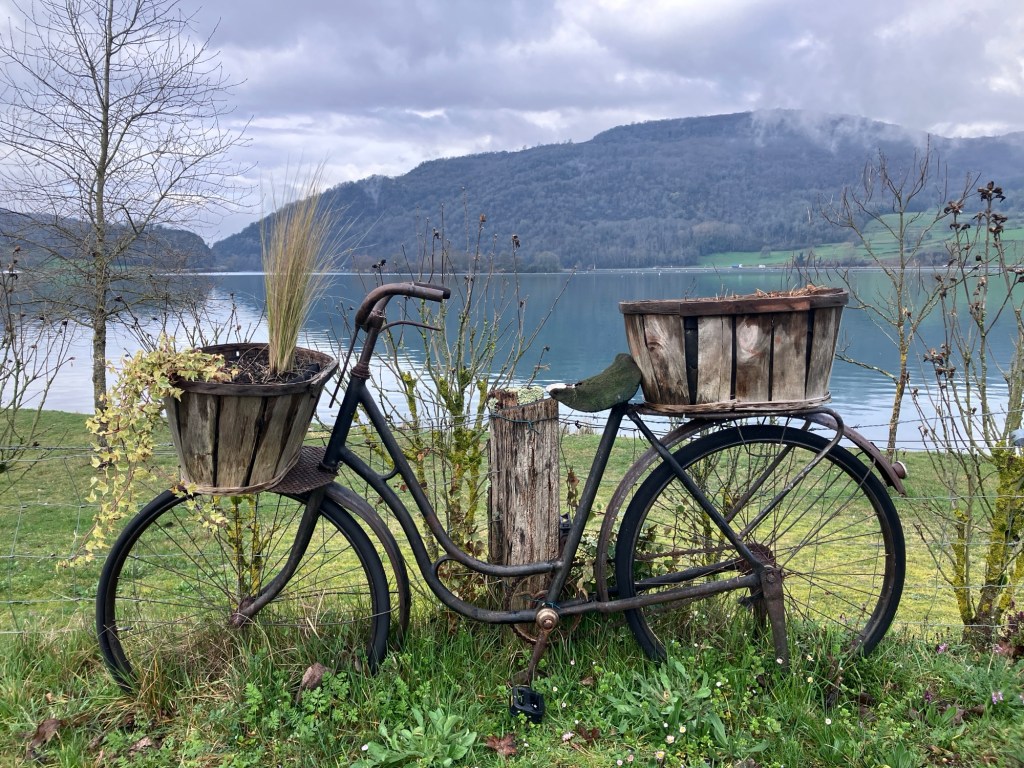


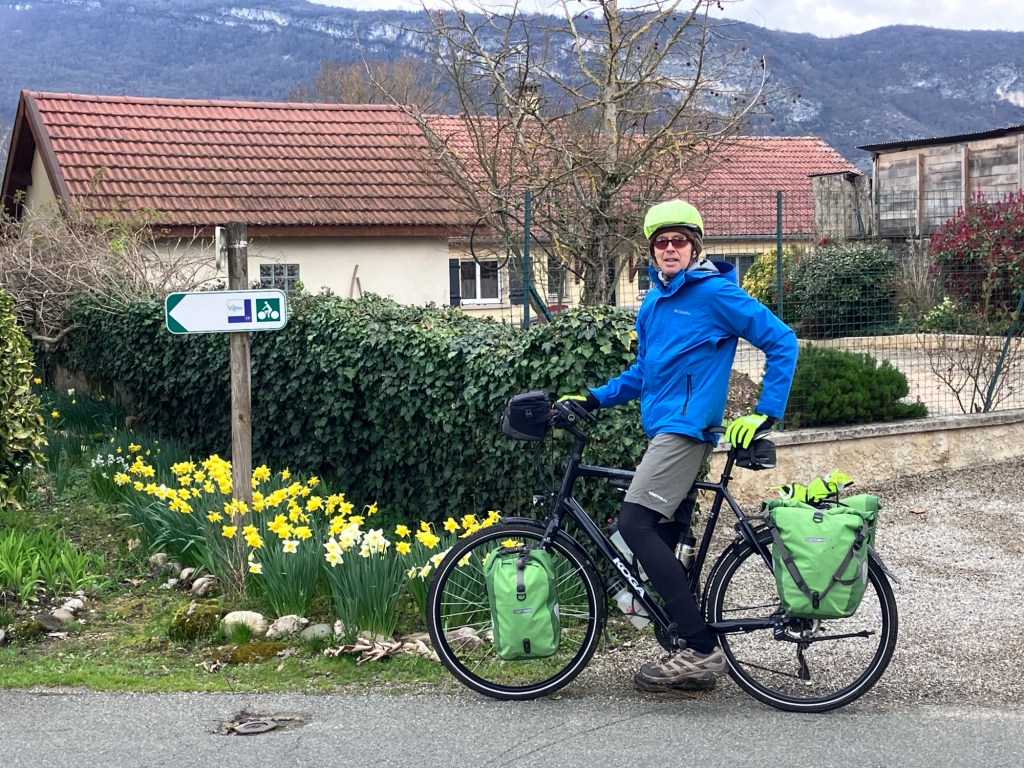


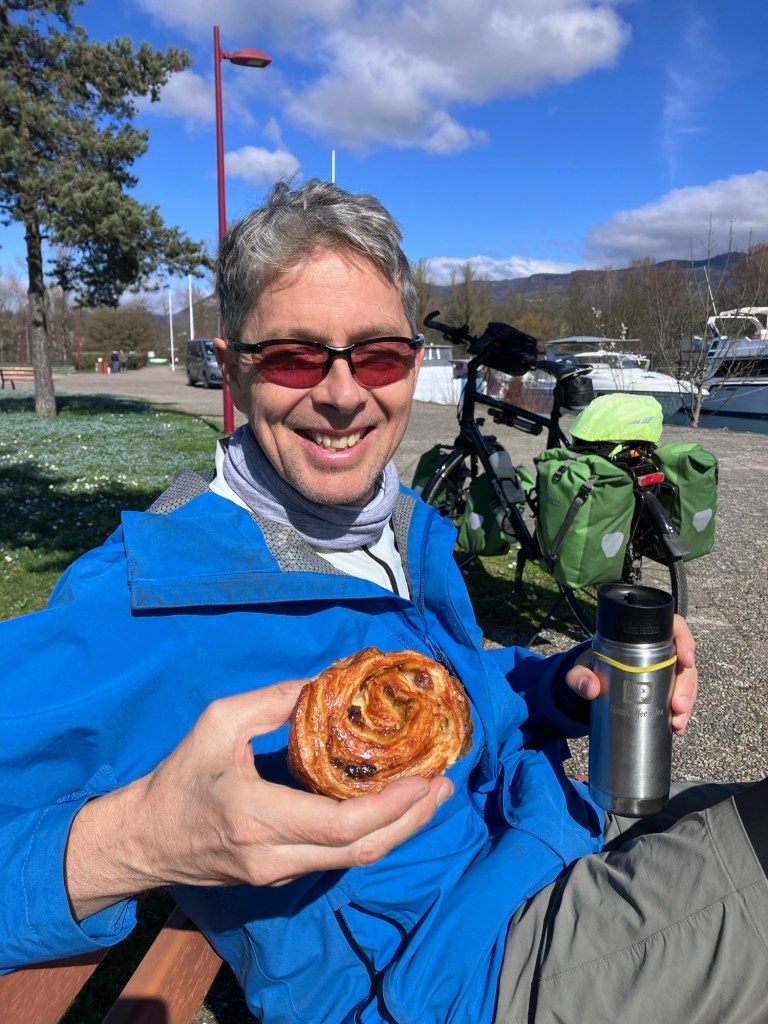


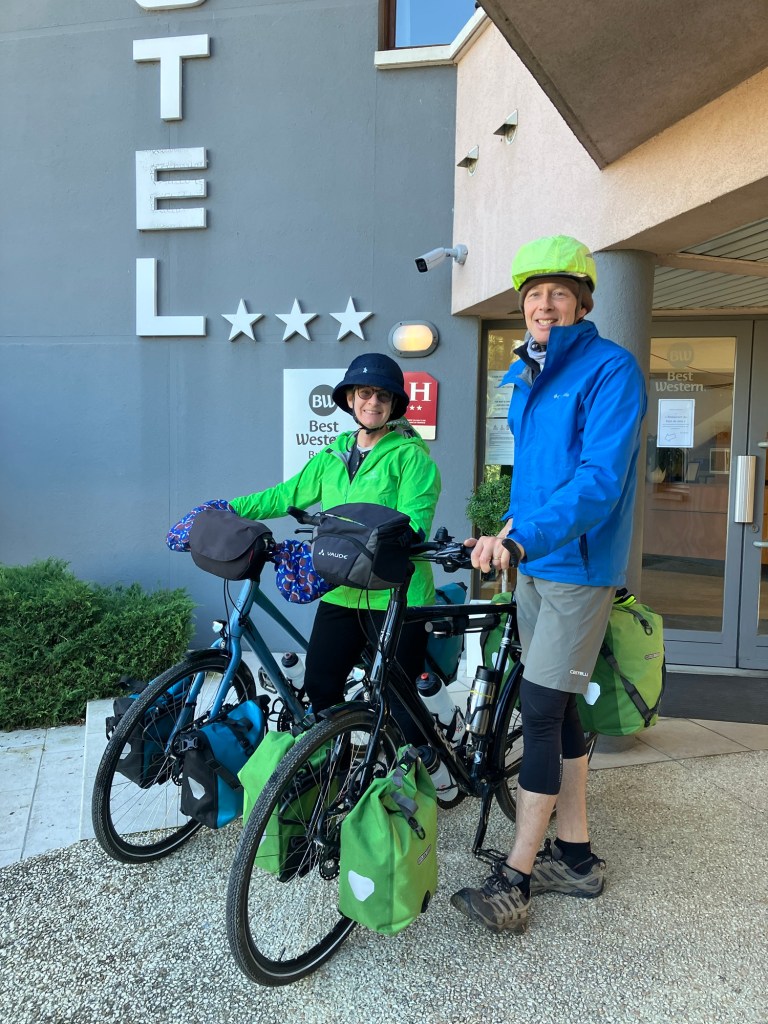
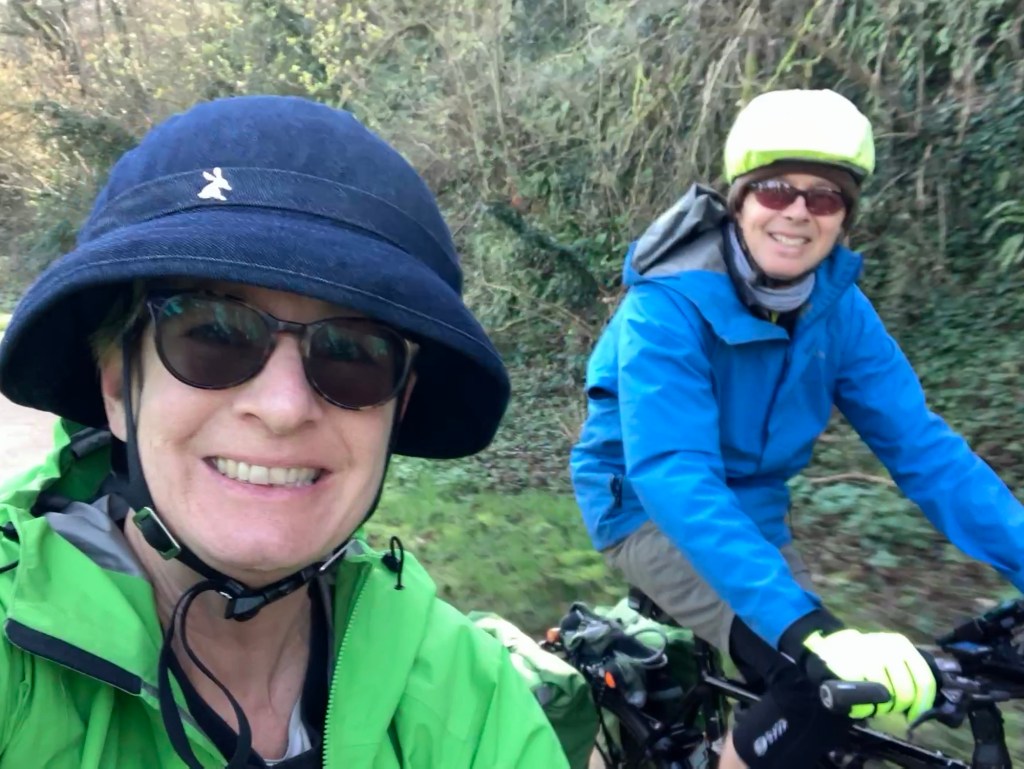


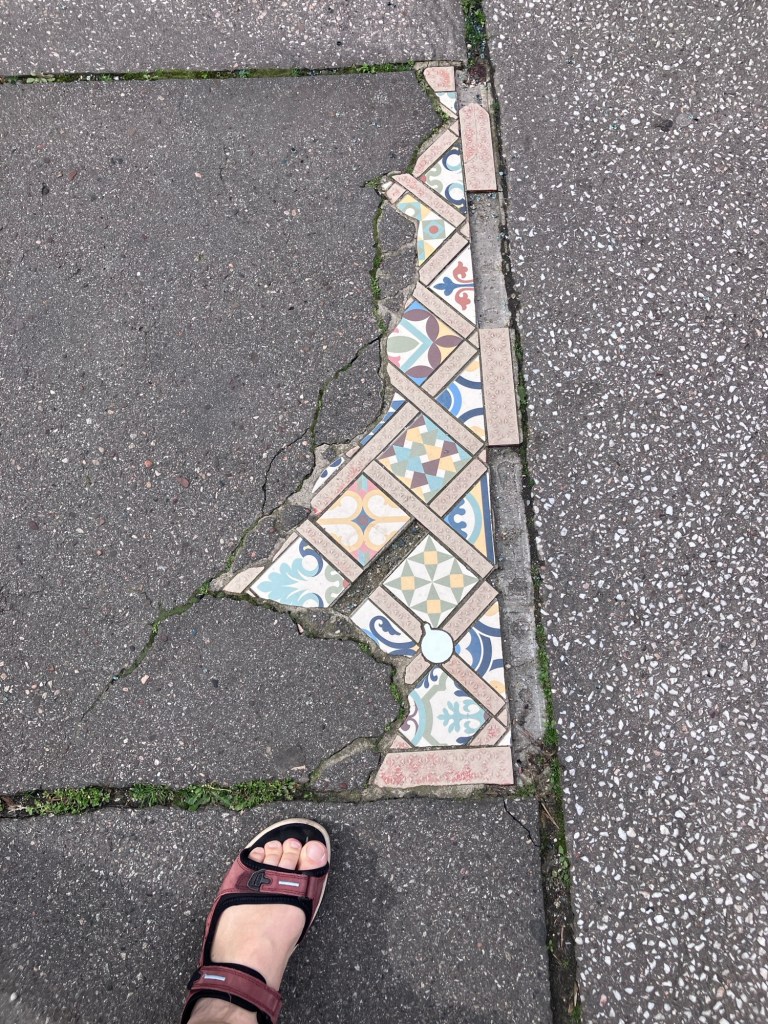
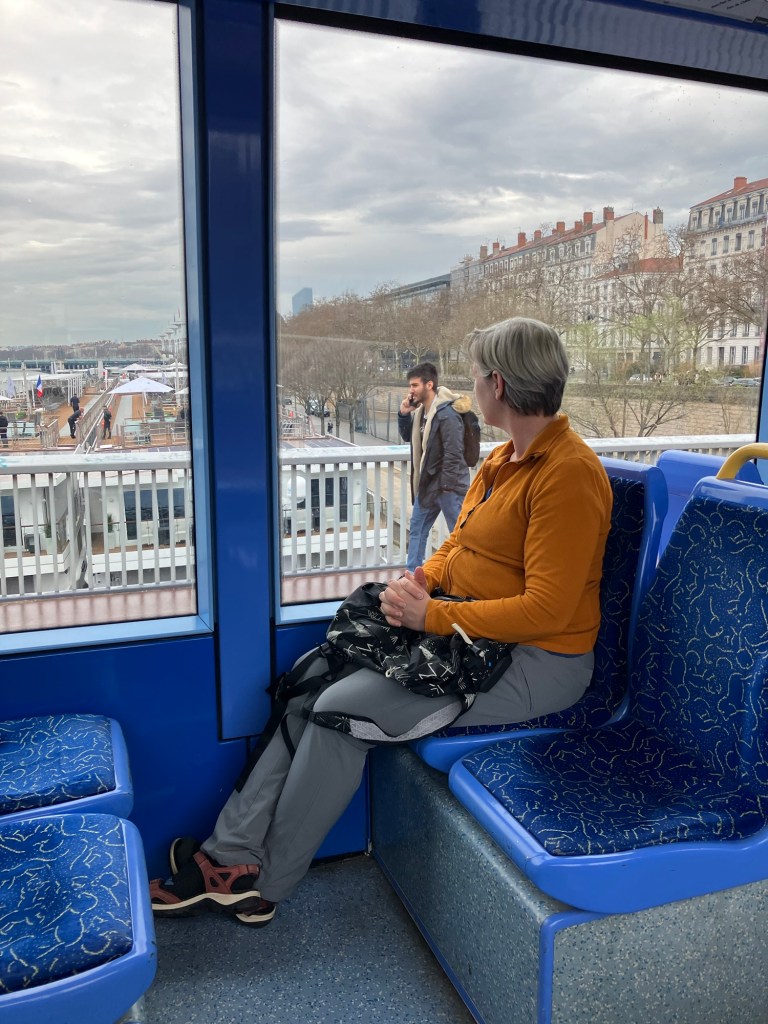
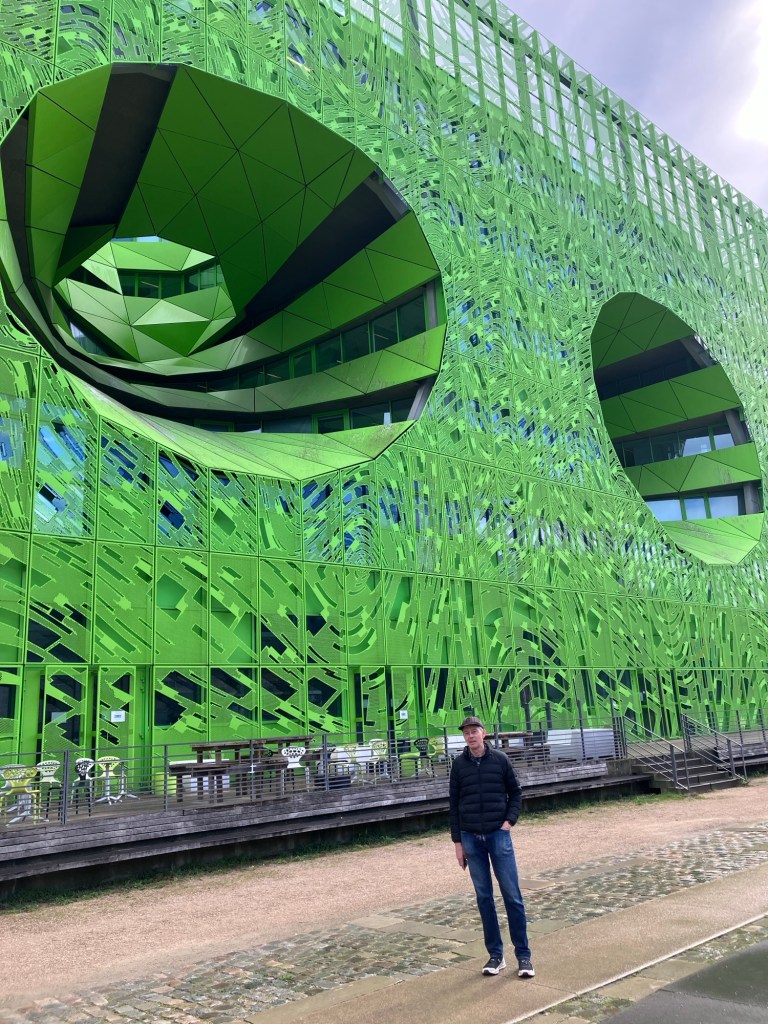
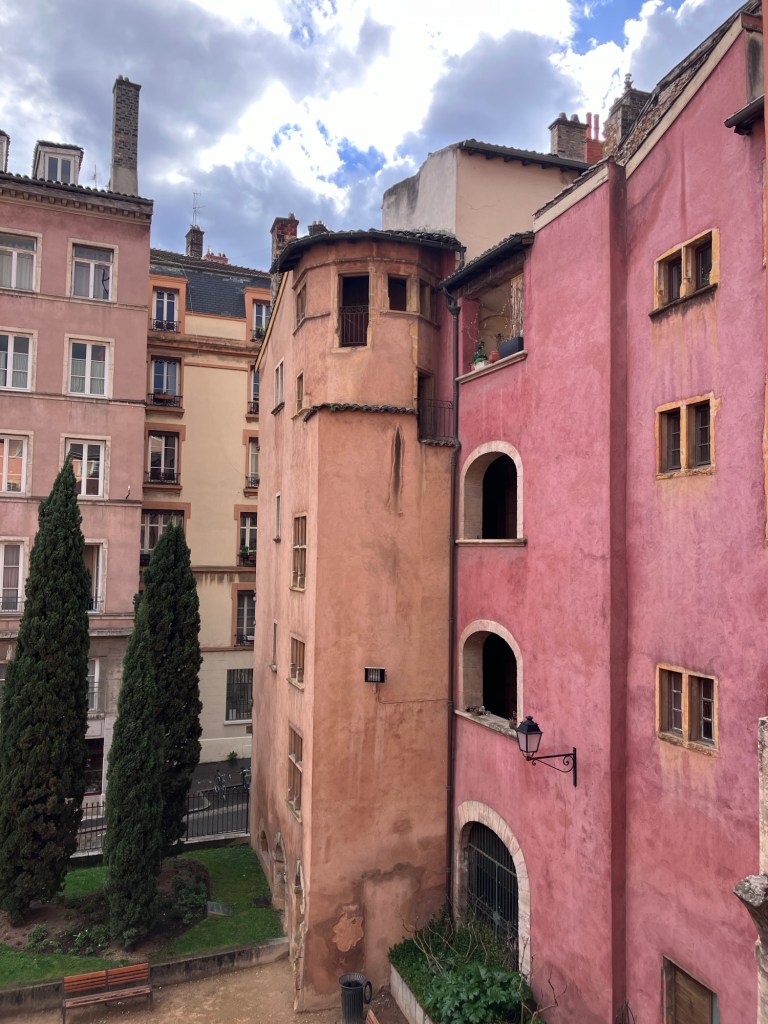
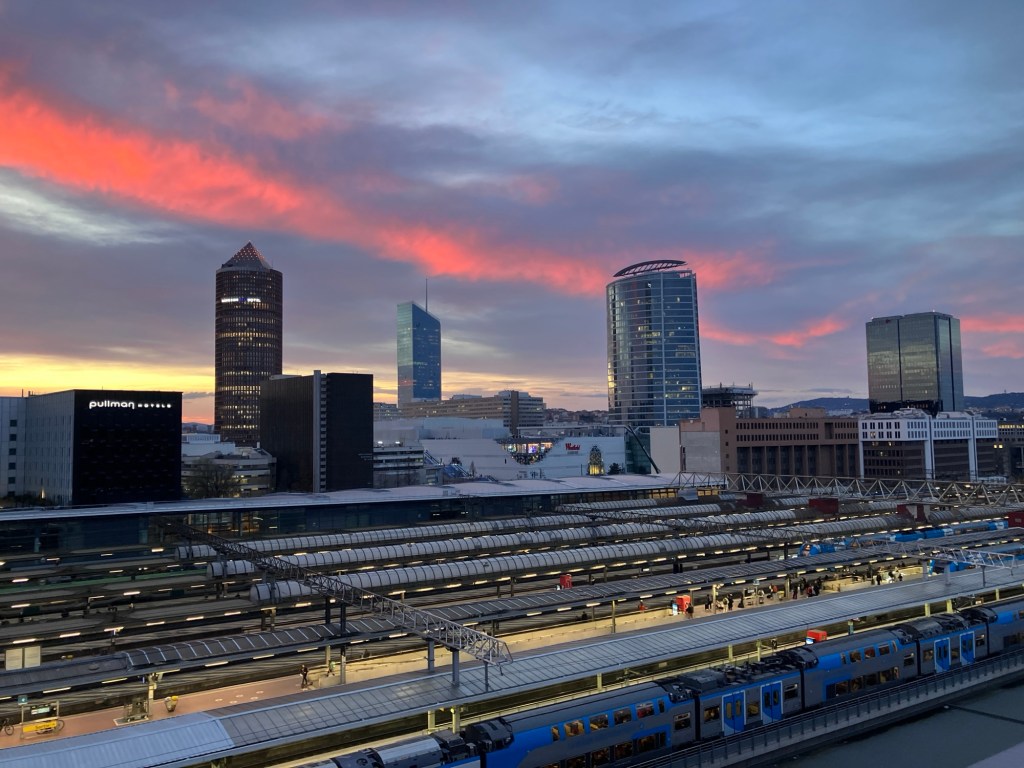

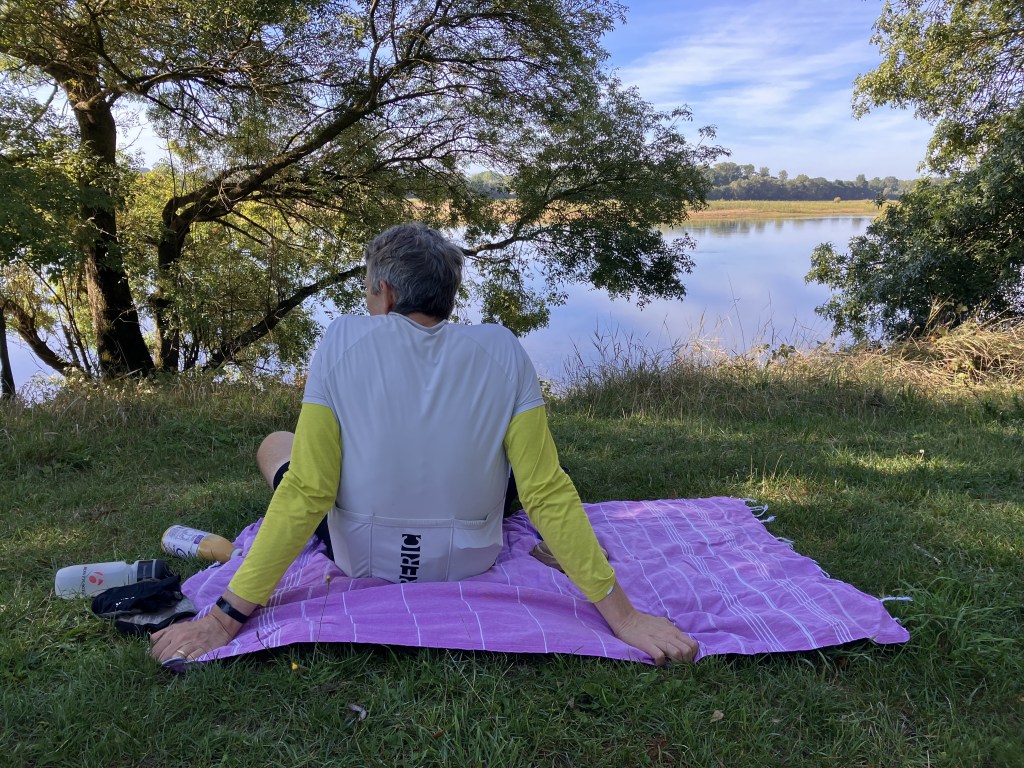


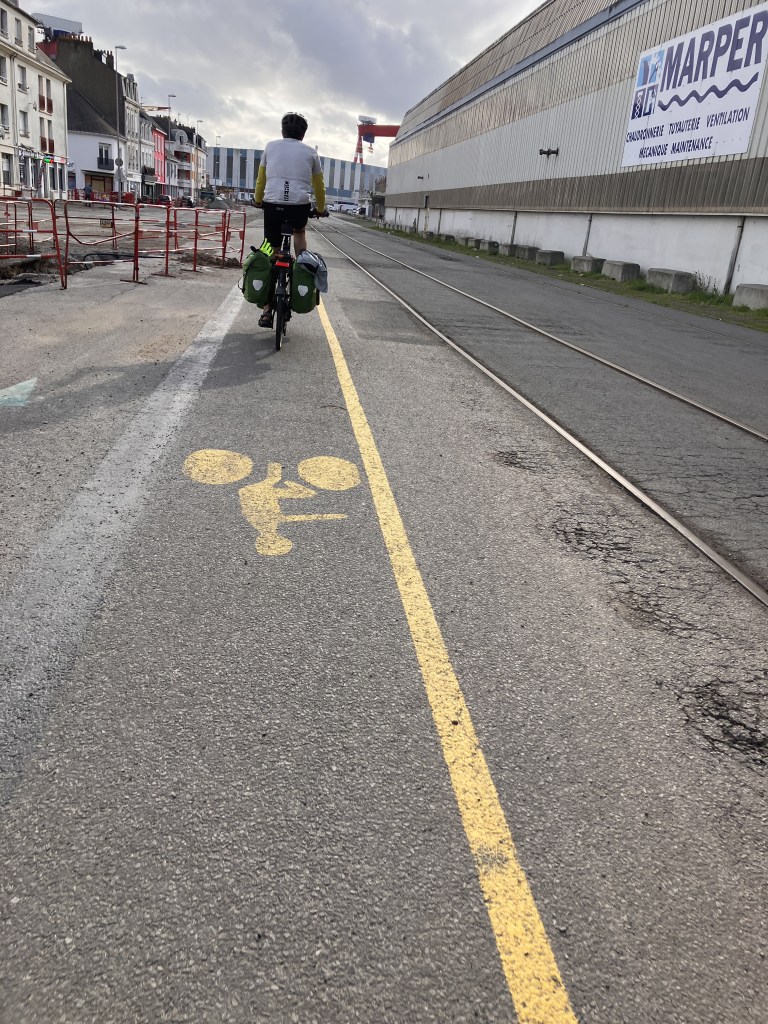



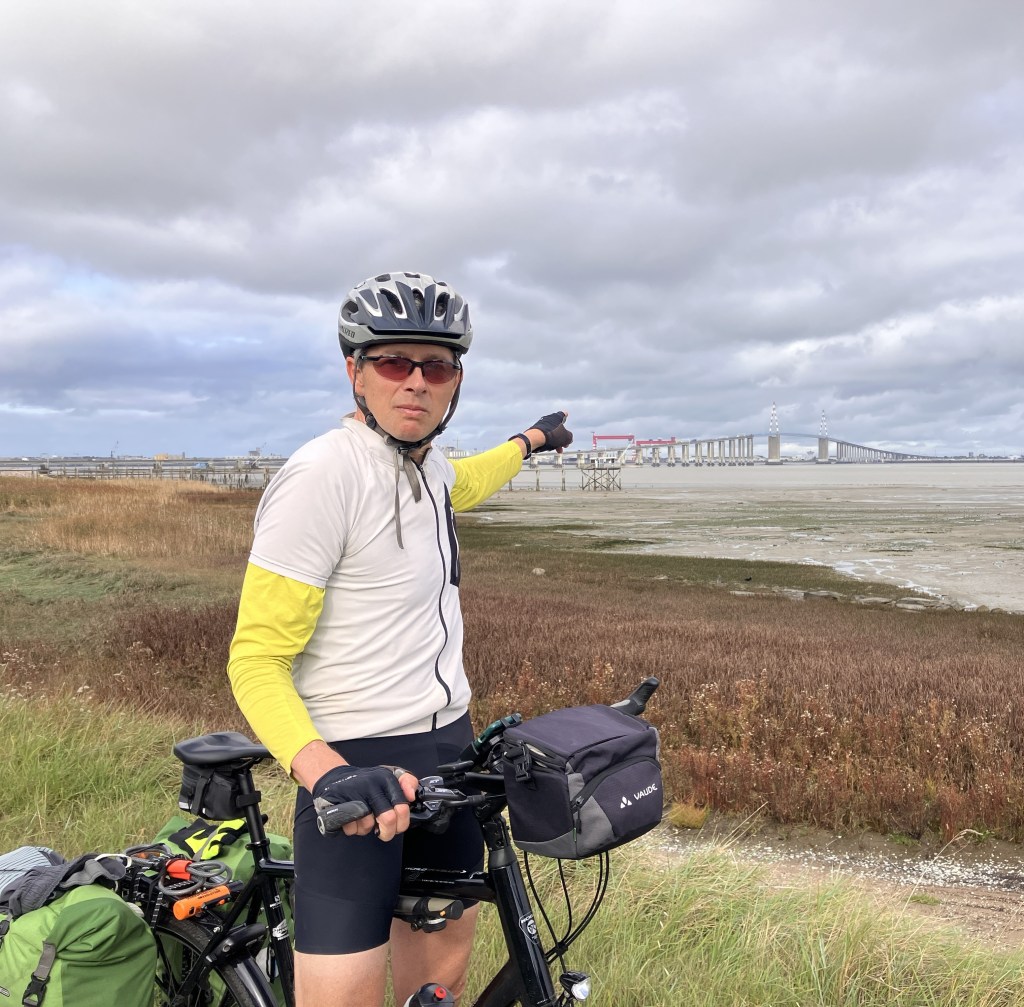


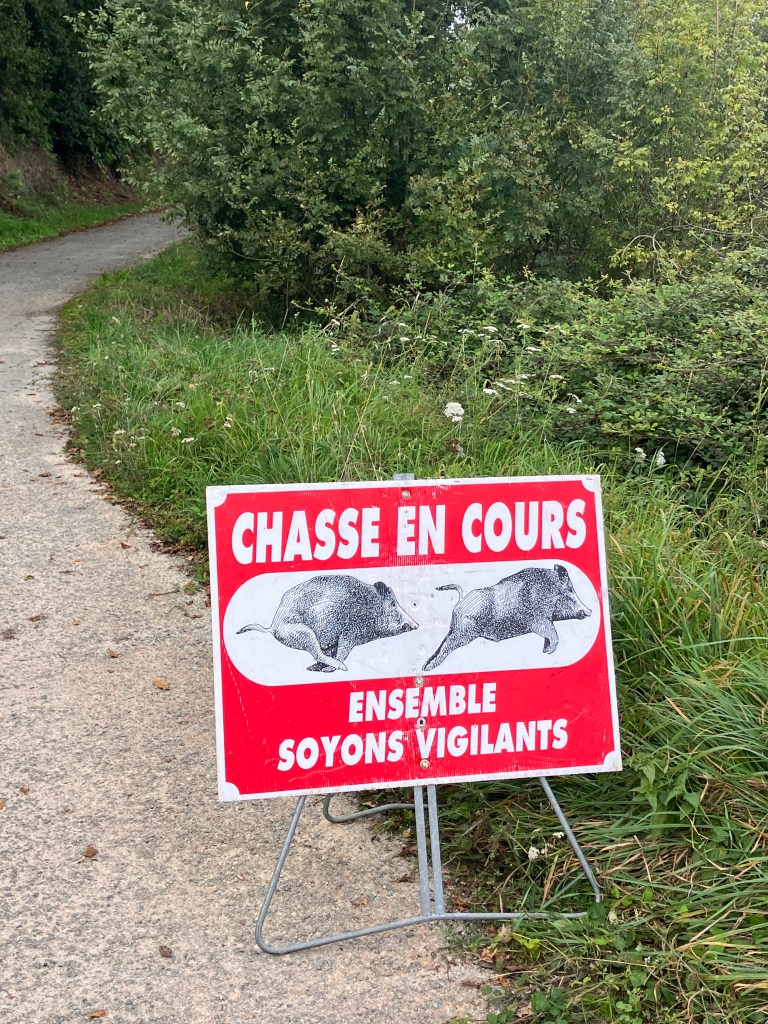
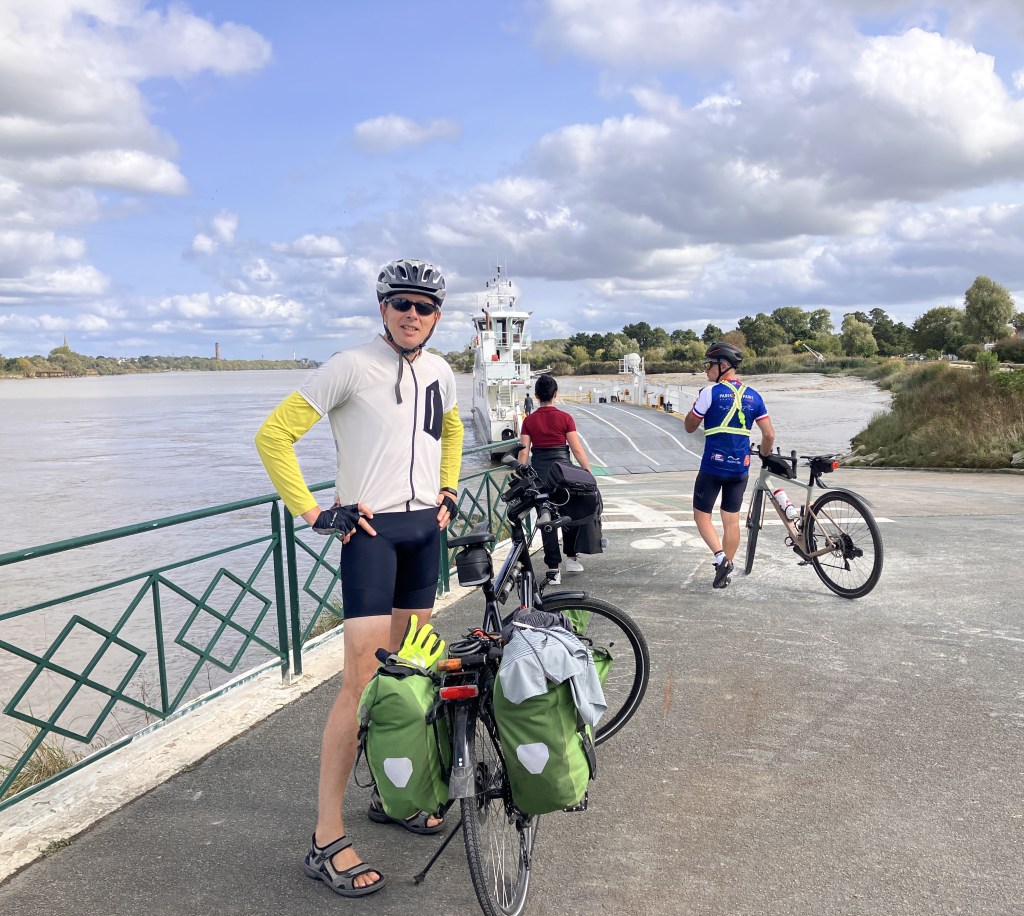

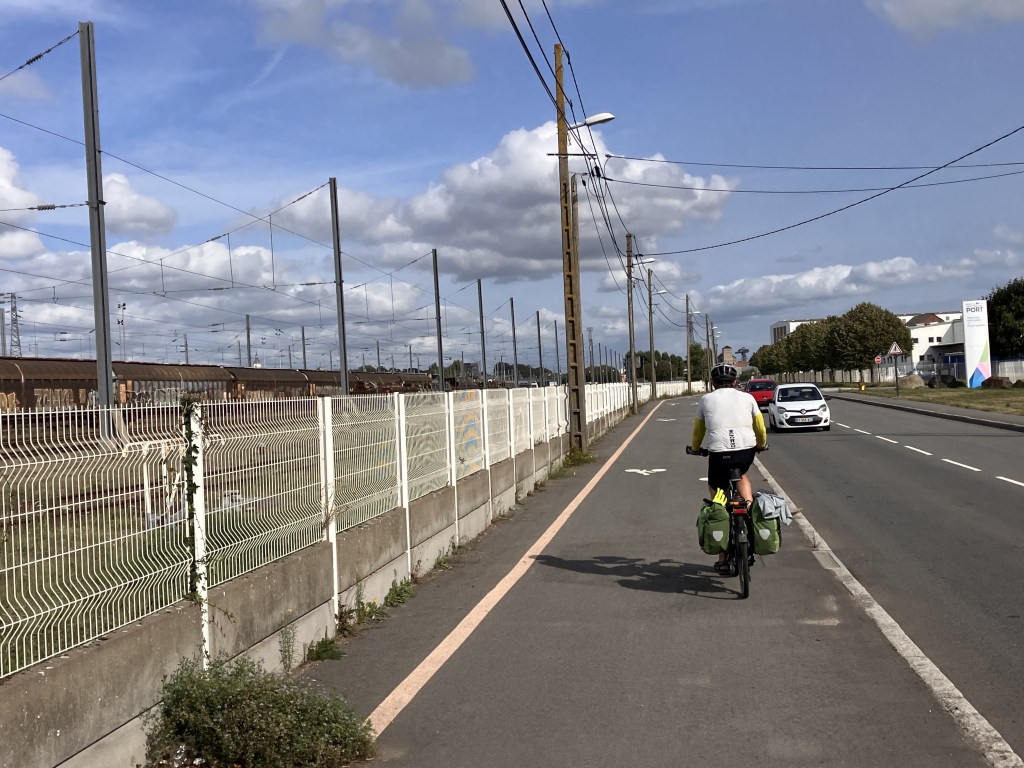
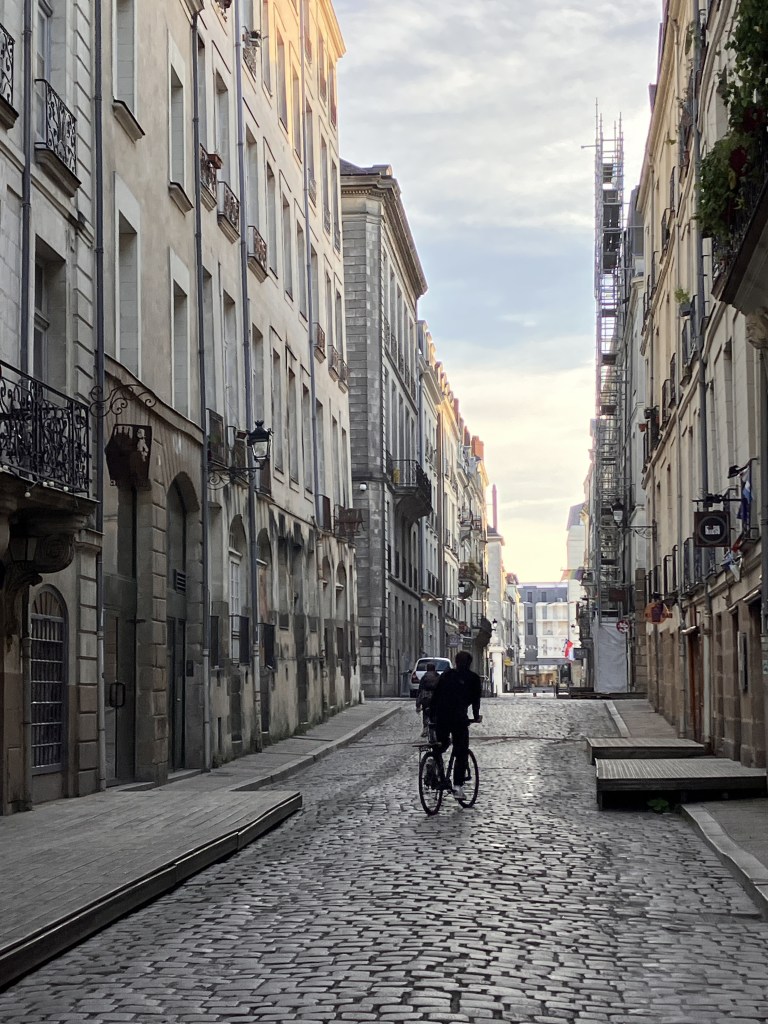
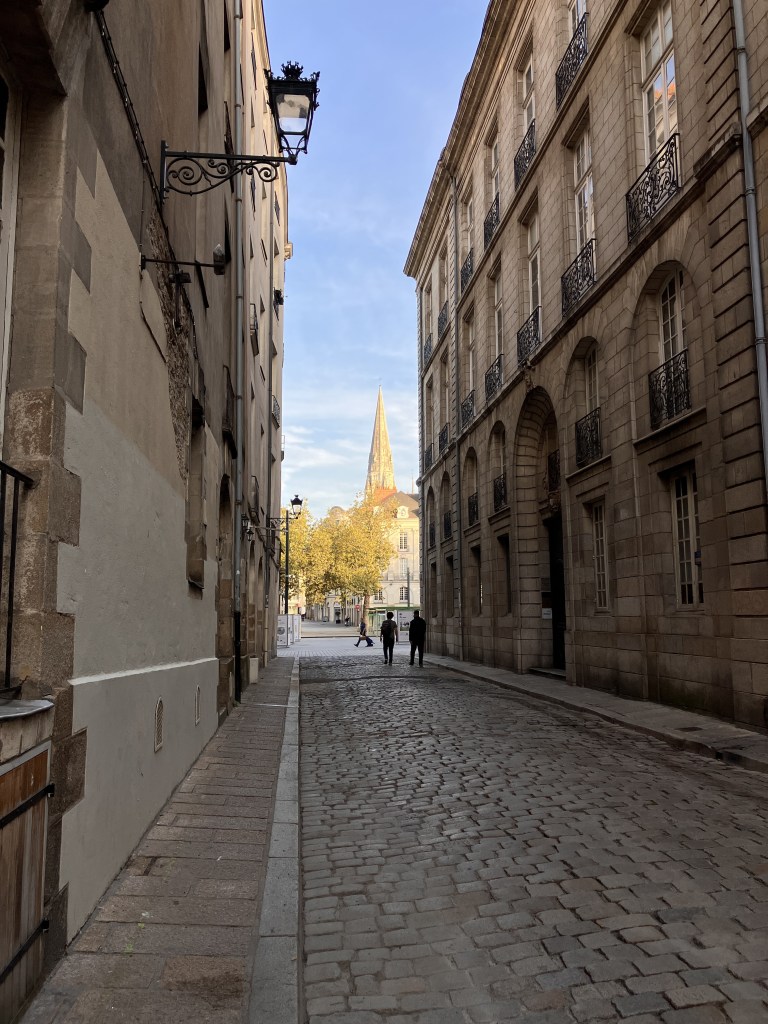
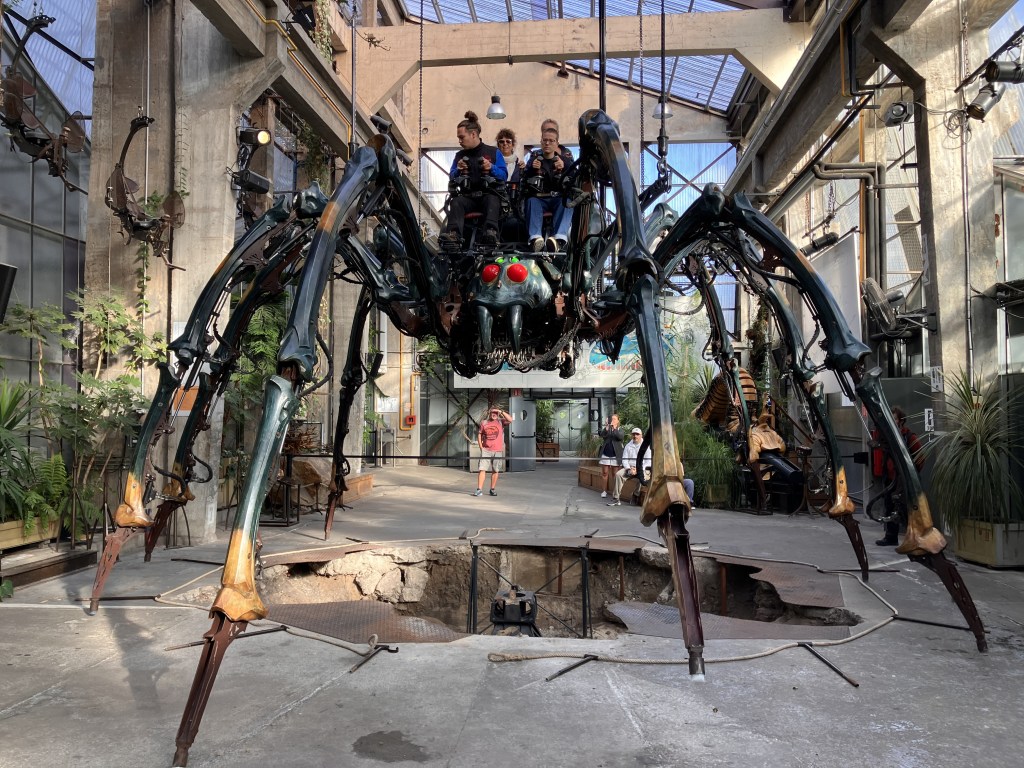
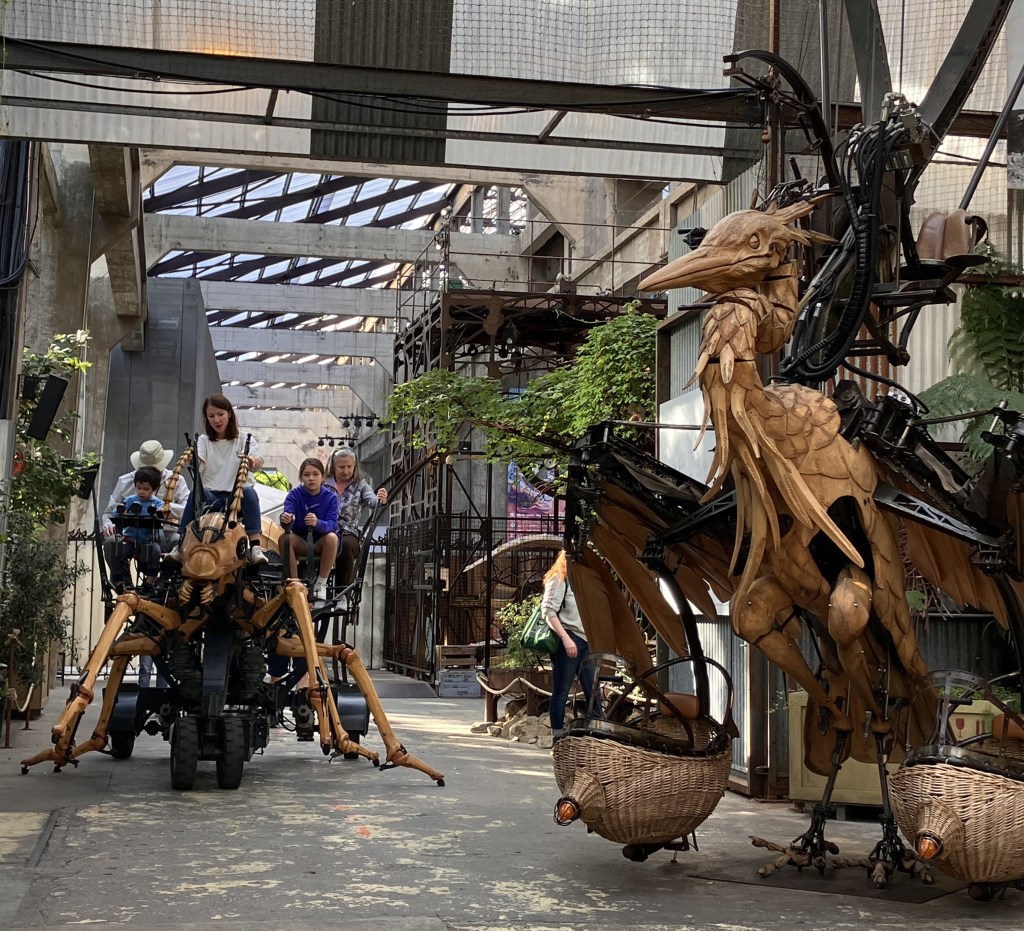
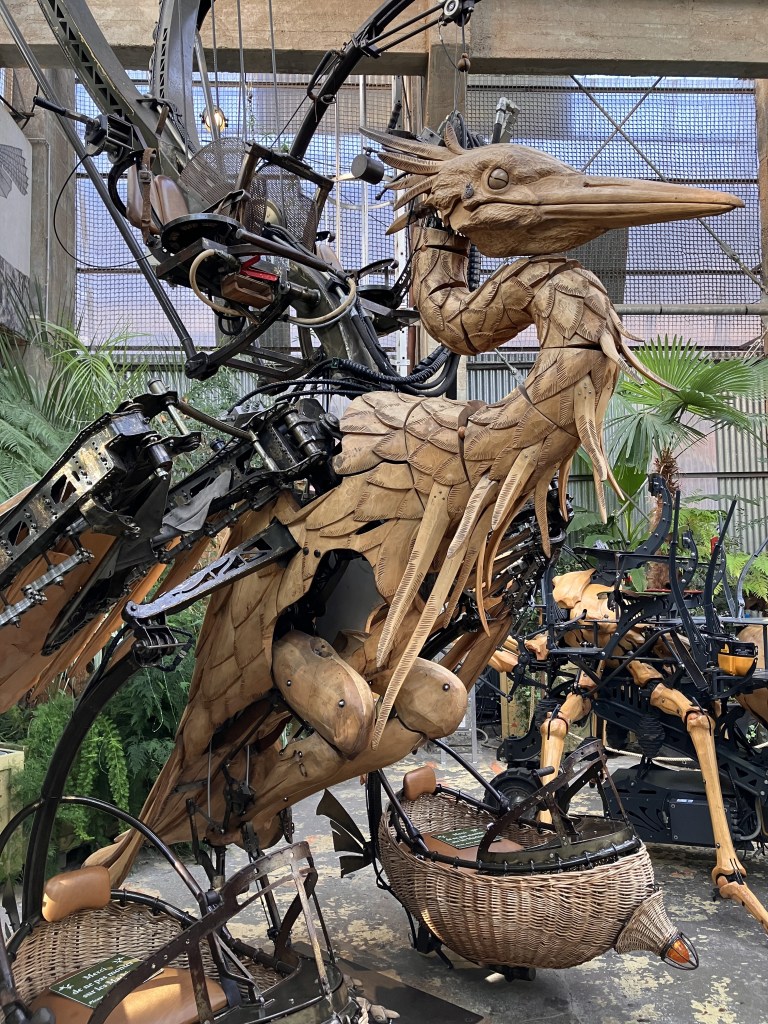


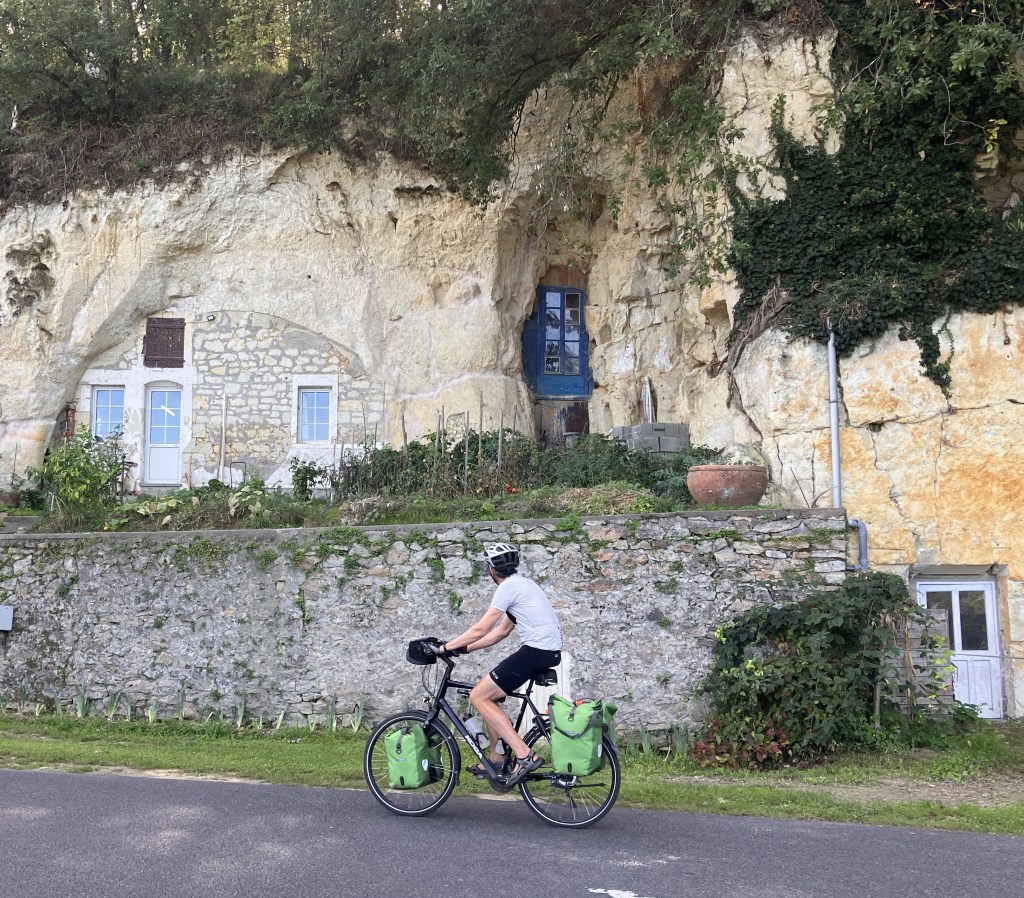


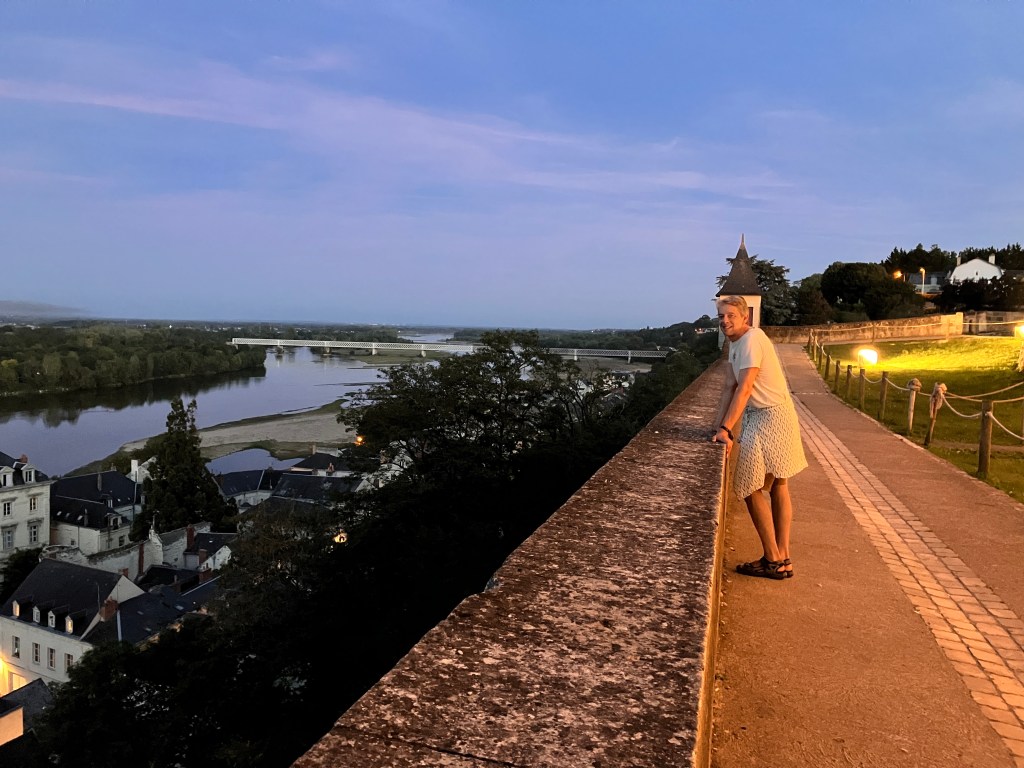


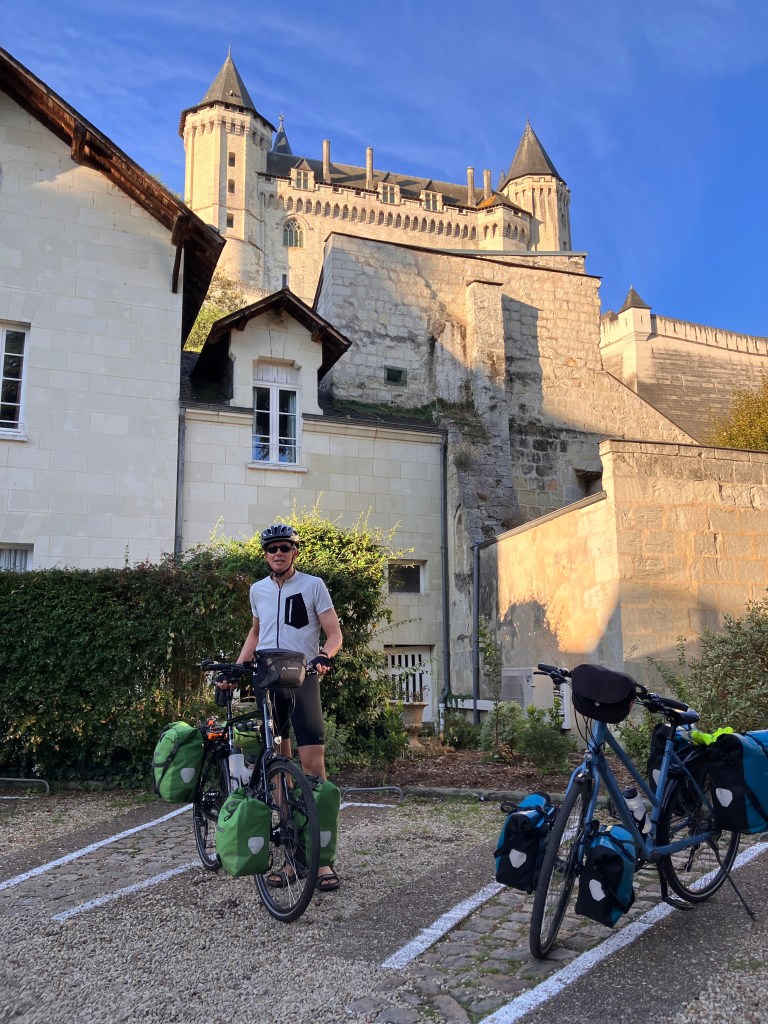
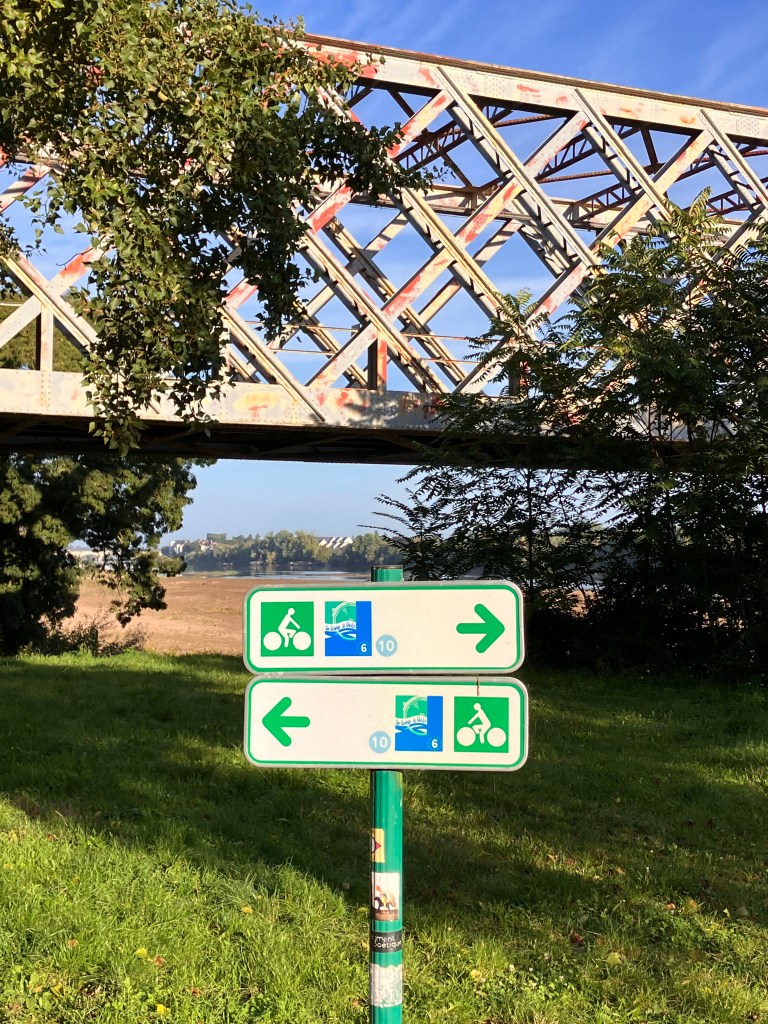
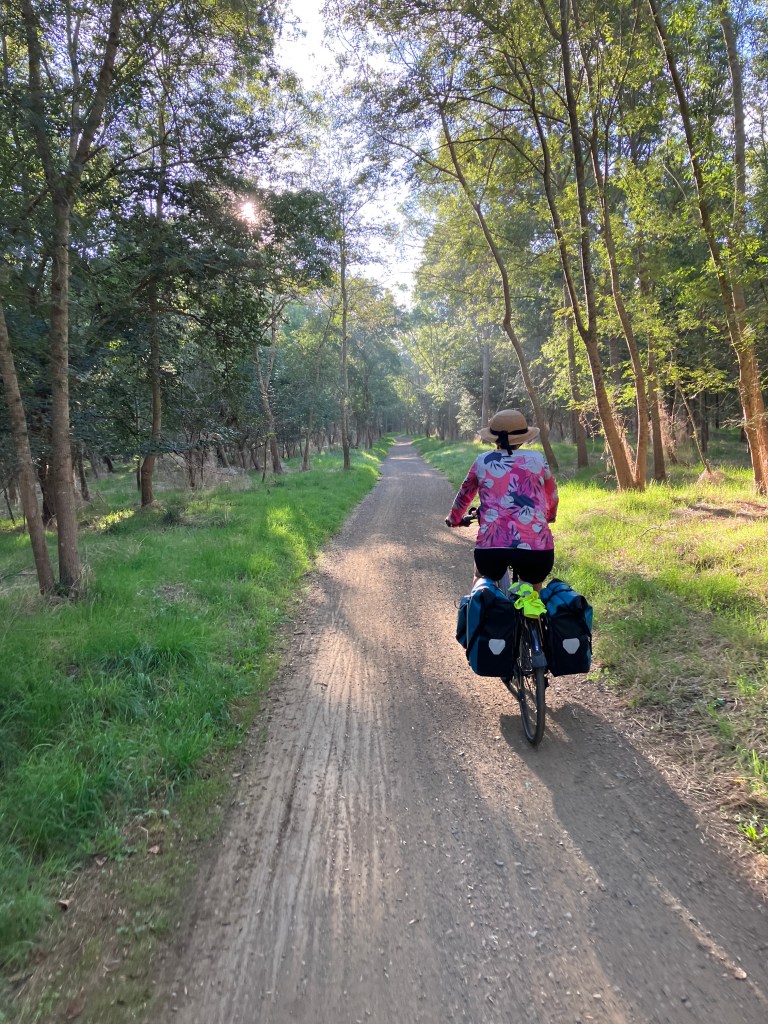

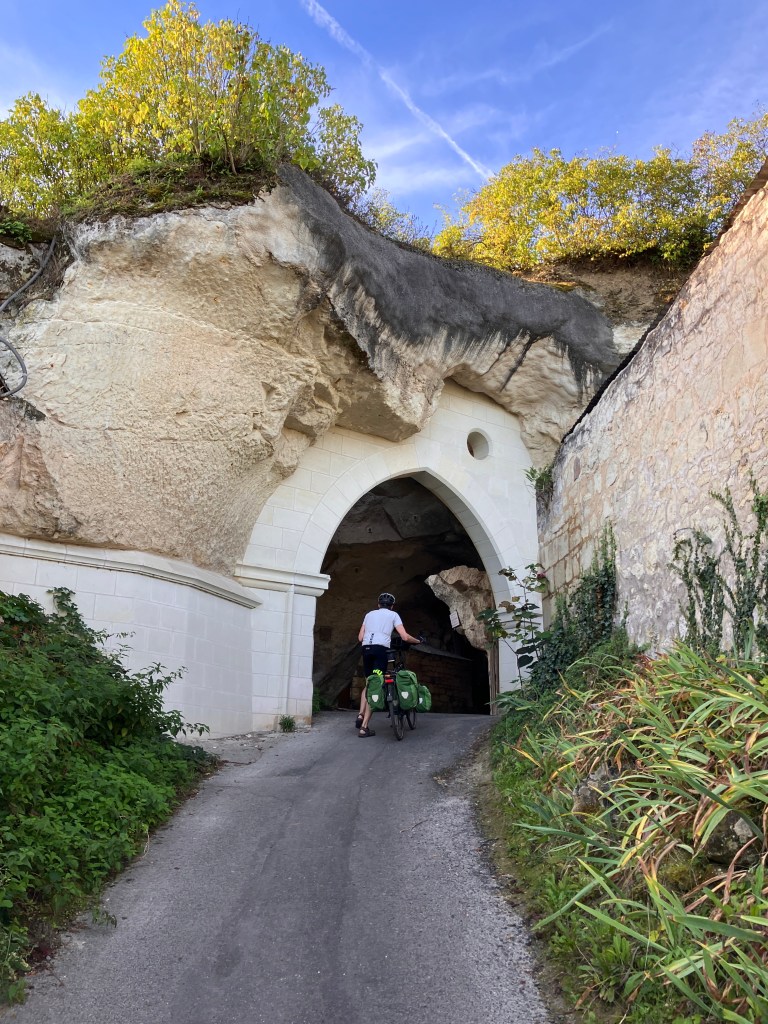

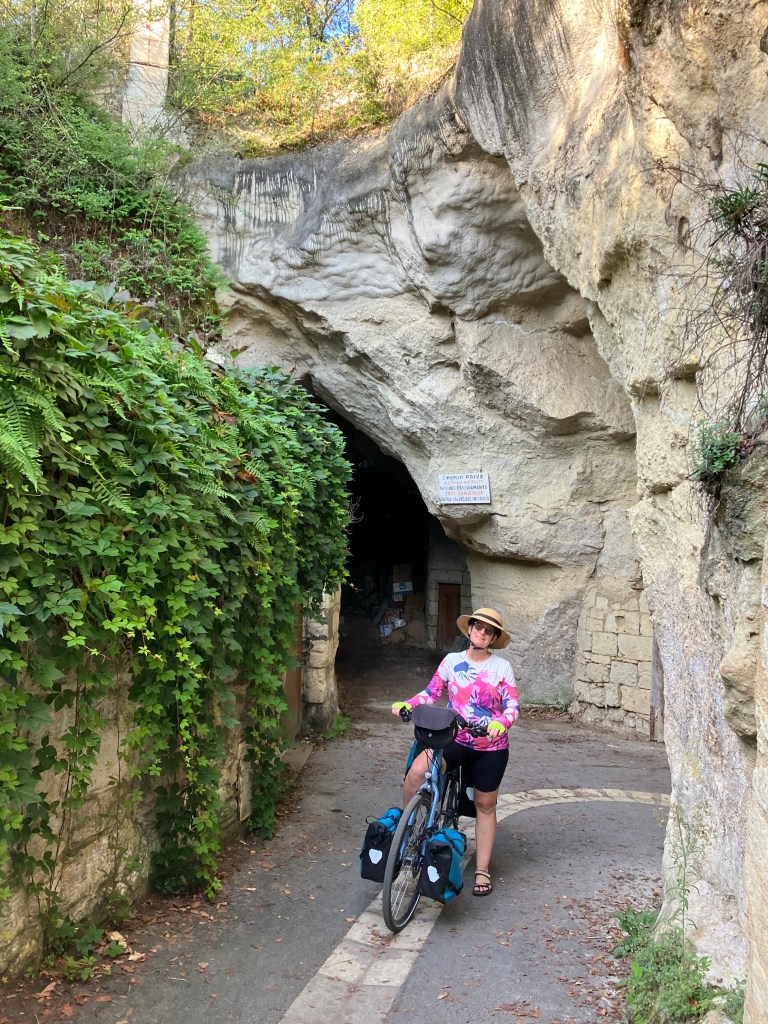
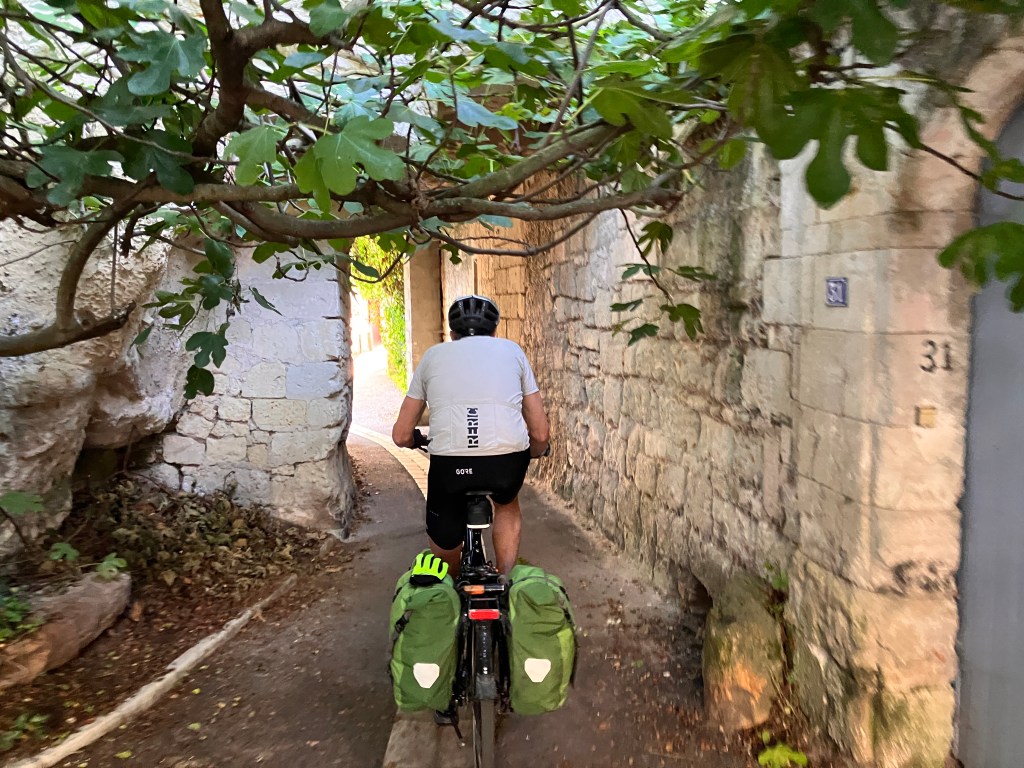

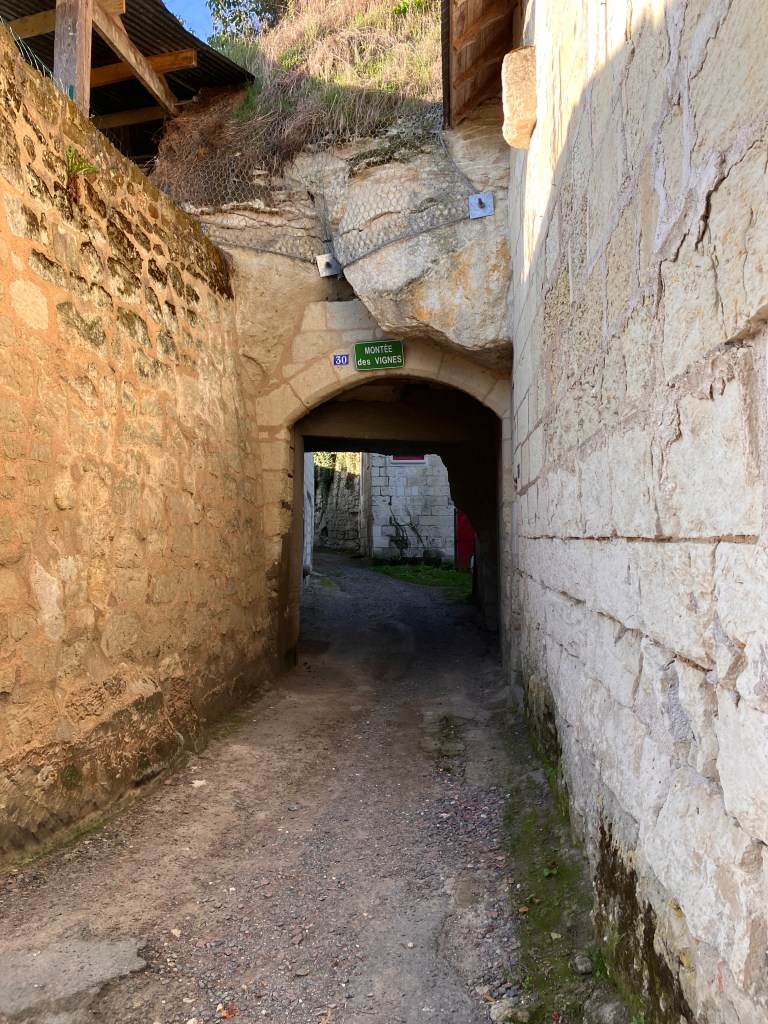
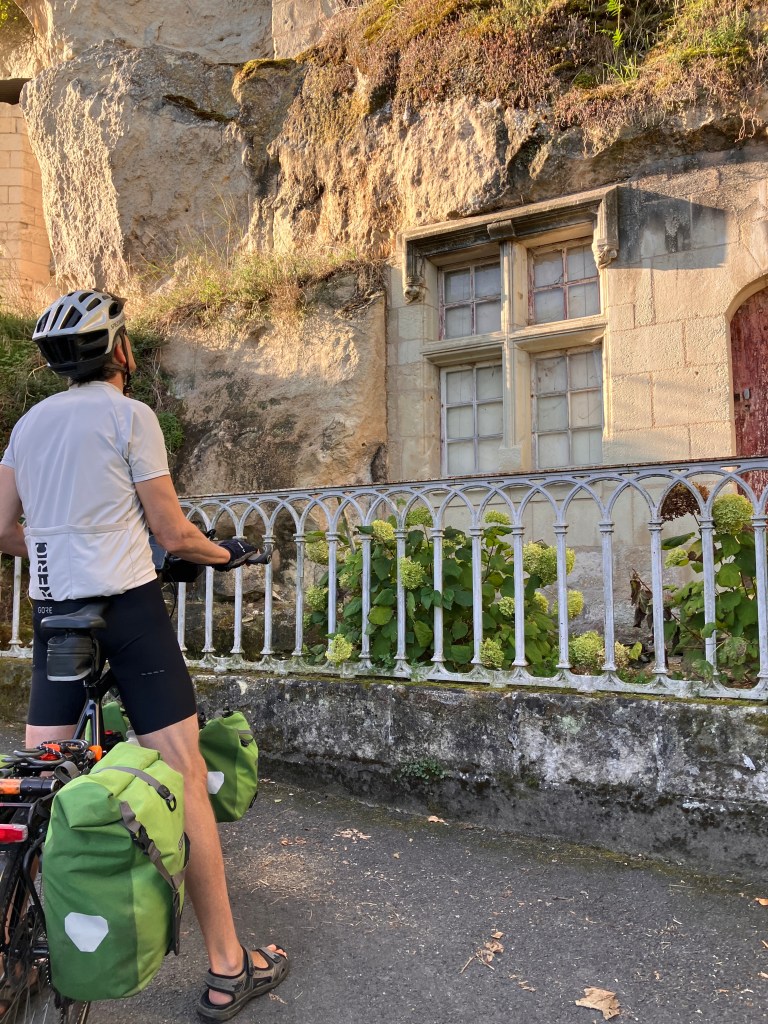


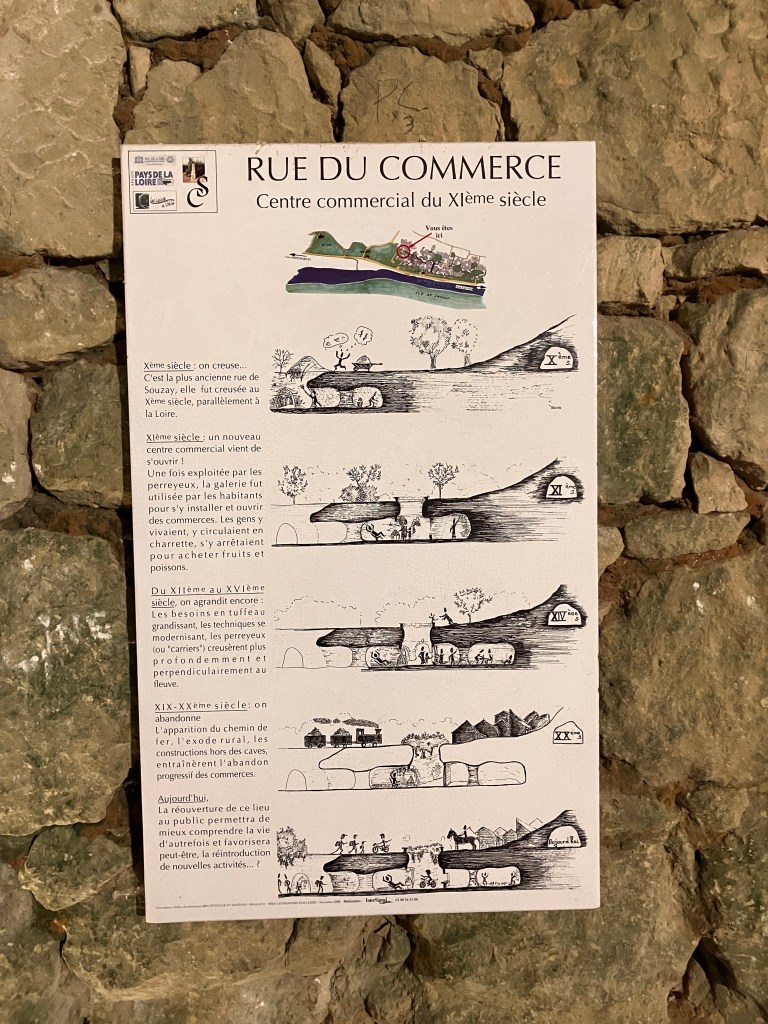


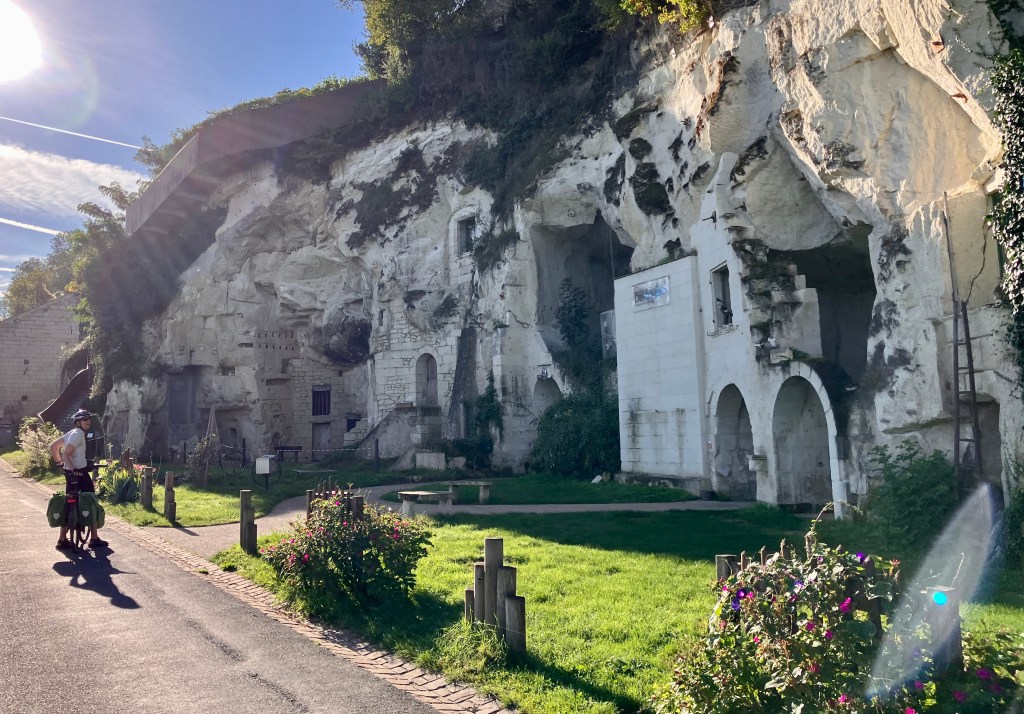
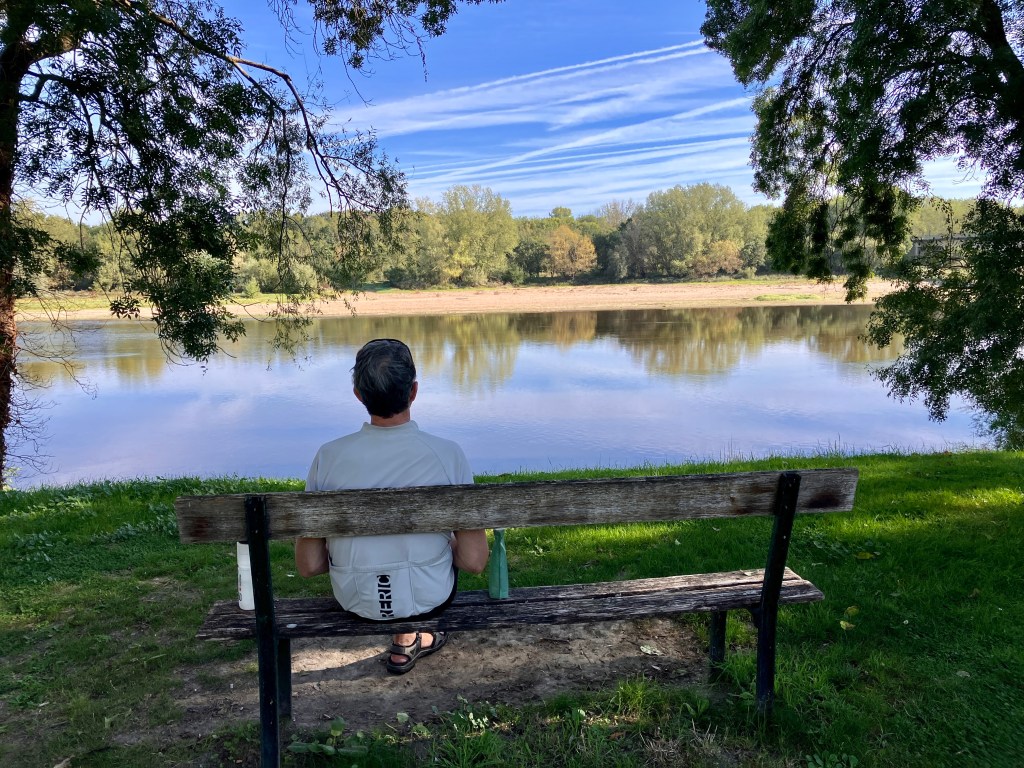
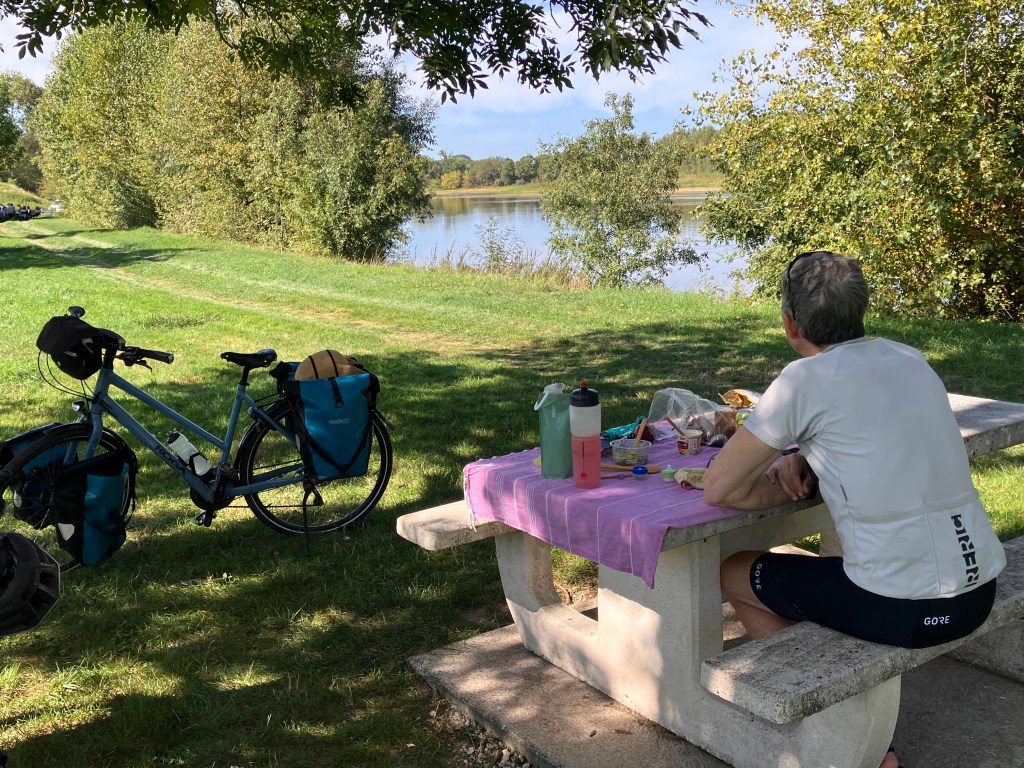

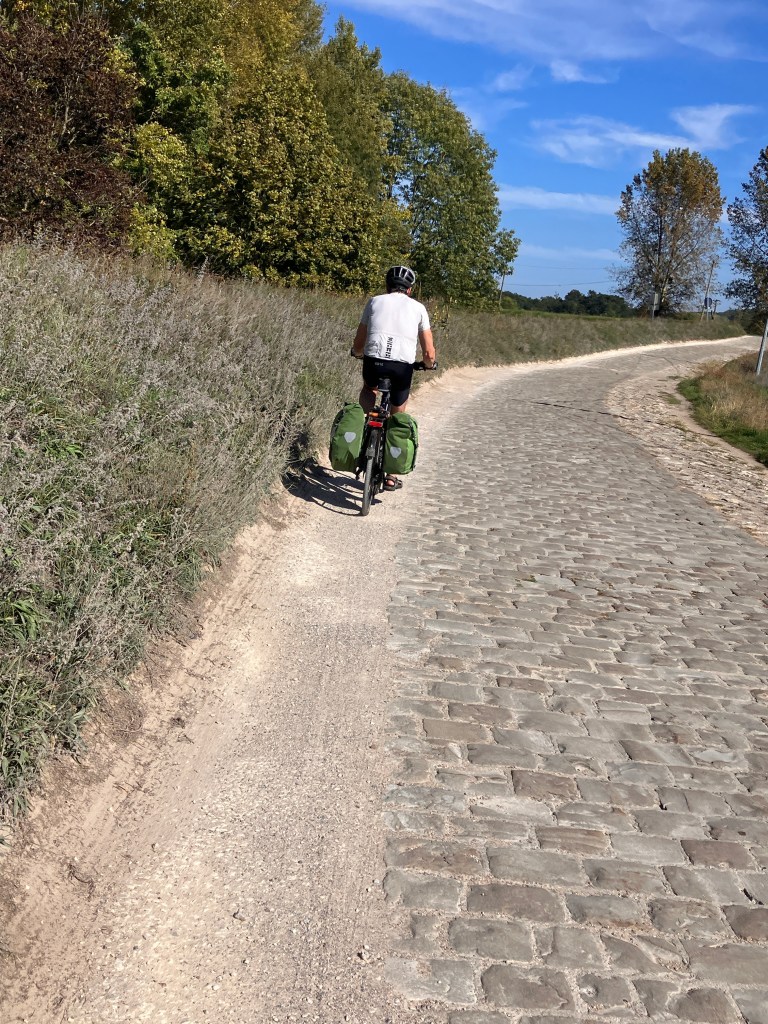
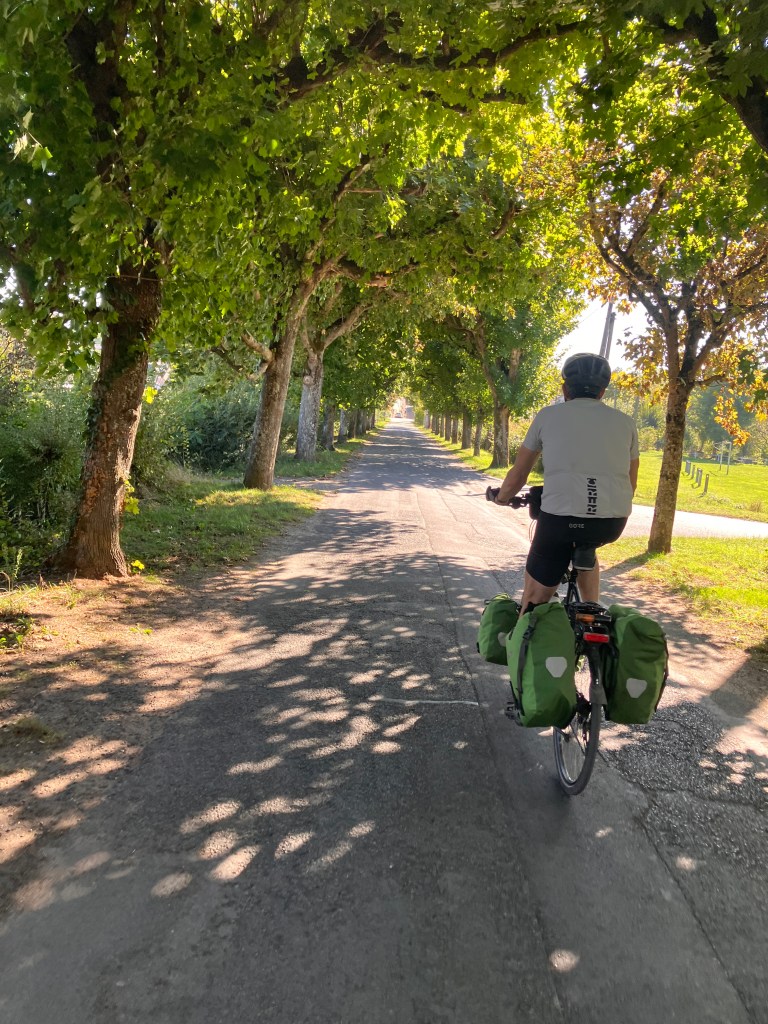
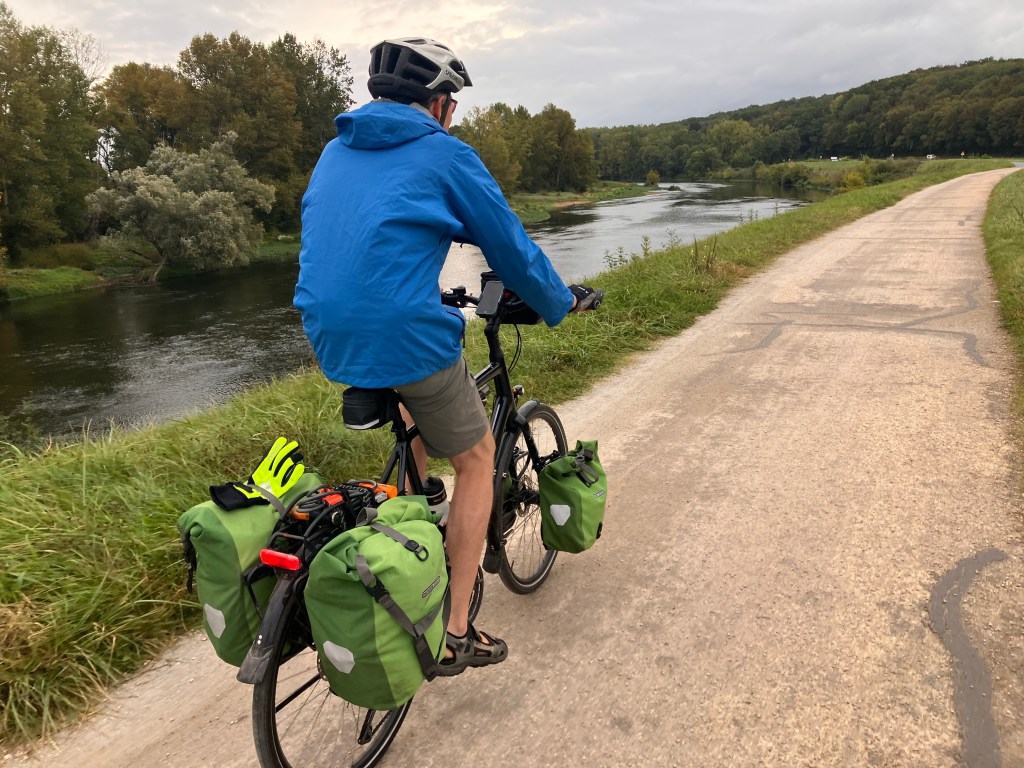

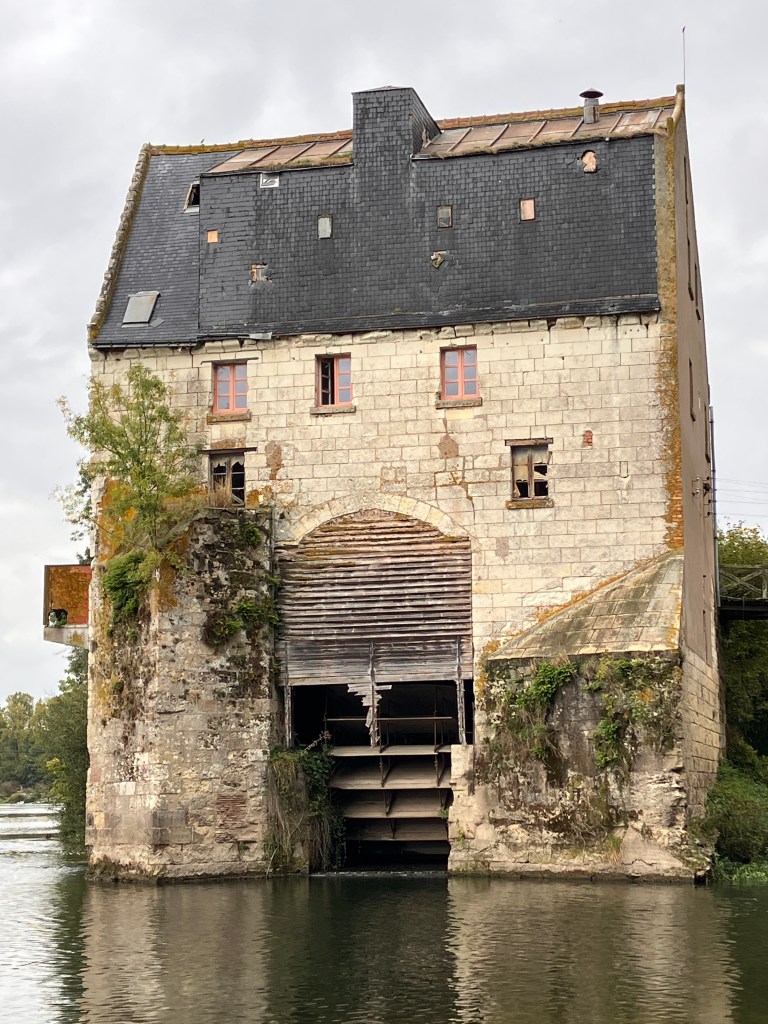
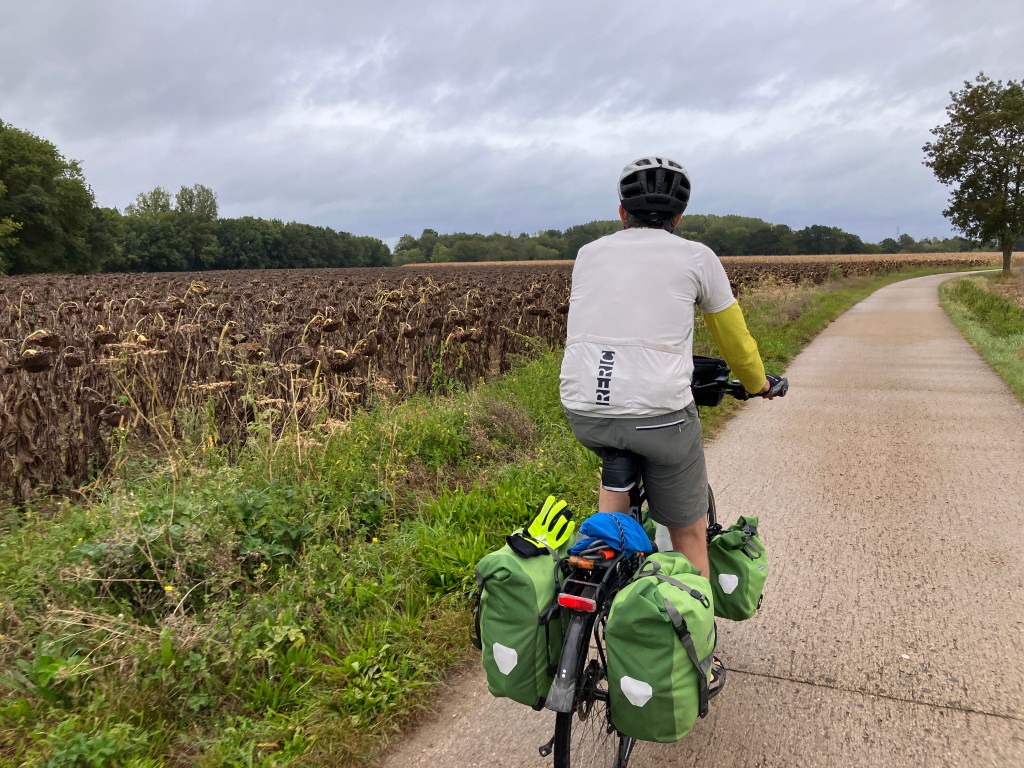
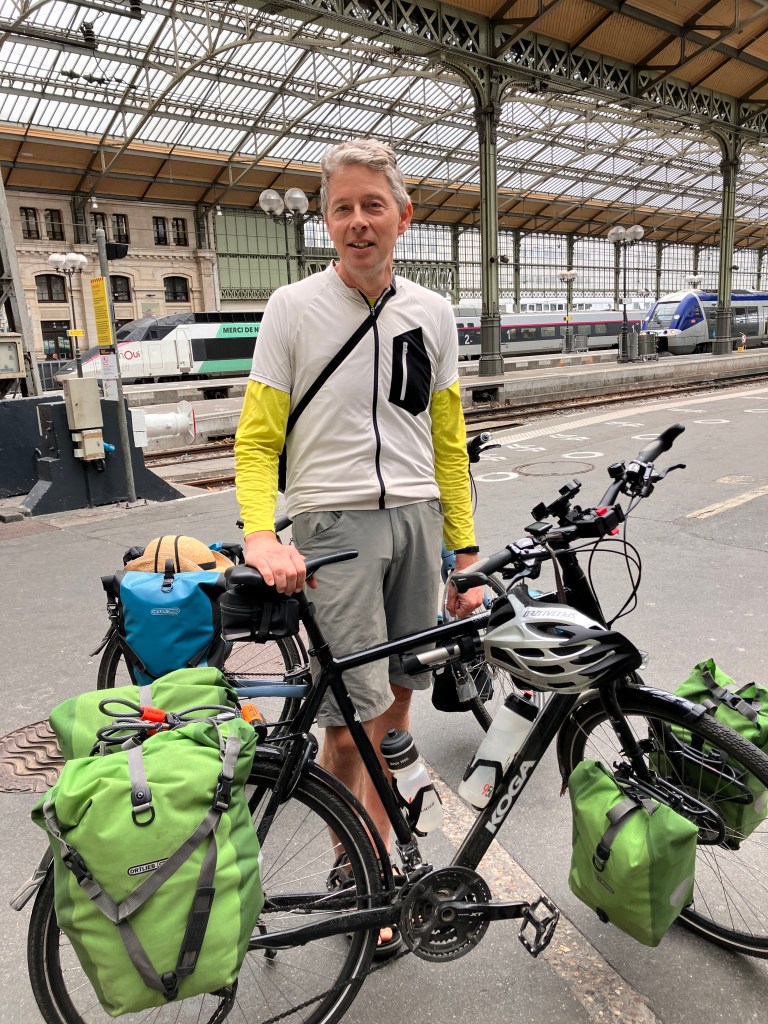
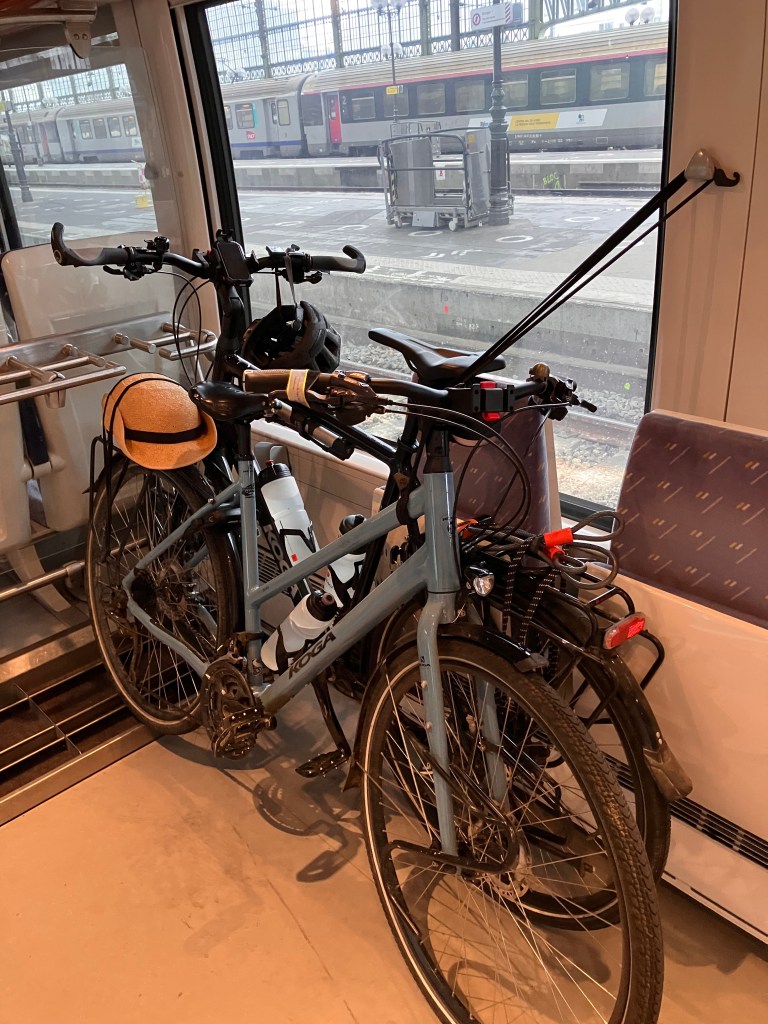
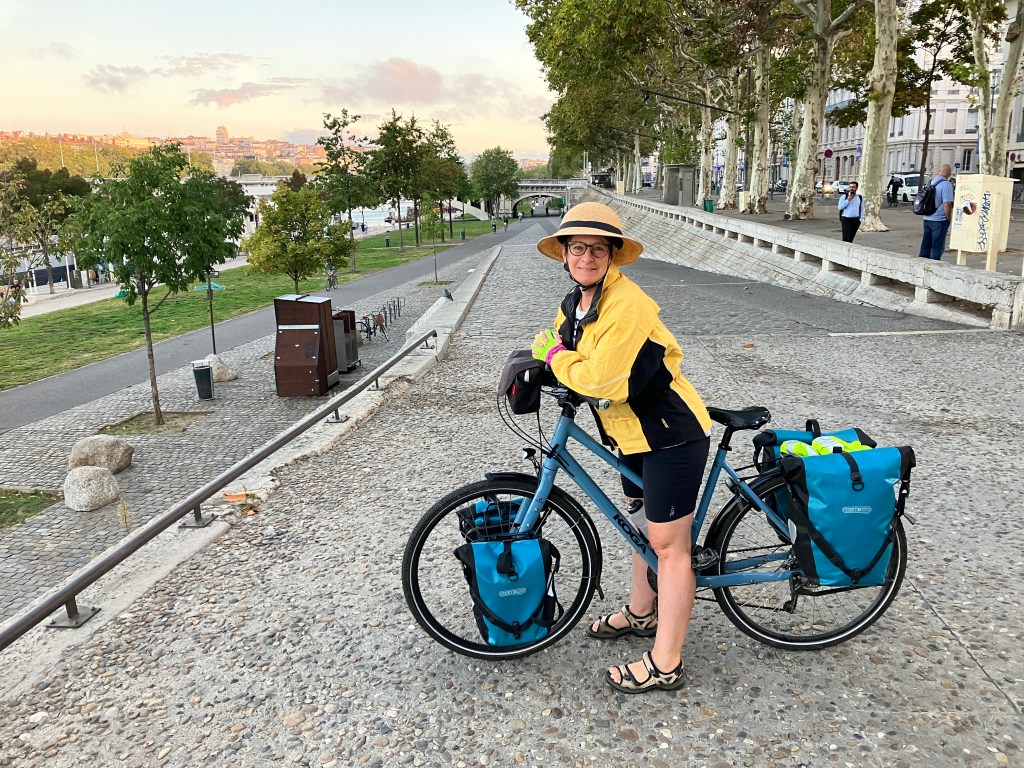

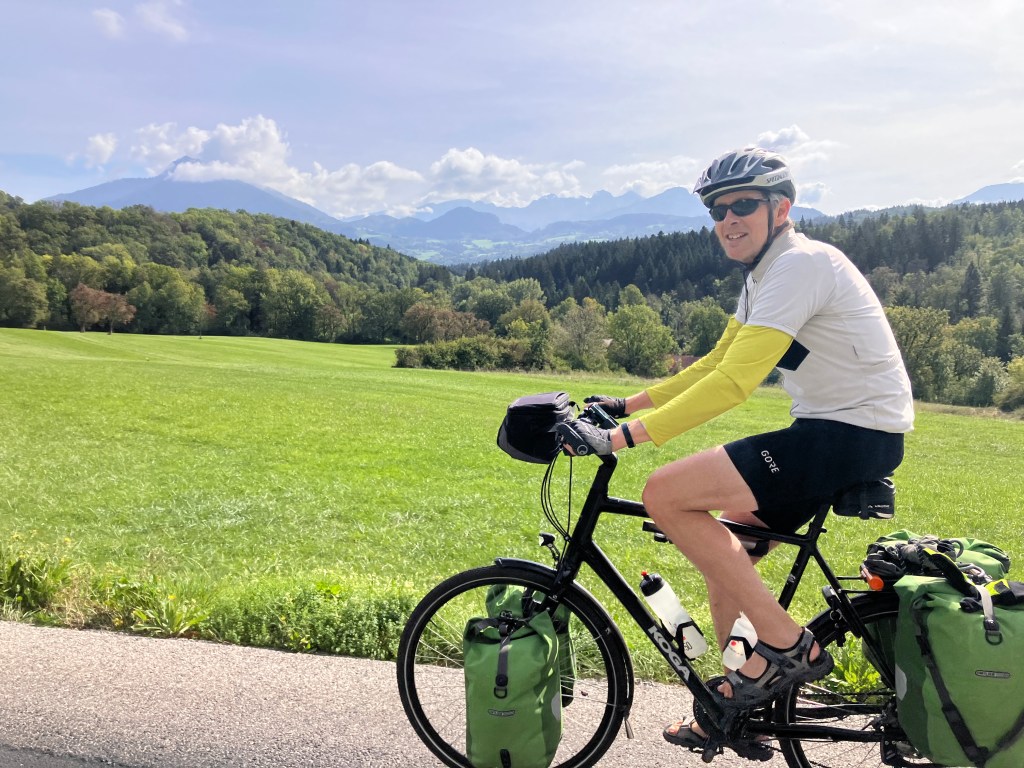
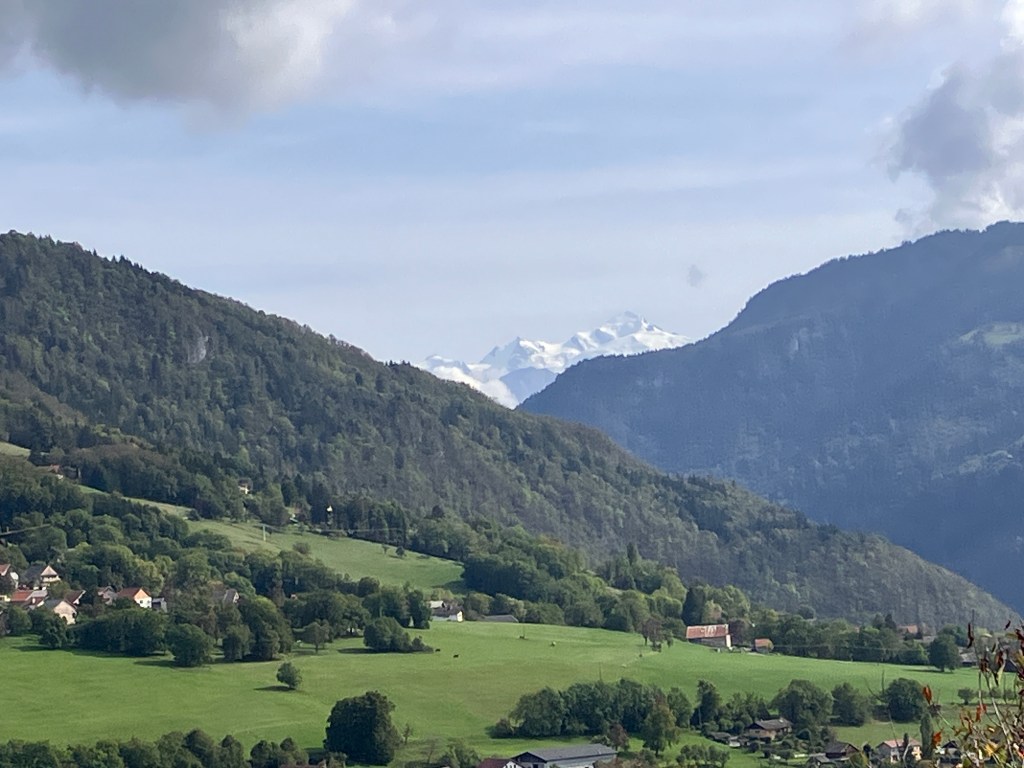
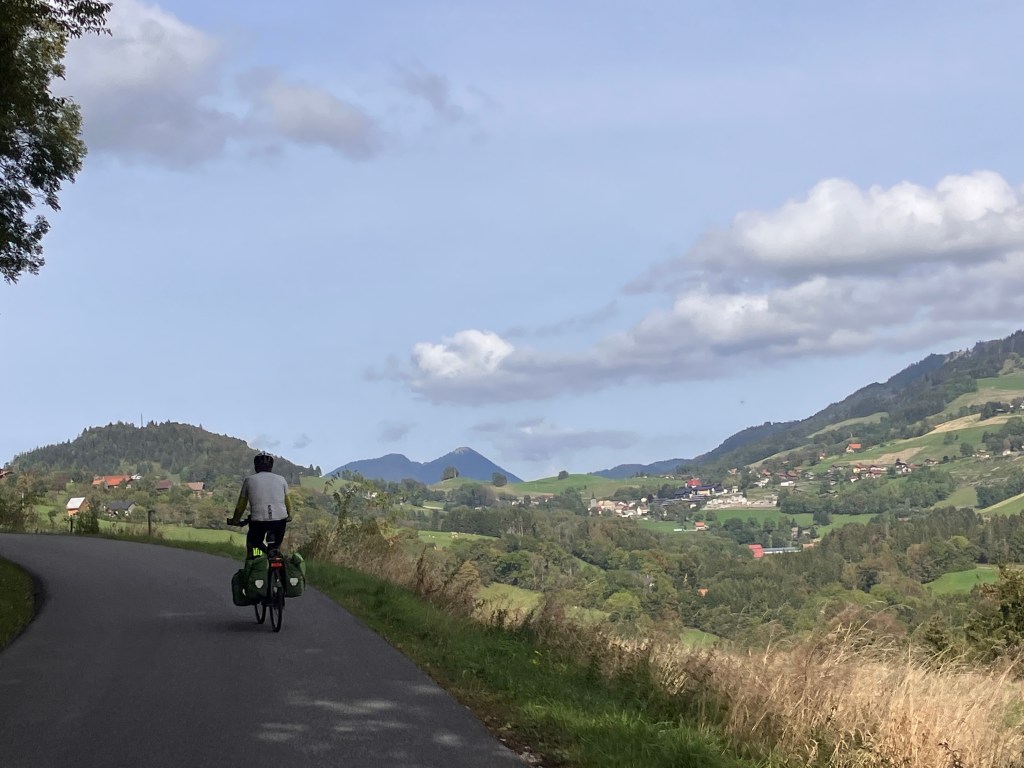


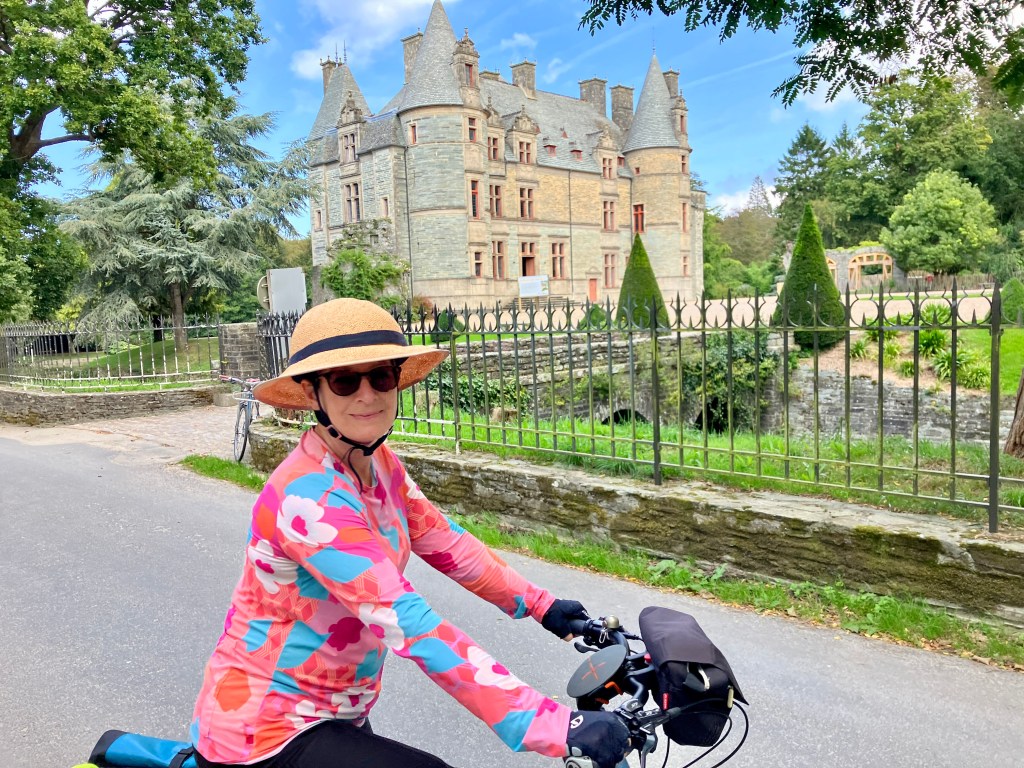


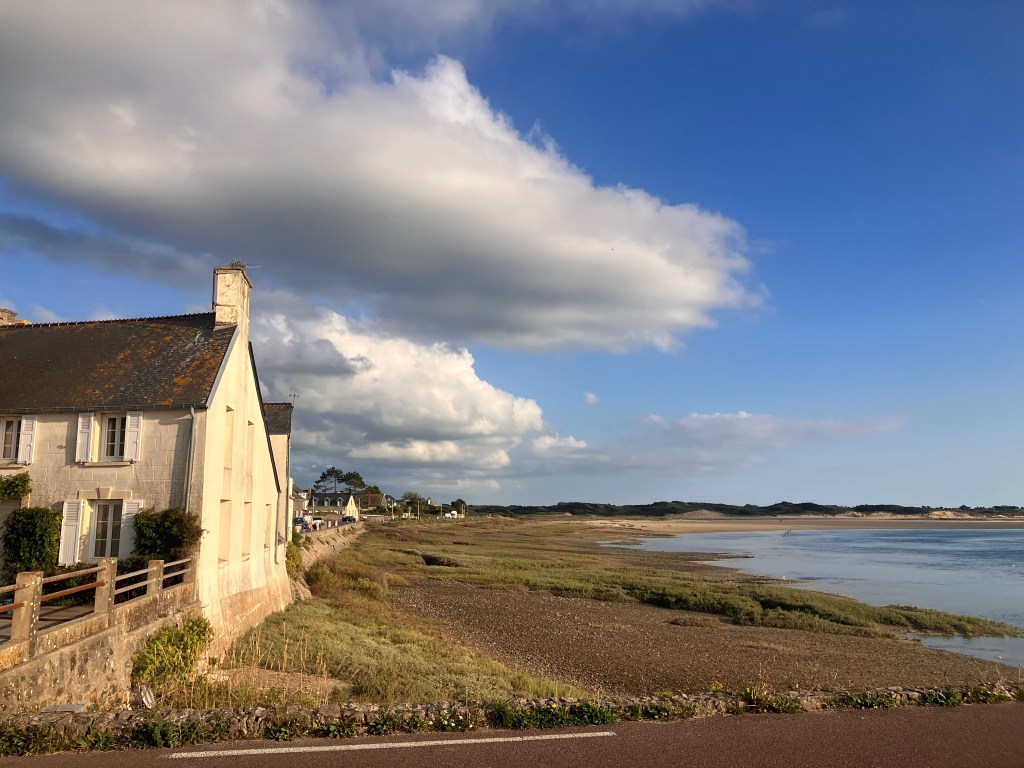
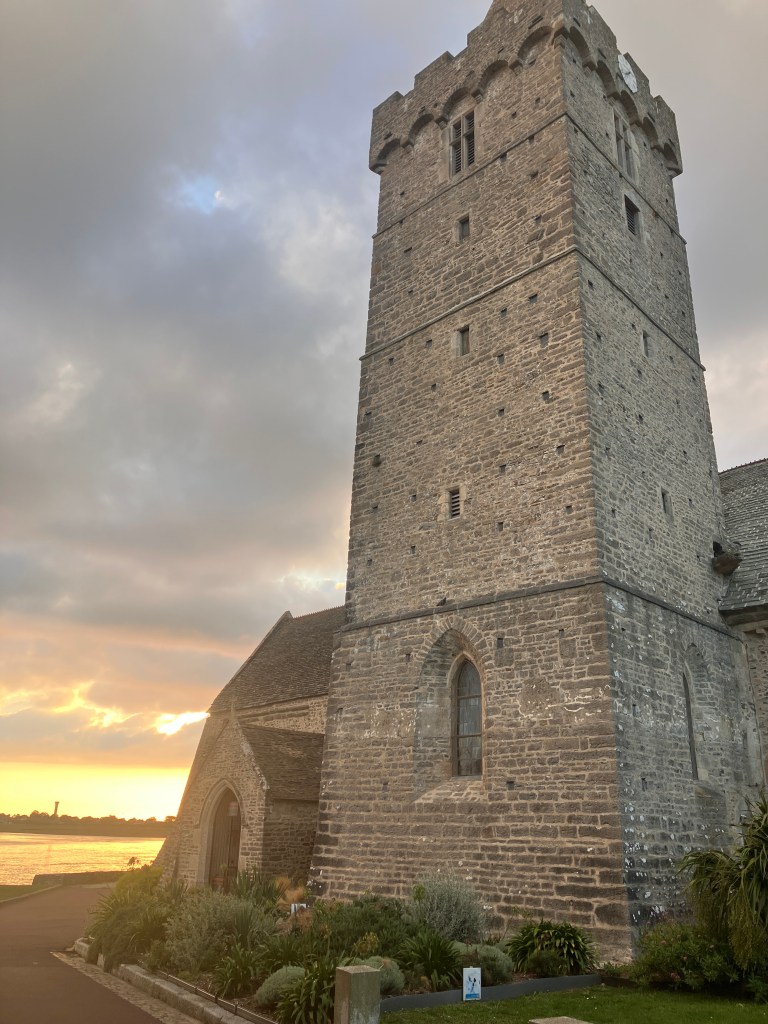


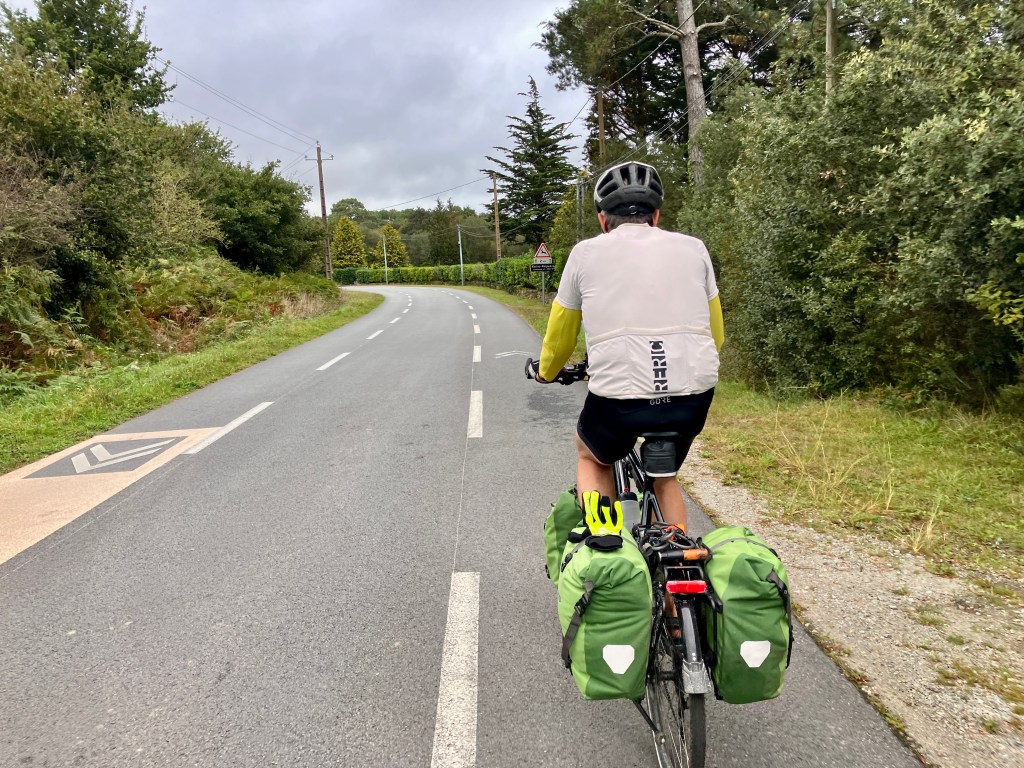

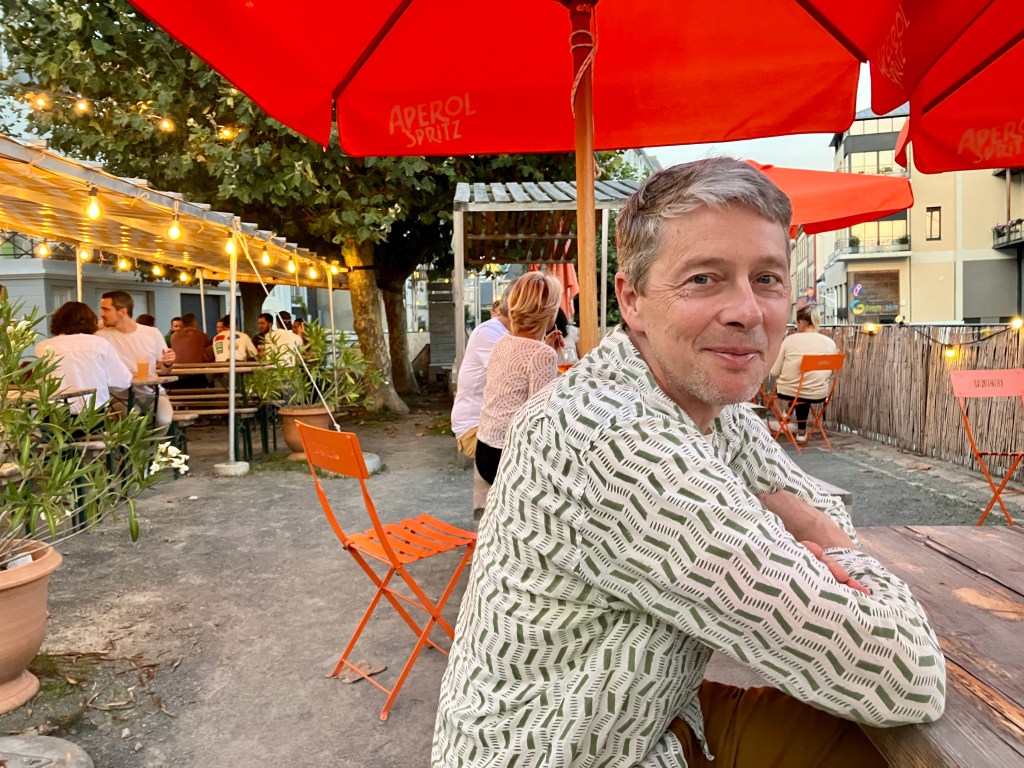


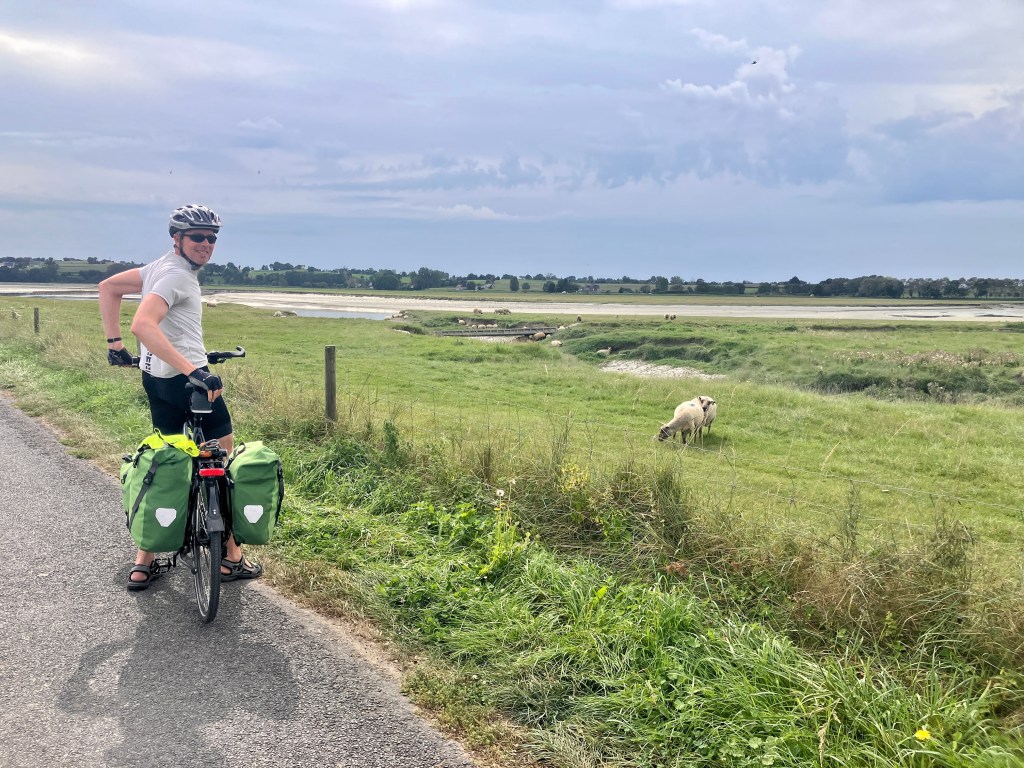
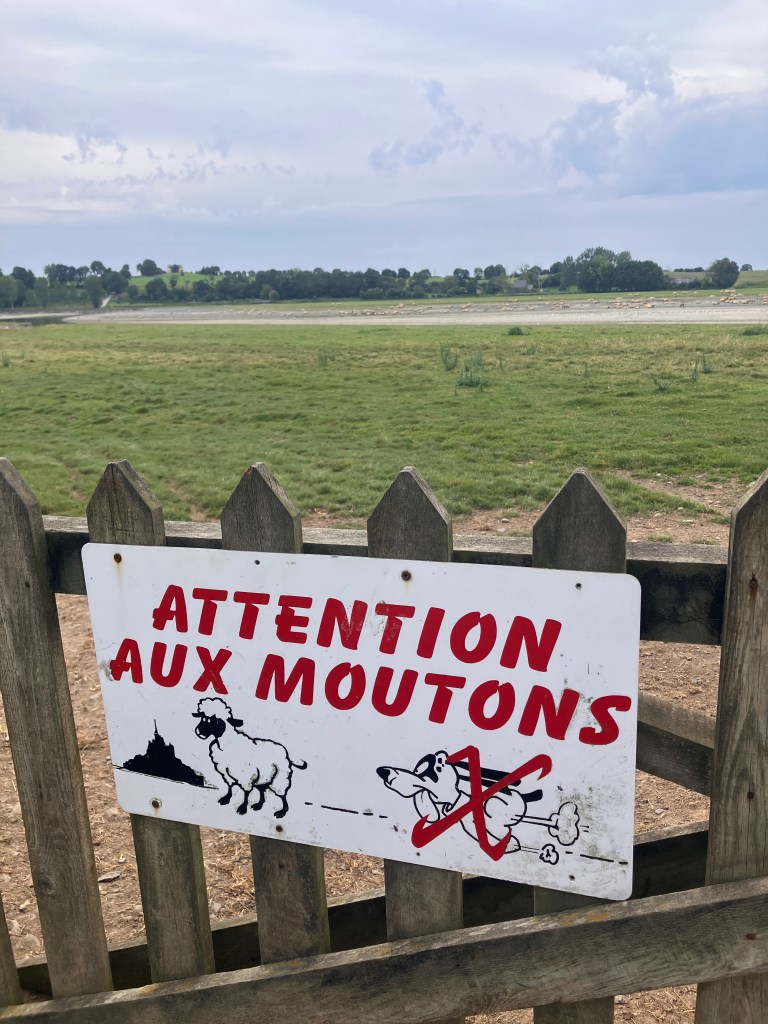
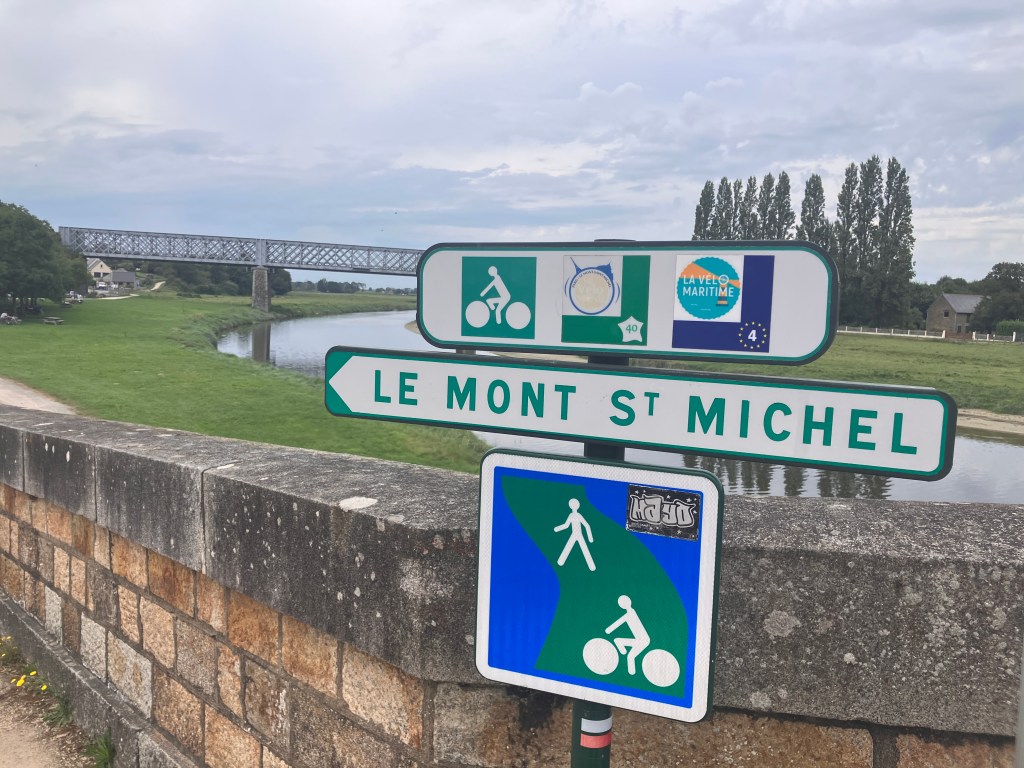

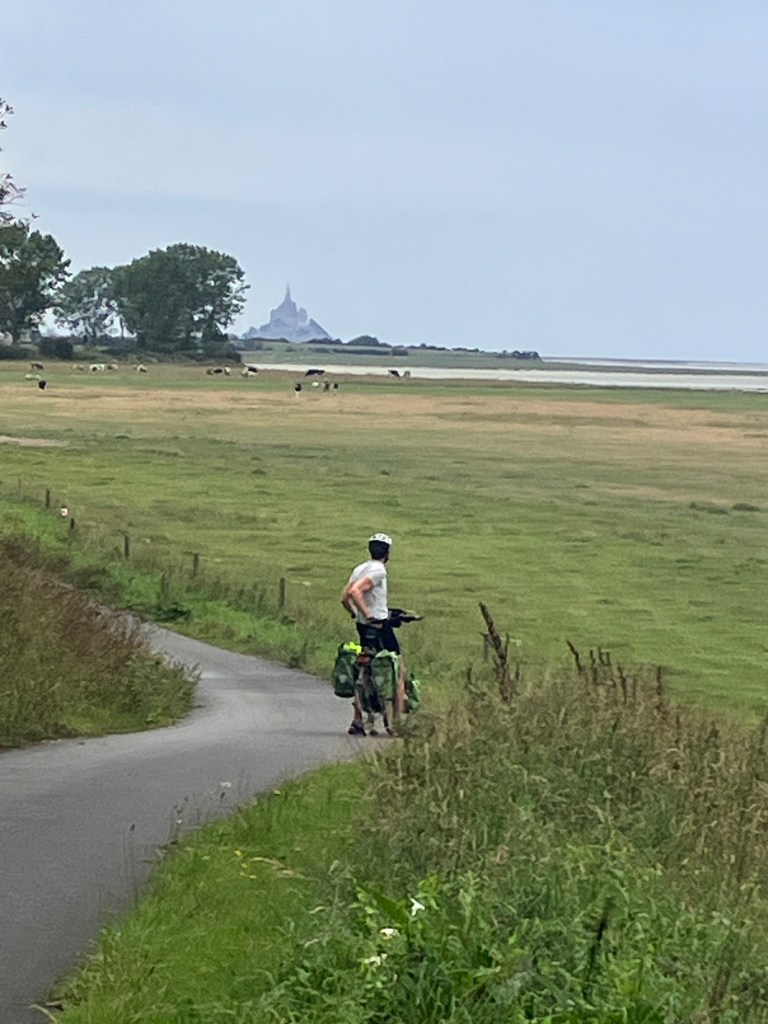


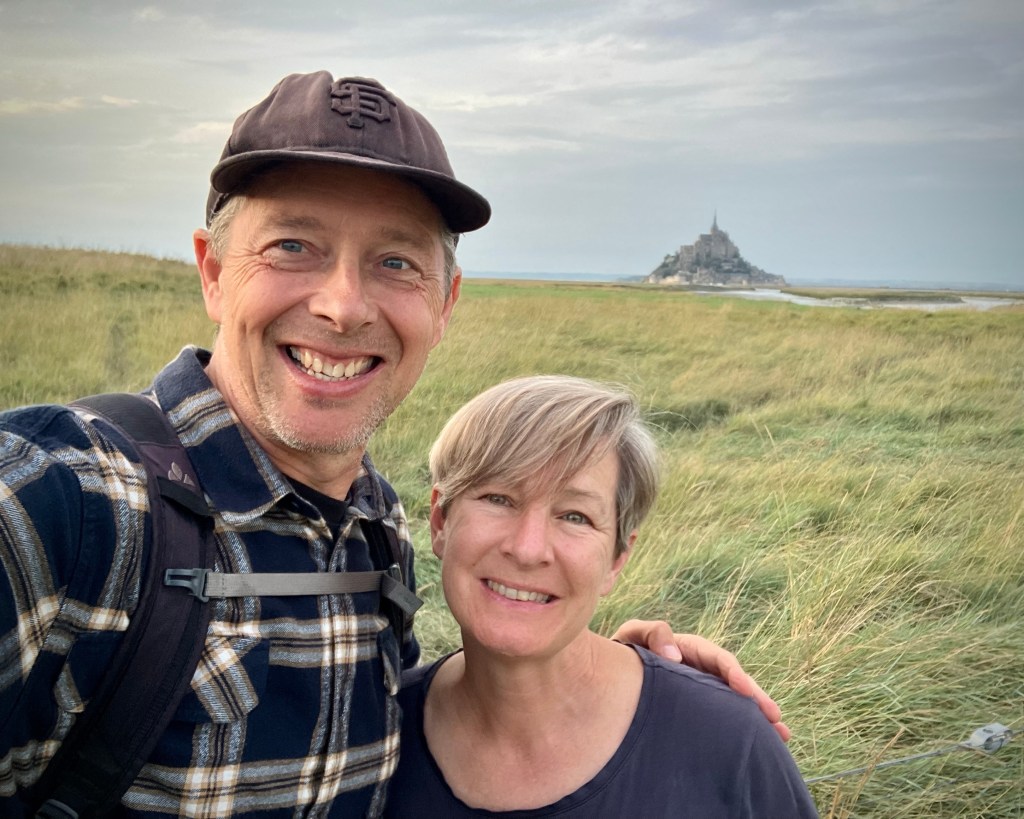


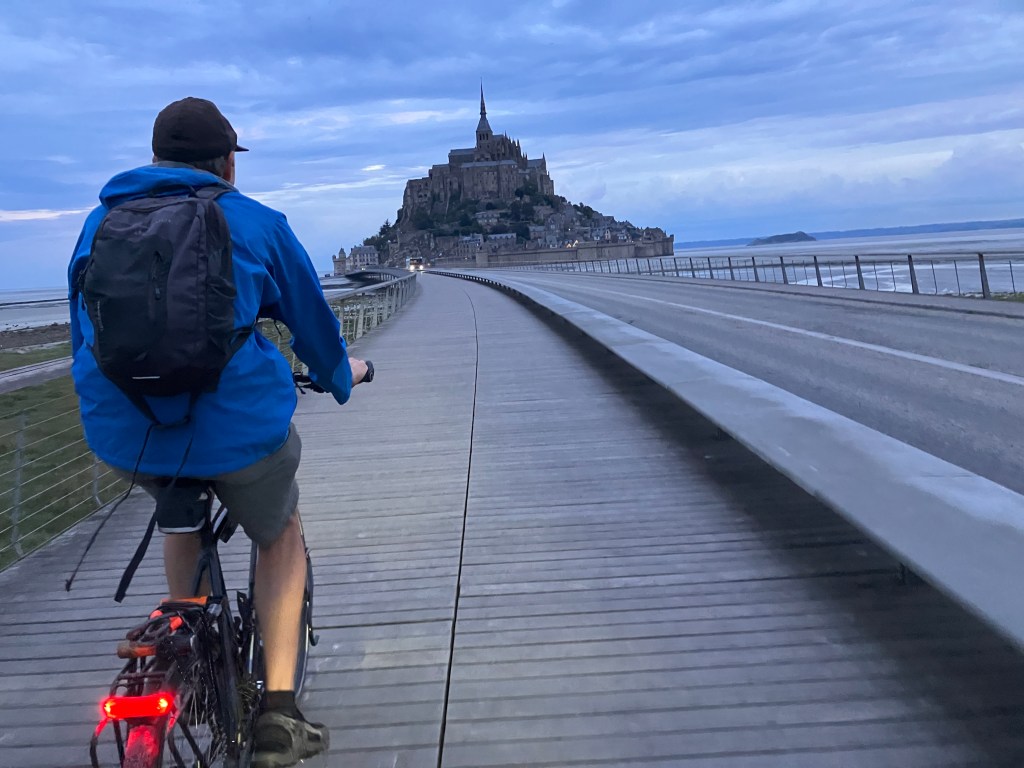


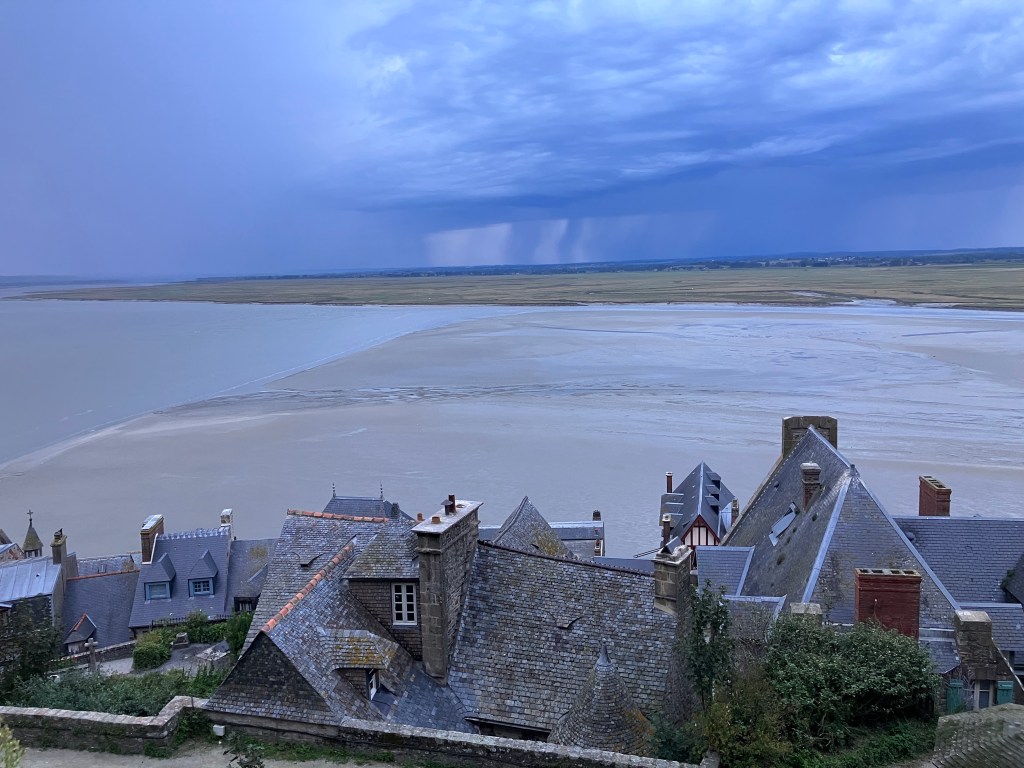


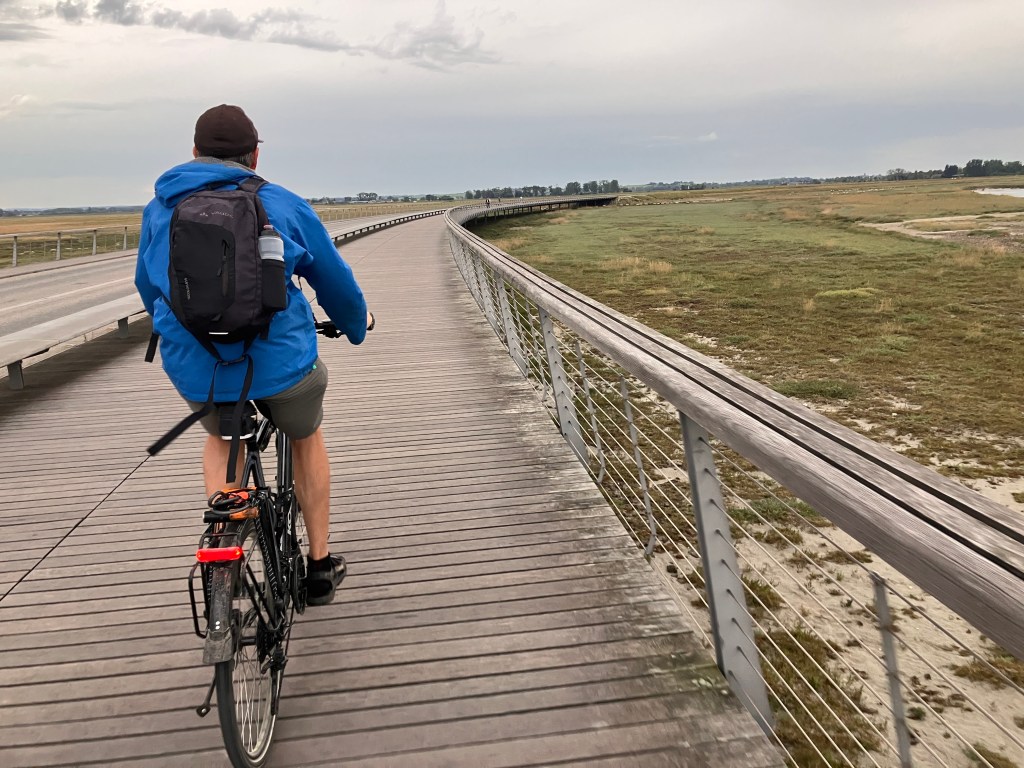


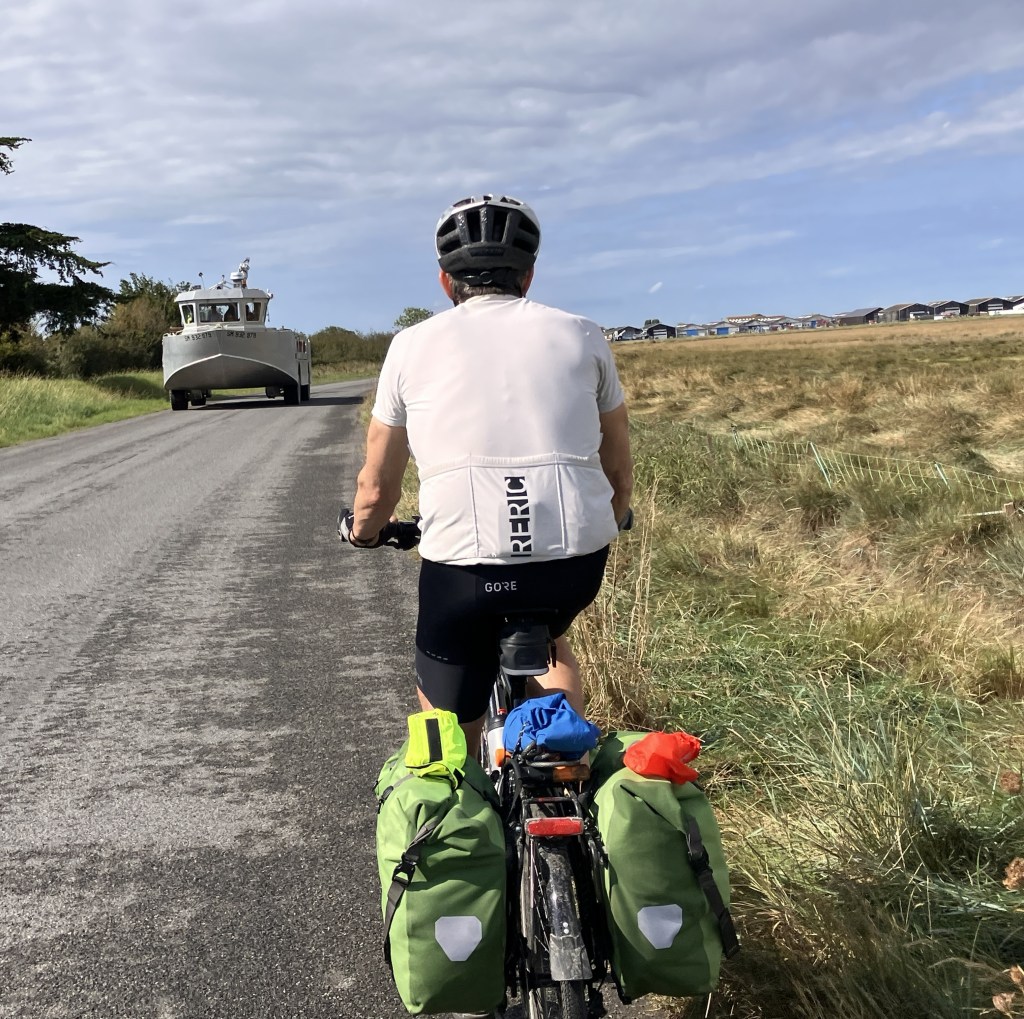
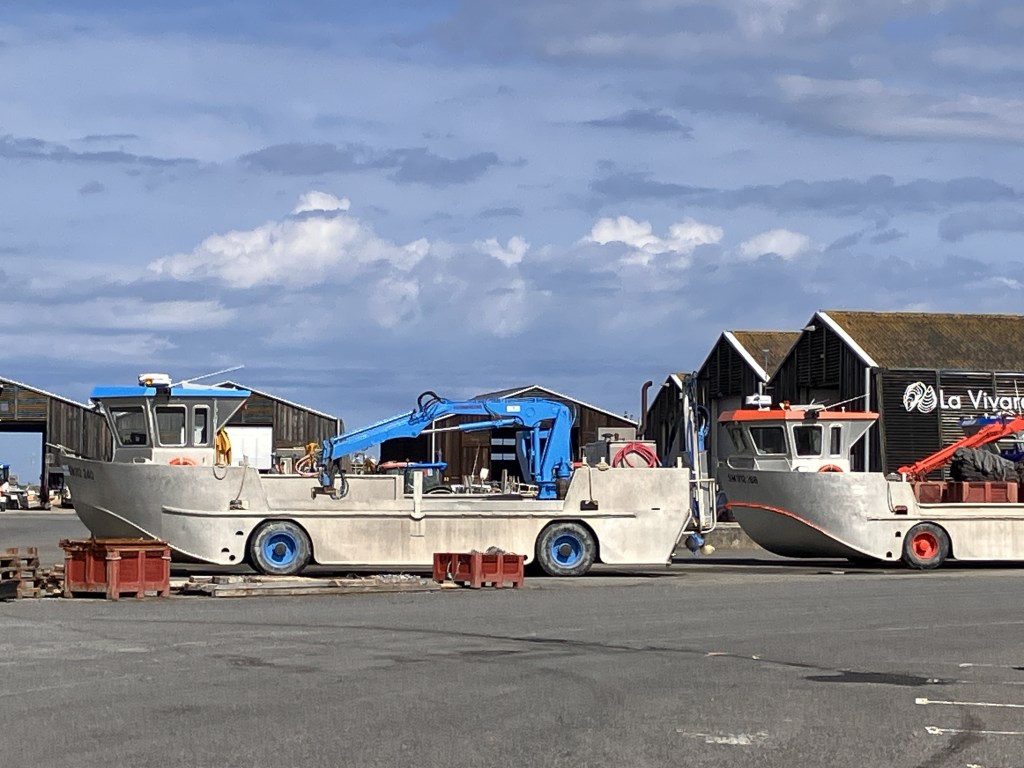


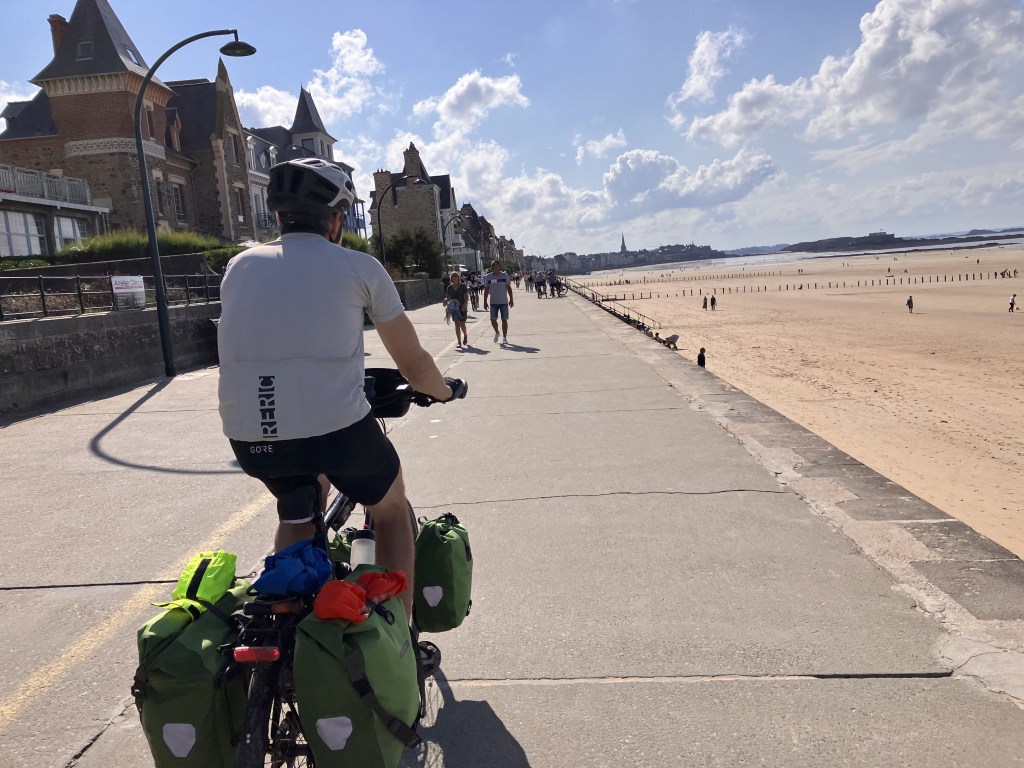

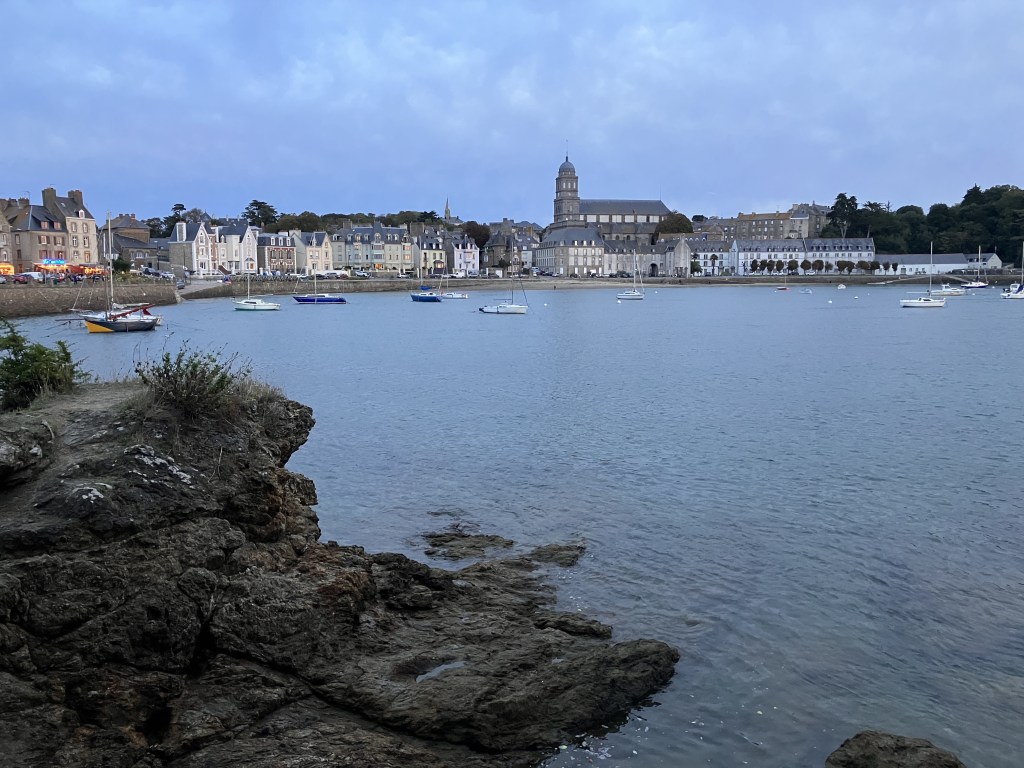

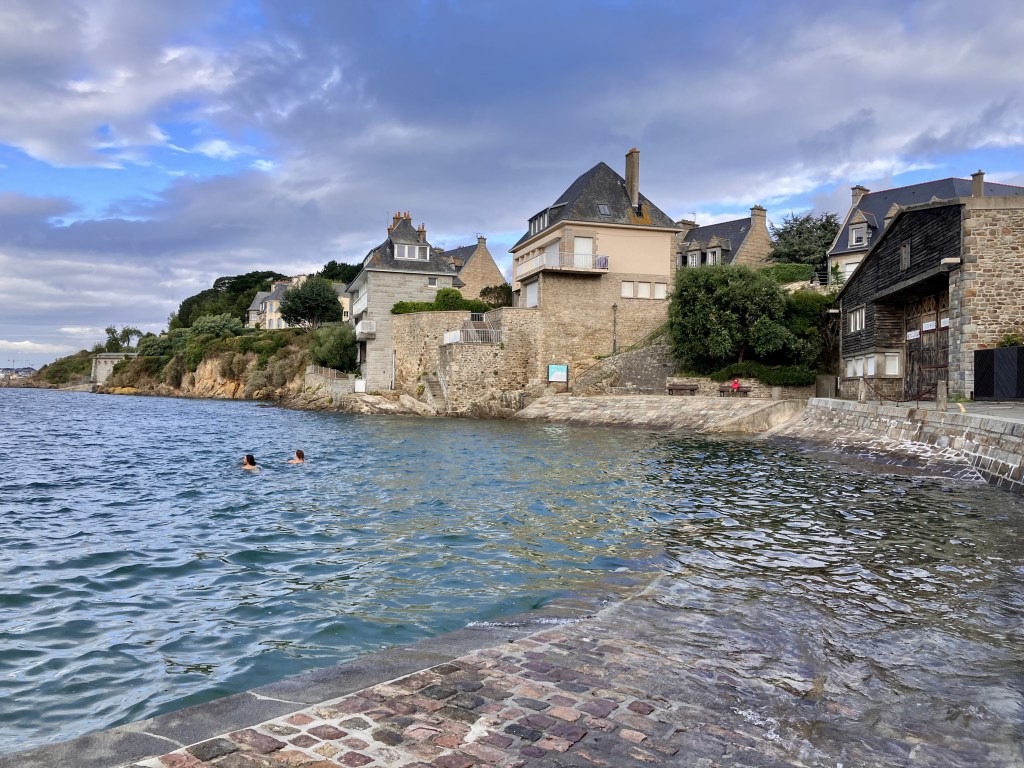
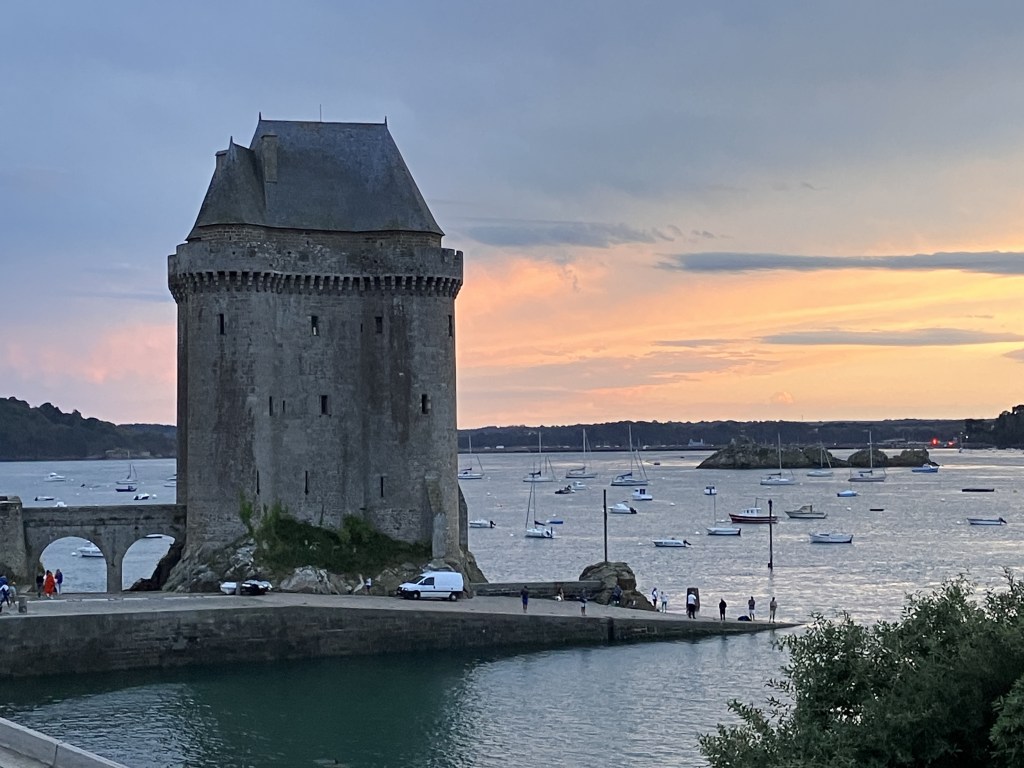

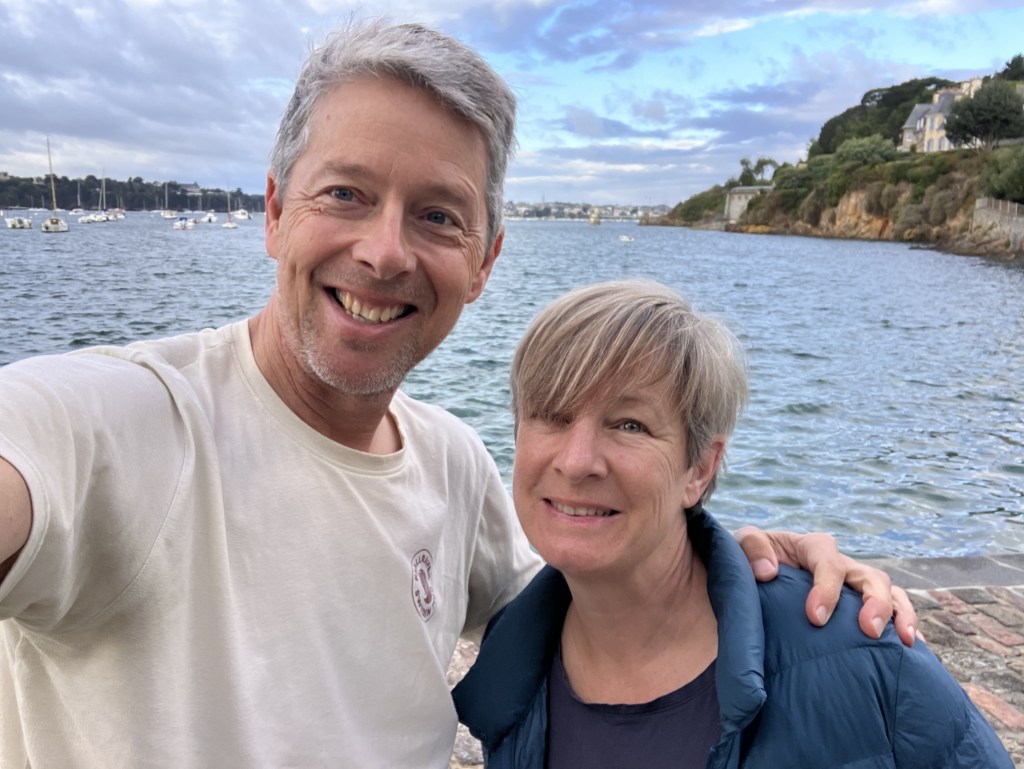

 Less Car, More Life