We missed summer in Europe in 2024. Like really missed it. It was great to be in the US for the summer, but it’s been a relativley cold spring and fall in Europe. So we were thrilled to get a last gasp of pleasant fall weather in one of favorite French cities, Lyon. Some places we seek out, such as our return to Taiwan and further exploration of Malaysia earlier this year. Other places in Europe we seem to end up in more often due to their location, and Lyon is one of these places since it’s usually our train gateway to and from the Vallée Verte.
Soft autumn light on the Rhône.
This was actually our fourth visit to Lyon, and the second time this year, as we passed through for two nights in March on our spring bike tour along the Via Rhôna. In March, we caught up with some freinds staying in Lyon, and explored a few new places, but didn’t have time to dive in deeper. So we decided to return and spend a week this time, and it was really a joy, from the lovely autumn warth and sunshine (finally!) to the amazing food and friendly people.
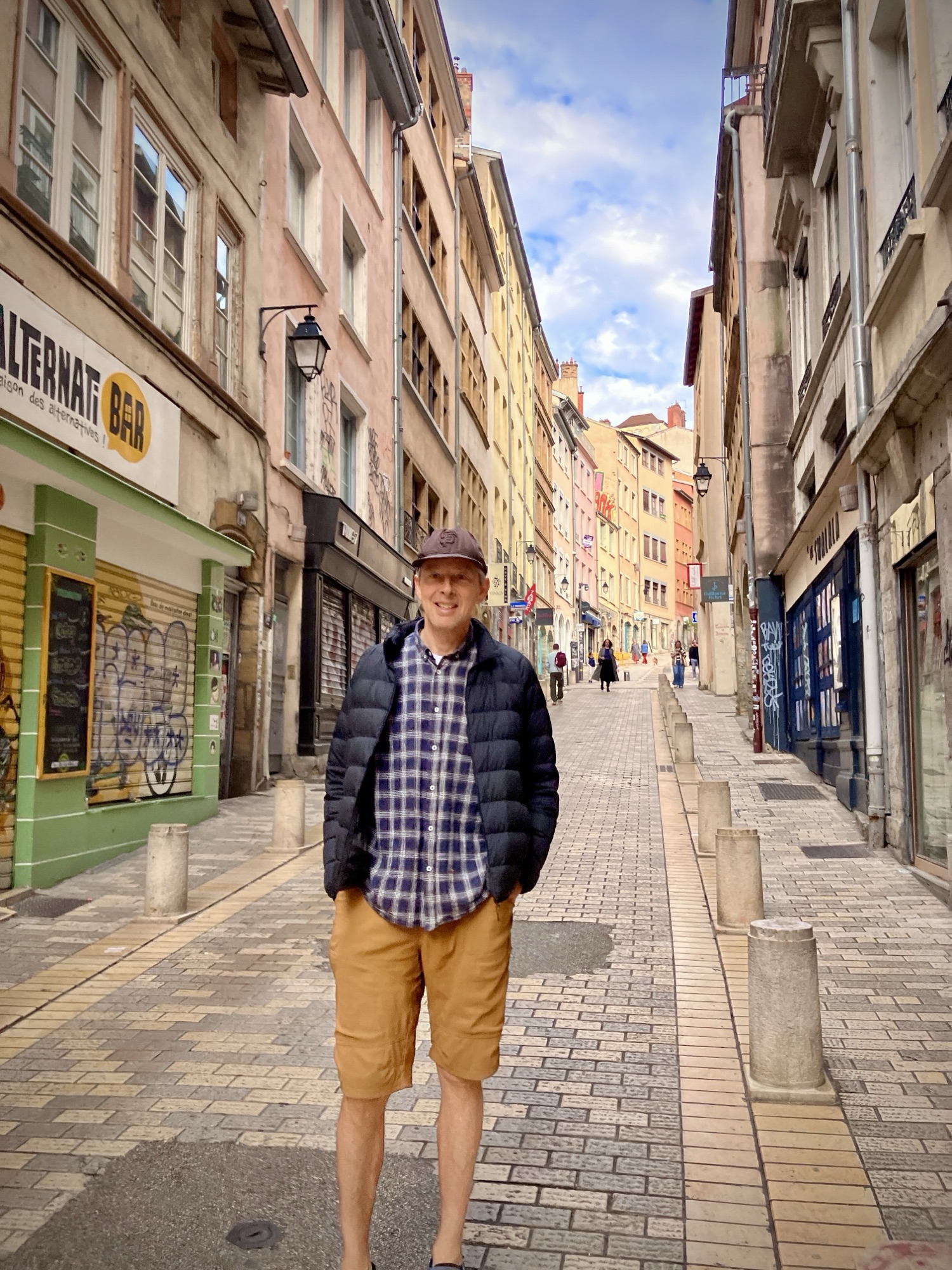
Shorts and sandals! On the pedestrianized Montée de la Grande-Côte, which takes you up to the Croix-Rousse neighborhood.A snipet of the vast Mur Du Canuts. A huge building mural depicting the rebellion of the local silk workers from 1831-1848, some of the first labor revolts of the industrialized world.
Lyon is France’s third largest city, but for many French, it’s the best. As we found out, many Lyonnais wouldn’t consider living in Paris or Marseille. It reminds me of the rivalry between New York City and Boston growing up; one clearly the biggest and dominant in cultural icononography, but the other more livable and approachable, espcially as a tourist.
Along the Saône River, which has a more industrial and gritty feel than the Rhône promendaes.
What I really enjoy about Lyon is the geography, as it has some dramatic hills at it’s edges, and the confluence of two major rivers at it’s core. You even get views of the Alps when it’s clear. It’s also very walkable and easy to get around by bike and public transit, although pales to Paris in its extent of metro and trams. I imagine the access to the Alps, Massif Central, and Mediterranean is a huge benefit with those with the means to get away regulary. Oh, and the weather is a bit nicer than Paris.
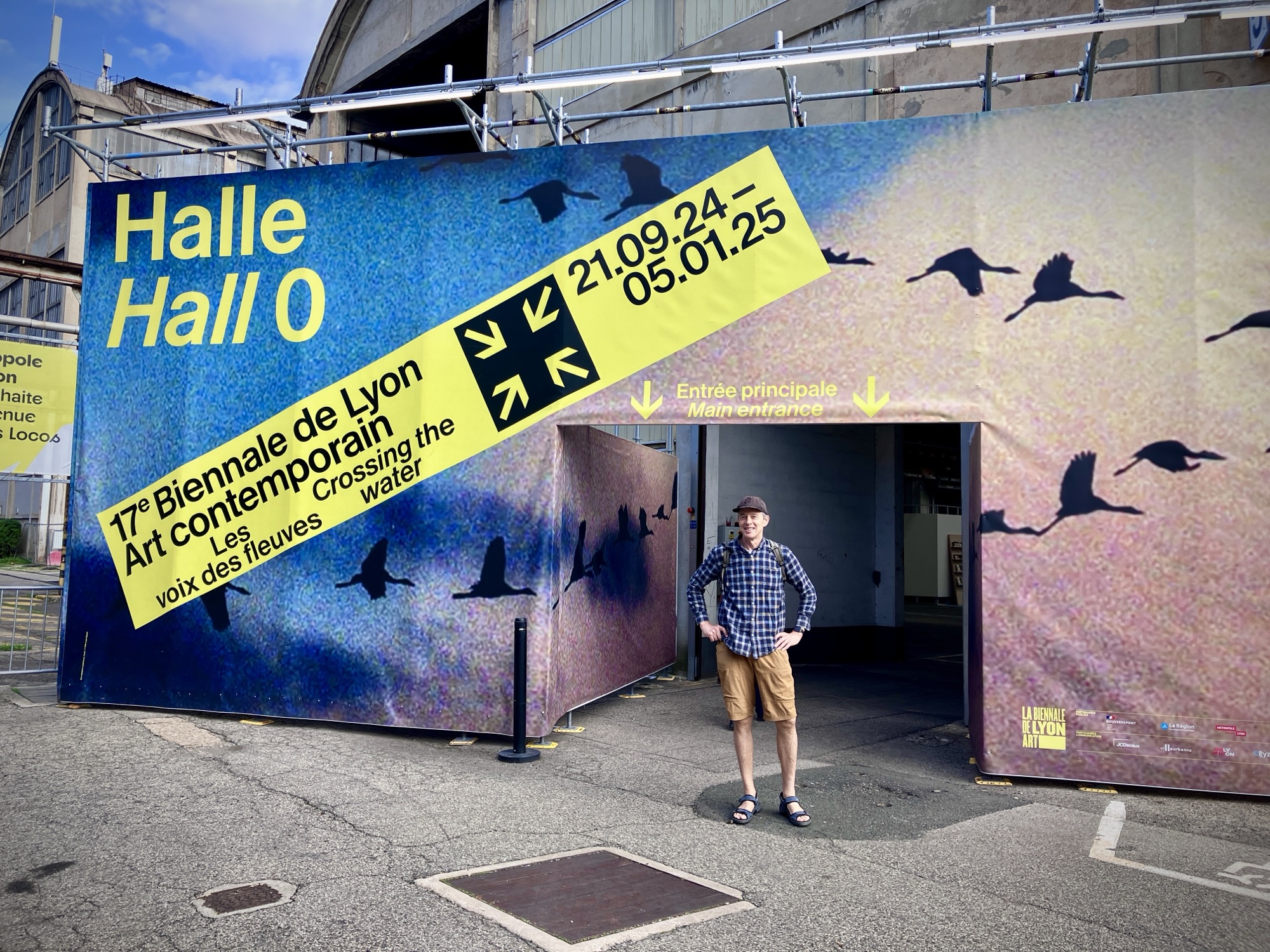
Ready to explore the Lyon Bienalle’s largest installations at the former SNCF workshops known now as “Les Grands Locos”.
We also were lucky to time our visit with the large Biennale Art Show, which showcases about 75 artists in venues around the city. The 2024 theme of “Crossing the Water” invitied a wide array of interpretations and seemed especially pertinant to the migrations of people across the globe due to wars and economic opportunity, as well as animal life impacted by climate change.
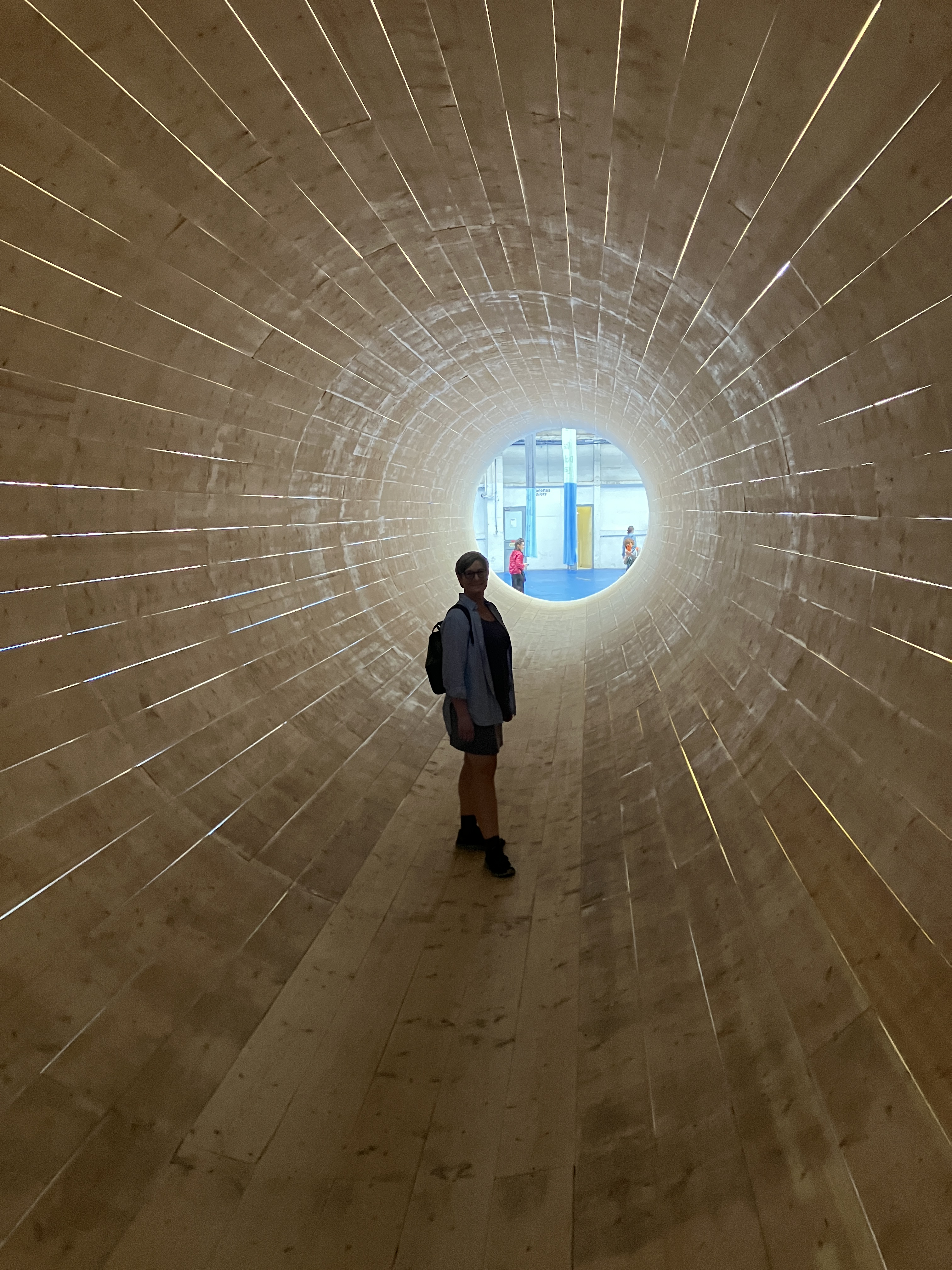
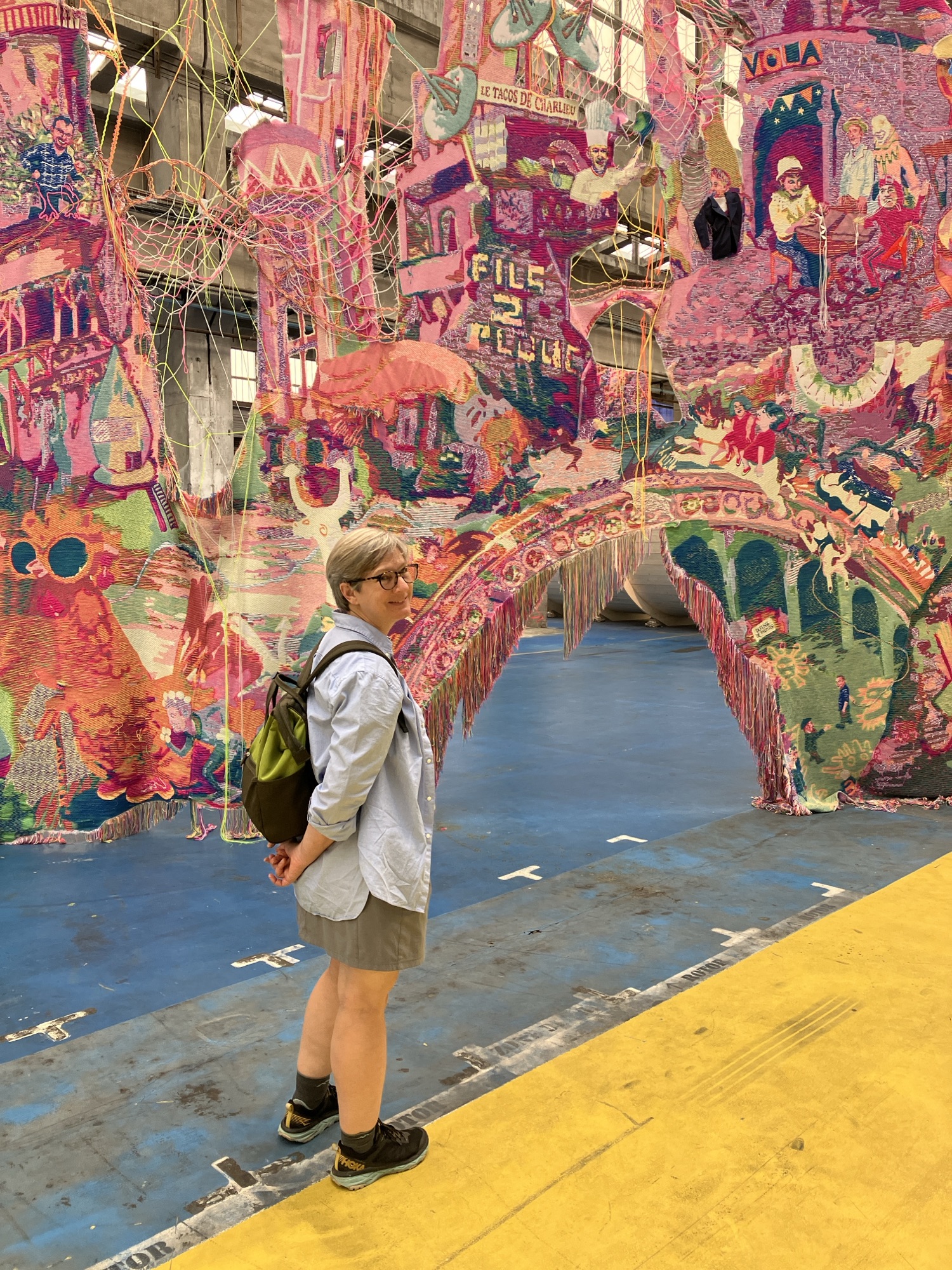
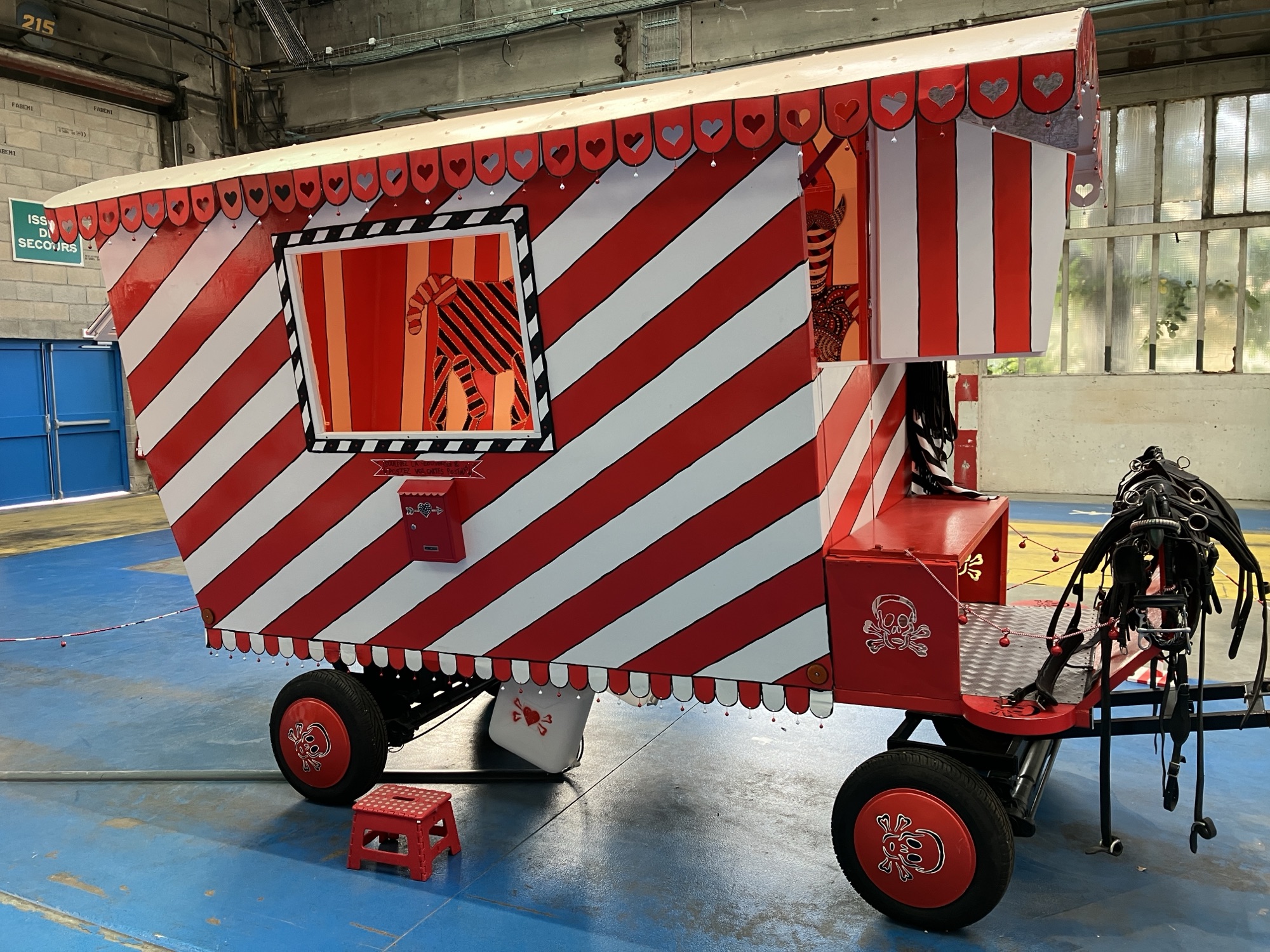
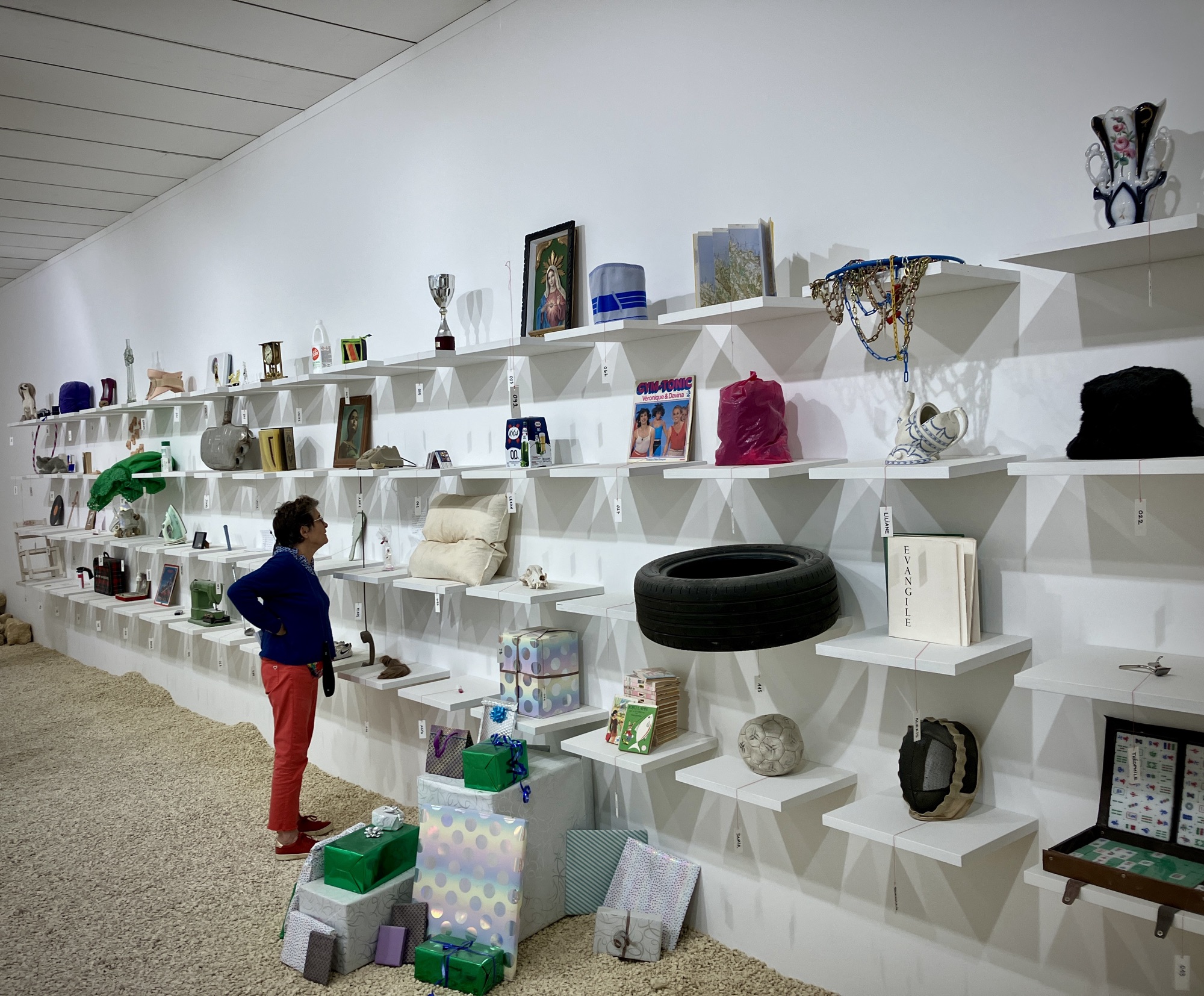
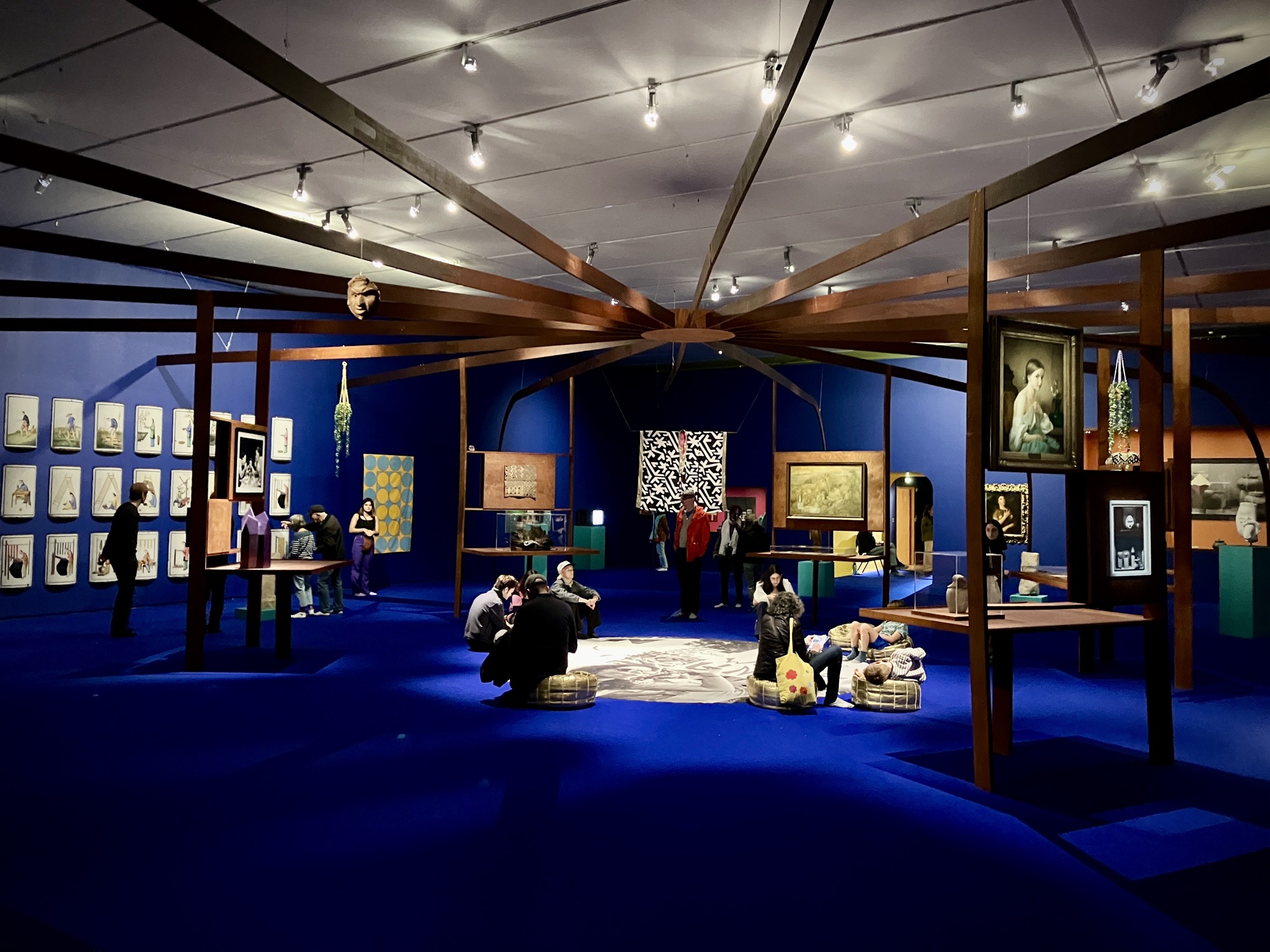
The installations at the SNCF Railyards site were often extrememly large scale and experiential like Hans Schabus – Monument for People on the MoveMona Cara – The CactusSlightly Creepy carnival installation by Clément Courgeon – The Cart of the CleverLorraine de Sagazan & Anouk Maugein – Monte di Pietà at the MAC. Labeled and recorded, the objects that compose it are linked to traumatic memories. I have also crossed the water many times, but luckily by choice.Grace Ndiritu – The Blue Room features around a hundred prehistoric, Roman, Egyptian, medieval, modern and contemporary pieces from various Lyon museums. It was part the Biennale at the Musée d’art contemporain de Lyon (MAC).
I really enjoyed the Biennale and it was well attended but did not have a crush of visitors, due to its long run and dispersed venues. The artists also seemed to represent a modern and diverse cross-section of Fench and foriegn artists, something often missing from all the classical art museums of Europe. The other musuem we really enjoyed was the recently renovated Musée Lumière. Dedicated to the cinematogorphy and the history of the Lumière family, the Musée Lumière looks back at the various technical creations of Louis and Auguste Lumière and their family. It’s well curated and has a great collection of early film equipment, as well as engaging and interactive elements, all set on the grounds of the historic building and workshops.
We reluctantly skipped the striking new Confluence Museum as the week we were in Lyon was one of the Autumn school holiday weeks and anything child and family friendly was very busy….saved for our next visit to Lyon.
The Place Des Jacobins dates back to the mid 16th Century is an important historic junction of 12 streets. The fountain was added later in 1885 after the start of the Third Republic and some disputes about content. Public art and monuments are taken seriously in France.Off the bikes and back on transit!
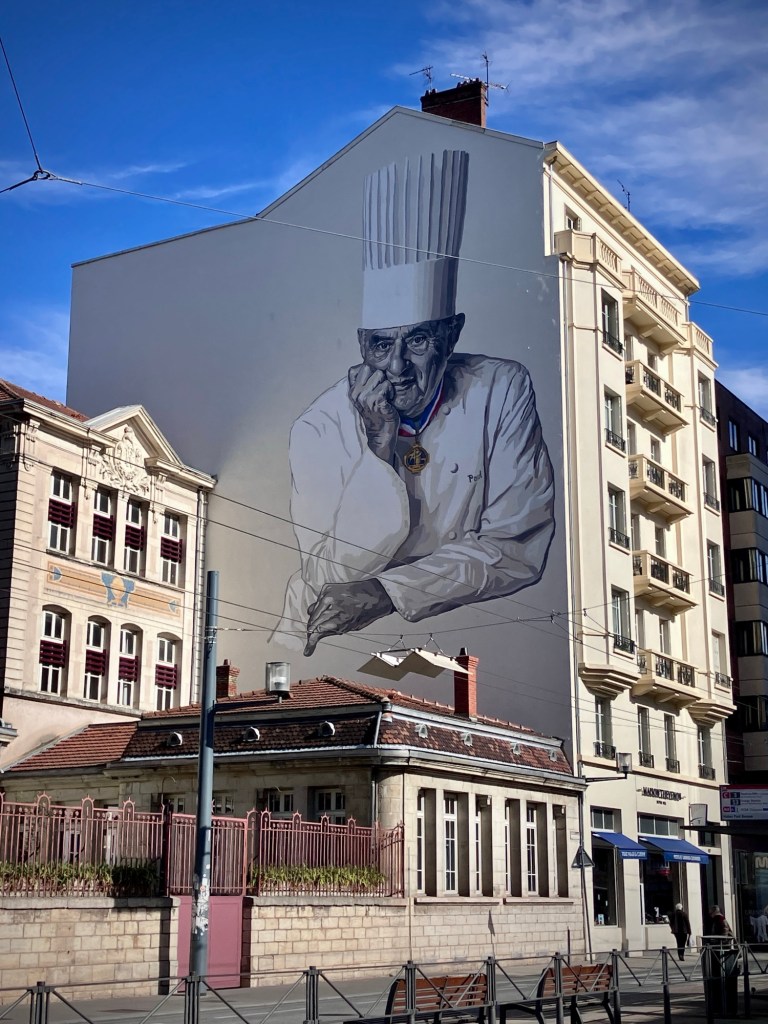
Paul Bocuse looks over the street nearby Les Halles. He is Lyon’s most famous chef and has a legacy 3 star Michelin restaurant and the new Les Halles is named in his honor.
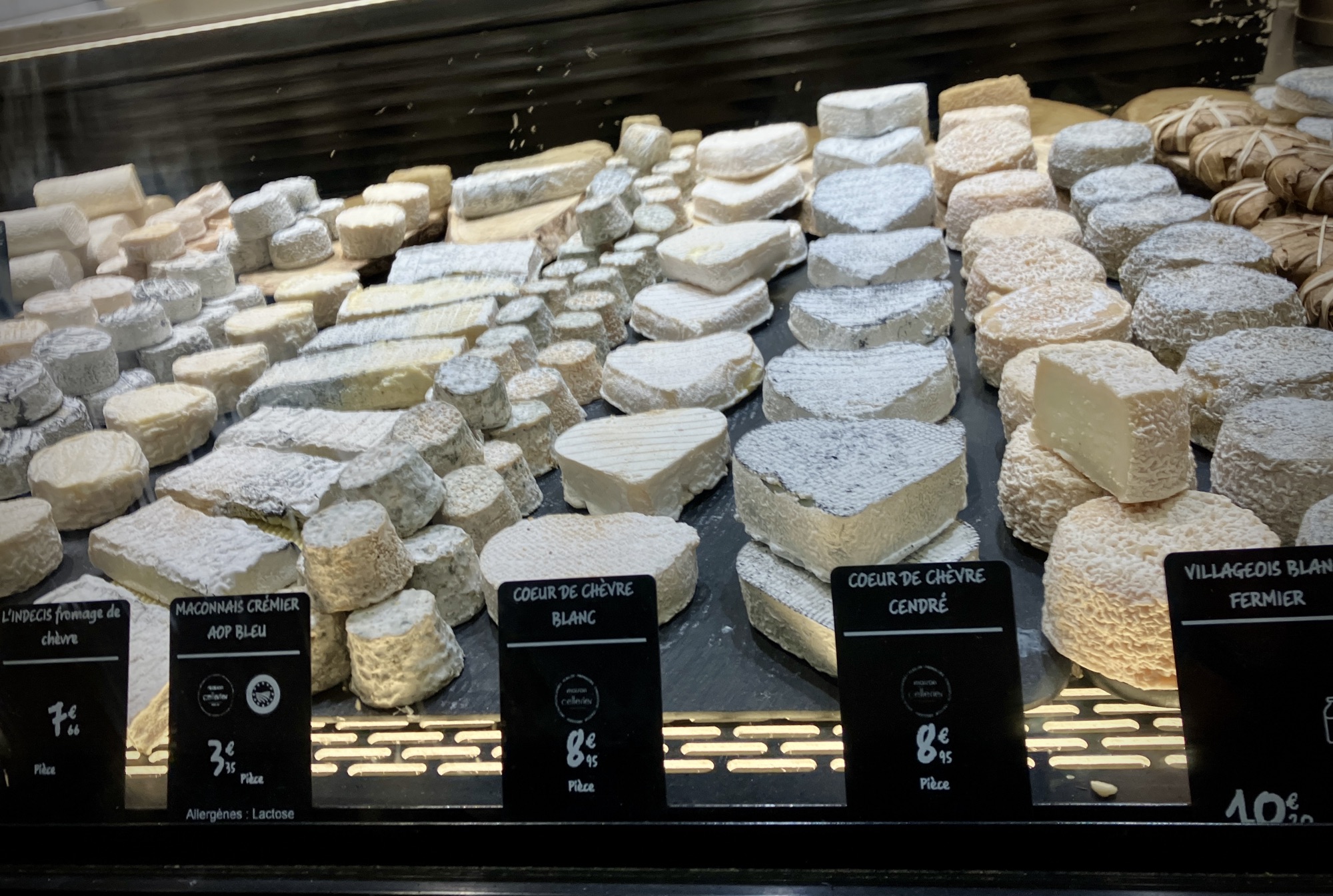
The way the locals eat and drink in Les Halles.
The food presentation at Les Halles is often like a museum installation.
We opted for a classic Moules marinière feast at Chez Lyon in Les Halles. Mussels are generally in season from August to January.
We probably could have shared a bucket, as they were huge! But sooo good.
I can do this…and I did, as well as about 1/3 of Cheryl’s bucket -;)
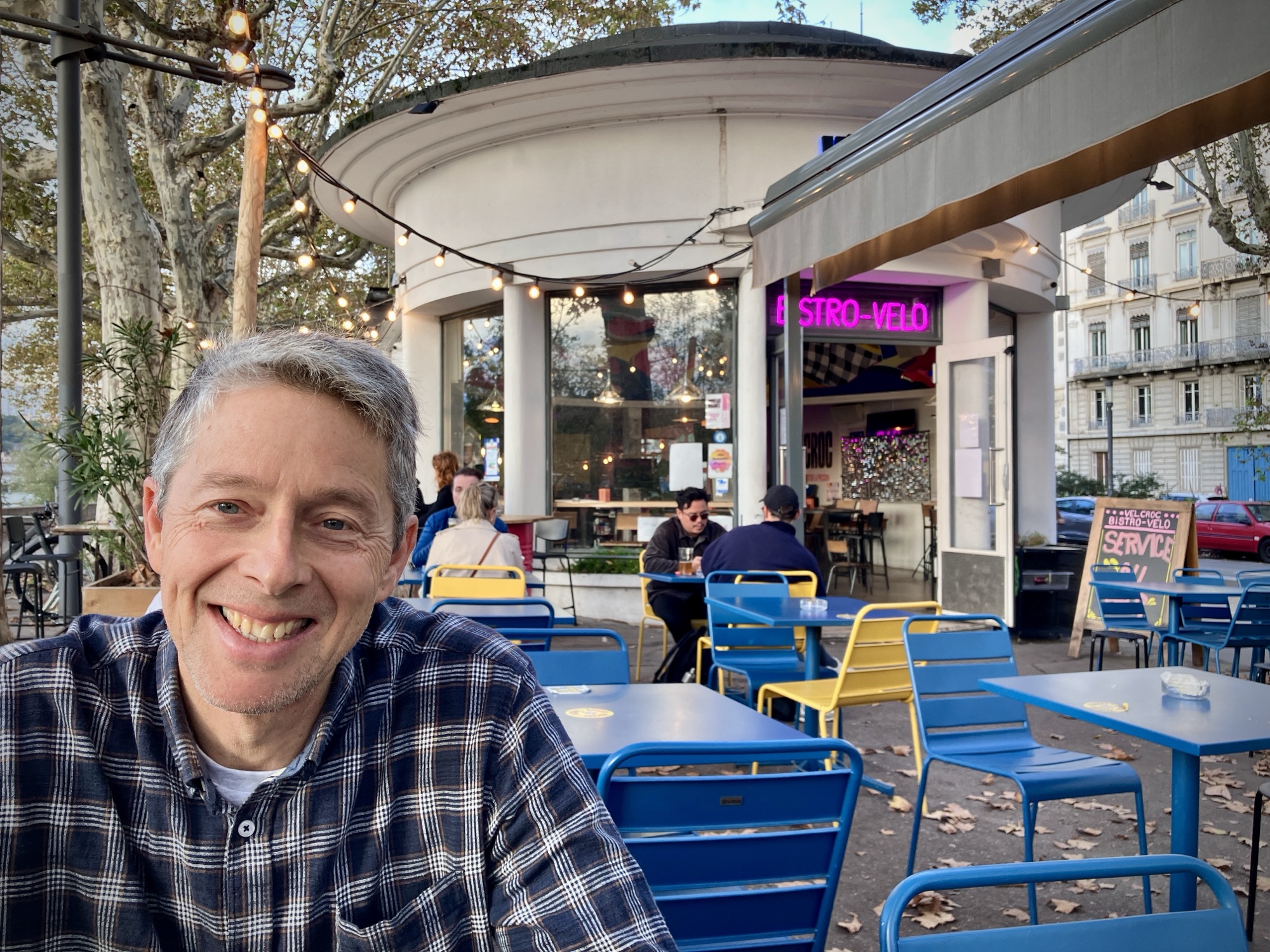
The typical chimneys of Lyon with Grafitti/Art?….how did the the street artists get up there?The famous Frédéric Bartholdi fountain featuring Amphitrite looking over the four tributaries of the Garonne River….in Bordeaux?! It was his intention to sell this to the City of Bordeaux in 1892, but Lyon scooped it up instead.We stayed in an apartment and a hotel for parts of our visit, but both were just a block from the Left Bank of the Rhone; a perfect location to access all the city and the river’s many cafes and 5km of paths, but out of the tourist zones.Lots of space for people, dogs, and bikes along the extensive Berges du Rhône.Selfie on one of my frequent runs along the Rhône, with the Mussée de la Confluence in the distance.Access in pedestrianized zones is generally controlled by retractable bollards activated by residents and delviery vehicles only. Why is this hard to transfer to US cities?
Besides the great variety of food in Lyon, we really were impressed by the lack of impactful car traffic in most nighborhoods. There are some busy main arterials, but in general, you can walk freely and cross small streets with ease. There are 7 tram and 4 underground metro lines that cover the ciy pretty well, and an extensive bike network. And as in much of France, they are investing more in public spaces for people with a huge project to expand car free space in the commercial core, not to mention a massive renovation of the always busy Lyon Part-Dieu train station. As always, the surface tram lines are a nice way to get around and sightsee as well.
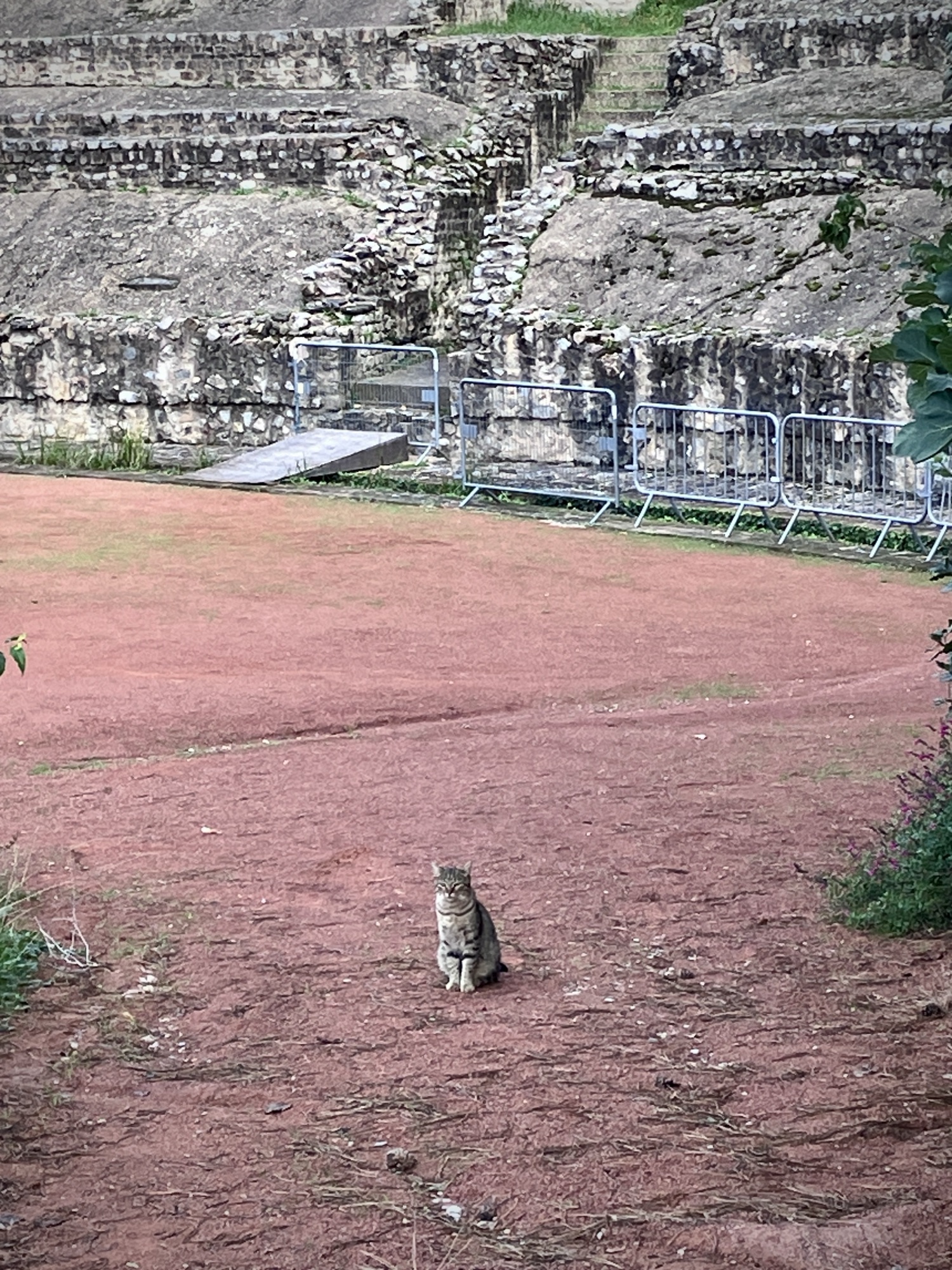
Roman ruins are tucked into Lyon in surprising locations, such as the 19AD Amphitheater of the Three Gauls in the 1st Arrondisement.Random Roman ruin fragmants yet to be pieced togther by a grad strudent, and cats…always!This cat seemed to be in some sort of guardina role. We kept our distance.Taking advantage of water collected in the ruins.
Cities with layers of history are always intriguing, and Lyon city along the Saône used to be the core of Lugdunum, a thriving Roman city dating back to 43 BC. It may have had up to 200,000 inhabitants at its peak, which is in incredible as Lyon today only has 500,000 inhabitants in the age of modern infrastructure. There is a large Gallo-Roman museum, two amphitheaters, and lots of other remnants to be seen if you want to dive deeper into this history.
Beyond the usual recycling and residential composting, we were surprised to see public compopsting bins in such a large city.Delicious dumplings at Enginomo. The culinary scene in Lyon includes a good variety of food choices, not just French Gastronomie.The “Pot Lyonnais” The usual French wine ‘pichet’ comes with a twist in Lyon as it has a thick glass bottom and only accomodates 46cl instead of the usual 50. Apparently the factory bosses used these bottles to take a little from each worker of their weekly wine rations.Notice the thick glass bottom, which also makes a “Pot Lyonnais”very stable!
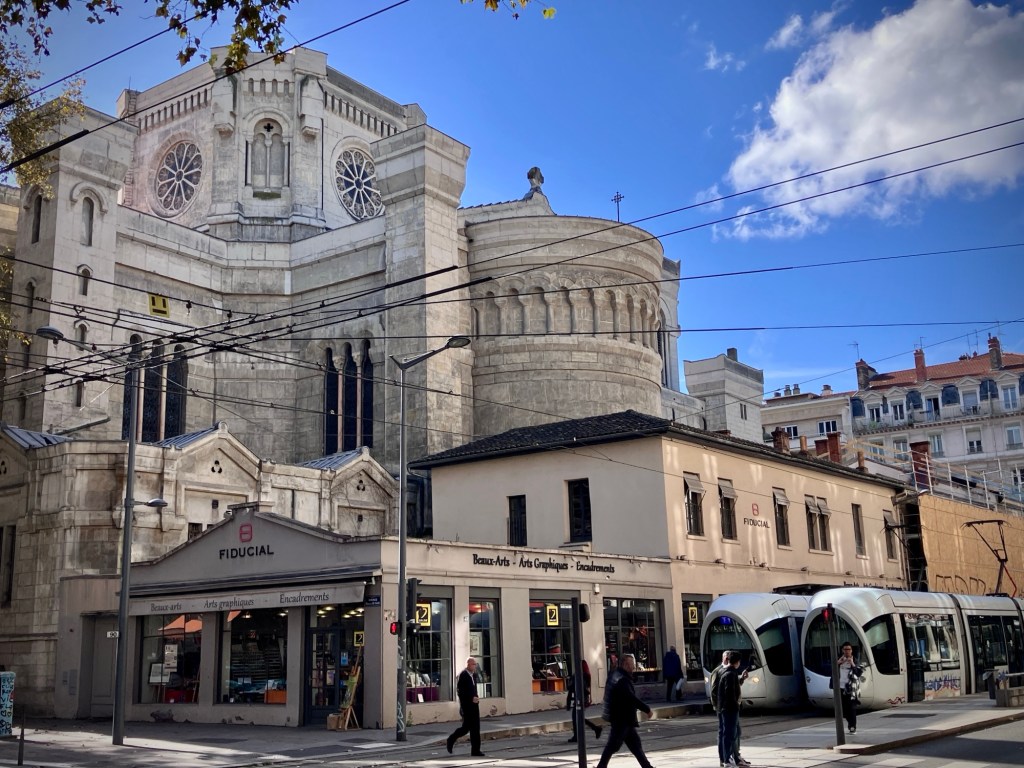
Beautiful architecture, trams, and sunshine.
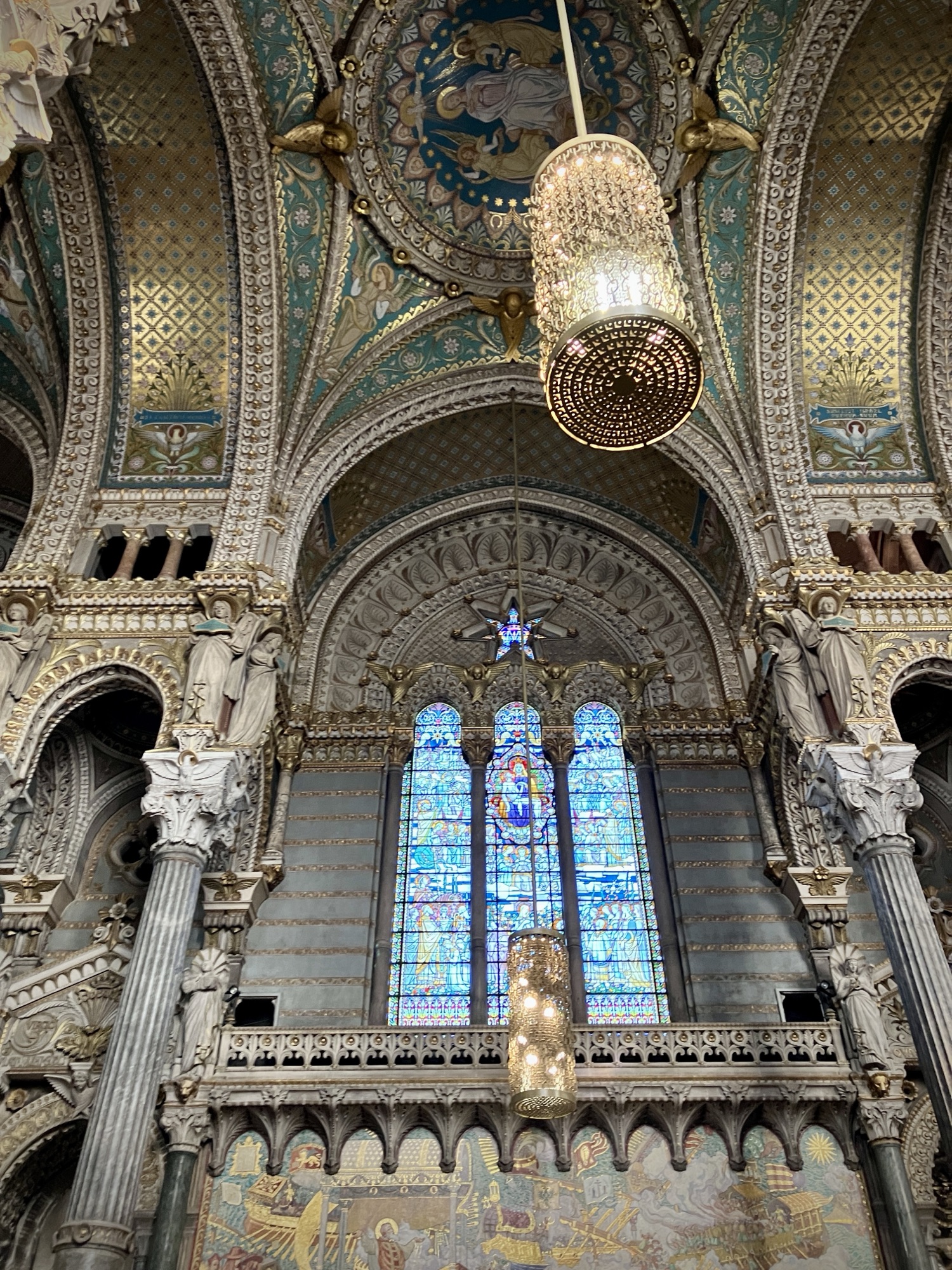
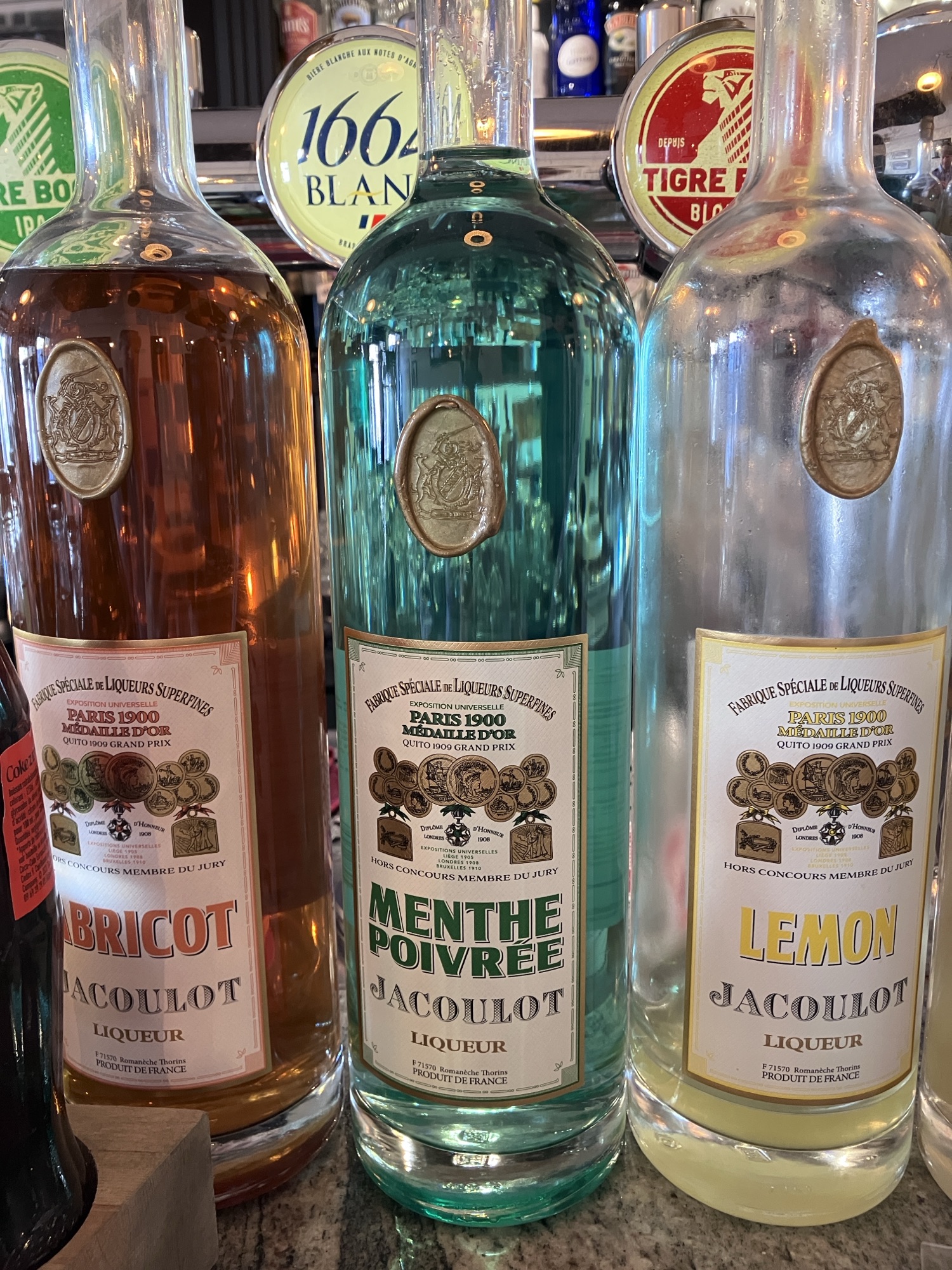
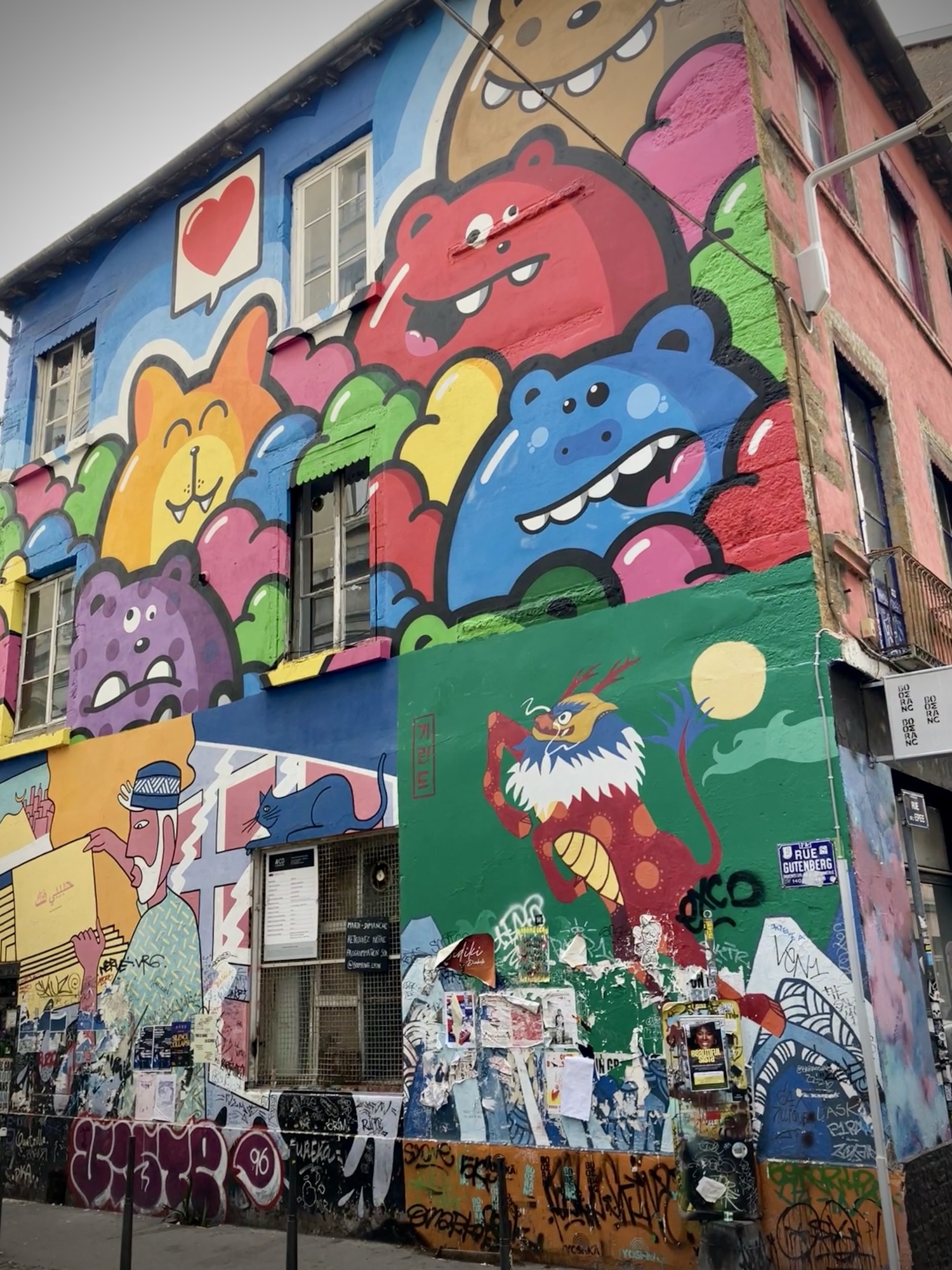
Former 19th century hospital is now the Grand Hôtel-Dieu, as well as shops and gathering spaces.Low morning autumn light on Les Célestins Theater.We used the last few minutes of our 24-hour transit pass to take the funicular up to the Basilica of Notre Dame of Fourvière. It’s impressive and one of Lyon’s top sights, with views of the city from the nearby terrace.Remains of the Gier Aqueduct which brought water to Lugdunum from over 50 miles away. Parts are still fully intact while other sections are now one with later development. Amazing.This streetscape reconstruction in Sainte-Foy-lès-Lyon was still in the archeolgical phase, as Lyon sits atop layers of history.Enjoying the nice weather on our exploration of the hills.Colorful liquor bottles caught Cheryl’s eye at a casual neighborhood bistro where we had lunch in Sainte-Foy-lès-Lyon.Sunshine on the Saône looking toward Croix-Rousse.Street Art and murals are a mainstay of Lyonnais life and there are websites dedicated to the various artists.We feel the same way.Nothing but smiles after a stimulating week in Lyon. But will this great weather last?
Lyon is not always a must see to most visitors to France, and I think it’s still a bit overlooked. Paris is amazing, but Lyon is a place you can really feel comfortable in quickly and will be rewarded by friendly people and a vibrant cultural scene. We were glad we came back for a longer look. Happy travels!
We continued our Northwest summer ramble out of Seattle and headed up I-5 about an hour and a half to Bellingham, WA.
Emerald or « Toad Lake » near Belingham, Washington.
Closer to Vancouver than Seattle, Bellingham frequently appears on “Best places to retire is the USA” lists or click bait, and for good reason. It’s a small city (90k) on Puget Sound in a beautiful natural setting, kept vibrant by the constant youthful churn of 14,000 students at Western Washington University. This was our third visit to Bellingham, but the first time we had spent a week.
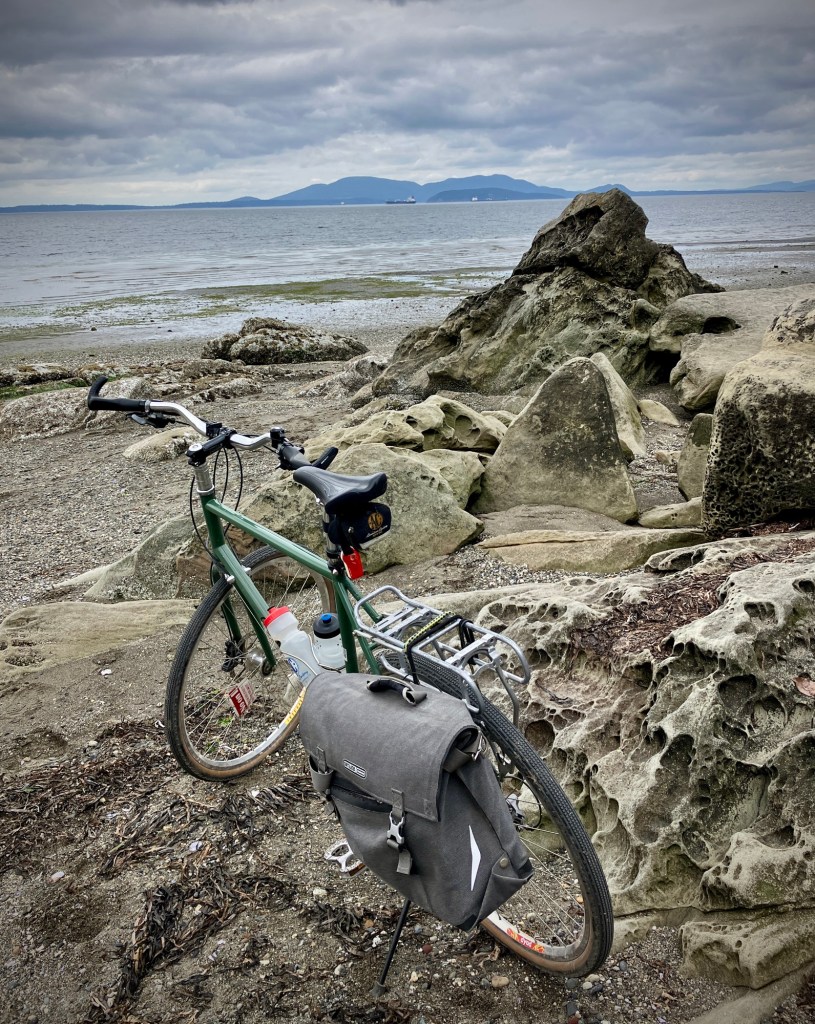
My summer bike at Clayton Beach, part of Larrabee State Park and the Chuckanut Mountains
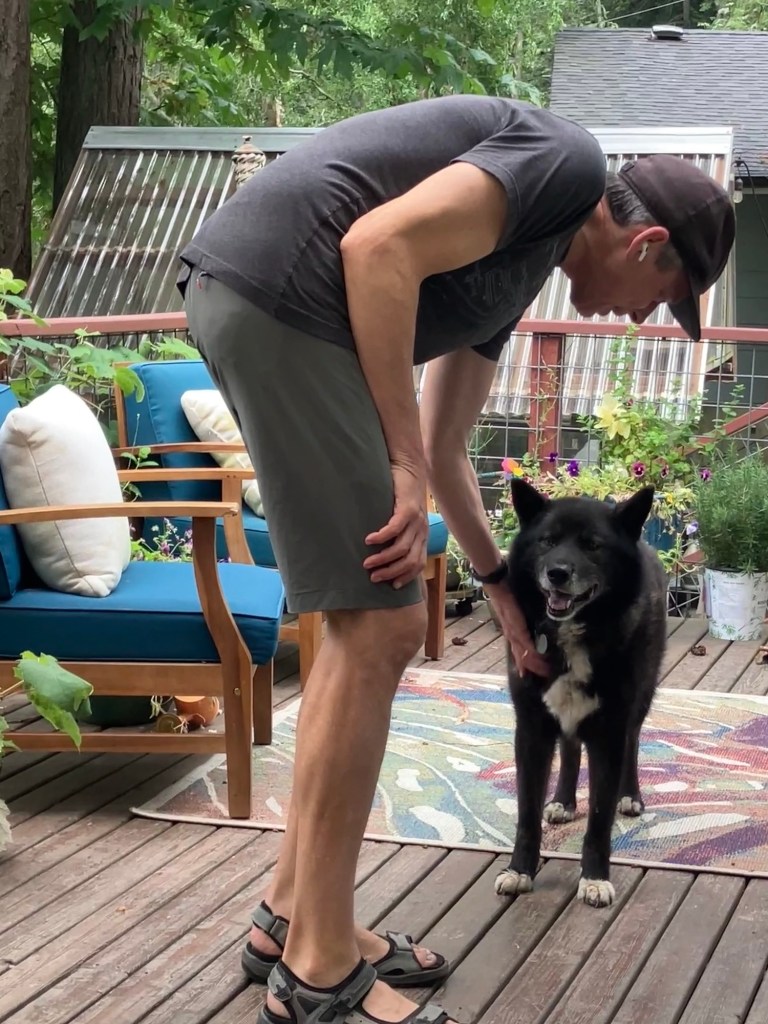
Our house sit was across from a small lake at the edge of town, but amazingly secluded up in a steep vale in the local foothills of the Cascades. Our responsibilities included a very sweet outdoor dog and seven chickens. The dog was reportedly standoffish but we soon bonded with him and enjoyed some fun walks around the lake and woods.
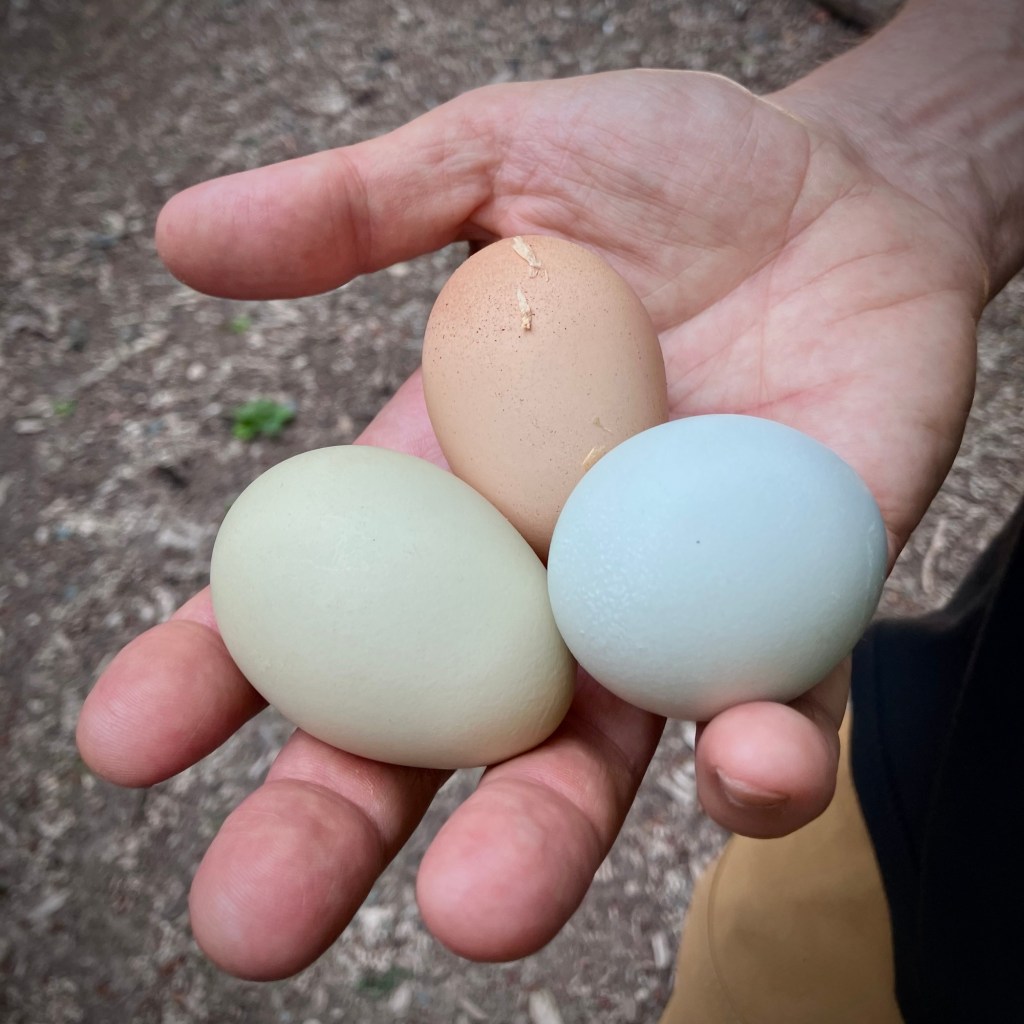
Lake loop with an enthusiastic leader Our dog letting me know he was ready for a walk!Our house sit included all the fresh eggs we could eat!
House sitting is great for really trying out new locales to see if it a place we may want to spend more time or even settle for a time. We really liked Bellingham in the summer and had considered settling here at one point, but think now that we still need a bit more city in our next home.
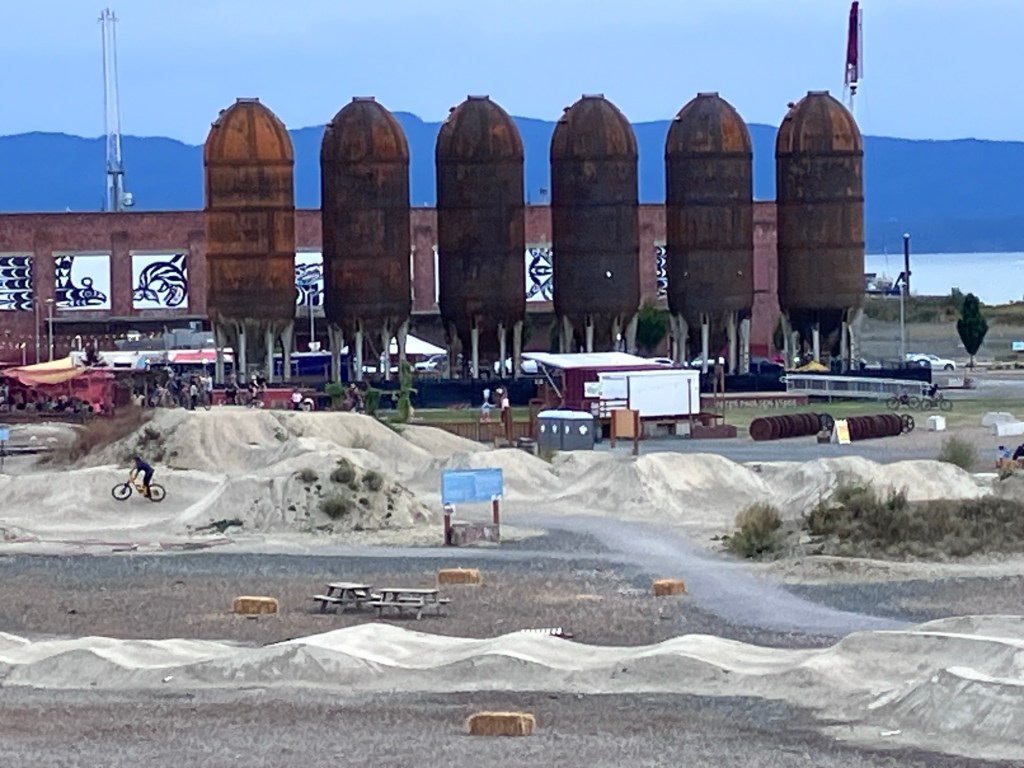
Downtown Bellingham is in the process of reimagining its industrial waterfront with popular interim uses as a wild bmx track, shipping container bars and restaurants, and summer festivals.
The Pacific Northwest and Seattle in particular are so different than the Bay Area we called home for most of the past 30 years. We are used to the pace and competition of dense SF living and you really notice the difference in the Seattle area. We are the angsty rushed city folk here. The massive amount of wealth and economic prosperity generated in San Francisco and Silicon Valley has put pressure on every aspect of living; cost, housing, services, transportation. We lived a great life in San Francisco by keeping our work and home close and cycling, walking, or transiting most places.
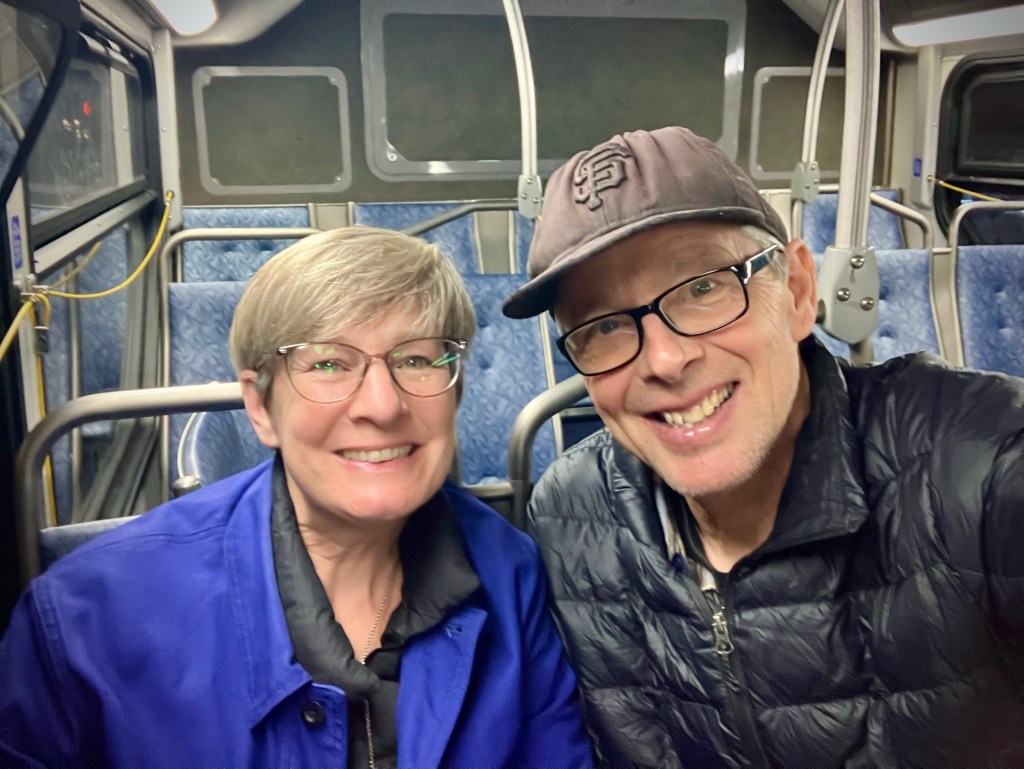
Riding the #40 bus in Seattle. It’s fairly extensive, clean and reliable, but can we live comfortably without a car here?
And our double income, no kids (DINKS) life kept us comfortable financially. But we could feel the strain the past 20 years on services and the vast gulf that was growing between “knowledge workers” and those in service or more traditional blue collar roles. San Francisco and California has tried to fight this trend with social programs (minimum wage, city health plans, affordable housing, etc) but it can’t keep up with the demand for housing. It’s a global problem in wealthier areas of the planet, but especially evident in California.
Cycling the boardwalk to the Fairhaven neighborhood of Bellingham, arguably its most charming area.The Bellingham area is unrivaled for mountain biking, including expert crazy bike only downhill runs
So back to Seattle. Seattle has a lot of the same challenges as the Bay Area, including tech wealth and escalating housing costs. But as we noted in our winter visit Seattle blogs, they ARE building more and have looser zoning laws near transit by right. (meaning NIMBYs can’t stop it) DADUs (Detached Accessory Housing Unit!), townhomes and condos are sprouting all over the city in almost every neighborhood.
Great to meet and chat with fellow nomads at a meetup in Edmunds, WA
All this fairly random looking new housing looks strange to us as we’ve hardly see any housing construction in San Francisco, except the thousands of units concentrated South of Market, Mid and Upper Market Street Areas, and a few other pockets and buildings. But they are often not in the areas where most people want to live.
Great Pho at Miss Pho in Crown Hill. The diversity and quality of the food in Seattle is first rate, but unlike SF, you may need to search for it in strip malls.
Seattle is building more where people want to live, as well as very dense high rise residential in First Hill, and the South Lake Union edge of downtown. Add to this an ever expanding light rail metro system (thanks to a $54B 2018 bond measure) and you have a fairly dynamic feel to the City. It’s almost twice the size of SF, and feels more spread out, especially from north to south. It generally doesn’t have the magical density and intimate feeling walking from neighborhood to neighborhood as San Francisco and many more trips are by car. This is a big difference for us to adjust to if we settle in Seattle.
Golden Gardens Beach Park; beautiful and swimable, if you don’t mind chilly water!The Puget Sound beaches are more for exploration than swimming
SF is dense but could and should be denser, with more new buildings all over the western half of the city, where the weather and transit are great. But NIMBYs, Prop 13, and zoning keep the city at a relative standstill. It’s created a bit of a housing doom loop, since new housing construction is so expensive, that it’s not even affordable for developers selling condos for 1-2 million each. We’ve blogged on this on our past visits, but the issue just gets bigger and bigger and plays a big role in our decision on where we might settle down next in the World (if we do -;).
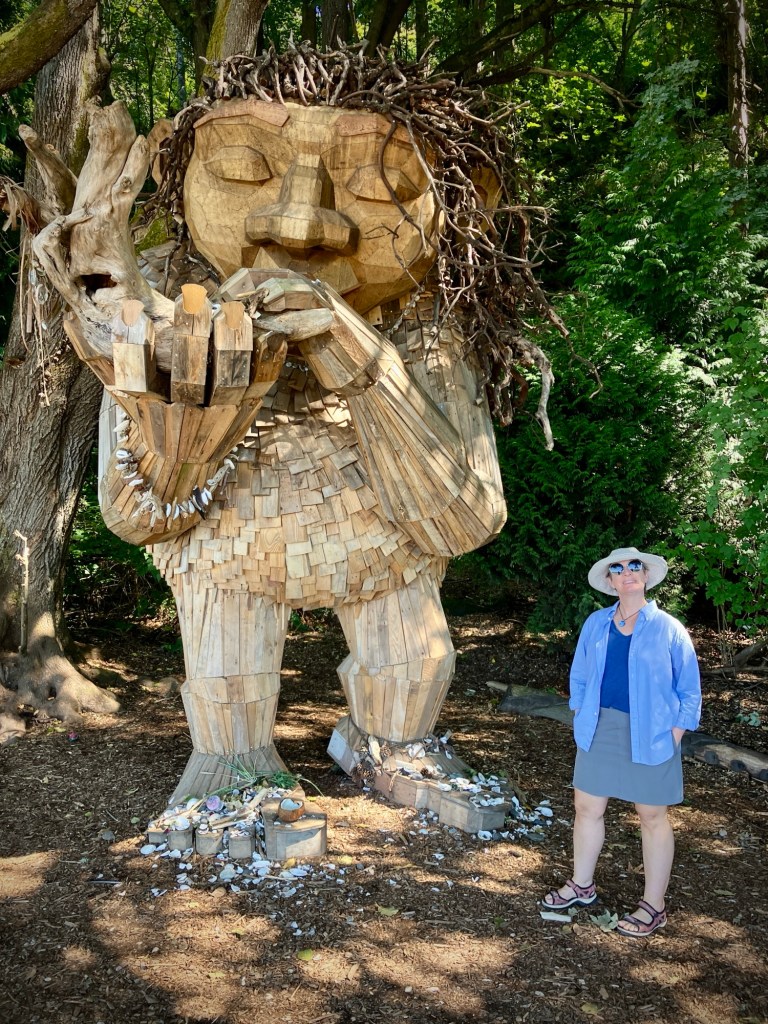
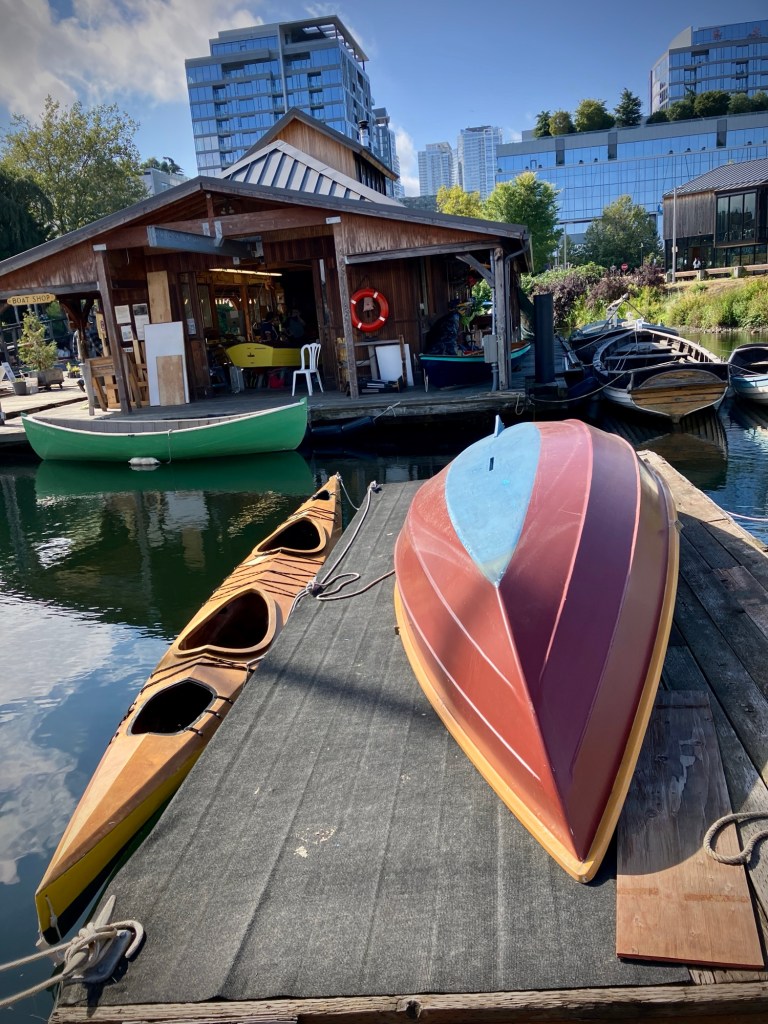
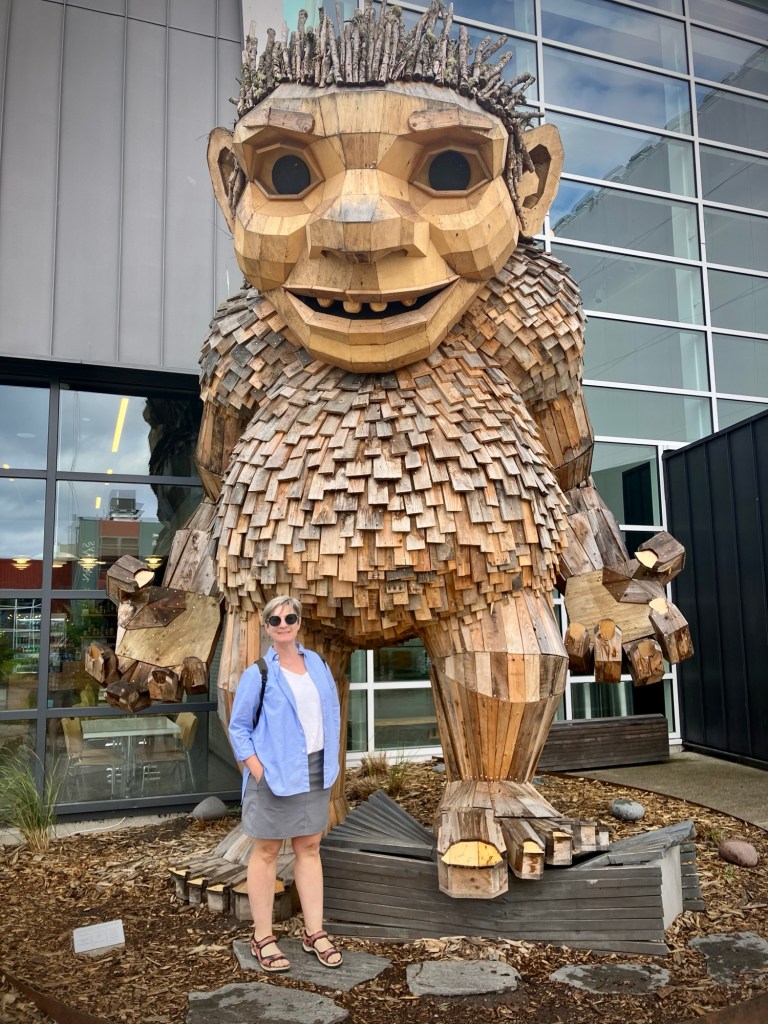
« Bruun Idon » at Lincoln Park, one of Thomas Dambu’s six troll sculptures in the region and made entirely of recycled/reused materials.The wooden boat center on Lake Union.
But to be honest, the biggest difference we noticed in Seattle this stay was the pace of life and what I like to call the “expectation of goodness.” People here are more patient and expect that you are, and are acting honestly and in the public good. A friend of mine in SF noted to me that Seattle today is what SF was like in the 80s and 90s. A bit slower, more provincial, and where everyone was not quite so full of themselves. It’s a cutthroat world in the Bay Area…not quite New York City levels yet, but noticeably more manic than the Pacific Northwest cities. Seattle’s slightly slower pace is attractive to us in our early retirement.
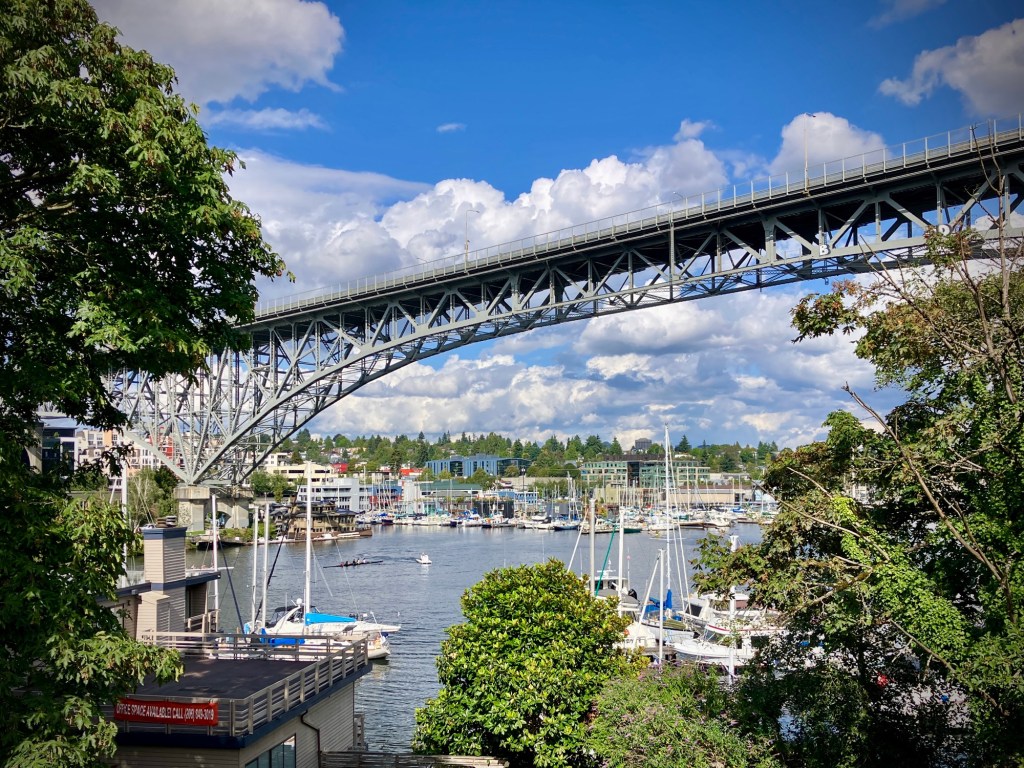
The Iconic Aurora Bridge built in 1932 connects Fremont to Queen Anne
So after a pleasant week exploring the trails and cycling paths of the beautiful Bellingham area, we headed back to Seattle for our final house sit of the trip in the Ballard/Sunset Hill neighborhood. We loved the area as it’s very quiet traffic wise and has a nice grid of roads cut off on the western side edge by a bluff and Puget Sound. There are some views toward the Olympic Mountain Range that allows you to get out of the trees.
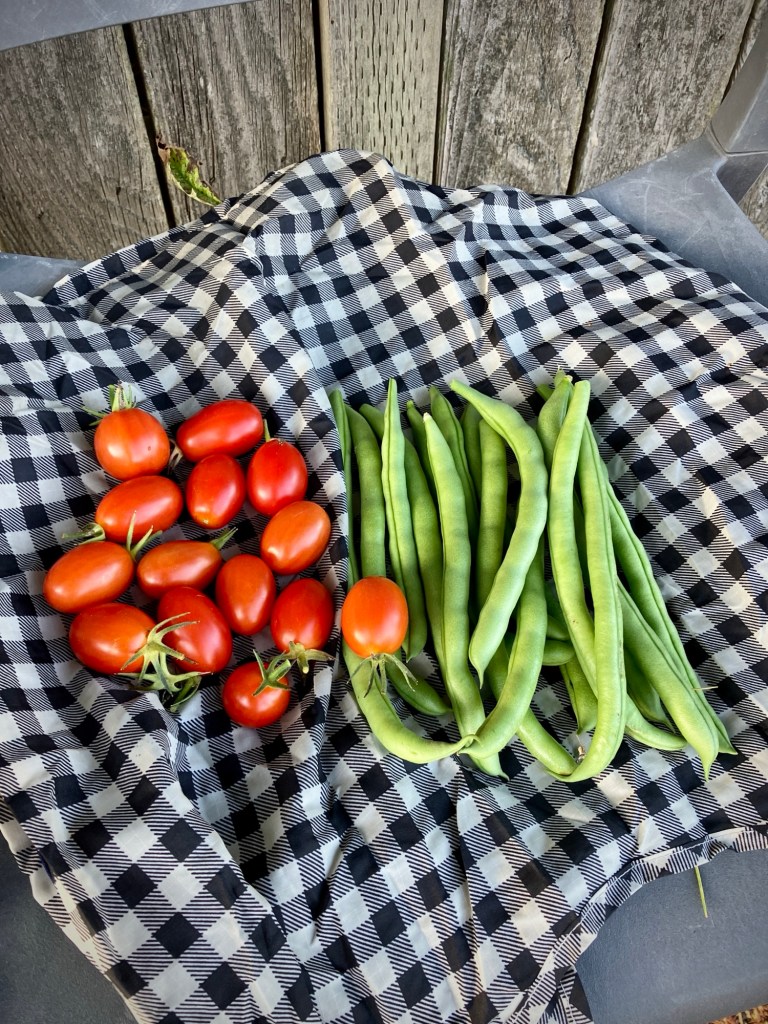
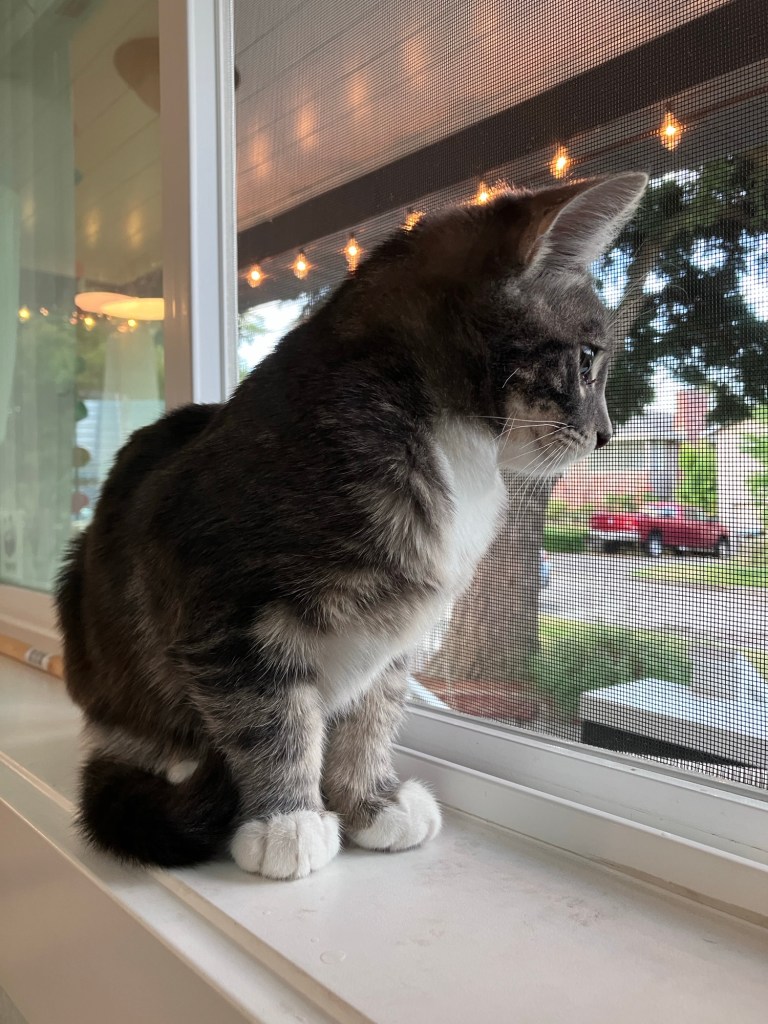
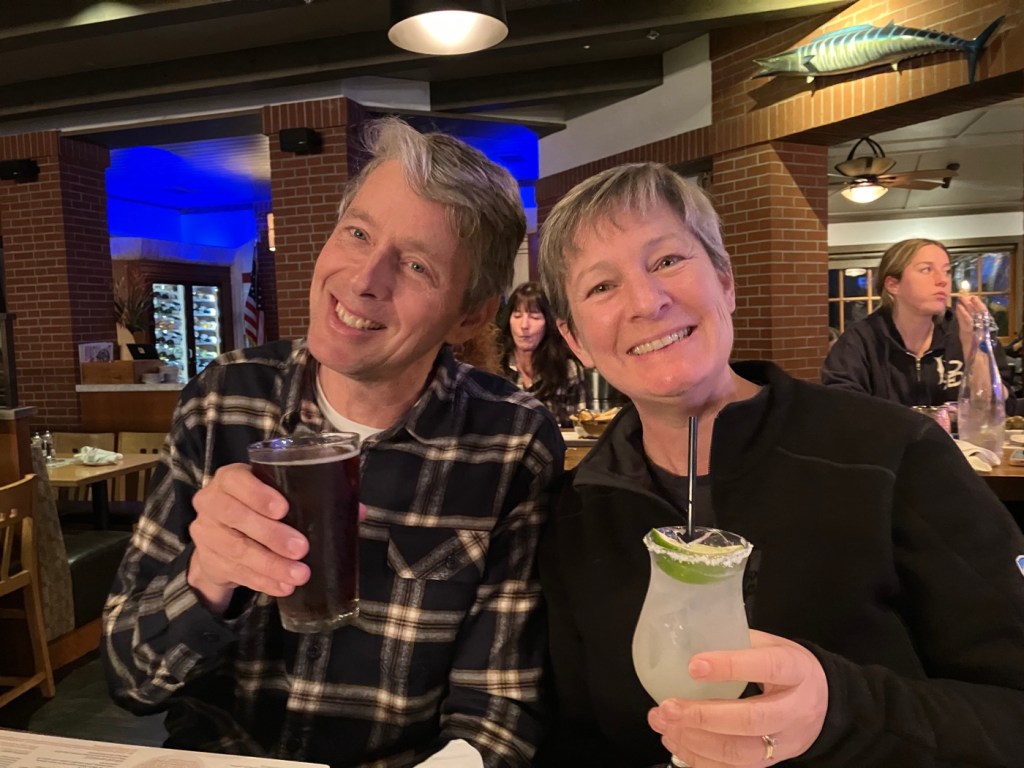
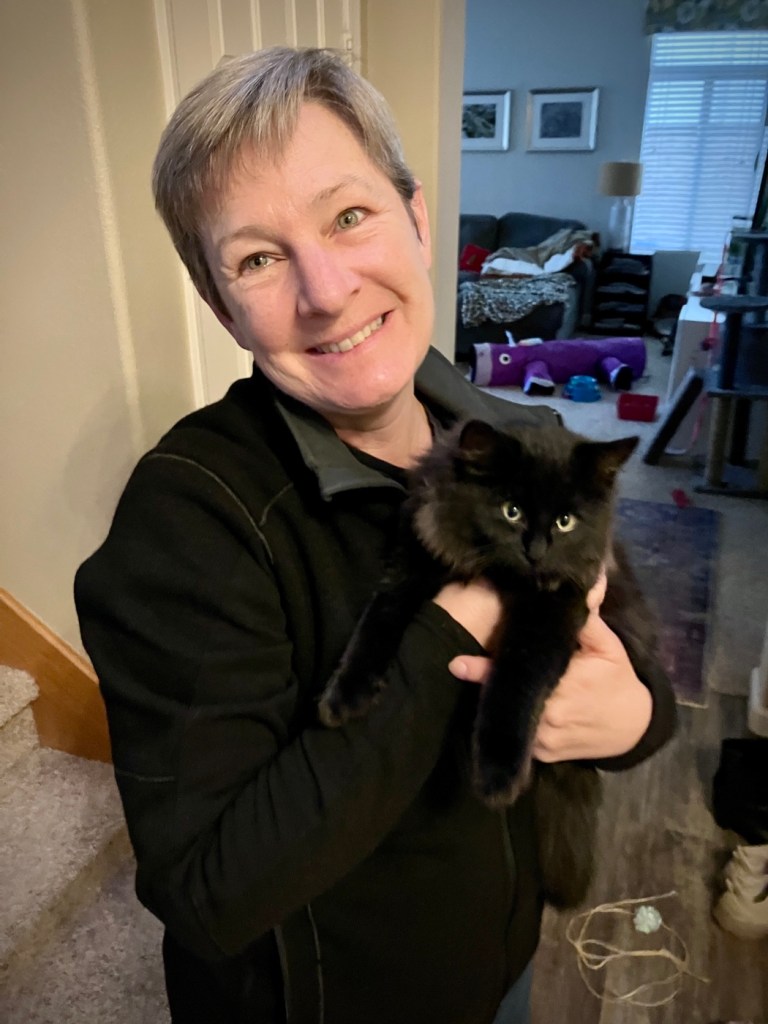
Cheryl tending our house sit Pea Patch, a community garden system throughout Seattle’s neighborhoods. Garden fresh tomatoes and beans from the Pea PatchWatch Kitten in BallardSampling some beers at Lucky Envelope, one of over a dozen craft breweries in Ballard alone!Another magnificent troll outside the National Nordic Museum in Ballard Cheryl contemplates how to get some of the endless driftwood to our future garden.Our house sit kitten testing breakfast table boundaries.
The grid layout of most of Seattle makes walking and biking very tenable, but the hills are a challenge, even coming from San Francisco!? Why? Because the large masses of each neighborhood often rise up and fall over long distances, meaning a trip back up to your house can mean climbing up gradual hills for 10, 20, or even 50 blocks! And much of the east-west geography is steep, so cross town journeys can be steep in places.
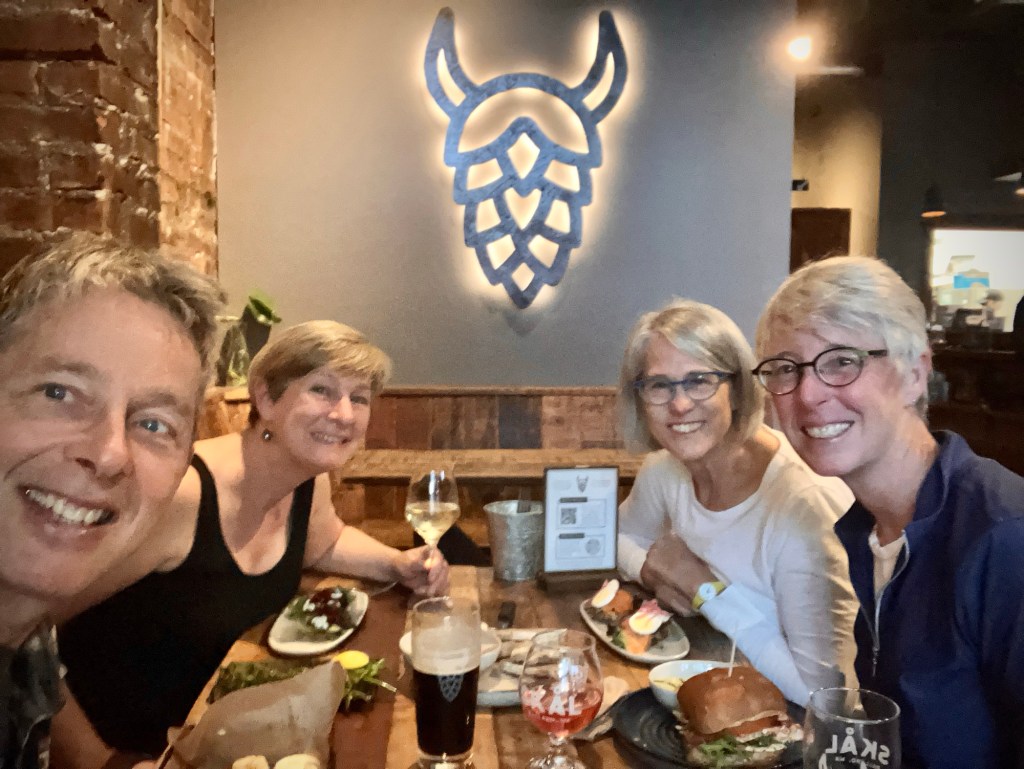
The Neighborhood Greenways are a nice way to get around by bike in Seattle. The hills and rough pavement mean that wider tires and electric assist would be a great addition for getting around realistically by bikeEnjoying Ballard’s Scandinavian roots with good friends Cecily and Christine at Skål Beer Hall.
Oh but the trees, mountains, and water interplay are so nice! And there is a good bike network with some famous long distance rail trails, such as the 20 mile Burke Gilman, which links up much of the interior shoreline of North Seattle. I was able to do a 35 mile north Lake Washington loop from North Seattle almost entirely on separated paths…very nice.
Saying goodbye to Seattle summer for now with one final swim in Lake Washington….so nice and different from the always cold S.F. Bay.
So we loaded up the rental car and headed early out of Seattle for the 2 day drive back to San Francisco, again with an overnight in Ashland. The drive is possible in one long 13+ hour day, but we never like to drive more than half of that in a day. Heck, we don’t like to drive to the grocery store, but sometimes a car is the most convenient way and it is a chance to listen to some good podcasts and music!
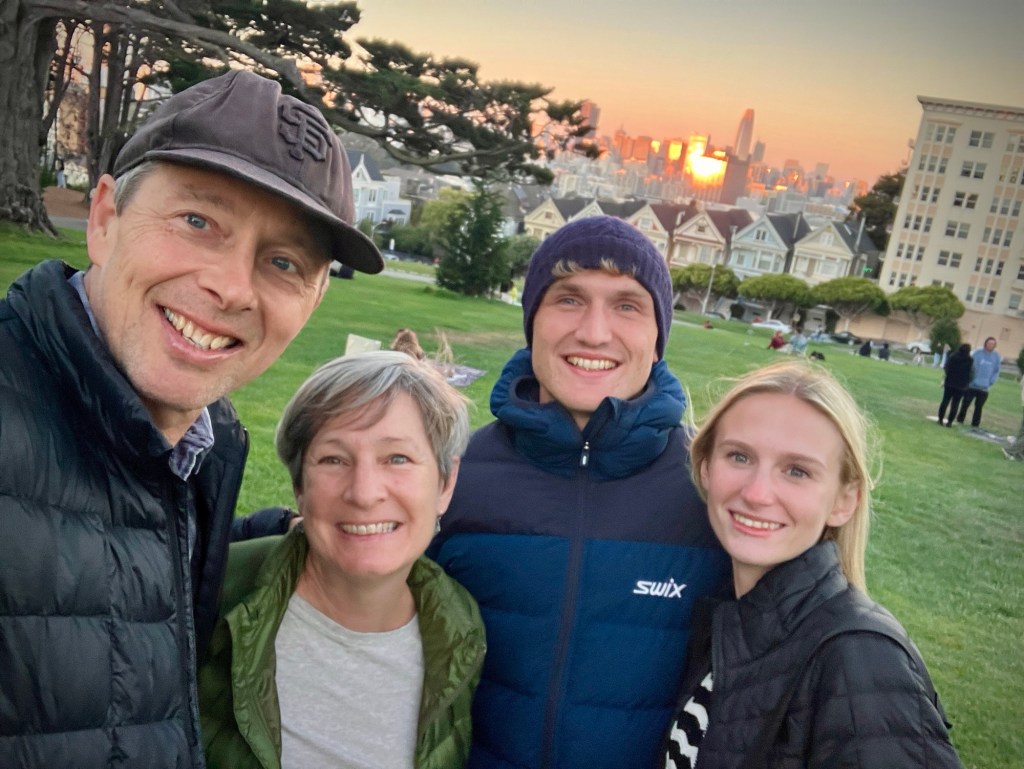
Enjoying a road bike ride back in the Bay AreaAnd saying hello to some UK friends Frank and Liv in Alamo Square on a lovely fog-free evening.
Our four days back in the Bay Area were busy with sorting gear at the storage unit, haircuts, finances, Covid/flu shots, etc. but also some nice time with friends. But we now just arrived back to our euro-base in France after a successful and fairly pleasant one-way journey on Condor Airways. (SFO-FRA-GVA)
So happy to be back in the Vallée Verte
Now we’ll relax a bit, get over our jet lag, sort our gear, and get ready to head out on the bikes for another fall bike tour adventure in a few days. More on that soon. A Bientôt!
Cheryl and I are finally back in America now experiencing a bit of culture shock after 5 1/2 months in Europe. But after a jarring first few days where I felt both dizzy from the jet lag and the immersion into abundance, everything is feeling familiar again. There is a nice sense of relief that comes from being in a culture we understand. Well, mostly understand.
Off the tourist track in Elbasan, Albania.Walking up Rhuga Thoma Kalefi, the busy market street of Elbasan.
And coming to America directly after a month in Albania has given us a real sense of contrast and the imbalance of opportunity. The GDP per capita of America is over 10x Albania’s. After 45 years of a repressive and closed dictatorship, no one takes their opportunity for granted in Albania. Young Albanians are globally aware with media and the internet, and emigration is still seen as the primary path to success, whether it be legal emigration to the US, UK, France, or Germany or a more desperate journey to Italy across the Adriatic. 10% of Albania’s GDP is in the form or remittances from abroad, a very high number for what now is technically considered a middle income country.
Ohrid, North Macedonia had a proper bus station which already differentiated it from our experiences in Albania.
But as always, I digress and obsess about geo and socio-economic issues. It’s one of the main reasons I love to travel…a fuller understanding of the world. A chance to talk to people at the source. Read, learn, and experience at the same time.
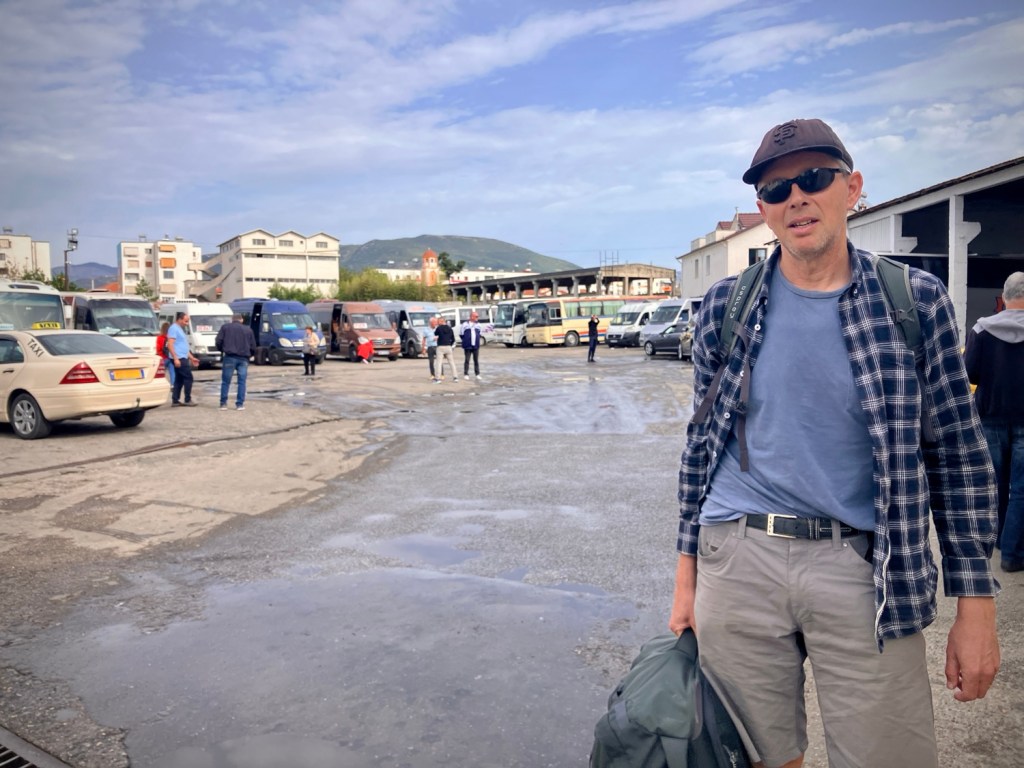
Trying to remember that we were still in Europe at the Elbasan Bus “Station”.
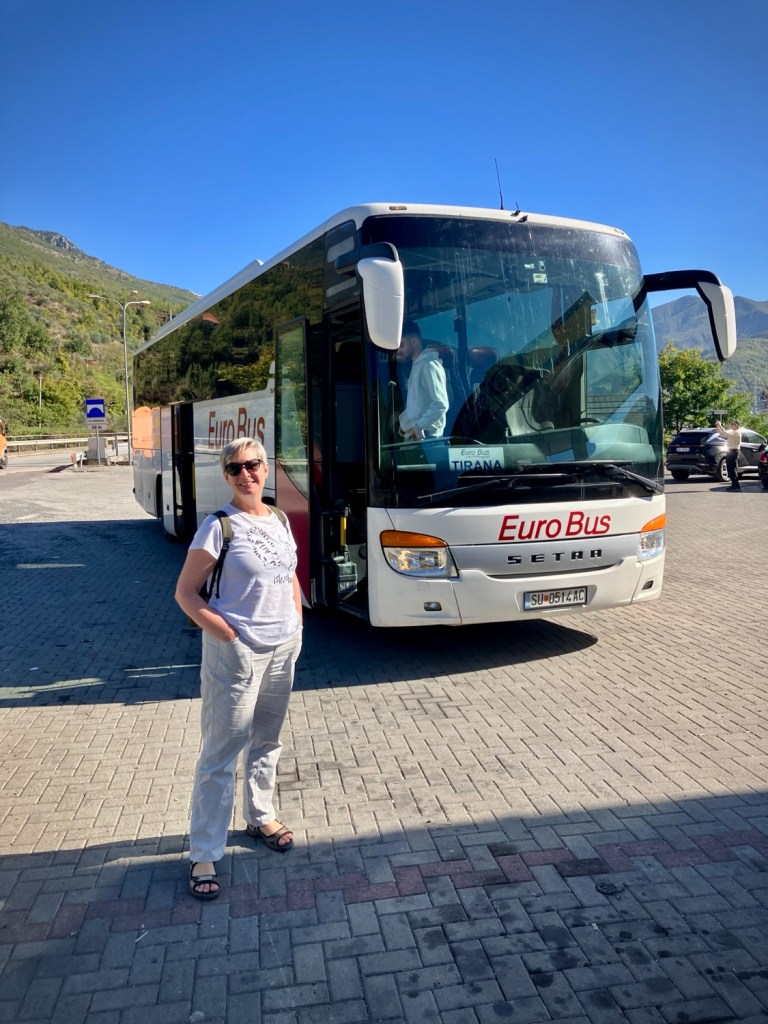
So when we have an opportunity to stop at a small city off the tourist track, especially if it’s on the way to another destination, we almost always say yes. Sometimes these hidden gems are some of your favorite places. Untouristed cities offer the opportunity to get off the guidebook and instagram track. Elbasan, Albania is the fourth largest city in Albania and only about 45 minutes south of Tirana. A few people had mentioned Elbasan, but I didn’t really have a “recommendation”. I figured out that the one international bus from Lake Ohrid to Tirana went right through Elbasan on the way. The challenge was that Elbasan wasn’t an official stop and this was a large coach bus run by the international Bus company, Eurobus. It would also save us going back into busy Tirana to transfer to Berat later.
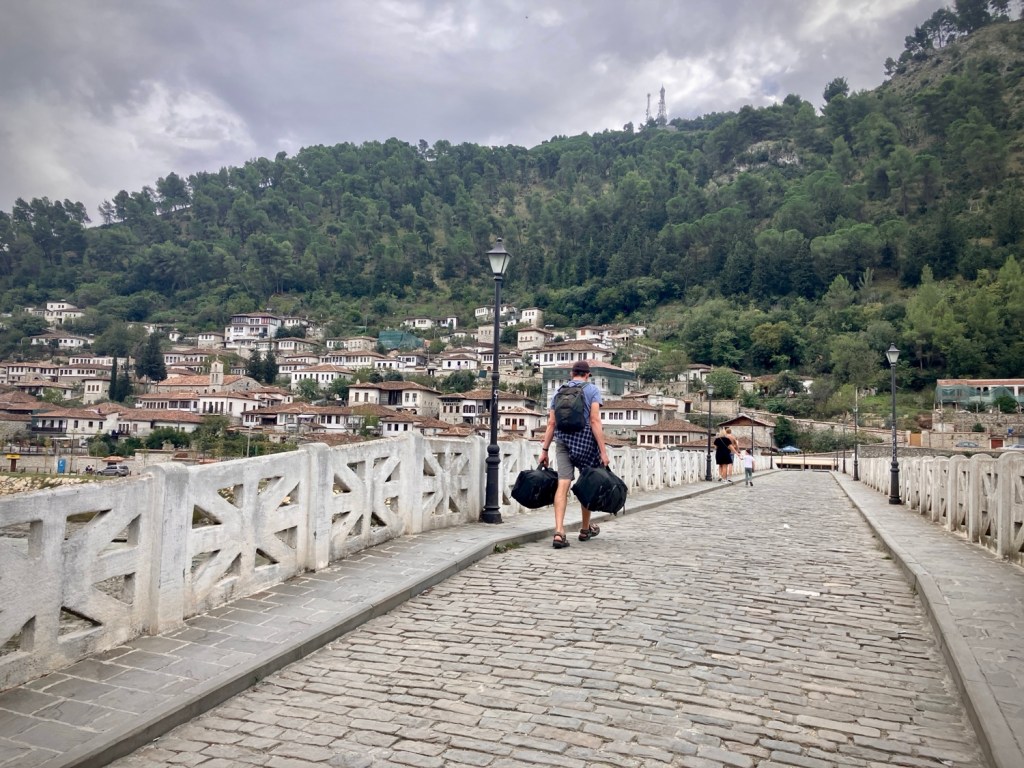
Crossing the Gorica Bridge in Berat. The hostel was close enough to just carry our (~10kg) bags and not go to backpack mode. 14th-16th century frescoes in the Kisha e Shën Kollit, one of the many churches inside the sprawling Berat Castle.
So we decided we’d buy bus tickets online to Tirana (as this was the only option) and then hope the bus could drop us on the way. I held off booking any accommodation until we confirmed on the bus. We asked the driver as we boarded and they put our luggage in a separate compartment underneath. Cool, we’re doing this. As it turned out, we were the only two getting off anywhere else on this run. Hmm, why isn’t anyone else getting off in Elbasan?
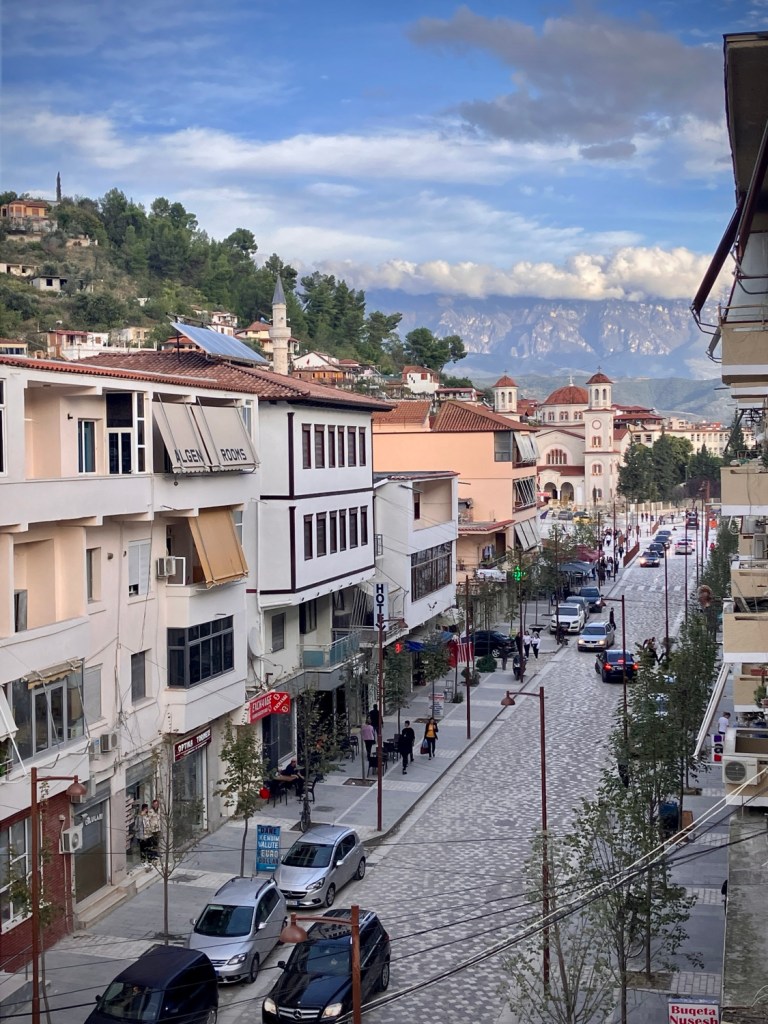
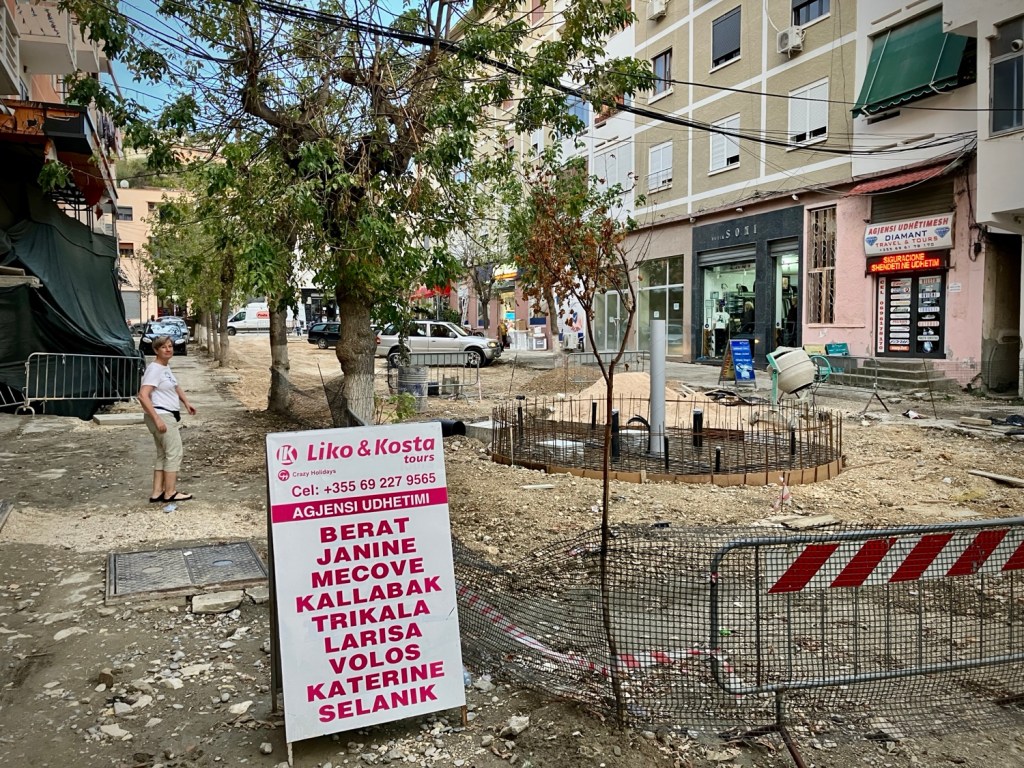
The pleasant streetscape view from our apartment in Berat with the nearly 8,000 foot Mt. Tomorri in the clouds.Our apartment in Berat was accessed off this side street under construction. A bit noisy for us, but happy they were creating more pedestrian space and plazas.
The bus was a complete mix of passengers from other Balkan countries and further afield, so the border crossing between North Macedonia and Albania was slow. We all handed our passports to a young (unmarked) guy who walked down the aisle of the bus and then disappeared. He finally returned 45 minutes later and then tried to make his way down the aisle with 50 passports. He tried to call out many challenging names as the bus swerved and swayed in sweeping corners descending over a thousand feet from the pass that separates North Macedonia from Albania. As he balanced all the passports in two hands, a particularly sharp corner sent dozens of them scattered across the floor of the bus. Oh great. And then it happened again a few minutes later. It was simultaneously comical and concerning (our passports!), but we mostly felt for the guy as we figured it must be his first day on passport duty.
Traditional clay tile roofs are constantly being patched and repaired.
As it turns out, he was just a random college student sitting up front who was selected/volunteered. I chatted with him at the rest break 20 minutes east of Elbasan. He was ethnic Albanian, but living just over the border in North Macedonia, and attending medical school in Tirana. He said the region near Lake Ohrid was mostly ethnic Albanian. He was likely headed abroad after training as Germany and other countries with staffing shortages are recruiting educated Albanians aggressively.
Cheryl posing with our only full size coach ride Ohrid to Tirana (Elbasan). Just hang on to your passport!
I hope he got a free bus fare or something for his effort. By the way, we did all get our passports back eventually as the travel gods made it all work out just fine.
Climbing to the high ridge towards the village of Drobonik above Berat. Look for the trail that heads SW out of Gorica.Our 6 mile loop took us past grapes ready for harvest, possibly Pulës for white wine or Raki.Old school still rules in much of Albania.A hayrick (haystack).Trying to get back on course after a lively conversation with school kids in Drobonik.A mountain/rural cycle route program above Berat was slightly aspirational here, but there are real opportunities for robust outdoor and green tourism in the future.
Elbasan itself has a nice Main Street lined with buzzy cafes, wide sidewalks, and ending at a large car free promenade space in front of its historic castle walls. It’s a busy market city too and has lots of young people and a university. The castle is unique as it’s on the flats of a valley, and is integrated into the fabric of the city with a few cafes and lodging options, mixed with regular city residents. It’s not the most picturesque castle or old town, and there are not really any other major sities of interest in Elbasan, but it does have a pleasant park, and we enjoyed our 24 hours there. People were friendly and genuinely pleased to see us tourists, and we were happy to see them. We did spot a cycle tourist from Germany at a cafe, but it turns out he was going to camp in the nice river valley west of town, so it did seem to be just Cheryl and I as far as tourists in this small city of 140,000. Our reward was really friendly locals at lunch and dinner, with a clear excitement to have Americans visiting. Albanians really are nice once you get through their guarded facade. The old adage that the fewer tourists a place gets, the more friendly and genuine the engagements resonated here.
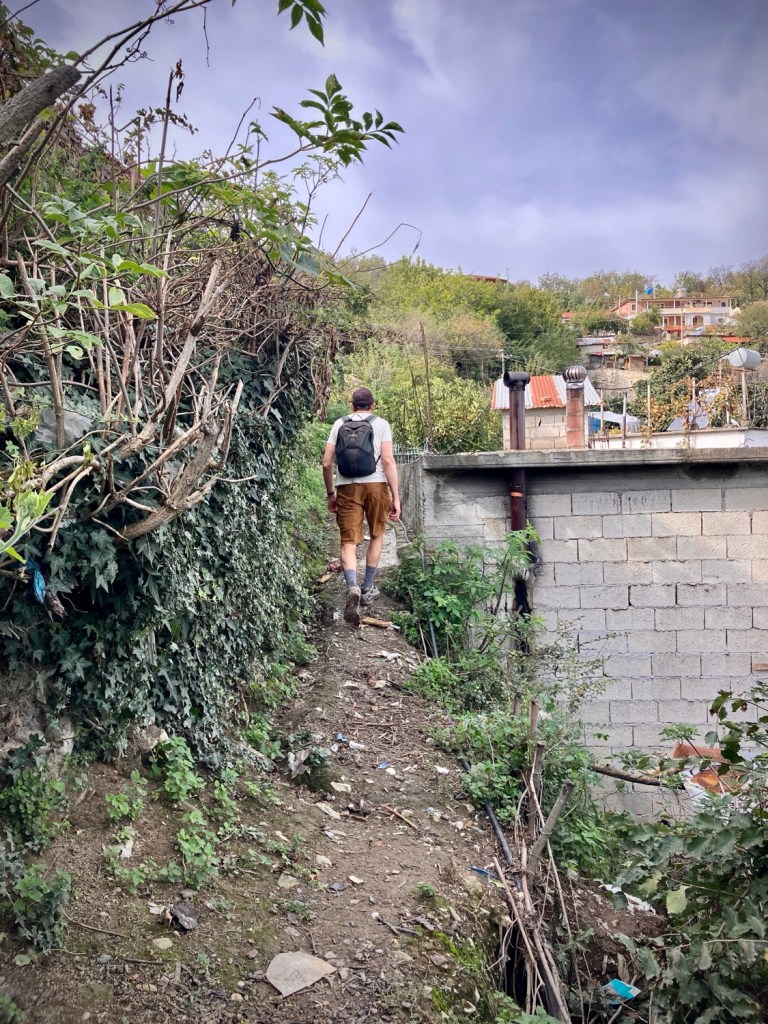
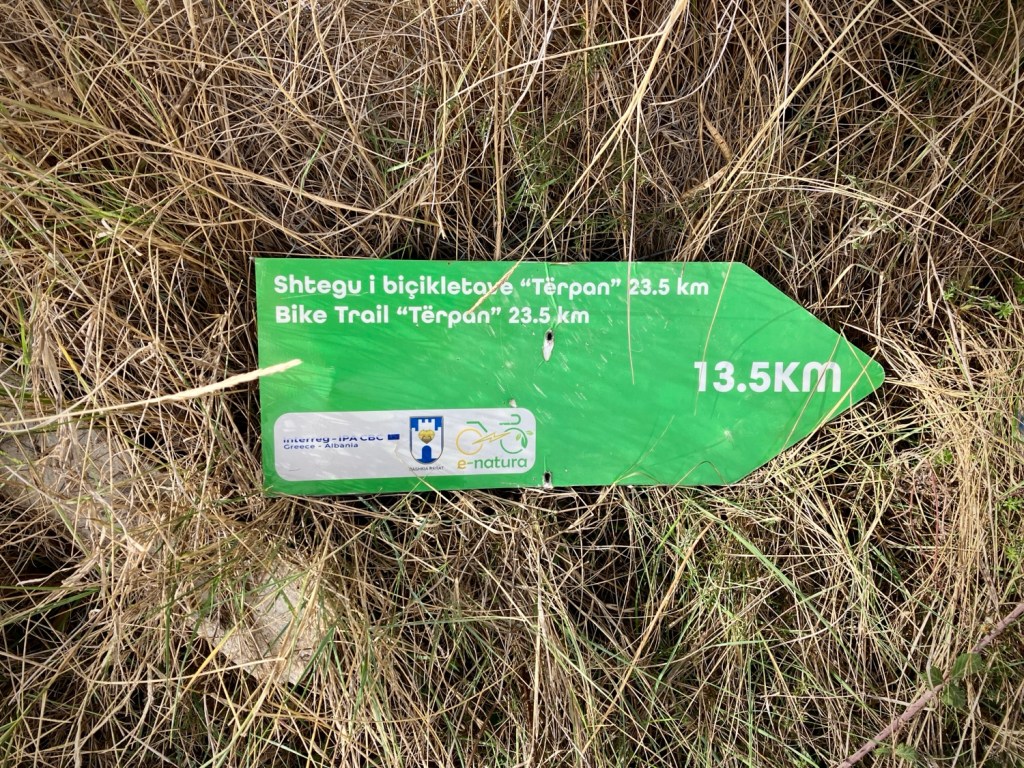
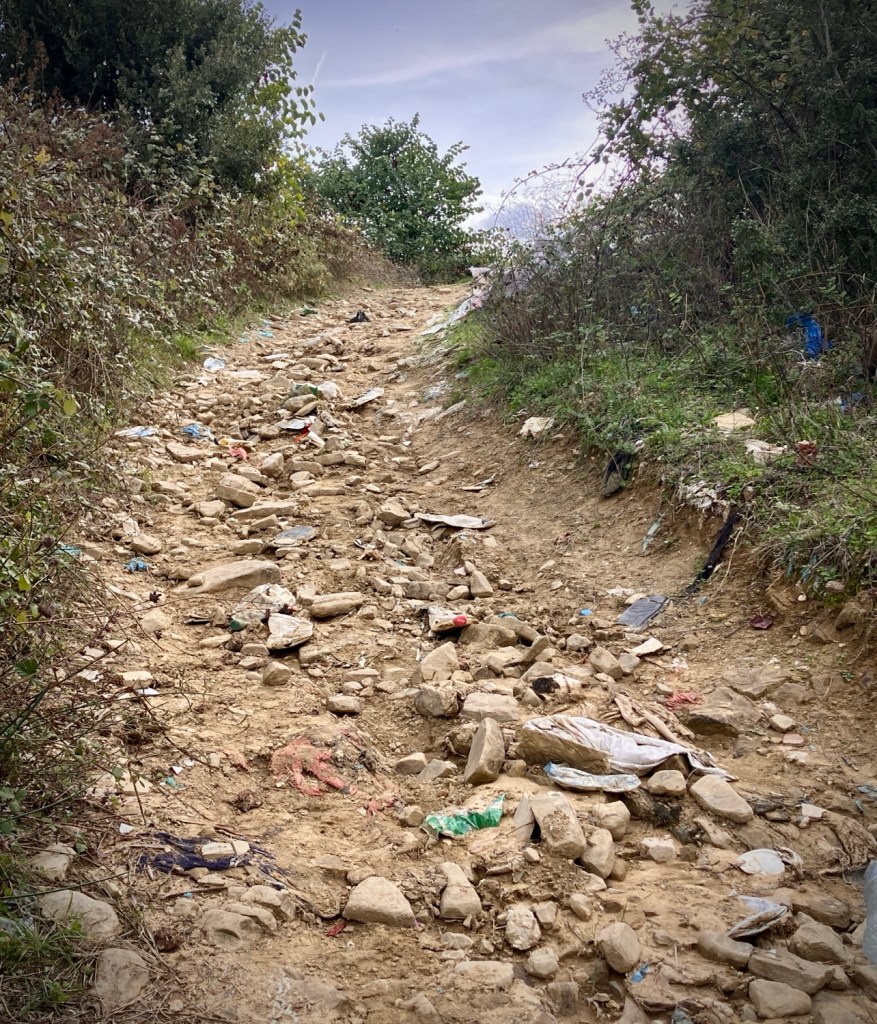
How old is this olive tree? Older than me?A sad reality of Albania is ubiquitous garbage and a lack of proper sanitation, especially at the edges of towns and villagesSlightly off course hiking but we now had a visual on Berat so just had to let gravity do its thing.
But our real goal after Ohrid was the historic city of Berat, so we took another stab at minibus roulette and had a hotel taxi take us to the bus station of Elbasan. It was both a lively and grungy spot, and once again, we were the ONLY obvious foreign tourists hanging out there. And thanks to the random minibus schedules, we were there for almost two hours. There is a decent cafe with a rustic bathroom (squat loos) on its edge, so it was ok. And as always, people were super friendly and leave you be as desired. Albania is chill.
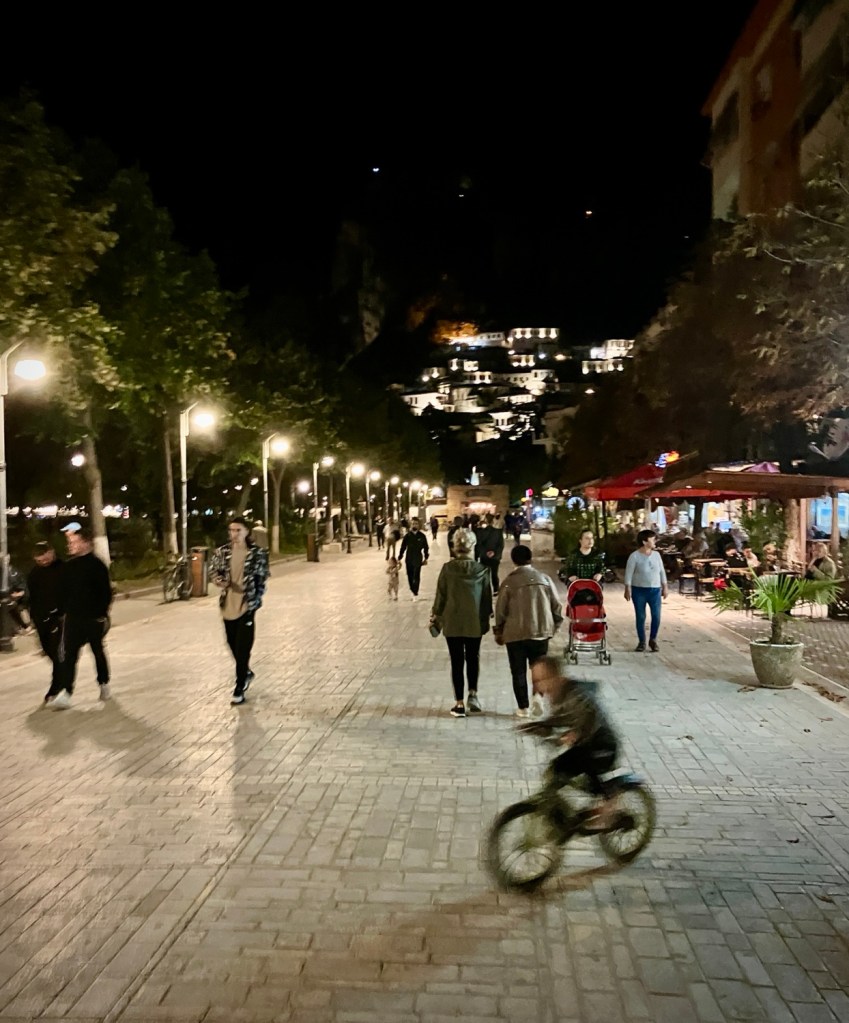
The lively main promenade of Berat was a delight to stroll in early evening
The nice thing about our minibus from Elbasan to Berat (besides the cool music) was that it dropped us near the center of Berat and we could walk to our first nights’ lodging at a popular hostel in Gorica. (Double room, no bunks for these 50 somethings -:) The buses from Tirana to Berat generally only stop at the bus station outside of town, so you need to taxi or take the public bus.
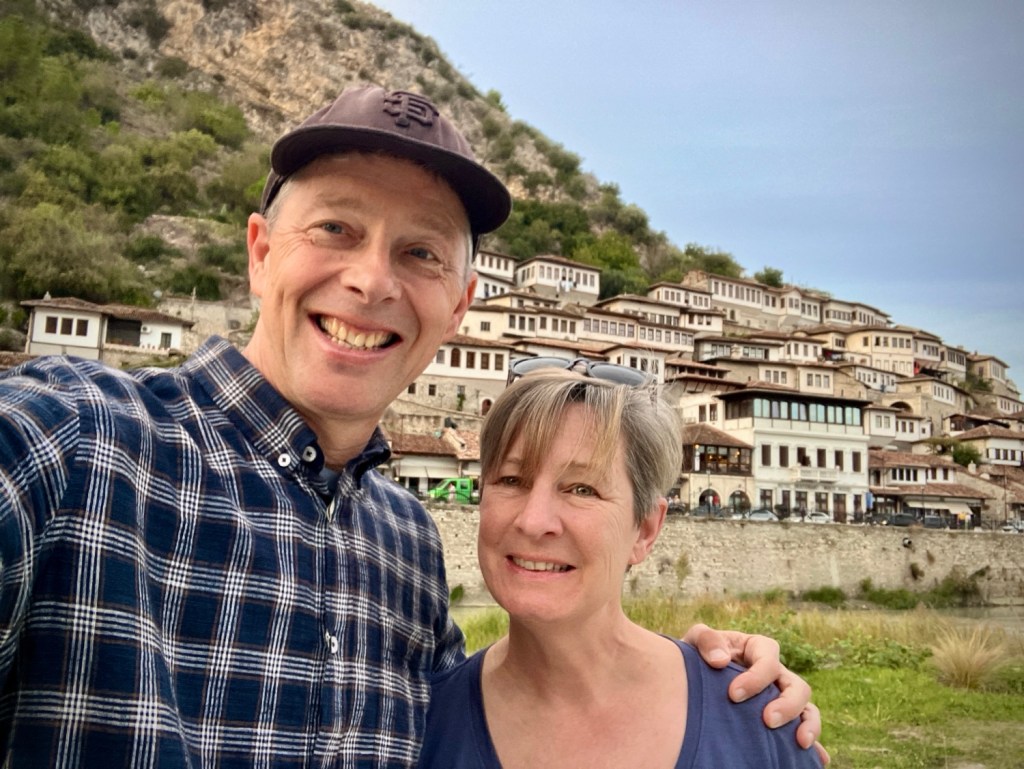
The classic Ottoman style wood and stone architecture of Berat, a UNESCO world heritage site since 2008Berat has a few different historic subvillages to explore on both sides of the river.
Berat is in located in an atmospheric location the Osum River valley and is a fascinating place to explore with rapidly developing tourism. It’s been a tourist star for a long time, but civic improvements and more restorations of crumbling buildings and ancient sites is making it even more appealing. After our night in the friendly (but young) Maya Hostel, we found a nice apartment in the center of town to settle into for three days. A number of apartments in older (non historic) buildings have surprisingly nice interiors in a rough shell and exterior. I had to block my inner civil engineer concerns as lightly reinforced concrete buildings with clay blocks are the standard construction style. Most would probably ok in a smaller earthquakes but would be no match for a big one. A moderate earthquake in Northern Albania in 2019 did kill and injure a lot of people, so hopefully more investment will bring more modern buildings and retrofits.
Back to a more standard minibus in Berat…departure TBD.Legroom varied on the minibuses, but I usually straddled two seats or an aisle no problem.
We then caught our final minibus back to Tirana, with half hourly departures posted everywhere online…. but our (small bus/large minibus) still left randomly off of any schedule. We were excited to head back to Tirana for our final 5 nights, as we found it so surprisingly pleasant and green in our first touch down.
The Grand Park of Tirana was busy on a Sunday morning with walking, cycling, exercise areas, and a few cafes to enjoy. Choices are nice. Tirana’s Skanderberg Square shines at night. Gyro style lunch is a “fast food” staple in Albania. I opted for the plate.
Plus, we knew we could now explore Tirana knowing a lot more about Albania after going full circle for nearly a month. Wow, a month in Albania. It was not even on our travel radar until this summer. It’s geographically diverse, but has less than three million people. But our slower tour of the country rewarded us with perspective. Pieces of history and cultural knowledge layered in our minds and gave us a clear understanding of how the complex and recent past has deeply influenced the character of the people. Oh, and the swimming on the coast was divine.
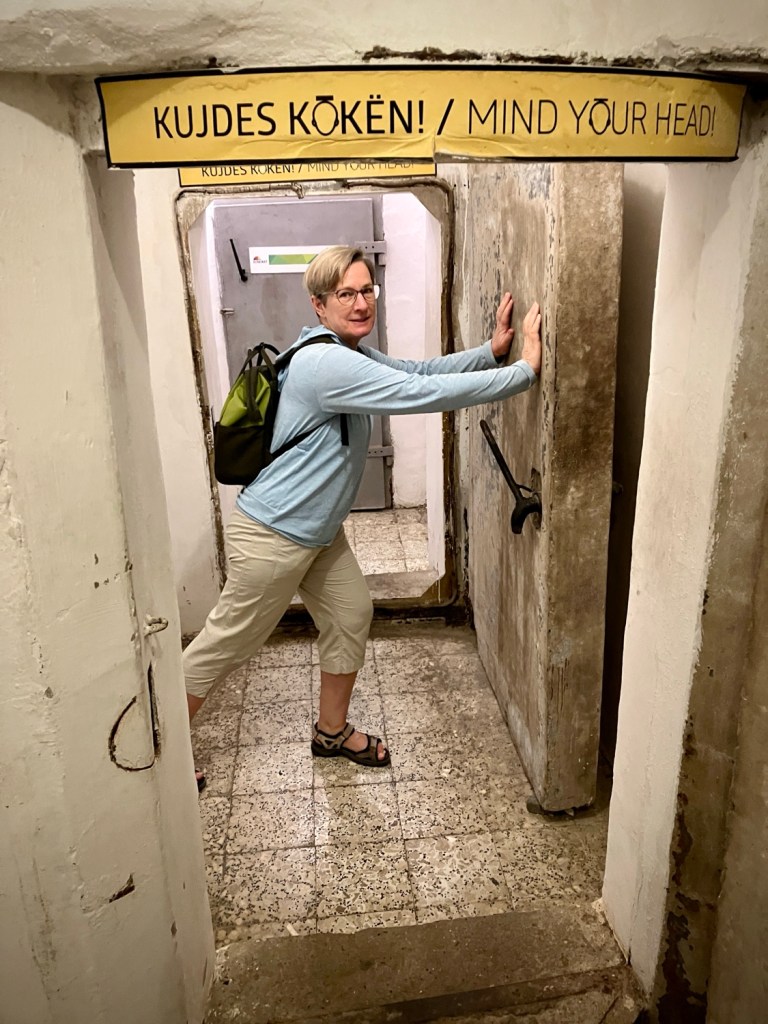
The access tunnel to the BunkArt 1 complex at the edge of Tirana sets the mood.No person, chemical, or radioactive material was going to get in this massive bunker complex designed to protect Enver Hoxha and his government.Living quarters for the leaders and basic operational services in the event of an attack from the imperialist forces. Hoxha created an isolated world based on fear most similar today to North Korea.BunkArt uses many of the unique underground spaces to house art installations.Lots of new construction on the fringes of Tirana, this with both city and mountain views.
Most Albanians in the world now live outside of Albania. They live all over Europe and the energetic youth clearly have their sights on opportunities abroad, especially Germany, France, and America. But it felt like we were experiencing a tipping point in the fall of 2023. More new and exciting things were happening in Tirana and that energy and prosperity seems to be starting to radiate out. But the reality is much more complex than our optimistic lens from two enthusiastic visitors.
This memorial across the street from the German Embassy commemorates the storming of the embassies by youth seeking asylum in June 1990. An ad at the French Embassy. Countries are competing for the best and brightest Albanians.
The brain drain is continuing as the youth don’t have the time to wait around for their country to to triple their GDP. (Such as fellow Balkan Croatia) or an order of magnitude of economic opportunity as in Germany. But time and time again, our conversations with locals brought out their pride for their country, but a much more negative view of many aspects of daily life (drivers, corruption, pollution, etc).
A beautiful center running bikeway on Kavaja Street in Tirana. The mayor is progressive and dedicated to greening the City.Fleets of all-electric taxis were a common sight. Livable side streets and pedestrian space abounds in central Tirana.Historic buildings and architecture are now being preserved in Tirana, even if there is not yet money to renovate.Tirana is green on the inside now, but there is still work to do around the edges.
But this was one of my favorite places to experience now, because of the innocence of the people, and complex and overwhelming history. This innocence will (and is) changing as Albania integrates into the world fully, but for now, you can still experience a bit of the past overlaid by hope for a brighter future.
Ready to go “home” at Tirana International Airport.Atop the newly renovated and reopened Pyramid of Tirana in a city that will surely be popping up in more travel sections in the coming years.
Happy Thanksgiving to all our American friends and peace to all!
Often in travels, a few extra days someplace are a joy. You get to relax in more familiar digs, discover that cool new neighborhood, ride a bus to a local village, find the local restaurant you missed, or maybe meet more locals or travelers.
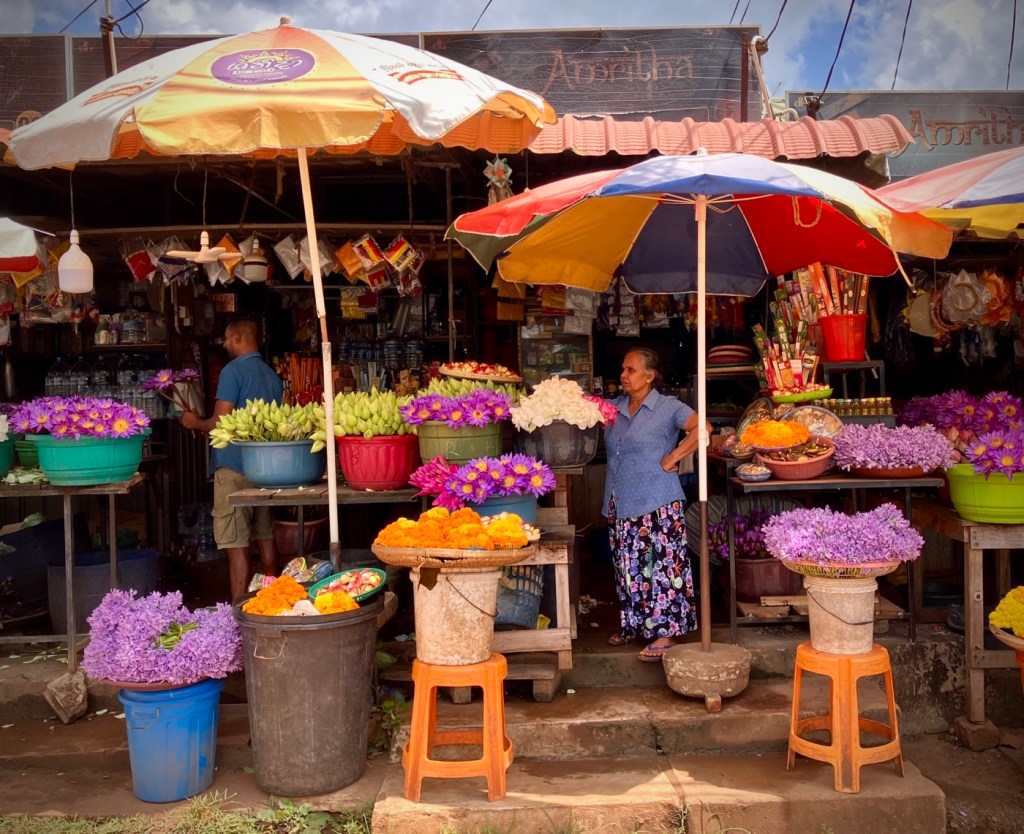
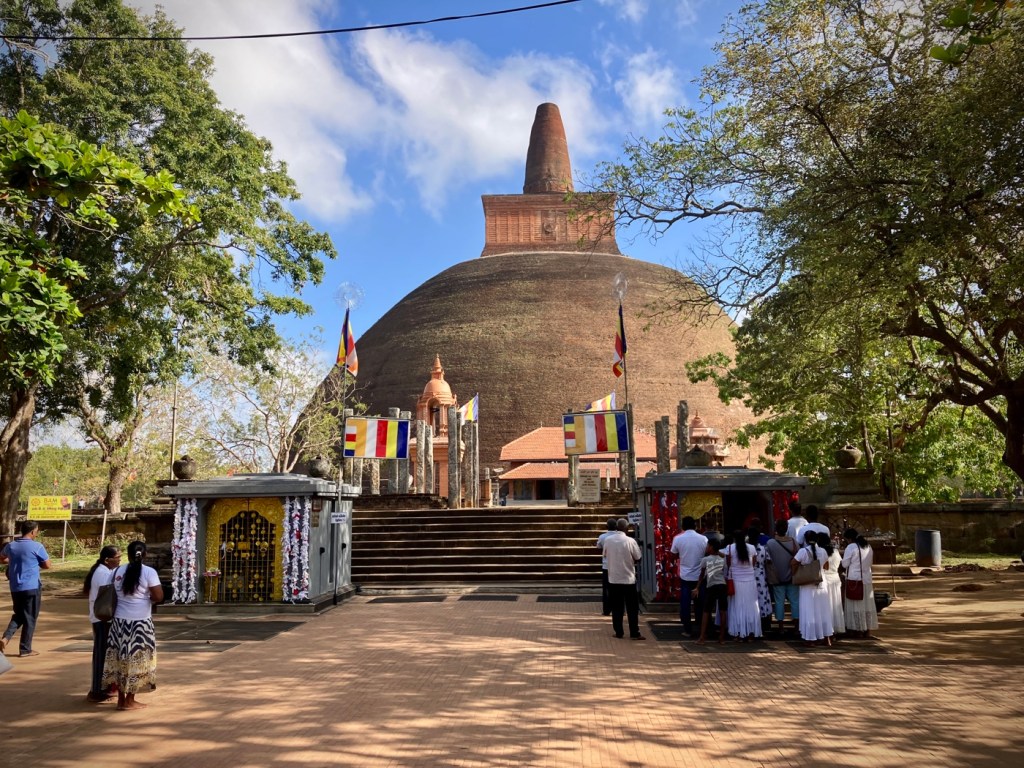
Happiness is a bike and a breeze. It was about 7km to the heart of modern Anuradhapura from our hotel along the banks of Nuwara WewaMacaques “guard” a lot of the popular sites in Sri Lanka….did they menace the bathing monks here in the 3rd century BC?Beautiful lotus flowers and other offerings for Buddha were for sale all over the living temple complex that is part of the ancient City complex of Anuradhapura.
But sometimes you stay a bit too long or are just eager to move on. Sometimes it’s real discomfort, sometimes a bit of boredom, and sometimes just the way your travel brain is programmed…knowing exciting new places are on the horizon. We’ve got some pretty rewired travel brains after 19 months of vagabonding.
A much needed break from cycling around the vast temple and archeological sites of AnuradhapuraCheryl has mastered cycling with a sun umbrella We were never tired of the friendly smilesCarved moonstones adorn the entrances to various sacred buildings.
We underestimated how homogenous Sri Lanka would be from a tourist perspective. Challenging governance, intermittent civil unrest, an ongoing economic crisis, limited imports, and an influx of Russian tourists(?!), all add up to an odd dynamic as visitor. There is huge demand for tourism money here, but still relatively few foreign tourists. It’s tough to see and you want to help everyone.
Very tan (dirty!?) sandal feet and a temporary sarong to pass temple dress code…it was too hot to cycle in trousers!
We loved Sri Lanka, had some amazing experiences, and are very glad we choose to visit now. But we did run out of steam the last week for many of these reasons. Heat, humidity, limited transport, and an excessive amount of interactions as tourists going about our business. It wears you down.
Cheryl happily sweating out the late day sun in AnuradhapuraOur bike parking at the Cargill Food City, the largest grocery chain in Sri Lanka
So please come to Sri Lanka. You will love it, but make sure to focus on what you love. The ancient civilizations are fascinating, but you need to dive in deep and do some background reading as the info at the sites leaves a little to be desired. If you really appreciate the natural world, then book safaris and bird watching tours to more remote areas. (There are many we missed) Maybe a long distance trek in the hills such as the nascent Pekoe Trail is your thing. (That may bring us back).
The main Dagoba (Stupa) is the heart of Abhayagiri Vihari; the ancient complex of monastic buildings and a fraternity of Buddhist monks. It’s still an important pilgrimage site. The more benign Grey Langurs rule at the Abhayagiri Dagoba
Or maybe a few weeks surfing and chilling. Super nice along the lesser developed southeast and east coasts. If you are comfortable on a scooter, then that would give you more freedom….and even a car could get you off the tourist track easier. Just be ready for limited supplies and options if you self cater.
A “cool” sunset ride…it was magical with the Stupas in the distance
So we made the best of our last week. We soaked up a bit more sun, sweat out more toxins, and discovered more about the ancient cultures of Sri Lanka. But we did start to say no to seeing ALL the sights, as it was not bringing us joy.
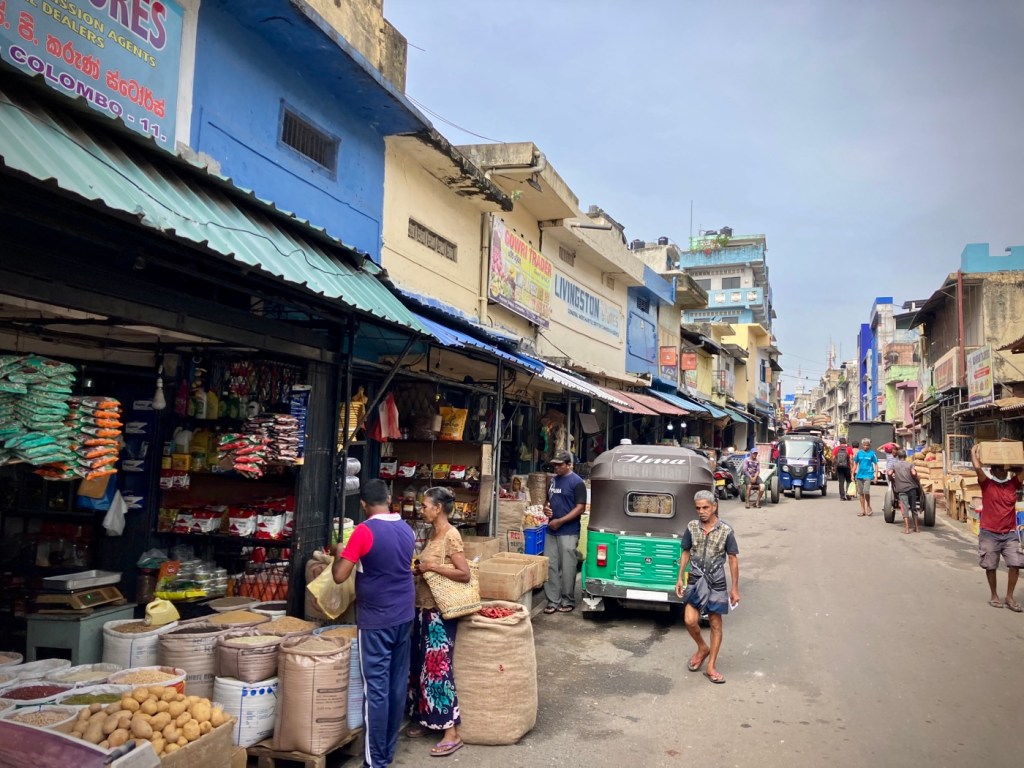
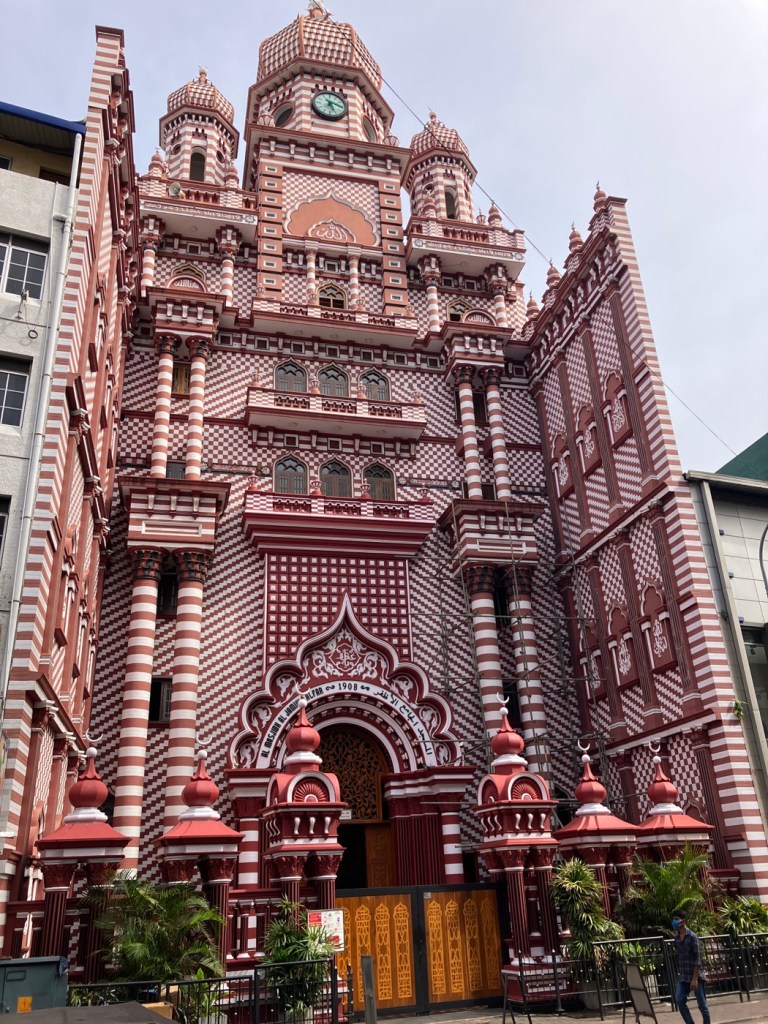
Parts of Colombo still look a bit abandoned or incomplete, giving it a somewhat forlorn vibe.Trains are slow and infrequent across Sri Lanka, so the tracks are mostly uncontrolled and easy to cross, even in Colombo.Long queues for gas and diesel in Colombo is an ongoing sign of the economic struggles.10 weeks of tropical heat and sunblock and destroyed this Taipei night market purchase…in the bin!!!We set out our last morning to explore the Pettah district, which is a lively market and commercial area in the gritty heart of ColomboMostly men in the trading districts, but women do run a lot of small businessesJami Ul-Alfar Mosque in Pettah
So we take away a bit more understanding of the culture and plight of 22 million Sri Lankans. We sincerely hope for a brighter future, and are glad to see there was a recent agreement with the IMF for $3B in bridge loans. We also hope we left some American good will in our wake. Travel is still good, and important even in the Instagram world of 2023.
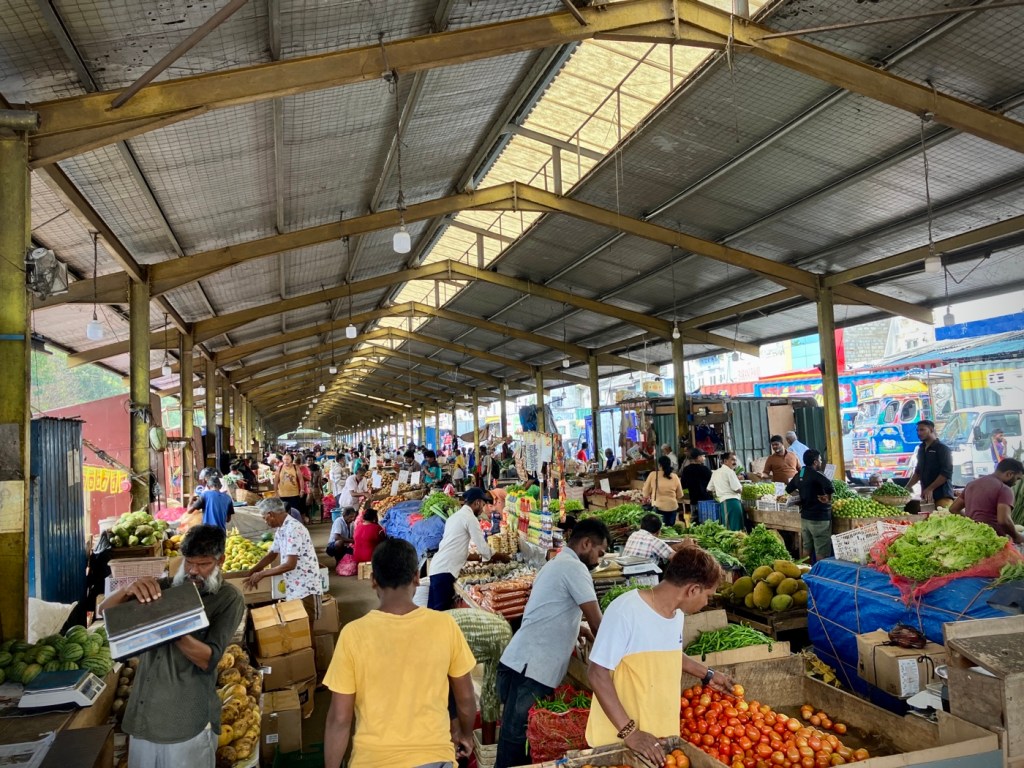
The Fruit and Vegetable Market Hall in Pettah
We did a bit of everything in our 3 1/2 weeks and it was fantastic but we were very ready to be back in on in a more developed economy…so nowhere better on the planet than Japan.
Looking out at the impressive Eth Pokuna or “Elephant Pond” near Lankaramaya. This huge man made water reservoir is part of tbe ancient and amazing water supply network.We loved exploring Anuradhapura, but I was tired of the touts and “tour guides” badgering us…this guy wouldn’t stop talking to me at the Elephant Pond. We always stayed polite.Amazing to be immersed in a living museum, not just an ancient civilization A final rice and curry at our guest house in Anuradhapura…this WAS very tasty, but our taste buds are ready for something new!
After some long flights via Singapore, Japan has delivered us immense joy in the early peak of Cherry Blossom season. We feel like we have just come out of the wilderness after a long backpacking trip. Hungry, dirty, and ready to eat anything. Contrast and appreciation for the new is a wonderful gift of travel.
A few days to recoup and prep for Japan at a full service corporate hotel was just what we needed in Colombo. Gym workouts and a place to relax for a late night airport departure.Joy of the Sakura season in Tokyo
My first bus photo. On a walk from Jungle Beach, near Galle.
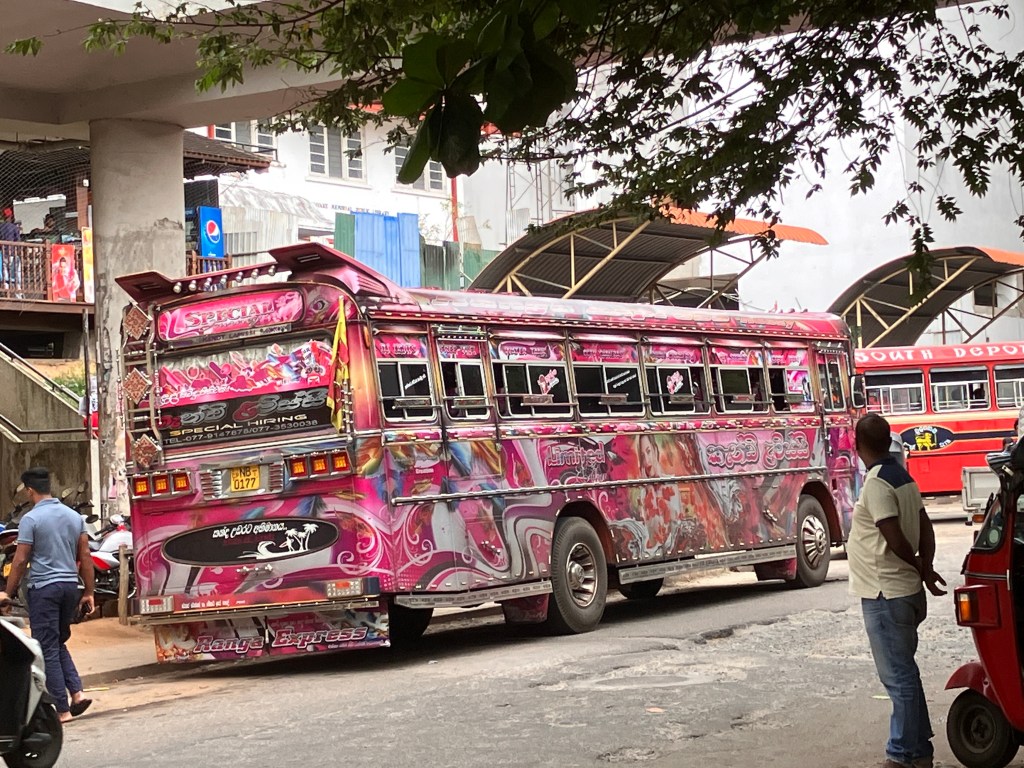
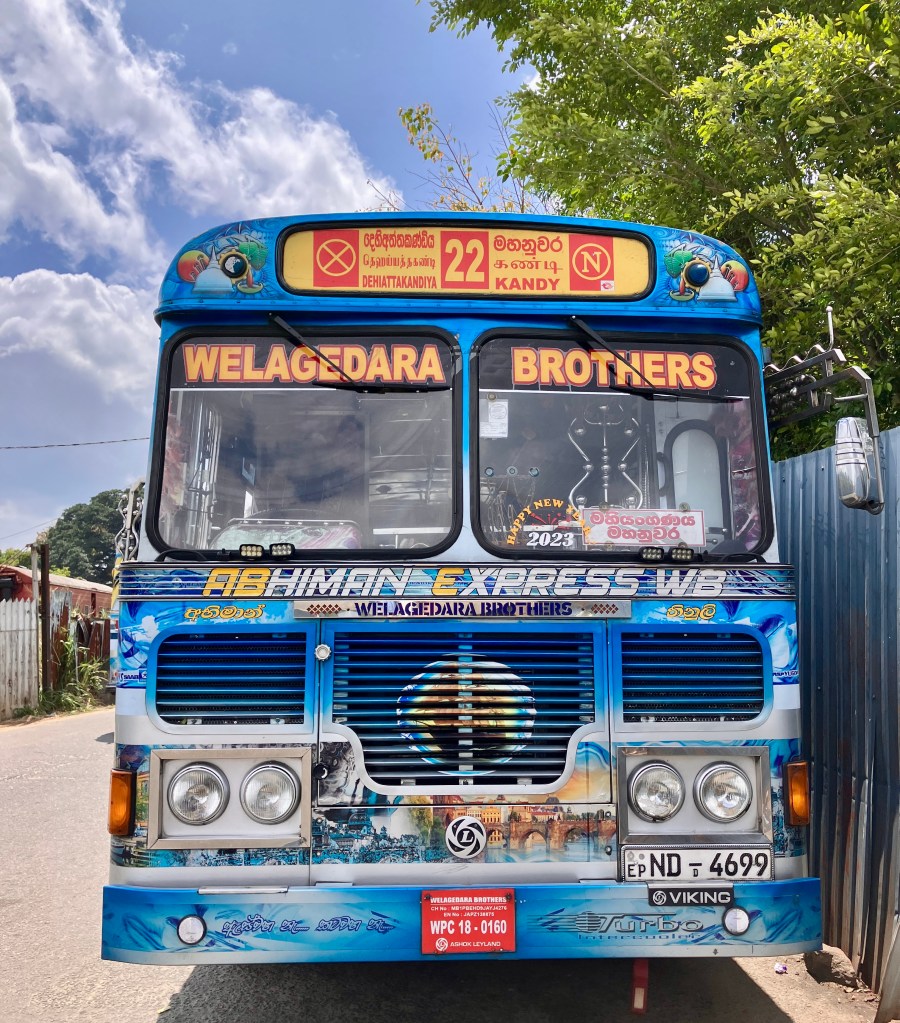
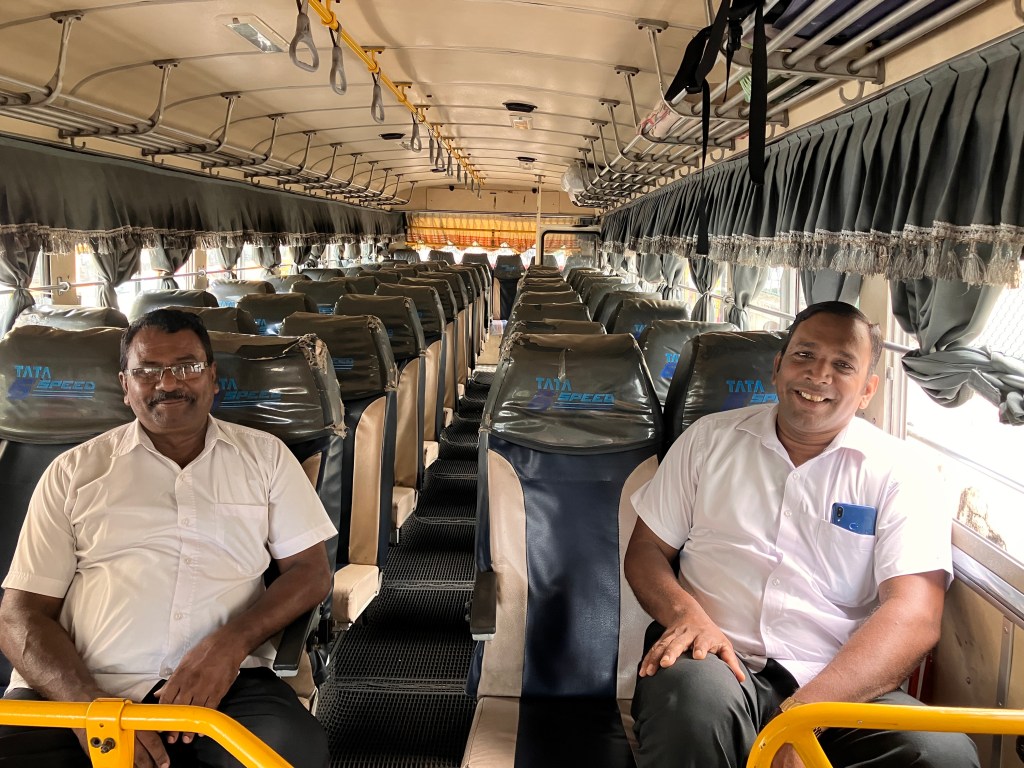
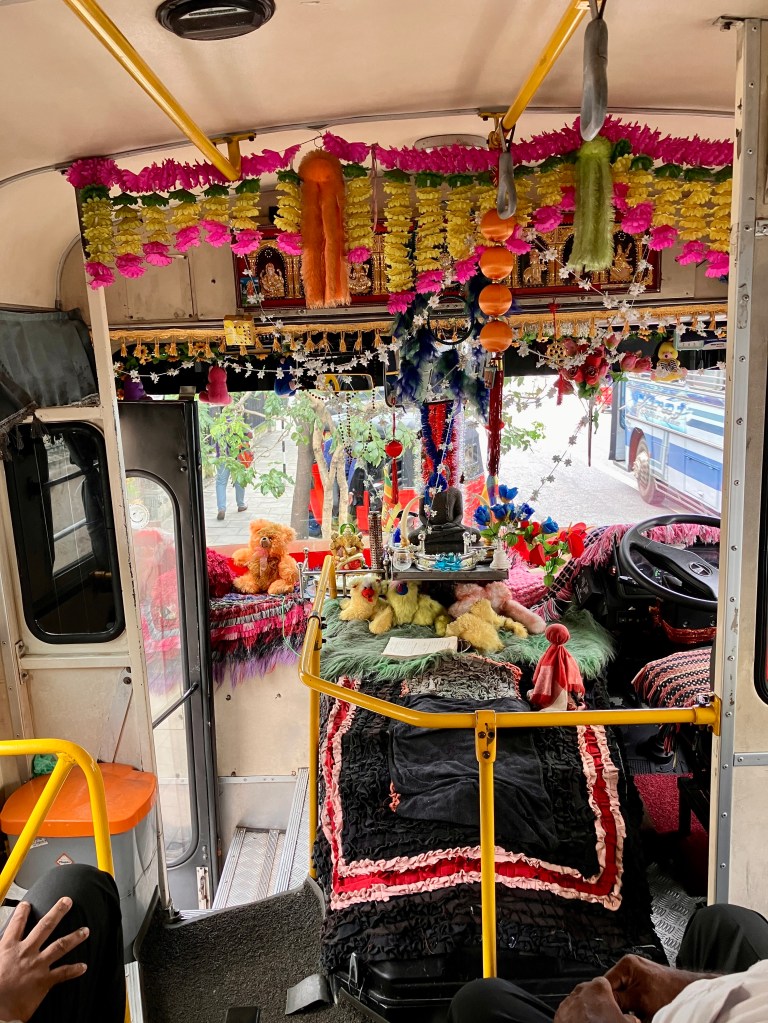
Another thing to file under “Wasn’t expecting that!” The buses of Sri Lanka are eye catching. Very eye catching. Day and night they burst with color and bright decorations and lights.
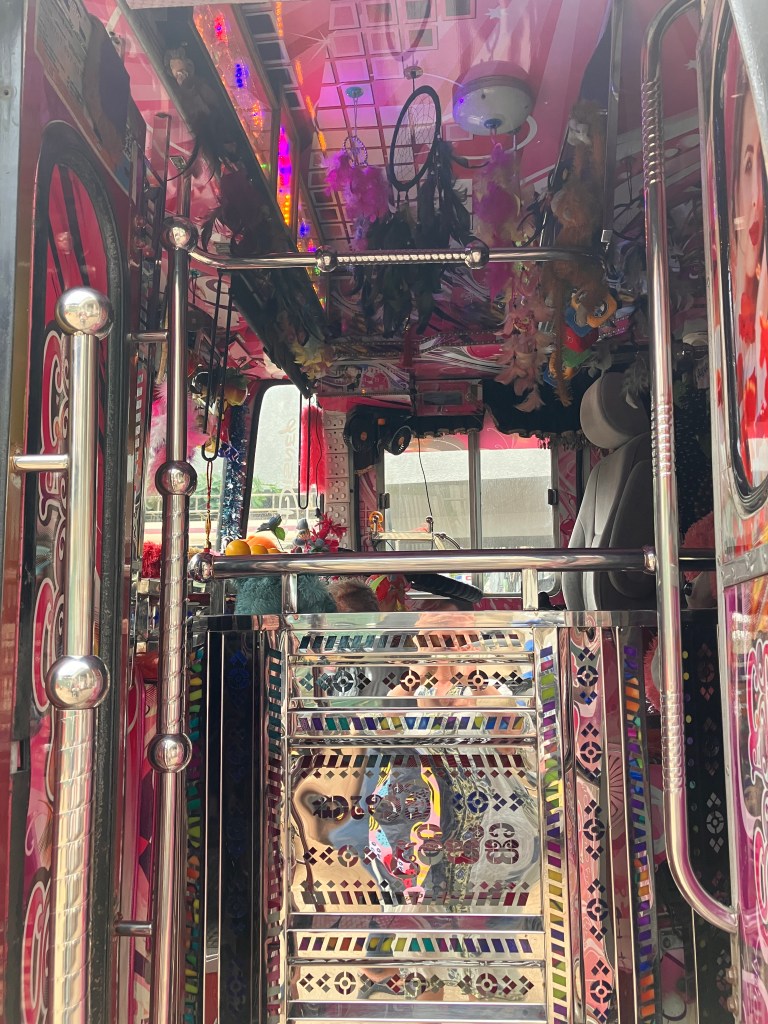
At the bus station in Galle. After I snapped this photo the driver came out to wave at me.In Kandy. Rich added for scale. The pink paint job and headlights which look like eyes!Looking in the front door. That is some operator’s seat.A side view of the pink bus in Kandy.
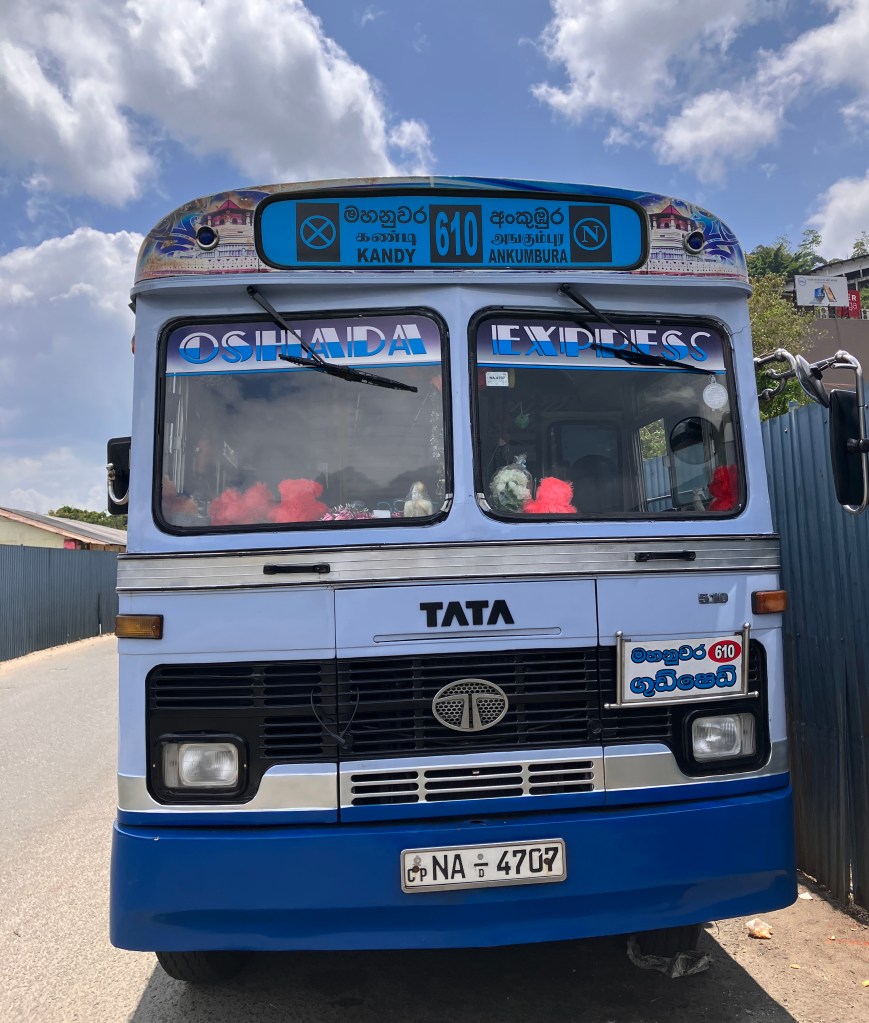
Not all the buses were so exuberantly adorned. There are state buses (with staid, some might say boring, paint jobs), and private buses (wow! Not all are wow, but a lot.). The private buses are licensed for a specific number of runs per day, this means they linger a bit at every stop hoping for more passengers.
In Kandy. A Tata bus. Most are Lanka Ashok Leyland, which seems to be a joint venture with the Indian company Ashok Leyland.Kandy again. An awfully hot walk from the train station took us along bus row.
Did we actually ride the buses? No. We took trains when we could, but on routes with no trains we hired drivers. The buses looked pretty chaotic, and a few tourists with rental cars we spoke to confirmed that the buses are bullies on the road.
My favorite bus photo. Kandy again. This gentleman is ready for the buses of Sri Lanka calendar photo shoot. In Colombo. She looks fairly straightforward from the front. The tassels along the door hint at what’s inside.A peek inside the open door.Come on in, invited the operators. They are a school run bus. They drop the school children off and wait to take them home.I’m quite certain that no transit agency in California would allow this level of decoration.
In addition to a bus journey taking a long time, it is recommended that you don’t put your luggage down below due to dust and mud, so you must pay for an additional seat and face the wrath of your fellow crowded in passengers. We decided that we didn’t need to experience the buses of Sri Lanka as passengers.
Colombo bus traffic. You can understand how important these buses are to life in Sri Lanka, so many buses.
It’s easy to criticize or second guess a country’s public policy and governance, and Sri Lanka is working through a lot of challenges, but transportation is the lifeblood of any city, and even more important in rural areas. For the sake of the people of Sri Lanka I hope the announcement that a recently announced purchase of 500 new buses shows a commitment for improving transit. Many of the old buses are gross polluters.
This wraps up my bus post. Once a transit geek, always a transit geek.
So one thing we are noticing as we travel through parts of Southern India is the clear growth of domestic tourism since our last visit: It’s been refreshing to stay places and not be surrounded solely by European or other “western” tourists, as this makes the travel experience a bit more rewarding.
Our morning nature walk with Rajesh, our amazing guide at the Jungle Hut Lodge near Mudumalai National Reserve.
The rising middle class of India is over 200 million strong and growing, and they are influencing travel and tourism here more than ever. Foreign visits are still below 2019 levels, but domestic tourism and travel continues to grow substantially. So does India really need (or want) foreign visitors? And what happened to many of the business that catered mostly to foreign tourists?
Dusk on our safari jeep trip, just before a leopard crossed in front of us and then stalked us from the brush…one blurry IPhone photo is only evidence! The wildlife board at Jungle Hut…the Leopard sighting on February 8th was us! Lucky.
The short answer is that many of them closed and have not reopened. In the Tamil Nadu hill station of Ooty, many of the pre-Covid travelers cafes and restaurants listed in guidebooks and online had closed. And service at the ones that survived suffered serious interruptions. But fret not weary traveller, as they are being replaced by new trendy cafes, restaurants, and other businesses that a western traveller will enjoy, but will need to learn to share with local (and much hipper) Indians.
Morning walks were always after 7am, as this is when “negative elephant encounters” were less likely as they mostly passed through the lodge and village areas around dawnSerious termine mound
The modern growth and poverty reduction in India over the past 16 years is a great thing, and classic traveller towns of Asia may be legendary and great fun to meet other travelers, but they are always a curated experience. Plus, modern Indian cities and the rise of tech and related services are just as important as understanding the symbolism of old temples IMO. And modern India is going to have a big influence on the world over the next century with one of the fastest growing economies and large population growth.
Elephants pass through the area nightly in search of bamboo and other treats, and leave their scat as evidence….the more fibrous, the older the elephant.Wild boar roamed all around our tent-cabin, living in peace with the deer and monkeys
And of course you have always been able to meet “real Indians” at lower cost lodging, but often there are too extreme differences in socio-economic factors to have a relatable conversation based on common frames of references. And English is often limited to middle and upper classes or people in the tourism trade. Sure, we cherish our interactions with any local, no matter how brief or limited, but to us, it is also equally fascinating to learn about the lives of other other educated professionals in a very dynamic place.
Cheryl surveys the land near Mudumalai Cheryl’s modest buffet lunch at the jungle hut. All the South Indian food was delicious.My buffet lunch at the Jungle Hut…the cook staff loved me because I tried AND ate everything! Enjoying our coffee and tea with the free entertainment of a dozen Gray Langurs eating (and playing) in the large treeSunrise cup of joe
Or maybe you are lucky enough to have close contacts, business ties, or even family here….that is always the best experience, and you are probably meeting lots of people. But one resounding theme in the South has been how nice everyone is, especially away from the main tourist areas.
Climbing the hill to a local temple…you are never far from a temple, big or small.
So after 4 nights in Mysore, we finally headed to more remote areas near Masinagudi by hired driver/taxi. There are no train options and the vague bus info I could find involved 2 transfers. And with Cheryl still unable to carry her pack and 35c heat and sun… you get the idea. Car transfers here are affordable and often take out massive stress of uncertain buses and rickshaw connections. We’ve learned not to torture ourselves excessively in our second visit to India. It turns out this car trip included a route through the Mudumalai Tiger reserve and was delightful, as we saw two wild elephants up the hill from the car as we passed through beautiful landscape. (FYI- It was about INR5,500 or $US65 for a 2 1/2 hour trip with coffee/tea/bathroom stop…maybe 4,000 rupees if you shop around but we let our hotel arrange and the little sedan and driver was nice.)
Beautiful spotted deer were everywhere
We stayed 3 days at the “Jungle Hut” next to the Mudumalai Reserve, which is part of 4 national parks and reserves which make up the Wester Ghat Mountains biosphere. It’s a UNESCO global diversity hotspot (one of 36) so protecting the endangered and endemic species is a priority. We loved the Jungle Hut, with its great guides, food, vibe, and staff engagement.
At the Jungle Hut, with Amish and Anupriya from Bangalore. We shared great conversations and they shared excellent infused Indian Gin!Cheryl enjoying another early morning walkMagnificent trees on the dry side of the Western Ghats Morning treat of prickly pear cactus
It also appeared that the area was being managed well, with a balance of needed tourism dollars and protection of the environment. Perhaps a little more regulation of safari jeeps outside the reserve is needed, but it seemed many area residents are directly involved in the local reserves, or at least reap some of the benefits of money coming from tourism into the their villages. (There are 8 smaller villages that are part of Masinagudi). India has done a good job expanding and managing natural reserves and animal counts are increasing for tigers, elephants, leopards, panthers, bears, and other large fauna. But it’s not easy. We also saw serious anti-poaching patrols.
The busy main streets of Ooty are pretty inhospitable to walking, so we headed to the alleys and footpaths as possible.Sleepy dogs in the lower alleys of Ooty. Color abounds in Tamil Nadu
So we sadly left the Jungle Hut once again by car transfer to Ooty,, “Queen of the Hill Stations”. But as we made our way up the 36 marked hairpin curves to Ooty, all I could think was wow, what an amazing Tour de France stage this would make -:).
The lovely botantical gardens of Ooty, quiet in the morning as Indian families seem to get going a bit late. Good for us early birds.The long arm selfie straining in the morning light with more friendly local tourists. We’re all equally intrigued by each other.A cow also out for a morning stroll. Good idea.
Oh, but the logistics! And logistics are what often takes a toll on independent travelers in India. Unless you go the 5 star tour route, doing just about anything in India always seems to come with unexpected challenges or complications. (And a 5 star tour does not buy you safe roadways or clean air outside your AC cocoon.)
Despite a lack of good maps or trail system, we set out up the ridge behind our hotel determined to do some exploring on foot.Our two morning walks first took us to beautiful tea fields over the ridge
Being fiercely independent travelers, we love to find our own way, but recognize sometimes a guide or car transport is needed. But in most cases, all could be done by independent travelers if there was more information provided. Traveling in almost any other country has been easier, including recently in Morocco and Turkey (especially Turkey…a joy), as interactions are more straightforward. There are cultural differences that are hard to adapt to, even after weeks or months here. The local tourists do much better I suspect, as there is more comfort with the systems, customs, and still strict class structure.
Beautiful markings to a temple up the road
So as Cheryl likes to say repeatedly when I complain about a challenge here, “Square peg, round hole!” We are clearly more comfortable with predictable mass transit, cycling, and walking. And I am always torn about guides, as appreciate guide roles provide jobs, but so many times, guides in museums or other tourist sights are just a replacement for any form of curation, or often just repeat what you read on Wikipedia. Wildlife guides are essential and a huge benefit.
A little shrine on our narrowing road felt like a good sign that the way went through
But in my naive American perspective, it seems that if India made things easier for independent tourists, more would visit, and spend even more money. Right now, many places are just too challenging to deal with to bother with, linger, or explore further.
The road indicated on both Google and Maps.Me turned into single track through high woods….but we pressed on, as trail wear indicated people did take the way.Finally we emerged onto a wider path…the risk pays off with a nice few hours walking!And finally emerging to an outer neighborhood of Ooty where we grabbed a tuktuk back to town due to very high UV and busy roads
One positive change from 2006 is the introductions of E-visas, which has increased tourism visits significantly. But that’s only the first step, as there was still a baffling amount of forms to fly to and enter India. We first submitted all our personal and trip information to get a Visa, including photographs. Next was the mandatory info on the airline app, yet we still got caught out at check-in missing the Air Suvidha form, which was added in January for entry from “high risk” countries. We knew (and somewhat understand) the added PCR tests due to China”s surge in cases, but can’t imagine any scenario in all of India where this form will prevent one case of COVID post entry. Most governments have realized the futility of such measures when COVID is all about in country, but it shows action for politicians.
We rewarded ourselves in the more brisk evening air with Momos, a dumpling like import from Himalayan hill stations to the NorthScoping the Momo sceneCheryl smartly went for the plain fried platter while I opted for the Szechuan Style, and oh yeah, the were bloody hot! 🔥
So we have detailed e-visa with photo, the Air Suvida form, and all other COVID docs, and then get to immigration and are directed to a confusing side desk for E-visas….but first, fill out another manual form with the same info. The few (half dozen) foreign Nationals were all confused and then trying to share the agents one pen and understand why a fourth form was needed….then to immigration desk for questioning….where we were going, my job, was I young to be retired? And immigration officers seemed to be baffled by a tourist listing a hotel as address in India. We’re tourists! Cheryl somehow got less of a rigamorale. Maybe it was the purple hair. Maybe, it seemed, he was trying to be a bit playful and curious, but after all the forms, I wasn’t really in joking mood. Plus, you NEVER joke in immigration or customs unless prompted!
Had to wait an extra day, but finally got our seats in one of the of historic saloon cars. Super fun as 8 cozy folks per bay all enjoying the ride.
Then to customs ( no one there…walked through?). We then managed to get lucky and find the lone ATM inside arrivals that had cash. (Runs out later in the day apparently, so then you are forced to change cash at poor rates) And then to the one SIM card booth where were lucky to be first in line and getting two Vodaphone SIMs which took about 20-25 minutes, including new digital photos. The time was not the staff’s fault, as they had to enter endless info to register us, as apparently SIM cards are tightly controlled here out of security concerns. The SIM cards work fine and were very reasonable cost 1000INR for 28 days with 1.5GB/day plus bonus on weekends. But note that Airtel has a better network, but getting SIMs outside the airport can have additional challenges.
Happy waiting for the star attraction of Ooty IMO, the once a day “toy train” down to Mettupalaym.The scenery was dramatic and varied as we dropped 6,500 feet in elevation over 4 hours
Next we decided to use the official Airport cabs….which, oh boy, had no one waiting (red flag!). We got in and asked about the meter….as I then noticed the official one seemed to be upside down on the floor and he showed me his phone which had a “meter”. Ughh….and no seatbelts. Ok, but at least he was fairly mellow, preferring to straddle two lanes on the highway most of the way to our modest hotel in Indiranagar. The fare was 2100 INR….more than double than fares listed by Ola or Uber, which explains the lack of line and what all the locals were doing waiting outside the terminal. Welcome to India. But the good news is that a metro is being built to the airport! (Which you know we will take.)
Water filling station for the steam locomotive
I realize to most natives and past visitors to India it feels as if I’m a man waving fist at seagull. Futile. But India could attract more tourists if some things were more user friendly. The above airport process in Taiwan took 1/4 the time and 5% the stress.
The amazing narrow guage train from Ooty down to Mettupalayam
Another issue is the train reservation system for the national railway, IRCTC, can be figured out, but it takes a LOT of patience and working out the payment system for international credit cards. The website (App promised for years…) is twitchy with overlays, ads, videos, and pop up windows. Cmon India, this is your national railway…a more streamlined booking platform and App similar to most modern railways and airlines would be great.
Car ownership overall is very low in India, but major roads, highways, and cities are already overburdened, so what will happen when these rates go up even a small amount?
As Cheryl noted in our last post, there are plans to modernize and expand railway service, but will it be fast enough to keep up with the explosion of car ownership and discount air travel. These modes are definitely now the preferred way of travel for the middle and upper classes. But at a huge cost to the environment. The car ownership growth here is a time bomb, and already crippling cities, big and small, as well as killing 160,000 people a year.
Cheryl at Coimbatore Junction, one of the more modern stations we’ve encountered in India Cheryl’s fashion doppelgänger at Coimbatore Station. Proof that she has nailed the local look!
And although intercity buses fill a big transport need, most run at night only, and the many decent booking apps don’t take foreign credit cards…..still trying to crack this travel challenge with Google/Amazon Pay or PayPal. But you can generally find something the day before or last minute, but it may not be your first choice for time or comfort. But we are lucky, as we can always buy ourselves out of most situations, even if it means an expensive car hire to the next destination. Flying is often an option too, but we have vowed not to fly in country as much as possible.
Getting us to AC Car 1 in Coimbatore; most major stations now have electronics coach location signs along the platform, which is essential for a 20+car train!Arrival at Ernakulam Junction, gateway to Kochi, after a nice 4 hour train ride
So if you are still reading this rant, please know that I think India is a truly unique and fascinating place and we are savoring all the experiences as we head through Kerala now. A cultural and social anthropologists dream. A political and global force. An incredible mix of hundreds of cultures and languages that somehow keeps it together as the worlds largest democracy.
Despite some travel challenges, the experiences are unforgettable in India
But you don’t make it easy India, and maybe that’s what it’s all about. Happy travels!
Let’s get this part out of the way up front. This road trip does involve a car. I would love to say we figured out a way to do this trip car free, but we didn’t. Do we love road-trips? Well yes, they are a great way to explore the western USA. And who doesn’t love the idea of (safely) cruising up the coast singing along to the radio?
Bye bye California. Oregon and Washington here we come.
In a movie of this road trip you’d now have a montage of us visiting our storage unit to pick up cold weather and water proof gear and excitedly stuffing the rental car with this and that (A cooler! An air filter! Bike helmets! Rain gear!) Upbeat fun music would play. And what would be the music playing when we have to take all of that stuff out of the car each night and into a hotel? Some mournful march. So many bags.
Yes. Rolling luggage cart in use.
Going from one backpack each to this excess of luggage is quite a shock. We’re also toting around groceries from our stay in SF, since we’re house sitting in Seattle and we love the opportunity to cook. And has anyone ever stayed organized during a road trip? Not us.
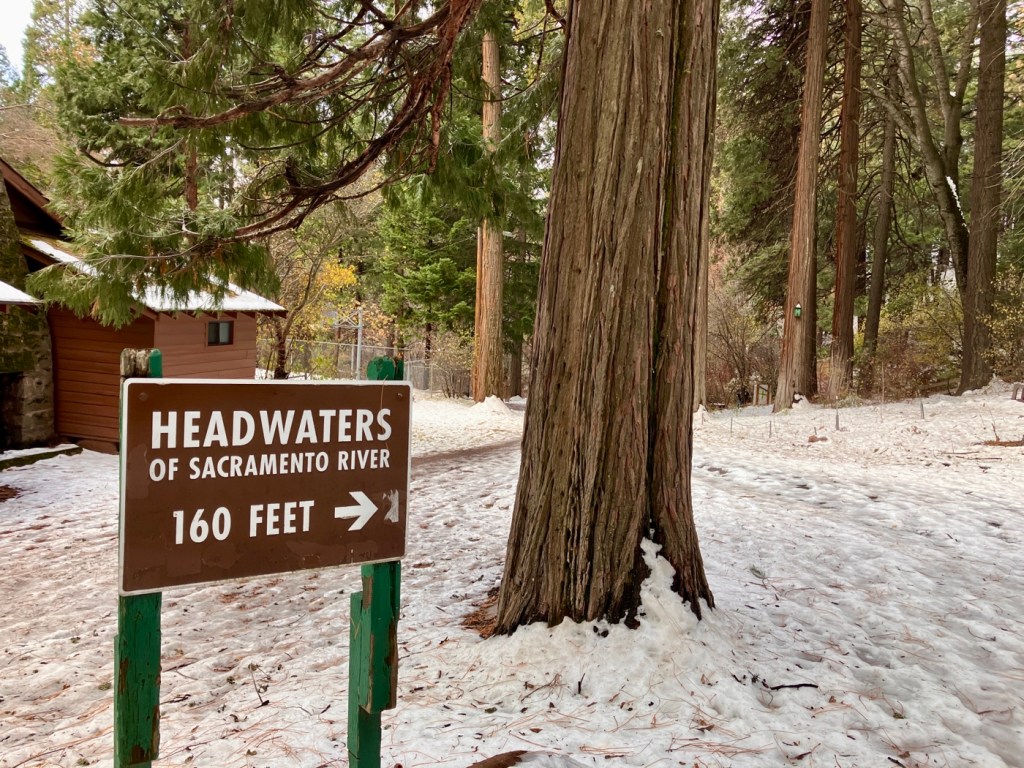
After a lovely night with friends near Redding our first stop is for spring water.Every available bottle filled with spring water.The travel planner was thinking about the coming storm and the pass we needed to get over. This smile says, get moving please.The happy travelers in front of the spring which is the headwaters of the Sacramento River.
There is something about heading north from San Francisco which always excites us. North. Towards wilderness. Towards mountains and coastline. Remote stretches of road and big views. Not south towards bigger population centers, but north.
North, where The State of Jefferson is proposed. Wikipedia will explain it in full.What heart doesn’t thrill to the blacktop stretching out for miles under a big sky? A stop in Ashland Oregon for coffee and chai.
Still racing that storm which eventually wrecked havoc on much of the US, and coated Seattle in ice, we spent a night in Eugene and got an early start to make it to Seattle and our first house sit, the temperature dropping sharply each hour, and the ice day looming.
Chilly picnic sites of the world. Turkey chili on a cold night, cozy at our house sit.Seattle’s Mayor asked everyone to stay home during the ice event. Barnacle was happy to oblige.
Snow. Freezing temperatures. Sleet. Streets and sidewalks were solid sheets of ice. Thankfully we went grocery shopping right after we got to our two cat house sit, so we were well equipped to stay inside with the kitties and wait for the thaw. We did put on our boots at one point and opened the front door. The ice on the front steps convinced us to just go back inside. We were regretting not grabbing our traction devices for our boots during our storage unit rampage of stuff accumulation.
Barnacle and Lucy snuggled in for the day.But even the cats were getting cabin fever. Kitty on a leash! She was thrilled to be a bit closer to the birds she had stalked through the window. (That is continuing construction of Seattle light rail behind me.)
Once the snow and ice had melted we took one of the cats outside on her leash and harness. Seattle weather wasn’t done with us yet though. During our last morning at the house sit high winds caused a power outage. Now I regretted not having the small solar lantern I always take camping. Rich regretted not grabbing the headlamp he had held up in the storage unit. Thankfully, we had noticed where our host kept candles and matches, so, congratulating ourselves on our adaptability we began to pack up by candlelight.
Overcast morning, candle and iPhone light.
So what was the draw to Seattle in December, you might wonder? Good friends were going to be visiting family in Seattle and generously included us in their Christmas celebrations. We found two different Trustedhousesitters in two different Seattle neighborhoods, and jumped at the opportunity to explore a city we are familiar with, but want to know better.
Christmas morning is even better with musical friends.
As we travel we wonder a lot about when and where me might settle eventually. Back in SF? Somewhere around Seattle? It might be difficult to understand how unstressed we are by our lack of future living plans, but we’re really enjoying our travel life. When we aren’t trying desperately to find something in a pile of luggage. Solution? Less stuff!
Merry Christmas and Happy New Year from the happy travelers.
It’s hard to believe that we’ve been back in the US for almost two months, and apologies for the month gap in our blog, a record for sure.
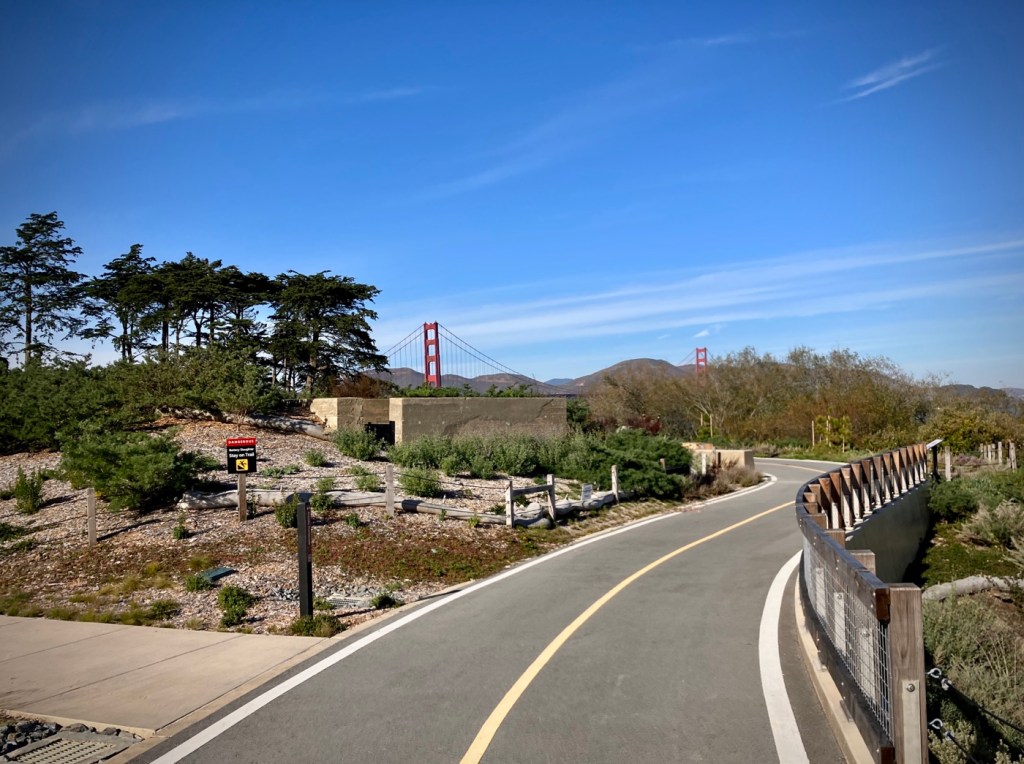
Back in San Francisco and enjoying the amazing new Tunnel Tops Park in the Presidio; love the movable furniture!
We’ve been having too much fun seeing friends and family in Palm Springs, Moorpark, and more recently, visiting our favorite SF haunts and enjoying the beautiful Northern California winter. Not to mention bingeing on all the World Cup. Felicitaciones Argentina!
View across Tunnel Tops. Always something new and wonderful in the Bay AreaA new bike path extension to the Golden GateA short but always inspiring meet up with our fellow nomad DNT.
But as other nomads have related, retuning “home” is sometimes a bit tough, and strangely disorienting, especially when you know that you’re heading back out into the world again as nomads. It now feels more like a refueling stop, with the primary energy being friends (and tacos!) Nomadic life is endlessly stimulating, but without a base of friends and family to pivot off of, it might seem less invigorating. Contrast in life keeps it fresh.
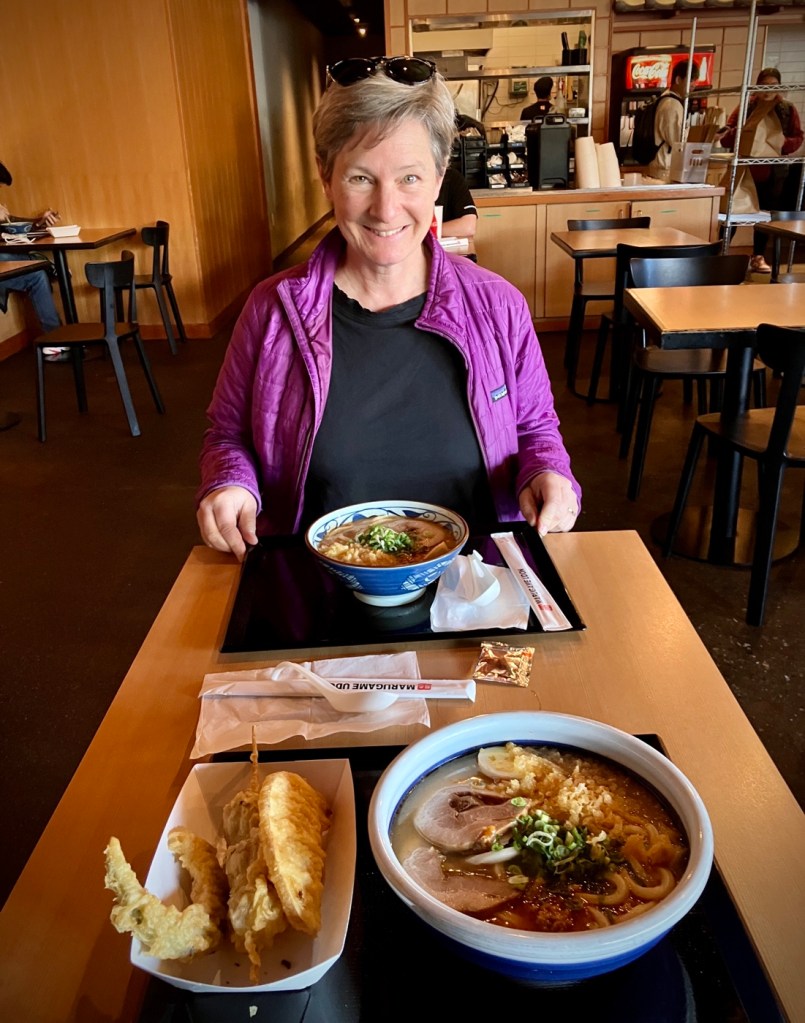
San Francisco welcomed us with a beautiful sunset…you’re not making this easy SF.Back riding with the boys on Twin Peaks…so missed this!Ramen and Udon fix at Marugame in SF.
We’ve also been reunited with some of our “stuff” in a local storage unit. It’s always exciting to roll up the storage unit door and see what is there. Luckily, most clothes to swap out for our visit and onward travels are near the front. It does beg the question of saving so many things, but we know that when we settle down again somewhere, we’ll enjoy seeing so many familiar things again in a permanent setting. Right?
Champion and I excited about a walk!Mission Creek Preserve in Desert Hot SpringsWalking the dogs in the vast landscape of the California mountain desertsHappy hour smiles in Southern CaliforniaCheryl and Boba “the cutest and friendliest kitten in the world!”.Thousand Oaks delivered peaceful scenery, oaks and even water during a late fall hike in Wildwood Park
But after 16 months of travel, we are now a bit awestruck by how streamlined our travel lives are compared to the complexities of typical American life. No home, no car, a few bills…a bag or two and sometimes bicycles. Life is a trade off, and many of our peers could choose to simplify and travel more, but for many, selling it all and going mobile may be just a bit too much.
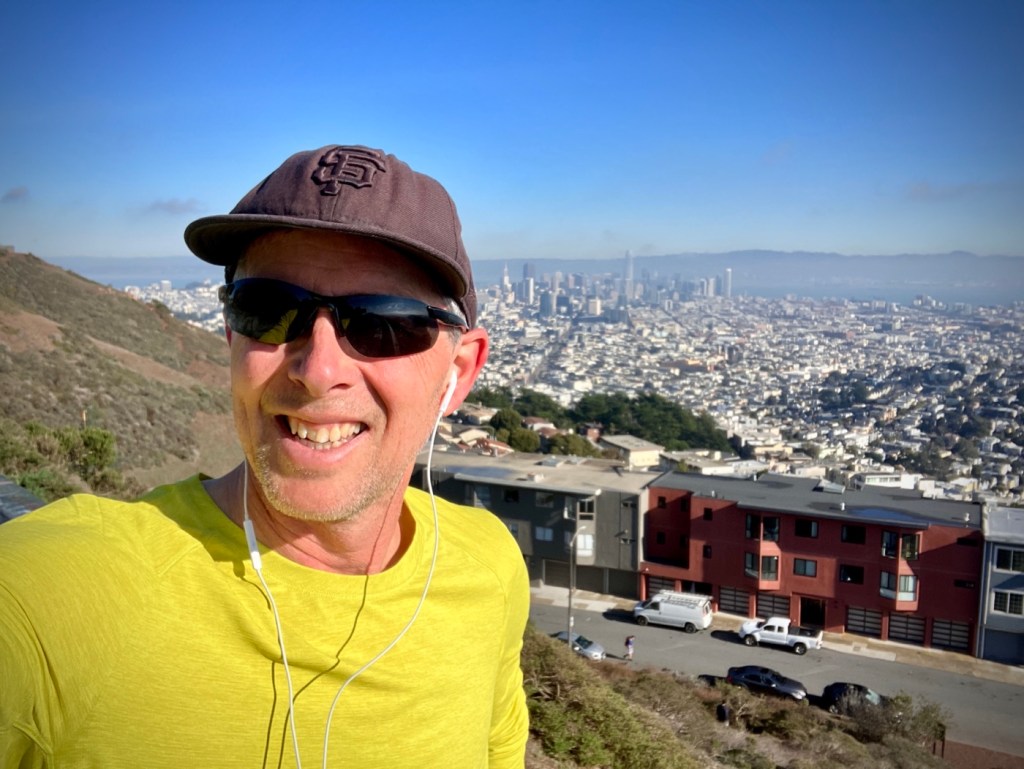
Christmas and Victorians were made for each other! Hayes Street, SFSelfie during a run up Twin Peaks…and yes, I’m that guy without Bluetooth earbuds…too easy to lose traveling!
It was not an easy decision for us either. And for many, simply renting your place out is an option, so you can return to your previous life with less of the uncertainties that selling creates. Of course, having no dependent kids or pets helps, and we recognize that this window in our lives to travel may be unique and precious.
Catching up over coffee with our friend, and our ace SF real estate agent Lisa from Polaris Garlic noodles at Perilla in the Inner Sunset – Check!San Francisco fire stations have an annual Christmas light competition…it was on in Portola/West Portal.Being home means baking with friends in Oakland
Home is nice, and the longevity of friends and place gives you a unique perspective on the passage of time. So we especially appreciate the generosity of our friends sharing their homes (or dinner) with us as we return for these recharge sessions. Thank you to all for your generosity and please know we will try to repay someday when we again have some roots in the ground. (Especially Rich and Andi -:)
Hiking up Montara Mountain…the drama of the Bay Area landscape is striking after travels.The San Mateo Coast south of San Francisco offers endless beauty and secret beaches.More hiking with good friends in Redwood City
We’ve now just arrived to an usually cold and snowy Seattle after a somewhat leisurely 3 day drive from the Bay Area, catching up with good friends and family along the way. We have two house sits (x2 cats each). Hopefully now away from most of our friends and family I’ll be able to get back to the important tasks of global travel planing for 2023. But the Pacific Northwest is so intriguing….so many places to explore; hmmm?
Cats eye view in North Seattle
But today the streets are still coated in snow and ice, so we’ll wait for the forthcoming thaw and settle into the coziness of our temporary cats, and sip coffee and tea as we look out into the evergreen and snow landscape. More on our Pacific Northwest winter excursion soon, as well as our scenarios for 2023 travel. Still no “plans” -:)
Is the Camino del Norte tough? Yes! Yes it is. Long days and lots of up and down. Add to that some rocky, muddy, rain soaked trails and you have long days that feel even harder than 15 miles/24 kilometers should.
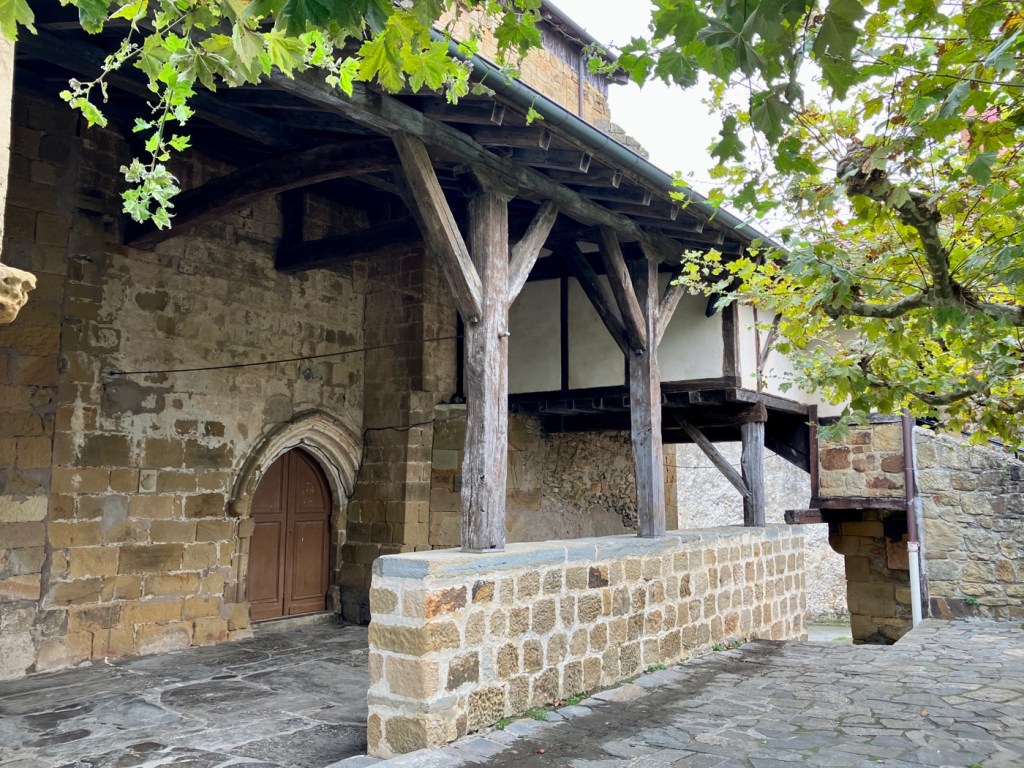
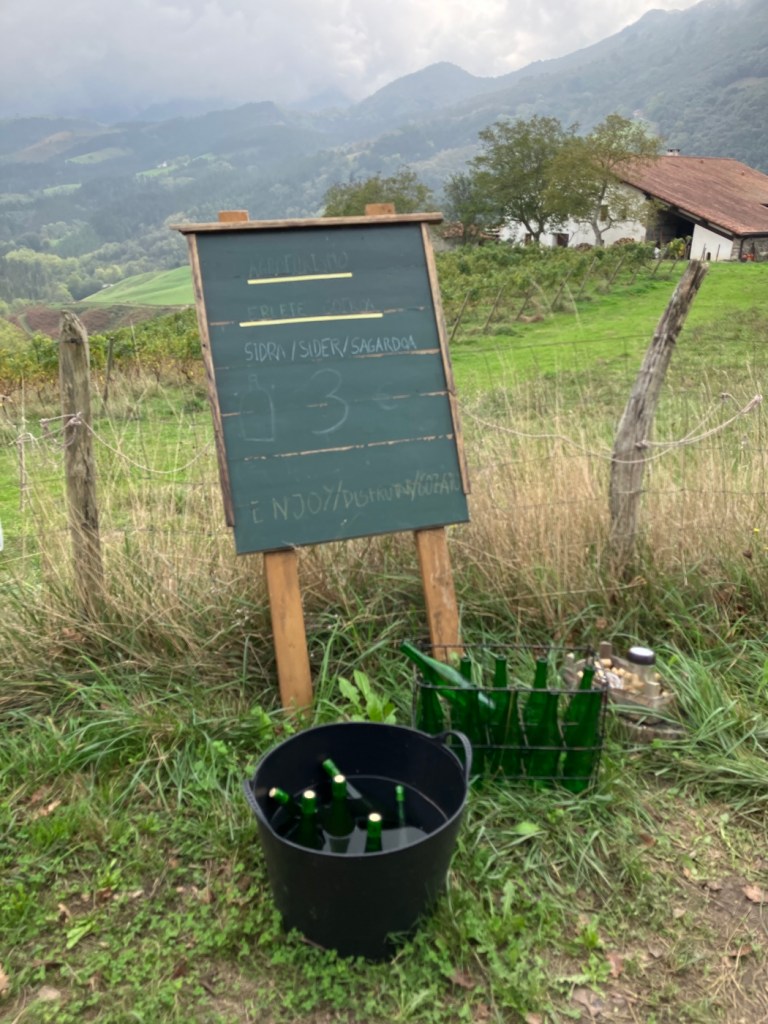
An ancient stone road out of Zarautz. Looking back towards Zarautz.Cecily making friends with calf number 2570. The churches with wide verandas made excellent places to stop and rest, this one is near Getaria.A well placed vending machine was also a good place for a break.Taking advantage of a farm cider opportunity did not make the remaining distance to Deba any easier. After so much up and down on steep slippery trails, the public elevators of Deba were a very welcome sight.These boat owners must be very sure footed. Deba harbor.
We had cloudy weather, but still mild. We hiked in some light rain, and some nice sun. It warmed up as our week went on, and by the time some of us hiked all the way into Bilbao on Saturday, it was warm. 80f/26c
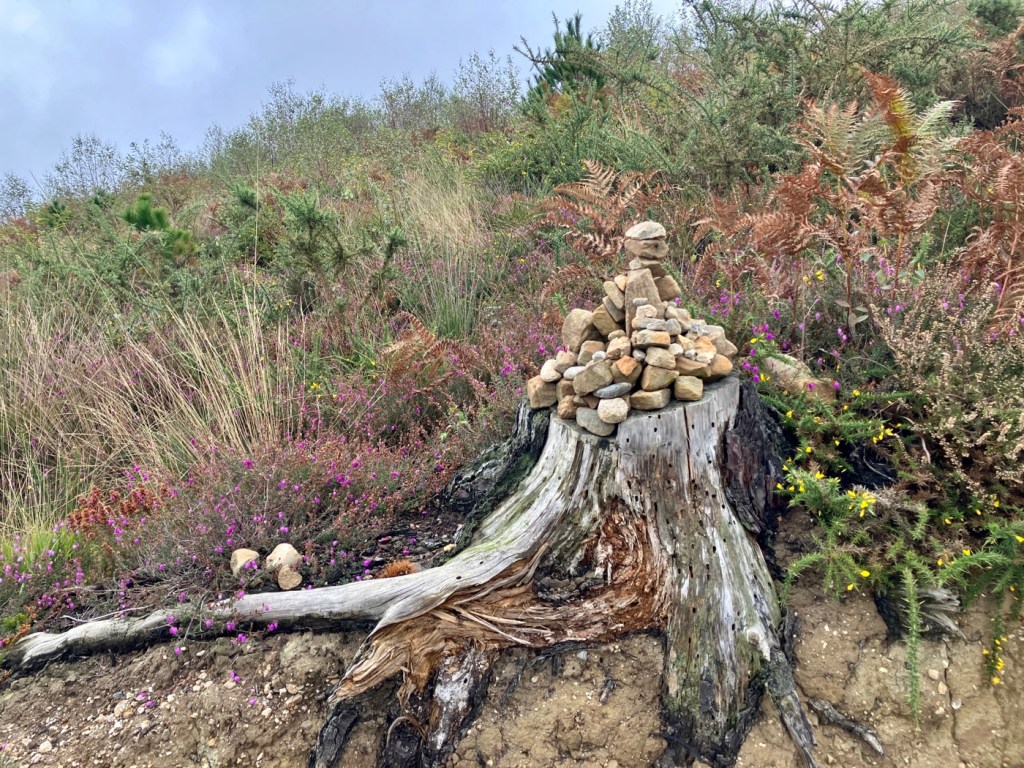
Rocks left in memory and honor of lost loved ones.The mountains provide a stunning backdrop.
Wait, some of us hiked into Bilbao? Yes some of us. One of us, me, Cheryl, ended up with tendinitis in my left foot. The day from Guernica to Zamudio was increasingly painful so I took a train the last short day to Bilbao, with Cecily.
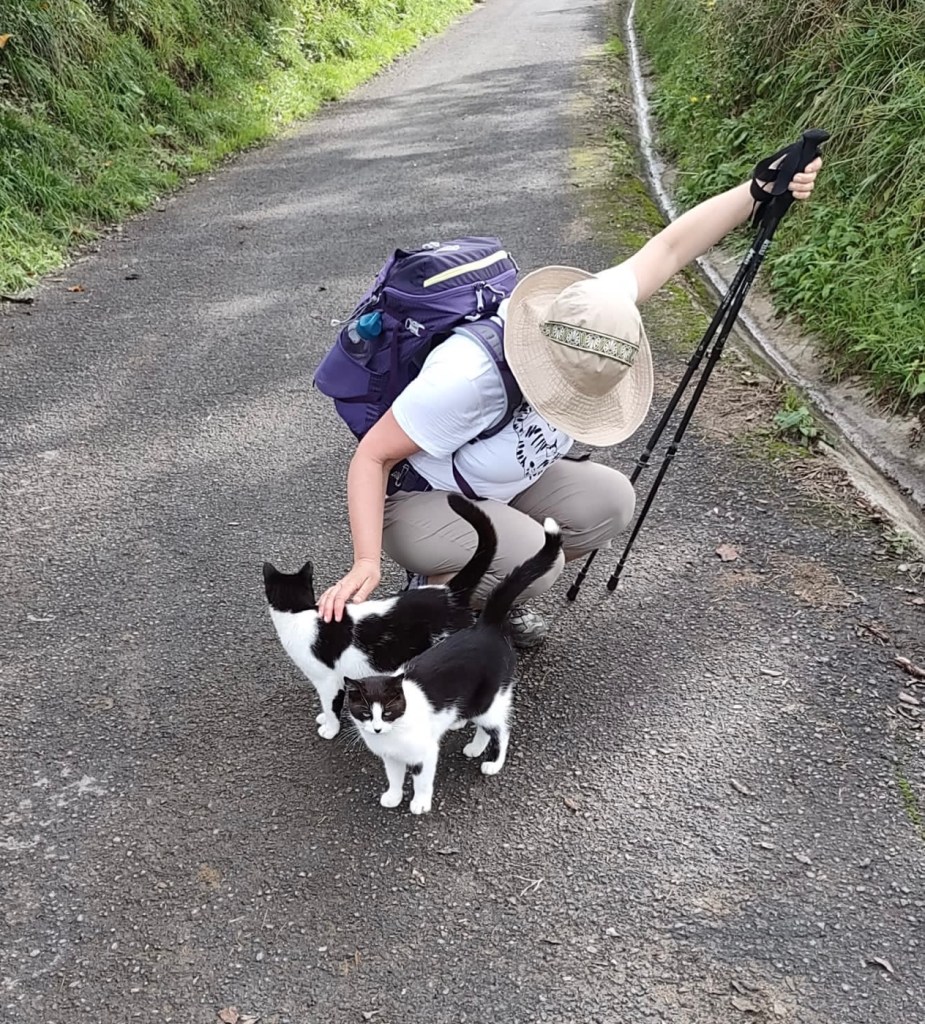
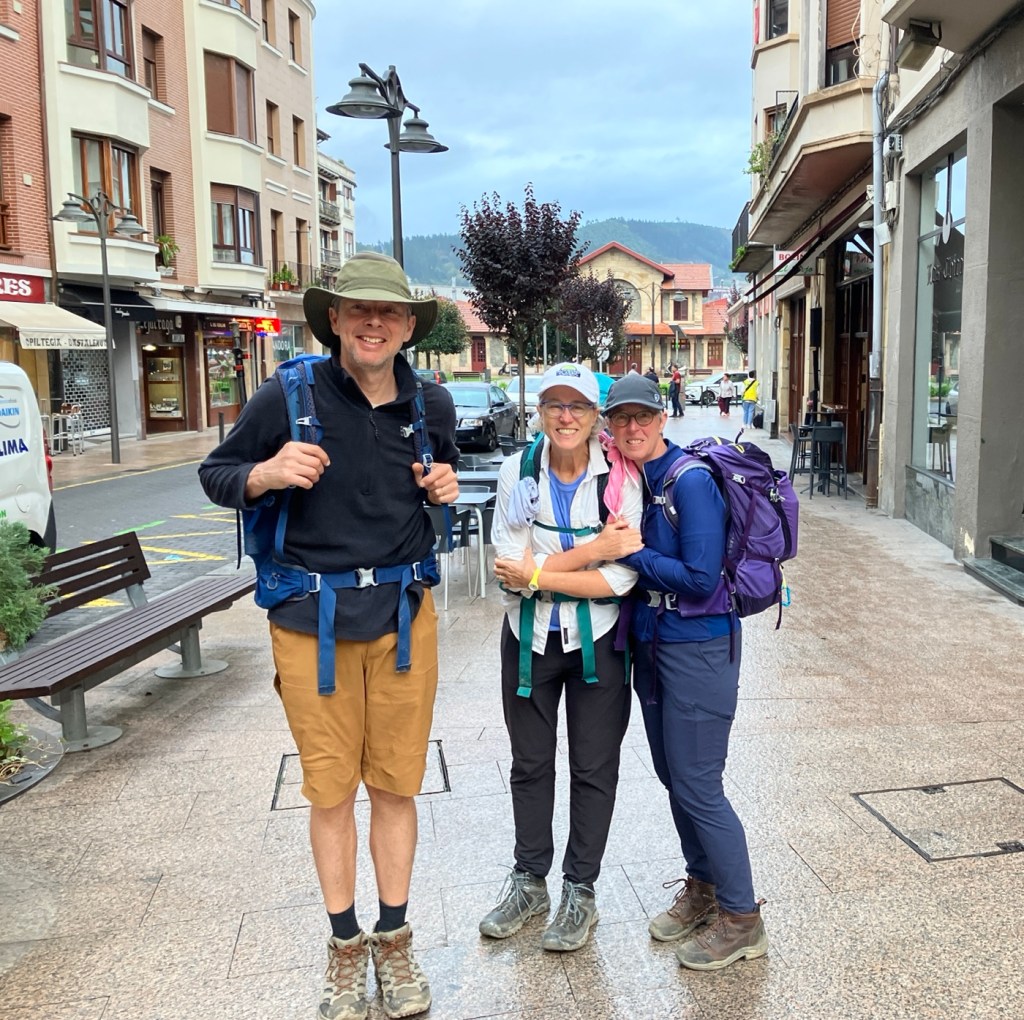
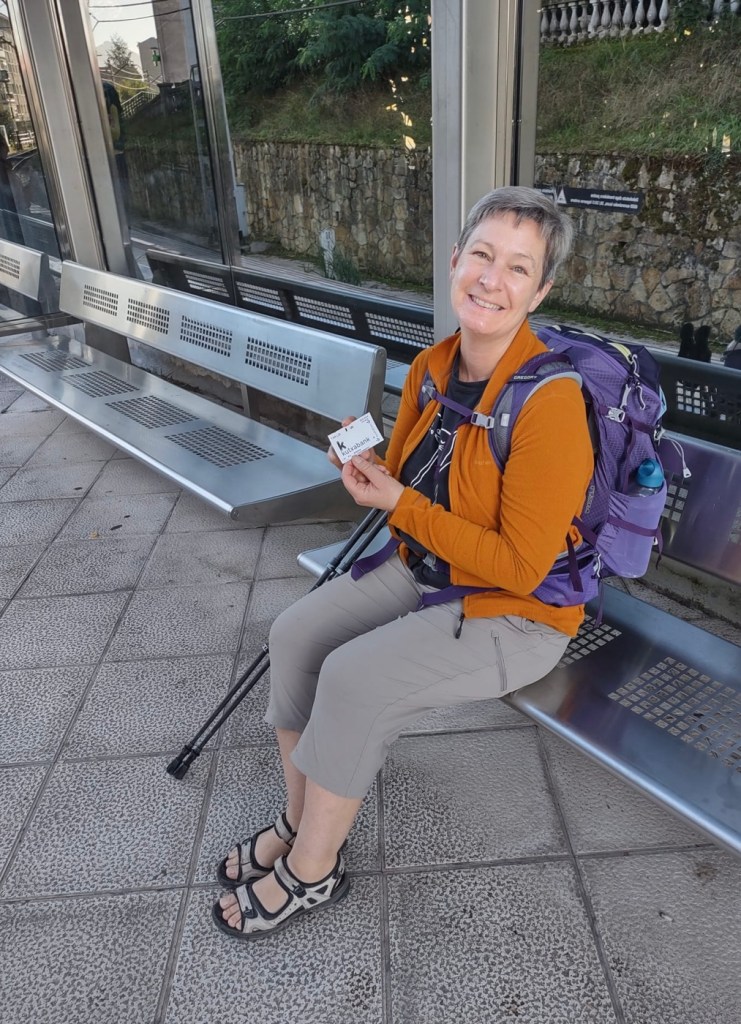
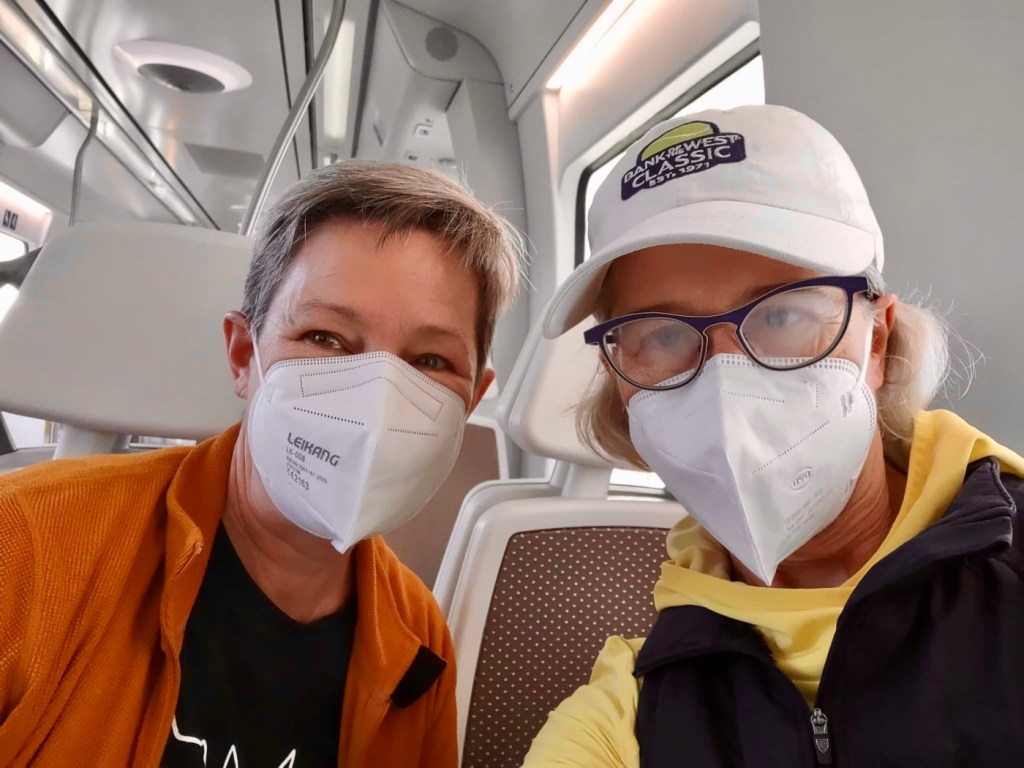
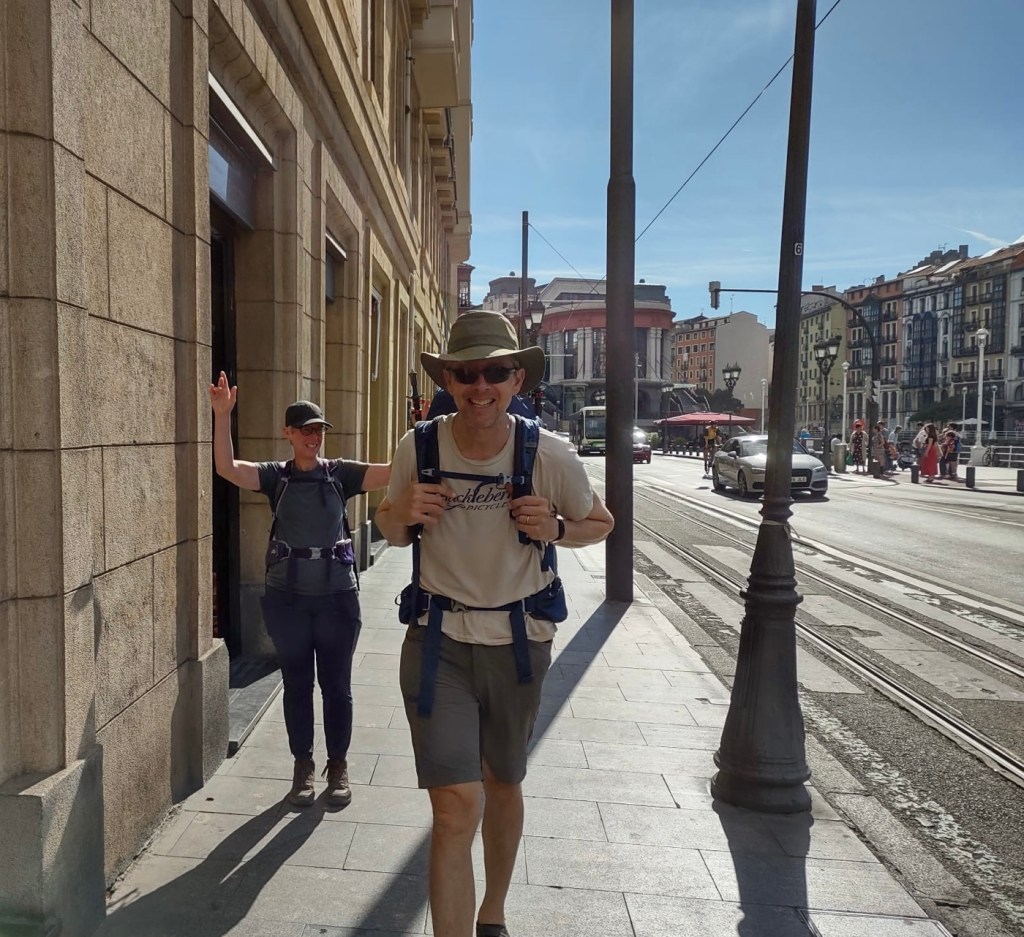
Happy travelers leaving Altzaa.A classic Camino photo. Happy to have four pairs of feet on this journey.The days can be very long, but the company is great.You look up and see a postcard perfect scene.Over old stone bridges.And by historic churches. I was wishing for a suspension bridge across this valley, but what a view back to the church.Some of the cats are petable. Thank you for the photo Christine. Leaving Guernica with smiles all around. Our fearless leader.The downhill was really starting to hurt my foot. But still smiling. Last morning in Zamudio. Two of us are smiling because we’re headed for the train! Cecily is feeling run down and joined me on the train. Rich and Christine are looking forward to the hike into Bilbao.Ticket to ride. Me and my bad foot.Masks still required on public transit in Spain. Enjoying moving but not hiking.Cecily enjoying the view. The Camino route comes right past our hotel so Cecily went out to meet our Pilgrims, Christine and Rich.Recovering with tea and wine. Ibuprofen and ice and rest came next. Thank you Cecily and Christine for the Camino time with us.
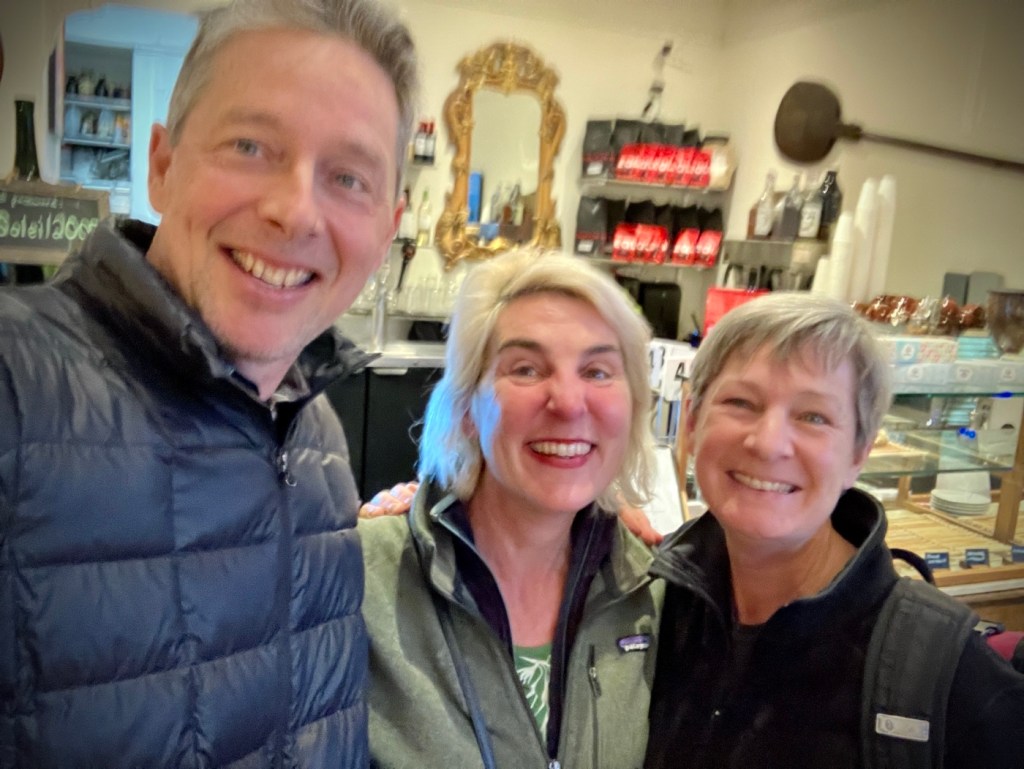
When we decided to leave San Francisco and travel it was our hope we would be able to meet up with friends and go on adventures together. This was an adventure, and we were so happy to share it with such good friends. Christine and I met the first day at University a good many years ago. The joy of long time friends.
The happy travelers in Bilbao old town.
Rich and I will be in Lisbon next, after a few days enjoying Bilbao with Christine and Cecily, and on to New York City and New England. Visiting friends and family there and in Chicago, and then, Thanksgiving with family. Looking forward to that very much. Happy fall.
It’s been over a year since we’ve been nomading, vagabonding, wandering – whatever it is we’re doing. The transitions can be very challenging, city to county side, country to country, bike touring to backpack travel again. How do we do it without burning out, or driving each other bonkers? Our secret superpower is a home base in France, thanks to wonderful friends who hopefully know how much we appreciate it. There we can swap gear, relax in familiar and comfortable surroundings (Oh, comfy couch, we love you.), and actually be in different rooms from each other! For hours!
Those are the smiles of travelers who get to be somewhere familiar and cozy, and swap out some gear.
We are super fortunate to have a private home where we can recharge, but we also have places which are familiar and comfortable that provide the same mental break. Bristol, in the UK. A city we love and have been to three times. Hove/Brighton will be one of those places as well. Both have good public transit, lots to do and see and good for getting around the area. Izmir, Turkey is probably one of the places we’ll go back to again and feel happy knowing our way around, and what we like to do and eat. Our home town of San Francisco, of course. A place where you can navigate without a map and know the bus routes and bike routes. That feels great, wherever it is.
The relief felt when encountering French bike infrastructure again is massive.
But wait, how did we get here? As Rich mentioned in the previous post, Hove to the Haute Savior takes about 13 not always easy steps, with loaded touring bikes. Trains, a ferry, rides to and from hotels, to and from trains, trains to trains, and finally a lift the last few steep miles. We love the UK, but the French have really zoomed ahead of the British with safe, comfortable bike facilities, especially in urban areas and to connect town and cities. From getting off the ferry in the dark and rain, and directly on to a protected cycle way to our hotel, to the next morning riding the riverside path that led us into Caen for our train to Paris, it felt easy and relaxed. We both breathed a sigh of relief. Oh yeah, this is fun! Bike touring with no safe route is so stressful. Bike touring with lovely pathways and signage? A joy.
Headed from Ouistreham where the ferry docks, into Caen.Arrived at Gare Paris Saint-Lazare via train. Tick off another step. Rue de Rivoli in Paris at rush hour. Headed to our hotel in the 12 arrondissement.
Let’s take a moment to recognize what an amazing transformation Paris has undergone. 10k at rush hour with loaded touring bikes and it was not at all stressful. Even though we probably caused some near misses as we stopped at red lights and the cyclists behind us kept going – there was no cross traffic so they were being safe, just not expecting the big old loaded American touring bikes to actually stop! We got the hang of it. The quiet of Rue de Rivoli was like a forest bath. The sound of voices and bike tires. No loud engines. No car horns. Just the lovely sound of people. I’ll say it again, cities aren’t loud, internal combustion engines are loud.
Gare de Lyon, waiting for our TGV platform to be announced. One night in Paris is too short a stay, but still fun.Three trains later, yada yada yada, we made it!
So, now that our legs, backs, and bottoms are totally adapted to bike touring, after four months of travel by and with bikes, let’s mix it up!
Load up that backpack, lace up the boots, and let’s Camino.
While down in town at the weekly market, where we walked with our packs which have scallop shell Camino patches on them, a young man said to us – you have a long way to go. And then after I used my one good French phrase “I’m sorry, I don’t speak French.”, he said it again in English. (Oh, to be bilingual.) Why thank you for thinking we could and would walk all the way from the French border with Switzerland to Santiago de Compostela, Spain, but no. We will actually fly to Bilbao.
My Camino pack. Getting some air.
We try quite hard to not fly places. This will be our first flight since returning from Turkey in May. Unfortunately, avoiding air travel means you must have time, and more money than the cheap flights cost. But, we do what we can, and sometimes our chosen lifestyle means airplanes.
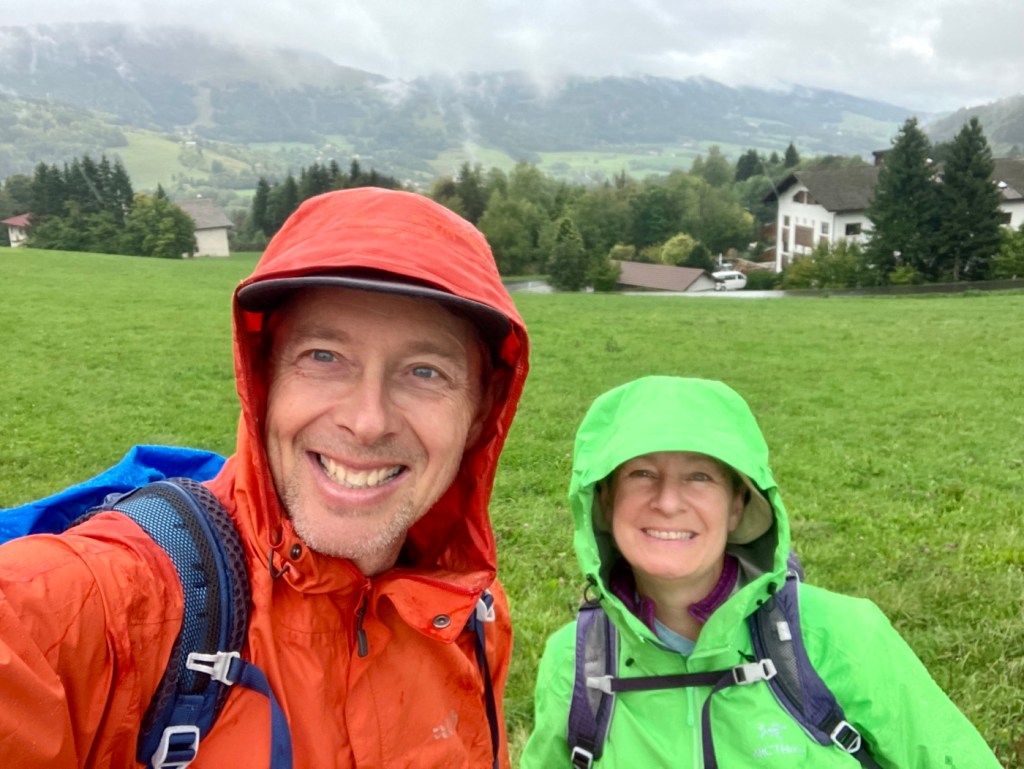
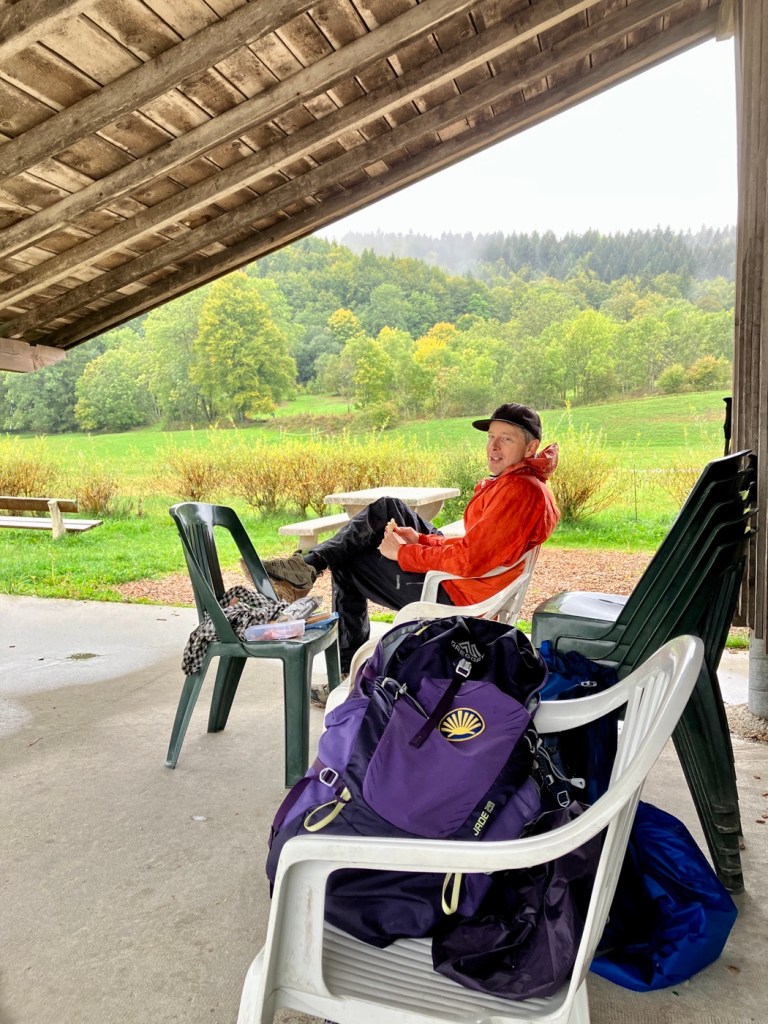
Lunch break on our first training day out with our packs.Second day hiking. Ready for the rain. And rain it did. We were grateful to find this shelter by a glider field so we could enjoy our lunch.
With packs on and trekking poles in hands we started walking. And walking some more. Hopefully we’ll be in good enough hiking shape for the long Camino days.
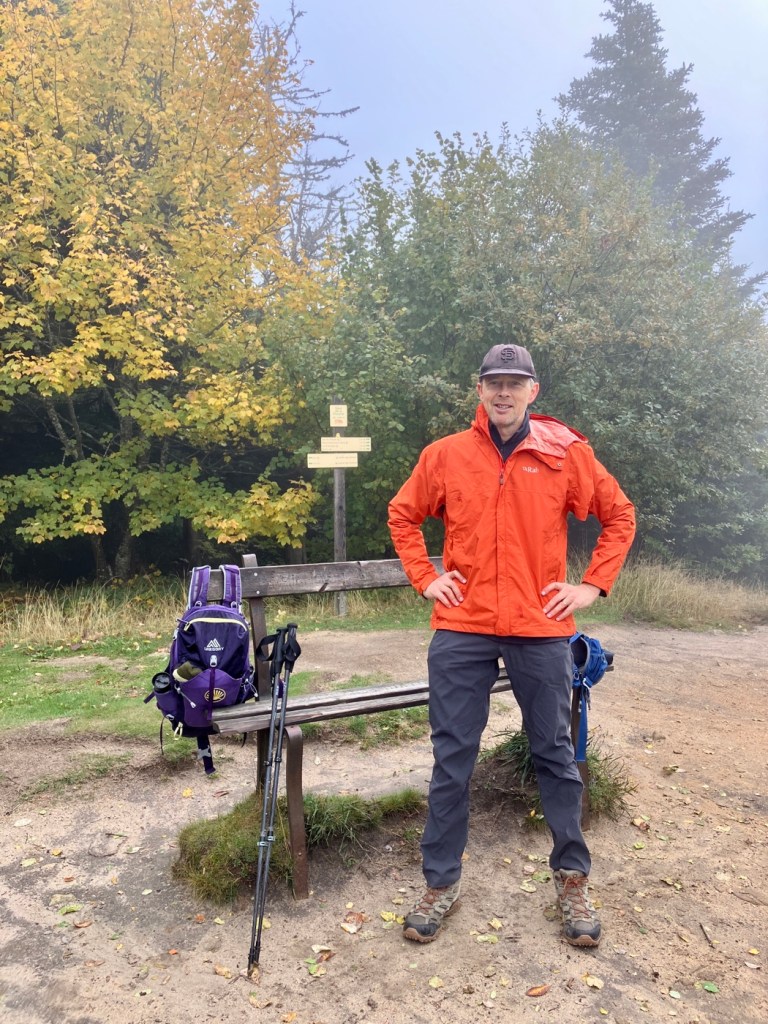
Third day. Up into to the fog we go.A very helpful and beautiful orientation table at the peak of the climb. It did clear a bit on our way back.He’s ready to Camino.Practicing the Camino picnic. My Cleverhood rain cape doubles as a ground cloth for sitting.
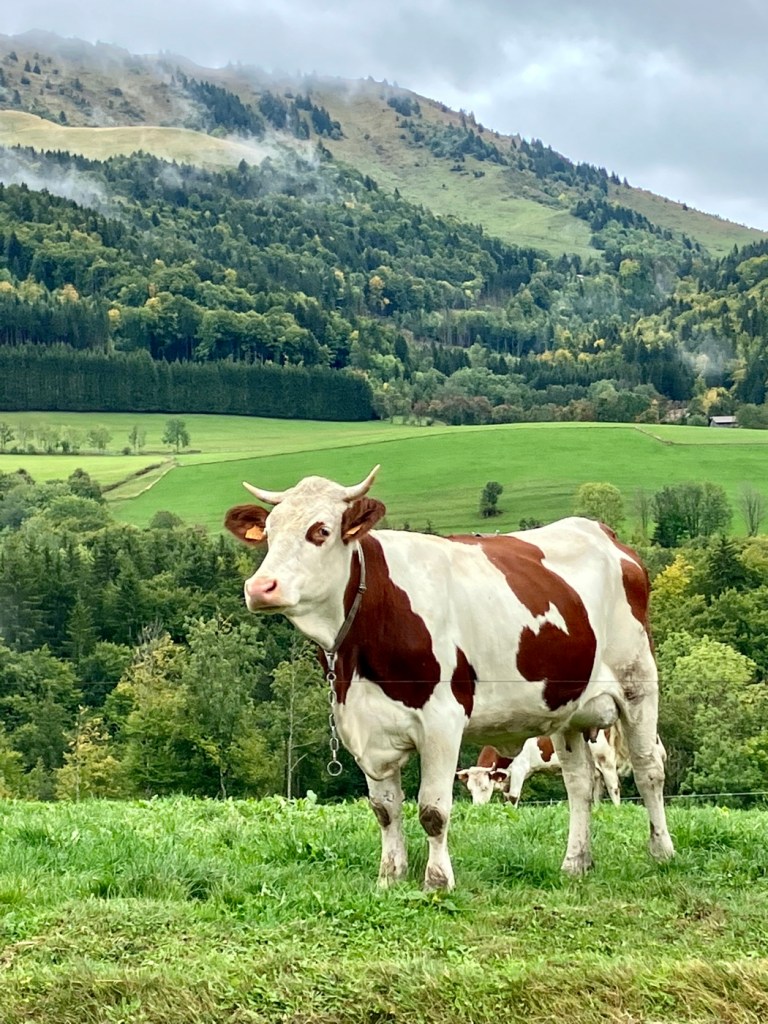
What a place to be able to train for the Camino. The Lower Alps are simply stunning. Varied terrain, nicely signposted routes, amazing views. And beautiful cows. Making all that delicious cheese.
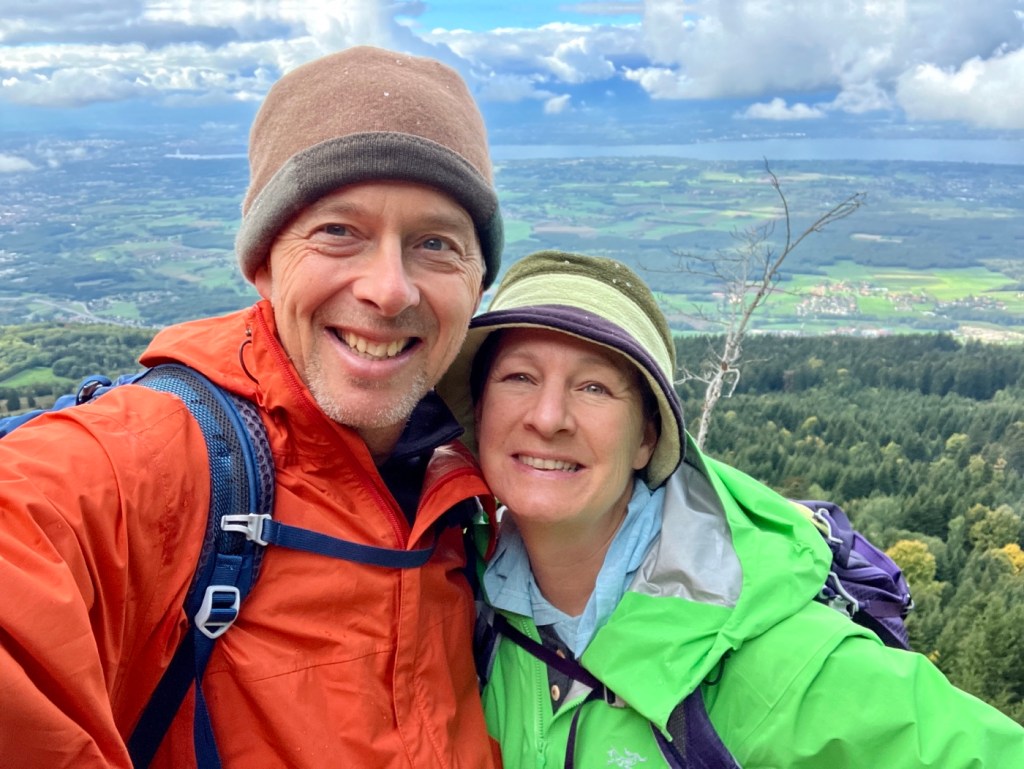
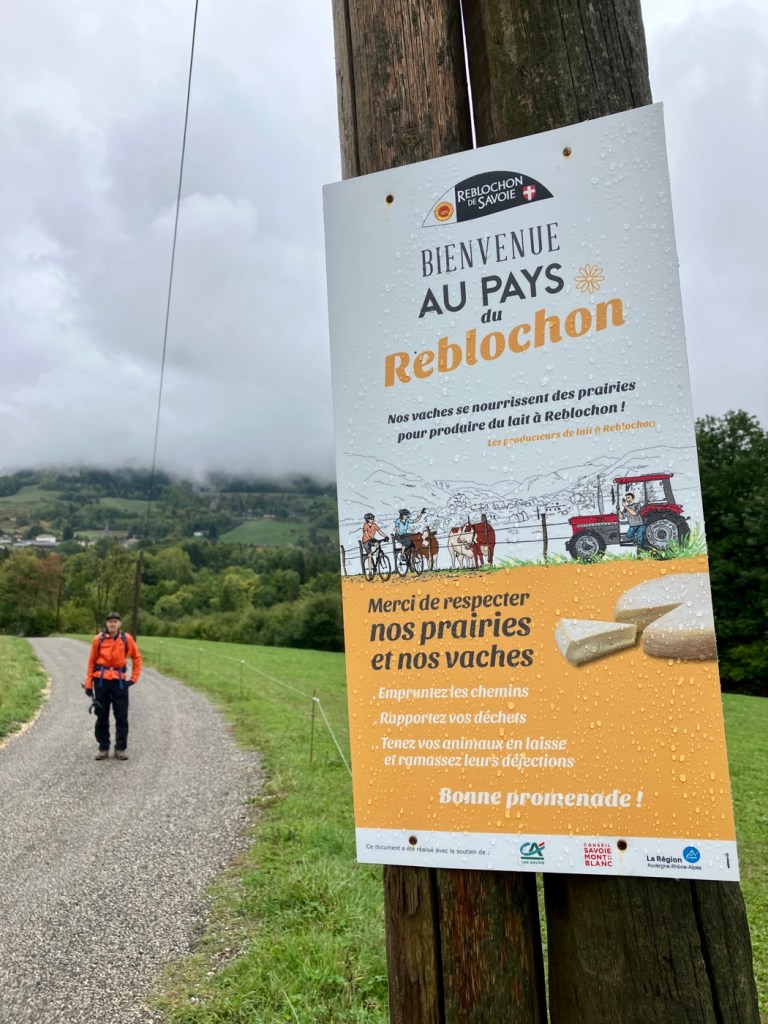
Respect our cows. Words to live by. Who could not respect you? Gorgeous. The Happy Travelers on our final training hike. The sun came out to bid us farewell.
By the time you read this we will be headed to Spain. We’re meeting dear friends from California to hike part of the Camino del Norte. Adiós y Buen Camino!





















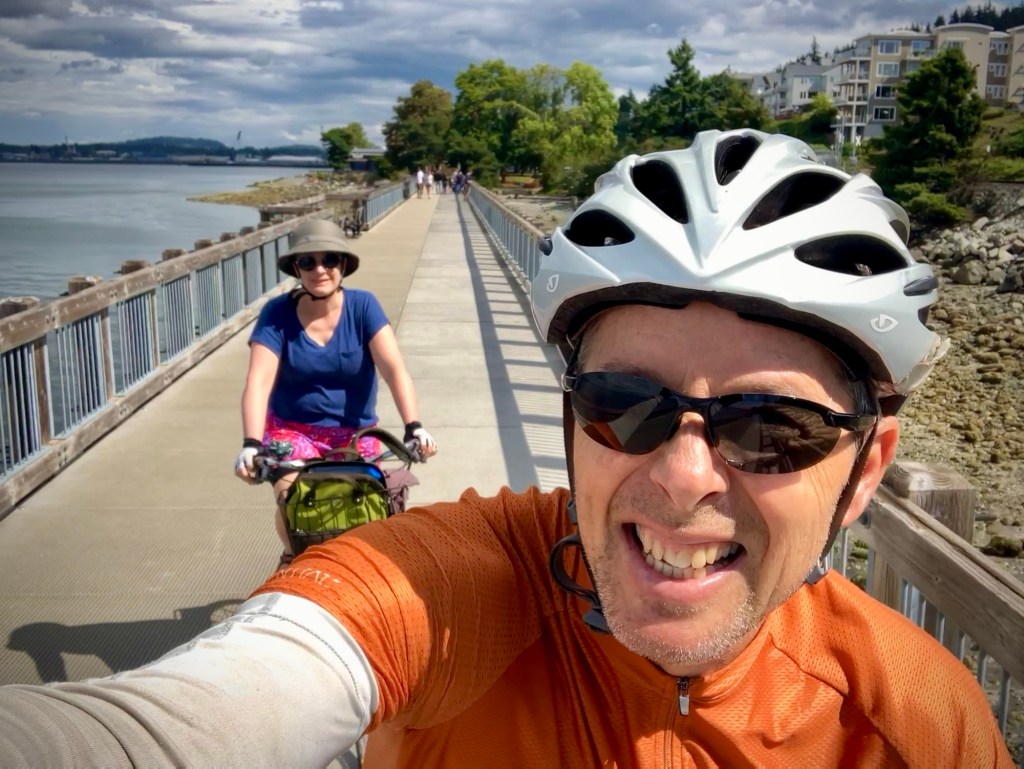

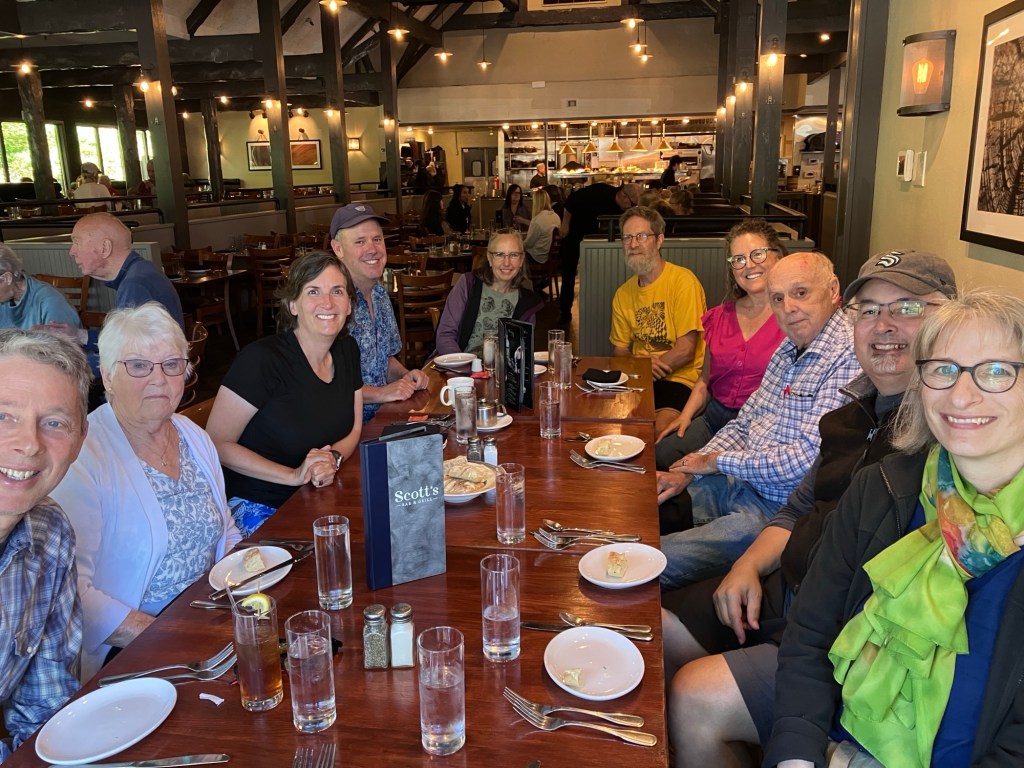





































































 Less Car, More Life