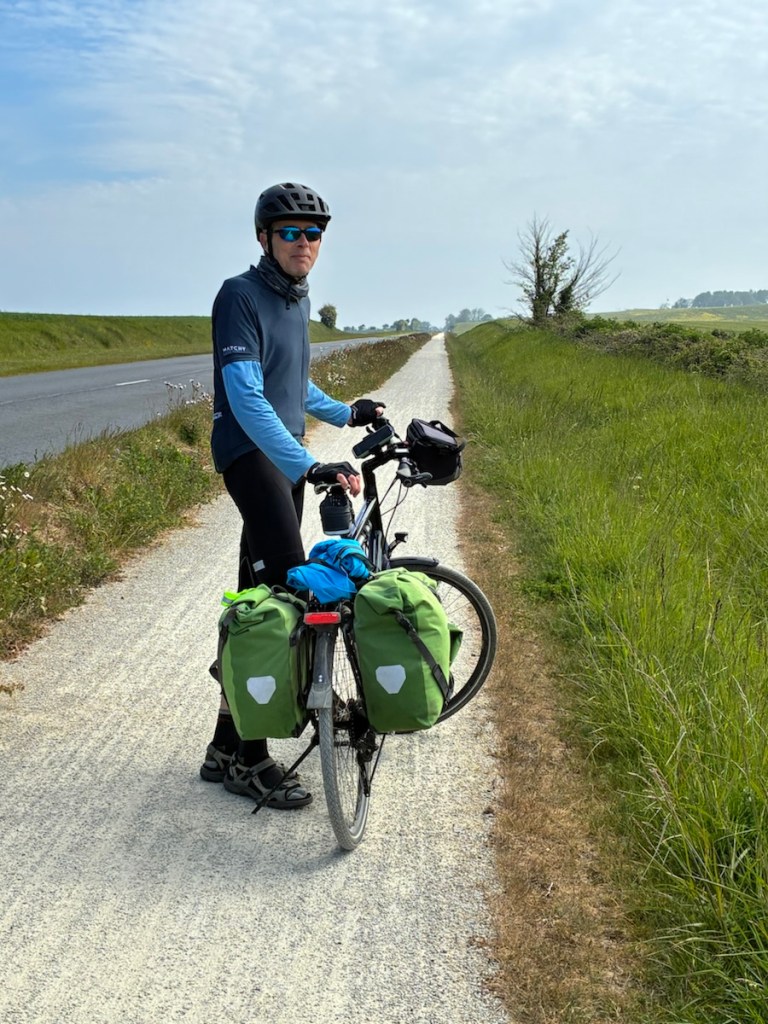
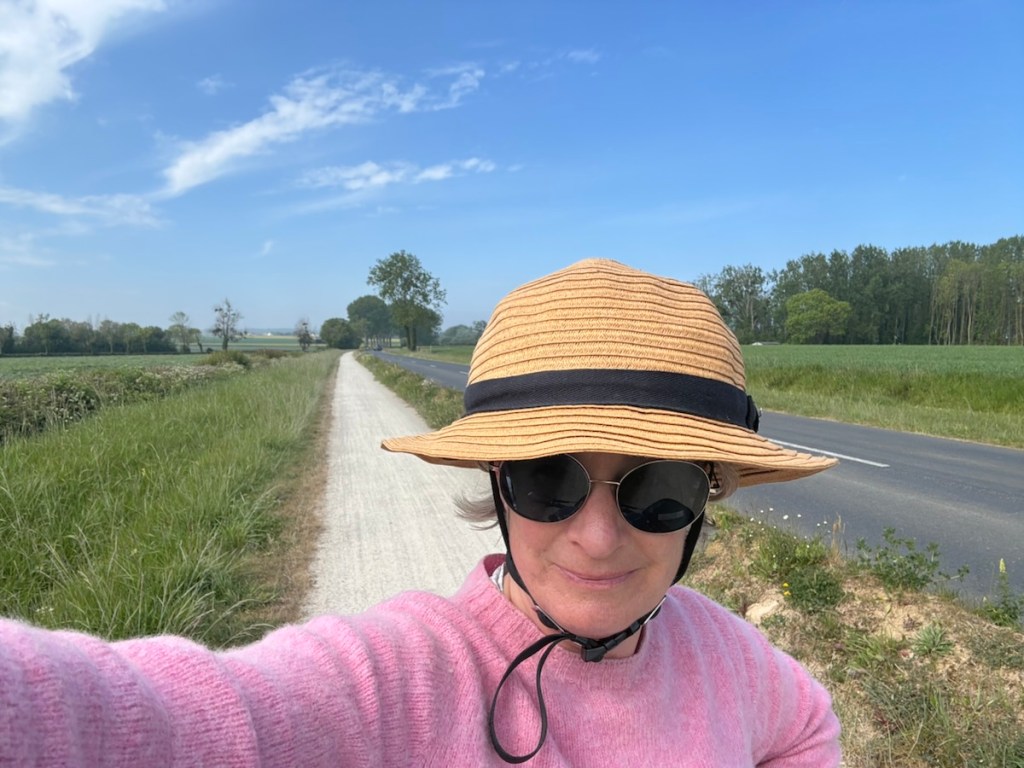
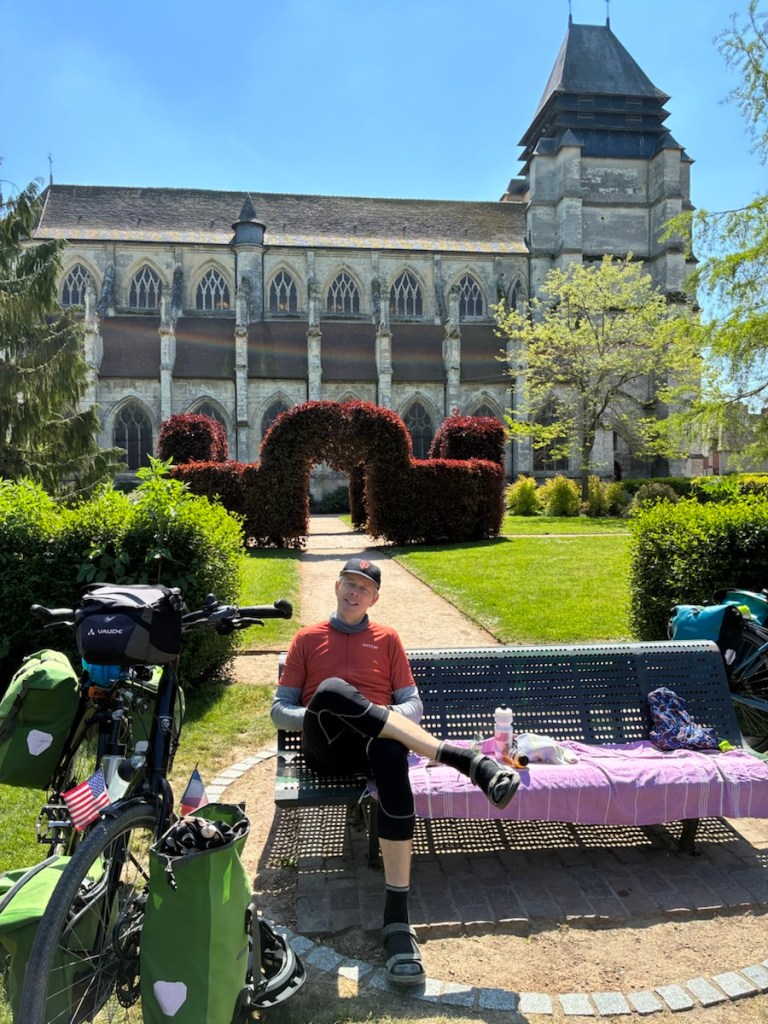
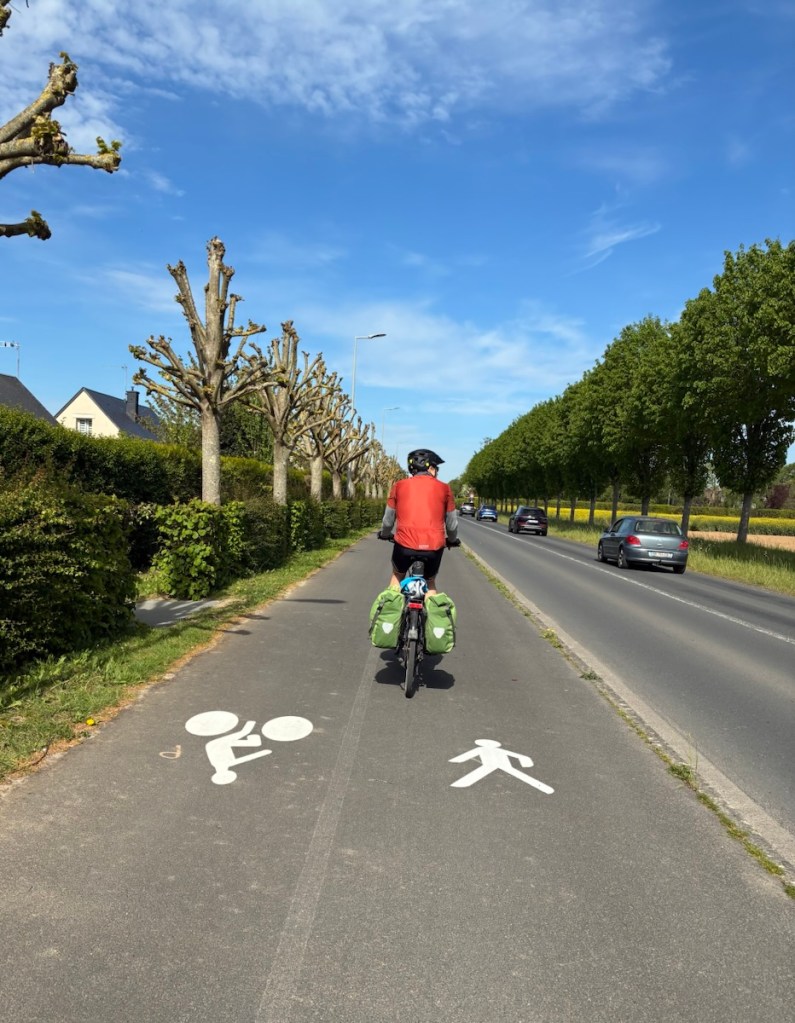
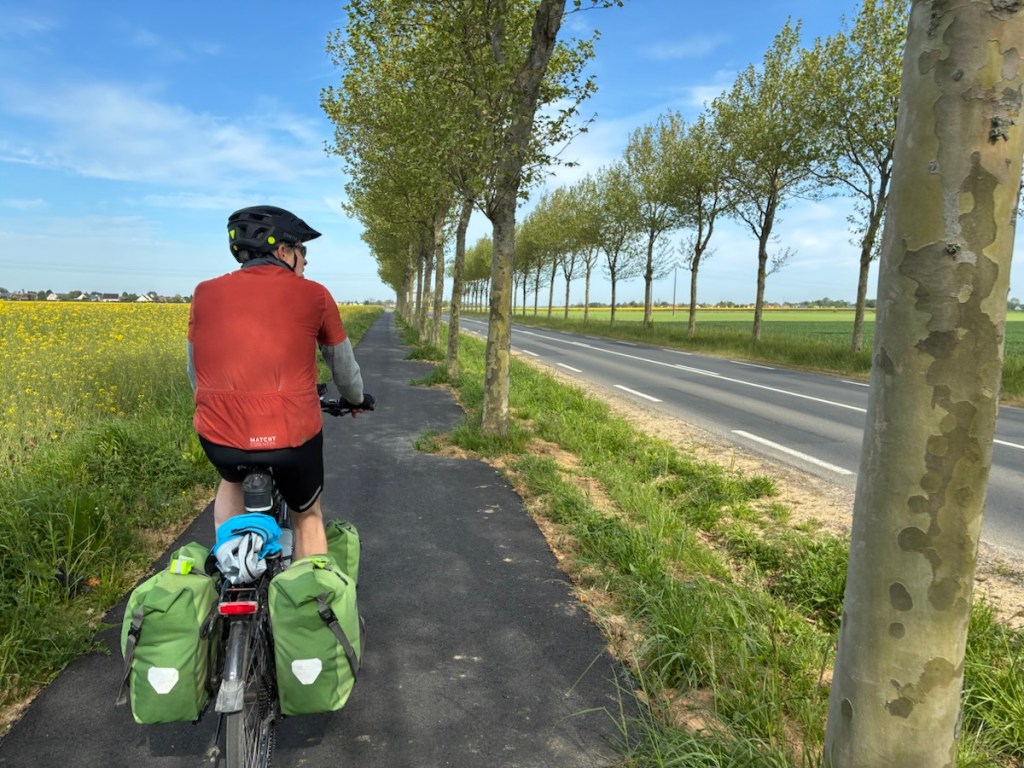
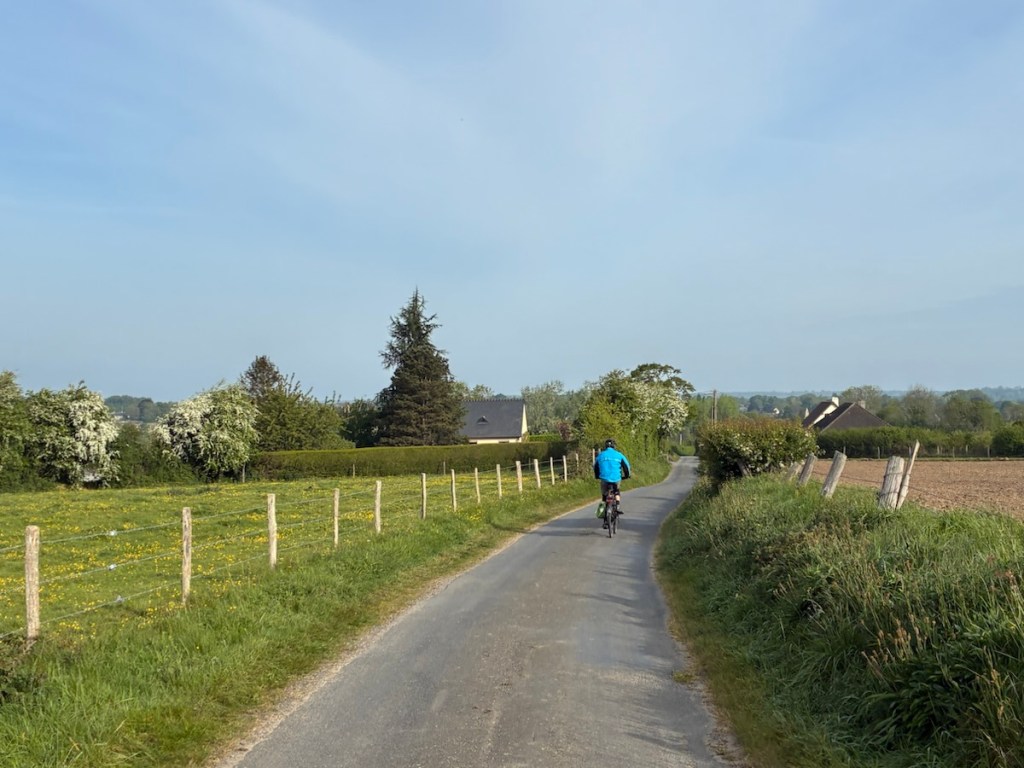
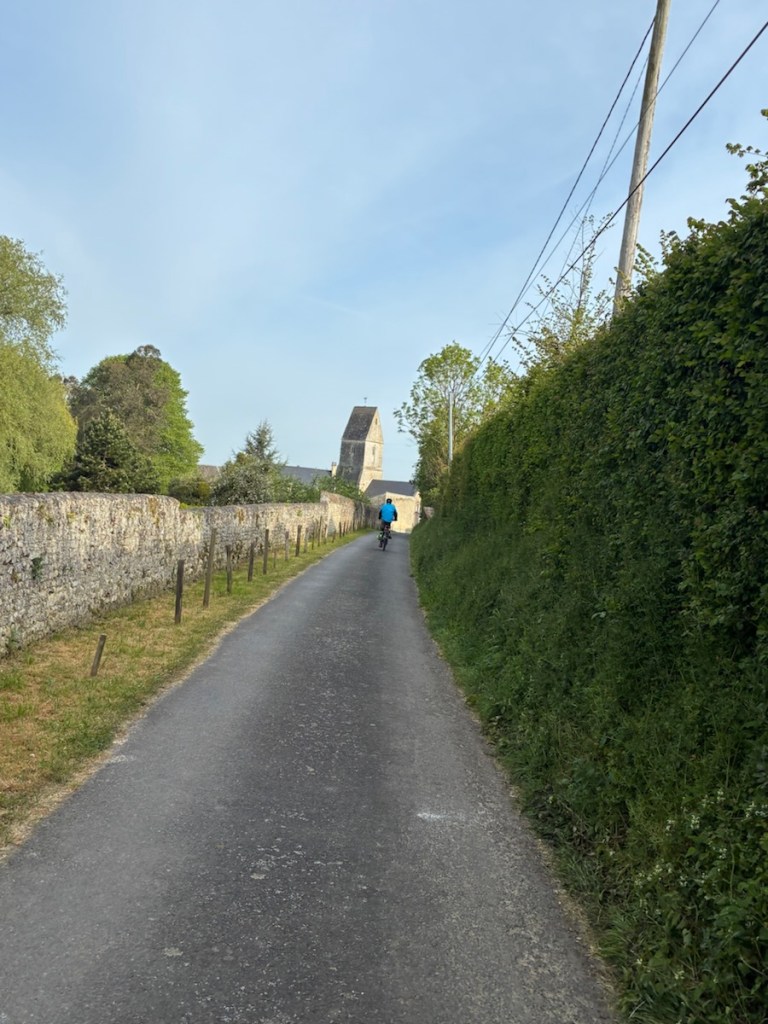
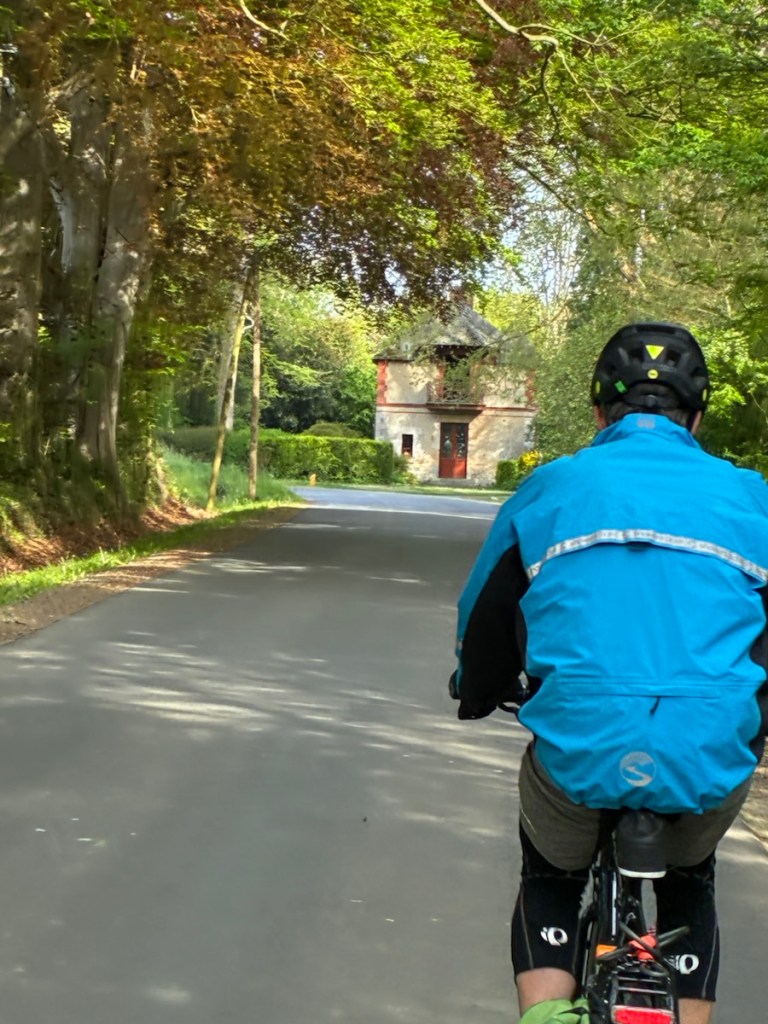
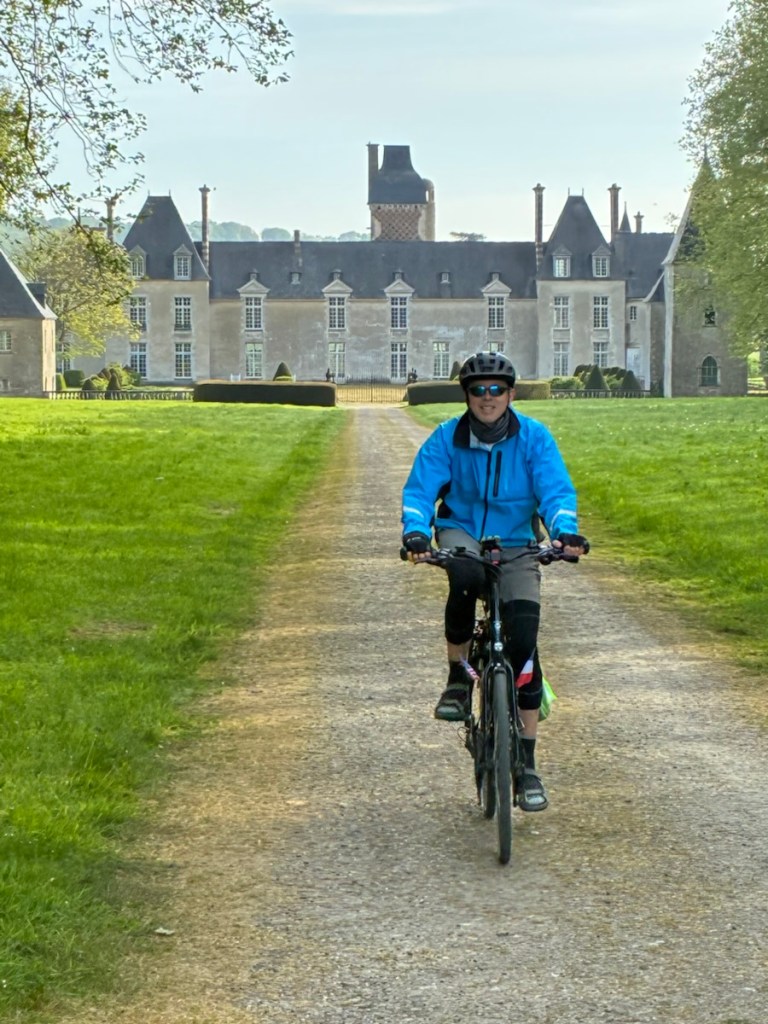
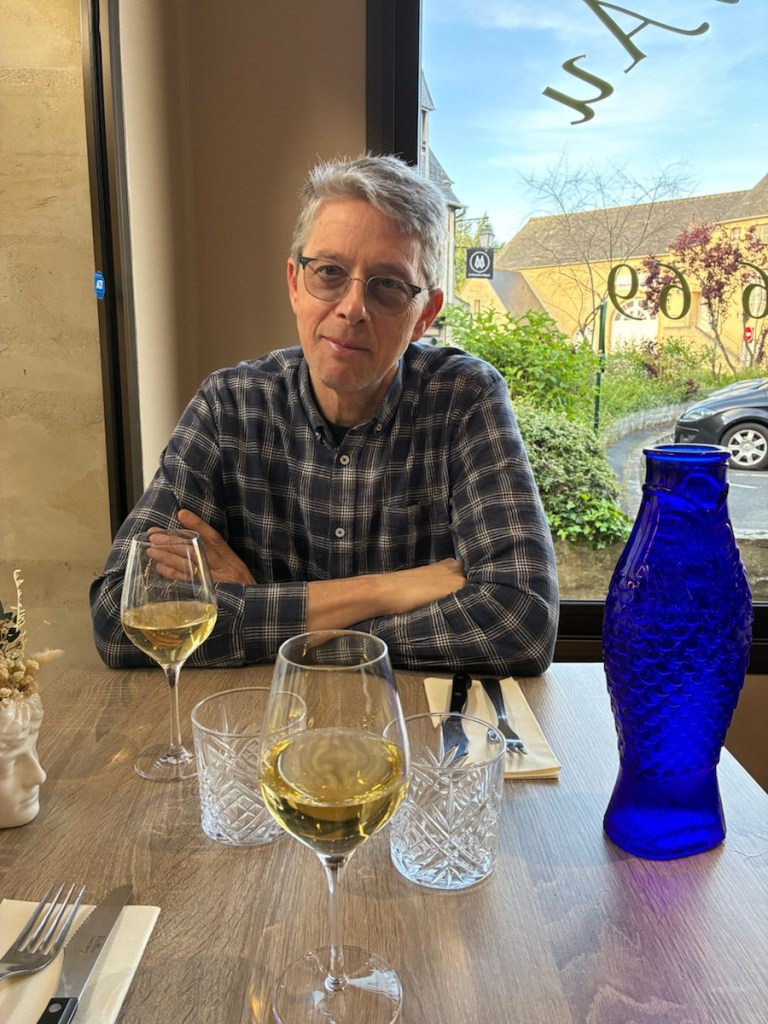
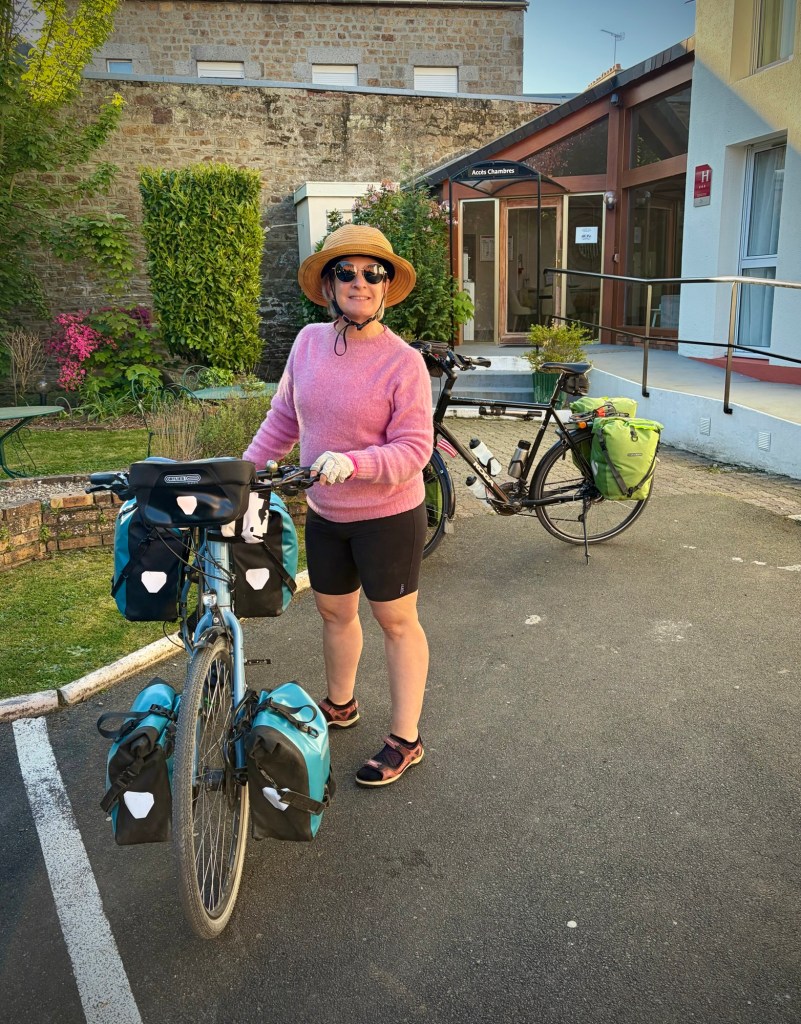
It’s morning, we’re packing up to get back on the bikes and I say to Rich, well that wasn’t really a rest day, was it? Rolling rest day, he says. Hmmm… I don’t think riding 50k, even without our panniers, counts as a rest day.
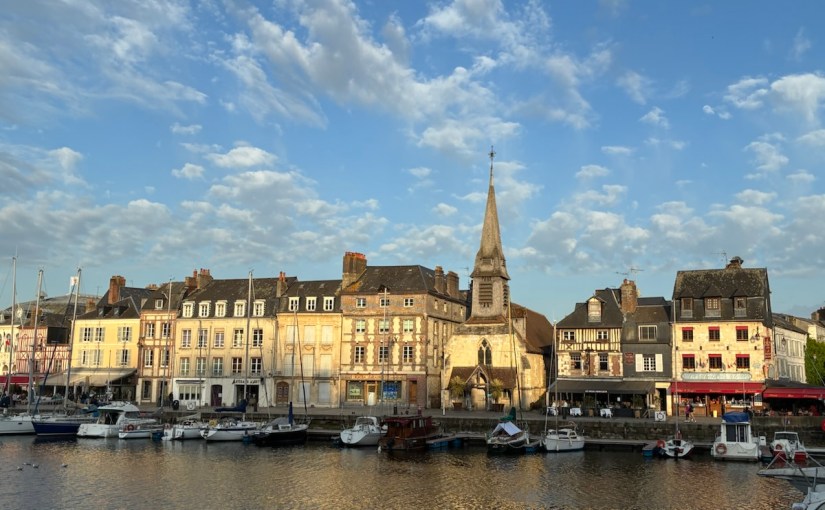
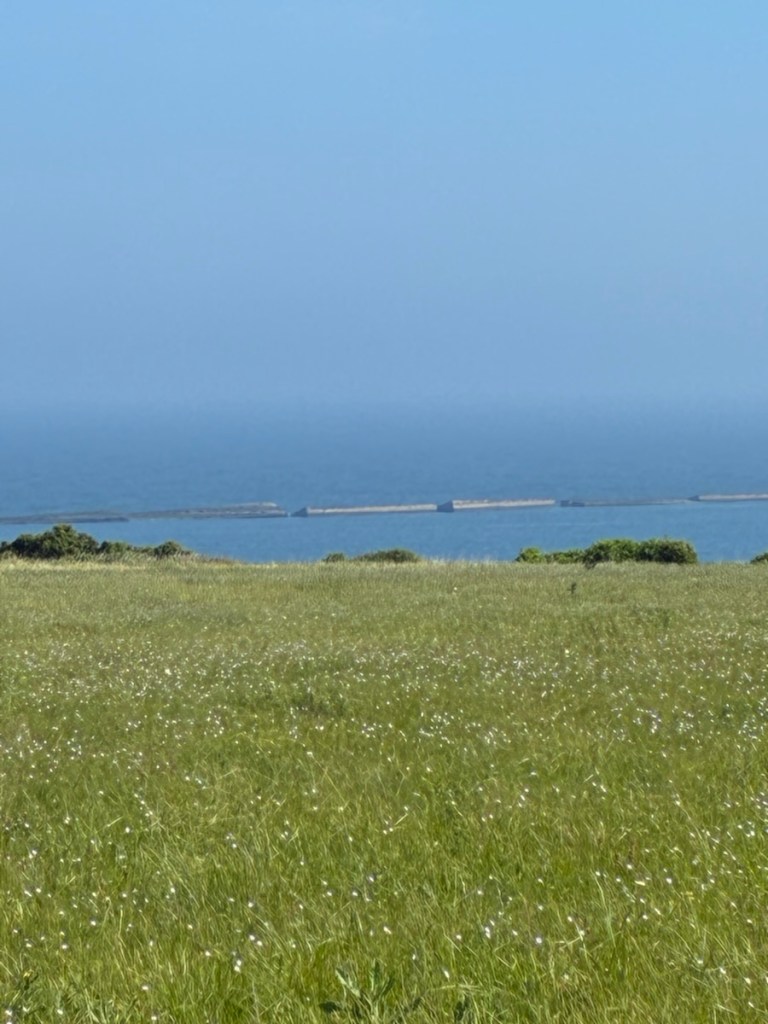
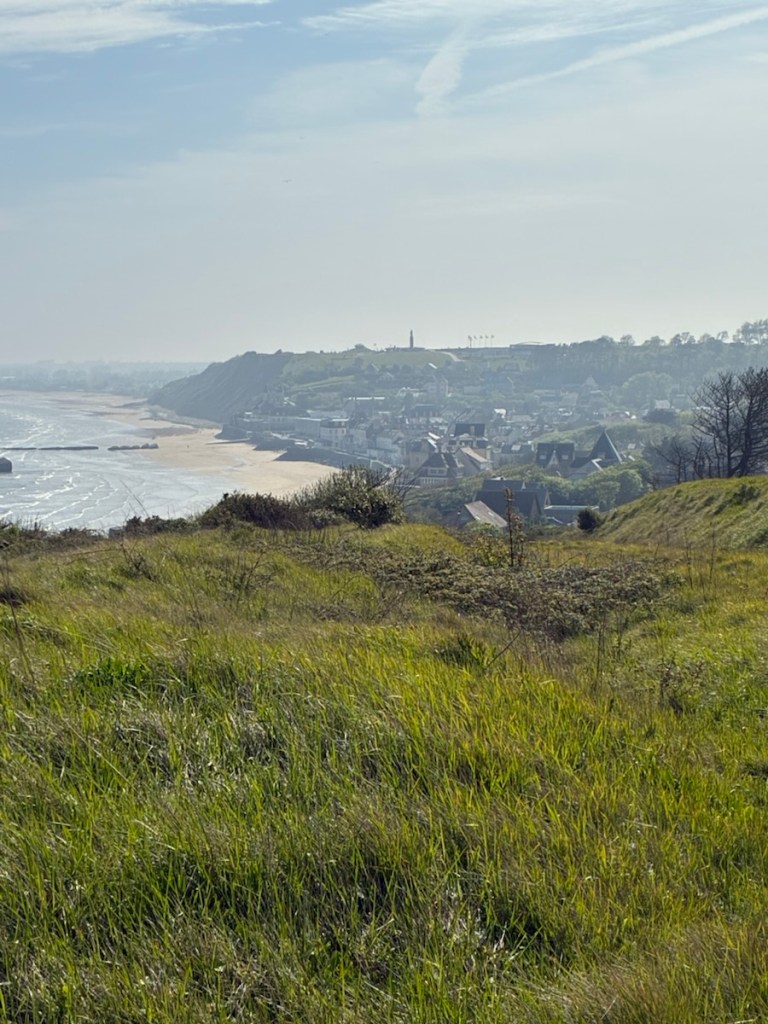
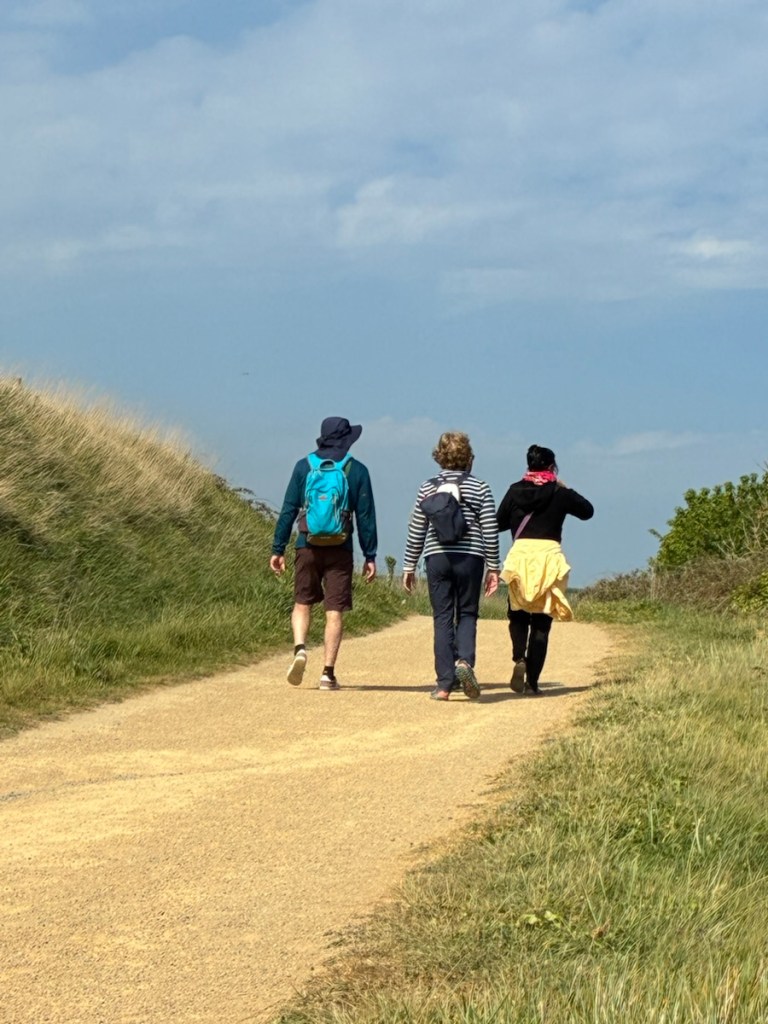
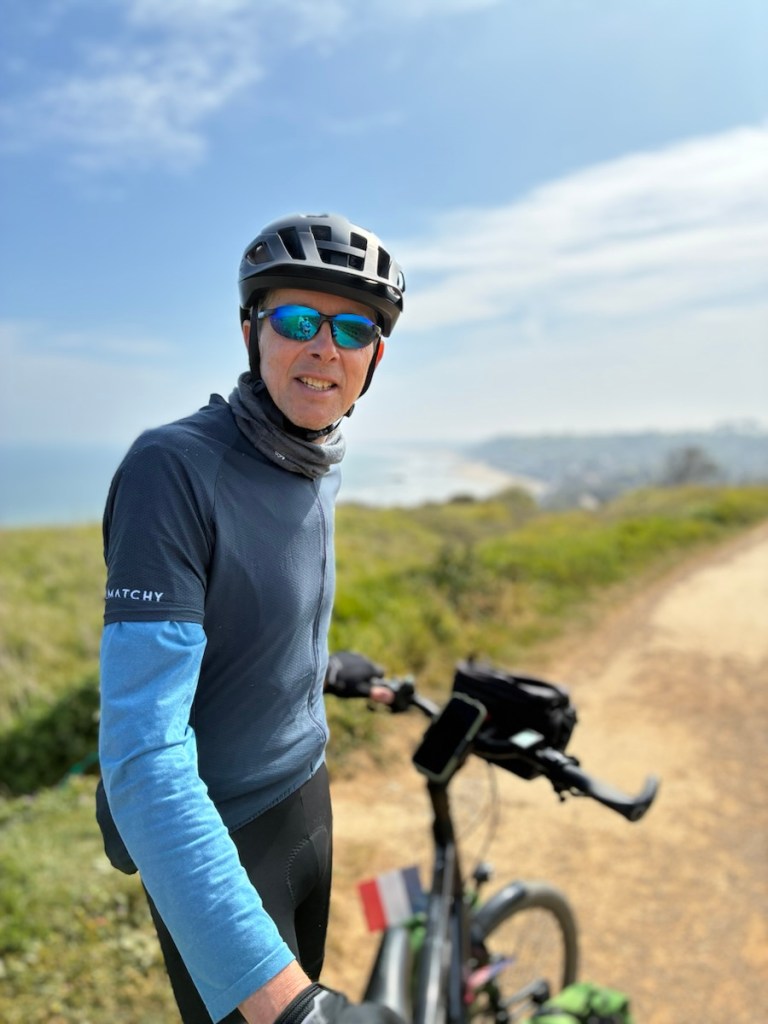
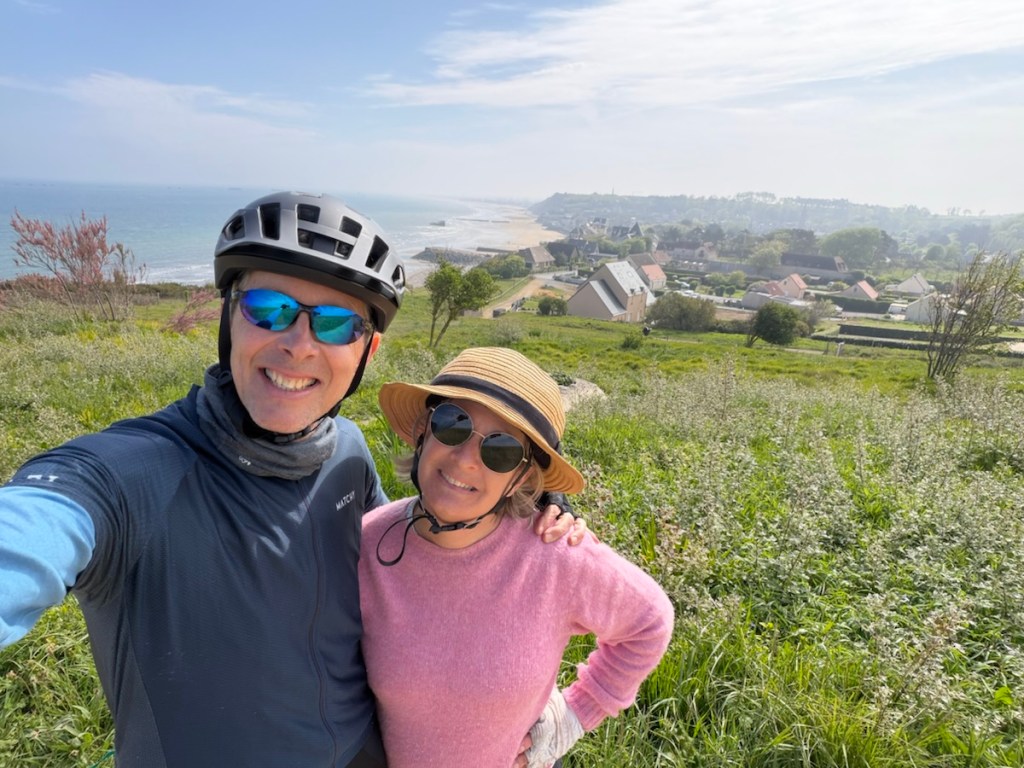
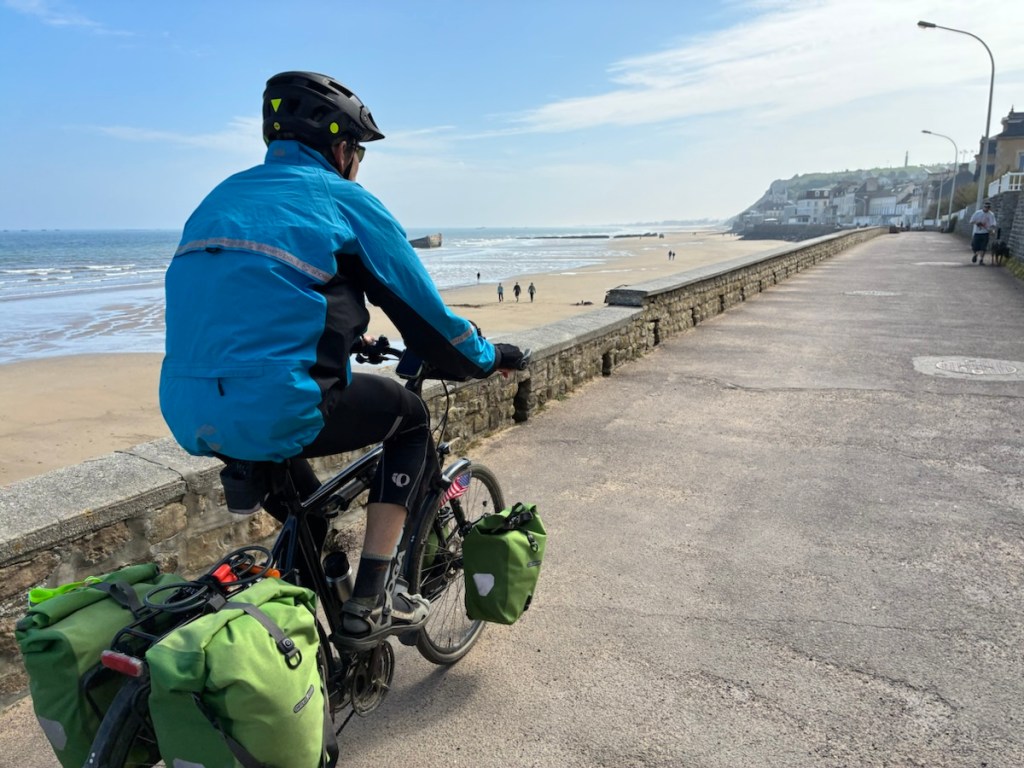
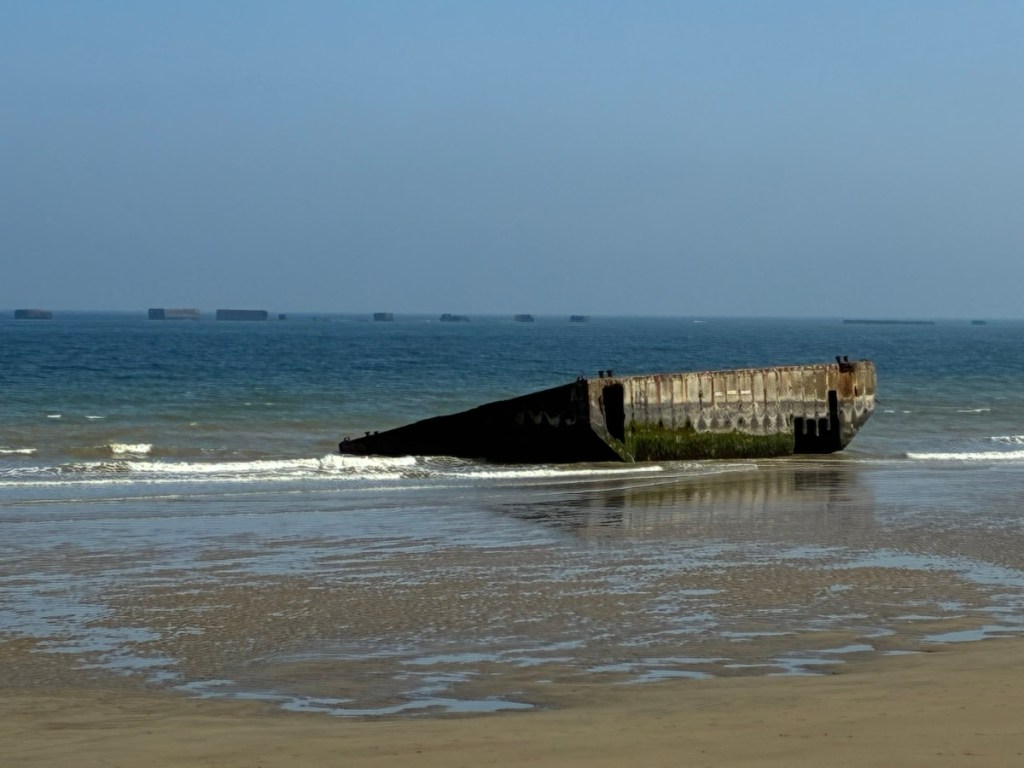
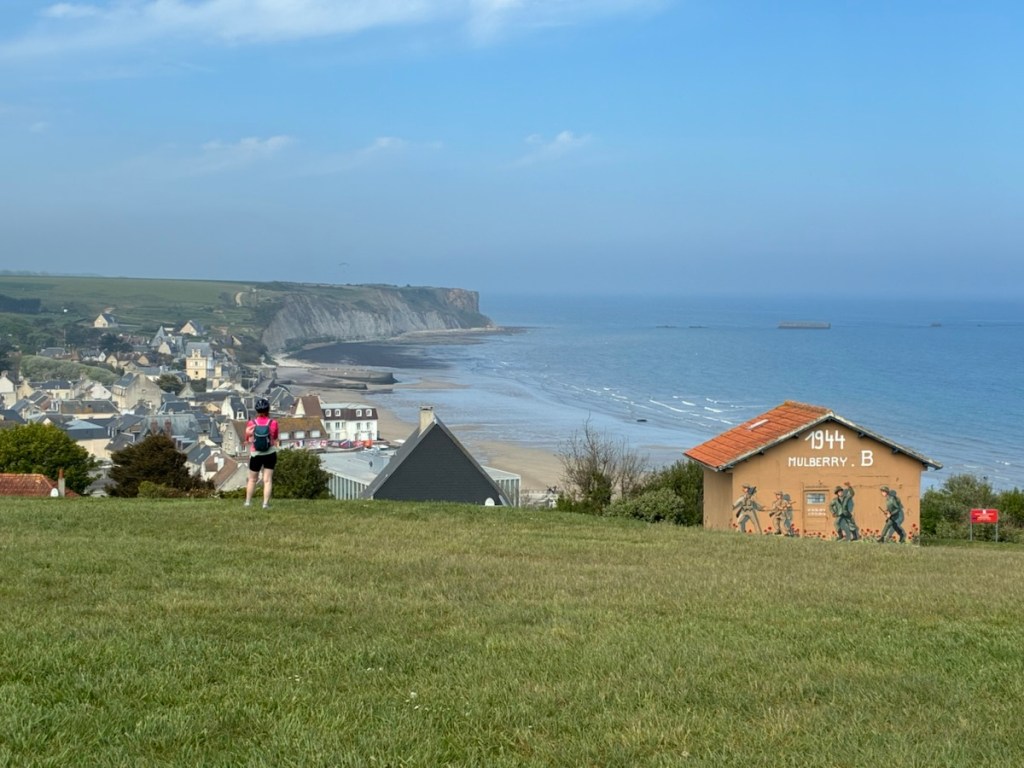
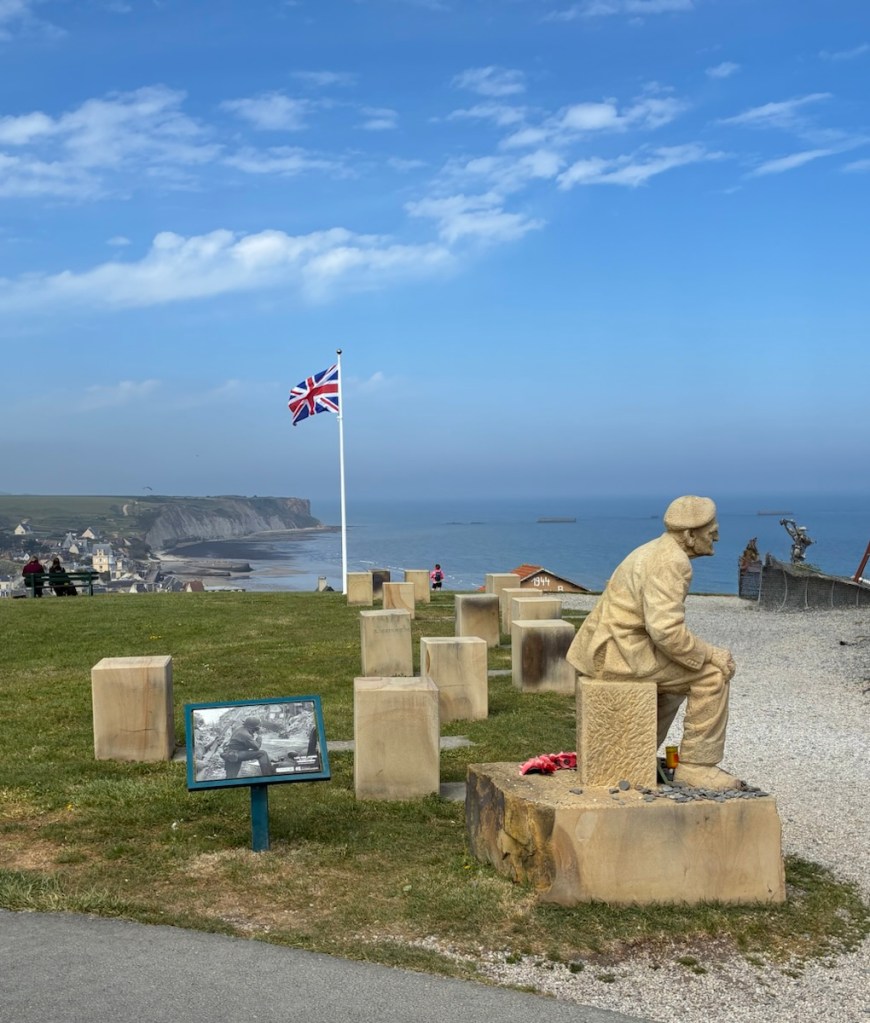
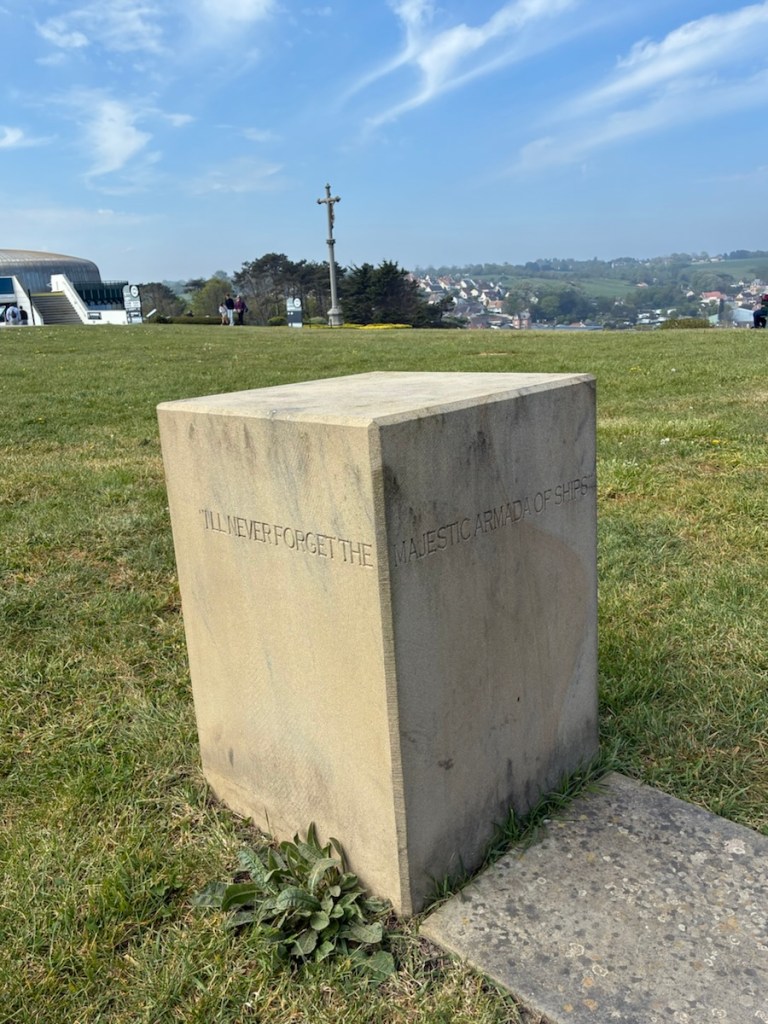
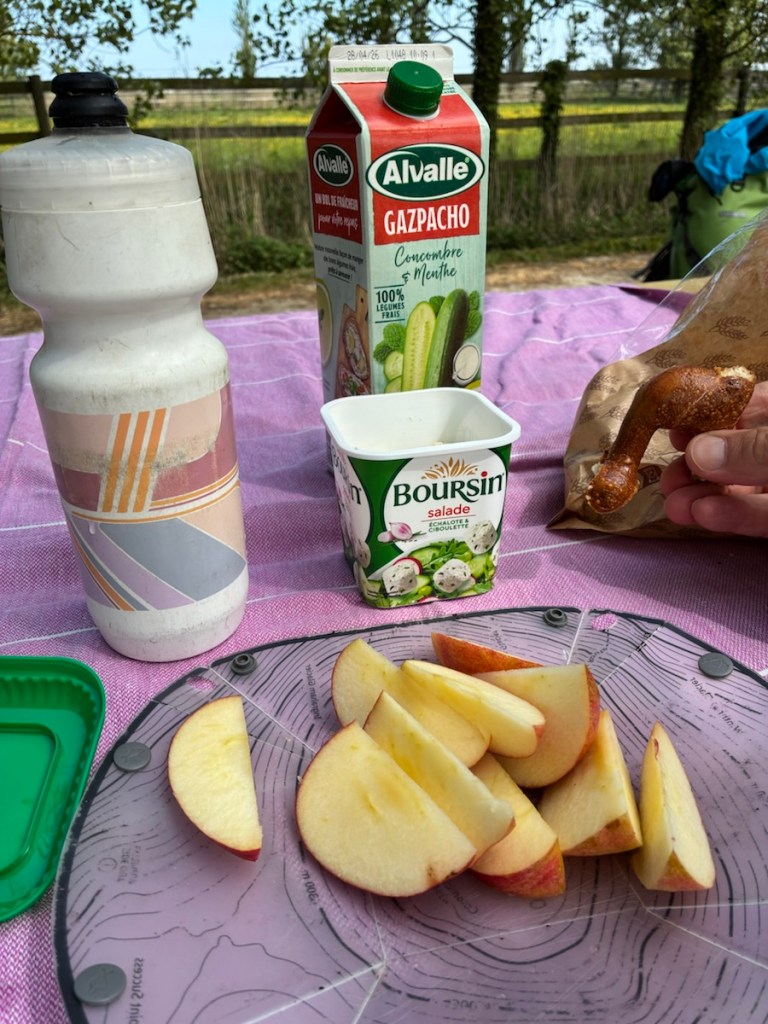
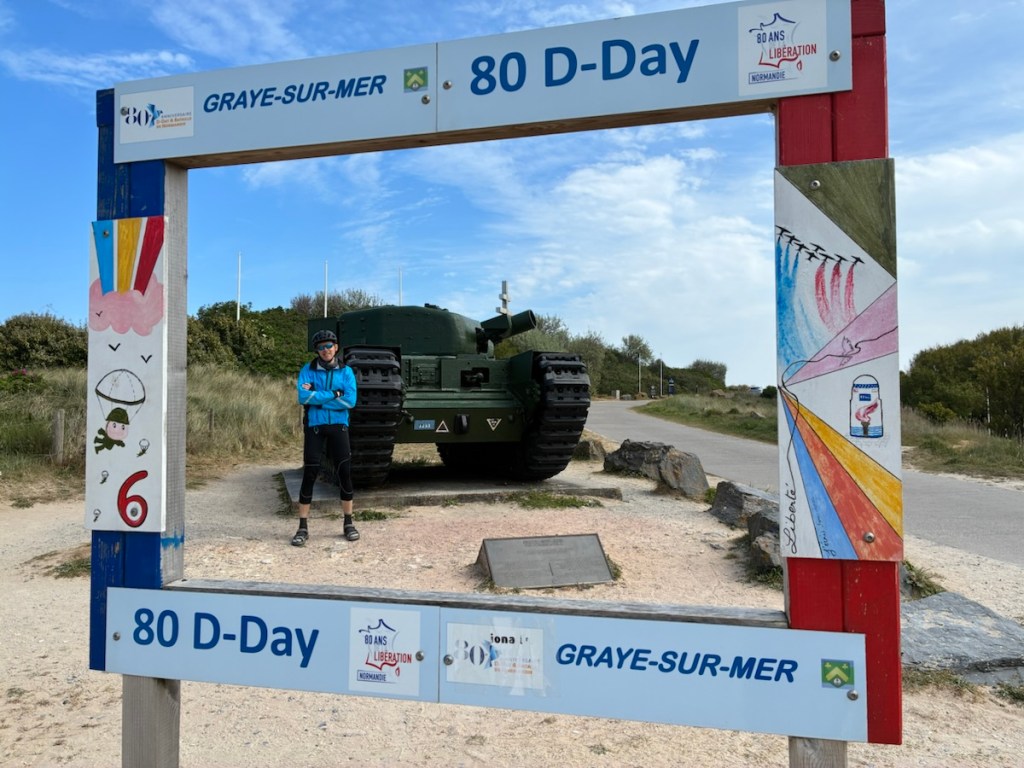
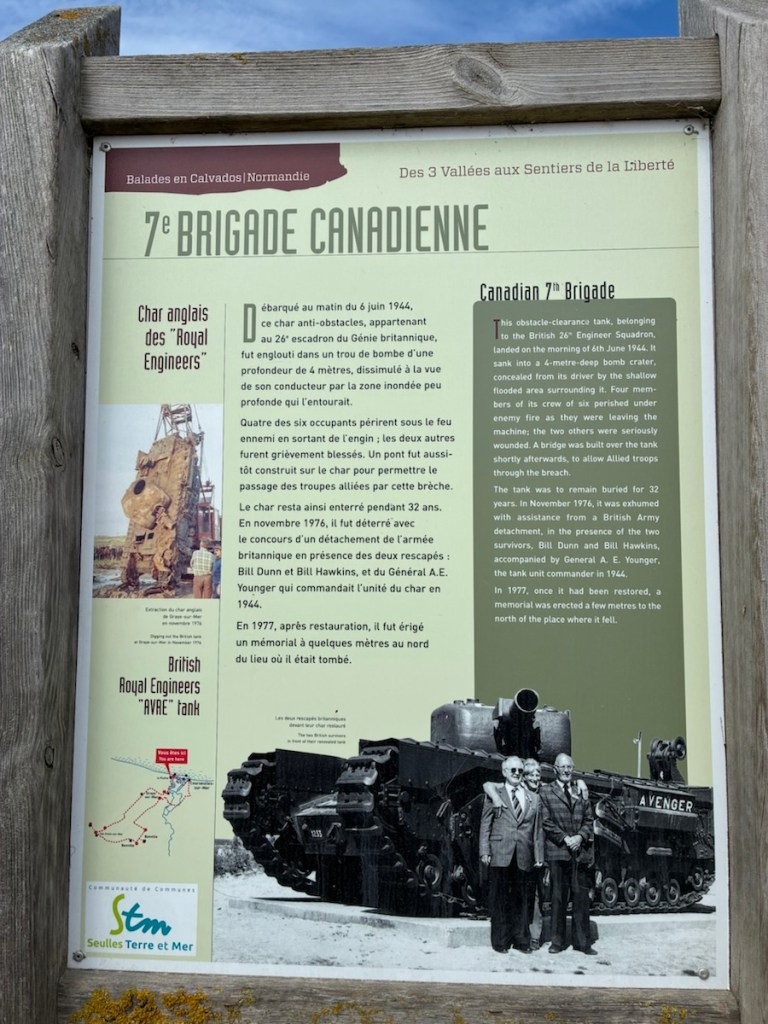
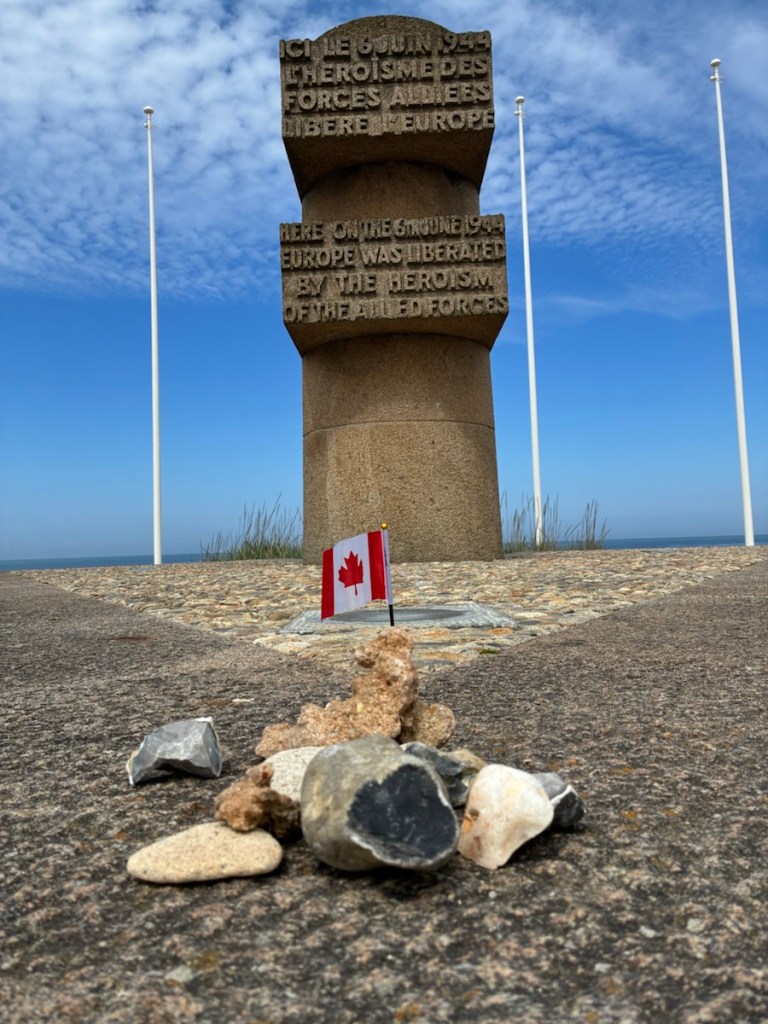
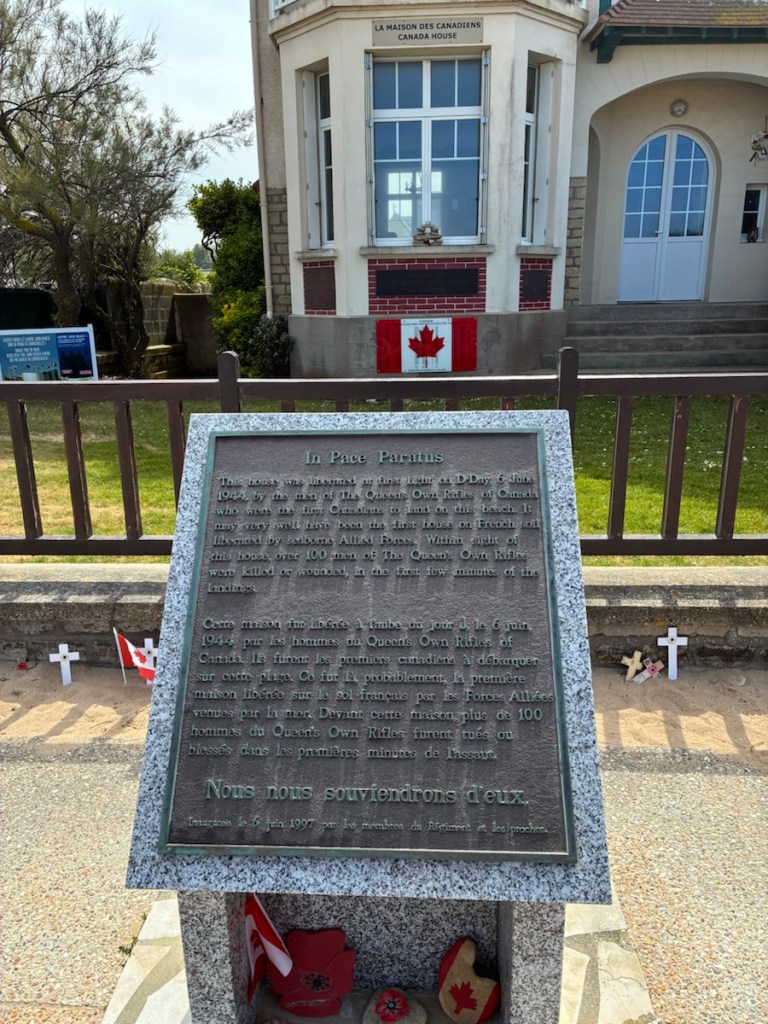
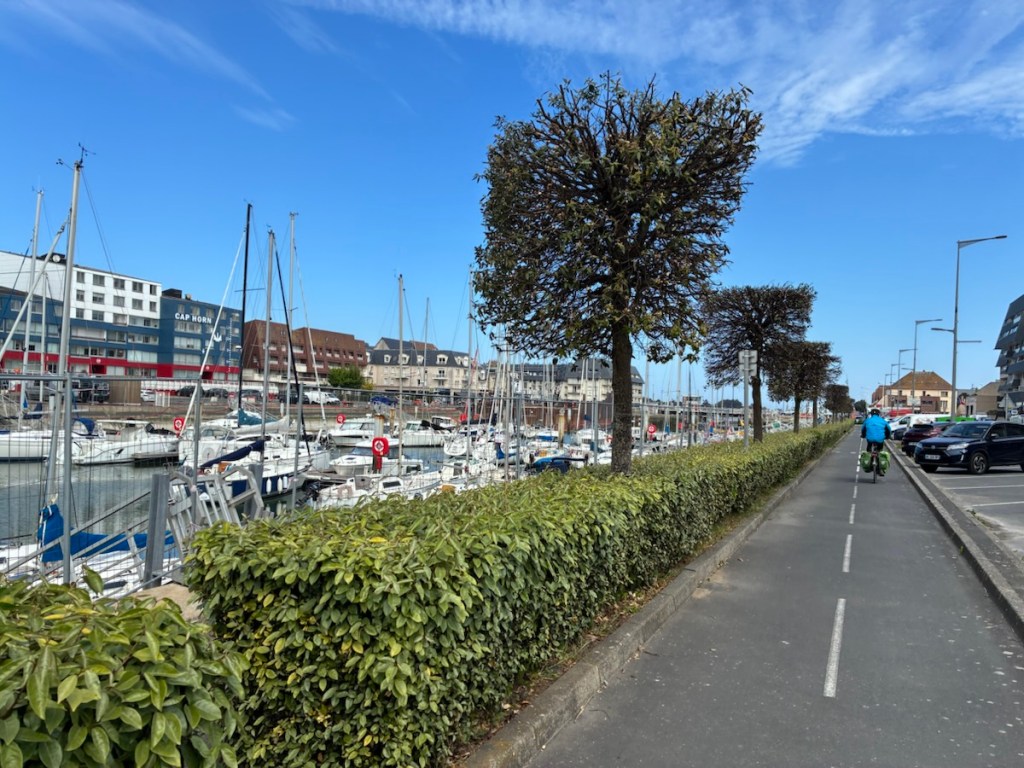
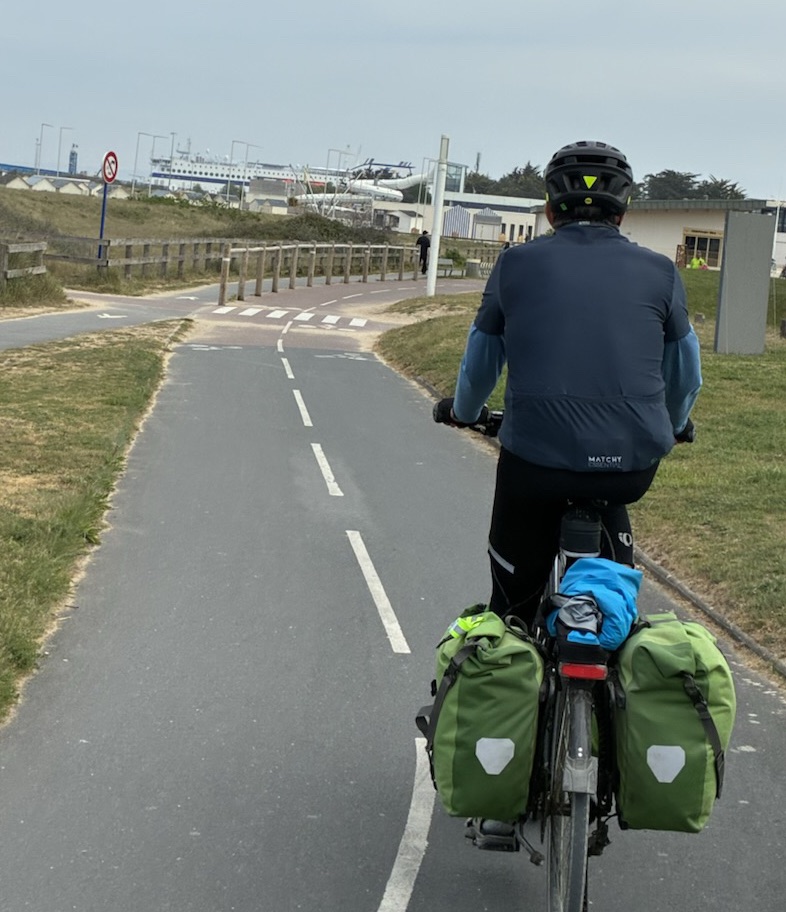
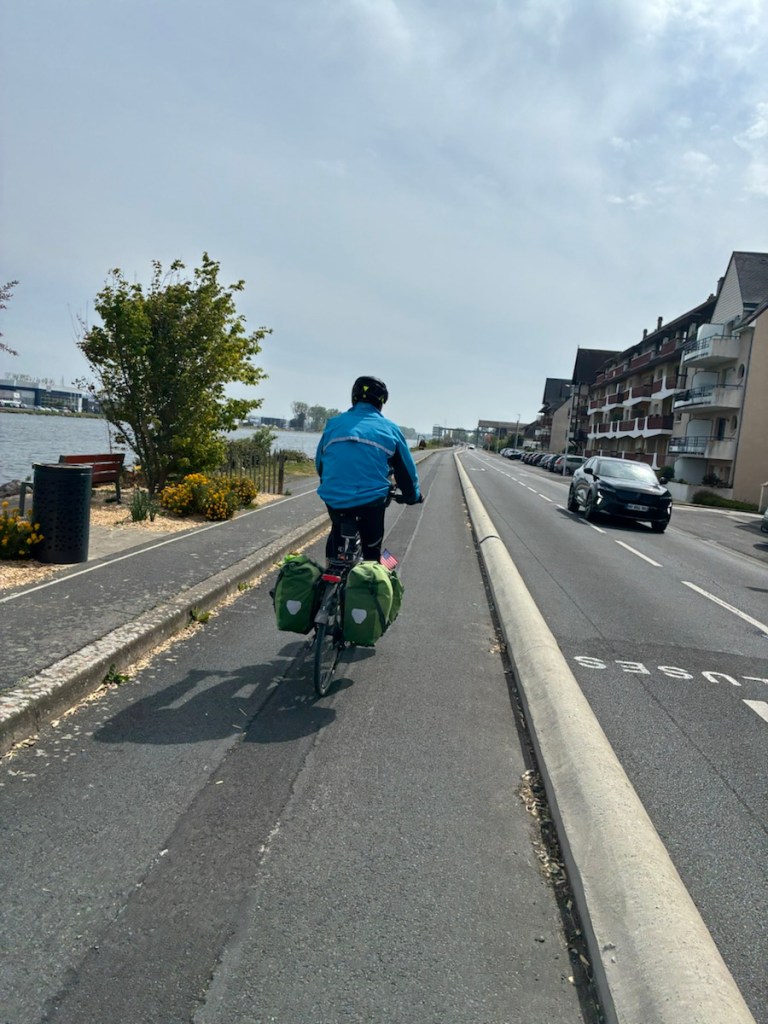
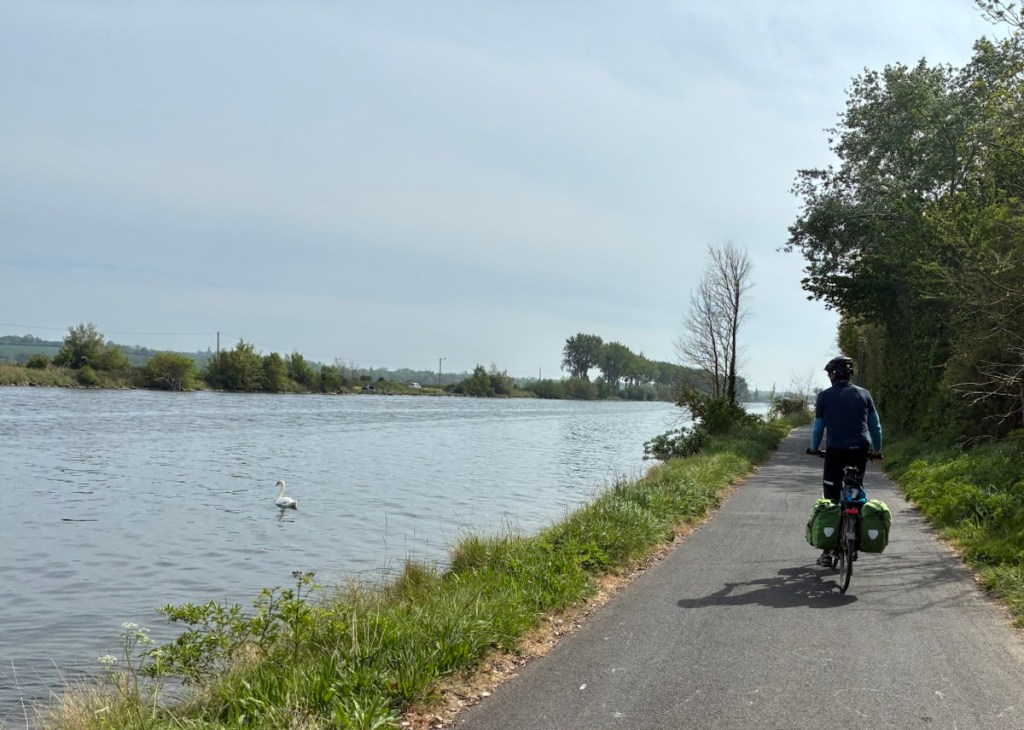
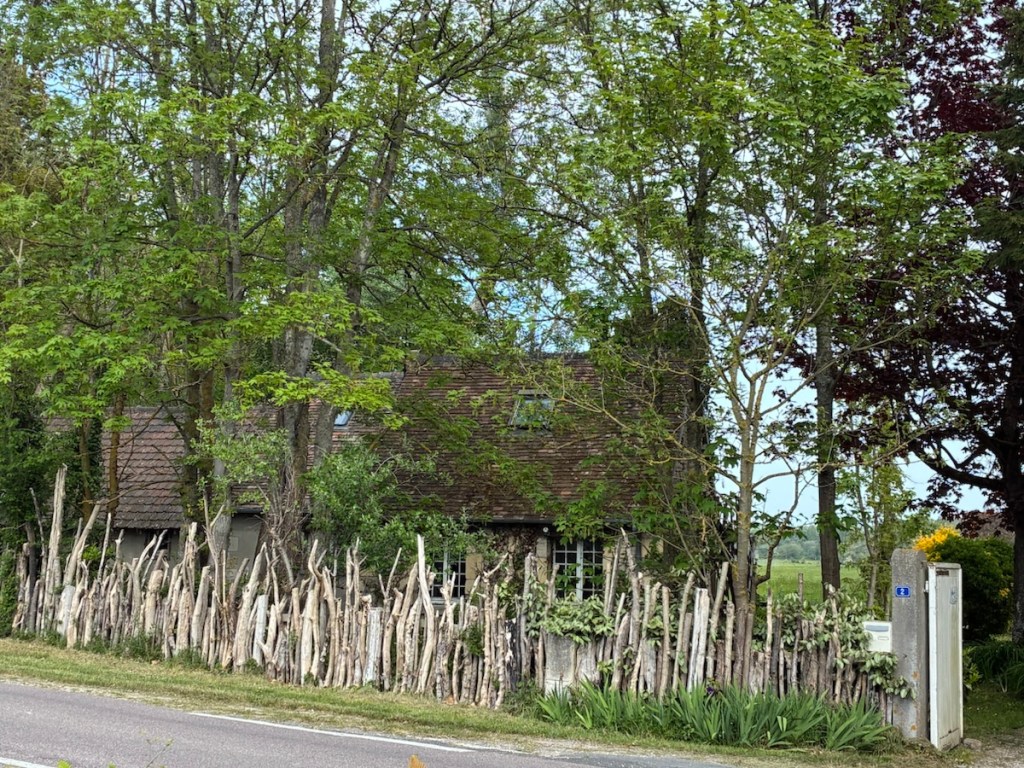
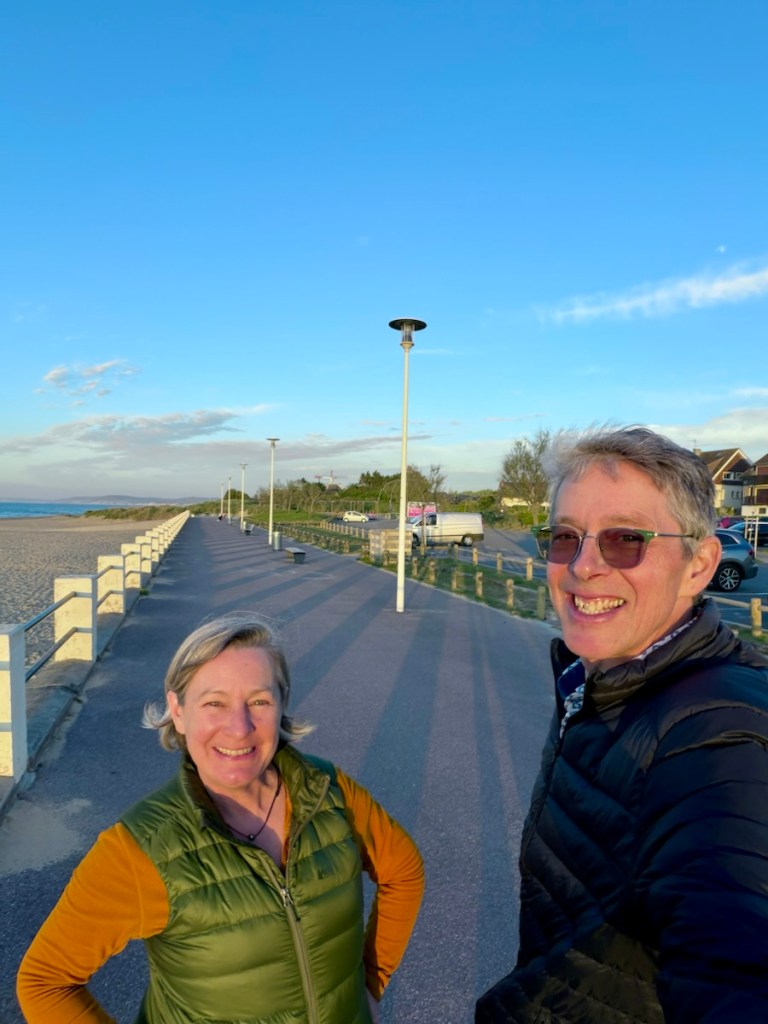
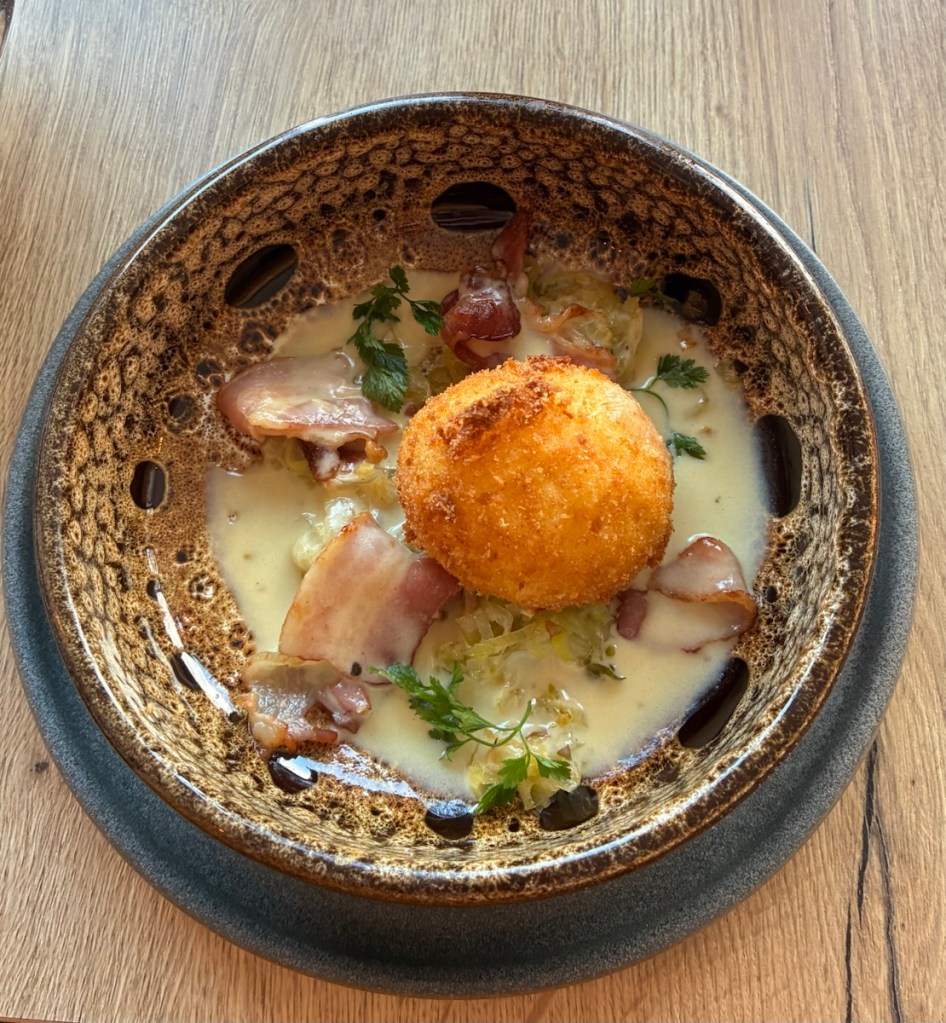
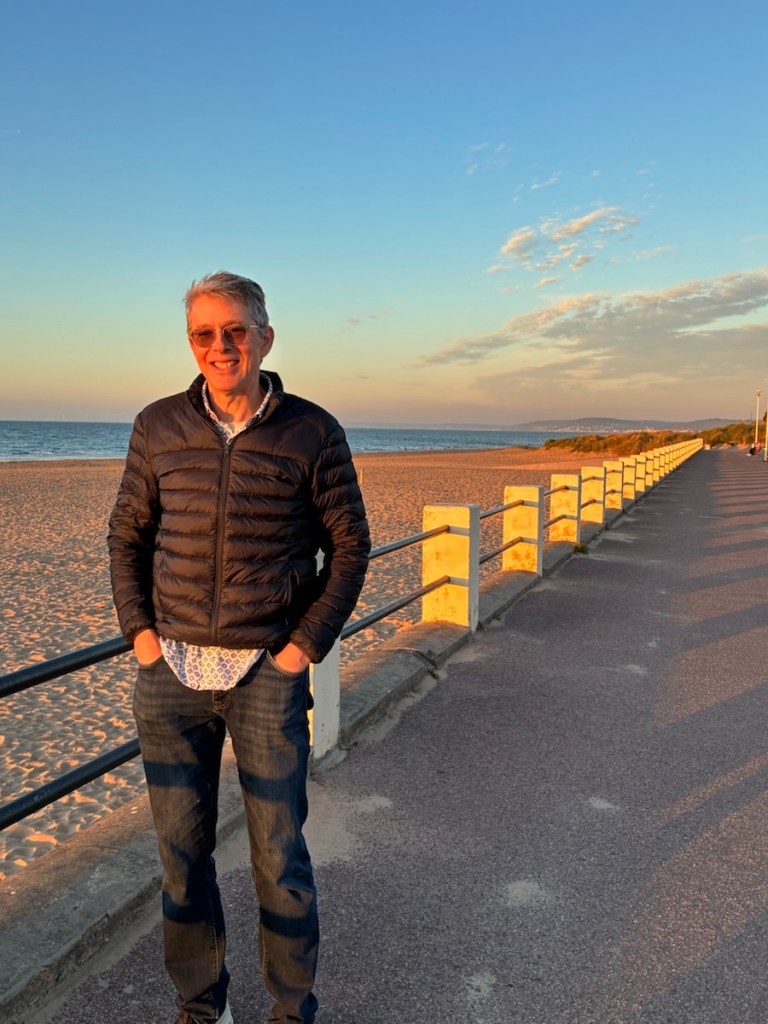
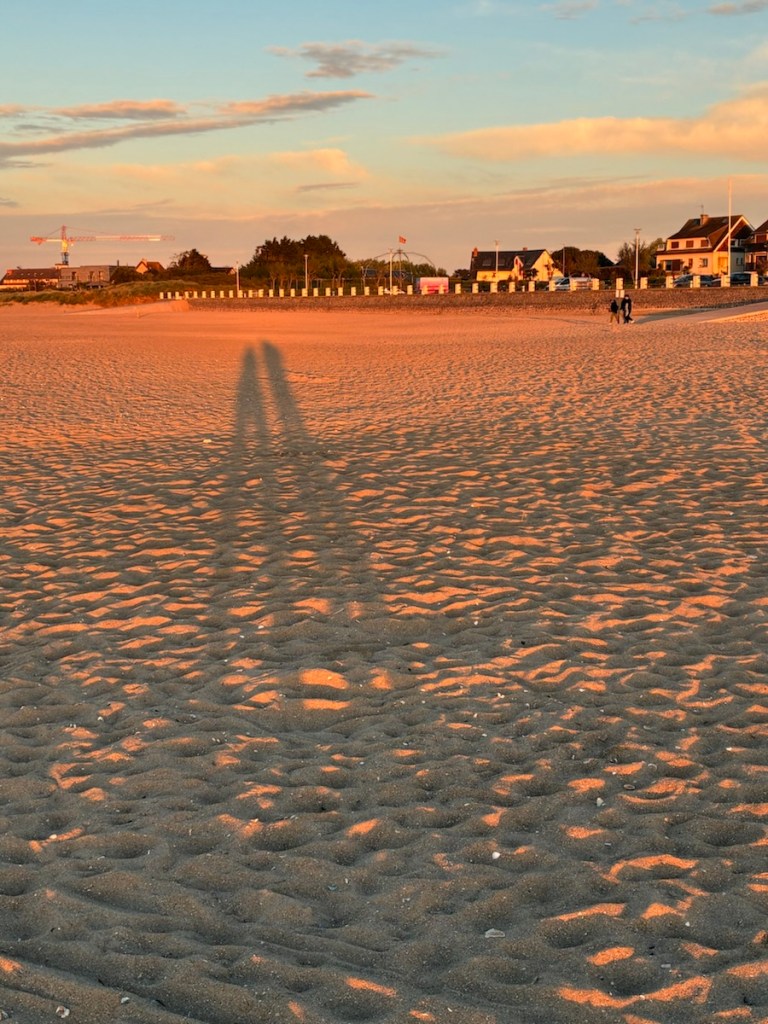
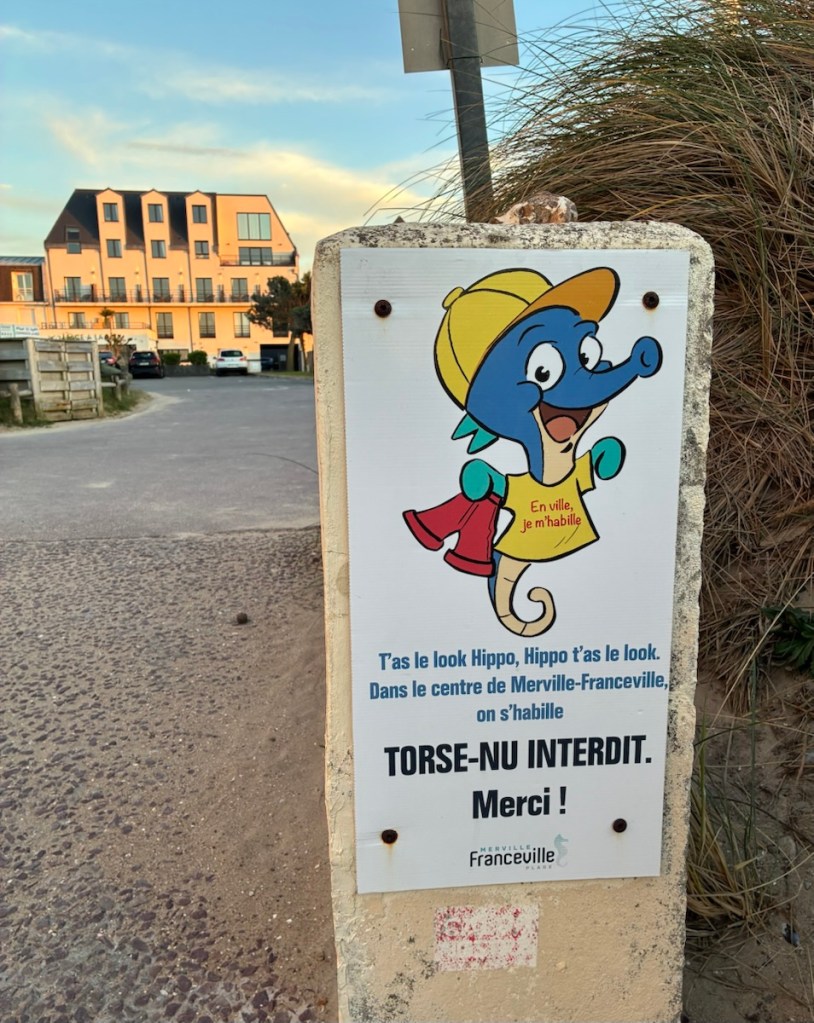
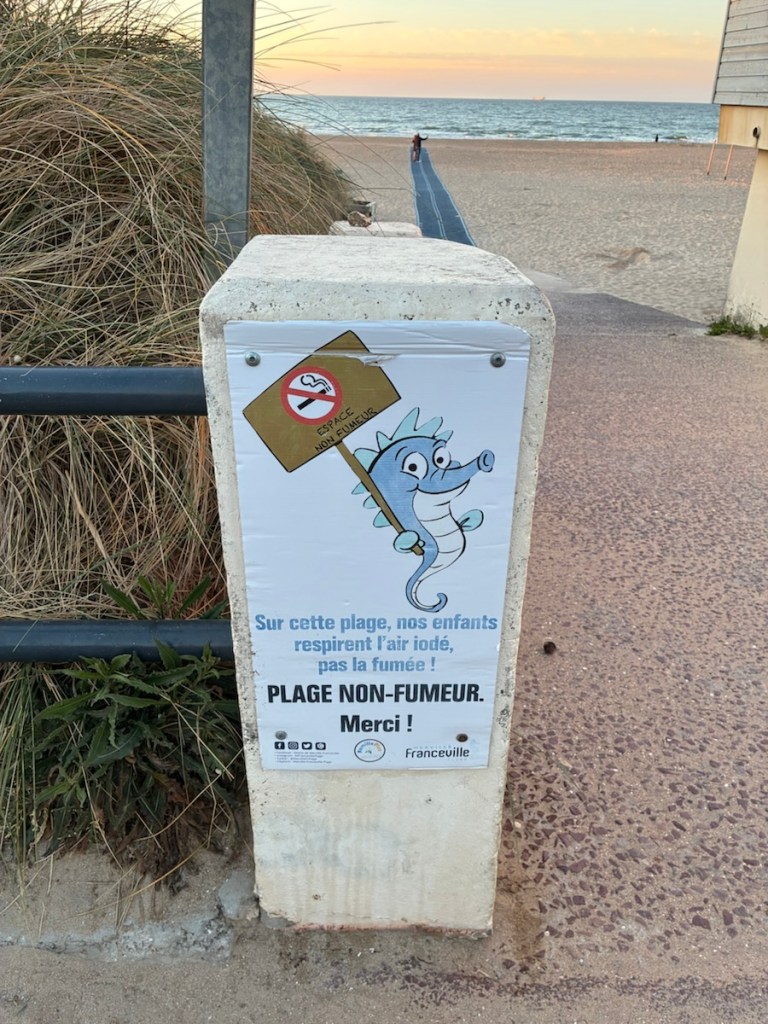
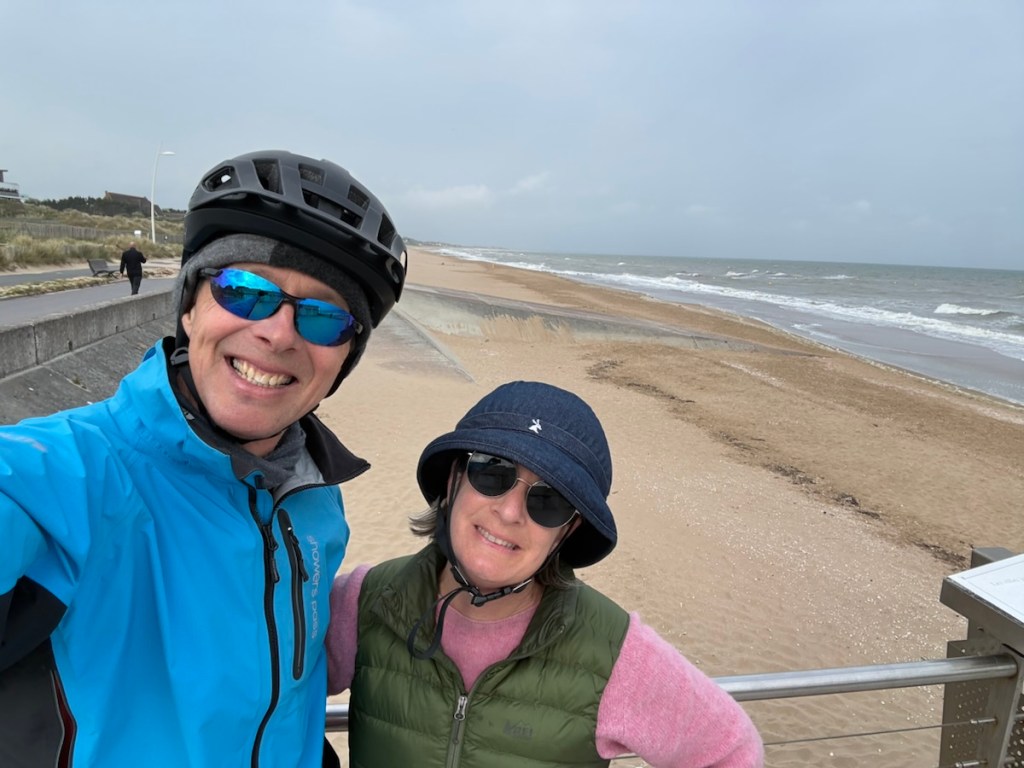
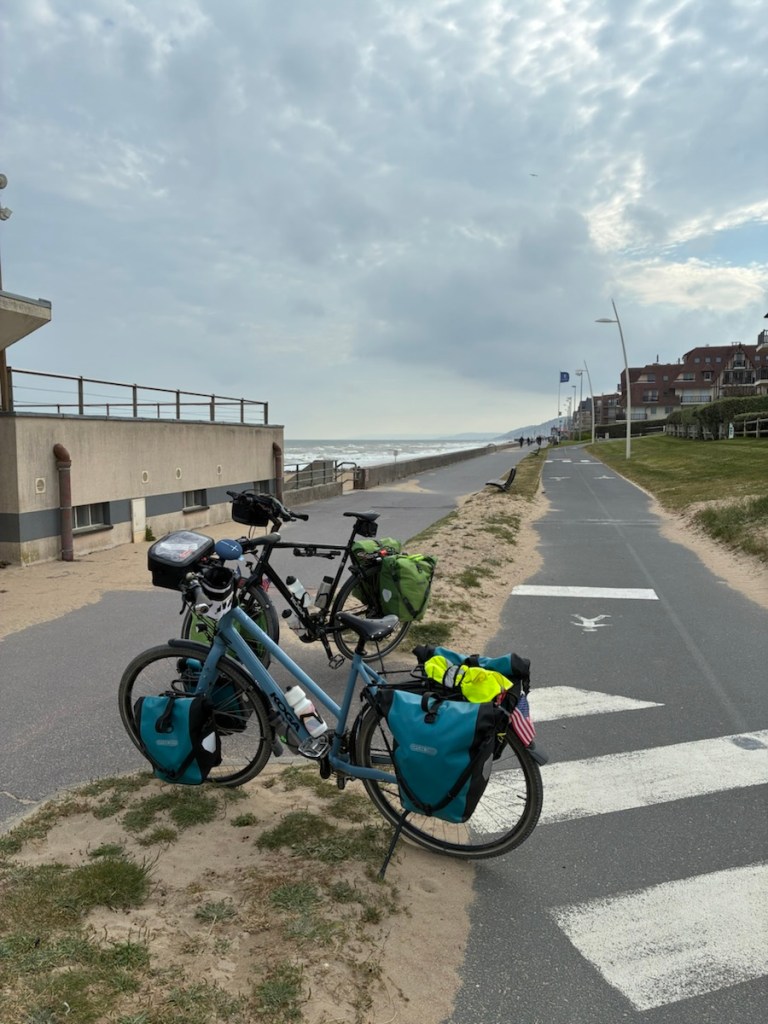
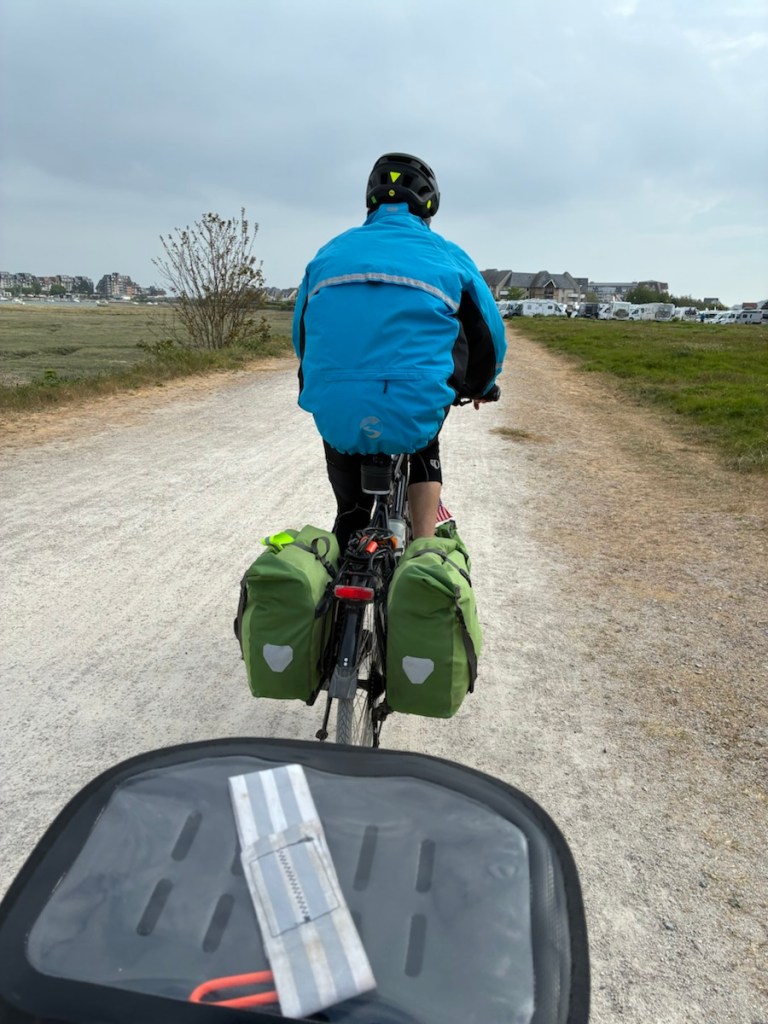
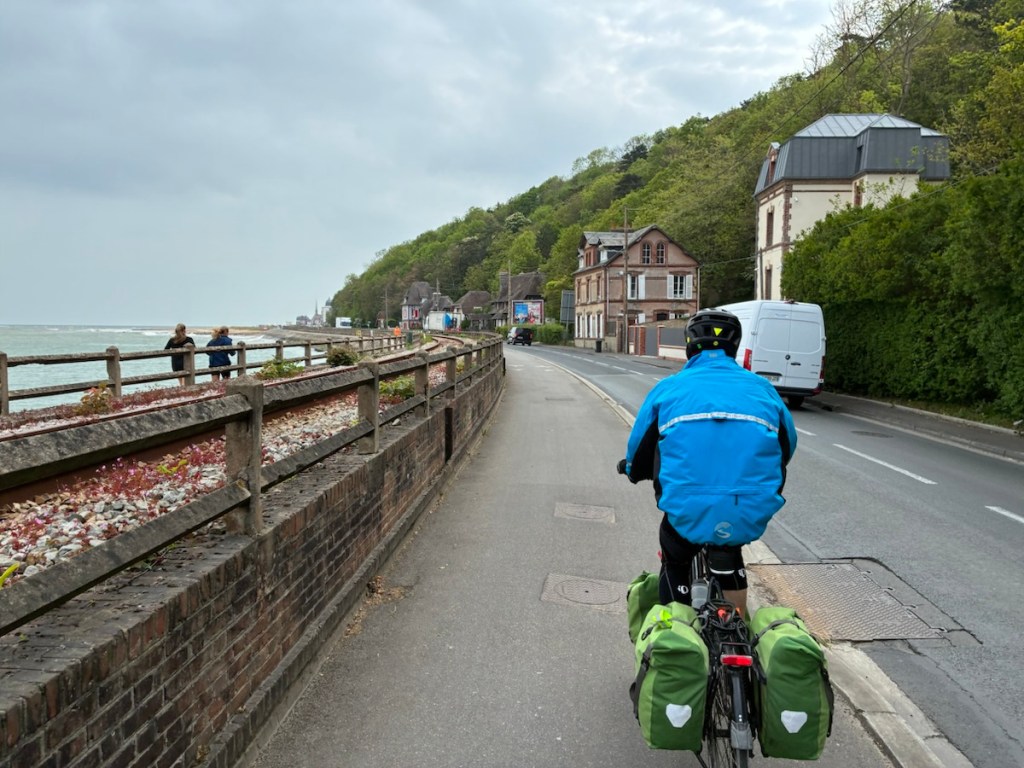
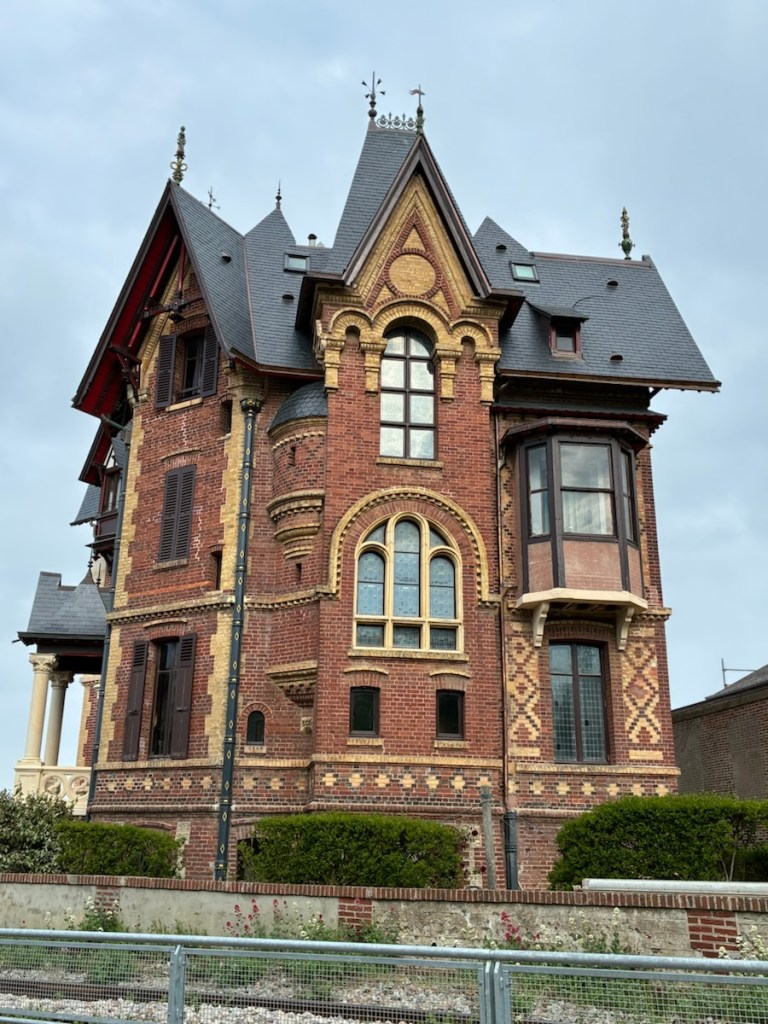
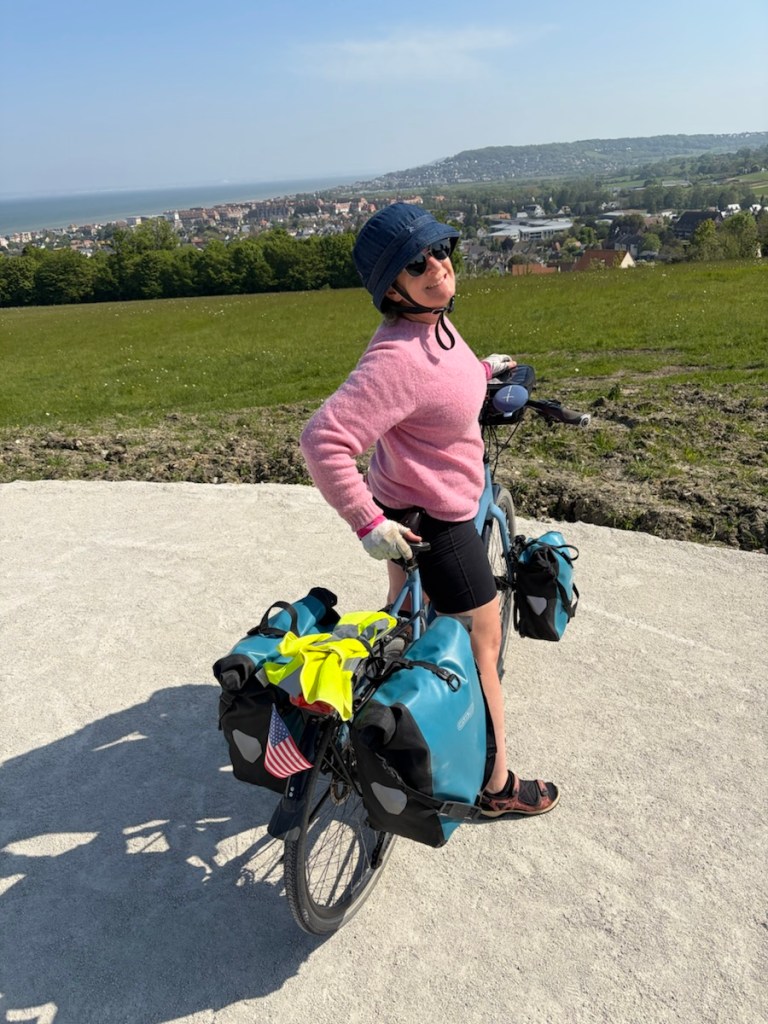
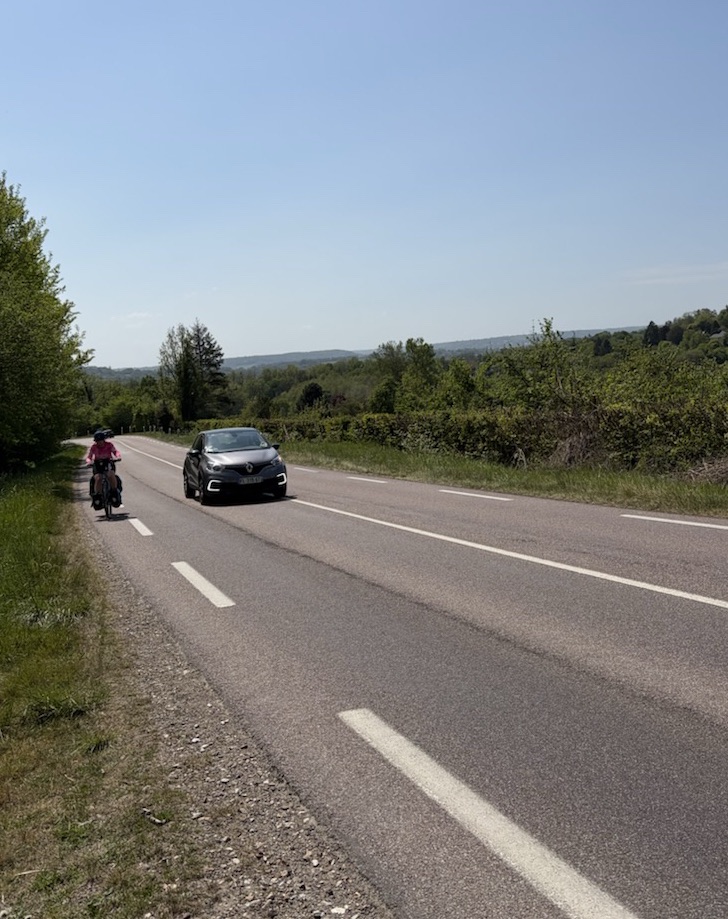
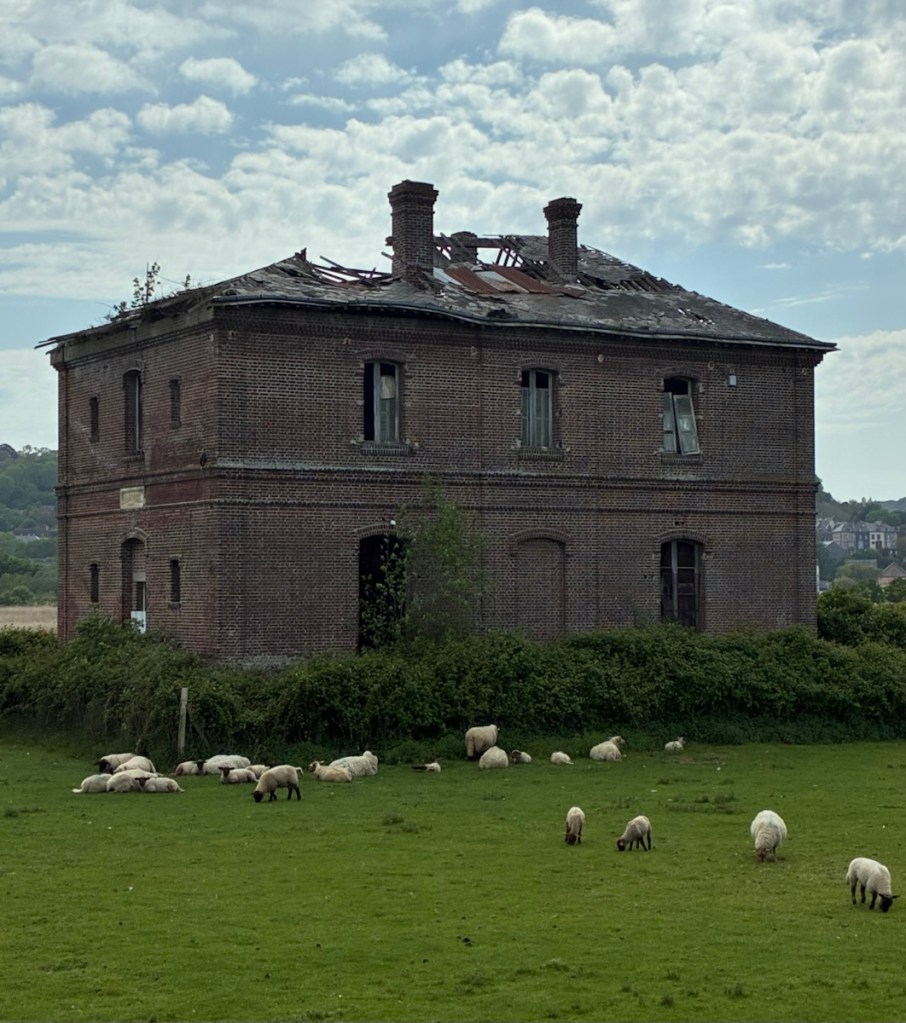
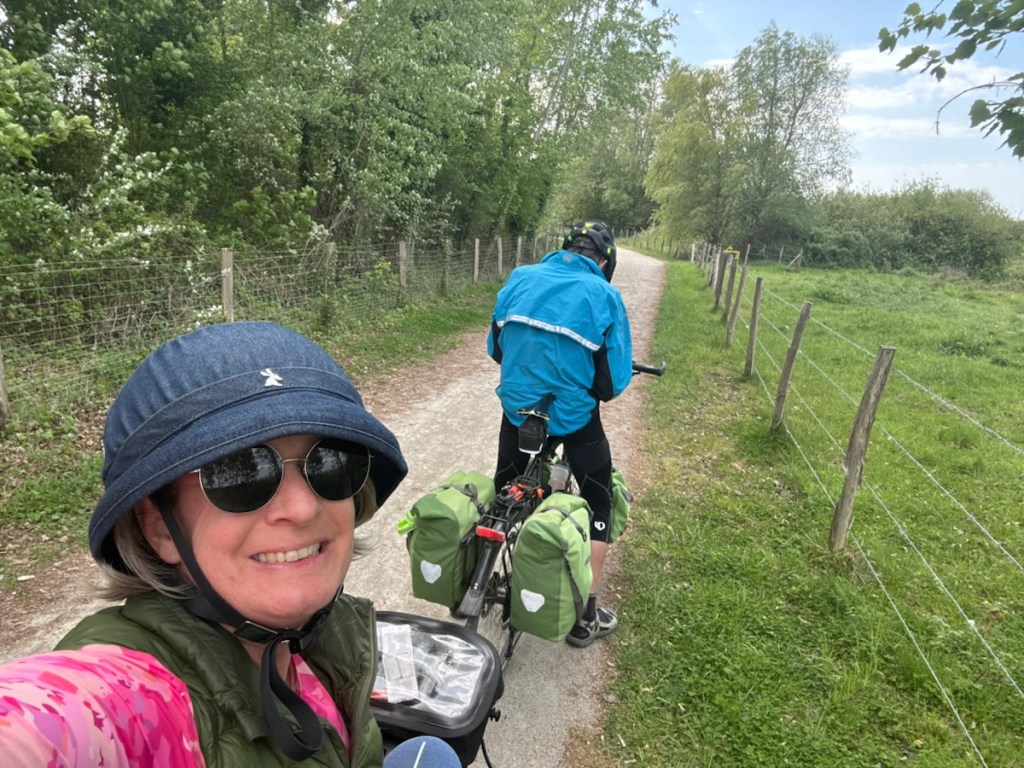
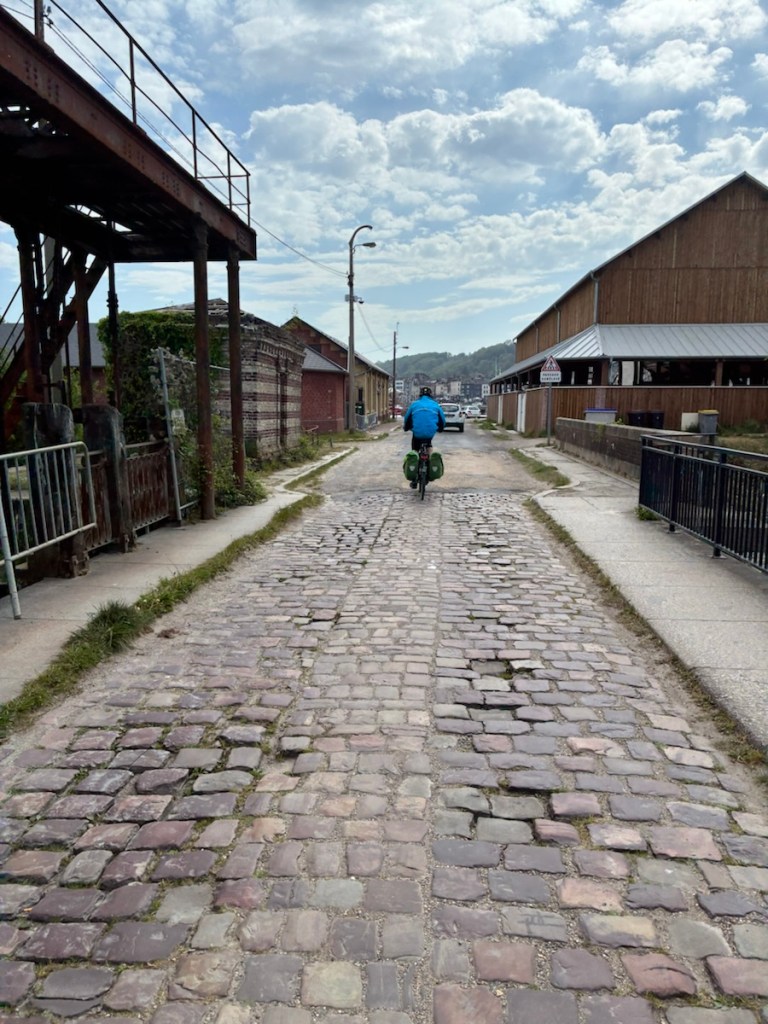
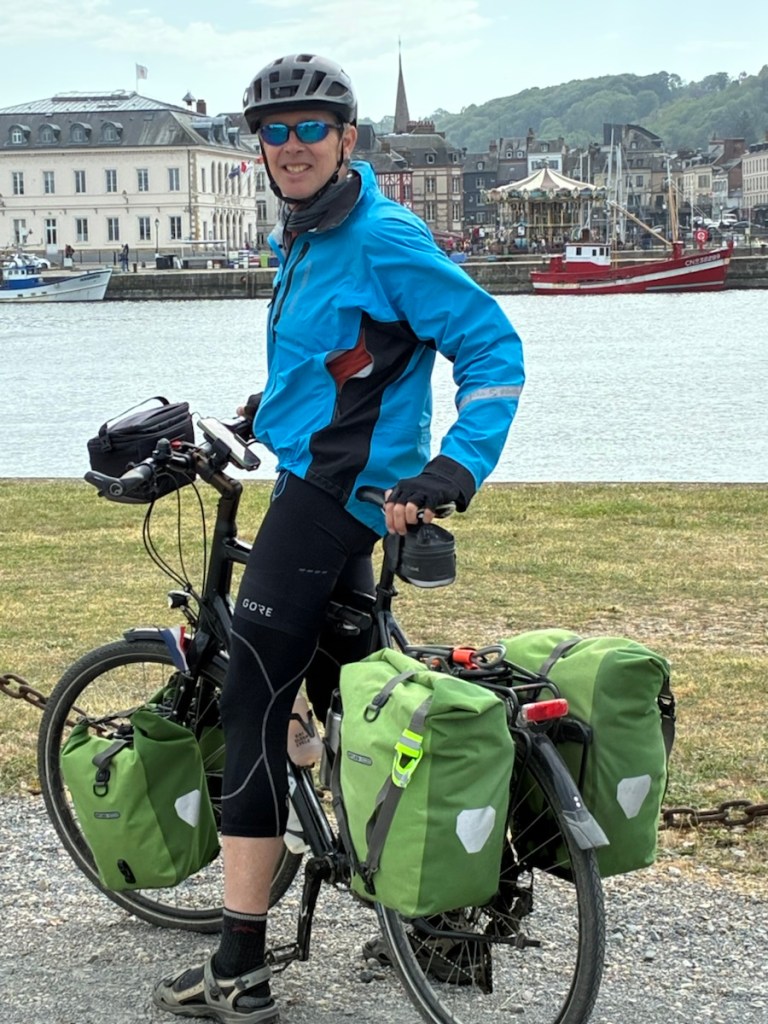
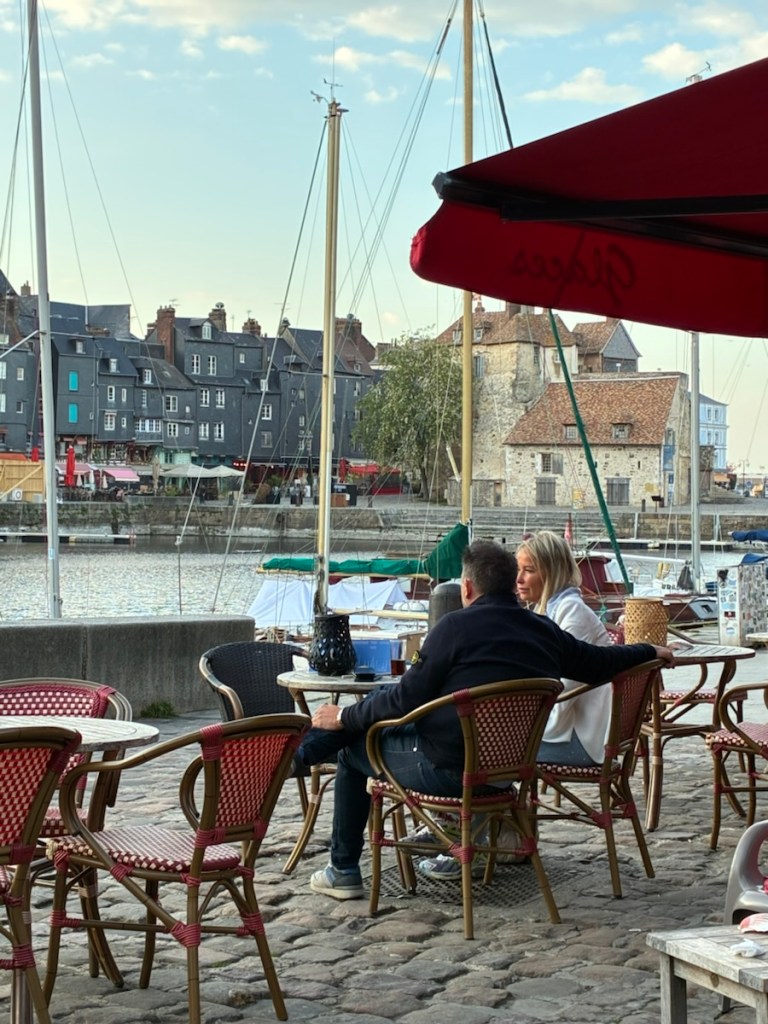
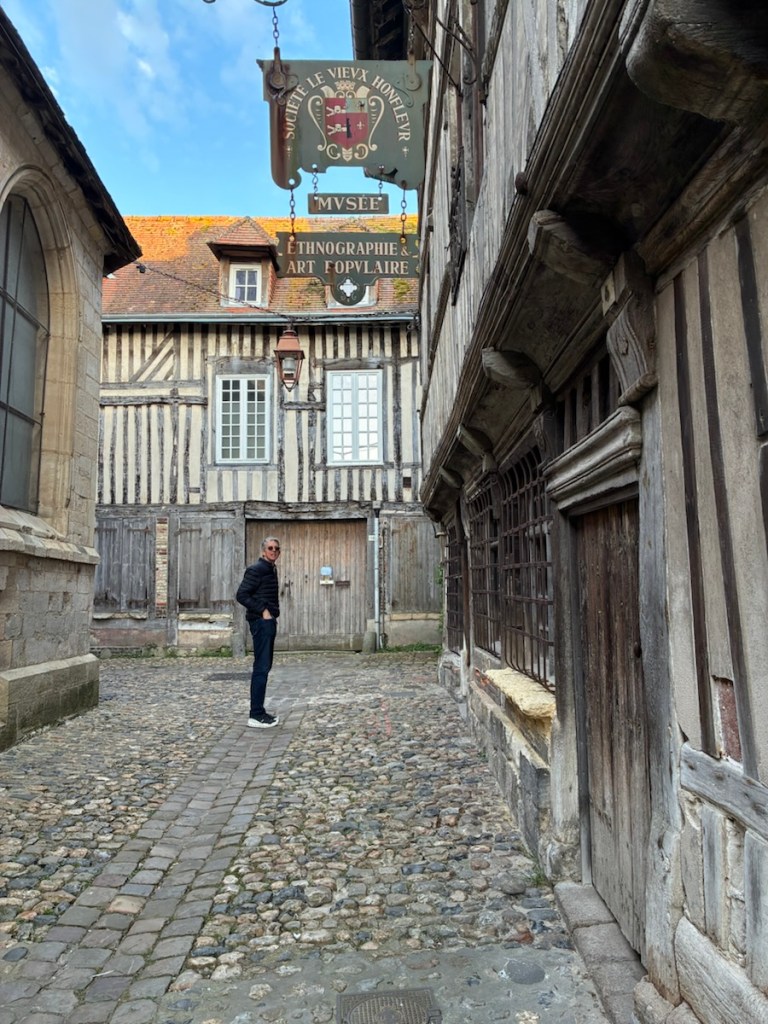
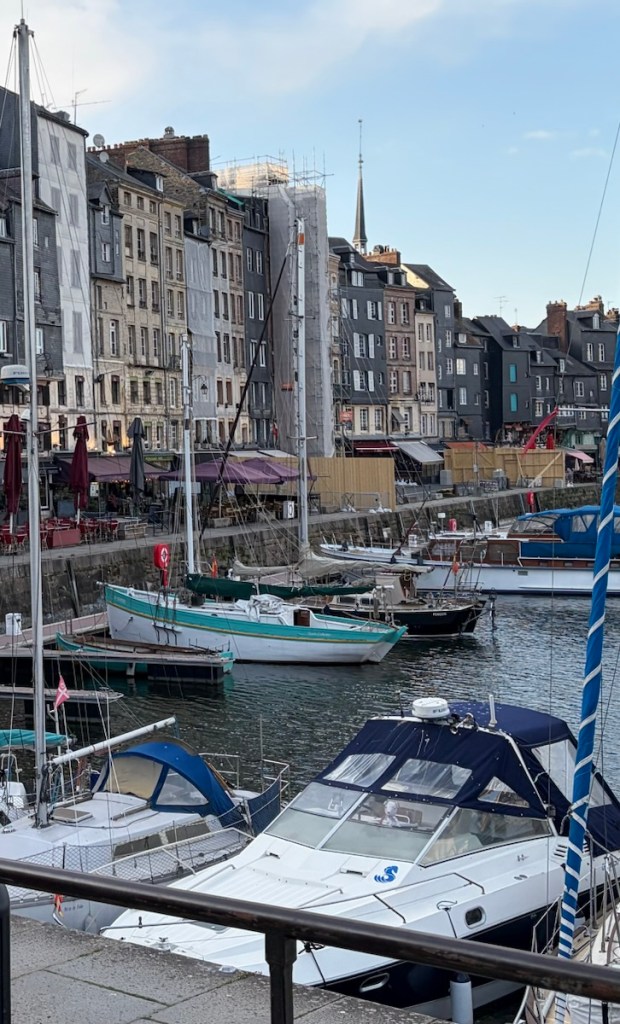
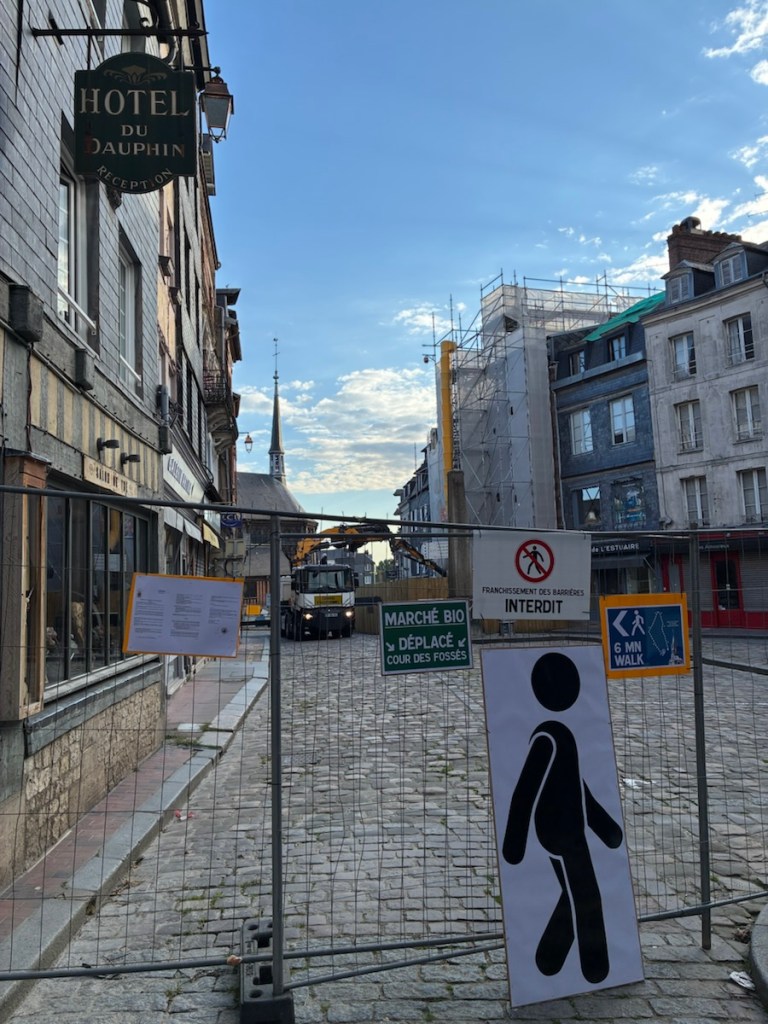
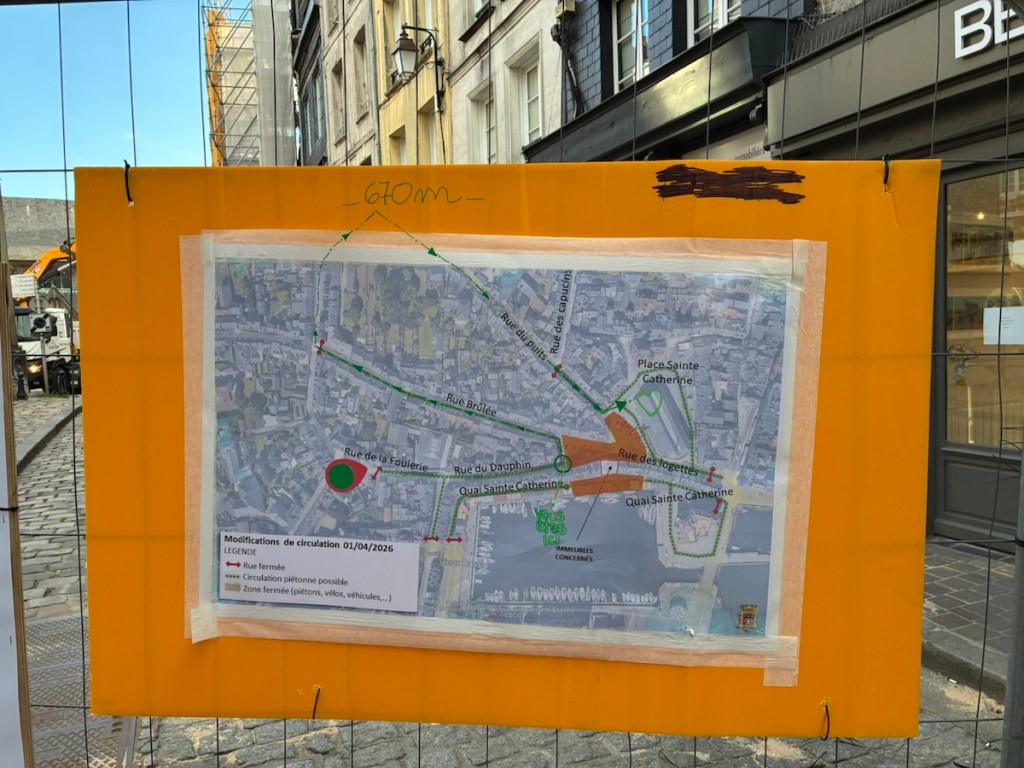
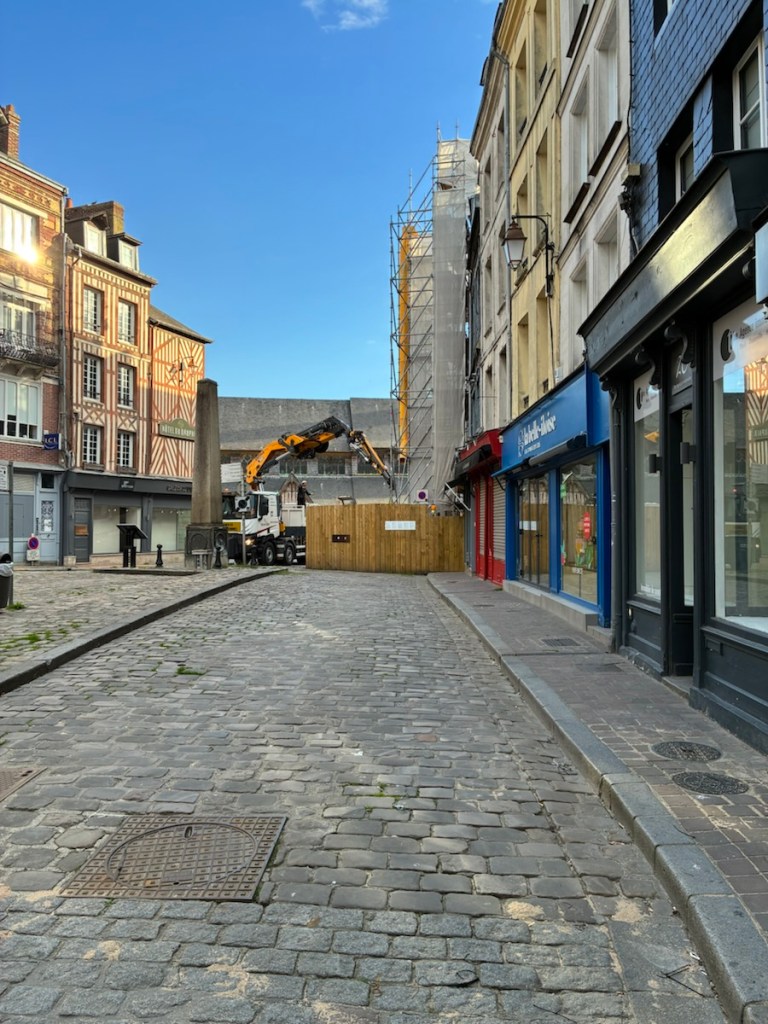
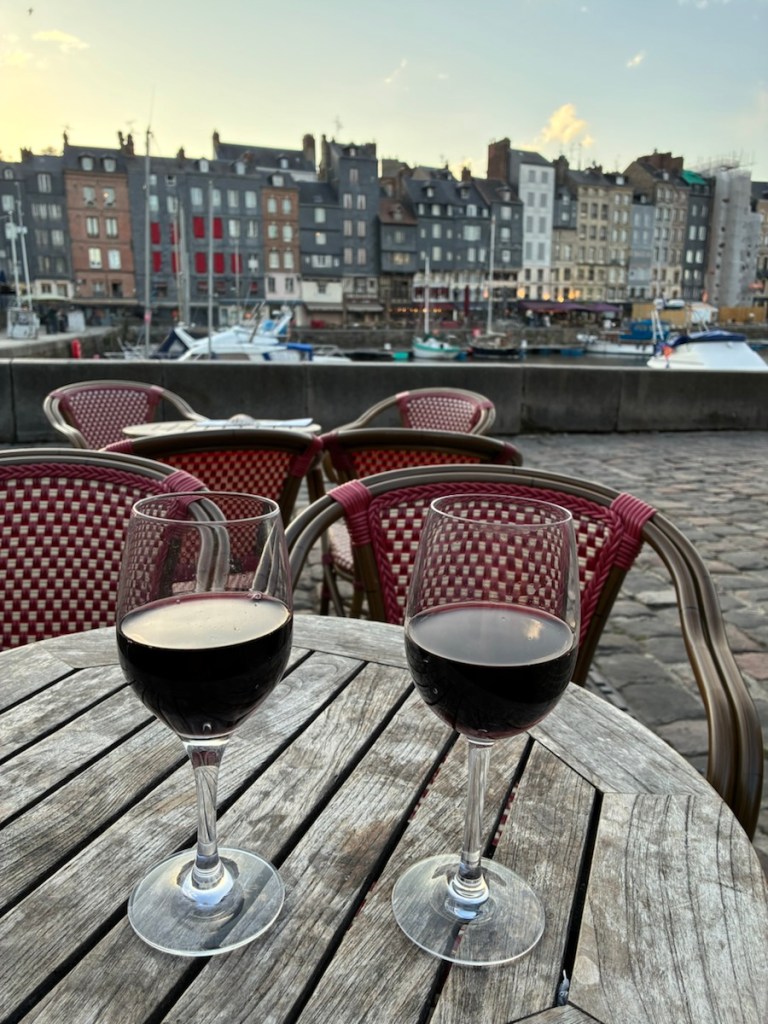
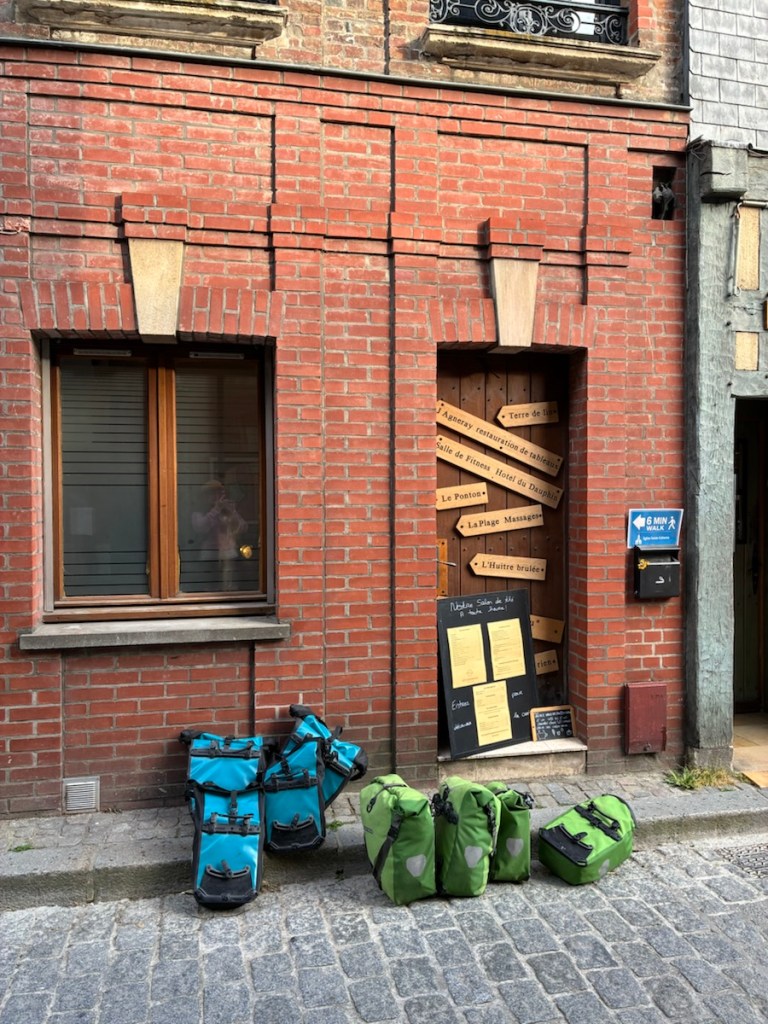
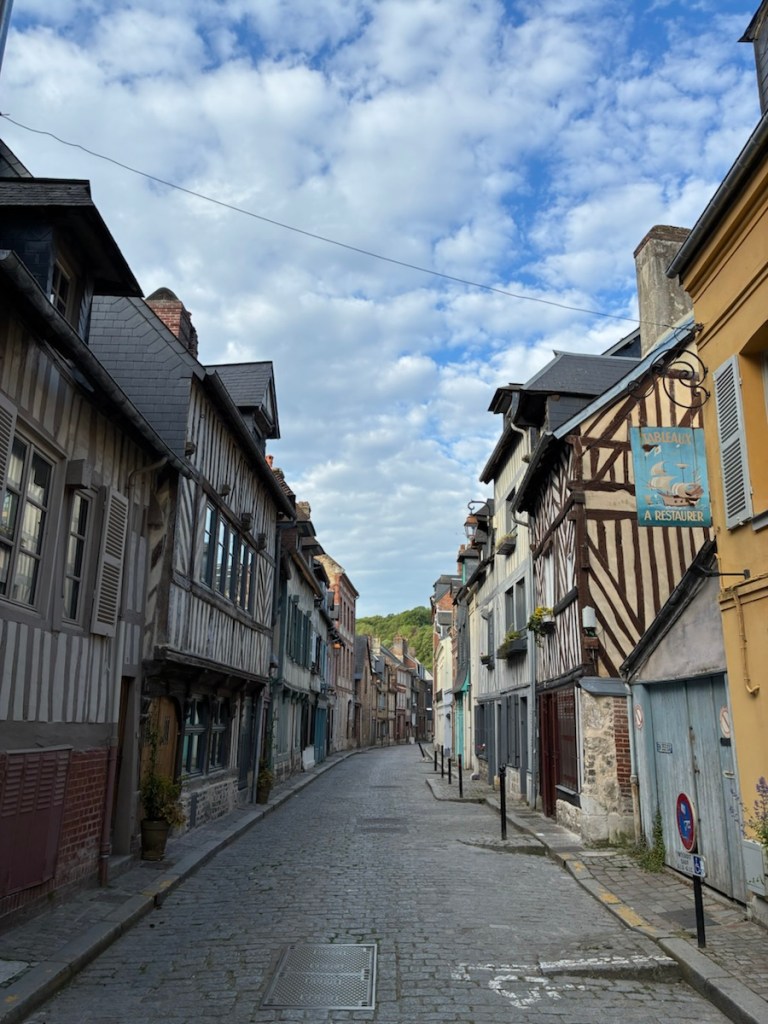
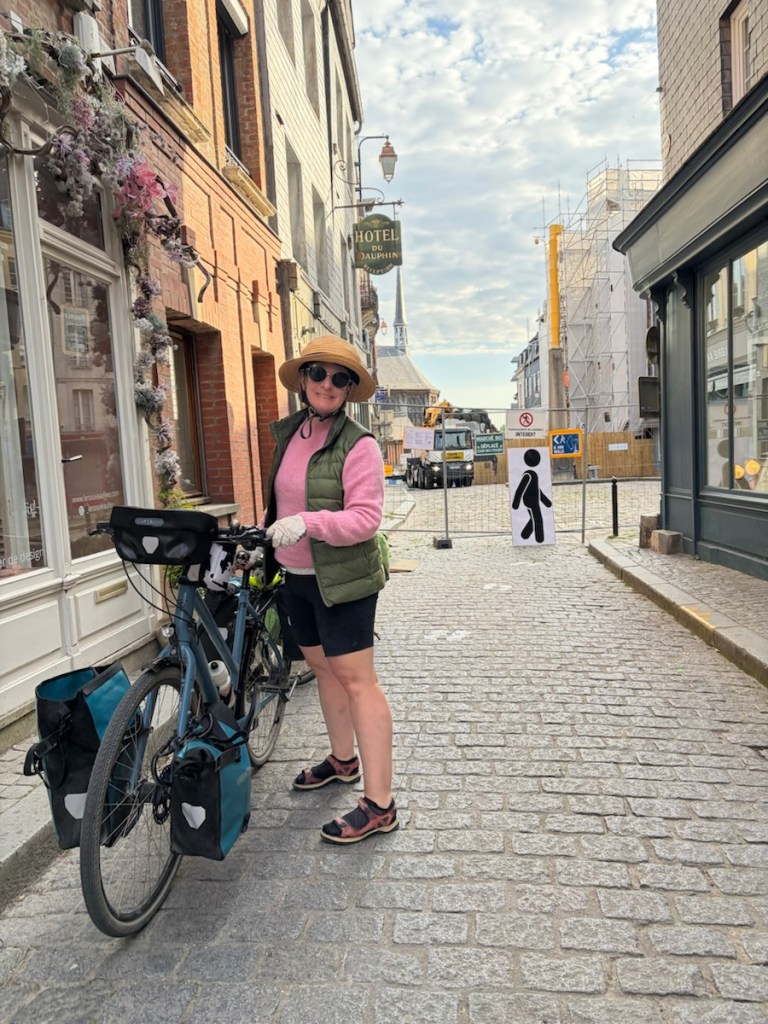
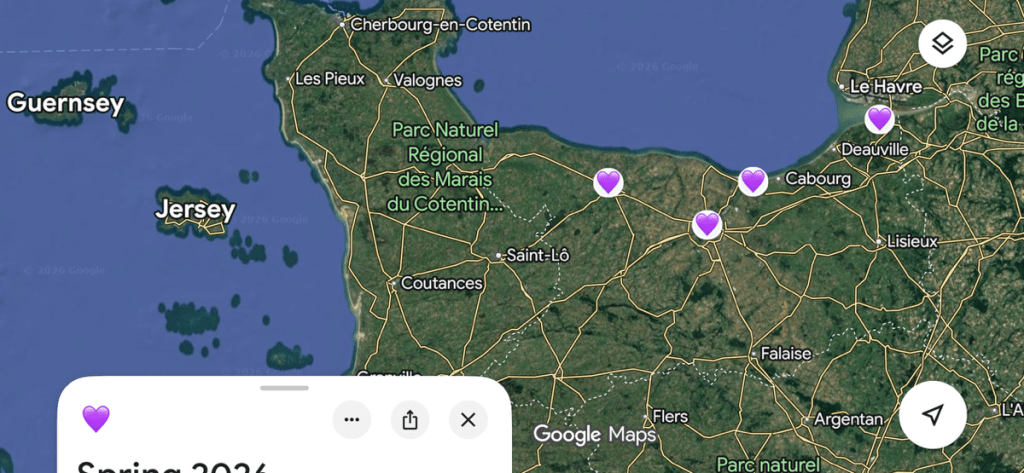
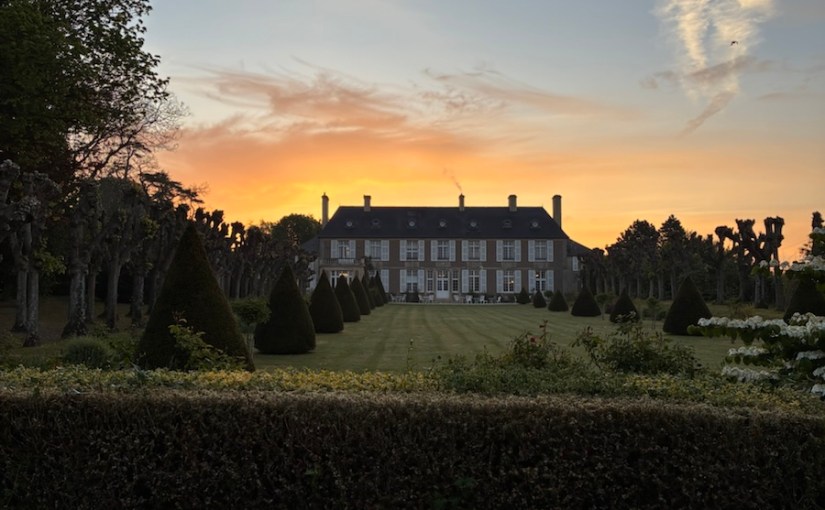
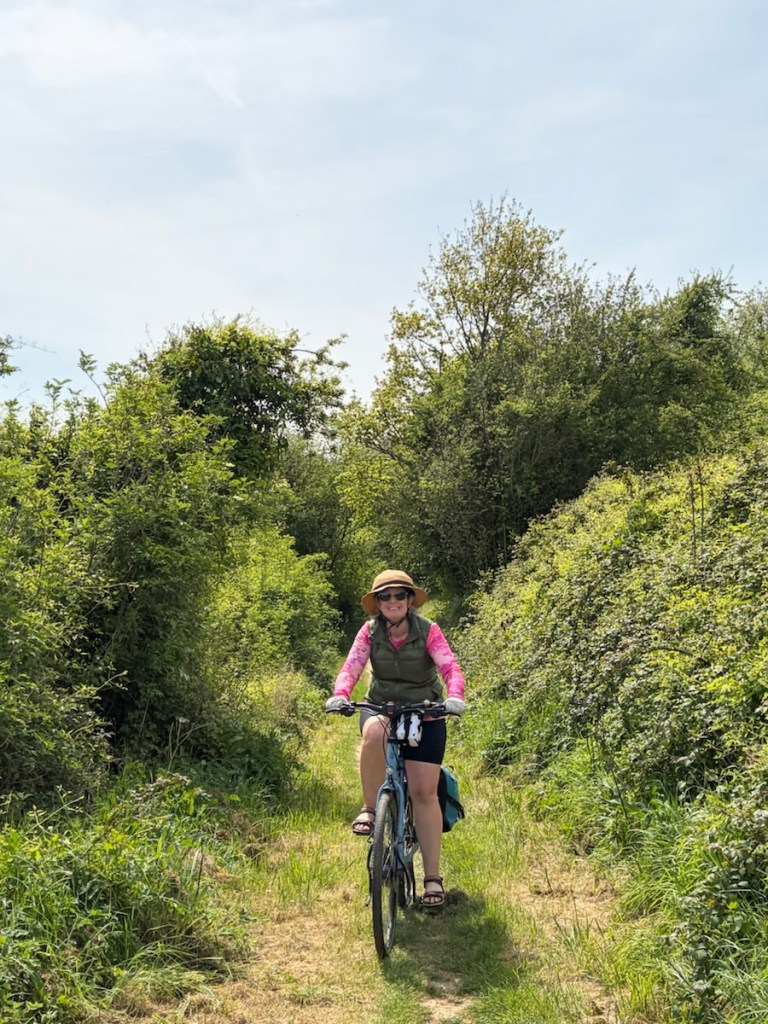
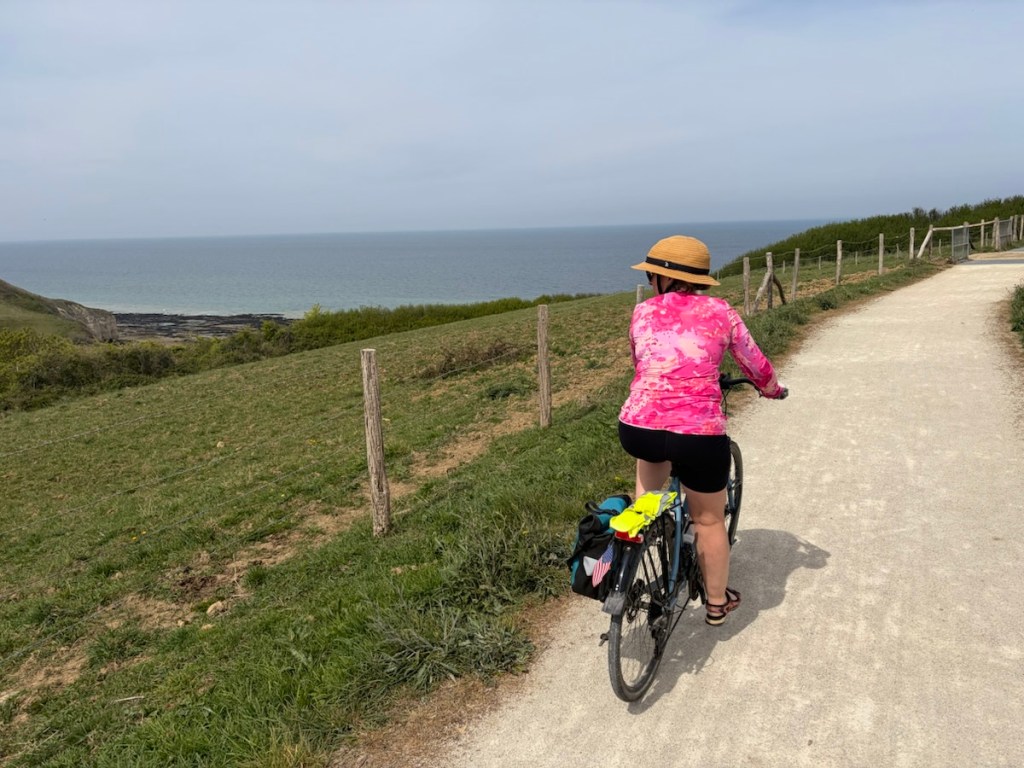
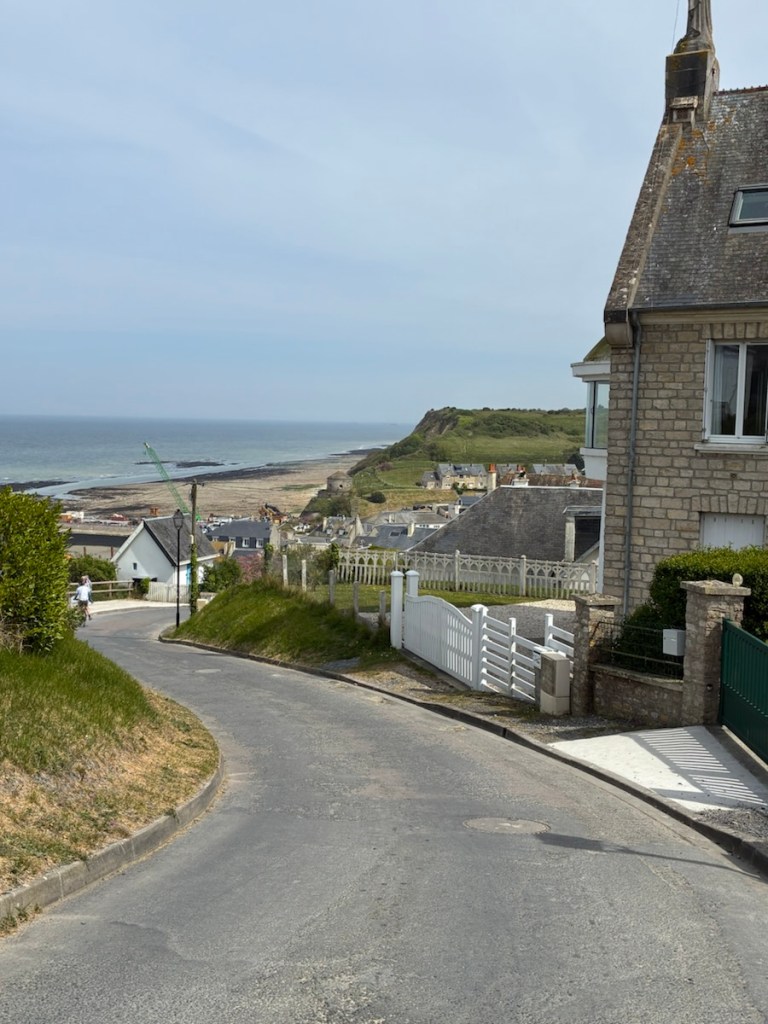
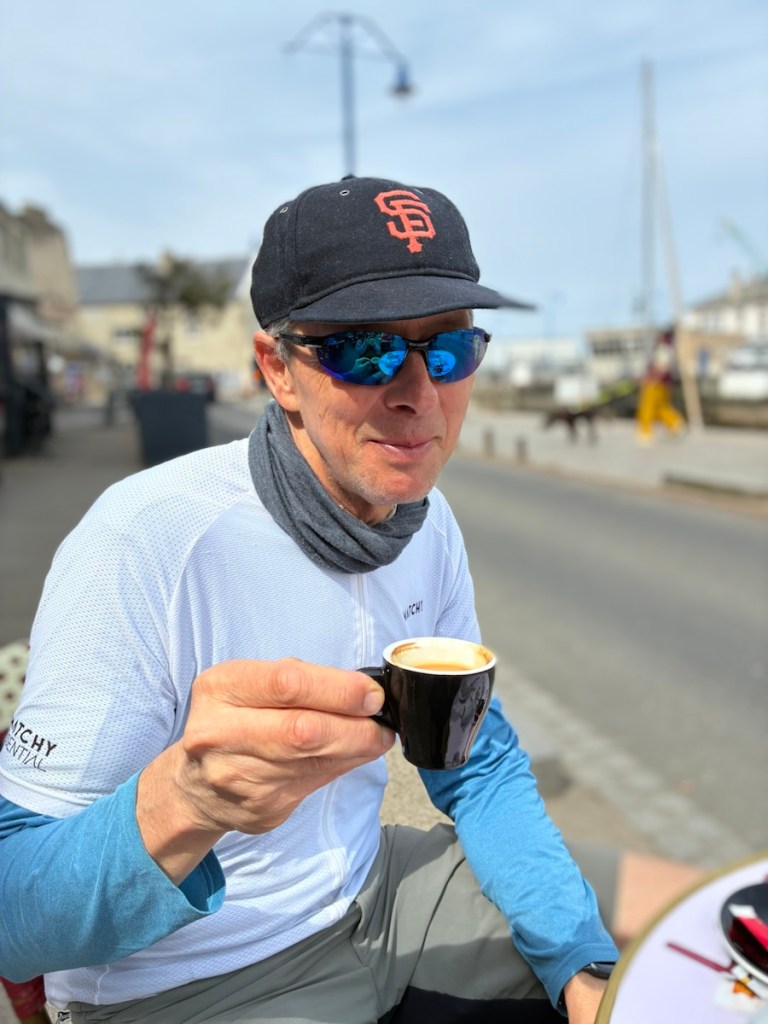
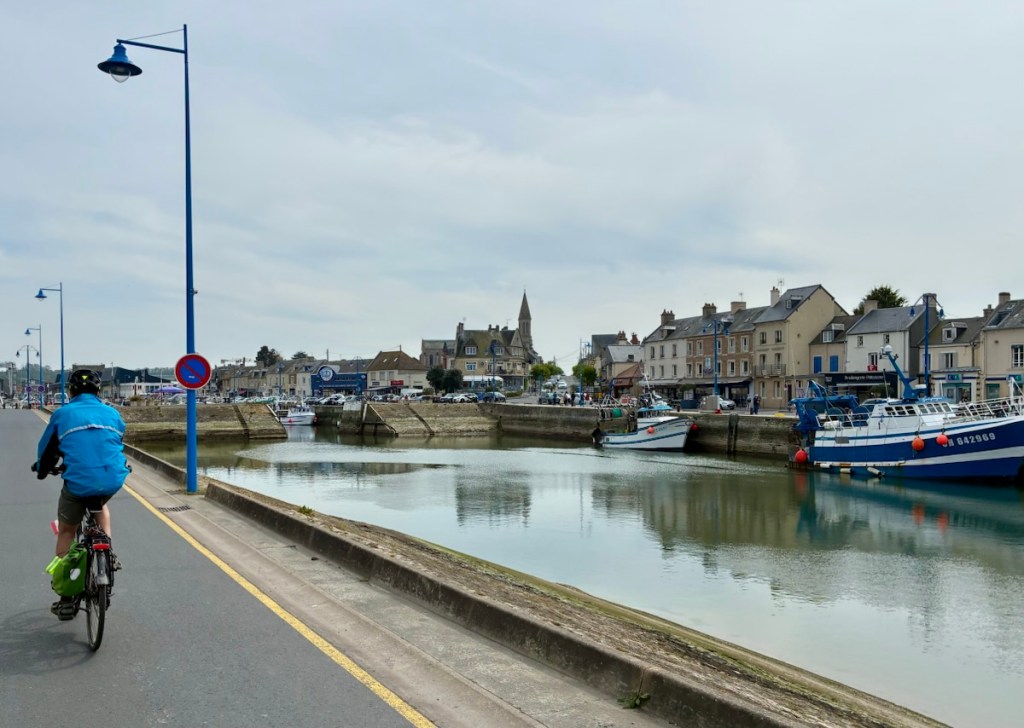
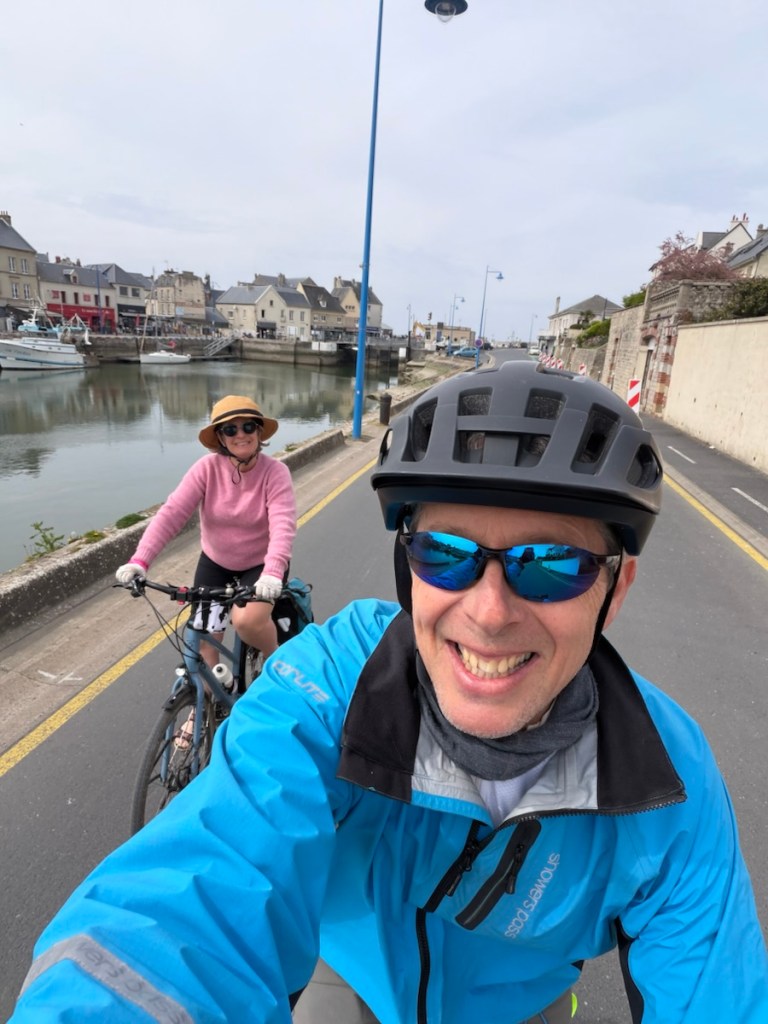
Riding out of Bayeux and back to the coast.The remains of “Churchill’s floating harbor” built with mulberries constructed in England and towed across the Channel. Arromanches-les-BainsLooking down to Arromanches-les-Bains. Riding in Normandy in April is a bit of weather gamble. We really lucked out with sunshine and wind. It easily could have been rain and wind. Happy hikers going by.The fearless leader. Enjoy this day, he is saying, the weather change is approaching.I tell Rich his credibility with the road cyclists who zoom by is destroyed when they see my pink sweater and straw hat helmet cover.The gorgeous stretch of beach at Arromanches-les-Bains.A remnant of a Phoenix Caisson, still helping to shelter the harbor.This was an incredibly strategic site. The floating harbor allowed resources to supply the Allies to come ashore and advance. The port became totally operational by the beginning of July 1944.Above town at the memorial to the British Troops a statue of WW2 veteran and survivor 97 year-old Bill Pendell MD looking back at himself as a 22 year-old landing on the beaches 75 years earlier. “I’ll never forget the majestic armada of ships.” Each plinth is engraved with a quote or memory of a veteran or civilian. Cue me crying about the British Troops. It’s an amazingly moving and humbling experience to witness the sites of such self sacrifice.The sun is indeed shining, and the partial headwind is a-blowing.My not so happy headwind face.The route took us inland a bit where we found a somewhat sheltered picnic table for a lunch stop. We’re along the stretch of coast where the Canadian troops came ashore. Now I weep for the Canadians.A tank which had been buried in the sand for 32 years, exhumed and on display. The Canadian army in 1944 numbered about half a million men, five-sixths of whom had volunteered for overseas service. Apparently the German troops, many of whom at this point were very young and conscripted, especially feared the determination of the Canadian forces.“This house was liberated at first light on D-Day on June 6, 1944, by the men of The Queens Own Rifles of Canada who were the first Canadians to land on this beach. lt may very well have been the first house on French soil liberated by seaborne Allied Forces. Within sight of this house over 100 men of The Queen’s Own Rifles were killed or wounded, in the first few minutes of the landings.”Bassin Joinville. Not a particularly quaint place, so we pedal on. Ouistreham, where big ferries arrive. We’ve ridden this stretch before when we took a ferry from the UK a few years ago. Hey other countries, look at what France does for cyclists at a ferry terminal! Nice wide protected bike lane. Hint hint. Getting closer to the end of our 64k windy day. Just need to detour around the Canal de Caen and the Orne River. Tailwind heading inland, headwind heading back to the coast.Distraction in the form of a really cool driftwood fence. Love this.Phew! Made it to Merville-Franceville-Plage. Across the river from the very busy Ouistreham.Dinner at the delicious L’Atrium Cuisine locale.My mindblowingly good starter. An egg somehow poached and fried in a crisp coating, nestled in hay cream, sautéed leeks, and bacon.Sunset stroll to walk off our delicious dinner.Our super long shadows.Gentle and cute signage: “You’ve got the look Hippo, Hippo, you’ve got the look. In the center of Merville-Franceville, we dress [BARE TORSOS PROHIBITED]. Thank you!”“On this beach, our children breathe in the fresh sea air, not smoke! NO SMOKING BEACH.”The weather has changed a bit the next morning, now it’s overcast, and a little chilly, but don’t worry – still windy! Even more windy. I know, why am I even a little surprised at a windy coast?Our bikes at the ready on Plage de Cabourg. 65k to Honflour and the mouth of the Seine.What do I do when it’s a headwind? Draft off the Wall of Rich. Yes, I am usually closer to his back wheel but it’s risky when taking photos. I don’t want to be the cause of our mini peloton crash.Houlgate. A path for walkers and runners, train tracks, bike lane, and car lanes.I’d call this style of architecture Industrial Gothic. Striking.Accidentally Wes Anderson.At the top of another hill climb.I love bike signage. It took a bit of a search to find this lunch bench. River on one side.Church on the other!Not every kilometer is super happy fun bike infrastructure, although a climb with decent pavement, a shoulder, and a steady incline isn’t the worst. We headed inland on the main cycle route but then deviated a bit to shorten the route and head into a more protected valley to Homfleur.On the outskirts of Honfluer. Grey Gardens mansion with sheep. I couldn’t help but think that in Ireland or the UK the sheep would have found a way into the house and be peering at us from the windows.A stop for a map check. Rich is trying to get us to our hotel with as little climbing as possible.Oh yes, there will be cobblestones at the end of the ride. Hello Honfluer!A beautiful harbor, Vieux Bassin, and so many happy tourists, including us. It’s ringed by narrow tile fronted buildings and is very picturesque.Some of the small streets felt like a movie set with well preserved old buildings.Old buildings come with challenges. Our harbor front stroll was cut short by plywood walls, blocking access from both sides.And blocking direct access to our hotel. The building with construction wrap is trying to fall down. The city is trying to stop the fall. Floors separating from walls, support beams no longer doing the load bearing work – it was a mess. And threatening to fall and take down other buildings. An abundance of caution meant an entire plaza and multiple shops and flats were closed to all foot and car traffic.And had been for almost a year! The engineer guessed that the big construction machine is doing some sort of pile driving or grout injection. Let’s hope it works.We will enjoy our evening wine far from the potential collapse zone.Packed in the morning and ready to load up and ride.The fenced off safety zone made for a nice car free street. Historical romance film ready. Let’s do this. Heading off to ride the Seine towards Paris.Our stays along the Normandy Coast.
So here we are. The mouth of the Seine. Ride the river to Paris. That sounds easy. River, flat, pretty. Where’s the challenge there?
A few years ago in Caen we visited the memorial museum which has a fantastic display on D-Day. Timing, tide considerations, logistics, artifacts, and all really well done. But to see the actual sites where the Allies landed was something we knew we had to do.
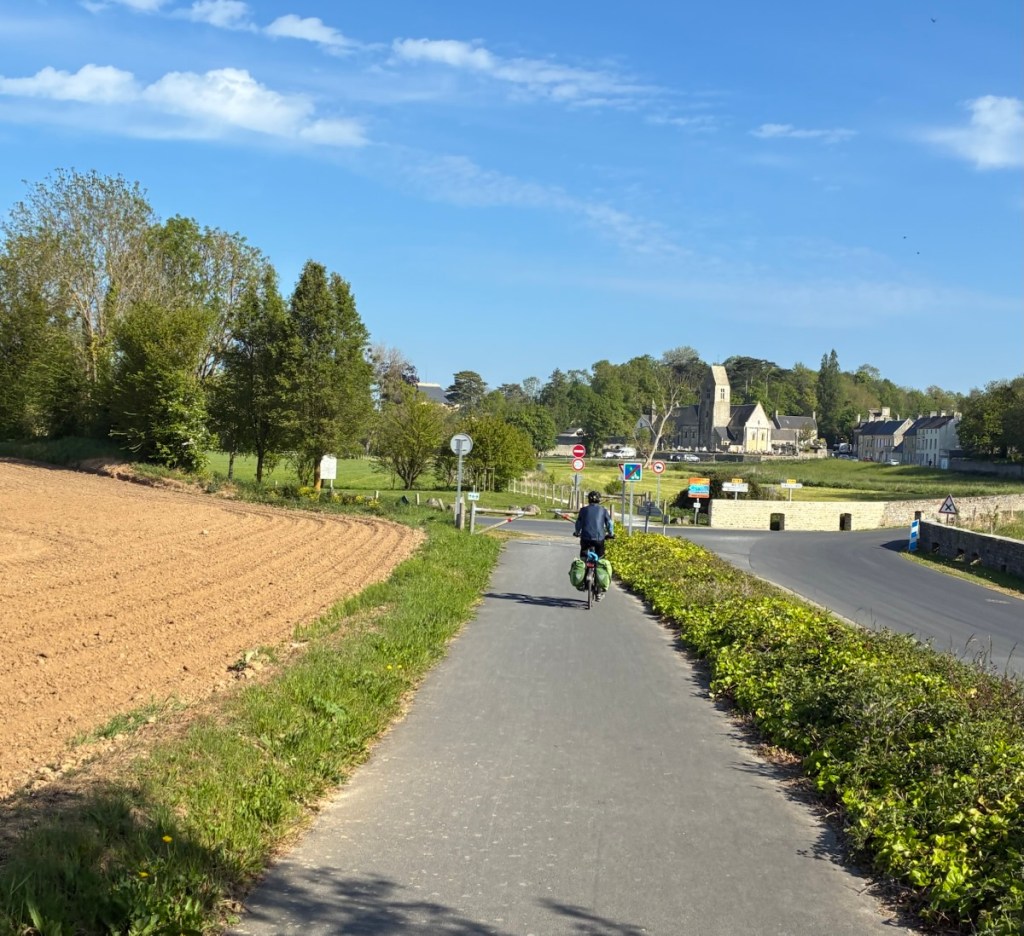
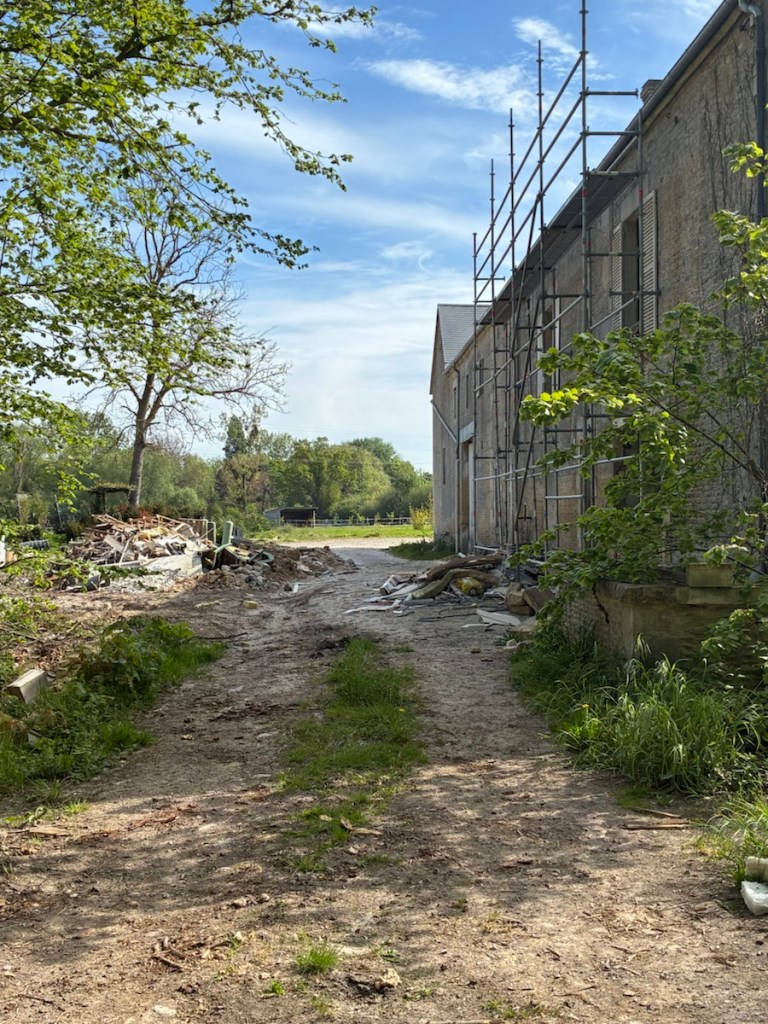
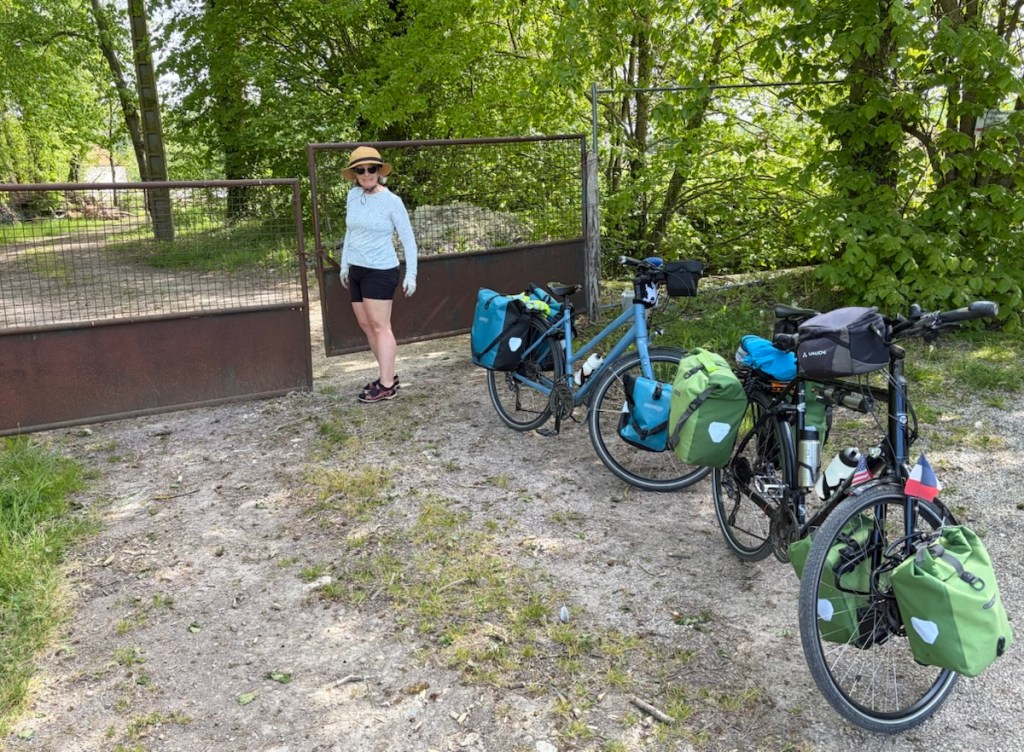
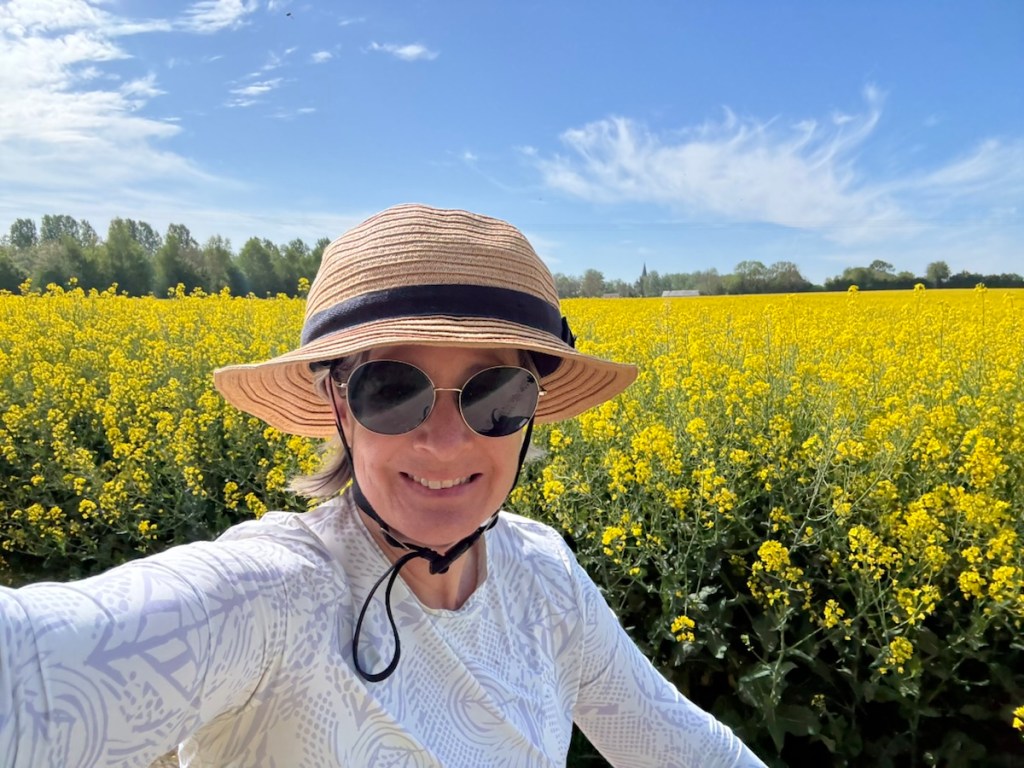
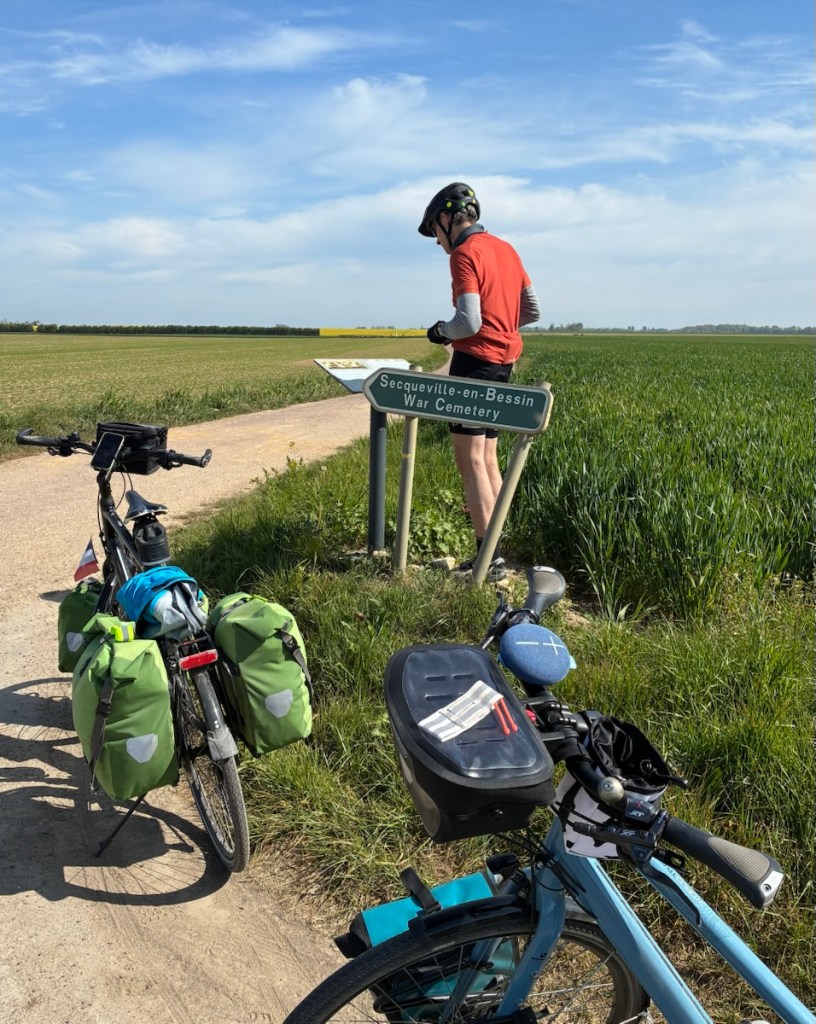
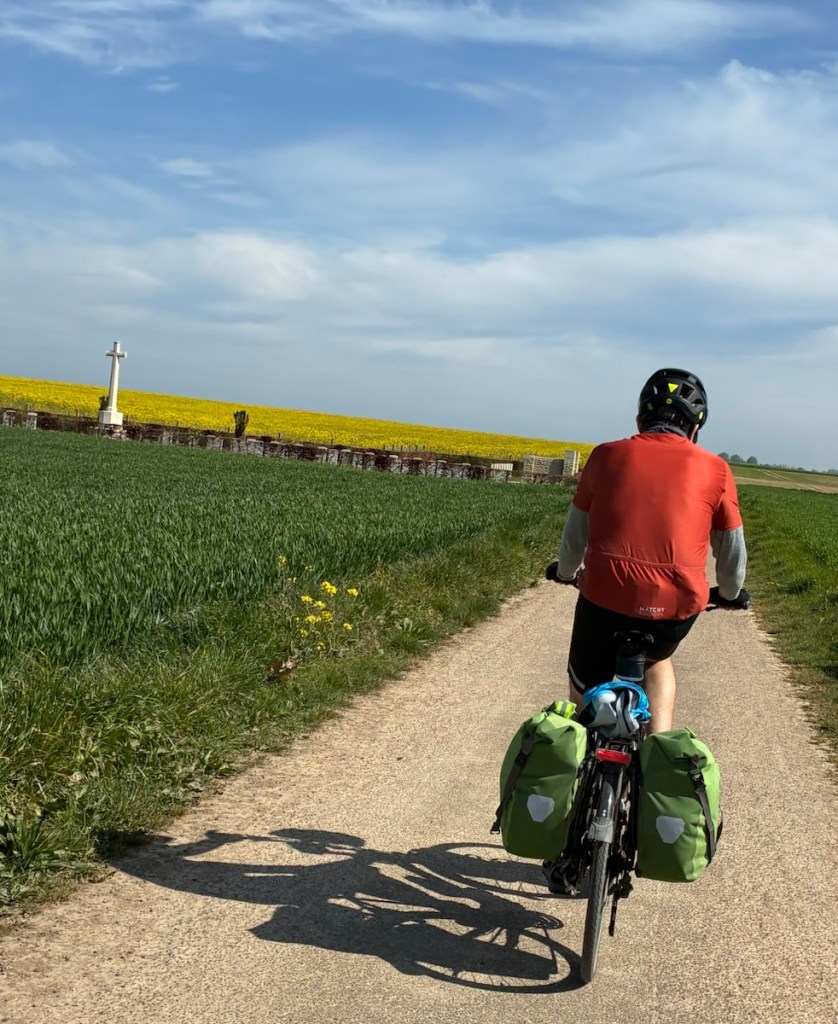
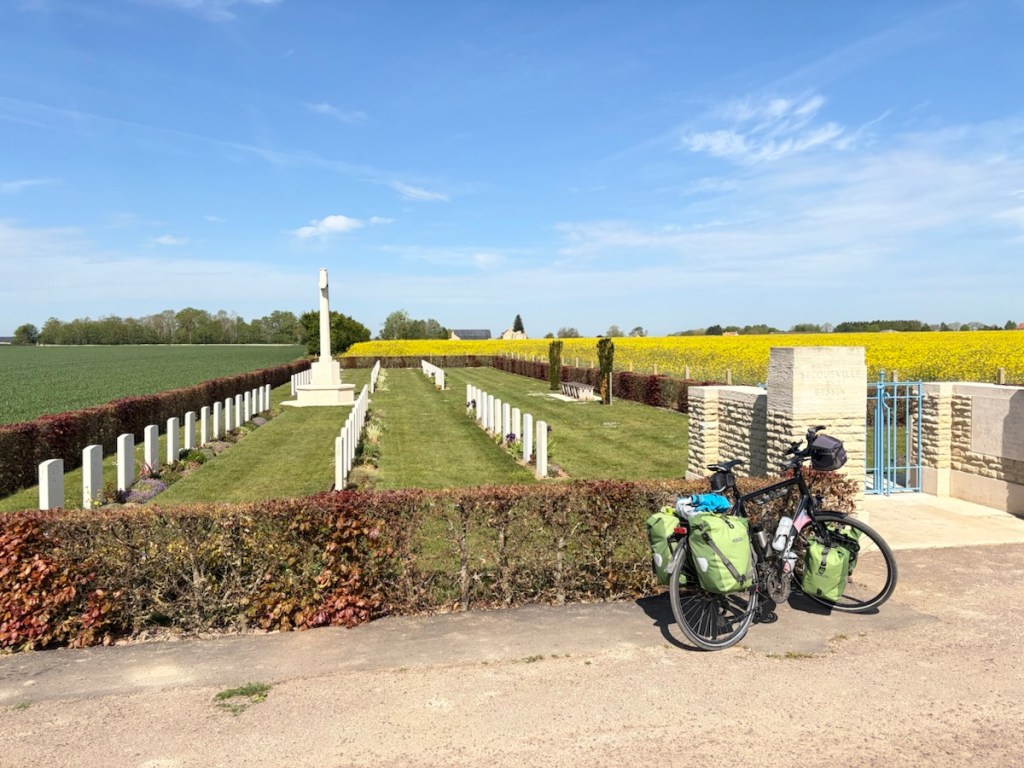
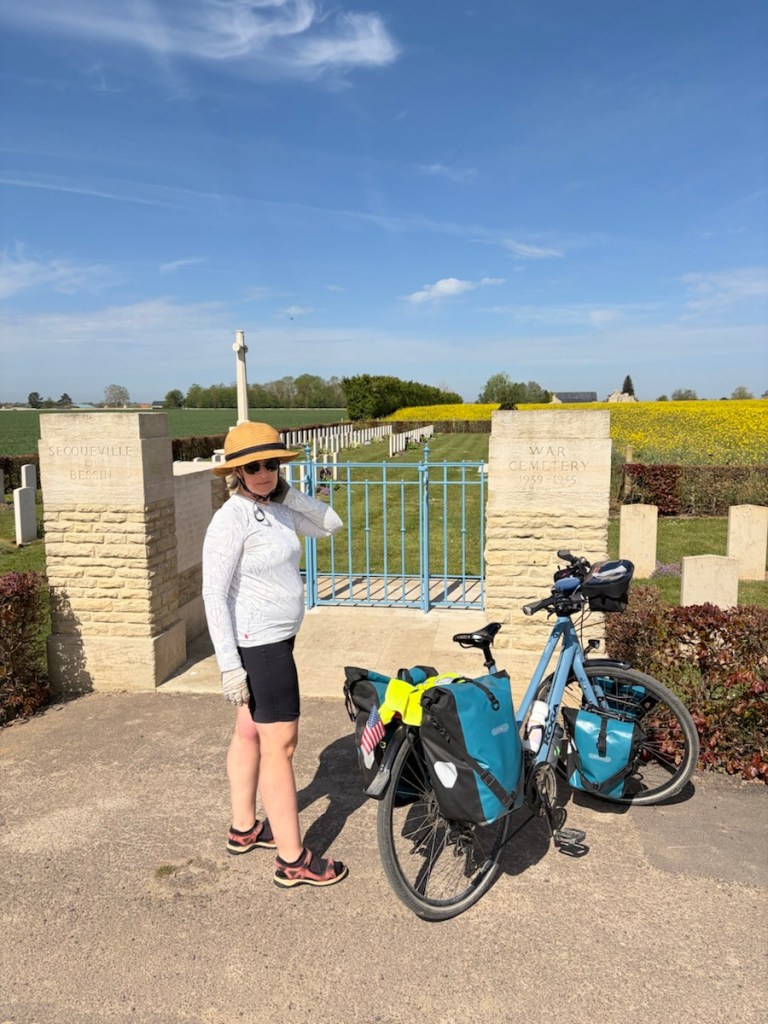
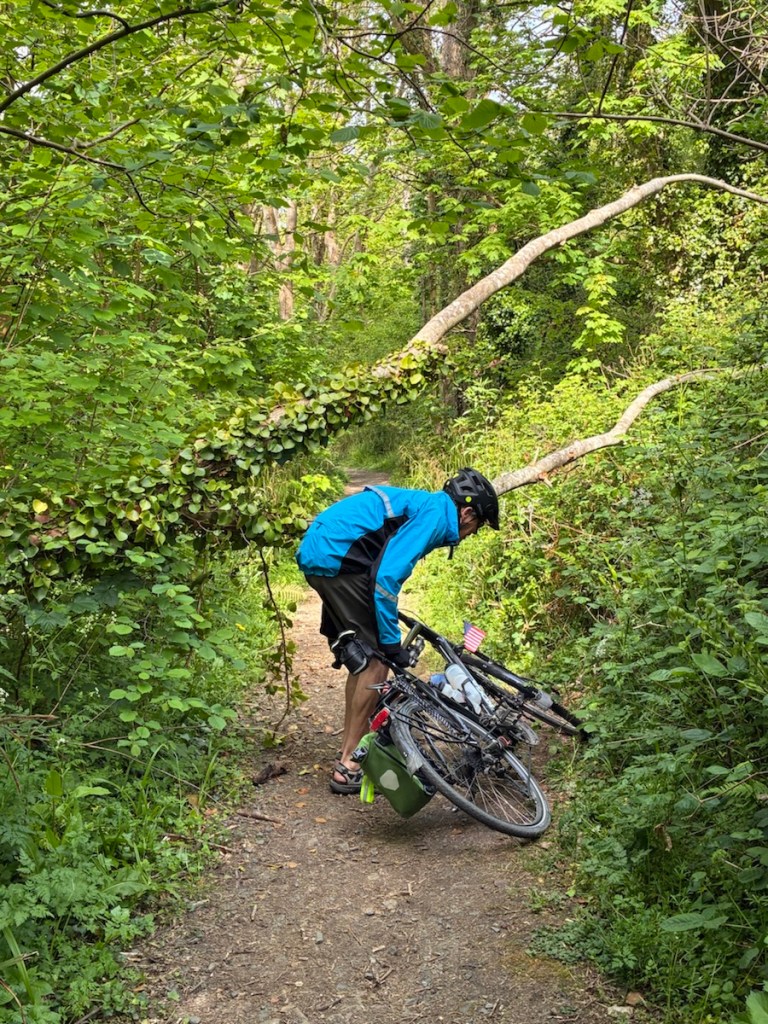
Leaving Caen on yet another well marked bike lane.Fresh bike path. Rich was worried that we would be riding on the street. We were not.Really Komoot? This is a route you recommend?Leave the gates as you find them. Closed. We think, uh, know, that we were on the wrong road. There was a dirt path a bit off to the side. What a gorgeous day. The fields of oilseed rape are so bright.It didn’t take long for us to find some history. The smallest war cemetery in Normandy?
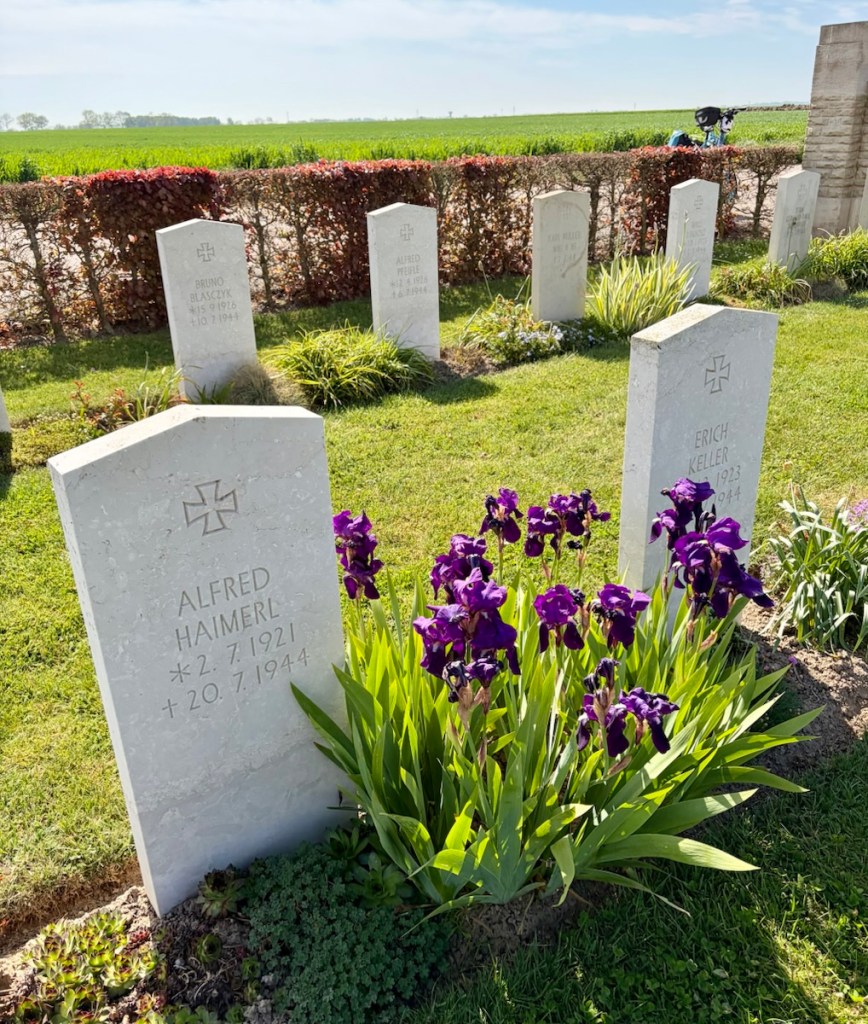
From the info sign: Isolated in the countryside, it is one of the smallest cemeteries in Normandy; the Cross of Sacrifice emerges from wheat fields in summer. 117 soldiers are buried there, 98 British and 1 unidentified, as well as 18 Germans. The men buried here were killed during the first two weeks of combat after the landing west of Caen, among them many soldiers from the 43rd Wessex Infantry Division. Originally, Canadians were also resting in this place, they were then transferred to the cemetery Bény-sur-Mer Reviers. The youngest fighter named in the Register of the Dead was only 17 years old.
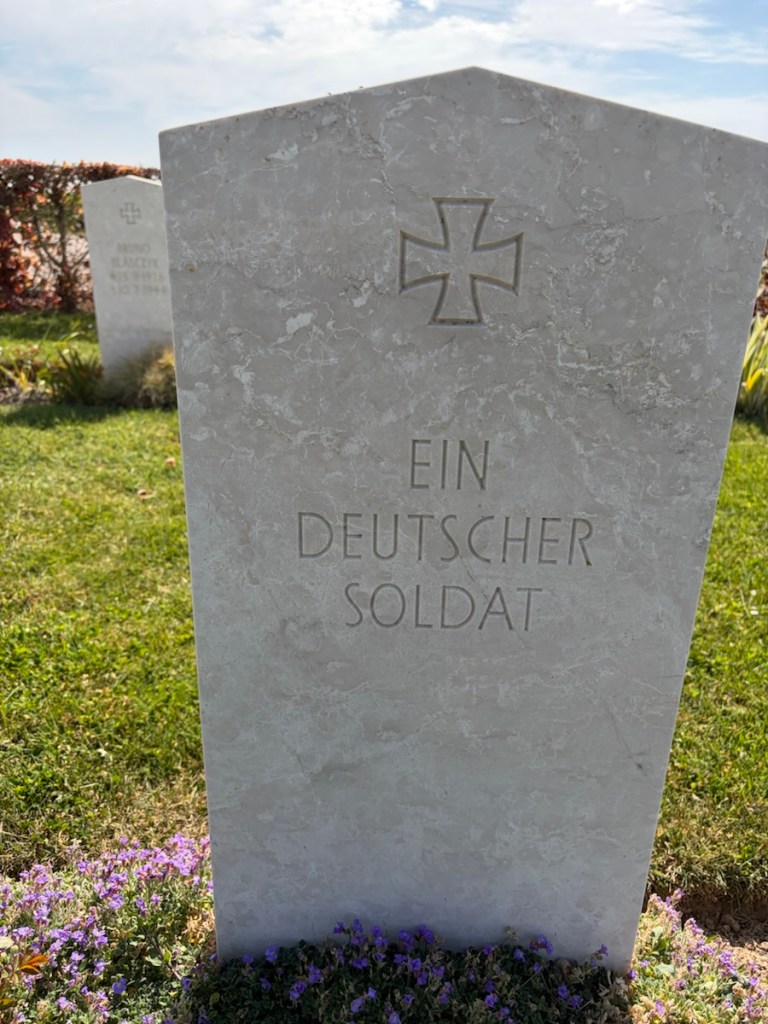
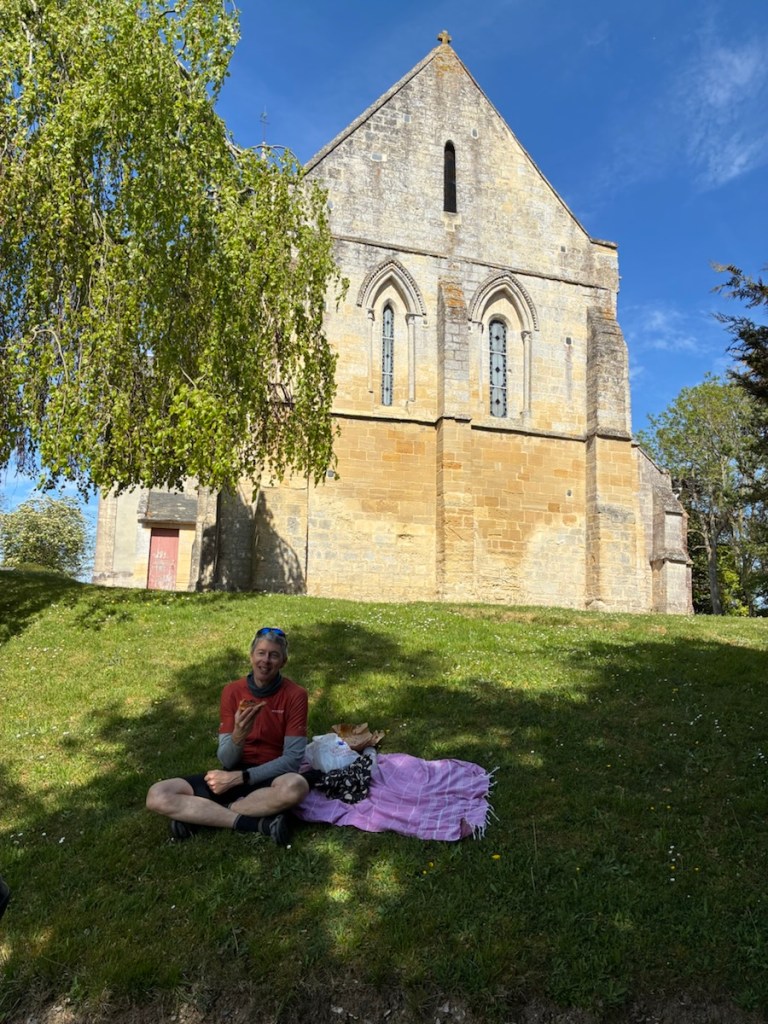
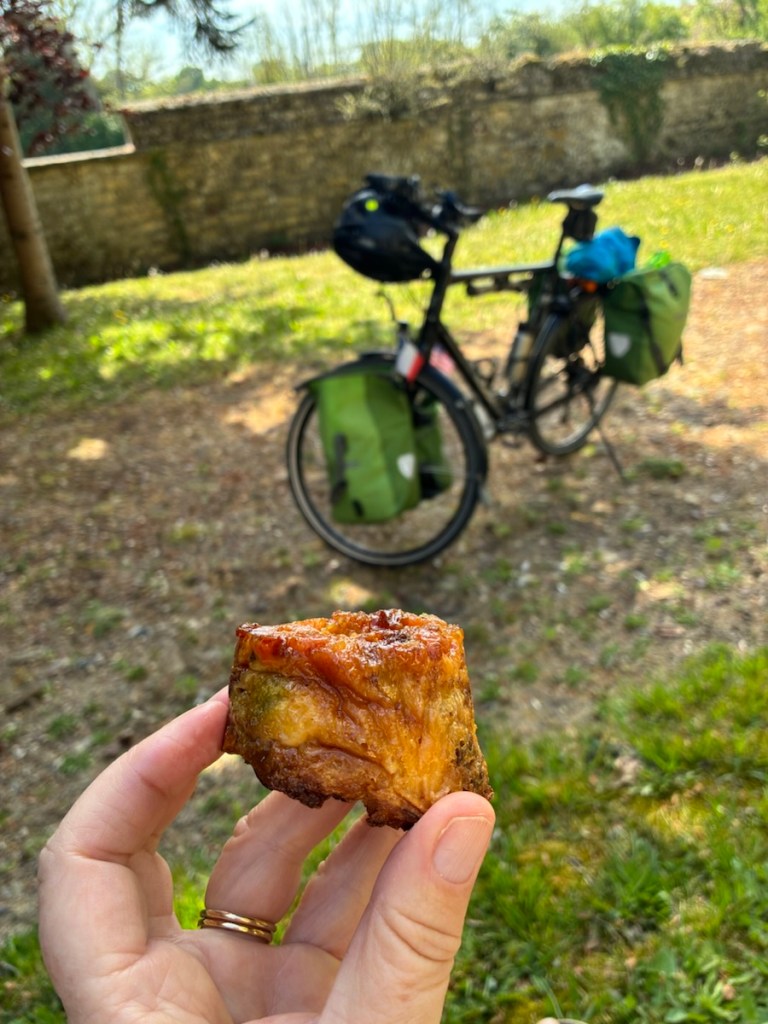
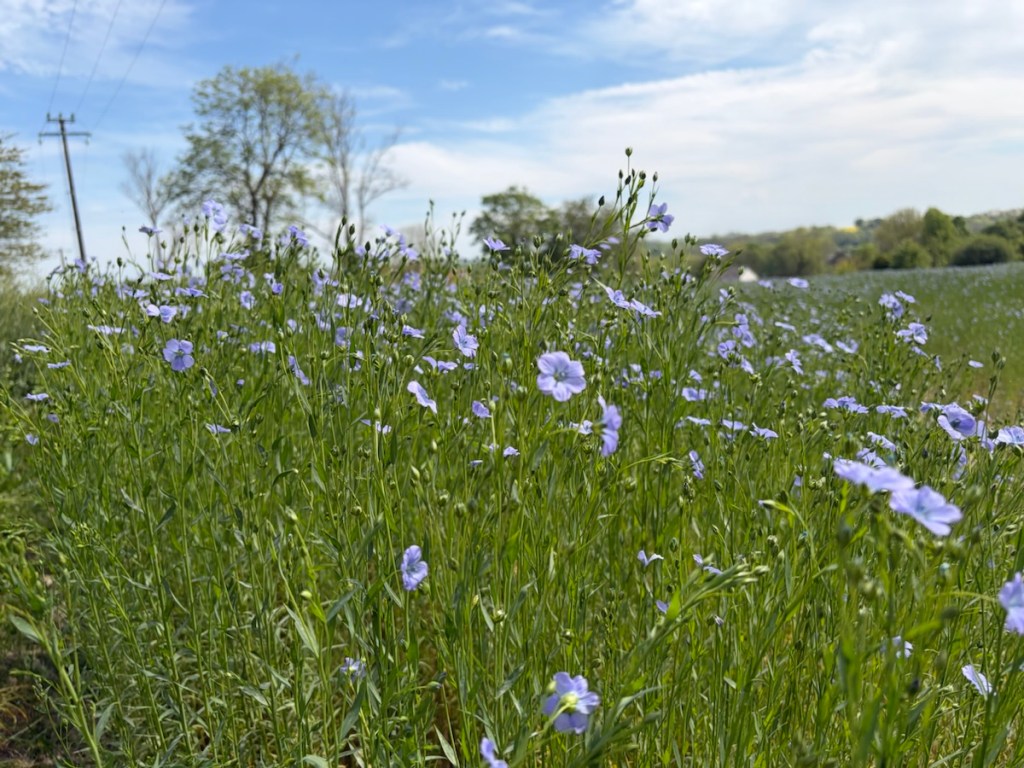
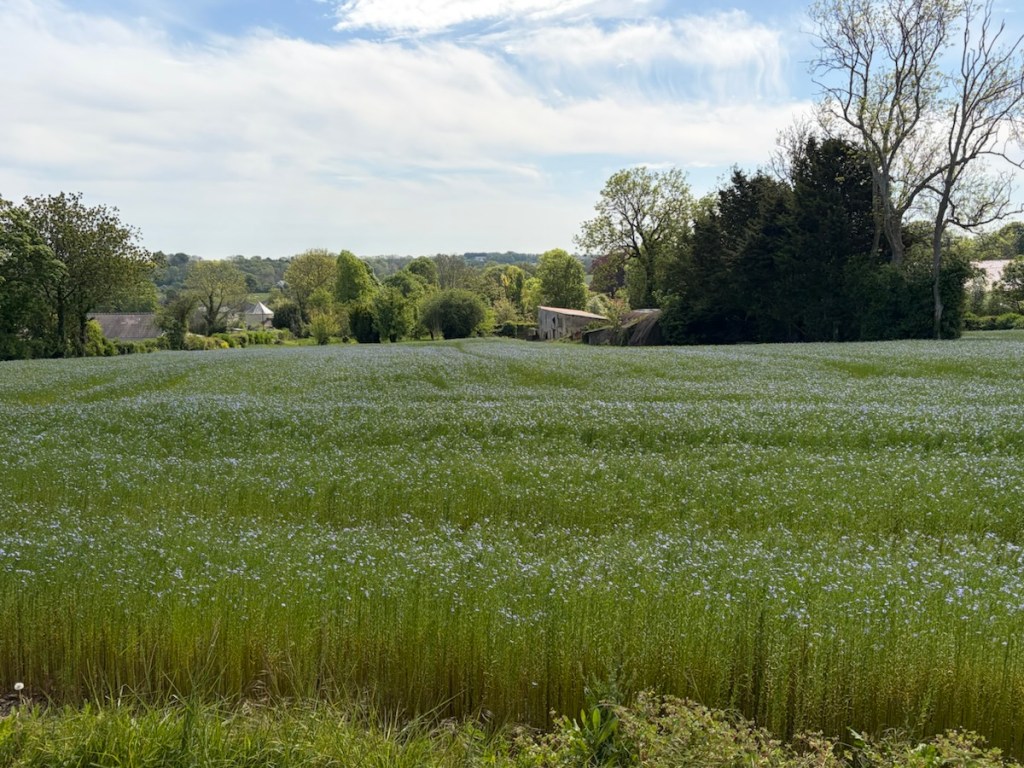
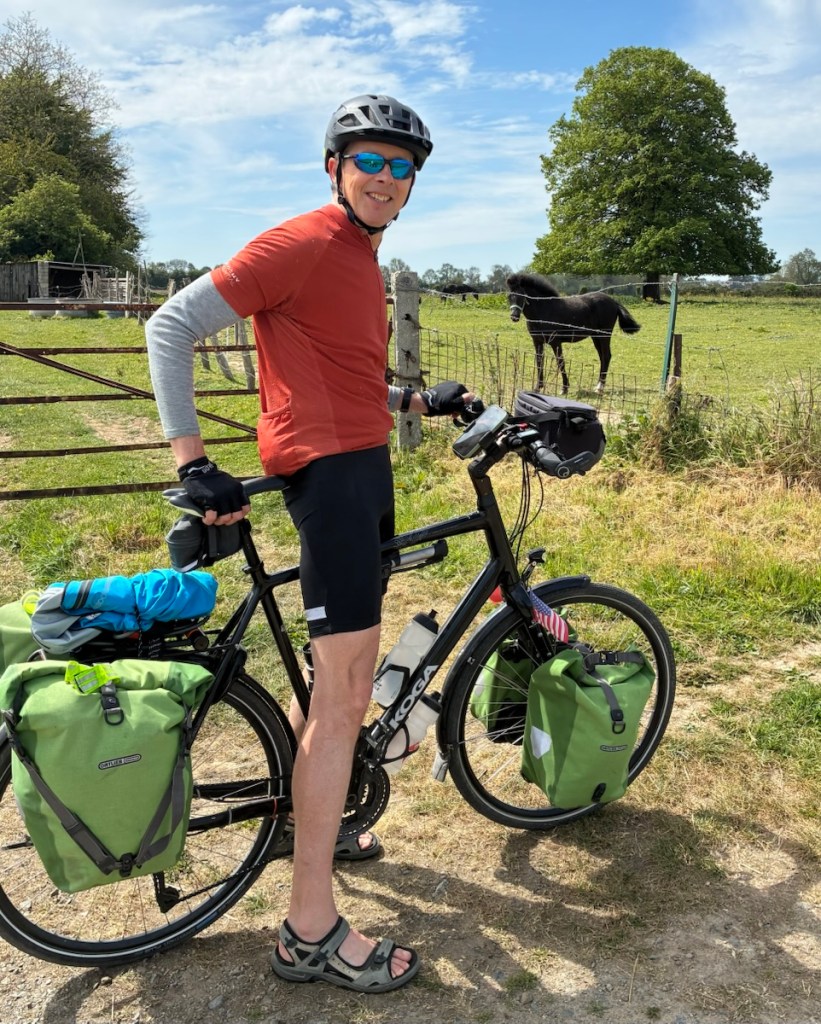
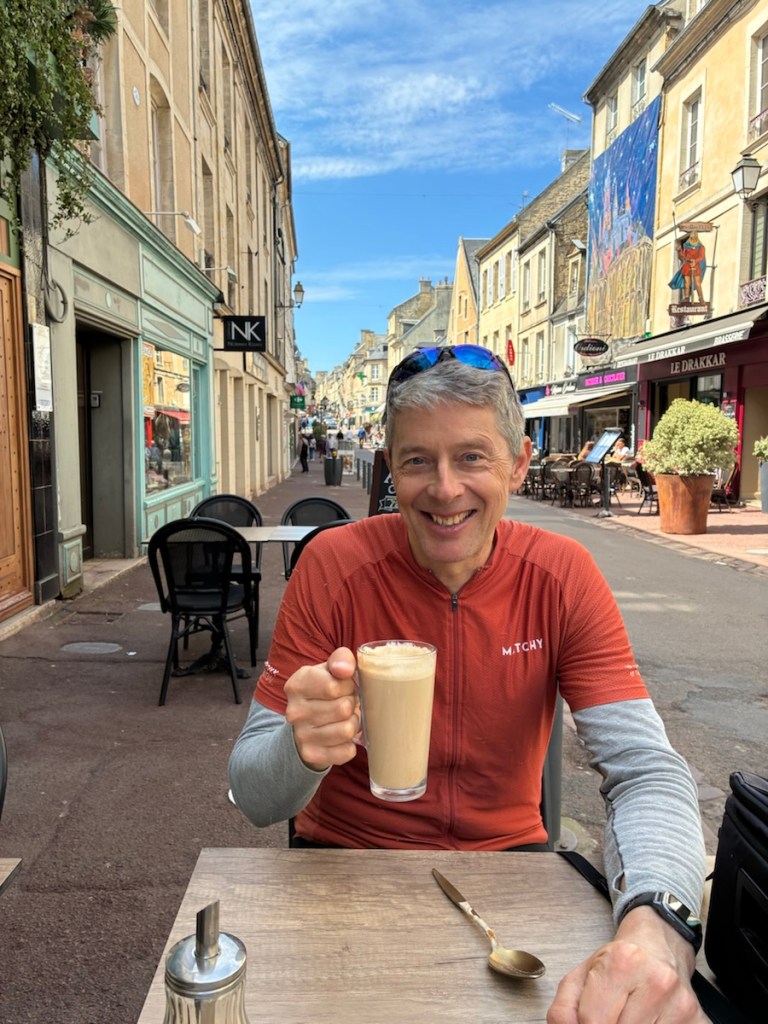
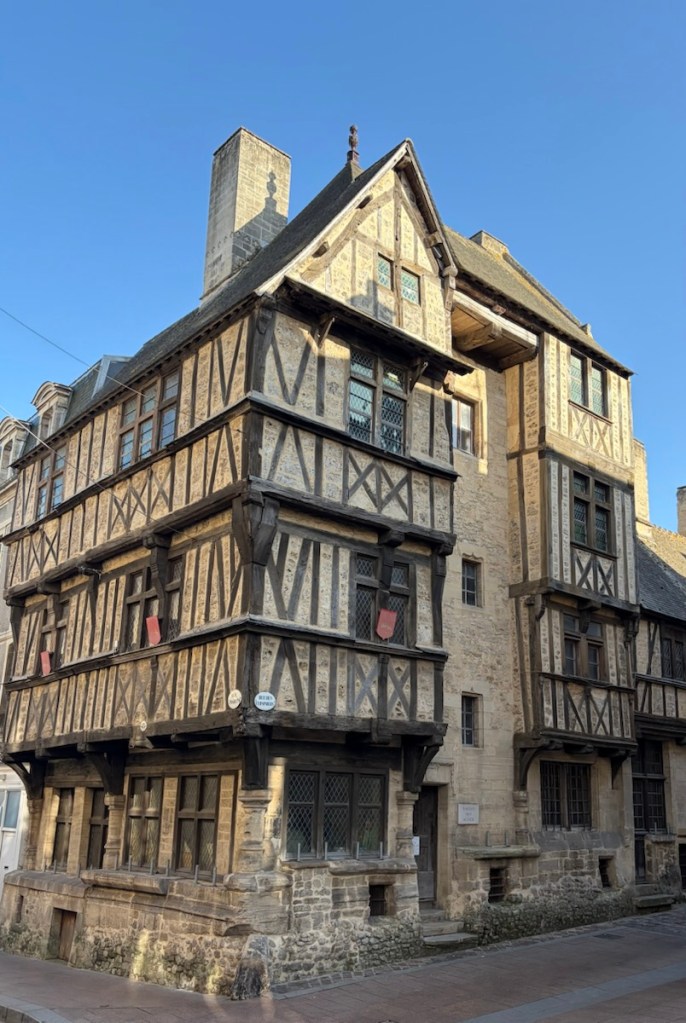
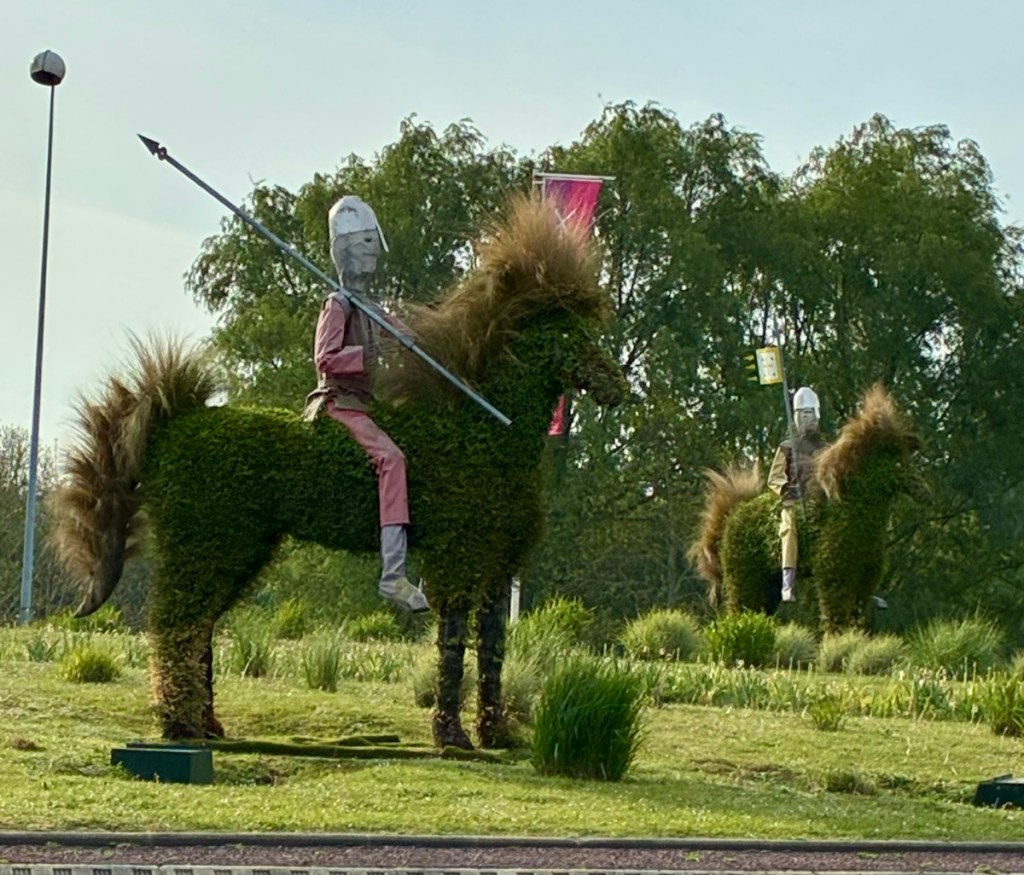
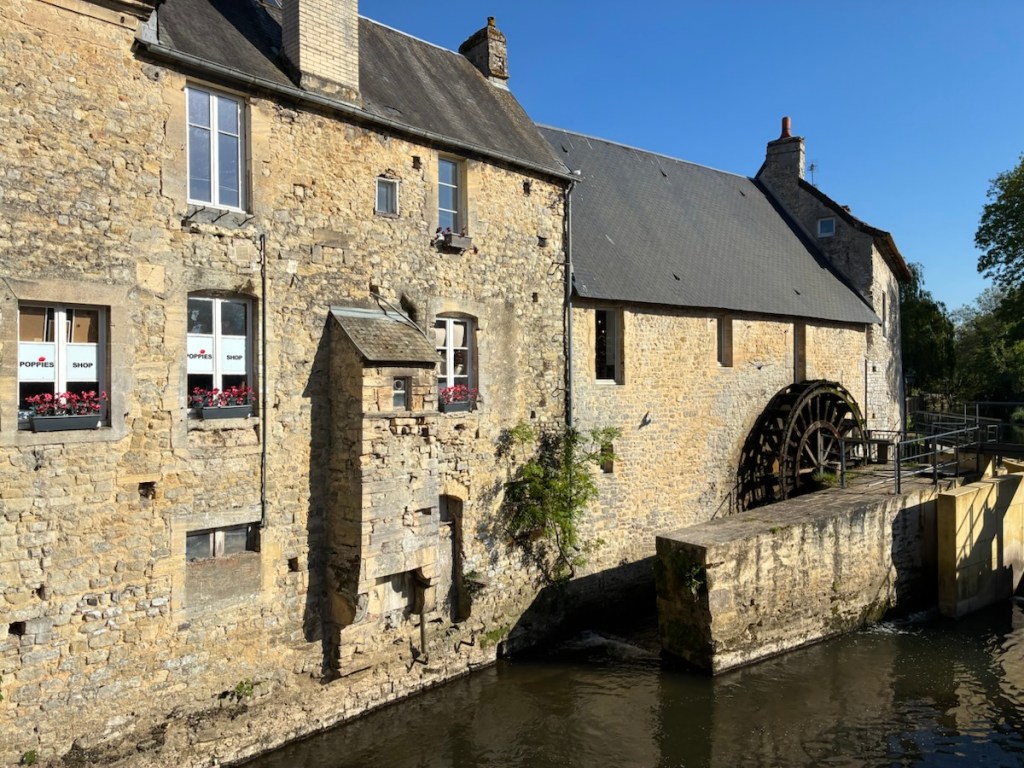
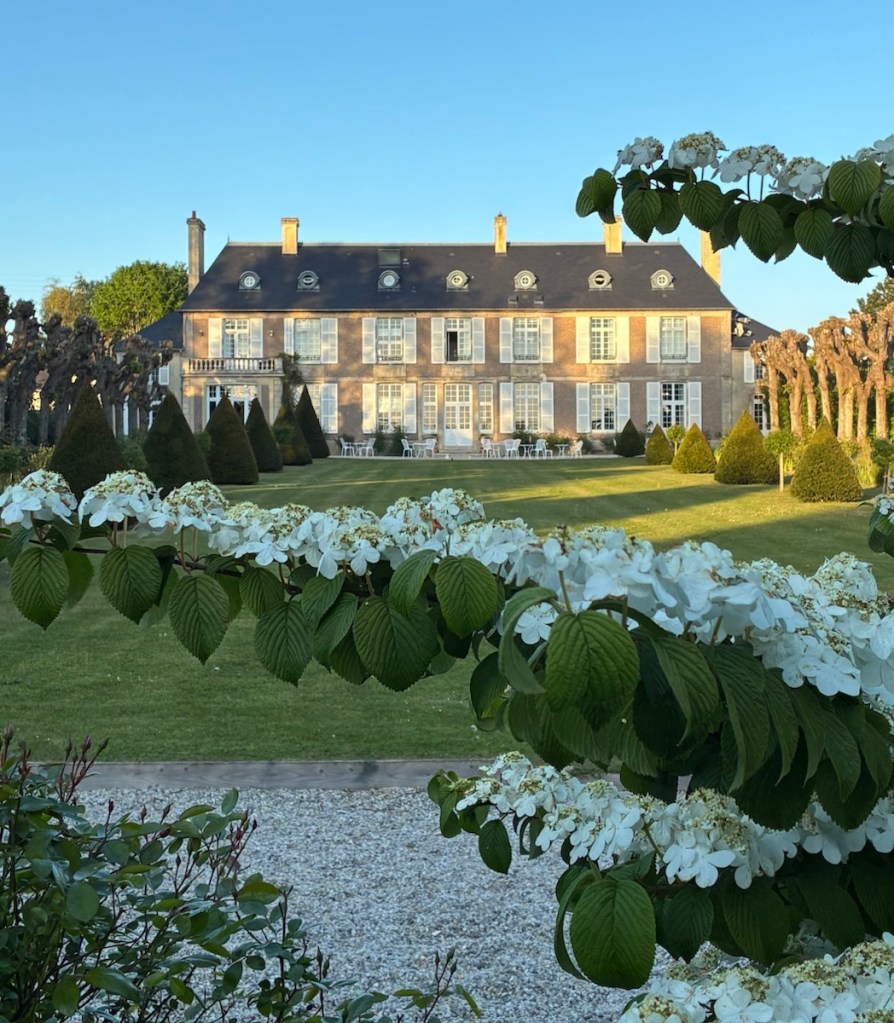
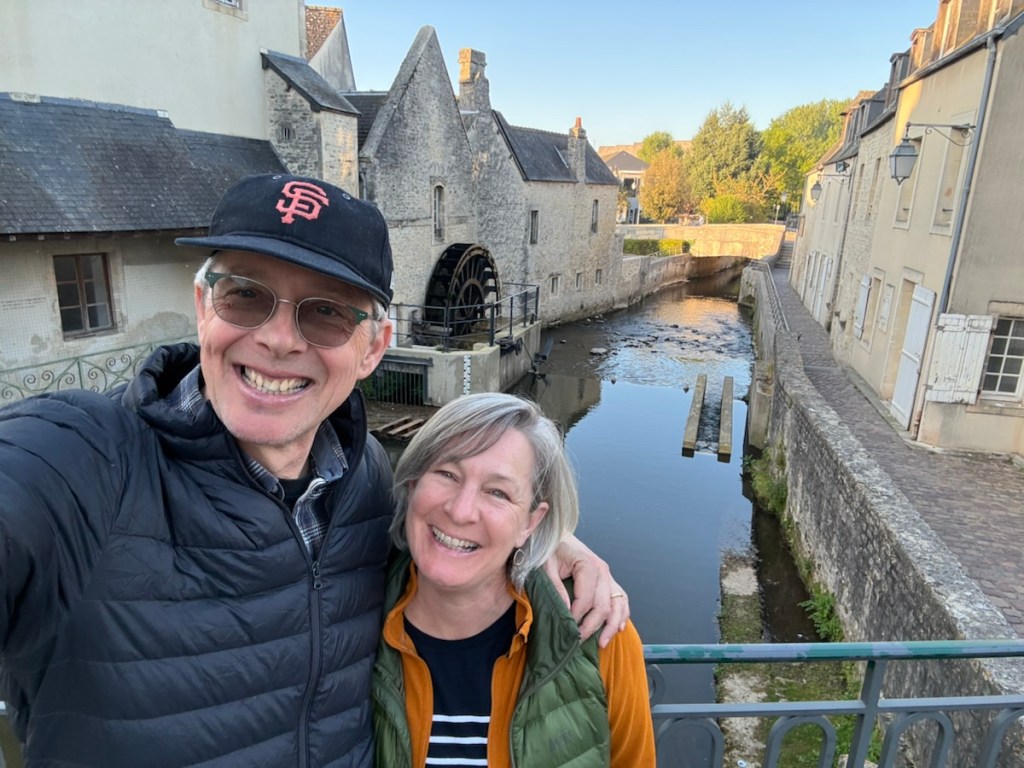
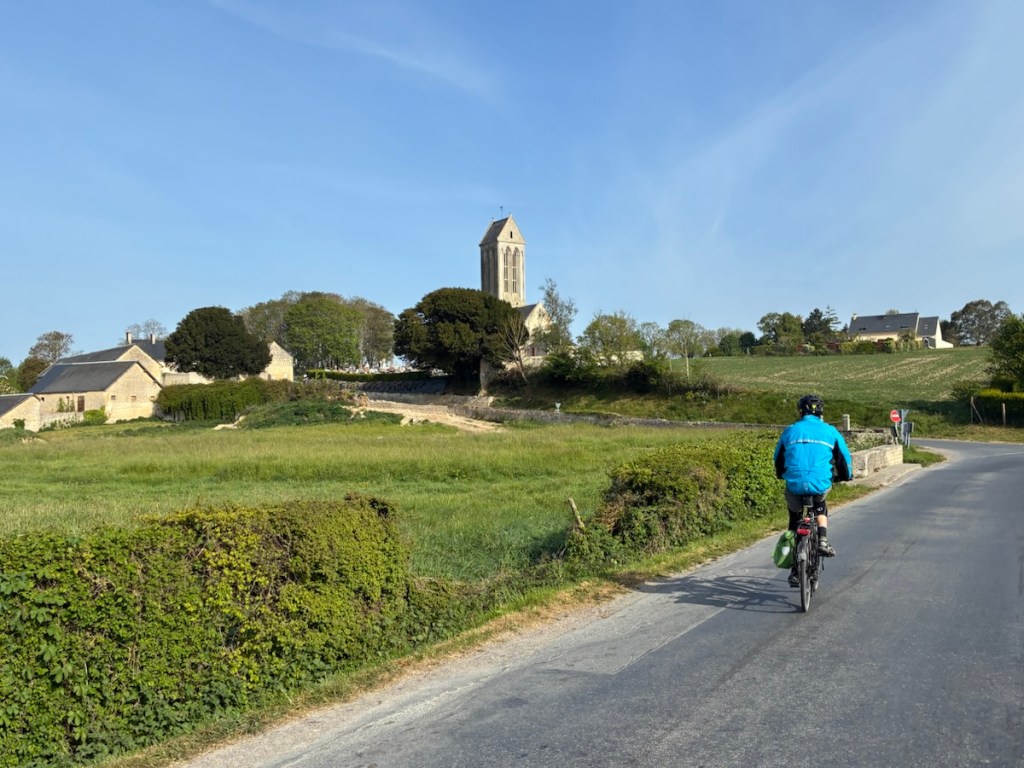
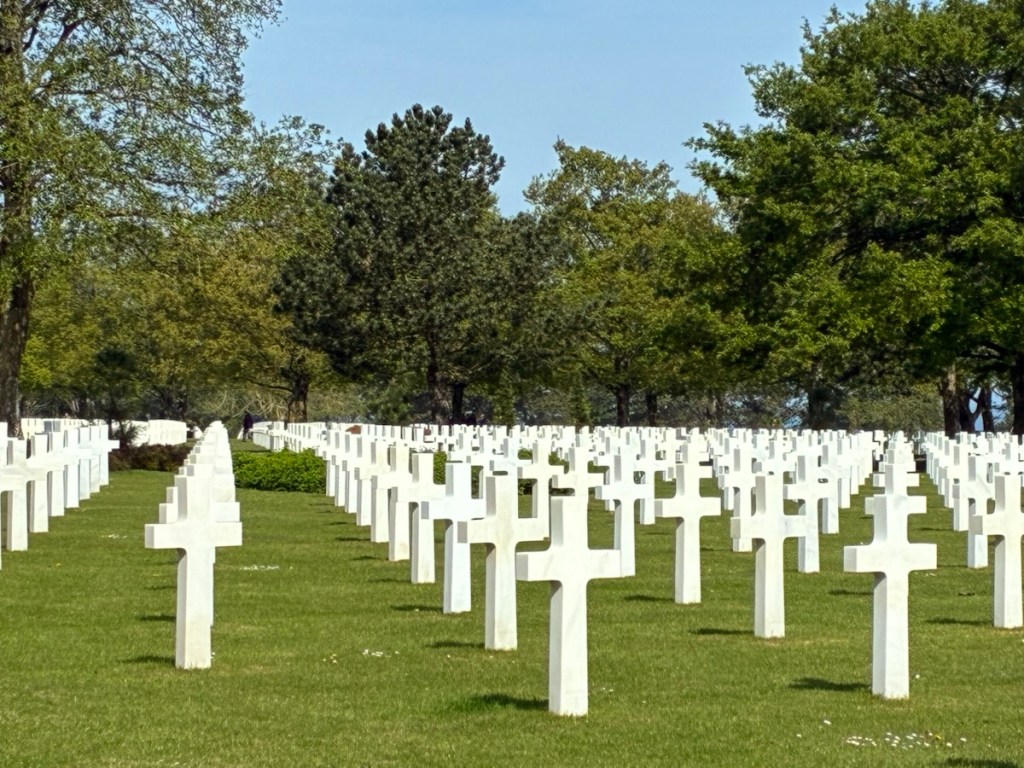
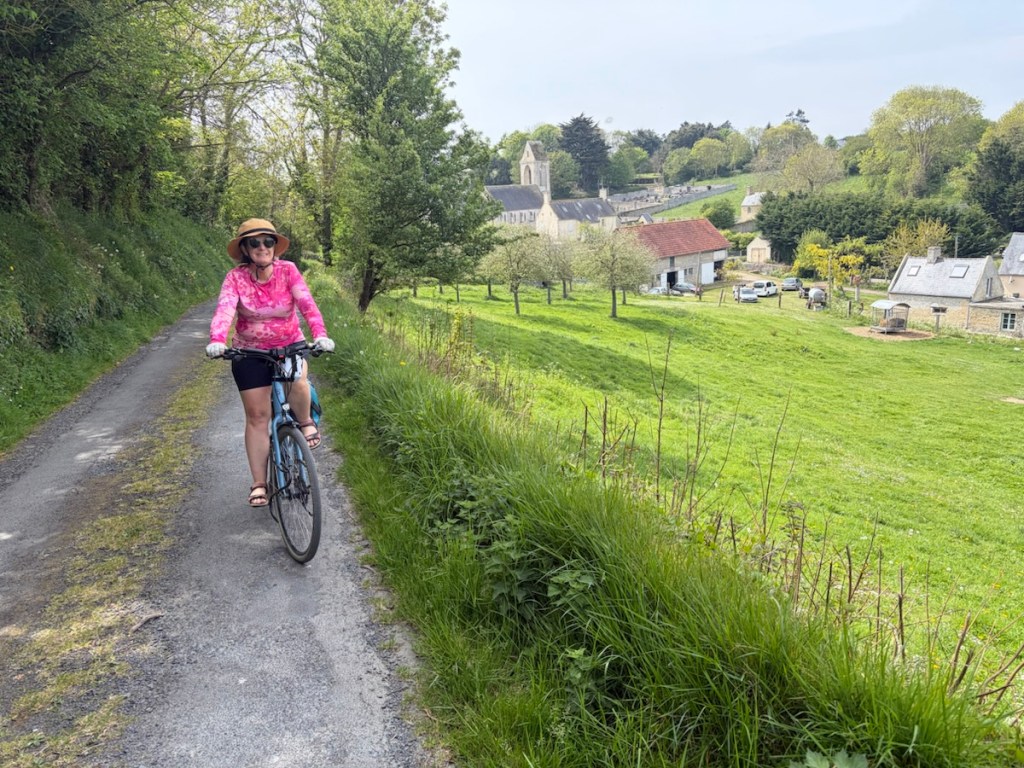
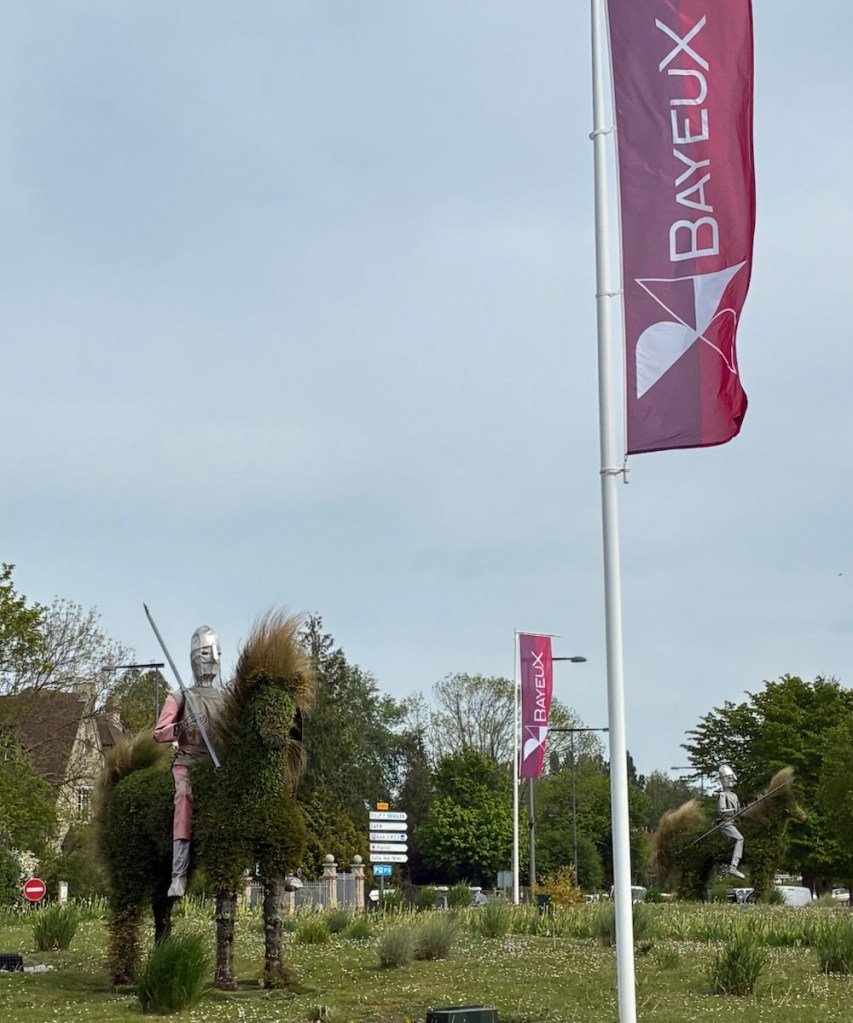
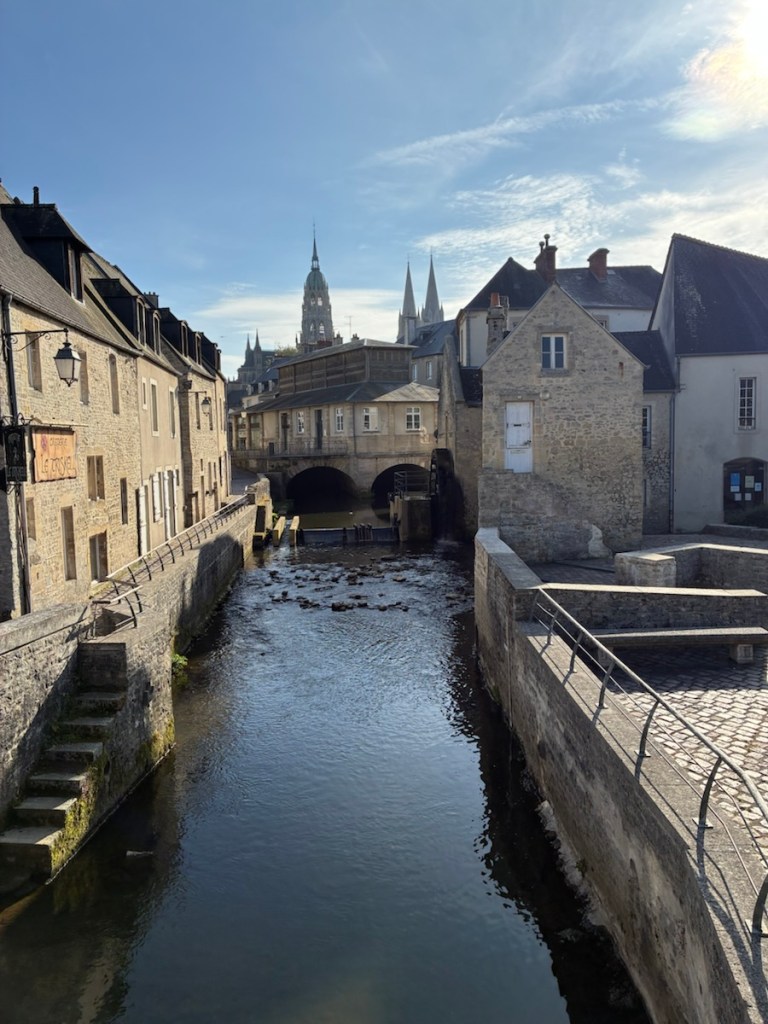
The monument rises from the fields.Fields on three sides. A very peaceful place when we stopped by.Lovingly tended. These unknown soldier grave markers really make me sad.Me starting to realize how emotional this part of the trip will be.A lunch stop at the church in Moulins-en-Bessin.A new favorite treat, Diplomate au Bavarois. Brioche bread, egg custard, and dried fruit. Delicious!The fields of flax were blooming and buzzing with bees.I wish I could add the noise of the bees!Another curious horse.And made it to Bayeux. A bit of a tourist shock after all our time in Finistère. Bayeux was the first city to be liberated on the 7th of June, by British troops with minimal resistance. Beautiful half timbered buildings. “The buildings in Bayeux were virtually untouched during the Battle of Normandy, the German forces being fully involved in defending Caen from the Allies.”Bayeux wins the round-about plantings contest as far as I’m concerned. Knights on hedge and grass horses.I will always stop to photograph a waterwheel. Always.Our hotel, Domaine de Bayeux. We were in a lovely modern addition, this photo is taken from our front door.Another waterwheel selfie. We spent two nights in Bayeux so we could ride out to Omaha without our bags as leaving all our gear in a parking area often stops us from heading into sights.I’m immediately picturing the Allied troops on the narrow lanes.Every lane and building has its story. Château de Maisons. During the Second World War, the château housed German General Staff of the Coastal Sector. On 8 June 1944, the commune was liberated by English troops.And I’m seeing landscapes through the eyes of young American troops. It must have been so frightening and looked so unlike where most came from. The Normandy American Cemetery.
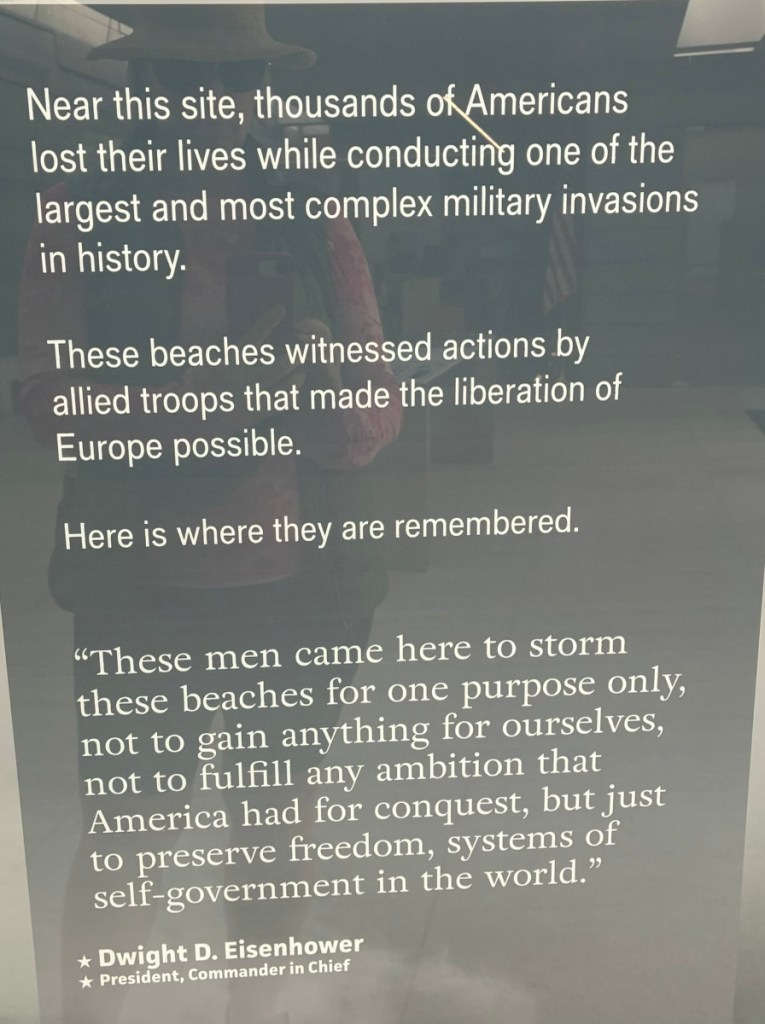
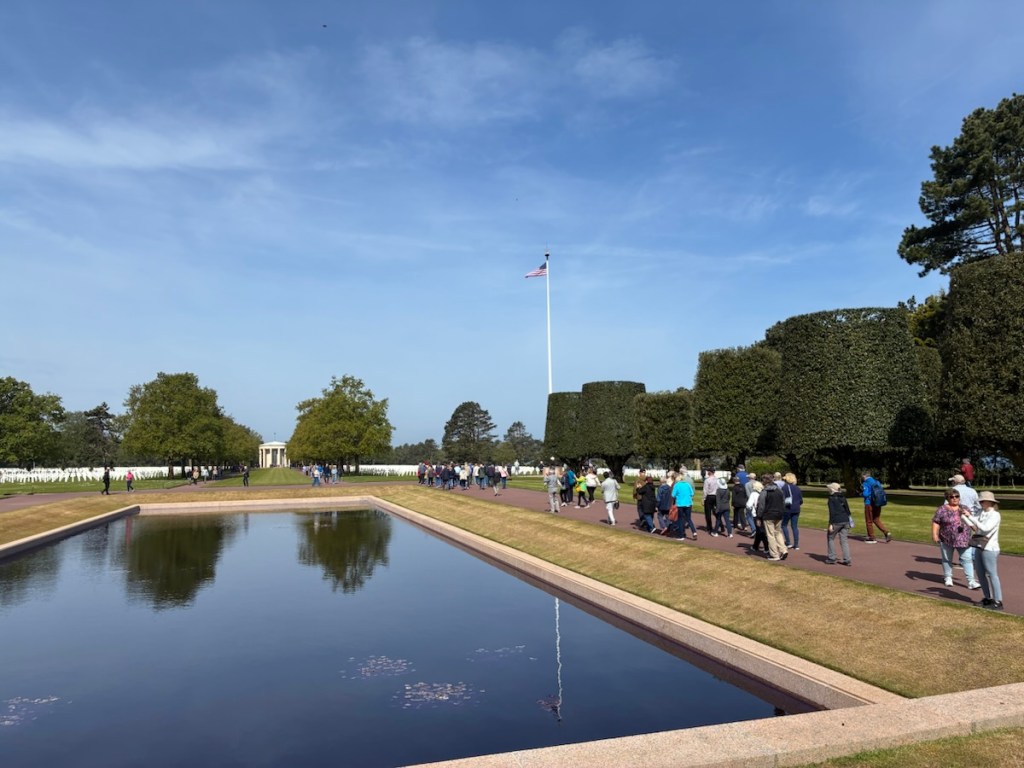
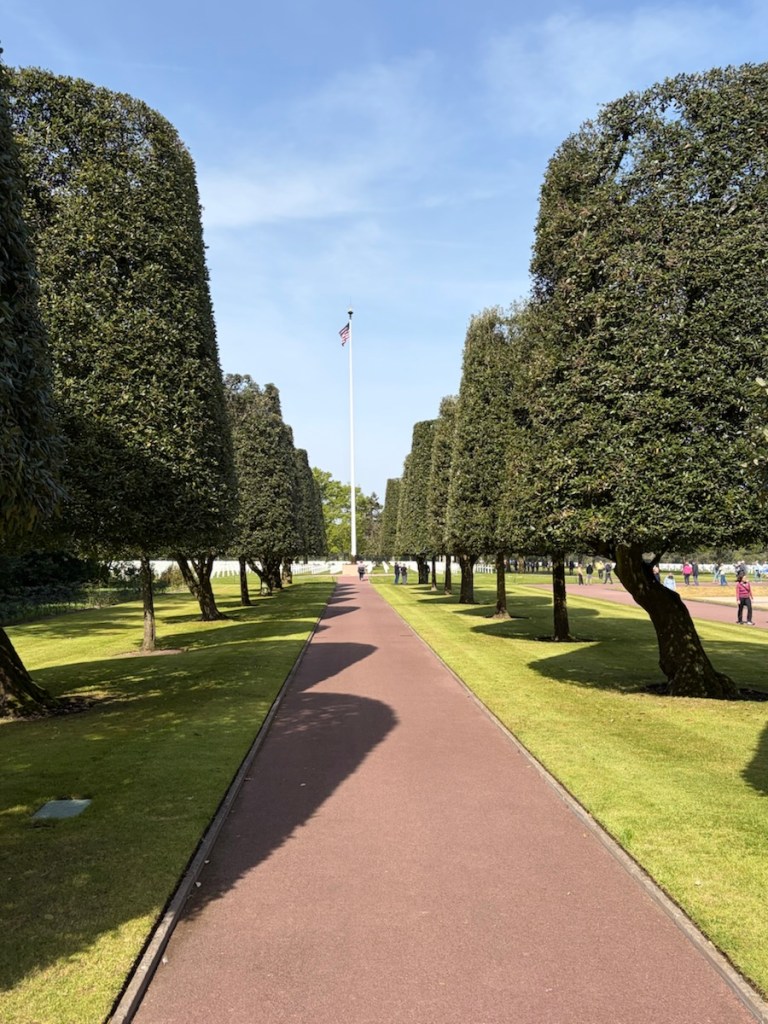
I don’t have a lot of photos of the American Cemetery. The visitor center is so very well done, films of events of the day, stories of individual people both military and civilian, details of what they carried and how they survived or did not. Quotes from family who chose to bury their dead in France instead of back in the US. I started crying quite quickly.
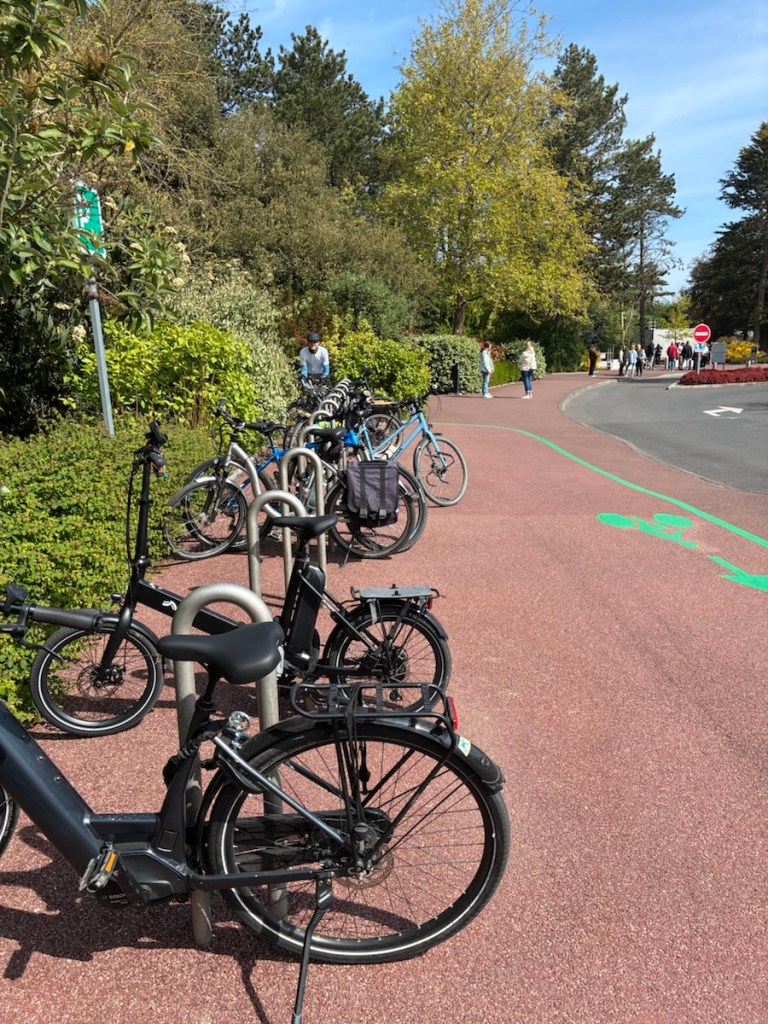
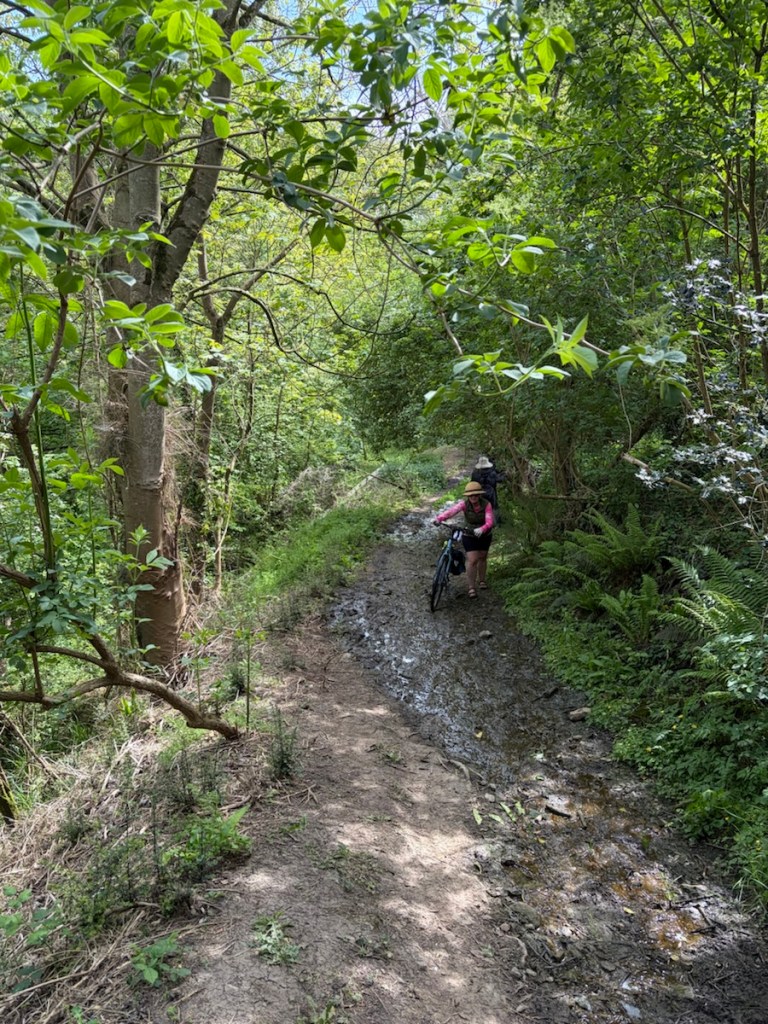
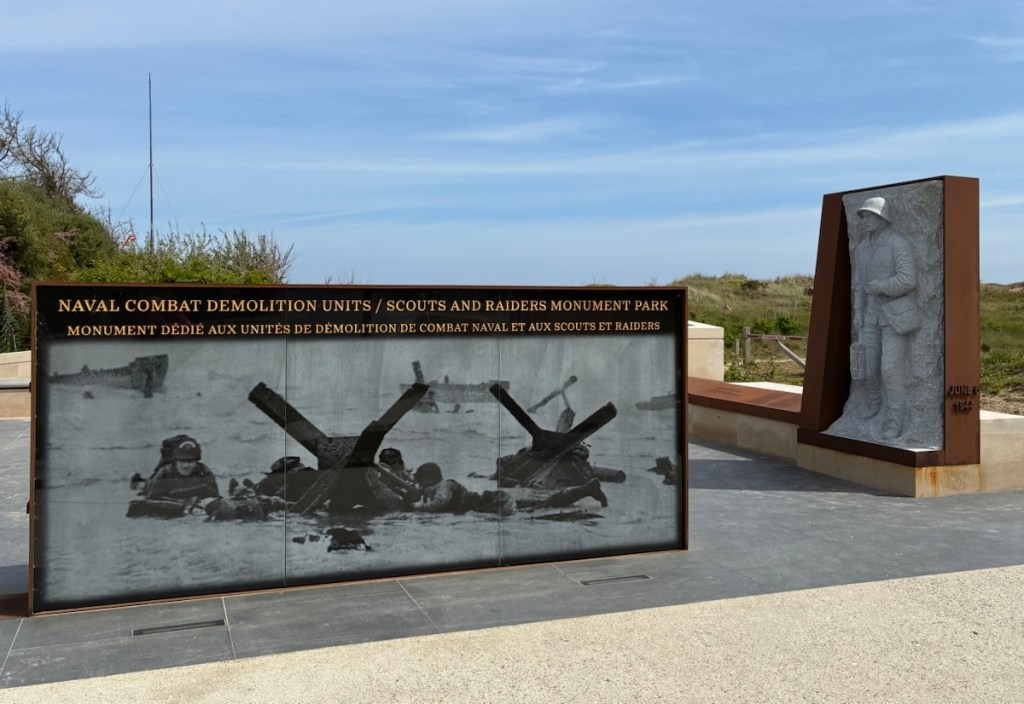
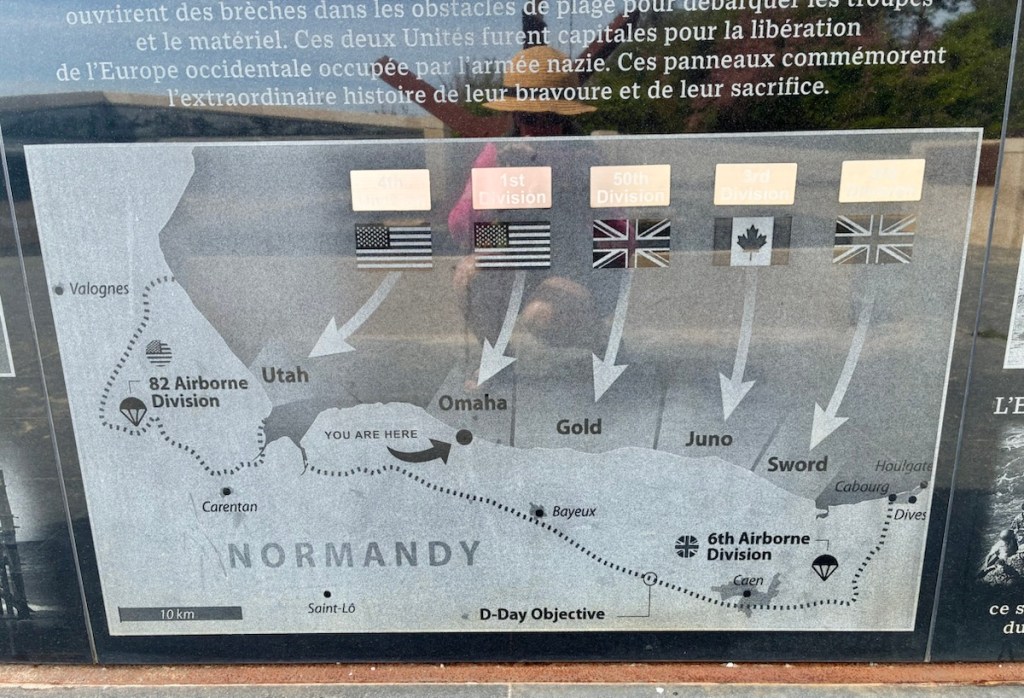
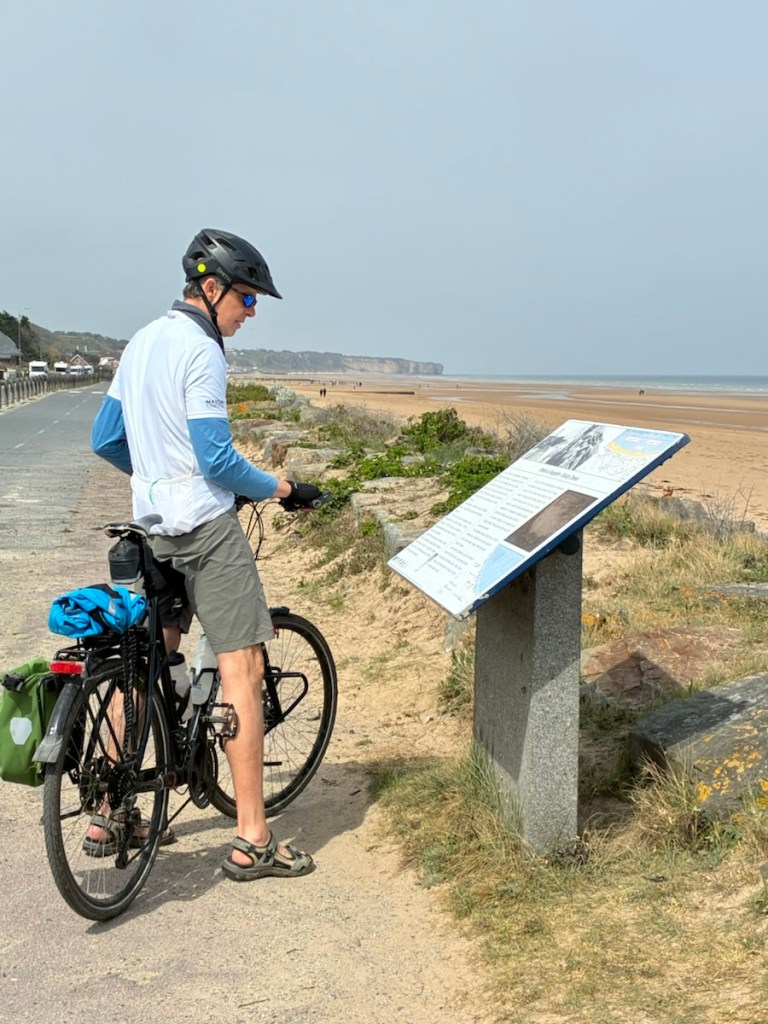
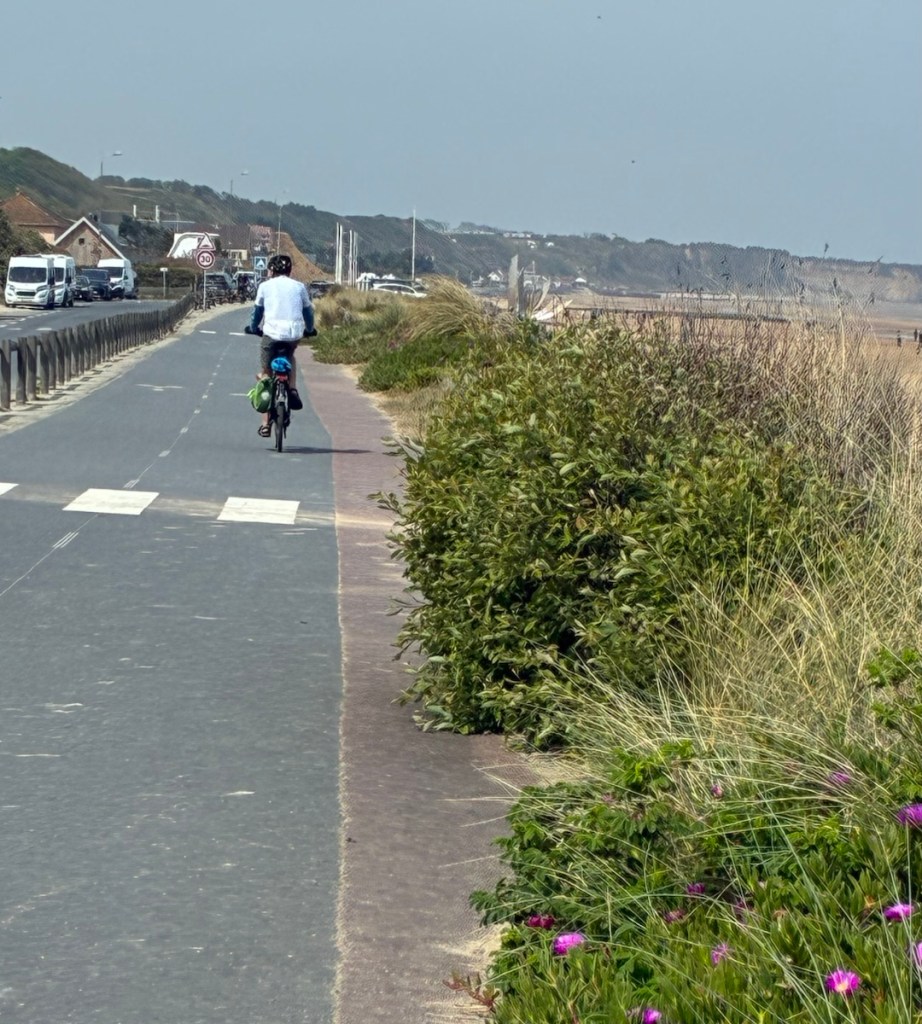
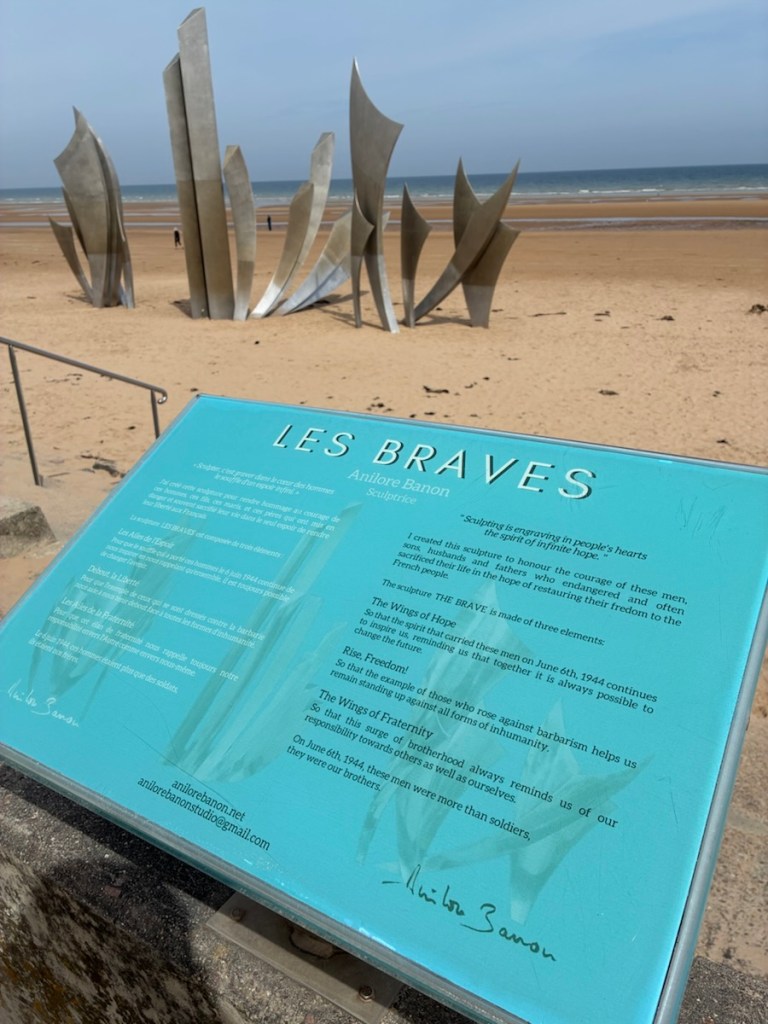
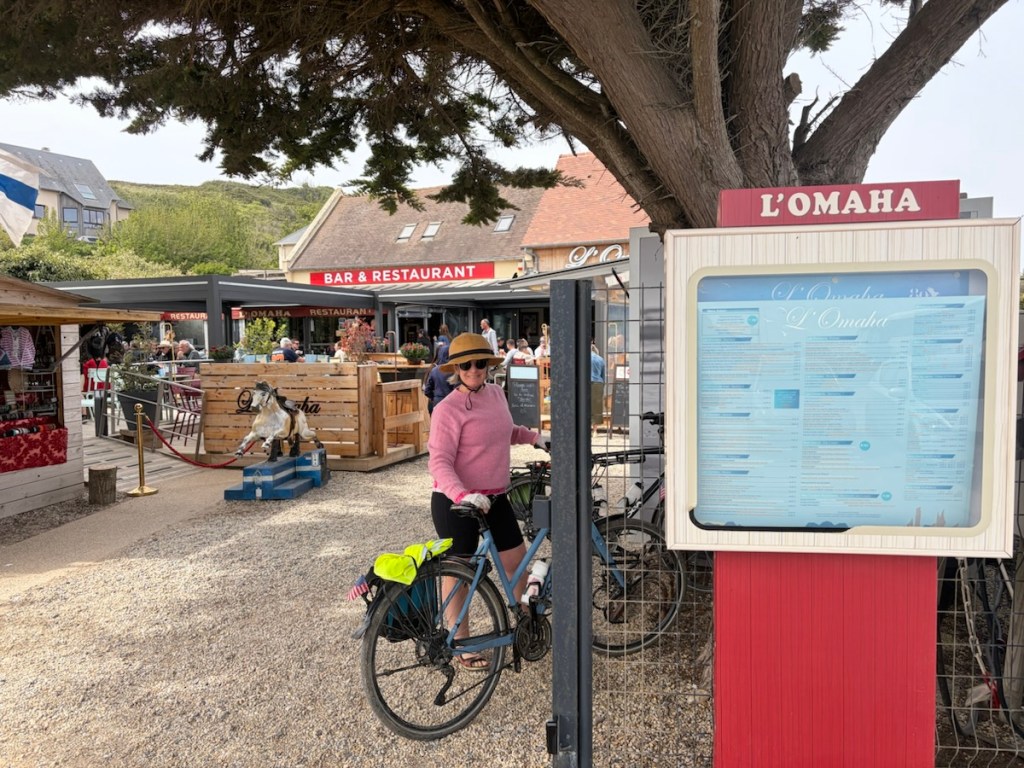
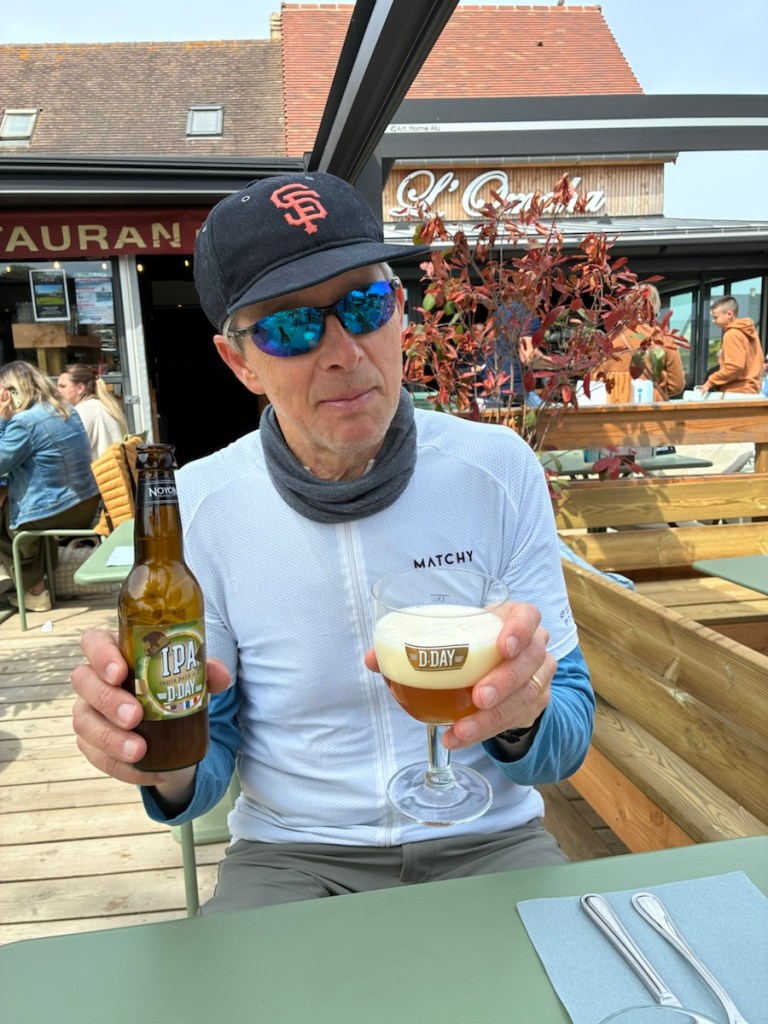
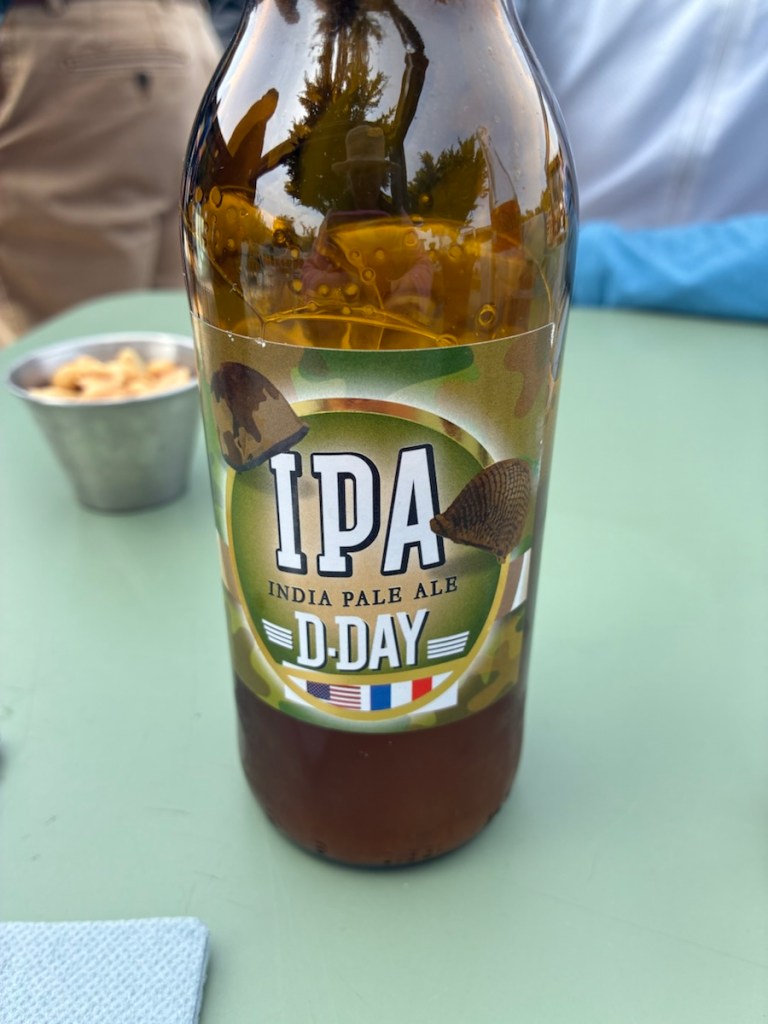
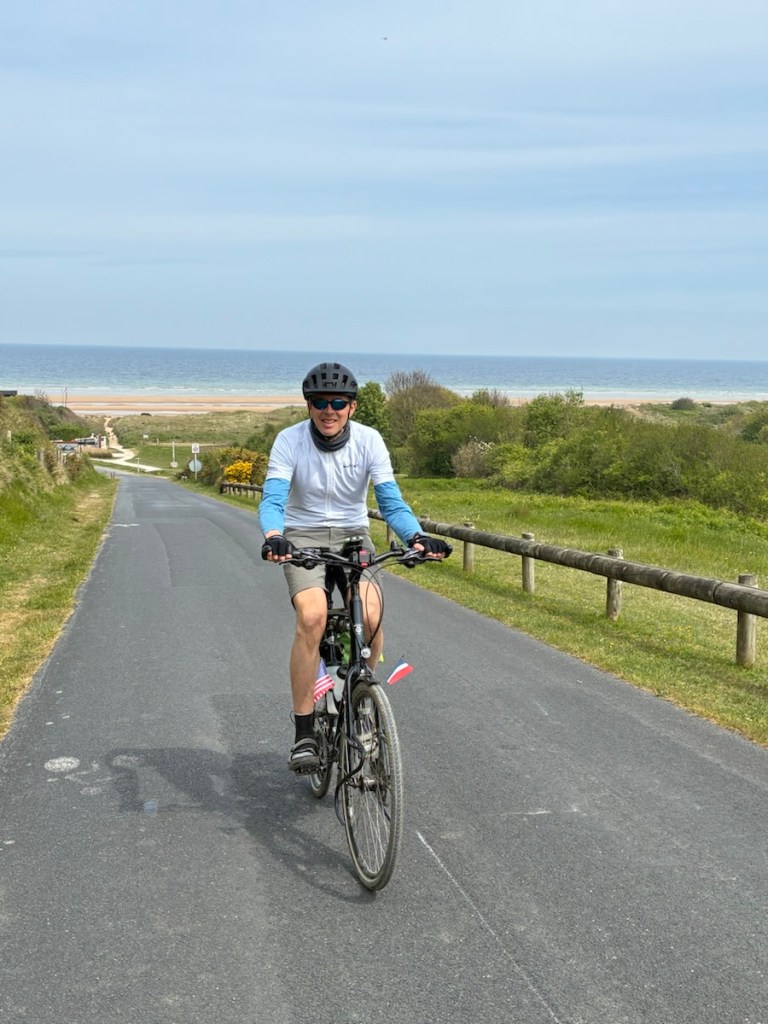
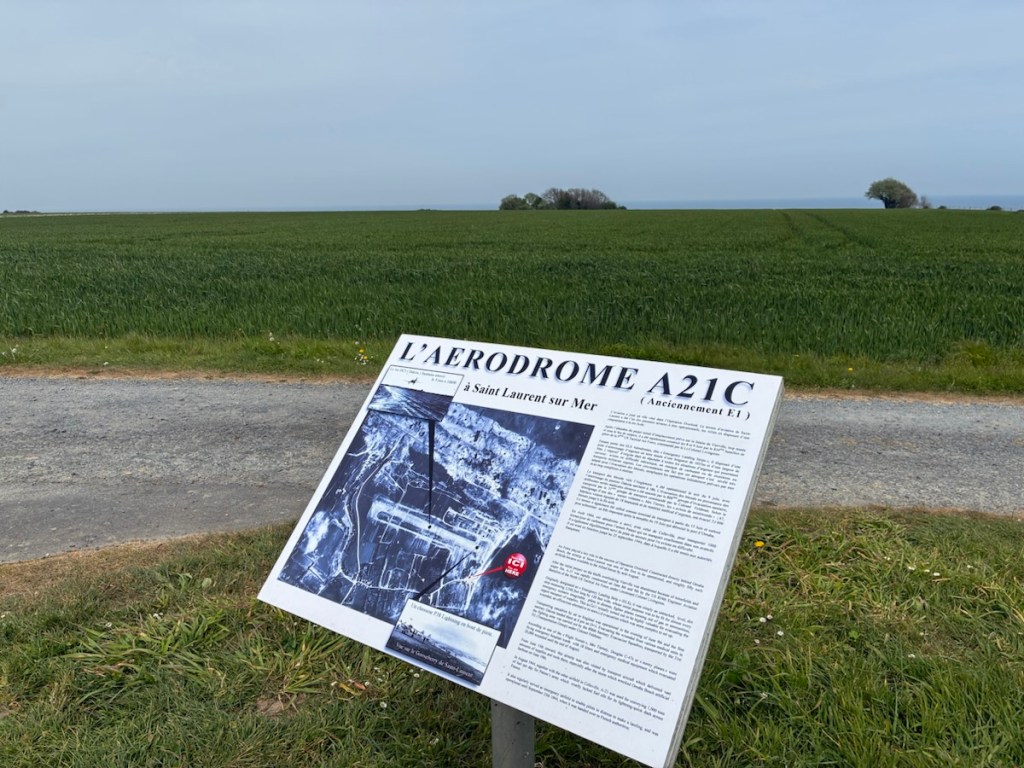
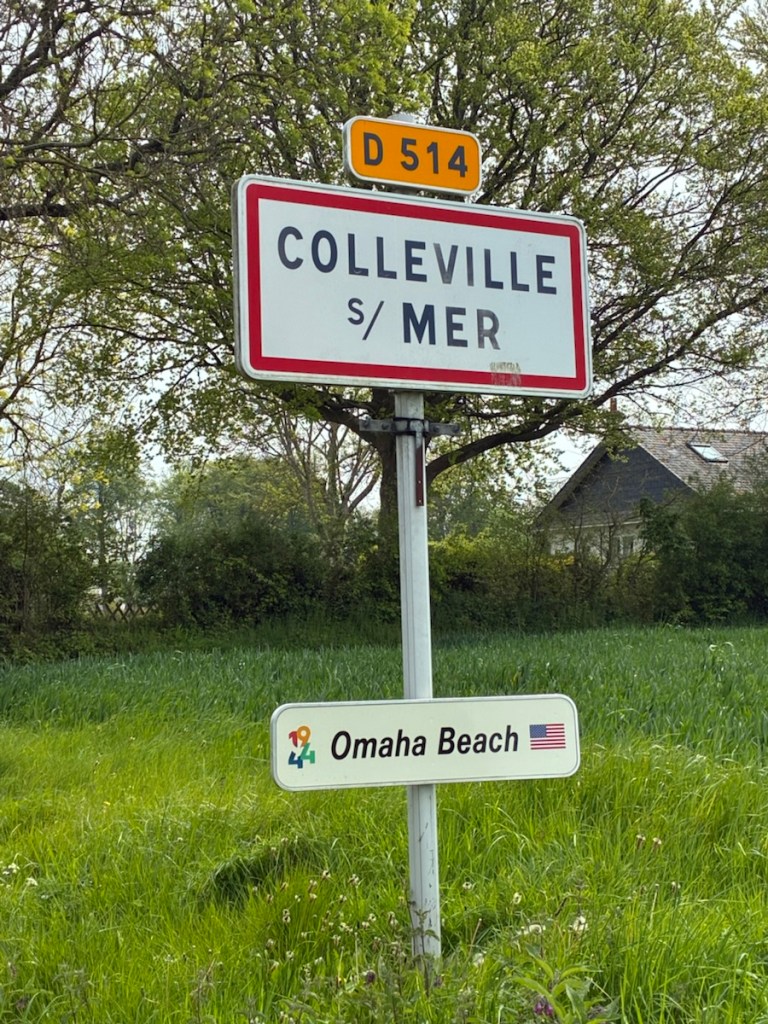
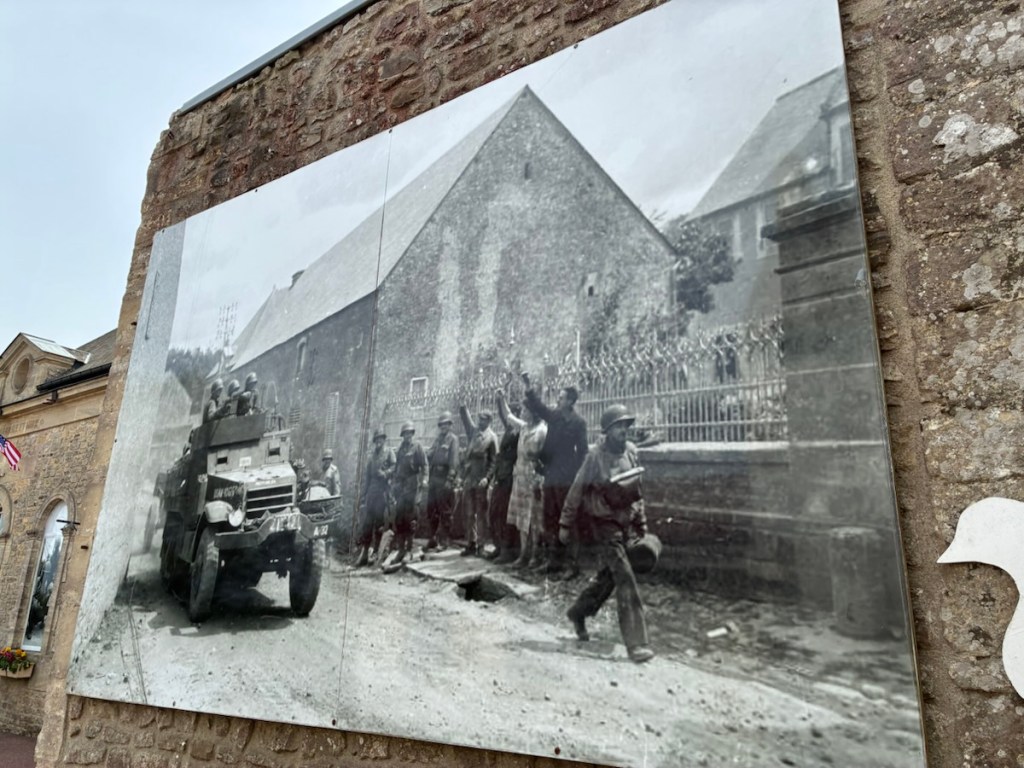
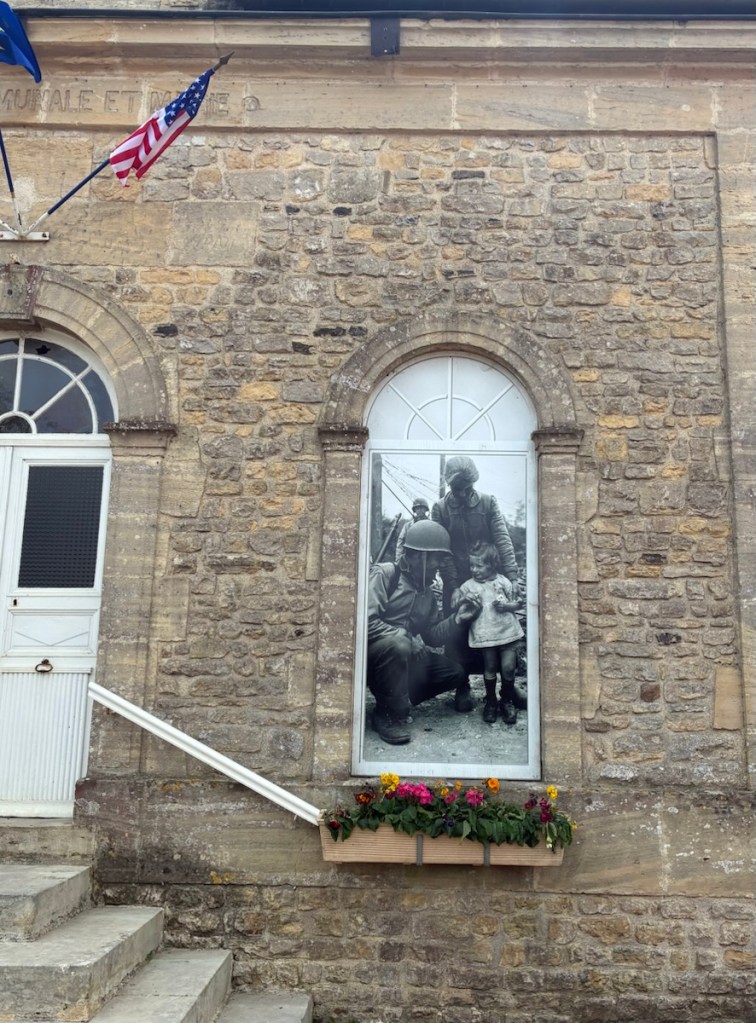
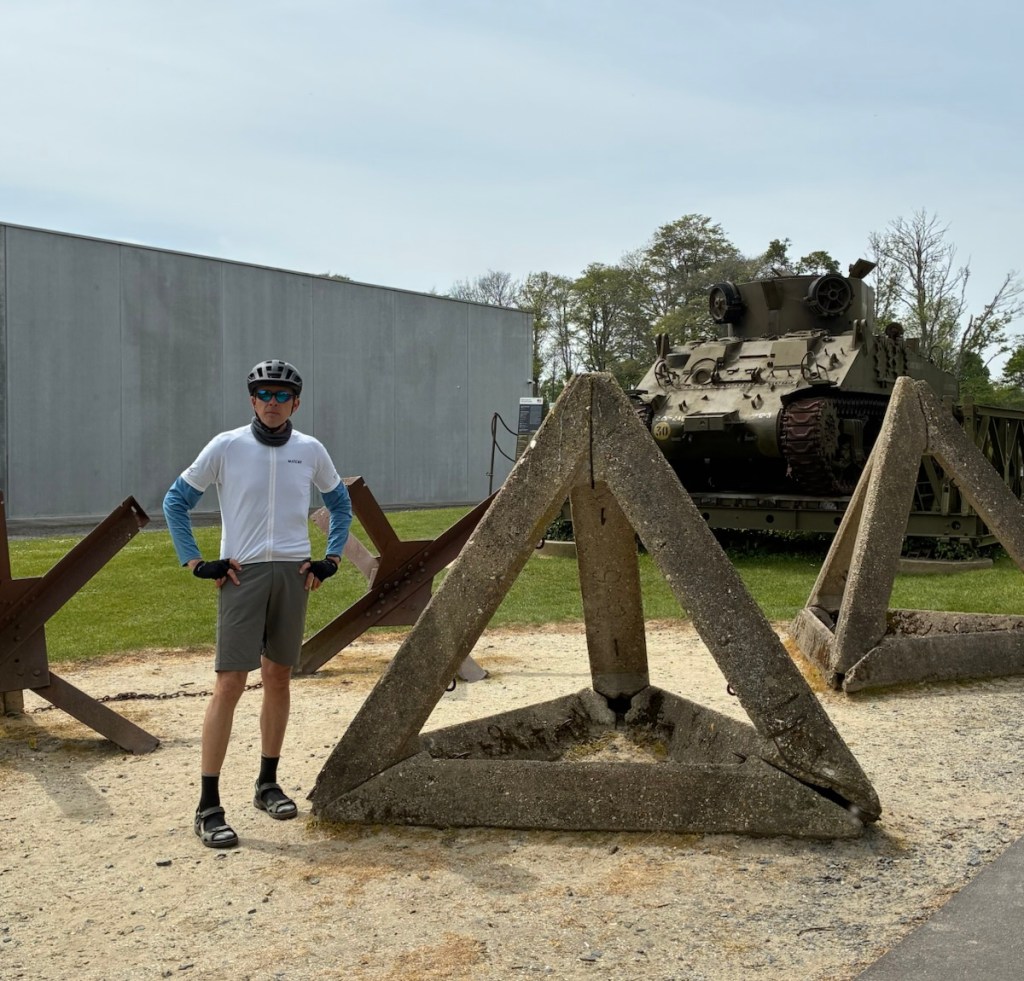
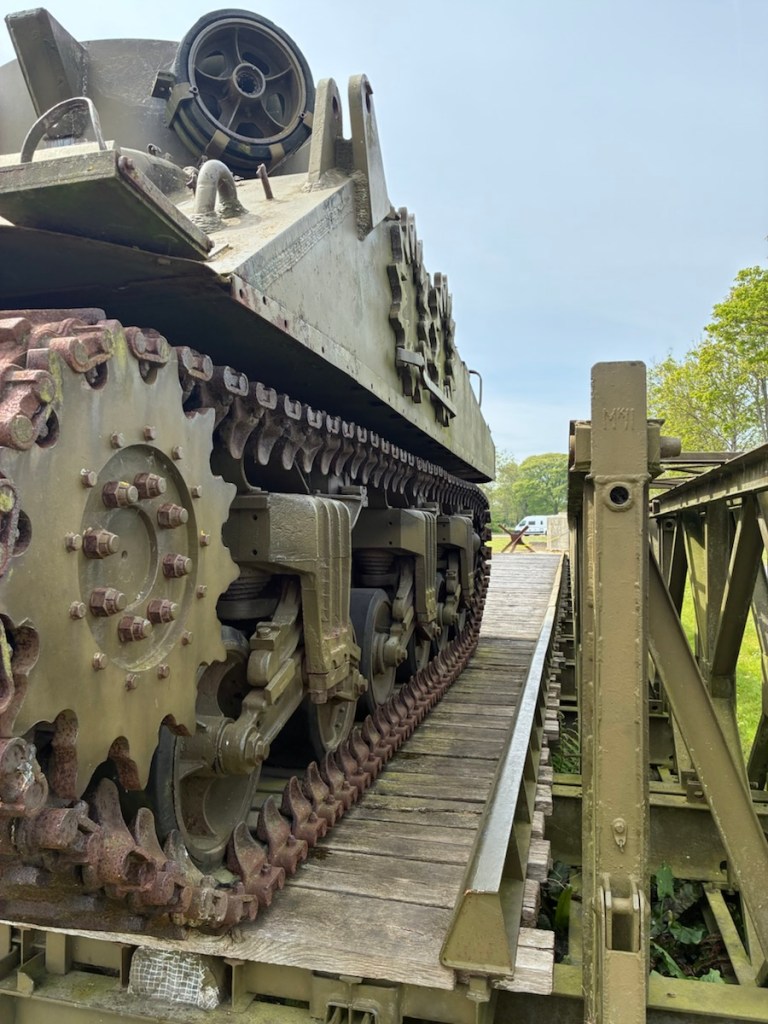
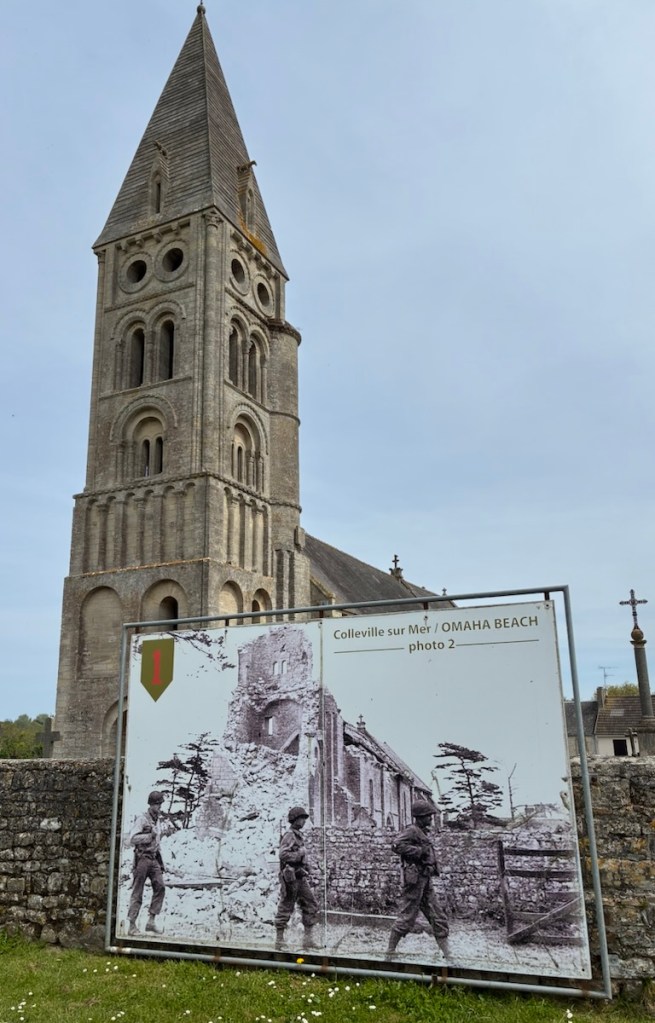
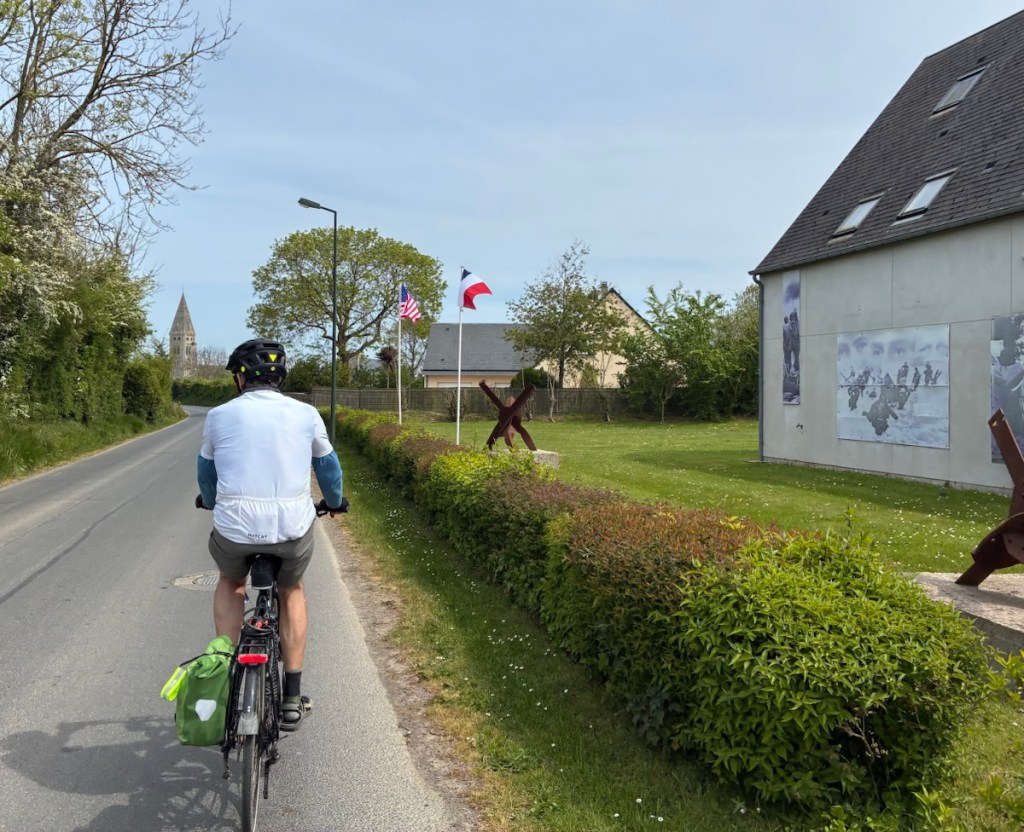
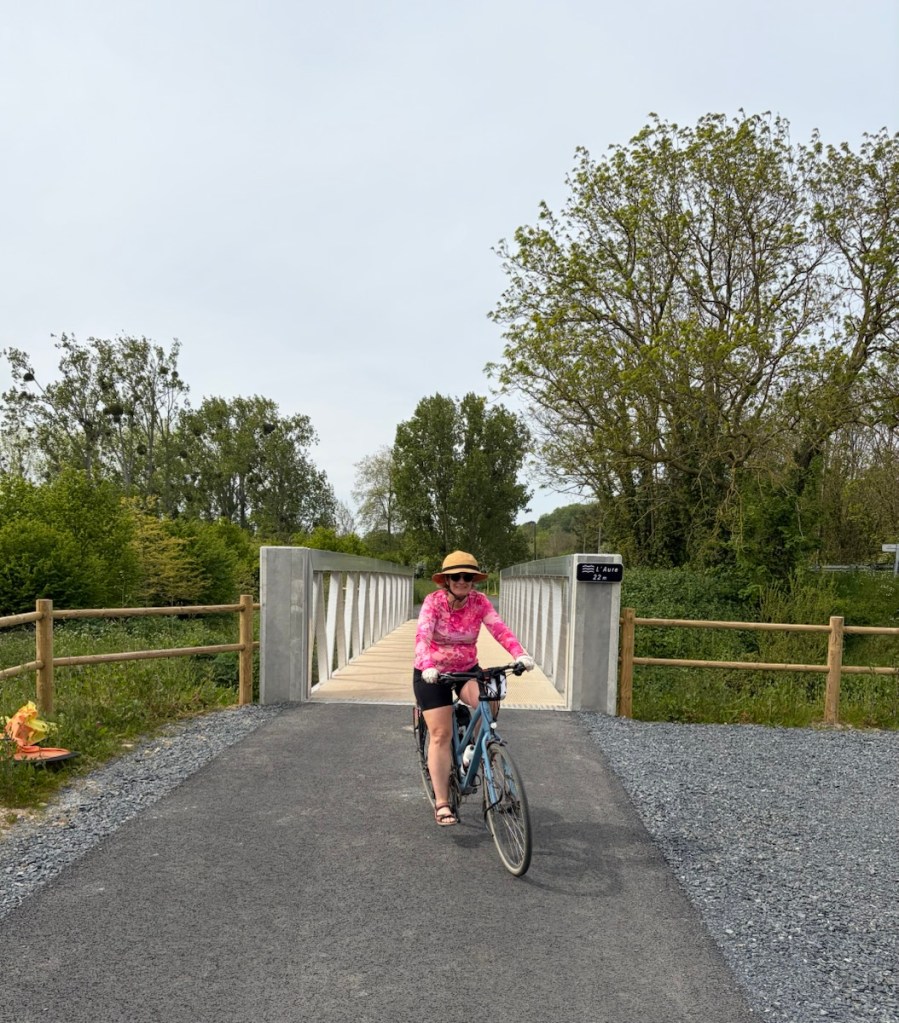
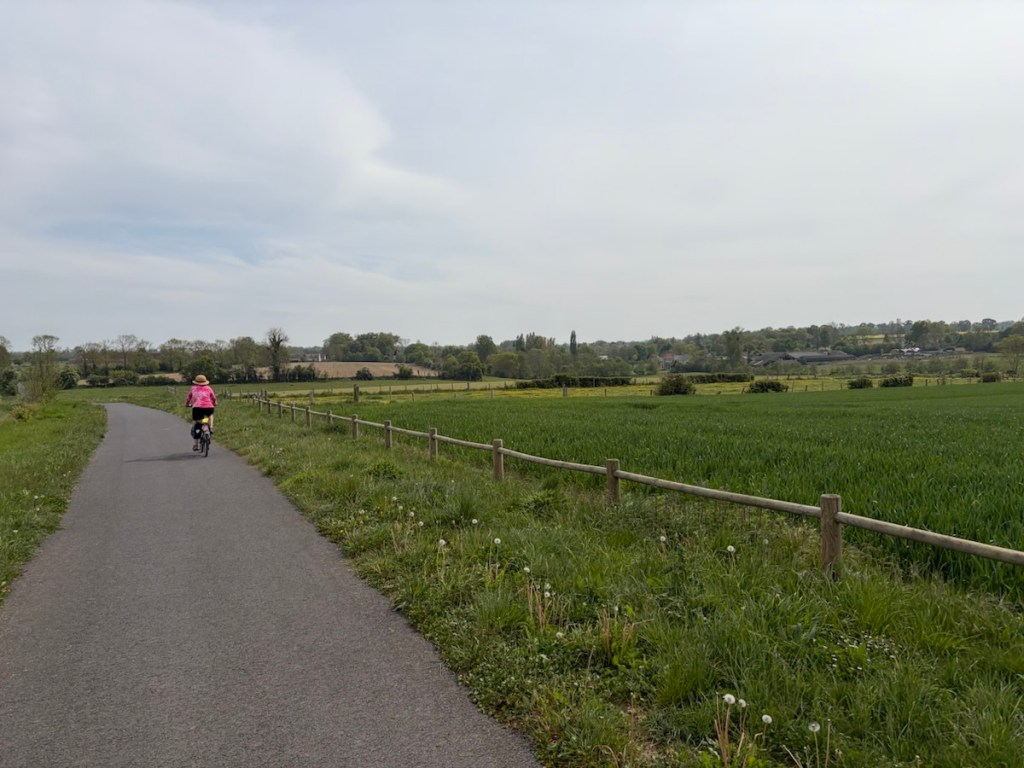
It was nice to see so many people of so many nationalities visiting. The cemetery is beautifully kept.It is all so overwhelming.And yes, there is good bike parking at the cemetery. Quite a few bikes too.Another Komoot short cut down to the stretch of Omaha Beach.A very muddy trail/creek to make you focus on the here and now.Happy to be on dry trail and in the sunshine.Photos and information signs at Omaha Beach.These anti-landing craft installations were called Czech hedgehogs.Where the different countries landed their troops.We stopped to read every sign. The beaches were so heavily fortified with anti-tank and anti-landing devices.We were visiting on a Sunday with beautiful weather, so there were loads of folks out and about, and camper vans parked up along the beach. It’s all a bit incongruous to the very powerful history, but it’s a lovely stretch of coast and deserves to be enjoyed.In memory of the ‘sons, husbands and fathers, who endangered and often sacrificed their lives in the hope of freeing the French people’. By Anilore Banon.Since we are having what Rich calls a “rolling rest day”, we also have a cafe lunch.L’Omaha cafe.Complete with D-Day IPA.Back up off the beach.The first landing strip. Constructed on the 8th and 9th of June directly behind Omaha Beach the airstrip was one of the first to become operational with the first sanitary Dakota landing at 6pm on D+3.The village where the cemetery and Omaha Beach are located.Large scale photos on the walls of the village. It’s hard to imagine what the locals felt when the American GIs showed up. After four years of occupation and hearing rumors of a landing, to have the men who made it off the beach arrive in town – they must have seemed otherworldly. A bunch of healthy well fed soldiers.More examples of anti-landing craft and anti-tank installations.It’s helpful to be able to stand next to a tank to get the scale of it. The huge photos are quite compelling.More Czech hedgehogs along the road.The area is beautiful. The bike and hiking path has stunning views.Down the hill into Port-en-Bessin-Huppain.Quick stop for caffeine.The clouds are coming in as we head back to Bayeux.As heavy as the history of the day was, we were happy to be riding and felt so light without our panniers.And the new bike way back to Bayeux was so impressive.It had obviously been recently created by acquiring strips of land from farms along the way.
We couldn’t help but marvel at what a big lift it must have been to stitch together an off the road bike path for so many miles. The coordination between municipalities and land owners had to have taken years. The bureaucrat in me wants to know, but my googling has not paid off with any details. Yet.
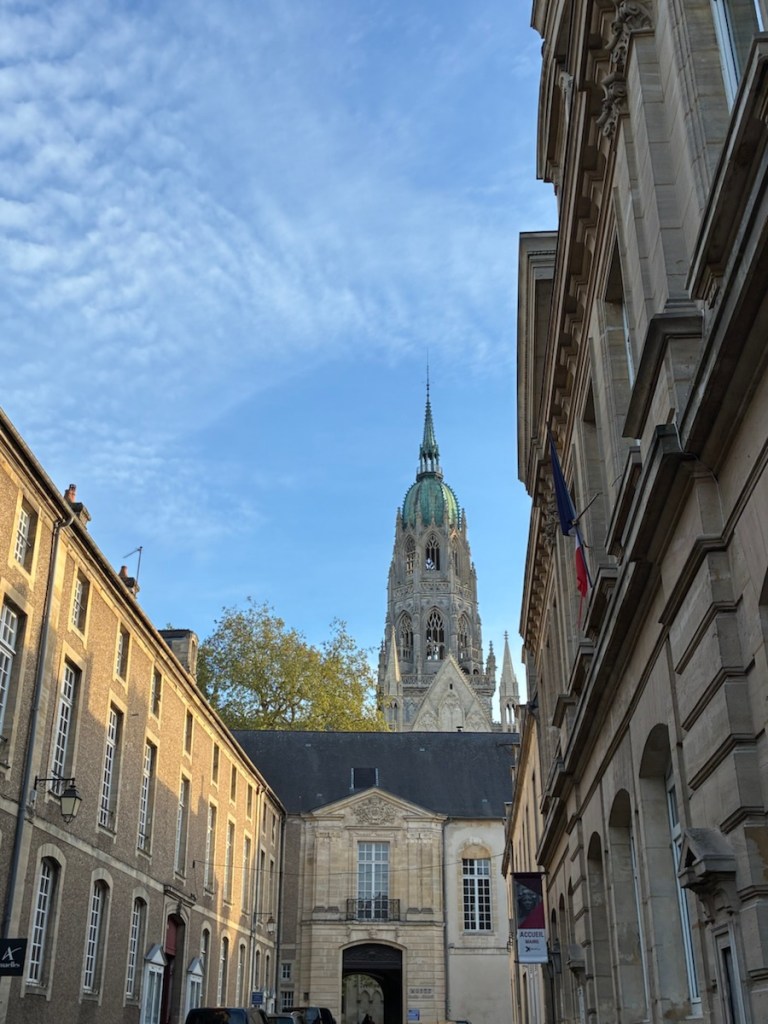
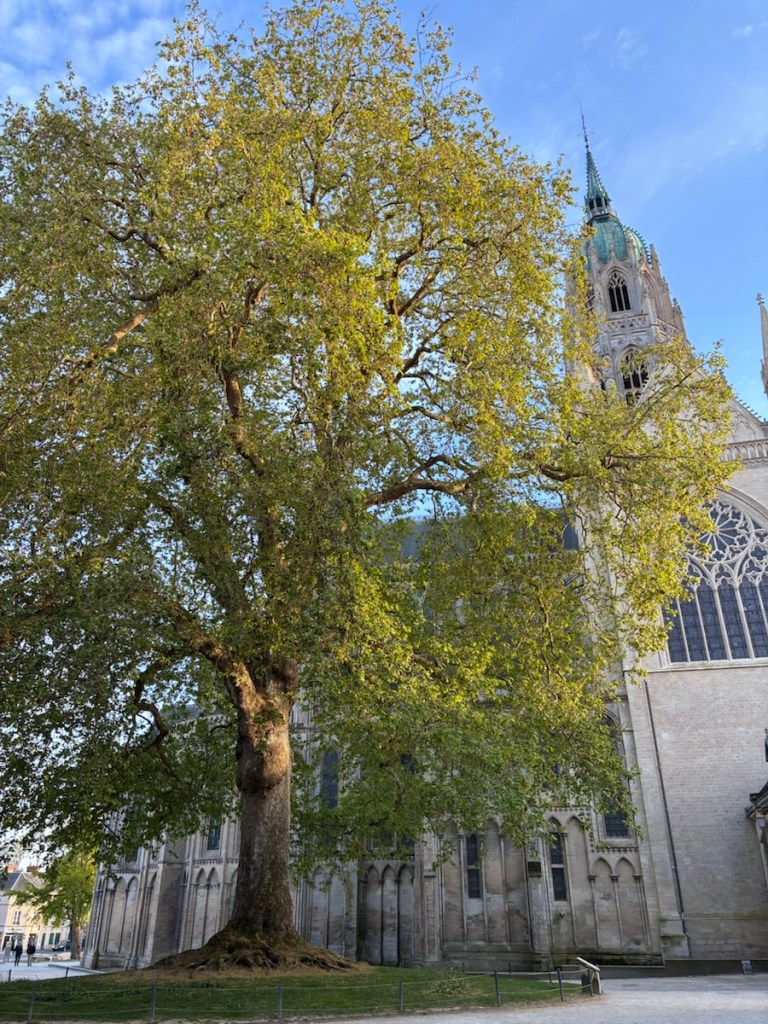
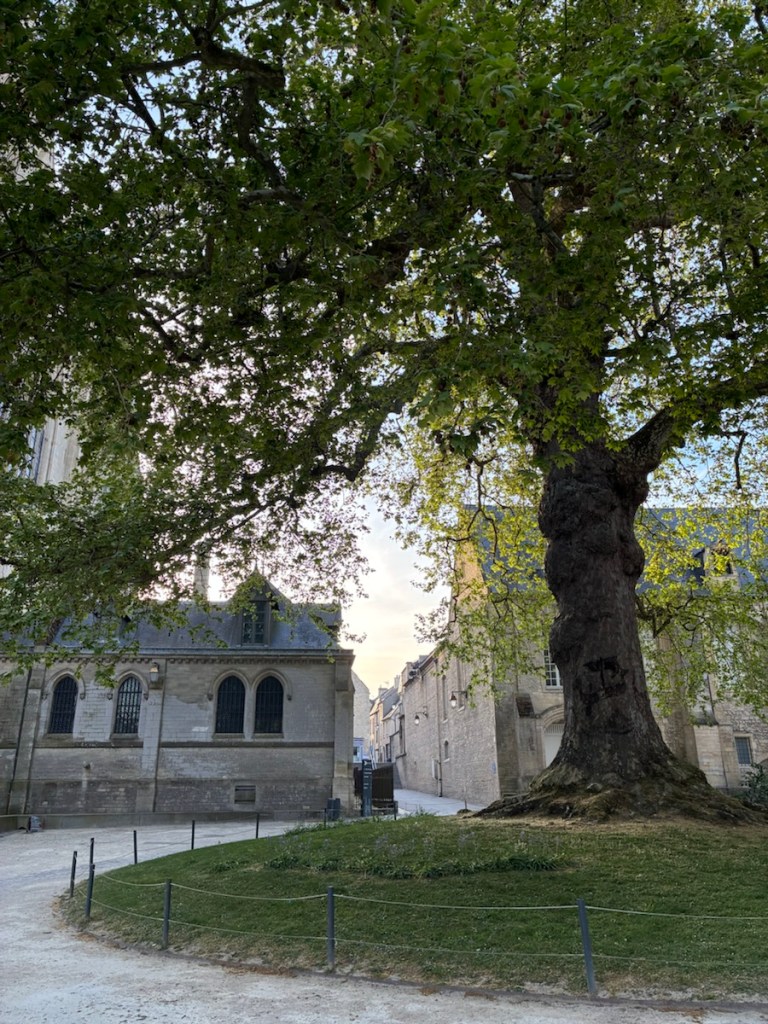
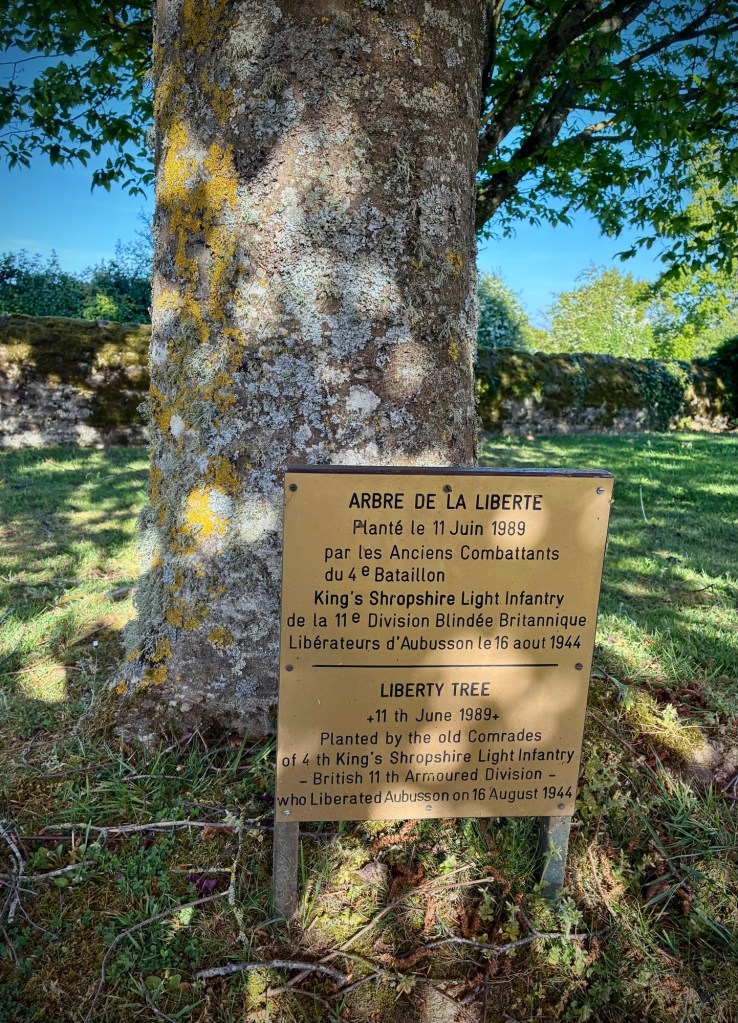
Back to Bayeux and the knights on the traffic circle.Time to calm down with a stroll around town.Wine and pizza dinner.The Bayeux cathedral spire peeking out from behind a row of buildings.A most gorgeous plane tree. Also called a London Plane tree, a close cousin to the American Sycamore tree. Cathedral added for scale. Arbre de la Liberté.Look at that tree trunk. Planted in 1797, as were many Liberty trees in the aftermath of the French Revolution this one is 30 meters or 98 feet tall.Ready for a good night’s sleep and then back on the bikes to continue east along the beaches of Normandy.
Tomorrow as we head off I will realize that my “rest day” in Bayeux actually involved cycling over 50 somewhat hilly kilometers and was quite emotionally draining. But we have more history to cycle through, so off we’ll go!
So Rennes wasn’t really a city on our must-see short list and probably isn’t on yours either. It’s the largest city in Normandy with 230,000 inhabitants and sits at the confluence of the Vilaine River and the Ille et Rance Canal. It’s the only major city in the region not on an estuary and also a major train hub for eastern Brittany.
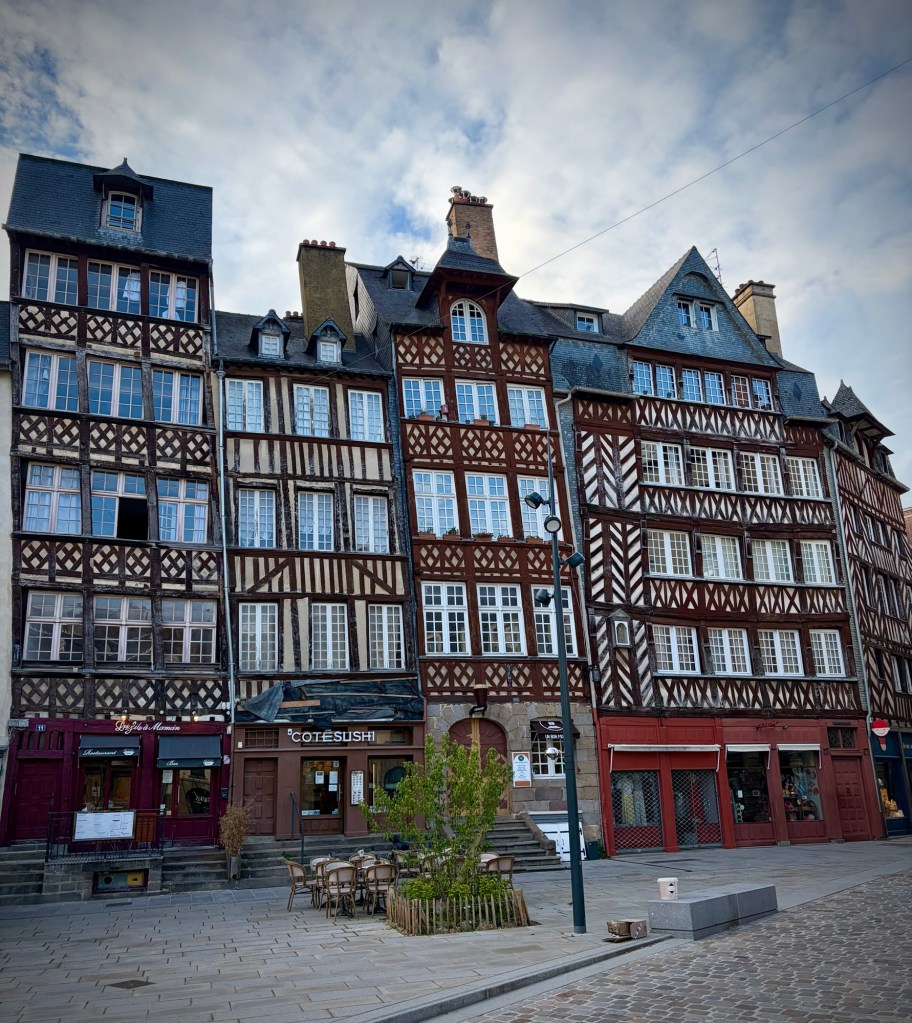
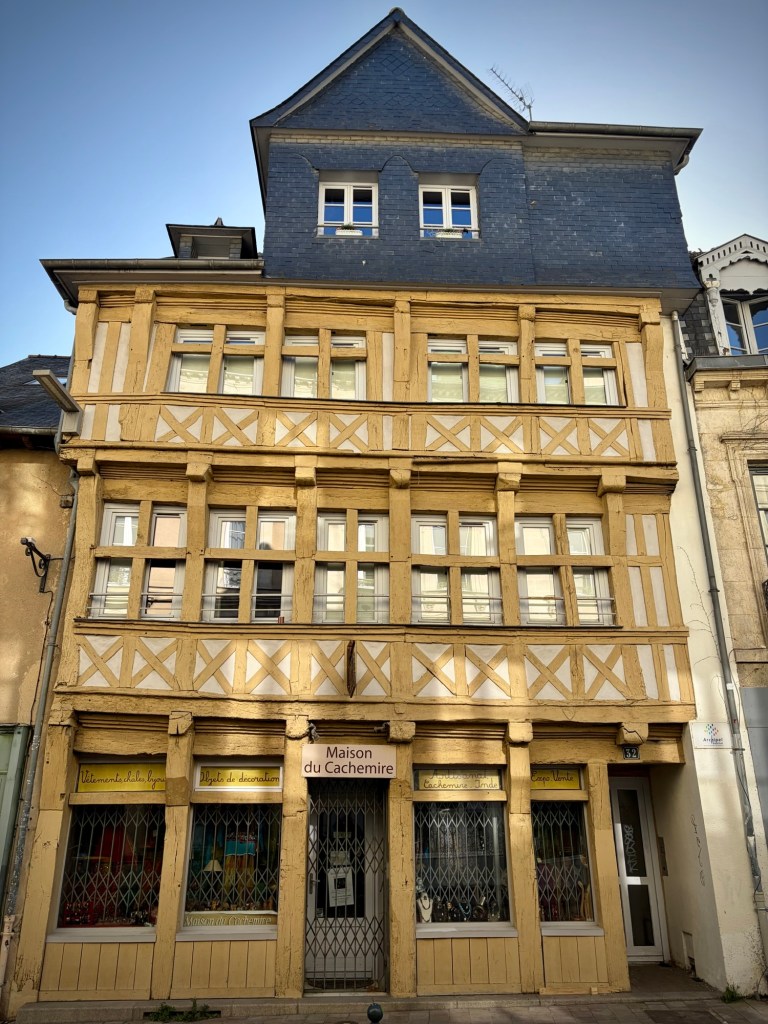
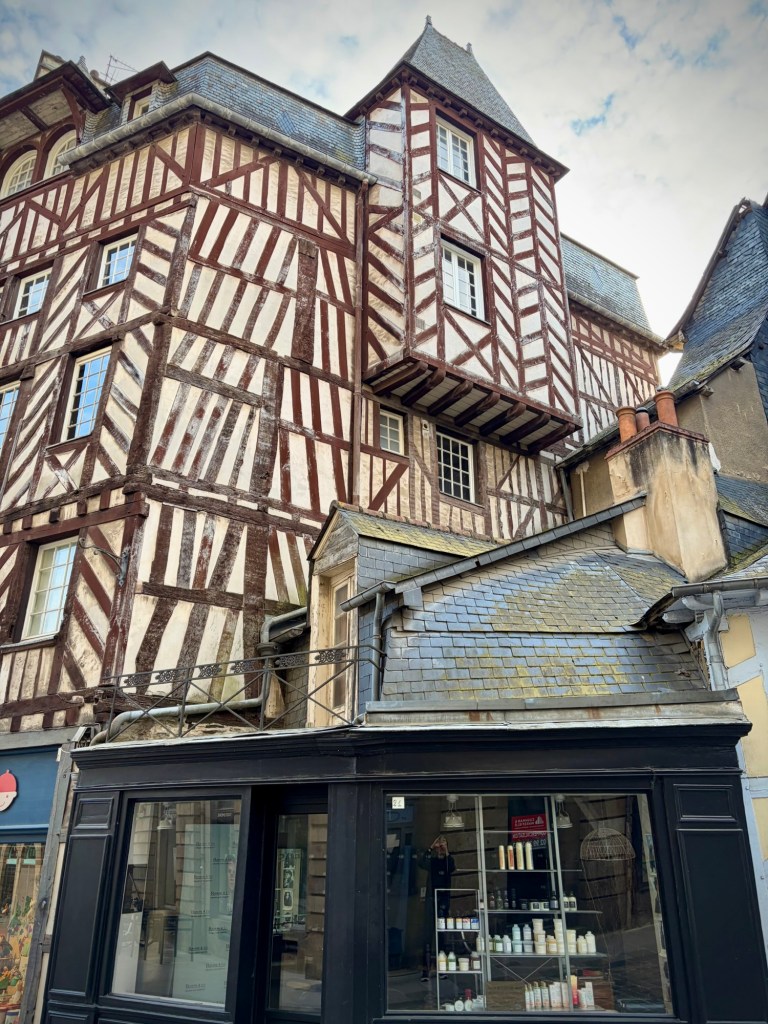
Despite a major fire in 1720, much of Rennes core survives with half-timbered buildings and “newer” buildings of granite and tufts stone
Since it is a key train hub, we had to transfer in Rennes to head further east, so we decided to take a rest day to explore it. We enjoyed it’s vast commercial core, which is buzzing with people, very walkable, and has a wide variety of restaurants and shops. Nice trams too of course. The city is a little short on sights, but we managed to easily amuse ourselves for the day.
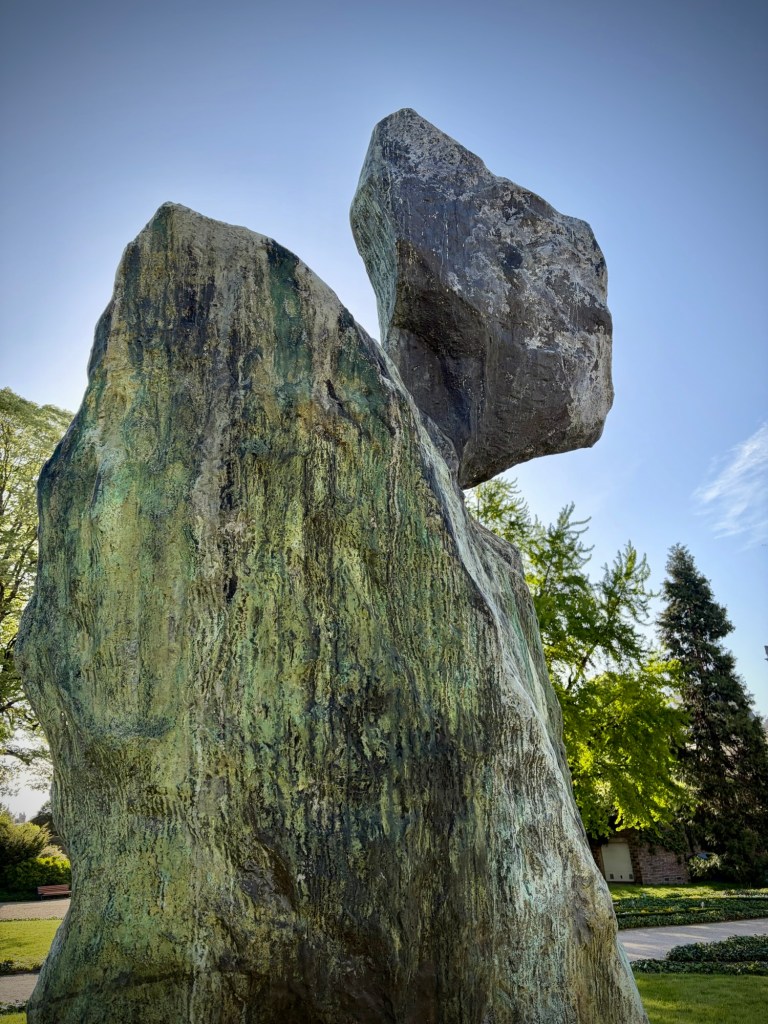
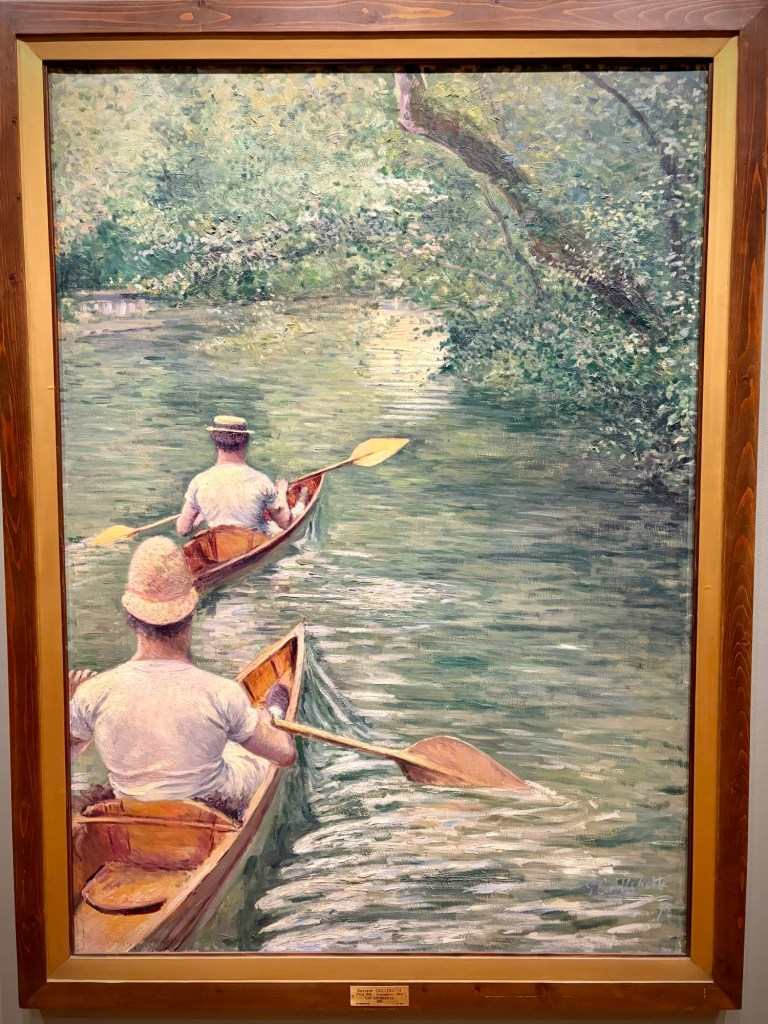
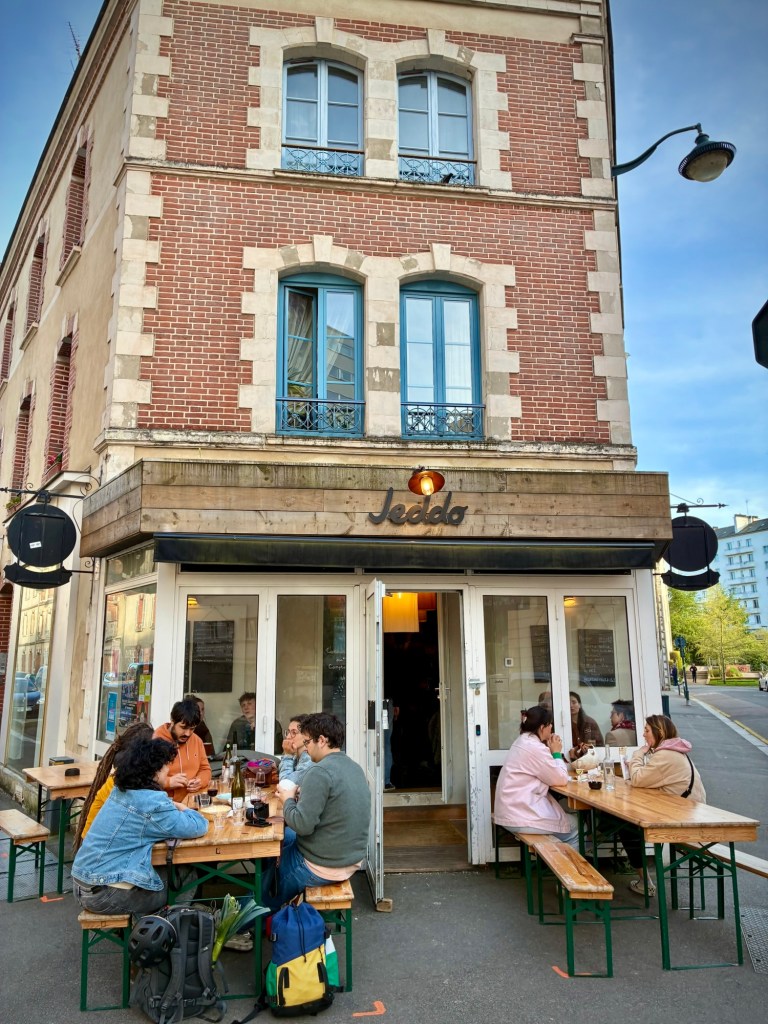
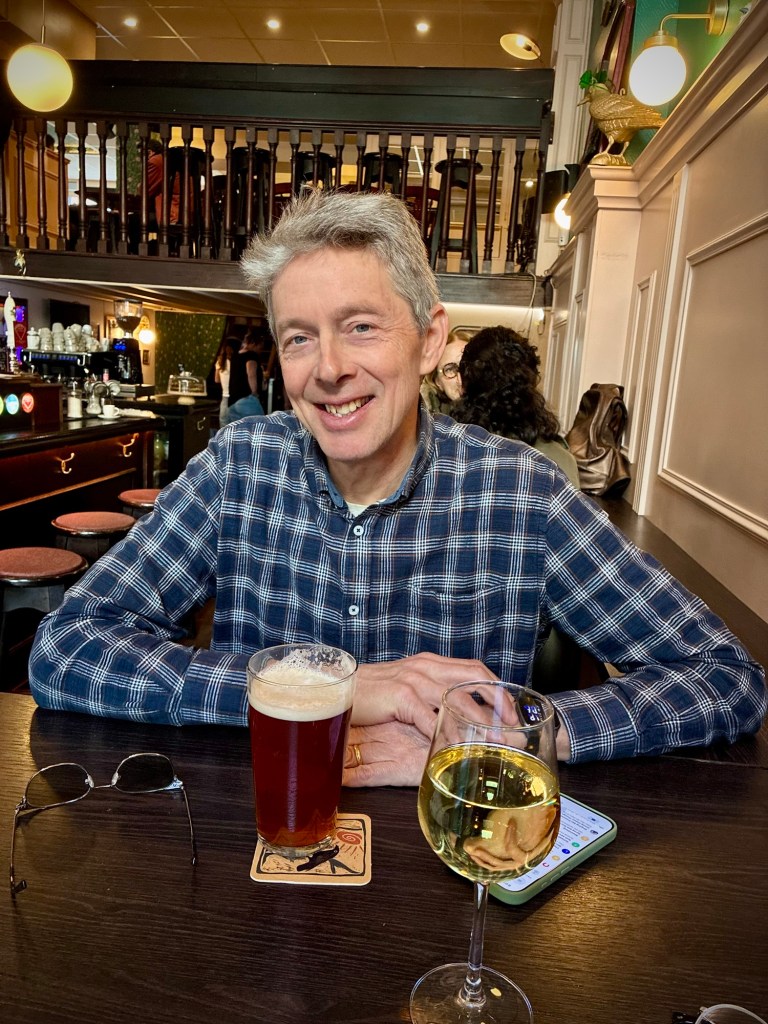
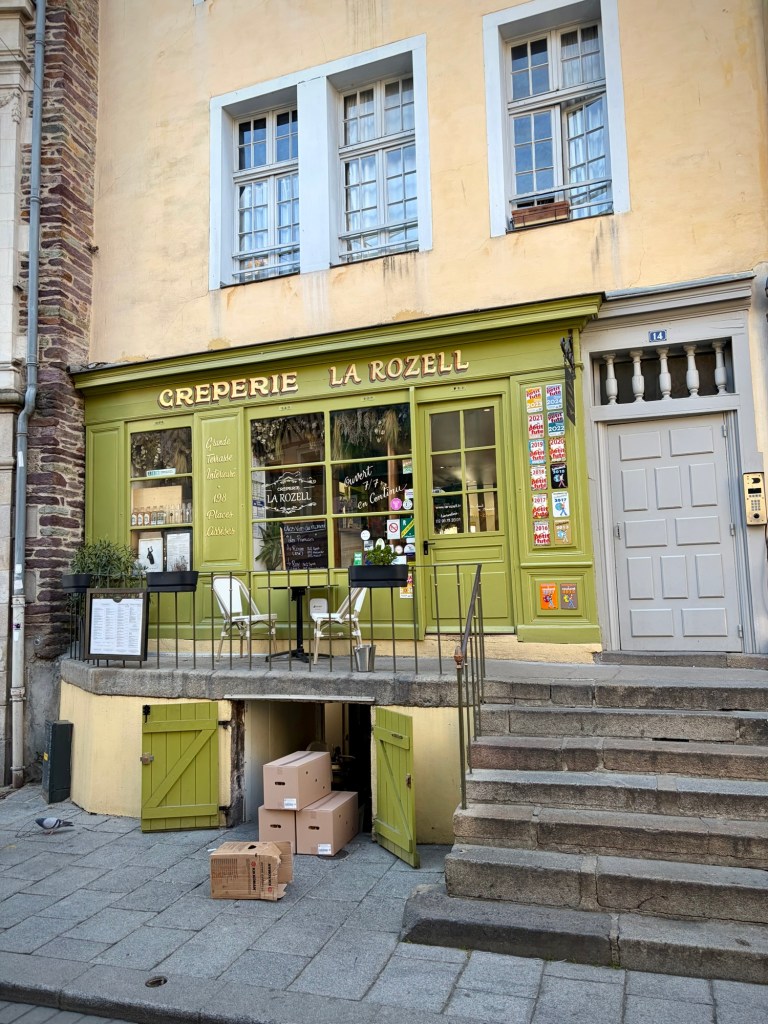
Typical sloping half-timbered building with signature Bretagne slate tiles.I liked this impressive stone sculpture at the Palais Saint George.The free entry Musée des Beaux arts has a nice collection of art spanning from medieval to modern, including a few Cailbottes.One perk of bigger cities with lots of young folks is of course the variety of restaurants. This friendly Lebanese Cafe, Jeddo, served delicious small plates and Man’Ouché, a thin crepe like wrap with a variety of fillings.Rennes core has an intriguing and organic mix of buildings from all eras.We found a friendly pub near our hotel that had a British amber on hand pulled draft! It was so good and so rare to find in France. We went back the second evening too. Of course the wine was good.Clever storage under a creperie.
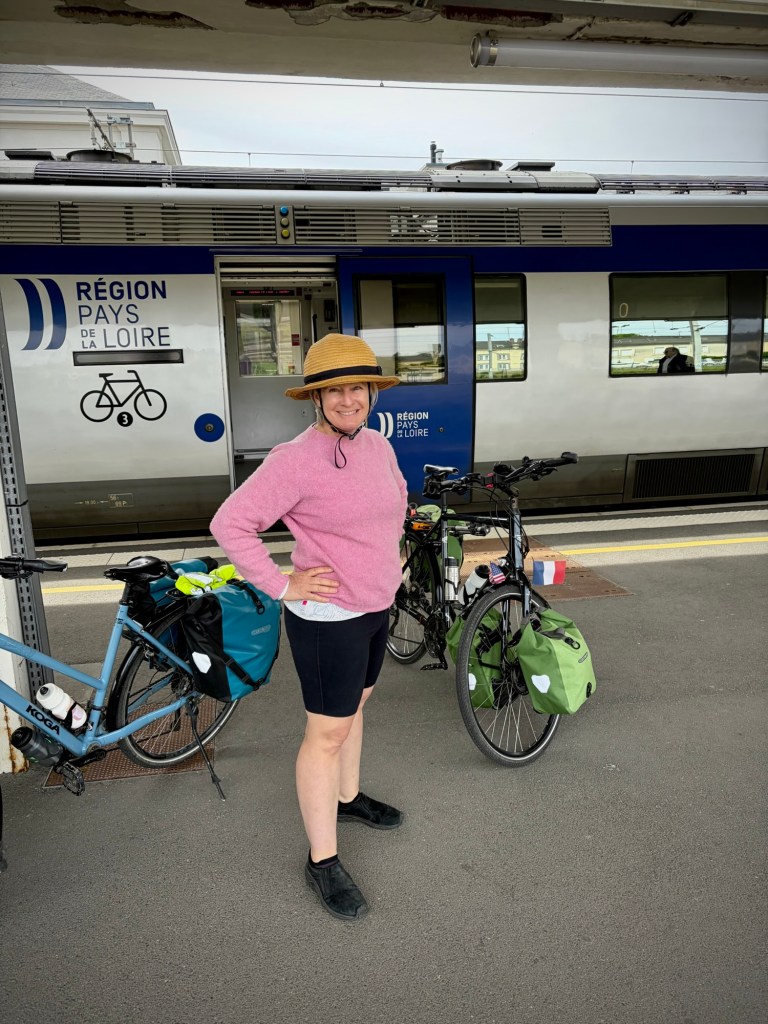
So from Rennes our next goal was to get northeast to the Normandy coast to explore the countryside and see some of the extensive World War II history. But the winds were blowing strongly from the east for 3 days, so we decided to take a train hop east from Rennes to Laval and take the Velo Francette route due North. Inland areas can be protected from the wind (sometimes!) and we’d mostly have cross winds as we cycled. With the unfavorable winds, we had to be clever and I was glad for our flexibility without advanced bookings. Sure we could press into the east wind, but the stretch from Rennes to Laval was not particularly interesting, and we’d burn a few days that we could spend elsewhere.
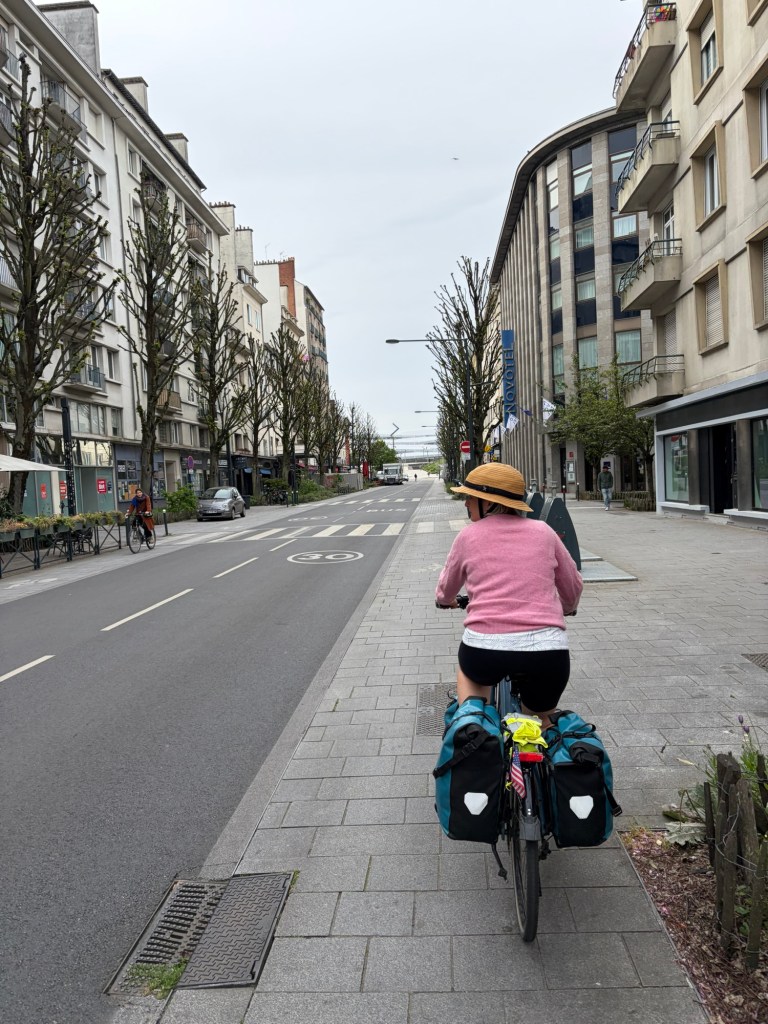
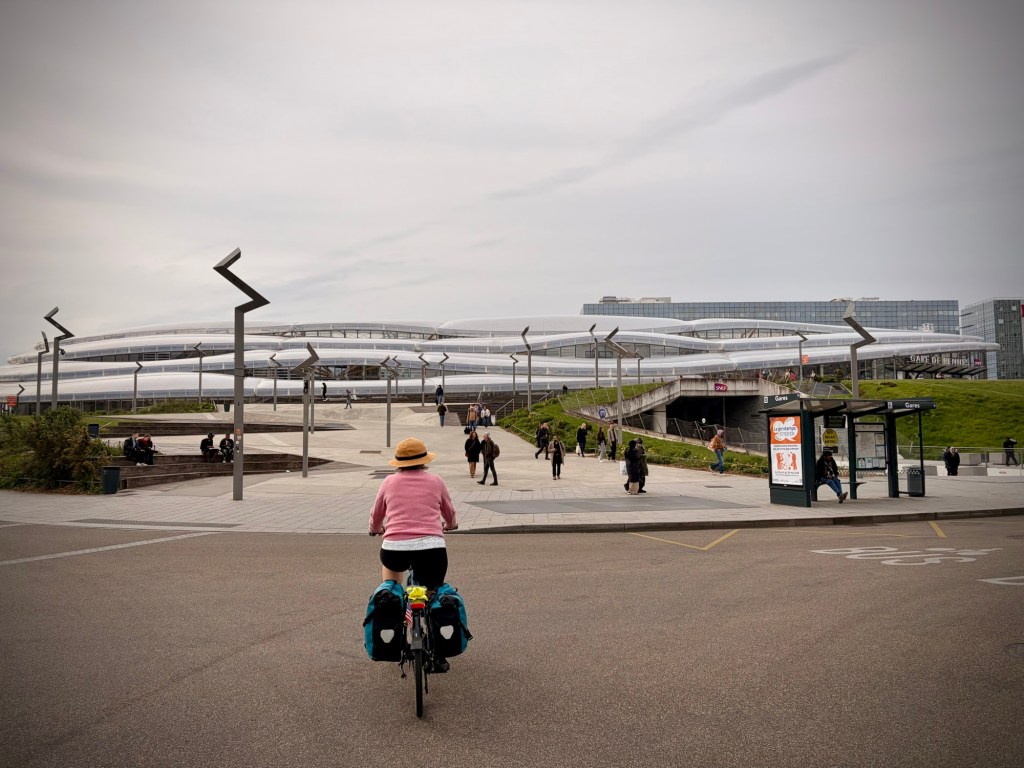
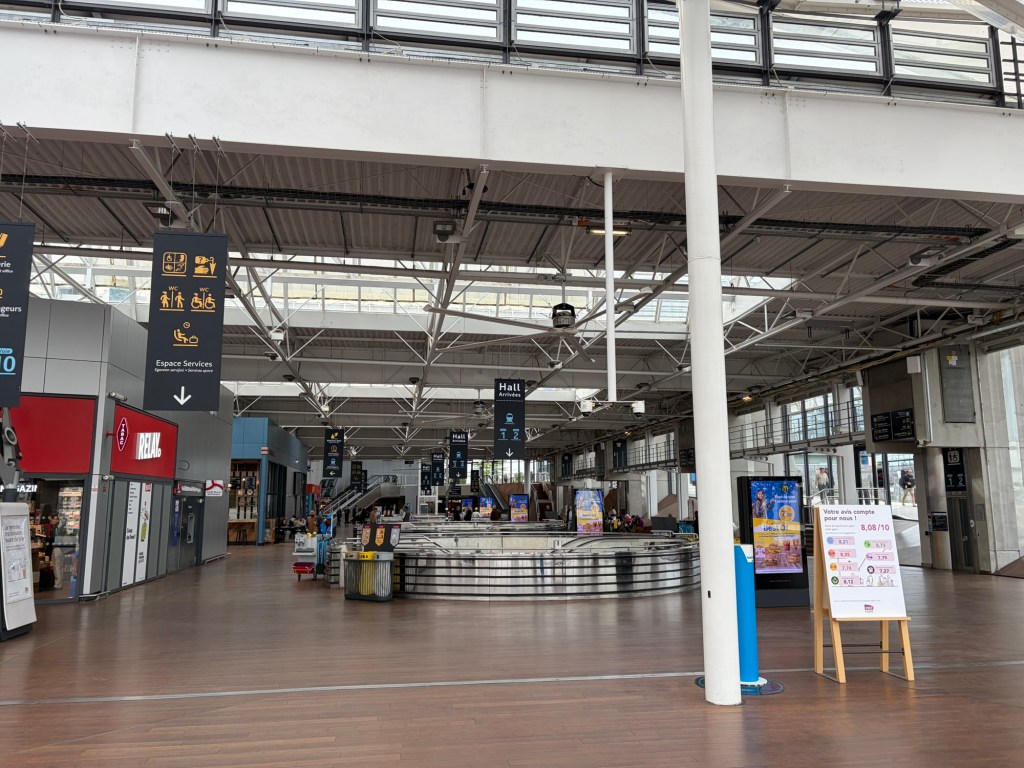
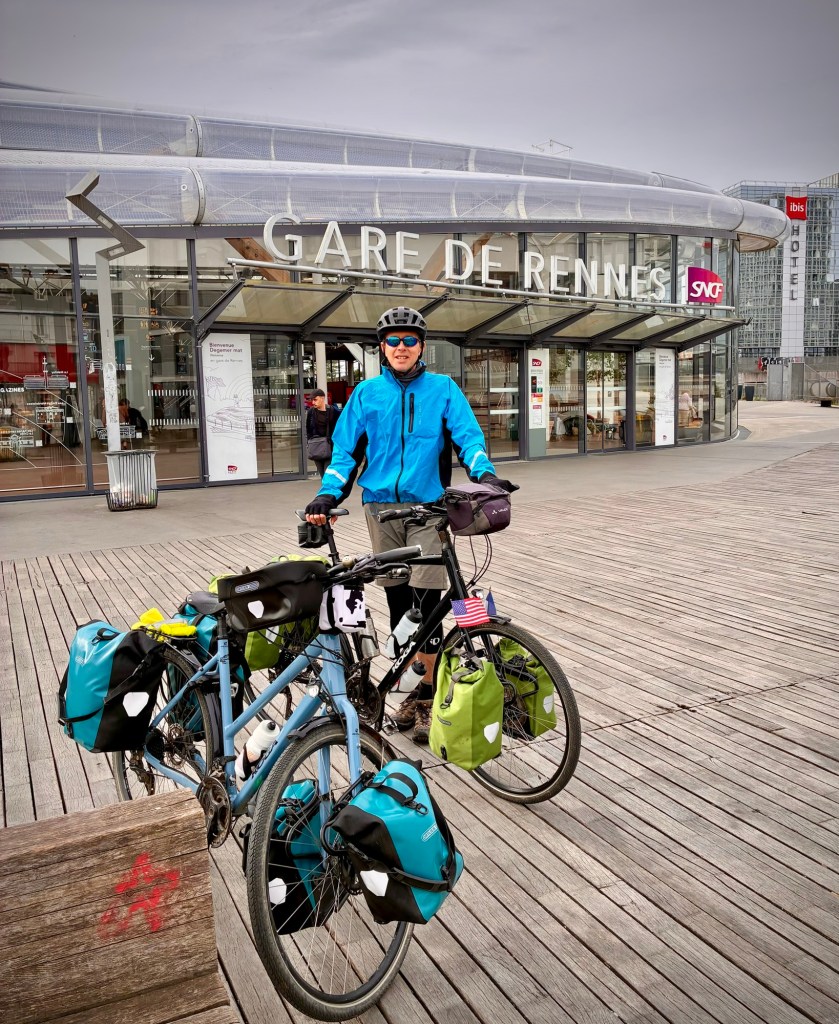
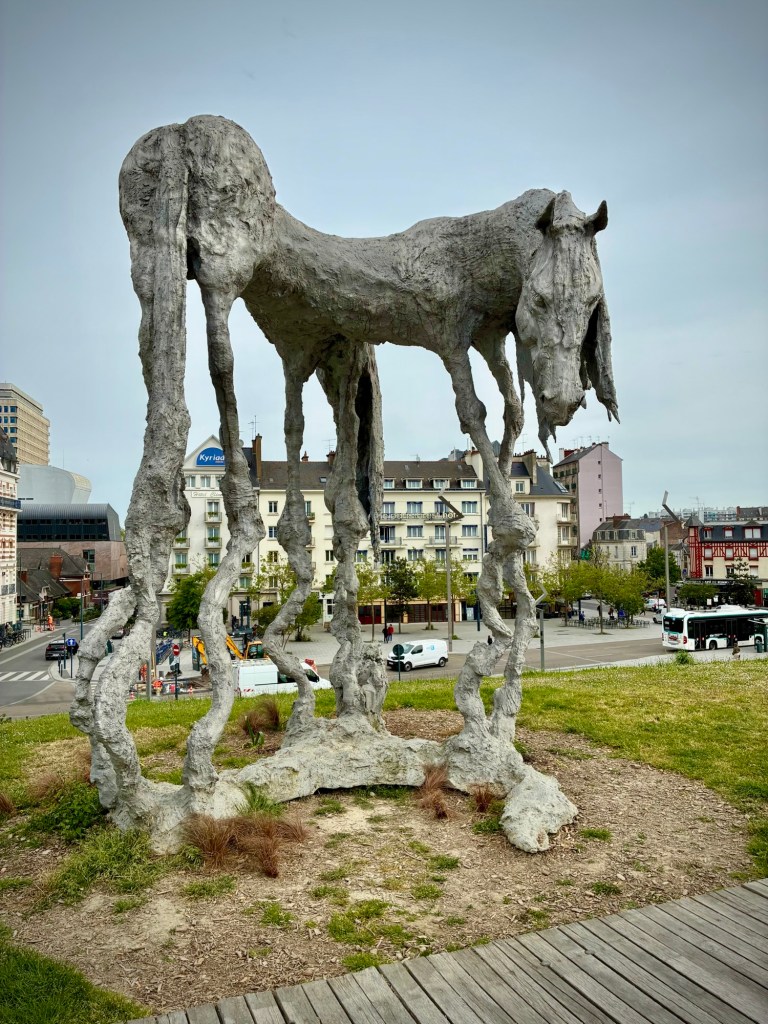
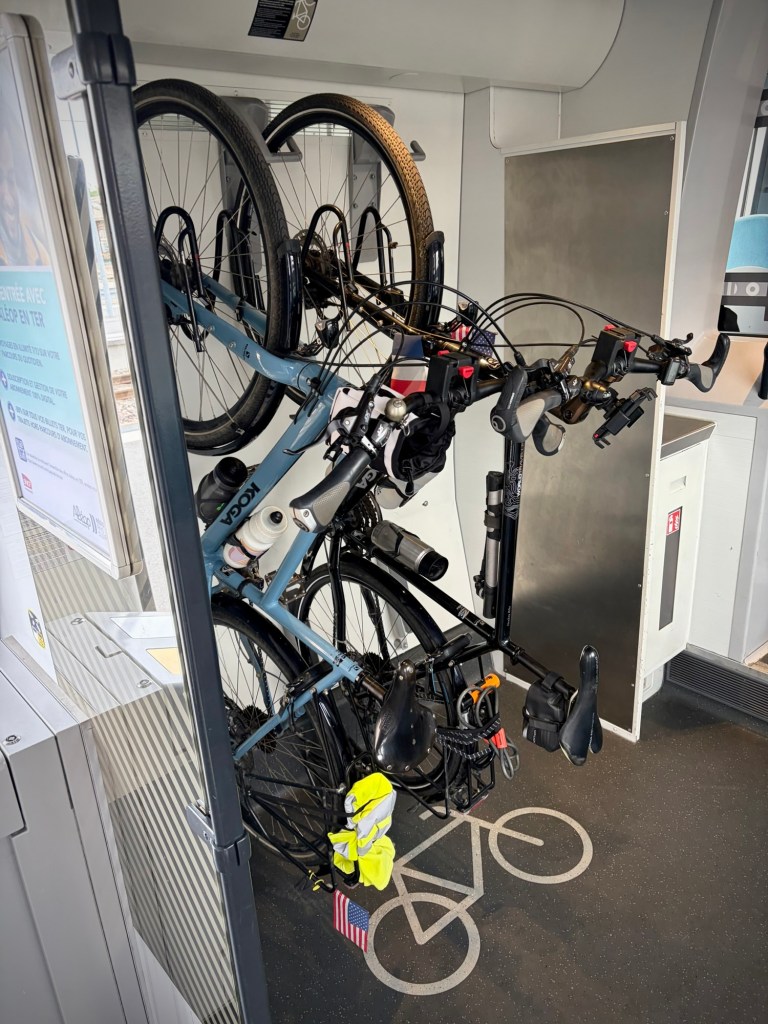
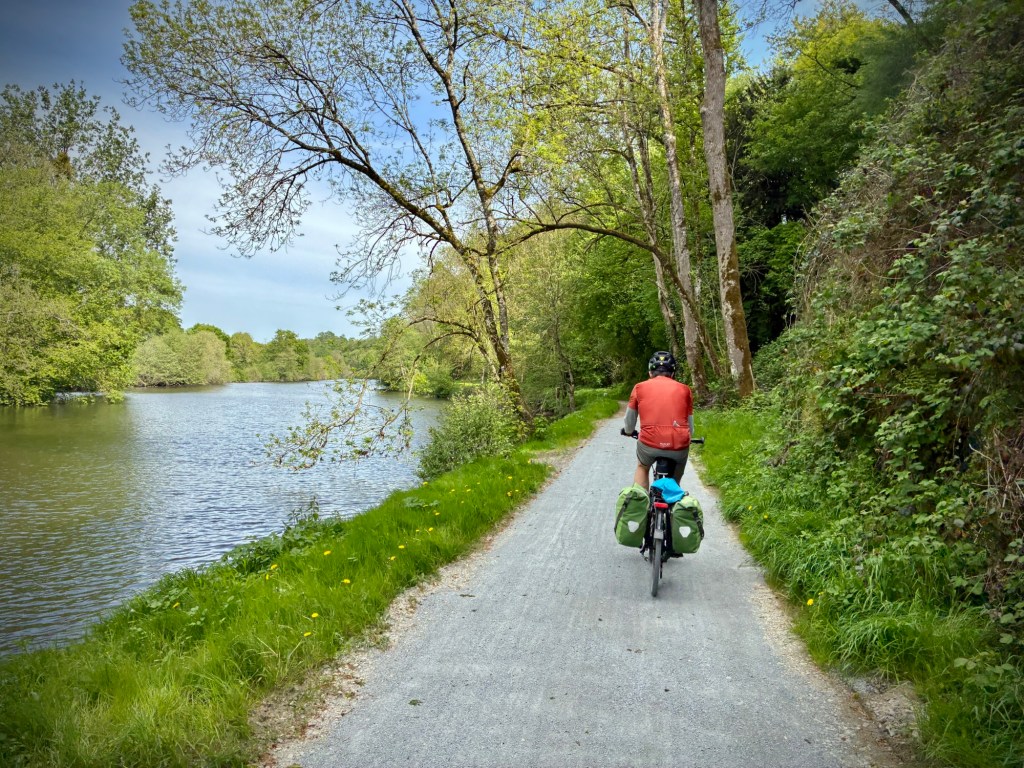
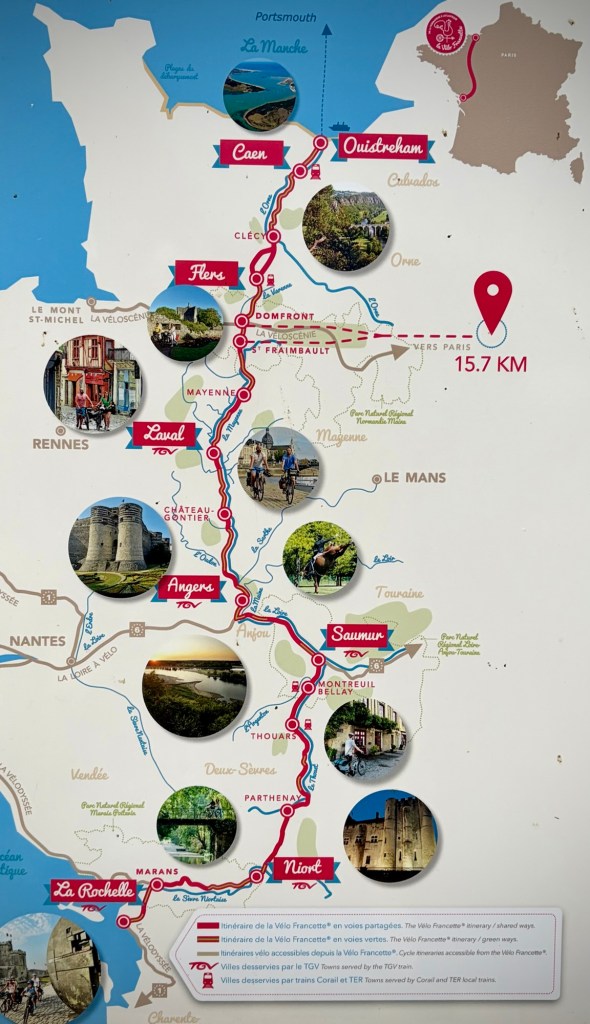
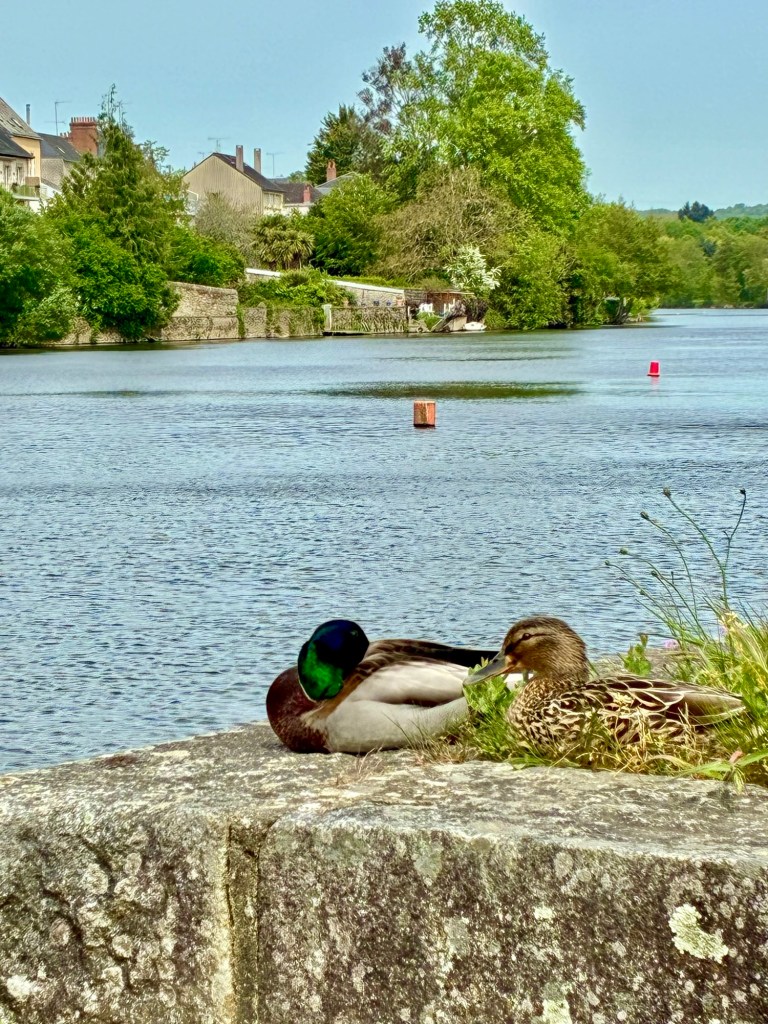
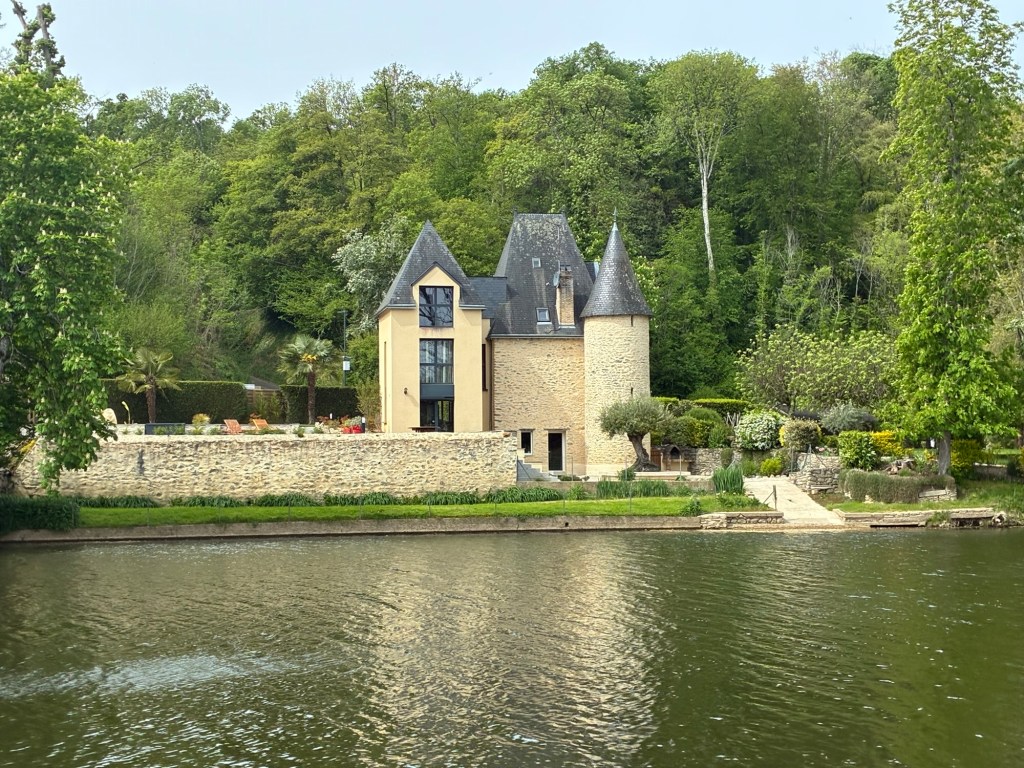
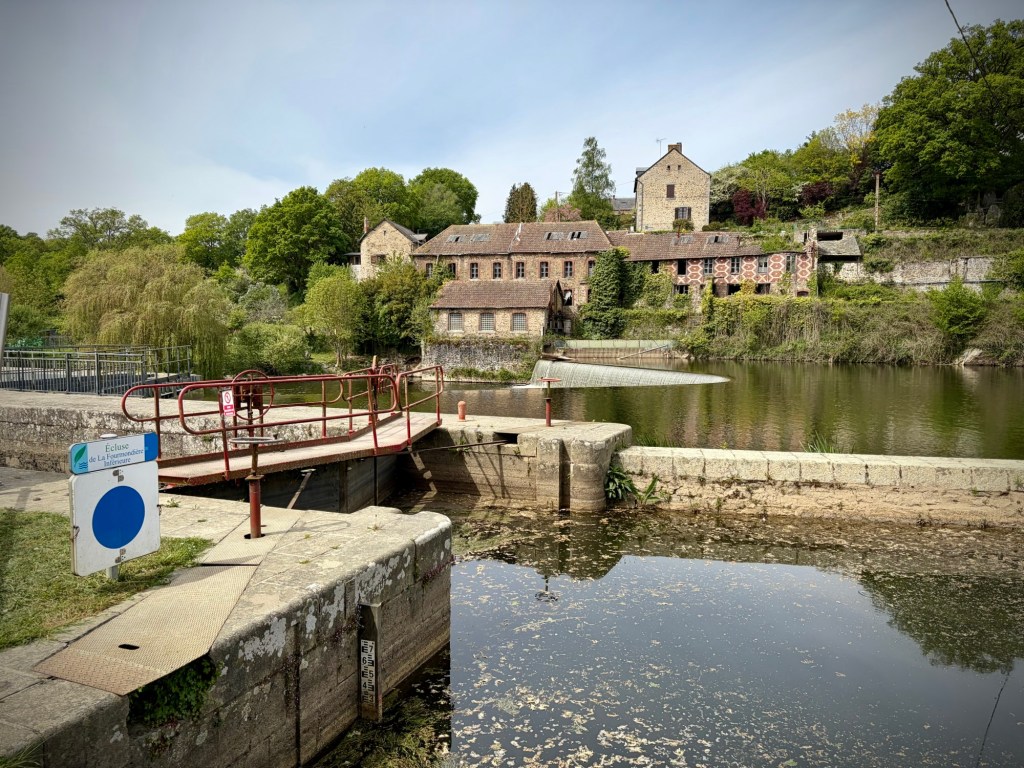
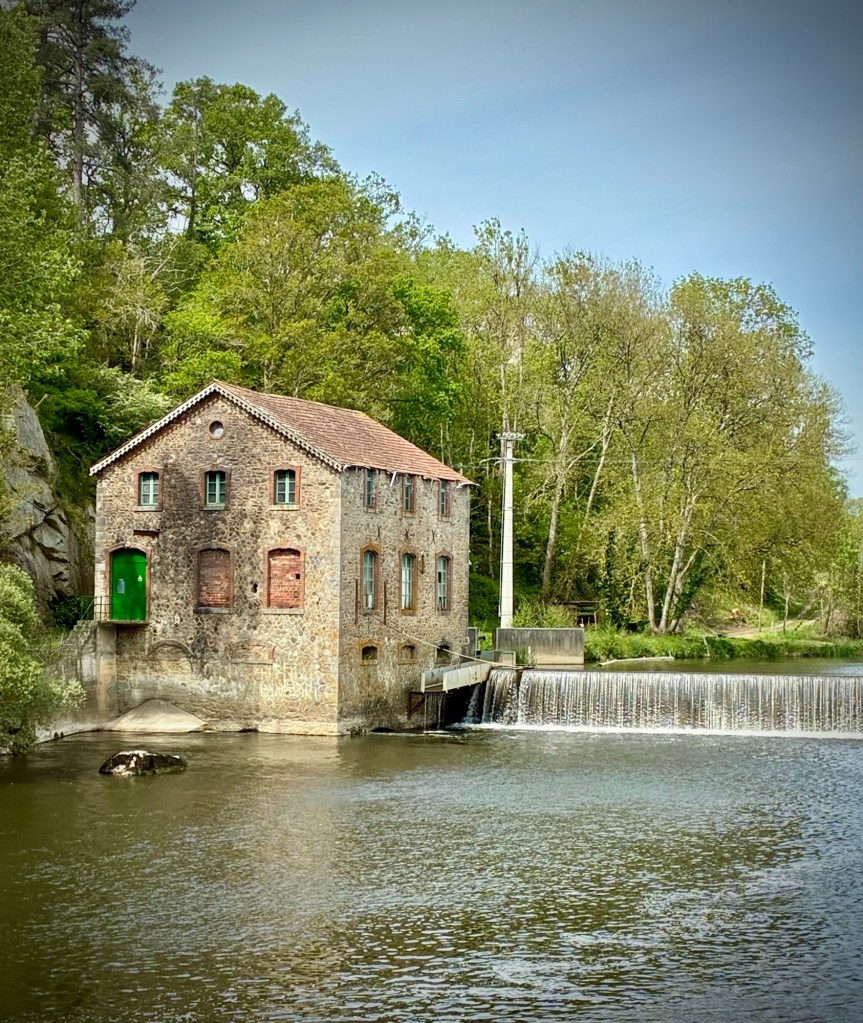
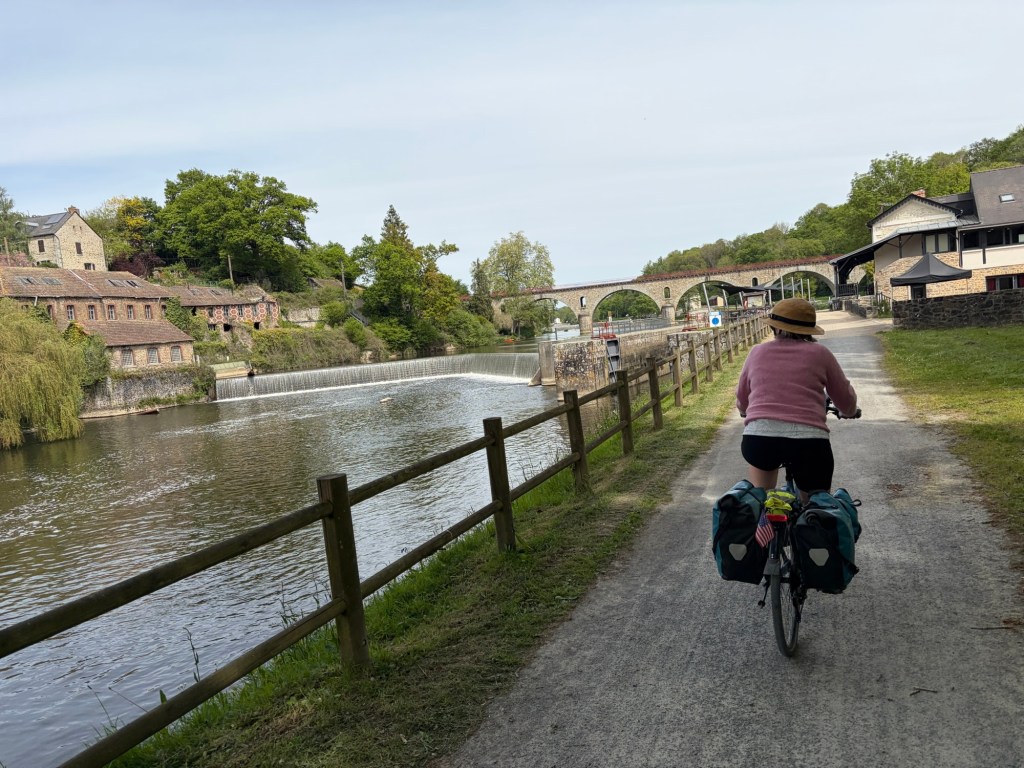
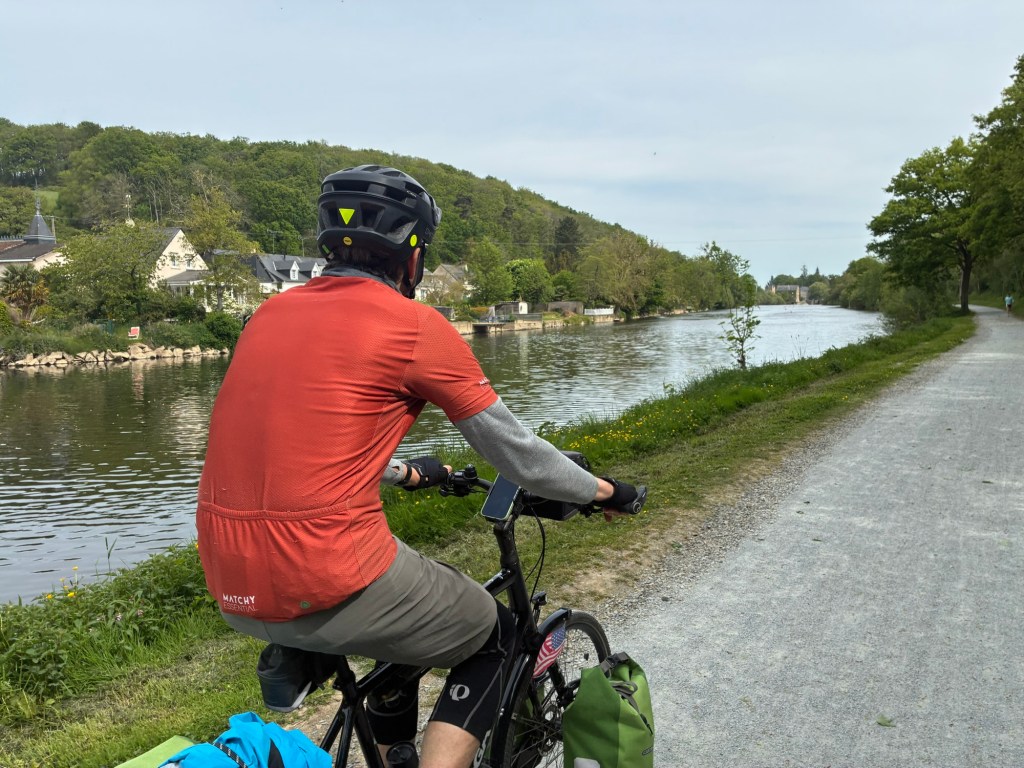
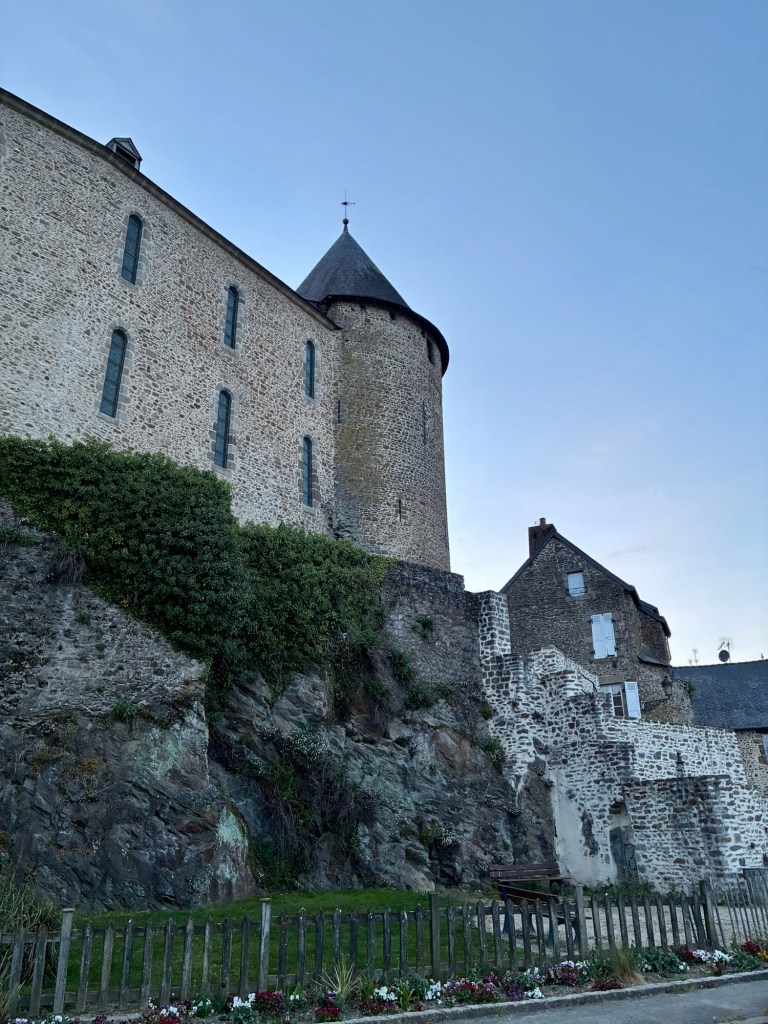
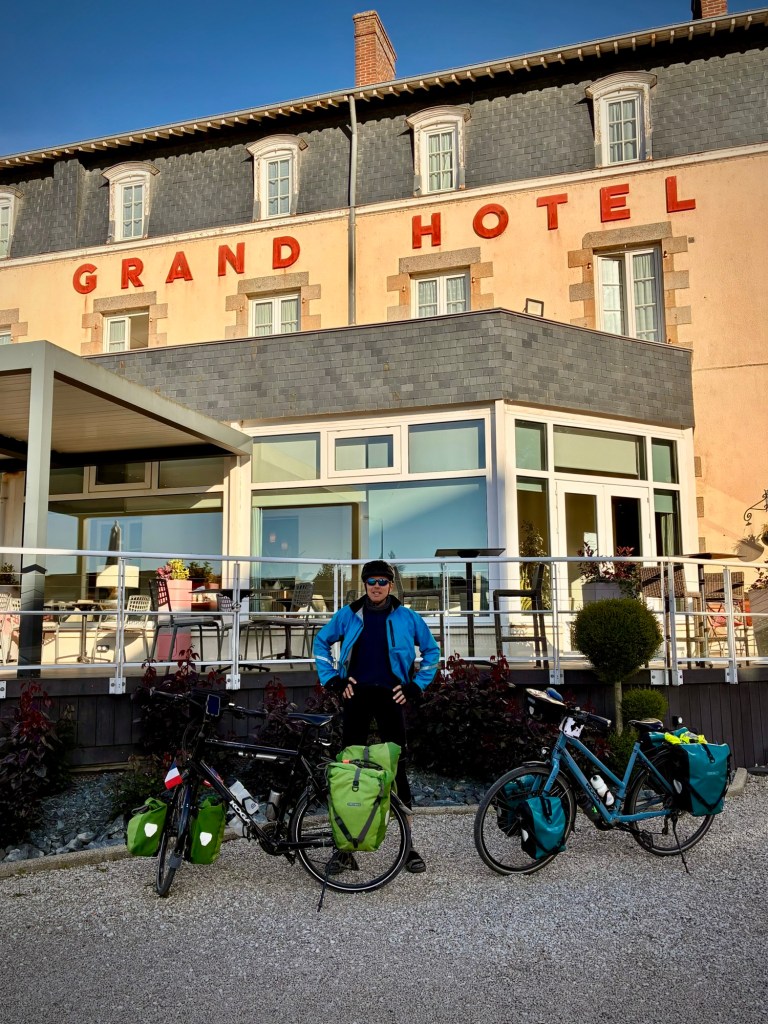
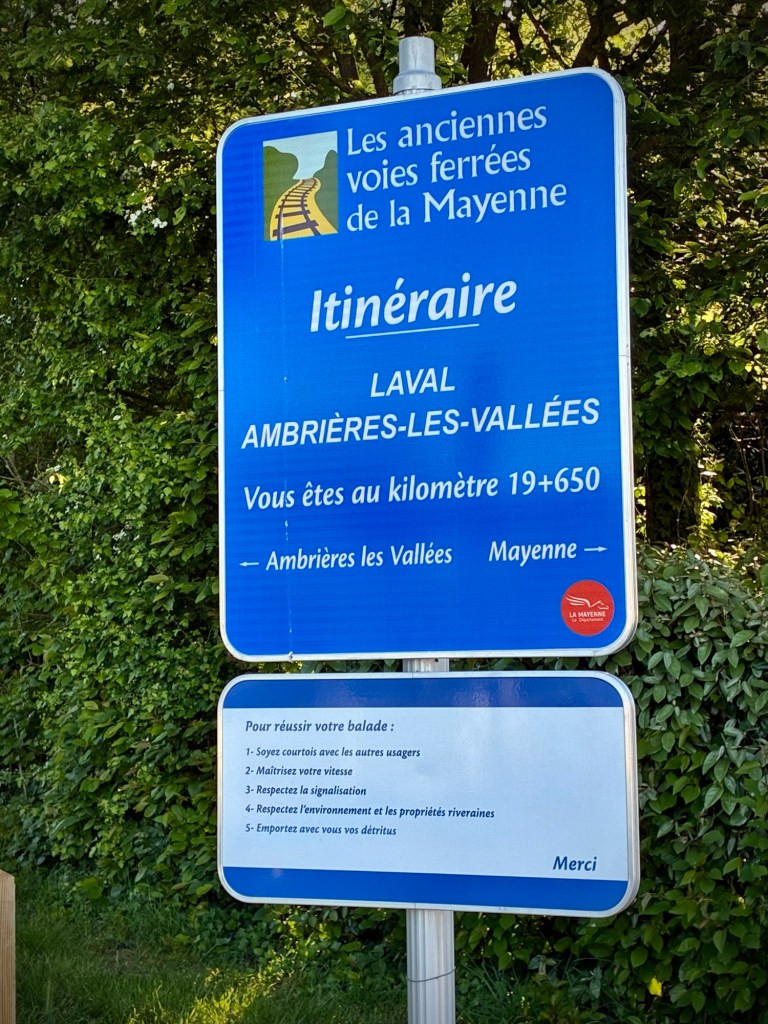
Heading a few blocks back to the Rennes Train Station on a direct and separated bike route. The Dutch would even approve.The very cool Architecture of the Rennes Train Station, It was a expanded with the new design by AREP (not Arup!) in 2019 and the clever plaza in 2024. It had form and functîon as you could access all the platforms below by large ramps or the upper station area by clever switchback ramps. Fantastic for bikes and all mobility.Spacious main level of Rennes Station.We were early for our train so lots of time to explore and take photos.And see public art like this intriguing sculpture of a mythical horse Morvach and its reflection in water, by Jean-Marie Appriou.Our short train ride to Laval, was uncrowded and had nicely designed bike hooks; just 3 in each car unlike the opposing 6 (3×3) hook design on other trains in Brittany that can make getting your bike out really challenging.Unloaded in Laval and ready to ride! Cycling along the Mayenne River from Laval nicely protected from the winds howling from the East.La Vélo Francette runs 640km from the Atlantic at La Rochelle to the English Channel at Ouistreham. It’s supposed to be “gentle France”, and was mostly.Not too busy on this remote section of La Vélo Francette from Laval to Mayenne.Sleepy ducks.Some beautiful private residences (Mini Chateau?) along the river.Remnants of past industry at weirs as the Mayenne river is navigable by locks.Always love an old mill.Very understated but scenic stretch. Are we there yet? This short 40k afternoon ride post train ride was mostly flat but more challenging than expected as about half was on rough track with rocks and sand in places. This was a smooth part…Mayenne is definitely off the tourist track but does have a cool Medieval Chateau and museum above the river. We missed the museum’s short hours on our overnight stay.We liked its authentic warren of medieval streets and buildings built into the hill around the Chateau.The Grand Hotel De Mayenne is highly recommended as the owner is super bike friendly and even offers bike washing provisions! And the restaurant had delicious food and is a local draw.
The great experience you get on a long distance cycle route is the variety of local segments. Sometimes you’re on very popular (and likely more scenic) stretch with lots of people and other times (such as Mayenne to Flers, and Flers to the La Suisse Normande) you are basically on your own. But some of the most scenic areas were in little valley and roads in between and we really enjoyed the whole 3 days on the route to Caen. And of course you get to stay in little off the beaten track towns like Mayenne.
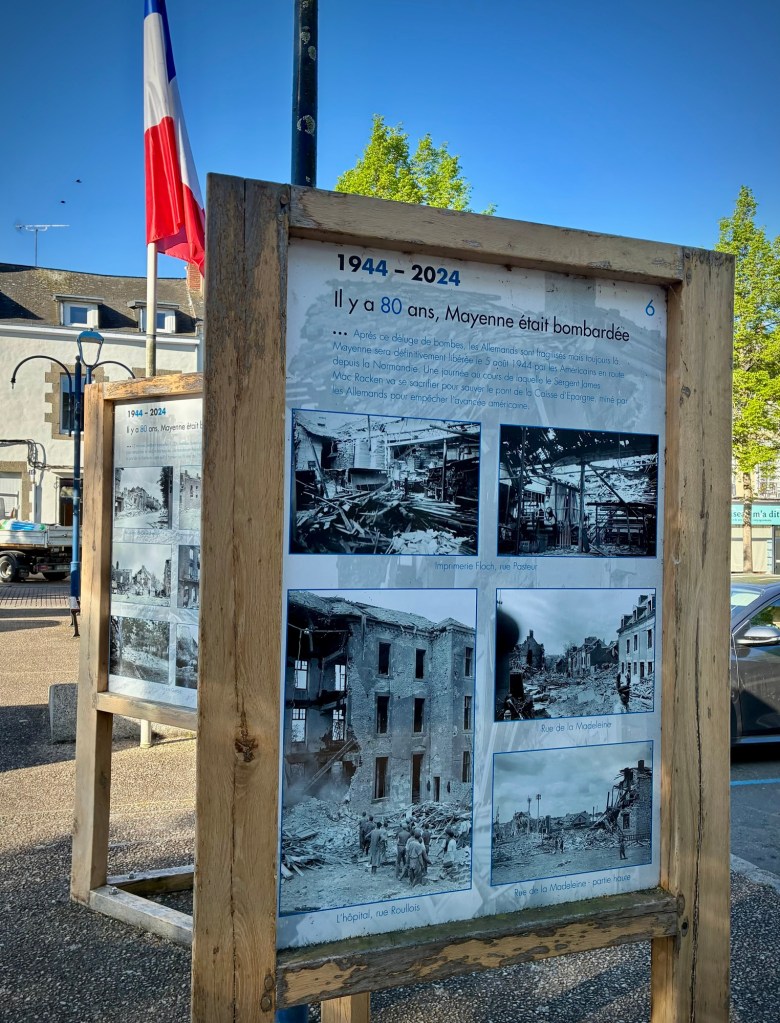
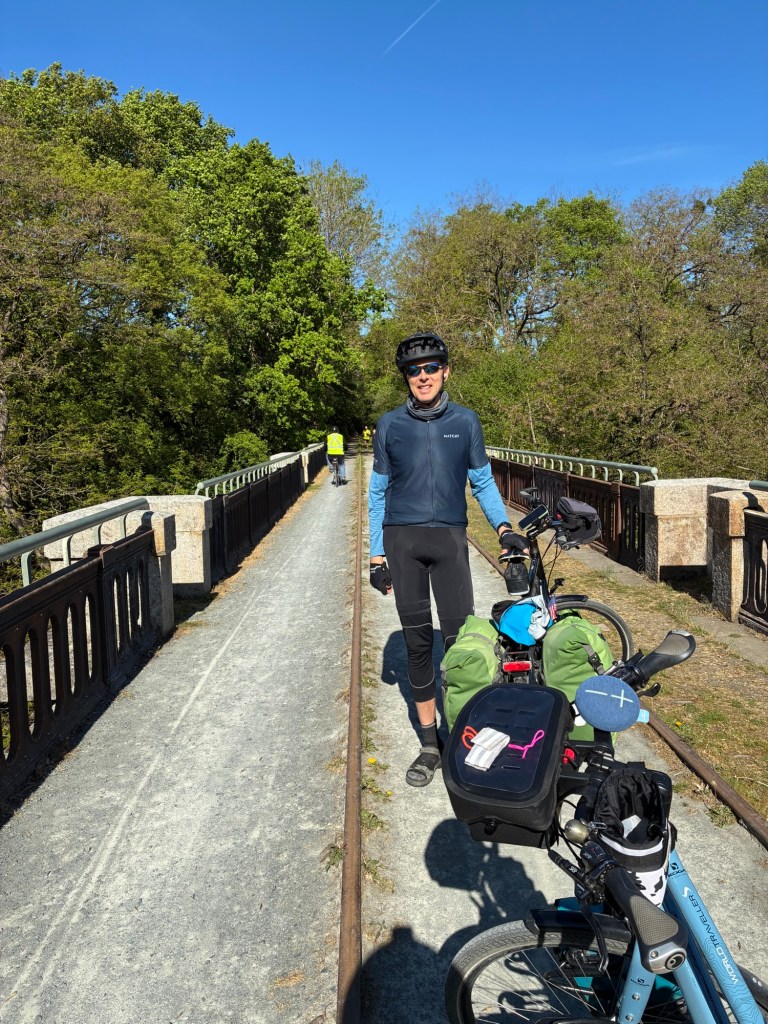
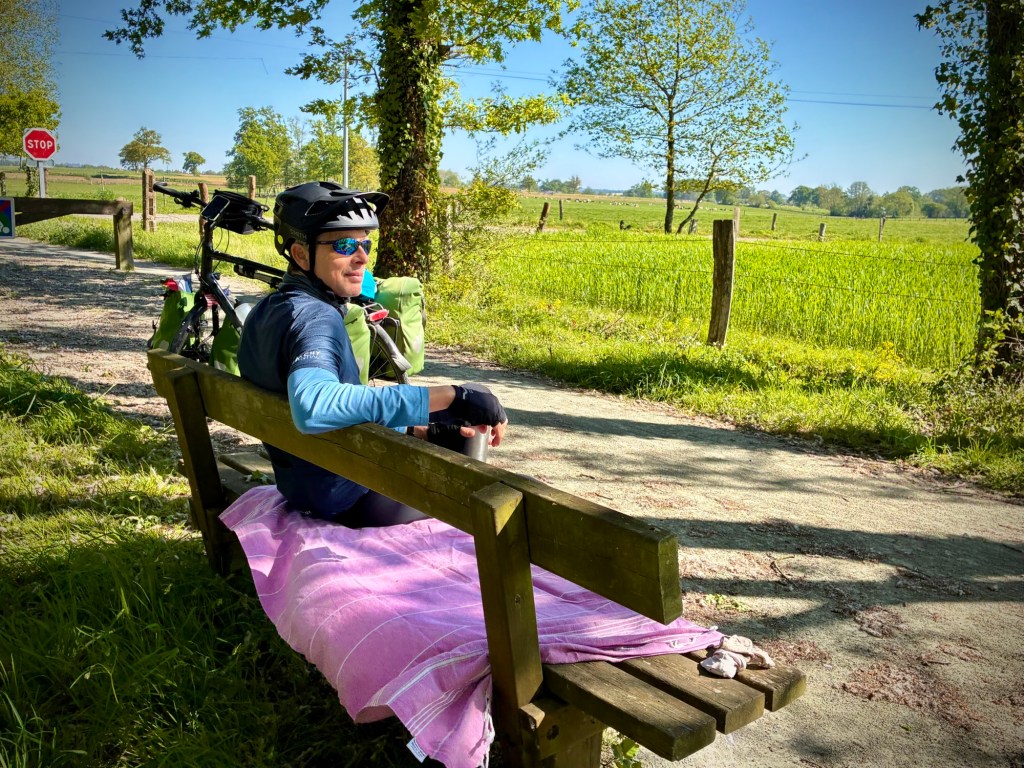
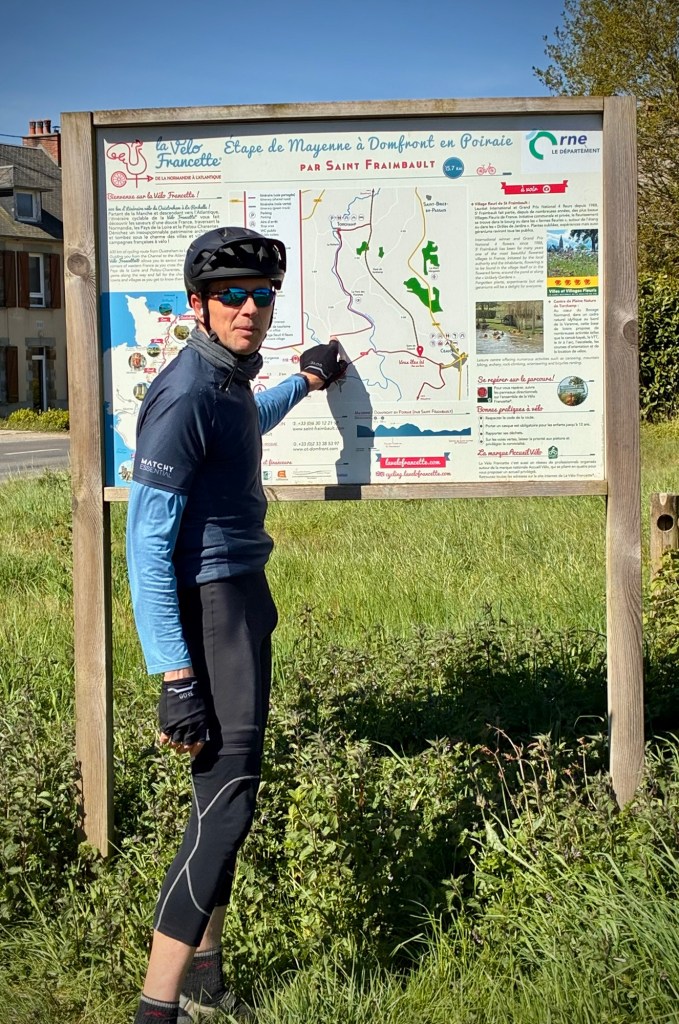
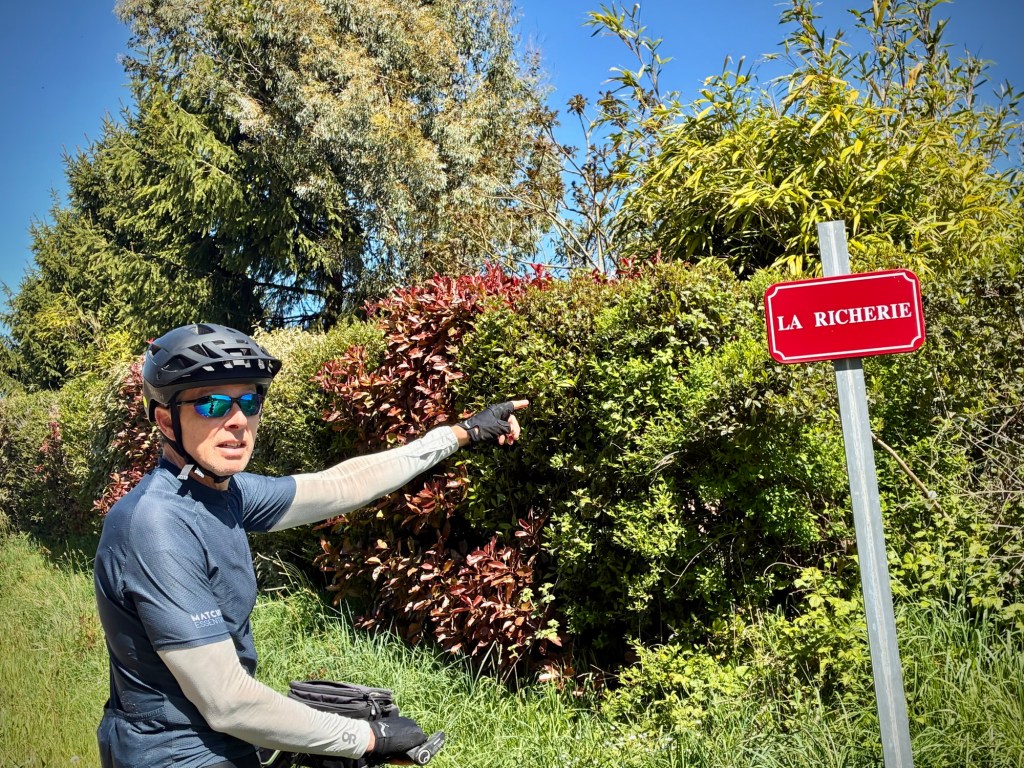
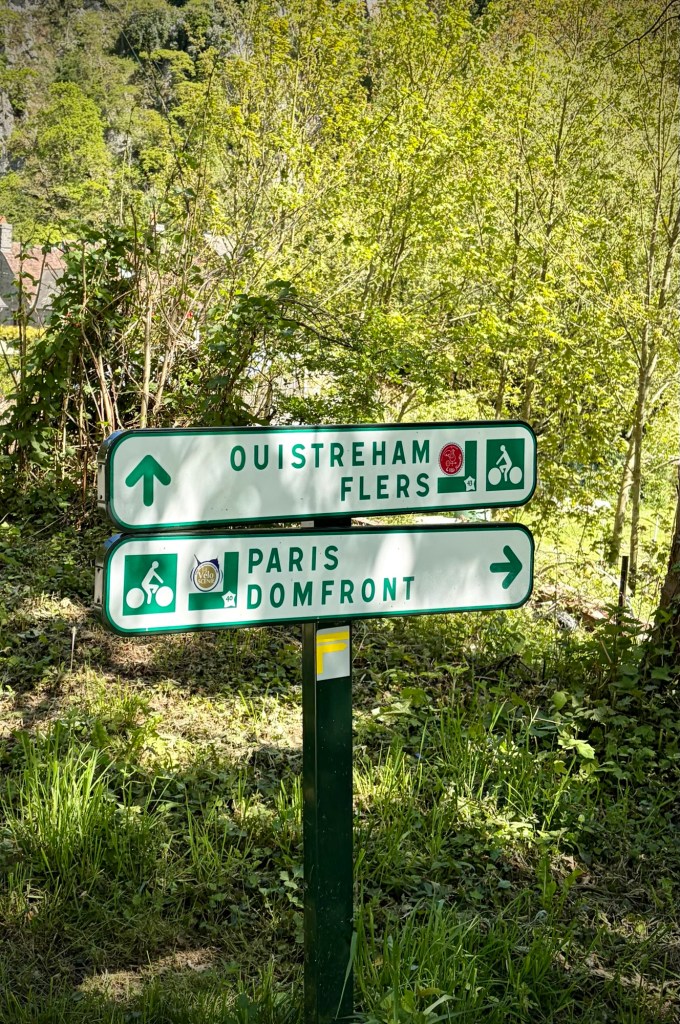
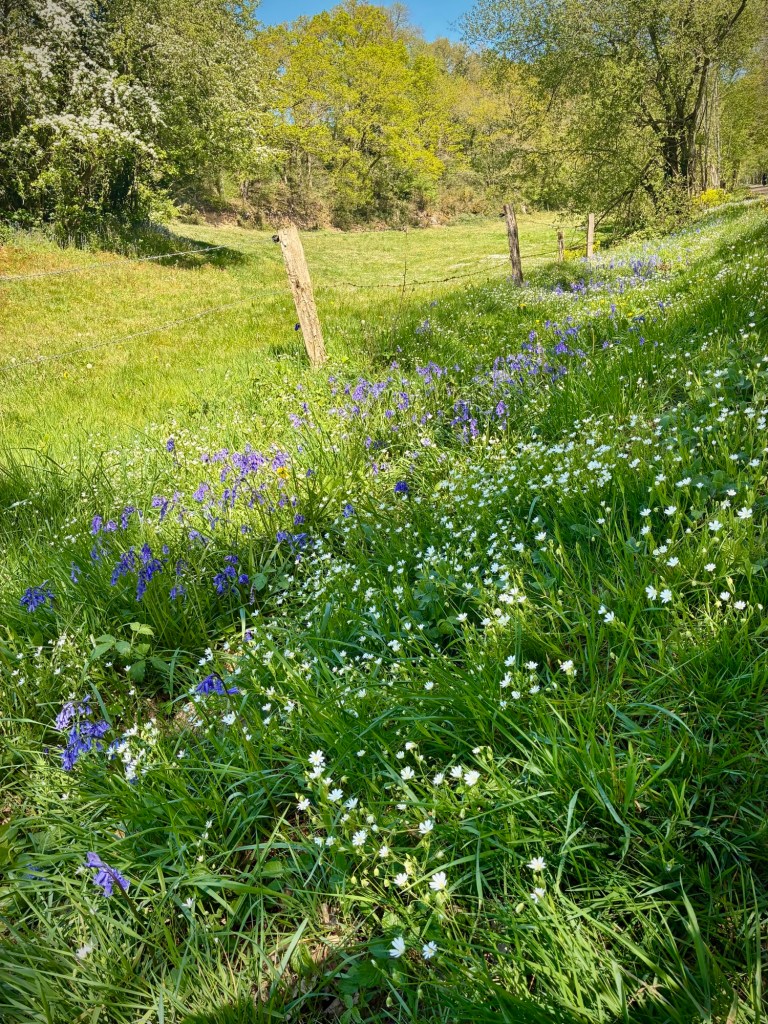
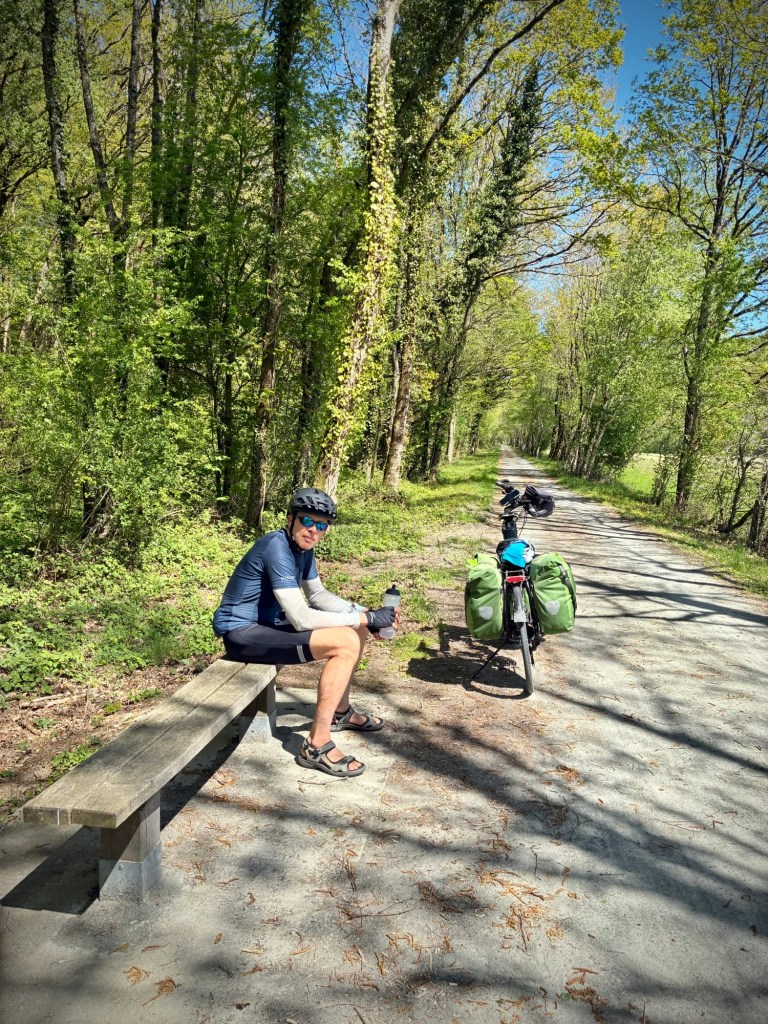
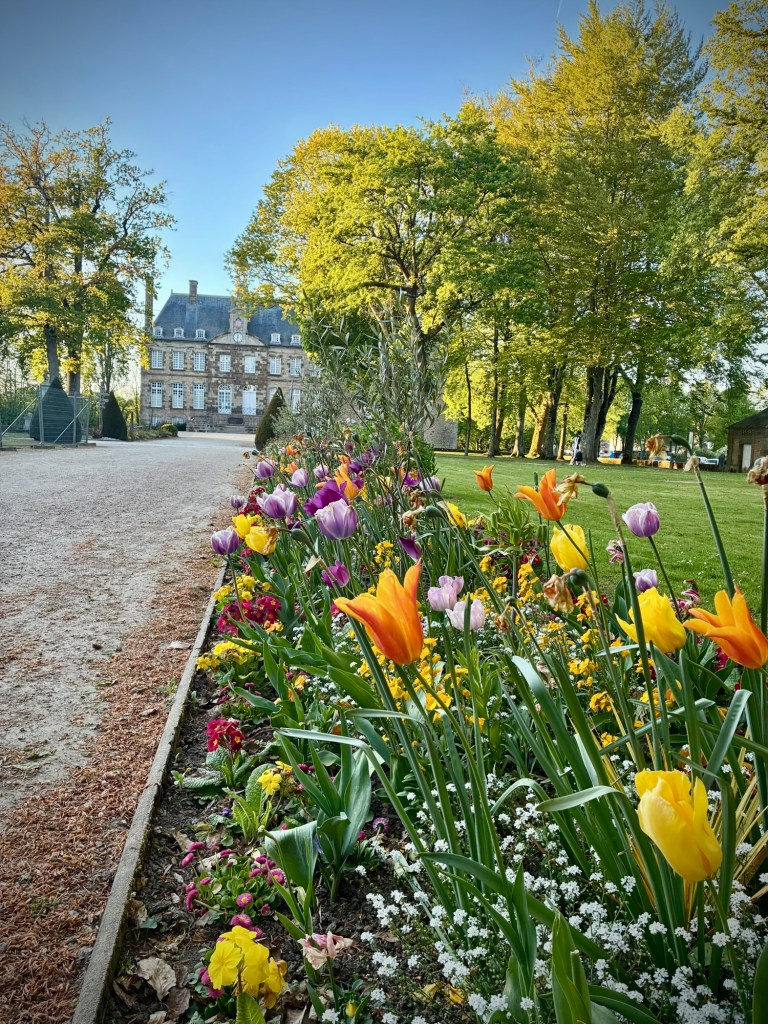
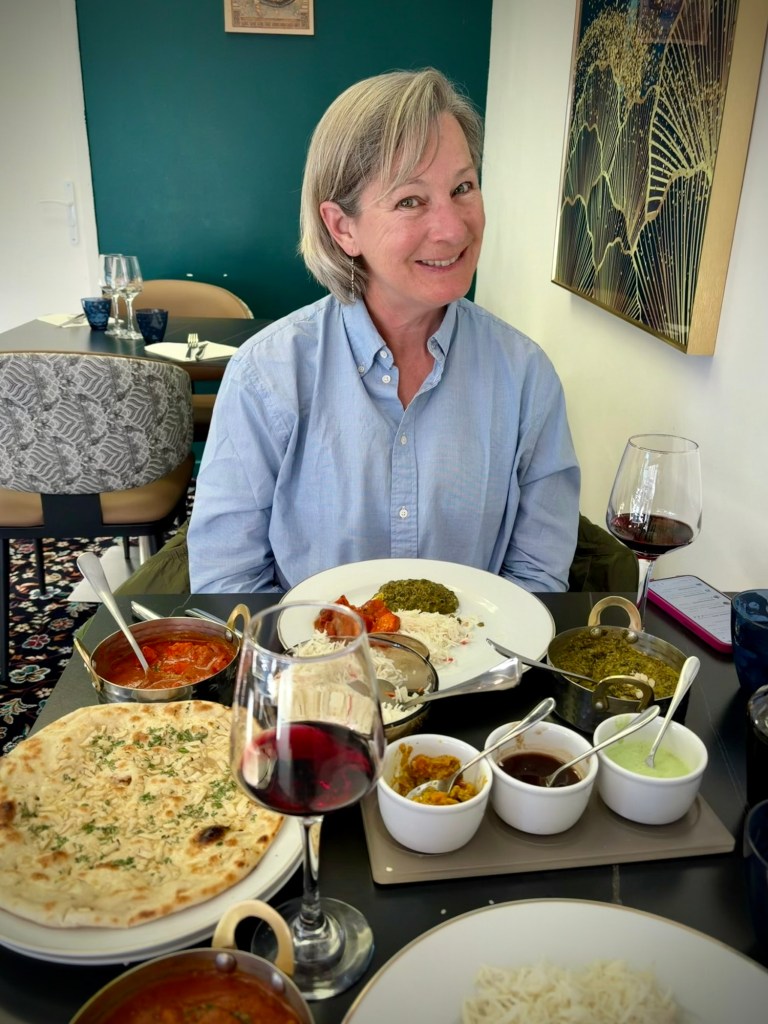
Mayenne did not escape bombing in the summer of 1944, but was finally liberated by the Allies of August 5th.This section of rail trail near Mayenne was nice.A rail bridge with a story. That man riding away explained to us (in French) that his mother was here when this bridge was bombed and the Nazis were retreating in 1944. The legacy of the war is certainly still current in the local lore.Never say no to a bench break if in doubt as the next one might be 10 or 20km away.And there are always local branch routes and loops to explore if you are not on the long distance plan.Very calm and bucolic along La Vélo Francette.Not sure what exactly this sign was referencing (sub commune/farmlette?) but I like it.Our route (43) crossed another major long distance path to Paris at Domfort, The Scenie (40) was 340km SE to Paris. Hmmm, next time.Spring flowers and scents filled the gentle air.Long stretch without a bench and this one is in the sun and has no back….onwards to FlersFlers offered the best lodging option between Mayenne and Caen, but wasn’t our favorite town. No nice plaza and cars even ruled the core. Even the main access to this nice Chateau and park (the one sight) was a street with single file sidewalks and speeding traffic. They could do more and generally do elsewhere in France.But a tasty Indian Restaurant in Flers did stimulate our taste buds.Cheryl ready to roll out of Flers.
After Mayenne, we headed about 70km north to Flers and a small Best Western hotel. (Yup, reliable and usually bike friendly in Europe) We were off the designated Francette route for 30km or so heading out of Flers but following other small bike routes on quiet and hilly back roads and valleys. And as soon as we turned off the main road out of Flers, we were again struck by the ubiquitous memorials and stories of WWII. Flers was liberated by the British and Canadians in 1944 who had landed at Juno Beach. As you ride, you work back through time of the Allies liberation trek from the beaches.
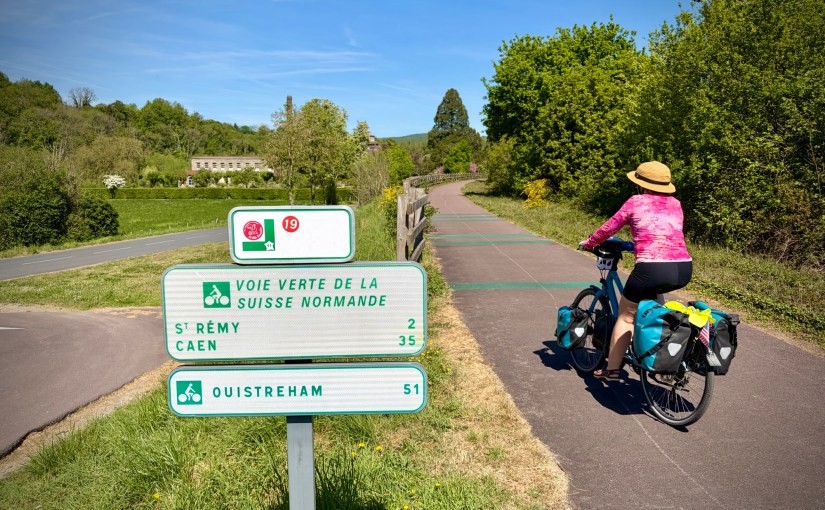
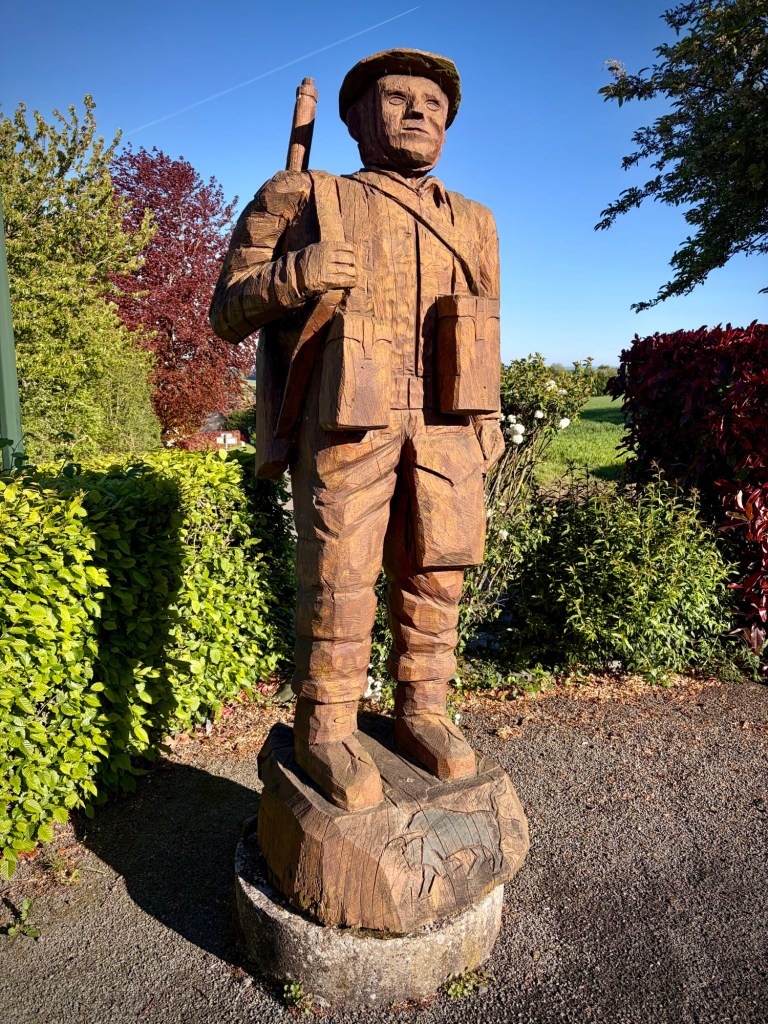
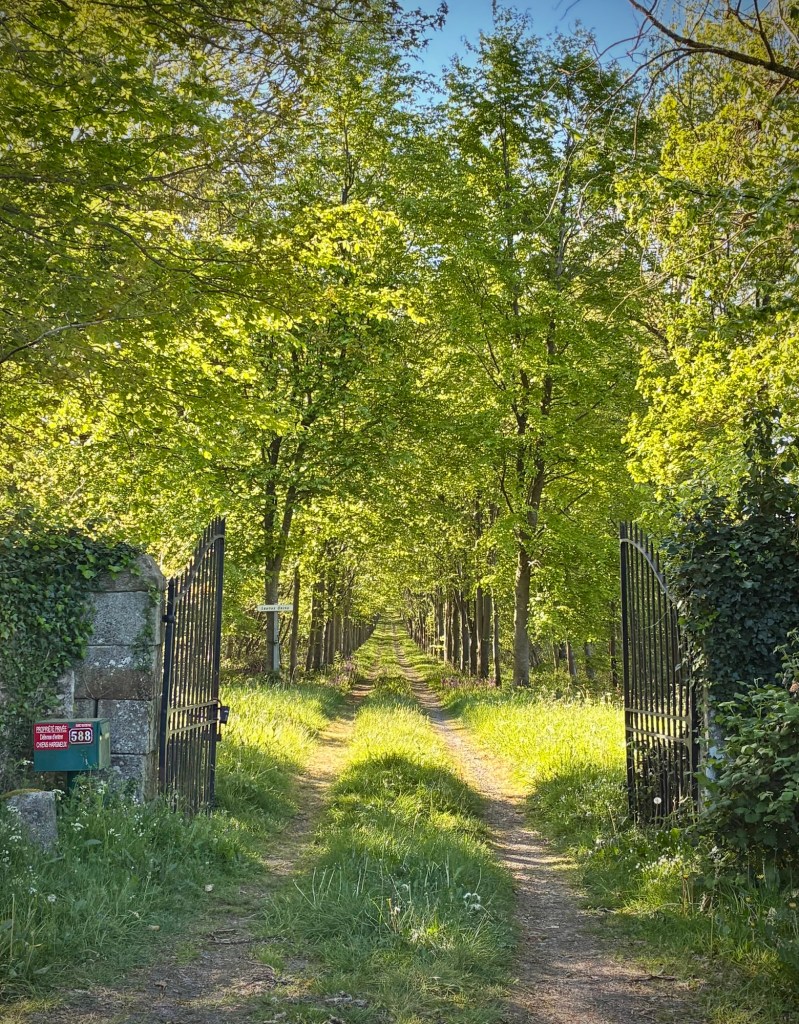
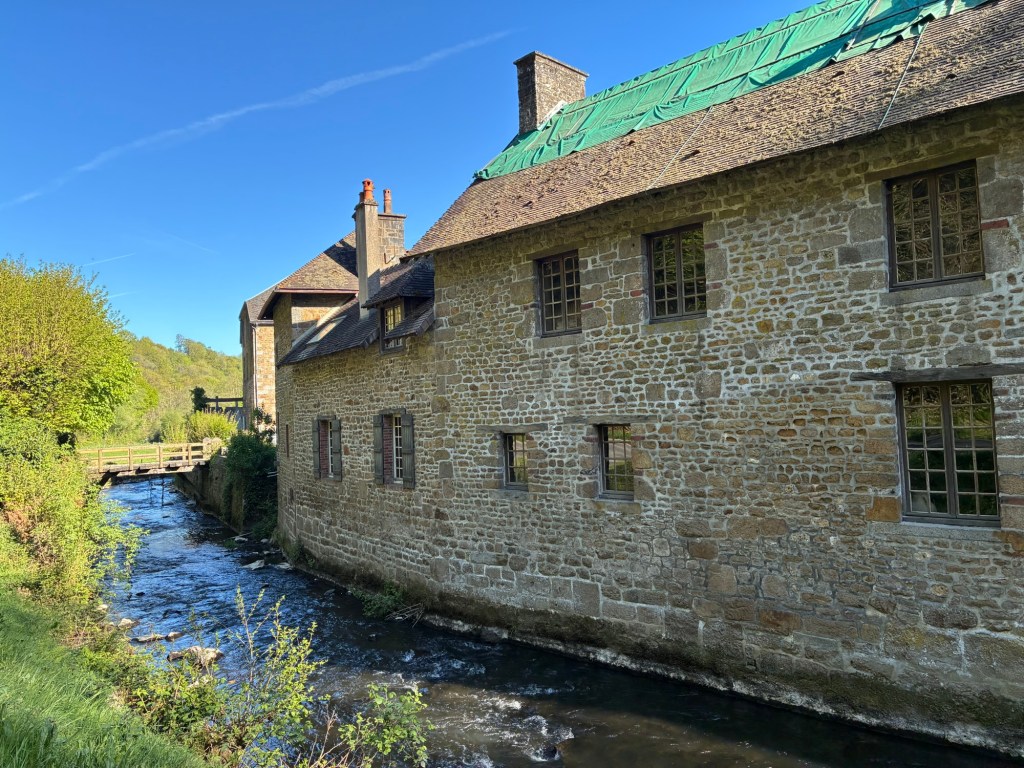
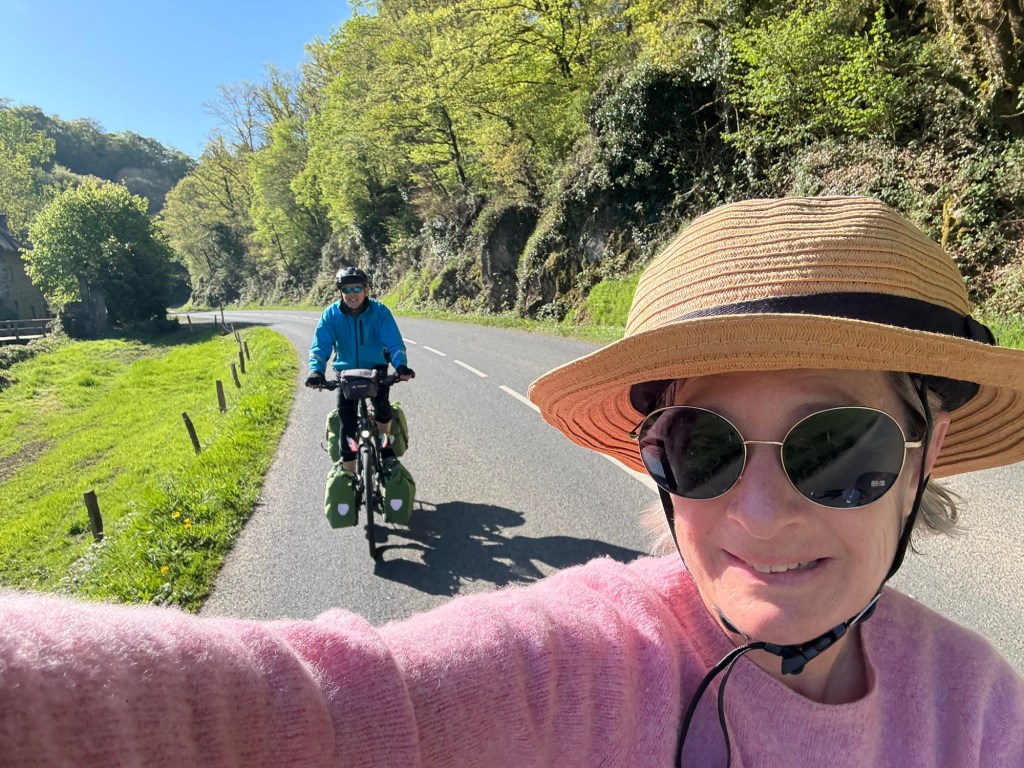
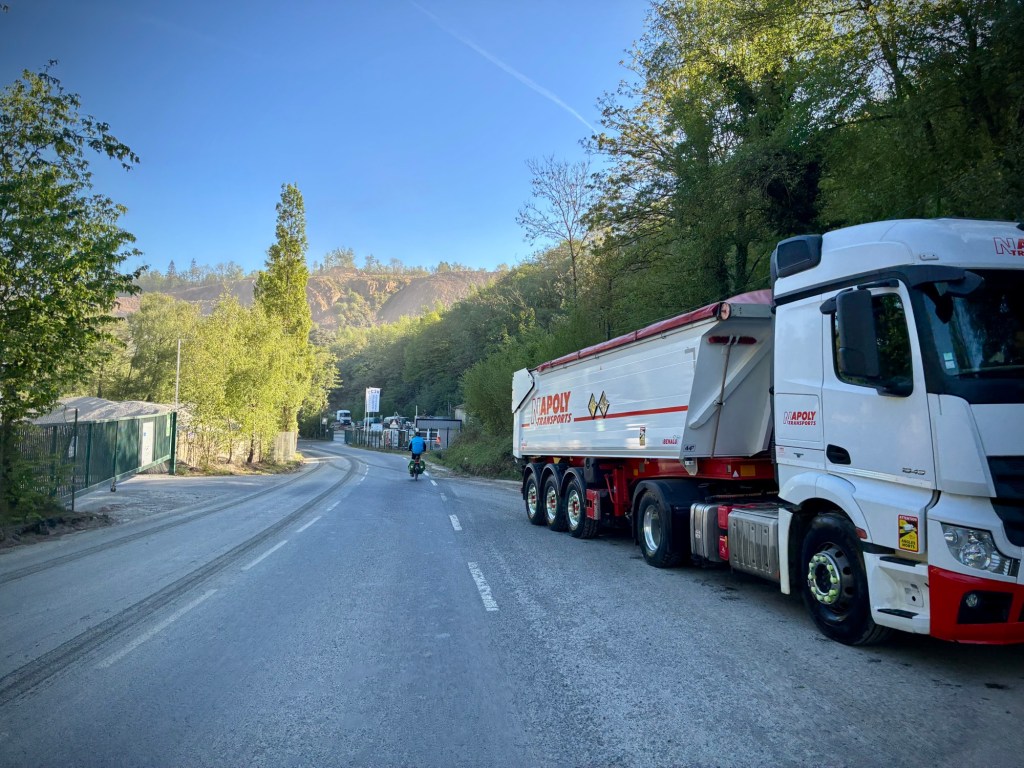
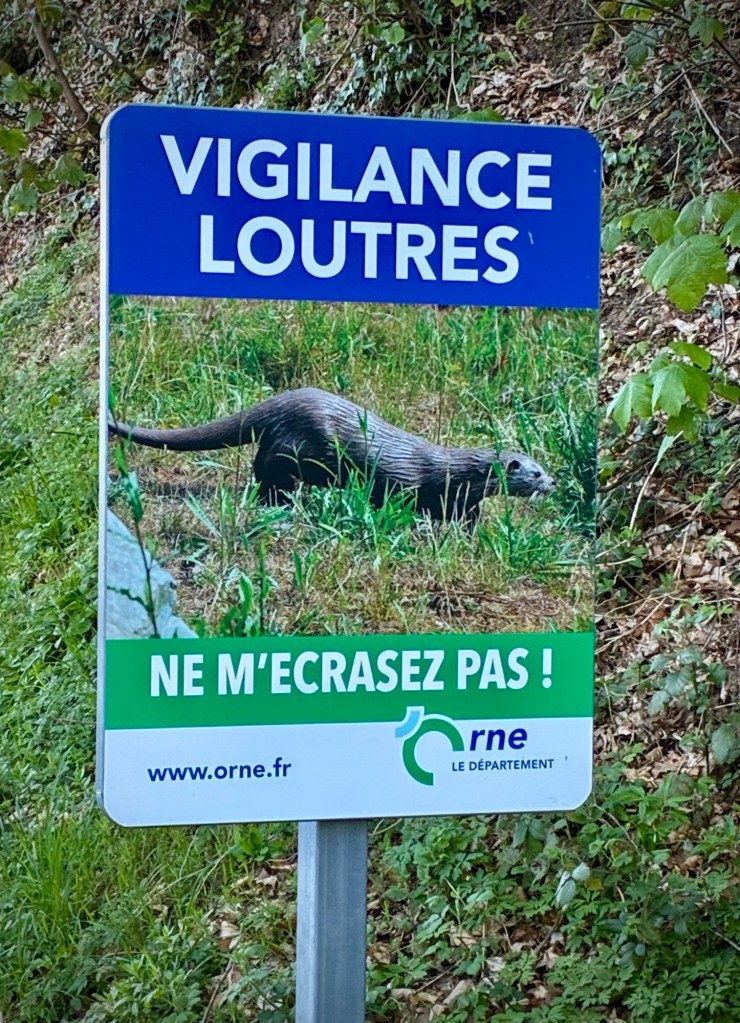
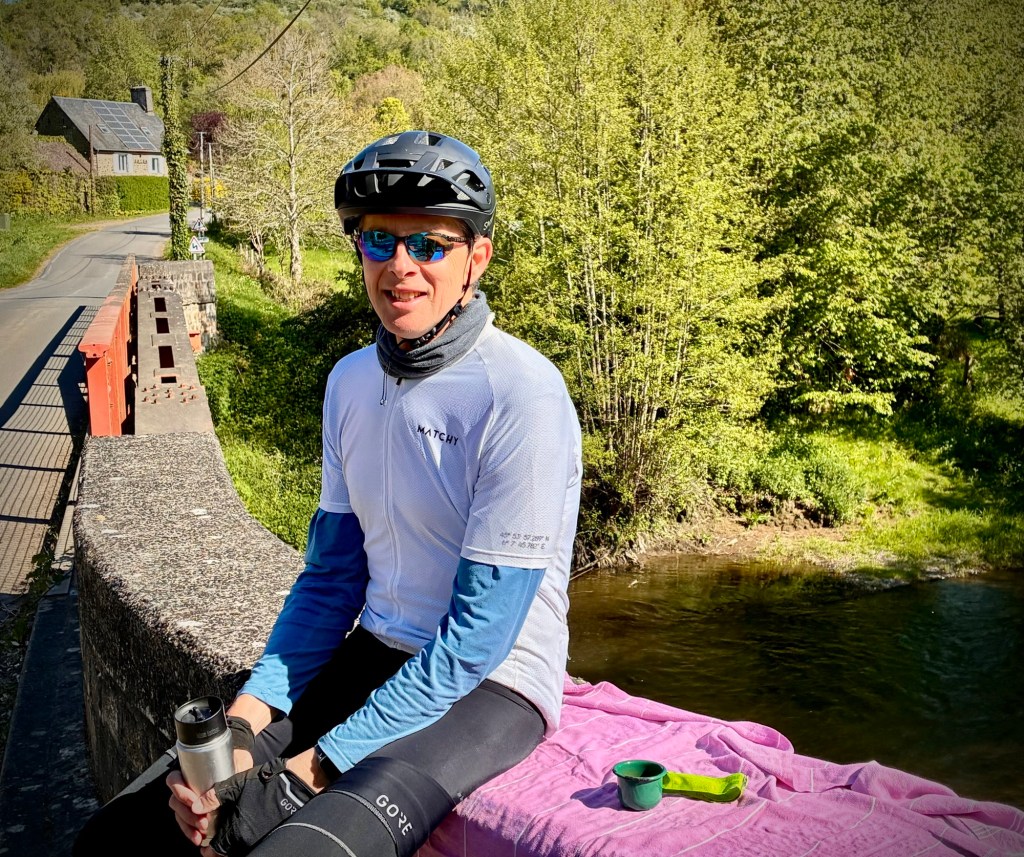
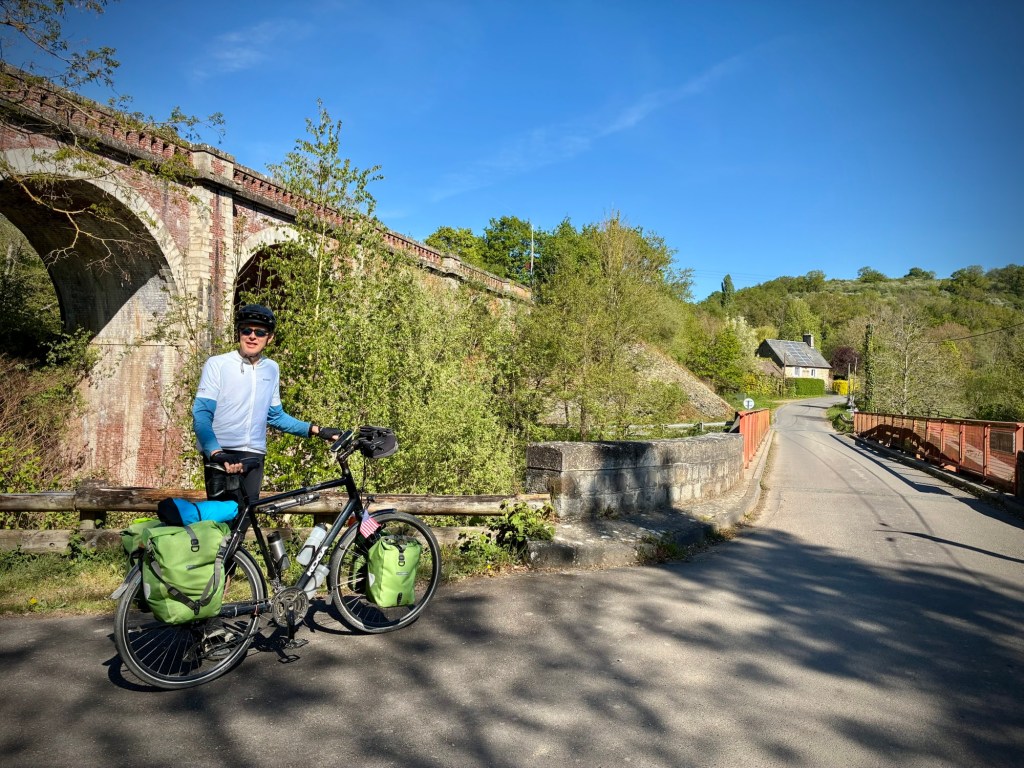
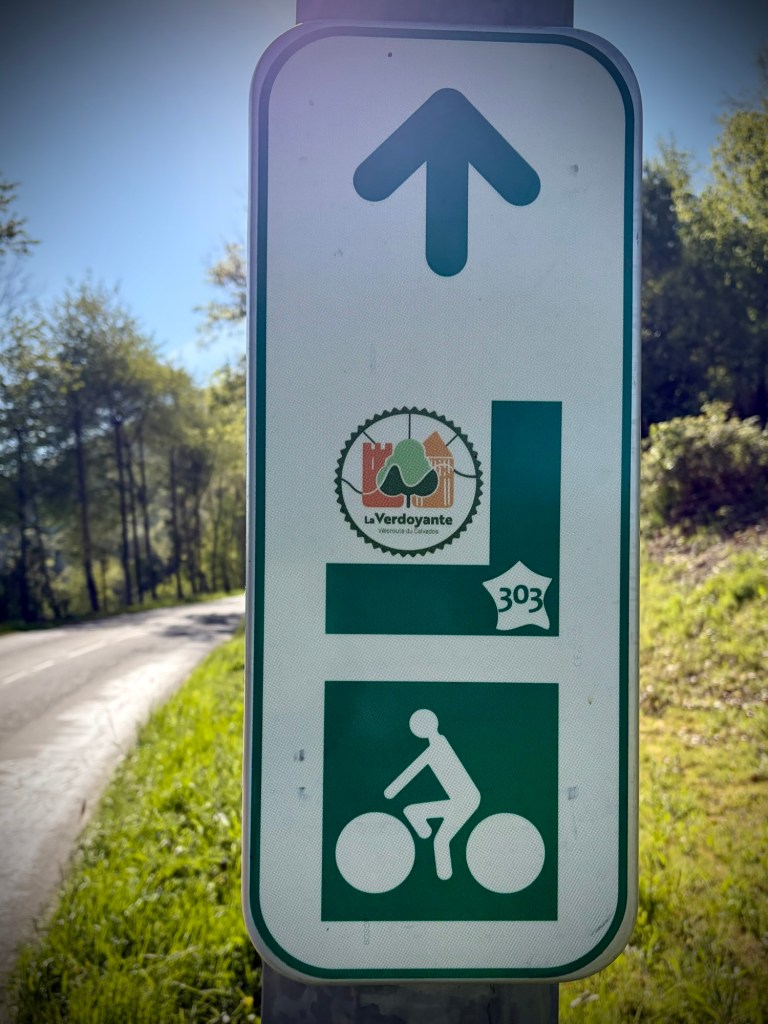
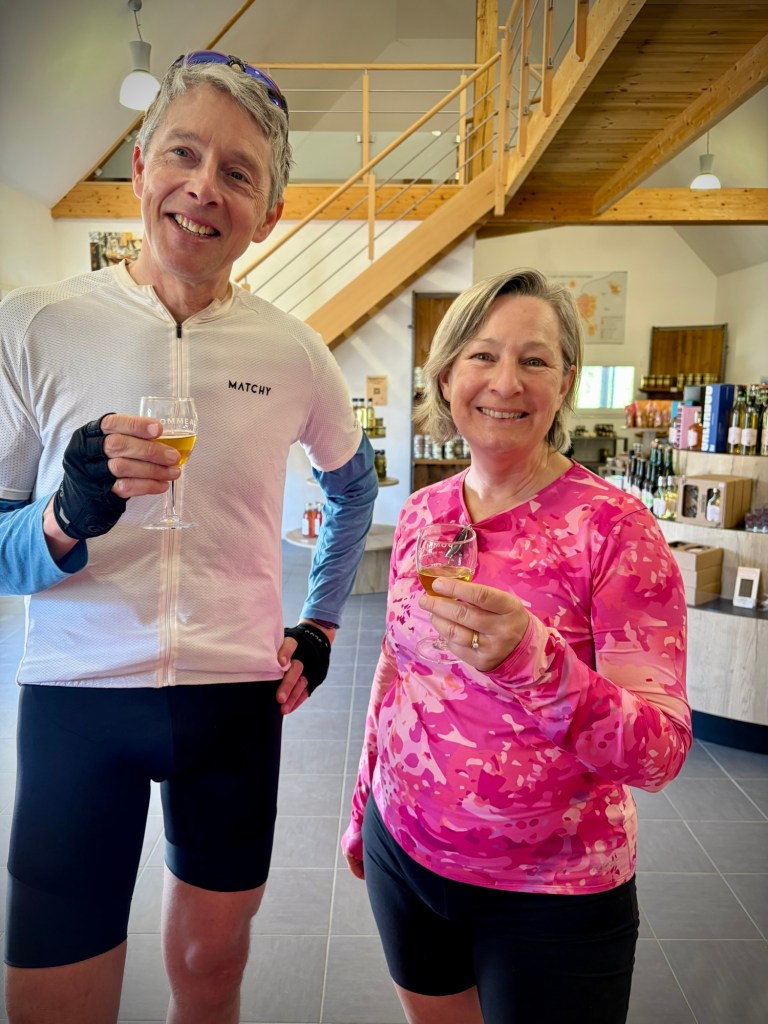
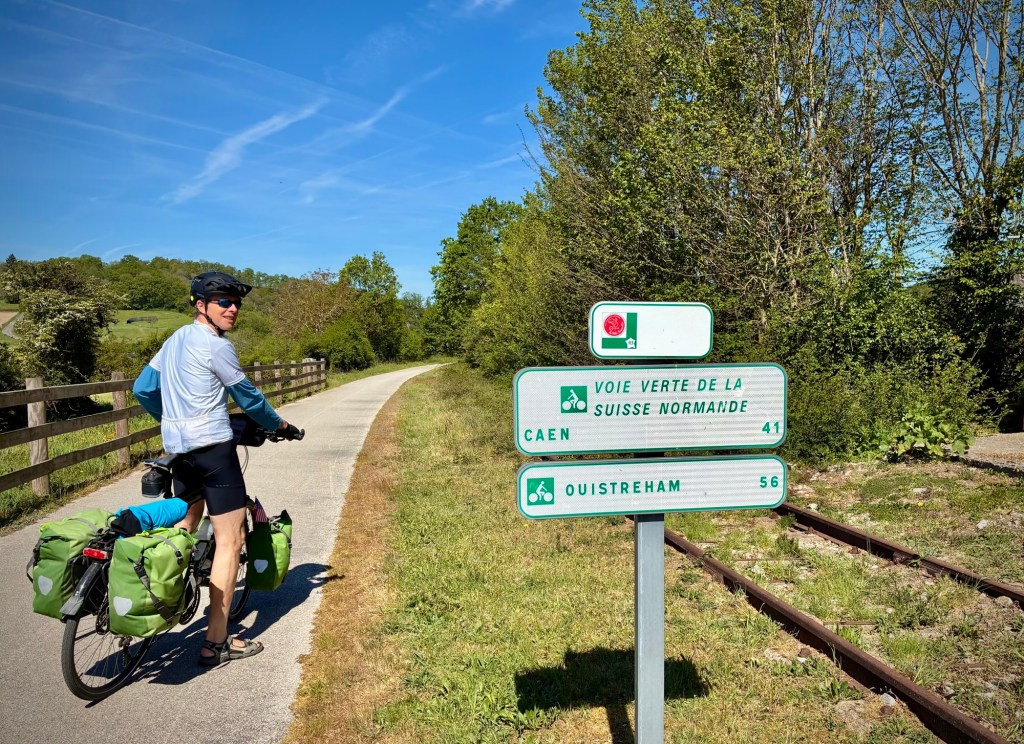
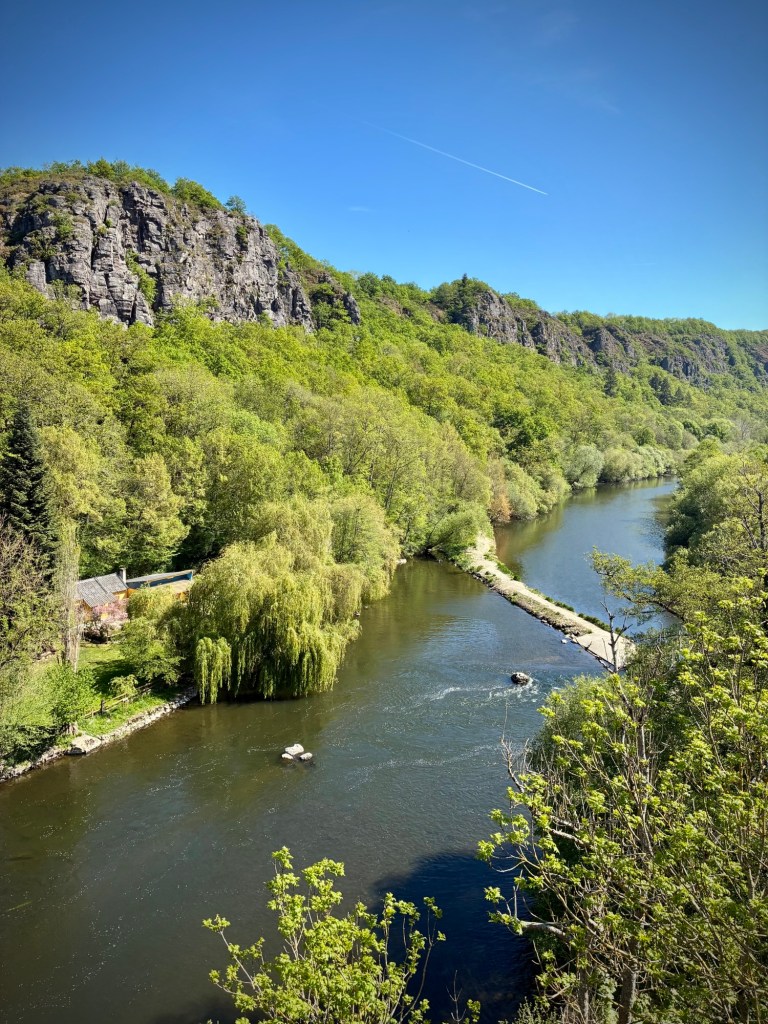
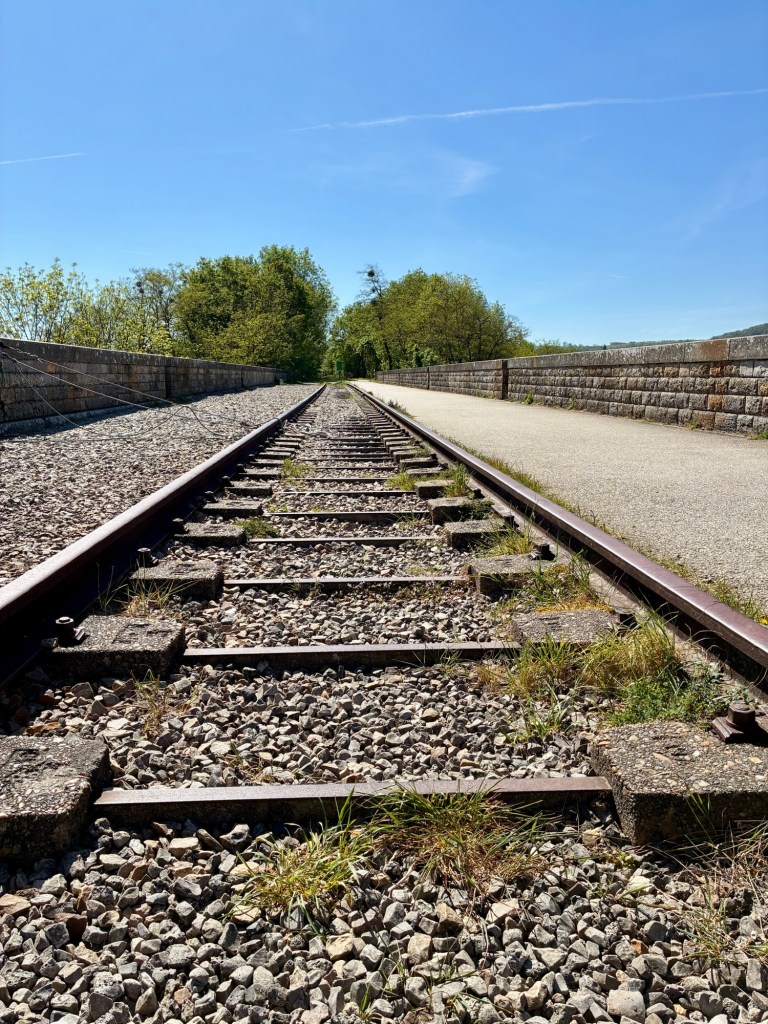
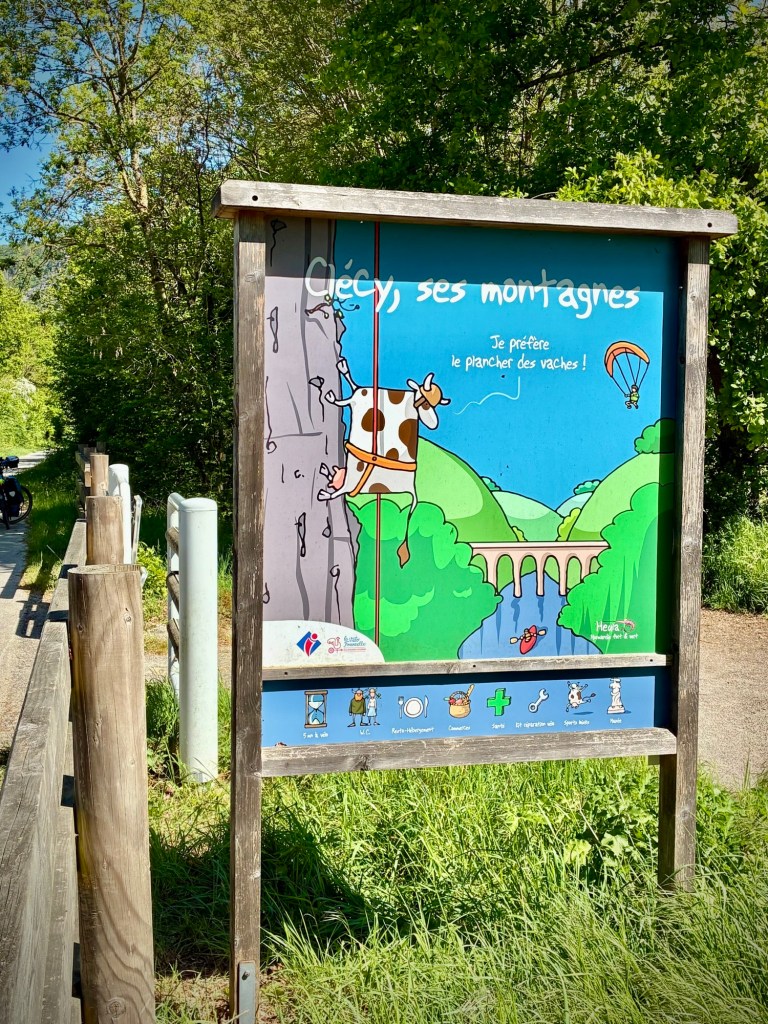
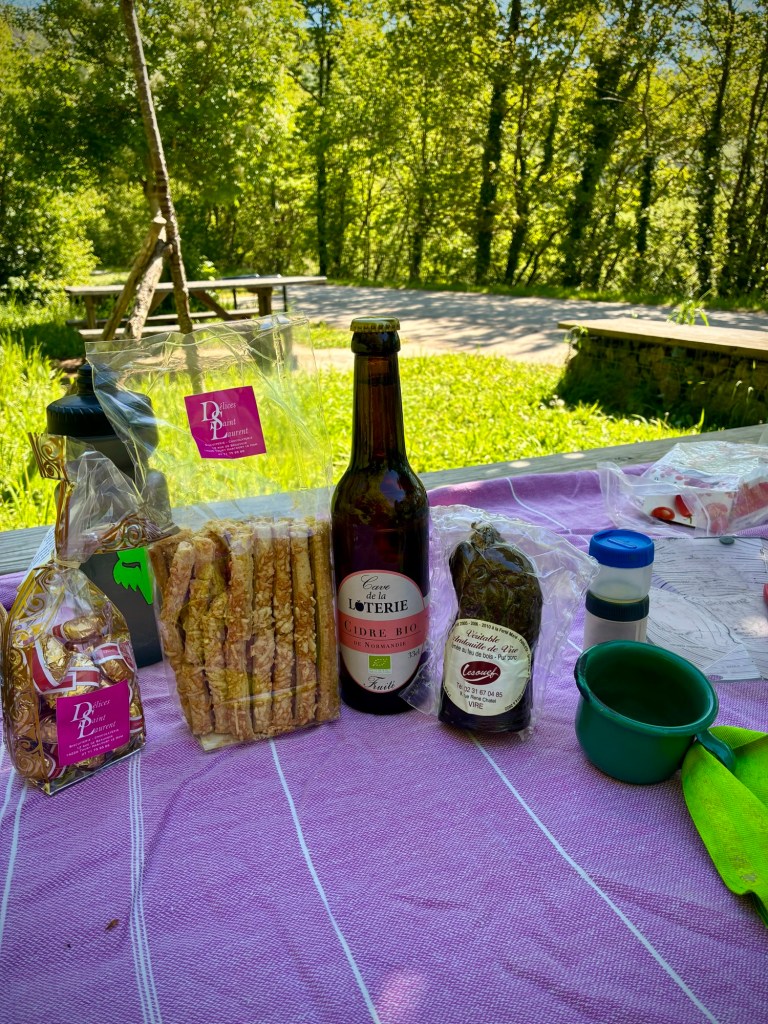
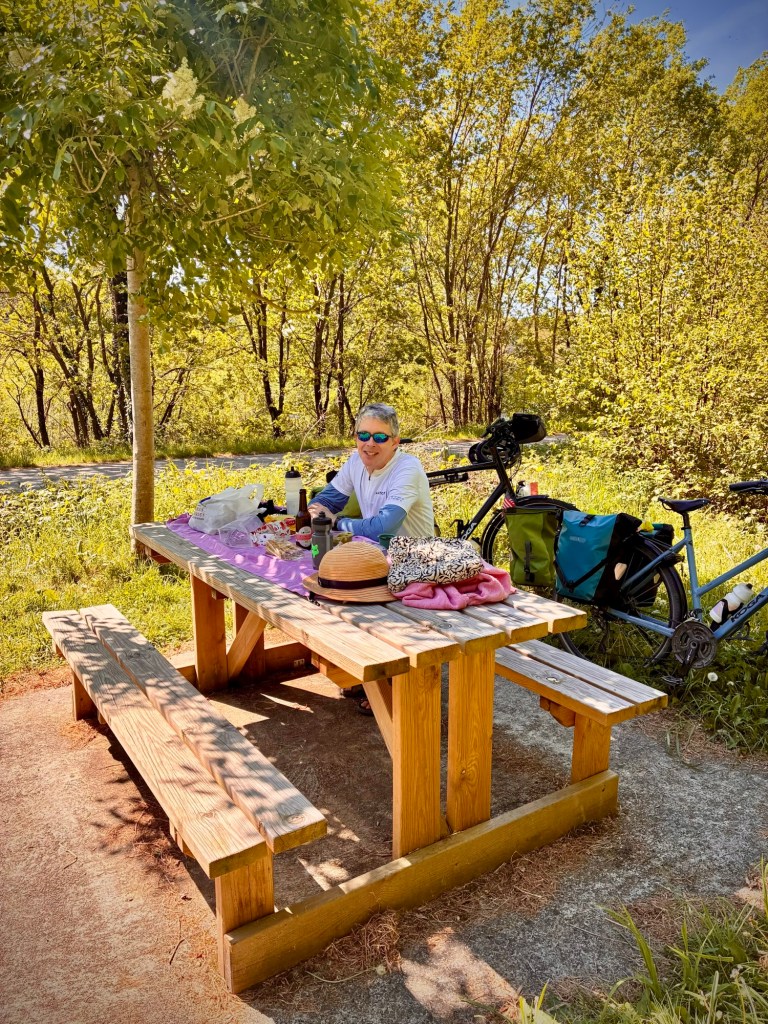
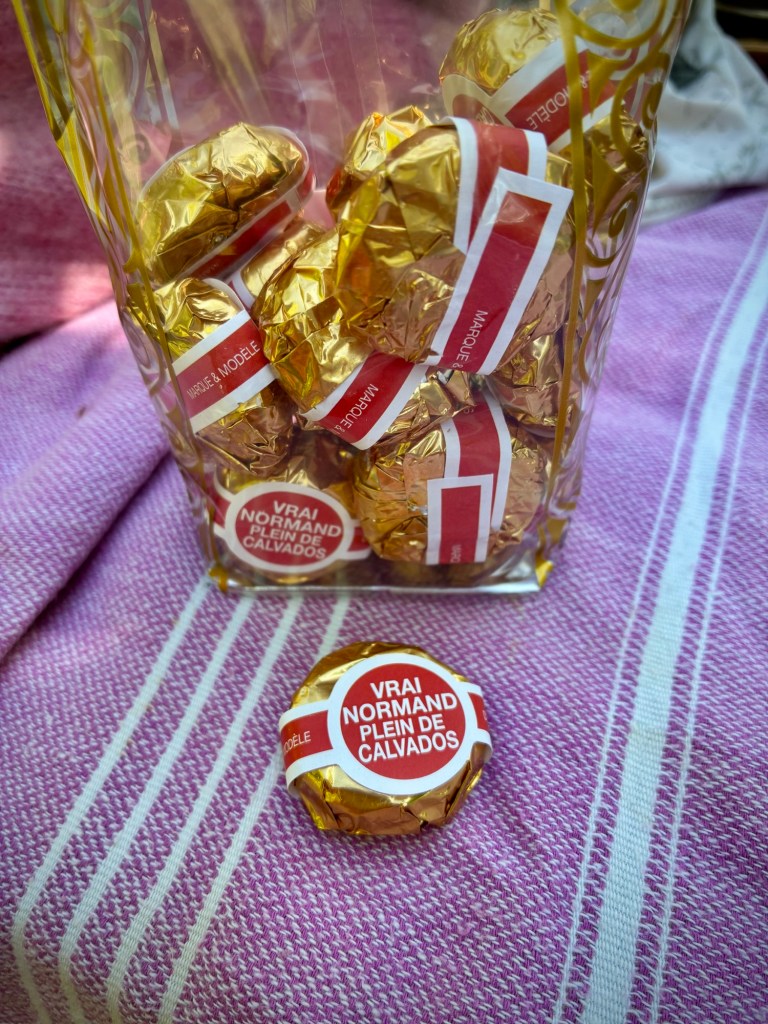
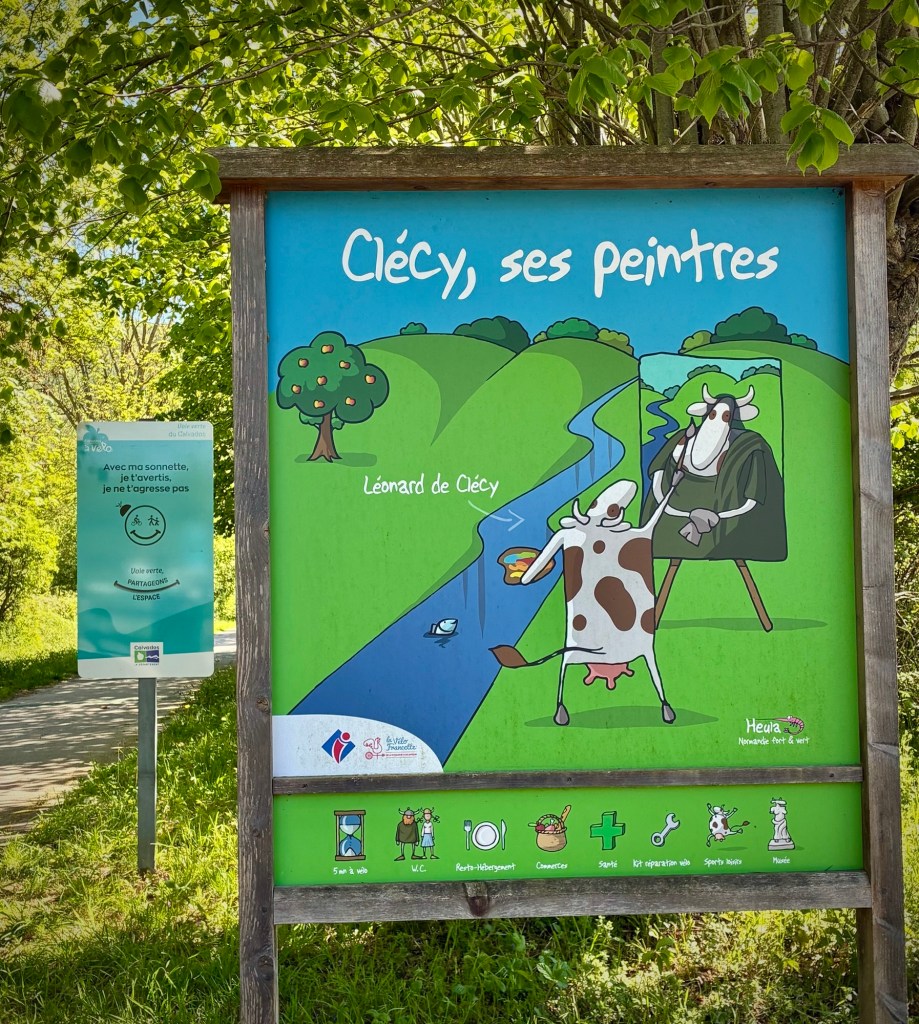
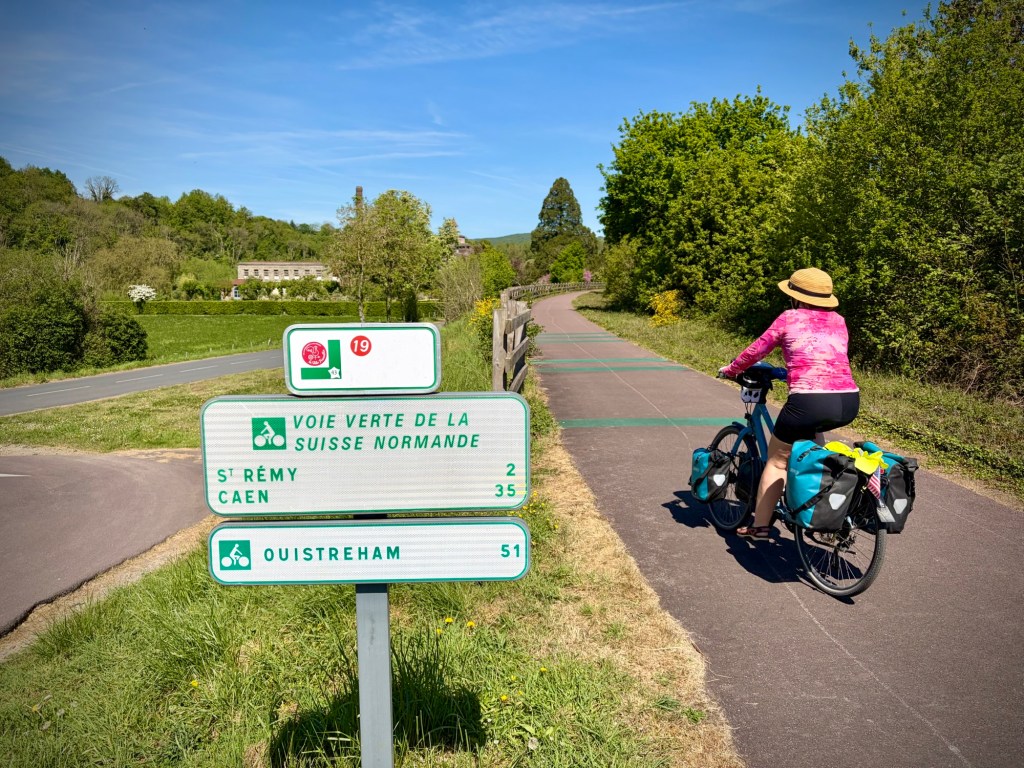
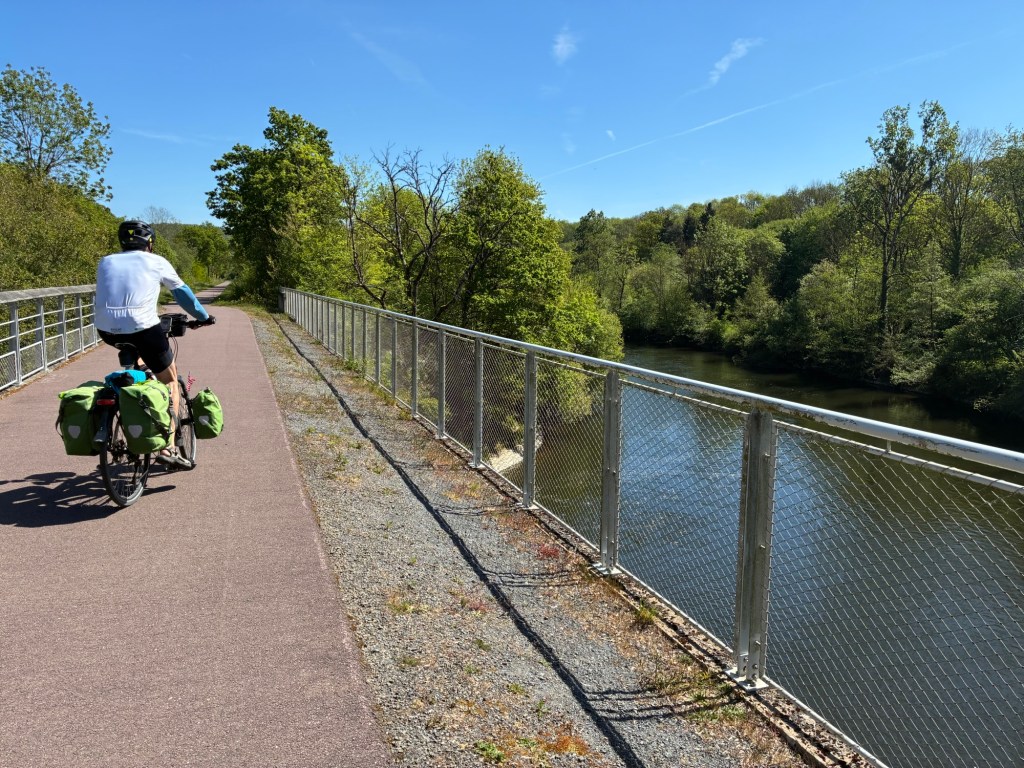
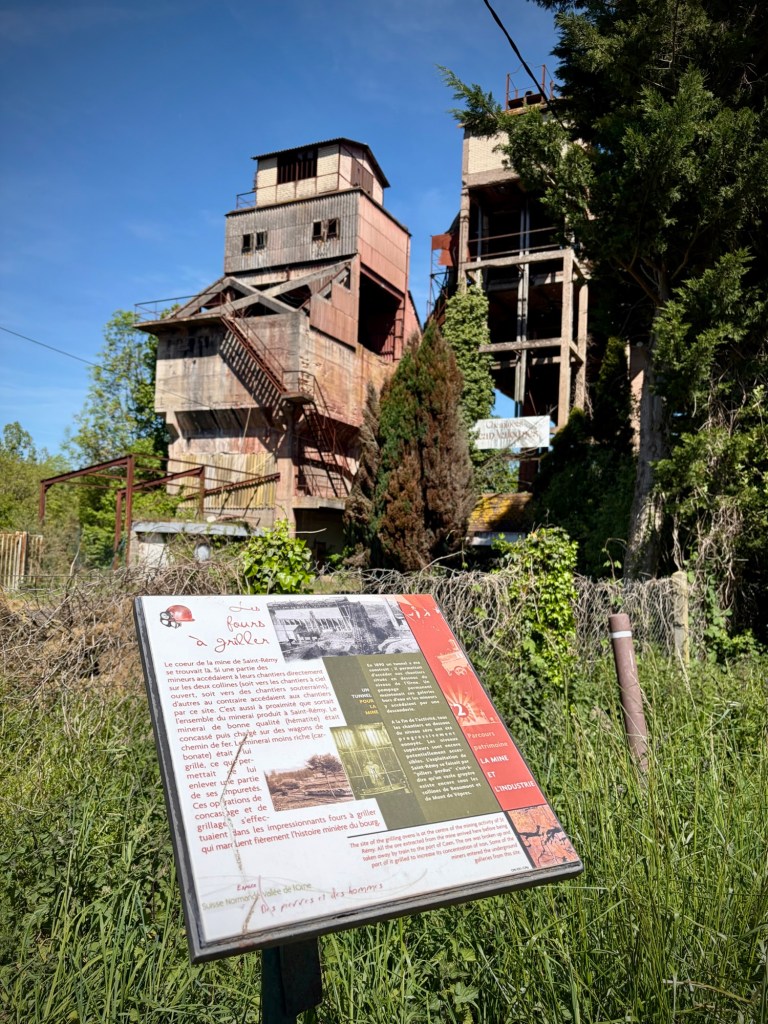
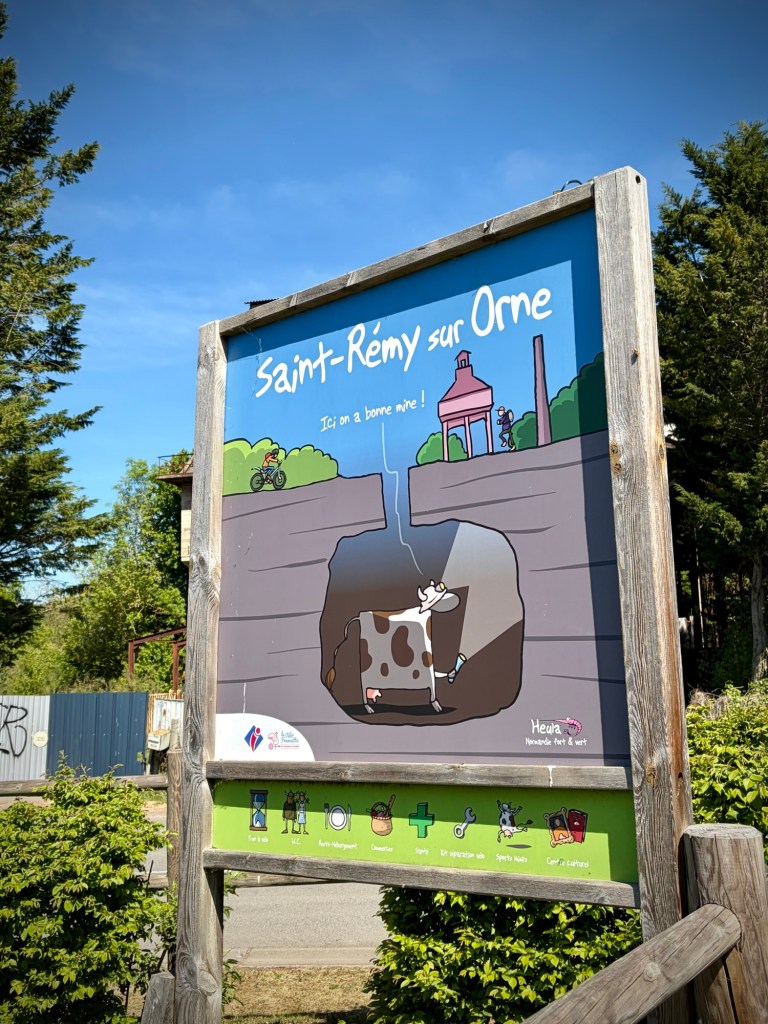
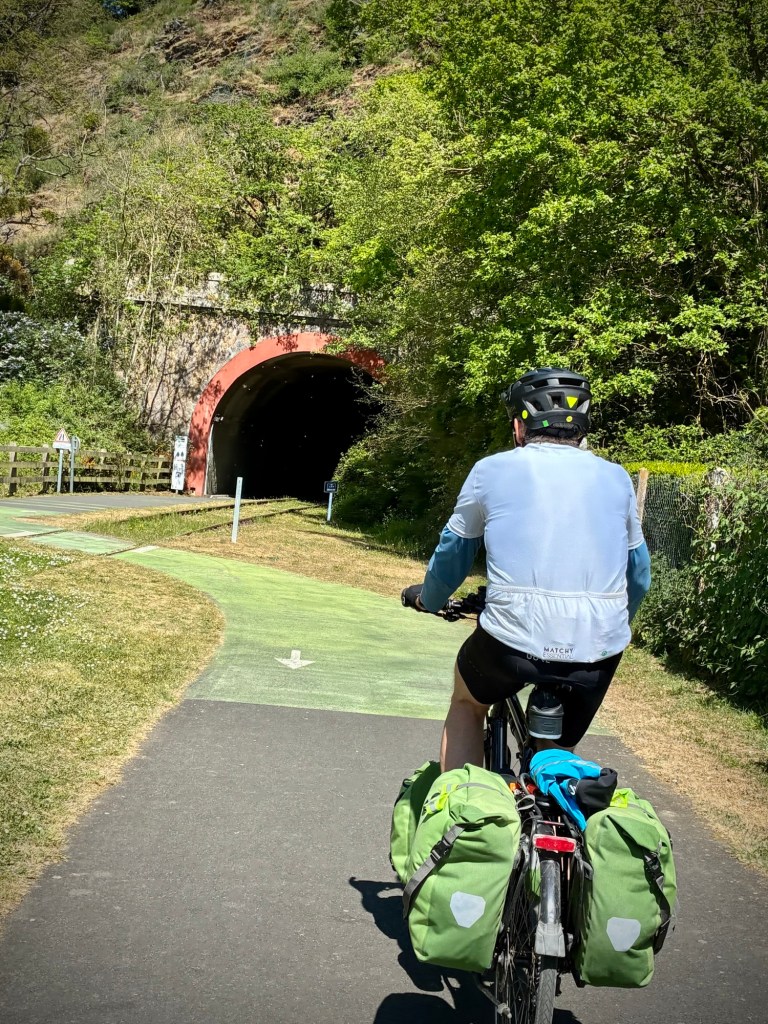
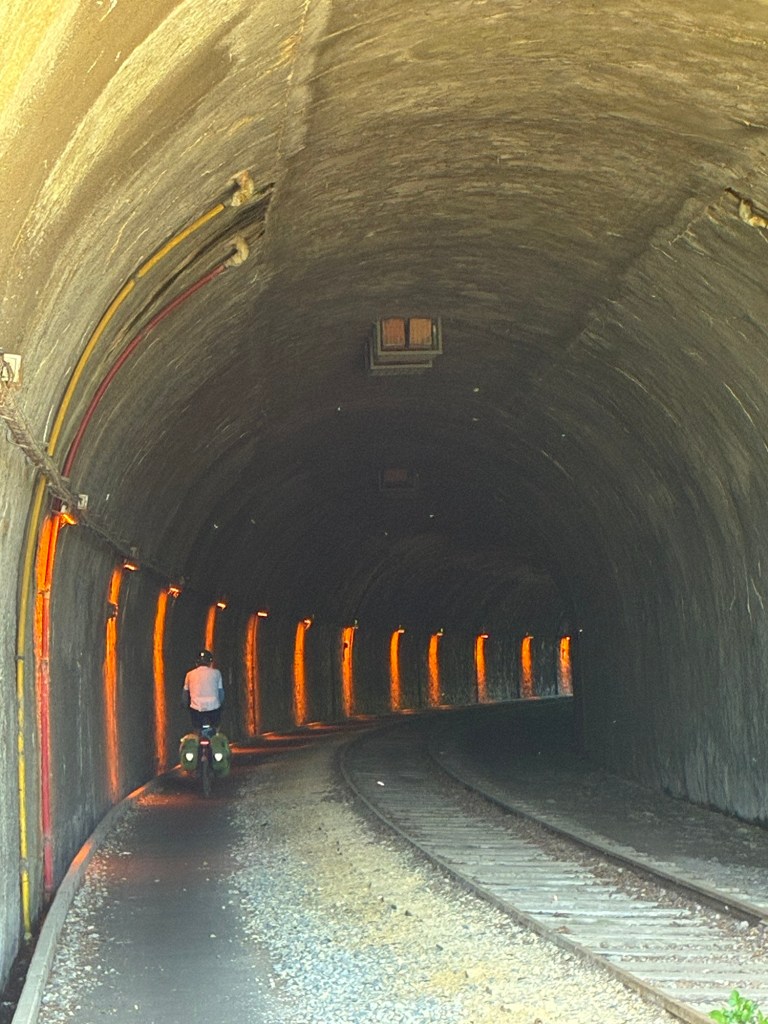
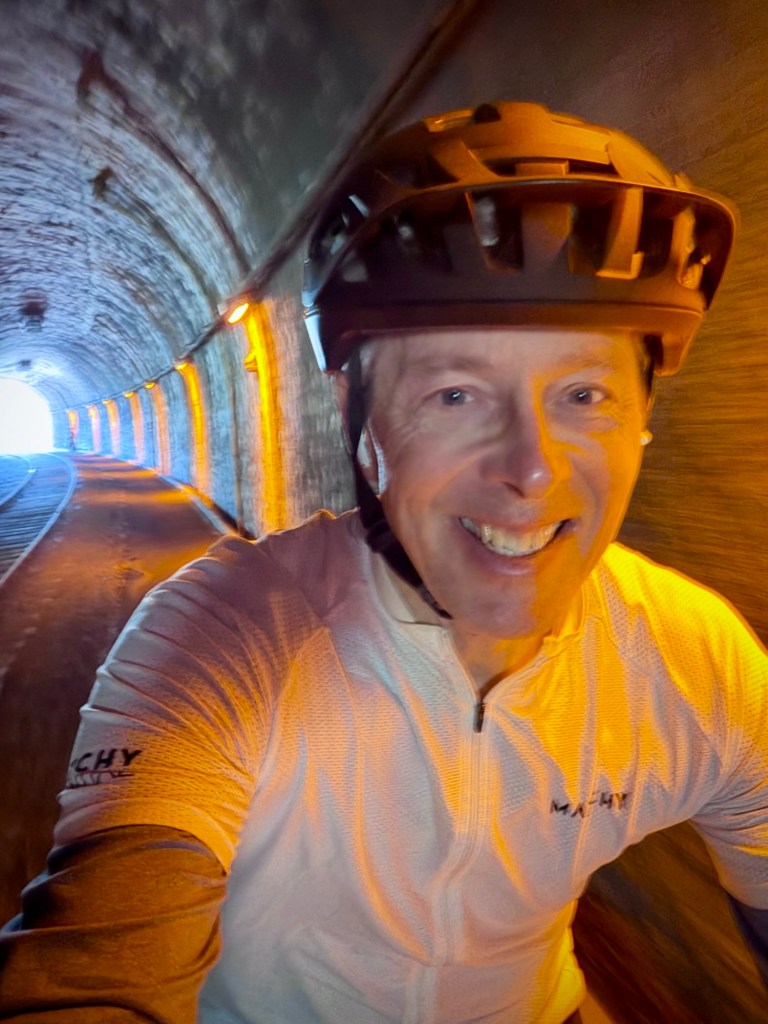
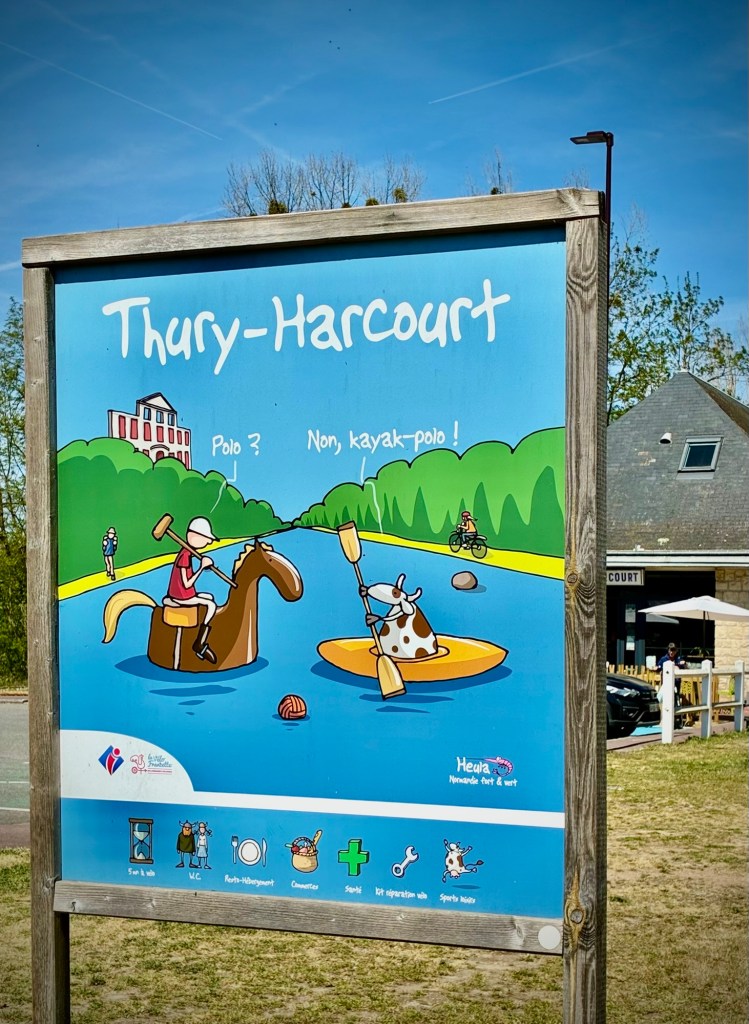
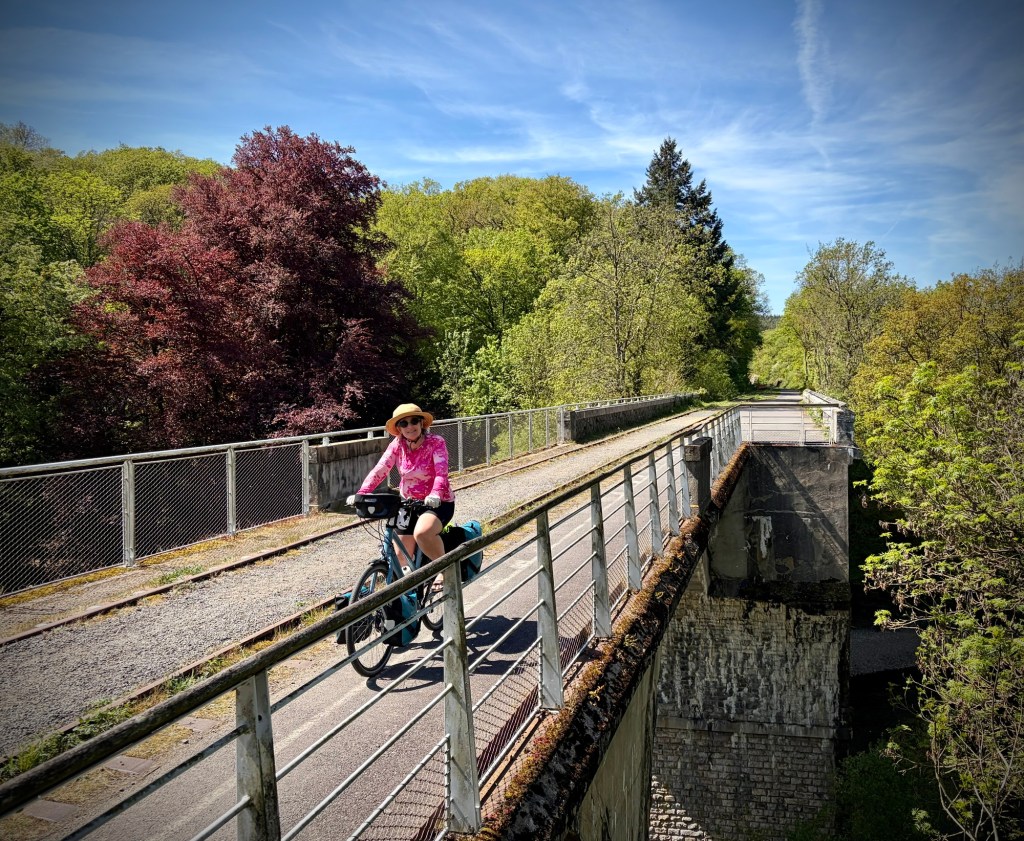
This was a beautiful tree commemorating British troops.And this very appropriate wooden memorial to the Canadian liberators.Cheryl loves paths and old gates. We did not go this way.Still off the Francette, we dropped into the lovely Vére River valley a truly middle of nowhere feeling.This road is nice!Well, nice except for a bunch of gravel trucks. But they were respectful and all heading to a massive sand and gravel quarry off the road.And of course the prospect of otters always excites Cheryl. We did not see any otters crossing as probably too late in the morning. “Do not run over me!”This old bridge wall was the only place to sit for our coffee and tea break in this remote valley.And this abandoned rail viaduct is an undeveloped part of the Suisse Normande greenway we were headed to. But first over a very steep hill. Perhaps they’ll open the tunnel soon as they keep expanding Voie Verts all over France.And then briefly onto a part of another Calvados route, Le Verdoyante.As we descend the steep road down the other side of the climb, we see an open Cidererie and stop to taste and buy a few small bottles for the road. Delicious and tart.And alas, onto the Suisse Normande voie verte for the last 41km to Caen.The beginning of the Suisse Normande route is beautiful with viaducts frequently crossing the River Orne.One of the rail tracks is still in place next to the trail as this section was historically a dual track system.The trail is festooned with whimsical cartoons by Heula, a collaboration of the Normande designer Sylvain Guichard-Bichicchi with information and humor.Our picnic with local Normand goodies, including the cider from Cave de la Loterie.Nice new picnic table by the trail.And these Calvados filled chocolates will probably put you over the legal limit as they are strong!Oh, in case you wondered what department of France we were in.Love the Heula.Getting closer…but it’s getting flatter and a little less interesting.Oh, another lovely bridge over the Orne.A very informative sign about the historic iron ore mining in the area.And more fun Heula signs-:)Ah, finally a tunnel!Cool lighting and mysterious bend.Selfie while grooving in the tunnel.Lots of recreation on the river, including kayaking and even rail bikes!And getting close to Caen finally!
We finally rolled into Caen on a warm Saturday afternoon, and the old city and core was packed with people. Even though it was legal to bike on the streets in old town, we often had to walk our bike through the throngs of people. Caen is a nice little city with a castle and the unmissable Memorial de Caen museum we visited on a past trip. So this visit was just a quick overnight on the way to our next destination and the Normandy coast.
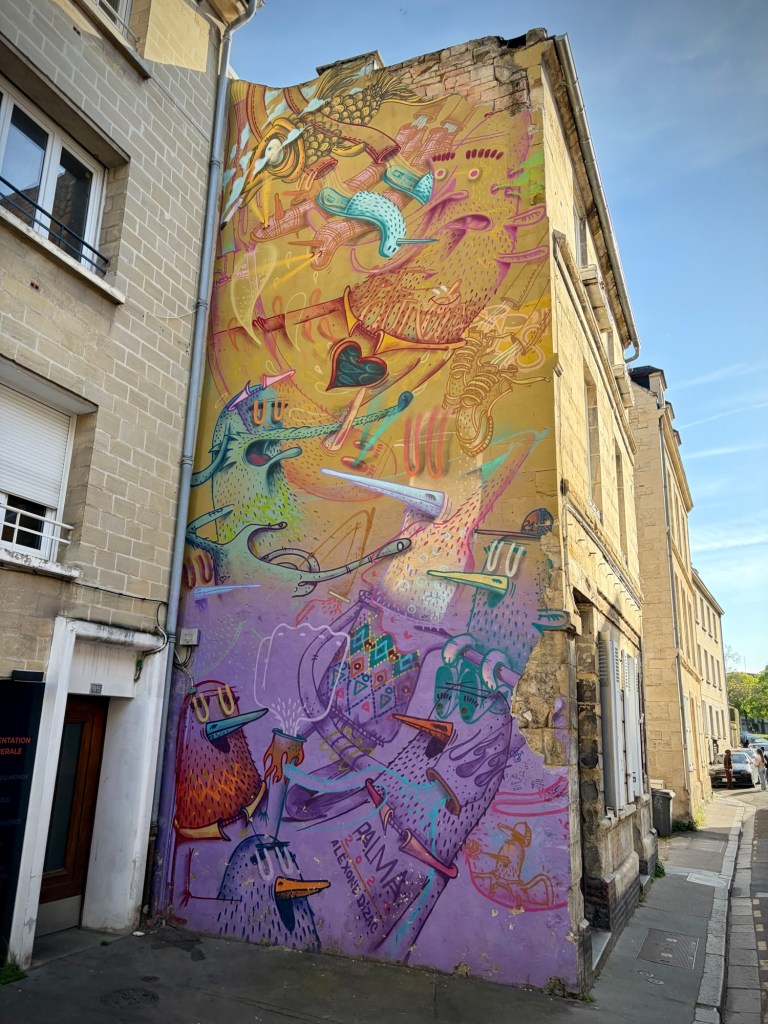
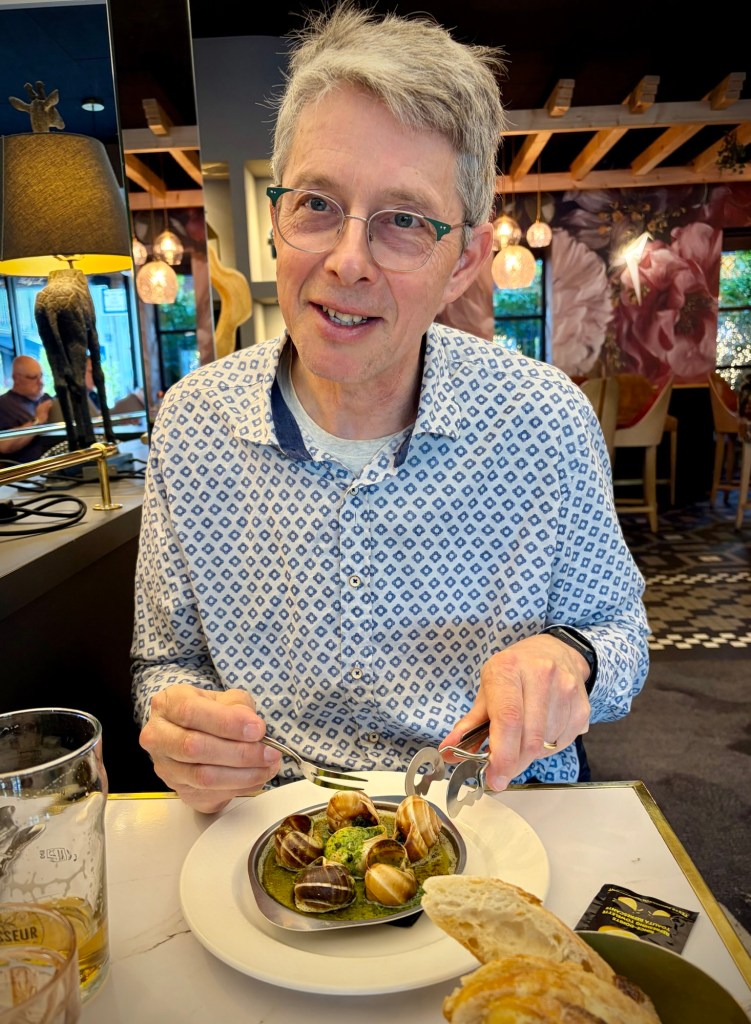
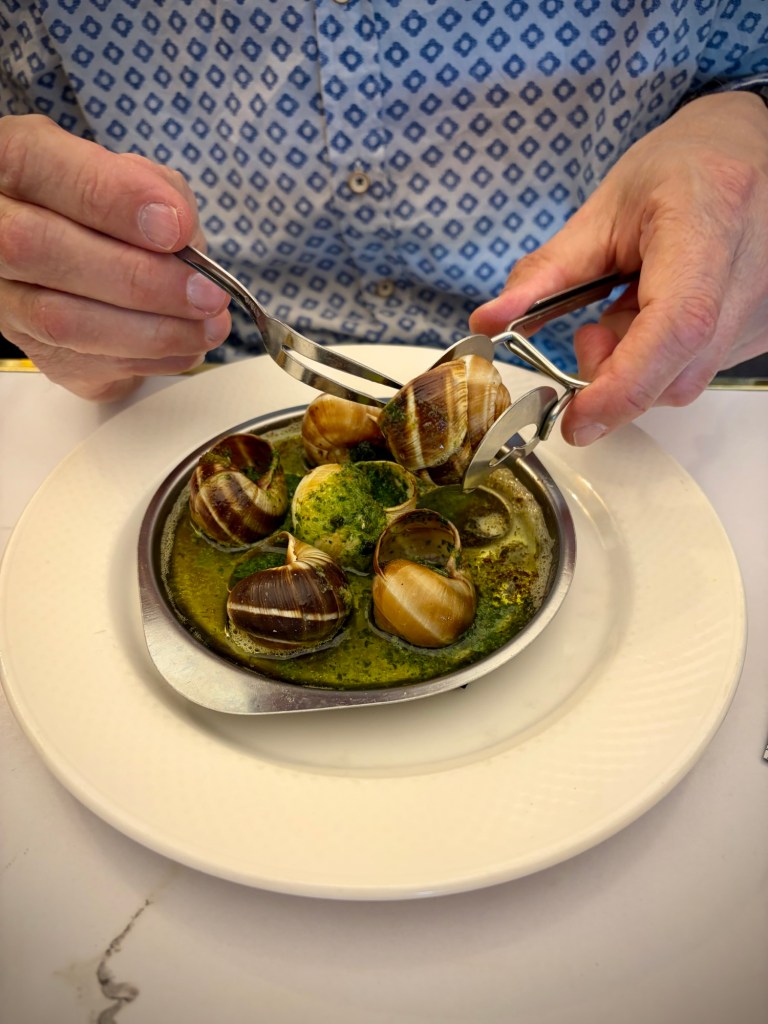
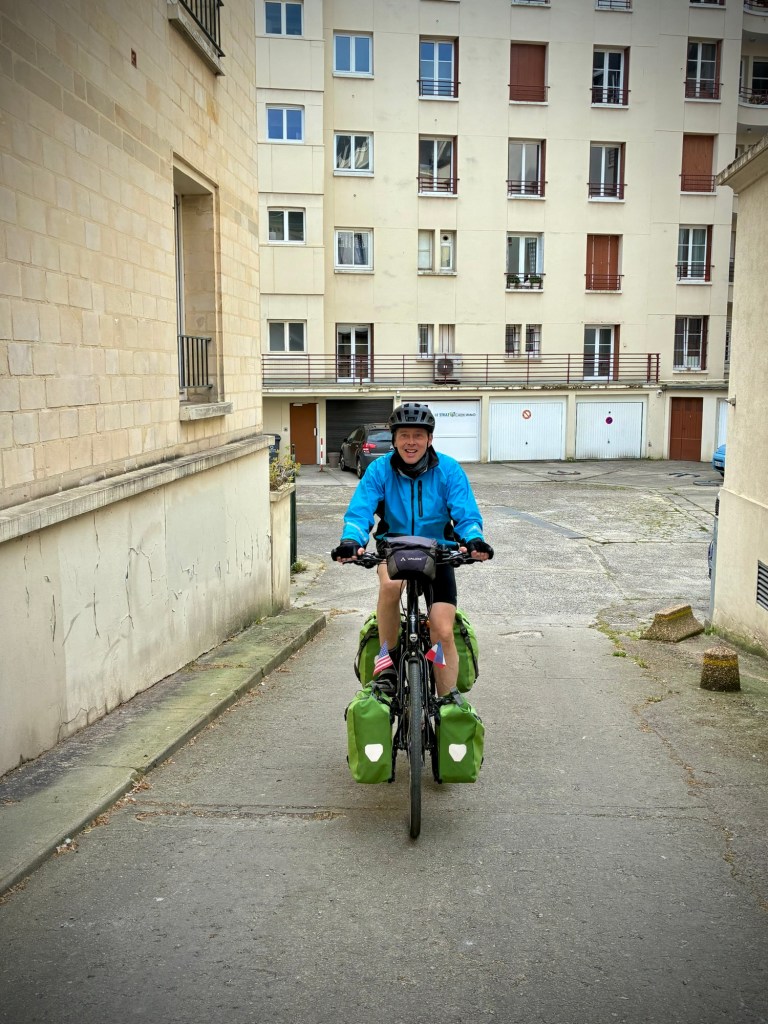
Funky mural in Caen.It was time for snails. Starting my initial fight with the escargot, but these guys were tough as pretty deep in their shells.So forget the tongs, just hold the shell in your hand and use the fork. And then the sanitizing wipe when done. But delicious with plenty of garlic and basil.Leaving the glamorous back parking area of our hotel in Caen and headed west.
We like to see big sights sometimes and the famous cities and villages are popular for a reason, but to us the deep memories of our bike touring adventures are in the small places in between. It’s a travel cliché, but so much more true for bike tourists. And we get so used to being away from other tourists that it is a bit of a shock when we re-enter the more trodden tourist-sphere. And so our next destination after Caen is on the heavy tourist map, as it is a perfect gateway to the miles of history along the DDay coast. But I’ll leave this for Cheryl and another day.