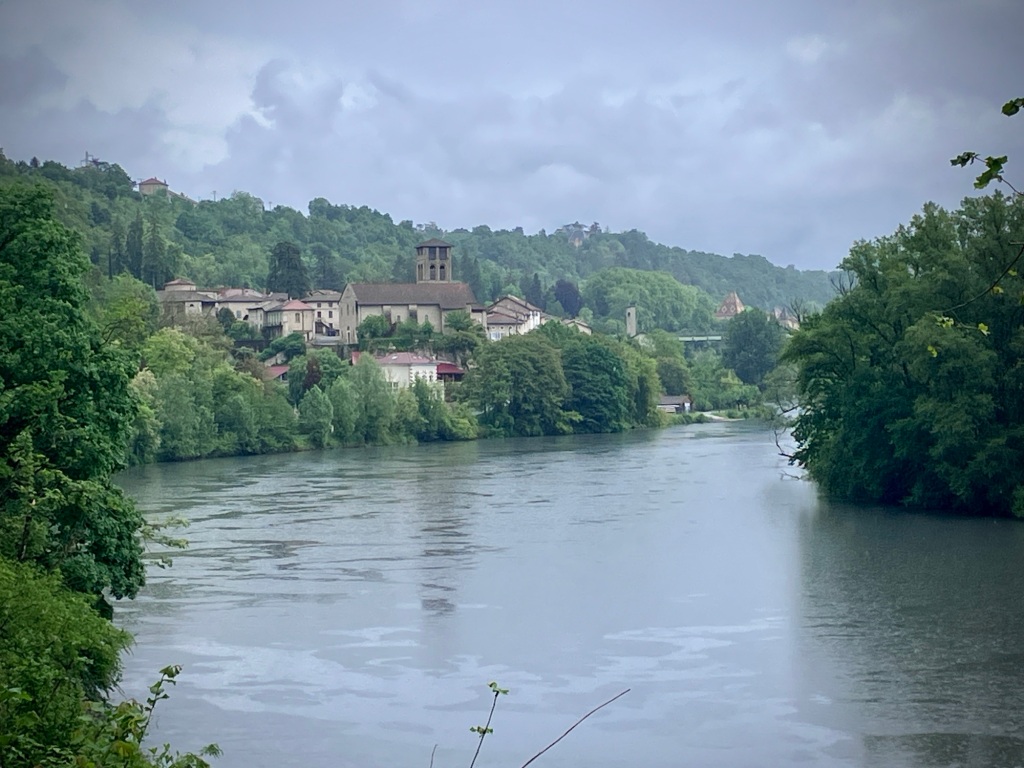
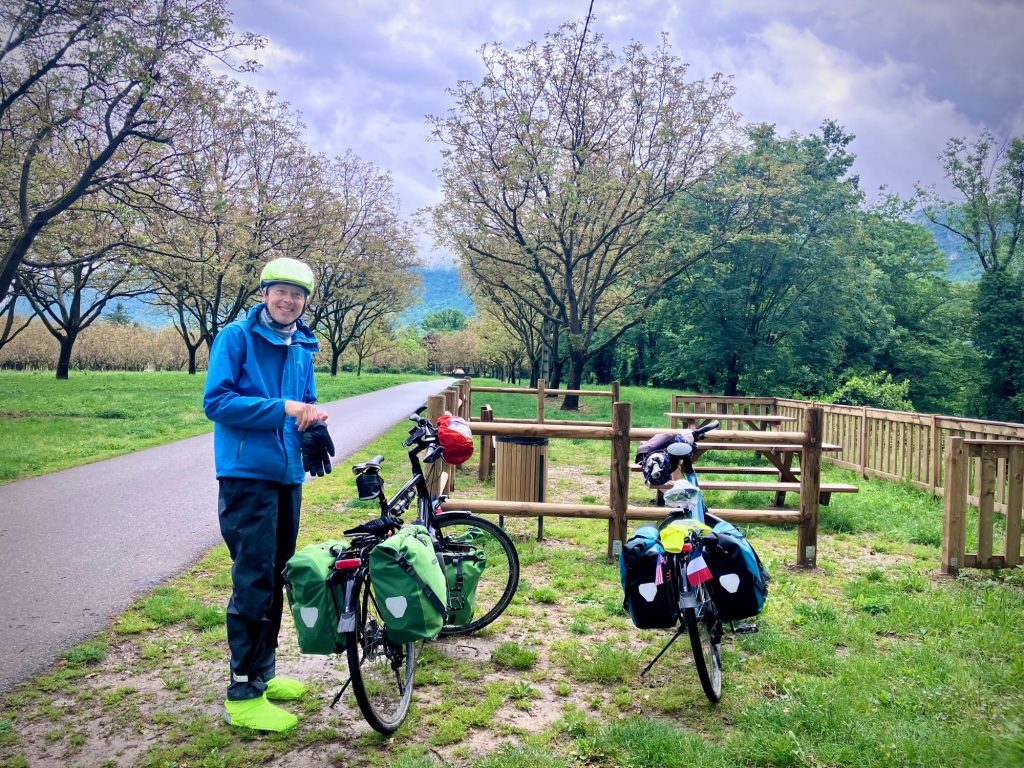
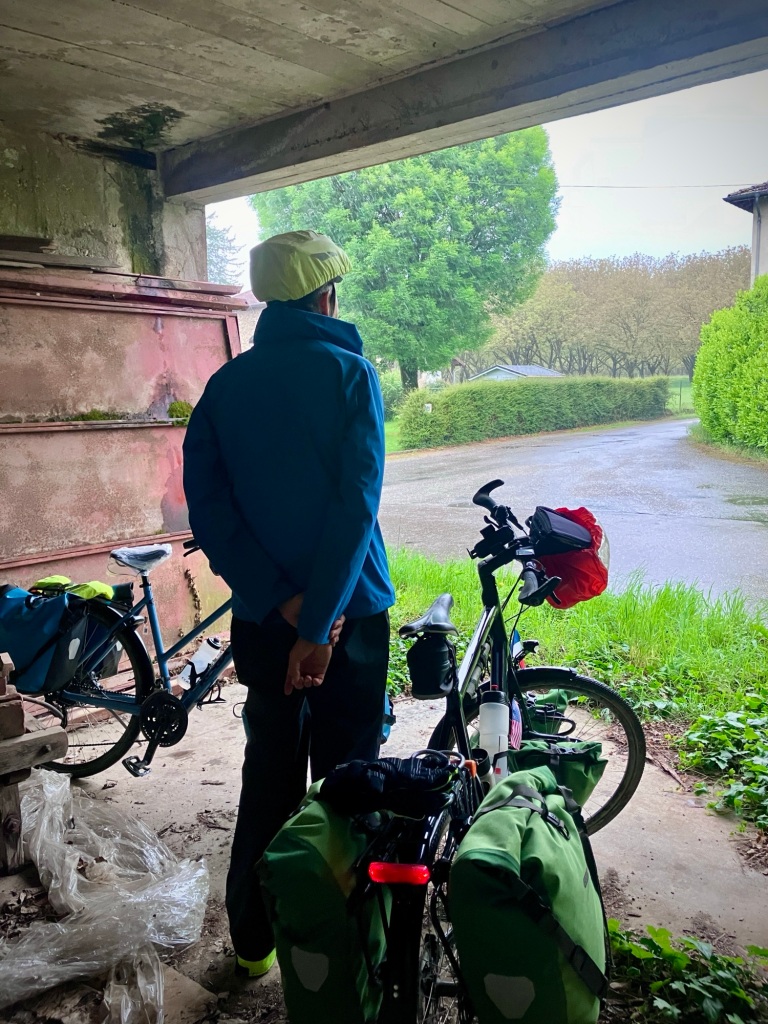
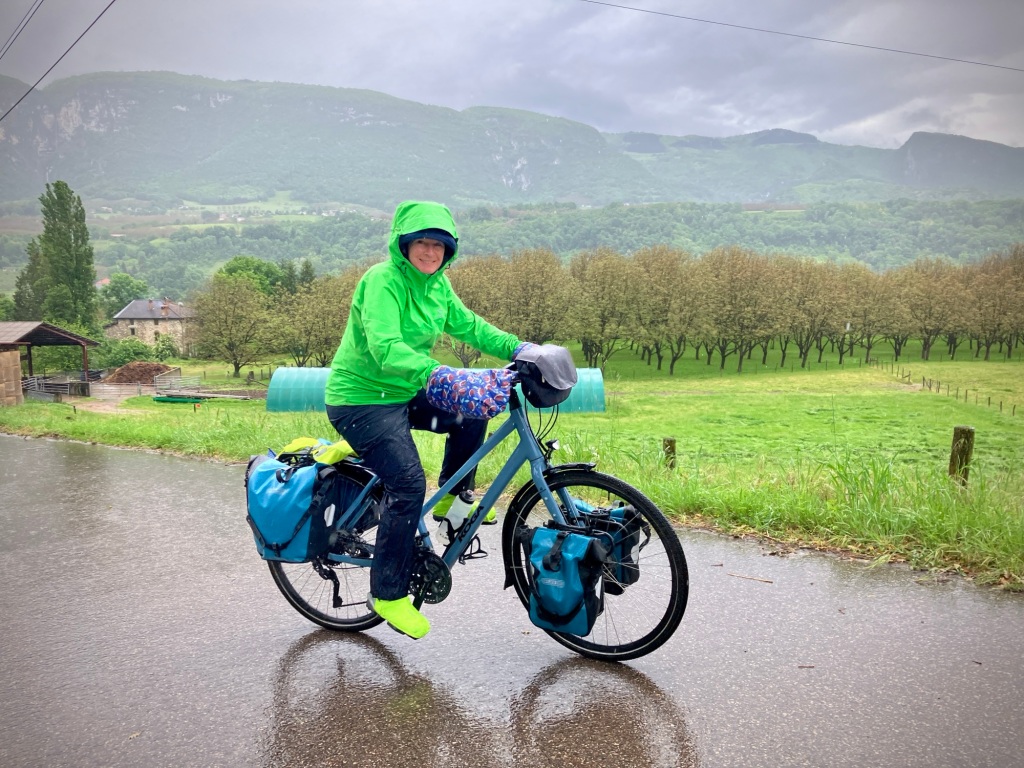
We continued our Northwest summer ramble out of Seattle and headed up I-5 about an hour and a half to Bellingham, WA.
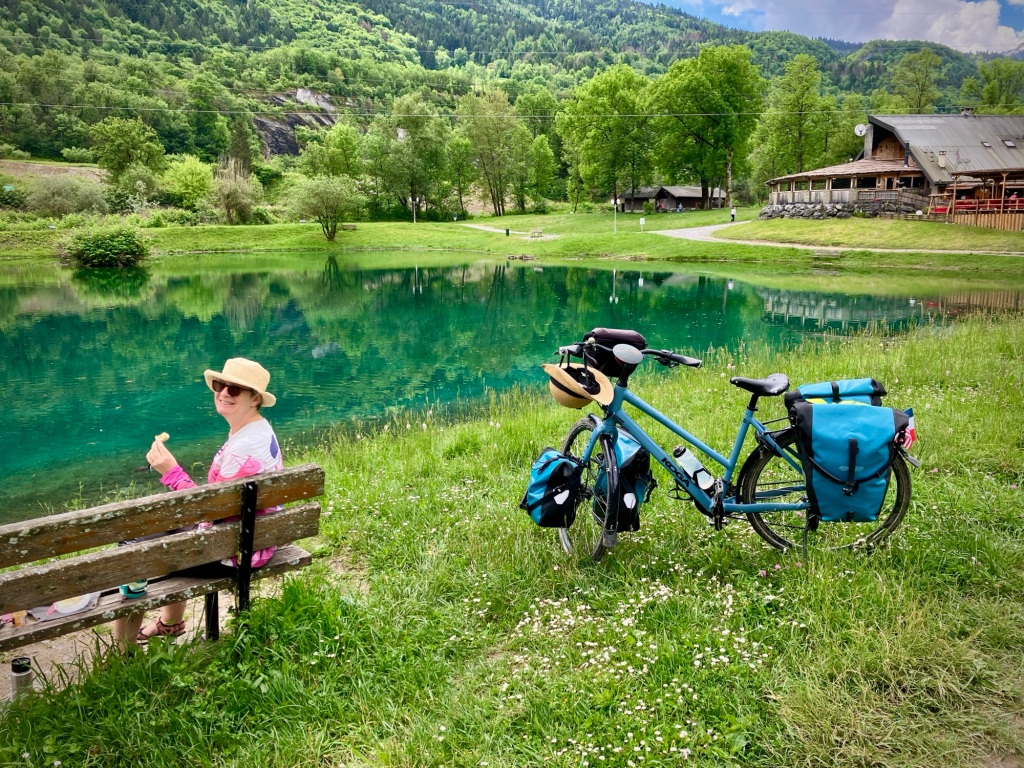
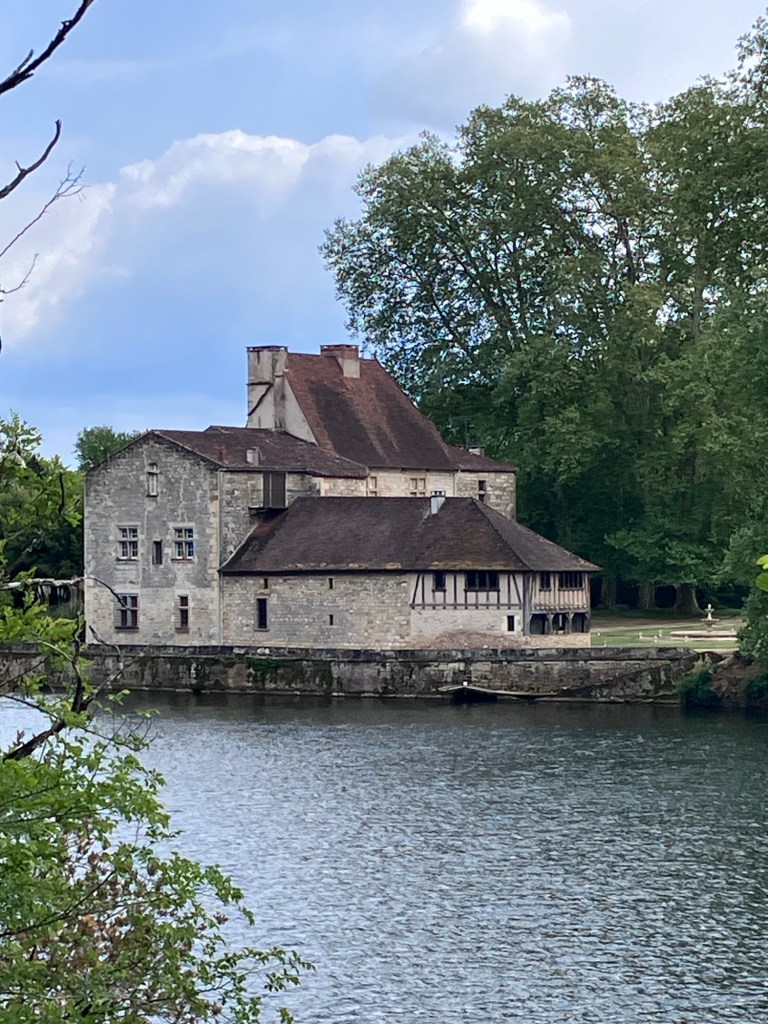
Emerald or « Toad Lake » near Belingham, Washington.
Closer to Vancouver than Seattle, Bellingham frequently appears on “Best places to retire is the USA” lists or click bait, and for good reason. It’s a small city (90k) on Puget Sound in a beautiful natural setting, kept vibrant by the constant youthful churn of 14,000 students at Western Washington University. This was our third visit to Bellingham, but the first time we had spent a week.
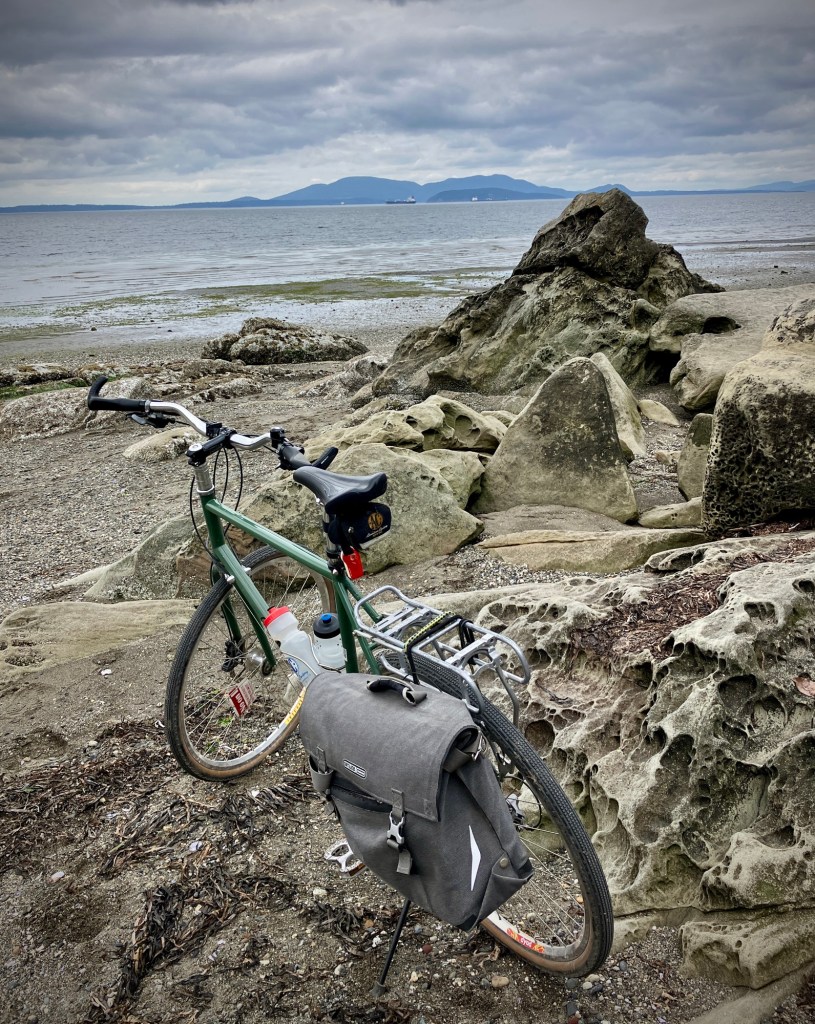
My summer bike at Clayton Beach, part of Larrabee State Park and the Chuckanut Mountains
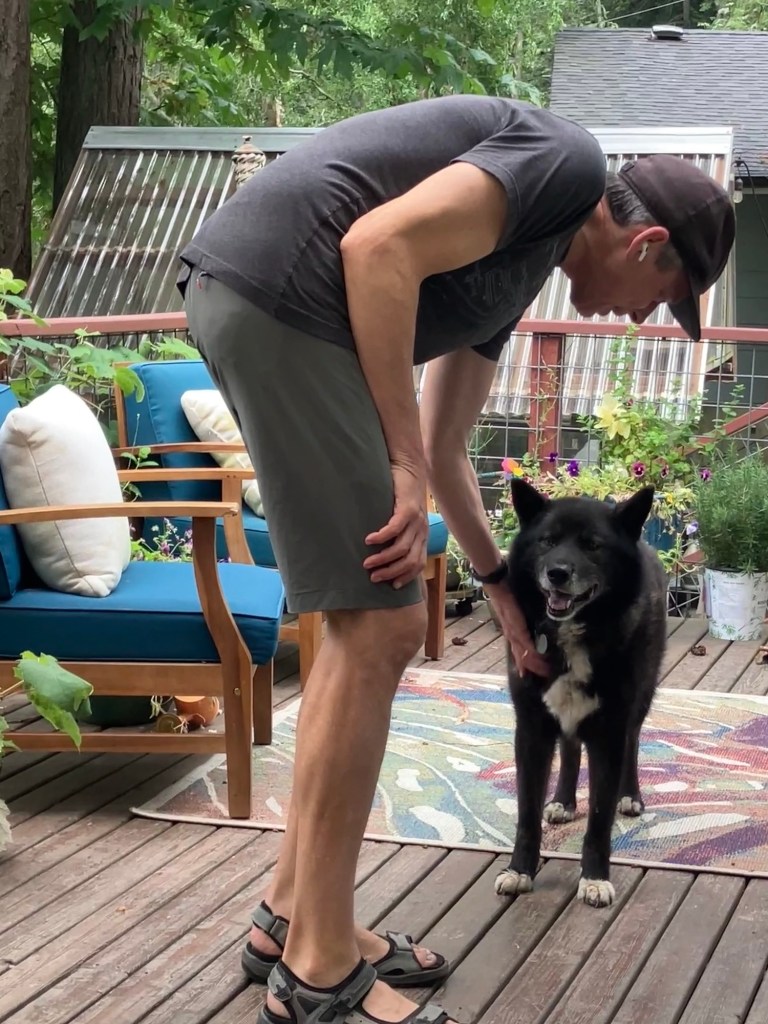
Our house sit was across from a small lake at the edge of town, but amazingly secluded up in a steep vale in the local foothills of the Cascades. Our responsibilities included a very sweet outdoor dog and seven chickens. The dog was reportedly standoffish but we soon bonded with him and enjoyed some fun walks around the lake and woods.
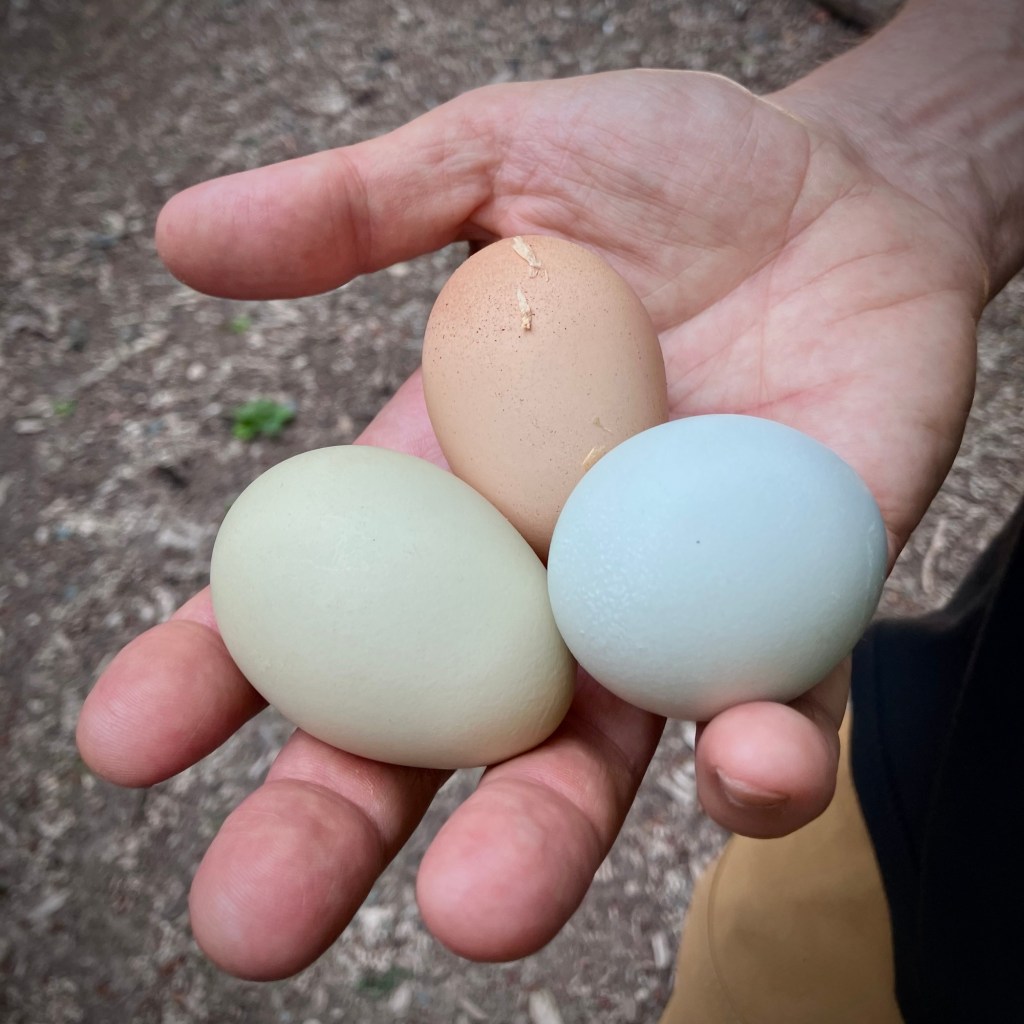
Lake loop with an enthusiastic leader Our dog letting me know he was ready for a walk!Our house sit included all the fresh eggs we could eat!
House sitting is great for really trying out new locales to see if it a place we may want to spend more time or even settle for a time. We really liked Bellingham in the summer and had considered settling here at one point, but think now that we still need a bit more city in our next home.
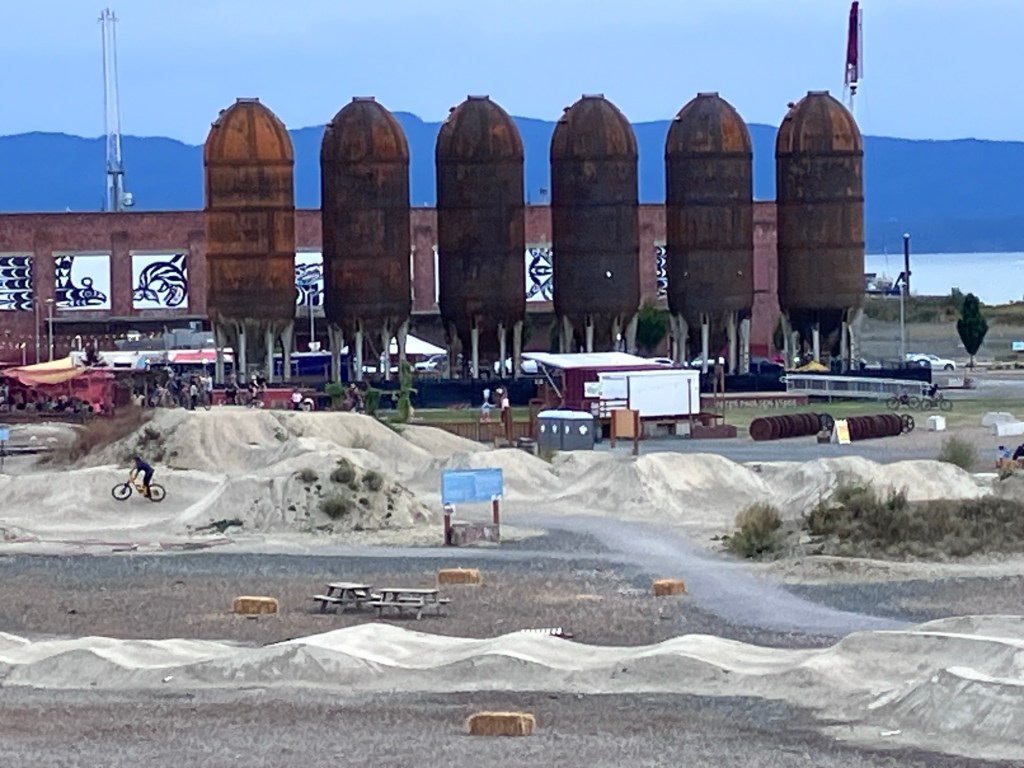
Downtown Bellingham is in the process of reimagining its industrial waterfront with popular interim uses as a wild bmx track, shipping container bars and restaurants, and summer festivals.
The Pacific Northwest and Seattle in particular are so different than the Bay Area we called home for most of the past 30 years. We are used to the pace and competition of dense SF living and you really notice the difference in the Seattle area. We are the angsty rushed city folk here. The massive amount of wealth and economic prosperity generated in San Francisco and Silicon Valley has put pressure on every aspect of living; cost, housing, services, transportation. We lived a great life in San Francisco by keeping our work and home close and cycling, walking, or transiting most places.
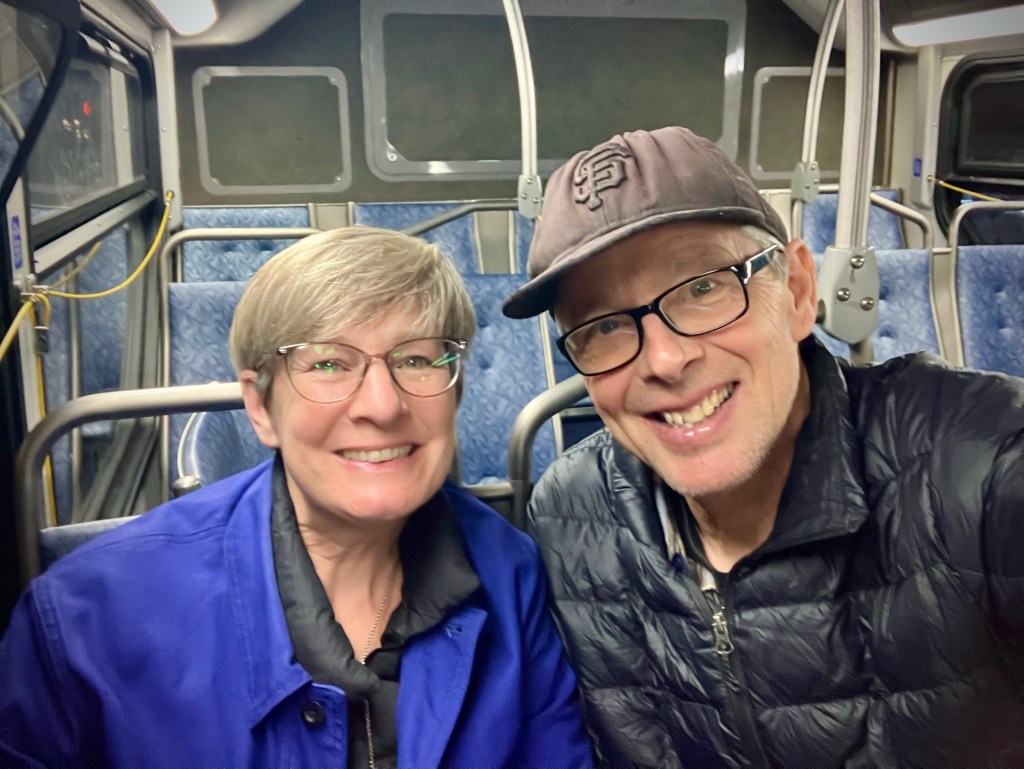
Riding the #40 bus in Seattle. It’s fairly extensive, clean and reliable, but can we live comfortably without a car here?
And our double income, no kids (DINKS) life kept us comfortable financially. But we could feel the strain the past 20 years on services and the vast gulf that was growing between “knowledge workers” and those in service or more traditional blue collar roles. San Francisco and California has tried to fight this trend with social programs (minimum wage, city health plans, affordable housing, etc) but it can’t keep up with the demand for housing. It’s a global problem in wealthier areas of the planet, but especially evident in California.
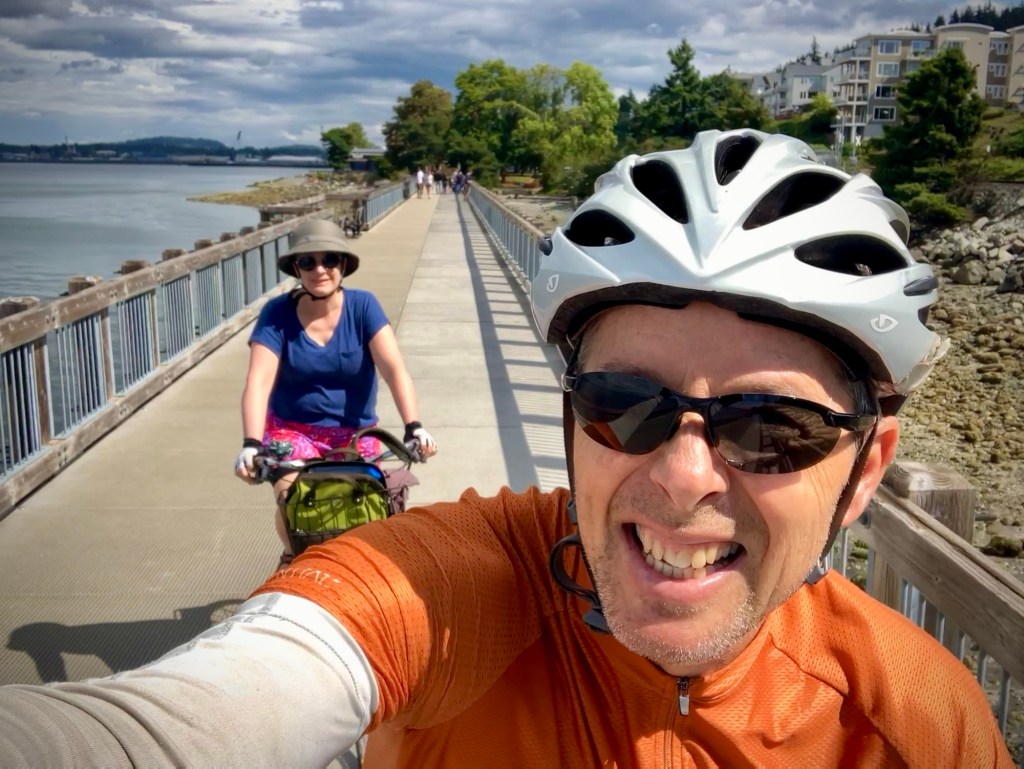
Cycling the boardwalk to the Fairhaven neighborhood of Bellingham, arguably its most charming area.The Bellingham area is unrivaled for mountain biking, including expert crazy bike only downhill runs
So back to Seattle. Seattle has a lot of the same challenges as the Bay Area, including tech wealth and escalating housing costs. But as we noted in our winter visit Seattle blogs, they ARE building more and have looser zoning laws near transit by right. (meaning NIMBYs can’t stop it) DADUs (Detached Accessory Housing Unit!), townhomes and condos are sprouting all over the city in almost every neighborhood.
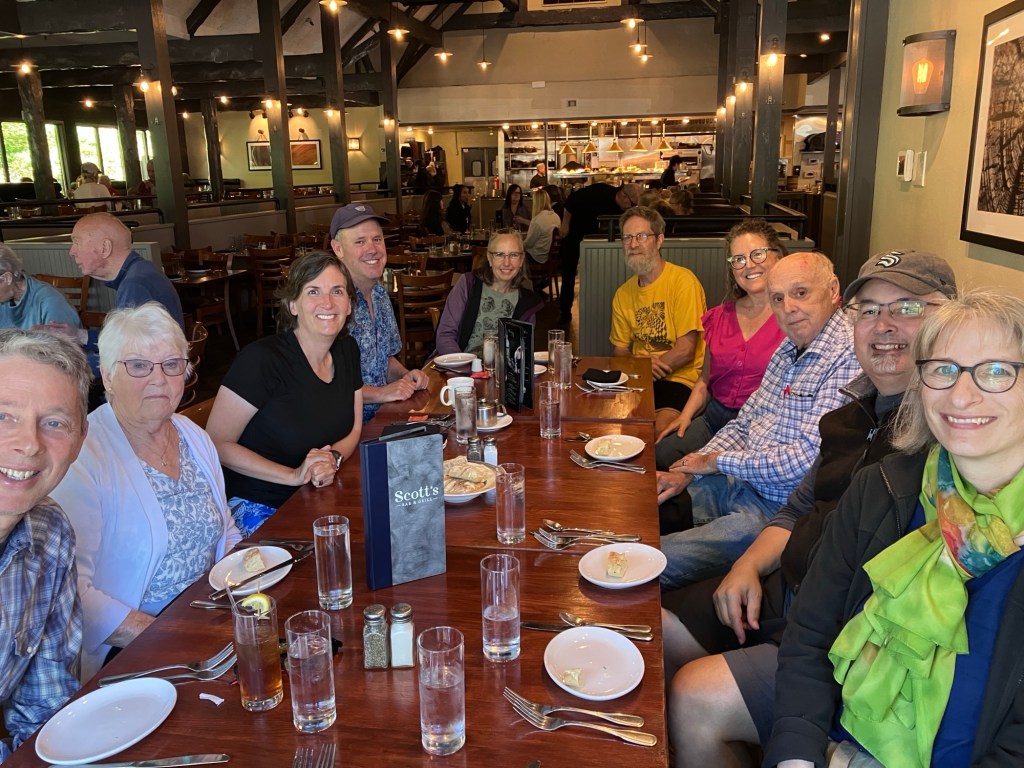
Great to meet and chat with fellow nomads at a meetup in Edmunds, WA
All this fairly random looking new housing looks strange to us as we’ve hardly see any housing construction in San Francisco, except the thousands of units concentrated South of Market, Mid and Upper Market Street Areas, and a few other pockets and buildings. But they are often not in the areas where most people want to live.
Great Pho at Miss Pho in Crown Hill. The diversity and quality of the food in Seattle is first rate, but unlike SF, you may need to search for it in strip malls.
Seattle is building more where people want to live, as well as very dense high rise residential in First Hill, and the South Lake Union edge of downtown. Add to this an ever expanding light rail metro system (thanks to a $54B 2018 bond measure) and you have a fairly dynamic feel to the City. It’s almost twice the size of SF, and feels more spread out, especially from north to south. It generally doesn’t have the magical density and intimate feeling walking from neighborhood to neighborhood as San Francisco and many more trips are by car. This is a big difference for us to adjust to if we settle in Seattle.
Golden Gardens Beach Park; beautiful and swimable, if you don’t mind chilly water!The Puget Sound beaches are more for exploration than swimming
SF is dense but could and should be denser, with more new buildings all over the western half of the city, where the weather and transit are great. But NIMBYs, Prop 13, and zoning keep the city at a relative standstill. It’s created a bit of a housing doom loop, since new housing construction is so expensive, that it’s not even affordable for developers selling condos for 1-2 million each. We’ve blogged on this on our past visits, but the issue just gets bigger and bigger and plays a big role in our decision on where we might settle down next in the World (if we do -;).
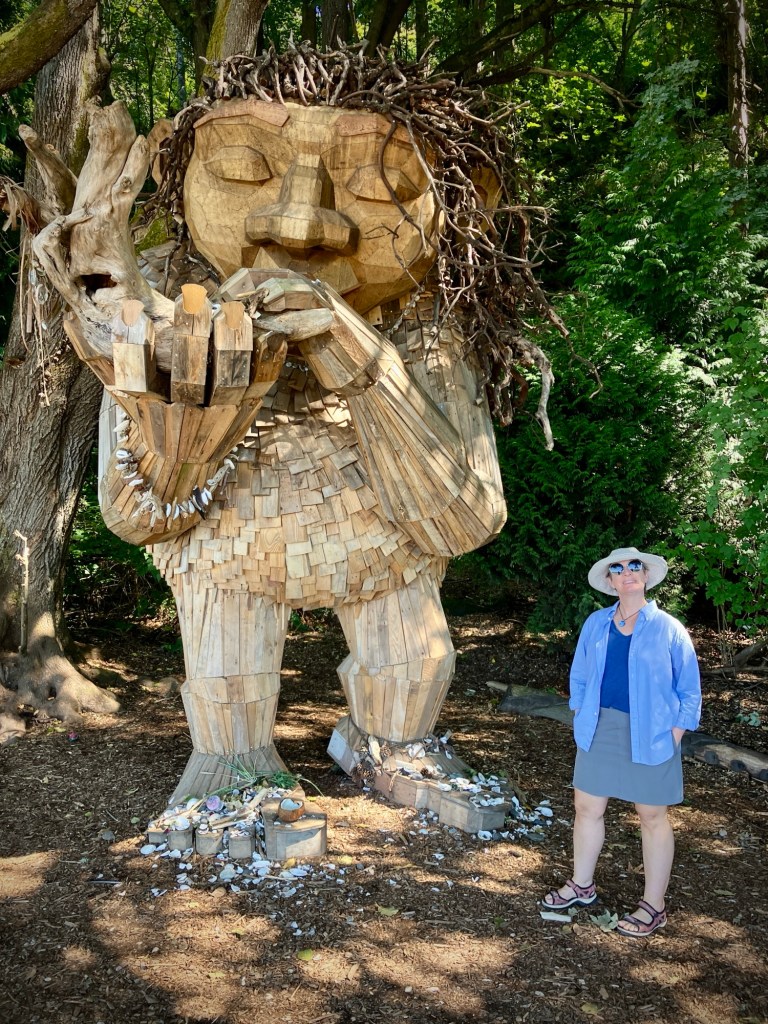
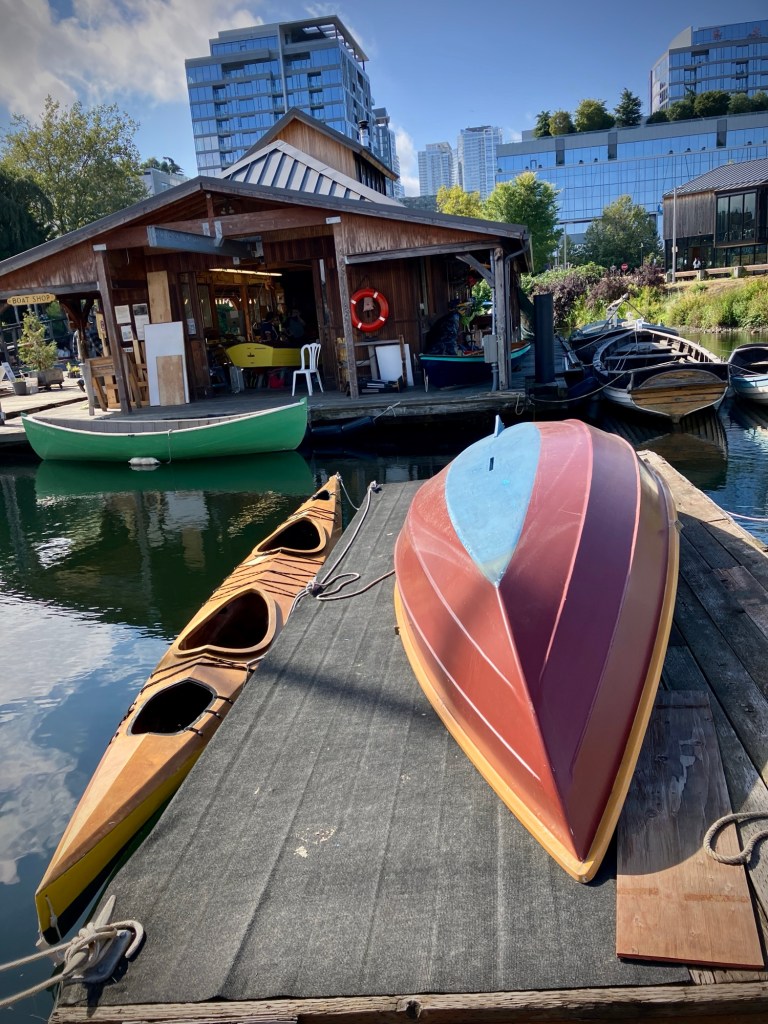
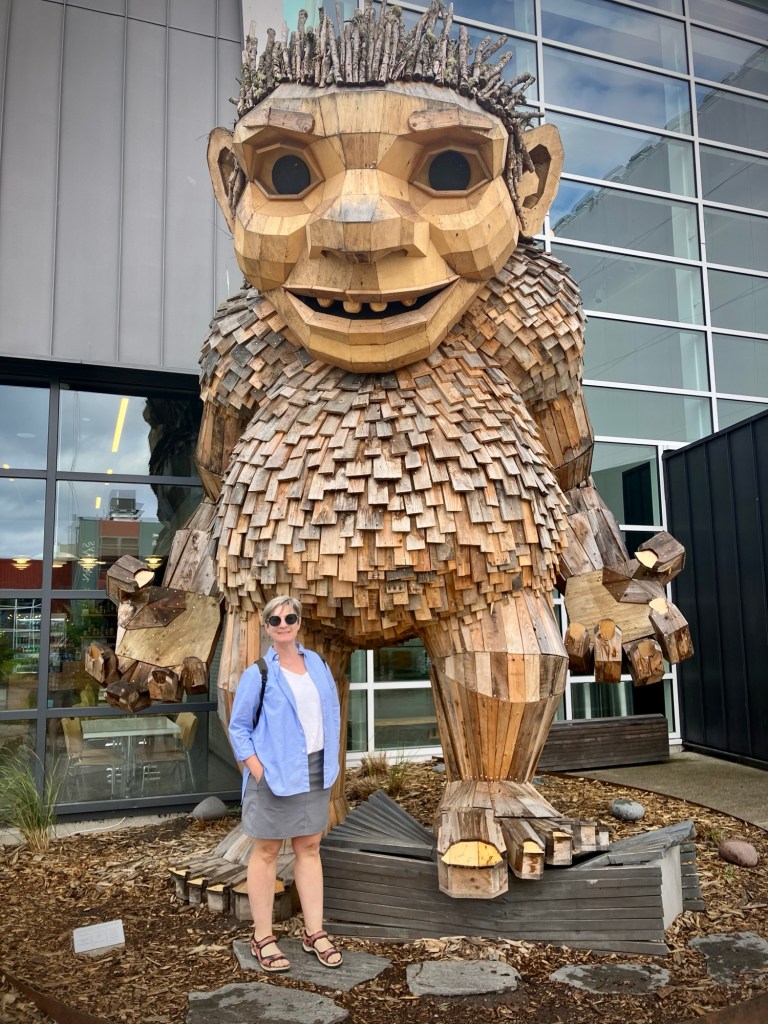
« Bruun Idon » at Lincoln Park, one of Thomas Dambu’s six troll sculptures in the region and made entirely of recycled/reused materials.The wooden boat center on Lake Union.
But to be honest, the biggest difference we noticed in Seattle this stay was the pace of life and what I like to call the “expectation of goodness.” People here are more patient and expect that you are, and are acting honestly and in the public good. A friend of mine in SF noted to me that Seattle today is what SF was like in the 80s and 90s. A bit slower, more provincial, and where everyone was not quite so full of themselves. It’s a cutthroat world in the Bay Area…not quite New York City levels yet, but noticeably more manic than the Pacific Northwest cities. Seattle’s slightly slower pace is attractive to us in our early retirement.
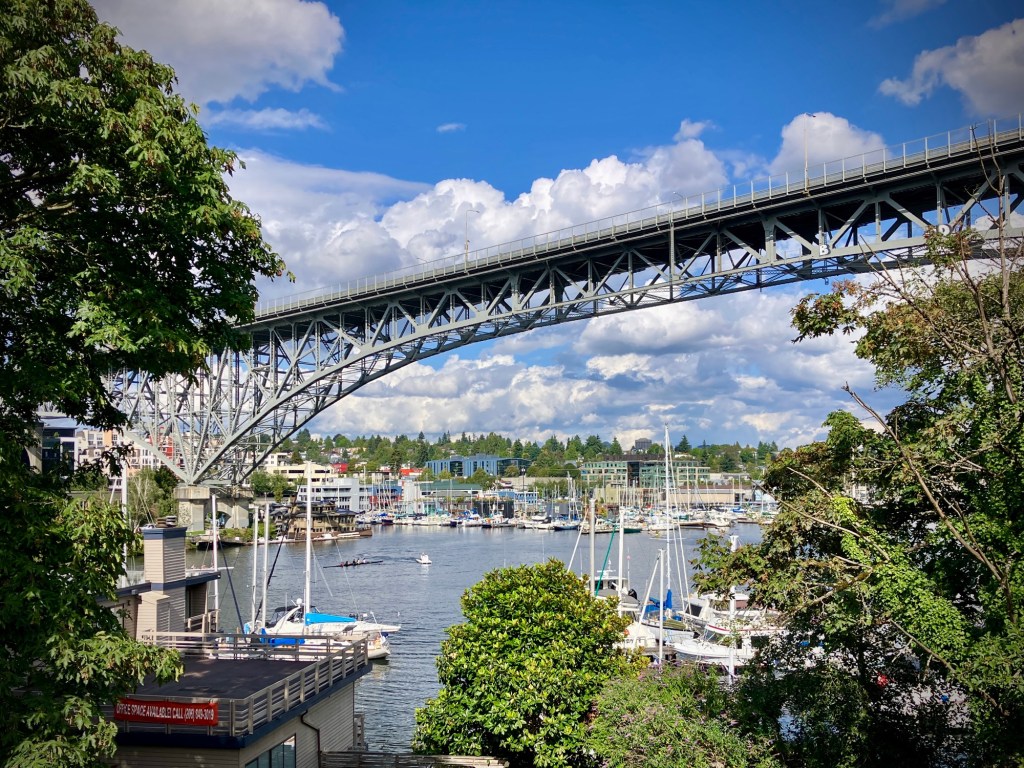
The Iconic Aurora Bridge built in 1932 connects Fremont to Queen Anne
So after a pleasant week exploring the trails and cycling paths of the beautiful Bellingham area, we headed back to Seattle for our final house sit of the trip in the Ballard/Sunset Hill neighborhood. We loved the area as it’s very quiet traffic wise and has a nice grid of roads cut off on the western side edge by a bluff and Puget Sound. There are some views toward the Olympic Mountain Range that allows you to get out of the trees.
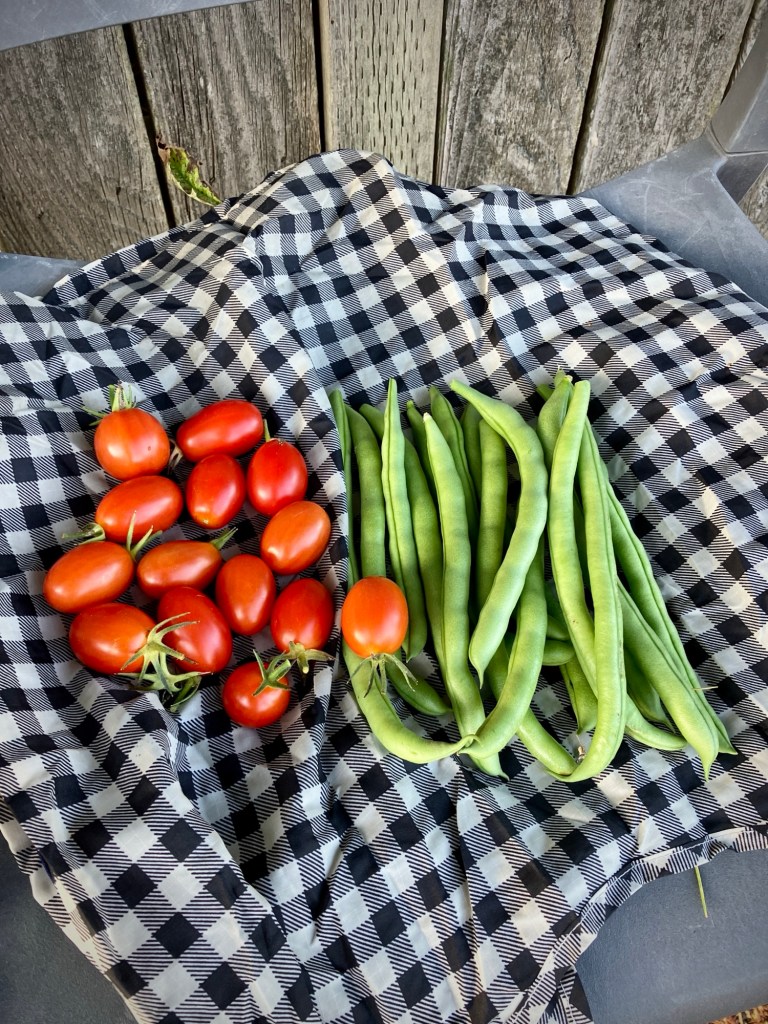
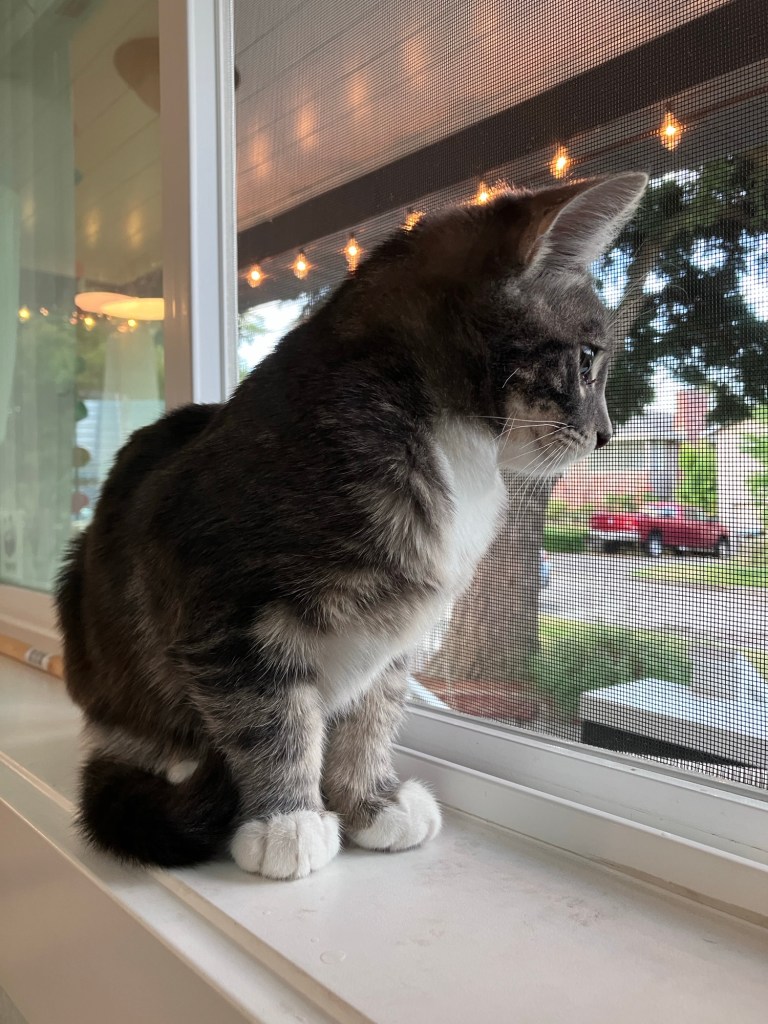
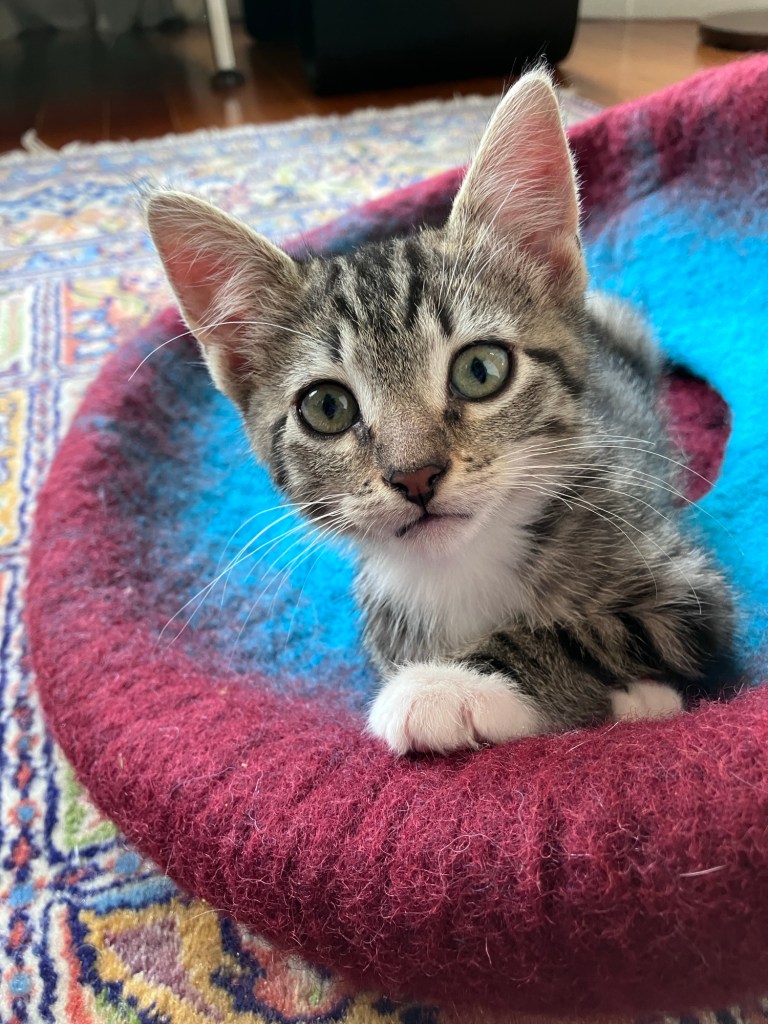
Cheryl tending our house sit Pea Patch, a community garden system throughout Seattle’s neighborhoods. Garden fresh tomatoes and beans from the Pea PatchWatch Kitten in BallardSampling some beers at Lucky Envelope, one of over a dozen craft breweries in Ballard alone!Another magnificent troll outside the National Nordic Museum in Ballard Cheryl contemplates how to get some of the endless driftwood to our future garden.Our house sit kitten testing breakfast table boundaries.
The grid layout of most of Seattle makes walking and biking very tenable, but the hills are a challenge, even coming from San Francisco!? Why? Because the large masses of each neighborhood often rise up and fall over long distances, meaning a trip back up to your house can mean climbing up gradual hills for 10, 20, or even 50 blocks! And much of the east-west geography is steep, so cross town journeys can be steep in places.
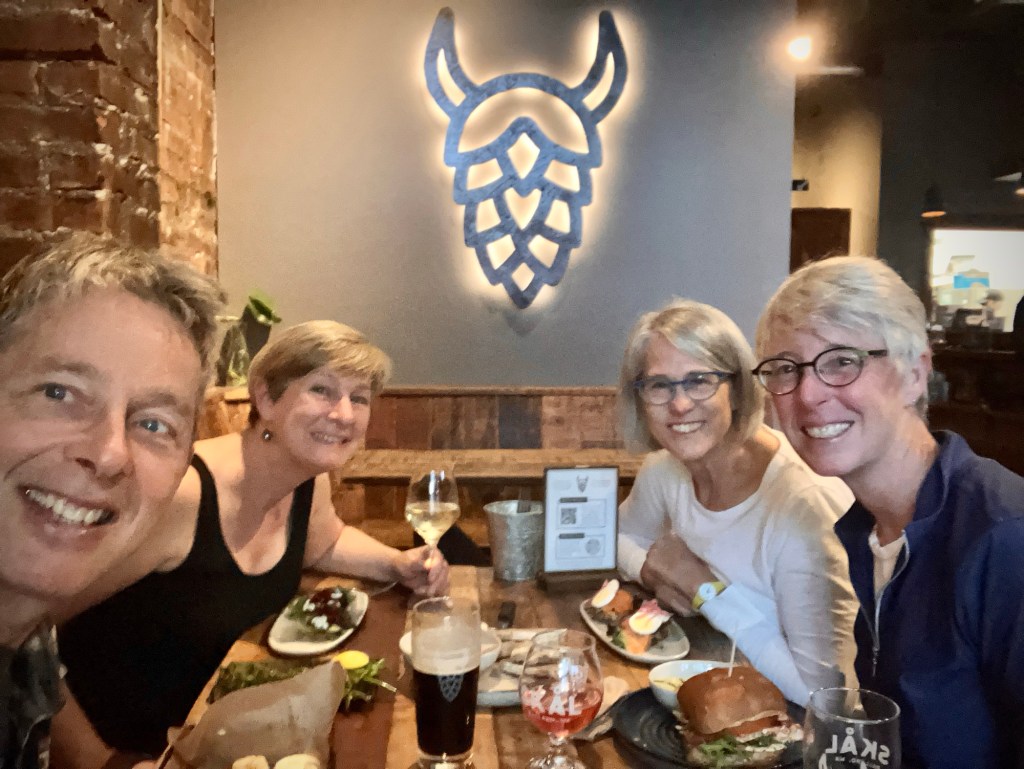
The Neighborhood Greenways are a nice way to get around by bike in Seattle. The hills and rough pavement mean that wider tires and electric assist would be a great addition for getting around realistically by bikeEnjoying Ballard’s Scandinavian roots with good friends Cecily and Christine at Skål Beer Hall.
Oh but the trees, mountains, and water interplay are so nice! And there is a good bike network with some famous long distance rail trails, such as the 20 mile Burke Gilman, which links up much of the interior shoreline of North Seattle. I was able to do a 35 mile north Lake Washington loop from North Seattle almost entirely on separated paths…very nice.
Saying goodbye to Seattle summer for now with one final swim in Lake Washington….so nice and different from the always cold S.F. Bay.
So we loaded up the rental car and headed early out of Seattle for the 2 day drive back to San Francisco, again with an overnight in Ashland. The drive is possible in one long 13+ hour day, but we never like to drive more than half of that in a day. Heck, we don’t like to drive to the grocery store, but sometimes a car is the most convenient way and it is a chance to listen to some good podcasts and music!
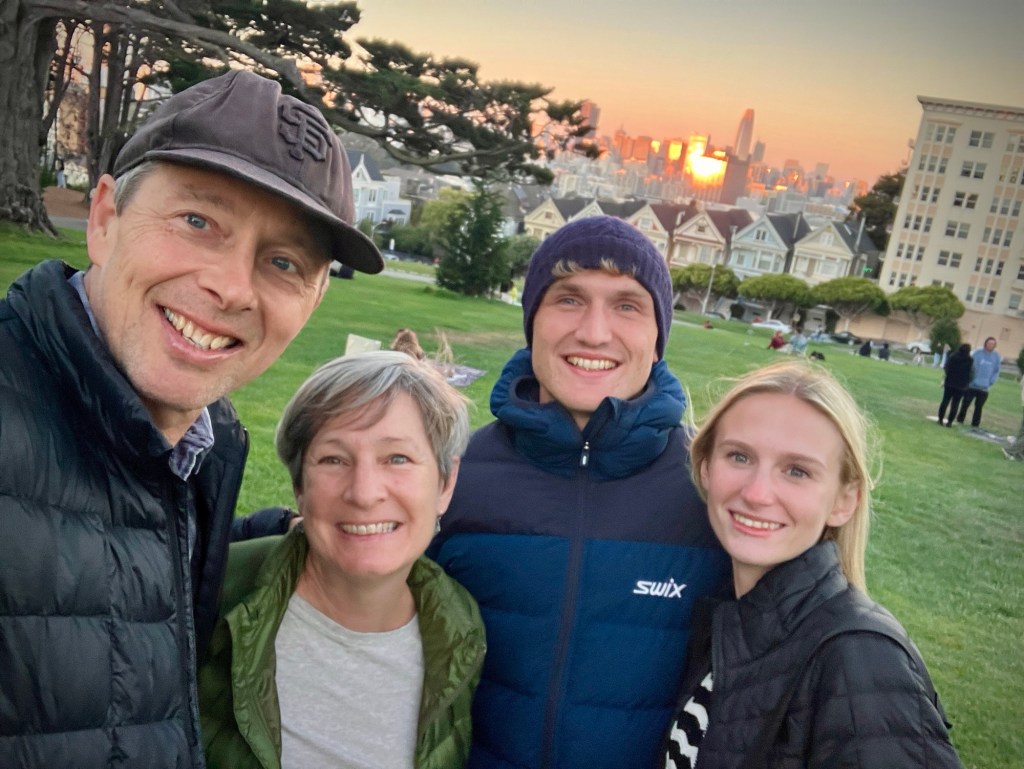
Enjoying a road bike ride back in the Bay AreaAnd saying hello to some UK friends Frank and Liv in Alamo Square on a lovely fog-free evening.
Our four days back in the Bay Area were busy with sorting gear at the storage unit, haircuts, finances, Covid/flu shots, etc. but also some nice time with friends. But we now just arrived back to our euro-base in France after a successful and fairly pleasant one-way journey on Condor Airways. (SFO-FRA-GVA)
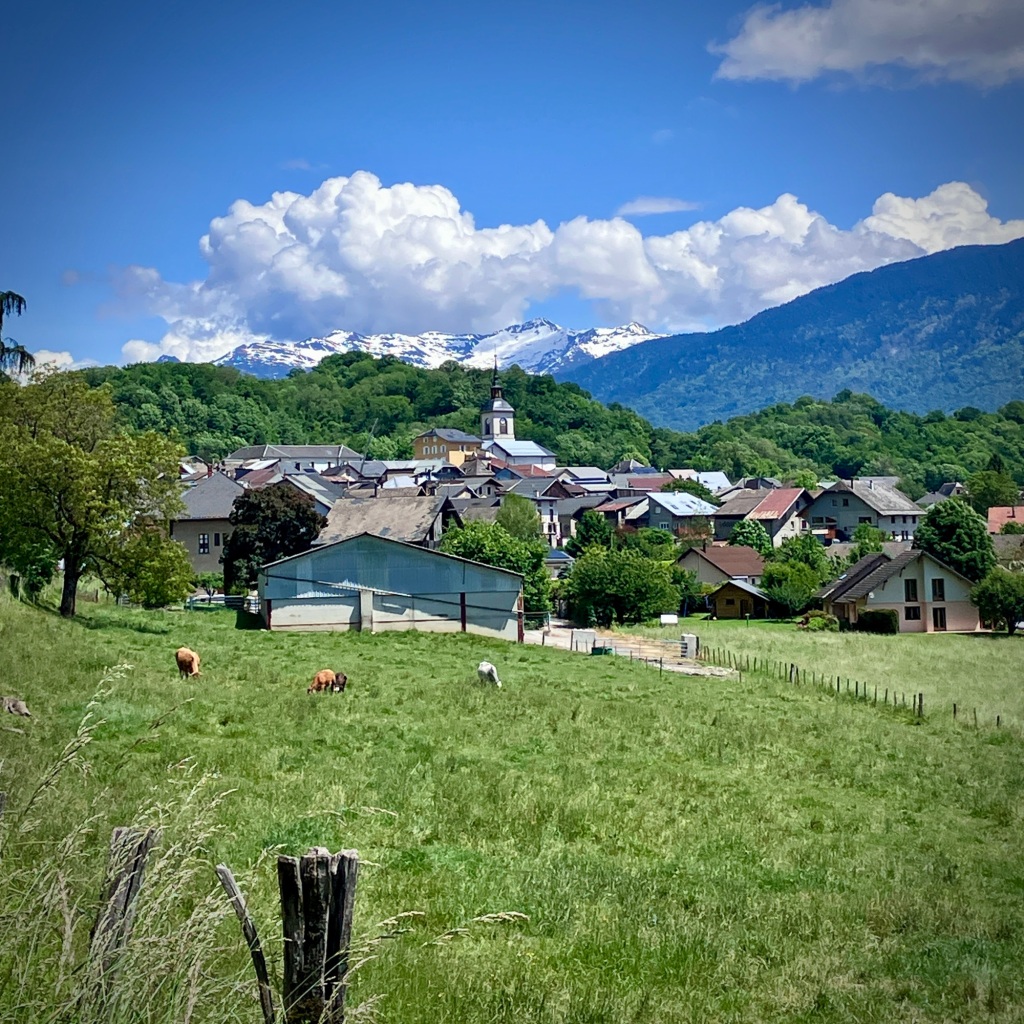
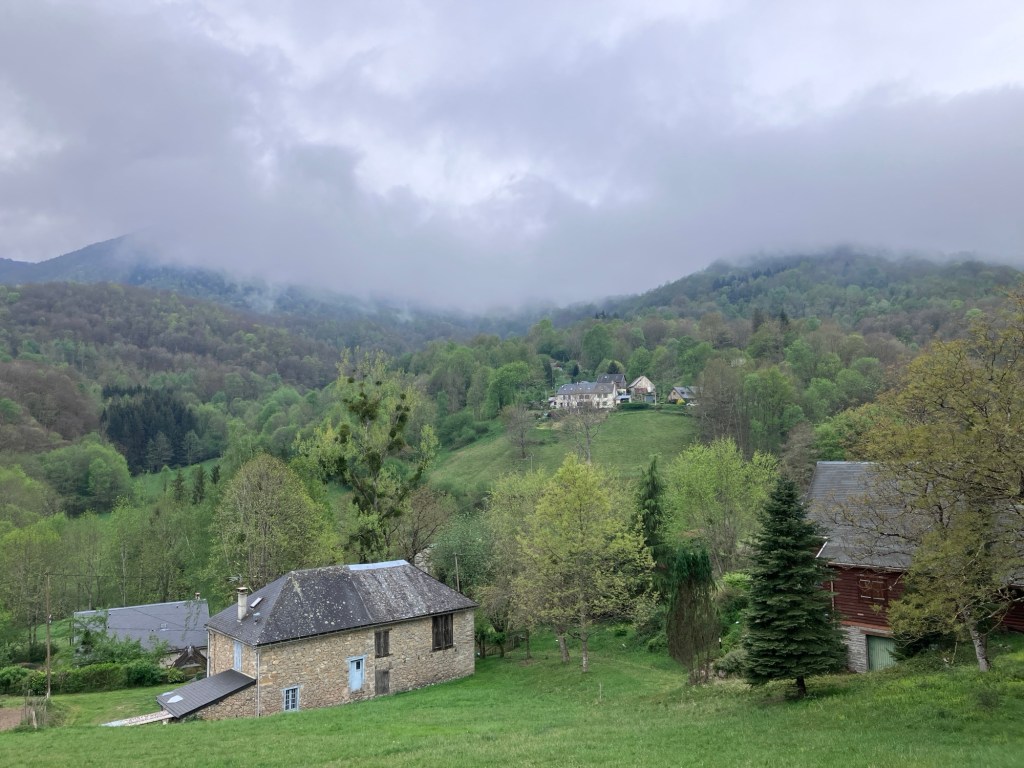
So happy to be back in the Vallée Verte
Now we’ll relax a bit, get over our jet lag, sort our gear, and get ready to head out on the bikes for another fall bike tour adventure in a few days. More on that soon. A Bientôt!
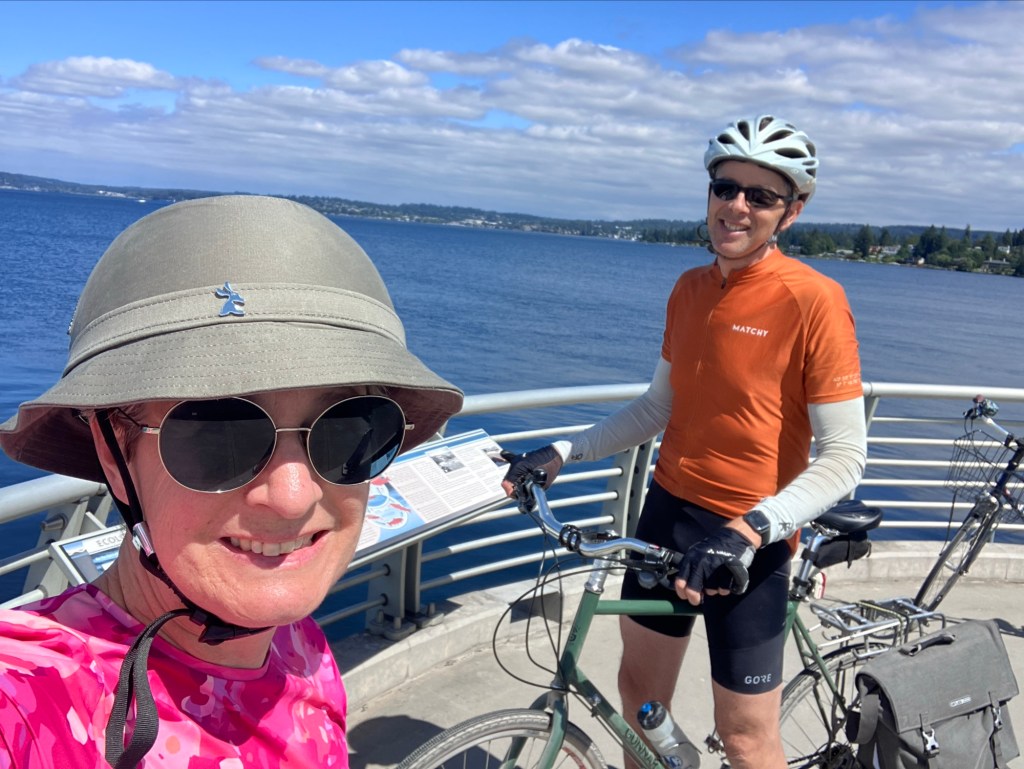
Riding across the Evergreen Point Floating Bridge (the 520) in Seattle.
Our month long stay in SF was filled with visiting friends, enjoying our house sit kitty buddies, a trip to Chicago for Rich, a visit from my sister Kathy, and a trip to Colorado for me, and loads of cycling and hiking with friends for Rich.
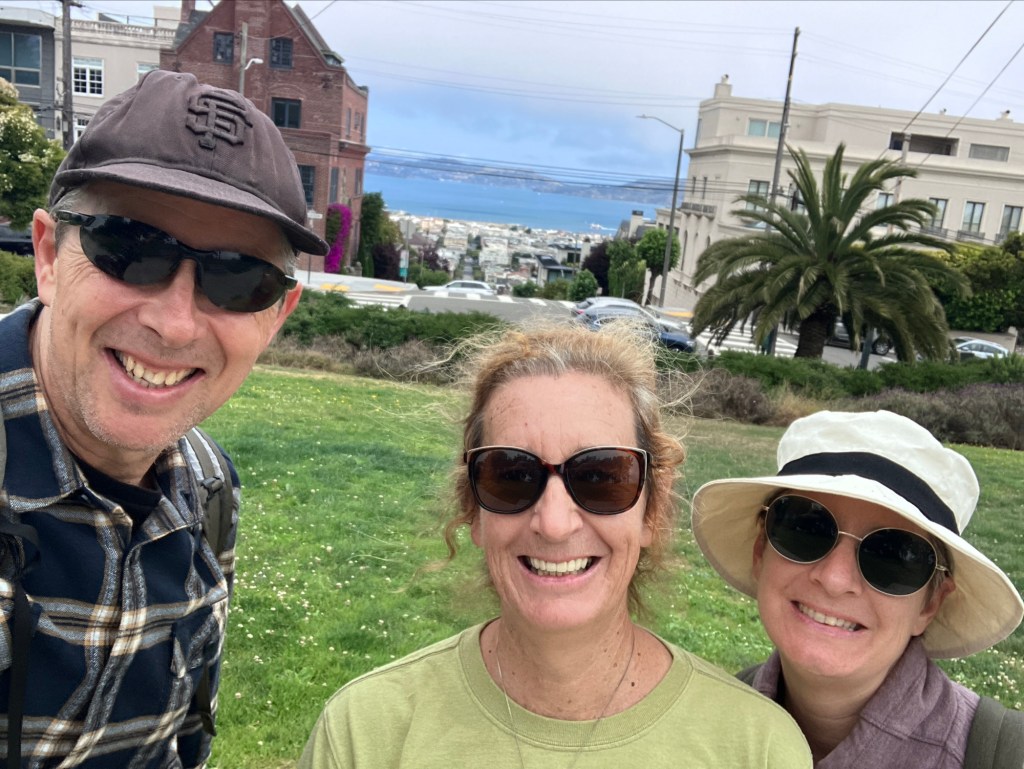
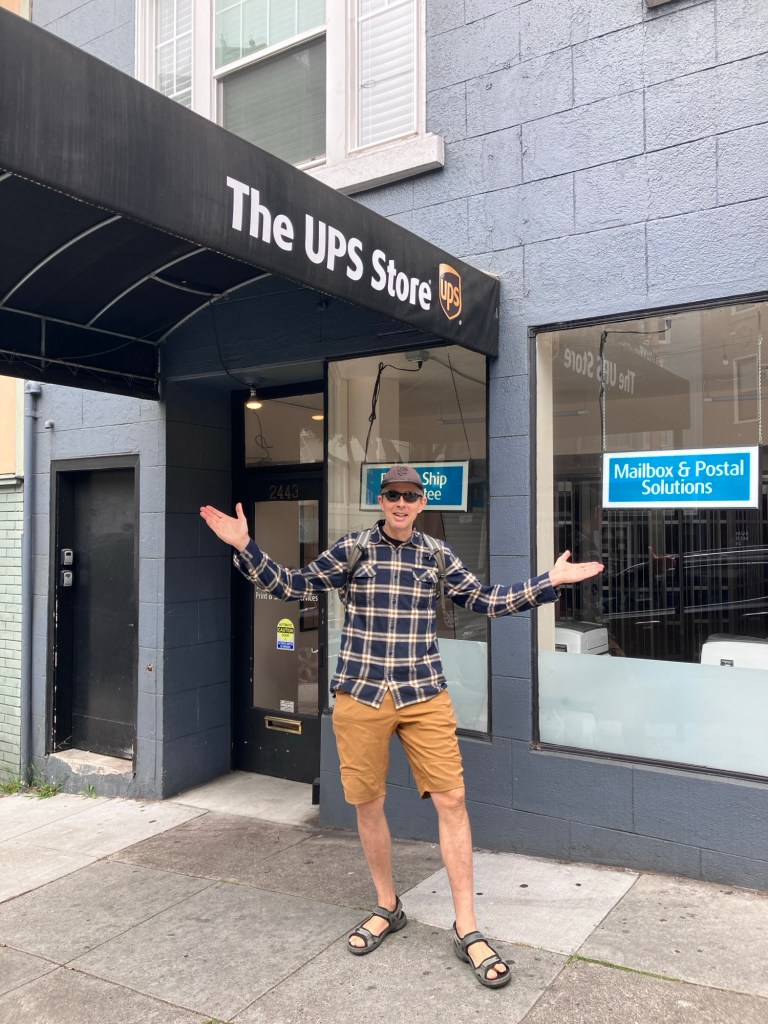
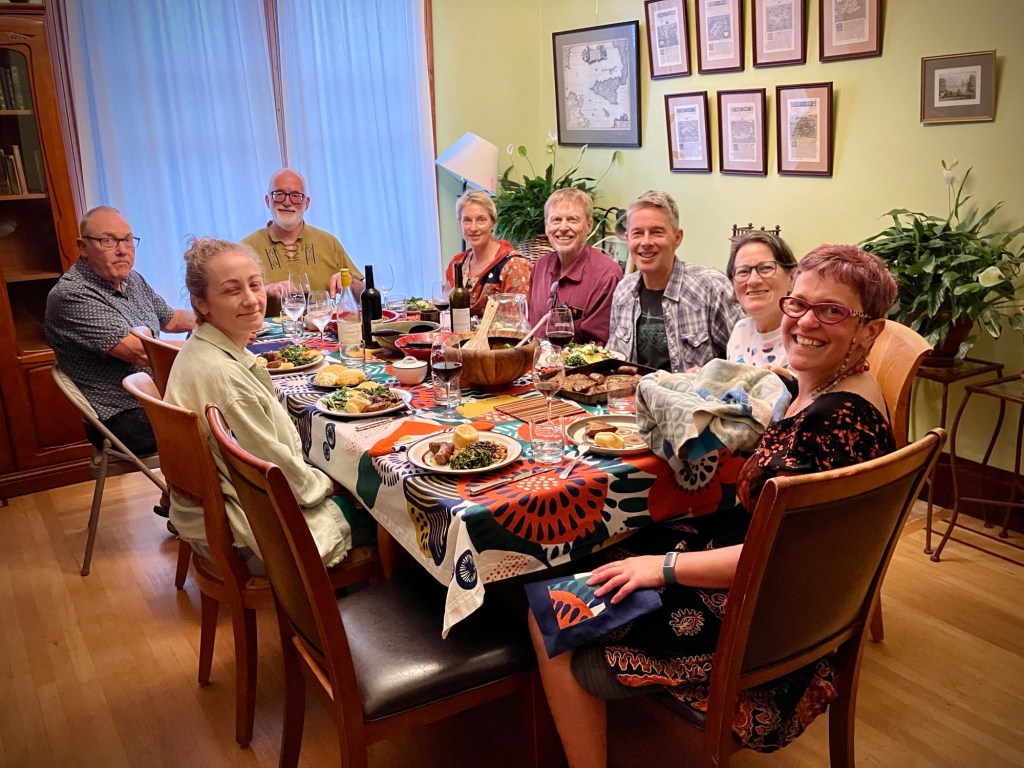
A walk in SF with local and visiting friends. Rich on an urban hike with his friends Mike and Fred. Just three retired guys wearing hats and having fun.Dinner with good friends. How amazing to be able to host a dinner party. Rich, my sister Kathy, and me after a bakery stop. Enjoying the pastries and the views from Alta Plaza Park in SF.Dinner with the upstairs neighbors, Gisela and Randall.Rich having a moment with our mailing address.
Oh yes, a word about our mailing address and our residency. We are California residents. It’s where we pay taxes and vote. We are lucky to call home a place where our city and state want us to vote. We’ve heard of other full time travelers from other states who are getting removed from the voting rolls due to using a mailbox service, and having to re-register and make their case for voting. Thank you San Francisco for making voting accessible.
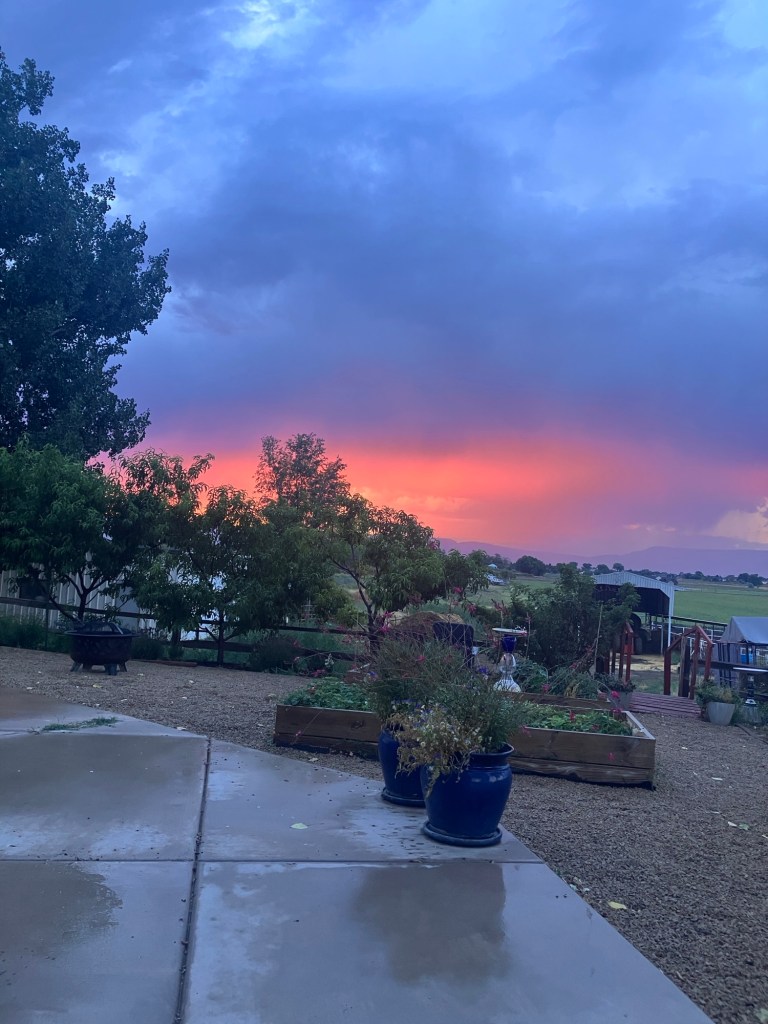
Sunset light for a family photo. My mom with all four of her children in Colorado. July on the Grand Mesa means wildflowers. A dramatic sunset in Grand Junction making a lovely backdrop for Lorilie the ranch Dalmatian.And a dramatic sunrise to bookend the night. Yes, there was smoke in the air from western fires.With Mom and Chuck at the Fruita Farmers Market.Meanwhile, back in San Francisco, Rich is single handedly wrangling two cats! A chill contemplative cat moment.Dinner at our friends’ house in Oakland. We miss these kind of get togethers when we’re on the road.
Keeping in touch with our friends in the US is so important to us. During past visits we’ve run ourselves ragged trying to see as many of our friends and family as possible. It leads to exhaustion. Our solution this trip was to stay longer, thanks to our good friends Nancy and Mike who let us stay at their house and take care of their kitties for the entire month of July.
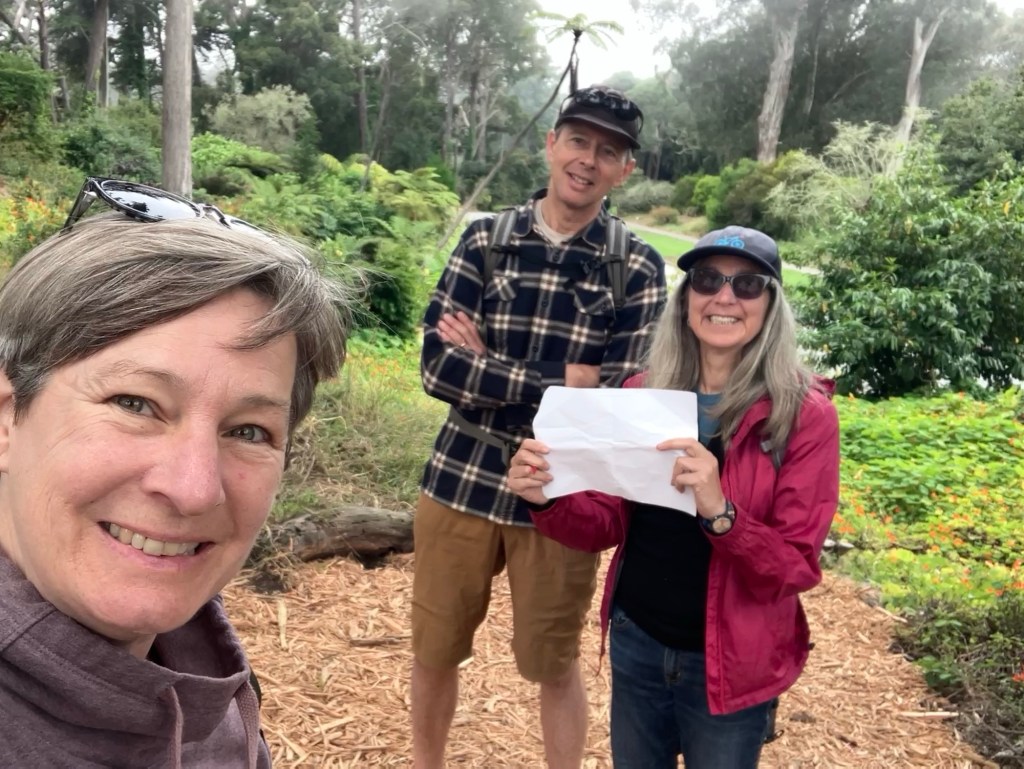
With friends, Robin, Jeff, and Rob, sitting in a beer garden in SF. July in SF means down jackets.Crocheted birdies on a street tree on Page Street in SF.As if having two cats to look after and cuddle wasn’t enough, Gisela and Randall got kittens!Which of course meant kitten cocktail parties.Following one of Nancy’s walks in GG Park for a book she is working on.
A month of San Francisco socializing done we got into a rental car and headed towards Seattle. We stayed two nights in Ashland, Oregon, just long enough to marvel at the huge trees and go for a walk in Lithia Park. We spent the hottest part of the day hiding from the heat in our hotel room.
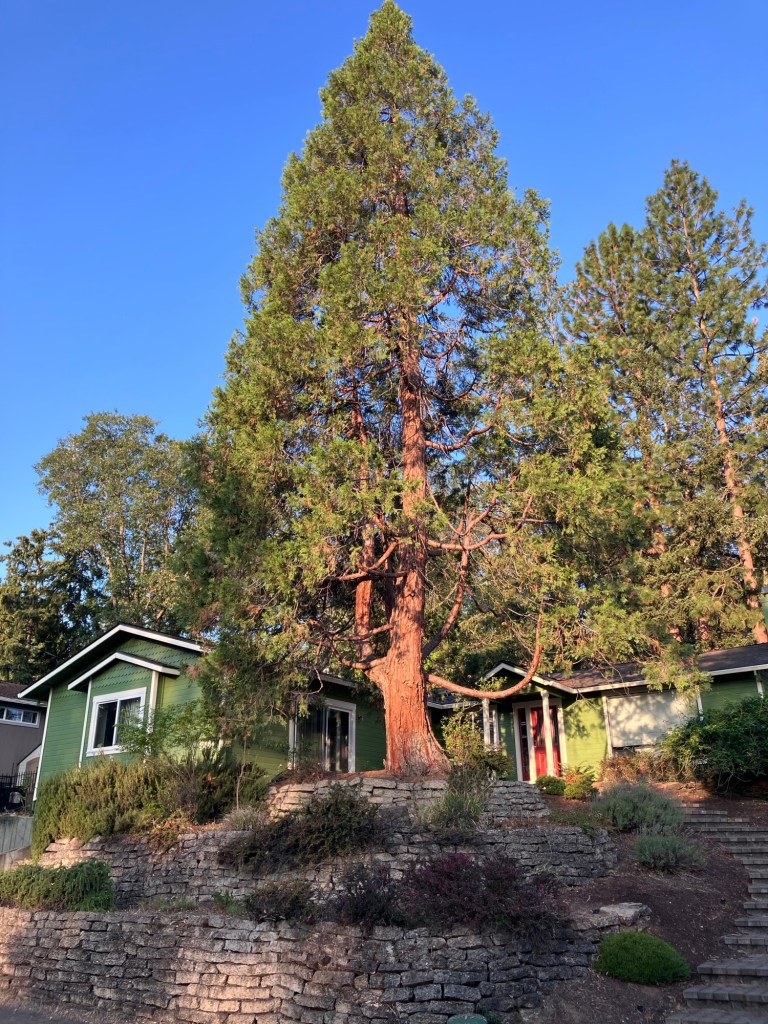
Now that’s a tree. And another huge tree in someone’s front garden.Worrying but helpful signage.Will we get a handle on fires by letting nature handle it? And letting fires burn?Our walk in Lithia Park was thankfully mostly shaded.
From Ashland Oregon we went all the way to Seattle in one day so we would have time to spend with our dear friends Christine and Cecily before they left for a trip.
A walk in Saint Edward State Park. Rich rode there and met us. Picnic with new friends Chris and Katherine who we met in Borneo.Warm summer evenings. Something we rarely had in San Francisco. Dinner outside – without jackets!Rich was thrilled to go for a ride with Annie, who showed him a great Lake Washington loop. Off they go!Erika shared some of their garden bounty with me. Even though the weather turned to grey the shorts stayed. On the ferry to Whidbey Island to meet up with more friends.Linda and Steve, fellow nomads. You can follow their nomad journey here.
We were fortunate enough to book two house sits during our time in the Pacific Northwest through Trusted House Sitters, and our first sit in Bellingham was about to start. If you are interested in house sitting we do recommend THS.
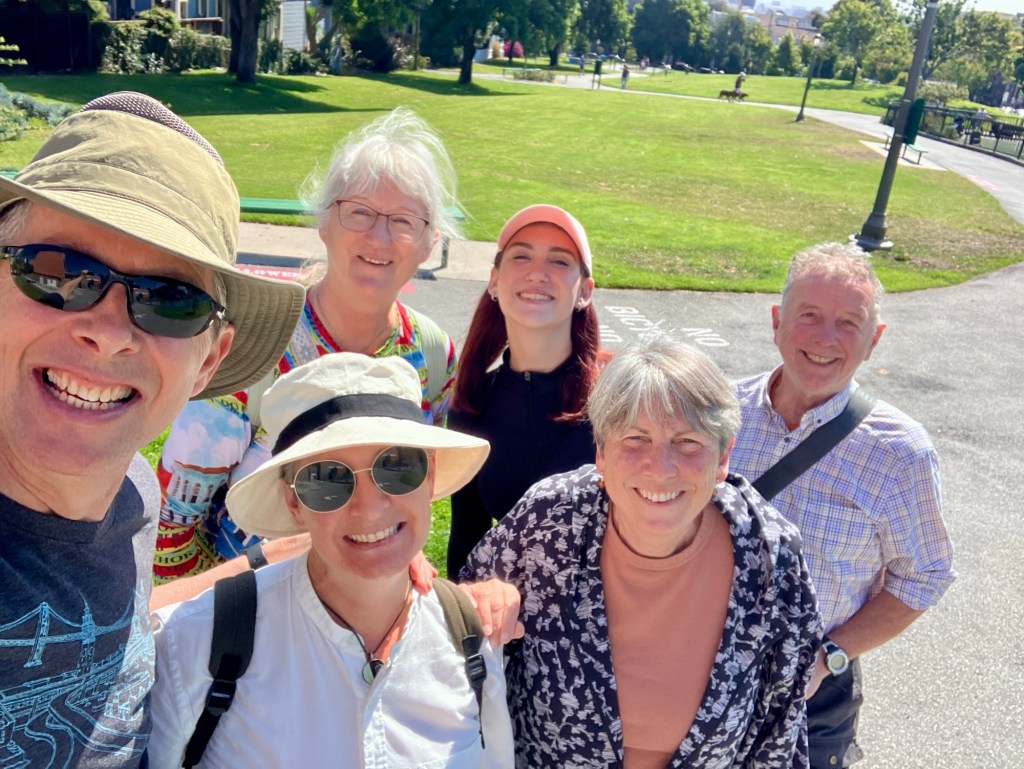
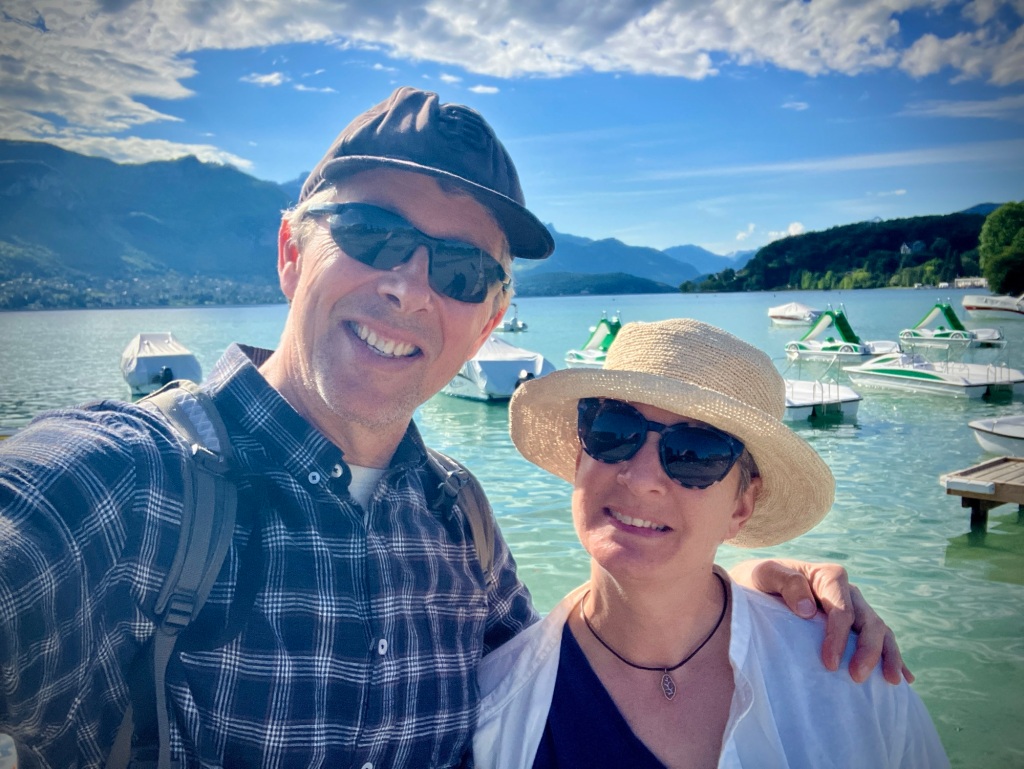
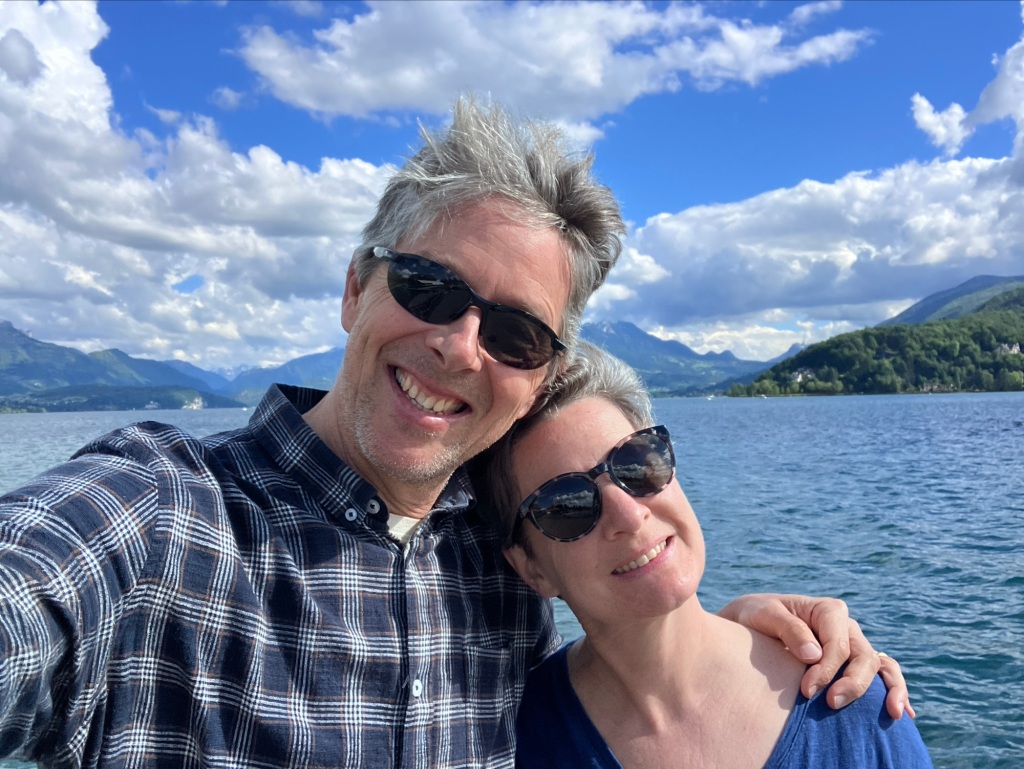
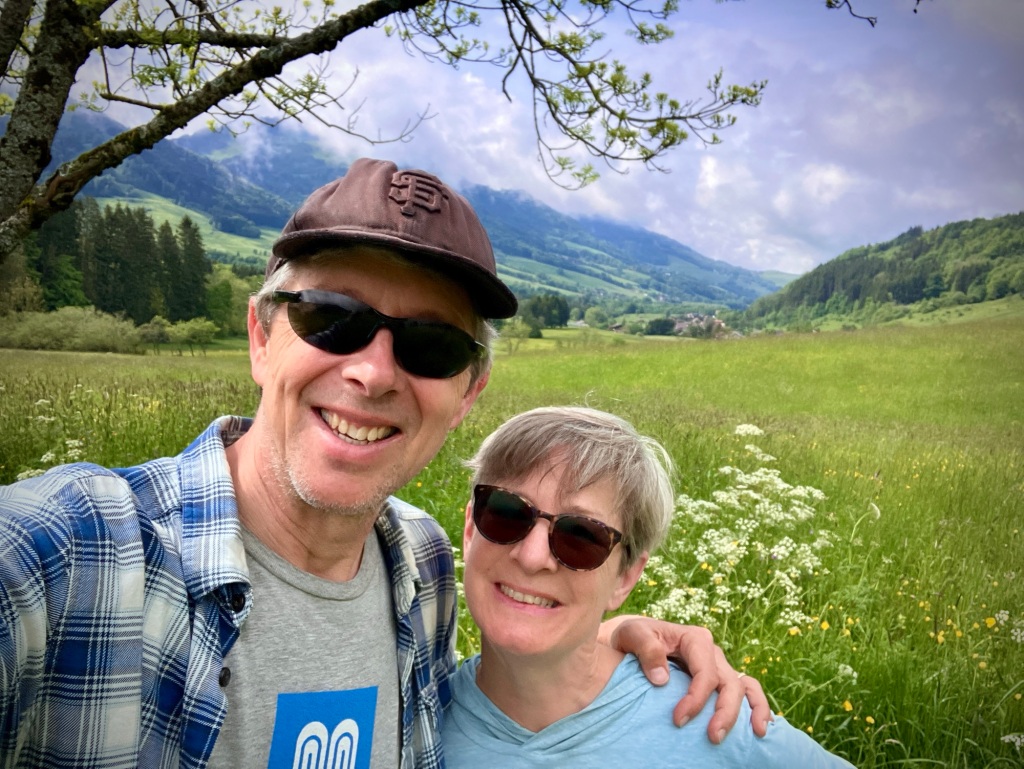
The Happy Travelers, enjoying a PNW summer.
Still to come, the sit in Bellingham, back to Seattle for another ten days, then down to SF to get ready to fly to France to be reunited with our touring bikes again.
Tap airways seems to have become our airline of choice to get from Europe to the USA. Their one way pricing and timing of flights works out well. Rich can buy extra leg room seats, and the planes they fly have a 2 4 2 seat configuration so we can sit just next to each other. No dreaded middle seat. Since TAP flights from Geneva go through Lisbon we can spend a night or few days there. This trip we spent just one night in Lisbon, at a hotel on the red line so it was easy to get from and back to the airport. This is what traveling with a master planner is like.
Enjoying a warm summer evening in Lisbon. Hanging out at our favorite little park, Jardim Fialho de Almeida.
So what is it like coming back to USA? Busy. We try not to go crazy with over scheduling, but there are always so many people we want to visit. In the past we’ve landed in NY or Chicago and stayed with friends or at a house sit. This time, arrival June 1st, we stayed in a hotel in downtown SF for two nights (friends had come down with Covid so we pivoted). That gave us time to go out to our storage unit, recover from jet lag a bit, and have a wander around downtown before heading to our first house sit with two cats not far from Golden Gate Park.
Salesforce Park above the beautiful transit center in downtown SF.The retired engineer reflects on his experience working on the transit center.
It’s an odd feeling to stay in a hotel in what was for so many years our hometown. It was the first time we’ve ever stayed in a hotel in SF so we leaned in. The Galleria Park Hotel had a nightly happy hour with a signature martini, or wine. We settled into cozy chairs and chatted with a fellow guest from Oroville, California. It’s a social buzz to get to the US and be able to talk to everyone again. Thankfully Californians are quite friendly.
The room keys were ready for Pride!These two were much friendlier than this photo makes them look.Storage unit mayhem! It’s fun shopping for clothing in your storage unit – everything is your size and in your style.
Our summer schedule was built around our niece’s wedding. That was our first must not miss event. A stop by the storage unit to get clothes for the wedding was good timing, as we discovered that moths had moved in. We’ve had our things in this storage unit for almost three years and haven’t seen a moth. I assume they came in with someone else’s stuff and flitted around looking for tasty wool. I left a wool sweater loose on top of a bag last January. That obviously was like a formal invitation to dinner for moths. We spent a few hours moving our clothing from cardboard boxes to plastic containers with cedar blocks in them. Other than that one sweater we saw no visible damage. Hopefully we’ve made our storage unit inhospitable to the moths.
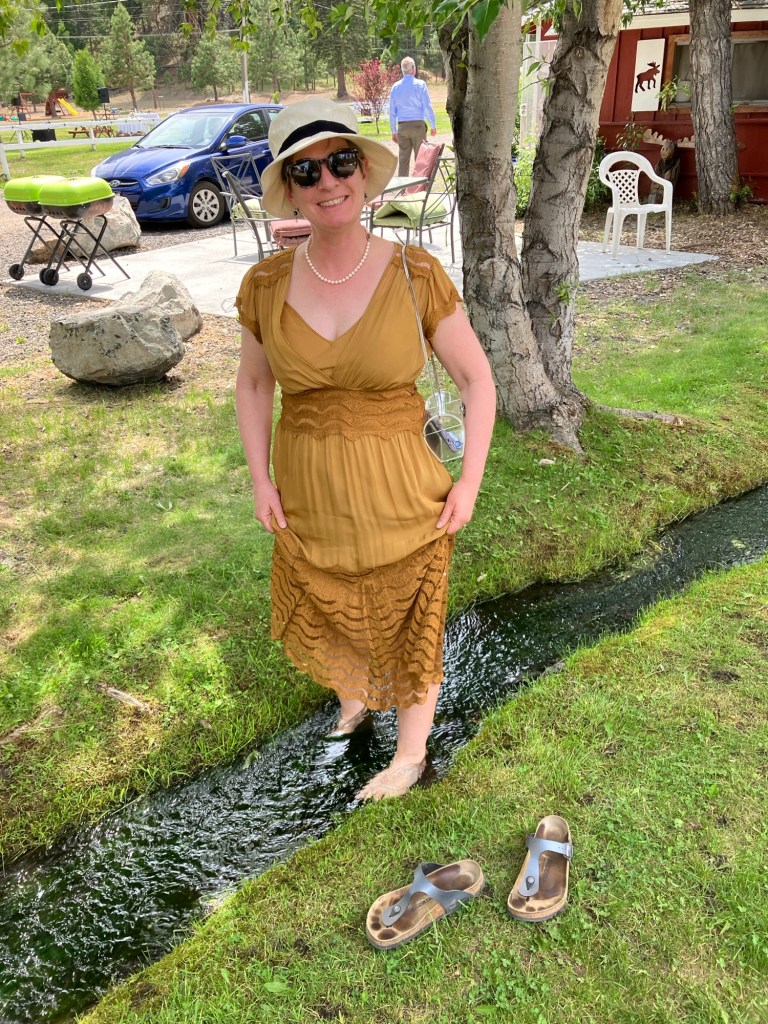
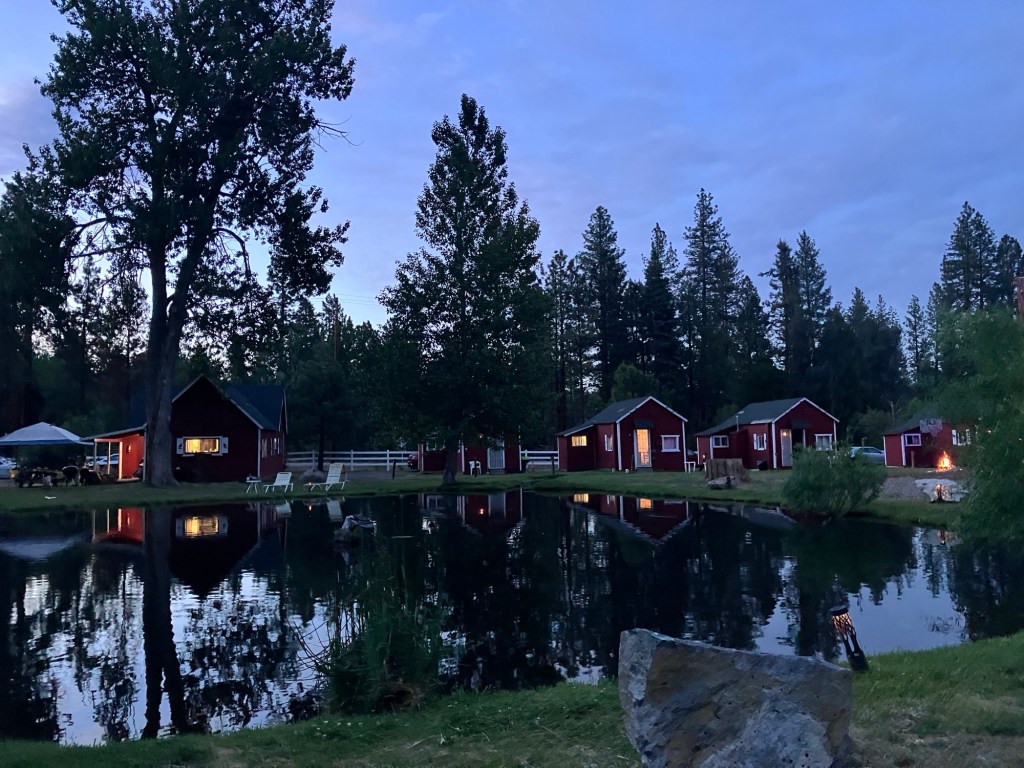
The cleaned up version of us. Clothes from the storage unit. It was a little warm even up in the mountains, so a pre-wedding creek foot dip was welcome.Our niece and her new husband. A gorgeous and fun filled wedding. The wedding venue, Gordon’s Rim Rock Ranch.Lights and fire pits as the sun went down and the fun continued.
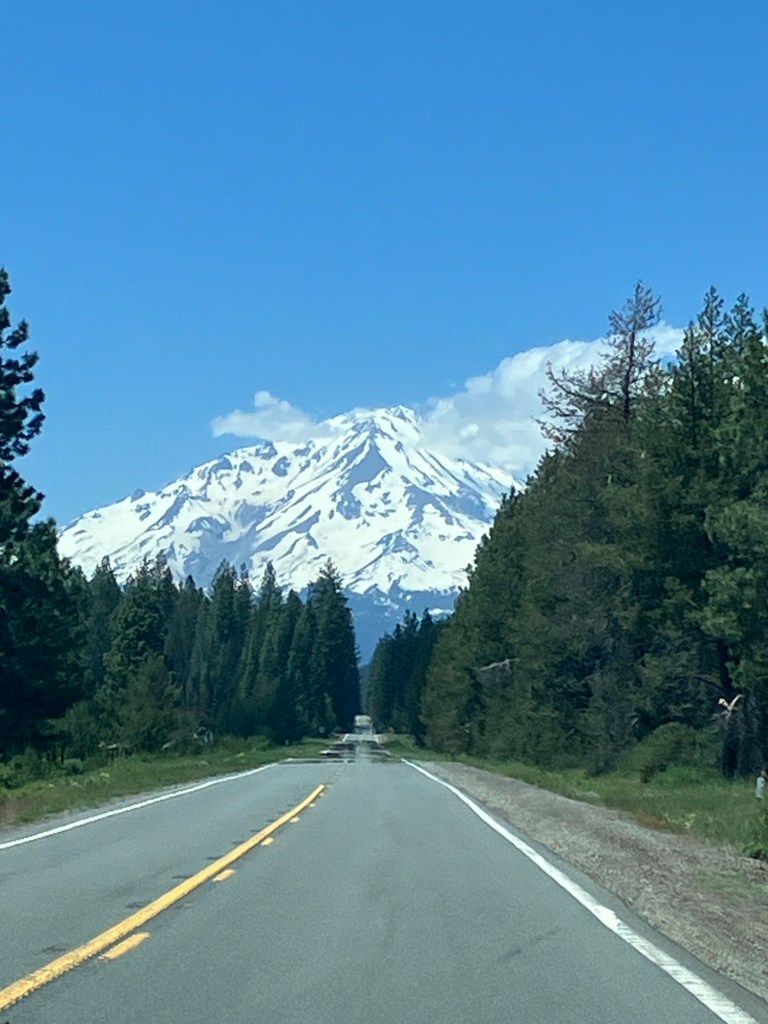
The wedding was up near Mount Shasta, Old Station in Shasta County. It’s a beautiful area, shaped by the volcanic activity of nearby Mt. Lassen in Lassen National Park, and Mt. Shasta a bit further north.
Rich and his step mother out for a hike.Walking through Subway Cave Lava Tubes.You walk in one end and out the other.Information signs as you walk through and marvel at how a lava tube is created.And out the other side a stunning view of Mt. Lassen. It’s actually named Lassen Peak and it’s a 10,457 ft (3,187 m) lava dome. Last eruption 1914 to 1921.Very northern California.
After the wedding and lovely visiting time with family we headed out to stay with friends near Redding before driving back to SF to catch a flight to Grand Junction, Colorado. If you’re wondering about logistics, at this point back in the US we took BART from the airport to downtown SF. A car share out to our storage unit, a MUNI bus to our first SF house sit and, then after our house sit a rental car to the wedding.
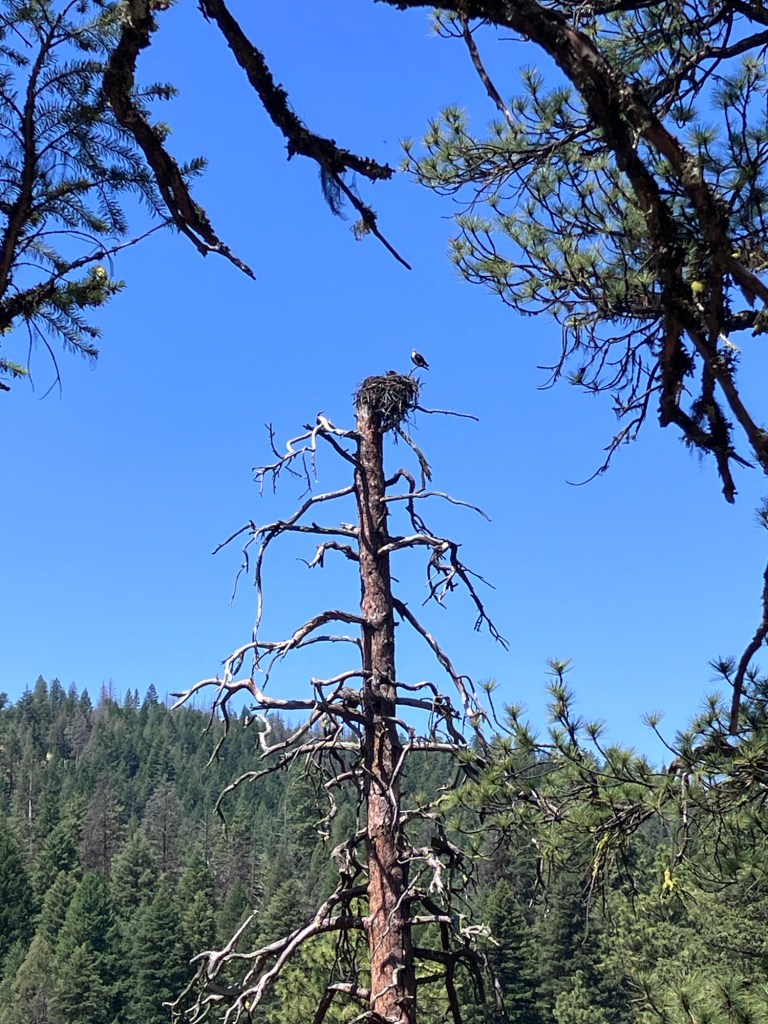
A stop by McArthur-Burney Falls Memorial State Park and a peek at the 129 foot waterfall. This osprey parent with chicks in the nest helpfully built their nest trailside. What a classic sight. Huge nest on a tall snag.Mt. Shasta, elevation of 14,179 ft (4,322 m). Last eruption 1250.
Grand Junction Colorado is another frequent stop for us, where my Mom and Sister live. It’s been another home for us during our three years of nomading. We are thrilled to have Breeze Airways flying directly from SF to Grand Junction now.
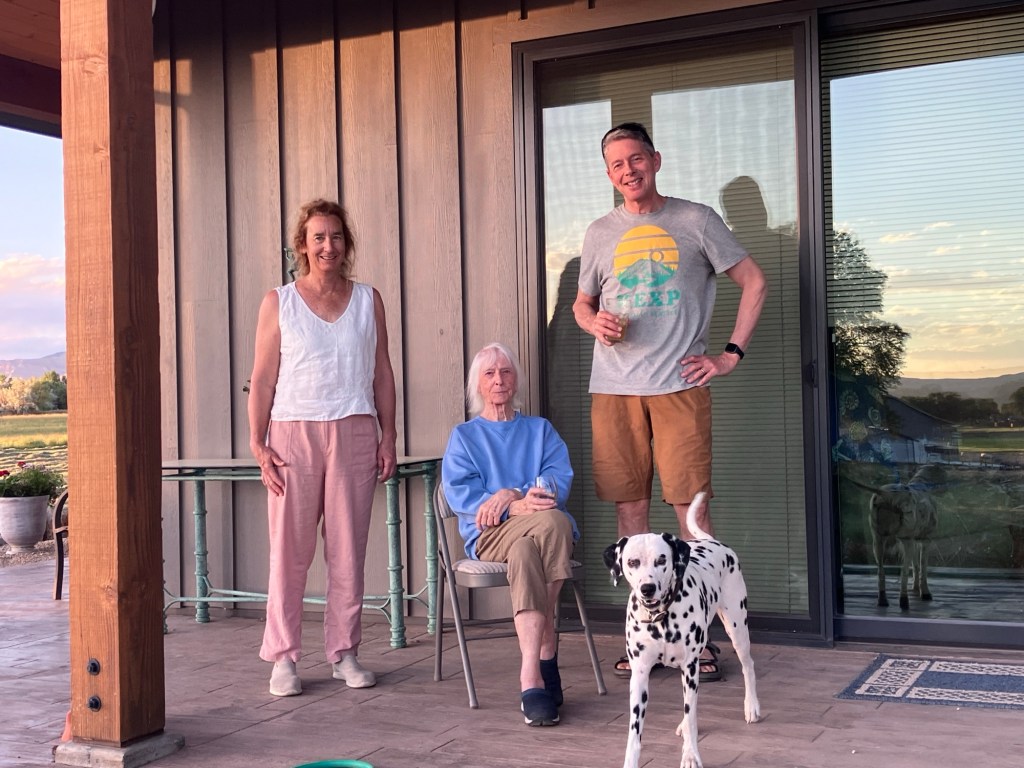
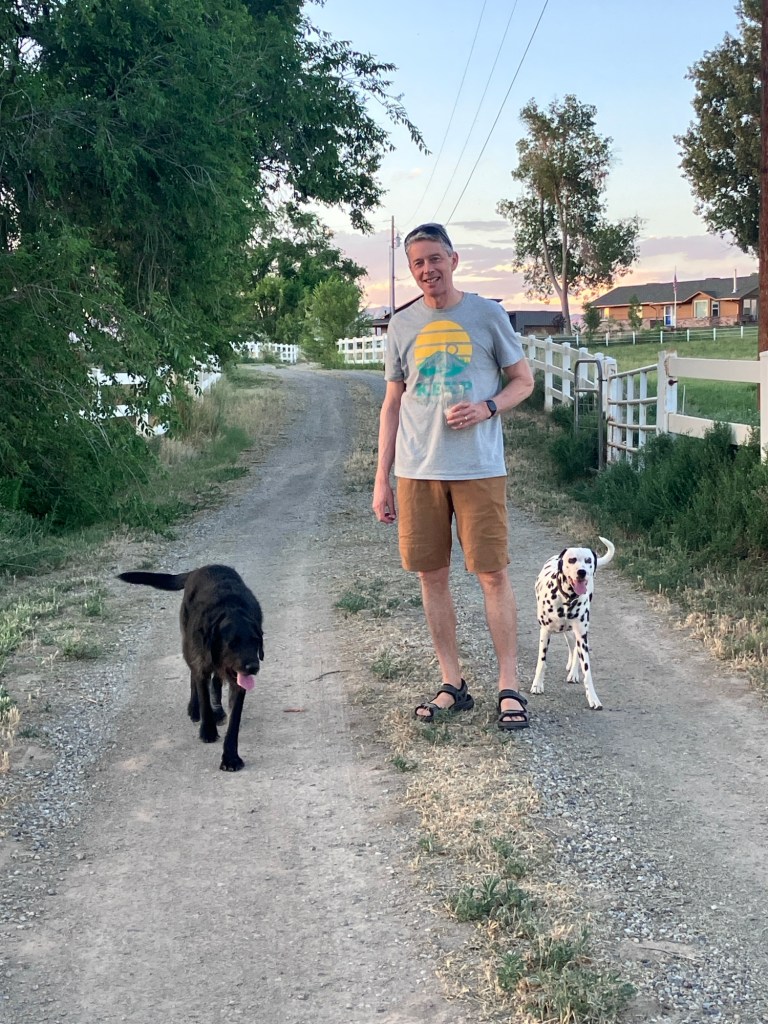
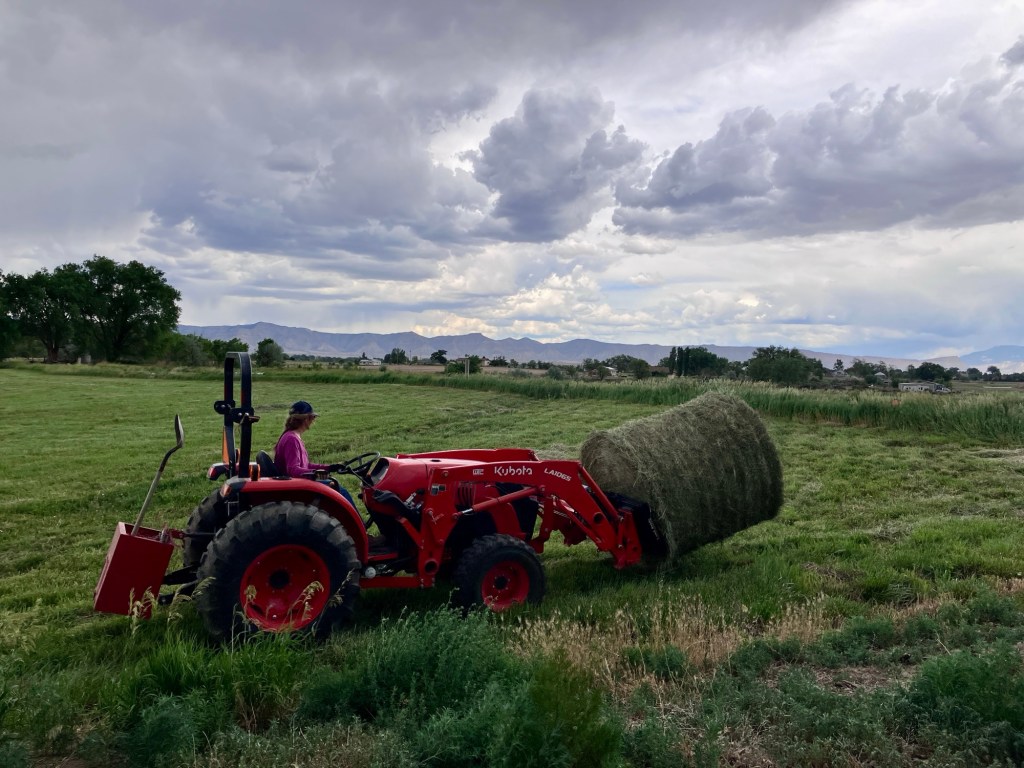
Kathy, Mom, Rich and Lorilie – the ranch Dalmatian. Some sunset dog play time. The extra dog, Mo, belongs to a niece – he comes to ranch camp when she is traveling.A cloudy day feels rare in the Grand Valley. Made for a nice hike in the canyons near Fruita.Look at those lovely clouds. And handsome husband.My sister getting the newly cut and baled hay in before the rain started.Mom and I helping by staying hydrated. It was hot.Kathy took some time away from work to take us up to the Grand Mesa where it was quite a bit cooler, and beautiful.Sisters with a view. That’s the Grand Valley behind us.Always take photos. It brings back the feel of the day.The 500 square miles (1,300 km2) of the Mesa rises 6,000 feet (1,800 m) above the river valley. Since Grand Junction is already 4593 ft / 1400 m above sea level, you definitely notice the altitude.A haircut for Mom. She’s a good sport and not too picky with the job I do.Showing off the finished job.
After our Colorado stay it was back to California again to visit more friends and family. A night in Redwood City, two nights in San Luis Obispo, and on to Moorpark where my brother and sister-in-law live. It’s a good thing all our bike touring has made us good at packing and unpacking. It’s tempting when you have a rental car to gather more stuff to take with you, but we try and keep our life lived from a rental car as minimal as possible.
With our friend Jim hiking the coast near San Luis Obispo.With Chuck and Linda in downtown Ventura, a nice pedestrian street with cute local shops.
From Moorpark we took the Metrolink train to downtown LA to visit the Broad Museum and have a wander around.
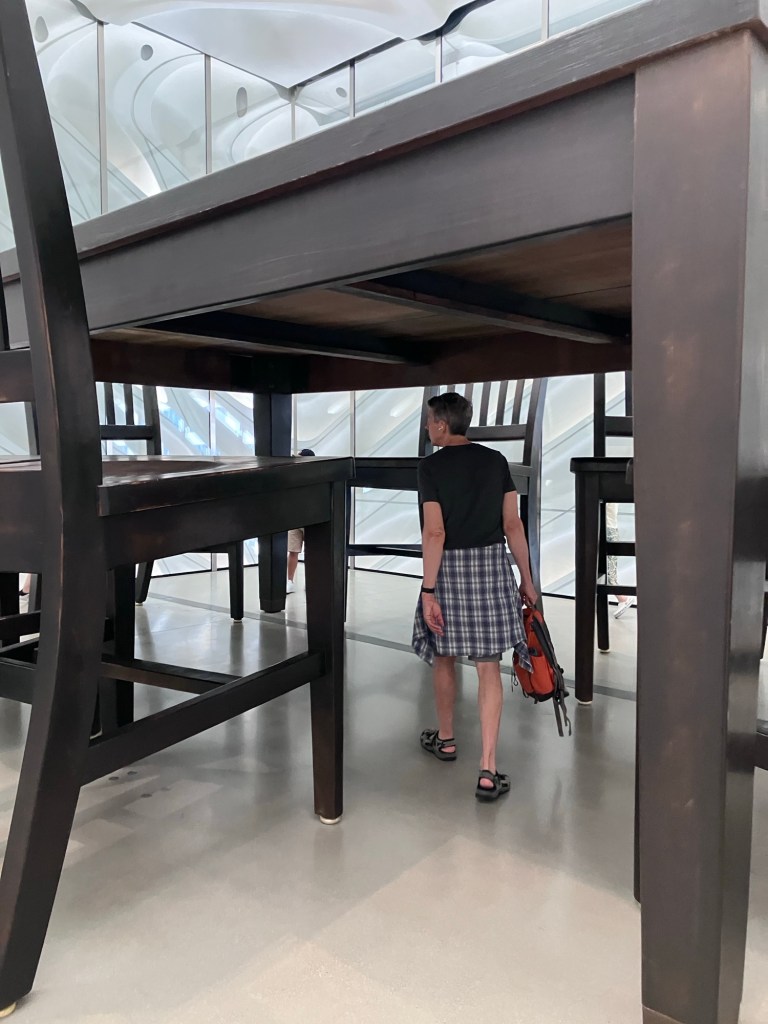
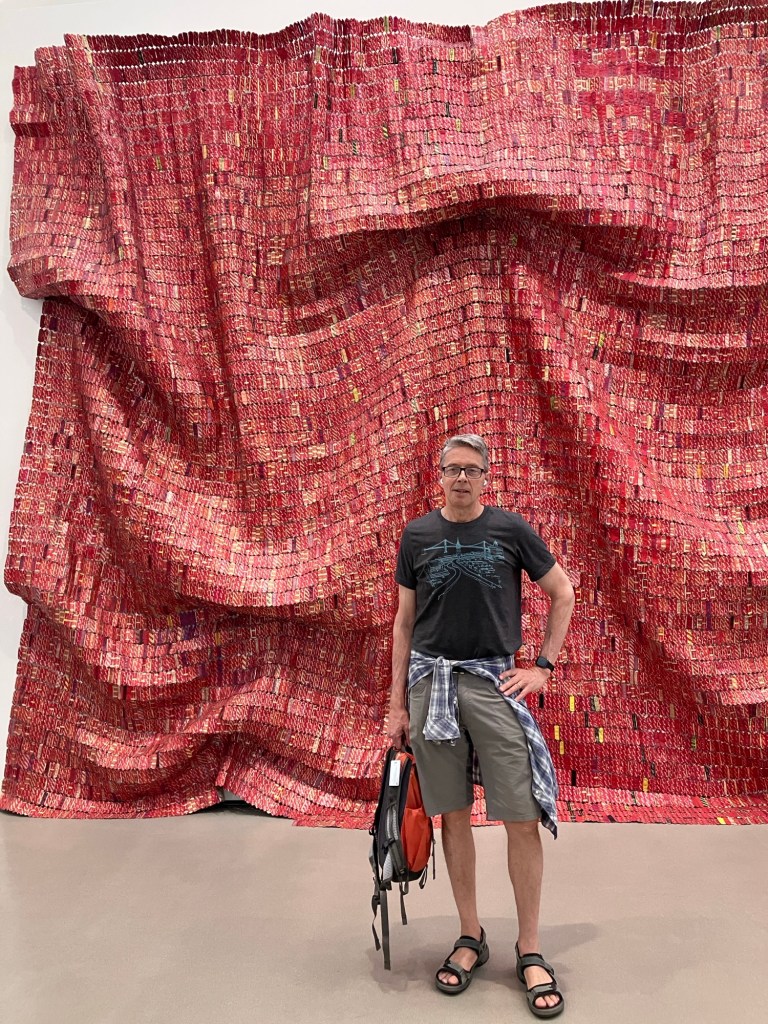
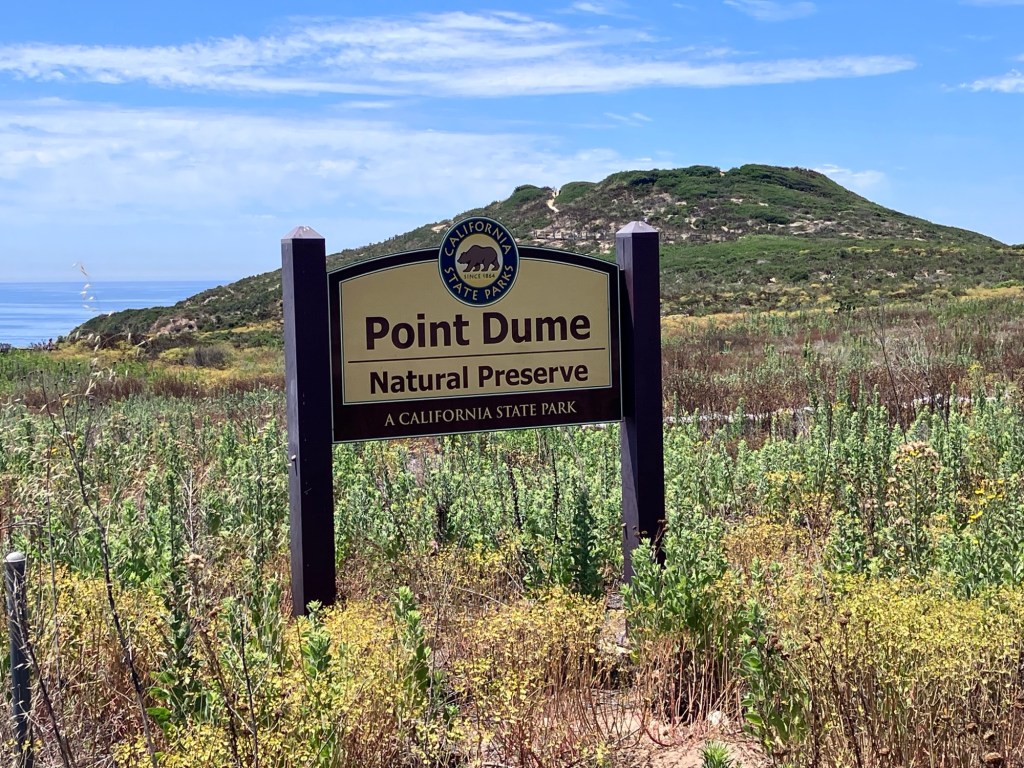
Moorpark Station and a rail enthusiast. Always check out the bike car, even when we don’t have bikes. Nice. A very good use of space.We were post rush hour so the train was not crowded.The Broad Museum. Designed by Diller Scofidio + Renfro in collaboration with Gensler. It’s a stunning building and entry is free by timed reservations.Under the Table, by Robert Therrien. Or, as I called it, Rich gets to feel like a cat.Red Block. Born in Ghana and based in Nigeria, El Anatsui crafts bottle caps, reused aluminum commercial packaging, copper wire, and other materials into giant shimmering sheets of what he calls “cloths.” We saw another of this artist’s works at the Guggenheim in Bilbao.A day at the coast and time to enjoy the newly renovated Point Dume State Park in Malibu.We saw workers continuing to remove invasive plants and encourage the native plants.
After a great stay in Moorpark it was back in the rental car and back to the Bay Area. We’ve been eagerly awaiting a house and cat sit for friends for the entire month of July in our old neighborhood in San Francisco. Our second summer must do. That’s where are now. Not only do we have two wonderful goofball cats to live with and love, but it’s Tour de France time, so, after fetching our big screen from the storage unit we introduced the cats to the joy of watching the tour.
Can I catch a cyclist? I’ll try.The great thing about the Tour, according to the kitties, is loads of lap time.Rich and his riding buddy Fred at a foggy Golden Gate Bridge.
So what’s next? After a wonderful month in SF full of catching up with friends and being happily in one place for a change, we’re headed to Seattle for the month of August. We have friends to visit and one house sit lined up. Have a wonderful summer.
Even on long travels, the end of any travel segment can start to drain your enthusiasm as you start thinking about the next phase of your journey, or worse, the work waiting for you back home.
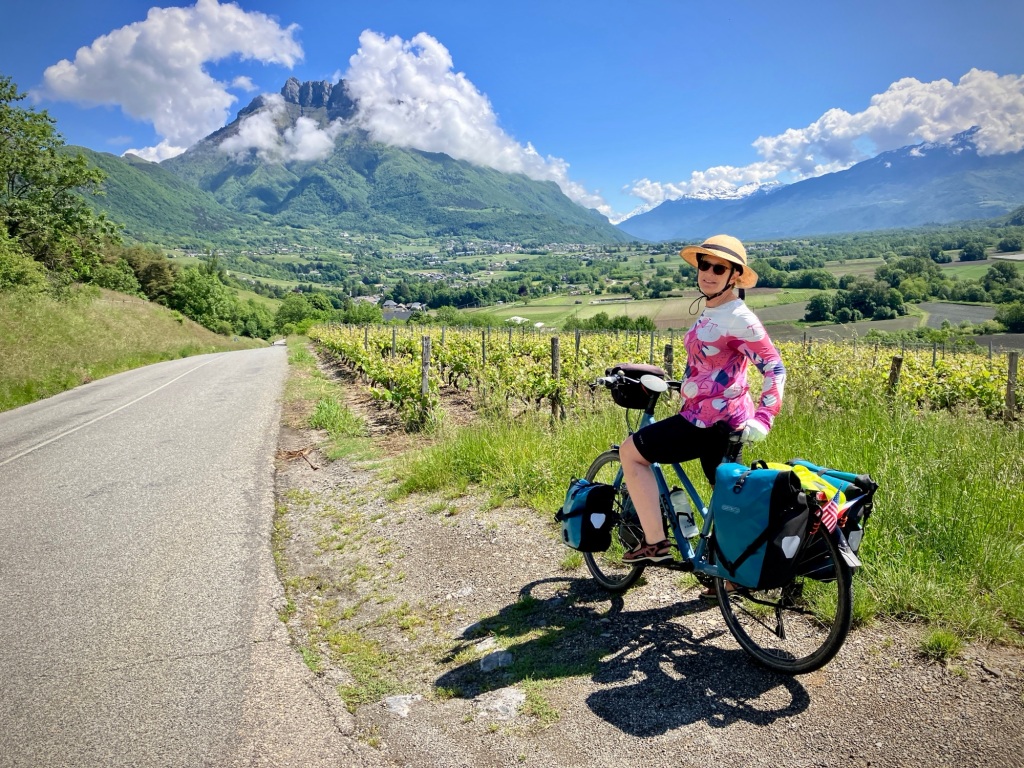
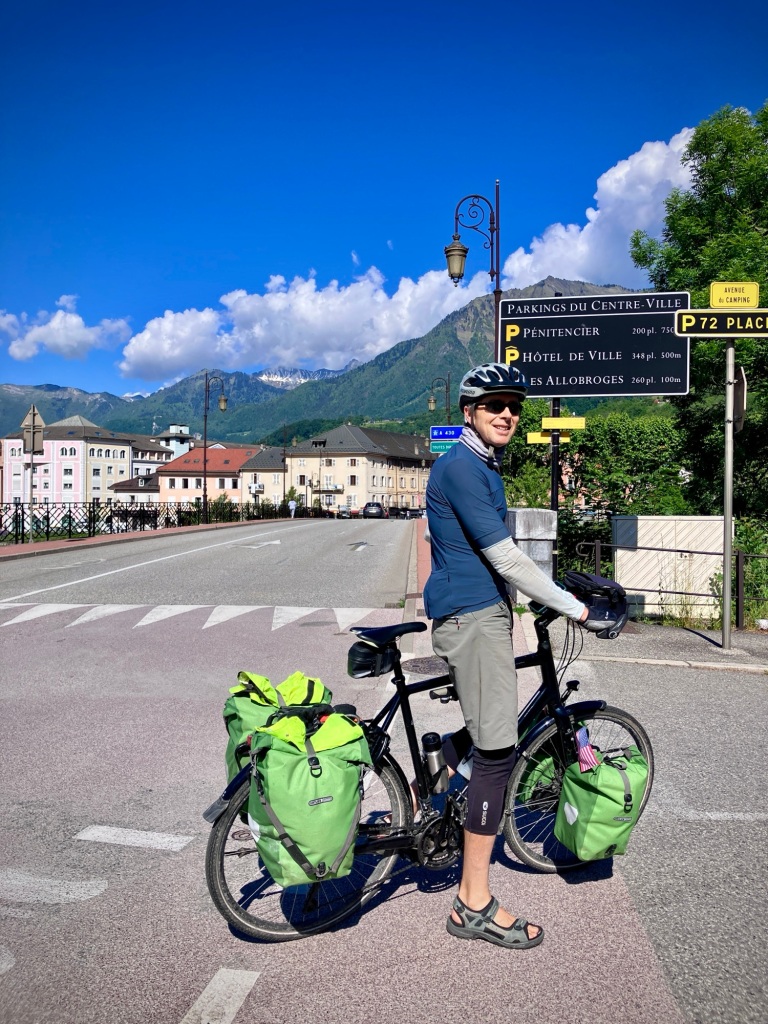
Heading to Albertville on a beautiful spring day in the Alps. Our minds are now addicted to new.
We’ve all had that end of vacation feeling or remember our childhood summers of freedom coming to a close in late August (Ugh!). But one of the reasons we gave up or locked up most of our material possessions three years ago was to experience the world without that constant end of trip deadline. No limits or boundaries. It’s a magical feeling and one I appreciate more and more as we traverse the world. We are lucky and know it. We recommend everyone tries it someday.
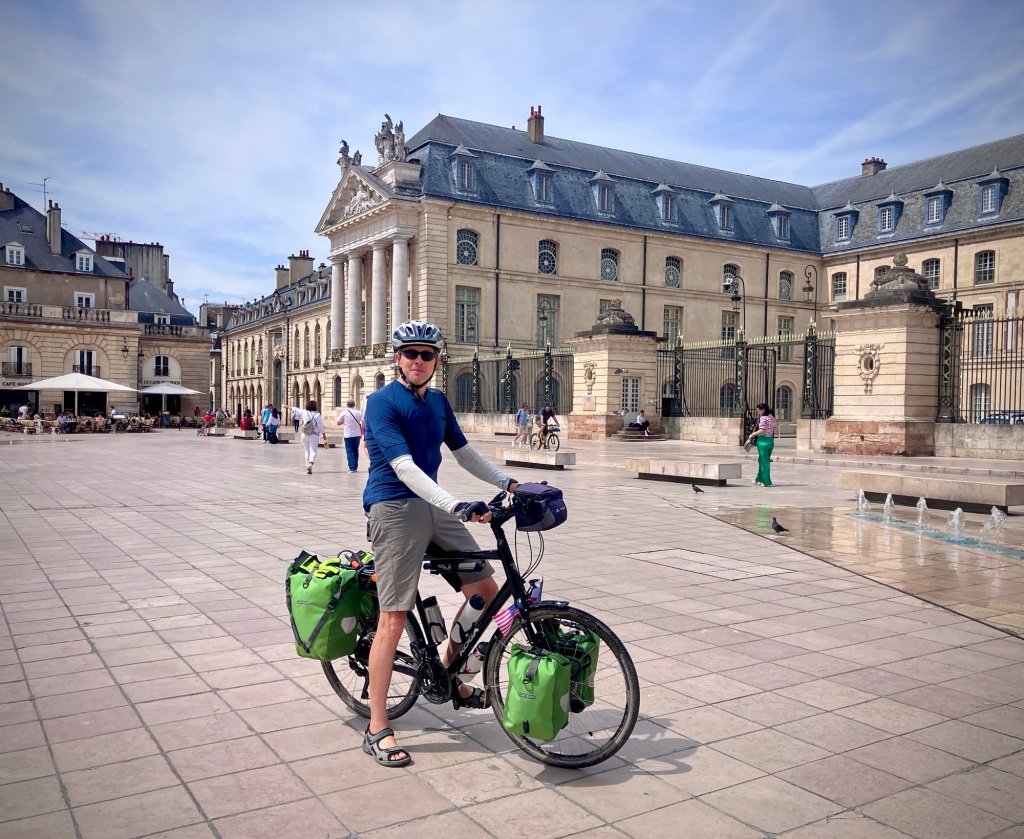
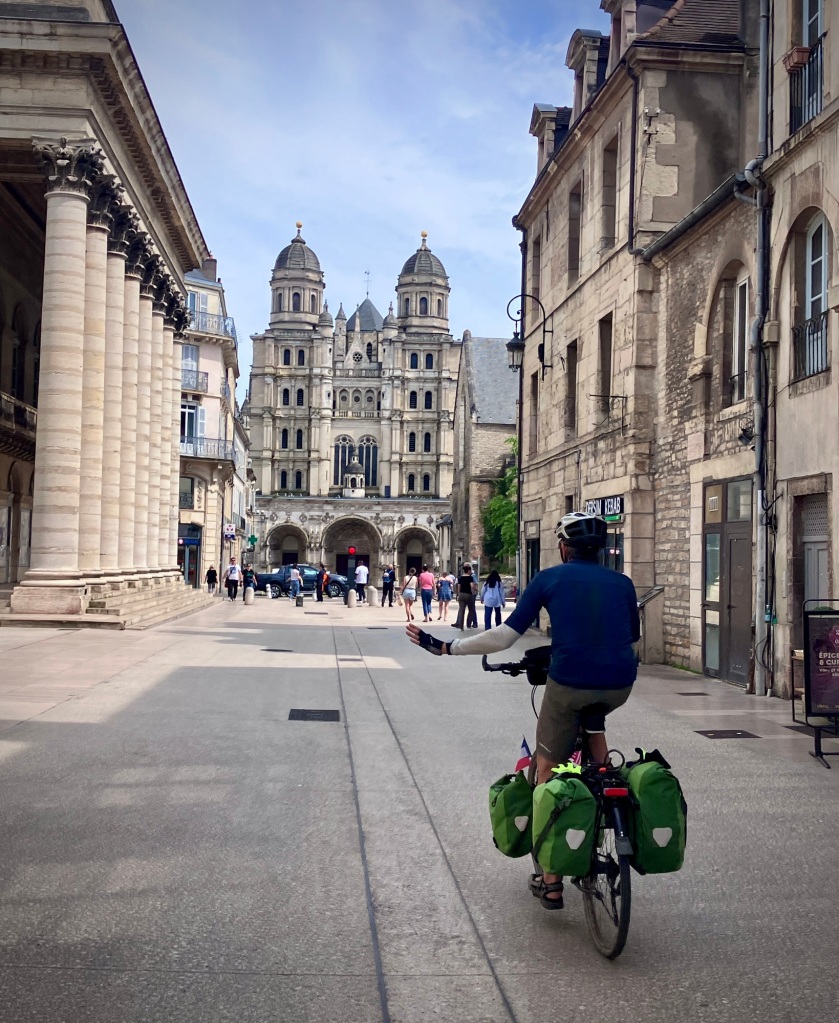
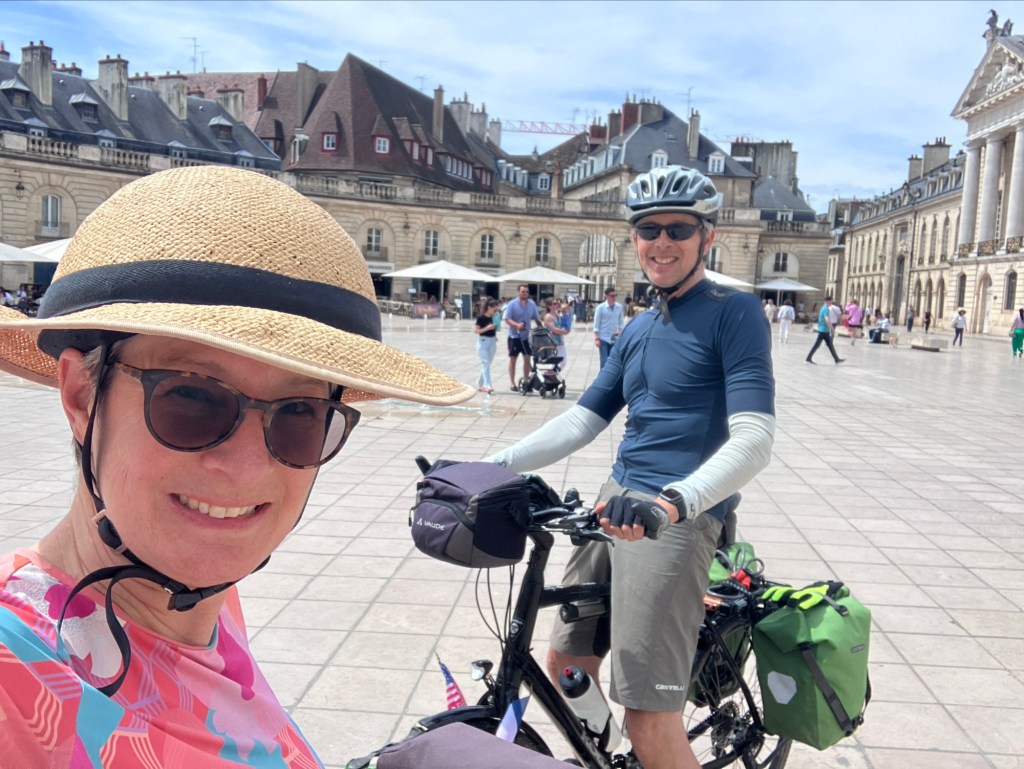
Spring in the Place de la Liberation of Dijon
But our last few weeks of spring bike touring in France took a concerted effort to stay focused and motivated. Don’t get me wrong, parts of it were wonderful, and some warm spring (summer?) weather gave us a “vacation from our vacation” feeling in Annecy, a perfect cap to our recent journey.
Signaling my intentions for Cheryl and the locals in Dijon. Église Saint-Michel in the distance. BTW, French cyclists don’t signal much, and seem to thrive on the organic flow familiar to the Dutch.
After a brisk morning cycle to our train hop from Les Laumes – Alésia on the Burgundy Canal, we rolled into Dijon Ville station mid-day. We were pleased to see a train platform ramp and the option of an at-grade exit to the street. Outside the station was a bikeway towards center ville. This abundance of bike infrastructure is one of the major reasons why we’ve been exploring France by bike for nearly 3 months!
Dijon Gare. We love platform access ramps; the best station solution for all when space permits.
This was our second visit to Dijon while cycle touring, but this time we planned to spend two nights to allow a bit more time to explore the beautiful city at the heart of Burgundy. It’s an extremely pleasant and lively city, with a bike and pedestrian oriented core, parks, and beautiful architecture. Free museums and a wide array of food options add to the draw. It’s also extremely well connected by train on the Paris-Lyon mainline.
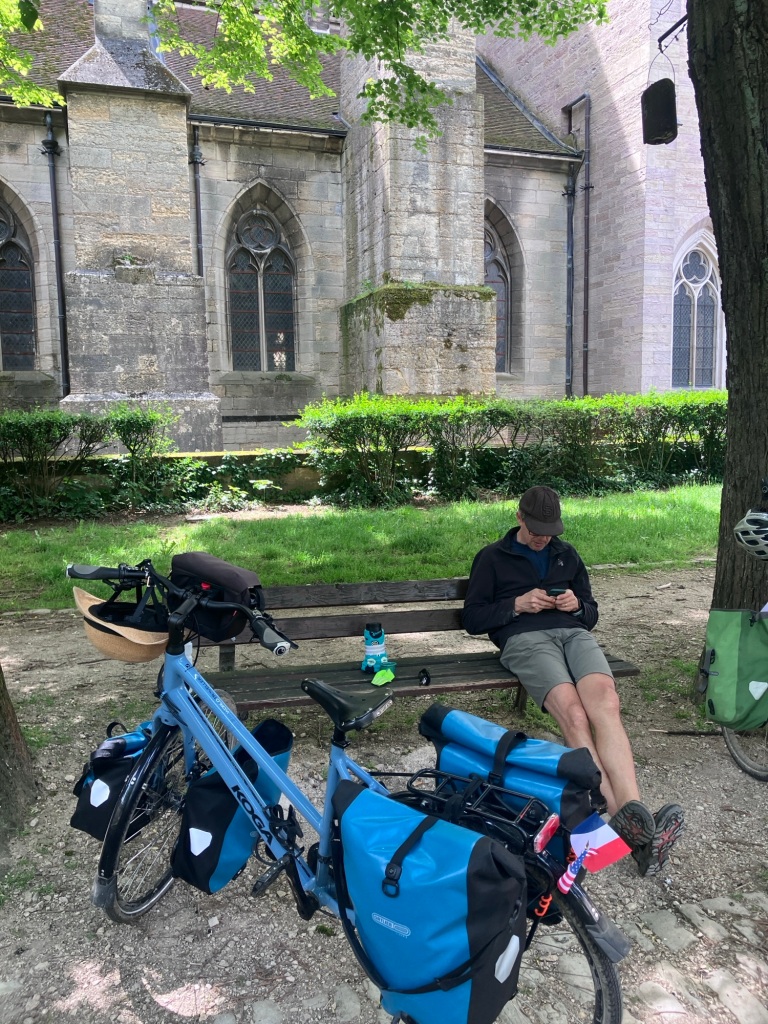
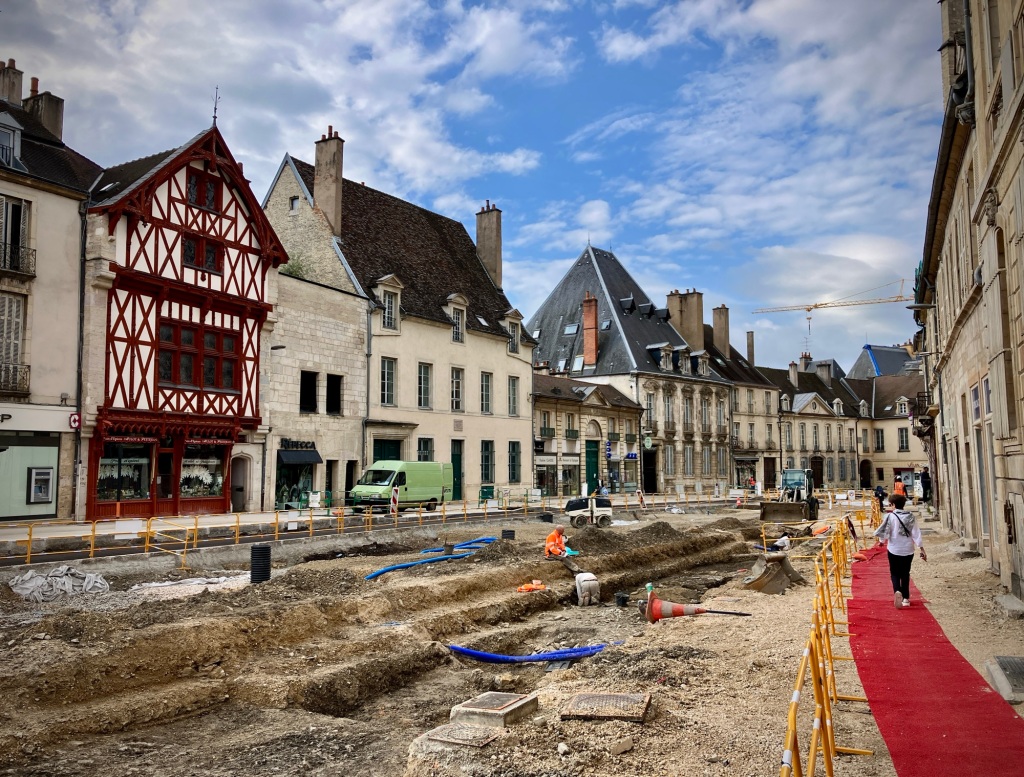
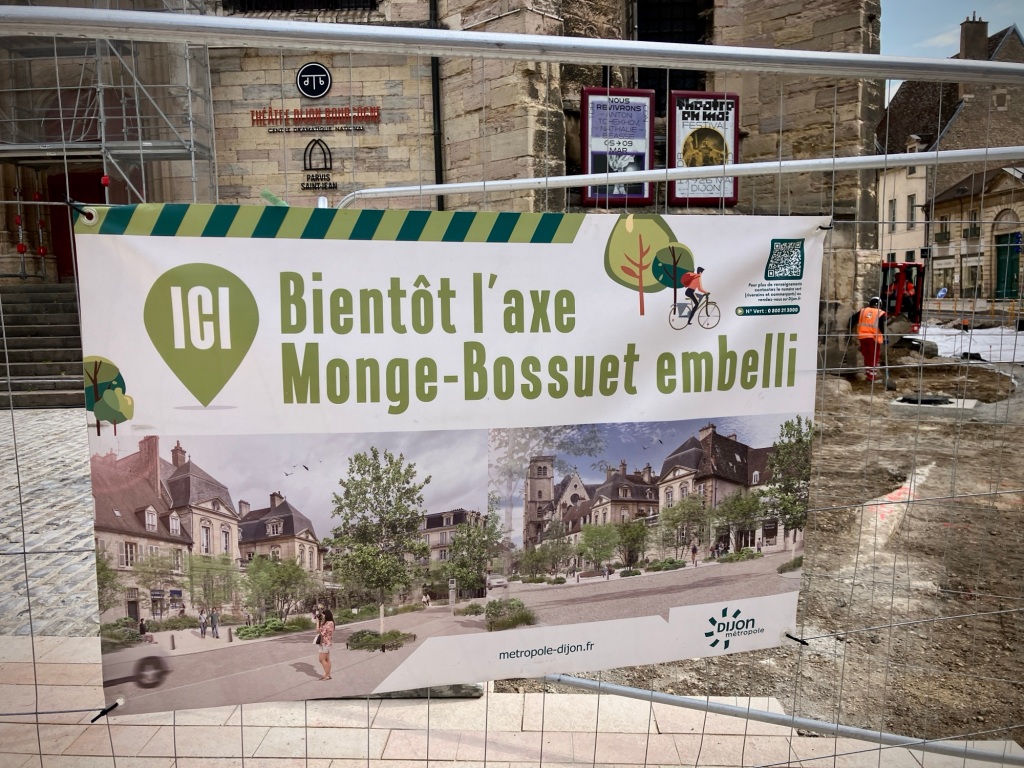
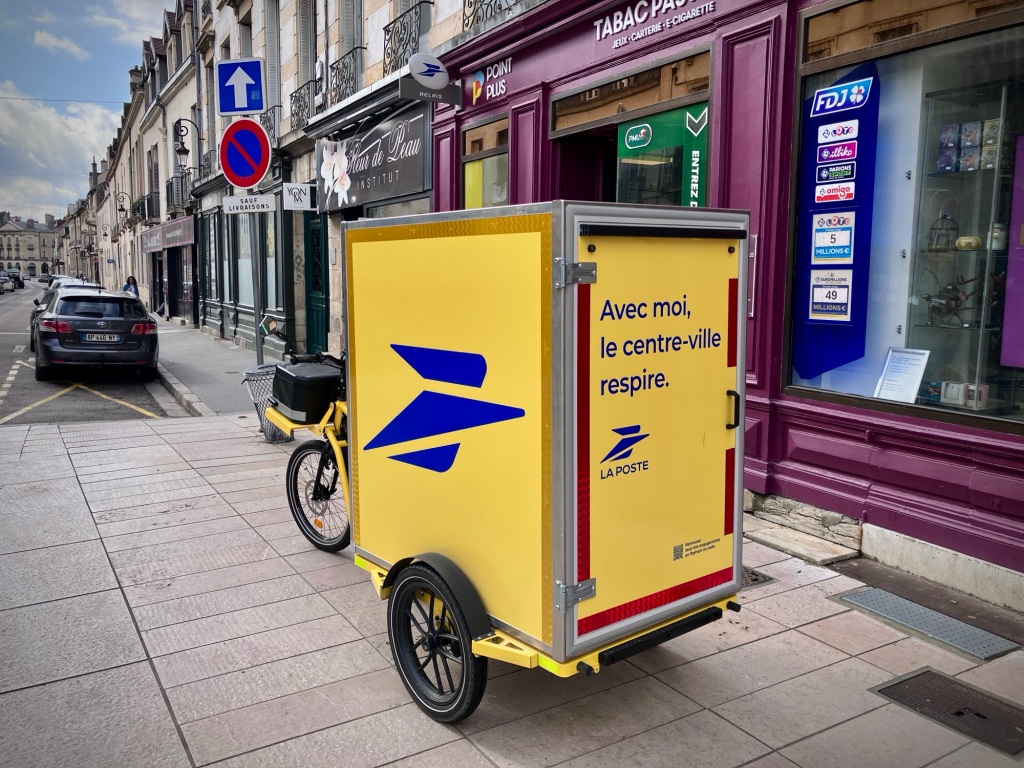
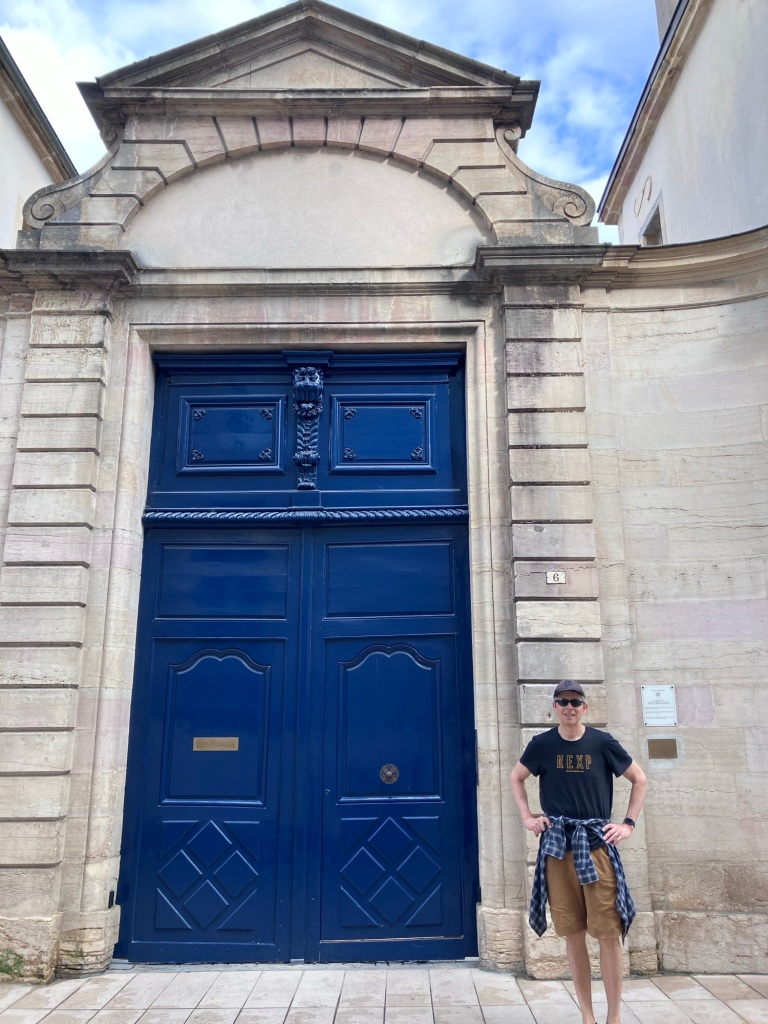
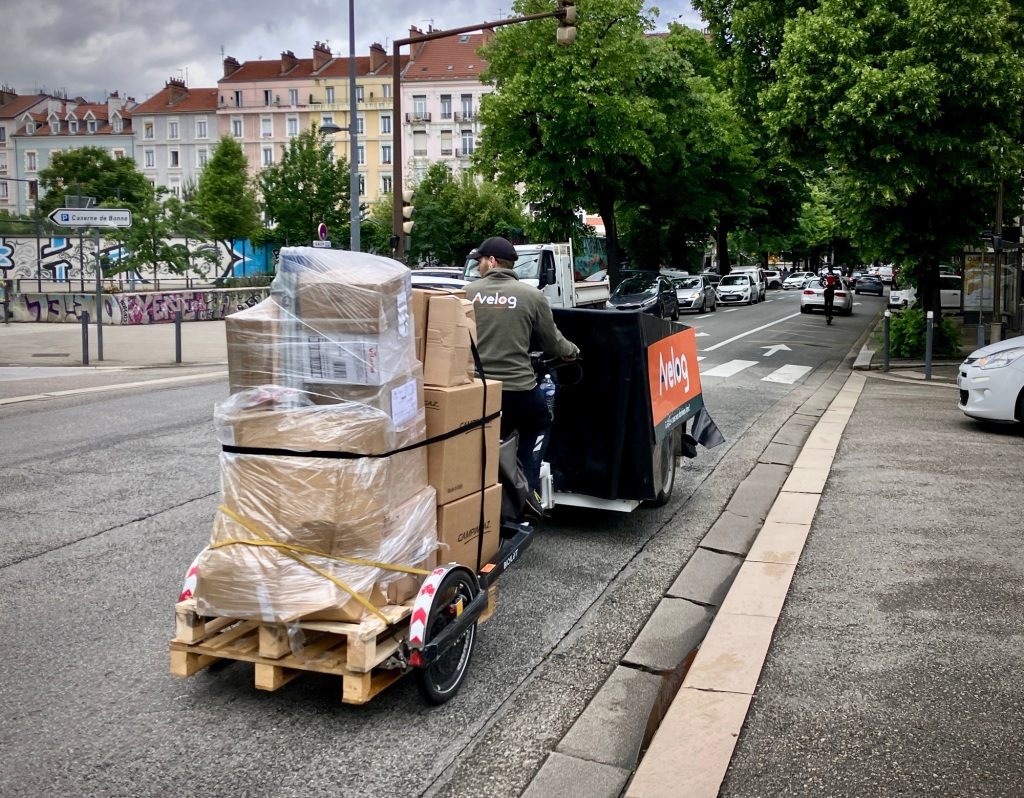
History plaques add to the joy of wandering historic Dijon. Many stately buildings with grand courtyards were built by the wealthy in the mid 1700’s. Vive la Révolution!A few hours to kill before checking into our bike friendly hotel. Often nomadic life includes sitting on park benches; maybe travel planning, reading a book, or just watching the world go by.This area of Dijon was being upgraded this year to meet the Mayor’s goals for livability. We noticed a lot of new streetscape improvements and tree planting in urban areas of France.Upgrading to City 2.0 – more walkable, more trees, and limited car traffic.E-bike cargo and mail delivery is really put to the test in France and the perfect tool for compact urban centers.What is behind these beautiful blue doors?
After enjoying a day off the bikes in Dijon, we had planned to continue south and east towards the Jura mountains and Geneva. But as I looked into the details of our planned route, I was thinking maybe we needed a Plan B.
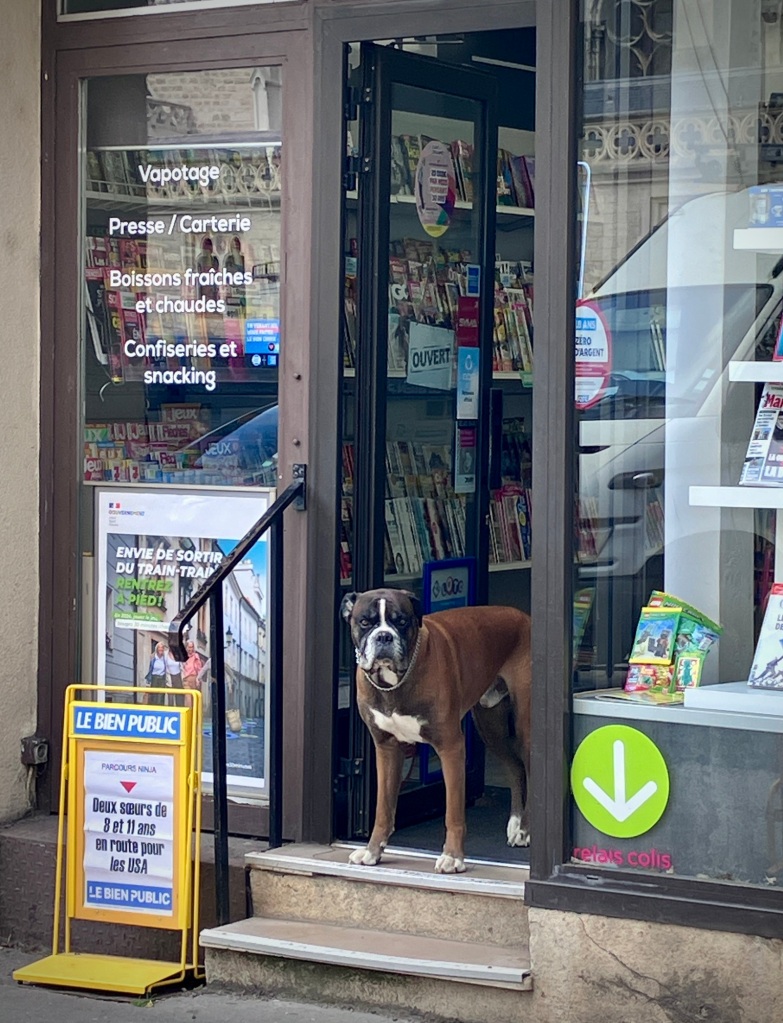
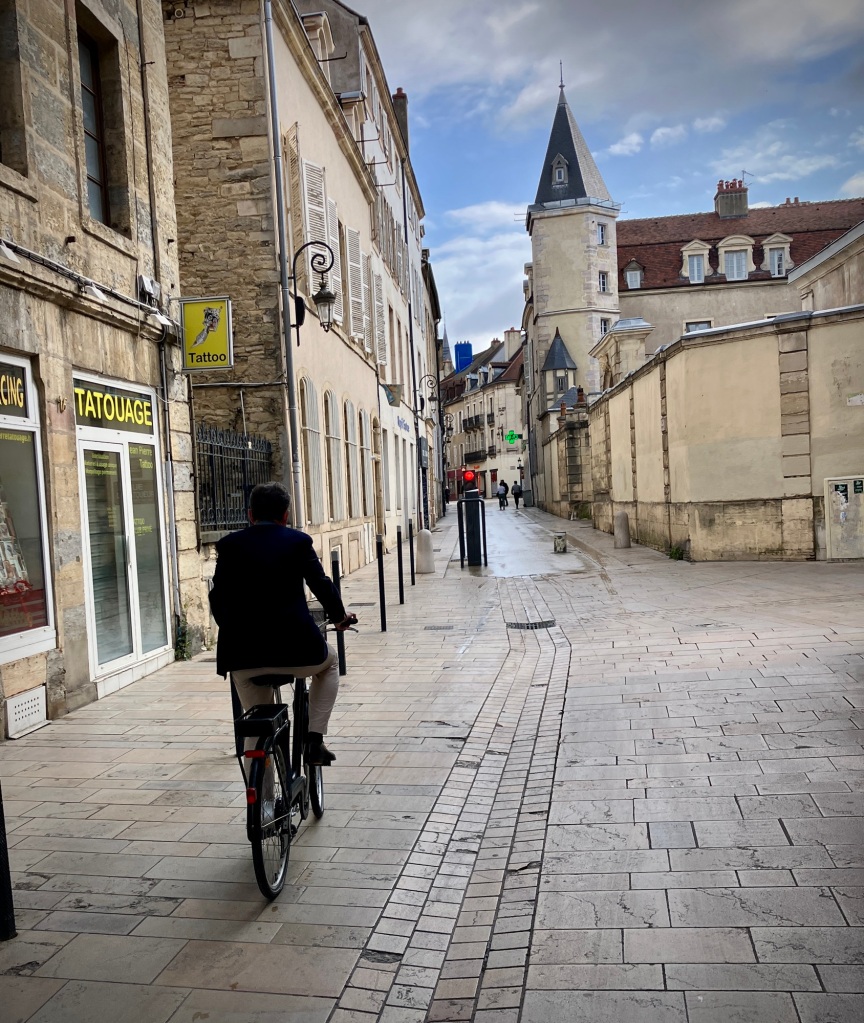
Jardin Darcy at sunset.Le chien de la Tabac.Access to the Dijon city center is controlled by retractable bollards, making it a pedestrian and bicycle oasis.
First, there was a lot of flat sections of the Burgundy canal and Doubs River to pass along with a likely headwind. Blah. Second, lodging with food in the Jura is very limited and I was challenged to find places to stay early season once we climbed up to the 3,000+ foot plateau. (Probably better to camp up there.) Third, more unseasonably cold weather and rain was predicted. No thank you.
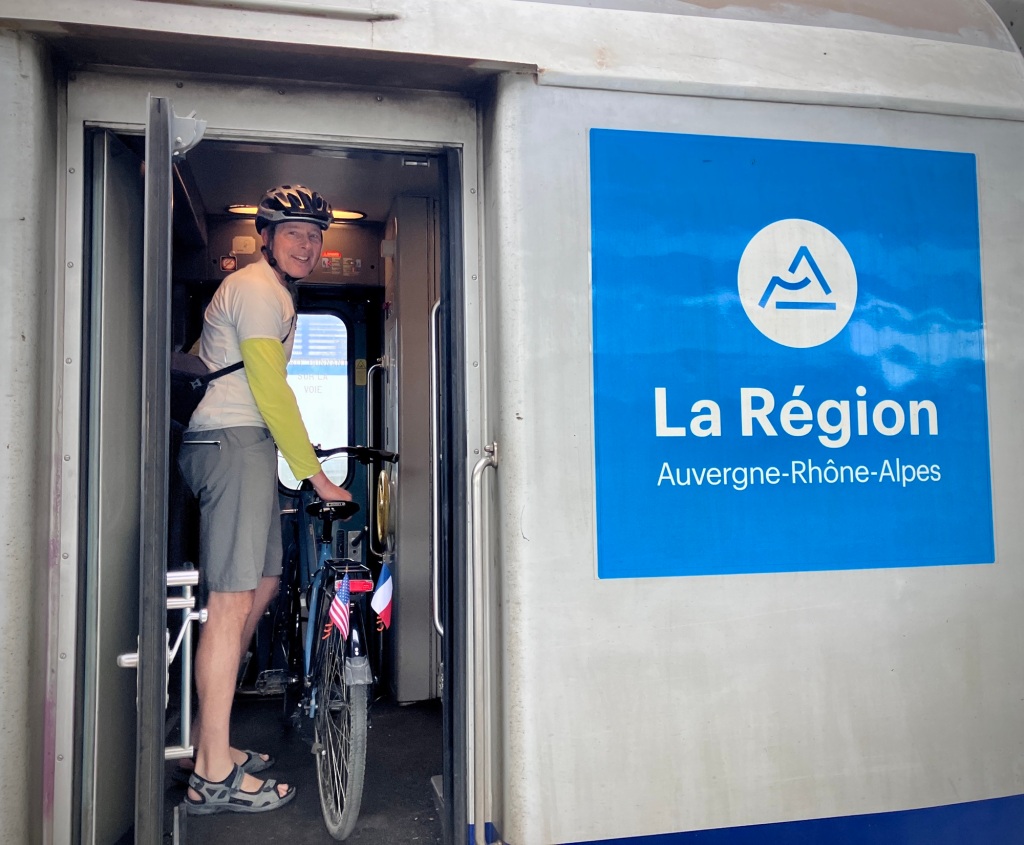
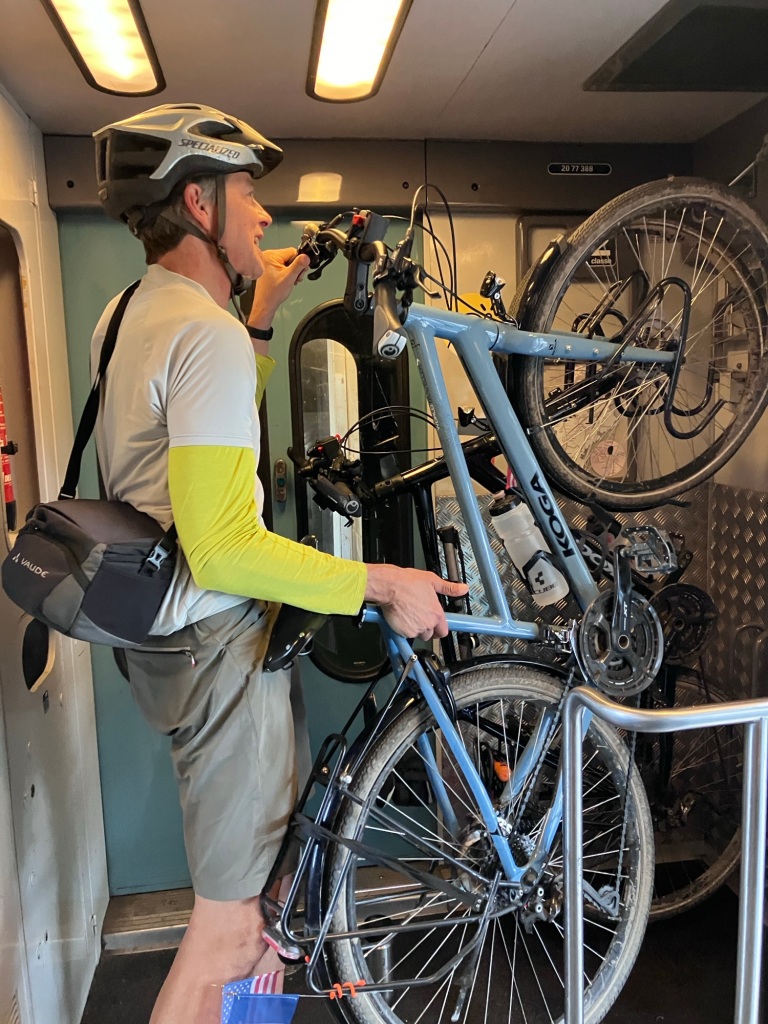
High boarding train to Lyon. Local TER trains are your best bet with bikes or IC trains with bike space reservation. TGVs also serve this corridor but have very limited bike space, so only work with advanced planning.Two hooks with pretty easy access inside.
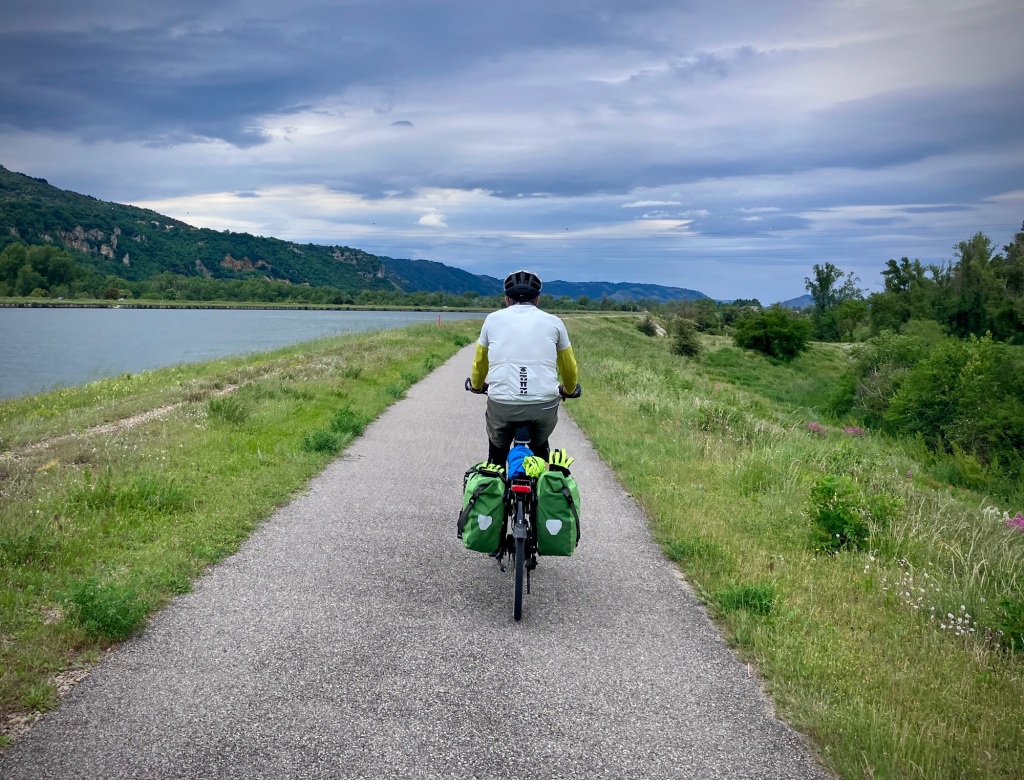
So we pivoted last minute and instead caught a train south to Valence via Lyon, and headed up the Isère River valley into the heart of the Alps. It was the route I had originally scoped for our return to the Vallée Verte. It has a lot more lodging options, lower elevations, and trains for backup. More importantly, we were excited by this new route, which is a key component of (nomadic) life. It’s good to suffer sometimes for the sake of a goal, but also ok to make sensible choices for yourself.
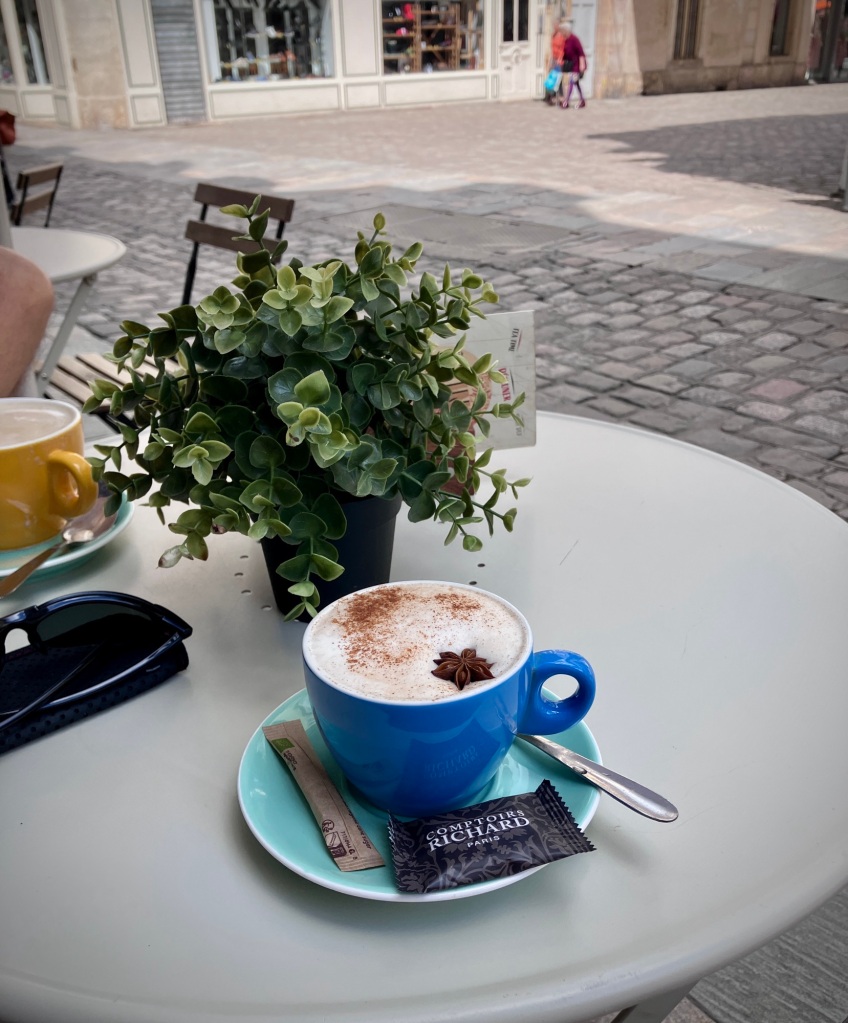
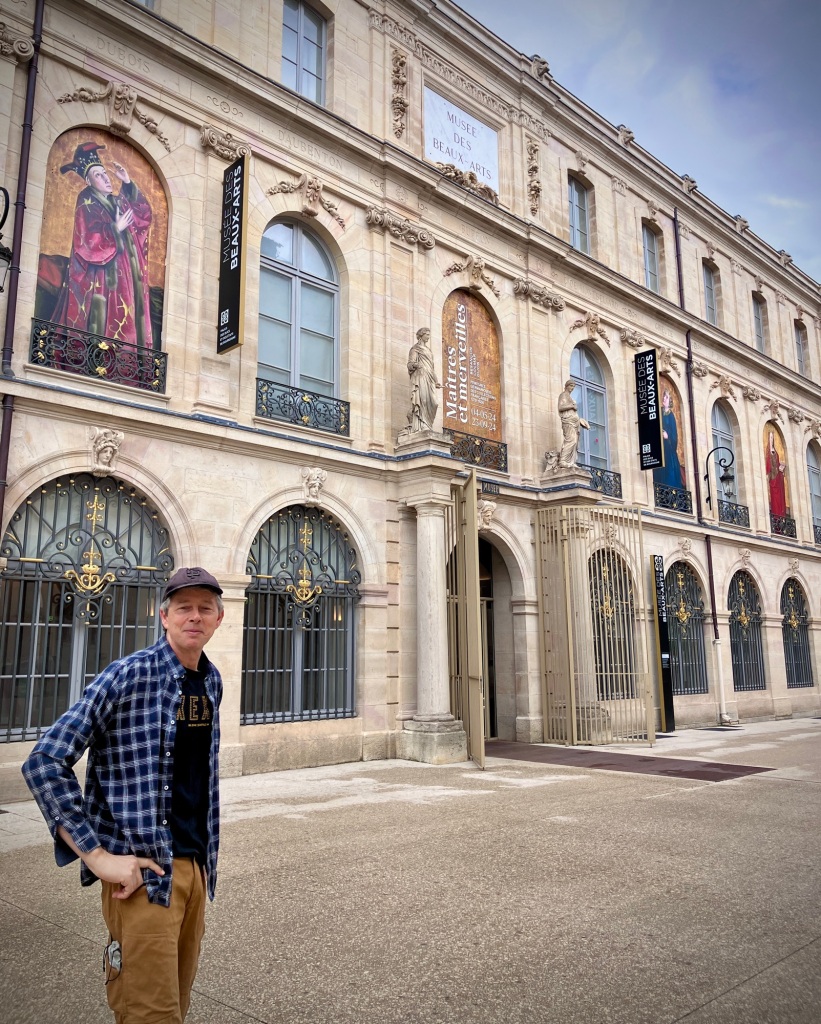
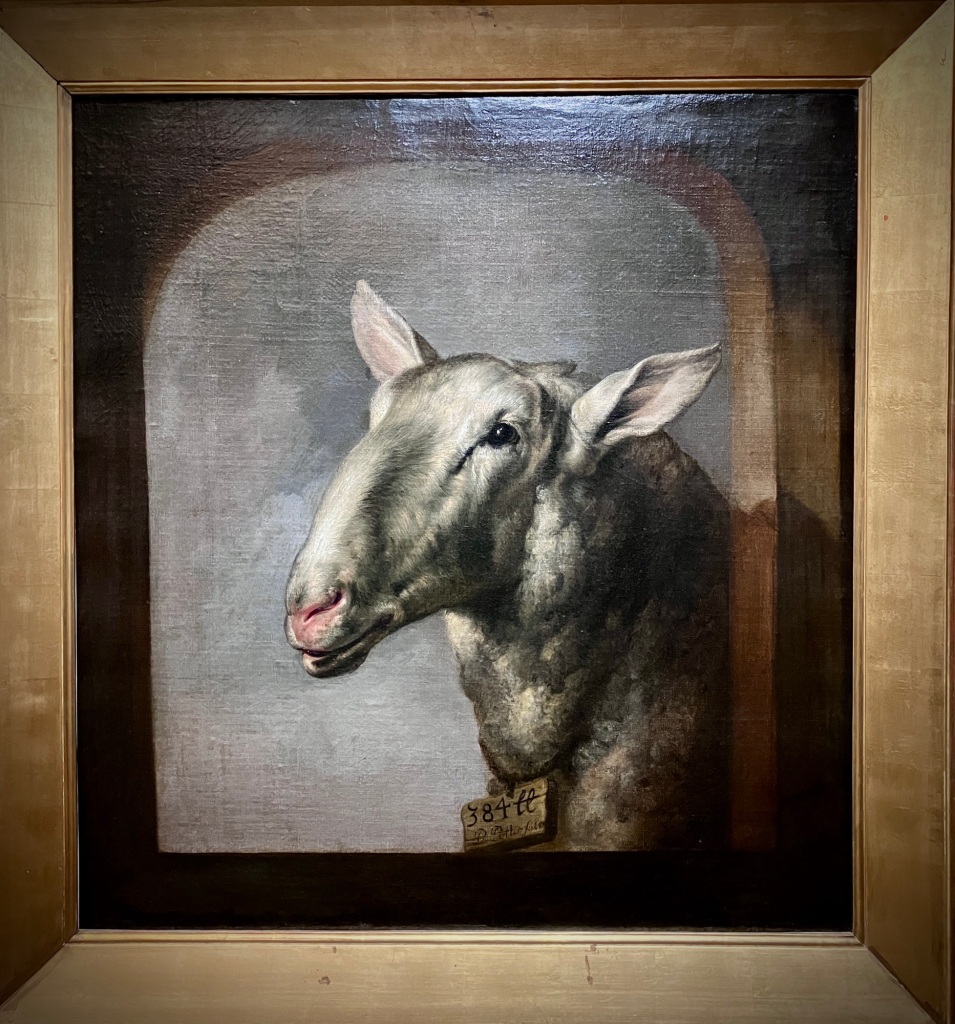
A perfect cafe to people watch in Dijon.The Musée des Beux Arts permanent collections are free and it houses a wonderful collection of art, sculpture, and antiquities.Paulus Potter’s “Head of a Sheep” at the Dijon Musée des Beaux-Arts.
The Isère River enters the Rhône north of Valence and is the namesake of the Department that is a part of the region of Rhône-Alps. We had actually passed through Valence in March on the Via Rhôna, so had to retrace a bit of our route upstream this time. Strangely, the lower part of the Isère River is actually still in the department of the Drôme.
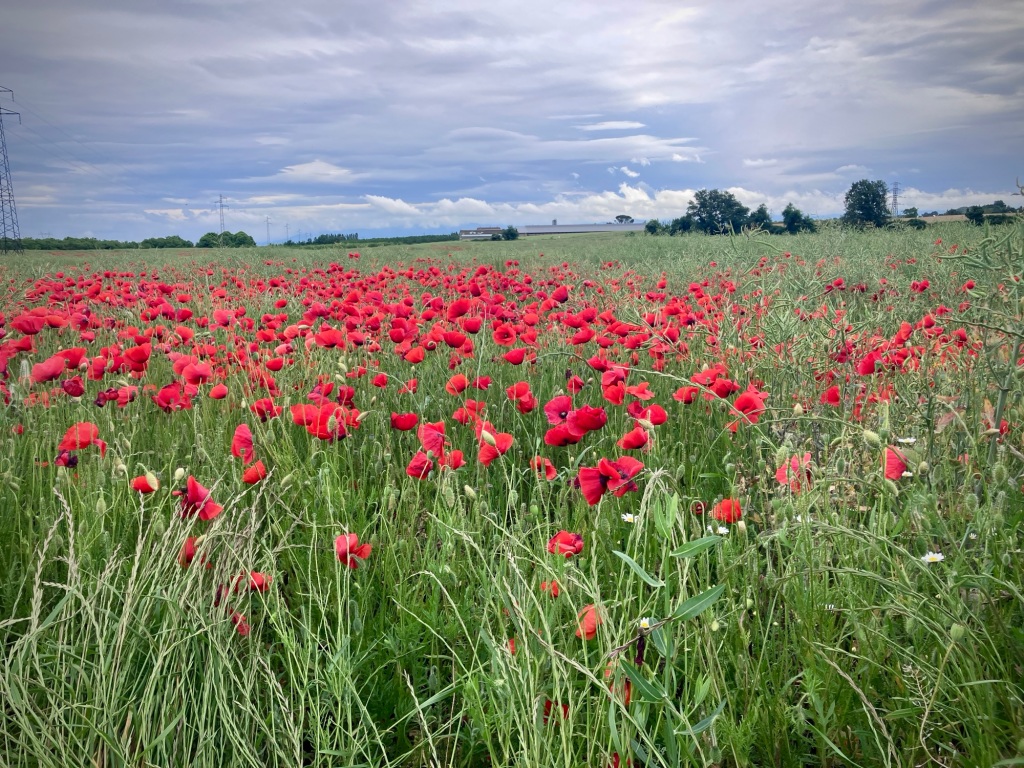
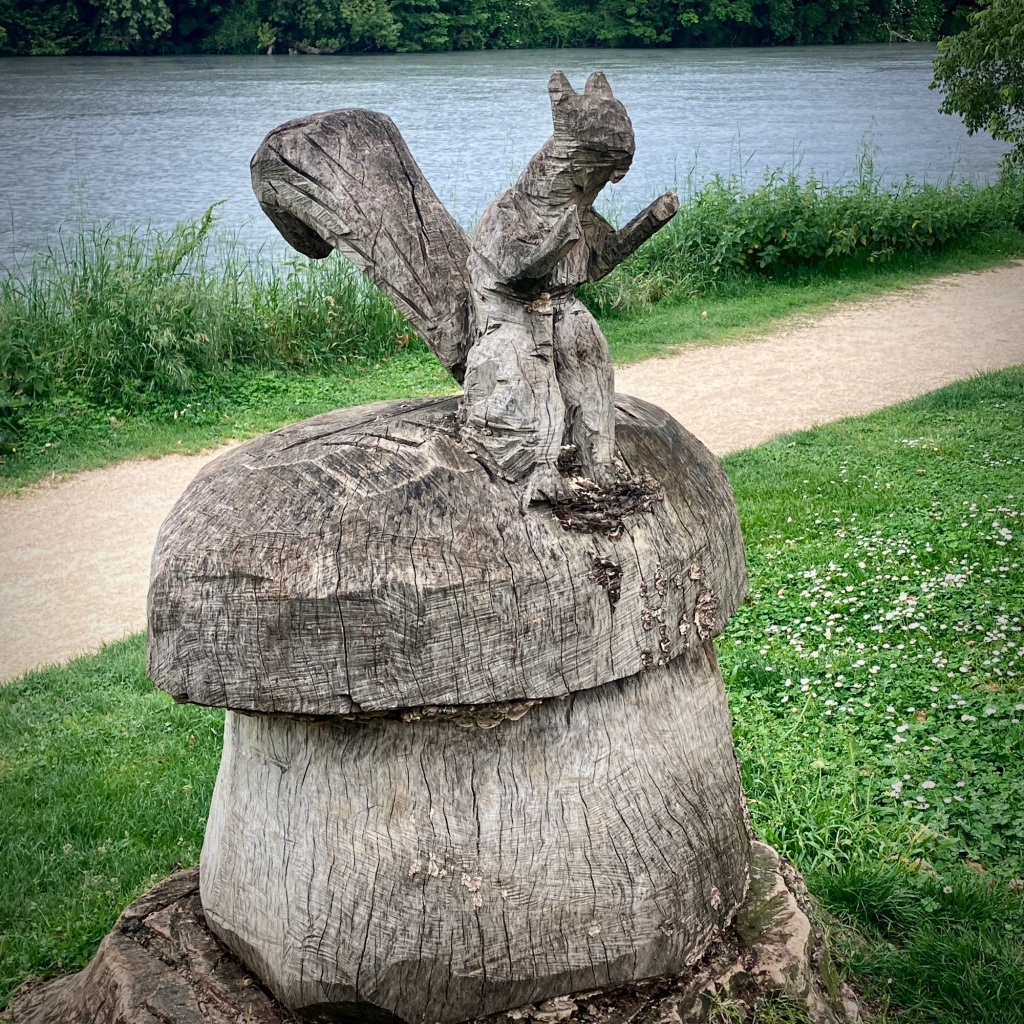
The skies are starting to look threatening as we head up the Rhône near Valence.Spring really is here!Great bike bridges on the Via Rhôna and Isère An homage to our favorite woodland creature.
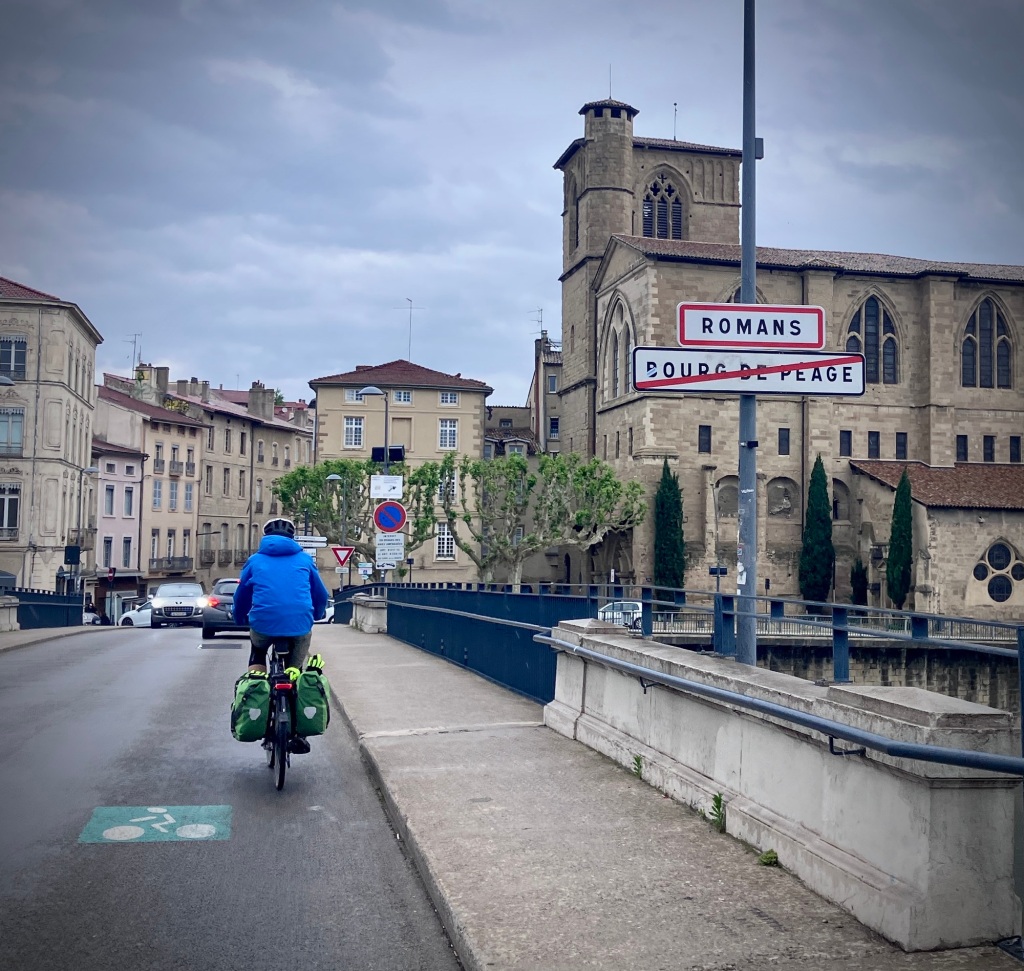
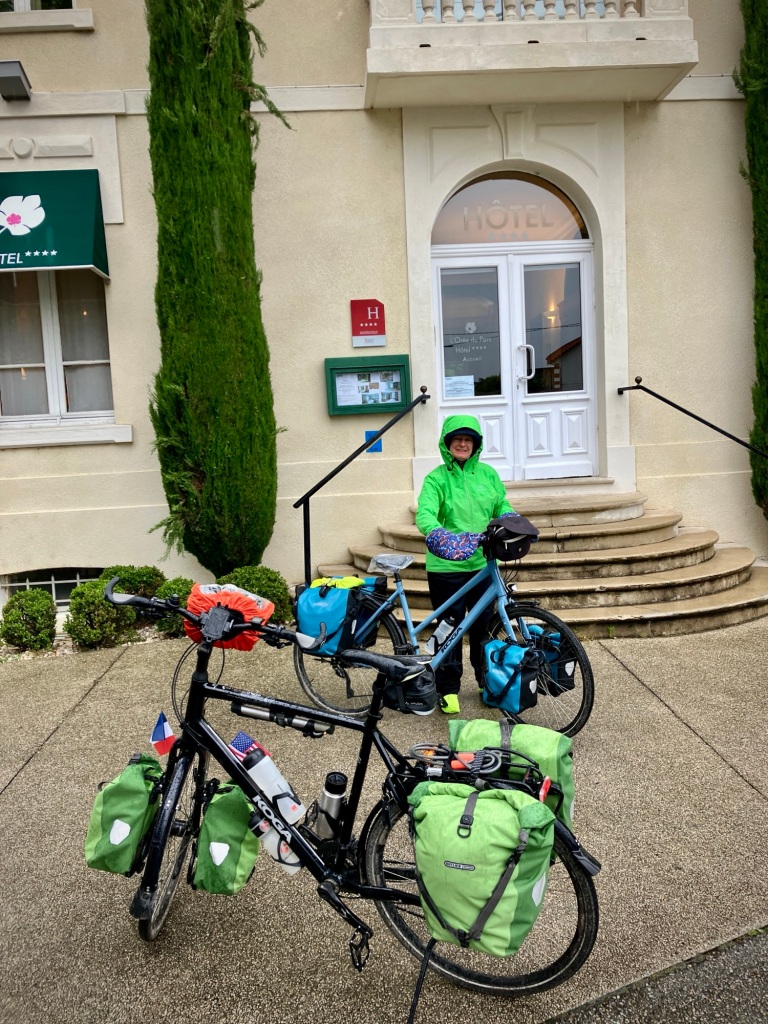
We just beat the forecast rain to our first night stay in Romans-sur-Isère, but were a bit stunned by the somewhat incessant and gridlocked traffic through this old riverside industrial city. We slogged through to get to our surprisingly charming lodging on the edge of the city, and walked back into the center of the town in the rain for dinner. We did find a (the?) fun and friendly place to get a drink and dinner and everyone was very nice to the two noticeable American cycle tourists. The town clearly gets few cycle tourists, although sits on the recently developed V63/V62 cycle route know collectively as “La Belle Via”.
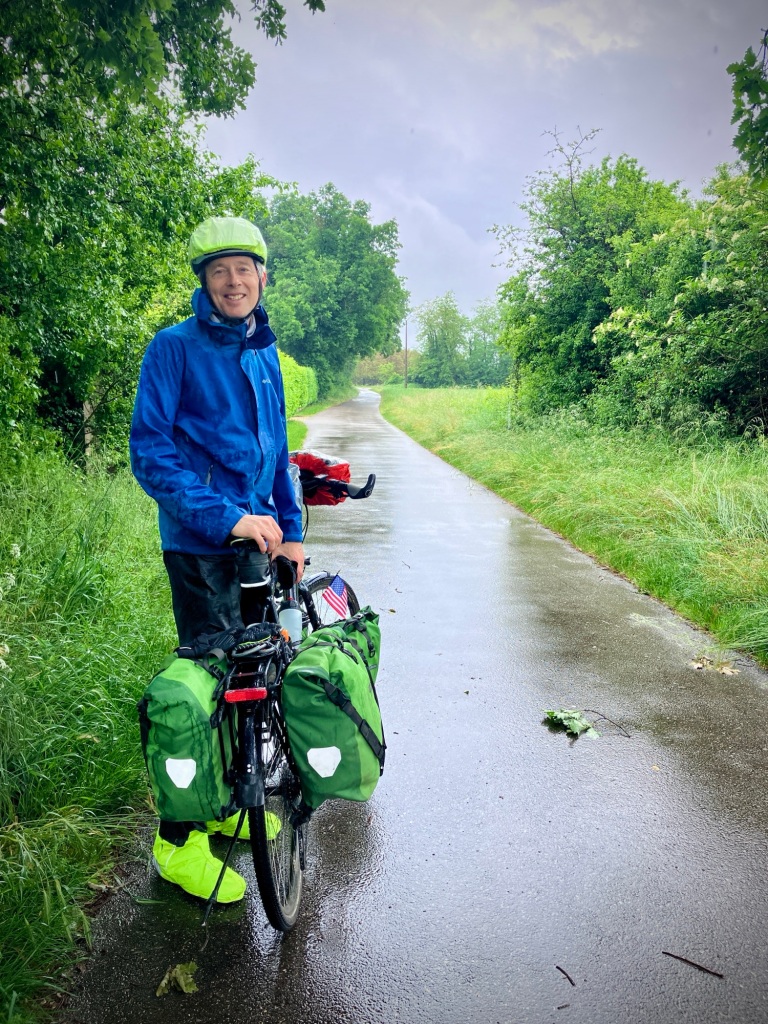
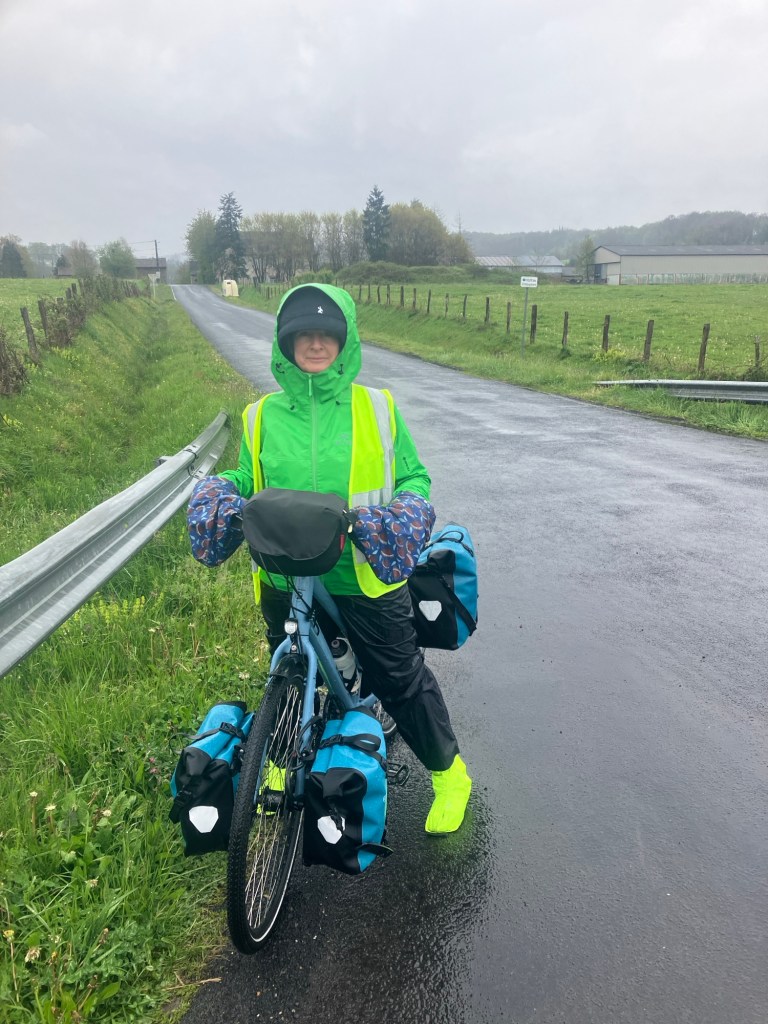
Heading into Romans-sur-Isère. We hadn’t hit the traffic jams yet.Heading out in the rain the next day from the very nice Hôtel L’Orée du Parc.Full rain suit and a feigned smile during a slight rain breakWe did manage a pastry rain break under a shop awning. Can’t let our French baked goods levels get too low.
We love to learn about the history of places, even for a one night stay, and Romans has been influenced by its strategic location on trading routes and a major river. Shoe manufacturing is still a business and there is a small museum dedicated to the industry that was unfortunately closed by the time we rolled into town. Further down river are abundant walnut orchards. On the way out of town, we learned another source of major traffic was a nuclear fuel manufacturing facility. But Romans is not a bicycle city and the bike infrastructure was sad or non-existant. There was a renovation of part of the Main Street in progress which may help the pedestrian environnement, but otherwise it seemed to be a bit overrun by cars and parking.
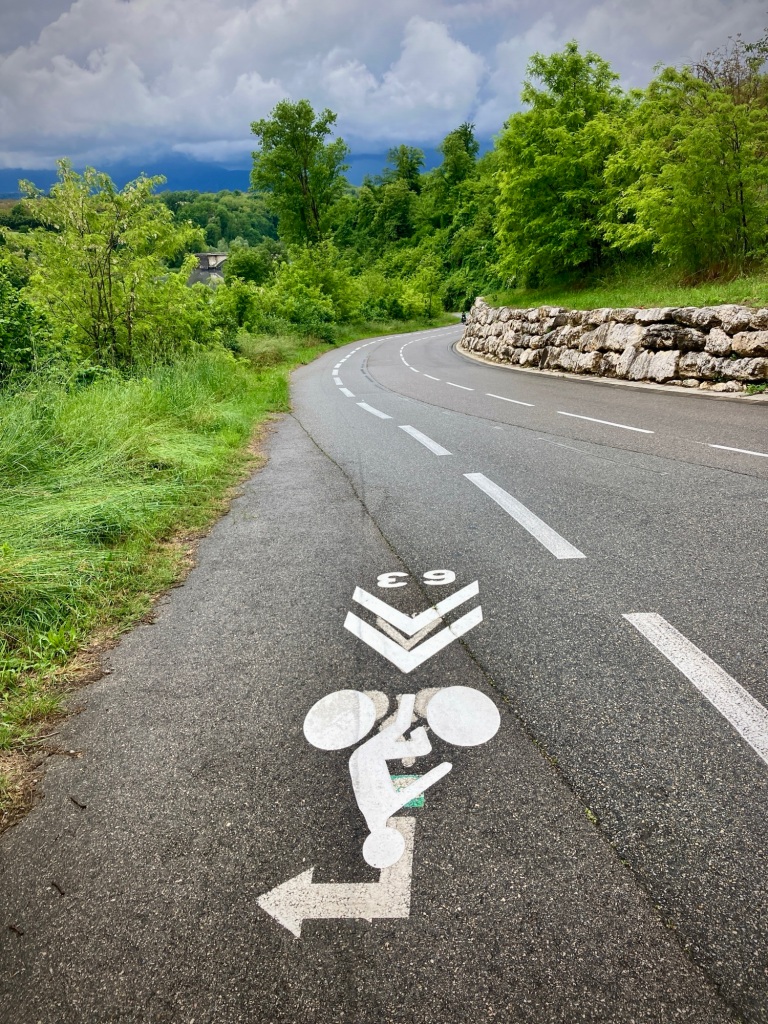
We were following the V63 cycle route up (and down) the Isère which includes some dedicated path sections, but mostly quiet roads.Hills, rain, and another forced smile.
The challenge of the next day was 84km to Grenoble which would have been manageable except it was raining out the door and rarely stopped. We had a low point this day as the traffic getting out of Romans, steep hills, and incessant rain seemed to zap the energy and motivation of Cheryl, and I could sense it. We both have our bad days, but generally one of us keeps it mentally together. Today we were both just a bit over it. Travel, rain, eating out…all of it.
The Isère river valley was beautiful, even on this moody and stormy dayA lunch snack at a welcomed picnic area was cut short as we saw a massive thunderstorm front approaching. Ride fast!
We did manage to miss the worst of an epic thunderstorm and hail in a farmers shed. Cheryl is a travel trooper and rarely complians, but the ups and downs of 10 weeks of cycle touring was weighing us both down. (I generally complain first -;) We had a train bailout option in the small town of Vinay, but arrived to just miss a train prior to a 2 hour gap in service. The days lack of progress sent me into a travel tailspin too, and let’s just say, that afternoon was one of the low points of our France sojourn.
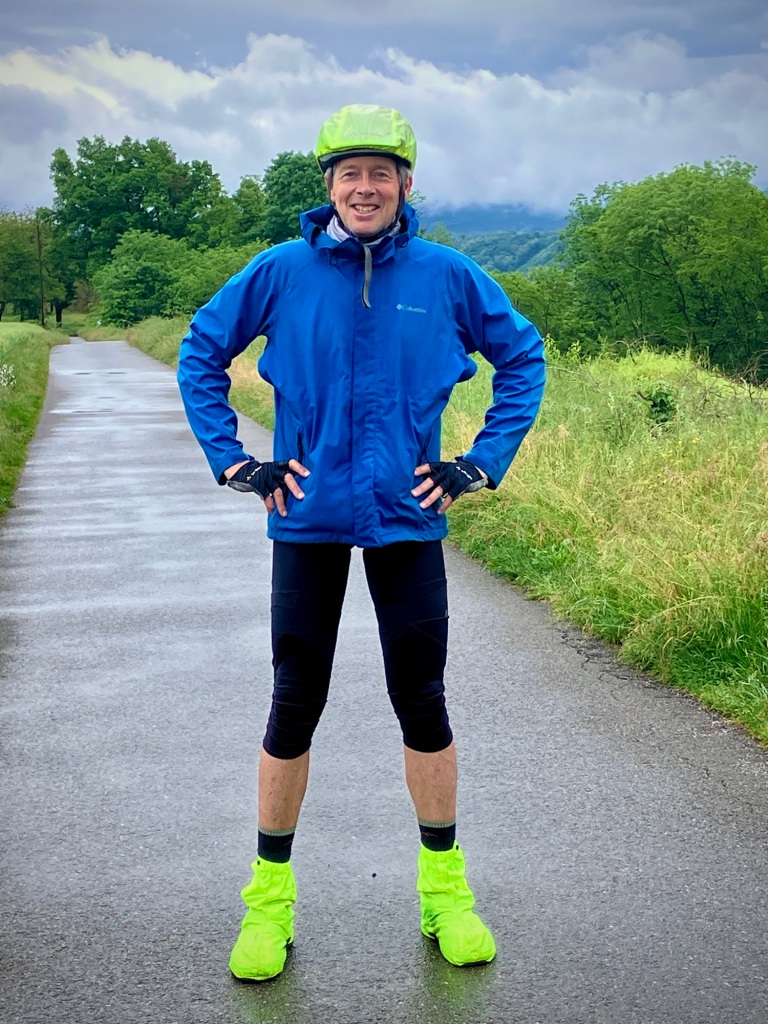
Made it to a farmers shed just in time for the skies to open up.The rain and hail let up a bit finally so we headed back out.Rain booties on, trousers off. It’s a look.
But the sun came out as we waited for our train. and the short train hop to Grenoble was fine. The city was lively and green, and the next day was beautiful. Travel and cycle touring can propel you on a rollercoaster of emotions, but that is why we continue on. The next day IS generally better -:) .
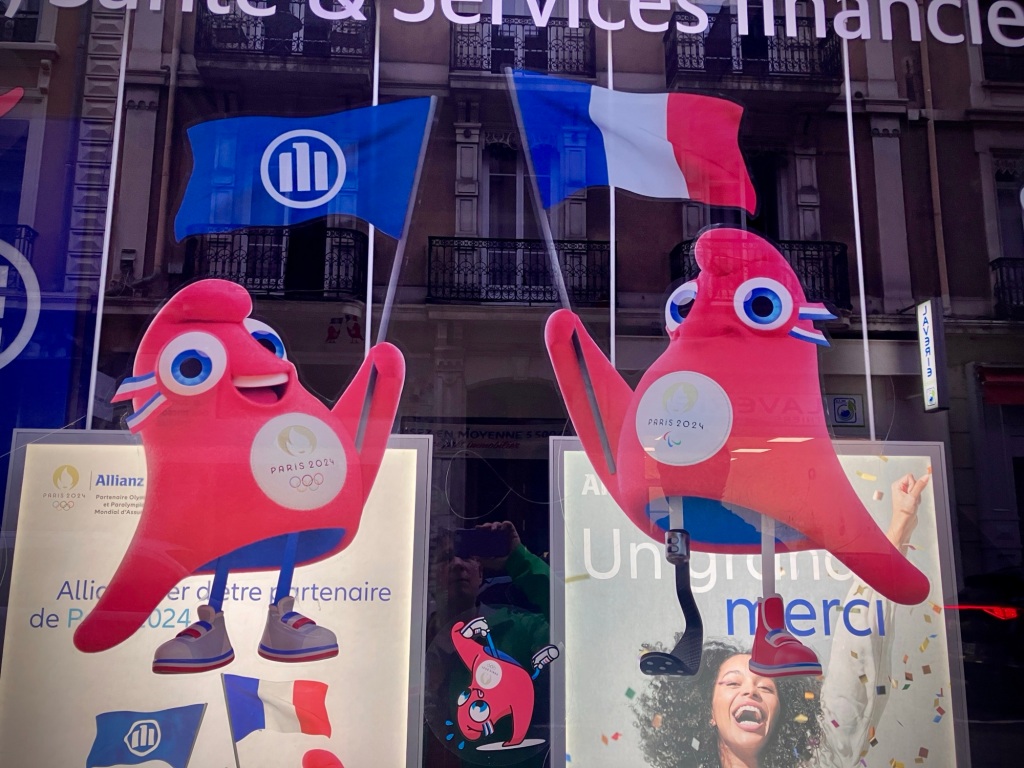
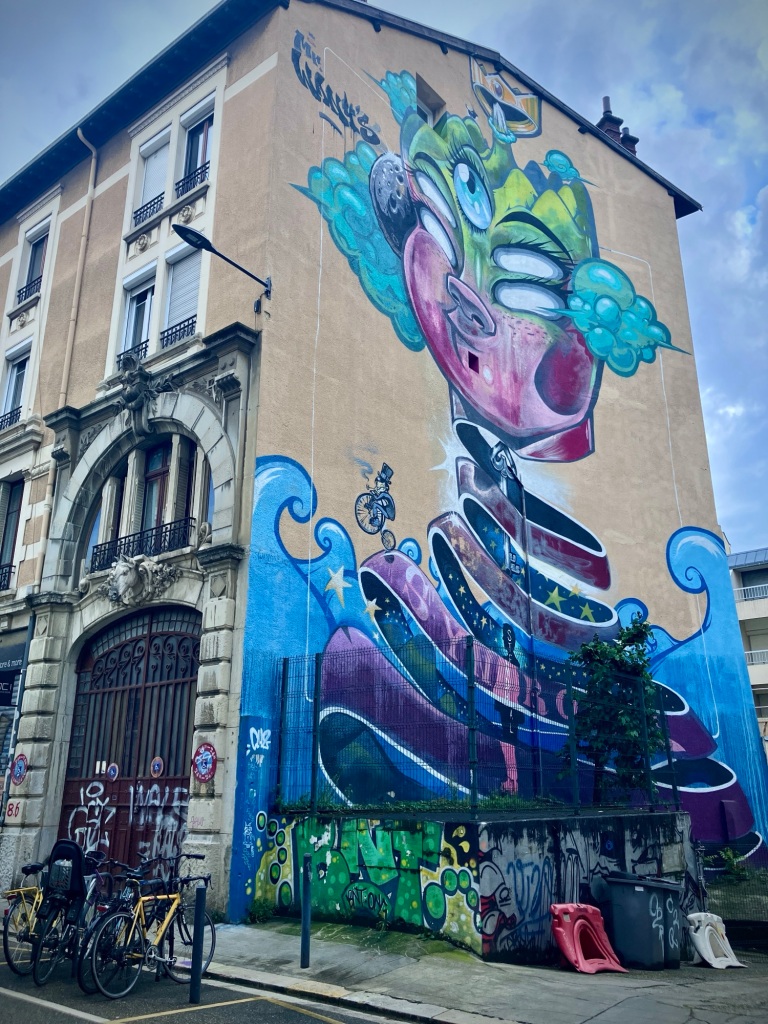
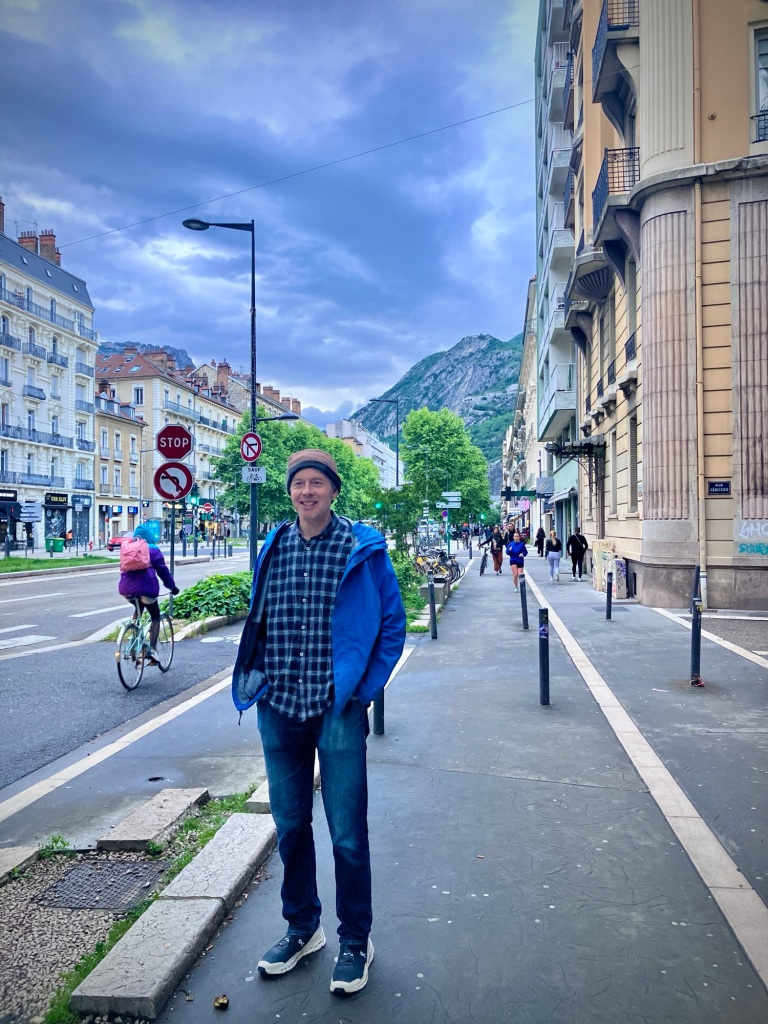
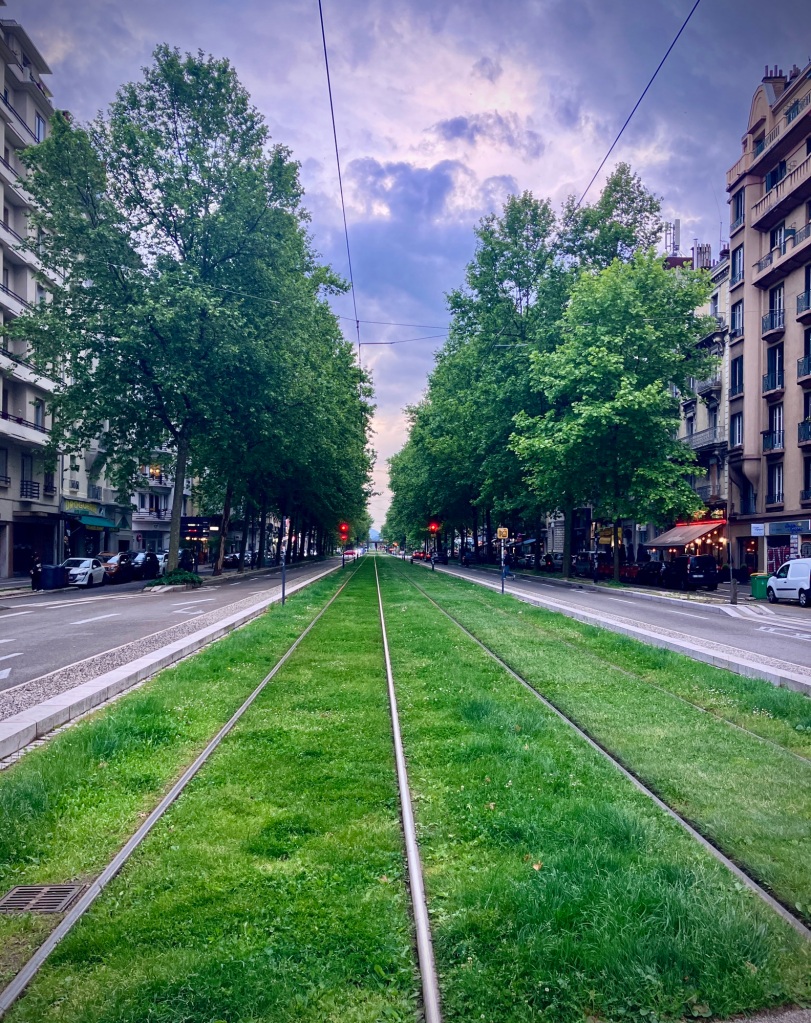
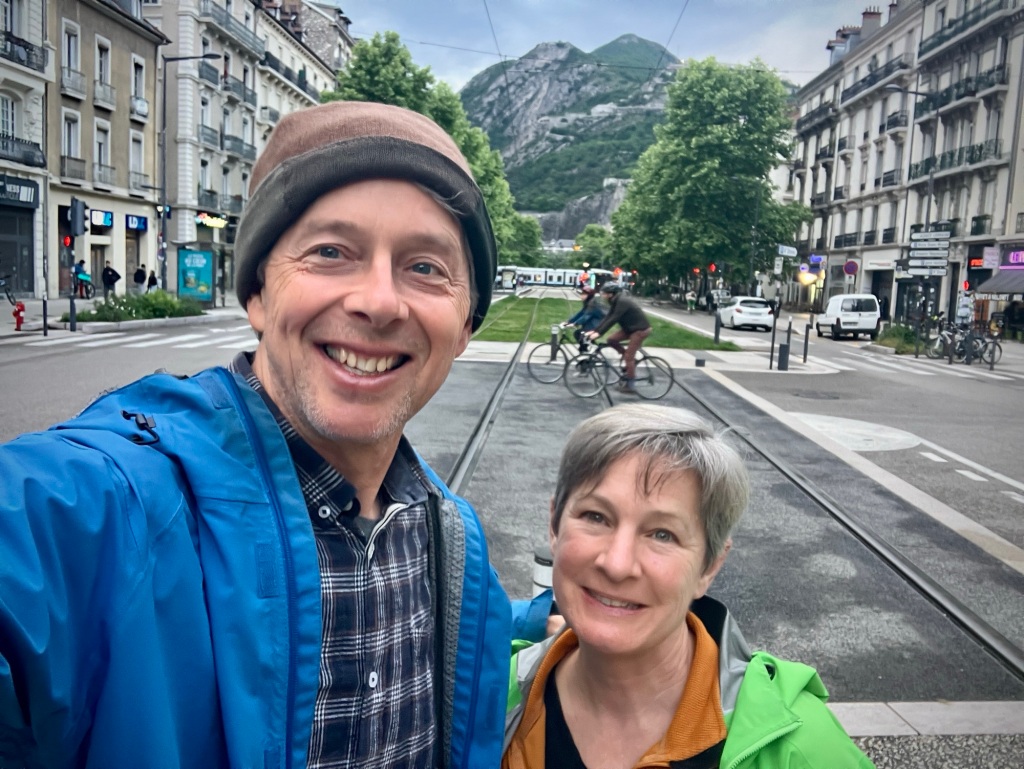
Grenoble was home to the 1968 Winter Olympics and now 700,000 people live in its region, making it the biggest metro region in the Alps.Nope, not a cute animal, but the 2024 Paris Olympic mascot takes the shape and form of a Phrygian cap; a symbol of freedom and revolution! Love the theme and inclusion of a Paralympic prosthetic leg.There was a surprising abundance of street art and murals in Grenoble.Hey, Grenoble is cool!Love the green tram tracks (but not all the rain).Next level cargo bikes in a seriously green city.Trams and bikes, what’s not to love?!The cranky travelers recovering in Grenoble and ready to explore another day.
We loved Grenoble but only stayed a night as hotels were unusually expensive due to a conference. We vowed to come back and explore more there soon as it’s nearby the Vallée Verte and has a lot of top museums, not to mention outdoor adventure in every direction. The next two days cycling further up the valley were inspiring and relatively short, so allowed for plenty of time to stop at sights, take photos, and bask in our positive attitude!
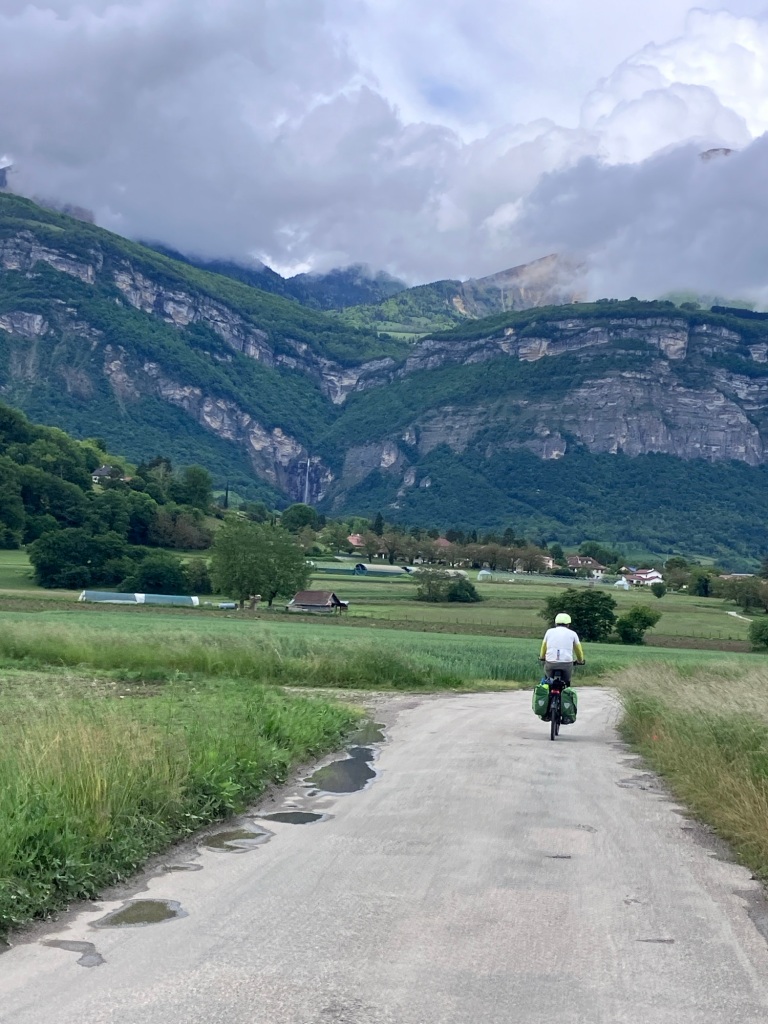
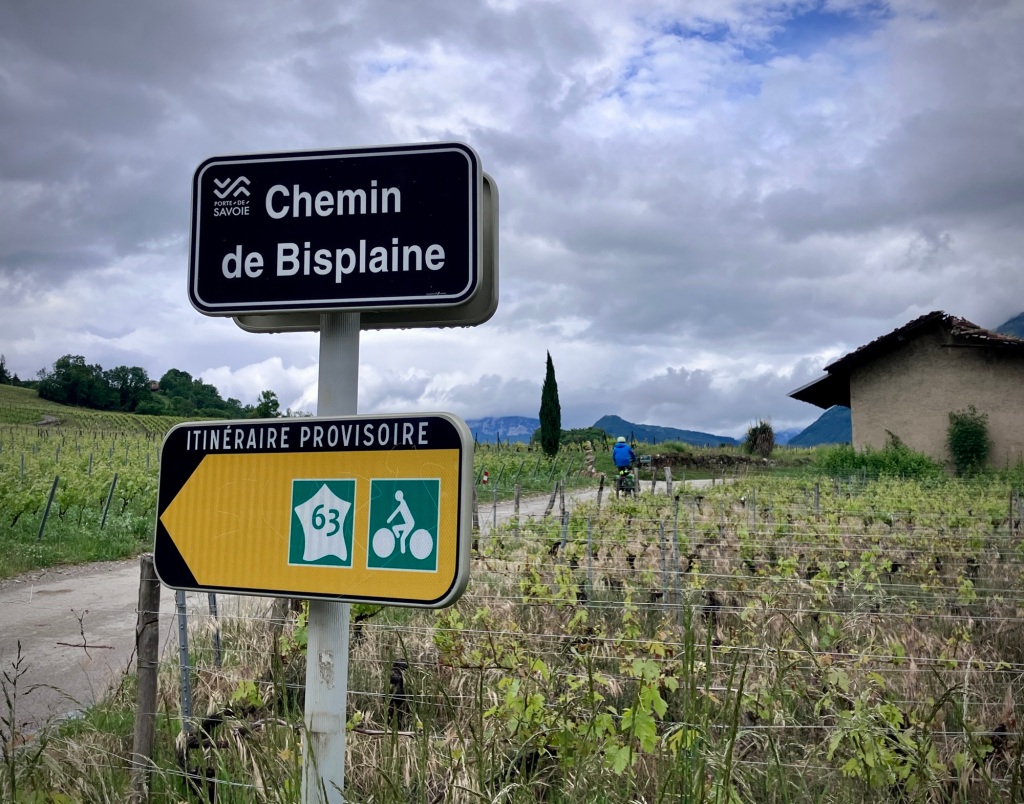
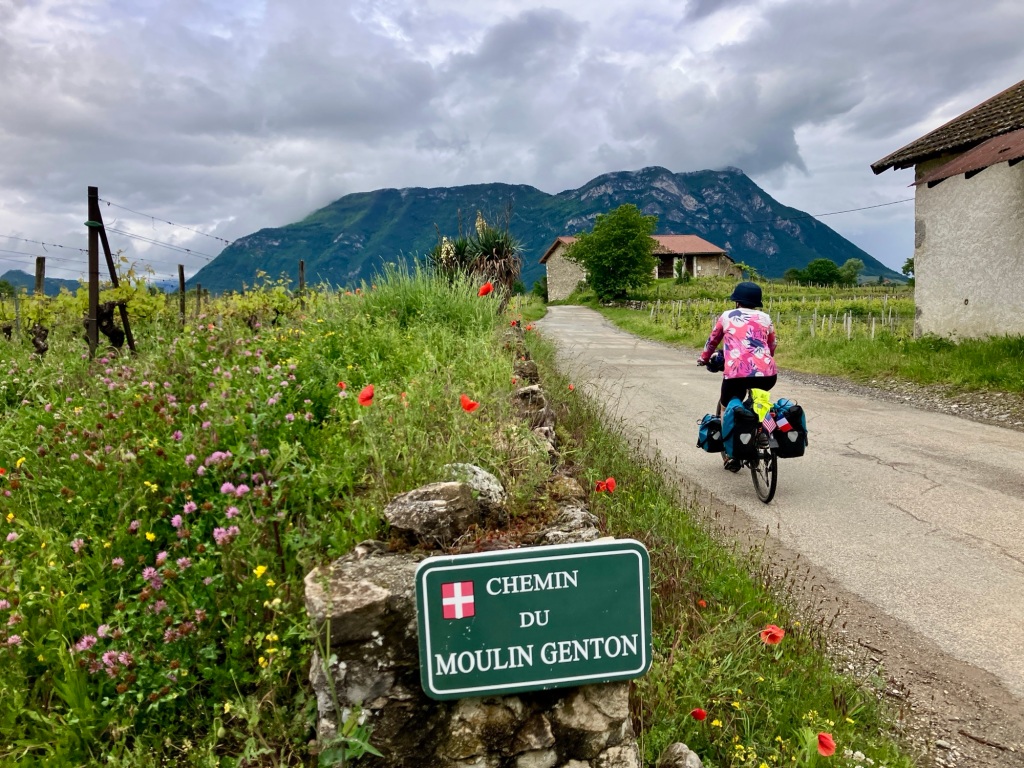
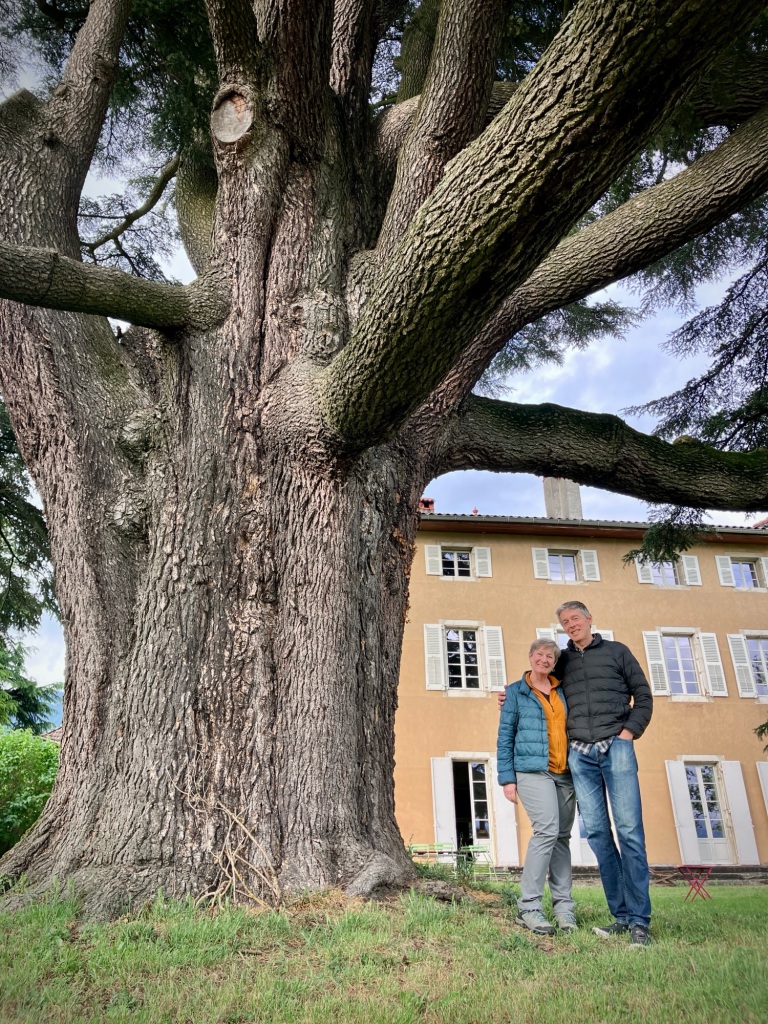
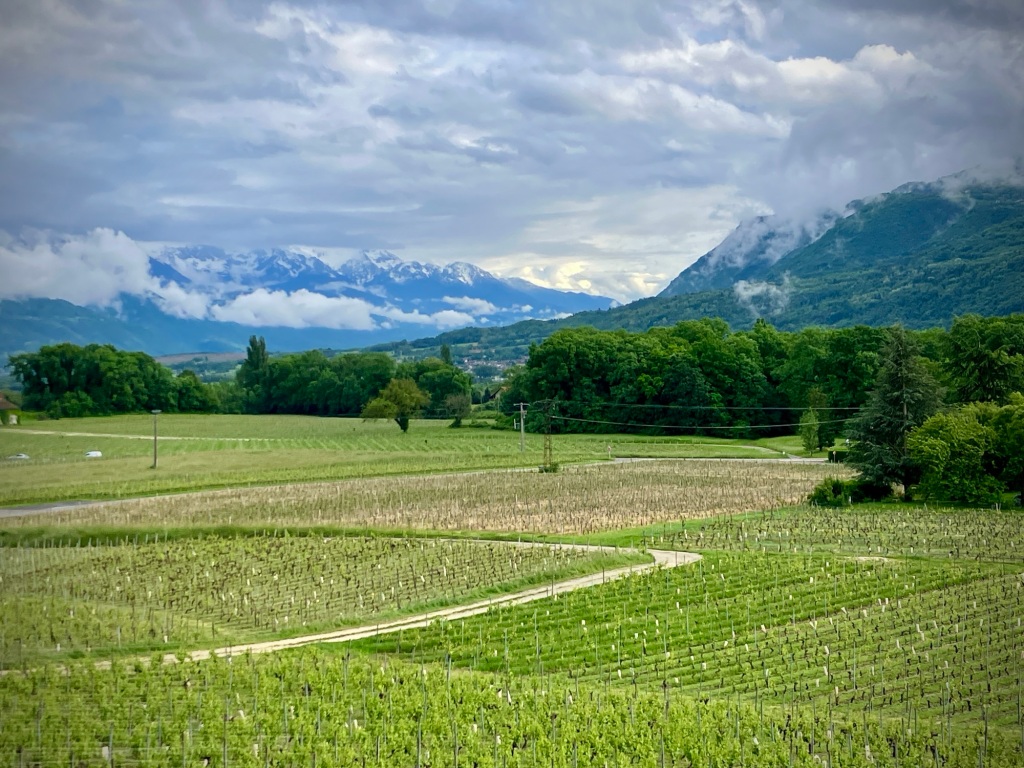
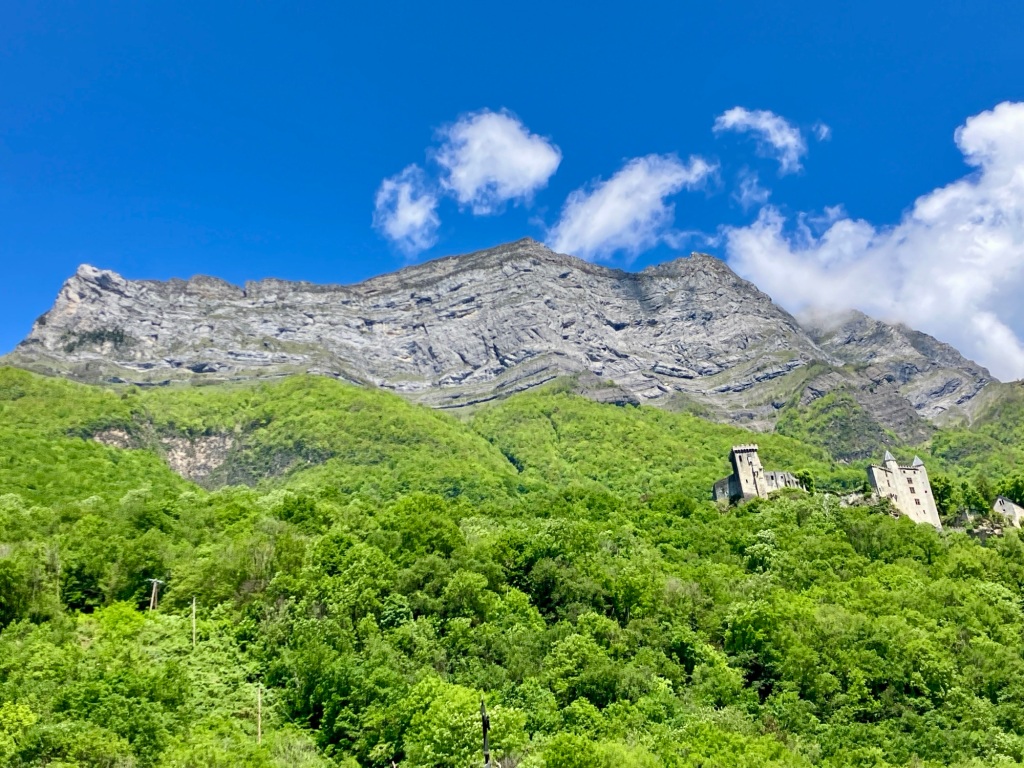
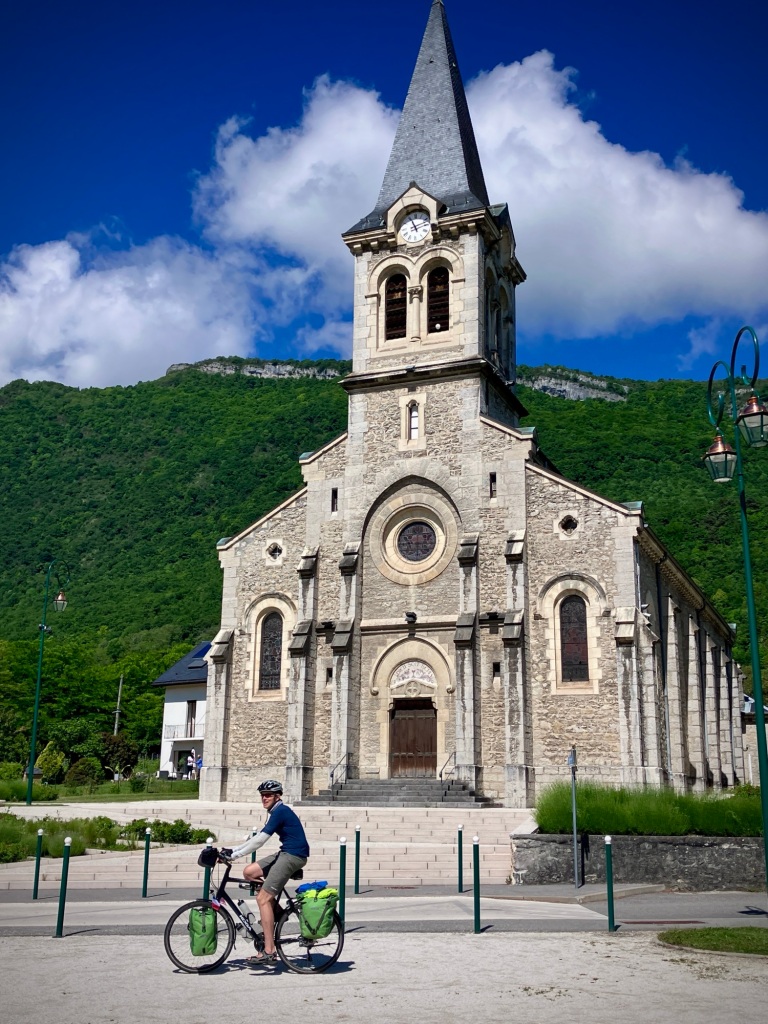
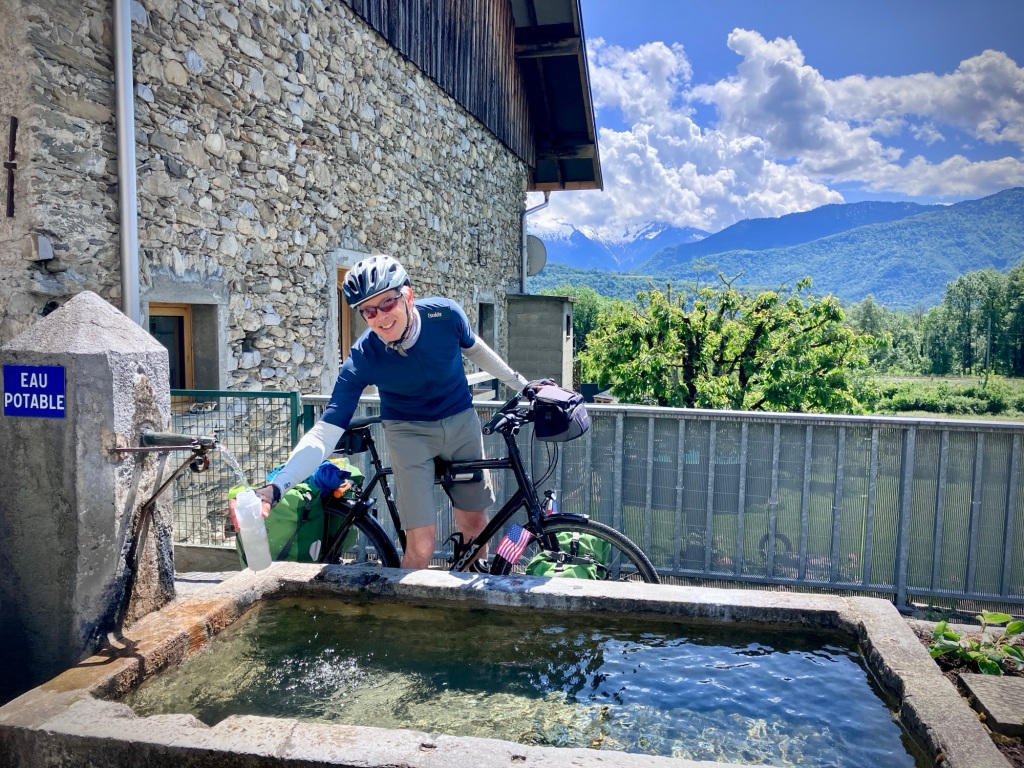
The ride out of Grenoble was flat but pleasant along the Isère River and valley.But soon heads up some small hills into the Coeur de Savoie.The Savoie wine production region near Chingin.Cheryl heading to the wine!Views and history at Chateau LaViolette, a very friendly and lovingly restored B&B in the Porte-de-Savoie. This magnificent cypress tree was over 200 years old.Views from LaViolette of vineyards famous for Mondeuse Noir and Jacquere. The infamous land sliding Mt Granier is obscured by clouds.Our next day was greeted by spectacularly blue skies cycling the D201 road to Albertville. We passed on the steep climb to the historic Château de Miolans.A wonderful day rolling through the tidy and historic villages of the Savoie.Usually there is a great water source in these mountains…just need to make sure you see the “Eau Potable” sign.The D201 road rolls up and down along the edge of the valley towards Albertville and is a great alternative to the flat V62 route in the bottom of the valley.
We found a nice little apartment in Albertville to spend the first two nights of the long Corpus Christi holiday weekend, as Albertville is actually not much of a tourist town, despite hosting the 1992 Winter Olympics. It’s pleasant enough and was a good place to relax, do laundry, and explore a bit, but otherwise would recommend other places in the Alps for scenery and charm. It has the old Olympic park and a small medieval town, Conflans, on an adjacent bluff. We realized all the charming Olympic shots you saw in 1992 were probably of Conflans, not Albertville per se.
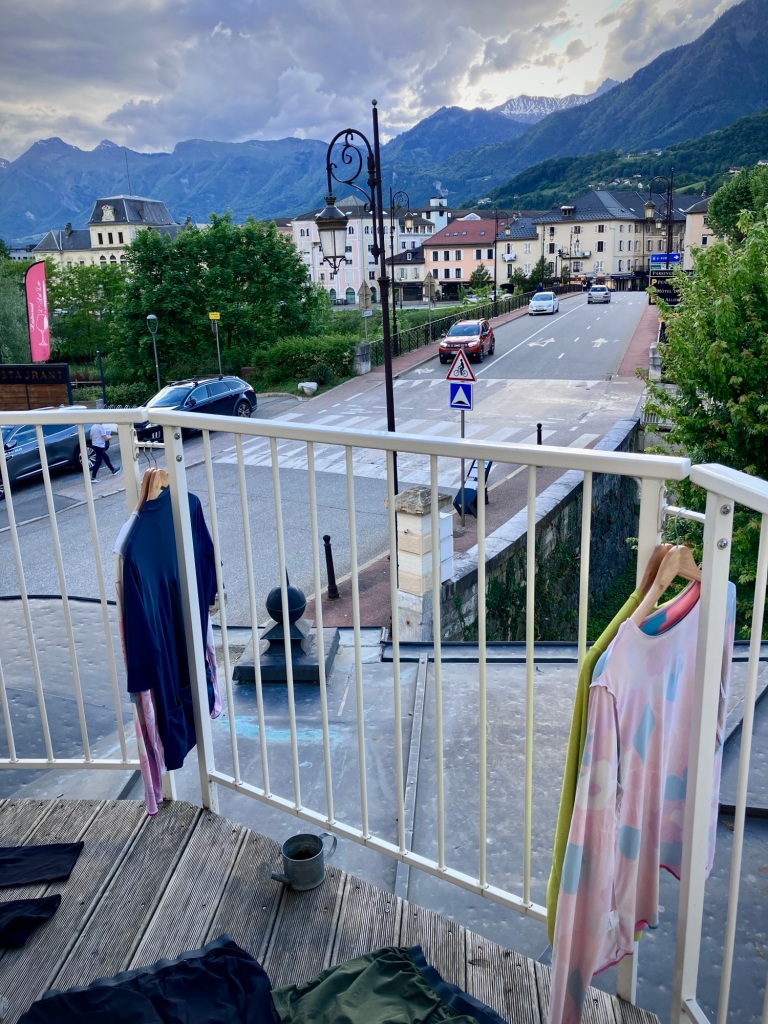
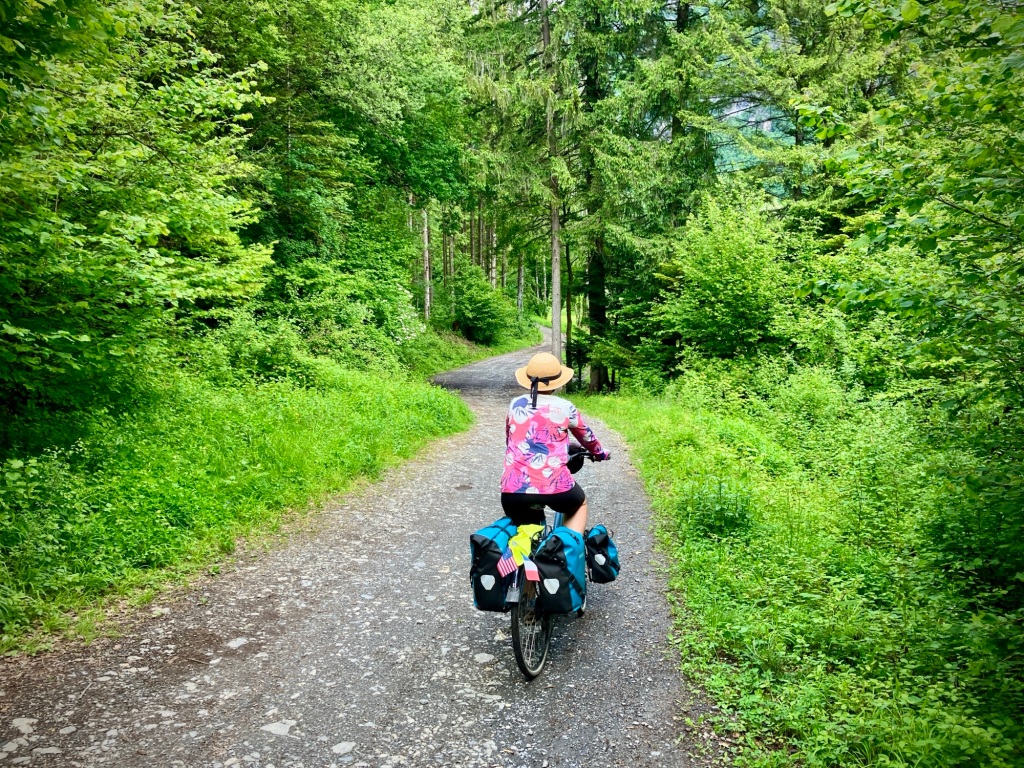
Our cozy apartment in Albertville had convenient balcony drying The medieval village of Conflans is just a short walk up the hill from downtown Albertville. We really enjoyed learning more about life and history of the Savoie at the small museum.Spring fragrance in Conflans.La Bicyclette in Albertville is a great bike themed bar with craft beers, a very pleasant garden, and of course, wine -:) .Heading out of Albertville for a short day to Annecy. How can we make this longer and more fun?Taking the rolling side gravel and dirt paths instead of the paved cycle path.Happy to snag a lunch bench on this busy holiday weekend.Another side excursion to get some views and hills.Oops, too much hill and wicked steep in parts! A bike push assist.Yup, the trail goes through this farmhouse. We’ve learned that France is quite liberal with protecting historic rights-of-way and unless there is a clear Privé sign, we press on.Cheryl enjoying the side excursion downhill.Fun descent in a bit of mud. First one to fall down buys the wine!
After Albertville, we had an easy day to Annecy planned, but I did my best to make it a bit more challenging as we couldn’t get into our apartment there until 5:30. But the weather was spectacular and the route a joy, minus a few rough patches off road. We got to the south end of Lake Annecy just after lunch, where our route joined the 40km lake loop. It seemed that most of France was outside that day as the weather was finally warm. We merged into the pathway mix of fast and slow, families and dogs, and racers kitted out still thinking they might achieve their personal Strava best weaving around thousands of people. It was fun and the scene was memorable as we got closer to the center of Annecy.
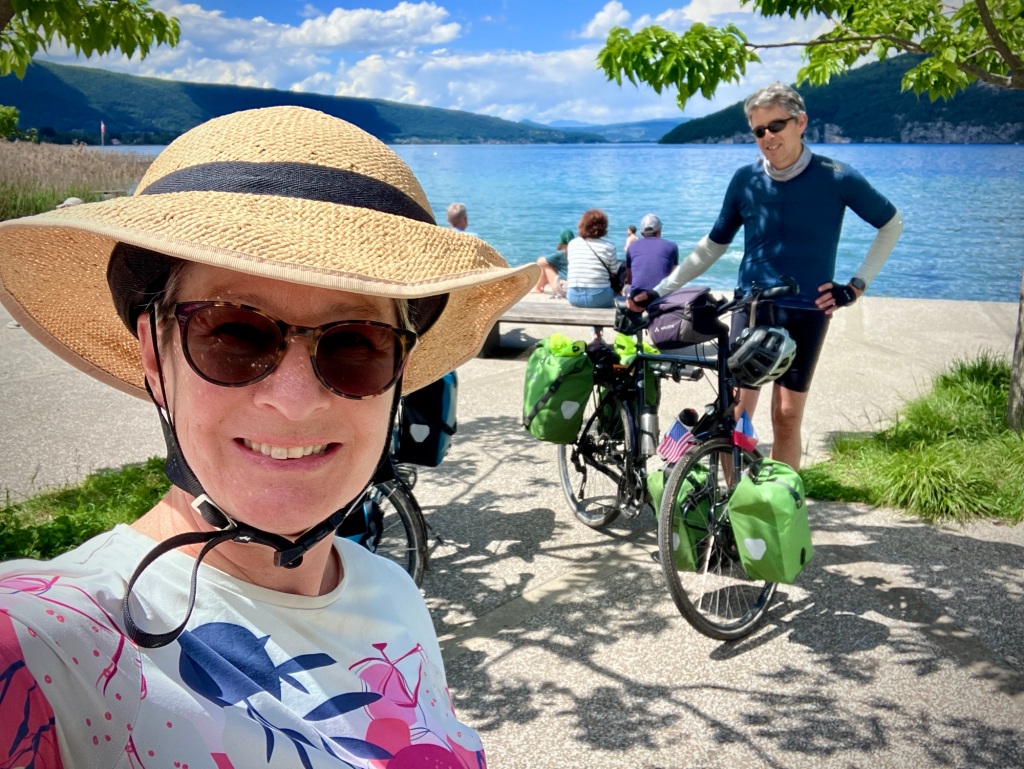
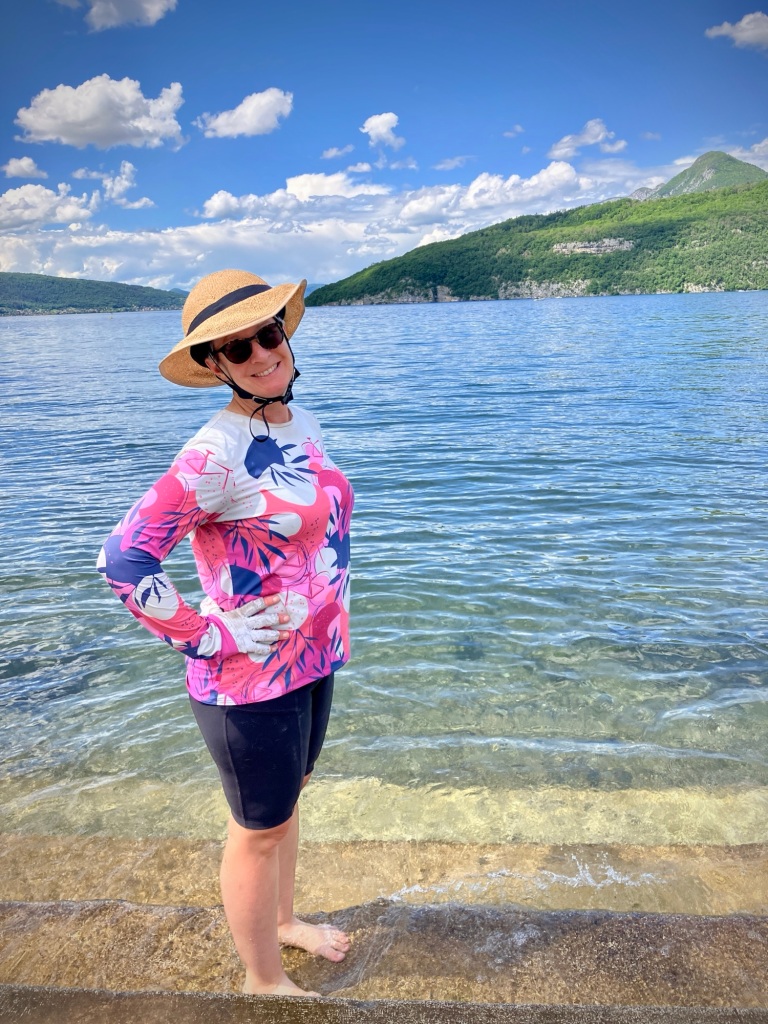
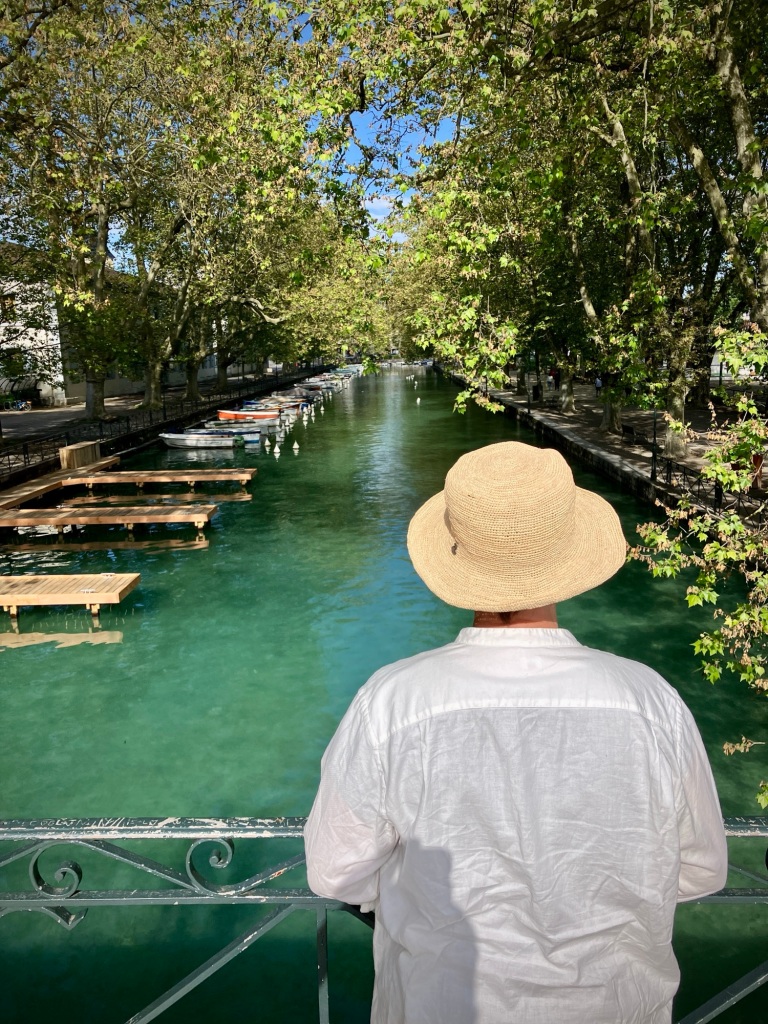
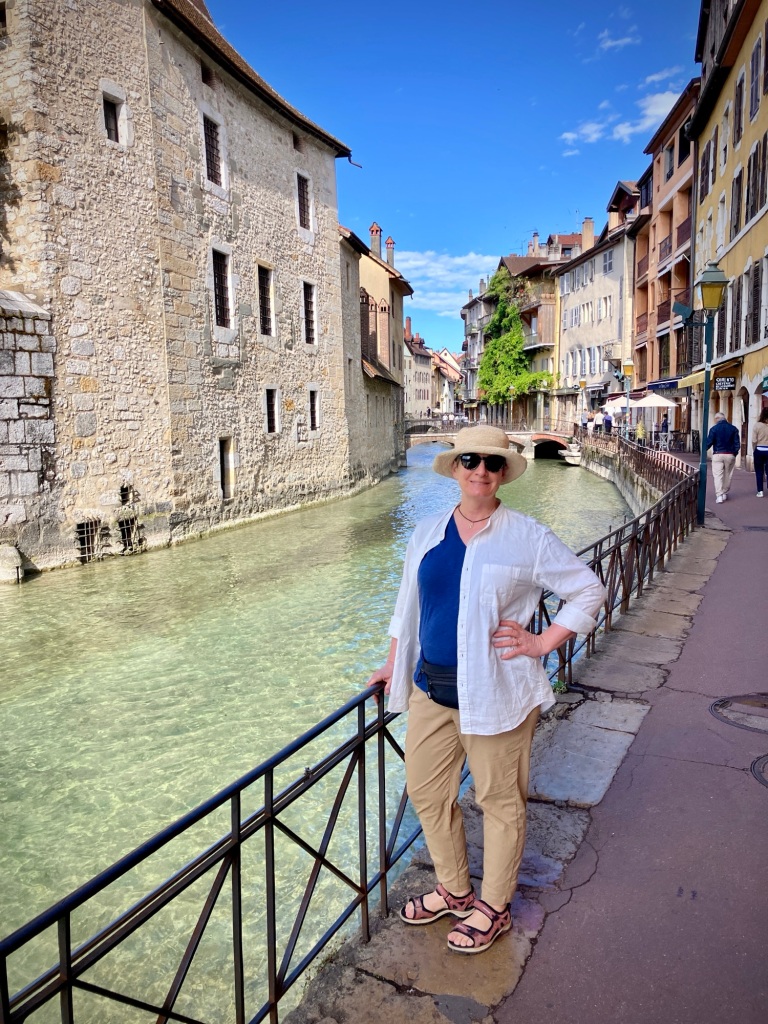
You can circle Lake Annecy on cycle routes which is a very popular day trip.The lake path was full on France the Sunday of a long holiday weekend (Corpus Christi).We were waiting for a mishap in the Sunday spring fever and lakeside chaos, but it all seemed to work out.So this is what cycle touring in warm weather is like! We felt the joy of everyone as well, since we’d been experiencing the same wet and cold spring across France.Chillin in the lake on the hottest day of our spring trip.Postcard shot, Annecy.Annecy’s lakefront has the historic aire of a long visited and cherished place for relaxation.The enchanting crystal waters of Le Thiou, a short river that flows out of Lake Annecy and is one of the clearest in the world. It eventually flows into the Fier and Rhône.
Annecy is a lovely French city with a great density, beautiful lake front, summer swimming, boating, and strolling. It benefits from easy access by train including daily direct TGVs to Paris. For our California friends…imagine a 2 hour train from San Francisco to North Lake Tahoe. We can only dream.
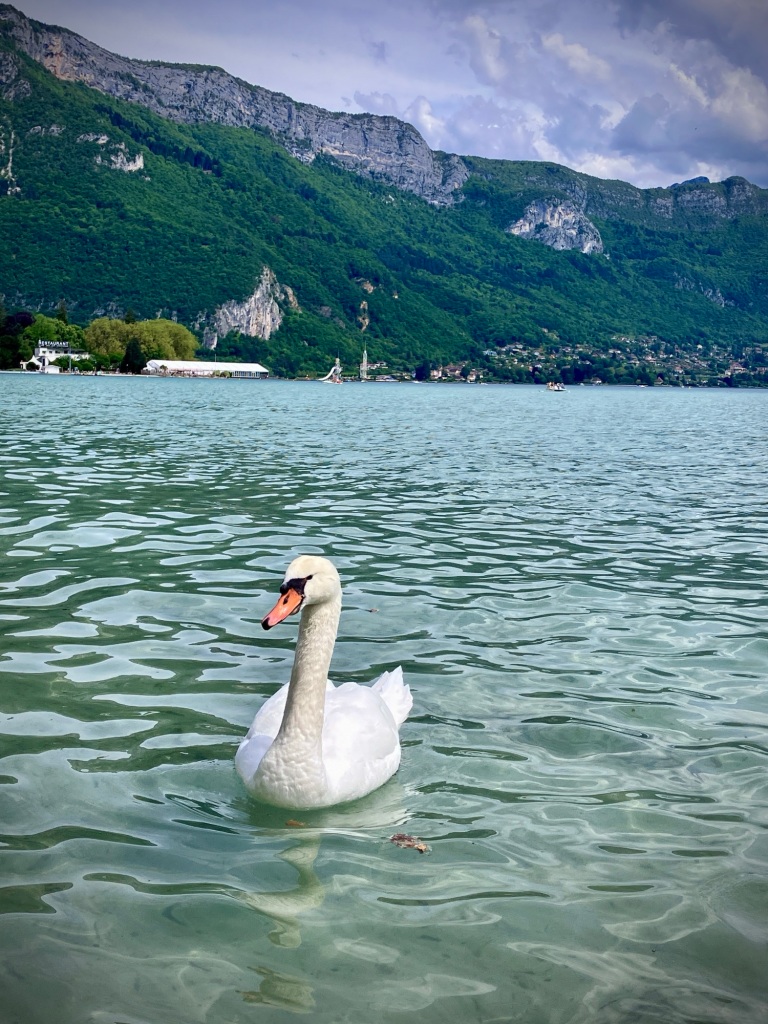
New play space for people as Annecy had recently expanded the car free core.Bollard access again keeps the lakeside traffic out of old town core.The lake and mountains are omnipresent.We stayed another night in Annecy after the holiday rush to enjoy a more tranquil experience and more swimming!Beers with friendly British cycle tourists we met on the path. Greetings Clive and Alan!Swimming with the swans.Big hair on Lake Annecy.
Our final route from Annecy to the Vallée Verte included a morning train hop as the V62 route is sadly incomplete and we’d been warned about the road near Cruseilles. The terrain is steep and rugged north of Annecy and it would be too long to do in one day as well. So we enjoyed a scenic hop on Line 2 of the recently upgraded and completed Léman Express system centered around Geneva. The trains are modern, frequent, and bike friendly. Bike space is somewhat limited, so we imagine at peak times it could be challenging, but we had a very peaceful ride on the 10am train which starts Annecy. Note that you need to buy a Swiss bike day pass if you stay on the system into Switzerland. (we did not.) The fixed price Swiss bike day pass (regardless of distance) is not a cycle friendly solution for short hops and really should be revised by SBB.
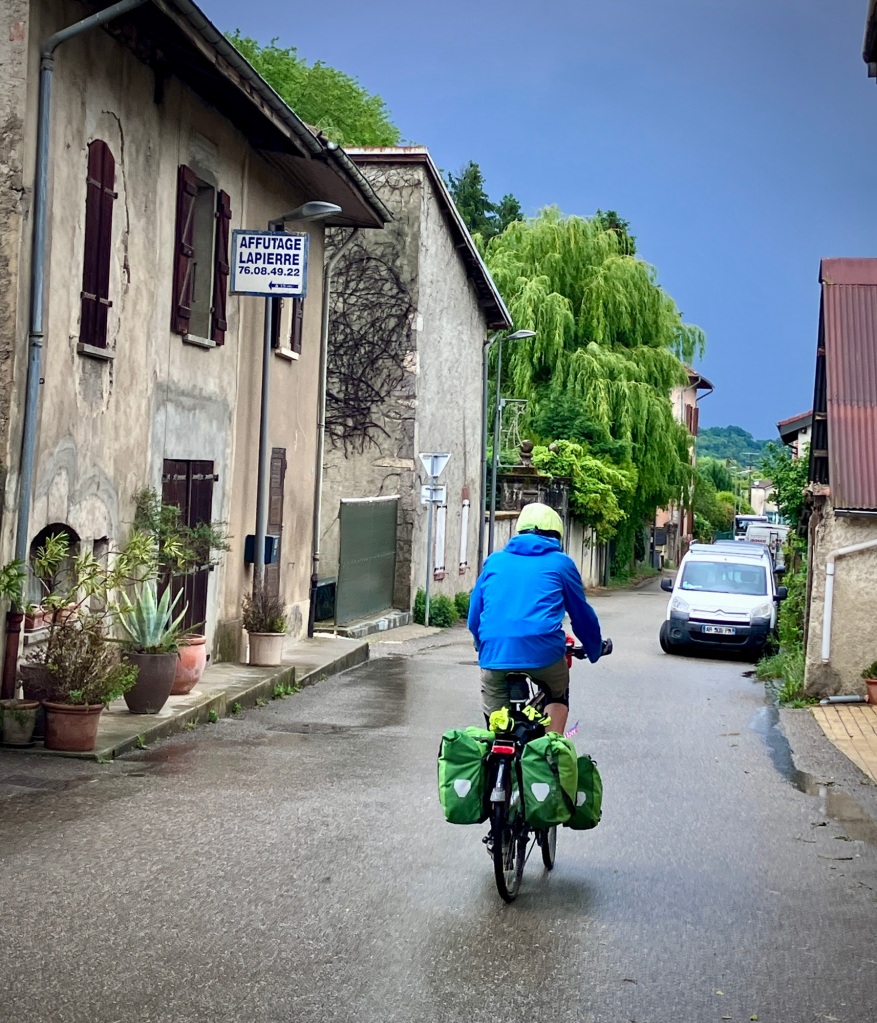
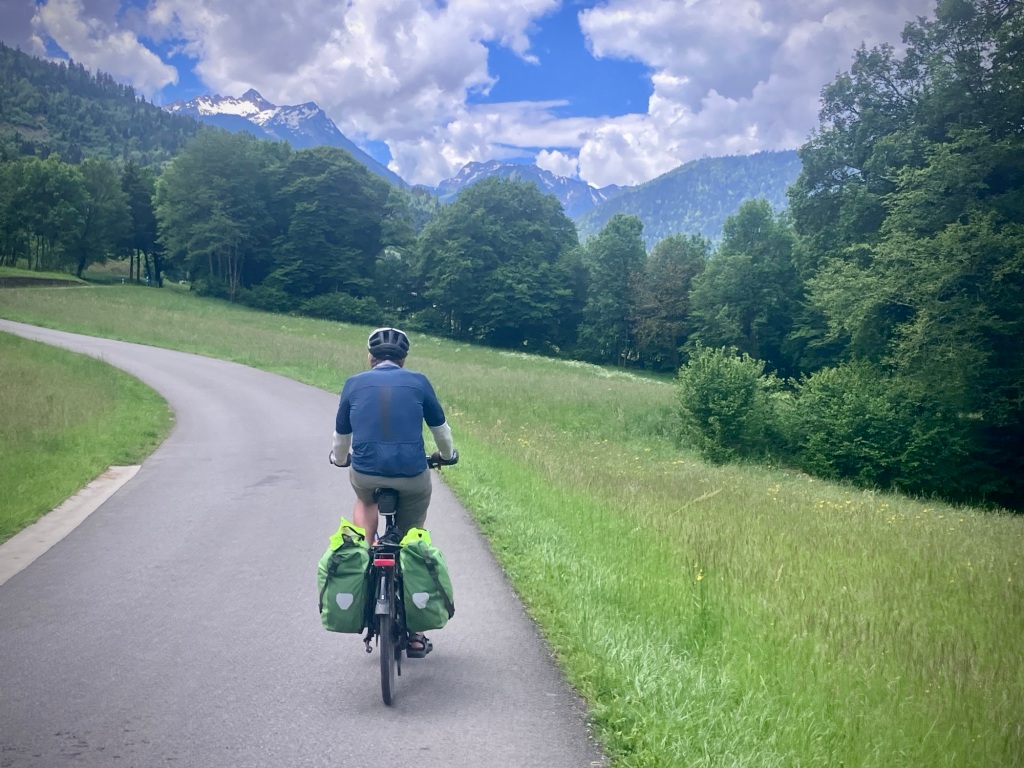
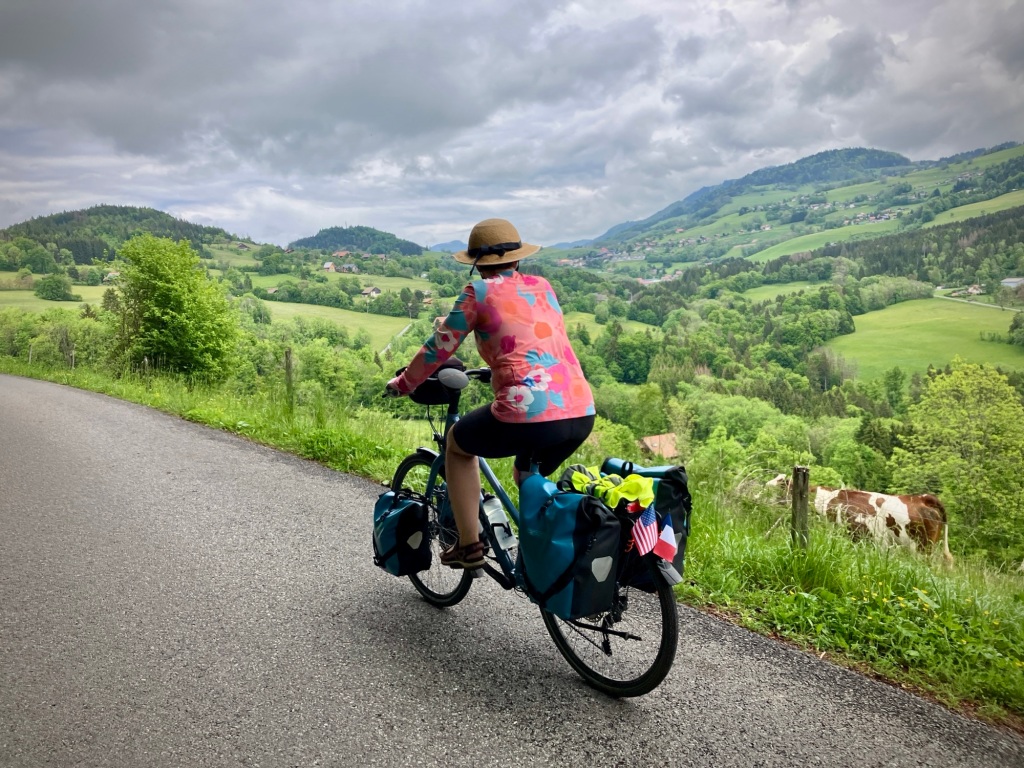
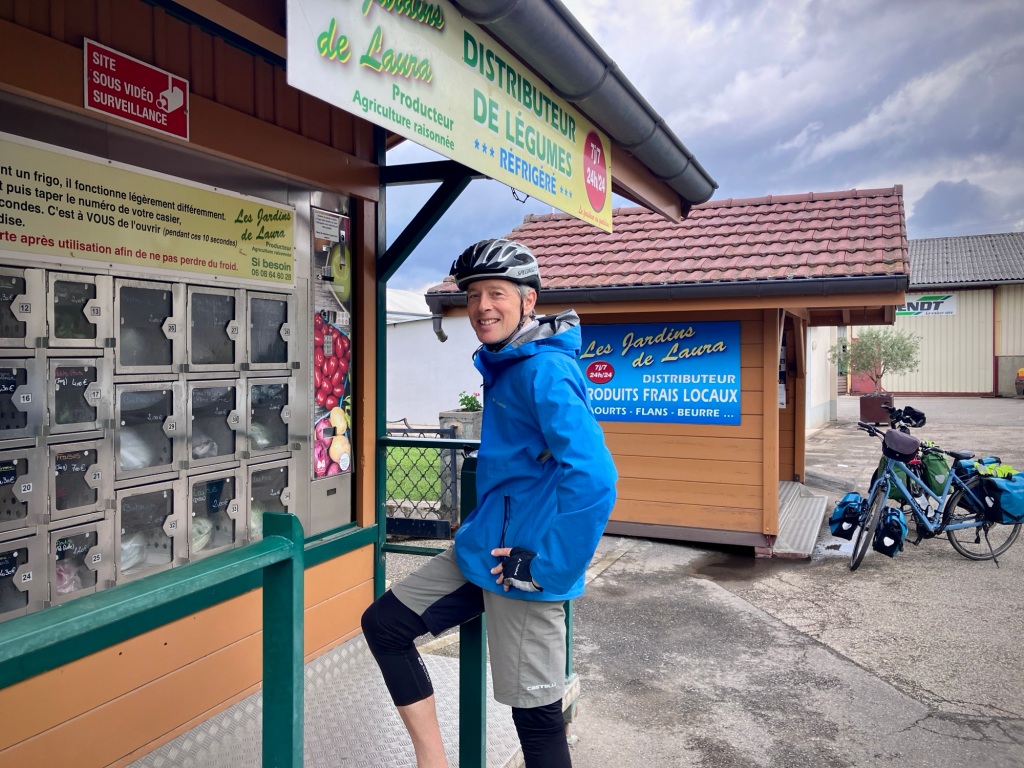
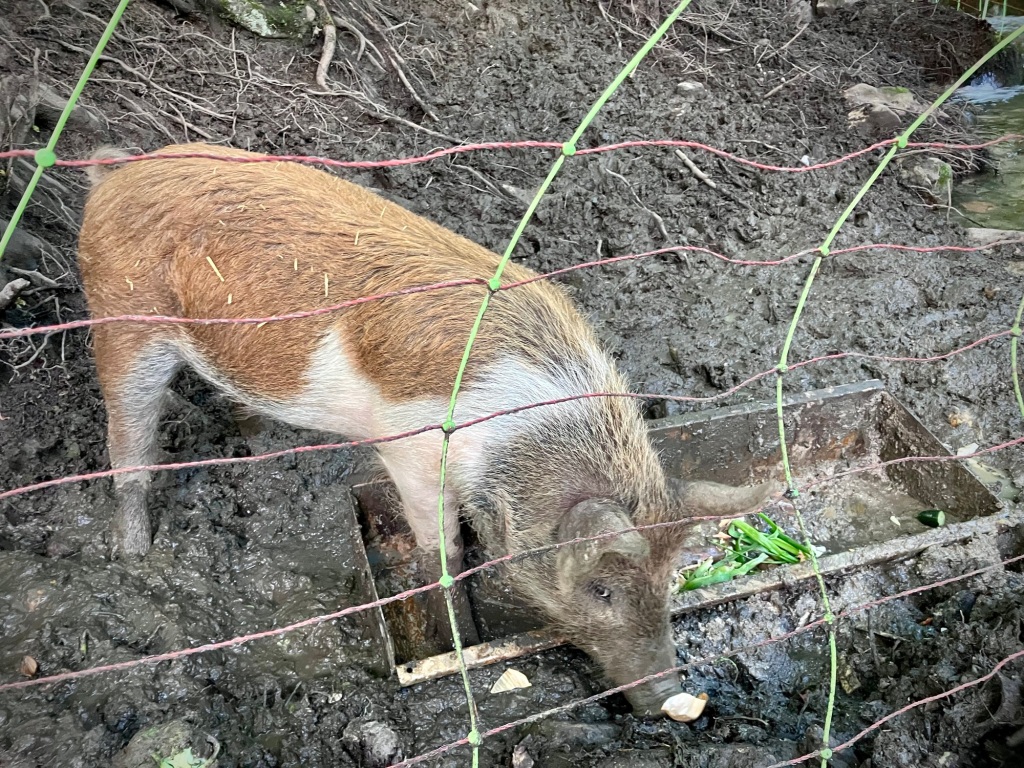
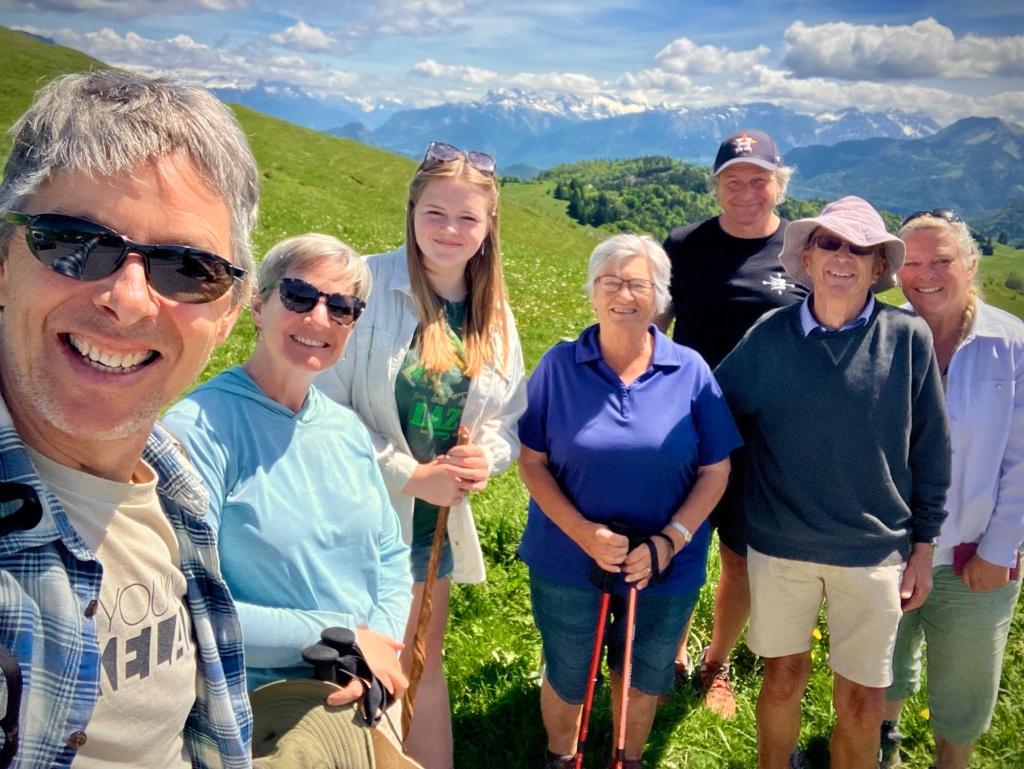
The final day push up the Col de Perret. Cheryl climbing with little effort and record speed; a testament to our almost 3 months on the bikes France does fresh vending like no others. This wonderful 24/7 farm shop had artisan yogurt, cheeses, eggs, and a wide variety of vegetables.Biggest farm vending ever near Reignier. We got fresh broccoli and some yogurt. A great solution for staffing costs while still providing access to fresh foods.Vallée Verte welcome committeeFeeding our kitchen scraps to the neighbors pig; strangely they don’t like cabbage.Reunited with our great friends and their visiting family for a spectacular day hike in the Alps.Happy to be back in the Vallée Verte after another successful bike tour.
We shaved over an hour off our last time climbing up the high valley route and felt a strong sense of accomplishment as we rolled into our friend’s house again. We appreciate everyday of our freedom. Happy travels!
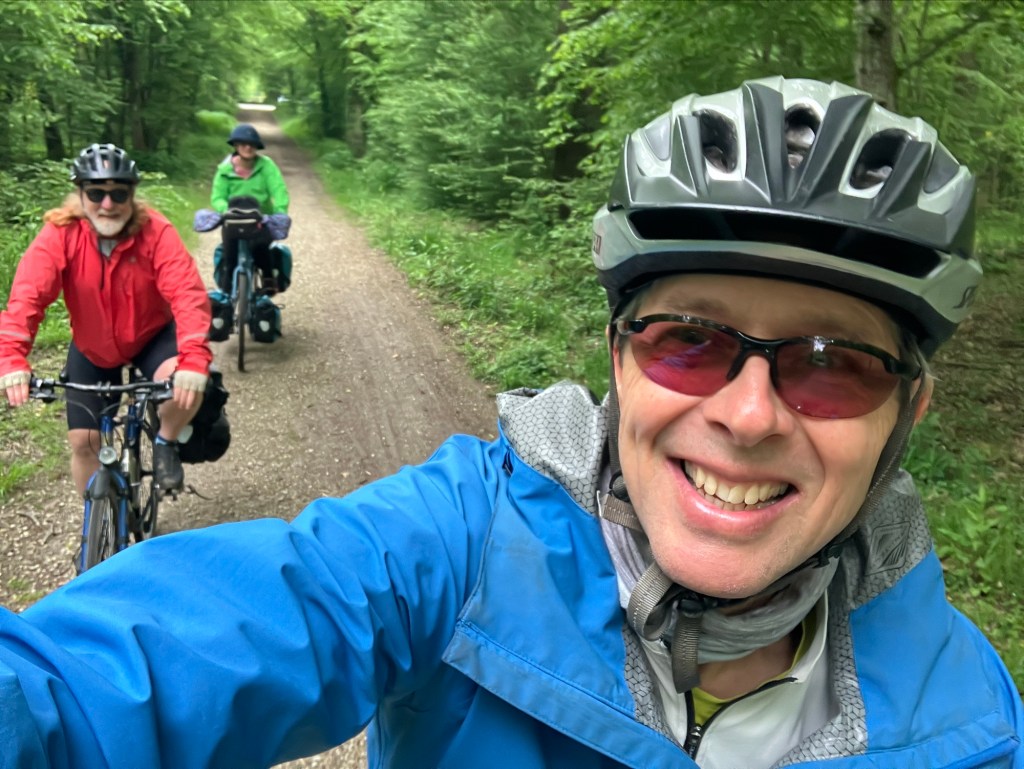
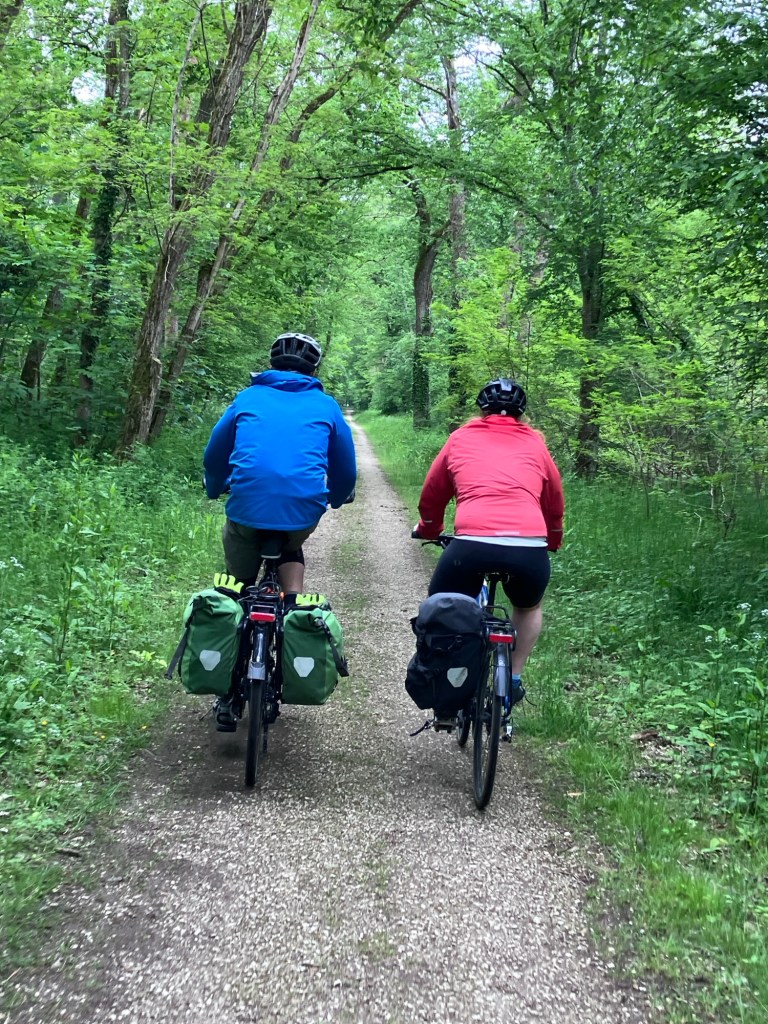
From where we stayed in the 12th, Fontainebleau would be an hour by car, or an hour and 15 minutes by train. But where’s the fun in that? Where’s the sense of geography and urban transition to countryside? Where, I ask you, are the super muddy trails and deep puddles when going by train? Ok, that last part wasn’t exactly a selling point but thankfully we didn’t know about the bad pavement and mud holes called trails since none of us had ever done this ride before. We did want the sense of accomplishment that comes with leaving a city by bike, that feeling when you load up your panniers and just start pedaling. Self sufficiency, freedom to set your own schedule and stop and look at sights more closely.
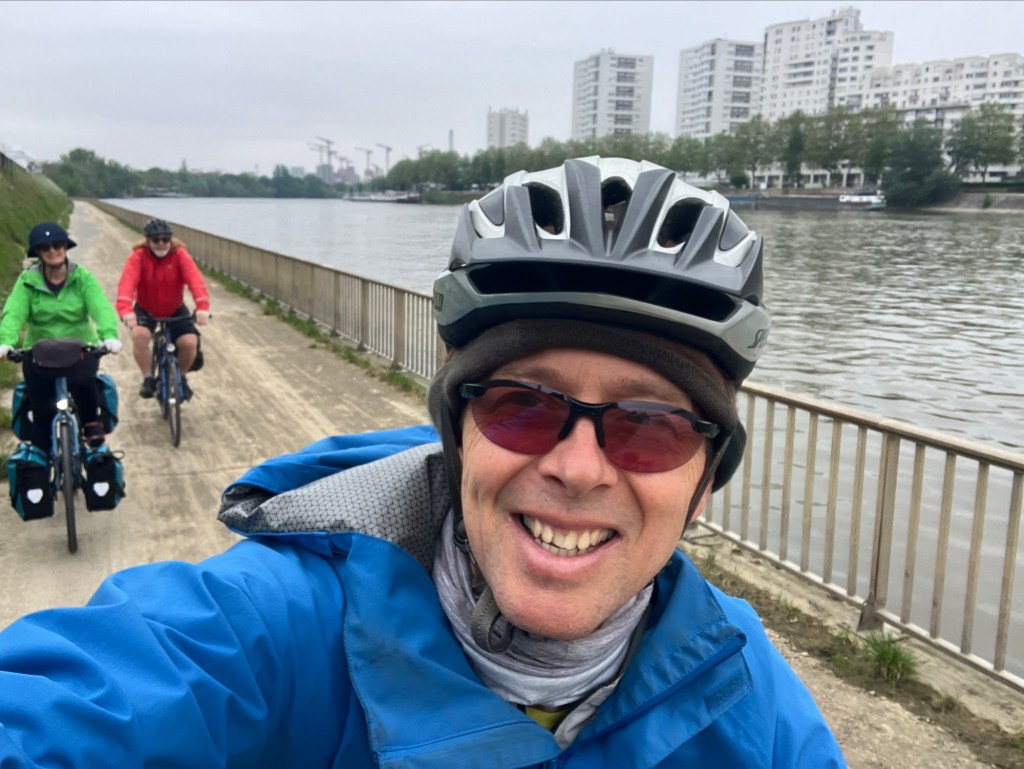
Enjoying our start through the Bois de Vincennes, after a stop for lunch provisions.Crossing the Seine and the railroad tracks on Charenton-le-Pont.
As soon as we left the Bois de Vincennes we left the city of Paris. We were cycling through the municipalities which make up the Île-de-France, the most populous of the 18 regions of France with 12m inhabitants. The cycling infrastructure stayed quite good at first, with lanes and signage to guide you along the Scandibérique. The what? The French part of EuroVelo 3, which links Trondheim (in Norway) to Cap-Fisterra passing by Santiago de Compostela (in Spain).
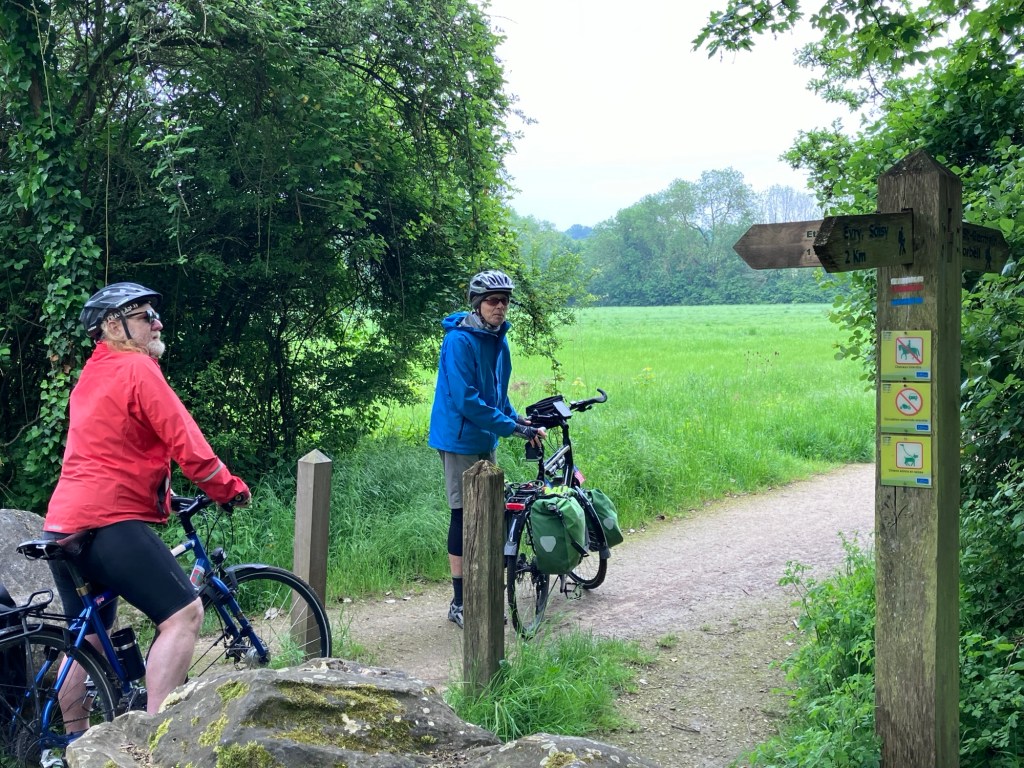
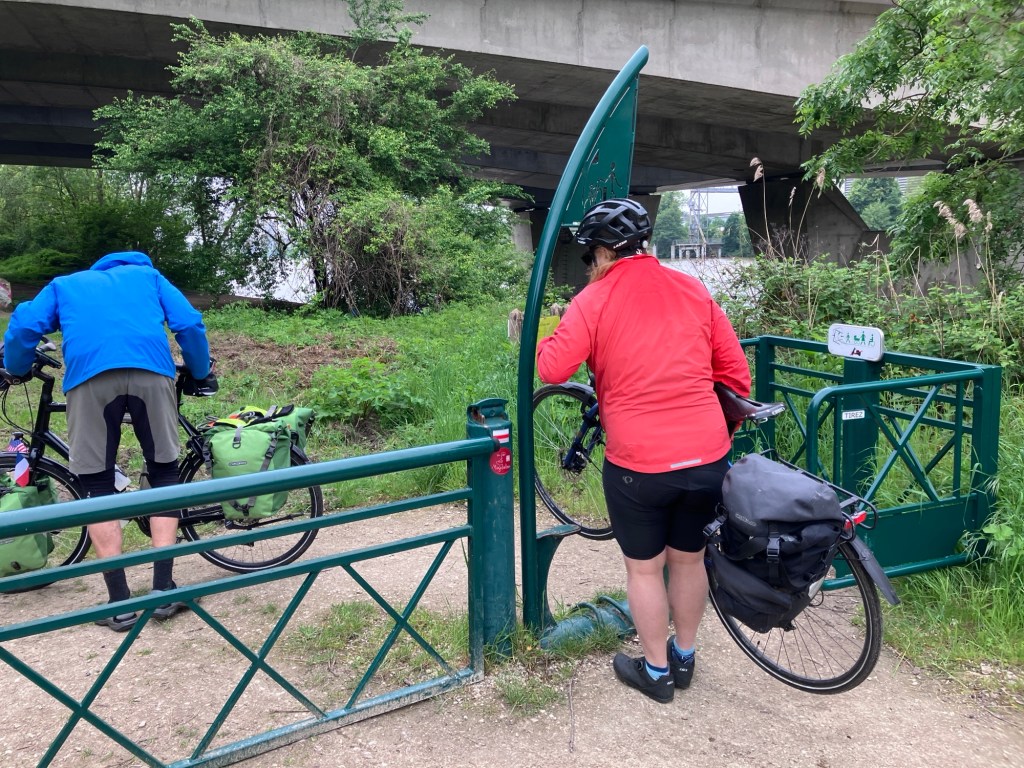
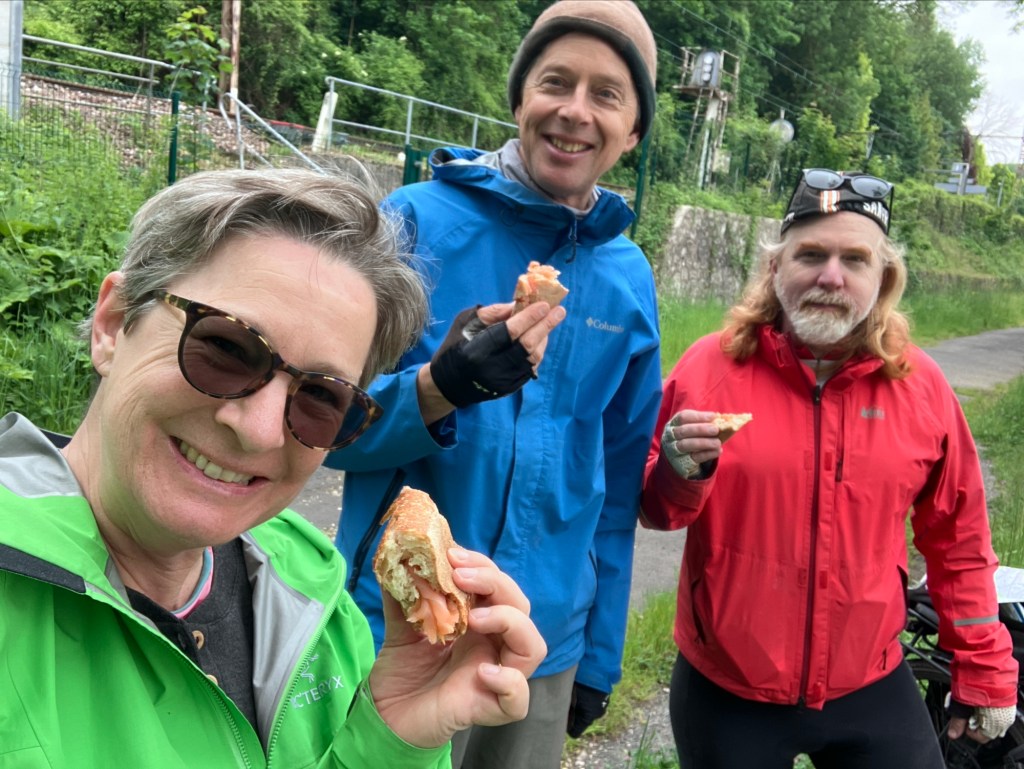
Scandibérique signage. I always snap a photo of the different route signs.So many construction cranes in Ivry-sur-Seine.Vitry-sur-Seine. A nice path separated from the road.The path did look as if it had been flooded recently, with a layer of mud covering it.Looking more country-like in Draveil. Jason would be taking a train back to Paris from Fontainebleau.Étiolles, where the path starts to look a bit less welcoming.The worst trail guards ever. What are these even supposed to accomplish? Fine with an unloaded bike, but the added width and weight of a loaded bike made these barriers so slow and difficult to cross. Saint-Germain-lès-Corbeil.And then the trail got nice again, such smooth asphalt. Le Coudray-Montceaux. A stand up lunch break with map review. Smoked salmon and bread. There was a serious lack of benches along the route so we ate standing by the trail. Dammarie-les-Lys
We were surprised in Bois-le-Roi to discover some truly jaw dropping mansions, known as Affolantes.
They are considered a symbol of 19th-century bourgeois ascendancy. I failed to capture a photo of the horrors of the pavement quality.An unpaved but not muddy section.Coming in to Fontainebleau another unpaved section that got quite muddy. It was surprising to have the marked bike path to the train station be unpaved and muddy.
It was great to ride right out of Paris with our friend Jason, but would we ride this stretch again? Probably not. Jason’s fiancée Katie told us she wouldn’t ride that stretch again, and would prefer to take a train out and ride on from Fontainebleau. I agree with her. It seems to be a big huge missed opportunity to not have a coherent paved or smoothly surfaced trail along that stretch – it would be a huge draw. We had to ride through deep mud on overgrown paths on some stretches. No photos because we were all too busy trying to ride through deep mud!
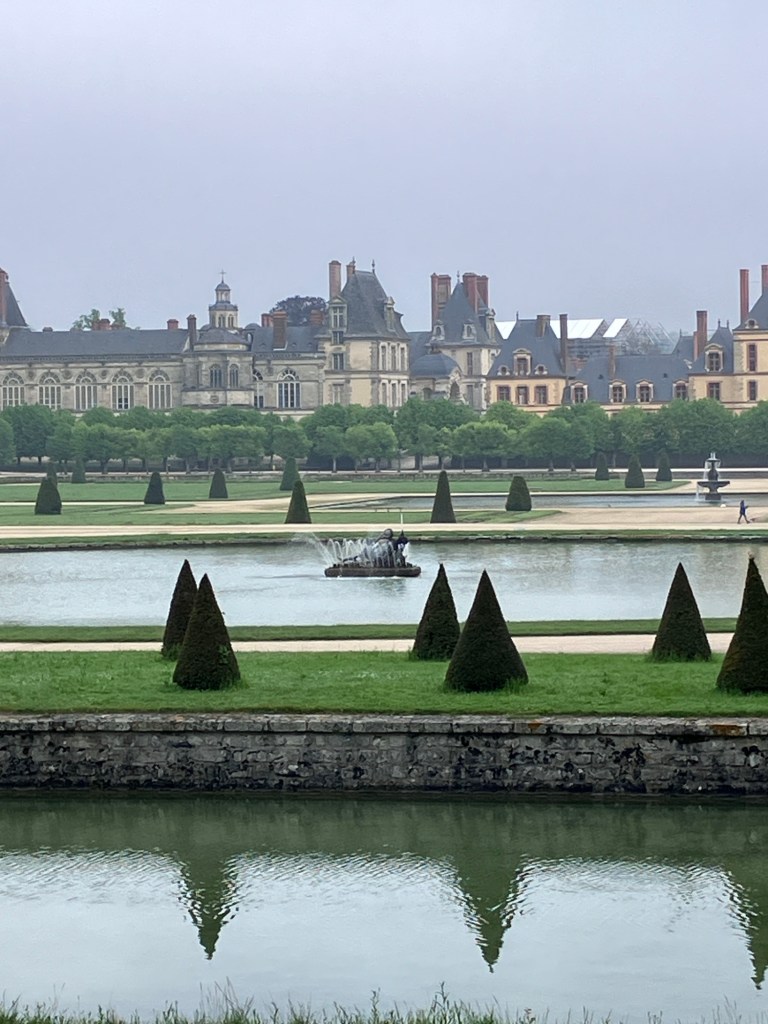
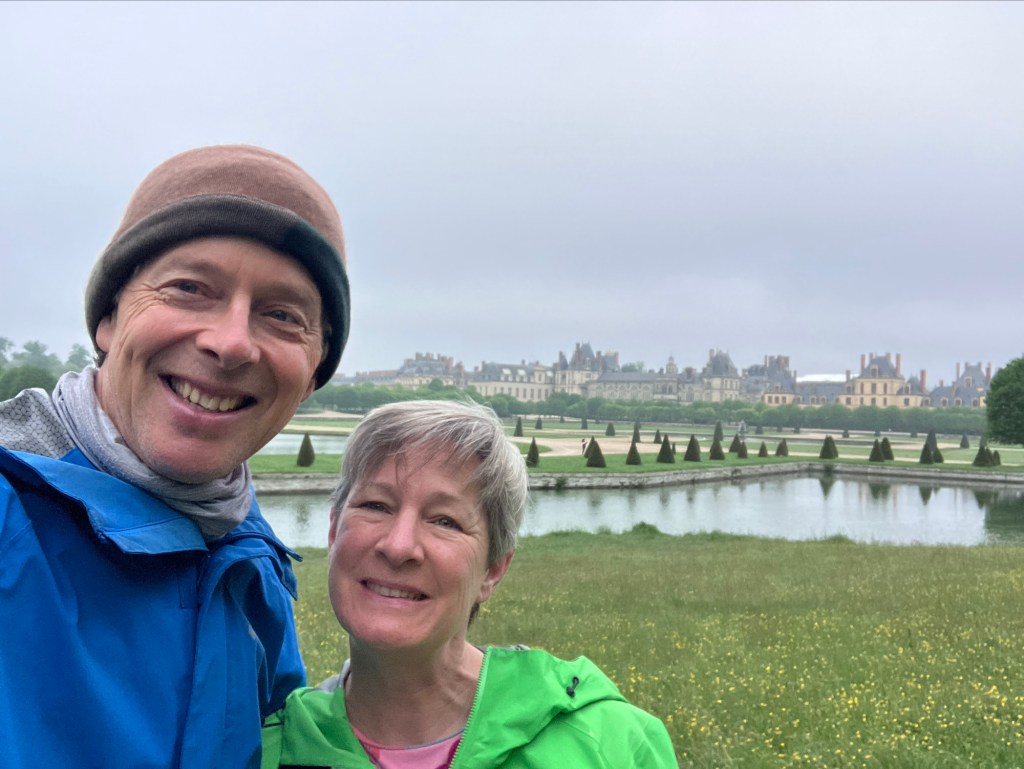
Château de Fontainebleau the next morning on our ride out. Aww…look at those smiling morning faces. Little did this happy couple know what trials would face them on this ride from Château de Fontainebleau to Sens.The trip leader.
Trials? A bad day riding in beautiful France? Yes, it happens. First, we got stuck in a dead end construction zone leaving the Château. That ate up about 20 minutes.
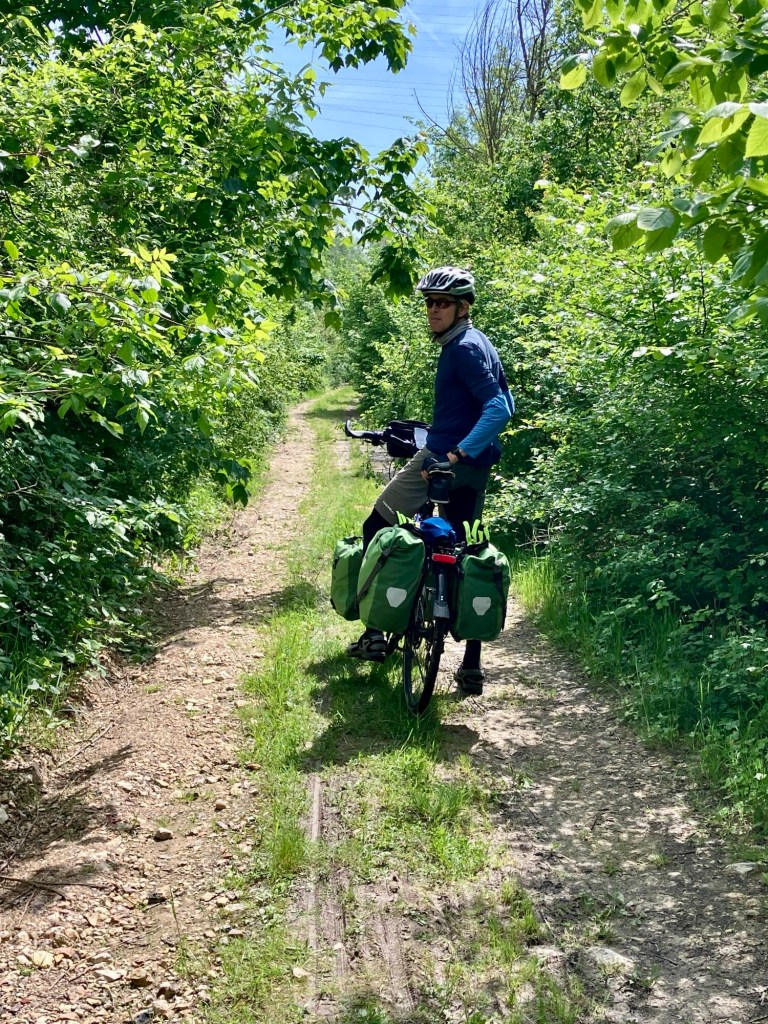
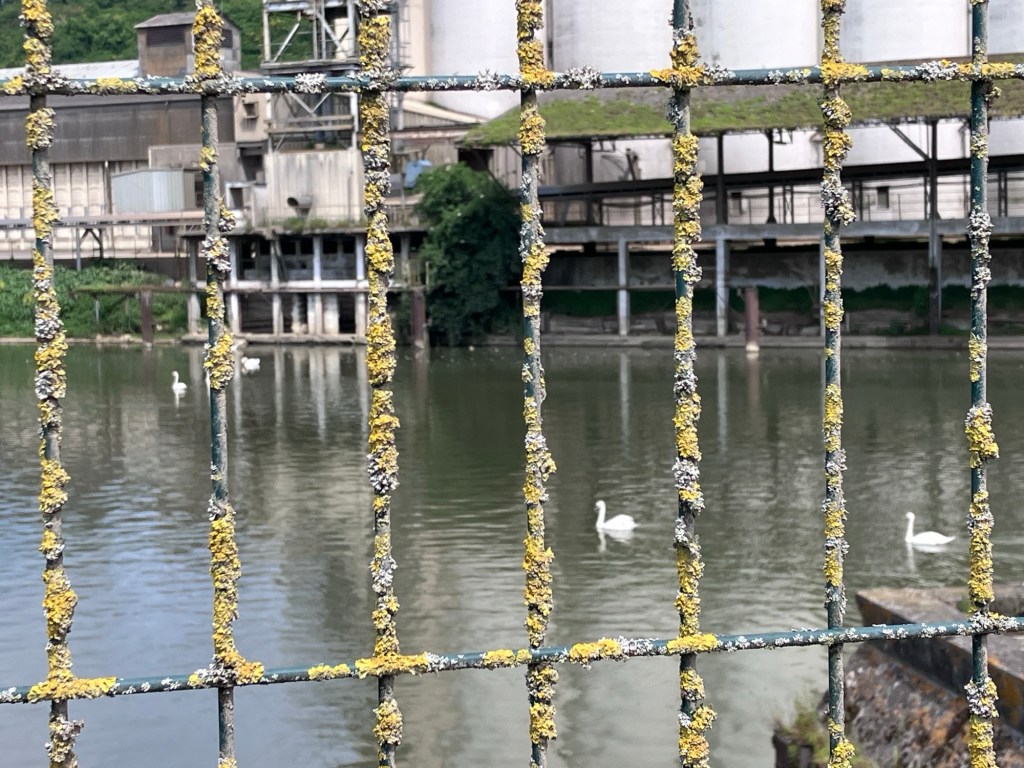
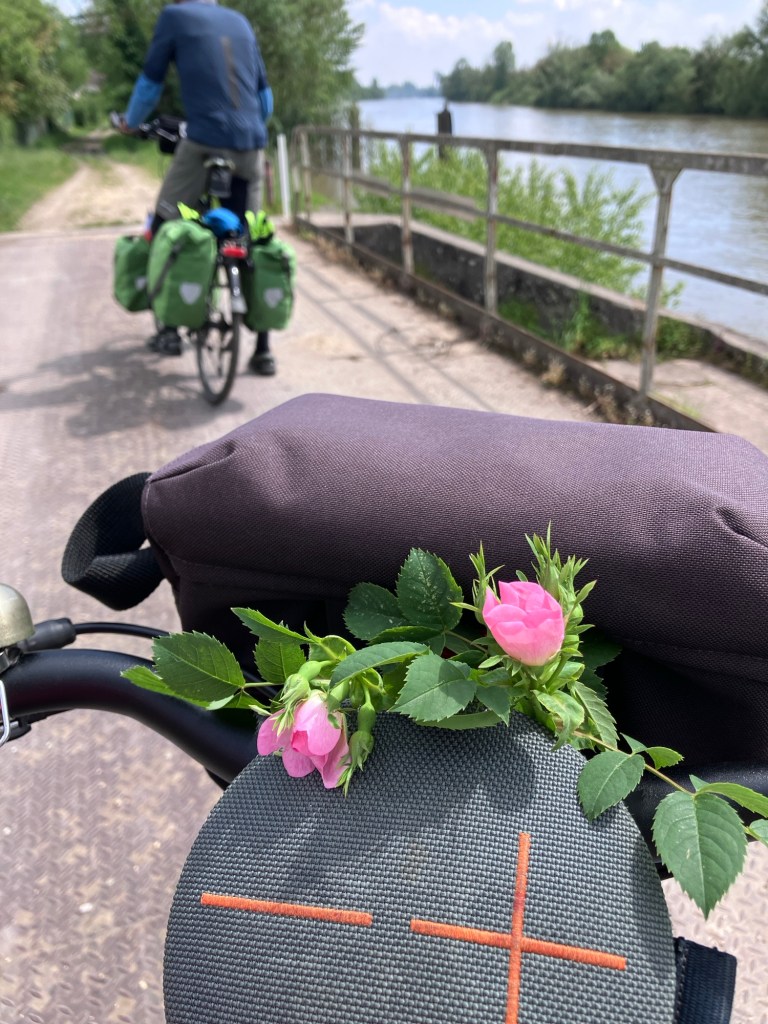
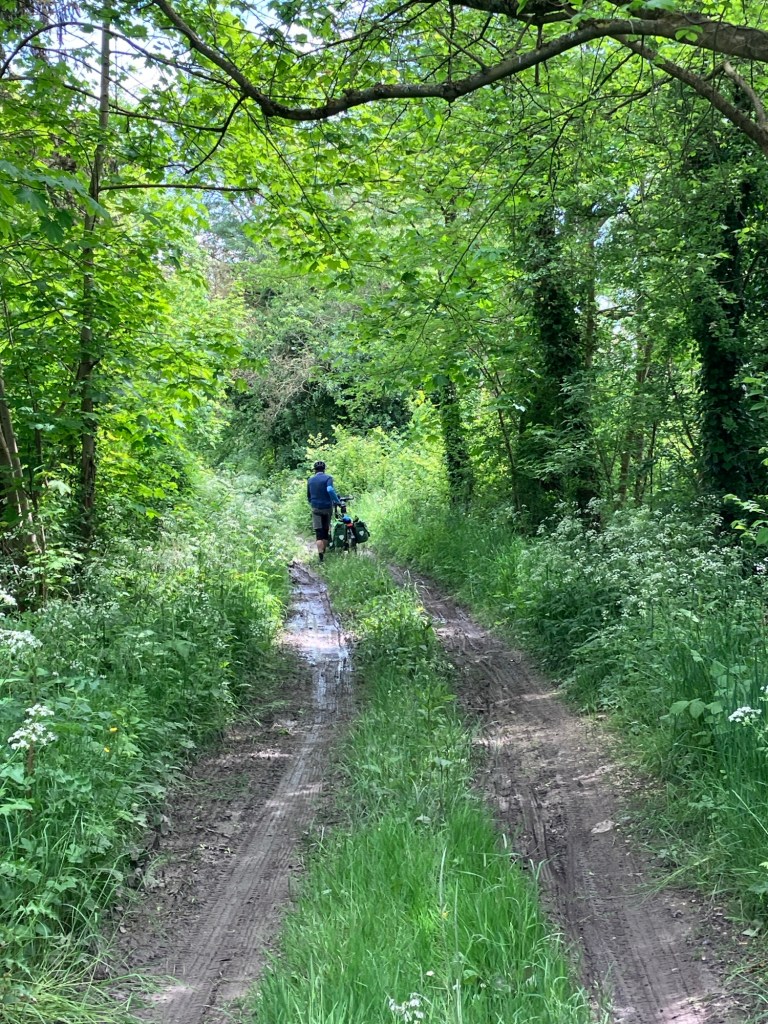
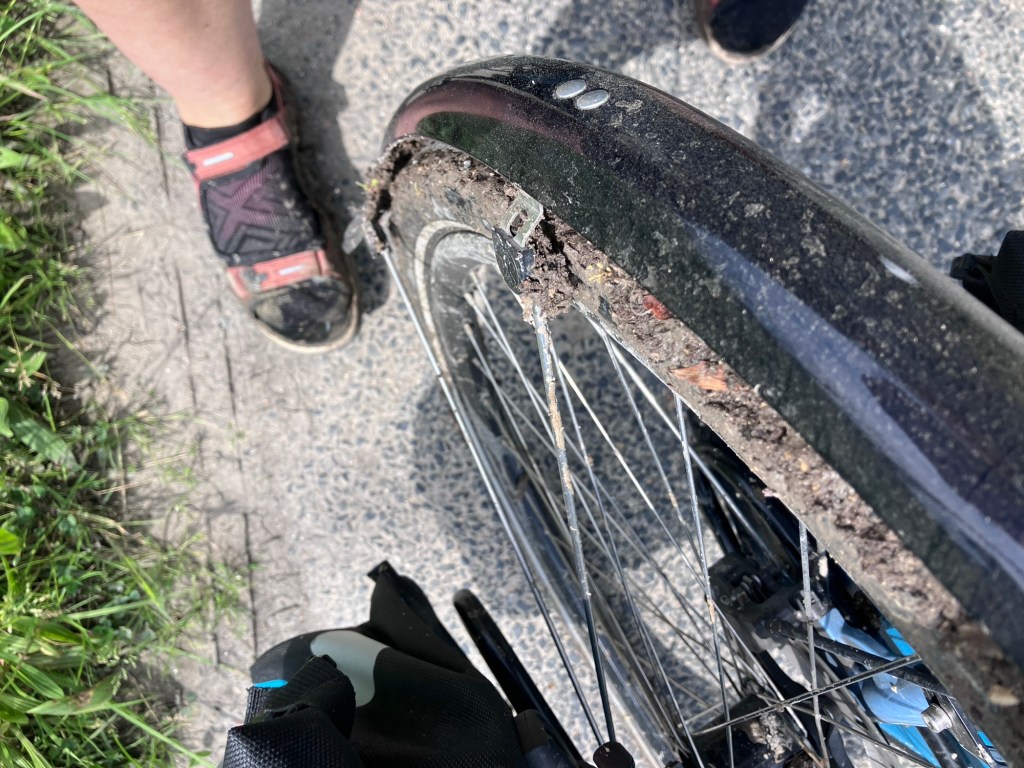
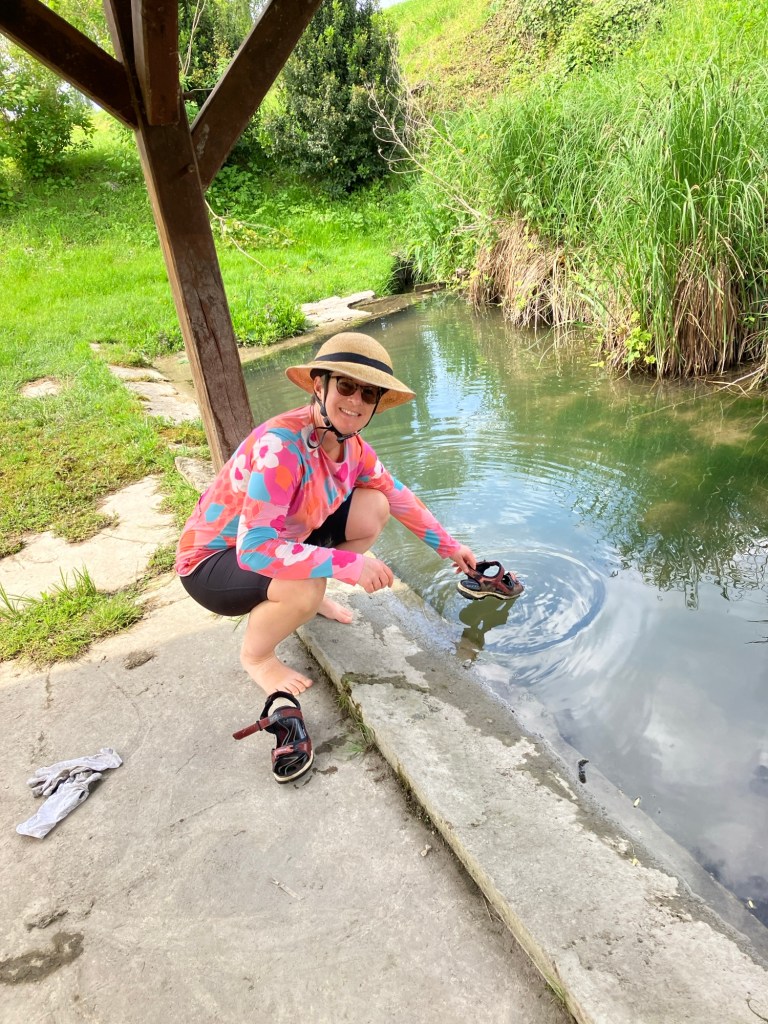
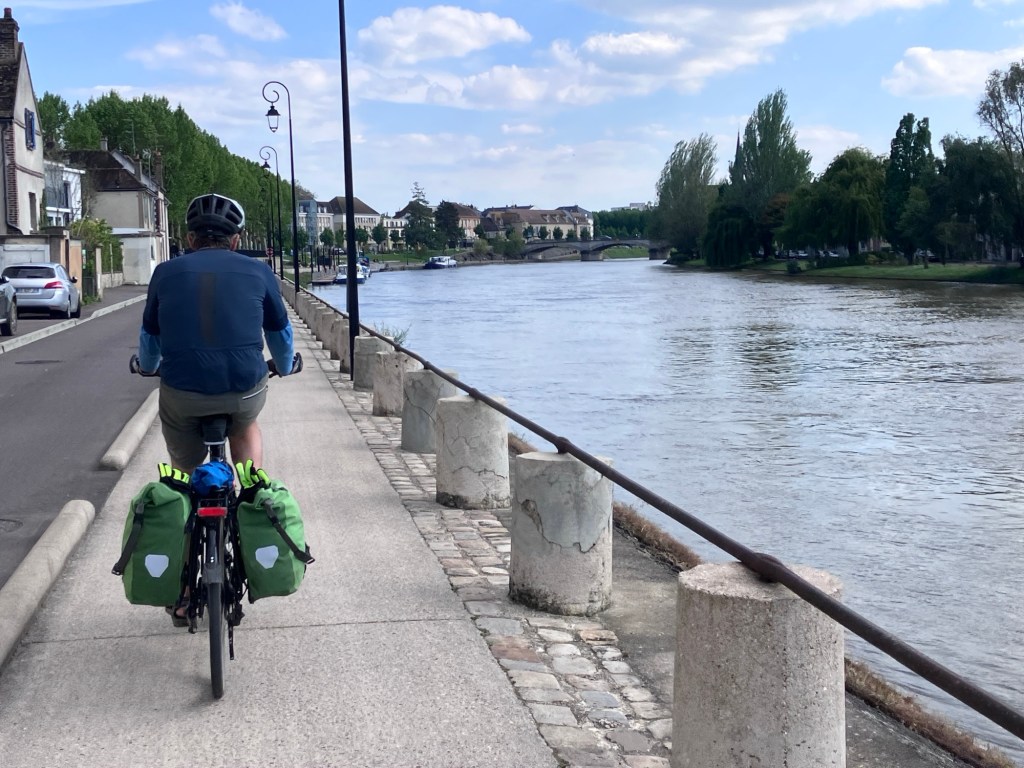
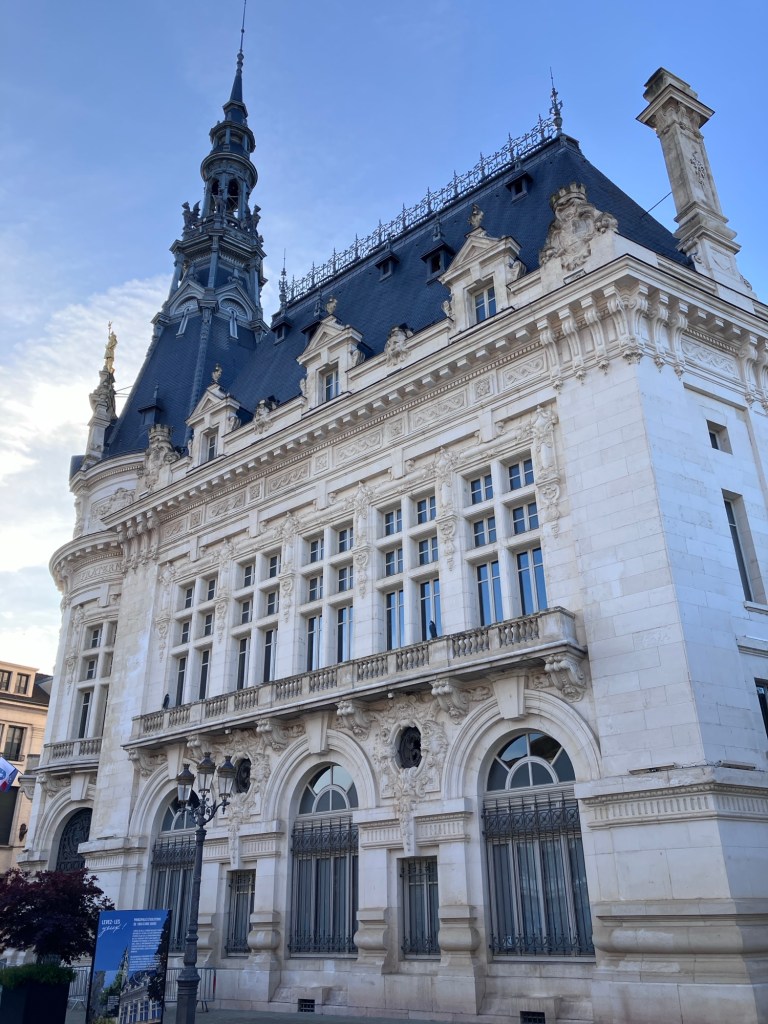
And then this dead end into a huge processing plant near La Grande-Paroisse. If it hadn’t been a holiday, Ascension Day, we think a connecting gate would have been open to take us back to the river. It was not. That took another 45 minutes or so.But wait! We pivoted to this river side path. We’re still along the Seine and now between the large industrial site and the river.Which became a muddy muddy mess. Swans behind a security fence.There were lovely roses blooming along the mud path. Are we coming out of the mud pit?Nope. More mud ahead. This stretch slowed us down so much. Really threw off the timing of the day.Mud packed fenders. A miscalculation of how deep one mud puddle actually was resulted in very dirty socks and sandals.Finally, one those traditional laundry sites came in handy for me to wash my sandals off.The sun was out and we dried off our muddy bikes. Rich rides past an asparagus field in Vinneuf.Later than usual arrival in Sens, thanks to two dead ends, one long muddy stretch, and a pretty warm day. We’re on the Yonne River now.The beautifully restored Mairie de Sens.
From Sens on the Yonne River we headed to Migennes. We met another bike touring couple from Paris who were headed to Villeneuve-sur-Yonne to take the train back to Paris. We joked to each other that with start of May, and some nice weather, there had been a bike touring hatch out. We saw more cyclists in a few days than we’d seen since we left the Geneva area on March 10th.
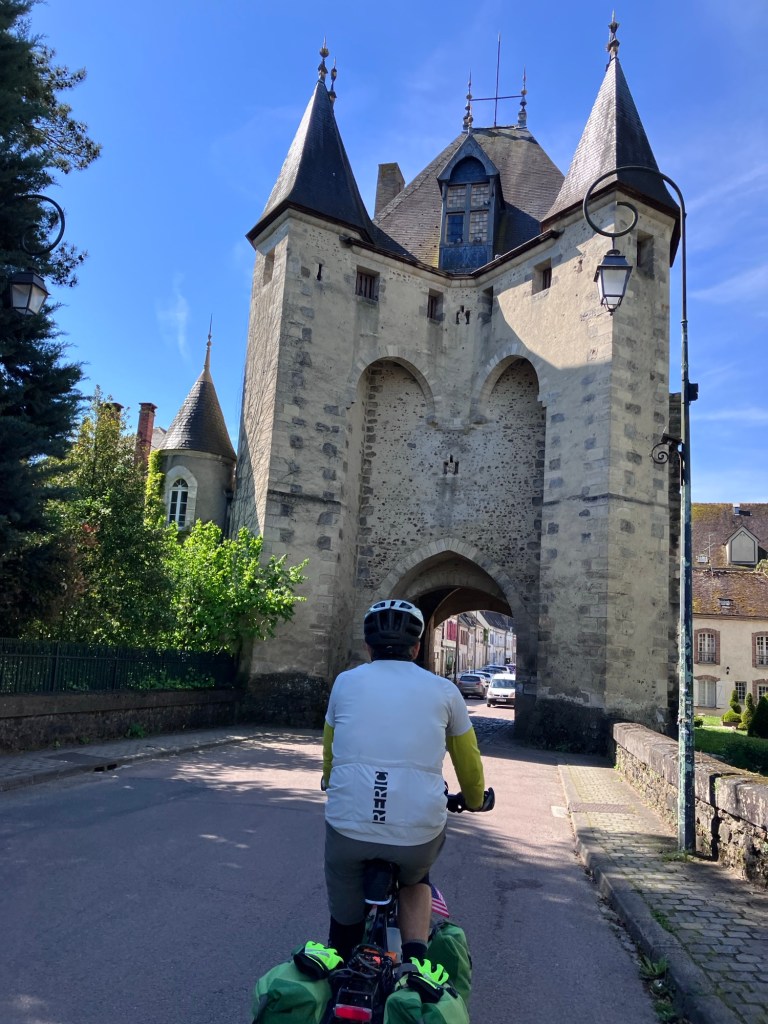
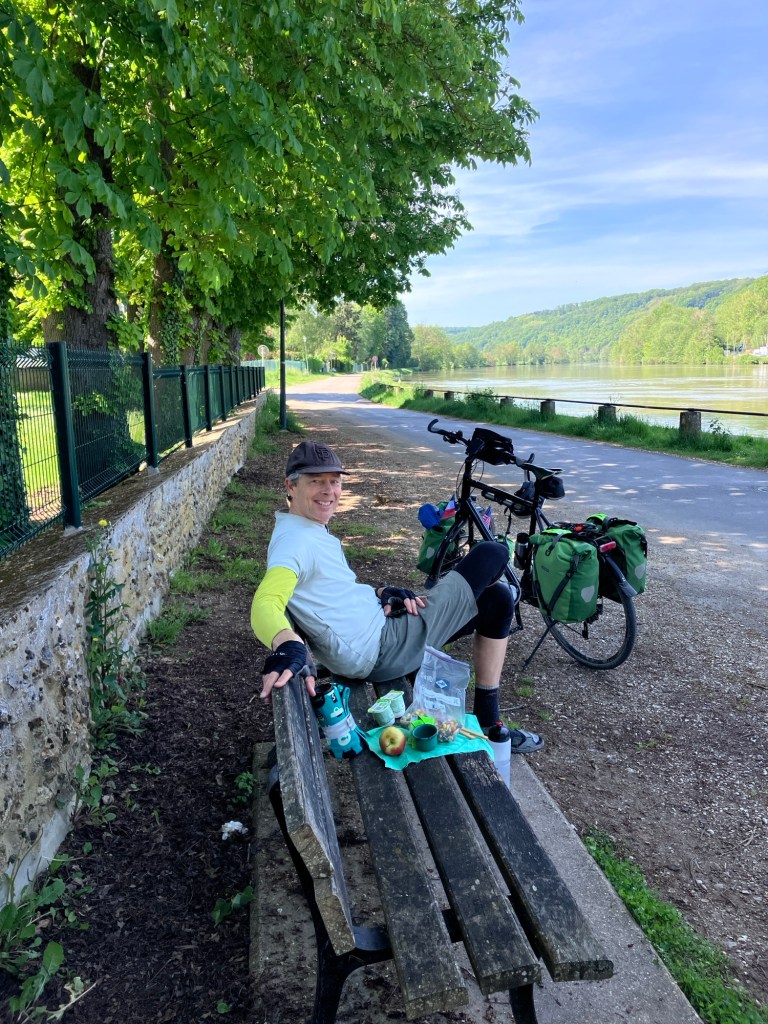
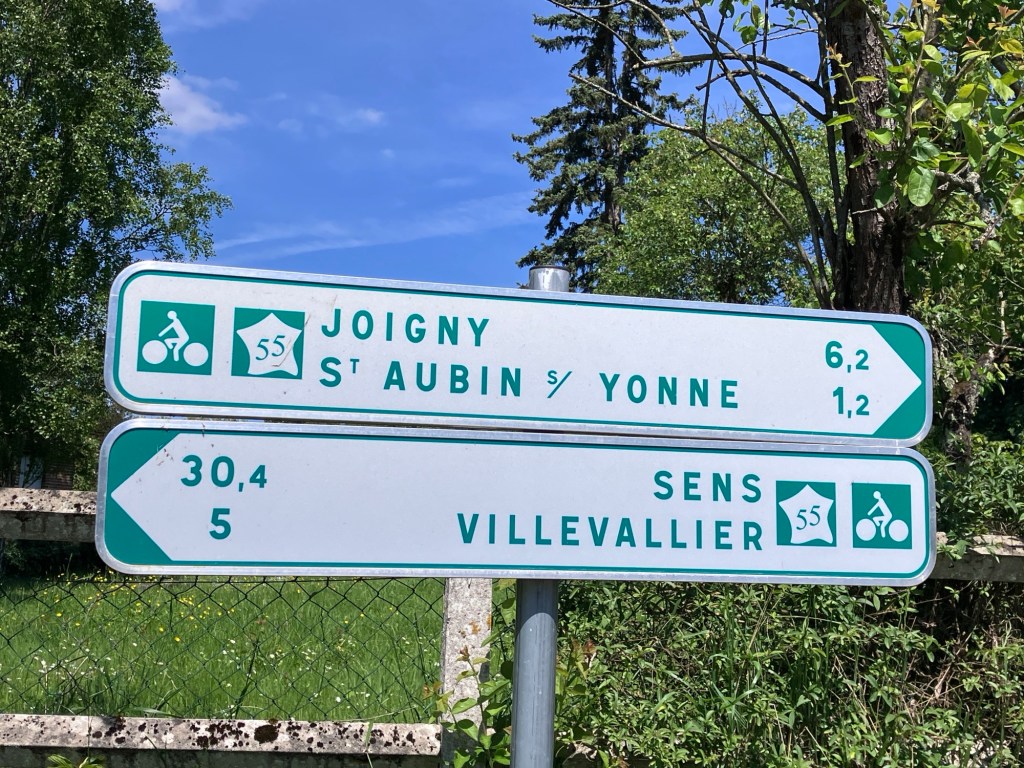
Porte de Sens of Villeneuve-sur-Yonne, riding through the old gate after a stop for lunch supplies.Ah, a bench in the shade to enjoy the river and the ducks.Enjoying the warm weather as we ride through Armeau. I have two different helmet hats with me. And two other hats. Four hats. Too many?Koomoot had told us this section was unpaved, but not only has it been paved, but some nice bike amenities have been added.We’re headed in the direction of Joigny. We came from Sens that morning.France continues to impress me with the nicely upkept state of historic sites, like this traditional laundry near Saint-Aubin-sur-Yonne.Second lunch break across the river from Joigny.Migennes. Where we spent the night at a decent hotel with a fantastic restaurant. Hôtel Restaurant Le Mitigana. And we meet the Canal de Bourgogne. Hello canal.Happy canal faces which will turn sour in a day or so.
We had some long days cycling into headwinds and through mud patches and getting to towns a bit late, so the discussion in Migennes was whether to ride the entire way to our next stop, in Rougemont – 81 kilometers away – or to take a train hop.
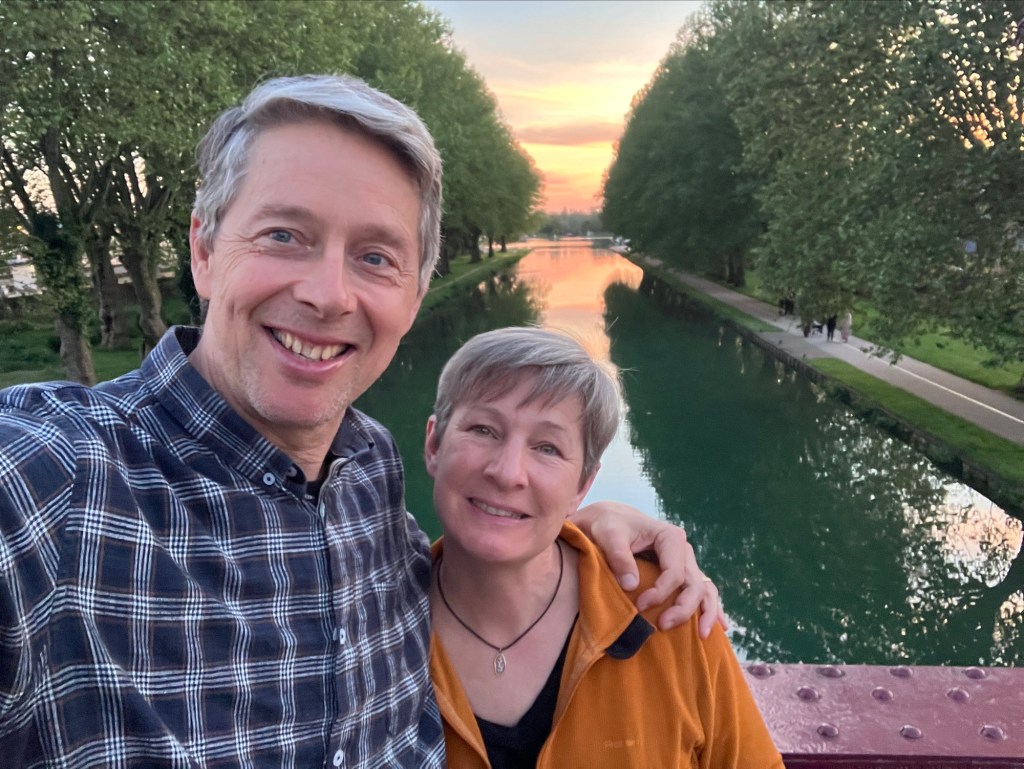
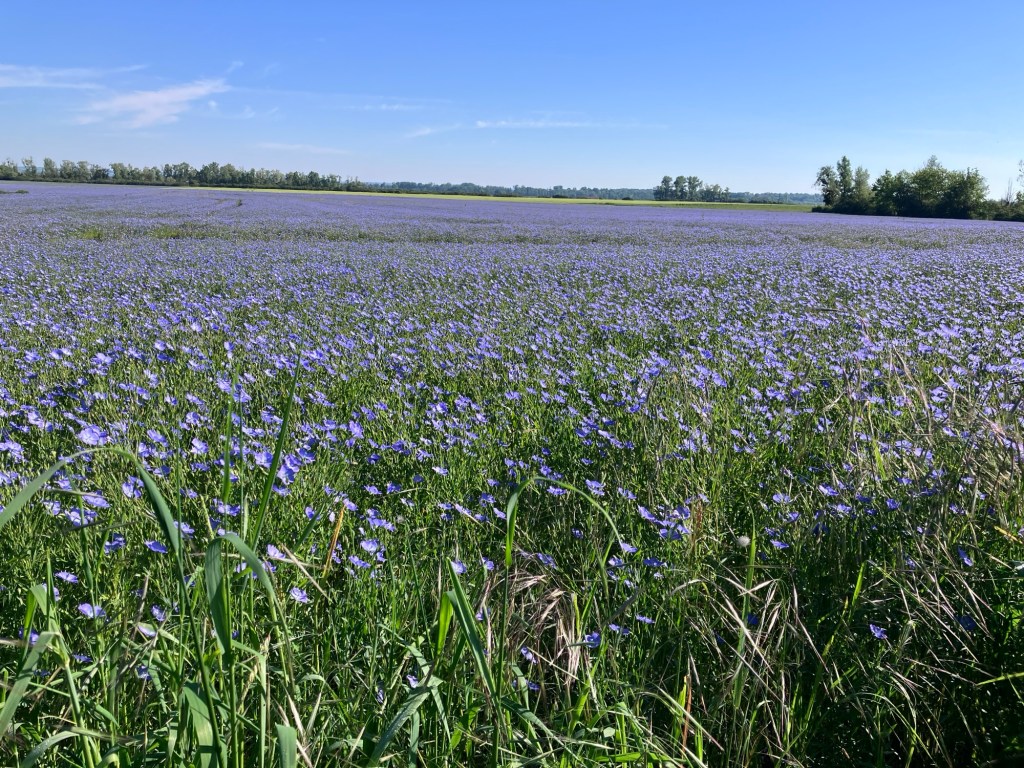
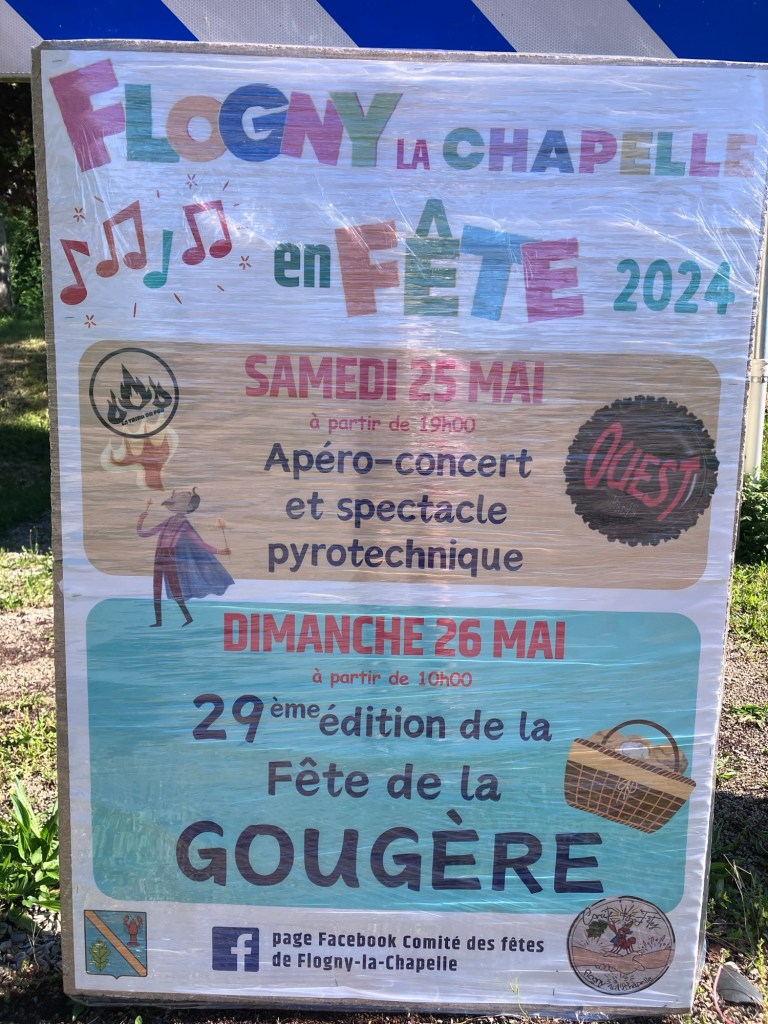
Train hop! It was only a 15 minute ride, but it got us far enough that a day of riding a flat canal path into a headwind was a tolerable notion.Little purple flower field.‘Tis the season of fêtes!The rental boats were out on this lovely long weekend.Oh yes. Canal riding. It’s flat and a bit boring.It was warm enough that we had to search for a shaded spot for lunch (so few benches or tables on the canal trail) at Château de Tanlay.Wheee! A hill! After our off the canal lunch break. So many beautiful irises in bloom.Ravières, another off the canal town. This is what I miss when we ride the canal, seeing interesting architecture and small towns.The Mairie in Ravières. It’s always nice to take a break in a small town and watch life unfold around us.This stretch of the canal, a few kilometers before our lockside accommodation, is quite beautiful. The curve of the canal and the cliffs add drama.Folks gathering to watch a boat go through the lock near our BnB. Big canal activity. The friendly welcoming committee.The lock gate and the old forge across the canal. We could hear the water running through the lock gate all night.Next morning- back on the canal into the headwind.
Any cyclist will nod their head in agreement with this statement: Headwinds are demoralizing. Rich updated his favorite and only client (me) on the day’s agenda: get to Dijon, an almost 90k ride, with a headwind and a lot more canal riding. He knew I would not be thrilled so the next sentence was – or there’s a train hop.
On our way along the canal to the train. Everyone was happy to be leaving the canal behind.Dijon! We had two nights booked and were both looking forward to exploring Dijon.
On any trip you have ups and downs. After more than two months pedaling around in France having fun and staying upbeat and positive, we were due for a bit of frustration and anxiety. We have a deal that we both can’t freak out at the same time. It works out for the most part. And it did this time. We overcame a few trying days, and a few more to come, and pedaled on. More on that with Rich’s next post.
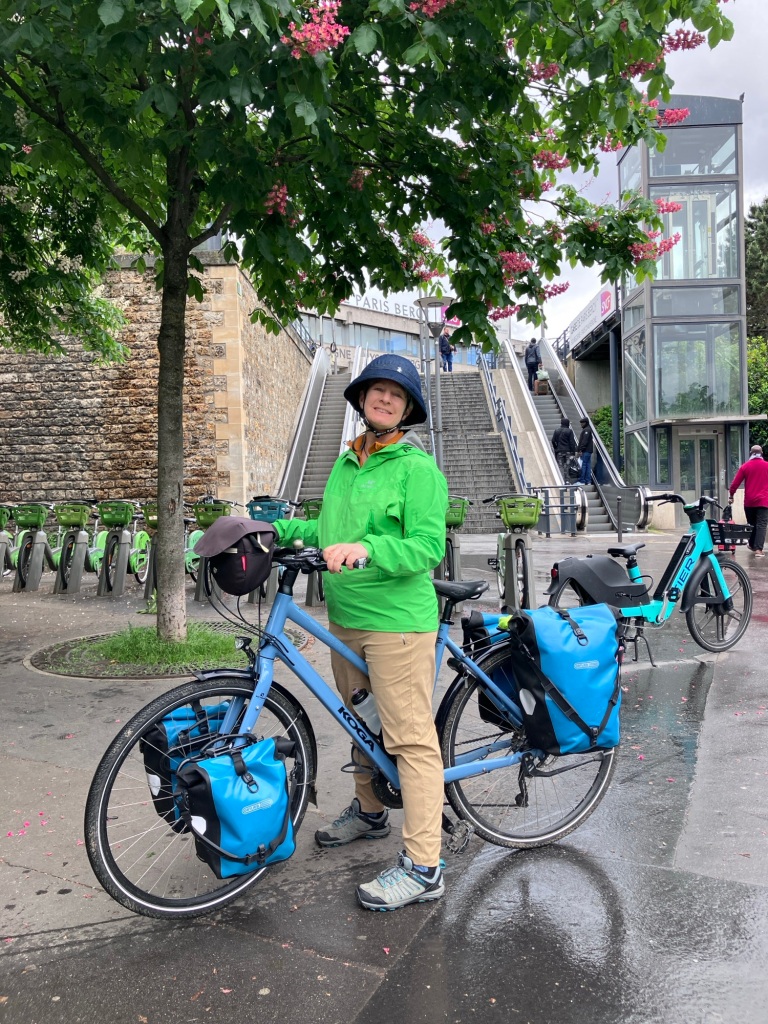
Our touring bike adventures have taught us a few things about trains and bikes. And we keep learning new helpful tidbits. One of the best tips is to try to book a train that starts at the beginning of your journey, and ends at your stop. There are few things as stressful as trying to get your bikes and panniers on or off a train at a mid point station. Although we’ve found French train staff, SNCF, and passengers to be pretty darn chill and helpful, it’s not very fun. One of our new discoveries on this trip is that, unlike the US, France doesn’t mind if bikes use the escalators. Using an escalator is so much easier and faster than the elevator or lugging bikes and bags separately up or down stairs. And, with our hydraulic disc brakes you feel confident that you have your bike under control and won’t cause an accident, even with loaded panniers. We came down the escalator at Gare de Bercy.
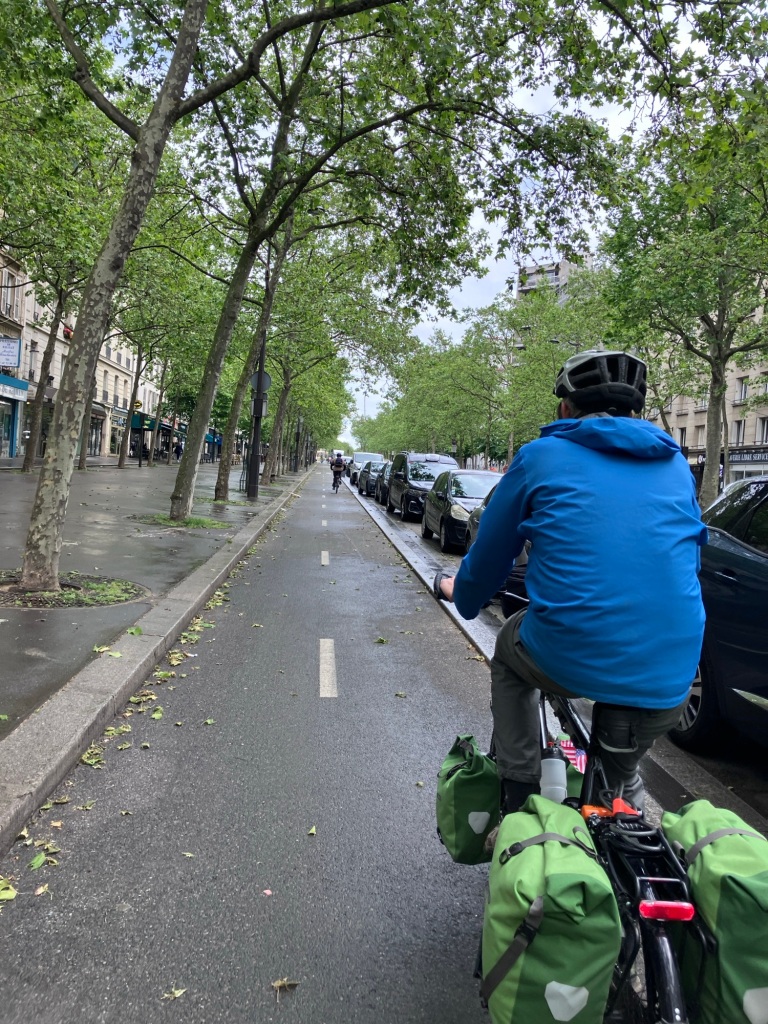
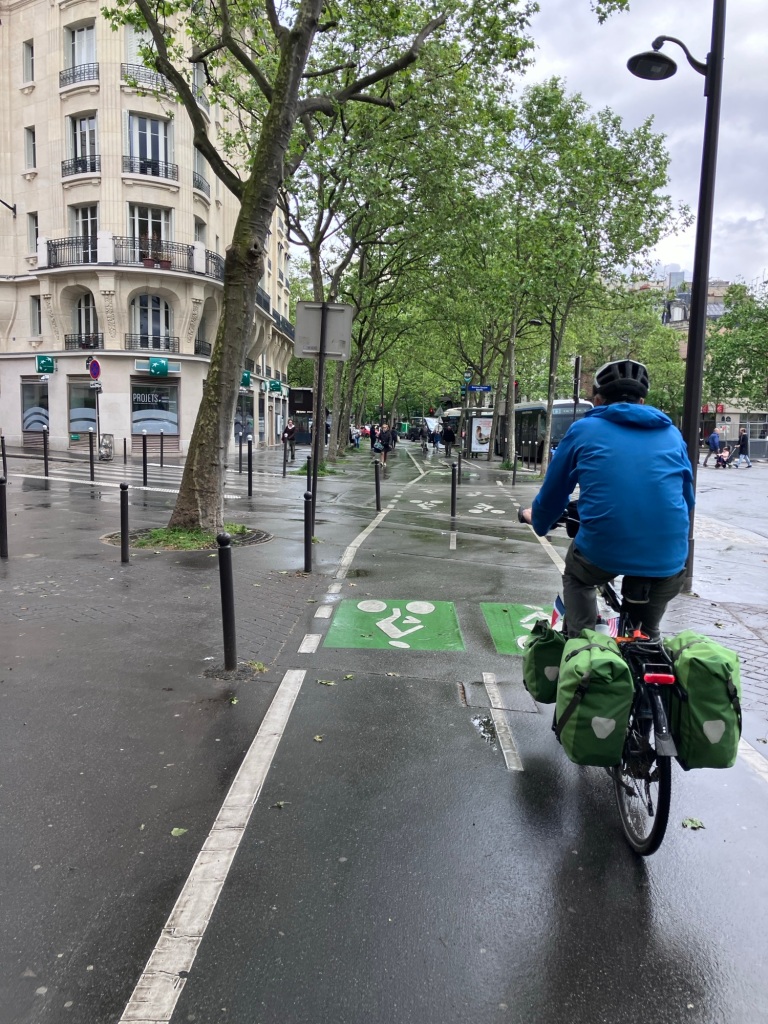
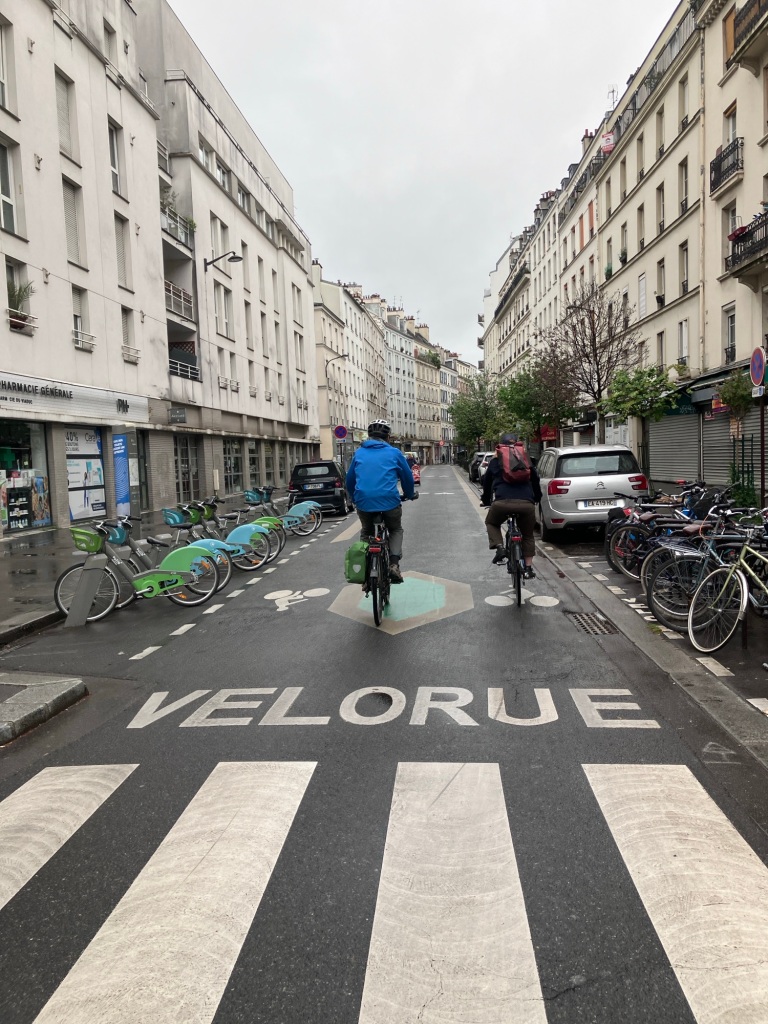
Oh, Paris. With your protected bike lanes and lovely trees.
Earlier on this trip we had dinner at a Chambre d’hote with a couple from Vichy, France, who warned us about going to Paris with our bike. So dangerous, they said, to cycle in Paris. Oh no, we replied, we’ve been through Paris on our loaded bikes and it’s fine. The Rue de Rivoli, for example, has almost no private auto traffic, just bikes and taxis. They were not convinced, and did not believe the crazy Americans. Ah well, their loss. I’m glad we’d been in Paris and knew how good it’s gotten for bikes, or they would have made us nervous. Taking advice from people who don’t bike is very different than hearing from cyclists.
Arriving in Paris is a treat. It was a Saturday afternoon and the city was calm and peaceful, to our eyes.
What made us think twice, or three times, about going through Paris, which we desperately wanted to do to catch up with friends, wasn’t the cycling conditions, but the trains in and finding a hotel with secure bike parking.
Bike friendly accommodation. This was the Aparthotel Adagio Paris Nation, in the 12th arrondissement.
The center of Paris can be tough, with smaller spaces and less secure bike parking, but one set of friends were in the 12th, and Rich found an Aparthotel with secure bike parking very close to where they were staying.
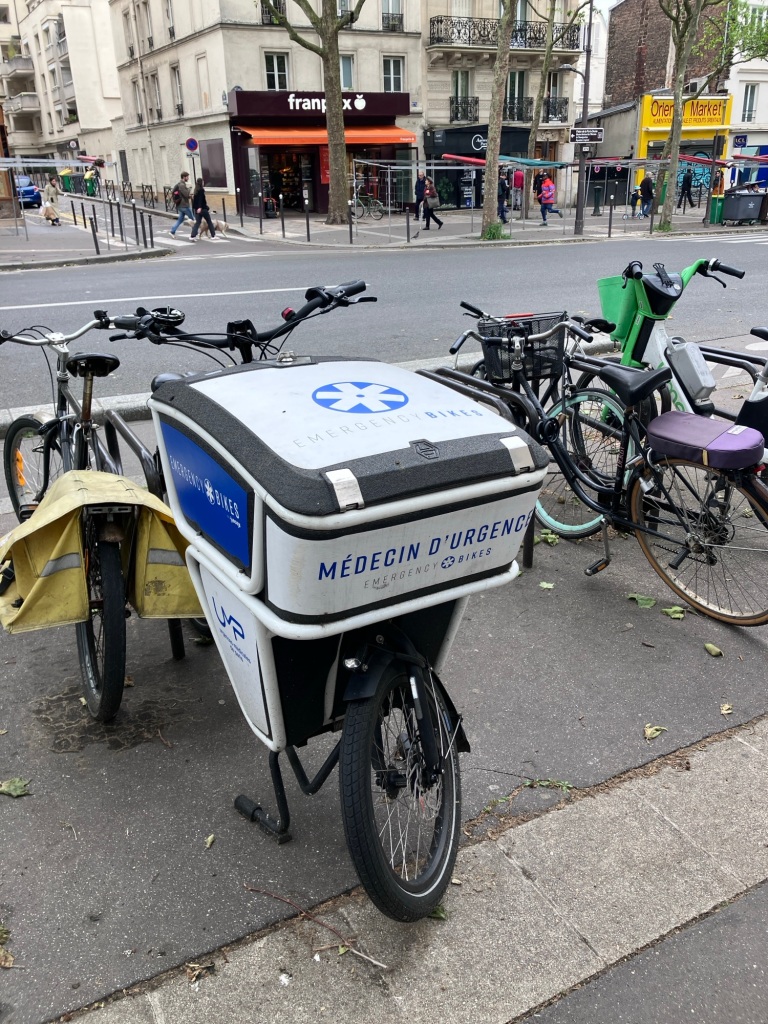
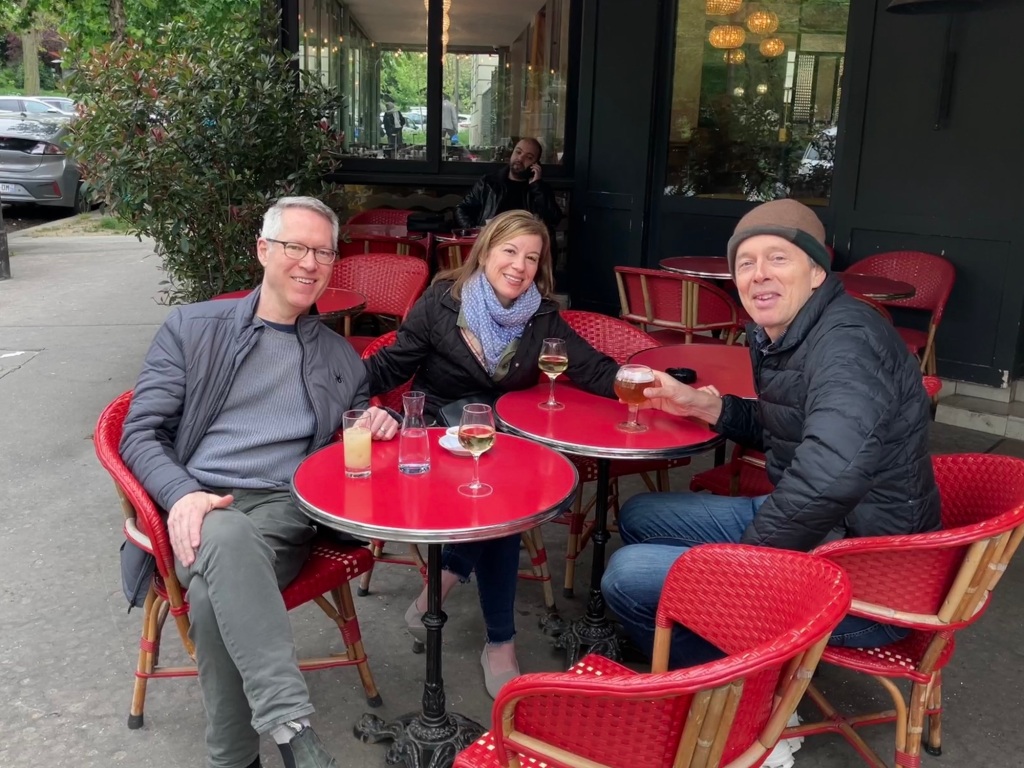
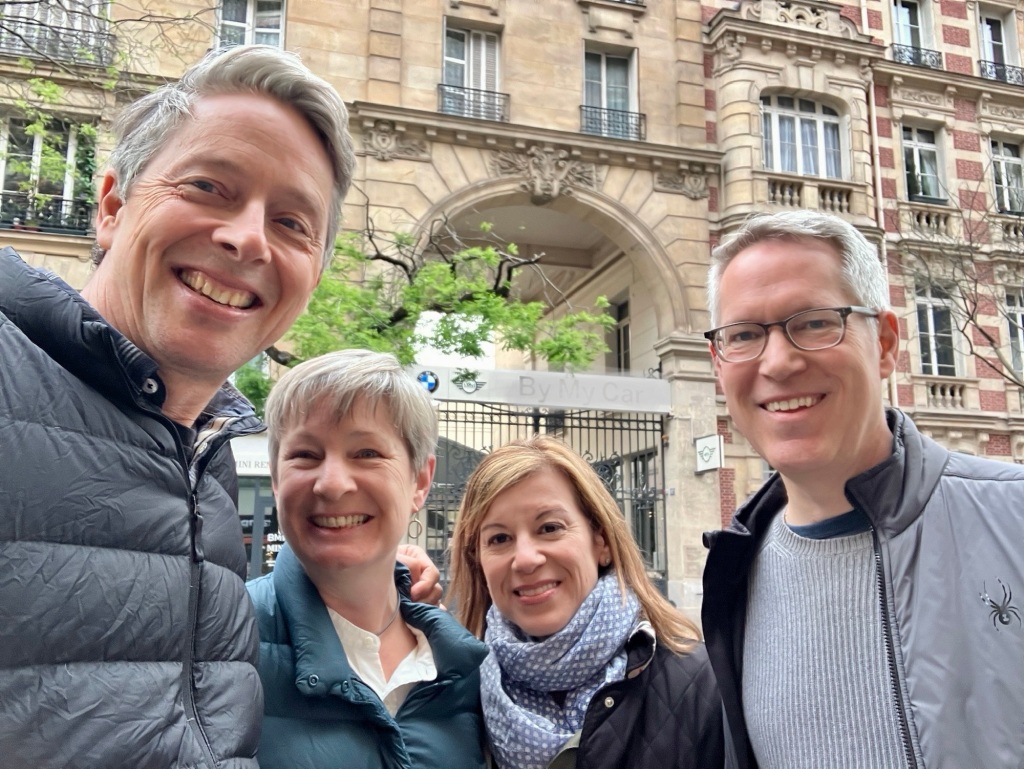
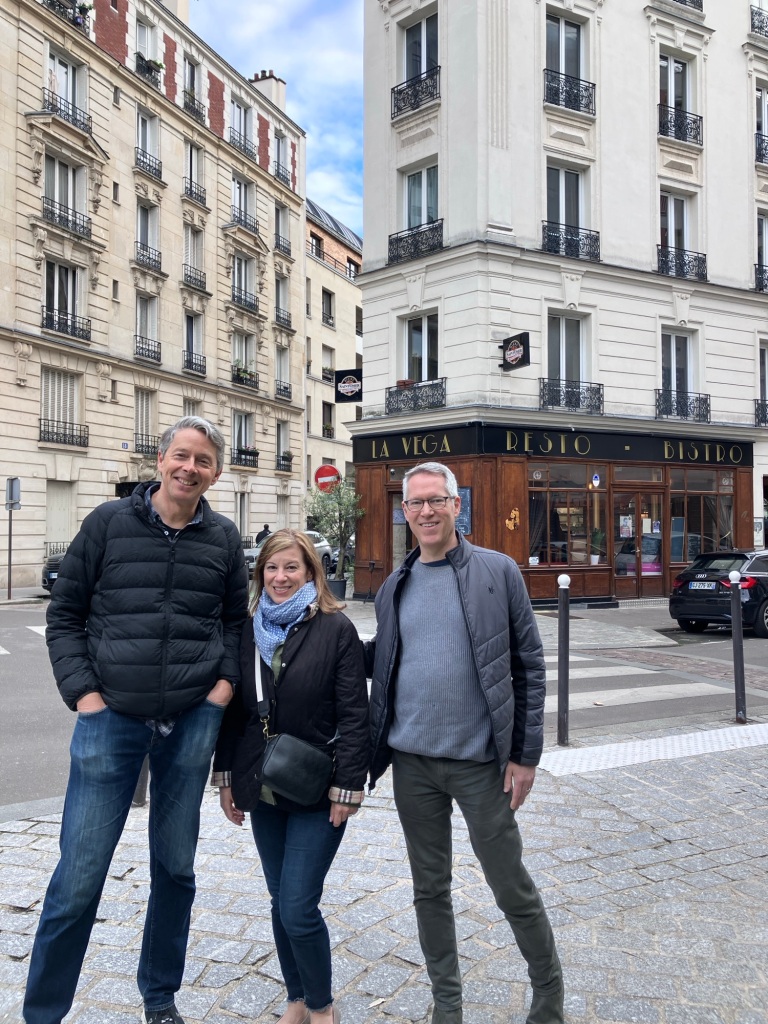
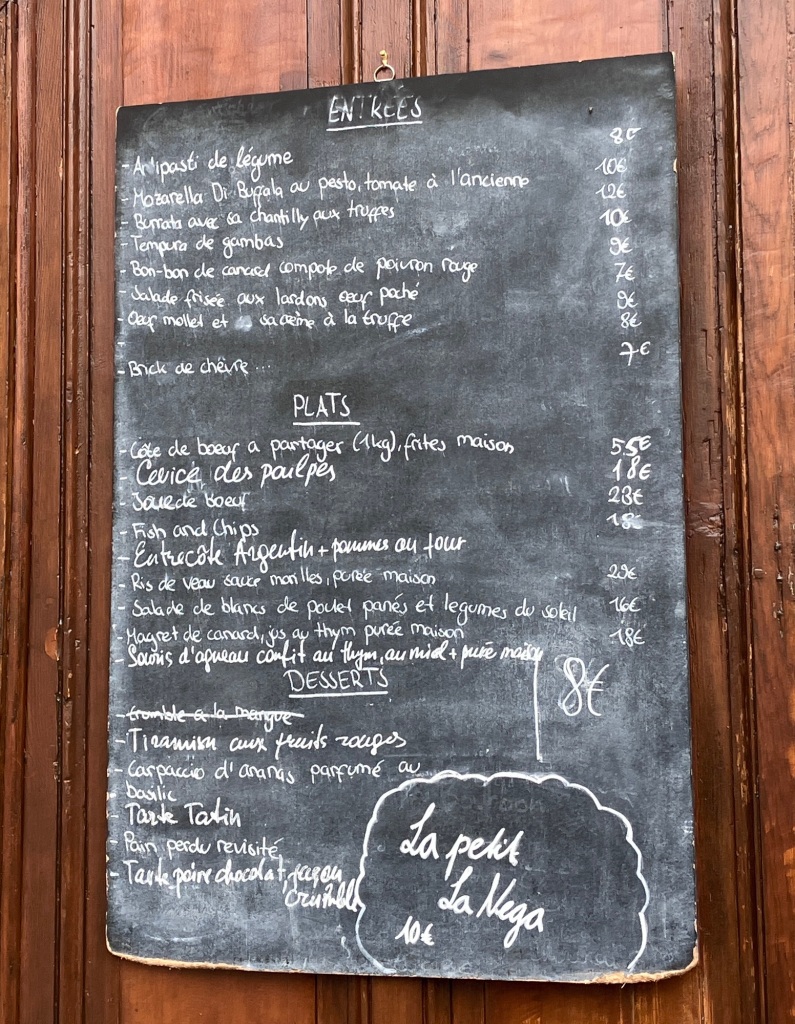
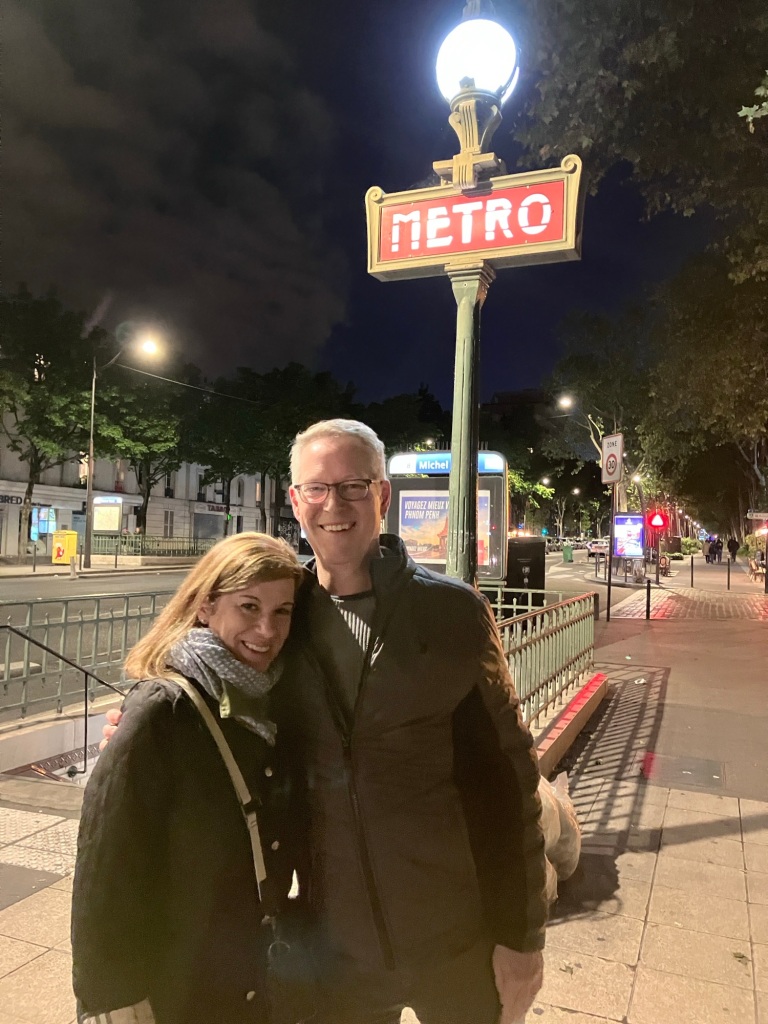
House call by a Doctor on a bike?How Parisian does this look? Our good friends Michelle and Alan came to meet us for dinner on their last night in France.Four happy travelers.La Vega, also in the 12th. Recommended by our friends Jason and Katie, who are living in Paris.Ah the dreaded (by me) menu board. All the food we had was fantastic but I have such a struggle reading the beautiful French writing.We bid farewell to Michelle and Alan after a long and delicious evening. On Sunday it was time to ride our bikes around Paris with Jason.
Rich and I are long time bike commuters and used our bikes for transportation and recreation in San Francisco. We have spent decades pushing for bicycle infrastructure improvements in our beloved SF. What a joy to ride around in Paris which is leaping ahead as a bike friendly city, and in a city where we don’t know the backstory and fight over every street. Jason, as a professor of urban geography who writes books about the politics of urban mobility, does know. He kept us regaled with the background about the changes in Paris.
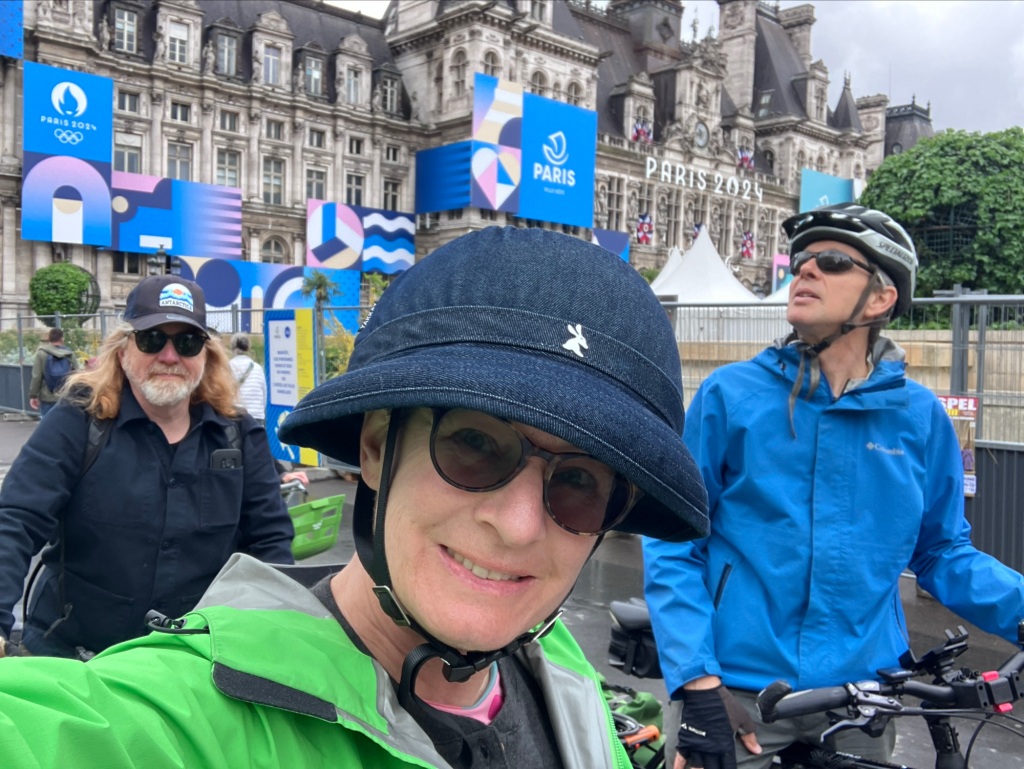
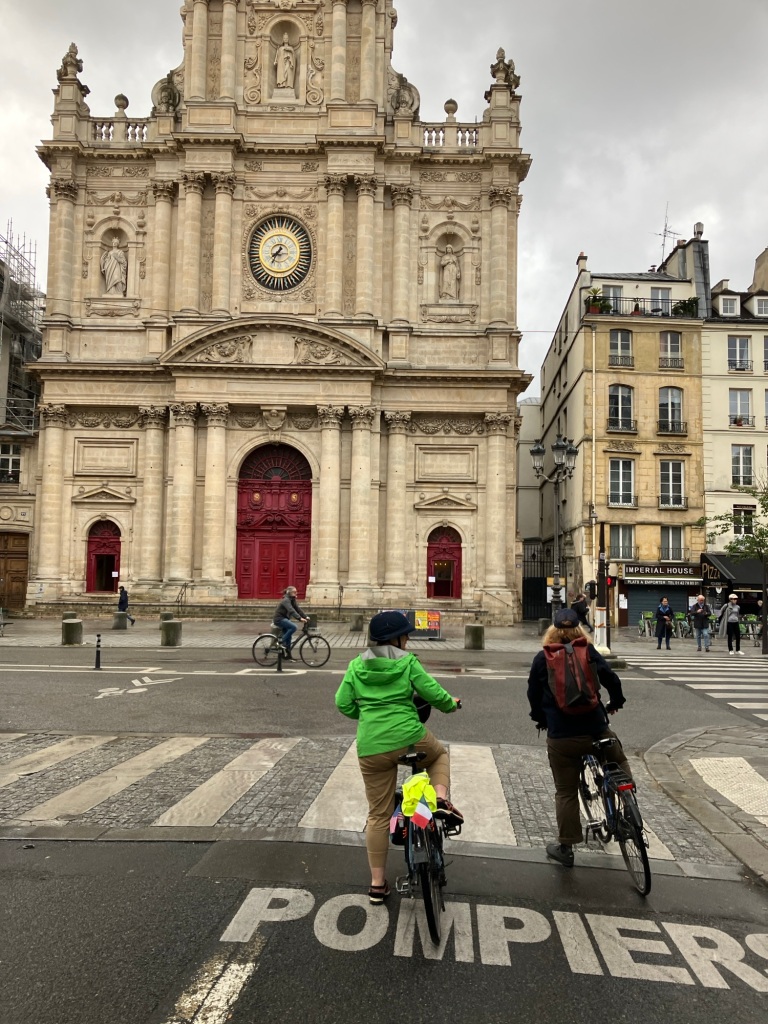
Paris putting on its Olympic Games face. Hôtel de Ville.Paroisse (Parish Church) Saint-Paul Saint-Louis, 3rd arrondissement. Bicycles are absolutely the most efficient and scenic way to get around Paris.Don’t blink, now we’re in the 19th arrondissement. Those threatening clouds only spit on us a little.
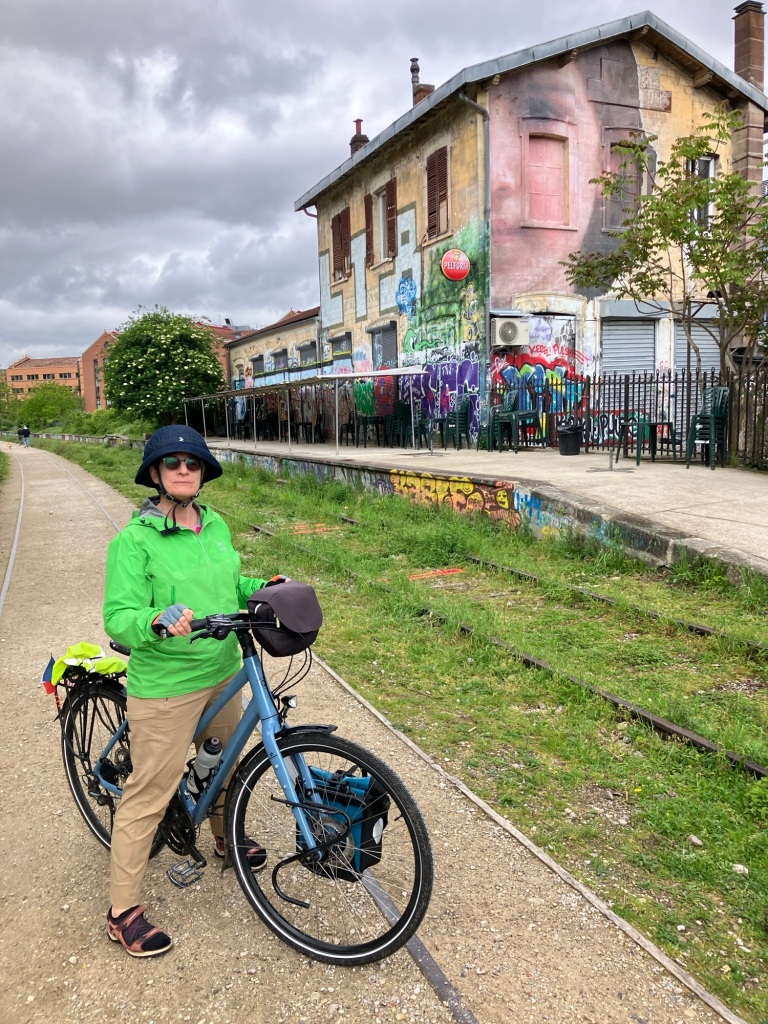
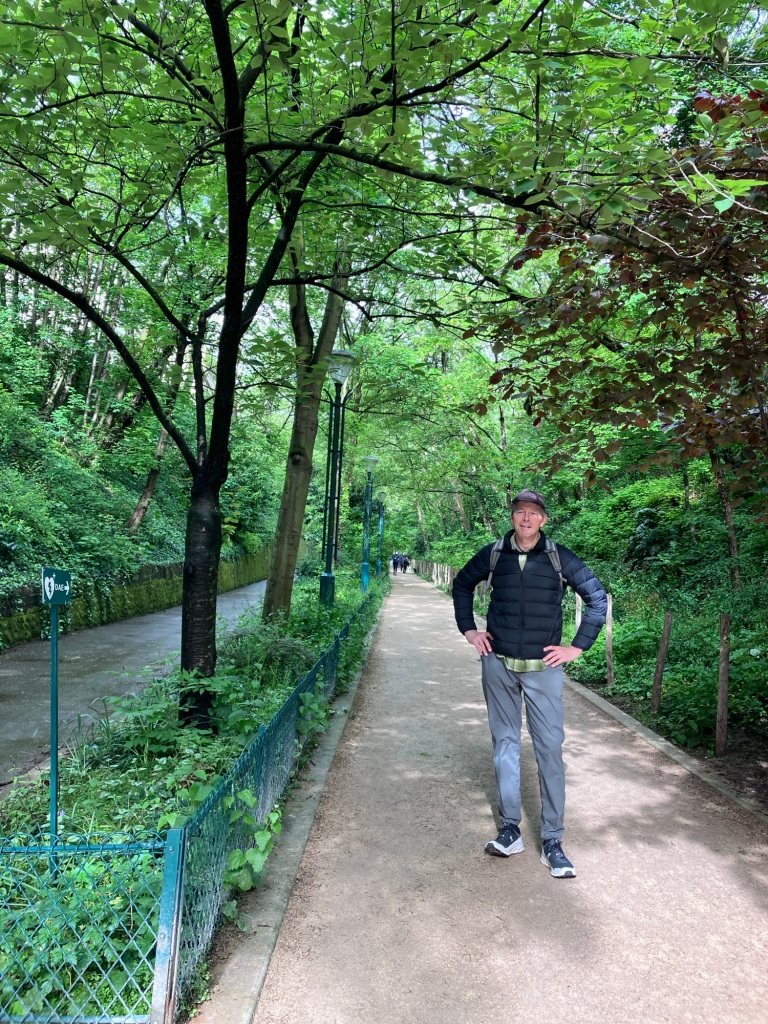
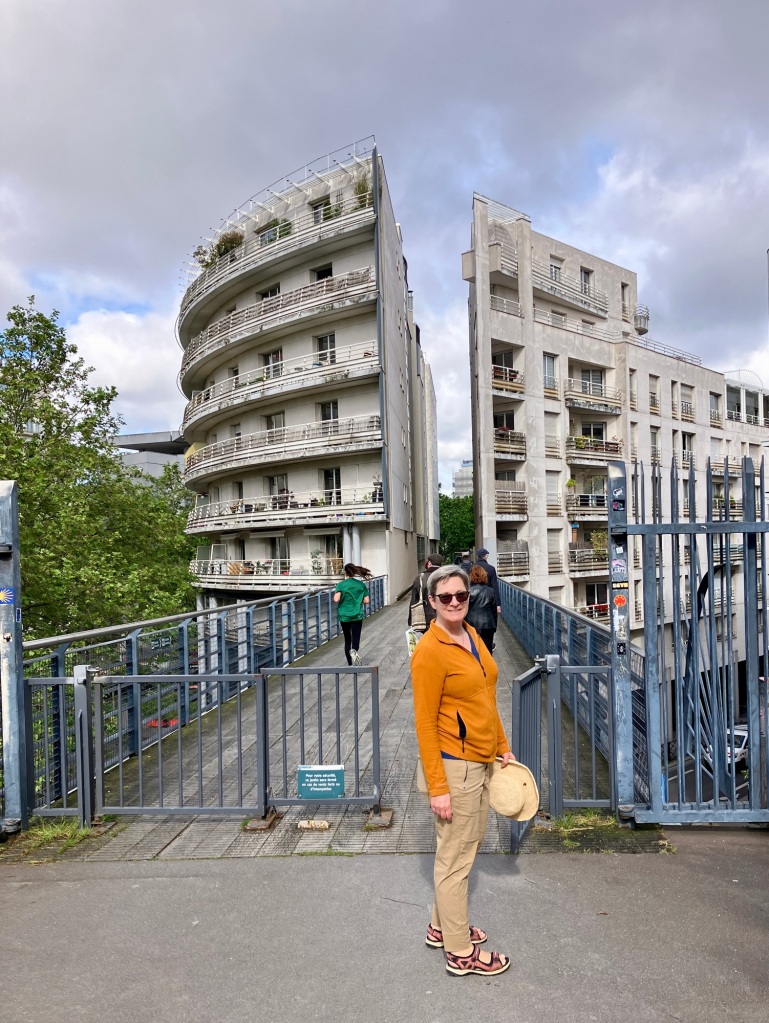
On Monday we headed out on foot, following what I’m sure all American visitors refer to as Paris’ Highline, the Coulée Verte René-Dumont, which had an entrance right near our hotel. It’s a repurposed railway line and similar to the High Line in New York in that you get to walk above street level through gardens and art, and try to resist the temptation to peek into folks’ windows.
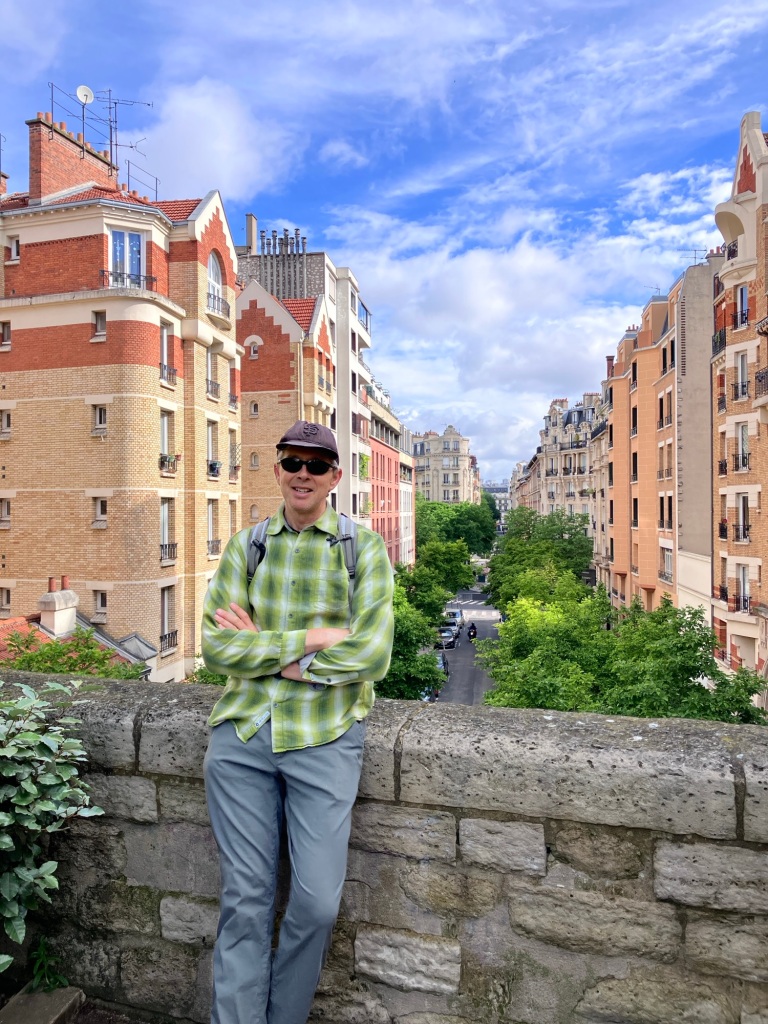
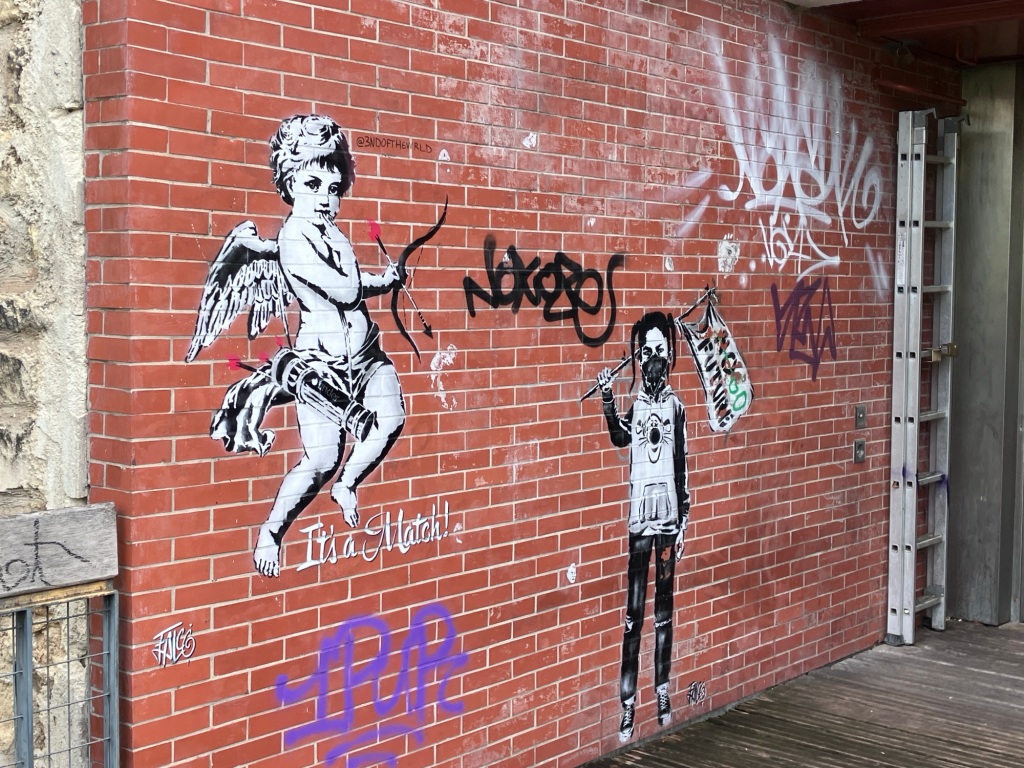
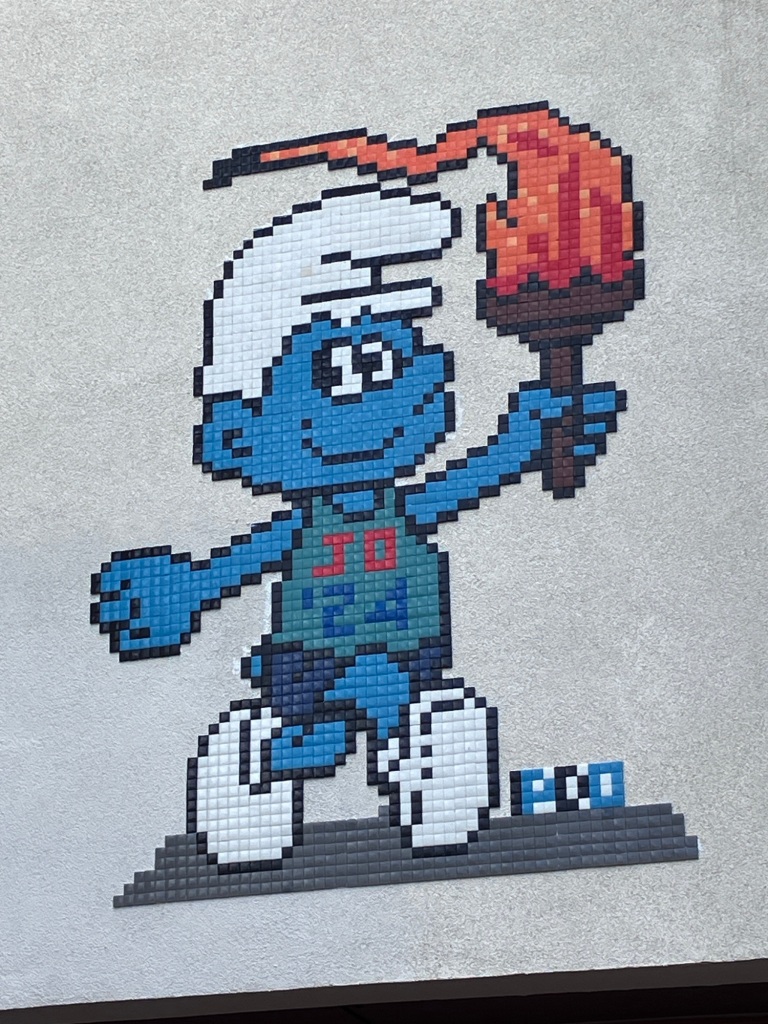
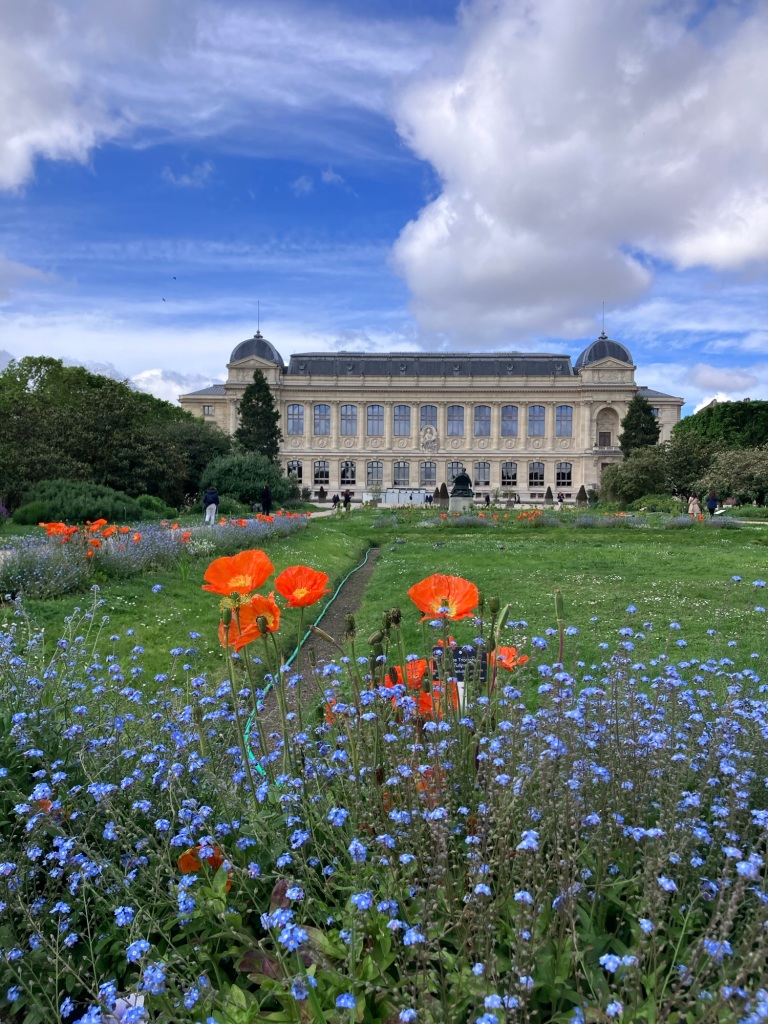
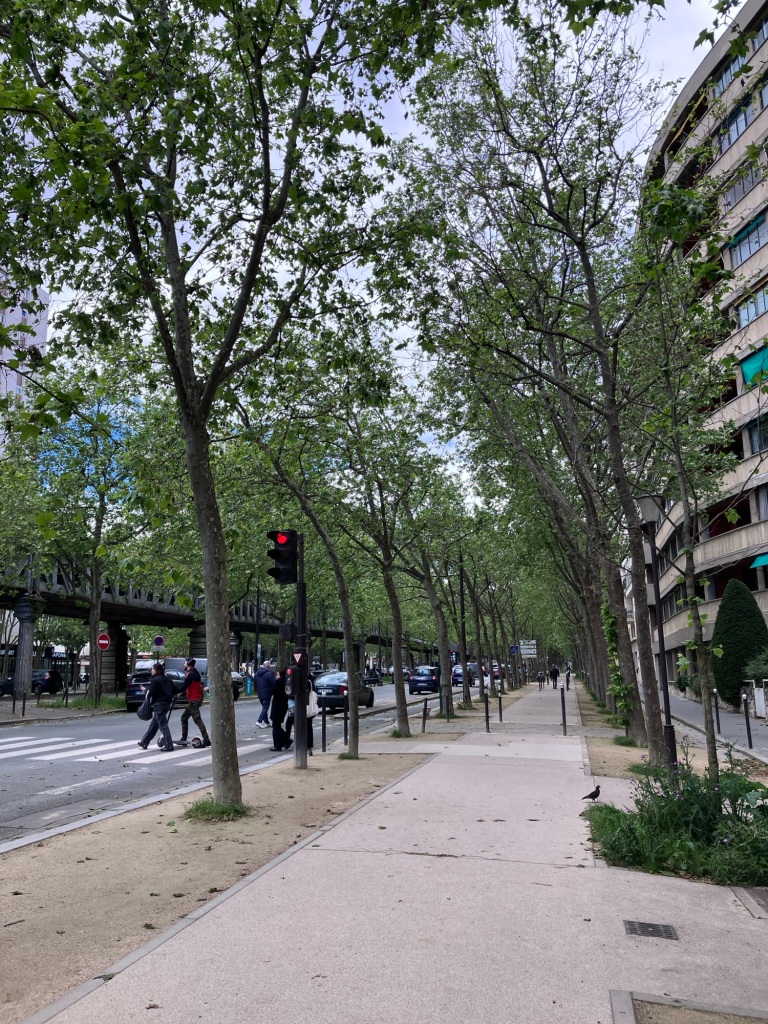
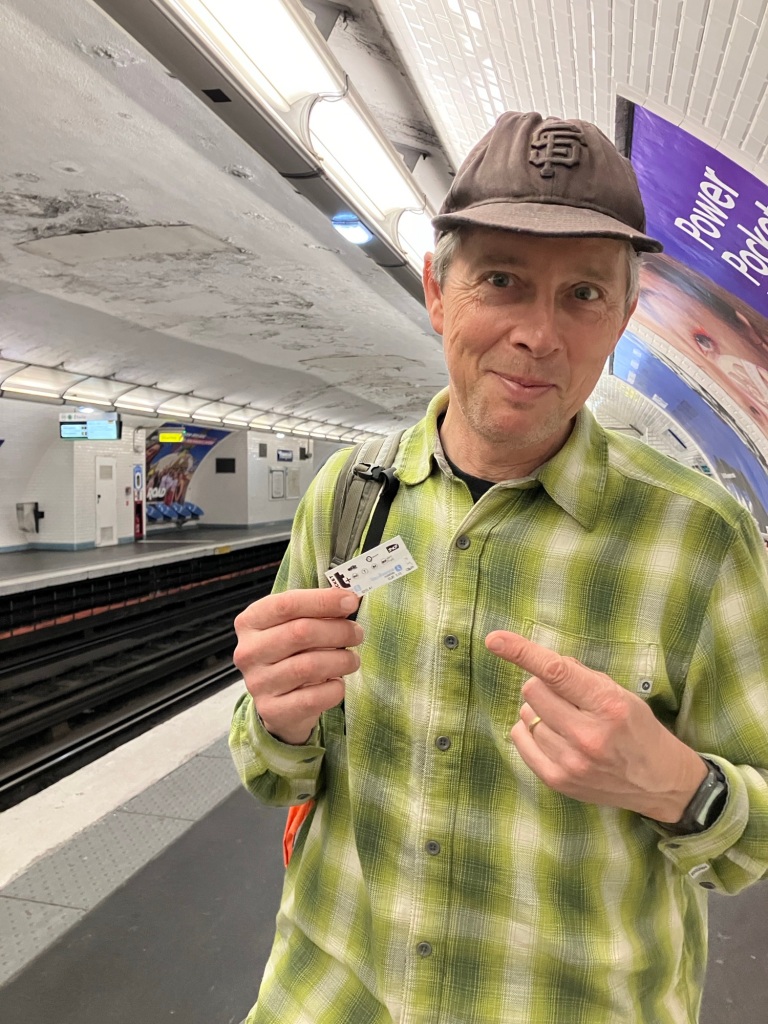
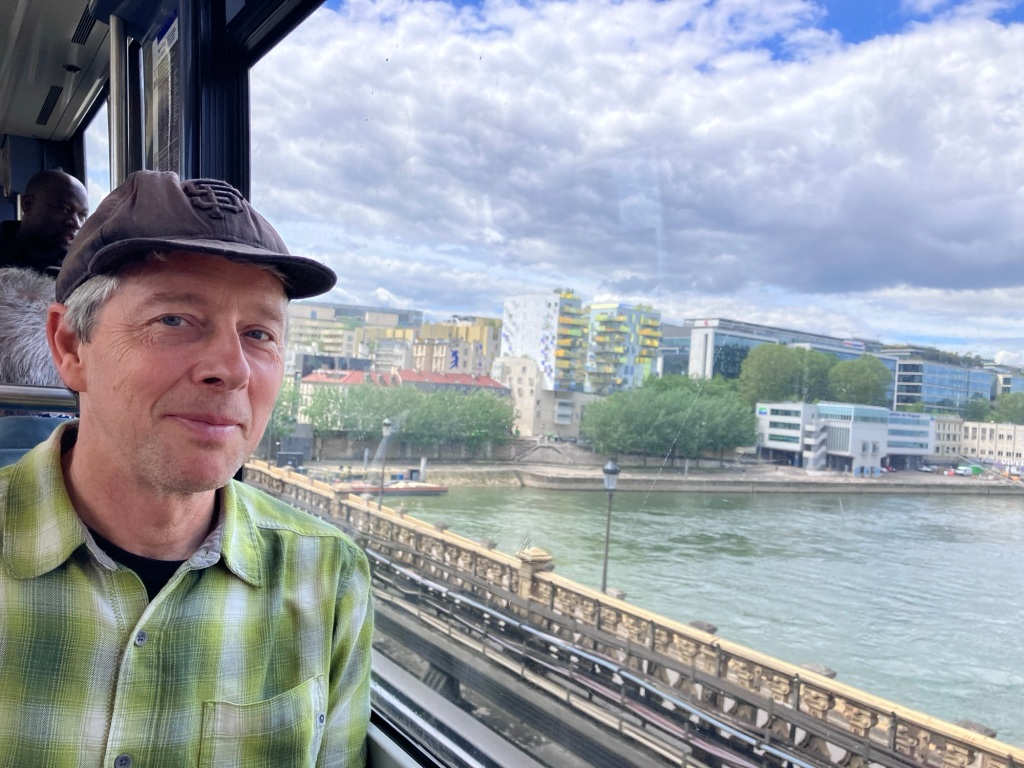
Above the streets enjoying the view.Parts of the greenway are lush with plantings.Street art on the side of a neighboring building.Olympic Smurf! I think this is by Invader, a French street artist who does pixilated tile mosaics, but could be an imitator.The greenway goes right through two buildings. What a way to walk in Paris.Crossed the Seine on Pont d’Austerlitz.And into Le Jardin des Plantes.The wide sidewalks of the 13th. That’s the metro line No. 6 running above.Gifted leftover metro tickets from Alan and Michelle. Thank you!Back over the Seine to our apartment for well deserved napping. Something we don’t get to do while actually biking.Beers (and wine) with Jason.
What a lovely familiar feeling it is to meet up with long time friends. We took advantage of being able to socialize as much as we could. Tuesday, our last full day before we cycled out of Paris, it was back on the metro to visit Musée de Montmartre. Recommended by our friend Eve who had just been in Paris.
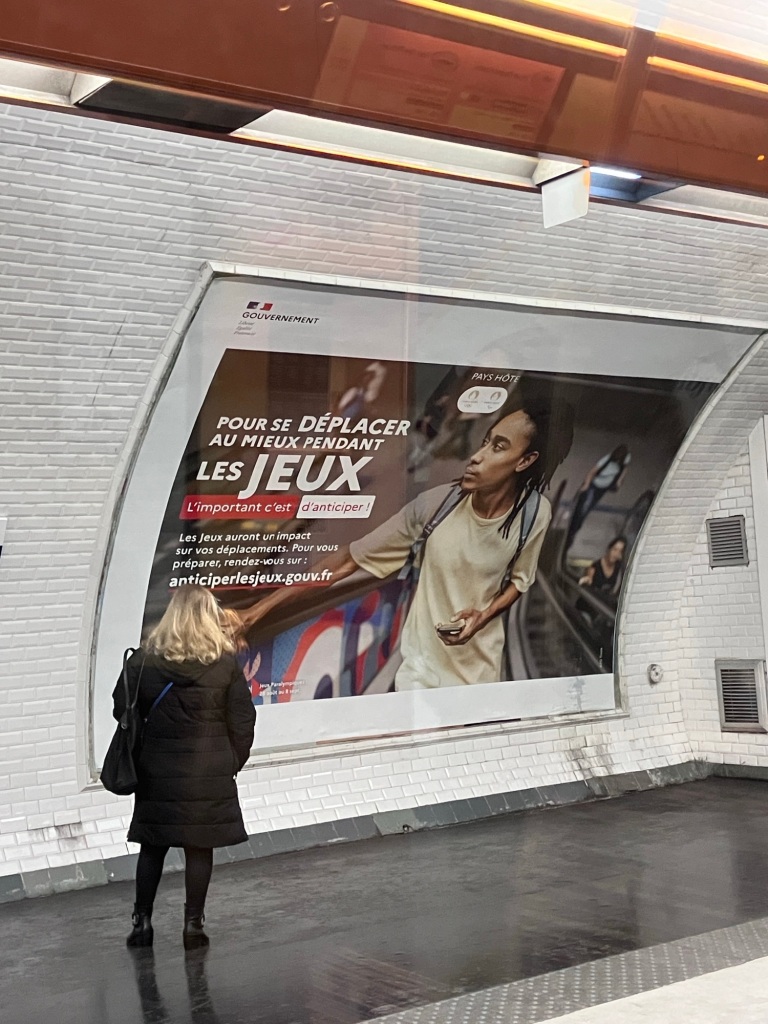
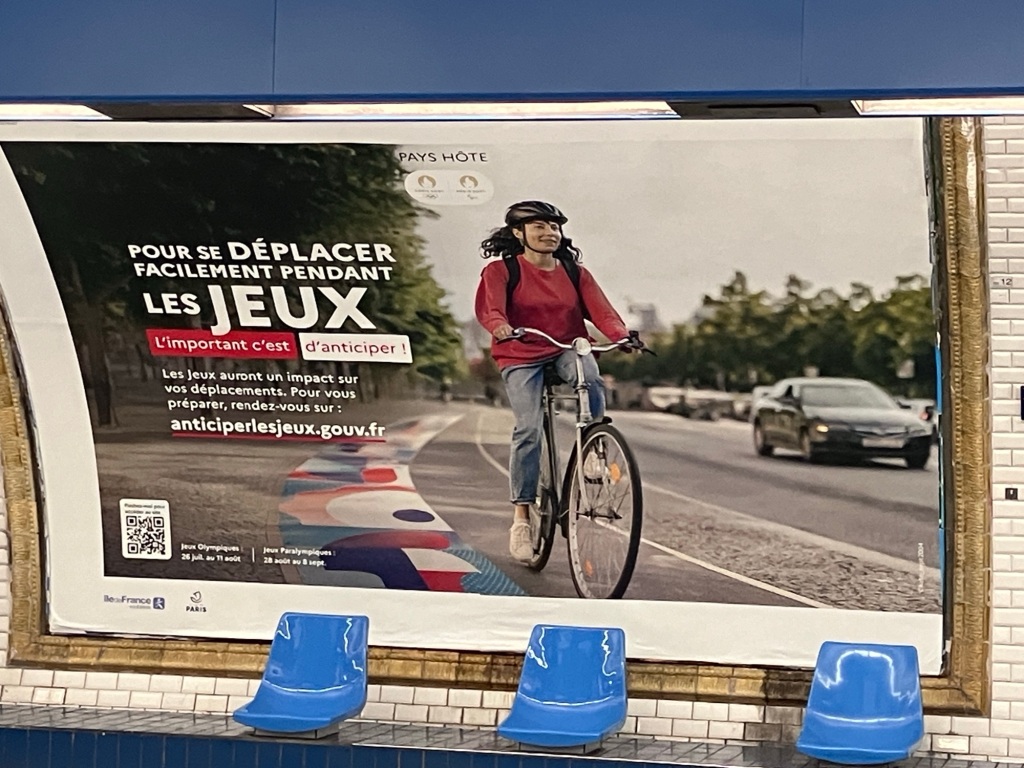
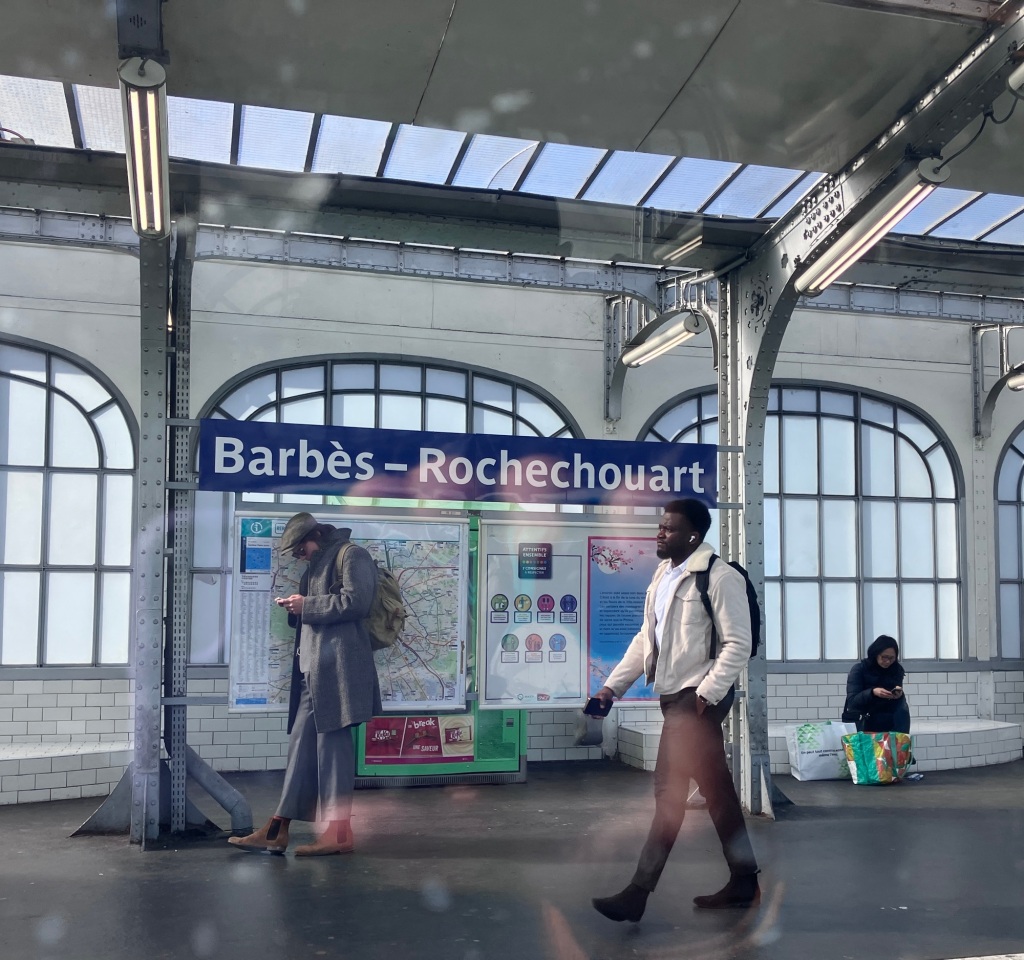
The metro had a delay but I was busy taking photos of the Olympic ads in the stations, advising about how to get around during the games.TO MOVE EASILY DURING GAMES The important thing is to anticipate The Games will have an impact on your travels. To prepare, go to: anticipatejeux.gouv.fr
Paris is already a busy city. But, has experience coping with many many visitors. Friends who are visiting for the Games are hoping that things will go as smoothly as the London games did.
Everything in Paris looks picturesque to me. Even folks waiting for the metro.Off the metro and a walk uphill towards Montmartre.
We are quite crowd adverse, so why head to Montmartre, one of the most visited areas in Paris? Sure to be heaving with tourists? Would the Musée de Montmartre be worth it? Yes! As with any A list site the trick is to arrive early and pick a less visited part of Montmartre. Thank you Eve, great recommendation.
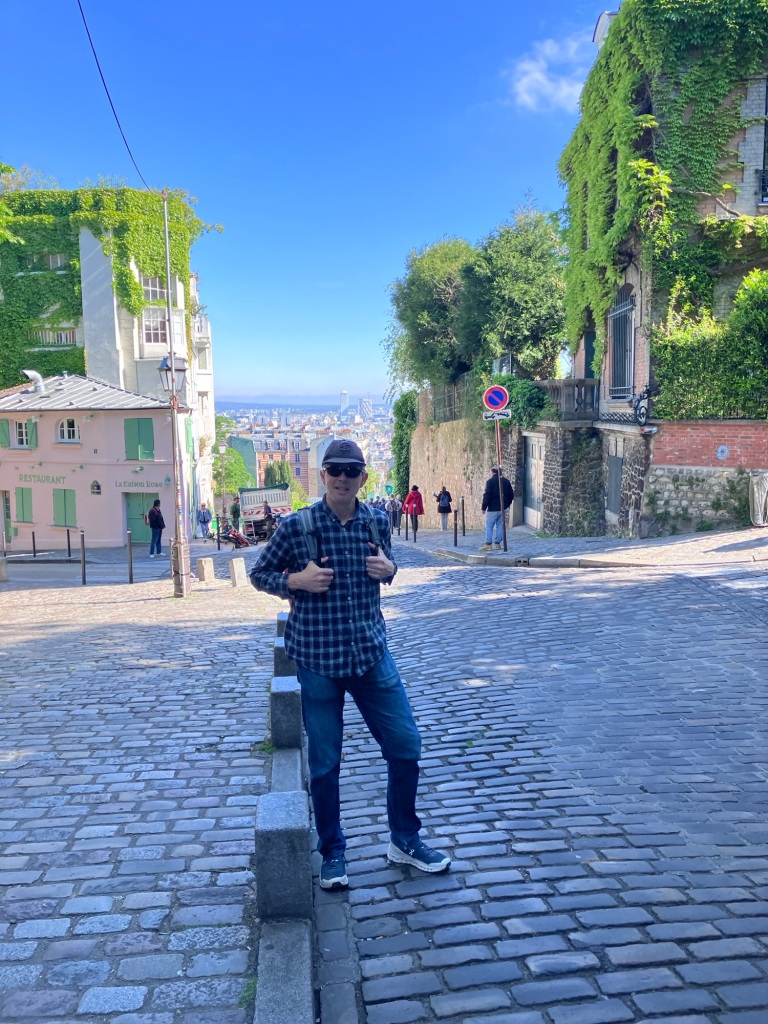
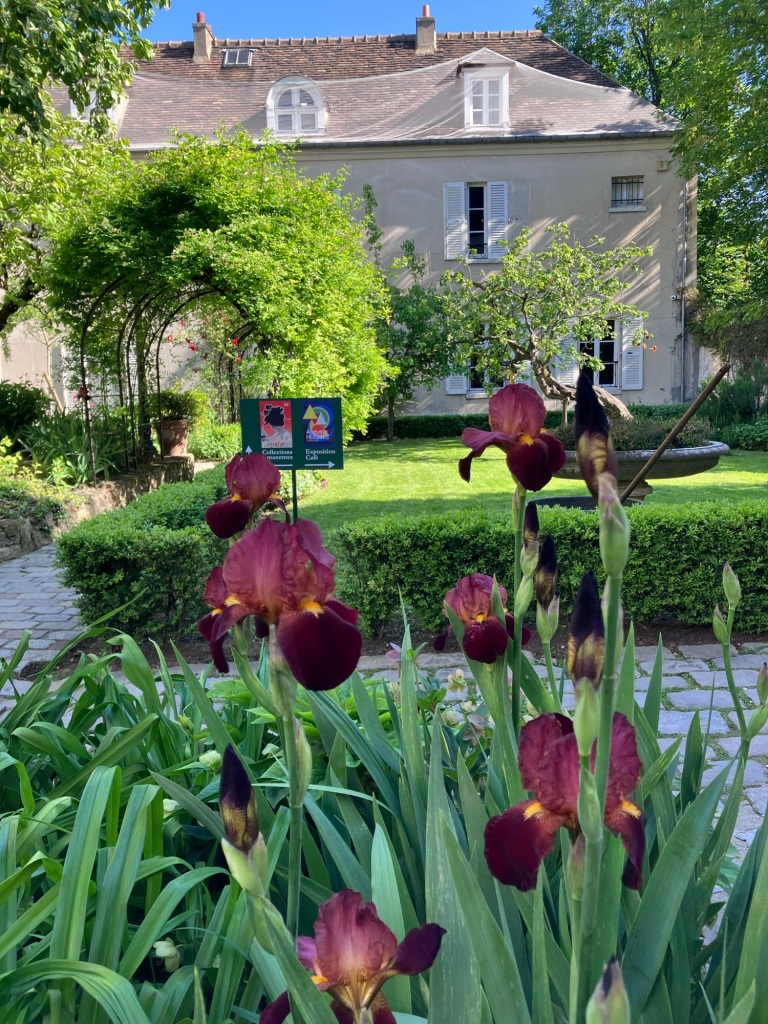
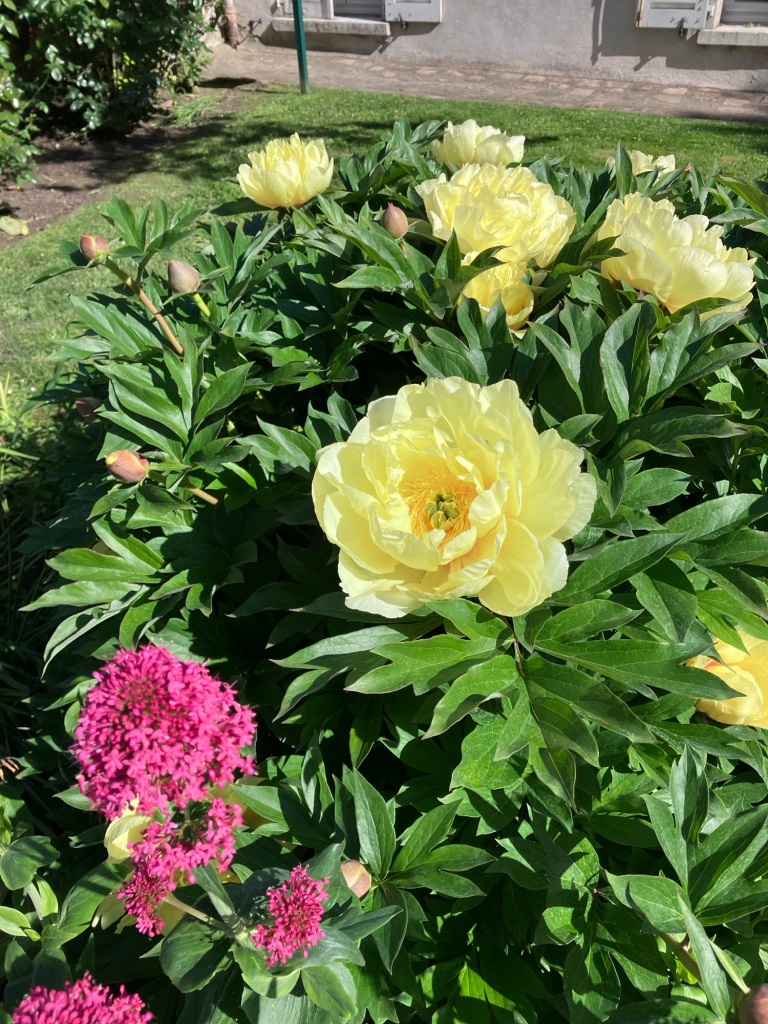
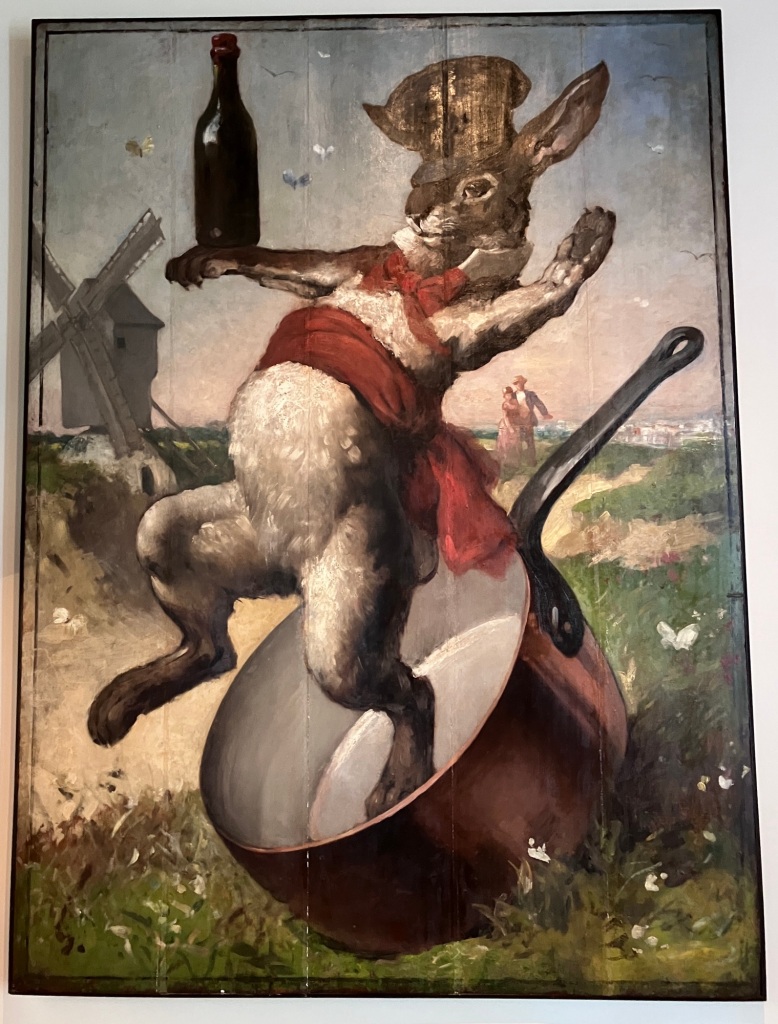
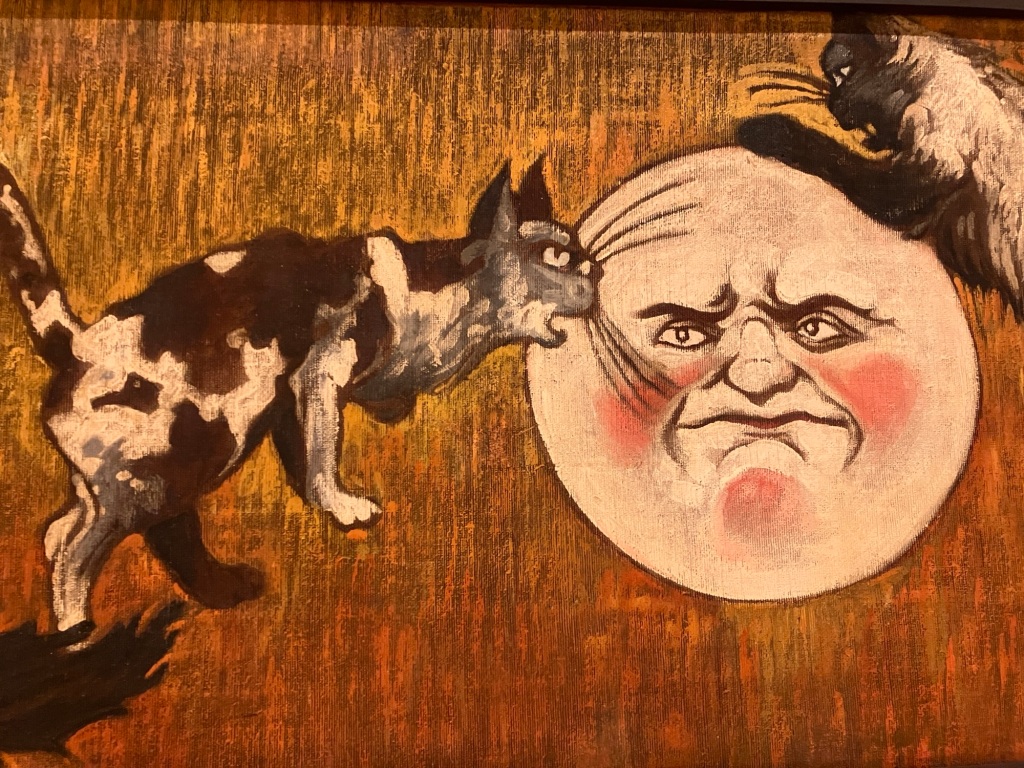
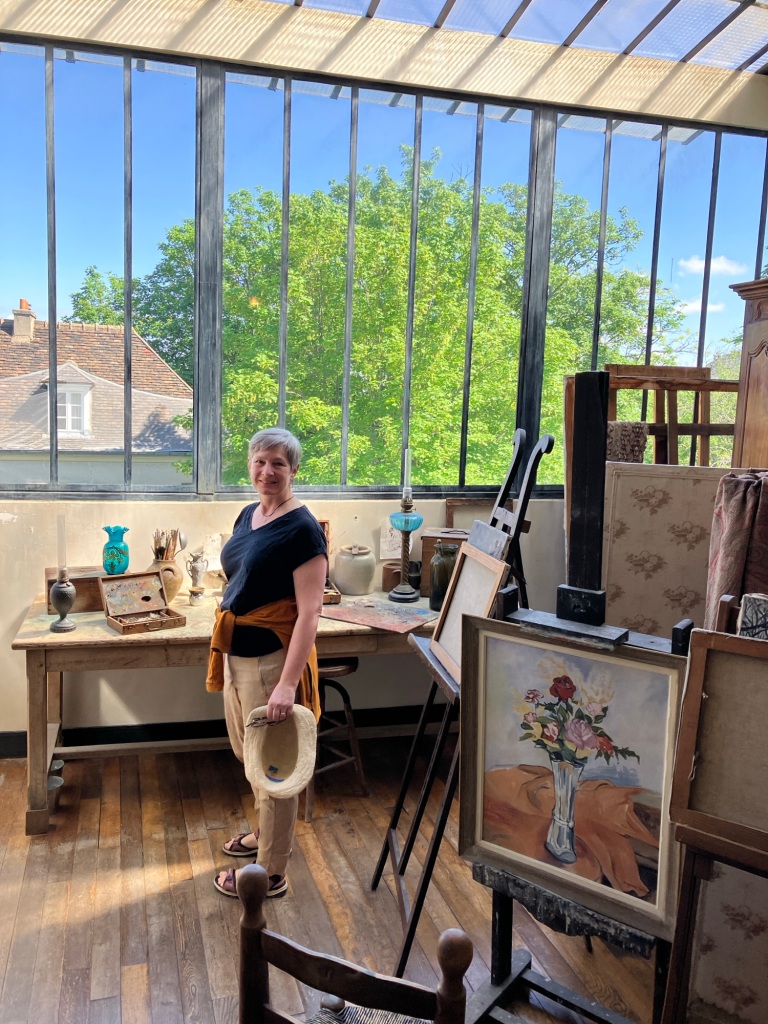
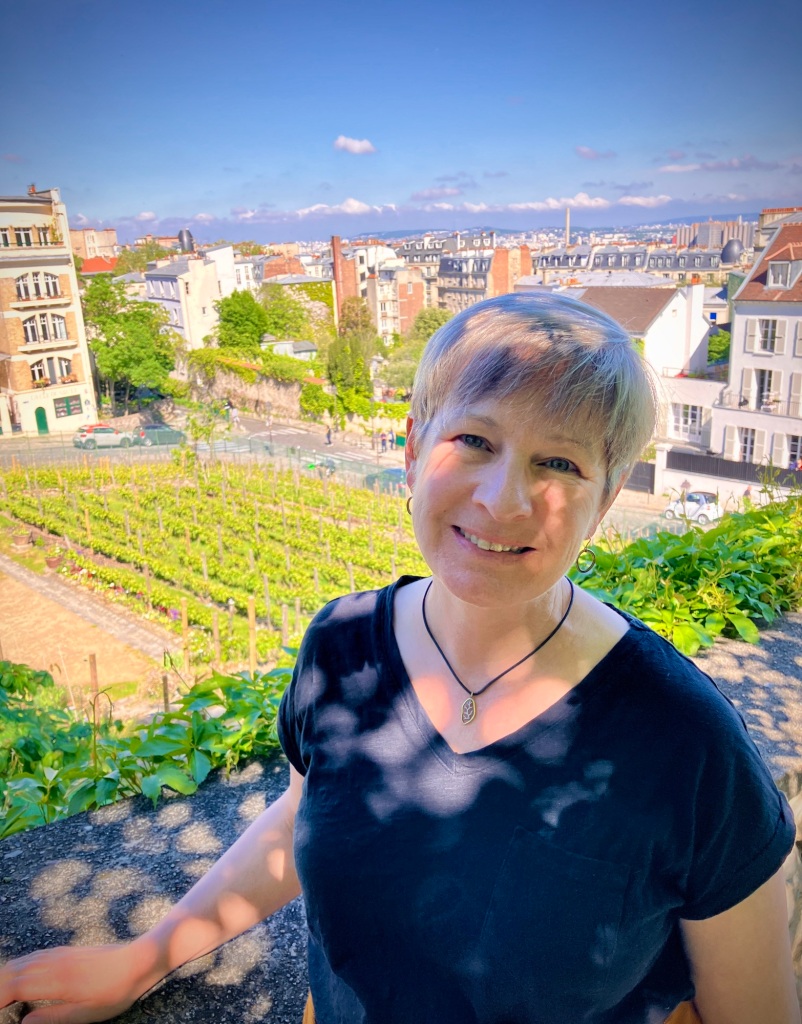
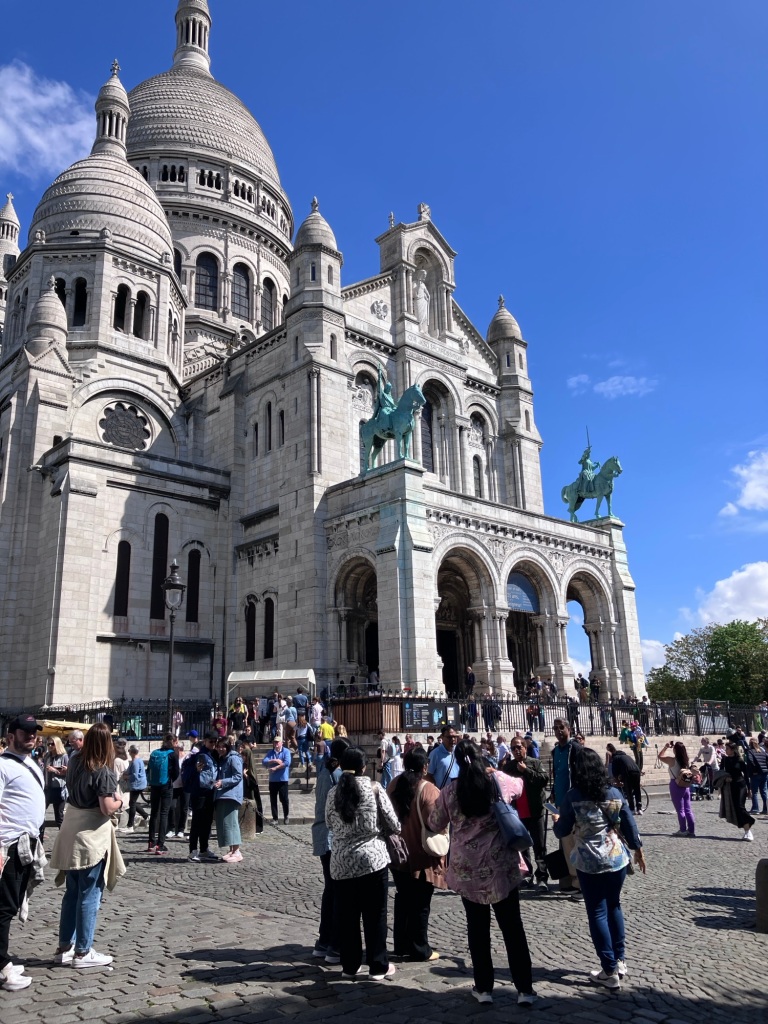
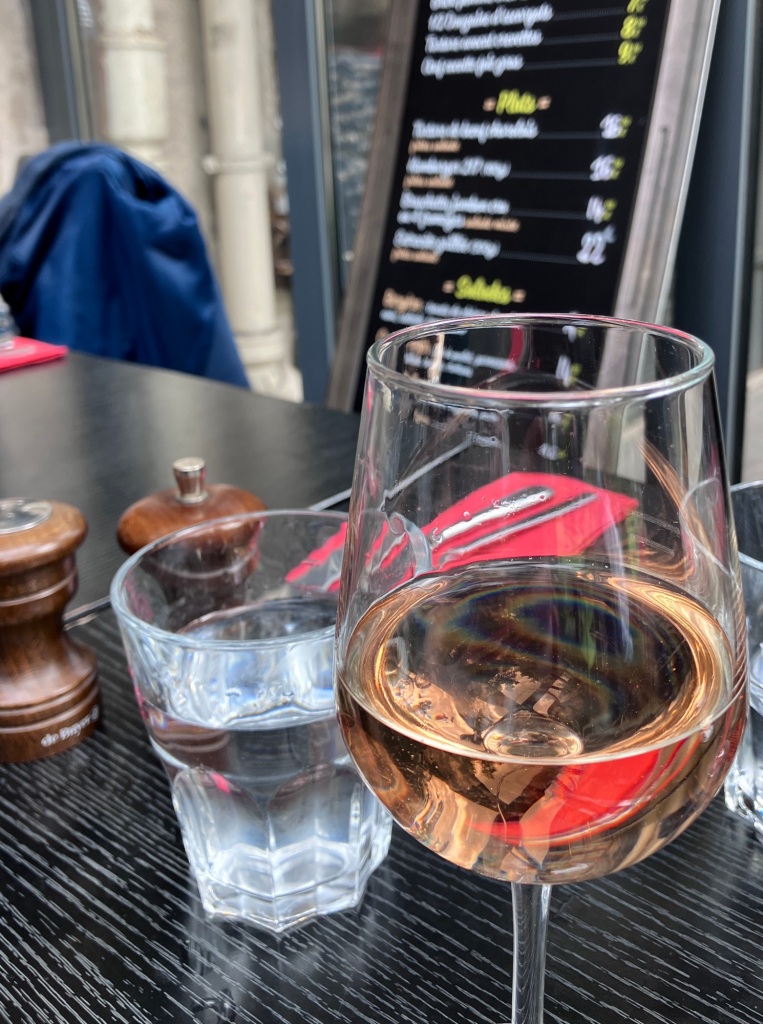
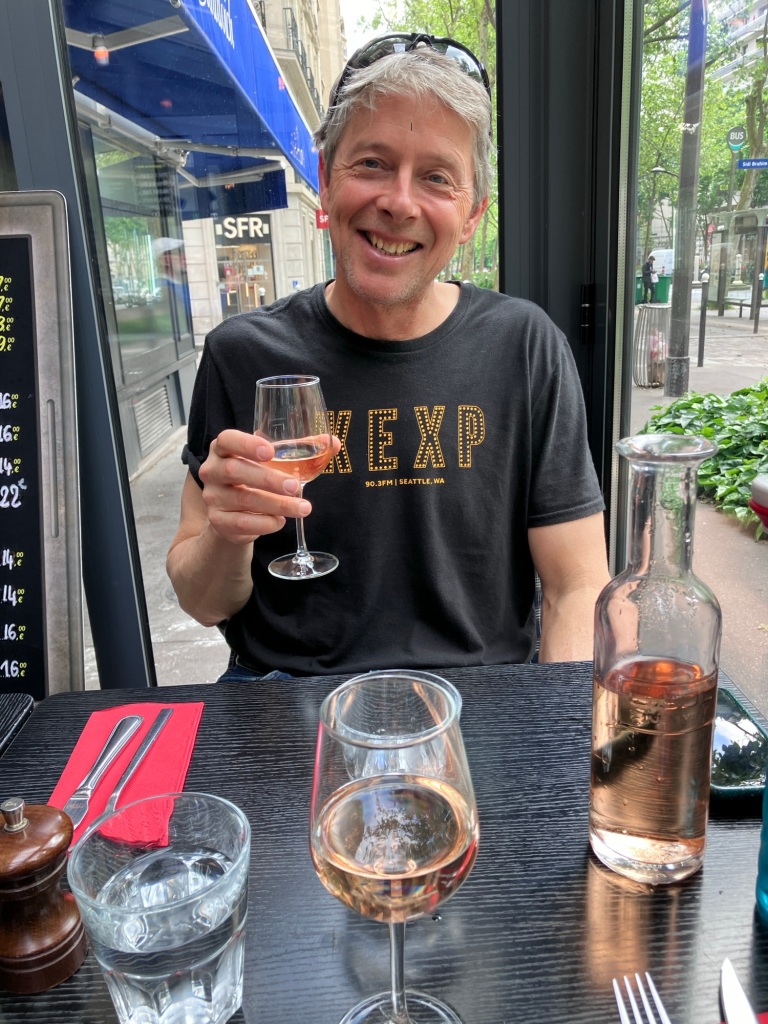
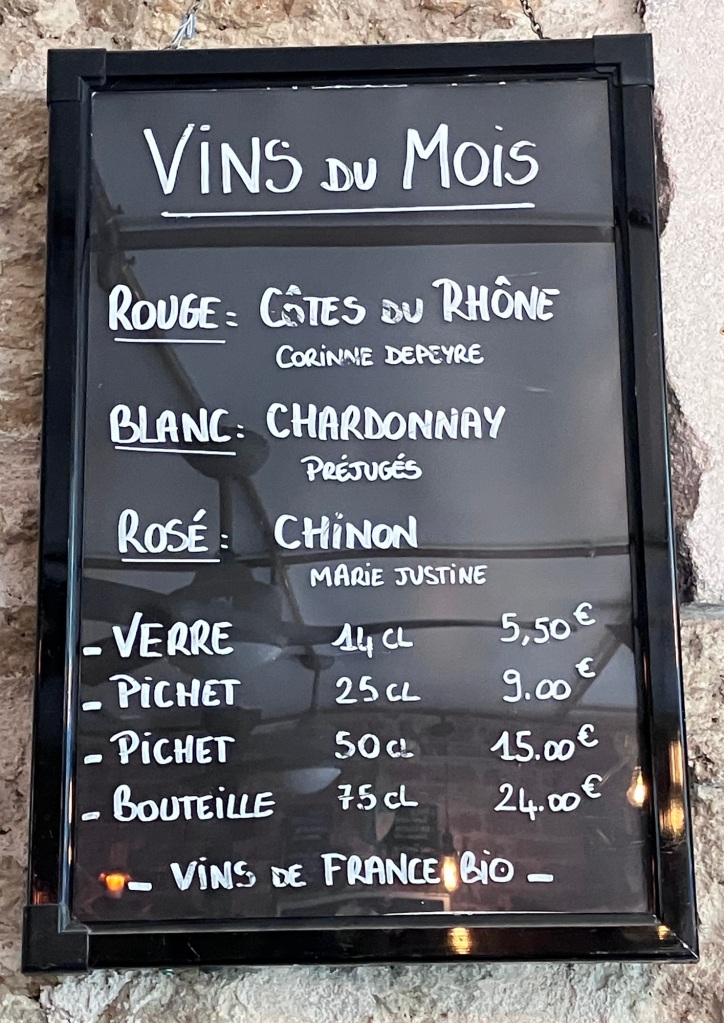
You enter through lovely gardens where Renoir once worked, and the 17th century house takes you through the history of The Butte, as Montmartre was called.Peonies in bloom.A painting For Au Lapin Agile, a cabaret.Artist Théophile Steinlen. Part of the frieze ‘Cats and Moons’ (c.1895)The studio where Suzanne Valadon painted. I appreciated the focus on a female artist.A rather impressionistic photo of me and the only vineyard in Paris, Vigne du Clos Montmartre, from the garden of the museum.Just to torture ourselves we walked by The Basilica of Sacré-Cœur de Montmartre to see all the crowds.We hoofed it back to the metro to get back to the lovely and calm 12th. Ah. Lunch at Le 217 Brasserie Restaurant. Rosé at lunchtime. Another biking day no-no. That’s a 50 cl pichet.France has absolutely spoiled us for wine opportunities and prices. Have we had a bad wine? Only once, at Chambre d’hote, we were too polite to mention it to our hostess.Dinner with Jason that night, his fiancé was working late. He made us fantastic creole food.
There is a lot of chat in the constant travel groups about avoiding crowded destinations, what we call A sites or cities. There are certain times of year when these popular places are just about guaranteed to be over run with visitors. In incredibly popular cities, like Paris, it seems the crowded times are more and more frequent. Go to B or C, or even D places. Or, as Rich and I managed in Paris, go to an A city but stick with less popular areas or attractions. It helps to have a travel planner like Rich who can spend hours on a single train puzzling to find the perfect solution. And then scour Paris for bike friendly accommodation in a good location. Actually, ‘helps’ is the wrong word. Depends is the correct description. Traveling by loaded touring bike into a big city could be a stressful recipe for relationship disaster, but with good planning, and a rule we’ve adopted from another traveling couple – no fault travel days (where no one can blame the other person for any problem encountered on a travel or transition day), we make it work. Paris was a wonderful break from cycling. Seeing friends was a great recharge. Next: we ride out of Paris with Jason.
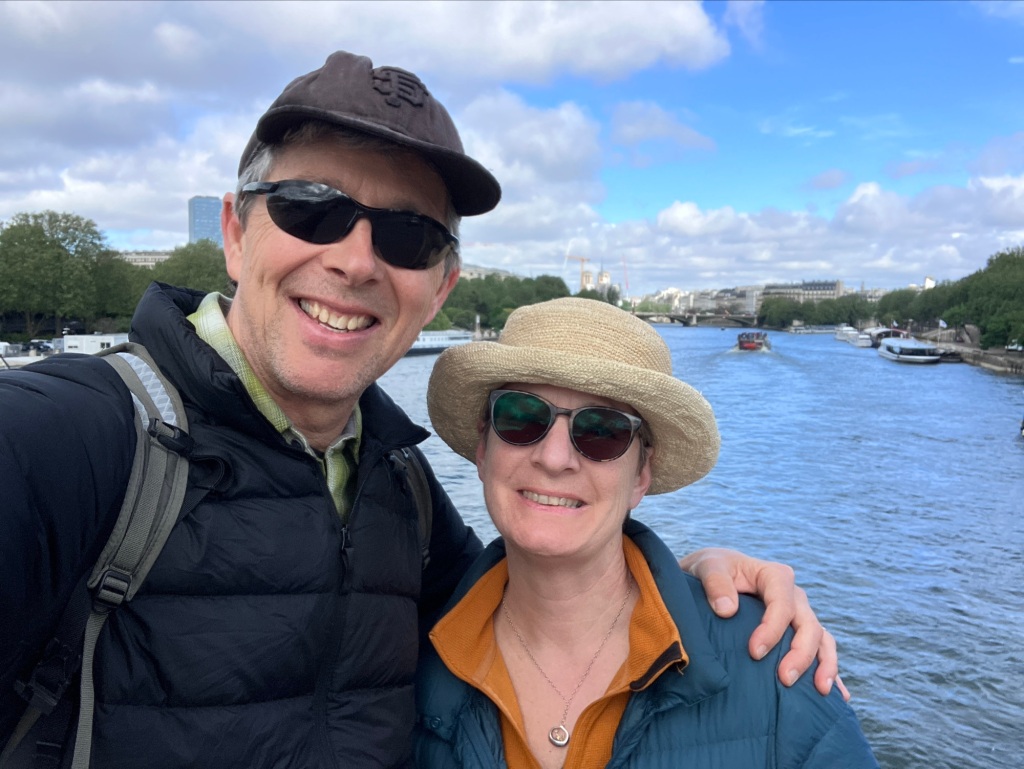
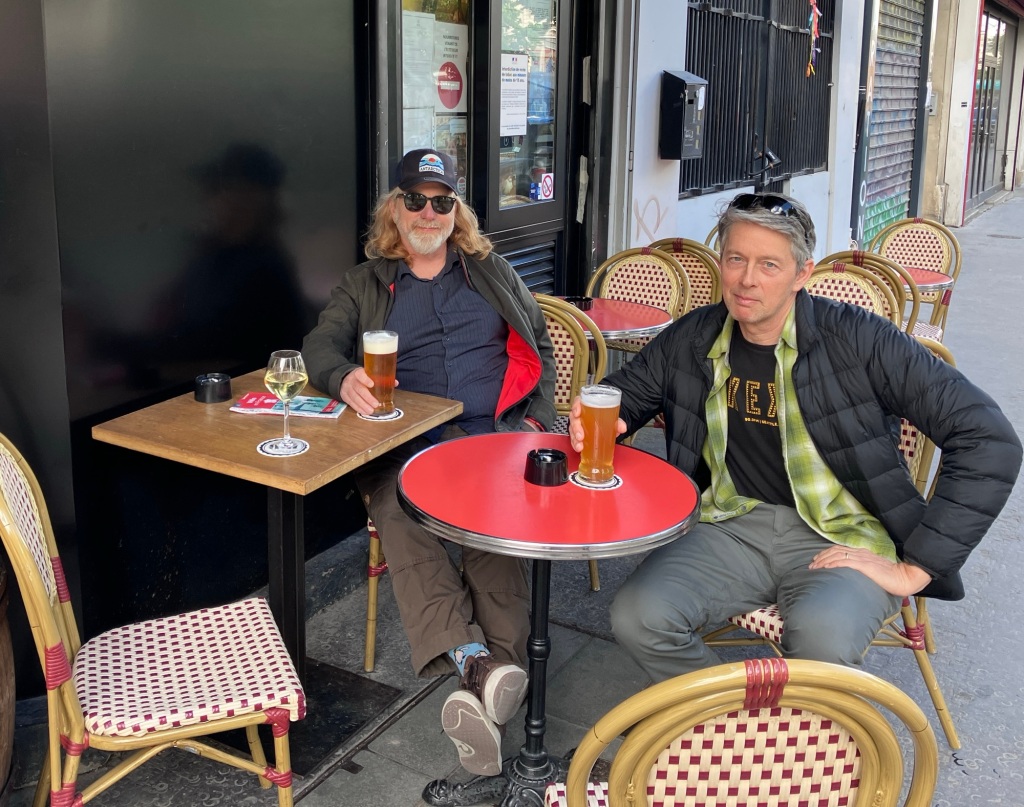
À votre santé, Paris! (Thank you for the photo Michelle!)
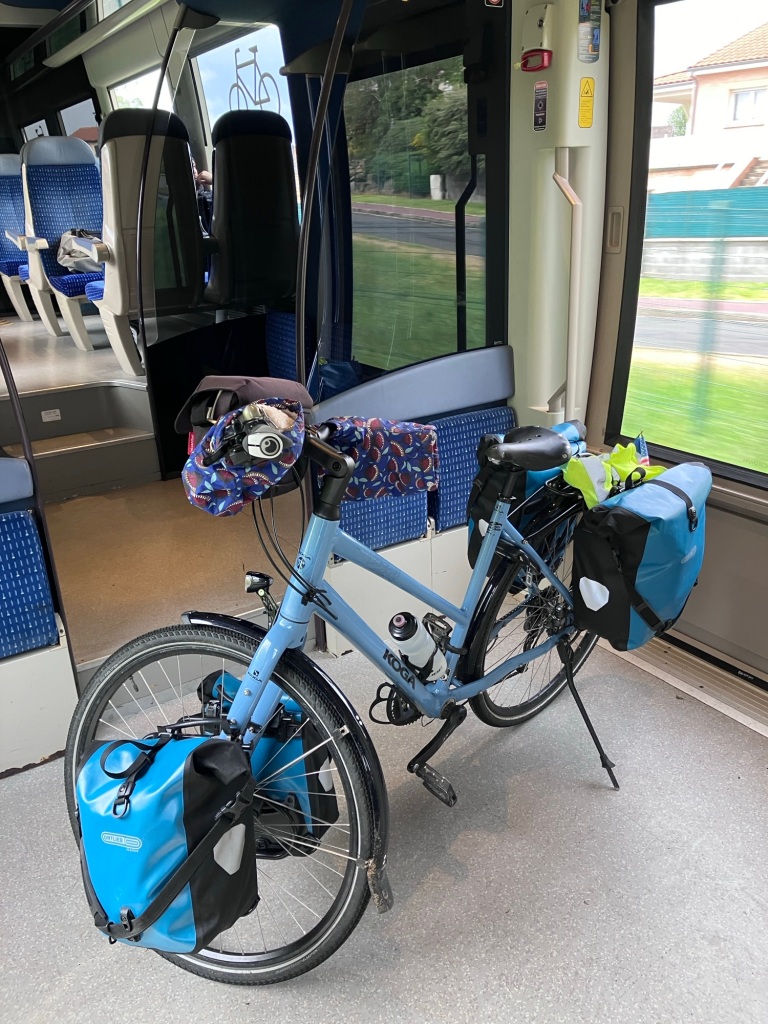
After barely getting all our wet gear dry in a hotel room with no heated towel rack, and only barely warm radiators, we loaded up and took the train for a boost from Aurillac towards Issoire.
Even after a long date with the hair dryer my shoes are still a bit damp. Ready to roll off the train in Brassac-les-Mines.
Our train ride took us through a tunnel and got us past the Parc naturel régional des Volcans d’Auvergne, a mountainous area with ski slopes. Looking out the train windows as we emerged from the tunnel I was quite thankful to not be pedaling, although the area was gorgeous.
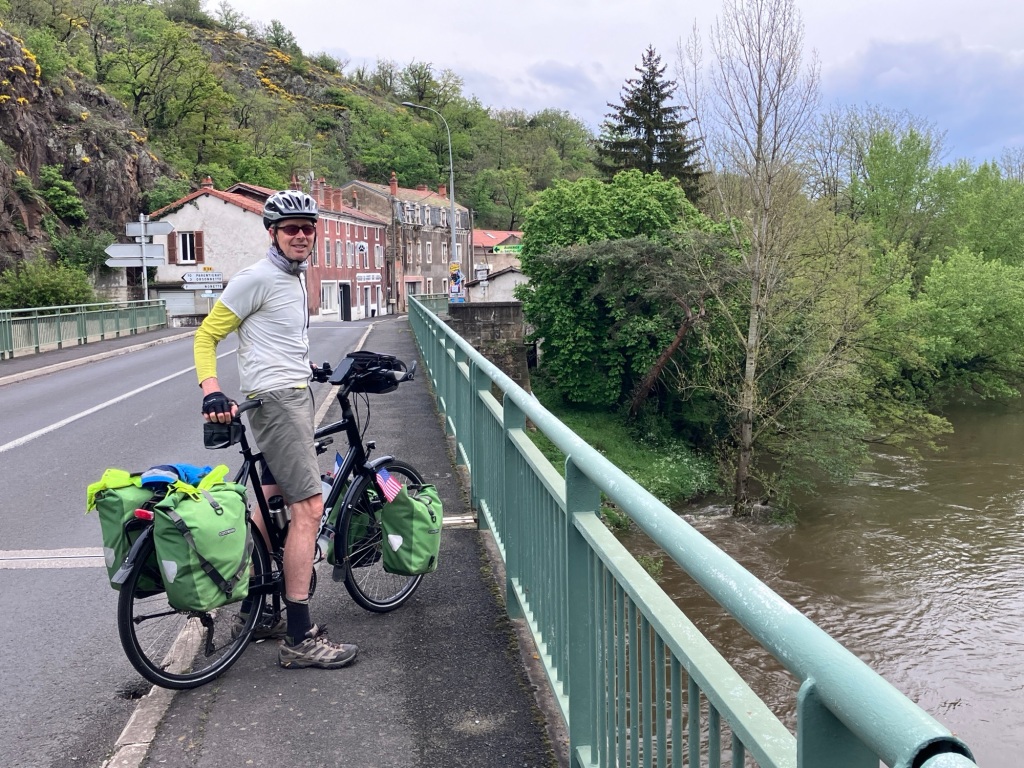
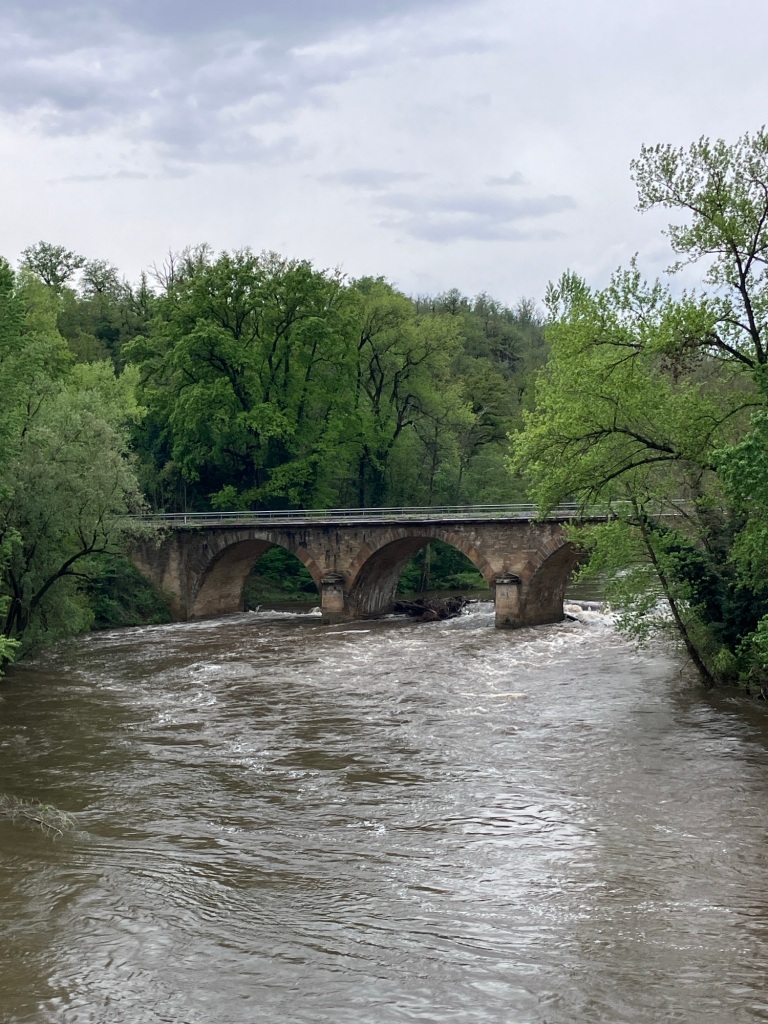
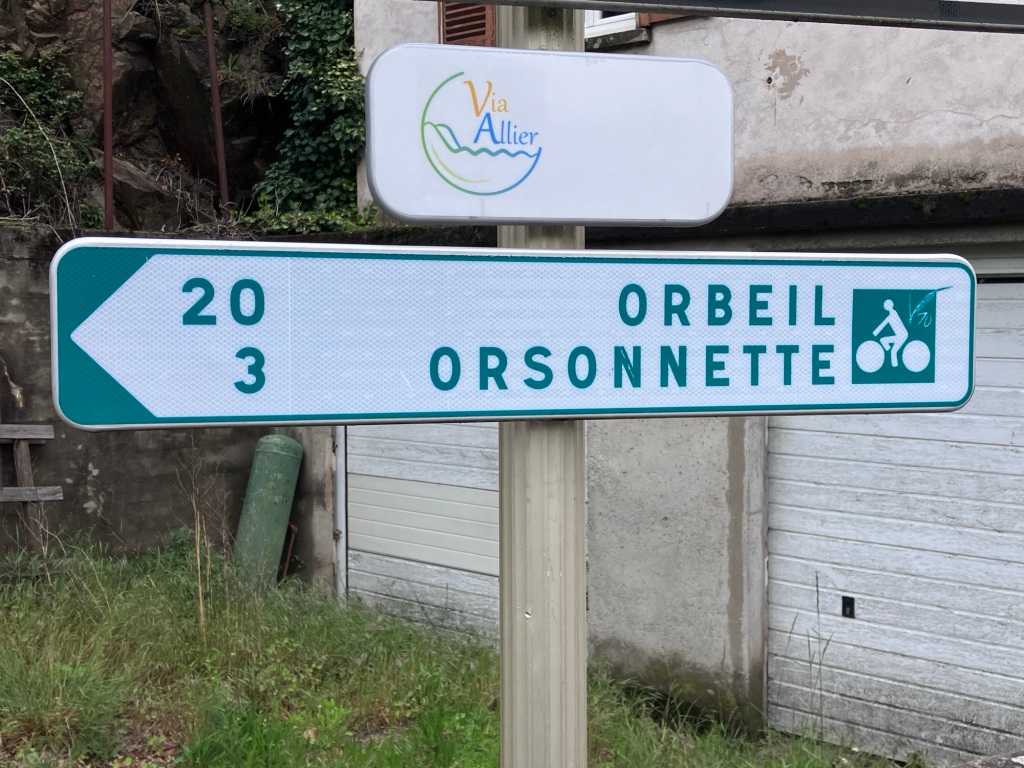
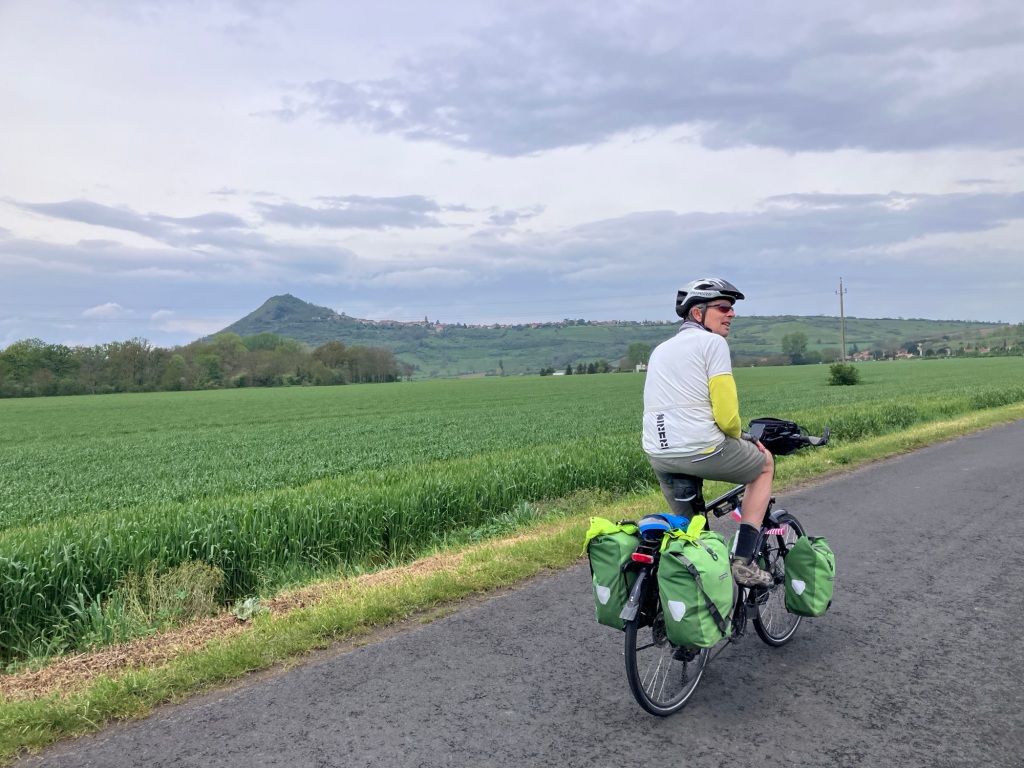
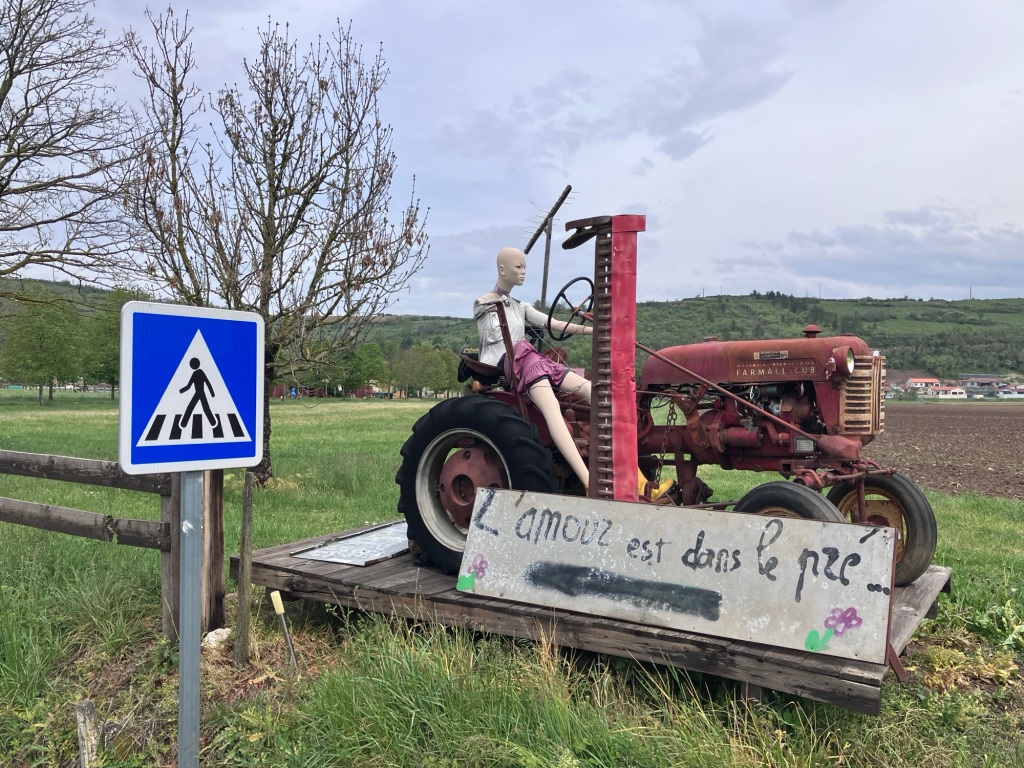
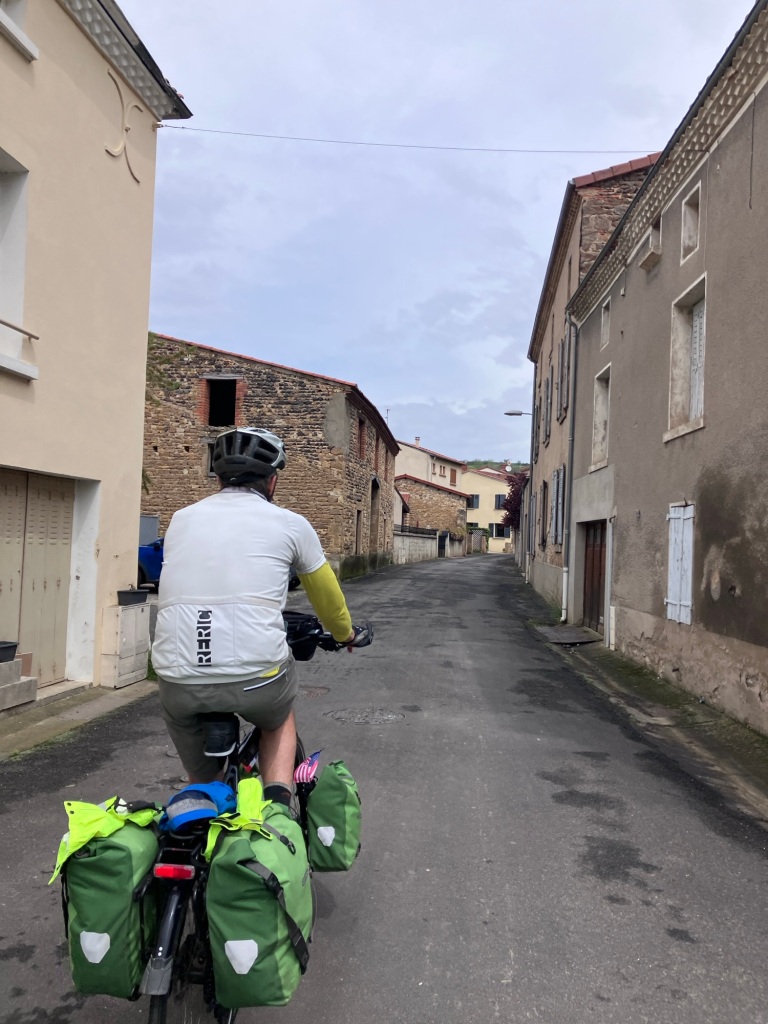
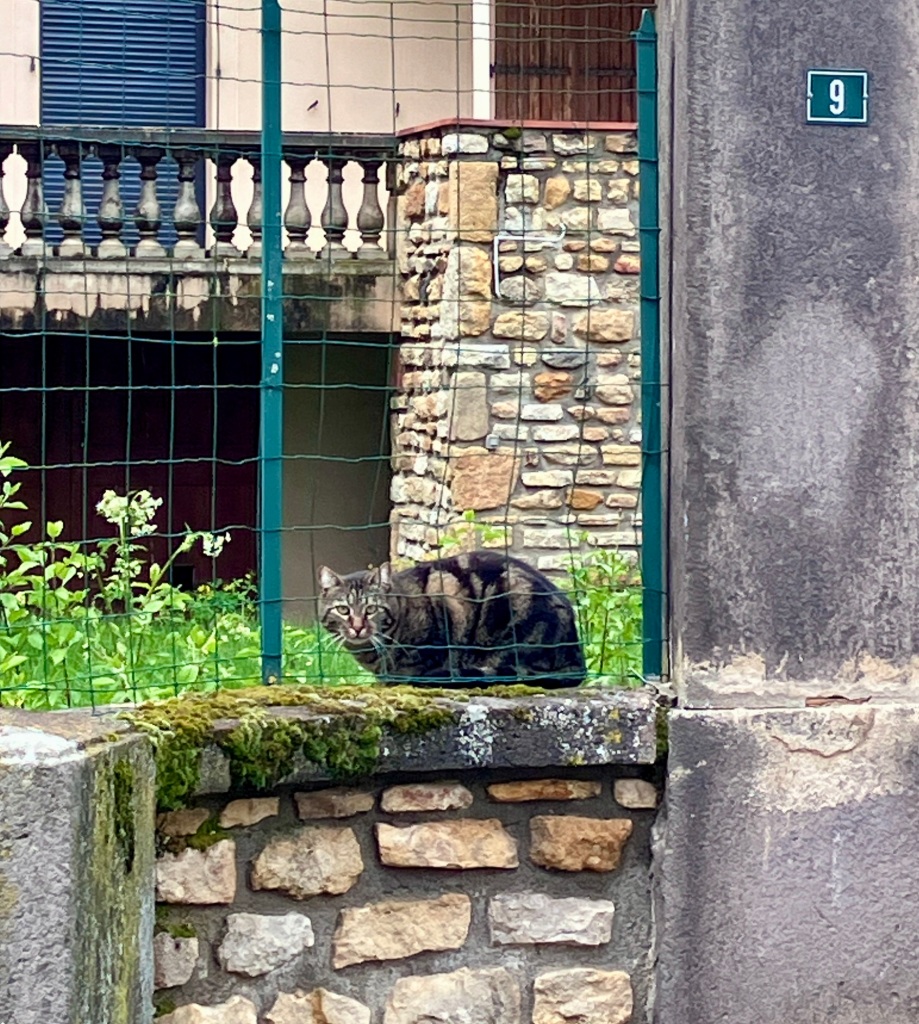
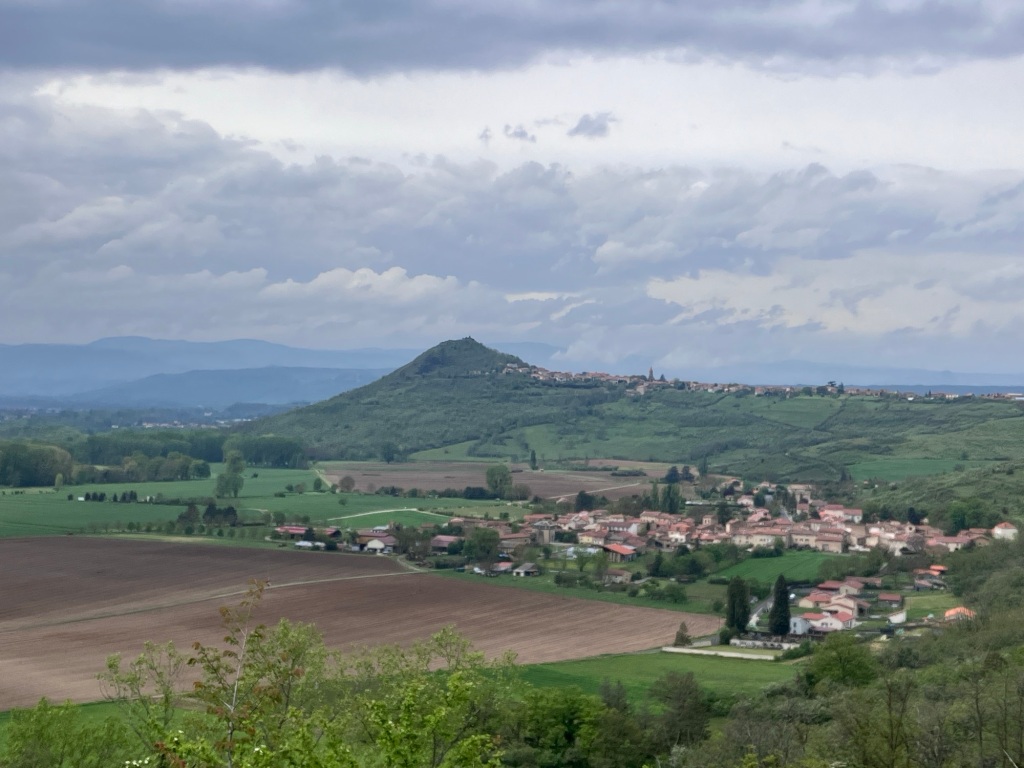
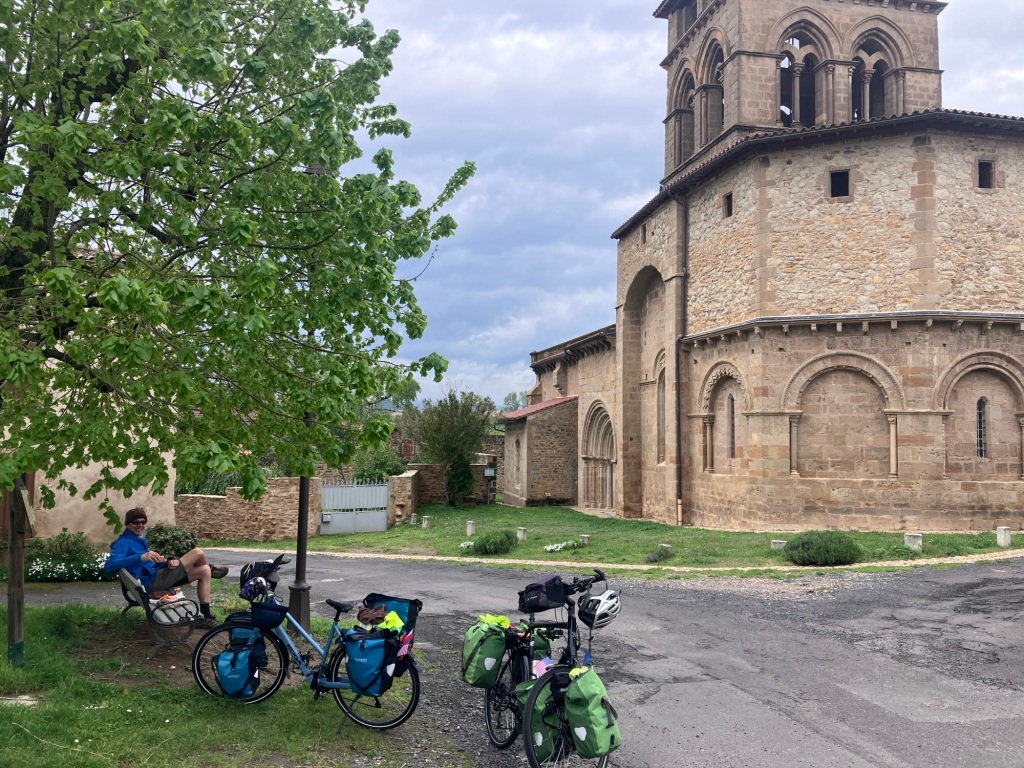
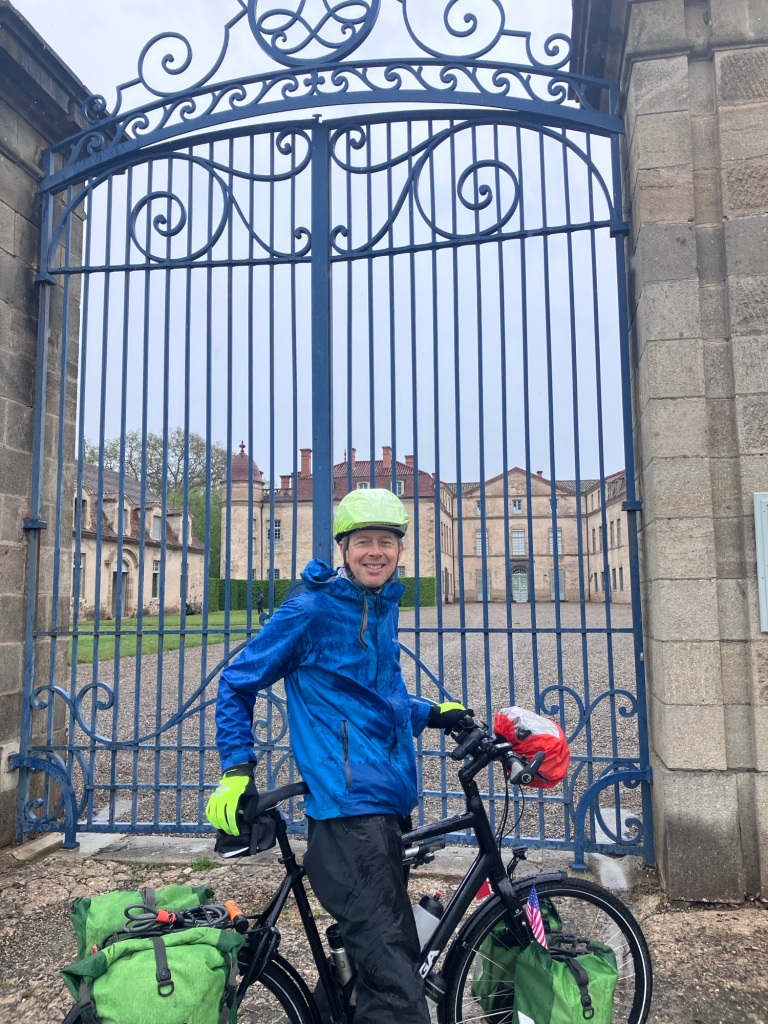
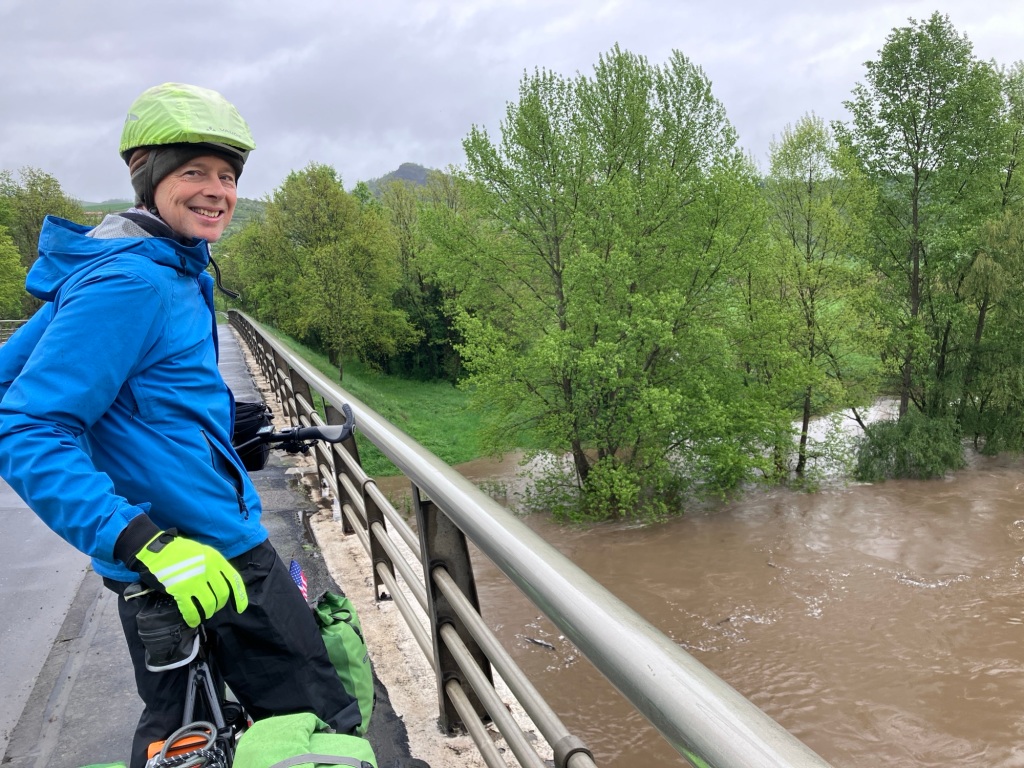
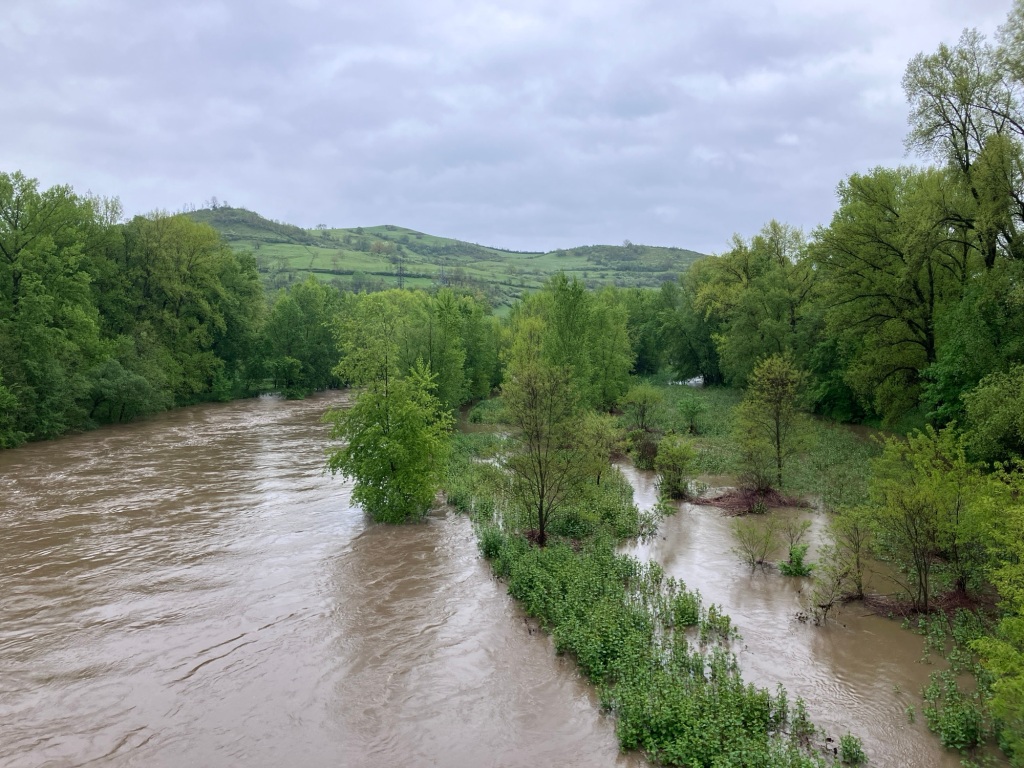
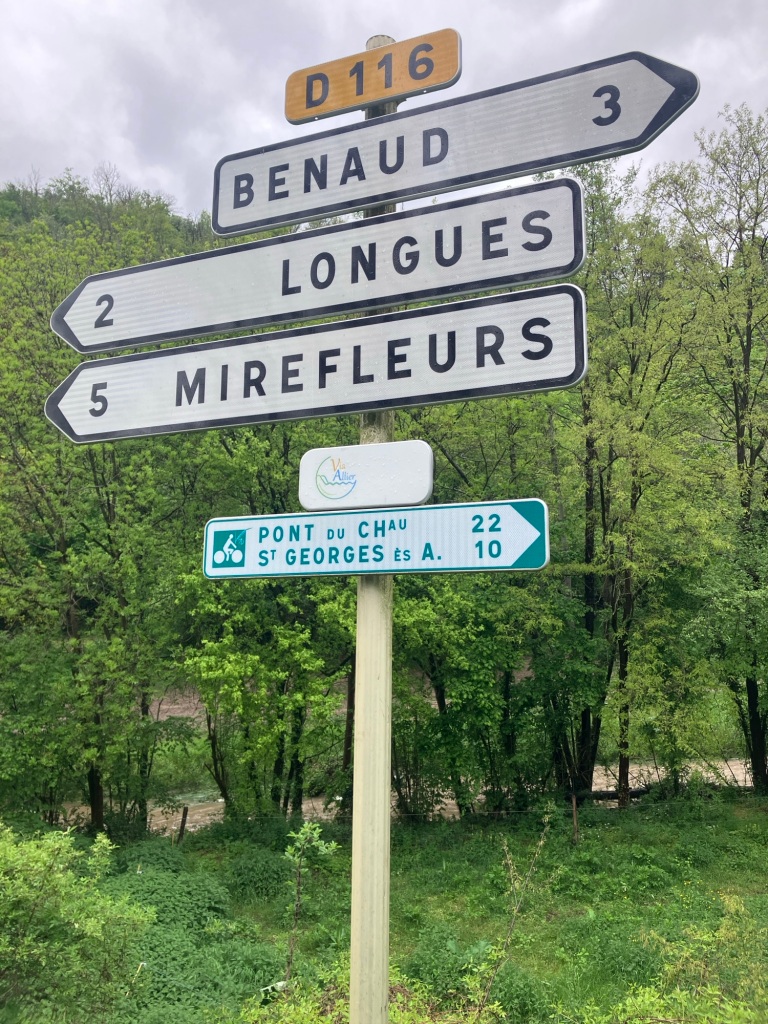
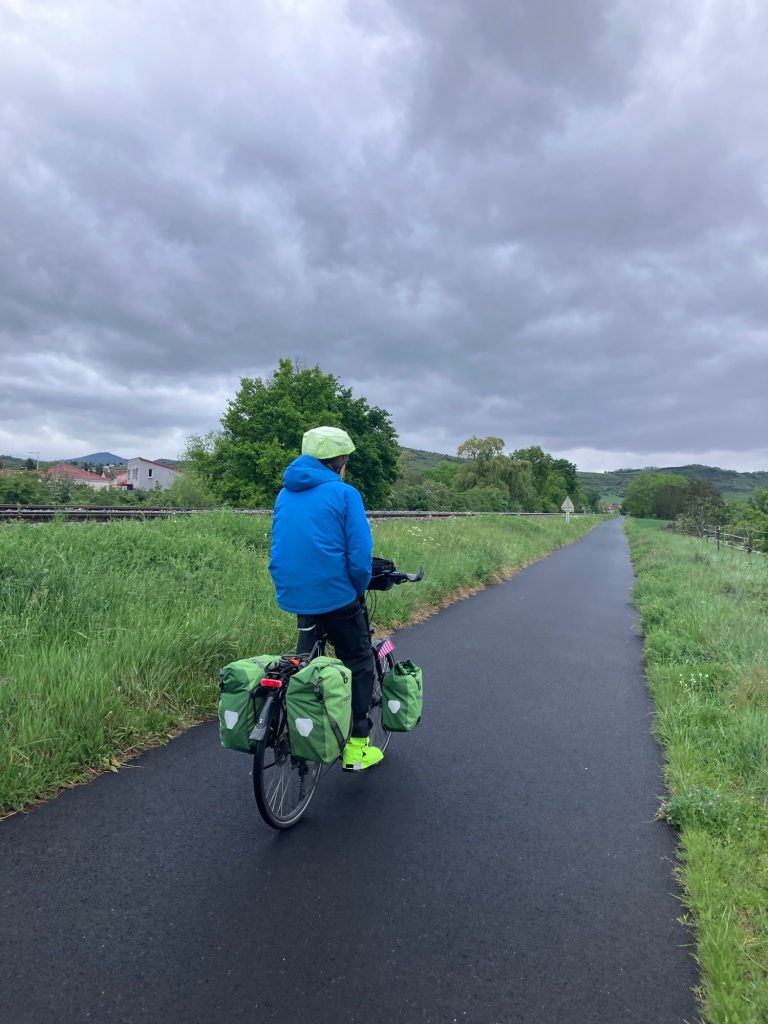
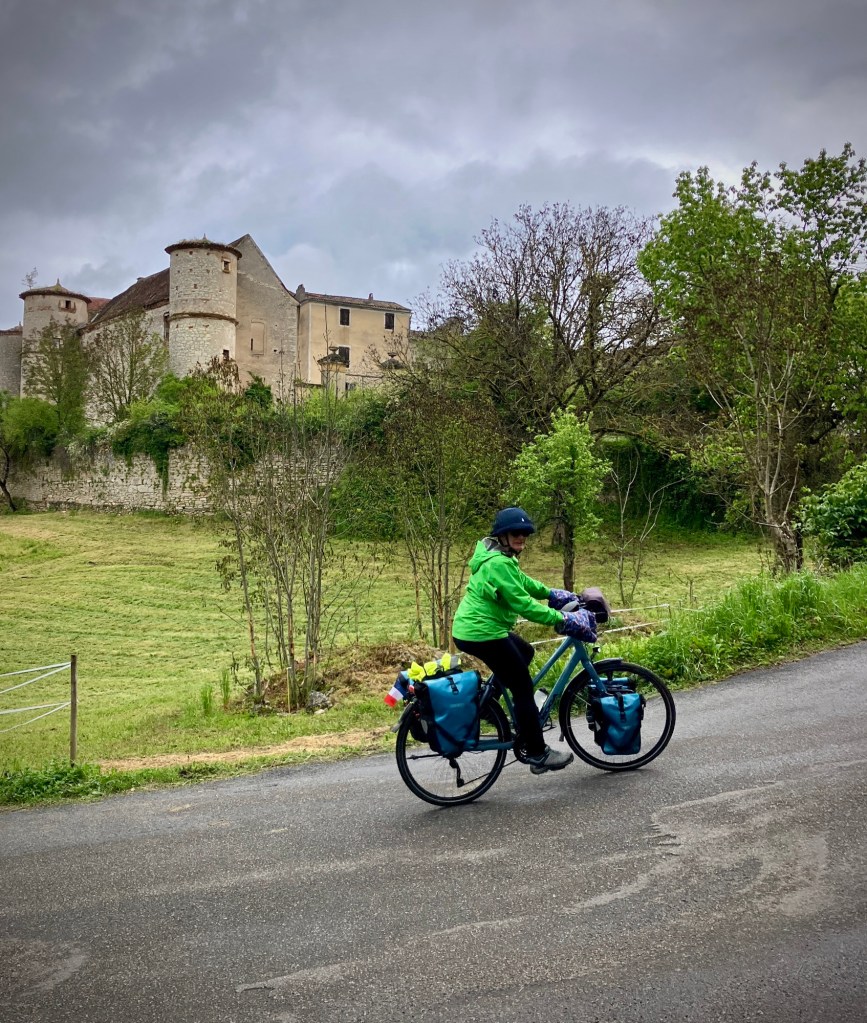
The Allier River was still raging from all the rain.Raging muddy rivers were starting to seem normal.Now we’re on the Via Allier. The French regional routes are super scenic.Riding through Orsonnette. We’ve entered the Puy-de-Dôme department.“The love is in the Fields.” We needed help with this translation, thank you Finn. The look of the buildings has changed. No more slate roofs and buttery yellow stone buildings, now it’s red roofs and more of a grey or brown tone.The cats are still cute in this new region.Climbing up a ridge towards Lamontgie. Grey skies, but still dry.Lunch stop at a bench with a lovely church view. And the rain started.Quick, stop in front of that beautiful gate at Château de Parentignat.
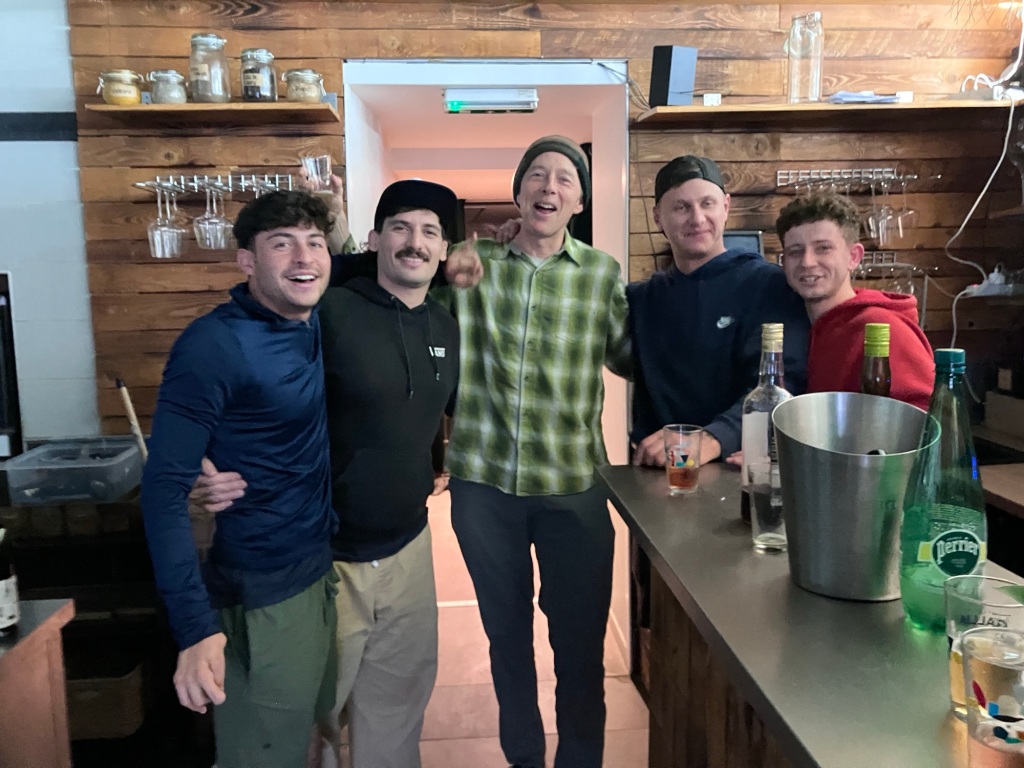
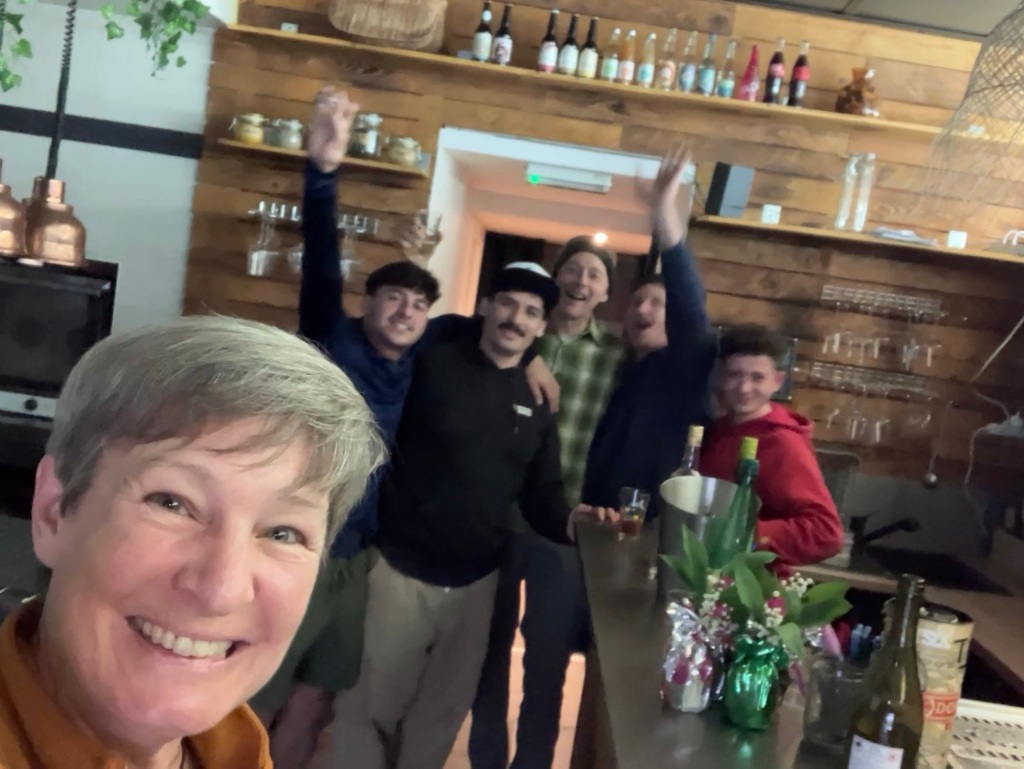
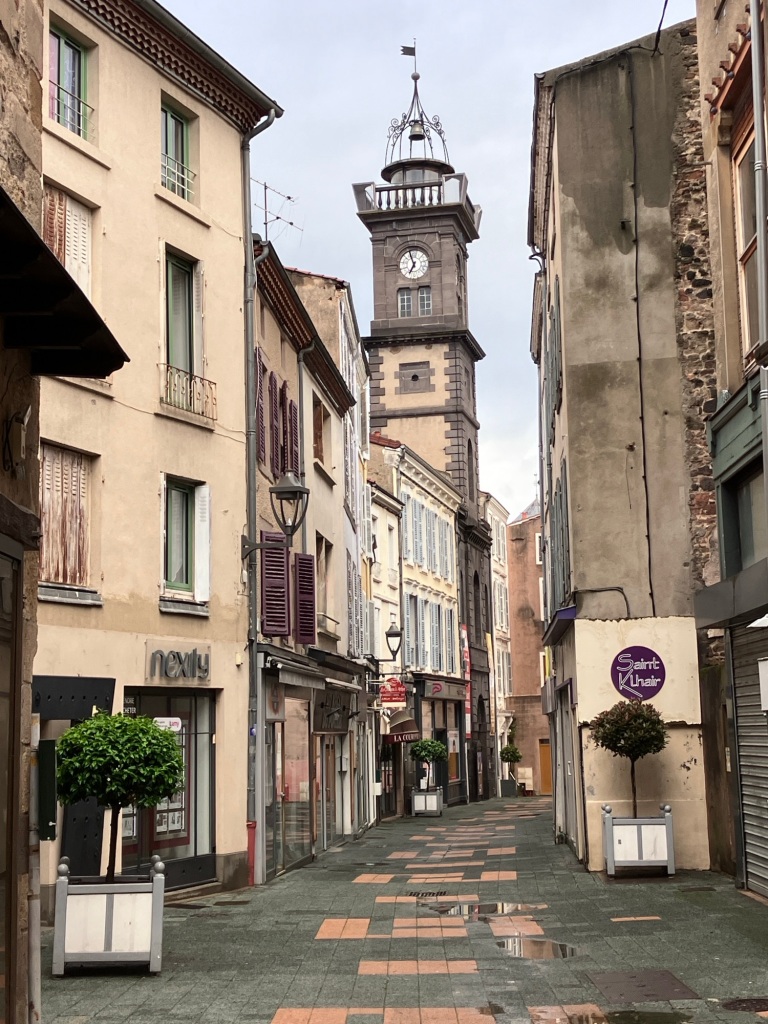
It will come as no surprise to Europeans and perhaps a medium to big surprise to Americans what an impactful holiday May 1st is in Europe. May Day, Labour Day, or Fête du Travail will see shops and museums closed, and many restaurants as well. We planned two nights in Issoire since the weather on May Day was scheduled to be rainy again. We cozied up in our hotel room after dinner on April 30th and planned to rest, read, travel plan and blog. We went out to find lunch and see what might be open for dinner. Lunch was a Chinese restaurant, and we saw a few other places open, brasseries and cafes mostly. However, when we ventured back out in the rain for dinner, we were having no luck. Those businesses which had been open for lunch were now closed. Uh oh. Panic setting in. Rich spotted a restaurant whose hours on line proclaimed a 7pm opening. The metal shutter was half open and people were inside! Success? Not exactly. The four guys inside were staff having a Fête du Travail celebration. When the Manager, Hugo, figured out we were Americans he hustled us inside for a drink.
Enjoying a Fête du Travail drink and camaraderie. They may have been a few drinks ahead of us but we had a fantastic 45 minutes talking and laughing.
What had been a slight stop of desperation in Issoire turned into a memorable experience. Towns with fewer tourists seem to lead to fun interactions. No one in Issoire is tired of American tourists clumping around town.
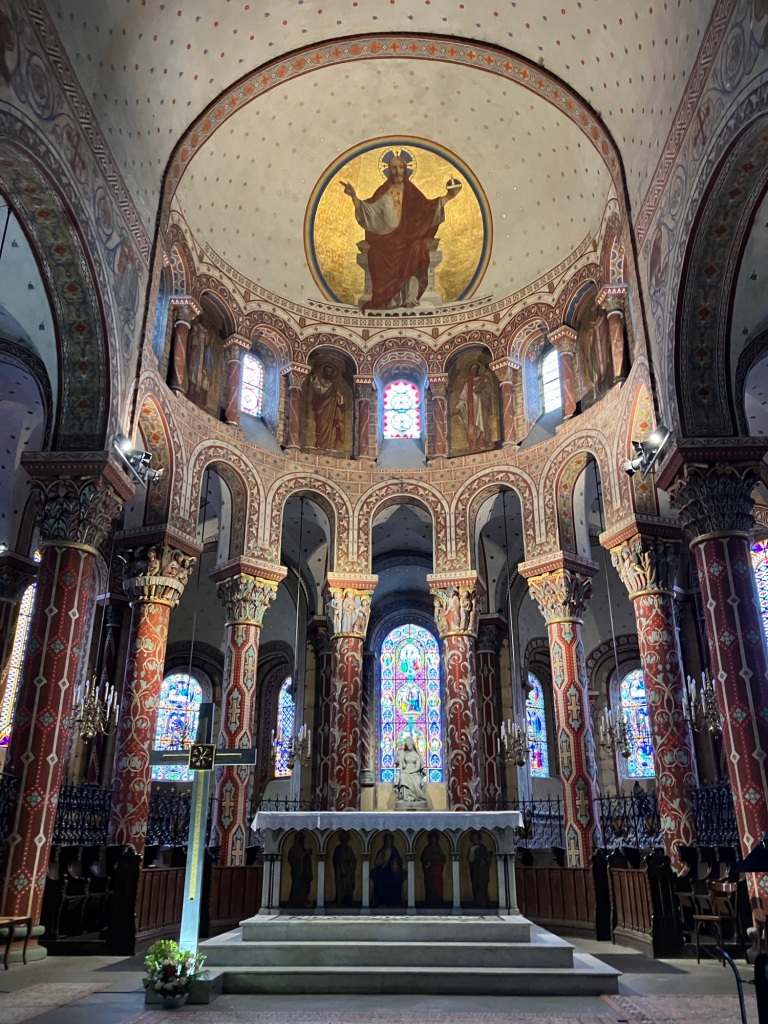
Abbatiale Saint-Austremoine which has uniquely painted walls and columns.Rainy streets on our way to an Indian restaurant for dinner. We ate there both nights, it was that good and open!
Farewell Issoire, thanks to the hospitality of a crew of celebrating workers we had a memorable time. But, May 2nd and we’re back out into the rain to ride to Clermont-Ferrand. We’re timing our train from there to arrive in Paris for a four night stay to catch up with friends, so we have a two night stay planned in Clermont-Ferrand. The amazing travel planner Rich figured out the puzzle of loaded touring bikes/trains/Paris.
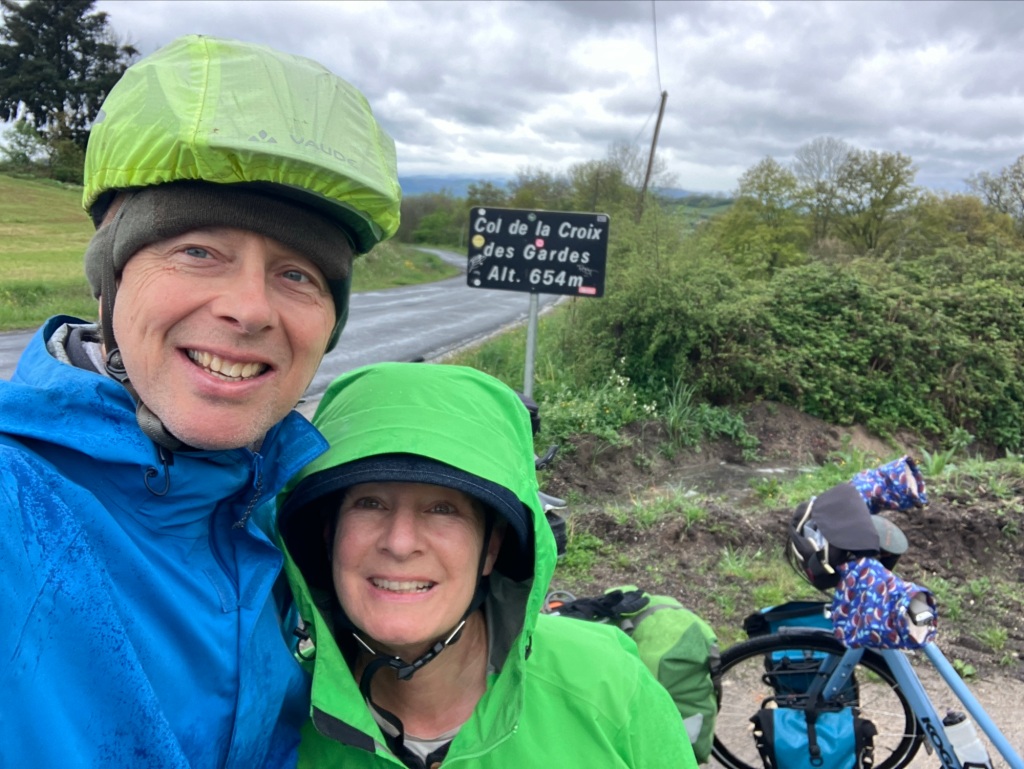
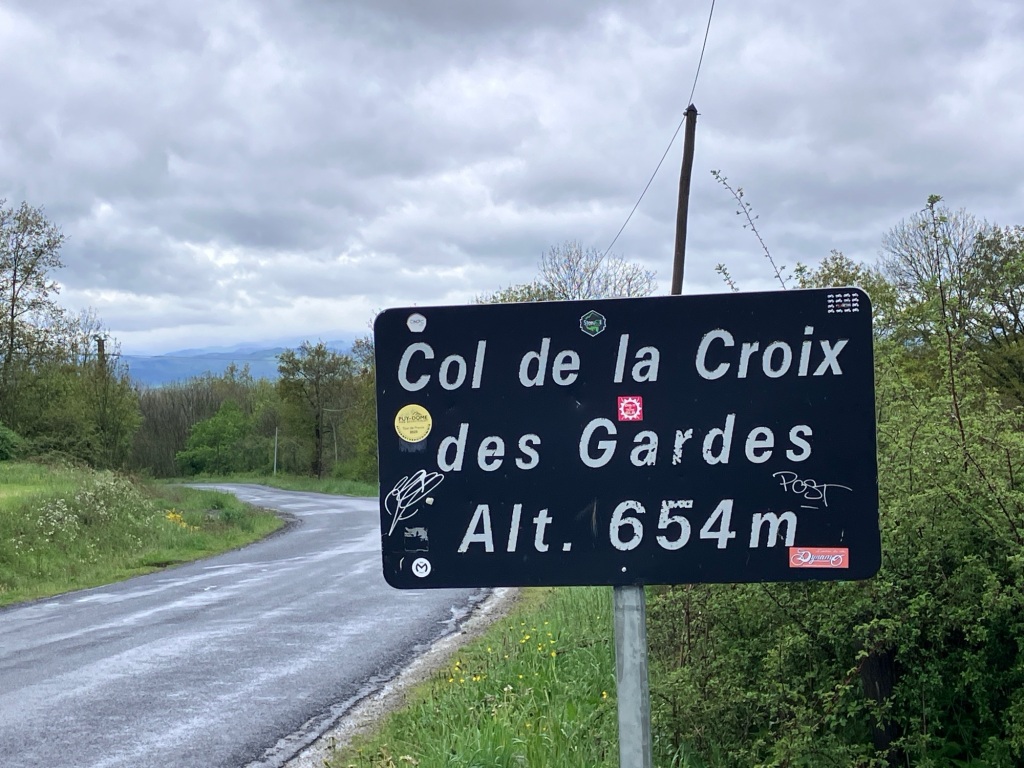
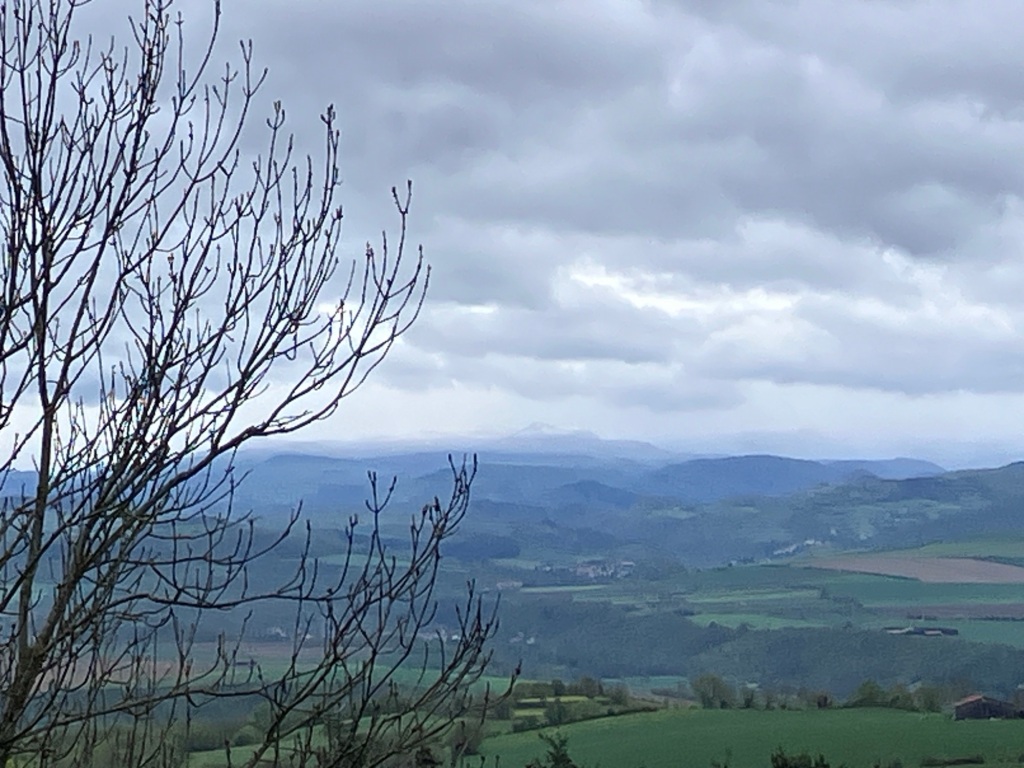
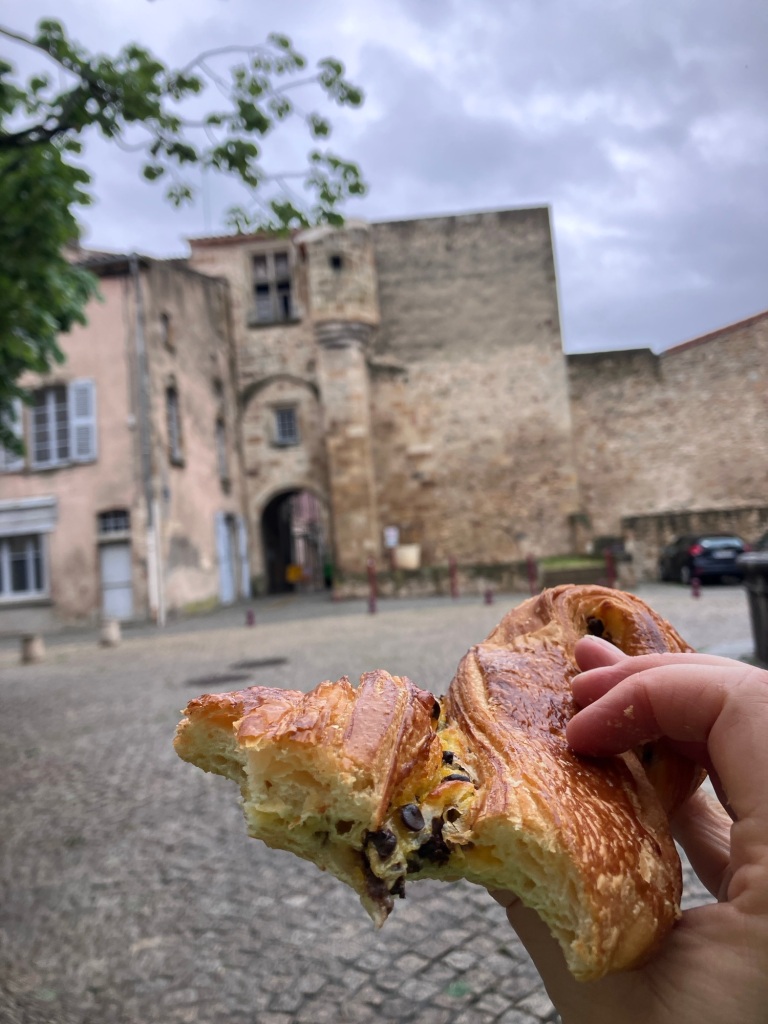
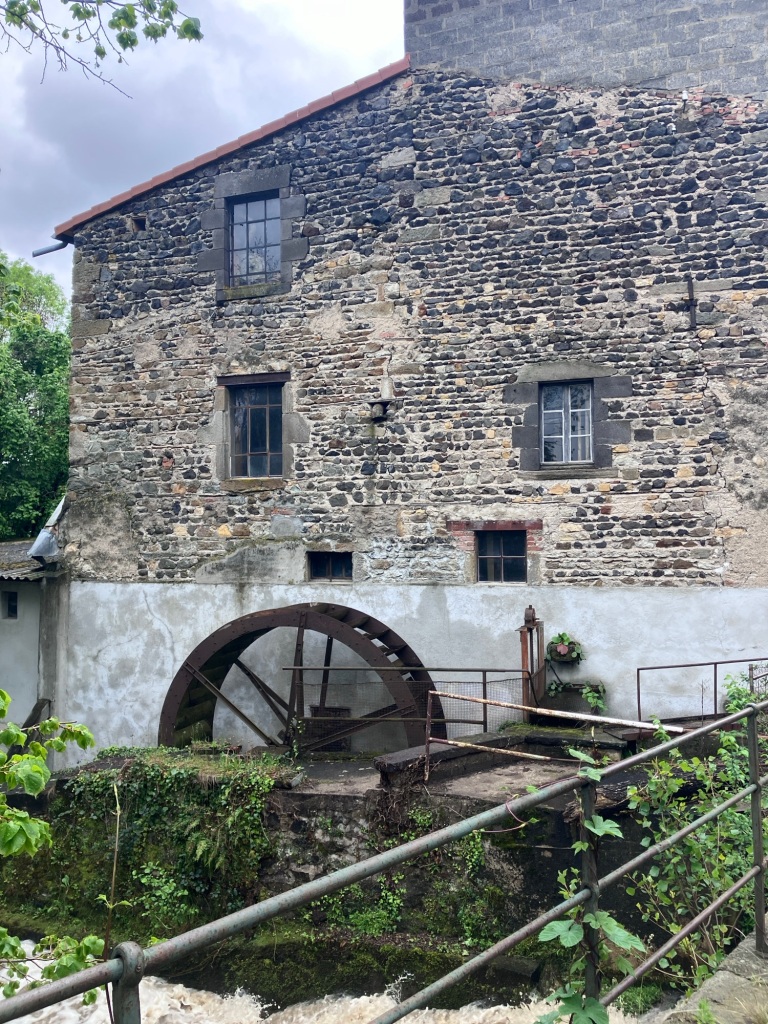
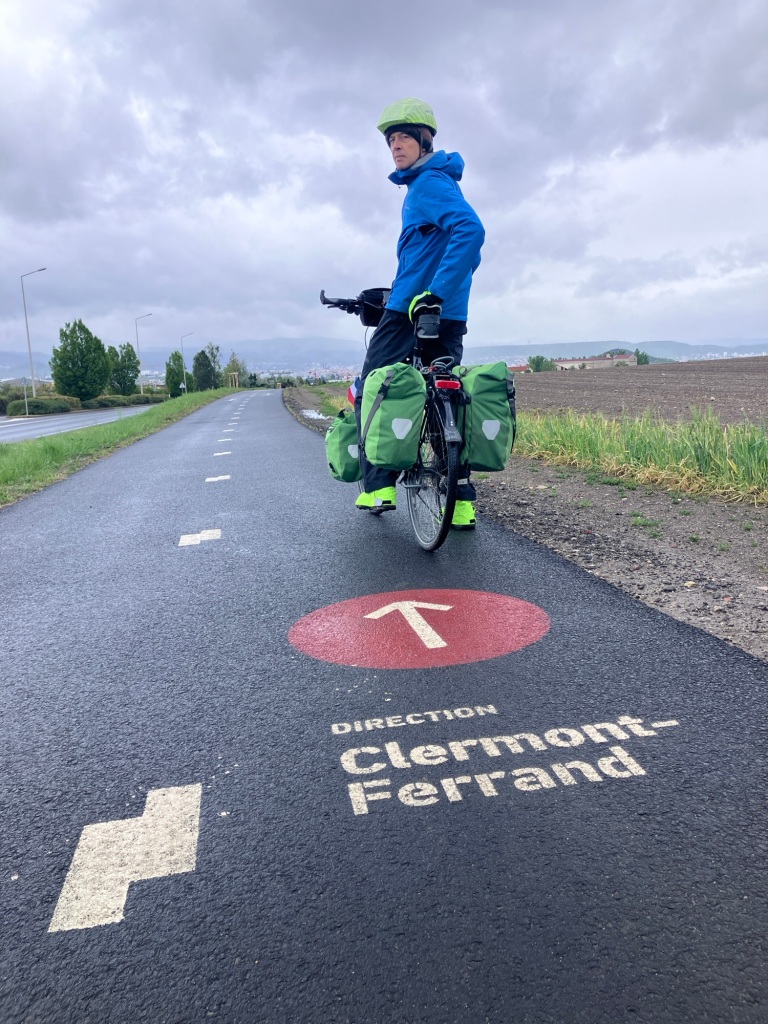
Still raining.Allier River still flooded.Nothing like a climb to warm you up on a chilly morning. Col de la Croix des Gardes.From here we get a lovely decent to Clermont-Ferrand.Dramatic volcanic mountains with a dusting of snow.Equally dramatic Pain Suisse enjoyed in Vic-le-Comte. My favorite riding snack in France. Pain Suisse is brioche dough filled with crème pâtisserie and chocolate chips.A perfect square for a pasty break.Nice signage.Some lovely new pavement on the cycle track.An old water mill on a side street of Les Martres-de-Veyre.This signage was worth making Rich turn around and come back for a drama shot.
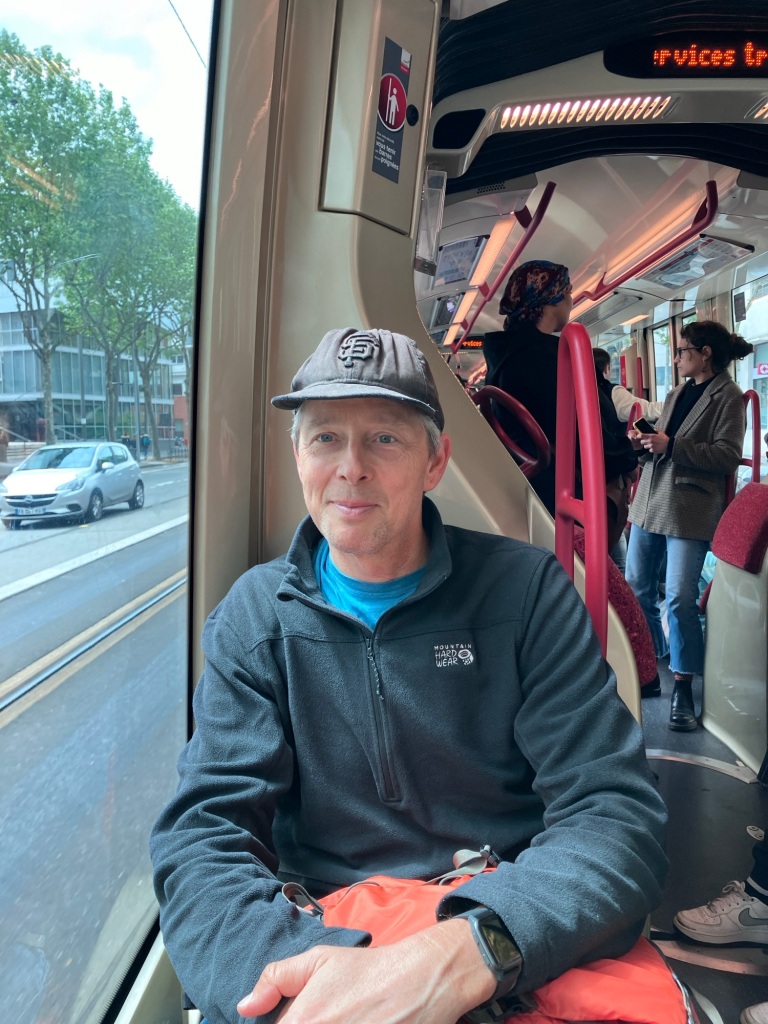
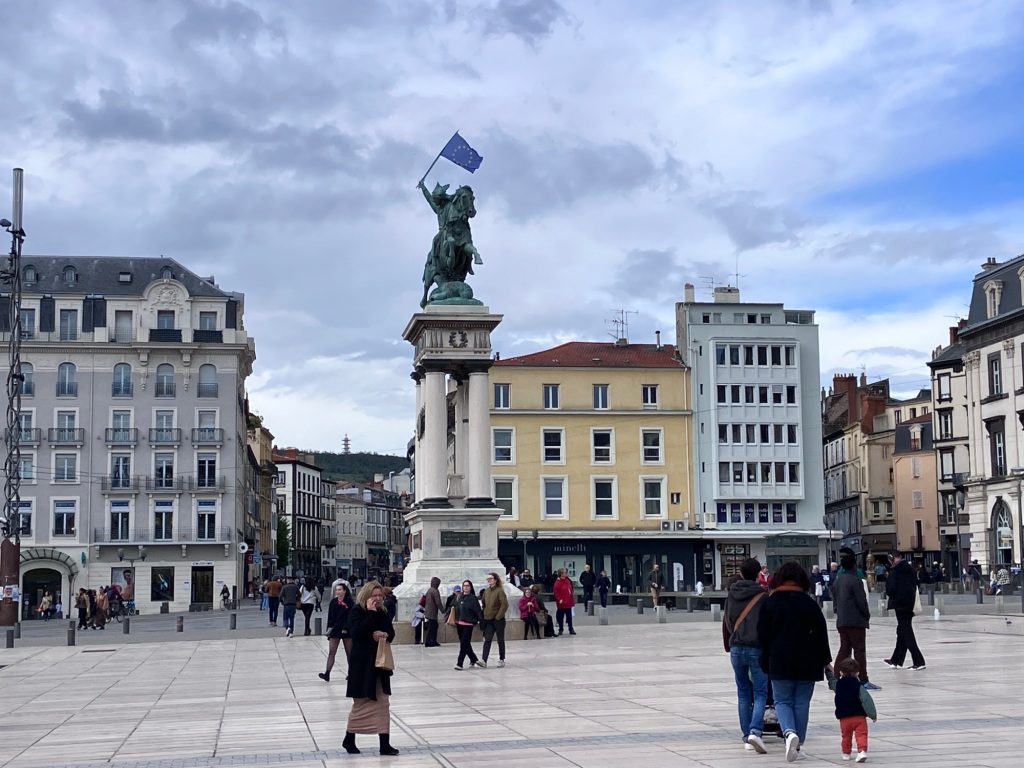
We didn’t expect much of Clermont-Ferrand. Rich had read that it wasn’t that charming a town. It’s funny how quickly and easily we can have our minds made up, or changed about a place. Coming in up a climb up a commercial street, grump grump grump. Construction zone, grump grump. Oh! A plaza. Oh, street cars. Hey, we’re really liking this town.
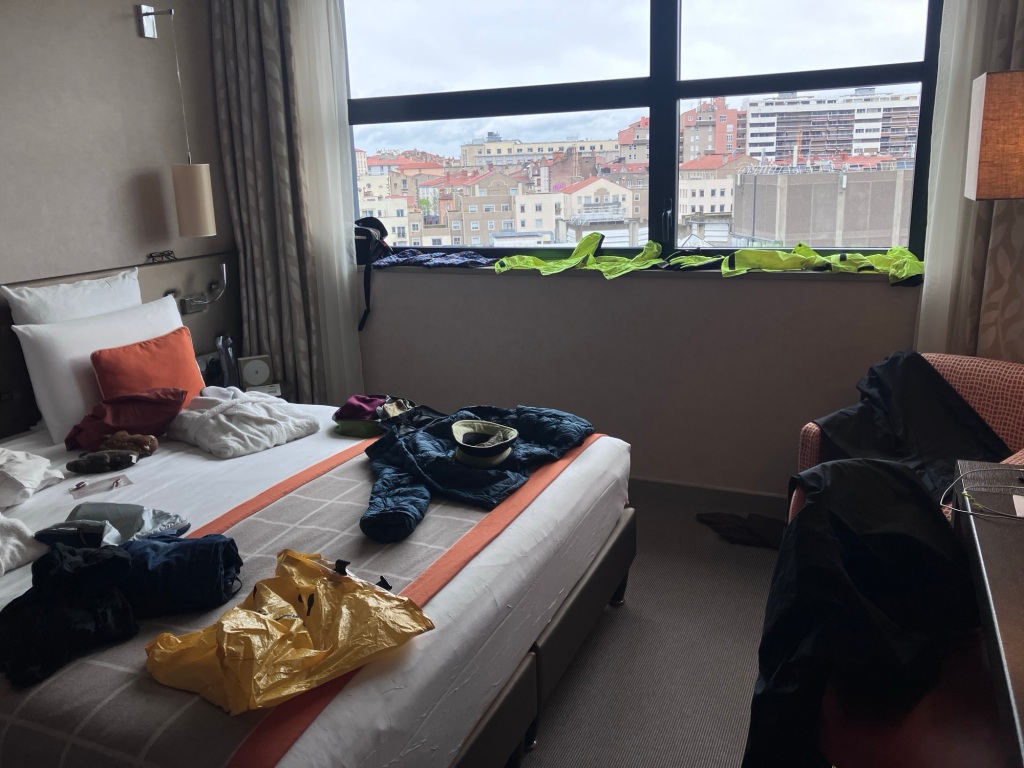
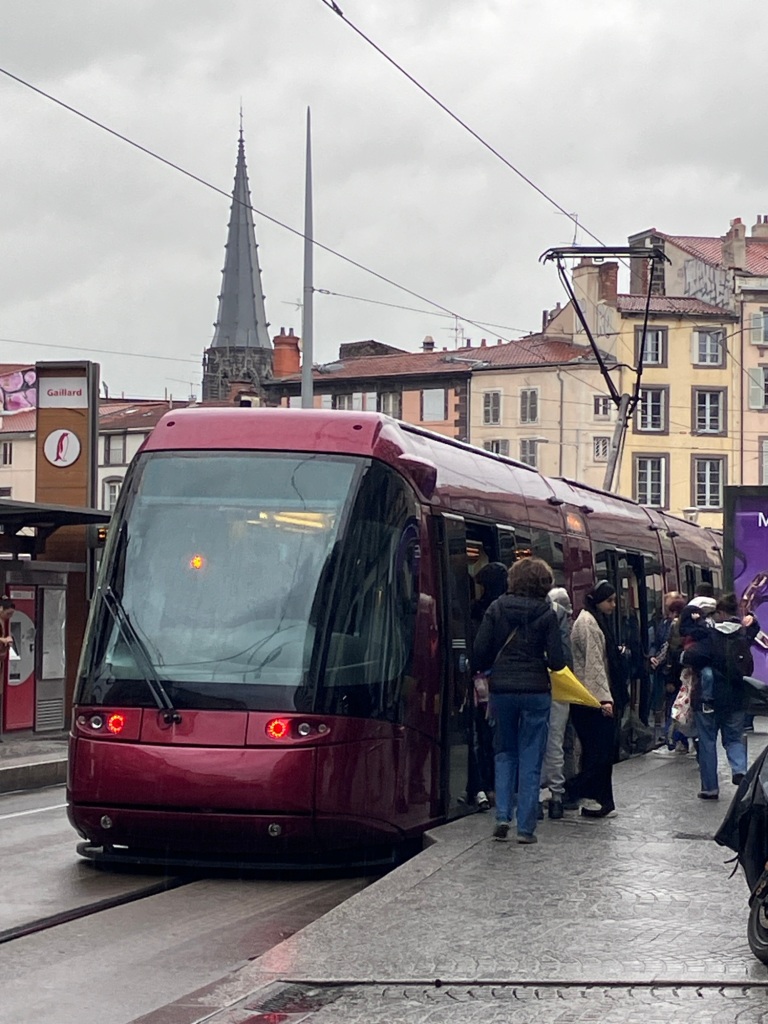
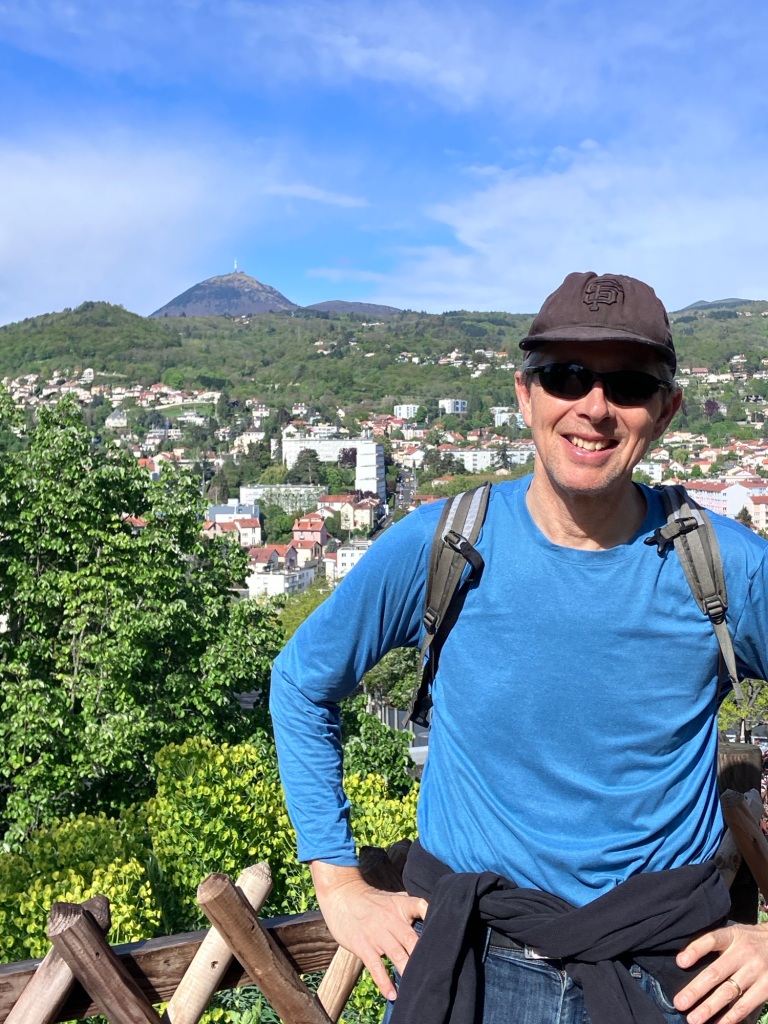
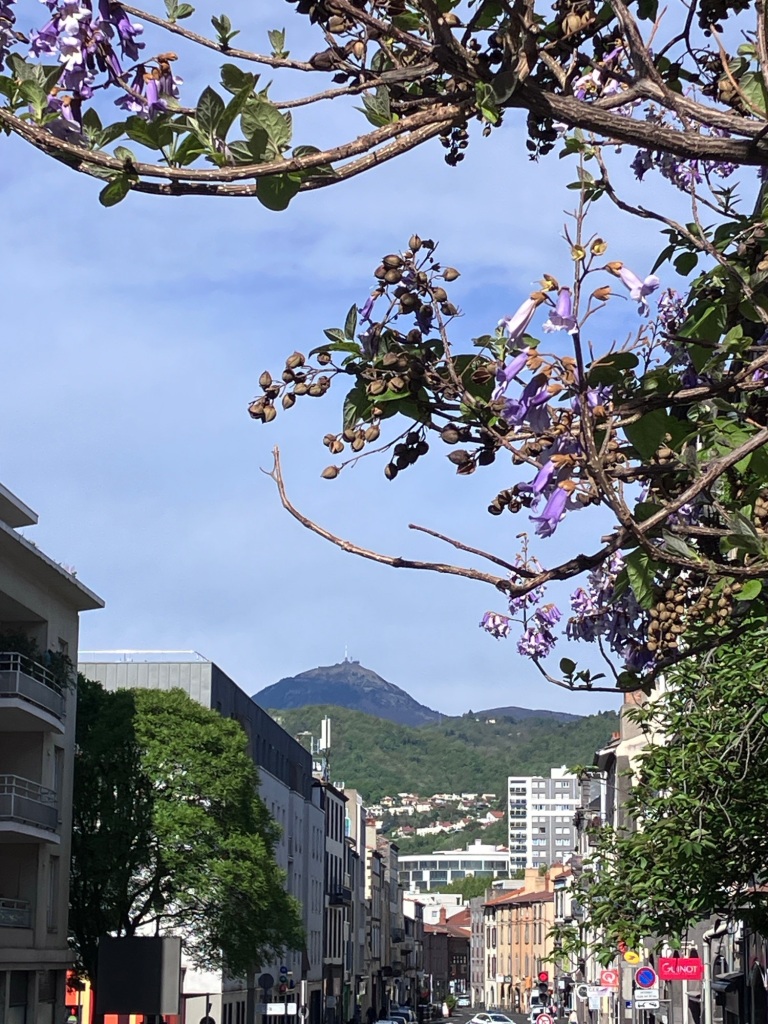
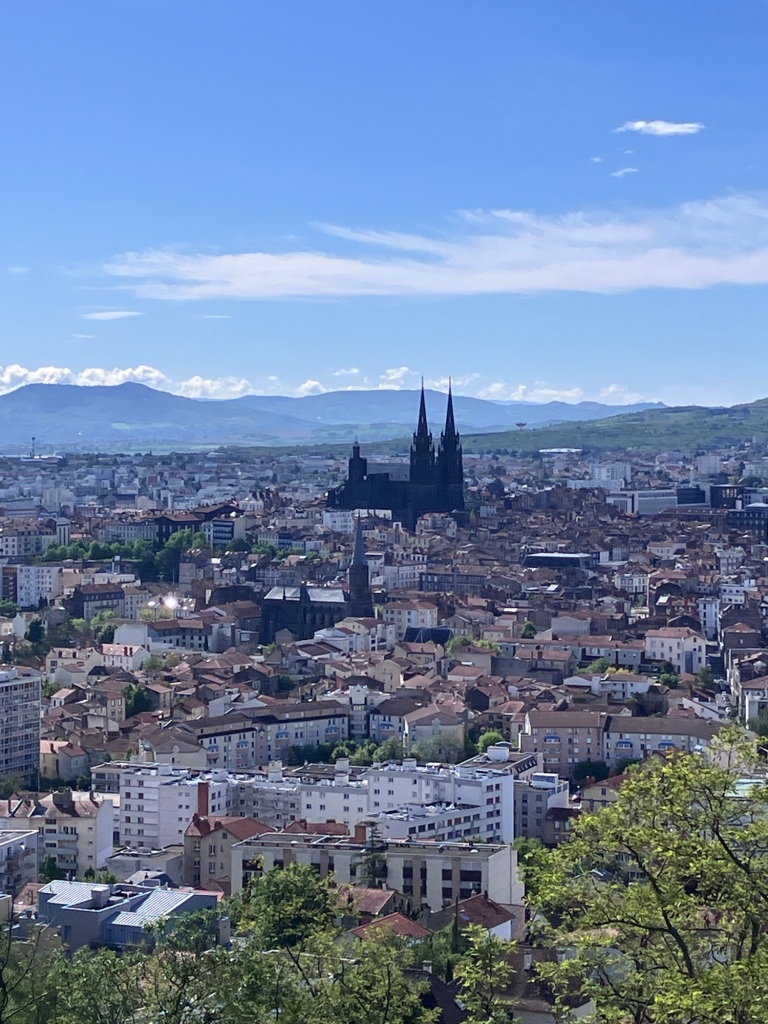
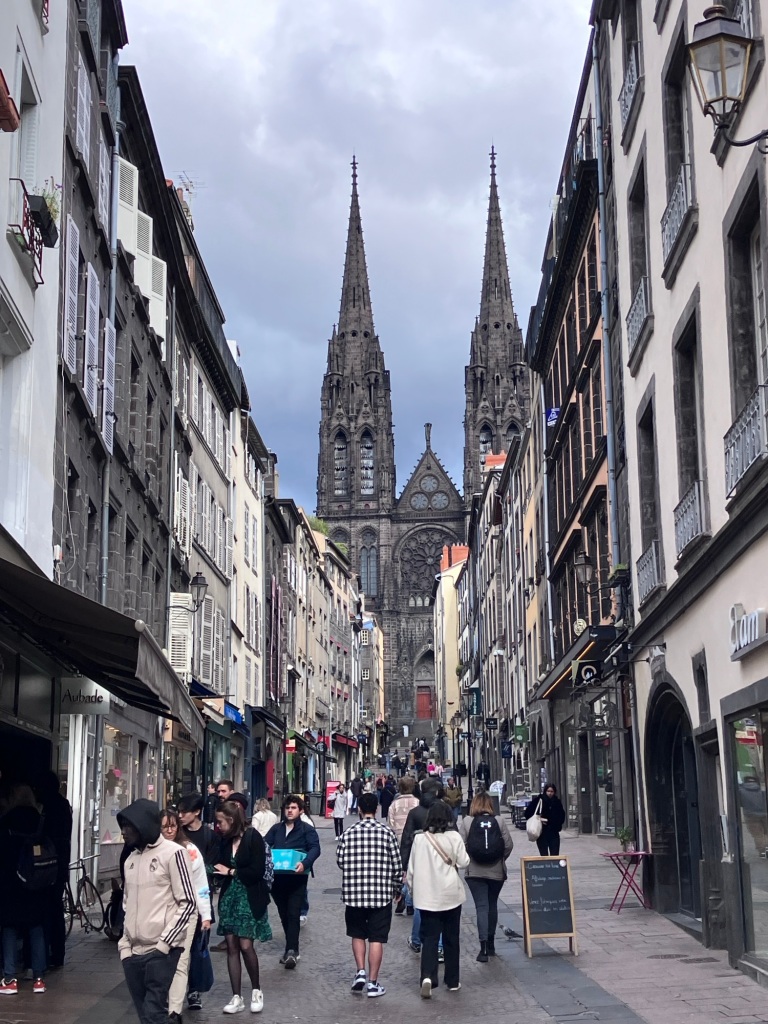
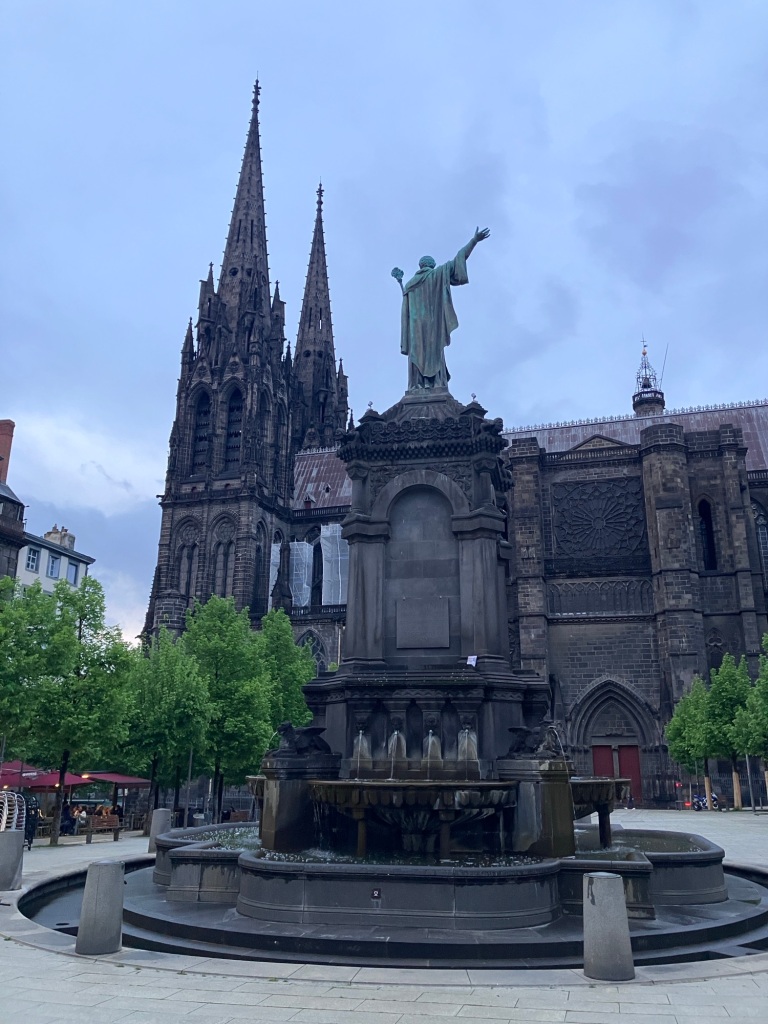
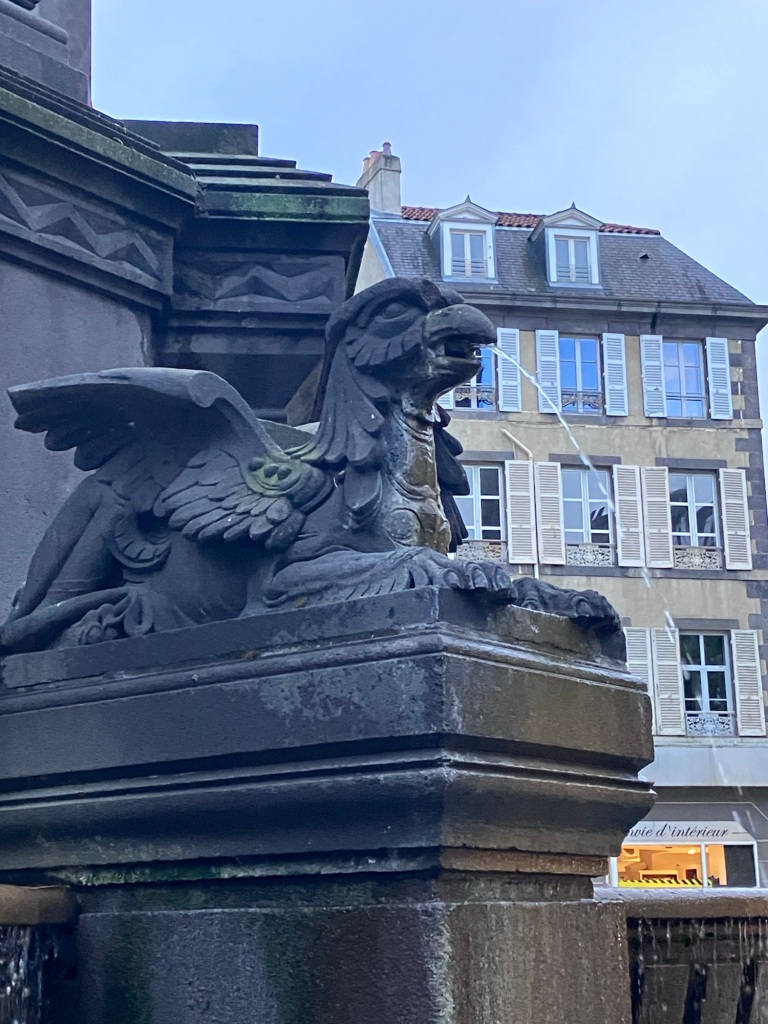
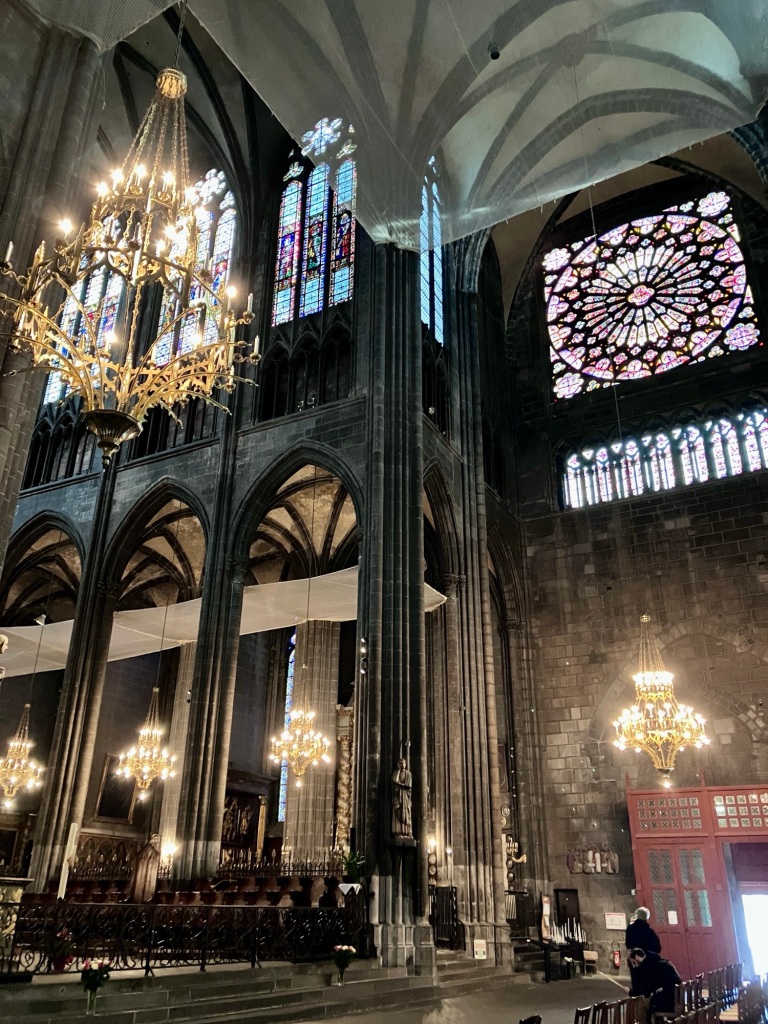
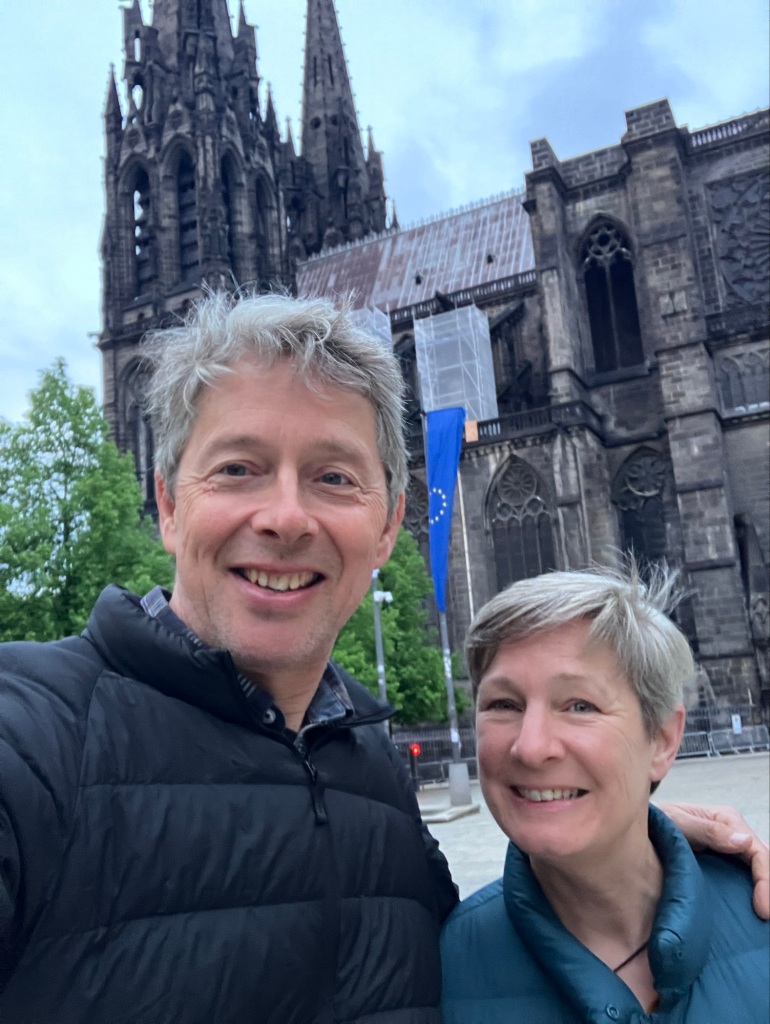
Drying out our fluorescent yellow shoe covers after another day of rainy riding.Fascinating rubber tired single rail streetcars.The town is bordered by the volcanic Chaîne des Puys mountains. Which makes for some fantastic views, like this one of the Puy-de-Dôme.And the stunning Notre-Dame of Assumption Cathedral? Not dirt or soot blackened as you might first assume. Carved from black lava stone! It really stands out from the red roofs when viewed from Parc Montjuzet.Very dramatic, the black spires against a grey sky.The black stone makes for some fantastic contrast.This building is like a giant pumice stone. Well, not exactly. It’s made from scoria which is denser than pumice.Black lava griffin fountain.Inside the cathedral. The black stone makes the lighting and windows really pop.
What else did we enjoy about Clermont-Ferrand?
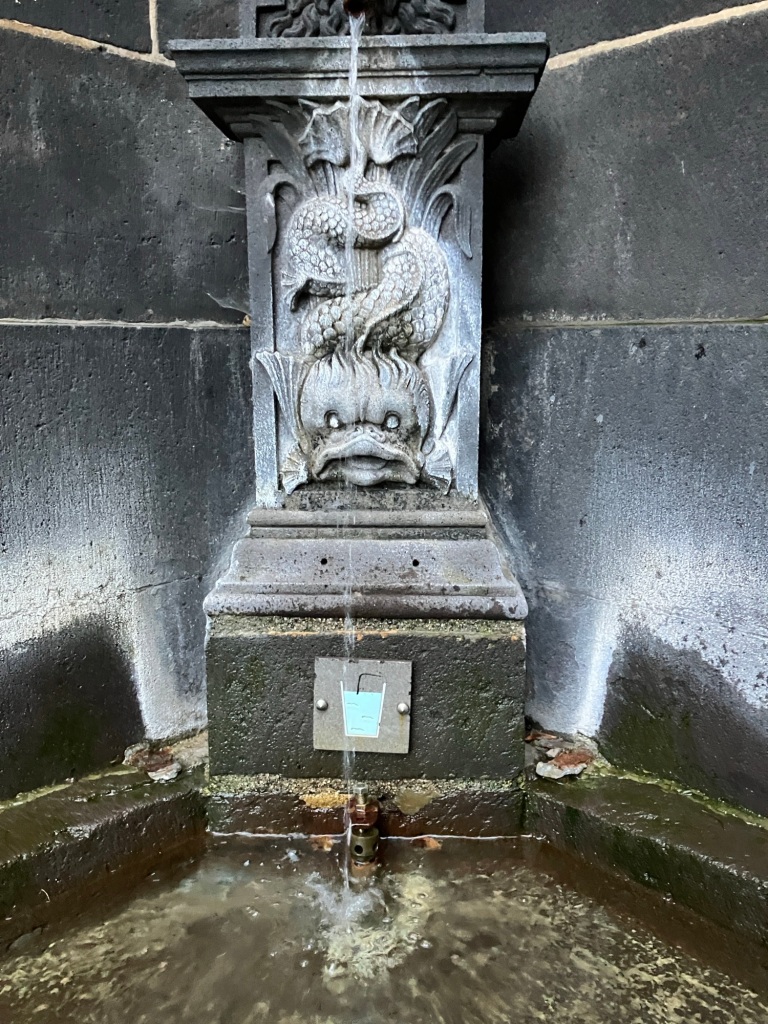
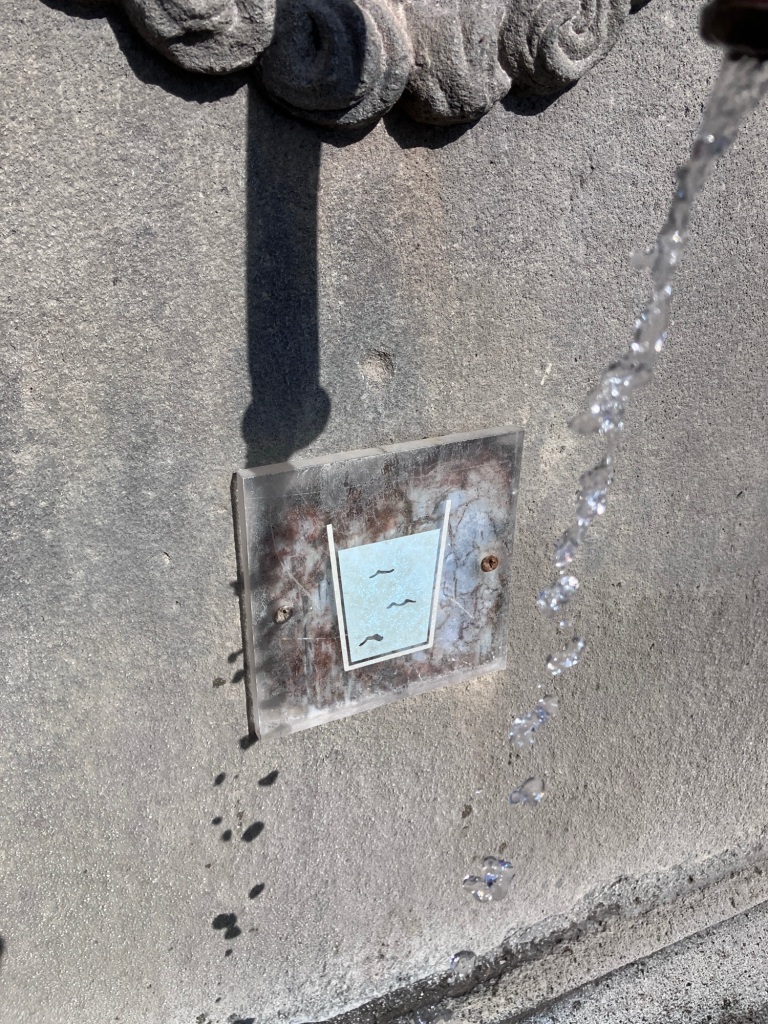
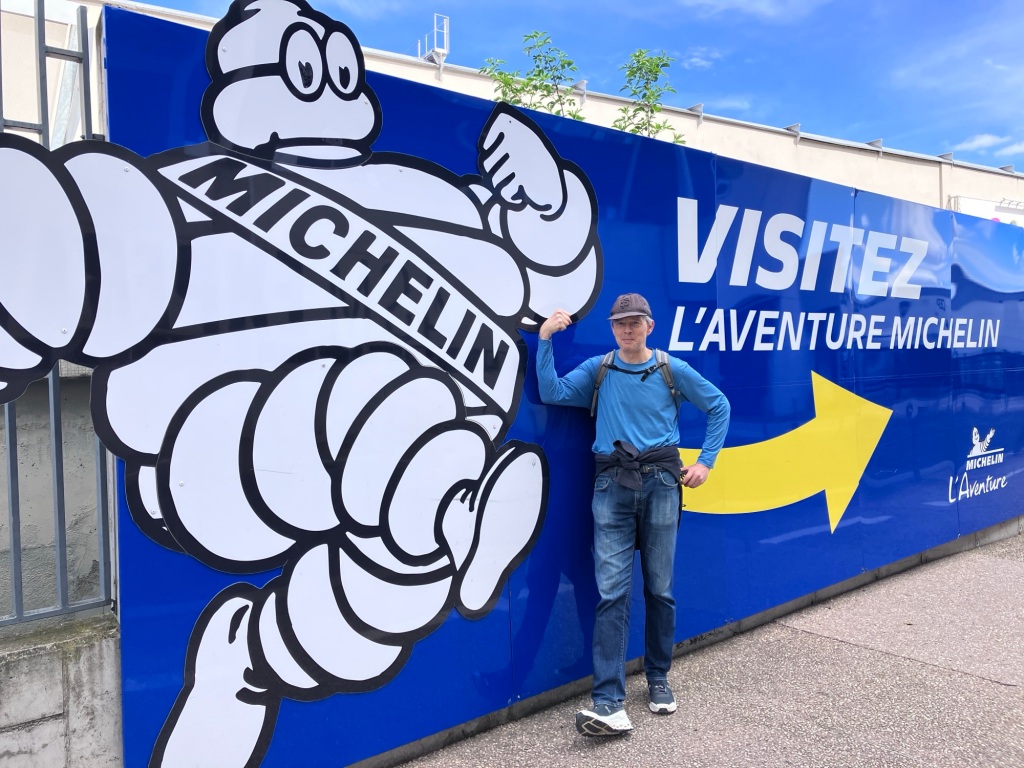
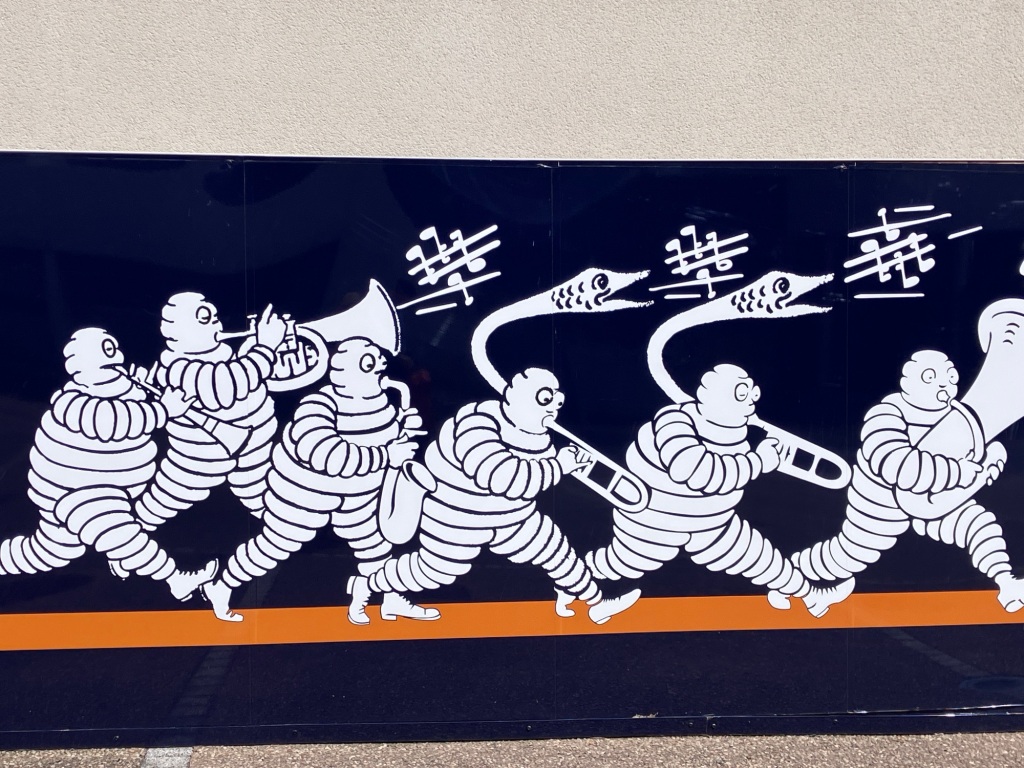
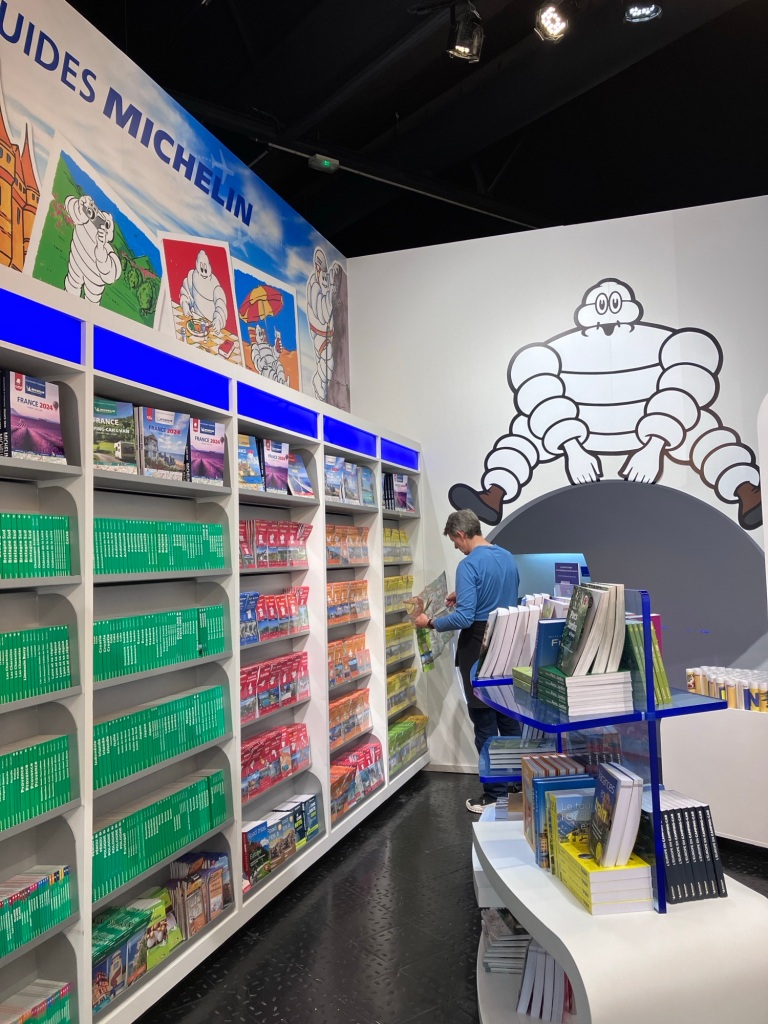
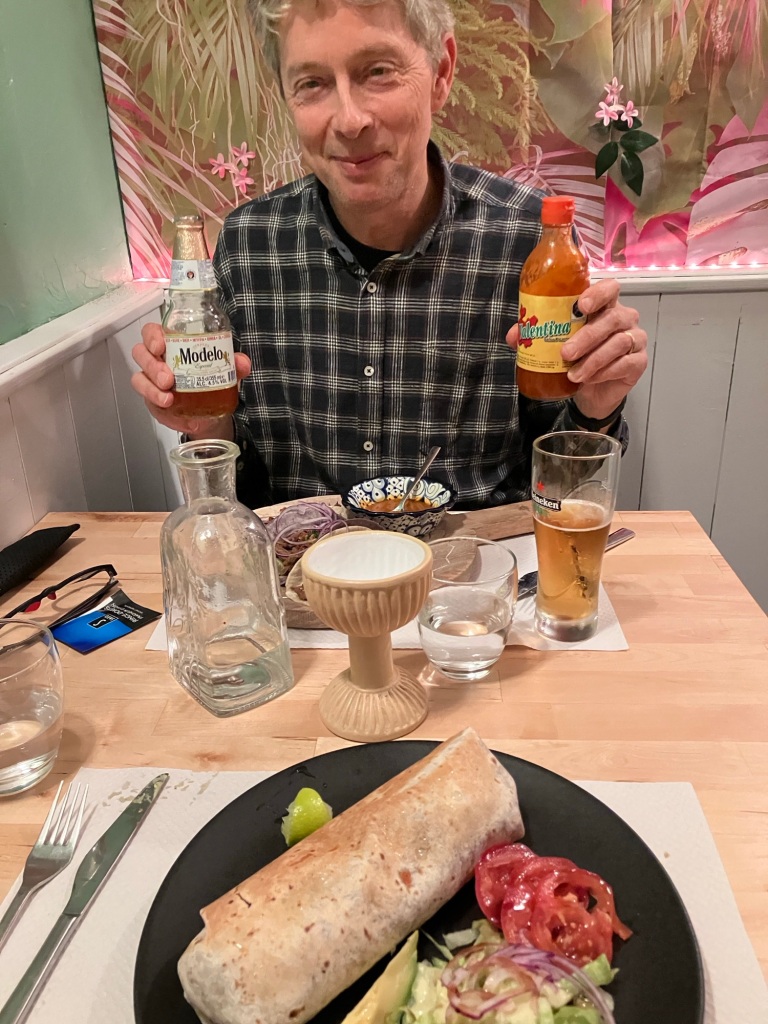
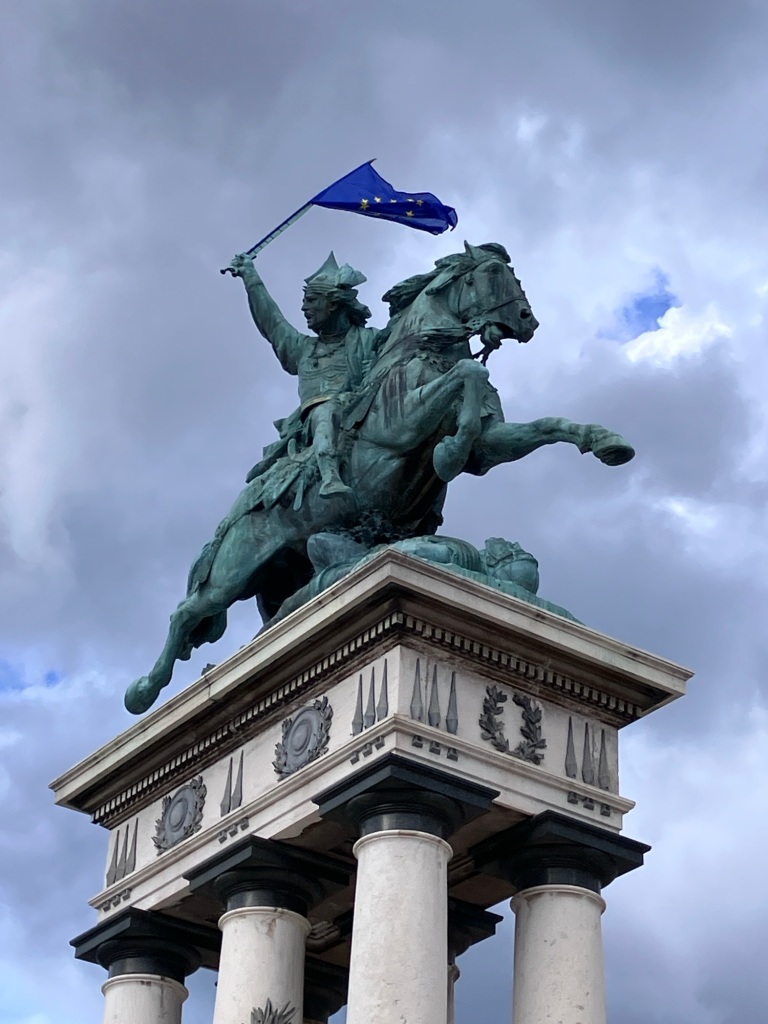
Fountains which had drinkable water were clearly marked with this symbol.A water glass. Drink away.L’Adventure Michelin. A museum all things Michelin here at the headquarters of the company.The Michelin Man band.A gift shop with a wall of maps.And we learned why the streetcars are rubber tired. Yup, Michelin money.It’s a university town. With 140k students come some good restaurants. We had Mexican food. The best we’ve found in Europe so far.The graceful Pl. de Jaude, just outside our hotel, had a statue of Vercingétorix. He was a Gallic king and chieftain.The statue is by our old friend Frédéric Auguste Bartholdi, who also created Liberty Enlightening the World (the Statue of Liberty) and whose own statue we saw in Colmar, France.
And yes, the weather did dry out for our day of fun in Clermond-Ferrand. It got a bit windy but our next mode of transportation was a train to Paris so no worries about wind. Rich booked us on a train that started in Clermont-Ferrand and ended at Gare de Paris Bercy. With loaded touring bikes end to end trains are so much less stressful than trying to board and disembark mid line. One more story about how wonderful people are in cities that aren’t overwhelmed with tourists. We got to the train station super early, as we do, and as we stood staring up at the big board, waiting for a platform to be listed for our train, a station police offer came over and asked where we were going. When we said Paris, he leaned in and told us it would be platform H. The doors won’t be open yet, he added, but you can go to the platform now. The train is there. Super grateful to get a jump on the eventual platform rush we headed to the elevator to do the one by one transfer down and back up. The elevators barely hold one loaded touring bike, so we’re slow, taking turns in the elevator. Once out at the platform an SNCF train worker helped us find the bike car, and our seats. By the time the rush of passengers got to the platform we were settled in.
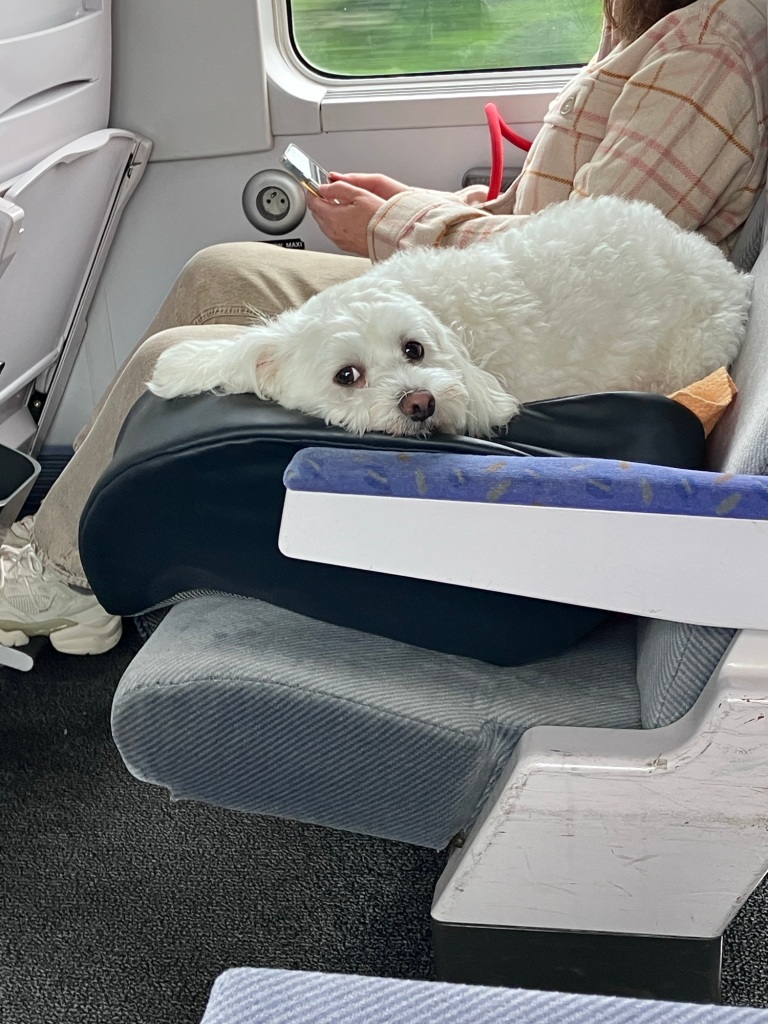
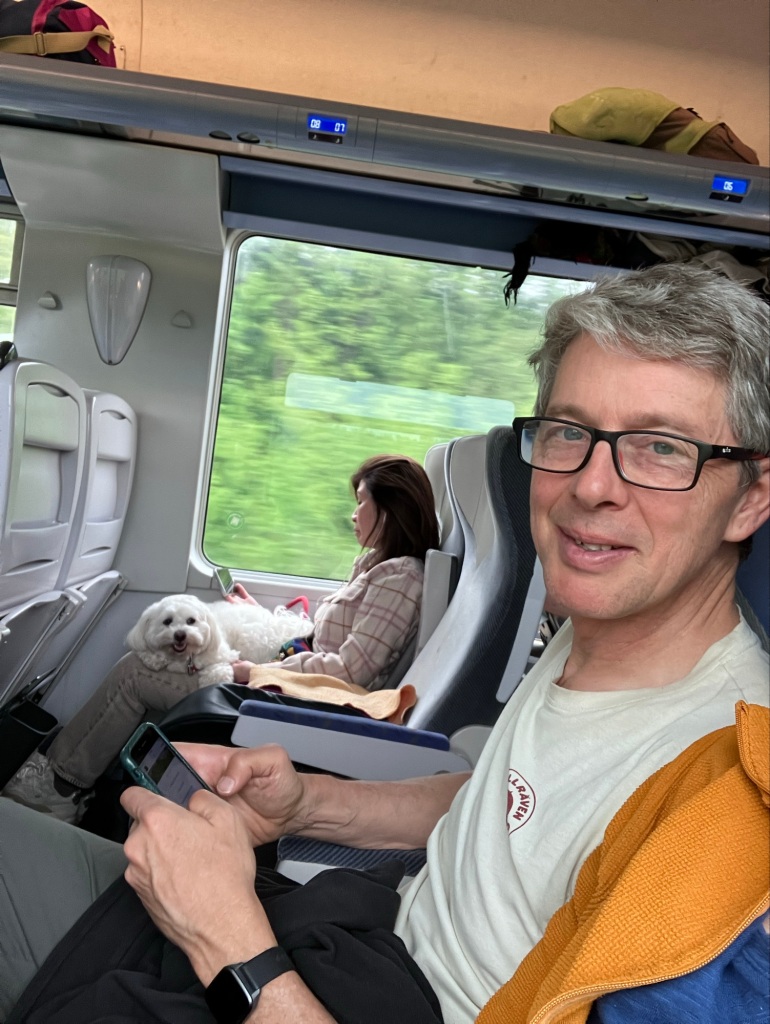
We were as chill as this little guy on the train.He developed a bit of a fascination for Rich.The happy travelers thinking ahead to Paris and friends to visit!
After a nice rest day exploring Cahors, Cheryl and I continued our spring tour further up the valley of the Lot River. The middle Lot is a magical place of endless meandering and pretty villages with a variety of terrain to match.
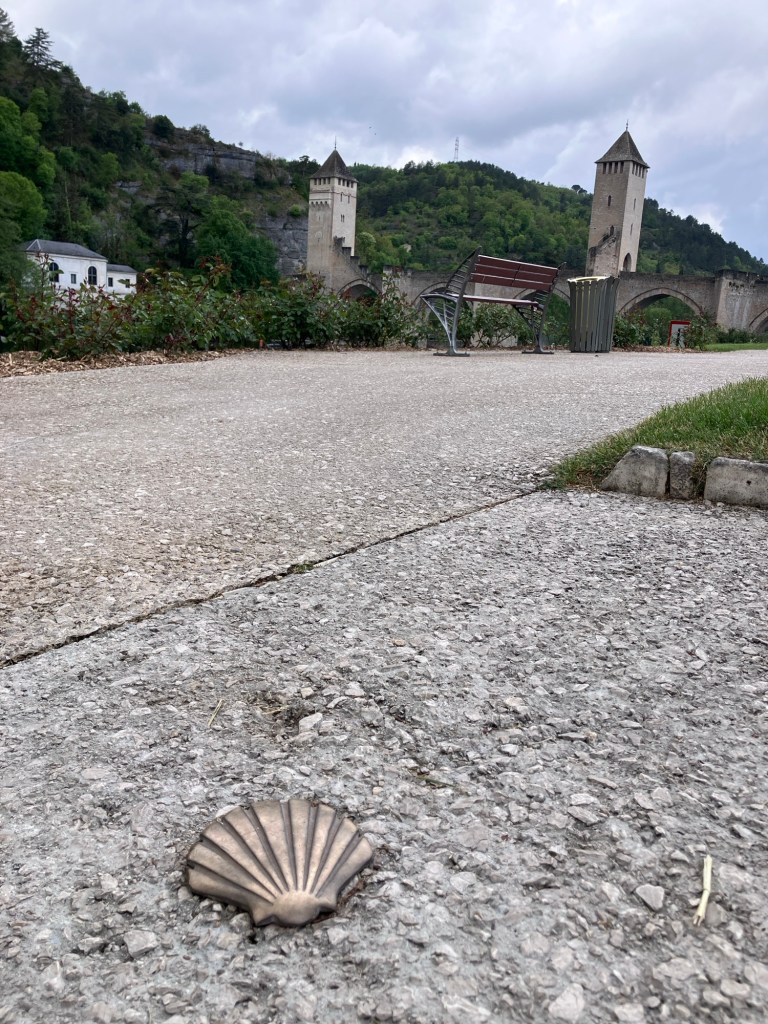
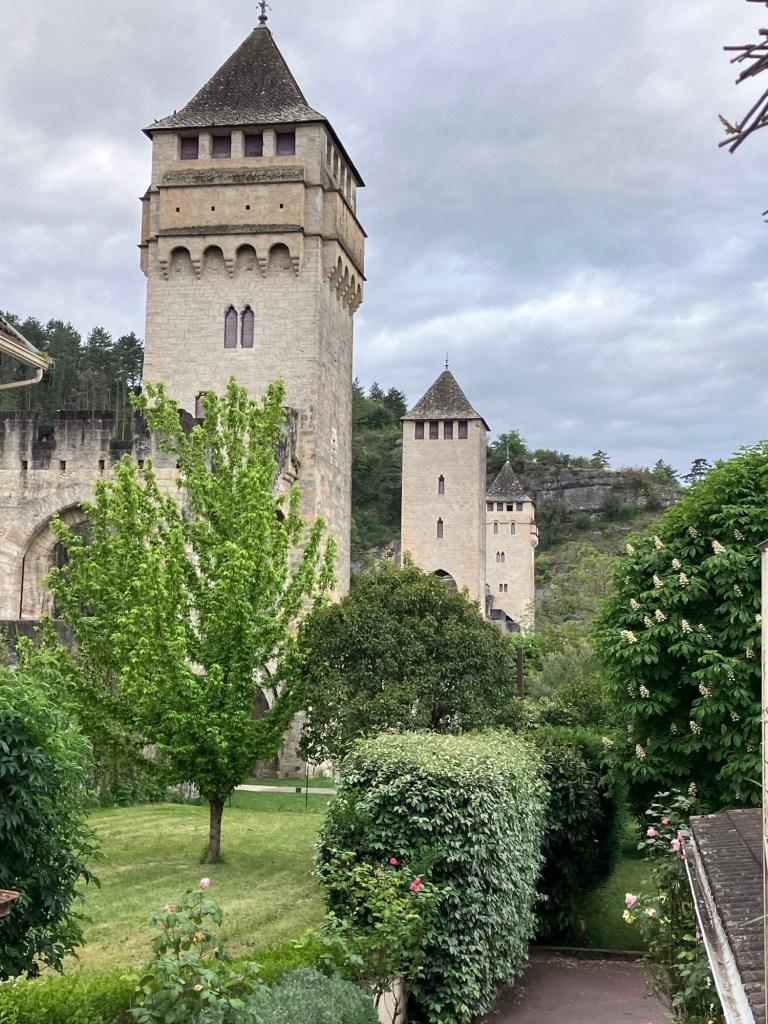
Riding out of Cahors over the Devil’s Bridge The Middle Lot is still navigable with occasional weirs and locks
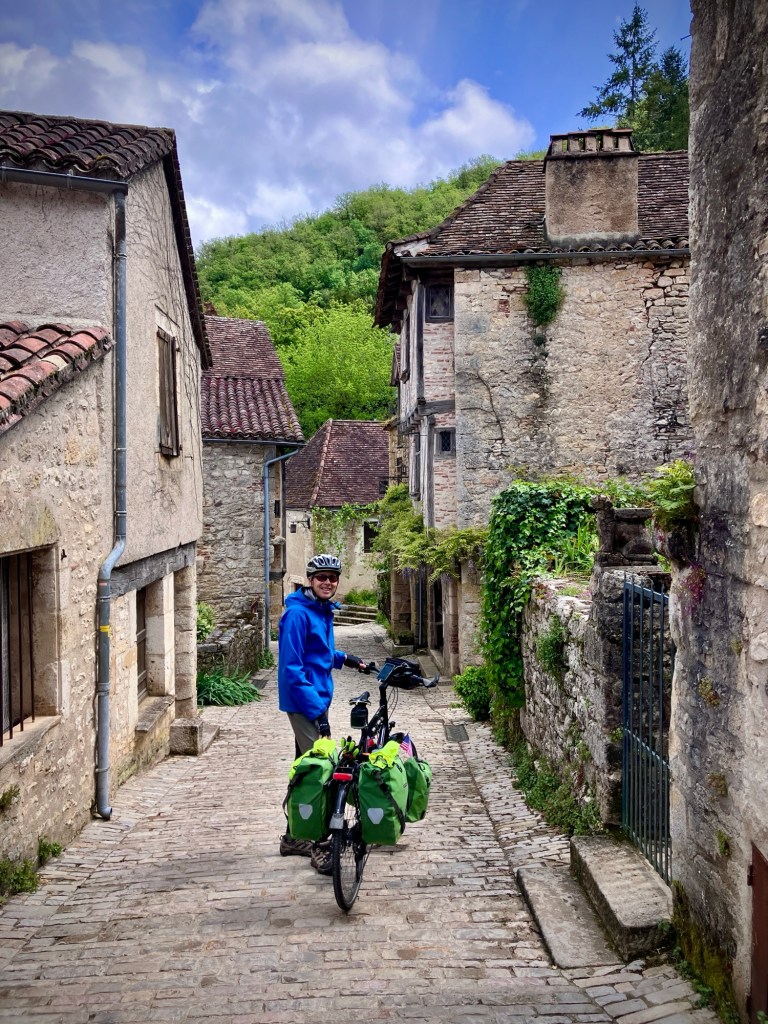
The route out of Cahors immediately took us up a hearty 300m climb over a ridge, but the reward was a descent down to the beautiful Saint Cirq de Papopie. It’s a storybook medieval village perched on a rocky edge above the Lot. Our friend Dan had mentioned his time in this area and we thank him for the tip.
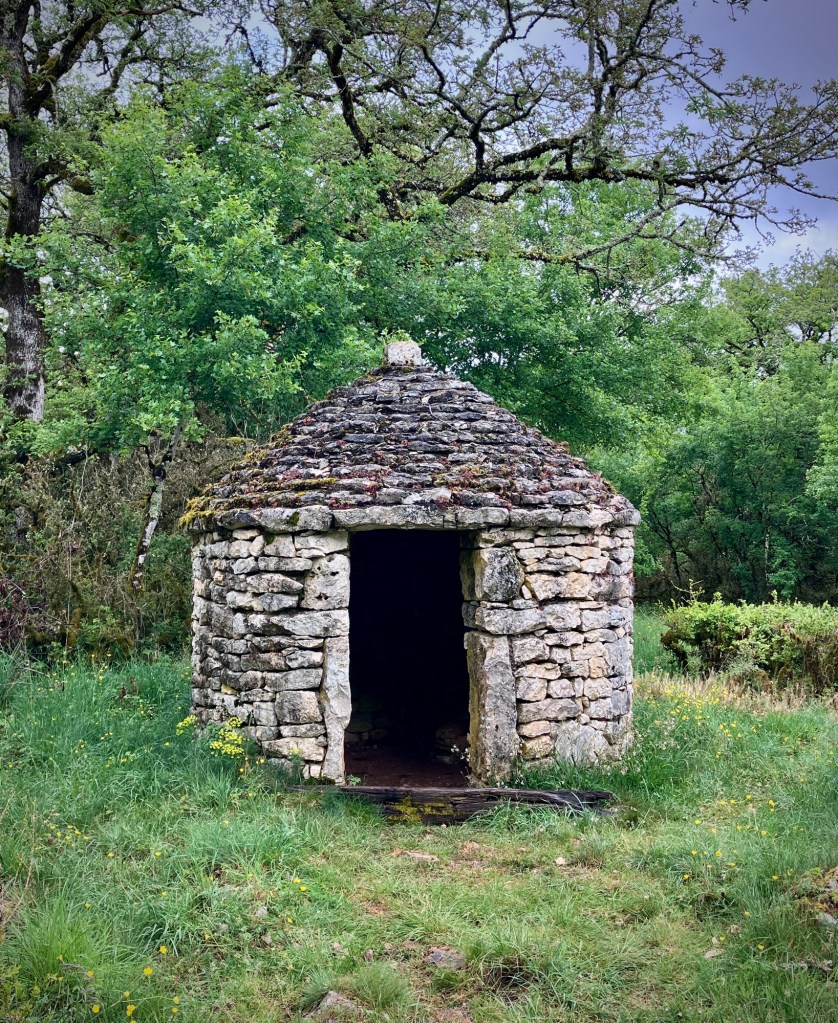
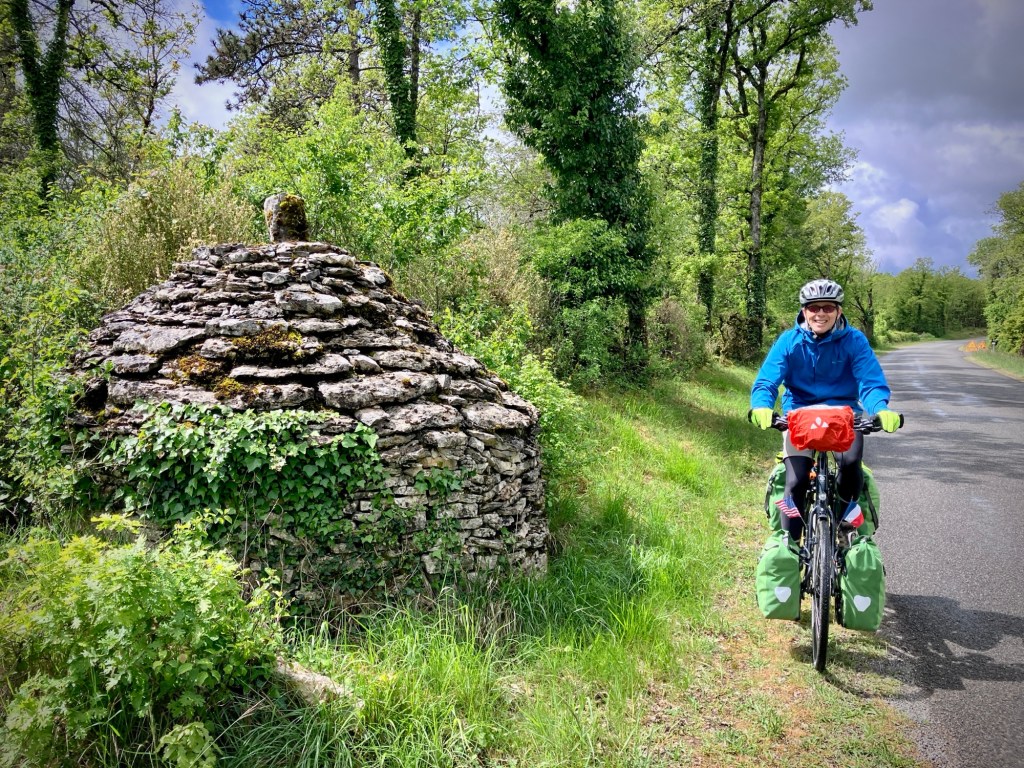
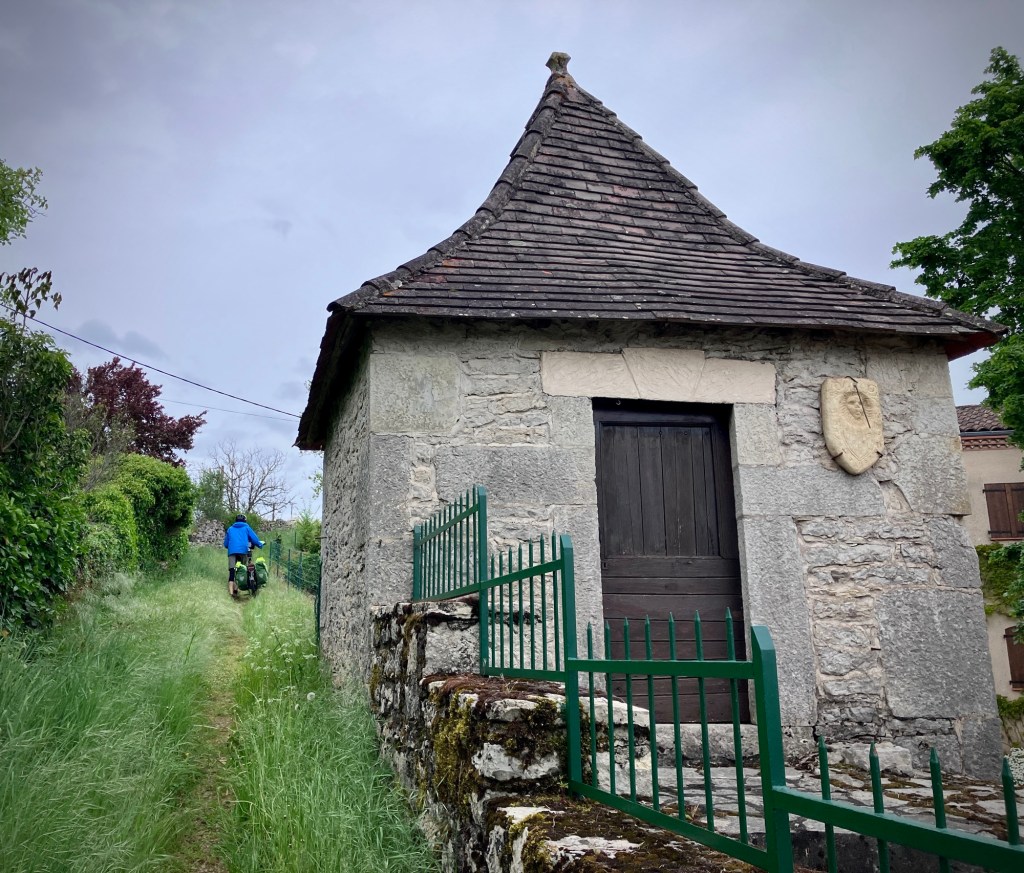
The route does not always hug the river and has some pretty decent climbs to connect the rugged and remote parts of the riverApparently we were also on the Vagabond route…very appropriate.Cheryl was fascinated with these mortarless stone buildings known as capitelles or cazelles, which are endemic to the regionAnd another oneAnd a wiff of wild mint for the descent
Apparently tourism exploded in the town after a popular French television shown voted it the most scenic place in France in 2012. We can’t disagree with that call. It was sparsely visited the weekday we passed through and is really a beautiful spot.
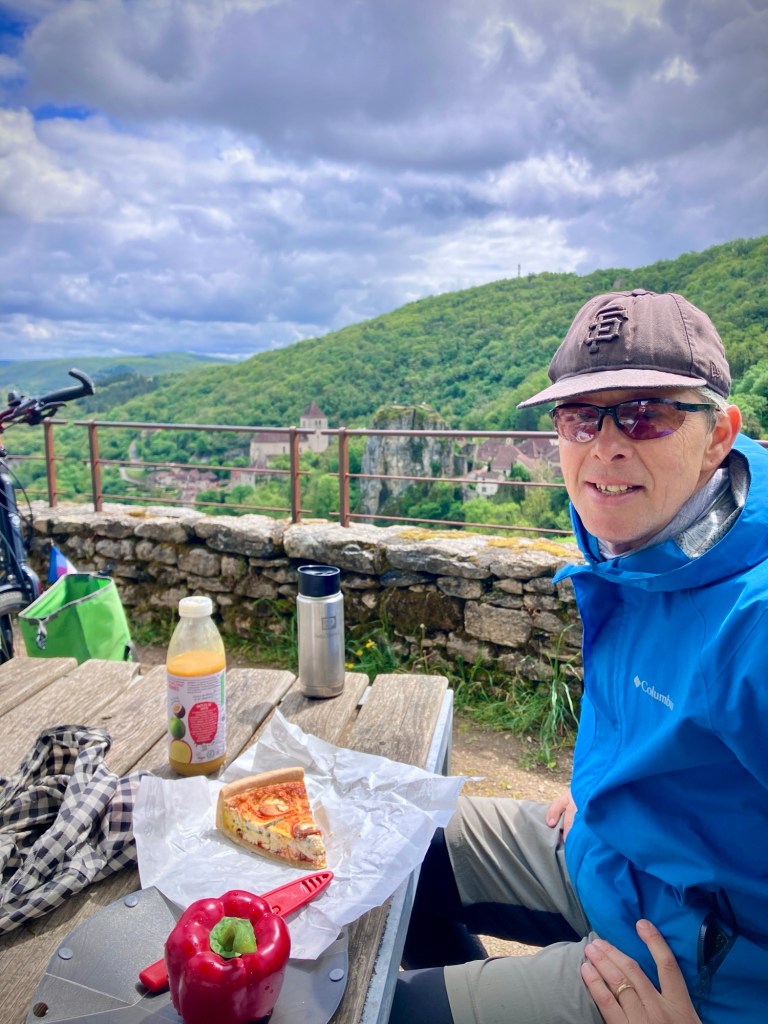
Our first view of Saint Cirq Lapopie We couldn’t pass up this prime view spot to picnic on some yummy quiche and veggiesAfter lunch ussie Sometimes I do some further exploration while Cheryl minds the bikes and maybe reads a bit. « Oh no, you go ahead »
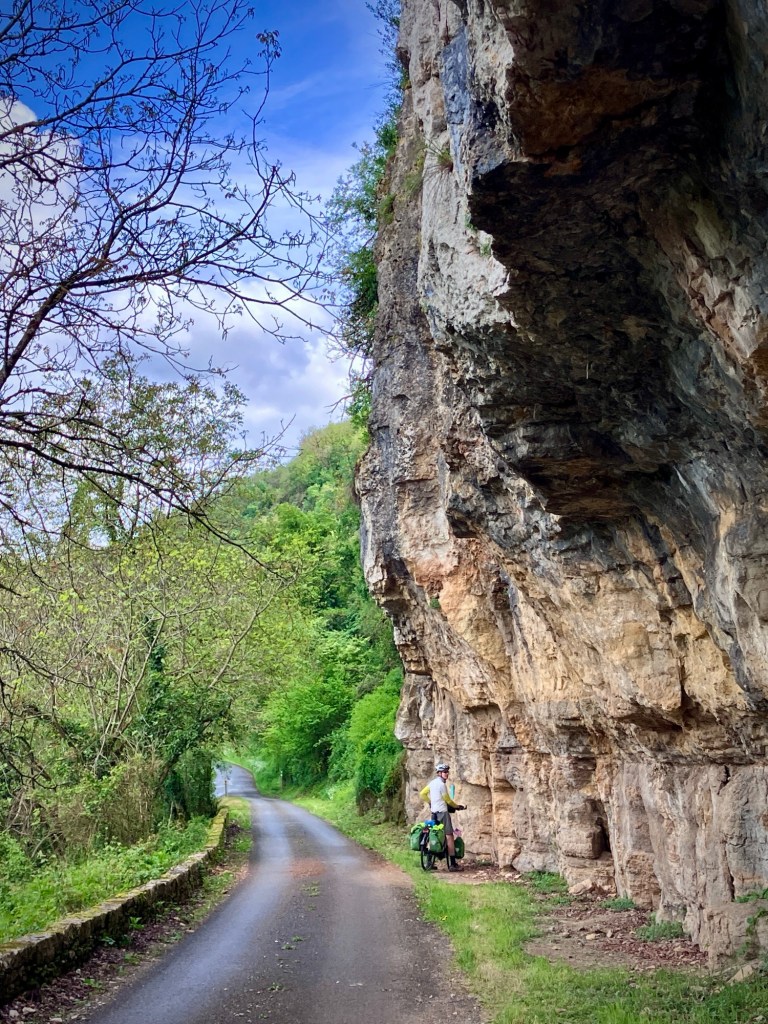
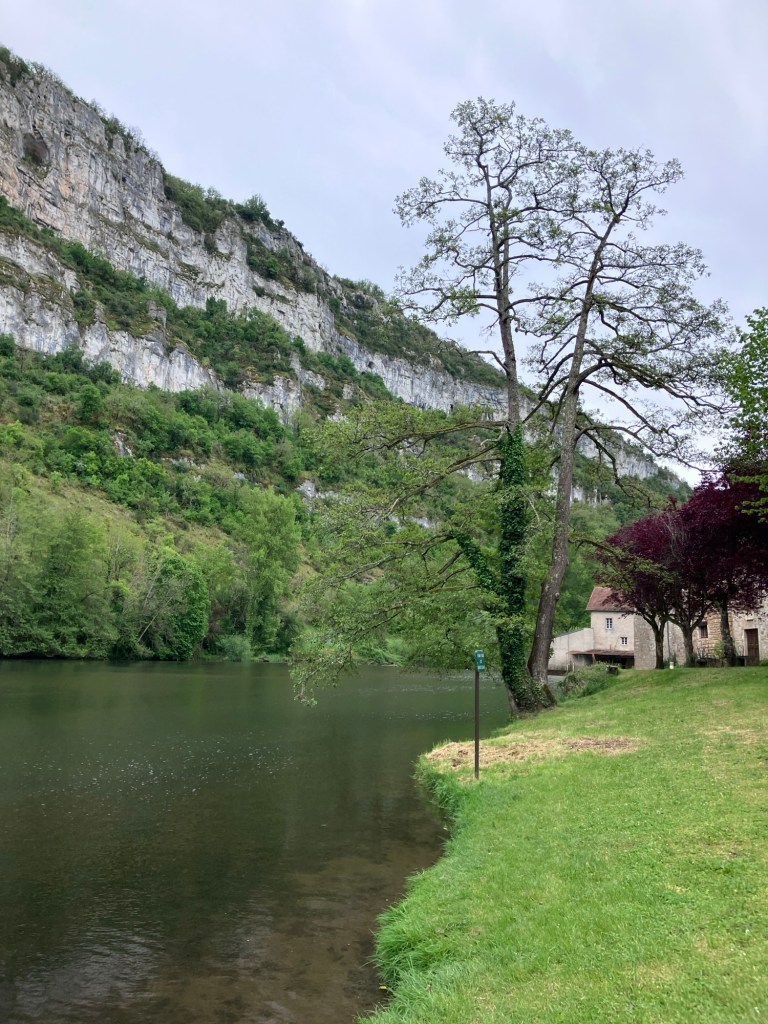
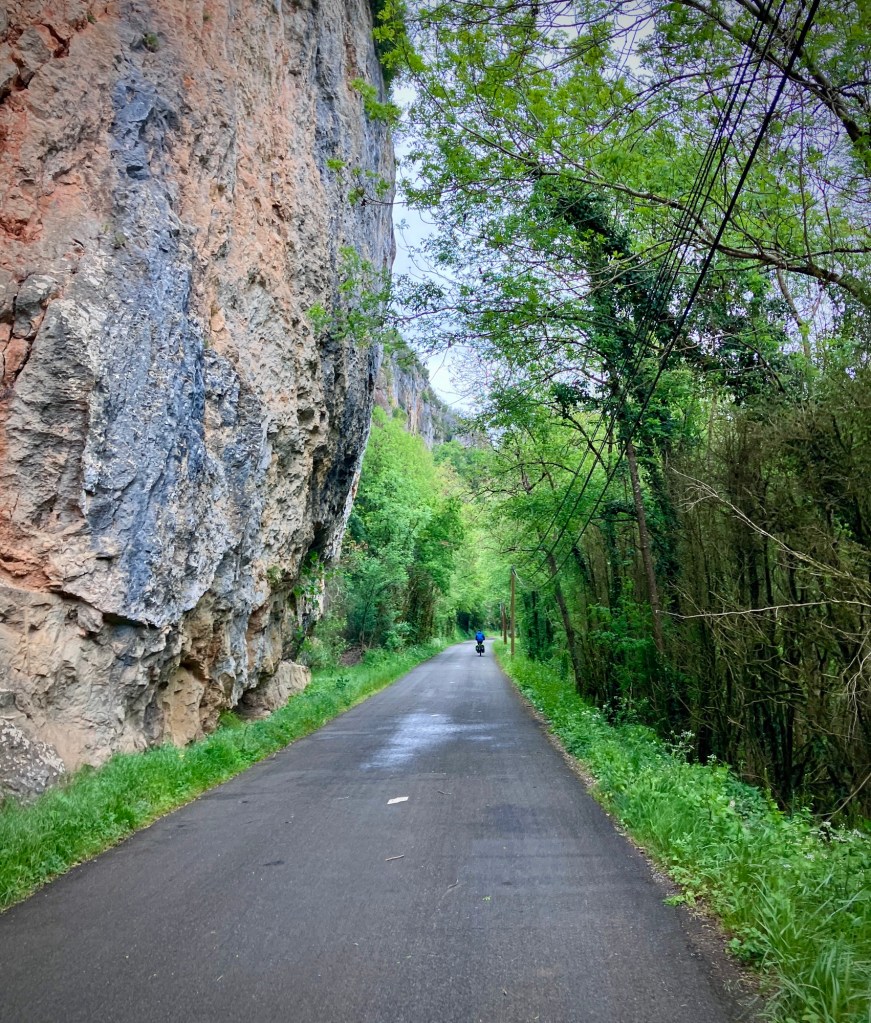
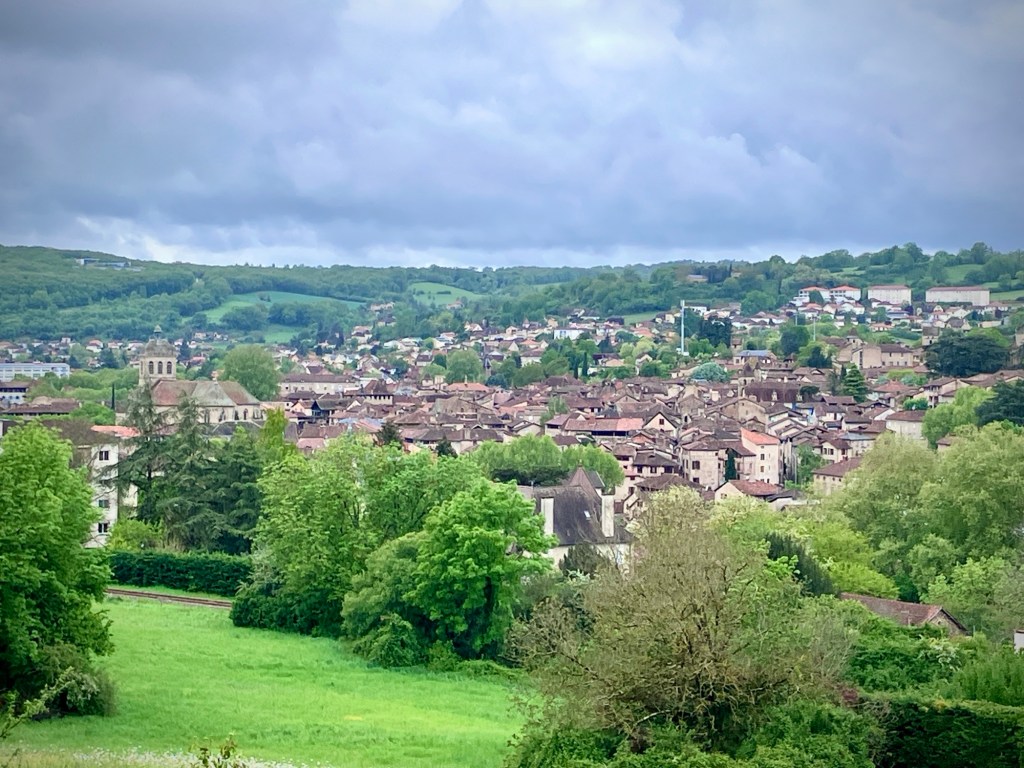
The ride from Cahors to Cajarc spans the Parc Naturel des Causses du Quercy from west to east. The villages are extremely tidy, with some restored houses, cottages, and farm buildings. There are also nice sections along the cliff walls, and the roads are not busy. We made it to the scenic village of Cajarc and our Logis inn (with dinner!) after a rewarding day of cycling, and I began to plan our next day.
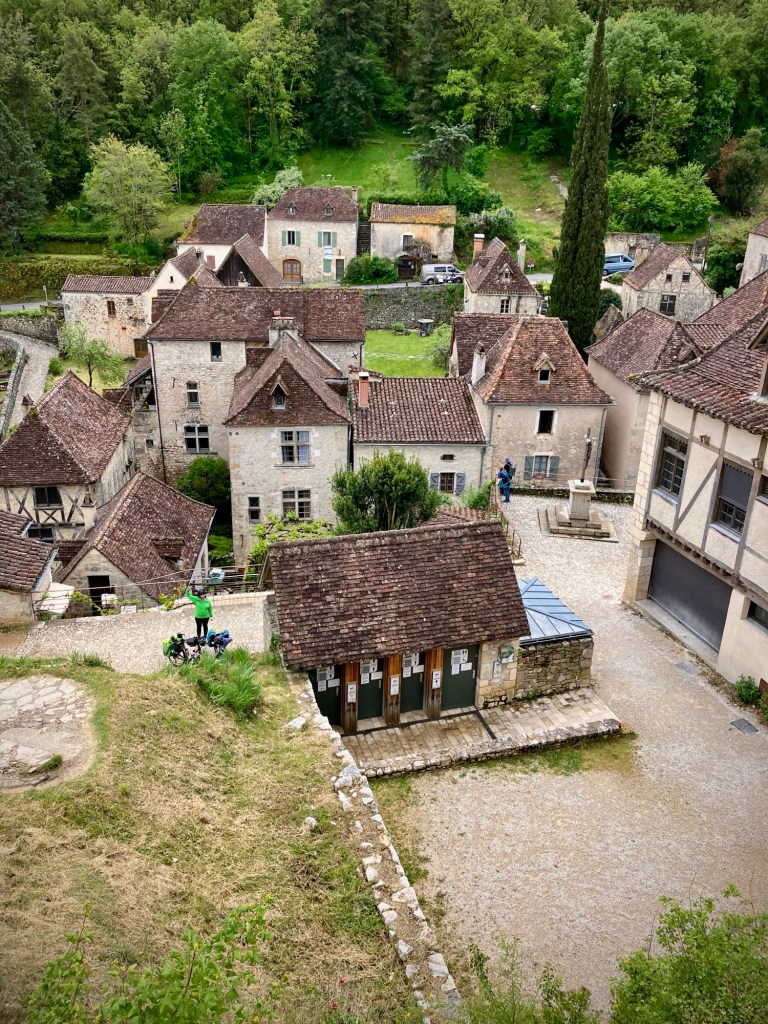
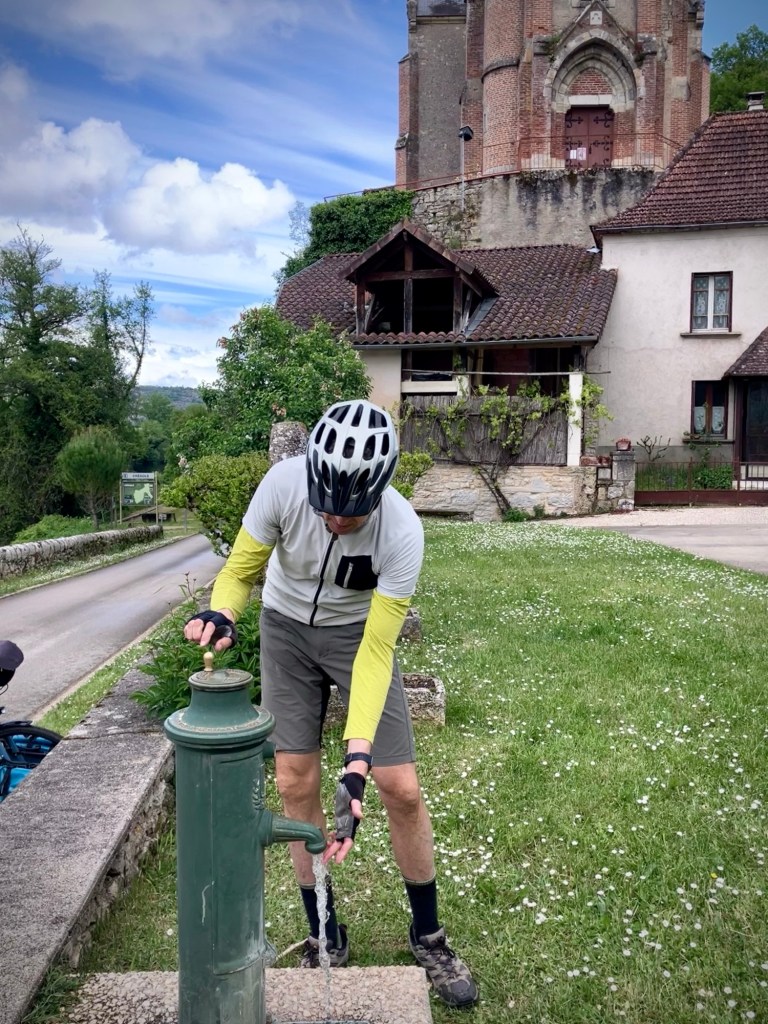
Saint Cirq feels like a movie set. Picture perfect and so tidy What’s this? Fossils on the canyon walls?We love interpretive fossil trails. This was a nautilus from the old sea bed.Many piped water taps have still been off for the « season », but we found most of the hand pump and twist wells delivered.
But the weather was starting to get tough. The next day a front was coming through with winds of 25mph and gusts to 50, and if we headed up the Lot route it would be right into the headwind. Yuck. We could shorten the day to account for the wind, but instead decided to head over the big limestone ridge to the next valley of the river Célé and the small city of Figeac.
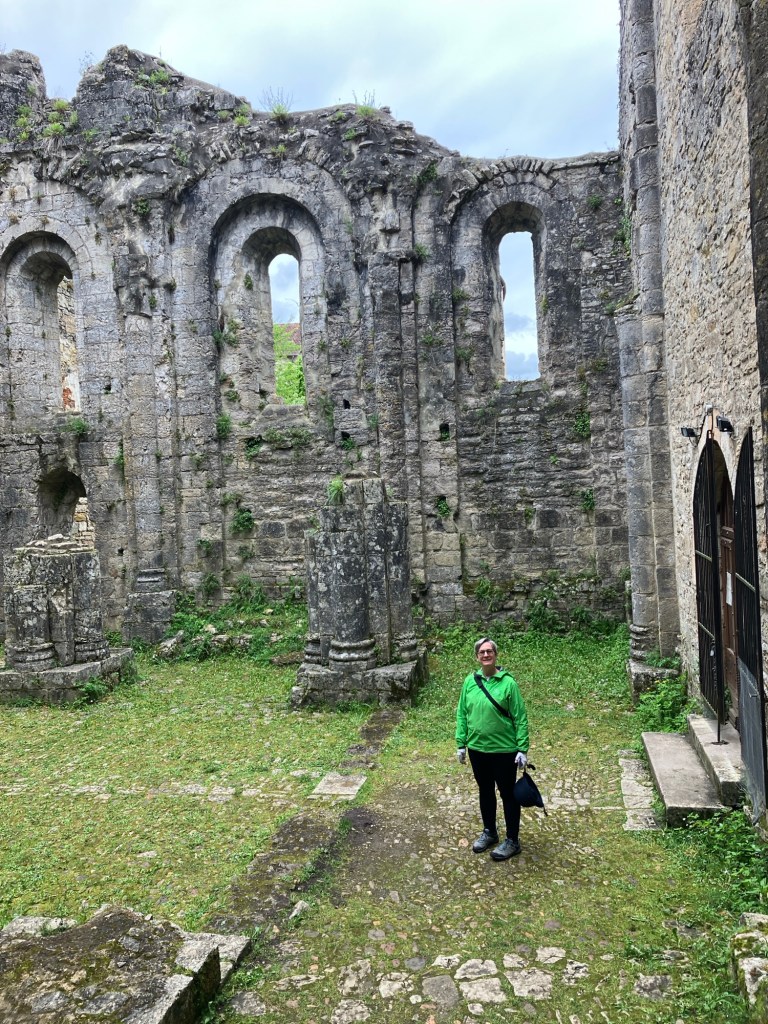
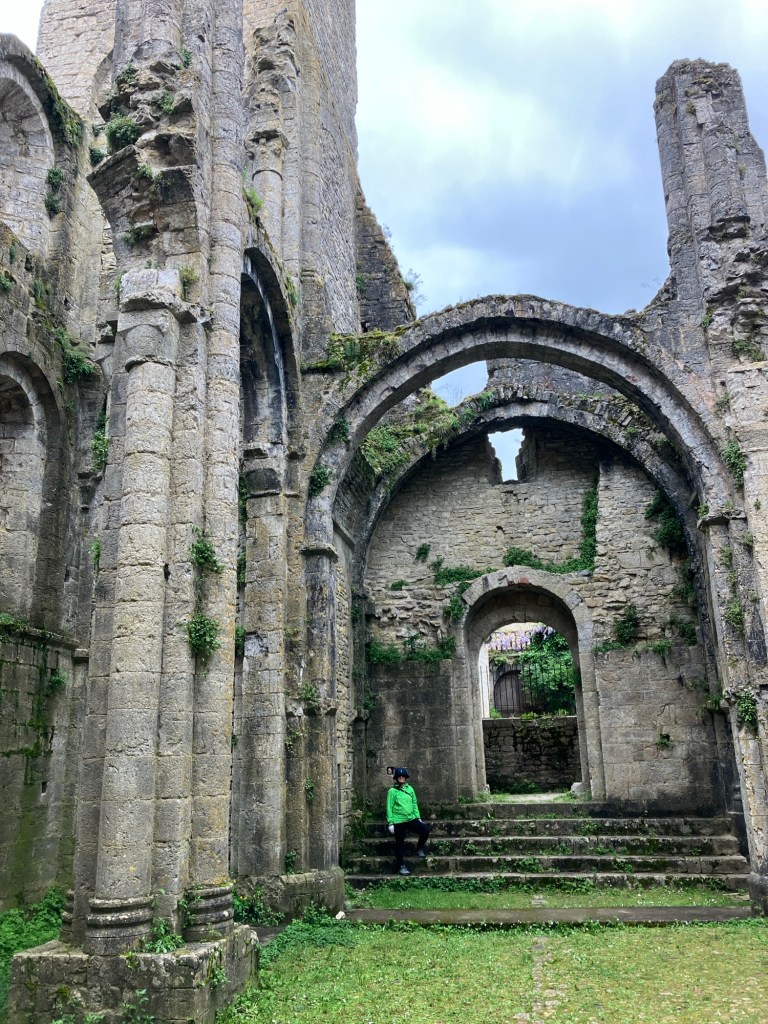
Another interesting Komoot trail choice from our grocery diversion out of Carjac. But one of our mottos is “never go backwards!”. It usually works out.Le Célé River.Inside the ruins of the Abbey Saint Pierre, parts of which date back to the 9th-11th centuries.The ruins are atmospheric and the adjoining church has been restored and is still active.Carved stonework of the abbey.
I had picked a fairly direct route using my goto navigation App Komoot, and mentioned this to the friendly hotel host as I checked out. Good thing as he suggested an alternate route that turned out to be a gem. More climbing and longer, but it would take us deep into the scenic Célé river valley and keep us in the park longer.
The climb was quiet and the aspect of the huge limestone gorge that defines the Cele valley protected us from a lot of the wind, or at least made the ride alternate between headwind and freakish tailwinds off the canyon walls. But you can’t escape gale winds and the last 10k into Figeac were exposed and a bit hellacious, with grit blowing in our eyes and branches falling from trees. But we made it to town before the rain started to dump and salvaged a memorable day from a potentially mundane slog.
A power picnic lunch in Marchihac-sur-Célé. PB and banana on Wassa crispsCheryl demonstrating how to spread the peanut butter with the back of the wooden spoon, so it’s easier to clean -:)We are always impressed with the French dedication to a proper and social lunch. Despite the increasing cold and winds, we watched behind us as they set up tables and laid out a spread of food.
Figeac is a pleasant river town with enough of a buzz on Saturday night for us to get rejected at our first Creperie restaurant pick, so we settled on a fast and casual burger place and a beer before we had a meltdown. We were very hungry and a worn out from the wind.
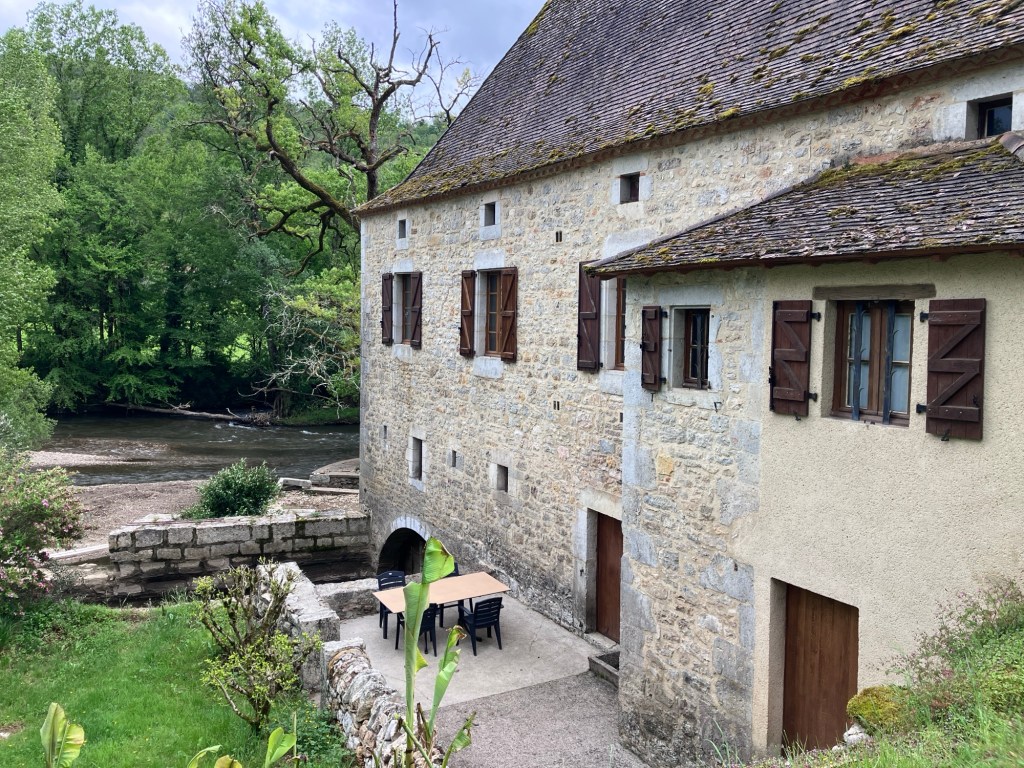
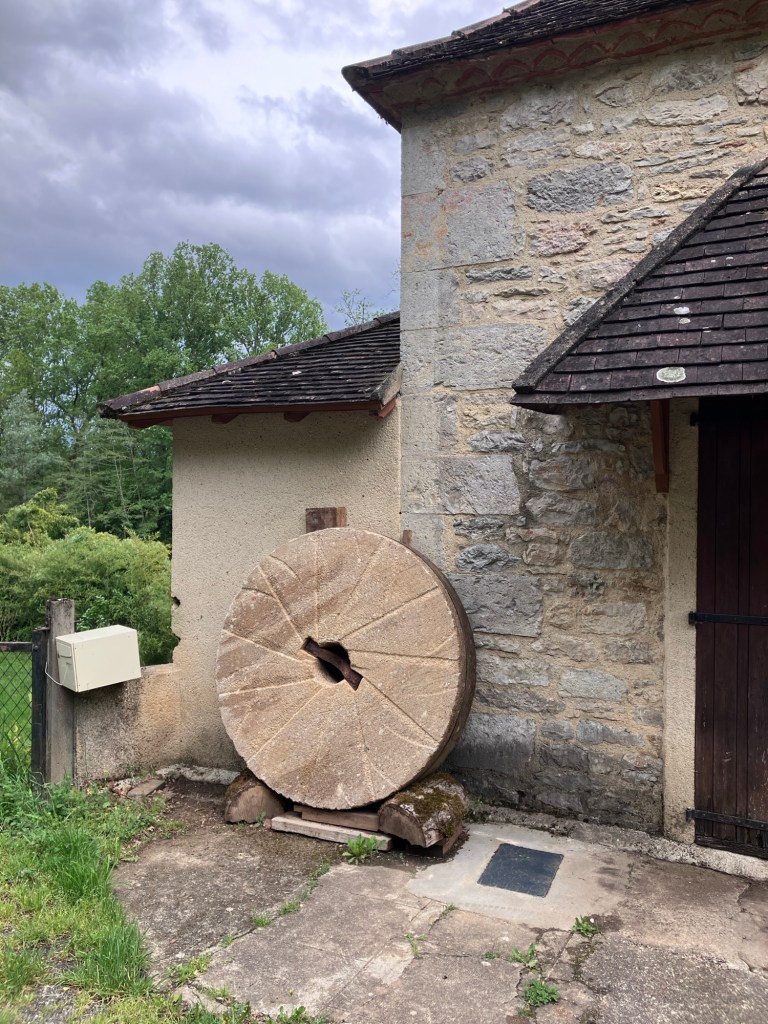
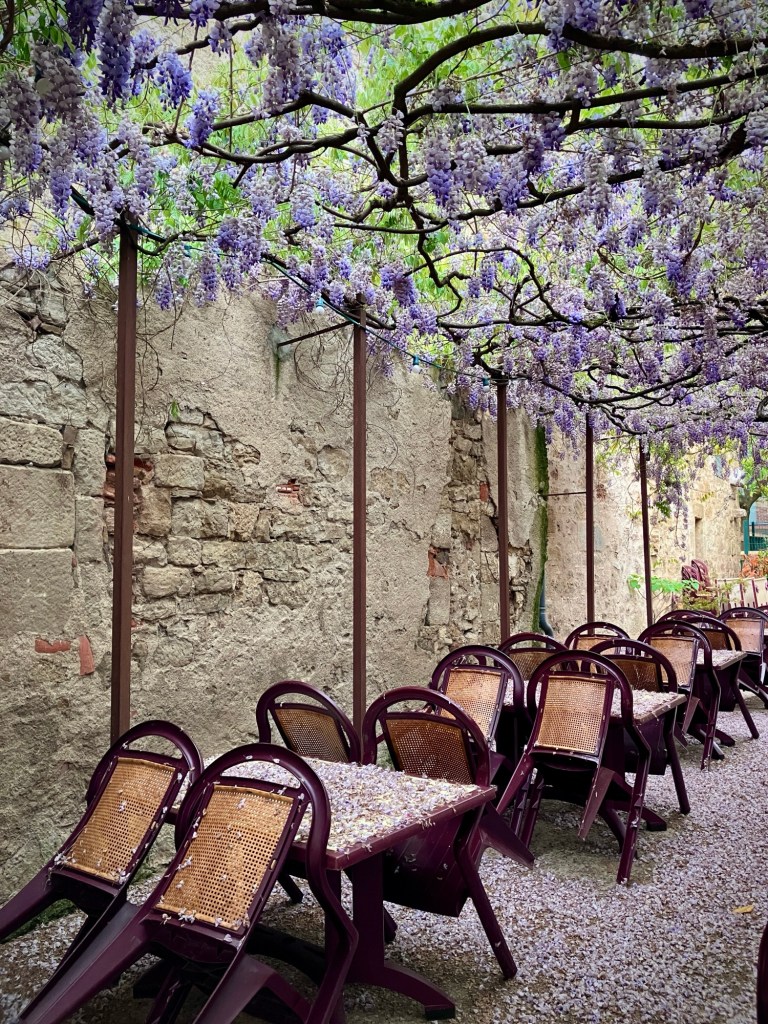
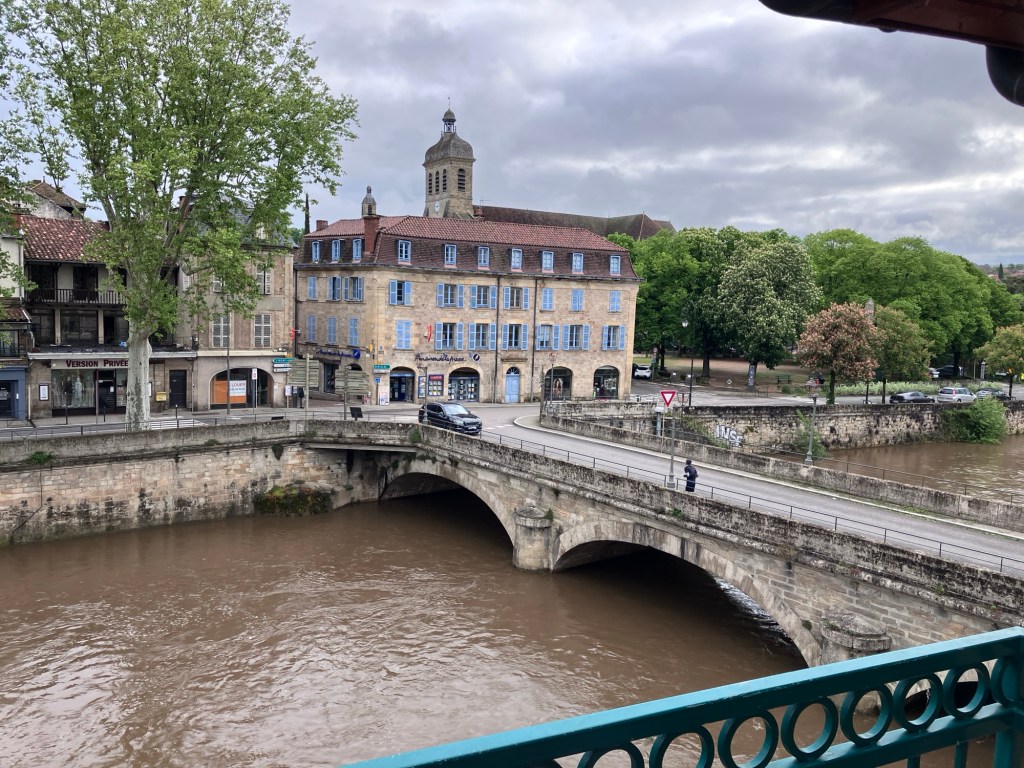
Canyon walls for wind protection, yeah!House built into canyon walls.Onwards along the Célé.A 3 star village is always worth a stop.Riding through the old town gate to find our second break stop.Et voilà, a sheltered picnic spot.This route is along one of the French Camino routes and we were surprised by the number of pilgrims/walkers we saw in this region. Almost no other cycle tourists.Another restored mill house.And accompanying millstone. Our friend Nancy says you can tell what kind of grain was processed by the groove pattern.Getting closer to Figeac, and the wind picking up.Wind filtered Wisteria pedals in old town Figeac.Hotel view of the Célé in Figeac.
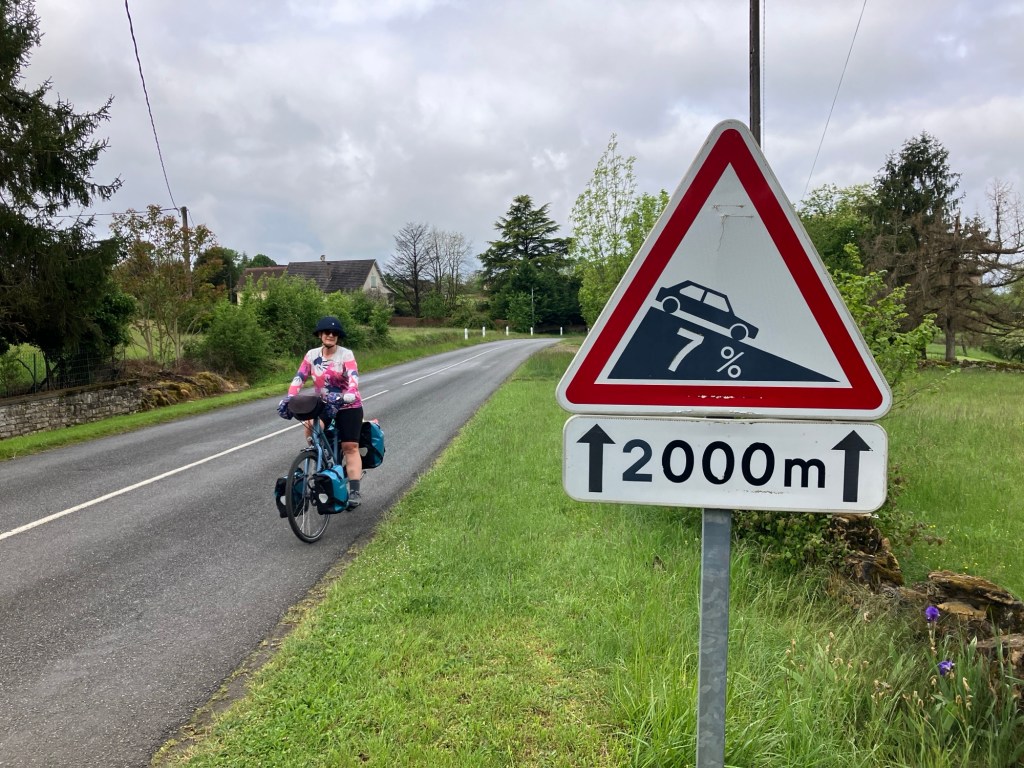
We wanted to get back to the Lot valley, so that meant going back up over the plateau of the river canyons on Sunday morning. But we are pretty strong now and Cheryl powered up over the two fairly steep climbs. Here’s the thing with loaded touring bikes, they are actually surprising easy on flats a gentle grades, even carrying 20 kilos or more. A 4 or 5% grade is pretty sustainable for longer climbs, but each percentage increase after that really makes a difference. Physics, gravity, and vectors. Over 8-10% and you may need to start serpentine S tracks across the road to keep on the saddle for a longer climb. You can even stay in the bike for short bursts of 12-15% grade, but it’s tough to sustain.
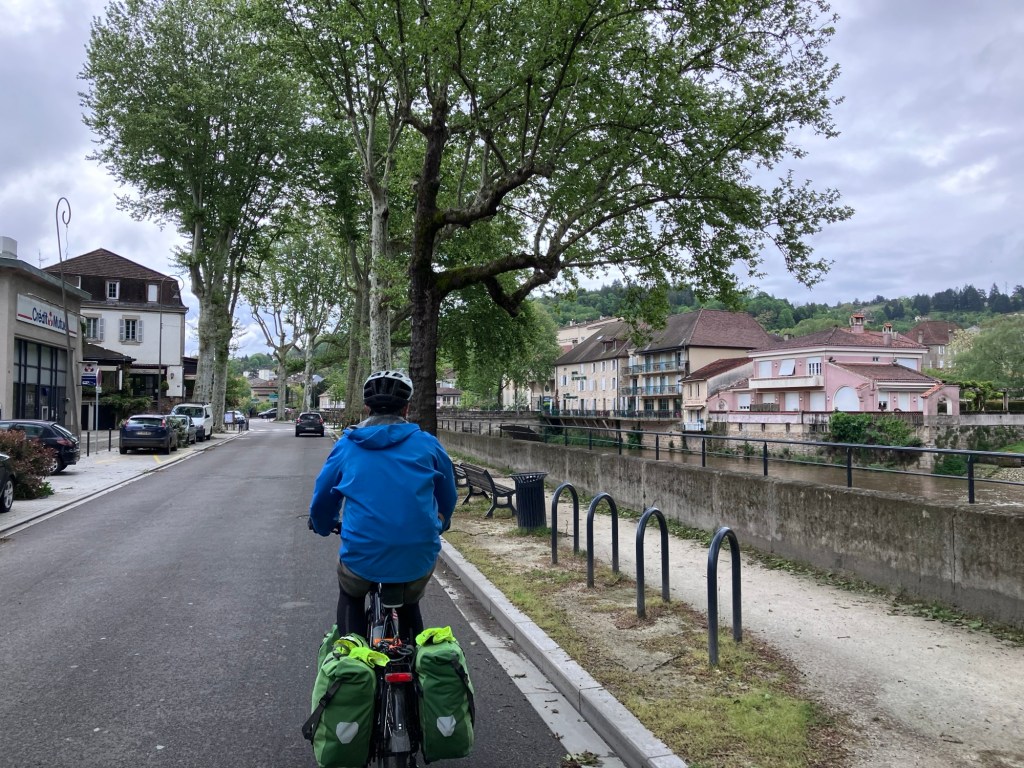
Heading out of Figeac along the Célé.This climb indicates an average grade of 7%, fairly manageable.
Touring bikes are so much more sensitive to headwind and grade than a lightweight road or mountain bike. They fly downhills with the extra weight and often act as sails with a hefty tailwind. As we continued to push up some of the steeper hills, you can’t help but think about the extra junk in your bags; the two kryptonite locks, cable, tools, 4 spare tubes (really?), ground coffee, binoculars, a small backpack, a yoga mat…extra socks and shirts, and my biggest luxury, 3 pairs of footwear. The thing is we are living on our bikes for three months and really appreciate the extra gear at times and when we are off the bikes for house sits or city stays. So we press on with twice as much weight as we could manage for a short tour.
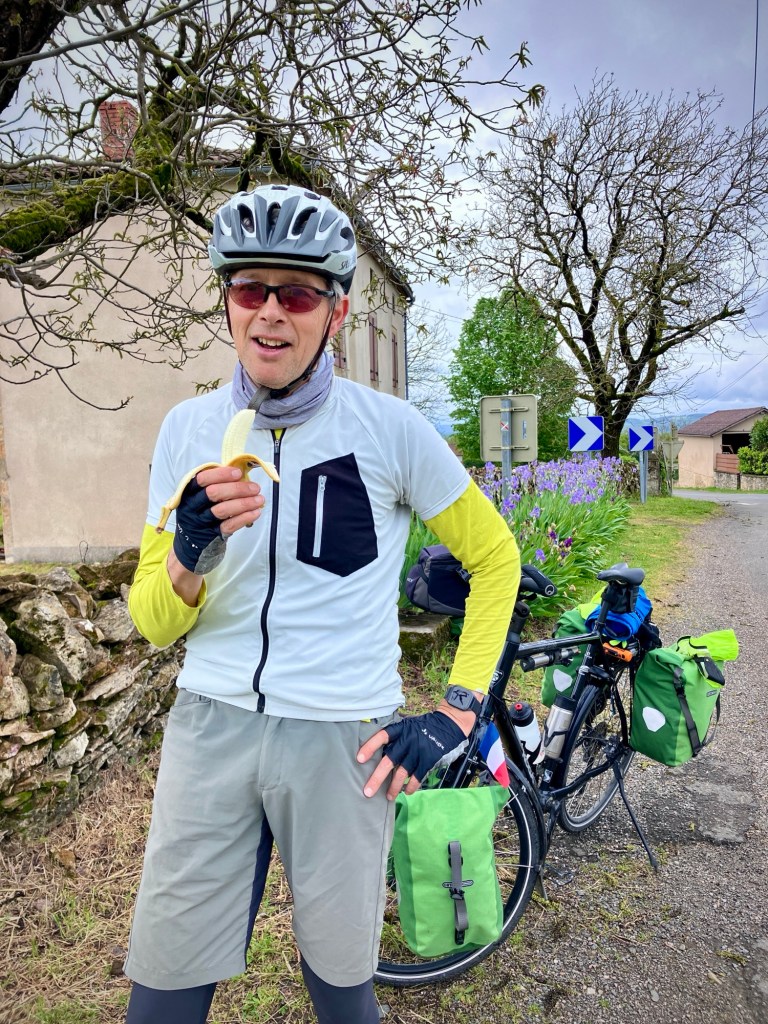
Goodbye Figeac. Very green and lush in this wet European spring.Banana recharge, a reliable favorite.A horse intrigued by the two bright things on wheels.This is a popular hiking area with its limestone cliffs and jagged valleys.And pilgrims are sometimes sharing the road with us.Initial hazards of our descent back to the Lot.
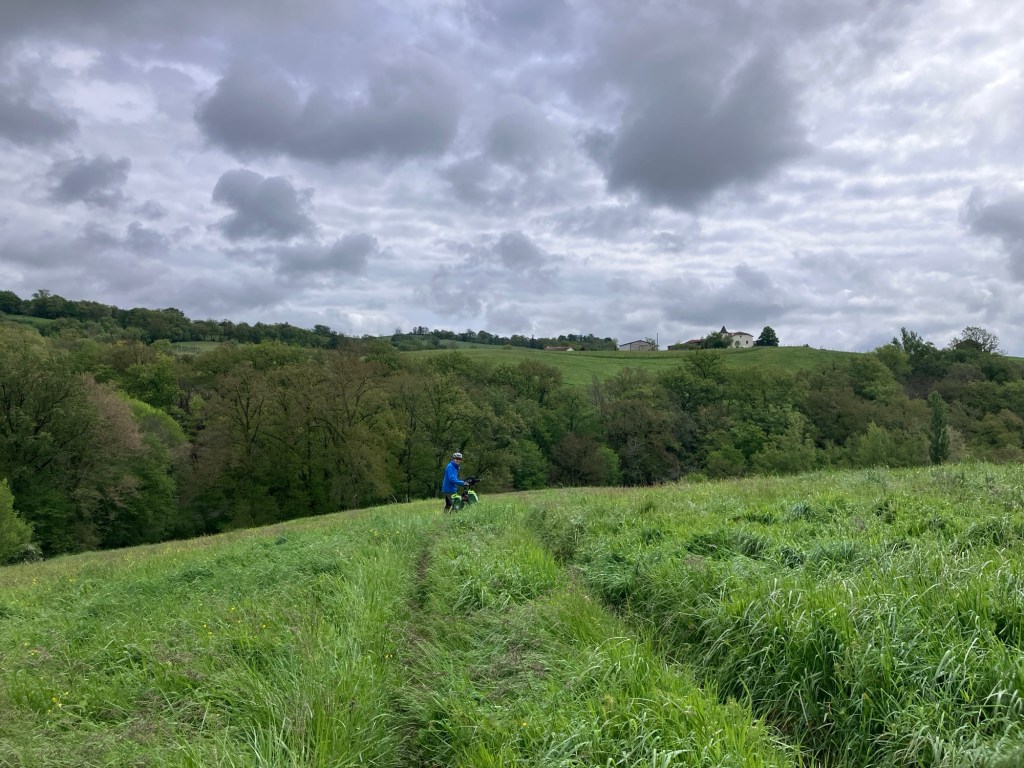
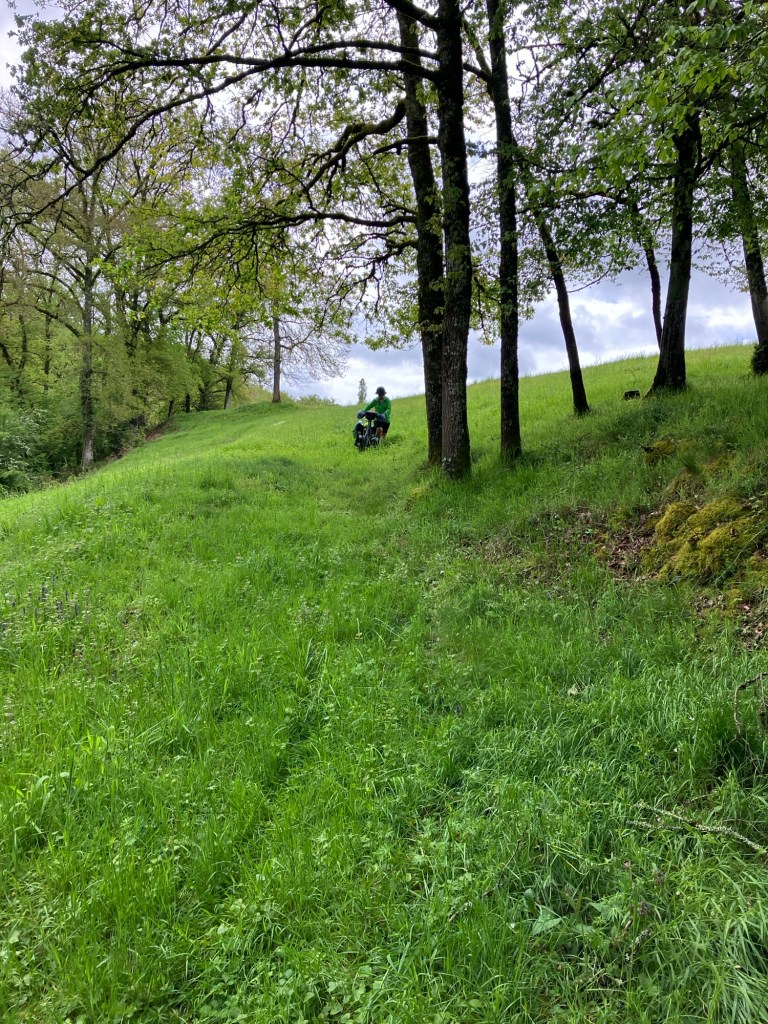
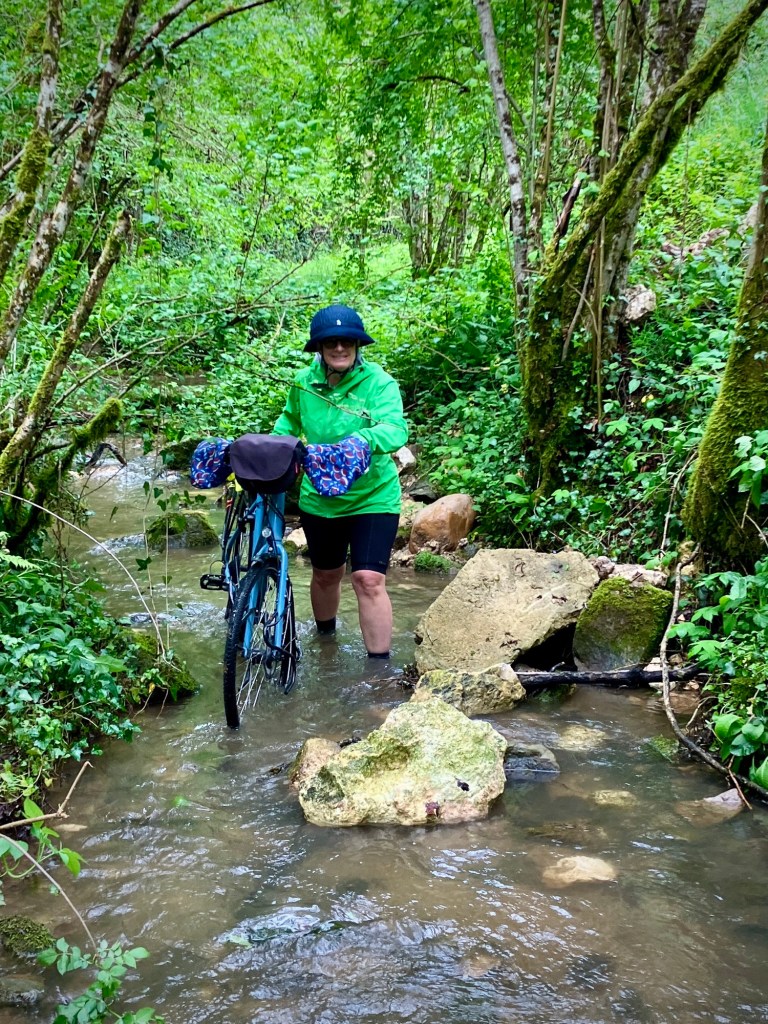
Once over the climb we followed a Komoot route that took us down the side of a mountain on a rutted farm track that turned into a rocky debris blocked ravine and creek bed with steep edges. It turned a “10 minutes flying down to the river for our coffee/tea break” into an epic reconnaissance and stream forge that ranks up as our most memorable.
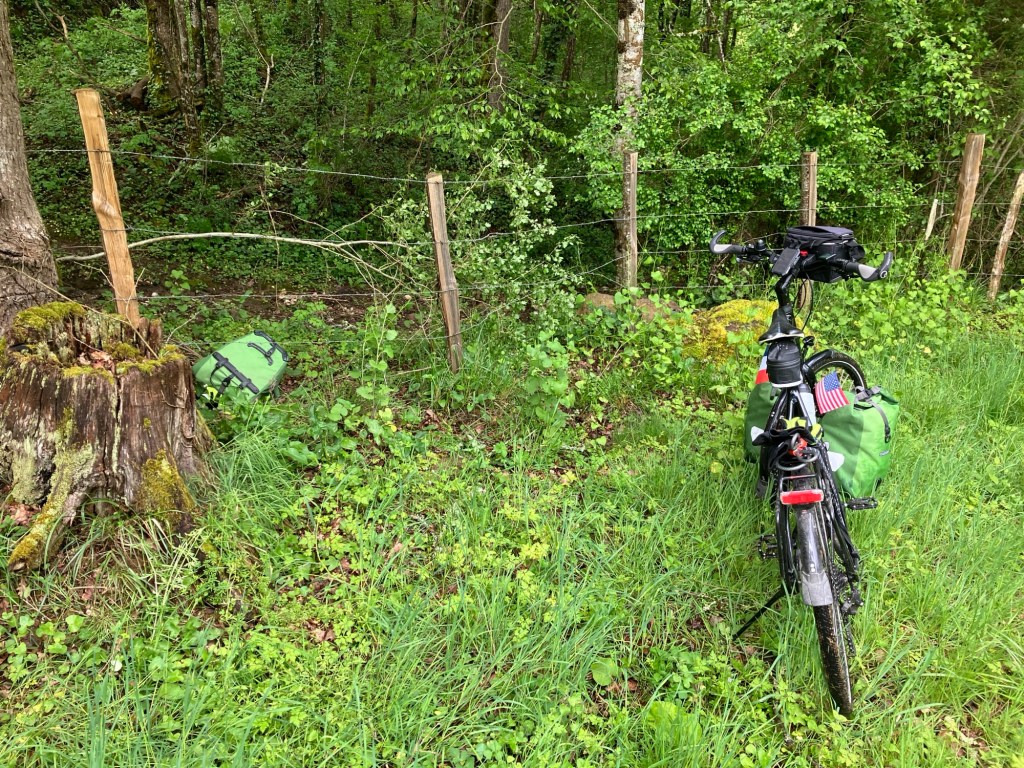
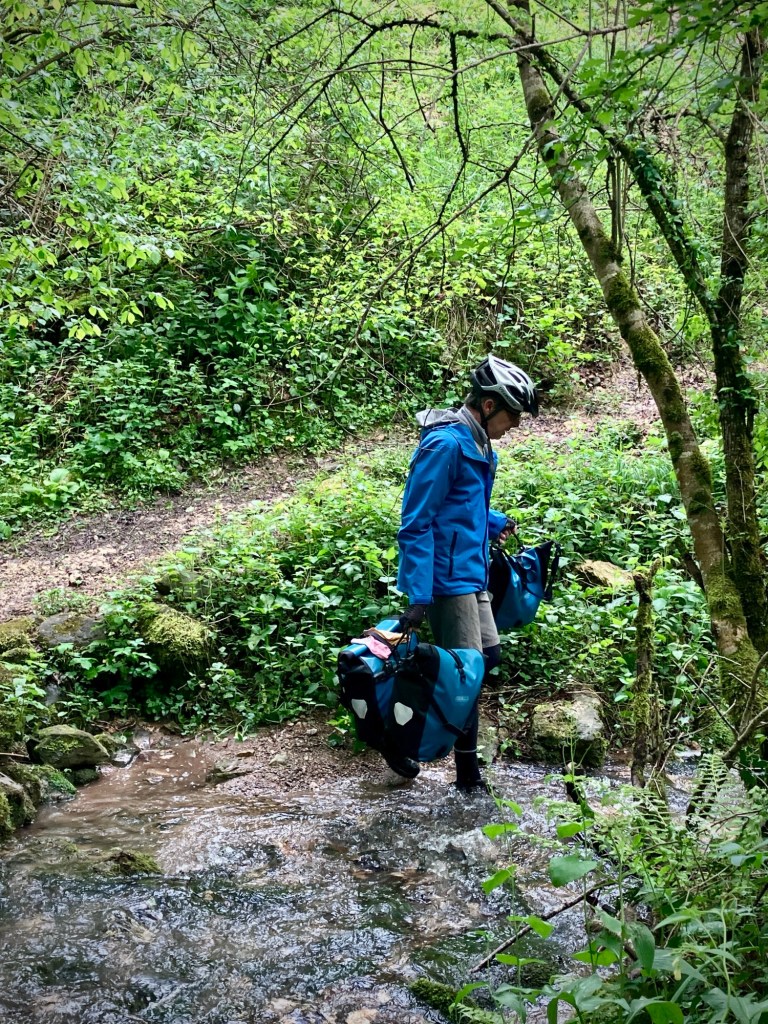
Hmm, Komoot is routing us down this muddy farm track. Better have some tea now as we discuss options. It looks like only a kilometer or so down to the valley bottom and a paved road, and the alternative was way back and up, so we decide to go for it.Hmm, the gps trail drops left down a rutted gorge blocked by tree so we decide to try to the farm field.After a reconnaissance mission to the creek gorge on foot, we found a spot where we could maneuver the barb wire and get the bikes and gear underneath. Cheryl followed determined not to turn back!A muddy mess.Resigned to walking the gear down the creek to a spot we could get up the embankment. That trail you see was blocked by a large tree fall and landslide.Yup, the water is cold.Worst Komoot routing ever!Out of this pickle. A sense of accomplishment and amazingly no torn gear or flat tires as the area was littered with thorns and briars.
So we wiped off our bags and bikes, changed into our sandals, and put our soaked shoes and socks on our racks. Luckily, we were cheered up quickly as the remaining 35km up the Lot to Entraygues-sur-Truyère was peaceful and scenic. Our room for the night in Entraygues was up a big steep hill from town, which meant a bit of pushing. But the kind host was waiting for us at the door and offered to dry our shoes by the fireplace and gave us some fresh juice and cake. We would survive. And better yet, one proper restaurant in town was indeed open Sunday night, so that meant a bit of wine to warm us up.
Back on the Lot!Riding up the Upper Lot, wet shoes getting some air on the rackSant Partèm is the Occitan name for Saint Parthem. Occitan is still spoken in southern France, and bits of Spain and Italy Saint Parthem had a bit of a hippy (baba cool!) vibe, including 60s and 70s music on a dozen mounted speakers from village end to end. We assumed it didn’t play all night?!We entered another national park briefly.We noticed the houses getting even fancier and were very well kept.And more wisteria.
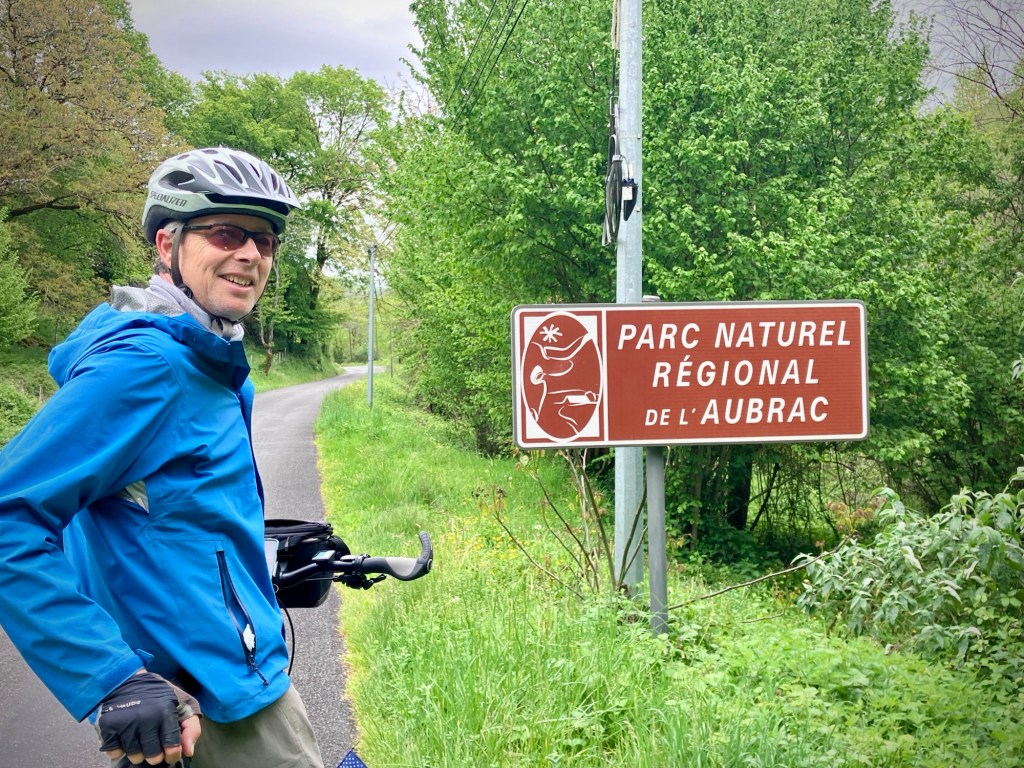
But that night set me (the travel planner) into a bit of a panic. I had planned that we would continue East on the V86 Lot route another 100k through the hilly Parc Naturel de L’Aubrac and then catch a local train north to get us closer to our booked train link to Paris. But I discovered part of that local train line was shut with replacement buses that don’t take bikes.
And the weather forecast was grim. Rain and lots of it the next day. No trains and no alternate routes out of this immensely rugged junction of mountains and river valleys. I explained this to Cheryl and she said, “Yup, we’re in a bit of a pickle.”
Le Lot route V86 continues and a somewhat mysterious sign about communities with burlesque names? Anyone?Entraygues is dramatically located at the confluence of the Lot and the Truyère rivers. The Truyère is the muddy one.
Instead I decided that heading north to Aurillac was our best option, as from there we could catch a train over the highest parts of the Massif Central. But the routes would be tough, especially in a cold rain. We could try to wait the rain out a day, but that put our train travel on May 1st, a French holiday and the trains were very limited out of Aurillac. And there were flood warnings.
So we decided to ride.
Leaving the lovely and cozy Le Clos St. George. Its verandas and views would be even more stunning in better weather.The rain was light as we started up the Truyère The first tiny shelter for a yogurt and pastry. The cold rain had already soaked us.
How do I manage difficult days for my favorite (and only) client. First off, I try to note some of the difficulties of the day, especially climbing. But the key is to not overdo it. Don’t talk about too much. I knew this day was going to be extremely challenging, both mentally and physically. Our route climbed up and down short steep climbs up the Truyere and Goal rivers, up a steep ridge climb and finally up to the huge rolling plateau that separated us from Aurilliac. We are now better at eating something every hour and staying hydrated, but it’s hard in a constant and cool rain. And there were no real towns or villages for the entire route.
It was remote and a bit creepy as we headed further off the main routes and up the Gaul River. The hills and walls were flooded with oozing water and we didn’t see a car or person for quite awhile.This tiny hamlet had a welcome little shelter and even a person who I was able to ask about our route onwards, gunshy from our Komoot mud and river adventure the day before.Not a soul outside all day, even to hike the GR65 route. Hmm, maybe it was the relentless rain, cold, or flood warnings?Finally up on the plateau after 3,000 feet of climbing, and the cows are in awe. Or dumbfounded.The rain lightened up a bit, but never stopped.
Perhaps the worst part of the route was the main road we had to join for our plateau and descent. There was an option on quieter roads, but that added another 15k and 300m of climbing, and we decided that was even worse as we were cold and a bit shattered. So we decided to grit out our teeth for the direct route. It had speeds of 80-100km and was fairly busy with fast traffic and some big trucks, with no real shoulder. But sometimes you need to take some chances and we had some pretty bright clothes and lights. Thankfully the drivers were all pretty good, and the pavement was very smooth, so it was manageable but certainly not a segment we’d relish.
At the end of 30km of wet cold and steep climbs. Cheryl was a trooper but not loving this day. This is where we got on the busy D920 main road to Aurillac. No photos.Boarding the train to Issoire the following day
But when we did finally roll into town and dripped our way through the lobby of hotel, there was not just relief, but a sense of accomplishment. We did it. It was over 1000m of relentless and occasionally steep climbing. And we could catch the train the next morning over the Massif Central to continue our tour. We were out of our little pickle. Happy travels!
Pushing up from a lunch break spot on the Lot River.
After our rest day in Toulouse we hopped on a regional train, a TER, and got a jump on a strong headwind day to Tonneins, which is on the Garrone River, the same river as Toulouse. The Lot River and the Garrone come together at the confluence just southeast of Tonneins, so we rode east to meet up with the Lot and head upriver.
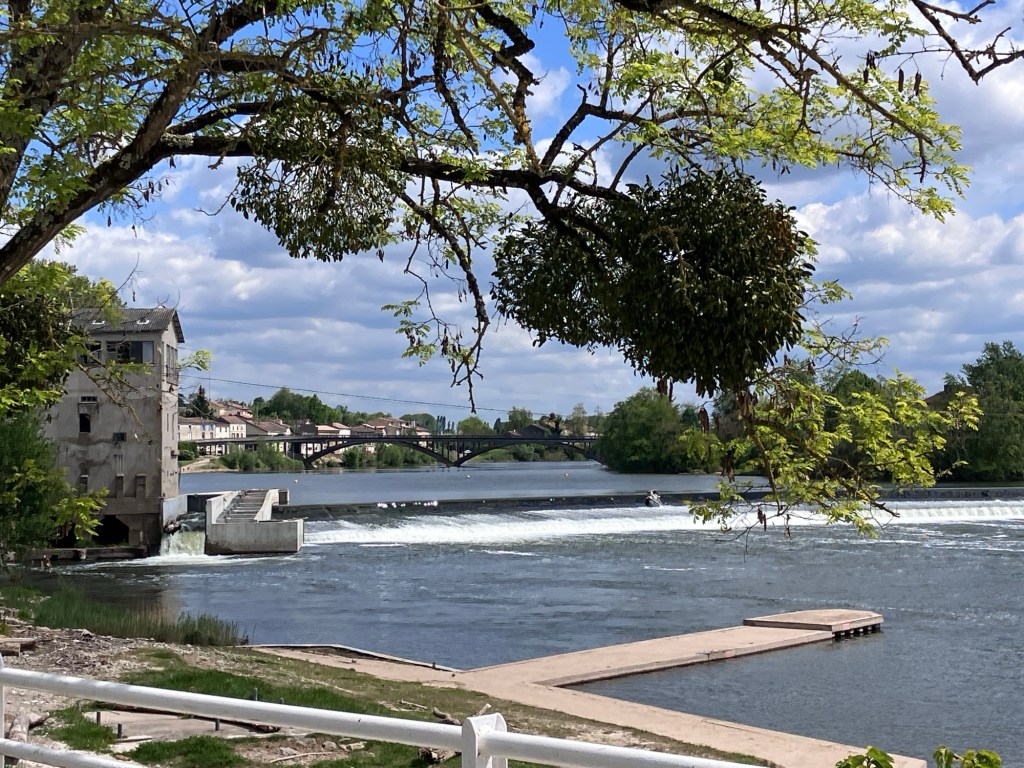
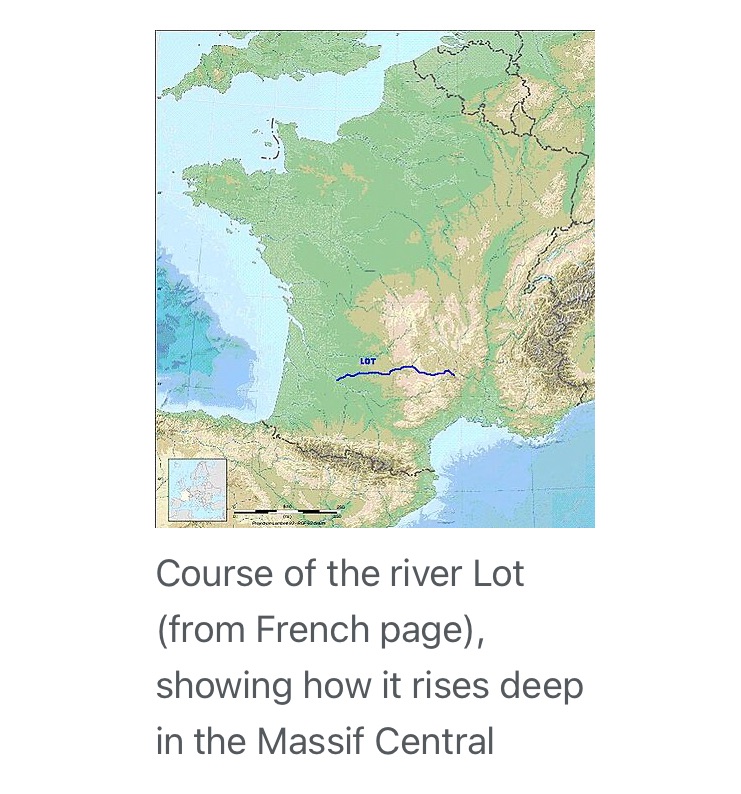
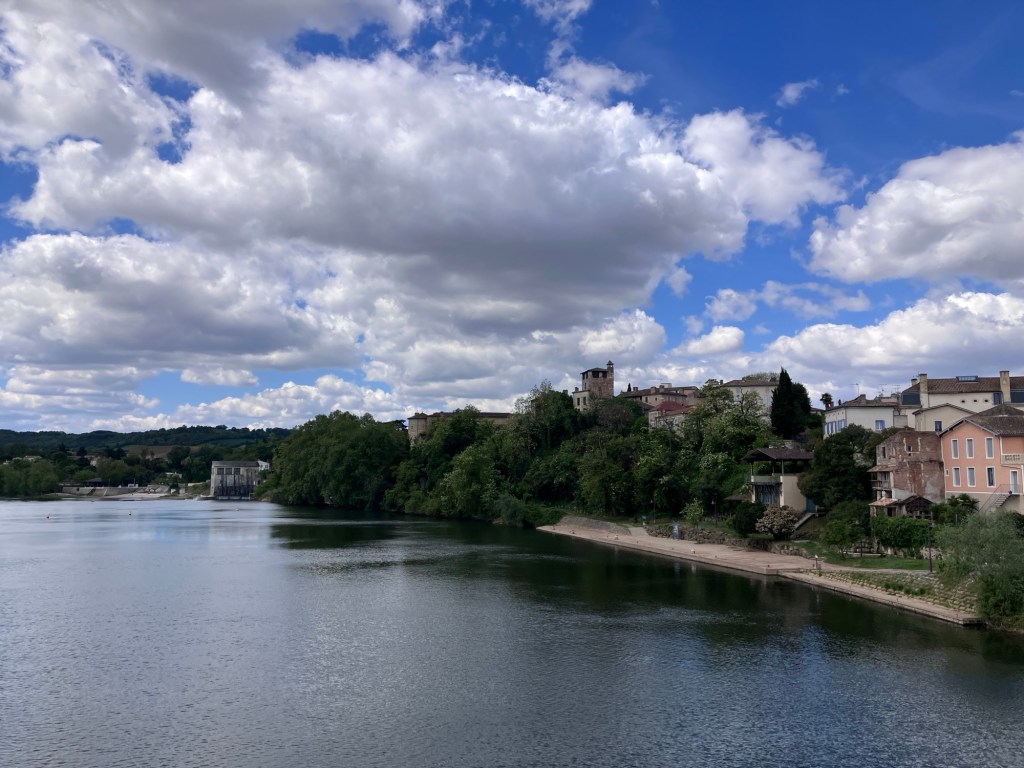
Our first sight of the mighty Lot River, in Clairac.The Lot ends where it meets the Garrone in the west.Look at that river course. So many bends and horseshoes.
One of the allures of riding a river is that you tend to stay on fairly flat ground. But, if you want to ride some hills you get that opportunity when you ride up to the towns along the rivers which are mostly tucked up high and dry above flood level. Or, you take a route up onto a ridge above the river. Most folks would think that flat riding along a river is ideal, but it does get a bit dull, and our legs and rear ends appreciate the hill climbs and coasting downhill.
Another view of Clairac from the bridge on our way to a grocery store.A quiet tree lined road. Our train ride did not deliver us beyond the wind, we had a gusty day.Feeling like bridge trolls at our lunch spot. But it was sheltered from the wind.Castelmoron-sur-Lot.The regional route Rich was following on his map was V86.
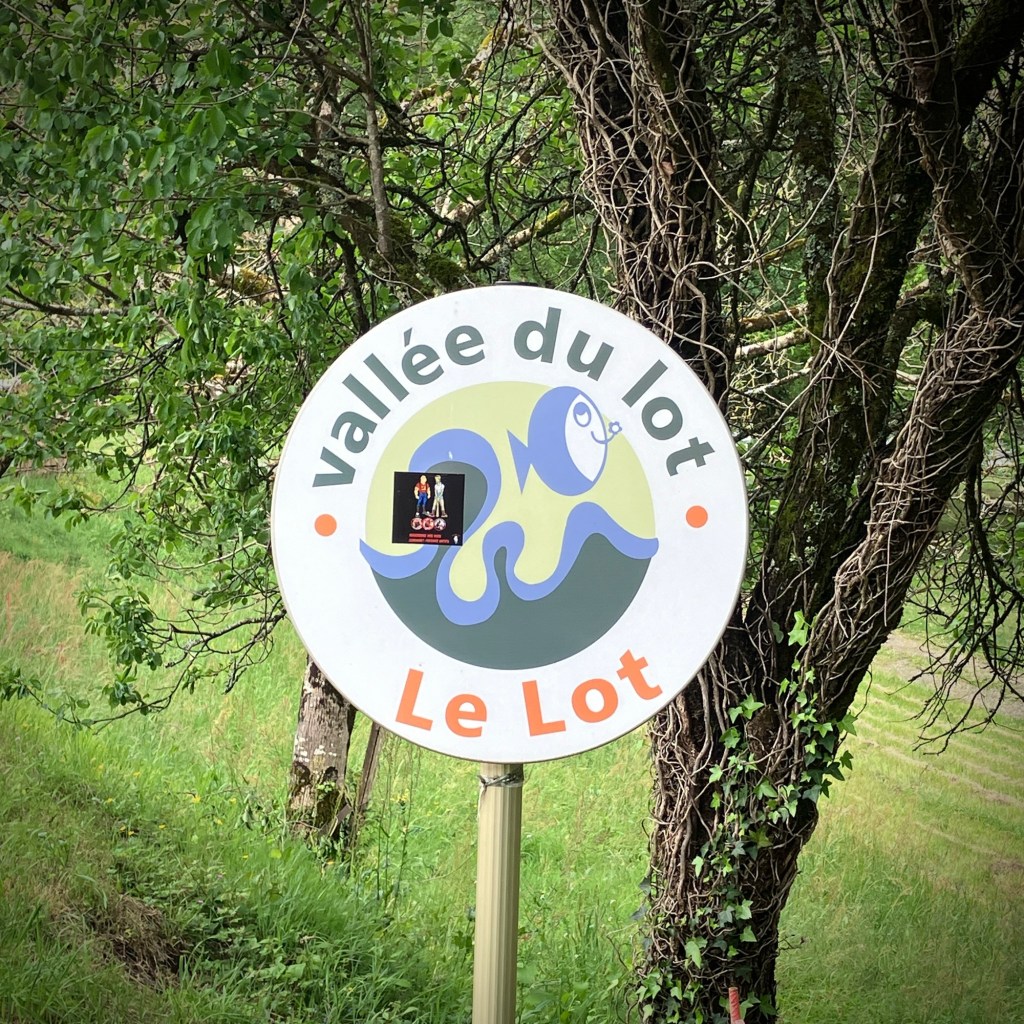
La Vallée du Lot à vélo, the V86, like many bike routes, takes you to scenic spots and through town on very picturesque and historic streets. What can at first seem like a gratuitous turn or two, ends up somewhere lovely.
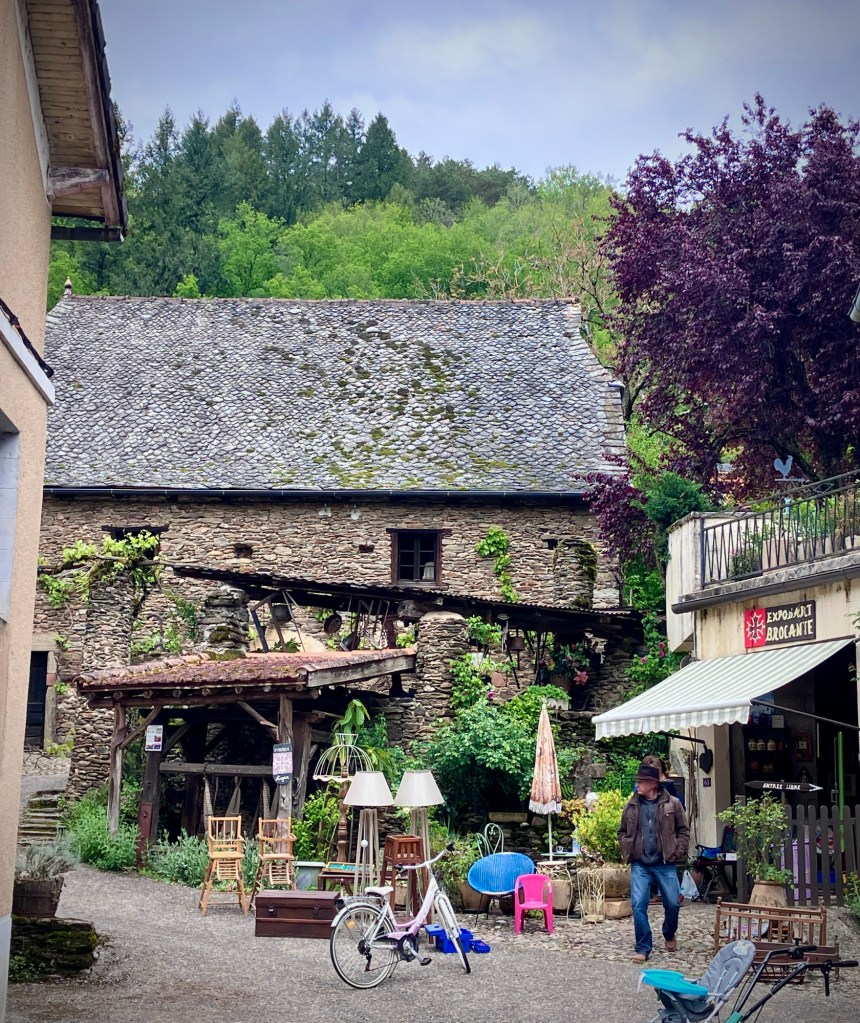
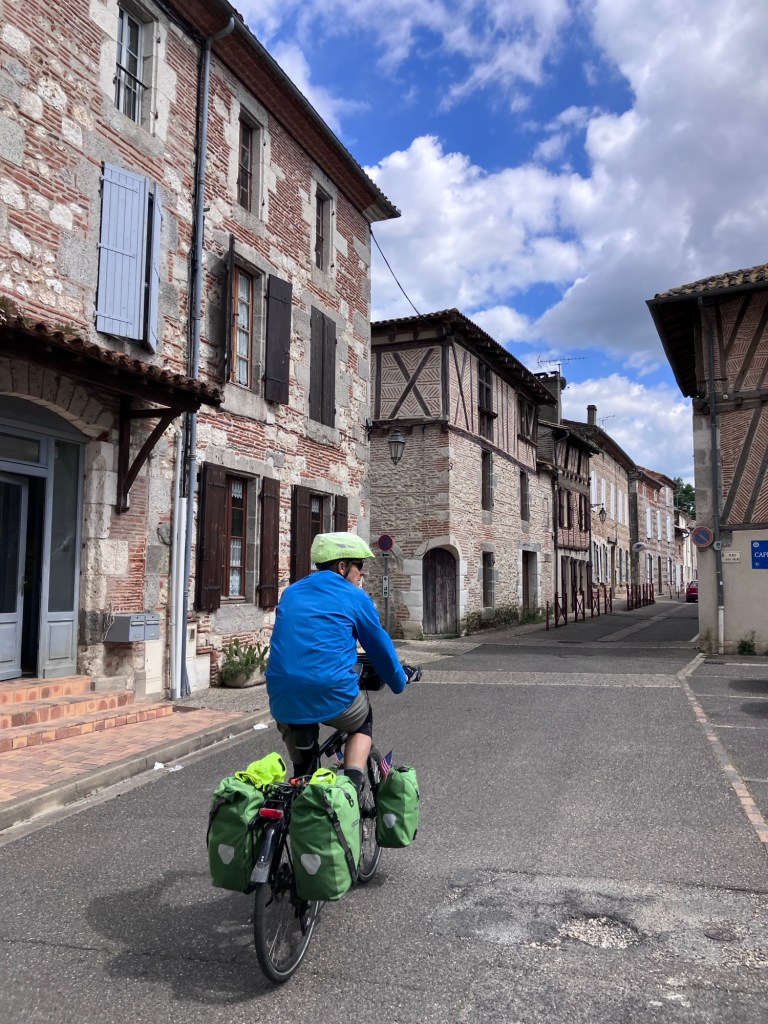
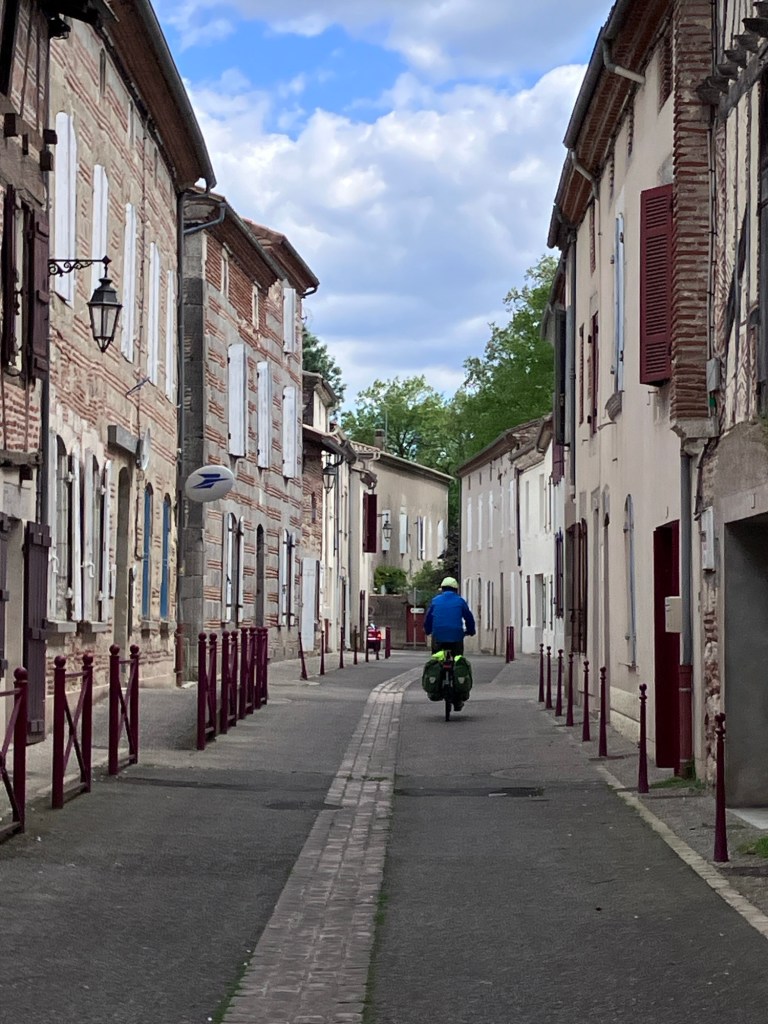
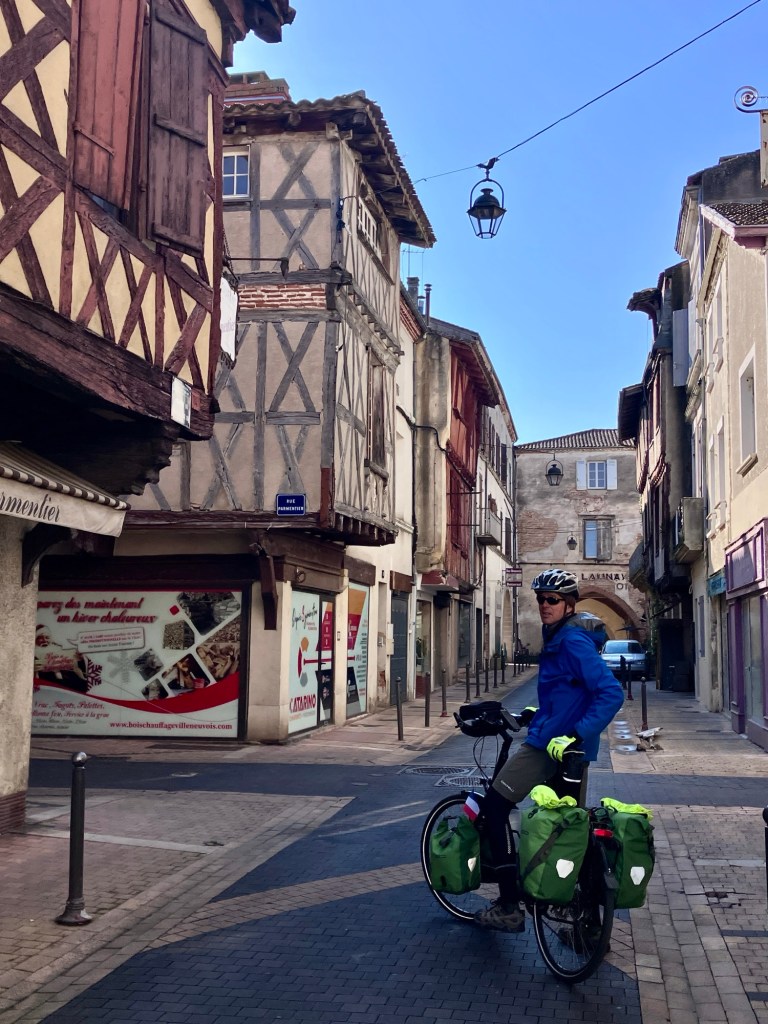
Castelmoron-sur-Lot felt like taking a step back in time. We had much more of this feeling to come as we continued up the Lot.The reward for a day of battling the wind? Indian food for dinner and a bottle of local white wine in Villeneuve-sur-Lot.Porte de Pujols, the last bit of the ramparts that surrounded the city in the 14th century.Crossing the river on our way out Villeneuve-sur-Lot. The Lot is known for flooding, these buildings look ready for it.Use your imagination to erase the billboard and the bollards and you could be back in the 14th century. Oh and Rich, erase that bike tourist in your mind too. And the car.
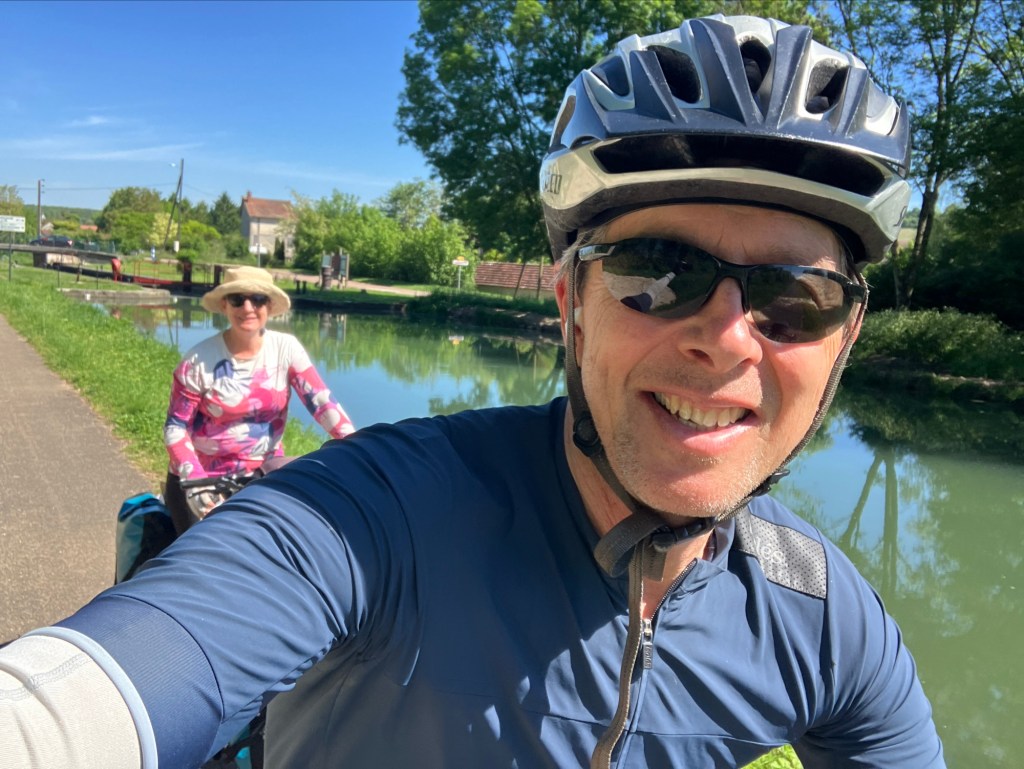
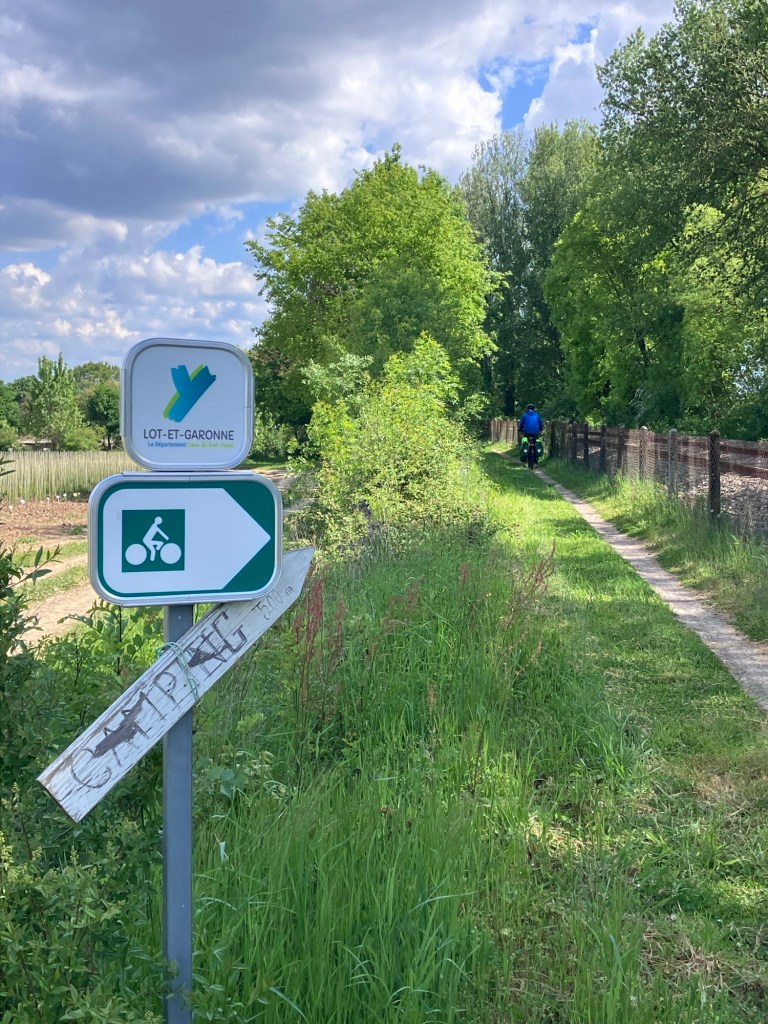
Work continues on the Vélo routes, and the mapping app Rich uses, Koomoot, isn’t always completely up to date. Sometimes new signs will contradict Koomoot directions. We had one of those contradictions at a single track trail by a rail line. Koomoot wanted us to cross the rails on a road behind us and stay in the right bank of the river. We ultimately chose the single track.
The sign was brand new. I love the added on ‘camping’ sign. Across a rail bridge.It’s always such a mental boost to get to ride where automobiles cannot go. Bike touring is hard, but the rewards are fantastic.V86 for the win. The new routing took us to le Moulin de Lustrac. A perfect spot for a snack break.Built about 1296. Right around the time work was being done to make the Lot navigable by building dams, facilitating the movement of goods from Quercy to Bordeaux.A very impressive set of mill buildings.Who doesn’t love a door that opens to a drop into water?And a reminder of more recent history.Another cool old mill building at Monsempron-Libos. This one definitely has folks living in it. I wonder what it’s like to have water flowing under your house?Another stunning historic building on the Lot. No idea what it is.A bridge over the Lot with a sign showing the bends in the river.Puy-l’Évêque is on the narrow neck of a horseshoe bend of the river, and our next night’s stay. Our sense of riding back in time got stronger when we went for a walk before dinner.The narrow side streets are named for the trades that were practiced on them, street of tanners, tinters, etc.One of the small streets.Looking over the medieval buildings to the River.Kitty looking over the city. Nearly a fifth of the residences are holiday homes. The buildings are beautifully kept up.
A stretch of nice weather, no wind, and a beautiful river to ride. We were moving each night, riding happily along, but moving always means unpacking and packing. It gets tiring. Especially with bike panniers. What a mess.
We go from this in the morning.To this. All tidily packed up and at the grocery store to get lunch provisions.It was quite cold that morning as we pedaled past vineyards and waved to folks walking the Camino de Santiago. One of the routes through France goes right along the route we were riding.The route is well marked and takes advantage of parts of an old railroad line.Riding along the old railway route through Castelfranc.And back over the river to Albas. This agricultural area of the Lot is mostly vineyards, all in the Cahors AOC wine region. Another beautiful place up on a hill above the river.Which means riding up up up. But if you were cold this warms you up.Rich added for scale by the big fake wine bottle.The trail stayed above the river for a while. I’d forgotten how cold it was until I see I’m wearing my down jacket. And a wool sweater.Near Douelle, a chateaux above the river. All of these towns were also ports for the shipping of wine along the river, headed to Bordeaux.Lunchtime in Doulle, where a small park had a table and chairs for us to enjoy.Approaching Pradines, yes, another town in a bend on the river. A view across the vineyards.
Our next stop was Cahors, where we checked into our hotel and immediately decided to stay another extra night. Our hotel room overlooked the famous Pont Valentré, a medieval three tower six arch bridge. We got to town in plenty of time to unpack, shower, relax a bit and head out to a chocolate shop.
My supply of chocolate was getting low. I love the window display at L’éclat Du Noir. I look for the independent chocolate shops.And Rich looks for the independent beer bars.
Our rest day was lovely, we walked around town, visited the Musée Henri-Martin, whose paintings we also saw in Toulouse, and had a vegetarian lunch. And napped.
It was a good choice of rest day, since it rained quite a bit.Post museum, post lunch, on our way to a nap through the charming old streets of Cahor. A scallop shell showing the way of St. James and the bridge in the background.The bridge is a stunner. The chocolate is delicious. The view from our hotel room. The Best Western Plus Hôtel Divona Cahors. The happy travelers and that amazing bridge.
Stay tuned for more Lot River. The cold wet European spring is certainly not super great for bike touring, but we’ll take cold over rain. Unfortunately, some rain is in our future. The highs and lows of traveling by bikes.
Massat with snowy mountains on a lovely spring morning.
Our cycling trip could be called the nooks and crannies of France. As Rich mentioned we have a few anchors we plan around, and a house sit in Massat was one of these anchors. It’s a great feeling to be flexible enough to accept a house sit in rural France, tucked up a valley near the Pyrenees. We were up for the challenge of how to get there, and how to spend a week there without a car.
A leisurely ride up the Salat River.We did not become immune to the beauty of the Pyrenees.
One of the cycling tricks we’ve learned is to ride through the traditional French lunch break, especially when we’re on roads instead of trails or bikeways. There is a rush of traffic just before noon, as everyone dashes to the bakery to buy bread for lunch, dashes home, or pulls over at a restaurant to eat lunch, but then we have the roads to ourselves for about an hour. So we either stop for our picnic lunch early or late, and pedal through the quiet time.
Enjoying a local craft beer in the town square of Massat.
At the brewery in Saint Gaudens we were told by the bartender that Massat’s own local beer, BIM, was very good, and that Massat had a lot of baba cools. He and Rich were conversing in French and English so it took us a while to figure out that baba cool is French slang for hippie. Fantastic! We’re San Franciscans at heart so we love hippies and the culture that comes with them.
Heading up the 150m/500 ft climb from Massat village over 2.7k/2 miles to our house sit. A curious local watches.Our first days in Massat were sunny and warm.
Our wonderful hosts confirmed that the area did indeed have a lot of folks who lived off grid, and raised their own food, and helped create an easy going communal vibe. Like many small villages in France there was a lot of depopulation in the 1830s and 1840s. The thriving town of Massat went through crop failures and epidemics that saw the town shrink dramatically.
Always read the tourist information boards.Right outside the butcher shop.
It’s not surprising that a hippie/back to the land movement saw Massat as a fantastic place to settle. It’s an idyllic place, with so many small valleys and farmland and houses that have been fixed up and maintained by French, German, and British, all with the underpinnings of a traditional French village.
We were certainly living the traditional life, walking or biking to town to get our food and wine.And enjoying our lunch al fresco while the weather held.There were hikes starting from our doorstep.The trails wound past old stone buildings.And homes reached on tracks that would possibly maybe accommodate a car.Peaceful little valleys to see.Farm fresh eggs to buy, watched over by a dog who observed us in silence.
None of the map or trail apps we usually use are useful in this part of France, but our host pulled out her topographical maps and marked a few hikes for us in highlighter. We’re always happy to get off the bikes for a few days and work our hiking muscles.
These old troughs are always tempting for a drink, but most are marked non-potable water.We had a day of sunny hiking, stayed in for a rainy day, and headed out again on a changeable day.More curious locals.Between the topo maps and the local signage we got some good hiking in.We’ve been seeing these upside down town signs all over rural France. It’s a quiet protest or reminder from the farmers about conditions for agricultural families, and the difficulties around farming.
Spending time in rural France as a tourist it would be easy to simply soak up the charm and not think about how life is for locals, especially those who make their living off the land. But the time we’ve spent in the Haute Savoie at our friends’ place watching the long hours their neighbors who are farmers work, and now having this time in Massat, we have a huge appreciation for the hard work of farming. My sister in Colorado raises cattle so I have a good idea of how hard the work around food production is. Our hosts had a wood fired hot tub and after getting it heated up, which took about four hours, we’d sit in comfort and watch the sun go down. Across the valley we could hear the farmer getting his sheep moved to a new pasture with the help of his sheepdog. At times like that we are really reminded of our privilege. Just as when in the Haute Savoie the farmers will be haying at 9 in the evening to get ahead of predicted rain, while we relax on the terrace. Farmers and those of us who depend on farmers – everyone – are more closely linked than many of us acknowledge.
The wood fired hot tub, and Rich, who never met a hot tub challenge he wouldn’t accept.
Our French countryside week included two cats and two donkeys to care for. The donkeys were easy since they were grazing and only needed a daily check in and carrot. One cat we barely saw as she was super shy, but the other, a three legged charmer who couldn’t use the cat flap and never passed up a lap sitting opportunity, was a constant source of amusement.
A donkey accepting her daily carrot.Oh, a lap. This cat was in heaven with the two dogs off traveling with their humans and all the laps to himself.I must be near a human.Oh hi, are we having breakfast now? Or preferably, on a human. A warm cat and a wood fired stove got us through a few cold days.Some books and chocolate within reach, and the kitty and I were as happy as we could be.
Before we left our house sit we needed to replace the wine our hosts had graciously offered up. They told us that if we needed to replenish the seemingly limitless 5 liter boxes of local wine to go to the wine shop in town and the proprietor would sort us out. Although we didn’t empty the boxes we wanted to be good house sitters, and we were curious about the shop, so we did coast down to town on our bikes.
So many local wines, beer, and spirits. A treasure of a shop.Some huge bottles.And some caskets for bring your own bottle.The friendly owner knew exactly who we were, he is friends with our hosts, and sorted us out with two new 5 liter boxes of wine, one red, one white. After a stop at the grocery store it was back up the hill with ten liters of wine. Rich did the toting.We did one ride towards Col de Port, it was a grey day and misting. I turned around once it got cold but Rich pressed on until the rain and cold turned him around too. The area is loaded with road cyclists, so many beautiful views and small roads.The other donkey, less friendly but still adorable.
We loved our house sit near Massat. Spending a week in a renovated stone farm house, lighting fires to stay warm, and cooking all of our meals in is such a wonderful break when we’re bike touring. The house was cozy and comfortable, and the area is stunning. We both agree that for us living in such a rural area is not something we want to do. Although we used our feet and bicycles for our week there, for the long haul you would need a car. We saw locals on bikes and e-bikes, which is great, but the closest major town, Saint-Girons with the fantastic Saturday market, is 27 kilometers away. And, as we discovered when we left our house sit on Saturday, hundreds (if not thousands!) of locals drive to Saint-Girons for that market. It made for a not so fantastic ride down the valley. French car drivers are quite good around cyclists for the most part, but a few encounters with impatient drivers on that ride down were enough to put me off. One challenge of living off the grid in a rural area is having to get to things in your old car or van.
Goodbye lovely quiet valley.Goodbye Massat and your stunning views. Hello 60k ride to Boussens to catch a train.
Once we got to and through Saint-Girons and its market day crush of cars we got onto the rail trail to Boussens. Ah, rail trail. Separated from automobiles, catching glimpses of life as you pedal by and through towns: a garden party here, a Boules tournament there, hawks and buzzards soaring overhead. And it was slightly downhill all the way to our train. Yes it’s a bit stressful for the planner having to get us 60k in time for a train, but we made it.
Our train started at Boussens, and ended in Toulouse. That’s our favorite situation, no rushing on or off with all our panniers and bikes to wrangle.The Toulouse Pl. du Capitole. This building is a Toulouse treasure. It’s the city hall, the opera, and where a series of stunning paintings by Henri-Martin are displayed.The artist is known for his large scale works adorning public buildings- where else would this fit?His work is described as having a melancholy, dreaminess and mystery.
Leaving a house sit is always a bit of work, we always want to leave the house squeaky clean for the hosts to come home to, and make sure all the animals are where they should be with sufficient food and water. Add the travel day to that and we decided a rest day in Toulouse was a good idea. We had spent a day in Toulouse but there was definitely more to see. It was a treat to have a full day to walk around Toulouse. Another French city that is working hard to make itself a pedestrian, public transportation, and bike friendly place.
Like this construction site! It’s an expansion of the Metro system.And this street being brought into the modern word of bike and pedestrian friendliness.Great cities don’t happen by accident, they have to be created and modernized to tame car traffic and let folks live a happy life without needing cars for every trip.The small winding streets of Toulouse are great to walk.Sunset light on the Canal de Brienne. The happy Travelers and the Garonne River in Toulouse.A map! It’s fun to see the spots where we’ve stayed. Our house sit is the far right heart on the lower line of hearts. Flirting with the Pyrenees indeed.