The warm weather in Germany has the roses out in full force.
I was going to ask, why don’t Germans smile more, but that’s assuming that the American level of smiling is normal, or correct, and that everyone else is smile deficient. Americans smile a lot. Really, we do. And Californians smile even more.
Smiling for the camera when leaving Regensburg.
Friends from other countries have told us that yes, everyone is aware of the American smile habit. You can see us coming, teeth showing, faces crinkling in delight.
I know why I’m smiling here. A nice hotel, a good beer garden and a delicious glass of wine.And who could resist smiling during a picnic on the banks of Neuburg an der Donau.We smile while enjoying our German pastries.And when Rich’s new bike had a loose bottom bracket issue we smiled when greeting the very nice bike shop owner who thankfully had opening hours on Saturday morning.
I had always assumed that the American smile habit was simply that we’re mostly a friendly country. And those Americans who travel are really friendly and happy to be out and about.
There were fewer smiles on a train hop day, when we ate lunch on the station platform hiding from the sun.Both the departure station and arrival station only had stairs, which meant unloading all panniers and carrying everything down and up: very few smiles.The train system in Germany is very good, but a lot of small local stations have only stairs.
But a conversation with a friend who has lived in France, the UK, the USA, and is now back in Germany, really hit home what we were feeling in Germany with fewer smiles per human – just because they don’t smile doesn’t mean they hate you. Ah ha!
Pretty typical bike touring picnic. Falafel, cheese, cucumber, red pepper, and brötchen (bread rolls) from the bakery. Oh, and a tube of mustard and a tube of harissa for Rich.Very typical beer garden order, beer for him, wine for me. And smiles for the staff.
We love bike touring in Germany. There are so many things to enjoy and so many miles of fantastic bike paths and routes. Sure there are challenges, just like in any country. We’d happily import the Japanese convenience store culture to Germany. Germany is grocery store challenged, to our minds. All grocery stores are closed on Sunday. And there is no convenience store culture outside of Berlin. That means we have a mad rush on Saturday to stock up for Sunday cycling. Restaurants are open Sunday but we prefer to picnic for lunch.
How can you not love a country that leaves lovely treats on your pillow in hotel rooms? I stash them in my handlebar bag for emergency sugar energy. A museum dedicated to Bread and Art? These are my people. This museum in Ulm was fascinating.
And don’t forget, this country has 260 cycling routes crisscrossing the landscape. And the other cyclists are perhaps not the smiling type, not all of them, but when push comes to shove they are there for you. Railway crossing gate stuck and cyclists starting to slip under the gates? They will help you with your loaded touring bikes and keep a close watch for trains. Tight connection at a train station and having a tough time getting both bikes and 8 panniers down the train steps? The cyclist who greeted your smile with a stare and turned away is there to help you lift your bike down the stairs. Good people. Just not smiley.
Following the Donau river path. The Donau River outside our hotel in Ingolstadt.Fun fact, Ingolstadt is where Mary Shelly’s character Victor Frankenstein attended Medical School.A brewery in town, making a great pale ale, not a typical German beer. “Straight outta Altstadt”. This really made us smile.Easy to remember the beer when the brewery name is right there on the glass.A delicious plate of gnocchi and a smile.
So what is it with this American habit? Are we all just simple and happy? Well, according to a fun article I read, it has to do with how many immigrant groups or source cultures a country has. And America is just that – immigrants. 60 source cultures. When you arrived in the USA and your neighboring farmers were Polish on one side and Swedish on the other- you smiled since it was the first and most welcoming communication you had. A non verbal way to say hello, let’s get along. Before you all learned a common language smiles were your signal of cooperation and neighborliness. And that habit stuck and permeated the culture. Canada is similar, but I don’t know if they have the same reputation for loads of smiles.
Loaded up and ready to roll out of Ingolstadt.Sometimes we’re on asphalt.Sometimes it’s dirt.The smell of roses in the warm air will be an evocative memory of this trip in Germany.Enjoying a long warm evening in Regensburg, one of our favorite stops and the second time we’ve been here on bikes.We both absolutely love a city that has so much gathering space for locals. Grab a beer and dangle your legs over the river.
If you think that Americans are not welcomed, or viewed with annoyance or contempt in Germany, you are very wrong. We’ve learned to say we’re American as soon as feasible in conversation. It not only explains our smiles and enthusiasm, but very often elicits an enthusiastic response, with an offering of which relative lives where in America- a son in Chicago, a daughter in Arizona, or, as the case with our young waiter from Moldova, a wistful statement that America is his favorite country, but no, he’s never been.
Riding out of Germany.Eurovelo 13, The Iron Curtain Trail, taking us to Czechia.
As always, we are reminded that for all our faults, the US lives on as the land of opportunity for many. So we ride along, smiling at everyone. Probably viewed as a bit silly or simple by some, but for others a reminder what a country built by immigrants looks like, and acts like. And when after a little hesitation one of our broad smiles is returned by a German, we consider it a win. And if we can get a Hallo, a Guten Morgen, or a Groß Gott, that’s even better. Farewell for now Germany, we’ll see you on the return trip, and now let’s see how our American smiles are greeted in Czechia. Our first time back in 16 years and the first time with bikes.
We’re back. Back in Europe, back in France and Germany, and back on our bikes!
New blue and green camouflage on the Danube.
We spent two weeks after our return from Korea catching up with friends and family in Colorado, California, and then another week to relax and prep for cycle touring in lovely France. But flying through 17 time zones in 2 weeks was not easy. Our 12 hour flight in a packed cabin from Seoul to Dallas was a particular low point, and our circadian rhythms really took a hit. I’ve vowed from now on we’ll only fly West around the globe as it always seems easier that direction -;)
Rolling out of Ulm, Germany on Day 5. New bikes complete with matching panniers, a first for us in 20 years of cycle touring!A spring boules game with our endlessly kind hosts in the Vallèe Verte
Luckily we had some relaxed days to get over our jet lag visiting family in Grand Junction, CO. It really is easier to return when not heading into the office the next day! We were also lucky to score two saver business class seats with miles on Swiss Air (booked months ago) for our trip back to Europe.
Our typical 20 minute walk to get bread in the Vallée Verte, France. Still a bit dazed from the jet lag.La Petite Boulangerie in Habère-Poche.Baguette in hand, pastries in the pack.Wisteria in full spring bloom in the lower alps. Our hiking goal, the Pointe de Miribel. A cow posing in the Haute Savoie with Mount Blanc in the distance.Contemplating a Julie Andrews moment.
We also recharged our social souls catching up with as many friends as possible in the Bay Area. And as always, many thanks to all our families and dear friends who hosted us during our stay, including so many delicious meals. We also managed to keep a constant supply of burritos in our blood stream, hopefully holding us for months overseas.
Waiting for our train at Genève Coravin Station with our very awkward bike luggage. It took three trains to get to Freiburg from Geneva, but was seamless on Swiss and German Rail (and BTW, cheaper to book on DB than SBB App).First test ride on our new Koga World Traveller-S Bikes at the friendly and efficient Zweirad Hanser in central Freiburg.
We set off in this leg of our nomadic wanderings with a very specific goal; picking up two new touring bikes that we decided to give each other for our 25th wedding anniversary last year. We picked Koga World Traveller-S bikes, since we tried them in a shop in Groningen last year. Luckily; we found a nice shop and Koga dealer in Freiburg, Germany who were willing to take our orders over 3 months ago from Sri Lanka.
Complementary estate wine bottled by our bike shop…one bottle for each new bike -:)Freiburg is truly one of the greenest cities on earth, and our new apartment building had a massive bike garage and green roof, complete with bee hives.First of two days at a bigger bike shop in Freiburg accessory shopping, eventually getting a new seat, front and tail packs, four panniers, phone holder, and cyclocomputer.
We spent 3 days in Freiburg getting the bikes configured and tweaked to our liking and then headed out to start another planned 4+ months with our bikes. We were both a bit nervous starting out on our new set ups and were relieved to finally get pedaling again.
Hanging out at Caffé Bicicletta in sunny Freiburg, but excited to get touring!On the S-Bahn to Hinterzarten up in the Black Forest; are we touring yet??!!
The Koga signature bikes are nicely configured and allowed us a good amount of customization via their website. After some nervous days in France wondering if they’d be ready on time, we heard that they would likely be delivered to the shop in Freiburg on the day we planned to arrive! Perfect timing from the cycling gods (and Dutch Koga craftspeople). Koga strives to deliver in 12 weeks and they were pretty close as we had ordered about 13 1/2 weeks prior in Sri Lanka.
Off the train and ready to ride, but wait, first some critical provisions!Taking a break on a long first day climb, again, why didn’t we get E-bikes?!Some rough patches over the Schwarzwald on Day 1. We gave the bikes a full workout.A break in the Black Forest at one of the ubiquitous small shrines (or as Cheryl likes to say, “Cheeses with Jesus” -:).
Our first day included a short link by train to bridge a busy main road (or super steep mountain option) up to the higher parts of Black Forest. This allowed us to ride nicer roads and trails onwards to Donaueschingen. It was still a hilly and varied 52k first day with 2,500 feet of climbing and lots of dirt sections.
At the source of the Danube in Donaueschingen. The Donauquelle is a bubbling clear spring, but fed by the upstream Breg and Furtwangen rivers.EuroVelo 6 and the Danube cycle routes are a mix of buttery pavement, dirt, and gravel, but all in pretty good condition.We have been greeted by unusually warm spring weather, so always happy to find some shade.First gear quirk to resolve as my panniers both popped off the bike. Luckily, this kitty was ready to help.Off the bikes enjoying early evening light near Beuron.
But it was beautiful and the new bikes are a joy. We love our old steel bikes, but these bikes are built to be loaded, handle wonderfully, and have geometries that make long days on dirt and old town cobbles so much nicer. We opted for a classic 3×10 Deore XT drivetrain, including fantastic hydraulic disc brakes. Koga includes nice built in racks, strong kickstand, fenders, and dynamo hub lights.
Smiles on Day 2…our seat bones still didn’t hurt too much…yet.We exchanged many “Bonjours” with this nice French couple as our paces were nearly matched for a few days.There are many covered bridges on the upper Danube since it’s still small enough to span with wood.Loving my new bike.We brought our ultralight camp chair on this tour, which means any pleasant patch of shade is a potential break spot.Wishing this tunnel was open to bikes as our cycle trail went up and down and all around the first few days.An emergency Chair Zero break at the side of trail. Sometime brush and the ubiquitous stinging nettles can make finding a break spot tough in spring time.I haven’t lost Cheryl yet in her bright colors.More artistic German bridge engineering.
After 4 beautiful days cycling in the Black Forest and upper Danube, we took a rest day (Ruhetag!). Ulm is a nice small city on the Danube with a cathedral famous for having the highest spire in Europe, easy to spot cycling into town. Our rest day coincided with a local holiday in Baden-Württemberg and Bavaria, Corpus Christi.
Mandatory 11 O’Clock pastry break. This was a divinely dense cheesecake like cherry treat.
We then spent the next two days along the more agricultural parts of the Danube Valley and are now enjoying another day off the bikes in Ingolstadt. We’ve mixed our routes up a bit to try to stay in woodland as it’s been warm and sunny, but primarily have followed Eurovelo 6, “Atlantic to the Black Sea”, which runs an incredible 4700km from eastern France via the Loire and Rhine, and then along the Danube to the Black Sea.
Always love the signage and choices cycling in Europe. It’s liberating on bicycles to know you can get anywhere relatively safely.
We head out tomorrow to do another 80km to Regensburg, but after that, the upcoming sections on the Danube, especially Donau to Vienna and Budapest are some of the most popular bike touring segments in the world. (And for good reason).
Paying homage to the Schwein farmers in the area, a German diet staple.Late spring colors on the Danube
But thousands of bikes on each side of the river, with an awkward mix of the inexperienced and e-bikes thrown in, will make us a bit crazy and claustrophobic. So we plan to the explore that heart of the route more off-season, some early spring or late fall. We are always glad to trade some rain, cold weather and earlier darkness for a more peaceful experience.
A massive platter of tasty Greek food hit the spot in Riedlingen as our metabolisms started to fire up on Day 3.
But the upper segments of the Danube are much less toured, and have been generally blissful. As Cheryl knows, I’m a lot happier off the beaten track, at least a bit, and tend to break out in hives when in tourist clusters these days. Sometimes we lean in to being tourists, but other times it’s just life for us now, so we need to make our own adventure. After Regensburg, we may use our €49 monthly DeutschBahn tickets again to head east towards Czechia.
Cheryl loving her new bike in the limestone gorges of the Buchhalde-Oberes Donautal
But this is the magic of our third year of nomadic travels. We relish flexibility and the ability to change course on short notice. It’s also our third year in a row touring in Europe, and I definitely am seeing the landscape through slightly different eyes. We’ve seen hundreds of quaint squares, rivers, bridges, and old towns. Places are starting to look more normal, and a bit less exotic. But I also have a warm feeling of joy that we are able to control our destiny in life for now. Explore where we want, linger where we want. But we also have enough life experience and years of hard work to appreciate it all. And we know life can throw us all surprises at anytime, so for now, we roll on into the summer, thankful for everything.
Always a new surprise on the Eurovelo Happy to be the two friendly American cycle tourists in a little German Town no one has heard of (Riedlingen)
Remember, the smaller places can be even more rewarding than fighting the crowds in the most popular cities. Happy summer travels all and hope to see a few of you along the way!
Dinner with fellow travelers. So many little plates. (Banchan) Three of us chose octopus, and one had beef.
We are not foodies. We don’t seek out the ‘of the moment’ restaurants or cooking trends. But we do love to eat, and to find small mom and pop places to spend our money. When we’re in travel mode, or bicycle touring, we eat out just about every night. And afternoon. Mornings too, if the hotel doesn’t have breakfast available. So that’s a lot of searching for and sitting down to meals.
Our very first lunch in Korea. A dumpling place in the Insadong neighborhood of Seoul. Rich had eaten here on a business trip layover exactly ten years before.Cheryl very happy to be enjoying her first glass of white wine in the Ikseon-dong neighborhood of Seoul. Rich enjoying a craft beer and a skillet of Oven Cheese Tteokbokki (오븐치즈떡볶이).
Tteokbokki is chewy rice cakes cooked in a red, spicy broth. This version at a place called Hang Out in the charming Ikeseon-dong area, a maze of little streets with so many different shops and restaurants, was more of a beer snack meal than the smaller street vendor versions we saw later on. This version had Sundae sausage and cheese as well as the rice cakes.
A stroll through the Gwangjang market to try Mung Bean Bindaetteok (녹두빈대떡).This snack turned out to be a big serving. The small dish is pickled celery, we think. And kimchi came out after Rich, a kimchi fan, asked for it.
After a visit to Dongdaemun Design Plaza, the amazing museum complex designed by architect Zaha Hadid, which is well worth a visit, we went over to the Gwangjang Market to walk around and ogle the food on offer.
Had we not been full of mung bean pancakes I would have loved to try this pumpkin soup.We quickly got a bit overwhelmed in the market.Fish cakes, Korean glass noodles – Japchae is the dish of stir fried noodles – Tteokbokki, the spicy rice cakes, and the long sausages are Sundae: made with pork intestines stuffed with glass noodles, coagulated pig blood and vegetables, all steamed together.
You know how people like to talk about getting out of your comfort zone? Food is a fast and easy way to do that. I don’t consider myself an adventurous eater, Rich is willing to try anything but I’m a lot more picky, or cautious. And, I don’t like seafood all that much. I’ll happily have sushi or sashimi, but most cooked seafood gets a pass when I’m choosing my meal. However, once we got bicycling on our trip from Seoul to Busan, I really did have to eat what we could get. Whether it be from the ubiquitous convenience stores, or at a restaurant.
Bibimbap, or mixed rice dish. Sometimes in a hot stone bowl (dolsot), or mine in a tin bowl, vegetables and an egg. We quickly learned that not everyone finishes the little dishes of pickled vegetables and fish.This little street is known as a Pocha, short for Pojang-macha, a restaurant or street that serves Korean comfort food. It’s where we had the bibimbap in the previous photo.Our first night on our bike tour we had sushi and noodles. And yes, that stain on my placemat is the splash from when I dropped a piece of sushi in the soy sauce. Chocolate milk. A great energy drink while cycling.My favorite bike touring lunch, a picnic. This was taken right before we realized we were sharing our bench with spiders. This is not a typical dinner scene on our bike ride, Rich got the beef bulgogi set meal, I got pasta carbonara. Our hotel offered Korean and Western food. Usually it’s all Korean food.
Bike touring lets us see a country in detail, and forces us to figure out how to feed ourselves. Korean convenience stores are easy to find, and although I prefer Japanese convenience stores, we did well finding things that appealed to us.
A well placed picnic gazebo for elevenses. Packaged pastries and drinks from a convenience store.Caffeine choices. Dumpling lunch. A happy stop. Kimchi, spicy bbq, and meat dumplings. For the record the spicy bbq and kimchi were great, meat ones were a bit boring and bland.
So, how about when the food finding is not so easy. Or not so successful? Or you get to town kind of late and not much is open? Then it’s chicken and beer places. We had to resort to chicken and beer places twice, on long days. They are known as Chimaek. From chikin ‘fried chicken’, and maekju ‘beer’.
This was actually quite good after a day cycling. Chicken nuggets, noodles, rice cakes, a spicy sweet sauce, and leeks on top. The dish to the right was pickled jicama, we think. Or maybe radishes. It’s a good day when you discover that this energy bar from 7-11 is really tasty. And they had a buy 2 get 3 special. The clerks in the 7-11s were very good at making sure you didn’t miss a special offer.At our second Chimaek restaurant, we failed to snap a picture of the Cheeto orange chicken, but this salad with ice cream on top was not as bad as you would think. Yes, that’s corn and tomatoes, iceberg lettuce and red onions. Under the ice cream.
There was an evening when we pulled into town on our bikes, in Gumi, and planned on eating at the food court of a large grocery store chain, E-Mart. Food courts in Korea are good. We were looking forward to it. We checked in to our nice hotel, unpacked, showered, and strolled over with plenty of time for dinner. It was closed. There was a mysterious local holiday that no one but the management of the E-Mart seemed to know about, or care about. So, grumbling and hangry, we headed back to our hotel, and then spotted the sports team from the hotel lobby at a small place down the block and went in.
A small restaurant run by one lady, who does one thing. We ordered the one thing for two. Out came the small dishes of pickled things. Out came a burner. And out came the bubbling Sundae Jungol hot pot. Remember, Sundae are the sausages, the hot pot also has pork intestines and vegetables in a spicy broth. It was quite good.
Once we reached Busan and were off the bikes and in a city it was easier to search out restaurants and plan ahead. While cycle touring you are often at the mercy of how far you were able to ride, and what time you get to town, and how much energy you have to find and walk to a restaurant. But with a few days to explore you can find what you actually want. Rich was happy to find that Korea has had a renaissance of craft beer brewing in the past decade or so.
Wildcat Brewing in Busan.Galmegi Brewing in Busan.Amazing Brewing Company in Seoul. Don’t let the same shirt fool you into thinking this was one night, it was three different nights with a limited wardrobe.That face says “It’s not wine”. But it was good.
Korean food is quite varied. Most people know Korean BBQ and bibimbap, but there is a lot more to discover.
A Mexican restaurant in Busan. Grilled shrimp tacos. Not bad. A bit too sweet, but a nice diversion. I like a lunch that comes with scissors to cut your noodles. I did this all wrong. One of the little bottles was something for declumping the glass noodles. Oh well, press on. At the Busan train station.Seomyeon Market food street, Busan. Tempura.And right across the street, dumplings.Beef bulgogi dolsot bibimbap. Quick, break that egg yolk, but don’t disturb the rice while it crackles against the hot stone pot and gets crispy and brown.
We took the train from Busan to Seoul and stayed for a week in an apartment which meant we could cook our own meals. As much as we enjoy eating new foods, it gets stressful and tiring to find restaurants, translate menus, and constantly try to figure out what goes with what – does this go in here or do you dump this into there? Our first lunch in our apartment after a visit to the big E-Mart grocery store was grilled cheese sandwiches.
Last dinner in Busan. Rice and pork soup. Made in huge vats, long boiled in the little street in front of the restaurant. The little bowl of pink is tiny salted shrimp, which you add to the soup, along with garlic chives and minced sauce.
Our apartment in Seoul for our last week in Korea was out in a neighborhood. While at first glance during the walk from the Jungnang metro station it appeared to be a lot of tire shops, new apartment buildings, and little clothing stores, the small back streets proved to be full of restaurants and places to buy groceries. It was easy to wander around and pick a place a for dinner.
We translated the sign to read Ssambap, This means things, rice, meat, vegetables, and sauce wrapped in a variety of leaves.The plate of leaves at the left include lettuce, Korean perilla leaves, squash, bok choy, Napa cabbage, and cabbage leaves. The small round black dish is a freshwater snail and soybean paste stew.My attempt at ssambap. That’s bulgogi beef on top, from the second round black dish in the table. Nice and spicy. I think a local would have a neater and tighter wrap. Think Korean burrito.
Seoul was fantastic for hiking, as we covered in the previous post, and it was also fantastic for simply walking into a restaurant and getting a delicious meal with very low stress or awkwardness. The owners were always nice and welcoming. They would help us out when we were obviously confused about how to proceed with our meal, and payment was always easy – just get up and walk to the cash register and tap your credit card. No tipping, and taxes already included. Another nice thing about walking up to pay is that you don’t feel guilty having left some of the little plates of pickled things. Our clean your plate mentality is hard to break.
Hiked off a mountain and into a tofu restaurant. The table of gentlemen behind Rich were having fun and that enticed us in. Who’s excited by her tofu bibimbap with an egg on top?The meal sets are another fun easy way to order. I got beef bulgogi (again), and Rich had ginger chicken soup.The soup arrived bubbling away in its dolsot.
Korea is famous for its barbecue. That’s the one thing most travelers might know about Korean food – barbecue. And the many barbecue restaurants are super popular with locals. It’s a fun thing to do with a group of family or friends. The ubiquitous restaurants are easy to spot with the ventilation hoods over the table grill. We decided on our last night eating out in Seoul to finally try a barbecue place. We’re not really big meat eaters, but thankfully as with any meal in Korea there’s no worry about getting plenty of veggies.
Was it the cute pig on the sign that drew us in?It was the perfect mix of some tables full, but not too crowded. That way we can watch how other diners proceed but not feel too overwhelmed. That’s a little dish of garlic in oil on our charcoal grill.I was doing my best to be grill master of the meat we got. (We’re still not sure what it was, our translation app was a bit vague on this one.) The other dishes contain an egg soufflé/omelet, pickled daikon, Kimchi, leaves to wrap your bbq in, and loads of other veggies and seaweed. The friendly waitress came over to give me a hand. I was being too careful, she dove in and tossed that meat around!Belly full, happy to have a 15 minute walk to the subway station through little back streets. We did willfully break some food norms. Koreans don’t walk and eat like we Americans do. Everyone else who got ice cream sat at the shop and ate it. We strolled.One final river path walk in the morning before heading by train to the airport.
We had a great time in Korea. The people, the food, the biking, all of it exceeded our expectations. We are in San Francisco now, after a lovely family visit in Colorado, and we head back to France soon to pick up new touring bikes in Germany and then out for cycle touring!
We knew that Koreans love to hike. Even if we hadn’t known that before coming to Seoul the sheer quantity of hikers using the metro would have tipped us off. Boots, backpacks, hiking poles, sun hats, we felt right at home with these transit enabled hikers. We hadn’t planned on turning our time in Seoul into a multi day hiking expedition, but that’s the joy of travel. Sometimes you just never know what’s going to happen and what you’ll find in a new place.
A view from our second or third mountain hike. A view from the Seoul Trail.
You may be realizing that what these views have in common is that we are looking down at the city. Down as in ‘we climbed a lot of darn steps to get up here’.
Looking at one mountain park we climbed, the little one to the right, while climbing another mountain park. Playing the game called find our high rise. The air was quite clear on our first hiking day. Rain was coming in a few days so we hiked three days in a row.
Rich found the first hike for us by seeing the mountain park from our 12th floor window and navigating us there hoping there would be a trail. There was. And there was an amazing accessible boardwalk style trail all the way up to a temple and a cafe. Maps.me was helpful, showing some trails, and Alltrails had some as well, but lacking a great mapping site we relied on Rich’s wonderful navigation skills.
Once we were on the trails the signage was quite good.Very comprehensive signage on the Seoul trail.
Since hikers are getting to and from their hikes on the metro, there are also signs to get you to the trails from the neighborhoods.
Turn here to get to the Seoul trail.A comprehensive hiker sign. I like they have a backpack and a pole. And a big version in case you fail to see the smaller sign. Seoul wraps around and up to some impressive mountains, when you get off the metro you see this. Head that way.
The signage and maps varied in detail, and confusingly played fast and loose with having north be at the top, but on the whole you were well taken care of, signage wise.
A big view of mountains and the trail networks. Including metro stations. A map showing the 156 kilometers of the Seoul trail.
Not only was the number of trail opportunities great, the amenities along the trails, and the construction of the trails were impressive. Very nicely maintained steps, benches and picnic spots, restrooms, and my new favorite thing – carpeted trails. It looks like jute, or coir, and for stretches that are steep up or down, or could get quite muddy, it’s super helpful. It also stops the usual trail ruts from forming, or the footsteps turning into hardened mud. And dang, carpeted trails – what’s not to love about that?
This one was new. You can appreciate the weave. A more worn in stretch of trail carpet. And our much worn Ecco sandals. Restrooms, clean and with potable water unless otherwise noted.A pine grove with plenty of picnic benches. Seating and shade. An accessible trail gently climbs towards the view spot.Where there were stairs they were also well built and maintained. And usually wide enough to handle the crowds of enthusiastic hikers. This was a weekday so there was not as many people as we imagine show up on weekends.Rich heading up.And up. And then down. This hike day, a section of the Seoul Trail, had about 2,000 steps.
It’s not unusual for us to come to a city and skip the A list sights. Doing things we love to do, like hiking or biking, or even just walking city streets, gives us more insight into what life is really like in a place like Seoul. Seeing the neighborhoods far from the tourist friendly zones. Going into restaurants with basically zero idea what kind of food they serve. And hiking trails like these, full of locals. I tell Rich he’s never happier then when there are zero other western tourists. I developed a rating scale for him of tourist bombs – a high of five is a lot of tourists and not going to result in a happy Rich, and a low of one is good, but zero is better. After the tourist bomb rating is the wide eyed locals rating – which shows how surprised the locals seem to be to spot two big foreigners on their trail or in their small neighborhood restaurant. Our best hike was zero tourist bombs, and five wide eyed locals, the highest rating possible in my new rating scale.
A friendly fellow hiker. Even with few common words he and Rich got along over pointing out buildings. This is a typical hiking outfit for the locals. Rich’s is not! Our sandals were definitely unusual.
In addition to good trail signs, there are informational signs about archaeological sites, and signs asking folks to please not collect acorns and chestnuts as the wildlife depend on them.
Good informational signs with english translation.This cute squirrel would like you to leave their food alone.Another reminder to leave nuts on the ground for forage.
You might be thinking, ok, so that’s all impressive and interesting, but lots of places have trails, and signs, and views. Well hold on to your sun hats, there’s more.
Stamps! Like the stamps we didn’t collect along the Seoul to Busan bike route, and in Japanese train stations, there are also stamps we didn’t collect along the Seoul Trail. So cute. Each station has a unique stamp.These. What are they, you ask?Compressed air blowers. To remove the dust from your shoes and trousers before you head back into civilization. The sight of these meant you were nearing the end of your hike. Or a connection out to a neighborhood or metro station.Felt nice to dust off our sandals and legs.Rock stacking. In California this is discouraged behavior, but here it has Buddhist origins, although some folks apparently just like the challenge, adding a rock as they walk by.Ribbon blaze markings, so you can keep to the Seoul Trail at crossroads. A group of adorable young hikers, an entire class went by us, greeting us in Korean. We were charmed.
The unexpected pleasure of hiking in Seoul was highlighted by all the amazing views. As you climbed up, wrapped around, or climbed down a mountain park, you got new views of a different part of this mega city.
A view across graves to a cityscape and another mountain.This high stretch reminded us of Desolation Wilderness near Lake Tahoe.But we never had views like this in Desolation.Scrambling down towards the city and a metro station.Getting closer to civilization and lunch, passing by a community garden site.The reward? Tofu Bibimbap. It was delicious and I let it sizzle in its dolsot (Korean stone bowl) so the rice got nicely crisped on the bottom.
I want to include some tips for hiking in Seoul: Keep your metro card charged up, all the hikes we did are transit friendly. Bring snacks or lunch, the smaller neighborhood parks might have a cafe, but the longer trails that we hiked didn’t. Bring water, we were able to refill on all of our hikes eventually, but bring enough water to last for most of your hike just in case. Now, how to find hikes. You can assume that every mountain you see has trails, but finding a trailhead might be a little tricky. Rich used a combination of google maps, maps.me and All Trails. You can find information about the Seoul Trail at English.Seoul.go.kr and on our links page. If you find yourself confused, ask a local or follow someone in hiking gear.
The happy hikers on one of our Seoul hikes.
We’re at Incheon Airport now, slightly dreading the 12 hour fight to the US. I will definitely do a post about the food we ate while in Korea. The good, the not my favorite, and the mysterious that Google translate failed to help us understand. See you soon San Francisco.
The infrastructure on the 600+ km Cross Country Trail is frequently jaw dropping
South Korea’s rapid industrialization in the past 40 years has been astounding. It’s an economic success story and now the 15th largest economy in the World. In addition to technology and manufactured goods, it now exports its pop culture, with K-pop and K-culture huge global influencers, especially in other Asian countries. Taiwan was visibly crazy for all things Korean when we visited in January.
Getting ready to tour at the Sunbee Hotel in Insadong, SeoulReady to go. We picked up rental panniers the day prior so we could pre pack and then drop our excess baggage at the shop to be forwarded to Busan. Very convenient. A quiet Saturday morning subway ride to the bike shop
We are really enjoying Korea, but for different reasons than Japan. There is an somewhat frenetic energy here combined with a refreshing lassiez faire attitude towards many aspects of life. And again I’ve been awestruck by the differences in cultures just a few hundred miles across the Sea of Japan. Completely distinct cultures. Queues and formalities matter a bit less. And we’ve enjoyed exploring a vast array of Korean foods that we’ve never encountered in our limited Korean food dining in the U.S. There is so much more than Bibimbap and BBQ.
Rental bikes ready outside BikeNara. Now how do we get to the river?On the North Side of the Han River Path. Now this is nice!
We haven’t found as much of the coziness and singular intensity of Japan here yet. It’s certainly here, but not as prevalent. And the young folks seem to have a very different outlook than their parents, and they are visibly two worlds away from the Korea their grandparents grew up in.
We’re bike touring again, yea!The amazing infrastructure begins as we cross to the path on the South Side of the Han. Complete bike and ped paths run on both sides of the river through Seoul for over 20 miles!
They’ve also built some amazing infrastructure, including a massive national flood control program to tame the four largest rivers and make life in their paths more predictable. Part of this dam and flood control program included building long distance bike routes. The complete Cross Country Route is the most famous and runs about 650km from Incheon to Busan. We’ve wanted to check it out for a long time and luckily, there is a bike shop in Seoul that rents touring bikes and panniers, which was perfect as our beloved touring bicycles are half a world away now in France.
Pop up convenience stores and cafes along the busy stretches of the paths in Seoul. Very cool.And benches to take a break to watch the kitted out roadies of Seoul on a SaturdayConvenience store Kimchi Gimbap rolls (pork or tofu) became a staple for me along the route…a little less for Cheryl.But add a crunchy Bugle-like corn snack to the top of the Gimbap and you’ve got a winner.
The challenge for us was the fact that, short of about four days on bike shares in Japan and one speed clunker rentals in Sri Lanka, we’ve been off the bikes for 4 months, and 7 months since last touring! So, after a few days exploring a bit of Seoul, we set out by subway to the bike shop, and traded one consolidated piece of luggage for bikes and panniers. We had the bikes for 8 days, but well over 600km to cycle. Yikes.
Still smiling despite a pretty fierce headwind on Day 1.A big Sushi dinner after a shortish first day due to wind, a stop at Decathlon, and lack of identifiable lodging for another 50km.Ready to start Day 2 after our first night in a love hotel in Hanam City, still in the massive Seoul metro area.Sneaking out the discreet parking access of another love motel.
We had both brought along one pair of good fitting Lycra bike shorts from SF, as well as a long sleeved Jersey that served Cheryl hiking, and outer shorts that have served me for workouts and hiking in our travels. But that’s it for touring gear, as we didn’t want to lug a bunch off extra items for 4 months, just for a week of touring. So we bought gloves (can always use another pair) a few water bottles, and I picked up a new touring jersey with back pockets (a ‘must’ for touring IMO).
A bit of construction along the way, but always accommodated. Although this was worrying.But Day 2 amazed us through the most spectacular infrastructure stages of the route.
So fitness was one challenge, lack of kit another, and third, and most importantly, the fit of the bikes. My Giant aluminum bike fit me ok as the XL frame generally worked for reach and height, but Cheryl’s bike had too long a reach and low handlebars. Of course, both bike seats were new to our rear ends, which can always have unpredictable results…
Covered cabanas with river views.So many bike bridges.And 10 tunnels restored from the old rail line.With artful lighting inside.
But the bikes were otherwise decent, with good disc breaks, tires, a decent gear range, and a rear rack. We missed our Ortlieb front handle bar bag and fenders, but bought a some cheap top bar bags at a Decathlon.
Multi-modal corridors along a lot of the River basins The official signs helped navigate the Four Rivers Path (aka Cross Country Trail).
The cycling was about 75% on separated pathway and the route was beautiful and varied. Bridges, tunnels, dams, viaducts, and boardwalks were everywhere, making the route really fun to ride. It’s an impressive network and we felt like we saw so much of the untouristed interior that most people miss, especially once beyond massive Seoul.
Just when I need a sign.Convenience Stores are everywhere in Korea.The spring beauty continues along the Namhangang River. The flowers are lovely too.Lunch stop…yup, Gimbap again!
It was mostly pleasant, but a few stretches were very industrial, including many of the larger cities with lodging along the way. You really get a taste for the vast mountains of Korea, and the vast industrialization that has powered their unprecedented rise to the first world.
Airplane or flood control…the taming of the four rivers takes a lot.This engineer is impressed.
There were also some surprising challenges with finding lodging, as we were booking on the fly to allow for weather and other variations on daily mileage in an unknown world. But without a Korean Credit Card, only Agoda worked for booking. Other sites exist but have few listings. And we could do a whole post on Korean Love Motels (often called Hotels) but let’s just say they are a staple of lodging outside the biggest cities and vary from unsurprisingly cheesy to a more streamlined business feel. If you cycle tour, you will likely stay at one (or three as we did). They are generally clean and safe, and many rooms resemble super hi-tech man caves more than a honeymoon suite in the Poconos. One of our rooms was pretty nice, including amazing 65” UHD smart TV!
And the day ends with a rewarding dinner in the SunValley Hotel in Yeoju, not a Love Hotel and bike friendly!Day 3 right onto the path outside the hotel
But we soon got into the groove and really enjoyed 5 days of challenging riding. On Day 6 though, we decided to look at bus options to get us closer to Busan as we were both a bit tired and didn’t want to risk longer long term effects of tendinitis in my knees or Cheryl’s wrist (our weak points). We had figured out that we wouldn’t make it comfortably to Busan in time to return our bikes, and wanted to avoid the last day of heavy rain predicted. So we rode to the main bus depot in Gumi and caught a bus to the outskirts of Busan, saving us 150-200km of the trail.
Wow, more flood control awesomeness The trail profile is deceiving as many places have small ups and downs that add up, a few stretches that require dismounting.Slight Detour to our favorite convenience store chain in a farm town.
A great thing about cycling in Korea is that almost all long distance buses take bikes without charge or hassle. You just throw your bikes in the luggage compartments underneath. You’re usually no more than 20 or 30k from a bus depot, although they can be off the trail a few km or 30 depending on the segment. There is lots of info online about buses and routes, and I found KoreabyBike.com useful for an overview and general info related to the long distance trails.
Signage was sometimes tricky.We ride on, a little flatter but still some headwind…but we could use a boost…Like a surprise dumpling cafe on the trail!And then met some friendly Australians (living in New Zealand) to chat away the clicks!Kate and Pete were great fun and energetic, and had a friendly Korean film crew following them for days in a tourism plug. We’ll see if we made the cut and hope to meet them again.
Another great thing is that water, bathrooms, and convenience stores are frequent. The surfaces are generally smooth and road grit and glass was not a big issue (No flats or mechanicals for us -:). This all makes it less stressful, and makes up for the challenges of language barriers, quirky lodging, and unfamiliar food in small cities and towns.
Awesome bathrooms Korea.The glamorous start of Day 4 from another love hotel parking lot in Chungju.Day 4 brought rain, cold, and two mountain passes…plastic bag travel hack being installed in a great bus shelter (with sliding doors!).Up the big climb of Ihwa Mountain pass in a welcome lull of the rain. There was so little weekday traffic that we could easily ride in the smooth road instead of the patched bike lane.And up.Plastic bag booties on our feet and under our bike shorts helped a bit on the 43/6c decent in the rain…but it was cold.The days profile…Ihwa mountain pass is sort of the N-S continental divide of South Korea; separating the Han and Nakdong drainages.A chance to warm up climbing to one of the many cultural points of interest along the way, such as these ancient Buddha cave carvings.
But we are so glad we did the ride and are happy that we were able to get back a bit into our favorite touring groove. Nothing beats rolling down a winding path through unfamiliar terrain, never knowing who or what is around the bend.
A surprise public hot spring foot bath saves us for the home stretch of Day 4. We took about 20 minutes to thaw our feet and hands.More rain but always surprises to keep you going.And some pork and tripe stew to warm us back up that night.
By the way, navigating in Korea is not always easy as Google Maps does not really work due to strict server data hosting laws. Google maps won’t give you cycling or walking navigation. And the two most popular Korean Apps, Naver and Kakao, only take a bit of English, so you need to try to constantly cross reference names and Hangul script. Or, pick something near where you want to go on the Korean apps that is identifiable. And note we found the cycling routes suggested by Komoot in the cities to be better than Kakao, as Kakao often routes bikes on arterial sidewalks.
Day 5 into Gumi includes a kilometer of river viaduct and finally a strong tail wind!
To be honest, at first brush, Korea felt a little harsh to us after Japan and Sri Lanka. We also have been disappointed to see Korea’s embrace of long distance paths, but not urban and everyday cycling as a culture or significant solution to transport in cities, even small ones.
Bus tickets to Busan And no zombies on the bus.
It was often a bit hairy off the paths, especially in Busan, as there is very little accommodation for cyclists in most places. And consequently very few urban or suburban cyclists riding for transport. This a huge difference from Japan, where cycling in small cities was a staple, albeit on somewhat substandard shared sidewalk paths. They have some shared sidewalk paths in Korea, but most are too narrow and too pedestrianized to be practical.
The paths and countryside are so nice, but haven’t extended to city infrastructure The main bus station was 18km north of our hotel in Busan, so we were glad to be able to ride some of the Oncheoncheon corridor It reminded us of the amazing Cheonggyecheon in Seoul, but you can cycle the Oncheon. Both were restored in the 2000sOff the trails, there was little space for bikesDay 7 smiles as we rode another 18km to the bike shop…Busan is huge.Backstreets are your best bet in BusanEasy return at the partner bike shop.Bikes and panniers gone, now back to the subway.
But the country and its people have really grown on us. Cheryl will share more about our other experiences, including our 10 days in Seoul, a city that has way more to offer than it first presents. We are also pleased to see that President Yoon and his wife visited the Bidens recently in Washington DC and that the two countries have strengthened a strategic partnership and resolve to protect democracy.
The Busan Chicken was everywhere, plugging for Busan’s bid for the 2030 World ExpoEnjoying the buzzy Busan nightlife in Seomyeon.
South Korea is a great friend to keep close, and not just because they are so much fun to hang out with.
A well propped up tree in Kenroku-en gardens, Kanazawa, Ishikawa Prefecture.
I will miss the trees. We visited a lot of gardens and parks to see cherry blossoms, but the blooms aren’t the only attractions. The trees, the green moss, the water features. Although Japanese cities were not all blessed with a lot of parks or green space, those that exist are so well taken care of.
A verdant carpet of moss.The green. The water. The old tea house. Kenroku-en gardens.This giant camphor tree in Dazaifu Tenmangu Shrine is estimated to be as old as 1,500 years. Feel insignificant yet?What was the progression here? Tree first than building? Small tree and a miscalculation of tree potential? Spring is not all about cherry blossoms, this tulip display in Shikoku Mura open-air architectural park in Takamatsu, Kagawa Prefecture holds its own.
I’m going to miss the small streets, with restaurants and shops that cluster together, usually near a train station. Each city has its share of large arterial roads, with plenty of car traffic and sometimes intolerably long signal phases, leaving you standing for minutes waiting for a pedestrian walk signal. But, when you find the area of small streets the entire nature of that city changes. Narrow and mostly car free or very car light, the small streets give you an opportunity to feel you’ve stepped back in time.
Chuo district, Kobe, this an alley between the railway tracks of Sannomiya Station. It’s packed with businesses.Same district, Chuo, Kobe, Hyōgo Prefecture. The night time scenes are so bright and colorful.The neighborhood of Motoshikkuimachi, Nagasaki. On the hunt for a ramen shop, we wandered around for ages after dinner, entranced by this warren of small streets.An urban planner could explain how the geometry of the streets, the lights, and the heights of the buildings all work together just so, all I know is I love it! Still Nagasaki, one of our favorite places. Even the vending machines add to the charm of the nightlife.
Within these fine grained streets, with corners hiding the next view, are the amazing small restaurants. I’ve mentioned the awkwardness of sliding open doors and facing a tiny space perhaps already packed with customers. It can be cringe inducing, but so rewarding to be able to eat at a restaurant that is run by people who focus on one thing. This type of food – we do this and we do it well. You will wait the required amount of time, you will likely be served on hand thrown ceramic plates, and the food will be exquisitely displayed.
A chef waiting to cook our Kobe beef. Yes, he knows this cut and presentation deserves a photo.Tuna three ways said the menu at the sushi bar. Delicious, delicious, and delicious. Even a conveyor belt sushi restaurant has style.A burger place in Takamatsu. The chef/owner does burgers and cocktails. That’s it. And they are fantastic. Did I mention the restaurant seats maybe 9 customers? Shashimi at a small Izakaya in Shimabara. Mom and Dad cooking, their young daughter who started primary school that day sitting at the counter playing. The plate, which you can barely see under this load of fresh fish, was gorgeous.The same Izakaya. After this tofu salad course I typed into Google translate that their ceramic plates were stunningly beautiful. She turned to him with a look we all recognize: it said, see? I told you so! Another beautiful presentation at a Shabu Shabu restaurant in Kagoshima, famous for its black pork which was delicious. This sashimi course came with our set menu.
If it’s possible to desperately miss something you only got to do twice then we will desperately miss the Yatai of Fukuoka. The Tenjin neighborhood has small food stands, Yatai, which set up each night to serve up food in a space half the size of the storage unit holding all of our possessions back in the US.
That is a Yatai.And this is a Yatai. You look below curtain level to see if any seats are available, or you look for a line of patient customers waiting.Rich added for scale. We had dinner at this one. Not much room inside to take photos. And you don’t linger after dinner. For one, it’s not the most comfortable seating ever. And the owners need to turn the seats when there are only six or seven of them.Not much room to cook either, but the chefs were making it work. It’s warm and cozy once you’re behind the curtains.
The number of Yatai was shrinking, but in the last few years they’ve enjoyed a new renaissance and there are about 150 now. In addition to dinner at one we spent a hilariously fun evening drinking at a Yatai bar. Everyone is friends at a Yatai bar which measures 10×8 feet.
Fairly unassuming from the outside, this Yatai bar.But inside is magic.My pomegranate daiquiri. Rich with a martini. Round one.The tools of the trade. Apparently it takes 3 hours to set up this Yatai each day. And 3 to take down.My daiquiri and Rich’s mojito. Round two.A super fun young recently engaged couple from Osaka. We were communicating with English and google translate. And on Rich’s left two young women, engineers who had studied in Canada. Boiled peanuts and potato chips (gone already) were the bar snacks which the cover charge supplied. Yes, we have that beer mat. Again, it’s a seriously cozy space. You sit closer to strangers then you would anywhere else.
What else will I miss about Japan? The safety. The ability for Japan to have nice things that people respect and take care of. Public restrooms which are clean and stocked with rolls of TP which are not stolen. And the quirky things. Things you see and go, oh yeah, that makes sense to have.
Ritsurin Garden in Takamatsu. You use these to remove dust from your shoes after strolling in the gardens. Hot tea from a vending machine. A can of Royal Milk Tea, black tea with milk and sugar. Hot. This is on the ferry coming back to Kagoshima from Mt. Sakurajima volcano. Hot cans of coffee too! The little cartoon mascots everywhere. Such a cute deadly volcano! A radish gets the cartoon treatment. Volcanic hot springs get a cartoon. The train to the Fukuoka airport has a cartoon dog keeping you safe.Who’s a good dog? Kuro is.
You will always feel you missed out on experiences and places when traveling. We immediately have a list for “next time”. It says a lot about a place that you want to come back, soon. Regret is a rear view mirror. So what do I regret about our time in Japan now that we’ve moved on?
There are themed stamps at every train station! I failed to realize this until we had already been through so many stations. And I had no cute notebook in which to stamp these unique stamps.Then I found one at a volcano park and was even more annoyed at myself. I could have had a whole book of stamps.
This is when Rich and I say to each other “I used to do important things.” Recalling our previous professional lives where we earned money, and made multiple decisions a day that impacted people and projects. And we laugh at ourselves. Another regret? Hotels in Japan supply you with pajamas. Really. Instead of a robe you get pajamas or a button up nightgown contraption or a yakuta, a light cotton kimono. Somehow the pajama tops and bottoms fit both me and Rich, sometimes with pretty funny differences. Do I have a single photo, let alone a collection of photos? No. If you go to Japan learn from my mistake and take photos of yourself in the pajamas in your hotel rooms. And take a notebook to collect the stamps.
A very apt warning sign. I will not miss hearing Rich’s head connect with room doorways, low hanging light fixtures, and train doors. We hang things from the doors in our rooms as mitigation.Sunset light on the happy travelers in Nagasaki.
No regrets that we visited Japan. Such a lovely place with wonderful people. Goodbye Japan. Hello Korea.
One of the longest public foot baths in Japan, the Sakurajima Volcanic Shore Park and Footbath, with Sakurajima, an active volcano and the source of the hot water, steaming away in the background. Kagoshima Prefecture.
There are things you know about a country before you arrive and are looking forward to – food, specific sights, cultural norms that are different from your own and therefore fascinating – but the things that catch you by surprise are the gifts of travel.
Shimabara, Nagasaki Prefecture, is known as the city where Koi swim in the canals, full of plentiful spring water.
Plentiful water. Still a mind bending notion to someone raised in Southern California. The city of Shimabara has a castle, a lovely neighborhood of samurai houses, and so much free flowing water. Water under tea houses where koi appear to float in midair, a visual trick of the crystal clear water. Water running between houses in fern lined canals. Water fountains with ladles handy so you know the water is drinkable. So much water. And yes, some of it hot thanks to Mount Unzen, an active volcano which rises and steams and bubbles a short bus ride away.
The sight and sound of running water is calming. No koi in this canal, they are only in specific controlled areas. Just a street. With a canal. Folks walk by. Locals garden. The postal workers do their jobs. Me: OMG! Water! So much water! A tea house with floating koi. How much water is there in town? So much that even your lunch spot will have a tiny stream running through the restaurant.
After admiring the water in one neighborhood, we had lunch, a lovely set menu which is a wonderfully easy thing to order. Then we headed to a spot on the map marked as public foot bath. So far all the water had been cold and clear. Foot bath? That sounds interesting.
Yutorogi Foot Bath. This water is hot. Maybe 36c/99 f. It comes out of this stone trough.The hot water fills the basin. The people sit and soak their barking dogs Aaahhh. It’s not a fancy place. Just a nice spot next to a parking lot where anyone can sit, relax, and put your feet in water warmed by a volcano.Right next to the foot bath is this public fountain. The sign tells you the mineral content and that it’s safe to drink. So I did. It’s hot, look at how pink my hand is. You can see the mineral deposits here and in the foot bath.
Feet refreshed and ready for more walking we headed off to see the neighborhood of samurai homes. The canal which runs through the neighborhood was a perk for these high ranking, hereditary, military nobility.
But first, we must drink from every fountain we pass. No ladle, some were removed during Covid.Ladle! Drink on.Replace ladle when quenched.And walk on to the samurai street. Note the walls of volcanic stones.The houses are occupied, but several have opened the front historical parts to curious visitors.
We headed back to our hotel, craving a proper onsen soak, but first we had to pass another fountain, and stop for another drink. How could we pass up this lovely landscaped fountain, which seemed to be part of the neighboring house’s garden.
Ladle and sign- all good. Drink!How can we drink so much water, you ask? Plenty of restrooms in Japan, we reply.
One easy bus ride from our waterfront hotel took us winding up the mountain. The bubbling mud and steam clouds of Obamachounzen quickly let you know this volcano is not playing around. “An eruption in 1991 generated a pyroclastic flow that killed 43 people, including three volcanologists. “ The slopes of the mountain down to the sea will look familiar to anyone who has visited the big island of Hawaii. Lava field slopes.
An awesome sound, bubbling and steaming.Oh! Kitty! Popular sights in Japan frequently have cute cats to distract you from the sight.
Even though we hadn’t done much walking yet, just a few kilometers around the steamy and bubbly area of Obamacho Unzen, we headed right to the public foot bath.
A pleasant setting.Some very pink feet. This one was hot. Probably 110f/43c. Hot enough that you took your feet out to cool quite quickly. Rich enjoying his foot bath.
We did a lovely hike after the foot bath and enjoyed the views of the volcano while having a picnic on an observation platform – keeping a wary eye on the plumes of steam. Then it was a bus back to the hotel, a lovely relaxing onsen and outdoor rotenburo soak at our hotel, and dinner at a local Izakaya. It was time to move on to Kagoshima, which was a ferry ride and train ride away. But first – foot bath by the ferry terminal!
We walked from our hotel to the ferry terminal, got our tickets, and headed over to the footbath.This water was warm, not hot, and quite clear compared to others. We guess it was 90f/32c.You can see the ladle behind Rich. If you so choose you could drink this warm water – before it enters the foot bath.Again next to a parking lot. But quite a bit of seating space. The bath is emptied and cleaned each morning, it opens at 9 am. It was just refilling when we arrived.That face says no, I don’t want to leave the foot bath.But our ferry awaited, and we got a fantastic view of Mount Unzen as we headed out.
The blessings of volcanos. Hot springs. There are more than 27,000 hot springs in Japan. The volume of water that flows from them is 2.6 million liters per minute. I was a volcano fan before this trip to Japan, now I’m a volcano fanatic. And we weren’t done yet! Next up, a ferry from Kagoshima to see the slopes of Mount Sakurajima and yes, another foot bath.
Cute mascot, but this active volcano erupted in 2022 and triggered evacuation orders. Rocks fell as far as 3 kilometers/1.8 miles away. The city of Kagoshima behind Rich and his happy feet. This foot bath was hotter near the source, and cooled down as you moved further away from the spigot.Looking the other way, towards the active volcano. The visitors center showed the helmets school children have to wear on eruption risk days as they walk to school.This water was not as clear, maybe more mineral content? But it felt wonderful on this cool cloudy day. Quite warm but not hot. The happy travelers, we took a bus to the observatory to have a closer view of the volcano.
We’re in Korea as of today, but still catching up on all the fun we had in Japan. I was struck by the relationship the Japanese have with their volcanos. The idea of the blessings of volcanoes, and the use of the hot spring water, gives the volcanoes a different feel. Yes, potentially deadly, but also useful and part of life. Japan has the potential to harness this geothermal energy, mostly unrealized so far, but what an additional blessing that could be. But our feet were happy to take advantage of the blessings of the volcanoes.
We’ve been so thoroughly enjoying every day in Japan that we haven’t had much time or energy left to Blog. It’s a fantastic place to travel. But no place is perfect, and Japan has its weaknesses too, especially in the bike and pedestrian realm.
Exploring the hills and stairways of Nagasaki was a joy in the crisp spring weather.
We’ve been travelling our preferred way by train, bus, ferry, streetcar, subway, and bike. With a lot of walking to the beach to explore and get to our lodging. We’ve been luxuriating in the clean, punctual, and extensive intercity train system. And the local public transit is always clean and reliable, if not always fast.
A shiny new Shinkansen on the recent extension to Kagoshima – marvelous and so fastA single car train on the Shimabara railway, operated and conducted by one person! Many small lines in Japan have shut down, and how long can the last private lines survive?
So here are a few transport observations. For you transport wonks and mega walkers, they may give you the same joy and a maybe bit of frustration if you visit.
You can enjoy great connections in Japan, like the end of the line in Shimabara, with a ferry across the street that will take you to a bus and a Shinkansen line.
1. JR Rail Pass- Unless you are going to only visit a few cities or rent a car, then it’s a no brainer to get one of these passes subsidized for tourists. We bought two three-week passes and planned our trip to max its benefit to a 4 week visit by setting the activation for the day we left Tokyo and expiring when we get to Fukuoaka, where we are spending our last 3 days. This way we were able to exchange our vouchers at off peak time at Shinjuku station and avoid the mob we saw at Narita airport trying to exchange them to use immediately from the Airport. We instead bought $20 local rail tickets to central Tokyo. It was then easy and cheap to get IC (tap) Transit cards to get around for a few subway and loop rail trips in Tokyo until leaving Tokyo for Kanazawa.
JR Raíl stations are always clean, orderly, and the major ones have lots of food and shopping options and lots of vending machines
2. IC Card – Good for transit in most major cities. There are a dozen or so “brands” by region and they can mostly be used in other cities, although acceptance is a bit hit or miss outside the home zones. Don’t put too much on it initially, 5,000 yen ($40) is my recommendation, as you can always top it up but it’s hard to get a refund. You can also use them at many convenience stores.
Buses run EXACTLY on timetables, so real time predictions really aren’t needed. And you may have them to yourself in more rural areas
3. Train Seat reservations – With your JR Pass, you can make free seat reservations for most higher speed trains (and Shinkansens). I found that I could get our choice if I booked at least 2 days prior to our next trip. You can do it at green JR Ticket machines in almost all JR stations. So I’d often get our seats for our next leg when we arrived to a city. If you book too early and want to change your trains later, you won’t be able to do it at a machine if the new journey overlaps with the old one. You will have to go to a JR ticket office which could take some time at busier times and stations. But, you can alway board in the unreserved cars, so no serious worries other than maybe sitting apart or standing for a bit.
The worlds skinniest tram boarding platforms in Kagoshima next to 3 underutilized traffic lanes….hmmmThese poor tram passengers have lined up to wait for the lights to change, just to get off the narrow tram platform to the sidewalk.
4. Buses and Trams – they run on schedule (especially buses). You board at the back door and tap your IC card if available or if not, take a little paper ticket from a dispenser that indicates your boarding zone. You always pay at the front door as you leave, calculating your fare from the easy digital sign at the front. Put your stop ticket and fare in the box or machine. They can always make change. This also applies to some of the small independent (Non JR) local trains. Once you get the hang of it, it’s pretty straightforward (Especially with IC Card), but it seems pretty inefficient at crowded times as many people still pay cash fares. There is a flow from the back of the bus towards the front door, but it doesn’t match the ease and speed of a proof of payment system.
Navigating the local systems can be challengingGoogle maps can really help as it has most timetables (but not all) available in navigation, but you still often need to id your bus in Kanji script or just be at the right place on time, because the bus will be.
5. Walking – You will do a lot of walking in Japan which is mostly great, and wandering the alleys, hidden temple stairways, and quiet back streets is one of the great joys of Japan. One downside though is that the arterial traffic signal timings are long, so get ready to wait for for 2-3 minutes at some crossings. It’s very annoying, and really delays walking trips across town. The only time you see Japanese run is for crossings, as they know it’s a long wait if you miss the light.
The cats and temples are always worth the long pedestrian lights A series of historic stone bridges line the Nakashima River in Nagasaki.
Also, pedestrian crossings can be spread out on major arterials, with occasional overhead or underpass ped crossings in lieu of at grade crosswalks. It seems like a legacy of 1960s traffic engineering that continues in philosophy today, but stairwell underpasses are not good for an aging population.
State of the art ramen ordering machine. Automation and an aging population go hand in hand as labor is getting scarcer every year in Japan A unique pork and lemon broth at Menya Always ramen in Nagasaki
So what about Jaywalking? A few people, especially in larger cities will jump a signal or cross midway, but 98% of Japanese wait until the light is fully green. As time has gone on in our travels here, we are getting less and less patient, and will cross at will when it makes sense and traffic is clear. We are surely going to incite a pedestrian revolt here!
The main shopping arcade doubles as a cycleway in Takamatsu. It does provide weather protection to cyclists but is hectic in the evening rush hour when shoppers are outHappy walking; riding bikes is not allowed in the busier hours or areas of the arcades
6. Bikes: There are many more than you think, especially in flatter cities. But the bikes share most sidewalks and it’s all a bit chaotic, which could be solved by more on street protected lanes. Cyclists routinely cut corners and swerve across intersections and are an outlier to order on the streets. (Yeah cyclists!)
Amazing underground automated bike storage in Takamatsu. “Hello Cycling” bike shares were located in underground bike parking facilities in Takamatsu and the App was (mostly) English and foreign credit card friendly.
So my quick transport report card for Japan based on our scientific analysis:
Trains – A-….ok, amazing at a high level, but deductions for lack of App based e-tickets/seats please…and stringent bike policies keep it from A+
There are themed trains too, including a Hello Kitty Shinkansen (missed it) and our train to TakamatsuAnd the theme continues inside…Apanman is a beloved TV series based on Takashi Yanese’s picture books that he produced for over 40 years.Even to the WC
Buses: B+ Reliable; on schedule, and fair pricing but they get stuck at long traffic lights too, so can be slow in cities. And there are few express buses. BRT?
Buses in rural areas are reliable, but sometimes only run hourly or a few times a day
Walking: B- Wider sidewalks are needed in many places. Alleys and many quiet urban streets are very pleasant and low stress to walk, but many arterial sidewalks are a bit narrow or degraded by detectable rubber strips. I appreciate that these assist the vision impaired, but sidewalks are just not wide enough to accommodate them and side by side walking space. There seems to be a legacy of traffic lanes and road capacity. Giving more road cross section to peds, bikes and tram boarding is needed. Smart traffic signals could be used to mitigate lane reductions. Many heavy pedestrian neighborhoods in Tokyo and other larger cities have nice wide sidewalks in a new generation of streetscape designs, but many places still have a 1970s-1990s feel.
Rush hour on the sidewalks of Matsayuma. Wide here, but a slick rock surface makes cycling in the rain a bit dodgy.
Cycling: C+ Quiet back streets and sidewalk cycleways do the trick, but more on street protected bikeways are needed everywhere
Yashima National Park – nice beaches on Shikoku but a little chilly to swim yet Cycling to Yashima NP from Takamatsu was pleasant on sidewalk paths and quiet roads
But enough nitpicking. As a traveler, the lack of personal safety concerns and good transport frees you up to focus on the unique culture, sights, and most of all, the food and friendly people. And oh man the food is SO good.
Smiles allowed, but ramen is serious lunchtime business at Ramenya Mass in NagasakiSmall izakayas are the souls of Japan. Dedication to craft and coziness abound Pure soba and dashi heaven
And it’s good value for most lodging and food, as long as you are willing to give up western norms and keep some distance from the tourist hot spots. The yen has weakened against most currencies over the past 5 years, so it’s a great time to travel here. Except in Tokyo, there are great 3 to 4 star Hotels in the $100-$125 range, and a bit more on the weekends, especially Saturday nights. And most include breakfast.
Wonderfully cozy 3rd floor jazz bar in Nagasaki . The owner played us his tenor sax music while we chatted. The Japanese love classic jazz. And so do I.In addition to hot and cold drinks, vending machines in Japan are used for almost everything; even fresh soba noodles
If you go for more modest 1-2 star hotels, then you can find many in the $70-$90 range. Remote or resort area hotels (often with Onsen or Rotemburo baths) are definitely higher in the $150-$300+, so will be a splurge if on a budget. It’s definitely better value than most of the US, and similar to Europe, although I think a bit cheaper overall. A few other lodging tips. Book some nice Ryokan or Onsen properties well in advance as they are lovely, but don’t do anything but go up in price or sell out. Small or exclusive places are not into last minute bargains.
A Western-Japanese hybrid room in Shinabara. This hotel had lovely Onsen and Rotemburo (outside baths) and more spacious rooms than most urban hotelsNaoshima IslandInstagram of Instagramers on NaoshimaMore bikes to explore Naoshima…these with a bit of eboost
And big western brand hotels in major cities here often 2-3x as expensive as local alternatives for a similar (or better) product. Avoid them, unless you only have a week and a surplus of loyalty points to burn. (For example, during the Sakura of late March, Marriott properties in Tokyo ranged from $600-$2000/night!). Big waste of money.
Kochi on Shikoku is a bit off the beaten track but worth the effort for its friendliness Kochi’s famous seared Bonito (Katsuo) has ruined us for life for lesser fish. Delicious.
Another tip. Many western style rooms are cosy in Japan, at 120-180 sq ft, but if you book a twin instead of a “double”, the rooms are larger at 180-250 sq ft. They have two full or queen beds that can usually be pushed together. So you have a lot more space, often for just a bit more money. “Twins or Quads” seem to sell out first as locals know this too,
We found a small traditional house to rent on Naoshima Island. Wood and Tatami mats were a refreshing break from city hotels (and it had a washing machine!)Even a basic meal is pleasant in Japan
But as great as it is to travel here, it’s not all easy, as travel in Japan has its own breed of travel stress due to constant language and cultural nuances. And the country faces a battery of challenges, including rural depopulation, economic stagnation, and a location in an increasingly volatile region, just to name a few.
You have to open the doors to know what awaits you in JapanCats seem to guard popular spots such as Unzen National Volcanic Park, and are looked after by the locals.
But we are judging against a high bar, as we are already talking about coming back to bike tour, renting an apartment for a month in Tokyo, or even a car tour to see more rural sights that are tough or impossible by public transit. If you do want to rent a car in Japan you will need an international driver’s license.
Zen, spring water, and Coi at a tea house in ShimabaraAlways ask for the local Sake as we did at this family run Izakaya in Shimabara
We are excited to head to South Korea next week, but first we are going to eat as much amazing food as we can in quirky and cosy settings, served by some of the most dedicated and friendly people in the world.
My favorite travel companion enjoying some cozy afternoon teaJapan makes us smile
Probably the most photographed trees in the world. Japanese cherry trees.
Our arrival in Tokyo happened to coincide with an early cherry blossom season. We had already made our flight and room reservations when a representative from Japan Meteorological Agency stood beneath a signal tree at Tokyo’s Yasukuni Shrine and announced the season to be underway.
Our first small park in Tokyo and our first sight of folks in traditional clothing having photos taken.
Unfortunately, it was a rainy stretch in Tokyo as the fun got underway. Fortunately, we don’t melt. Parks and gardens are prime blossom viewing spots of course. So off we went. First was a night time cherry blossom event where the trees were lit up. It was beautiful, and wet. Very wet. But picking through the mud puddles was worth it to see huge trees and bamboo lit up with dramatic intensity.
Dramatic lighting made the blossoms pop.A stunning arrangement of trees and lighting.
On a dry Friday as we wandered parks filled with blooming trees we overheard other blossom peepers talking about what variety of cherry trees we were seeing. There are over 100 varieties of cherry trees in Japan, a few are wild and native to the forests, but most are cultivated. These trees don’t produce edible fruit, but flowers are pickled and used as tea and in other confections. We love seeing a forest mountain dotted with blooming trees mixed in with conifers and maples.
Up close you can see the differences in the blossoms.I’m sure many folks know the trees by blossom sight- we don’t!You simply can’t stop yourself from taking photos. Every tree offers a unique moment you want to capture.This might be the only time I see this, you think as you snap away. Blue sky makes a dramatic background.
Blooming trees are not confined to parks. As we walked around Tokyo we found allées of blooming trees, or simply single trees, putting on a show worthy of admiration.
The bright green of spring makes a perfect foil for the blooms at Tokyo Midtown.A temporary lounge set up among the trees of midtown. A single tree changes the feel of a street.
We left Tokyo for Kanazawa where we had a new batch of parks and gardens to explore. And a lovely castle. And more cherry blossoms to photograph.
Kenroku-en garden in Kanazawa. Normally a paid entry, the garden is free during Sakura. A temple garden on a morning walk around Kanazawa. Another random burst of blossoms on a bike ride outside of Kanazawa.
You find new ways to view the blossoms, hyper aware that the blossom season is fleeting. People are super friendly and nice about snapping photos of each other. Cherry blossoms bring you all together in one place, for the purpose of admiring the beauty, and recording this fleeting moment.
Photo taken on the grounds of Kanazawa castle by a friendly local woman.Pose your husband in yet another stunning tree. Trees reflected in the moat of Kanazawa castle.A view from above of the trees in Kenroku-en garden.
Hemeji, which was a day trip from Kobe for us, has one of Japan’s most stunning castles. And with the blooms it was a crowded site. Rich got us there as early as we could, and it was worth braving the crowds. I’m particularly taken with the old trees – gnarled trunks, branches propped up with bamboo poles.
Himeji Castle. Alongside a canal in Himeji is a line of perfectly blooming trees.A tree this size is likely about one hundred years old.A venerable tree on Naoshima Island, getting some help with wooden struts.
After the bloom comes the time of Sakura snow. The petals blowing off and drifting, or, if it’s raining, sticking.
This would be a wonderful permanent paint job for this Tokyo car.Petal confetti on a stone lantern base at Shikoku Mura (Village), YashimaThe fallen petals call your attention to the landscape.Hana Ikada, or flower rafts. This is a sparse but beautiful version with just a few petals floating.Drifts of petals on a footpath in Takamatsu, at Ritsurin Garden.
Being here in Japan for Sakura was a happy accident. We assumed we would be too early to see the bloom in Tokyo, but Sakura has been earlier than usual the past few years. If you do come to Japan for Sakura, be aware that hotel prices go way up. Rich booked our place in Tokyo before the season was announced, post announcement he looked to extend our four night stay and a single night extra would have cost as much as the four nights together.
The happy travelers at Kanazawa Castle.
We’re in Japan for two more weeks before moving on to Korea. We feel so lucky to have seen Sakura in a variety of cities and landscapes. Cherry blossoms and a Japan Rail Pass, what more could we want?
And hello to you too, Ramen bar condiments and Sapporo beer.
Somewhere around week two in Sri Lanka I announced that I missed abundance. It’s ironic since part of our decision to pack up our lives and travel was the desire to experience a less cluttered life. To have the freedom to shoulder our backpacks and go wherever we want. Well welcome to Japan, where abundance is always an option.
After a two hour immigration wait at the airport we made it to our apartment and headed out for some late food.
We made our first trip to Japan in 2007, before smart phones with translation apps. This time, we were ready for all Japanese menus. Our index fingers and thumbs were all warmed up for google camera translate. Uh huh. We bought SIM cards from a vending machine at Narita Airport but had not installed mine correctly yet, and Rich was using our US cell phone data sparingly until he got his new SIM installed. Well, long story short- the first restaurant we walked into we failed to navigate the confusing situation and quickly abandoned ship! Thankfully we found a small place with on screen ordering and settled in for our first meal.
Ramen Nagi in Shinjuku. You make your choices at the machine, pay, and hand the order tickets over to one of the waitstaff/chefs.A delicious bowl of ramen.Rich in his happy place. A tiny ramen bar with about 8 seatsSome of the tiny but popular ramen spots have created problems with their lines of customers, so this one instructs you to line up in the alley, there is a small camera so they can see the line of customers, and a speaker to tell you when to come upstairs. Rich paying the bill at a small sushi restaurant- too small and cozy for any indoor photos!
The automation is fascinating to see. As with many countries Covid accelerated cashless payments and waitstaff free ordering, but in Japan you get a fun mix of traditional and modern.
The modern, a chain called Cafe Gusto. You place your order at an on table screen. And a rather cute robot brings your meal.Karaage chicken. Different from what we know as fried chicken, the meat is marinated first, then coated in a potato starch batter and fried. Delicious.Stand off, Cheryl v. Robot. We worked it out.A helpful staff member explains the payment machine for us.
A Sakura (cherry blossom) post will follow with many photos, but this is all about food. We were craving Japanese food for the past few weeks so we’re thrilled to walk and sightsee and eat. Our walking mileage has gone up sharply which helps with the eating. We took a train out from Tokyo to Koganei Park to visit the Edo-Tokyo Open Air Architectural Museum. There was a festival going on despite the rain so we snacked our way through that.
Grilled squid. Rich enjoying Takoyaki balls (octopus and batter) under the cherry trees.
With four nights in Tokyo we had a chance to try to get into a small neighborhood izakaya restaurant on Friday, and when it was full up, make a reservation for the next night. Another good travel hack, especially in places where you either have no local phone number or where calling is beyond challenging due to language barriers. Two folks working the small restaurant, no fancy automation here. We were grateful for our young server/owner’s help. We always find the further out from the heart of a tourist district the more patient and helpful the locals are.
The traditional. Happy customers enjoying amazing food in a small izakaya in OtsukaThe softest most silken tofu. Our charming and helpful owner/waitstaff guy told us not to use soy, or the grated ginger or scallions since it would overwhelm the delicate taste of the tofu. We obeyed. Tempura white asparagus and a tempura seasoned soft boiled egg. Tuna and seabream. Rich had saved some photos from on line reviews, and our guy suggested others since this small restaurant has a daily menu and limited quantities. Sake. The shallow sake bowl tests your pouring skills- and perhaps your sobriety.
After four nights in Tokyo, and a longer stay running into Sakura prohibitive pricing, we hopped on the trains to head to Kanazawa. Our JR Rail passes will be getting a work out this trip as the Japanese train system is beyond amazing.
Rich buying our first ekiben, short for eki bento, train meals. I was tickled to learn that these lunch boxes are called ekiben if you’re on a train, soraben (sky lunchboxes) for a plane, and bento you eat anywhere. Our first of what will be many ekiben.
Our first night in Kanazawa we struck out three times, a conveyor belt sushi restaurant with a closed waiting list, an unagi (eel) restaurant which was closed despite the hours listed showing it should be open, and another full up sushi restaurant all by 8 pm. We figured out it was spring break week for schools so things were quite crowded. We finally saw a small tempura stand restaurant and got two seats at the bar. Another kind and helpful waiter sat us, got us an English menu, and took care of us the entire meal. We had a great view of the chef working his tempura fryer with chopsticks and tongs.
The tempura chef.I’m going to collect photos of the mise en place of our counter seats. And how cute is that jar of white wine?Tempura fresh from the fryer.That is a pickled ginger tempura. Never encountered by me before. I’m a pickled ginger fanatic and this was delicious.
So far no breakfast photos, you might be thinking to yourself. Well, we’ve been having hotel room or apartment breakfasts of Musilix and fruit and yogurt, but we did get out early for cherry blossom viewing and then had a second breakfast our first morning in Kanazawa. Cafe Tamon is a small easy to miss but for the help of a passerby who saw us looking in confusion at our phones, pancake specialty cafe.
We walked right by it the first time. Very low key signage. Butter melting on the fluffy organic rice flour pancakes, whipped cream sporting a sprinkle of gold dust, vanilla ice cream, and a small jug of maple syrup for me and honey for my honey.Rich waiting patiently for me to stop taking photos. If there is a word which conveys more fluffiness than fluffy, that’s what these pancakes were.
Remember that conveyor belt sushi place with a closed waiting list at 7:40pm? We went back the next night at 6:40 and put our name on the list. About an hour later we were in! The nice thing about being the only tourists willing to figure out the drill, was that the host knew who we were – not one of many tourists: the only slightly confused looking non locals.
We’re in baby! Screen ordering and the chef hands you your dish.
Conveyor belt sushi has had a hard time recently, apparently from a social media trend that has attention starved youngsters misbehaving and filming themselves. Insert eye roll here. I’m not sure if the screen ordering is a result of that stupid trend, but it worked out just fine for us.
Tuna three ways.Squid on natto (fermented soybeans), firefly squid, and roe. The different colored plates mean specific prices, your plates are counted up at the end of your meal and tallied.
Our third and final night in Kanazawa we were determined to try the unagi (eel) restaurant again. The Japanese name came through Google translate as eel welfare. We marched over at 6 this time and the lights were on! Yay! We went in and congratulated ourselves on being some of the first customers of the evening. One gentleman was just leaving, and another man came in and placed a to-go order. The sole proprietor sat us at the counter, gave us a menu and bustled about behind the counter. We got two draft beers and settled in.
Another counter scene.
Our eel man turned away a group of five Japanese, and then two western tourists. What is going on, we wondered? This is a frequent state for non Japanese speakers here. Confused but pressing on! When it came time to order all became clear – he only had two pieces of eel left. Ah ha! That’s why he had been closed two nights before- he closes when he sells out of eel. Two pieces of your best (only) eel, sir, and some tempura. So many times as a tourist a mystery remains a mystery, so we were happy to have this one solved.
We would have happily ordered five pieces, but two was quite filling.That smile says it all. We love being in small restaurants run by a sole proprietor. One guy doing what he does best. On his own terms. Eel. And some tempura. Once take-out guy left we were the only customers. By the time we left he had turned off his lantern, the universal sign of “I’m out of eel for tonight!”?
It’s been a good start to our four weeks in Japan. We’ve honed our perception and empathy skills since our last visit here, and we know how quickly the world can change under your feet. (Poor conveyor belt sushi restaurants. ) We feel empowered by google translate, but a few key phrases in Japanese learned on line (link in our link page) quickly telegraph both our helplessness and our desire to be polite and thankful. There is so much more to experience and share, but for now itadakimasu! Let’s eat!
The happy travelers. Looking forward to more of Japan to enjoy.
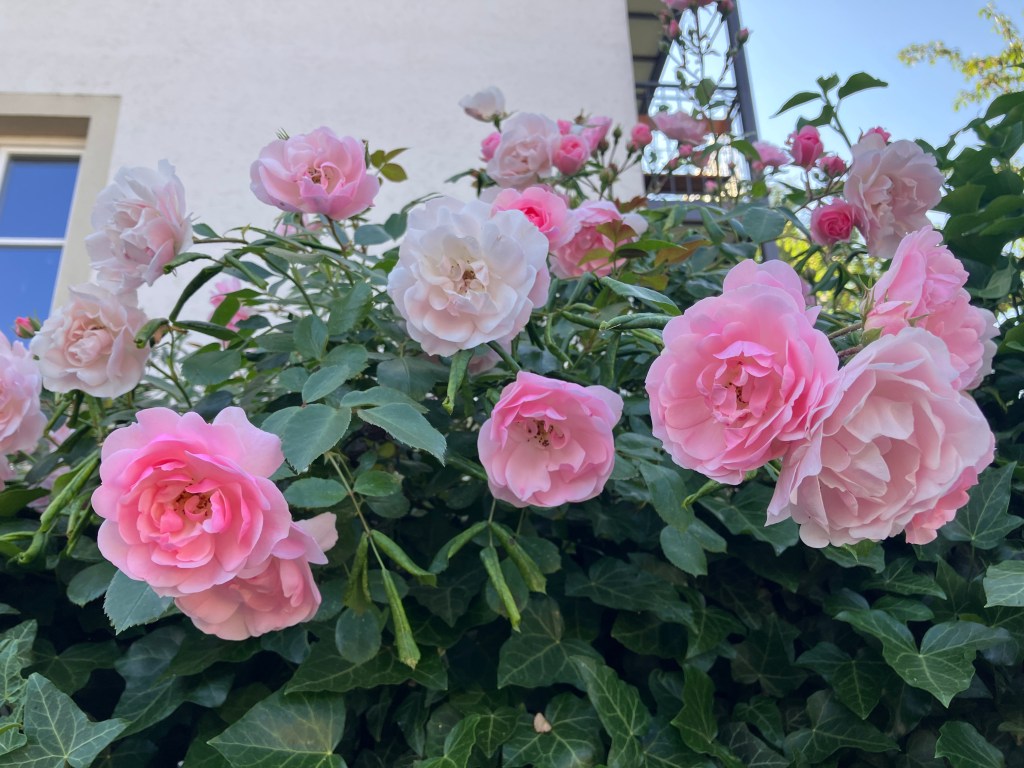
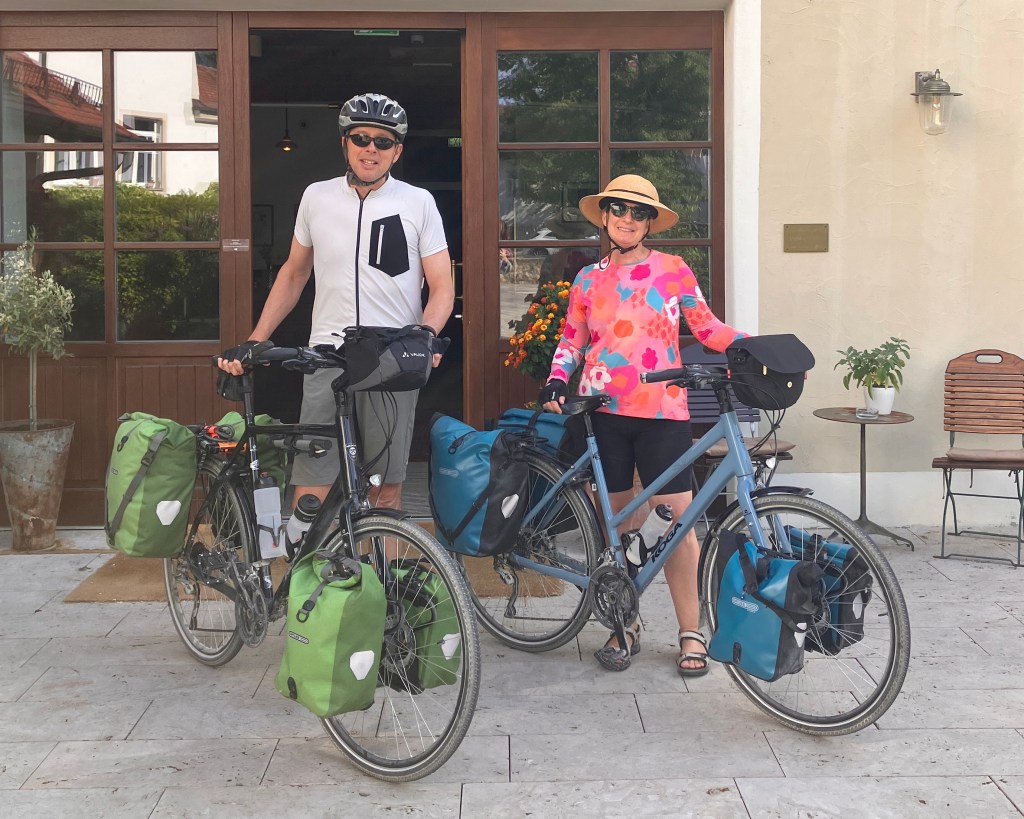
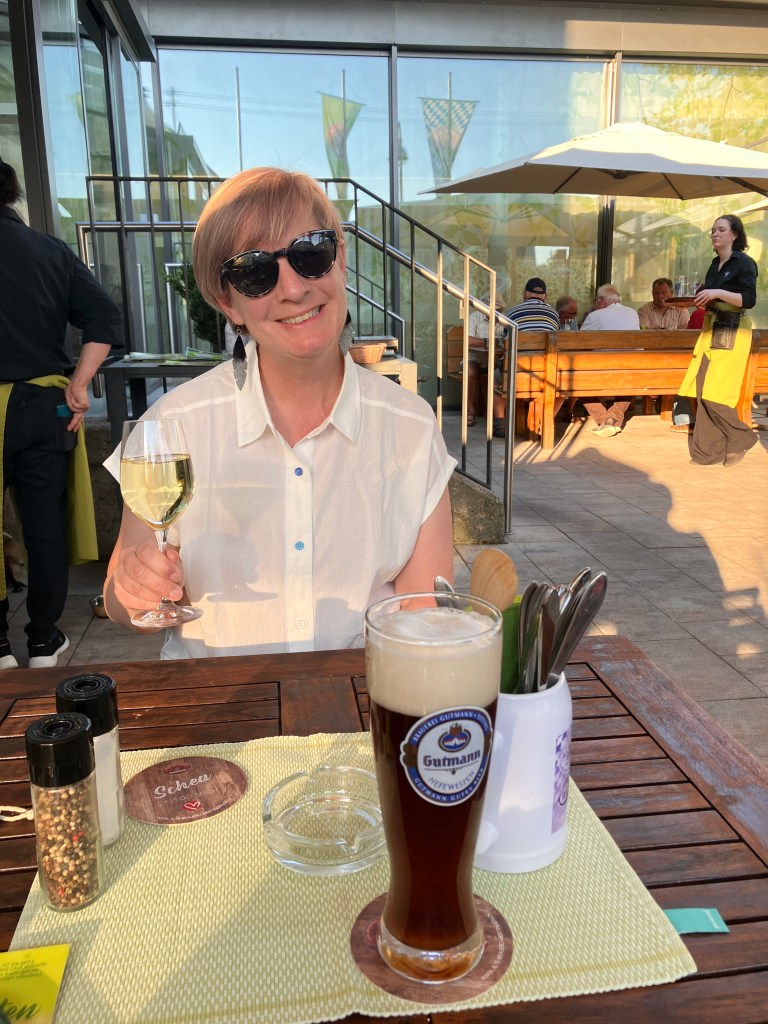


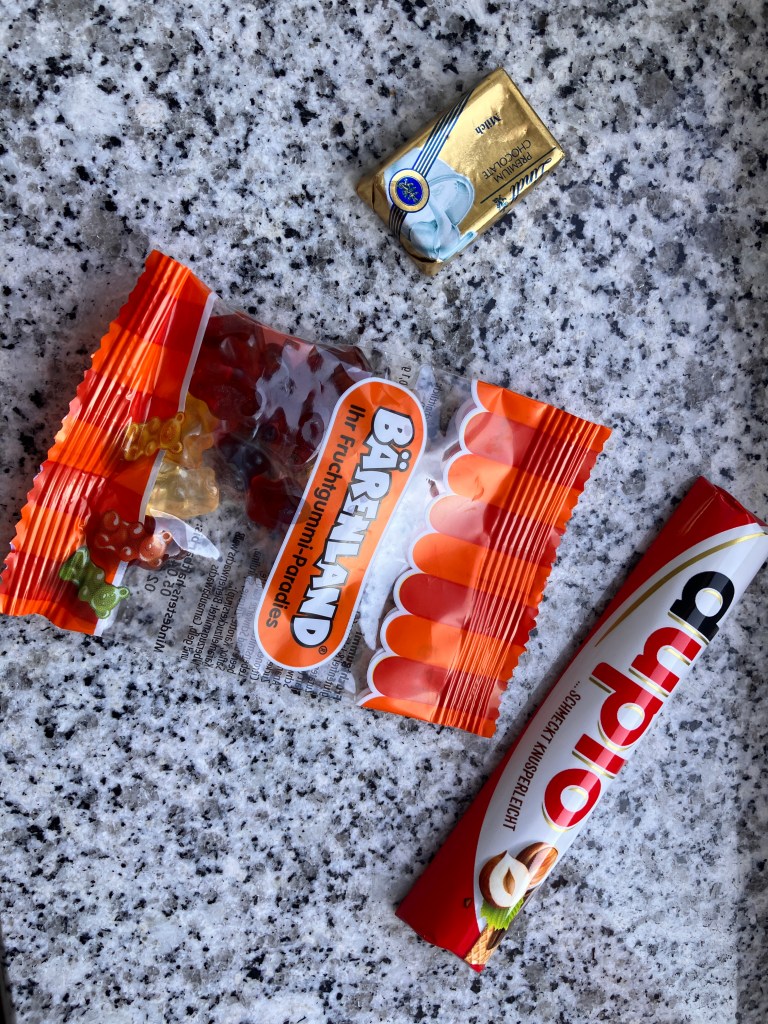


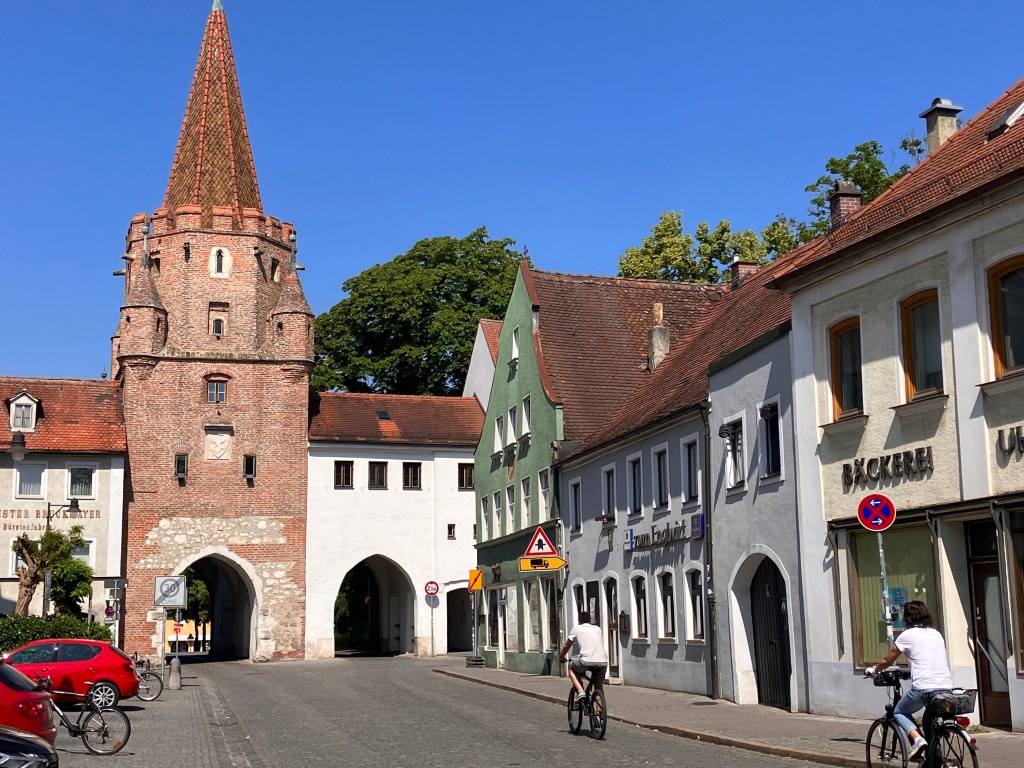
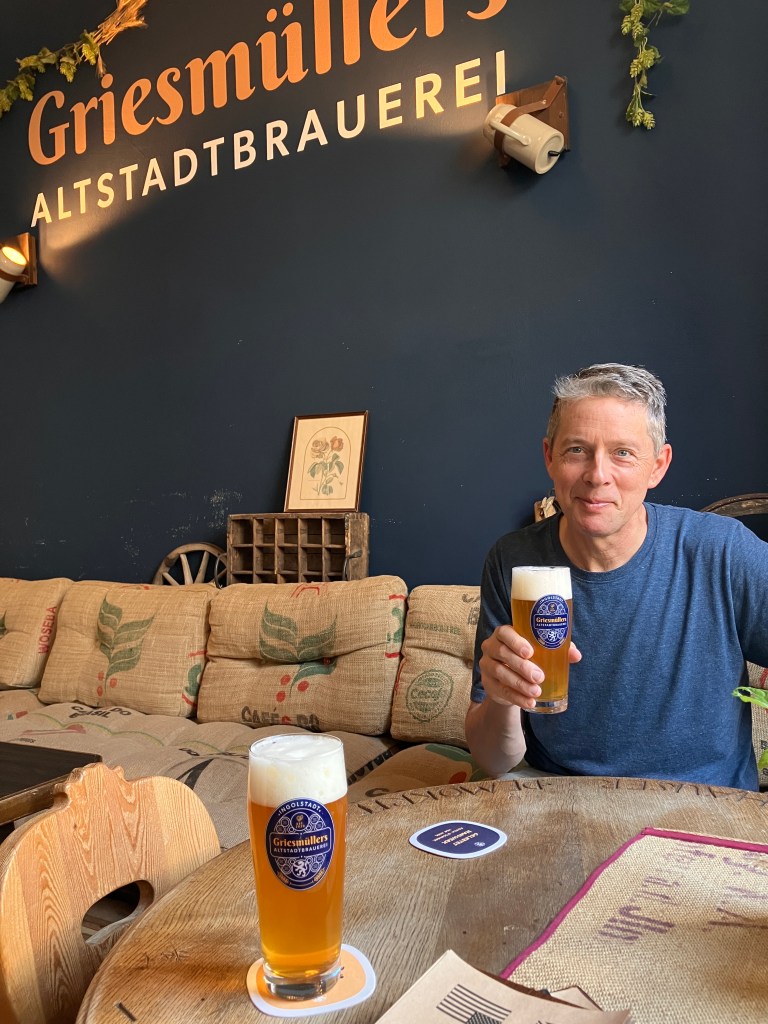
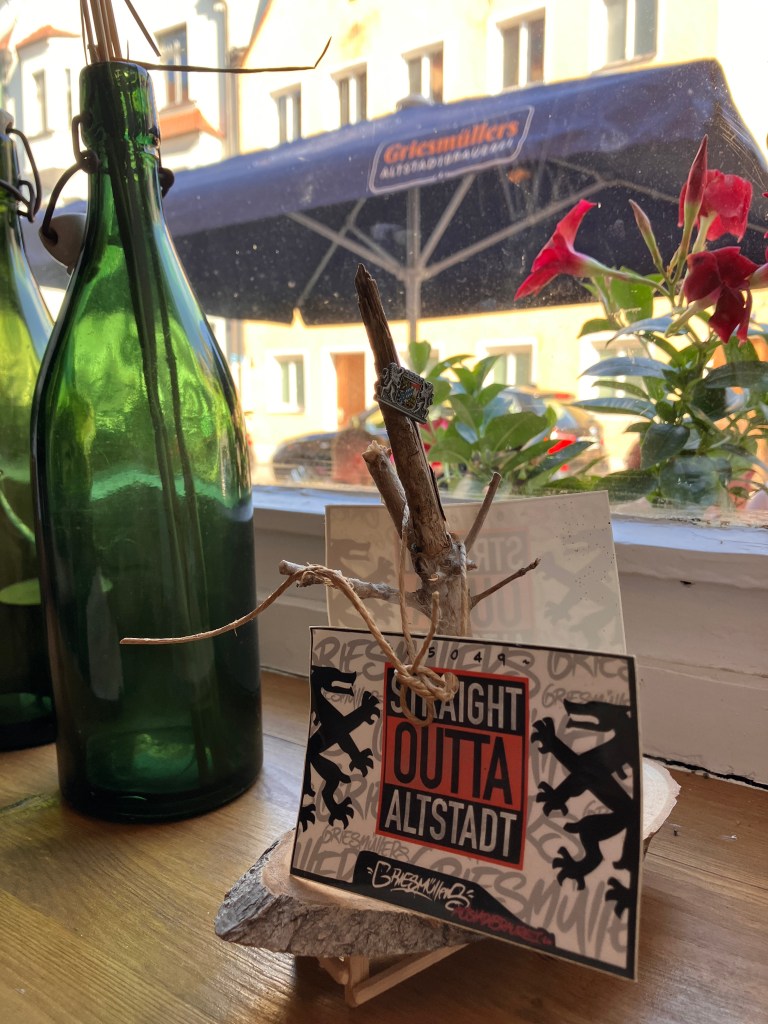
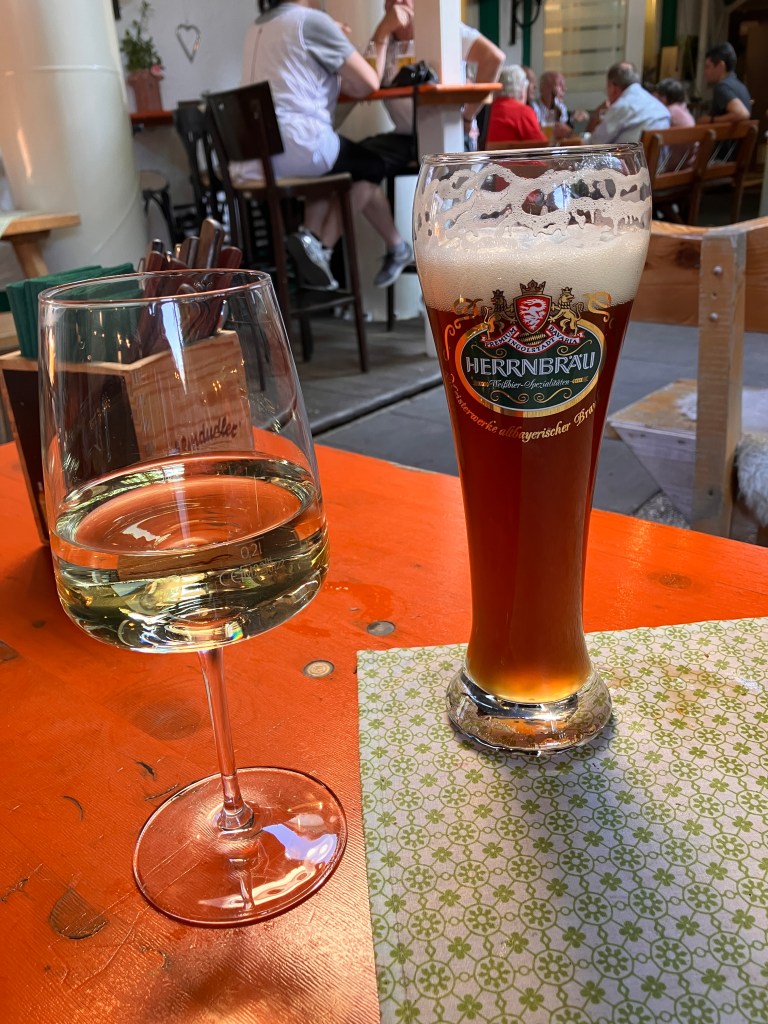
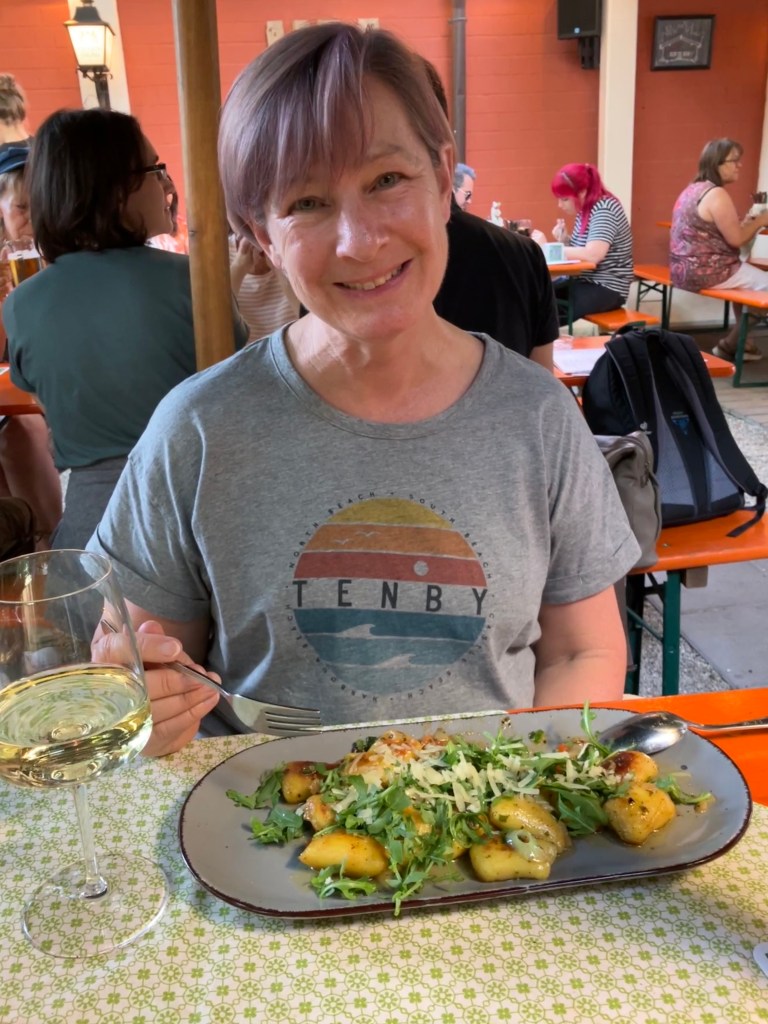


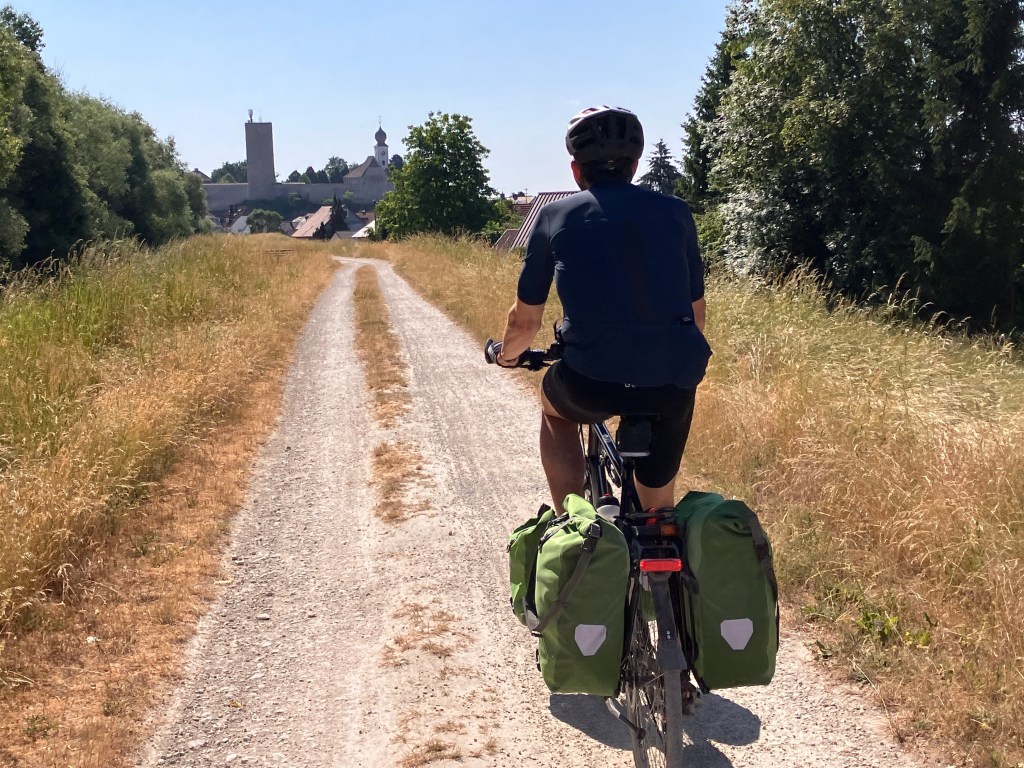


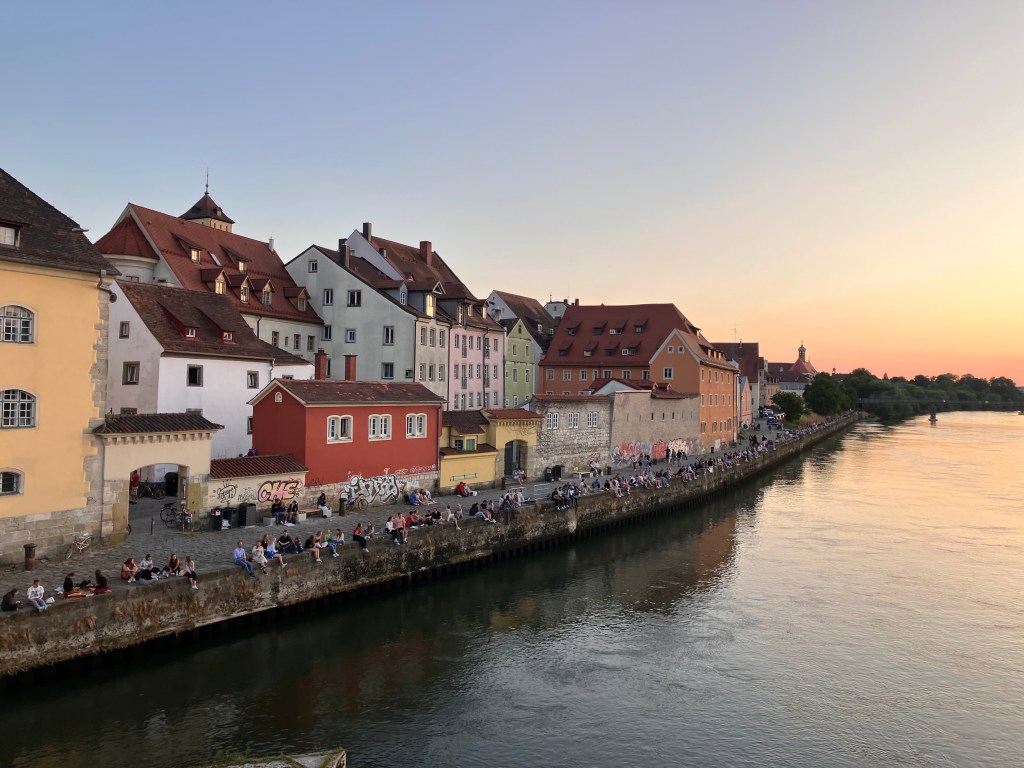
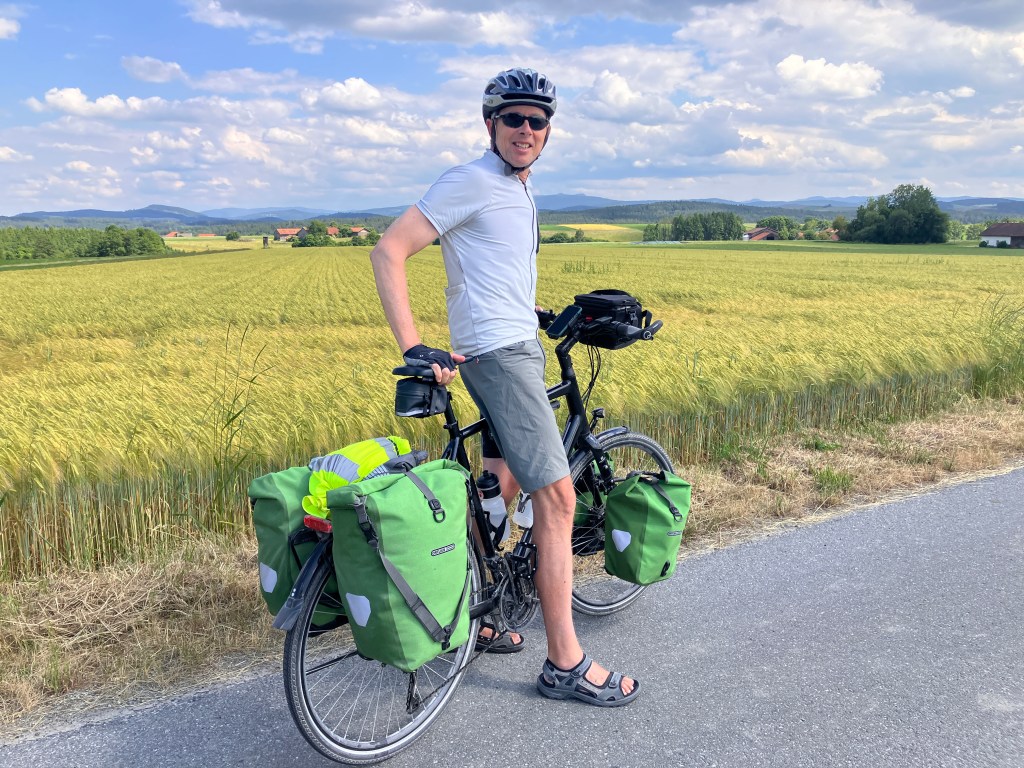
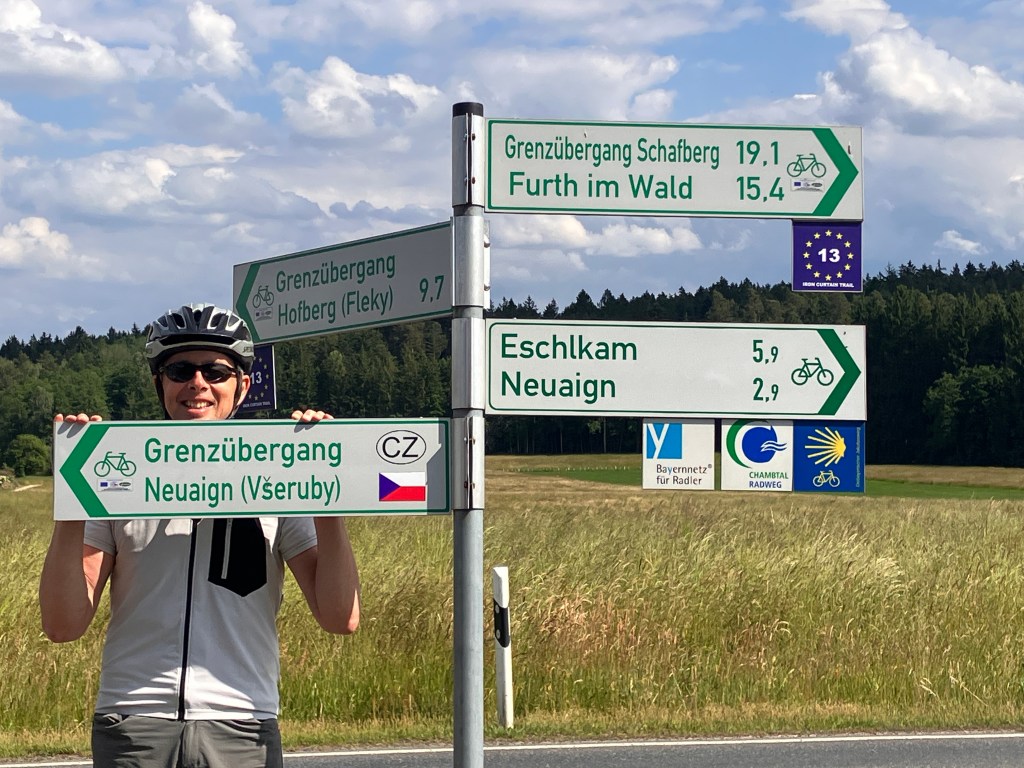


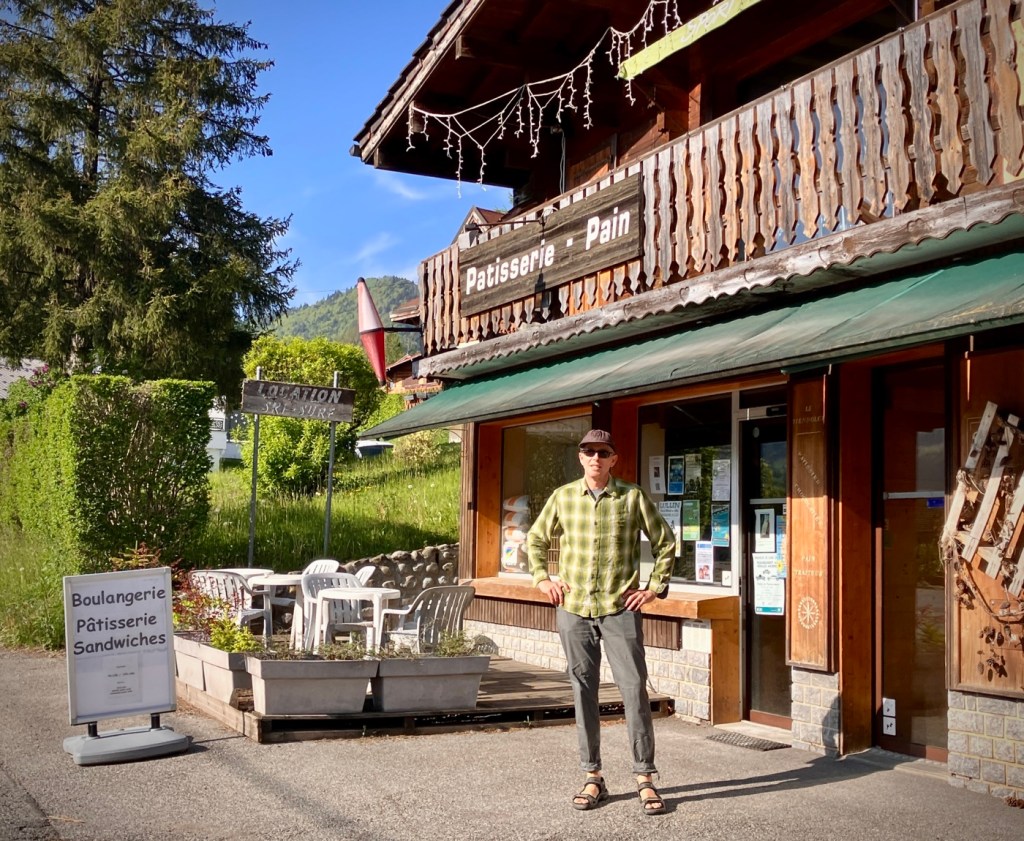


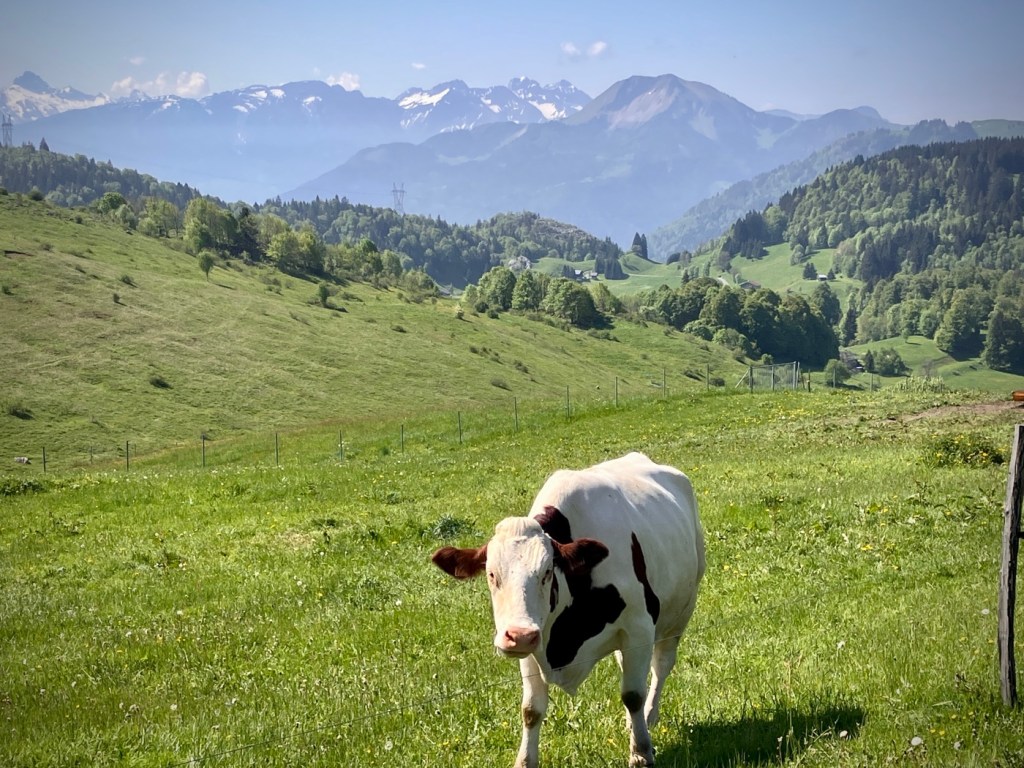


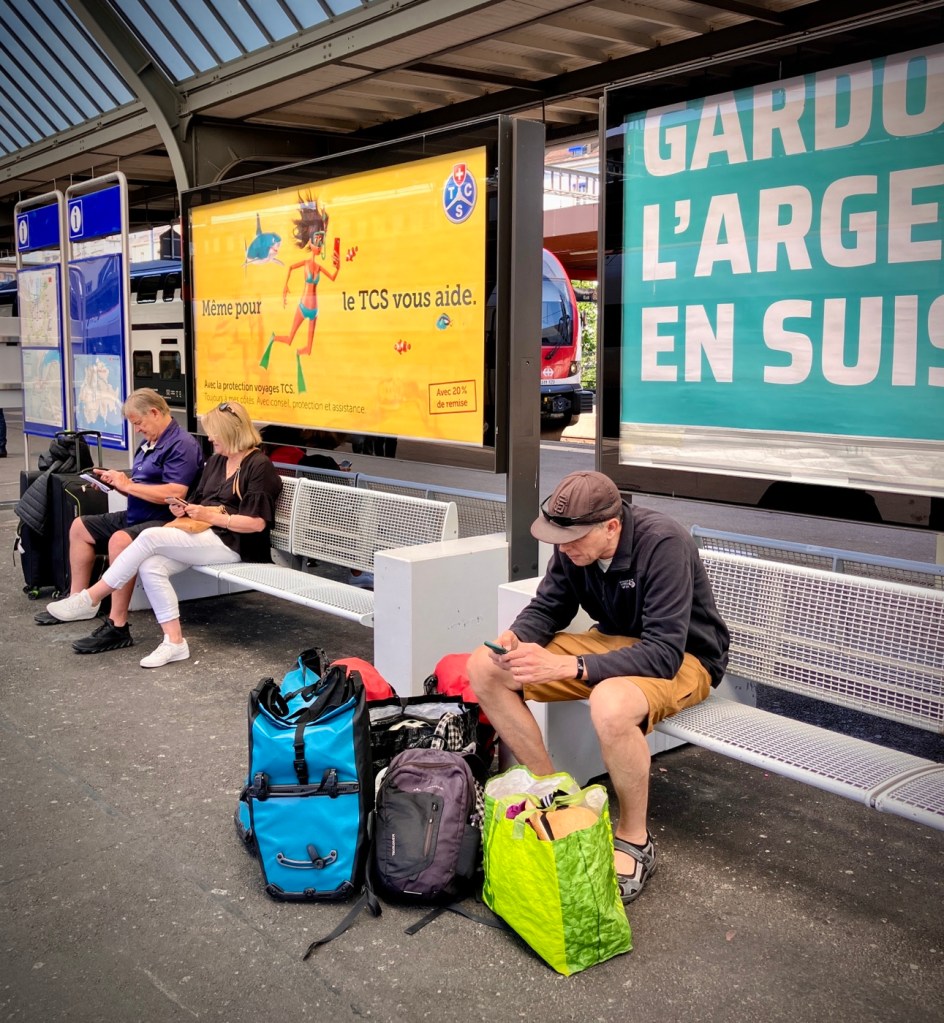
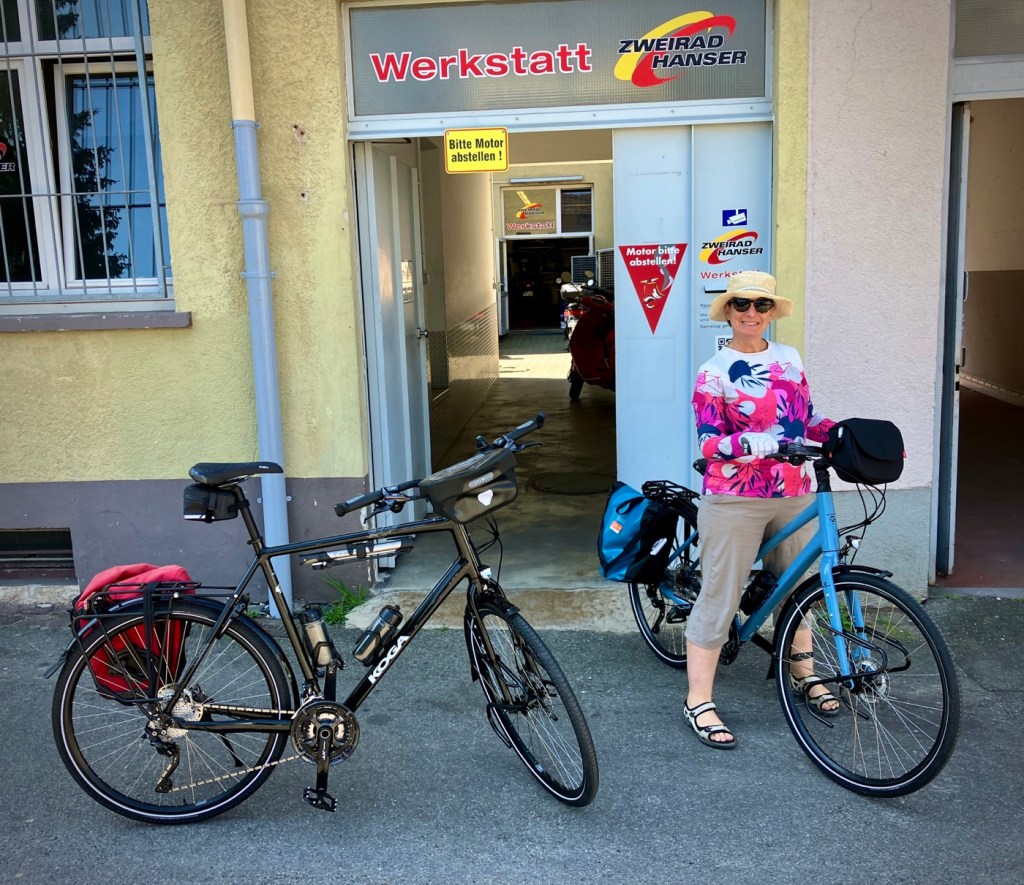


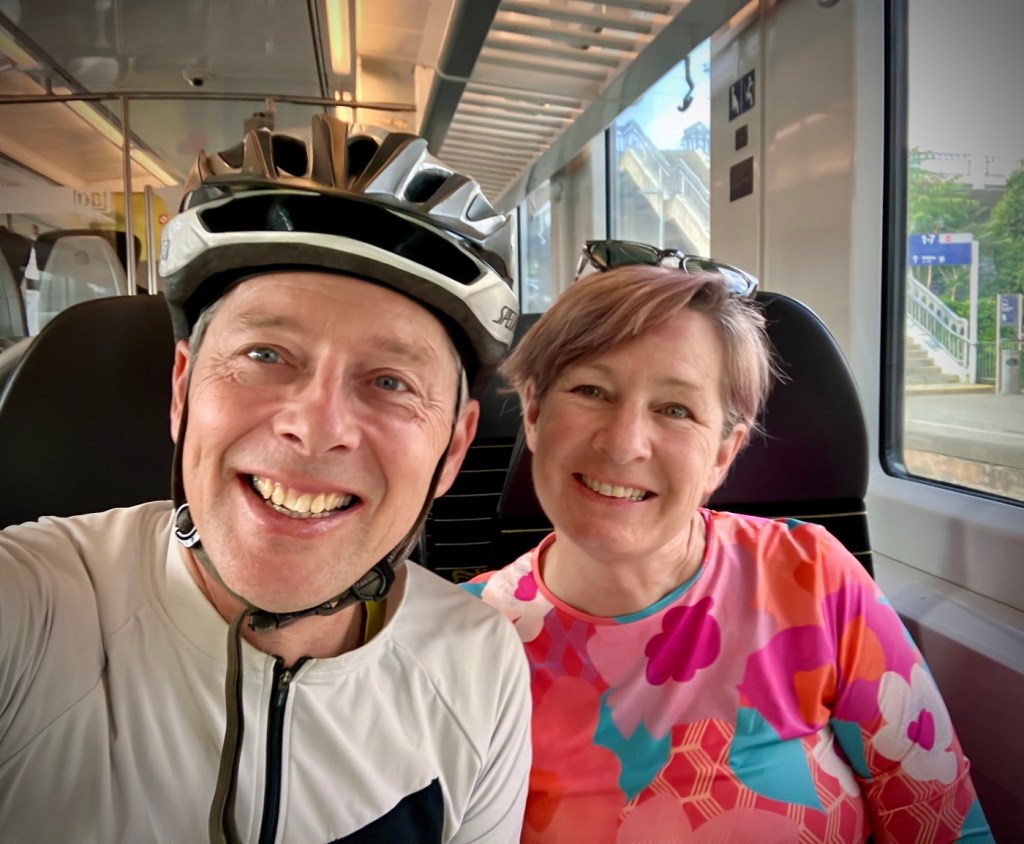
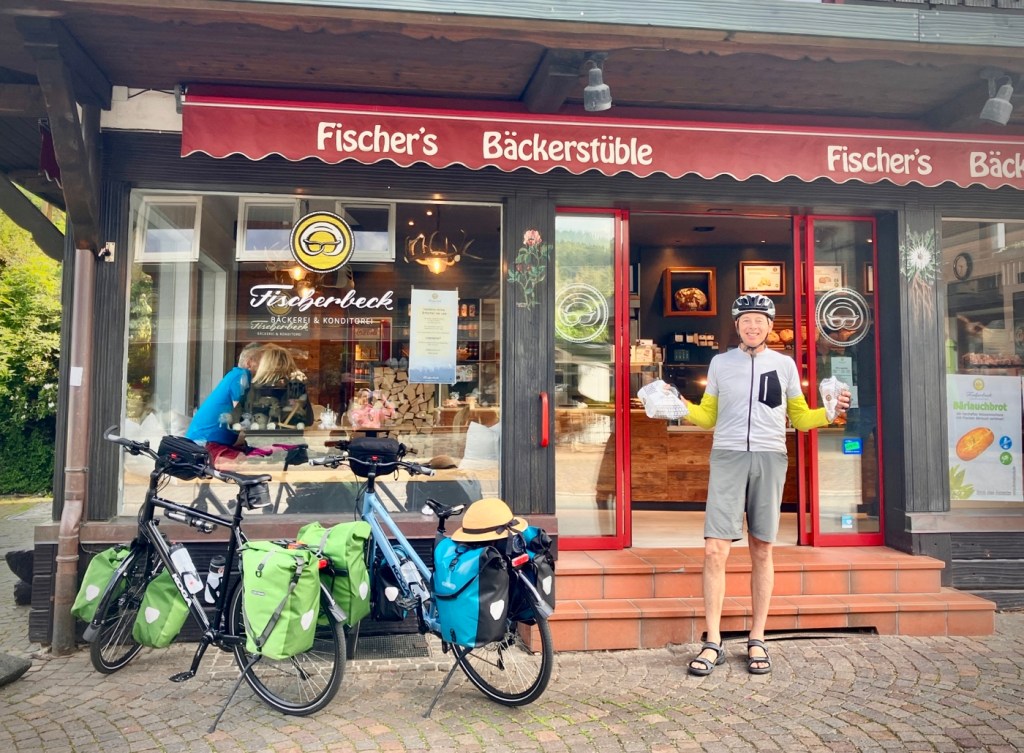


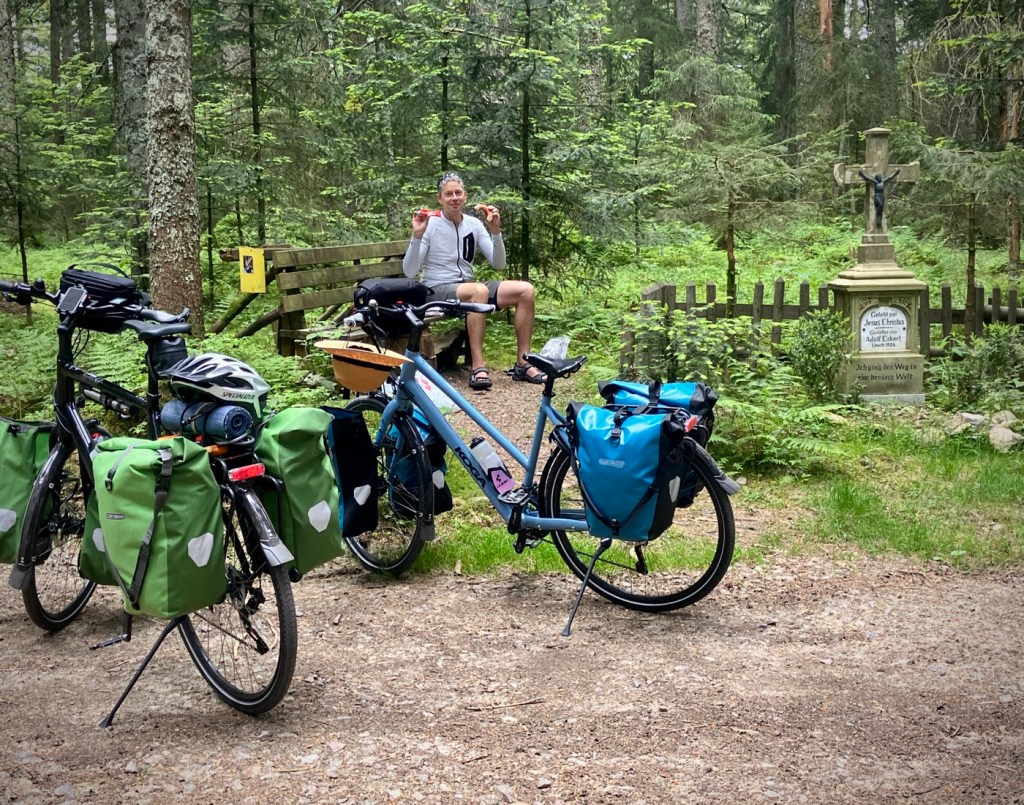


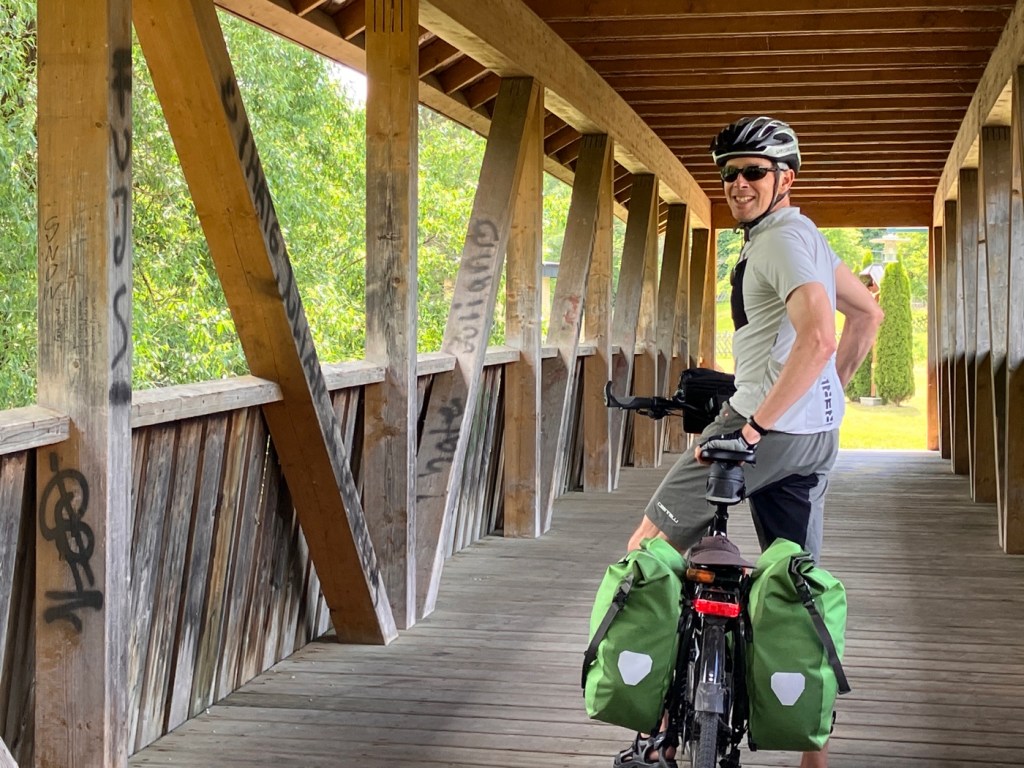


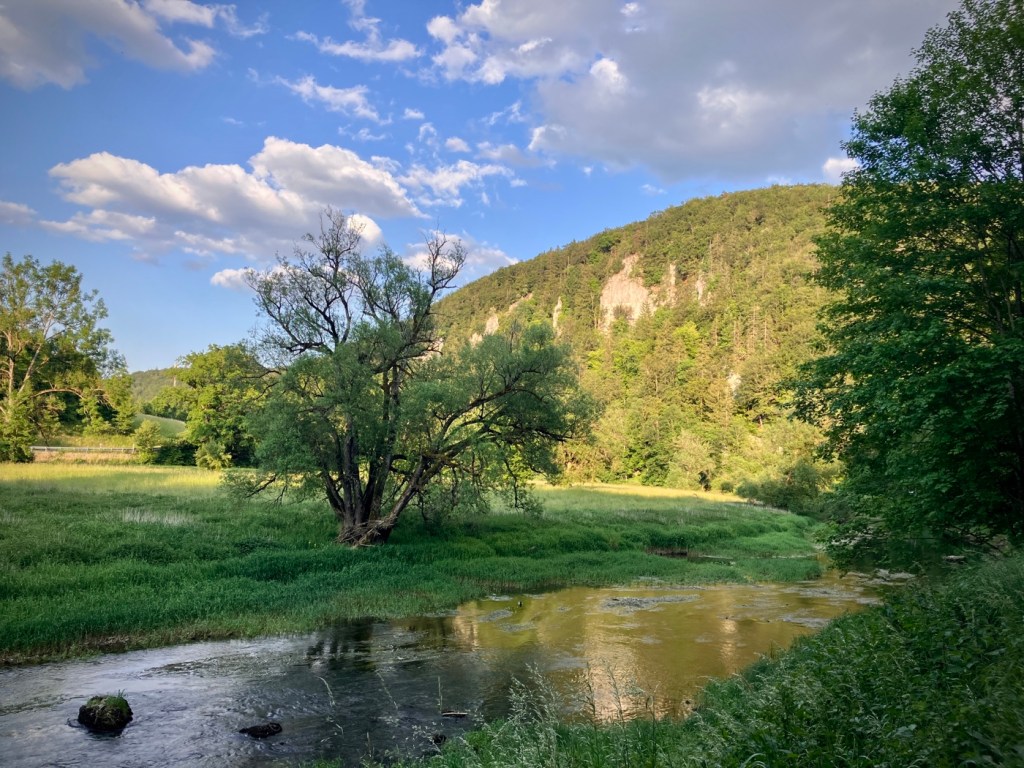


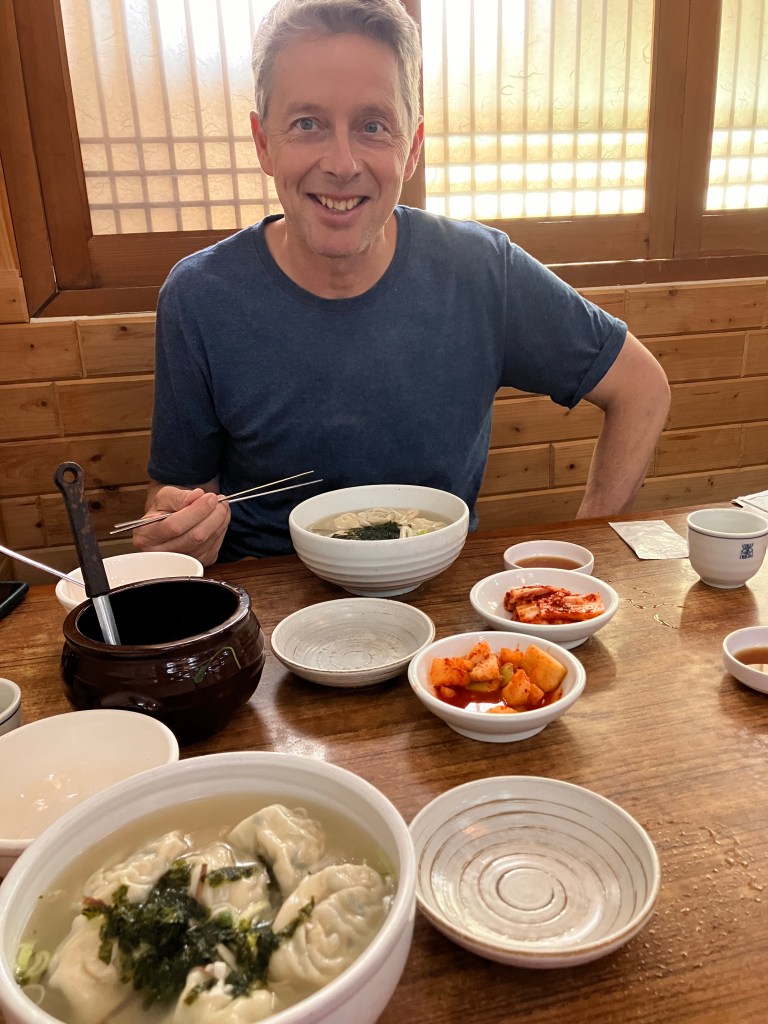
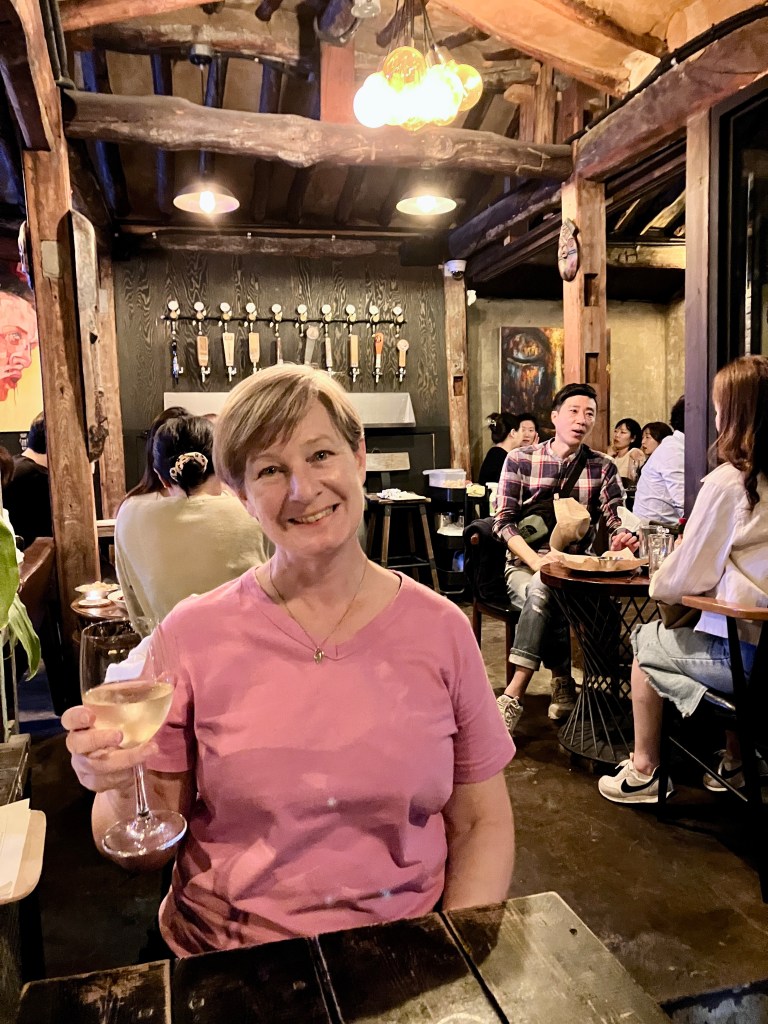
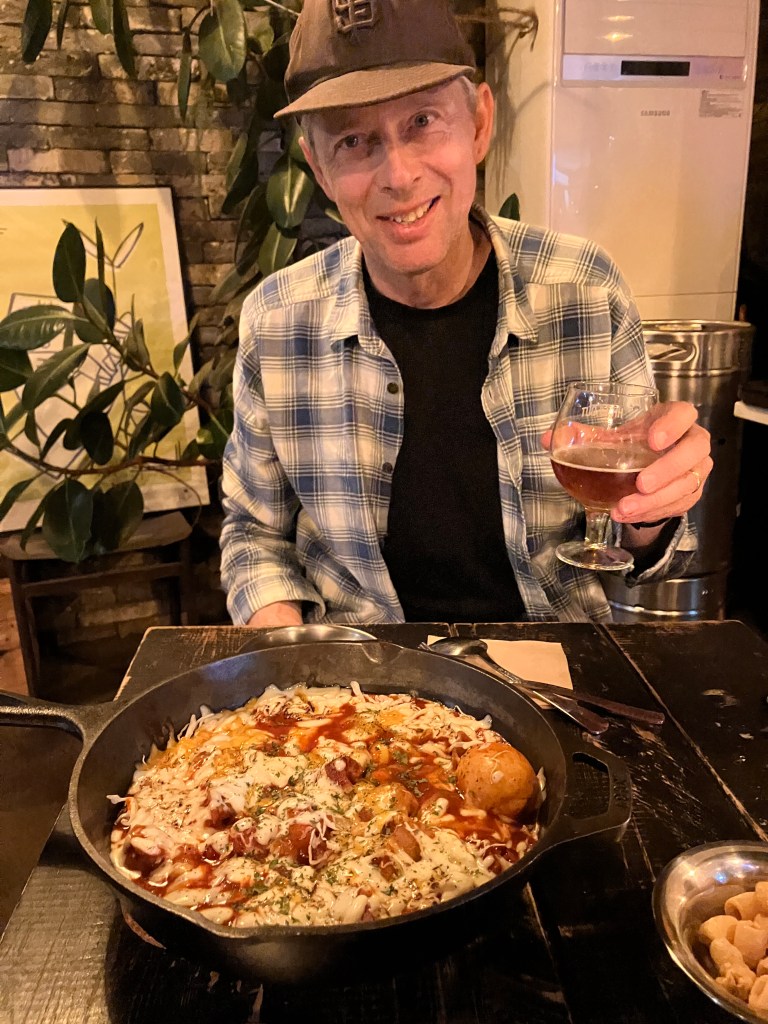


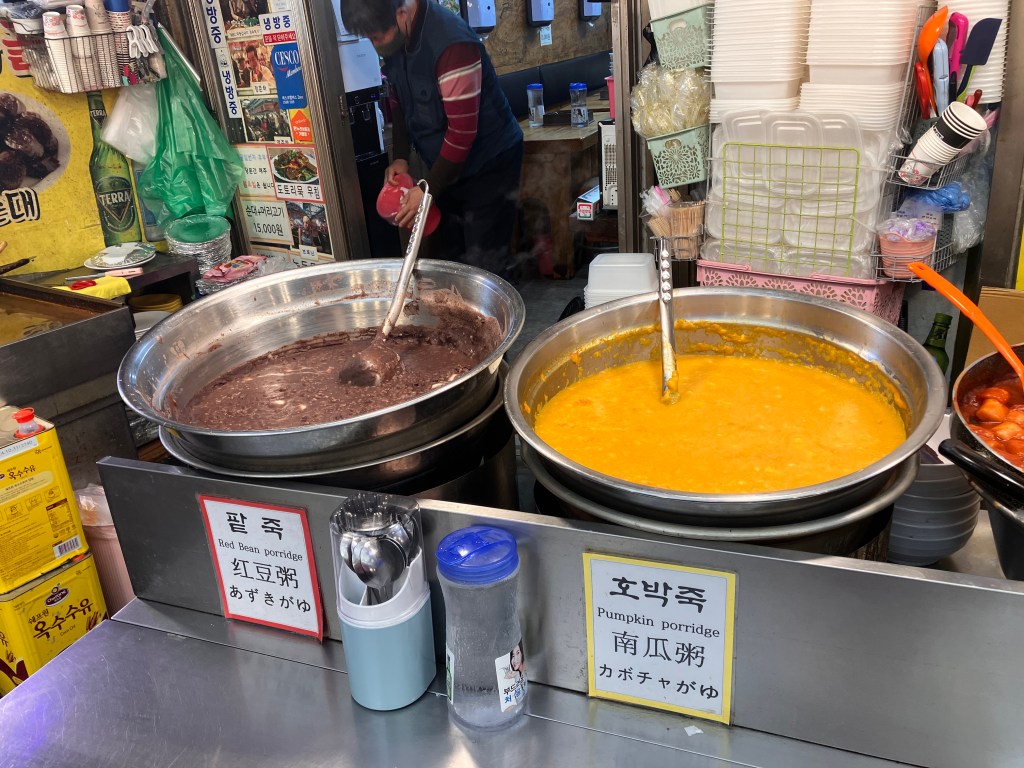
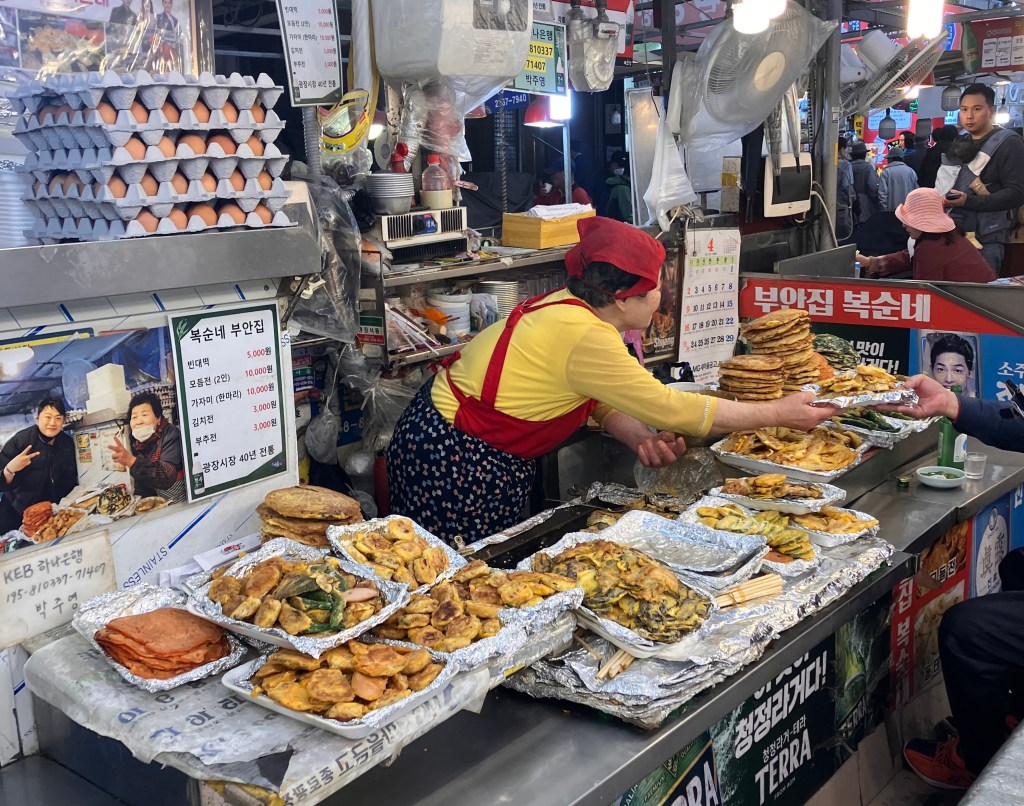
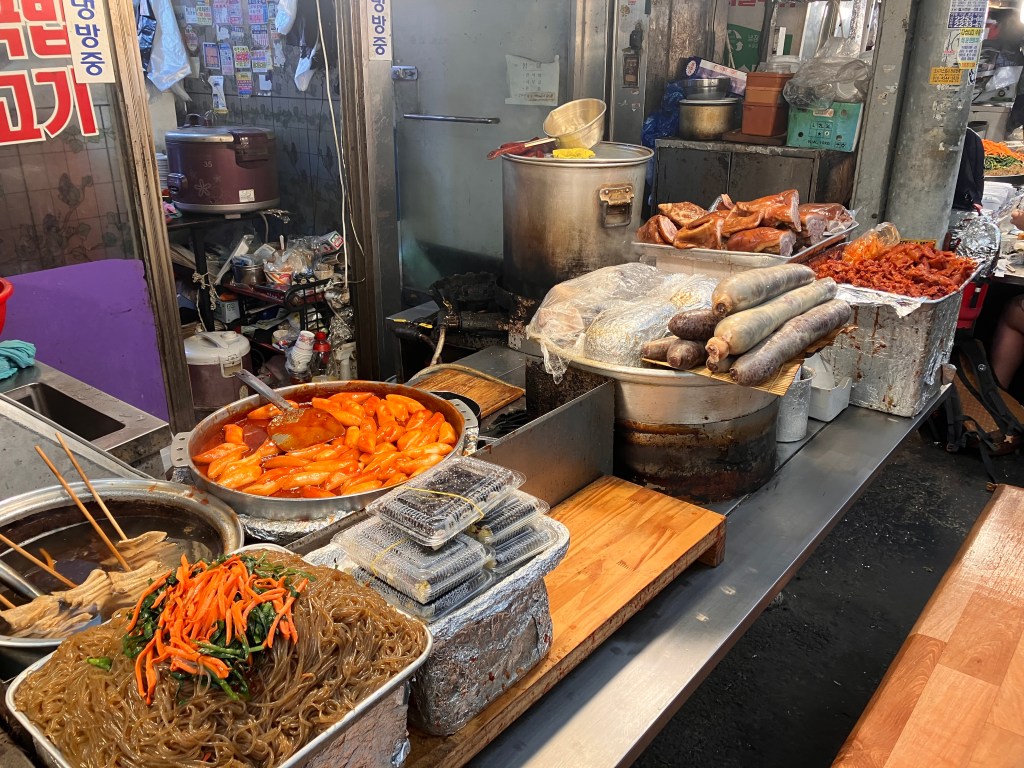
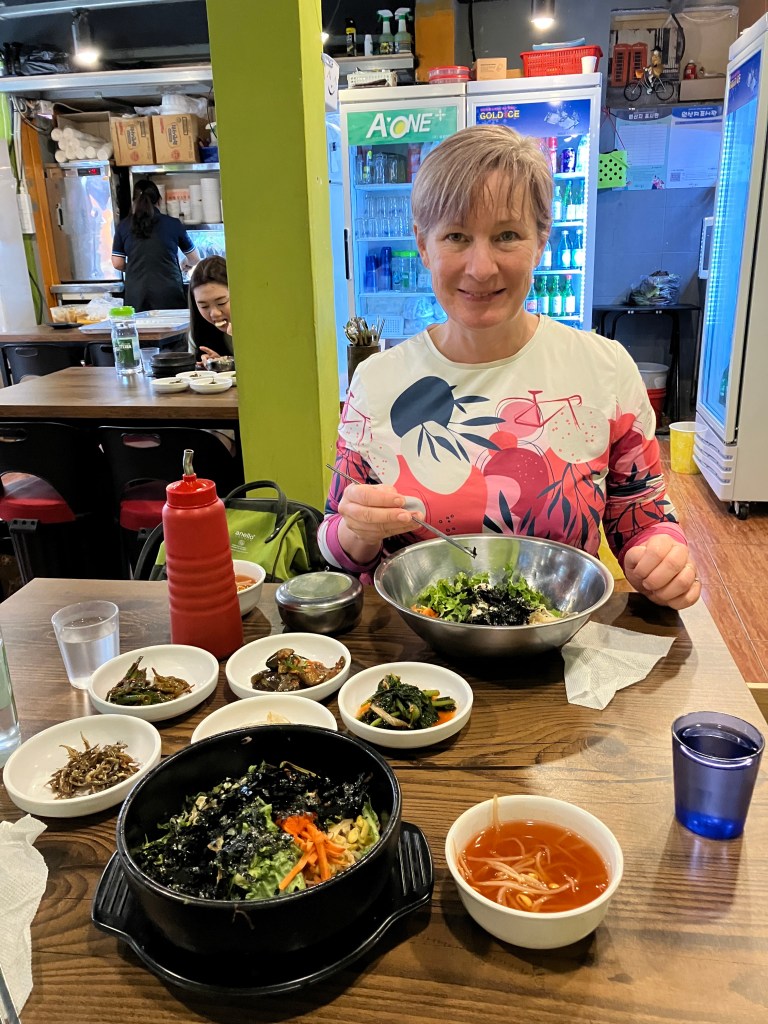


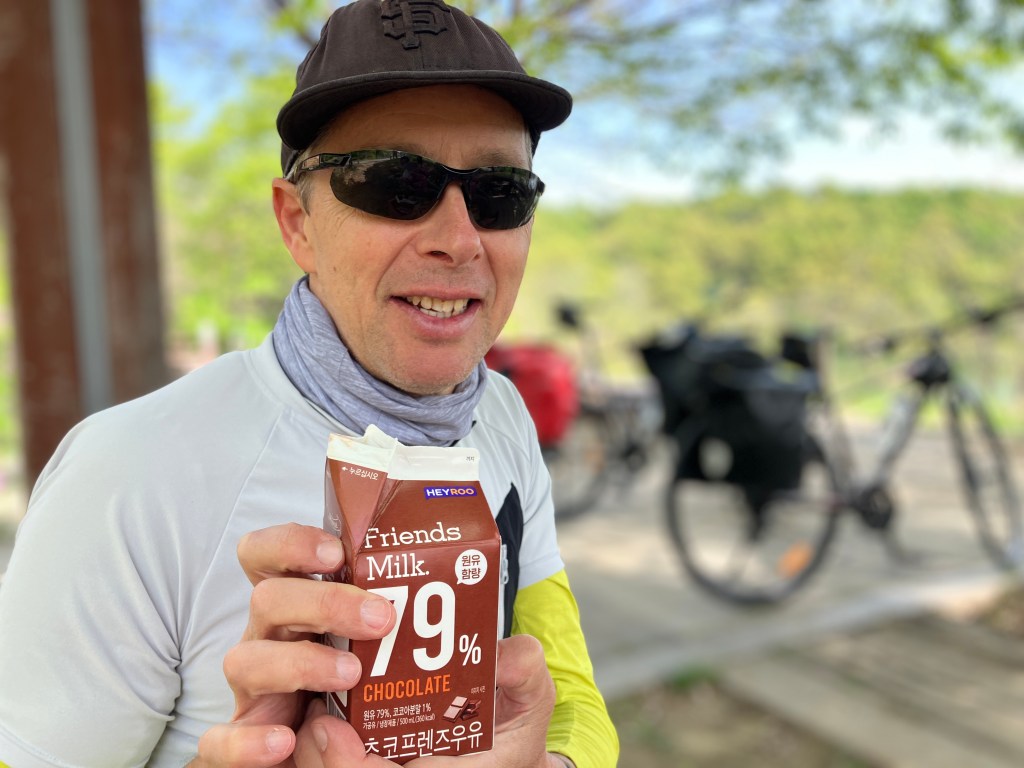
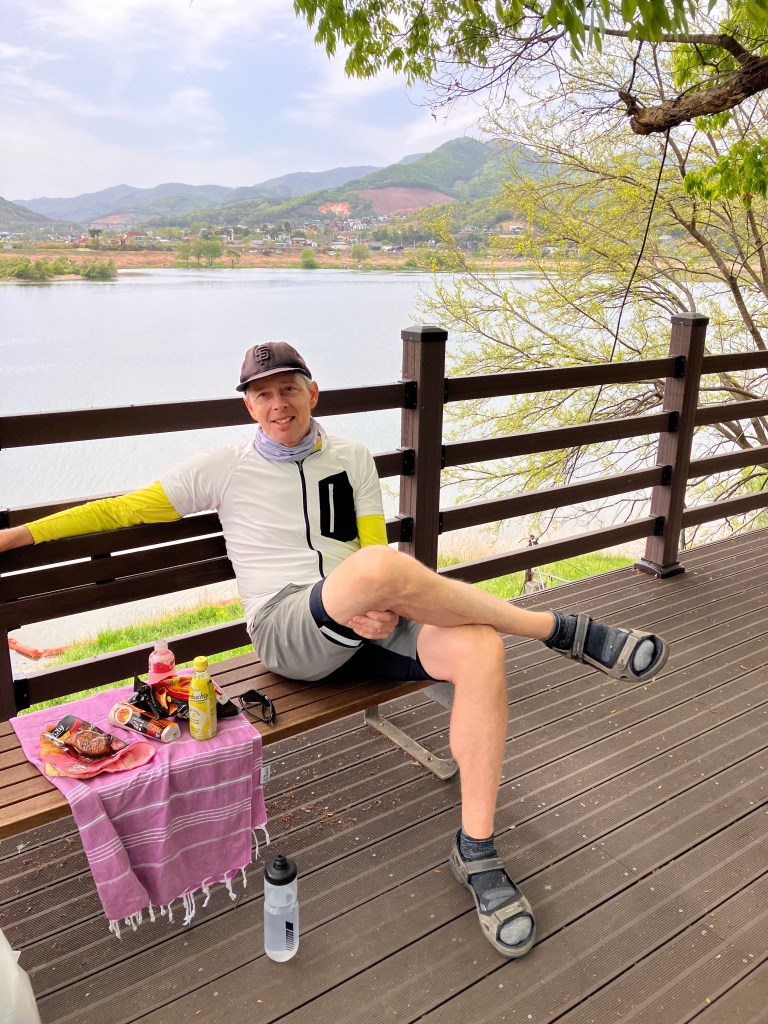
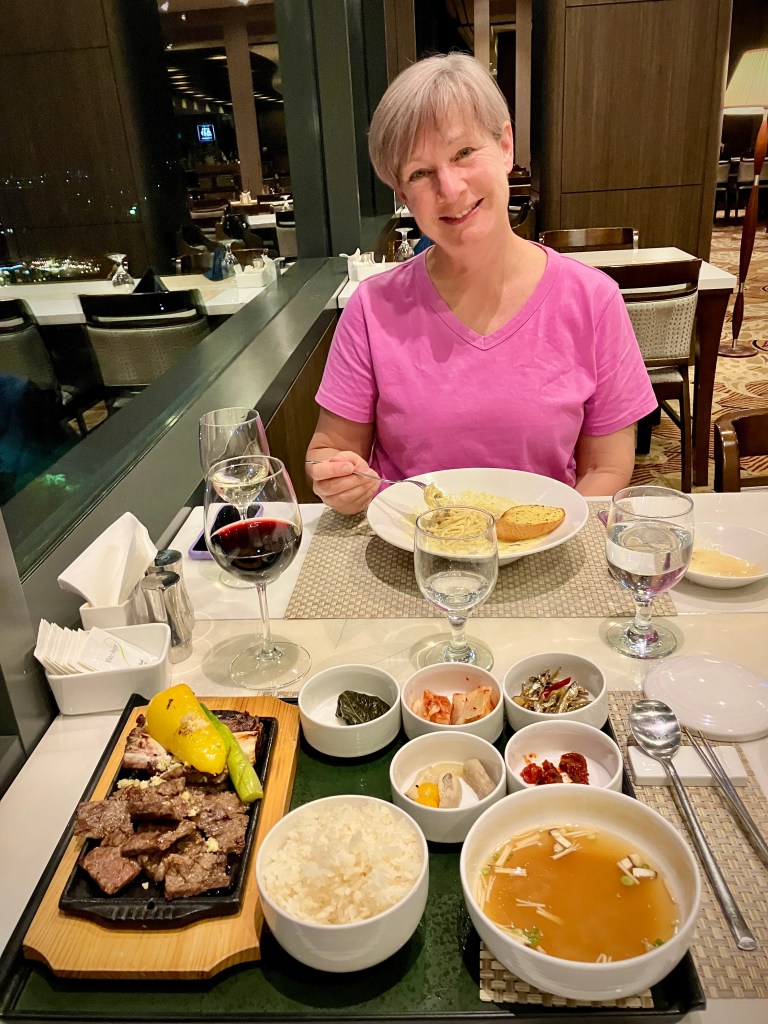


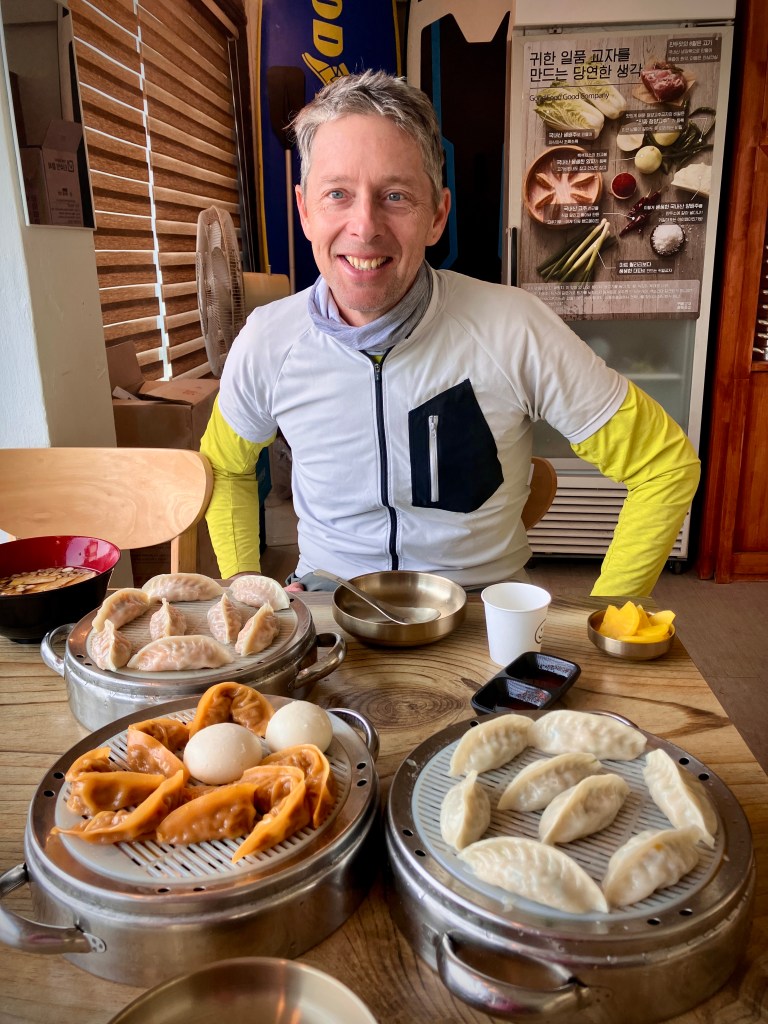

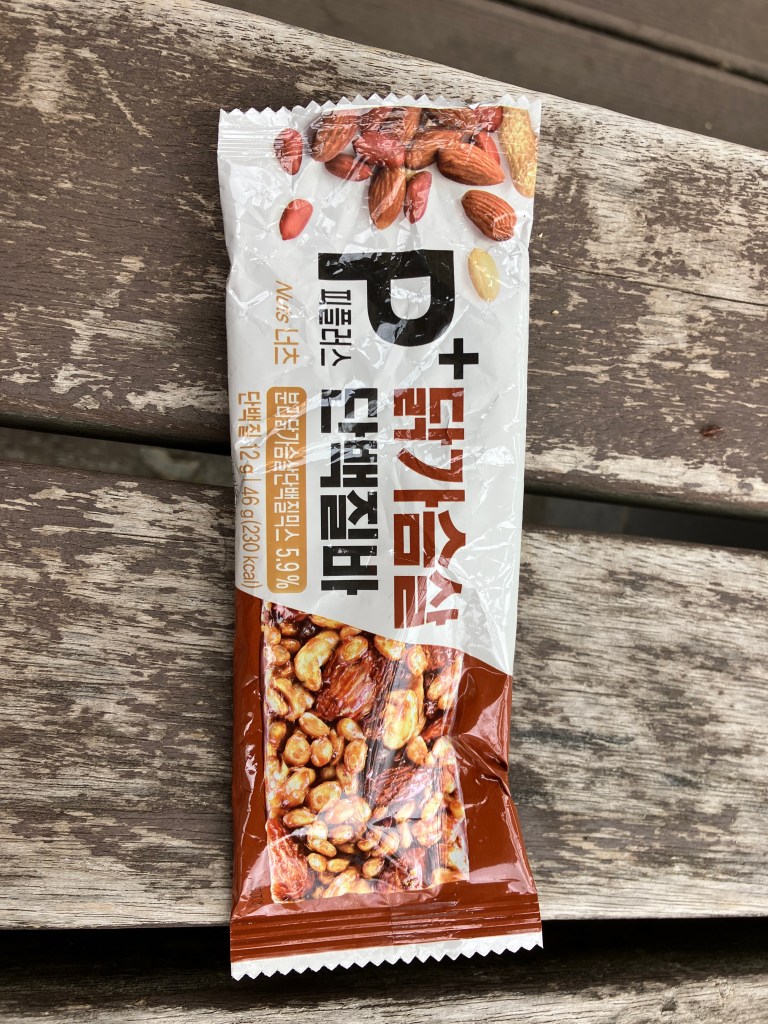


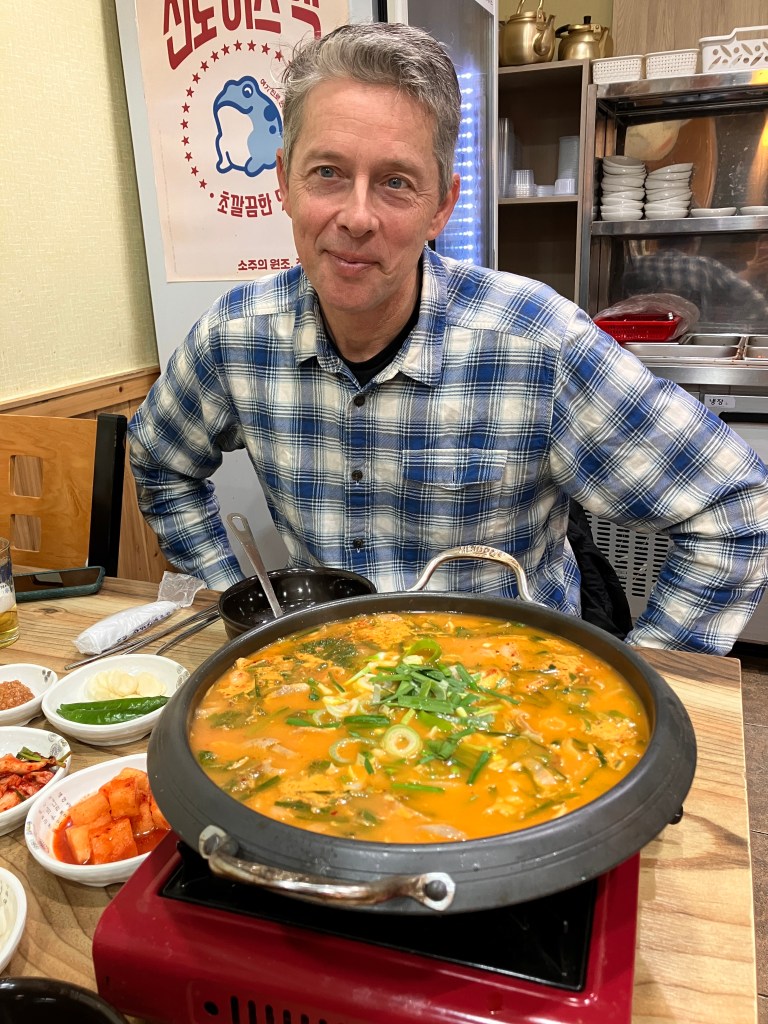


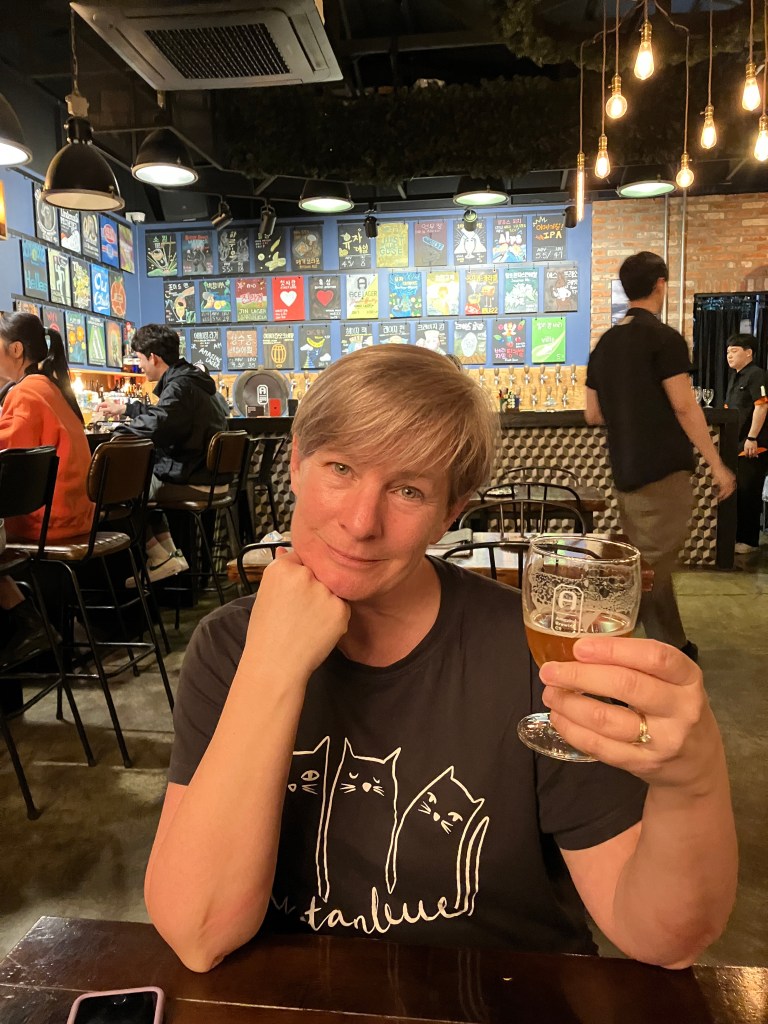


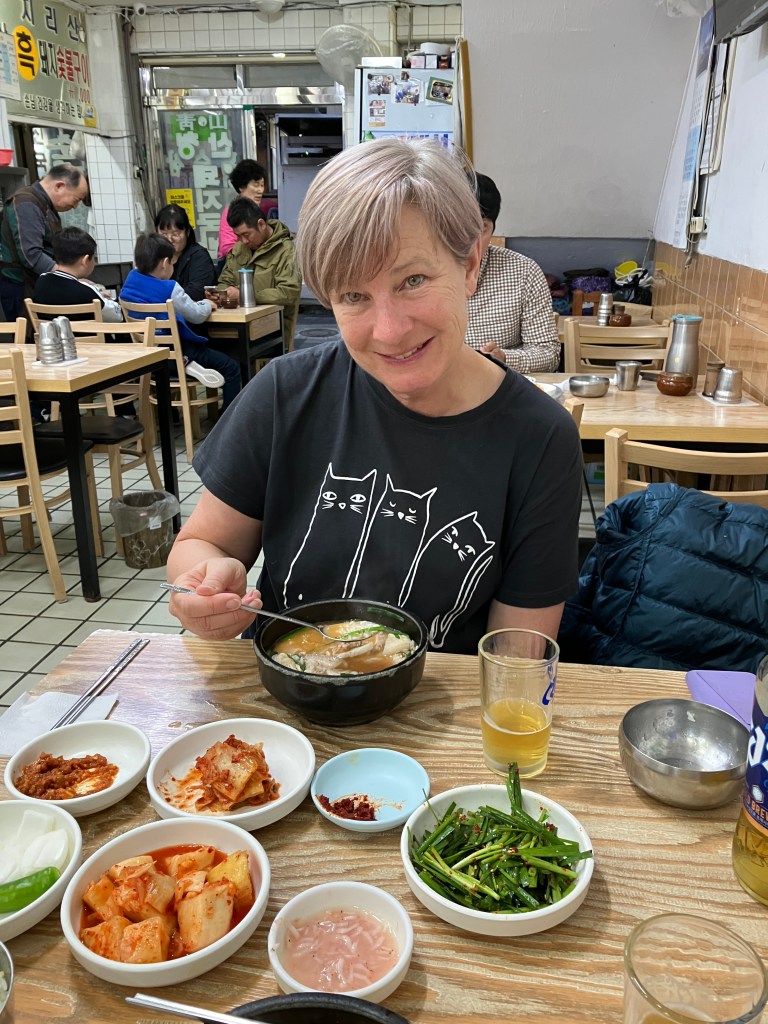


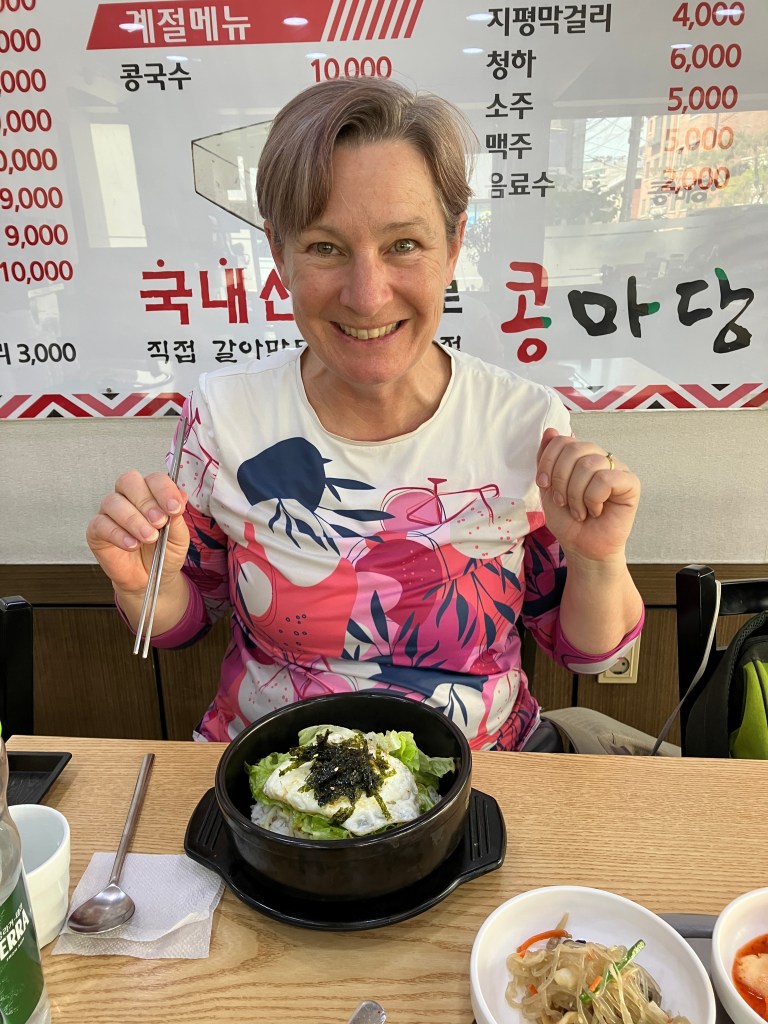


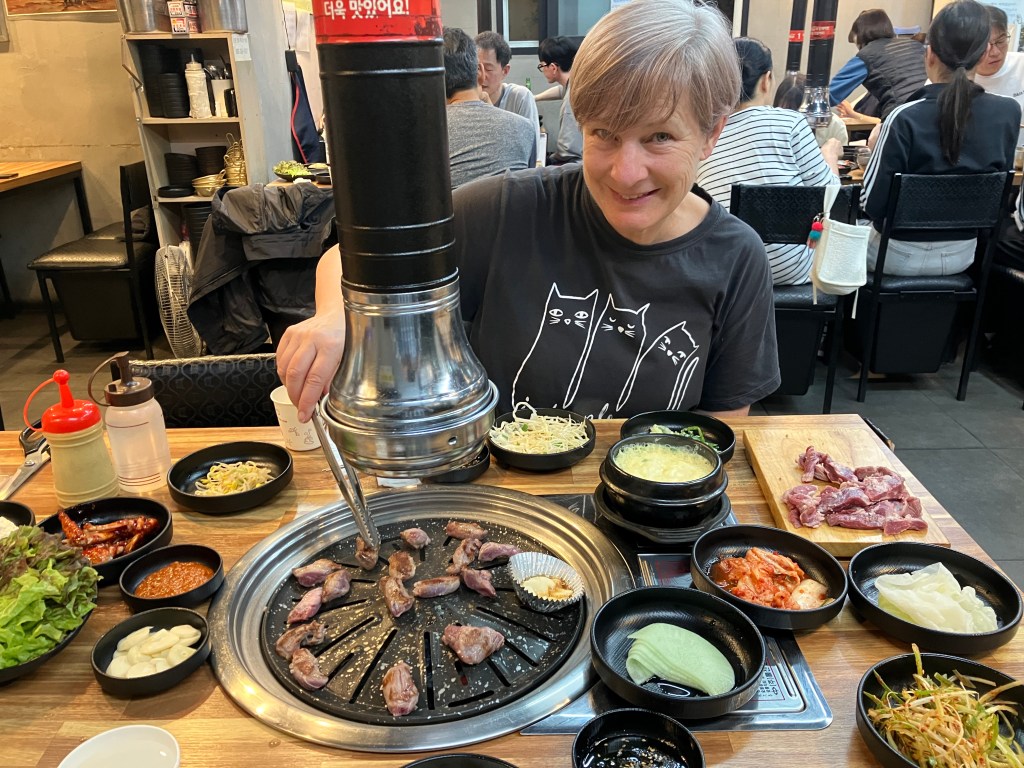


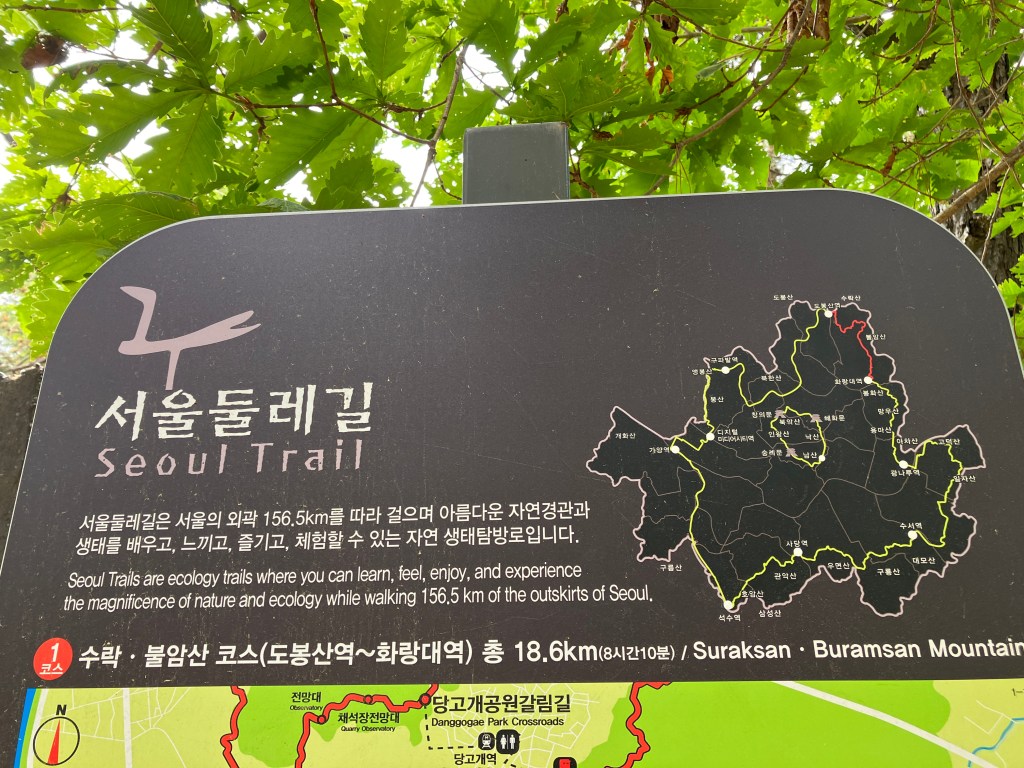

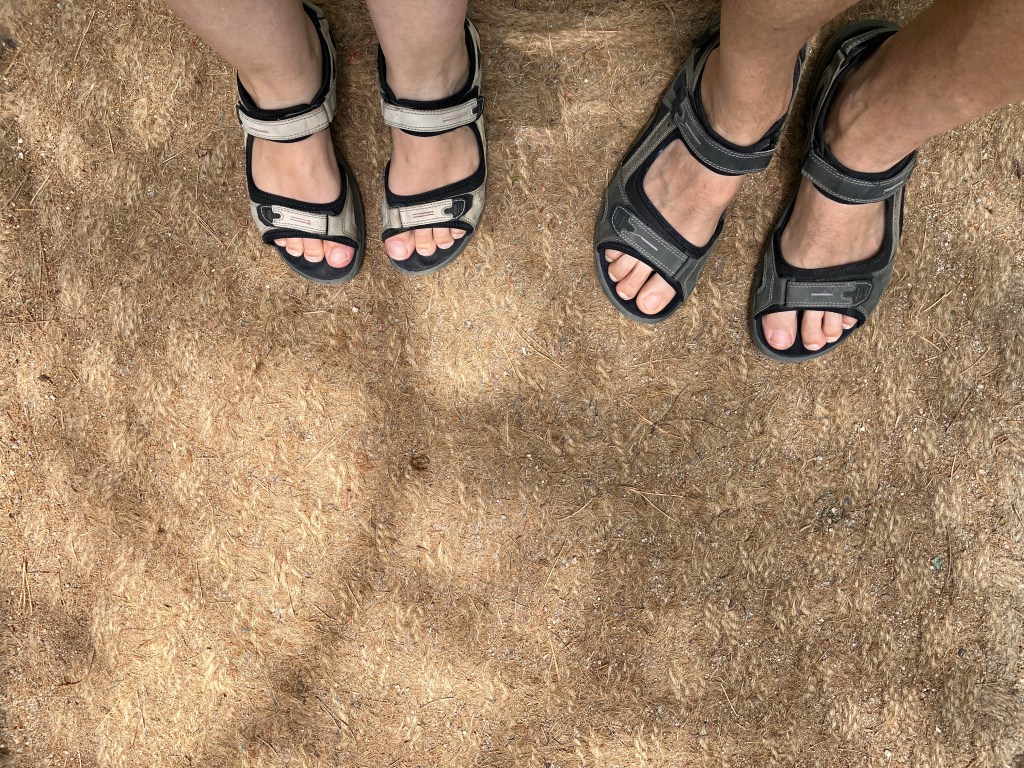


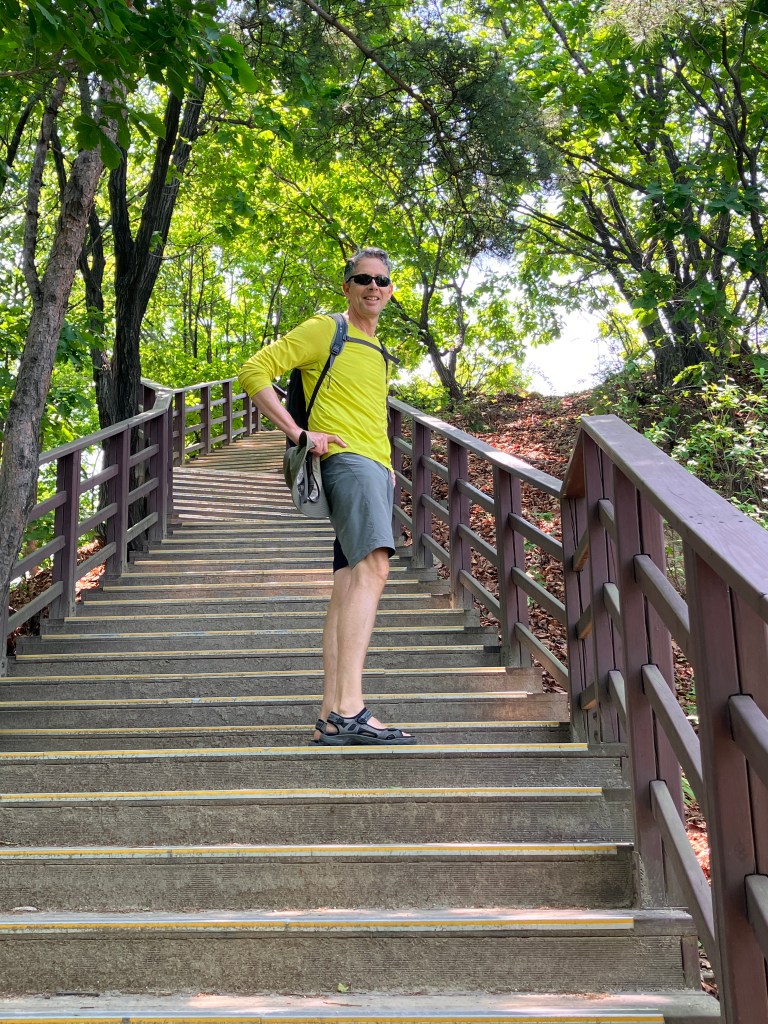


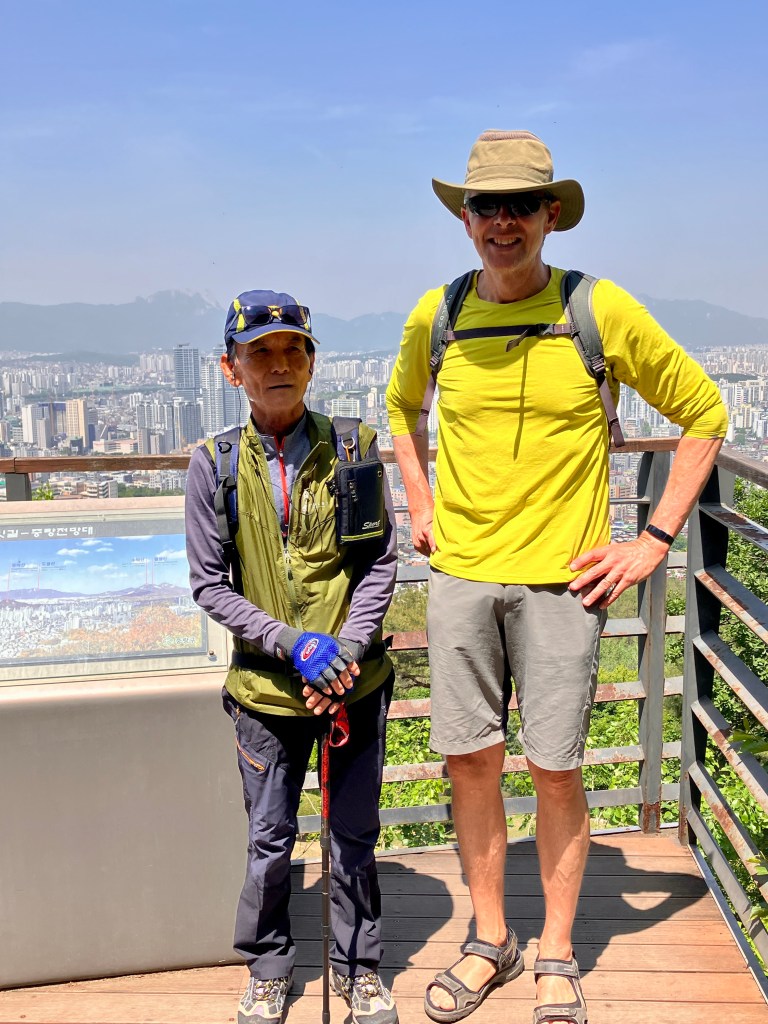

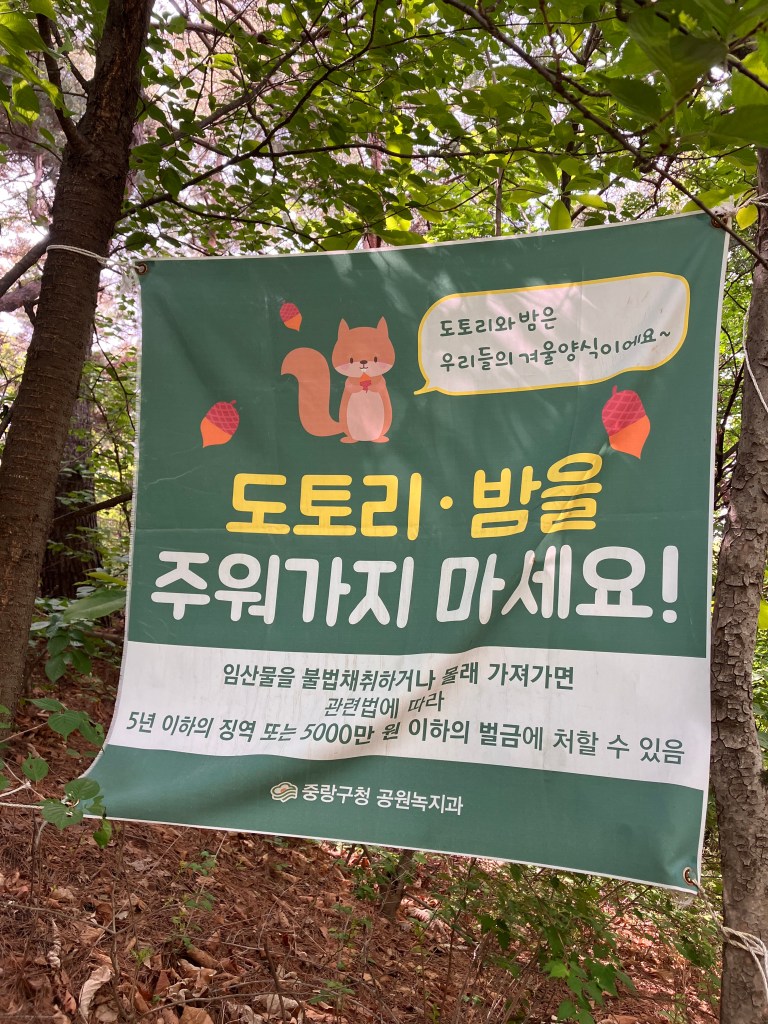


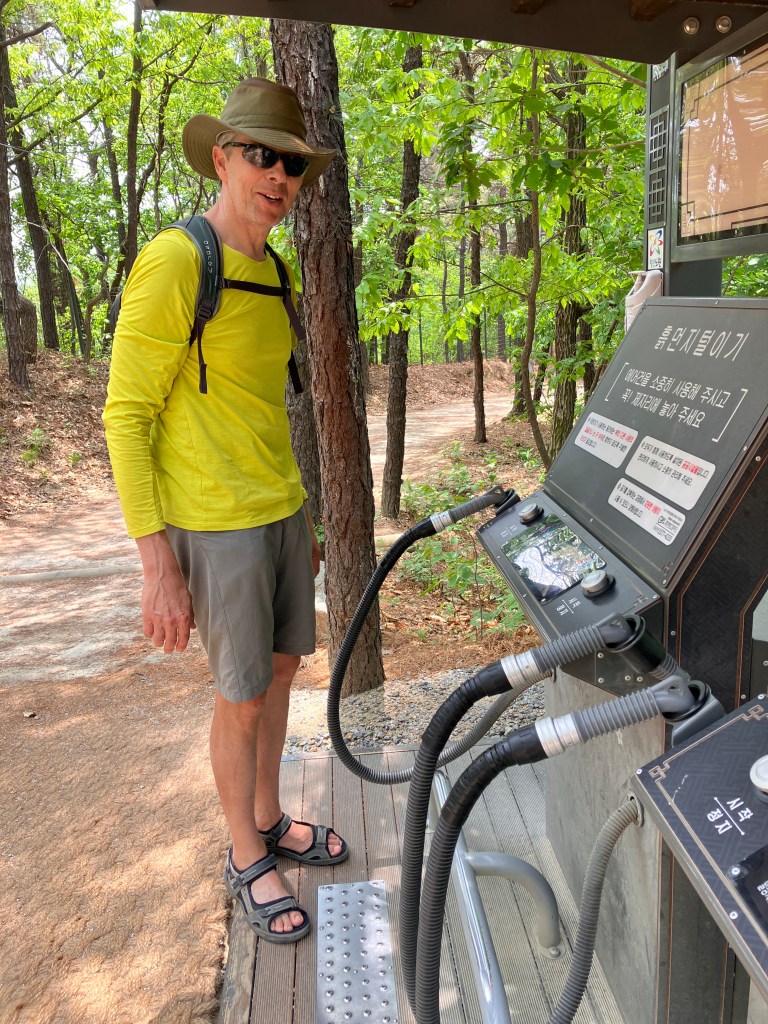


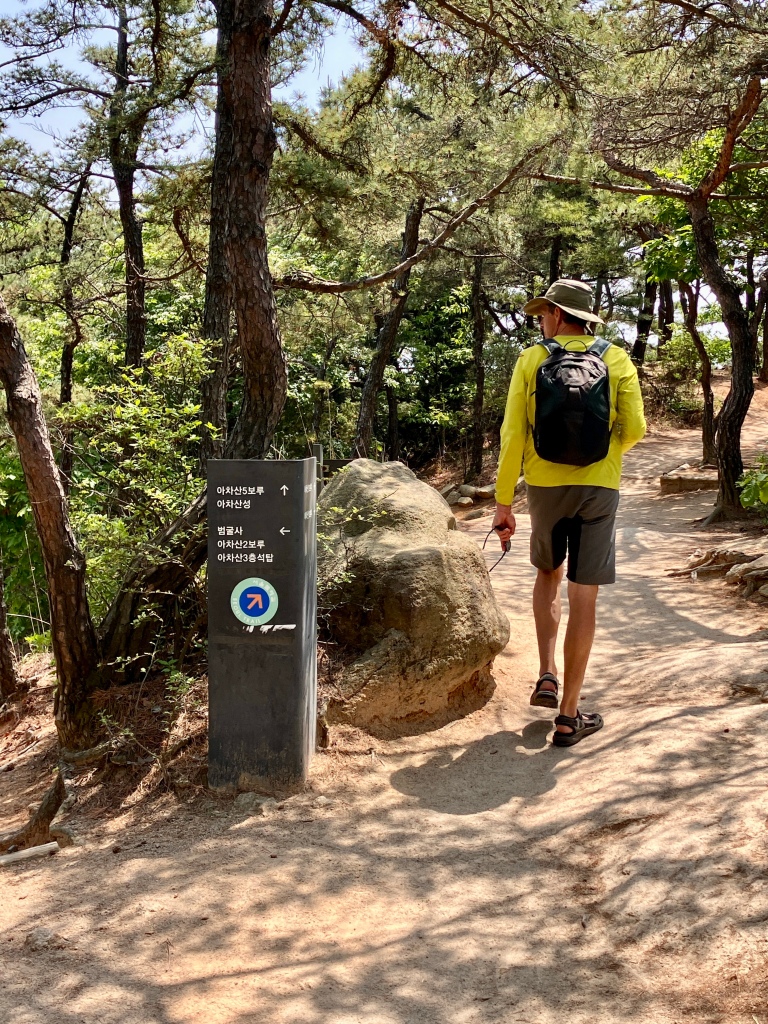


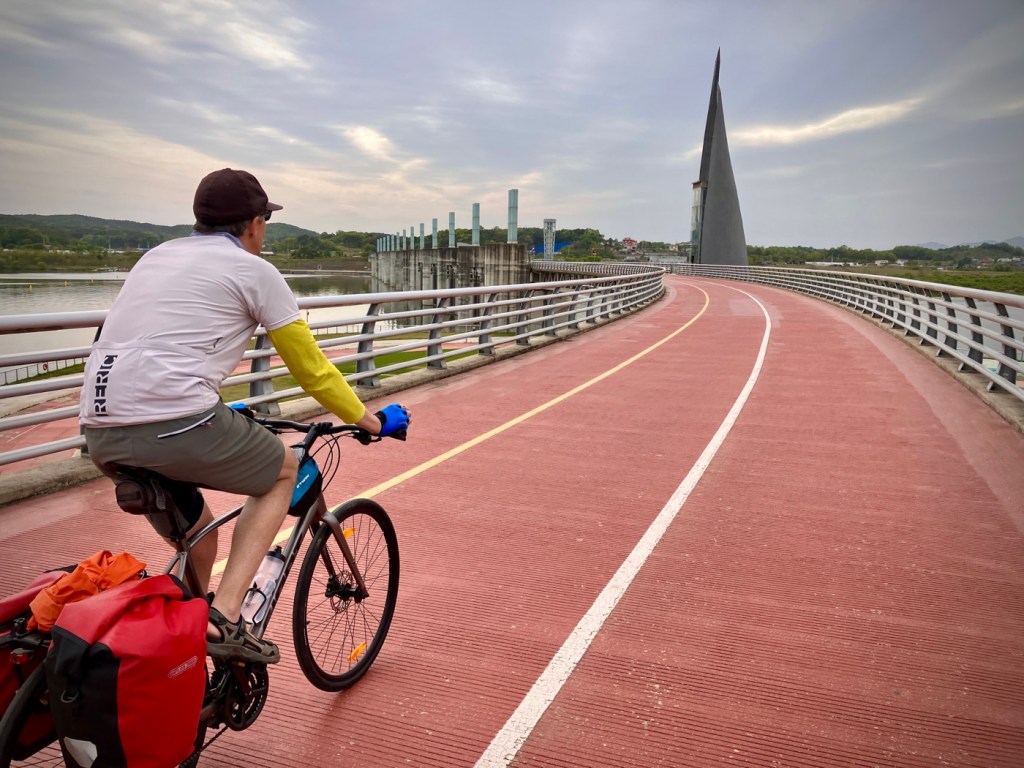

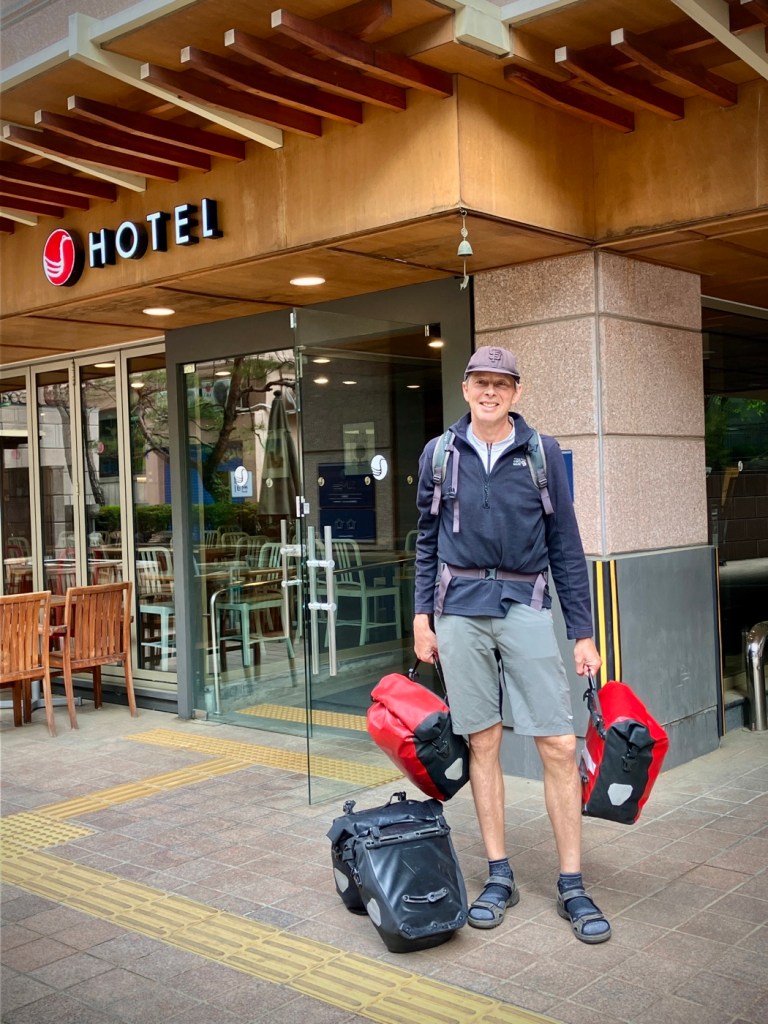

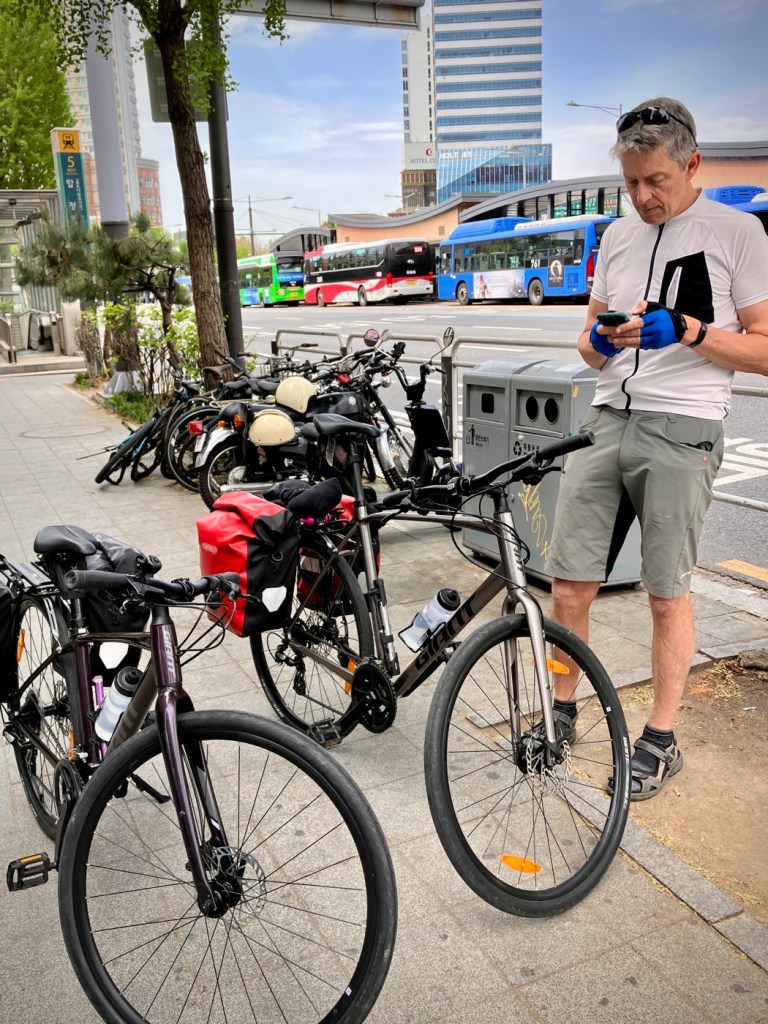
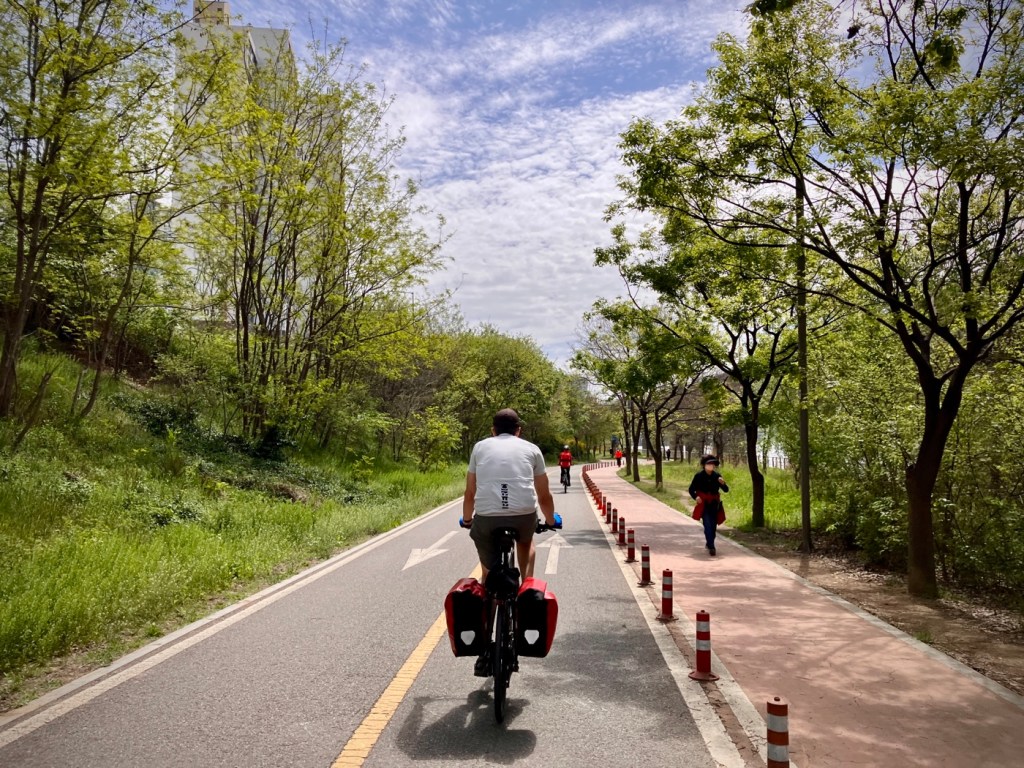
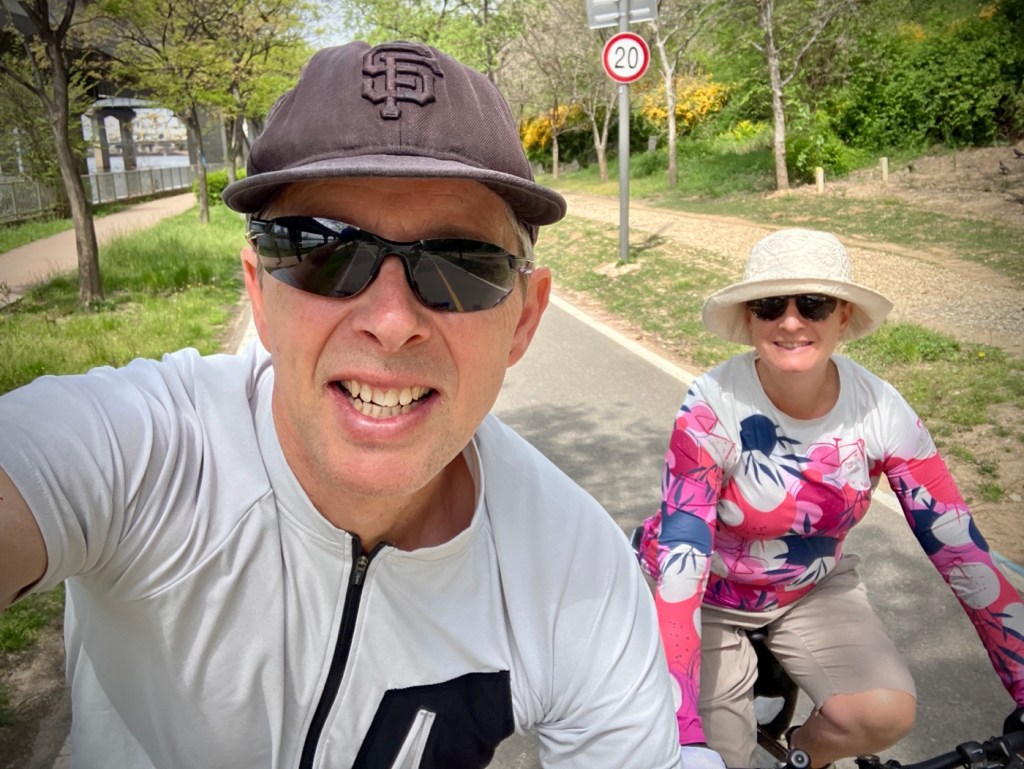
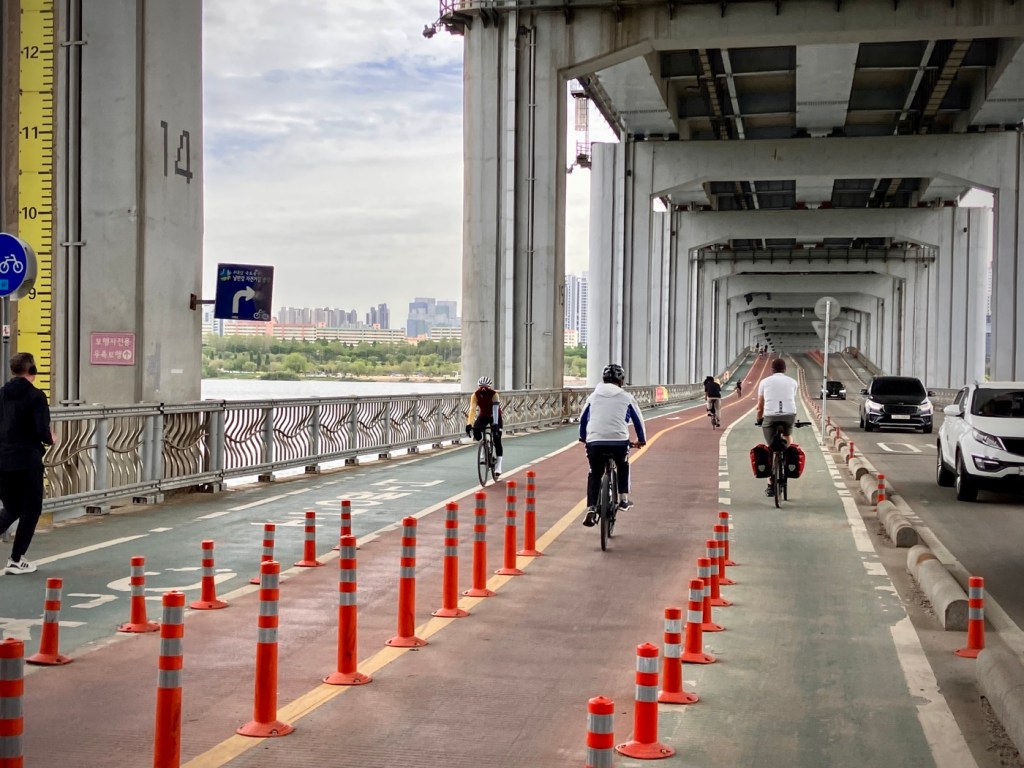


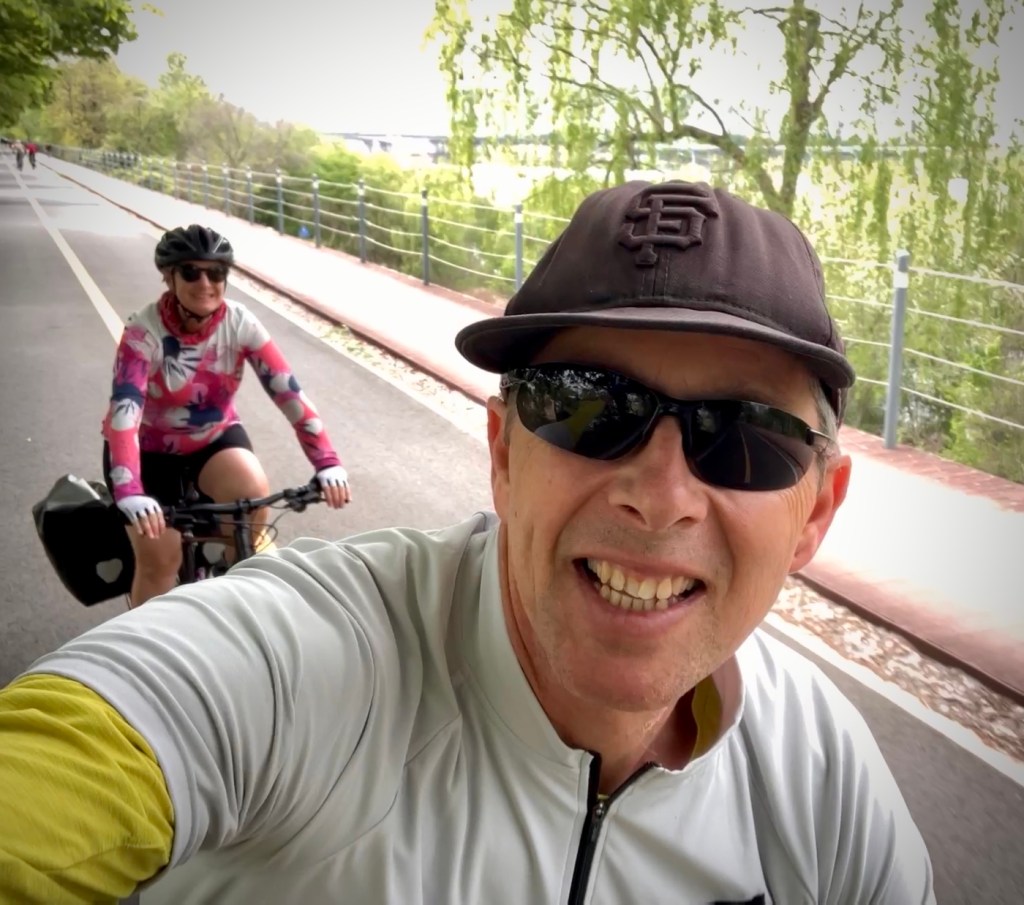
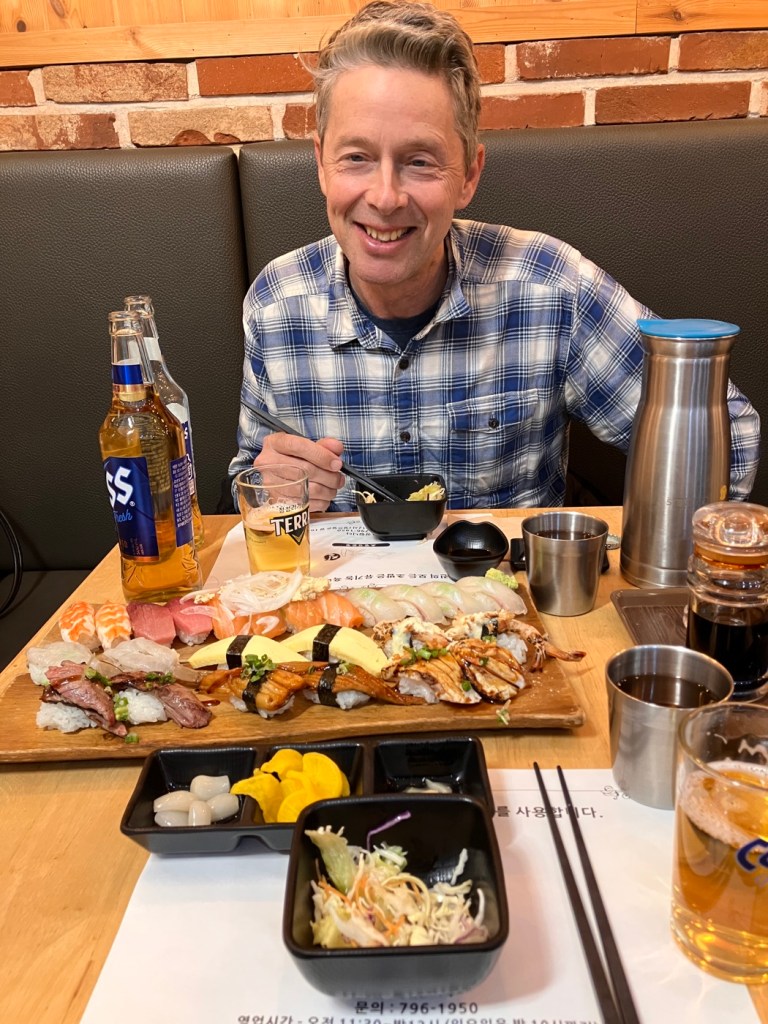
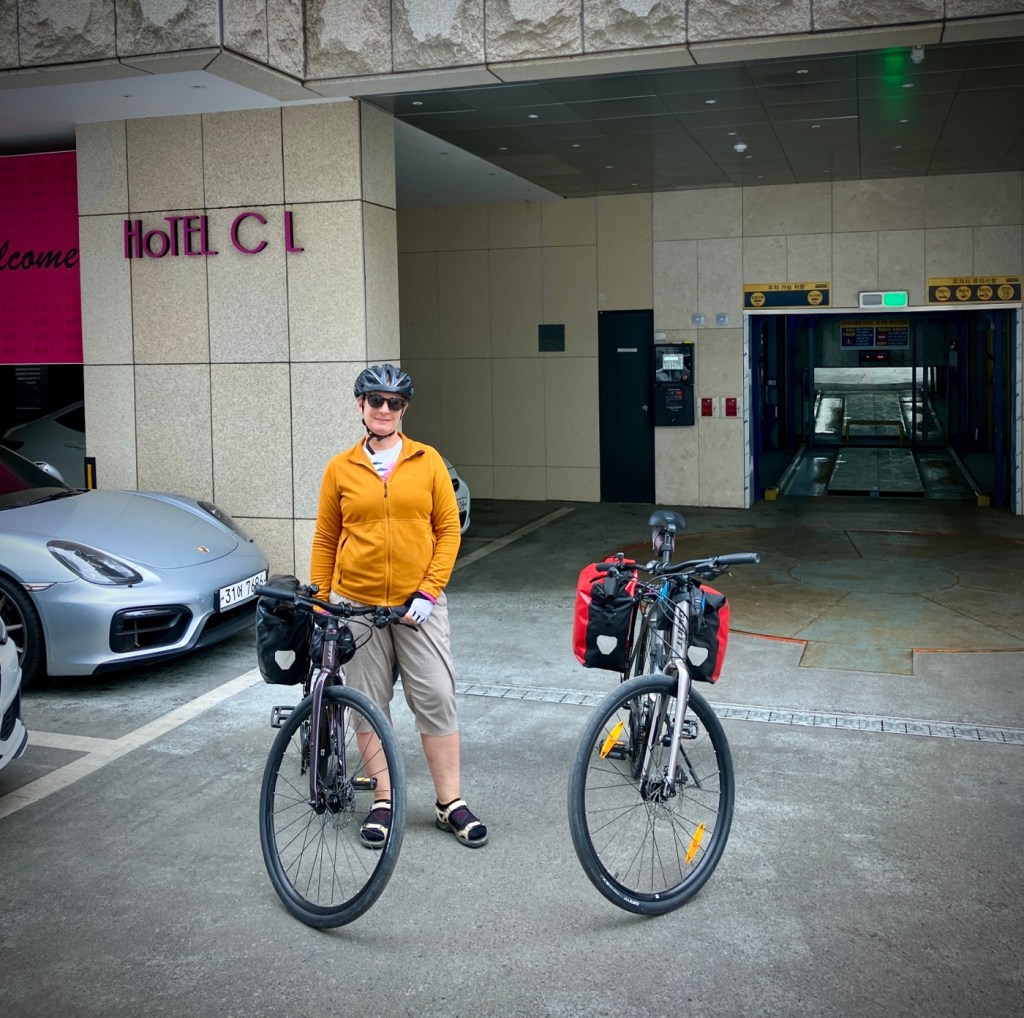

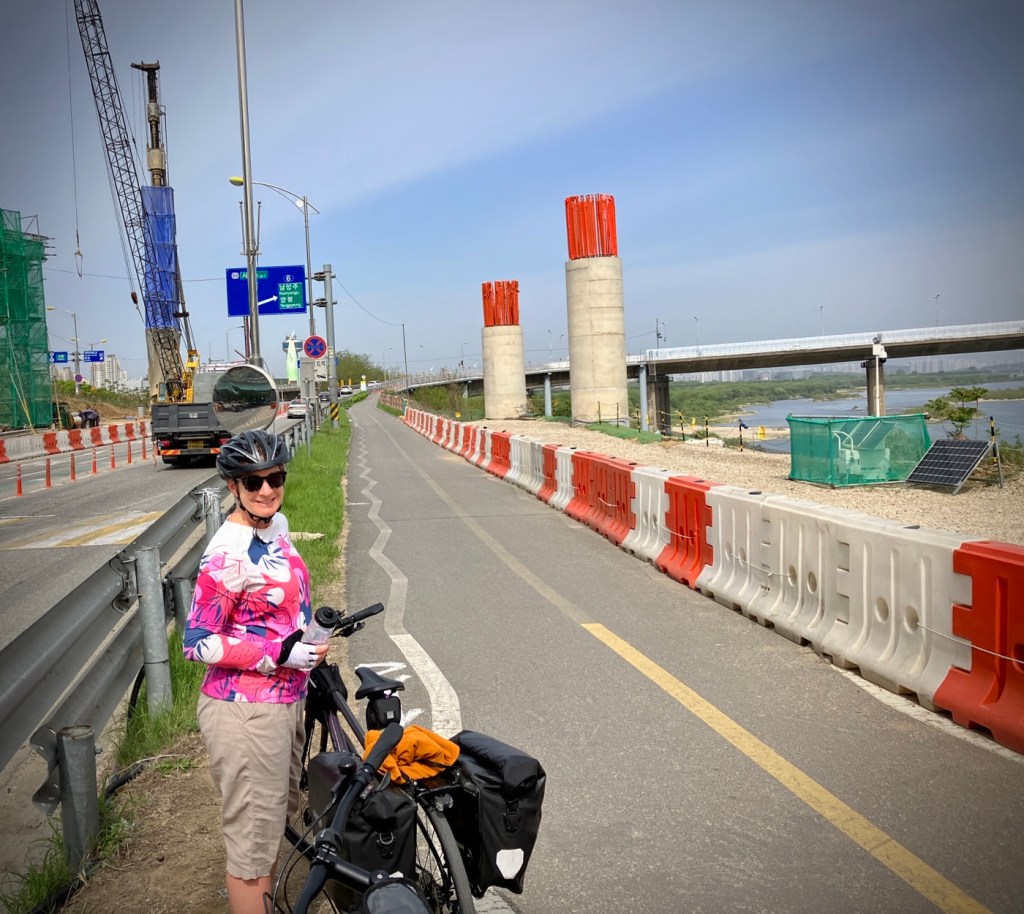


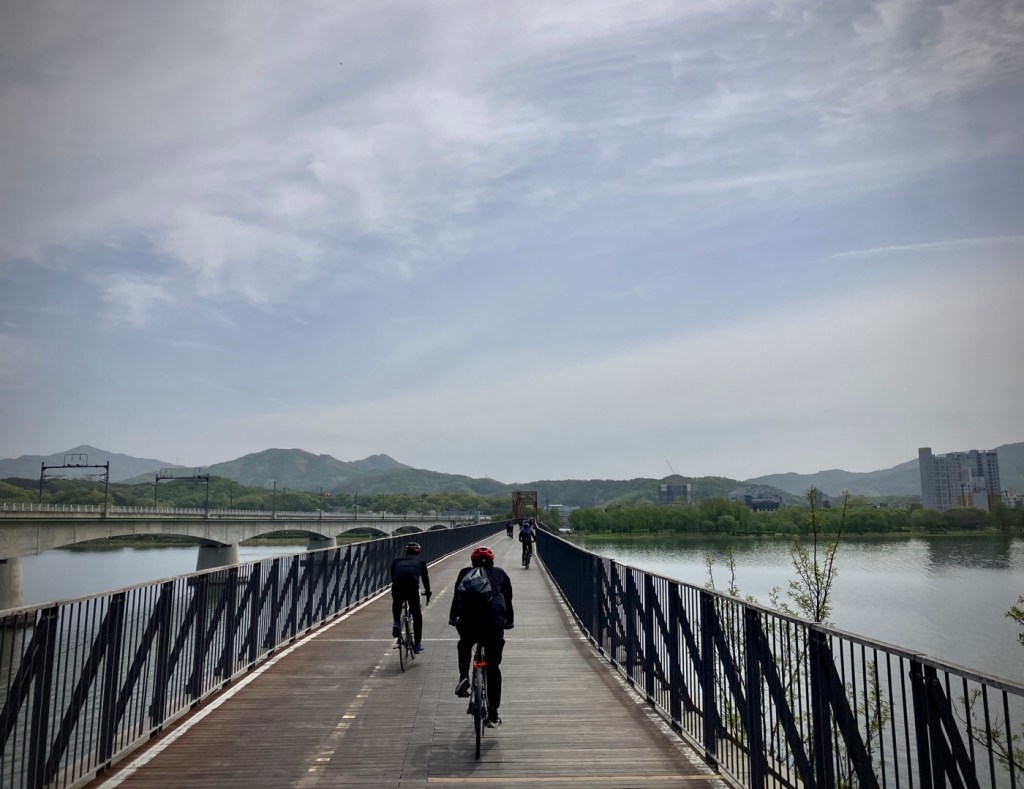
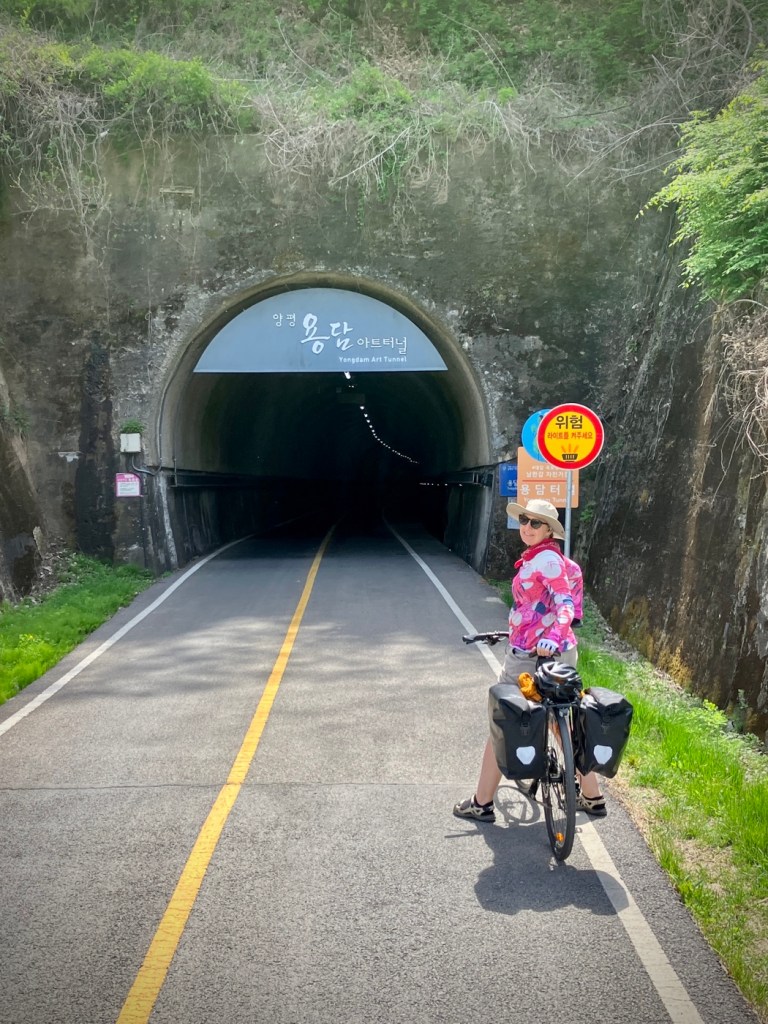

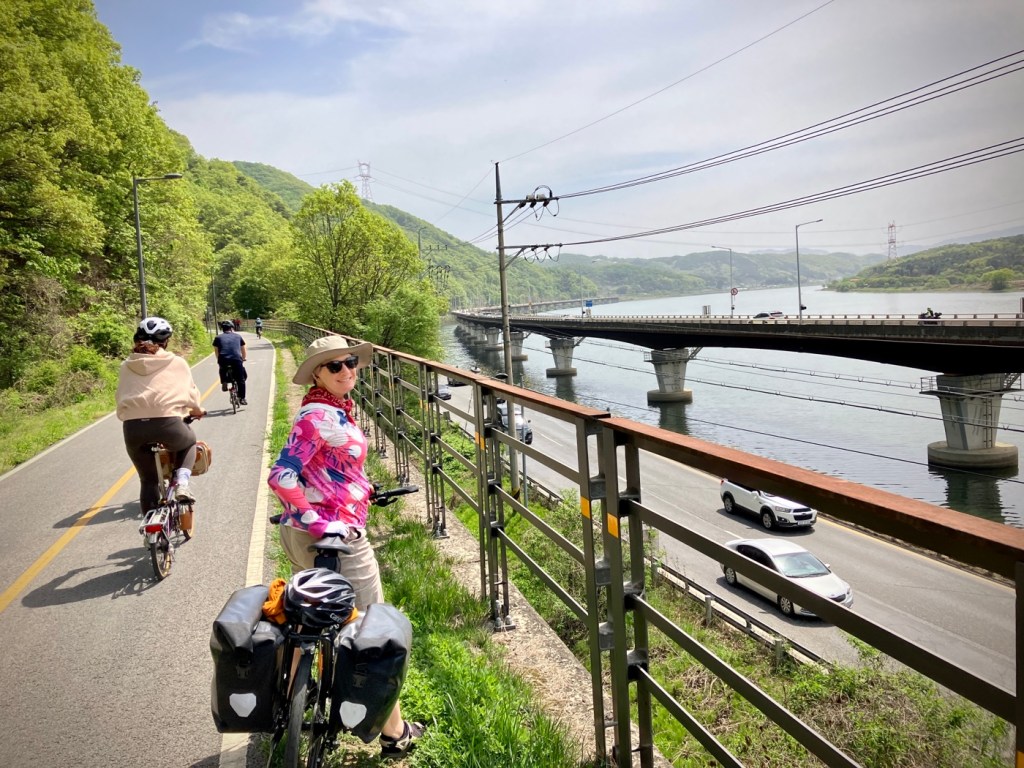


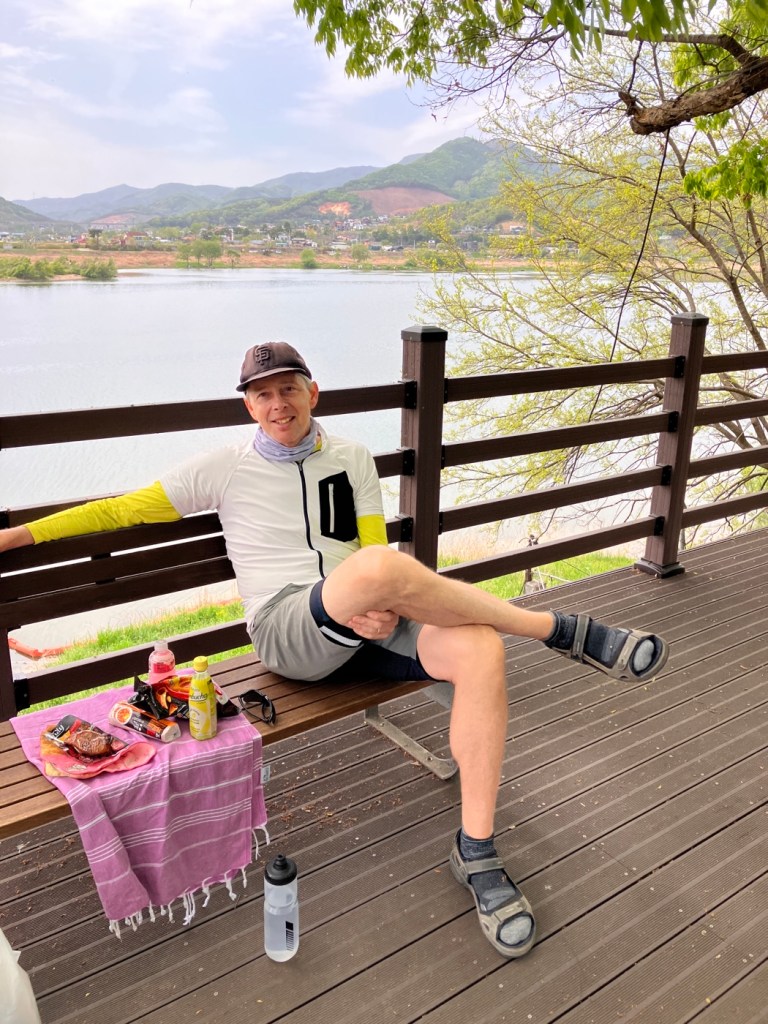

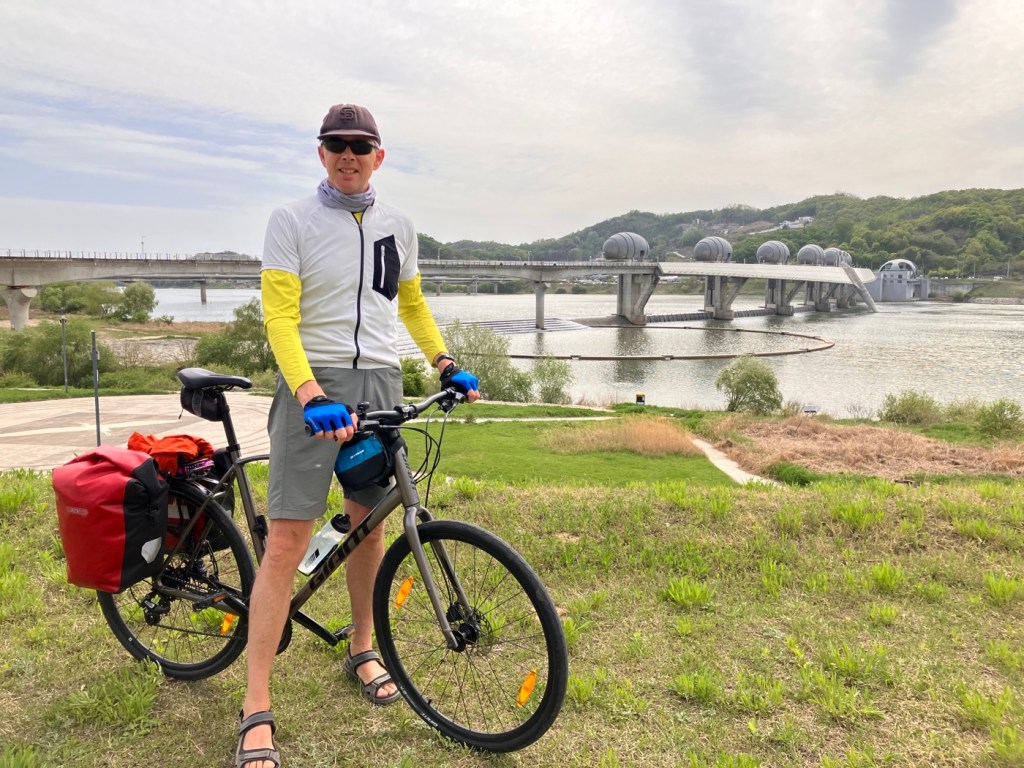
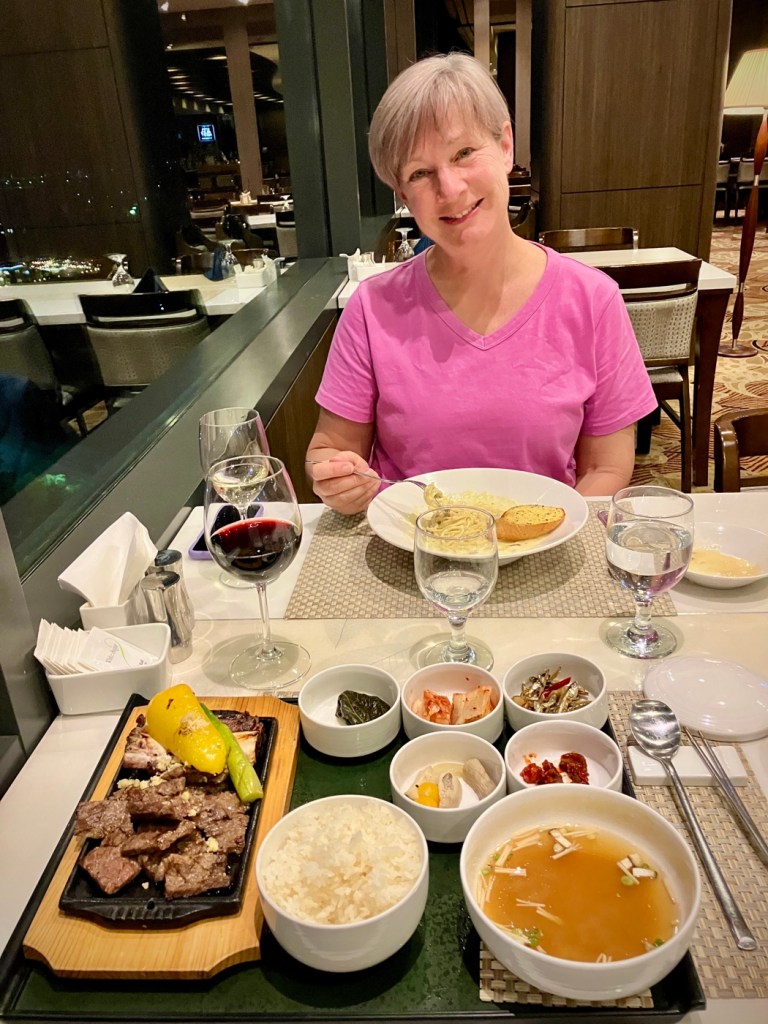

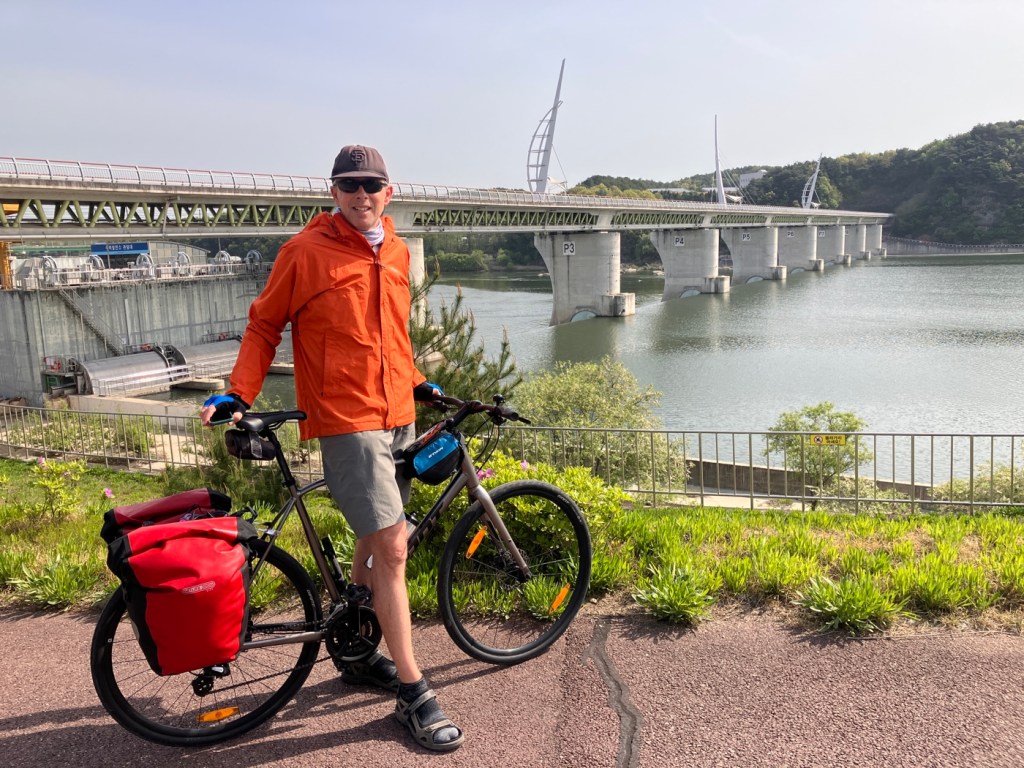
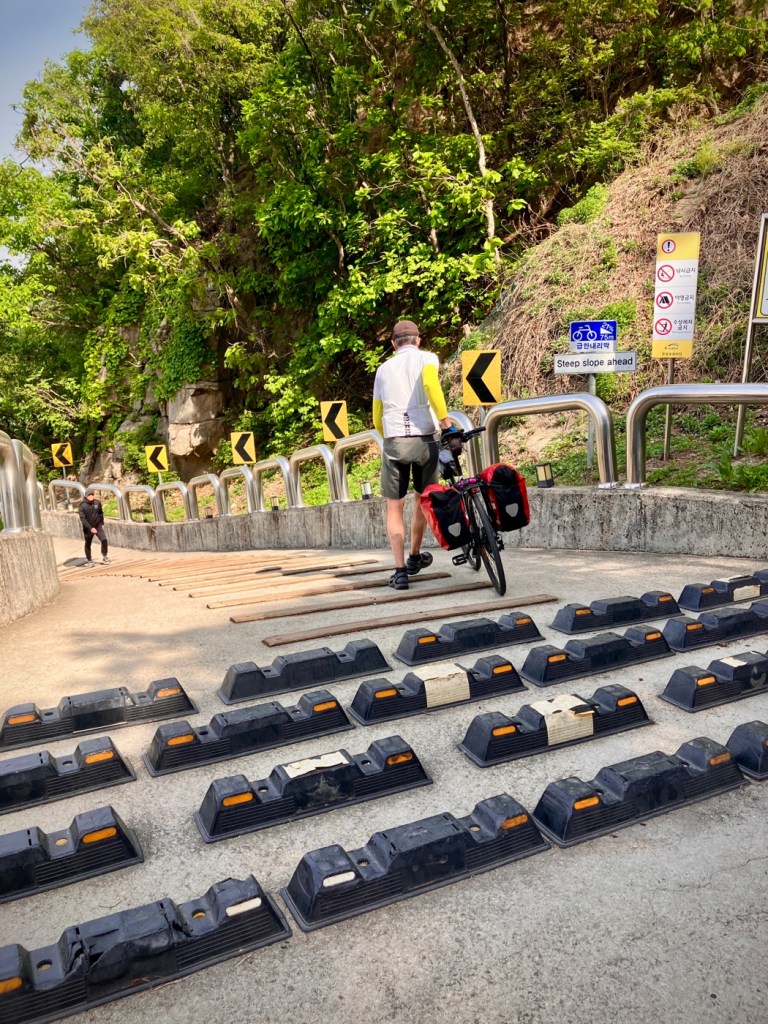

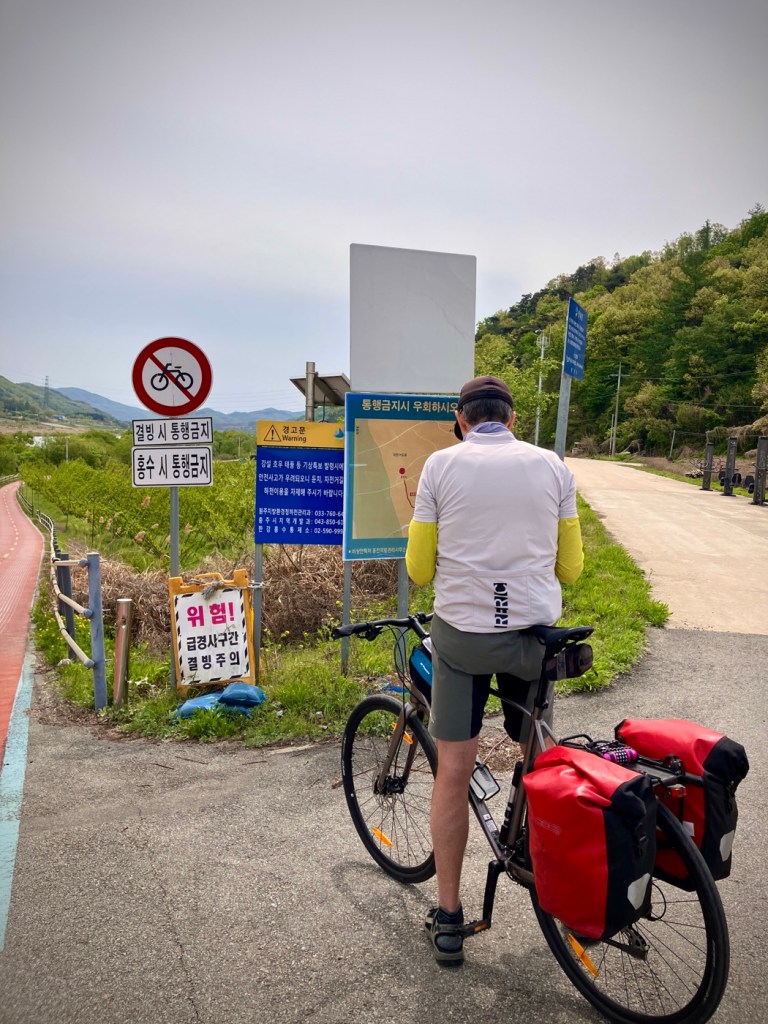
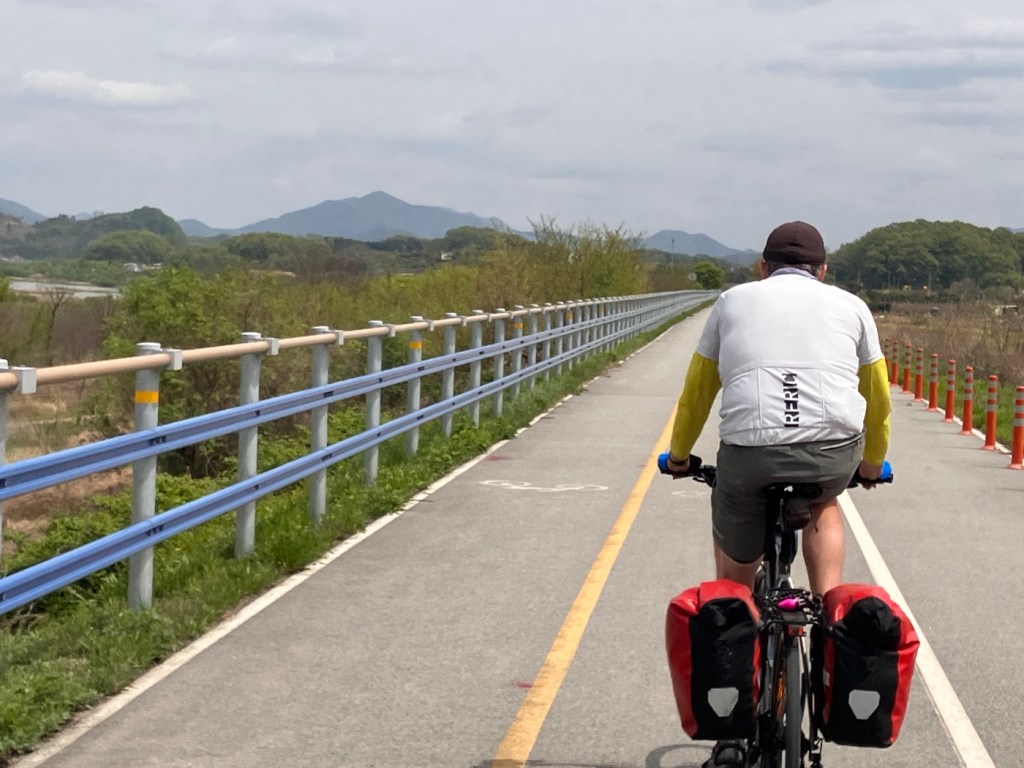
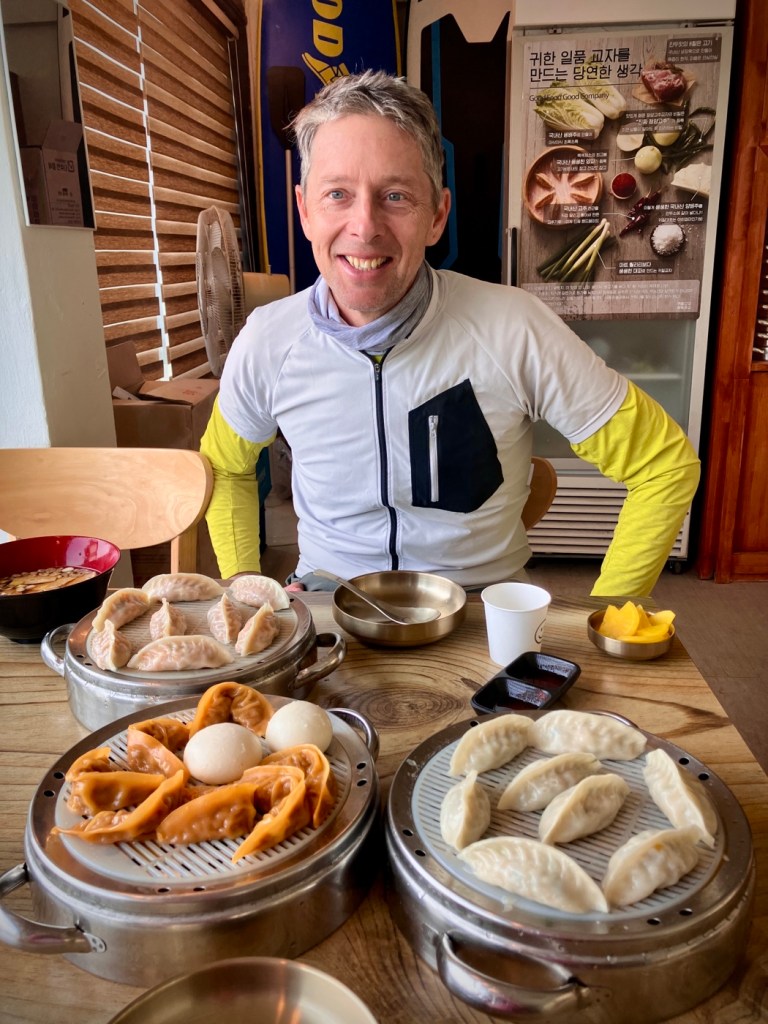


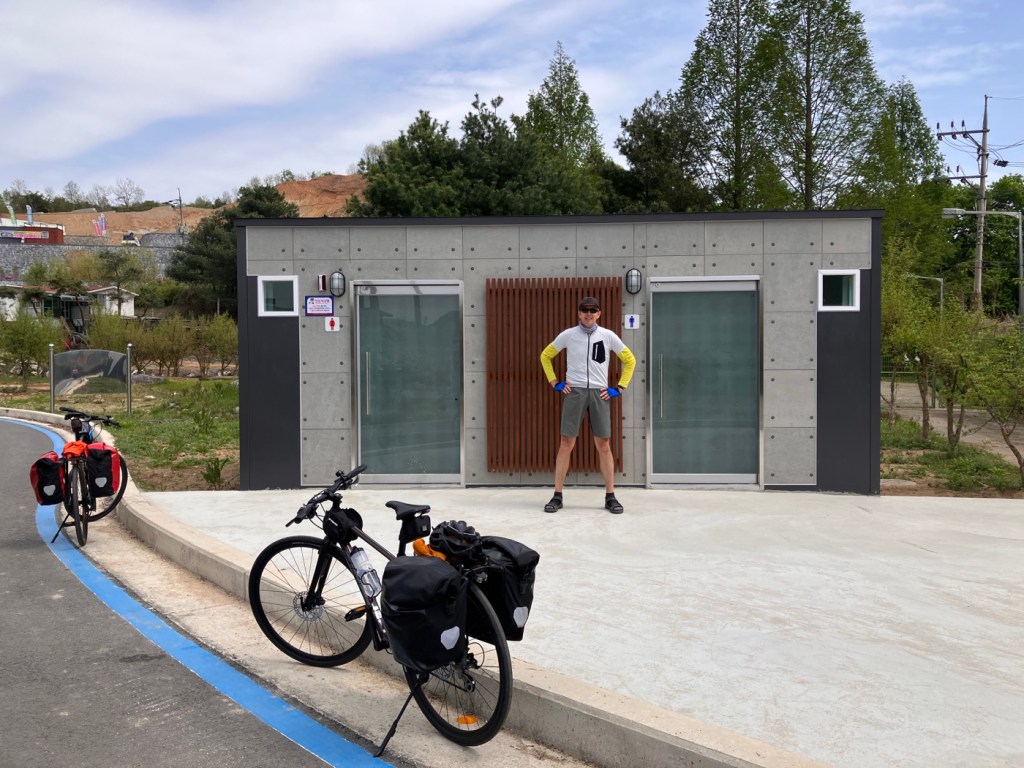

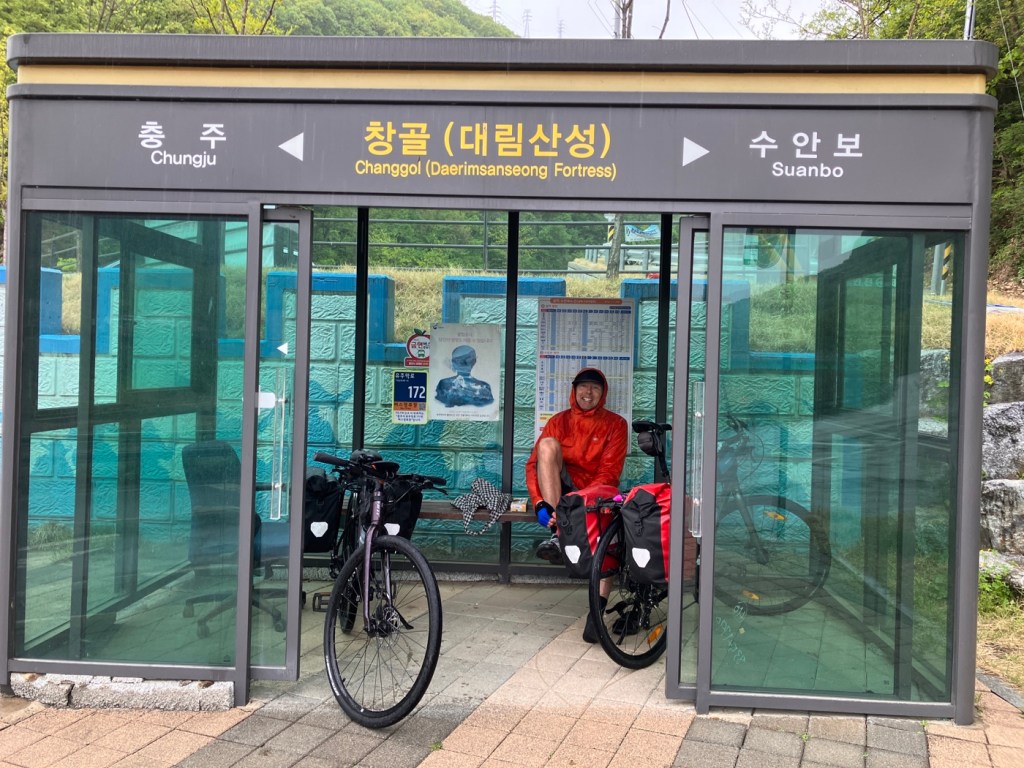


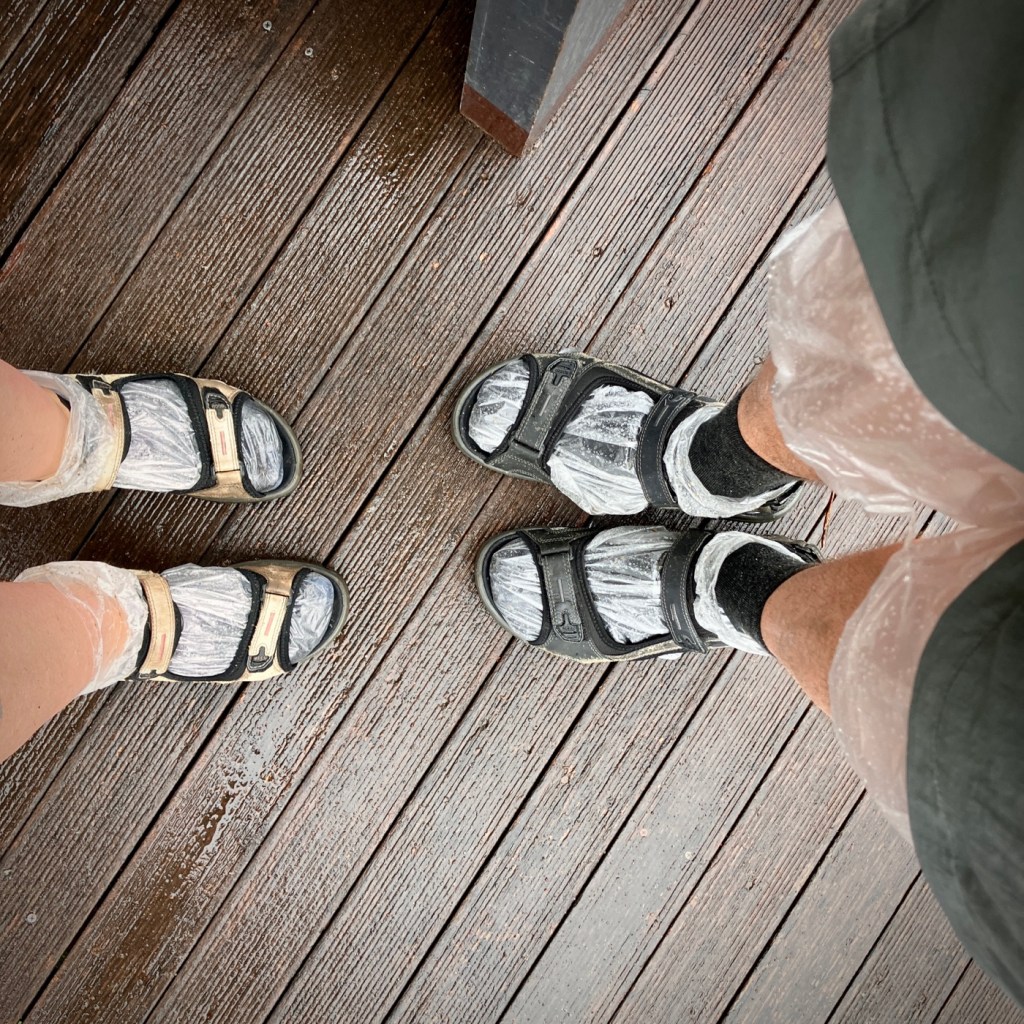

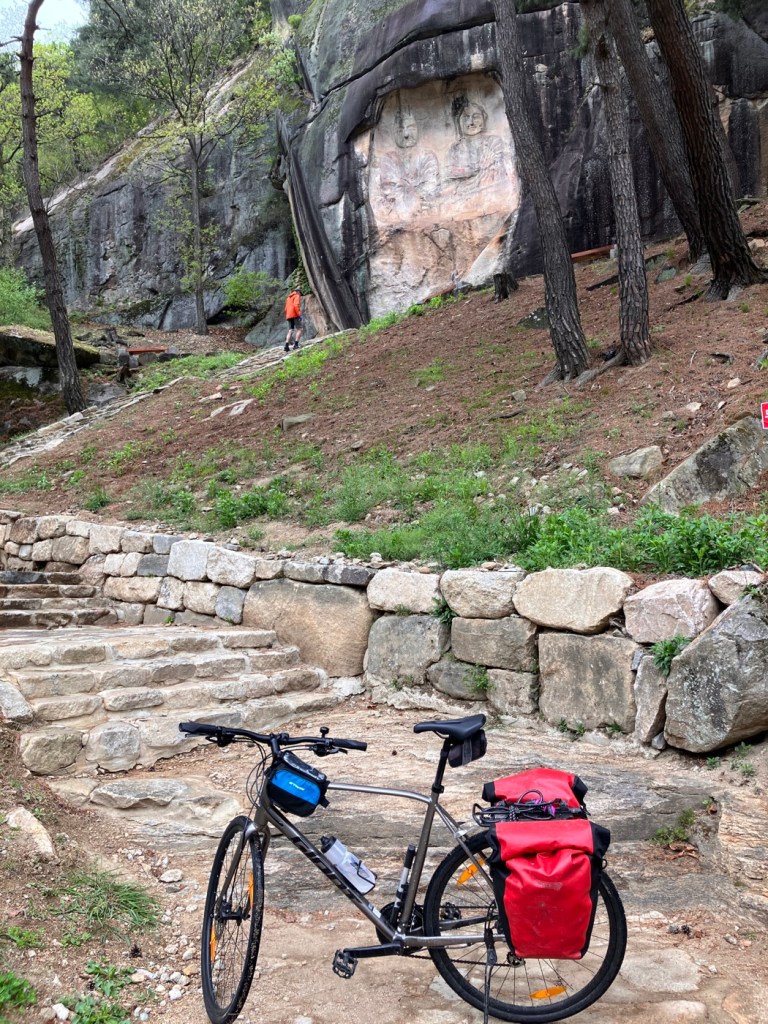

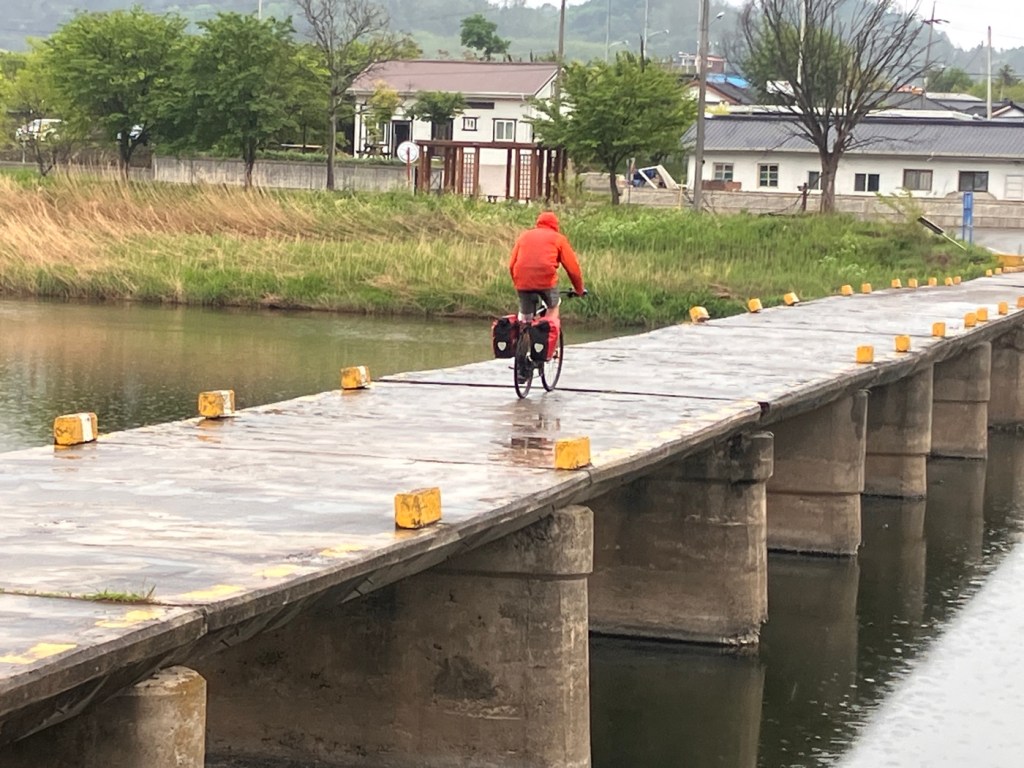
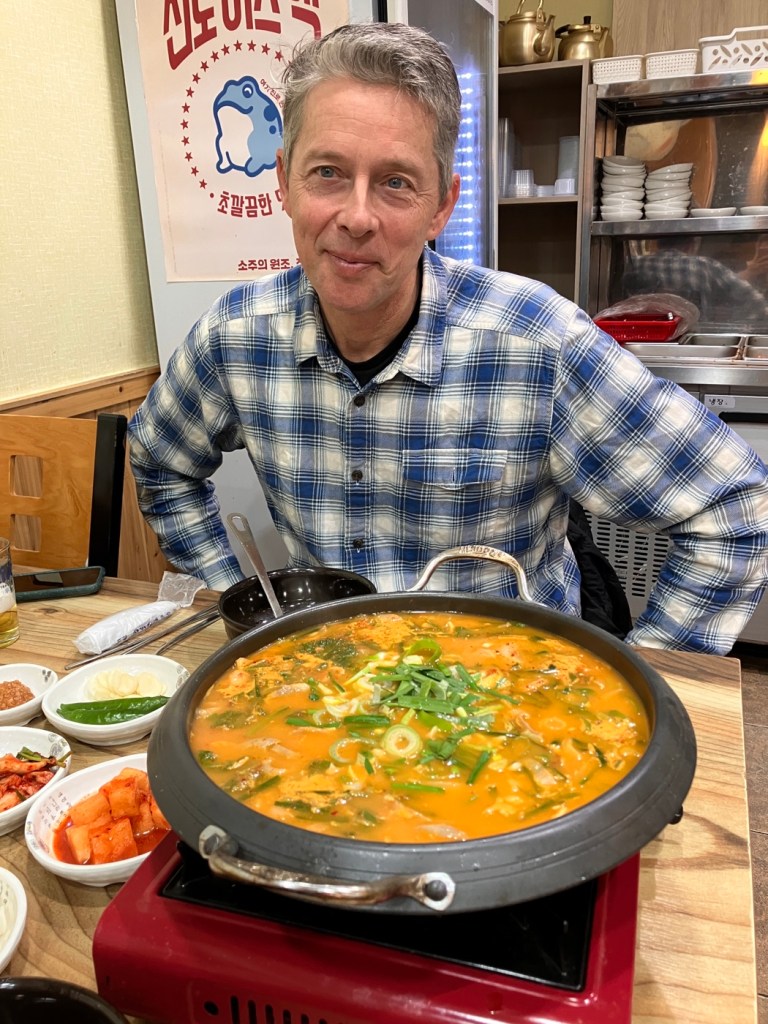


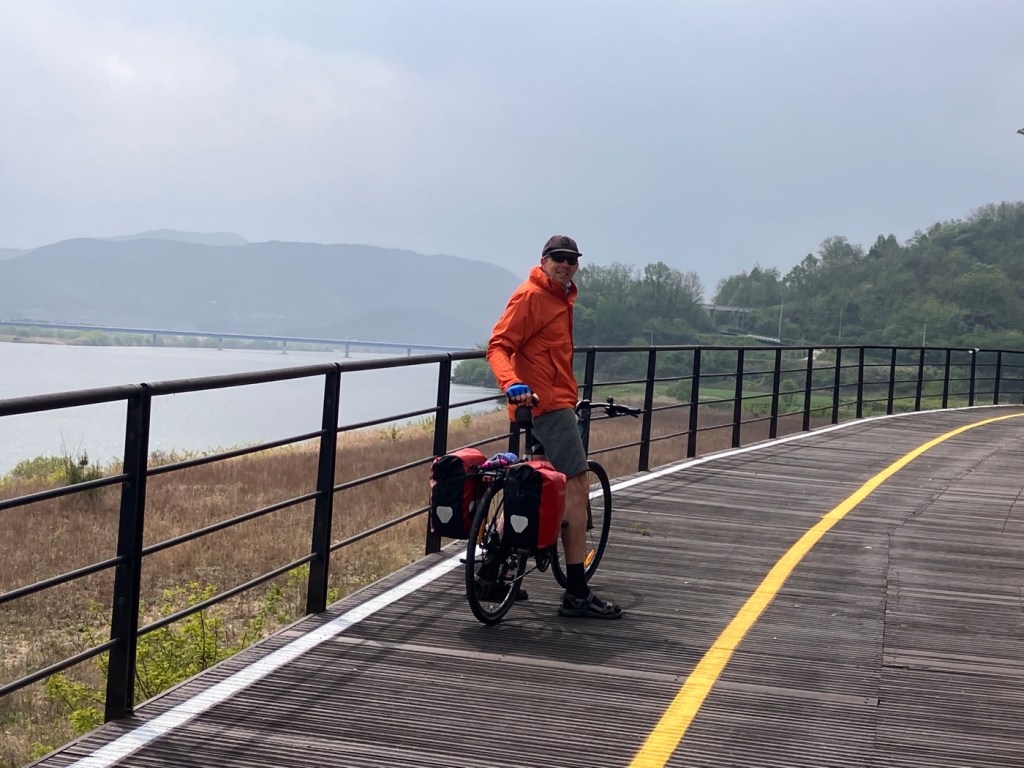
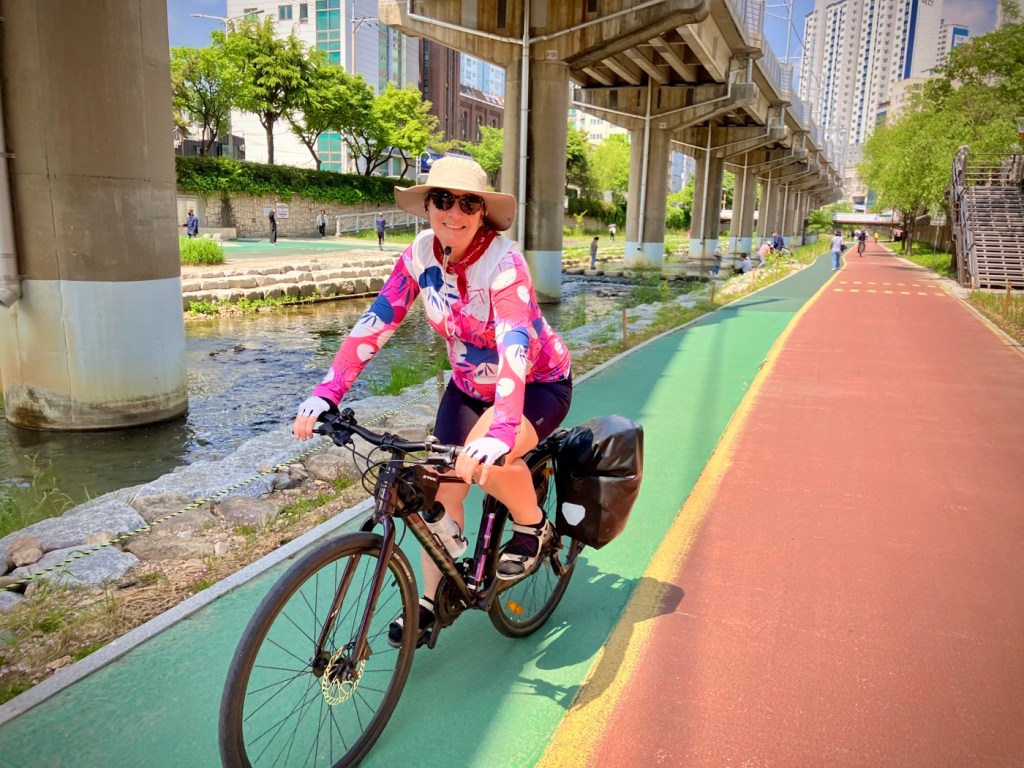


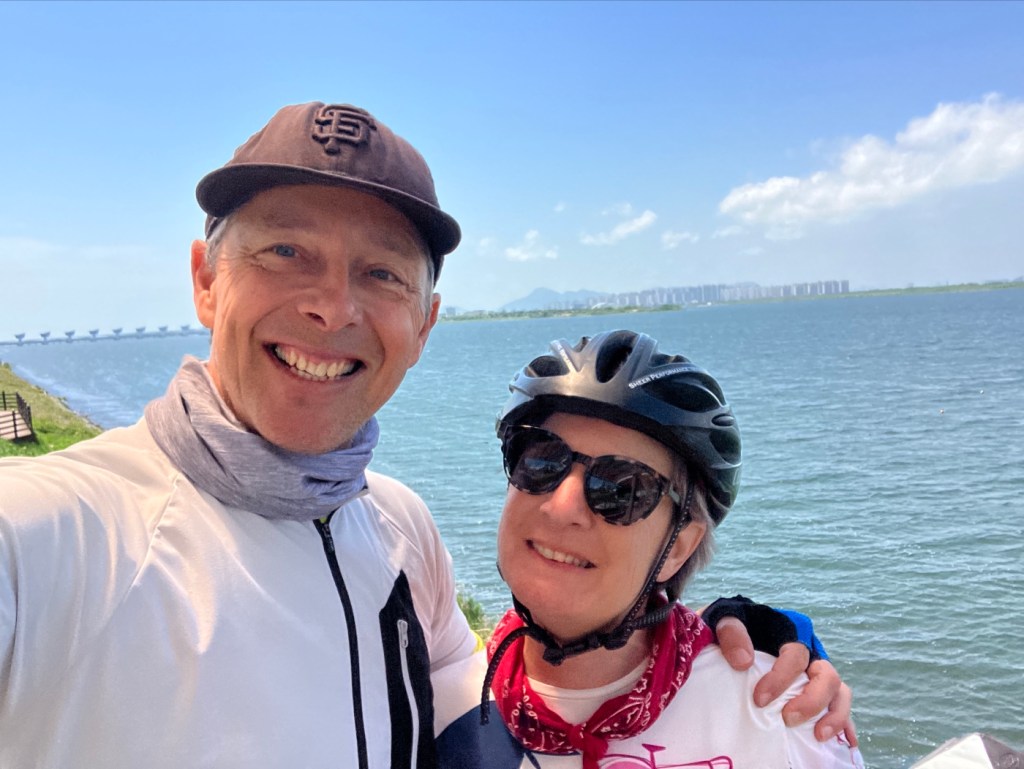

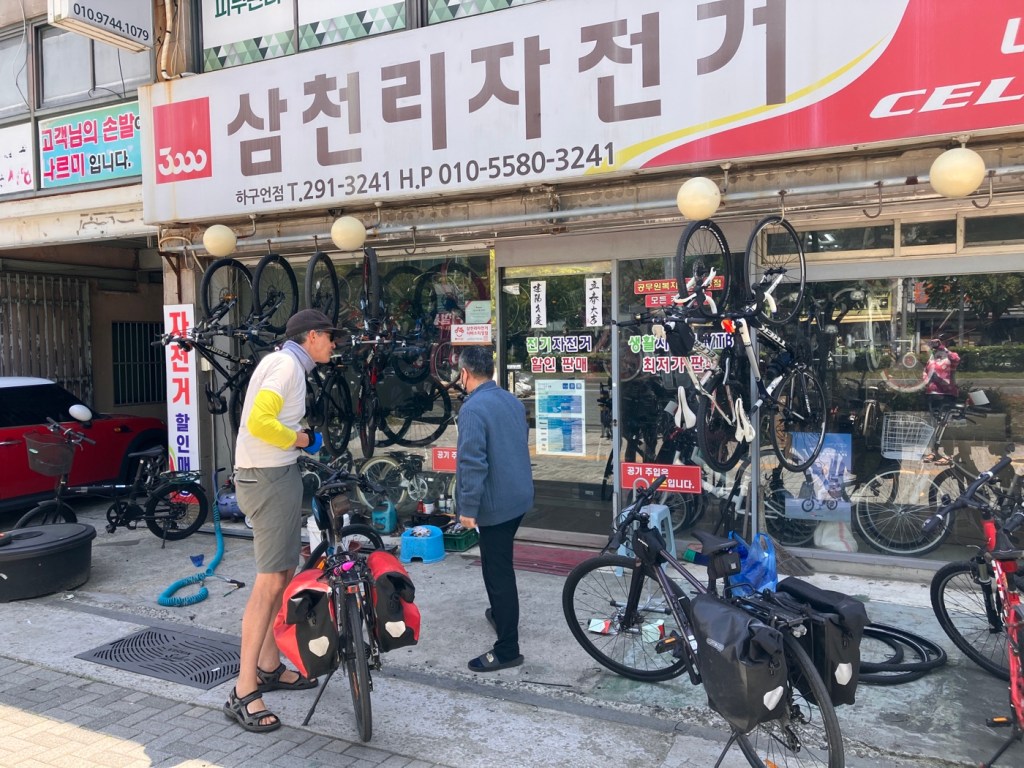

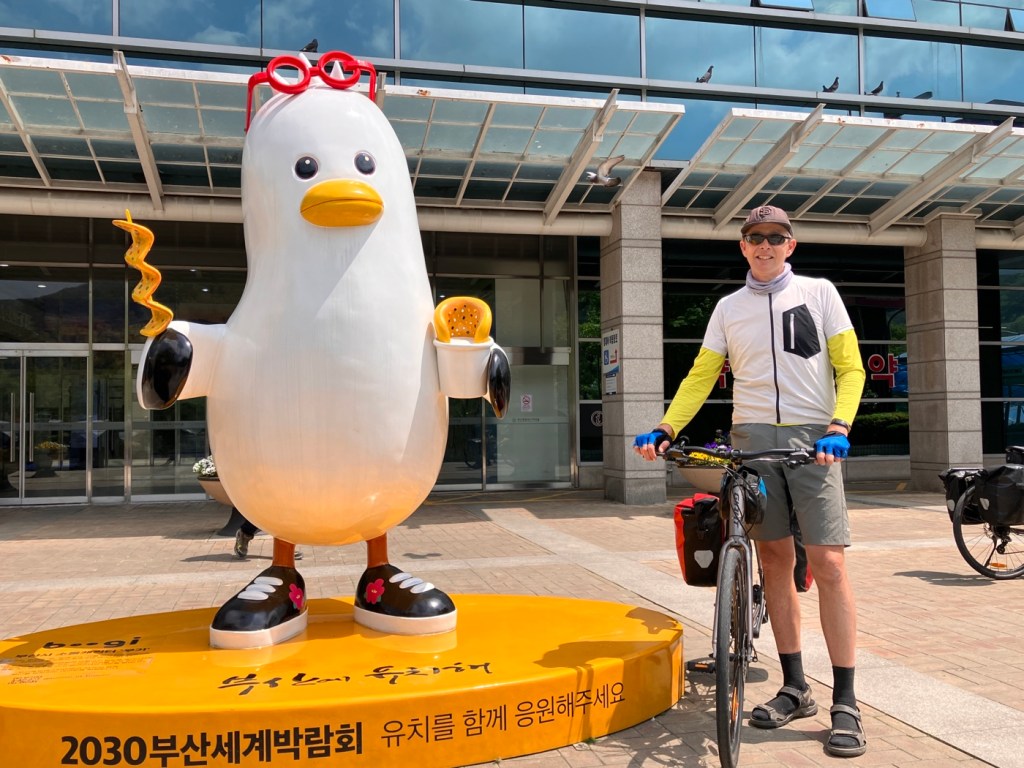
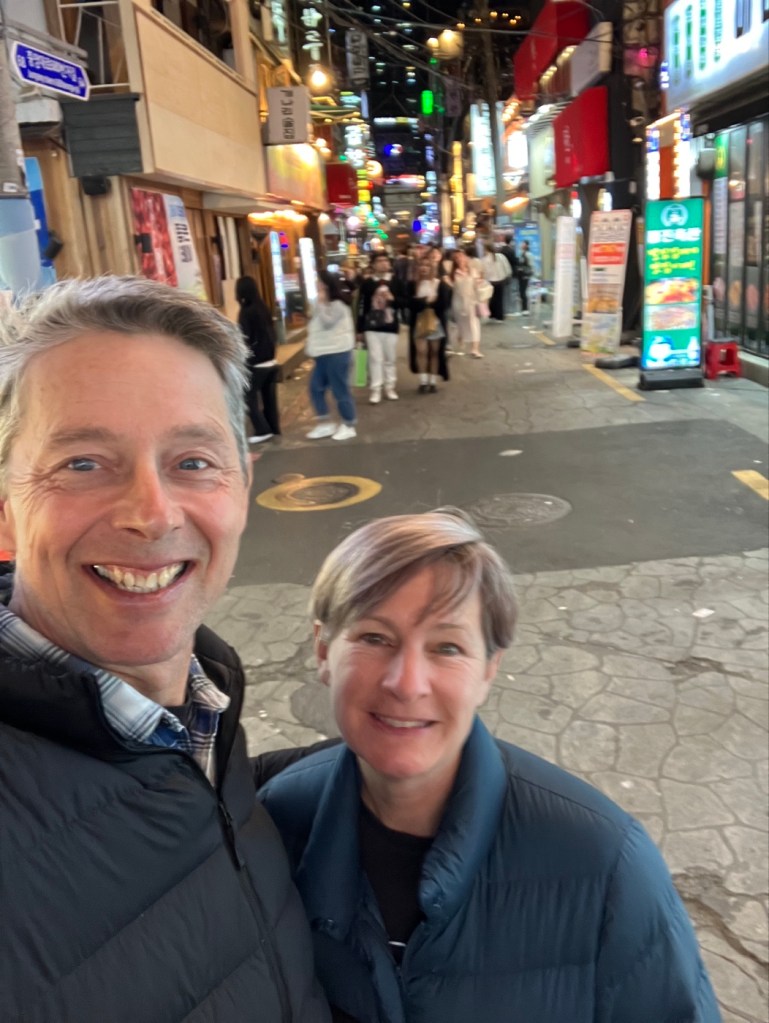

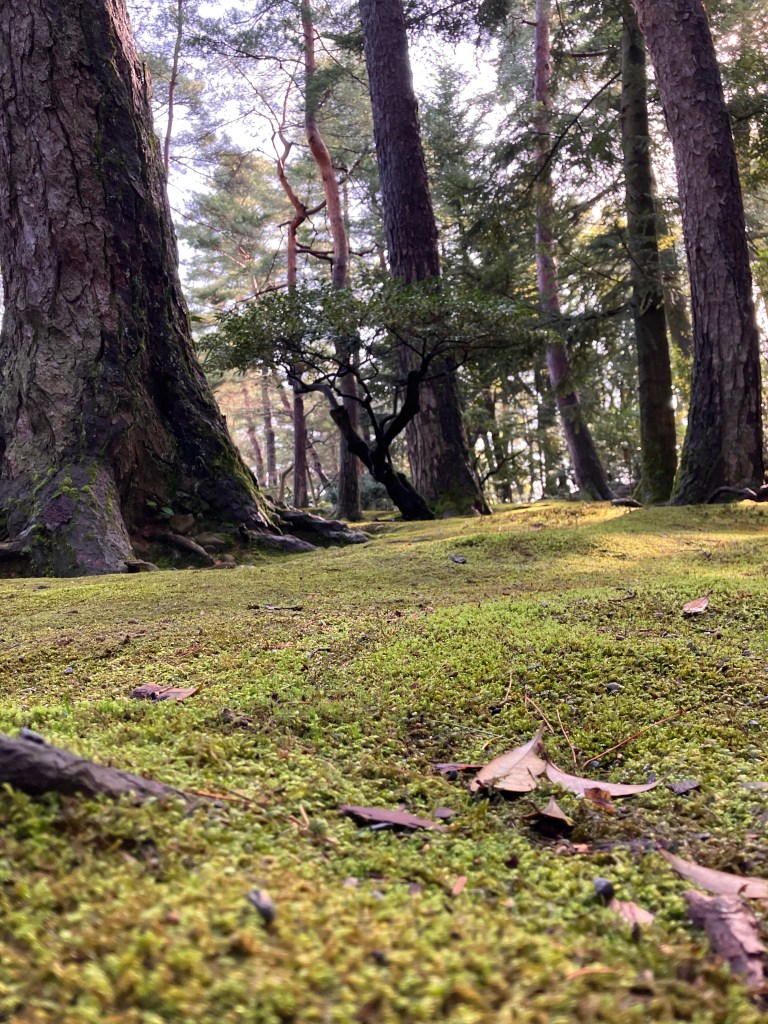
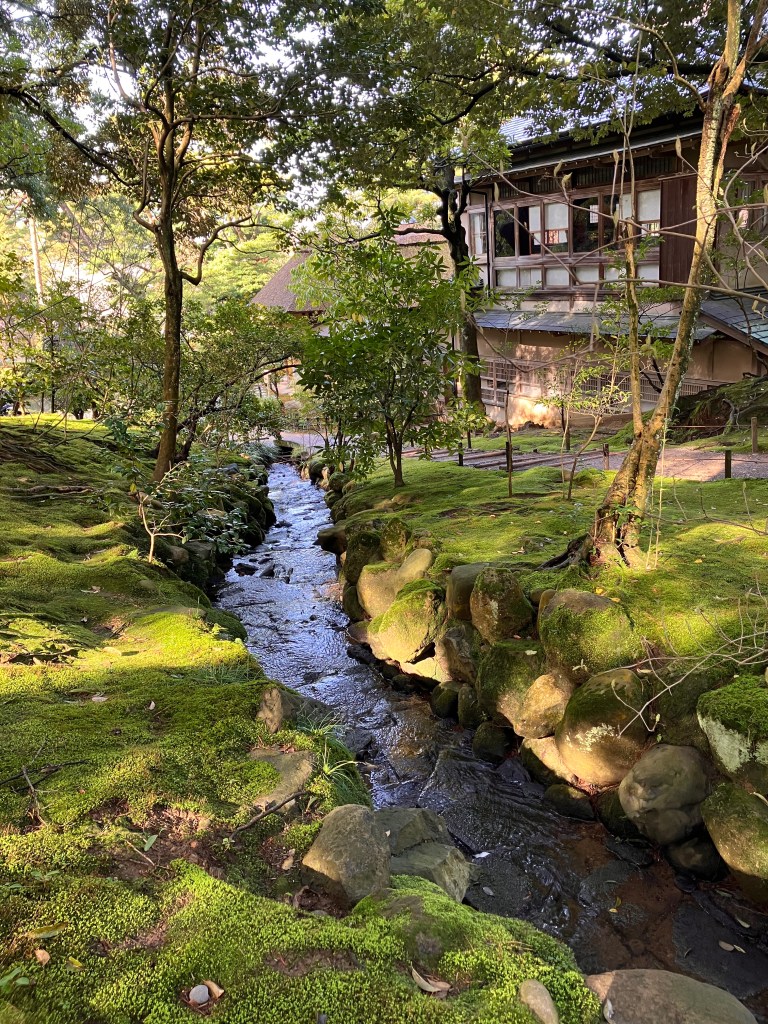
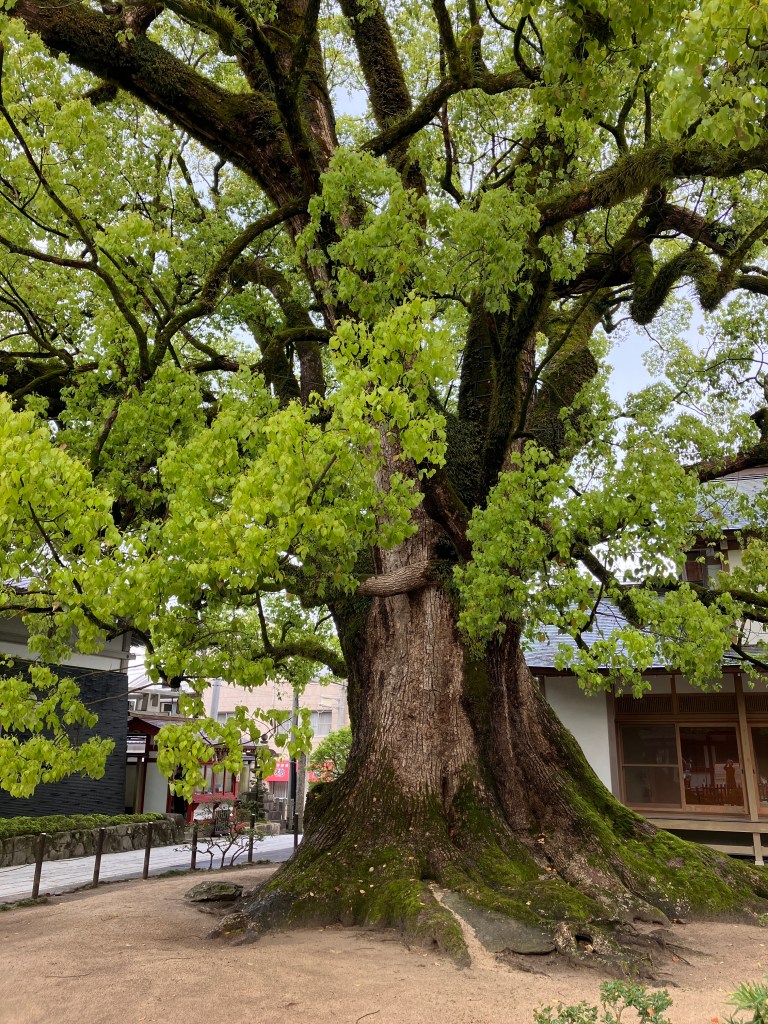
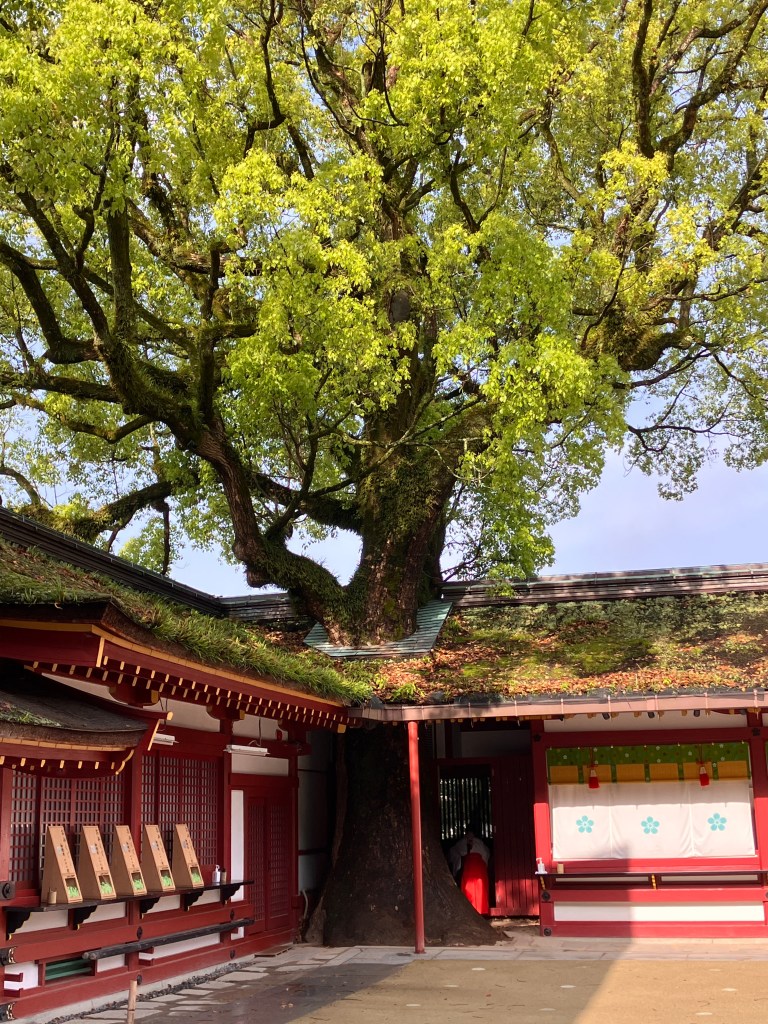
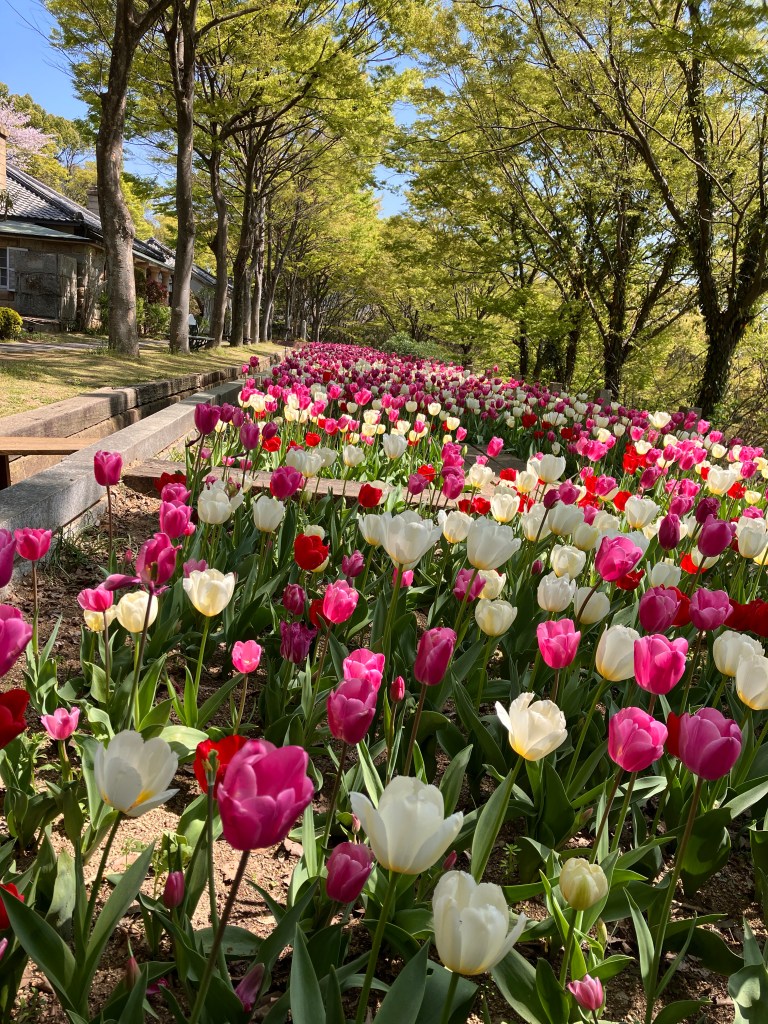
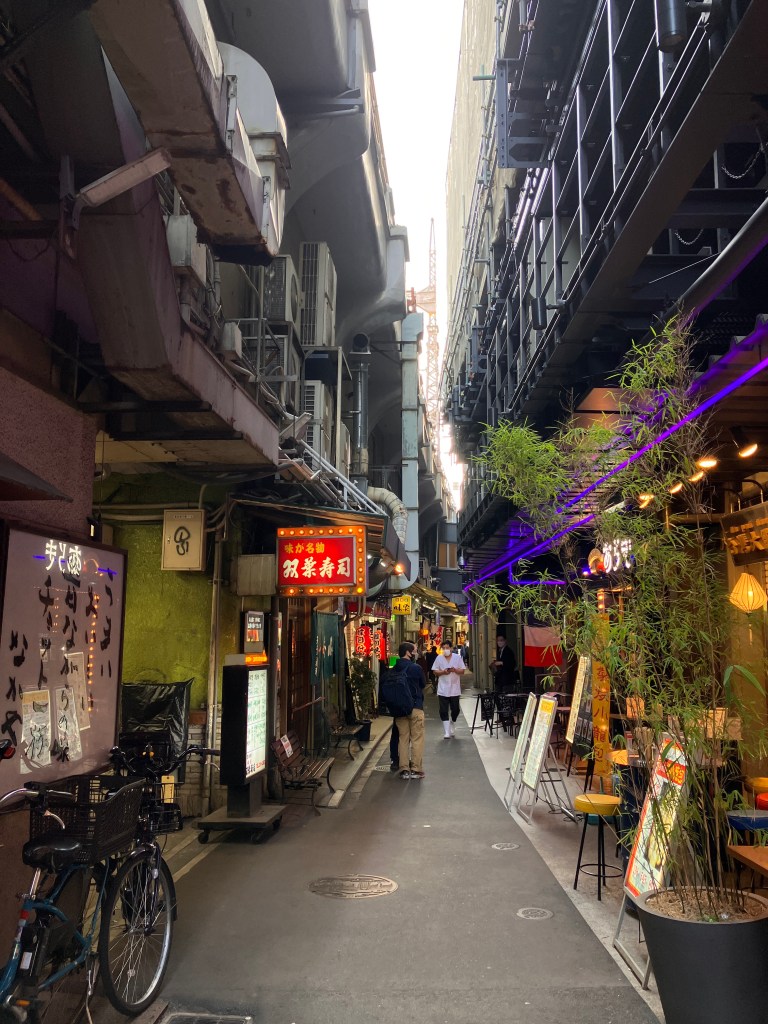
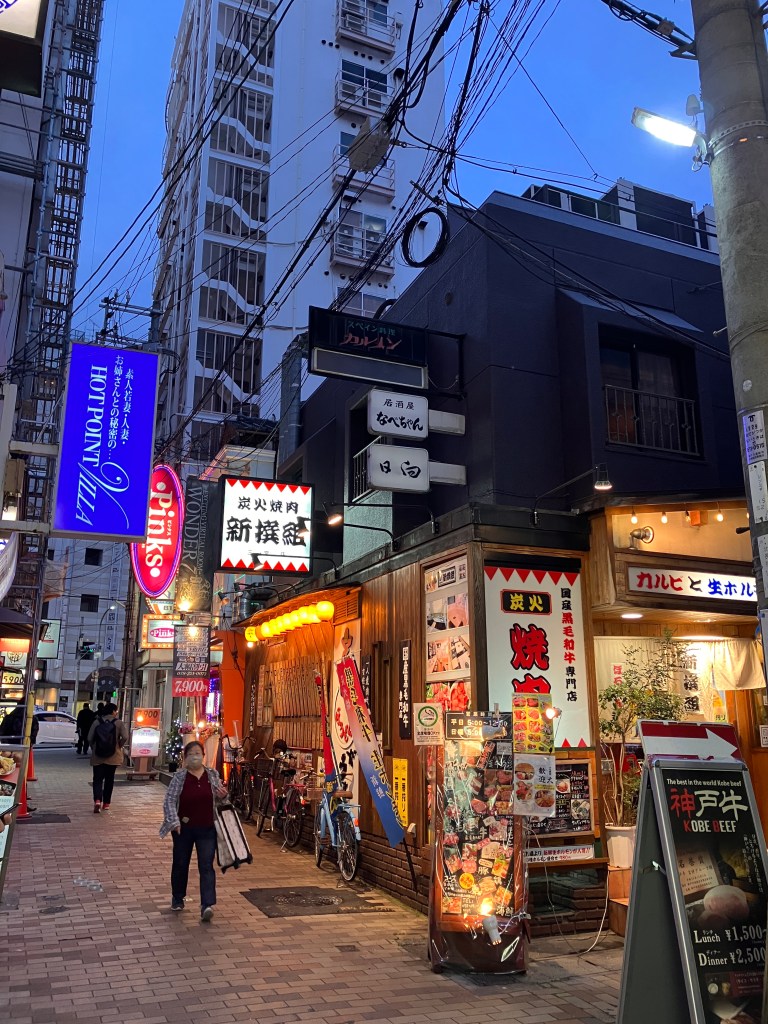

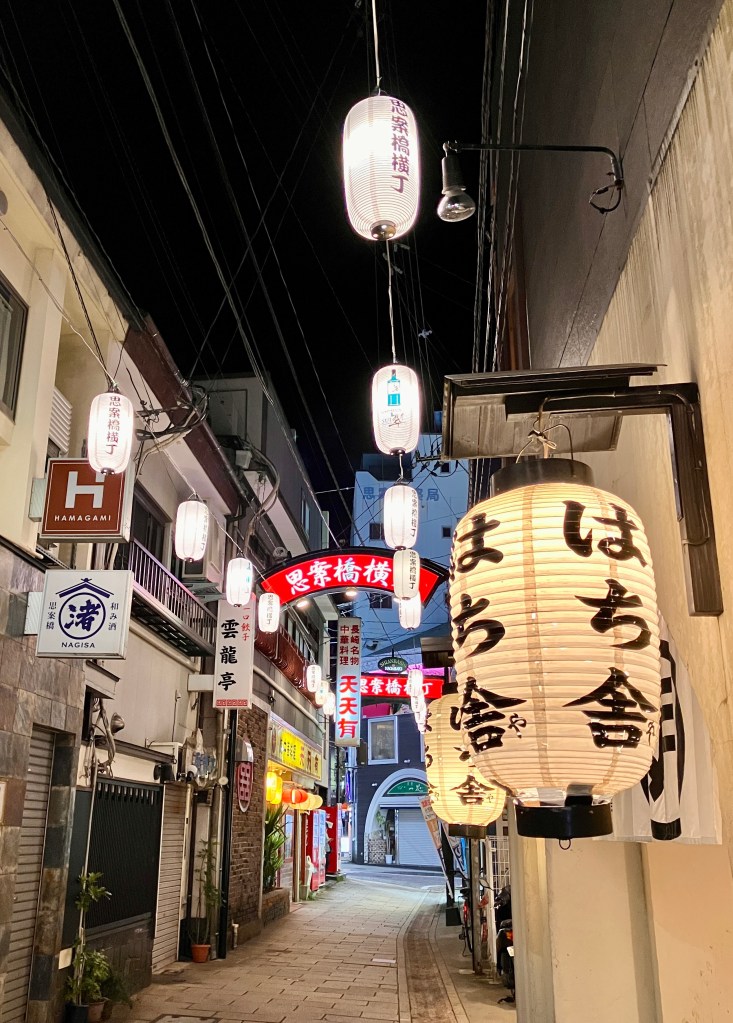


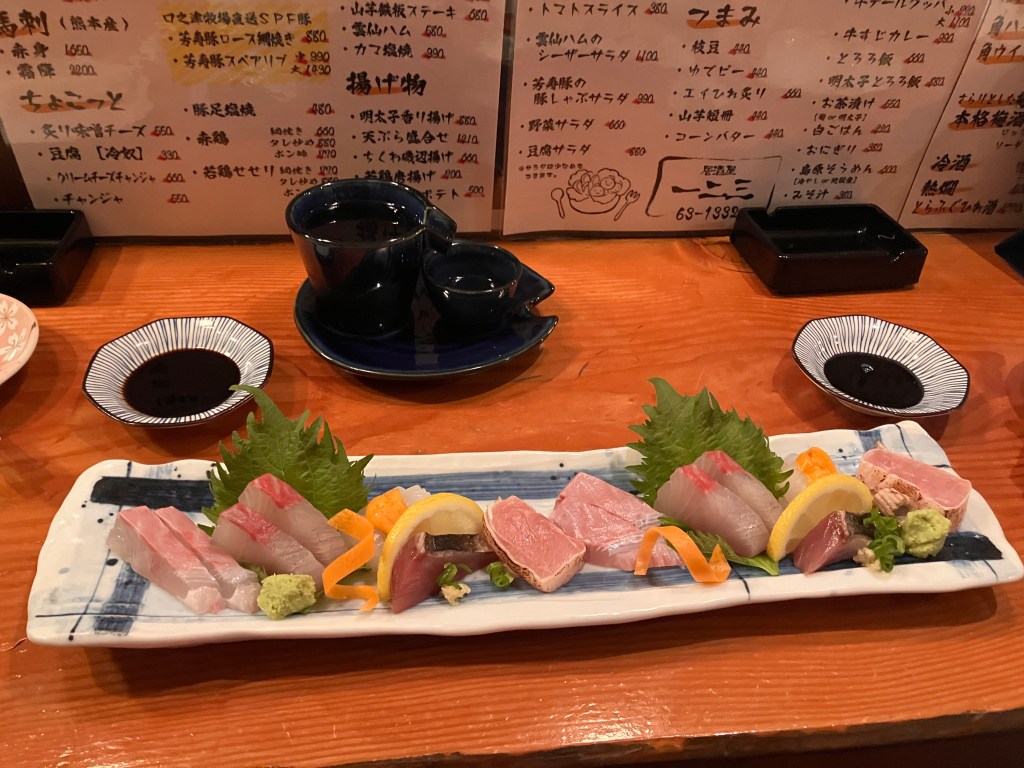
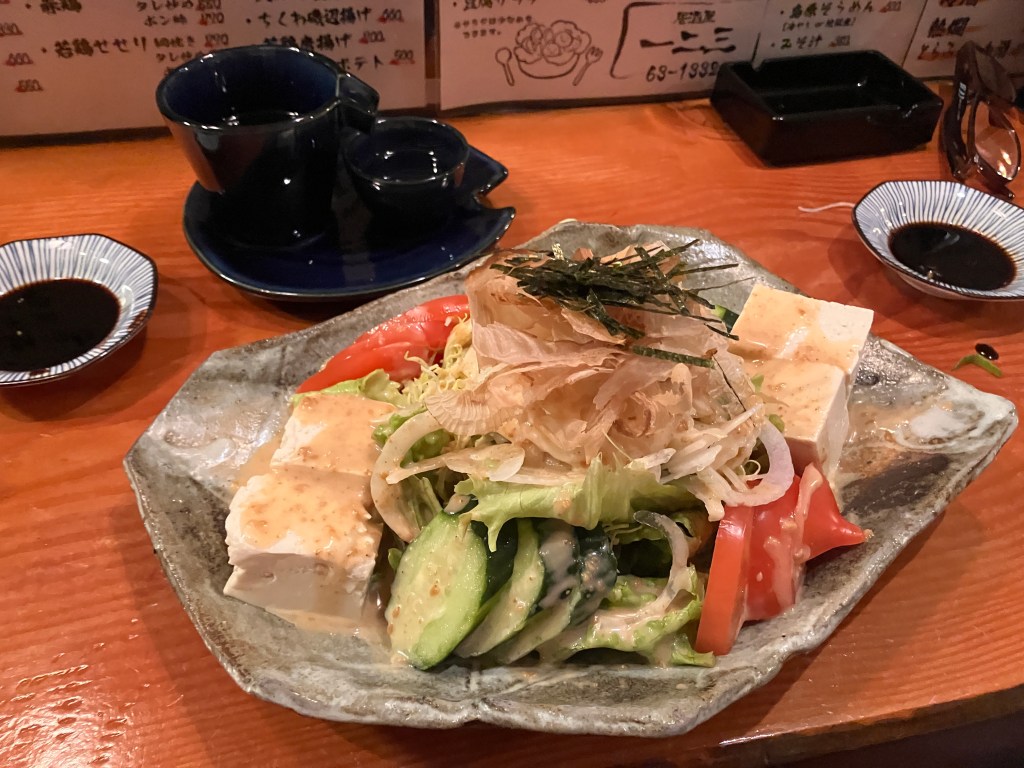

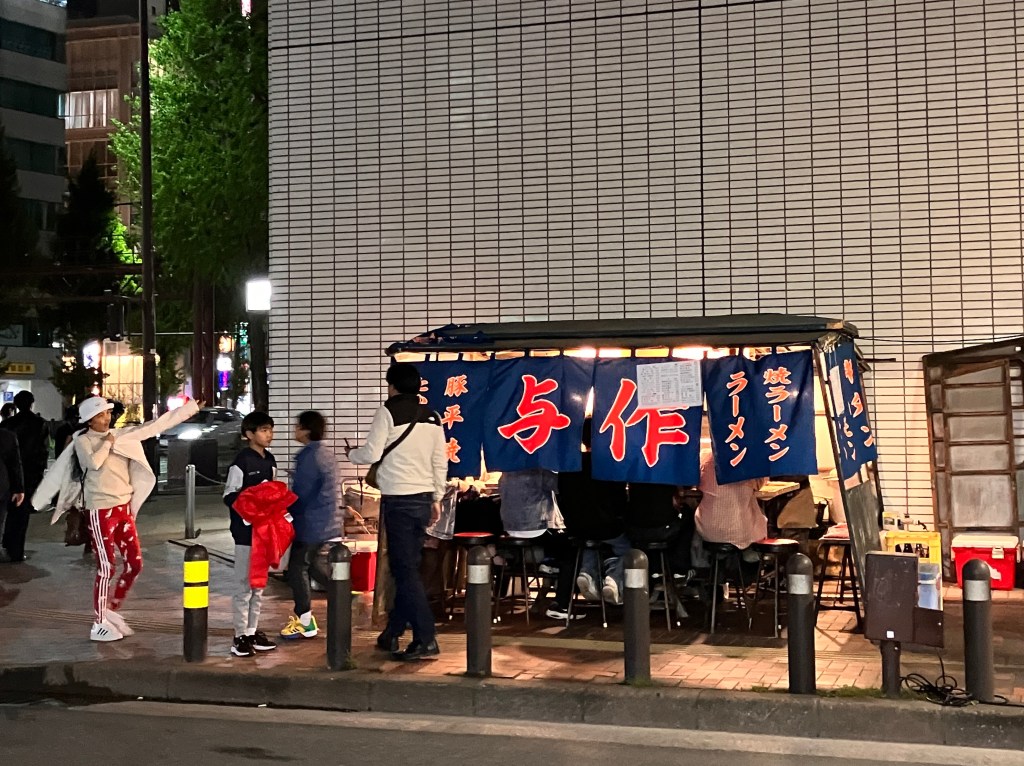

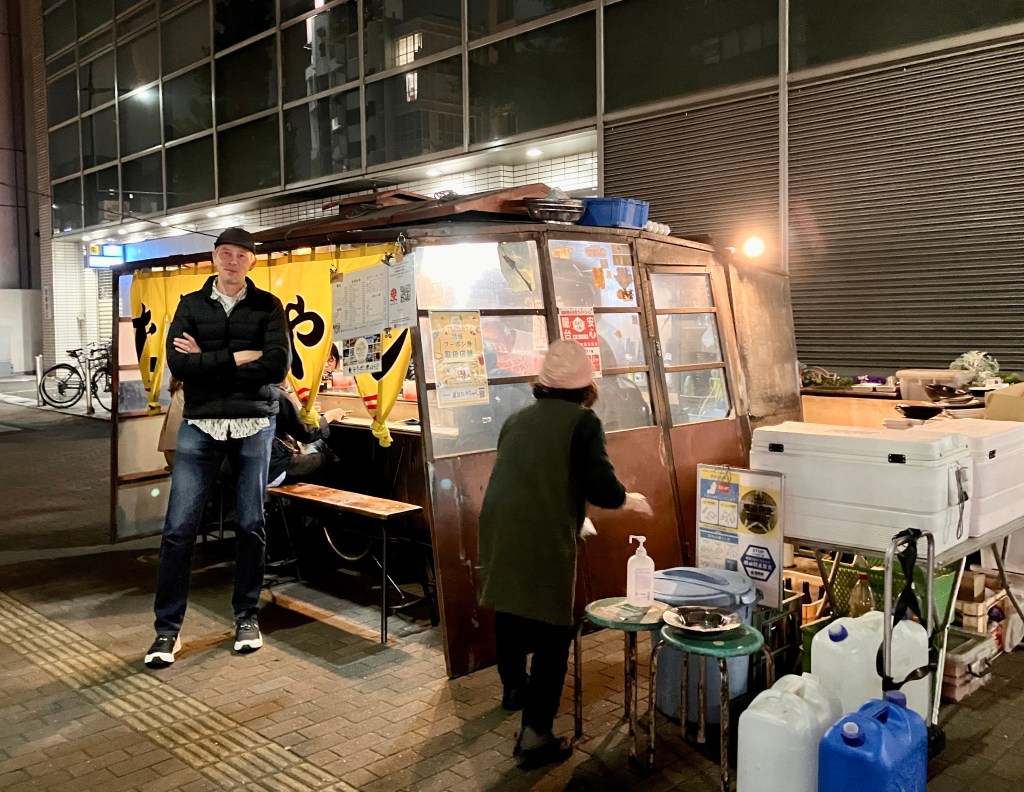


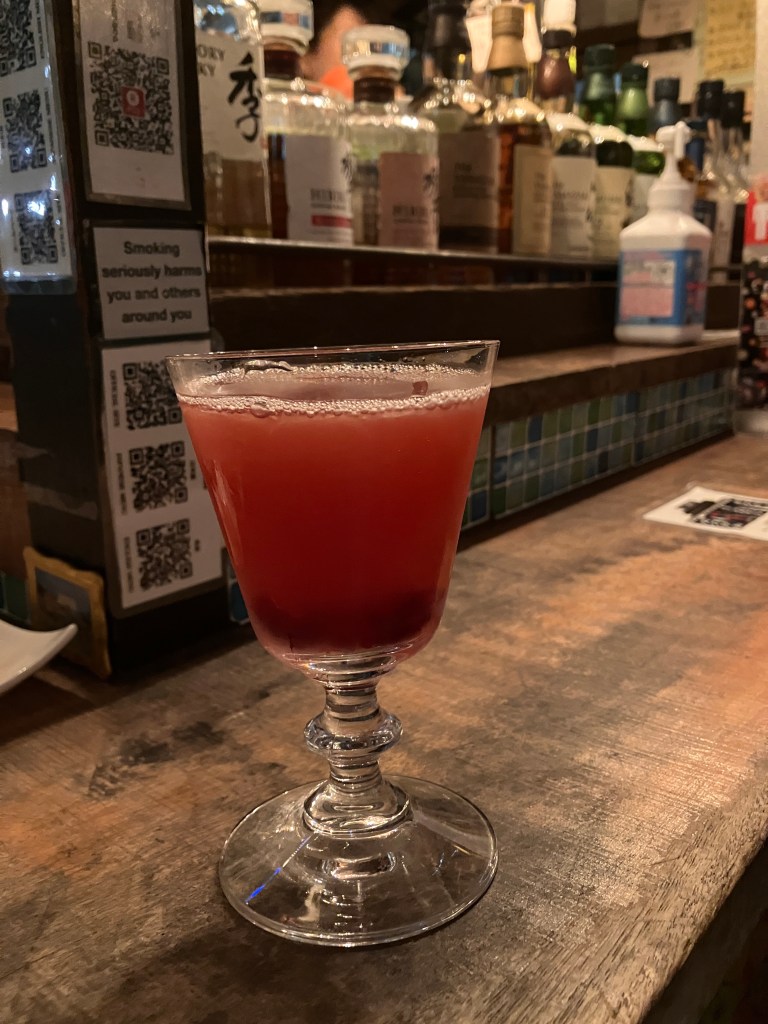


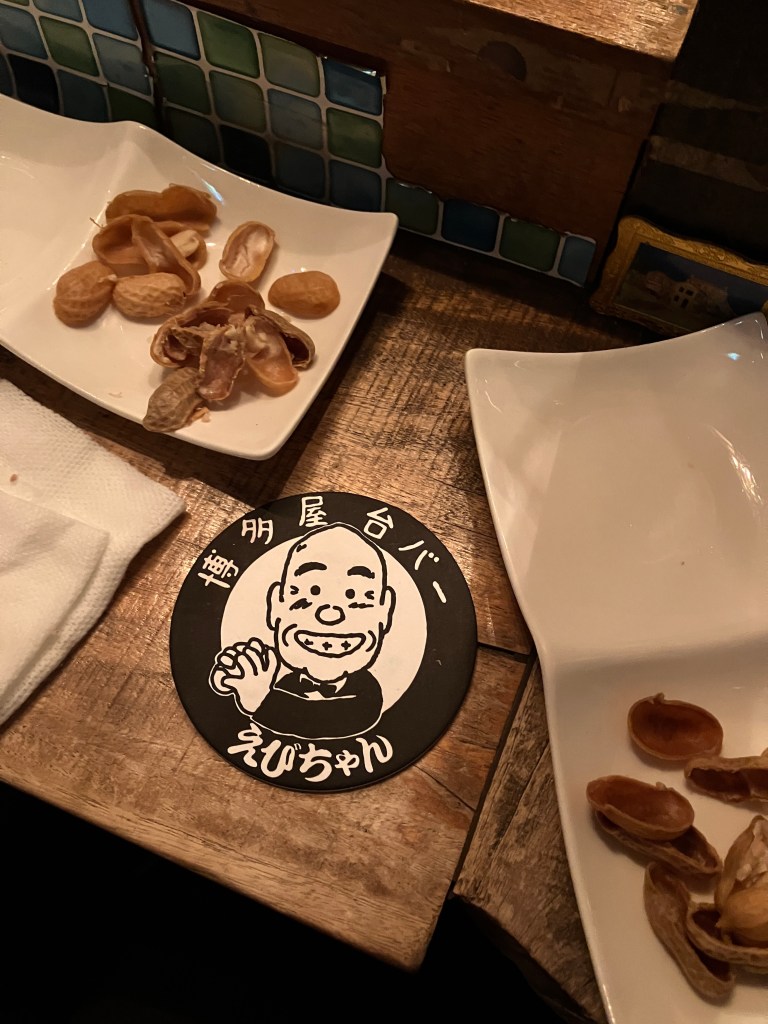



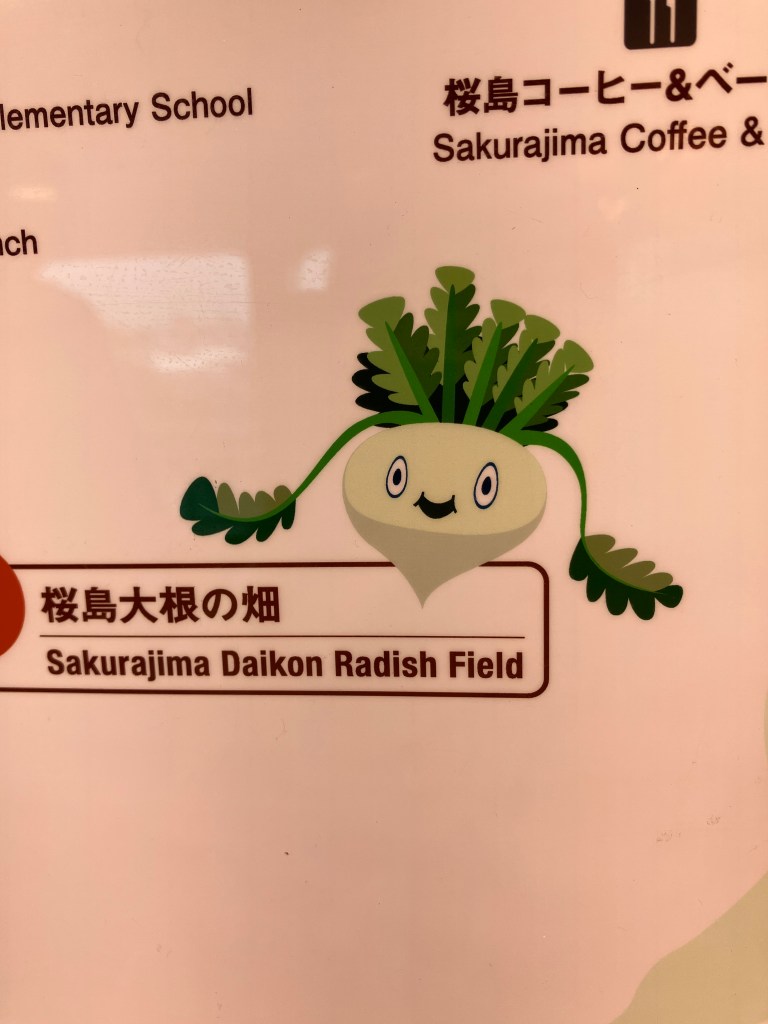
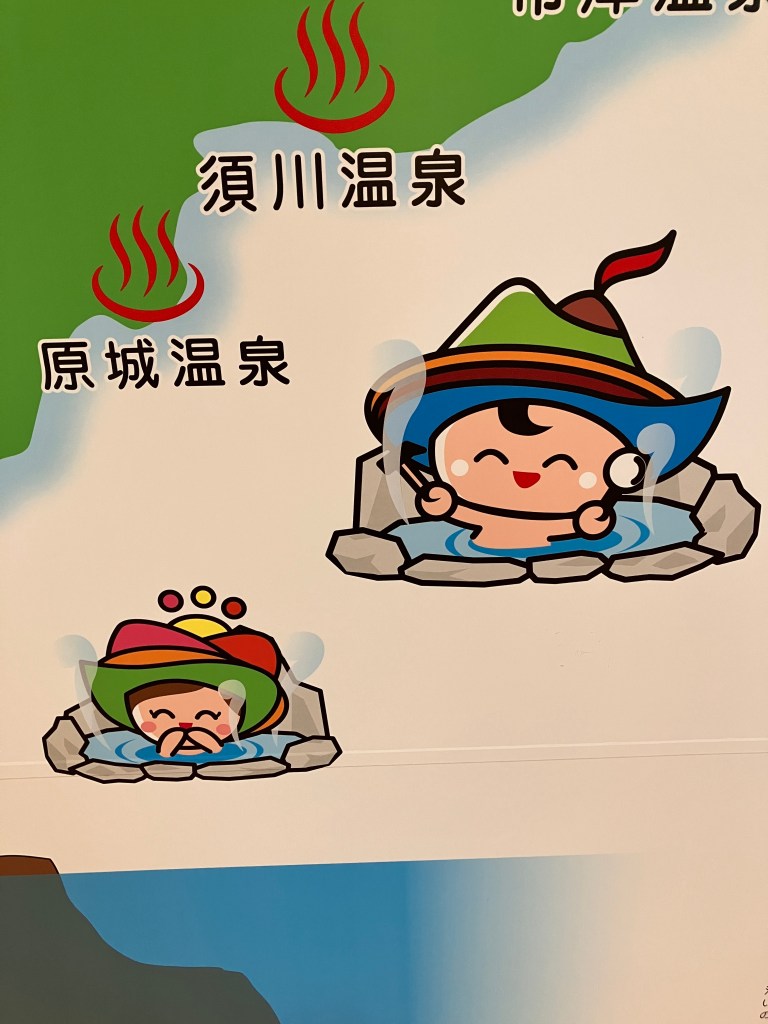
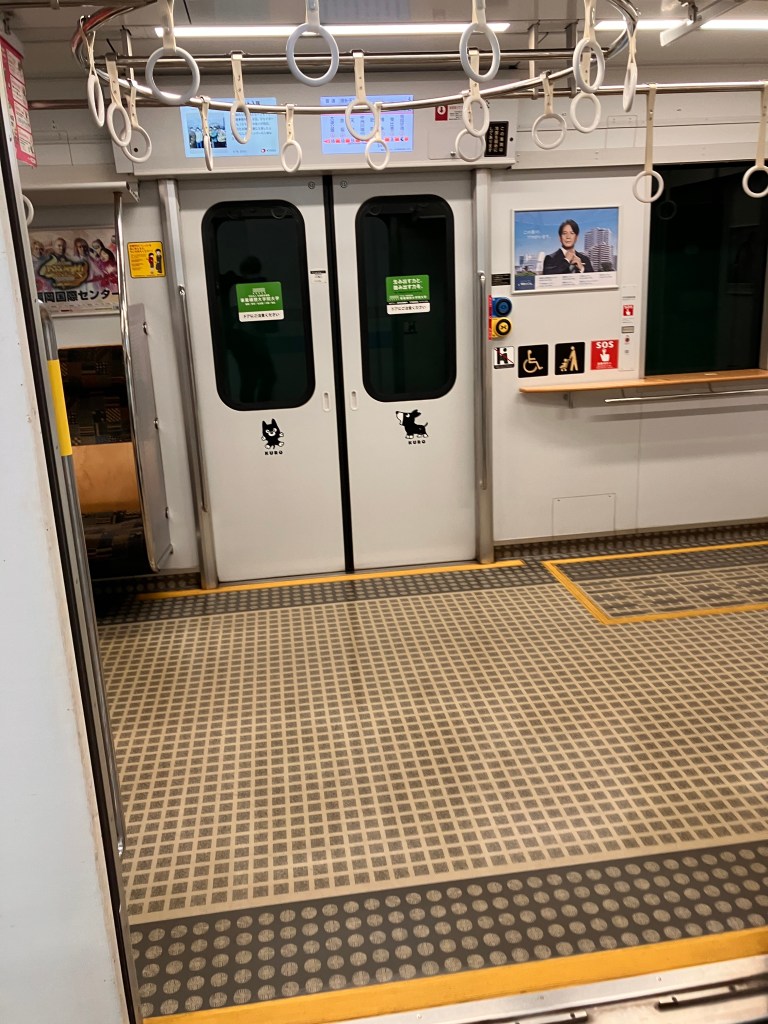
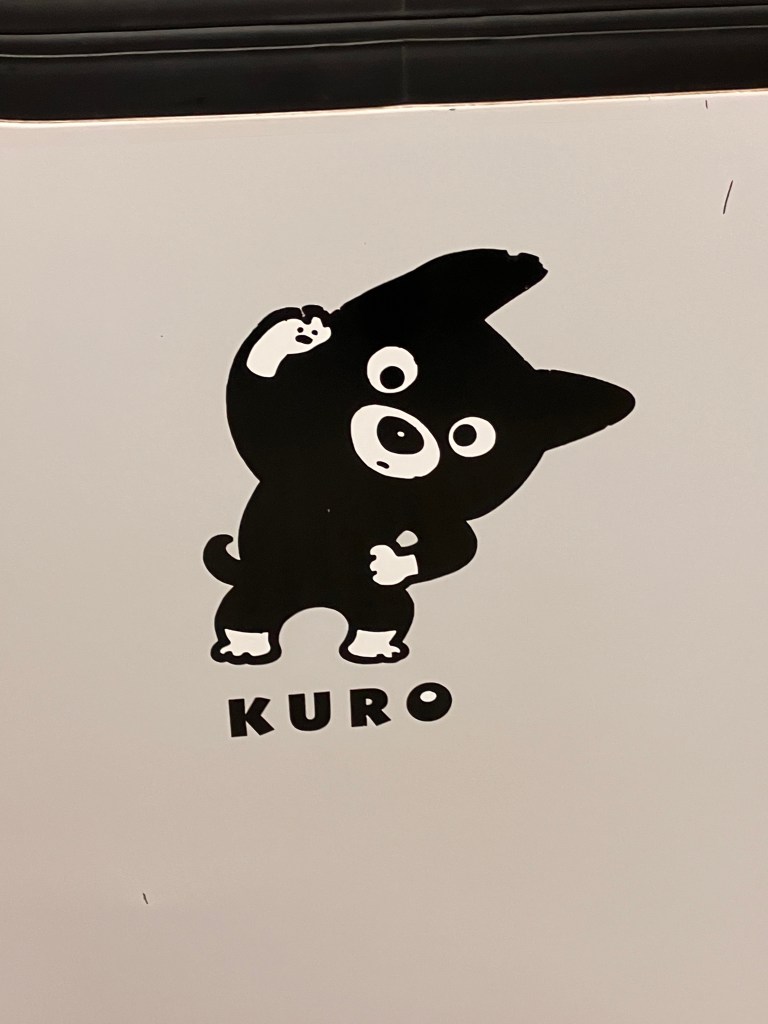
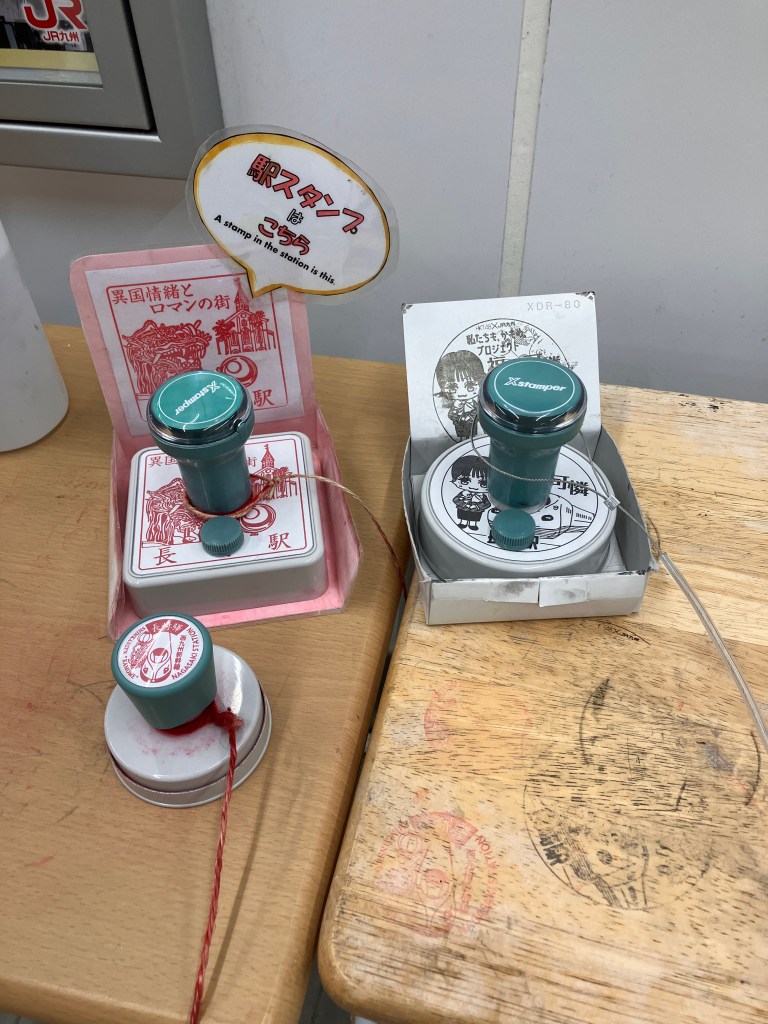



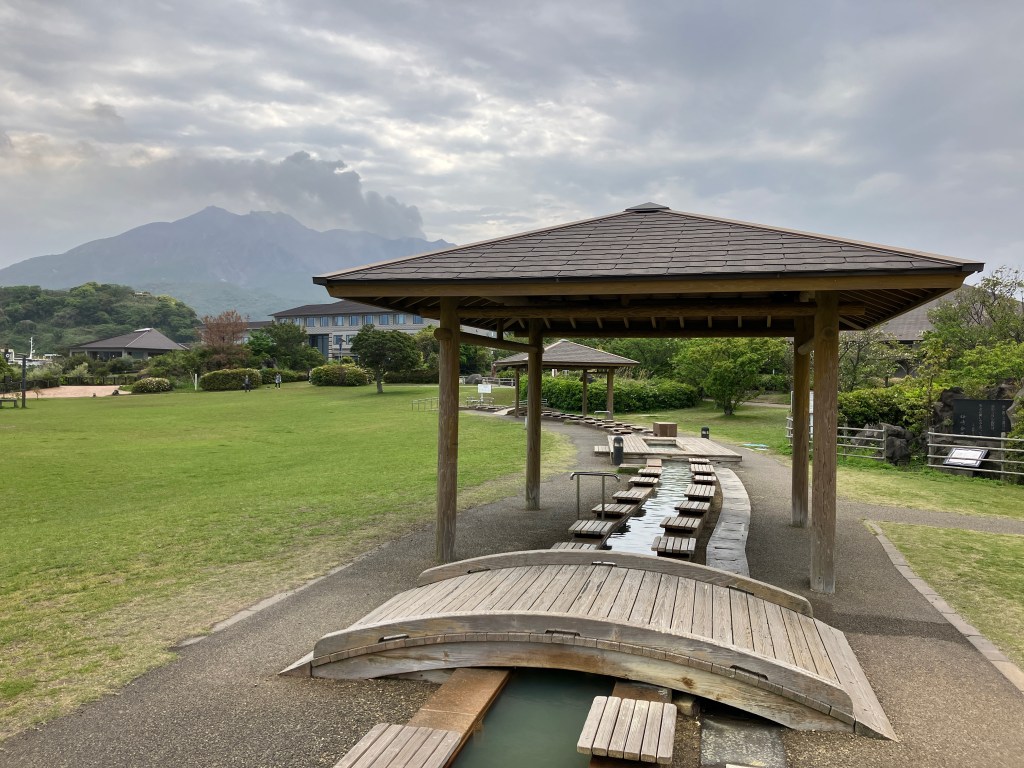


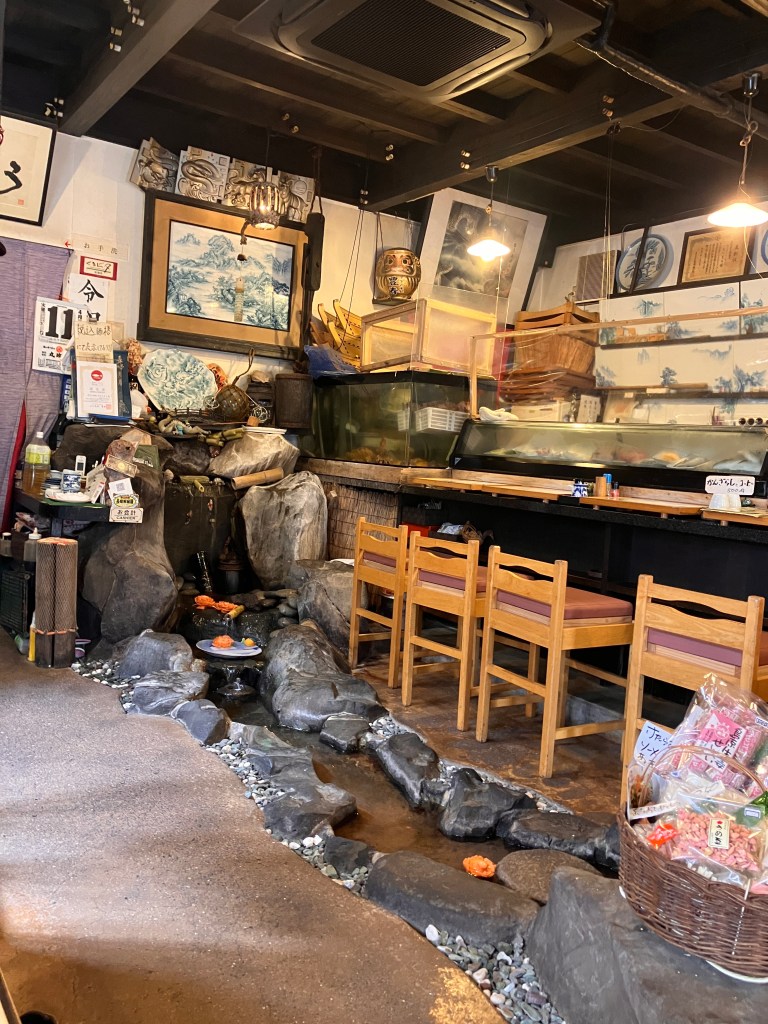
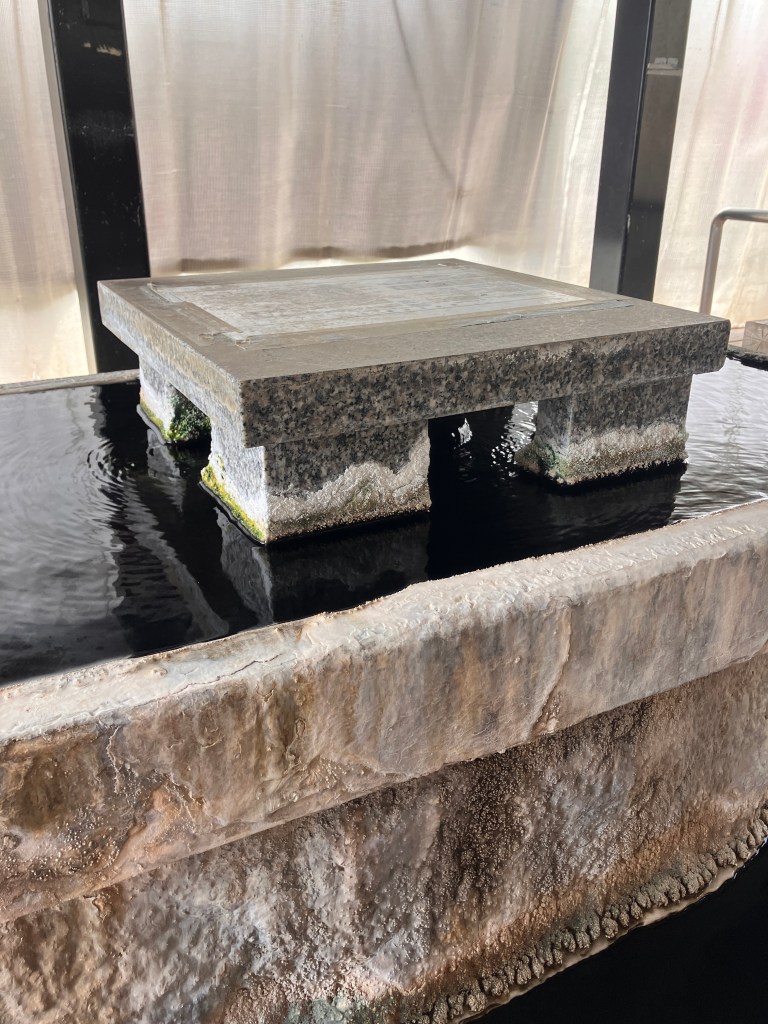

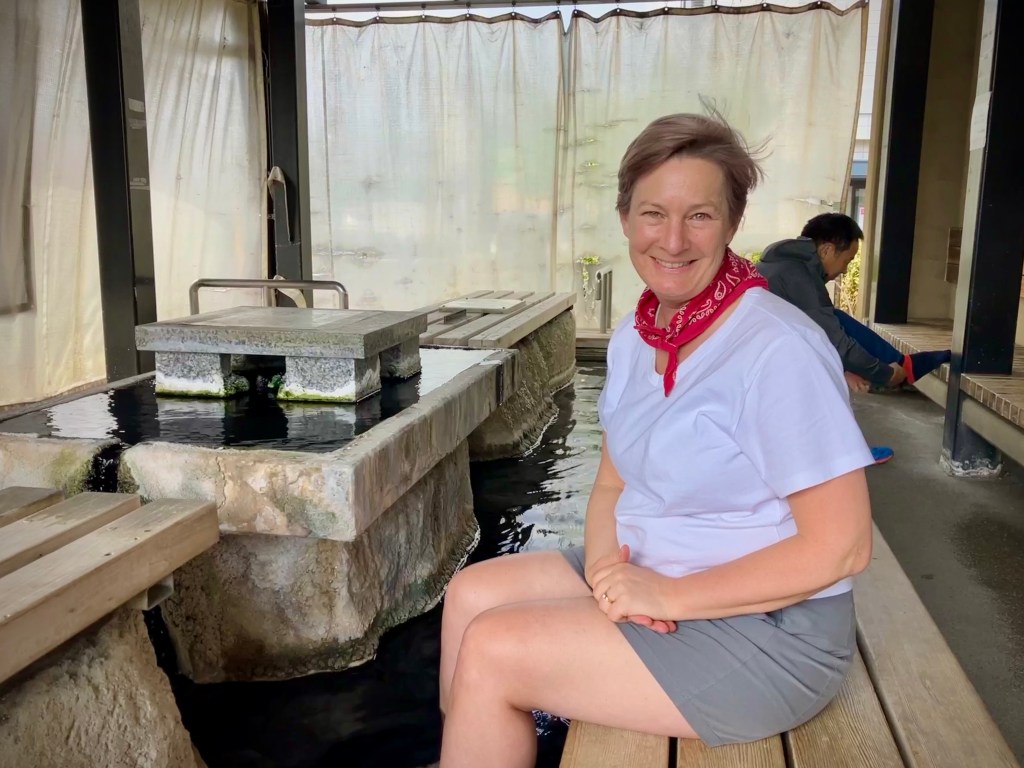


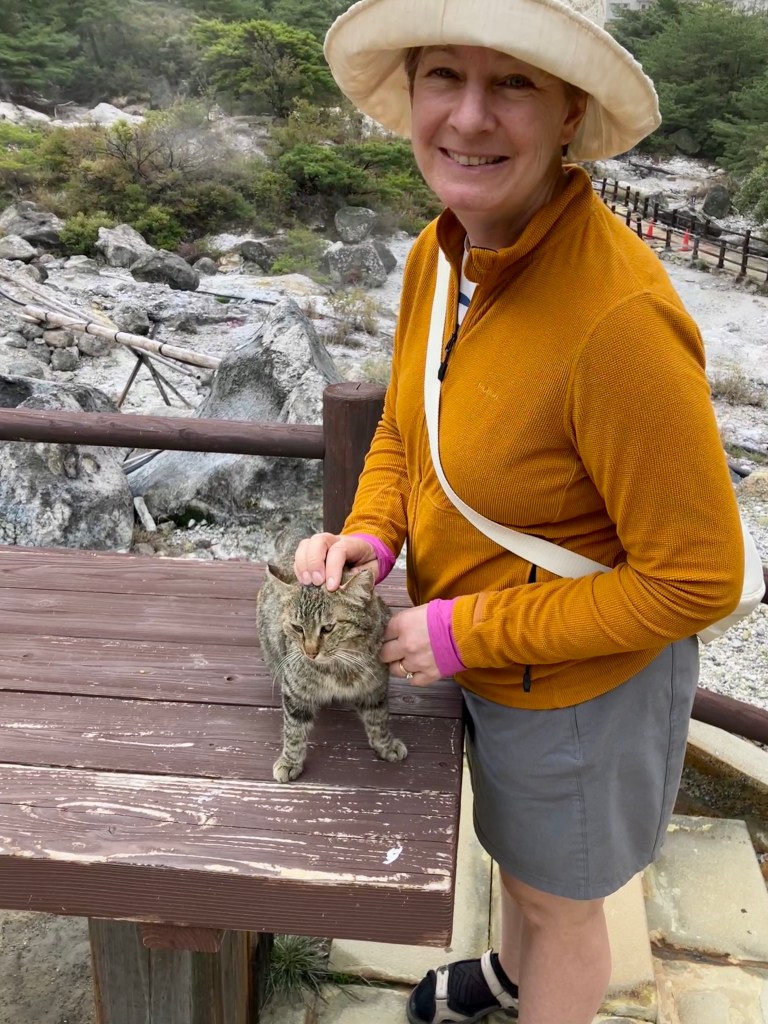
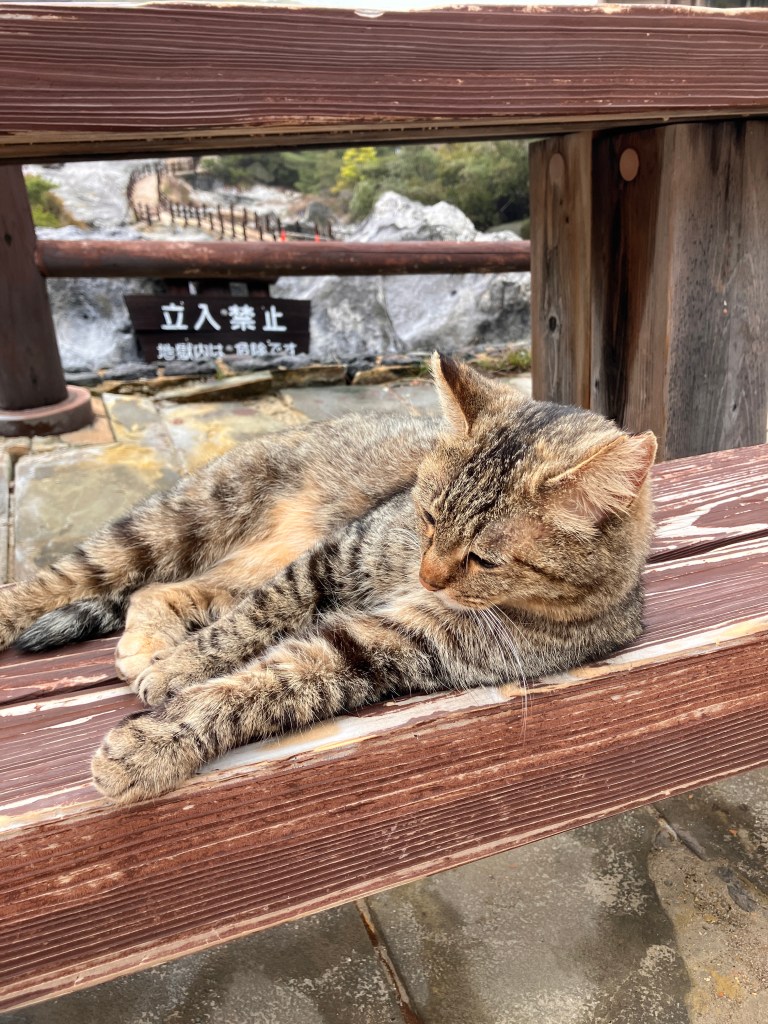


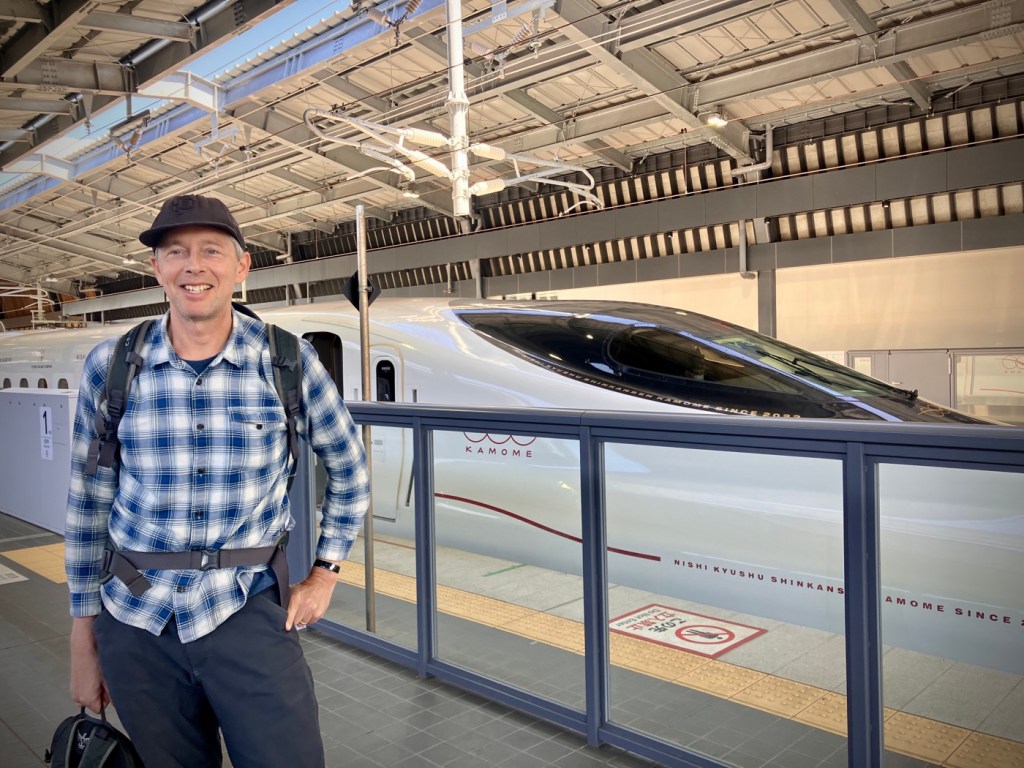
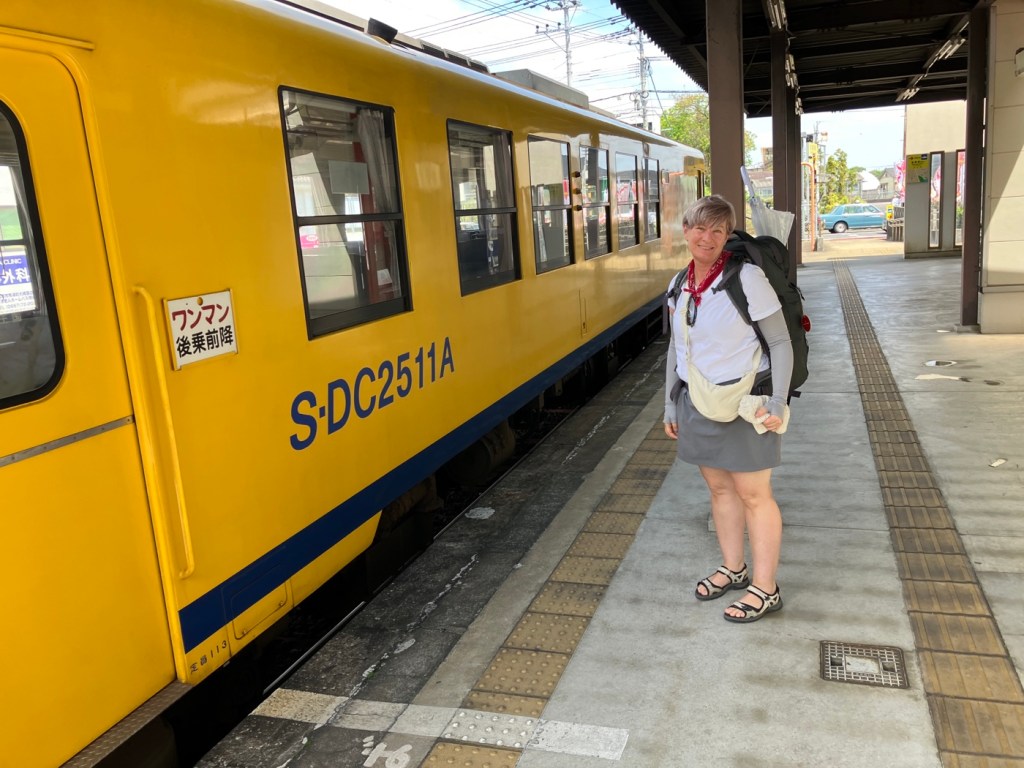
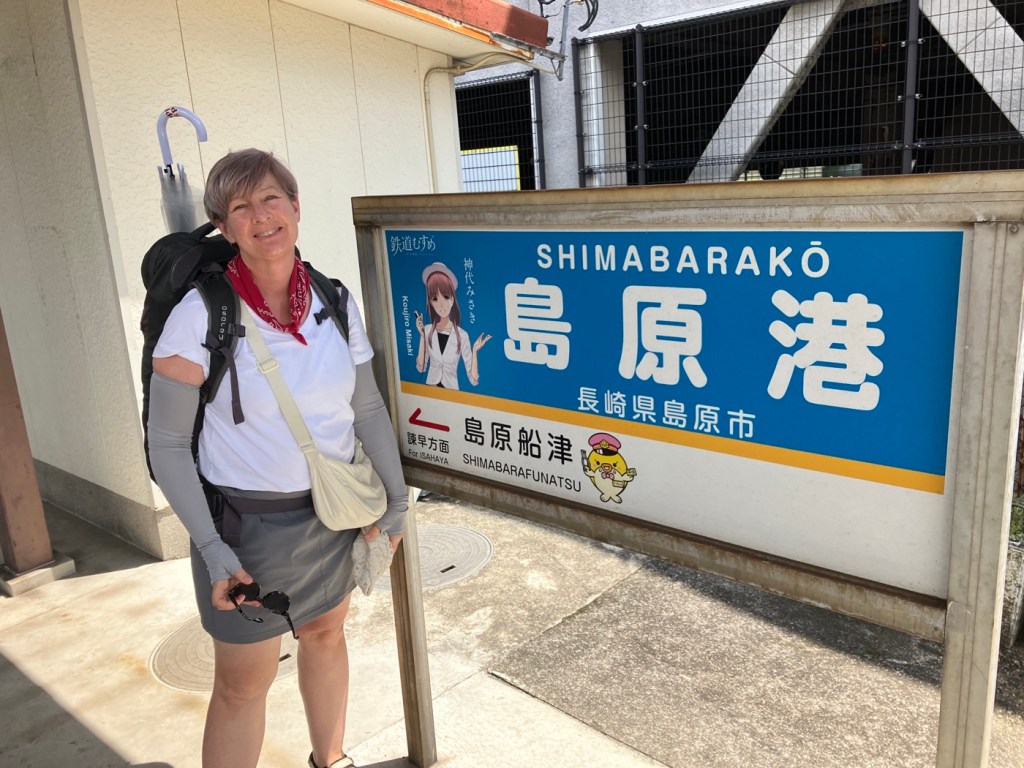
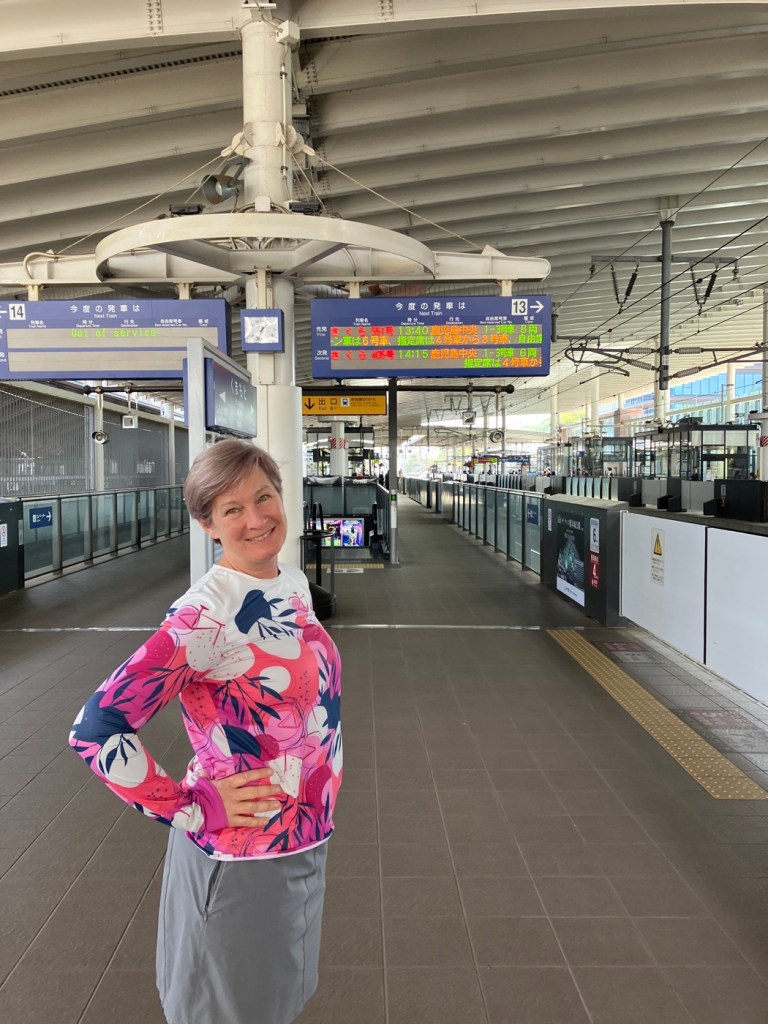

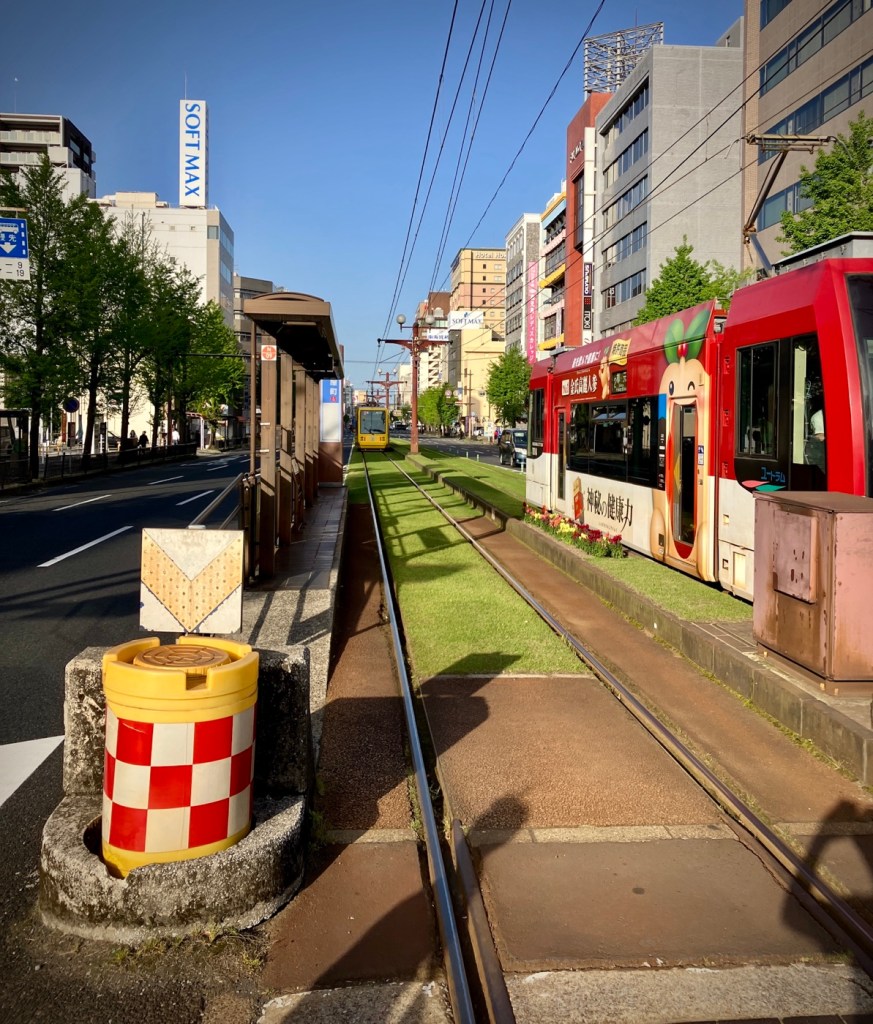


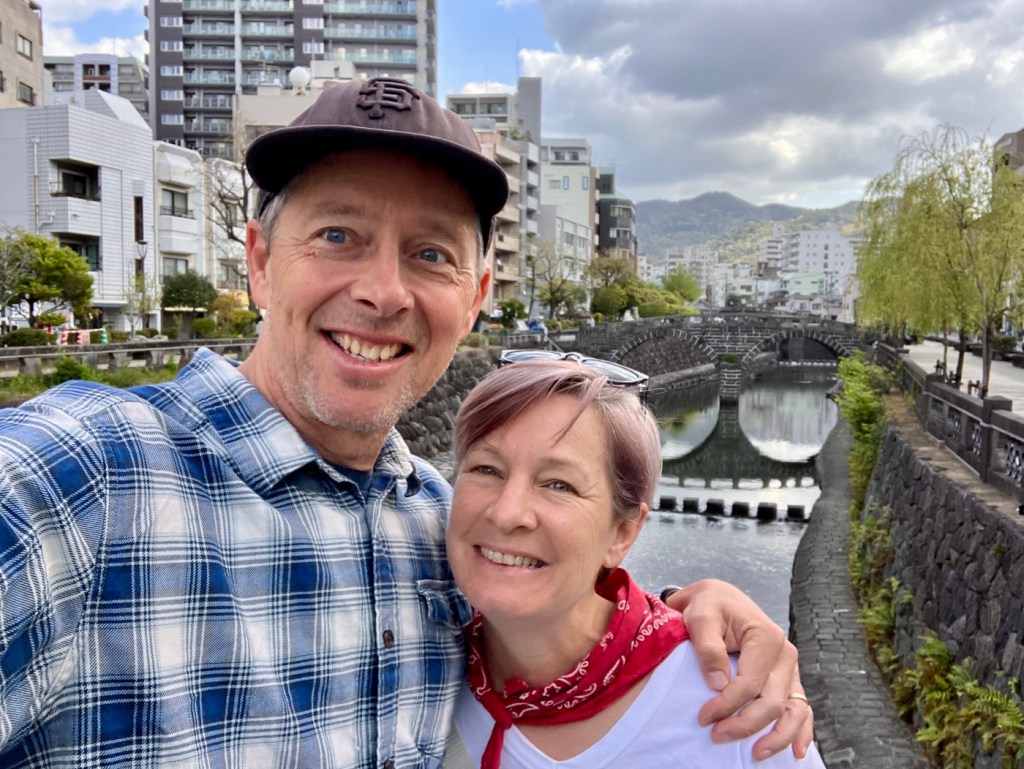

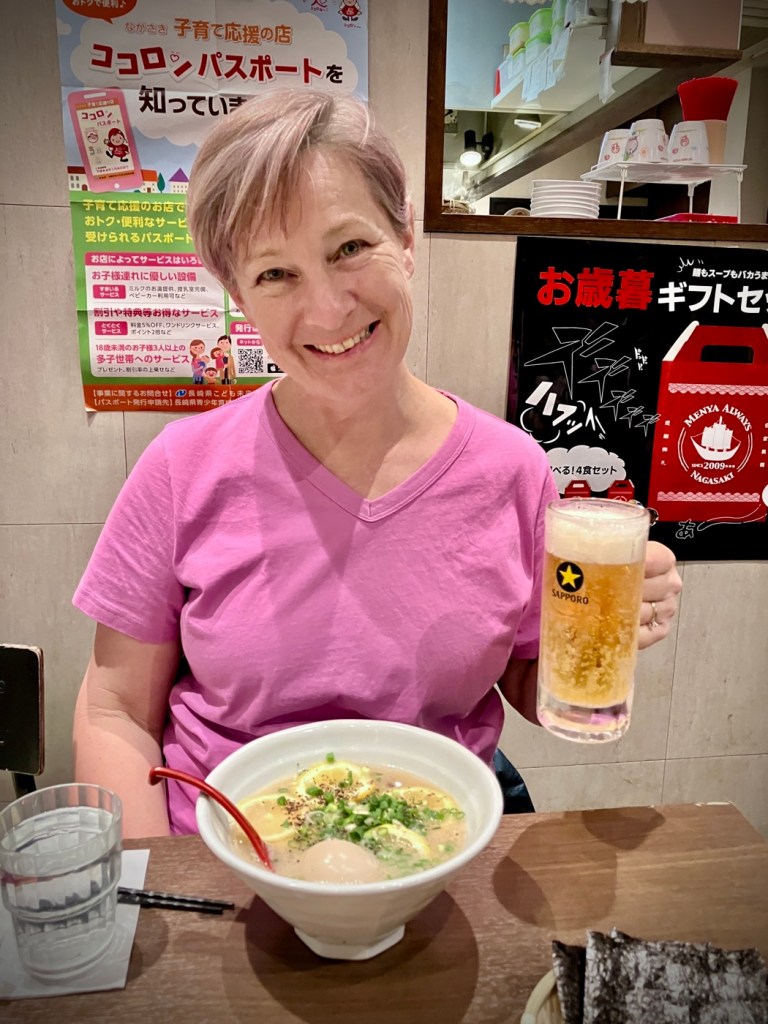


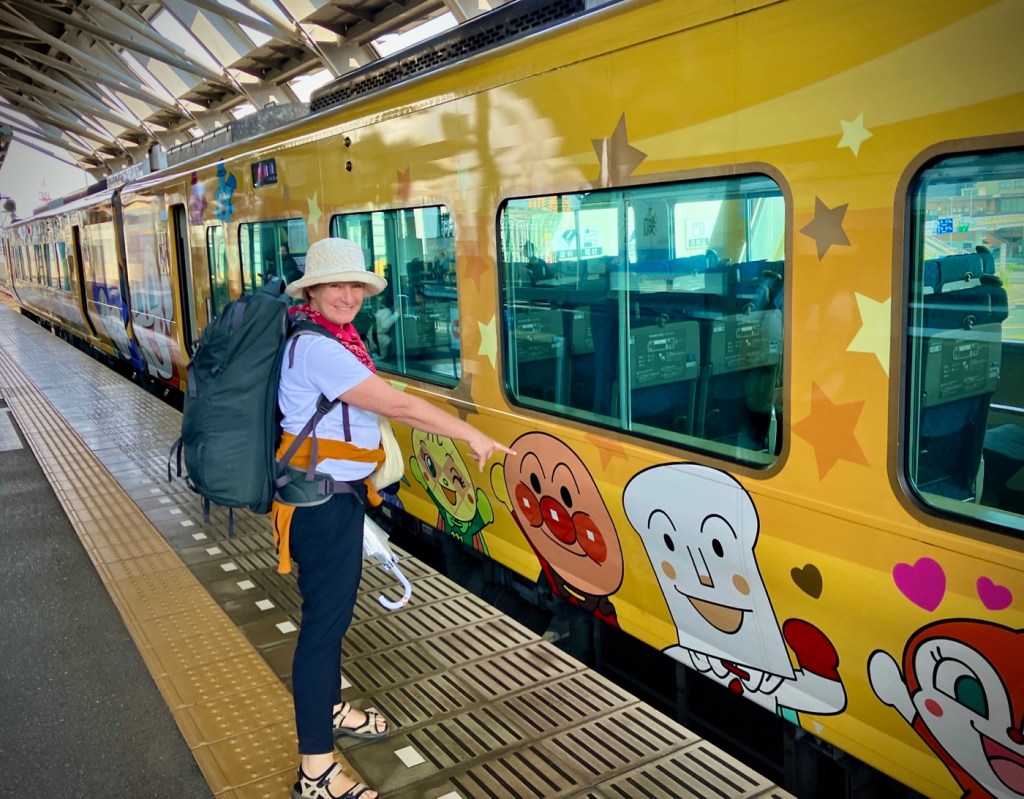

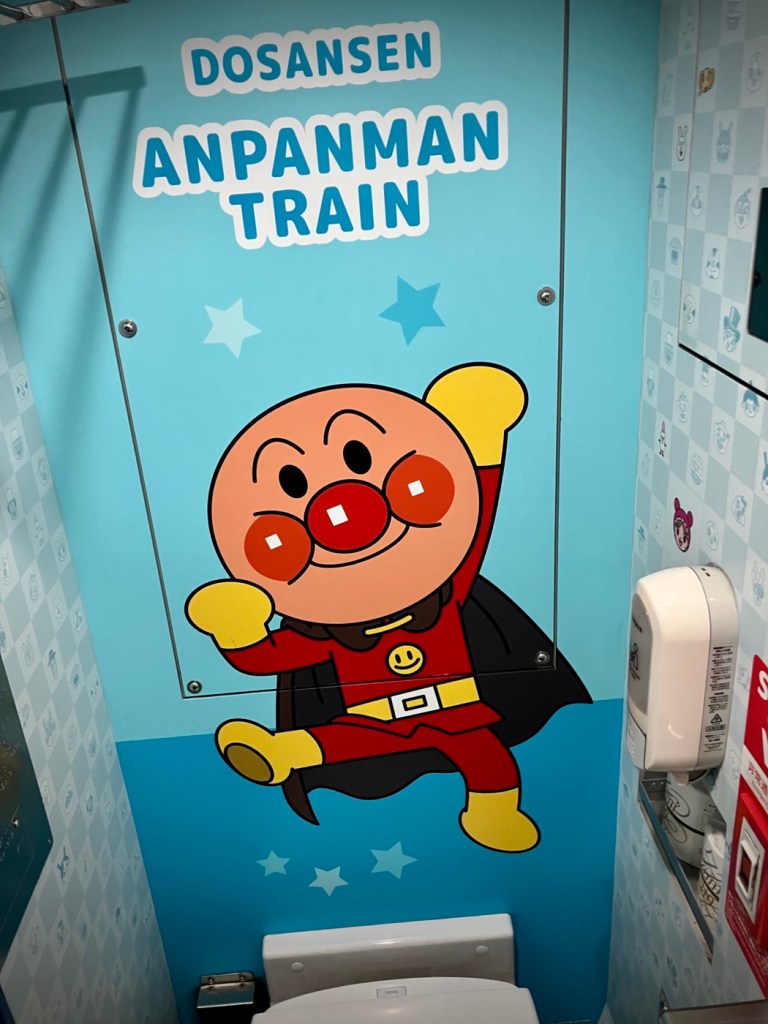
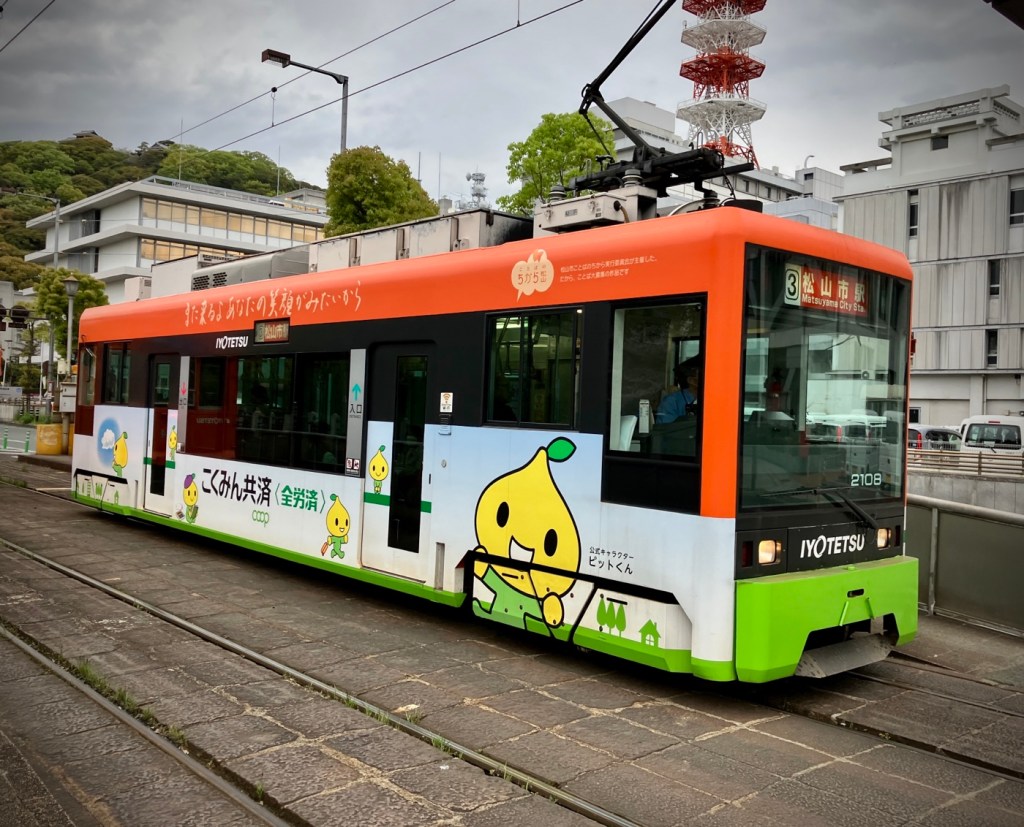
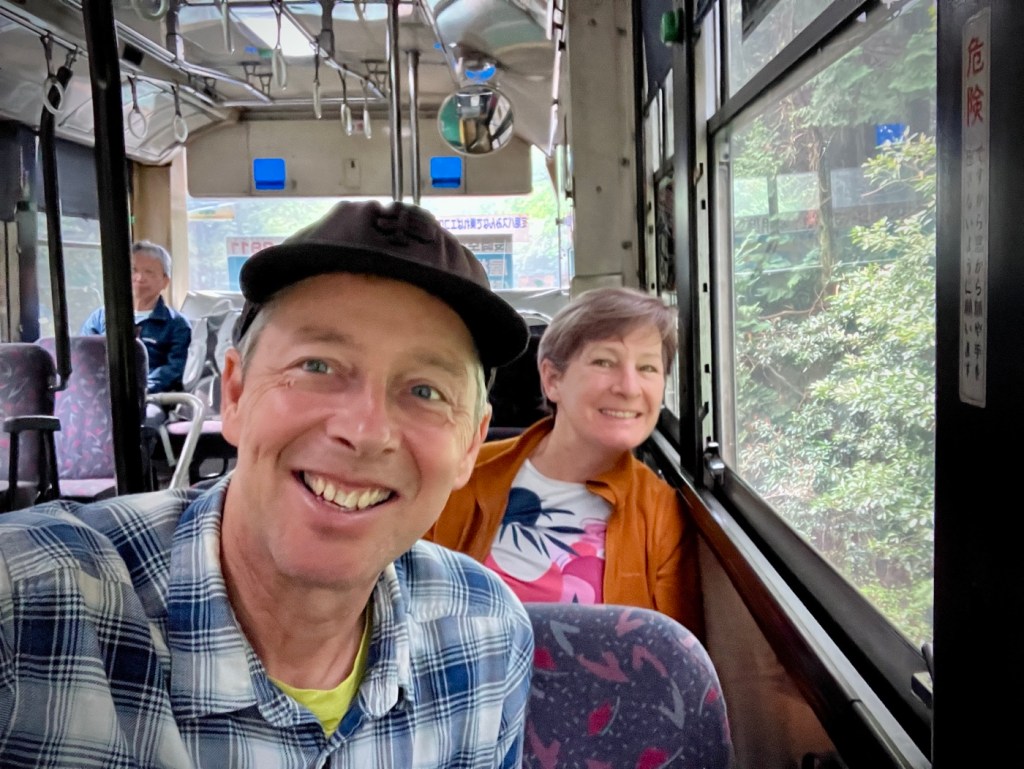

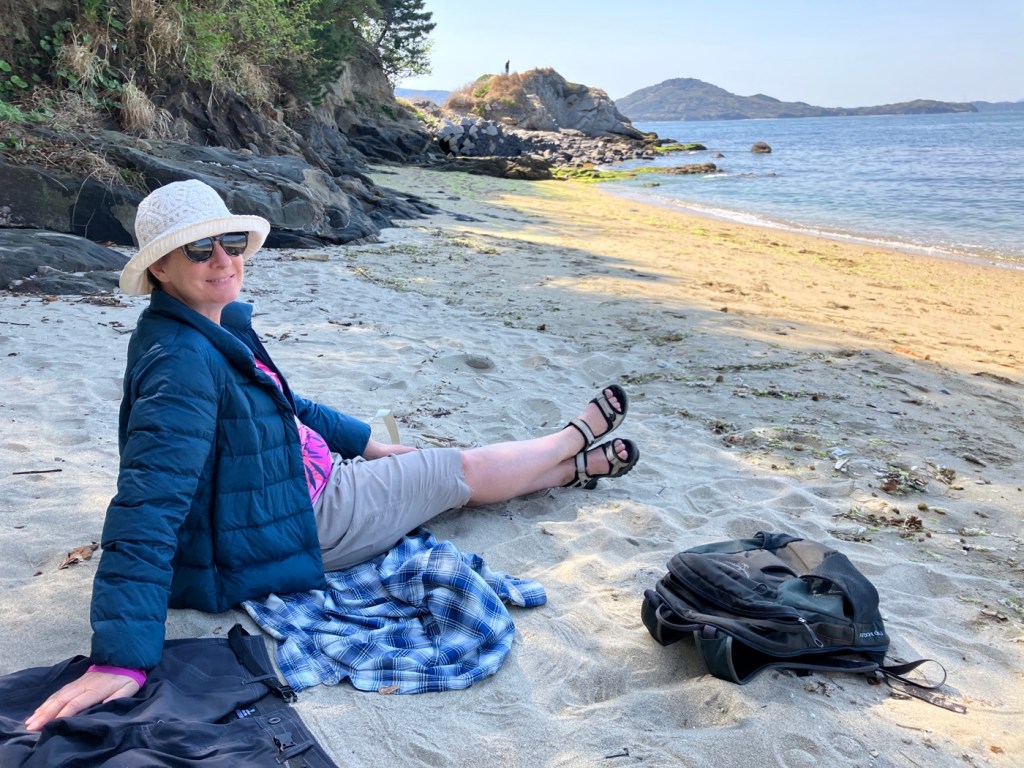
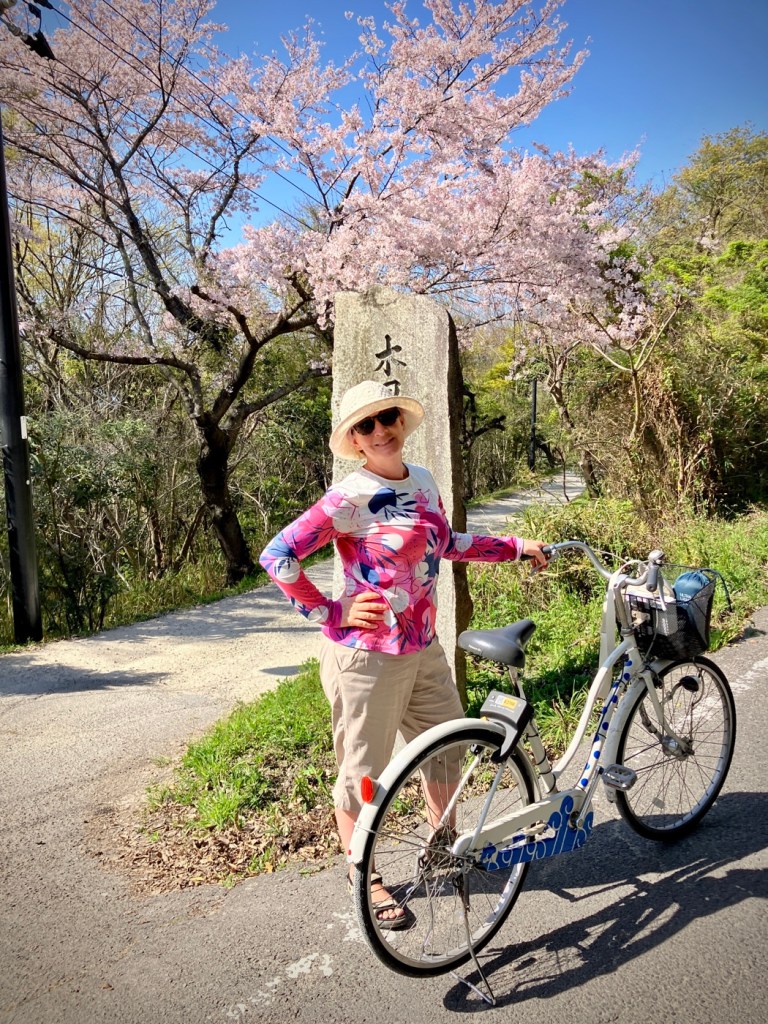
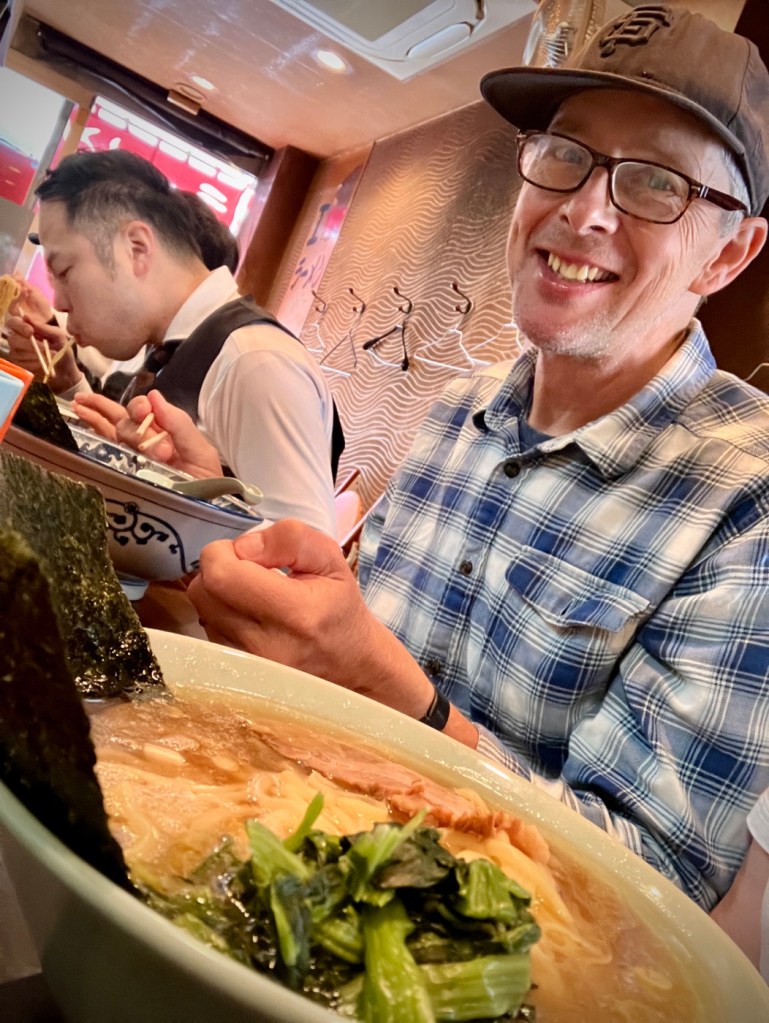
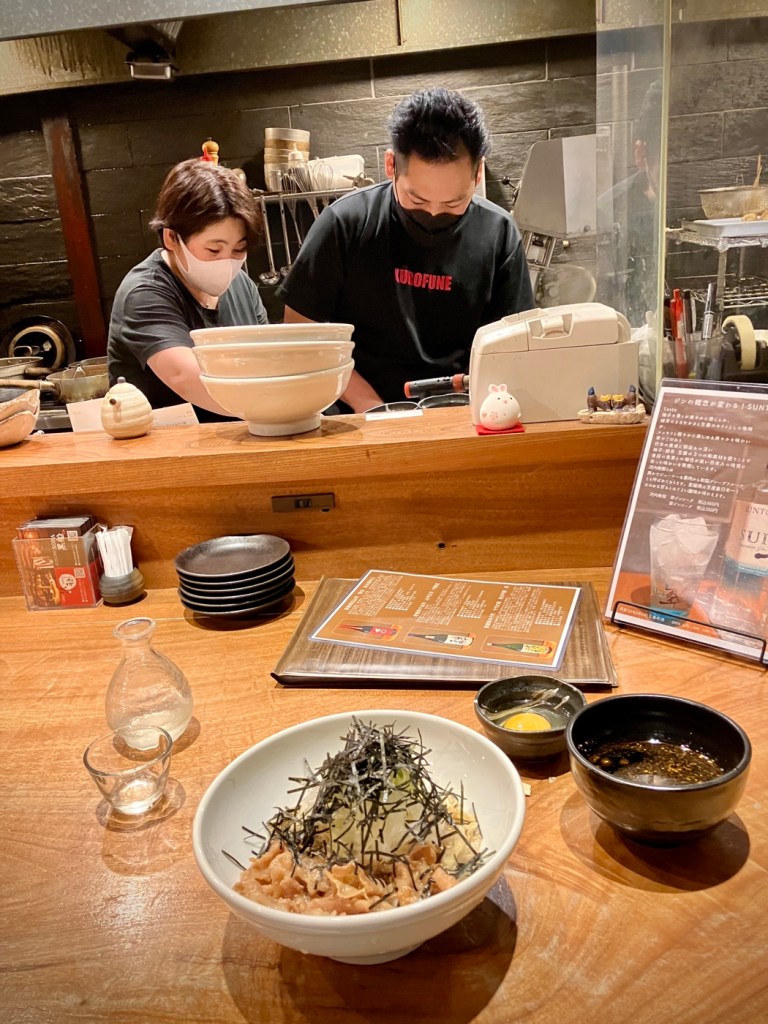

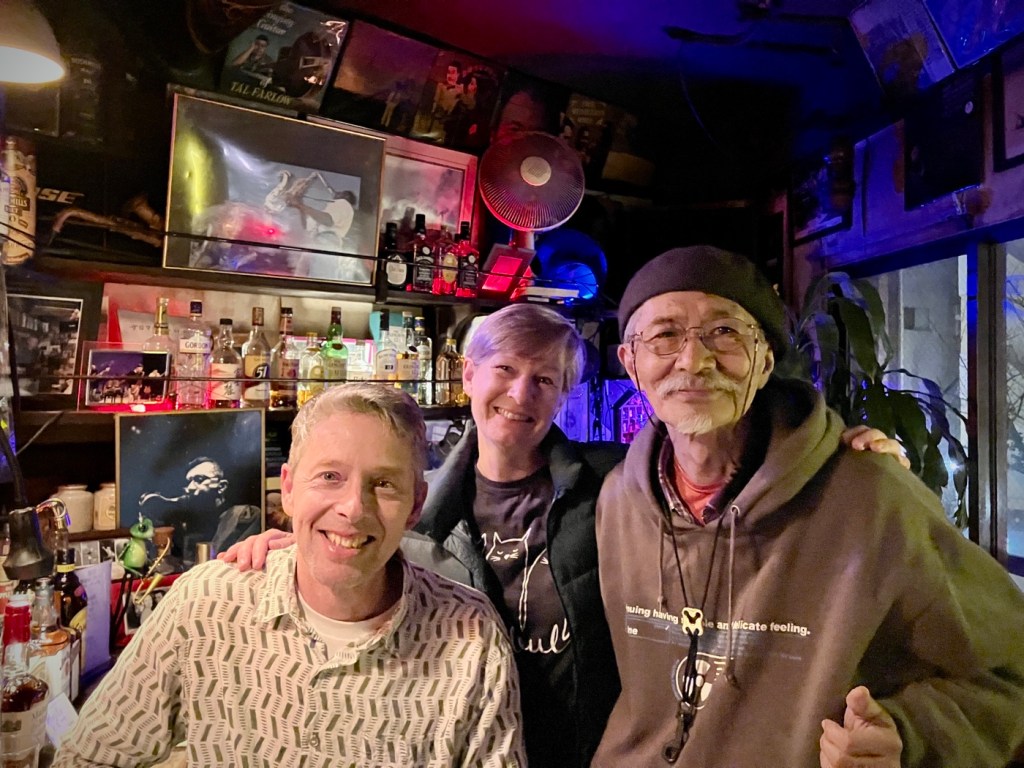


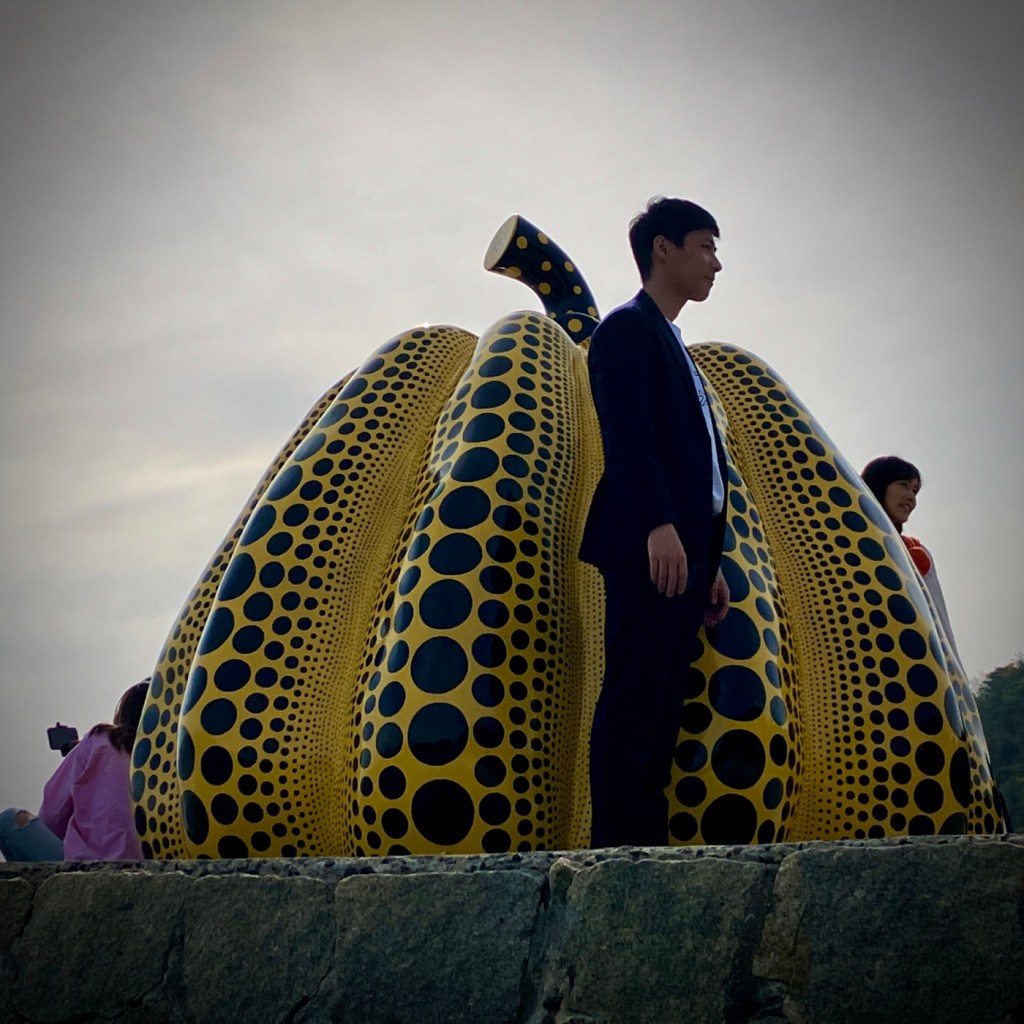
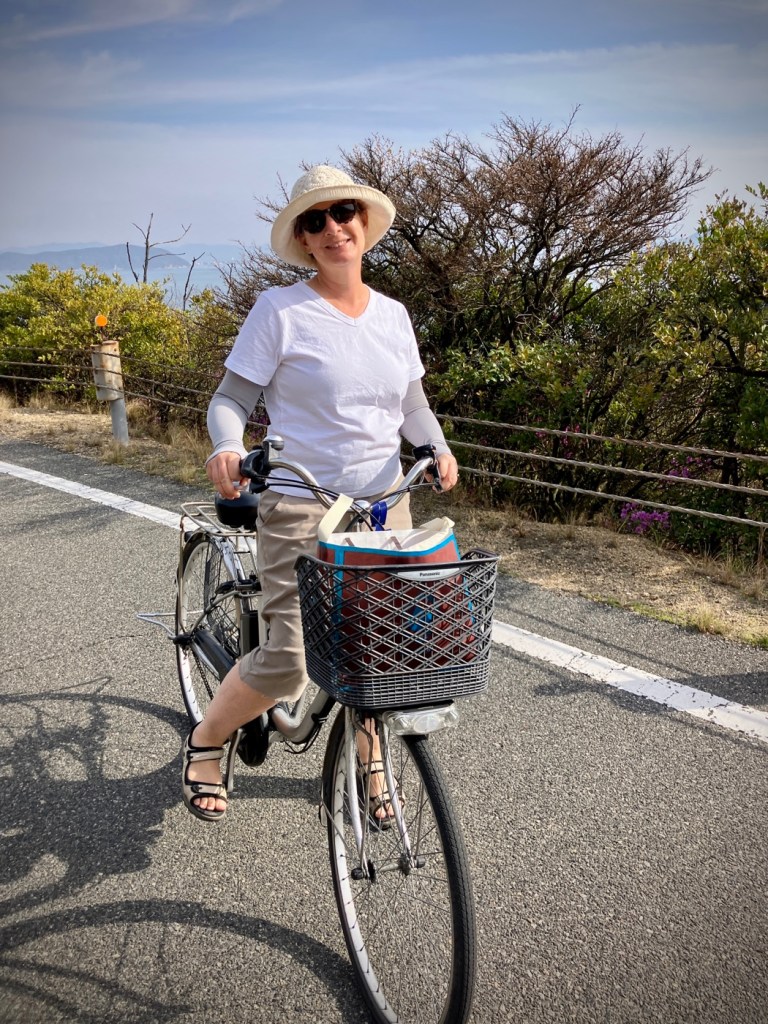
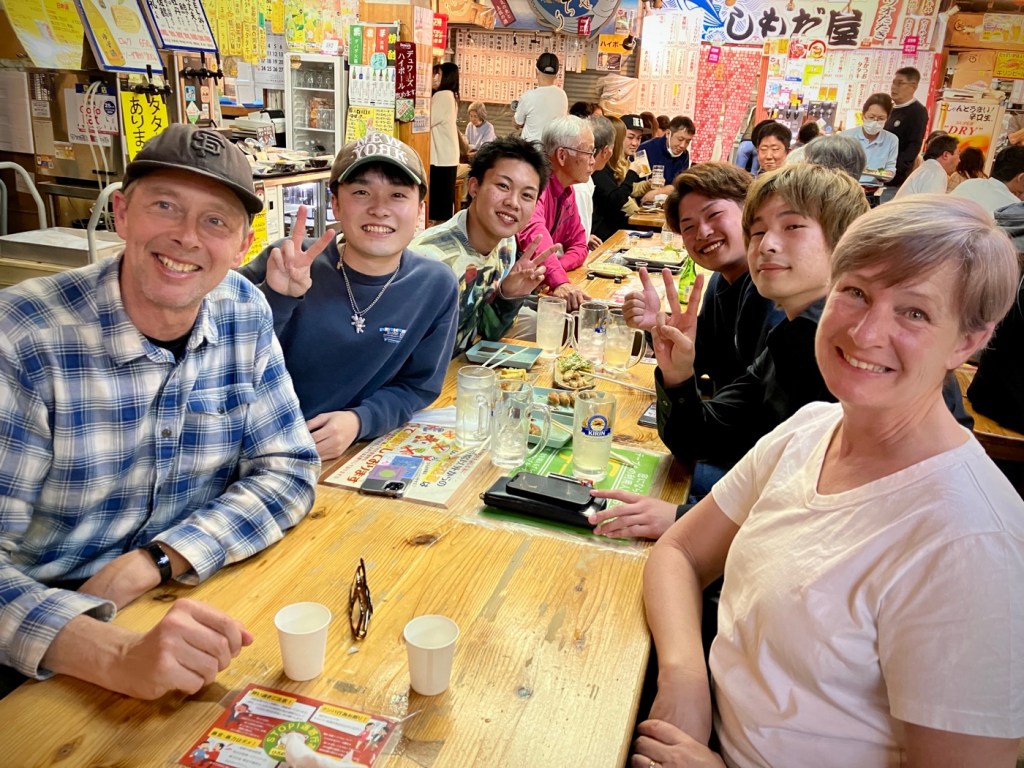


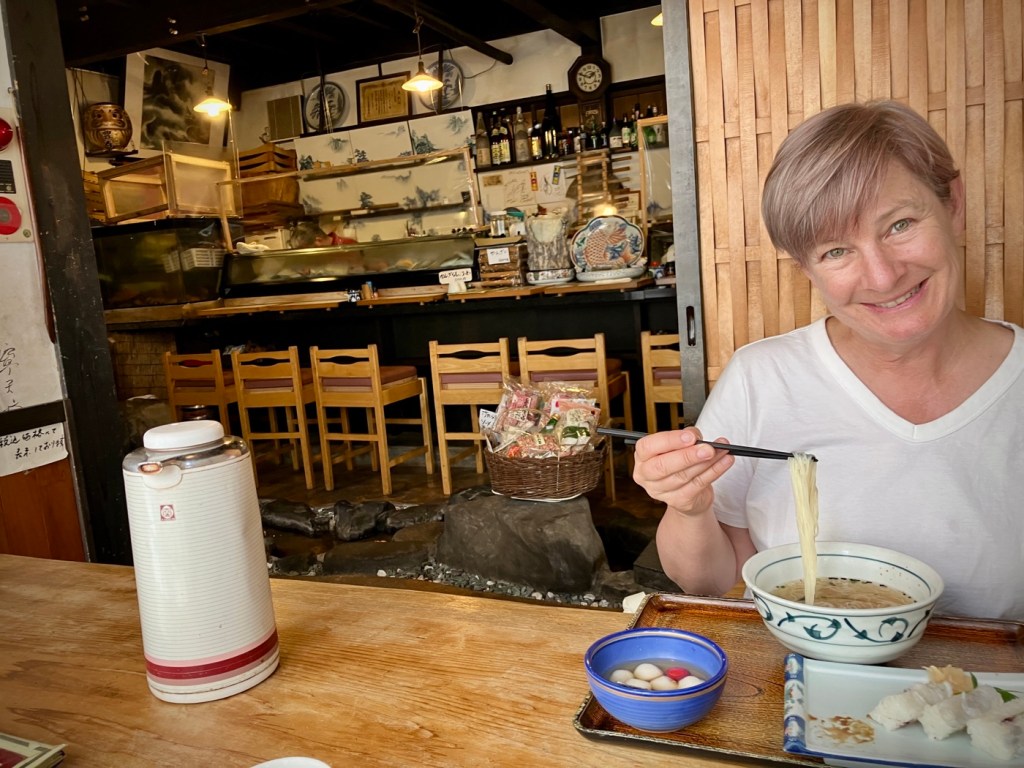
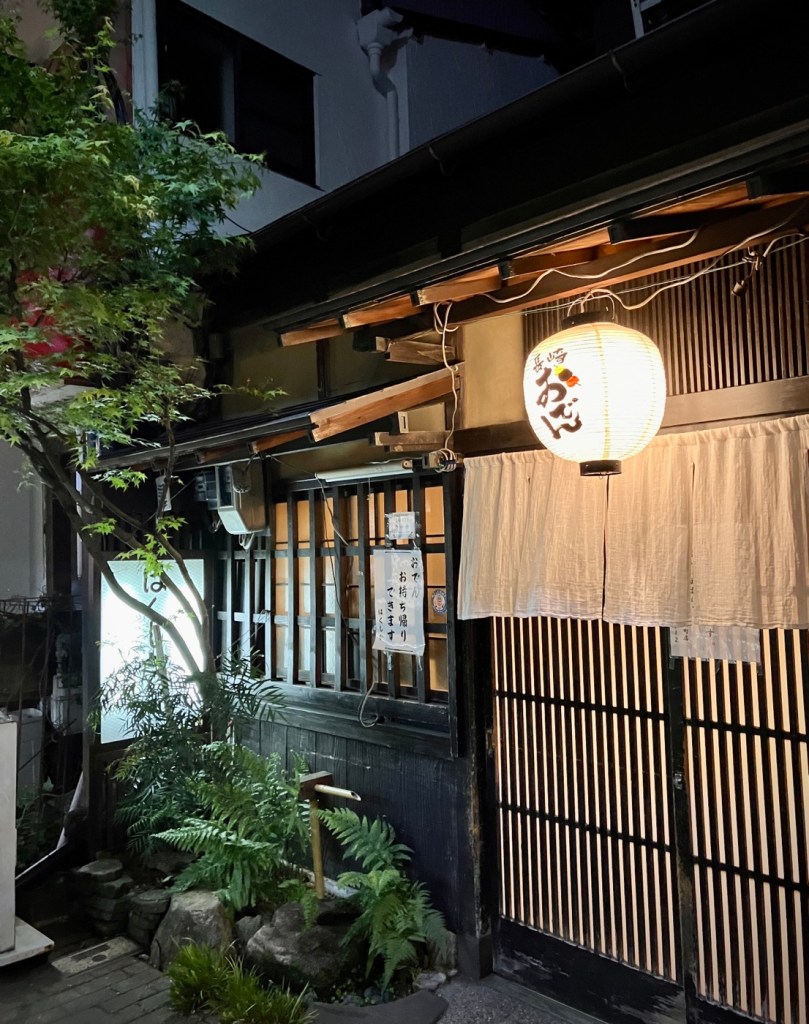
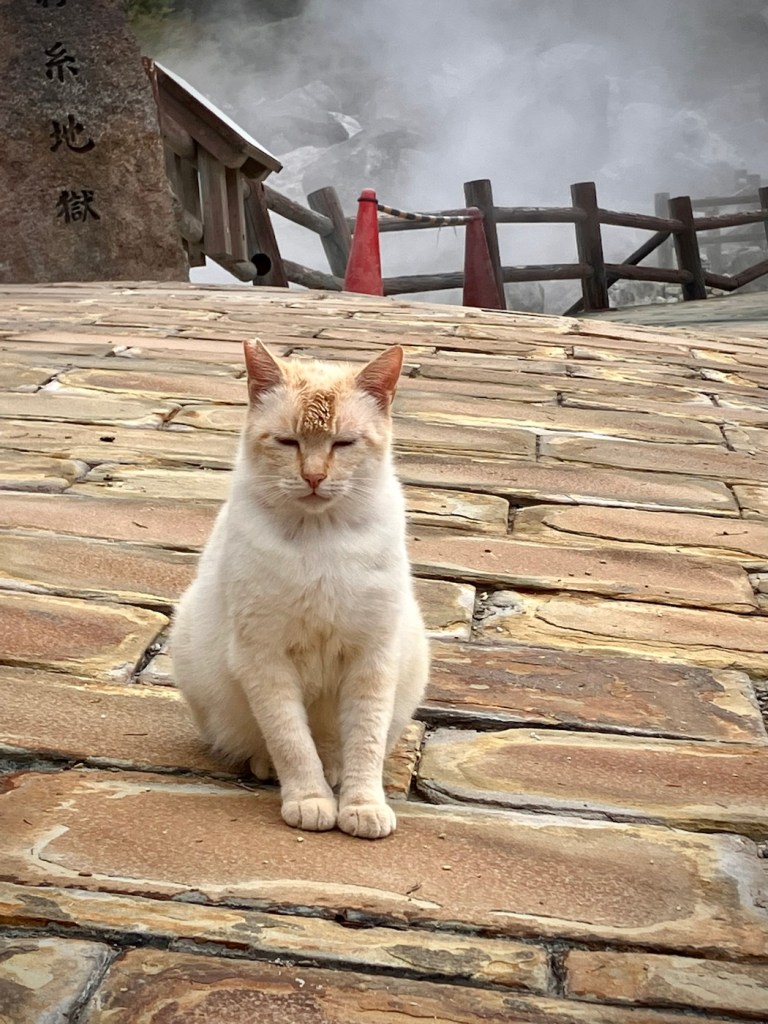
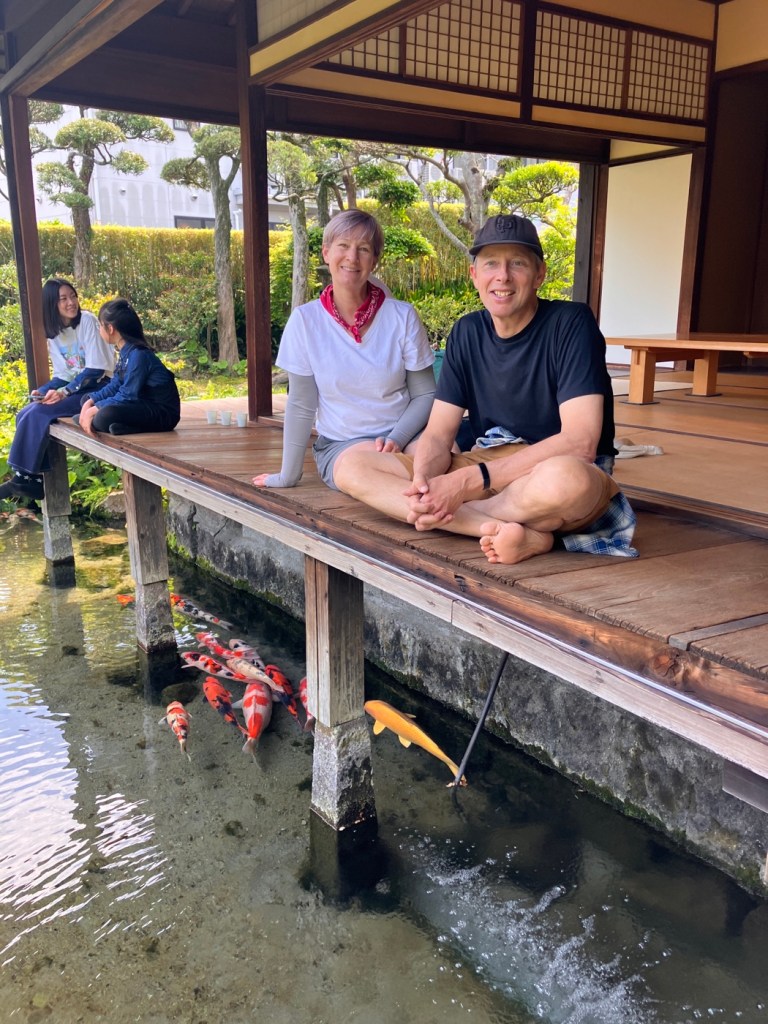
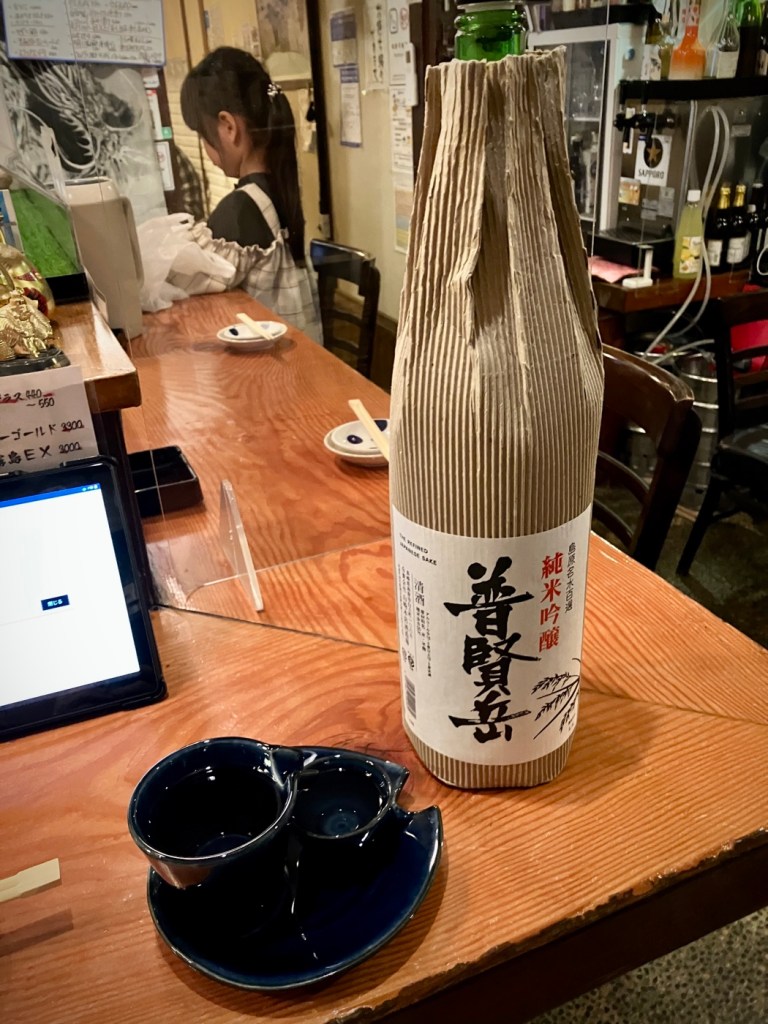
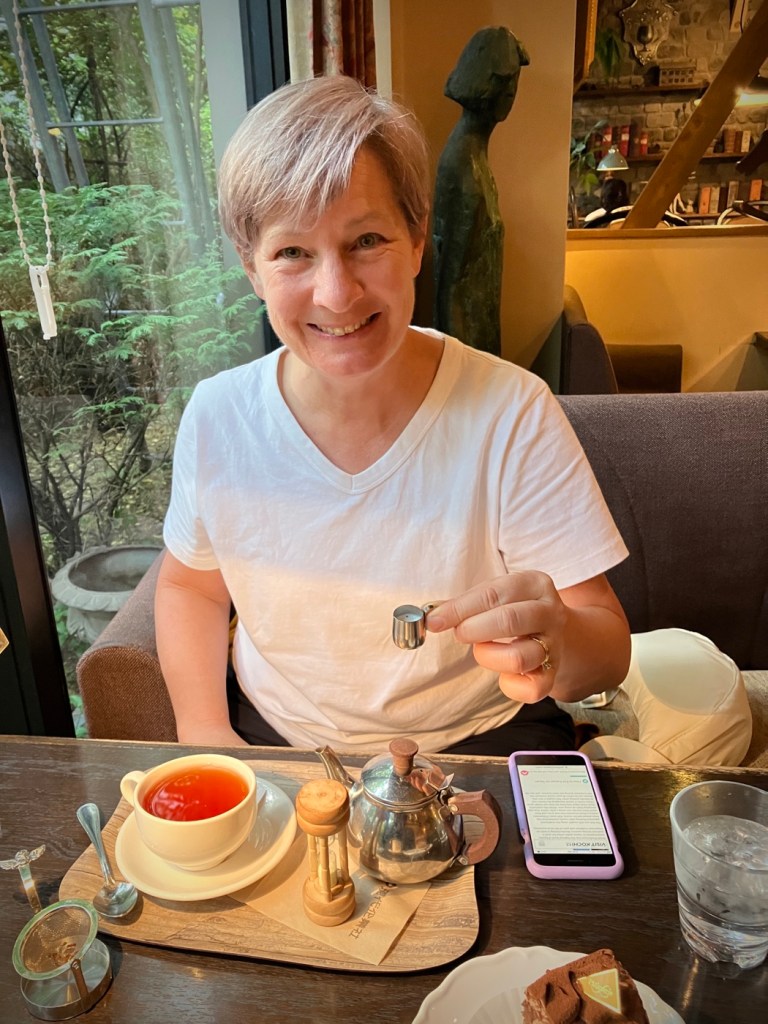
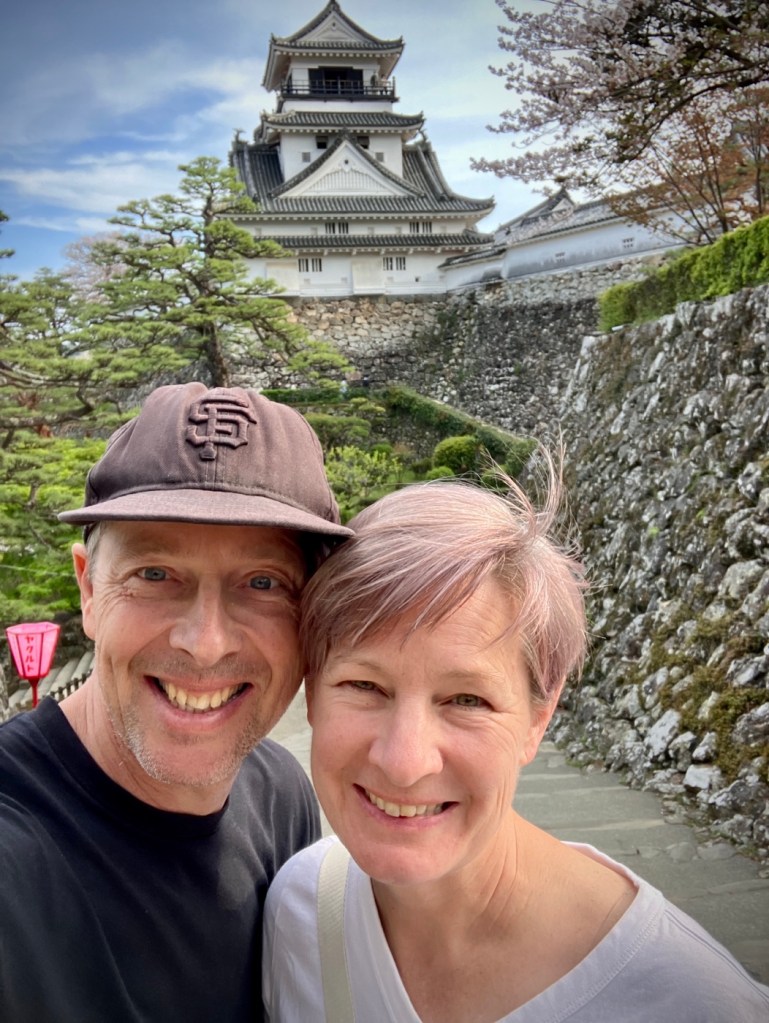

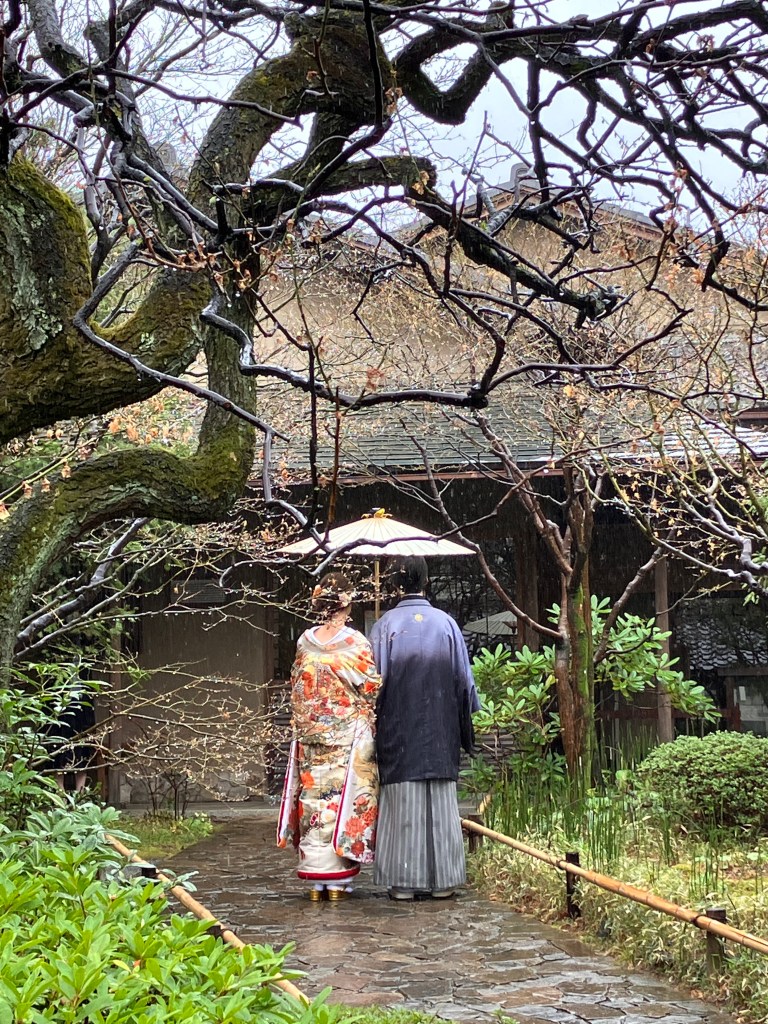
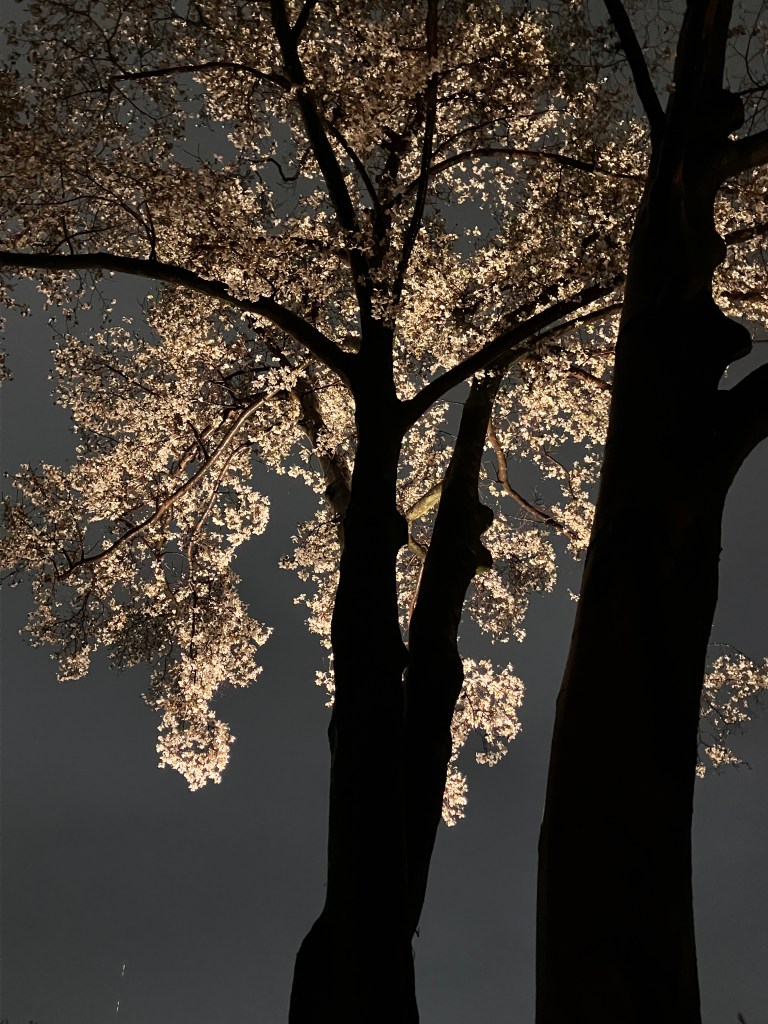

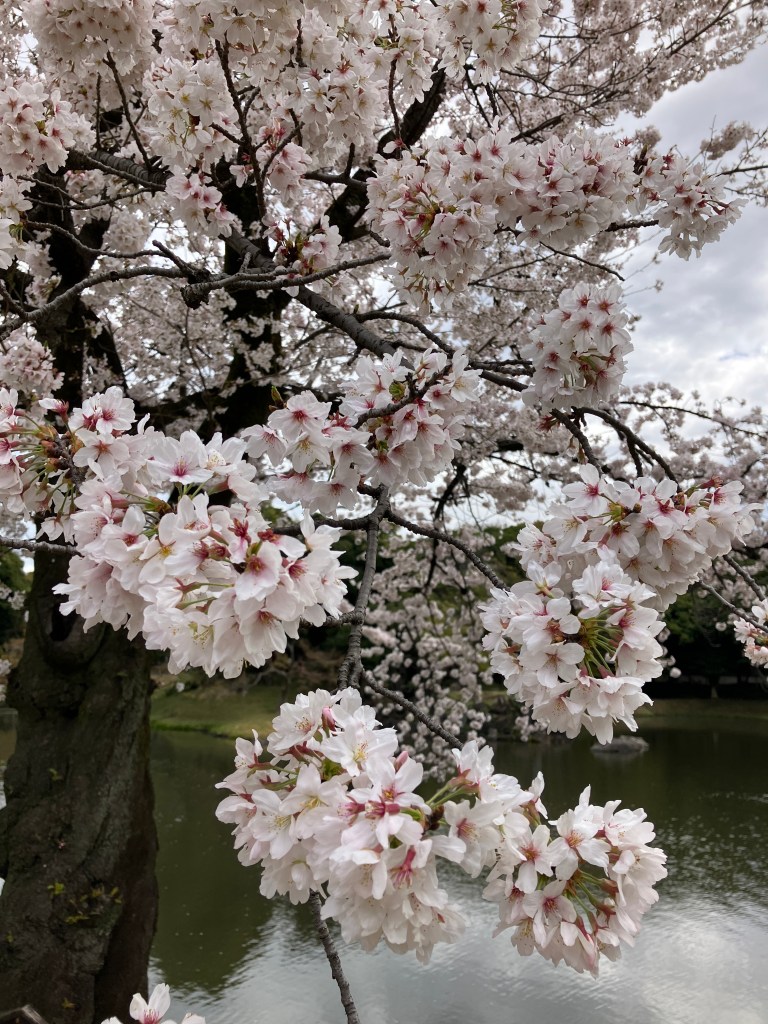

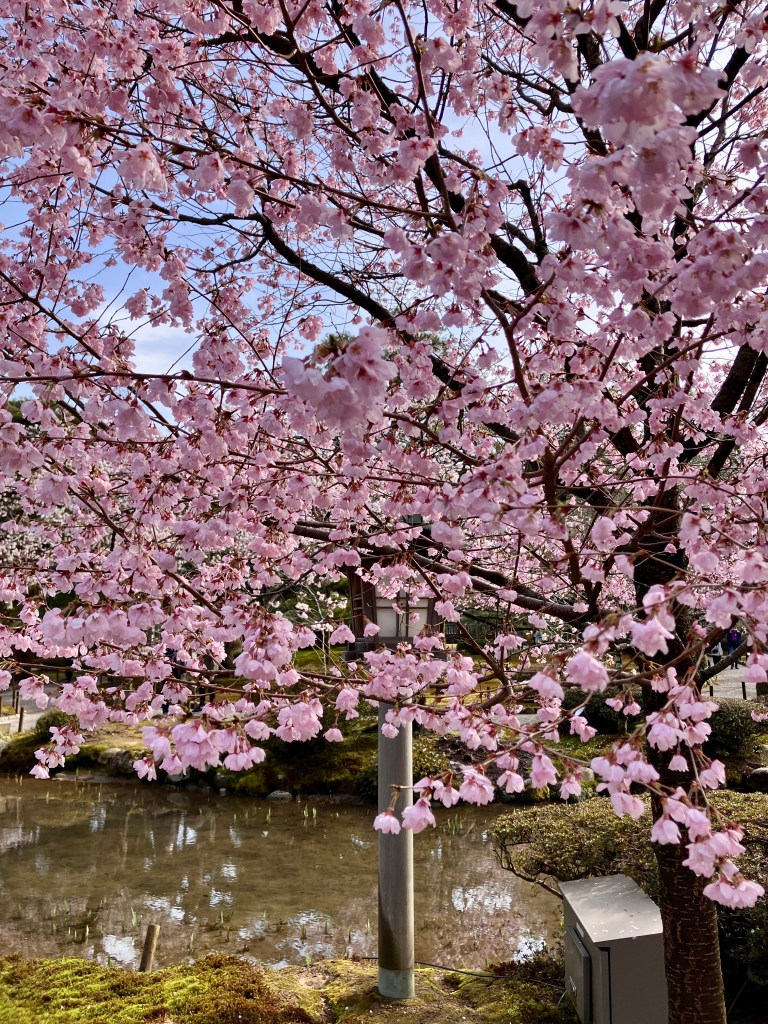
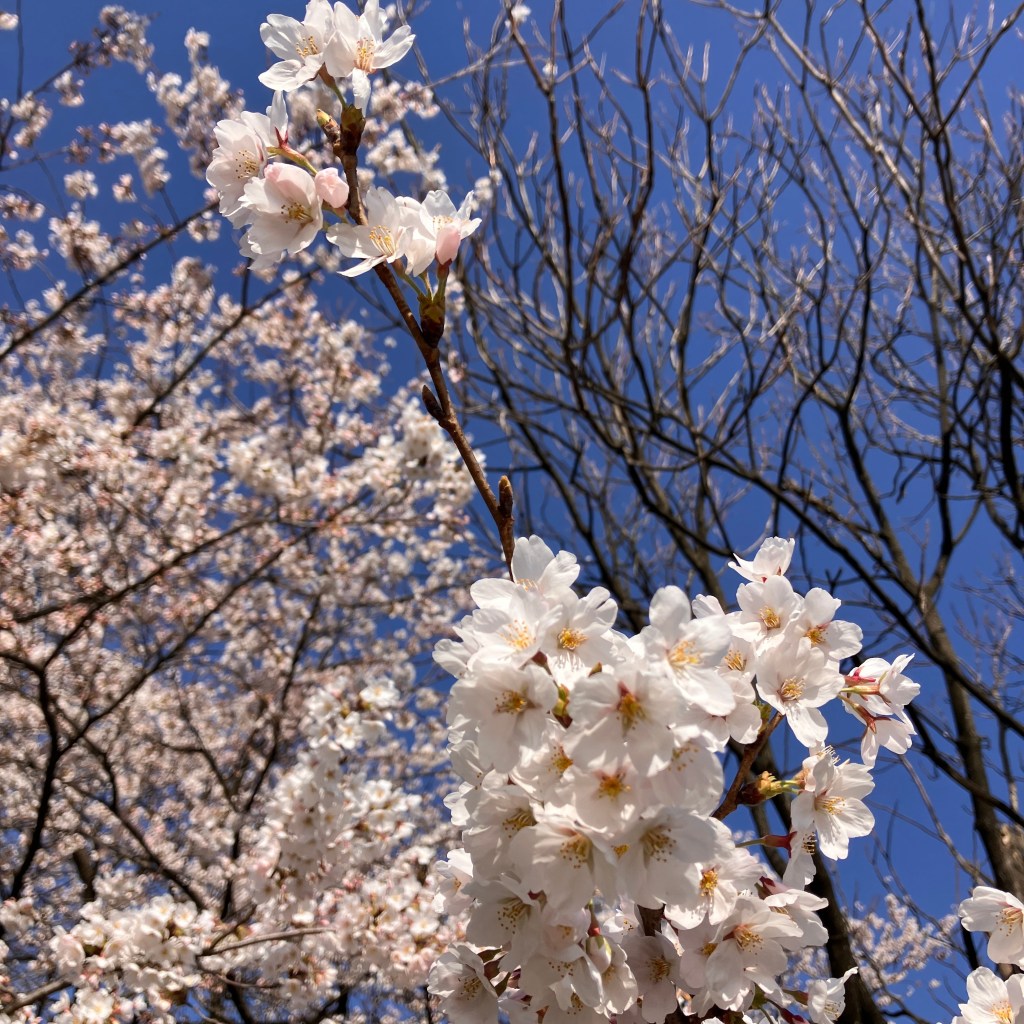
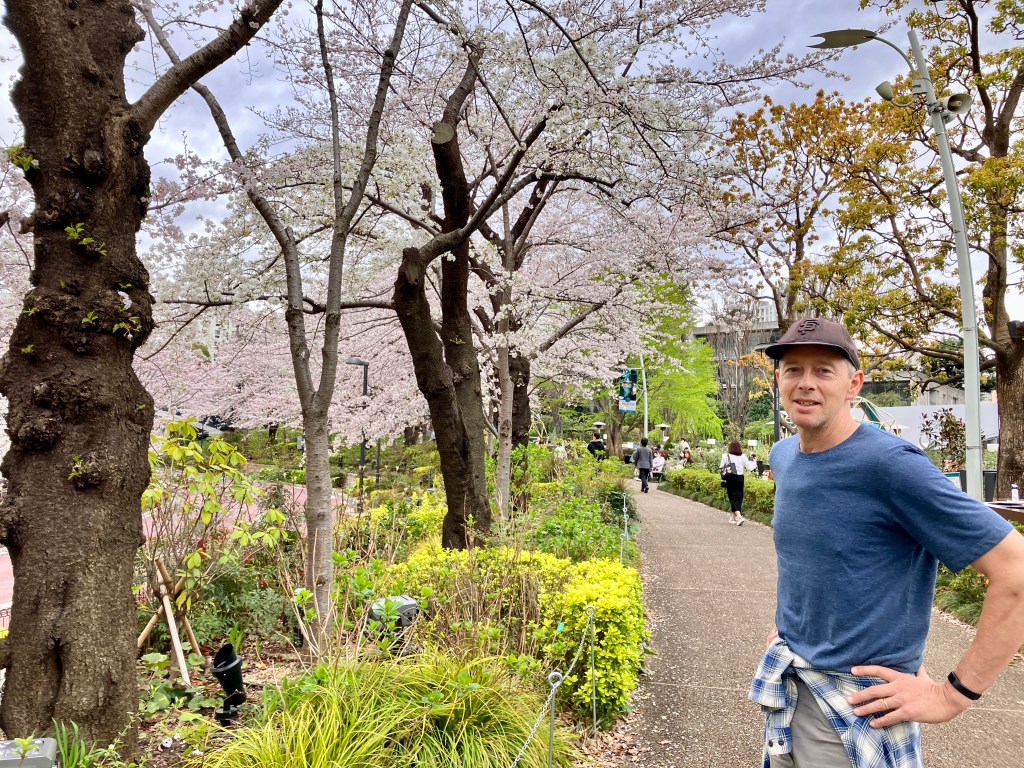

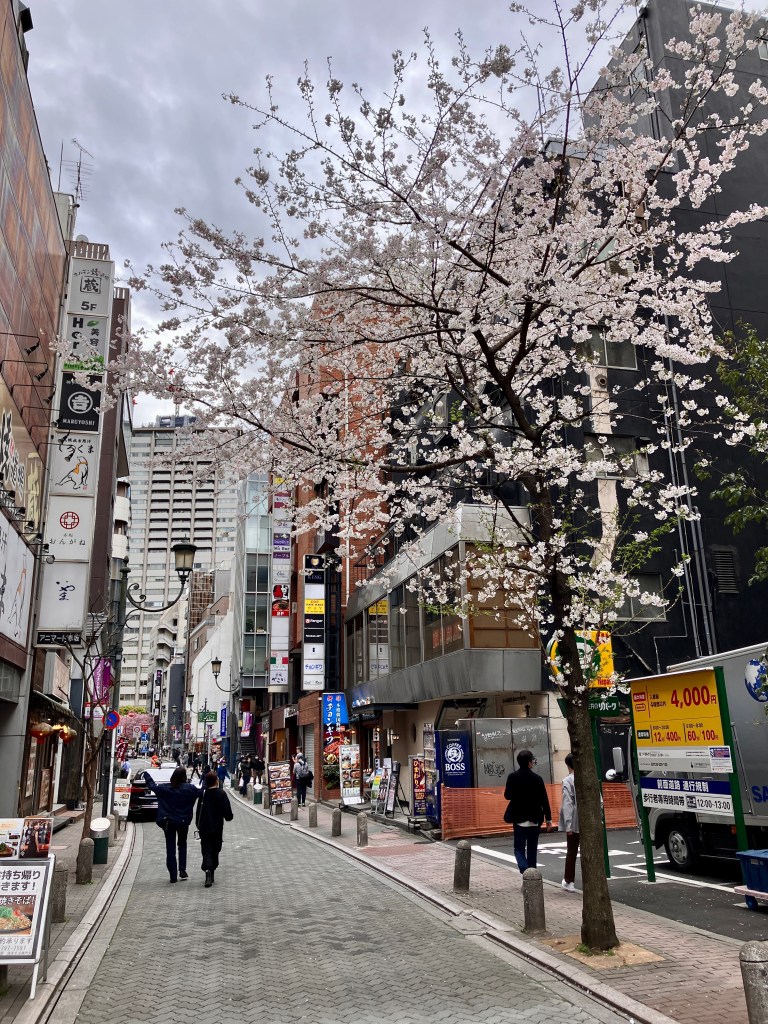
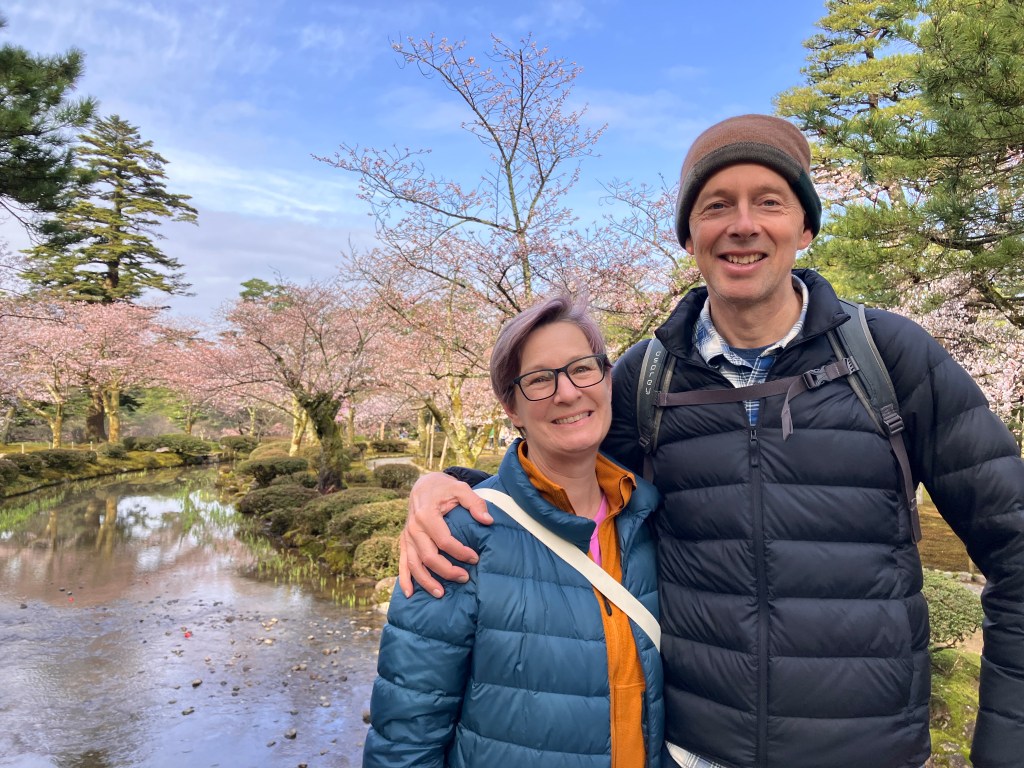
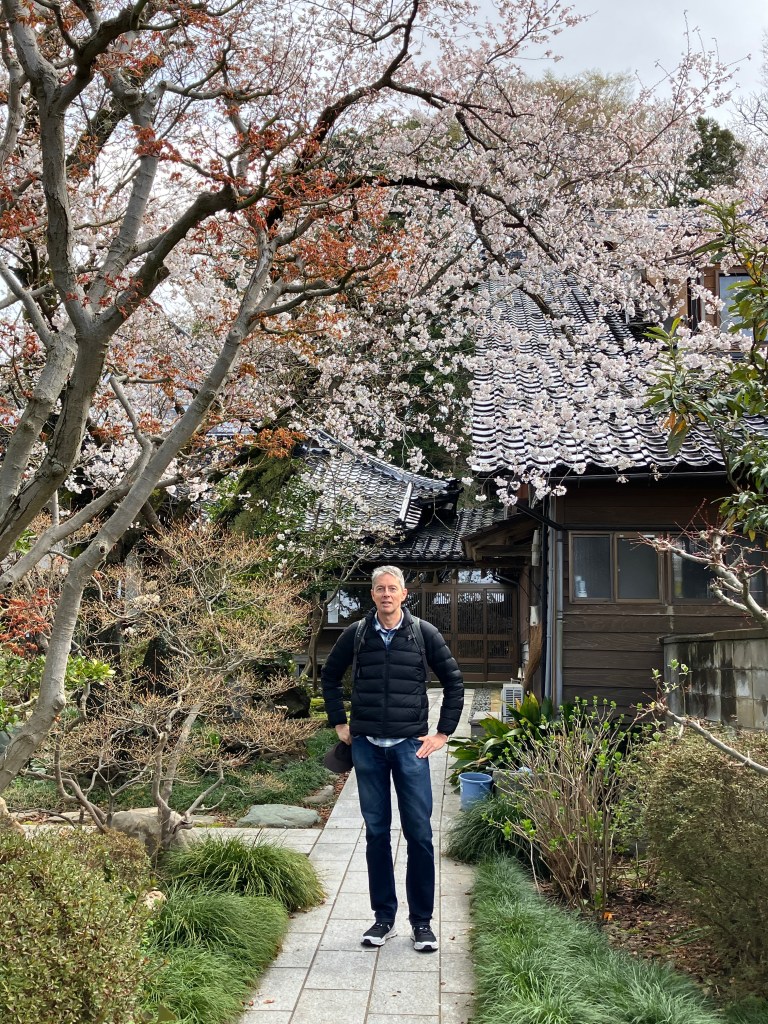


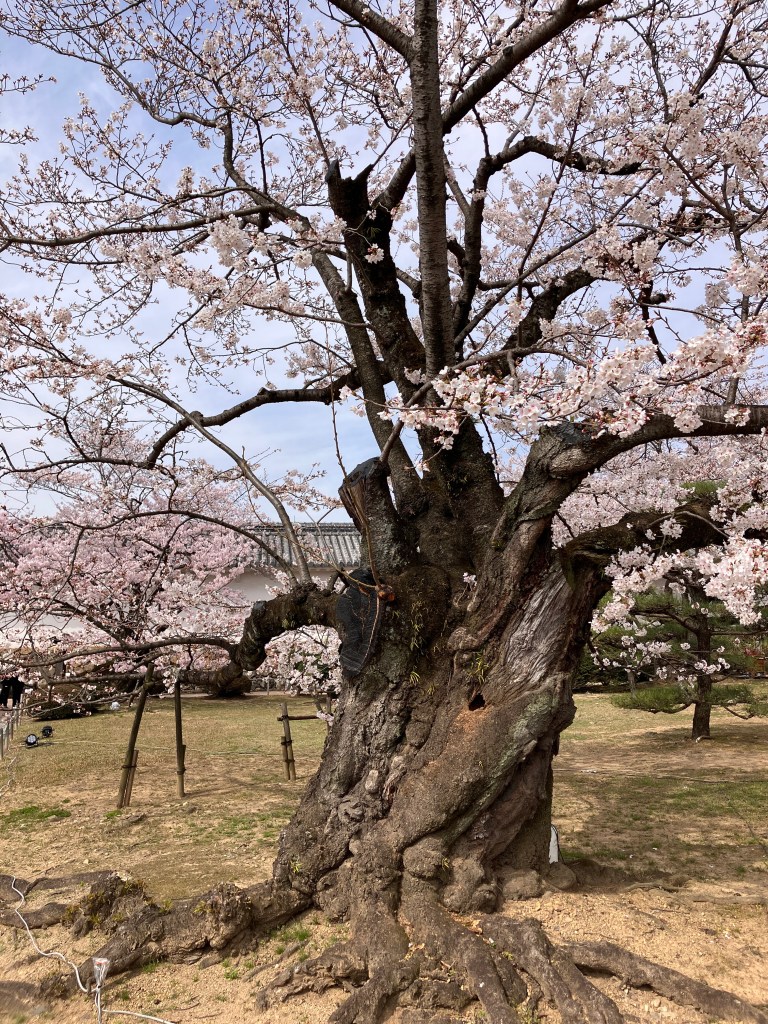

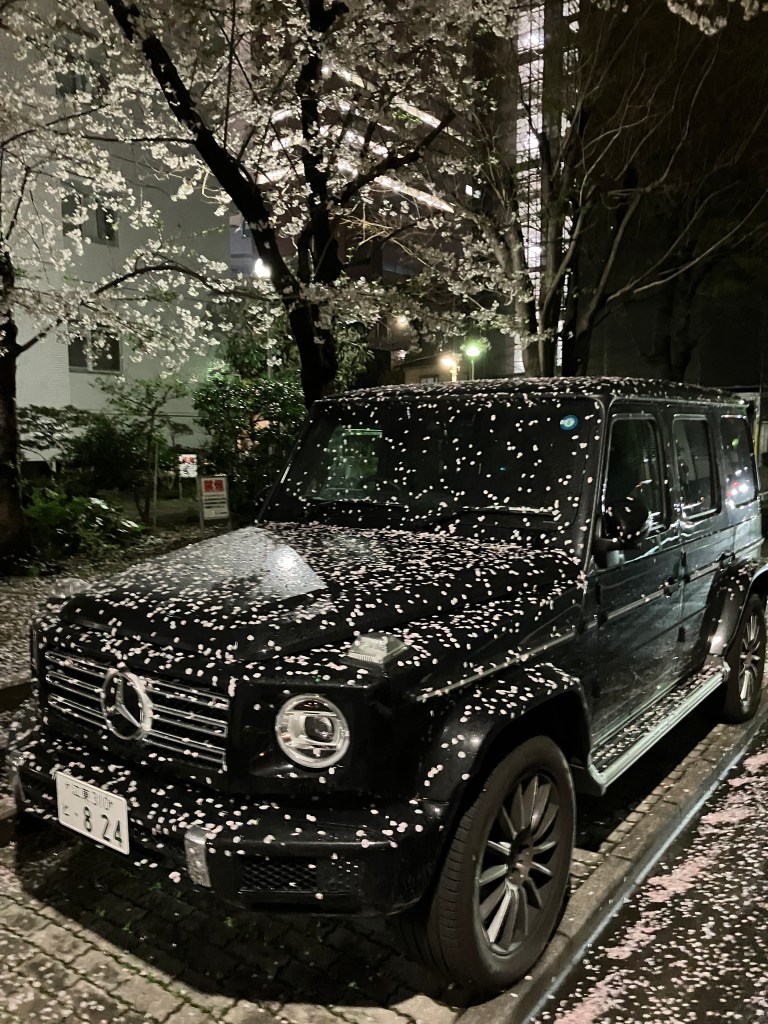
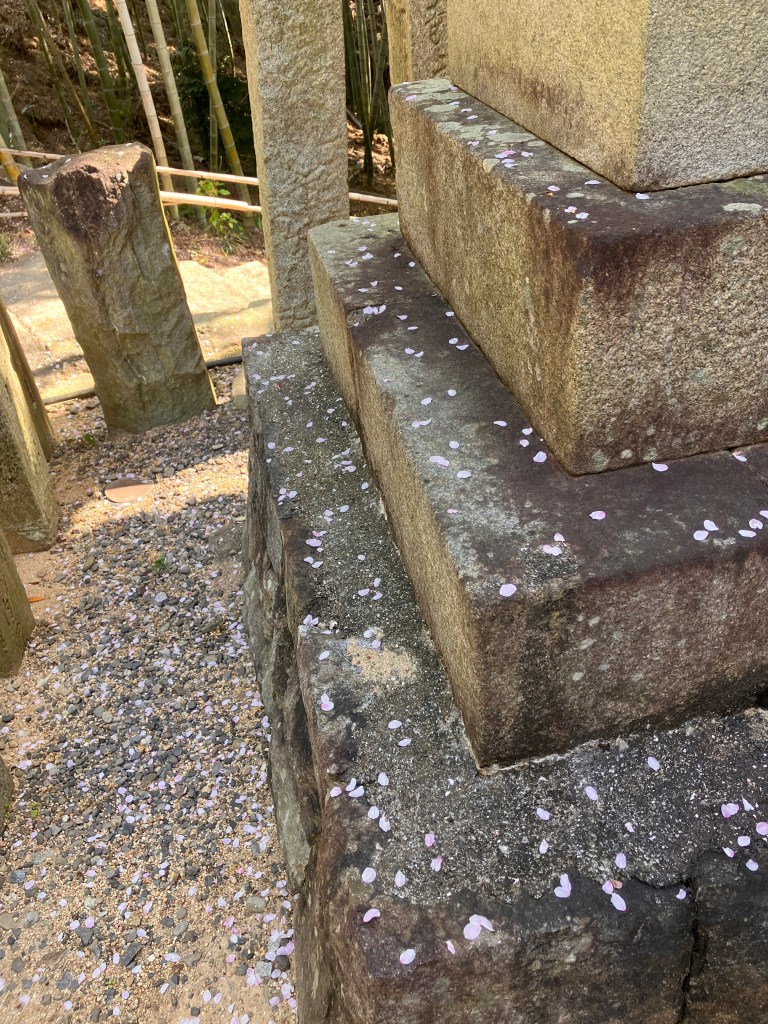
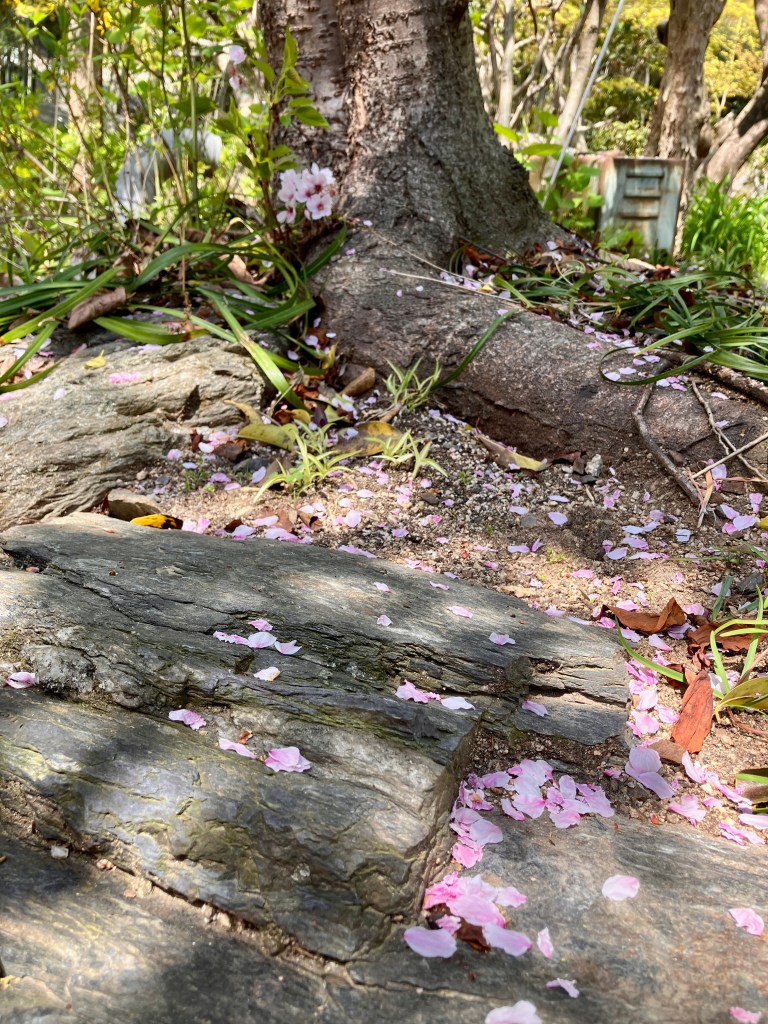
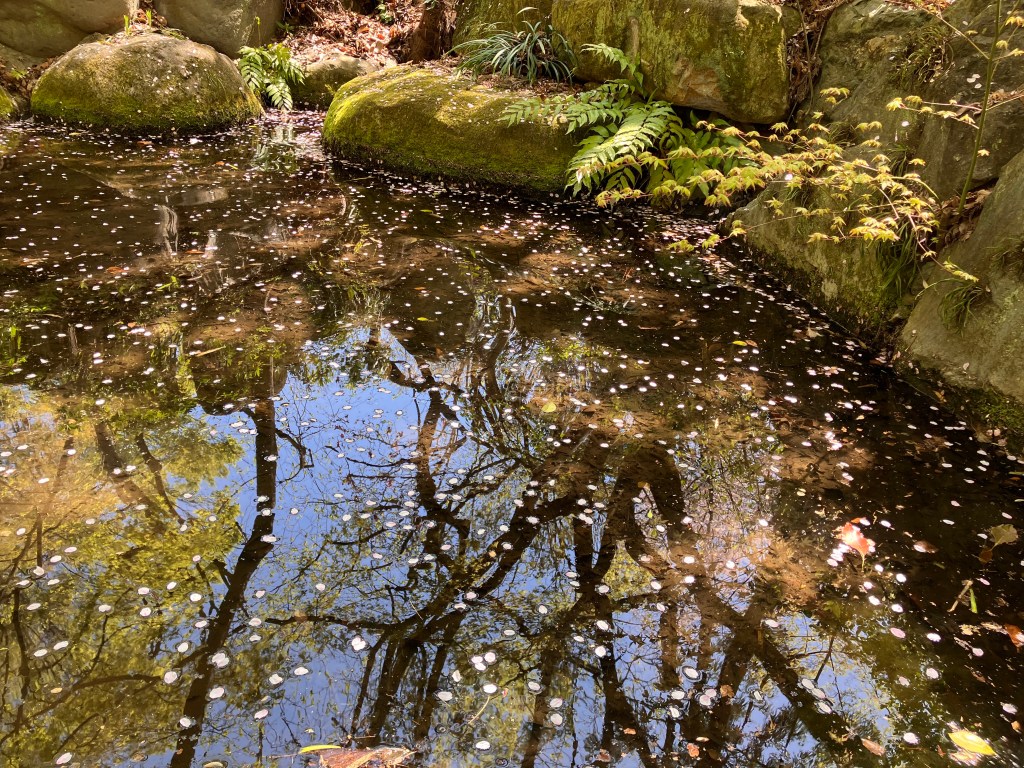
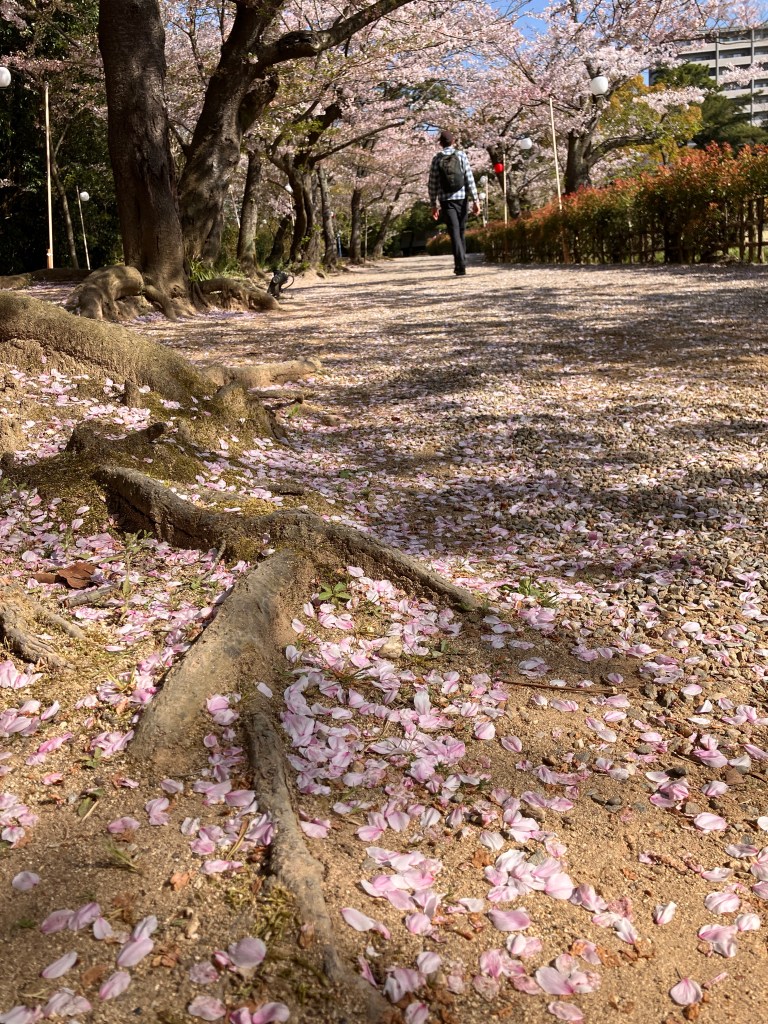
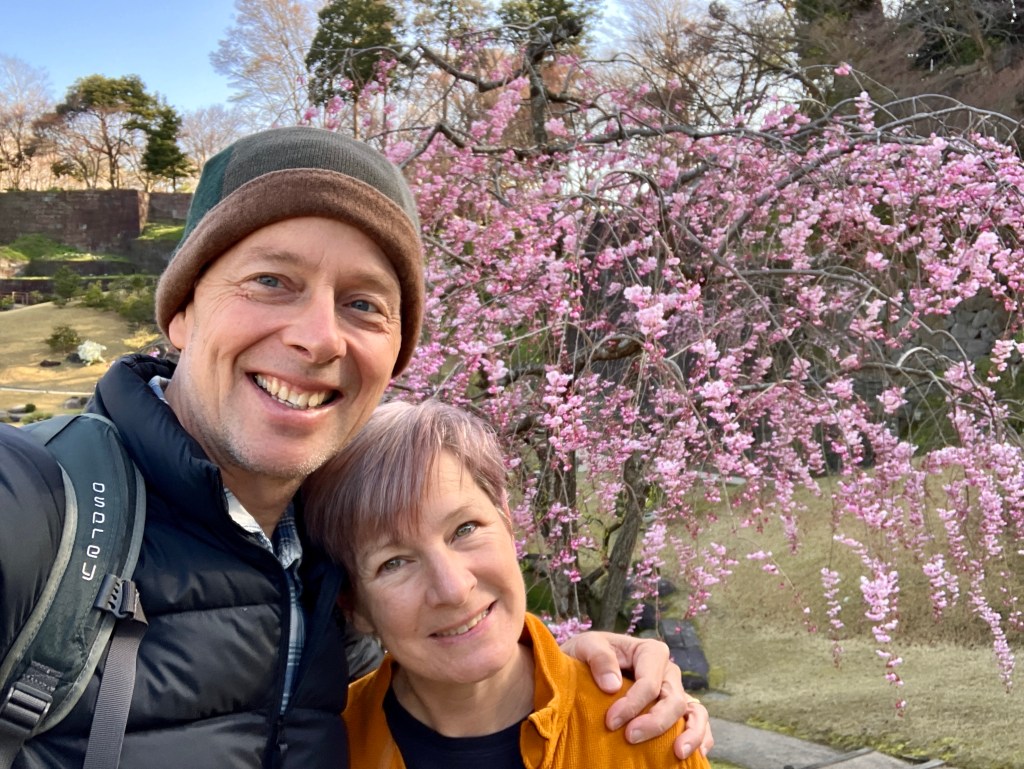
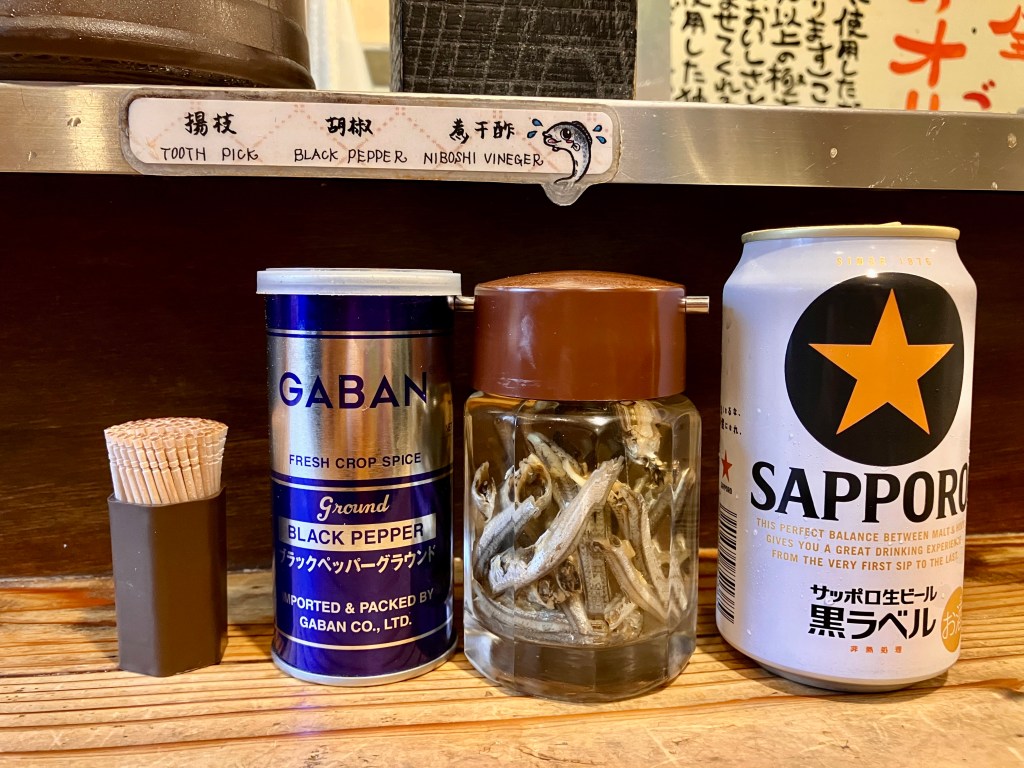

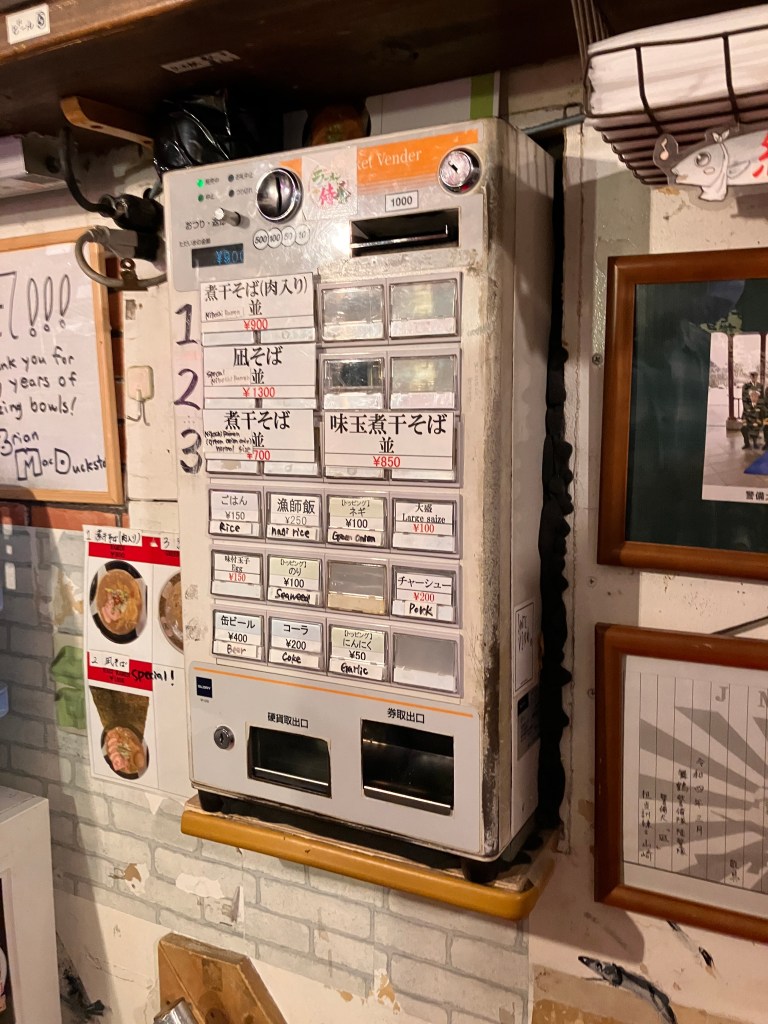
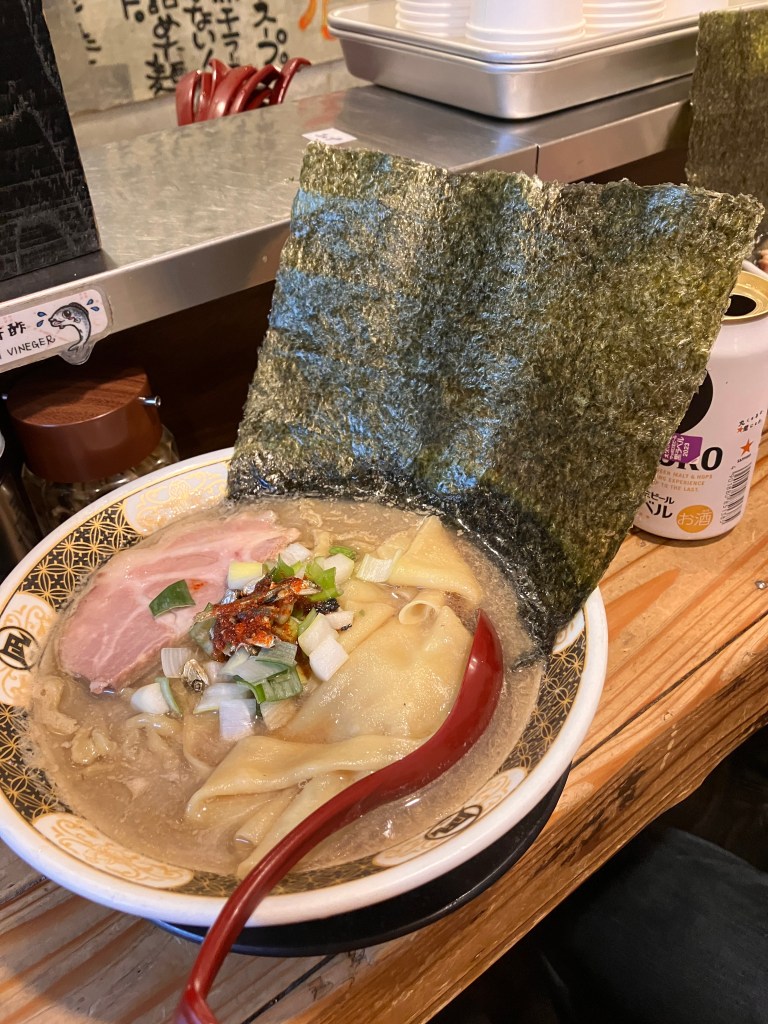


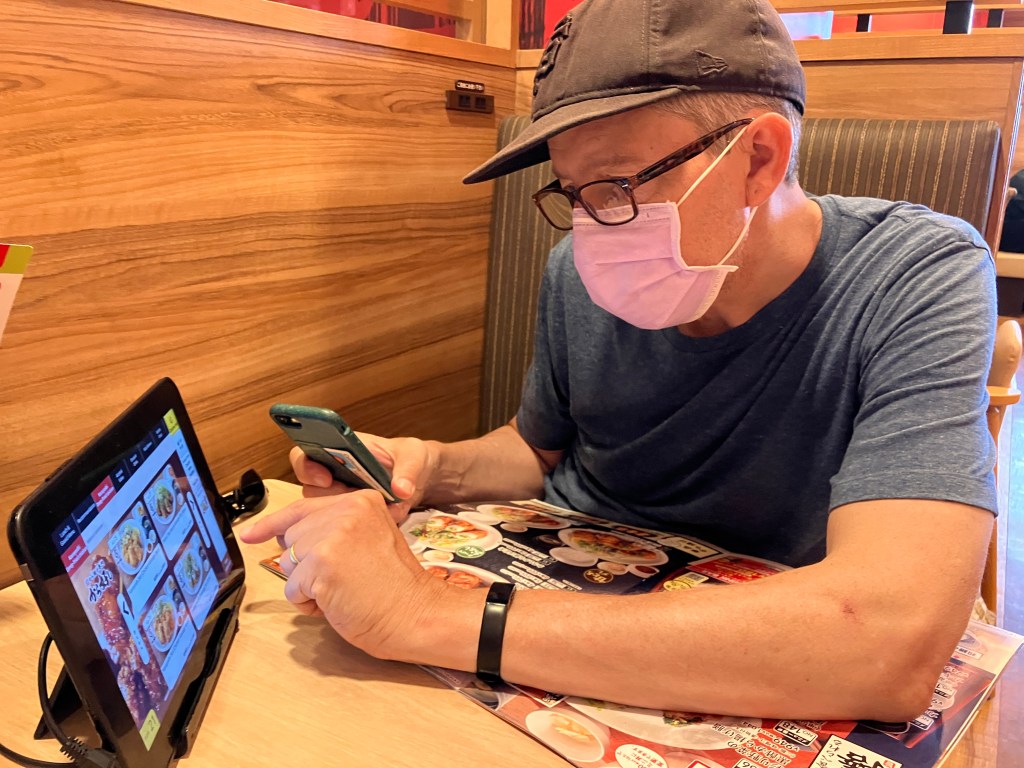
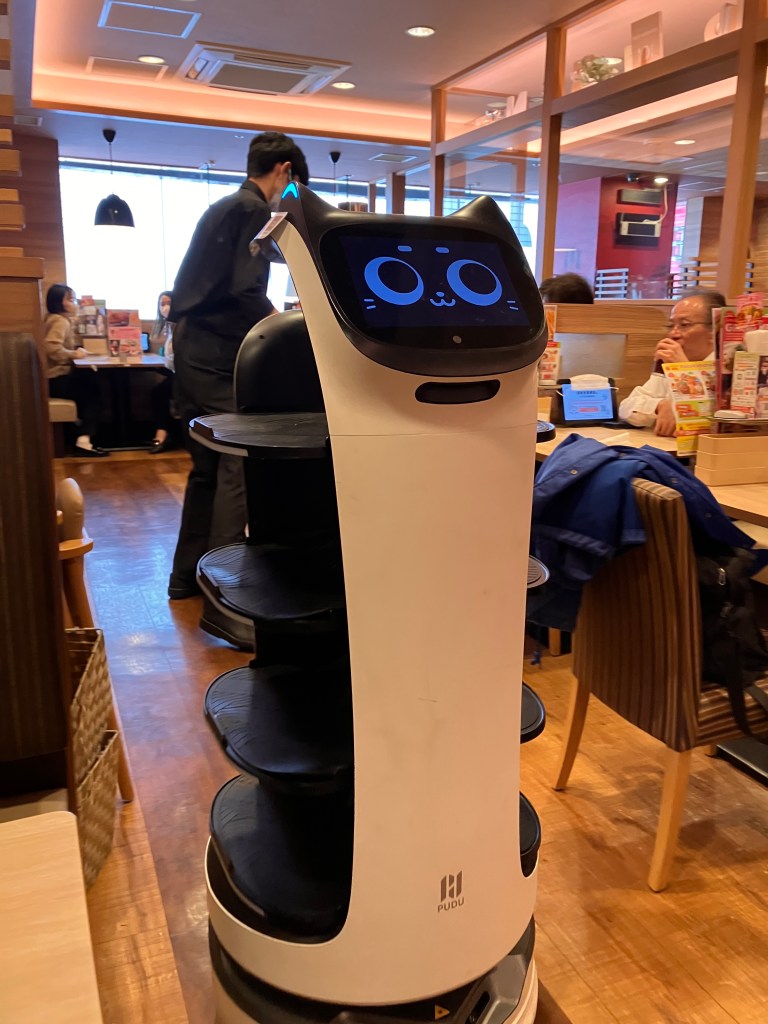

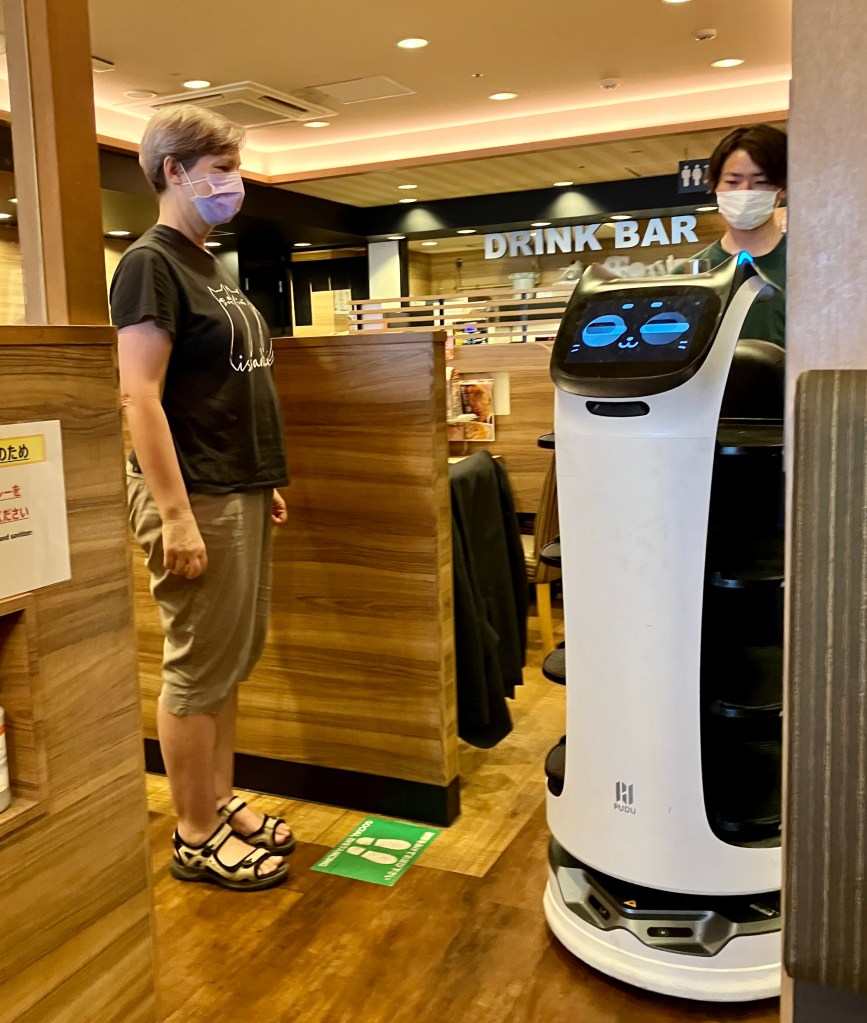
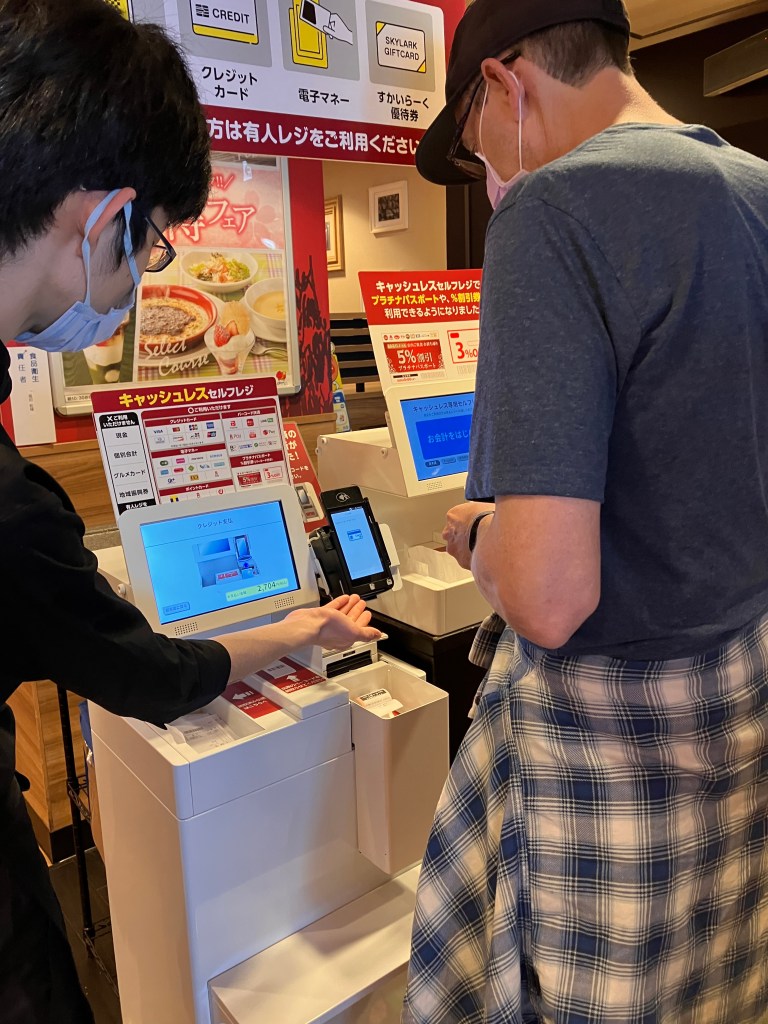

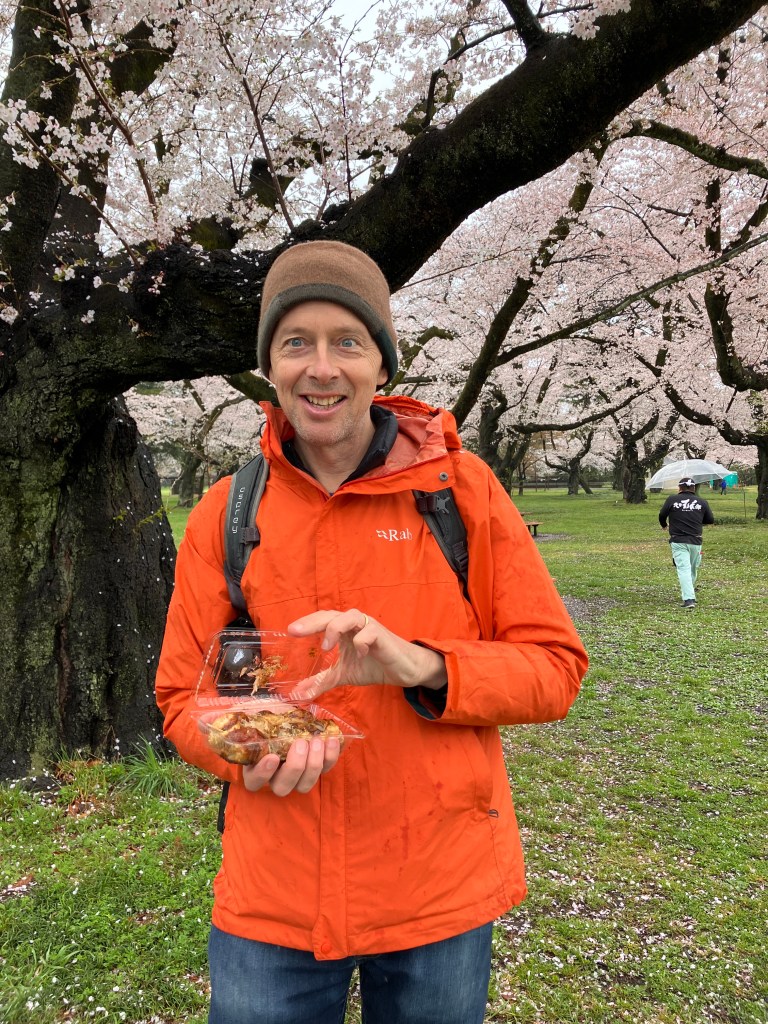


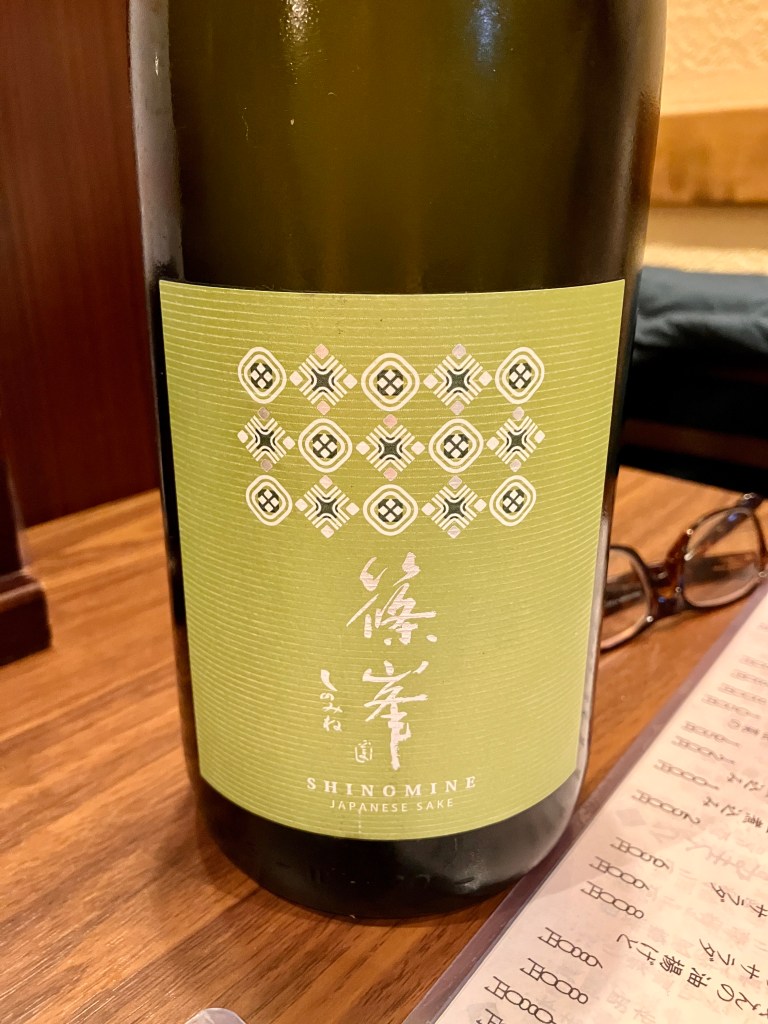

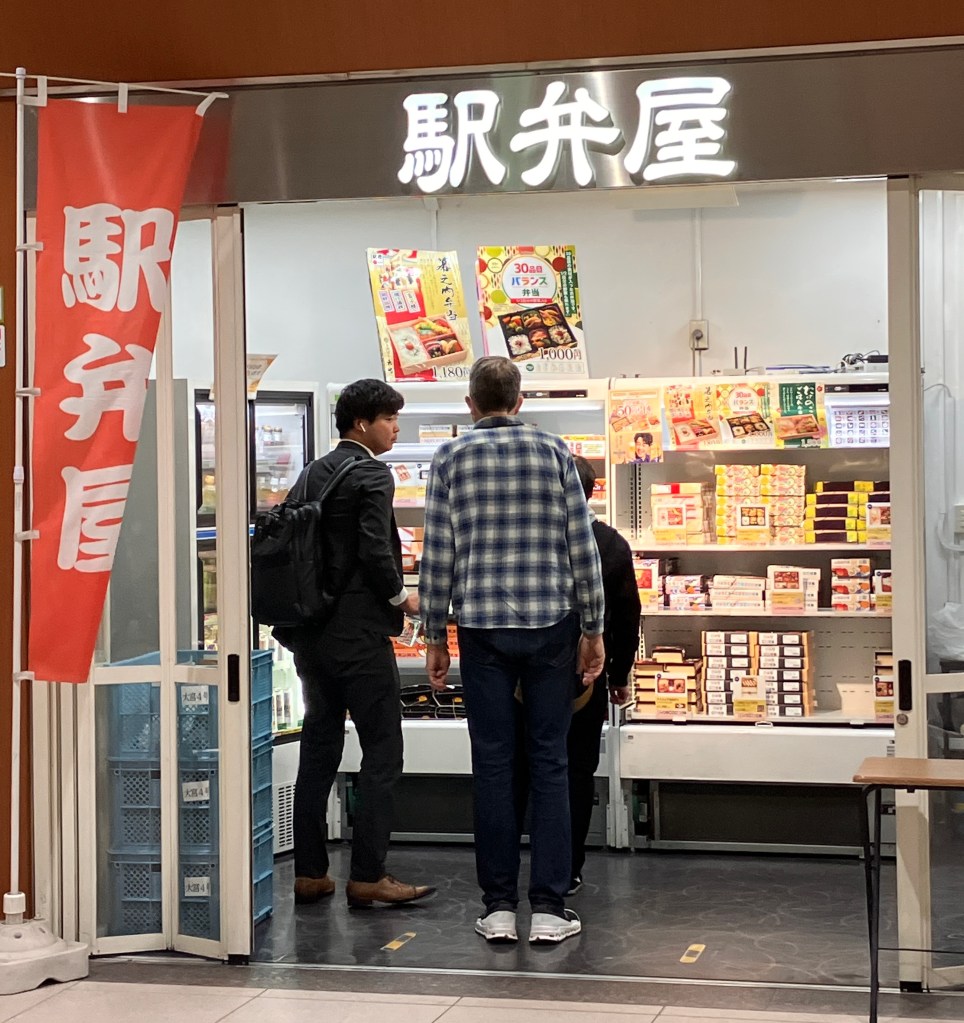

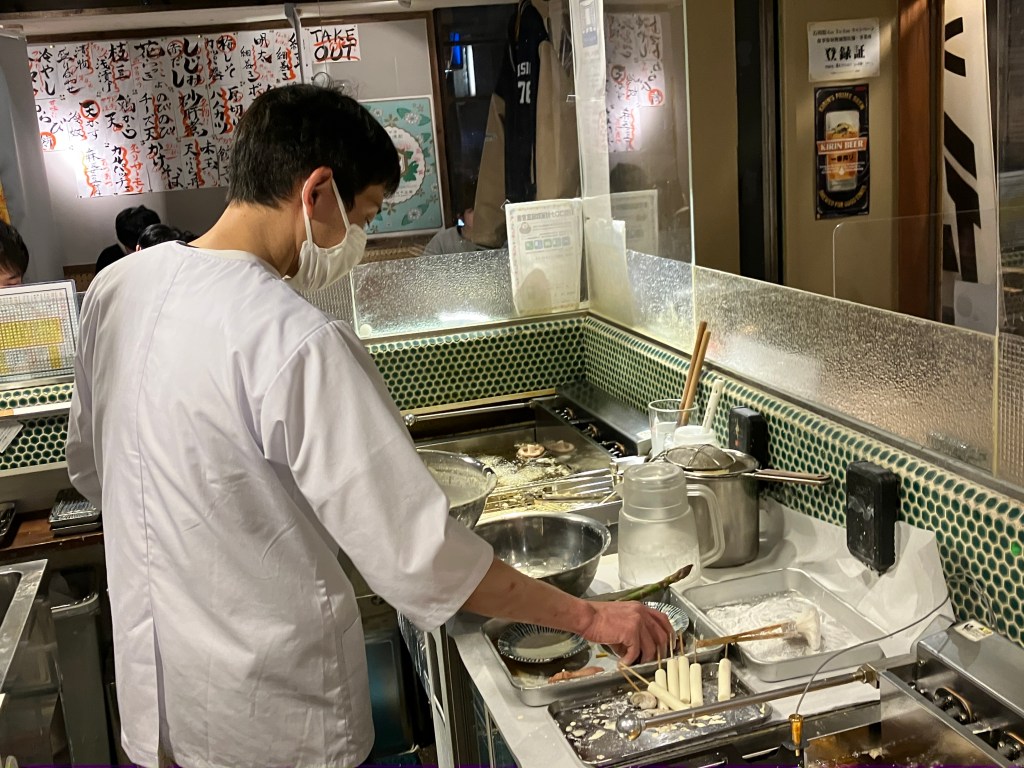
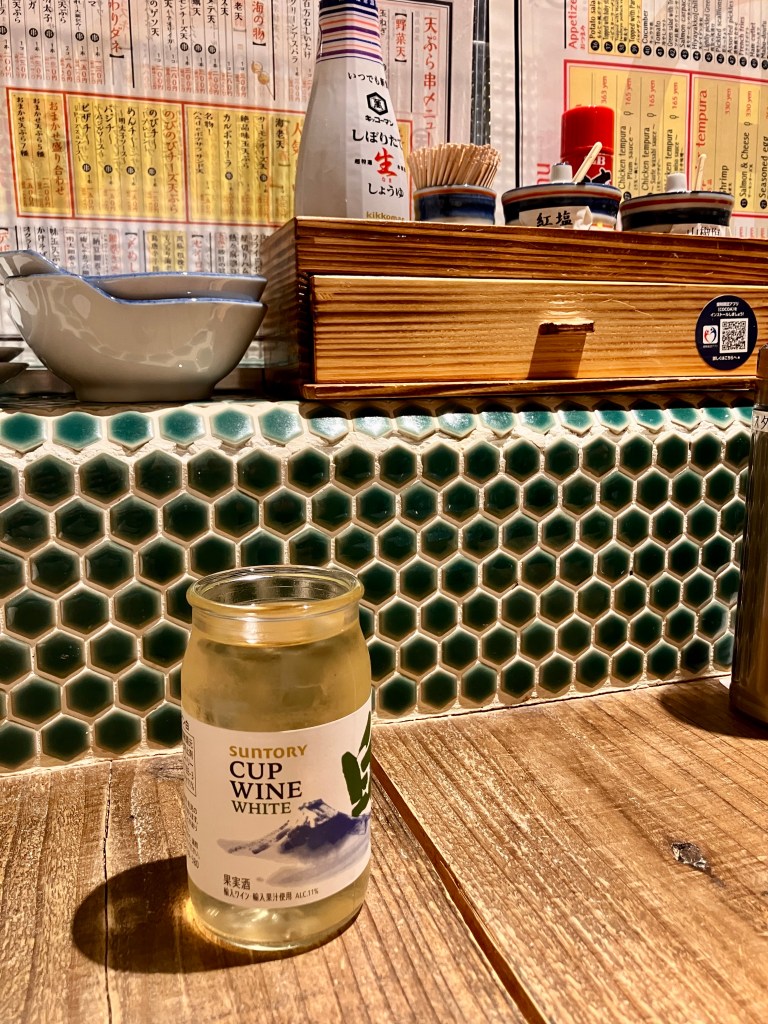
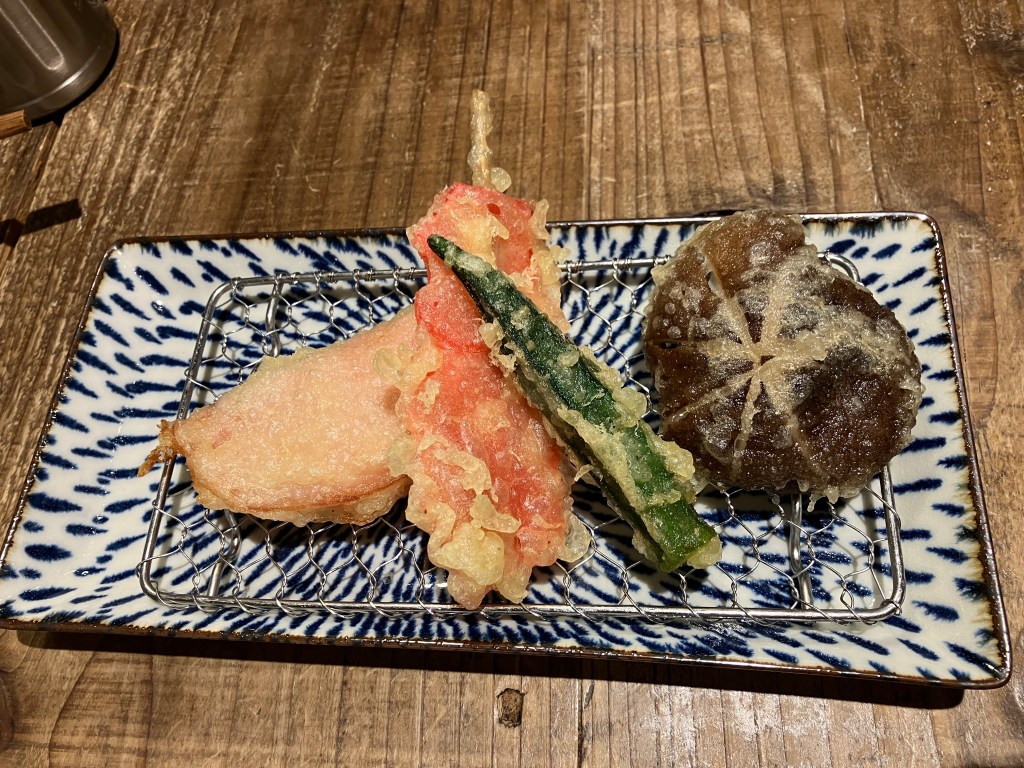
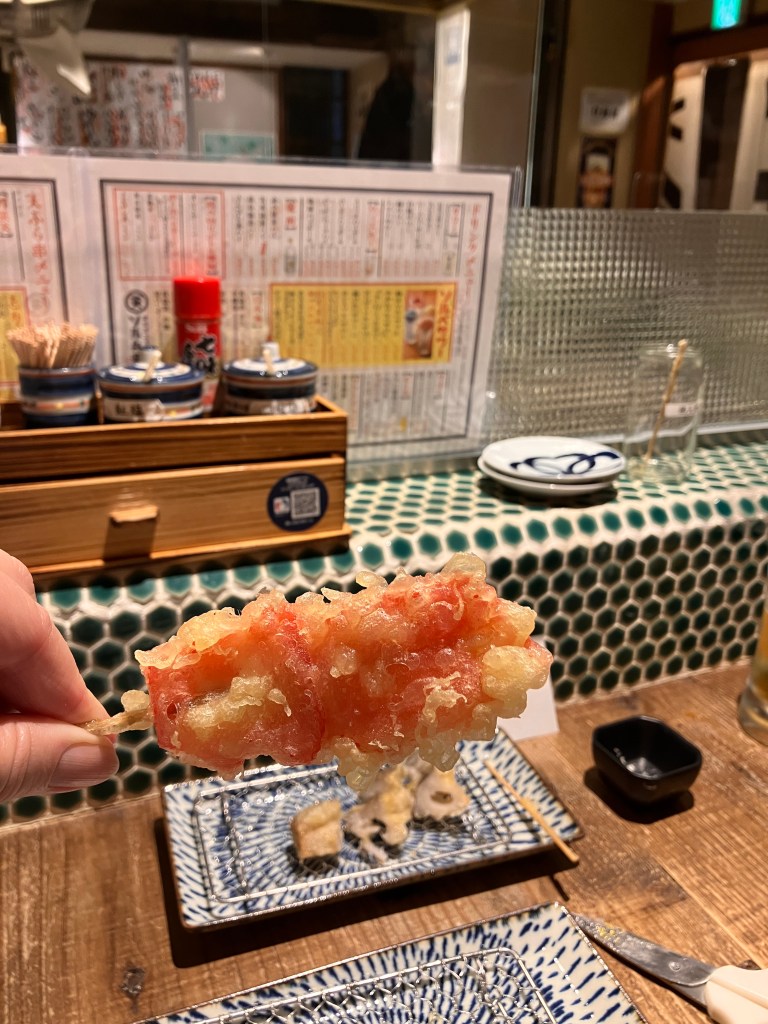
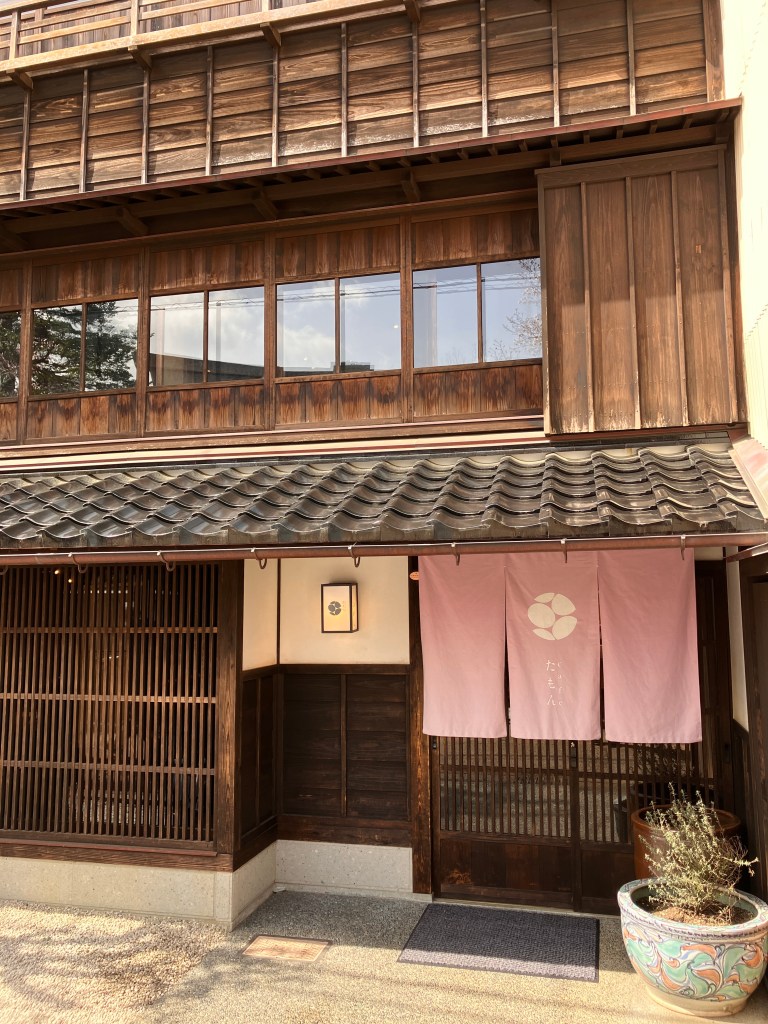
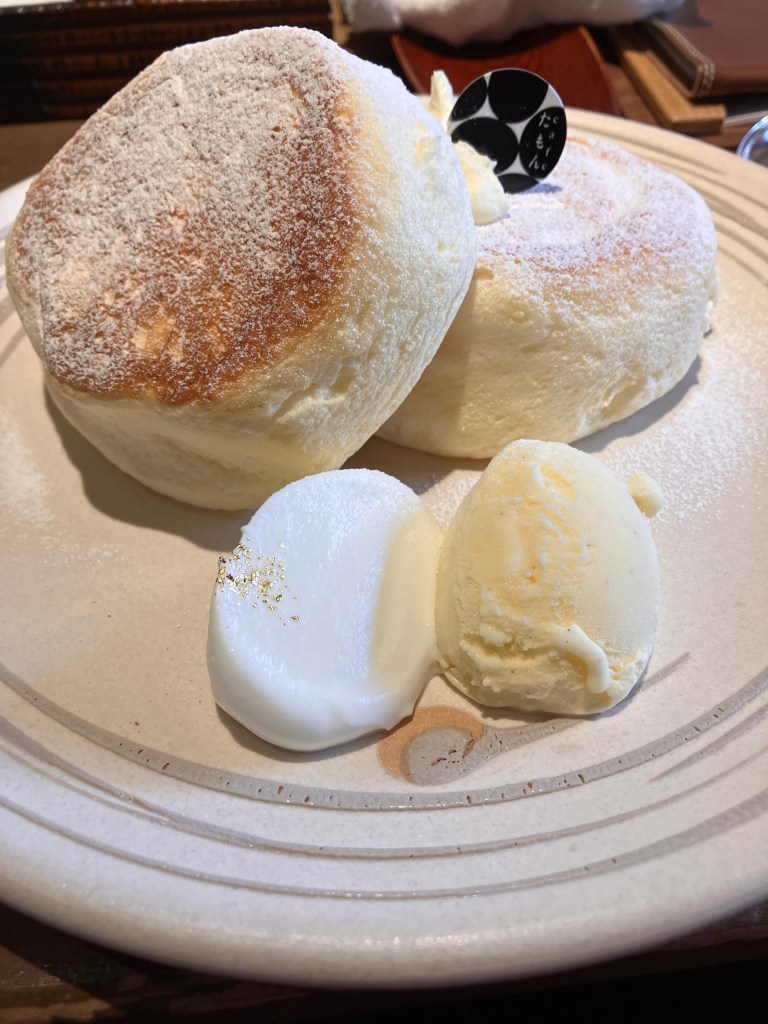


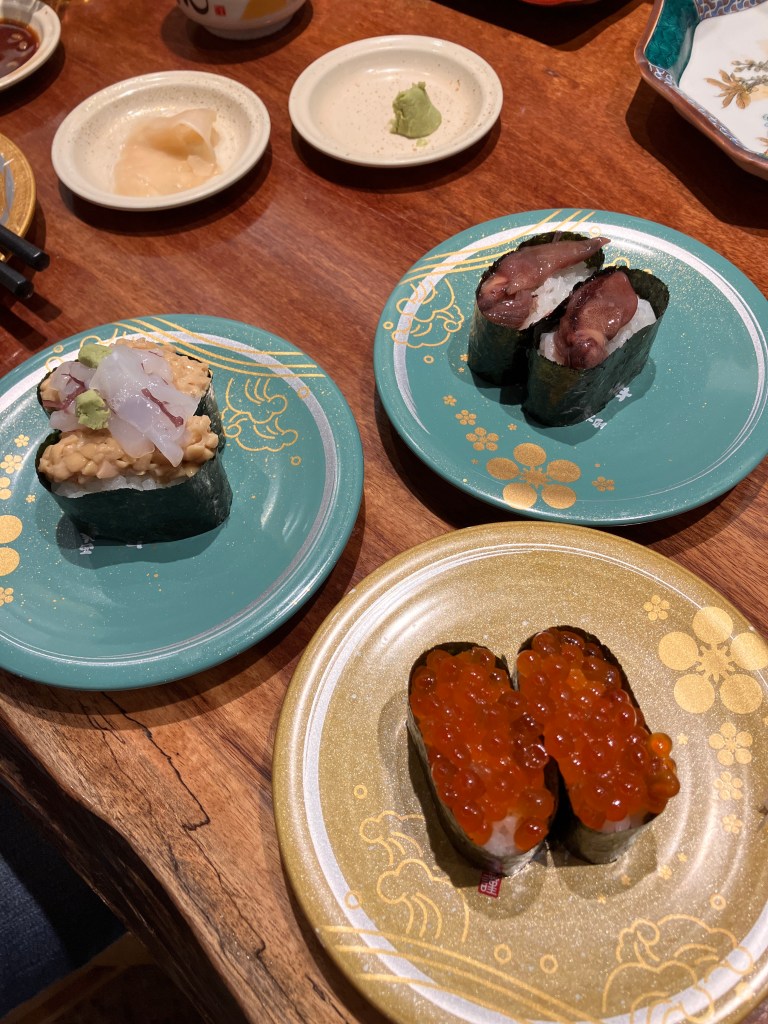
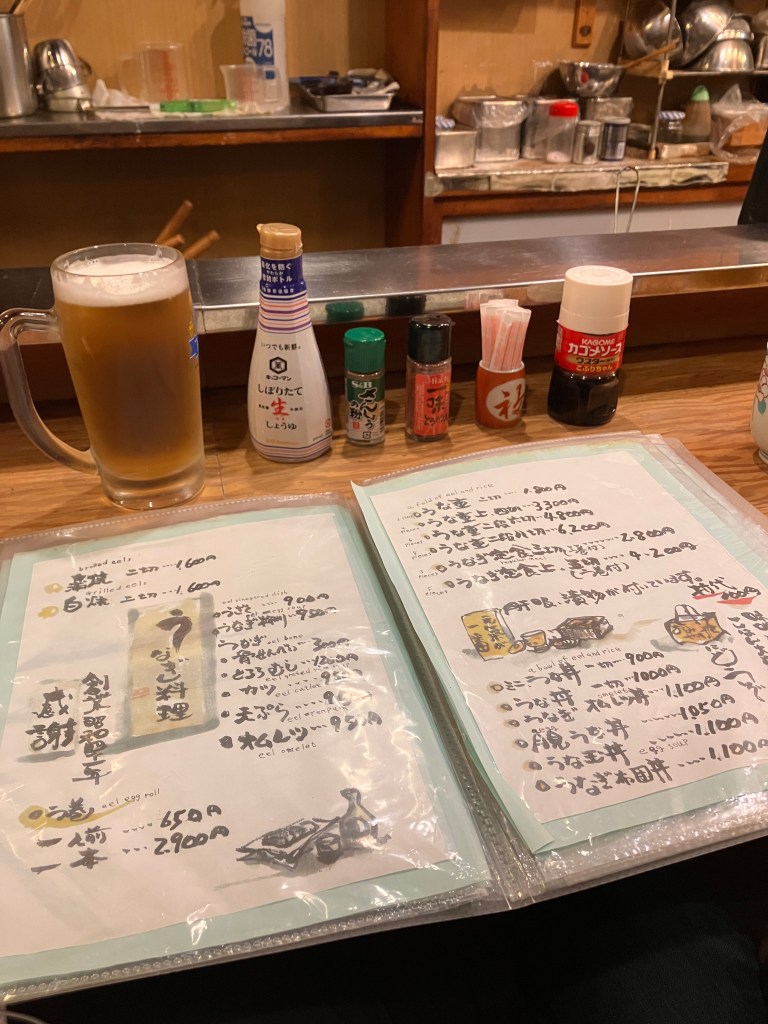


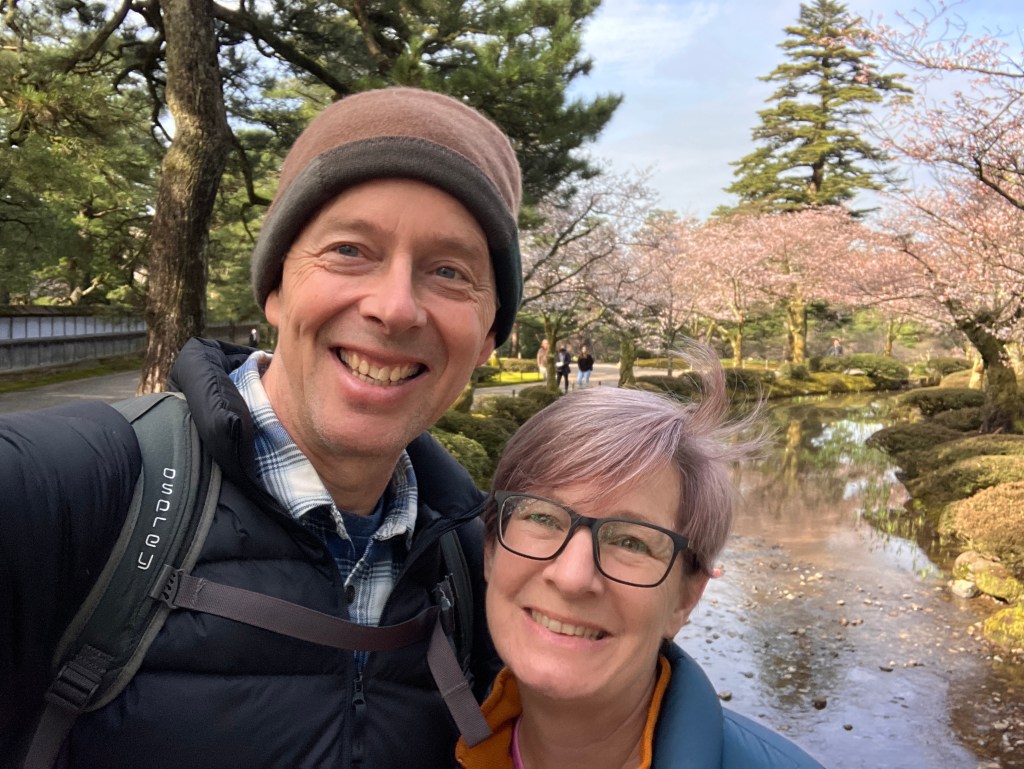
 Less Car, More Life