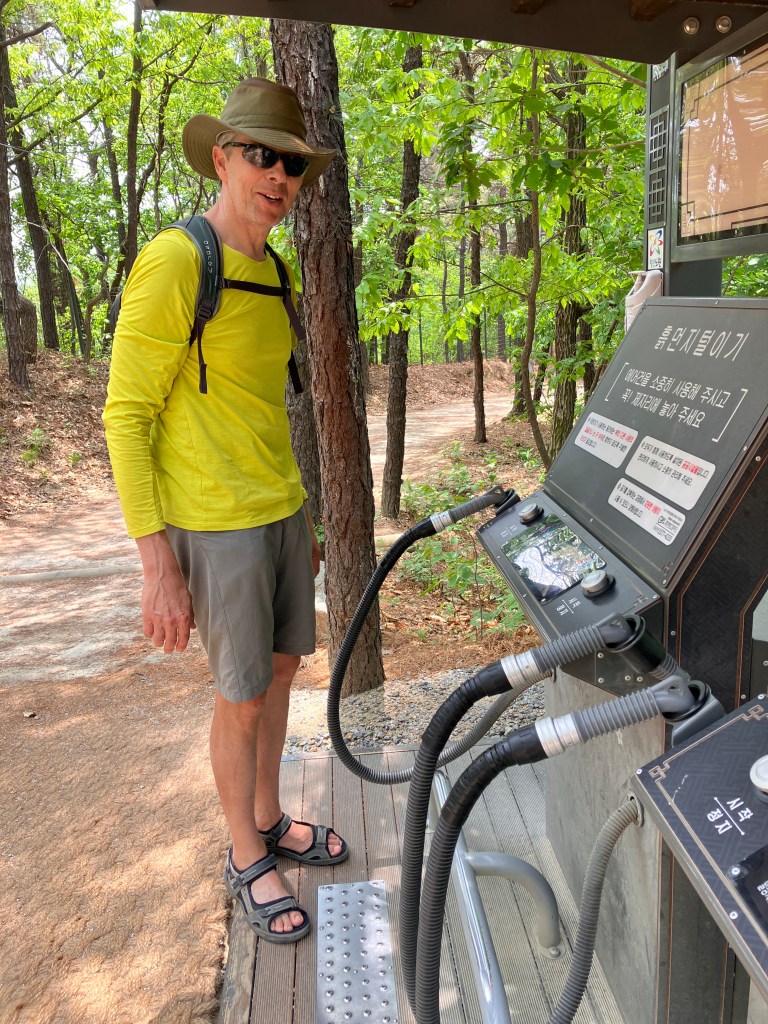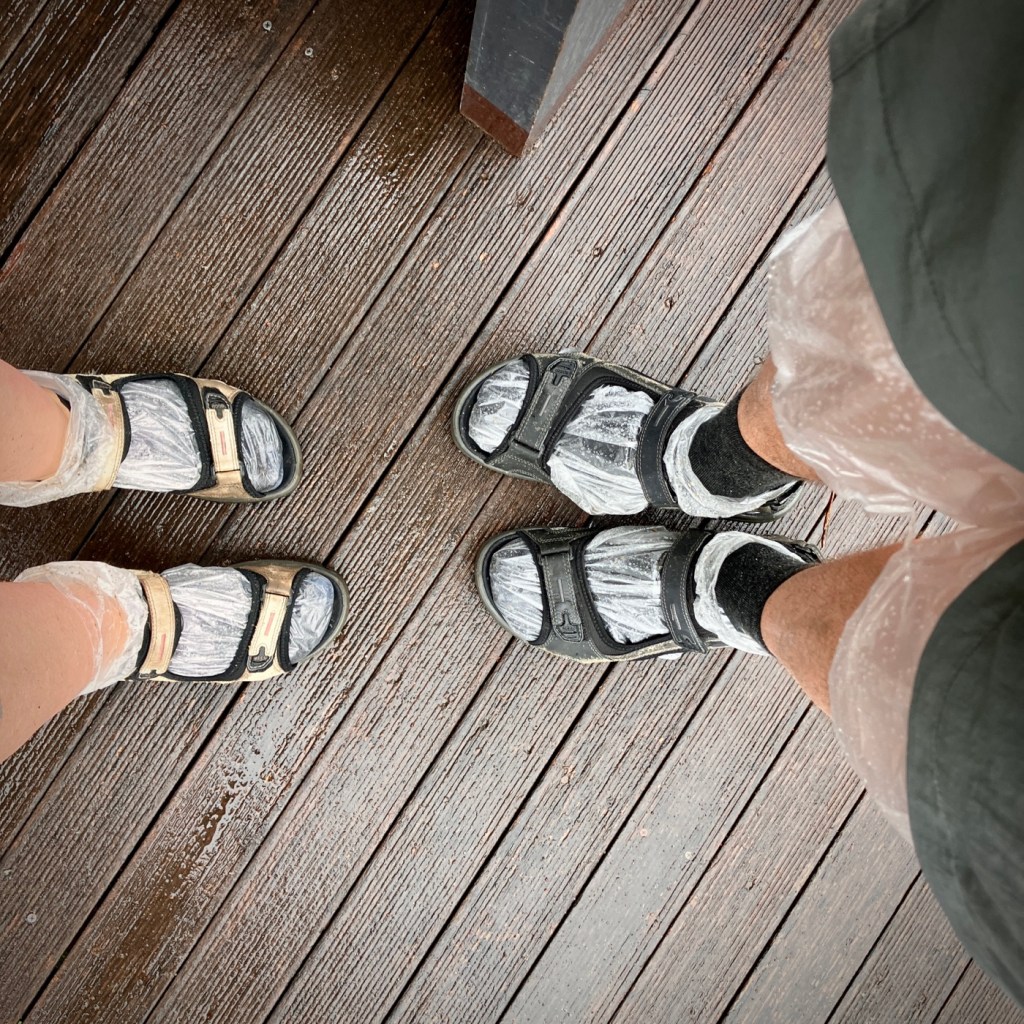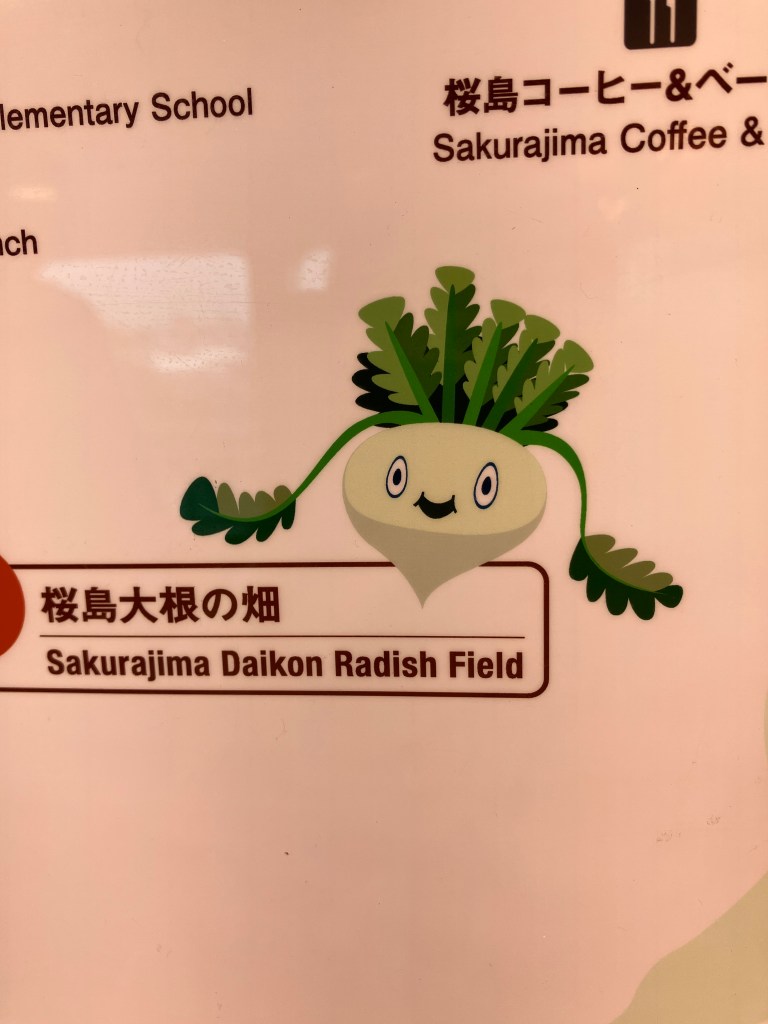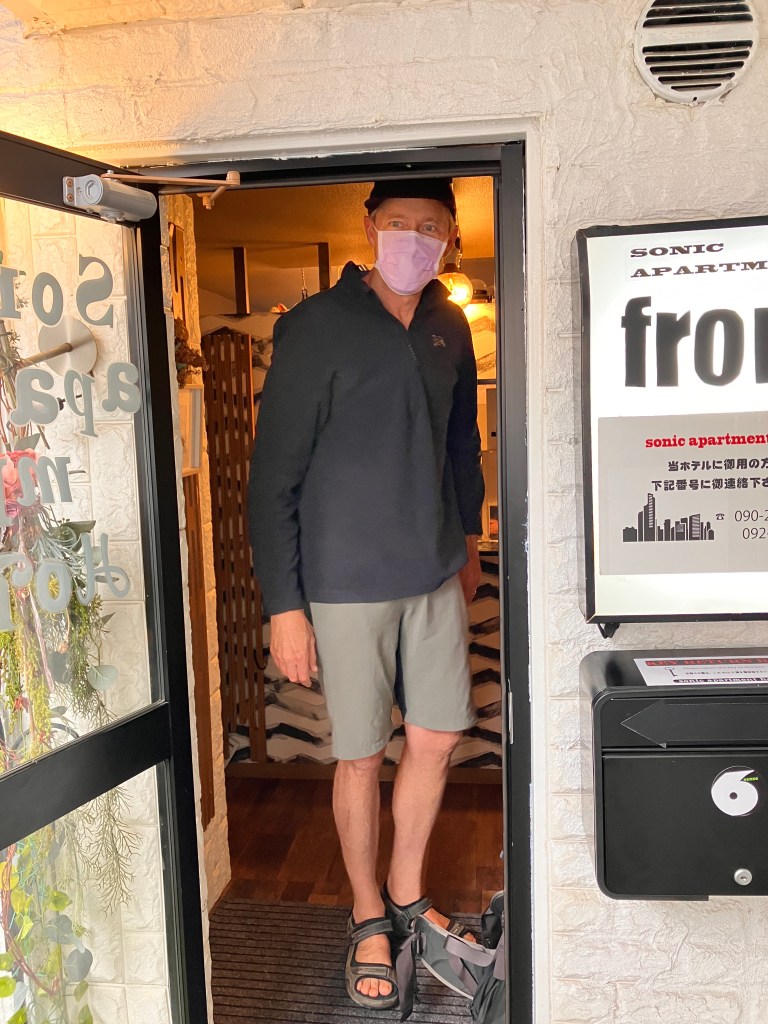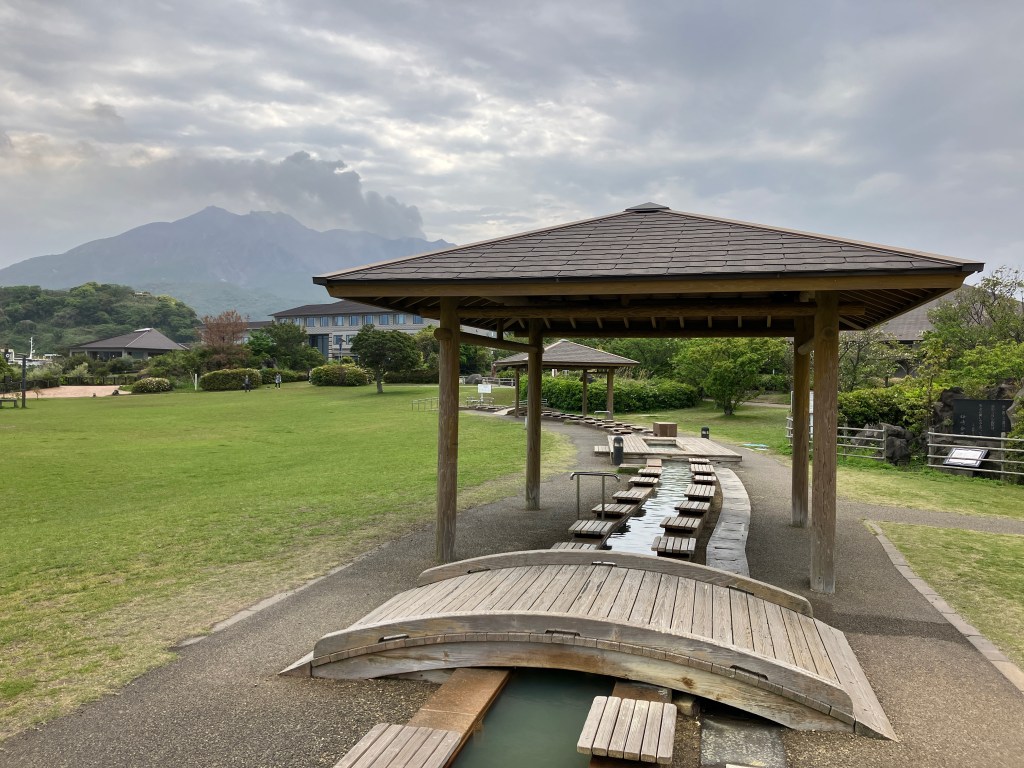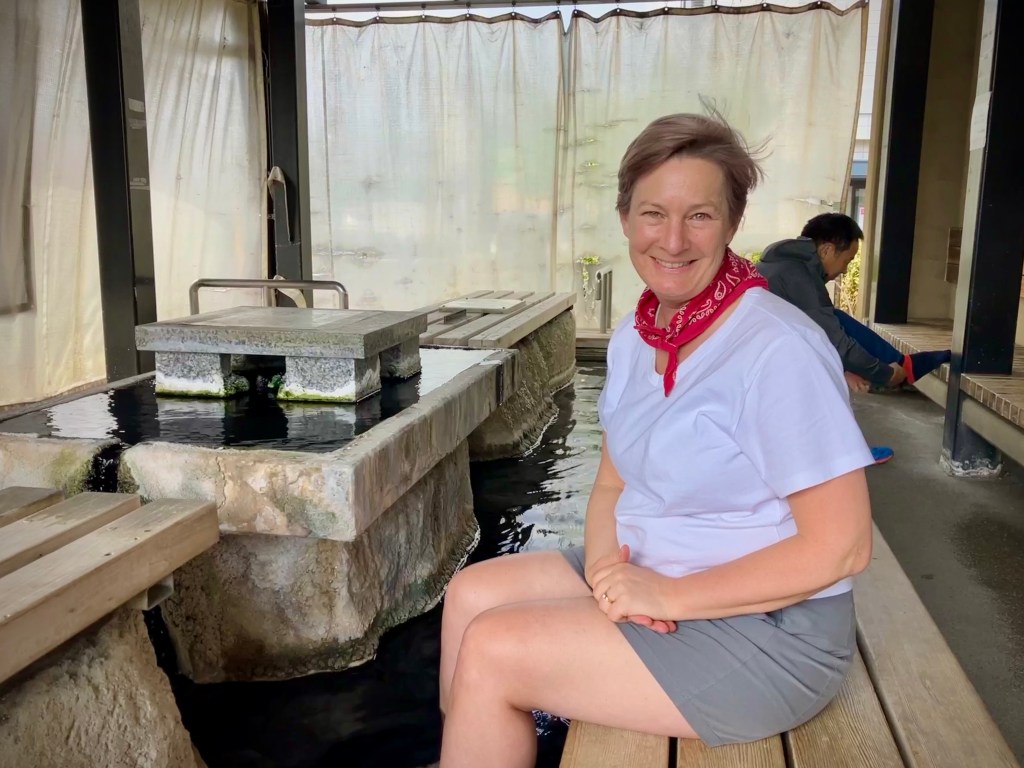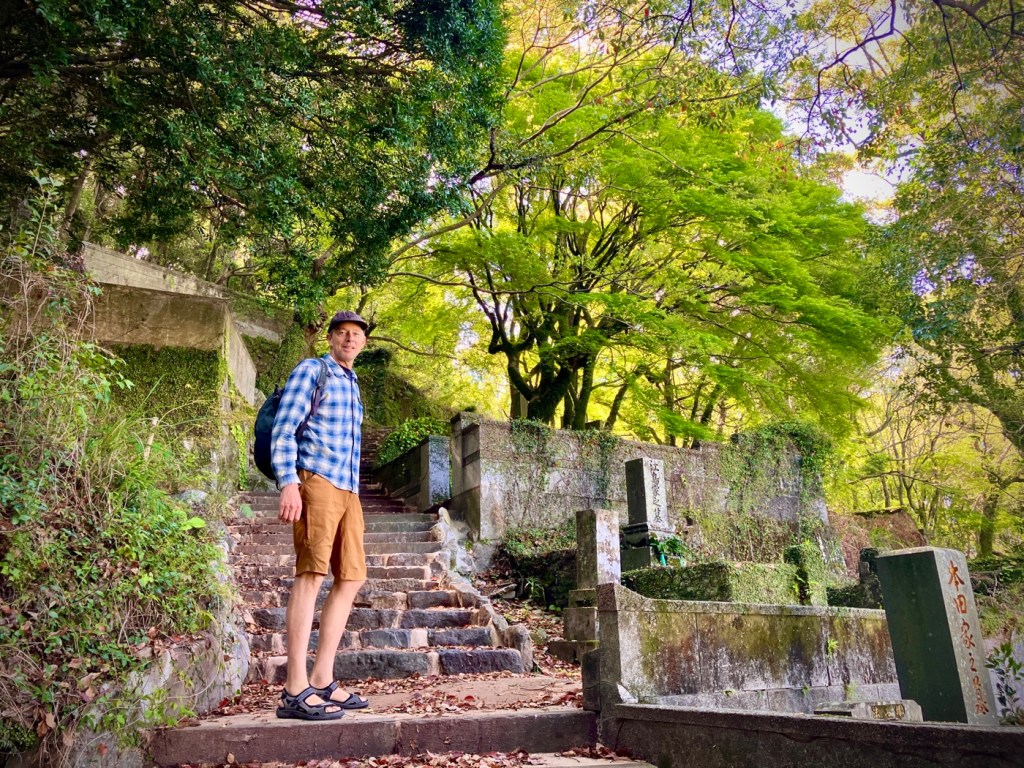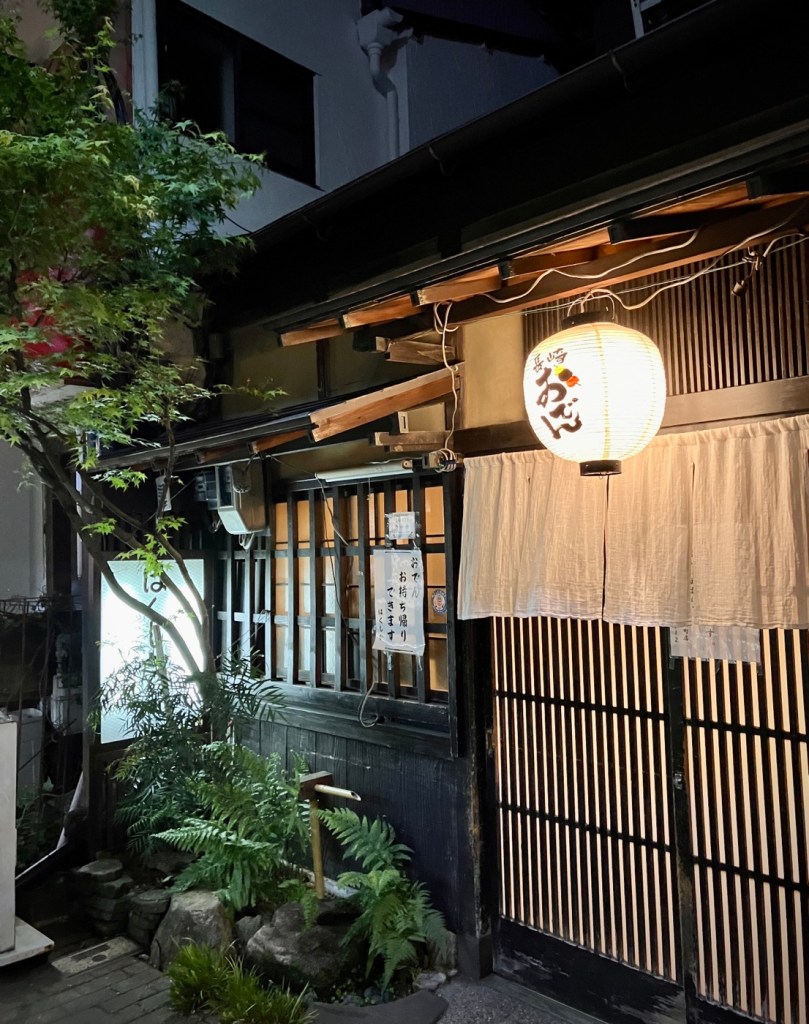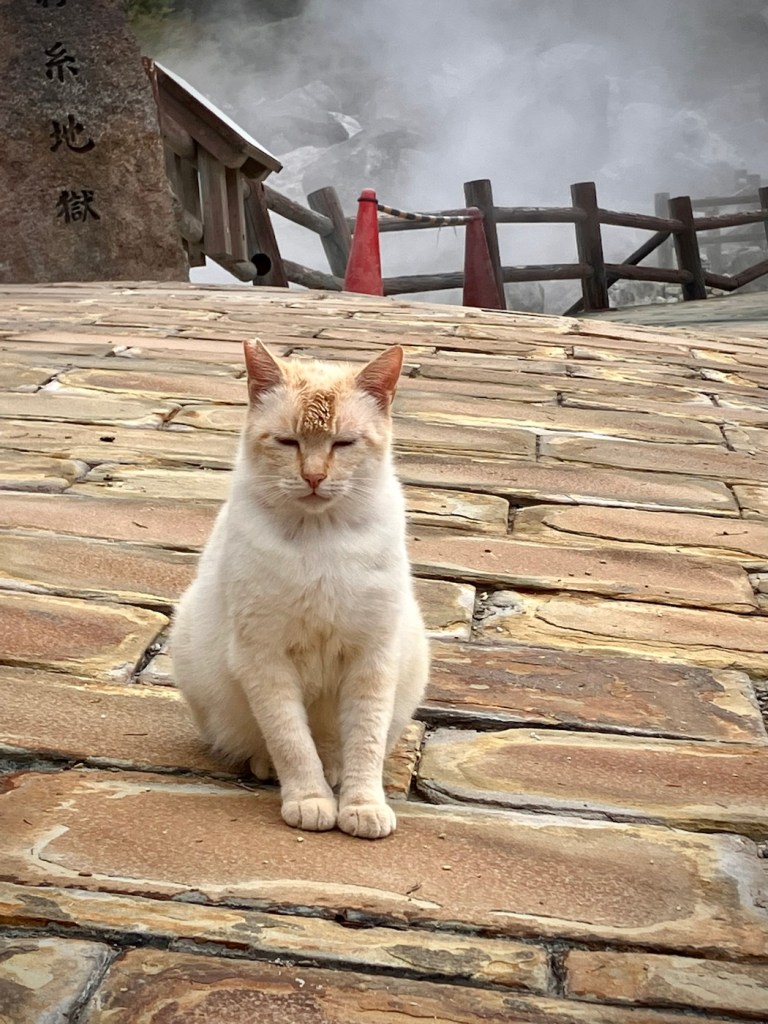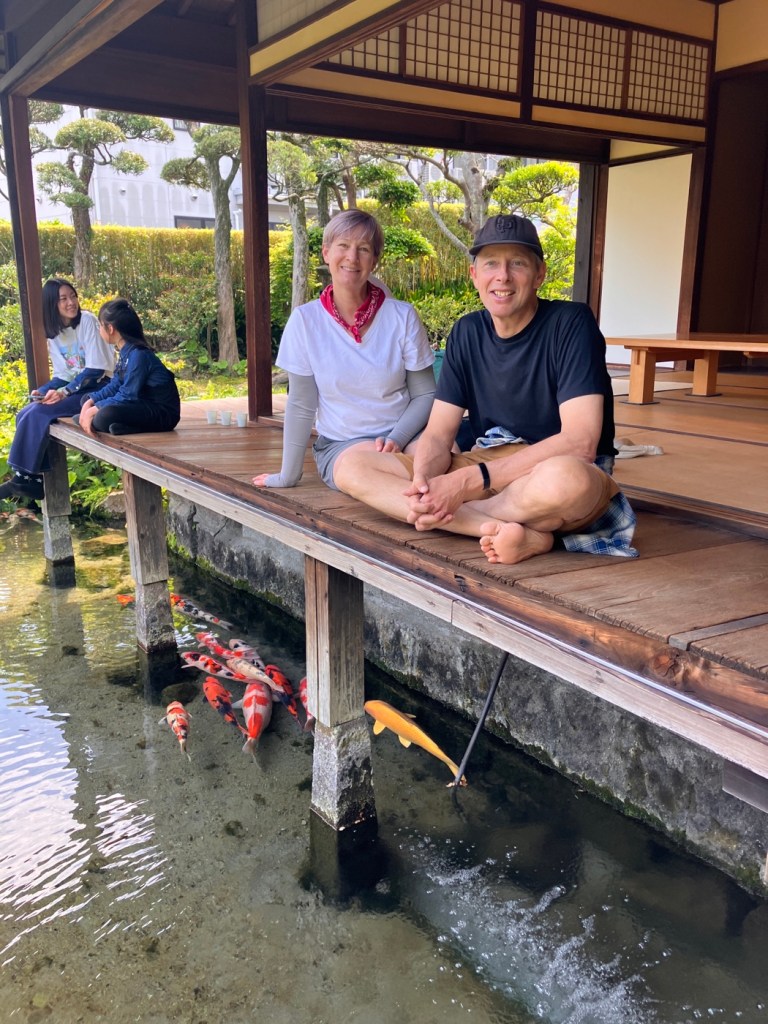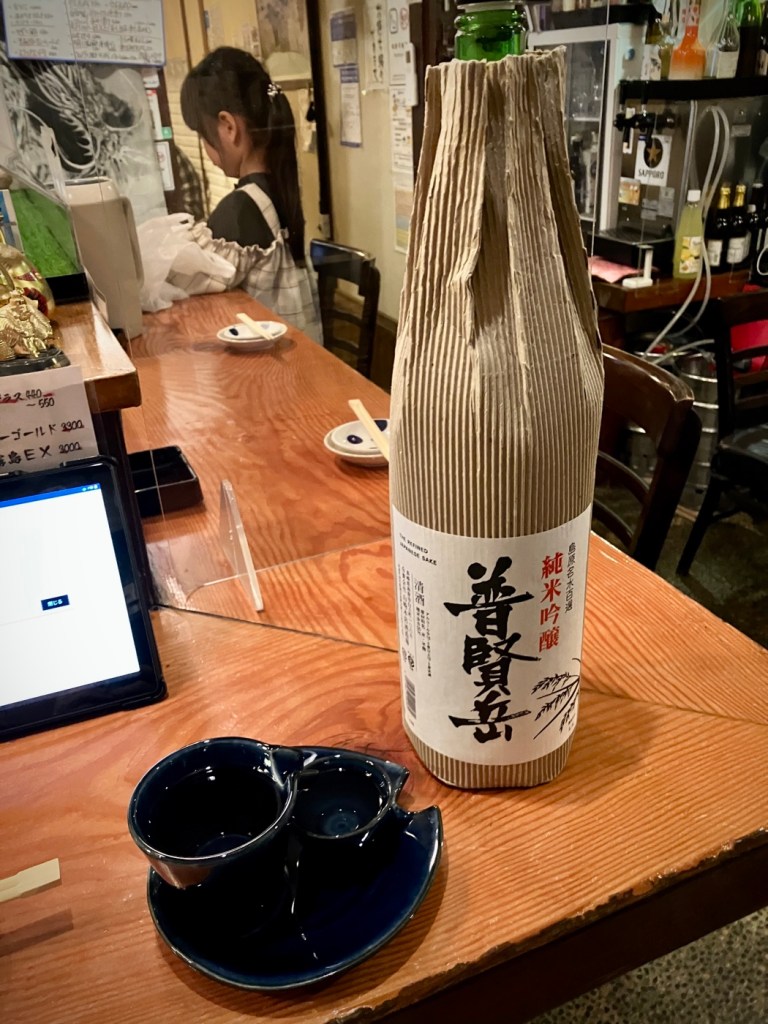
One of the longest public foot baths in Japan, the Sakurajima Volcanic Shore Park and Footbath, with Sakurajima, an active volcano and the source of the hot water, steaming away in the background. Kagoshima Prefecture.
There are things you know about a country before you arrive and are looking forward to – food, specific sights, cultural norms that are different from your own and therefore fascinating – but the things that catch you by surprise are the gifts of travel.
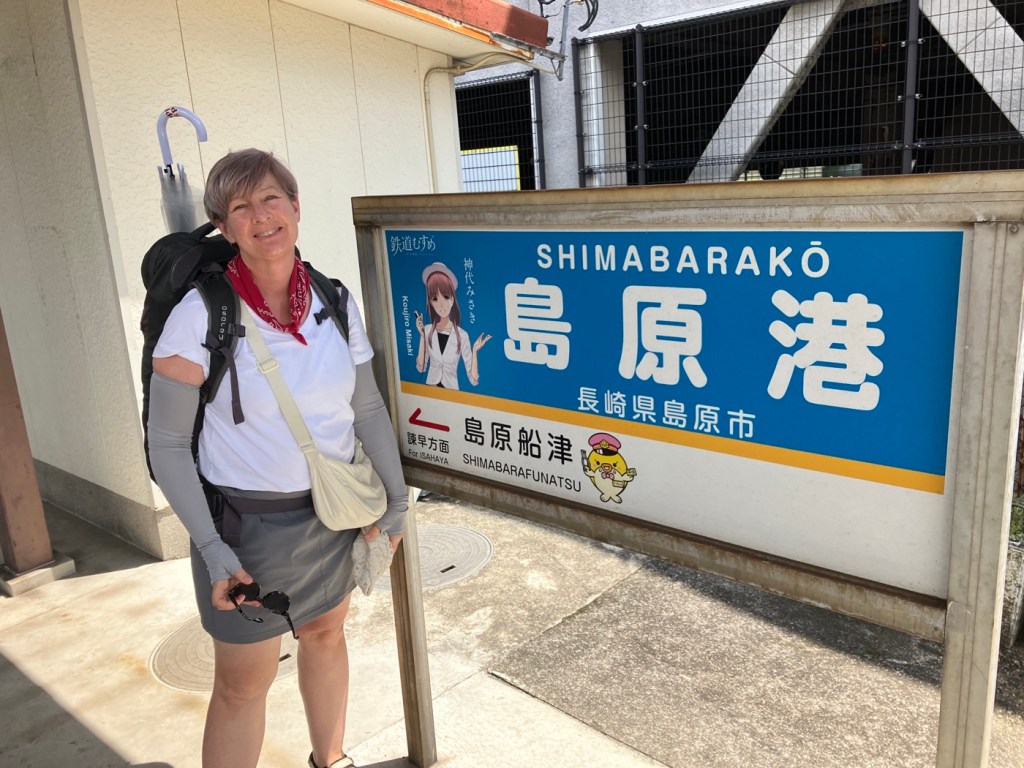
Shimabara, Nagasaki Prefecture, is known as the city where Koi swim in the canals, full of plentiful spring water.
Plentiful water. Still a mind bending notion to someone raised in Southern California. The city of Shimabara has a castle, a lovely neighborhood of samurai houses, and so much free flowing water. Water under tea houses where koi appear to float in midair, a visual trick of the crystal clear water. Water running between houses in fern lined canals. Water fountains with ladles handy so you know the water is drinkable. So much water. And yes, some of it hot thanks to Mount Unzen, an active volcano which rises and steams and bubbles a short bus ride away.
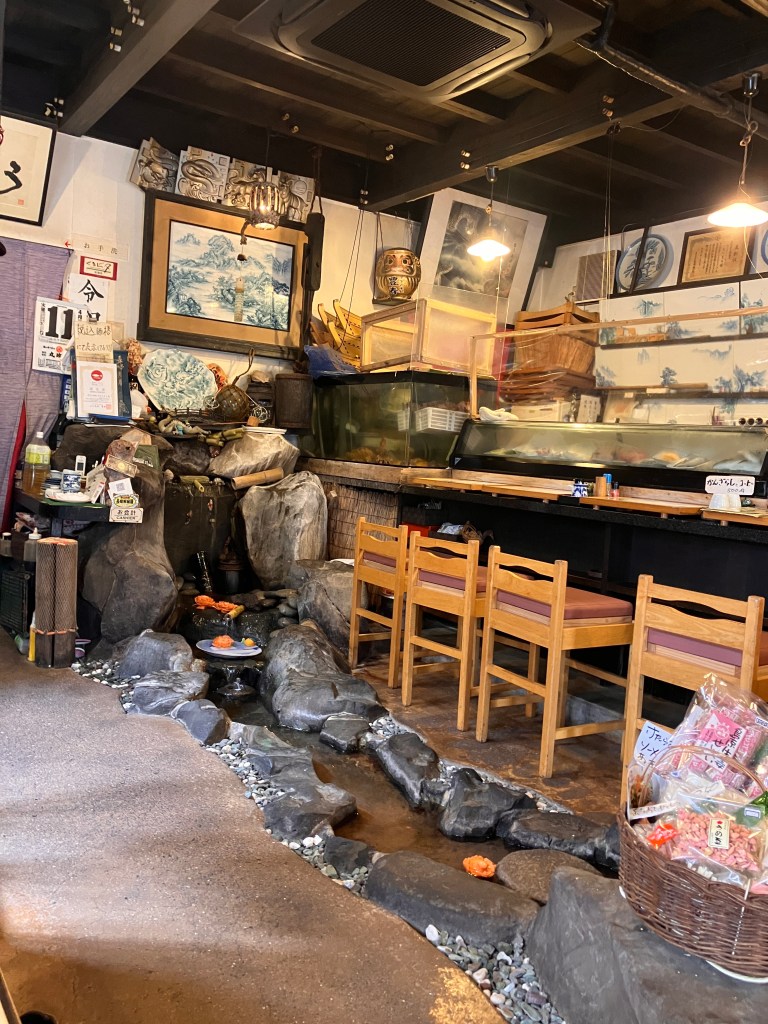
The sight and sound of running water is calming. No koi in this canal, they are only in specific controlled areas. Just a street. With a canal. Folks walk by. Locals garden. The postal workers do their jobs. Me: OMG! Water! So much water! A tea house with floating koi. How much water is there in town? So much that even your lunch spot will have a tiny stream running through the restaurant.
After admiring the water in one neighborhood, we had lunch, a lovely set menu which is a wonderfully easy thing to order. Then we headed to a spot on the map marked as public foot bath. So far all the water had been cold and clear. Foot bath? That sounds interesting.
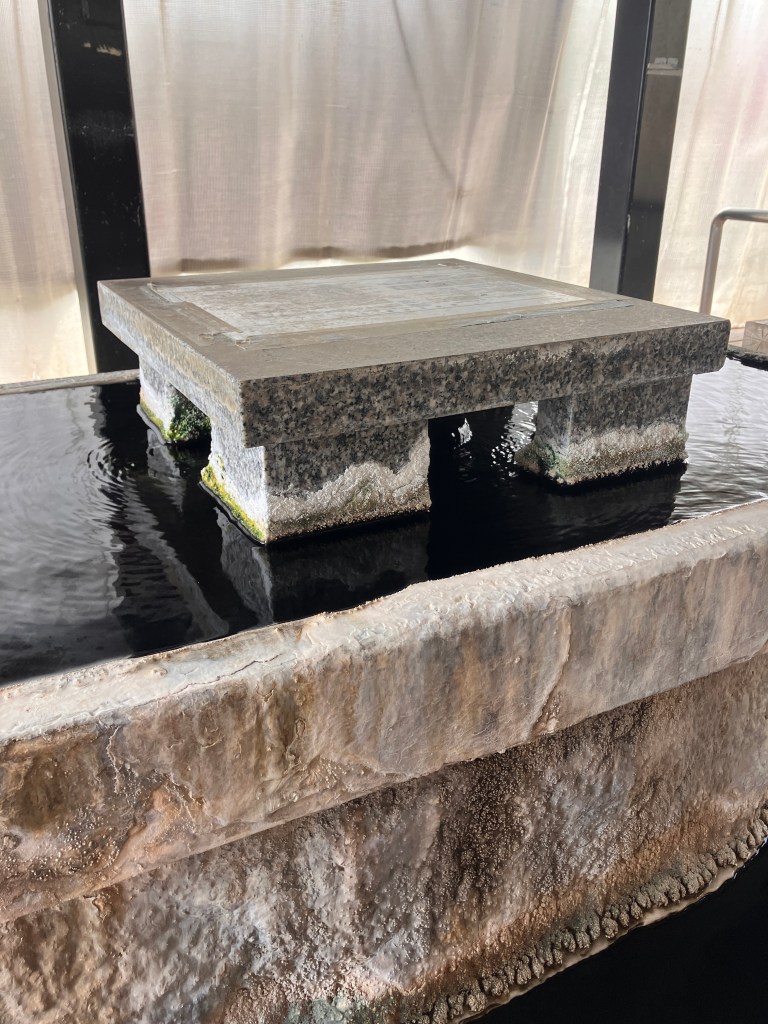
Yutorogi Foot Bath. This water is hot. Maybe 36c/99 f. It comes out of this stone trough.The hot water fills the basin. The people sit and soak their barking dogs Aaahhh. It’s not a fancy place. Just a nice spot next to a parking lot where anyone can sit, relax, and put your feet in water warmed by a volcano.Right next to the foot bath is this public fountain. The sign tells you the mineral content and that it’s safe to drink. So I did. It’s hot, look at how pink my hand is. You can see the mineral deposits here and in the foot bath.
Feet refreshed and ready for more walking we headed off to see the neighborhood of samurai homes. The canal which runs through the neighborhood was a perk for these high ranking, hereditary, military nobility.
But first, we must drink from every fountain we pass. No ladle, some were removed during Covid.Ladle! Drink on.Replace ladle when quenched.And walk on to the samurai street. Note the walls of volcanic stones.The houses are occupied, but several have opened the front historical parts to curious visitors.
We headed back to our hotel, craving a proper onsen soak, but first we had to pass another fountain, and stop for another drink. How could we pass up this lovely landscaped fountain, which seemed to be part of the neighboring house’s garden.
Ladle and sign- all good. Drink!How can we drink so much water, you ask? Plenty of restrooms in Japan, we reply.
One easy bus ride from our waterfront hotel took us winding up the mountain. The bubbling mud and steam clouds of Obamachounzen quickly let you know this volcano is not playing around. “An eruption in 1991 generated a pyroclastic flow that killed 43 people, including three volcanologists. “ The slopes of the mountain down to the sea will look familiar to anyone who has visited the big island of Hawaii. Lava field slopes.
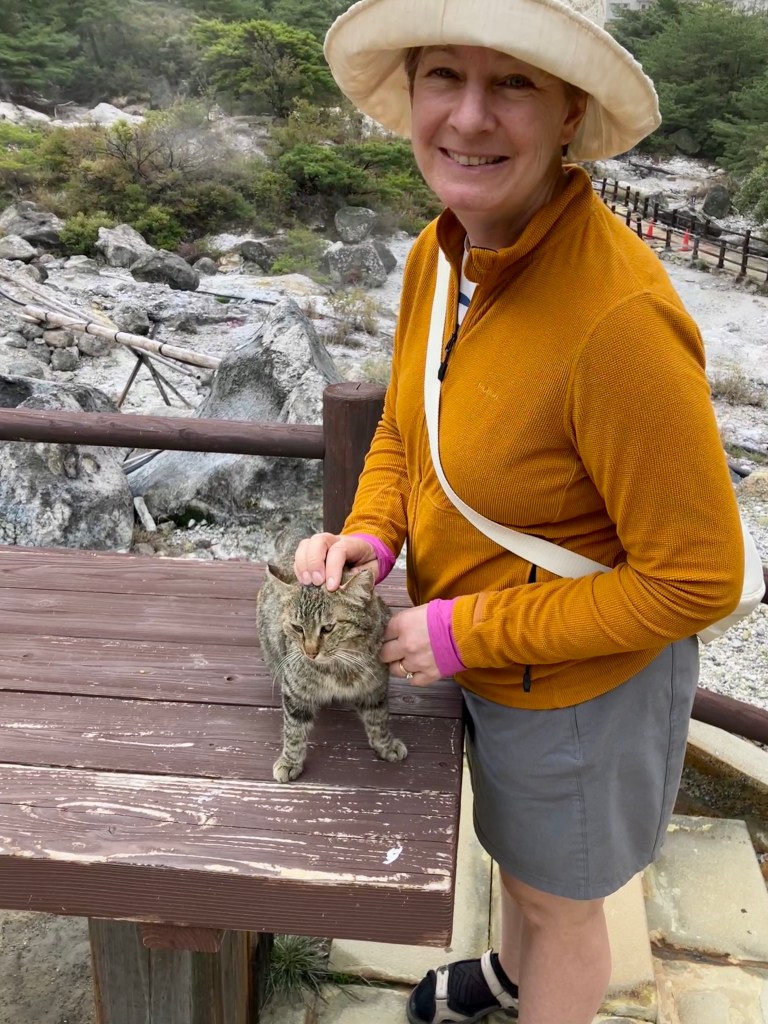
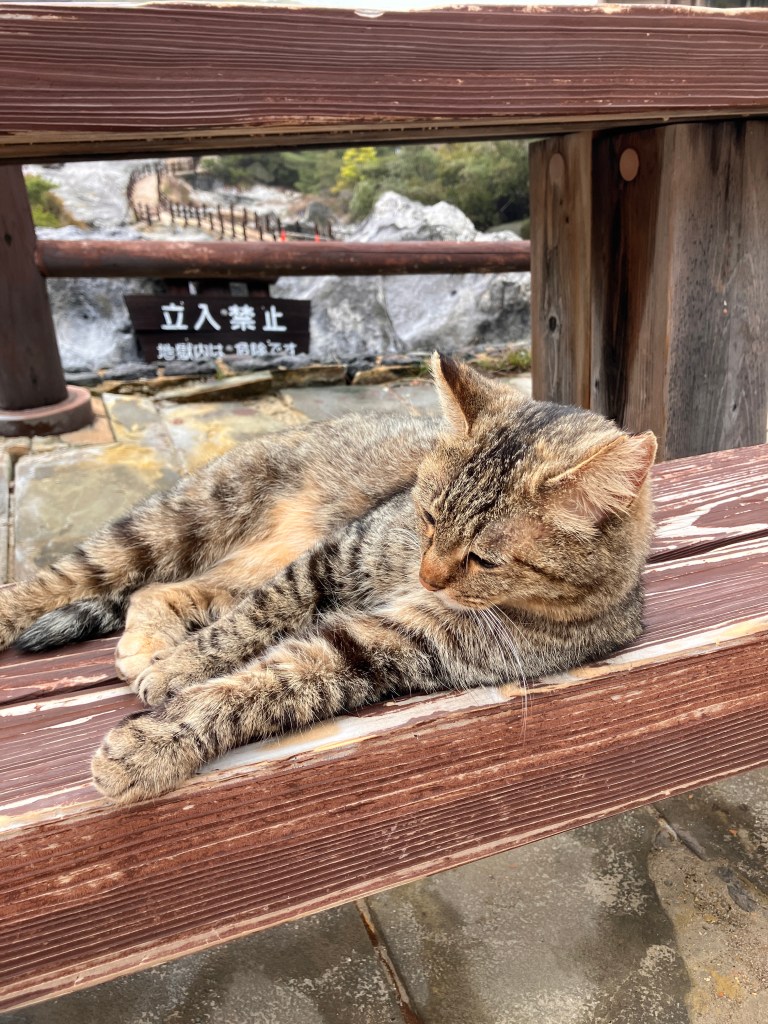
An awesome sound, bubbling and steaming.Oh! Kitty! Popular sights in Japan frequently have cute cats to distract you from the sight.
Even though we hadn’t done much walking yet, just a few kilometers around the steamy and bubbly area of Obamacho Unzen, we headed right to the public foot bath.
A pleasant setting.Some very pink feet. This one was hot. Probably 110f/43c. Hot enough that you took your feet out to cool quite quickly. Rich enjoying his foot bath.
We did a lovely hike after the foot bath and enjoyed the views of the volcano while having a picnic on an observation platform – keeping a wary eye on the plumes of steam. Then it was a bus back to the hotel, a lovely relaxing onsen and outdoor rotenburo soak at our hotel, and dinner at a local Izakaya. It was time to move on to Kagoshima, which was a ferry ride and train ride away. But first – foot bath by the ferry terminal!
We walked from our hotel to the ferry terminal, got our tickets, and headed over to the footbath.This water was warm, not hot, and quite clear compared to others. We guess it was 90f/32c.You can see the ladle behind Rich. If you so choose you could drink this warm water – before it enters the foot bath.Again next to a parking lot. But quite a bit of seating space. The bath is emptied and cleaned each morning, it opens at 9 am. It was just refilling when we arrived.That face says no, I don’t want to leave the foot bath.But our ferry awaited, and we got a fantastic view of Mount Unzen as we headed out.
The blessings of volcanos. Hot springs. There are more than 27,000 hot springs in Japan. The volume of water that flows from them is 2.6 million liters per minute. I was a volcano fan before this trip to Japan, now I’m a volcano fanatic. And we weren’t done yet! Next up, a ferry from Kagoshima to see the slopes of Mount Sakurajima and yes, another foot bath.
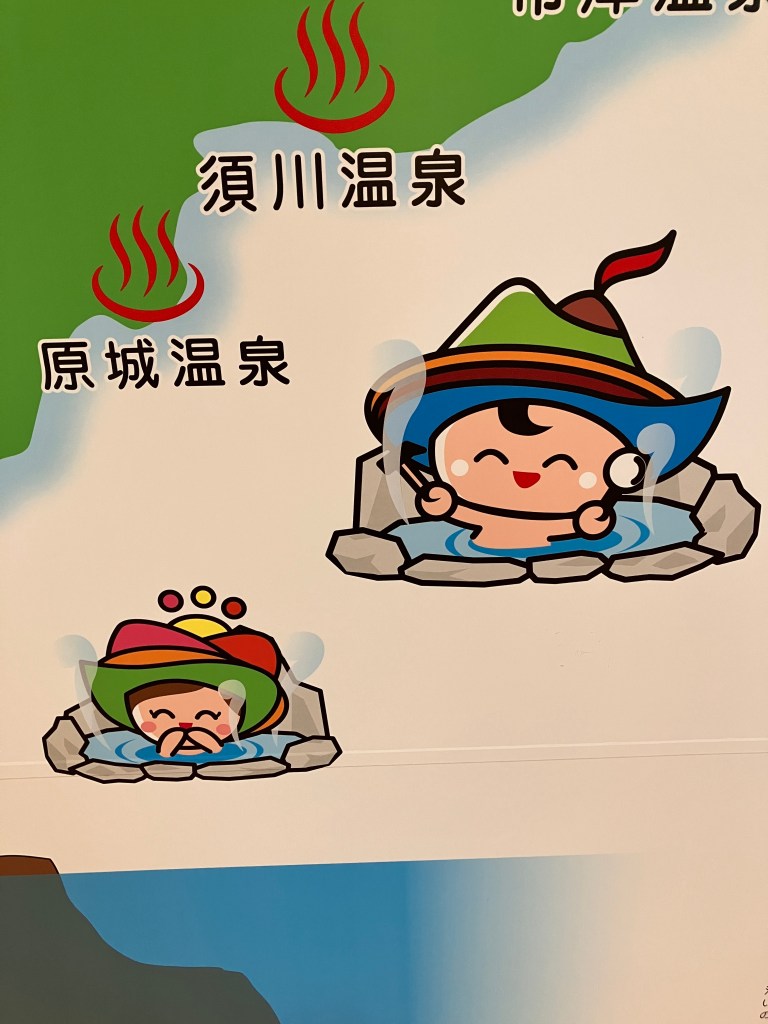
Cute mascot, but this active volcano erupted in 2022 and triggered evacuation orders. Rocks fell as far as 3 kilometers/1.8 miles away. The city of Kagoshima behind Rich and his happy feet. This foot bath was hotter near the source, and cooled down as you moved further away from the spigot.Looking the other way, towards the active volcano. The visitors center showed the helmets school children have to wear on eruption risk days as they walk to school.This water was not as clear, maybe more mineral content? But it felt wonderful on this cool cloudy day. Quite warm but not hot. The happy travelers, we took a bus to the observatory to have a closer view of the volcano.
We’re in Korea as of today, but still catching up on all the fun we had in Japan. I was struck by the relationship the Japanese have with their volcanos. The idea of the blessings of volcanoes, and the use of the hot spring water, gives the volcanoes a different feel. Yes, potentially deadly, but also useful and part of life. Japan has the potential to harness this geothermal energy, mostly unrealized so far, but what an additional blessing that could be. But our feet were happy to take advantage of the blessings of the volcanoes.
We’ve been so thoroughly enjoying every day in Japan that we haven’t had much time or energy left to Blog. It’s a fantastic place to travel. But no place is perfect, and Japan has its weaknesses too, especially in the bike and pedestrian realm.
Exploring the hills and stairways of Nagasaki was a joy in the crisp spring weather.
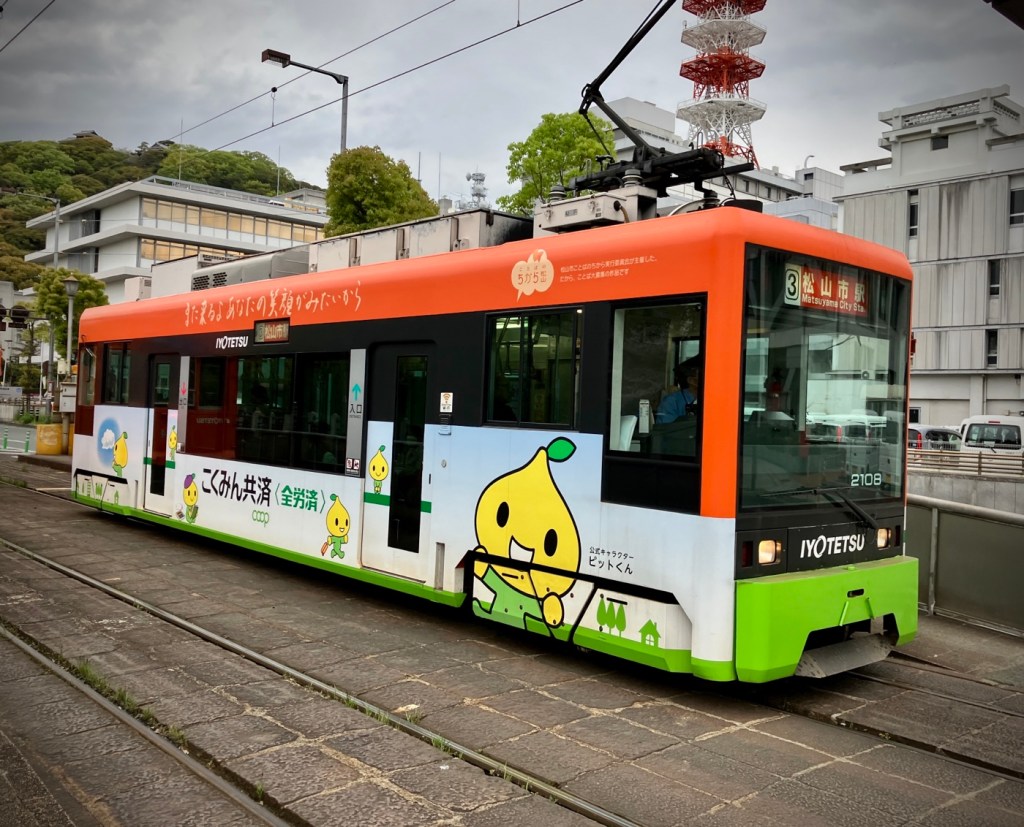
We’ve been travelling our preferred way by train, bus, ferry, streetcar, subway, and bike. With a lot of walking to the beach to explore and get to our lodging. We’ve been luxuriating in the clean, punctual, and extensive intercity train system. And the local public transit is always clean and reliable, if not always fast.
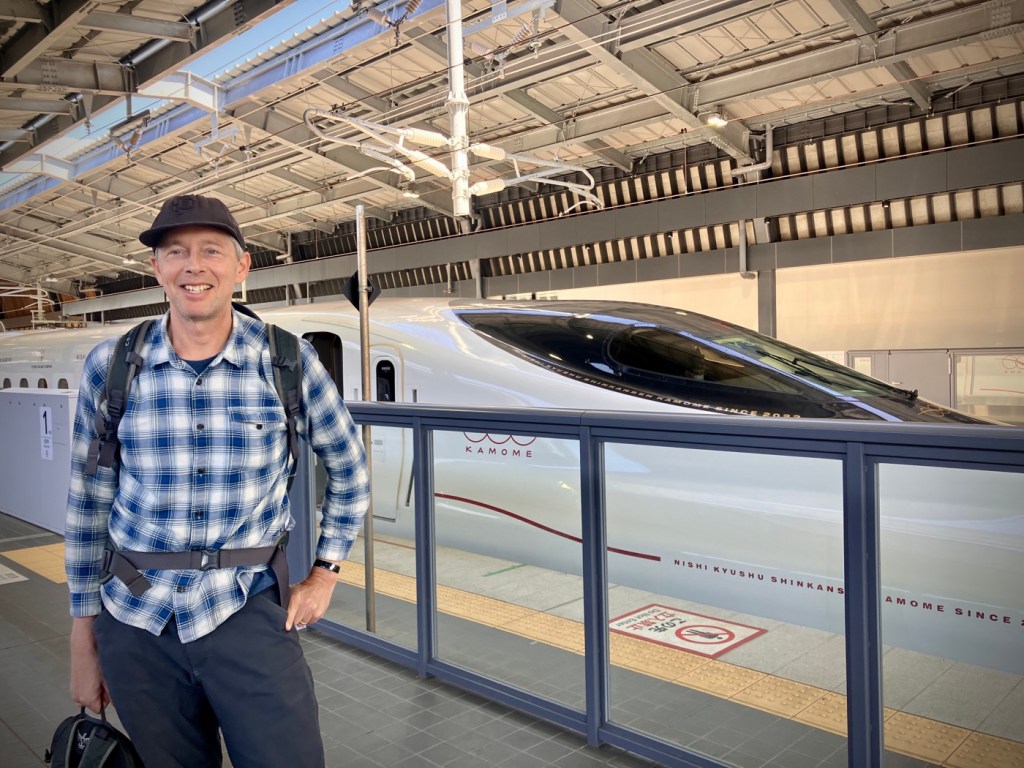
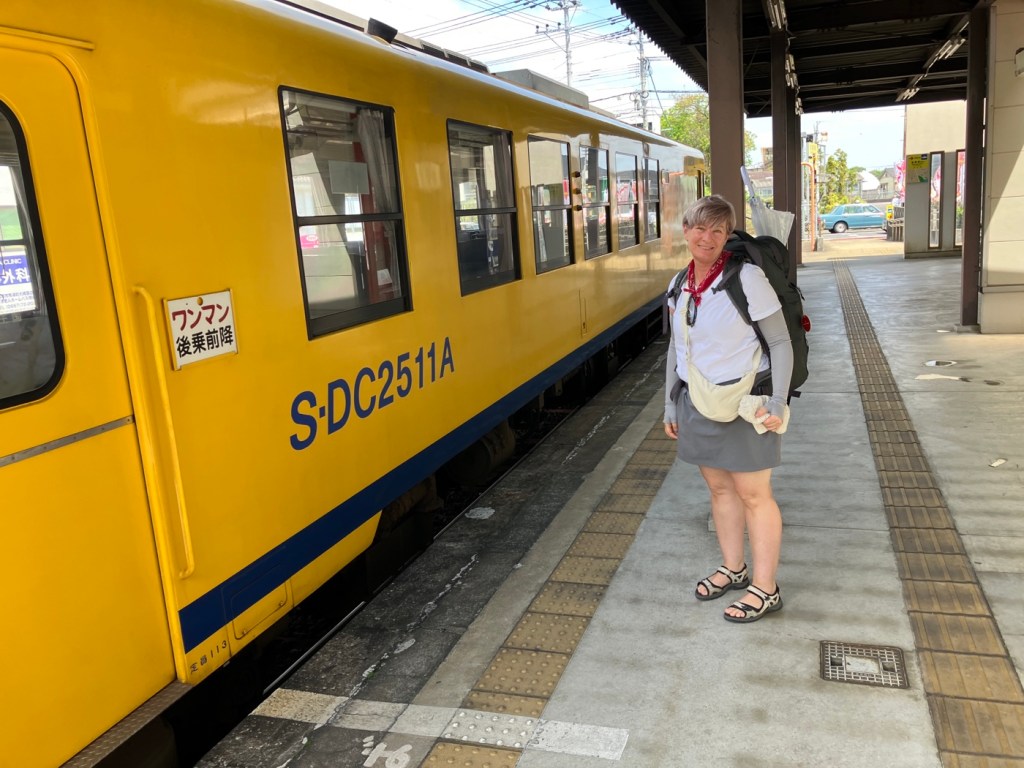
A shiny new Shinkansen on the recent extension to Kagoshima – marvelous and so fastA single car train on the Shimabara railway, operated and conducted by one person! Many small lines in Japan have shut down, and how long can the last private lines survive?
So here are a few transport observations. For you transport wonks and mega walkers, they may give you the same joy and a maybe bit of frustration if you visit.
You can enjoy great connections in Japan, like the end of the line in Shimabara, with a ferry across the street that will take you to a bus and a Shinkansen line.
1. JR Rail Pass- Unless you are going to only visit a few cities or rent a car, then it’s a no brainer to get one of these passes subsidized for tourists. We bought two three-week passes and planned our trip to max its benefit to a 4 week visit by setting the activation for the day we left Tokyo and expiring when we get to Fukuoaka, where we are spending our last 3 days. This way we were able to exchange our vouchers at off peak time at Shinjuku station and avoid the mob we saw at Narita airport trying to exchange them to use immediately from the Airport. We instead bought $20 local rail tickets to central Tokyo. It was then easy and cheap to get IC (tap) Transit cards to get around for a few subway and loop rail trips in Tokyo until leaving Tokyo for Kanazawa.
JR Raíl stations are always clean, orderly, and the major ones have lots of food and shopping options and lots of vending machines
2. IC Card – Good for transit in most major cities. There are a dozen or so “brands” by region and they can mostly be used in other cities, although acceptance is a bit hit or miss outside the home zones. Don’t put too much on it initially, 5,000 yen ($40) is my recommendation, as you can always top it up but it’s hard to get a refund. You can also use them at many convenience stores.
Buses run EXACTLY on timetables, so real time predictions really aren’t needed. And you may have them to yourself in more rural areas
3. Train Seat reservations – With your JR Pass, you can make free seat reservations for most higher speed trains (and Shinkansens). I found that I could get our choice if I booked at least 2 days prior to our next trip. You can do it at green JR Ticket machines in almost all JR stations. So I’d often get our seats for our next leg when we arrived to a city. If you book too early and want to change your trains later, you won’t be able to do it at a machine if the new journey overlaps with the old one. You will have to go to a JR ticket office which could take some time at busier times and stations. But, you can alway board in the unreserved cars, so no serious worries other than maybe sitting apart or standing for a bit.
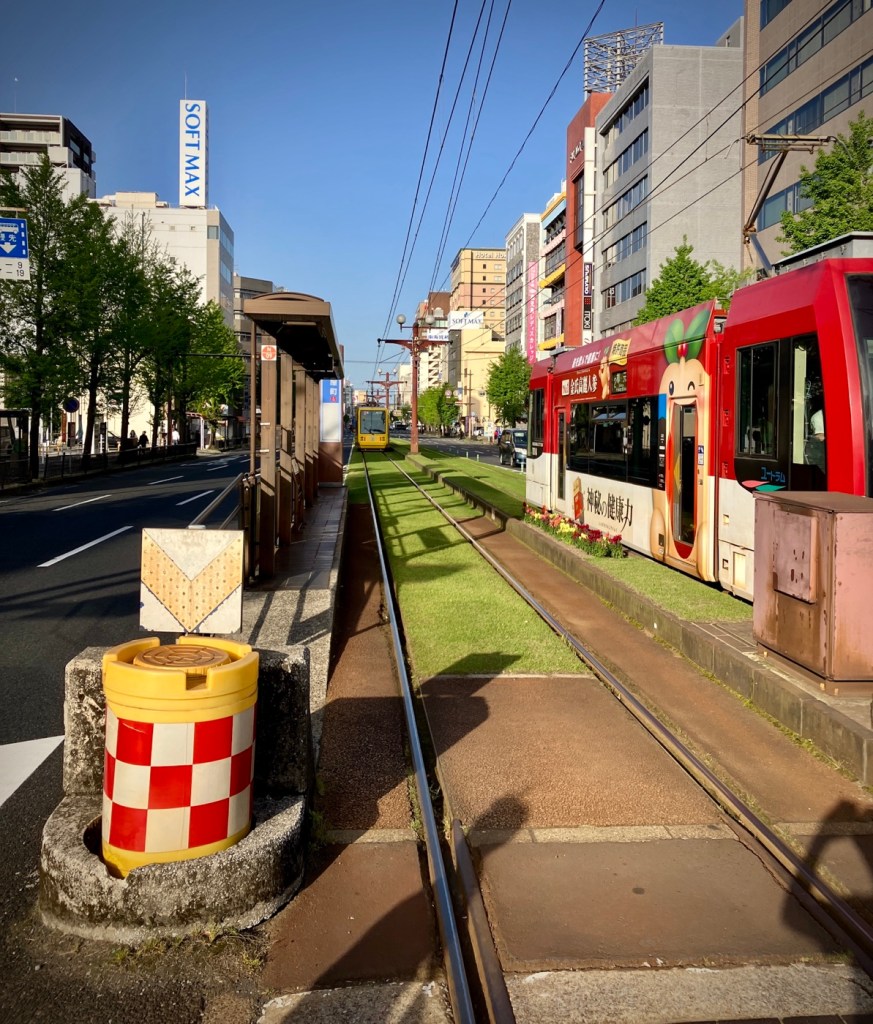
The worlds skinniest tram boarding platforms in Kagoshima next to 3 underutilized traffic lanes….hmmmThese poor tram passengers have lined up to wait for the lights to change, just to get off the narrow tram platform to the sidewalk.
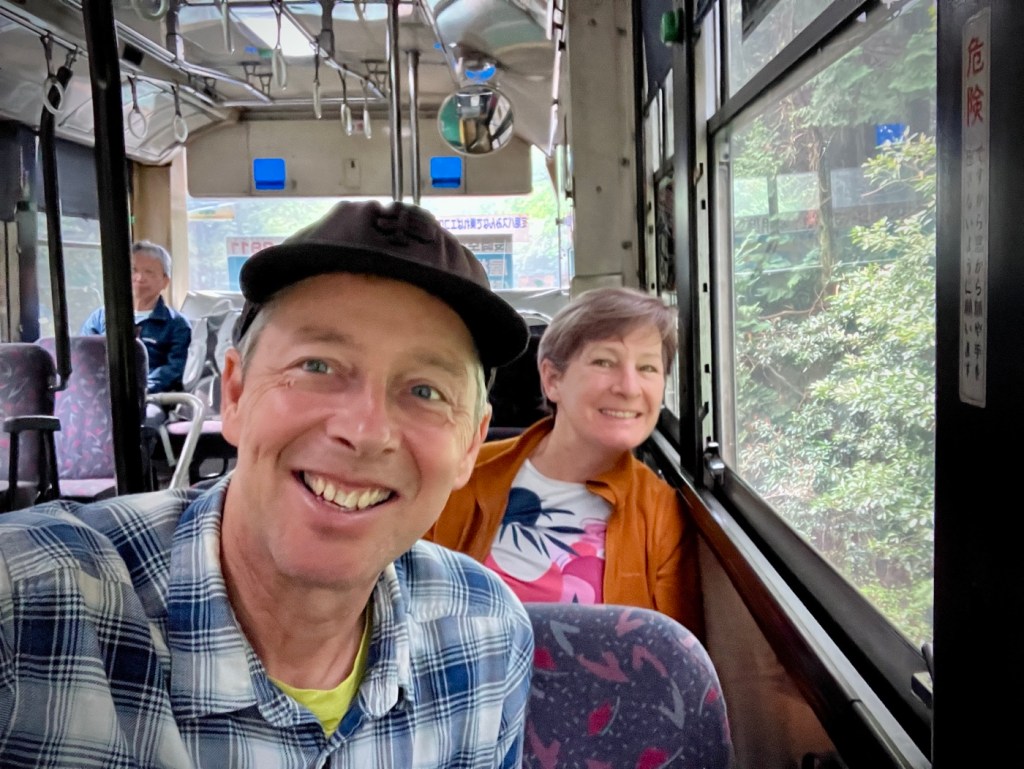
4. Buses and Trams – they run on schedule (especially buses). You board at the back door and tap your IC card if available or if not, take a little paper ticket from a dispenser that indicates your boarding zone. You always pay at the front door as you leave, calculating your fare from the easy digital sign at the front. Put your stop ticket and fare in the box or machine. They can always make change. This also applies to some of the small independent (Non JR) local trains. Once you get the hang of it, it’s pretty straightforward (Especially with IC Card), but it seems pretty inefficient at crowded times as many people still pay cash fares. There is a flow from the back of the bus towards the front door, but it doesn’t match the ease and speed of a proof of payment system.
Navigating the local systems can be challengingGoogle maps can really help as it has most timetables (but not all) available in navigation, but you still often need to id your bus in Kanji script or just be at the right place on time, because the bus will be.
5. Walking – You will do a lot of walking in Japan which is mostly great, and wandering the alleys, hidden temple stairways, and quiet back streets is one of the great joys of Japan. One downside though is that the arterial traffic signal timings are long, so get ready to wait for for 2-3 minutes at some crossings. It’s very annoying, and really delays walking trips across town. The only time you see Japanese run is for crossings, as they know it’s a long wait if you miss the light.
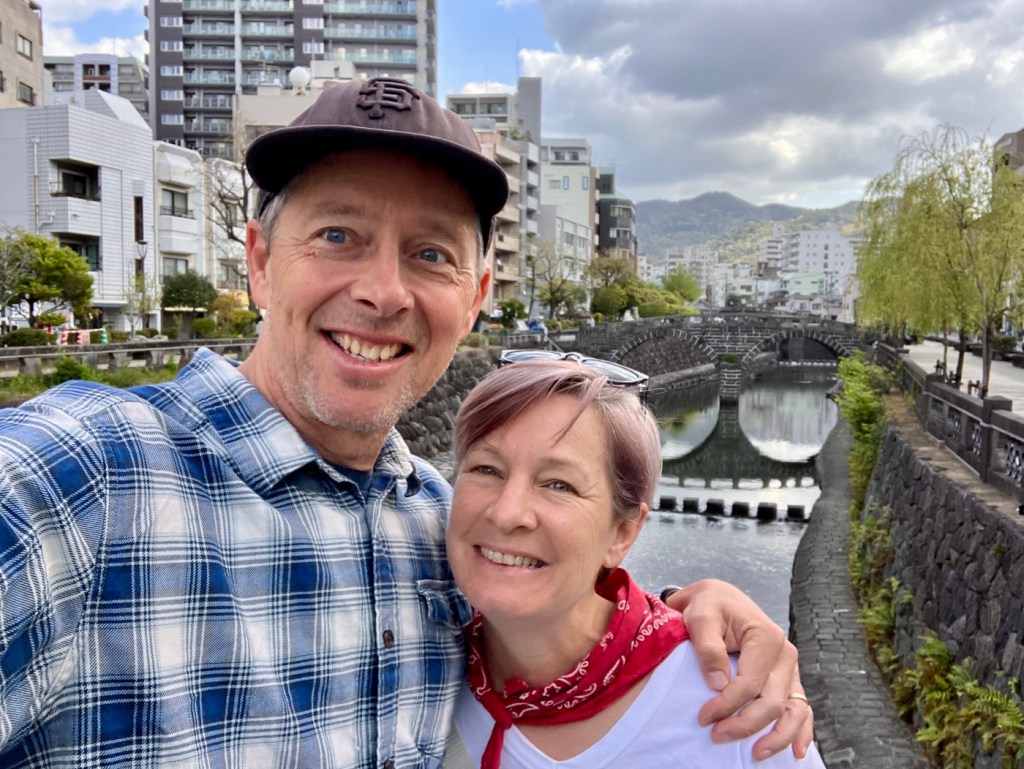
The cats and temples are always worth the long pedestrian lights A series of historic stone bridges line the Nakashima River in Nagasaki.
Also, pedestrian crossings can be spread out on major arterials, with occasional overhead or underpass ped crossings in lieu of at grade crosswalks. It seems like a legacy of 1960s traffic engineering that continues in philosophy today, but stairwell underpasses are not good for an aging population.
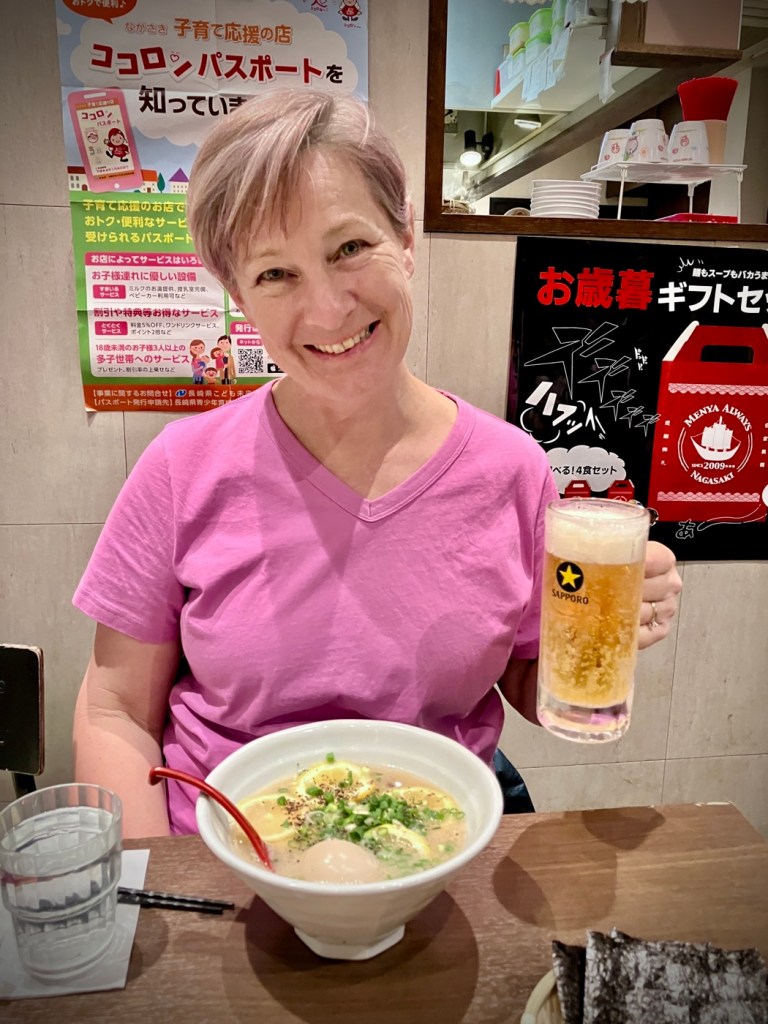
State of the art ramen ordering machine. Automation and an aging population go hand in hand as labor is getting scarcer every year in Japan A unique pork and lemon broth at Menya Always ramen in Nagasaki
So what about Jaywalking? A few people, especially in larger cities will jump a signal or cross midway, but 98% of Japanese wait until the light is fully green. As time has gone on in our travels here, we are getting less and less patient, and will cross at will when it makes sense and traffic is clear. We are surely going to incite a pedestrian revolt here!
The main shopping arcade doubles as a cycleway in Takamatsu. It does provide weather protection to cyclists but is hectic in the evening rush hour when shoppers are outHappy walking; riding bikes is not allowed in the busier hours or areas of the arcades
6. Bikes: There are many more than you think, especially in flatter cities. But the bikes share most sidewalks and it’s all a bit chaotic, which could be solved by more on street protected lanes. Cyclists routinely cut corners and swerve across intersections and are an outlier to order on the streets. (Yeah cyclists!)
Amazing underground automated bike storage in Takamatsu. “Hello Cycling” bike shares were located in underground bike parking facilities in Takamatsu and the App was (mostly) English and foreign credit card friendly.
So my quick transport report card for Japan based on our scientific analysis:
Trains – A-….ok, amazing at a high level, but deductions for lack of App based e-tickets/seats please…and stringent bike policies keep it from A+
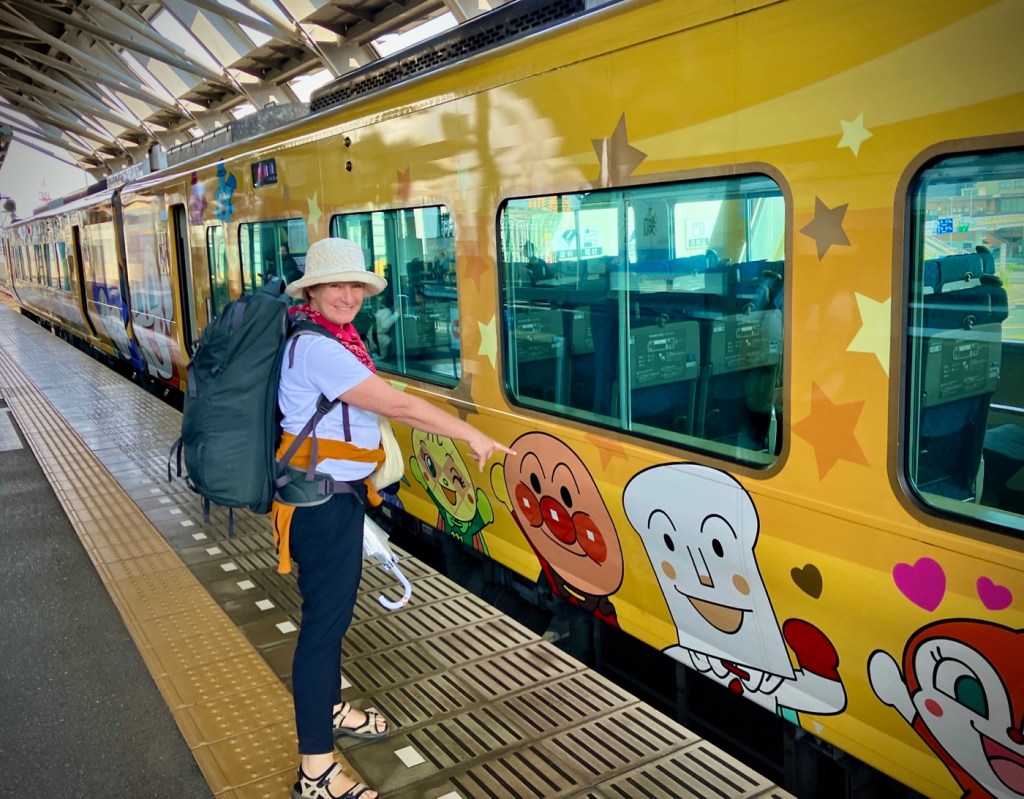
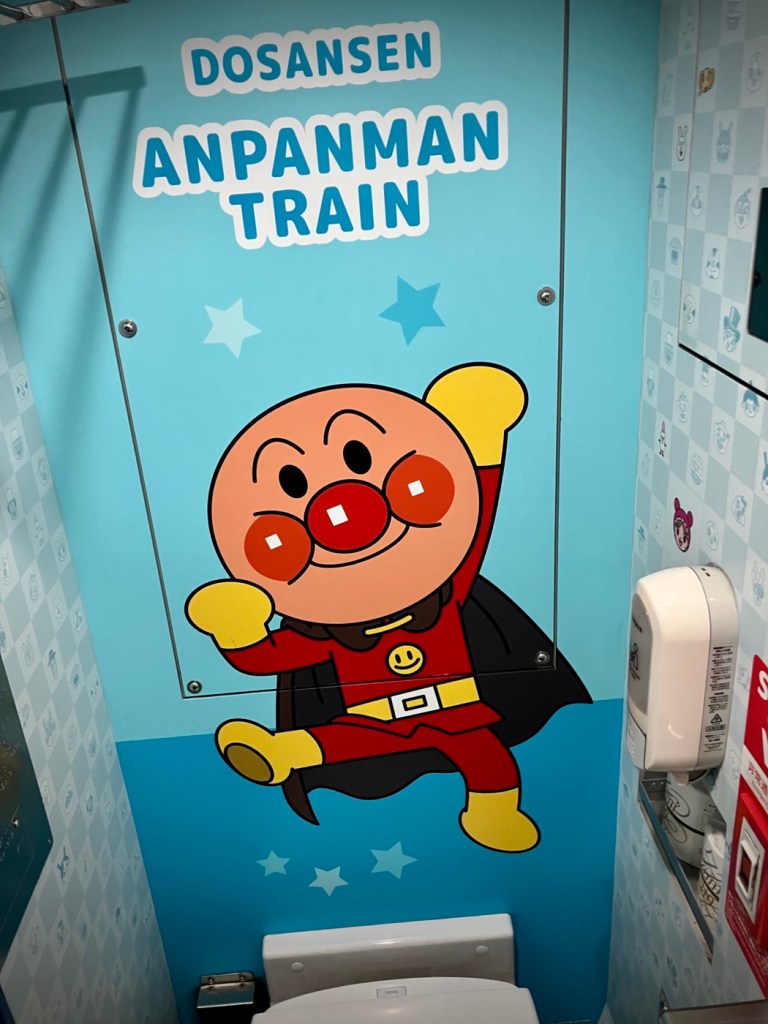
There are themed trains too, including a Hello Kitty Shinkansen (missed it) and our train to TakamatsuAnd the theme continues inside…Apanman is a beloved TV series based on Takashi Yanese’s picture books that he produced for over 40 years.Even to the WC
Buses: B+ Reliable; on schedule, and fair pricing but they get stuck at long traffic lights too, so can be slow in cities. And there are few express buses. BRT?
Buses in rural areas are reliable, but sometimes only run hourly or a few times a day
Walking: B- Wider sidewalks are needed in many places. Alleys and many quiet urban streets are very pleasant and low stress to walk, but many arterial sidewalks are a bit narrow or degraded by detectable rubber strips. I appreciate that these assist the vision impaired, but sidewalks are just not wide enough to accommodate them and side by side walking space. There seems to be a legacy of traffic lanes and road capacity. Giving more road cross section to peds, bikes and tram boarding is needed. Smart traffic signals could be used to mitigate lane reductions. Many heavy pedestrian neighborhoods in Tokyo and other larger cities have nice wide sidewalks in a new generation of streetscape designs, but many places still have a 1970s-1990s feel.
Rush hour on the sidewalks of Matsayuma. Wide here, but a slick rock surface makes cycling in the rain a bit dodgy.
Cycling: C+ Quiet back streets and sidewalk cycleways do the trick, but more on street protected bikeways are needed everywhere
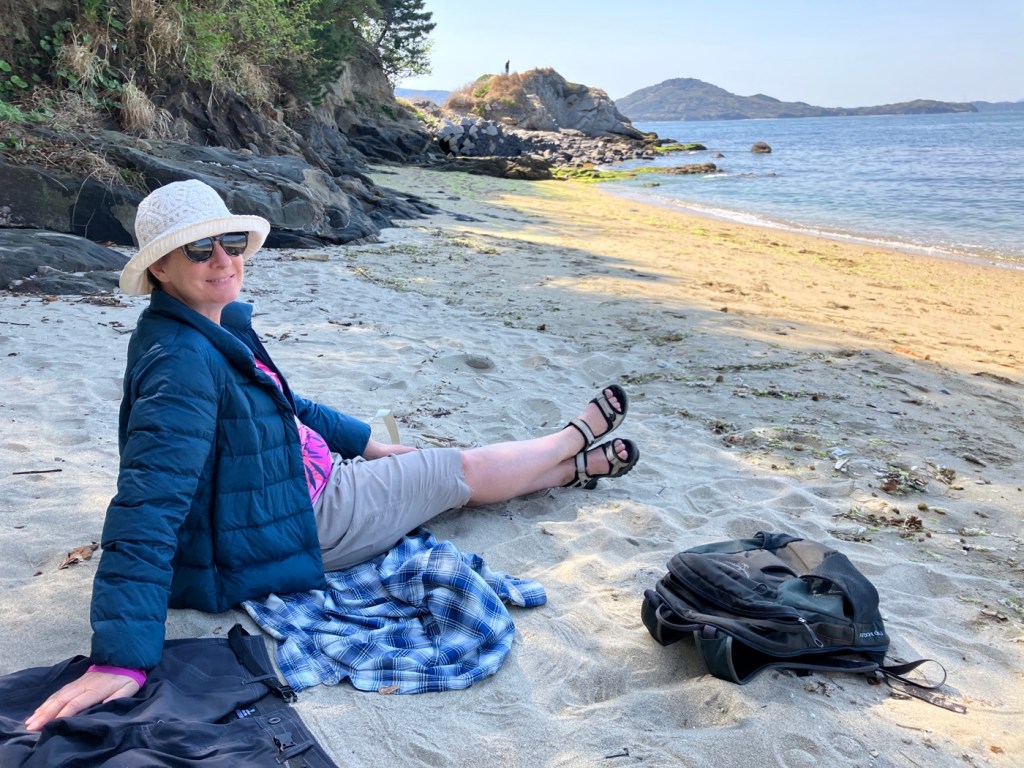
Yashima National Park – nice beaches on Shikoku but a little chilly to swim yet Cycling to Yashima NP from Takamatsu was pleasant on sidewalk paths and quiet roads
But enough nitpicking. As a traveler, the lack of personal safety concerns and good transport frees you up to focus on the unique culture, sights, and most of all, the food and friendly people. And oh man the food is SO good.
Smiles allowed, but ramen is serious lunchtime business at Ramenya Mass in NagasakiSmall izakayas are the souls of Japan. Dedication to craft and coziness abound Pure soba and dashi heaven
And it’s good value for most lodging and food, as long as you are willing to give up western norms and keep some distance from the tourist hot spots. The yen has weakened against most currencies over the past 5 years, so it’s a great time to travel here. Except in Tokyo, there are great 3 to 4 star Hotels in the $100-$125 range, and a bit more on the weekends, especially Saturday nights. And most include breakfast.
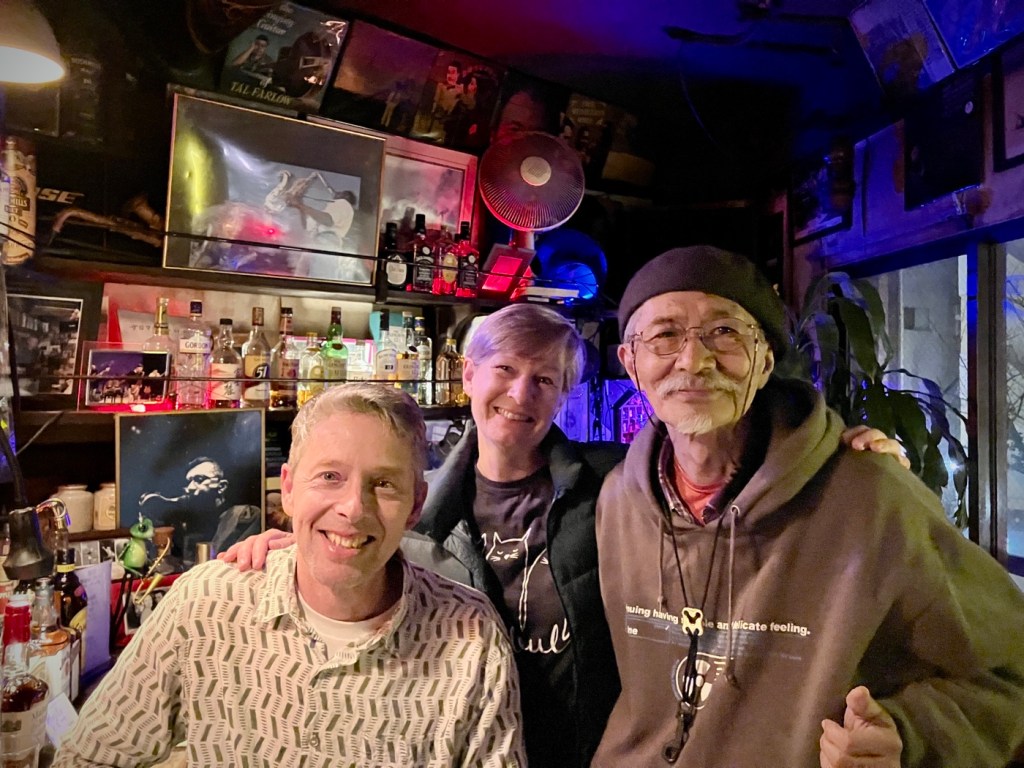
Wonderfully cozy 3rd floor jazz bar in Nagasaki . The owner played us his tenor sax music while we chatted. The Japanese love classic jazz. And so do I.In addition to hot and cold drinks, vending machines in Japan are used for almost everything; even fresh soba noodles
If you go for more modest 1-2 star hotels, then you can find many in the $70-$90 range. Remote or resort area hotels (often with Onsen or Rotemburo baths) are definitely higher in the $150-$300+, so will be a splurge if on a budget. It’s definitely better value than most of the US, and similar to Europe, although I think a bit cheaper overall. A few other lodging tips. Book some nice Ryokan or Onsen properties well in advance as they are lovely, but don’t do anything but go up in price or sell out. Small or exclusive places are not into last minute bargains.
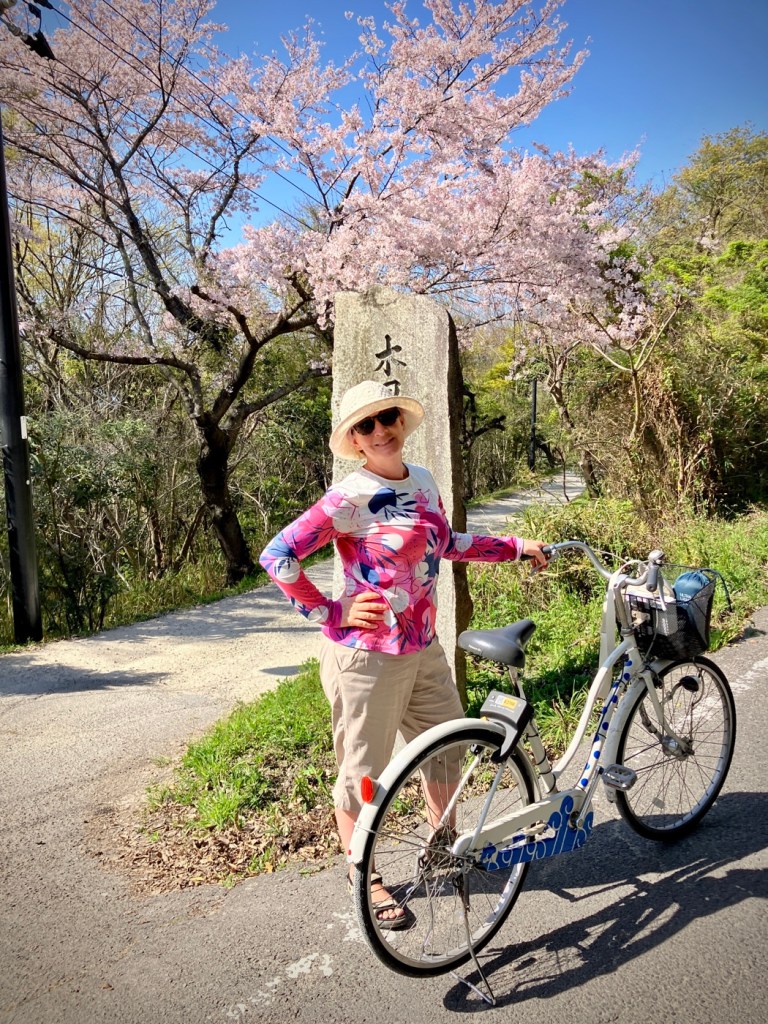
A Western-Japanese hybrid room in Shinabara. This hotel had lovely Onsen and Rotemburo (outside baths) and more spacious rooms than most urban hotelsNaoshima IslandInstagram of Instagramers on NaoshimaMore bikes to explore Naoshima…these with a bit of eboost
And big western brand hotels in major cities here often 2-3x as expensive as local alternatives for a similar (or better) product. Avoid them, unless you only have a week and a surplus of loyalty points to burn. (For example, during the Sakura of late March, Marriott properties in Tokyo ranged from $600-$2000/night!). Big waste of money.
Kochi on Shikoku is a bit off the beaten track but worth the effort for its friendliness Kochi’s famous seared Bonito (Katsuo) has ruined us for life for lesser fish. Delicious.
Another tip. Many western style rooms are cosy in Japan, at 120-180 sq ft, but if you book a twin instead of a “double”, the rooms are larger at 180-250 sq ft. They have two full or queen beds that can usually be pushed together. So you have a lot more space, often for just a bit more money. “Twins or Quads” seem to sell out first as locals know this too,
We found a small traditional house to rent on Naoshima Island. Wood and Tatami mats were a refreshing break from city hotels (and it had a washing machine!)Even a basic meal is pleasant in Japan
But as great as it is to travel here, it’s not all easy, as travel in Japan has its own breed of travel stress due to constant language and cultural nuances. And the country faces a battery of challenges, including rural depopulation, economic stagnation, and a location in an increasingly volatile region, just to name a few.
You have to open the doors to know what awaits you in JapanCats seem to guard popular spots such as Unzen National Volcanic Park, and are looked after by the locals.
But we are judging against a high bar, as we are already talking about coming back to bike tour, renting an apartment for a month in Tokyo, or even a car tour to see more rural sights that are tough or impossible by public transit. If you do want to rent a car in Japan you will need an international driver’s license.
Zen, spring water, and Coi at a tea house in ShimabaraAlways ask for the local Sake as we did at this family run Izakaya in Shimabara
We are excited to head to South Korea next week, but first we are going to eat as much amazing food as we can in quirky and cosy settings, served by some of the most dedicated and friendly people in the world.
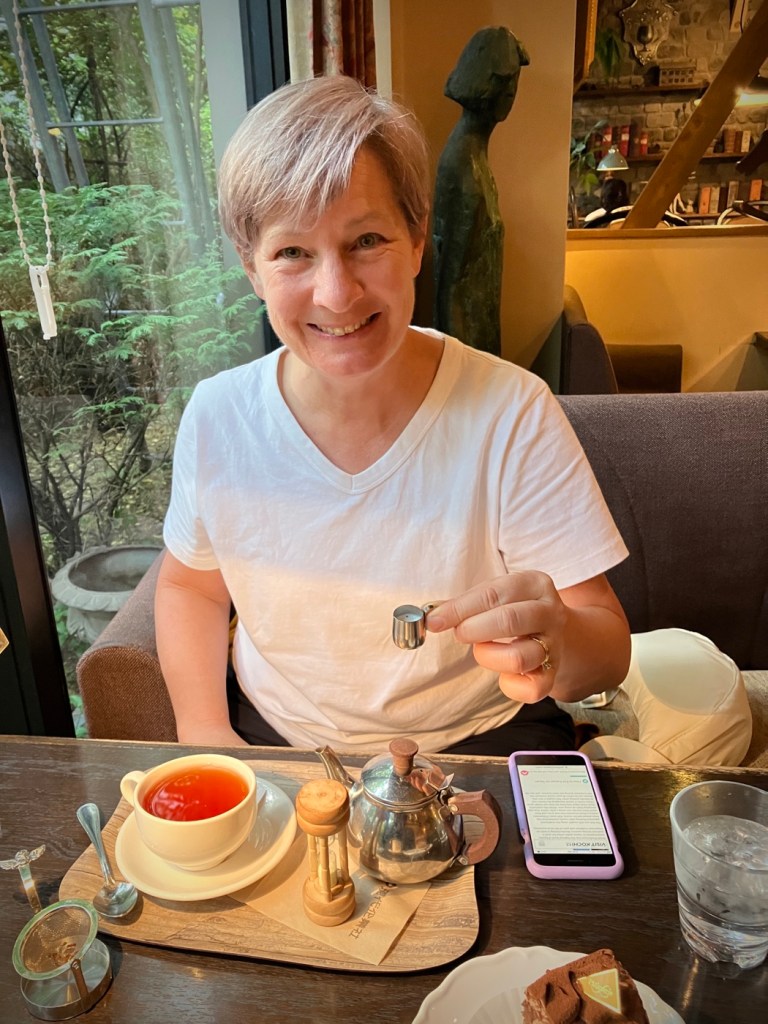
My favorite travel companion enjoying some cozy afternoon teaJapan makes us smile
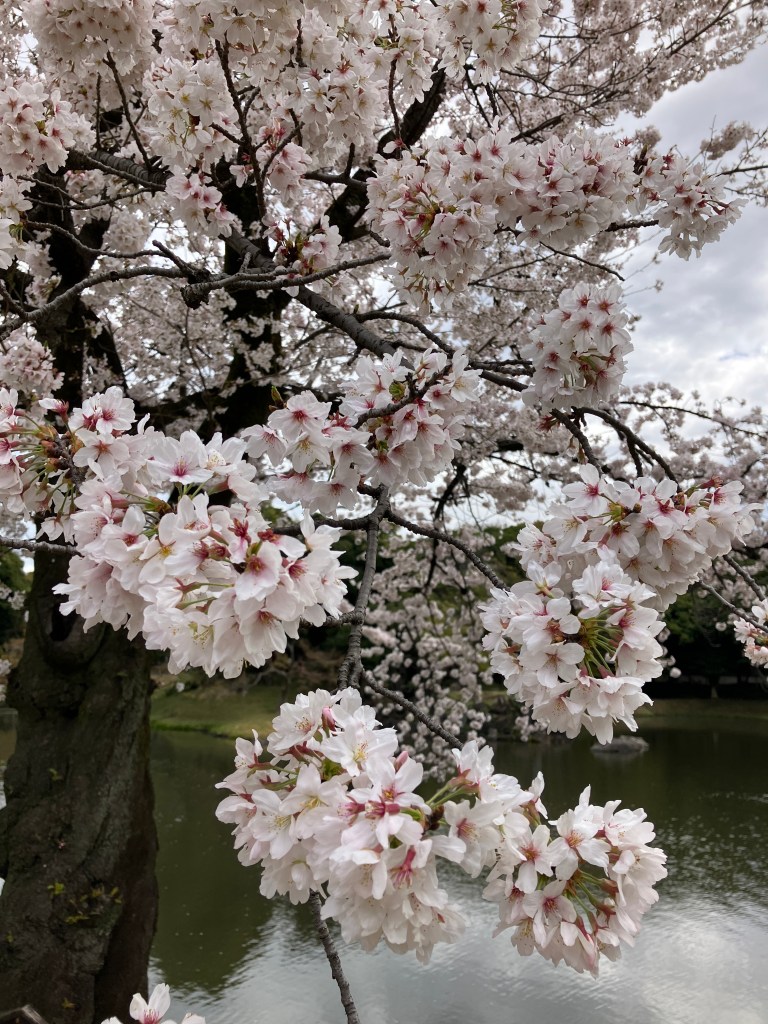
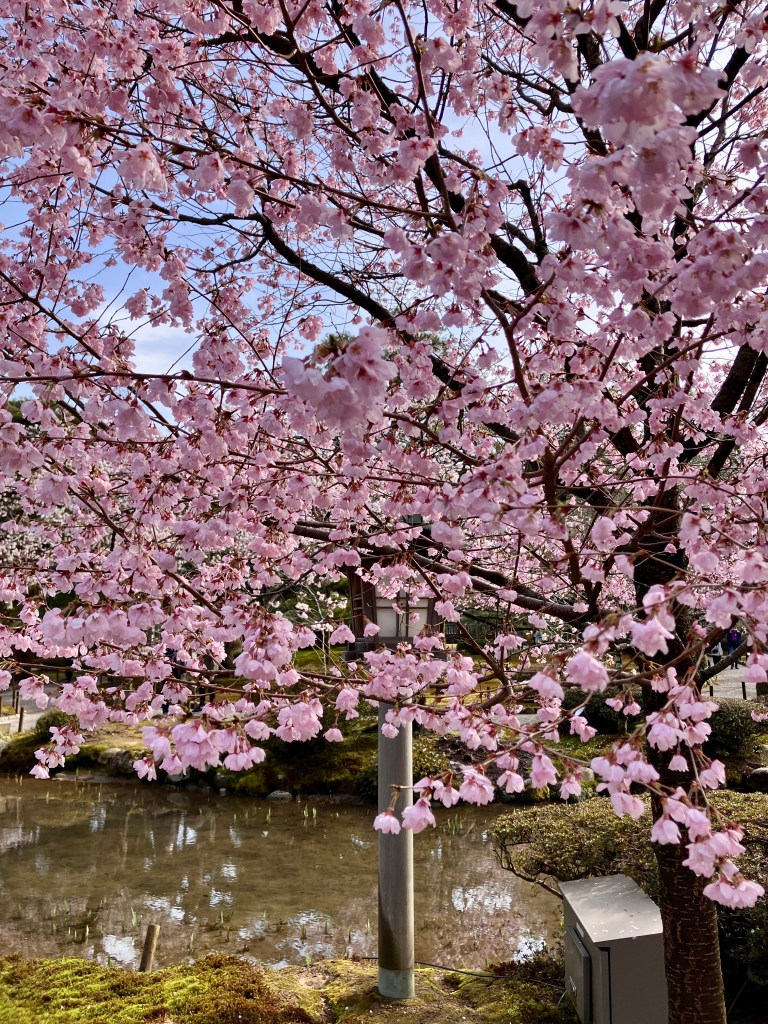
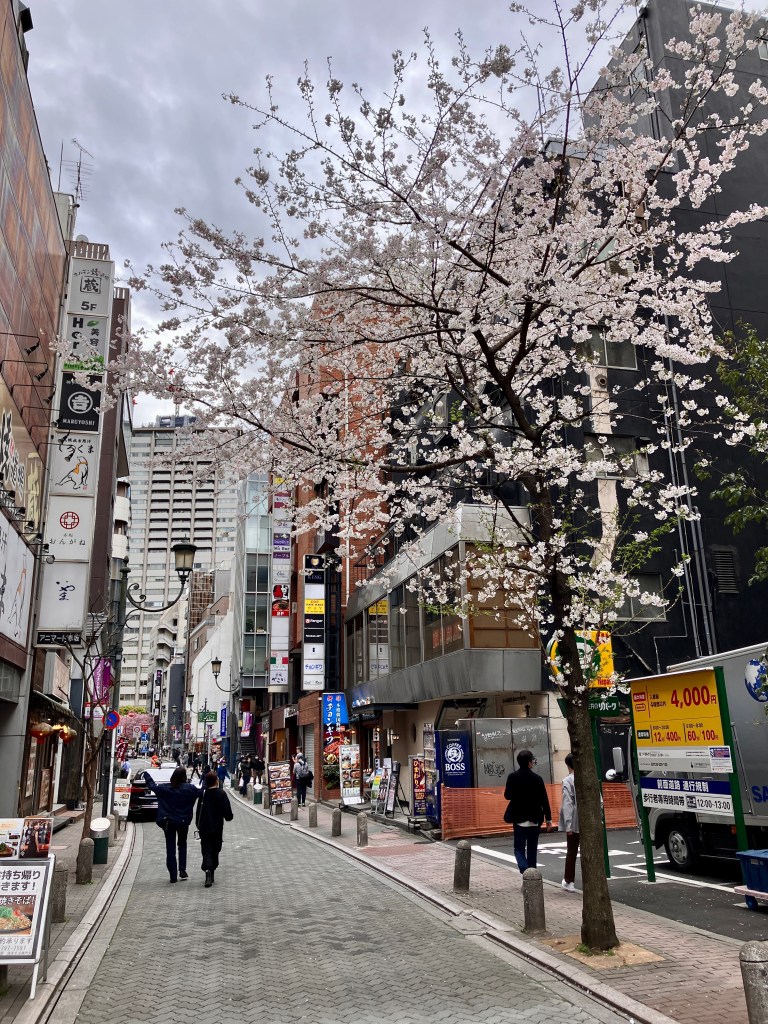
Probably the most photographed trees in the world. Japanese cherry trees.
Our arrival in Tokyo happened to coincide with an early cherry blossom season. We had already made our flight and room reservations when a representative from Japan Meteorological Agency stood beneath a signal tree at Tokyo’s Yasukuni Shrine and announced the season to be underway.
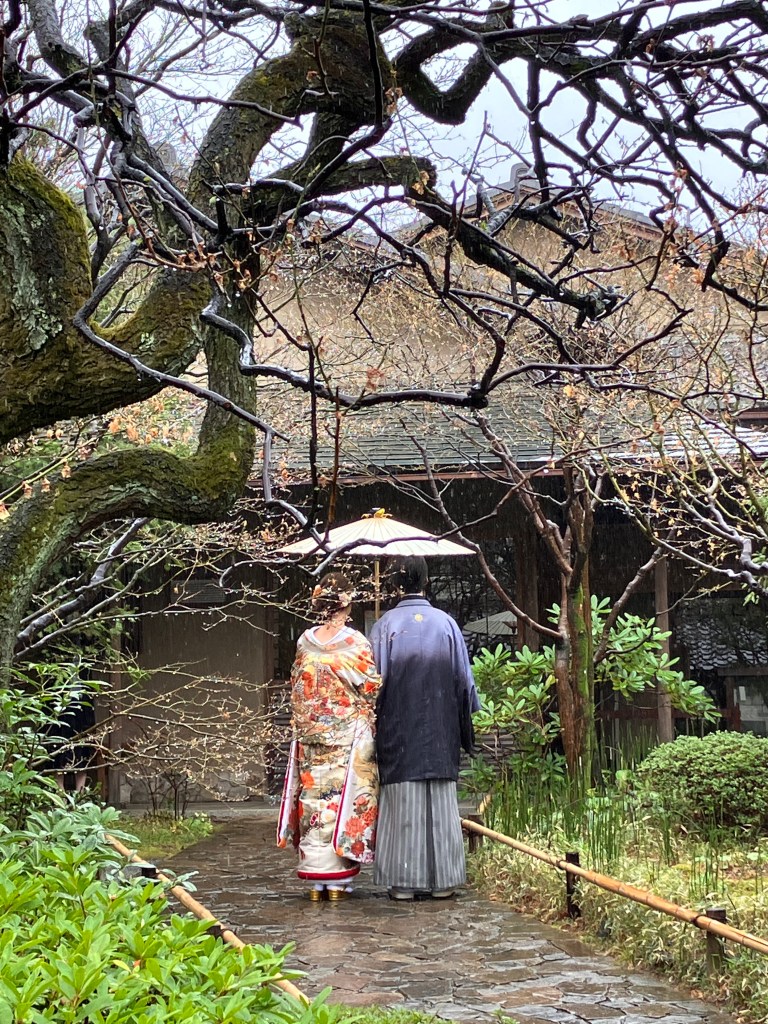
Our first small park in Tokyo and our first sight of folks in traditional clothing having photos taken.
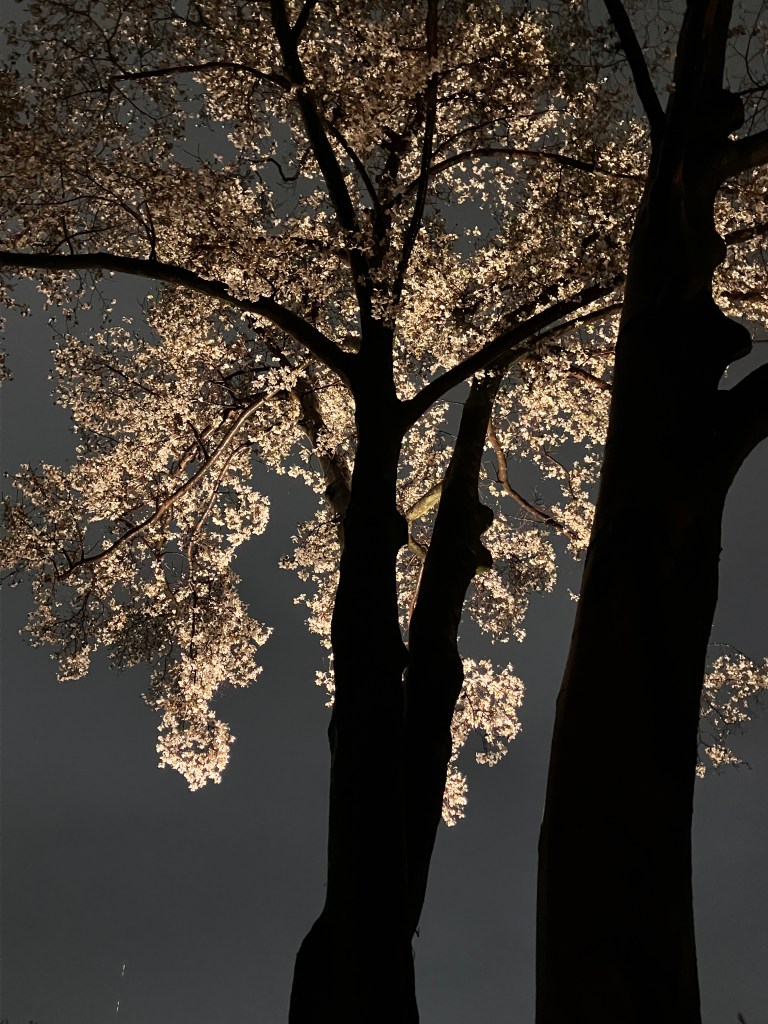
Unfortunately, it was a rainy stretch in Tokyo as the fun got underway. Fortunately, we don’t melt. Parks and gardens are prime blossom viewing spots of course. So off we went. First was a night time cherry blossom event where the trees were lit up. It was beautiful, and wet. Very wet. But picking through the mud puddles was worth it to see huge trees and bamboo lit up with dramatic intensity.
Dramatic lighting made the blossoms pop.A stunning arrangement of trees and lighting.
On a dry Friday as we wandered parks filled with blooming trees we overheard other blossom peepers talking about what variety of cherry trees we were seeing. There are over 100 varieties of cherry trees in Japan, a few are wild and native to the forests, but most are cultivated. These trees don’t produce edible fruit, but flowers are pickled and used as tea and in other confections. We love seeing a forest mountain dotted with blooming trees mixed in with conifers and maples.
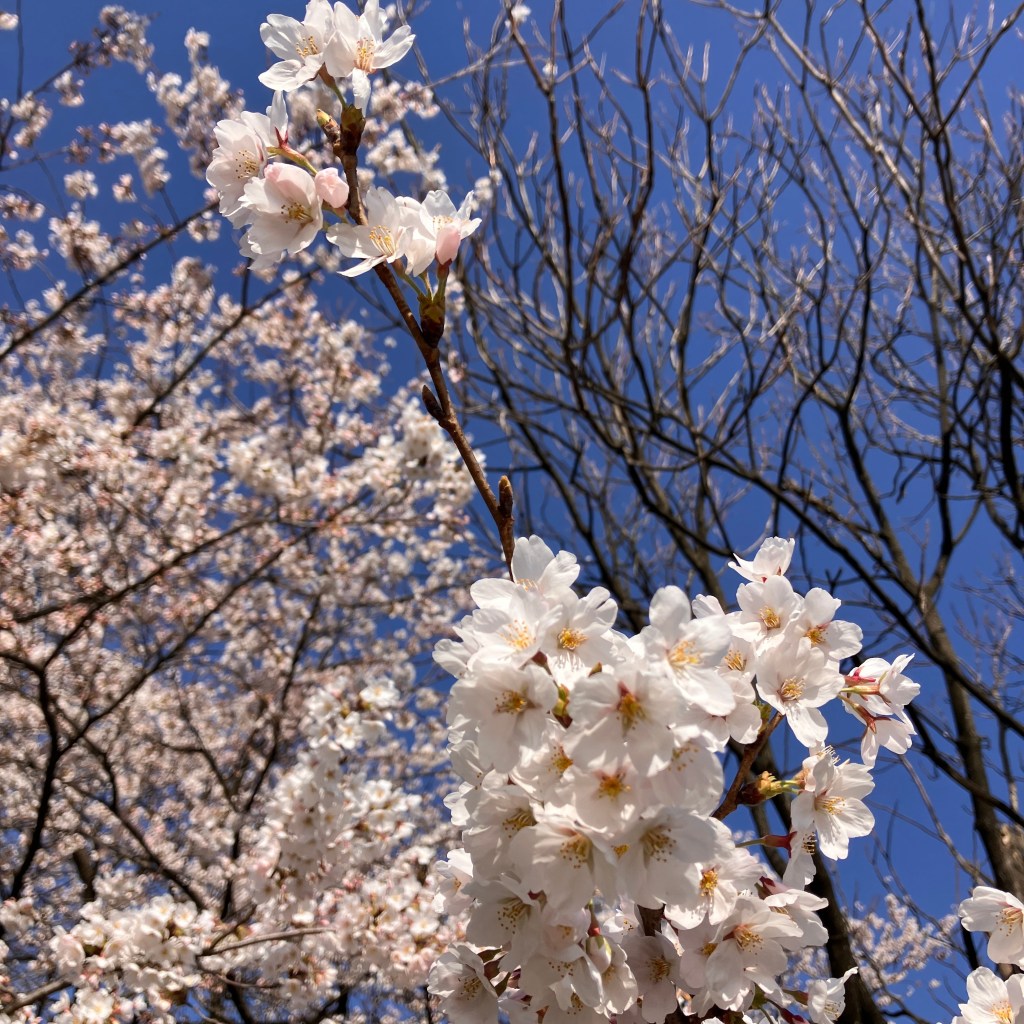
Up close you can see the differences in the blossoms.I’m sure many folks know the trees by blossom sight- we don’t!You simply can’t stop yourself from taking photos. Every tree offers a unique moment you want to capture.This might be the only time I see this, you think as you snap away. Blue sky makes a dramatic background.
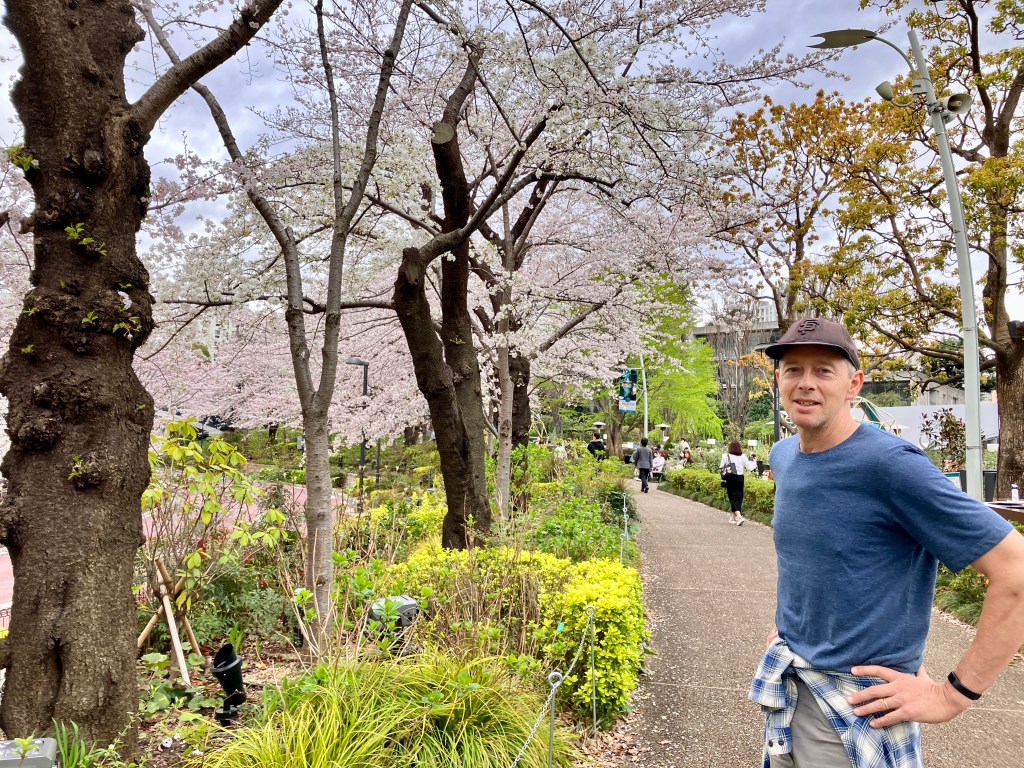
Blooming trees are not confined to parks. As we walked around Tokyo we found allées of blooming trees, or simply single trees, putting on a show worthy of admiration.
The bright green of spring makes a perfect foil for the blooms at Tokyo Midtown.A temporary lounge set up among the trees of midtown. A single tree changes the feel of a street.
We left Tokyo for Kanazawa where we had a new batch of parks and gardens to explore. And a lovely castle. And more cherry blossoms to photograph.
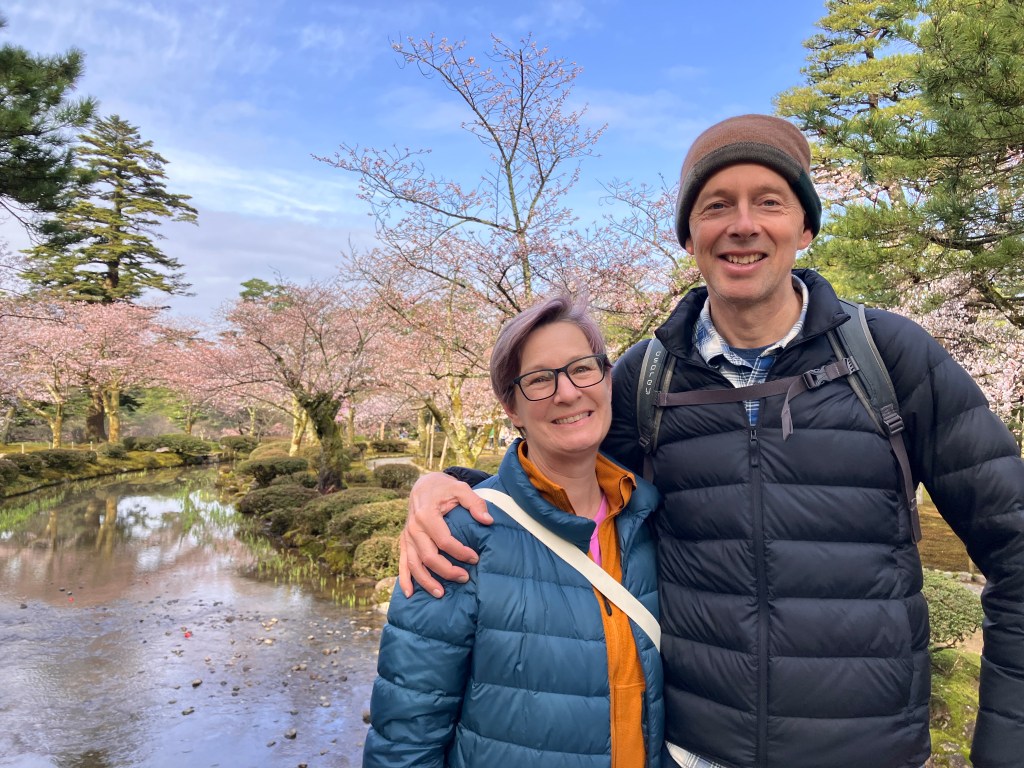
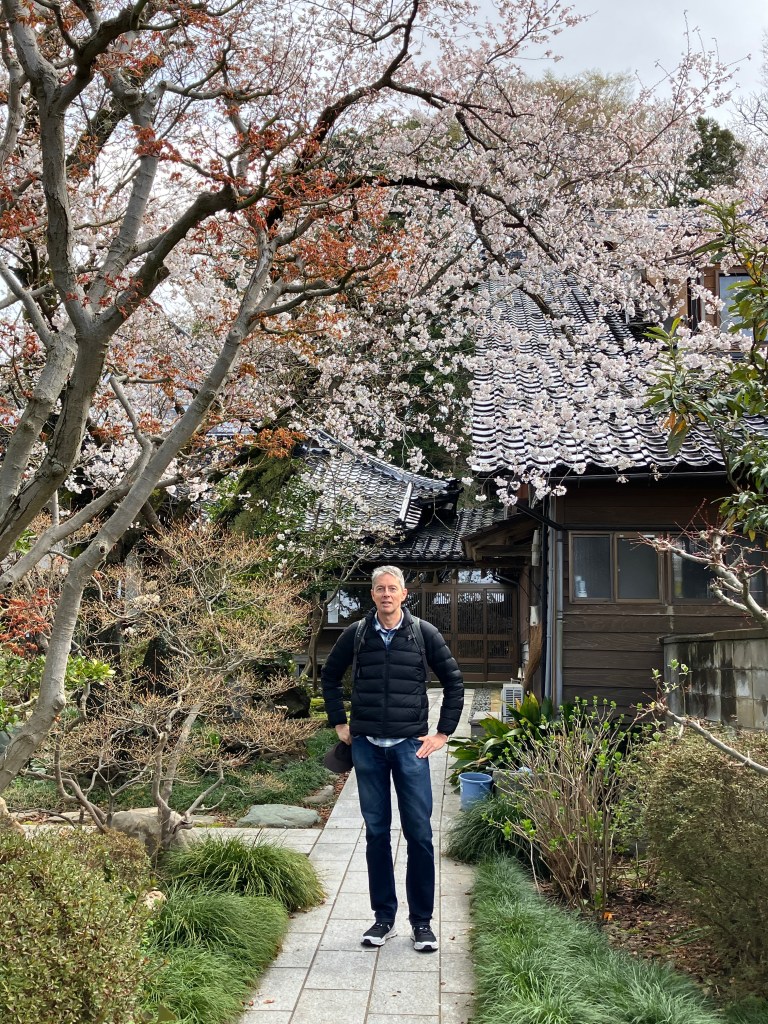
Kenroku-en garden in Kanazawa. Normally a paid entry, the garden is free during Sakura. A temple garden on a morning walk around Kanazawa. Another random burst of blossoms on a bike ride outside of Kanazawa.
You find new ways to view the blossoms, hyper aware that the blossom season is fleeting. People are super friendly and nice about snapping photos of each other. Cherry blossoms bring you all together in one place, for the purpose of admiring the beauty, and recording this fleeting moment.
Photo taken on the grounds of Kanazawa castle by a friendly local woman.Pose your husband in yet another stunning tree. Trees reflected in the moat of Kanazawa castle.A view from above of the trees in Kenroku-en garden.
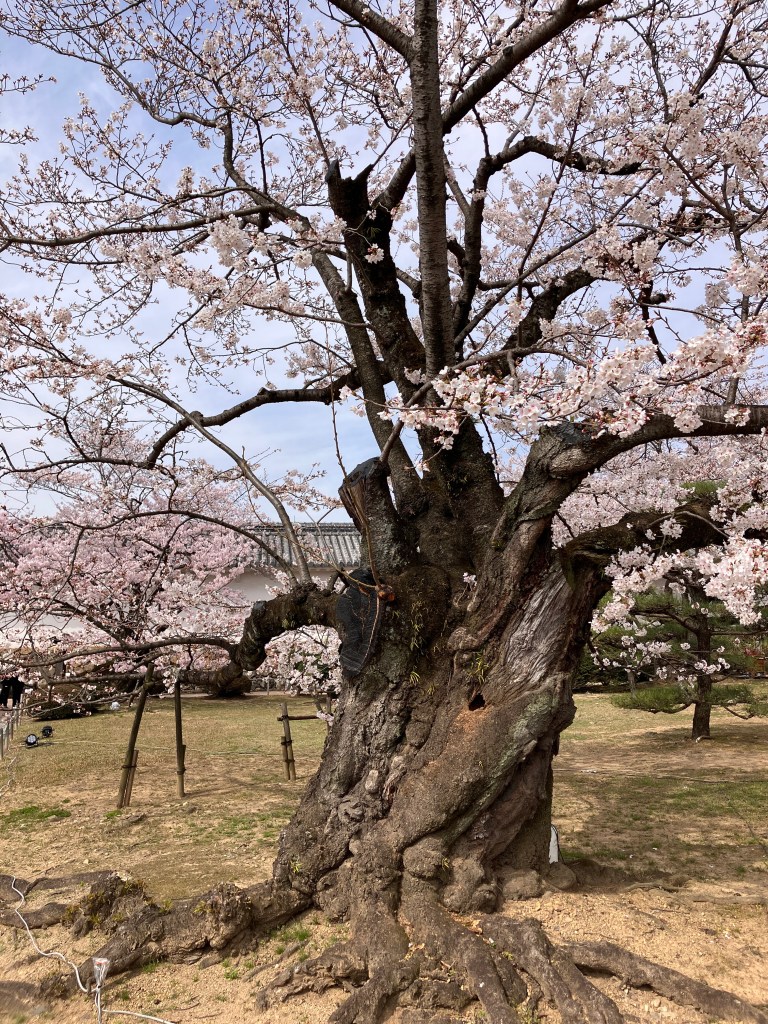
Hemeji, which was a day trip from Kobe for us, has one of Japan’s most stunning castles. And with the blooms it was a crowded site. Rich got us there as early as we could, and it was worth braving the crowds. I’m particularly taken with the old trees – gnarled trunks, branches propped up with bamboo poles.
Himeji Castle. Alongside a canal in Himeji is a line of perfectly blooming trees.A tree this size is likely about one hundred years old.A venerable tree on Naoshima Island, getting some help with wooden struts.
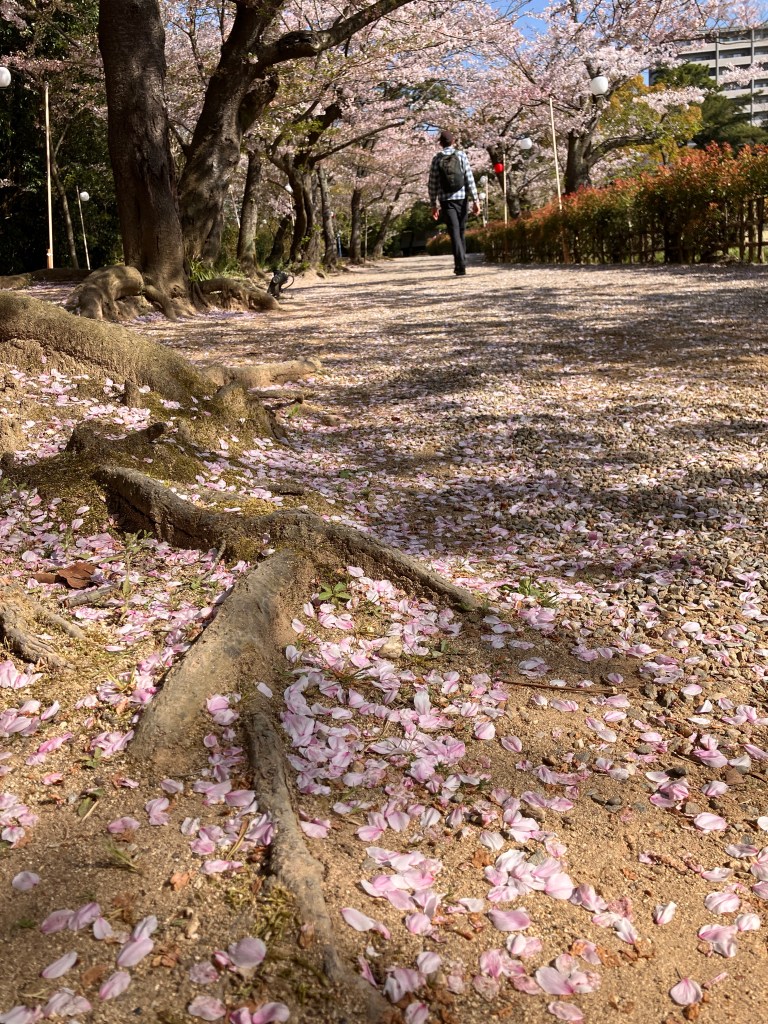
After the bloom comes the time of Sakura snow. The petals blowing off and drifting, or, if it’s raining, sticking.
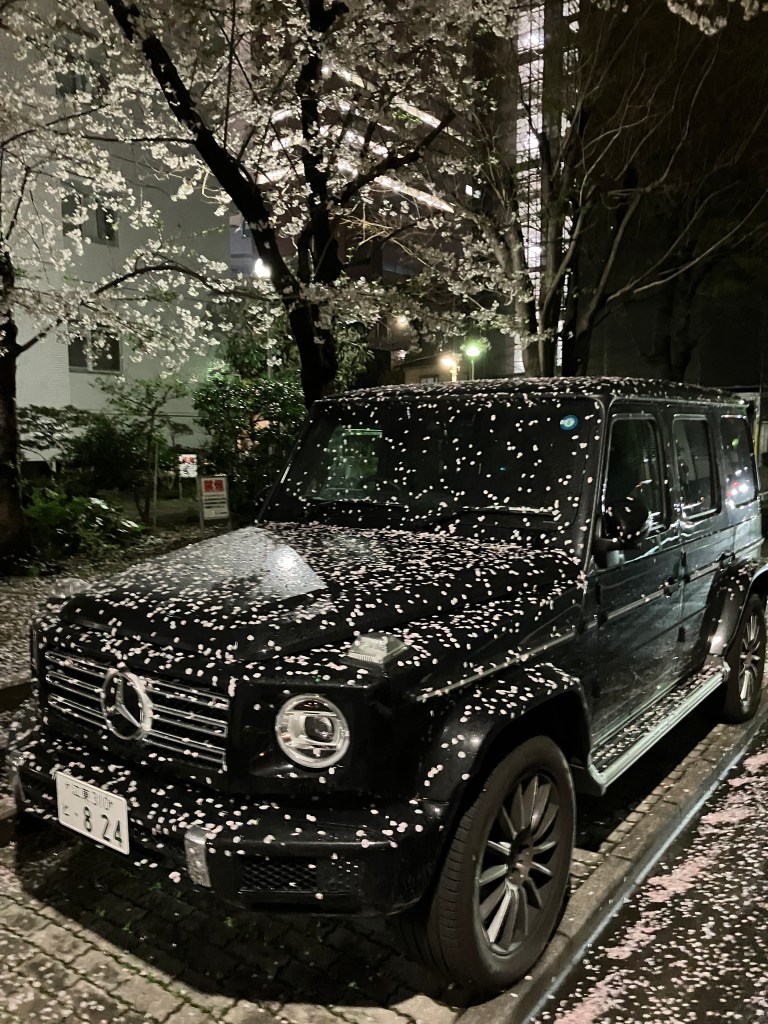
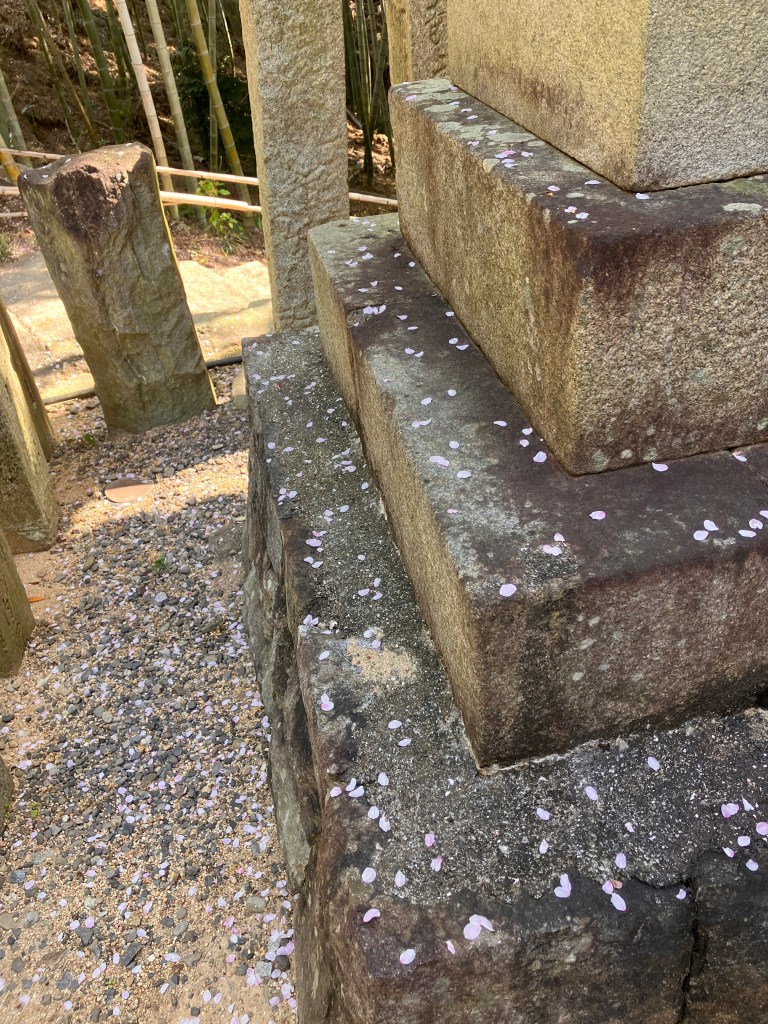
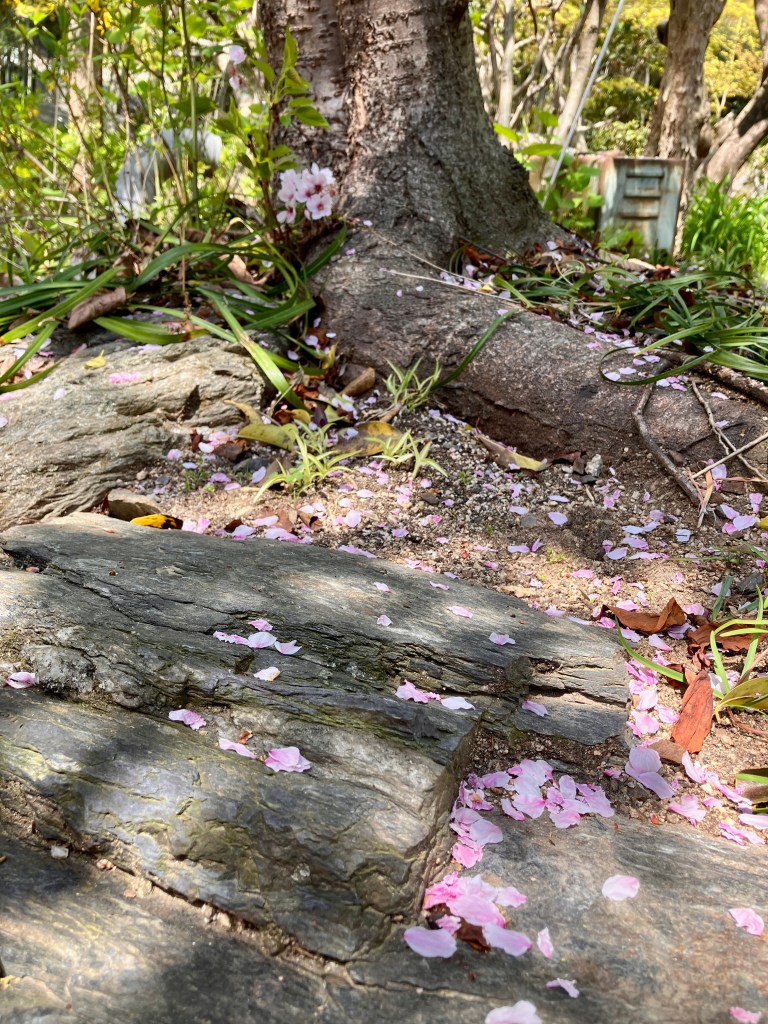
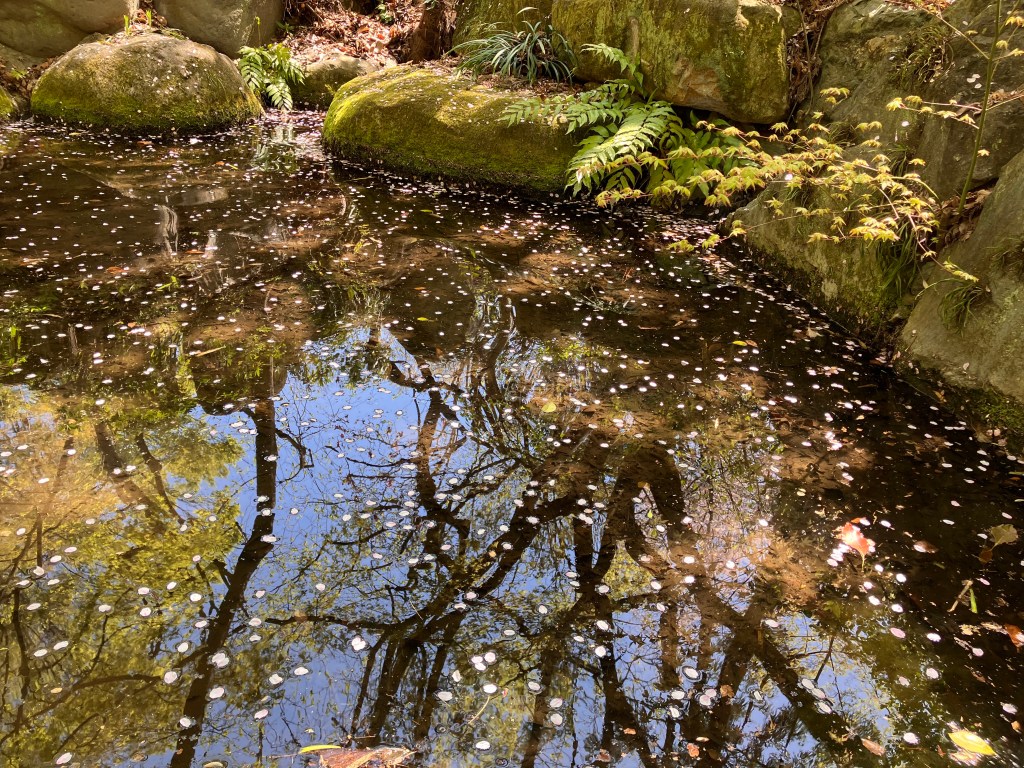
This would be a wonderful permanent paint job for this Tokyo car.Petal confetti on a stone lantern base at Shikoku Mura (Village), YashimaThe fallen petals call your attention to the landscape.Hana Ikada, or flower rafts. This is a sparse but beautiful version with just a few petals floating.Drifts of petals on a footpath in Takamatsu, at Ritsurin Garden.
Being here in Japan for Sakura was a happy accident. We assumed we would be too early to see the bloom in Tokyo, but Sakura has been earlier than usual the past few years. If you do come to Japan for Sakura, be aware that hotel prices go way up. Rich booked our place in Tokyo before the season was announced, post announcement he looked to extend our four night stay and a single night extra would have cost as much as the four nights together.
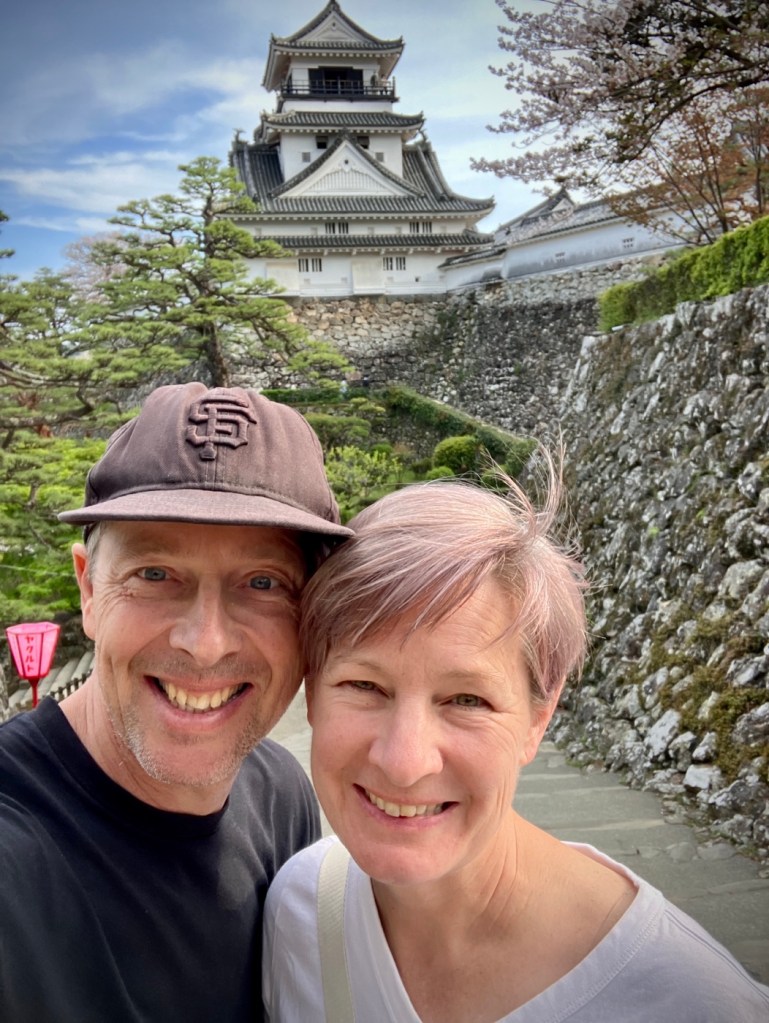
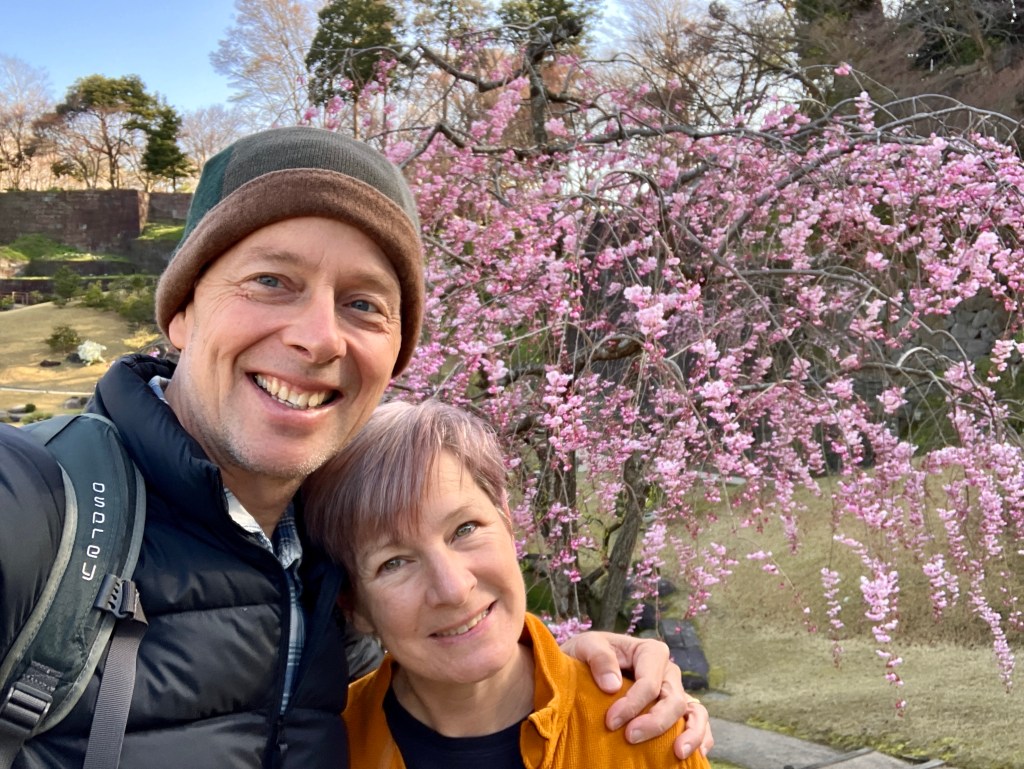
The happy travelers at Kanazawa Castle.
We’re in Japan for two more weeks before moving on to Korea. We feel so lucky to have seen Sakura in a variety of cities and landscapes. Cherry blossoms and a Japan Rail Pass, what more could we want?
And hello to you too, Ramen bar condiments and Sapporo beer.
Somewhere around week two in Sri Lanka I announced that I missed abundance. It’s ironic since part of our decision to pack up our lives and travel was the desire to experience a less cluttered life. To have the freedom to shoulder our backpacks and go wherever we want. Well welcome to Japan, where abundance is always an option.
After a two hour immigration wait at the airport we made it to our apartment and headed out for some late food.
We made our first trip to Japan in 2007, before smart phones with translation apps. This time, we were ready for all Japanese menus. Our index fingers and thumbs were all warmed up for google camera translate. Uh huh. We bought SIM cards from a vending machine at Narita Airport but had not installed mine correctly yet, and Rich was using our US cell phone data sparingly until he got his new SIM installed. Well, long story short- the first restaurant we walked into we failed to navigate the confusing situation and quickly abandoned ship! Thankfully we found a small place with on screen ordering and settled in for our first meal.
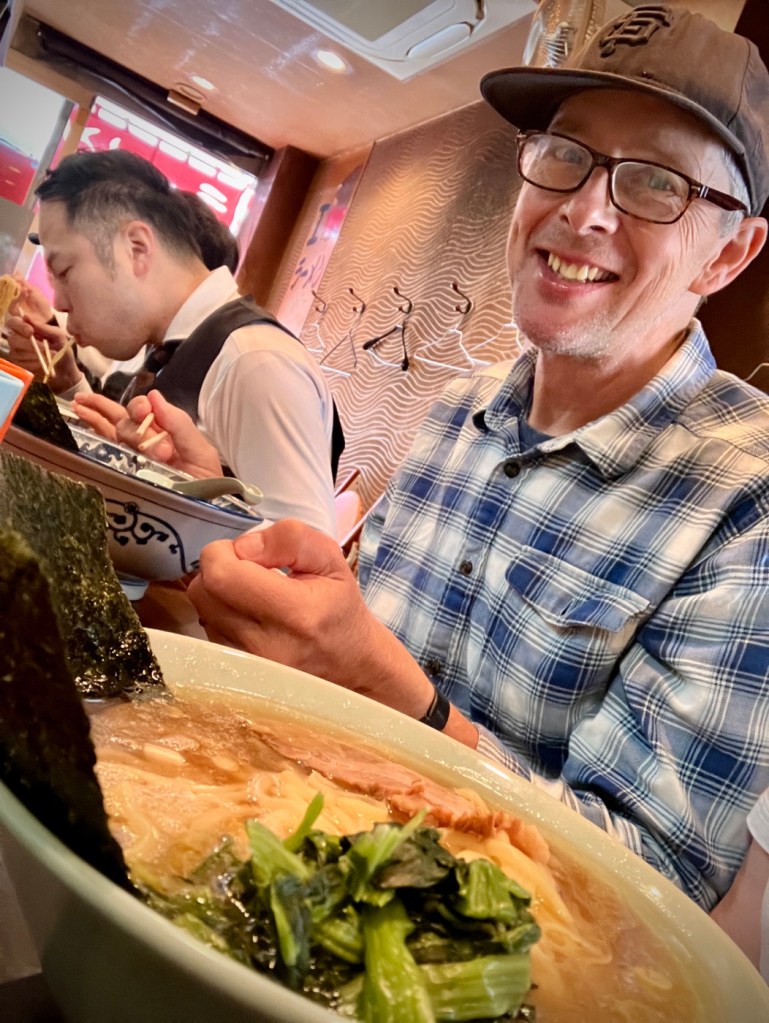
Ramen Nagi in Shinjuku. You make your choices at the machine, pay, and hand the order tickets over to one of the waitstaff/chefs.A delicious bowl of ramen.Rich in his happy place. A tiny ramen bar with about 8 seatsSome of the tiny but popular ramen spots have created problems with their lines of customers, so this one instructs you to line up in the alley, there is a small camera so they can see the line of customers, and a speaker to tell you when to come upstairs. Rich paying the bill at a small sushi restaurant- too small and cozy for any indoor photos!
The automation is fascinating to see. As with many countries Covid accelerated cashless payments and waitstaff free ordering, but in Japan you get a fun mix of traditional and modern.
The modern, a chain called Cafe Gusto. You place your order at an on table screen. And a rather cute robot brings your meal.Karaage chicken. Different from what we know as fried chicken, the meat is marinated first, then coated in a potato starch batter and fried. Delicious.Stand off, Cheryl v. Robot. We worked it out.A helpful staff member explains the payment machine for us.
A Sakura (cherry blossom) post will follow with many photos, but this is all about food. We were craving Japanese food for the past few weeks so we’re thrilled to walk and sightsee and eat. Our walking mileage has gone up sharply which helps with the eating. We took a train out from Tokyo to Koganei Park to visit the Edo-Tokyo Open Air Architectural Museum. There was a festival going on despite the rain so we snacked our way through that.
Grilled squid. Rich enjoying Takoyaki balls (octopus and batter) under the cherry trees.
With four nights in Tokyo we had a chance to try to get into a small neighborhood izakaya restaurant on Friday, and when it was full up, make a reservation for the next night. Another good travel hack, especially in places where you either have no local phone number or where calling is beyond challenging due to language barriers. Two folks working the small restaurant, no fancy automation here. We were grateful for our young server/owner’s help. We always find the further out from the heart of a tourist district the more patient and helpful the locals are.
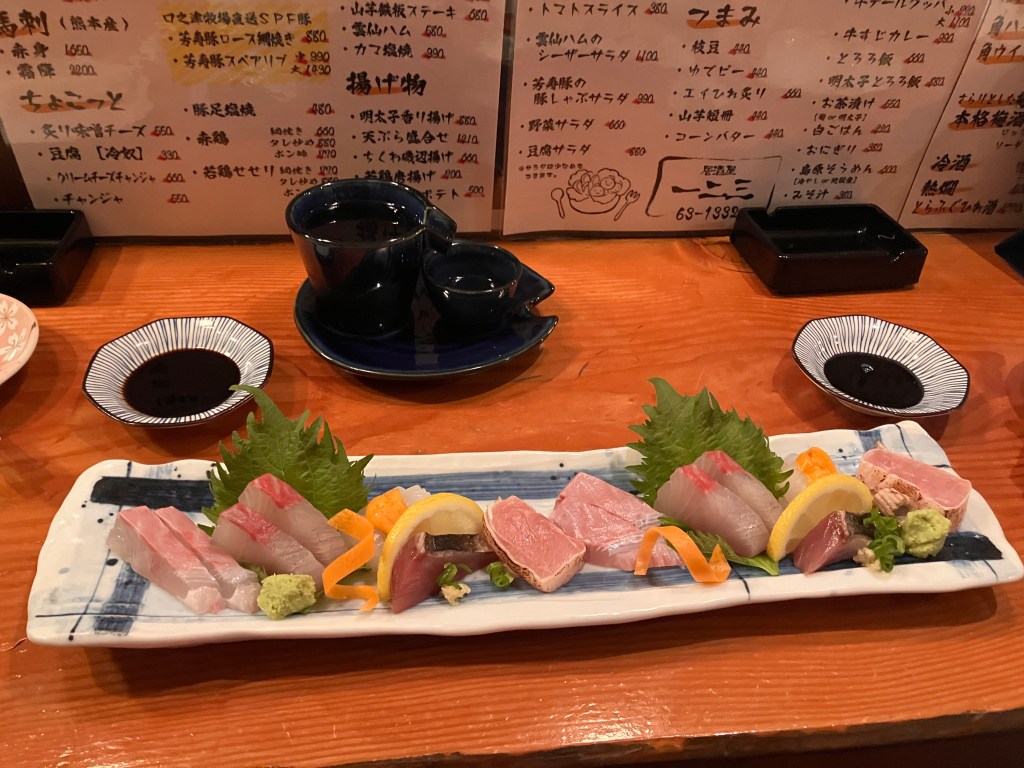
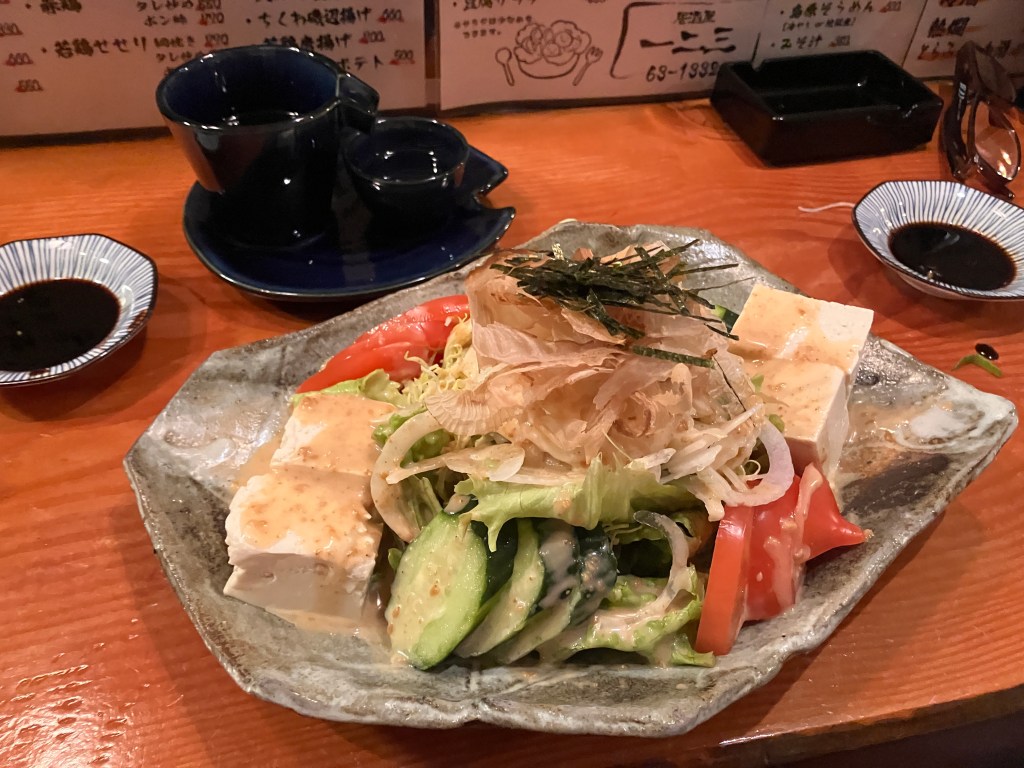
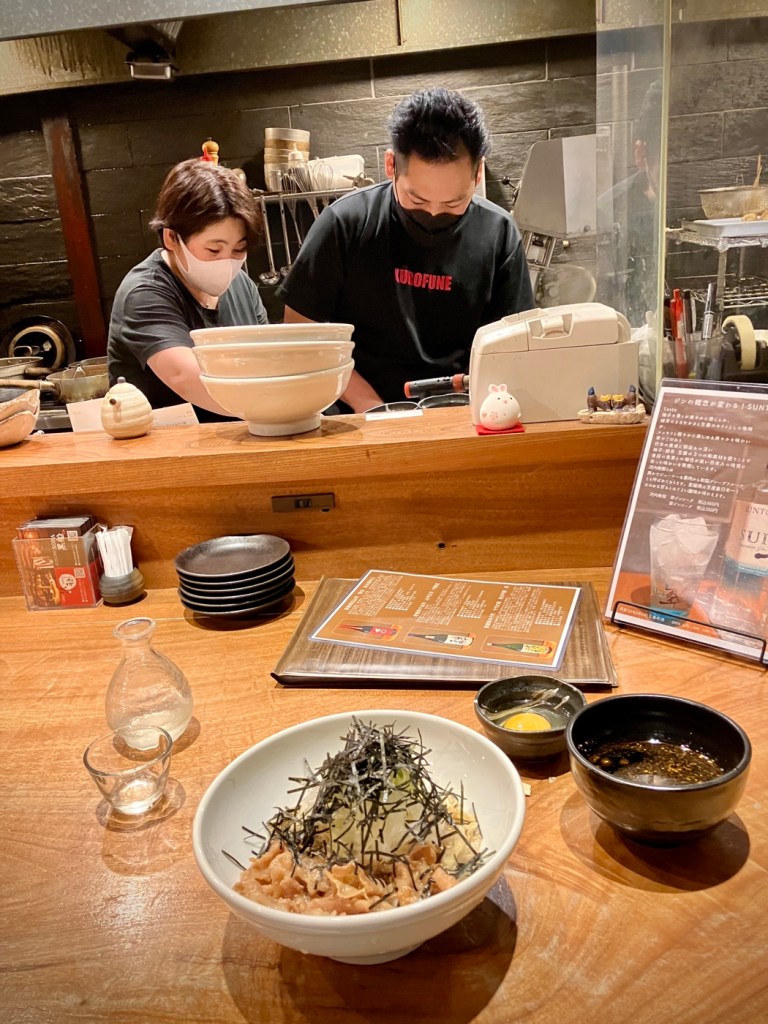
The traditional. Happy customers enjoying amazing food in a small izakaya in OtsukaThe softest most silken tofu. Our charming and helpful owner/waitstaff guy told us not to use soy, or the grated ginger or scallions since it would overwhelm the delicate taste of the tofu. We obeyed. Tempura white asparagus and a tempura seasoned soft boiled egg. Tuna and seabream. Rich had saved some photos from on line reviews, and our guy suggested others since this small restaurant has a daily menu and limited quantities. Sake. The shallow sake bowl tests your pouring skills- and perhaps your sobriety.
After four nights in Tokyo, and a longer stay running into Sakura prohibitive pricing, we hopped on the trains to head to Kanazawa. Our JR Rail passes will be getting a work out this trip as the Japanese train system is beyond amazing.
Rich buying our first ekiben, short for eki bento, train meals. I was tickled to learn that these lunch boxes are called ekiben if you’re on a train, soraben (sky lunchboxes) for a plane, and bento you eat anywhere. Our first of what will be many ekiben.
Our first night in Kanazawa we struck out three times, a conveyor belt sushi restaurant with a closed waiting list, an unagi (eel) restaurant which was closed despite the hours listed showing it should be open, and another full up sushi restaurant all by 8 pm. We figured out it was spring break week for schools so things were quite crowded. We finally saw a small tempura stand restaurant and got two seats at the bar. Another kind and helpful waiter sat us, got us an English menu, and took care of us the entire meal. We had a great view of the chef working his tempura fryer with chopsticks and tongs.
The tempura chef.I’m going to collect photos of the mise en place of our counter seats. And how cute is that jar of white wine?Tempura fresh from the fryer.That is a pickled ginger tempura. Never encountered by me before. I’m a pickled ginger fanatic and this was delicious.
So far no breakfast photos, you might be thinking to yourself. Well, we’ve been having hotel room or apartment breakfasts of Musilix and fruit and yogurt, but we did get out early for cherry blossom viewing and then had a second breakfast our first morning in Kanazawa. Cafe Tamon is a small easy to miss but for the help of a passerby who saw us looking in confusion at our phones, pancake specialty cafe.
We walked right by it the first time. Very low key signage. Butter melting on the fluffy organic rice flour pancakes, whipped cream sporting a sprinkle of gold dust, vanilla ice cream, and a small jug of maple syrup for me and honey for my honey.Rich waiting patiently for me to stop taking photos. If there is a word which conveys more fluffiness than fluffy, that’s what these pancakes were.
Remember that conveyor belt sushi place with a closed waiting list at 7:40pm? We went back the next night at 6:40 and put our name on the list. About an hour later we were in! The nice thing about being the only tourists willing to figure out the drill, was that the host knew who we were – not one of many tourists: the only slightly confused looking non locals.
We’re in baby! Screen ordering and the chef hands you your dish.
Conveyor belt sushi has had a hard time recently, apparently from a social media trend that has attention starved youngsters misbehaving and filming themselves. Insert eye roll here. I’m not sure if the screen ordering is a result of that stupid trend, but it worked out just fine for us.
Tuna three ways.Squid on natto (fermented soybeans), firefly squid, and roe. The different colored plates mean specific prices, your plates are counted up at the end of your meal and tallied.
Our third and final night in Kanazawa we were determined to try the unagi (eel) restaurant again. The Japanese name came through Google translate as eel welfare. We marched over at 6 this time and the lights were on! Yay! We went in and congratulated ourselves on being some of the first customers of the evening. One gentleman was just leaving, and another man came in and placed a to-go order. The sole proprietor sat us at the counter, gave us a menu and bustled about behind the counter. We got two draft beers and settled in.
Another counter scene.
Our eel man turned away a group of five Japanese, and then two western tourists. What is going on, we wondered? This is a frequent state for non Japanese speakers here. Confused but pressing on! When it came time to order all became clear – he only had two pieces of eel left. Ah ha! That’s why he had been closed two nights before- he closes when he sells out of eel. Two pieces of your best (only) eel, sir, and some tempura. So many times as a tourist a mystery remains a mystery, so we were happy to have this one solved.
We would have happily ordered five pieces, but two was quite filling.That smile says it all. We love being in small restaurants run by a sole proprietor. One guy doing what he does best. On his own terms. Eel. And some tempura. Once take-out guy left we were the only customers. By the time we left he had turned off his lantern, the universal sign of “I’m out of eel for tonight!”?
It’s been a good start to our four weeks in Japan. We’ve honed our perception and empathy skills since our last visit here, and we know how quickly the world can change under your feet. (Poor conveyor belt sushi restaurants. ) We feel empowered by google translate, but a few key phrases in Japanese learned on line (link in our link page) quickly telegraph both our helplessness and our desire to be polite and thankful. There is so much more to experience and share, but for now itadakimasu! Let’s eat!
The happy travelers. Looking forward to more of Japan to enjoy.
Often in travels, a few extra days someplace are a joy. You get to relax in more familiar digs, discover that cool new neighborhood, ride a bus to a local village, find the local restaurant you missed, or maybe meet more locals or travelers.
Happiness is a bike and a breeze. It was about 7km to the heart of modern Anuradhapura from our hotel along the banks of Nuwara WewaMacaques “guard” a lot of the popular sites in Sri Lanka….did they menace the bathing monks here in the 3rd century BC?Beautiful lotus flowers and other offerings for Buddha were for sale all over the living temple complex that is part of the ancient City complex of Anuradhapura.
But sometimes you stay a bit too long or are just eager to move on. Sometimes it’s real discomfort, sometimes a bit of boredom, and sometimes just the way your travel brain is programmed…knowing exciting new places are on the horizon. We’ve got some pretty rewired travel brains after 19 months of vagabonding.
A much needed break from cycling around the vast temple and archeological sites of AnuradhapuraCheryl has mastered cycling with a sun umbrella We were never tired of the friendly smilesCarved moonstones adorn the entrances to various sacred buildings.
We underestimated how homogenous Sri Lanka would be from a tourist perspective. Challenging governance, intermittent civil unrest, an ongoing economic crisis, limited imports, and an influx of Russian tourists(?!), all add up to an odd dynamic as visitor. There is huge demand for tourism money here, but still relatively few foreign tourists. It’s tough to see and you want to help everyone.
Very tan (dirty!?) sandal feet and a temporary sarong to pass temple dress code…it was too hot to cycle in trousers!
We loved Sri Lanka, had some amazing experiences, and are very glad we choose to visit now. But we did run out of steam the last week for many of these reasons. Heat, humidity, limited transport, and an excessive amount of interactions as tourists going about our business. It wears you down.
Cheryl happily sweating out the late day sun in AnuradhapuraOur bike parking at the Cargill Food City, the largest grocery chain in Sri Lanka
So please come to Sri Lanka. You will love it, but make sure to focus on what you love. The ancient civilizations are fascinating, but you need to dive in deep and do some background reading as the info at the sites leaves a little to be desired. If you really appreciate the natural world, then book safaris and bird watching tours to more remote areas. (There are many we missed) Maybe a long distance trek in the hills such as the nascent Pekoe Trail is your thing. (That may bring us back).
The main Dagoba (Stupa) is the heart of Abhayagiri Vihari; the ancient complex of monastic buildings and a fraternity of Buddhist monks. It’s still an important pilgrimage site. The more benign Grey Langurs rule at the Abhayagiri Dagoba
Or maybe a few weeks surfing and chilling. Super nice along the lesser developed southeast and east coasts. If you are comfortable on a scooter, then that would give you more freedom….and even a car could get you off the tourist track easier. Just be ready for limited supplies and options if you self cater.
A “cool” sunset ride…it was magical with the Stupas in the distance
So we made the best of our last week. We soaked up a bit more sun, sweat out more toxins, and discovered more about the ancient cultures of Sri Lanka. But we did start to say no to seeing ALL the sights, as it was not bringing us joy.
Parts of Colombo still look a bit abandoned or incomplete, giving it a somewhat forlorn vibe.Trains are slow and infrequent across Sri Lanka, so the tracks are mostly uncontrolled and easy to cross, even in Colombo.Long queues for gas and diesel in Colombo is an ongoing sign of the economic struggles.10 weeks of tropical heat and sunblock and destroyed this Taipei night market purchase…in the bin!!!We set out our last morning to explore the Pettah district, which is a lively market and commercial area in the gritty heart of ColomboMostly men in the trading districts, but women do run a lot of small businessesJami Ul-Alfar Mosque in Pettah
So we take away a bit more understanding of the culture and plight of 22 million Sri Lankans. We sincerely hope for a brighter future, and are glad to see there was a recent agreement with the IMF for $3B in bridge loans. We also hope we left some American good will in our wake. Travel is still good, and important even in the Instagram world of 2023.
The Fruit and Vegetable Market Hall in Pettah
We did a bit of everything in our 3 1/2 weeks and it was fantastic but we were very ready to be back in on in a more developed economy…so nowhere better on the planet than Japan.
Looking out at the impressive Eth Pokuna or “Elephant Pond” near Lankaramaya. This huge man made water reservoir is part of tbe ancient and amazing water supply network.We loved exploring Anuradhapura, but I was tired of the touts and “tour guides” badgering us…this guy wouldn’t stop talking to me at the Elephant Pond. We always stayed polite.Amazing to be immersed in a living museum, not just an ancient civilization A final rice and curry at our guest house in Anuradhapura…this WAS very tasty, but our taste buds are ready for something new!
After some long flights via Singapore, Japan has delivered us immense joy in the early peak of Cherry Blossom season. We feel like we have just come out of the wilderness after a long backpacking trip. Hungry, dirty, and ready to eat anything. Contrast and appreciation for the new is a wonderful gift of travel.
A few days to recoup and prep for Japan at a full service corporate hotel was just what we needed in Colombo. Gym workouts and a place to relax for a late night airport departure.Joy of the Sakura season in Tokyo
My first bus photo. On a walk from Jungle Beach, near Galle.
Another thing to file under “Wasn’t expecting that!” The buses of Sri Lanka are eye catching. Very eye catching. Day and night they burst with color and bright decorations and lights.
At the bus station in Galle. After I snapped this photo the driver came out to wave at me.In Kandy. Rich added for scale. The pink paint job and headlights which look like eyes!Looking in the front door. That is some operator’s seat.A side view of the pink bus in Kandy.
Not all the buses were so exuberantly adorned. There are state buses (with staid, some might say boring, paint jobs), and private buses (wow! Not all are wow, but a lot.). The private buses are licensed for a specific number of runs per day, this means they linger a bit at every stop hoping for more passengers.
In Kandy. A Tata bus. Most are Lanka Ashok Leyland, which seems to be a joint venture with the Indian company Ashok Leyland.Kandy again. An awfully hot walk from the train station took us along bus row.
Did we actually ride the buses? No. We took trains when we could, but on routes with no trains we hired drivers. The buses looked pretty chaotic, and a few tourists with rental cars we spoke to confirmed that the buses are bullies on the road.
My favorite bus photo. Kandy again. This gentleman is ready for the buses of Sri Lanka calendar photo shoot. In Colombo. She looks fairly straightforward from the front. The tassels along the door hint at what’s inside.A peek inside the open door.Come on in, invited the operators. They are a school run bus. They drop the school children off and wait to take them home.I’m quite certain that no transit agency in California would allow this level of decoration.
In addition to a bus journey taking a long time, it is recommended that you don’t put your luggage down below due to dust and mud, so you must pay for an additional seat and face the wrath of your fellow crowded in passengers. We decided that we didn’t need to experience the buses of Sri Lanka as passengers.
Colombo bus traffic. You can understand how important these buses are to life in Sri Lanka, so many buses.
It’s easy to criticize or second guess a country’s public policy and governance, and Sri Lanka is working through a lot of challenges, but transportation is the lifeblood of any city, and even more important in rural areas. For the sake of the people of Sri Lanka I hope the announcement that a recently announced purchase of 500 new buses shows a commitment for improving transit. Many of the old buses are gross polluters.
This wraps up my bus post. Once a transit geek, always a transit geek.
Sunset view of the 5th century ancient rock fortress of Sigiriya, the Lion Rock.
What is it that we love best when traveling? Walking and biking, of course. Sri Lanka has challenged us with the need to do taxi transfers and tuk tuk trips to avoid daytime heat or nighttime elephants, or to get from a hotel or guesthouse to a site.
A pond in the ornamental gardens leading to the Lion Rock. Tiny Rich added for scale.
Our first morning in Sigiriya, we had our guest house owner drop us at the west entrance and Museum to buy our tickets by 6:45 am, so we could explore and climb the rock before it got too hot.
It took a lot of stair climbing to even get here, the two giant lion paws mark the entrance to the rock fortress. The lion head crumbled some time in the past.Not for the faint of heart or weak of knees.The views are amazing on your climb up and down.Ponds and walls speak to the history of this place.A pond and the cable trolly used to get conservation materials to the top of the rock.It reminded us a bit of Machu Picchu, the ability to look down upon the site really gave you a good sense of place.
First a capital for King Kashyapa AD 477–495, and then a Buddhist monastery until the 14th century, it is now a UNESCO World Heritage Site and considered one of the best preserved examples of ancient urban planning.
Laughing as we realize we still have to go back down all those steps.Down we go.Yikes. That’s a catwalk with a view.Almost out. Knees feeling wobbly.
We were staying close enough to be able to walk back to our guesthouse for a late breakfast, which made us happy. Any time you walk in Sri Lanka you do have to decline a lot of tuk tuk offers, especially at a popular tourist site like Sigiriya Rock. But we press on and enjoy the walk.
The small roads around town made for lovely walking. Sri Lankan people have an eye for design, so many lush gardens and pretty houses.An afternoon walk to the nearby lake, Kayanwala Wewa. The road crosses an outflow which makes for a refreshing wade.Relaxing by the lake.
Sri Lanka has no natural lakes. Starting in 300 BC the Kingdom began to construct reservoirs and tanks. The Sinhalese people were among the first to build artificial reservoirs to store water. These irrigation systems of the ancient world are still intact. Sri Lanka has ten thousand man made bodies of water, lakes, reservoirs, tanks, ponds, and stepwells.
As you walk the small roads and greet locals you’ll hear an electronic version of Beethoven’s Für Elise. That signals the bread tuk tuk is near!A pastry shop on wheels. The ice cream tuk tuks play ‘It’s a Small World’.
With temperatures reaching 90f/32c in the early afternoon, our walk opportunities were limited to mornings and after 4pm. Not only is the heat and humidity oppressive, but the UV levels will burn this pale human in 15 minutes. Sunblock, long sleeves, umbrellas, that’s the only way I can get out and about.
Yes, there is an app for that. My trusty UV Lens app.
Walking the small dirt roads is not without obstacles though. Sri Lanka has so many dogs, some wearing collars and belonging to a specific house, but many many more simply stray street dogs. Most ignore you after a hopeful glance for snacks, but some bark and come rushing towards you. Not fun. We accidentally solved the dog stress problem when I deployed my collapsible umbrella while walking by a dog and it recoiled in horror. Ah ha. Shade giver and dog deterrent – the humble collapsible umbrella.
An artful fruit and veggie stand.Brooms and more.Another colorful roadside shop.
Our second full day in Sigiriya we spent visiting the ancient and Sacred City of Pollonnaruwa. We had a car and driver to take us the 45 minutes to the site, and once there we rented bicycles to explore the site and it’s many amazing artifacts. Polonnaruwa was the second capital of Sri Lanka for three centuries between the 11th to 13th century after the destruction of Anuradhapura Kingdom (which we’ll also visit) in 993.
Rich can rarely find a bike that fits him well. But he looks happy anyway.The restoration of the buildings and statues is on going.My first time on a bike since breast reduction surgery in January. I couldn’t stop smiling – cycling in hot weather is much easier than walking.Our trusty bikes in front of an ancient stupa. Since tourism has not fully rebounded we had many of the sites to ourselves. The jungle had covered many of the buildings until restoration and conservation. The before and after photos are dramatic. Exploring Pollannawura by bike. Ponds are an important part of the site. And beautiful.Tempting on a hot day. But the signs clearly forbid swimming.To enter the temple areas you must remove your hat and shoes, and put down your umbrella. As it gets later the sand gets hotter so visitors bring socks to wear.
Riding bikes around this ancient site was such a unique experience, but we did wish for better curation of the experience. Even the museum, which we visited at the end of our ride around, didn’t do a great job of giving you a sense of how people lived in Polonnaruwa. We didn’t hire a guide, which most of the visitors did, so perhaps that was a mistake on our part, but we so much prefer doing things at our own pace and we know we’re happier without a guide. From what we overheard from the guides I don’t think we missed out on much information beyond what we had from our guide book.
That photo bombing Sigiriya rock again, this time on a morning walk.Unable to find bikes to rent we headed out on foot for what ended up being almost a 7 mile/11 km walk. A local fishing at the lake, he had a bike. We were jealous.The roads were getting smaller, the temperature was getting hotter.
The area around Sigiriya is not only an archeological sanctuary site, but also has elephants and rice farmers. We saw an elephant from the road when being driven back from Pollannaruwa. Our long walk took us alongside many rice fields. We were fascinated to see the methods the farmers use to either keep the elephants out of the fields, or to alert an overnight watcher of the presence of an elephant so an attempt could be made to deter the elephant using loud noises.
Rice fields.Empty Lion beer cans hung on string at the edge of a rice field. Empty bags and branches- not much of a defense against an elephant.A night time elephant lookout platform. That looks like a lonely and nerve wracking job.This canal proved to be a great bird watching area. So many bright blue Kingfishers darting along it kept us distracted from the heat.A little roadside shop with chairs in the shade was a welcome sight. Two cold lemon sodas perked us up for the last mile.An umbrella is key for mid day walking, we bought this UV protection umbrella in Taipei.
You never know what you’ll see walking around small rural roads. Local folks were unfailingly friendly and helpful. We reminded ourselves that the small children had possibly never seen tourists, the three years of very little to no tourism meant that their wide eyed stares were not a comment on our hot sweaty state. It can be a bit daunting to wander the back roads, but so rewarding.
Evening bread tuk tuk, with two ever hopeful dogs. The happy travelers.
Passing through tea fields on the way from Ella to Nanuoya.
Taking trains is a big part of our travel joy. Riding trains with open windows and doors, winding through tropical jungles and tea growing areas, feeling the soft warm air on your face, seeing life as the train winds along – that is magnificent.
The hand off of the token, the loop held by the man in the white shirt. Since much of the line is a single track the token is a safety measure to assure that only one train is traveling a given section of track at any time. Rich enjoying the open window of the observation car (OBV), at the end of the train.
Our go to train advice site, The Man in Seat 61, recommends sitting in the non AC carriages to take advantage of the open windows.
Dramatic skies made the landscape even more beautiful.Buying train snacks from a vendor who walks the train, samosas and other goodies.Train snacks! Yum. Over a trestle. Obligatory head out the window shot.The observation car never filled up, but the unreserved carriages were standing room only with locals.
From what we’ve read the trains got much more crowded starting June 2022, when the rising cost of gasoline and bus tickets increased train ridership by 50%. As tourists we are able to buy our way into the comfort of the reserved carriages, but we do wonder why ticket prices for foreigners aren’t higher, as one encounters at museums and archeological sites. There is much need for upgrades to the rail system and new trains and higher tourist prices could help fund that.
As our train waited at a passing track for another train to go by, the local farmers came out to sell vegetables to the passengers. Another reason to ride in a car with windows that open. We bought lettuce. Following our taxi driver at Nanu-oya for the 17 minute drive to Nuwara Eliya, where we had an apartment for two nights.Buying vegetables for dinner.Buying an adapter. Sockets in older buildings are different than those in new buildings so our adapter was incompatible at our next place. After more than six weeks without an apartment stay it was nice to cook dinner and to have breakfast at our own pace. Typical messy table. Headed out for a walk in the hills around Nuwara Eliya.Although there are no marked trails, using Maps Me gets us going, and friendly locals steer us to the correct path when we get confused by the many social trails. Walking the small roads and pathways is one of our favorite things to do. It can feel awkward to be so off the tourist track, but Sri Lankans have been only friendly and welcoming. Tidy houses and streets and lovely gardens make the walking so pleasant. A view across tea fields towards Sri Pada, or Adam’s Peak. 2,243 m/7,359 ft.Buying samosas and vade to have for lunch with the rest of our vegetables.
We don’t want to sweep the problems Sri Lanka is going through under the rug, and post only fun photos without acknowledging the challenges the country is facing, but in many areas you don’t see the difficulties as a tourist. You can live your tourist life blissfully unaware of the undercurrent of struggle many are still facing. If you pay attention to little things, while in line at the grocery store for example, you recognize the stress on parent’s faces as they watch the register add up, and you hear from men who worked in Dubai but came home during the pandemic and are now working towards getting employment in Japan or Korea.
The big board at Nanu-oye station. We’re on the 9:10 to Kandy from platform 1.Rich in his element. Traveling by train.Catching glimpses of life.Still admiring the tea fields.
One of our drivers was taking Japanese classes. He had calculated that five years of work in Japan would be enough for him to come home and start a solid life for himself, his wife, and their two young daughters. As Americans who admire the bravery of immigrants, who come from a country of immigrants, we understand the determination and hope that the hard working people we meet find a way through and forward.
Me in my element, reading on a train. Still not tired of sticking our heads out the window to watch the train go through a curve.Our one night in Kandy gave us enough time to visit the Sri Dalada Maligawa, the Temple of the Sacred Tooth Relic, which houses the canine tooth of Buddha. My long Indian dress met the dress code, knees and shoulders covered. Rich was loaned a sarong at the security checkpoint to cover his knees.And back to the train station. The Monday morning crowd at the Kandy train station. This train goes to the capital, Colombo. Arrived at the Polgahawela Station to wait for our connection. Faced with a 3 hour wait in 90f/32f temperature, the travel planner wisely called for a Pick Me car to take us to our destination, Sigiriya, a 2 hour drive. Love of trains only goes so far.The happy travelers at Kandy Lake.
We have a few more places to visit in Sri Lanka, and I’m sure a few more rice and curry meals to eat. We wish we could support every single small business we come across, buy every trinket, and eat at every restaurant, but failing that we will tell you all that Sri Lanka is an amazing place to visit. We’re in Sigiriya now, more on that to come. Happy travels.
The diversity of Sri Lanka blew us away in our second week, as we headed further east and up to the highlands.
A peaceful solitary male elephant in Bundala National Park. He clearly was smiling.
Based in the small town of Tissamahama , we choose to do two separate safaris to Yala and Bundala National Parks. And although the parks are relatively close to each other, our experiences were vastly different.
Waiting at dawn for Yala to open meant a chance to chat with fellow travelers.Yala National Park’s dramatic contrast of rock, water and coastal forestDawn breaks in Yala
Yala is the most popular park and the one nearly every one visits. We chose the “half day” morning safari which leaves at 5 am and ends by noon. The drive in the open sided safari truck in the dark at dawn was refreshing and we saw an elephant and a jungle cat (rare to spot!) before we even got to the park entrance. After admission fees are paid, the Jeeps then queue up outside the gate until the opening bell at 6:15am. Then a somewhat crazy race ensues as 50-100 jeeps head into the park and pan out in Sector 1, one of the areas of Yala that allows visitation and borders the beautiful coast.
Cheryl not on a bike Safari breakfast safely on the beach The first leopard sighting traffic jam as we entered the park made us both wonder if we made a big mistake signing up for this on a Sri Lankan holiday weekend! But it got better.
The scenery is arguably more dramatic in Yala with massive rock outcrops and a large river. And Yala has Leopards and sloth bears, which are not usually found in Bundala. But everybody wants to see a Leopard. After seeing a leopard in India, we weren’t as crazed to see one here, but did catch a glimpse over a somewhat comical scrum of gridlocked jeeps on a small side road (all roads are dirt and rough). As the morning pressed on, our guide was as able to find a bit more solitude as we viewed elephants and a vast array of bird life.
Ready to see some wildlife
On our second day we opted for an afternoon tour of the smaller Bundala NP. It’s also along the coast but characterized by large brackish lagoons and coastal forest and scrub.
Brown Fish OwlAsian land monitor lizard Mama and child in Yala. Smiling of course.
We actually enjoyed the intimacy of Bundala and we had a much better focus on amazing bird species from a fantastic park guide who has worked there for 20 years. And to answer the title question about elephants, “maybe, unless they are in Musth (male heat) when they can be aggressive and grumpy”
Crocodiles were everywhere in the wetland marshes of Yala and Bundala.Recovering from hot safari days with a rice and curry feast, a staple of Sri Lankan diets and dishes come in many forms and ingredients; but always some spice -:)
So here’s the other revelation of our time in India and Sri Lanka….I think I’m becoming a birder. It started with the enthusiasm of the birders we met in the Western Ghats, but has been building as I read and learn more, as well as using the fantastic apps by the Cornell Lab of Orinthology, Merlin and EBird
Blue-tailed Bee EaterThe magical Painted Stork A majestic Osprey
We will certainly be picking up binoculars or a monocular in Japan for sure. And birding and bike touring are a natural combination. This can now be added to the list of “things I never had time or patience for while working”….though most people had me pegged for the model train basement type-;)
This guy was in Musth (male heat with 50x testosterone!) and did NOT have a sense of humor. After a few calm viewing moments, he came at our truck fairly quickly, but luckily our guide and driver were faster….You don’t need to go to a national park to see macaques or langurs, just look up!
We then took a car transfer up to Ella and the southern hill country of Sri Lanka, And although we were only at about 3,500 feet, we immediately appreciated the slightly cooler temps.
Beautiful train signage The somewhat depressing and loud tourist section of Ella. You just need to get away a bit to enjoy beauty and peace.Yes, we want a different view!We loved the tranquility and discoveries along the Pekoe trail. It’s part of the Serendipity Trails Project.
One of our challenges of independent travel and a focus on the trains is the need to be based in more touristed towns with services and connections. Some people choose to rent a car here and that does give you a lot more flexibility, but as we know, it also ties you down in other ways and makes working in the epic train opportunities here difficult. So our strategy is to be based in a convenient place with tourist services, but then try to do different things than the norm, usually via walks and treks.
Starting Stage 16, turn left by GPS into the woods and everyone disappears!
Luckily there is a nascent long distance hiking trail in development across the hill country and mountains. The 300km, 22 stage “Pekoe Trail” has been initially mapped and stages are now available on many trail apps, including AllTrails and Wikiloc.
Picking tea by hand on the Pekoe Trail. It’s tough work, but they are unionizedThe way up to Ella Rock, part of Stage 15 of the Pekoe Trail (we did the Stage in reverse)I thought this little girl was never going to let Cheryl go, off the beaten track near Makulella.
So in Ella, instead of being driven around in a van or tuktuk all day to see 10 random things, we walked two stages of the Pekoe Trail from Ella. They were both great and although touch a few very popular tourist sites in places (by design) we mostly had the trail 100% to ourselves.
Blissful countryside rambling, with proper sun protection of course. UV can often rate “Extreme” midday in Sri Lanka Sri Lanka is the overall fourth leading tea producer in the world and number one for “Orthodox” or hand picked, dried and processed tea.Did I mention the Ceylon Tea?
The trail will be a brilliant addition to tourism options in Sri Lanka, and spread the positive tourist impacts out along many more communities and people than the current concentration on tourist hot spots. Interestingly it’s sponsored partially by a grant from the EU, which has certainly seen the success of long distance trails in Europe, such as all the Camino routes in Spain and Portugal.
Dragonfly (not a bird!) on the Pekoe TrailCooling off after the Pekoe TrailThe single rail track is the most direct and level way to walk in the highlands, locals and tourist alike, it also was the best route to town and train station from our guest lodge.
We look forward to tracking the progress of the trail as dedication and signage is scheduled to be installed later this year. The lodge we stayed in Ella didn’t seem to know about it, or diminished it a bit as I think it’s seen as a bit of an existential threat to the tourism status quo, which is tour vans and tuktuks taking people around to the same sights and based in one of ten inland tourist hotspots. The coast is a separate beast and has hundreds of kilometers of beaches and towns, but mostly people focused on a tropical beach holiday.
These patient tourist police are charged with saving people from their own Instagram stupidity on the Nine Arches Bridge in Ella….look it up, you’ll see.No, not a Brunel work. The construction of the bridge is generally attributed to a local Ceylonese builder, P. K. Appuhami, in consultation with British engineers.
We are continuing our journey in Sri Lanka, and are still awed by the universal friendliness of the people. We’ve had wonderful encounters with locals and some interesting conversations about the current challenges here. And there are still major economic hardships. Not enough jobs and opportunities for talented and motivated people. Not enough food for many who have slipped back into poverty.
Ahh…warm train ballast.
And it’s been hard not to support EVERYONE we meet as they all have needs and a family to feed (and will often mention this), but we do what we can to be generous on our way. The boom times of tourism here from 2009-2019 were clearly different, but there is a bit of new optimism that things are finally getting better.
Tea worker huts dot the Pekoe Trail. The industry directly employs over 200,000 workers.No tourists on the Pekoe trail yet, so everyone was a bit surprised to see us, and very agreeable to a photo.
We sure hope so, but will also be voting for politicians back in the US that support more generous and compassionate immigration policies. We have an excess of space and opportunities to share still.
Lifeguards at Galle Face Green on a Saturday afternoon in Colombo.
We have a new standard for judging ease of entry into a country. It’s not just how straightforward and easy the visa is, e-visa or otherwise, but also how easy and quick it is to get a local SIM card. Taiwan set the bar high back in January, but Sri Lanka is a very close second. That quick SIM transaction at the airport, and the joy of being able to get a hassle free taxi to our hotel had us nodding to each other – I think we’re going to like this country.
Locals enjoying the afternoon in the face of fast approaching rain clouds. Strolling the promenade and enjoying snacks. A great way to spend a Saturday afternoon. Achcharu – fruit pickled in spices.
It’s easy to assume proximity means similarity, we assumed that with the UK and Ireland and were very wrong. We had heard while traveling in India that Sri Lanka was “India lite”, so again we assumed it would feel familiar and similar to India. Wrong again!
Isso Vade. Prawn topped lentil fritters. When you buy one it gets topped with a spicy sambal.
We’ve been reading about the troubles Sri Lanka has faced since 2019, and the economic crisis which is on going, and we were warned by a few Indians not to come here. So, we expected some issues. The first things we noticed were the things that made our arrival so easy. E-visa. SIM card. Taxi. All straight forward and easy. The drive to our hotel was much quieter than we had become accustomed to in India – here, honking is just not as common. It makes the streets feel so much calmer.
The Galle Green promenade before the rain moved in on our first evening in Colombo.90% of construction projects in Sri Lanka have come to a standstill due to “shortage of cement, iron and other raw material and its high prices in the economic crisis”.
If you knew nothing of the financial crisis Sri Lanka is facing you could be forgiven for thinking all is well. The unfinished high rises under construction in Colombo, the executive and judicial capital of Sri Lanka (Sri Jayewardenepura Kotte, a Colombo suburb, is the legislative capital.), are the first sign we saw that all is not well. There is less car traffic on the streets, based on our reading, due to the high cost of gasoline and diesel. Trains and buses are more crowded than previously. But these are things that as a first time visitor you wouldn’t know.
Chicken Kottu. Kottu translates from Sinhalese as chopped, and this popular Sri Lankan street food consists of chopped up roti (a type of flatbread), stir-fried with chicken, vegetables and egg. Delicious. Sunday morning iced coffee on our way to a museum. Living the normal tourist life.Ah, shady sidewalks. Yes, it’s hot and humid in Colombo, but the walking is good. The National Museum. A good destination on a hot sunny day. More amazing big trees at the museum. The shade is so welcome.
After only one night in Colombo we headed out by train to Galle, about a 2 hour train ride south. Our first Sri Lankin train! On the easy reservation site Rich booked us two seats in the air conditioned reserved seat (AFC) carriage.
To me a train ride means loads of uninterrupted reading time.
Galle is best known for the 16th century walled fort built by the Portuguese, added on to by the Dutch, and finally occupied by the British. The Fort, as it’s referred to by the locals, has plenty of hotels and guest houses, lovely streets with few cars and scooters, and tourist friendly restaurants for the mostly Russian and French tourists we shared the streets with. We stayed in the new town, at the Brixia Cafe and Guesthouse, which was perfect for us. We could walk to the Fort and enjoy seeing what the new town was like.
Dutch church in the fort under sunny skies.Anglican Church. Right down the street.Locals outside the courthouse in the shade of a banyan tree.Some older buildings still being fixed up. The street signs are in Sinhala, English, and Tamil. I love the colors of this wall.
You won’t be in Sri Lanka for very long before you notice how friendly people are. And helpful. Smiles and greetings, quick chats to ask where we’re from and how long we’ll be in Sri Lanka. With the troubles they’ve had you would expect folks to be a bit sour on life, but they aren’t. Our guesthouse host spoke openly about the challenges he faced during Covid, separated from his Italian wife for a year and half, and how he’d been lucky to get his building completed before inflation made it impossible, but he had the same positive attitude and warmth we continue to encounter.
A lot of visitors spend only one night in Galle, but with three nights we had time to figure out our favorite walking route to the Fort, through the entrance by the fish market. Our pre-sunset walk into the Fort went by a cricket match in what had been a parking lot by day, near the court.Sunset light and the Galle lighthouse behind us.Jungle Beach, a short auto rickshaw ride away from Galle. Made a teeny bit longer by a driver who didn’t believe we had no interest in visiting the shop of a relative. Never a bad idea to follow along on your route with google maps
It can feel awkward visiting a country going through struggles like Sri Lanka, but we know that tourism was an important part of the economy, visits peaked in 2018 at 2.5 million visitors. By contrast only 400k arrived in 2022. The upsides are fewer crowds, obviously, and an easier time booking accommodations. The downside is an ever present awareness of those missing tourists and their money. Again, you wouldn’t really know how different it is from the locals attitudes towards you. Or, maybe we benefit from the ‘wow, we do miss tourists’ realization. We try to share the love, going to little beach side restaurants and buying juices, beers, and meals and tipping generously.
Fresh juice at the lovely trail side cafe of an entrepreneurial local. He and his family were selling juice, cinnamon, and aloe vera for the sunburned folks coming from Jungle Beach.On our way to Unawatuna the skies opened up with rain. So we ducked into a restaurant for lunch- an amazing lunch. Rich had curry rice, a Sri Lankan staple, with four different vegetable curries. Mine was avocado curry with herbed rice. Absolutely delicious. Wasantha’s Sri Lanka Cuisine. She also offers cooking lessons.And it was time to leave our fantastic Brixia guest house and Jinendra, our wonderful host.Walking to the train station- yes, I’m carrying my backpack again. Six weeks post surgery and although I enjoyed having Rich carry my bag, it was time to shoulder my own pack again.The Galle station. This time we’ll be riding in unreserved 2nd class carriages. Open windows! Ah. The view out the door of the train. It’s quite nice with the breeze blowing through as the train winds along the coast.The happy travel planner. Sitting in the open train door. Traffic at a level crossing. After a great train ride and short auto rickshaw ride we arrive at our beach stay at Unakuruwa beach at the Aga Surf View hotel. Please note that the king coconuts are cut to look like cute mice.
Our beach stay was three nights, at a lovely beach side hotel where we could have a morning swim before breakfast, and walk out our door to the restaurant for meals and cocktails, and we can walk along the narrow streets and pathways to more family run restaurants. We can see that in the time of 2.5m tourists per year this was a much busier area, with a lot of guesthouses sitting empty right now. Thank goodness for the tourists who are here, from Russia, France, Germany, a few British and even fewer Americans.
Bright hibiscus and bright houses. Makes walking fun.One of the small beach cafes at Silent Beach. And a couple of the ubiquitous beach dogs. Lunch in the shade at silent beach. The Sri Lankens are very good at decorating to give you that casual beach vibe.Plenty of shade gets approval from me.Another small family restaurant a short walk from our hotel.Plenty of fishing along this coast.Fisherman’s break hut? The beaches here are quite clean. Rich doing his part to help keep them that way.Roadside fish stands to sell the catch.
We’re headed out to the safari part of our Sri Lanka stay, hopefully the next post will feature elephants. So far we are very happy with our Sri Lanka stay, and we hope for easier times and more stability for the people here. And we hope for our fellow tourists to keep visiting and keep spending.