After two amazingly easy and short train journeys from Paris, we were ready to get on with our cycling adventure.
Heading up into the central Ardennes of Belgium from France
The goal was to hit some hills and slightly different cultures after a lot of time in France. But we didn’t want to rush out of our adopted country of choice too fast, so started with a nice easy ride from the train to our first night’s lodging in Remily-Allincourt; all topped off by a surprisingly gourmet and pleasant dinner at our countryside hotel. But we really shouldn’t be surprised by a countryside gourmet meal in France anymore.
After our TGV to Reims, this lovely Grand L’Est regional train to Charleville-MézièresReims had some tight elevators but smaller Charleville-Mézières had really small platform elevators. I took stair rails down, while Cheryl opted for turning her bike upright in the elevator. By the way, a heavily loaded bike can slide out of control on the metal checker plate, especially if anything is wet!But hey, a new elevator up -:)
Transition travel days with a few train hops are always tiring, so I’ve learned to not plan too much riding on those days if possible. Just warm up the legs to make us sleep soundly. And of course, create some room for dinner!
Nice to be touring again after our 4 day break in Paris Where are we going? Briefly on the popular Meuse cycle route, now also Eurovélo 19.The history of WWII in the region still feels fresh and even more interesting as you traverse the same landscape as advancing or entrenched forces. So many buildings were occupied by the Germans and repurposed, while others served the resistance.Cleaned up and with our best shirts on for a Saturday night dinner at the Hôtel la Sapinière. Our usual French restaurant trick is I get the 3-course menu and Cheryl just a main plate, and we split appetizer and dessert.Cheryl looking fresh and lovely in her new shirt. I think splitting dessert was a good idea.
As we left Paris, we had the prospect of a week long cat sit in Luxembourg, and were both anticipating a video call that night to seal the deal, which we did! For better or worse, the house sit constrained our route a bit and certainly eliminated any options of heading further North. So we had about a week to cover a distance we could theoretically do in 2 days if needed.
We were headed to Libramont from Douzy, so had a choice of routes. We went left.The RAVeLs are a series of fantastic routes in Belgium, mostly on repurposed rail lines, and mostly paved.
But adding distance is never much of a challenge in the dense web of great cycling routes of the Benelux region. So we decided to wander a bit in the central and southern Ardennes and it was very rewarding, both in scenery and in fascinating history.
I wanted to see this beautiful rail viaduct near Bertrix, so we opted for a hillier route off the RAVel for a bit. Smiling at the top of one of the many climbs in the Ardennes
It was also tough terrain defined by endless rolling hills and steep river valleys. No easy going here, unless you find your way onto one of the nice rail trails or a free train in Luxembourg.
The pavement was smooth but a climb right out the door is not always appreciated.Very clear signage and markings in Belgium.
We love the way history unfolds as we ride through a new area. We now understand why people come to visit this area solely to revisit the WWII history. This area was occupied early by the Germans and then liberated by the Americans and other allies in the fall of 1944 as they advanced from the beaches of Normandy.
Climbing through commercial forests outside of Libramont. The drab monoculture was offset by the beautifully smooth new concrete path.The high point at an eye watering 560m! Ok, the Ardennes are not a high mountain range. But the buttery smooth pathway decent and rollers through lush mixed forests was a blast.Our favorite Gazpacho flavor currently; Tomato, Mint, and Basil
But Hitler’s last major effort in late December, 1944 aimed to split the allies in the middle of the Ardennes and crucially, isolate and take the strategic port of Antwerp. This is how the famous battle of the Bulge got its name. It seems the Battle of the Bulge has been rebranded as the Battle of the Ardennes to broaden its scope appropriately to all the stages of the war in the region.
The entire area was the front lines of the advancing Germans after the battle of the Bulge. Virtually every village had a story of war, occupation, suffering, destruction, more war, and finally liberation in early 1945.What are you looking at?More ups and downs on the way to La Roche, but the weather was perfect.A typical quick picnic lunch of luscious pate, healthy sweet potato hummus, cucumber, and seeded whole grain crackers.Our final approach to La Roche had miles of Beaver habitait along a small tributary stream to the Ourthe River.So it was not the best time to spot one of the diurnal European Beavers, but the evidence of their work was everywhere. like the trees gnawed and ready to fall, and many dams across the stream.Reattaching my bottom water bottle cage after a full bottle flew off on a fast and bumpy decent. I was lucky not to go down as I might have if it had gone under my wheel. Reminder, check all the bolts on the bikes!
A bit of a side note on our trusty Koga World Traveller S bicycles. Inevitably heavily laden touring bicycles have mechanical issues and require maintenance, especially drivetrains, brakes, and tires. We’ve both had our bicycles tuned up and overhauled once since their purchase 2 years ago, but at different times and usually spurred on by an issue. I had to get a new disc and pads for my rear brake last year in Salzburg, and Cheryl needed her brakes bled and refilled, along with new brake pads this year in Narbonne, France.
Thankfully, most shops will take some pity on touring cyclists and accommodate a fix into their schedules. But not always, and major work or overhauls sometimes are scheduled out months in advance.
Happy for a day off the bikes in scenic La Roche-en-Ardenne.Exploring the small and fairly charming La Roche, including the local cat population.Is this cat trying to escape from Cheryl?The local Charcuterie…the reformed pigs were a little creepy to me.
So after numerous flat tires before Paris, I felt my Schwalbe Evolution rear tire was near retirement age. I had a chance in Paris to get a brand new first choice tire (Schwalbe Marathon Plus 700×38) but opted to ride on as the tire tread still seemed ok to me. What I didn’t notice until on the way out to Gare d’Est in Paris, was the wobble in my rear tire. It had a small bulge. Too late to get that perfect tire replacement!! Ugh. And no open bike shops for a few days. And then I noticed a second bulge. So it was rideable, but a constant wobble feel and concern that it would finally blow out the side made my cycling way less fun for a few days.
Not the alps, but a good little climb to warm us up out of La Roche en route to BastogneSo nice on TOP of the ridges. And most of the roads here are so quiet. Trying to ignore the bulges in my back tire!Just proving Cheryl was still with me. She was climbing like a pro after 7 weeks on the bike!And ripping up the gravel!Some fun off road sections in the Ardennes, but it can be rocky and muddy. Yes, thank you for slowing for the nice black cat!
So luckily after 3 days of riding, my back tire kept it together and we made it to Bastogne and a nice, well equipped bike shop that had a replacement tire. Not my dream Schwalbe tire, but actually a wider 700×50 Schwalbe mid range tire. This is as wide a tire as our Kogas will accommodate, and it certainly does have a nice supple ride now. But lesson learned, right? And Cheryl keeps reminding me that she said I should have gotten the new tire in Paris… and Cheryl is always right!
This tank is dedicated to the U.S. 10th Armored unit who were the first to defend Bastogne in the Battle of the Bulge. They were soon joined by the famous 101st Airborne Division who have their own museum in Bastogne. About 50m from here is a monument to the nurses in the battle.The beautiful and dramatically located Mardasson Memorial on the edge of Bastogne.A strategic location to defend.The RAVeL Line no 163 runs from Bastogne to Gouvy just along the Luxembourg border and traces a critical front line of the Battle of the ArdennesAnd more cow curiosity; what are these crazy people doing on top of our ridge?!And this cute little guy (gal?).And did we mention it’s Spargle (white asparagus) season!!Our nice bike friendly guest house in Sankt Vith. Nice new rooms and a self serve bar filled with Belgian Beers. (Of course.)
Another interesting quirk of this region is the bizarre mix of languages and political boundaries. After leaving Bastogne, we headed to Sankt Vith, the cultural hub of the small German speaking region of Belgium. Germany wanted this region back from Belgium after both wars, but Belgium resisted and it remains a semi autonomous region of Belgium with about 80k German speakers. We noticed a unique feel here, not quite like Germany, but also not like the French or Flemish region of Belgium. They also seem to speak an old dialect of German and not cater to the multi lingual flexibility offered by most Belgians.
Cheryl trying out some local bike art next to a brief local history on the occupation, resistance, and use of the local farm houses during the war. Everyone and everyplace in this region was in the heart of the long struggle. Yes, we felt pretty welcome in this corner of the world.We were now on the Vennbahn for a while, a long distance route from Liege.As they refurbished the rail line, they discovered numerous bat species in the Lengeller tunnel. It’s closed to people now and they have turned both approaches into an informational journey. Bats are cool, so we were happy to divert.On the steeper pass road, we met these two nice young German guys out for a week of bike packing and camping.And swapped cameras to get pictures of the sticker laden border sign to Luxembourg.Passing under our first train station in Troisvierges, the southern terminus of the Vennbhn. I had to check out the nice departure screens and fact that all the trains and buses are free! All the time, everywhere. Very exciting!We arrived in sunshine to Clervaux, Luxembourg, and its beautiful church which looks ancient but was actually built in 1912.The Church of Saints Côme et Damien is just as impressive inside. Incredible quality and workmanship which was an effort to boost and promote Clerveux’s status as an economically successful village.The Clerveux Castle is in a dramatic spot on a bend in the Clerve River. It now houses a war museum and is permanent home to the Family of Man; a impressive presentation of 512 black and white photographs collected by Edward Steichen in 1956. Its focus on the commonalities of the human experience around the world felt especially poignant to us with Trump’s administration of uber-nationalism.A simple but effective monument to the American GIs who liberated Luxembourg twice from the Wehrmacht.And the townspeople cheering on their liberators.Waiting for our first FREE train in Clerveux, Luxembourg.Multiple bike cars, level boarding: and horizontal placement of bikes! (No hooks!!) Luxembourg spends even more than the Swiss per capita on train infrastructure.No tickets, no worry about missing a train. I think I like this!After our FREE train hop, a short ride today to our hotel near our cat sit. All on excellent cycle paths and routes. Have I mentioned all the trains are free in Luxembourg since 2020?!!Today’s ride was perhaps a bit too short so we had to kill some time along the river in our Chair Zeros.My first Battin, the de facto National Beer of Luxembourg. A pretty tasty lager with a malty and satisfying finish.
So we finally made it to Luxembourg (first time!), and so far, it’s been fascinating in its own right: unique languages, economic prosperity, and great infrastructure. But more on Luxembourg next time from Cheryl. Happy travels!
These nomads are still smiling and ready for our next cat sitting adventure in Luxembourg!
After quite a bit of countryside riding, with the food and lodging challenges taking their toll, we decided to just take a train from Limoges to…somewhere. Somewhere closer to Belgium which was on our want to go list. The easiest train from Limoges went to Paris, with just a few stops. Unfortunately we would not be getting on at the beginning of the run, the train was an Intercity coming from Toulouse. There was the usual medium stressful drama of getting the bikes and bags on the high boarding train, but two women, one taking her bike off the train, whom we helped, and another just boarding the train with no bike, both jumped in to help.
Two very nice Dutch cyclists whose names we failed to get were on our train. We had good platform chat and shared bike touring tips. They rode off to catch their connecting train in Paris.We headed to our favorite neighborhood in the 12th, our fourth time in this area, this time at the Adagio Apartment Hotel. Back to our favorite neighborhood bar, Bar & Beer Picpus.And to Le 217 Brasserie Restaurant for dinner.
The joy of being somewhere familiar. Other nomads will understand how pleasant it is to walk out your door and know where the market is, where the metro is, how to pay for it, and how to get to the fabulous greenway down the block. And, as an added bonus we have our Amis des Louvre cards and they were still valid.
Pichet of vin rouge.Somehow this was my first steak tartar of our time in France this year. Worth the wait as it was delicious.The street life in the 12th is wonderful. So much density, wide sidewalks, and folks who take their house cats out for a walk.A cheery shop window.A yummy shop window.This was the biggest and most curious missing cat poster we’ve ever seen. There were two attached to the front gate of a large apartment building.
Our Friends of the Louvre cards continue to more than pay for themselves. Once again we visited using the special members only entrance, and went to two of the special exhibits. The first was The Experience of Nature, Art in Prague at the Court of Rudolph II.
Hans Hoffman Hare.This work of art has a fascinating back story: Artwork recovered after the Second World War Provenance: Baudson collection, interior decoration (?), Paris; possibly acquired on 21 May 1941 by Jane Weyll, art dealer; auction Paris, Drouot, Baudoin, 16 December 1942, no. 41; acquired by Karl Haberstock, Berlin dealer, in 1943 for the Führer Museum in Linz, no. 2687; work recovered at the end of World War II; Central Collecting Point in Munich, 15 July 1945; transported to Paris on 25 June 1946; retained by the 3rd Commission for the Recovery of Works of Art and handed over to the Musée du Louvre on 22 December 1949 by the French Office for Personal Property and Interests; awaiting return to its rightful owners, should provenance research underway establish proof of spoliation or forced sale.
We’ve been to so many museums that display artwork still in limbo from WW2. It’s so moving to read the stories, and to see exhibits where remaining family members have made sure the work goes to a museum where it can be seen by the public, and the story of the family told, rather than disappearing into a private collection. The business of special exhibits also fascinates me. Imagine being able to put together an exhibit from not only the Louvre’s huge collection, but to borrow works of art from other world class museums to realize your theme?
Detail of animals from a painting by Roelant Savery, a Dutch Golden Age painter.
Rich and I decided we would have loved to been at the museum staff meeting where they discussed how to get visitors to venture into lesser known and less crowded parts of the museum. Maybe it was an intern who had the fantastic idea of placing 99 works of Haute Couture in the decorative arts wing?
Louvre Couture. Art and fashion: statement pieces.Very thoughtfully placed.Azzedine Alaïa, a Tunisian couturier who museum I visited with our friend Nancy on our previous Paris trip.It’s not just inside the museum that we spot works of art. These new 100% electric buses are worthy of admiration. I call these the Bubble Butt Buses. Are they coming or going? That is the rear of the bus.The push me pull you bus. Sadly we didn’t get to ride one, but I could see the seats in the rear were arranged in a conversation seating style.Sunset bus glamour shot! I used the clean up feature to remove a car from the photo which is why the bottom left looks odd.Bicycling in Paris is a blast. Rush hour can be pretty crazy but if you head out after rush hour it’s fantastic. You do have to be careful of the Parisian cyclists- they ride ‘em like they stole ‘em. Prepare to be buzzed with just inches to spare, and be super cautious when stopping at red lights or for pedestrians. You might get rear ended.Our own bikes! Without panniers. So light and fun to ride.Notre Dame, construction side.The front is construction scaffolding free.What a way to sightsee.Break for hot chocolate.A mini Statue of Liberty, or Liberty Enlightening the World, and Le Tour Eiffel.Riding closer.The bikes pose for their Insta shot.And merrily we go along home for lunch.And back out in the afternoon for a visit to the Musée Cognacq-Jay. During our last visit to Paris this museum was closed after a brazen robbery.The museum has an exceptional collection of fine art and decorative items.Cute dog enhance!Our final day was a lot of walking. We were over our intense tiredness and ready to put some miles on our feet. Cimetière du Père-Lachaise.What’s your one funny Paris tip? Ours is that the cemeteries all have public toilets. Caffeine and croque monsieur stop.That old photo bomber.New clothing! I ventured out for some shopping. Last dinner atLe 217 Brasserie.Goat cheese bruschetta and salad.Shhhh…don’t tell the French we bought our breakfast bread the evening before! Packed up and leaving the Adagio Hotel. I can’t take many photos while cycling in Paris. Too much going on and a valid fear of crashing.Gare de l’Est. We arrived nice and early, ready for the train dance.But wait! What’s this? Smiling cyclist? Empty platform?A very nice SNCF staff member saw us waiting with our bikes, confirmed which platform our train was leaving from, and let us on the platform early. I’m sitting and reading my book, the bikes and bags are stowed, and all before any other passengers arrive.The Happy Travelers celebrating a successful train boarding.
We needed that Paris break. To stop moving for four nights and rest. We slept a lot. We had breakfast and lunch in our studio apartment with kitchenette, and dinner out. After our month in Paris last year, four days felt short, but we knew our way around and had plenty to see, and eat. So we’re headed north now to the Ardennes and a few new countries!
Bourges through a window of the Palais Jacques Cœur.Lyon is the bottom heart, then Bourges, then Orléans. All by train as our bicycles have entered winter hibernation.
Looking forward to a month’s stay in Paris we left Lyon, and the sunshine, although we didn’t realize it at the time. And we headed to Bourges. Bourges isn’t a big tourist destination, although Rick Steves tours do stop there to enjoy the half timbered houses and the huge gothic cathedral with its 13th century stained glass windows.
Cathédrale Saint-Étienne de Bourges. Seriously huge. We called it a triple decker cathedral.The soaring interior and lovely chandeliers.
Bourges has nearly 500 half timbered buildings, more than any other French town, and the ruins of a Gallo-Roman wall. A tea and cake shop, Cake Thé, uses one tower as a dining room, if you follow the path to the shop you will find the remains of the wall and a lovely walking path.
Twilight on a street of half timbered buildings.The upkeep of the buildings must be very challenging. We saw a few supported with external bracing like this.It was a great town to explore.With sweet little cobbled streets.Lined with small houses.And more half timbered buildings on a quiet street near the center of old town.Of course a Camino route goes through town. And, this is the last you will see of our sandals for a while.
One of Bourges’ other sites to see is the Palais Jacques Cœur, a large Hôtel particulier – a grand urban mansion, freestanding and not connected to its neighbors. Cœur was a government official and successful merchant in the 1400s. Too successful, as his ability to lend large sums of money led to his eventual arrest and downfall. It seems never to pay off to have a King in your debt.
He did not get to enjoy his mansion, traveling during construction, arrested before he could live in it.So many craftsmen were employed to make this building an absolute masterpiece. Gargoyles abound.Stone carvings on every surface.You’d need a fireplace this size to heat the massive rooms.Another view through the old windows.A bat detail on the mantle piece.More fantastic stone work.
Although the palais is not furnished, it changed hands several times and was the town hall for a while, the audio guide helps you picture life in the building, and understand the amount of money and work that went into its construction.
And more gargoyle downspouts. Unfortunately for me the rain had stopped. I love seeing these in action.
Our two night stay gave us enough time to visit one of Bourges other fascinating sites, Le Marais, or the marsh, or swamp, in English.
A sign pointed the way as you walked down a neighborhood street.On the map the Marais looks like a city of water. We caught a glimpse from the train and had to see it on foot.
The Yèvre River is the source of water, and the swamp had provided a defendable space for the town. The 300 acres now hold 1,500 garden plots on which locals grow food, build small summer huts, and enjoy strolling on the levees. Some plots are only accessible by boat.
I imagine the locals know their way around the small paths and bridges, we had to check the map frequently.Whimsical folk art.A building being taken back by the vegetation.Very nice for an afternoon stroll.A boat ready to carry gardeners to their plot.We imagined quite a lovely summer scene in the Marais.Hey bourgeoisie, keep out!
It’s a fun way to travel, a few nights here, a few nights there, get the sense of a place and understand its place in the region and the country, and then off we go! But first, a nice dinner out at a restaurant we spotted our first night, and made a reservation for our second night. La gargouille.
Such a cozy looking spot.With plenty of namesake decor.More gargoyles, and Rich, not a gargoyle. Anticipating dinner.Gargoyle tartar! (No gargoyles were harmed.)The second best tartare I have had in France.And off to the train! Even when traveling bike free we can’t help but check out the bike spots on the trains.
Our last stop before Paris was Orléans. We went through Orléans on our bicycles when we rode along the Loire River in 2021. We enjoyed it then, in a sunny October, and knew there was enough to see still for a short stay. This is where the grey November weather caught up with us. What the morning news show called la grisaille. The greyness.
The Loire in la grisaille.The fog made for a very atmospheric walk along the river.This narrow building caught our attention in the old streets by the river.The old town streets giving framed views of Cathédrale Sainte-Croix d’Orléans.The front of the cathedral.Always crossing Camino routes.An autumnal display brightens a grey day.Inside the cathedral on All Saint’s Day. St. Joan in stained glass.
Joan of Arc, Jeanne d’Arc in French, is honored as a patron Saint of France for her role in defending Orléans in April 1429. You can find her in cathedrals, as statues, and paintings in the Musée des Beaux-Arts d’Orléans. Her story is powerful and poignant, as she was only 19 when she was tried for heresy and burned at the stake.
Many lit candles that day.St. Joan at night, dramatically lit.The Happy Travelers looking ahead to Paris.
Even on long travels, the end of any travel segment can start to drain your enthusiasm as you start thinking about the next phase of your journey, or worse, the work waiting for you back home.
Heading to Albertville on a beautiful spring day in the Alps. Our minds are now addicted to new.
We’ve all had that end of vacation feeling or remember our childhood summers of freedom coming to a close in late August (Ugh!). But one of the reasons we gave up or locked up most of our material possessions three years ago was to experience the world without that constant end of trip deadline. No limits or boundaries. It’s a magical feeling and one I appreciate more and more as we traverse the world. We are lucky and know it. We recommend everyone tries it someday.
Spring in the Place de la Liberation of Dijon
But our last few weeks of spring bike touring in France took a concerted effort to stay focused and motivated. Don’t get me wrong, parts of it were wonderful, and some warm spring (summer?) weather gave us a “vacation from our vacation” feeling in Annecy, a perfect cap to our recent journey.
Signaling my intentions for Cheryl and the locals in Dijon. Église Saint-Michel in the distance. BTW, French cyclists don’t signal much, and seem to thrive on the organic flow familiar to the Dutch.
After a brisk morning cycle to our train hop from Les Laumes – Alésia on the Burgundy Canal, we rolled into Dijon Ville station mid-day. We were pleased to see a train platform ramp and the option of an at-grade exit to the street. Outside the station was a bikeway towards center ville. This abundance of bike infrastructure is one of the major reasons why we’ve been exploring France by bike for nearly 3 months!
Dijon Gare. We love platform access ramps; the best station solution for all when space permits.
This was our second visit to Dijon while cycle touring, but this time we planned to spend two nights to allow a bit more time to explore the beautiful city at the heart of Burgundy. It’s an extremely pleasant and lively city, with a bike and pedestrian oriented core, parks, and beautiful architecture. Free museums and a wide array of food options add to the draw. It’s also extremely well connected by train on the Paris-Lyon mainline.
History plaques add to the joy of wandering historic Dijon. Many stately buildings with grand courtyards were built by the wealthy in the mid 1700’s. Vive la Révolution!A few hours to kill before checking into our bike friendly hotel. Often nomadic life includes sitting on park benches; maybe travel planning, reading a book, or just watching the world go by.This area of Dijon was being upgraded this year to meet the Mayor’s goals for livability. We noticed a lot of new streetscape improvements and tree planting in urban areas of France.Upgrading to City 2.0 – more walkable, more trees, and limited car traffic.E-bike cargo and mail delivery is really put to the test in France and the perfect tool for compact urban centers.What is behind these beautiful blue doors?
After enjoying a day off the bikes in Dijon, we had planned to continue south and east towards the Jura mountains and Geneva. But as I looked into the details of our planned route, I was thinking maybe we needed a Plan B.
Jardin Darcy at sunset.Le chien de la Tabac.Access to the Dijon city center is controlled by retractable bollards, making it a pedestrian and bicycle oasis.
First, there was a lot of flat sections of the Burgundy canal and Doubs River to pass along with a likely headwind. Blah. Second, lodging with food in the Jura is very limited and I was challenged to find places to stay early season once we climbed up to the 3,000+ foot plateau. (Probably better to camp up there.) Third, more unseasonably cold weather and rain was predicted. No thank you.
High boarding train to Lyon. Local TER trains are your best bet with bikes or IC trains with bike space reservation. TGVs also serve this corridor but have very limited bike space, so only work with advanced planning.Two hooks with pretty easy access inside.
So we pivoted last minute and instead caught a train south to Valence via Lyon, and headed up the Isère River valley into the heart of the Alps. It was the route I had originally scoped for our return to the Vallée Verte. It has a lot more lodging options, lower elevations, and trains for backup. More importantly, we were excited by this new route, which is a key component of (nomadic) life. It’s good to suffer sometimes for the sake of a goal, but also ok to make sensible choices for yourself.
A perfect cafe to people watch in Dijon.The Musée des Beux Arts permanent collections are free and it houses a wonderful collection of art, sculpture, and antiquities.Paulus Potter’s “Head of a Sheep” at the Dijon Musée des Beaux-Arts.
The Isère River enters the Rhône north of Valence and is the namesake of the Department that is a part of the region of Rhône-Alps. We had actually passed through Valence in March on the Via Rhôna, so had to retrace a bit of our route upstream this time. Strangely, the lower part of the Isère River is actually still in the department of the Drôme.
The skies are starting to look threatening as we head up the Rhône near Valence.Spring really is here!Great bike bridges on the Via Rhôna and Isère An homage to our favorite woodland creature.
We just beat the forecast rain to our first night stay in Romans-sur-Isère, but were a bit stunned by the somewhat incessant and gridlocked traffic through this old riverside industrial city. We slogged through to get to our surprisingly charming lodging on the edge of the city, and walked back into the center of the town in the rain for dinner. We did find a (the?) fun and friendly place to get a drink and dinner and everyone was very nice to the two noticeable American cycle tourists. The town clearly gets few cycle tourists, although sits on the recently developed V63/V62 cycle route know collectively as “La Belle Via”.
Heading into Romans-sur-Isère. We hadn’t hit the traffic jams yet.Heading out in the rain the next day from the very nice Hôtel L’Orée du Parc.Full rain suit and a feigned smile during a slight rain breakWe did manage a pastry rain break under a shop awning. Can’t let our French baked goods levels get too low.
We love to learn about the history of places, even for a one night stay, and Romans has been influenced by its strategic location on trading routes and a major river. Shoe manufacturing is still a business and there is a small museum dedicated to the industry that was unfortunately closed by the time we rolled into town. Further down river are abundant walnut orchards. On the way out of town, we learned another source of major traffic was a nuclear fuel manufacturing facility. But Romans is not a bicycle city and the bike infrastructure was sad or non-existant. There was a renovation of part of the Main Street in progress which may help the pedestrian environnement, but otherwise it seemed to be a bit overrun by cars and parking.
We were following the V63 cycle route up (and down) the Isère which includes some dedicated path sections, but mostly quiet roads.Hills, rain, and another forced smile.
The challenge of the next day was 84km to Grenoble which would have been manageable except it was raining out the door and rarely stopped. We had a low point this day as the traffic getting out of Romans, steep hills, and incessant rain seemed to zap the energy and motivation of Cheryl, and I could sense it. We both have our bad days, but generally one of us keeps it mentally together. Today we were both just a bit over it. Travel, rain, eating out…all of it.
The Isère river valley was beautiful, even on this moody and stormy dayA lunch snack at a welcomed picnic area was cut short as we saw a massive thunderstorm front approaching. Ride fast!
We did manage to miss the worst of an epic thunderstorm and hail in a farmers shed. Cheryl is a travel trooper and rarely complians, but the ups and downs of 10 weeks of cycle touring was weighing us both down. (I generally complain first -;) We had a train bailout option in the small town of Vinay, but arrived to just miss a train prior to a 2 hour gap in service. The days lack of progress sent me into a travel tailspin too, and let’s just say, that afternoon was one of the low points of our France sojourn.
Made it to a farmers shed just in time for the skies to open up.The rain and hail let up a bit finally so we headed back out.Rain booties on, trousers off. It’s a look.
But the sun came out as we waited for our train. and the short train hop to Grenoble was fine. The city was lively and green, and the next day was beautiful. Travel and cycle touring can propel you on a rollercoaster of emotions, but that is why we continue on. The next day IS generally better -:) .
Grenoble was home to the 1968 Winter Olympics and now 700,000 people live in its region, making it the biggest metro region in the Alps.Nope, not a cute animal, but the 2024 Paris Olympic mascot takes the shape and form of a Phrygian cap; a symbol of freedom and revolution! Love the theme and inclusion of a Paralympic prosthetic leg.There was a surprising abundance of street art and murals in Grenoble.Hey, Grenoble is cool!Love the green tram tracks (but not all the rain).Next level cargo bikes in a seriously green city.Trams and bikes, what’s not to love?!The cranky travelers recovering in Grenoble and ready to explore another day.
We loved Grenoble but only stayed a night as hotels were unusually expensive due to a conference. We vowed to come back and explore more there soon as it’s nearby the Vallée Verte and has a lot of top museums, not to mention outdoor adventure in every direction. The next two days cycling further up the valley were inspiring and relatively short, so allowed for plenty of time to stop at sights, take photos, and bask in our positive attitude!
The ride out of Grenoble was flat but pleasant along the Isère River and valley.But soon heads up some small hills into the Coeur de Savoie.The Savoie wine production region near Chingin.Cheryl heading to the wine!Views and history at Chateau LaViolette, a very friendly and lovingly restored B&B in the Porte-de-Savoie. This magnificent cypress tree was over 200 years old.Views from LaViolette of vineyards famous for Mondeuse Noir and Jacquere. The infamous land sliding Mt Granier is obscured by clouds.Our next day was greeted by spectacularly blue skies cycling the D201 road to Albertville. We passed on the steep climb to the historic Château de Miolans.A wonderful day rolling through the tidy and historic villages of the Savoie.Usually there is a great water source in these mountains…just need to make sure you see the “Eau Potable” sign.The D201 road rolls up and down along the edge of the valley towards Albertville and is a great alternative to the flat V62 route in the bottom of the valley.
We found a nice little apartment in Albertville to spend the first two nights of the long Corpus Christi holiday weekend, as Albertville is actually not much of a tourist town, despite hosting the 1992 Winter Olympics. It’s pleasant enough and was a good place to relax, do laundry, and explore a bit, but otherwise would recommend other places in the Alps for scenery and charm. It has the old Olympic park and a small medieval town, Conflans, on an adjacent bluff. We realized all the charming Olympic shots you saw in 1992 were probably of Conflans, not Albertville per se.
Our cozy apartment in Albertville had convenient balcony drying The medieval village of Conflans is just a short walk up the hill from downtown Albertville. We really enjoyed learning more about life and history of the Savoie at the small museum.Spring fragrance in Conflans.La Bicyclette in Albertville is a great bike themed bar with craft beers, a very pleasant garden, and of course, wine -:) .Heading out of Albertville for a short day to Annecy. How can we make this longer and more fun?Taking the rolling side gravel and dirt paths instead of the paved cycle path.Happy to snag a lunch bench on this busy holiday weekend.Another side excursion to get some views and hills.Oops, too much hill and wicked steep in parts! A bike push assist.Yup, the trail goes through this farmhouse. We’ve learned that France is quite liberal with protecting historic rights-of-way and unless there is a clear Privé sign, we press on.Cheryl enjoying the side excursion downhill.Fun descent in a bit of mud. First one to fall down buys the wine!
After Albertville, we had an easy day to Annecy planned, but I did my best to make it a bit more challenging as we couldn’t get into our apartment there until 5:30. But the weather was spectacular and the route a joy, minus a few rough patches off road. We got to the south end of Lake Annecy just after lunch, where our route joined the 40km lake loop. It seemed that most of France was outside that day as the weather was finally warm. We merged into the pathway mix of fast and slow, families and dogs, and racers kitted out still thinking they might achieve their personal Strava best weaving around thousands of people. It was fun and the scene was memorable as we got closer to the center of Annecy.
You can circle Lake Annecy on cycle routes which is a very popular day trip.The lake path was full on France the Sunday of a long holiday weekend (Corpus Christi).We were waiting for a mishap in the Sunday spring fever and lakeside chaos, but it all seemed to work out.So this is what cycle touring in warm weather is like! We felt the joy of everyone as well, since we’d been experiencing the same wet and cold spring across France.Chillin in the lake on the hottest day of our spring trip.Postcard shot, Annecy.Annecy’s lakefront has the historic aire of a long visited and cherished place for relaxation.The enchanting crystal waters of Le Thiou, a short river that flows out of Lake Annecy and is one of the clearest in the world. It eventually flows into the Fier and Rhône.
Annecy is a lovely French city with a great density, beautiful lake front, summer swimming, boating, and strolling. It benefits from easy access by train including daily direct TGVs to Paris. For our California friends…imagine a 2 hour train from San Francisco to North Lake Tahoe. We can only dream.
New play space for people as Annecy had recently expanded the car free core.Bollard access again keeps the lakeside traffic out of old town core.The lake and mountains are omnipresent.We stayed another night in Annecy after the holiday rush to enjoy a more tranquil experience and more swimming!Beers with friendly British cycle tourists we met on the path. Greetings Clive and Alan!Swimming with the swans.Big hair on Lake Annecy.
Our final route from Annecy to the Vallée Verte included a morning train hop as the V62 route is sadly incomplete and we’d been warned about the road near Cruseilles. The terrain is steep and rugged north of Annecy and it would be too long to do in one day as well. So we enjoyed a scenic hop on Line 2 of the recently upgraded and completed Léman Express system centered around Geneva. The trains are modern, frequent, and bike friendly. Bike space is somewhat limited, so we imagine at peak times it could be challenging, but we had a very peaceful ride on the 10am train which starts Annecy. Note that you need to buy a Swiss bike day pass if you stay on the system into Switzerland. (we did not.) The fixed price Swiss bike day pass (regardless of distance) is not a cycle friendly solution for short hops and really should be revised by SBB.
The final day push up the Col de Perret. Cheryl climbing with little effort and record speed; a testament to our almost 3 months on the bikes France does fresh vending like no others. This wonderful 24/7 farm shop had artisan yogurt, cheeses, eggs, and a wide variety of vegetables.Biggest farm vending ever near Reignier. We got fresh broccoli and some yogurt. A great solution for staffing costs while still providing access to fresh foods.Vallée Verte welcome committeeFeeding our kitchen scraps to the neighbors pig; strangely they don’t like cabbage.Reunited with our great friends and their visiting family for a spectacular day hike in the Alps.Happy to be back in the Vallée Verte after another successful bike tour.
We shaved over an hour off our last time climbing up the high valley route and felt a strong sense of accomplishment as we rolled into our friend’s house again. We appreciate everyday of our freedom. Happy travels!
After barely getting all our wet gear dry in a hotel room with no heated towel rack, and only barely warm radiators, we loaded up and took the train for a boost from Aurillac towards Issoire.
Even after a long date with the hair dryer my shoes are still a bit damp. Ready to roll off the train in Brassac-les-Mines.
Our train ride took us through a tunnel and got us past the Parc naturel régional des Volcans d’Auvergne, a mountainous area with ski slopes. Looking out the train windows as we emerged from the tunnel I was quite thankful to not be pedaling, although the area was gorgeous.
The Allier River was still raging from all the rain.Raging muddy rivers were starting to seem normal.Now we’re on the Via Allier. The French regional routes are super scenic.Riding through Orsonnette. We’ve entered the Puy-de-Dôme department.“The love is in the Fields.” We needed help with this translation, thank you Finn. The look of the buildings has changed. No more slate roofs and buttery yellow stone buildings, now it’s red roofs and more of a grey or brown tone.The cats are still cute in this new region.Climbing up a ridge towards Lamontgie. Grey skies, but still dry.Lunch stop at a bench with a lovely church view. And the rain started.Quick, stop in front of that beautiful gate at Château de Parentignat.
It will come as no surprise to Europeans and perhaps a medium to big surprise to Americans what an impactful holiday May 1st is in Europe. May Day, Labour Day, or Fête du Travail will see shops and museums closed, and many restaurants as well. We planned two nights in Issoire since the weather on May Day was scheduled to be rainy again. We cozied up in our hotel room after dinner on April 30th and planned to rest, read, travel plan and blog. We went out to find lunch and see what might be open for dinner. Lunch was a Chinese restaurant, and we saw a few other places open, brasseries and cafes mostly. However, when we ventured back out in the rain for dinner, we were having no luck. Those businesses which had been open for lunch were now closed. Uh oh. Panic setting in. Rich spotted a restaurant whose hours on line proclaimed a 7pm opening. The metal shutter was half open and people were inside! Success? Not exactly. The four guys inside were staff having a Fête du Travail celebration. When the Manager, Hugo, figured out we were Americans he hustled us inside for a drink.
Enjoying a Fête du Travail drink and camaraderie. They may have been a few drinks ahead of us but we had a fantastic 45 minutes talking and laughing.
What had been a slight stop of desperation in Issoire turned into a memorable experience. Towns with fewer tourists seem to lead to fun interactions. No one in Issoire is tired of American tourists clumping around town.
Abbatiale Saint-Austremoine which has uniquely painted walls and columns.Rainy streets on our way to an Indian restaurant for dinner. We ate there both nights, it was that good and open!
Farewell Issoire, thanks to the hospitality of a crew of celebrating workers we had a memorable time. But, May 2nd and we’re back out into the rain to ride to Clermont-Ferrand. We’re timing our train from there to arrive in Paris for a four night stay to catch up with friends, so we have a two night stay planned in Clermont-Ferrand. The amazing travel planner Rich figured out the puzzle of loaded touring bikes/trains/Paris.
Still raining.Allier River still flooded.Nothing like a climb to warm you up on a chilly morning. Col de la Croix des Gardes.From here we get a lovely decent to Clermont-Ferrand.Dramatic volcanic mountains with a dusting of snow.Equally dramatic Pain Suisse enjoyed in Vic-le-Comte. My favorite riding snack in France. Pain Suisse is brioche dough filled with crème pâtisserie and chocolate chips.A perfect square for a pasty break.Nice signage.Some lovely new pavement on the cycle track.An old water mill on a side street of Les Martres-de-Veyre.This signage was worth making Rich turn around and come back for a drama shot.
We didn’t expect much of Clermont-Ferrand. Rich had read that it wasn’t that charming a town. It’s funny how quickly and easily we can have our minds made up, or changed about a place. Coming in up a climb up a commercial street, grump grump grump. Construction zone, grump grump. Oh! A plaza. Oh, street cars. Hey, we’re really liking this town.
Drying out our fluorescent yellow shoe covers after another day of rainy riding.Fascinating rubber tired single rail streetcars.The town is bordered by the volcanic Chaîne des Puys mountains. Which makes for some fantastic views, like this one of the Puy-de-Dôme.And the stunning Notre-Dame of Assumption Cathedral? Not dirt or soot blackened as you might first assume. Carved from black lava stone! It really stands out from the red roofs when viewed from Parc Montjuzet.Very dramatic, the black spires against a grey sky.The black stone makes for some fantastic contrast.This building is like a giant pumice stone. Well, not exactly. It’s made from scoria which is denser than pumice.Black lava griffin fountain.Inside the cathedral. The black stone makes the lighting and windows really pop.
What else did we enjoy about Clermont-Ferrand?
Fountains which had drinkable water were clearly marked with this symbol.A water glass. Drink away.L’Adventure Michelin. A museum all things Michelin here at the headquarters of the company.The Michelin Man band.A gift shop with a wall of maps.And we learned why the streetcars are rubber tired. Yup, Michelin money.It’s a university town. With 140k students come some good restaurants. We had Mexican food. The best we’ve found in Europe so far.The graceful Pl. de Jaude, just outside our hotel, had a statue of Vercingétorix. He was a Gallic king and chieftain.The statue is by our old friend Frédéric Auguste Bartholdi, who also created Liberty Enlightening the World (the Statue of Liberty) and whose own statue we saw in Colmar, France.
And yes, the weather did dry out for our day of fun in Clermond-Ferrand. It got a bit windy but our next mode of transportation was a train to Paris so no worries about wind. Rich booked us on a train that started in Clermont-Ferrand and ended at Gare de Paris Bercy. With loaded touring bikes end to end trains are so much less stressful than trying to board and disembark mid line. One more story about how wonderful people are in cities that aren’t overwhelmed with tourists. We got to the train station super early, as we do, and as we stood staring up at the big board, waiting for a platform to be listed for our train, a station police offer came over and asked where we were going. When we said Paris, he leaned in and told us it would be platform H. The doors won’t be open yet, he added, but you can go to the platform now. The train is there. Super grateful to get a jump on the eventual platform rush we headed to the elevator to do the one by one transfer down and back up. The elevators barely hold one loaded touring bike, so we’re slow, taking turns in the elevator. Once out at the platform an SNCF train worker helped us find the bike car, and our seats. By the time the rush of passengers got to the platform we were settled in.
We were as chill as this little guy on the train.He developed a bit of a fascination for Rich.The happy travelers thinking ahead to Paris and friends to visit!
After a nice rest day exploring Cahors, Cheryl and I continued our spring tour further up the valley of the Lot River. The middle Lot is a magical place of endless meandering and pretty villages with a variety of terrain to match.
Riding out of Cahors over the Devil’s Bridge The Middle Lot is still navigable with occasional weirs and locks
The route out of Cahors immediately took us up a hearty 300m climb over a ridge, but the reward was a descent down to the beautiful Saint Cirq de Papopie. It’s a storybook medieval village perched on a rocky edge above the Lot. Our friend Dan had mentioned his time in this area and we thank him for the tip.
The route does not always hug the river and has some pretty decent climbs to connect the rugged and remote parts of the riverApparently we were also on the Vagabond route…very appropriate.Cheryl was fascinated with these mortarless stone buildings known as capitelles or cazelles, which are endemic to the regionAnd another oneAnd a wiff of wild mint for the descent
Apparently tourism exploded in the town after a popular French television shown voted it the most scenic place in France in 2012. We can’t disagree with that call. It was sparsely visited the weekday we passed through and is really a beautiful spot.
Our first view of Saint Cirq Lapopie We couldn’t pass up this prime view spot to picnic on some yummy quiche and veggiesAfter lunch ussie Sometimes I do some further exploration while Cheryl minds the bikes and maybe reads a bit. « Oh no, you go ahead »
The ride from Cahors to Cajarc spans the Parc Naturel des Causses du Quercy from west to east. The villages are extremely tidy, with some restored houses, cottages, and farm buildings. There are also nice sections along the cliff walls, and the roads are not busy. We made it to the scenic village of Cajarc and our Logis inn (with dinner!) after a rewarding day of cycling, and I began to plan our next day.
Saint Cirq feels like a movie set. Picture perfect and so tidy What’s this? Fossils on the canyon walls?We love interpretive fossil trails. This was a nautilus from the old sea bed.Many piped water taps have still been off for the « season », but we found most of the hand pump and twist wells delivered.
But the weather was starting to get tough. The next day a front was coming through with winds of 25mph and gusts to 50, and if we headed up the Lot route it would be right into the headwind. Yuck. We could shorten the day to account for the wind, but instead decided to head over the big limestone ridge to the next valley of the river Célé and the small city of Figeac.
Another interesting Komoot trail choice from our grocery diversion out of Carjac. But one of our mottos is “never go backwards!”. It usually works out.Le Célé River.Inside the ruins of the Abbey Saint Pierre, parts of which date back to the 9th-11th centuries.The ruins are atmospheric and the adjoining church has been restored and is still active.Carved stonework of the abbey.
I had picked a fairly direct route using my goto navigation App Komoot, and mentioned this to the friendly hotel host as I checked out. Good thing as he suggested an alternate route that turned out to be a gem. More climbing and longer, but it would take us deep into the scenic Célé river valley and keep us in the park longer.
The climb was quiet and the aspect of the huge limestone gorge that defines the Cele valley protected us from a lot of the wind, or at least made the ride alternate between headwind and freakish tailwinds off the canyon walls. But you can’t escape gale winds and the last 10k into Figeac were exposed and a bit hellacious, with grit blowing in our eyes and branches falling from trees. But we made it to town before the rain started to dump and salvaged a memorable day from a potentially mundane slog.
A power picnic lunch in Marchihac-sur-Célé. PB and banana on Wassa crispsCheryl demonstrating how to spread the peanut butter with the back of the wooden spoon, so it’s easier to clean -:)We are always impressed with the French dedication to a proper and social lunch. Despite the increasing cold and winds, we watched behind us as they set up tables and laid out a spread of food.
Figeac is a pleasant river town with enough of a buzz on Saturday night for us to get rejected at our first Creperie restaurant pick, so we settled on a fast and casual burger place and a beer before we had a meltdown. We were very hungry and a worn out from the wind.
Canyon walls for wind protection, yeah!House built into canyon walls.Onwards along the Célé.A 3 star village is always worth a stop.Riding through the old town gate to find our second break stop.Et voilà, a sheltered picnic spot.This route is along one of the French Camino routes and we were surprised by the number of pilgrims/walkers we saw in this region. Almost no other cycle tourists.Another restored mill house.And accompanying millstone. Our friend Nancy says you can tell what kind of grain was processed by the groove pattern.Getting closer to Figeac, and the wind picking up.Wind filtered Wisteria pedals in old town Figeac.Hotel view of the Célé in Figeac.
We wanted to get back to the Lot valley, so that meant going back up over the plateau of the river canyons on Sunday morning. But we are pretty strong now and Cheryl powered up over the two fairly steep climbs. Here’s the thing with loaded touring bikes, they are actually surprising easy on flats a gentle grades, even carrying 20 kilos or more. A 4 or 5% grade is pretty sustainable for longer climbs, but each percentage increase after that really makes a difference. Physics, gravity, and vectors. Over 8-10% and you may need to start serpentine S tracks across the road to keep on the saddle for a longer climb. You can even stay in the bike for short bursts of 12-15% grade, but it’s tough to sustain.
Heading out of Figeac along the Célé.This climb indicates an average grade of 7%, fairly manageable.
Touring bikes are so much more sensitive to headwind and grade than a lightweight road or mountain bike. They fly downhills with the extra weight and often act as sails with a hefty tailwind. As we continued to push up some of the steeper hills, you can’t help but think about the extra junk in your bags; the two kryptonite locks, cable, tools, 4 spare tubes (really?), ground coffee, binoculars, a small backpack, a yoga mat…extra socks and shirts, and my biggest luxury, 3 pairs of footwear. The thing is we are living on our bikes for three months and really appreciate the extra gear at times and when we are off the bikes for house sits or city stays. So we press on with twice as much weight as we could manage for a short tour.
Goodbye Figeac. Very green and lush in this wet European spring.Banana recharge, a reliable favorite.A horse intrigued by the two bright things on wheels.This is a popular hiking area with its limestone cliffs and jagged valleys.And pilgrims are sometimes sharing the road with us.Initial hazards of our descent back to the Lot.
Once over the climb we followed a Komoot route that took us down the side of a mountain on a rutted farm track that turned into a rocky debris blocked ravine and creek bed with steep edges. It turned a “10 minutes flying down to the river for our coffee/tea break” into an epic reconnaissance and stream forge that ranks up as our most memorable.
Hmm, Komoot is routing us down this muddy farm track. Better have some tea now as we discuss options. It looks like only a kilometer or so down to the valley bottom and a paved road, and the alternative was way back and up, so we decide to go for it.Hmm, the gps trail drops left down a rutted gorge blocked by tree so we decide to try to the farm field.After a reconnaissance mission to the creek gorge on foot, we found a spot where we could maneuver the barb wire and get the bikes and gear underneath. Cheryl followed determined not to turn back!A muddy mess.Resigned to walking the gear down the creek to a spot we could get up the embankment. That trail you see was blocked by a large tree fall and landslide.Yup, the water is cold.Worst Komoot routing ever!Out of this pickle. A sense of accomplishment and amazingly no torn gear or flat tires as the area was littered with thorns and briars.
So we wiped off our bags and bikes, changed into our sandals, and put our soaked shoes and socks on our racks. Luckily, we were cheered up quickly as the remaining 35km up the Lot to Entraygues-sur-Truyère was peaceful and scenic. Our room for the night in Entraygues was up a big steep hill from town, which meant a bit of pushing. But the kind host was waiting for us at the door and offered to dry our shoes by the fireplace and gave us some fresh juice and cake. We would survive. And better yet, one proper restaurant in town was indeed open Sunday night, so that meant a bit of wine to warm us up.
Back on the Lot!Riding up the Upper Lot, wet shoes getting some air on the rackSant Partèm is the Occitan name for Saint Parthem. Occitan is still spoken in southern France, and bits of Spain and Italy Saint Parthem had a bit of a hippy (baba cool!) vibe, including 60s and 70s music on a dozen mounted speakers from village end to end. We assumed it didn’t play all night?!We entered another national park briefly.We noticed the houses getting even fancier and were very well kept.And more wisteria.
But that night set me (the travel planner) into a bit of a panic. I had planned that we would continue East on the V86 Lot route another 100k through the hilly Parc Naturel de L’Aubrac and then catch a local train north to get us closer to our booked train link to Paris. But I discovered part of that local train line was shut with replacement buses that don’t take bikes.
And the weather forecast was grim. Rain and lots of it the next day. No trains and no alternate routes out of this immensely rugged junction of mountains and river valleys. I explained this to Cheryl and she said, “Yup, we’re in a bit of a pickle.”
Le Lot route V86 continues and a somewhat mysterious sign about communities with burlesque names? Anyone?Entraygues is dramatically located at the confluence of the Lot and the Truyère rivers. The Truyère is the muddy one.
Instead I decided that heading north to Aurillac was our best option, as from there we could catch a train over the highest parts of the Massif Central. But the routes would be tough, especially in a cold rain. We could try to wait the rain out a day, but that put our train travel on May 1st, a French holiday and the trains were very limited out of Aurillac. And there were flood warnings.
So we decided to ride.
Leaving the lovely and cozy Le Clos St. George. Its verandas and views would be even more stunning in better weather.The rain was light as we started up the Truyère The first tiny shelter for a yogurt and pastry. The cold rain had already soaked us.
How do I manage difficult days for my favorite (and only) client. First off, I try to note some of the difficulties of the day, especially climbing. But the key is to not overdo it. Don’t talk about too much. I knew this day was going to be extremely challenging, both mentally and physically. Our route climbed up and down short steep climbs up the Truyere and Goal rivers, up a steep ridge climb and finally up to the huge rolling plateau that separated us from Aurilliac. We are now better at eating something every hour and staying hydrated, but it’s hard in a constant and cool rain. And there were no real towns or villages for the entire route.
It was remote and a bit creepy as we headed further off the main routes and up the Gaul River. The hills and walls were flooded with oozing water and we didn’t see a car or person for quite awhile.This tiny hamlet had a welcome little shelter and even a person who I was able to ask about our route onwards, gunshy from our Komoot mud and river adventure the day before.Not a soul outside all day, even to hike the GR65 route. Hmm, maybe it was the relentless rain, cold, or flood warnings?Finally up on the plateau after 3,000 feet of climbing, and the cows are in awe. Or dumbfounded.The rain lightened up a bit, but never stopped.
Perhaps the worst part of the route was the main road we had to join for our plateau and descent. There was an option on quieter roads, but that added another 15k and 300m of climbing, and we decided that was even worse as we were cold and a bit shattered. So we decided to grit out our teeth for the direct route. It had speeds of 80-100km and was fairly busy with fast traffic and some big trucks, with no real shoulder. But sometimes you need to take some chances and we had some pretty bright clothes and lights. Thankfully the drivers were all pretty good, and the pavement was very smooth, so it was manageable but certainly not a segment we’d relish.
At the end of 30km of wet cold and steep climbs. Cheryl was a trooper but not loving this day. This is where we got on the busy D920 main road to Aurillac. No photos.Boarding the train to Issoire the following day
But when we did finally roll into town and dripped our way through the lobby of hotel, there was not just relief, but a sense of accomplishment. We did it. It was over 1000m of relentless and occasionally steep climbing. And we could catch the train the next morning over the Massif Central to continue our tour. We were out of our little pickle. Happy travels!
After three days of romping around Taipei and getting over our jet lag, we set off from the city on a big clockwise loop of Taiwan.
Rail is in my heart at the Hualien Railway Culture Park
We were excited to head out of Taipei Central to Hualien City, at the north end of the East Rift Valley. Hualien is a city reinventing itself with culture and art, and is now more than a gateway to the immensely popular Taroko Gorge.
A bit too early on the platform at Taipei Central; Cheryl’s trendy TJs bag at my side Ocean view from the TzeChiang Express train. Plenty of room in the standard seats
But first, a few train tips for the wonky planners out there. In addition to local and high speed rail on the west coast, the east is served by modern Tze Chiang limited express trains travelling up to 125mph. They are spotless, spacious, and punctual. And although we tried the business class on one segment, regular cars and seats are plenty roomy. If anything, we found the new trains a bit too clean and sterile, but certainly a pleasant and very low stress way to go.
You can pre-order a train bento on the TRA App for less than $3 and it’s delivered to your seat
Taipei Central’s local platforms are not wide or particularly pleasant and there are not really any services beyond the pay gates, so I’d recommend getting to the platform no more than 10 minutes prior to departure as it’s easy to find the platforms and coach number sign. Hang out or get food in the adjacent shopping mezzanine. At some stations; they don’t let you onto the platforms until 10 minutes prior.
The regular meat bento was pretty good considering, although maybe not up to the hype of its somewhat cult following. Cheryl got the veggie version -:).Happy arrival at Hualien Station.
You can buy tickets on the TRA App or at the stations, but I found the app pretty convenient for booking tickets once you get the hang of it. One person can buy tickets using their passport number for up to 5 people and pay by Credit card or Apple Pay. You then collect your ticket on your mobile and have the other passenger (s) download their ticket on their phone (in the App) as you provide the reservation # and a 3 digit collection code.
Back at the railway parkThe charms of many smaller Taiwanese cities take awhile to reveal themselves in back alleys, converted old buildings and lots of plants.Red lanterns ready to be deployed in Hualien for the month+ long Lunar New Year celebrations.
Note that as soon as you click on a specific train after searching time and destination, a reservation and seats will be made immediately. You have a reservation and specific deadline shown to pay via credit card or Apple Pay (very convenient) or at the station. You can delay paying for tickets for a day or two (it gives you the deadline). This gives you an easy option to change or cancel tickets, but a word of warning, I did this a few too many times as I was learning the system and it locked my passport number for a month! I’m guessing the limit was about 4-5 incomplete/unpaid reservations. I could have called customer service and perhaps begged for tourist mercy, but we got around this by reversing our process and buying the tickets on Cheryl’s TRA app (and her passport number) and then I downloaded second ticket to my phone. You only need one ID to buy tickets via the App.
The hipster guide to Hualien
It also is smart to wait to collect the tickets on the App (or at the station) until you are sure that you want to take that specific train, as this allows you to change a ticket on the App, not just at the station. Apparently locals don’t “collect” tickets until the last minute for this reason.
Funky and green charm in Hualien.Hip coffee shops abound and are generally only open after 11am or even later as the coffee cafe culture is an afternoon thing in Taiwan.
By the way, there are also local trains that you can see on the App timetables but you can’t buy reserved tickets. For those, you just show up and use your IC tap card to enter and exit the station and take any seat on those trains. They are also the easiest option with bikes.
Ready to scan my QR ticket at the turnstiles. Taiwan is really promoting cycle tourism and these helpful signs are everywhere around cities, transfer areas, and stations.
Besides trains, I love to study the geography and geology of the very place we visit. It always shapes the history; culture, and economy. The geography of Taiwan is dominated by a central ridge of mountains, the remnants of the formation of the island from magma rising up between the junction of the Eurasian’s and Philippine tectonic plates. The central range reaches heights of over 3000m (10,000ft) and it does snow sometimes in the higher elevations in winter. So only 30% of the country is flat, and much of that is highly developed.
The coast north of Hualien.
A second smaller coastal mountain range hugs the east coast. These ranges are both actually rising as the Philippine plate continues to push against and under the Eurasian plate. The valley where the plates meet, the East Rift, is one of the only flat areas on the east side of the country. It’s also fertile for growing things year round and attractive for cycling. Most of the industry and population of Taiwan is concentrated on the north (Taipei valley) and west sides, so the east has always been considered a more wild and remote place.
We loaded up on veggies at the Azure Hotel’s amazing vegetarian breakfast buffet for three days and used it as an excuse for street food, night markets and other less healthy options the rest of the day -:).
Ok, so onto our travels. We spent three days in Hualien and used it as a base to visit the famous Taroroko gorge and Taroko National Park for a full day by train, bus, and foot. The geography of the mountains is dramatic and consequently there are a lot of issues with rockfall, slides and road/trail closures. There are very limited bus services up and down the gorge now due to construction around a massive landslide that occurred in October 2023. There is single lane traffic controls and you can wait for up to an hour to get through each way, even if you hire a scooter or taxi for the day.
Ready to go to Taroko Gorge!
But we love buses and challenges, so decided that we would catch the earliest #302 bus from Xincheng Taroko station at 9am (the #310 bus is not currently running into the gorge) and ride it all the way to its end at Tianxiang. You can drive (or bike!) further than that and apparently it is much less visited beyond the reach of the buses.
Oops, our electric bus broke down half way to our destination in the park.
Our short train hop from Hualien arrived Xianming about 8:30 and there were about 30 tourists waiting for the bus, including some other Americans from Utah. After we boarded, the driver made a long speech in Mandarin that didn’t sound encouraging but somewhat surprisingly, our young pale Utah friend spoke Mandarin and translated for us. It turns out he was half Taiwanese! The driver was just preparing everyone for what we already knew, that there would be significant delays at the construction. So the half of us who were still on the bus at the construction were all patient for the 40 minute delay.
So we started walking And enjoying the views Light traffic due to the road closures
We were finally rolling again through the closure and spectacular gorge scenery, when suddenly the electric bus started to stall and sputter. The driver mumbled, stopped, and fixed (rebooted?) the batteries in the back, and we rolled on again slowly. But alas 500m onwards the bus finally died for good. So the remaining dozen or so of us got off and walked on the road. But we soon figured how nice it actually was walking the road, as the normal continuous two way traffic didn’t exist due to the long road closures all day. Roll with it and we’ll see what we see.
Happy travelers rolling with the bends in the road today Plan B, walk the Lushui trail for a few kmsOops; trail closed midway so back to the roadCheryl resigned to wait for the next bus…at least she had some books on her phone…
It was peaceful and beautiful, and we walked to a campground area with bathrooms a few kilometers up the road. We then decided that we’d hike some of the Lushui trail which branched off the road above and then try to catch the next bus as it rolled by in about an hour. Well, the geologic gods had also closed that trail in its middle, so after a pleasant 30 minute out and back, we returned to the campground bus stop and resigned ourselves to wait up to an hour for the next bus. It was too far to walk (15km) and there were dark tunnels with no shoulders. But after about 10 minutes, a nice young Dutch couple in a little white car came by and offered us a ride to the end! Very nice and put our day back on track -:). They also were going to the Bayiang Trail, so we avoided another km+ of road walking.
Made it to Baiyang Trail with time to review the rules of monkey engagement -;)A mysterious start to the trail takes you through a mountain to another side gorge We were lucky that the Baiyang trail had just reopened after its own landslide closures. We could see why.Beauty is everywhere in Taroko.After walking back to Tianxiang, we got some tasty food at one of the small cafes there.This crazy territorial macaque grabbed food from unsuspecting people coming out of the only 7-11 in the national park and was hilariously peeling off the warning signs!
Taroko is a special place and we’re glad we made the effort, but can imagine with normal traffic and tour buses it may be a bit much. We also noticed that cycling is possible, as the lower climb is spread out over 30km or so. You would be rewarded with continuous views but do need to mind the many narrow tunnels.
Exploring the East Rift valley on rental bikes (Giant of course).A surprise stop at an old Japanese temple. There is a strong Japanese cultural legacy on Taiwan due to its 50 years of occupation.
Next up was a short train ride to Yuli, where we spent two nights in a small hotel. This allowed us a full day cycling up to and exploring YuShan National Park. Much less visited than Taroko and the jumping off point for the Walami trail.
Oh how nice to be out of the cities.Destination reached at the pleasant Liyu Lake. A delicious indigenous influenced meal at the Liyutan Tree House near the lake. The preservation of indigenous culture is a priority on the East Coast where it survived longer due to its isolation.Cycling in Hualien was fun since we were really the only foreign tourists about.
We’ve been eating well, but the food customs and timing can sometimes pose a problem. We have loaded up at some our breakfast buffets, which generally have many savory and healthy options. Lunch is a small restaurant/shophouse stand. Street and night markets are always an option but you need to be up for crowds and eating small things standing up at the edge of the road or against a building. We actually prefer food oriented streets to night markets. Oh, and good pizza is popular here, and a trusty traveler break from a lot of (excellent) Taiwanese food.
About our fifth beef noodle try, this one with the works of tripe and knuckle…mmmm!Even the dogs know that scooters are the way to go in Taiwan.This giant fried chicken vat amazed us at the most popular stand at the Yuli Night Market (Fridays Only!) .
Yuli is a bit drab to be honest but the area around it is peaceful to cycle. Many of the Tawainese cities are spread out and walking not always the most pleasant as most locals use scooters to get from point A to B, they don’t consider long walking practical. We found it to be much better to bike from place to place and walk locally, especially when looking for restaurants. Small places on Google are often hard to locate, closed, or don’t seem to exist. But you’ll always find something and just need to stay flexible or pick a well established place with lots of reviews (including recent ones).
The area SW of Yuli is pleasant for cycling and a good way to get to YuShan.Uphill, 5 speeds, AND falling rocks?’Yea! we made it the official park boundary at El 1500 ft.Suspension Bridge Number 1 and my number one travel companion -:).Dizzying but stable.I hiked in to this beautiful waterfall complex and suspension bridge number two while Cheryl enjoyed promised reading time! The dramatic sea near Taitung.
From Yuli, we had another short train ride to Taitung, where we spent another two nights. Taitung has a great museum of Prehistory on its outskirts that was worth a stop on its own. Although Taitung has a bit of an art scene by the old train station, if you are short of days, you might consider a stop at Taitung train station and storing your bags in the train station lockers to visit the museum (10-15 mins by taxi or bus, cafe or picnic on site) and then roll on to your next destination. Of course if you have your own wheels, then the areas north and south have lots of natural beauty and are certainly worth it exploring.
Taitung’s old railway station has been turned into a pleasant cultural area.
And alas that’s one of our limitations without a car or cycle touring here. We do miss a lot of the places in between, but we’ve balanced that by getting out of each region by bus or bike and seeing quite a bit. It really depends on what you like, and we do like cities. And we’re seeing enough, as experiences can be had anywhere.
Bye for now from Taiwan.
So we’re now on the west coast and heading back towards Taipei. The lunar new year buzz has started and we look forward to sharing more about our experiences soon. Happy travels!
A well propped up tree in Kenroku-en gardens, Kanazawa, Ishikawa Prefecture.
I will miss the trees. We visited a lot of gardens and parks to see cherry blossoms, but the blooms aren’t the only attractions. The trees, the green moss, the water features. Although Japanese cities were not all blessed with a lot of parks or green space, those that exist are so well taken care of.
A verdant carpet of moss.The green. The water. The old tea house. Kenroku-en gardens.This giant camphor tree in Dazaifu Tenmangu Shrine is estimated to be as old as 1,500 years. Feel insignificant yet?What was the progression here? Tree first than building? Small tree and a miscalculation of tree potential? Spring is not all about cherry blossoms, this tulip display in Shikoku Mura open-air architectural park in Takamatsu, Kagawa Prefecture holds its own.
I’m going to miss the small streets, with restaurants and shops that cluster together, usually near a train station. Each city has its share of large arterial roads, with plenty of car traffic and sometimes intolerably long signal phases, leaving you standing for minutes waiting for a pedestrian walk signal. But, when you find the area of small streets the entire nature of that city changes. Narrow and mostly car free or very car light, the small streets give you an opportunity to feel you’ve stepped back in time.
Chuo district, Kobe, this an alley between the railway tracks of Sannomiya Station. It’s packed with businesses.Same district, Chuo, Kobe, Hyōgo Prefecture. The night time scenes are so bright and colorful.The neighborhood of Motoshikkuimachi, Nagasaki. On the hunt for a ramen shop, we wandered around for ages after dinner, entranced by this warren of small streets.An urban planner could explain how the geometry of the streets, the lights, and the heights of the buildings all work together just so, all I know is I love it! Still Nagasaki, one of our favorite places. Even the vending machines add to the charm of the nightlife.
Within these fine grained streets, with corners hiding the next view, are the amazing small restaurants. I’ve mentioned the awkwardness of sliding open doors and facing a tiny space perhaps already packed with customers. It can be cringe inducing, but so rewarding to be able to eat at a restaurant that is run by people who focus on one thing. This type of food – we do this and we do it well. You will wait the required amount of time, you will likely be served on hand thrown ceramic plates, and the food will be exquisitely displayed.
A chef waiting to cook our Kobe beef. Yes, he knows this cut and presentation deserves a photo.Tuna three ways said the menu at the sushi bar. Delicious, delicious, and delicious. Even a conveyor belt sushi restaurant has style.A burger place in Takamatsu. The chef/owner does burgers and cocktails. That’s it. And they are fantastic. Did I mention the restaurant seats maybe 9 customers? Shashimi at a small Izakaya in Shimabara. Mom and Dad cooking, their young daughter who started primary school that day sitting at the counter playing. The plate, which you can barely see under this load of fresh fish, was gorgeous.The same Izakaya. After this tofu salad course I typed into Google translate that their ceramic plates were stunningly beautiful. She turned to him with a look we all recognize: it said, see? I told you so! Another beautiful presentation at a Shabu Shabu restaurant in Kagoshima, famous for its black pork which was delicious. This sashimi course came with our set menu.
If it’s possible to desperately miss something you only got to do twice then we will desperately miss the Yatai of Fukuoka. The Tenjin neighborhood has small food stands, Yatai, which set up each night to serve up food in a space half the size of the storage unit holding all of our possessions back in the US.
That is a Yatai.And this is a Yatai. You look below curtain level to see if any seats are available, or you look for a line of patient customers waiting.Rich added for scale. We had dinner at this one. Not much room inside to take photos. And you don’t linger after dinner. For one, it’s not the most comfortable seating ever. And the owners need to turn the seats when there are only six or seven of them.Not much room to cook either, but the chefs were making it work. It’s warm and cozy once you’re behind the curtains.
The number of Yatai was shrinking, but in the last few years they’ve enjoyed a new renaissance and there are about 150 now. In addition to dinner at one we spent a hilariously fun evening drinking at a Yatai bar. Everyone is friends at a Yatai bar which measures 10×8 feet.
Fairly unassuming from the outside, this Yatai bar.But inside is magic.My pomegranate daiquiri. Rich with a martini. Round one.The tools of the trade. Apparently it takes 3 hours to set up this Yatai each day. And 3 to take down.My daiquiri and Rich’s mojito. Round two.A super fun young recently engaged couple from Osaka. We were communicating with English and google translate. And on Rich’s left two young women, engineers who had studied in Canada. Boiled peanuts and potato chips (gone already) were the bar snacks which the cover charge supplied. Yes, we have that beer mat. Again, it’s a seriously cozy space. You sit closer to strangers then you would anywhere else.
What else will I miss about Japan? The safety. The ability for Japan to have nice things that people respect and take care of. Public restrooms which are clean and stocked with rolls of TP which are not stolen. And the quirky things. Things you see and go, oh yeah, that makes sense to have.
Ritsurin Garden in Takamatsu. You use these to remove dust from your shoes after strolling in the gardens. Hot tea from a vending machine. A can of Royal Milk Tea, black tea with milk and sugar. Hot. This is on the ferry coming back to Kagoshima from Mt. Sakurajima volcano. Hot cans of coffee too! The little cartoon mascots everywhere. Such a cute deadly volcano! A radish gets the cartoon treatment. Volcanic hot springs get a cartoon. The train to the Fukuoka airport has a cartoon dog keeping you safe.Who’s a good dog? Kuro is.
You will always feel you missed out on experiences and places when traveling. We immediately have a list for “next time”. It says a lot about a place that you want to come back, soon. Regret is a rear view mirror. So what do I regret about our time in Japan now that we’ve moved on?
There are themed stamps at every train station! I failed to realize this until we had already been through so many stations. And I had no cute notebook in which to stamp these unique stamps.Then I found one at a volcano park and was even more annoyed at myself. I could have had a whole book of stamps.
This is when Rich and I say to each other “I used to do important things.” Recalling our previous professional lives where we earned money, and made multiple decisions a day that impacted people and projects. And we laugh at ourselves. Another regret? Hotels in Japan supply you with pajamas. Really. Instead of a robe you get pajamas or a button up nightgown contraption or a yakuta, a light cotton kimono. Somehow the pajama tops and bottoms fit both me and Rich, sometimes with pretty funny differences. Do I have a single photo, let alone a collection of photos? No. If you go to Japan learn from my mistake and take photos of yourself in the pajamas in your hotel rooms. And take a notebook to collect the stamps.
A very apt warning sign. I will not miss hearing Rich’s head connect with room doorways, low hanging light fixtures, and train doors. We hang things from the doors in our rooms as mitigation.Sunset light on the happy travelers in Nagasaki.
No regrets that we visited Japan. Such a lovely place with wonderful people. Goodbye Japan. Hello Korea.
We’ve been so thoroughly enjoying every day in Japan that we haven’t had much time or energy left to Blog. It’s a fantastic place to travel. But no place is perfect, and Japan has its weaknesses too, especially in the bike and pedestrian realm.
Exploring the hills and stairways of Nagasaki was a joy in the crisp spring weather.
We’ve been travelling our preferred way by train, bus, ferry, streetcar, subway, and bike. With a lot of walking to the beach to explore and get to our lodging. We’ve been luxuriating in the clean, punctual, and extensive intercity train system. And the local public transit is always clean and reliable, if not always fast.
A shiny new Shinkansen on the recent extension to Kagoshima – marvelous and so fastA single car train on the Shimabara railway, operated and conducted by one person! Many small lines in Japan have shut down, and how long can the last private lines survive?
So here are a few transport observations. For you transport wonks and mega walkers, they may give you the same joy and a maybe bit of frustration if you visit.
You can enjoy great connections in Japan, like the end of the line in Shimabara, with a ferry across the street that will take you to a bus and a Shinkansen line.
1. JR Rail Pass- Unless you are going to only visit a few cities or rent a car, then it’s a no brainer to get one of these passes subsidized for tourists. We bought two three-week passes and planned our trip to max its benefit to a 4 week visit by setting the activation for the day we left Tokyo and expiring when we get to Fukuoaka, where we are spending our last 3 days. This way we were able to exchange our vouchers at off peak time at Shinjuku station and avoid the mob we saw at Narita airport trying to exchange them to use immediately from the Airport. We instead bought $20 local rail tickets to central Tokyo. It was then easy and cheap to get IC (tap) Transit cards to get around for a few subway and loop rail trips in Tokyo until leaving Tokyo for Kanazawa.
JR Raíl stations are always clean, orderly, and the major ones have lots of food and shopping options and lots of vending machines
2. IC Card – Good for transit in most major cities. There are a dozen or so “brands” by region and they can mostly be used in other cities, although acceptance is a bit hit or miss outside the home zones. Don’t put too much on it initially, 5,000 yen ($40) is my recommendation, as you can always top it up but it’s hard to get a refund. You can also use them at many convenience stores.
Buses run EXACTLY on timetables, so real time predictions really aren’t needed. And you may have them to yourself in more rural areas
3. Train Seat reservations – With your JR Pass, you can make free seat reservations for most higher speed trains (and Shinkansens). I found that I could get our choice if I booked at least 2 days prior to our next trip. You can do it at green JR Ticket machines in almost all JR stations. So I’d often get our seats for our next leg when we arrived to a city. If you book too early and want to change your trains later, you won’t be able to do it at a machine if the new journey overlaps with the old one. You will have to go to a JR ticket office which could take some time at busier times and stations. But, you can alway board in the unreserved cars, so no serious worries other than maybe sitting apart or standing for a bit.
The worlds skinniest tram boarding platforms in Kagoshima next to 3 underutilized traffic lanes….hmmmThese poor tram passengers have lined up to wait for the lights to change, just to get off the narrow tram platform to the sidewalk.
4. Buses and Trams – they run on schedule (especially buses). You board at the back door and tap your IC card if available or if not, take a little paper ticket from a dispenser that indicates your boarding zone. You always pay at the front door as you leave, calculating your fare from the easy digital sign at the front. Put your stop ticket and fare in the box or machine. They can always make change. This also applies to some of the small independent (Non JR) local trains. Once you get the hang of it, it’s pretty straightforward (Especially with IC Card), but it seems pretty inefficient at crowded times as many people still pay cash fares. There is a flow from the back of the bus towards the front door, but it doesn’t match the ease and speed of a proof of payment system.
Navigating the local systems can be challengingGoogle maps can really help as it has most timetables (but not all) available in navigation, but you still often need to id your bus in Kanji script or just be at the right place on time, because the bus will be.
5. Walking – You will do a lot of walking in Japan which is mostly great, and wandering the alleys, hidden temple stairways, and quiet back streets is one of the great joys of Japan. One downside though is that the arterial traffic signal timings are long, so get ready to wait for for 2-3 minutes at some crossings. It’s very annoying, and really delays walking trips across town. The only time you see Japanese run is for crossings, as they know it’s a long wait if you miss the light.
The cats and temples are always worth the long pedestrian lights A series of historic stone bridges line the Nakashima River in Nagasaki.
Also, pedestrian crossings can be spread out on major arterials, with occasional overhead or underpass ped crossings in lieu of at grade crosswalks. It seems like a legacy of 1960s traffic engineering that continues in philosophy today, but stairwell underpasses are not good for an aging population.
State of the art ramen ordering machine. Automation and an aging population go hand in hand as labor is getting scarcer every year in Japan A unique pork and lemon broth at Menya Always ramen in Nagasaki
So what about Jaywalking? A few people, especially in larger cities will jump a signal or cross midway, but 98% of Japanese wait until the light is fully green. As time has gone on in our travels here, we are getting less and less patient, and will cross at will when it makes sense and traffic is clear. We are surely going to incite a pedestrian revolt here!
The main shopping arcade doubles as a cycleway in Takamatsu. It does provide weather protection to cyclists but is hectic in the evening rush hour when shoppers are outHappy walking; riding bikes is not allowed in the busier hours or areas of the arcades
6. Bikes: There are many more than you think, especially in flatter cities. But the bikes share most sidewalks and it’s all a bit chaotic, which could be solved by more on street protected lanes. Cyclists routinely cut corners and swerve across intersections and are an outlier to order on the streets. (Yeah cyclists!)
Amazing underground automated bike storage in Takamatsu. “Hello Cycling” bike shares were located in underground bike parking facilities in Takamatsu and the App was (mostly) English and foreign credit card friendly.
So my quick transport report card for Japan based on our scientific analysis:
Trains – A-….ok, amazing at a high level, but deductions for lack of App based e-tickets/seats please…and stringent bike policies keep it from A+
There are themed trains too, including a Hello Kitty Shinkansen (missed it) and our train to TakamatsuAnd the theme continues inside…Apanman is a beloved TV series based on Takashi Yanese’s picture books that he produced for over 40 years.Even to the WC
Buses: B+ Reliable; on schedule, and fair pricing but they get stuck at long traffic lights too, so can be slow in cities. And there are few express buses. BRT?
Buses in rural areas are reliable, but sometimes only run hourly or a few times a day
Walking: B- Wider sidewalks are needed in many places. Alleys and many quiet urban streets are very pleasant and low stress to walk, but many arterial sidewalks are a bit narrow or degraded by detectable rubber strips. I appreciate that these assist the vision impaired, but sidewalks are just not wide enough to accommodate them and side by side walking space. There seems to be a legacy of traffic lanes and road capacity. Giving more road cross section to peds, bikes and tram boarding is needed. Smart traffic signals could be used to mitigate lane reductions. Many heavy pedestrian neighborhoods in Tokyo and other larger cities have nice wide sidewalks in a new generation of streetscape designs, but many places still have a 1970s-1990s feel.
Rush hour on the sidewalks of Matsayuma. Wide here, but a slick rock surface makes cycling in the rain a bit dodgy.
Cycling: C+ Quiet back streets and sidewalk cycleways do the trick, but more on street protected bikeways are needed everywhere
Yashima National Park – nice beaches on Shikoku but a little chilly to swim yet Cycling to Yashima NP from Takamatsu was pleasant on sidewalk paths and quiet roads
But enough nitpicking. As a traveler, the lack of personal safety concerns and good transport frees you up to focus on the unique culture, sights, and most of all, the food and friendly people. And oh man the food is SO good.
Smiles allowed, but ramen is serious lunchtime business at Ramenya Mass in NagasakiSmall izakayas are the souls of Japan. Dedication to craft and coziness abound Pure soba and dashi heaven
And it’s good value for most lodging and food, as long as you are willing to give up western norms and keep some distance from the tourist hot spots. The yen has weakened against most currencies over the past 5 years, so it’s a great time to travel here. Except in Tokyo, there are great 3 to 4 star Hotels in the $100-$125 range, and a bit more on the weekends, especially Saturday nights. And most include breakfast.
Wonderfully cozy 3rd floor jazz bar in Nagasaki . The owner played us his tenor sax music while we chatted. The Japanese love classic jazz. And so do I.In addition to hot and cold drinks, vending machines in Japan are used for almost everything; even fresh soba noodles
If you go for more modest 1-2 star hotels, then you can find many in the $70-$90 range. Remote or resort area hotels (often with Onsen or Rotemburo baths) are definitely higher in the $150-$300+, so will be a splurge if on a budget. It’s definitely better value than most of the US, and similar to Europe, although I think a bit cheaper overall. A few other lodging tips. Book some nice Ryokan or Onsen properties well in advance as they are lovely, but don’t do anything but go up in price or sell out. Small or exclusive places are not into last minute bargains.
A Western-Japanese hybrid room in Shinabara. This hotel had lovely Onsen and Rotemburo (outside baths) and more spacious rooms than most urban hotelsNaoshima IslandInstagram of Instagramers on NaoshimaMore bikes to explore Naoshima…these with a bit of eboost
And big western brand hotels in major cities here often 2-3x as expensive as local alternatives for a similar (or better) product. Avoid them, unless you only have a week and a surplus of loyalty points to burn. (For example, during the Sakura of late March, Marriott properties in Tokyo ranged from $600-$2000/night!). Big waste of money.
Kochi on Shikoku is a bit off the beaten track but worth the effort for its friendliness Kochi’s famous seared Bonito (Katsuo) has ruined us for life for lesser fish. Delicious.
Another tip. Many western style rooms are cosy in Japan, at 120-180 sq ft, but if you book a twin instead of a “double”, the rooms are larger at 180-250 sq ft. They have two full or queen beds that can usually be pushed together. So you have a lot more space, often for just a bit more money. “Twins or Quads” seem to sell out first as locals know this too,
We found a small traditional house to rent on Naoshima Island. Wood and Tatami mats were a refreshing break from city hotels (and it had a washing machine!)Even a basic meal is pleasant in Japan
But as great as it is to travel here, it’s not all easy, as travel in Japan has its own breed of travel stress due to constant language and cultural nuances. And the country faces a battery of challenges, including rural depopulation, economic stagnation, and a location in an increasingly volatile region, just to name a few.
You have to open the doors to know what awaits you in JapanCats seem to guard popular spots such as Unzen National Volcanic Park, and are looked after by the locals.
But we are judging against a high bar, as we are already talking about coming back to bike tour, renting an apartment for a month in Tokyo, or even a car tour to see more rural sights that are tough or impossible by public transit. If you do want to rent a car in Japan you will need an international driver’s license.
Zen, spring water, and Coi at a tea house in ShimabaraAlways ask for the local Sake as we did at this family run Izakaya in Shimabara
We are excited to head to South Korea next week, but first we are going to eat as much amazing food as we can in quirky and cosy settings, served by some of the most dedicated and friendly people in the world.
My favorite travel companion enjoying some cozy afternoon teaJapan makes us smile
Probably the most photographed trees in the world. Japanese cherry trees.
Our arrival in Tokyo happened to coincide with an early cherry blossom season. We had already made our flight and room reservations when a representative from Japan Meteorological Agency stood beneath a signal tree at Tokyo’s Yasukuni Shrine and announced the season to be underway.
Our first small park in Tokyo and our first sight of folks in traditional clothing having photos taken.
Unfortunately, it was a rainy stretch in Tokyo as the fun got underway. Fortunately, we don’t melt. Parks and gardens are prime blossom viewing spots of course. So off we went. First was a night time cherry blossom event where the trees were lit up. It was beautiful, and wet. Very wet. But picking through the mud puddles was worth it to see huge trees and bamboo lit up with dramatic intensity.
Dramatic lighting made the blossoms pop.A stunning arrangement of trees and lighting.
On a dry Friday as we wandered parks filled with blooming trees we overheard other blossom peepers talking about what variety of cherry trees we were seeing. There are over 100 varieties of cherry trees in Japan, a few are wild and native to the forests, but most are cultivated. These trees don’t produce edible fruit, but flowers are pickled and used as tea and in other confections. We love seeing a forest mountain dotted with blooming trees mixed in with conifers and maples.
Up close you can see the differences in the blossoms.I’m sure many folks know the trees by blossom sight- we don’t!You simply can’t stop yourself from taking photos. Every tree offers a unique moment you want to capture.This might be the only time I see this, you think as you snap away. Blue sky makes a dramatic background.
Blooming trees are not confined to parks. As we walked around Tokyo we found allées of blooming trees, or simply single trees, putting on a show worthy of admiration.
The bright green of spring makes a perfect foil for the blooms at Tokyo Midtown.A temporary lounge set up among the trees of midtown. A single tree changes the feel of a street.
We left Tokyo for Kanazawa where we had a new batch of parks and gardens to explore. And a lovely castle. And more cherry blossoms to photograph.
Kenroku-en garden in Kanazawa. Normally a paid entry, the garden is free during Sakura. A temple garden on a morning walk around Kanazawa. Another random burst of blossoms on a bike ride outside of Kanazawa.
You find new ways to view the blossoms, hyper aware that the blossom season is fleeting. People are super friendly and nice about snapping photos of each other. Cherry blossoms bring you all together in one place, for the purpose of admiring the beauty, and recording this fleeting moment.
Photo taken on the grounds of Kanazawa castle by a friendly local woman.Pose your husband in yet another stunning tree. Trees reflected in the moat of Kanazawa castle.A view from above of the trees in Kenroku-en garden.
Hemeji, which was a day trip from Kobe for us, has one of Japan’s most stunning castles. And with the blooms it was a crowded site. Rich got us there as early as we could, and it was worth braving the crowds. I’m particularly taken with the old trees – gnarled trunks, branches propped up with bamboo poles.
Himeji Castle. Alongside a canal in Himeji is a line of perfectly blooming trees.A tree this size is likely about one hundred years old.A venerable tree on Naoshima Island, getting some help with wooden struts.
After the bloom comes the time of Sakura snow. The petals blowing off and drifting, or, if it’s raining, sticking.
This would be a wonderful permanent paint job for this Tokyo car.Petal confetti on a stone lantern base at Shikoku Mura (Village), YashimaThe fallen petals call your attention to the landscape.Hana Ikada, or flower rafts. This is a sparse but beautiful version with just a few petals floating.Drifts of petals on a footpath in Takamatsu, at Ritsurin Garden.
Being here in Japan for Sakura was a happy accident. We assumed we would be too early to see the bloom in Tokyo, but Sakura has been earlier than usual the past few years. If you do come to Japan for Sakura, be aware that hotel prices go way up. Rich booked our place in Tokyo before the season was announced, post announcement he looked to extend our four night stay and a single night extra would have cost as much as the four nights together.
The happy travelers at Kanazawa Castle.
We’re in Japan for two more weeks before moving on to Korea. We feel so lucky to have seen Sakura in a variety of cities and landscapes. Cherry blossoms and a Japan Rail Pass, what more could we want?
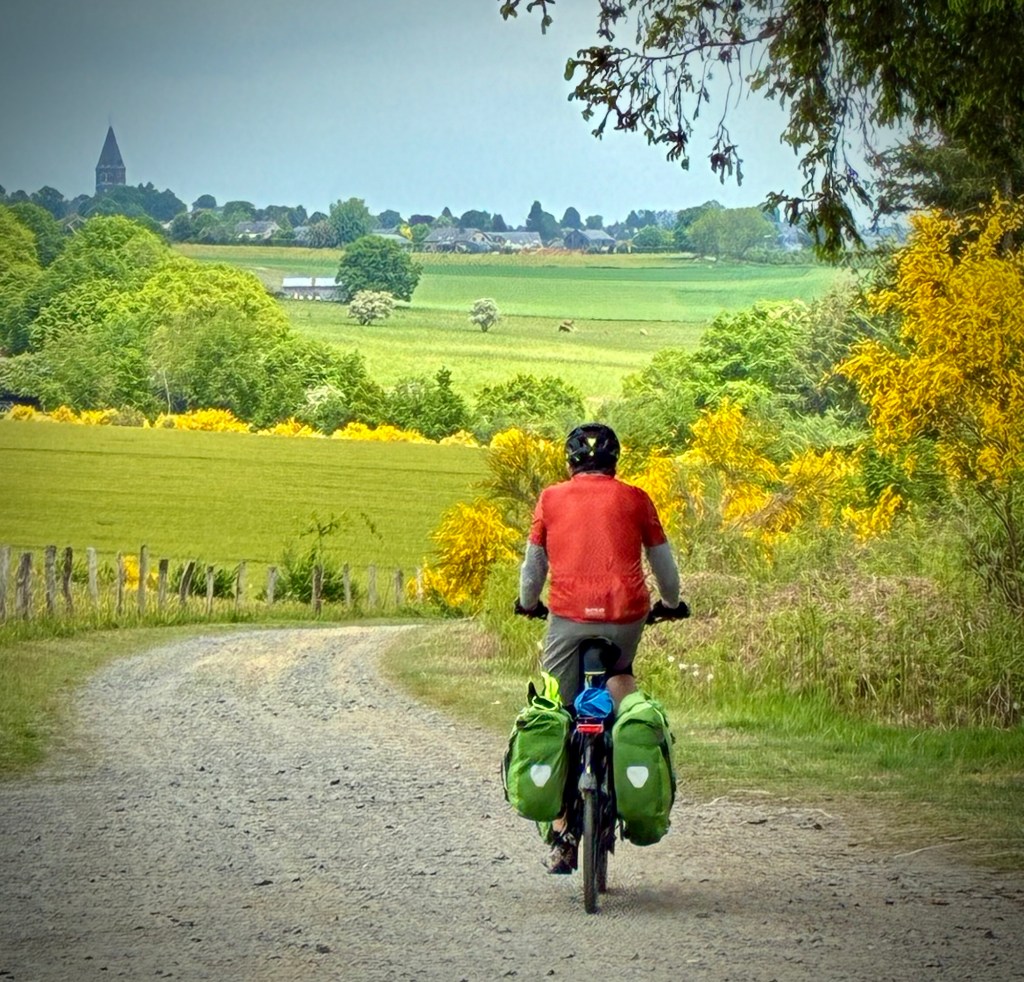
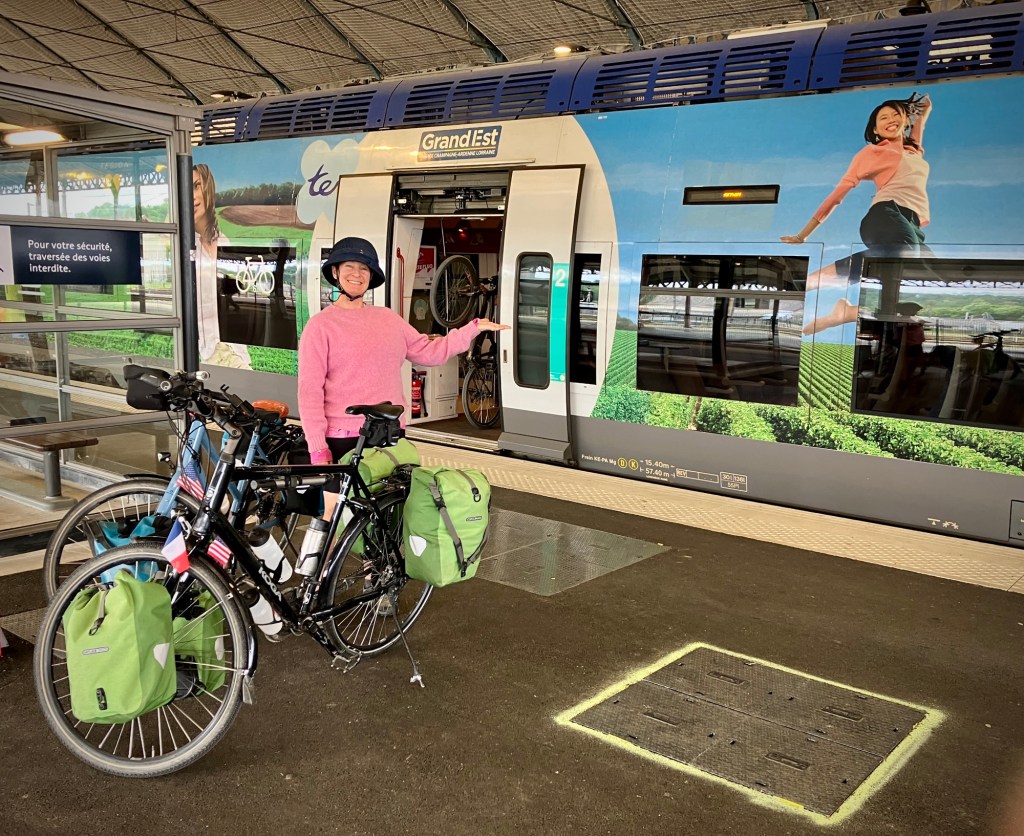


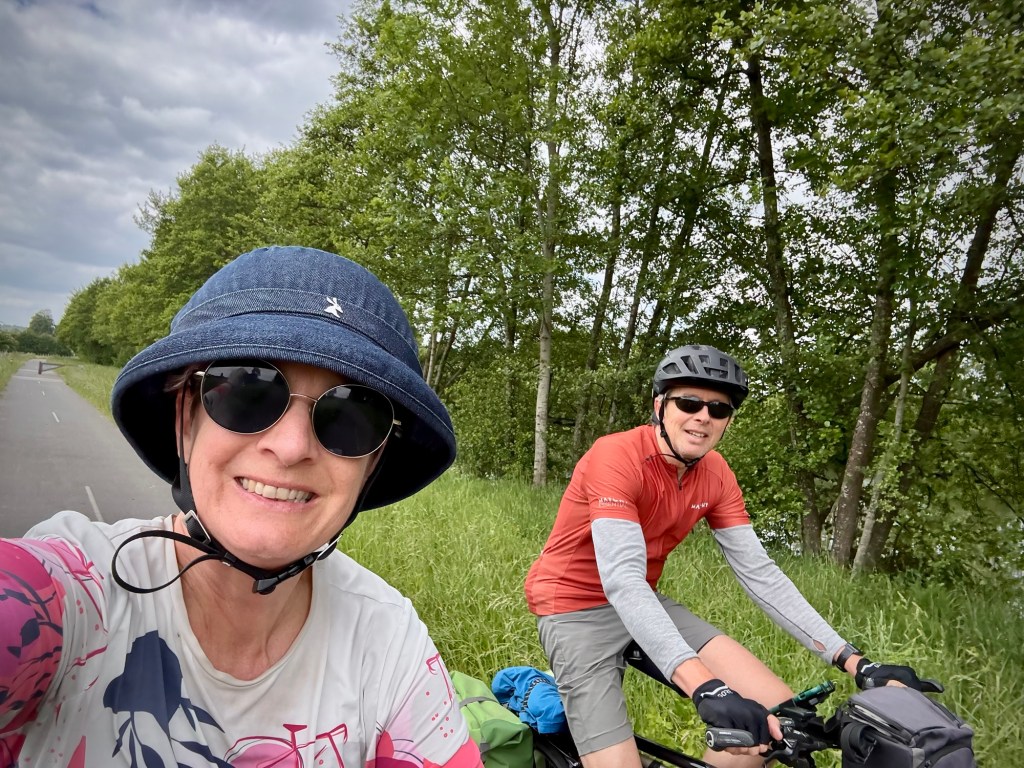


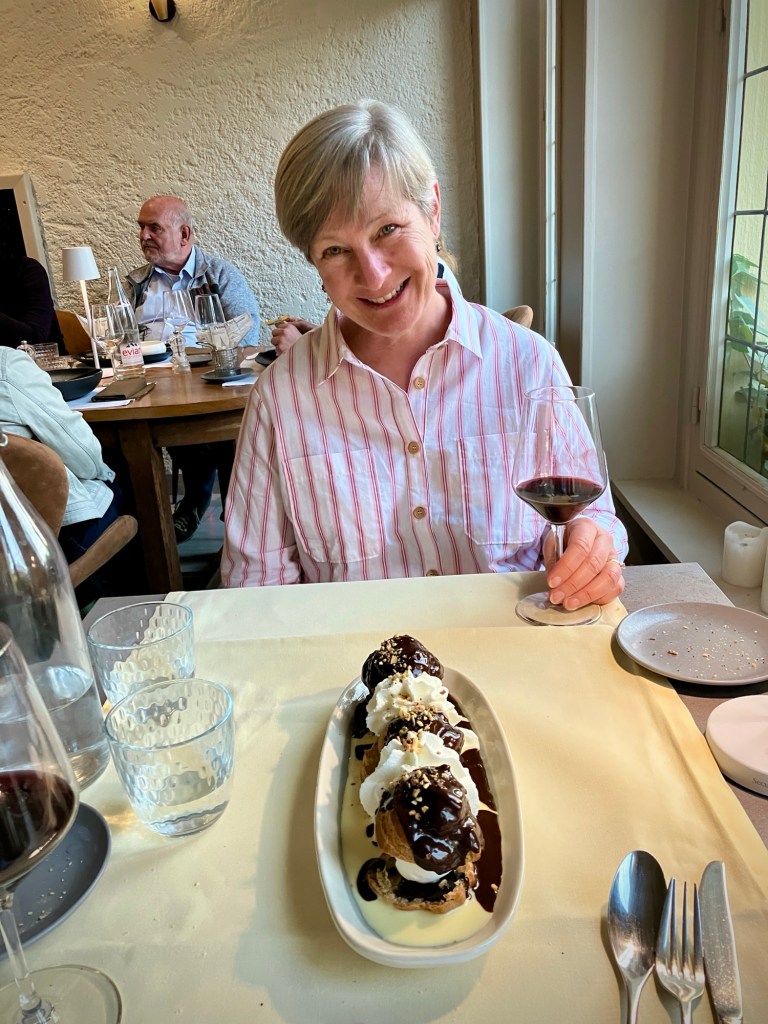
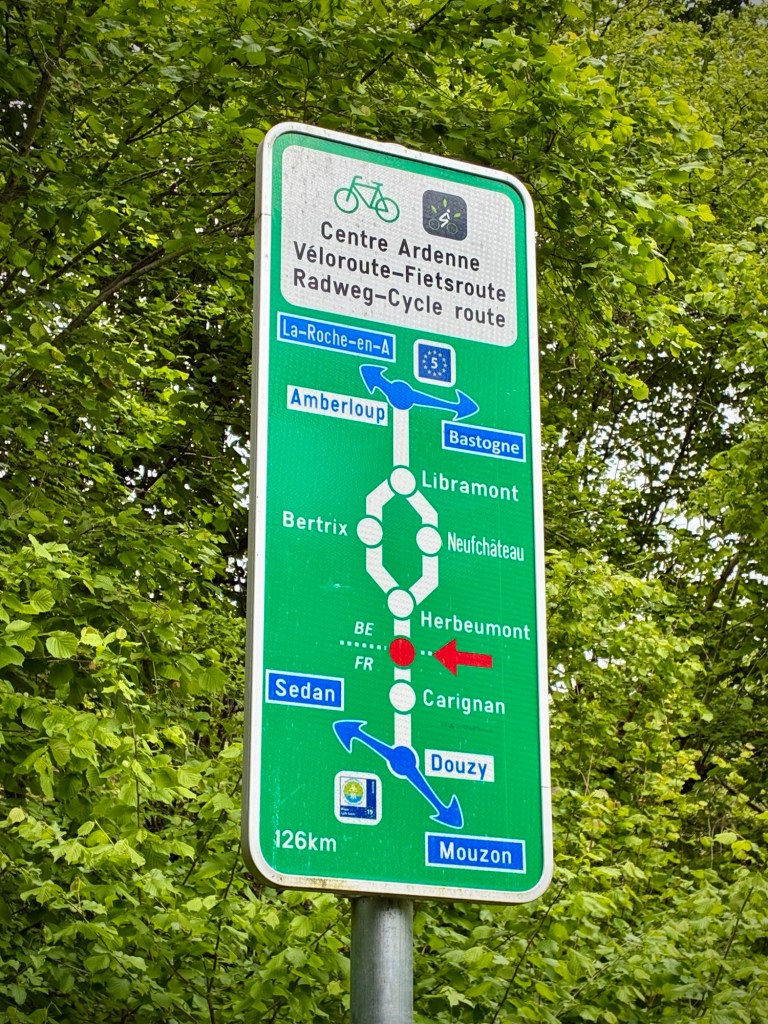

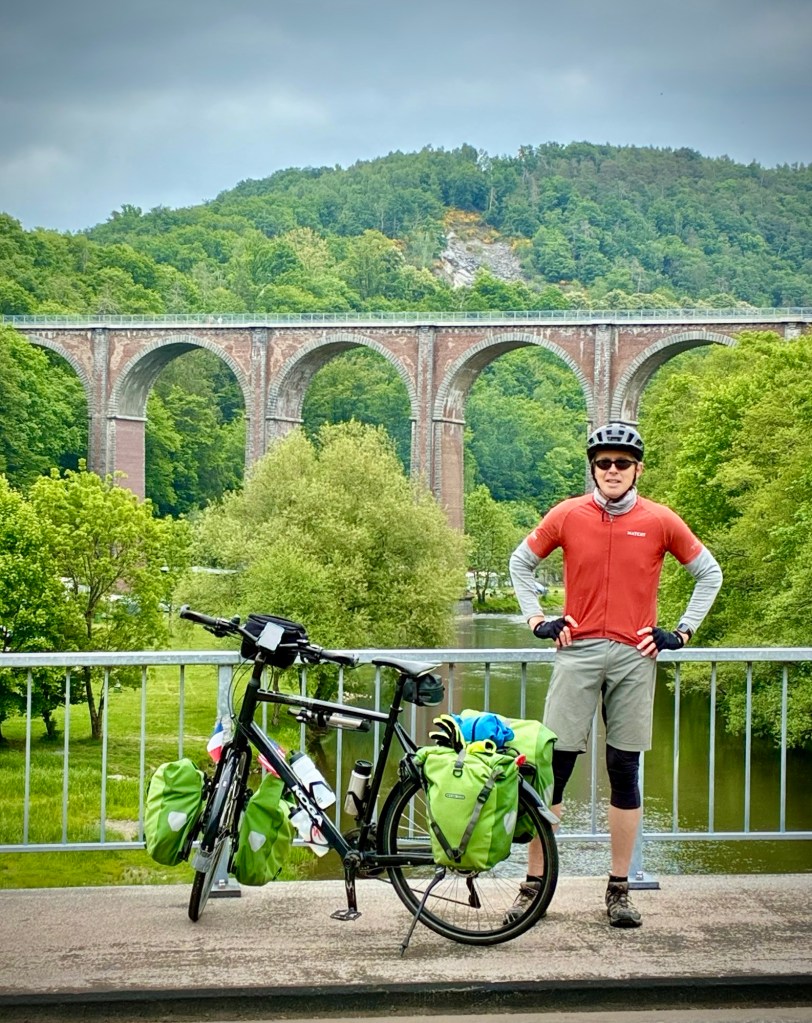

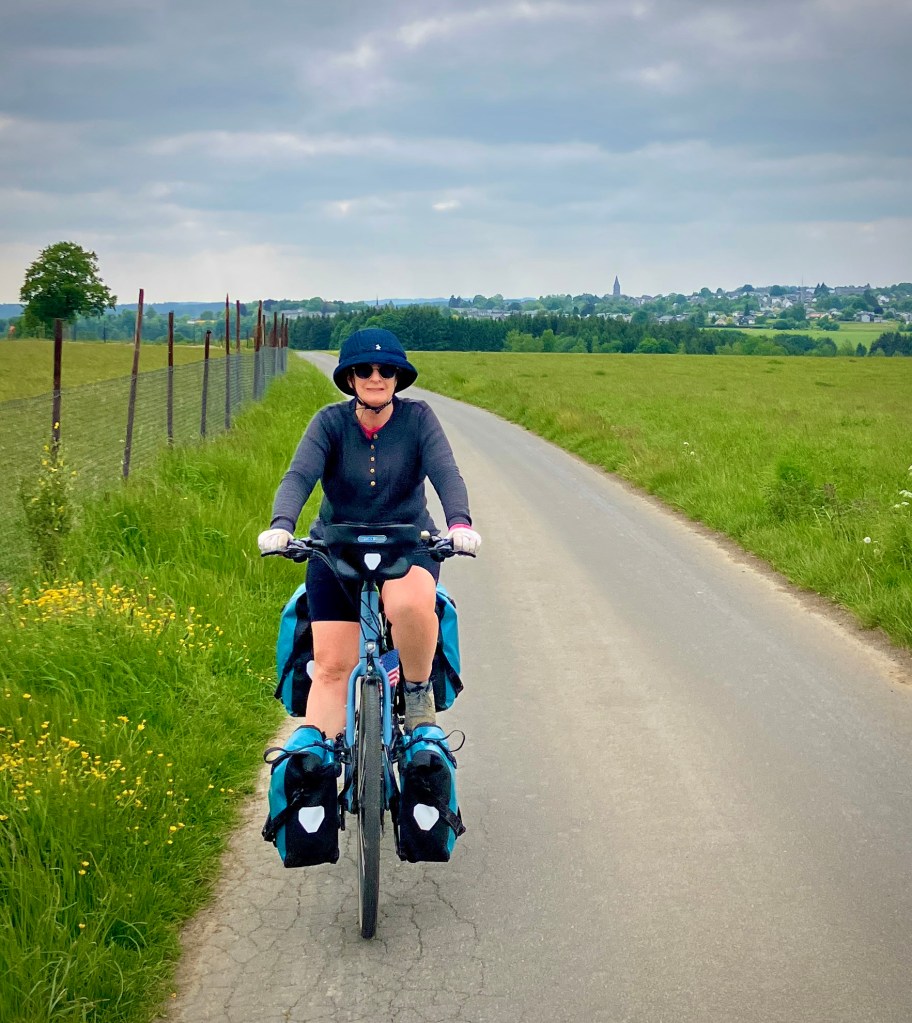


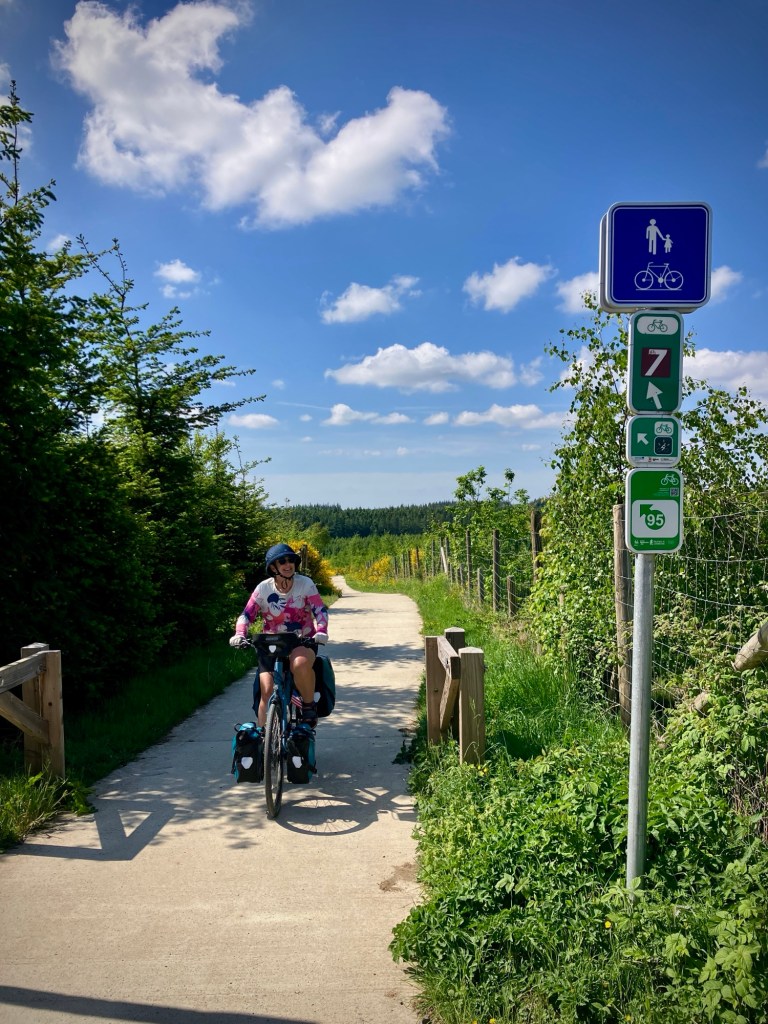
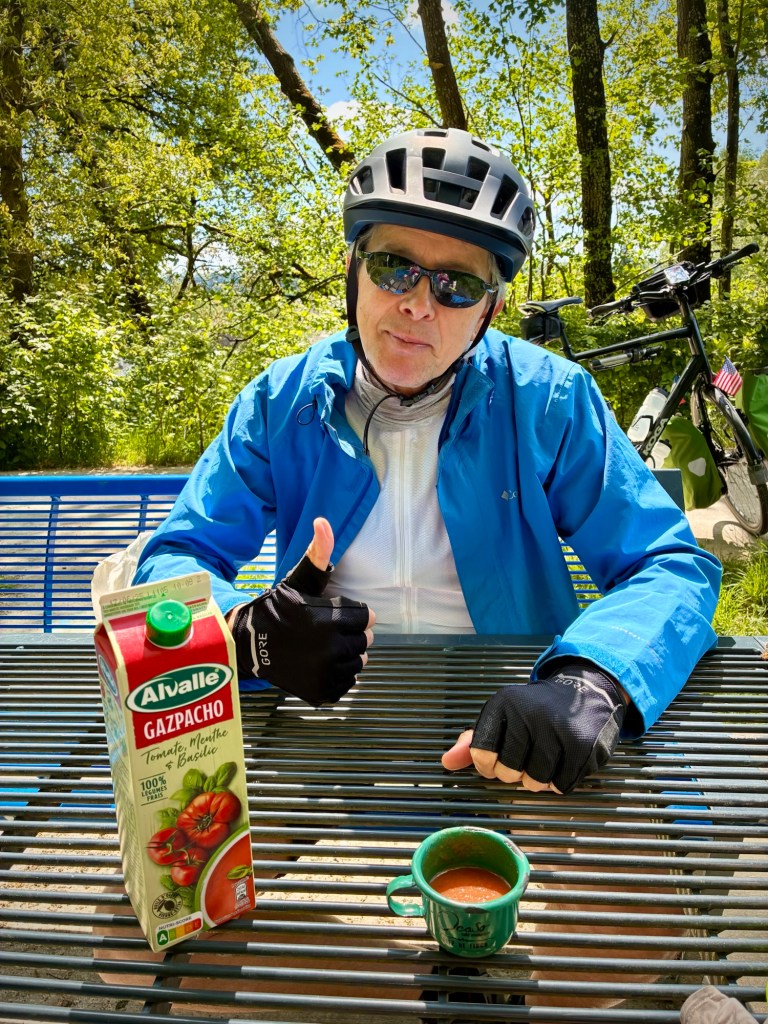

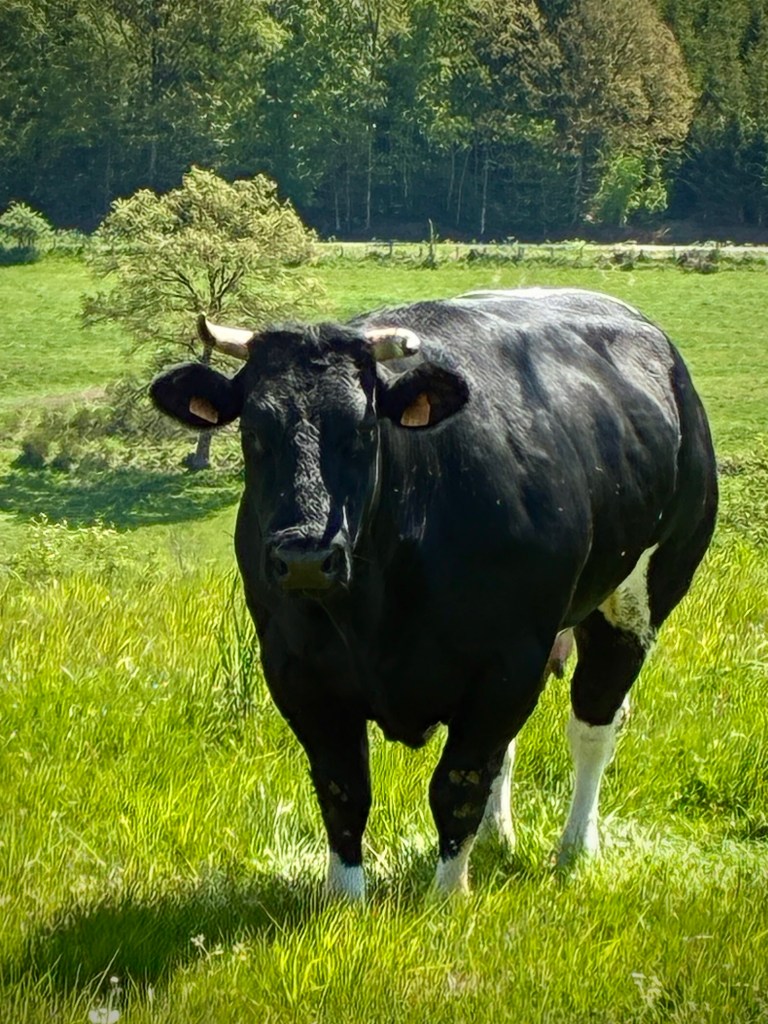

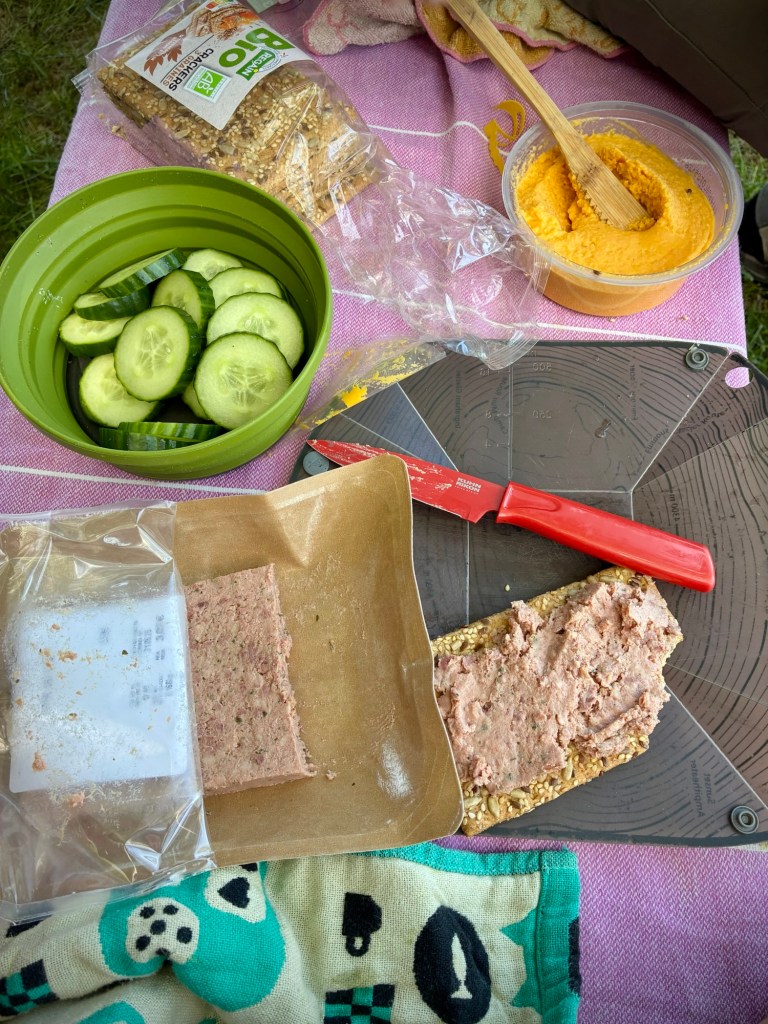

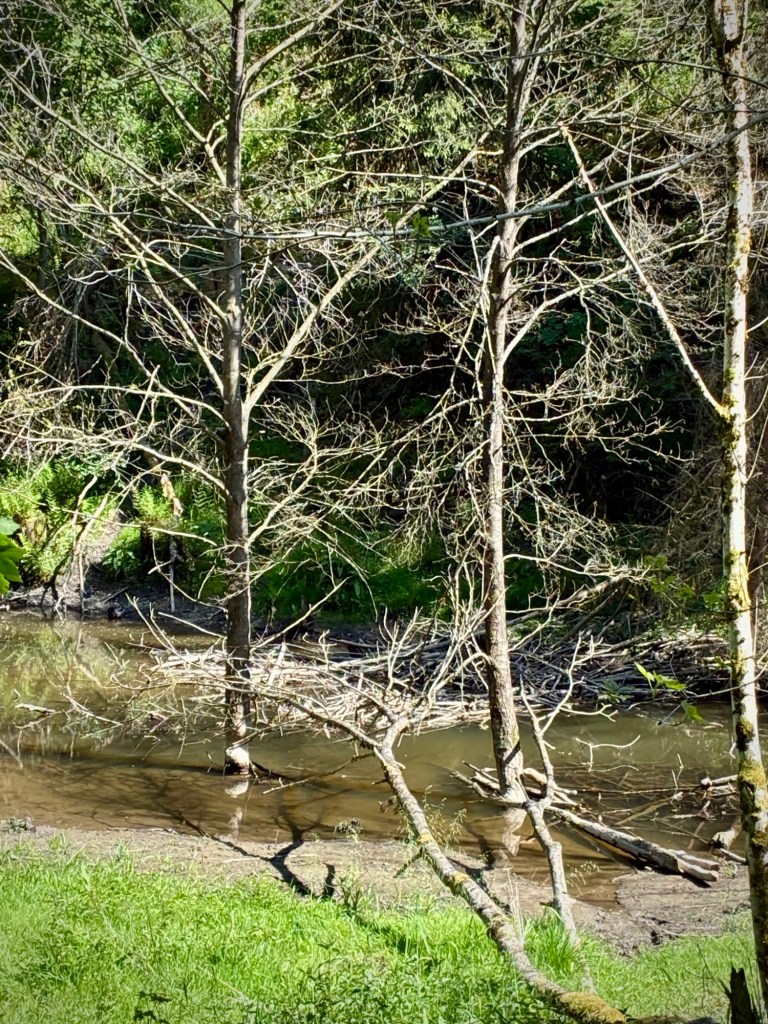
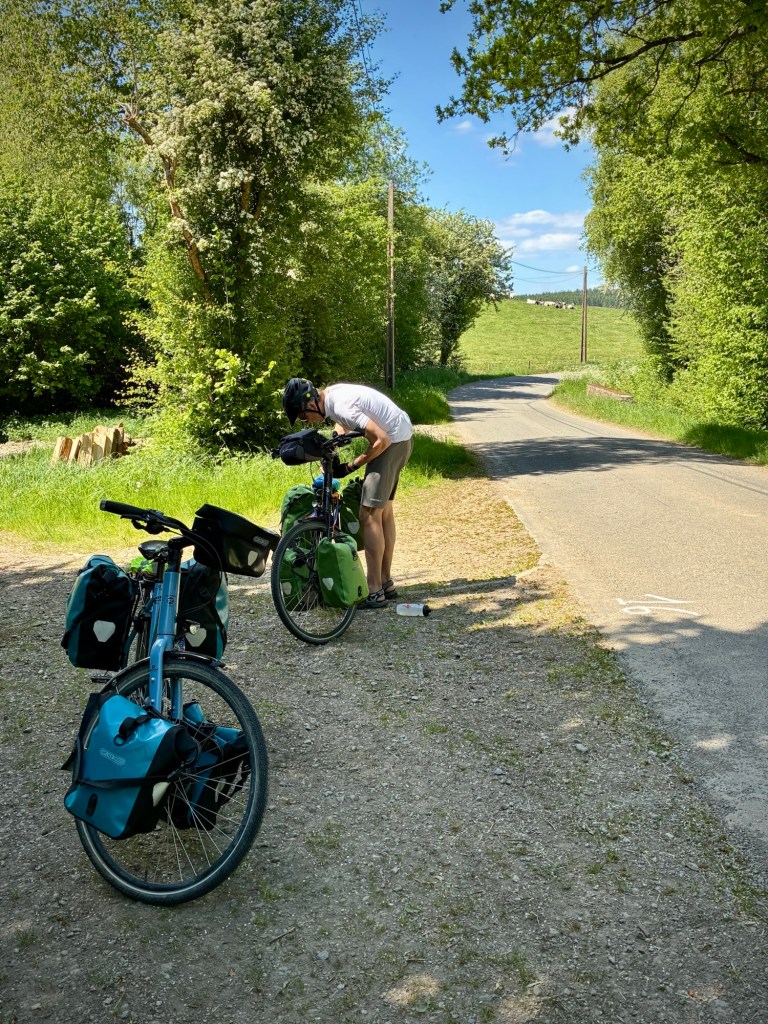

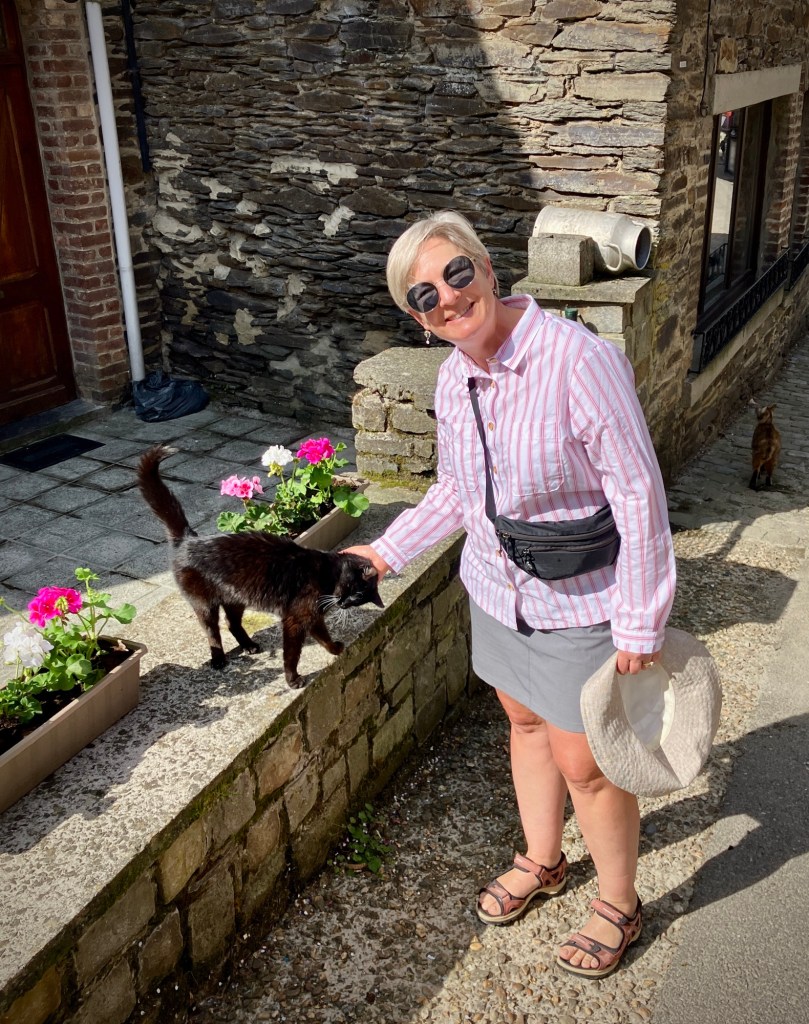
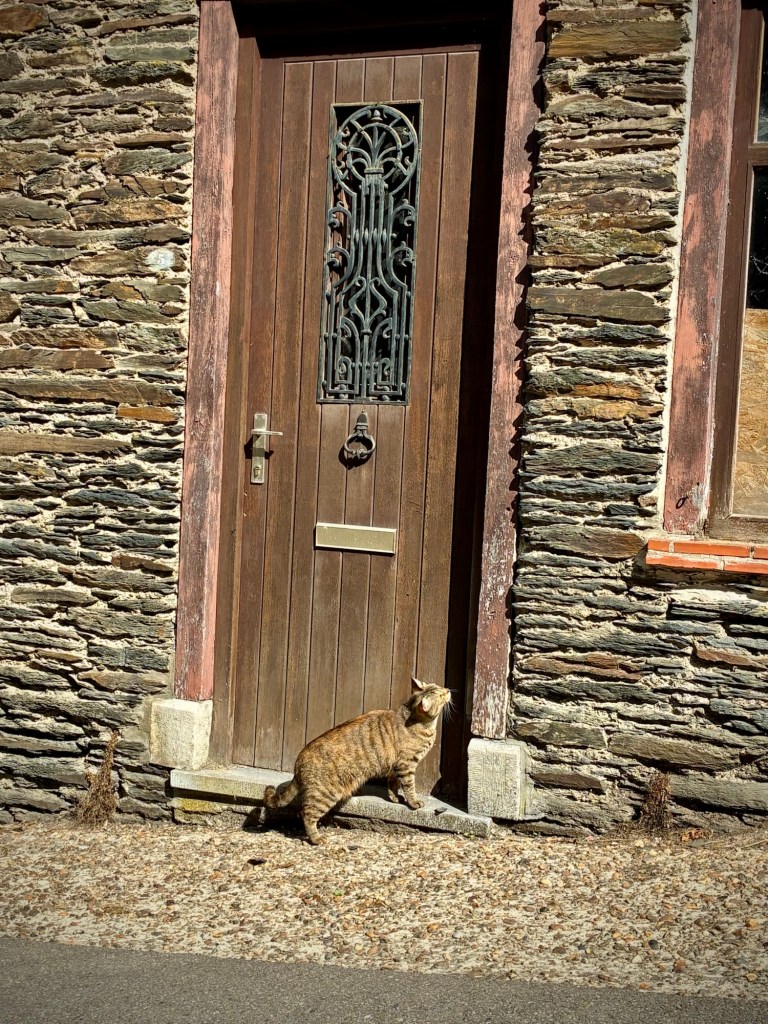

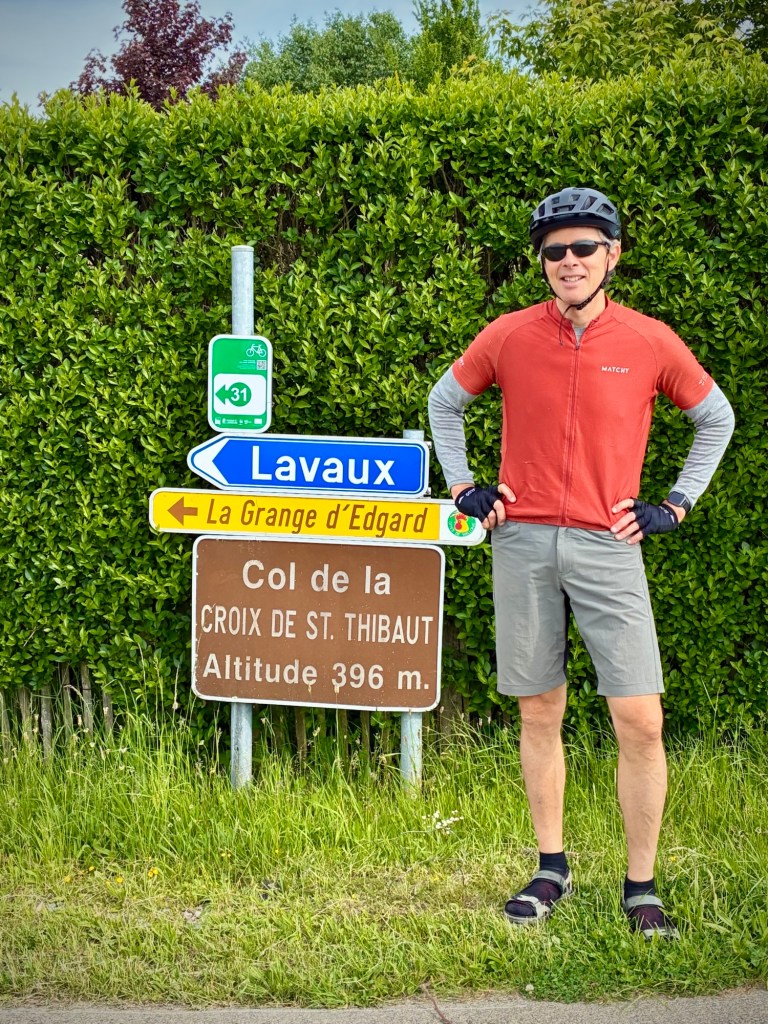

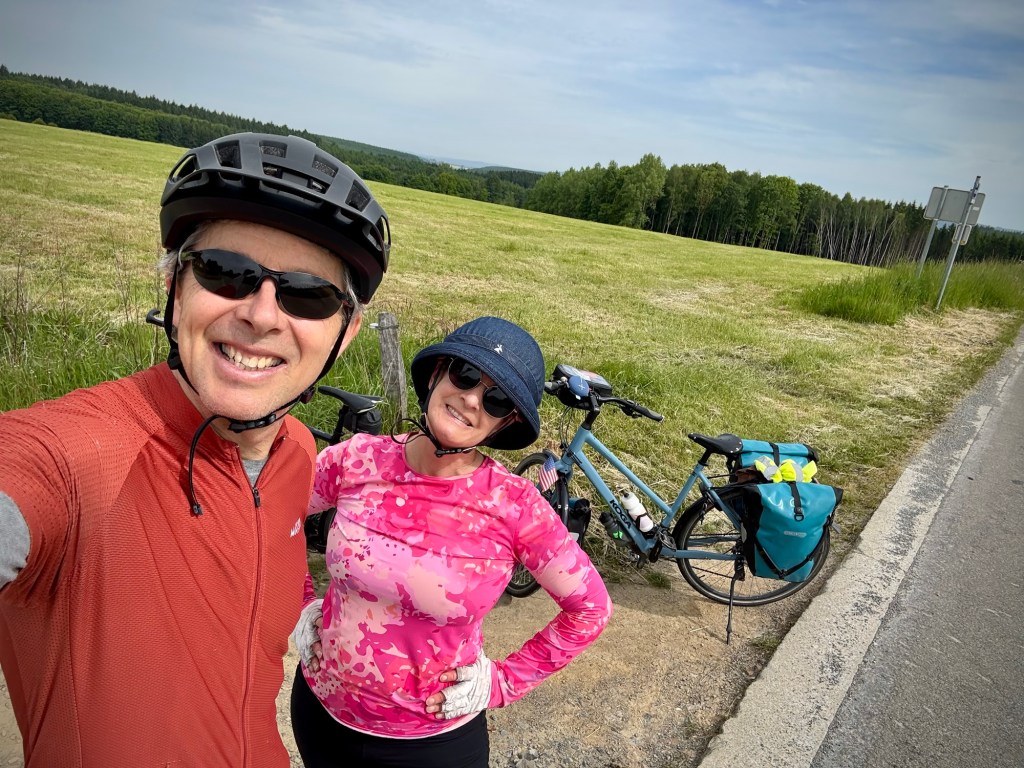


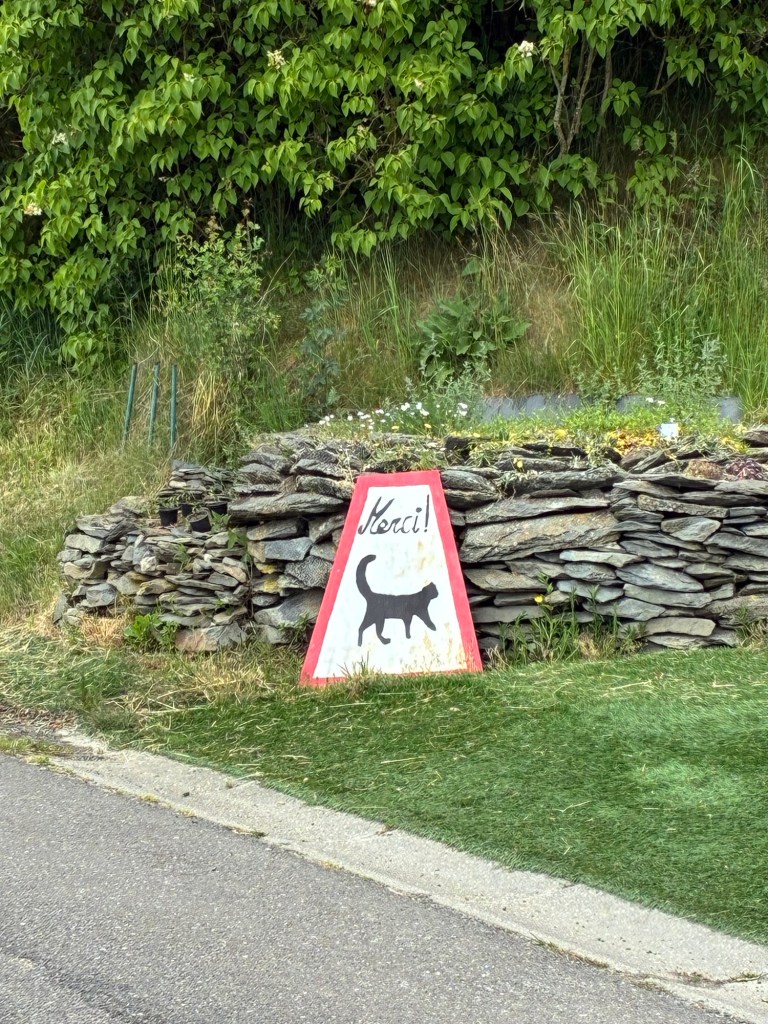

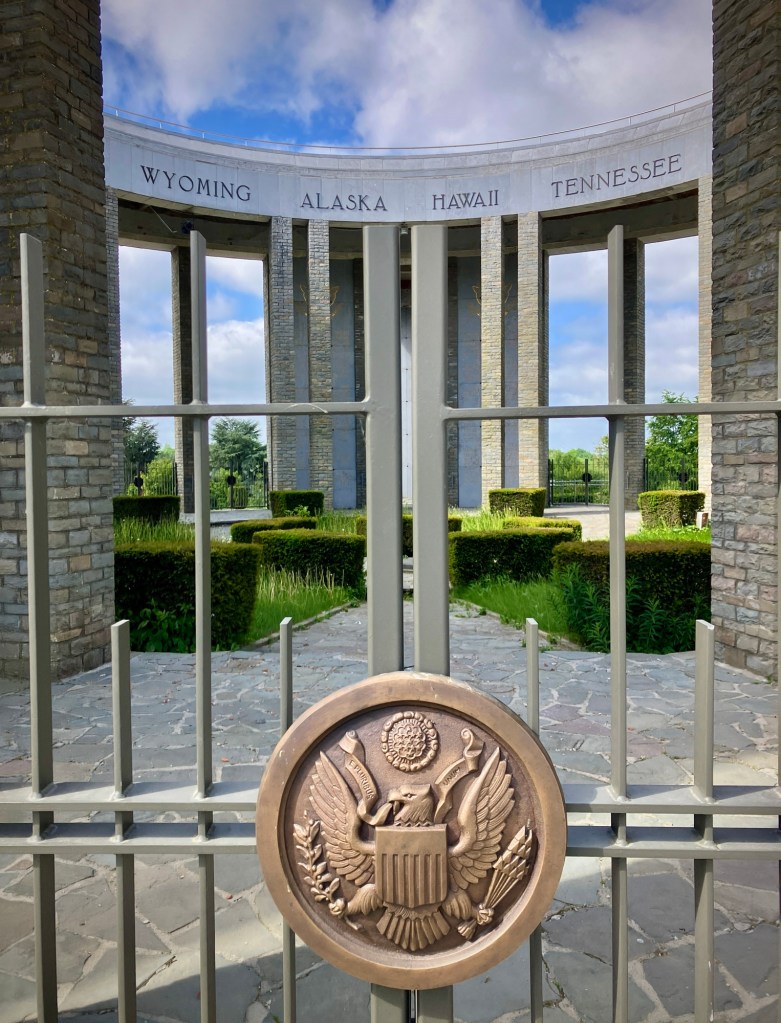


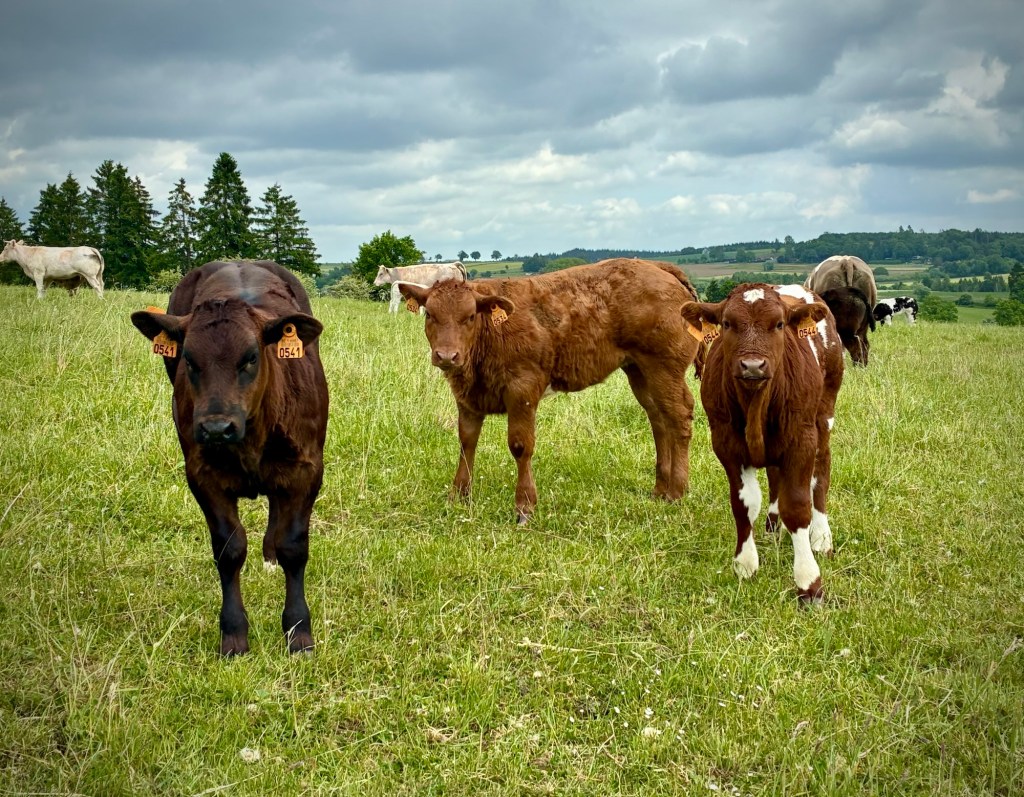
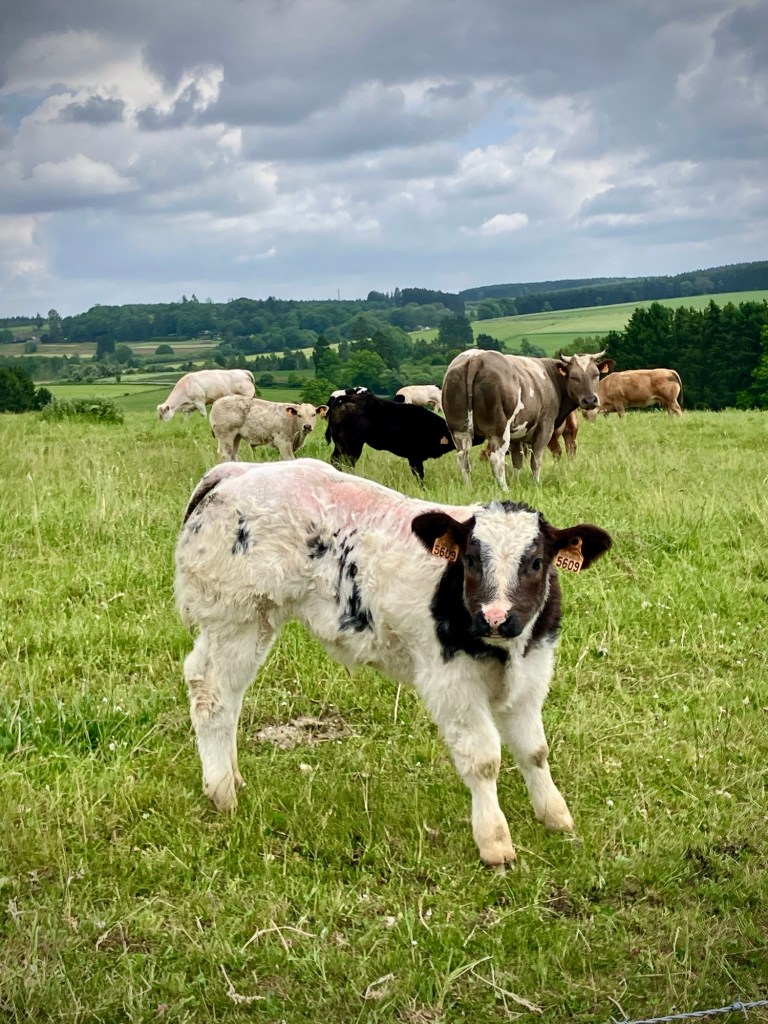

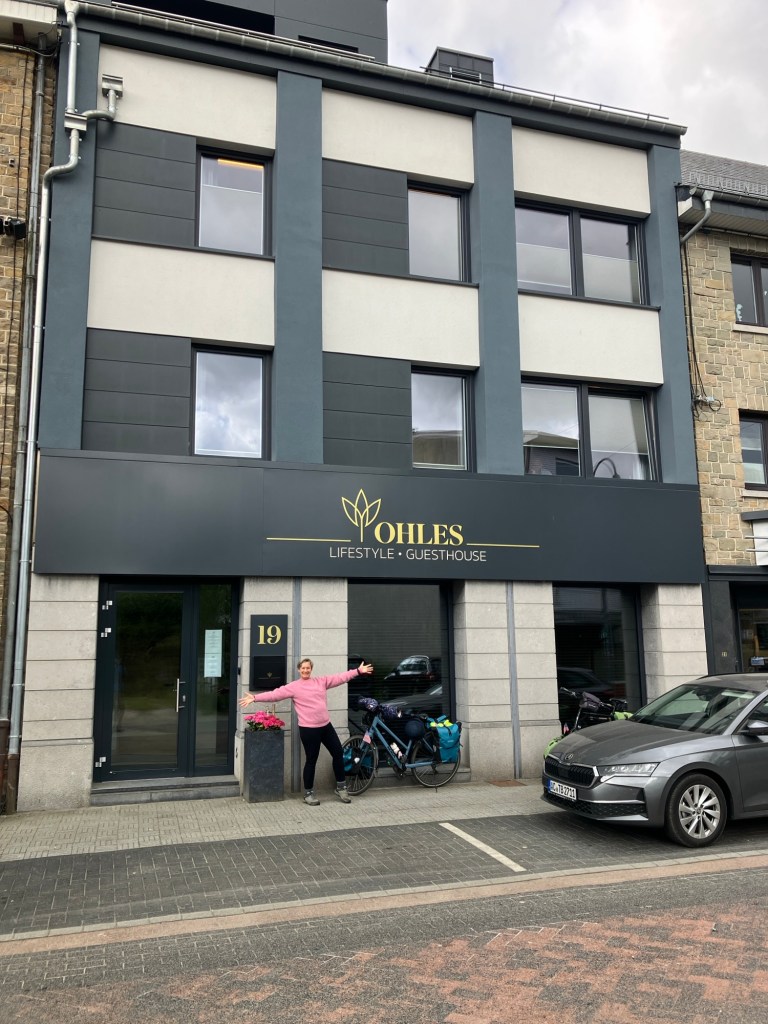

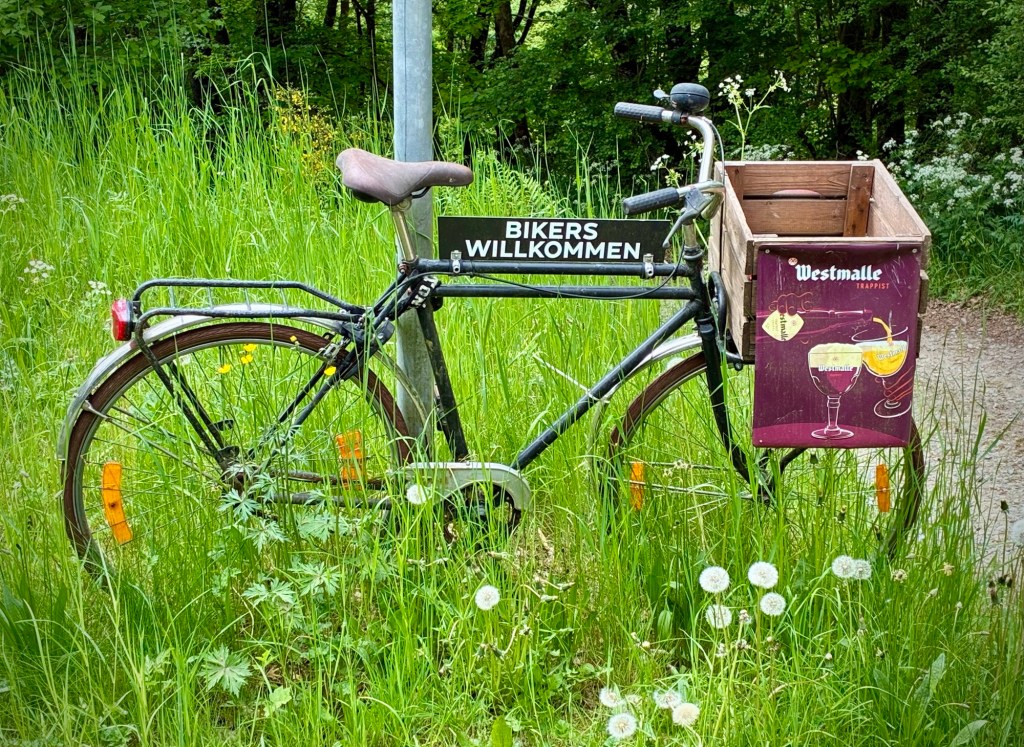

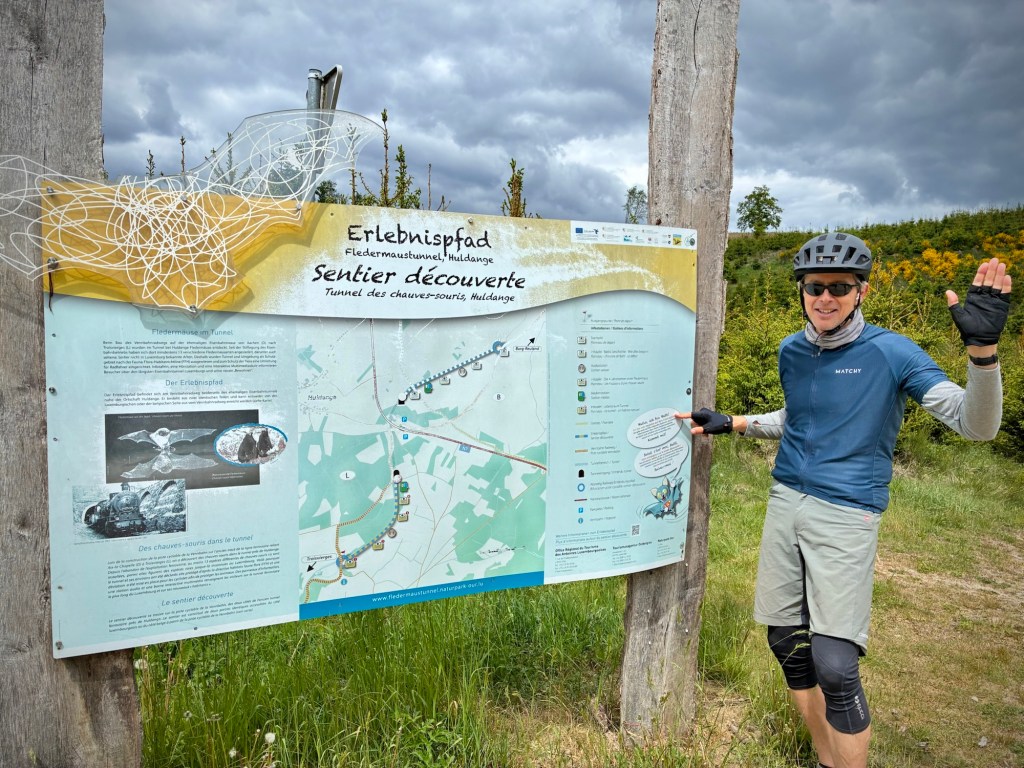
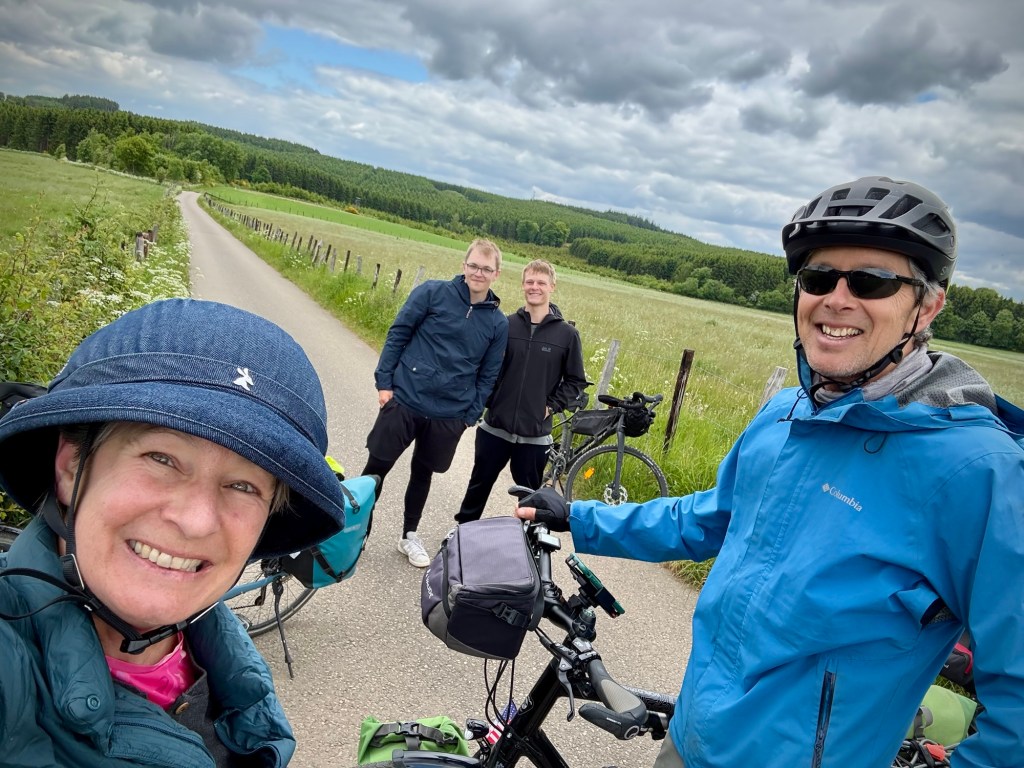


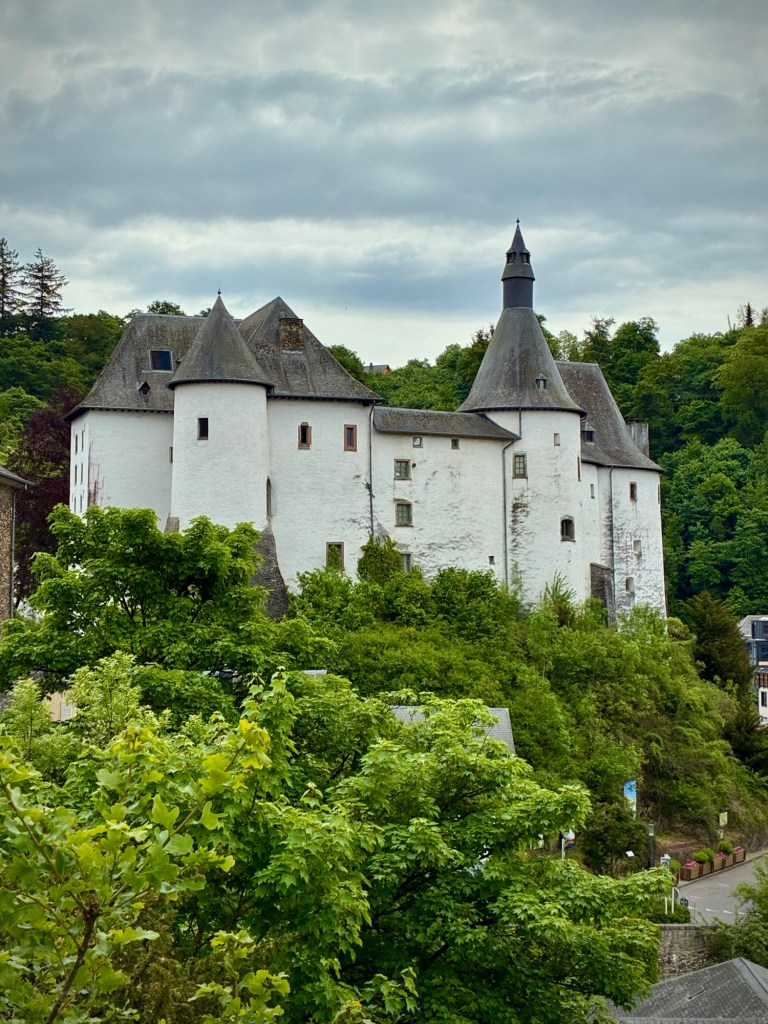


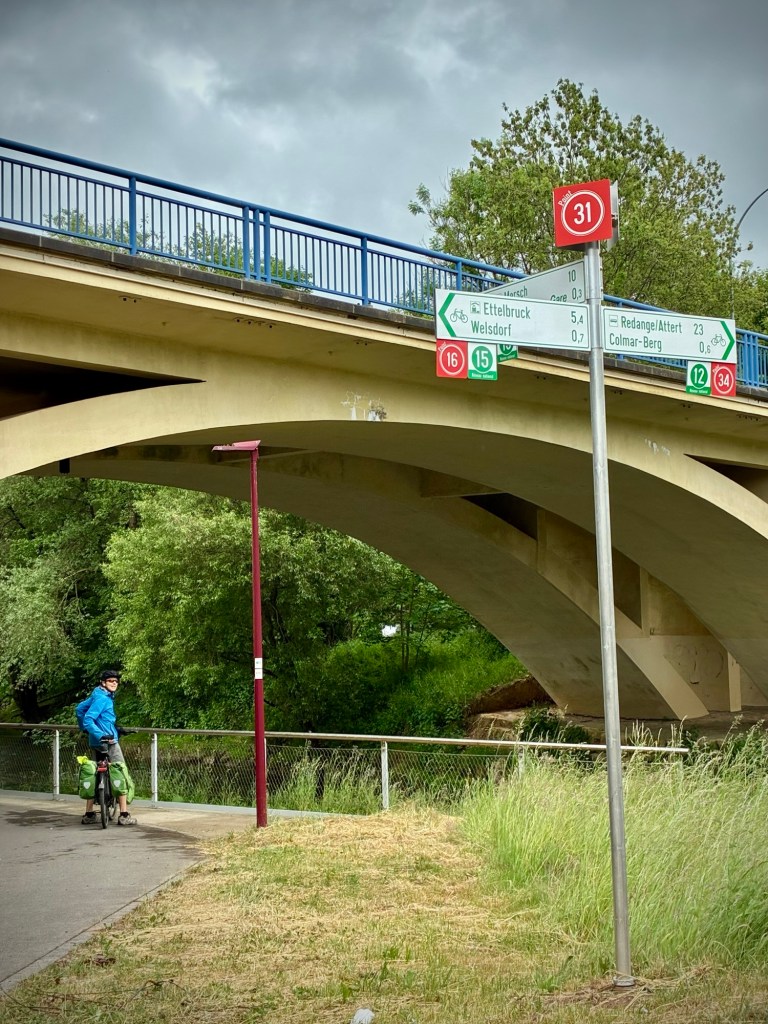


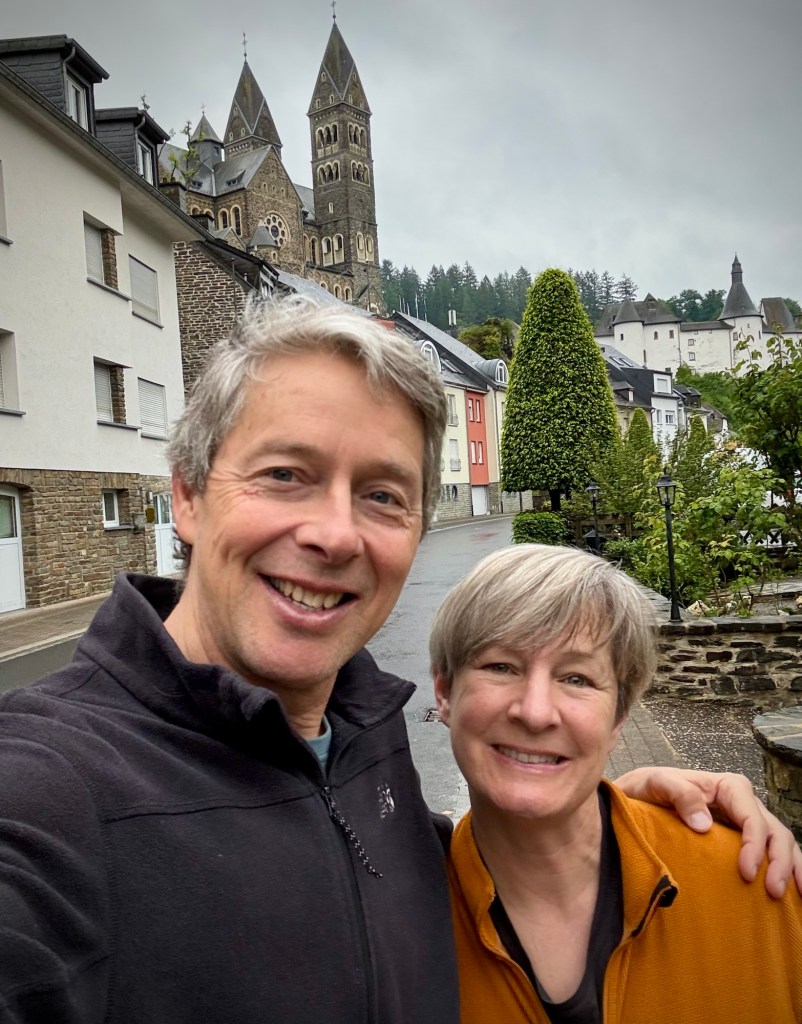


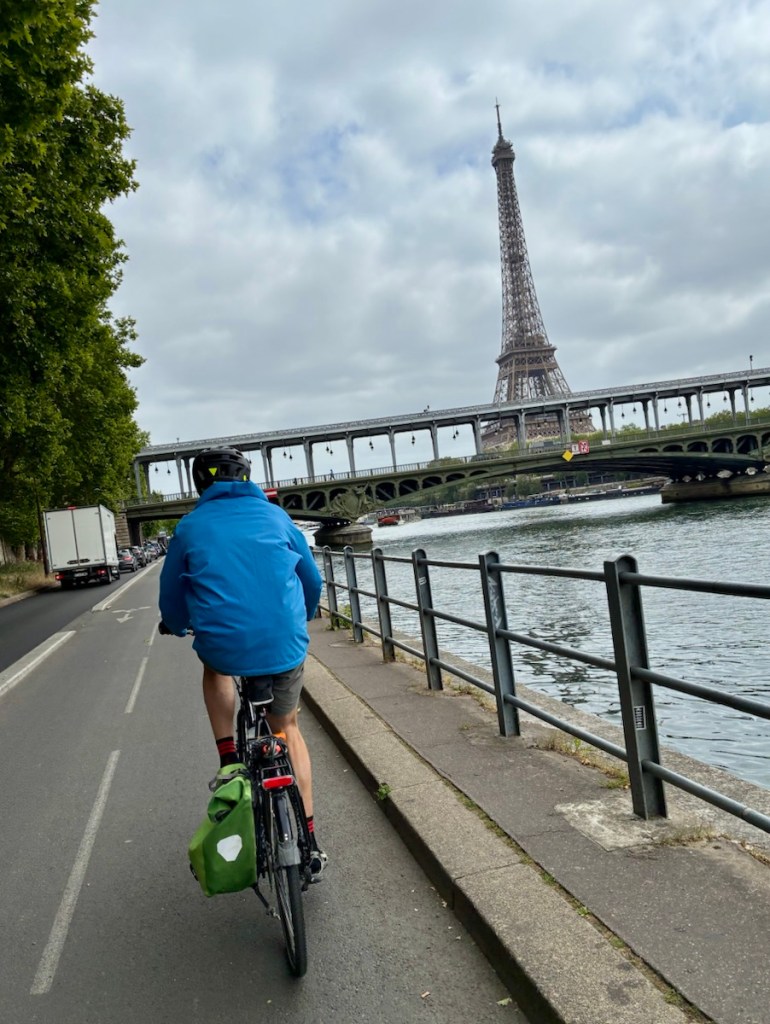


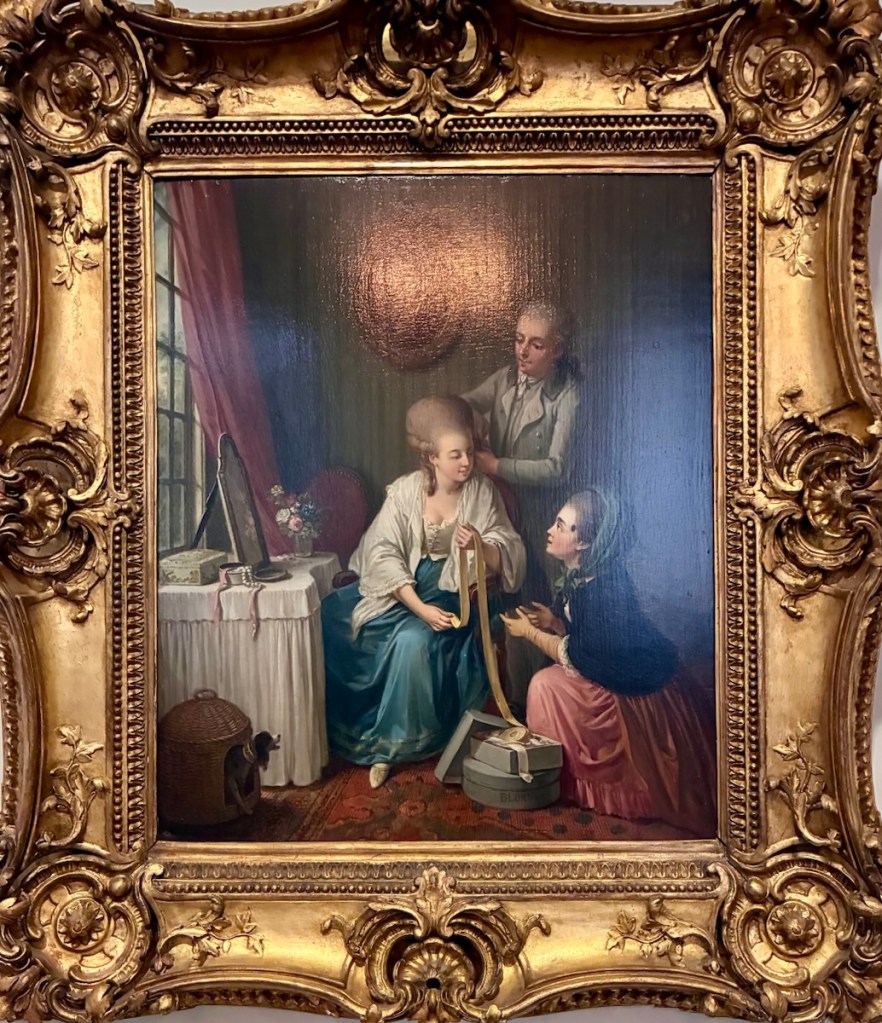

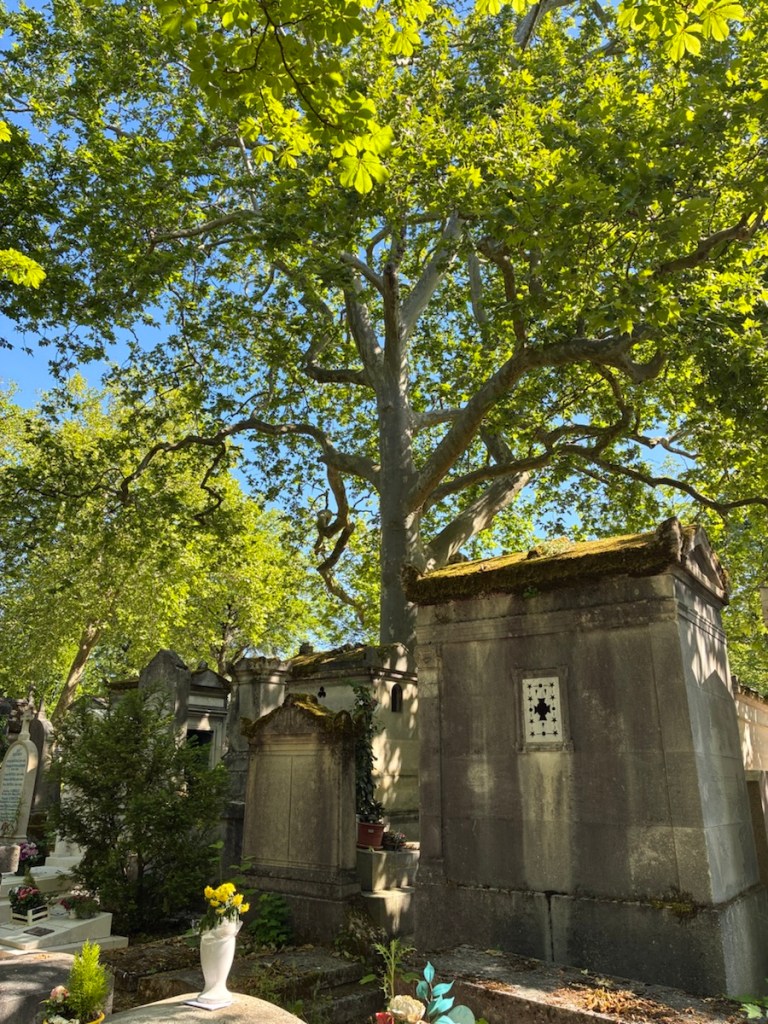


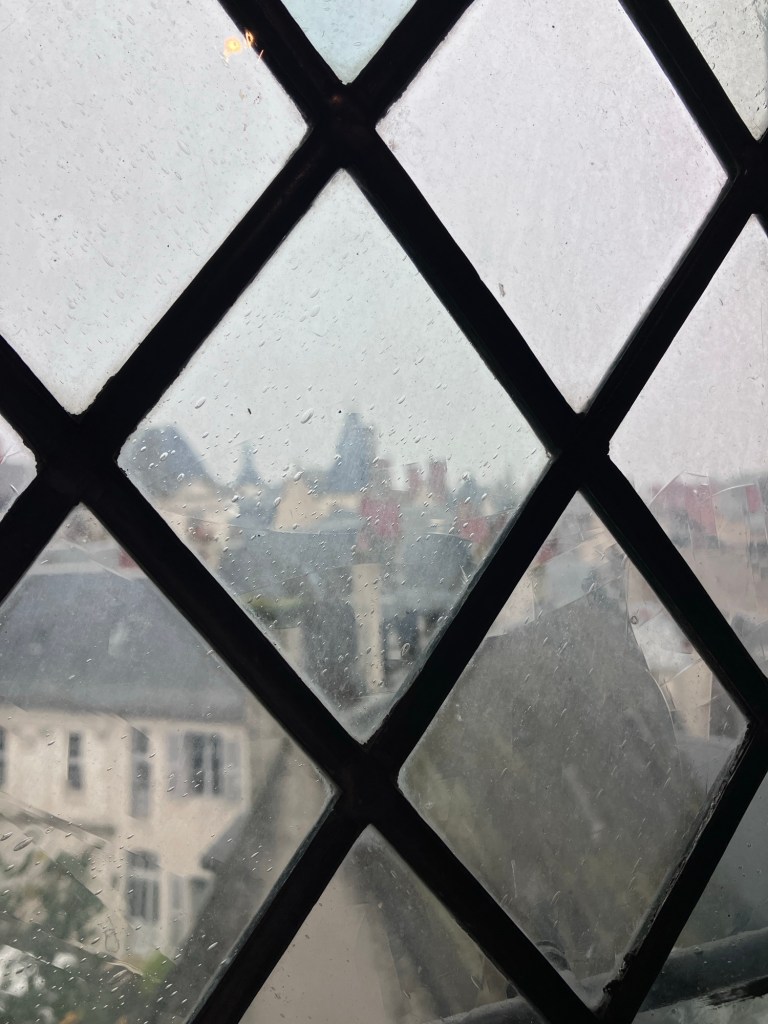


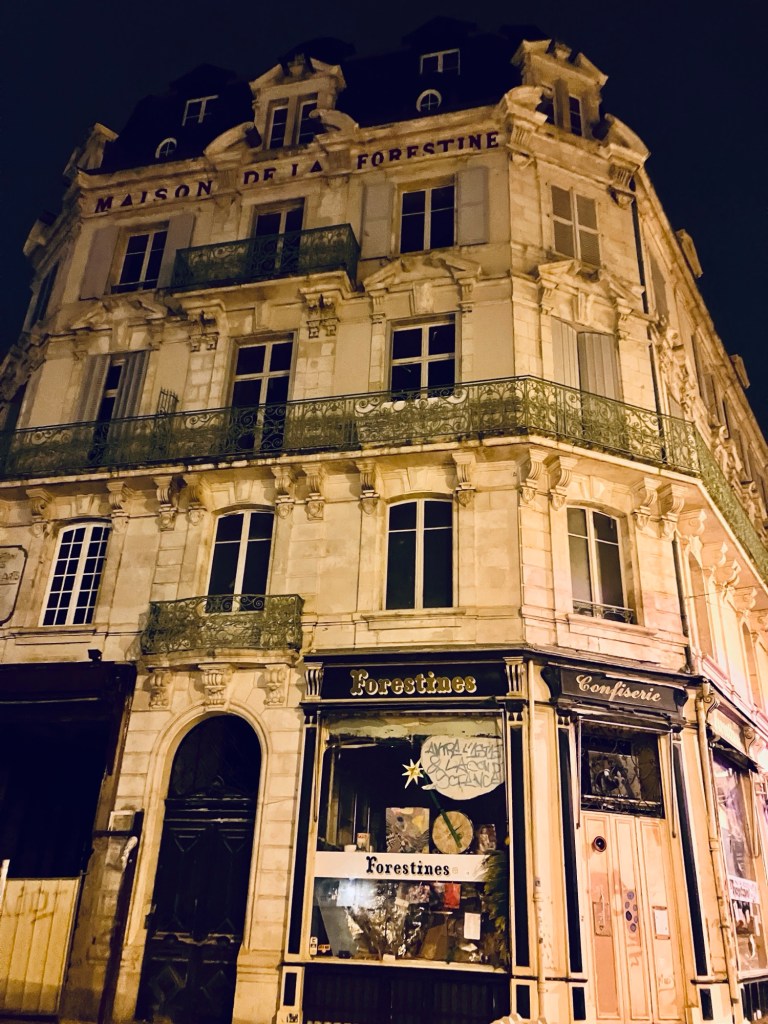


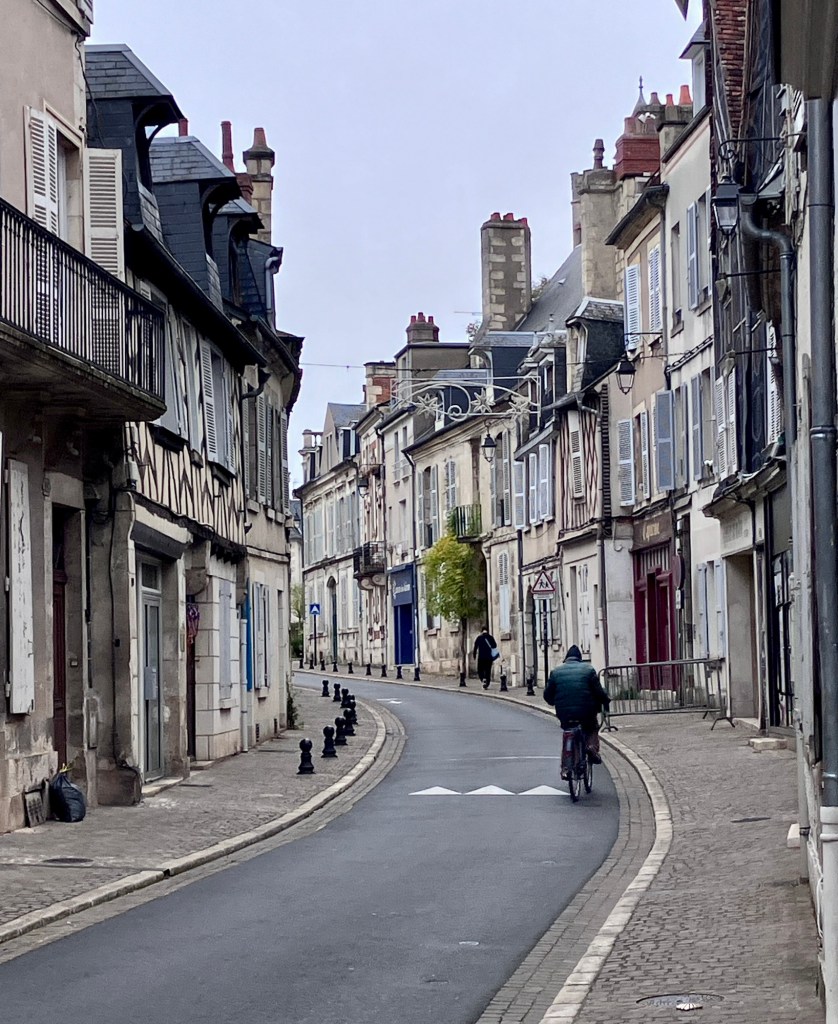


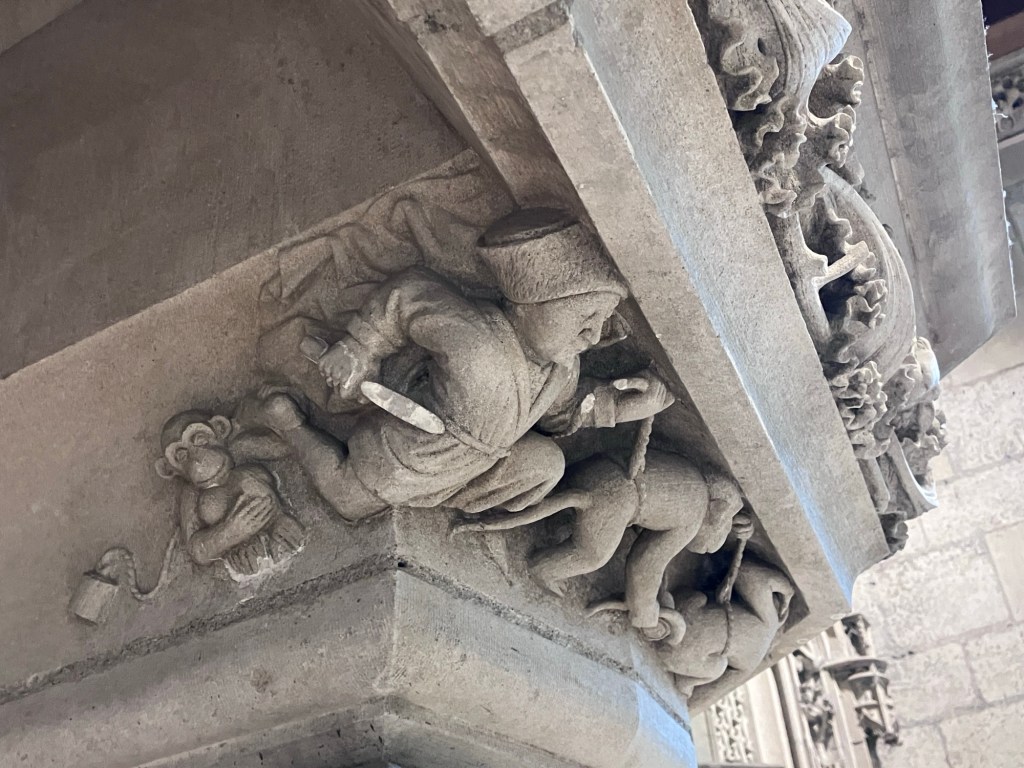


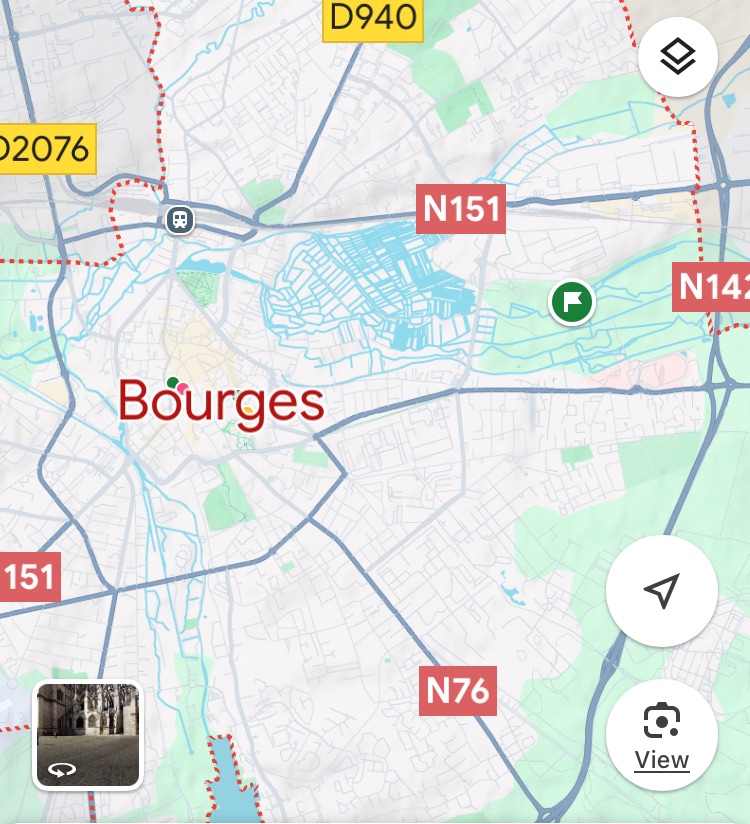
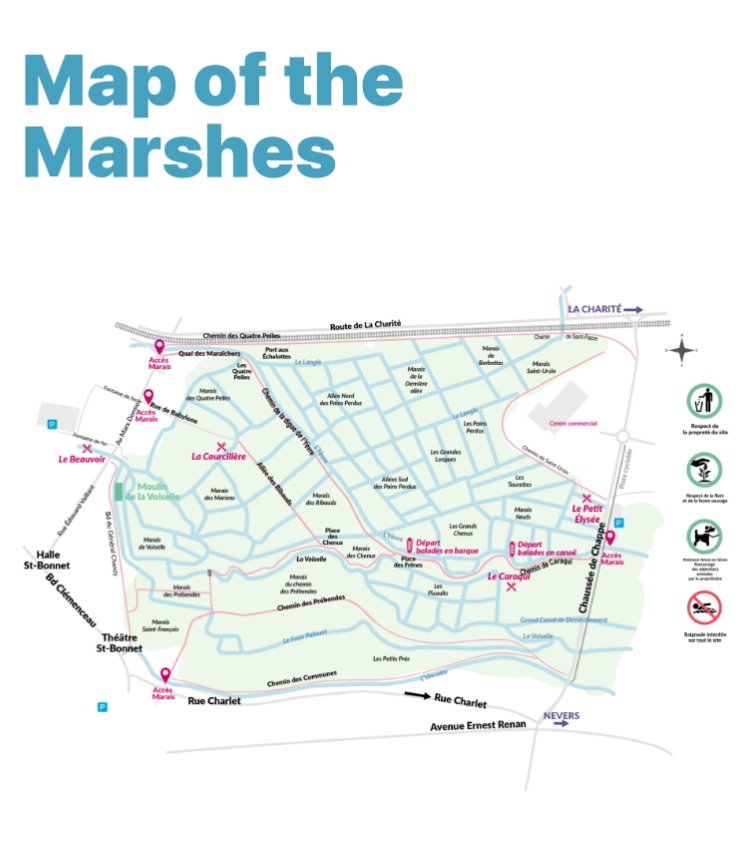


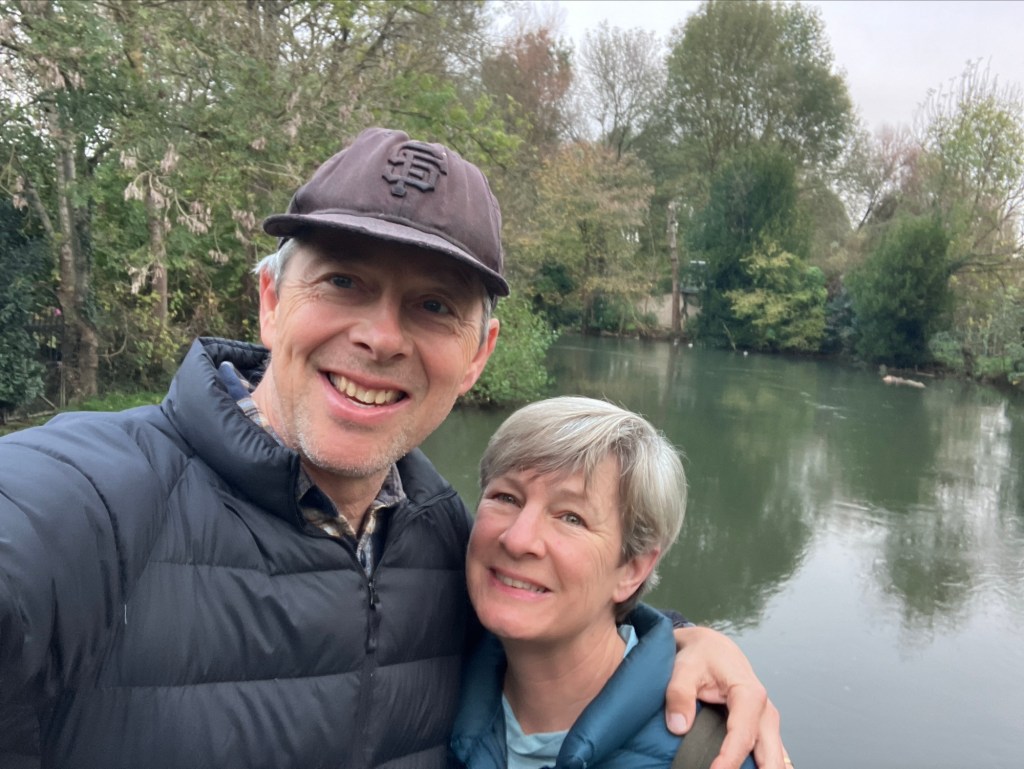
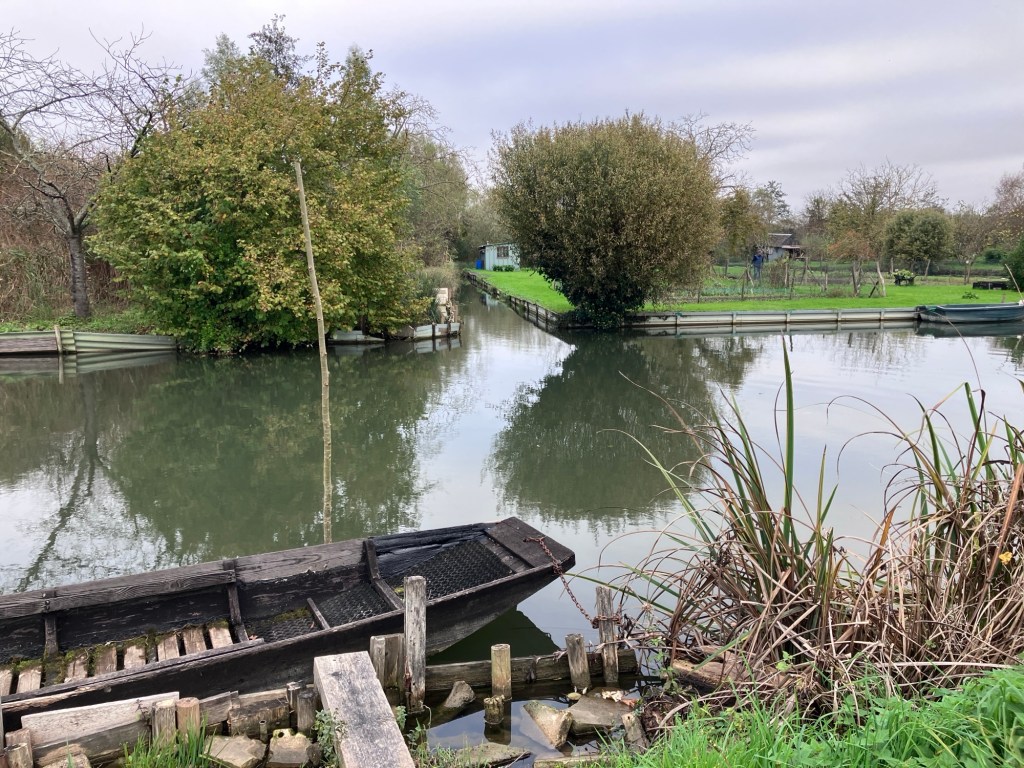
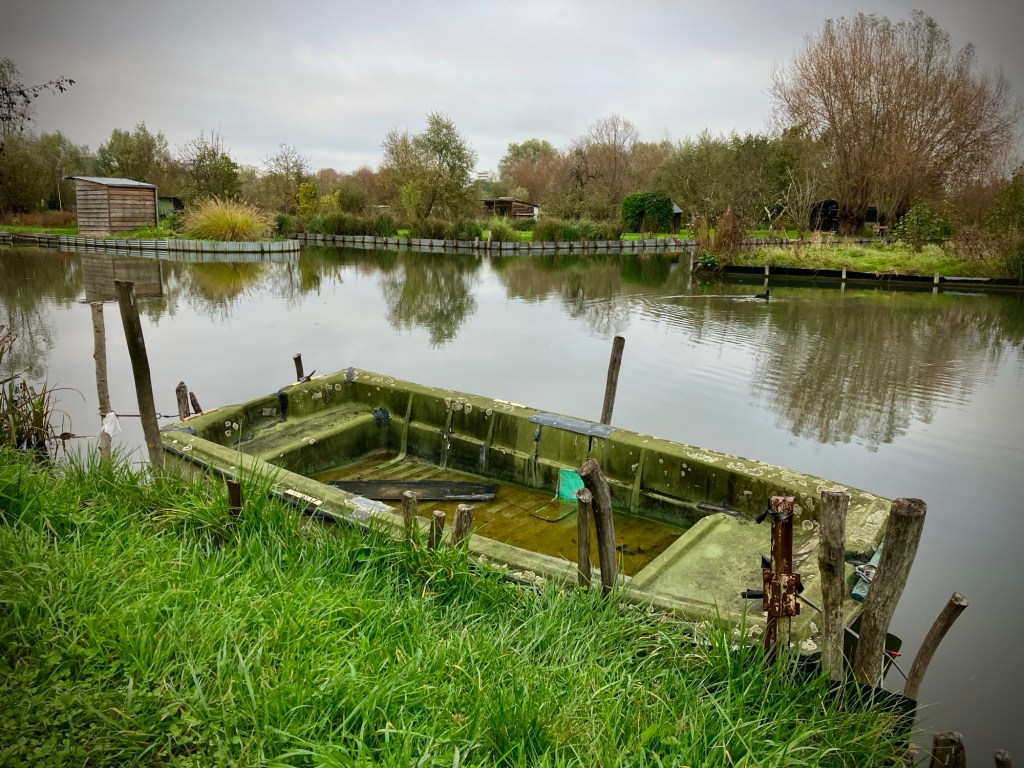


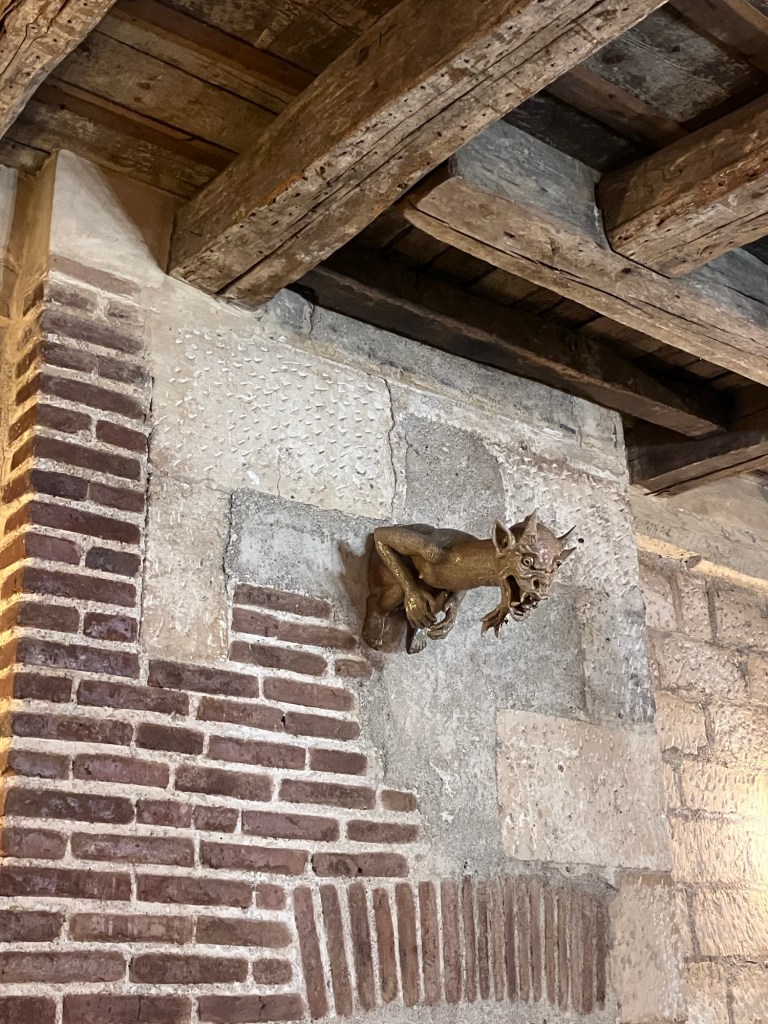
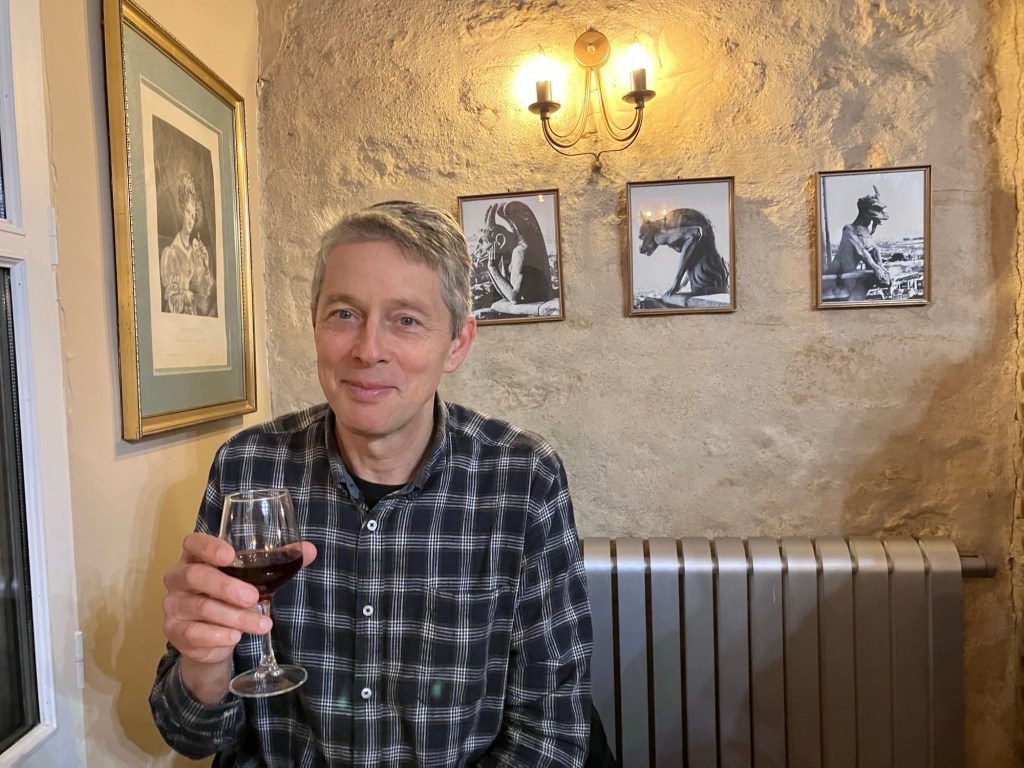
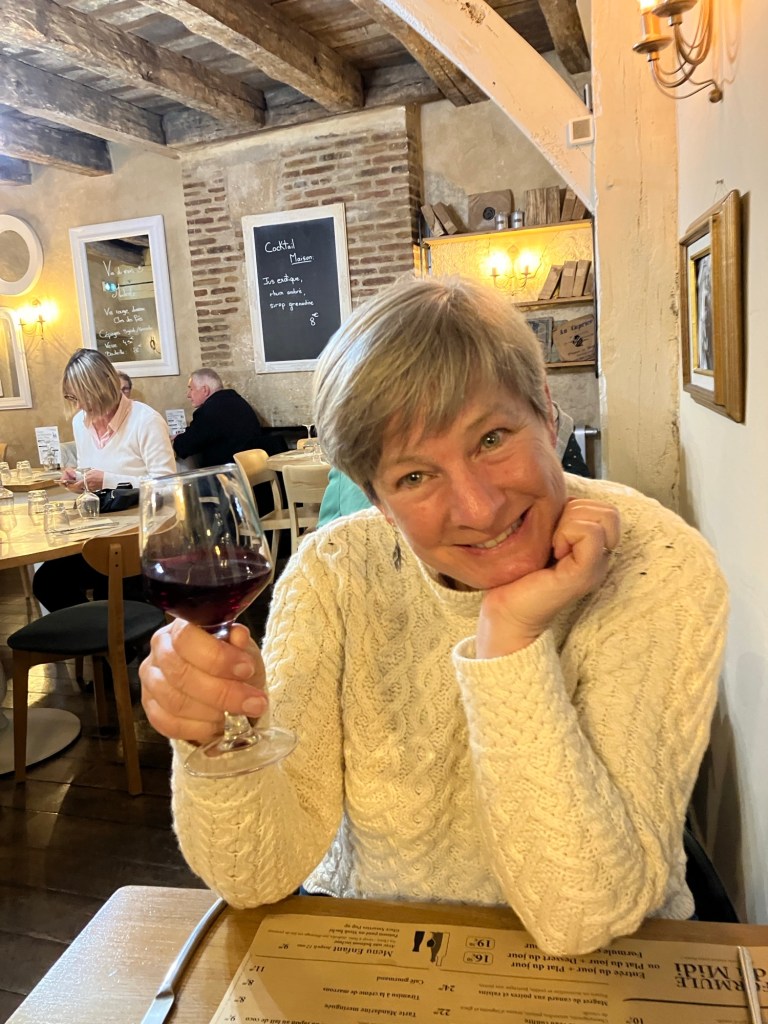

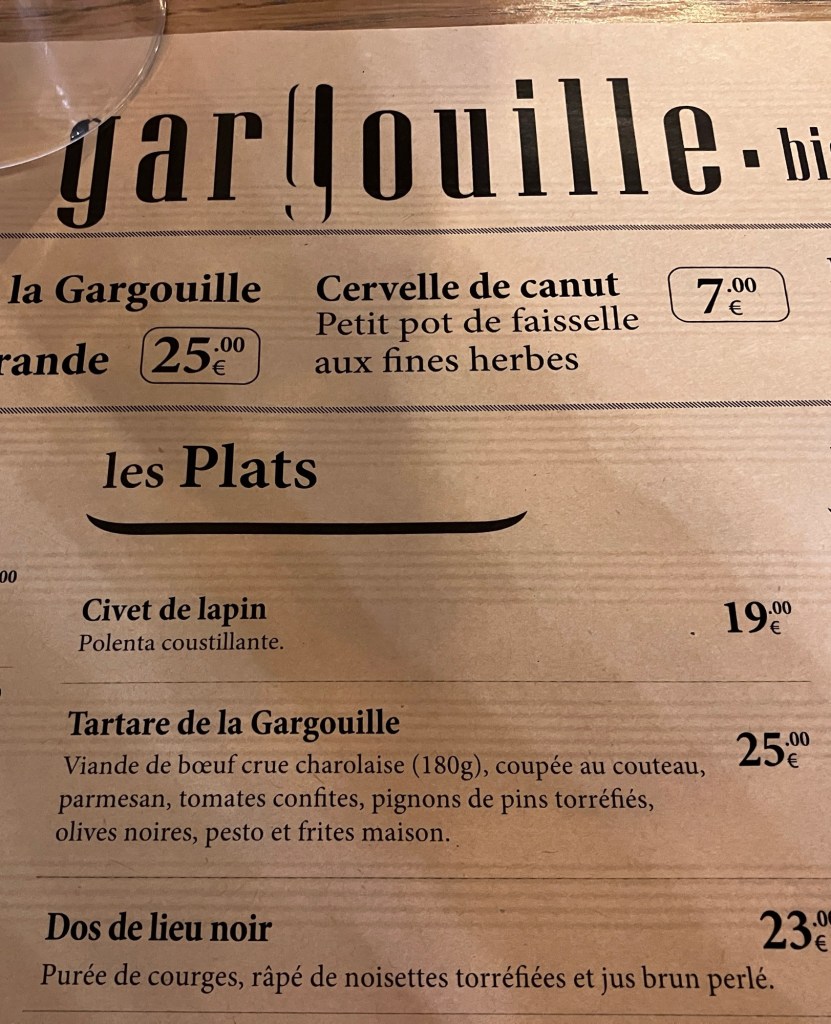

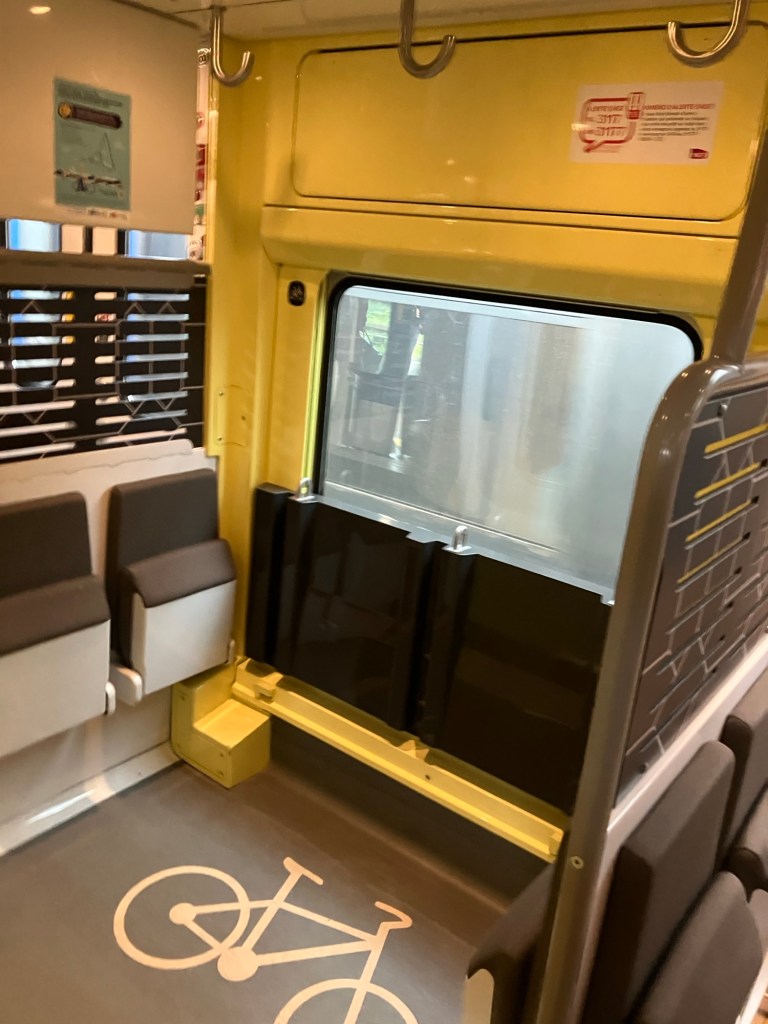
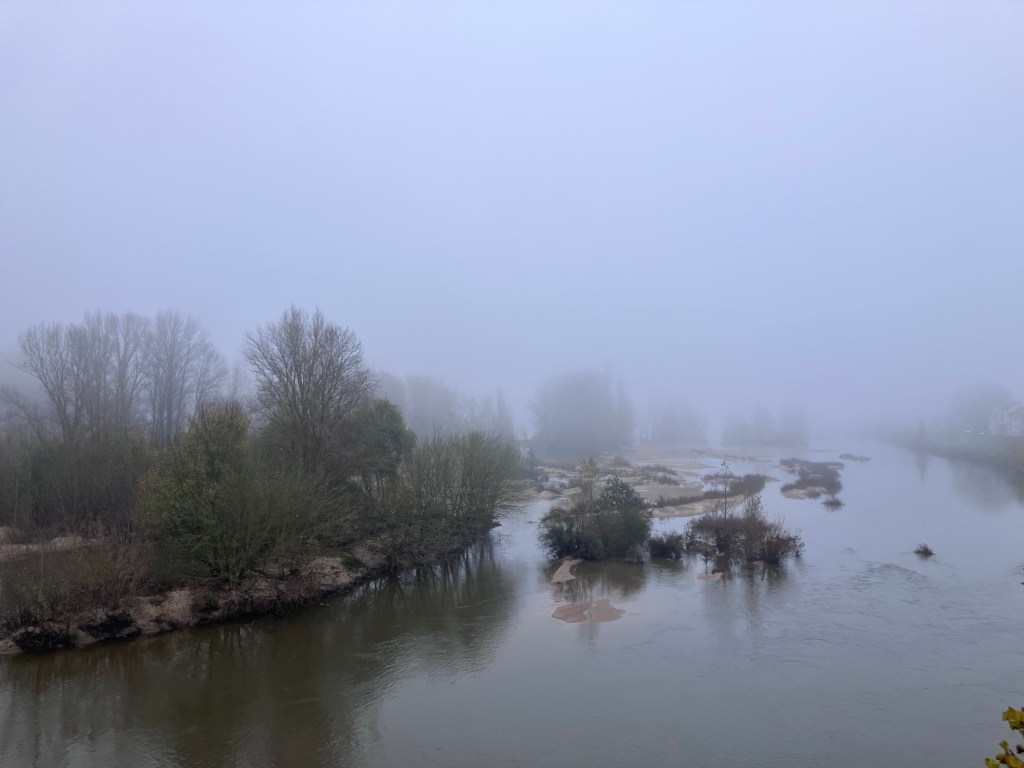

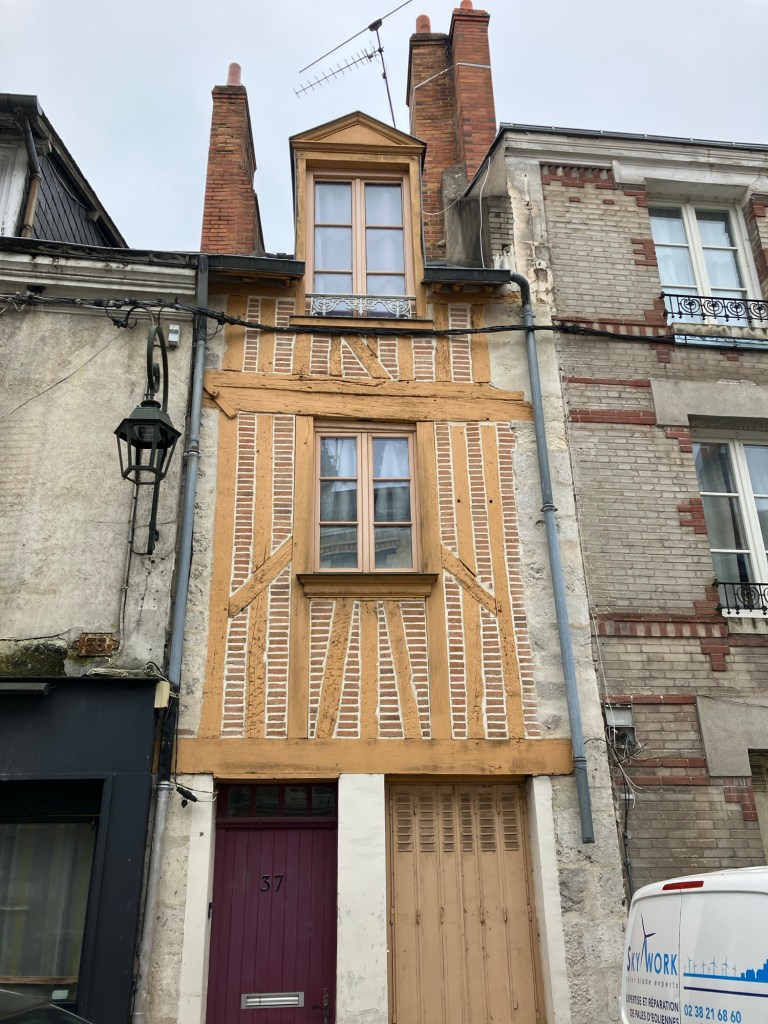


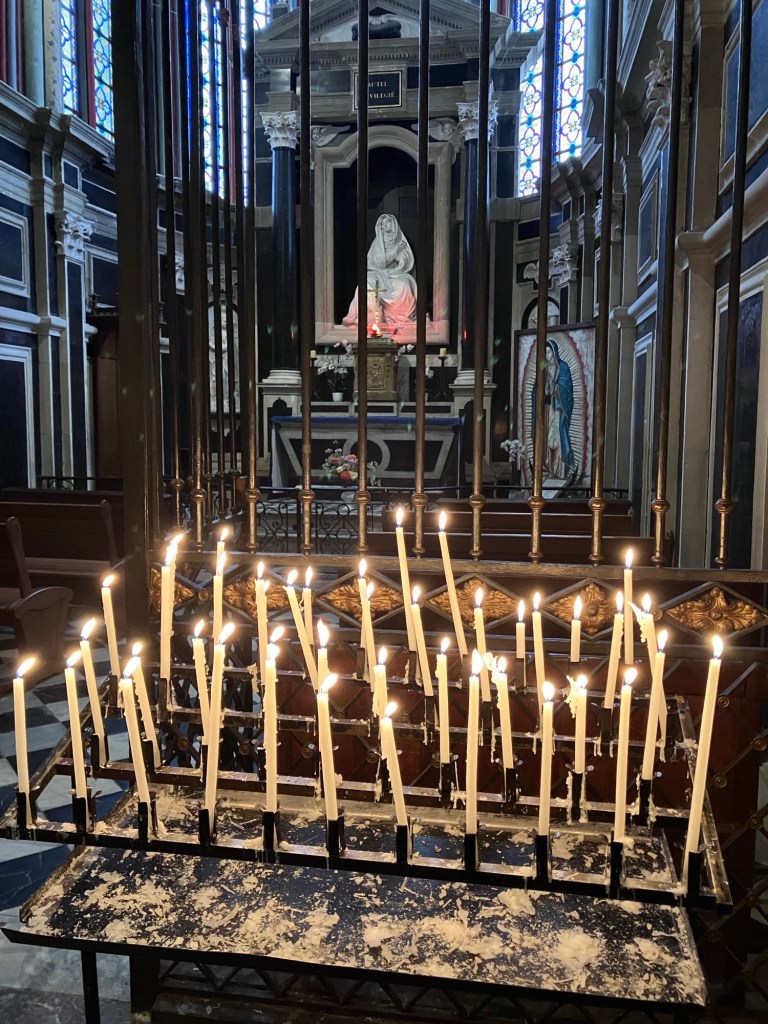


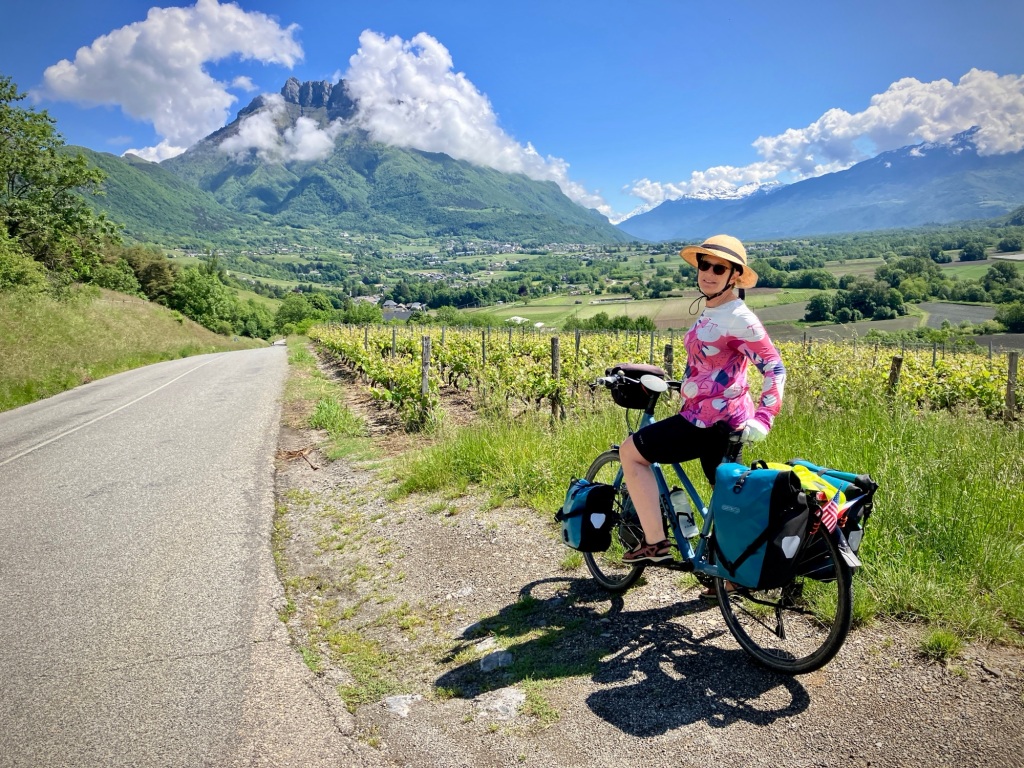
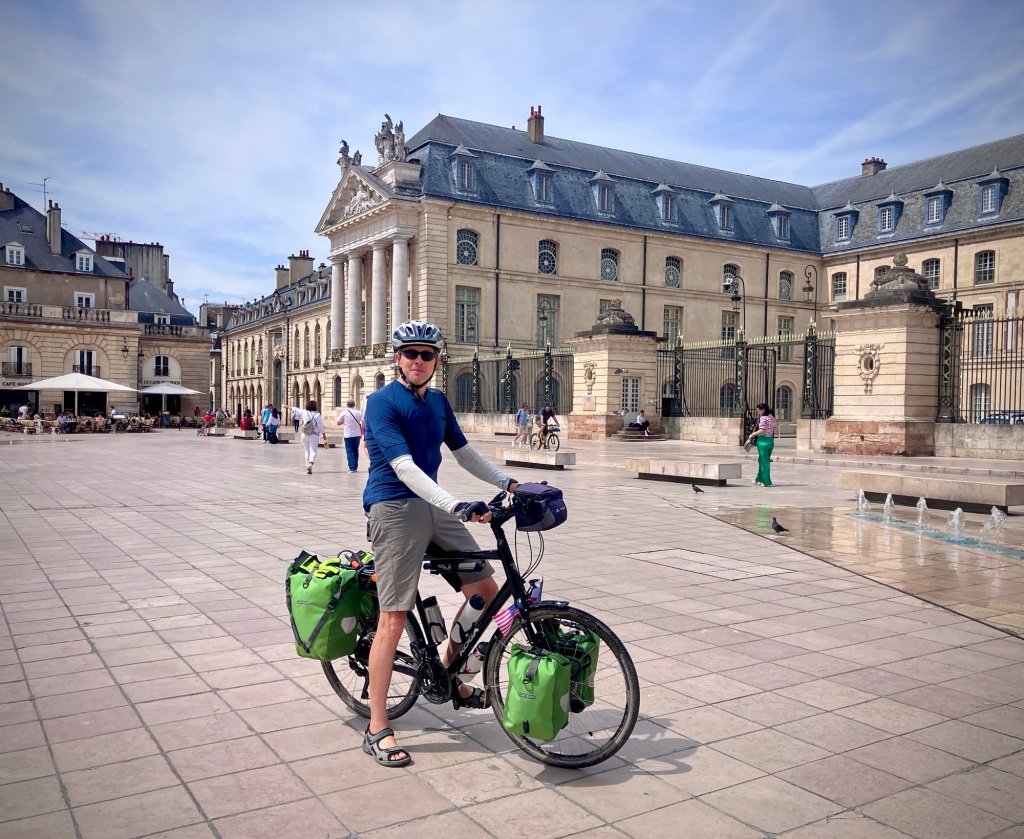
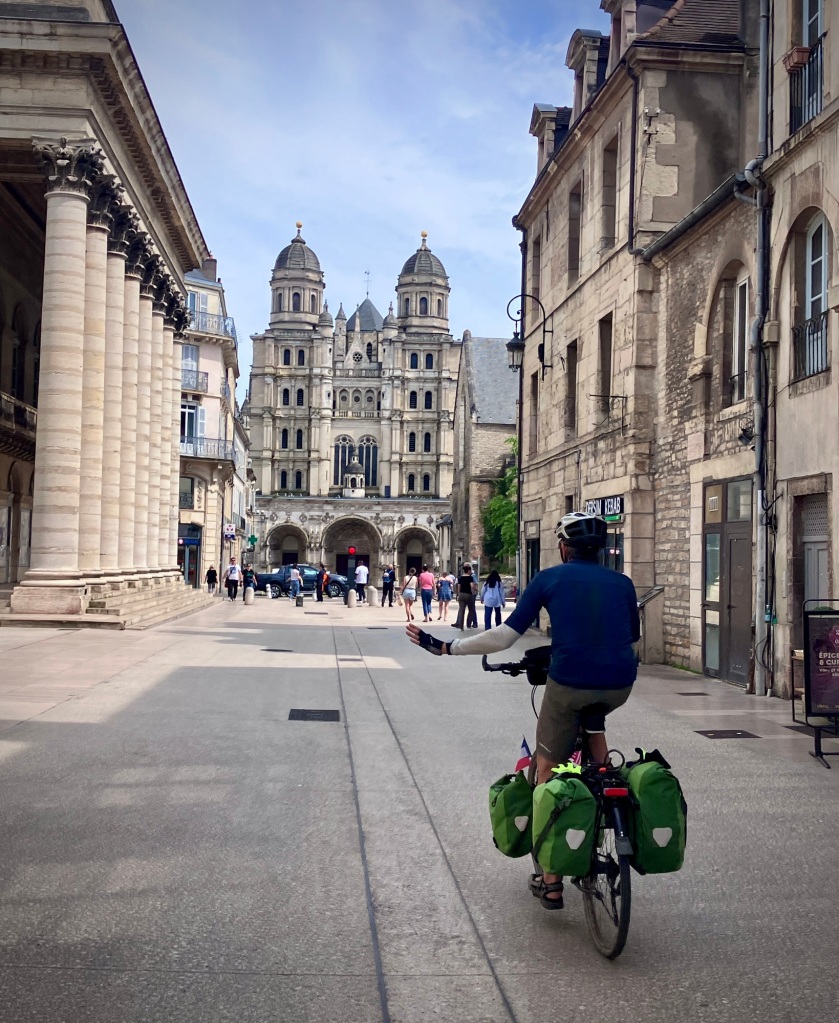


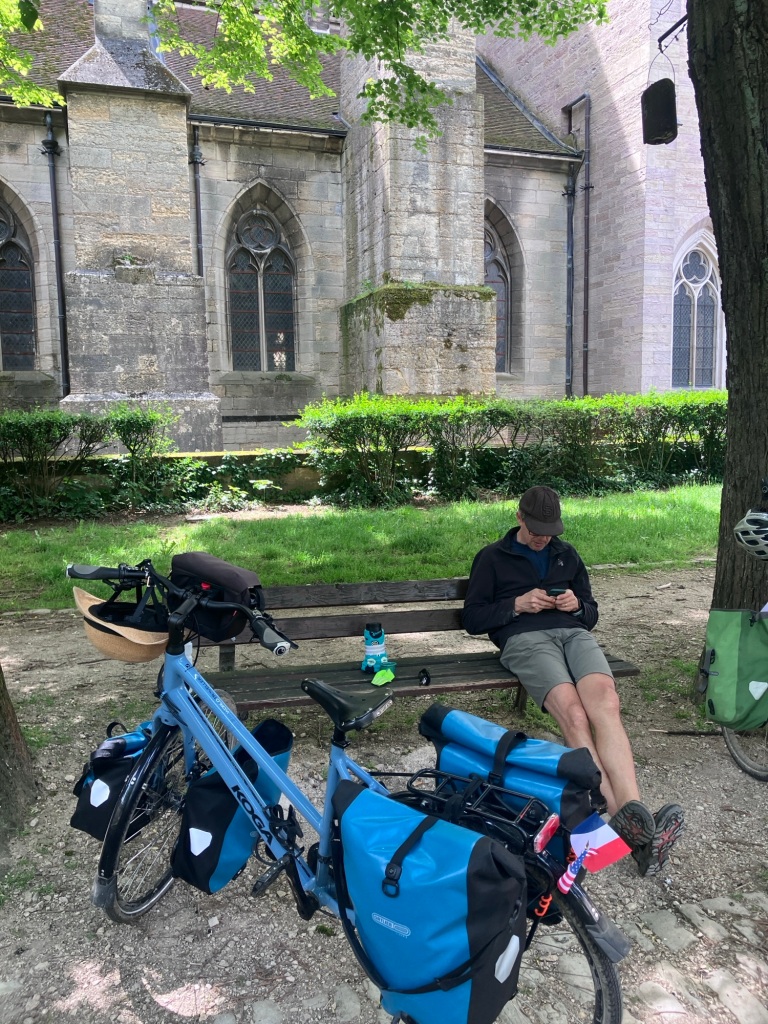
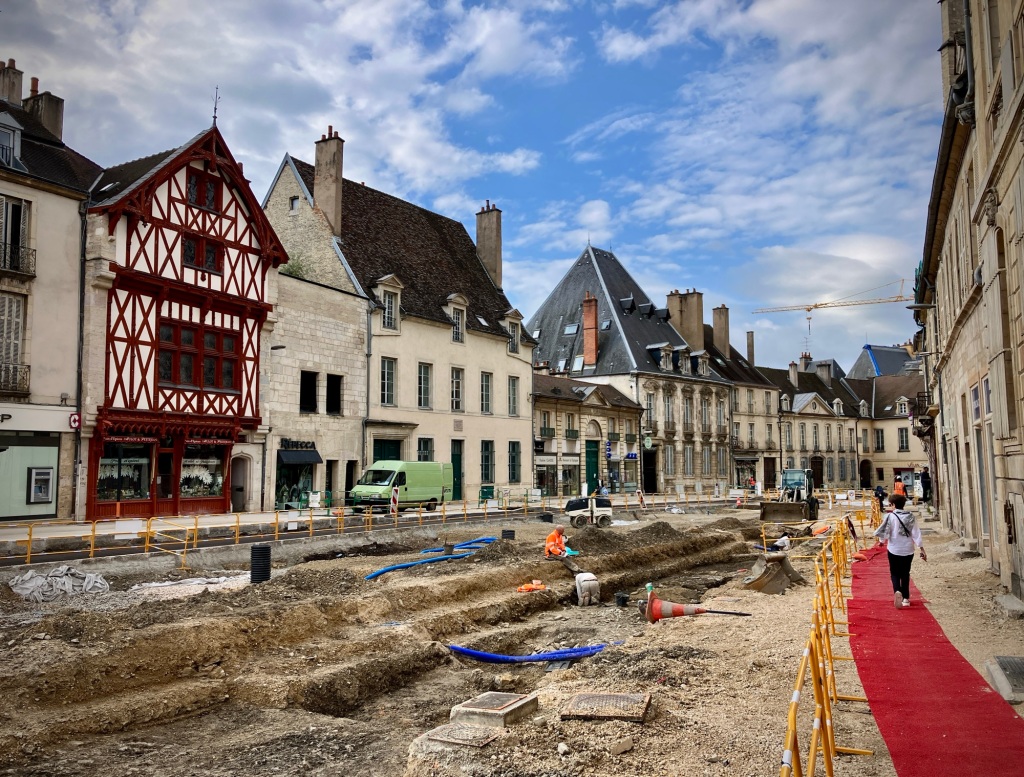
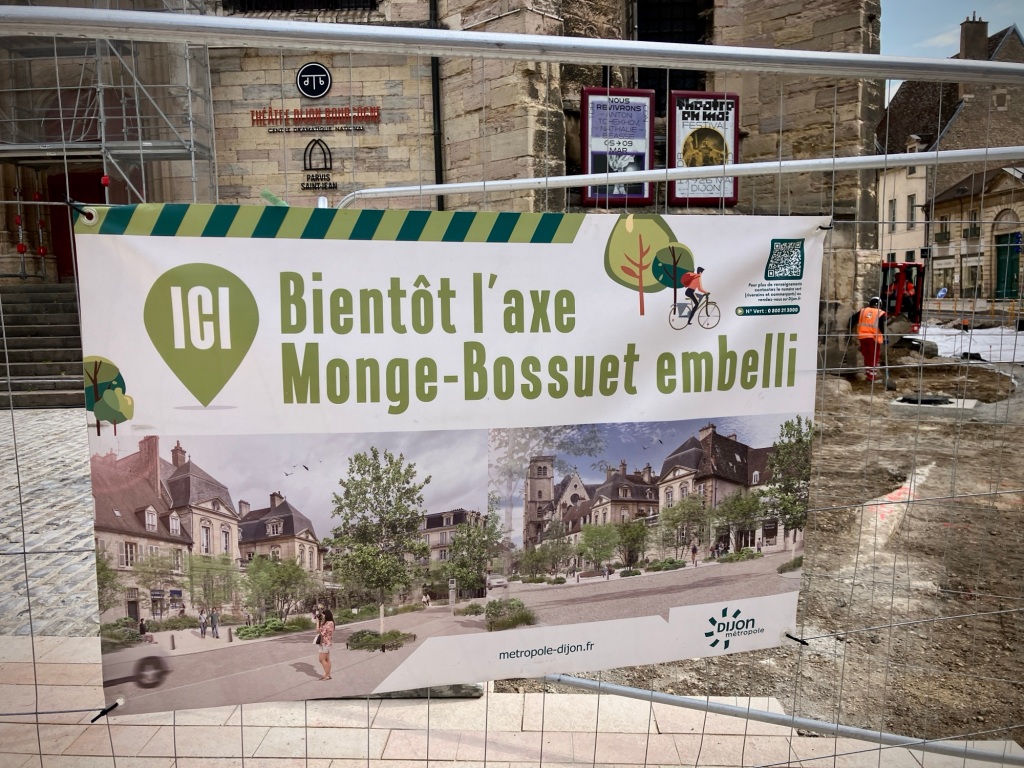

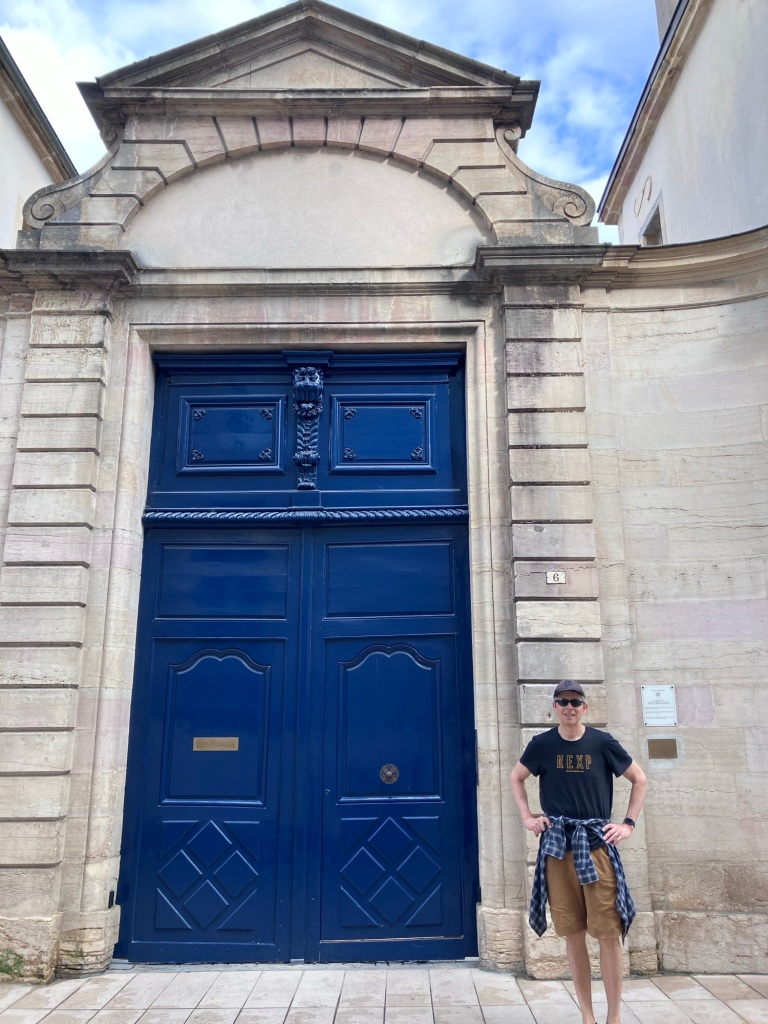

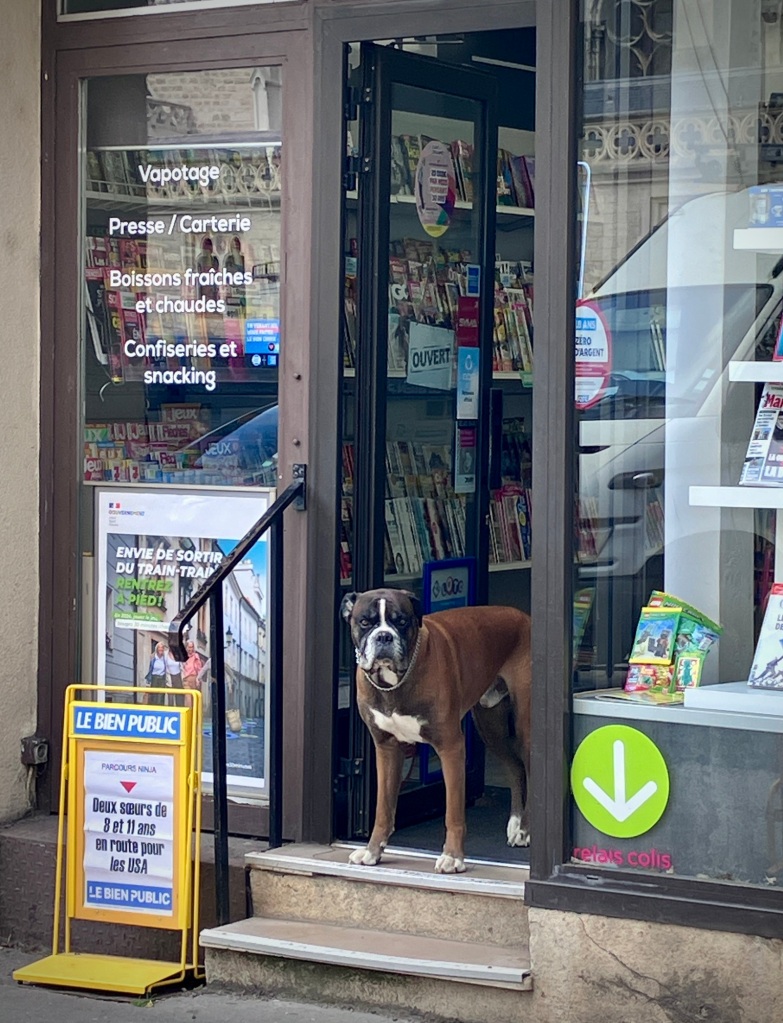
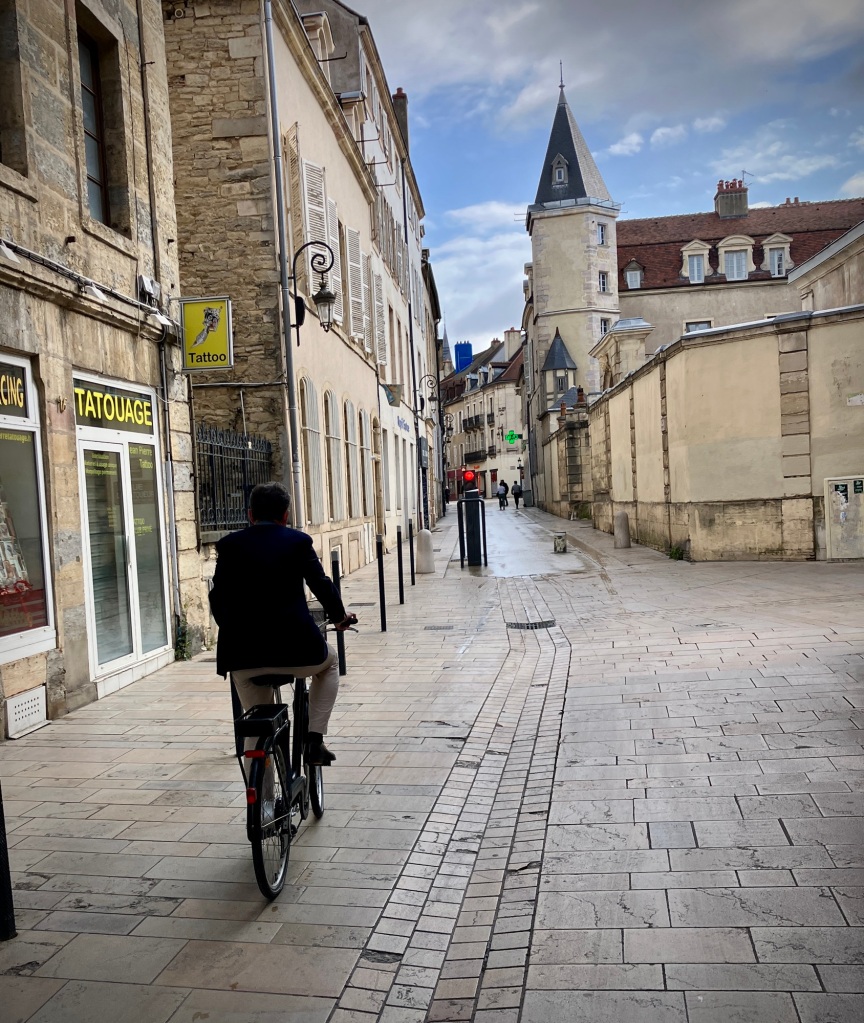
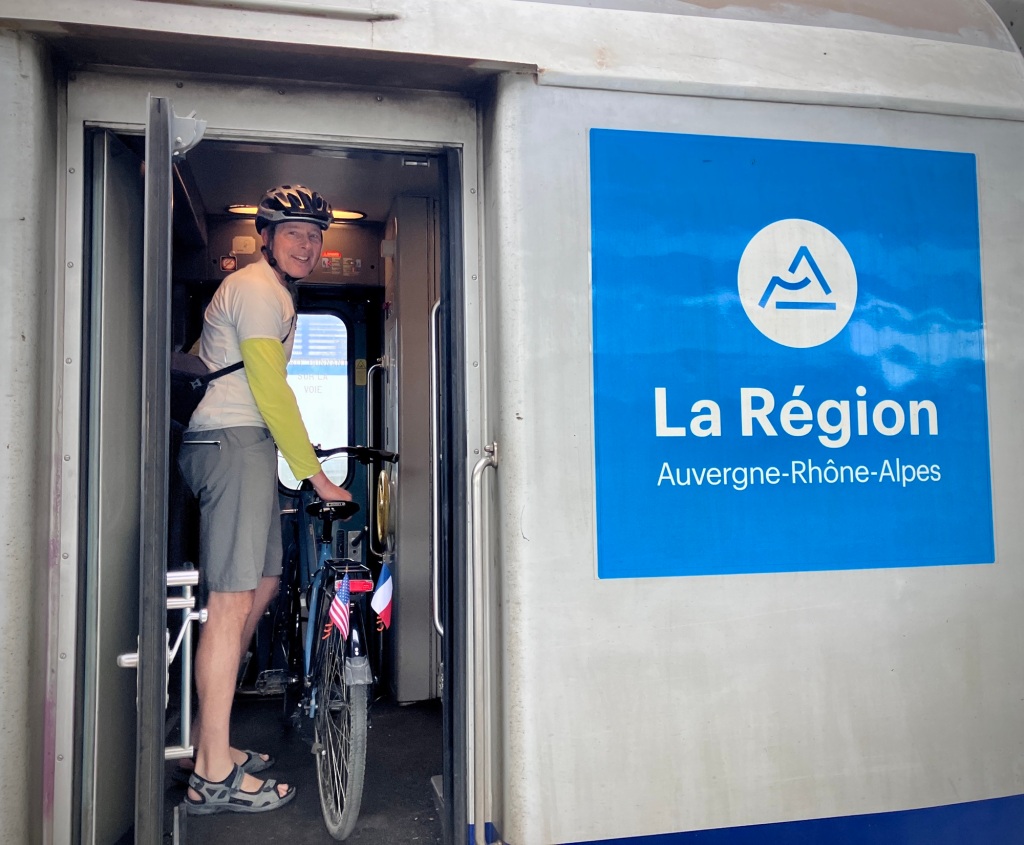
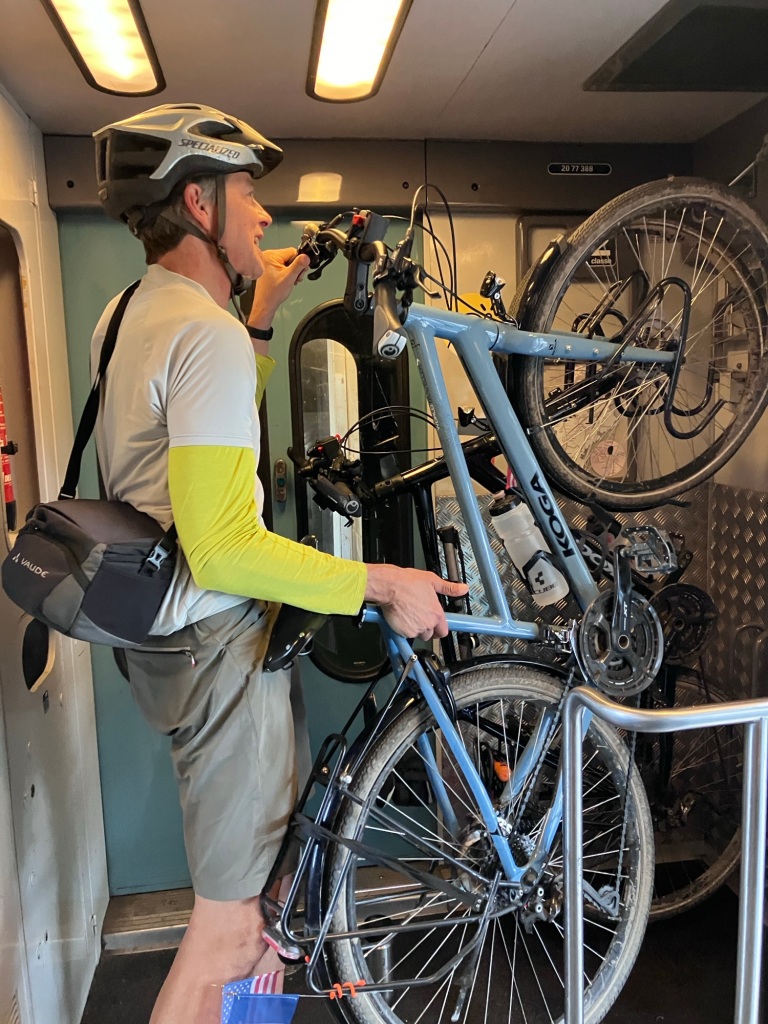
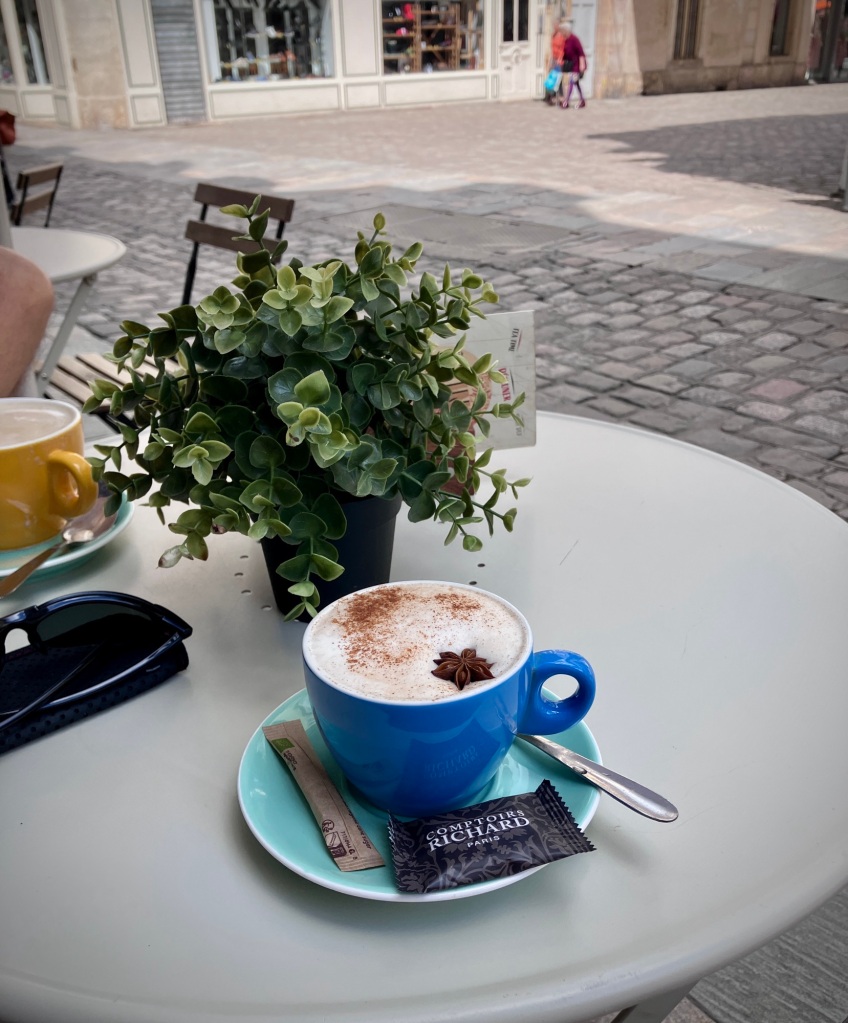
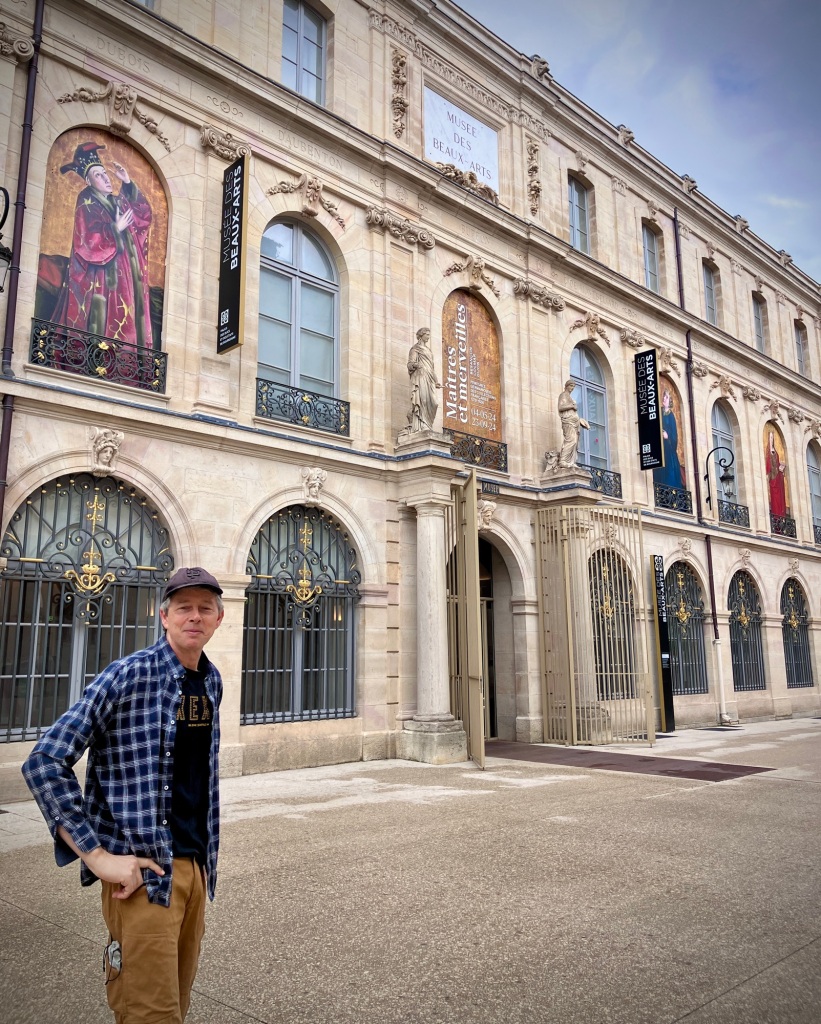
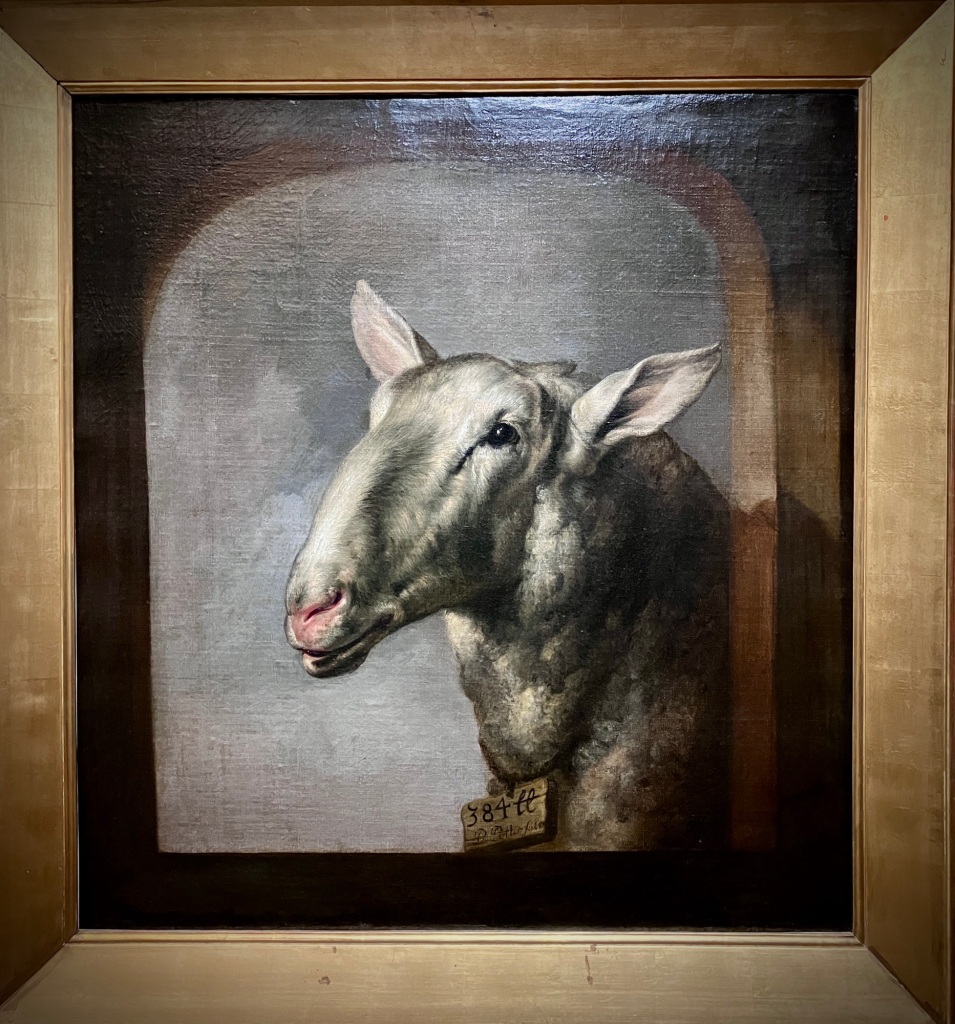
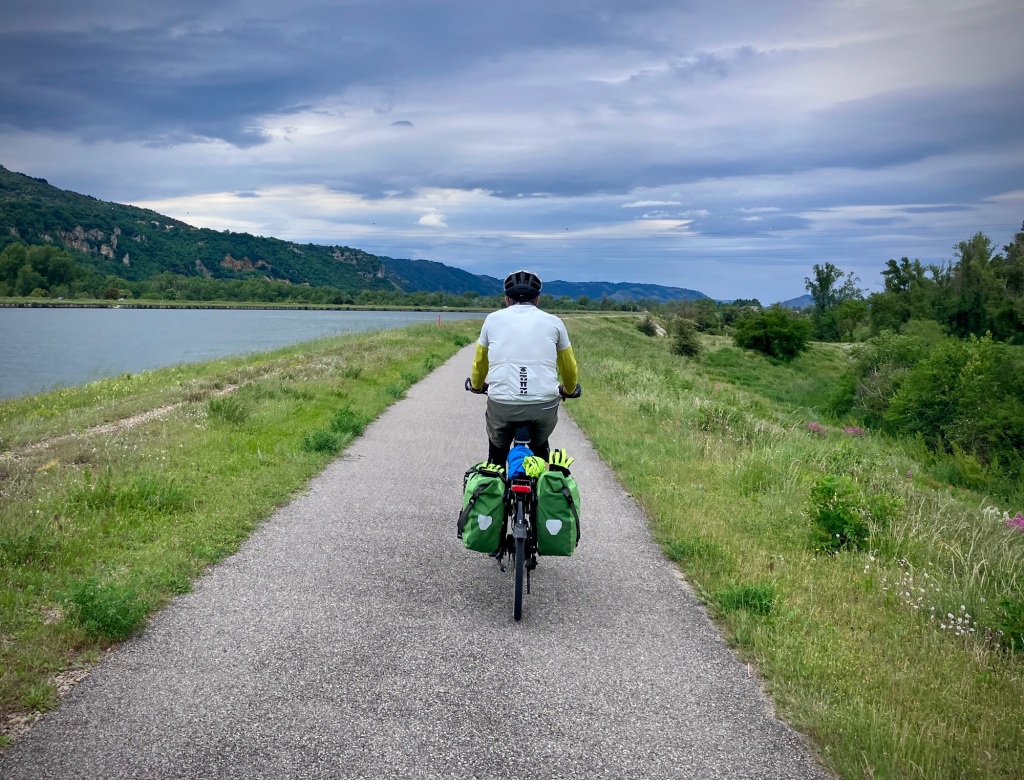
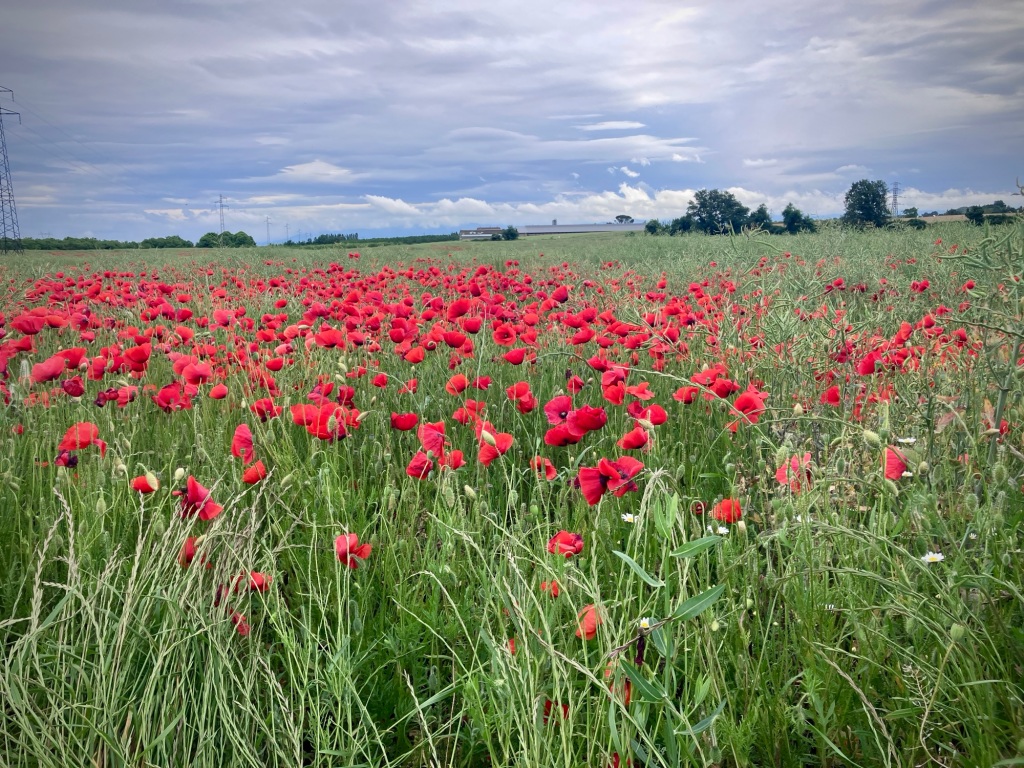

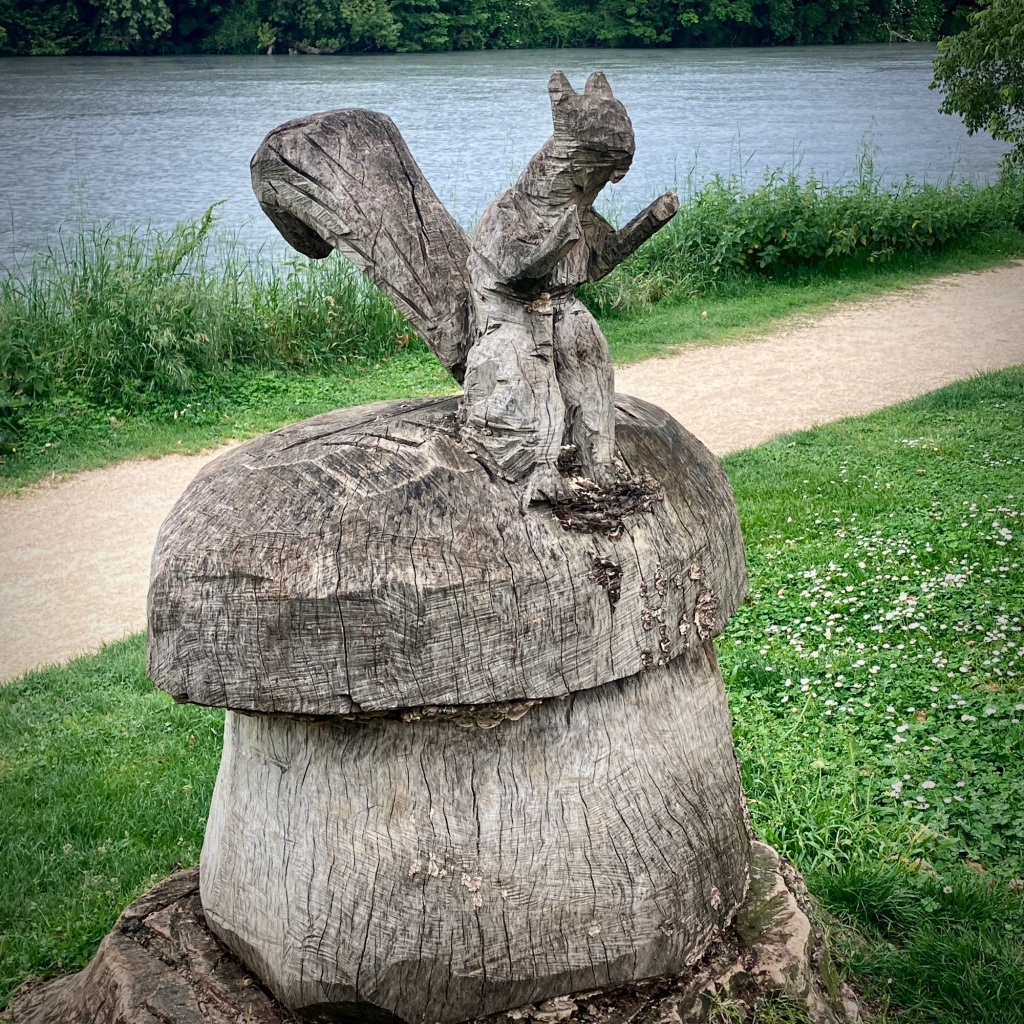
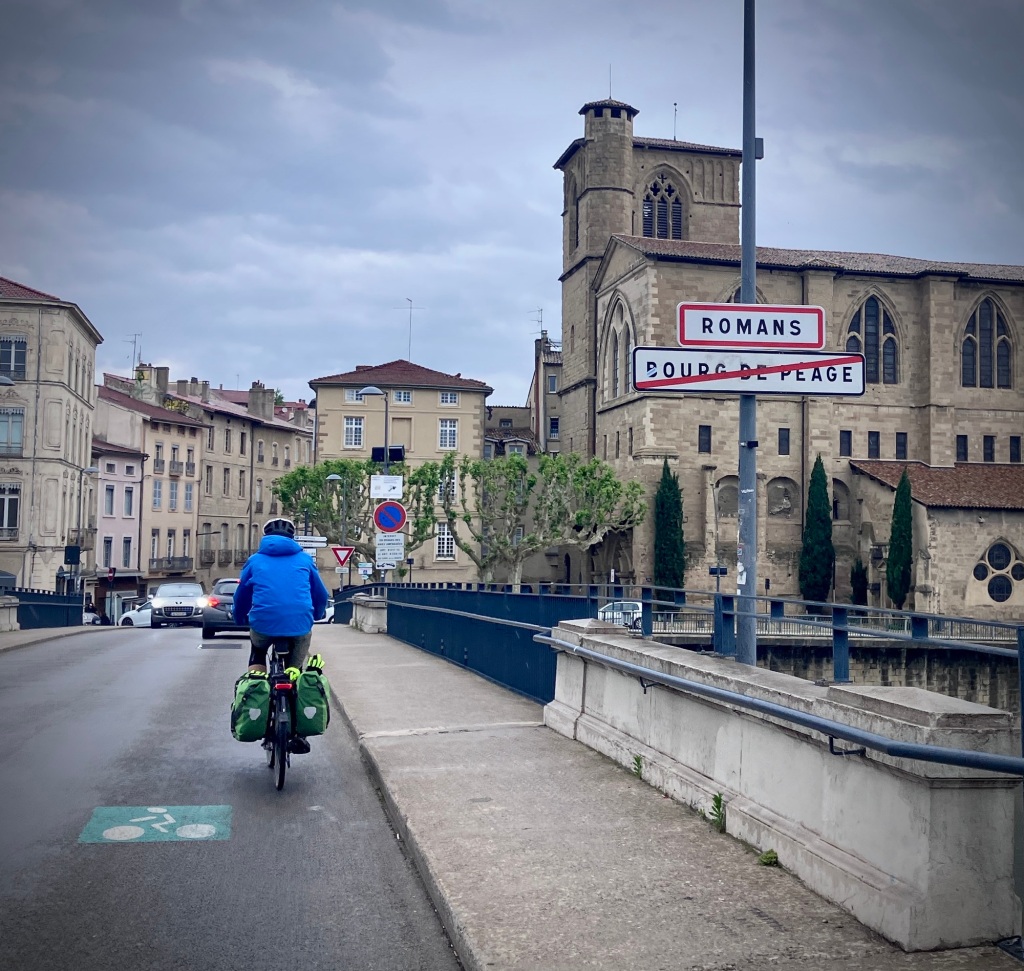
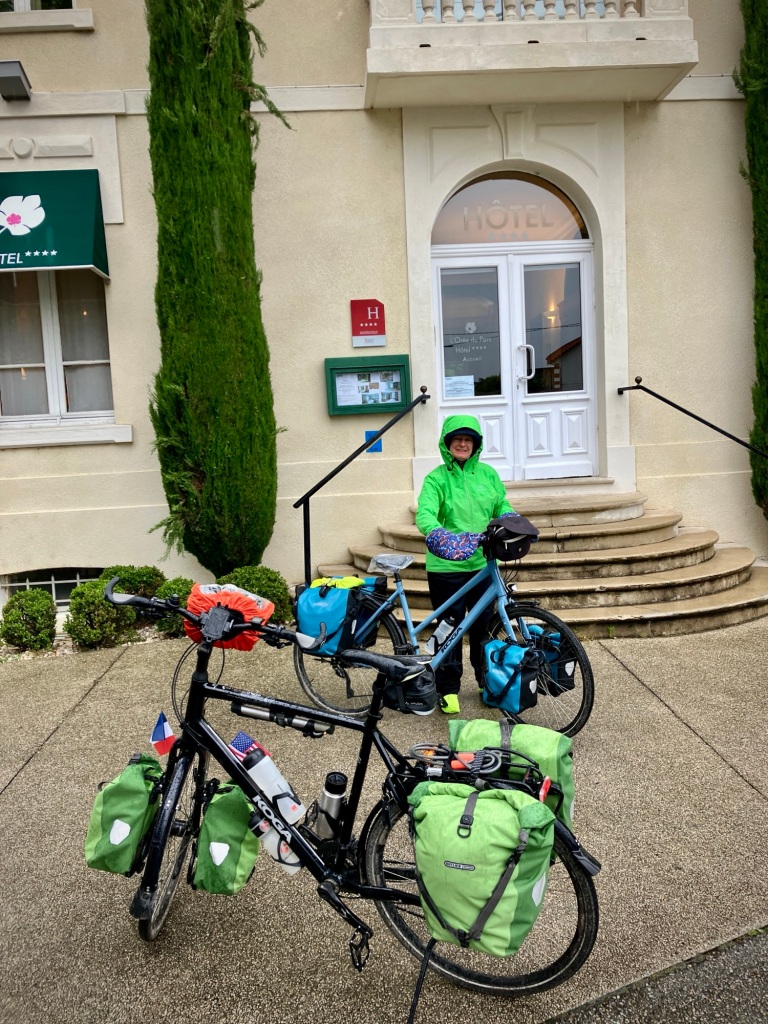
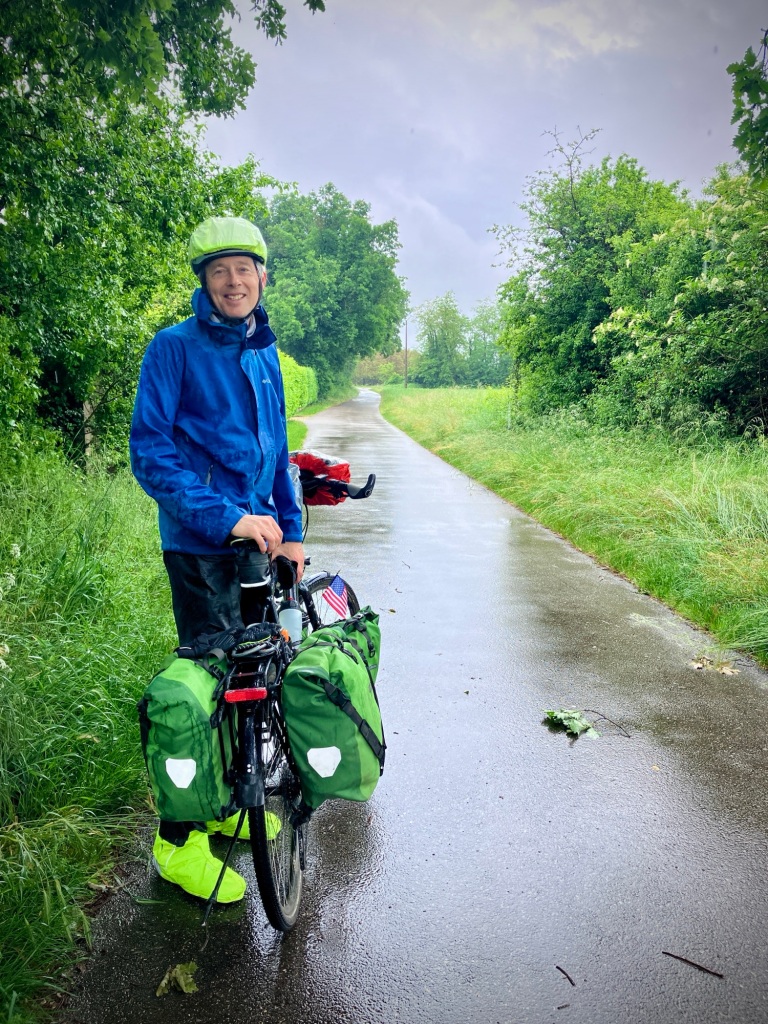

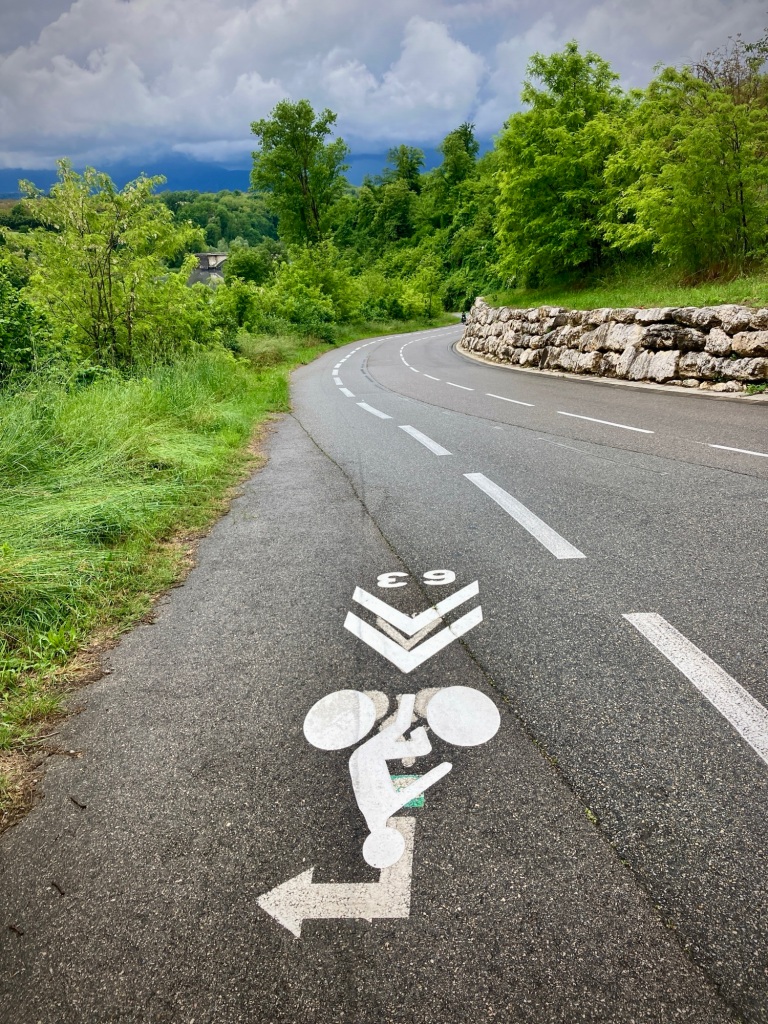

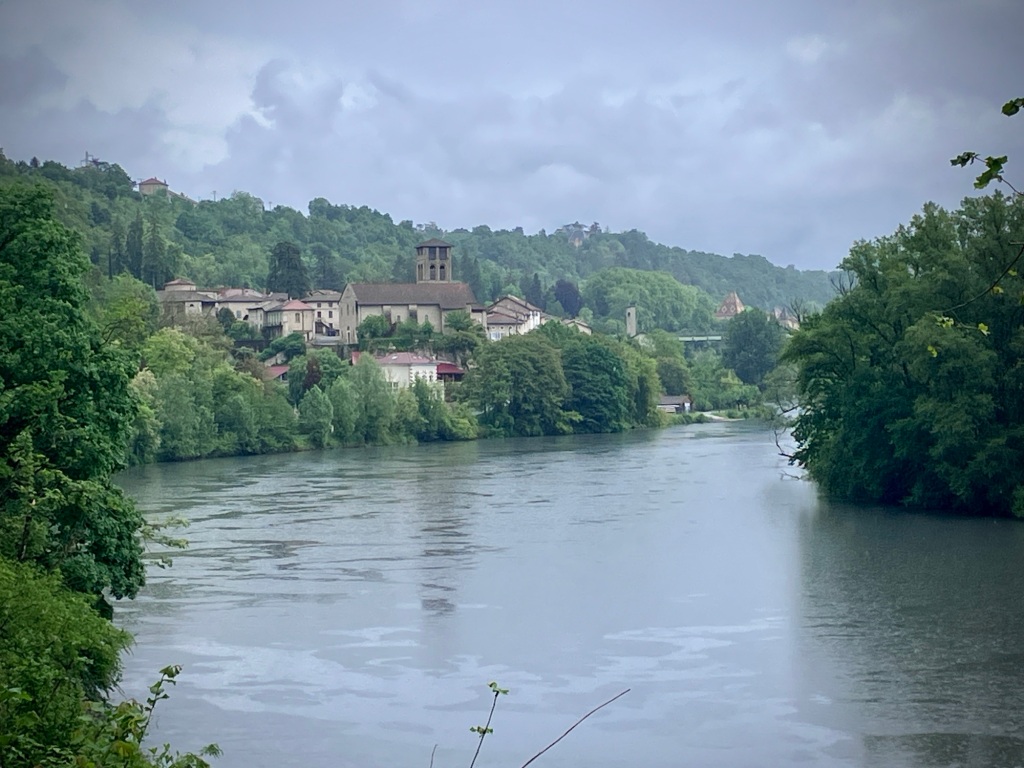
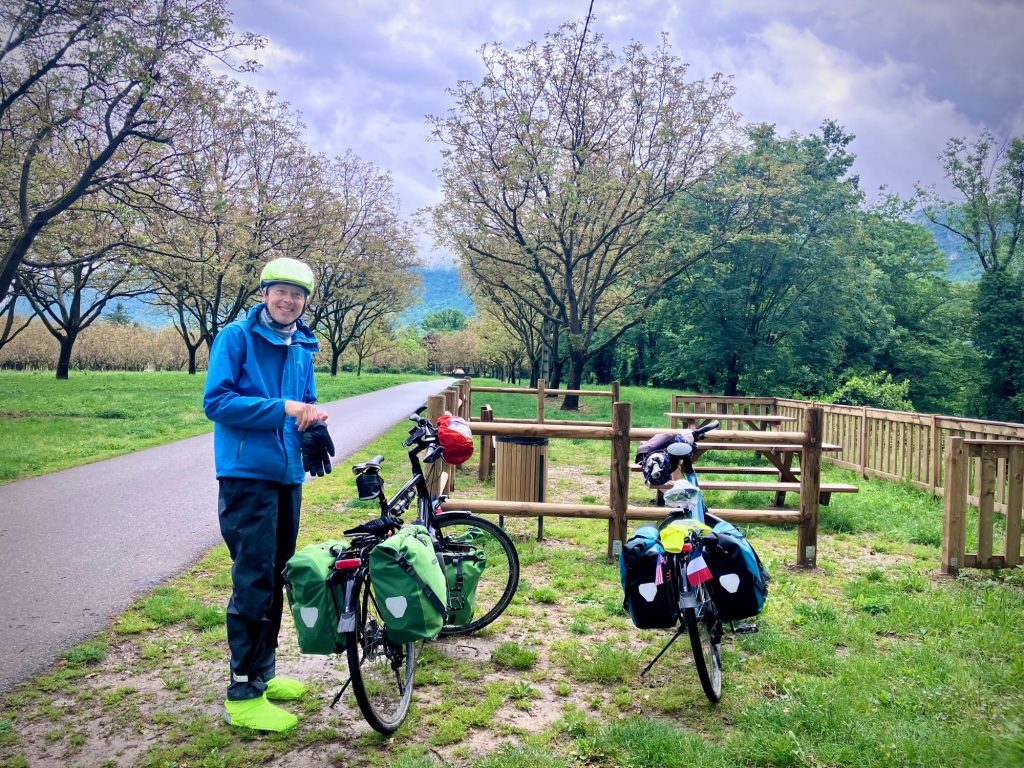
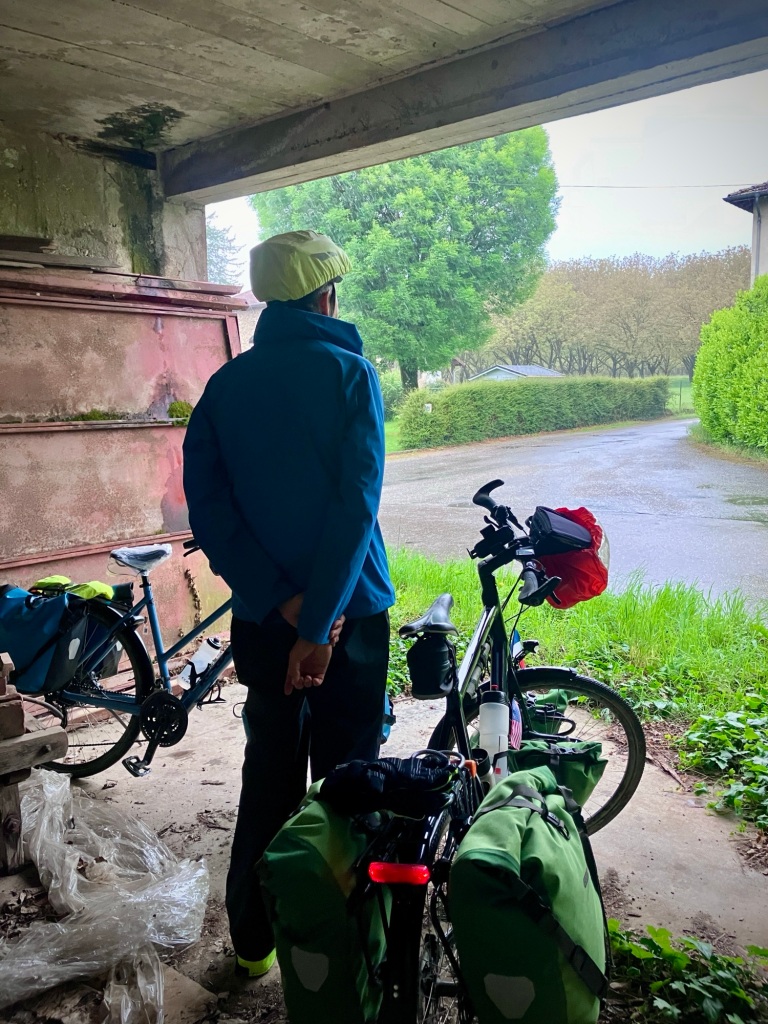
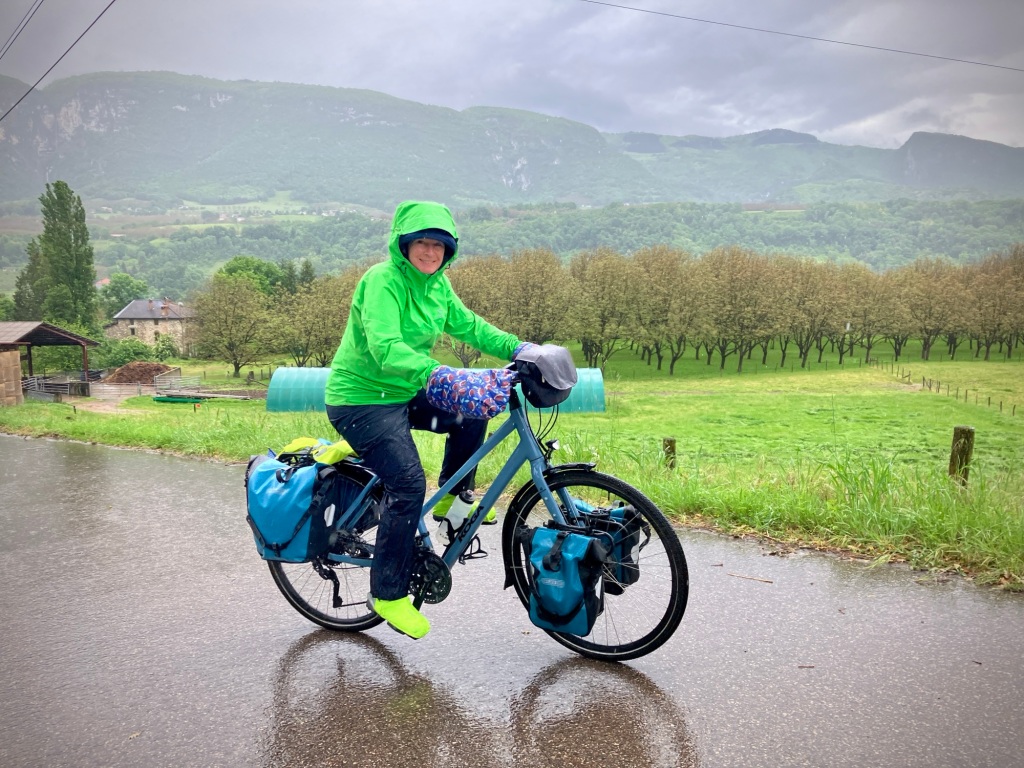
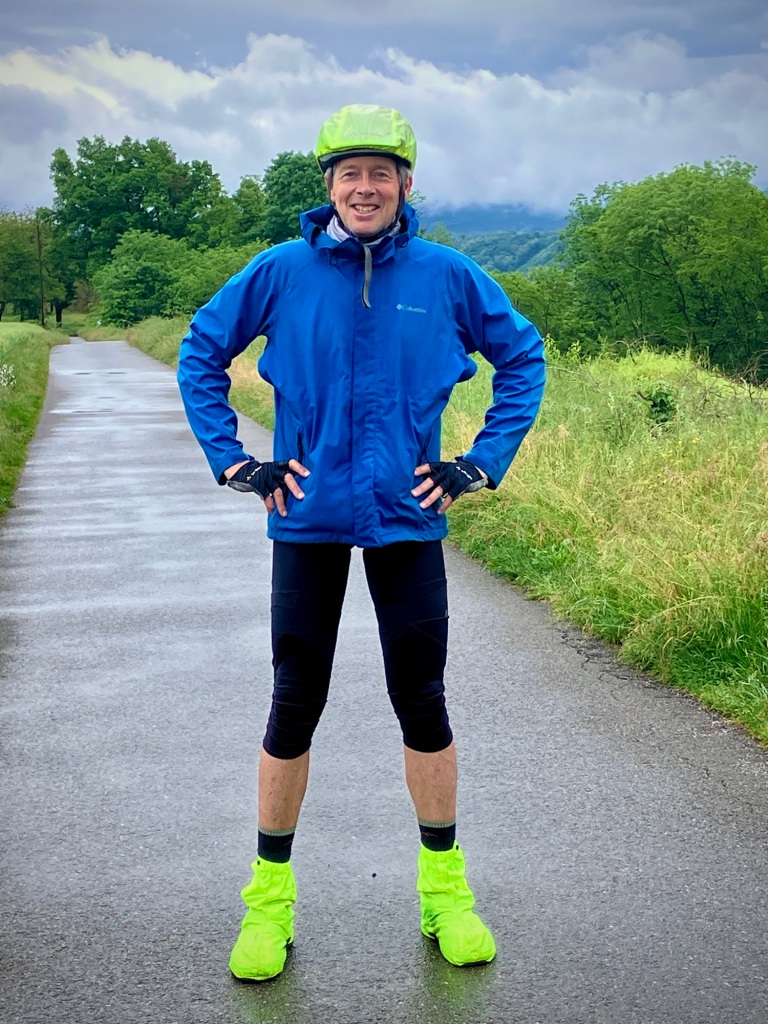

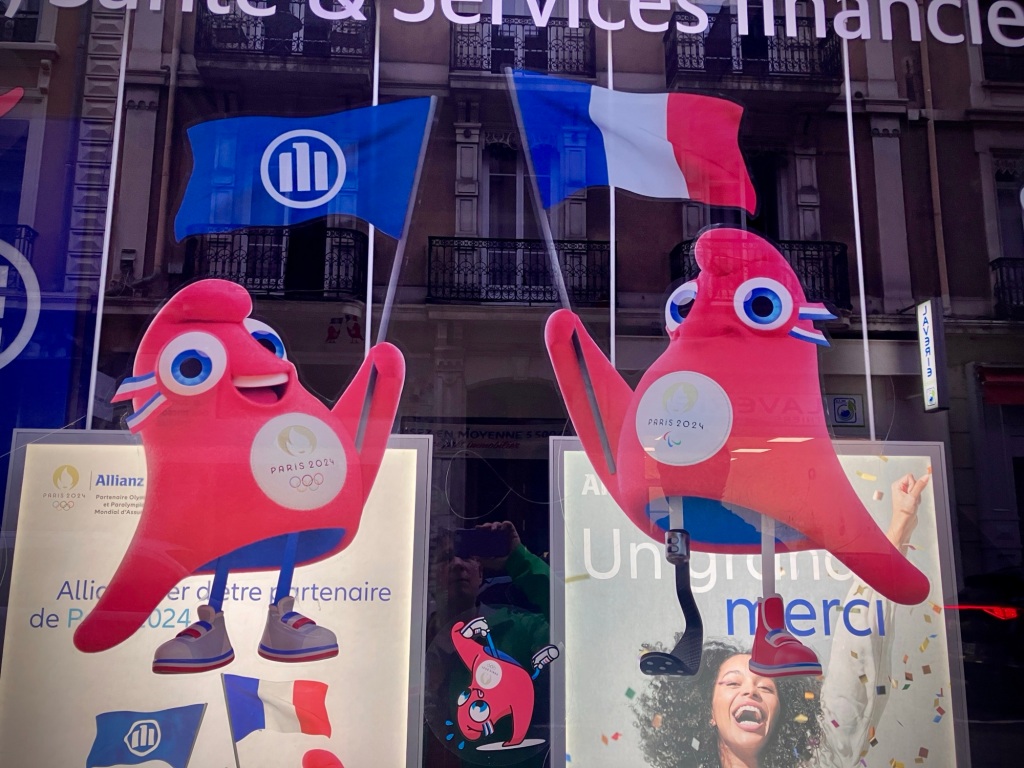
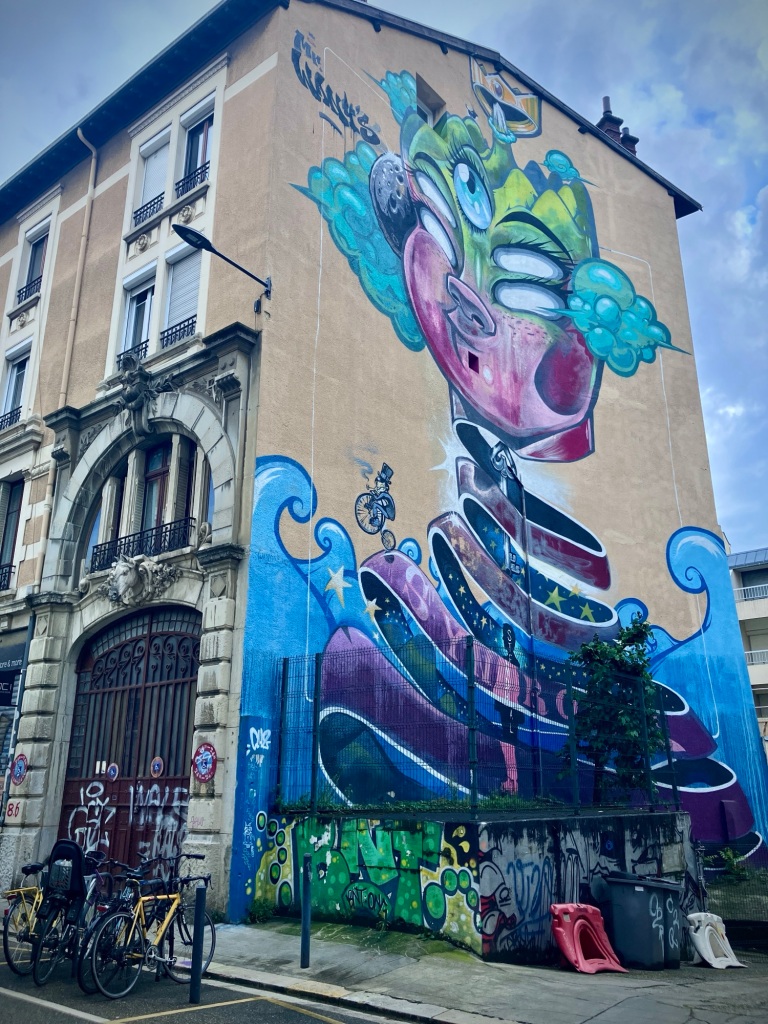
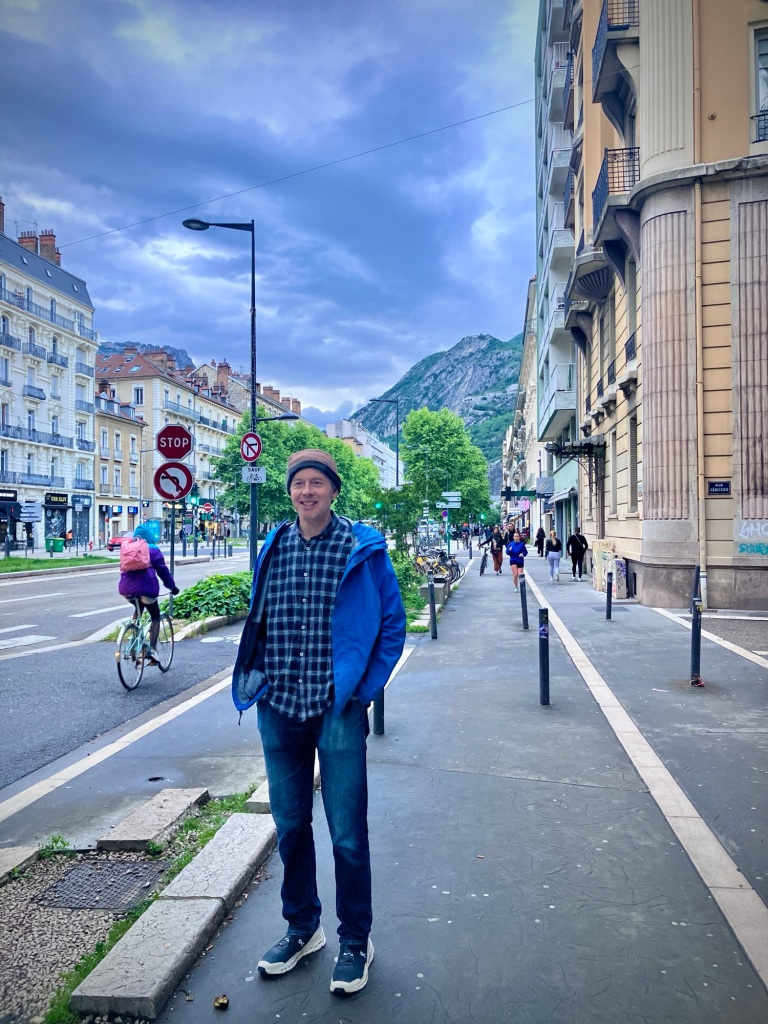
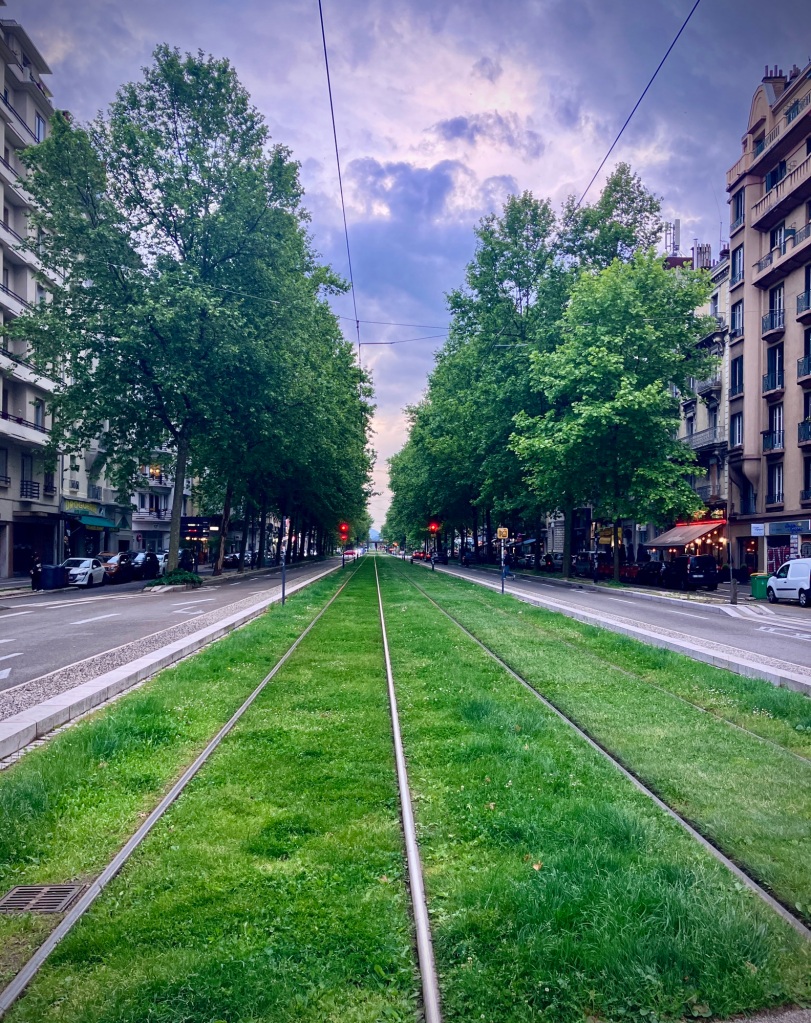
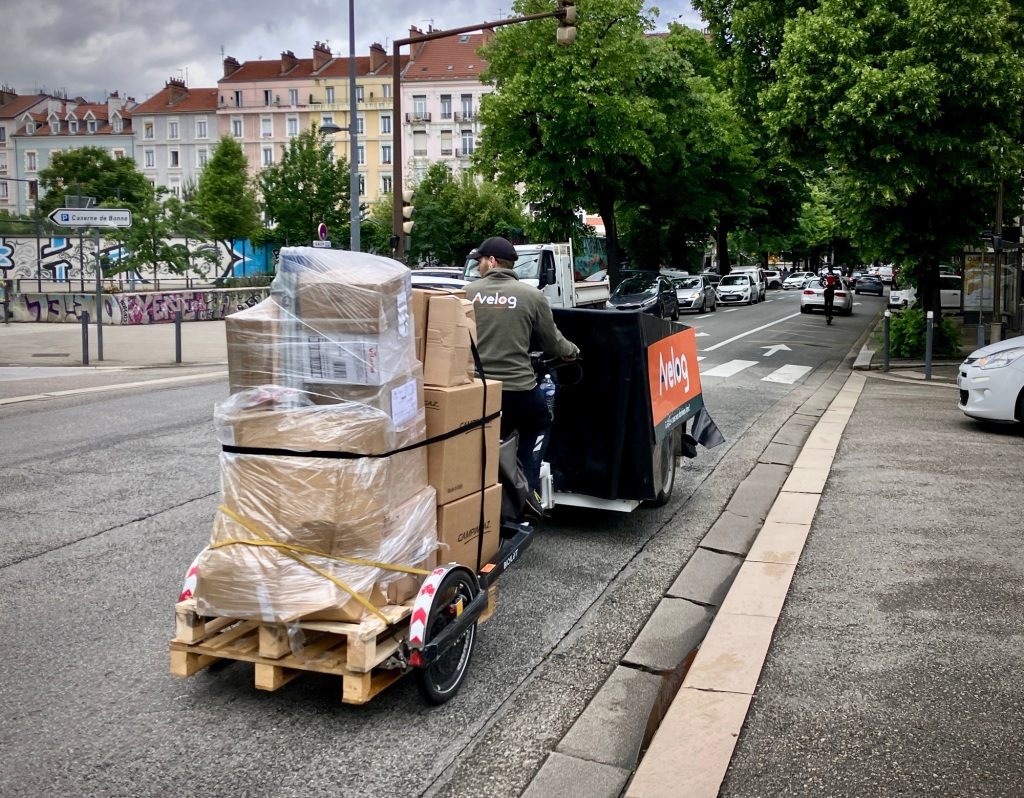

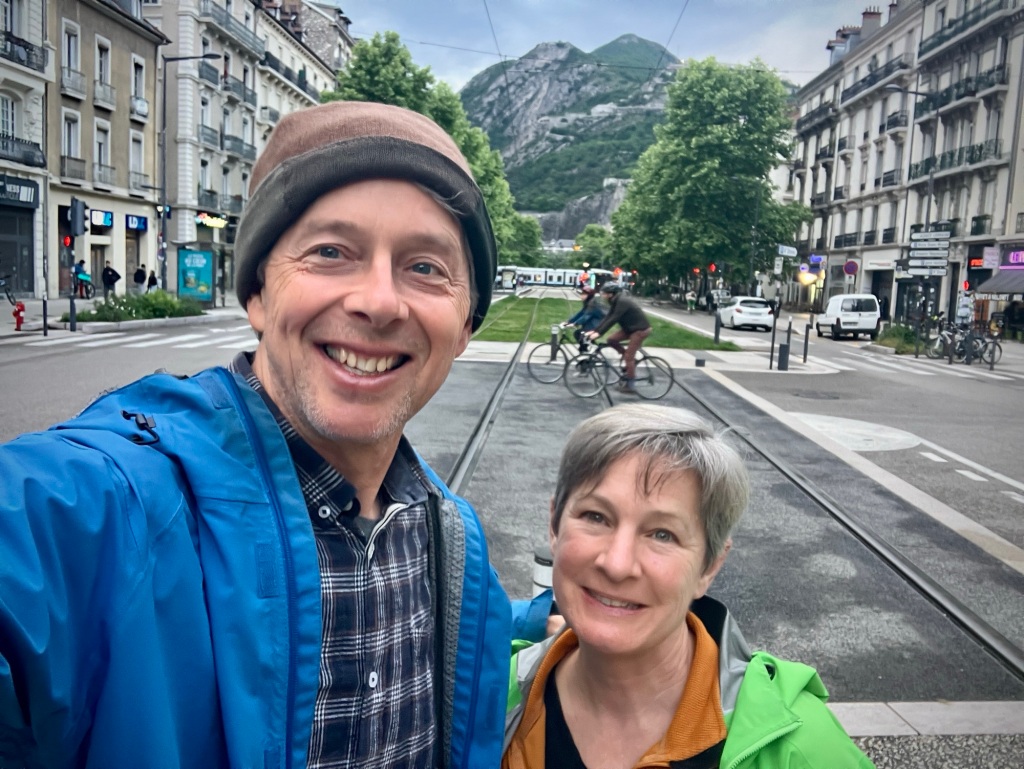
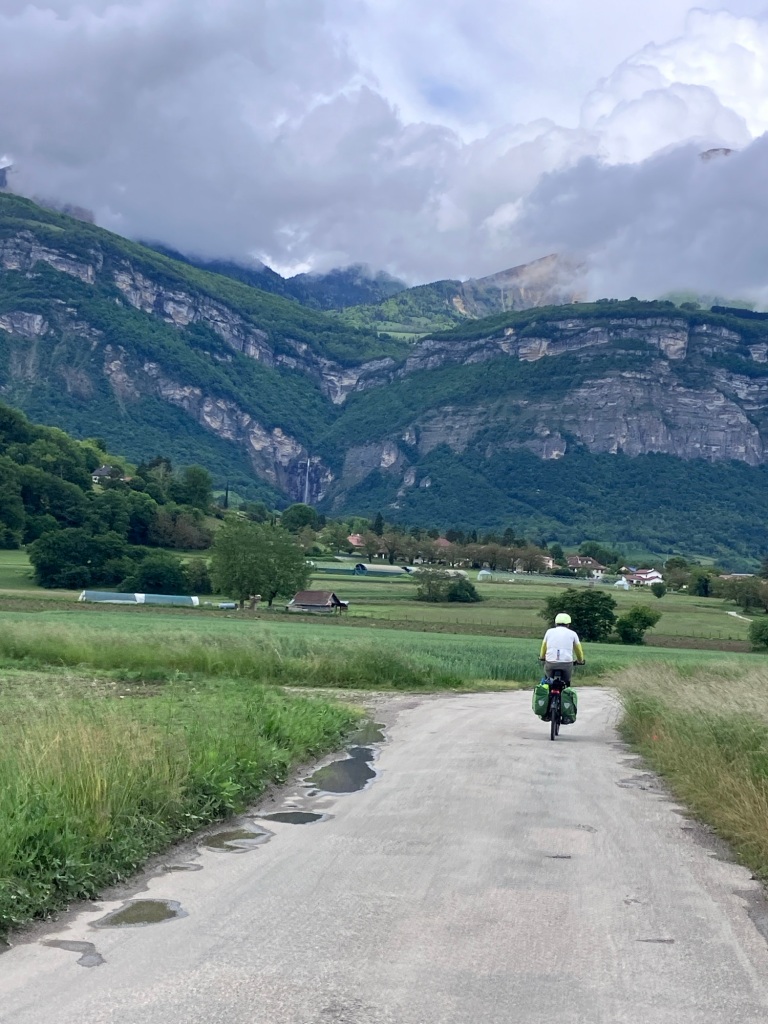
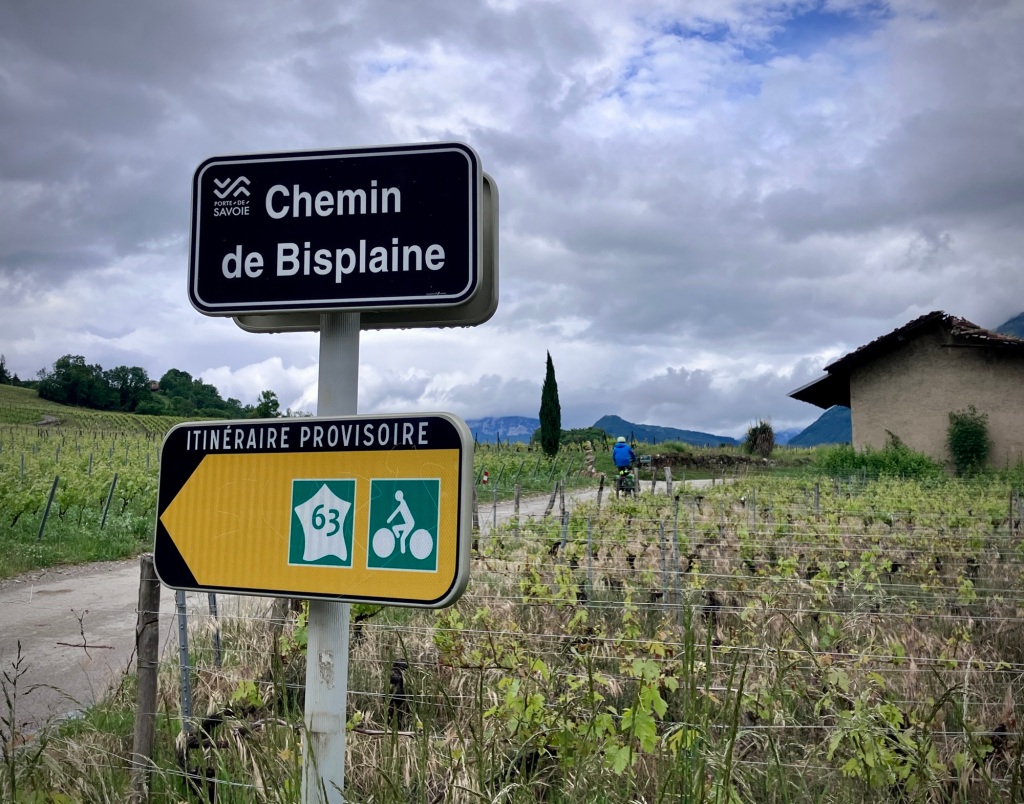
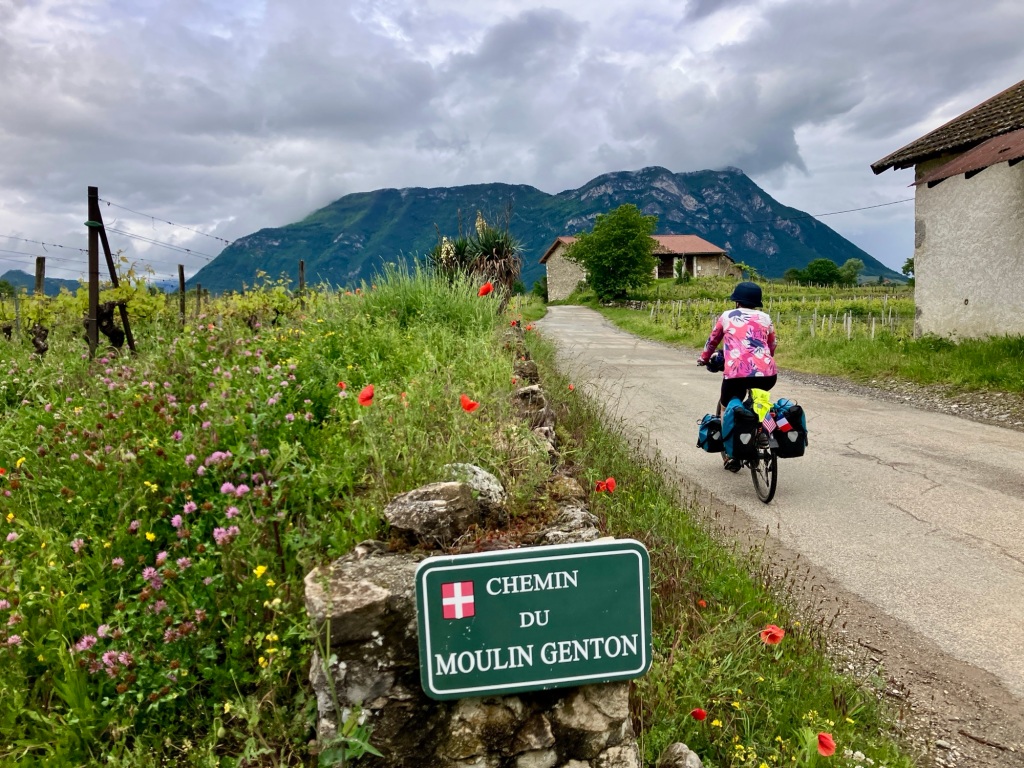
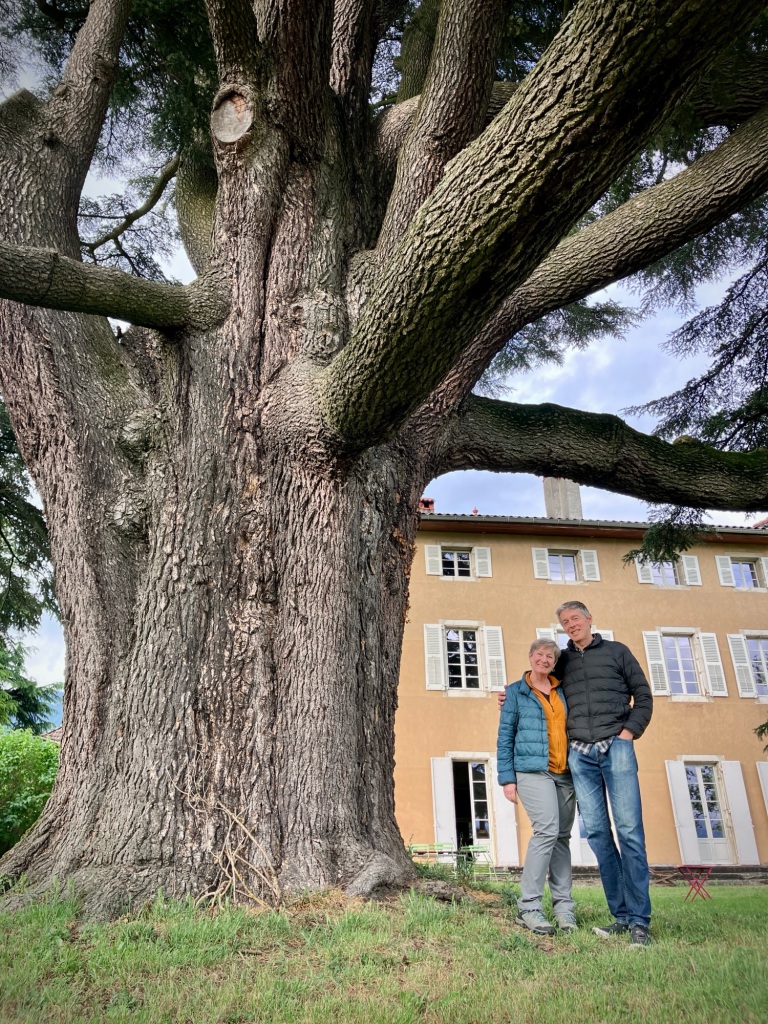
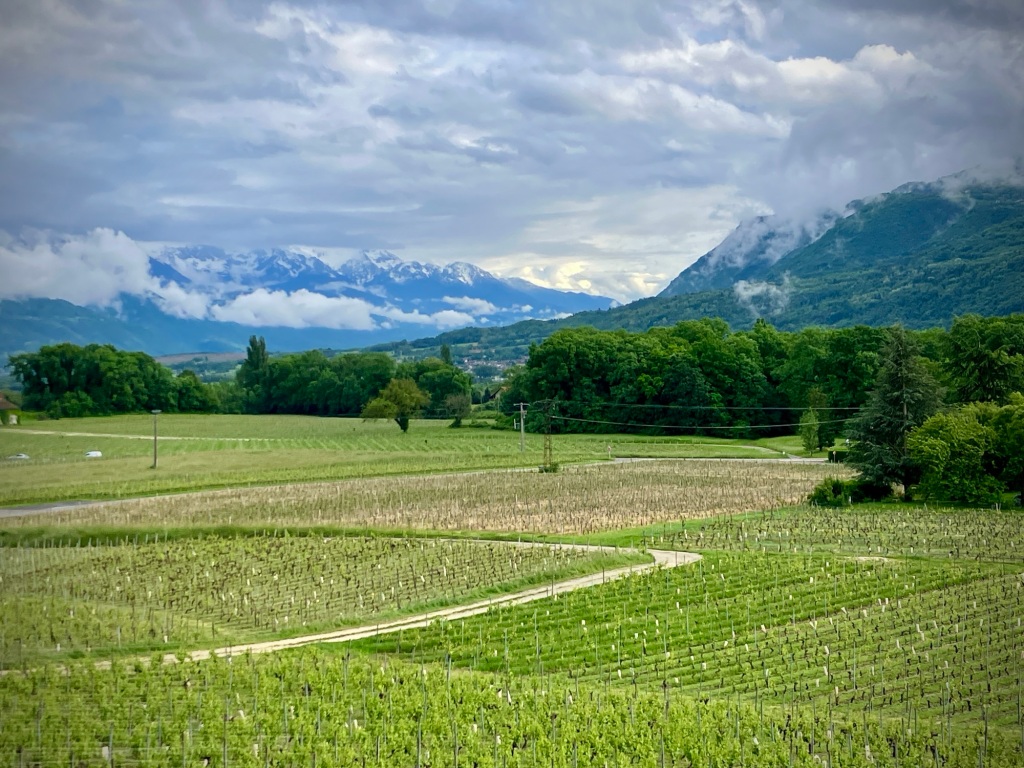
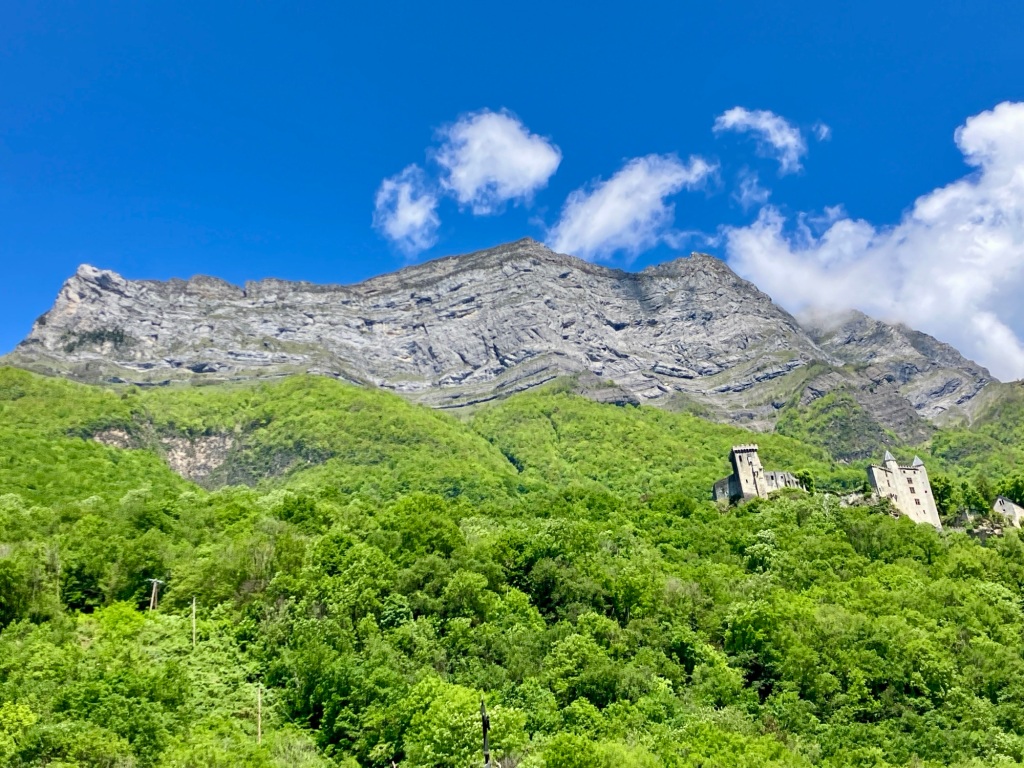
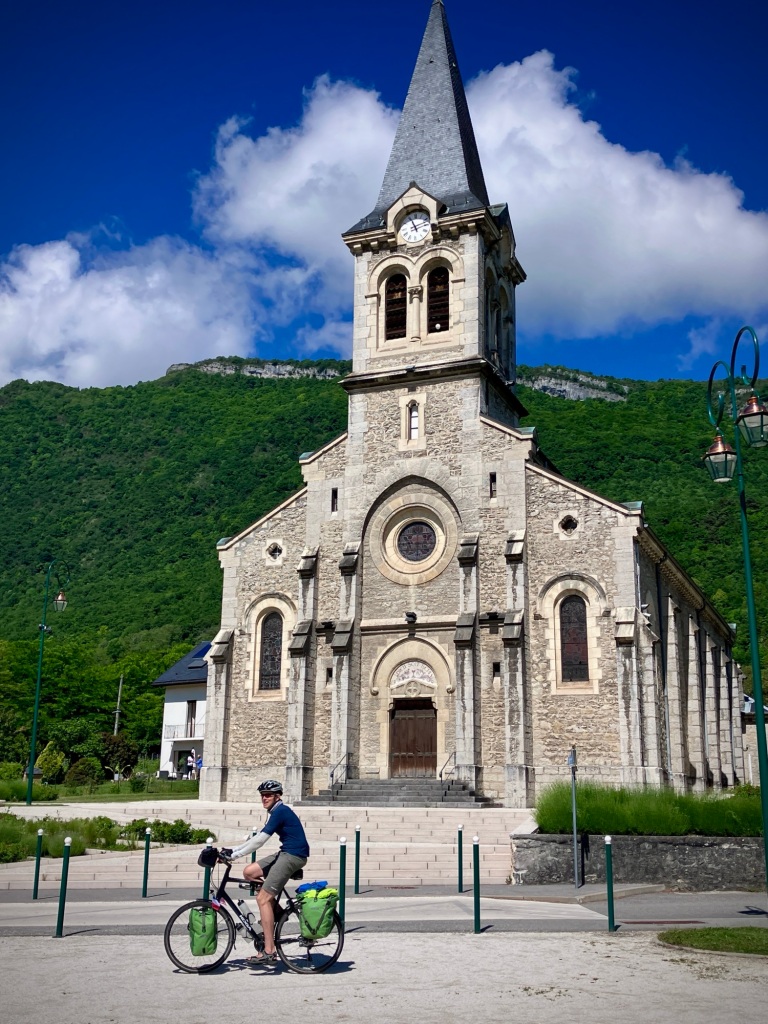
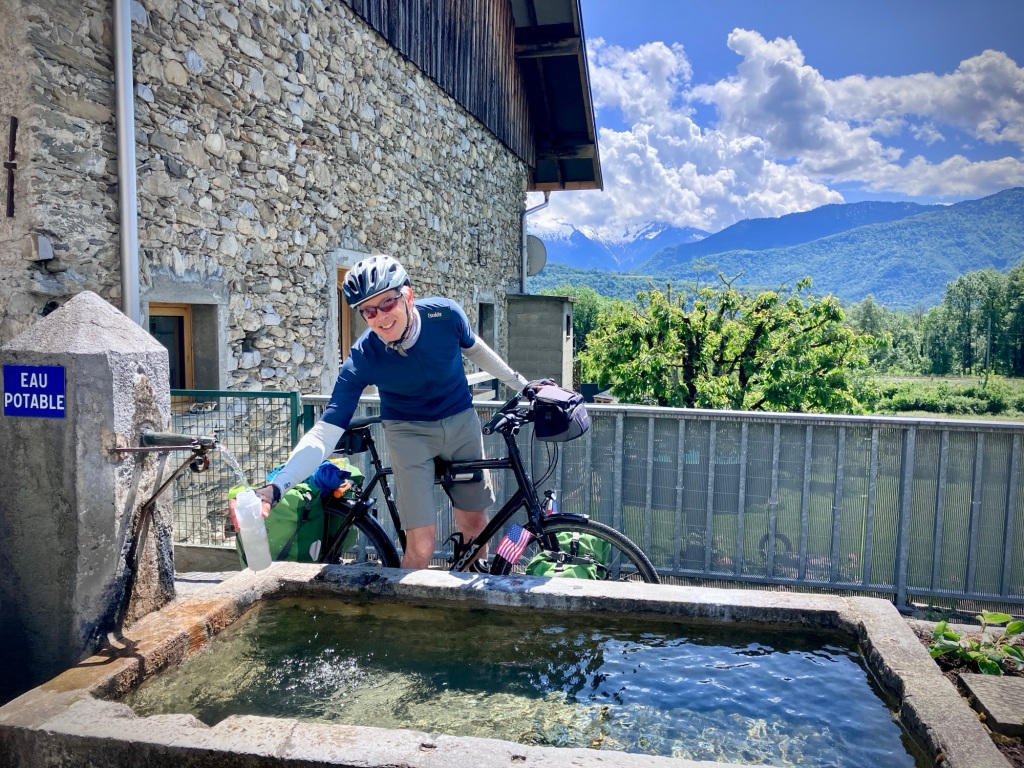
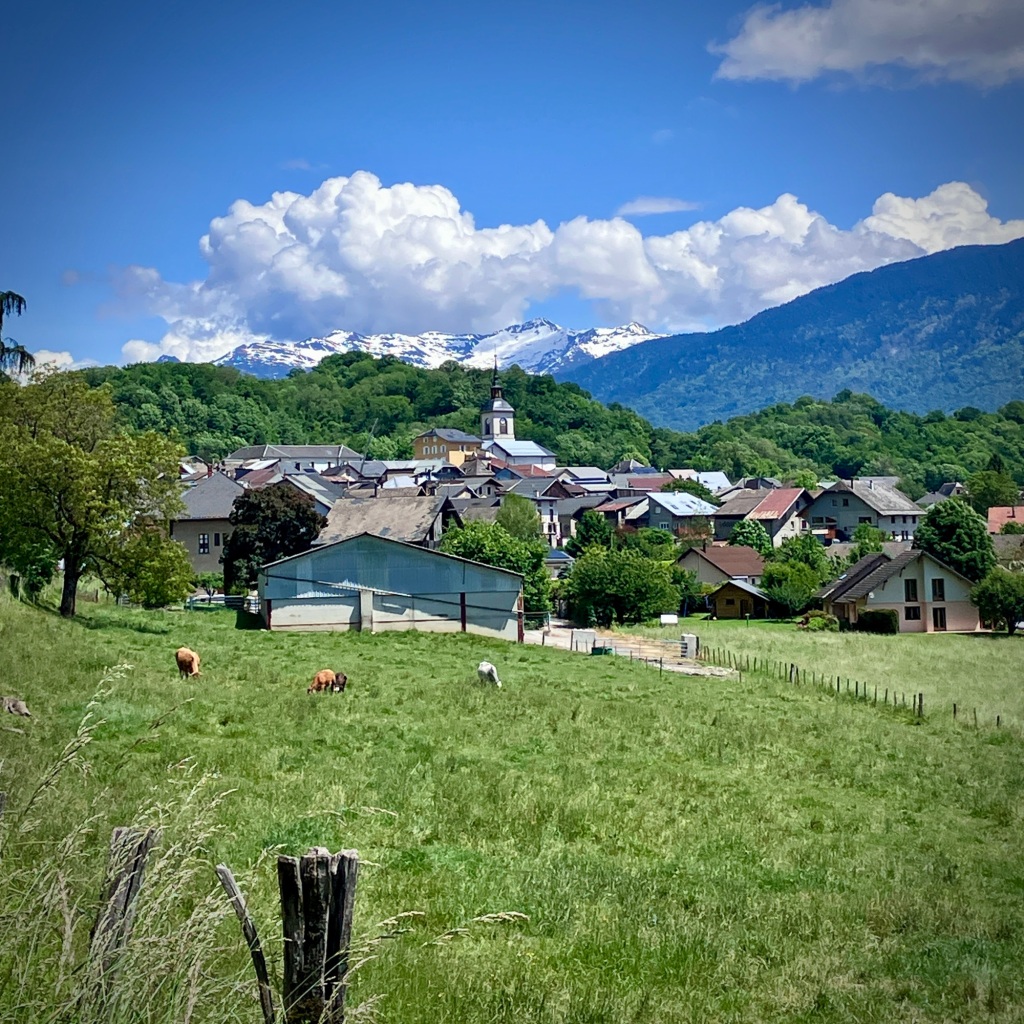
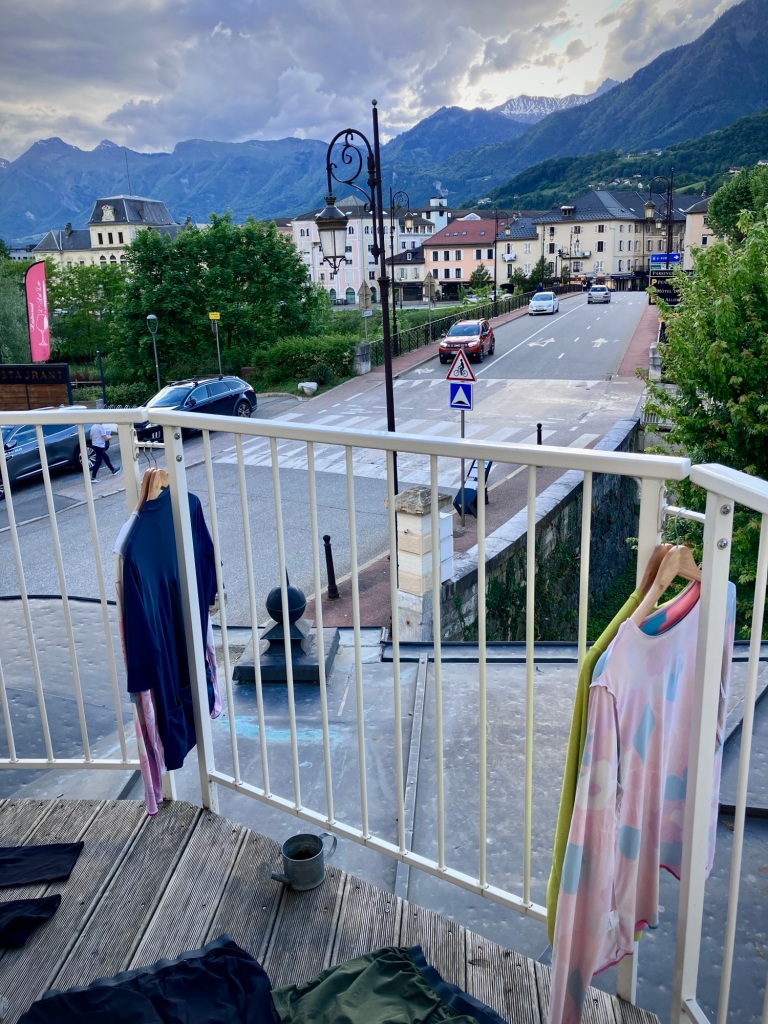
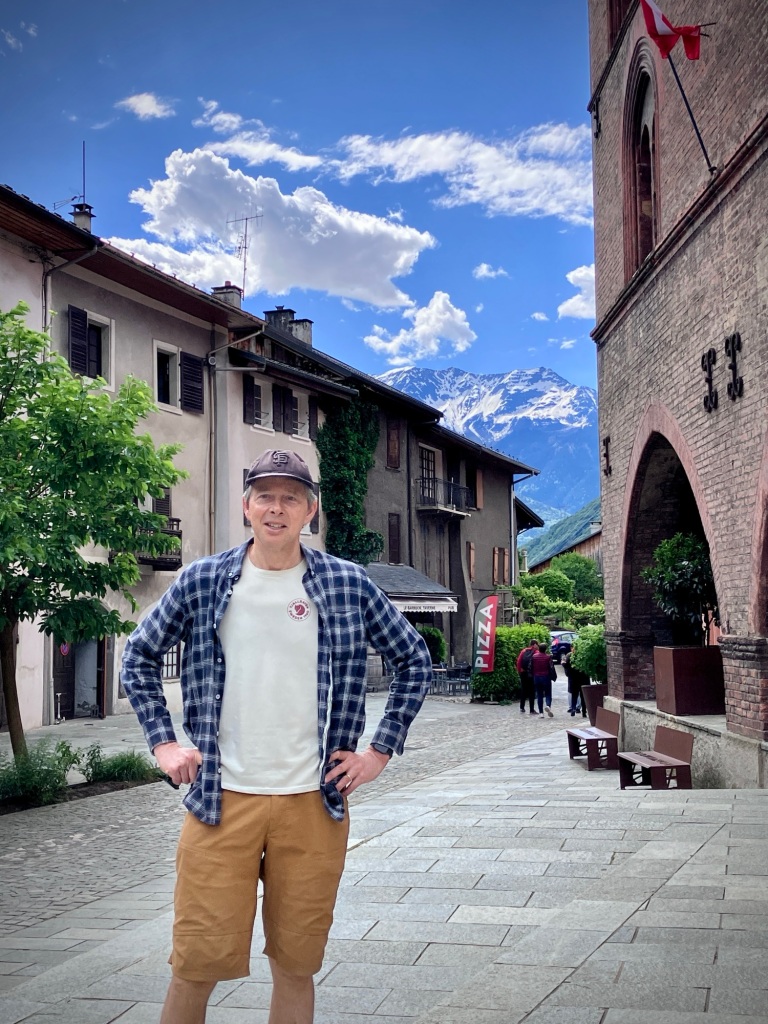

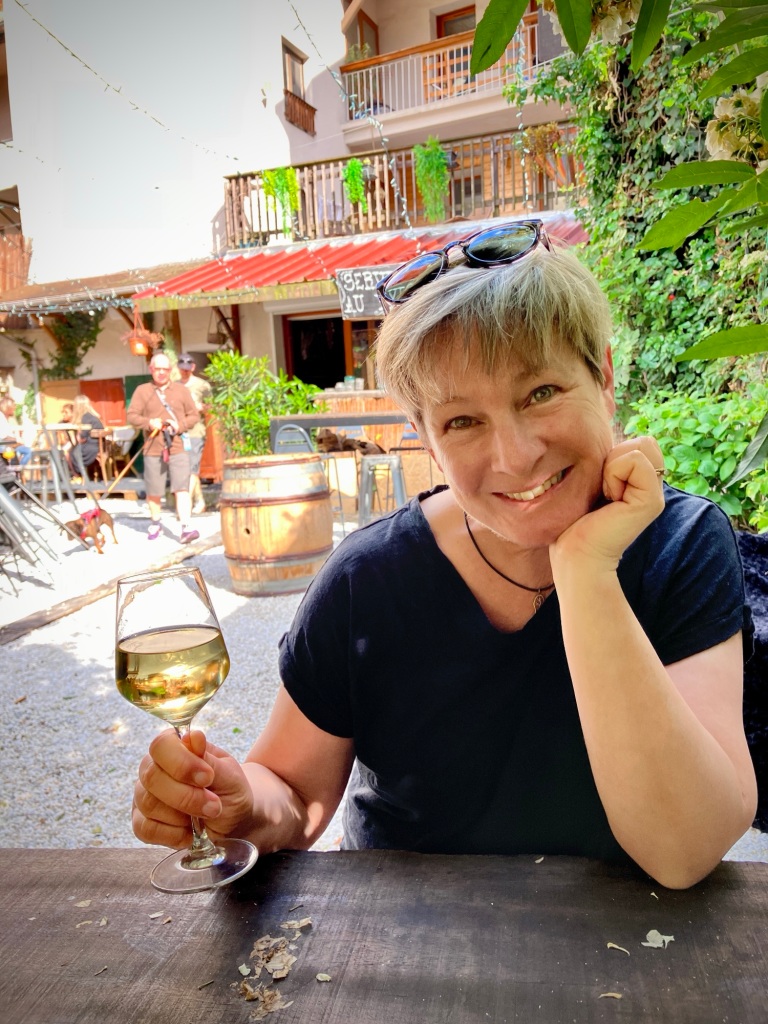
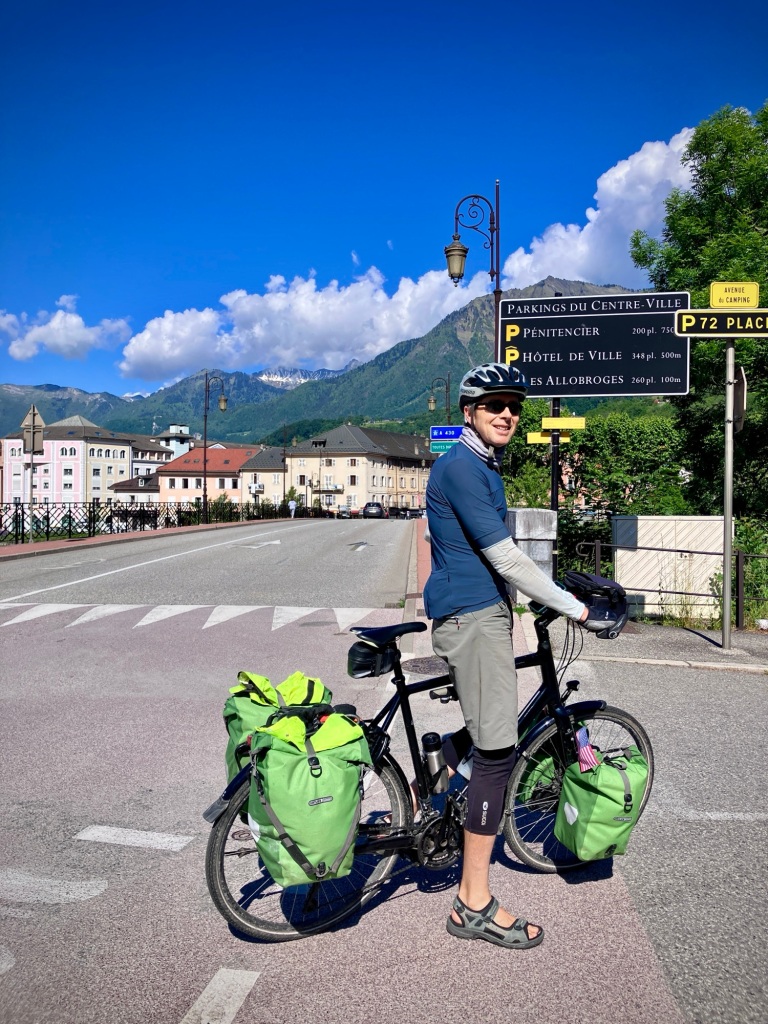
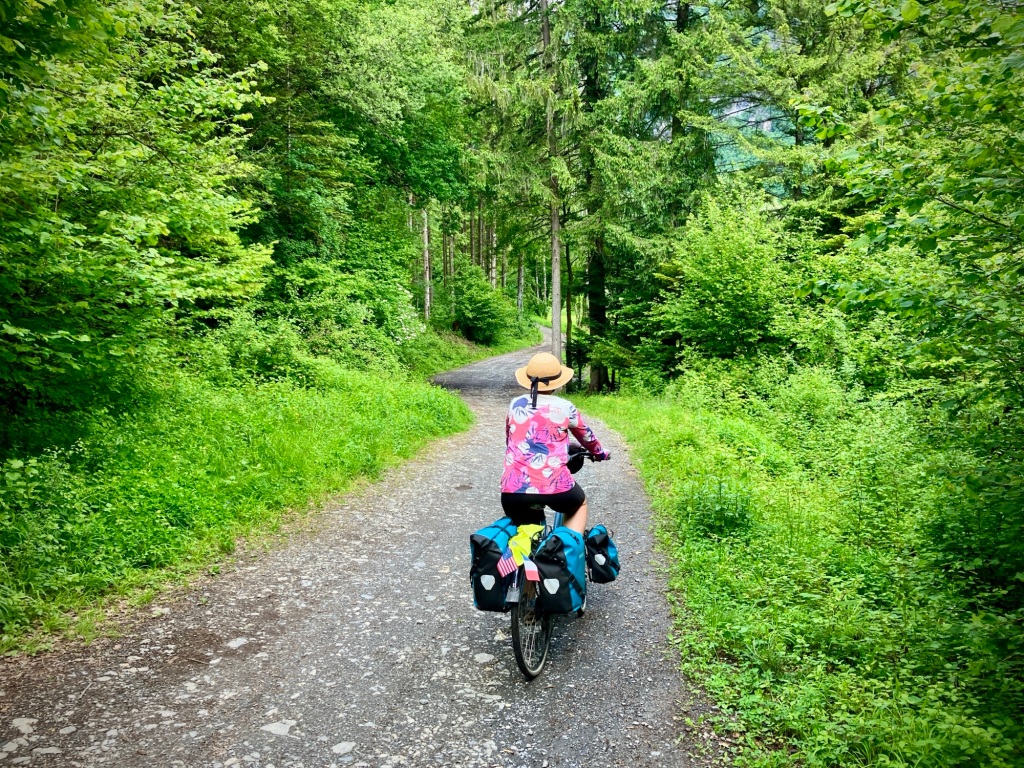
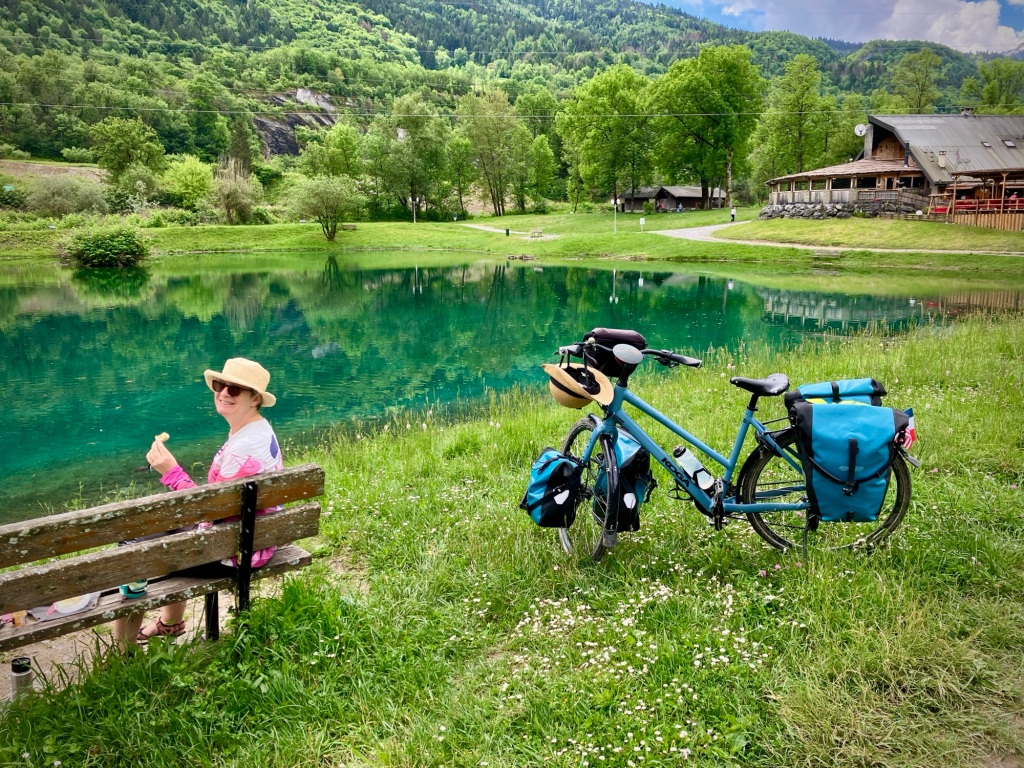
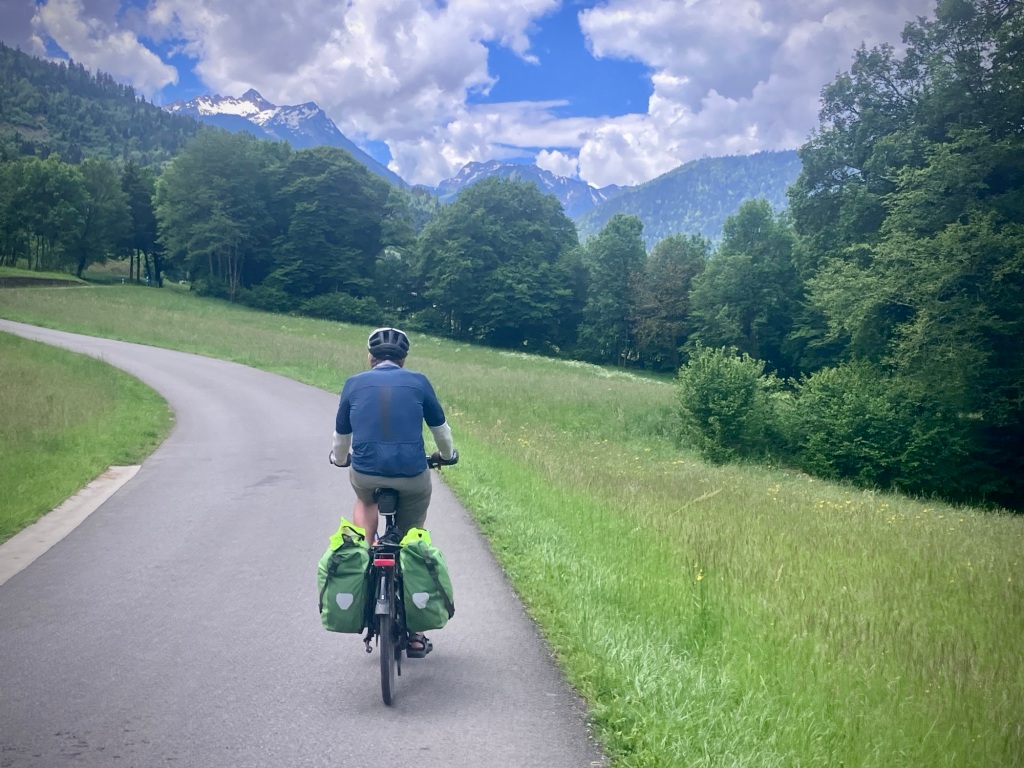
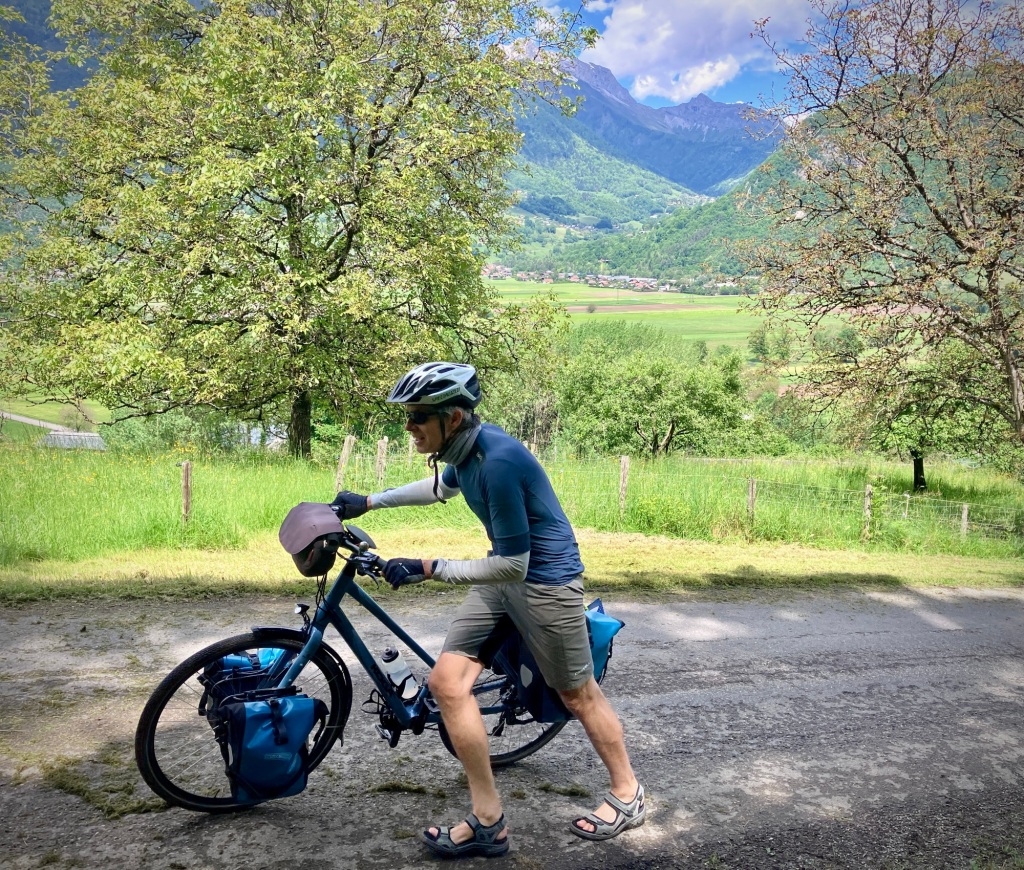
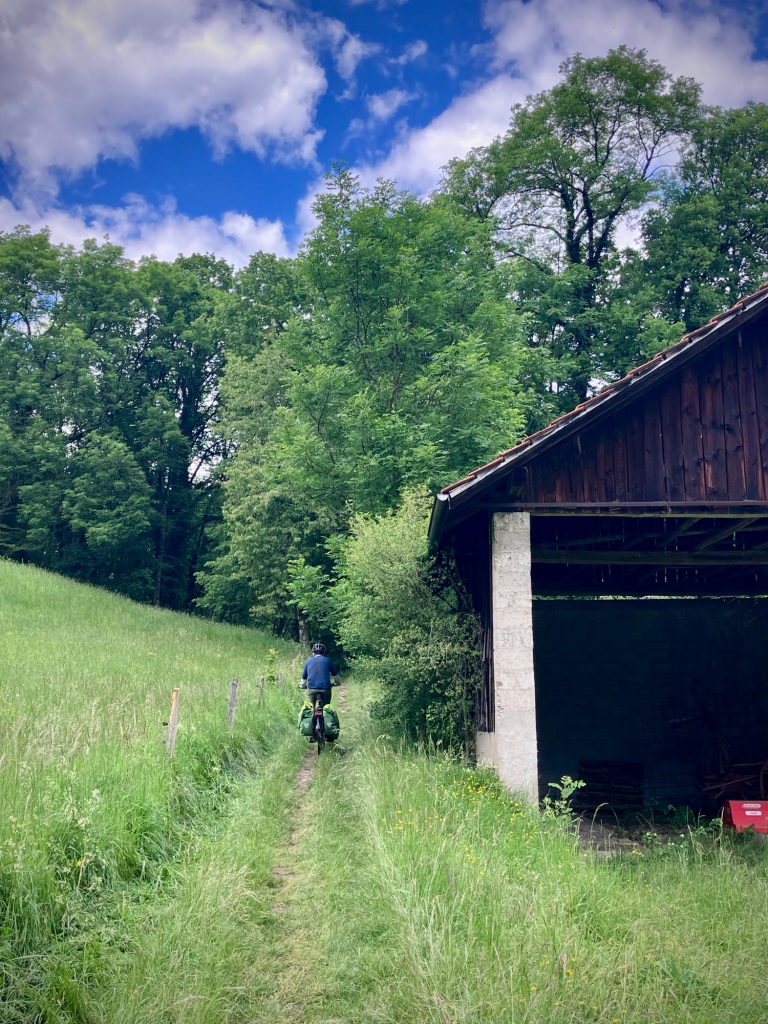

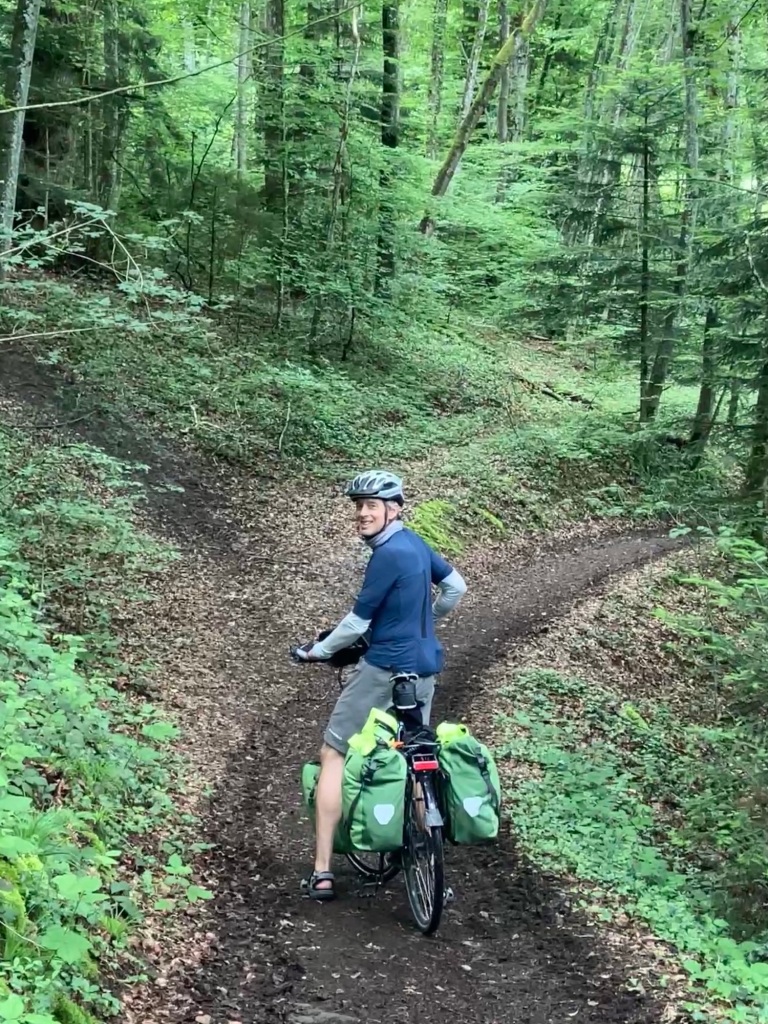


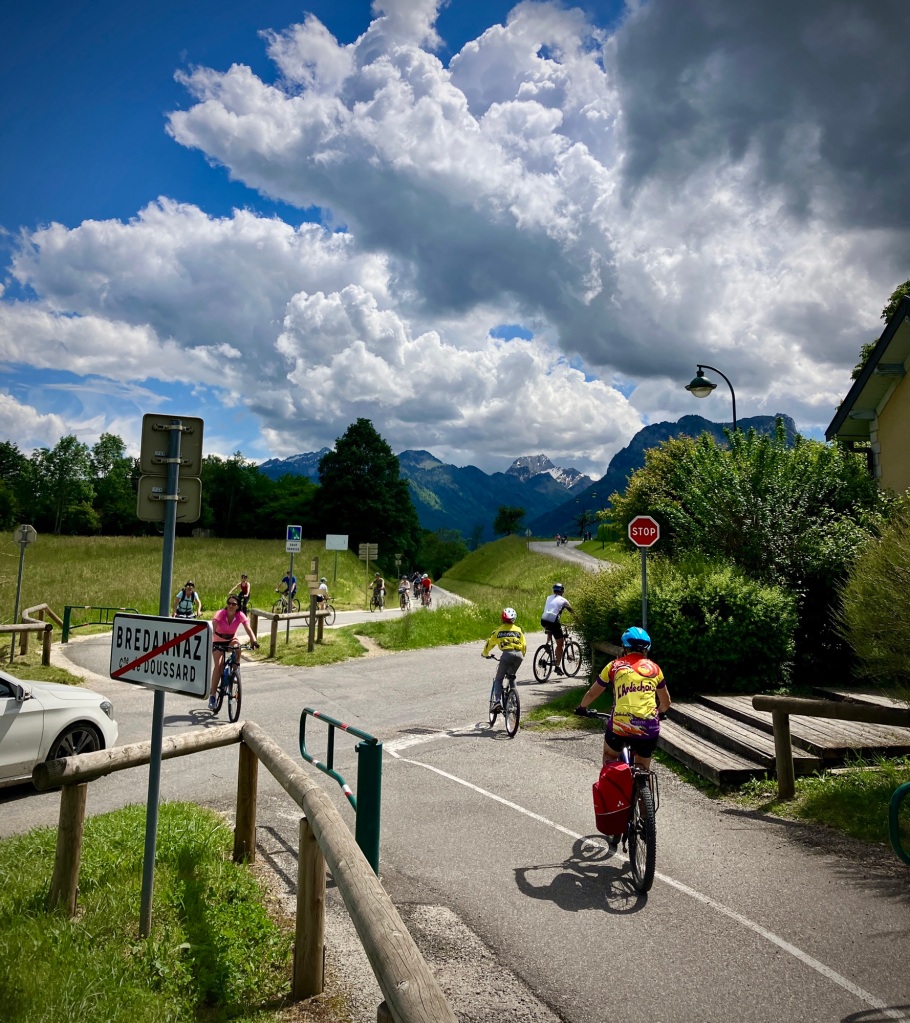
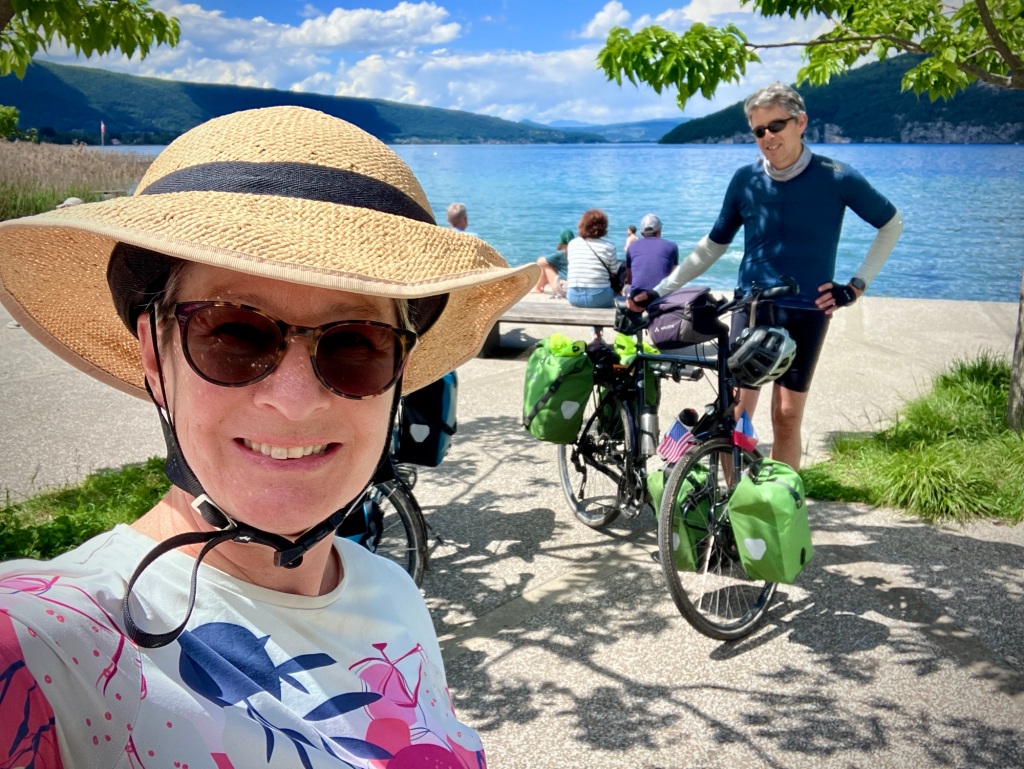


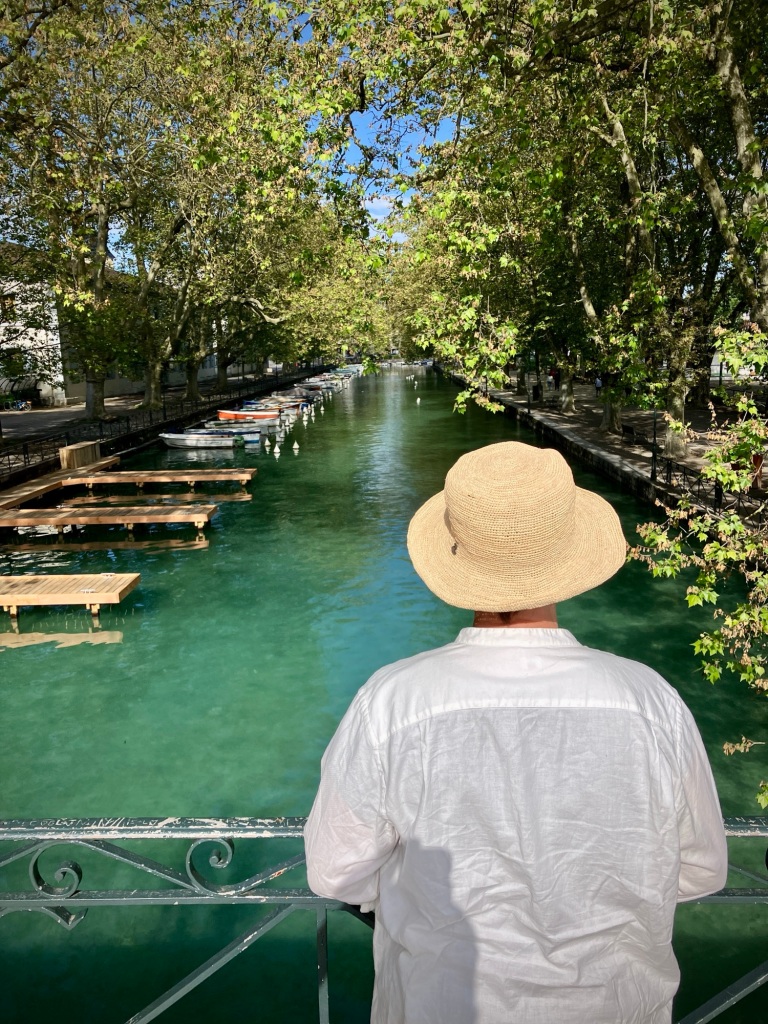
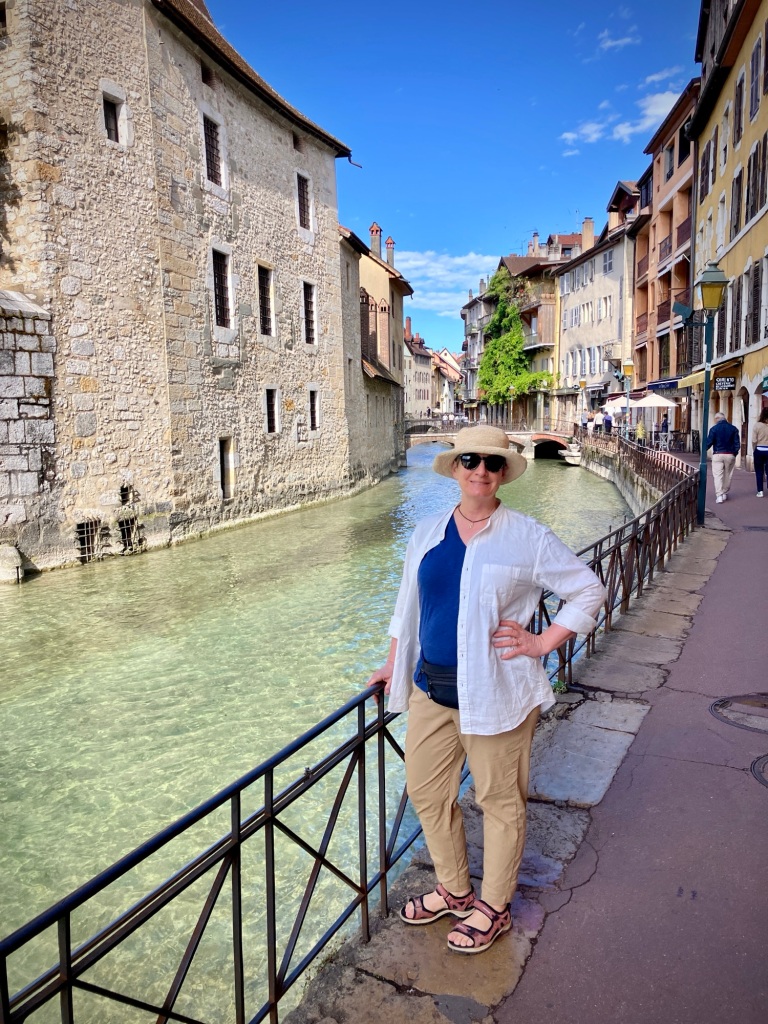
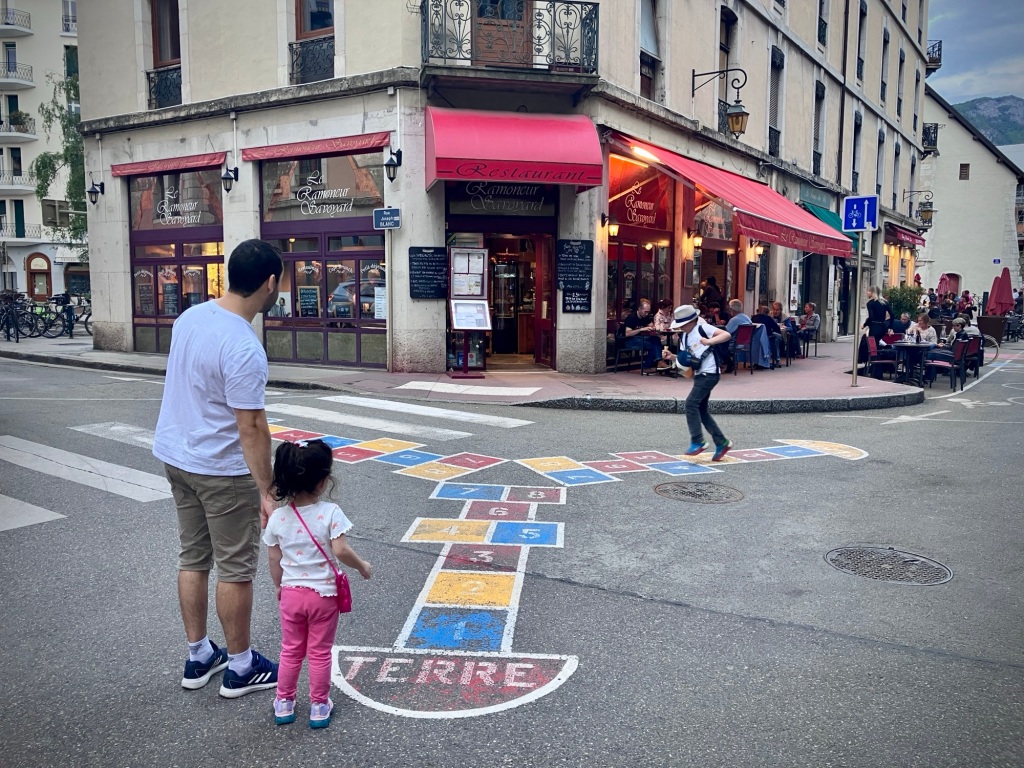
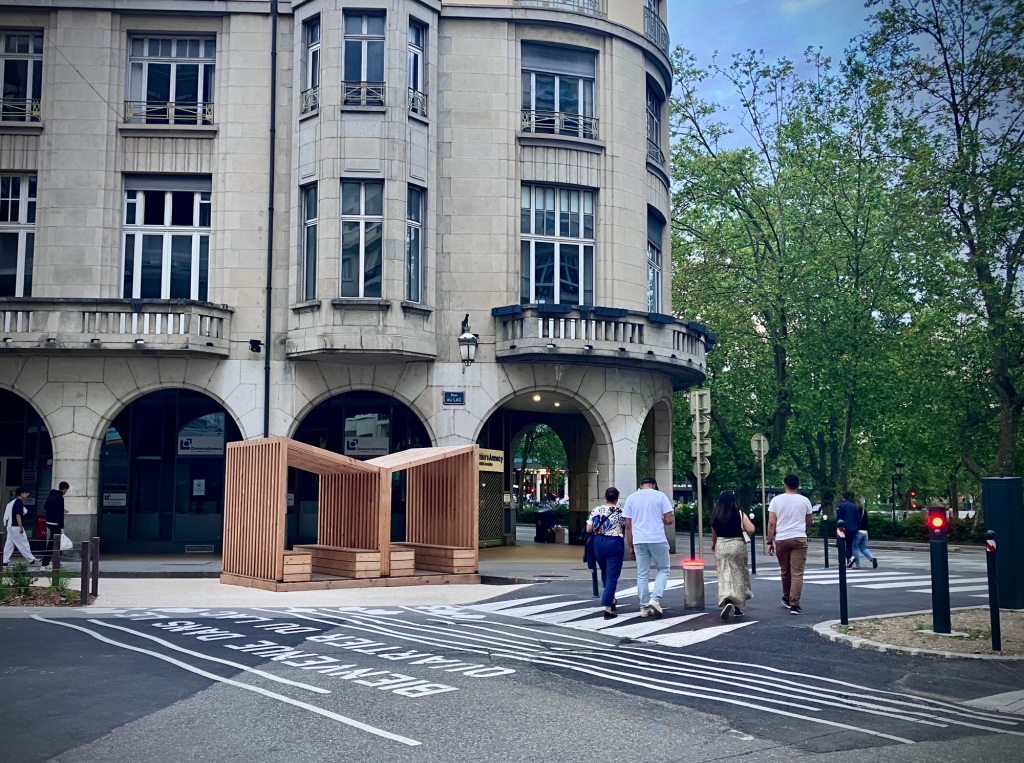
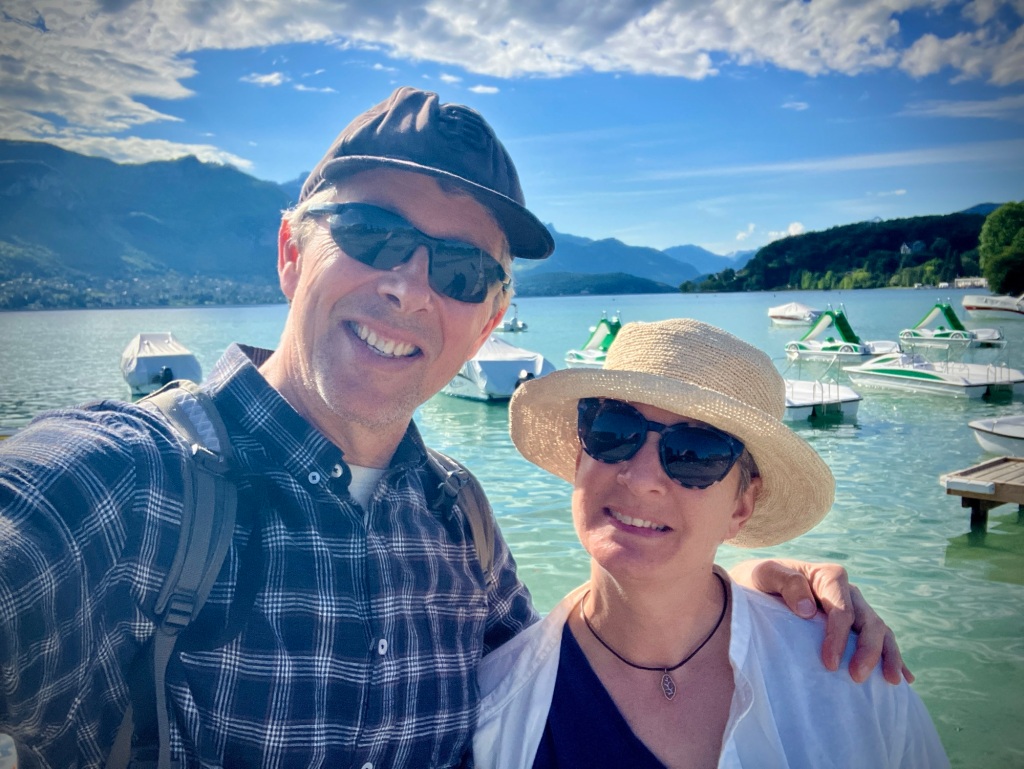

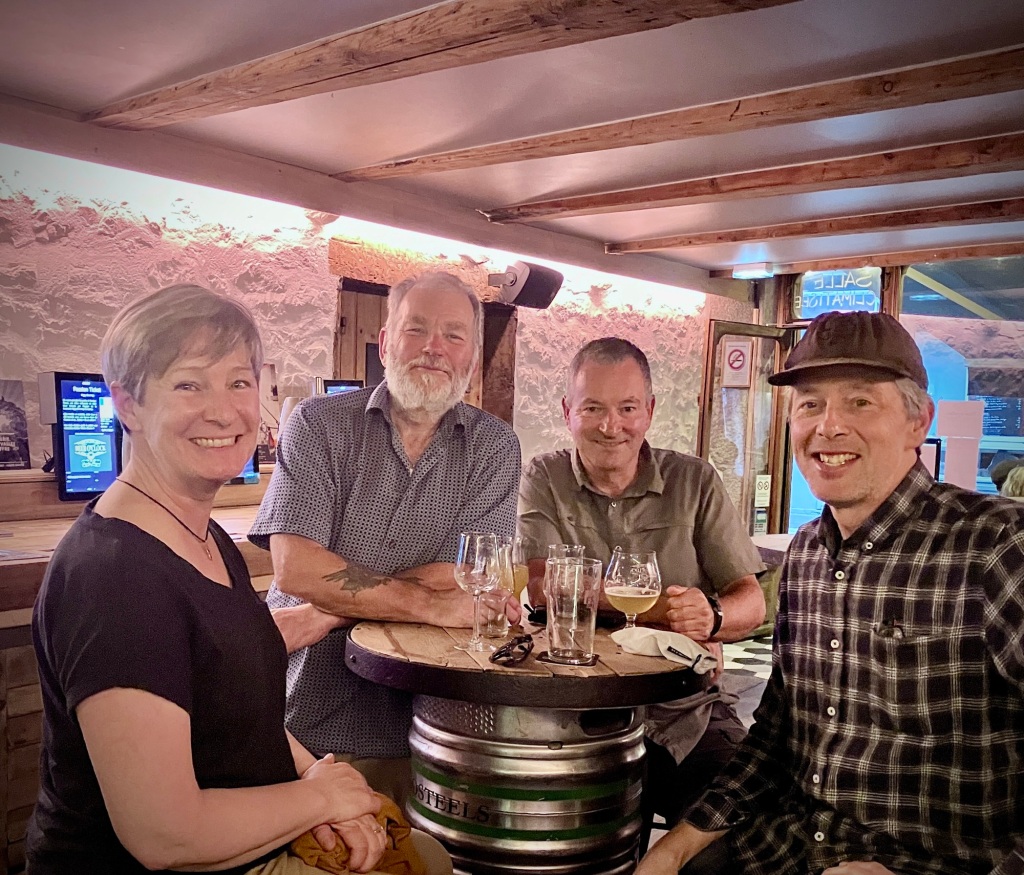
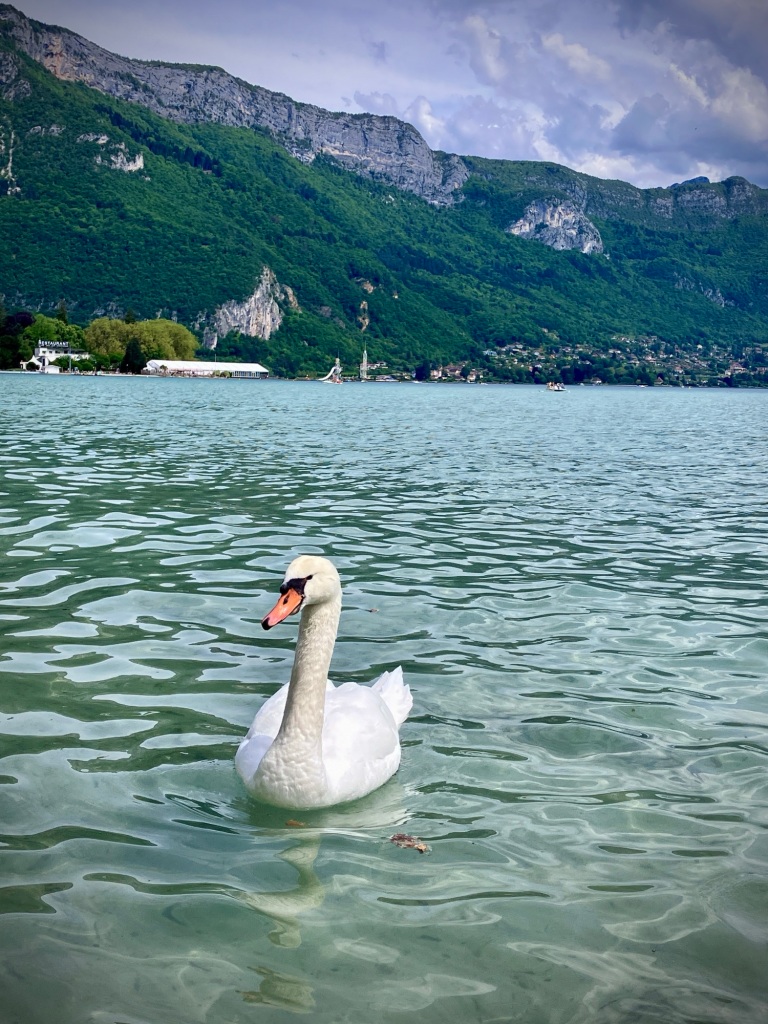
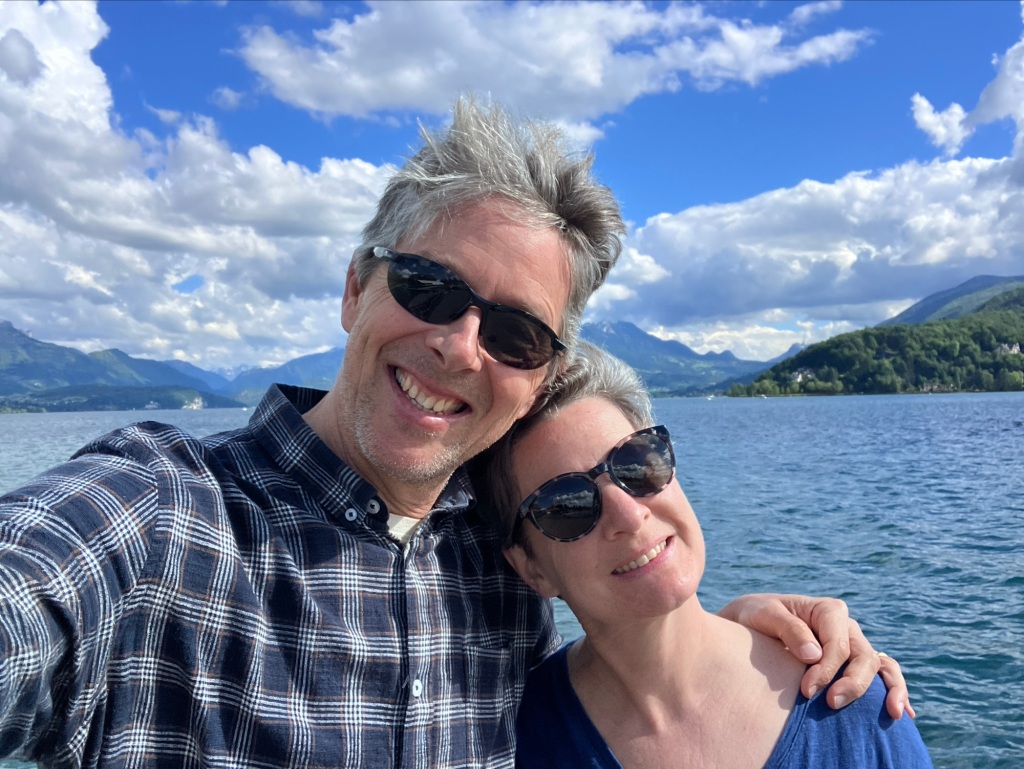
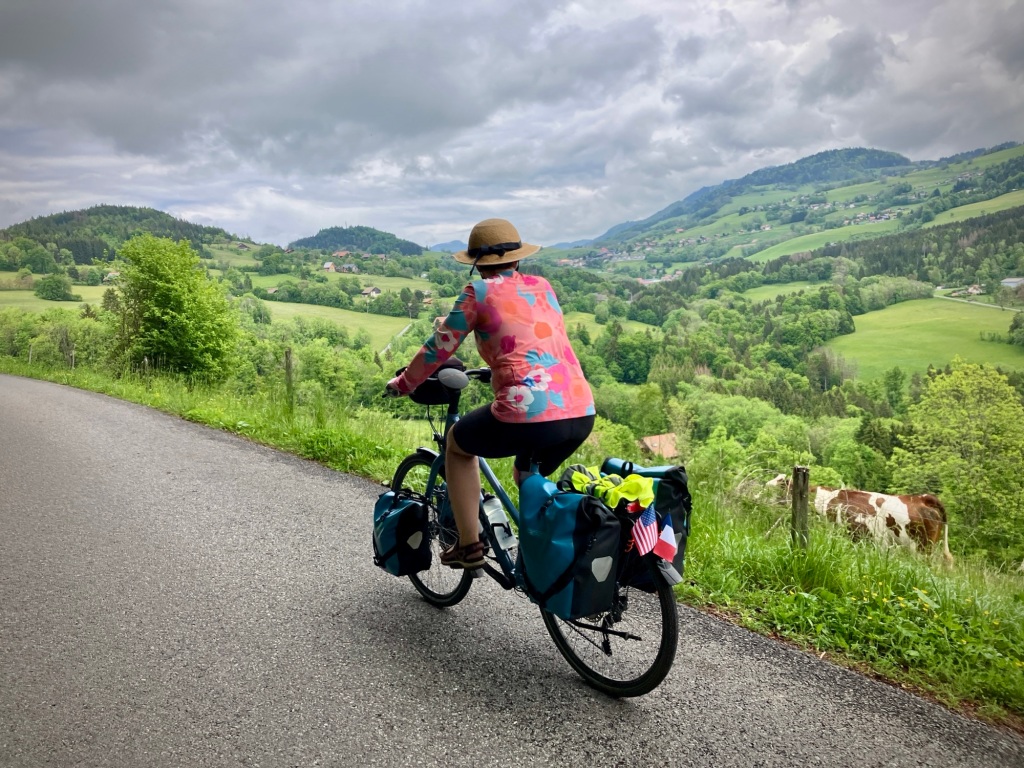
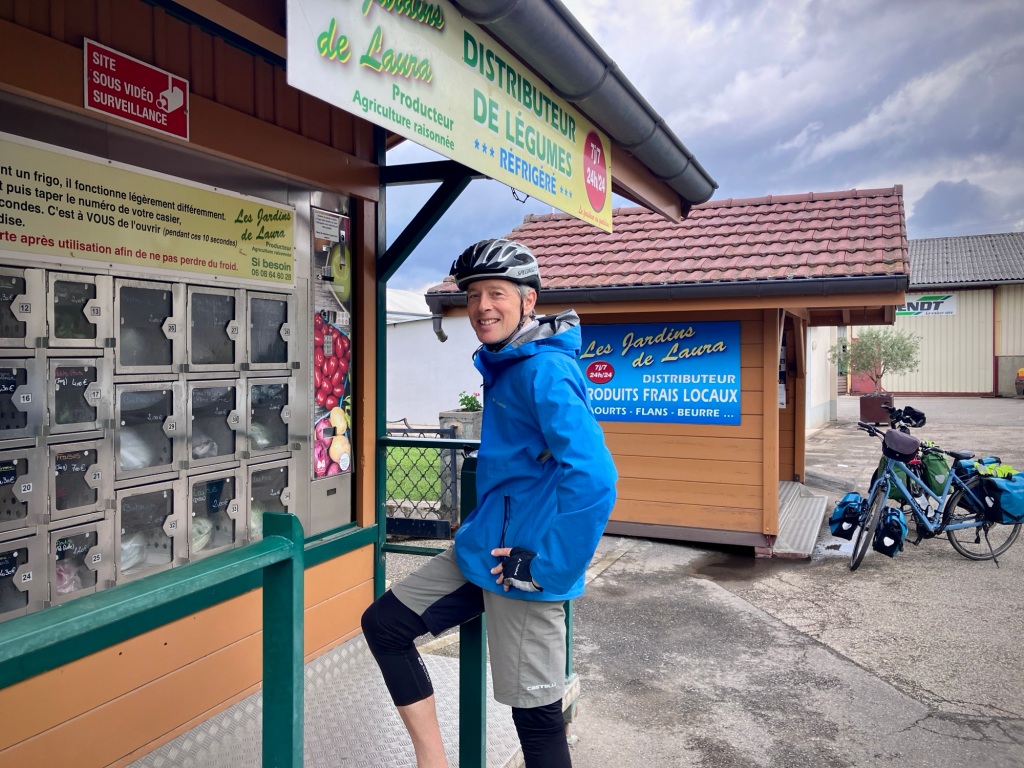

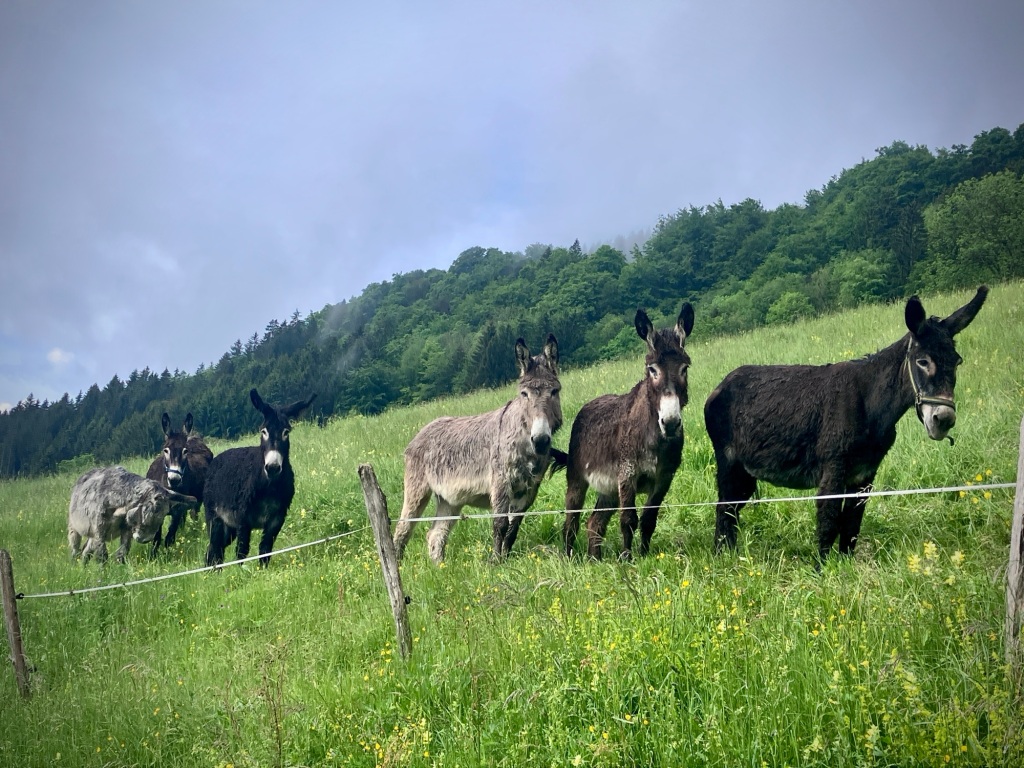
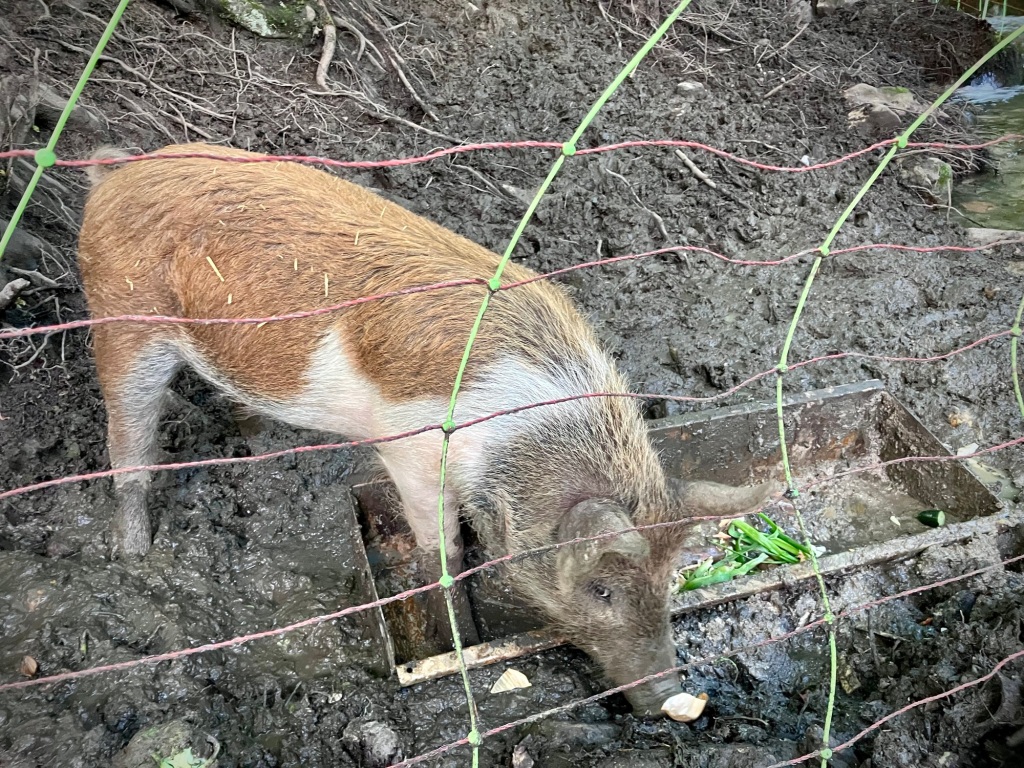
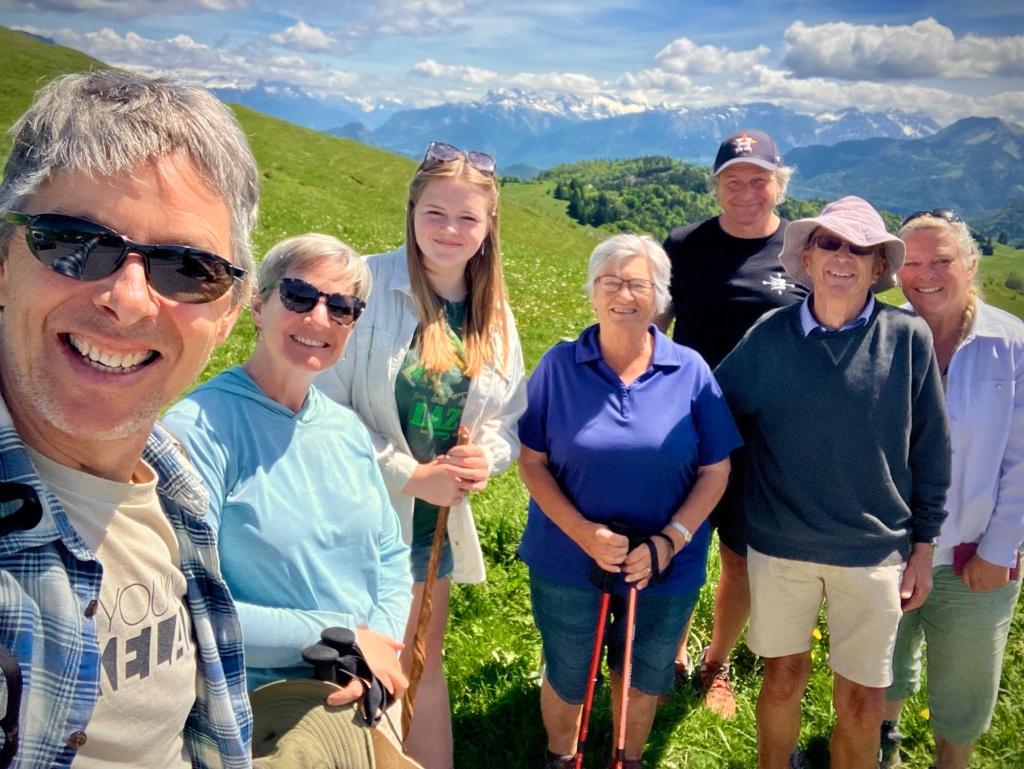
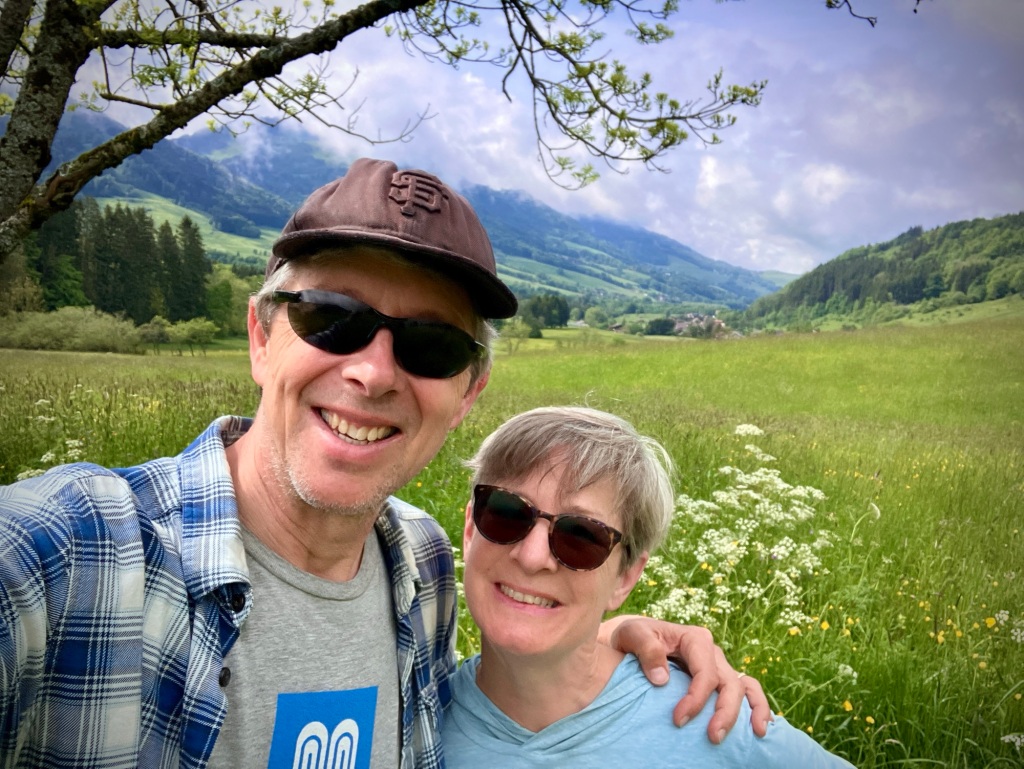
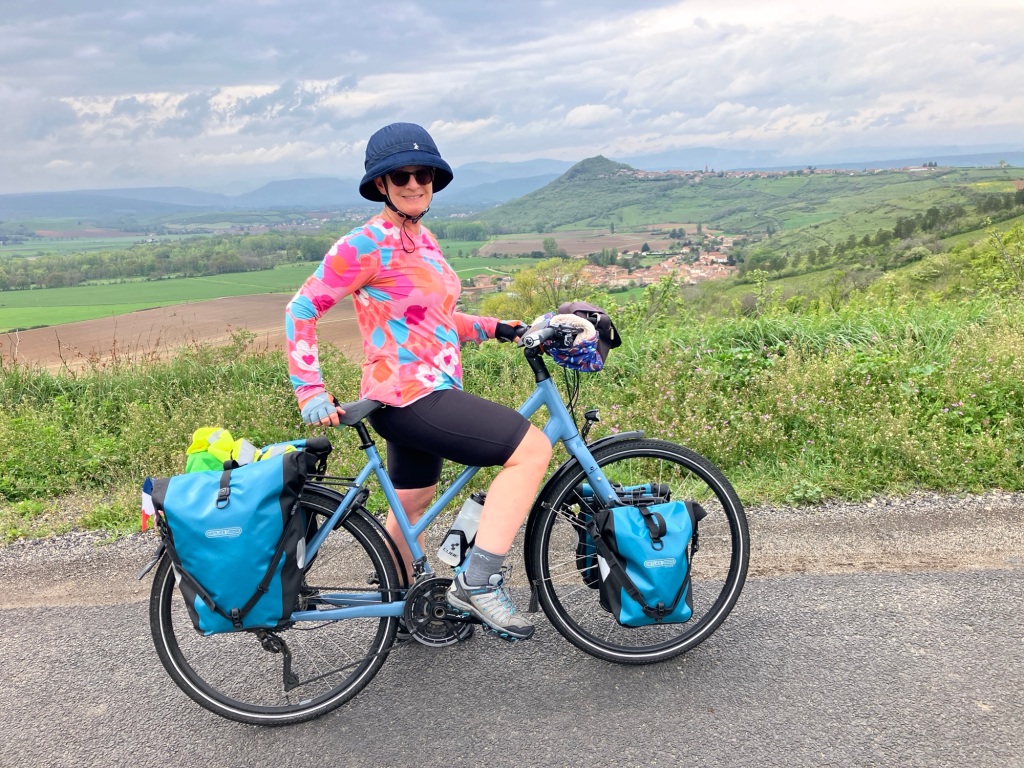
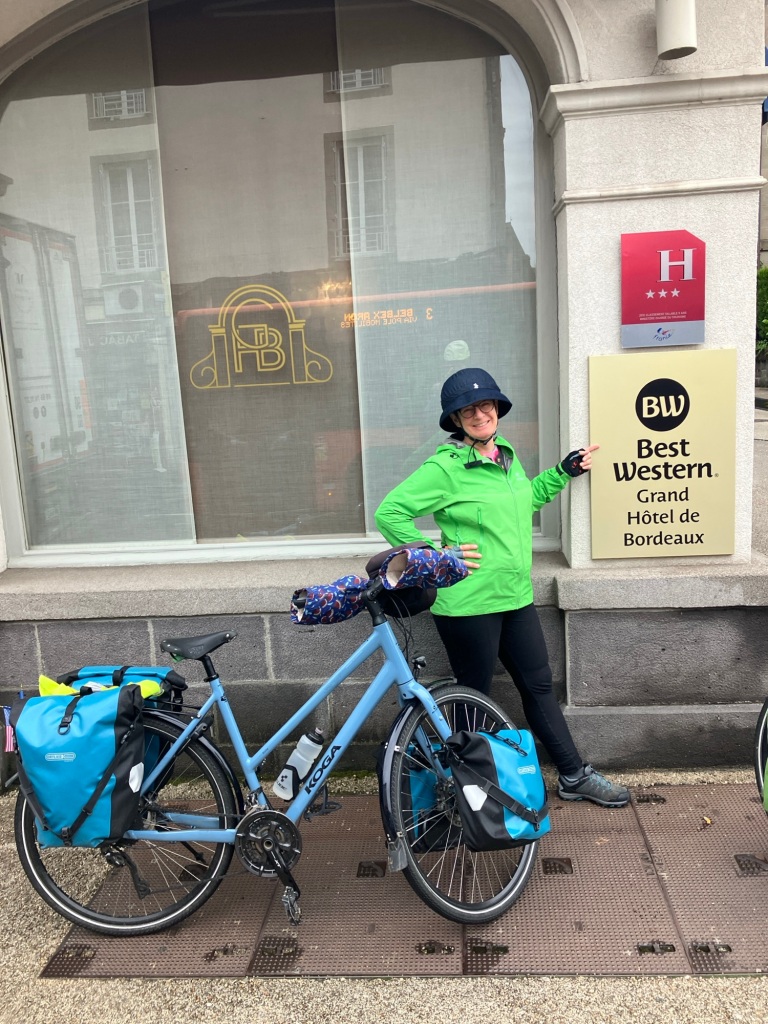
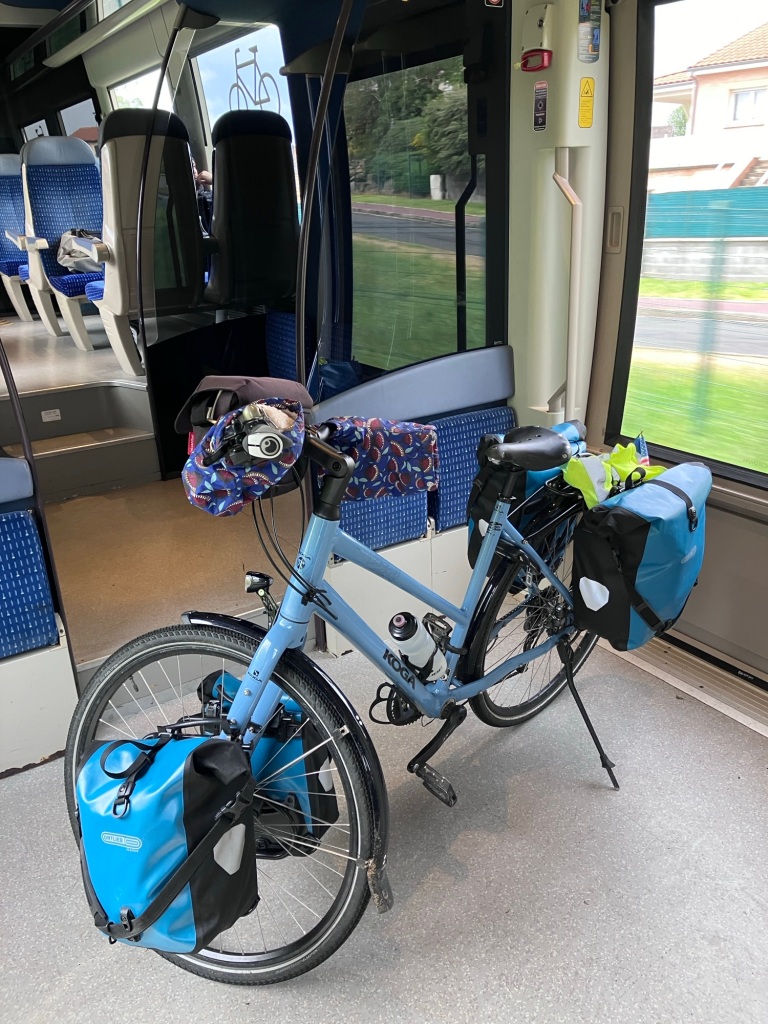
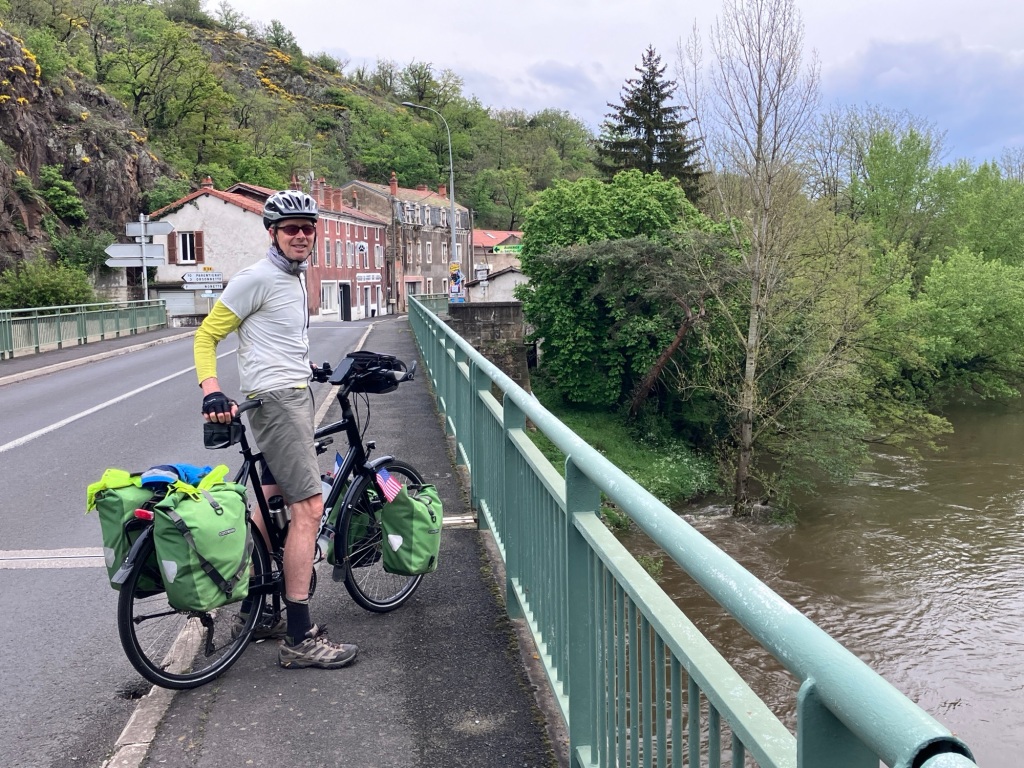
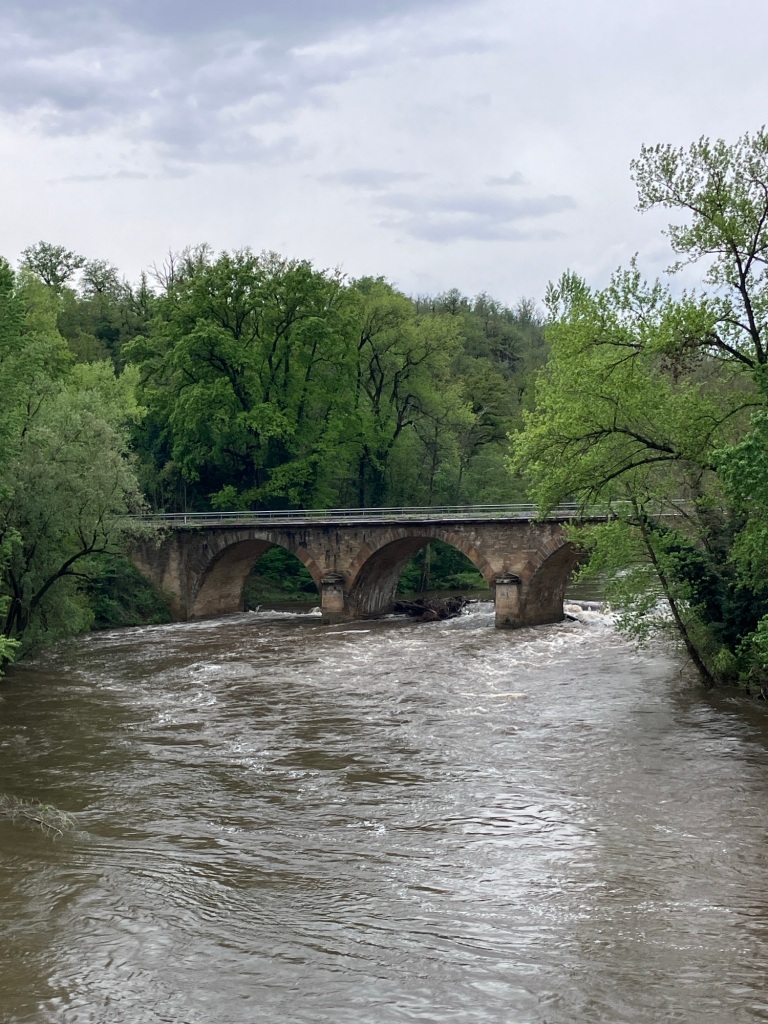
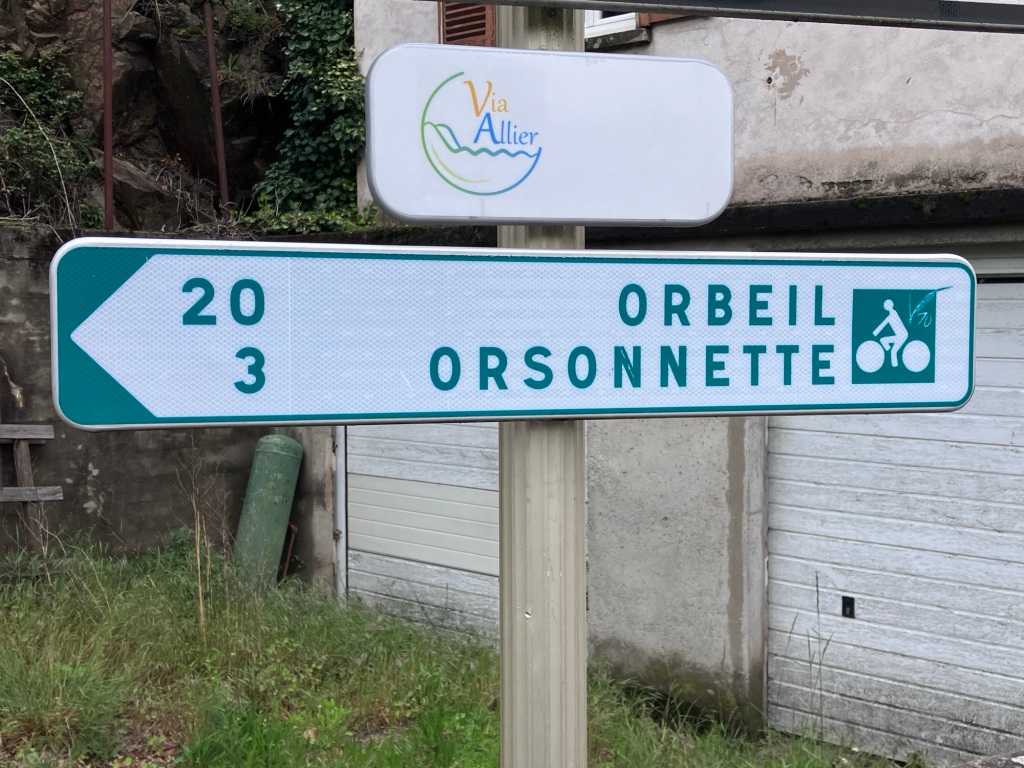
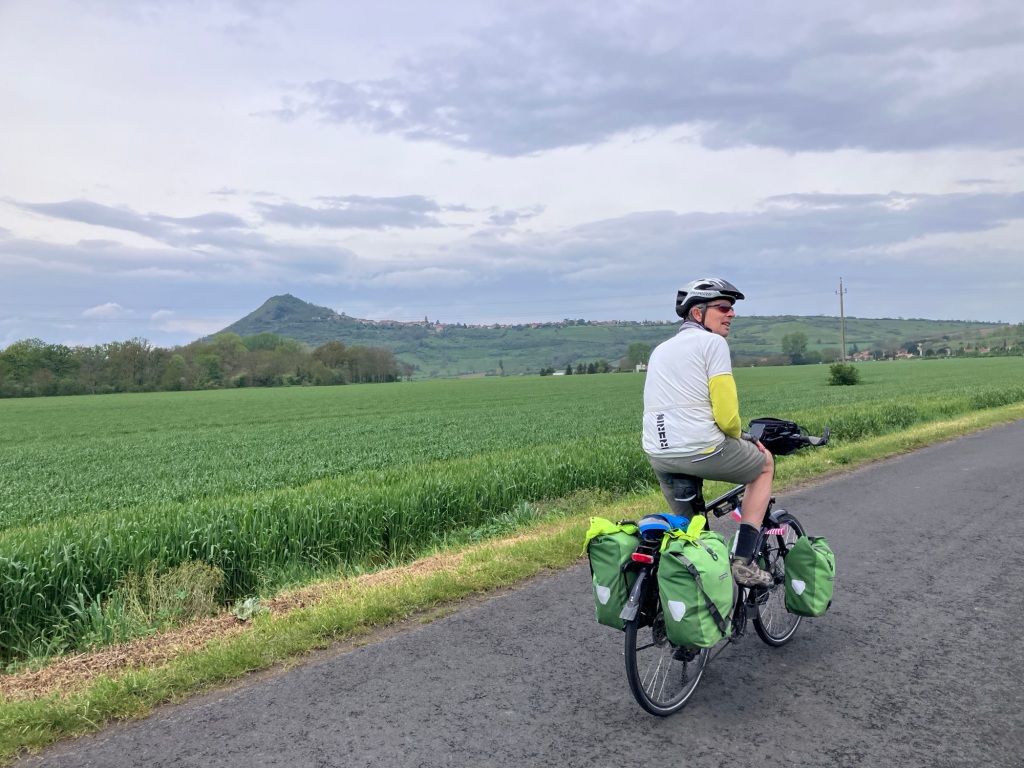
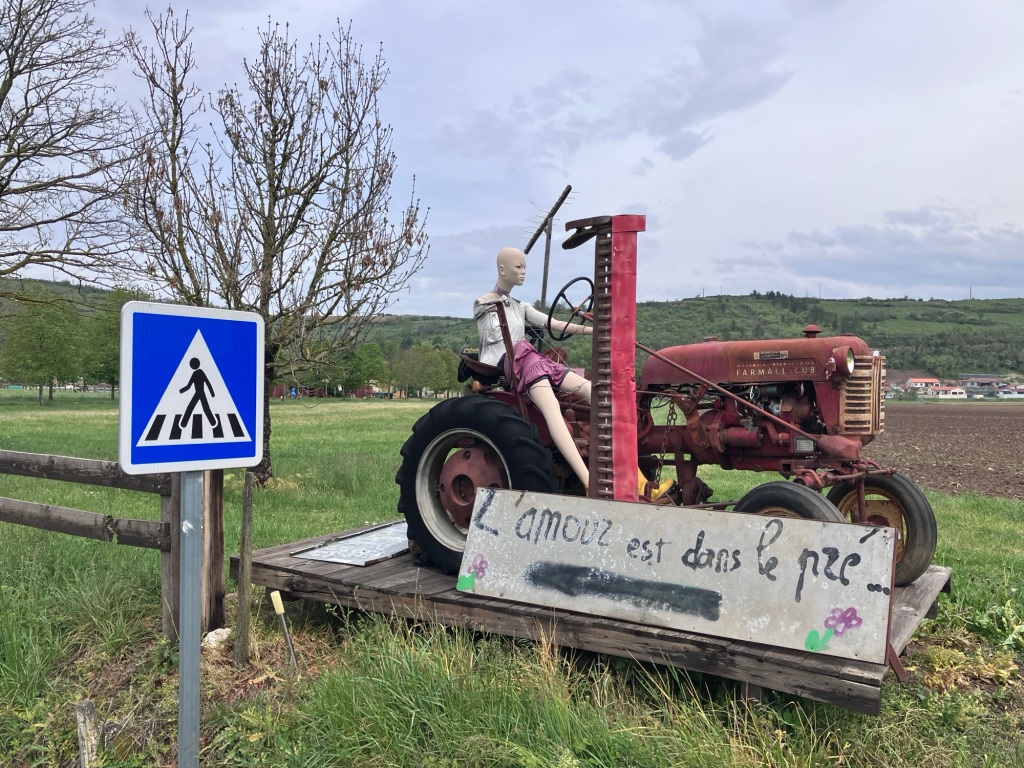
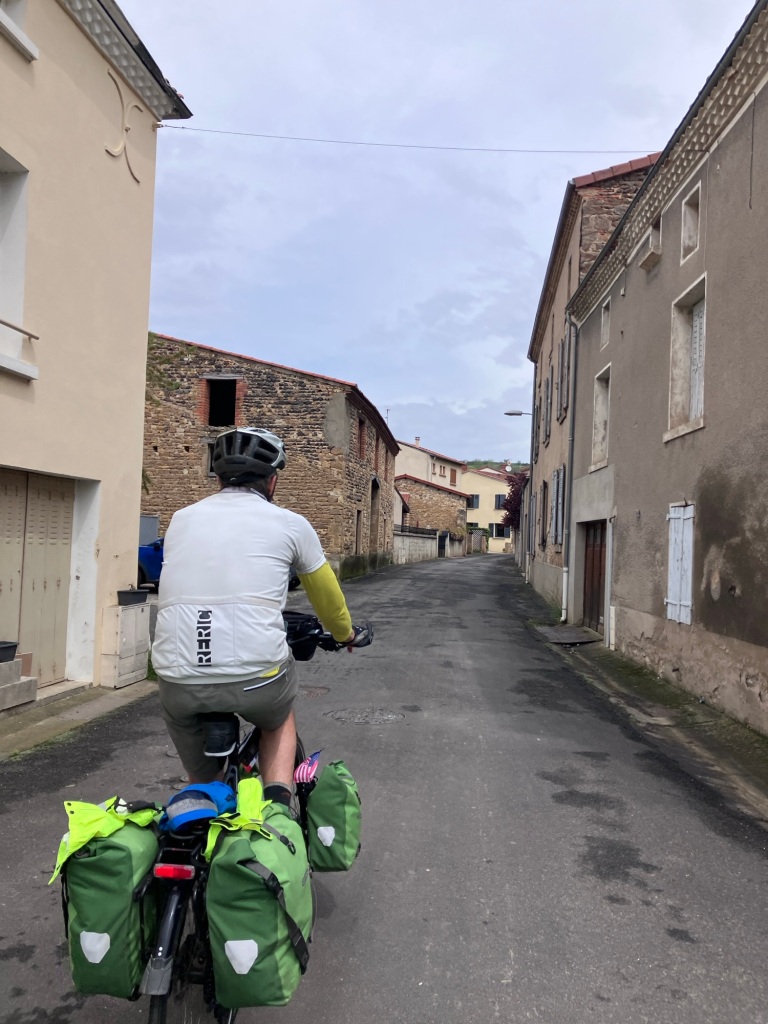
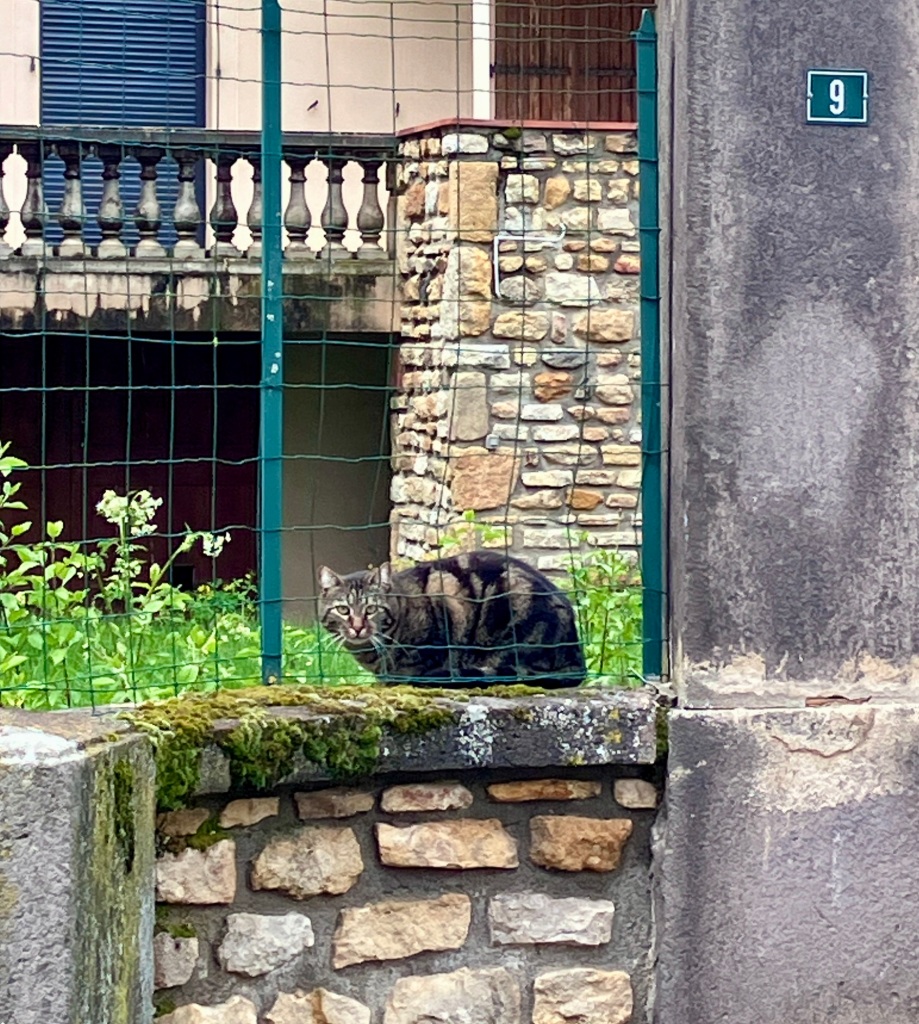
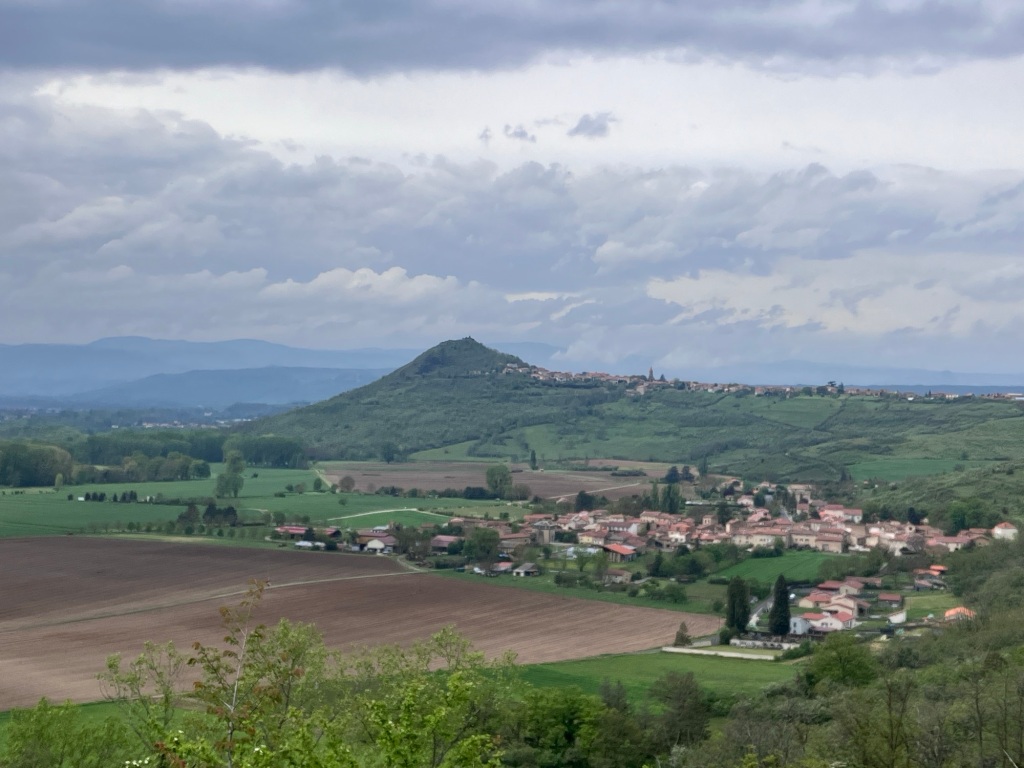
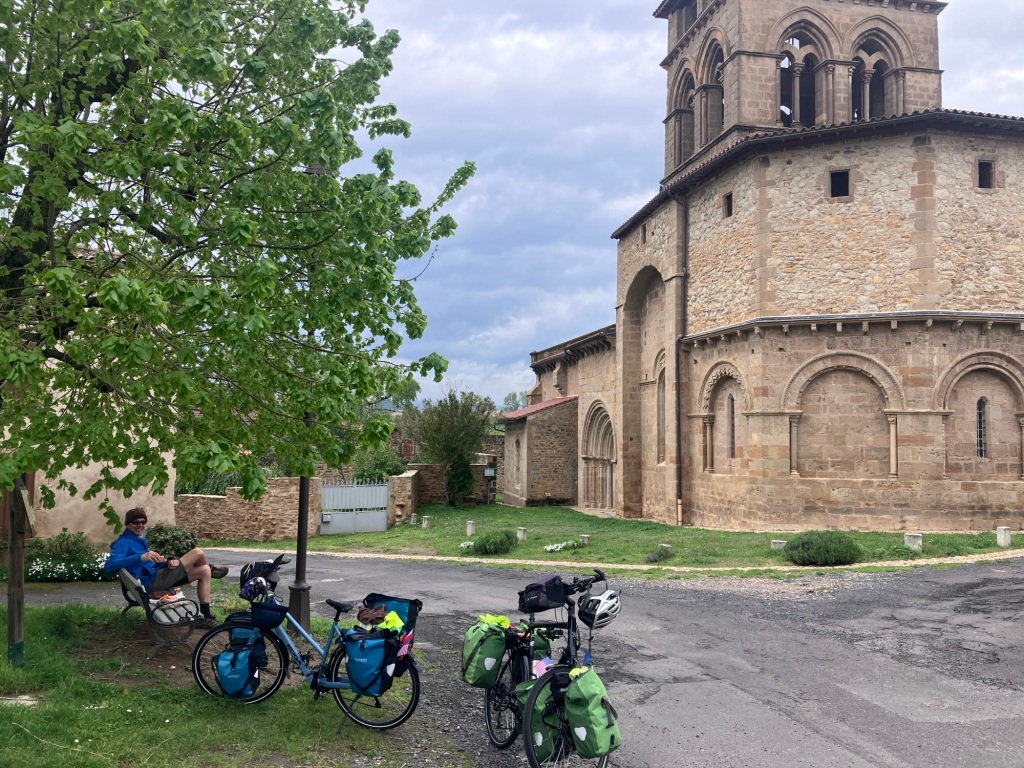
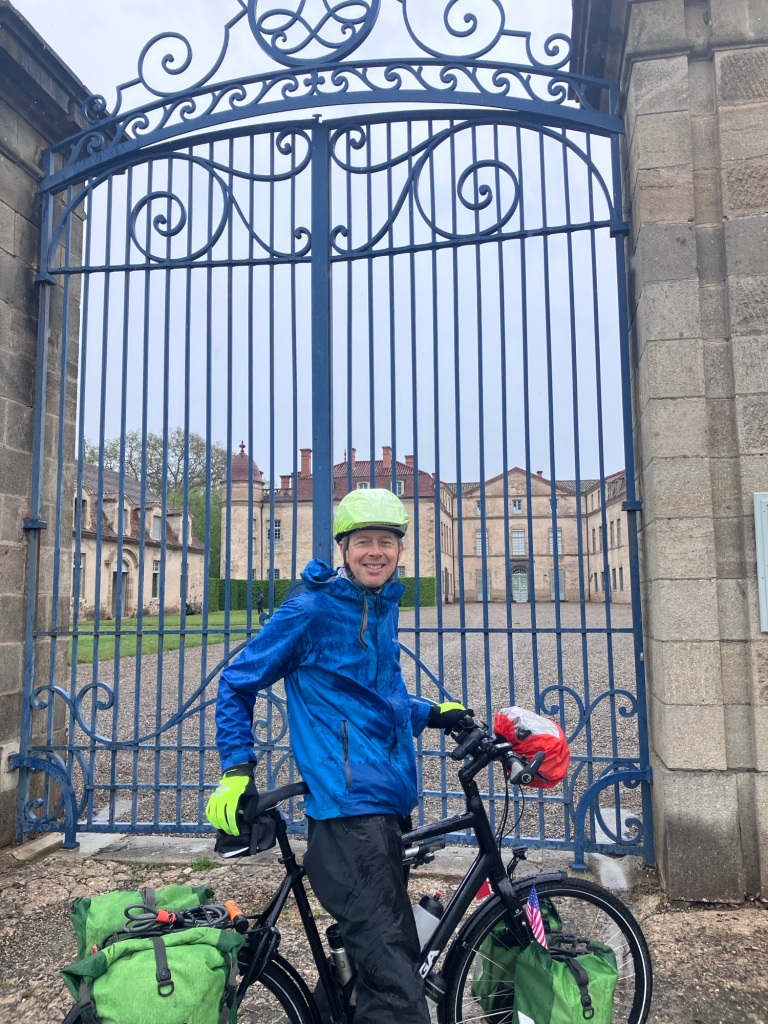
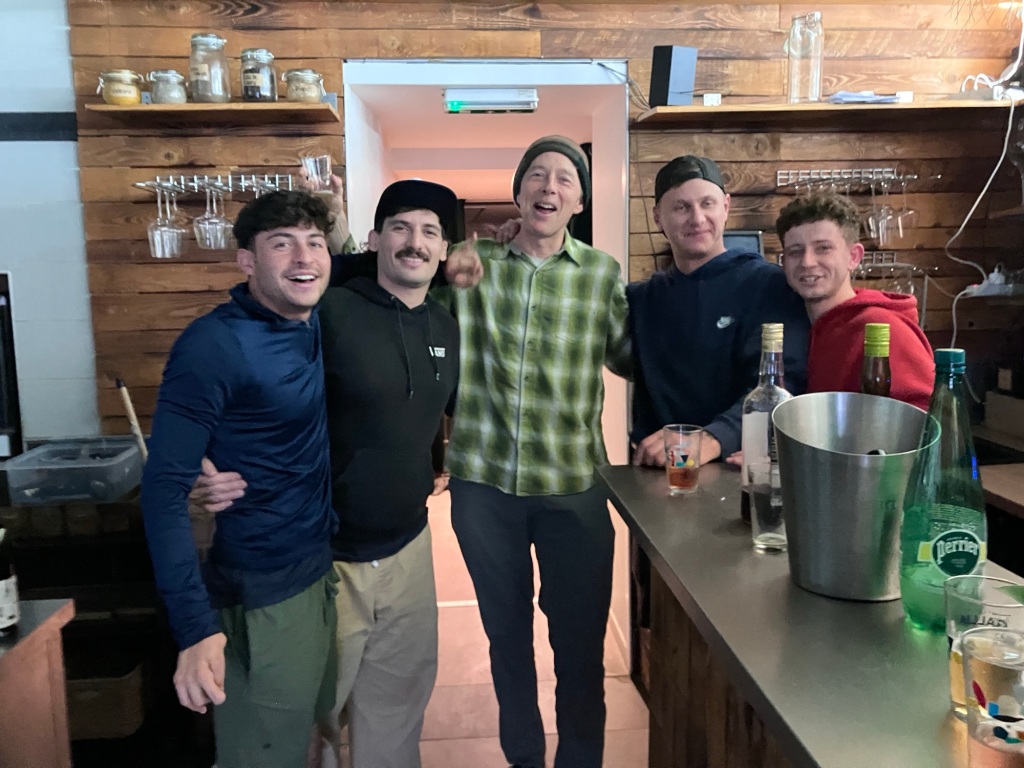
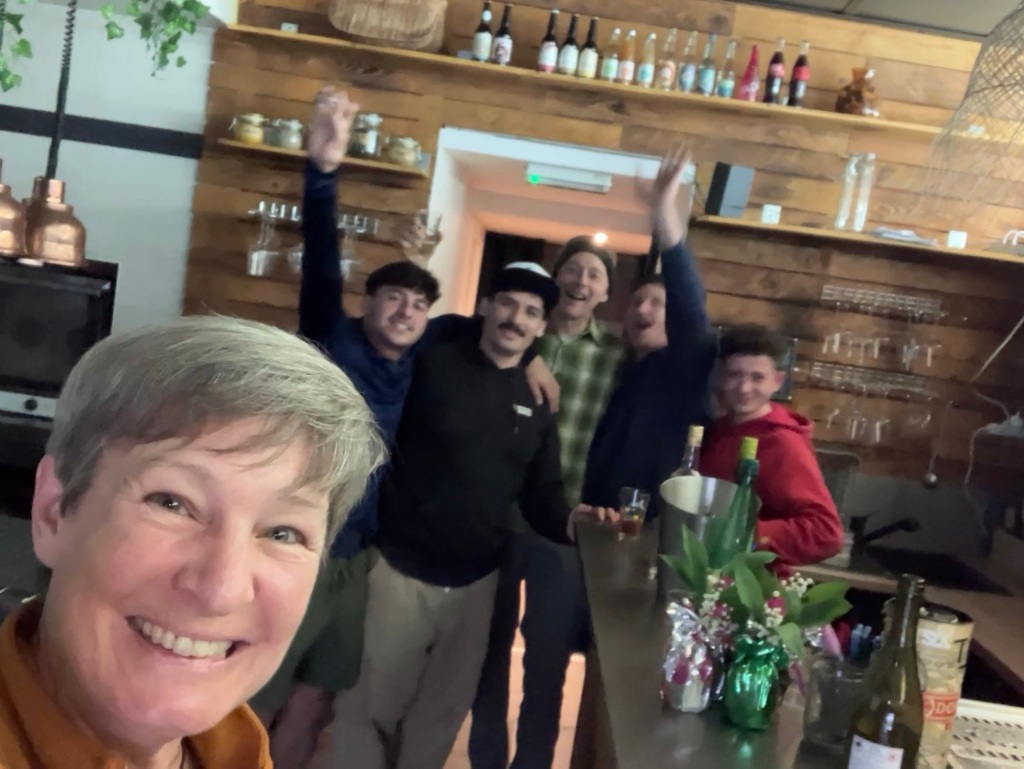
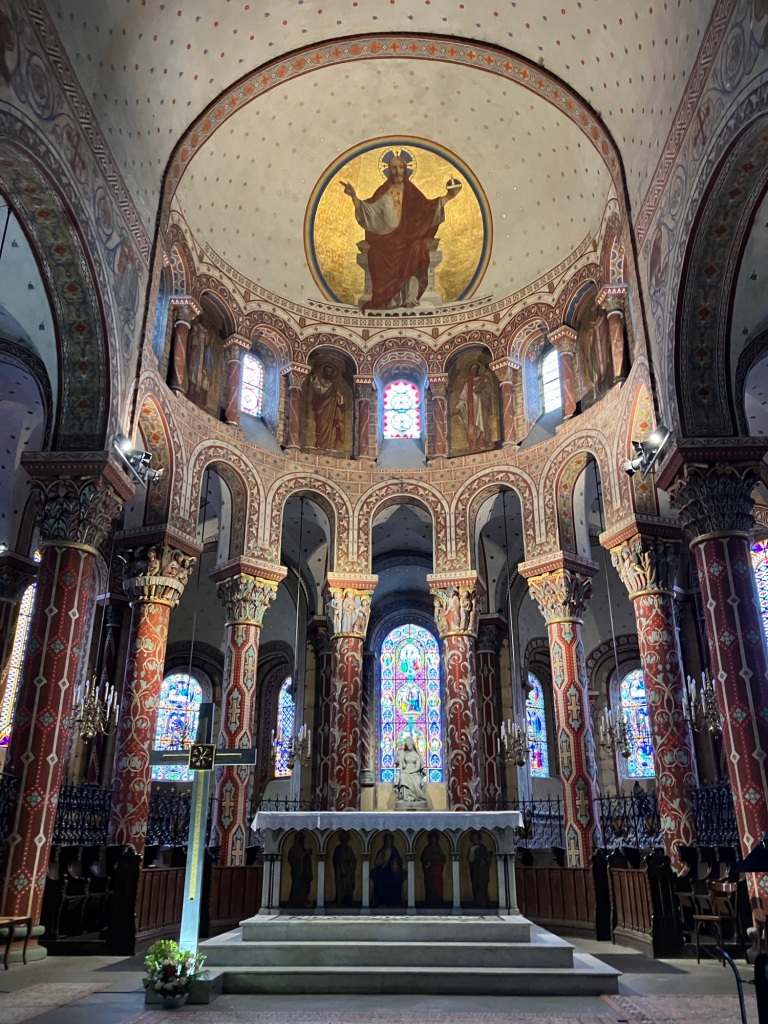
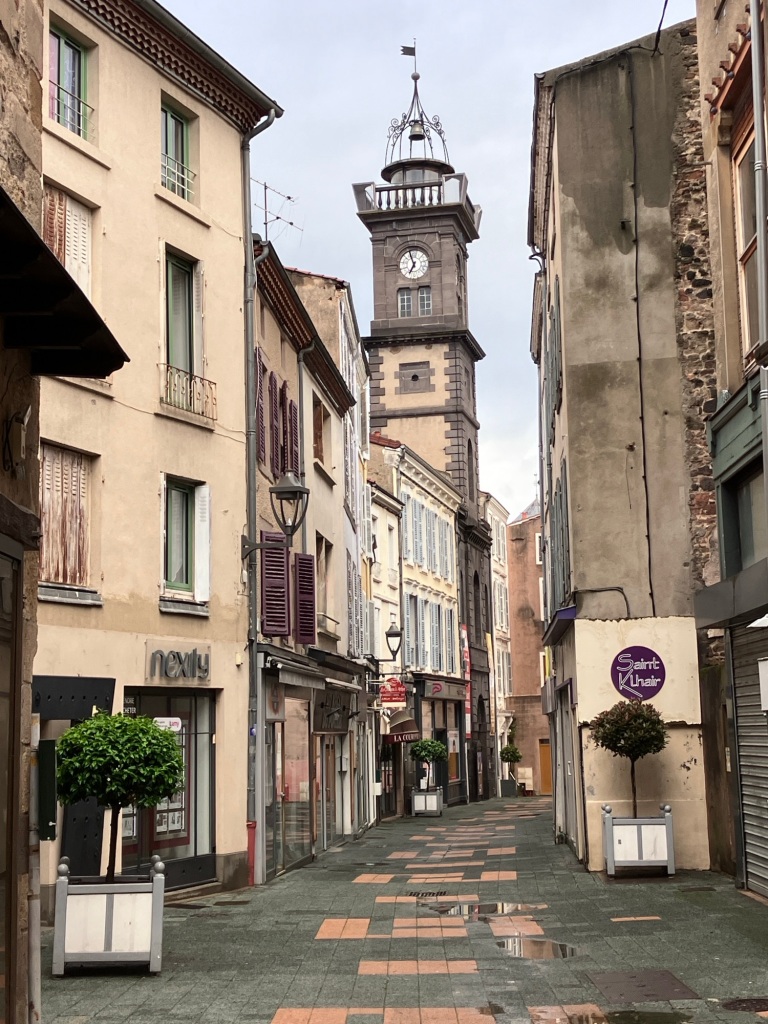
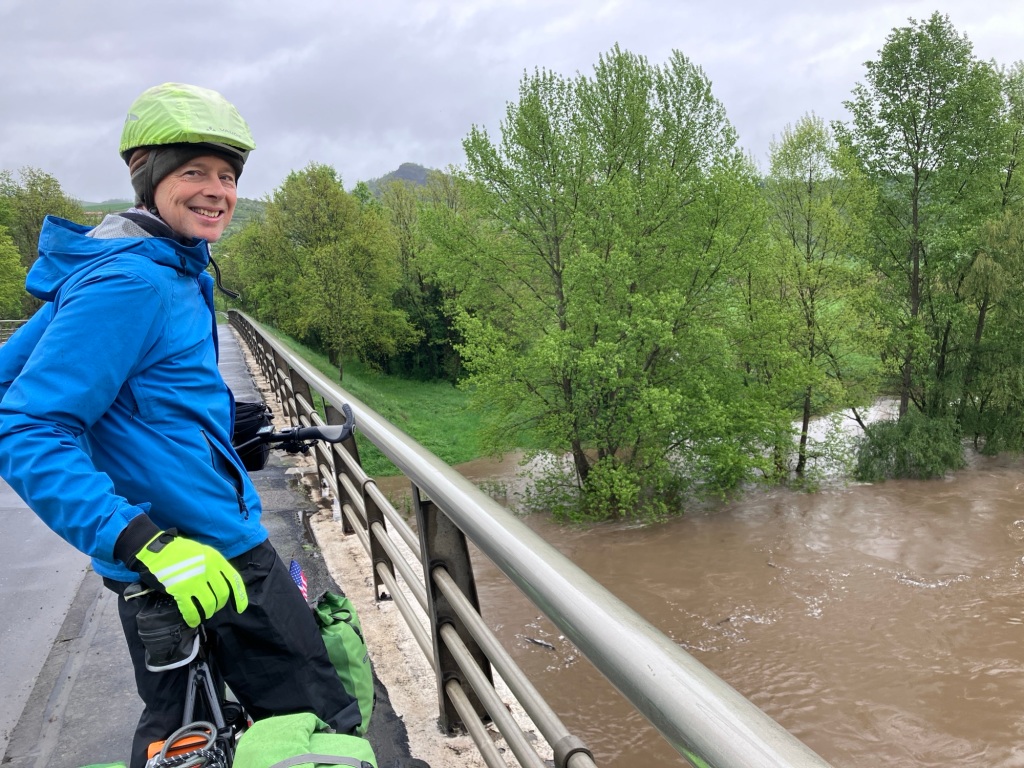
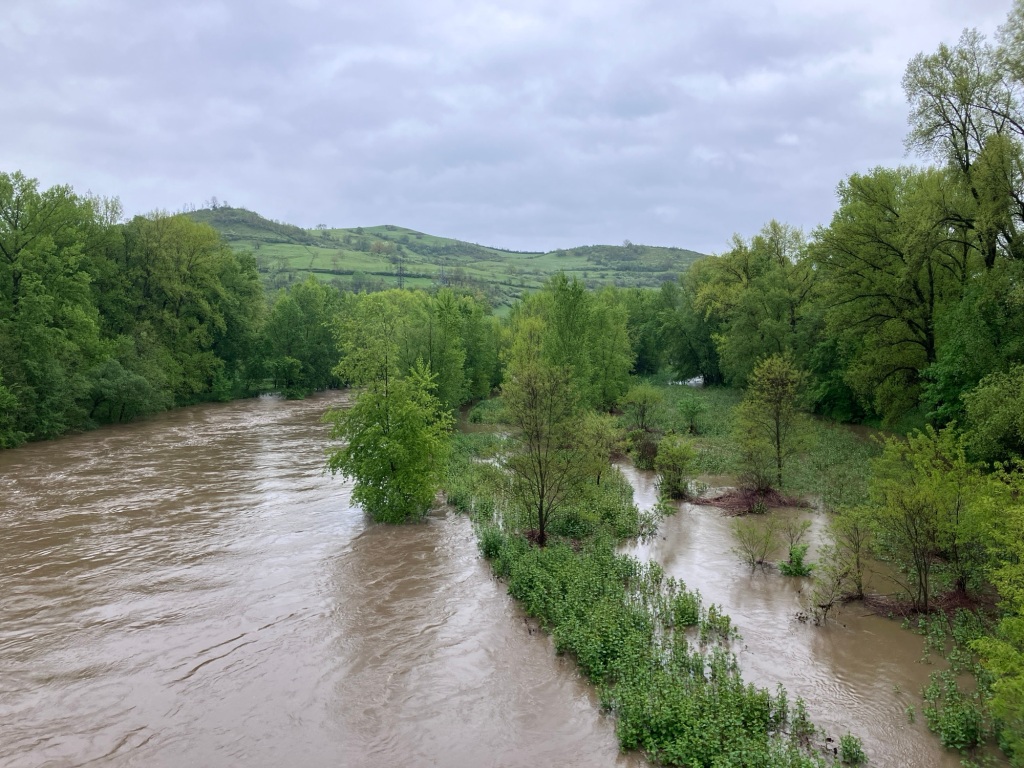
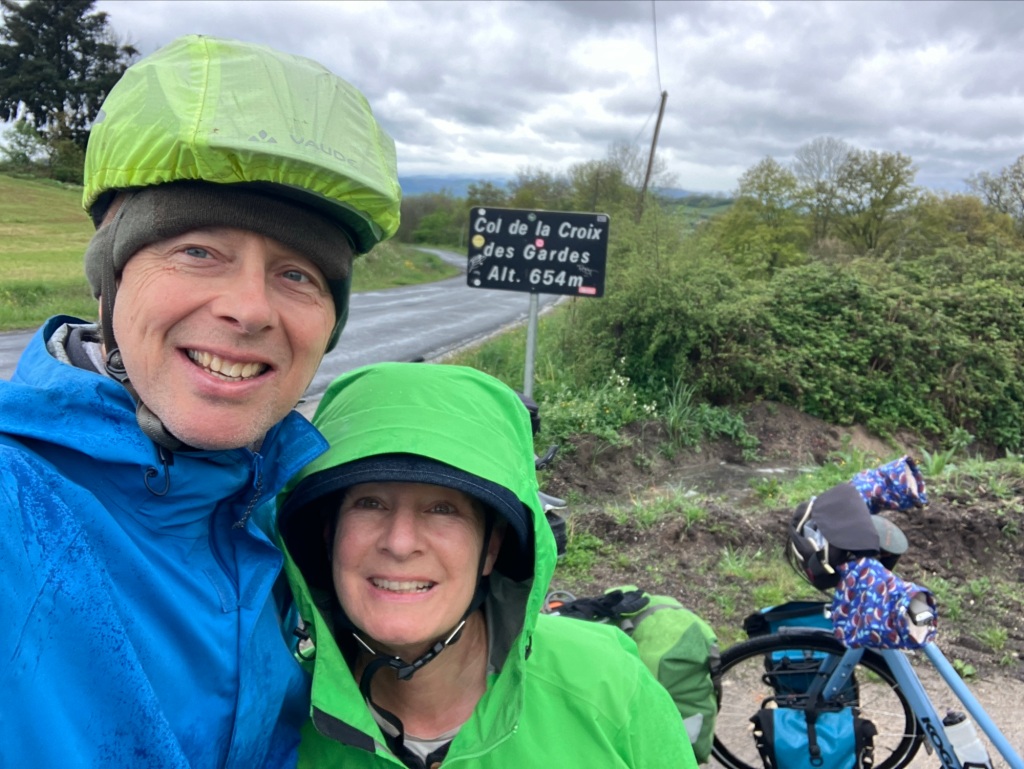
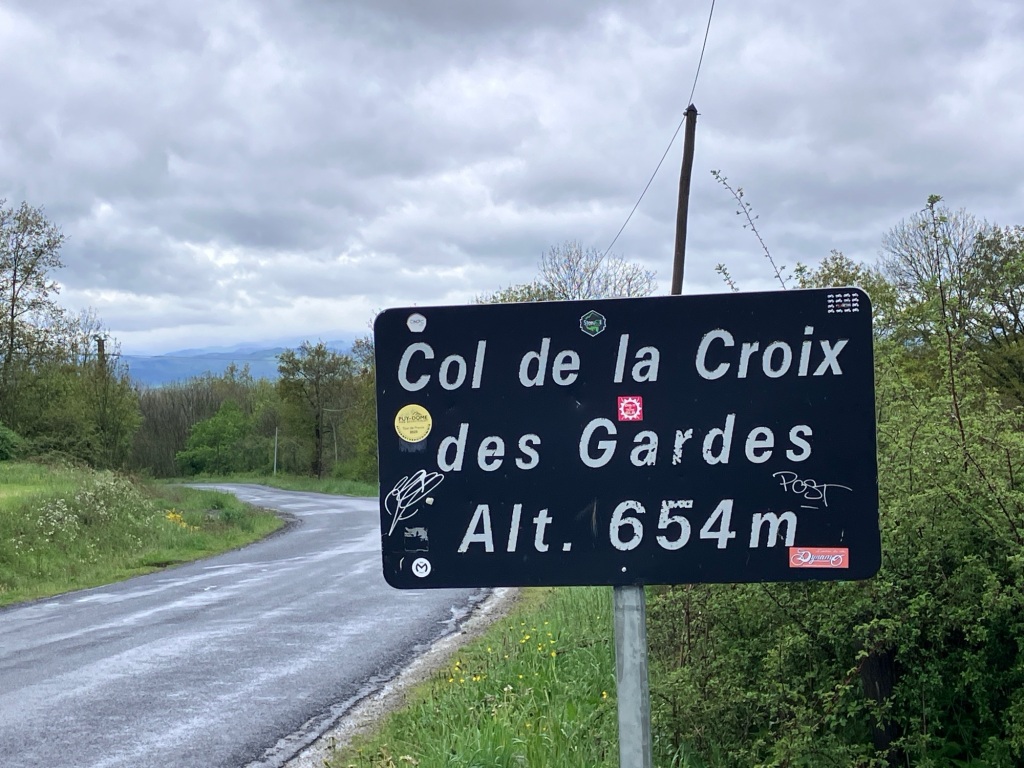
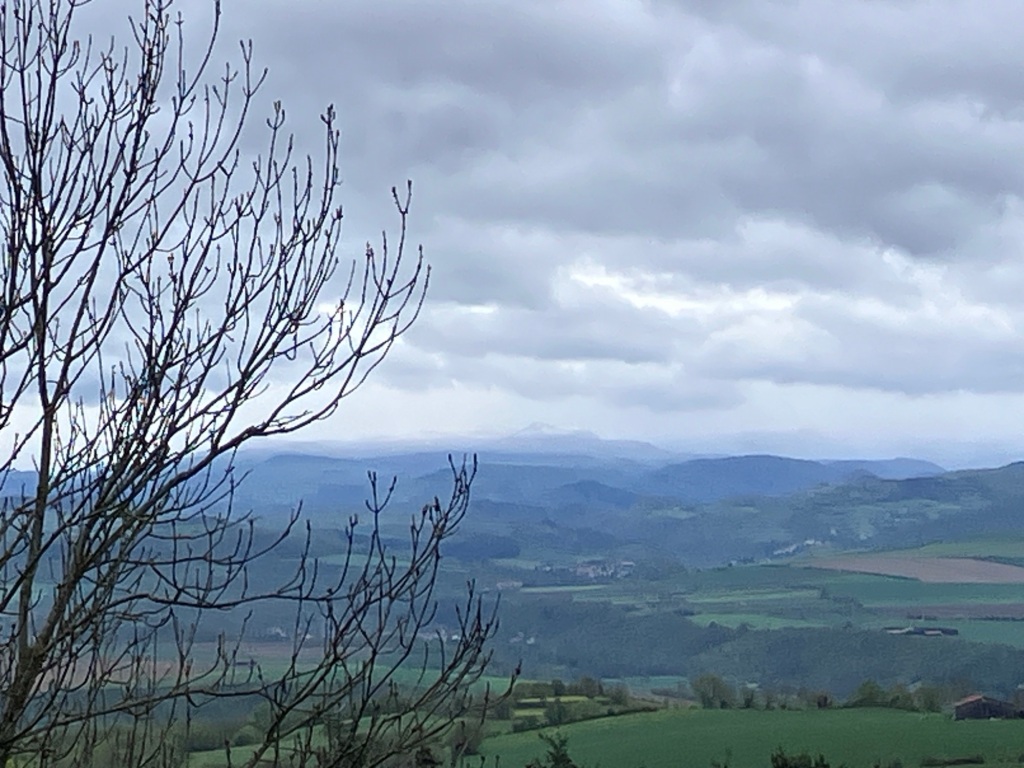
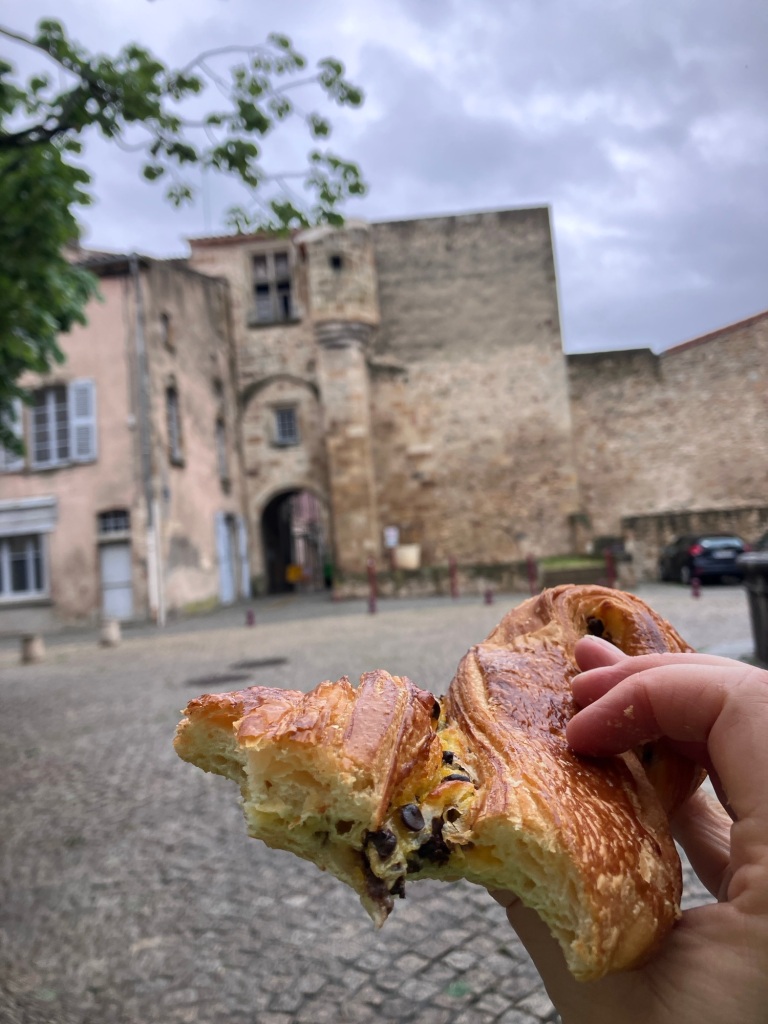
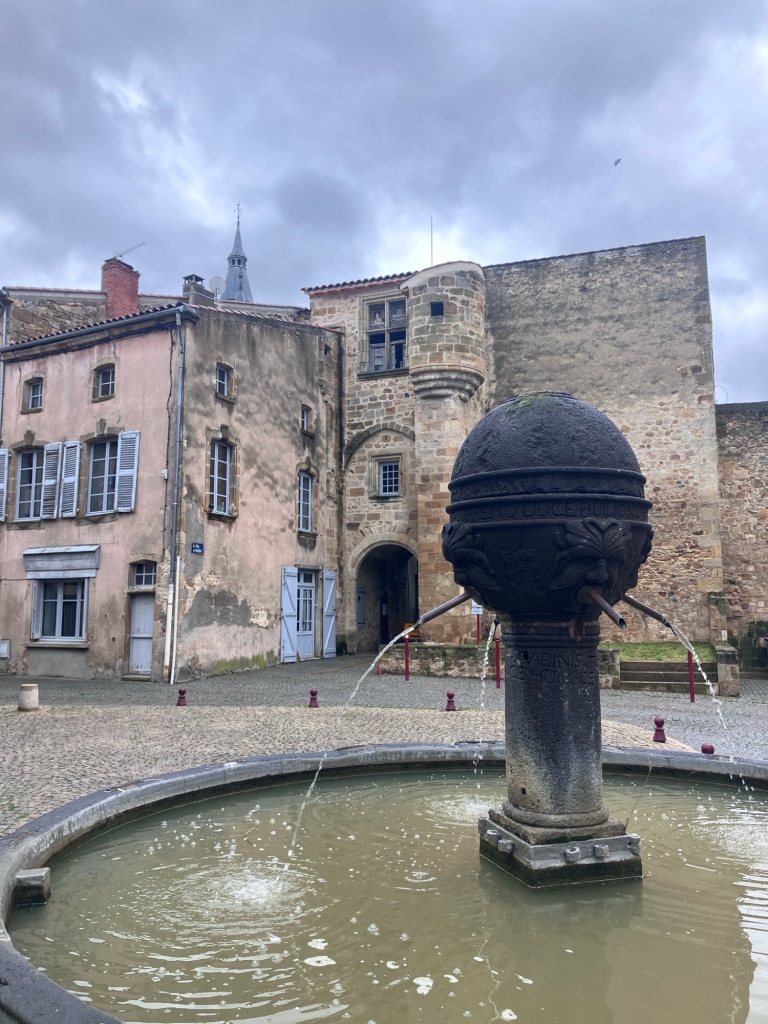
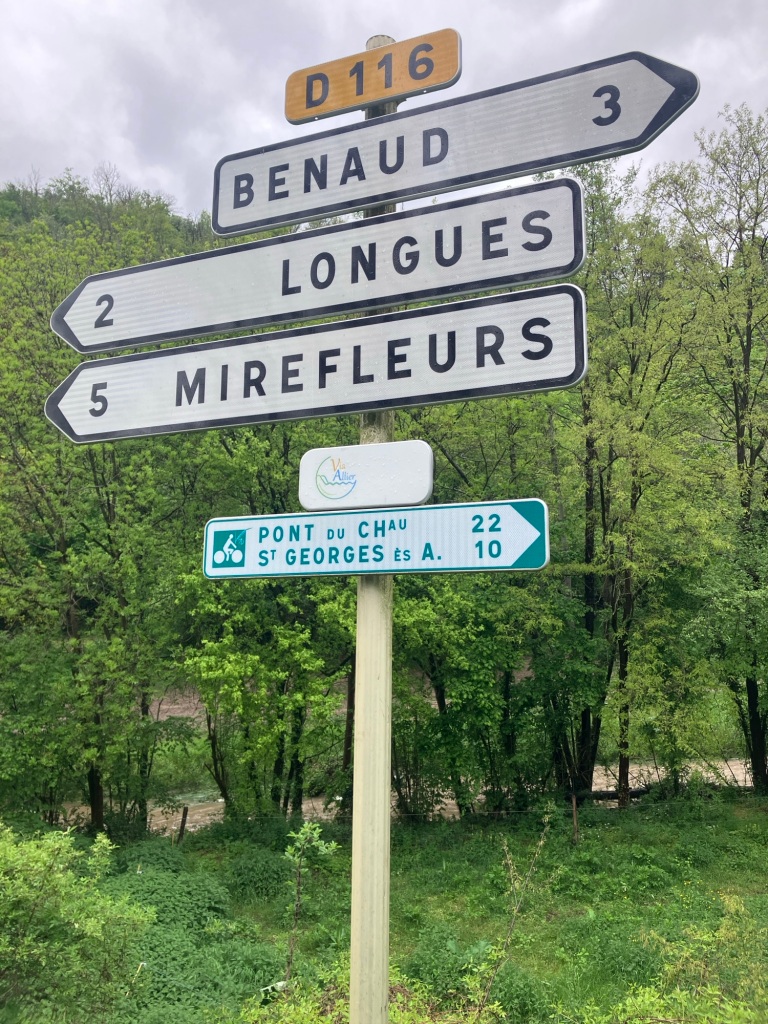
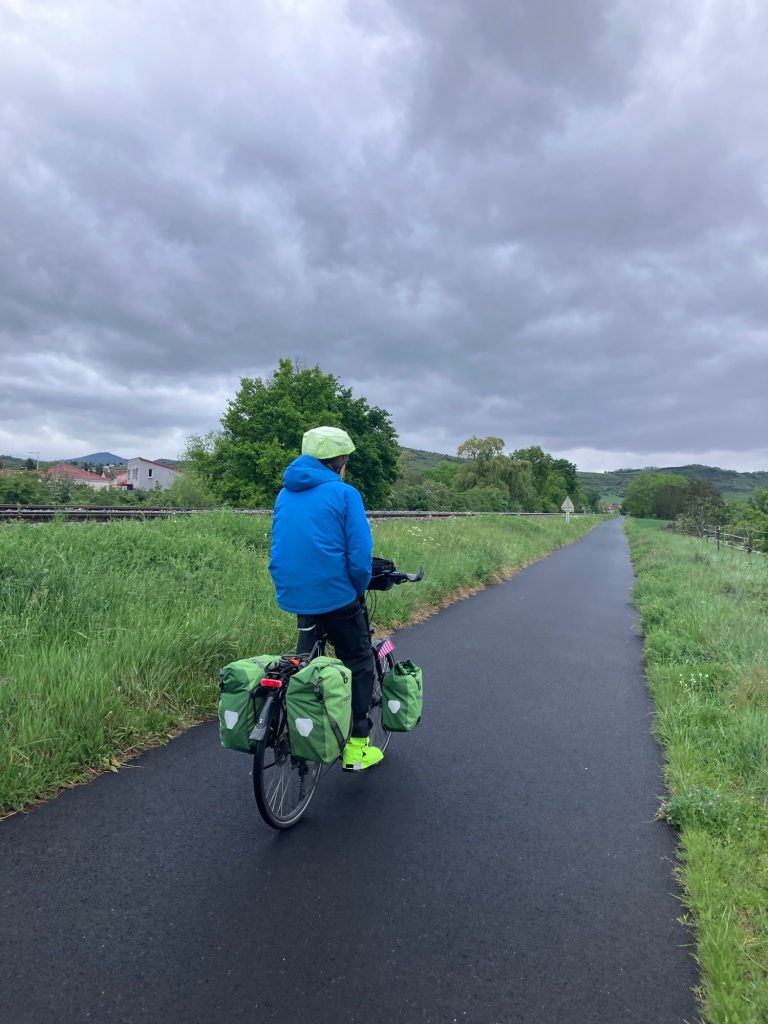
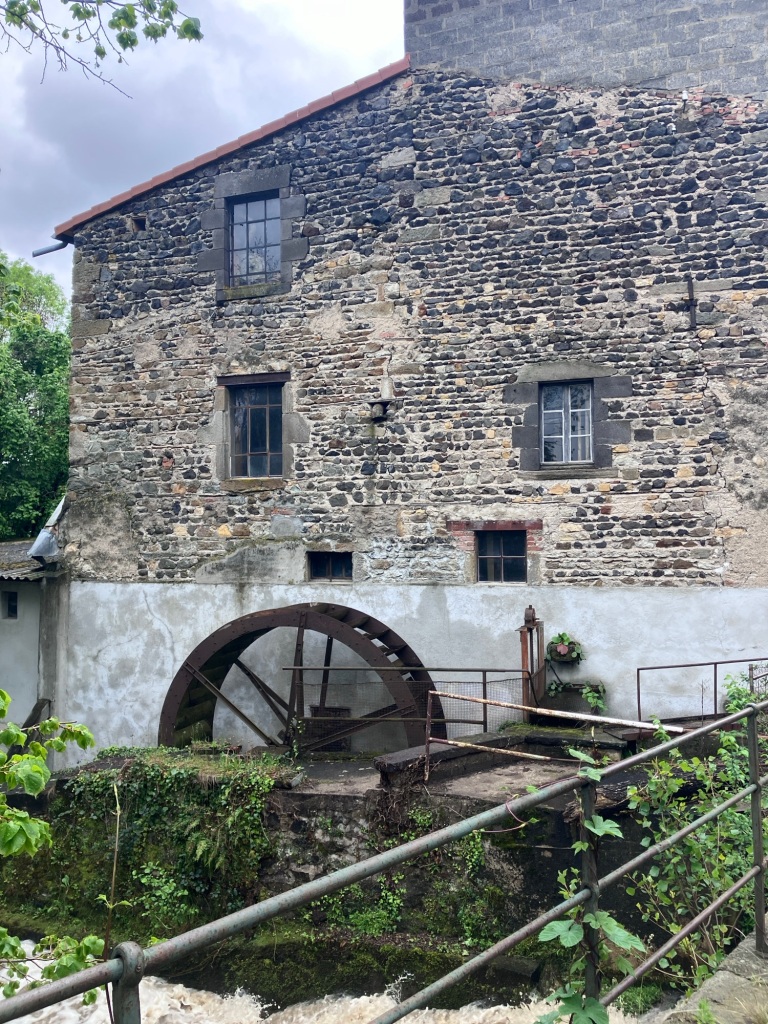
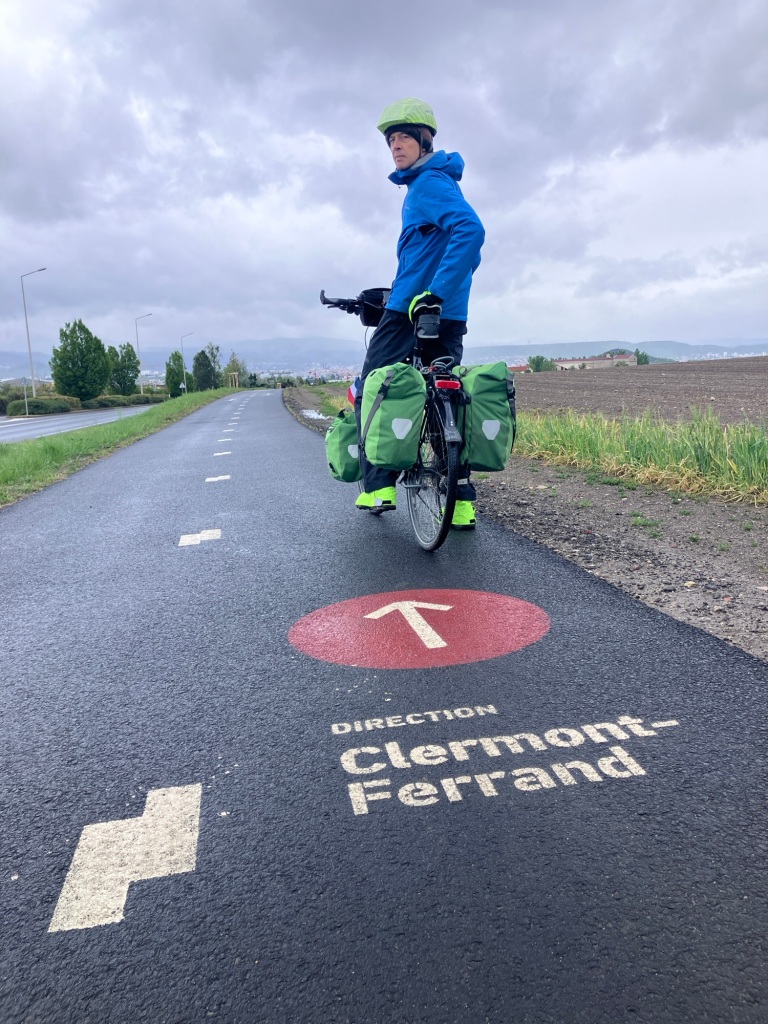
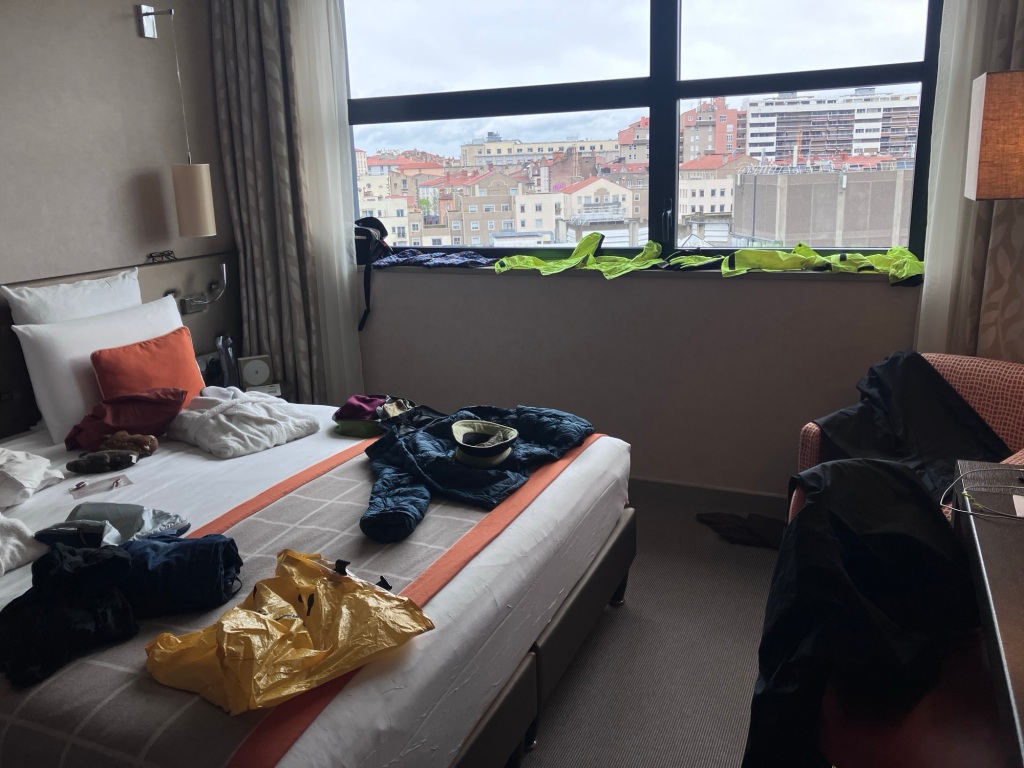
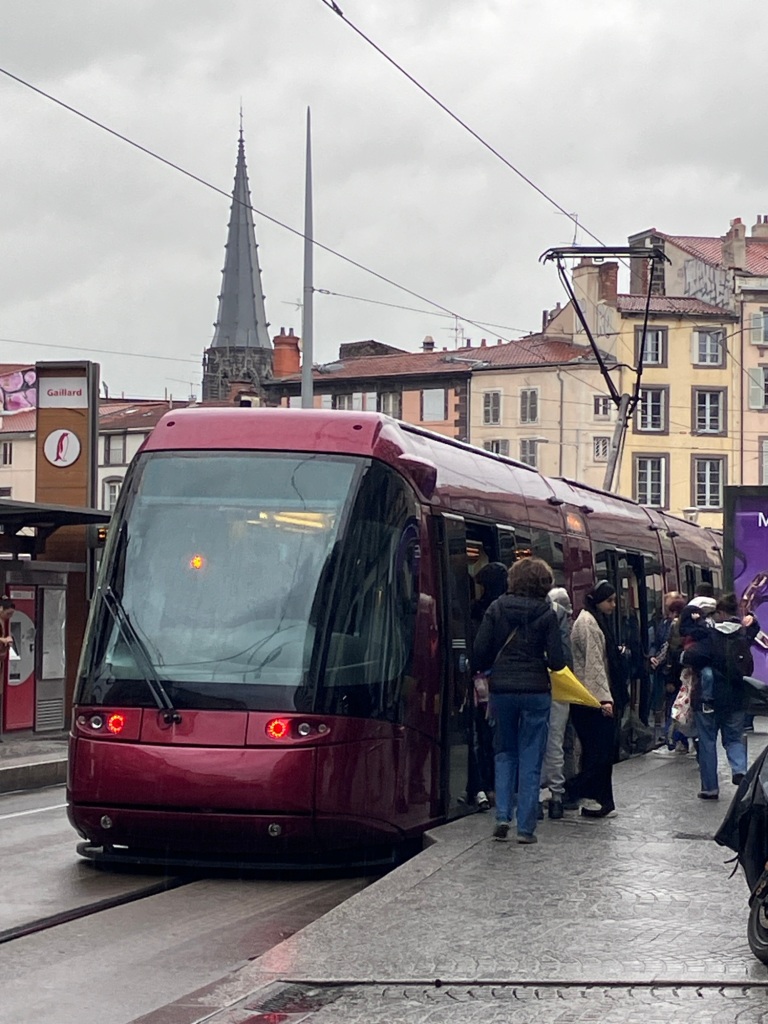
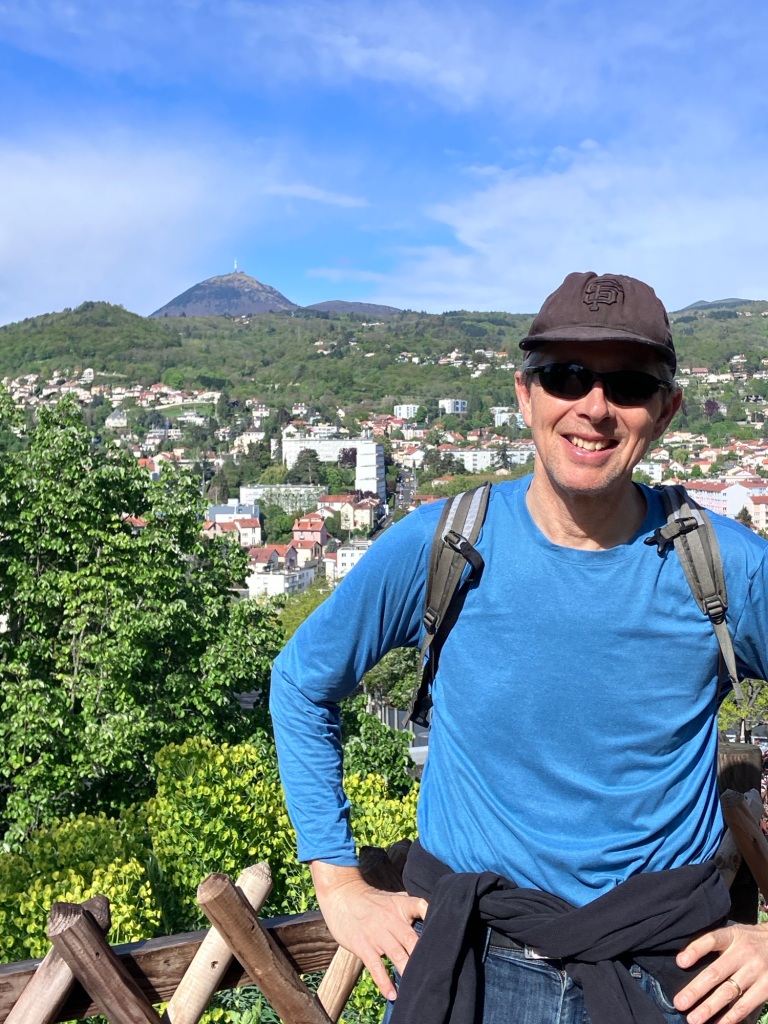
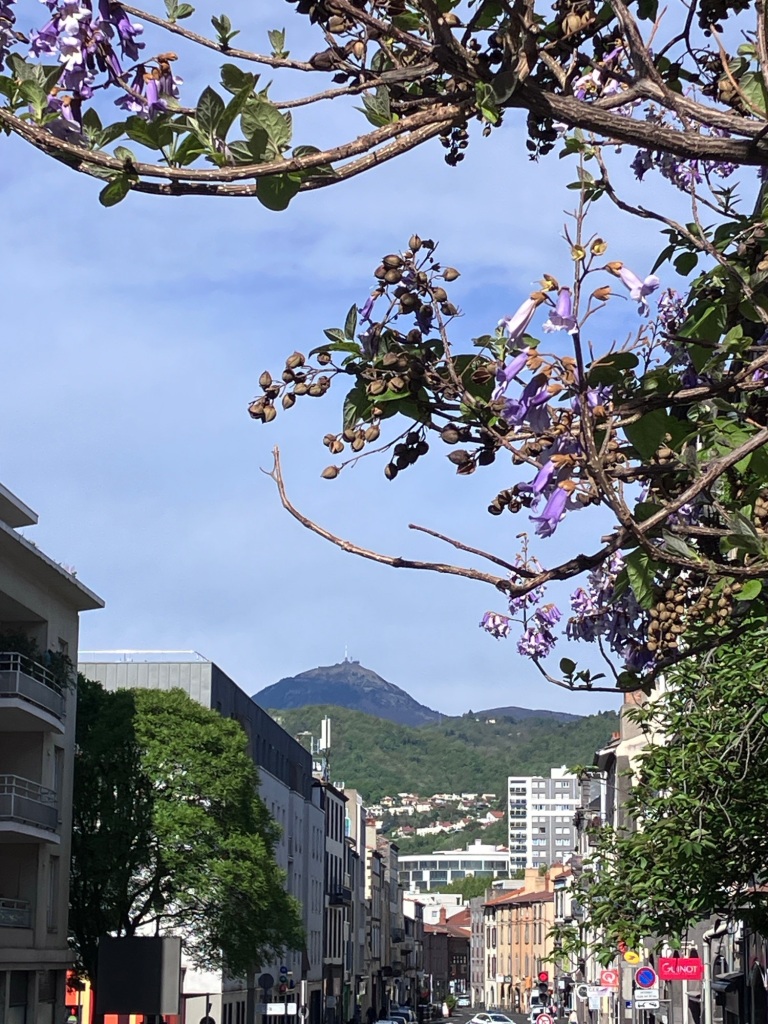
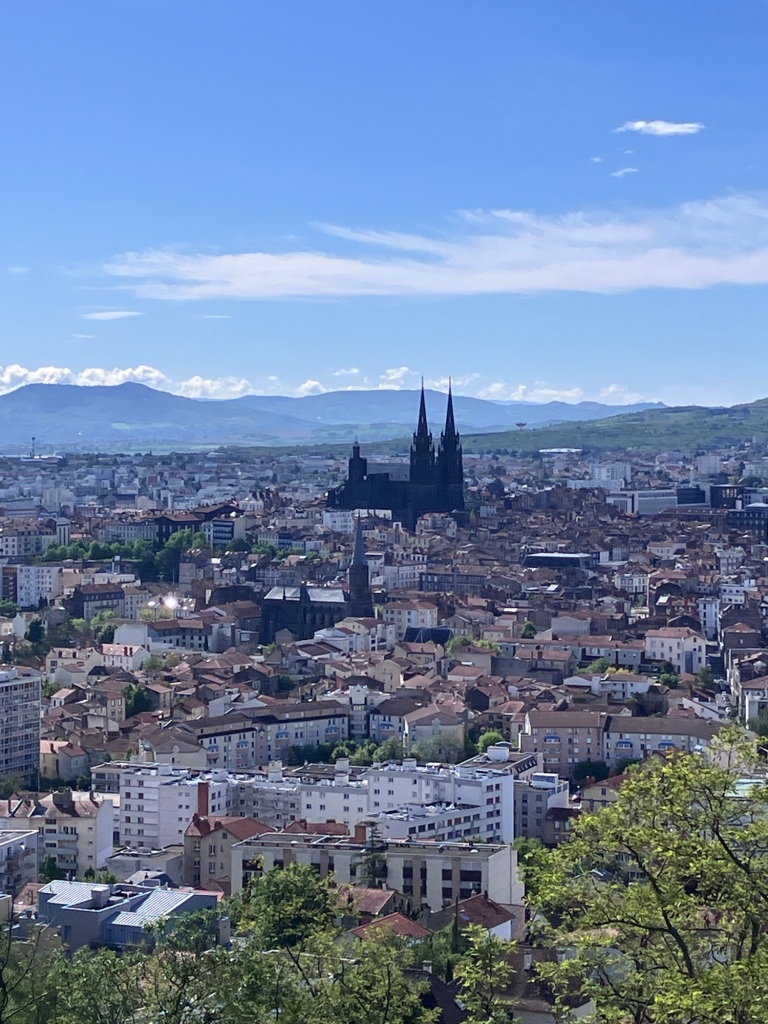
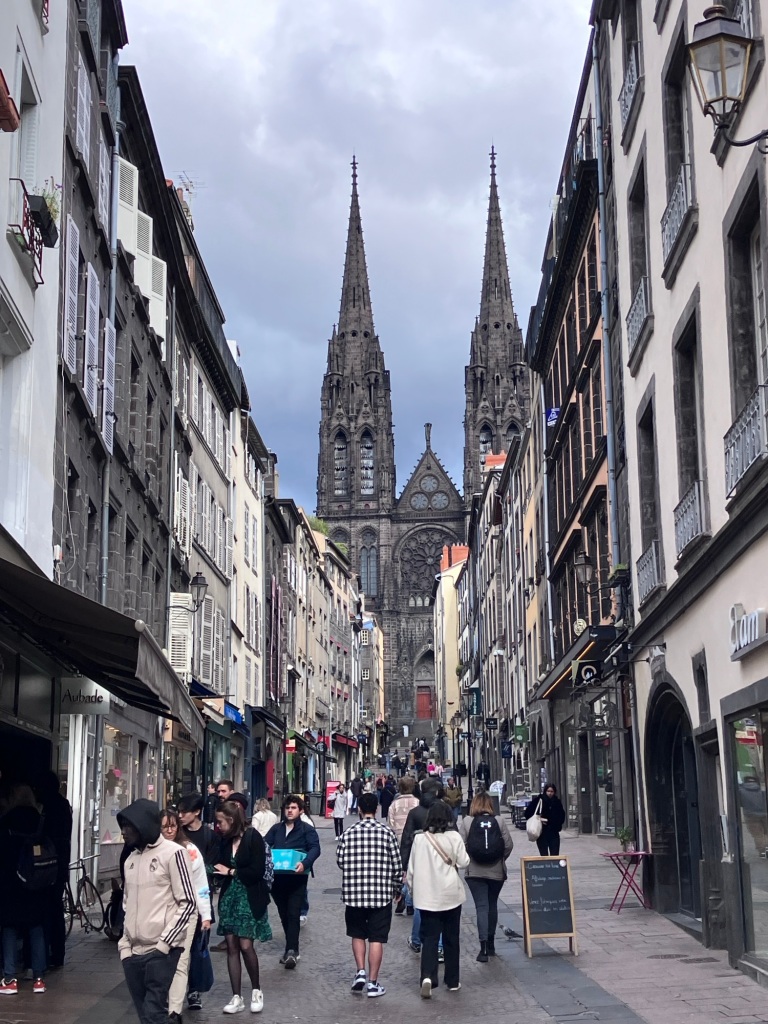
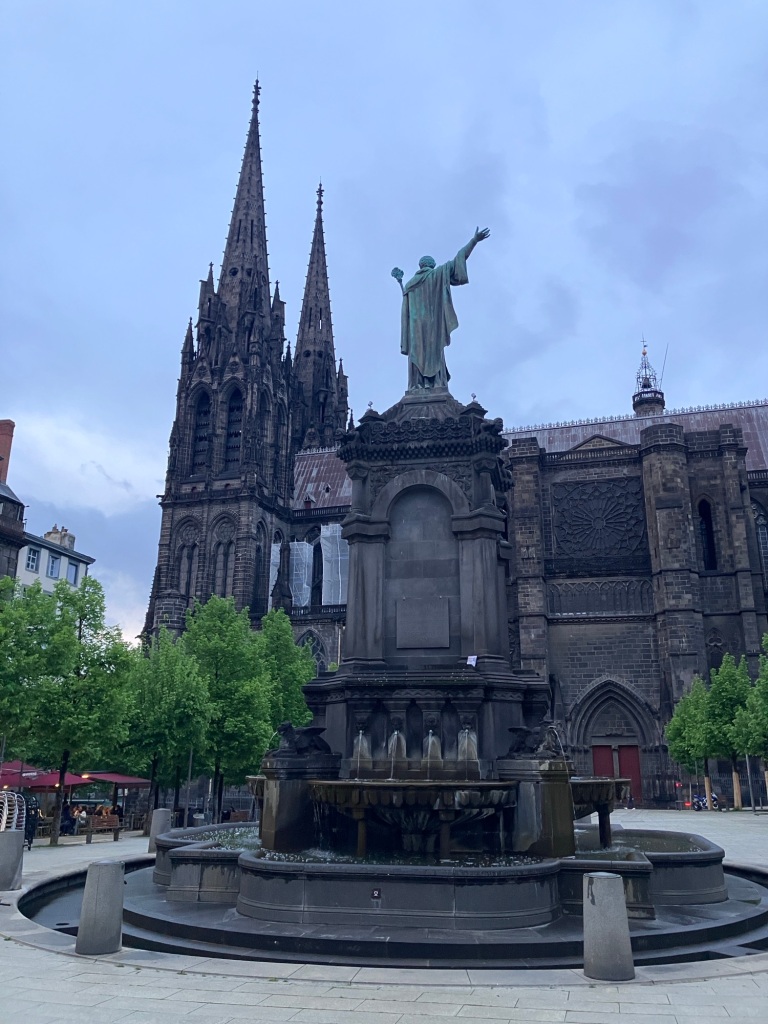

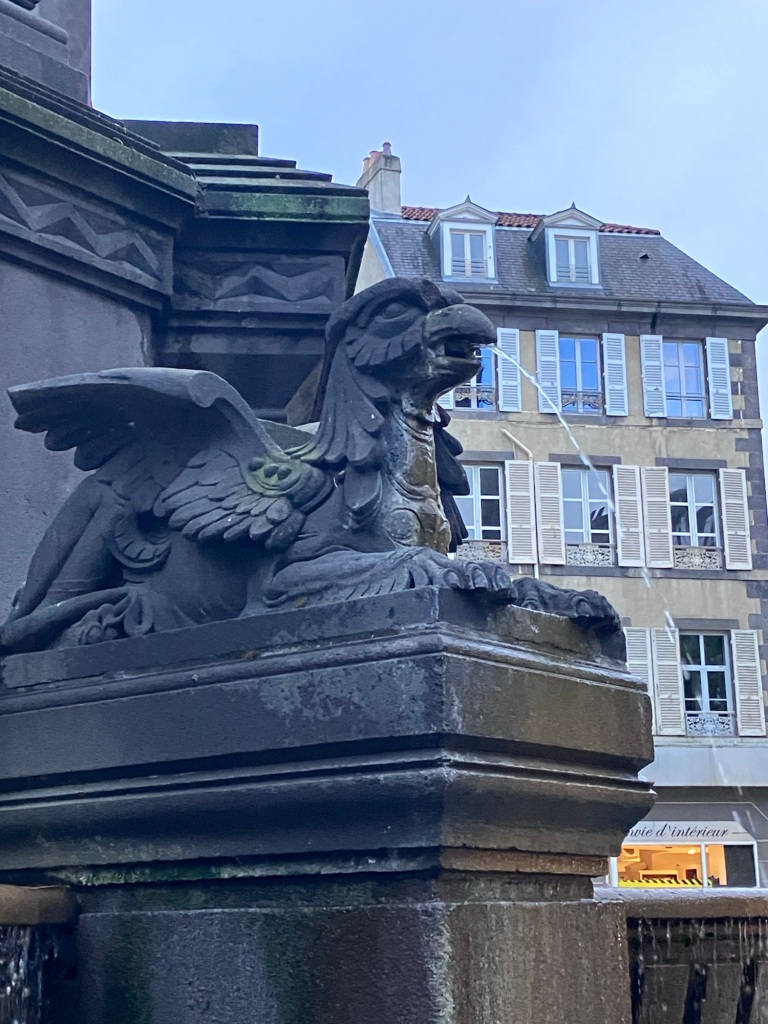
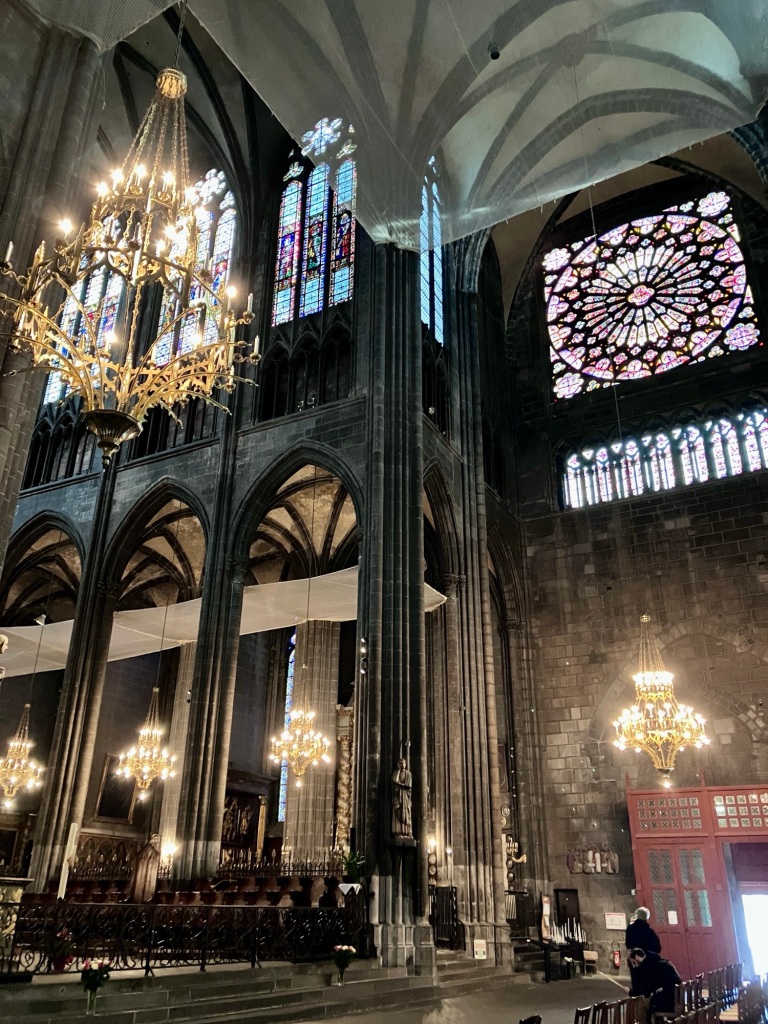
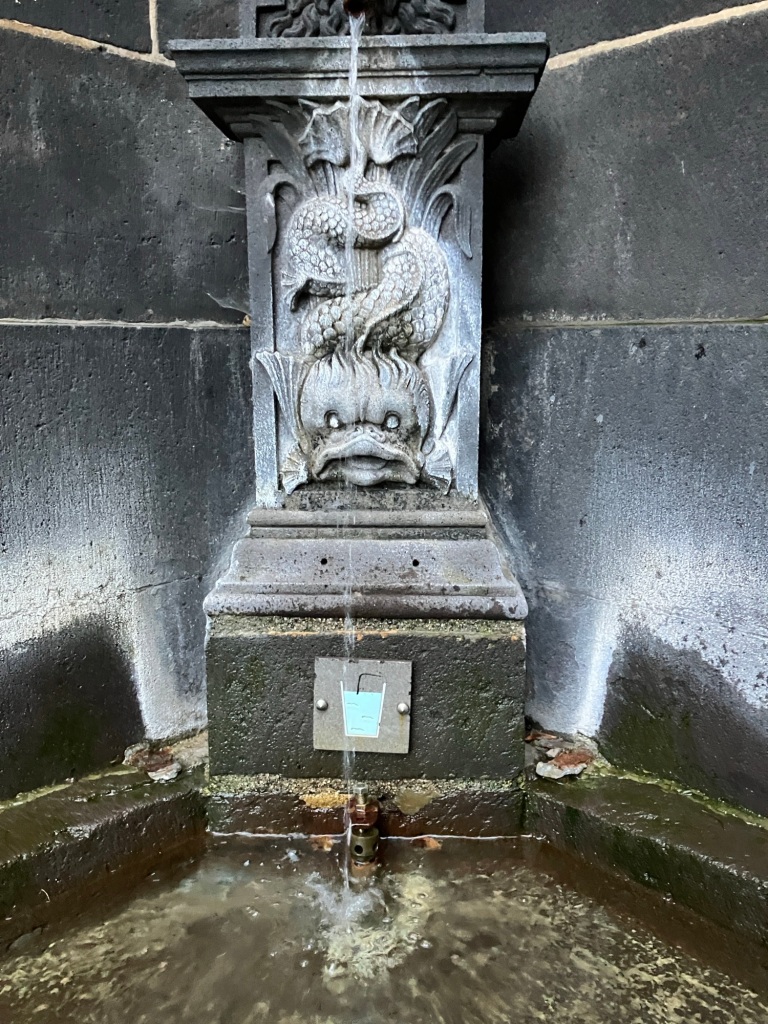
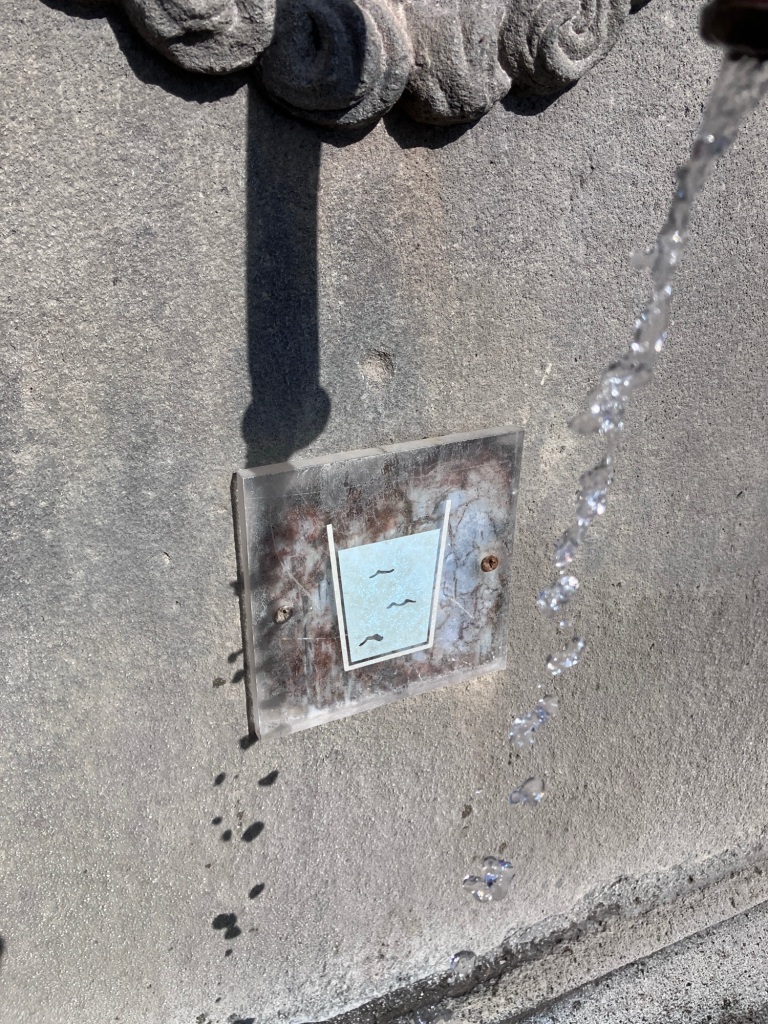
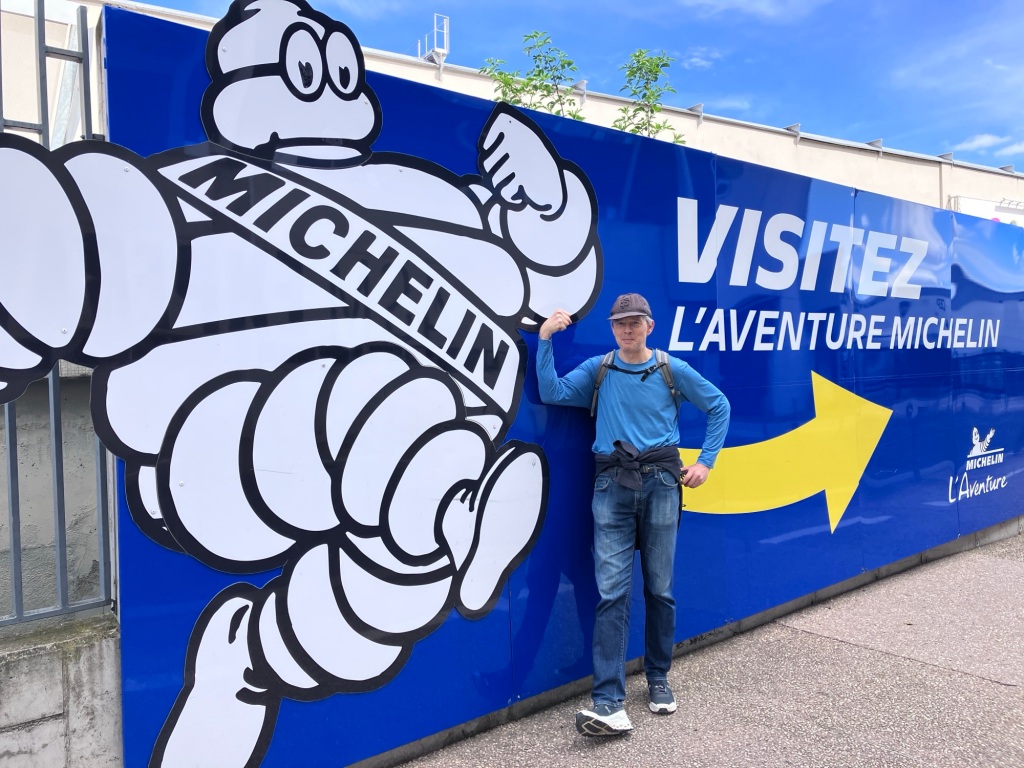
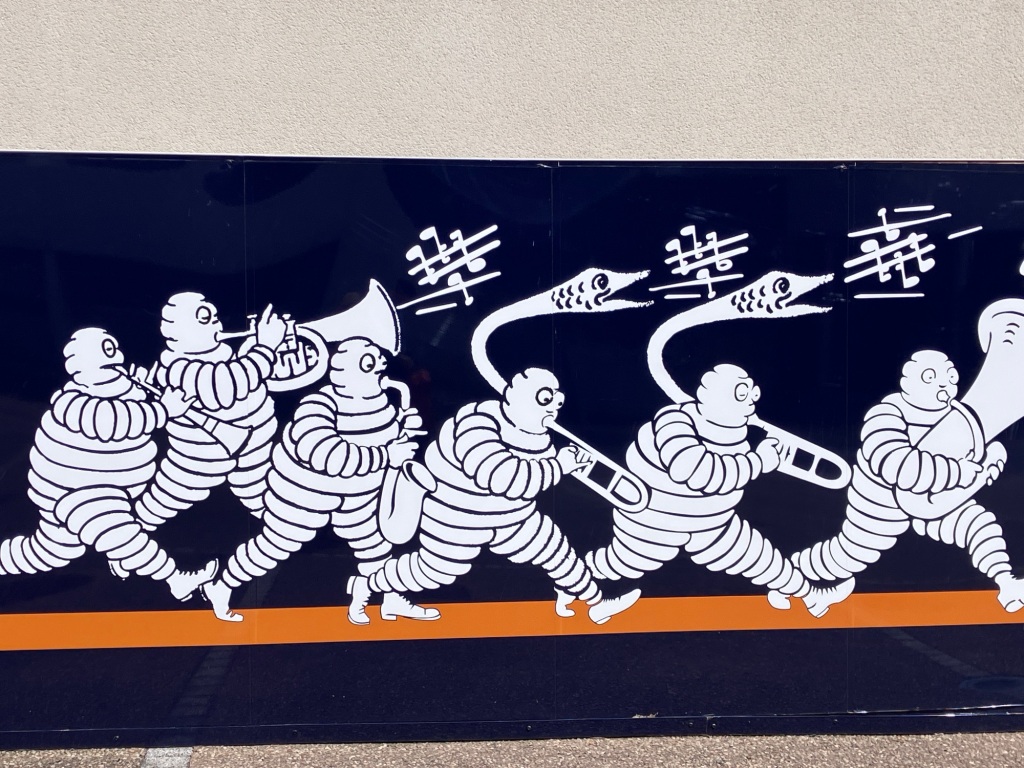
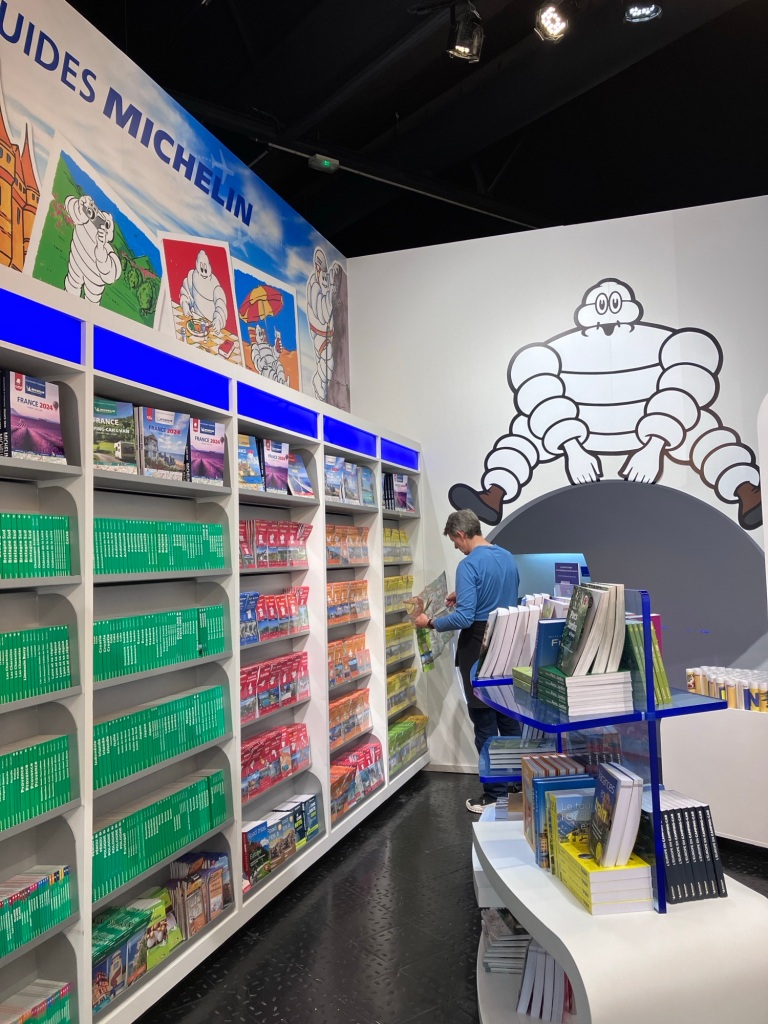
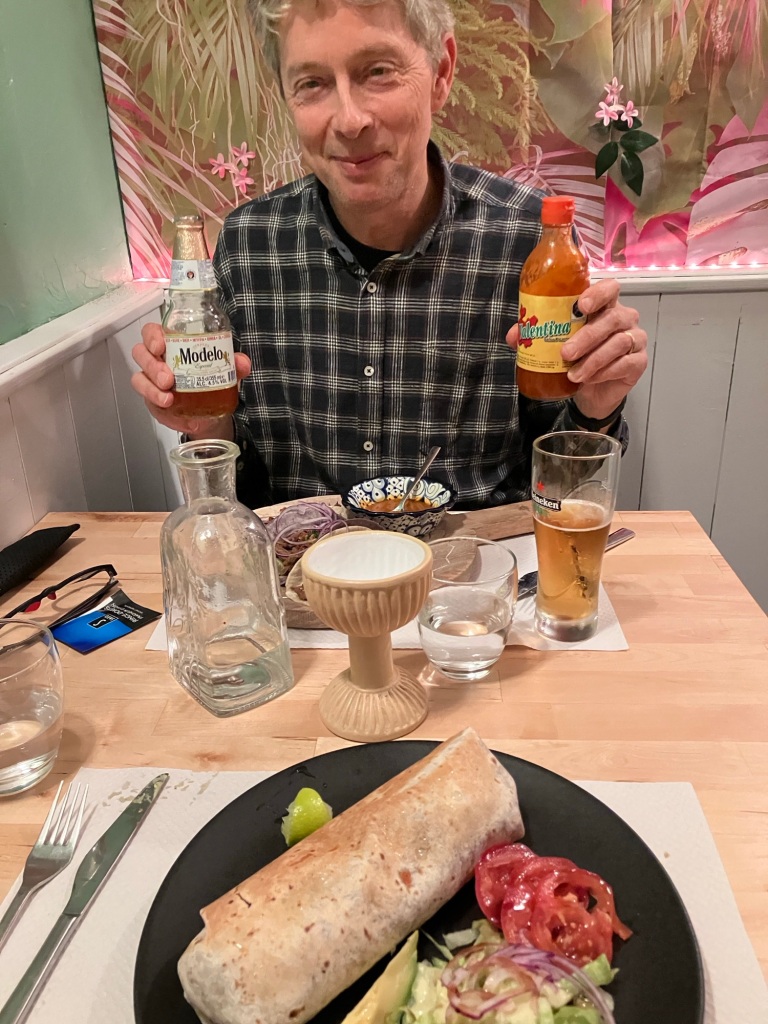
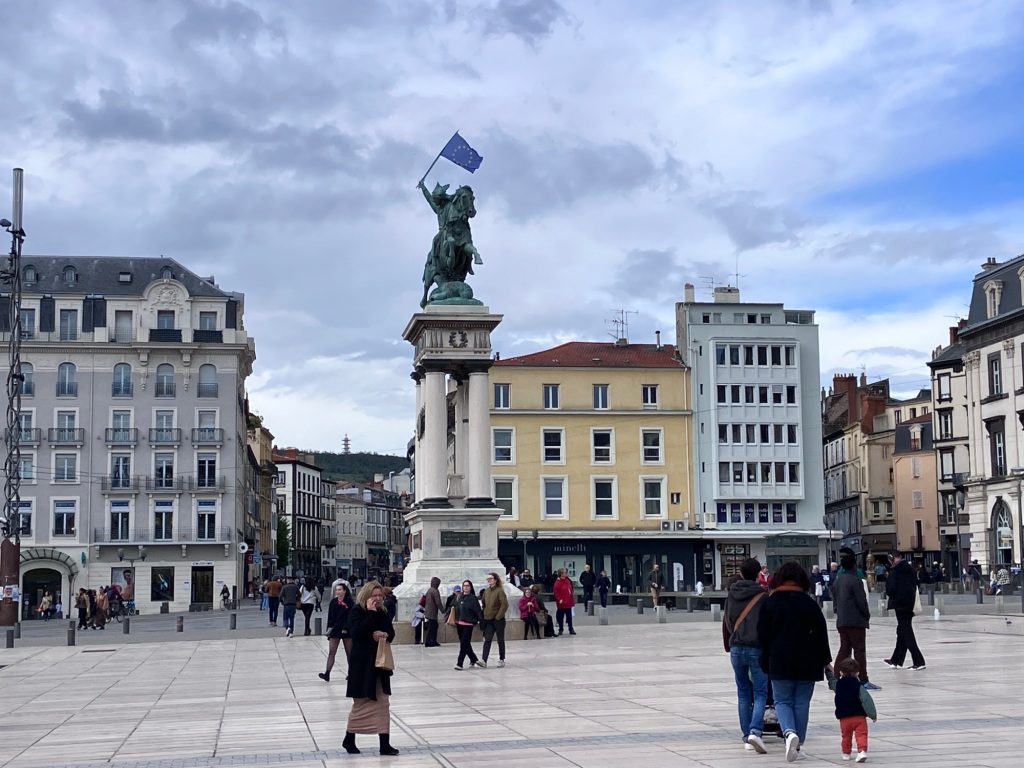
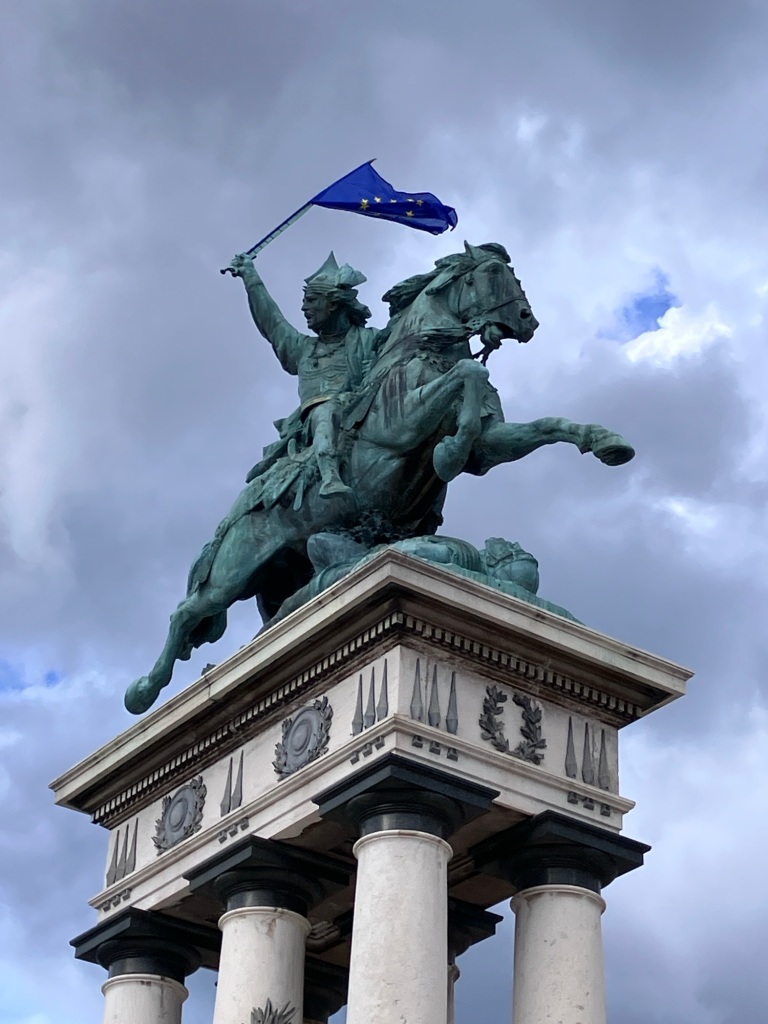
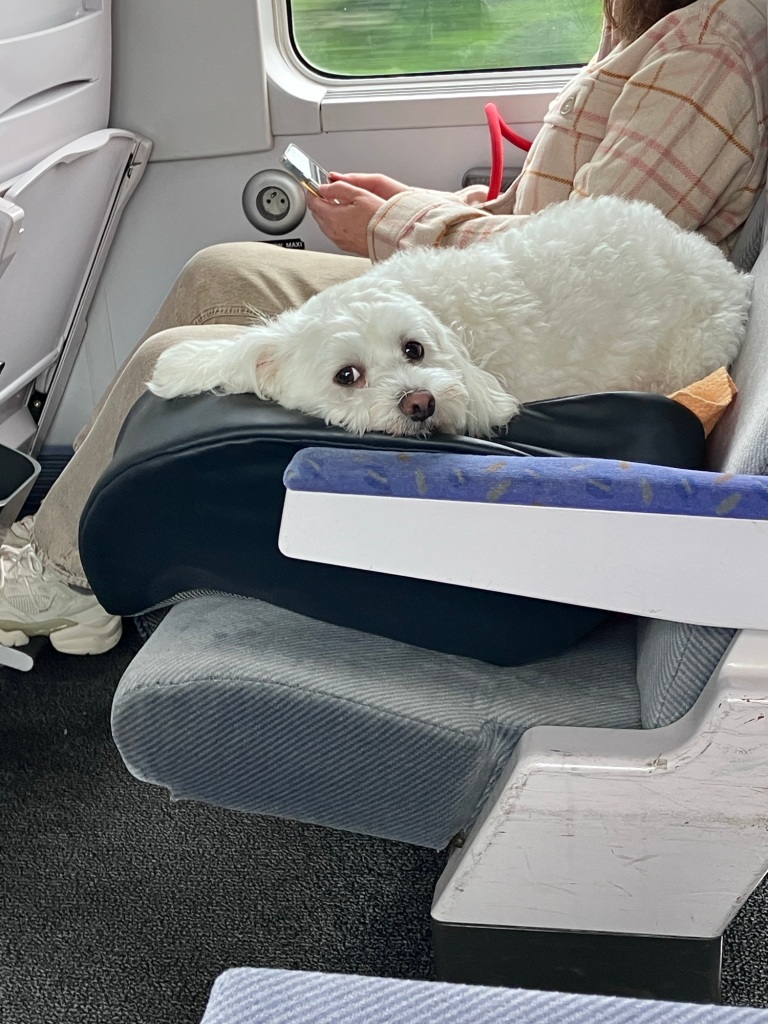
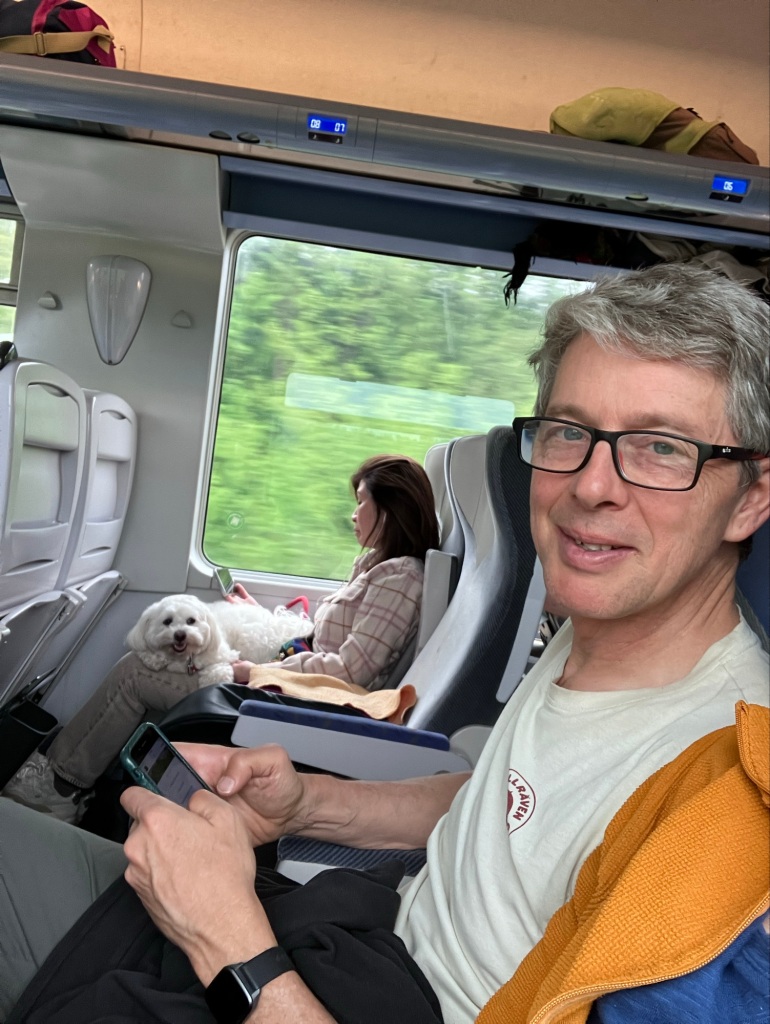
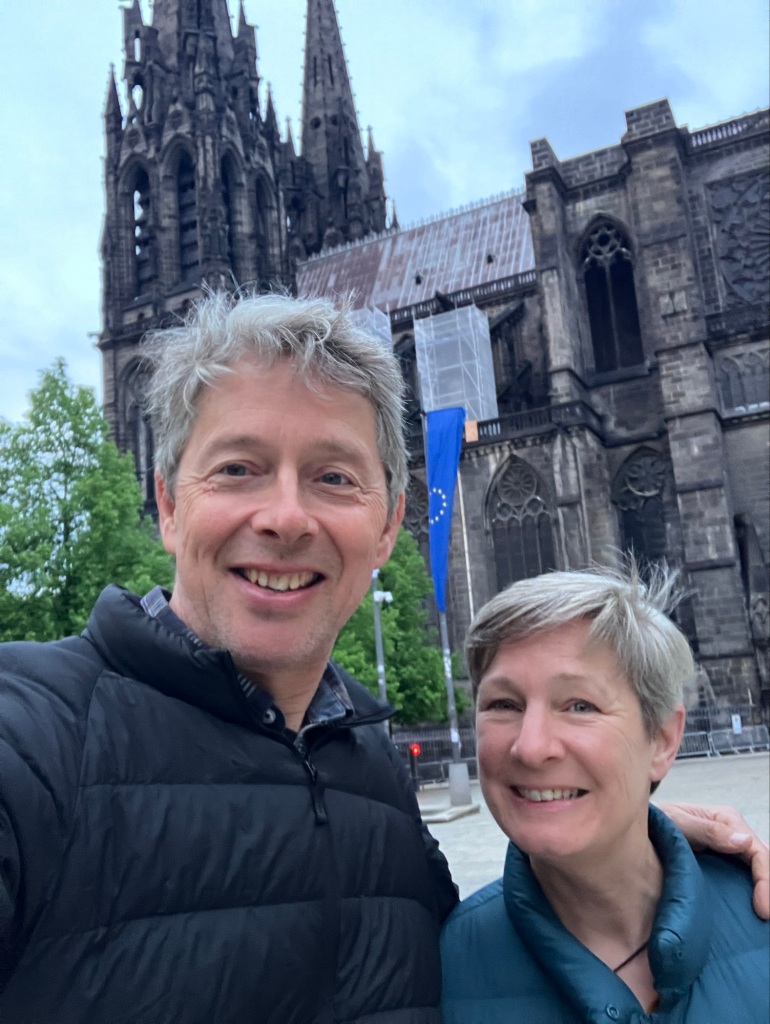


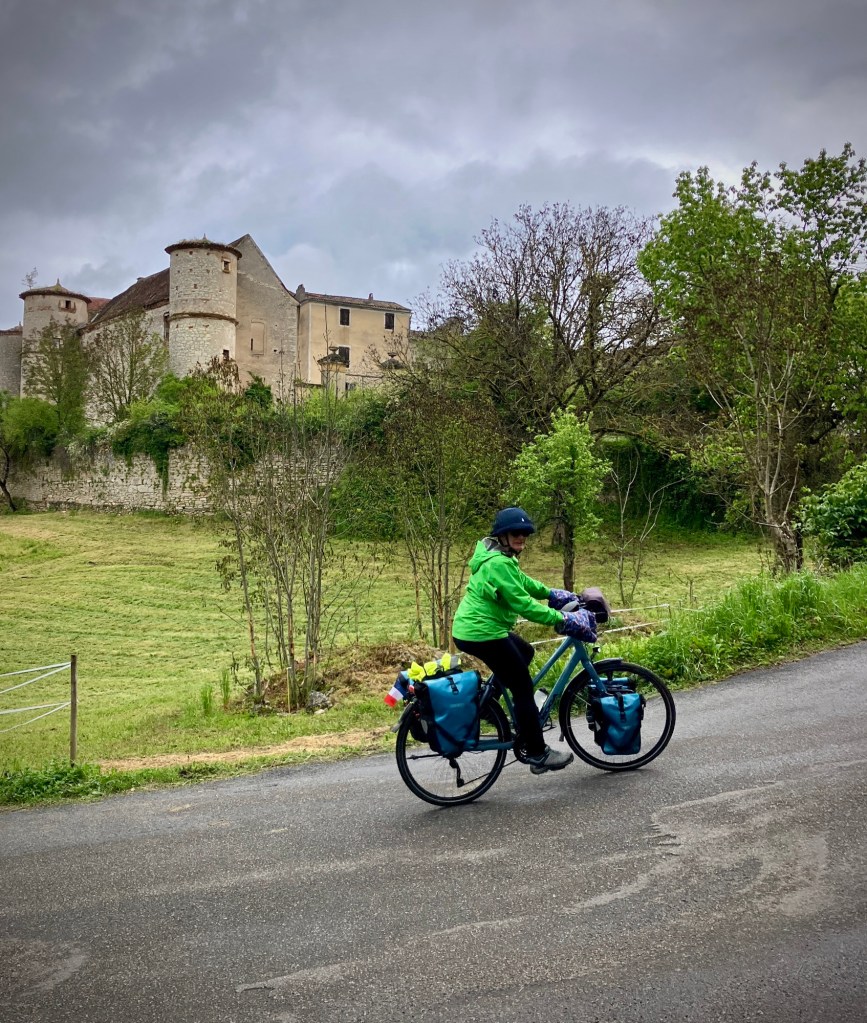

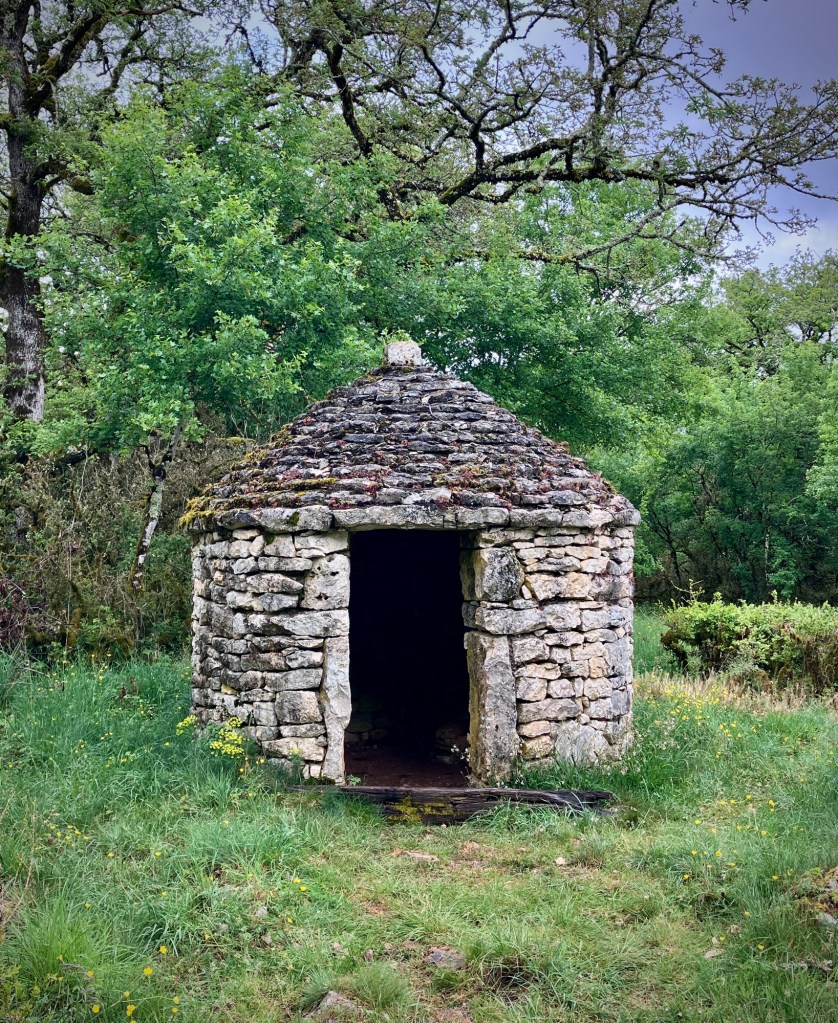
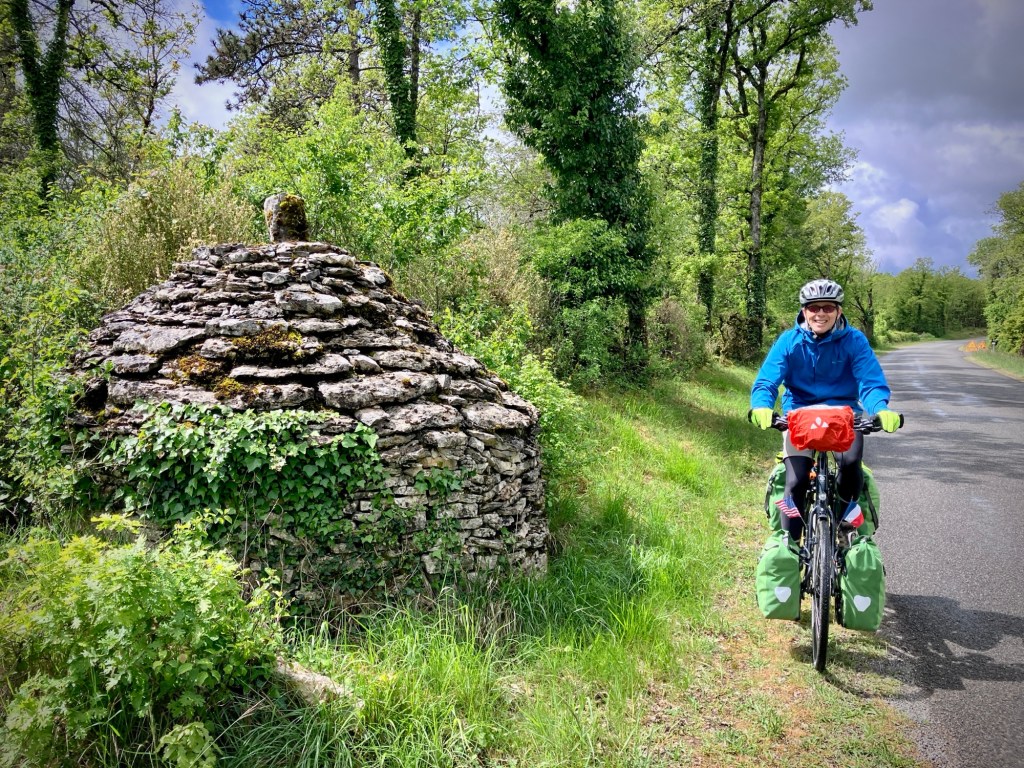


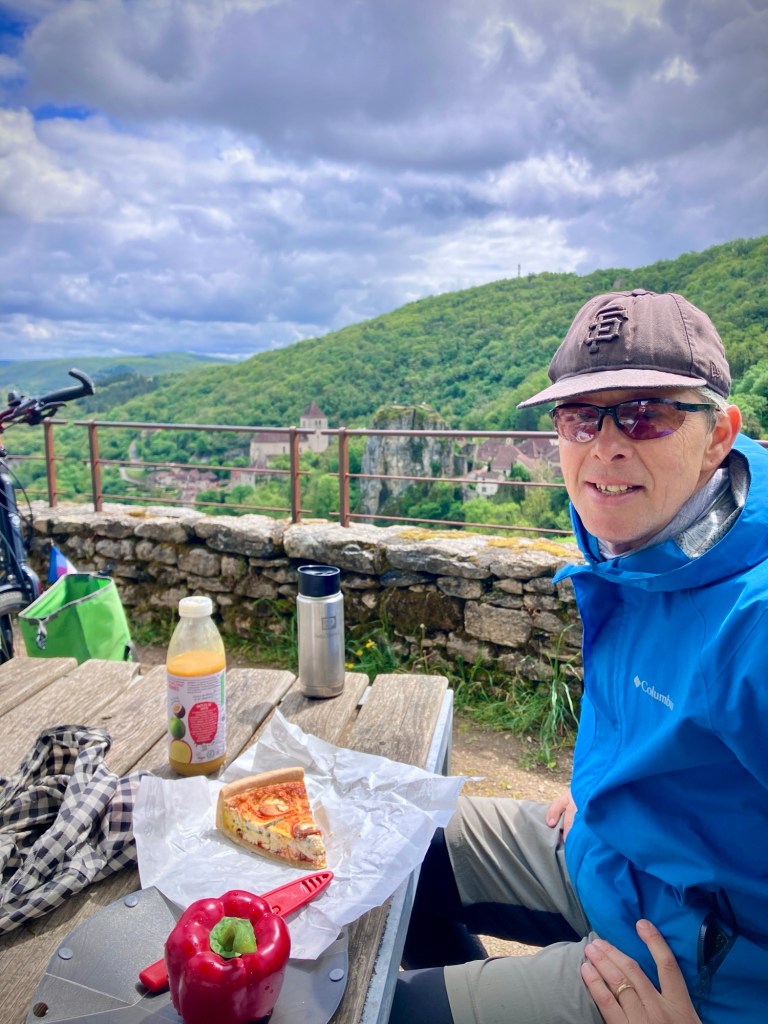

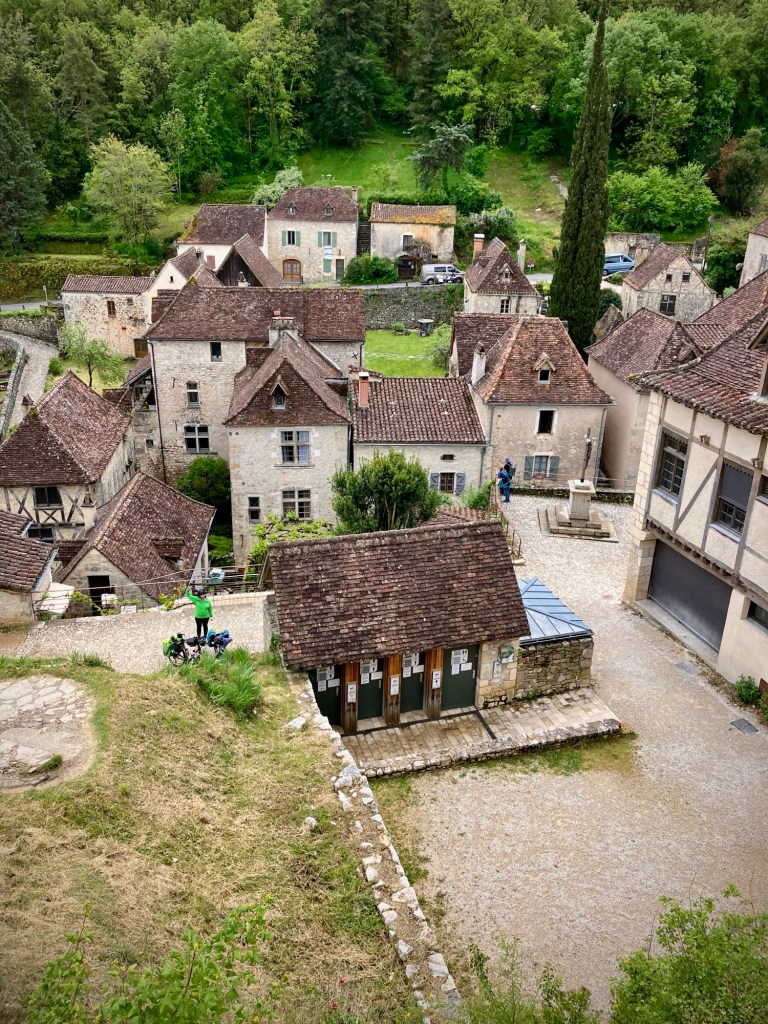
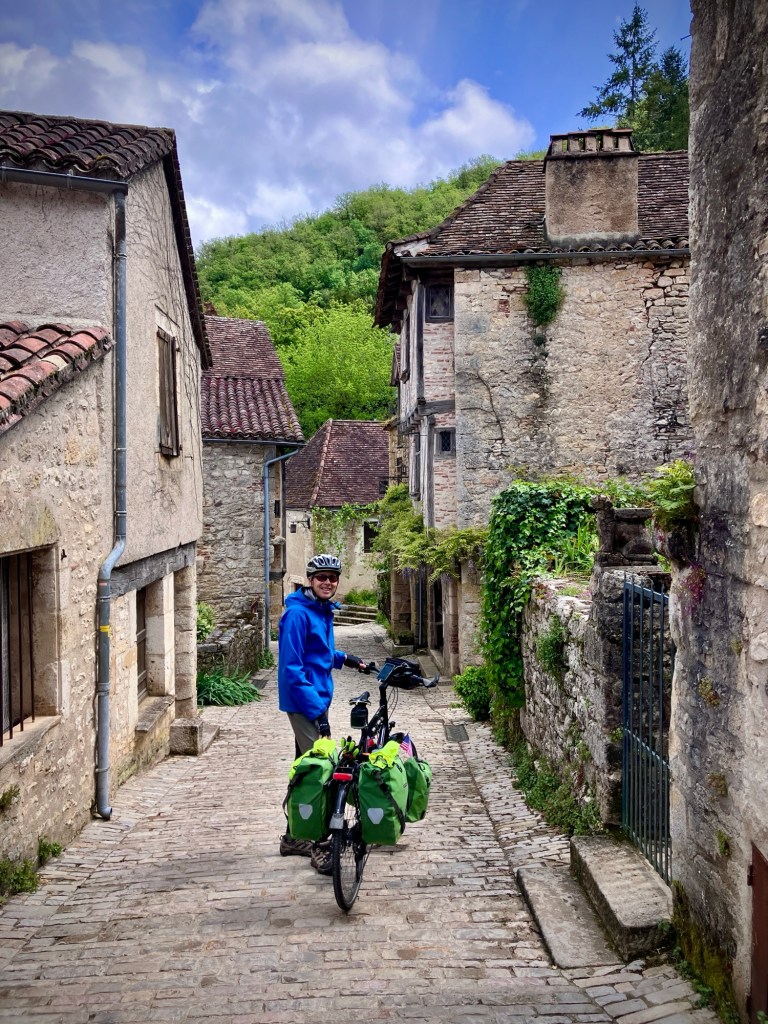
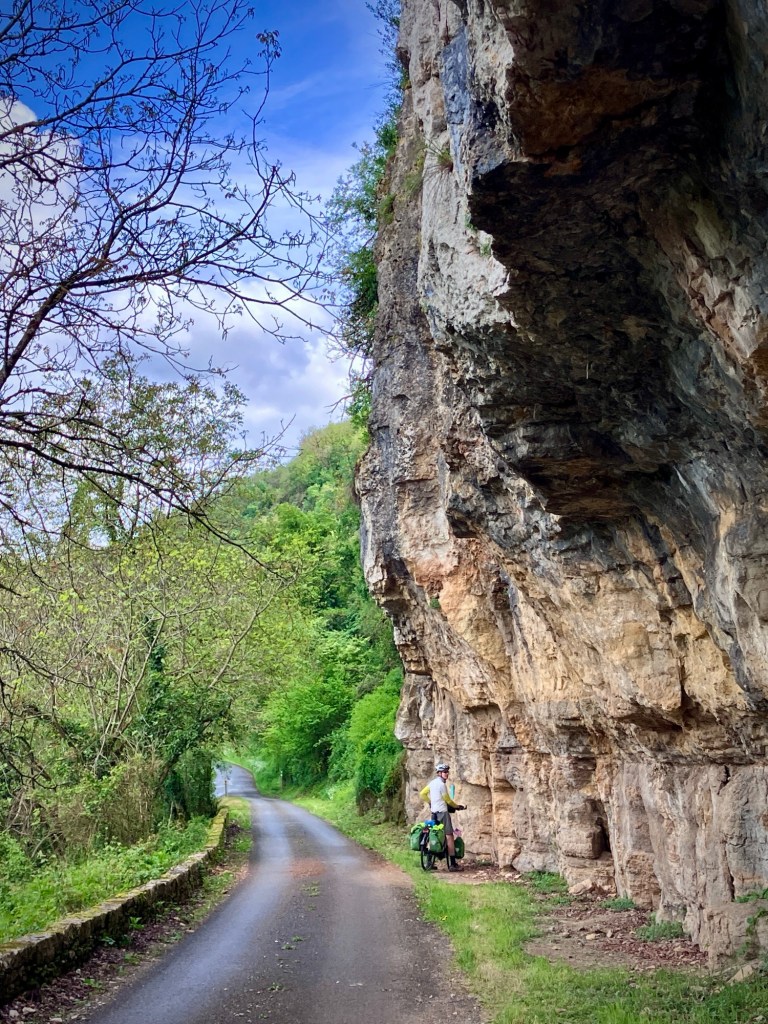

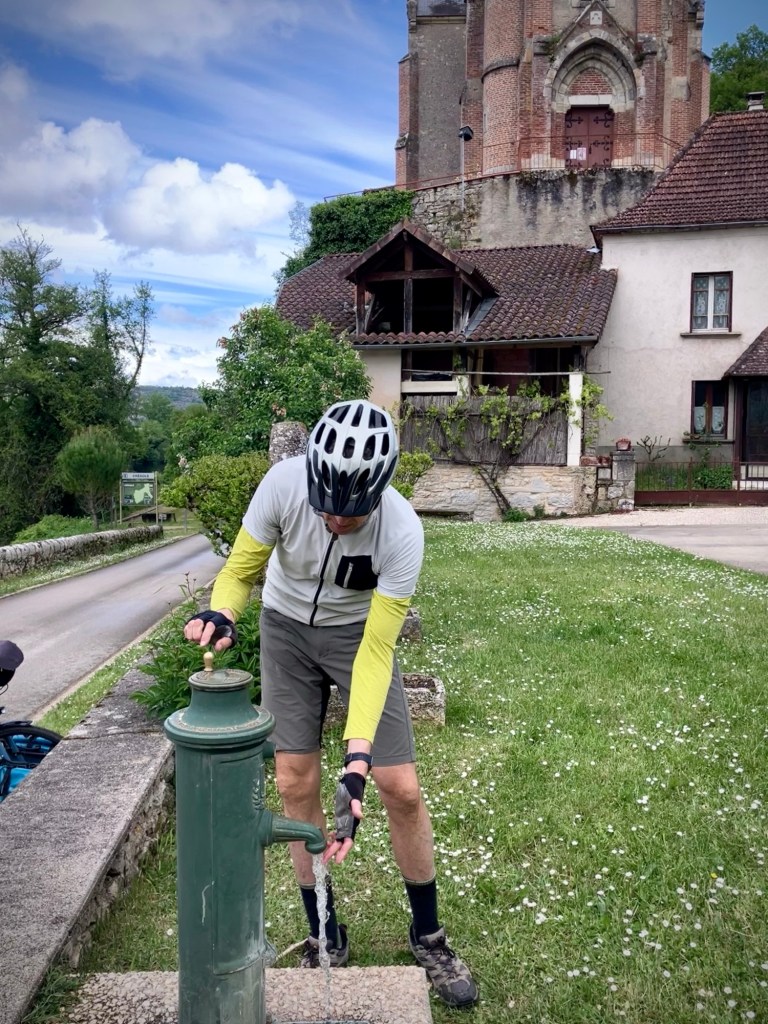
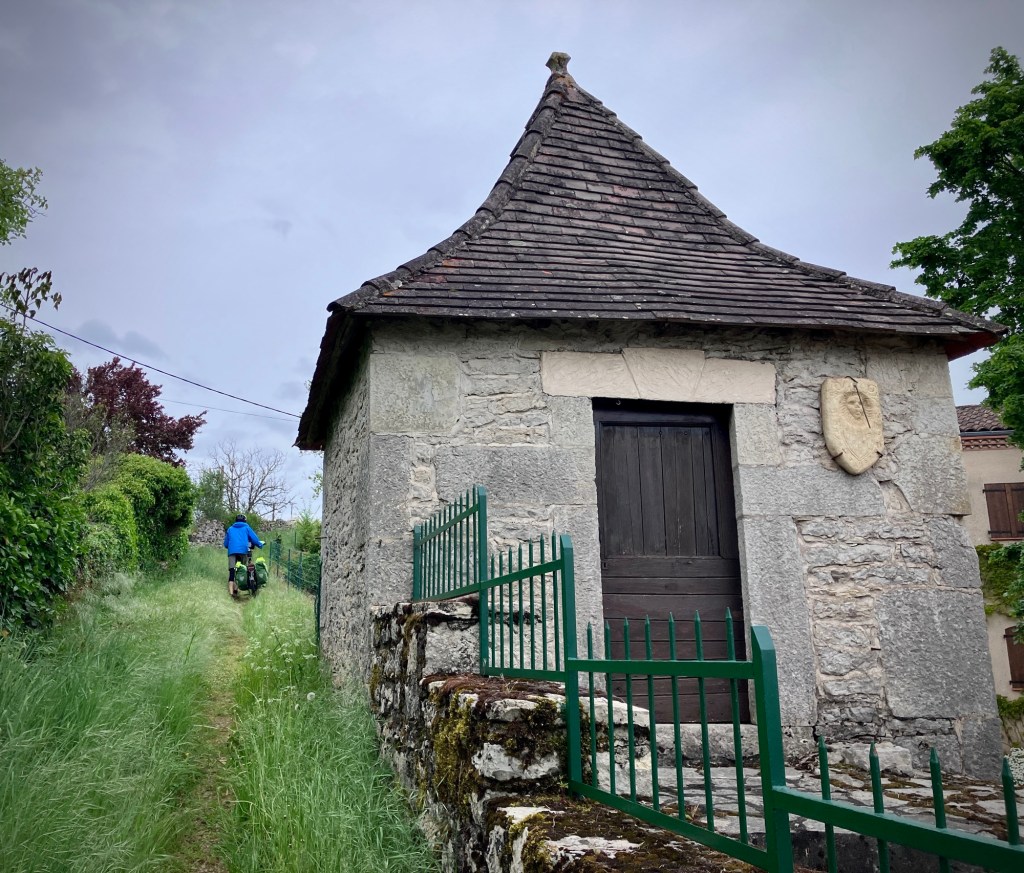
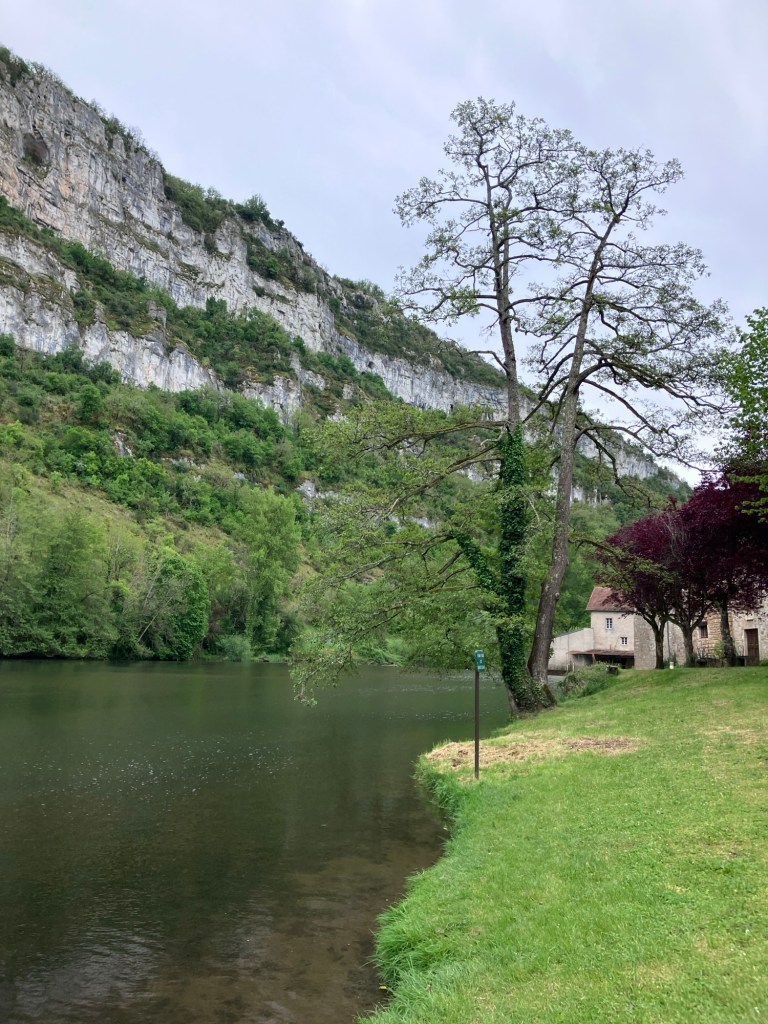
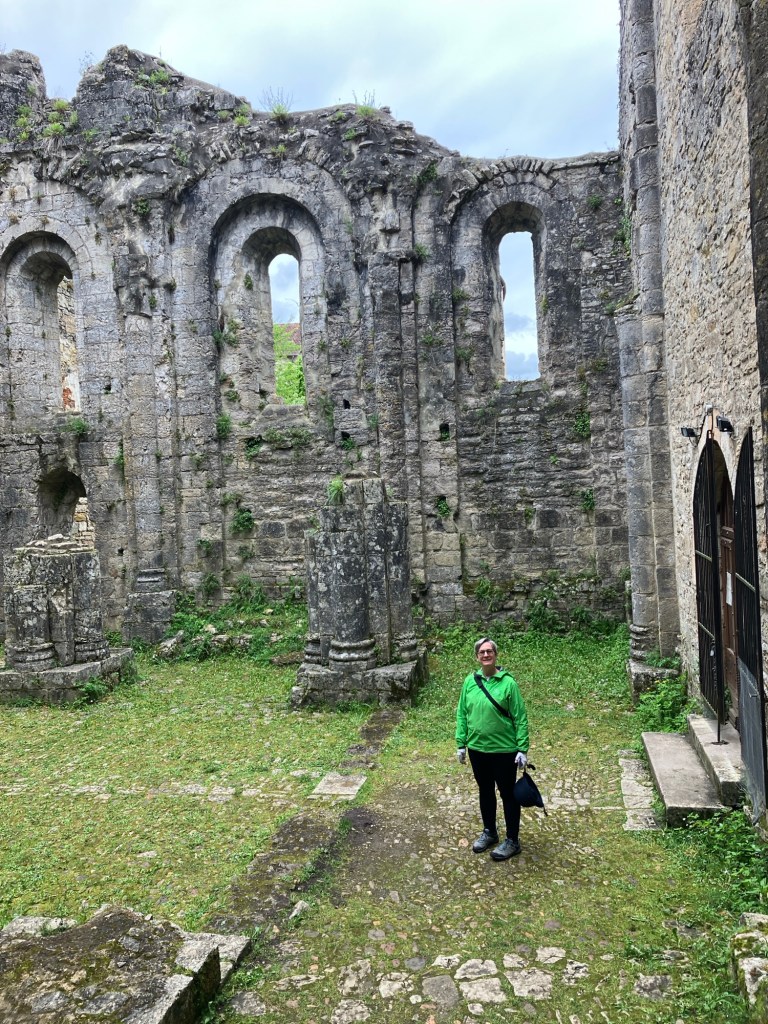
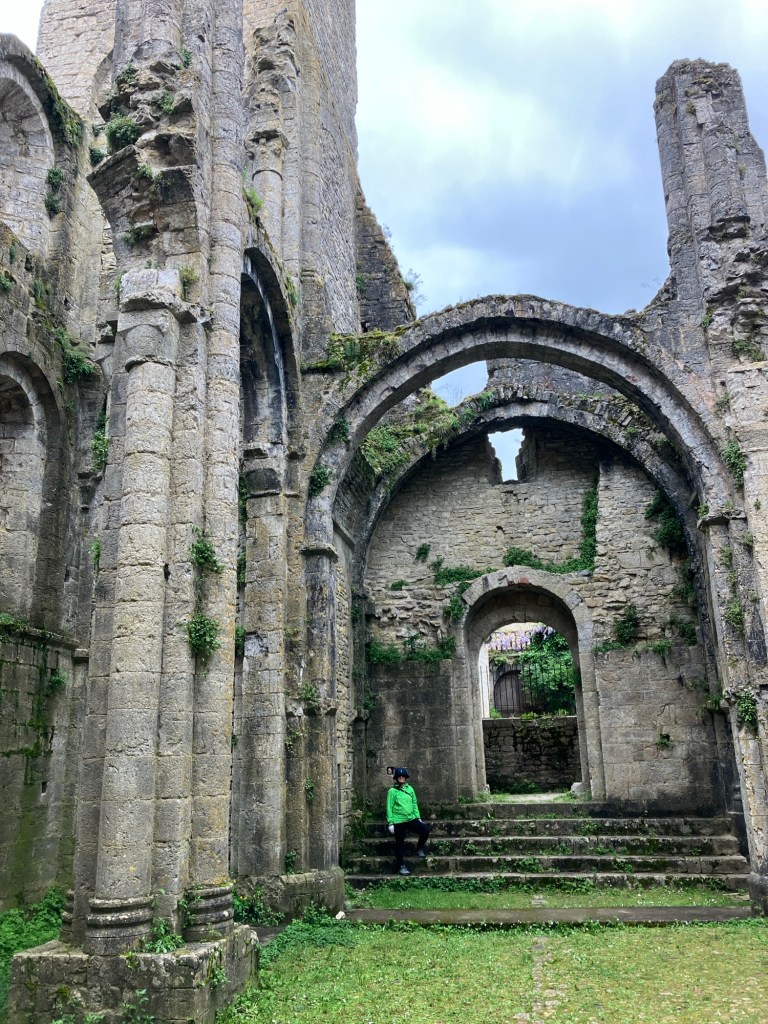


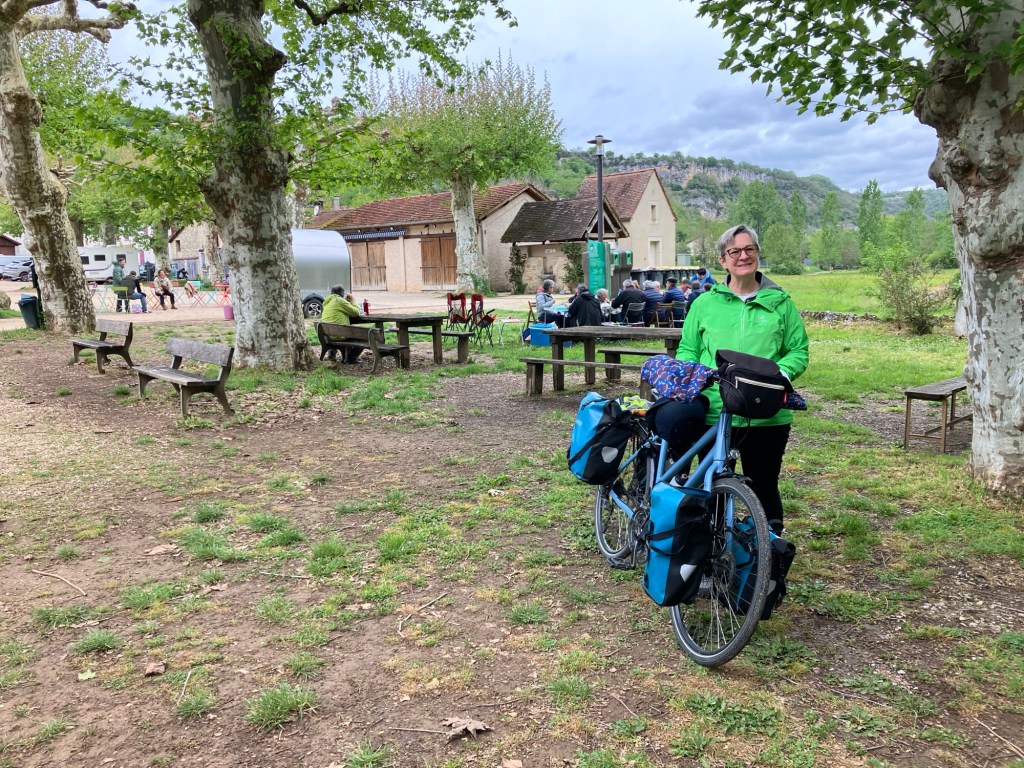
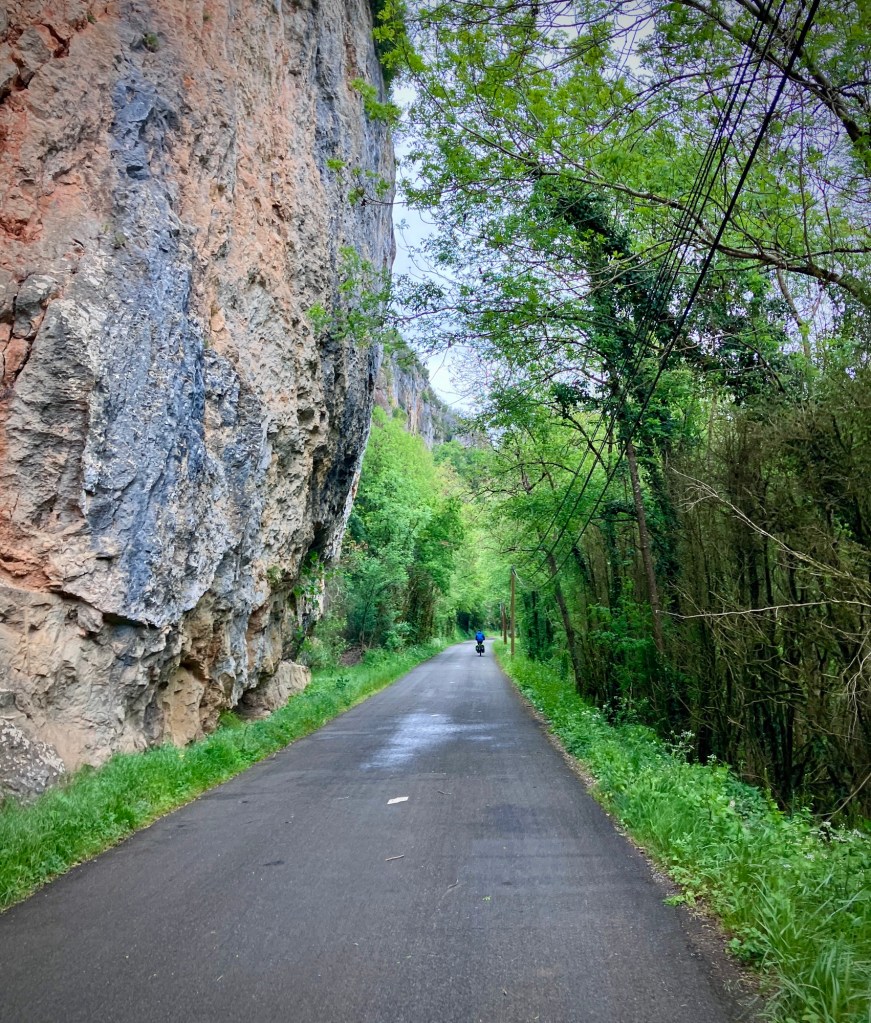


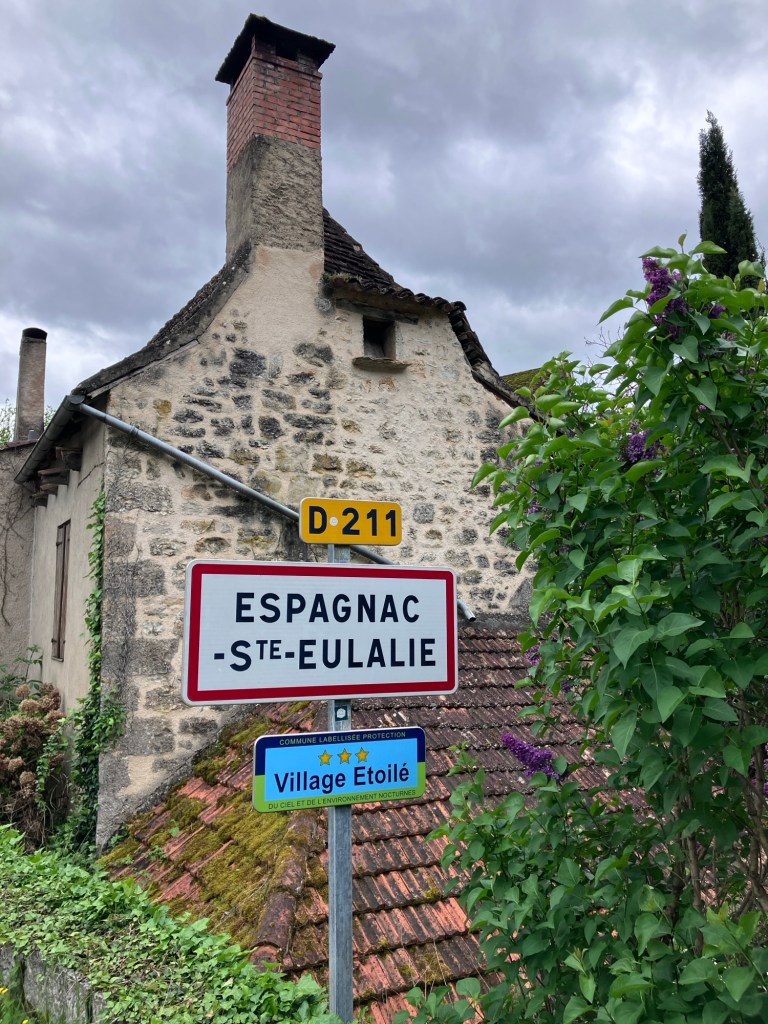
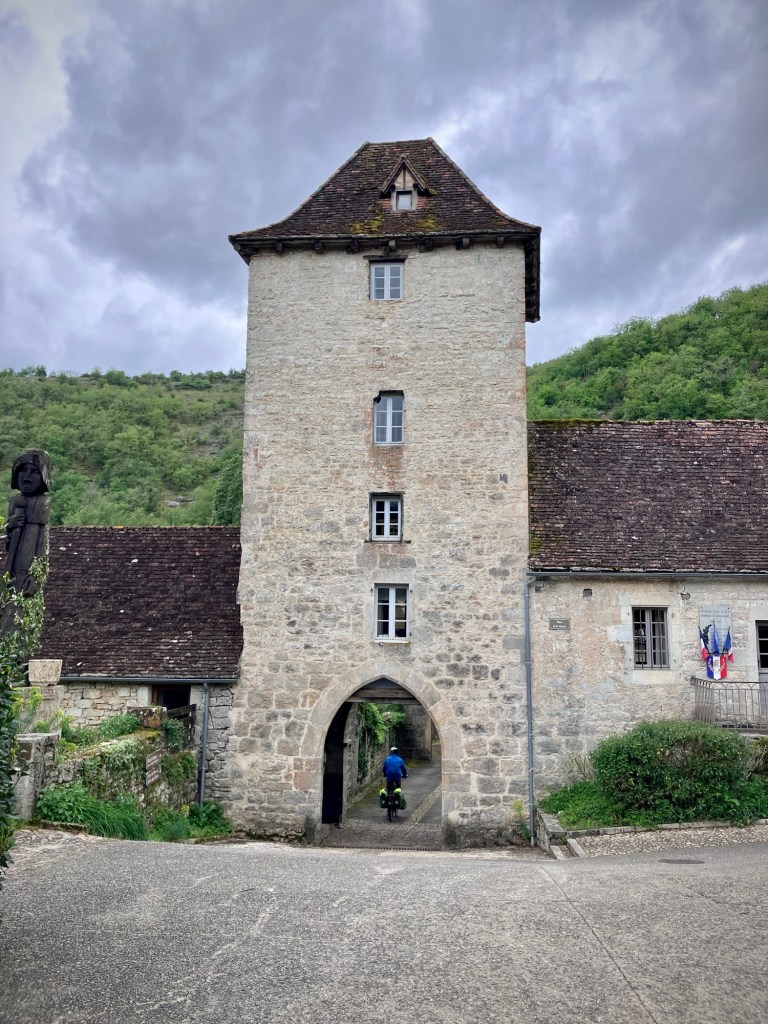
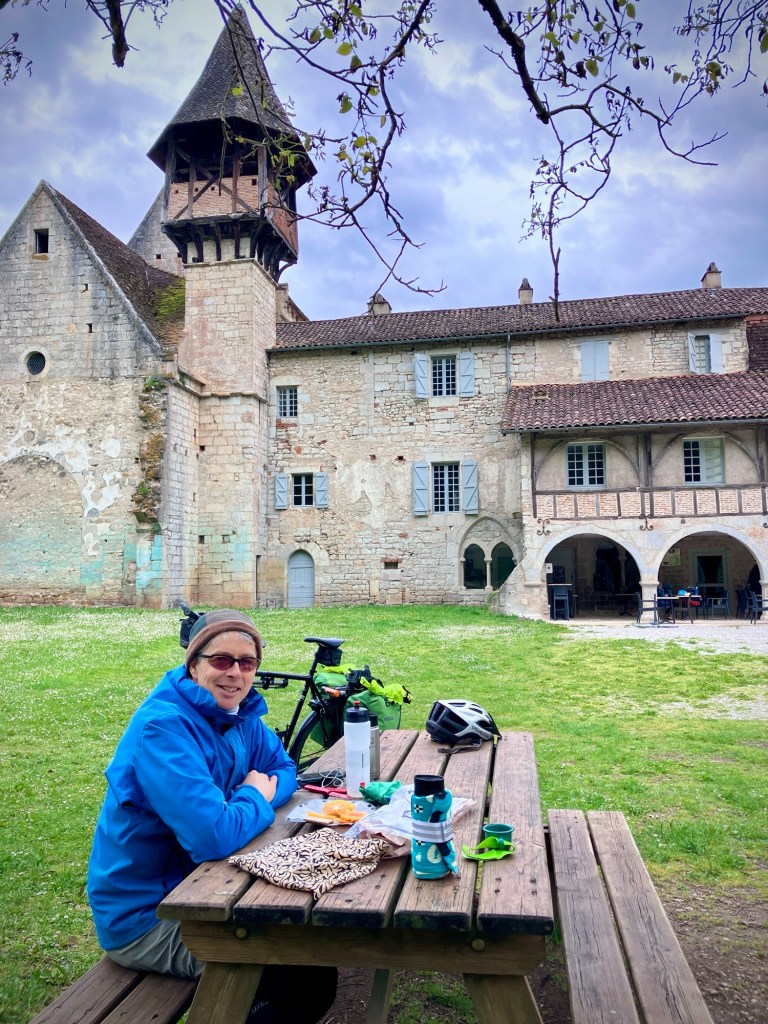

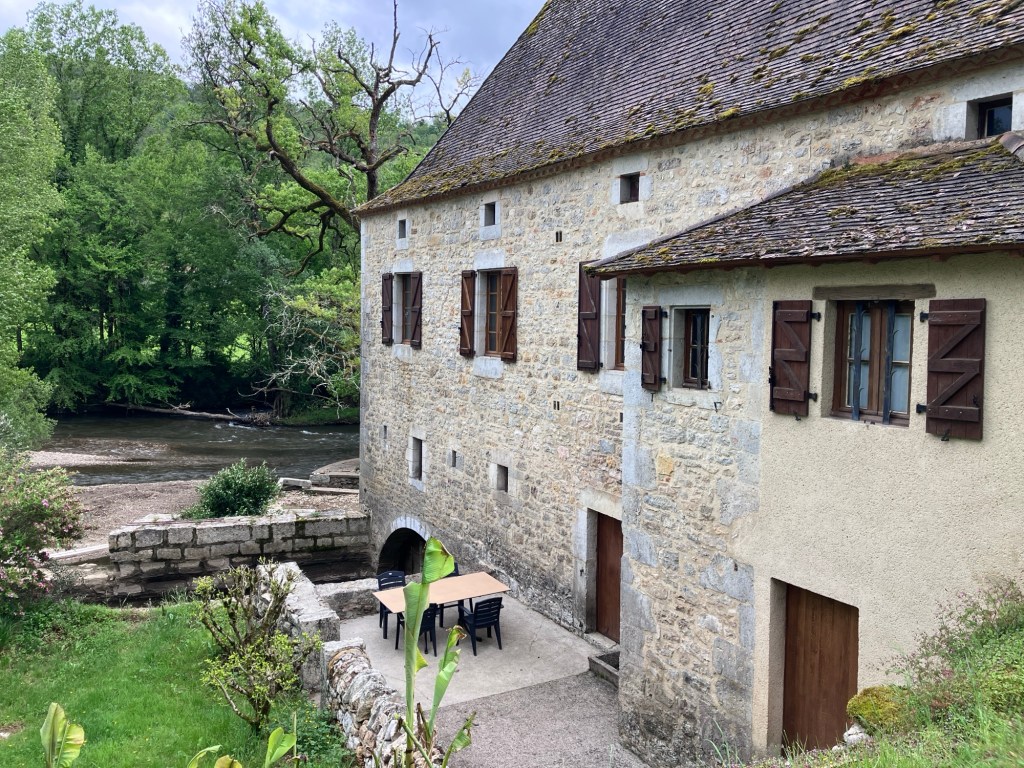
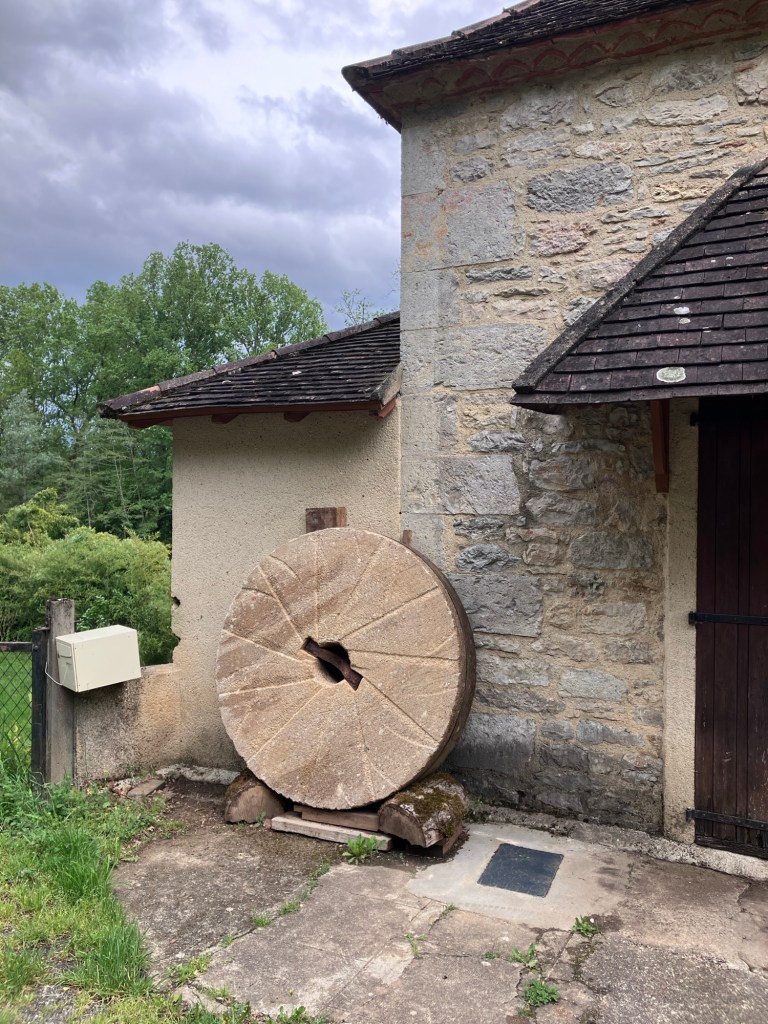

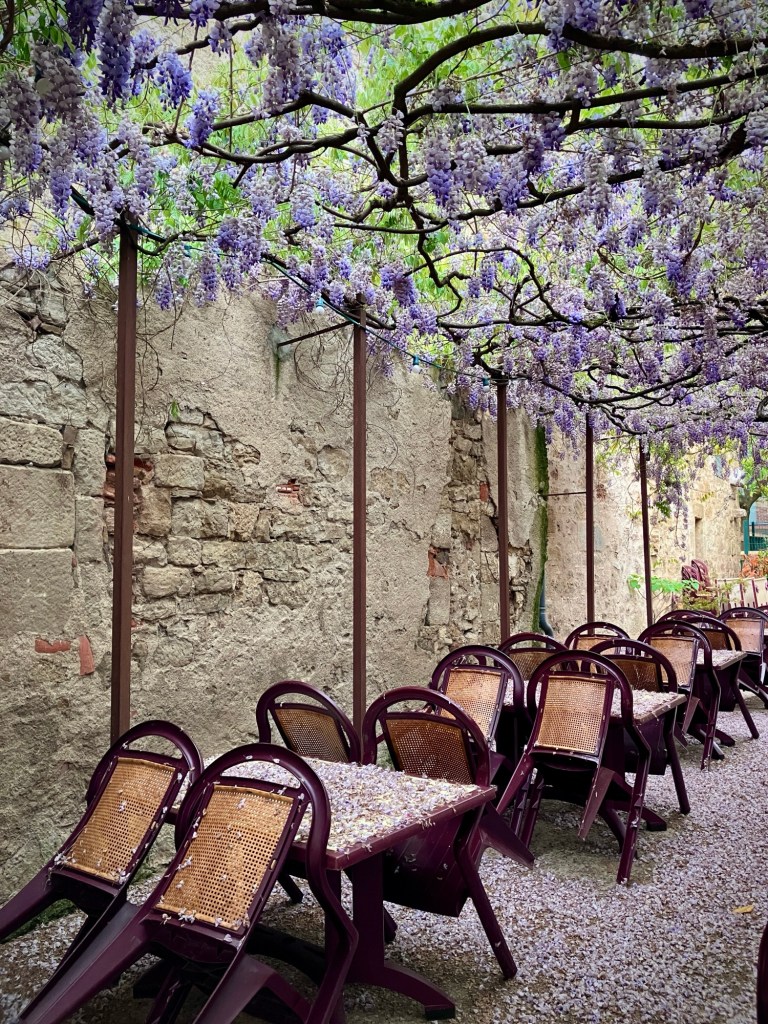
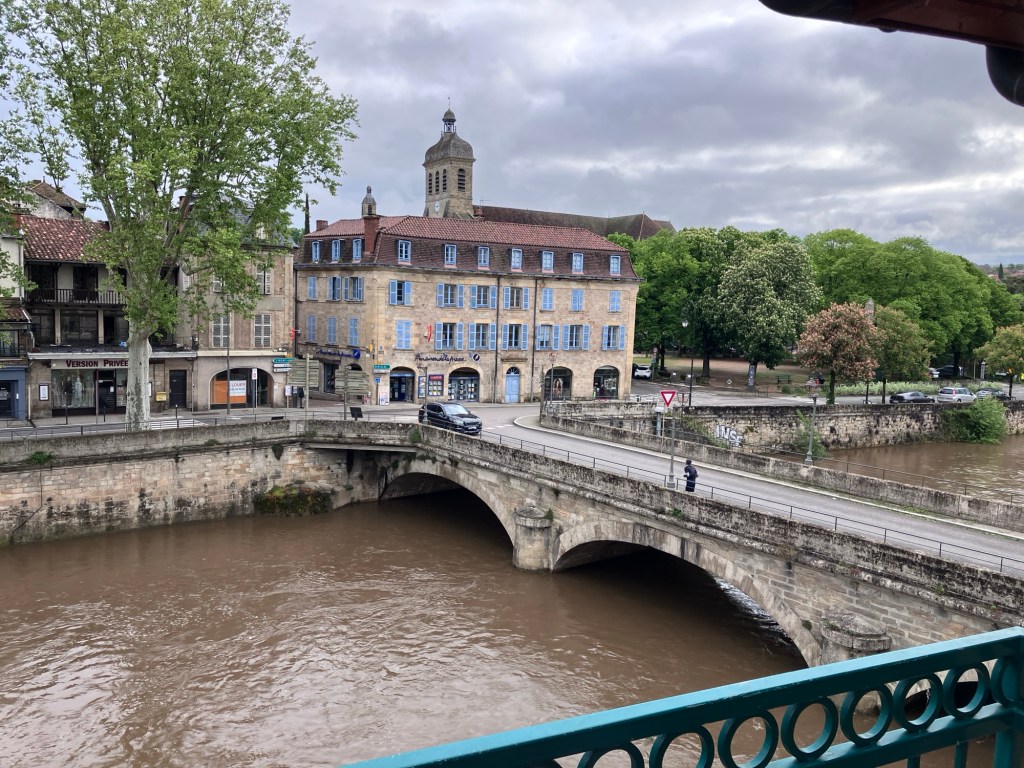
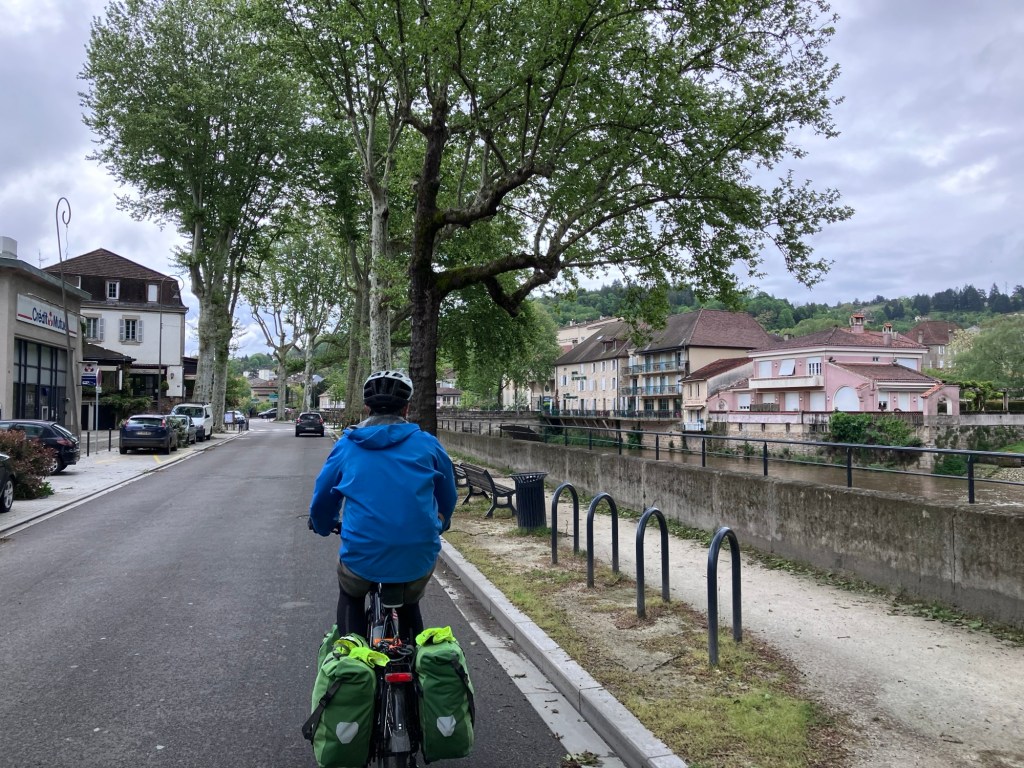
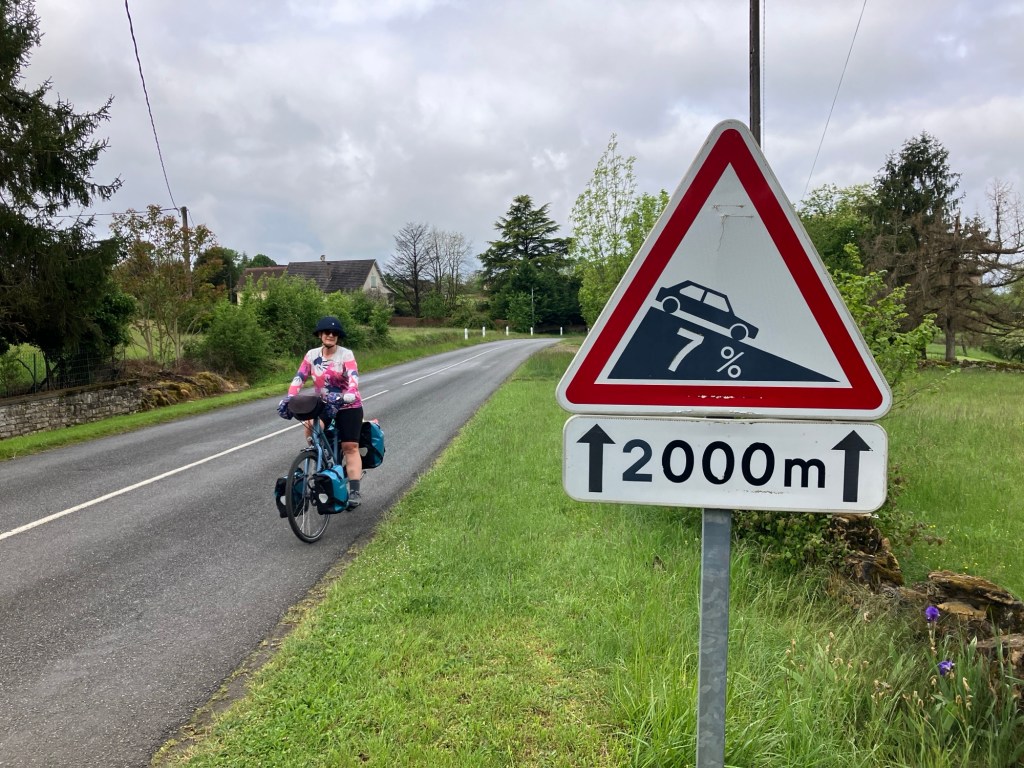
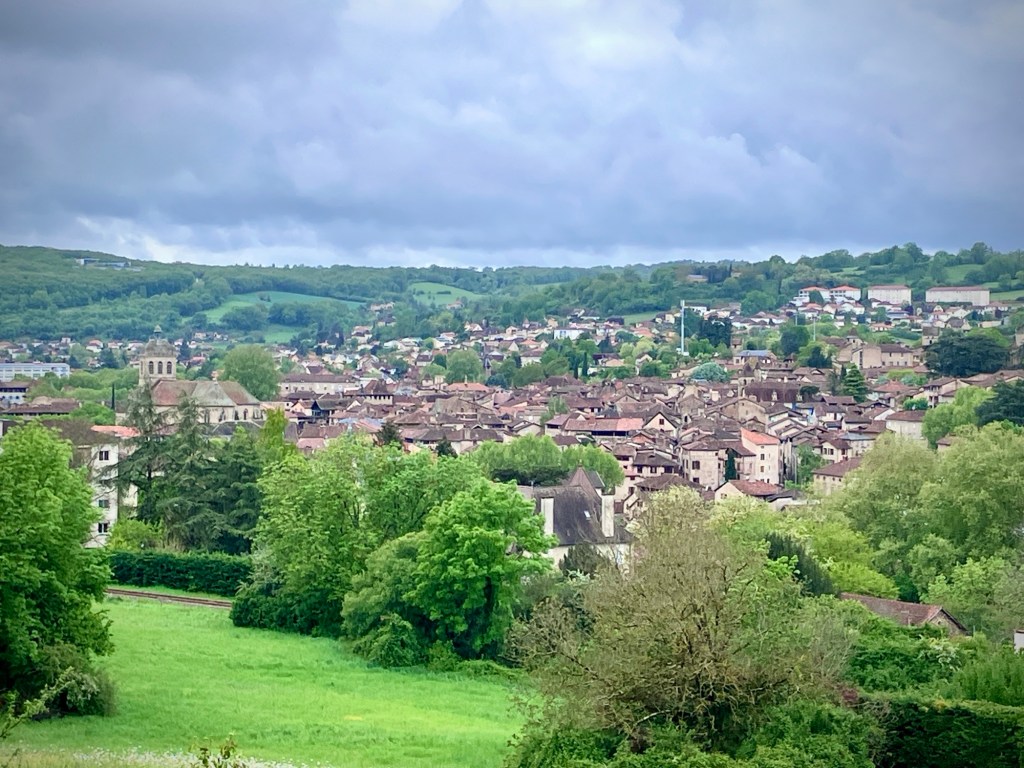
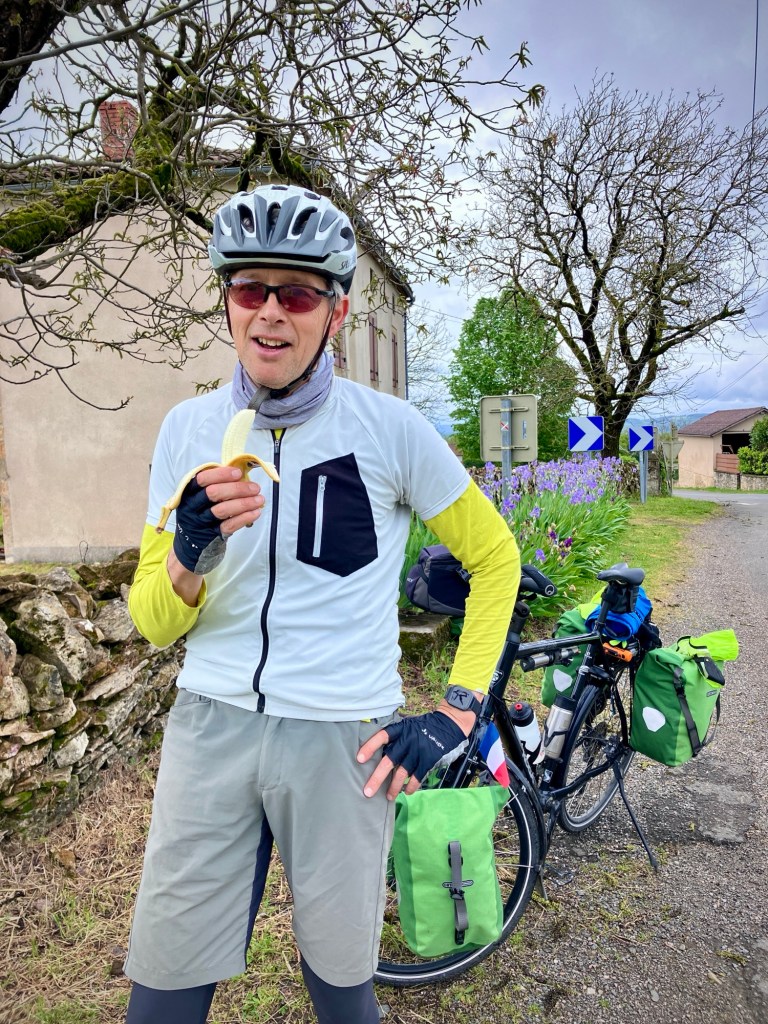


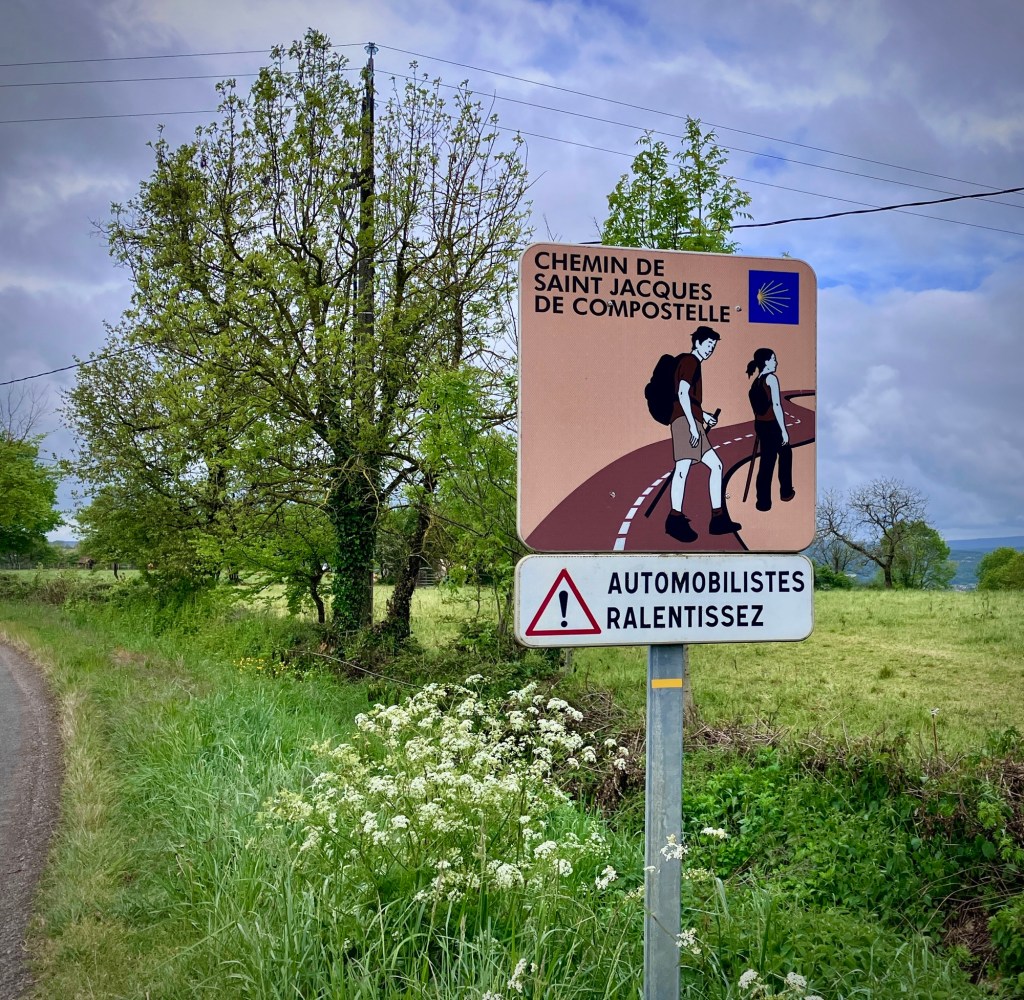
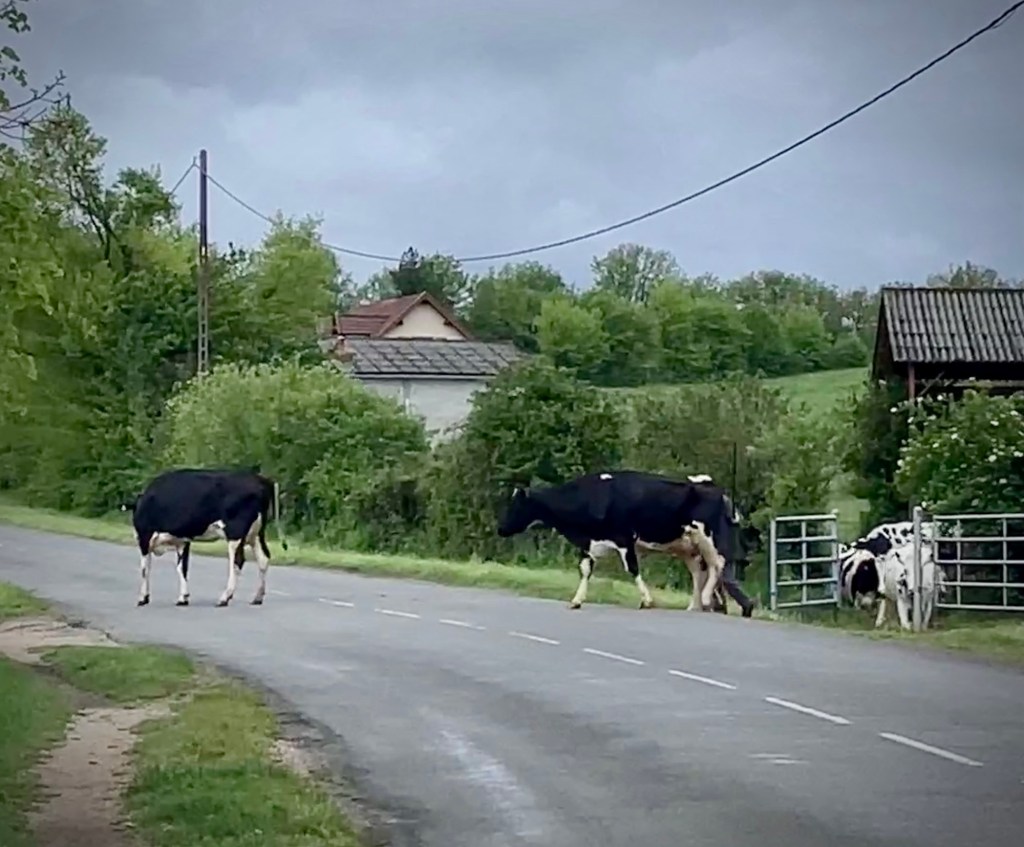
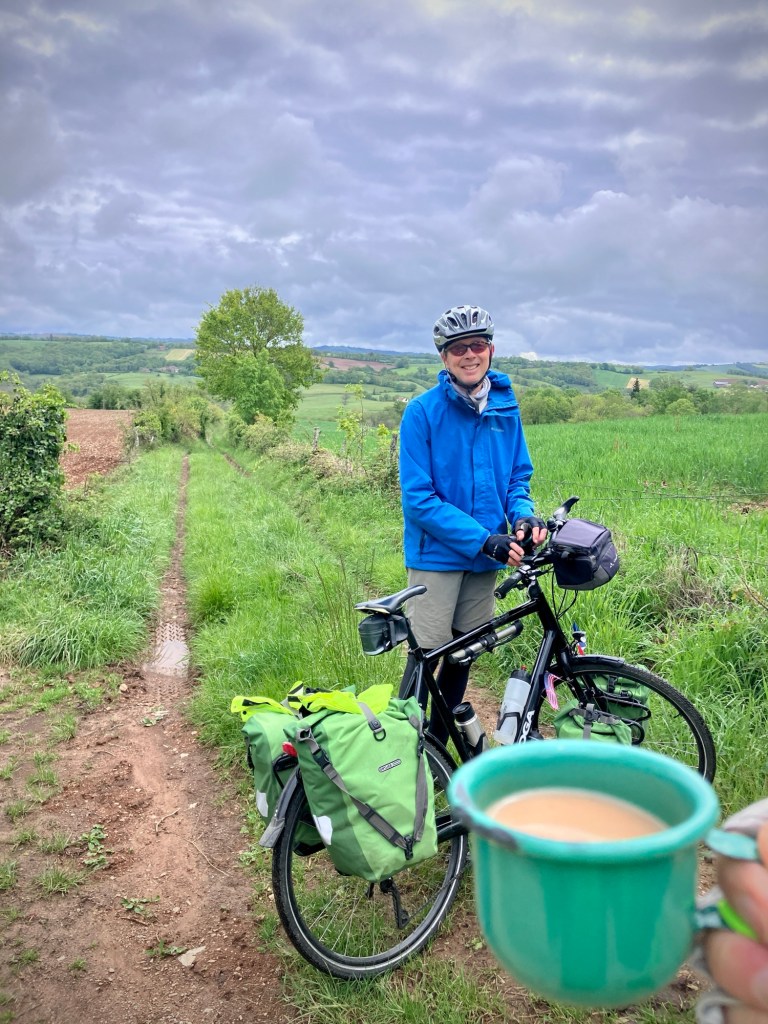
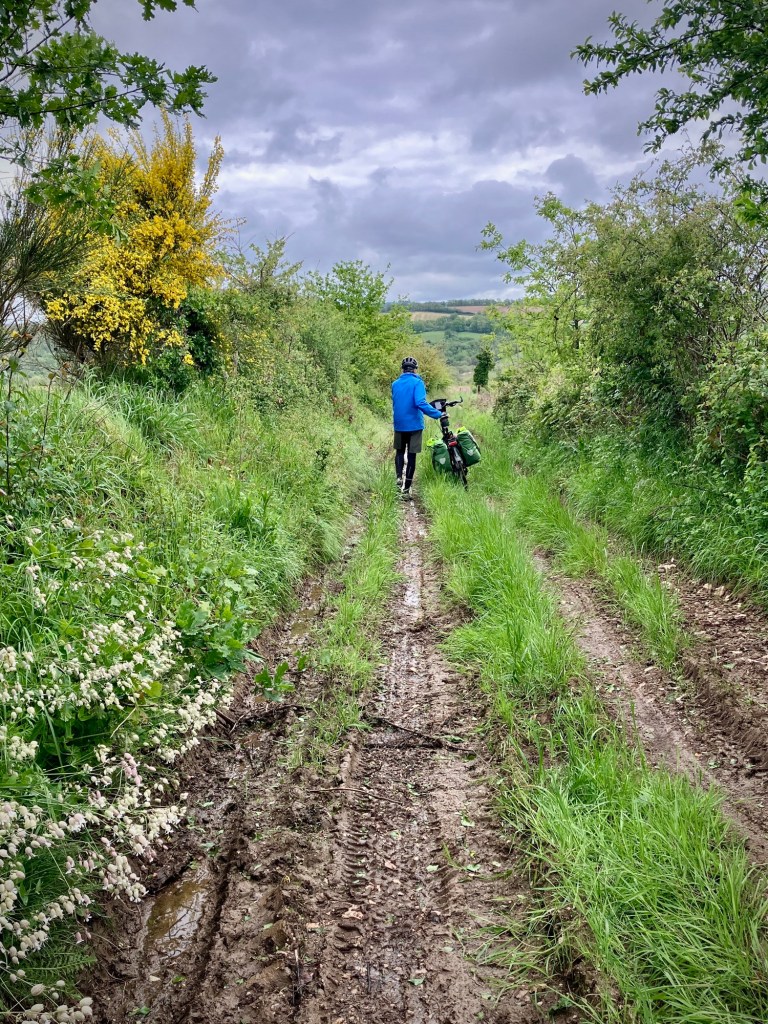
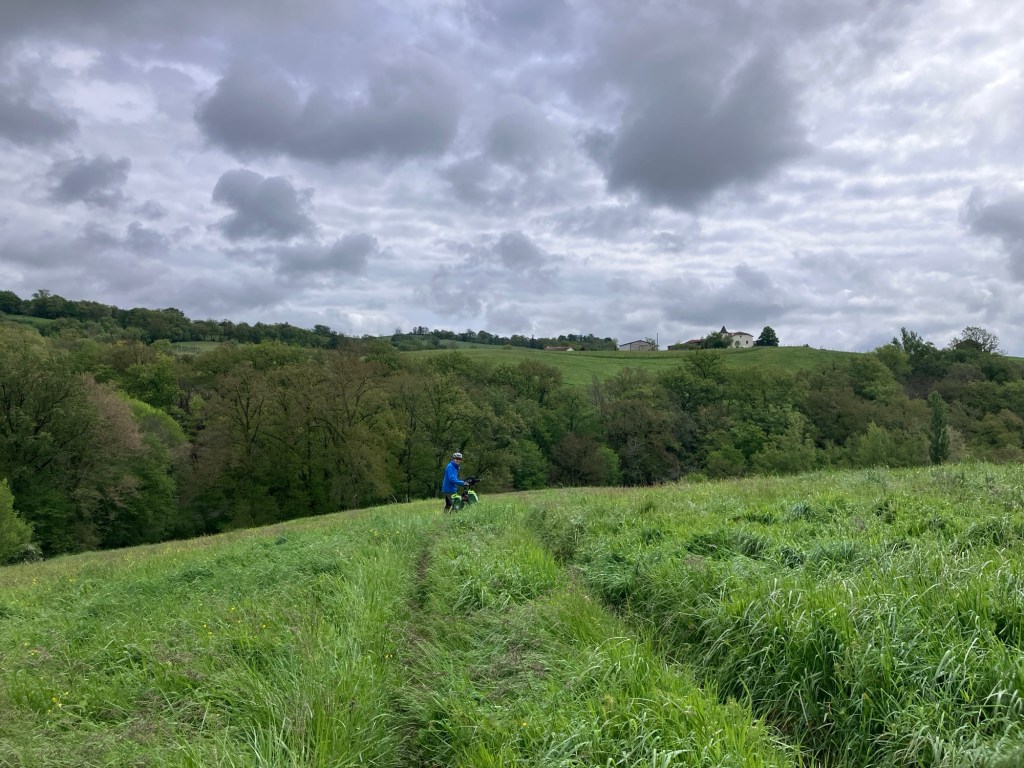
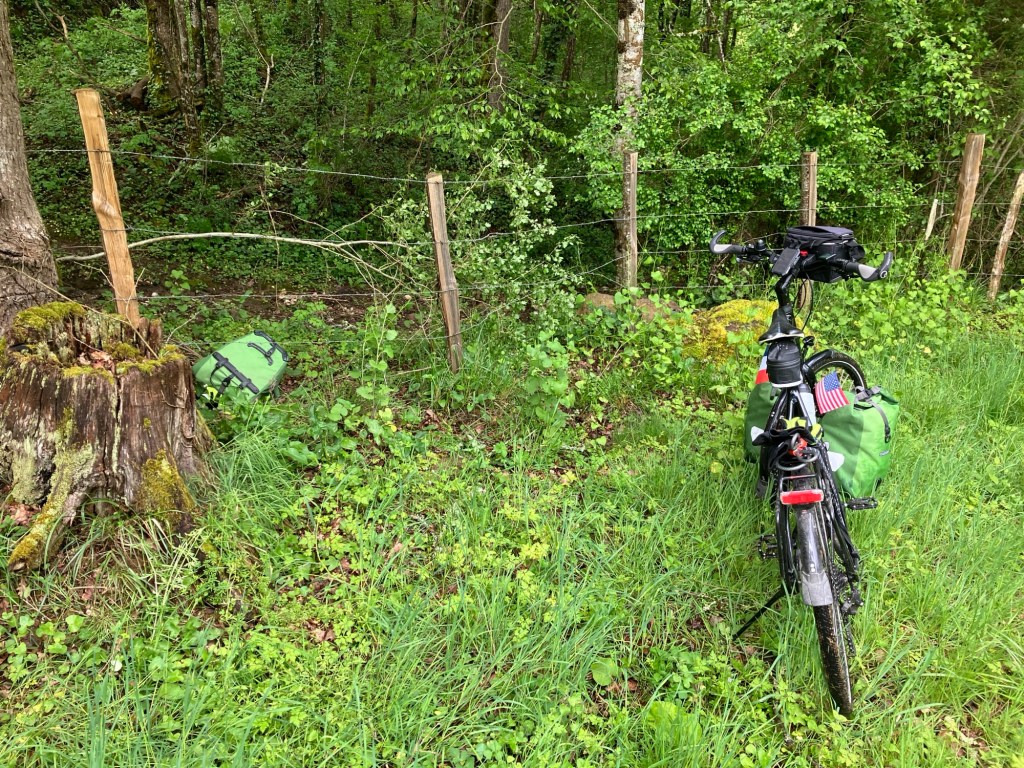
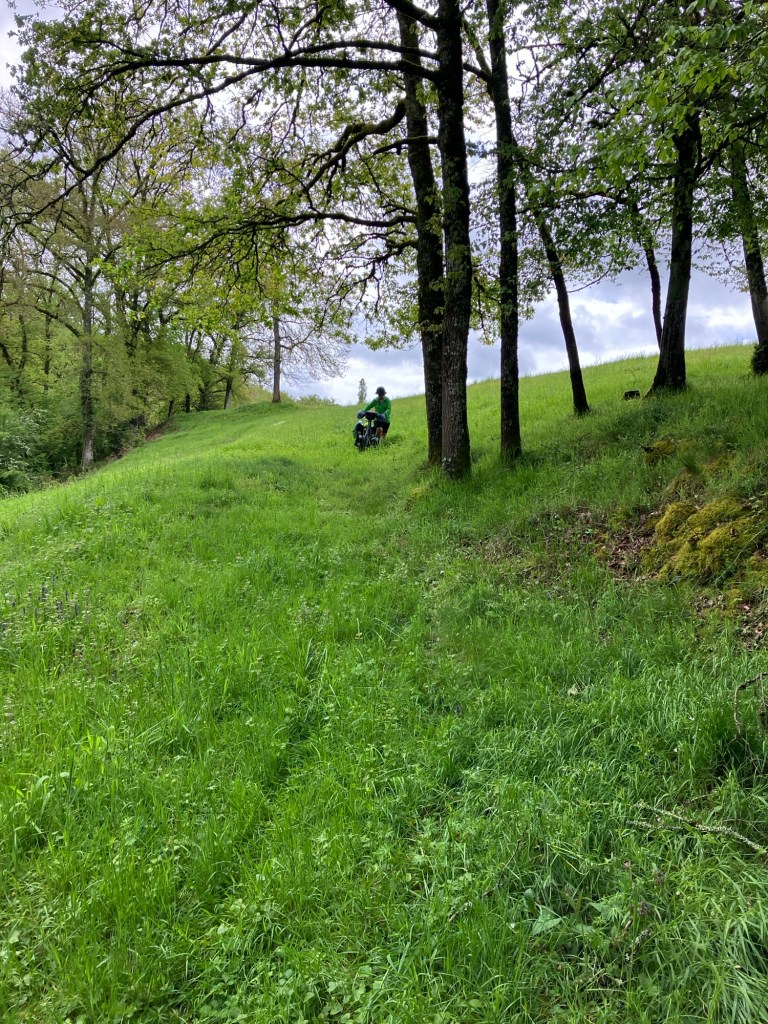

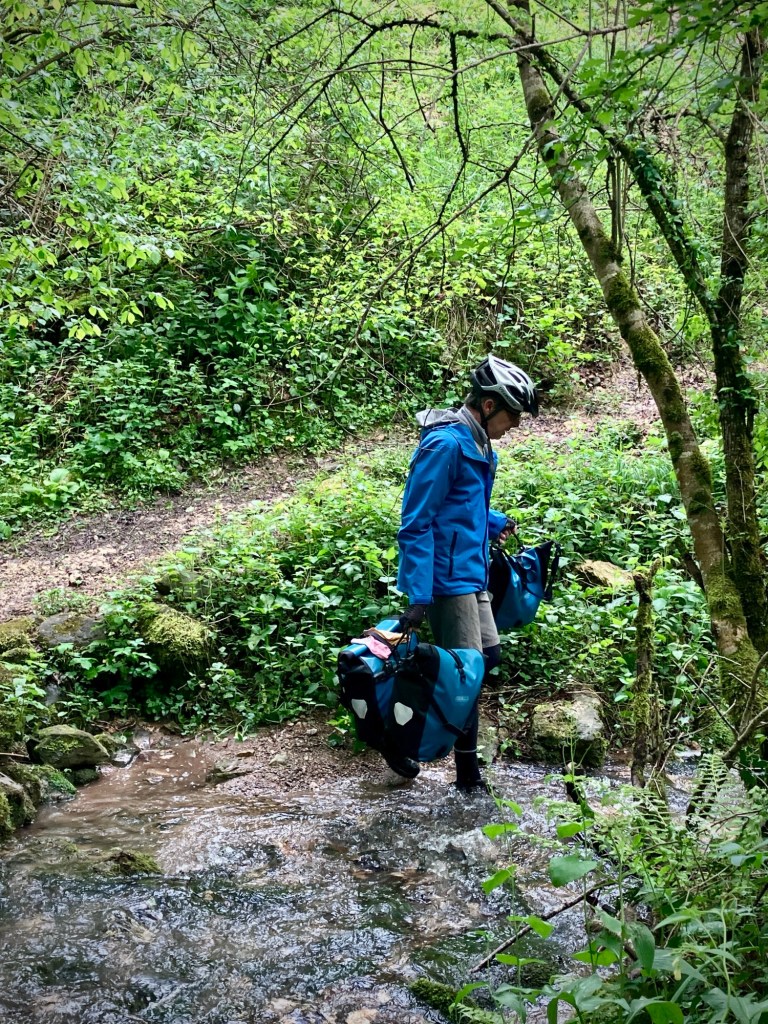

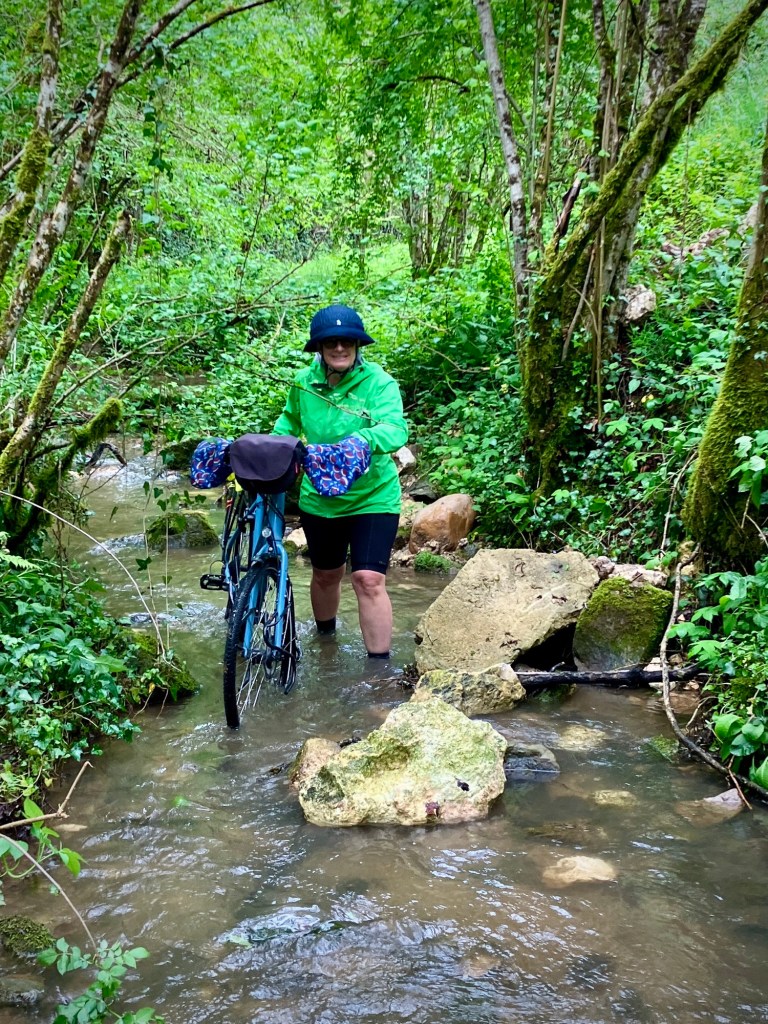



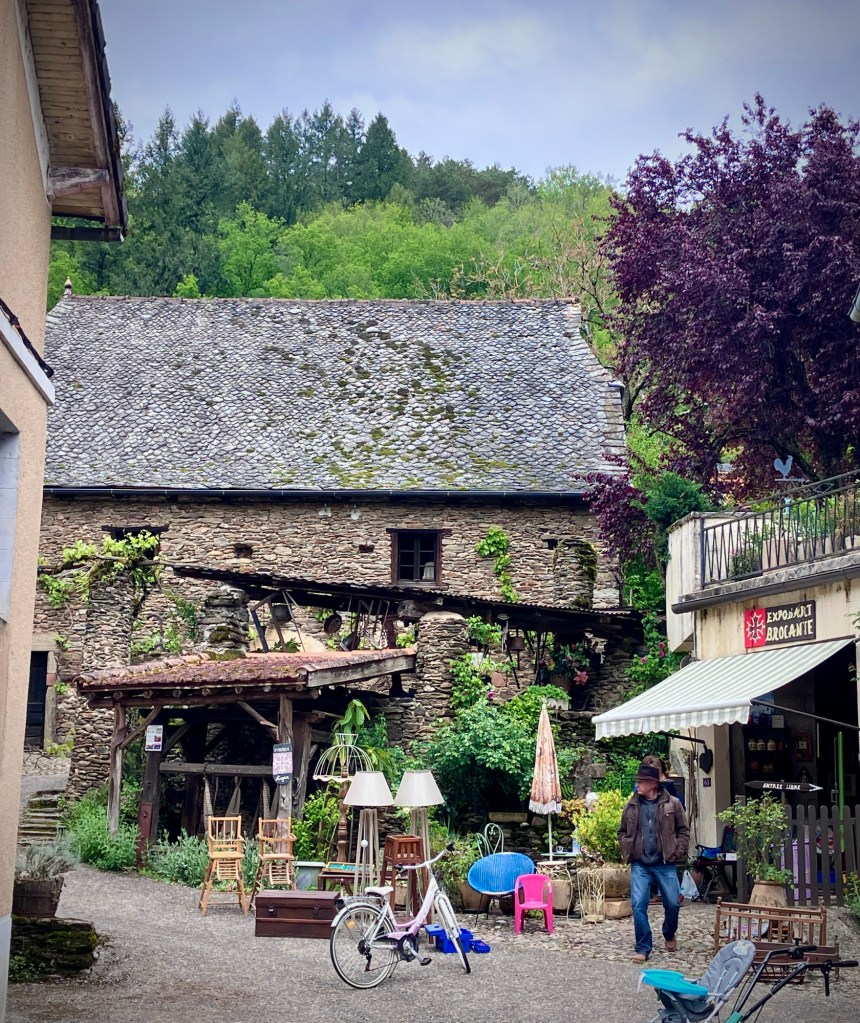
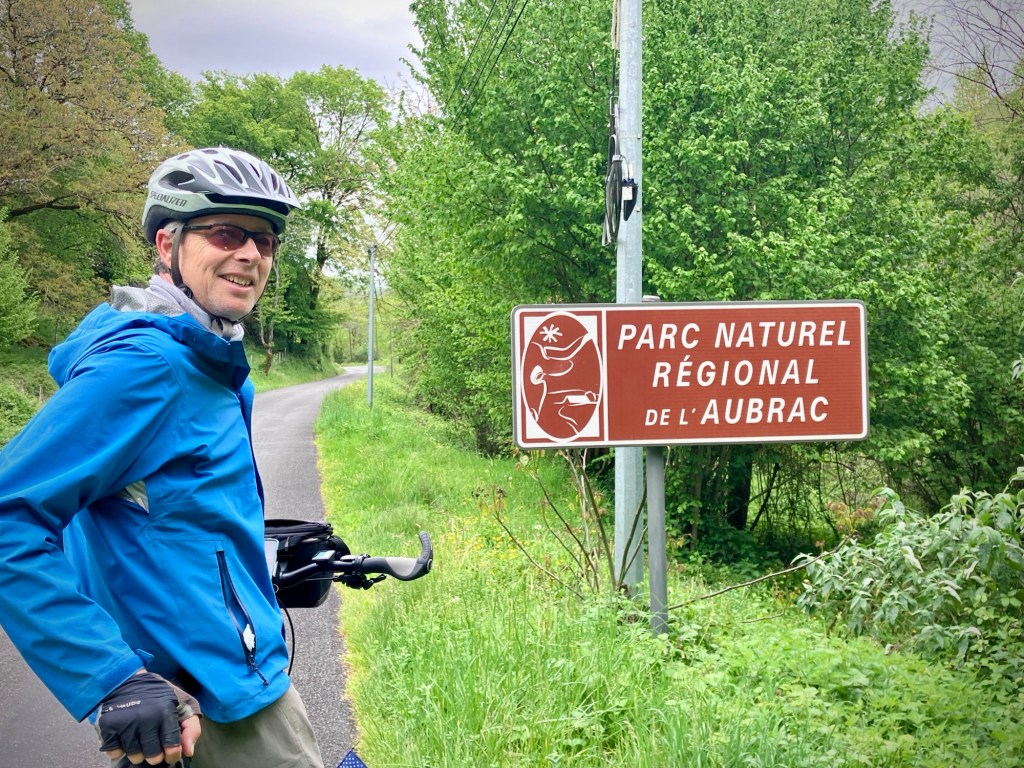
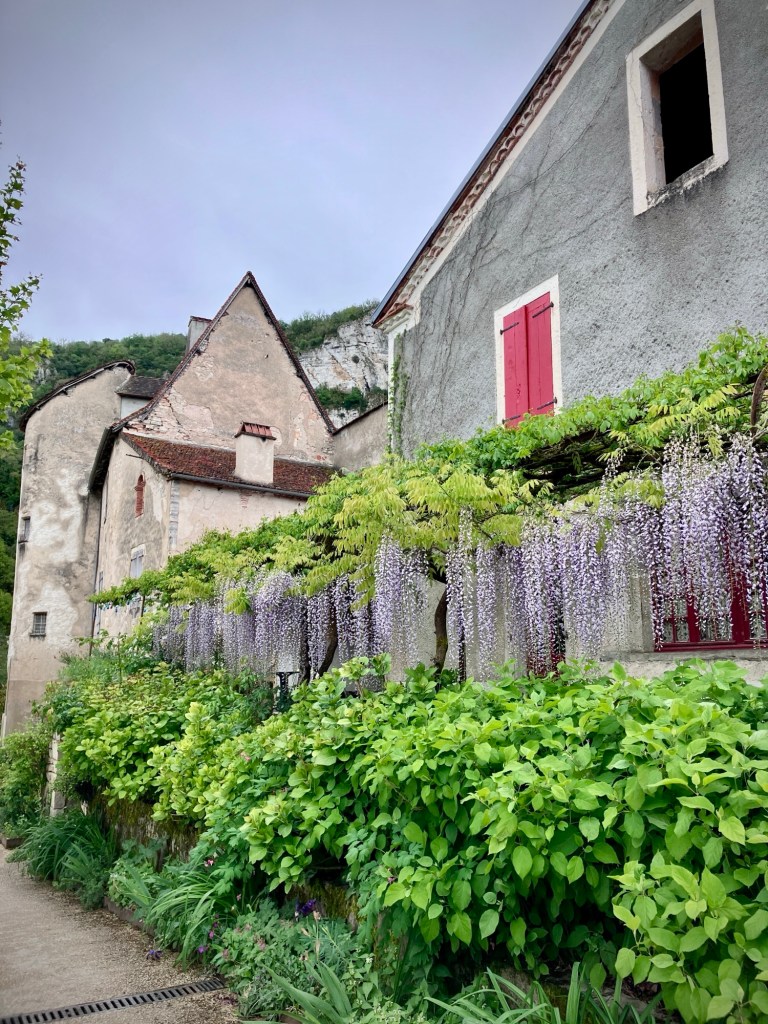


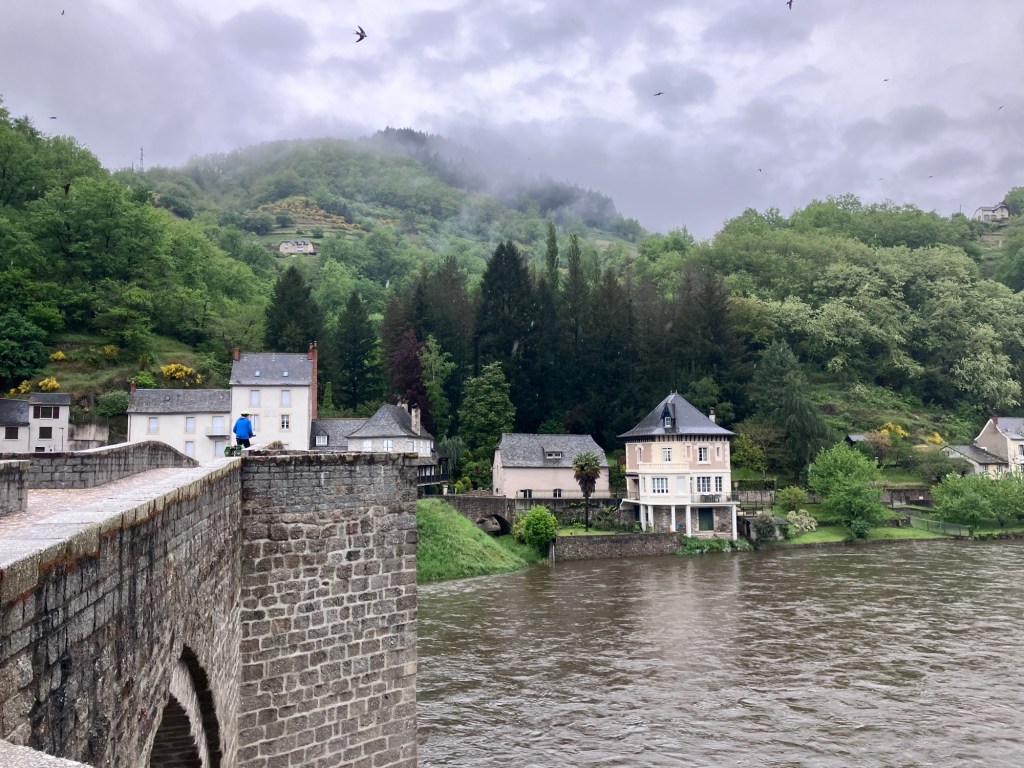


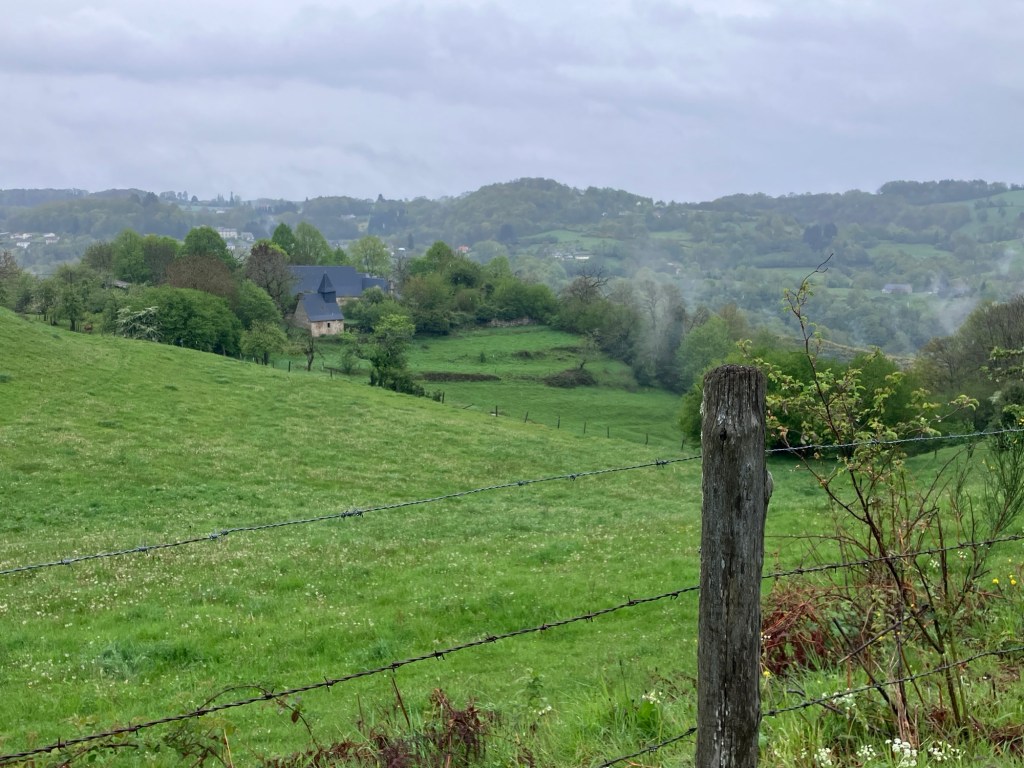
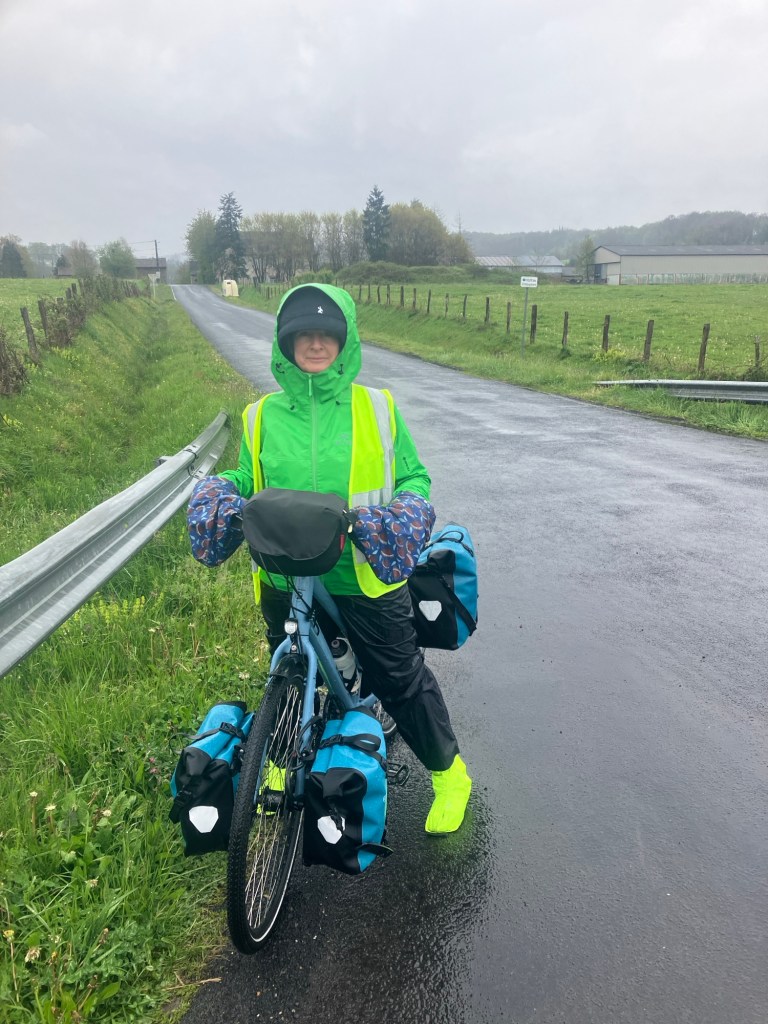


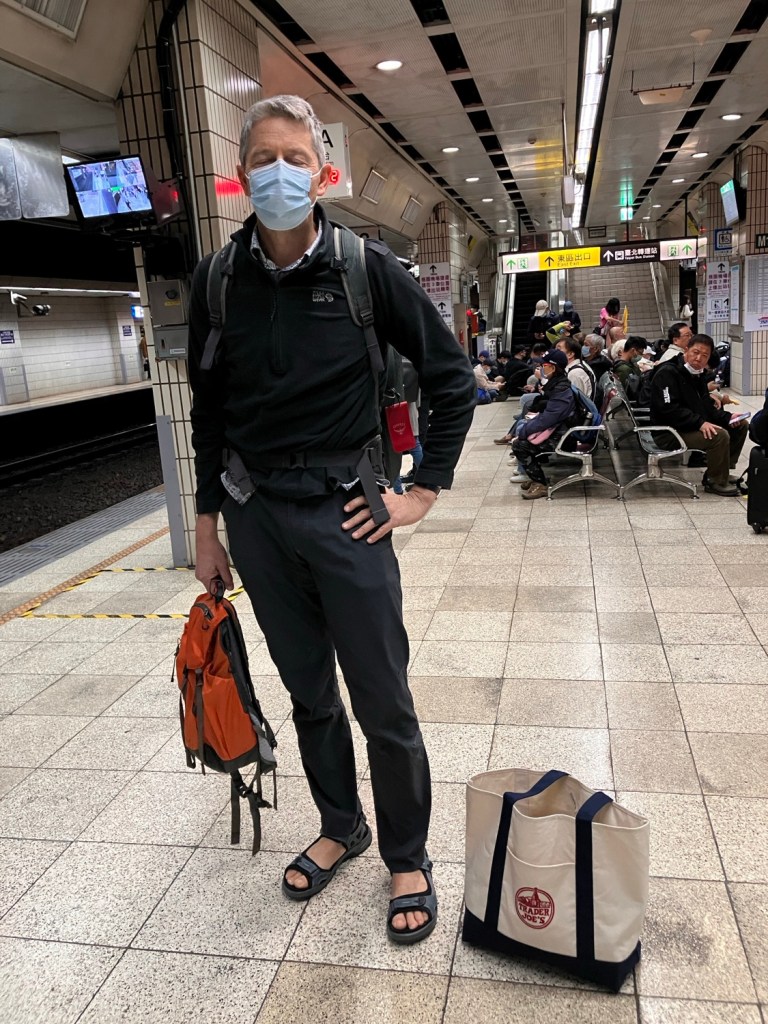


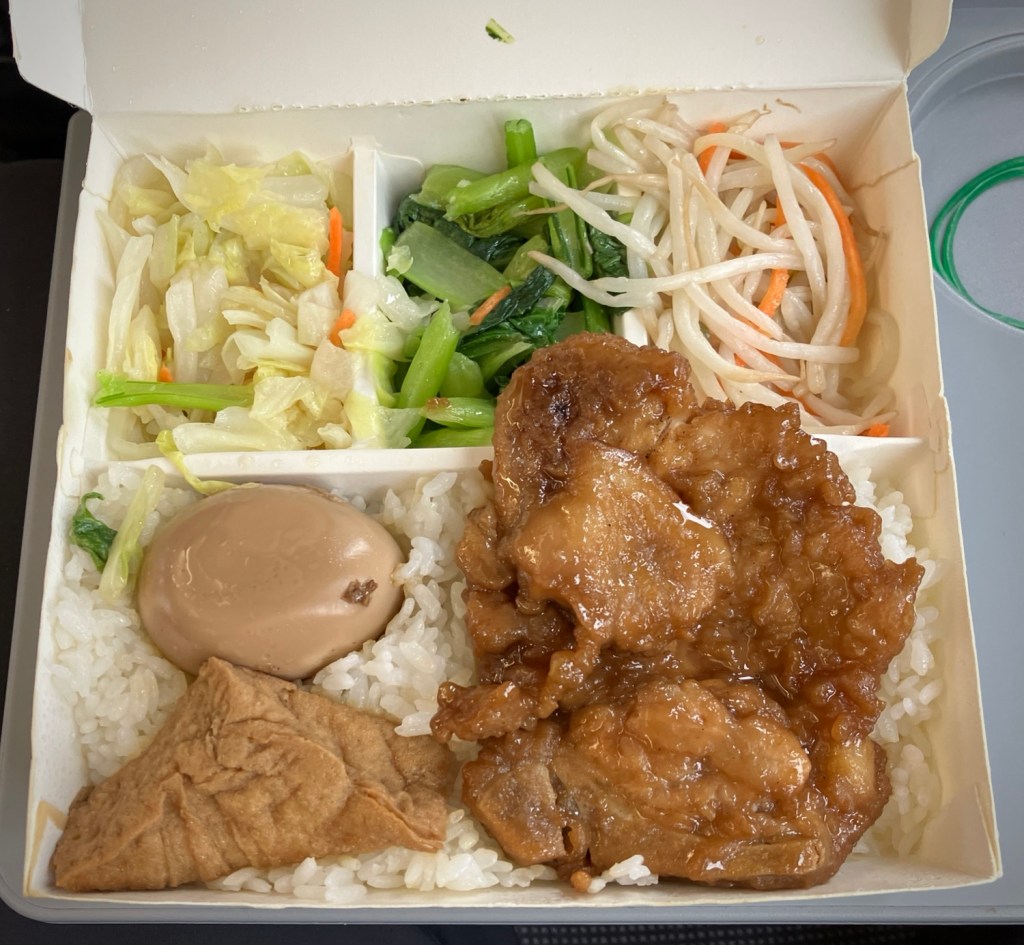


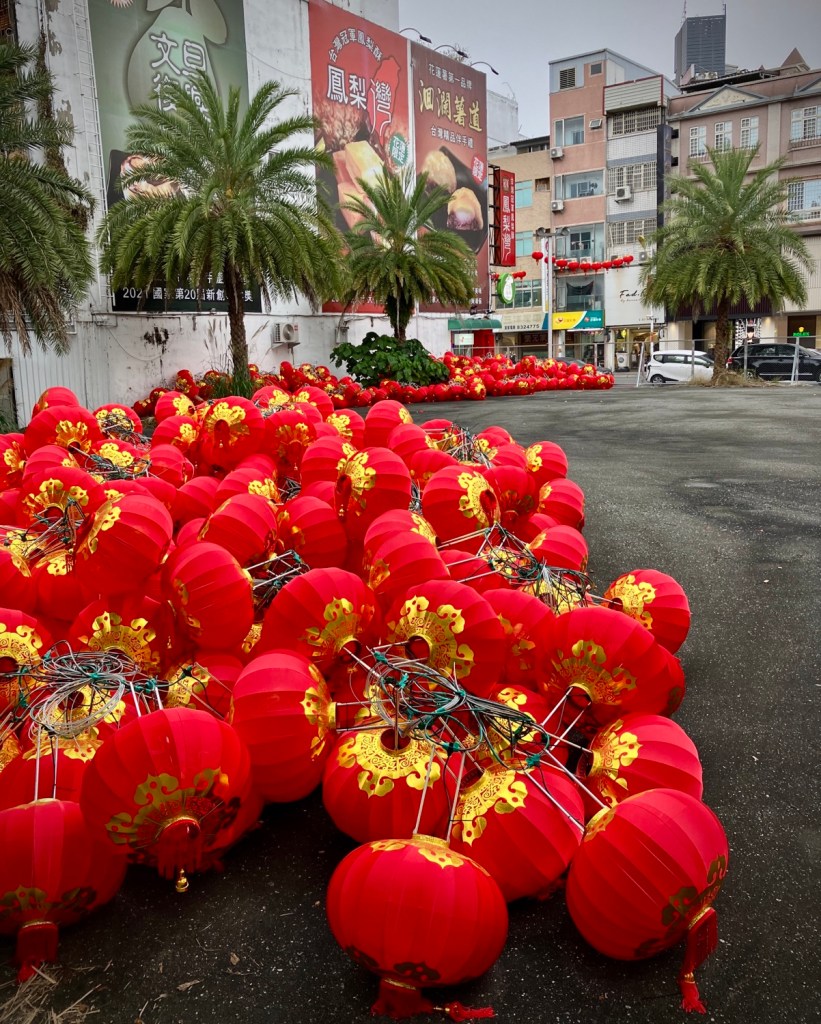


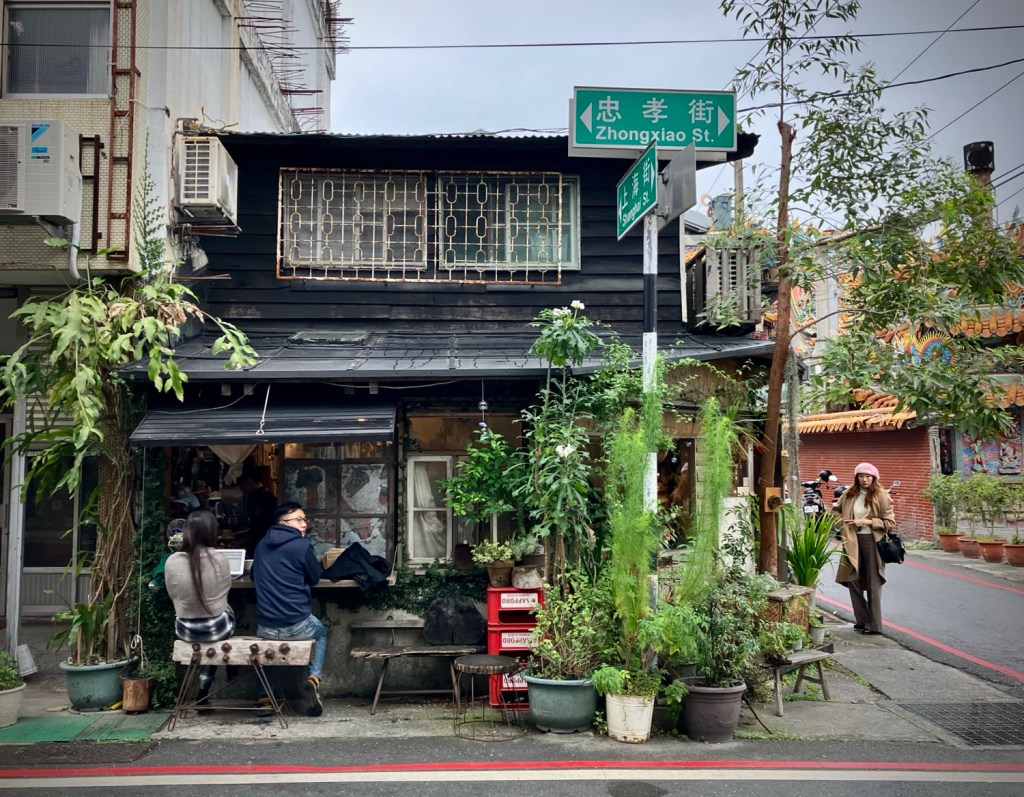


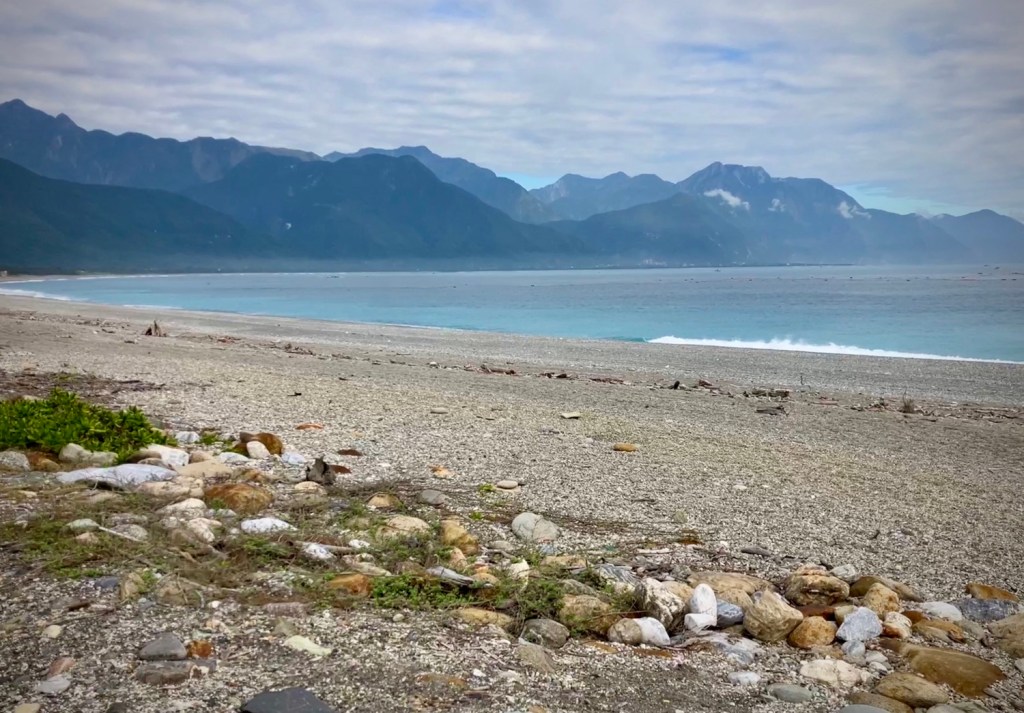

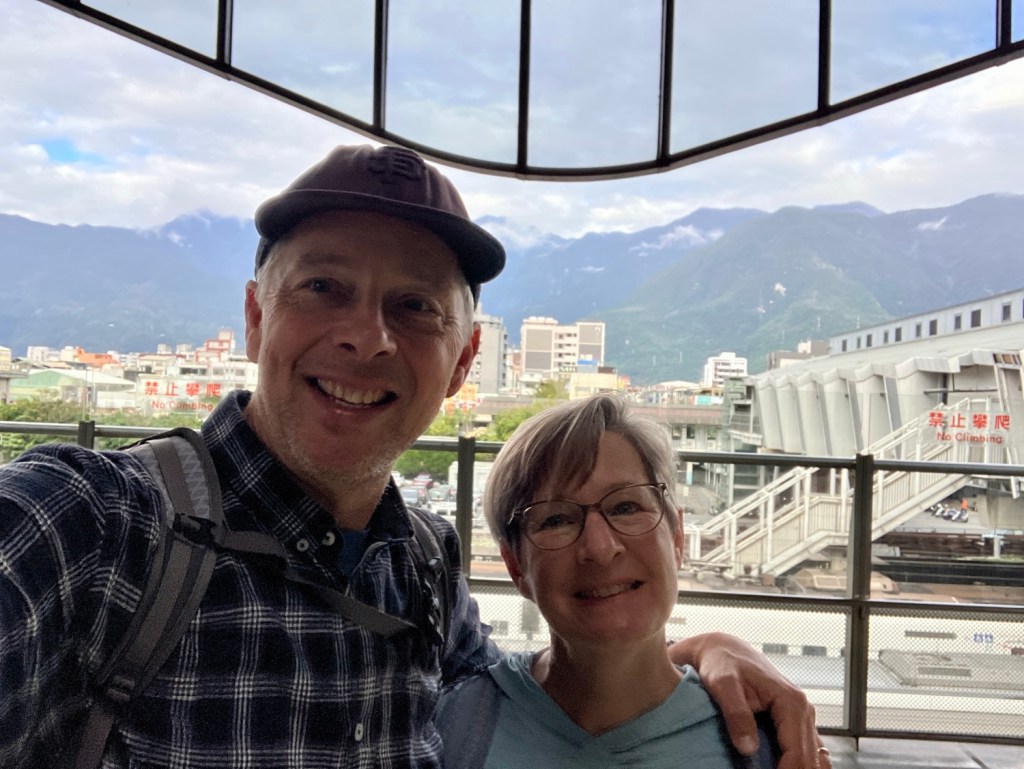

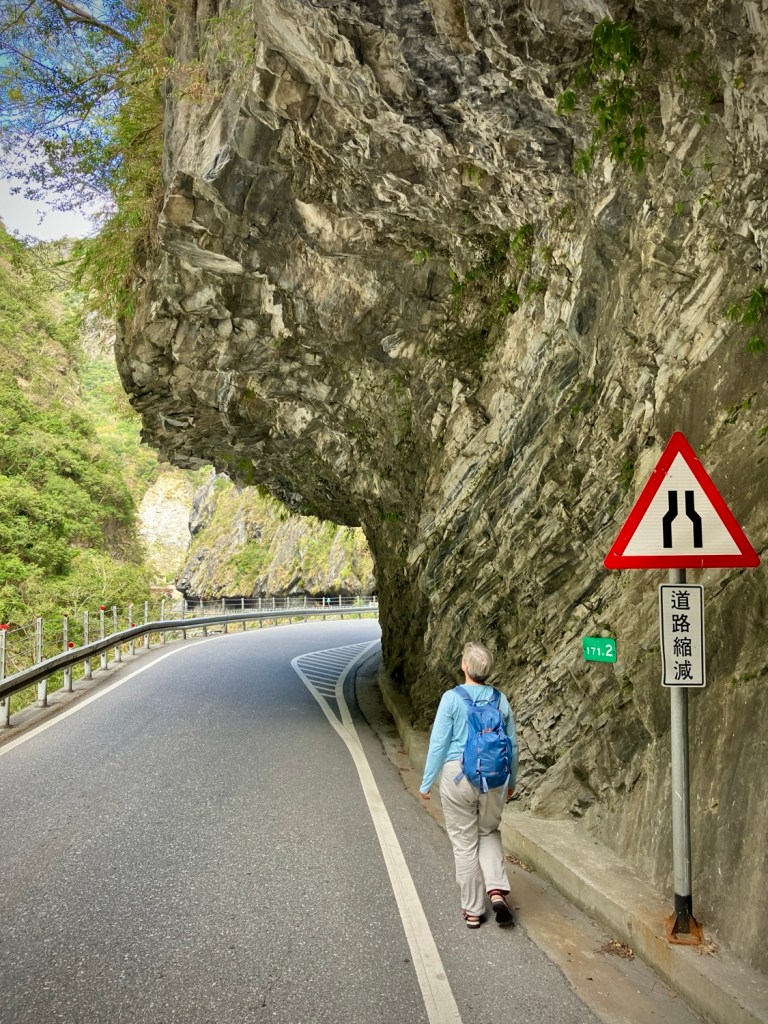
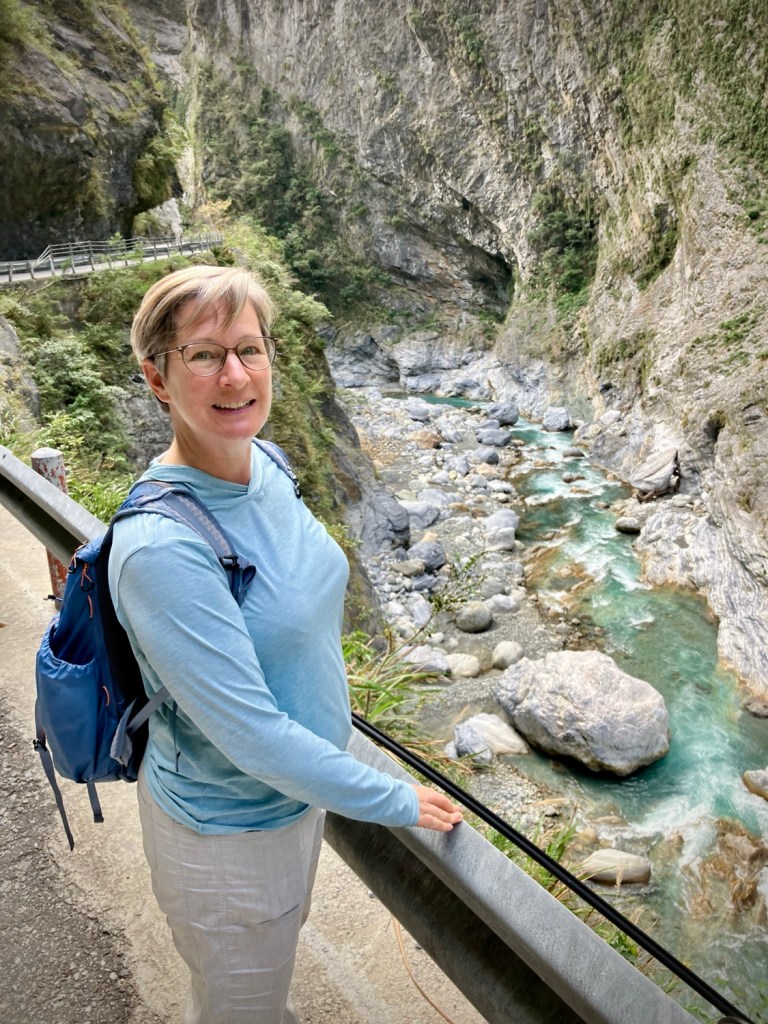
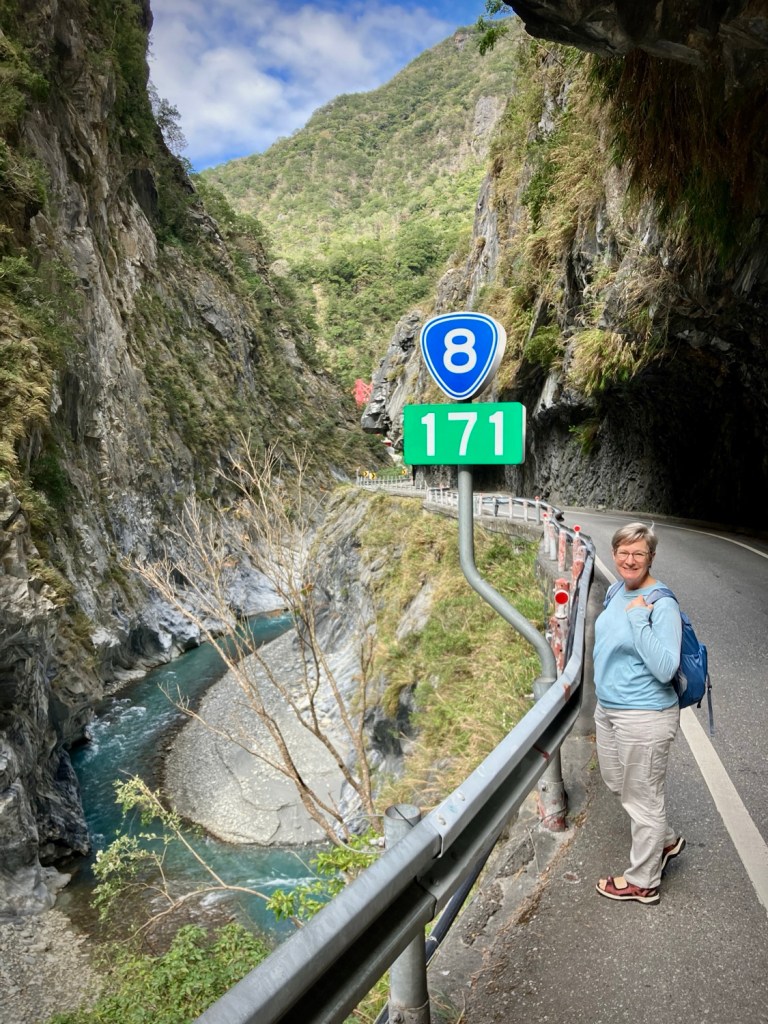
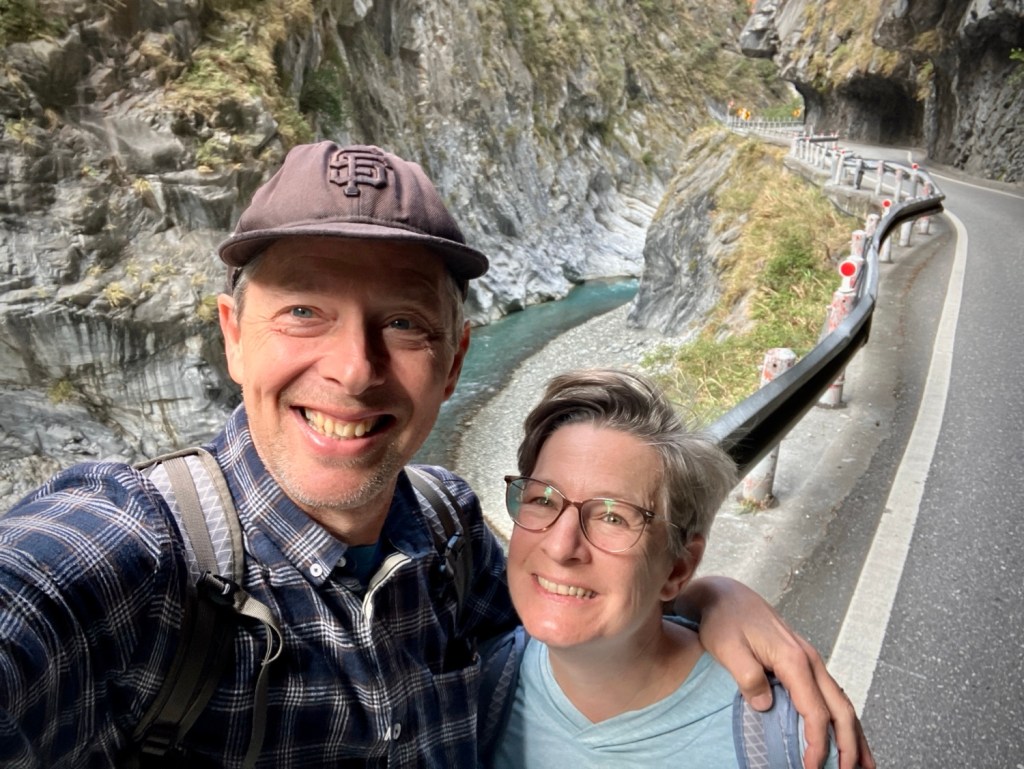


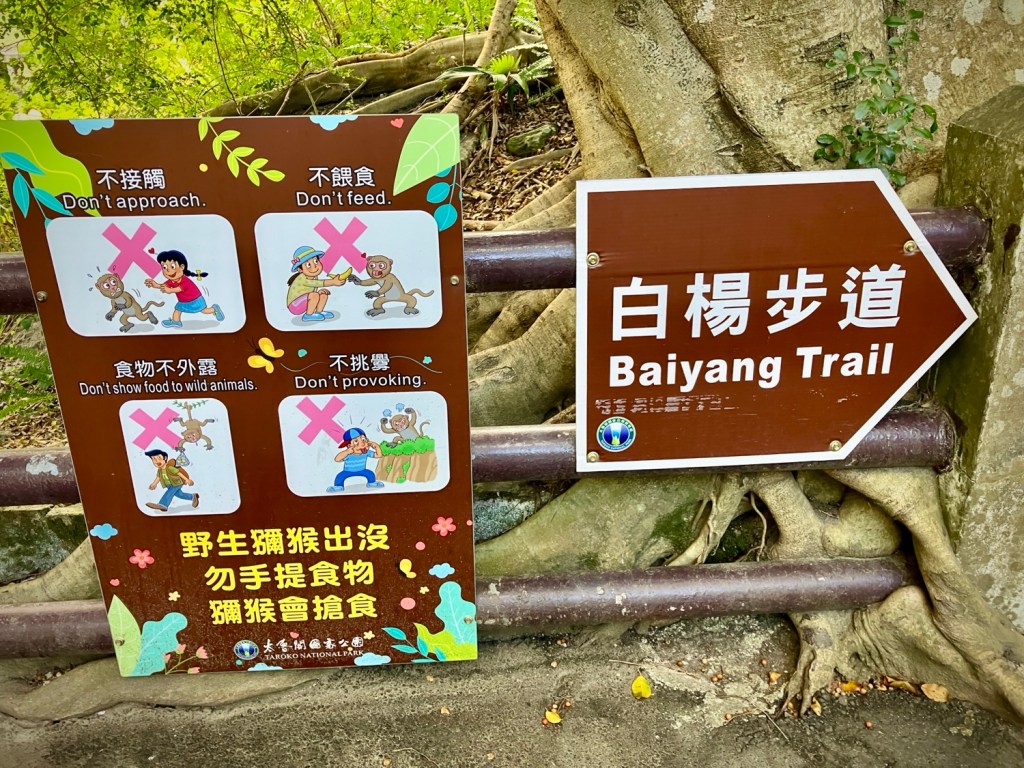

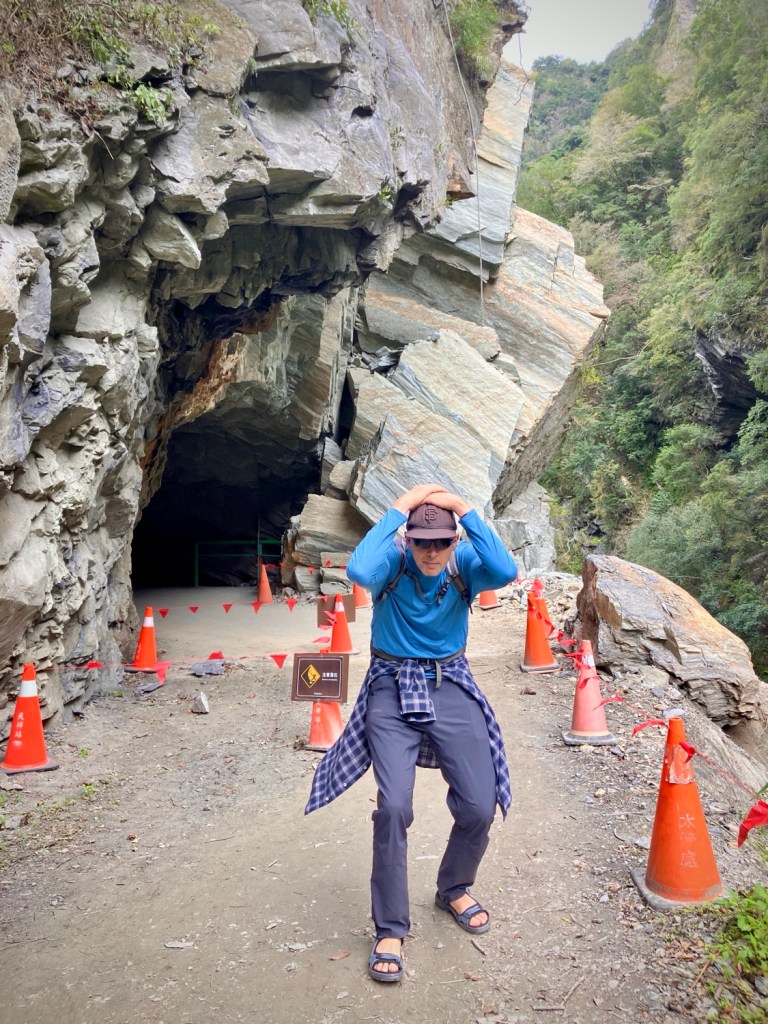
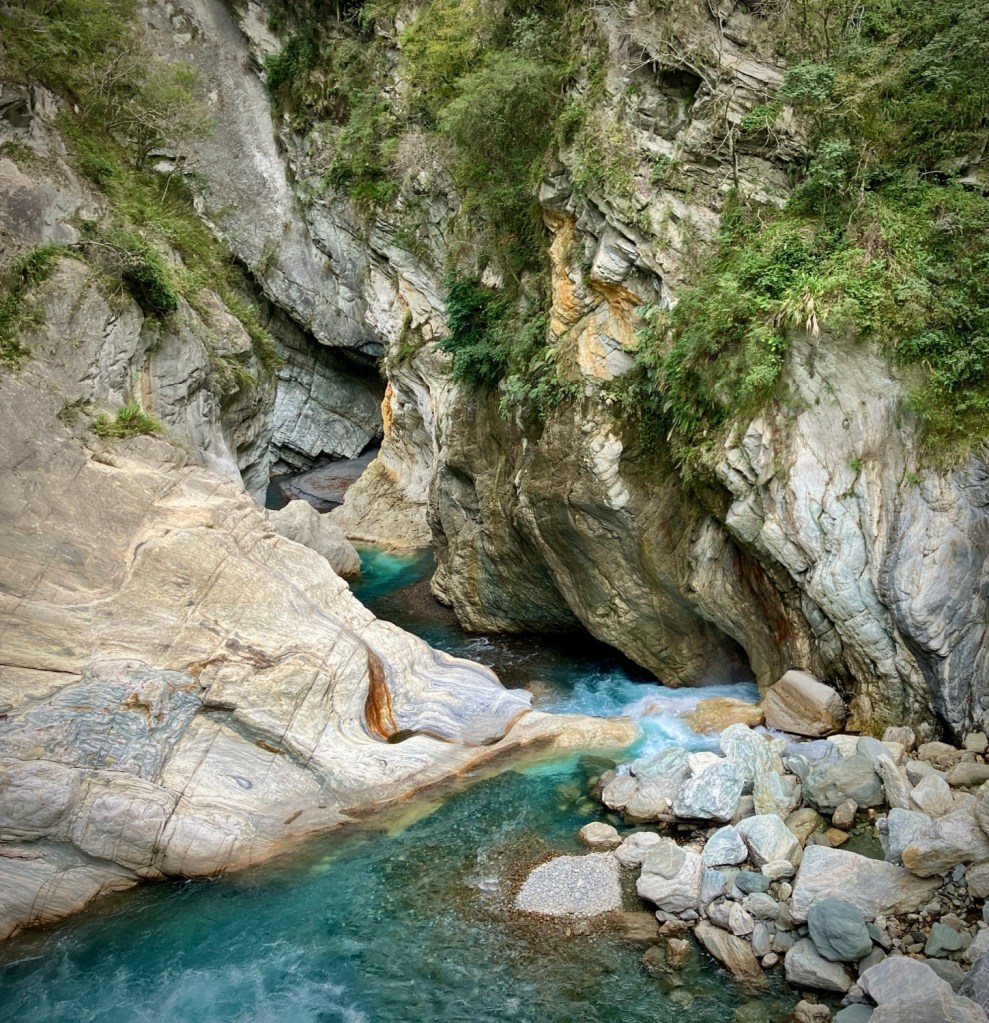

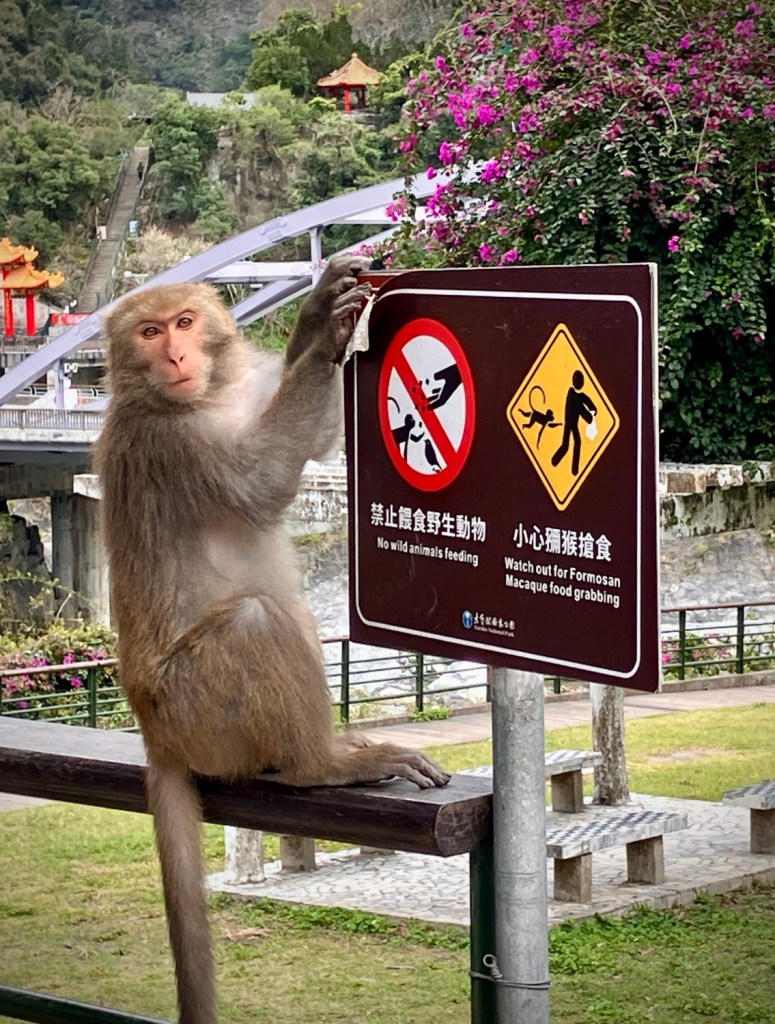


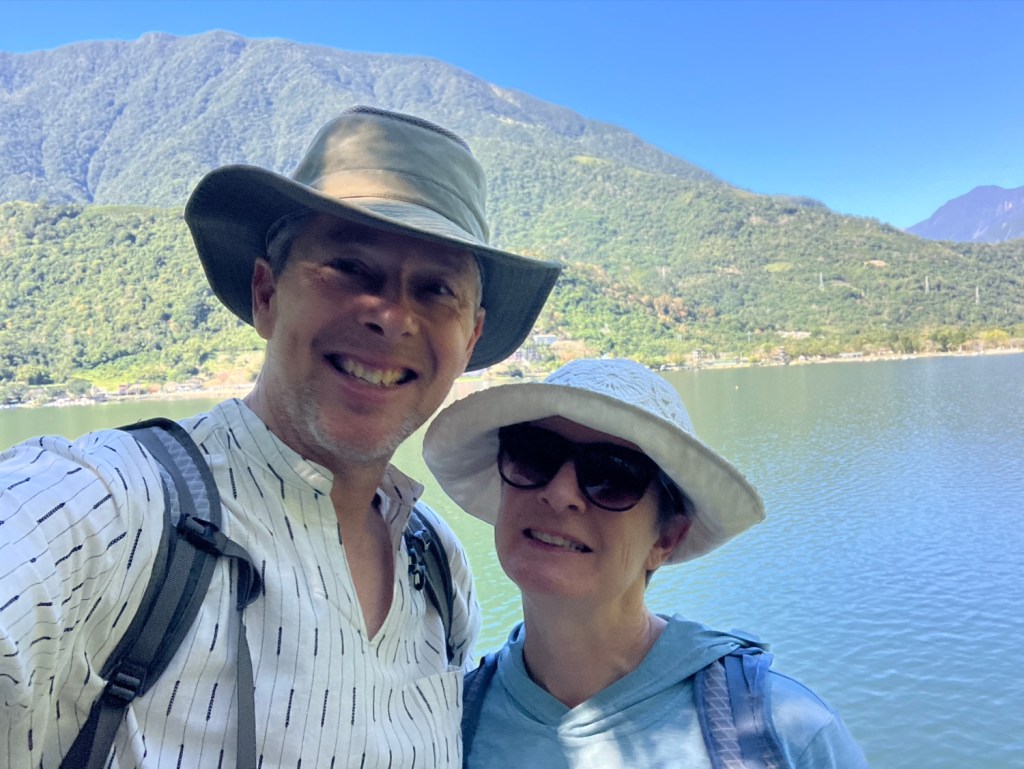


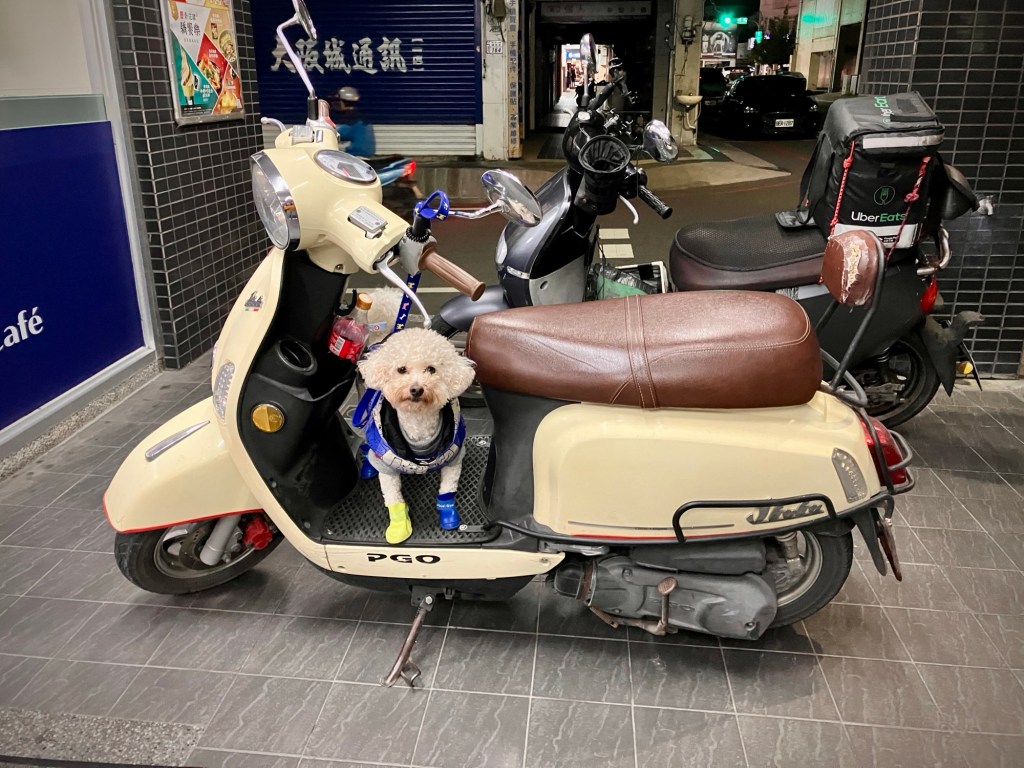
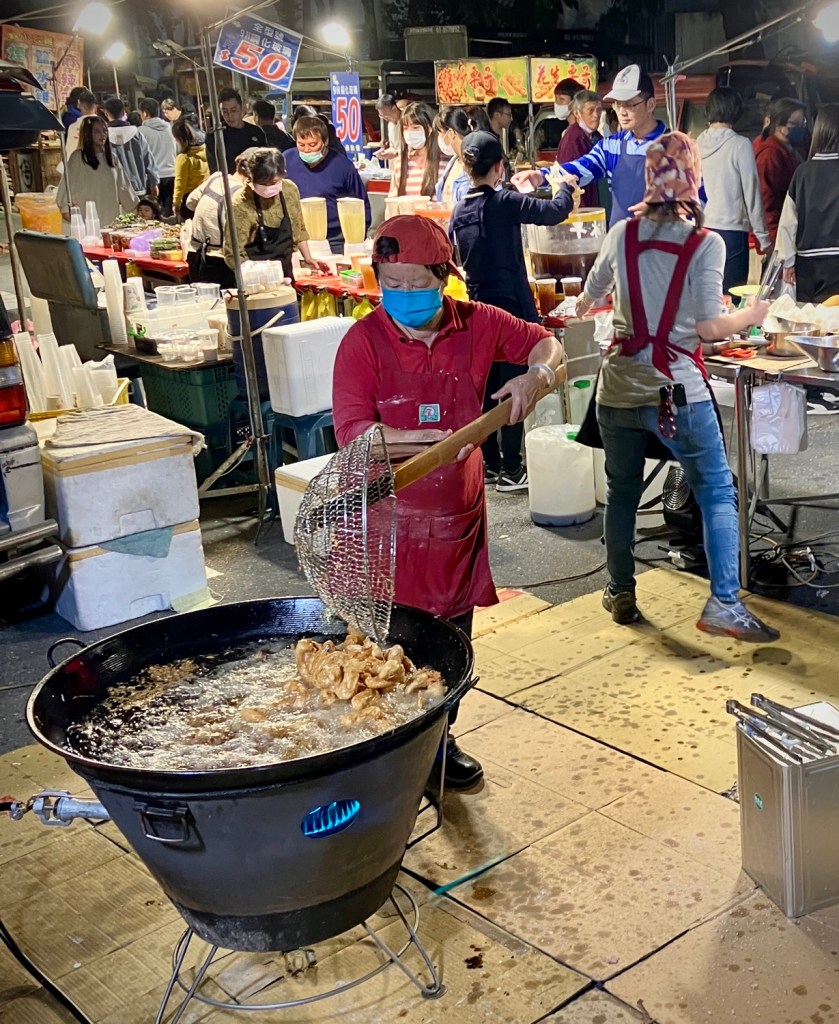
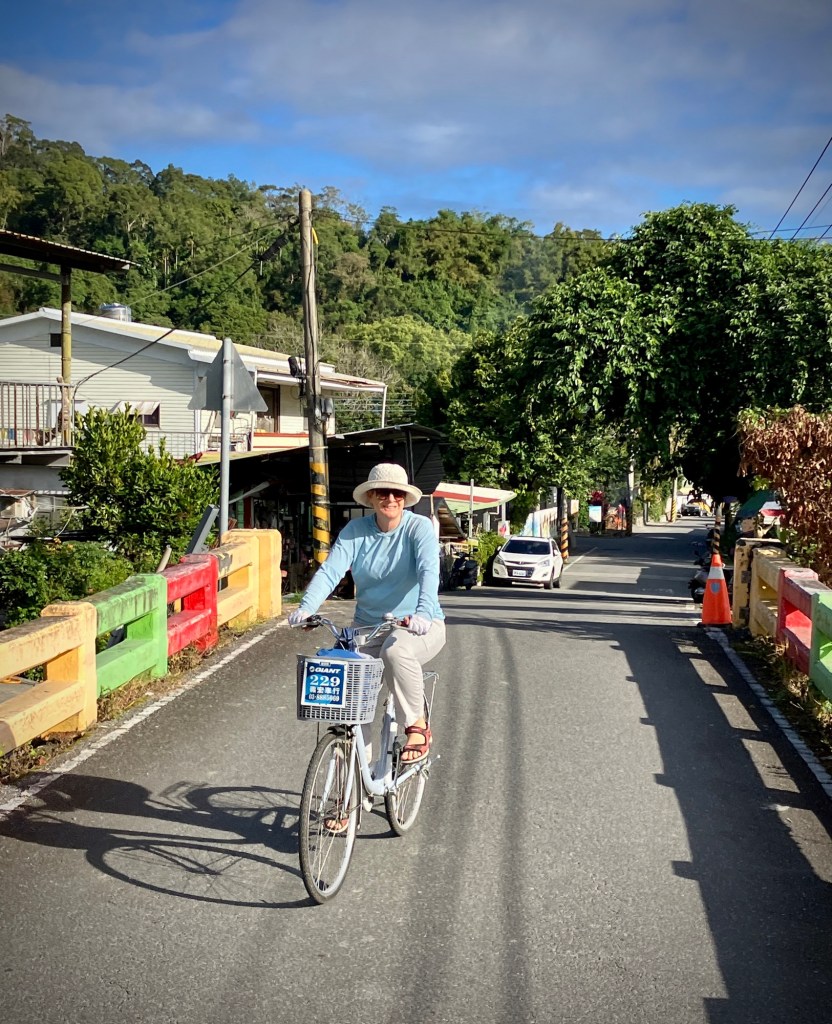


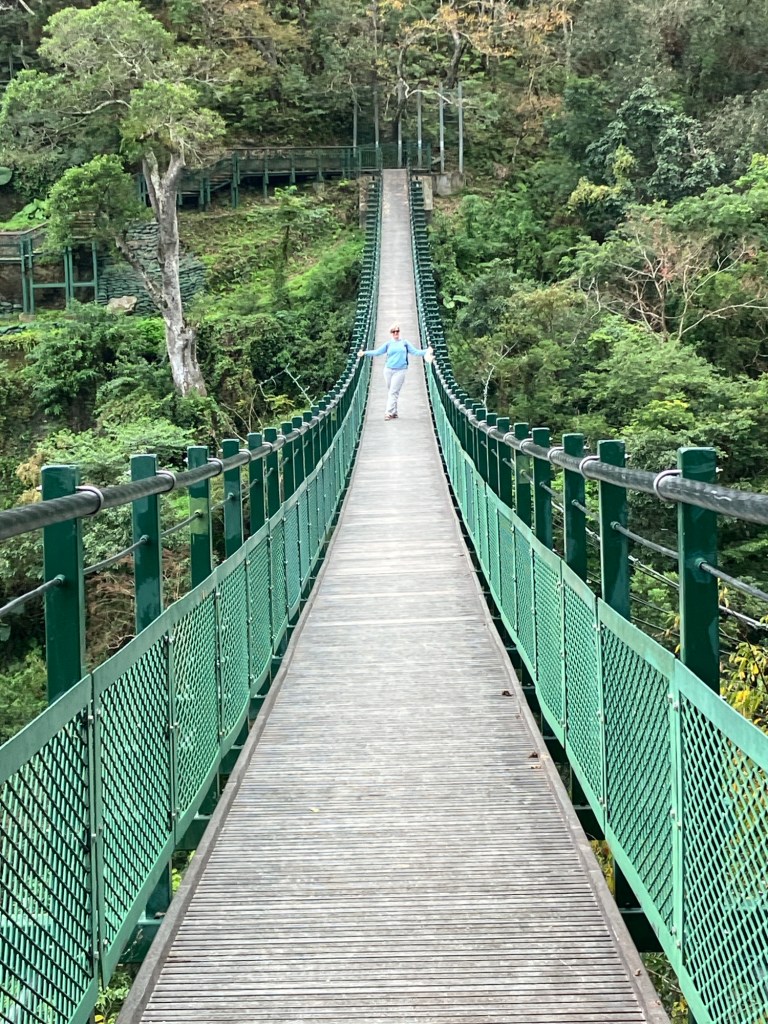
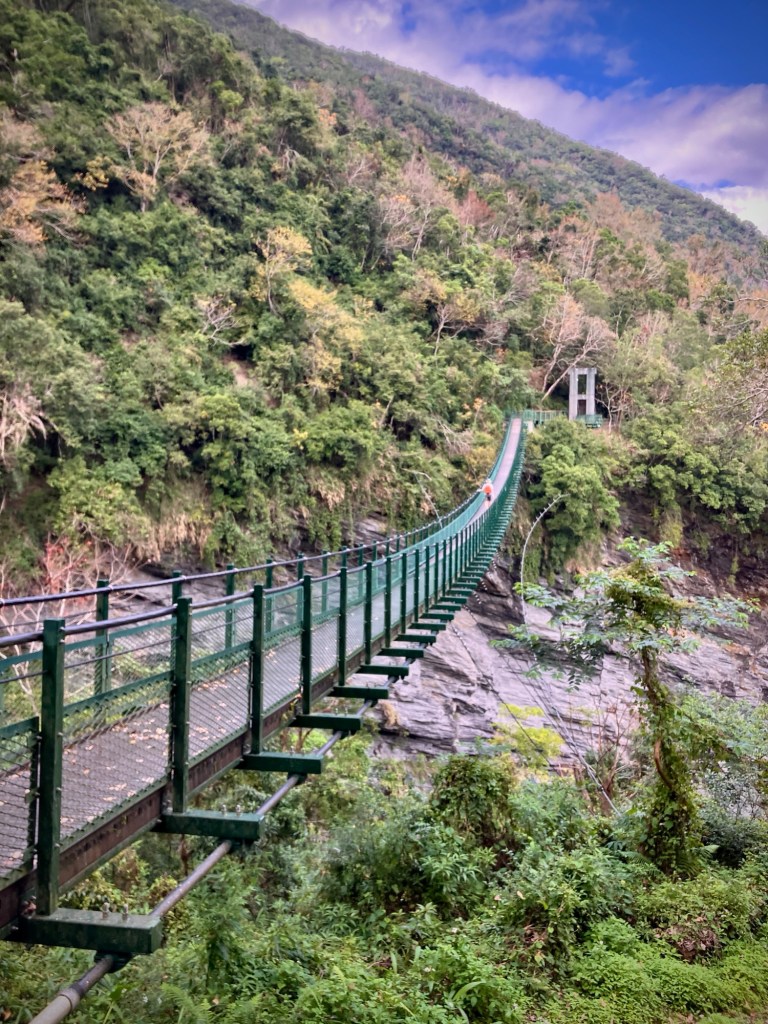


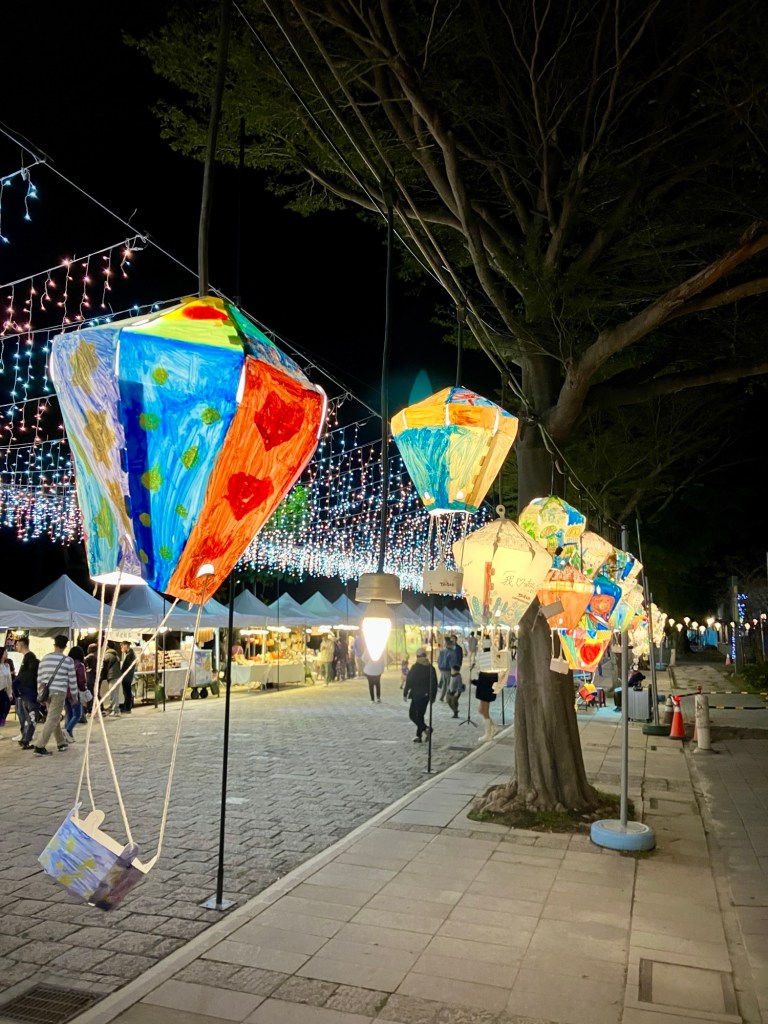
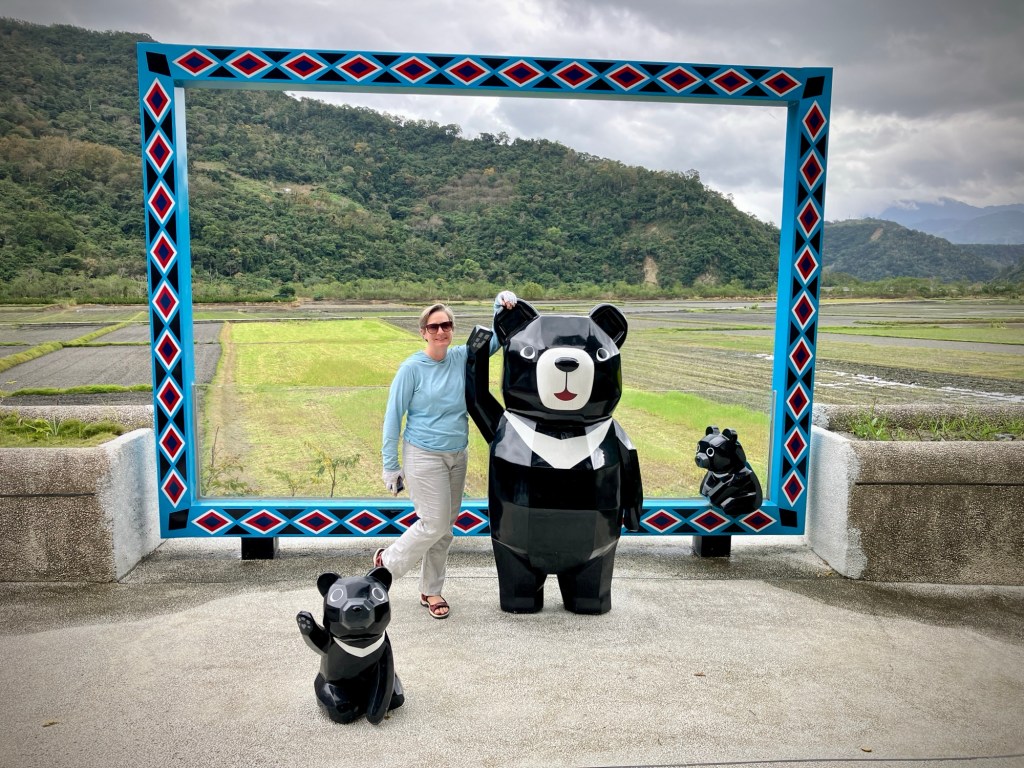

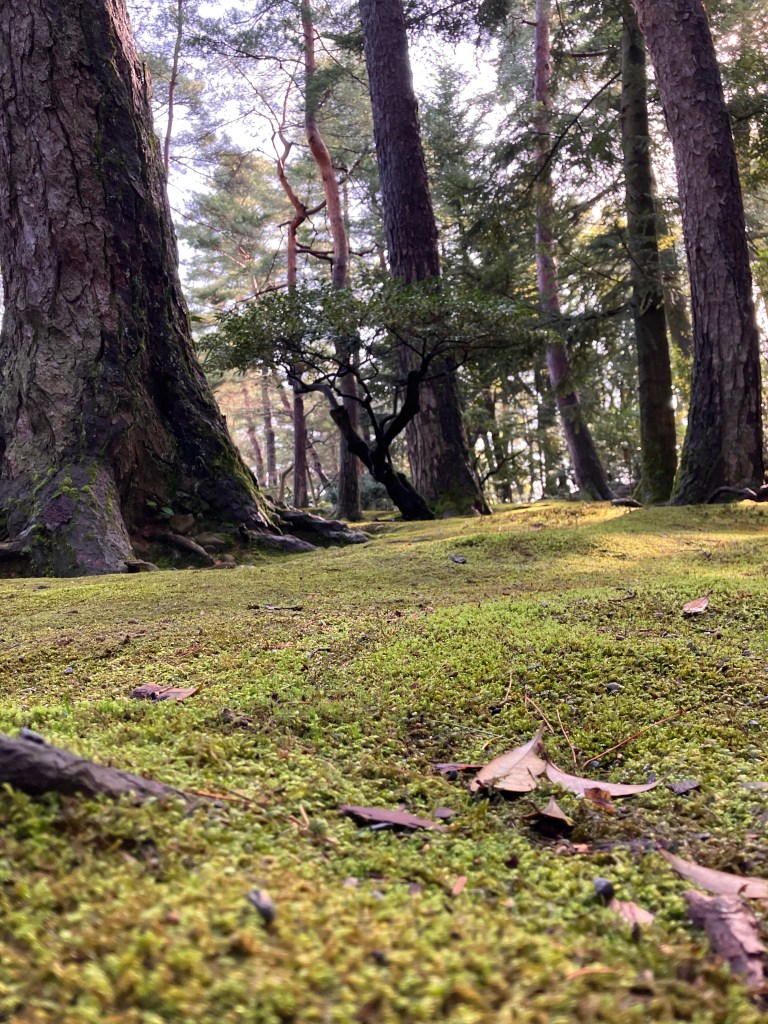
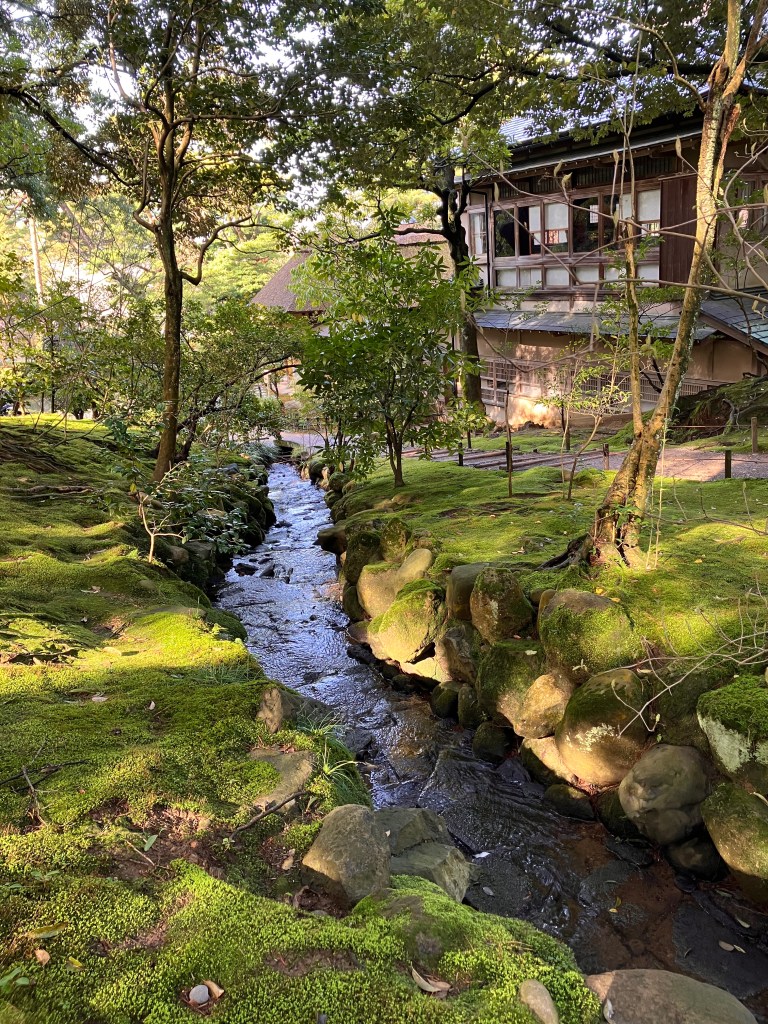
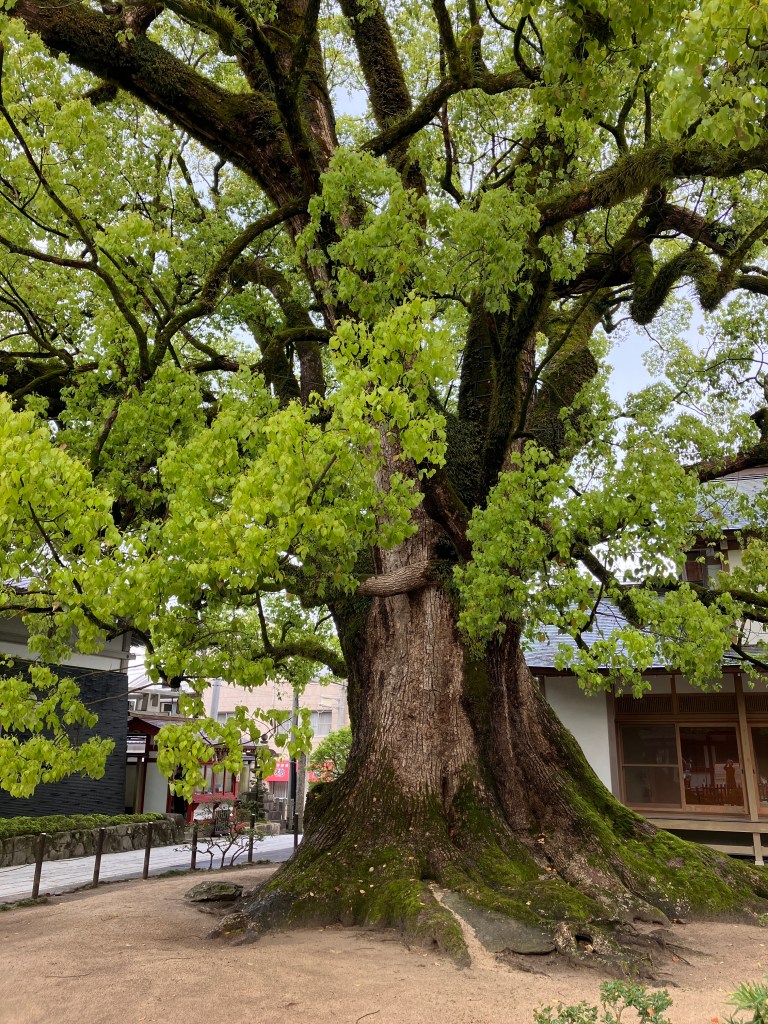
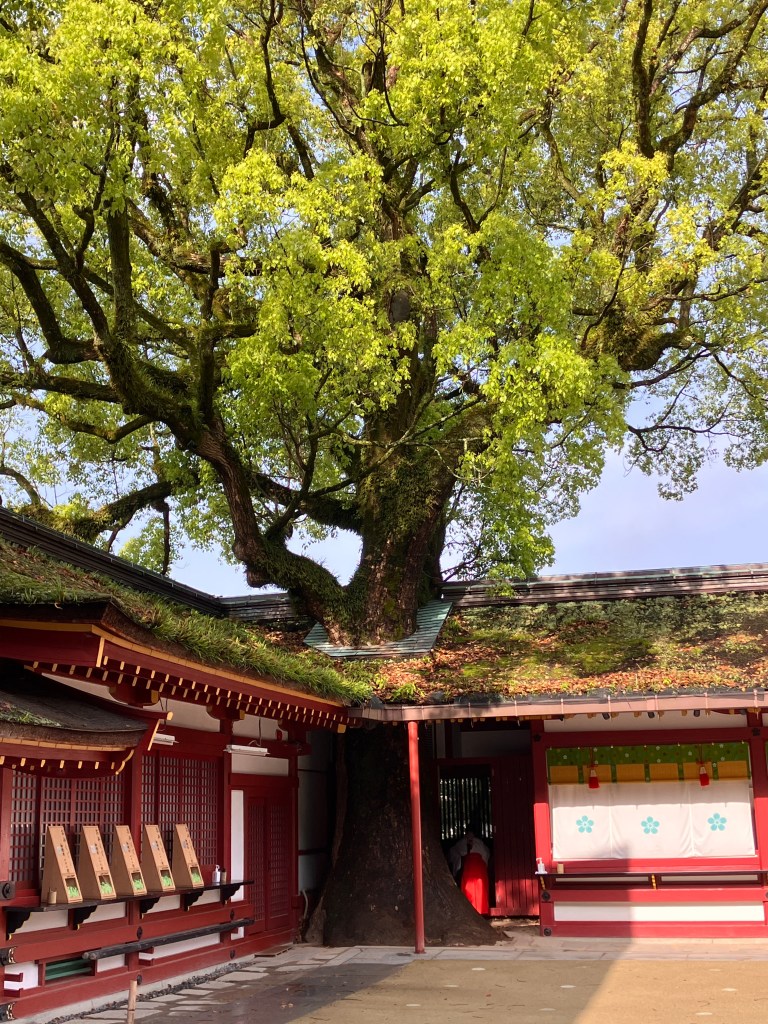
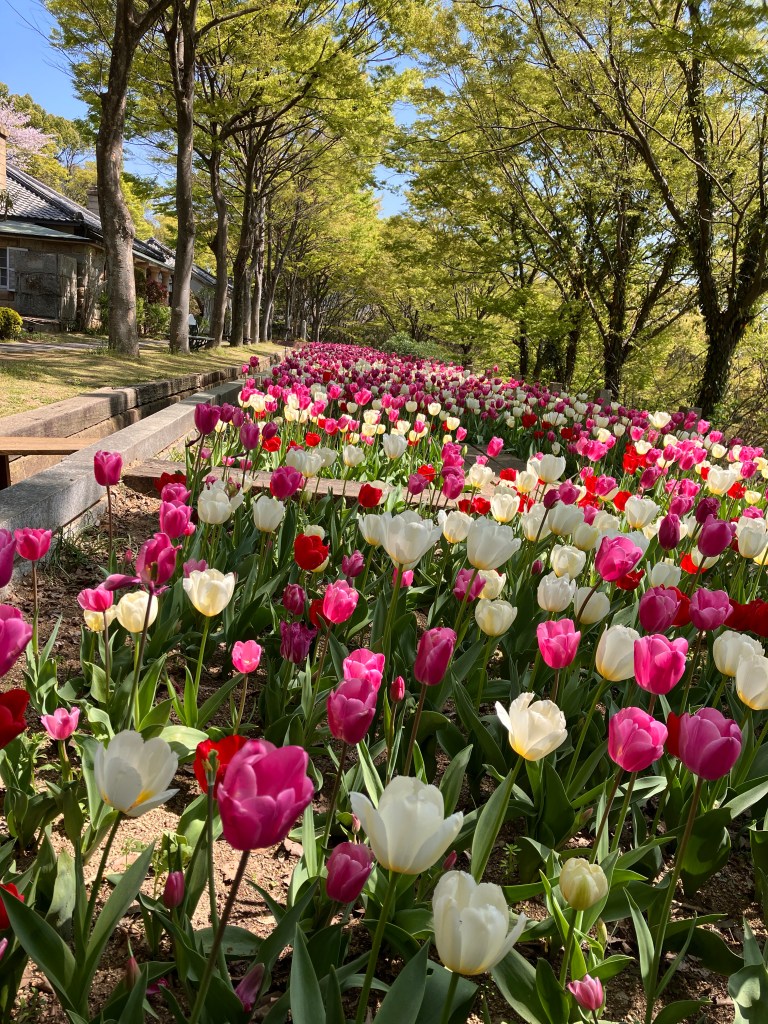
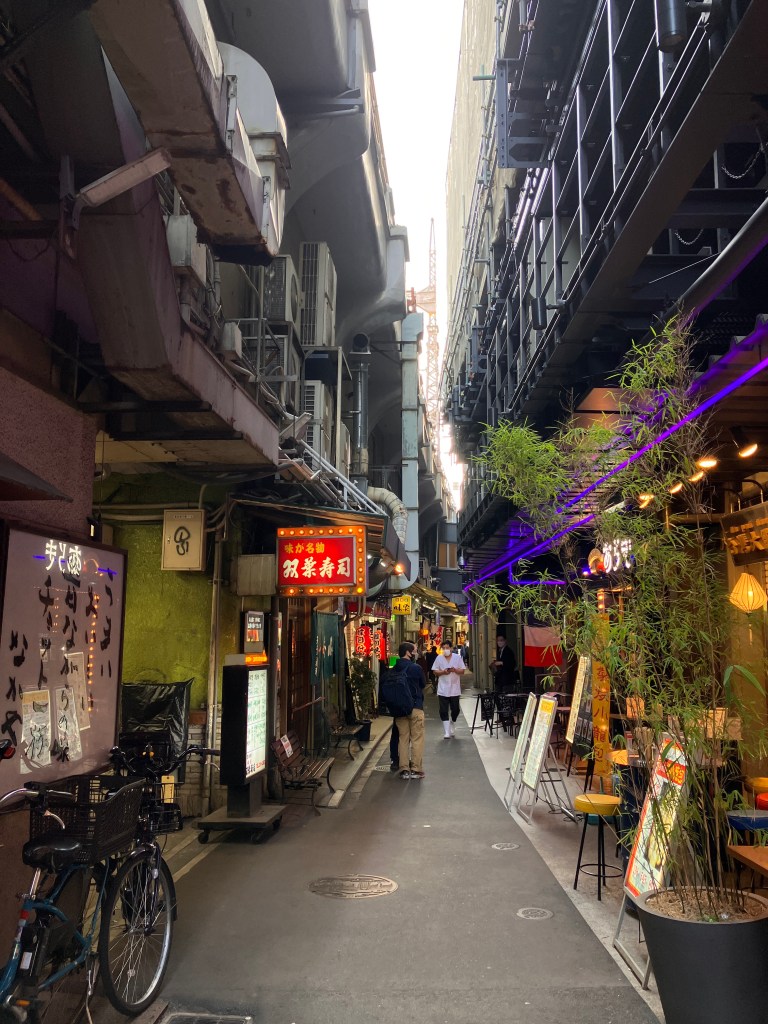
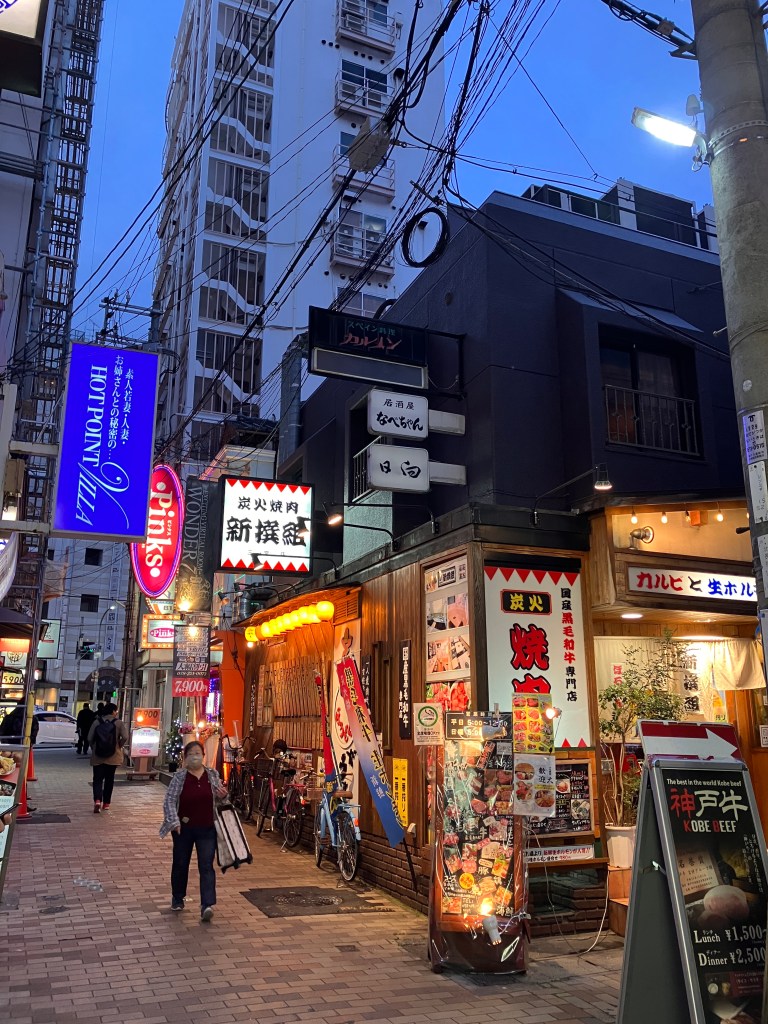

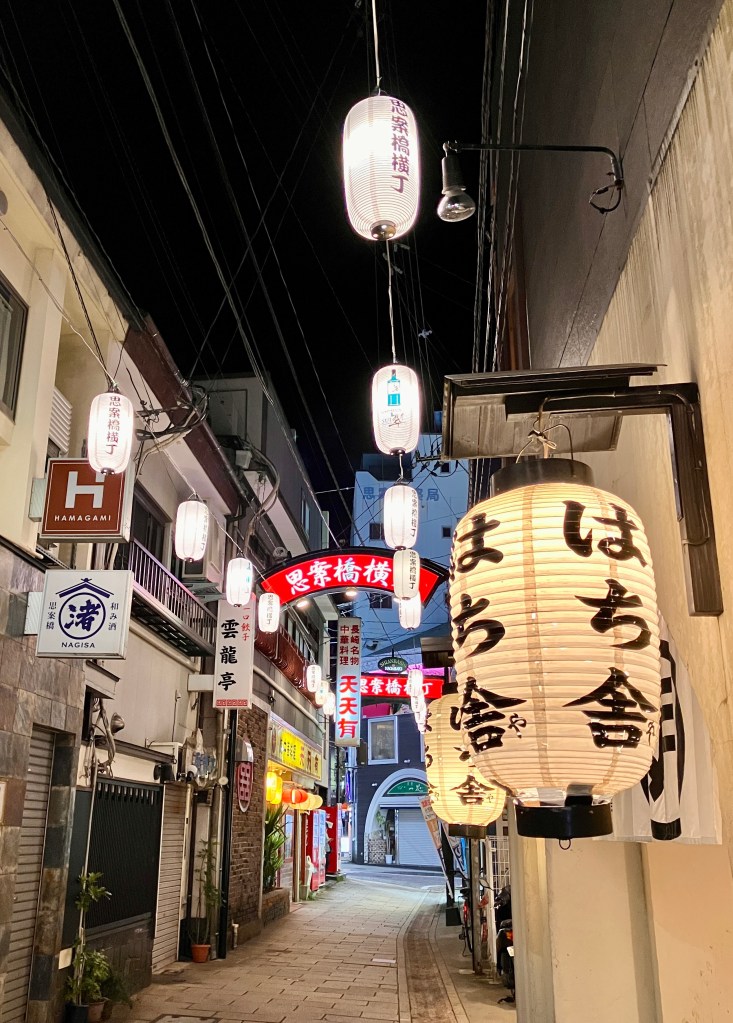


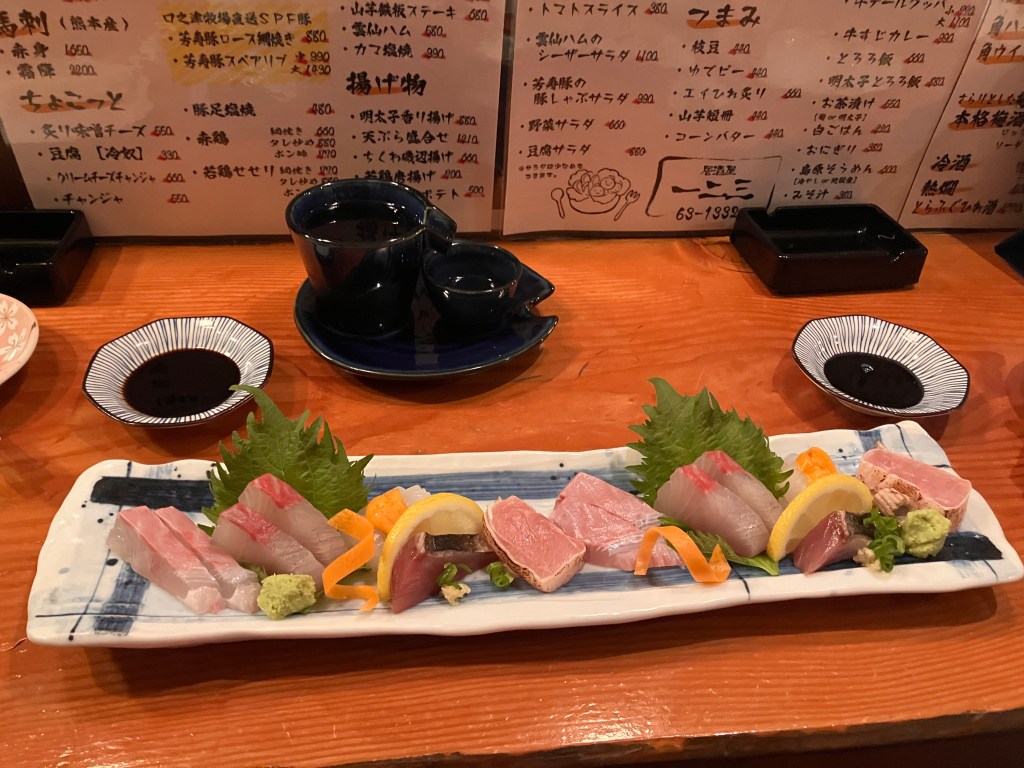
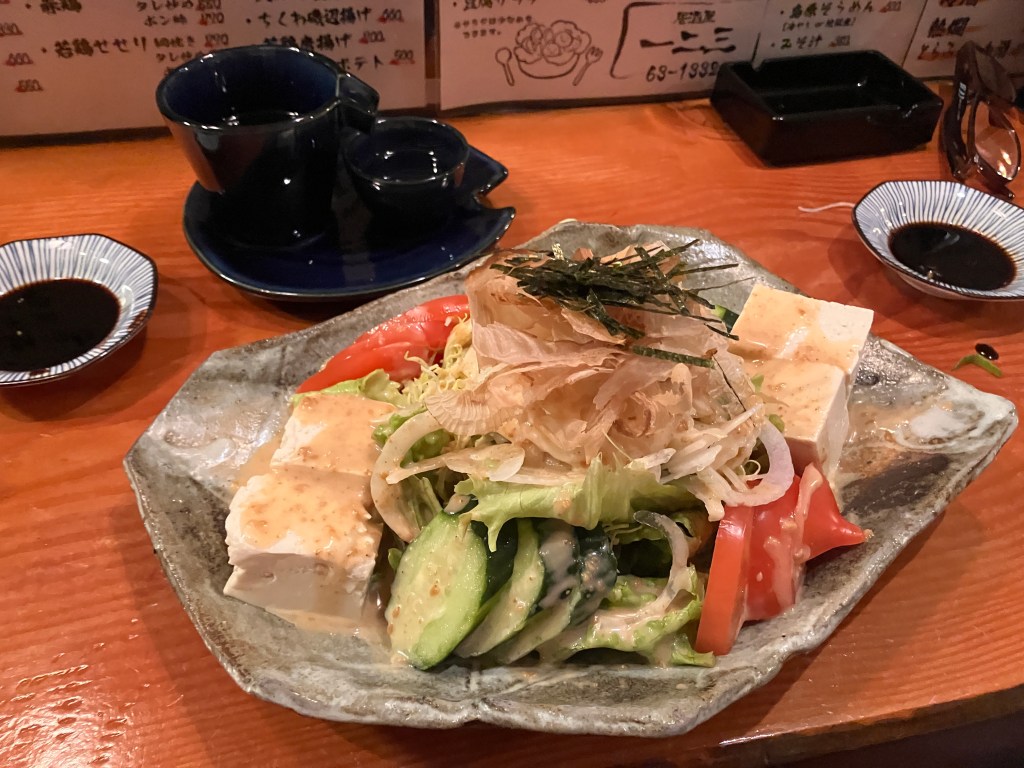

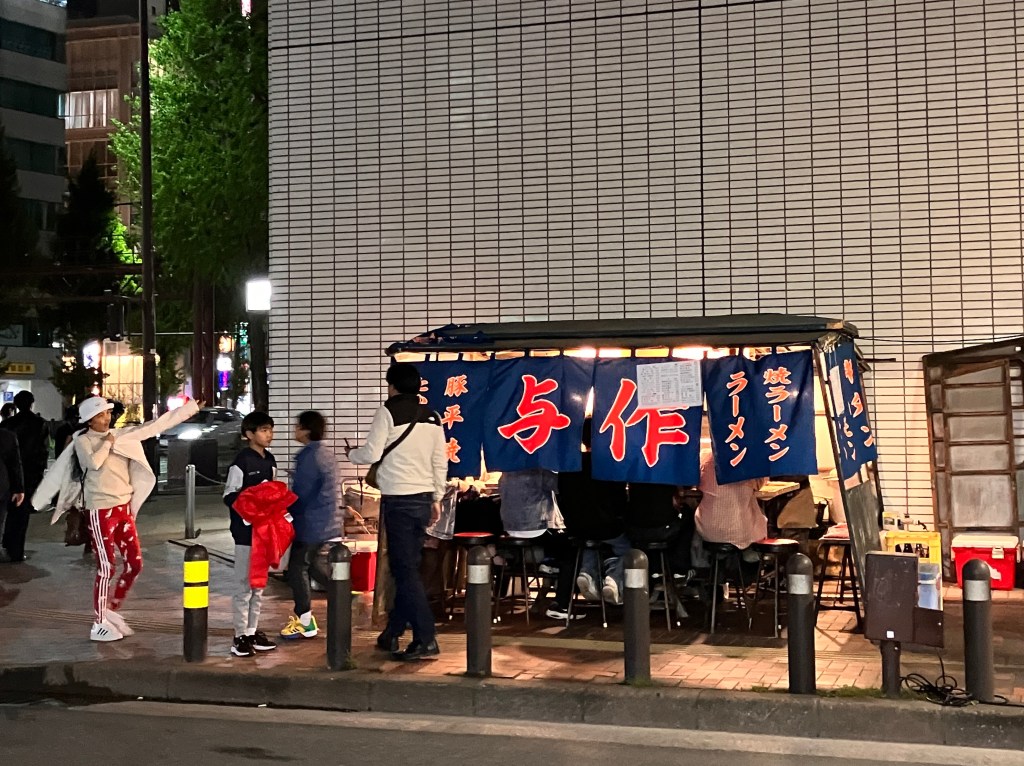

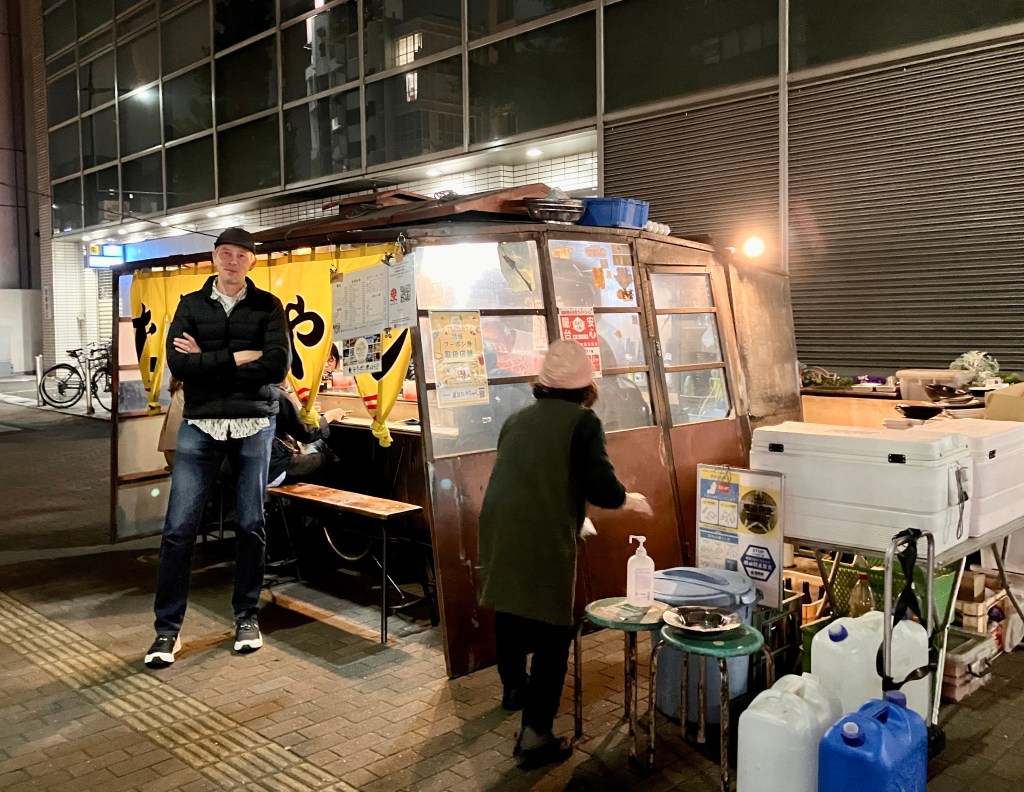


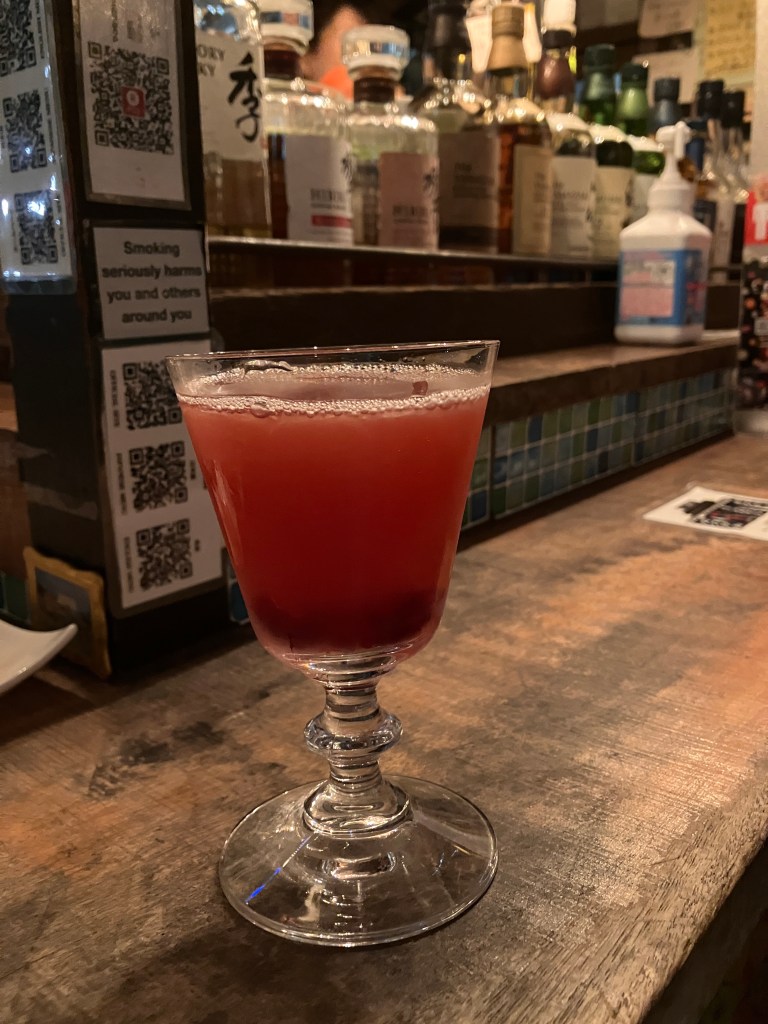
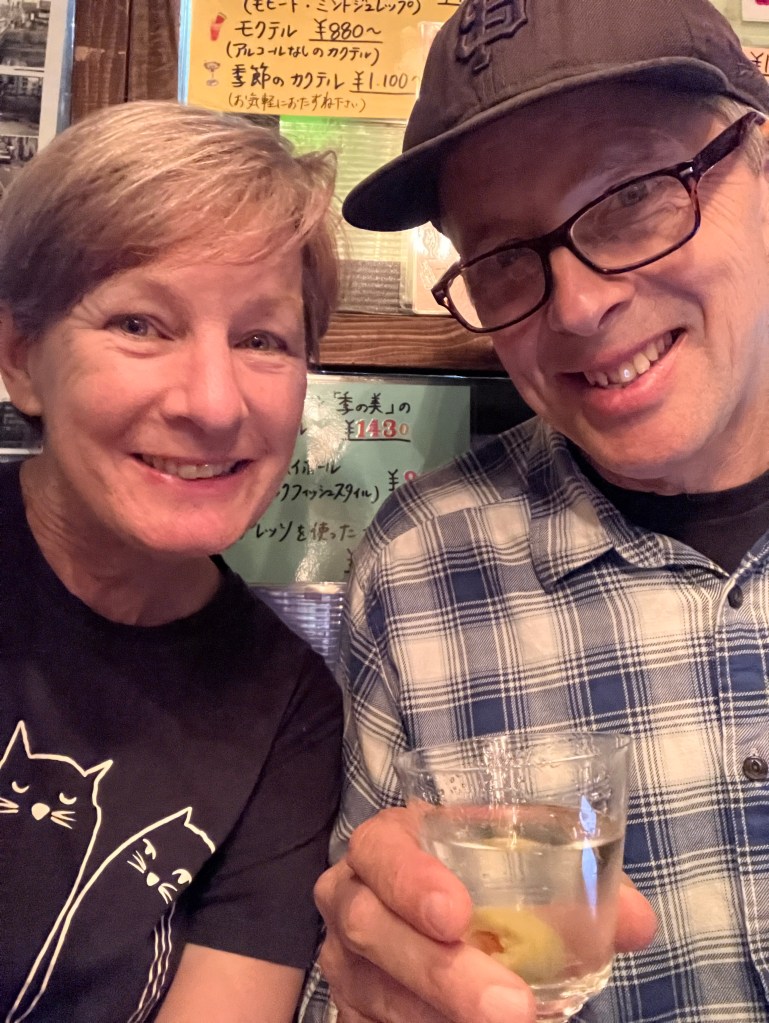


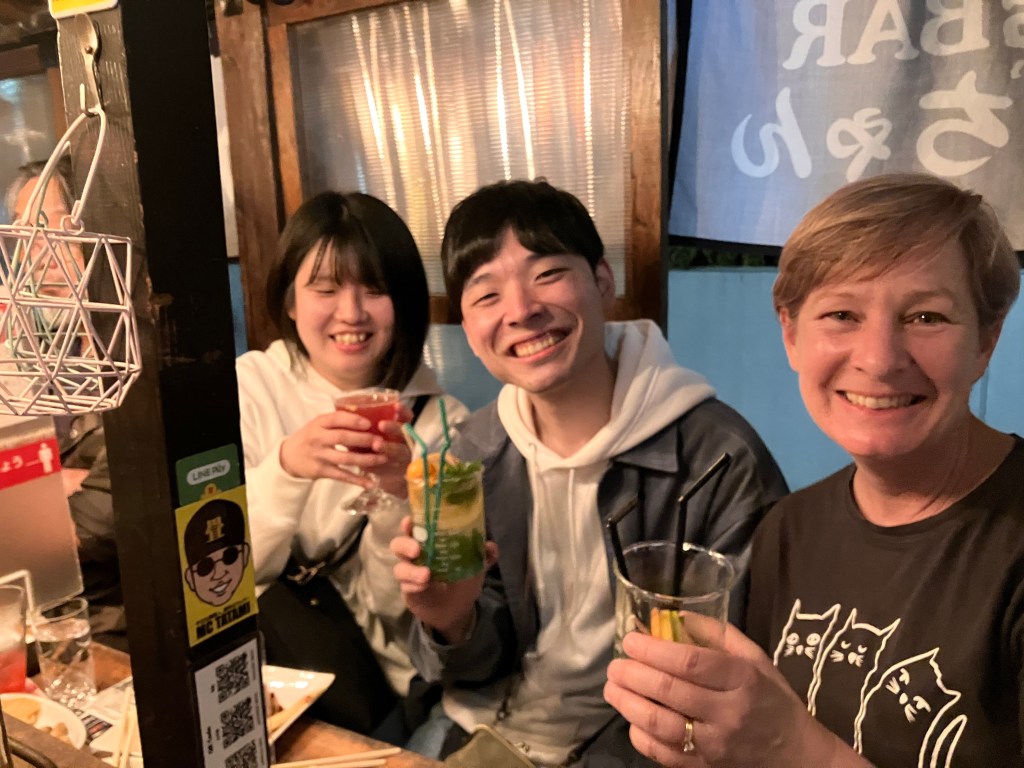






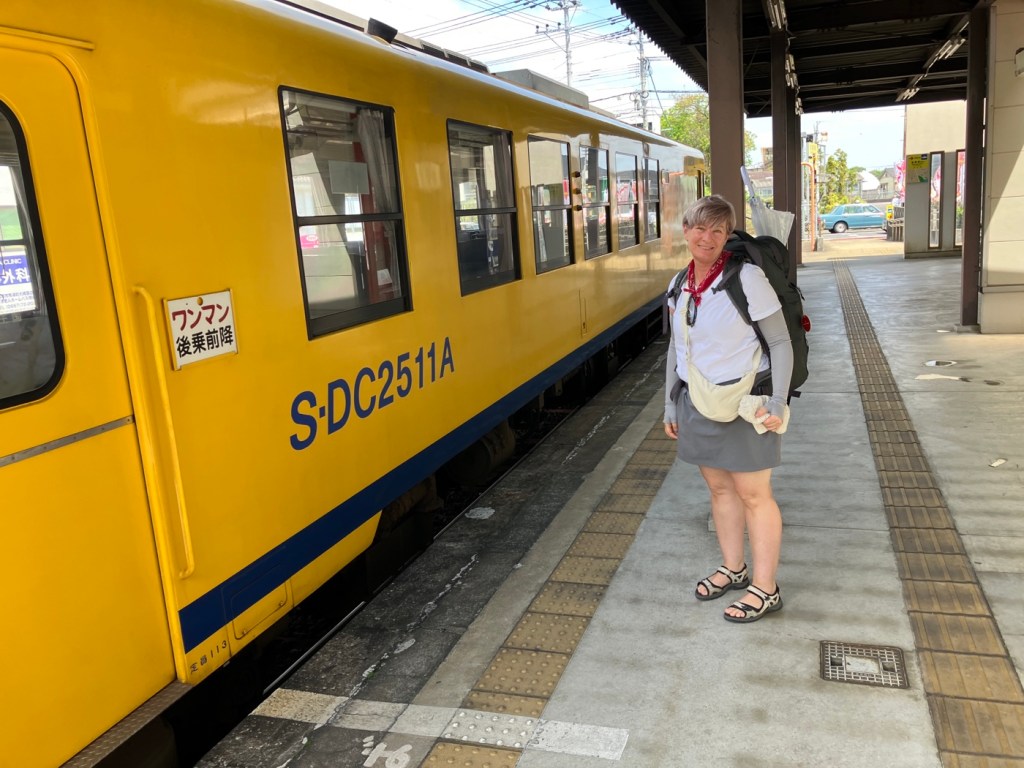
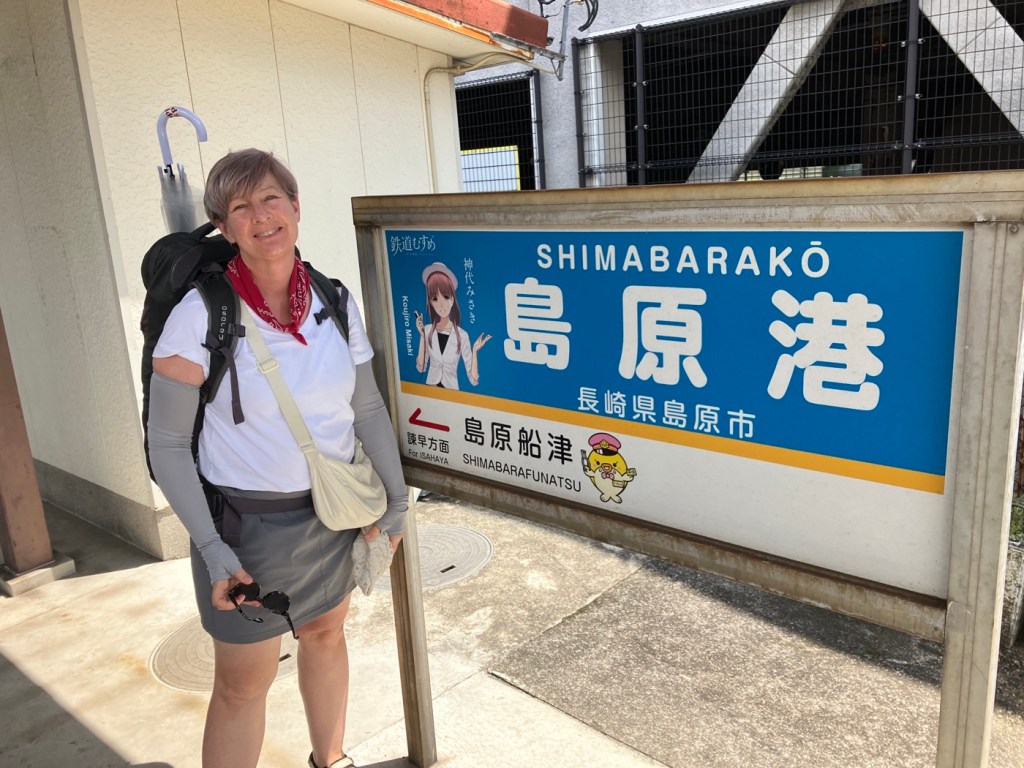

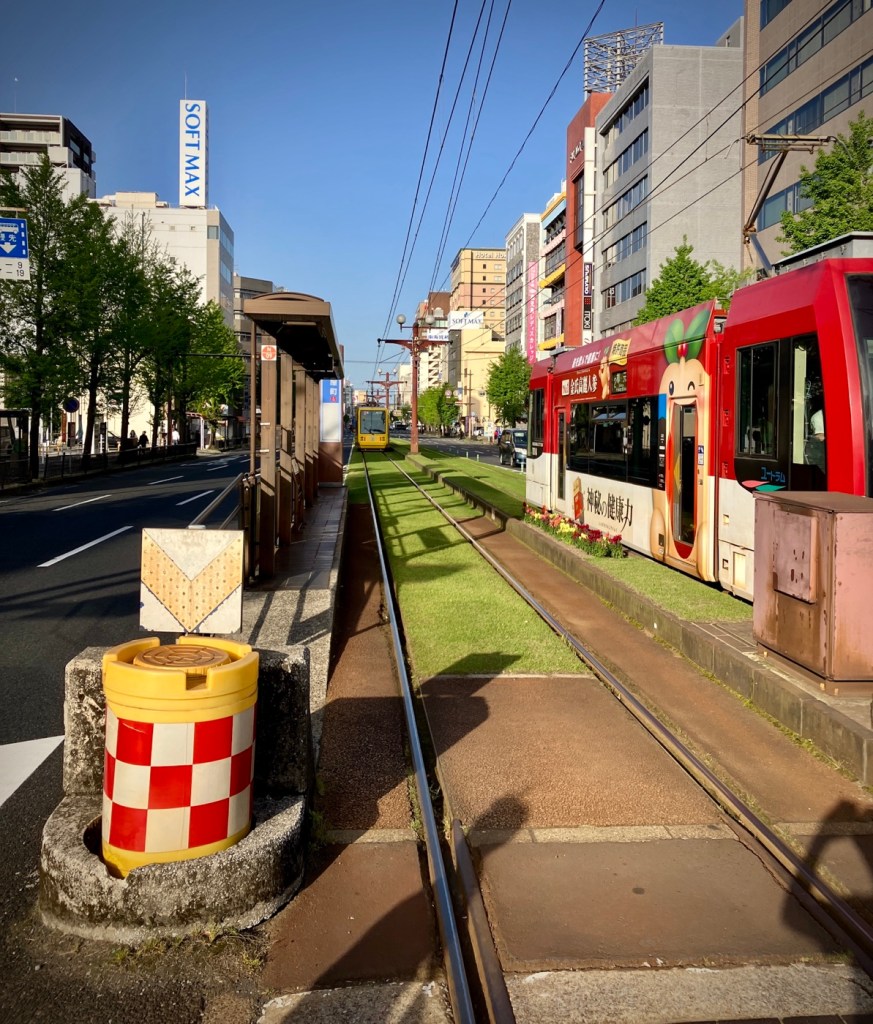


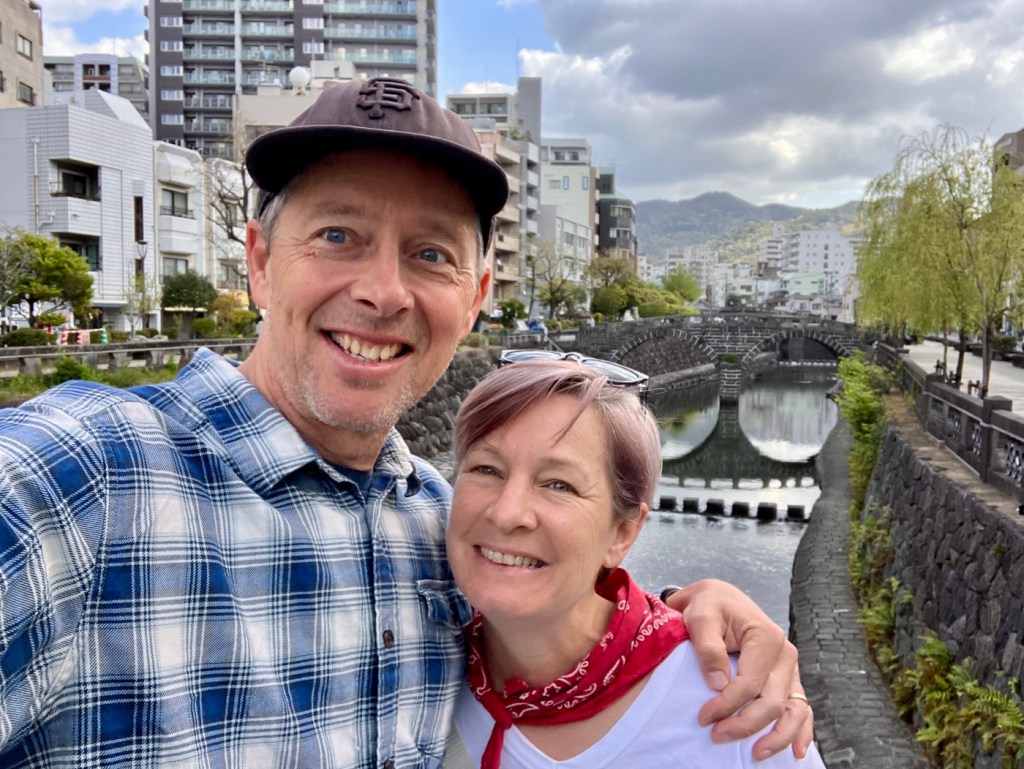

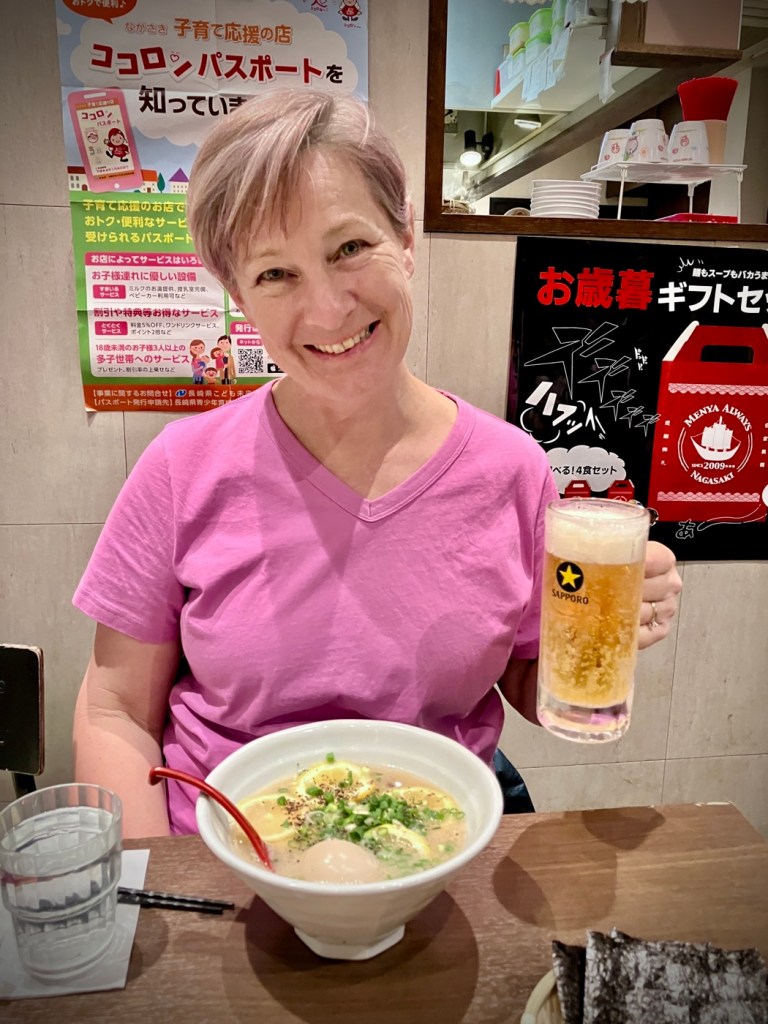


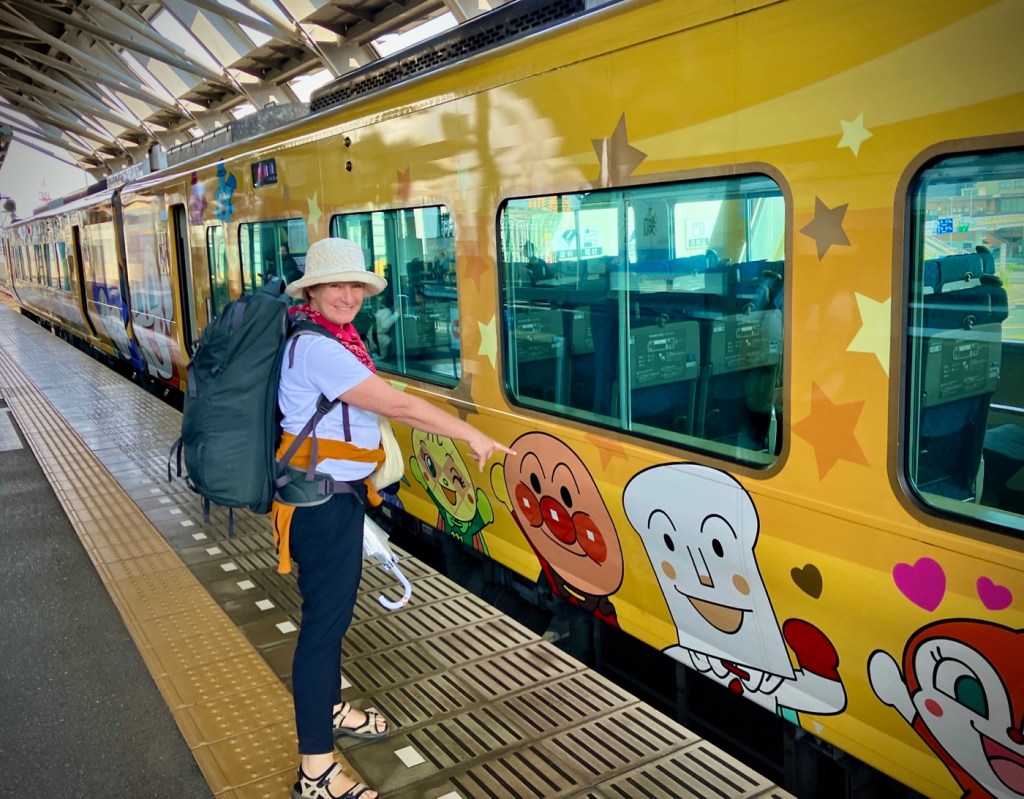

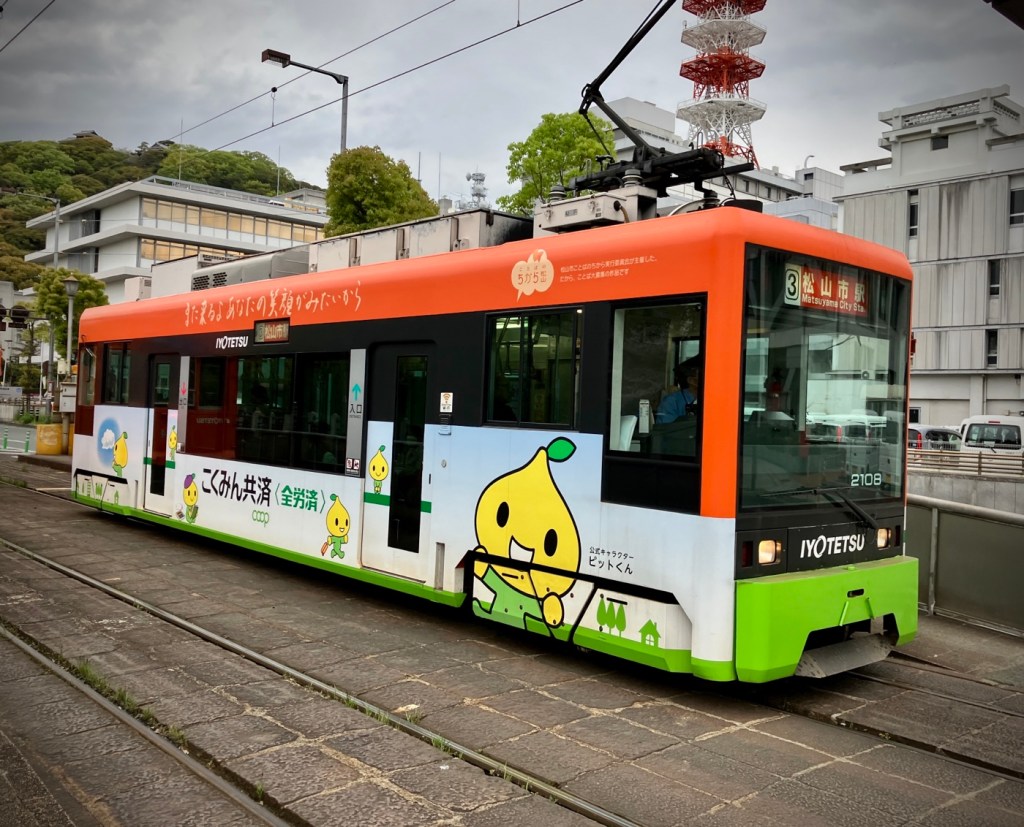

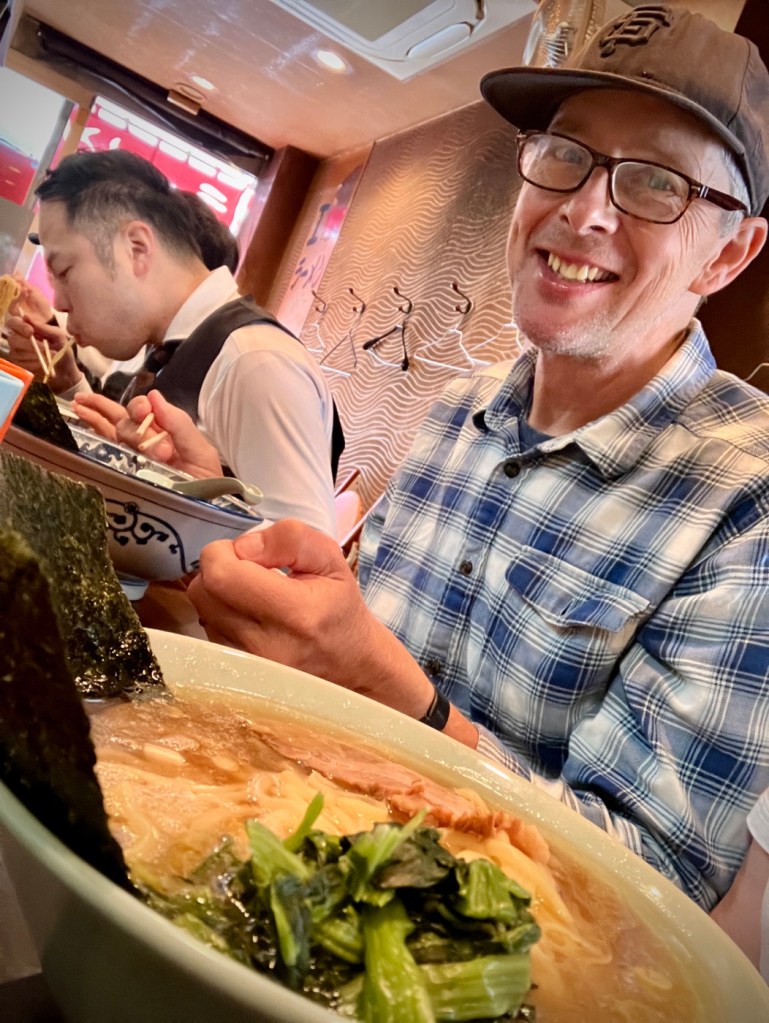
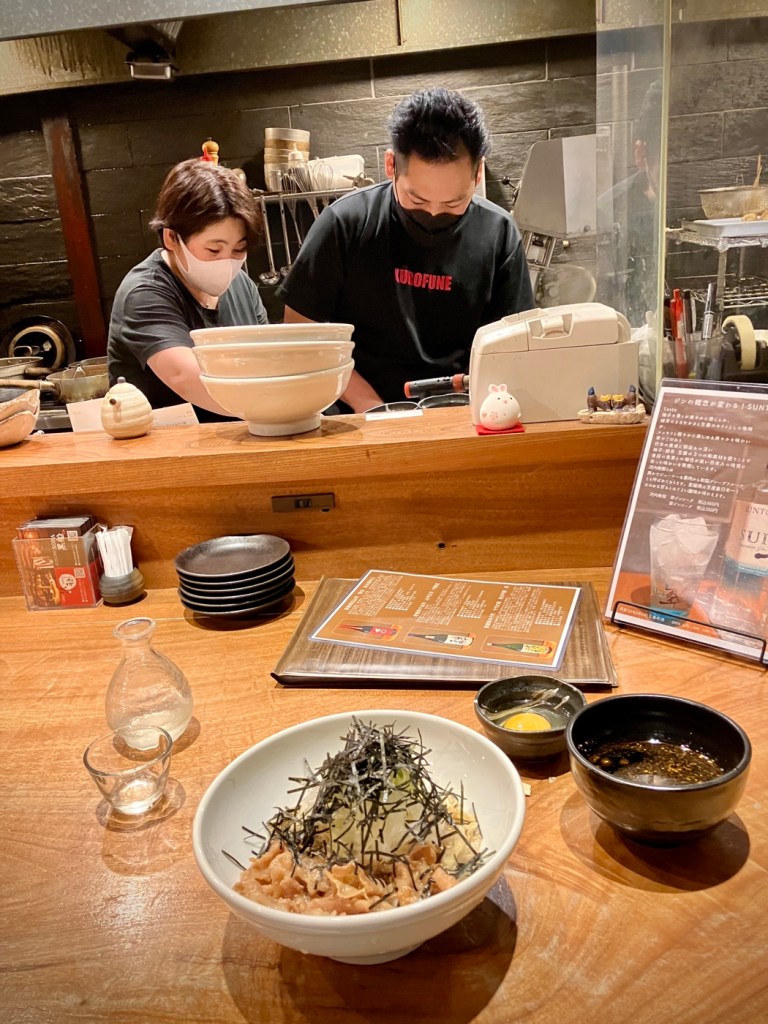



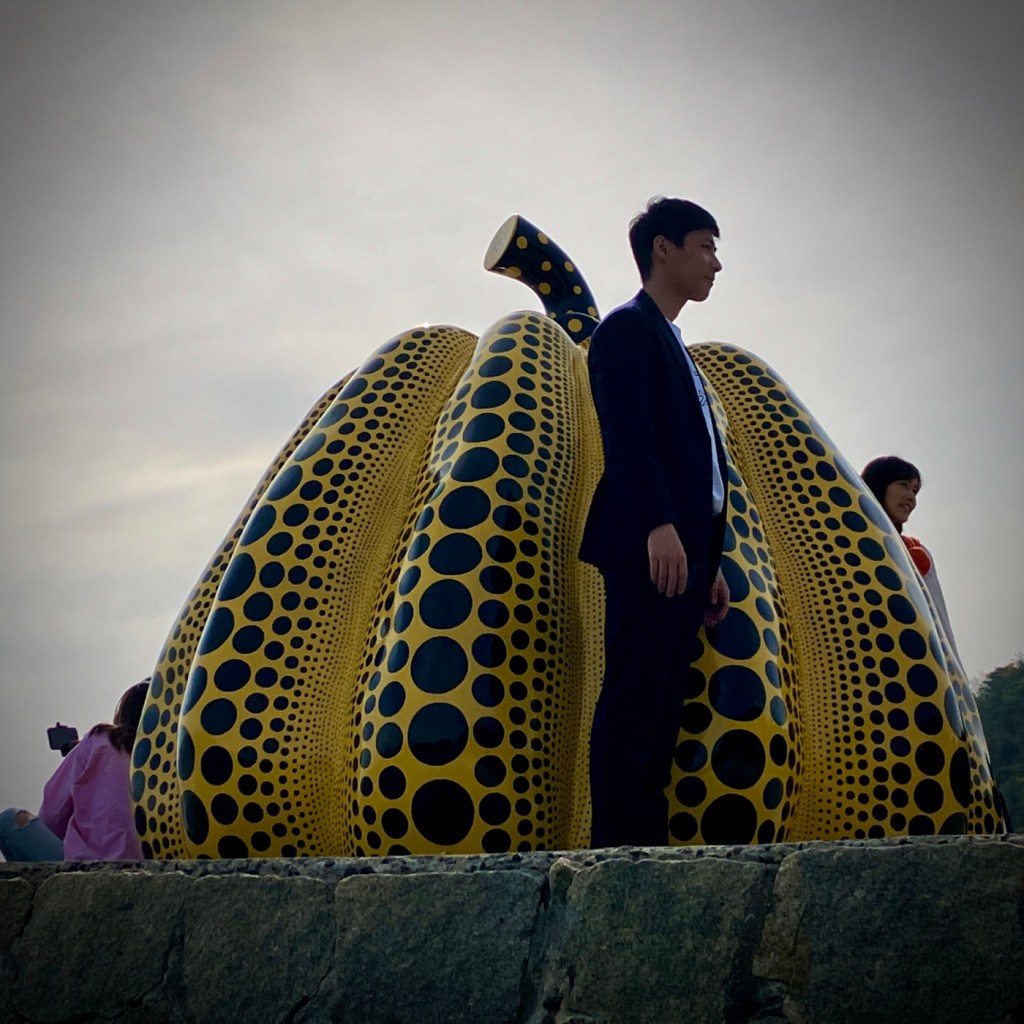
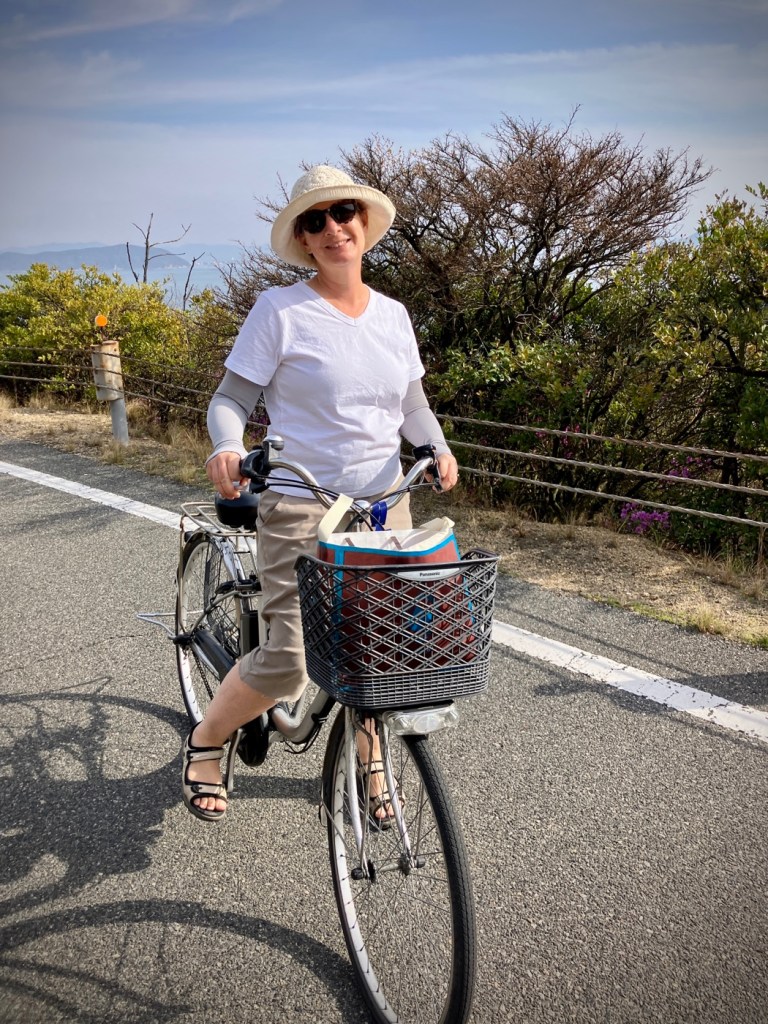
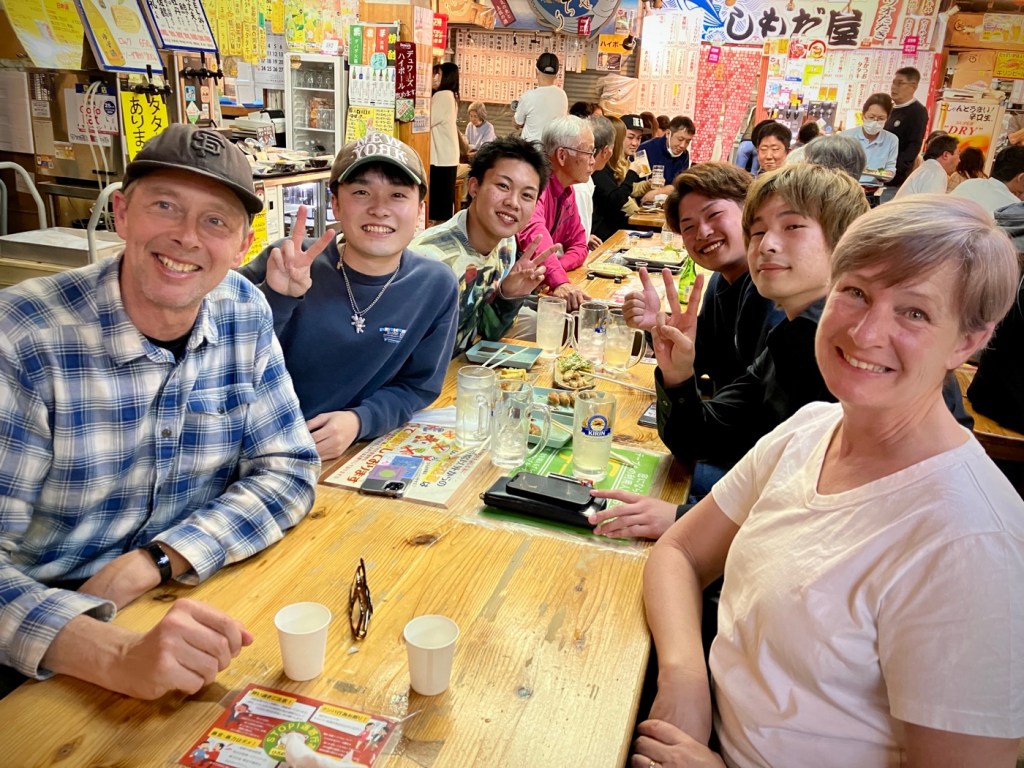


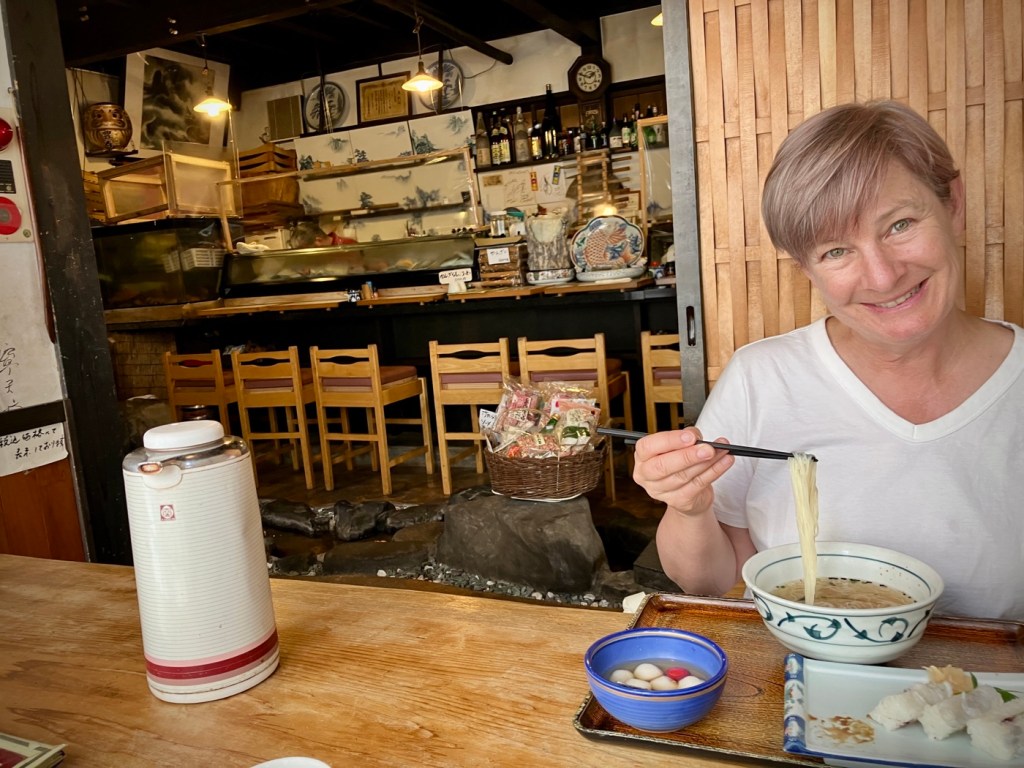
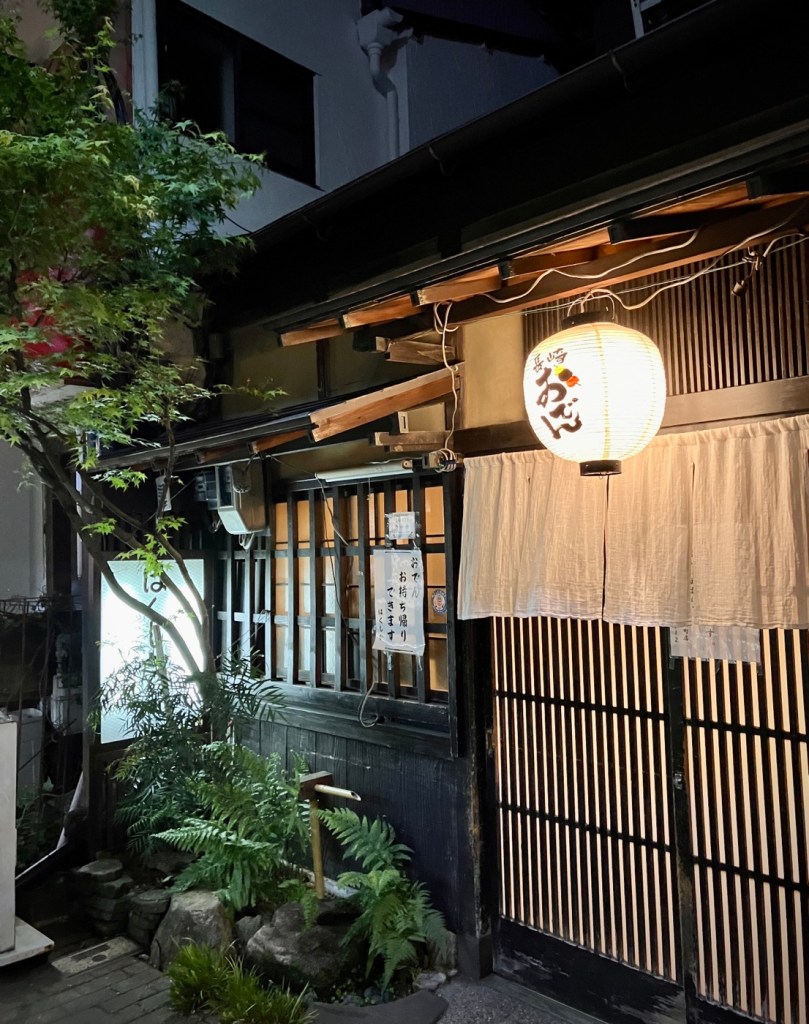
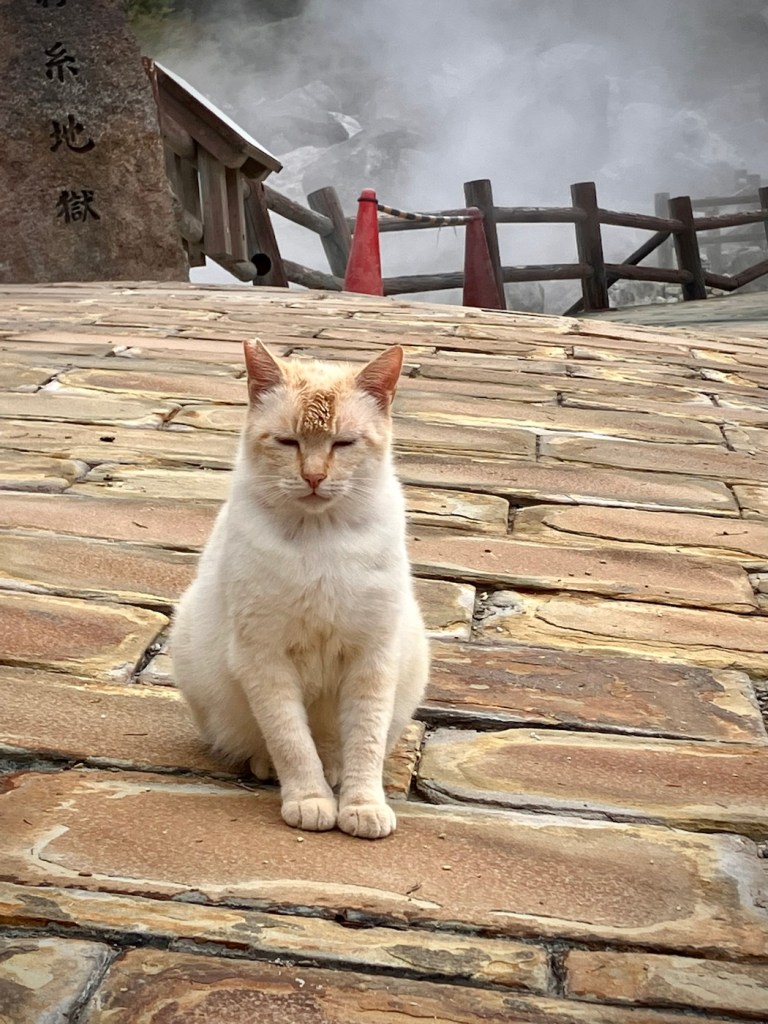
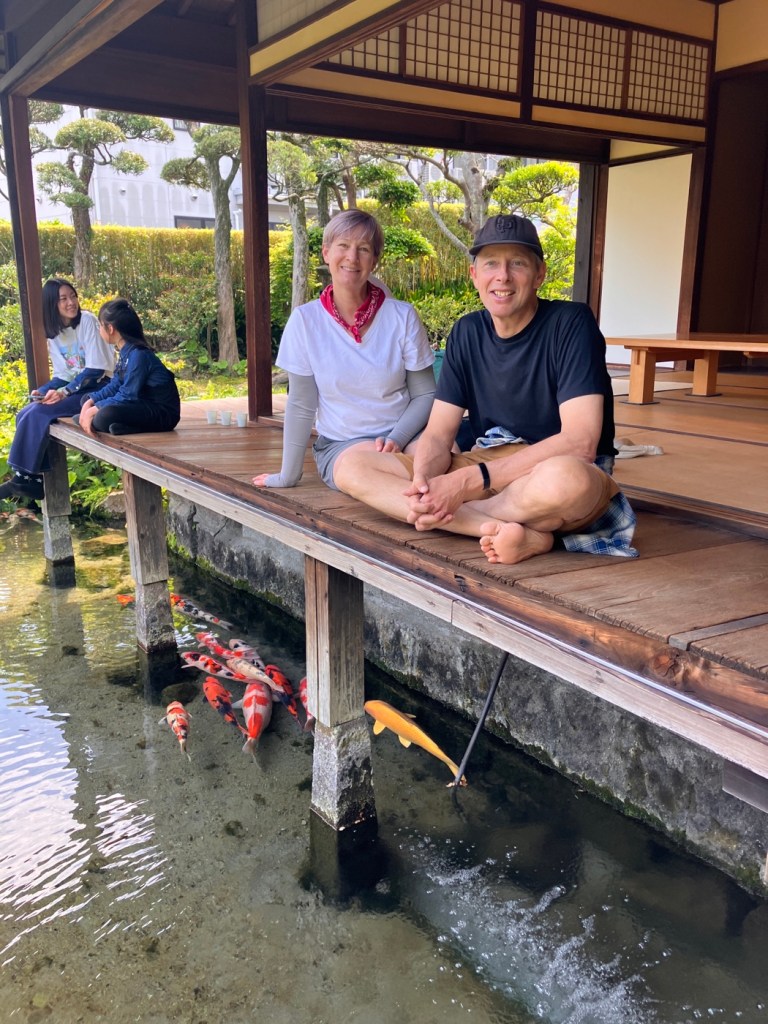
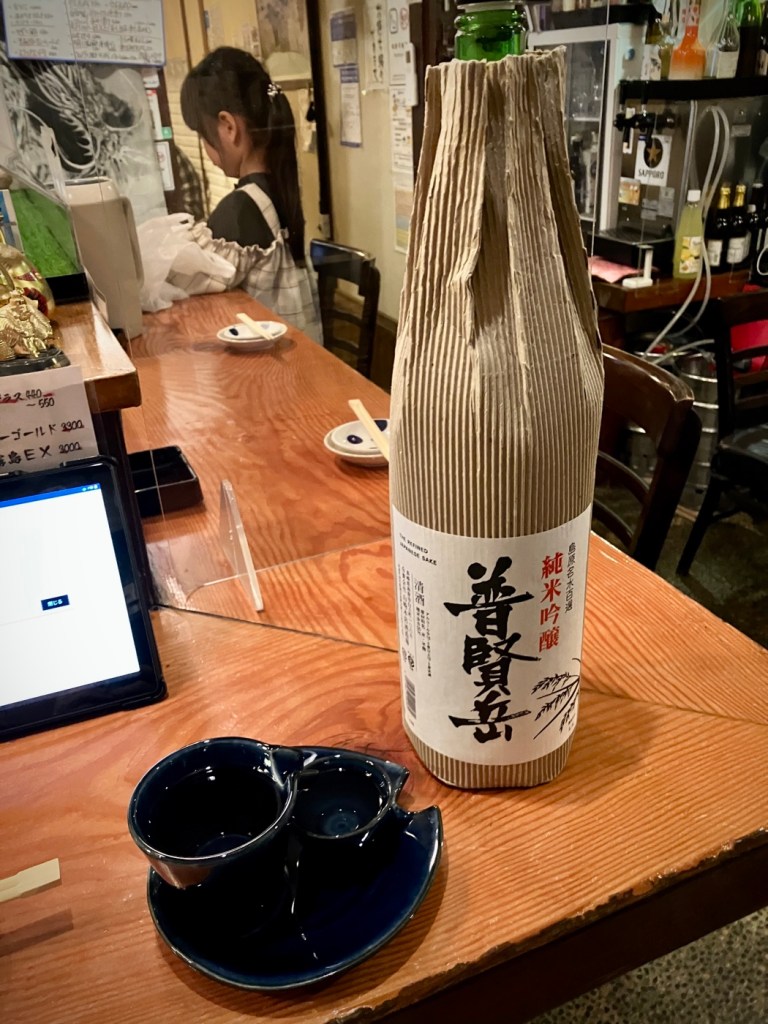
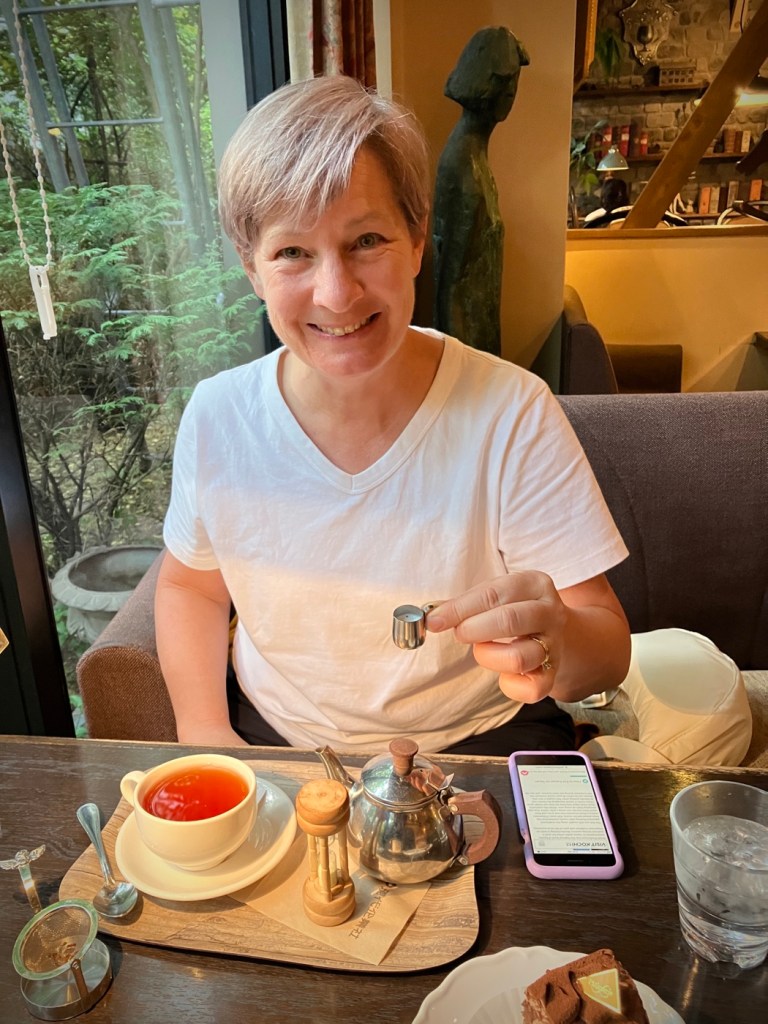
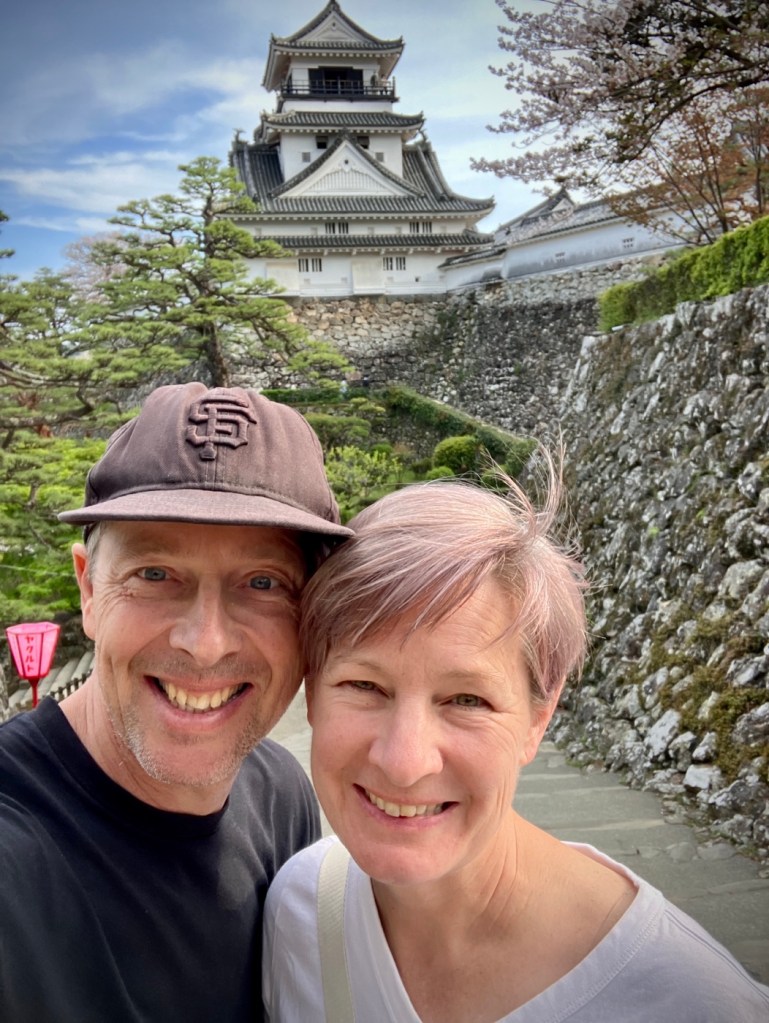

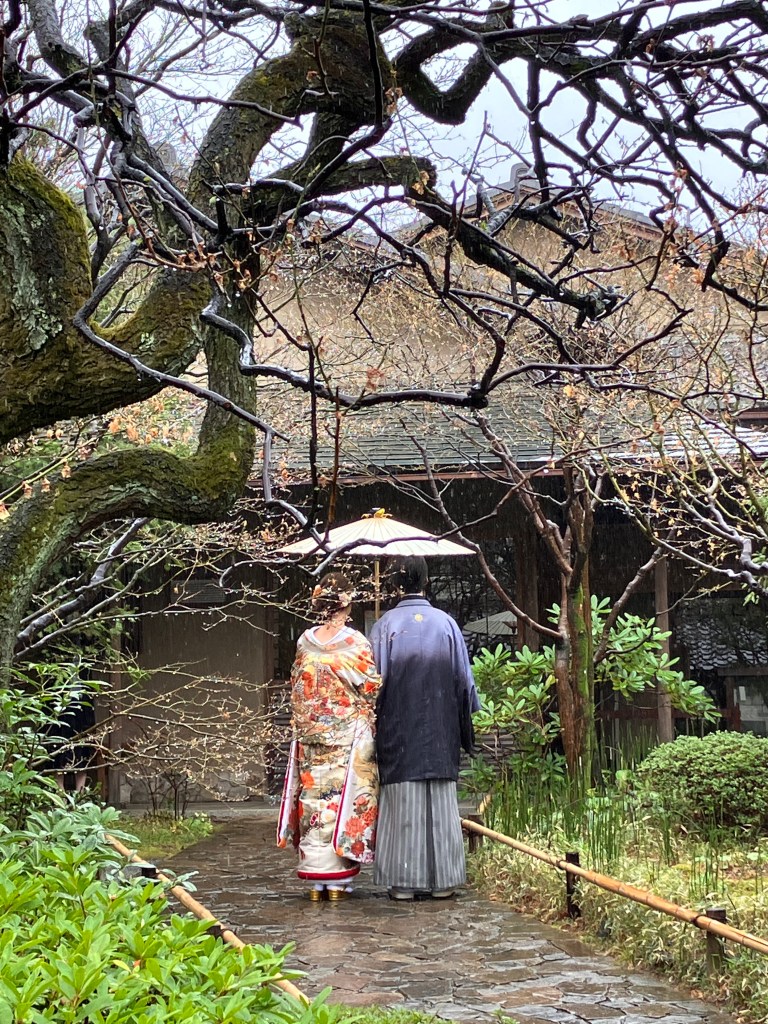
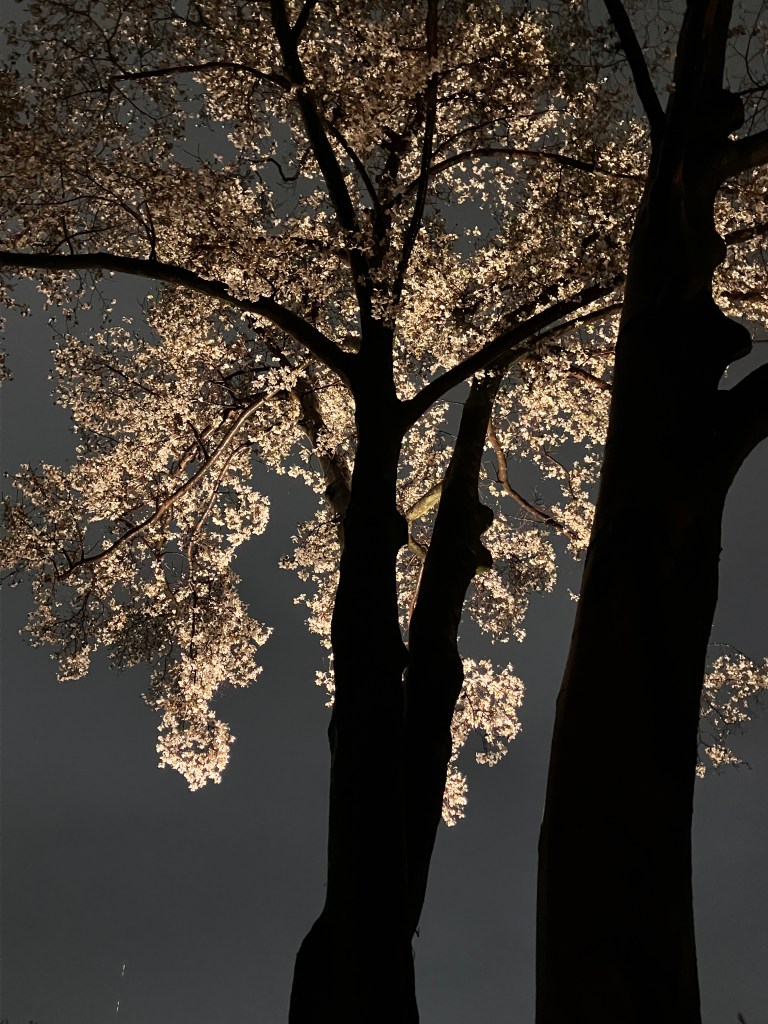

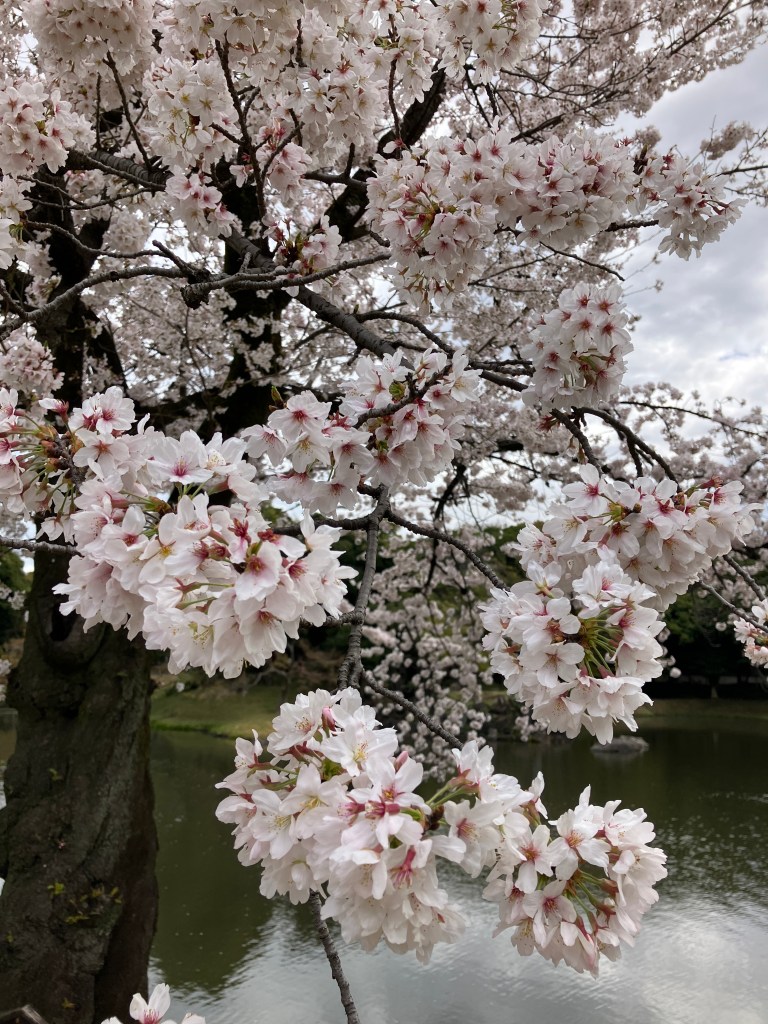

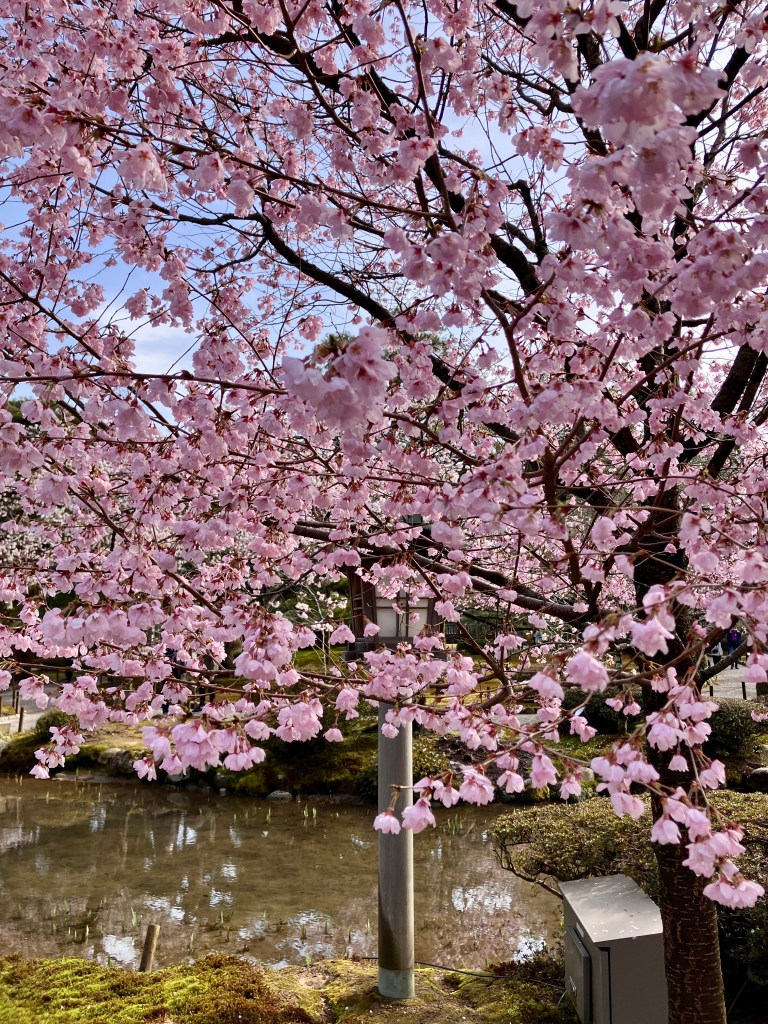
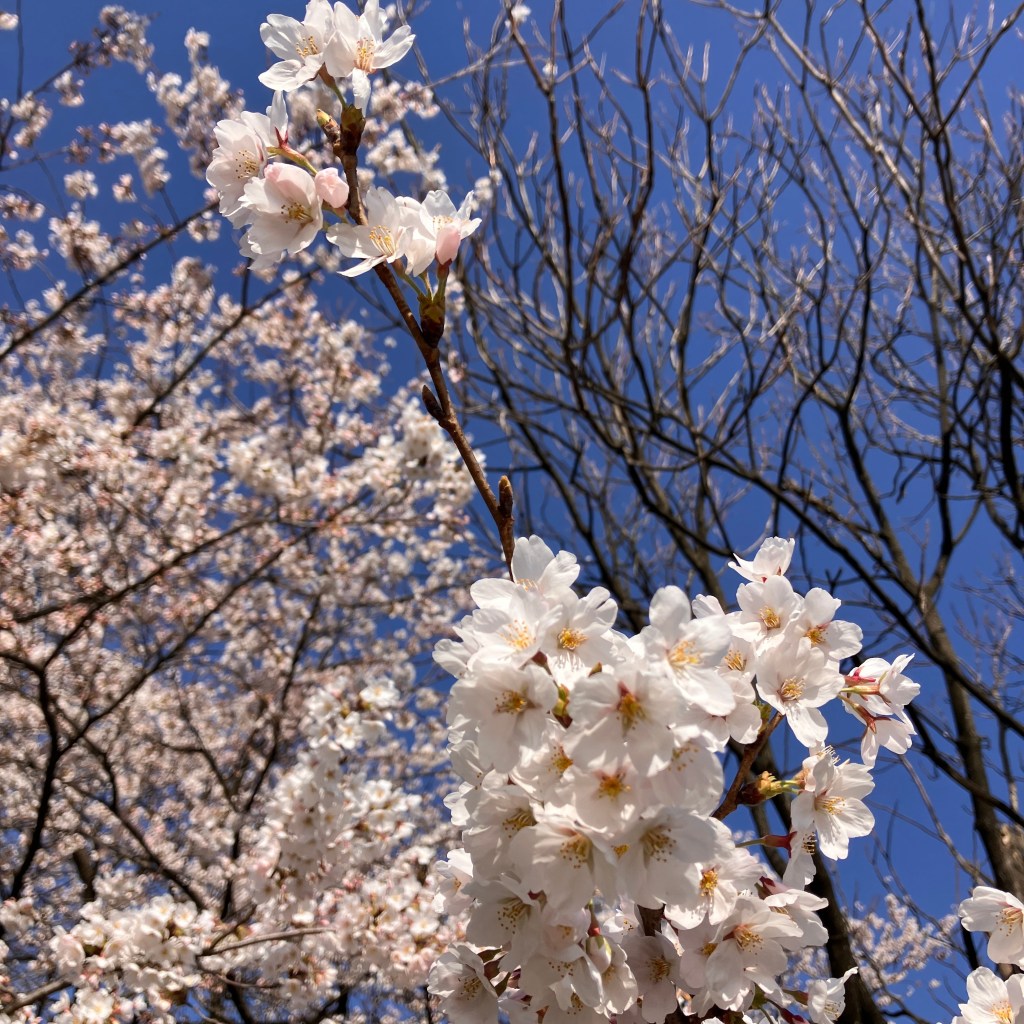
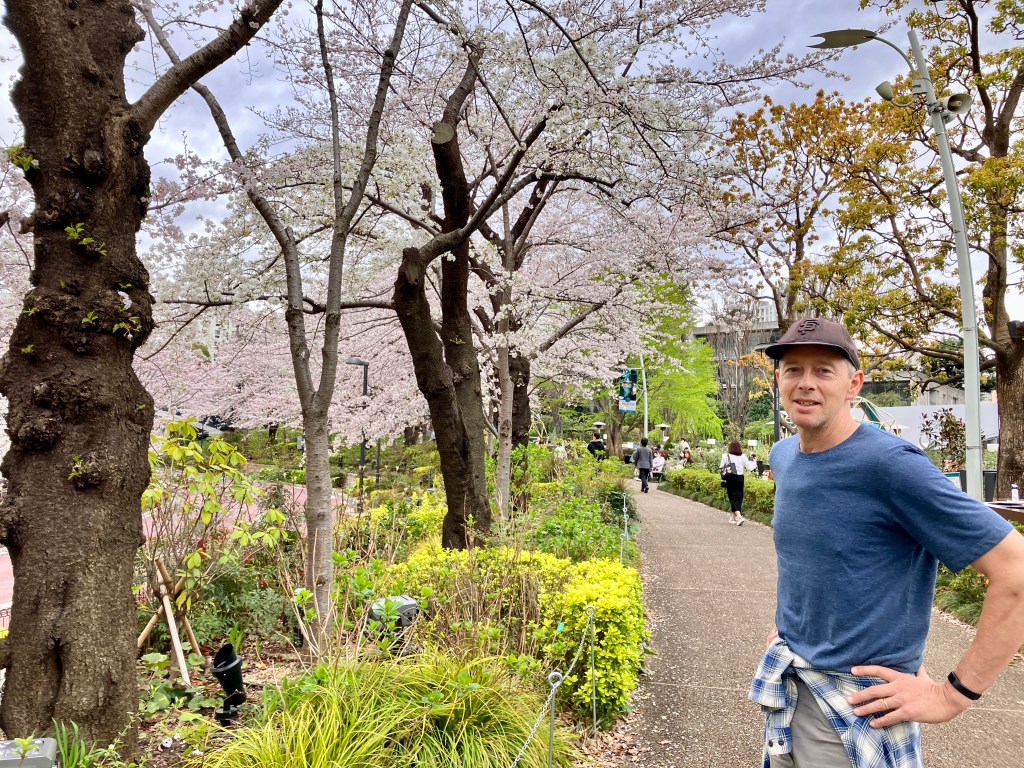

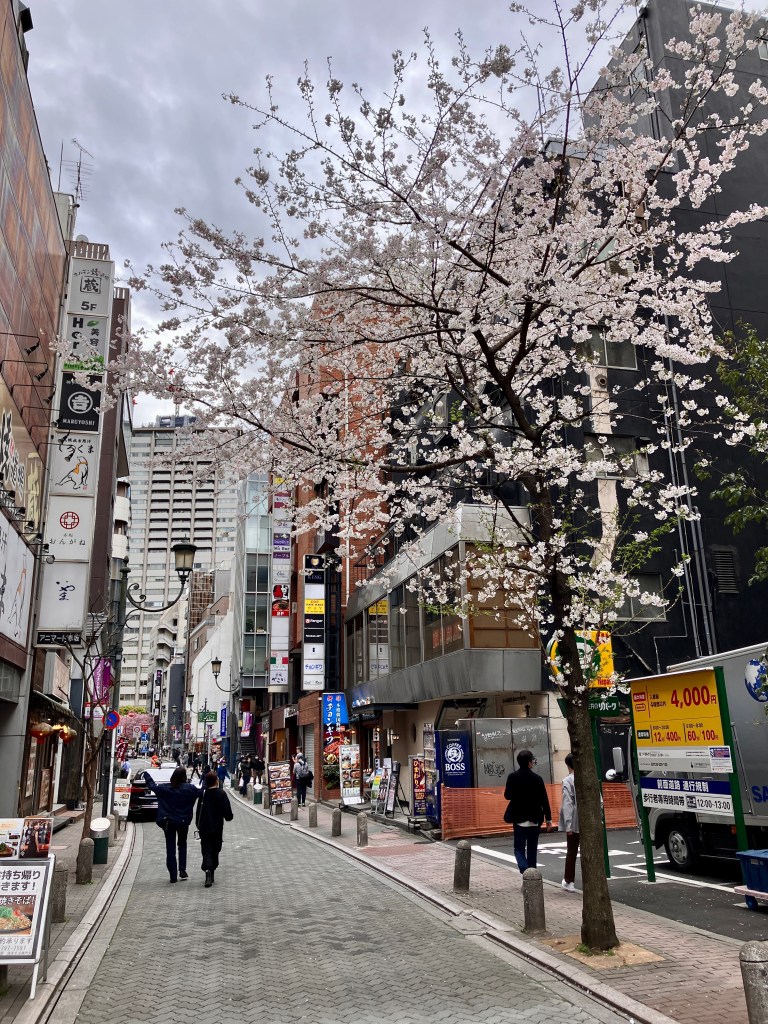
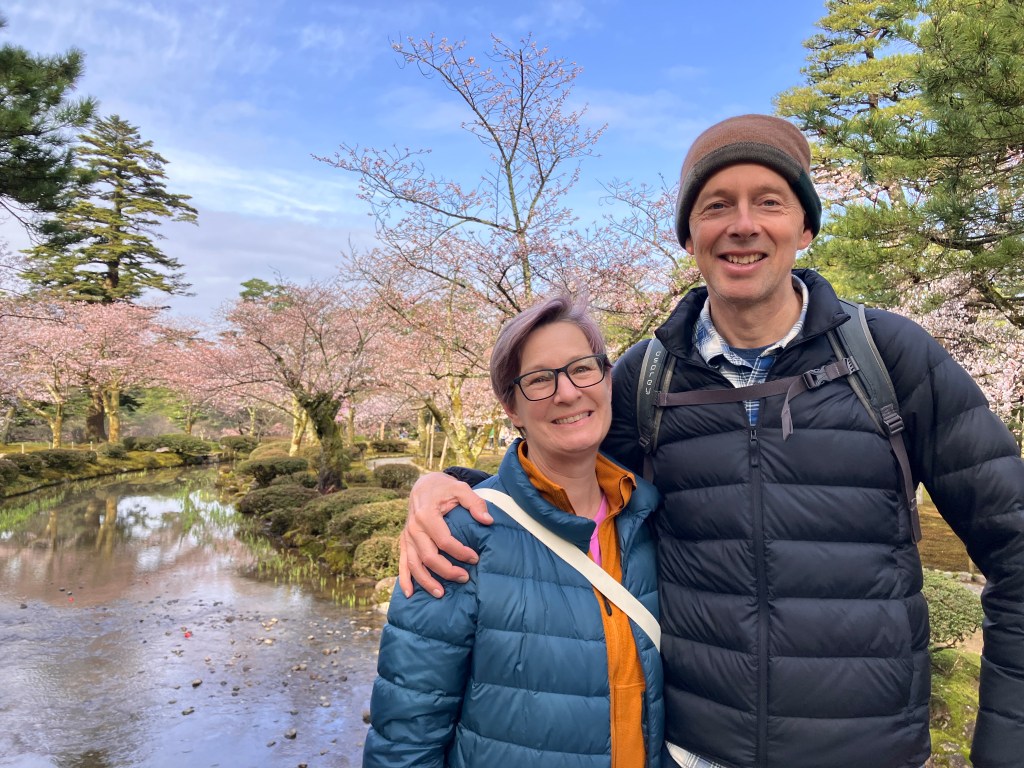
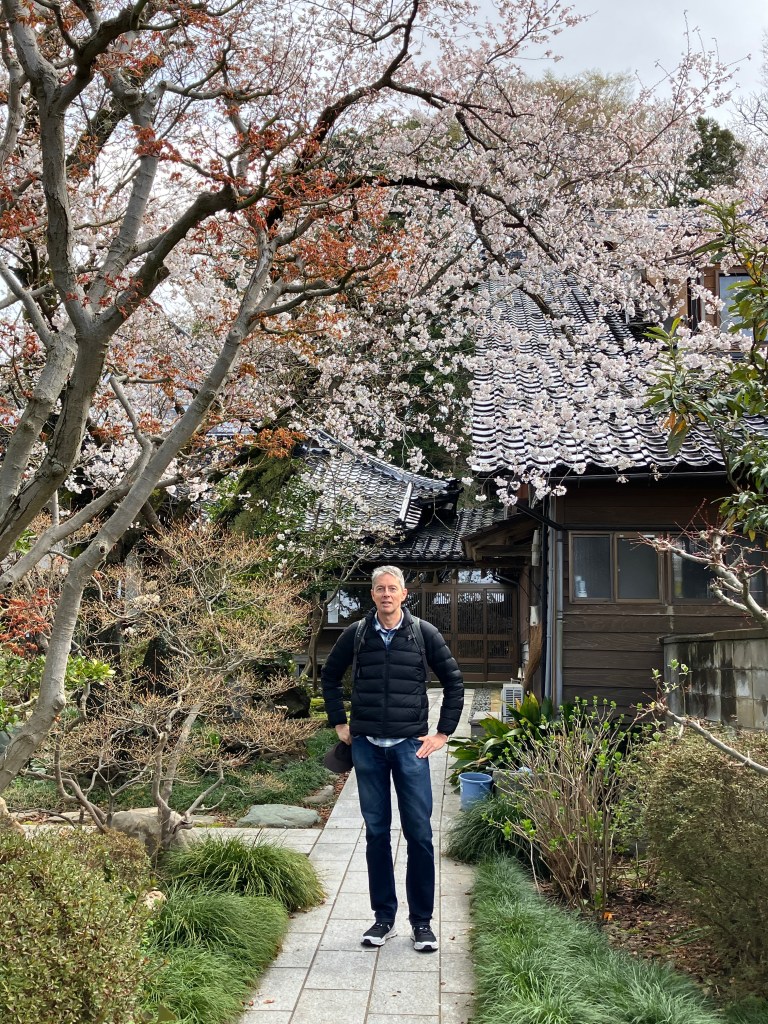


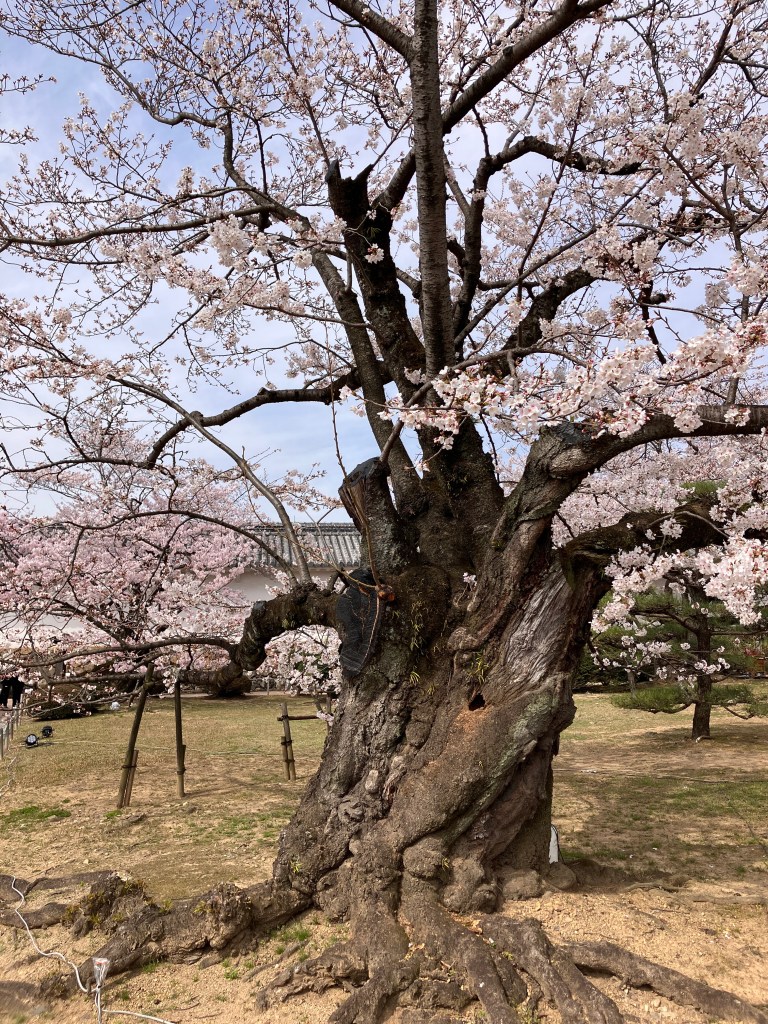

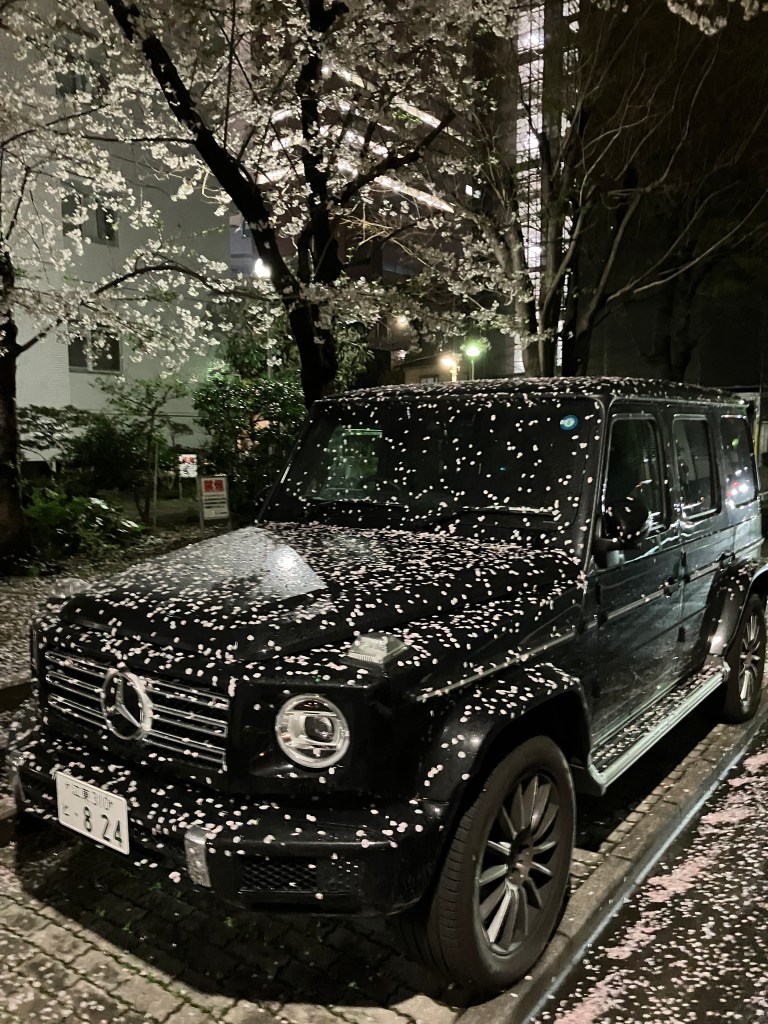
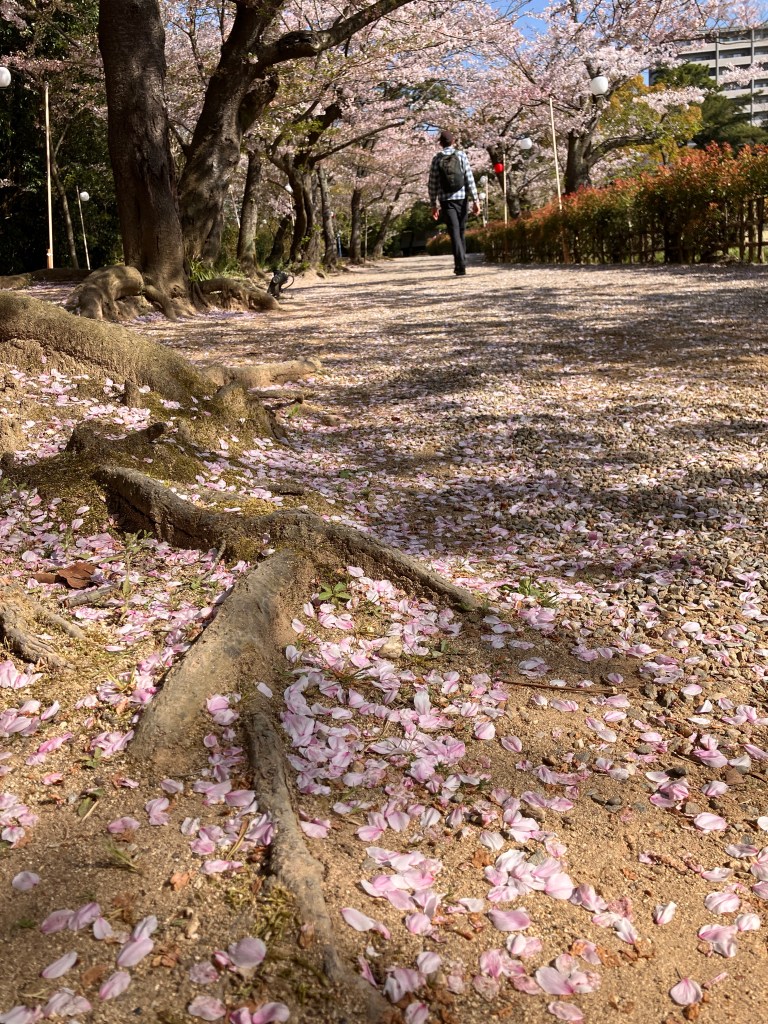
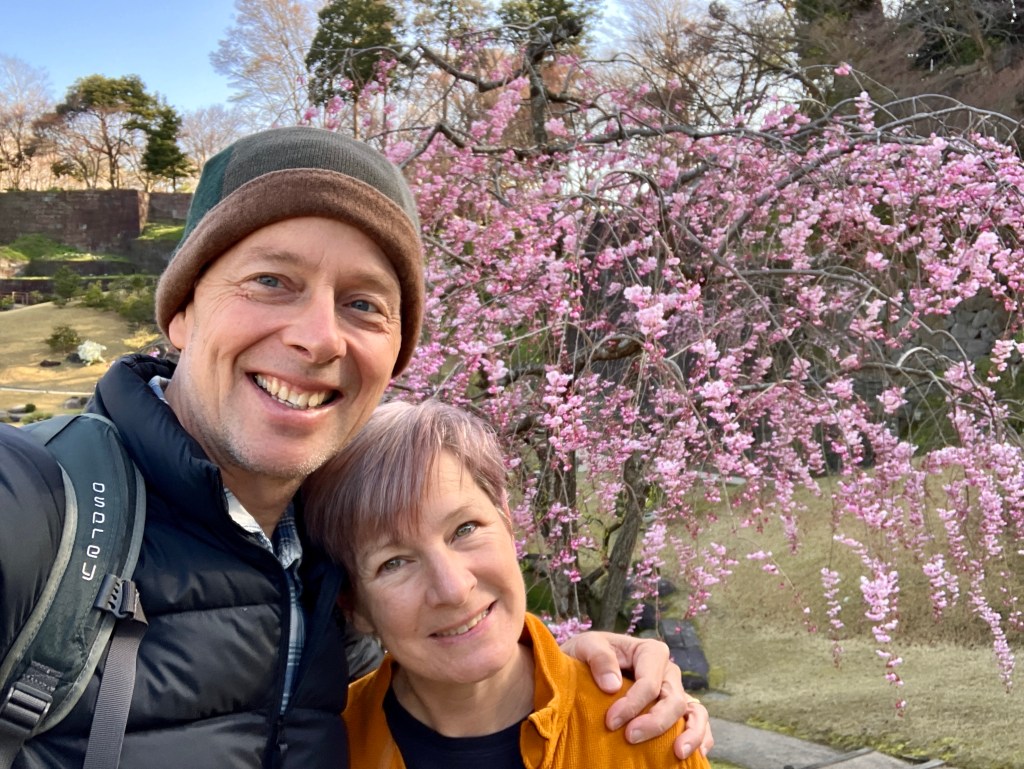
 Less Car, More Life