Tempus Puget – Putting Down Roots in Seattle

A lot has changed for us in the past 4 months: a new house, a new city, and even a new car. So how did we get here?
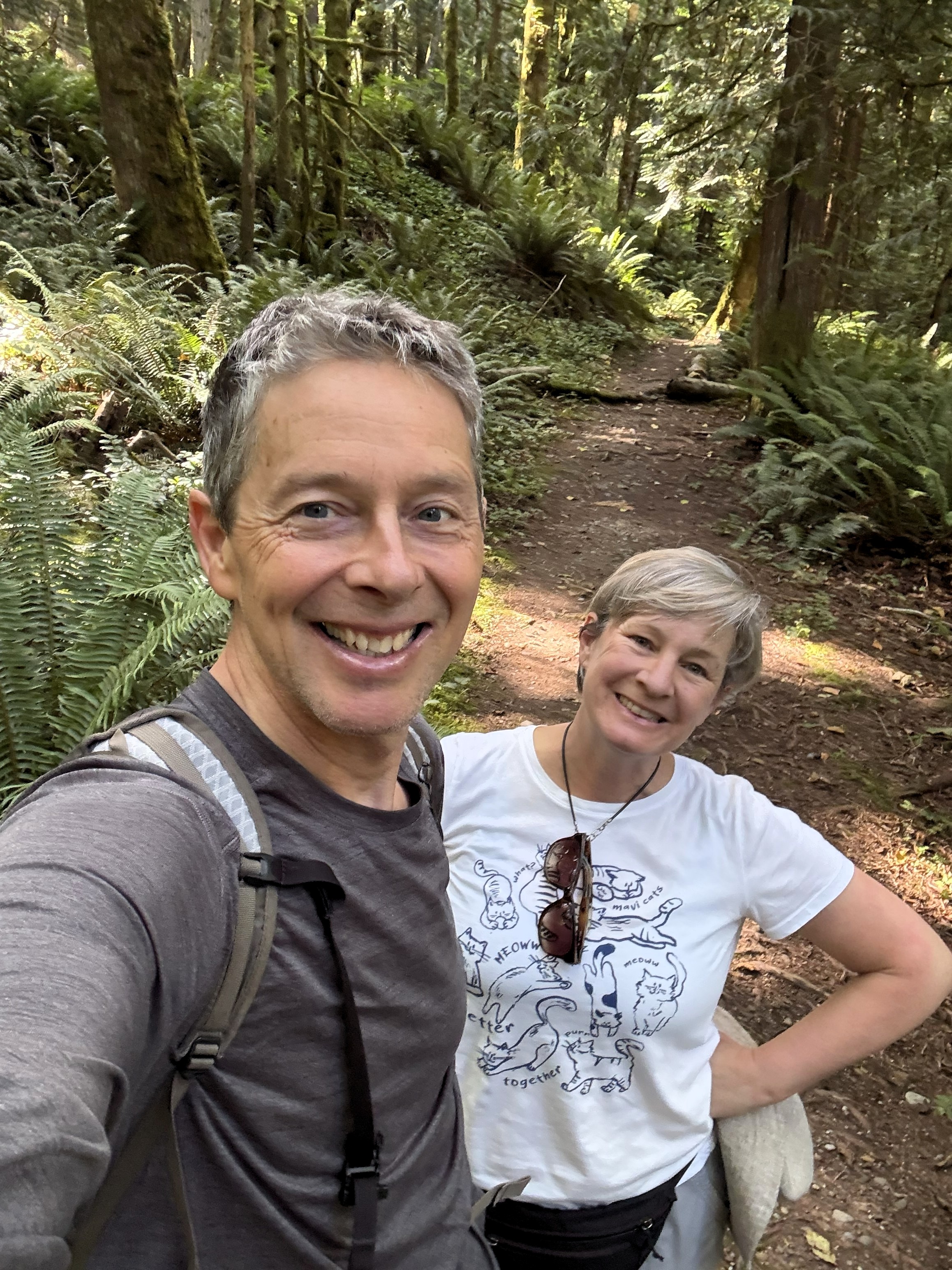
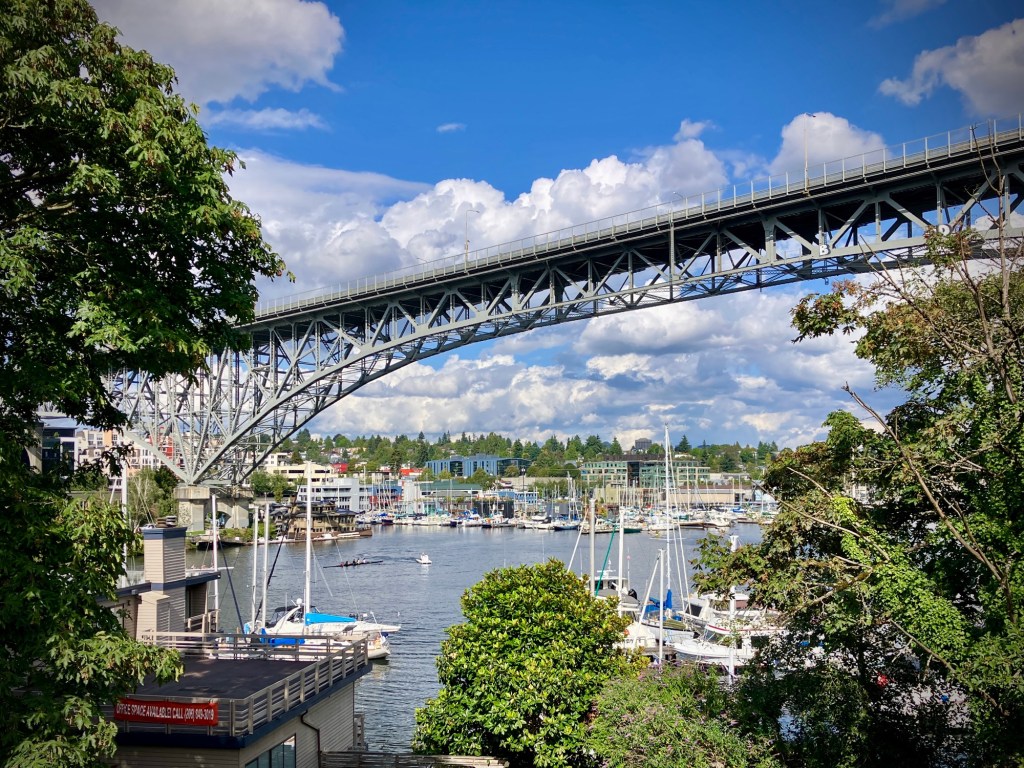
Why Seattle you ask? We love trees, I mean really love trees!

It’s been over 4 years since we set out from San Francisco on our grand adventure. Freshly vaccinated in April 2021, job notice given, a progressive purge of belongings, and into storage for the things we just couldn’t part with; we set off in August 2021 with our house still in escrow, two (old steel) touring bicycles and 6 bags for a planned two year experience. It was hard to imagine it could turn into 4 years, but it did. Turns out the world is pretty big, and other cultures very attractive (especially more familiar European ones). But time is fleeting, and as we settle into a new life, it all seems like a bit of a dream now.

February 2022 in a nearly empty Venice. Now that was a dream for sure.

Every day really was a new adventure. As we navigated ongoing Covid restrictions, testing, passes, and vaccinations, it was stressful, but we also felt the exhilaration of exploring magnificent new places with almost no tourist crowds to be found…Zermatt, Morocco, the English Lake District, and an almost empty Amalfi Coast, Venice, and Rome! Three trips through North and South Asia. And for most of our European adventure, the ultimate freedom of having just what we needed on our bicycles, with the ultimmate freedom to zig or zag at will. Time like this when everyone is in good health is precious, and we knew it.

Saying goodbye to our beloved San Francisco was tough.

The nomadic life was addictive and a great way to transition from a real full time job. And add in the amazing Trusted Housesitters experiences we had and the kindness of so many generous friends everywhere, and we truly felt like we had figured out a major hack of potential mid-life malaise and early retirement. We are especially grateful to those who hosted us in Europe and back in the States while we were without roots. It made it all possible. Not just having a place to stay, but having a familiar base to land, whether it be in the UK, France, San Francisco, LA, Chicago, Palm Springs, Seattle…. One of our nomadic priorities was to keep our close ties to family and friends back in the USA, and therefore we swung back through nearly twice a year, which wasn’t always easy and often the most exhausting parts of our blissful existence.
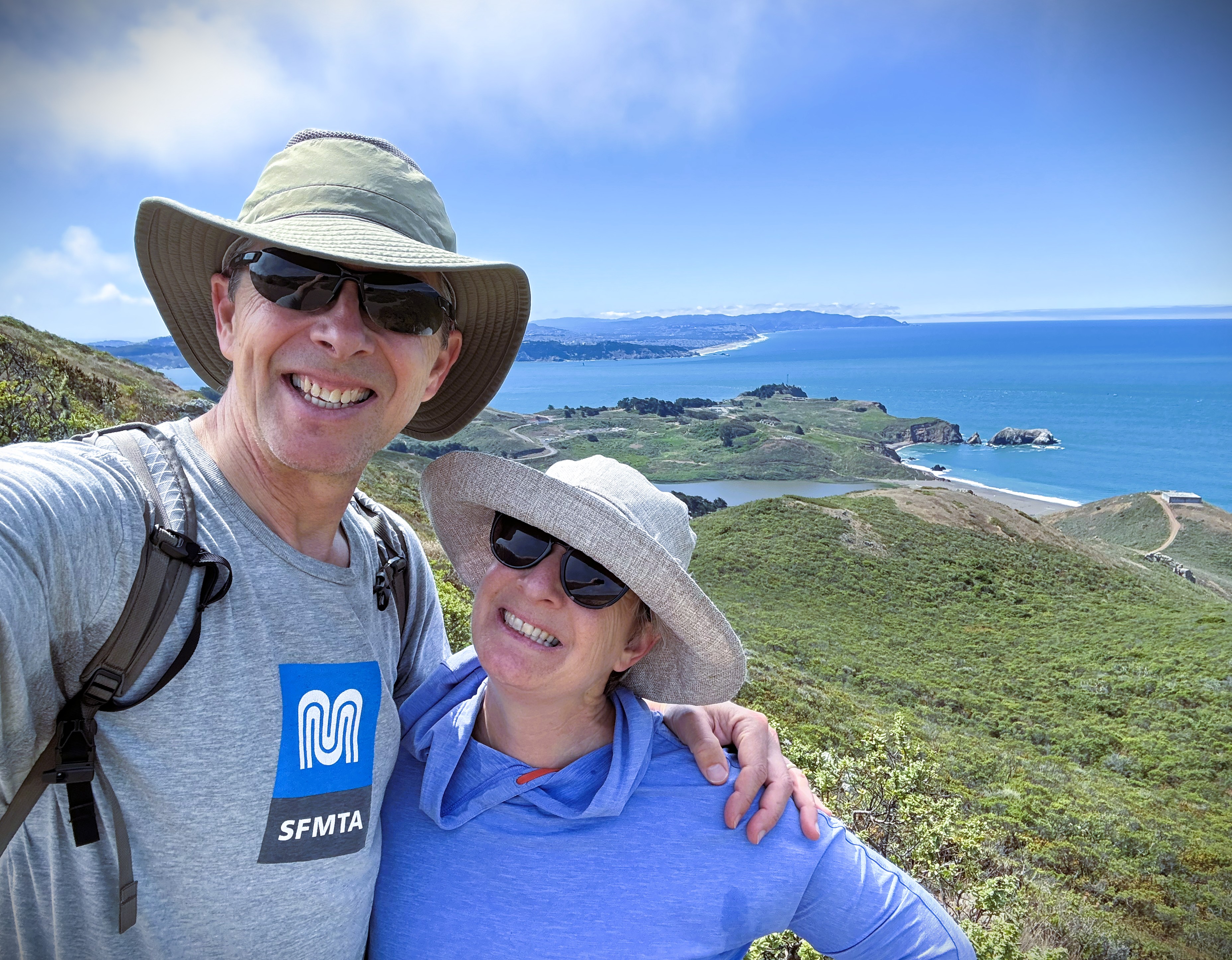
One last hike in one of the most spectacular city adjacent parklands in the world, the Marin Headlands.
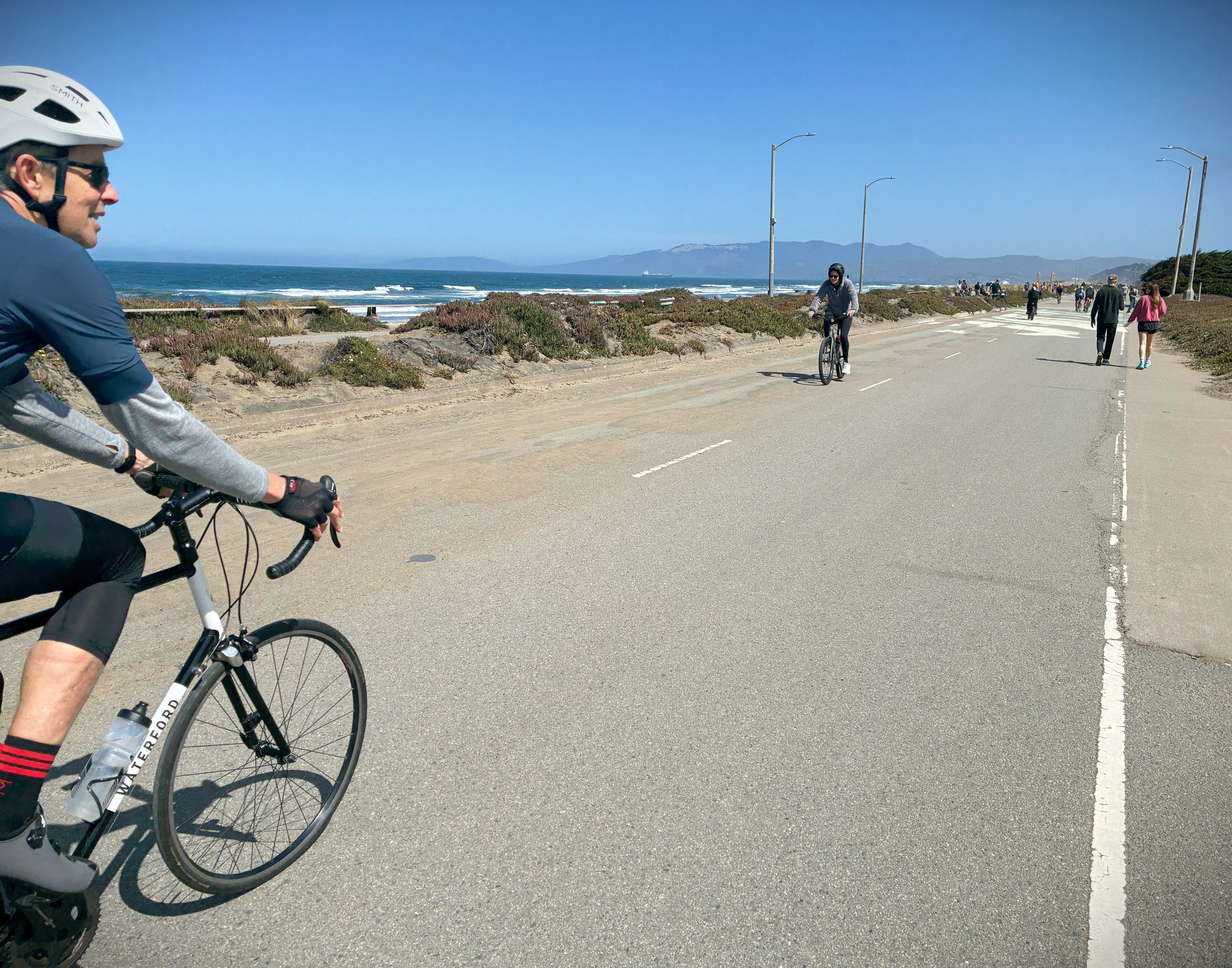
Our month of goodbyes in San Francisco also meant a lot of hellos on the wonderful new Sunset Dunes Park along the former Great Highway. A magnificent addition to open space in the City.

But just as we were in sync on the idea of nomadic life in 2021, we started to hit a limit in early 2025 and both began to feel a strong pull back to more permanency. We just couldn’t muster more packing and unpacking, tweaking temporary lodging to our likes, and never having a true home to come back to. There are a lot of things that you struggle with as a nomad. Daily travel adaptation takes a lot of your brain space (and expands it!) so it doesn’t always leave as much focus and energy for other aspects of living. We missed a community, our furniture and art, cooking, gardening, and having a few more clothes to choose from daily. So we came back to the West Coast in late June with the goal of finding a place to call home by the end of the year. Faster if possible.
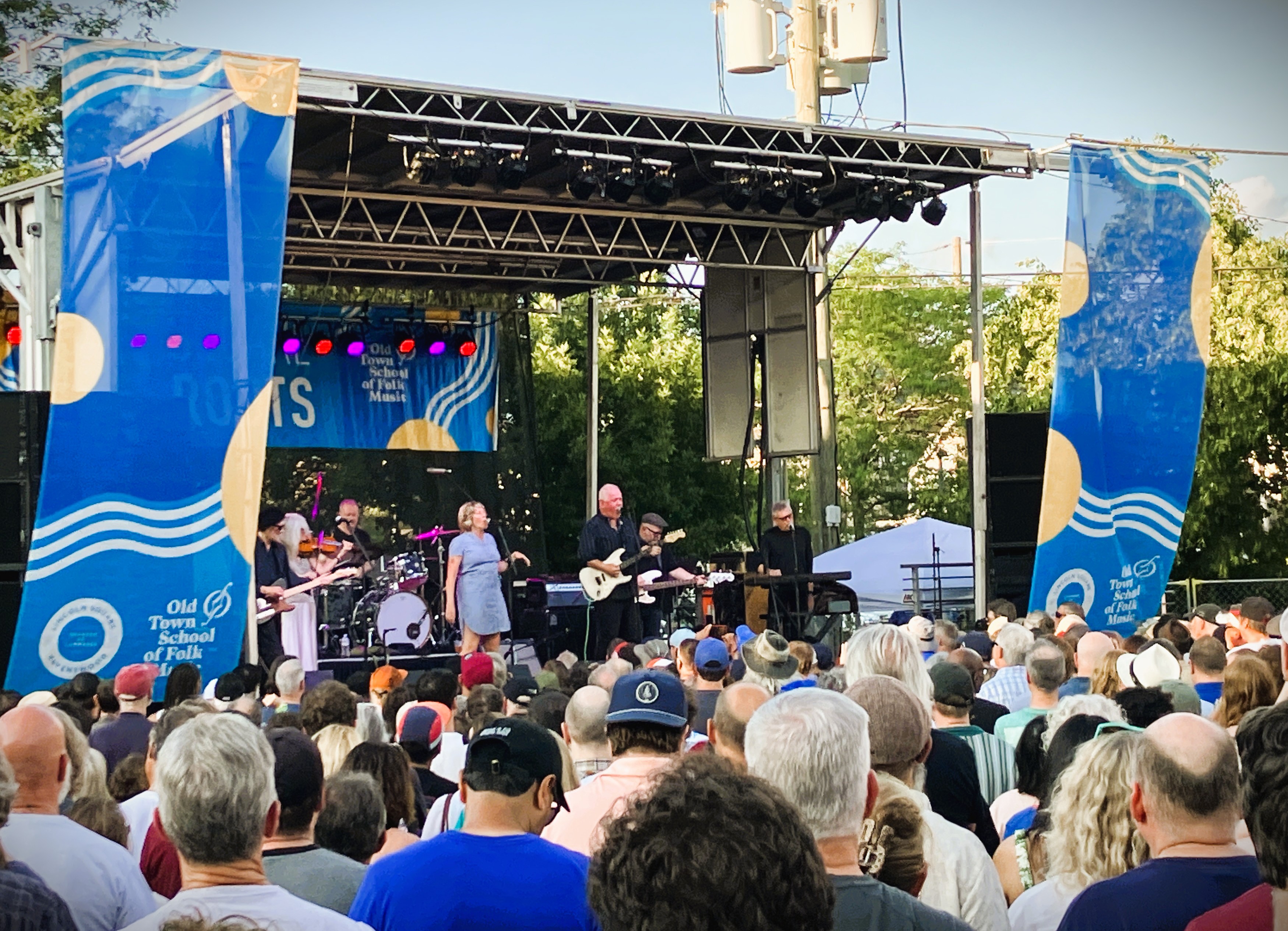
Our summer back included my visit back to see family and friends in Chicago included catching the Mekons at the Square Roots Music Festival in Lincoln Sqaure. Thanks Michelle and Alan!
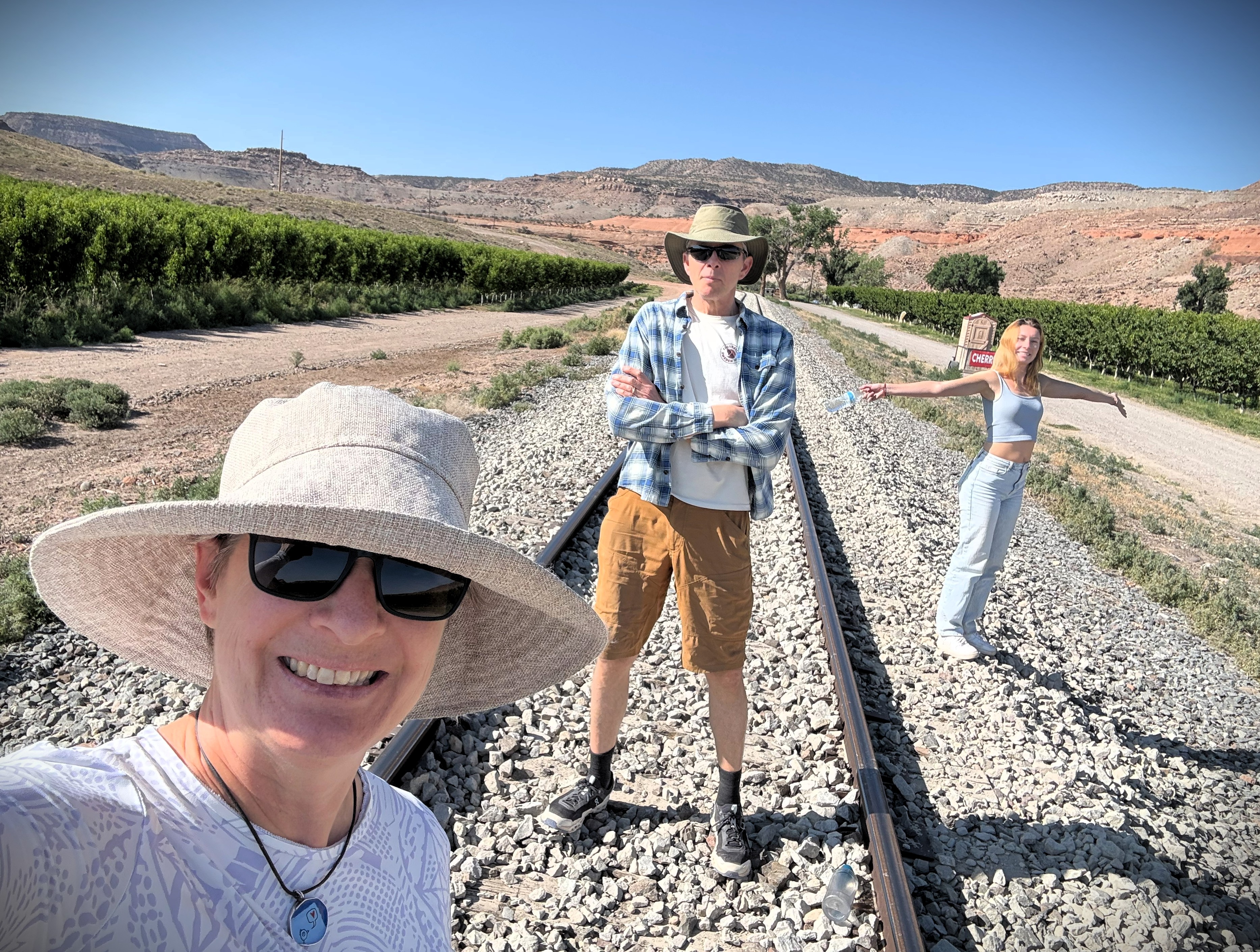
And a family visit to Western Colorado, of course.
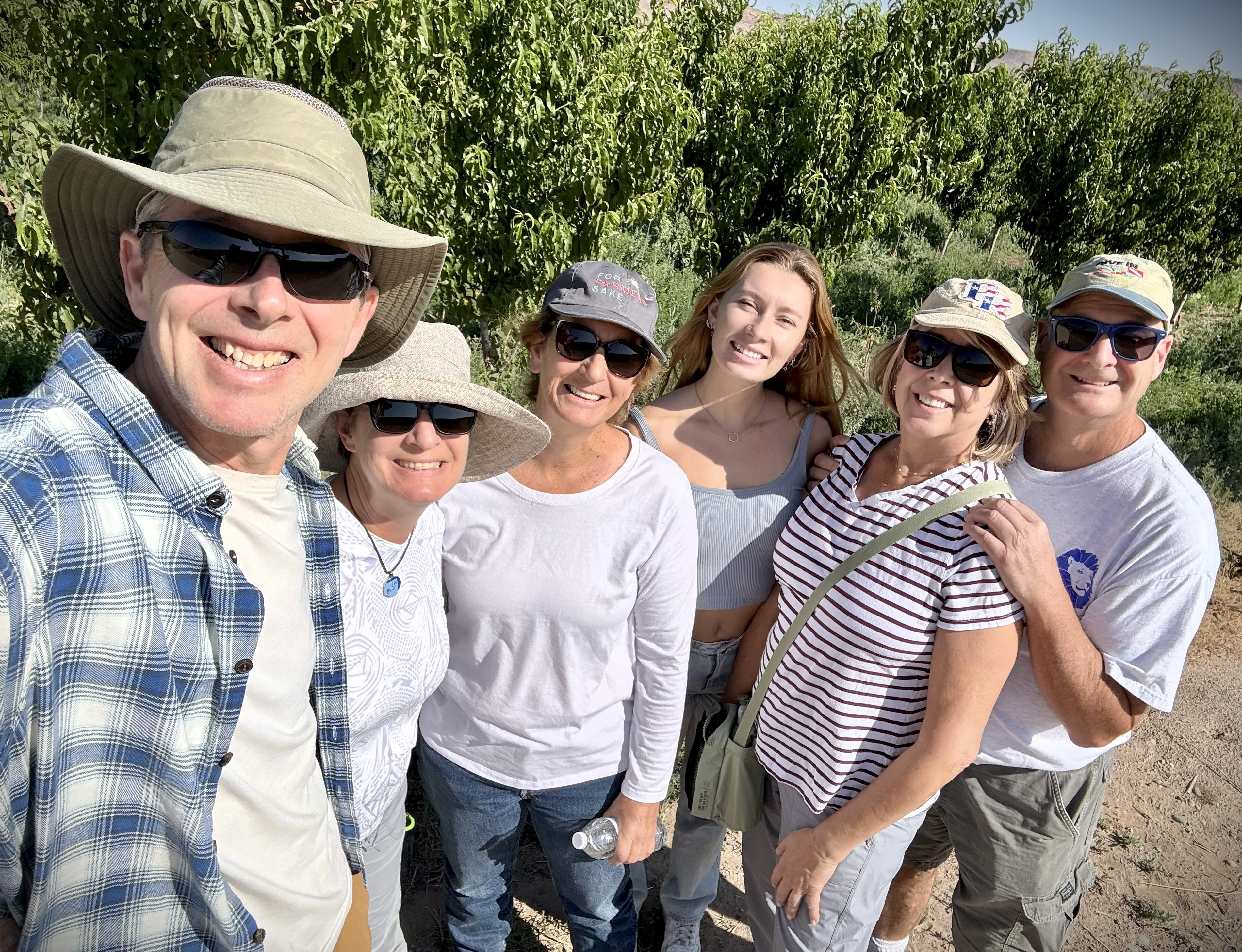
My brother in law and I checking out the new sandstone cave suites being built at Honey Rock Landing on the Gunnison River; also a working orchard.
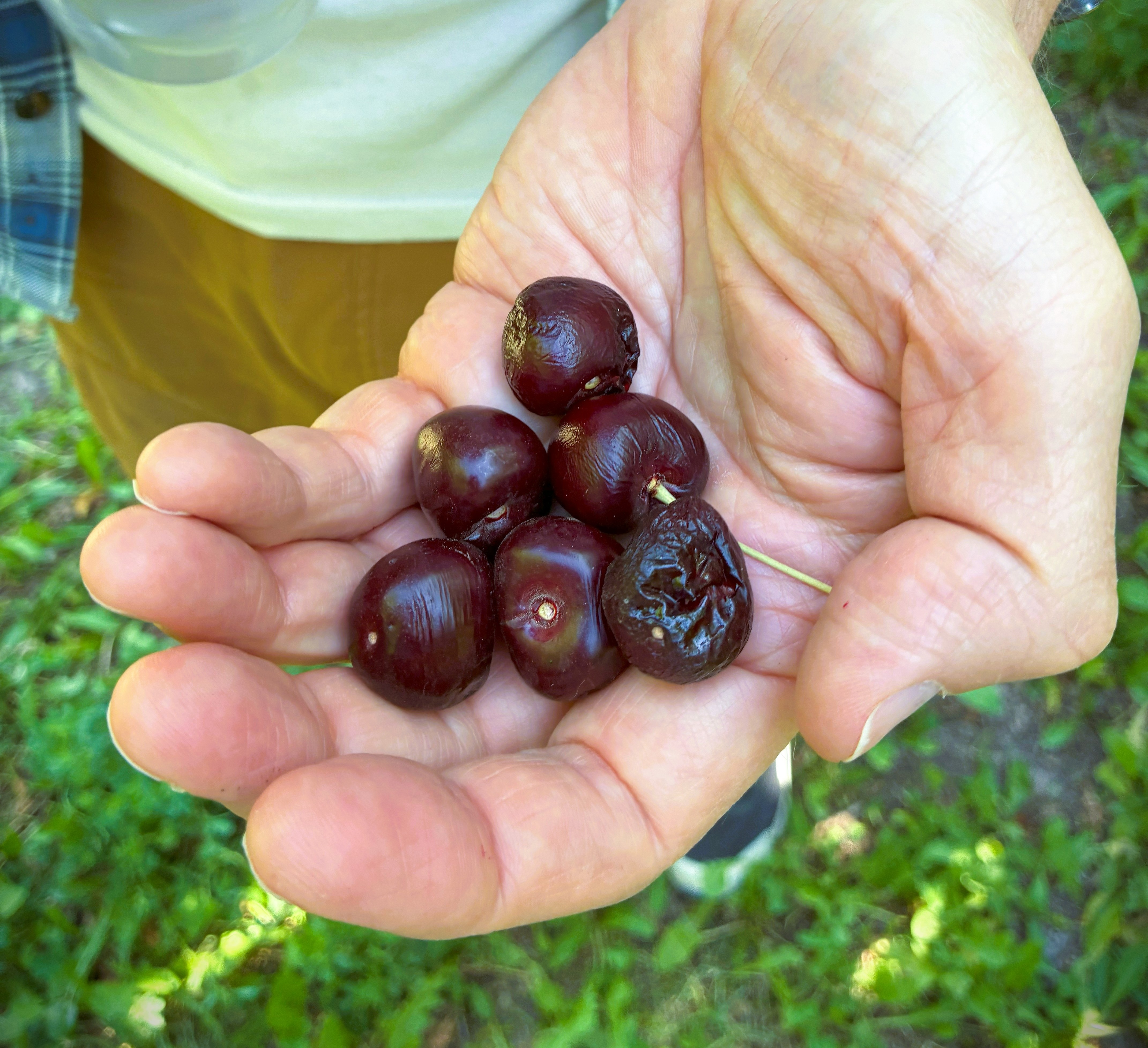
Well, the heat had come early this year, so the cherries were mostly past, but it was still a fun day out.
We were definitely not in Europe anymore, look at all this American space!

And fast it was. We have been following real estate in North Seattle for a few years now, and had hired an agent in January, who was fully aware that we would be far away for the first half of the year, but was happy to send us listings for a future potential sale. (I think he could sense we were serious and ready to settle down)

So when a new construction house-like condo that we had been tracking was still available in late June, we jumped at a chance to settle early. The timing was perfect as we had a house sit in San Francisco for our great friends and former neighbors (and their adorable cats) in July, but could then load up once and move our life North.
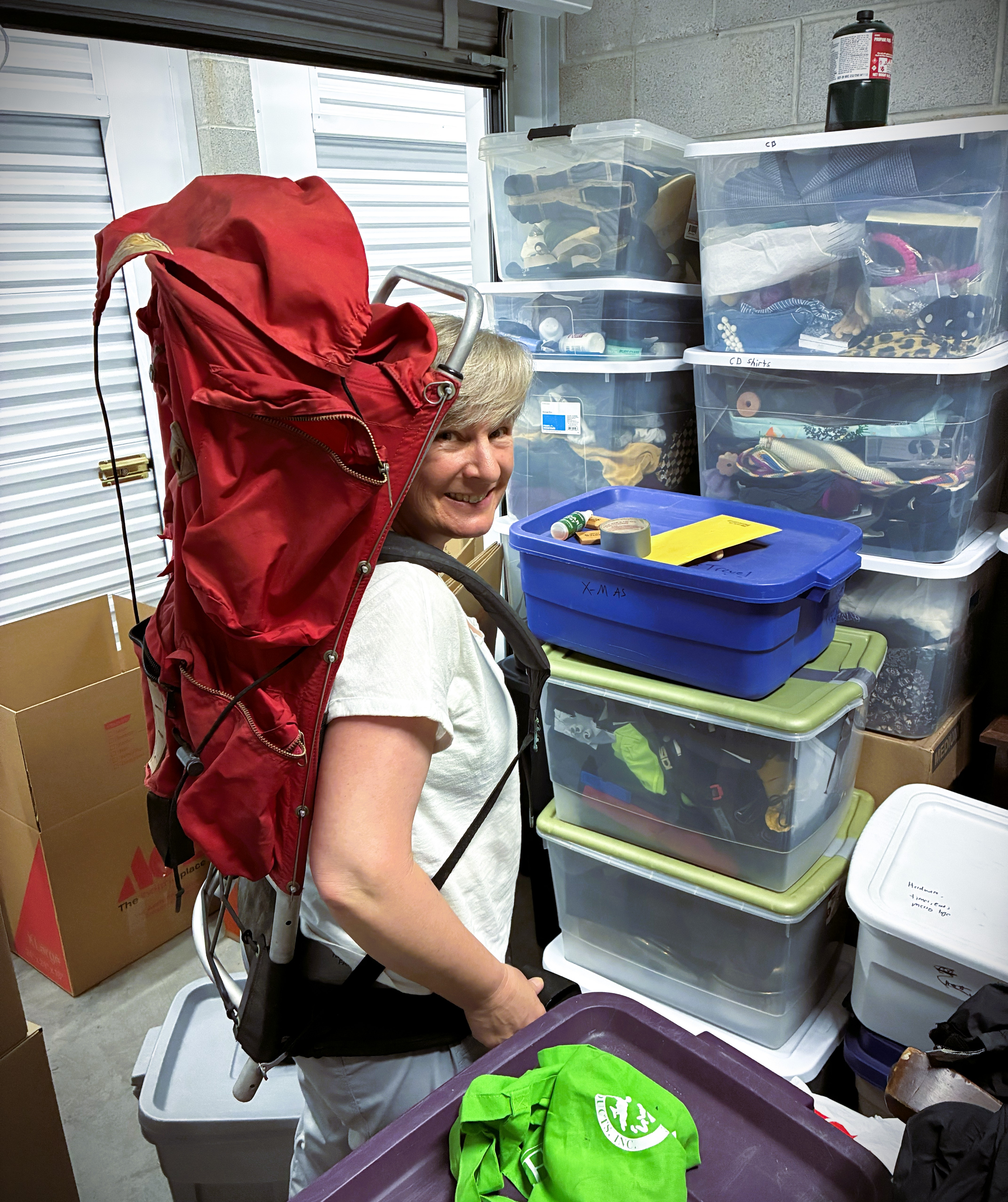

Saying goodbye to our storage unit was fun, with some final sorting and organizing and fun discoveries like this vintage 1970s Kelty Backpack. Still comfortable and useable! The bins on the front edges of our storage unit had served as our home shopping and gear swap-out point for trips home.
Nope, not taking a Uhaul to Seattle this time, just to the storage unit. We hired movers -:)
Great to see some good friends in SF for a “final” dinner.
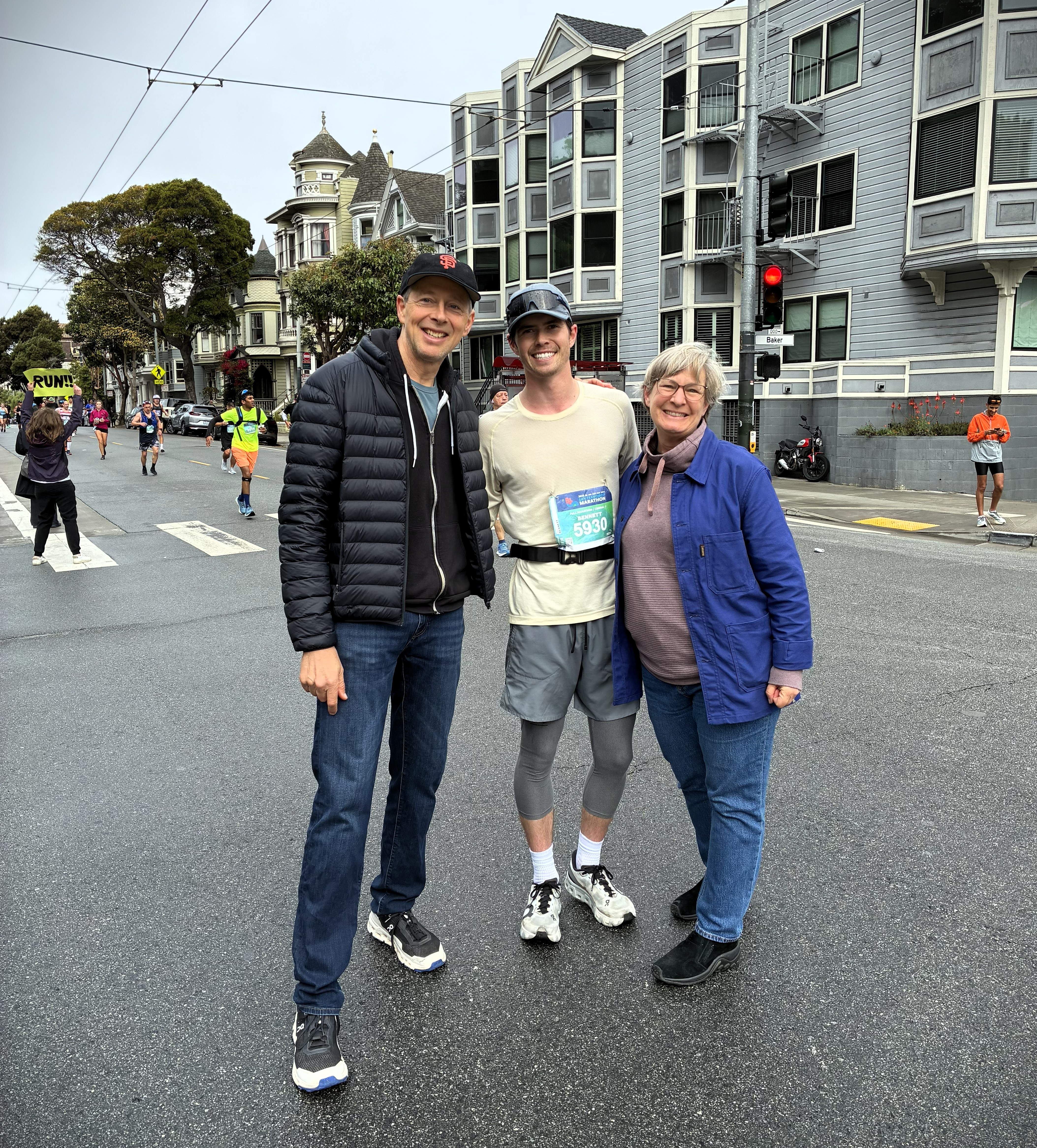
Our Step-Nephew was kind enough to stop for a sweaty Photo Op at Mile 20 of the SF Marathon as we cheered in the Haight-Asbury (His first, well done Ben!)
Excited or freaked out?! Leaving San Francisco for our two-day drive to Seattle.

So we’ve owned our new home in Seattle for three months now and I can already feel a change in how my brain is looking at its surroundings, how I see every person and place now as an opportunity for a new long term friend. Our travel brains are now recording the surroundings in permanent mapping mode reserved for “home”. And long term relationships with shops, businesses, and culture again. When you are a nomad, you make some great friends along the way (and keep many!), but you are often just skimming the surface of the world and your surroundings.

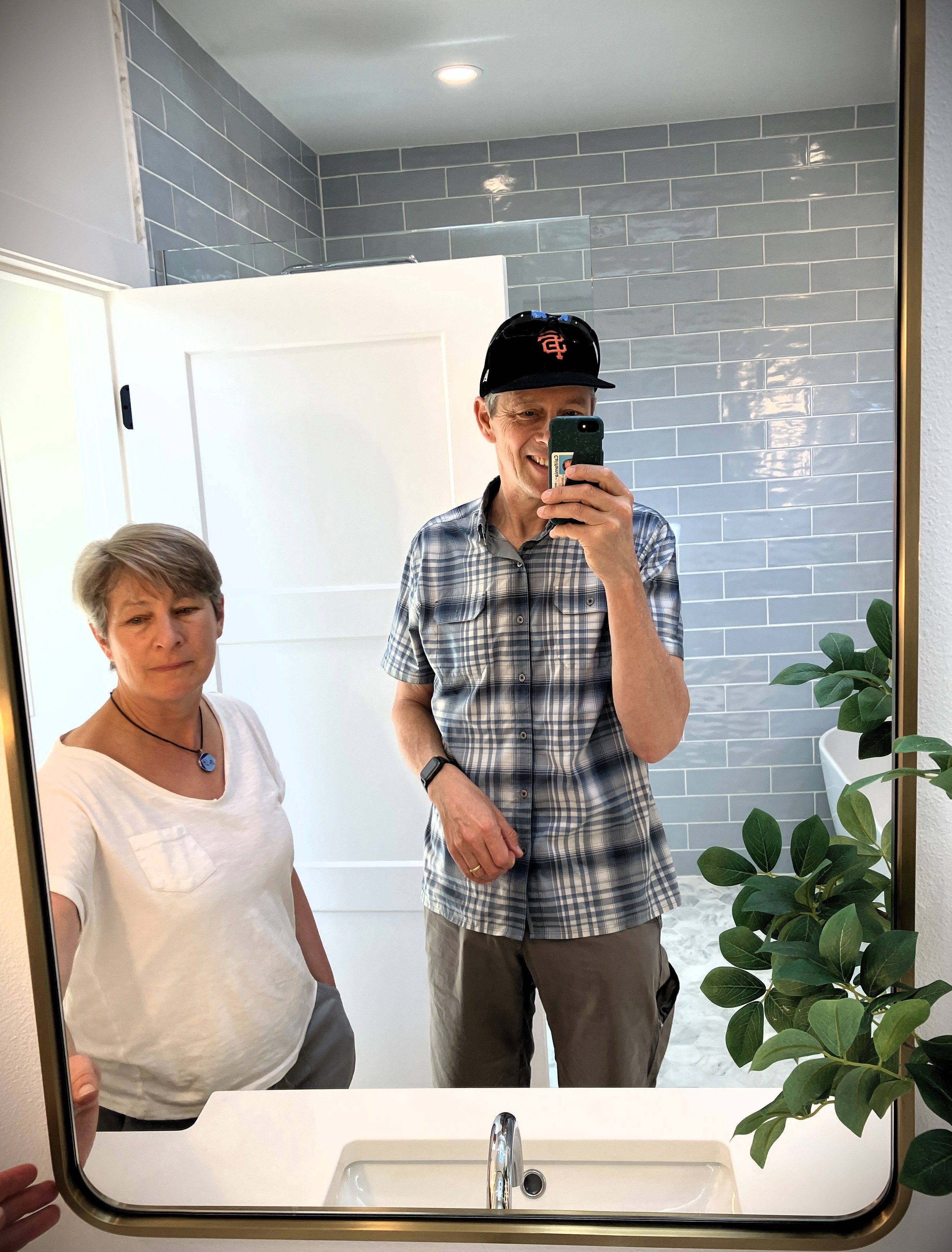
Seattle is big, progressive, and evolving, and we’ll be talking more about how that influenced our decision to move here.
Looking at our new house…one thing we craved after living out of bags for 4 years was a bit of space.

So how has life in North Seattle been so far?

First off, people are mellower here than the Bay Area. Not every one of course, but in general. This suits us as we are now mellower after four years of travel and detached from our 30+ years in the wonderfully stimulating and dynamic San Francisco Bay Area. The west coast has always been a draw for a certain type of person, and the Pacific Northwest seems to draw folks who are perhaps a bit more introspective, down to earth, and happy to enjoy a bit of rain and darkness during the winter balanced with the joy of trees, water, and four distinct seasons.
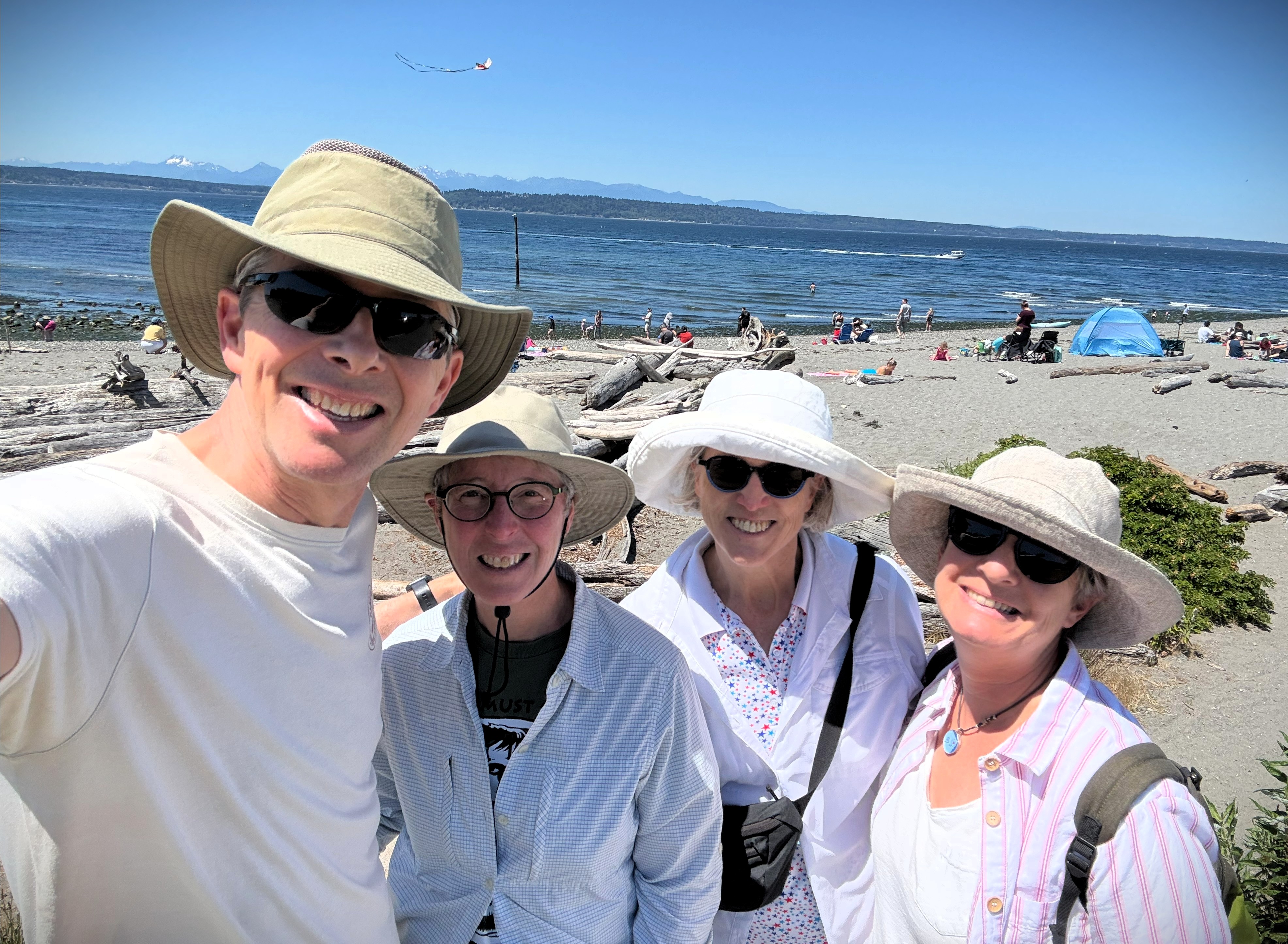
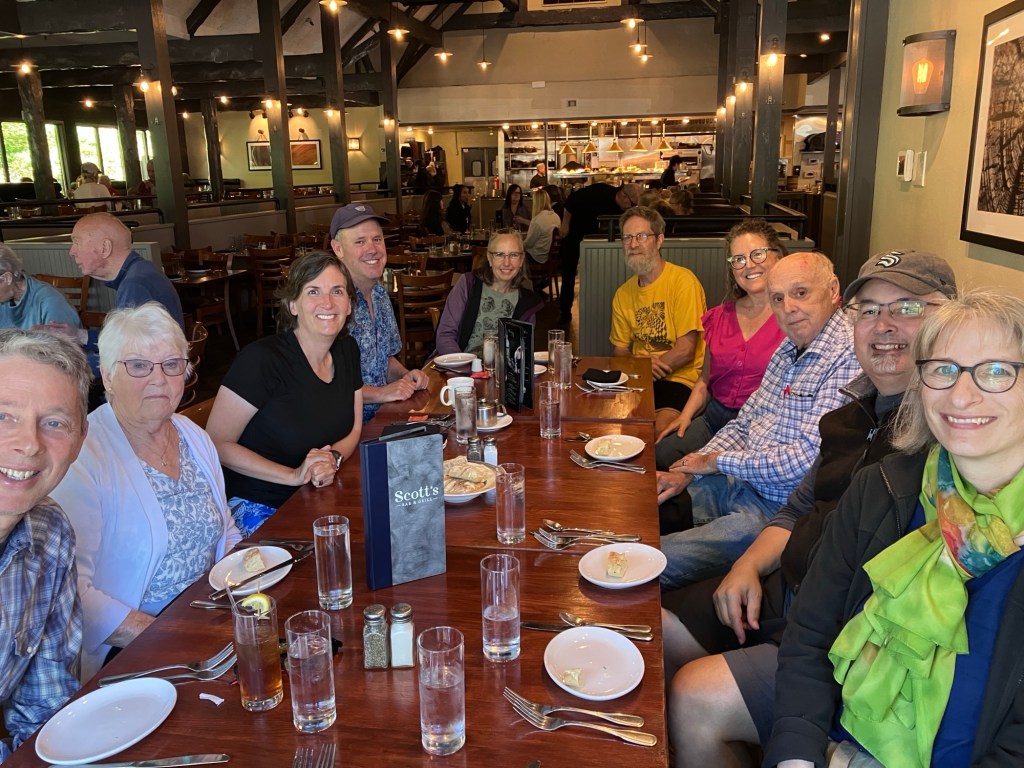
We have a jump start on friends in the area, with some of our closest friends walking distance from us.

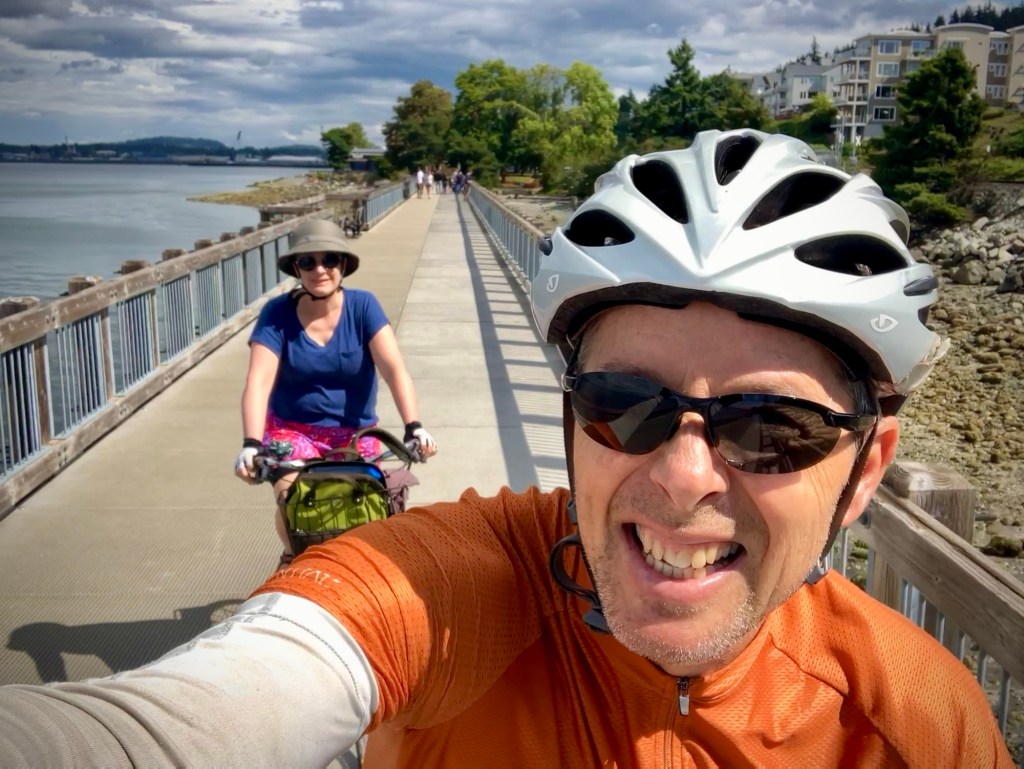
And we’ve not really experienced the famous “Seattle Freeze”, as we’ve found our neighborhood to be very friendly and we’re slowly starting the process of building a new community here. Maybe we brought the right attitude from our travels, and it seems the love of bikes and a green Subaru has made us almost indistinguishable from the long time locals. Well, at least a bit.

So why Seattle now?

  1. Climate and the outdoors – Yup, we like rain, forests, evergreens; and clouds. It may be a little rough in the heart of the longer and darker winter, so we’ll let you know how we fare. A bit of winter travel is definitely in the cards, especially after the warmth of the holidays passes into January.
  2. The Right Direction – Seattle has been building a ton of housing. They liberalized re-development on almost all lots in 2019 and we actually moved into one of the results: new housing in an old established neighborhood. Almost unheard of in SF. (We were waiting and trying…)
  3. Economic Diversity – Seattle has a broader range of economic strata, and has built so many apartments and condos that market prices are almost the same (or less!) than dedicated affordable housing. This is a success. Single family housing prices have soared here recently and this is still a huge challenge for the continued prosperity in the region.
  4. Transportation – ok, Seattle is more car based than San Francisco, and probably will always be based on its development geography, but Seattle has passed 3 bond measures to build out transit and an extensive light rail system. Sound Transit is now running two lines, with multiple expansions and openings coming. Rapid buses and great upgrades to the cycling infrastructure (mostly due to another city bond measure renewed by voters last November).
  5. It’s a big city! Ok, it’s not New York, London, or Paris, but it’s also not Austin or Portland, which just don’t quite check our real city boxes (sorry), with a deep history, global connections, and a broad base of businesses and companies to pump life into the local economy. It certainly feels more like a working city than the core of the SF Bay recently.
Seattle has a history of bike friendliness, including extensive and well-used rail-trails like the Burke-Gilman

The economic diversity matters a lot as San Francisco was in a bit of a service doom loop, as most blue collar and service workers couldn’t come near to affording to live within 50 miles of the city. Here people have many more options. Of course, they have to compete with white collar newcomers from California and elsewhere, who have been migrating to the PNW for years.
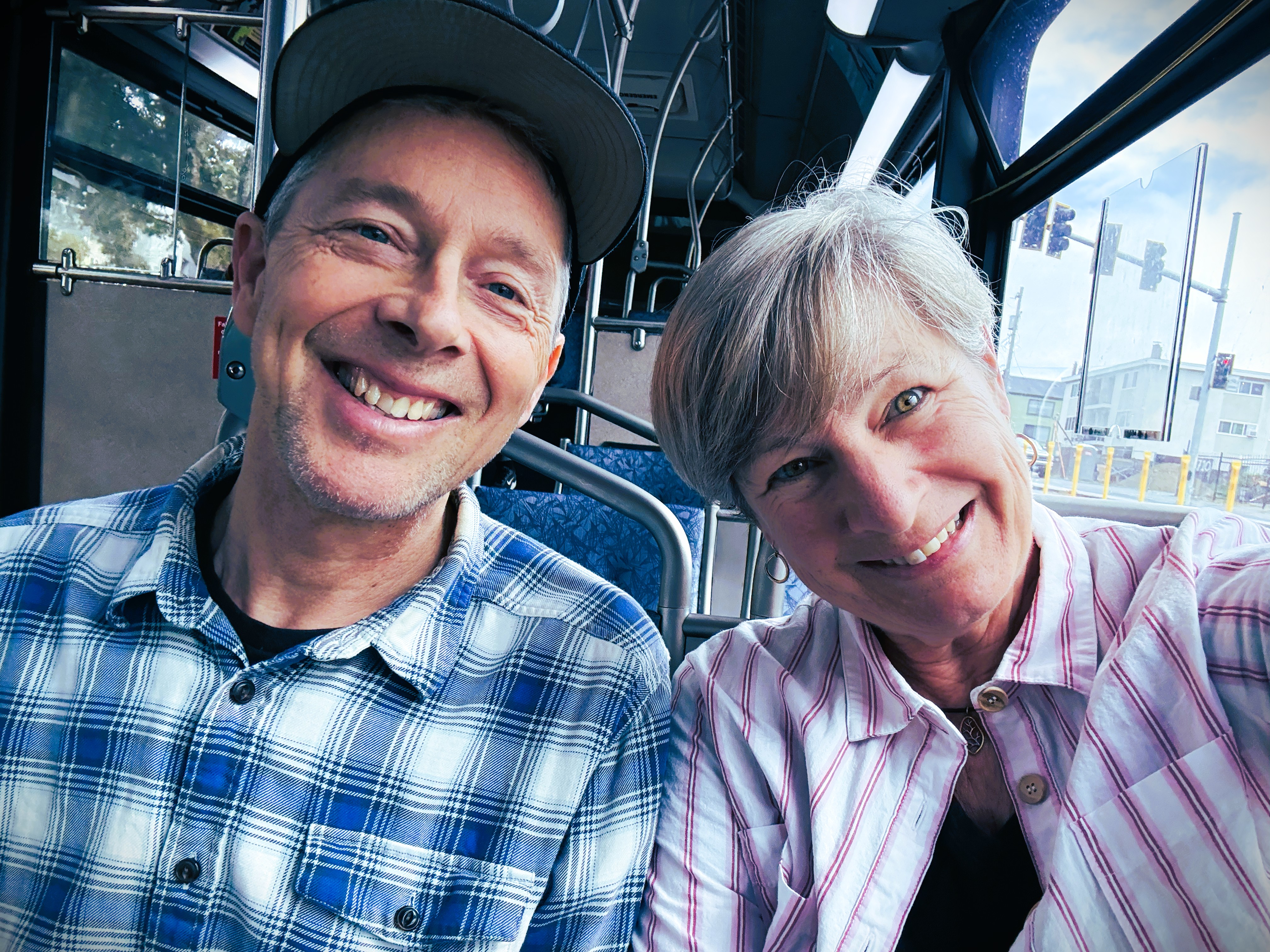
We still love buses and trains, and Seattle has a good network, despite the size of the City.

A reason we didn’t consider in the move here was taxes – It’s true, Washington State has no state income tax, but that was not really a factor for us. Life is too short to live somewhere just to save 5-10% on taxes. Besides, other taxes and user fees are pretty high, so it’s not exactly a tax haven. We do notice that a lot of infrastructure and services are more streamlined or less robust than California and San Francisco but maybe that’s ok. We’ll see. I do have long term concerns about the sustainability of the infrastructure in the state, and they are constantly chasing repairs on nearly failing bridges. But local leaders have figured ways to fund things here, such as the 15 year special sewer fee we’ll be paying for our new house connection.

Yup, a New Subaru and bit more car in our lives. But our final car rental retun for awhile.
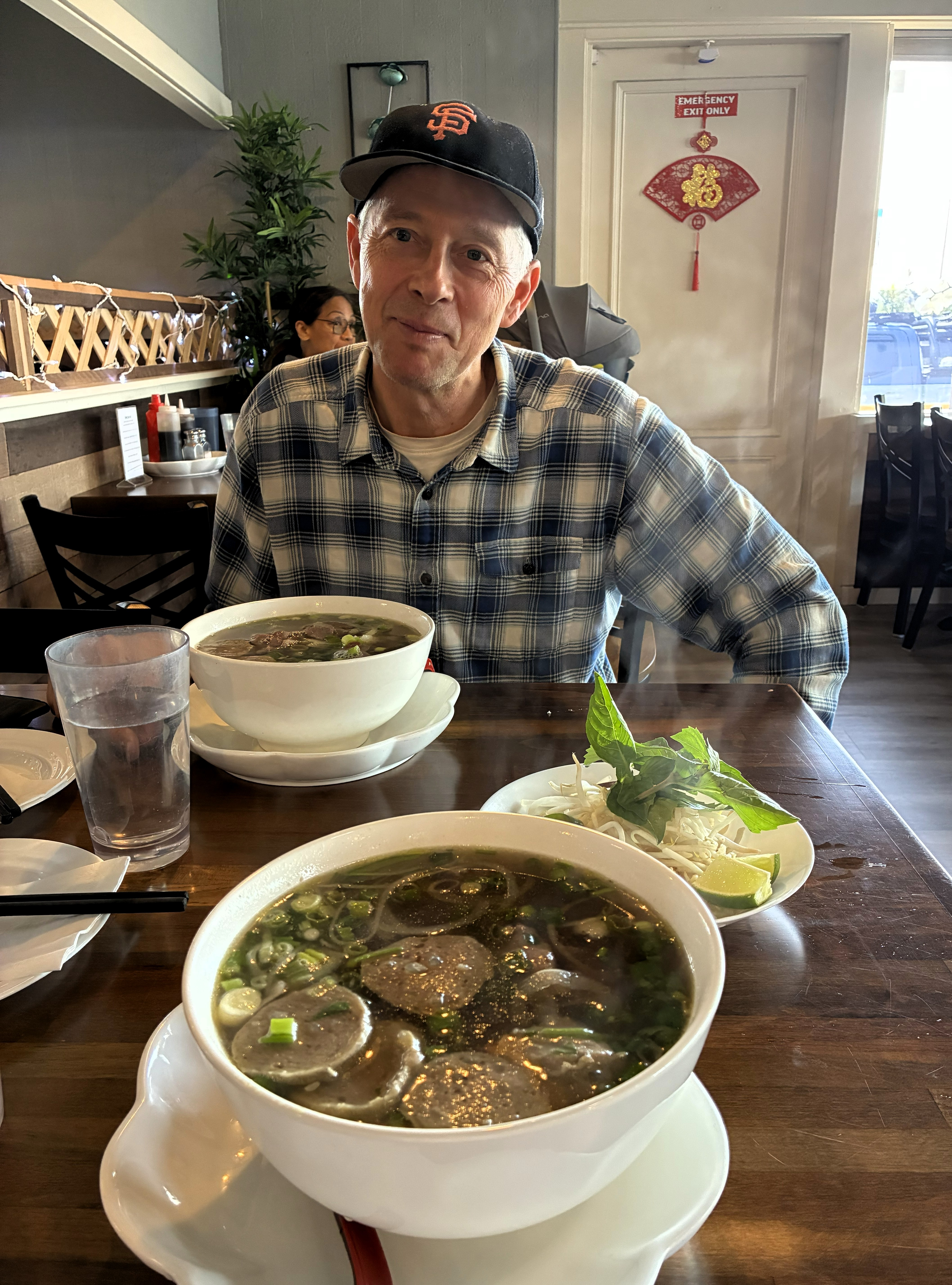
Seattle is a big diverse city with lots of similar ties to Asia and Asian cultures found along the West Coast. Vietnamese food is everywhere here and delicions.
Full combo Pho with all the good tendon and tripe I love. Expect to see more on food in future posts.

So we plan to continue to blog about our continued travels and our post-nomadic life transition. (Yes, I am already planning our spring bike tour in Europe…) We plan to host lots of friends and family for a change, and be closer to most of them too. But we don’t have a specific plan for how long we will stay here, 5-10 years, maybe longer as we settle in and continue to love it. We’ll see. We have been nomadic travelers twice in our lives now, so we know how to do it.

We also plan to keep housesitting in our lives, even as we settle in our unexpected new house, we just wrapped up a memorable house sit for a lovely family near Gig Harbor, with Puget Sound waterfront views and access. It was really magical, but was a bit tough to be away from our new place after moving in for nearly two months. But we committed to the sit before we knew we would buy a place, and were determined to keep our word to do the sit regardless. We take the “trusted” part of housesting seriously and it was great to experience life on the Sound.
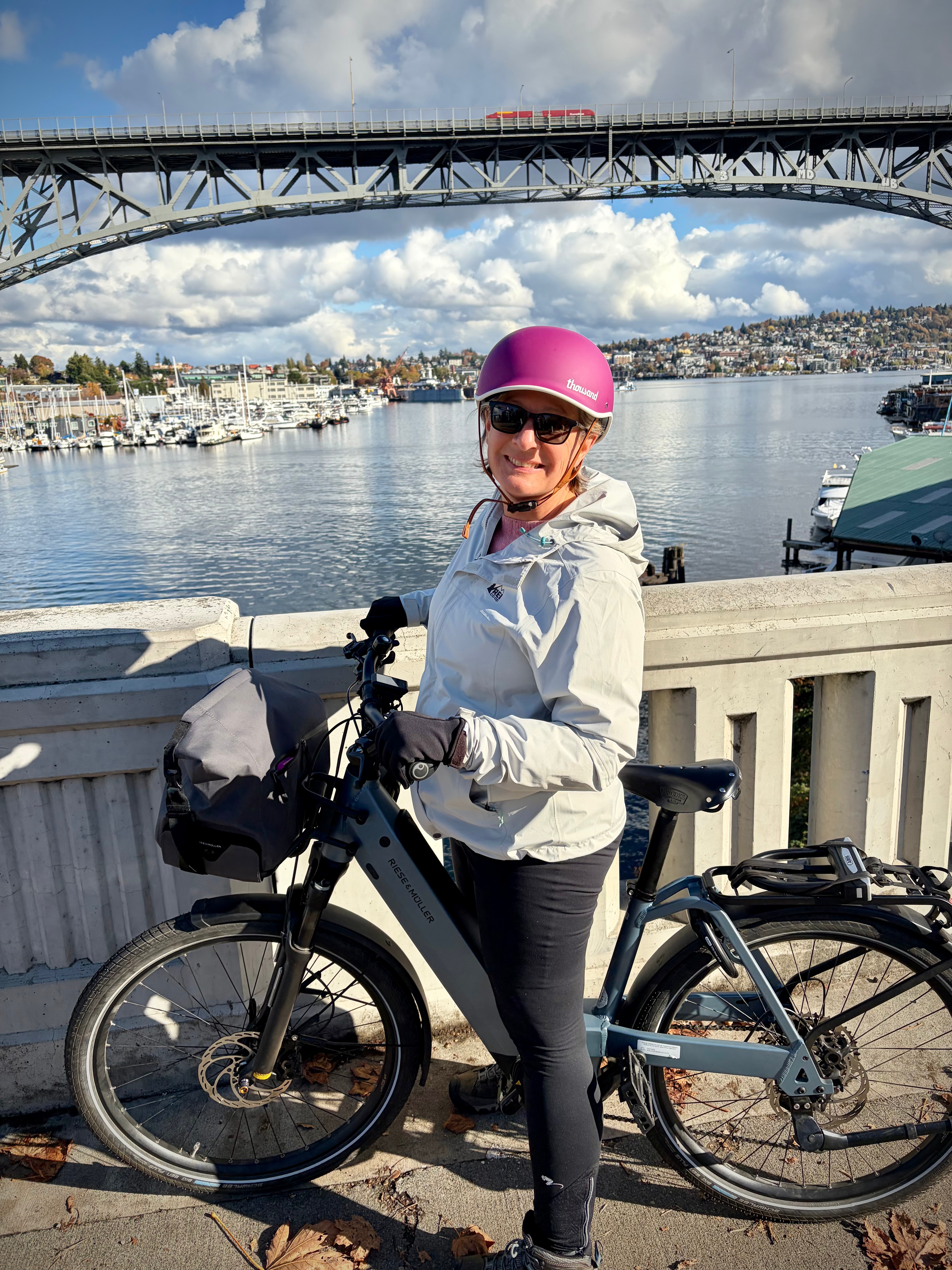
It’s really hilly in Seattle and our neighborhood is on the plateau of the old glacial ridge (as is much of the city), so Cheryl decided it was time for a new tool in our transportation mix, an ebike.

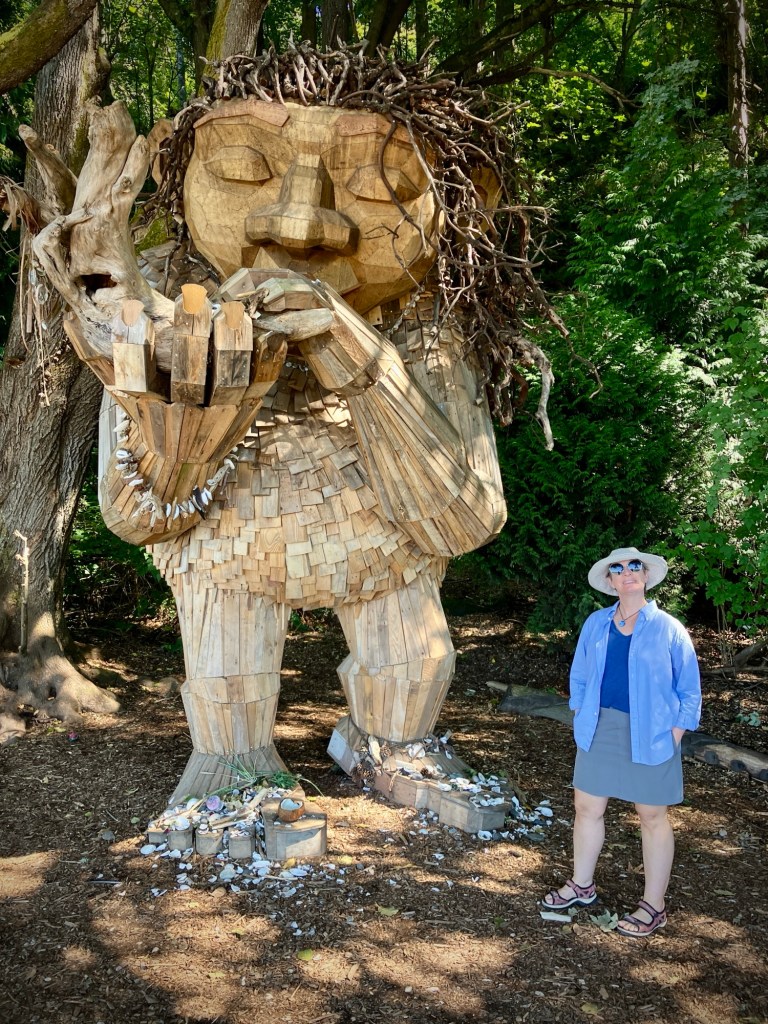
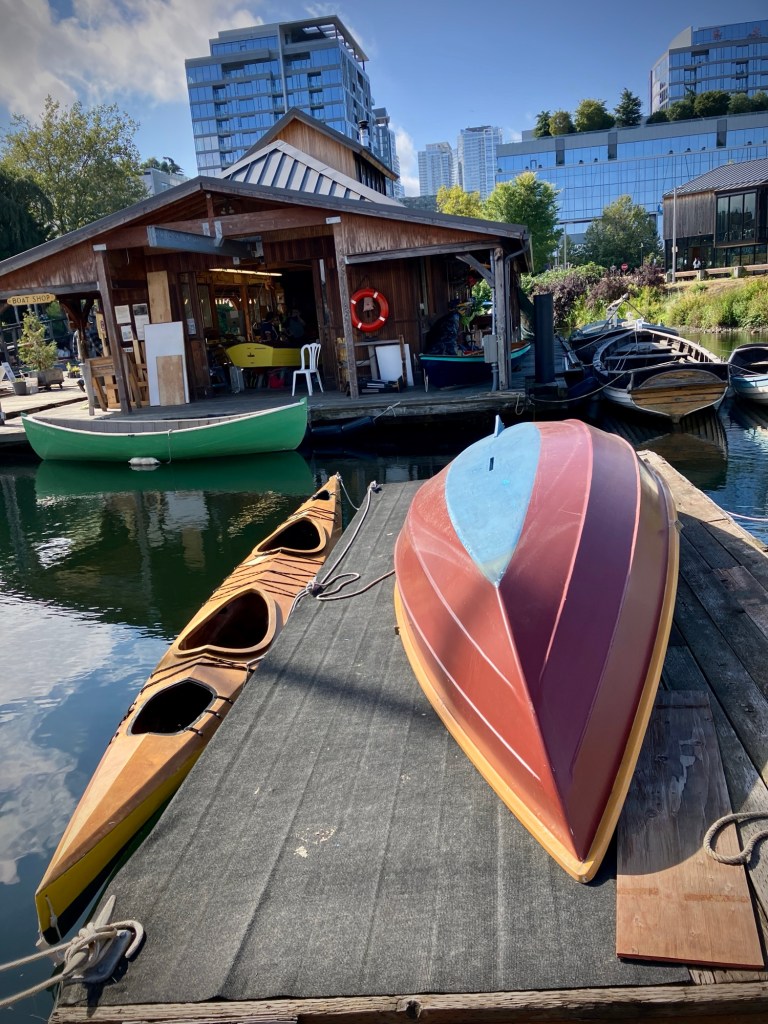
There is so much to explore here in the Pacific Northwest that we already have dozens of adventures on our minds; mountains, rivers, camping, wildlife, and the endless salt waters of the magical Puget Sound. And just as we explored every nook of San Francisco over 30 years, We are already enjoying getting to know Seattle and its many urban gems. And we plan to keep our precious SF Bay Area friends close, with visits to and from our former home.
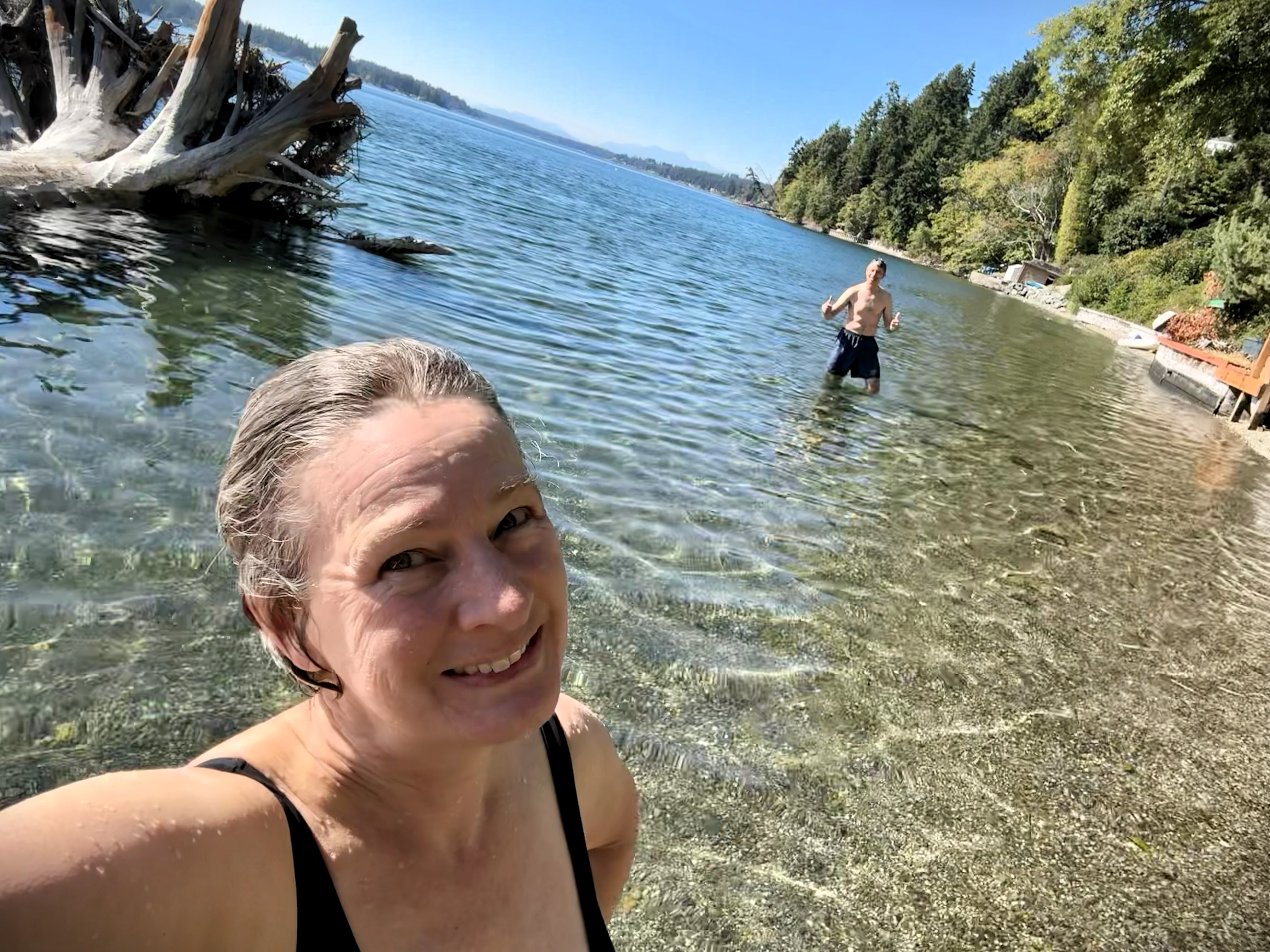
Enjoying frequent swims at our house sit near Gig Harbor. Refreshingly clear, but cold!

So I need to wrap up, as Cheryl has so many more things to add and blog about, and we have finally slowed down a bit from our big transtion to reflect again in more future musings.

Happy Halloween and Happy Fall to All!
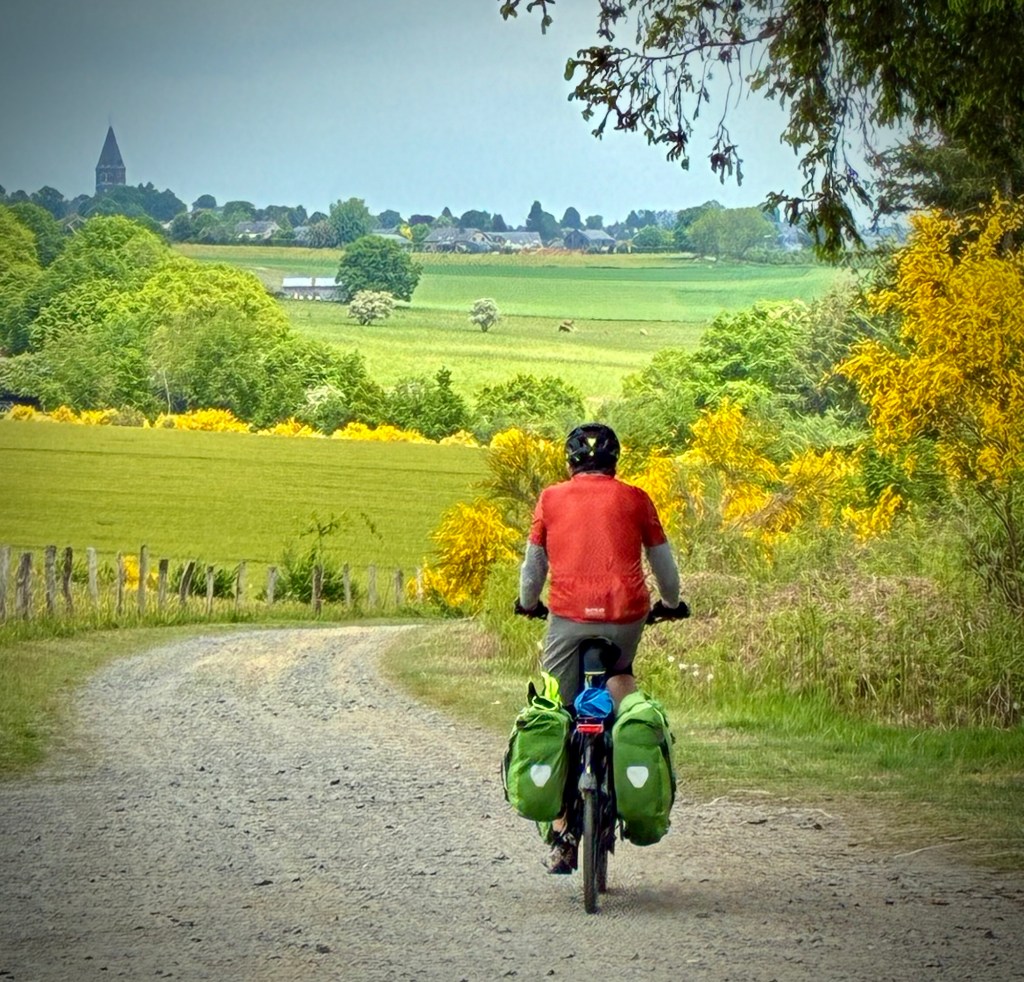
Cycling Through the Battle of the Ardennes!

After two amazingly easy and short train journeys from Paris, we were ready to get on with our cycling adventure.

Heading up into the central Ardennes of Belgium from France

The goal was to hit some hills and slightly different cultures after a lot of time in France. But we didn’t want to rush out of our adopted country of choice too fast, so started with a nice easy ride from the train to our first night’s lodging in Remily-Allincourt; all topped off by a surprisingly gourmet and pleasant dinner at our countryside hotel. But we really shouldn’t be surprised by a countryside gourmet meal in France anymore.

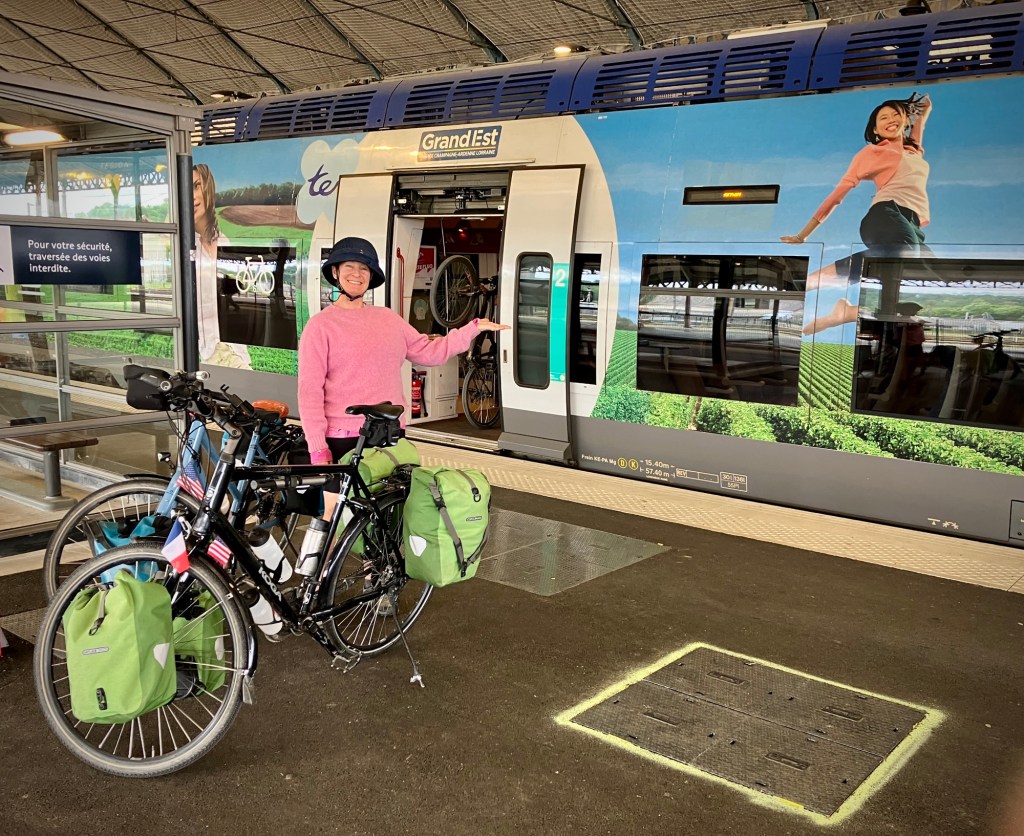
After our TGV to Reims, this lovely Grand L’Est regional train to Charleville-Mézières
Reims had some tight elevators but smaller Charleville-Mézières had really small platform elevators. I took stair rails down, while Cheryl opted for turning her bike upright in the elevator. By the way, a heavily loaded bike can slide out of control on the metal checker plate, especially if anything is wet!
But hey, a new elevator up -:)

Transition travel days with a few train hops are always tiring, so I’ve learned to not plan too much riding on those days if possible. Just warm up the legs to make us sleep soundly. And of course, create some room for dinner!

Nice to be touring again after our 4 day break in Paris
Where are we going? Briefly on the popular Meuse cycle route, now also Eurovélo 19.
The history of WWII in the region still feels fresh and even more interesting as you traverse the same landscape as advancing or entrenched forces. So many buildings were occupied by the Germans and repurposed, while others served the resistance.
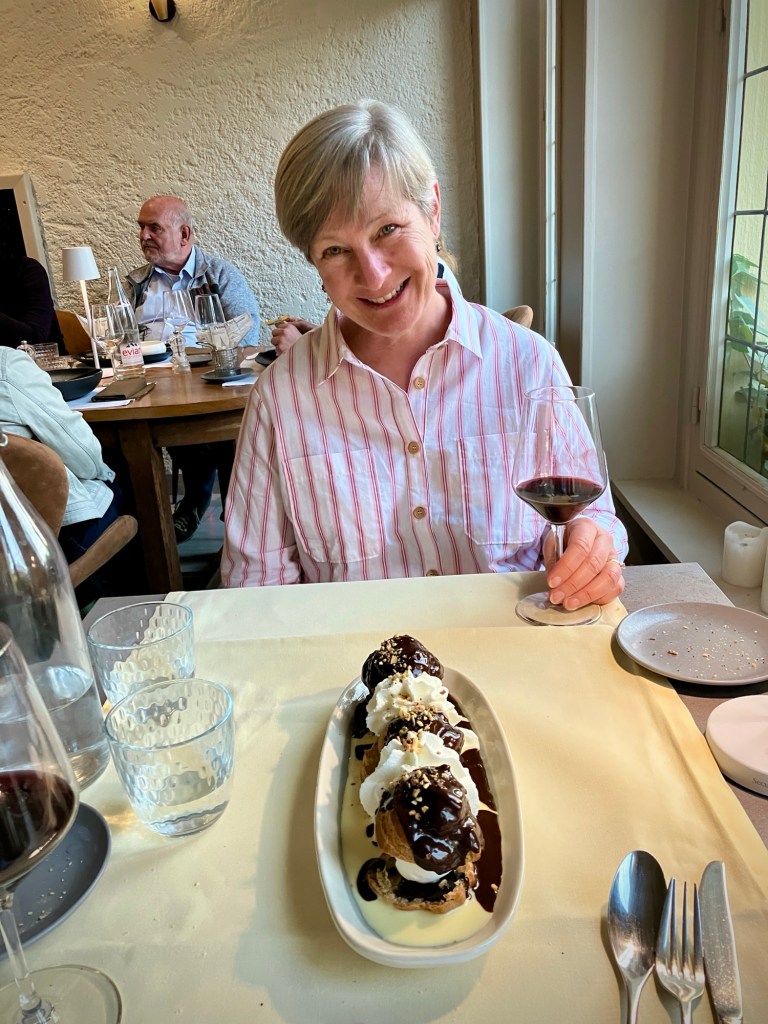
Cleaned up and with our best shirts on for a Saturday night dinner at the Hôtel la Sapinière. Our usual French restaurant trick is I get the 3-course menu and Cheryl just a main plate, and we split appetizer and dessert.
Cheryl looking fresh and lovely in her new shirt. I think splitting dessert was a good idea.

As we left Paris, we had the prospect of a week long cat sit in Luxembourg, and were both anticipating a video call that night to seal the deal, which we did! For better or worse, the house sit constrained our route a bit and certainly eliminated any options of heading further North. So we had about a week to cover a distance we could theoretically do in 2 days if needed.

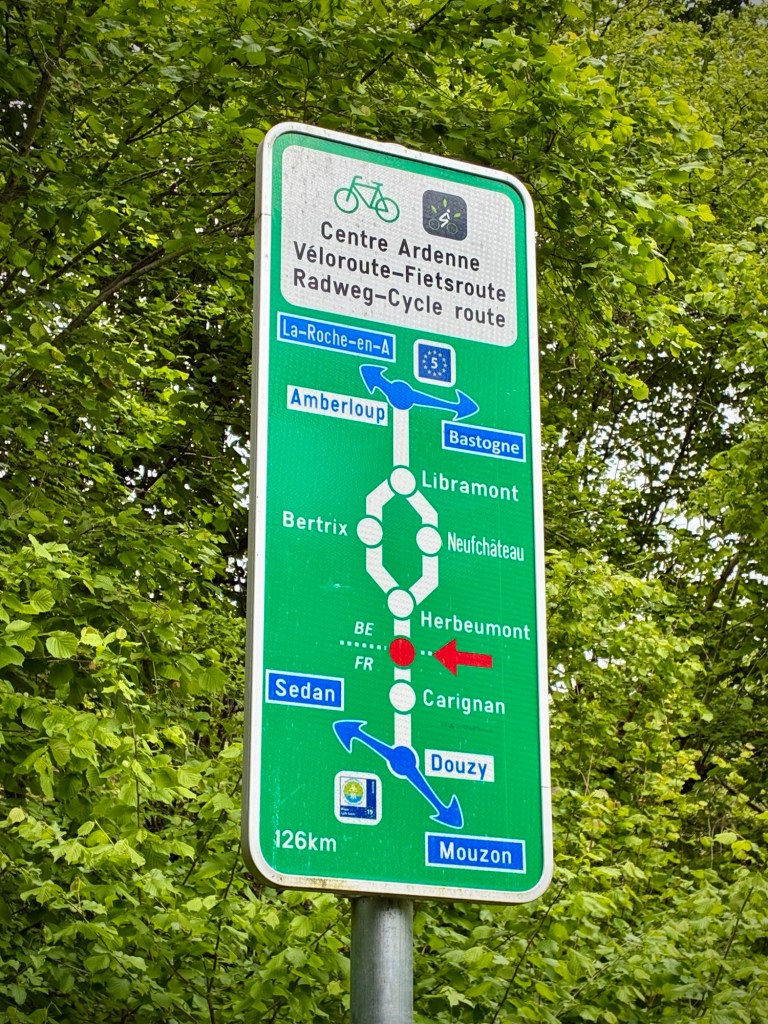
We were headed to Libramont from Douzy, so had a choice of routes. We went left.
The RAVeLs are a series of fantastic routes in Belgium, mostly on repurposed rail lines, and mostly paved.

But adding distance is never much of a challenge in the dense web of great cycling routes of the Benelux region. So we decided to wander a bit in the central and southern Ardennes and it was very rewarding, both in scenery and in fascinating history.

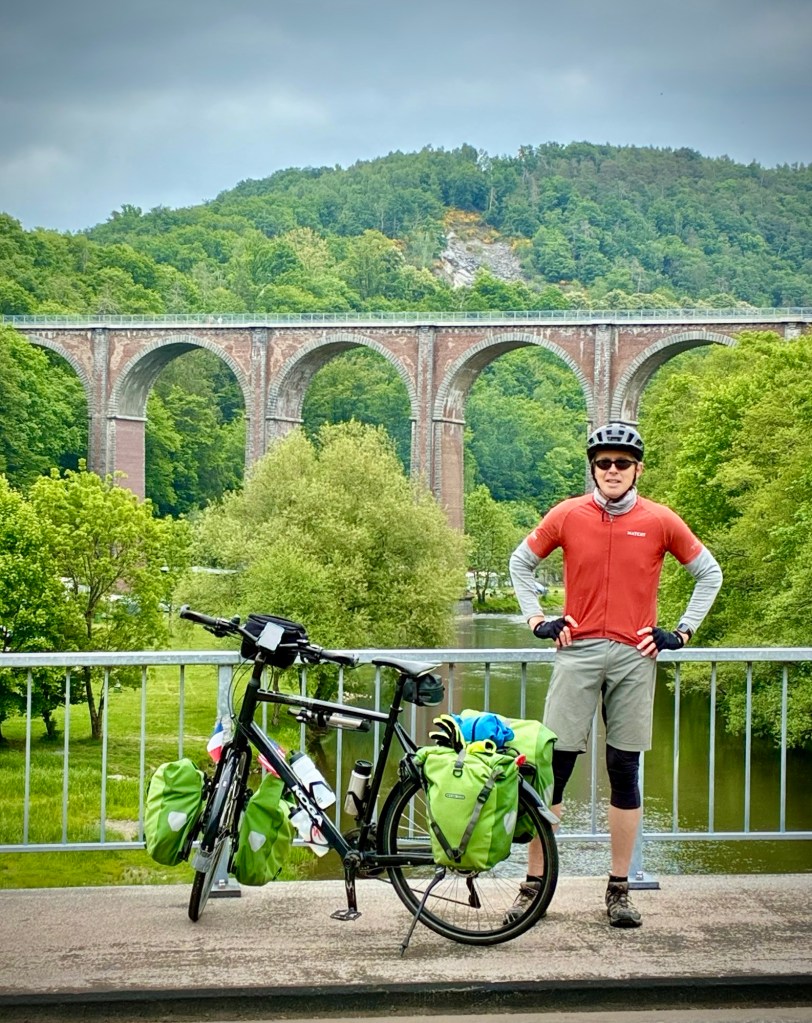
I wanted to see this beautiful rail viaduct near Bertrix, so we opted for a hillier route off the RAVel for a bit.
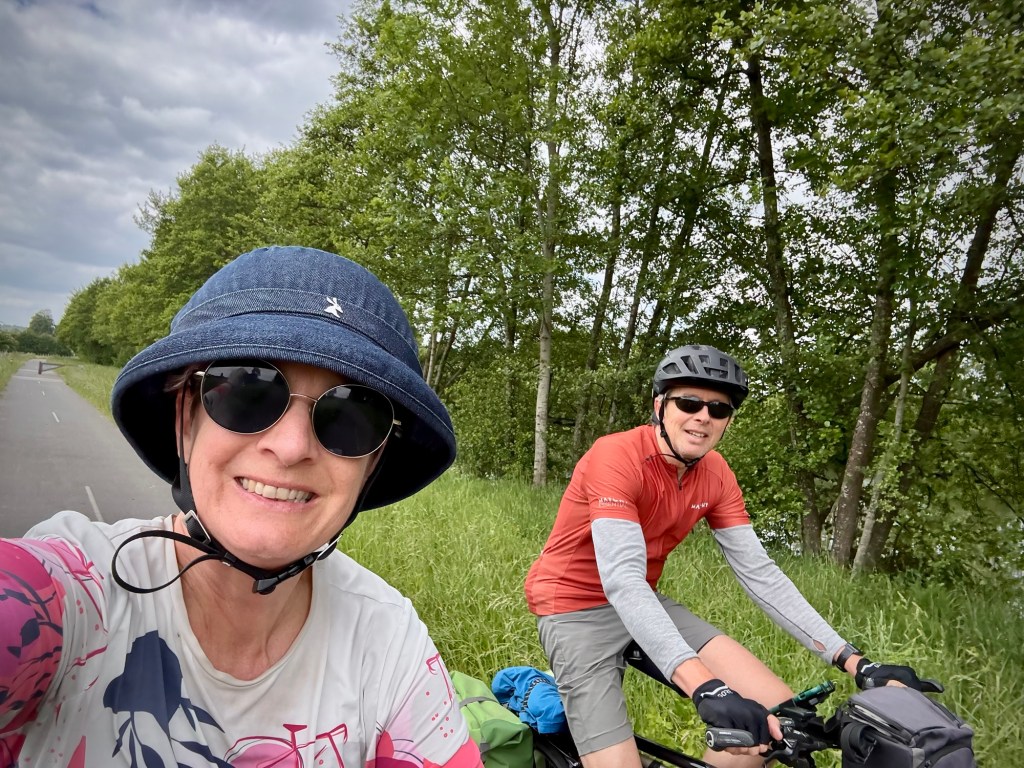
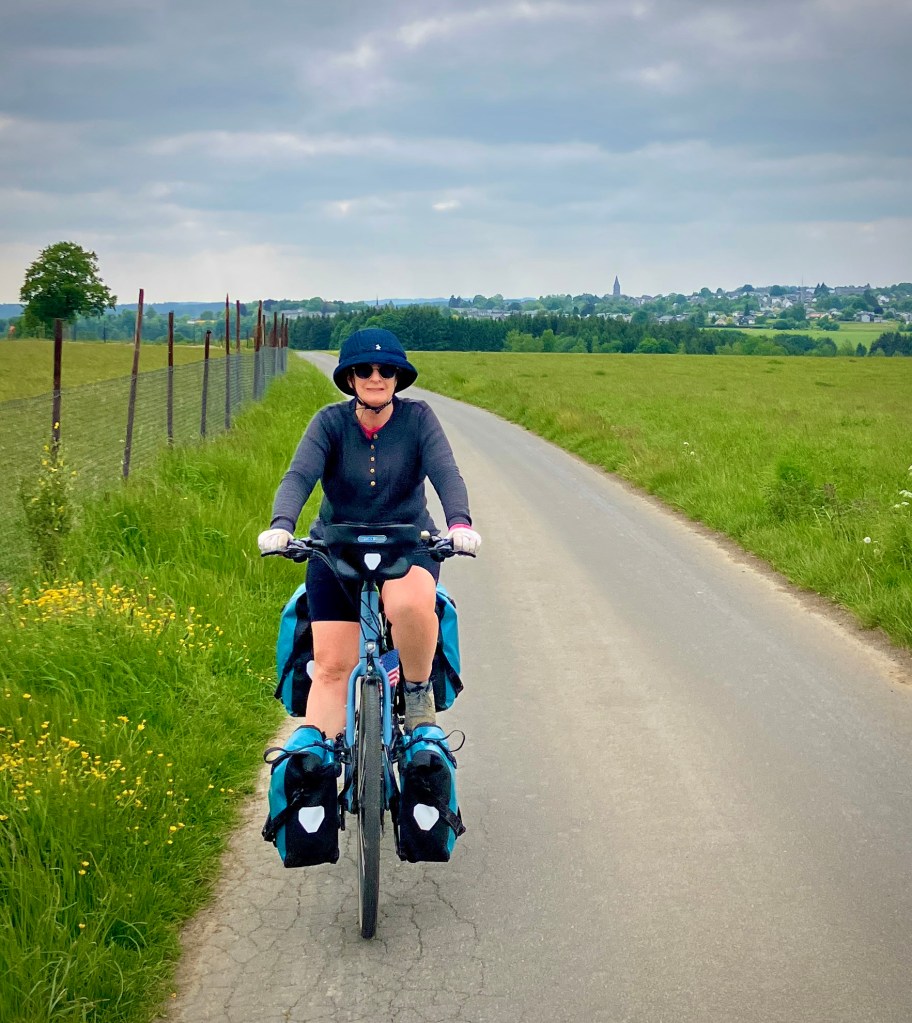
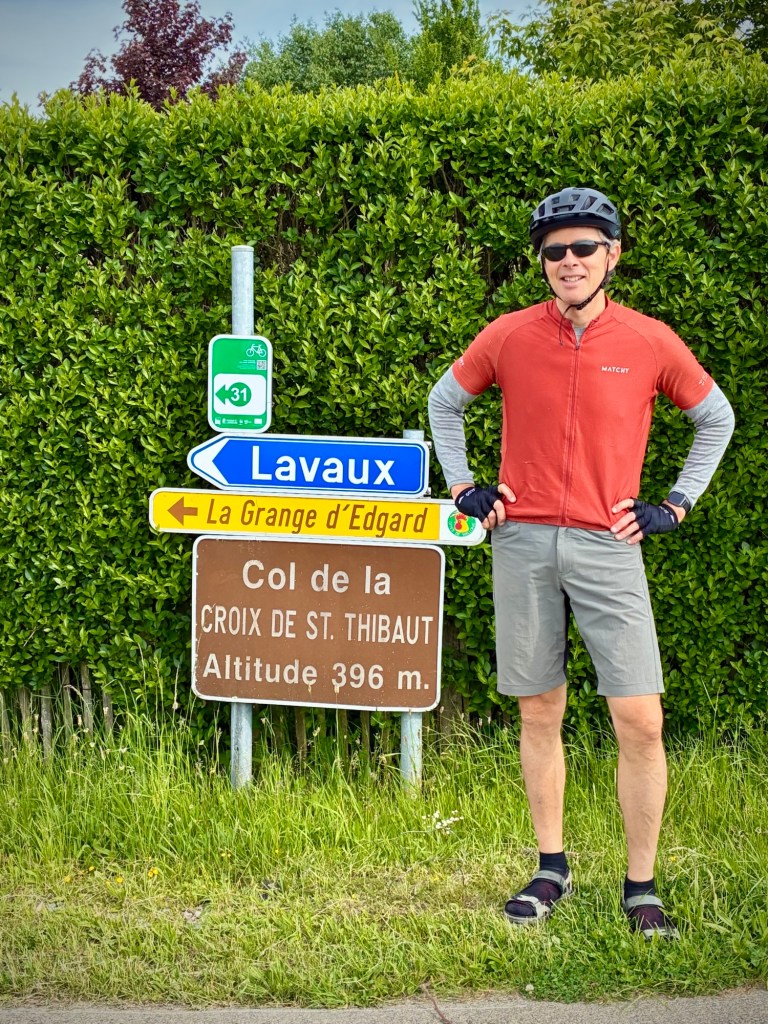
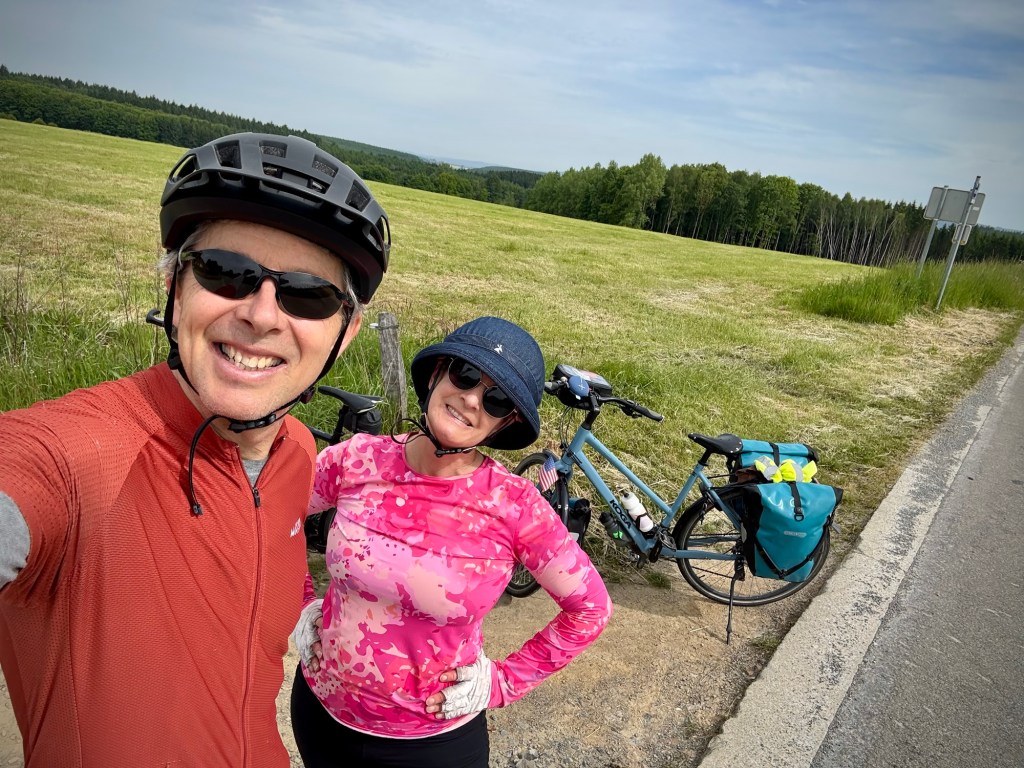
Smiling at the top of one of the many climbs in the Ardennes

It was also tough terrain defined by endless rolling hills and steep river valleys. No easy going here, unless you find your way onto one of the nice rail trails or a free train in Luxembourg.

The pavement was smooth but a climb right out the door is not always appreciated.
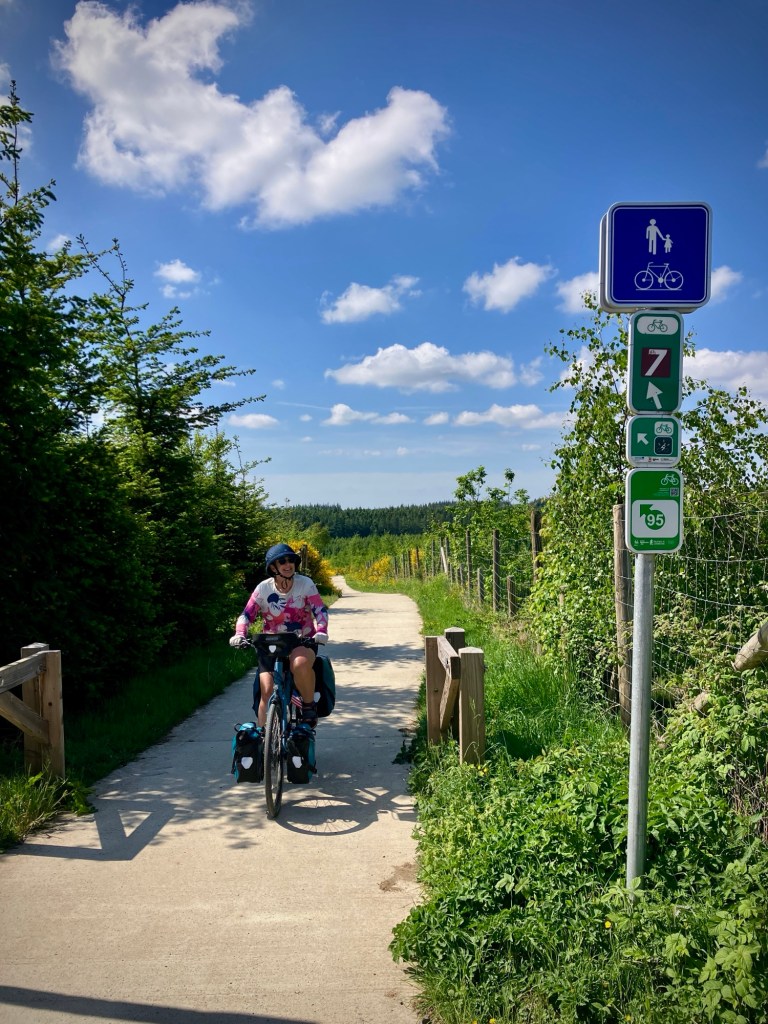
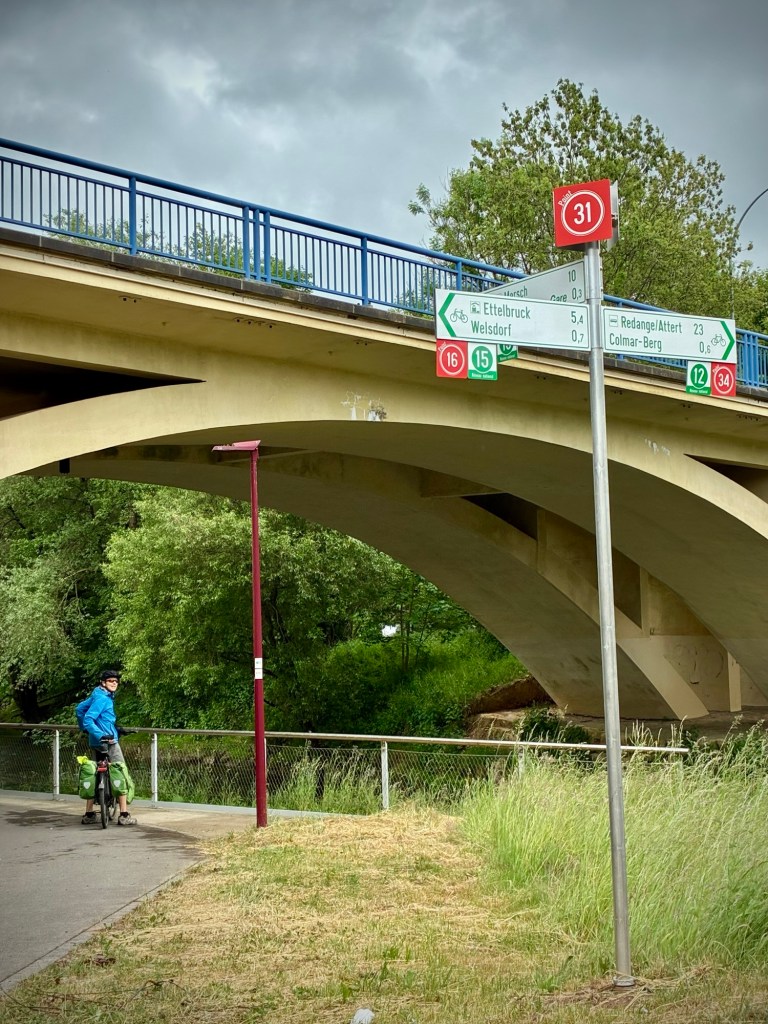
Very clear signage and markings in Belgium.

We love the way history unfolds as we ride through a new area. We now understand why people come to visit this area solely to revisit the WWII history. This area was occupied early by the Germans and then liberated by the Americans and other allies in the fall of 1944 as they advanced from the beaches of Normandy.

Climbing through commercial forests outside of Libramont. The drab monoculture was offset by the beautifully smooth new concrete path.
The high point at an eye watering 560m! Ok, the Ardennes are not a high mountain range. But the buttery smooth pathway decent and rollers through lush mixed forests was a blast.
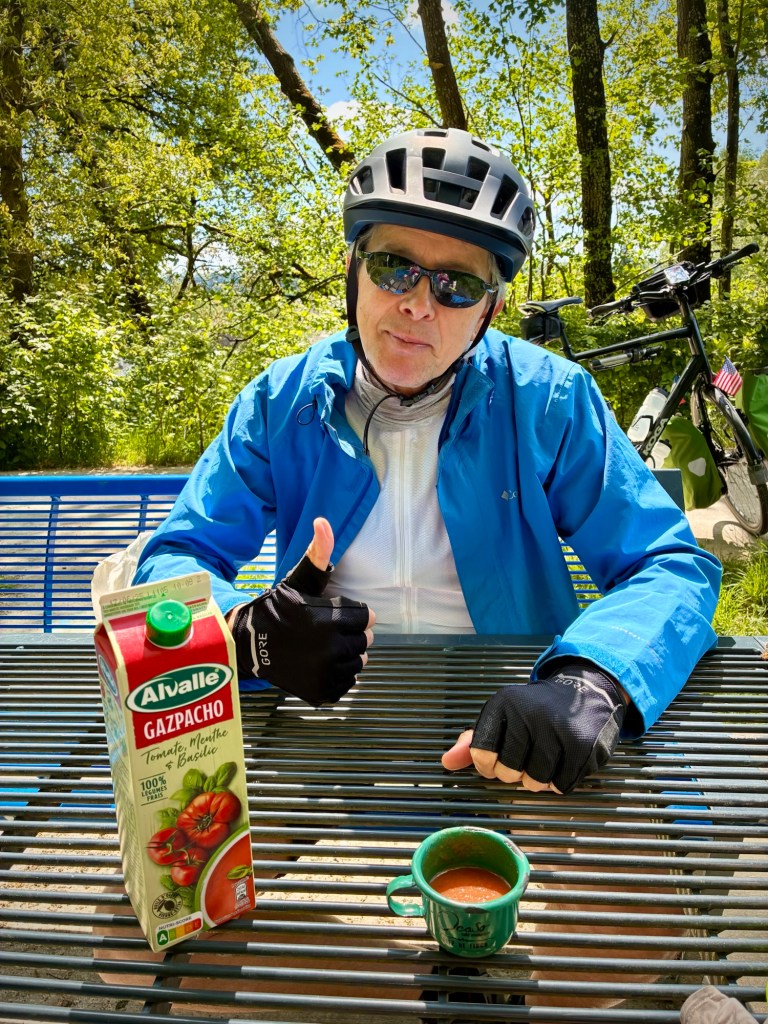
Our favorite Gazpacho flavor currently; Tomato, Mint, and Basil

But Hitler’s last major effort in late December, 1944 aimed to split the allies in the middle of the Ardennes and crucially, isolate and take the strategic port of Antwerp. This is how the famous battle of the Bulge got its name. It seems the Battle of the Bulge has been rebranded as the Battle of the Ardennes to broaden its scope appropriately to all the stages of the war in the region.

The entire area was the front lines of the advancing Germans after the battle of the Bulge. Virtually every village had a story of war, occupation, suffering, destruction, more war, and finally liberation in early 1945.
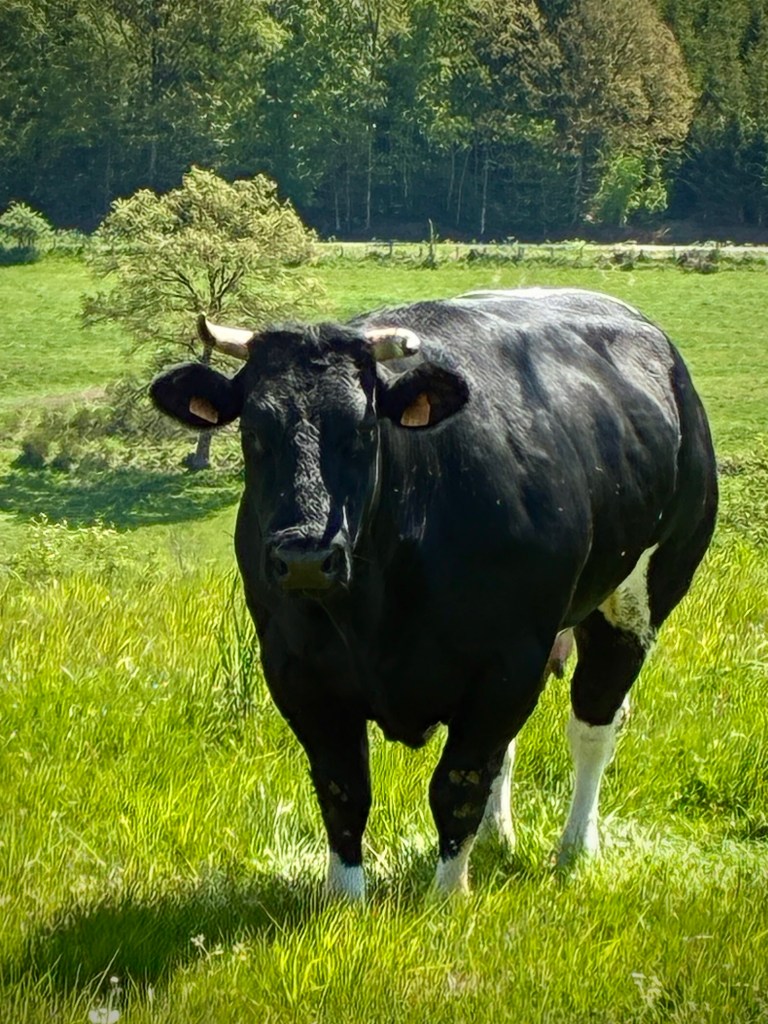
What are you looking at?
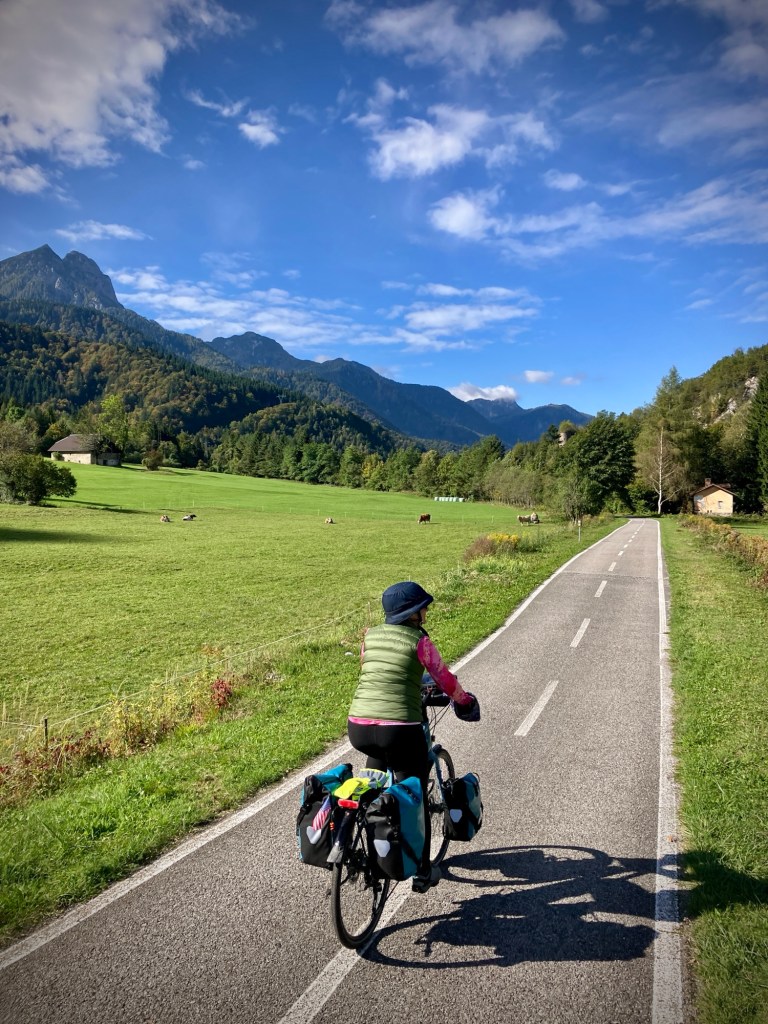
More ups and downs on the way to La Roche, but the weather was perfect.
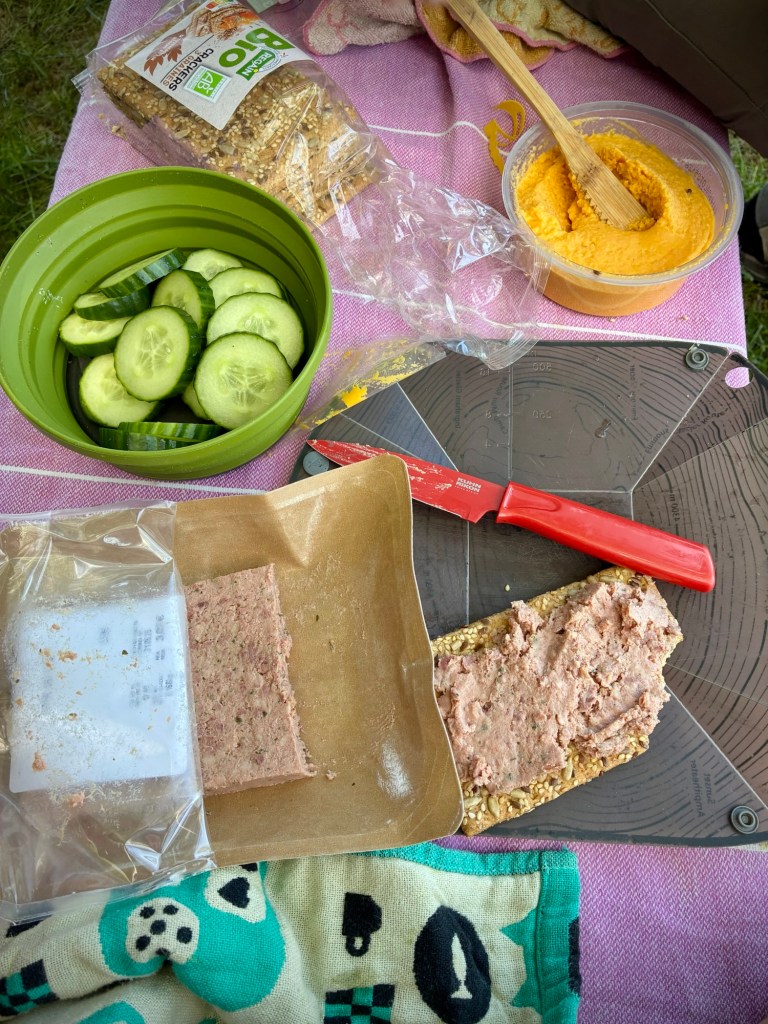
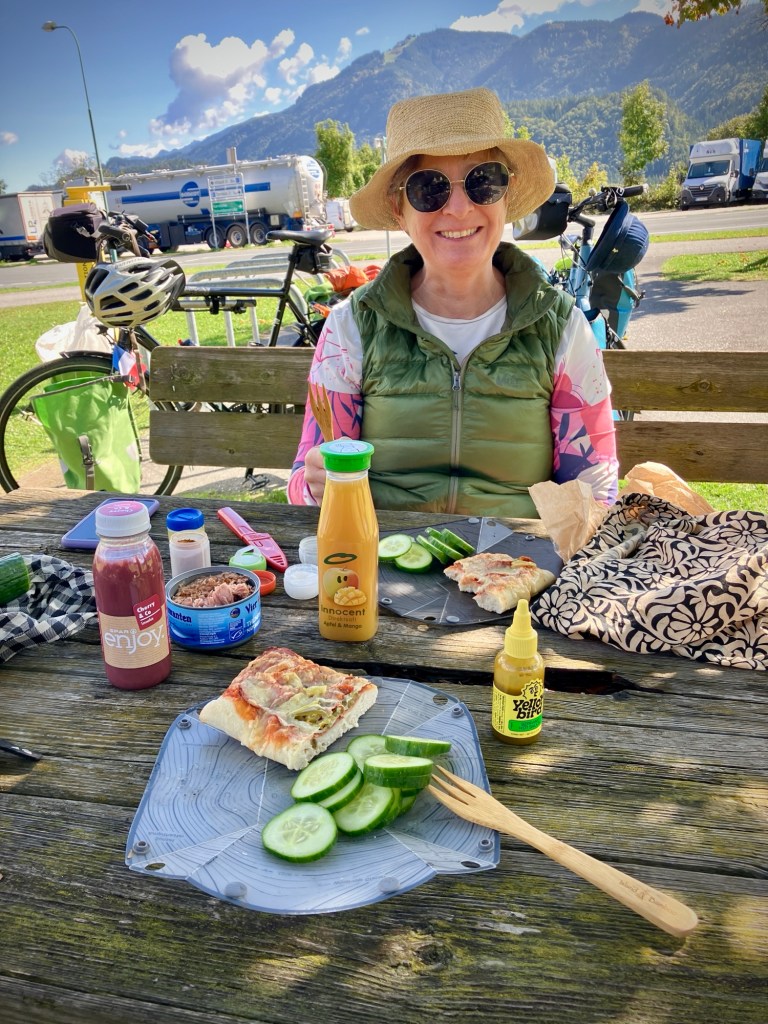
A typical quick picnic lunch of luscious pate, healthy sweet potato hummus, cucumber, and seeded whole grain crackers.
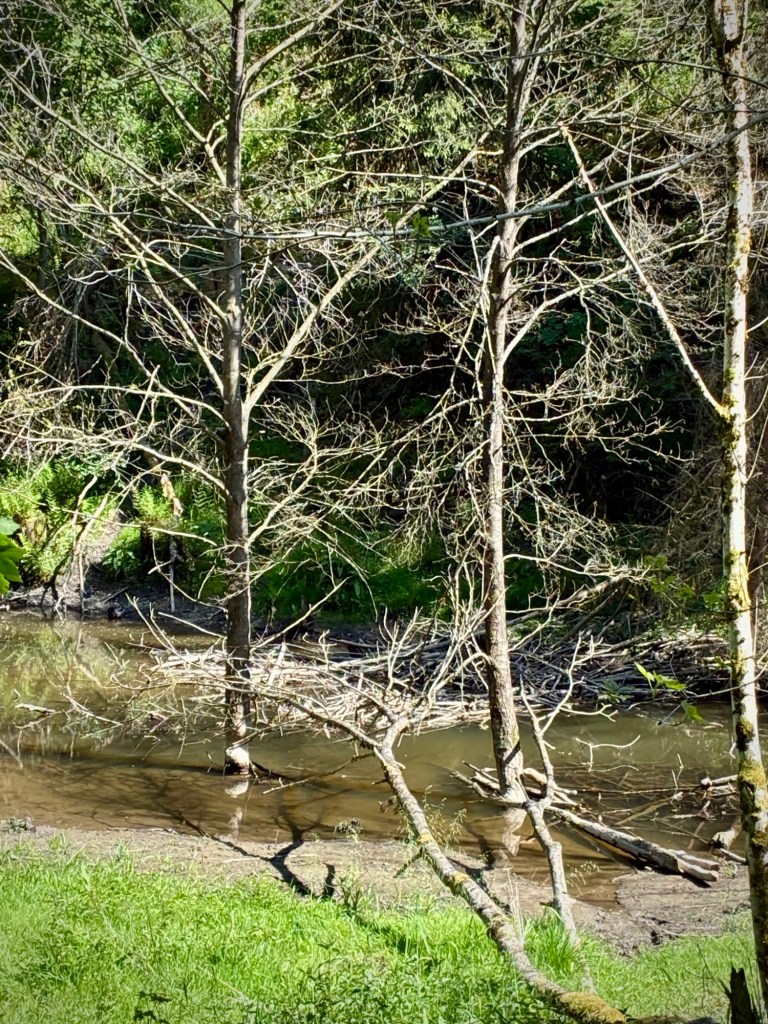
Our final approach to La Roche had miles of Beaver habitait along a small tributary stream to the Ourthe River.
So it was not the best time to spot one of the diurnal European Beavers, but the evidence of their work was everywhere. like the trees gnawed and ready to fall, and many dams across the stream.
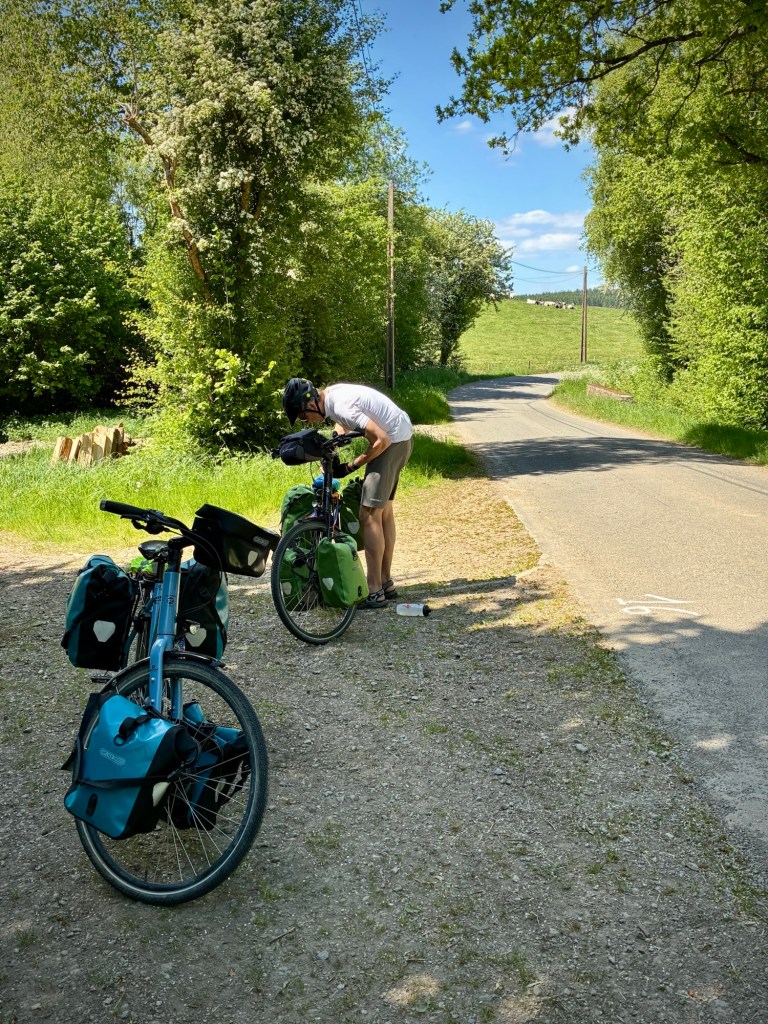
Reattaching my bottom water bottle cage after a full bottle flew off on a fast and bumpy decent. I was lucky not to go down as I might have if it had gone under my wheel. Reminder, check all the bolts on the bikes!

A bit of a side note on our trusty Koga World Traveller S bicycles. Inevitably heavily laden touring bicycles have mechanical issues and require maintenance, especially drivetrains, brakes, and tires. We’ve both had our bicycles tuned up and overhauled once since their purchase 2 years ago, but at different times and usually spurred on by an issue. I had to get a new disc and pads for my rear brake last year in Salzburg, and Cheryl needed her brakes bled and refilled, along with new brake pads this year in Narbonne, France.

Thankfully, most shops will take some pity on touring cyclists and accommodate a fix into their schedules. But not always, and major work or overhauls sometimes are scheduled out months in advance.

Happy for a day off the bikes in scenic La Roche-en-Ardenne.
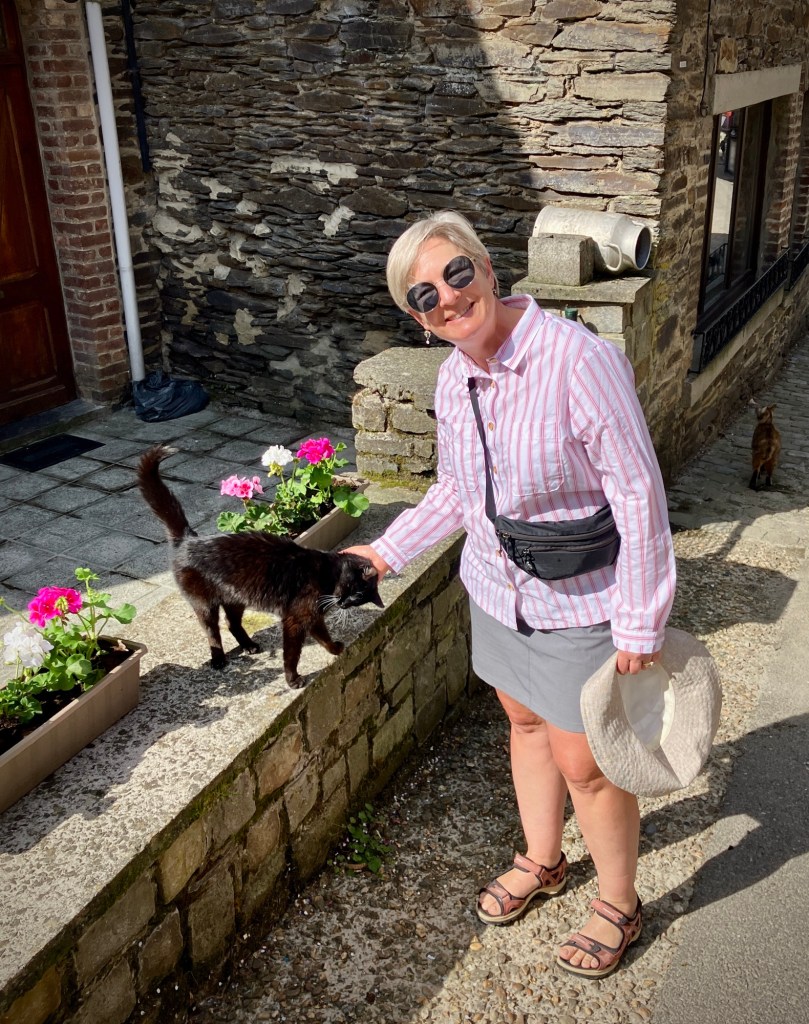
Exploring the small and fairly charming La Roche, including the local cat population.
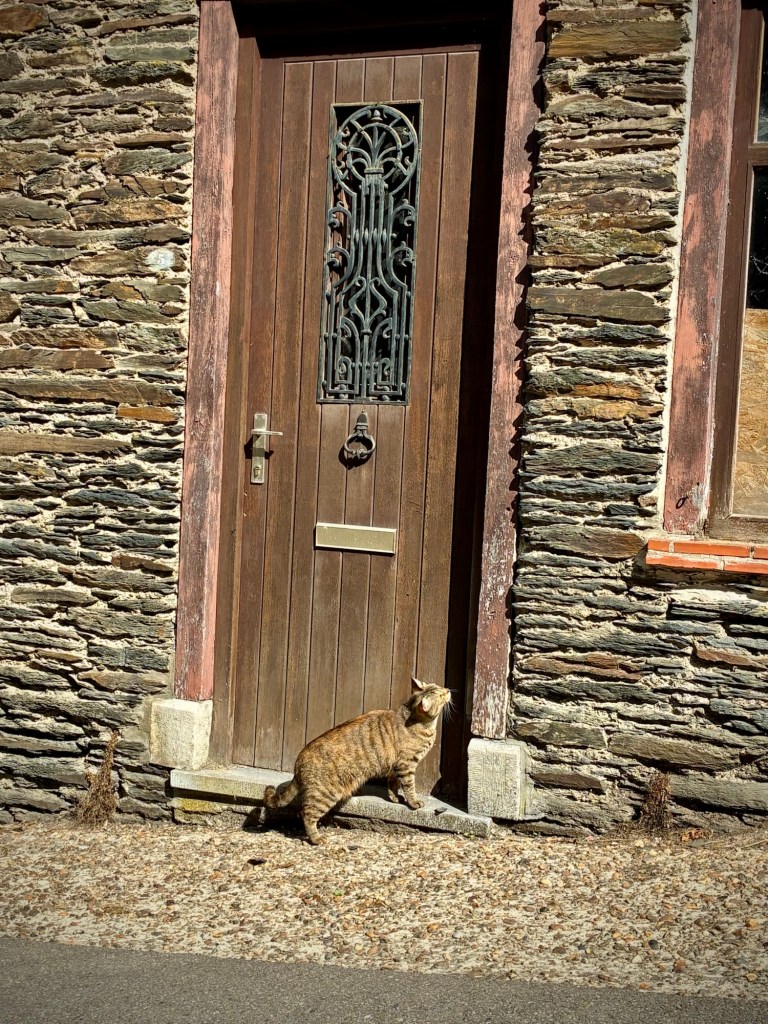
Is this cat trying to escape from Cheryl?
The local Charcuterie…the reformed pigs were a little creepy to me.

So after numerous flat tires before Paris, I felt my Schwalbe Evolution rear tire was near retirement age. I had a chance in Paris to get a brand new first choice tire (Schwalbe Marathon Plus 700×38) but opted to ride on as the tire tread still seemed ok to me. What I didn’t notice until on the way out to Gare d’Est in Paris, was the wobble in my rear tire. It had a small bulge. Too late to get that perfect tire replacement!! Ugh. And no open bike shops for a few days. And then I noticed a second bulge. So it was rideable, but a constant wobble feel and concern that it would finally blow out the side made my cycling way less fun for a few days.

Not the alps, but a good little climb to warm us up out of La Roche en route to Bastogne
So nice on TOP of the ridges. And most of the roads here are so quiet. Trying to ignore the bulges in my back tire!
Just proving Cheryl was still with me. She was climbing like a pro after 7 weeks on the bike!
And ripping up the gravel!
Some fun off road sections in the Ardennes, but it can be rocky and muddy.
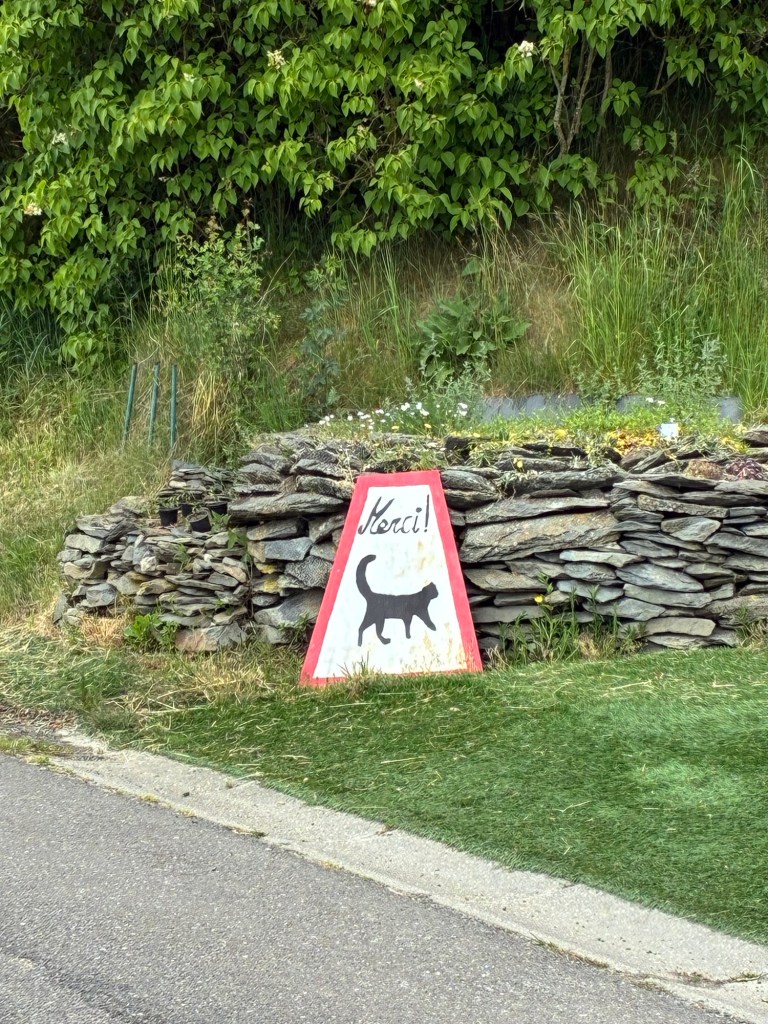
Yes, thank you for slowing for the nice black cat!

So luckily after 3 days of riding, my back tire kept it together and we made it to Bastogne and a nice, well equipped bike shop that had a replacement tire. Not my dream Schwalbe tire, but actually a wider 700×50 Schwalbe mid range tire. This is as wide a tire as our Kogas will accommodate, and it certainly does have a nice supple ride now. But lesson learned, right? And Cheryl keeps reminding me that she said I should have gotten the new tire in Paris… and Cheryl is always right!

This tank is dedicated to the U.S. 10th Armored unit who were the first to defend Bastogne in the Battle of the Bulge. They were soon joined by the famous 101st Airborne Division who have their own museum in Bastogne. About 50m from here is a monument to the nurses in the battle.
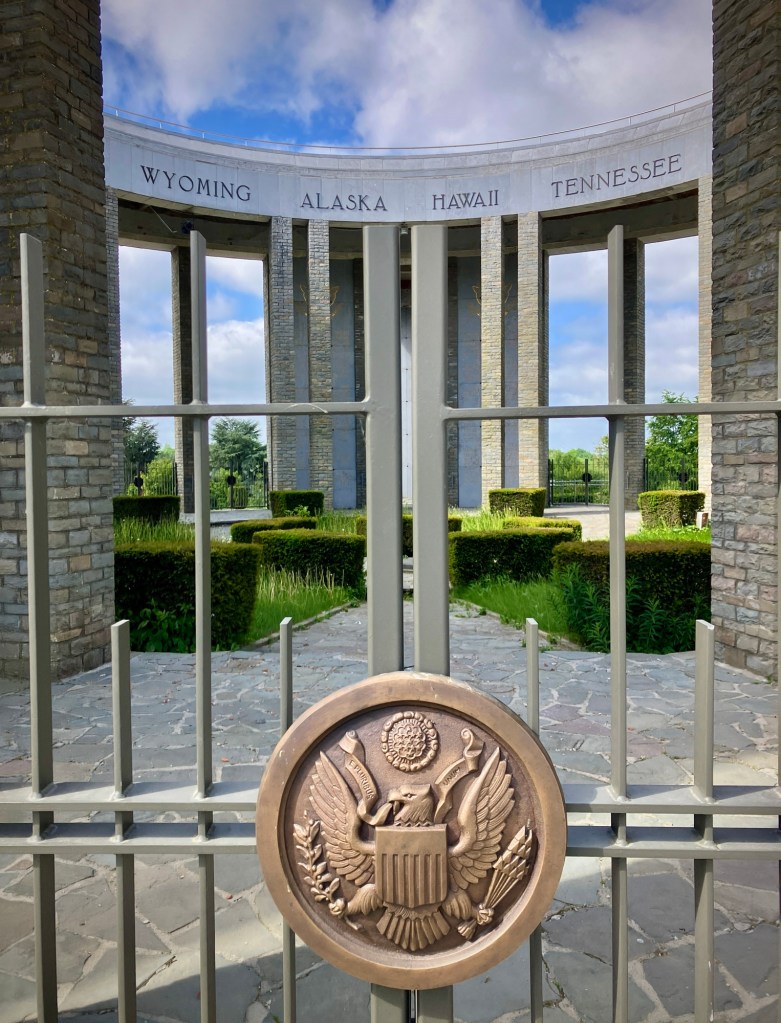
The beautiful and dramatically located Mardasson Memorial on the edge of Bastogne.
A strategic location to defend.
The RAVeL Line no 163 runs from Bastogne to Gouvy just along the Luxembourg border and traces a critical front line of the Battle of the Ardennes
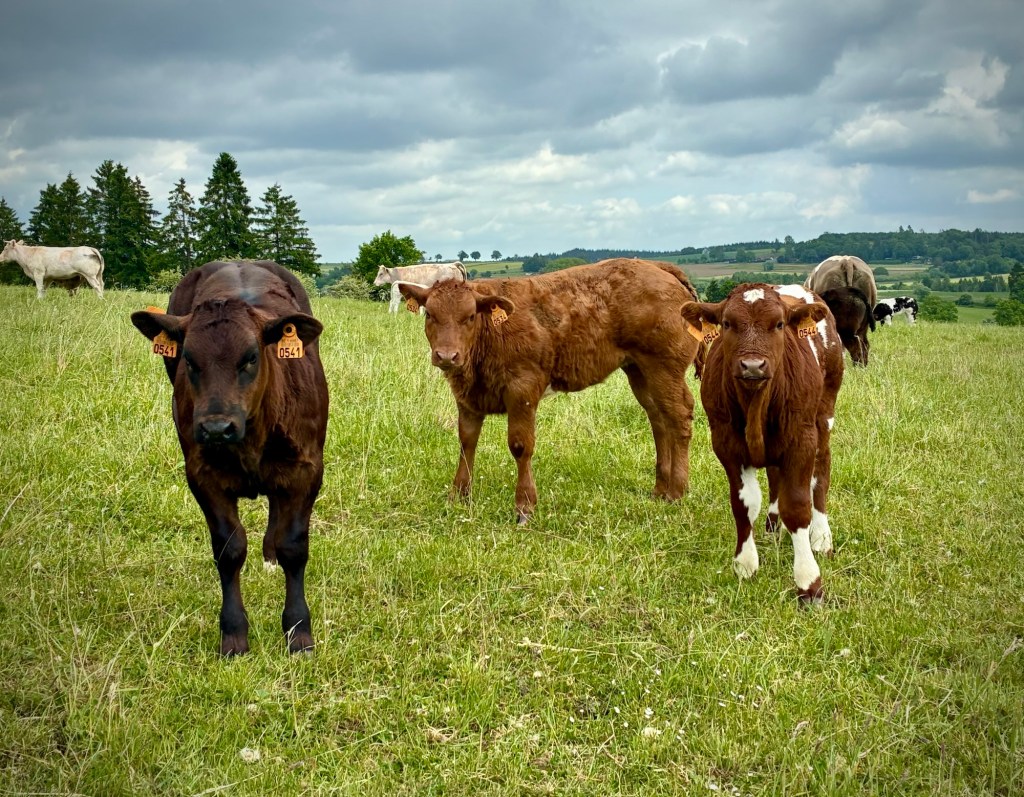
And more cow curiosity; what are these crazy people doing on top of our ridge?!
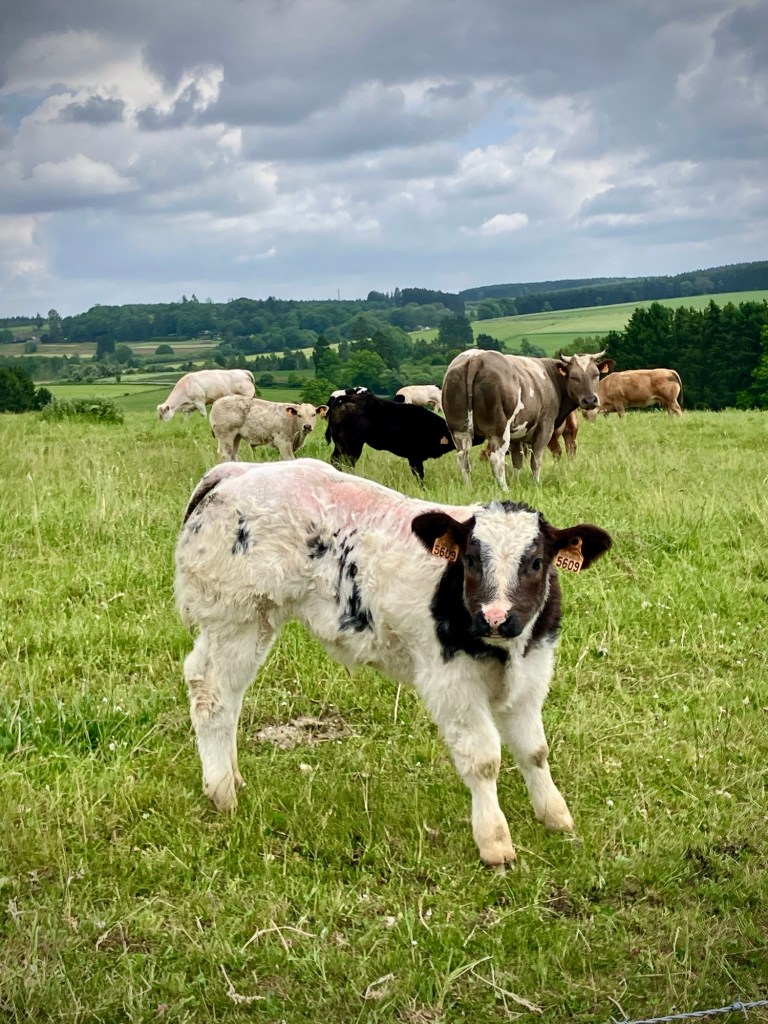
And this cute little guy (gal?).
And did we mention it’s Spargle (white asparagus) season!!
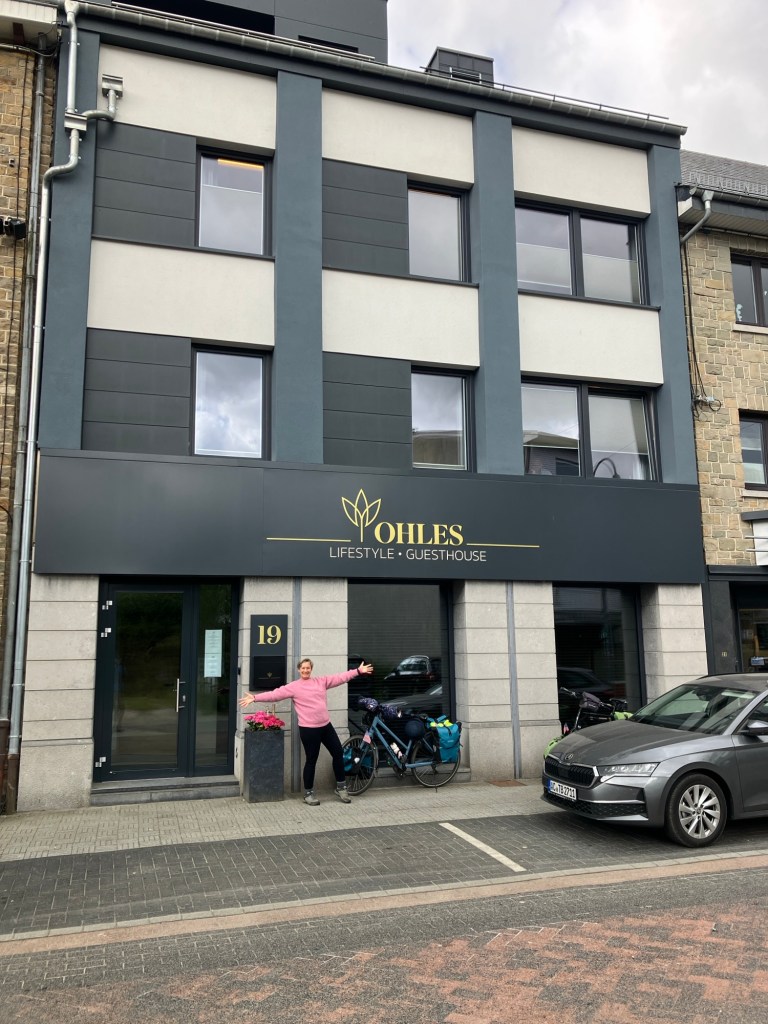
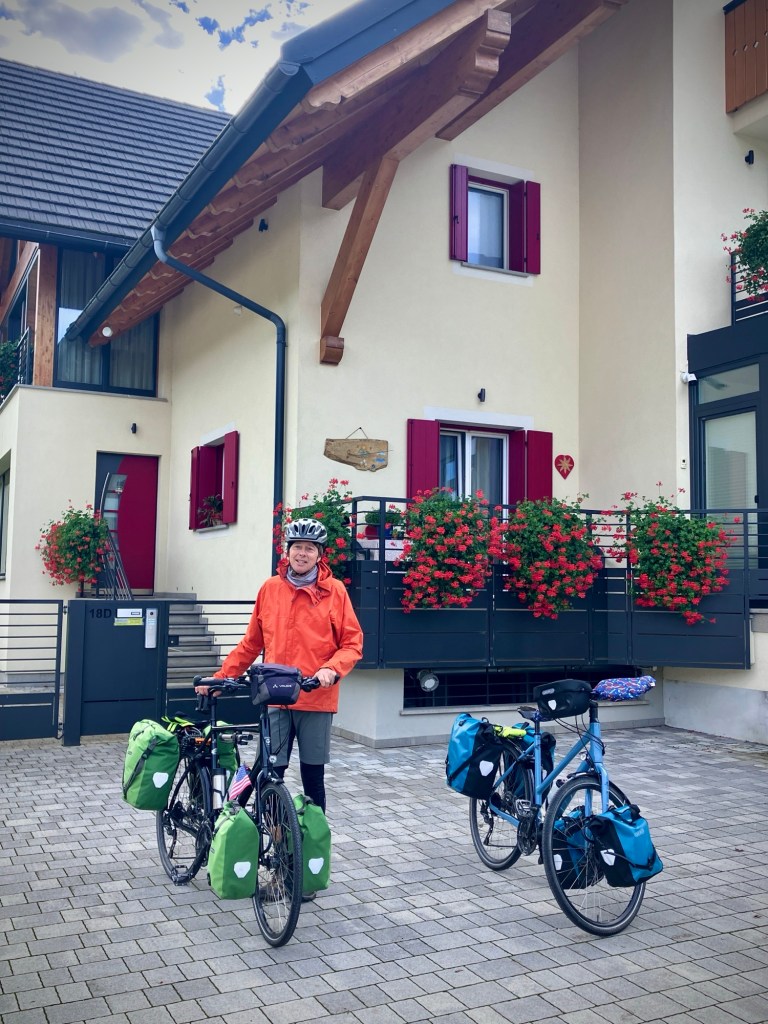
Our nice bike friendly guest house in Sankt Vith. Nice new rooms and a self serve bar filled with Belgian Beers. (Of course.)

Another interesting quirk of this region is the bizarre mix of languages and political boundaries. After leaving Bastogne, we headed to Sankt Vith, the cultural hub of the small German speaking region of Belgium. Germany wanted this region back from Belgium after both wars, but Belgium resisted and it remains a semi autonomous region of Belgium with about 80k German speakers. We noticed a unique feel here, not quite like Germany, but also not like the French or Flemish region of Belgium. They also seem to speak an old dialect of German and not cater to the multi lingual flexibility offered by most Belgians.

Cheryl trying out some local bike art next to a brief local history on the occupation, resistance, and use of the local farm houses during the war. Everyone and everyplace in this region was in the heart of the long struggle.
Yes, we felt pretty welcome in this corner of the world.
We were now on the Vennbahn for a while, a long distance route from Liege.
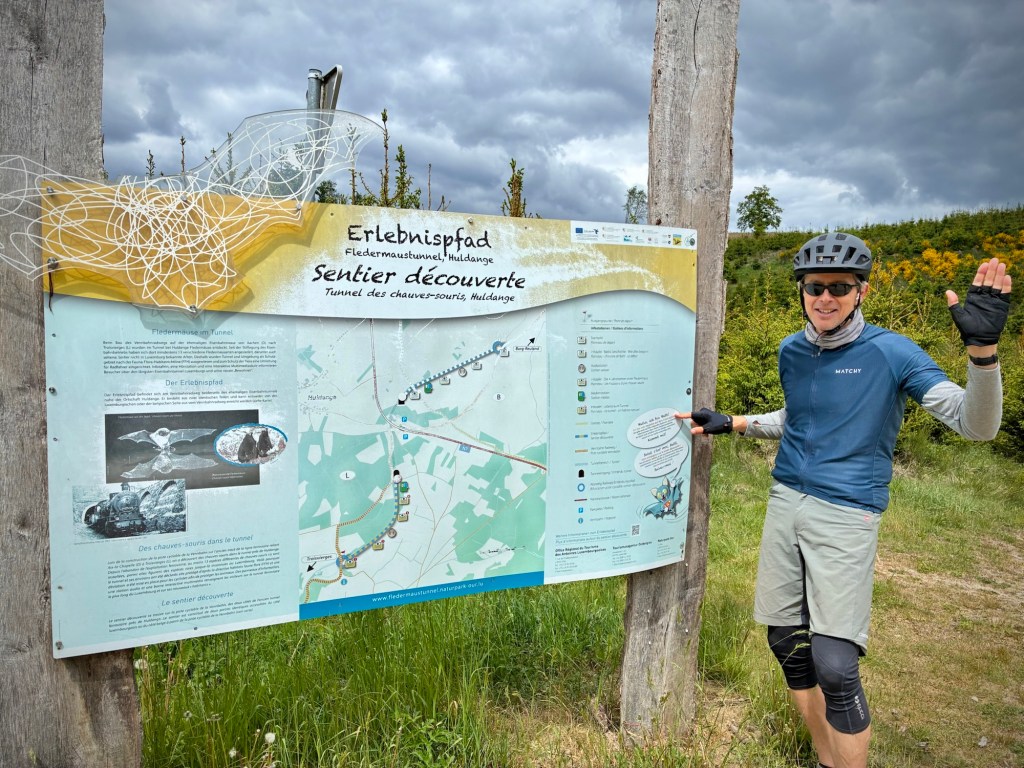
As they refurbished the rail line, they discovered numerous bat species in the Lengeller tunnel. It’s closed to people now and they have turned both approaches into an informational journey. Bats are cool, so we were happy to divert.
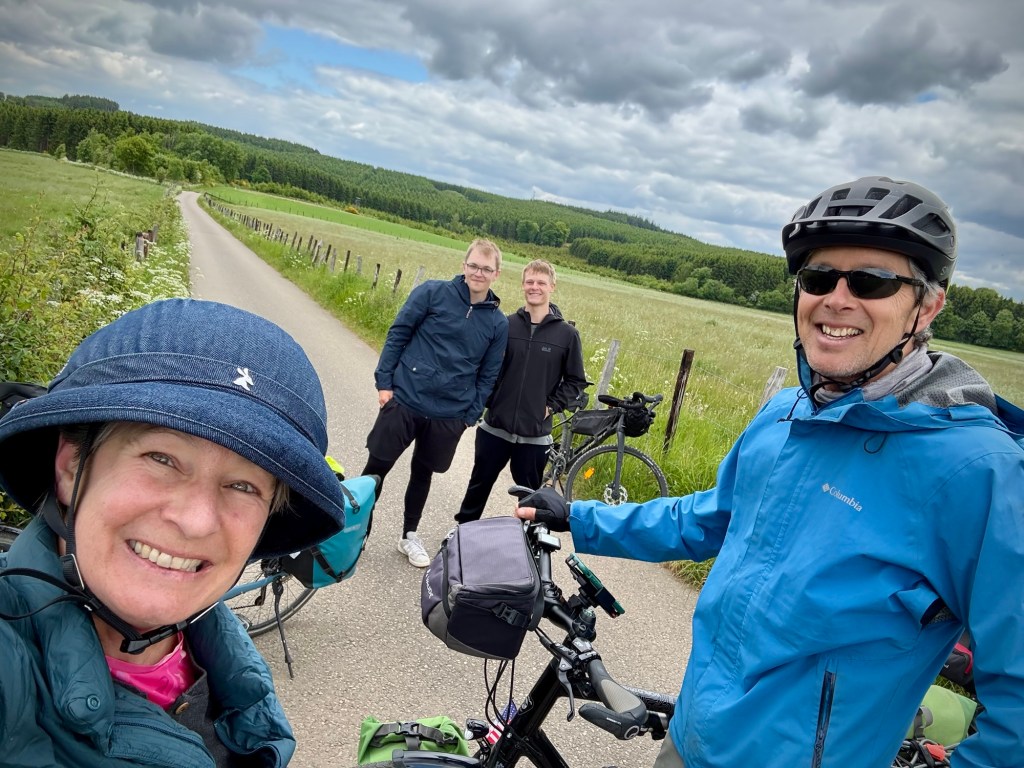
On the steeper pass road, we met these two nice young German guys out for a week of bike packing and camping.
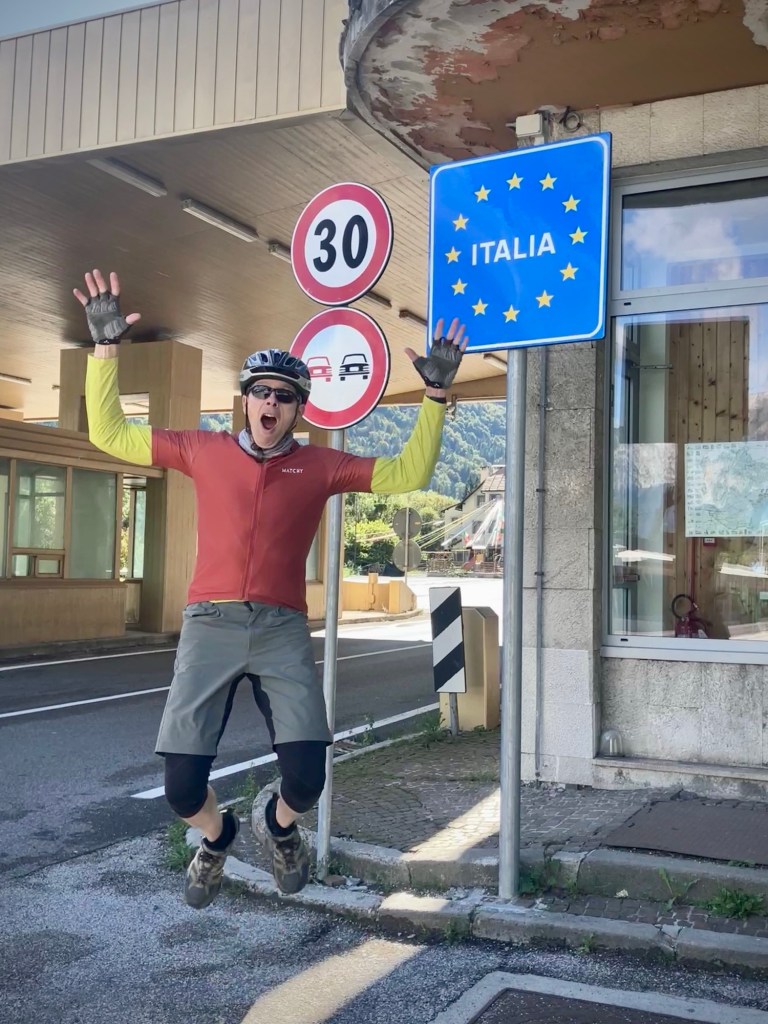
And swapped cameras to get pictures of the sticker laden border sign to Luxembourg.
Passing under our first train station in Troisvierges, the southern terminus of the Vennbhn. I had to check out the nice departure screens and fact that all the trains and buses are free! All the time, everywhere. Very exciting!
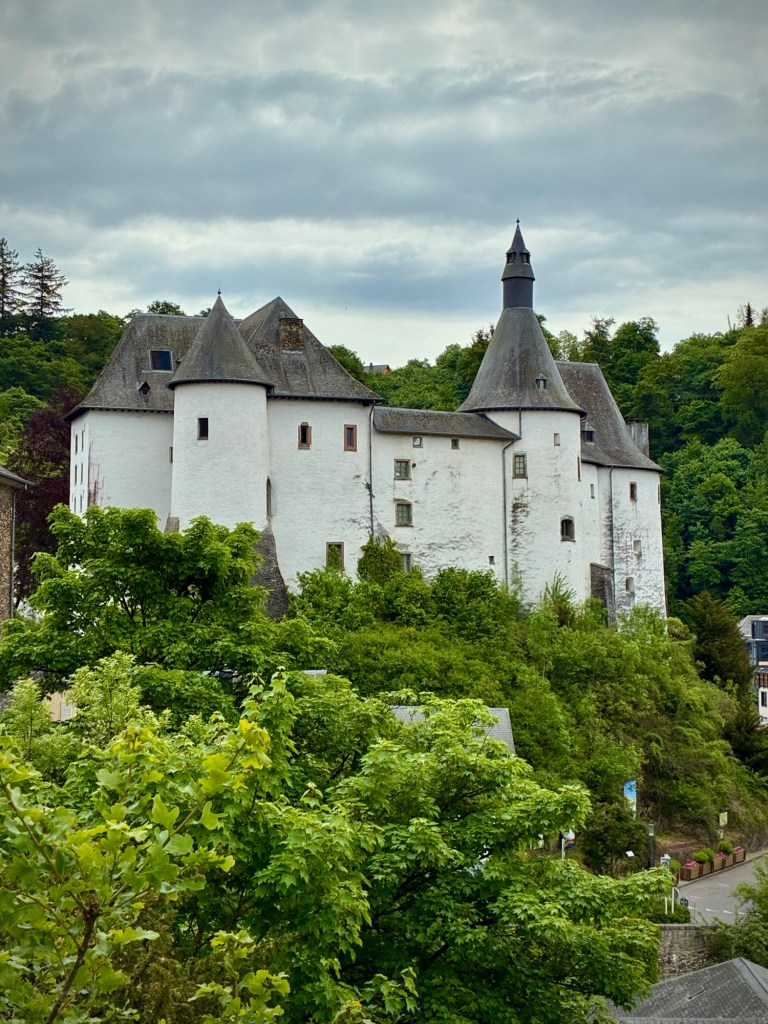
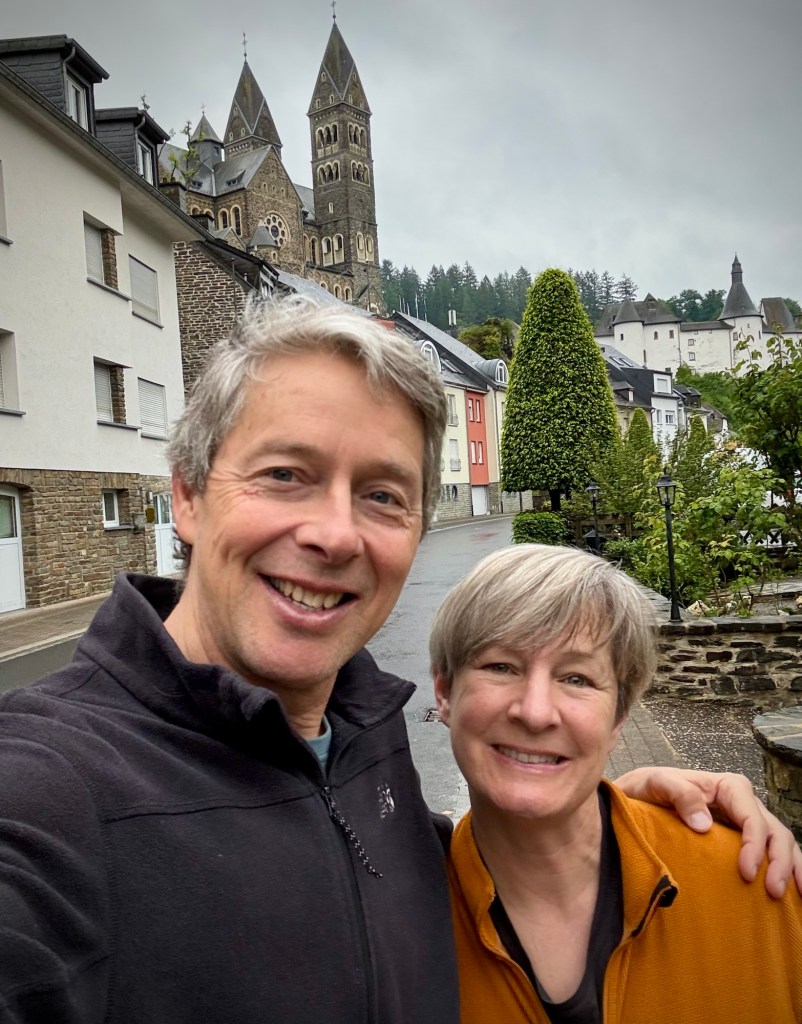
We arrived in sunshine to Clervaux, Luxembourg, and its beautiful church which looks ancient but was actually built in 1912.
The Church of Saints Côme et Damien is just as impressive inside. Incredible quality and workmanship which was an effort to boost and promote Clerveux’s status as an economically successful village.
The Clerveux Castle is in a dramatic spot on a bend in the Clerve River. It now houses a war museum and is permanent home to the Family of Man; a impressive presentation of 512 black and white photographs collected by Edward Steichen in 1956. Its focus on the commonalities of the human experience around the world felt especially poignant to us with Trump’s administration of uber-nationalism.
A simple but effective monument to the American GIs who liberated Luxembourg twice from the Wehrmacht.
And the townspeople cheering on their liberators.
Waiting for our first FREE train in Clerveux, Luxembourg.
Multiple bike cars, level boarding: and horizontal placement of bikes! (No hooks!!) Luxembourg spends even more than the Swiss per capita on train infrastructure.
No tickets, no worry about missing a train. I think I like this!
After our FREE train hop, a short ride today to our hotel near our cat sit. All on excellent cycle paths and routes. Have I mentioned all the trains are free in Luxembourg since 2020?!!
Today’s ride was perhaps a bit too short so we had to kill some time along the river in our Chair Zeros.
My first Battin, the de facto National Beer of Luxembourg. A pretty tasty lager with a malty and satisfying finish.

So we finally made it to Luxembourg (first time!), and so far, it’s been fascinating in its own right: unique languages, economic prosperity, and great infrastructure. But more on Luxembourg next time from Cheryl. Happy travels!

These nomads are still smiling and ready for our next cat sitting adventure in Luxembourg!

“Down the Spanish Coast, then Turn Right”

Spain has been on our bike touring list for years, but we hadn’t made it here yet. Lots of people ask us why not? First off, much of Spain is arid and sunny, two conditions Cheryl (and I) don’t really like in large doses. Second, bike touring routes and infrastructure are known to be better in Northern Europe, so it’s been hard to pass up easier trips (at least to plan) in Belgium, Switzerland, Austria, Chéchia, Italy; Germany, the Netherlands, and Scandinavia.

Last Spring we got so close to Spain, but some nice house sitting opportunities kept us on the French side of the Pyrenees. Finally, I’ve been working on redeveloping my high school French the past few years and didn’t have an interest in muddling my brain with my more recently learned Spanish again. Only one additional language Sim slot in this engineer’s brain!

Cheryl atop the Roman ruins at the Panissars Pass. Cheryl is ready for Spain!
The beautiful spring bloom near the French-Spanish Border.

But this year we were determined to give Spain a try and had a plan to ride the coast via Eurovelo 8 more or less to Barcelona and beyond. And if it started to get too arid or sunny for us, then we’d head up towards the mountains and green Basque Country instead. That’s the turn right.

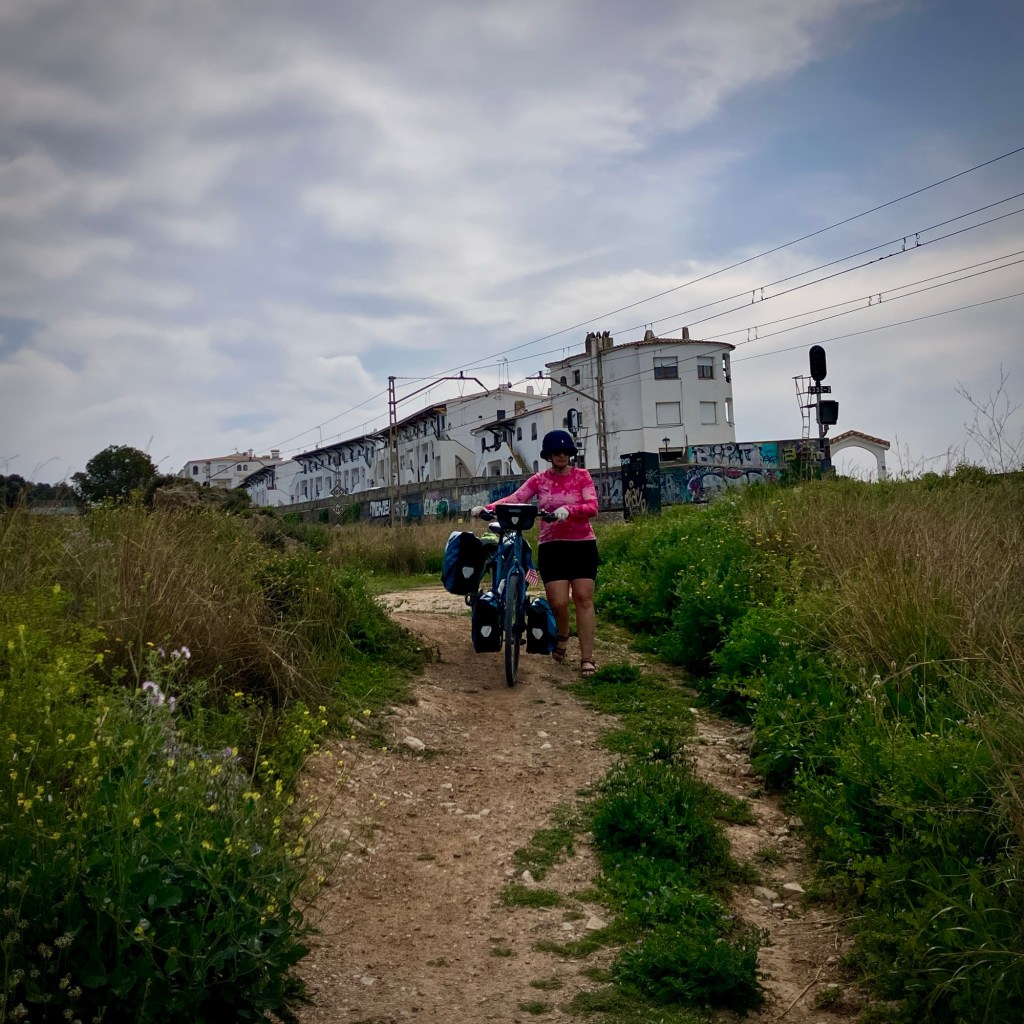
Giving Cheryl a break pushing up the steep and rocky road after crossing the border. Is this really Eurovelo 8?!
At the bottom, someone appropriately added “MB-only!” Grafitti to the regional trail sign. A little too late for us, but luckily this hanging tube was not our fate.

Near the Spanish border, we opted for the quieter but hillier route into Spain over the Col de Panisares. Officially this seemed to be the Eurovelo 8 route on most maps and is also called the Pirinexus route, part of the Catalan greenway route network. The French side was paved, quiet, and delightful. But as always with bike touring, we were rewarded with some memorable views, and then punished on the Spanish side with more uphill kickers, steep rocky trails and unridable downhills. No cruising down into Spain.

Looking down to La Jonquera.
Maybe we can sleep at this ranch?
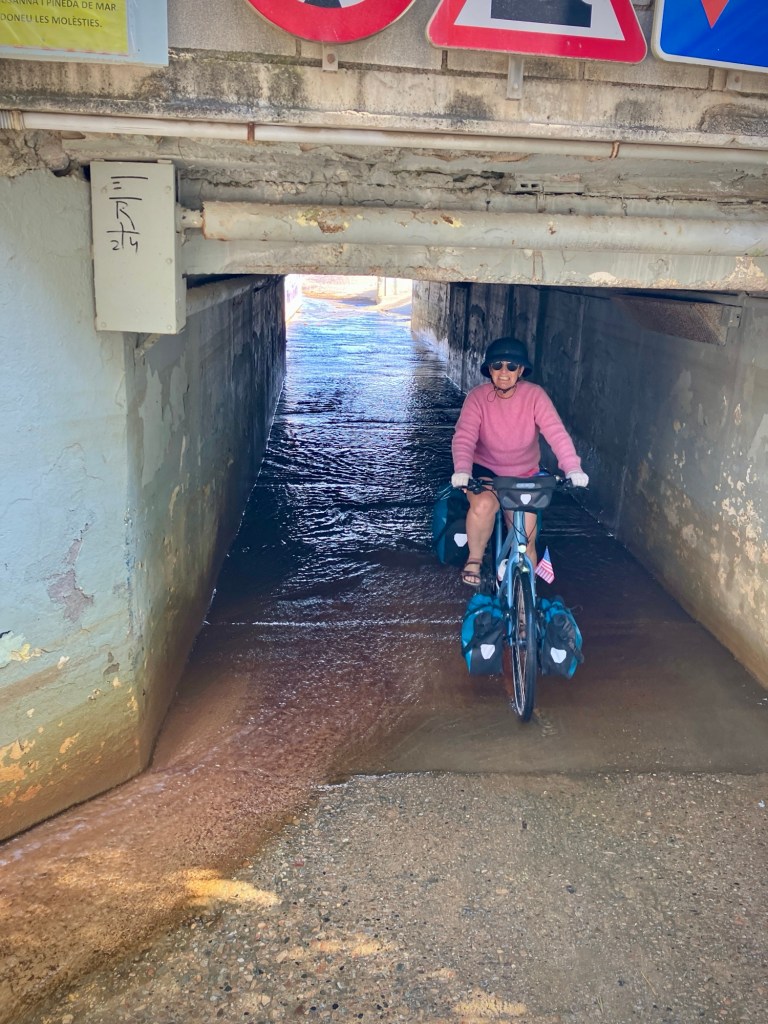
Our first Spanish cycling underpass/drainage culvert. Not our last.
Cool culvert art.

So our entry into Spain was a bit bumpy and we found ourselves at the somewhat grungy and noisy frontier town of La Jonquera at 5pm after just 50 hard earned kilometers. We didn’t have a reservation anywhere as I suspected the day needed flexibility, but there were no good options around. We’ve been without lodging before at 5pm, as it goes with booking on the fly cycle touring.

National Route 2 had a decent shoulder near Figueres. Sometimes you just want to get there!
Our hotel in Figueres old town. A bit of street construction meant no car traffic in front of our hotel and limited Saturday night bar noise -:)

So we decided to press onto Figueres on the main N-2 (II) road, as the official Pirinexus route had more dirt, hills, and would likely take us hours. We were both tired and a bit stressed, but knew this was just one of those days we just had to rally. To our pleasant surprise the N-II had a generous 6-foot shoulder the whole way to Figueres, and we made it there in less than an hour and a half, after a truck stop soda infusion.  A shower and dinner at our atmospheric old town hotel and all was good.

Hotel Duran in Figueres is family run and had a classic vibe, a fine restaurant and even side rooms that were part museum of local life.
We set out the next morning after a brief stop outside the Dali museum. Salvador Dali was born in Figueres in 1904 and you can visit the large museum as well as the house where he was born.
Always fun to ride through the cobbled little streets. Catalan felt different than France.
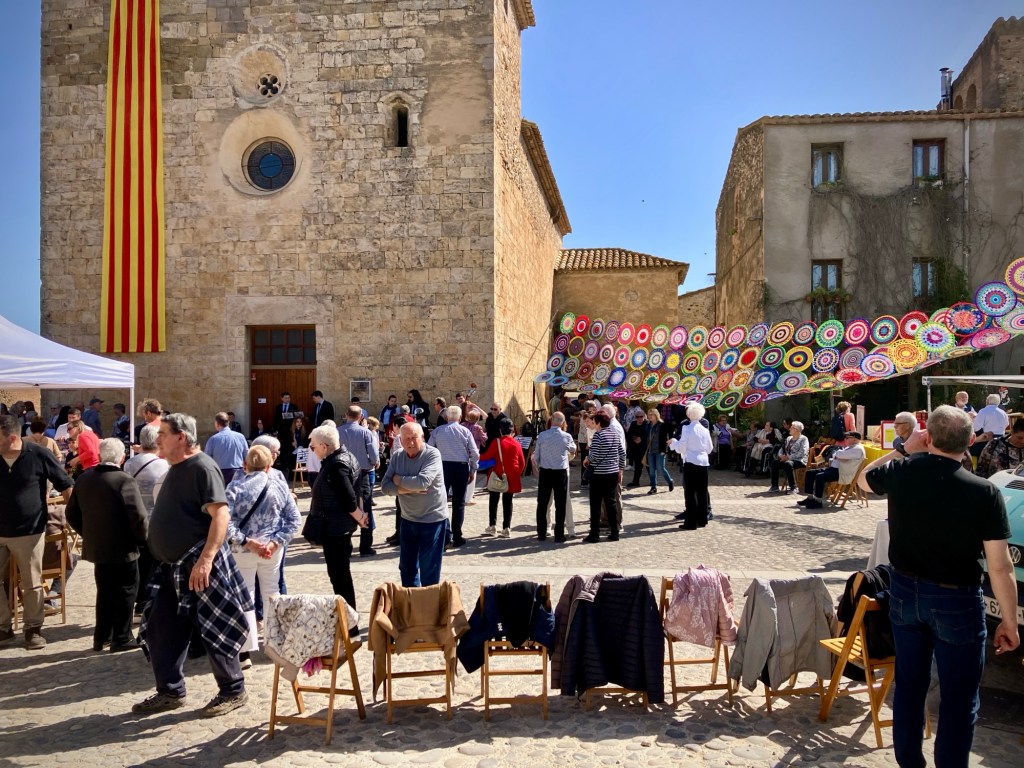
Sunday bike touring days always surprise, such as this festival in Bàscara, complete with local Catalan dancing.

Although the dirt route was peaceful and had some nice natural beauty, I wished we had just taken the main road route up and over the pass. But again, I could find no info on the pass routes….not even a good blog. Maybe this blog will help people decide.

A random regional cycling route sign was appreciated, but better routes and signage everywhere would make this area more popular with people traveling by bicycle.
Ok, this train bridge still baffles this engineer; why are the webs of these precast beams on the top. It’s upside down, but I guess it works.

We soon figured out this part of Spain does not have as developed a bike touring culture. People ride for sport; roadies, gravel, and mountain bikers, but it seems a small number of long distance tourers. We met a few bike tourists along the coast, but most were Dutch, Belgian, or Canadian. (The French were notably absent.)

Finally some signage, helped by the overlap with some of the Camino de Santiago routes.

The first things that struck me in Spain was the lack of useful signage in this area. No map of the border pass cycle routes, a few town directional signs, and just a few randomly placed EV8 route signs. And never distances. Also, no indication how rocky and unsuitable parts of the Spanish side of this route are for loaded touring bikes. If you are riding into Spain on this coastal route, be ready for a significant decline in signage and infrastructure from France. Routes just end and this is the land of random, short cycleways to nowhere.

Peaceful cycling into Girona along the Ter River.
Wisteria blooming everywhere.

But Spain brought so much beauty and a completely different feel from France. Our trip has been perfectly timed for peak spring and the smell of blooming flowers, trees, and thick grasses abounded. The fresh Mediterranean Sea air filled our noses and coated us in a comfortable sheen of the promise of Spring and a new year. Forget the chaos of your home country.

The lively and beautiful arcades of Girona.
Watching the bikes go by at “Bagels and Beers” in Girona, which also has delicious “Burgels”.
We sort of happened upon the Medieval wall of Girona and couldn’t pass up following it along the city edge and University campus on our rest day.
Looking back at the Pyrenees from Girona.
Walking the wall offers a great overview of the city.
No trip to Girona is complete without visiting some of the famous road cycling stores, including “Eat Sleep Cycle” store and cafe.
The surprising Pont de les Peixateroes Velles, designed and built by Gutave Eiffel in 1876
Girona’s old town core is actually an ancient and vibrant Jewish Quarter known as “El Cell” occupied from the 12th Century until 1492, when the purge happened.
Girona is captivating to explore.
Spring light in Girona on the Onyar River

The next day we headed to Girona, a long time dream of mine due to its famous road cycling culture. The ride into Girona was nice on self-selected routes, but loaded touring bikes are an anamoly there, and we soon felt a little out of place as we rode into the main square heaving with people drinking, chatting, strolling, and shopping on a beautiful Sunday spring afternoon. Various kitted out roadies wizzed by and seemed unimpressed that we carrying all our gear for 3 months on our heavy duty human-powered transport machines.

Heading out of Girona to the south, we encountered a group road ride tour of foreign cyclists. They were focused on staying on their bikes, so we didn’t want to bother them. For us, just another day.
The roads outside Girona are popular with roadies for a reason.
How many famous cyclists have ridden this decent?

We had a nice little apartment to enjoy for two nights in Girona and it’s a beautiful place to explore and hang out. Mixing with the road scene heading out of town was a bit strange, as we’re used to seeing more cycle tourists, and it’s really popular with Americans, so funny to here so much familiar English after so many less visited places.

Spanish pastries.
We were following the Via Marina for a while.
Cheryl in her latest high tech cycling gear: fuzzy pink Shetland wool sweater.
Soon we were at the Mediterranean coast via some more primitive rail underpasses/drainages. But the rare and heavy rains must go somewhere.
We started to realize that the EV8 on this stretch of coast would not be bike heaven.
Decent riding along some of the coast, but a little dull in places.
We mostly picnic, but today cobbled a pre lunch snack at a cafe despite it being 12:30…a challenge cycle touring is Spanish lunch is from 1:30-4pm.
The train line runs parallel to the sea along the coast north of Barcelona, making access between the sides challenging at times.
Morning departure from our fun all-inclusive hotel in Pineda Del Mar. They had just opened for the season and it was very good value. Fun to mix with holiday makers and get a nice cool swim in the pool.
Cheryl wondering if she was back in SoCal!
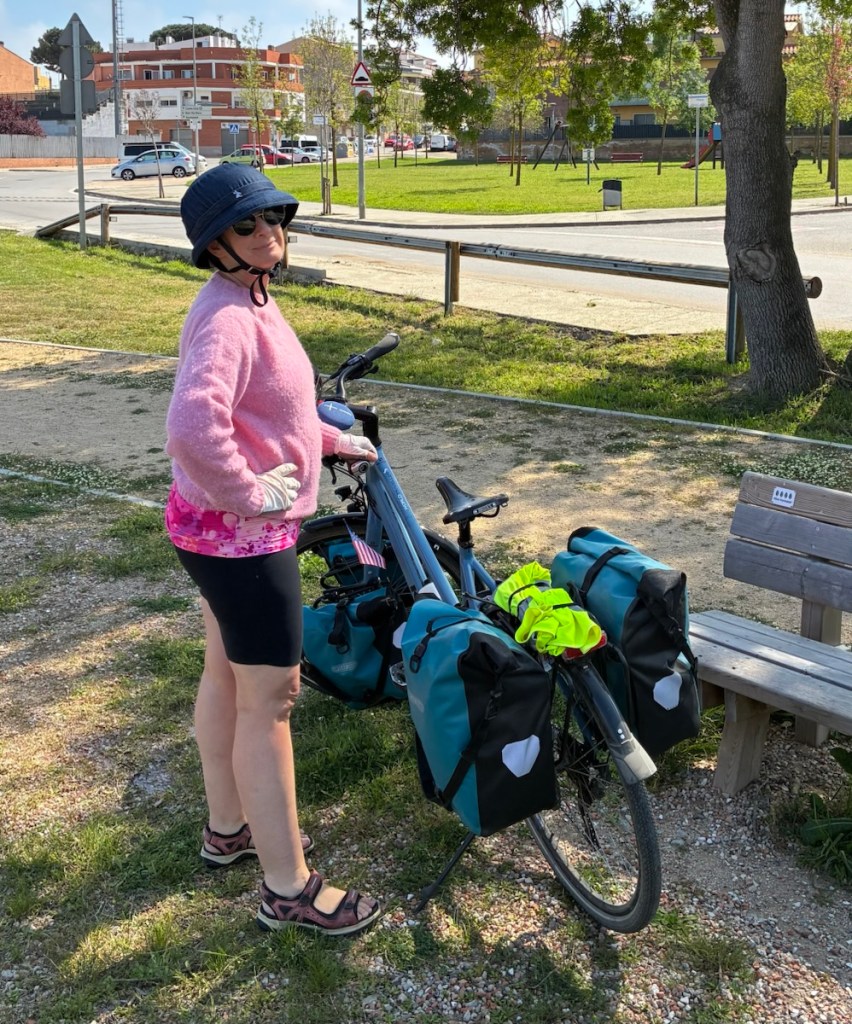
The promenades were lovely, but we could only imagine how welcome shade would be in the hot summers. We were already missing it in early April
The sea is beautiful along the Costa Brava.
But overall this stretch of EV8 is hit and miss.
Catalan architecture charms in the few old towns still left on this part of the coast between the sprawl
Our one night stay in Barcelona was pleasant at the Illunion Hotel in El Poblenou who kindly stored our bikes safely overnight.

We cycled towards the coast from Girona and spent two days meandering down to Barcelona. This stretch was not our favorite as the coastal sprawl felt a bit endless and the rail tracks make access between the coast and city sides challenging with loaded touring bikes as some access points are just stairs. But eventually we rolled into the northern neighborhood of Barcelona known as El Poblenou, which is also the core of the superblocks, which cleverly limit through traffic and prioritize pedestrian and bike movements. It was great and such a joy to cycle in most of Barcelona.

Morning school rush hour in El Poblenou meant an armada of kids, parents and bikes. Nice!
On our way south by the famous Sagrada Familia.
There are some beautiful bikeways in Barcelona, and very well used.
Fixing a flat is never fun. Really not fun on a busy road. Thankfully we were at the quarry turnout so had some space.
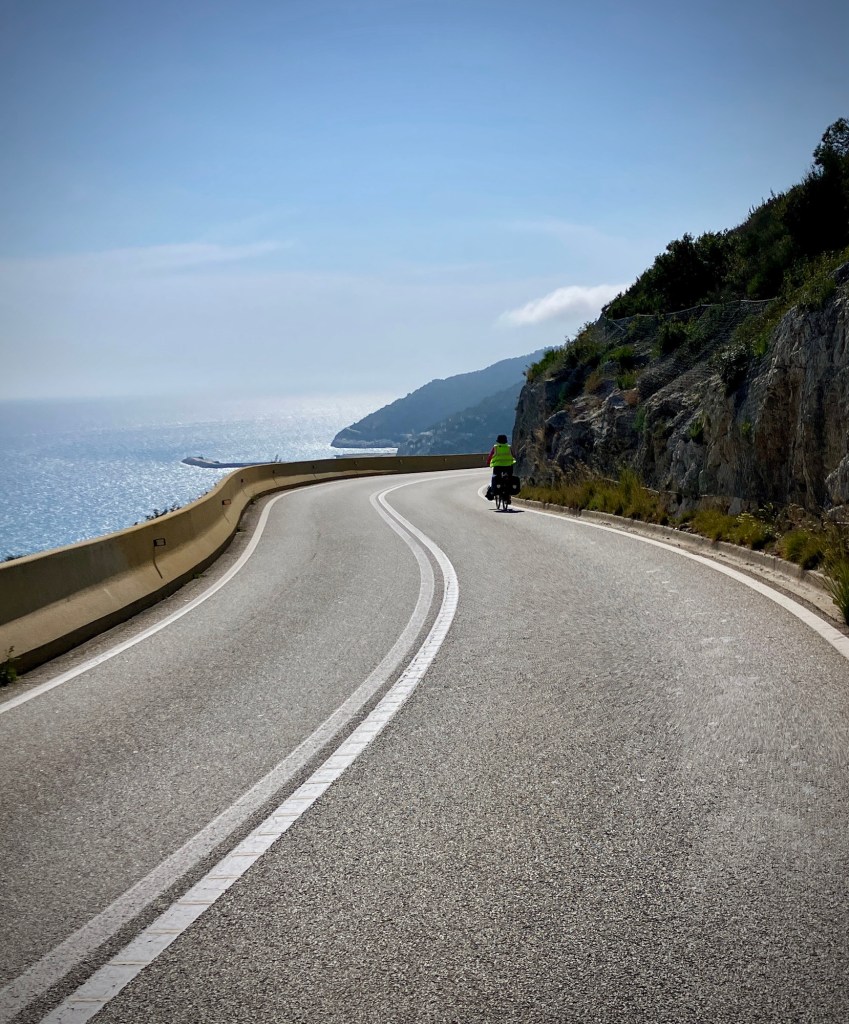
Cheryl ahead on a beautiful stretch of the C-31 from Garraf to Stiges. A rare shot without traffic as this road was almost constant cars and haul trucks to quarries. A shame.
Early dinner and drinks in charming Sitges. We still haven’t solved the mystery of a charming coastal spot with outdoor dining and no Gulls. Why are there no gulls here?
The April beach scene in Sitges. As we came into town folks were swimming.
Costal glam couple.
Komoot and and supposed EV8 Route?
Ok, another underpass to a trail on the oceanside of the tracks….nope, dead end at rock slope and tiny beach! Cheryl was thoroughly unamused.
Not the nicest stretch of Eurovelo and Cheryl not happy in a head wind and sunshine.

From Barcelona, we headed again out to the coast via the EV8, which is a nice route until past the airport, then forces you onto busier roads. It was a tough stretch as I had fixed a flat tire near the airport and then half way through the extremely busy coastal road from Garraf to Sitges, I felt my tire going soft again. Ugh! This time I really examined the tire and found the tiny glass shard culprit. This stretch would be ok on a fast road bike as the cars are very respectful, but on slow touring bikes, the constant traffic and haul trucks made it a somewhat teeth gritting experience. No pictures of the traffic as there are few places so stop and most is guardrailed.

Cool to discover The Torre Del Escorpions or “Scorpio’s Tower”, a funerary monument built by the Romans outside Tarragona in the 2nd century.
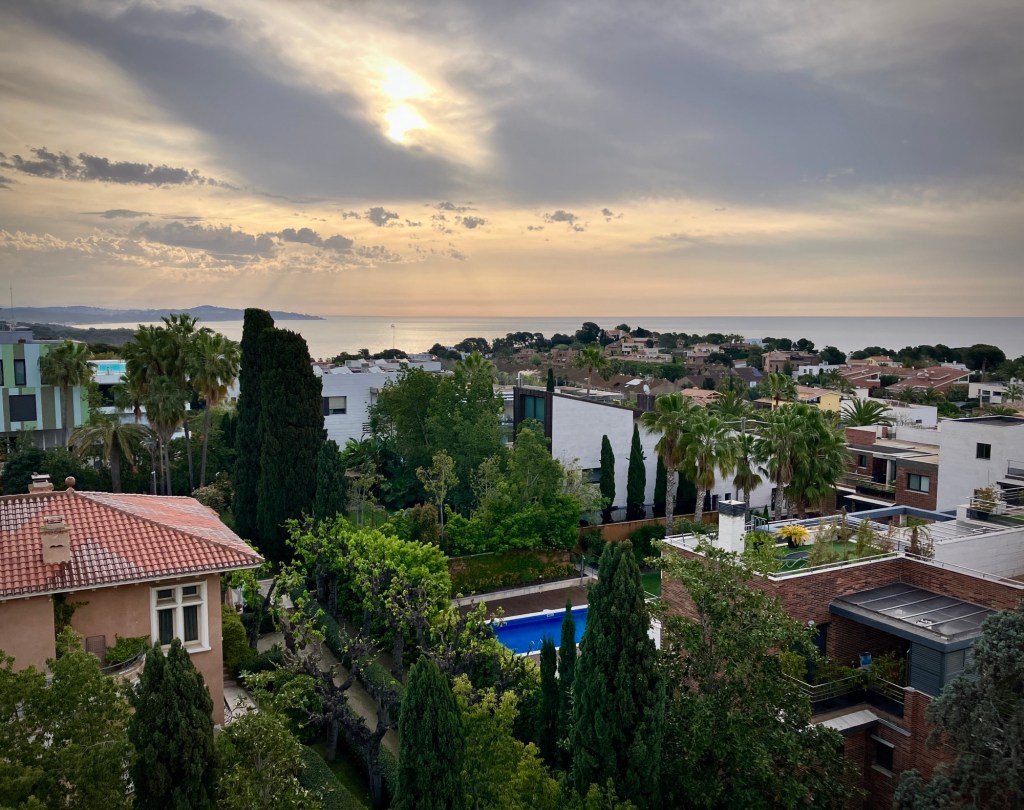
Our lovely view from our hotel in Tarragona
Tapas and Sangria in the main square of Tarragona. Set for Friday night people watching, Spanish style.
We were excited to see and moved by the solemn Semana Santa processions in Tarragona. We didn’t know at first why everyone was headed towards the Cathedral. We quickly figured it out.
The striking coastal Amphitheater of Roman Tarraco used to hold up to 12 thousand spectators until the decline of the empire 5th Century.
A big port for Mega-Yachts in Tarragona. The cannon isn’t really aimed at them? Is it?
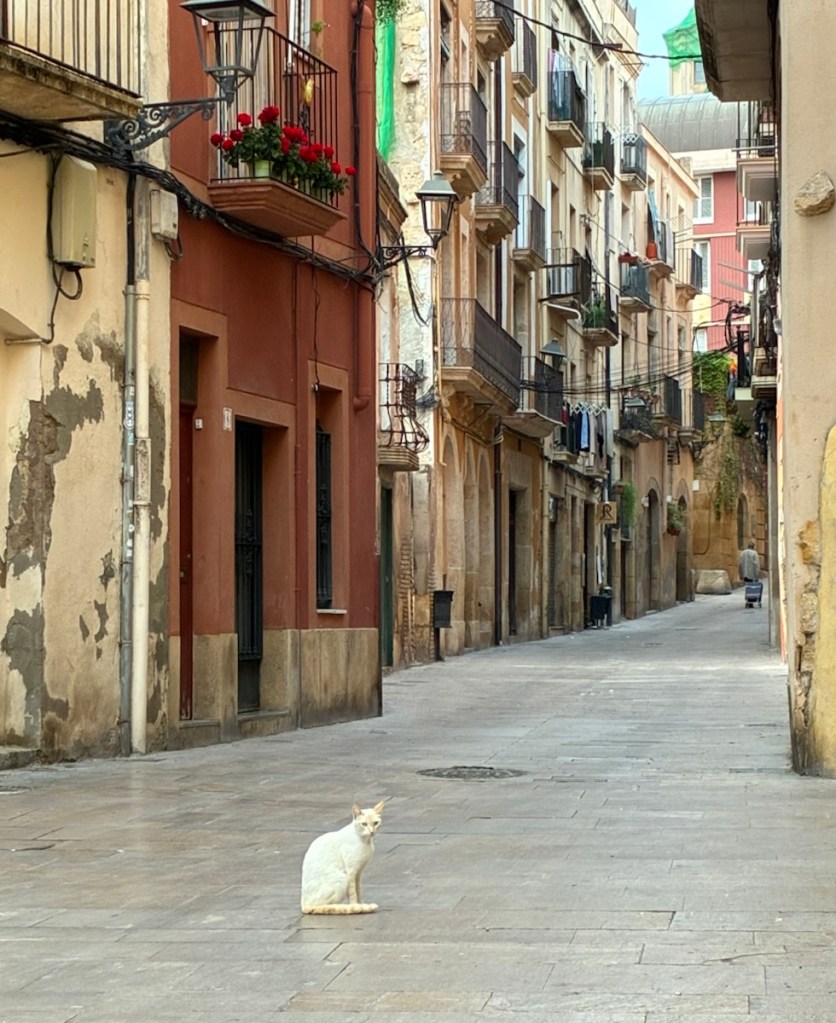
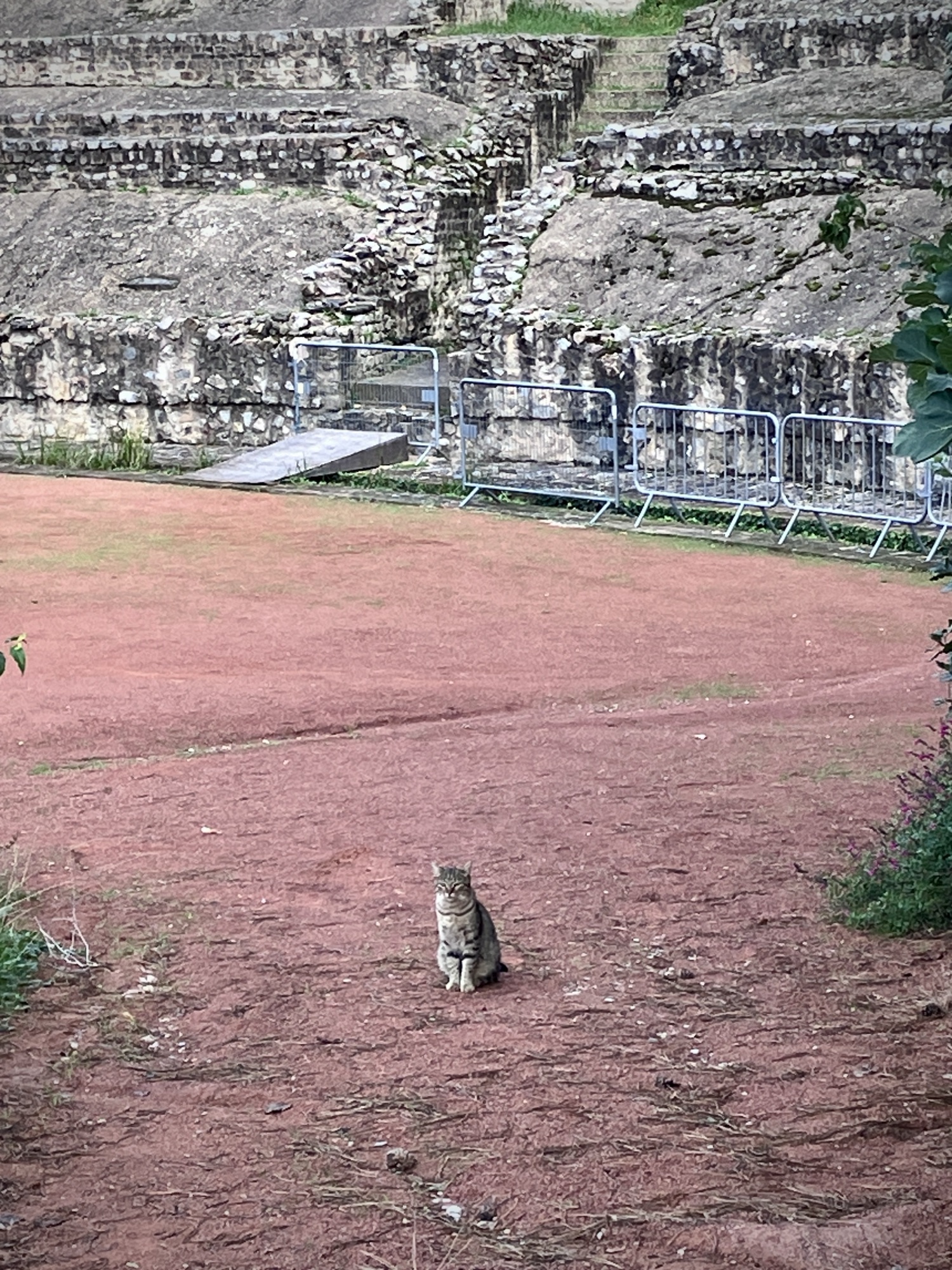
Roman ruins = Feral Cats. This good looking kitty posed for us.
Cats also liked the real and just slightly gritty feel of the Part Alta, the historic core of Tarragona.
Colorful Tarragona Street Art. Cheryl snapped the pic before she actually read the words.
Orange blossom scents filled the air of Tarragona. So many orange trees as street trees.
Not a gentrified old town, Tarragona’s old city still is active with daily life.
The processions weaved through the city. We were in Tarragona for three nights and watched processions on two nights.
More crowds for the Semana Santa Procession. We felt lucky to witness this less touristy and more local version in Tarragona.
Real flames added to the drama as night finally falls.
The weight of the floats and human strength required to carry them was impressive. The folks carrying this heavy float marched in time and swayed in rhythm.

So after a really pleasant night in Sitges, we rolled onto Tarragona, where we spent three nice nights and rested prior to our turn inland. Tarragona is a small and ancient city with Roman ruins, a fascinating history, and great archeological museum by the old port. One of our favorite smaller museums with a great audio guide. It was also the start of the Semana Santa events, so we got to see two different nights of processions, each with a different vibe and purpose in the run up to Easter.

Finally leaving the pleasant and bike friendly Hotel Astari for the Tarragona train station. But where to next?
Well, first some train pastries!
Oh, and some buttery Jamin Iberico on rolls.
We really liked exploring the layers of history in Tarragona for a few days. A bit of a hidden gem.
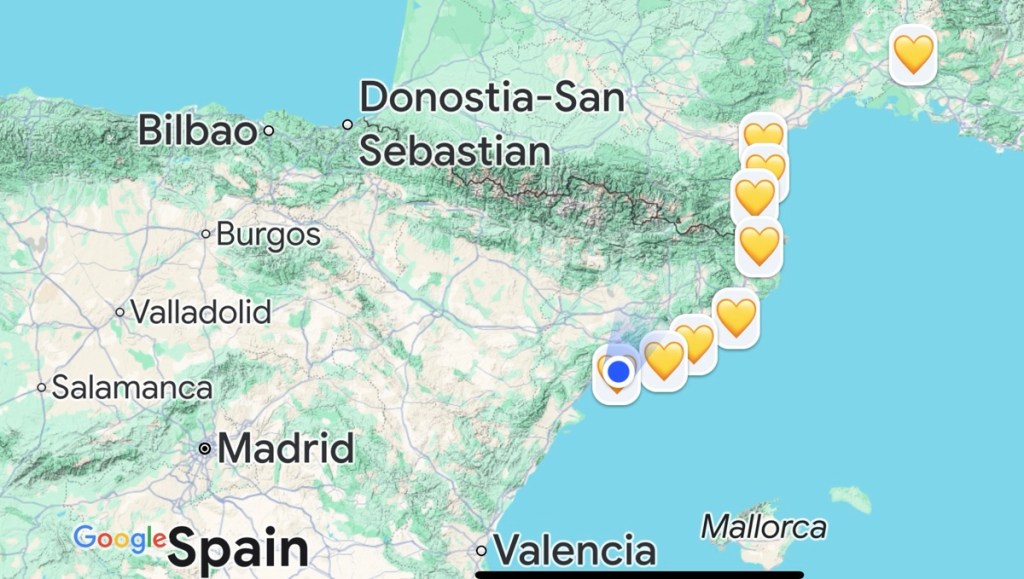
Where we’ve been so far on this Spanish Sojourn. It’s a big country. Each heart is a place where we slept.
Happy cycle tourists on the Spanish Mediterranean…at least for now.

Cooling Down in Dalat

Sometimes you need to just chill. With fresh memories of Flores, Indonesia we made our way to Dalat, Vietnam, with two single night layovers back in Bali and Ho Chi Minh City. A slow flight itinerary reduced the risk of a missed connection and meant we could enjoy a few nights of assimilation at modest corporate “airport” hotels with gyms and pools. Slow travels.

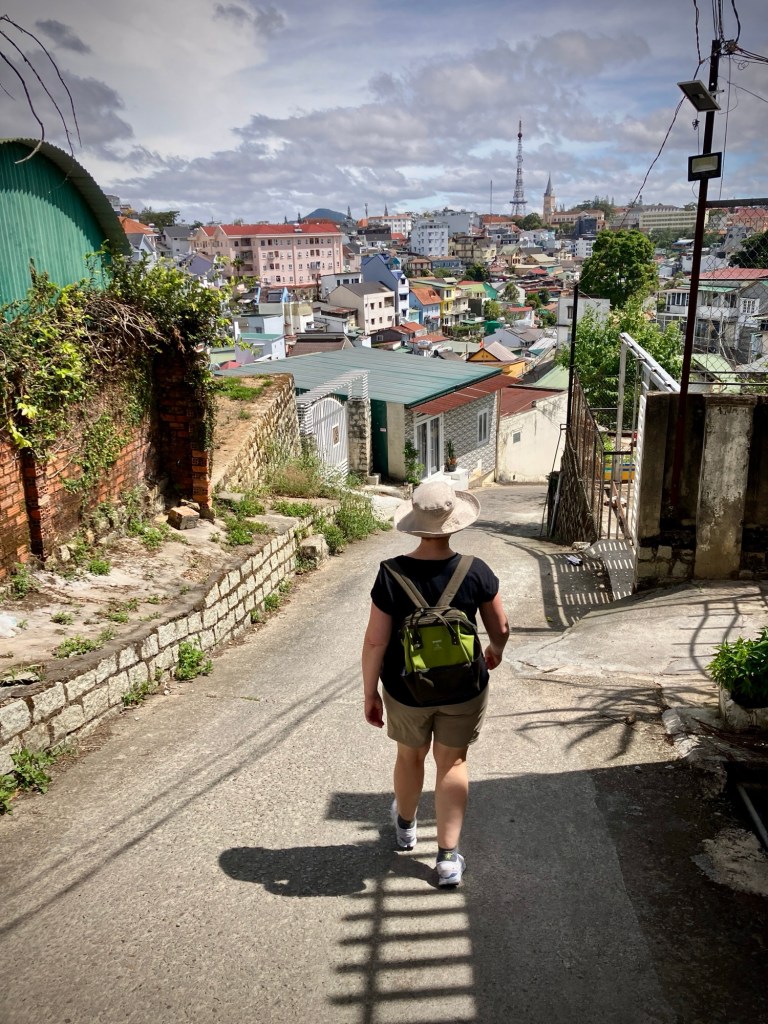
These travelers happy to be up in the cool climate of Dalat; at least for a bit.

We often get asked where we are going from other travelers and our responses often puzzle people a bit because we move slower than many and when you are nomadic, your needs and desire from travel merge with your needs and desires for general life. You need to back off the travel accelerator a bit and coast more from time to time. Flores, Indonesia was fantastic, but pretty demanding and we were moving frequently since landing in Taipei over a month ago. Our time home in the US was also a bit hectic, with lots of moving about.

What are we looking for?
Traditional ways are still embedded in the fabric of Dalat, despite so many new hotels and development. And agriculture is still key.

For example, we decided to spend 17 days in Southern Vietnam visiting just three places, starting with a week in Dalat (or Da Lat). In a normal Vietnam vacation, people might visit 5-10 places, this was also our third visit since 2007, so we didn’t feel the need to spread ourselves too thin. The country is huge, and there is still so much we haven’t seen.

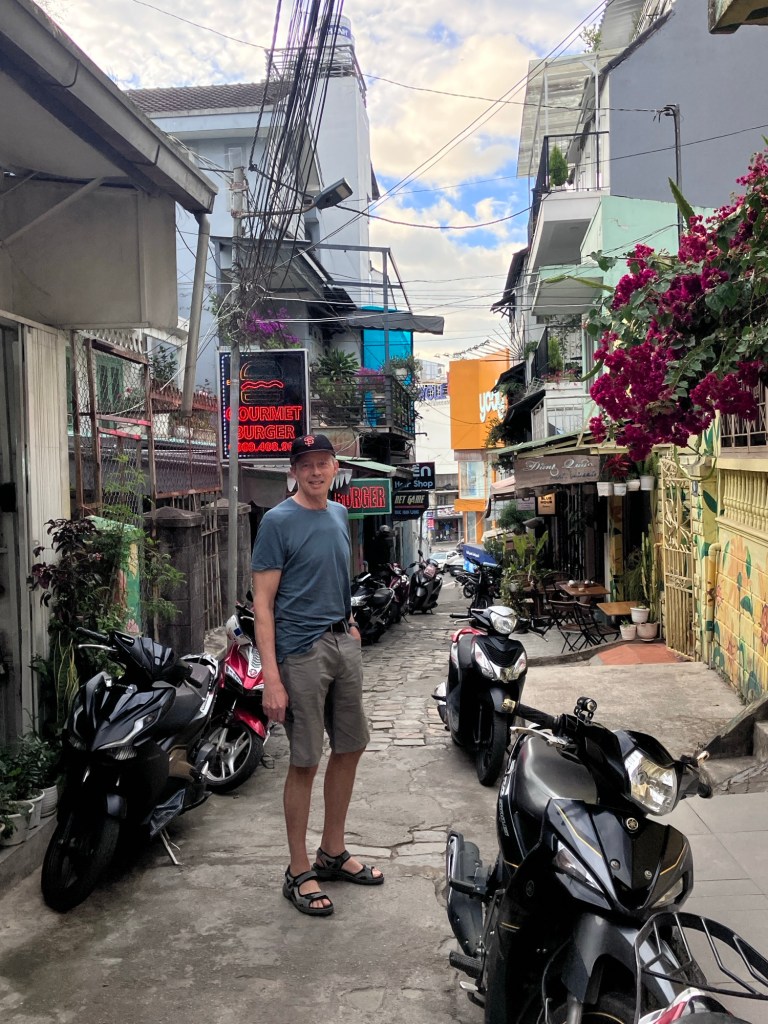
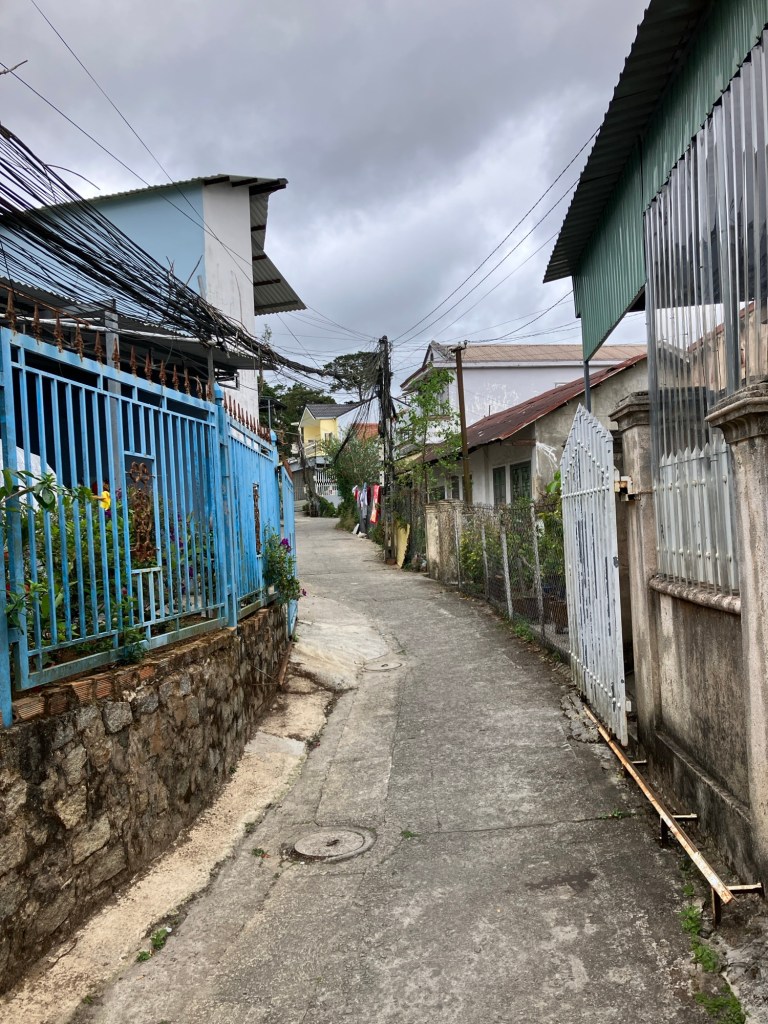
Our home for the week was in the heart of the city on a network of hilly alleys.
Our comfy studio space at Feliz Homestay
We loved the view and lively energy of the car free alley we looked out onto. And mostly scooter free.

We had read a lot about Dalat as a favorite with other nomads and expats. But the draw for us really was finding a place to enjoy Southern Vietnam amidst cooler temperatures. After 18 days in Indonesia’s heat, the “City of Eternal Spring” sounded like a solution. And a place with enough to do and explore for a week. 

What else do you do on a week apartment stay? Visit the local Go! Hypermarket.
Durians were specifically banned in our building but certainly available.
Delicious varieties of dragon fruit.
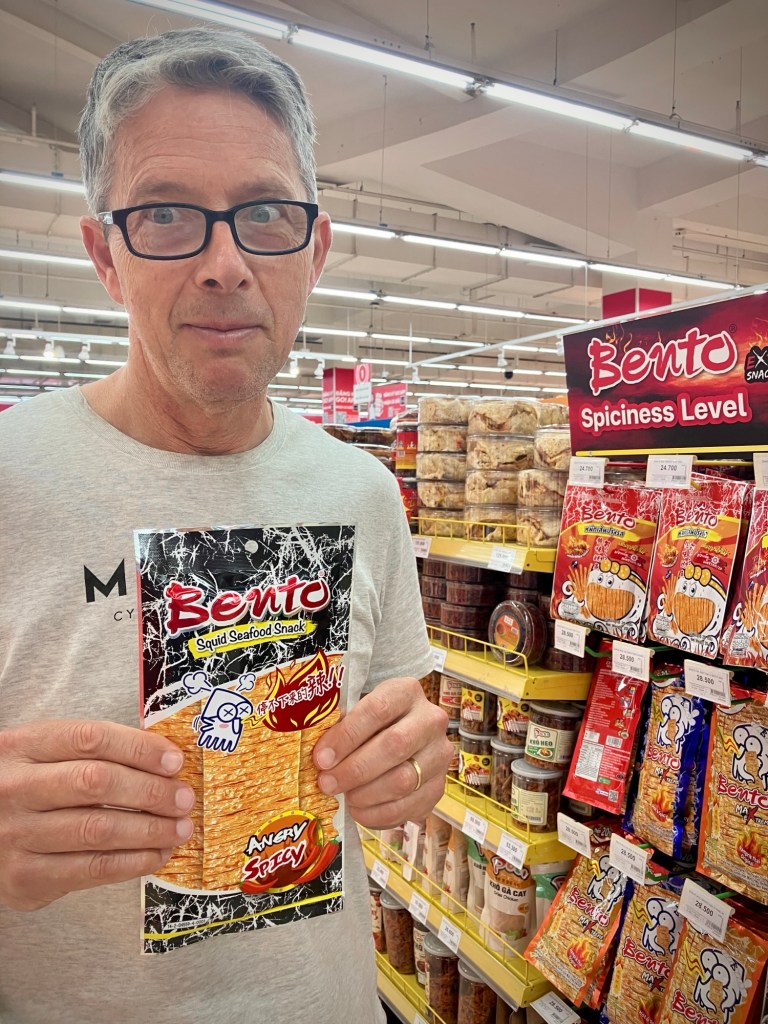
Spicy squid snack? Absolutely!

DaLat sits at over 1500m (4900 ft) on the Lam Vien Plateau of the Southern Highlands. It’s surrounded by hills and small mountains and has over 250,000 people in the city and over 650,00 regionally spread out from a fairly dense core. Like so many places in Vietnam, it’s seen tremendous growth and somewhat haphazard development over the past 30 years and many here say it has lost its soul. We could certainly see the development and growth, but it’s still an eminently pleasant place.

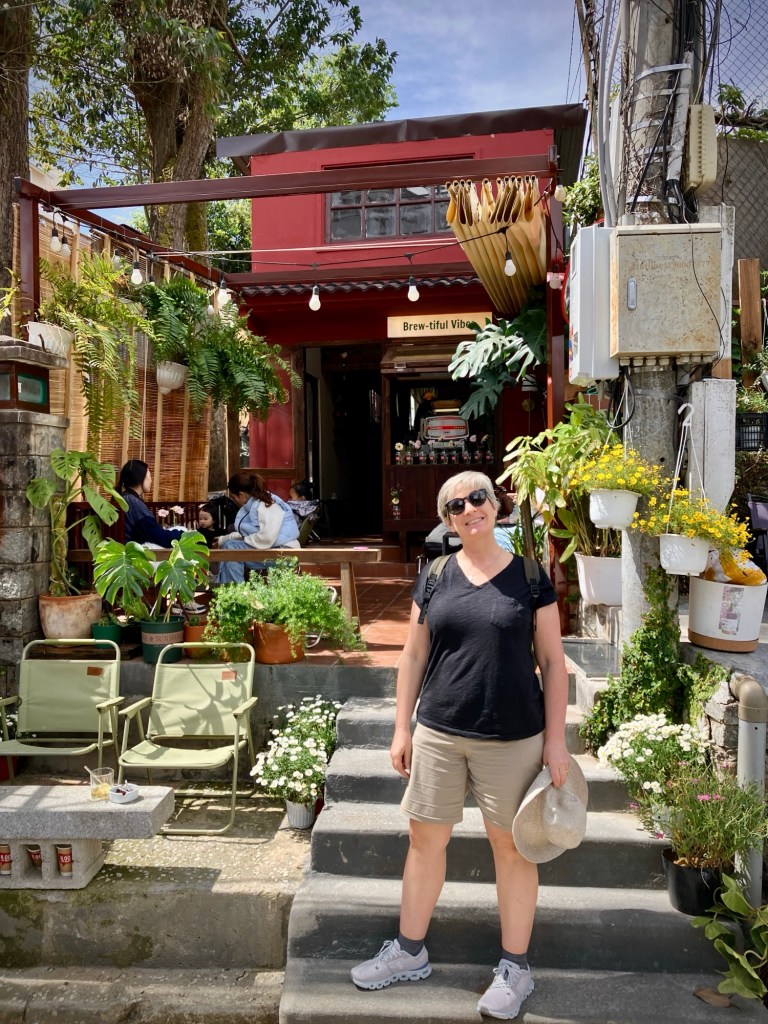
Mandatory stop at any bicycle themed coffee shop.
“Little plastic chair Street” (our name) was a scene and packed on the weekends with regional tourists.
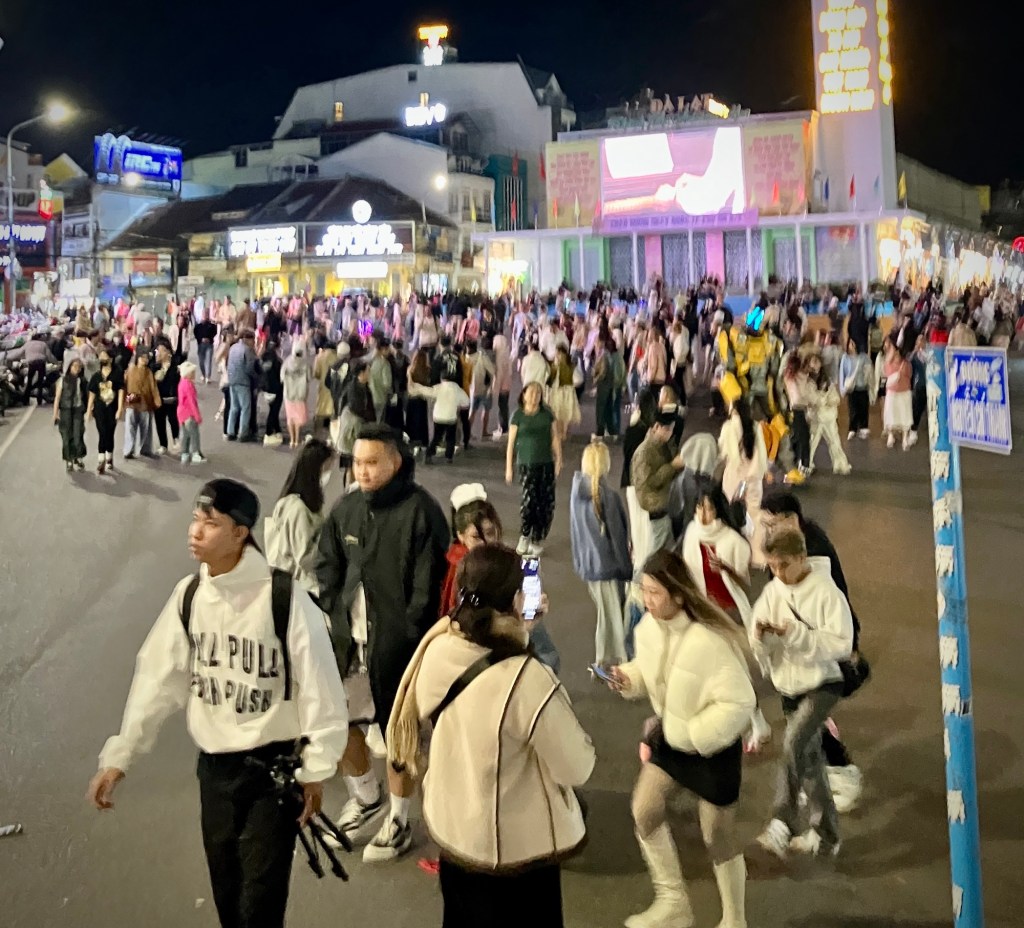
The main roads in the center are closed to traffic on Saturday and Sunday nights, so it turns into a giant street gathering with vendors, food, themed mascots, and a cacophony of music and sound.
Cheryl enjoying the quirkyness and people watching on car free weekend nights in Dalat.
A week in Dalat meant we could really relax and explore.
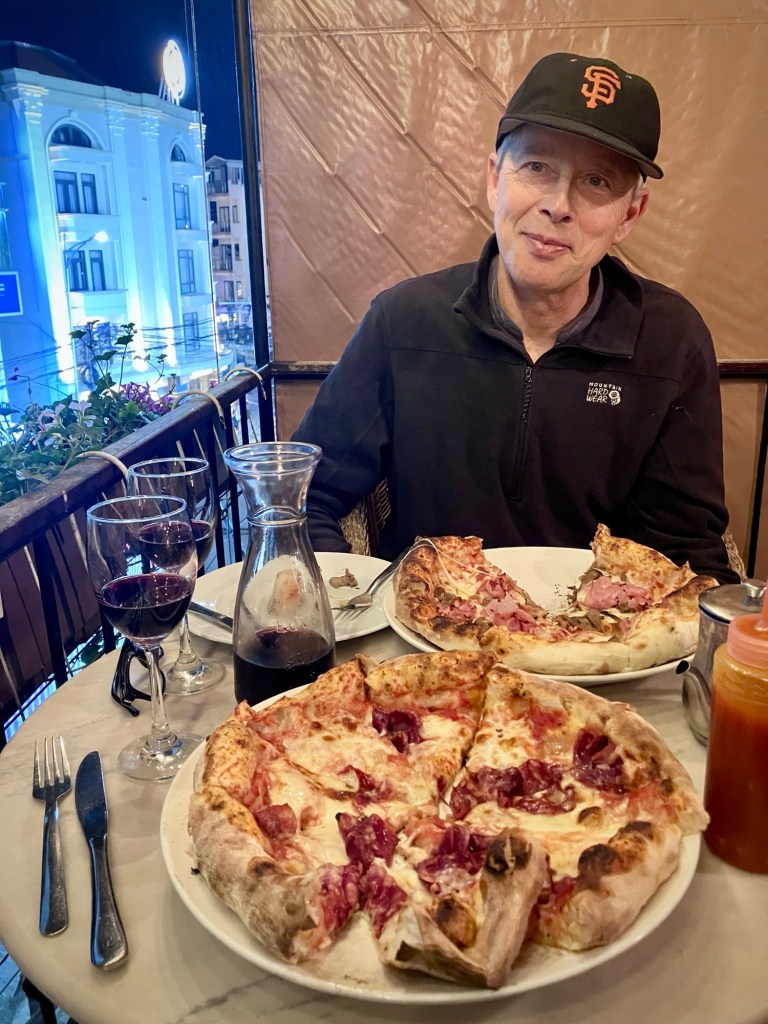
And yes, civilization and tourists means a fantastic pizza feast at Primavera Italian Restaurant. And my first real red wine in months.
The historic Da Lat train station is a charming Art Deco legacy of the French occupation and footprint on the region.
They are advancing restoration plans for the entire 84km train line from Da Lat to Thap Cham where it will join the North-South main line. It ceased operations in 1973 when local fighting during the American War got intense. The restoration would be awesome.
Warm up sax on the train platform while boarding. Nice.
But for now you can enjoy a slow 7km ride to Trai Mat. It was a fun ride, especially when the music started shortly after departure.
And then the dancing! Amazing energy on the 9:55am train.
Enjoying the views and gardens from the train.
Lots of greenhouses and agriculture in the area. Da Lat is a huge supplier of year round produce, flowers, tea, and wine.
Vietnam National Railways actually runs the tourist train too, so they will be ready if the entire line is reopened and regular passengers service starts up again. Maybe less dancing and music though?
Cheryl and I got the last two seats on the train and were sitting at opposite ends. Luckily, she could spot me in the crowd.

Perhaps it’s not the charming place of yesteryear, but it still offers a lot to the visitor. We felt like if you spent a day or two in Dalat, you might easily miss the charm beneath the bustling main streets. More upscale restaurants, coffee houses, and craft beer is often a sign of the apocalypse, but for us, they were also somewhat welcome. Also, it’s a huge destination for Vietnamese tourists, so mixing in with that scene is always fun; and often more interesting than a place full of foreigners. What do striving middle class Saigonese like to do on their weekend getaways to hills and mountains? Eat, drink coffee, and take lots of selfies.

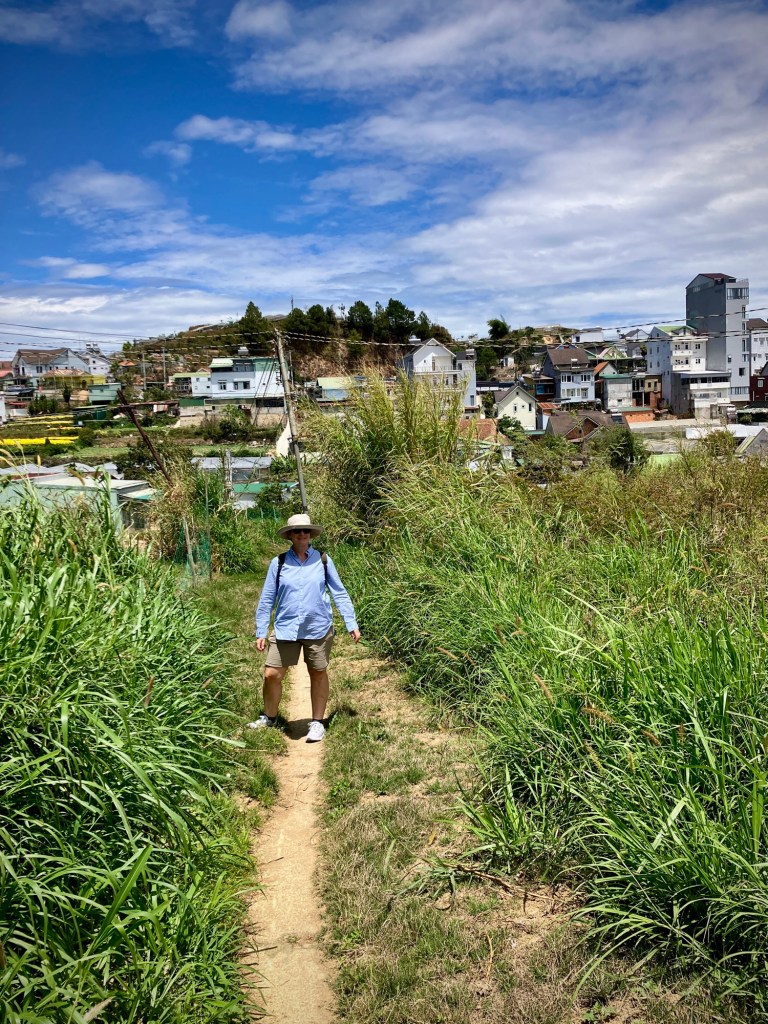
How to make more of a day of a 30 minute train ride? A temple visit followed by a 7km walk back to town of course. The pine tree forest and areas around Da Lat were actually very pleasant despite this bleak stretch of road.
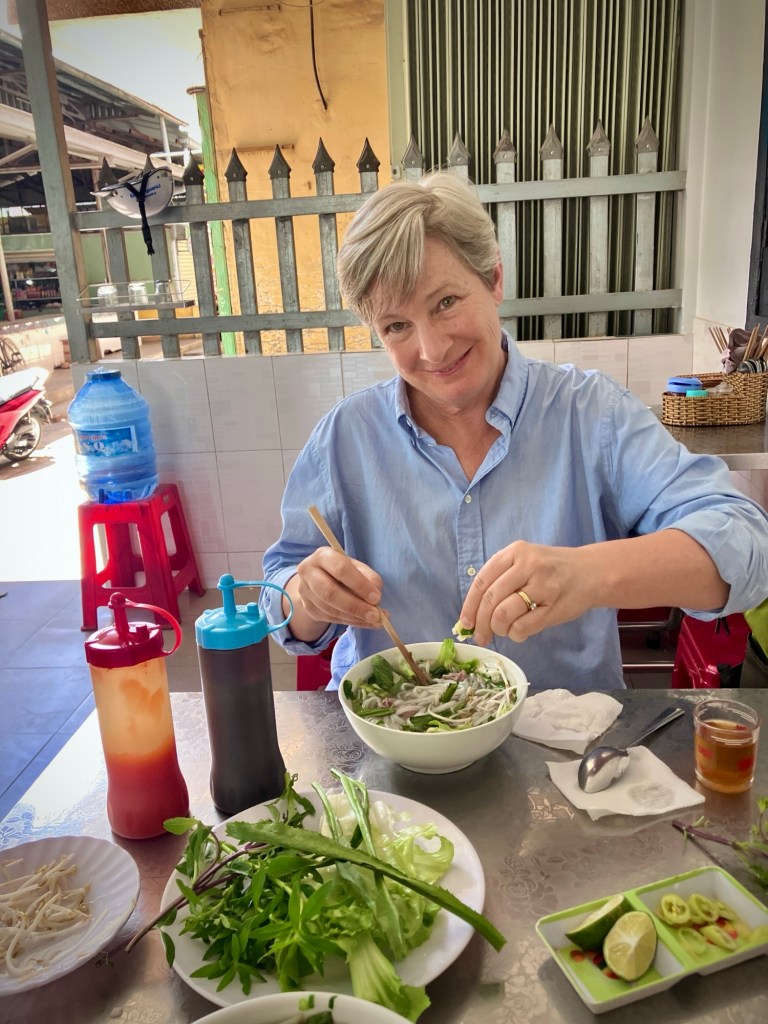
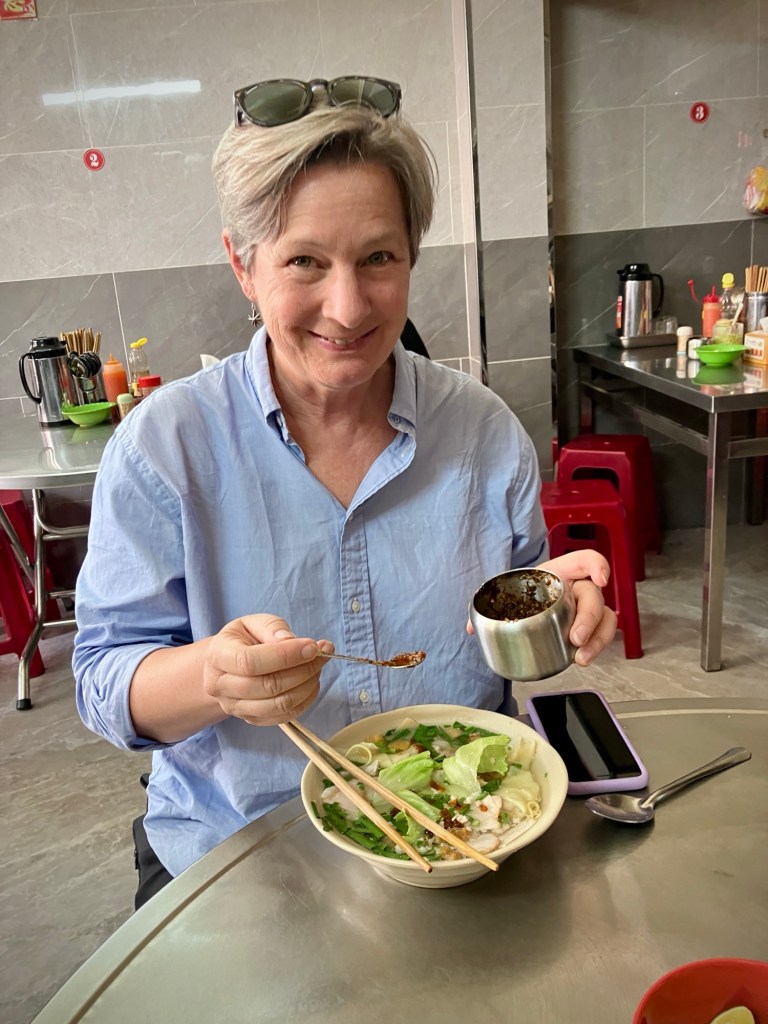
But first some Pho!
The menu.
Loaded up with lime, peppers, and assorted greens.
Classic local Pho Bo with all the fixings. It was the best we had so far on this trip to Vietnam.
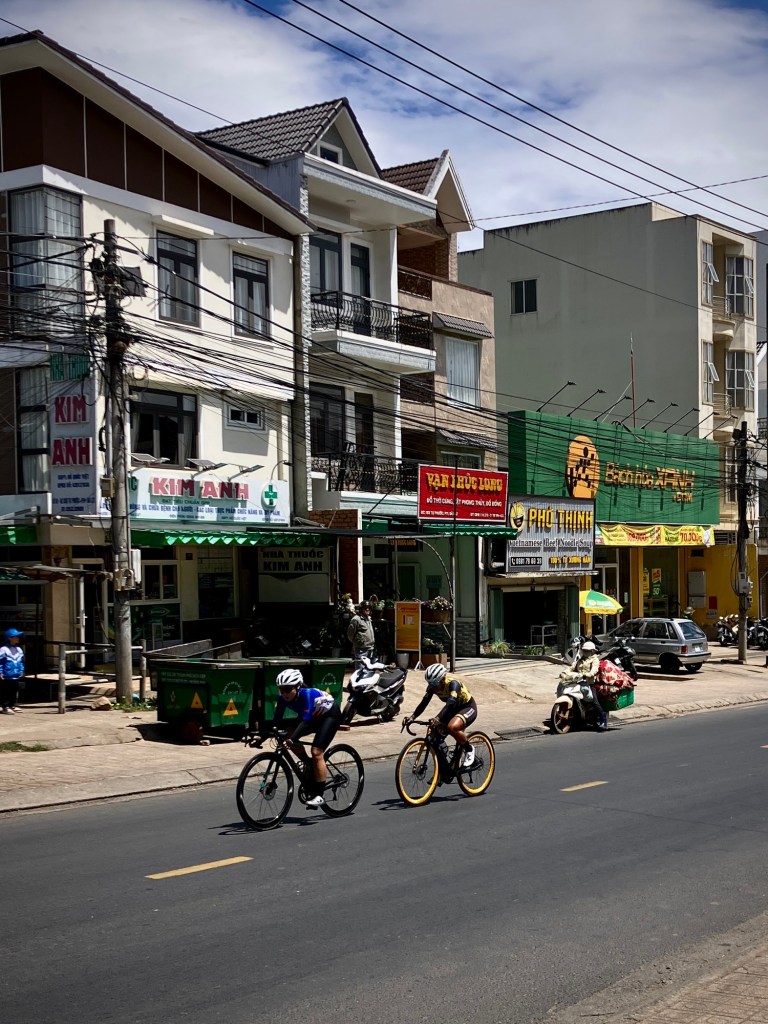
After our noodle bowl top up, we were very surprised to hear sirens screaming by and leading a women’s bike race through town. Da Lat’s temperate climate and hilly terrain makes it ideal for cycling and training.
Off the main road on a bit of a single track adventure back to Da Lat. Cheryl being a trooper amidst my randoneering with the limited maps of Maps.me
As we got back closer to Da Lat, we were rewarded with some of the local development architecture. Not our style. There are dozens of much larger hotel projects sprouting up all around the city.

The temperature in Dalat was perfect for exploring, with peak temperatures of about 72-78F during our stay and lovely evenings that even required pants and a second layer. We also met some interesting people, including a nice couple from Davis, CA who were in Dalat for three months on her work assignment. (Hi Lori & Pete!) It was great to relax over drinks and food with some fellow Californians and get their insights from their extended experience in Vietnam.

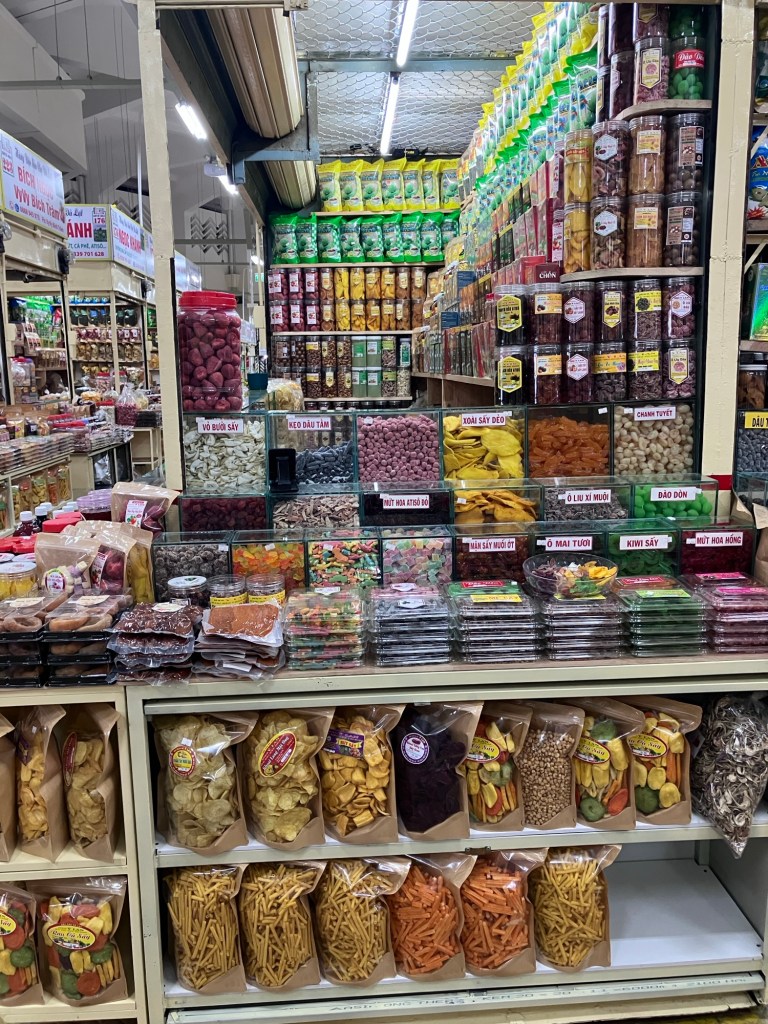
The main market in Dalat is lively; but mostly focuses on selling flowers fruits, confections, and regional specialties. Oh, and endless supplies of cold weather gear, in case you need a thick down jacket when the temperature dips to 60 -;).
One of 100 stalls all selling the same thing? The peak local tourist season must fuel the business as it was slow when we visited in early March.
Dalat is famous for Avocado Ice Cream.
We couldn’t resist this charming place in our alley.
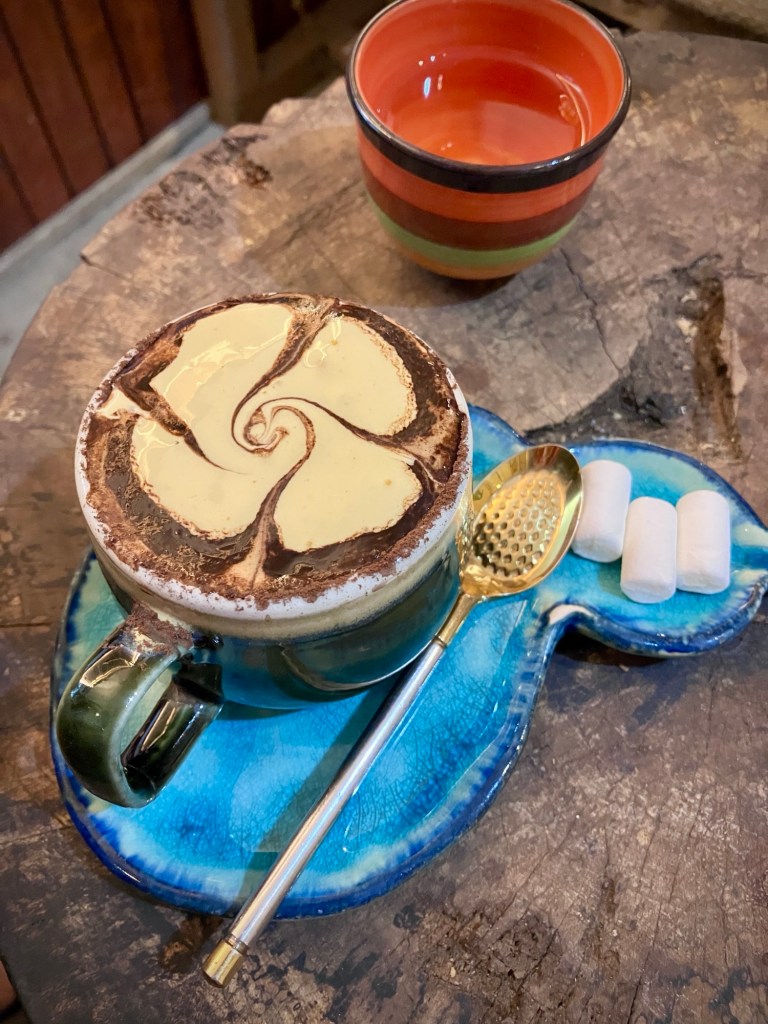
A beautiful egg coffee at Jera.
Or a typical Vietnamese breakfast.
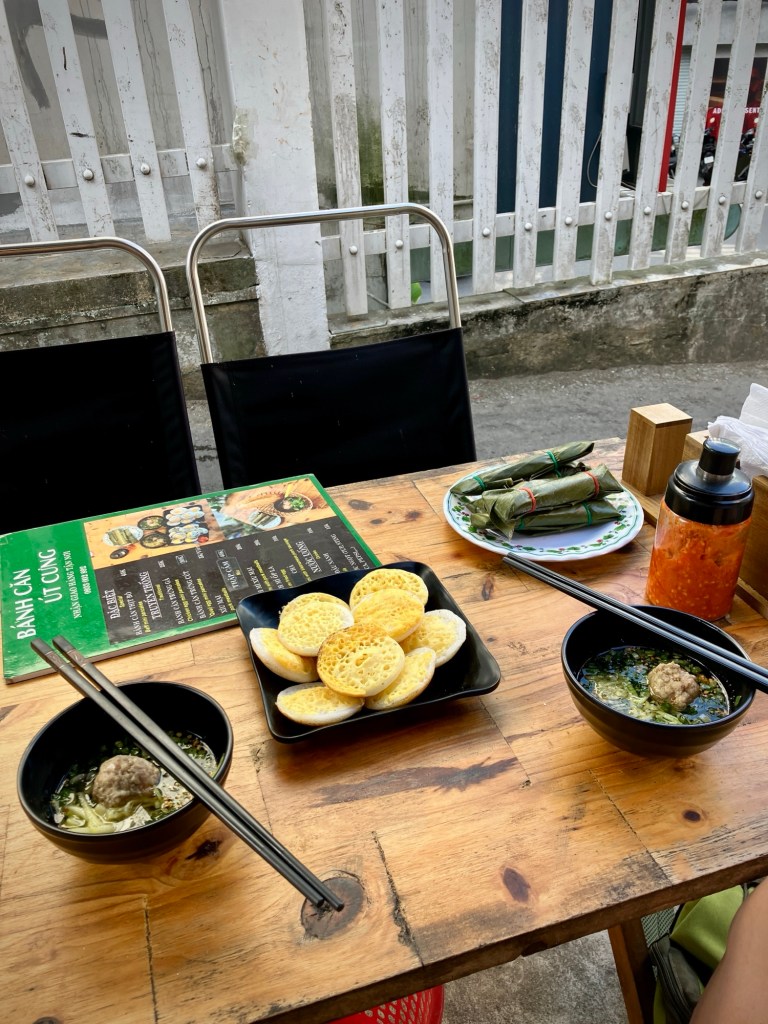
Dalat pork meatballs and Bahn Khao (egg custard pancakes).
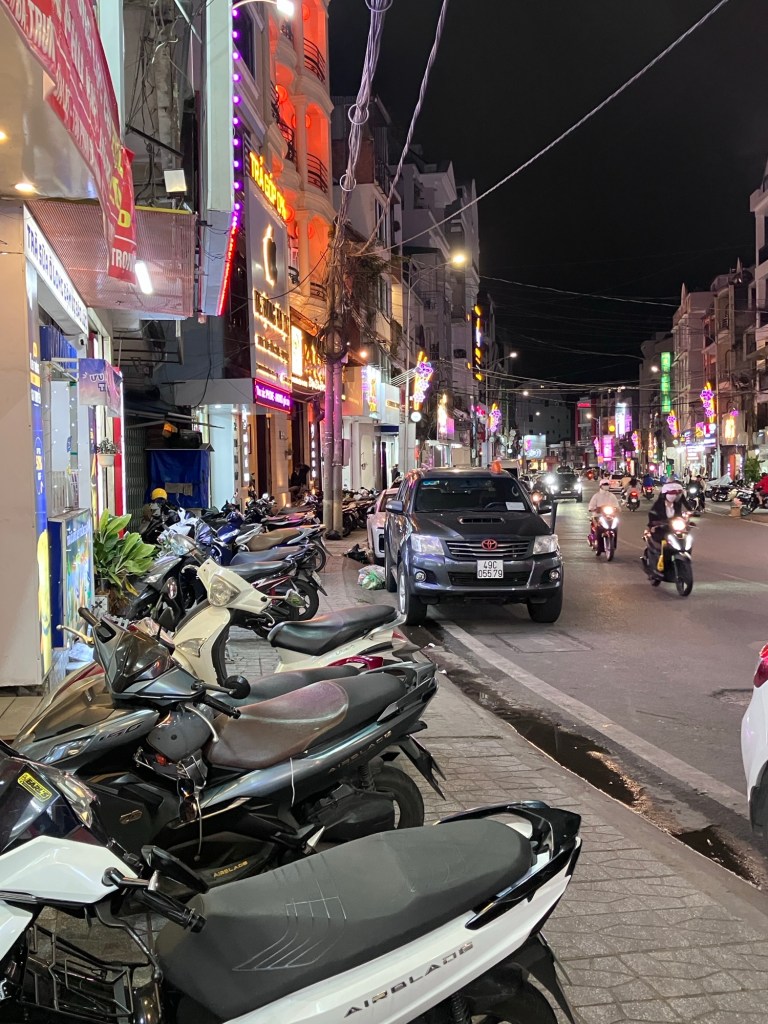
The lively commercial corridor of Phan Đình Phùng just below our guest house alley. Dalat has decent sidewalks and the scooters seem to be making more of an effort to keep some space clear. Got our $4/month SIM cards here too -:)
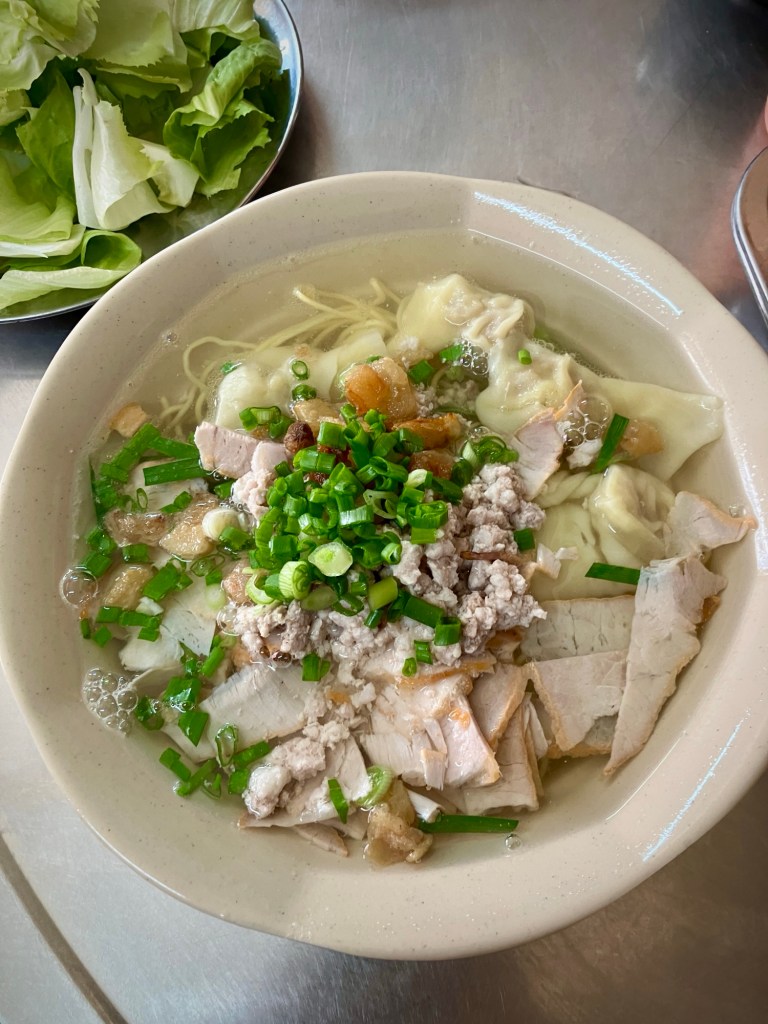
This busy street also had our favorite local wonton and pork noodle joint, Tiệm Mì Tàu Cao
Délicate broth and memorable flavor.
Although quite walkable, door to door scooter life is still the norm here.
Enjoying cool drinks and cool breezes at the classic Thuy Ta Cafe on the lake.
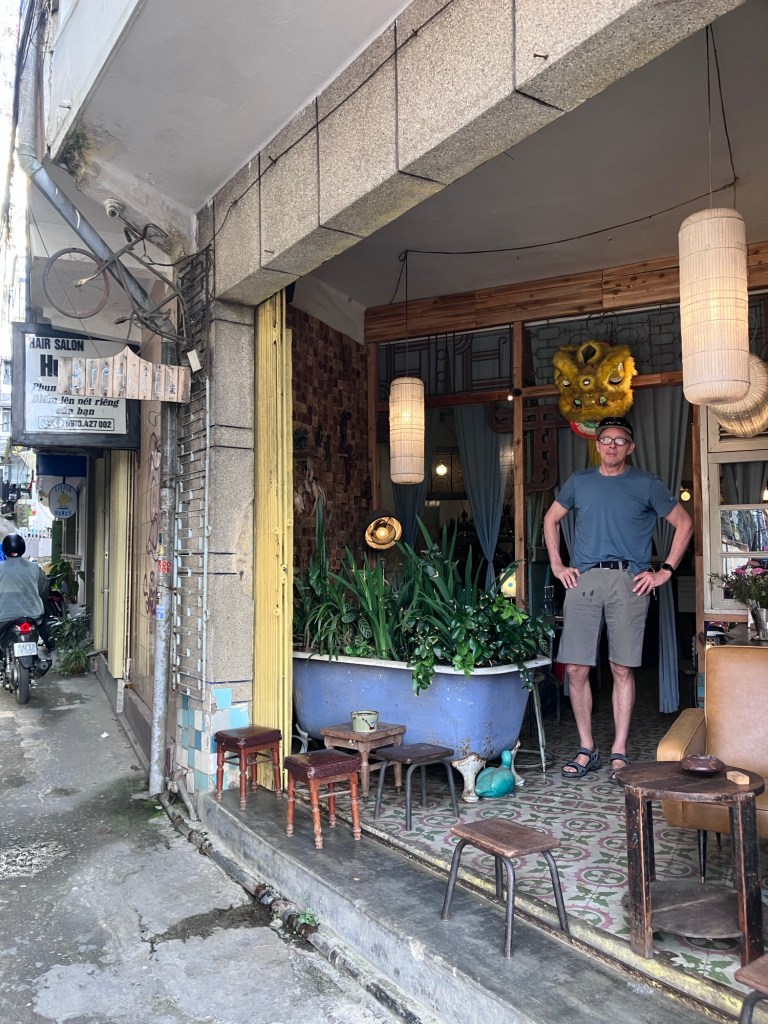
Another cool coffee house H.OG after our . morning walk and visit to the Crazy House (which is worth a short visit).
A hip coffee house (or two) a day was what the doctor ordered in Dalat.

Our good Vietnamese-American friend from San Francisco (Hi Dan!) thought Dalat was a bit ordinary and reminded him of parts of Northern California. We agree with that, it’s certainly not the most captivating or unique place in Vietnam, but it is an eminently pleasant place to hang out and explore. The hills, valleys, and alleys are fun to wander. And it is the new Vietnam in all its glory, for better or worse. Oh, and we did love the climate!

Sunday is a big wedding day around Dalat as we noticed starting another day of exploration around the lake on foot.
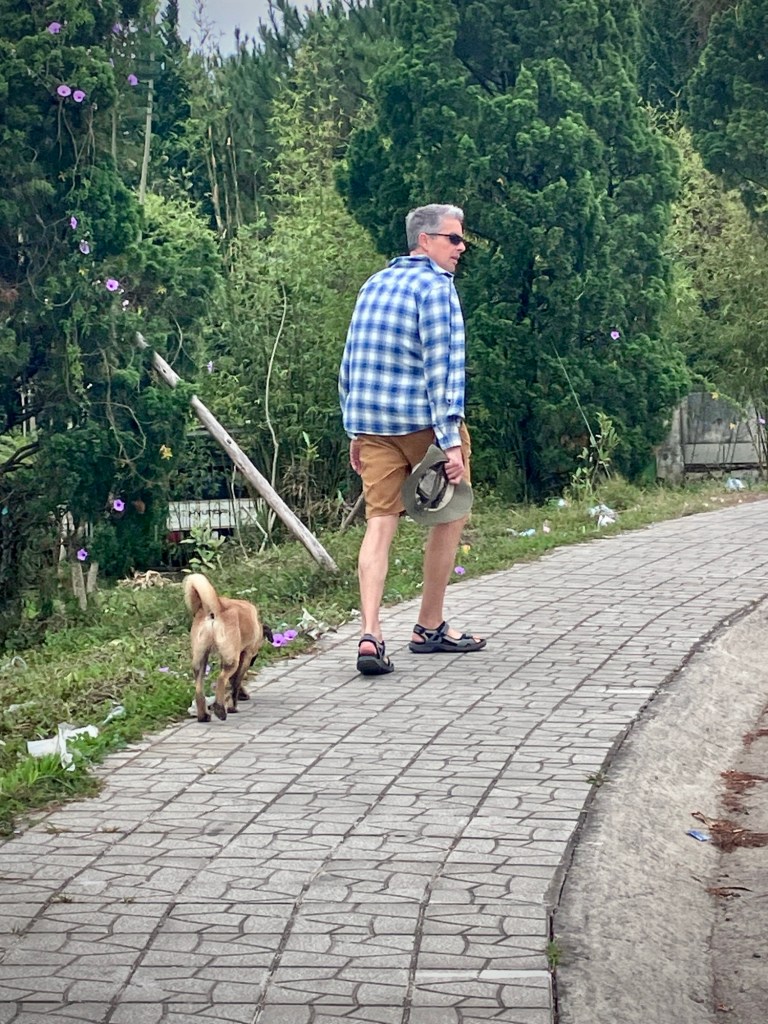
As we left the lake to explore the hills, this little guy joined us and seemed to be looking for some companionship.
We did not encourage him, but he was relentlessly dedicated. He was also mellow and seemed sweet natured.
Cheryl named him « Teller« after the silent member of the entertainment duo « Penn & Teller » since he disappeared often, only to reappear suddenly at your side!
One of walk destinations was a bunch of semi abandoned, semi-restored French colonial villas. They were a popular photo shoot spot for wedding parties. Teller liked them too.
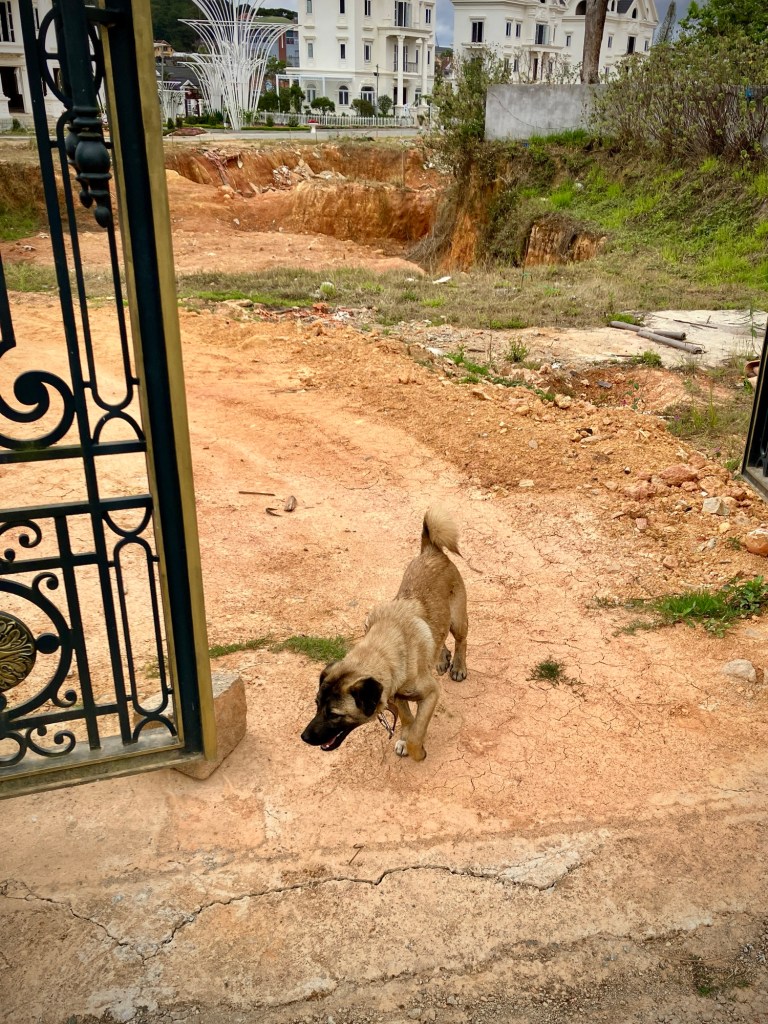
We briefly looked at this large development in progress and thought we finally lost our little buddy. Nope, here he comes.
So we ducked into a fairly fancy coffee house in this upscale neighborhood and thought Teller would give up and maybe wouldn’t be allowed inside the mostly enclosed space.
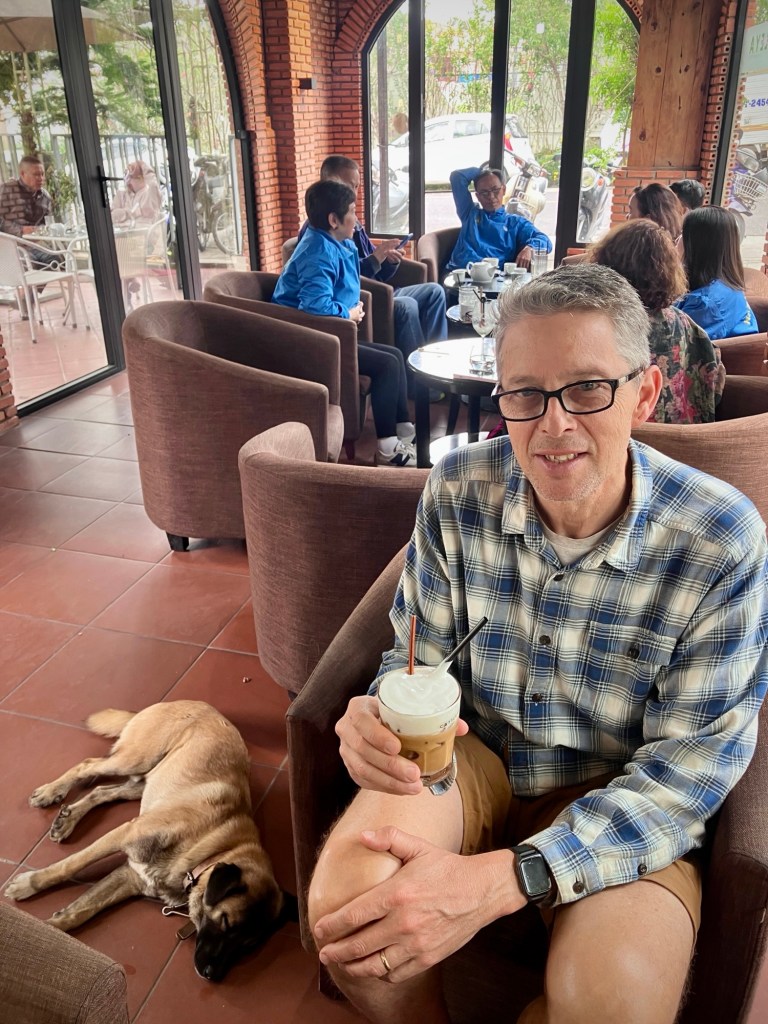
Nope. Teller made himself at home and got a well needed rest! The restaurant owners all seemed to assume he was just our dog and paid us no mind.
So well sugared and caffeinated again, we all continued our doggy adventure and soon crossed the tracks to the next neighborhood.
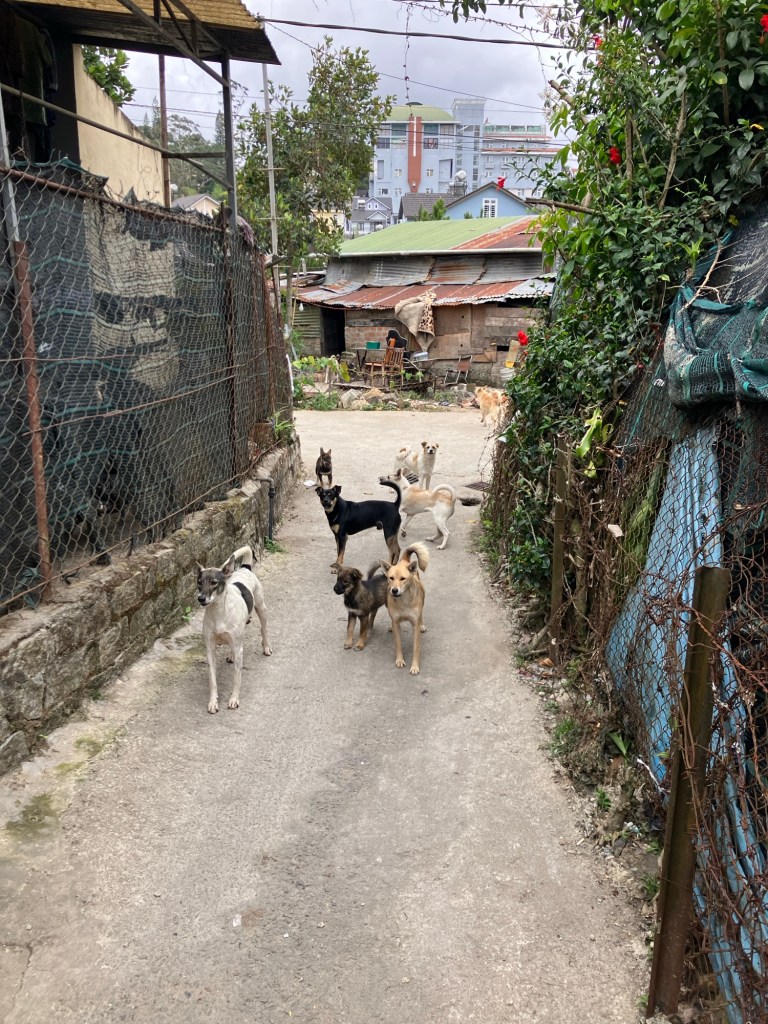
Not so fast was the clear message from this pack of dogs that grew to about 12 or more! Alas, Teller’s adventure with us was over. We made it onwards, he did not.
More alleys to explore, but already missing our friend.
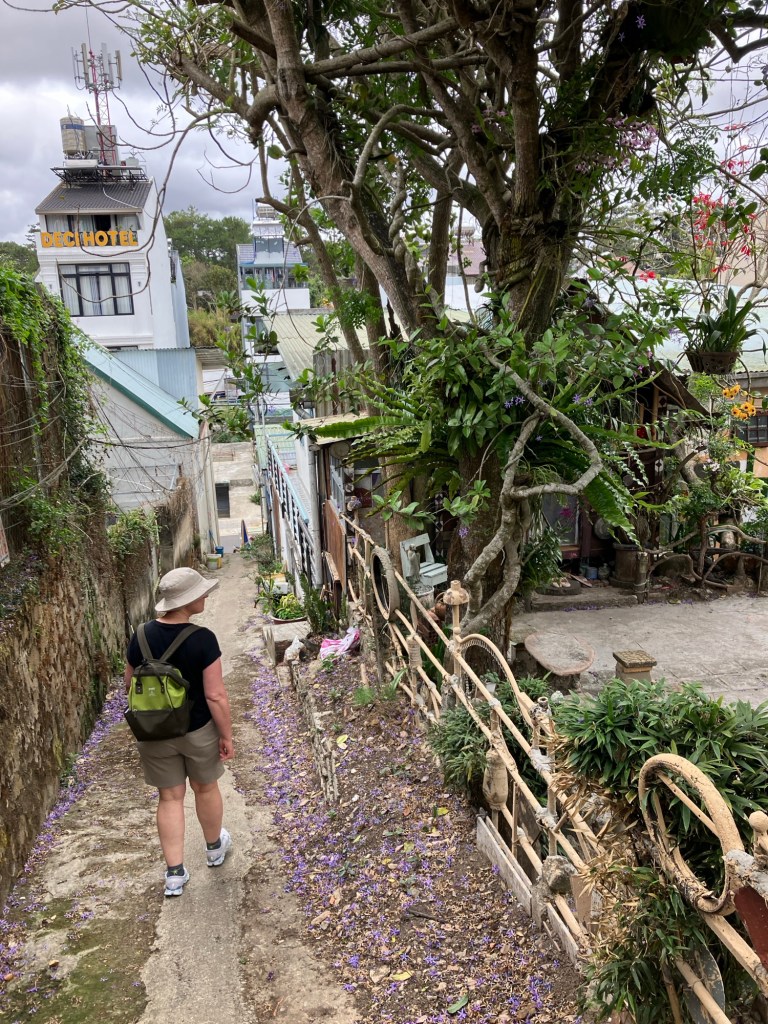
And finding out way home amidst the secret spaces, flowers, and gardens
Always coffee available, even from cute bicycles.

But in addition to the hidden alleys and hills of Dalat, which arguably take some sleuthing (and Maps.me) to find, Dalat is surrounded by hills, trees, and even larger national parks further afield. The challenge for the foreign visitor is finding places that you can actually hike or walk. There are really no published trail maps or networks…private and public land is vague, and access is often restricted. The locals are not really into hiking or even walking for recreation or transportation. A scooter always seems like a smarter solution. But we managed and it was certainly safe enough to walk places, even if sidewalks and road crossings were often a challenge. so we stuck to curated paths, like Dalatana Falls, or just exploring closer to the city center.

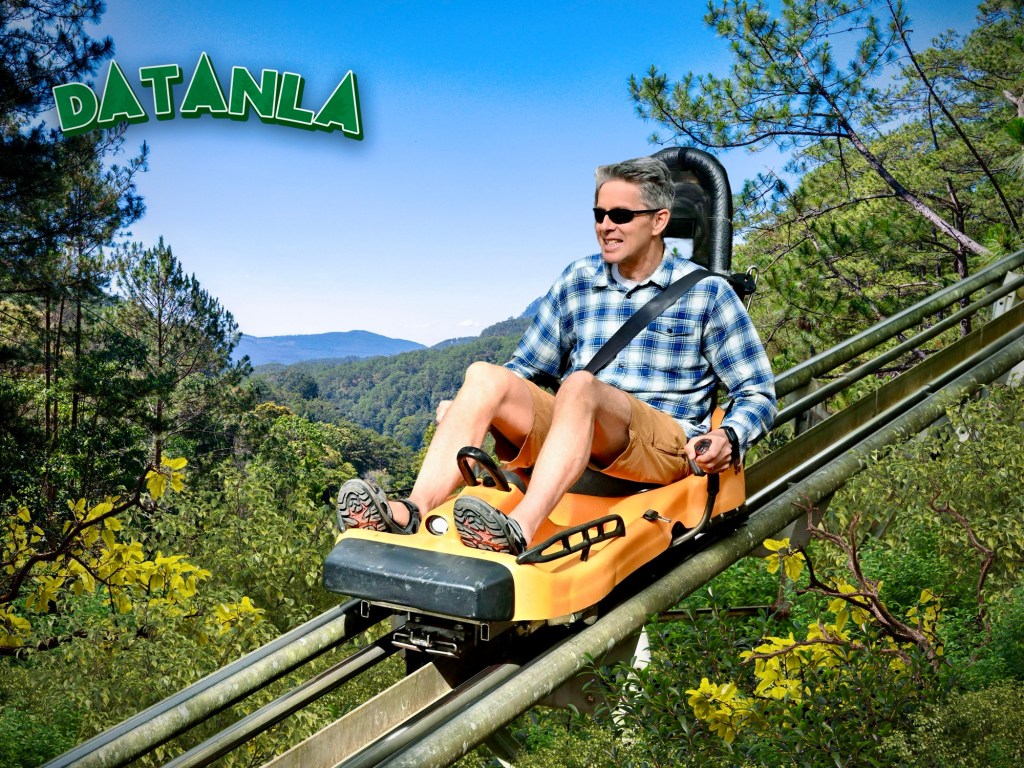
Next up, a visit to Datanla Falls, which you can visit by a long alpine slide.
Fun people watching at the falls.
The three parts of then falls spread up stairs and walkways and are quite impressive although it is all certainly feels a bit manicured and curated.
My intensity is visible on the alpine slide as I was trying to reach maximum speed. (But not crash into Cheryl in front of me)
As you reach the upper falls, there is even more kitsch and Instagram spots.
So we took our turn.
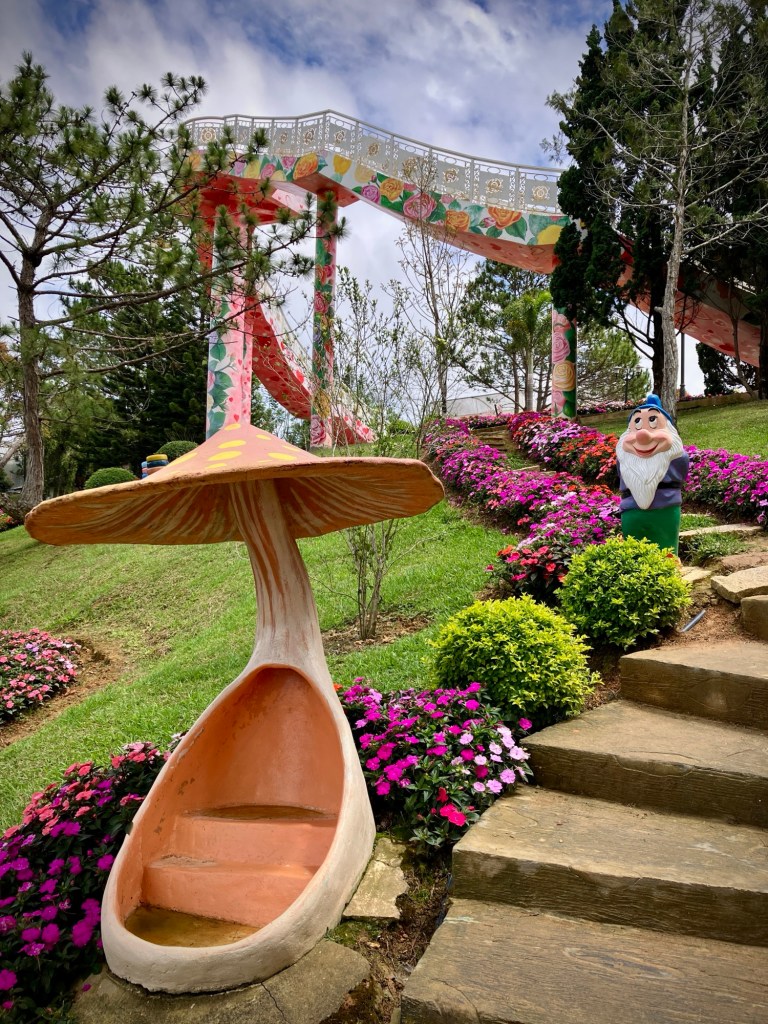
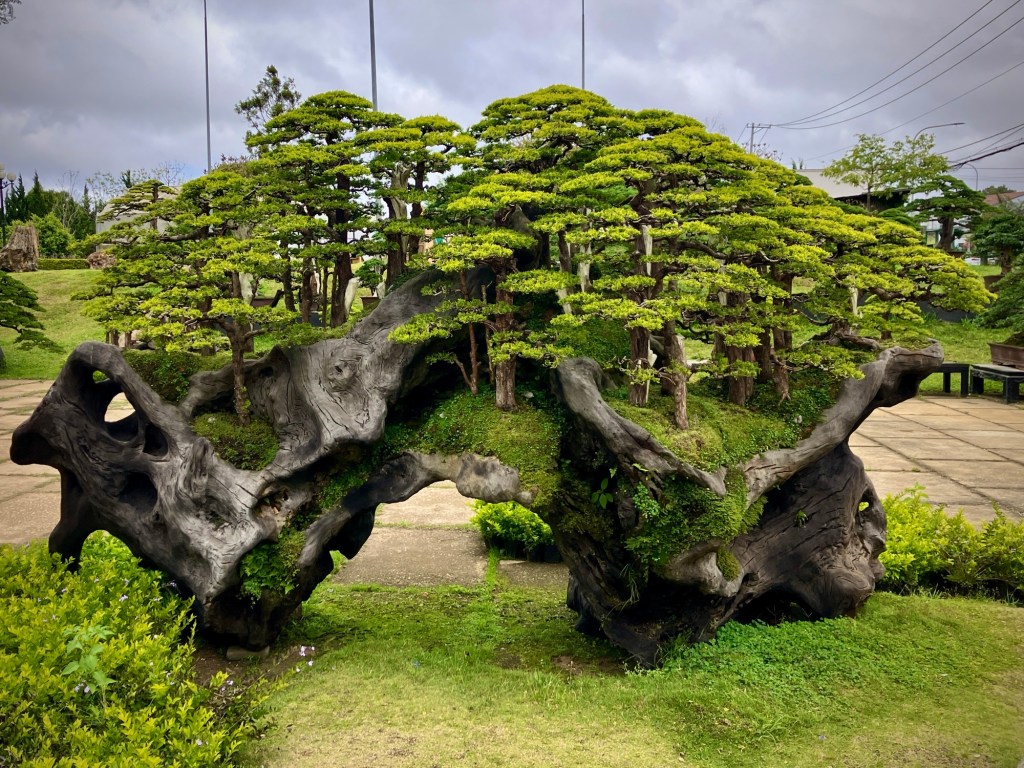
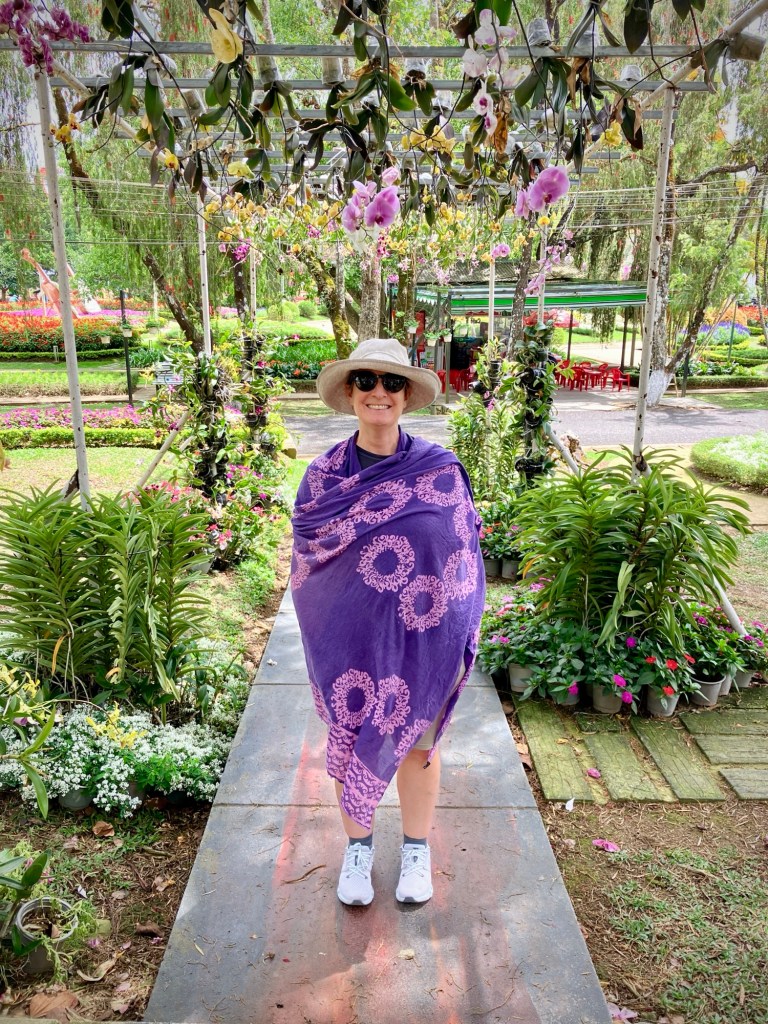
Our next stop after the alpine slide and falls via another Grab car ride was the Dalat City Flower Gardens.
Giant Bonsai (oxymoron?)
Yup, you could crawl in the rear of Dumbo?!
Cheryl ready for the midday sun.
Giant Dutch clog, always hilarious.
The waiting area for a simple car shuttle ride halfway up the mountain. About $7 total each. You have to wait for 6 people which took us nearly 45 minutes as other tour groups loaded up and went. It’s a stupid system and not independent tourist friendly.
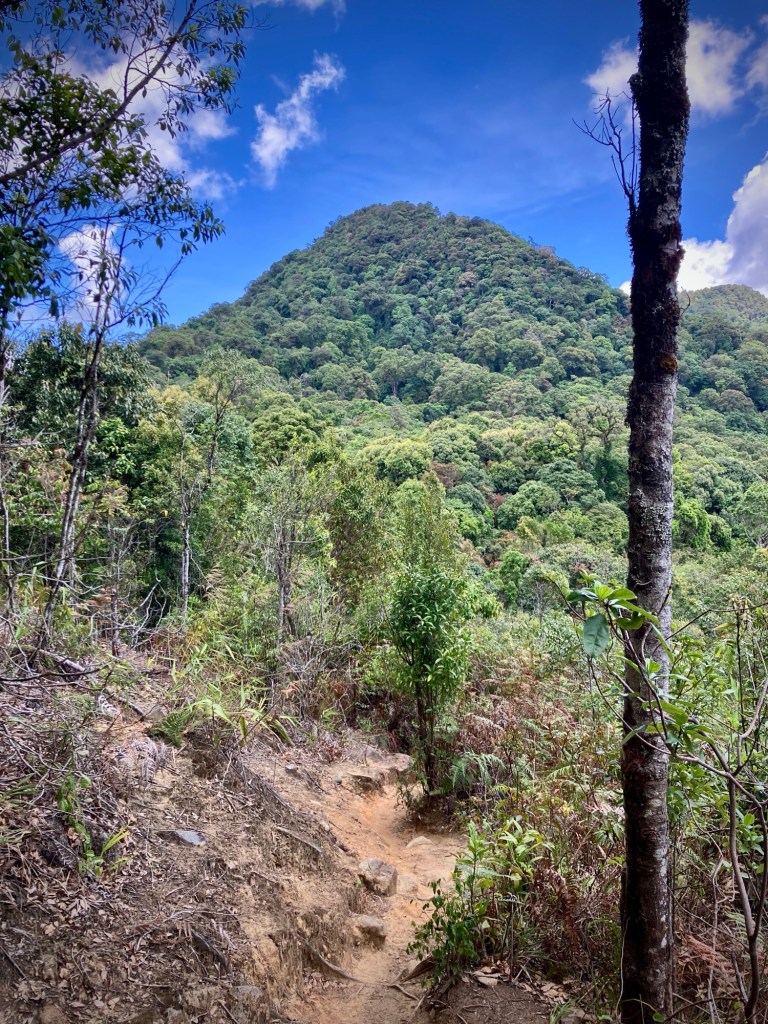
Cheryl captured my frustration as we finally heard up to our hiking start point. Way too long a wait and too expensive. Next time we’d hike up the whole way. Everyone else was going to the other lower Radar Dish summit for pics and snacks. We wanted to hike!
It was a nice hike from the drop off point. And then the peak looks so close.
I noticed distance signs seemed to vary widely in accuracy, and a guide we were chatting with on top of the mountain later confirmed!
The views and nature were nice
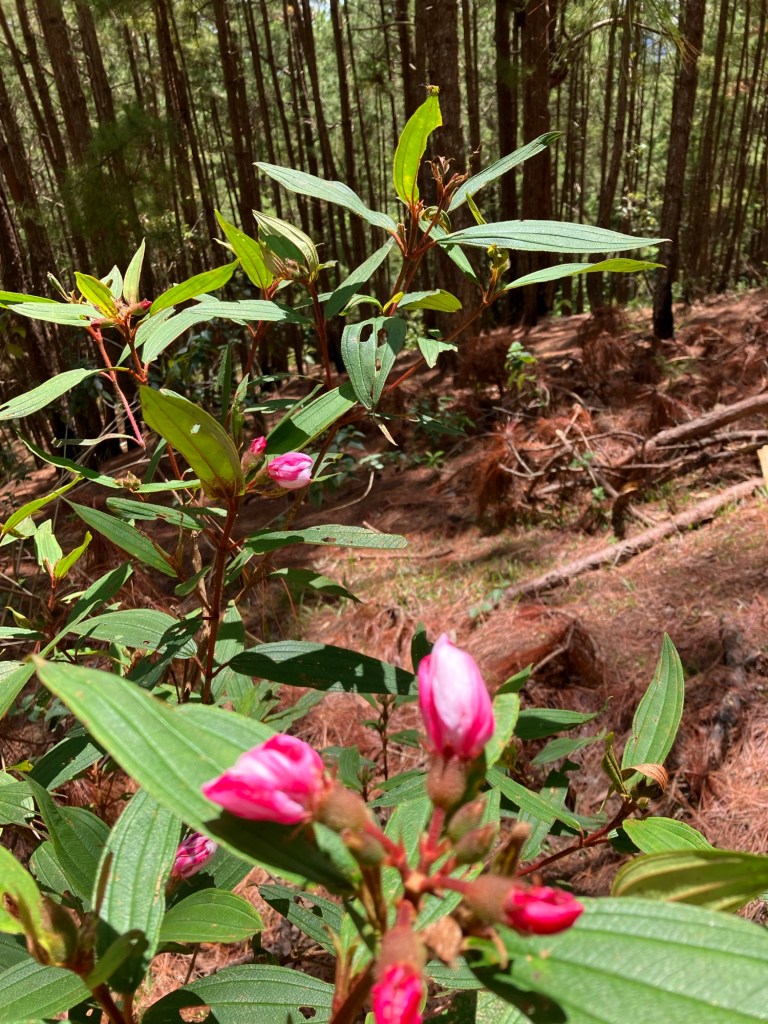
Lang Biang flora.
It gets really steep, so there are ropes to help you up and down. The last 500m would be very tricky in any rain as the surface is clayey and slick.
I couldn’t resist a sweaty fast climb to the top, so reached the top of Lang Biang’s 2,167m (7,100ft) a bit before Cheryl.
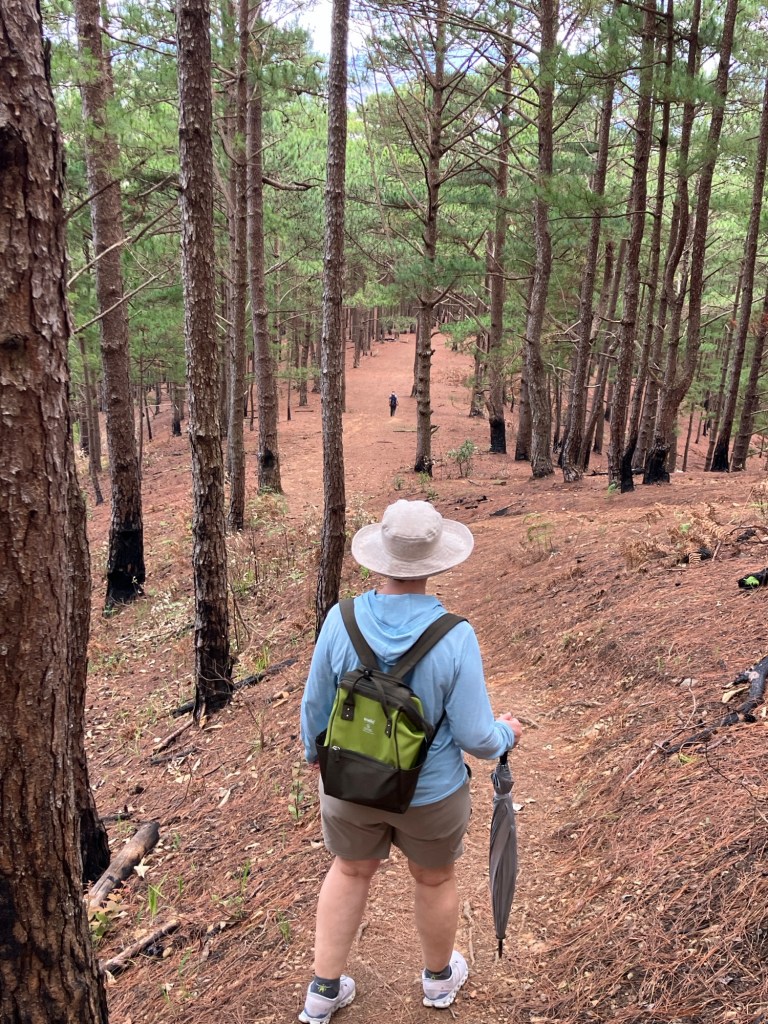
We hiked all the way down the mountain through the lower pine forests as the shuttle cars won’t pick you up part way down the mountain. (Because a stupid system!)
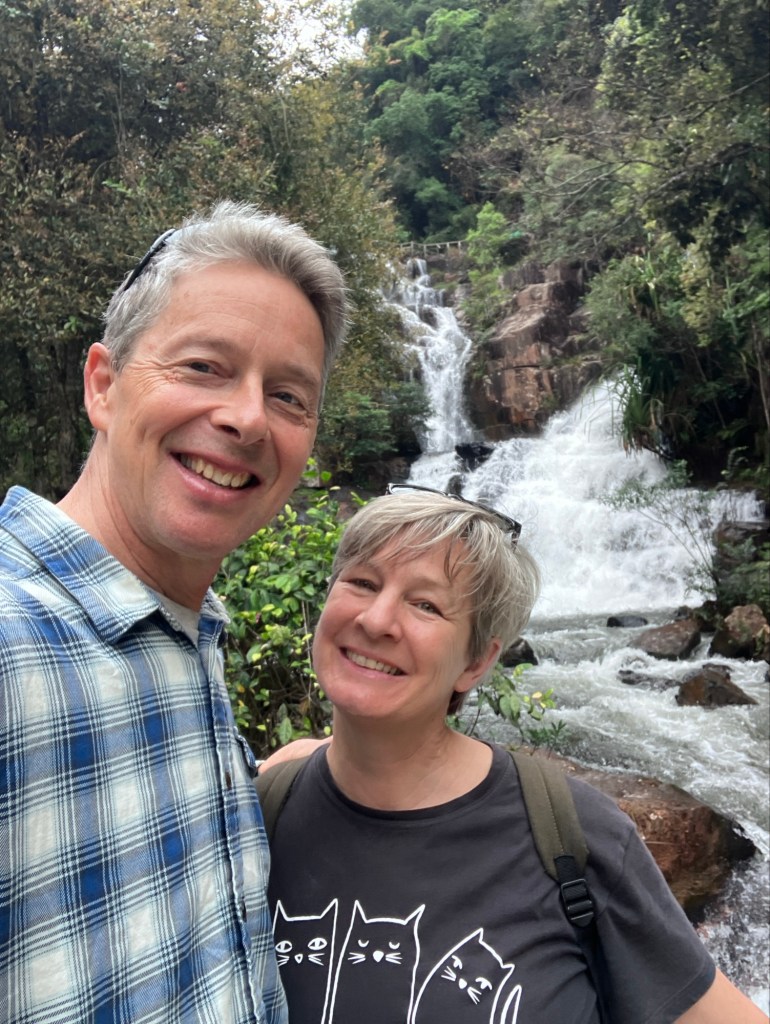
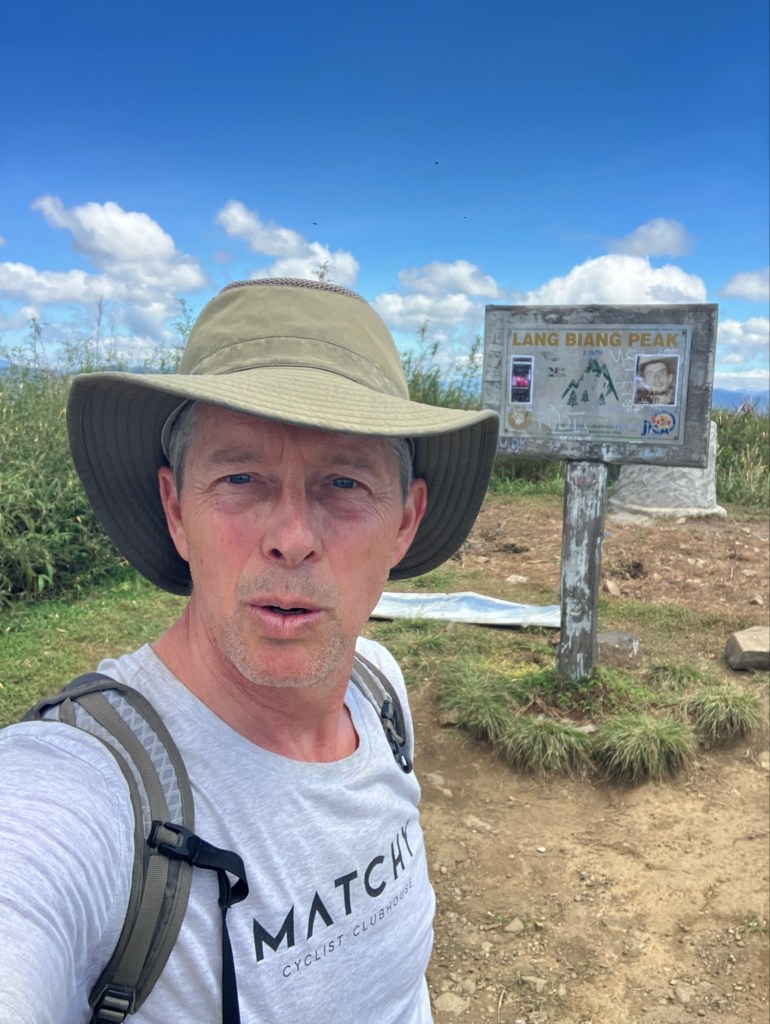
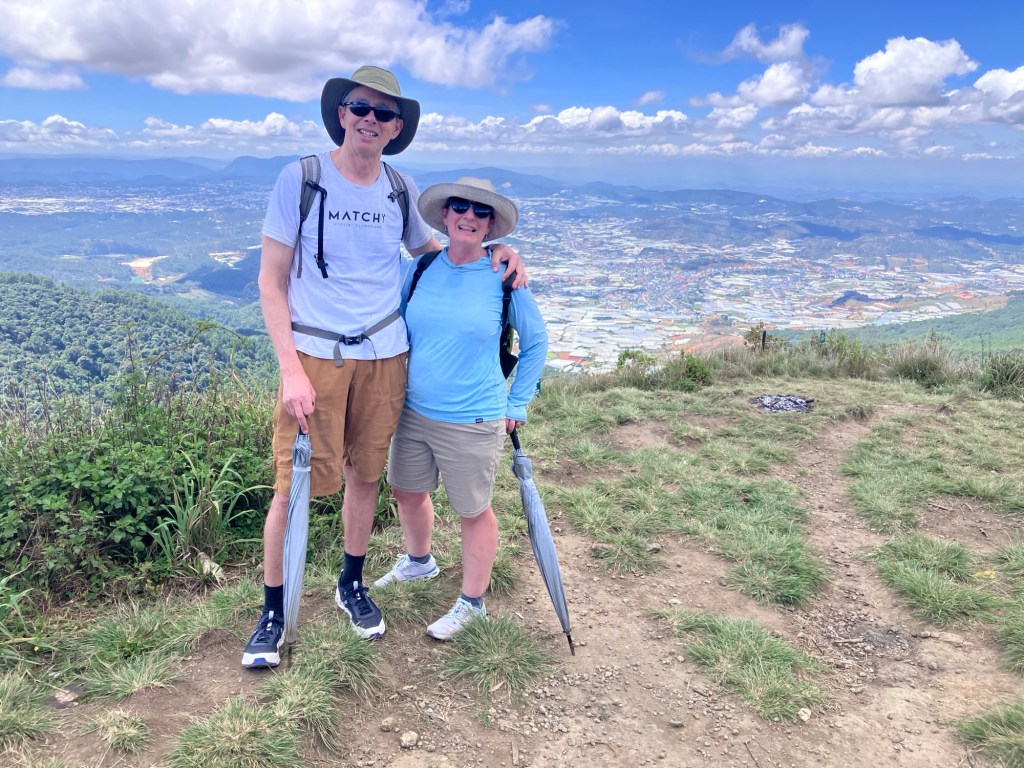
We made it! The happy hikers at the scruffy top of Lang Biang.

Was a week in Dalat a good choice? We think so, but it really depends on what you are looking for. Next stop, the serious jungle!

The Other Side of Flores Island, Indonesia

After being surprised by Labuan Bajo’s sidewalks and rapidly developing tourist infrastructure, we flew from Labuan Bajo to Maumere, a small city on the Northeast coast of Flores to start our cross island exploration.

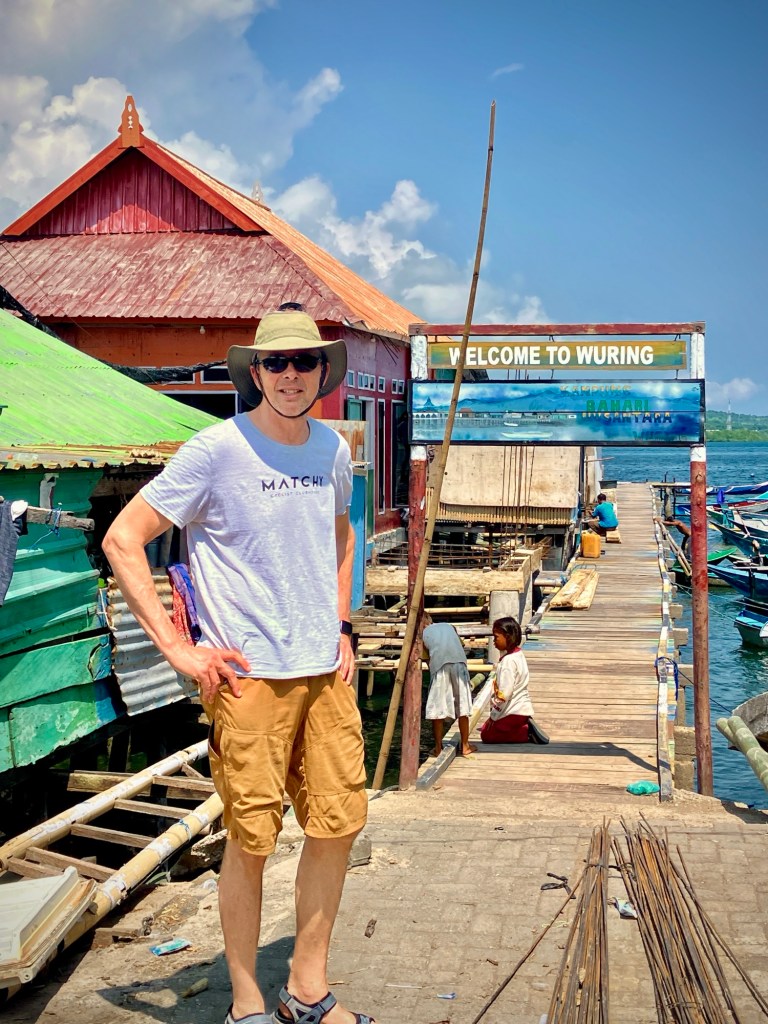
Wuring, a traditional fishing village near Maumere
Cheryl arriving at Fransiskus Xaverius Seda Airport in Maumere; happy that our Wings Air turboprop made the journey today

We didn’t know exactly what to expect. Maumere is remote and there are only 3 flights a week between Labuan Bajo and Maumere on a Wings Air Turboprop.  It was a bit risky itinerary as the flights are often delayed or cancelled in the rainy season, but we lucked out and had a scenic flight along Flores’ north coast.  It was a fairly empty flight of locals and maybe 6 tourists. Flores in the rainy season is still a delightfully beautiful exotic experience, but maybe not the best for anyone on a tight schedule. These nomads are not on a tight schedule -:)

Wuring, or Fisherman’s Village is a predominantly Muslim community settled by notoriously tough sailors from the Bajo, Bugis and Buton tribes, and mostly from neighboring South Sulawesi.
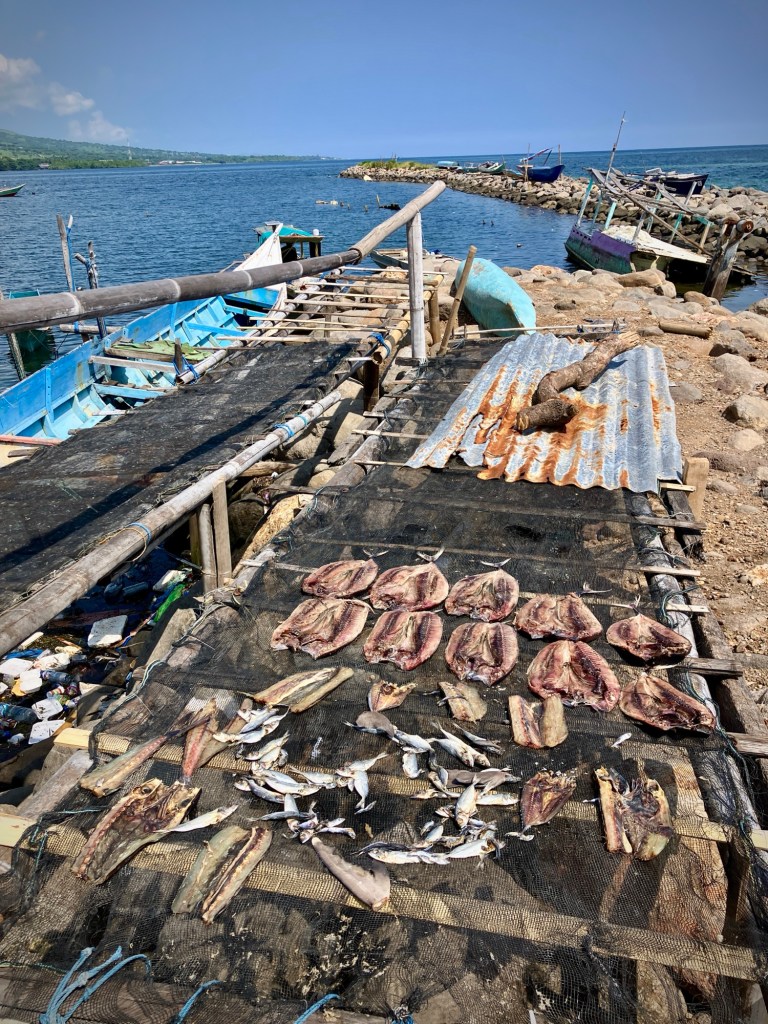
Dried fish are a staple of a Flores diet.
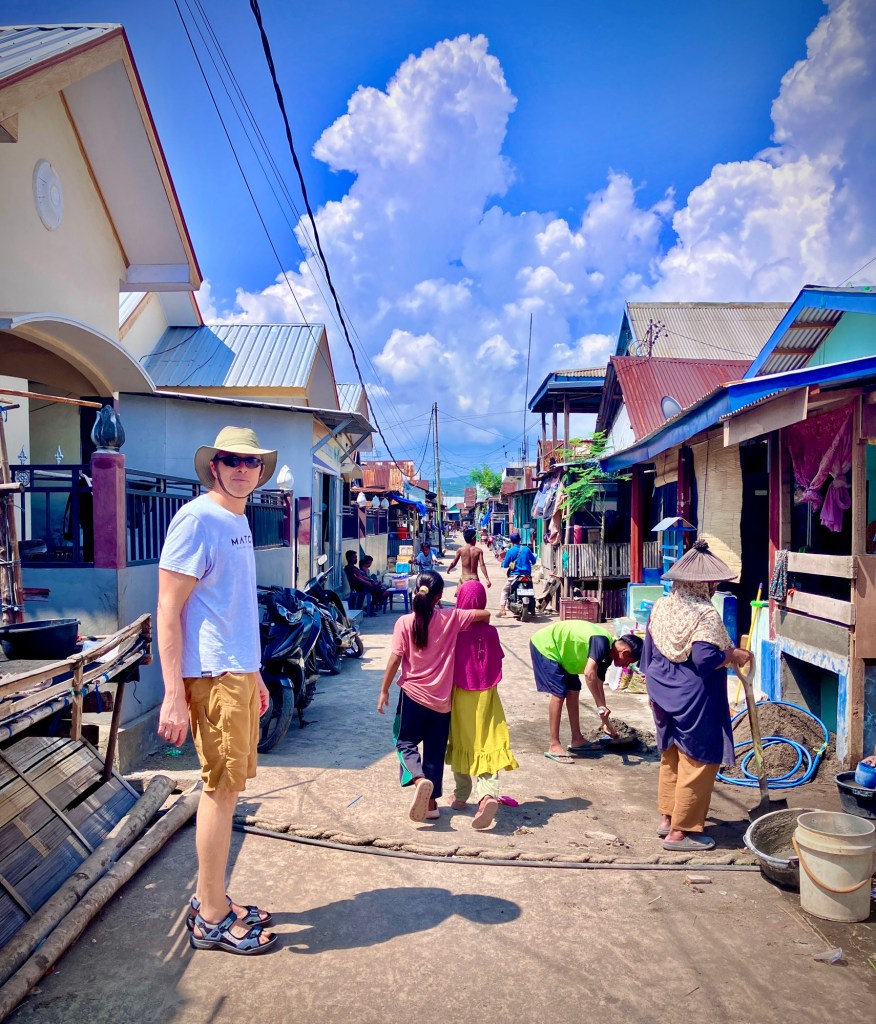
The structures are almost all on stilts over the water off of two main spurs. We felt a bit awkward walking around as there were no other tourists anywhere. Of course people were friendly and gracious as they went about their daily business and we were definitely a curiosity.
Wanting to observe but not disturb.
Goats and scooters are other village essentials

We had an extremely friendly driver pick us up from the airport to one of a handful of tourist accommodations along the coast. Maumere proper is a still a work in progress and still recovering from the devastating 1992 earthquake and Tsunami that killed 2,500 people.  The 7.8 earthquake damaged or destroyed many structures and was followed just six minutes later by a large tsunami that reflected off part of the coast and adjacent Babi island. Indonesia’s volcanic and seismic activity makes a lot of it a risky place to live, so the people have to be resilient and resourceful. In the Fisherman’s Village alone, a 10 foot (3m) high wave swept through the village in 1992 killing 100.

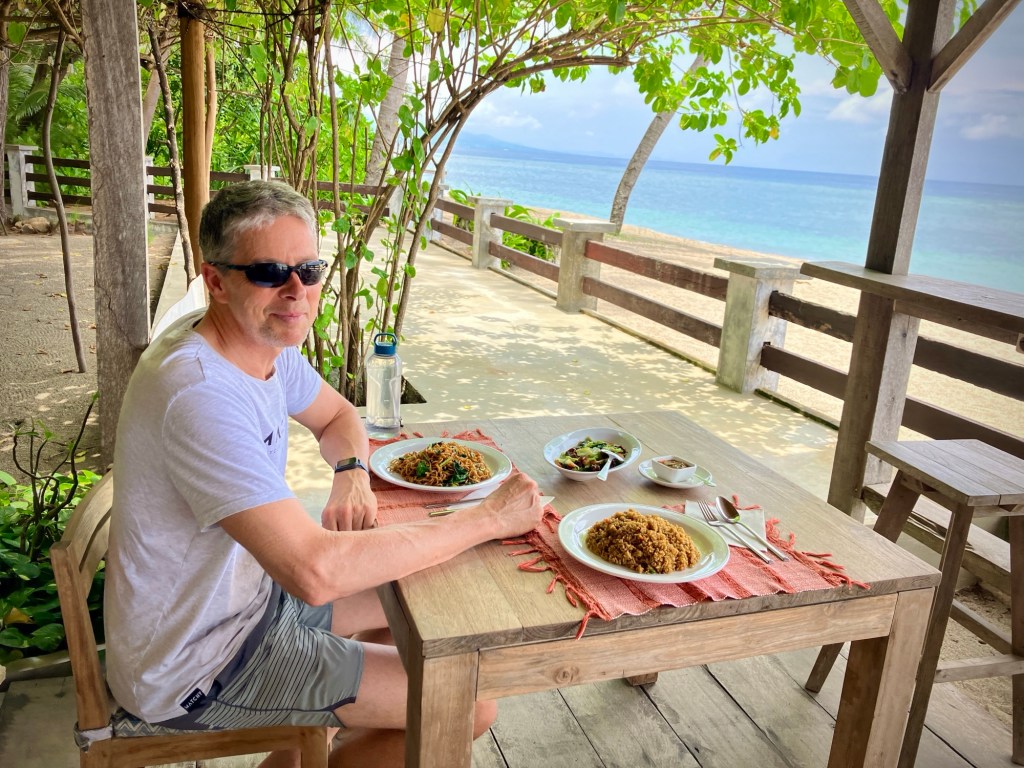
Our nice cabana at the Amrita Resort east of Maumere in the village of Waiara. It was small and we were the only people there the first night.
The beach in front of the Amrita is as also popular with the locals and was noticeably cleaner than adjacent areas. They are restoring the reef here and the snorkeling was enjoyable in the morning before the breezes came up.
A classic Indonesian lunch, Mie Goreng, Nasi Goreng, Cap Chay, and local Sambal
(Fried noodles and rice with chicken, mixed local vegetables, and spicy pepper/salsa)

I have to say, the Fisherman’s village and the Maumere central market were pretty astonishing. We have travelled a lot but were still surprised at the low level of development on Flores and the consistent base of rural subsistence living across the massive island. There is virtually no industry or manufacturing on the island and power outages are frequent. Untreated water is trucked to tanks. Processed food is rare, which is a good thing, as it’s the source of lots of waste and most of it we saw in small minimarts was junk food.

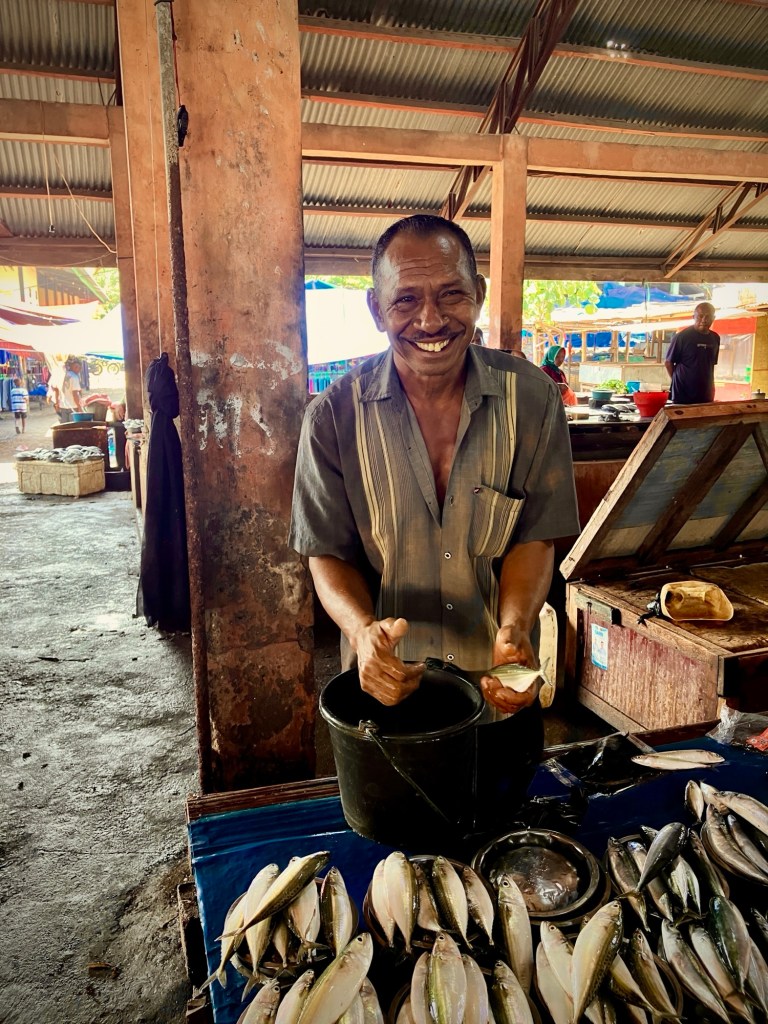
Entering the fish market in Maumere with our brilliant guide and driver for the day, Donatus
It was a bit later in the morning and not peak market day, but still a healthy supply of fresh catch and the ubiquitous dried fish
Flores smiles.
So much fish is dried to preserve and provide a reliable source of food when the fresh catch is lighter. This is likely tuna.
Market pride.
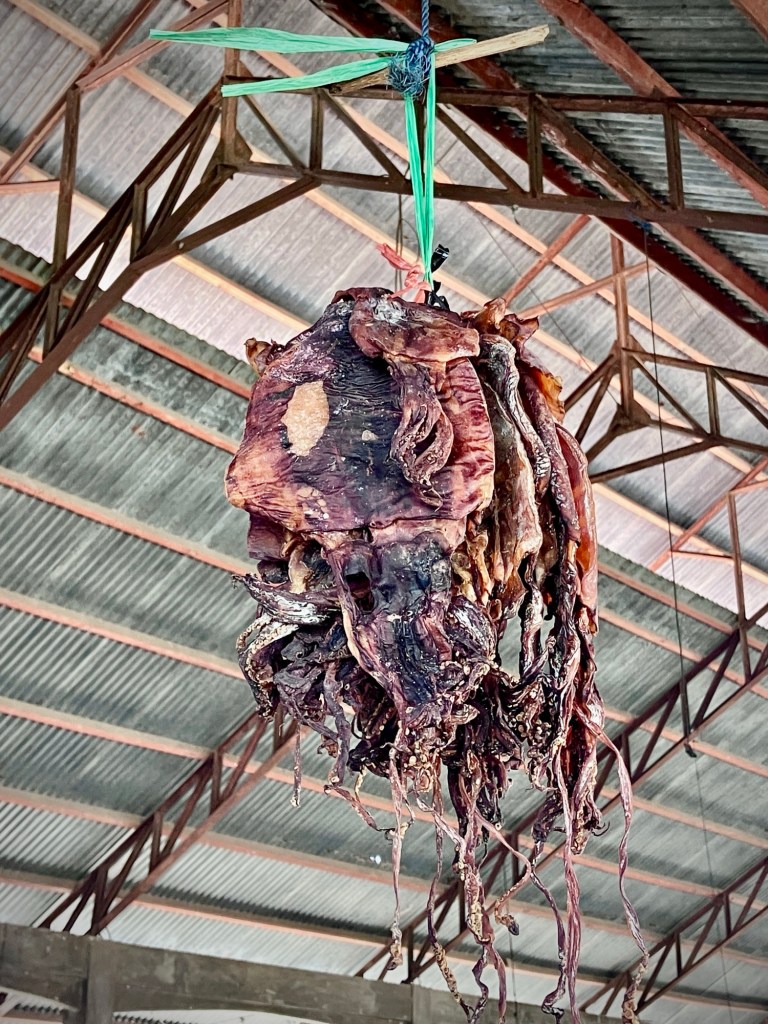
Dried squid (we think!).
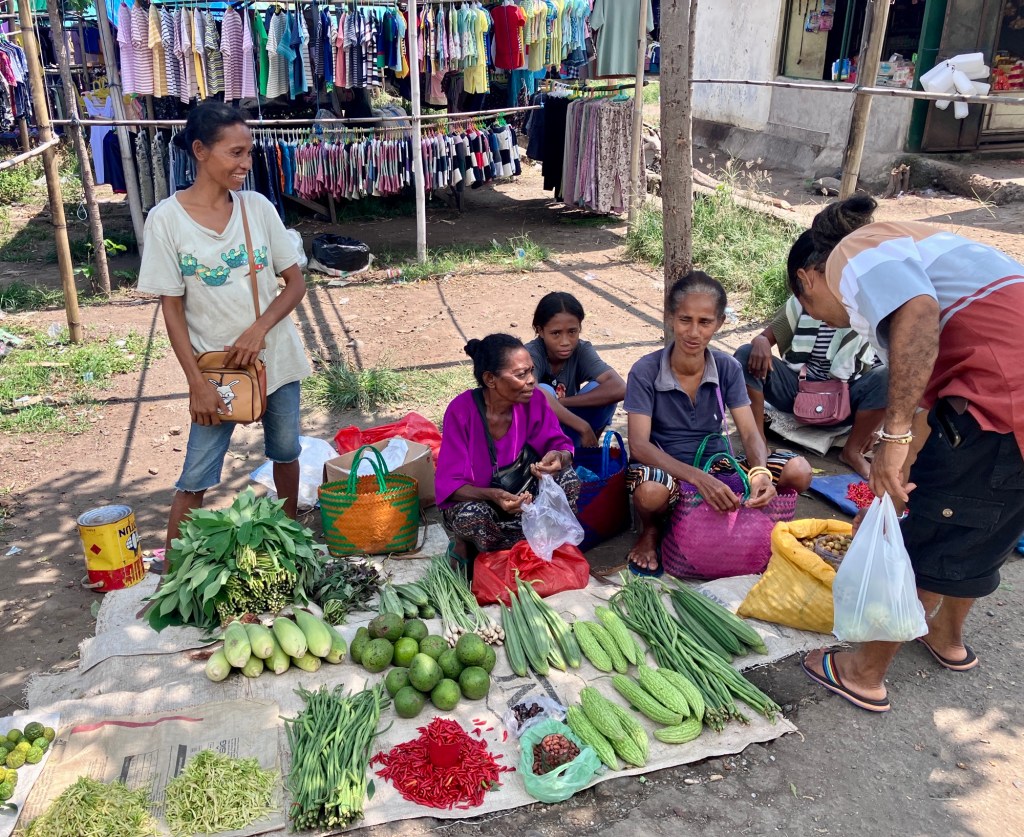
A wide choice of local vegetables. Nothing we ate in Flores was processed (except our well traveled Cliff Builders Bar!).
Donatus buying a few local specialties for us to try
Everything grows somewhere in Flores due to the elevation variations. These are banana flowers, used in a local dish.
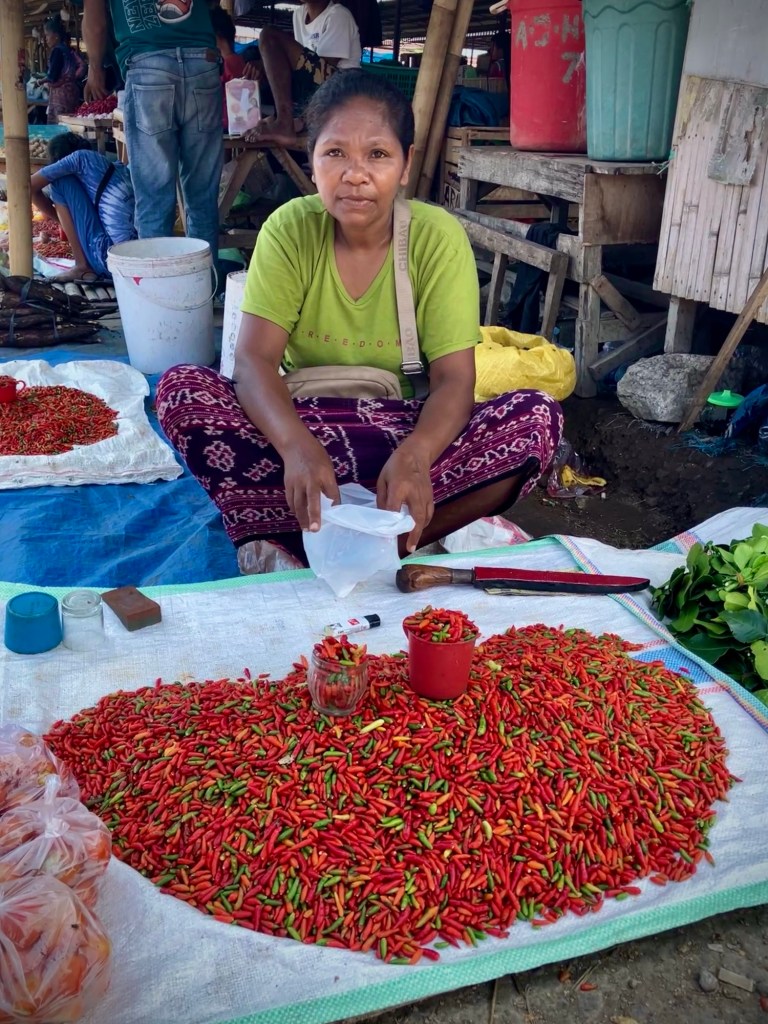
And so many peppers for sambal variations.
The makings for Betel chewing; Areca nuts, slaked lime, and betel leaves.
Taro. The large roots are sold as pig food.
Cinnamon, ginger, and turmeric.

Flores had been off the radar to the government until the late 1990’s and the end of the Suharto era. There are complex political and religious dynamics in Indonesia that I won’t even pretend to understand but it is clear that the control and power for the country comes from its heart of Jakarta and Java. It is also key to understand that Flores is predominantly Catholic from the legacy of the Portuguese time of control, although they eventually ceded control of Flores to the Dutch, who officially held control until Indonesia’s independence in 1945. The island is now a mix of Catholics and Muslims, overlaid with traditional Melanesian cultures and beliefs.  

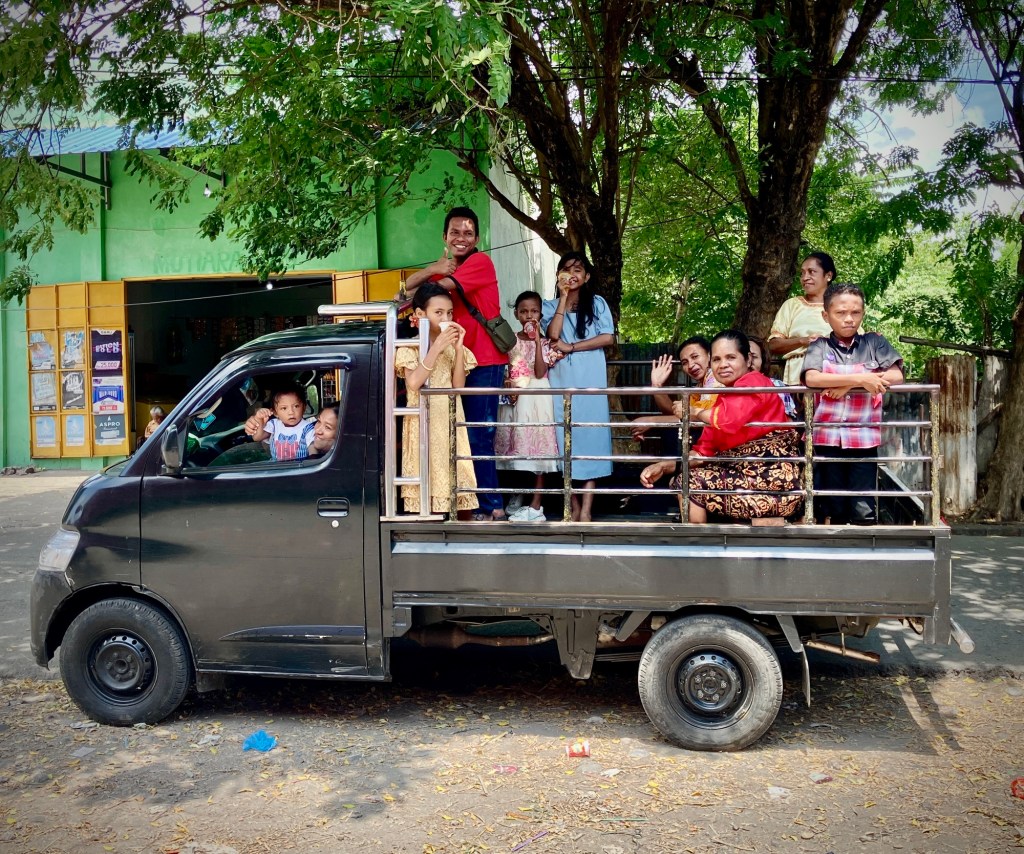
Most transport on Flores is by scooter or shared rides. There are some small and medium size scheduled buses.
From the market, a delicious srikava fruit, also known as sugar apples; it kinda melts in your mouth.

The Flores Islanders are very proud (rightly so) of their peaceful coexistence. Our driver and guide from Maumere was Christian but very proud of the coexistence and acceptance, even pointing out small graveyards with alternating Christian and Islamic graves. We sensed no tension anywhere and apparently they celebrate and revel a bit in each others holidays. Flores really is a special place. 

Donatus cracking some Candle nuts for us to try.
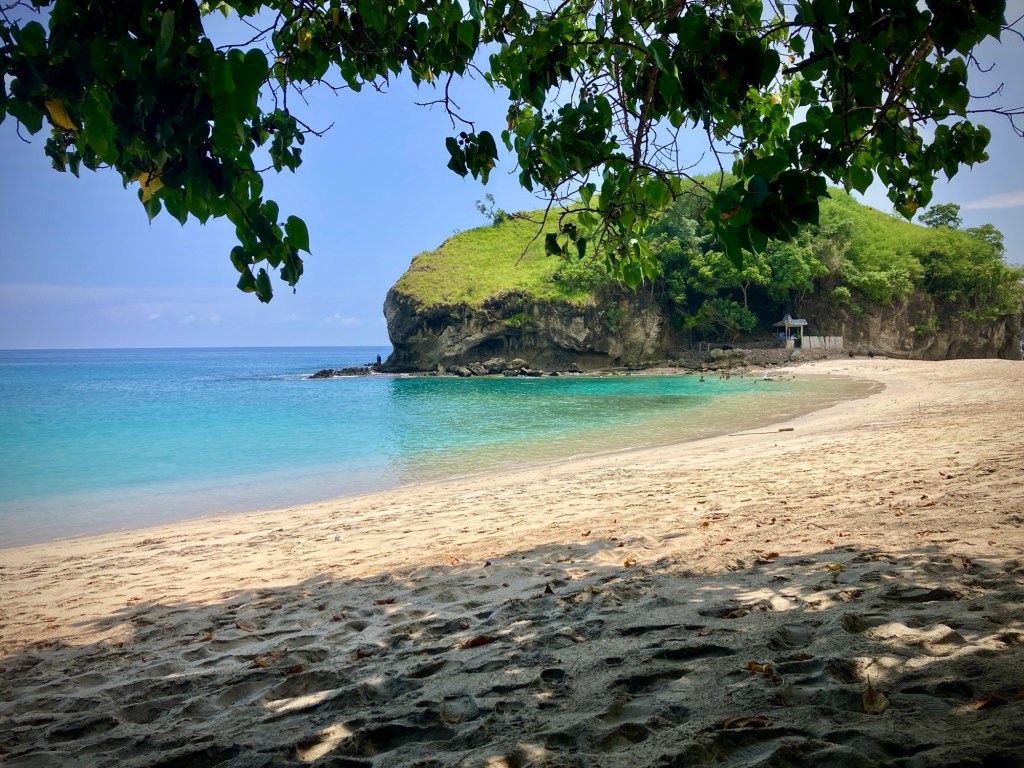
One of the two idyllic beach coves at Koka Beach.
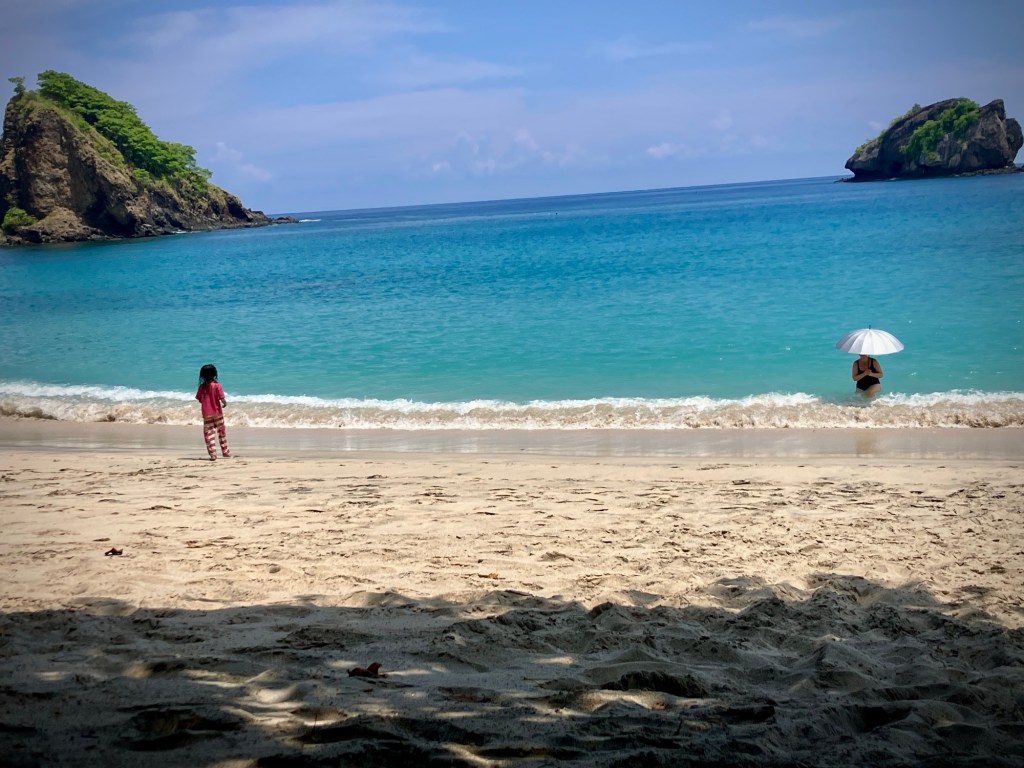
Our stop here was midday and the UV was extreme, but that didn’t stop Cheryl.
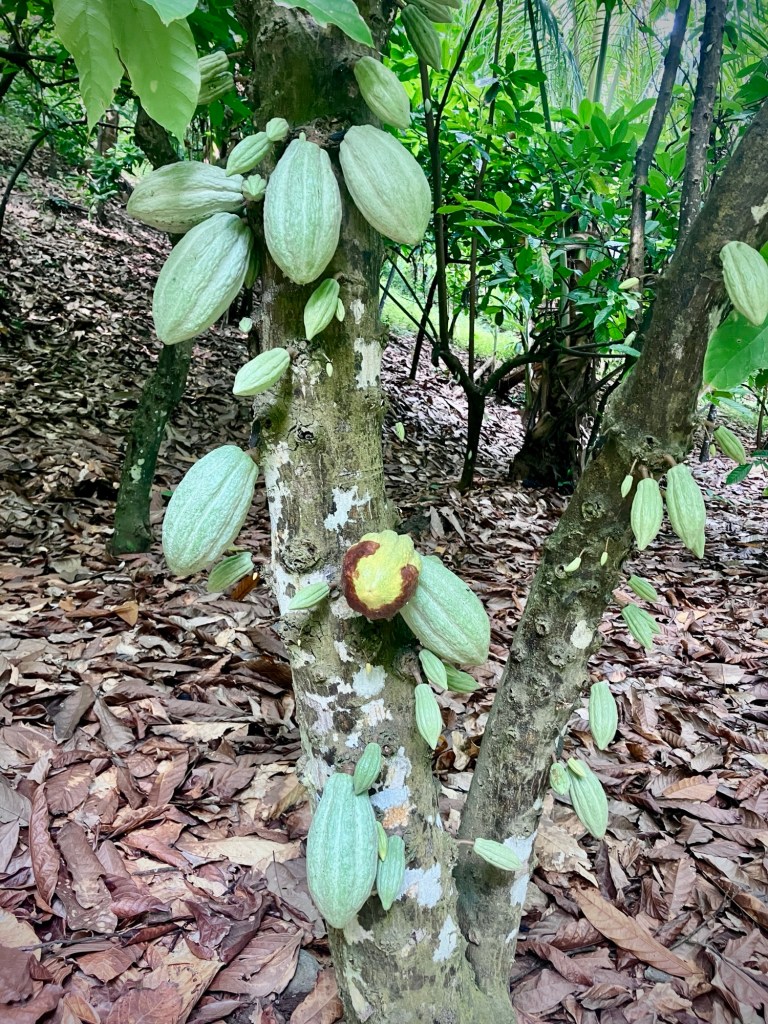
Cacao trees and pods that give the beach its name.
À local girl is baffled by the pale woman under an umbrella.
Oh, but the water feels so nice in the oppressive heat of the Flores coast.
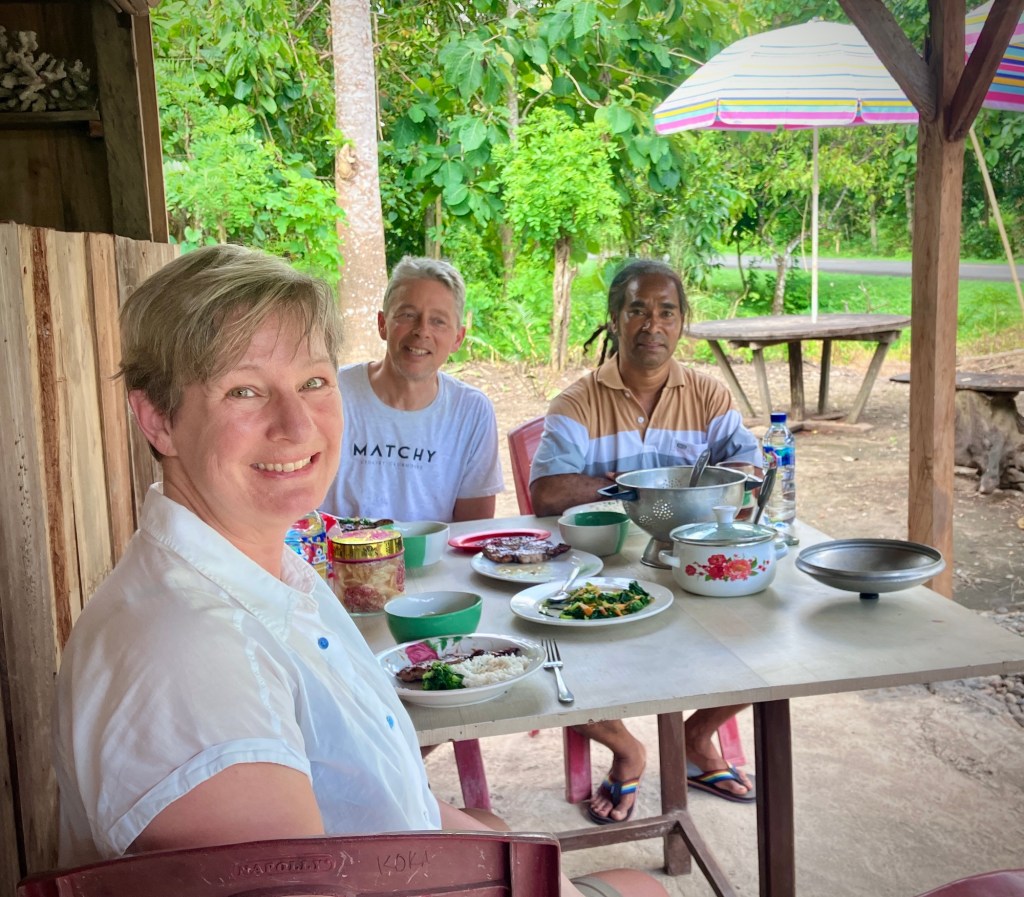
Grilled fish lunch near Koka Beach, a very pleasant and rustic affair.
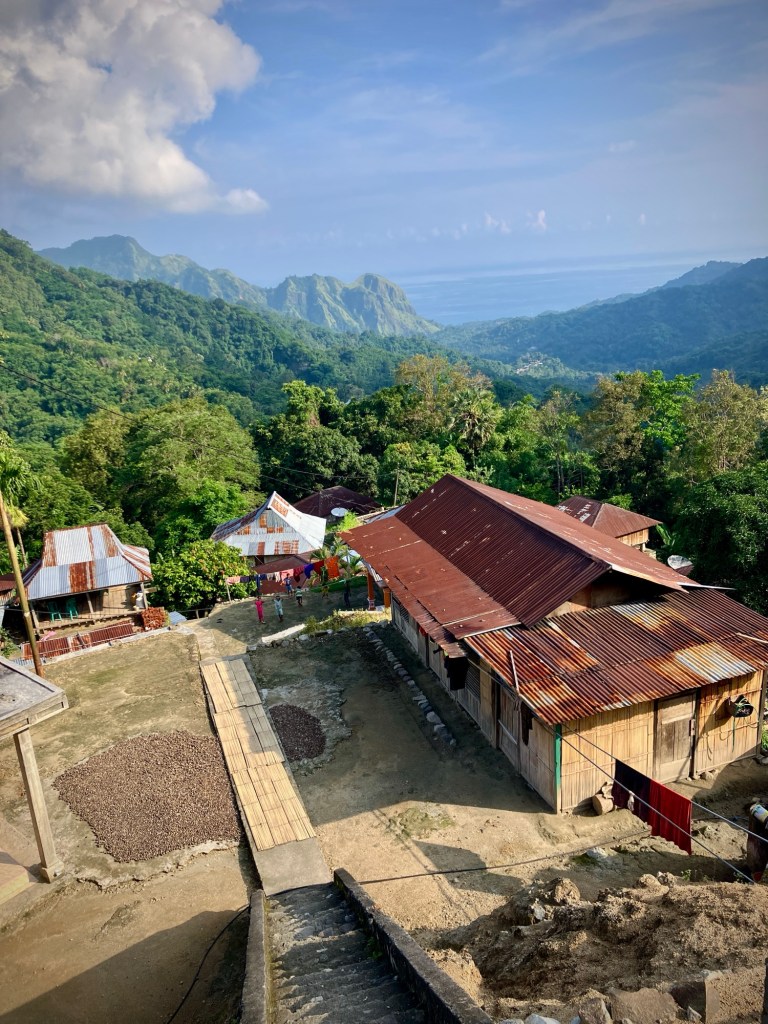
The Trans-Flores Highway is never straight and winds its way up and down the islands rugged topography. Villages cling to hillsides.
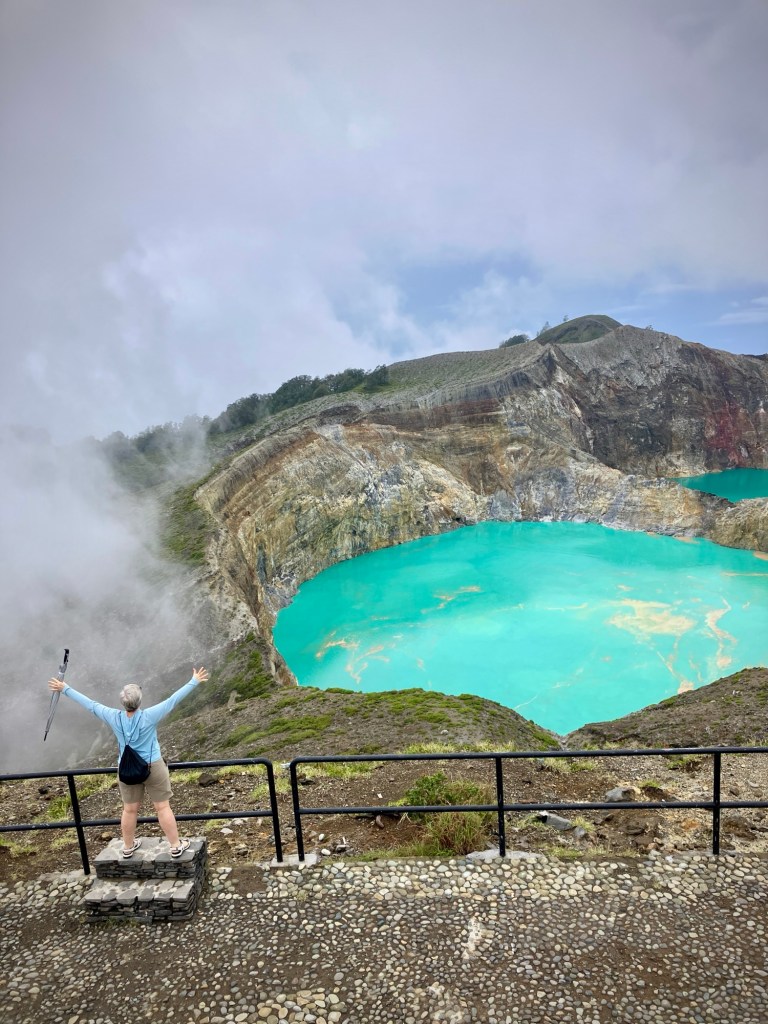
Approaching the volcanic lakes of Mt. Kelimutu with anticipation.
First views of two of the lakes. No filters.
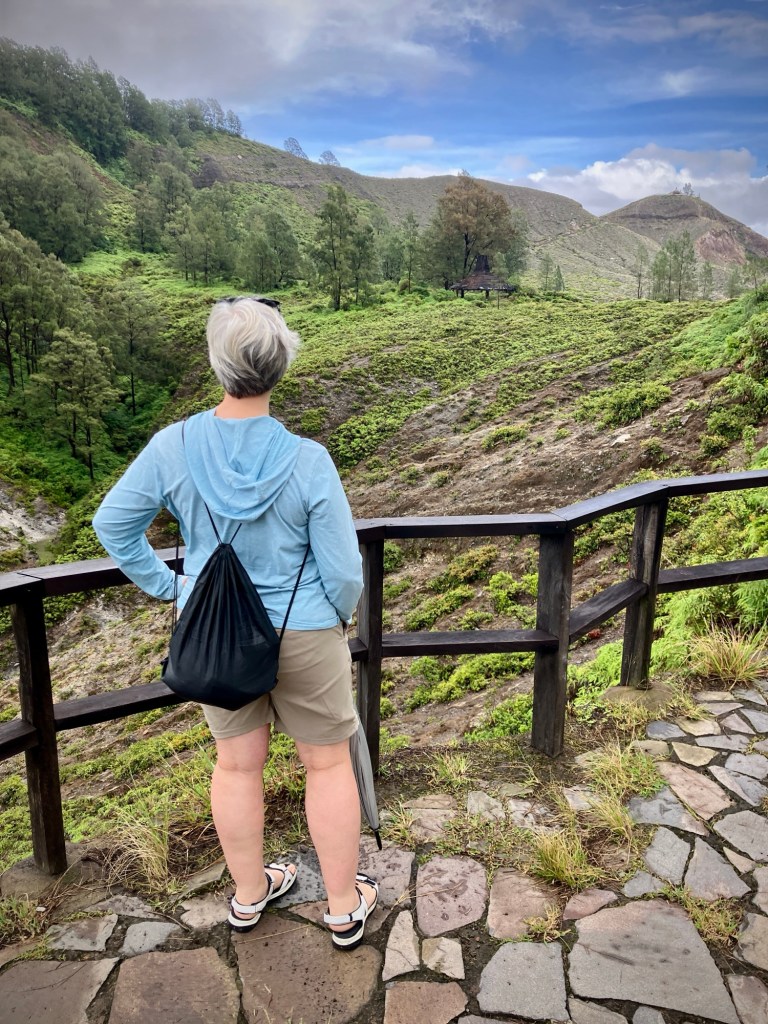
At the summit, I am calm and reflective.
Cheryl, on the other hand, is having her moment. We are the only ones here, which feels amazing.
By the time we get back down to the upper trailhead, more people show up, including these friendly nuns.
And another group posing in the parking area before their trip up to the lakes.
We decided to hike down the mountain 5 miles or so to Moni, and the first part was a steep but easy walk on the small road.
The lower part of the Mt Kelimutu Road is wide, graded shoulders were a popular and level spot for cattle grazing in the green rainy season.
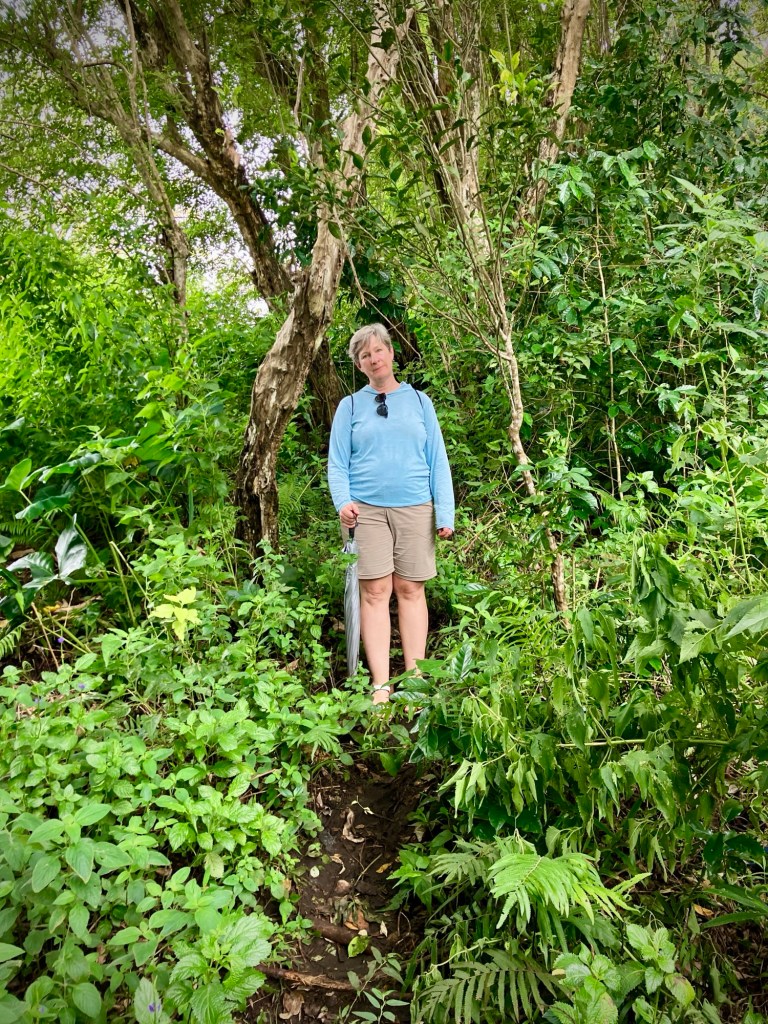
Our next shortcut to Moni started off ok, but then turned steep, muddy, slippery, and overgrown in places.
This dog was wondering where we were headed?
Thanks to a mostly accurate gps track we eventually found our way and stayed on our feet (yes, umbrellas for their third and fourth purposes; walking sticks and snake clearing!).
Cheryl was not pleased with this « shortcut ».
Lots of random farming and gathering, including Taro.
Uhm, the trail is somewhere there?!
We finally made it down to Murundao Waterfall,
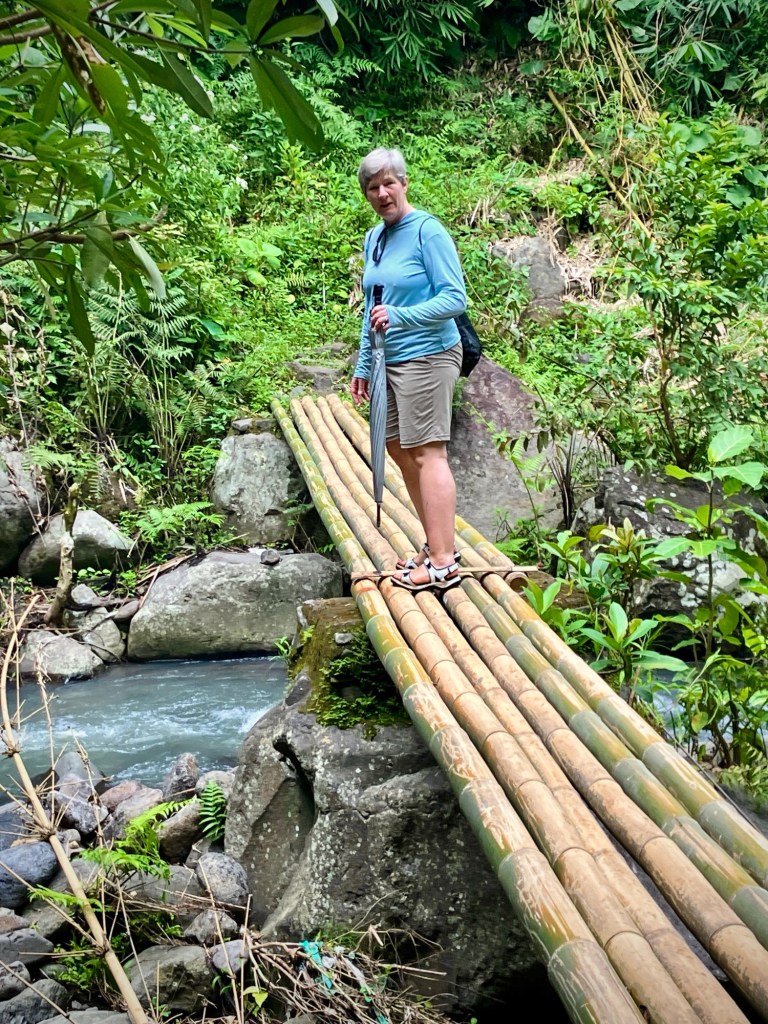
Near the falls were two streams that were just raging a bit too much in the rainy season to cross by foot. Cheryl’s good balance made it standing across the loose and wonky bamboo. Full disclosure, I crawled across as my high center of gravity and fear of falling onto the rocks below got the best of me. You make different decisions when medical care is potentially very far away.
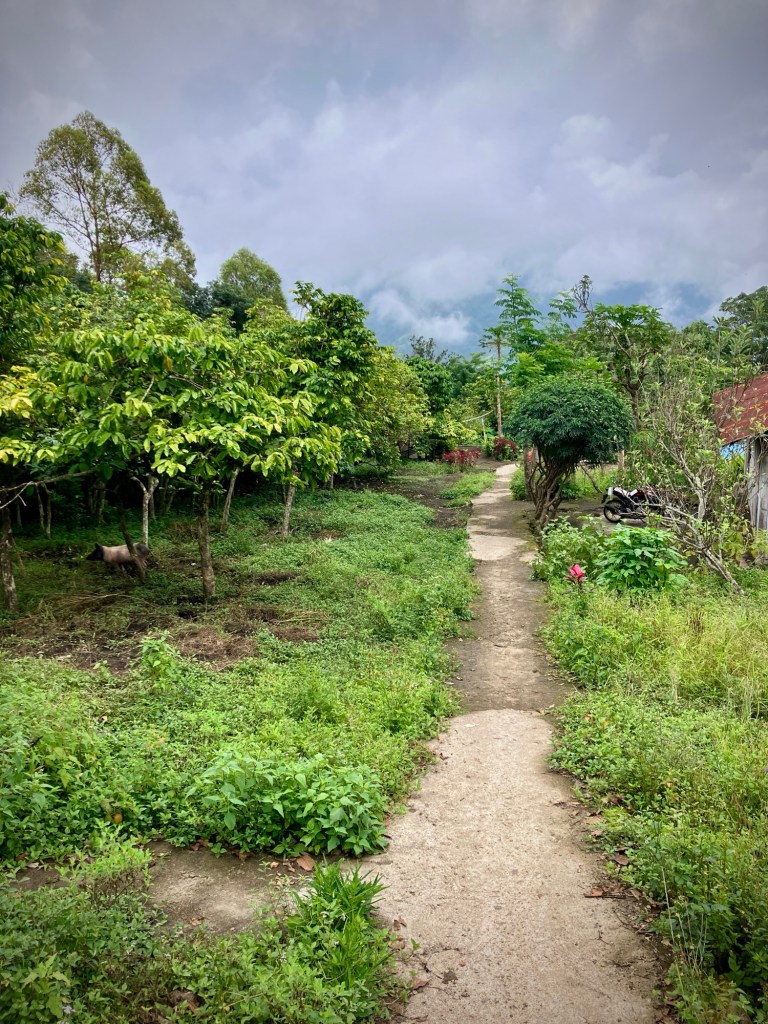
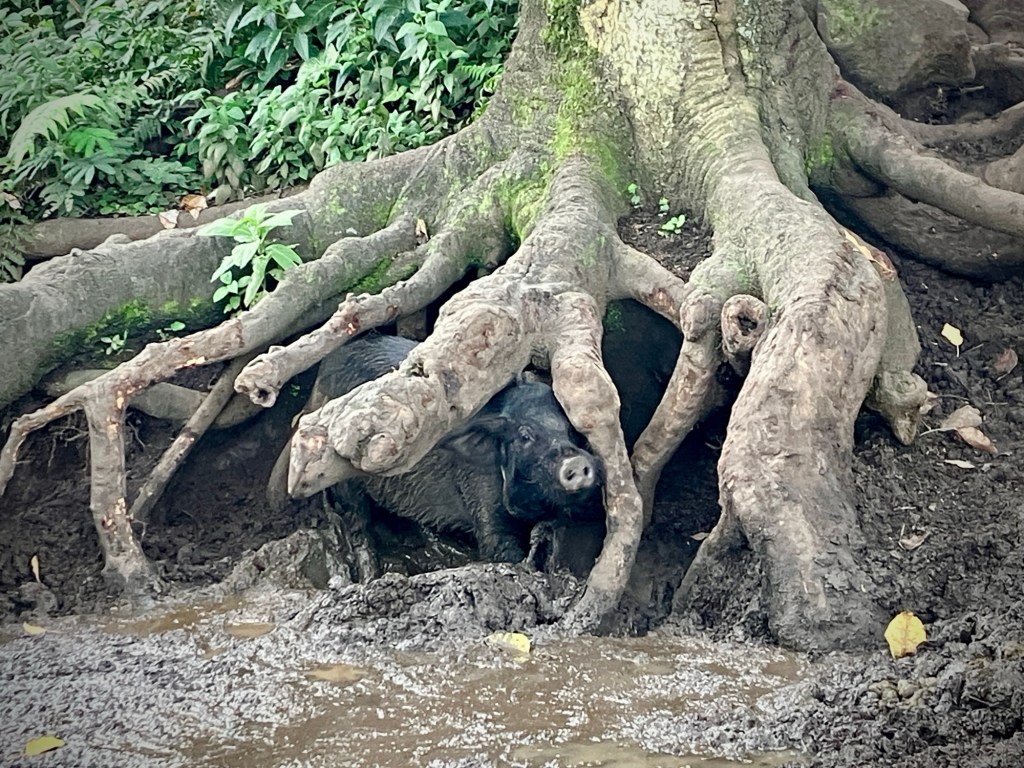
A pig living under tree roots. Safe for now.
Our rustic homestay in Moni, Jaya Hill Garden.
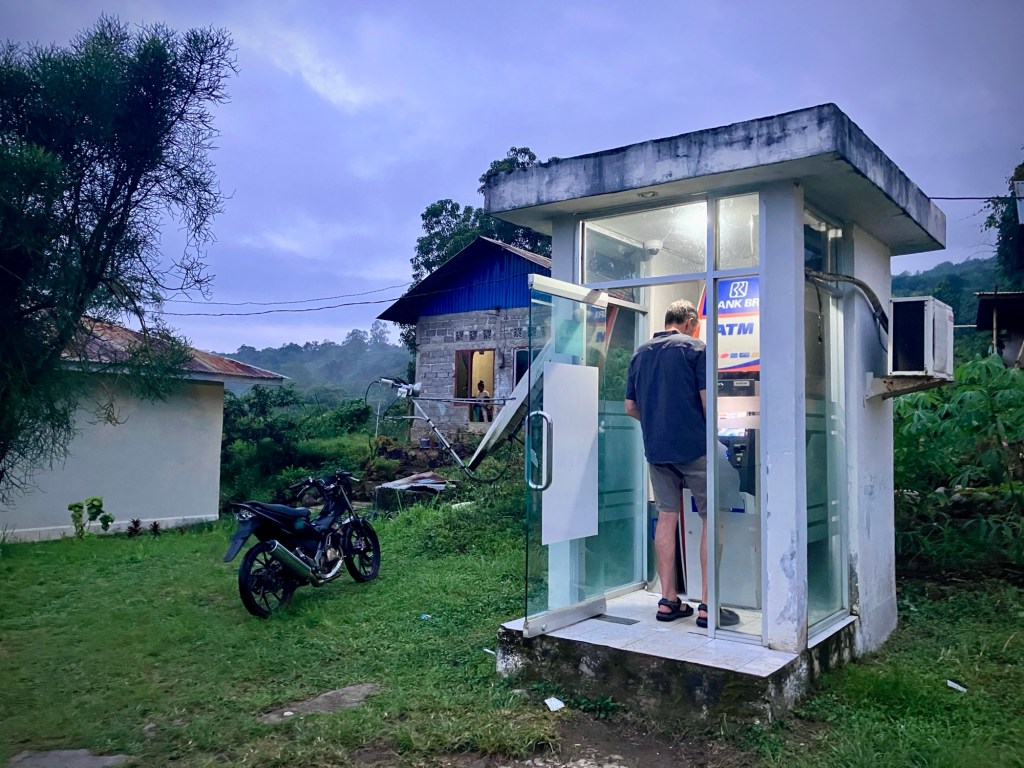
The lone ATM of Moni
(accidentally Wes Anderson).

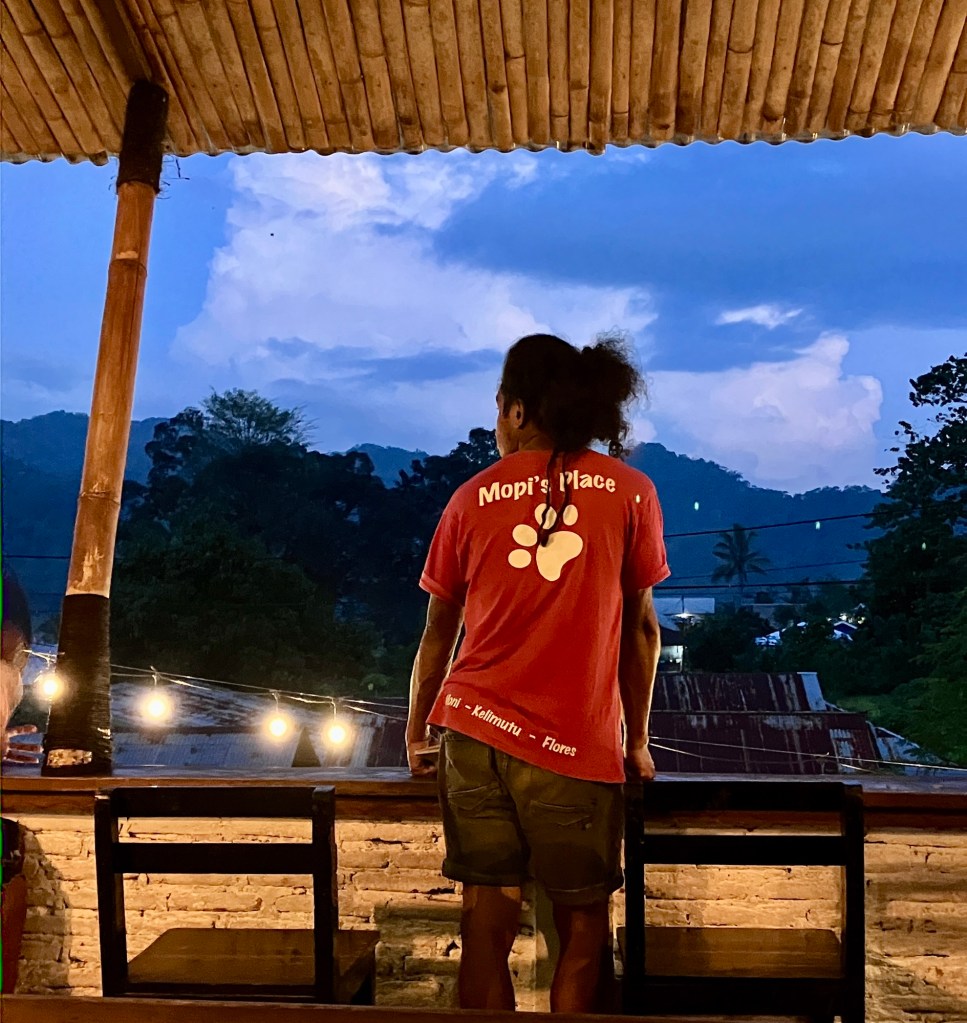
We said goodbye to our great driver from Maumere and spent two nights in the small mountain town of Moni to explore and see Mount Kelimutu. It was great and thankfully a bit cooler at 1000m. Moni has a relaxed vibe and one of the great global travelers bar and restaurant called Mopi’s, run by some local Rastafarians. It was quiet this time of year, but we could imagine a different scene in the peak and dry June/ September season.

The view from Mopi’s Place.
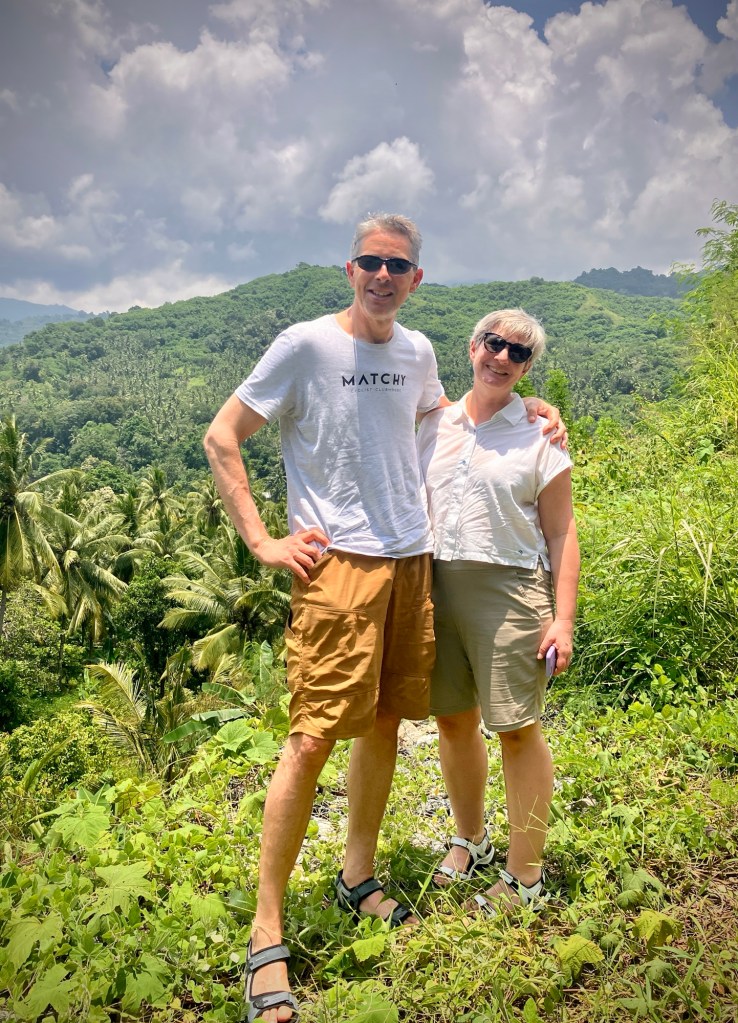
The endless jungles and mountains of Flores, so happy we decided to come here.

But we had a lot more of Flores to explore, so let’s get going!

The Bali Conundrum

To go or not to go? As we planned our trip to Flores, Indonesia, we quickly figured out that we had to fly via Jakarta or Denpensar, Bali to get to Labuan Bajo. Bali made more sense as it is shorter flying from Taipei.

Balangan Beach at low tide

But after spending a week or so on Bali during our 2017-2018 « Java by train, ferry to Bali adventure » we vowed to stay away until the plastic problem was improving and development seemed a bit more sustainable. Bali is a tourism juggernaut, but is often cited as a global example of overdevelopment.

Balangan beach is a popular surfing beach, but pretty quiet landside this time of year. Bali tourism is still recovering from the pandemic, which devastated the islands’ economy as the airport was completely closed for an entire year! 6,000,000 tourists suddenly gone.
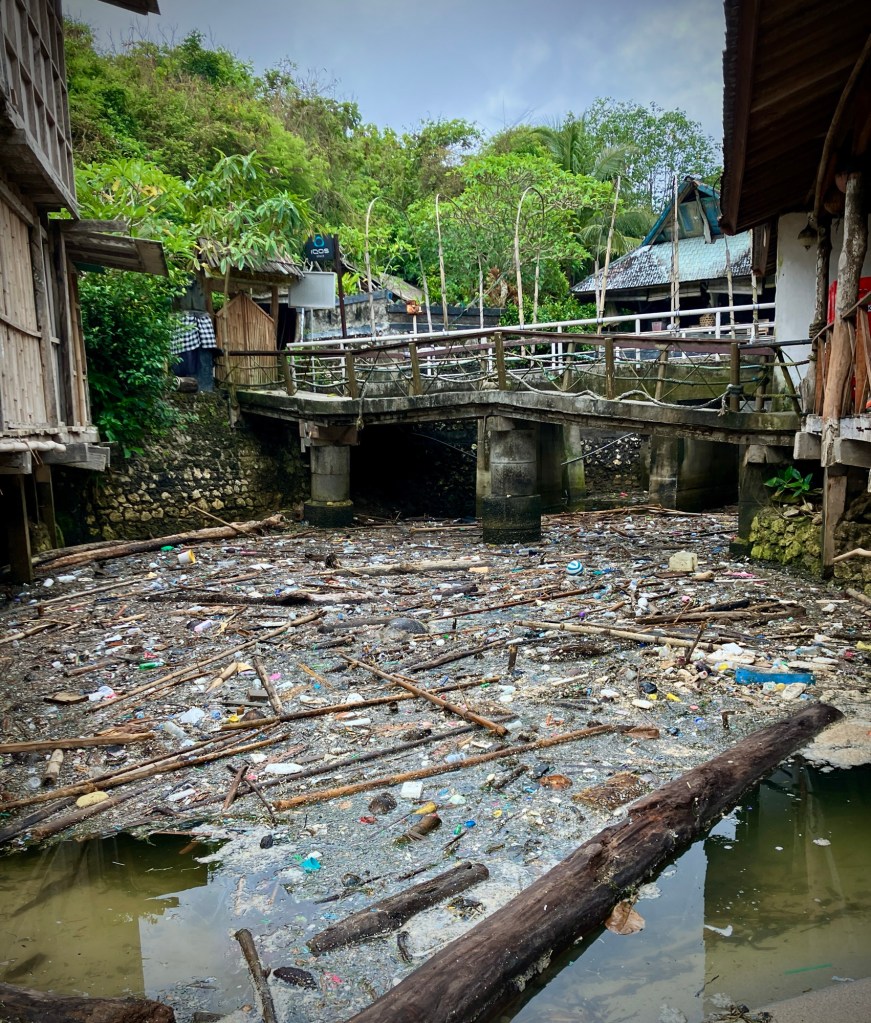
Rotating left from that photo, here is the backwater area. It’s hard to identify the area and exact source of the plastic pollution, but the problem is clear around the island.

During that trip, we spent time in Pemuteran (NW Coast), Ubud, and Padangbai.  The ocean plastic problem here is somewhat seasonal as the rainy season (Nov-Mar) washes much more plastic into the sea from creeks, channels, and other areas. It swirls around the islands and is carried to sea and redeposited into coves and beaches. In 2018, along with some well intentioned Canadians and Aussies, we would spend some time picking up plastic after each high tide left a deep line of plastic debris. But we soon realized the futility of this exercise. And I still have nightmares of my arms stuck in a giant plastic bag and debris flotsam mess in Padangbai, while trying to snorkel at the Blue Lagoon Beach. If you’ve travelled across SE Asia, then you have certainly seen the same challenges in other countries.

Heading down to explore the beach, hoping for the best. Did we cause this and are we adding to this by being here?

So Bali, and much of the developing world, has a massive sanitation, disposal, and plastic problem. If you have been here and not noticed it, then you probably isolated yourself in 5-star resort grounds or have been lucky to be in a clean area during the dry season. And much of Bali is still charming and peaceful. We also generate a huge amount of waste in the US (we’re #1 baby!) but it is generally disposed of properly.

Surf beach funkiness and faded glory feel at Balangan
The infrastructure of Bali varies, but is certainly still developing. More economic development may lead to more opportunities and spending on the environment and sanitation.

So we decided to spend 3 nights here and assimilate a bit into the tropics after a lot of cold weather and moving about the US and UK. We found a lovely, locally run, small resort on a bluff above Balangan Beach. We know the traffic here is a nightmare, so we planned to just get here and relax with one trip from and to the airport. We walked to a few local restaurants as we could, but basically stayed put for a few days, which is rare for us. The walking is not great on the busy back roads and the maze of historical alleys and streets is generally disconnected and cutoff by development or geography, so taking a scooter or car even to go short distances is the norm in most areas.

The view of Balangan Beach from above Sunset Point. A reliable swell hits the reef and creates beautiful surfing conditions.

We did not want to add to the traffic as much as possible and also strived to minimize our single use plastic use. We almost never use plastic bottles in areas with safe drinking water. And if the tap water passes the sniff and flotsam test, we boil or use our UV SteriPen. The tap water may not always taste the best, but this treatment ensures we won’t get sick from any microbes. The water may still have some undesirable elements, but those generally won’t harm you in limited doses. And as Cheryl likes to say, it may make us stronger!

There are over 10,000 hotels, guest houses, and other lodging on Bali, and dozens just in the small Balangan area. Light traffic here as it’s at the end of the road.

But regardless of what little steps we take, just traveling here inevitably generates a lot plastic waste that may not be disposed of properly.  And of course, so many broader impacts from flying and local transport. Sustainable development is so hard to get right, and even more challenging when the economic disparity between the locals and tourists is so great.

Dragon fruit muesli bowl and a banana pancake, a classic Bali visitors breakfast. Cows grazing peacefully in the distance. Plastic straws at our guest house not appreciated.
Jimmy Beach cafe is the place to go on Balangan, and we really appreciated the paper straws!
Very well-presented and delicious Avocado toast at the Jimmy Beach Cafe. Is Avocado toast the new travelers’ Banana Pancake?

Now I realize that the carbon generation of our travels are not helping the planet and that’s a bigger ethical question for all who get around by jet. But the plastic embedded everywhere here along roads, ditches, coasts, beaches, and forests is visible. And it’s terribly depressing, and we find it nearly impossible to enjoy ourselves in the midst of it. But it’s also symbolic of the overdevelopment and a government that maybe isn’t always looking out for the locals. Not as much free and happy local space left here.

Collected plastic bottles, we assume for reuse or disposal?

And coupled with the low standard of living and income disparity, we find the whole scene tough to swallow. It’s not that we don’t accept the income disparity, but here it feels like the locals have been pushed to the margins and lost a lot of what makes the area livable, all in the name of even more touristic development.

Every residence seems to double as a surf shop and travel agent, but very little business here in February.

Maybe Hawaii got it a bit more right by limiting new resort and tourist development expansion the past 30 years. That has made Hawaii an expensive place to travel, but most of the islands are pristine and many areas are protected. There is still the local/tourist tension there for sure, not to mention a legacy of cultural appropriation and displacement. OK, maybe Bhutan is getting it right.

The local Bali cattle are smaller, very tame, and resemble deer, especially when they are young. They are very effective at clearing local vegetation.
Cheryl above Balangan Beach. The grass is kept short by grazing cows.

But Bali is a large and complex island with over 4 million people, and 6 million annual visitors, with a huge variety of experiences and places. Indonesia is still a developing country of over 200 million people and tourism brings huge income and opportunities when applied correctly. It’s a lifeline and draws people from other islands to work. Indonesia is also embarking on its goal to spread the love and have higher end tourism in their “10 Balis » initiative. (More on that in our next post)

Dramatic sunsets and clouds from our balcony.
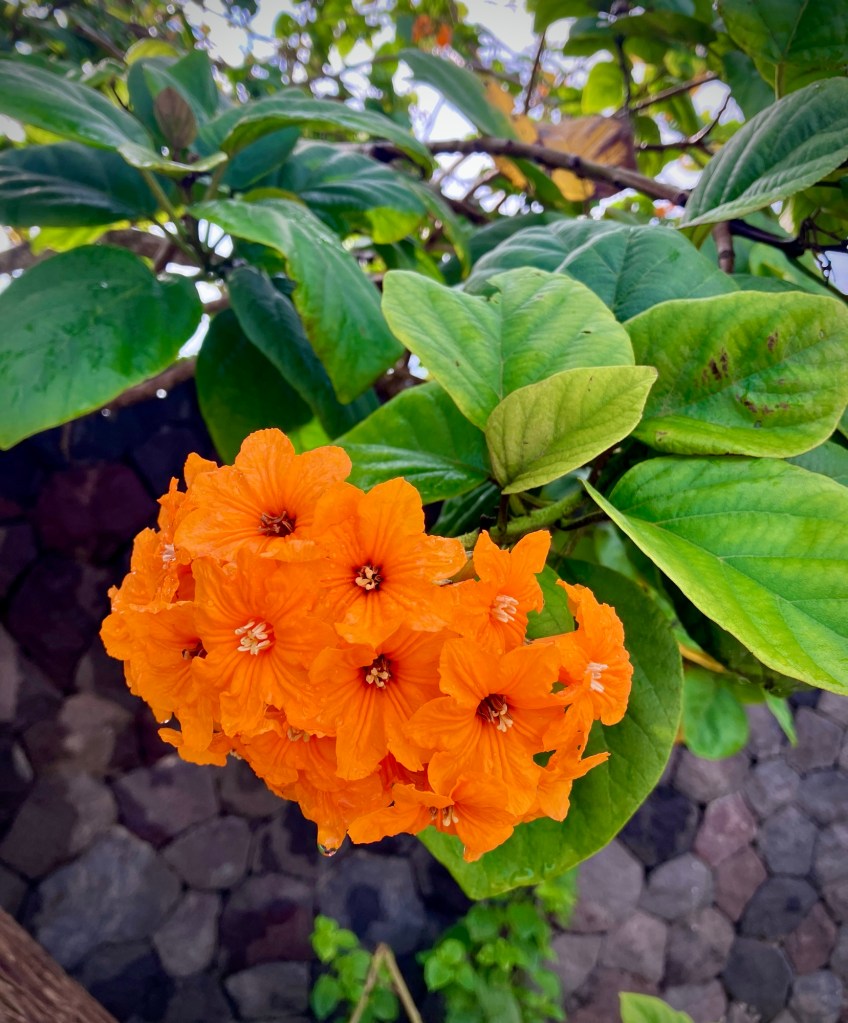
Beautiful flowers on Bali
It’s beautiful here and charming, but we feel a bit out of place without our bicycles and a transit card in our hands.

So we are now off to East Nusa Tenggara or Flores Island as it’s better known for a few weeks of exploration. It’s certainly less developed than Bali and also one of the poorer regions of Indonesia with a vast array of cultures and religions. What will it feel like compared to Bali? Each Indonesian island is so different. Stay tuned.

Au Revoir Paris – Hello UK Winter!

All good things must come to an end, so after a lovely month in Paris, we finally had to close the doors to our apartment in the 12th Arrondissement. We were headed into the darkness of the UK and the approaching winter solstice. A proper northern winter will build character, we kept saying to each other. (As to why were making this choice in lieu of an island in SE Asia!?)

Je suis prêt, on y va!
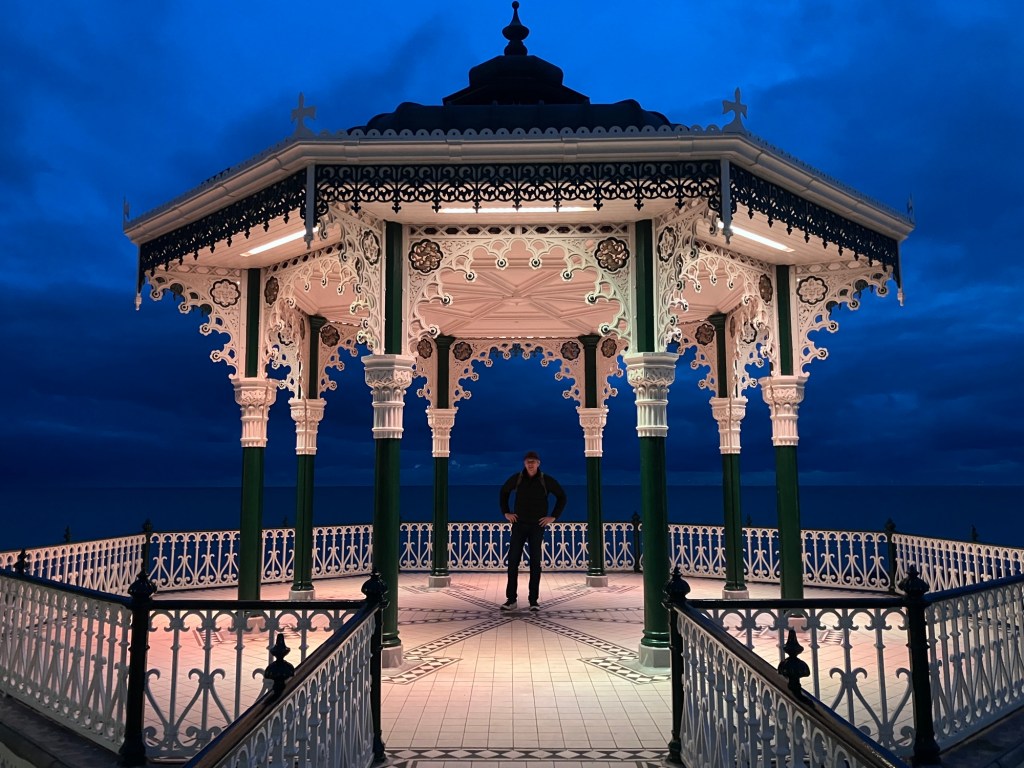
The Brighton Beach Bandstand

It’s not that we particularly wanted to leave France, but we had to get out of the Schengen zone as we were at Day 89 of our 90 day allowance, so cutting it a bit close. And there really is lot to love about the UK, even in winter. So we caught the post rush hour metro to Gare Du Nord for our 11am Eurostar to London. Yippee, a train not a plane to the UK! 

Our enthusiasm for our train trip was soon tamped down after we passed through Eurostar security and immigration to find the waiting area packed to the gills, with people lined against the walls, and sitting on the floor. This of course triggered my immediate moaning about the woeful under design of the waiting area. « Hey, I’ve sized waiting areas for HSR services, and this is a mess. « We didn’t get any photos of this fiasco, but trust us that it was very crowded.

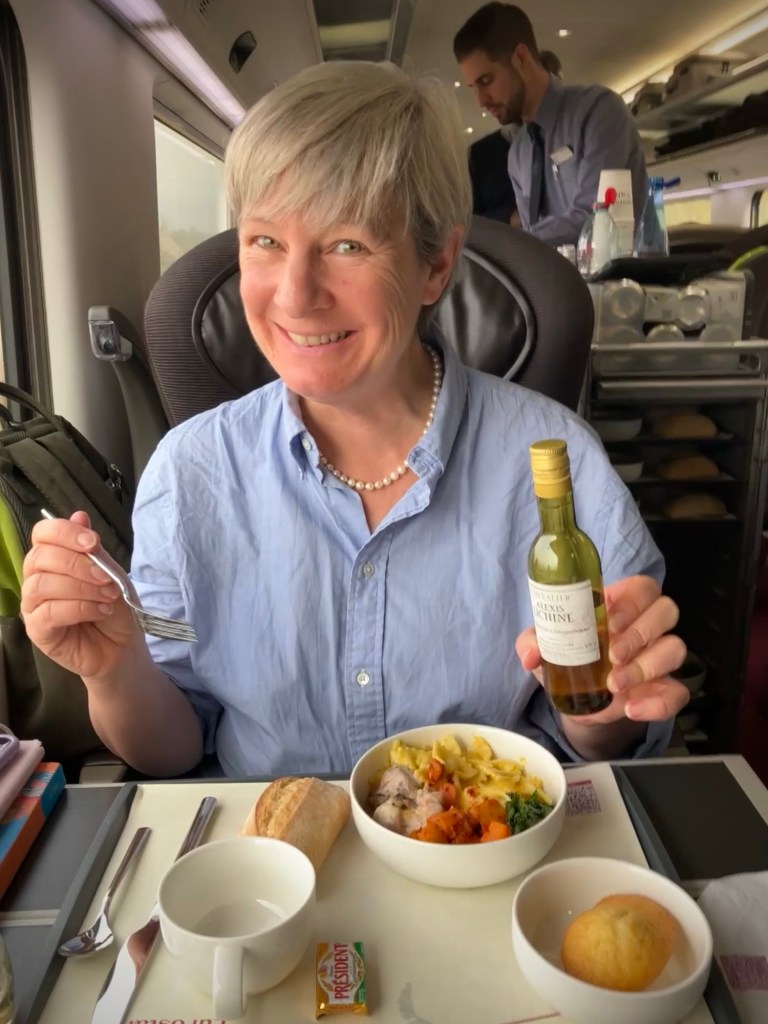
All minor travel woe is forgotten. Eurostar Plus class was nice with spacious seats and a light meal. Very civilized.

Well, as it turns out, the normal cramped  quarters on the mezzanine of Gare Du Nord were stressed by the load of 3 trains worth of passengers, as the 9 and 10 o’clock trains hadn’t boarded yet due to big delays. The E320 train sets carry nearly 900 passengers full, so 3 trains full is a challenge for any building design. But the situation was exacerbated by poor info signs and an inaudible P.A. system, so we didn’t figure this out until we saw the chaos for the boarding area and an attendant holding up a tiny paddle with “9:00” on it. They should have held us 11 o’clock folks outside security, but made no indications of delays to our service, and so we were still subject to the 1 hour advance check in cut off. Eurostar can definitely do better.

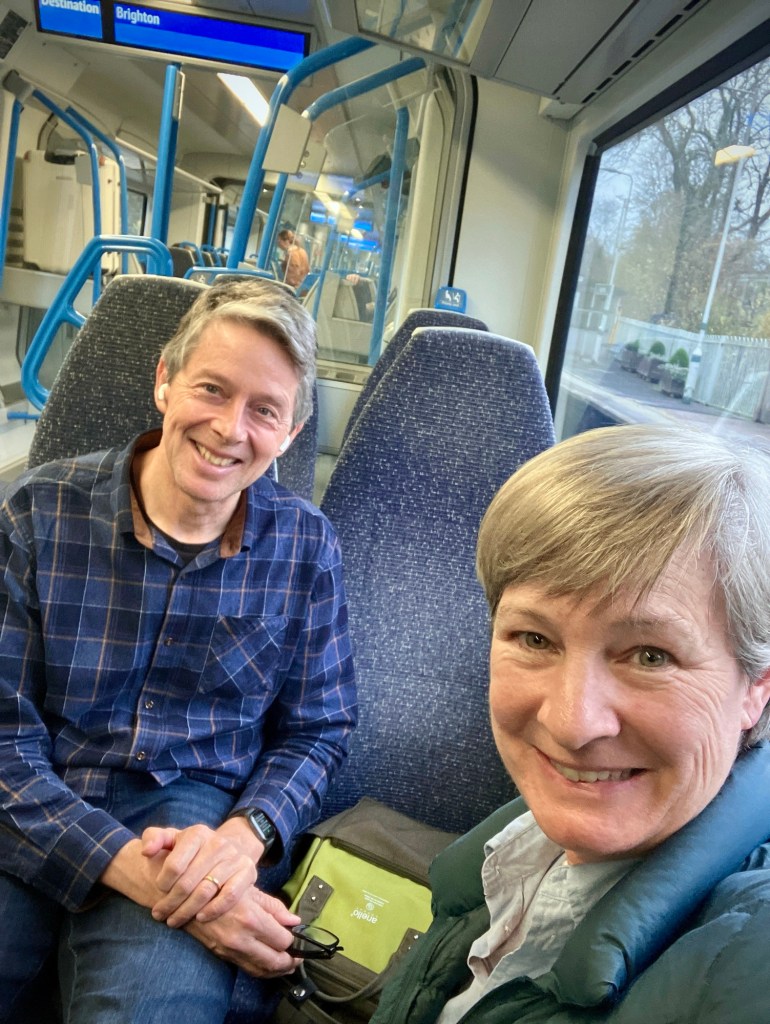
The Thameslink is fantastic. An hour to Brighton direct from St. Pancras International
Smiling in Brighton at the 4pm sunset!
The colorful beach huts of Hove; some color through the gray.
Keeping warm with a beach walk and coffee with our friends Gary and Ruth
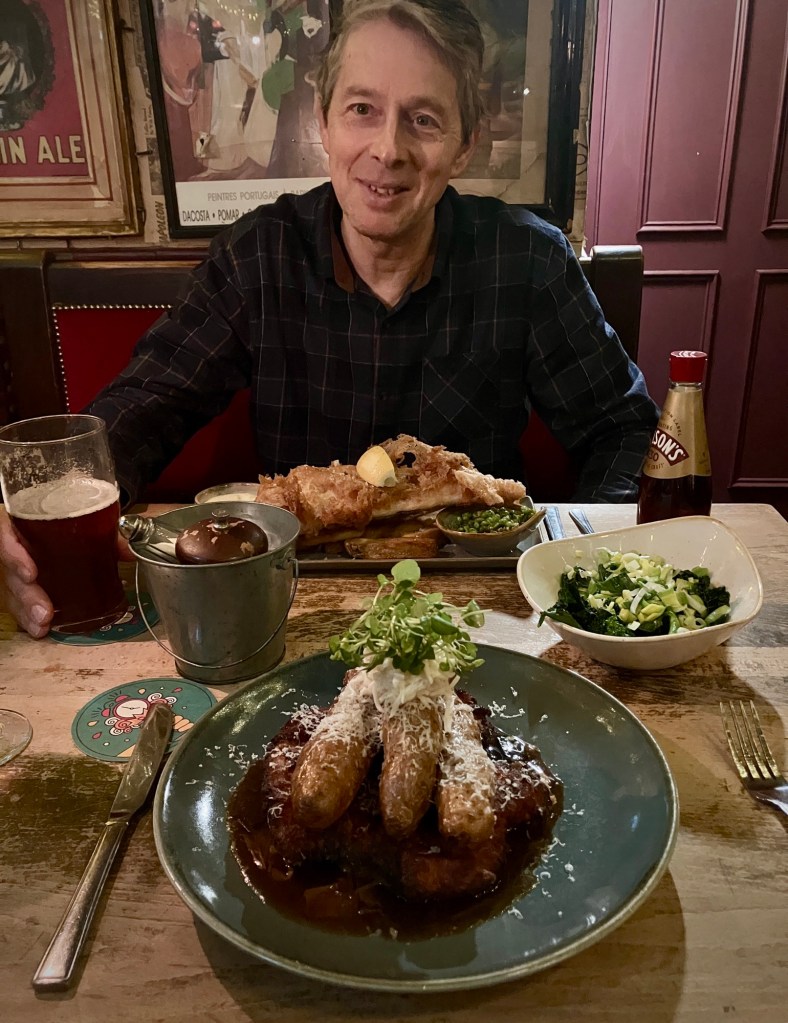
The expansive yet cosy Lion and Lobster pub in Brighton
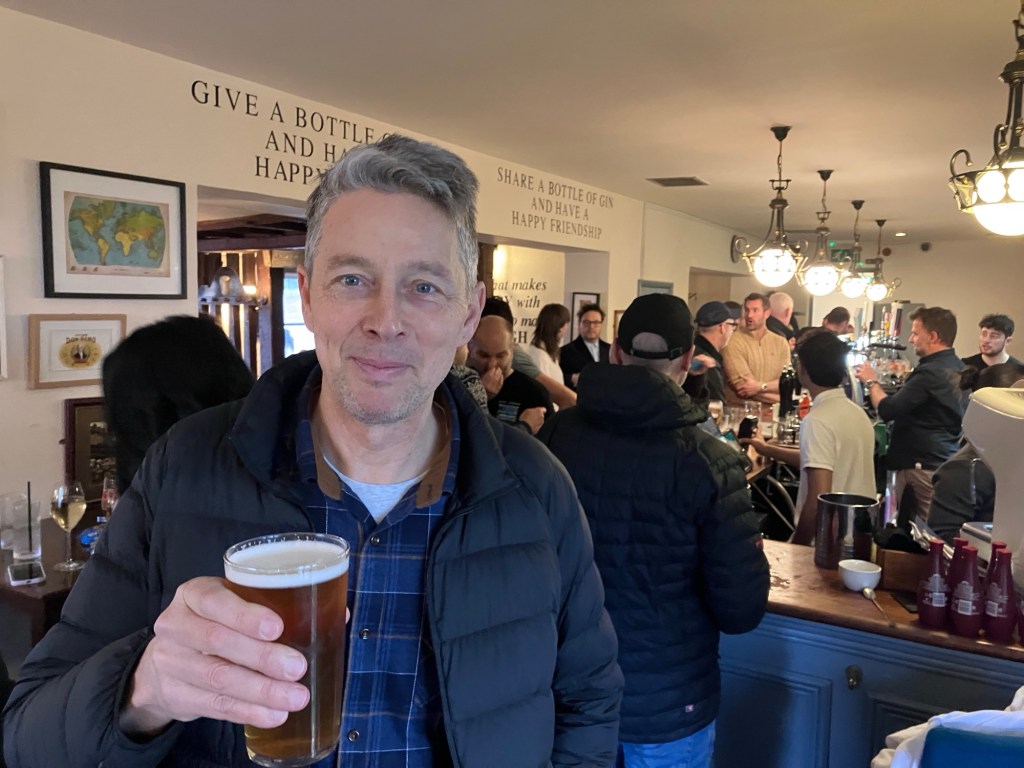
And my first hand pulled British craft bitter in awhile. Delicious!
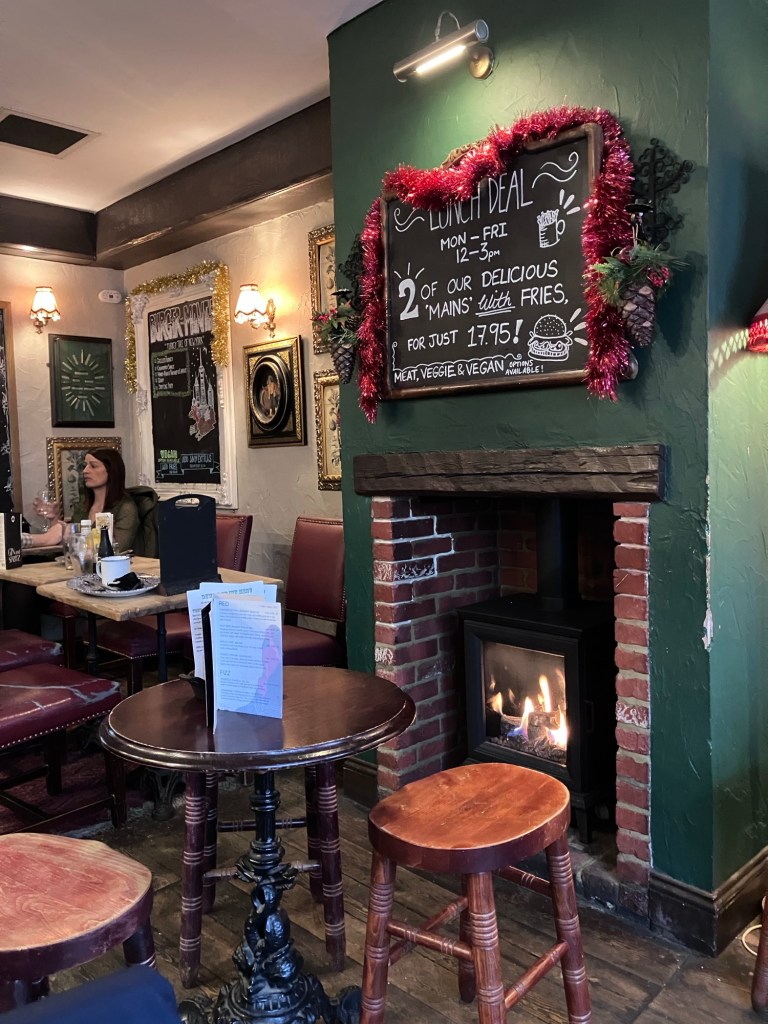
The cosy pubs of England are hard to beat in winter.
Have a seat by the fire.
Holiday cheer and lights abound.
Ok, maybe we were missing Paris a little.
Inside the Paris House (Le Pub) in Hove, the warmth and sounds of live Sunday night Jazz.

So our Eurostar train finally boarded after nearly two hours, and departed only 40 minutes late. But hey, at least we didn’t have our bikes -:) Our slightly agitated travel states soon calmed down as we took our Eurostar plus seats; which is a nice upgrade (but certainly not essential) from the standard service with the bigger business seat car layout and light meals delivered to your seat. And yes, white wine; which tasted pretty good after the misery of the waiting area and boardiing process. Note that the Plus class is a much cheaper upgrade than business/premier class, so often only €20-€40 more than standard. Eurostar business seems outrageously priced in comparison as same first class type train seats as the Plus service: just fancier food service; dedicated boarding, and a lounge….ok, the lounge might have been nice our day; but not worth €100 more each! And it would have been packed with 3 trains worth of people.

The windswept beaches of Brighton in early December
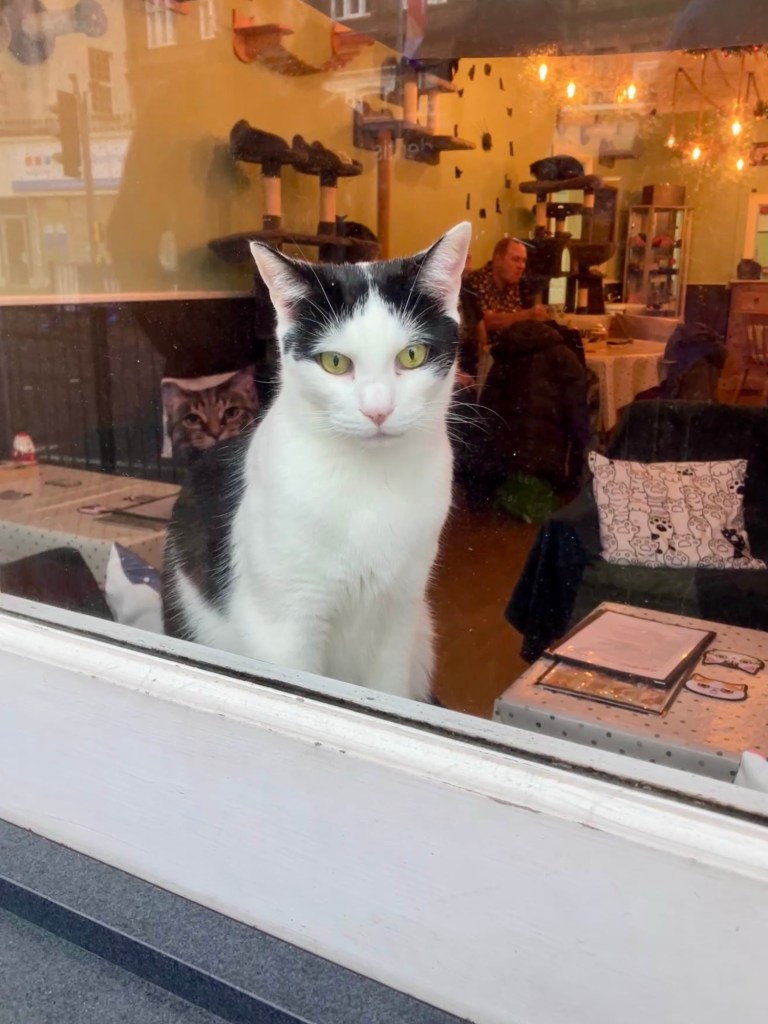
Cat subtlety mocking Cheryl out in the cold.
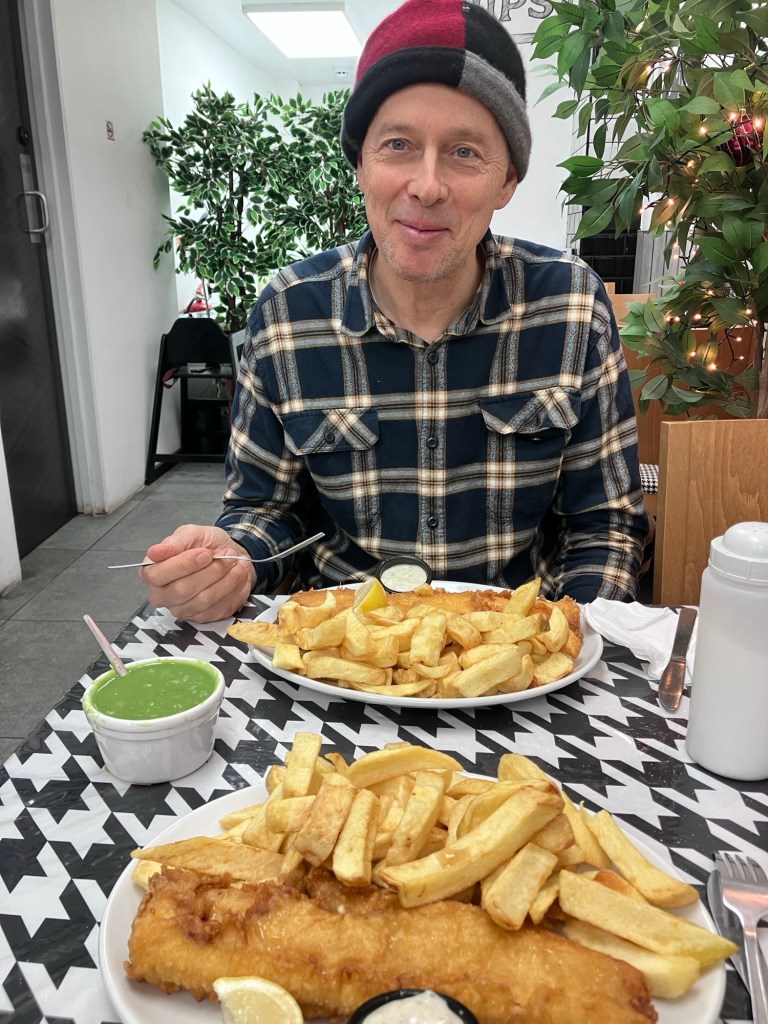
Serious winter fuel up at Sea Breeze Fish & Chips in Hove.
Ready to get out and put those fish & chips to use.
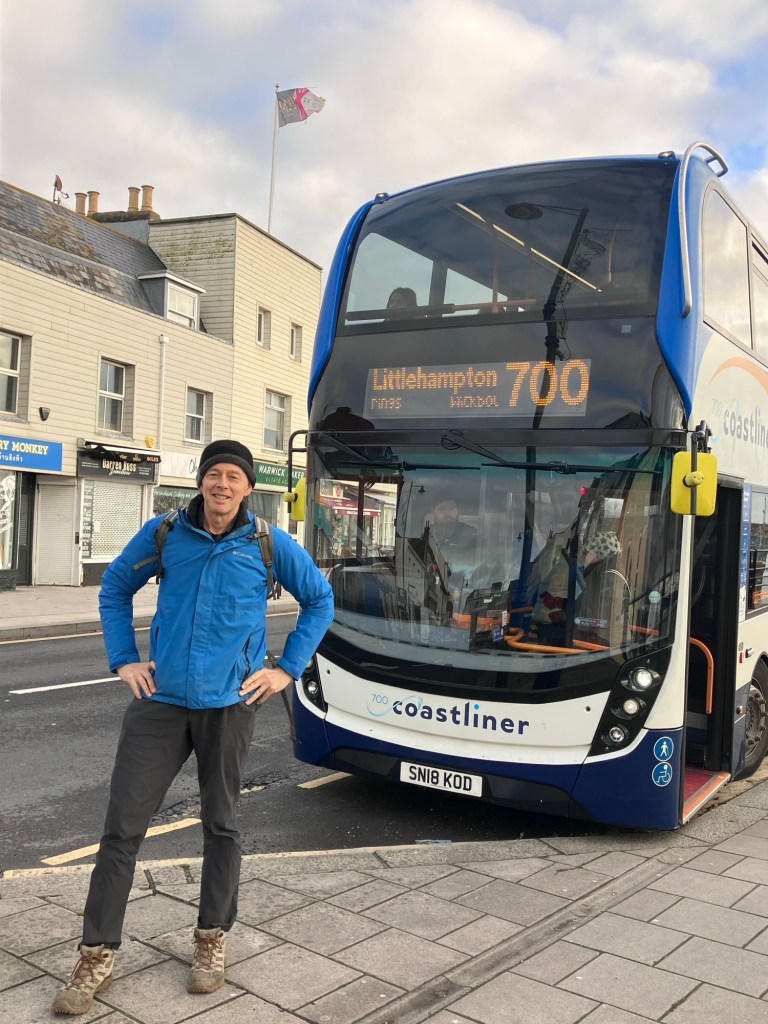
In addition to great trains, the Brighton/Hove area has great transit with real time info and frequent service, including up and down the south coast.
The wonderful footpath system of the UK.
Enjoying winter sun and views on Mill Hill above Shoreham by the Sea.
Sheep looking inquisitively at us for guidance (or maybe food?).

We love returning to places we like; and we have fond memories our 2 week stay in Brighton in 2022. Ok, it was Hove, actually. This time we stayed for a week on the Hove/Brighton border and closer to the water. A great choice as it was a walkable and lively area, but less touristy than the Lanes or areas around the train station. I even went back to the same place to get a haircut as 2 years ago. Brighton was also an easy shot back to London and our next destination, Norwich.

Cheryl relaxing again on the Thameslink, where we would transfer to a Greater Anglia train to Norwich.
Norwich is a small city in Norfolk County with a lively center, relaxed yet sophisticated vibe, and an engaging history.
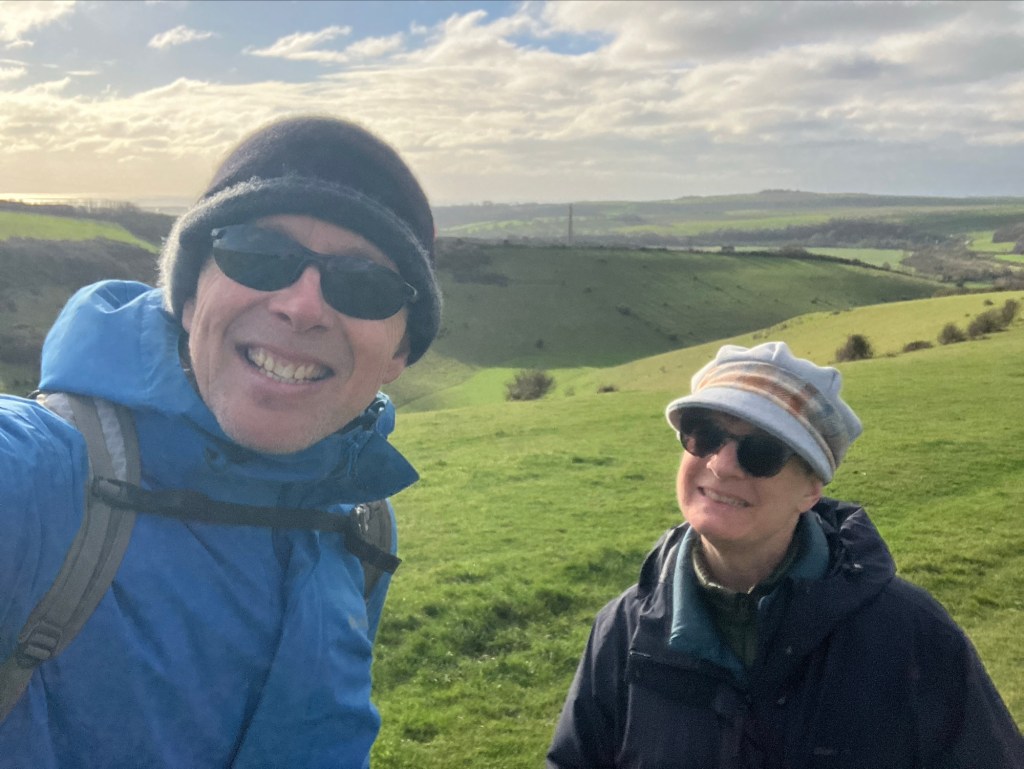
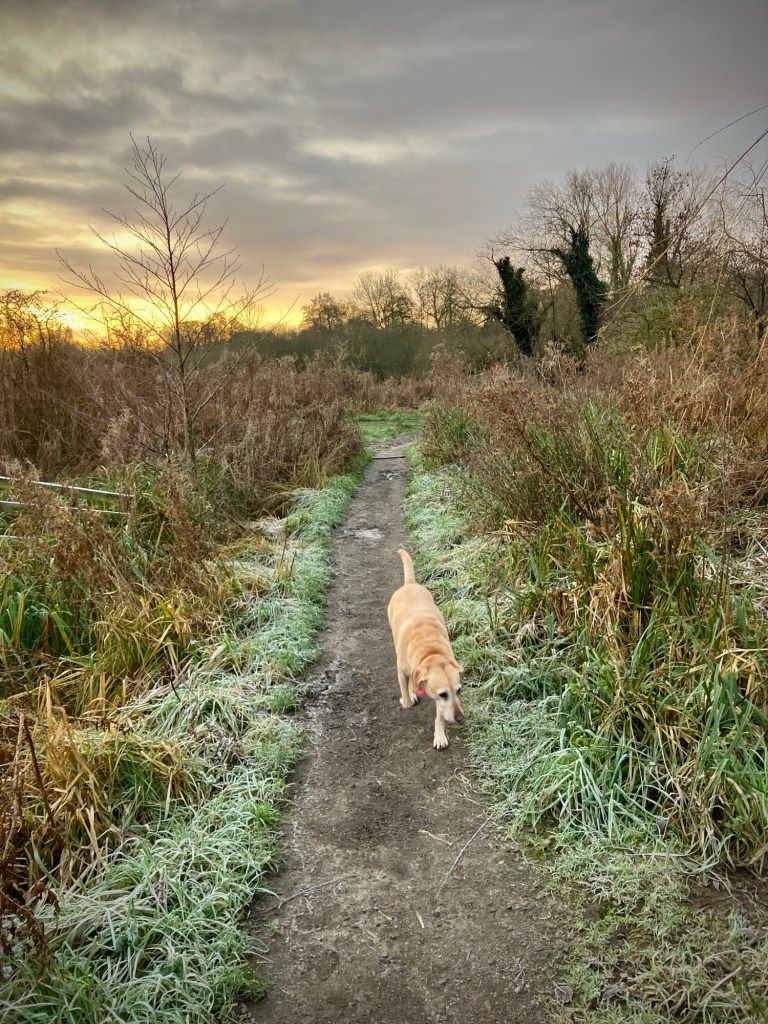
Our stay in Norwich included looking after a sweet dog, and walking the dog always got us out, even on frosty mornings
Pre Christmas buzz in the beautiful Art Nouveau Royal Arcade in Central Norwich.

So what was our strategy for the UK winter? A pub a day, lots of walking in the short « daylight » , and catching up with some friends as possible. The dark winter days were a bit tough for these Californians, but the countryside and old cities are beautiful; and there is nothing like a cosy English pub on a cold, rainy (or snowy) day in December. You often open the door to find a warm buzz of people, pints, and if lucky, a nice fire to sit by.  We often cite the footpath system and Pubs as what we would take from the UK to form our perfect Country.

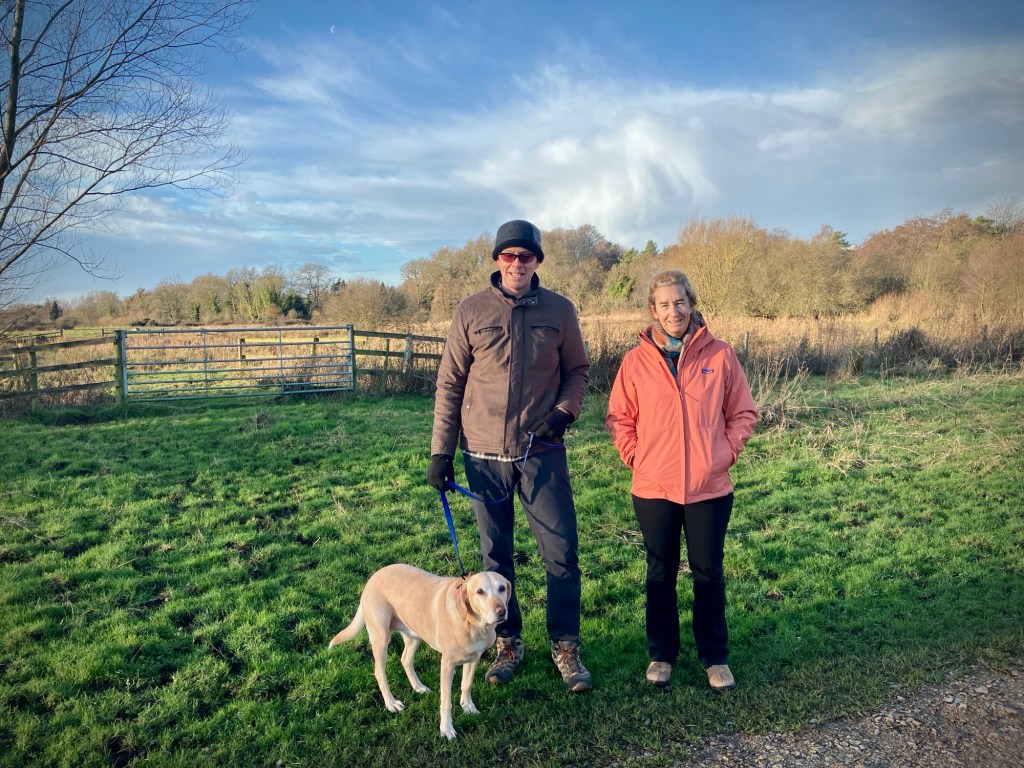
Our Norwich stay was greatly enhanced by our local friends Jon and Jane; here on the grounds of the University of East Anglia (UEA)
The UEA buildings in the background are part of the Norfolk Terrace student housing, a Grade II listed architeturally significant example of 1960s modernist design by Denys Lasdun and Partners that is now in need of reconstruction.
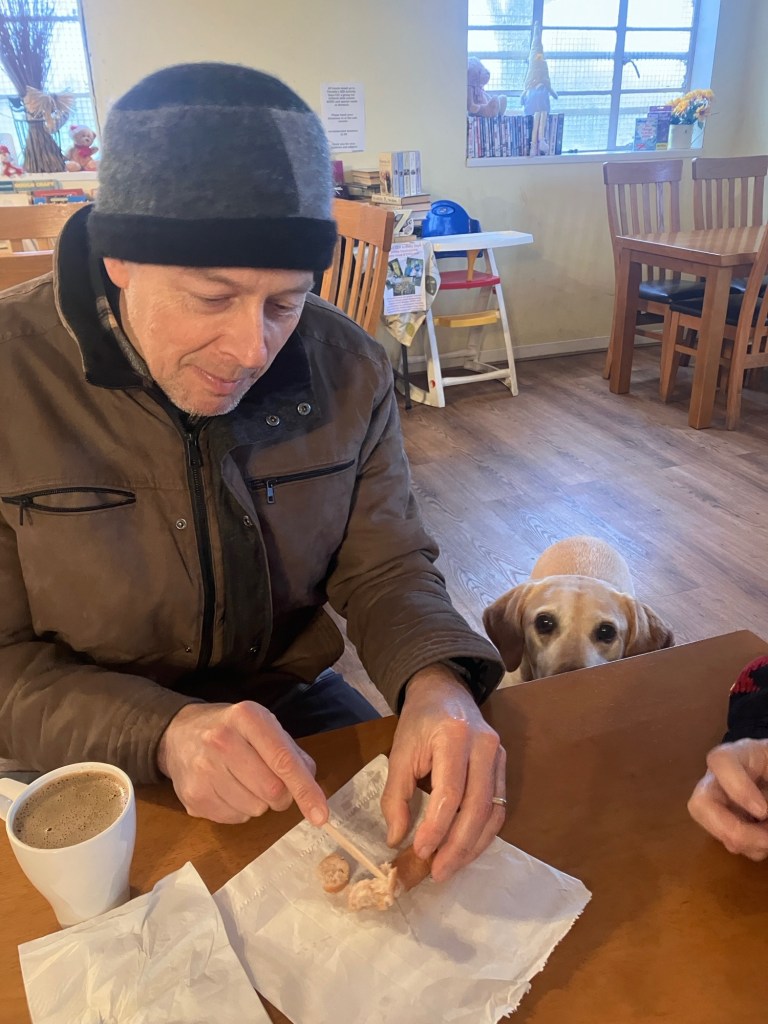
The old school Earlham Park Cafe was always a great destination on our daily dog walks, and Bindi loved their dog sausage for just £1.
Bindi knows the way to Sausage Cafe (sung to the tune of “Do you know the way to San Jose”).
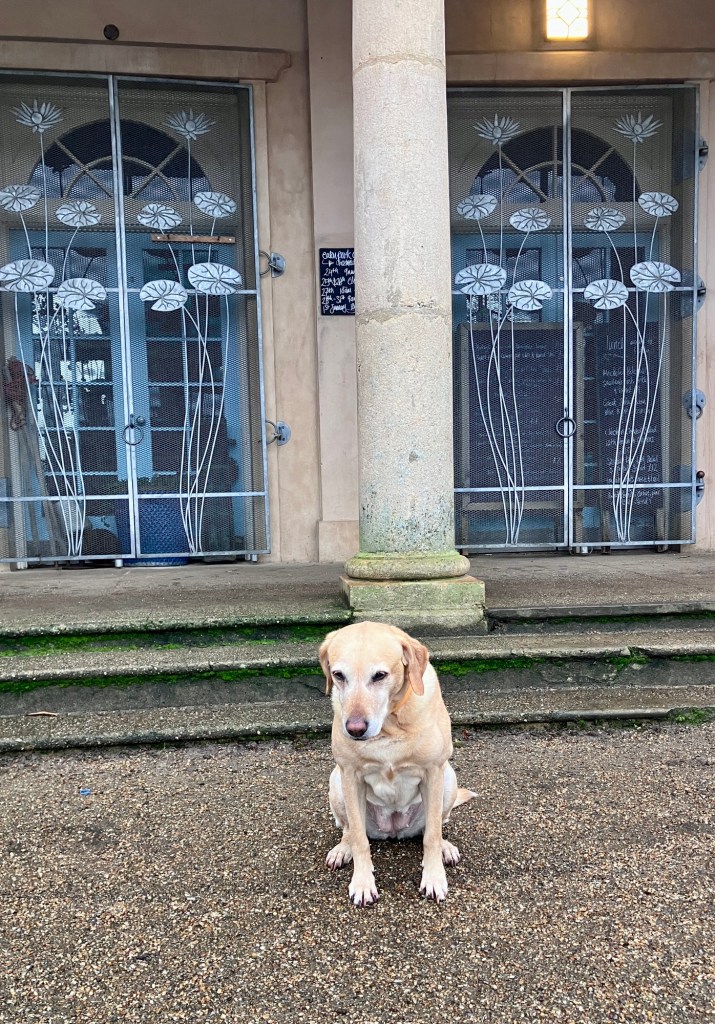
Sad dog during the Holiday closures of our other common destination, the Eaton Park cafe. Sorry, no dog sausage or Bap today Bindi.

After a nice recuperation in the familiar grounds of Brighton, we set off to the uncharted lands of East Anglia, and specifically Norwich. We had scheduled a long house sit to take us through the New Year and I admit, I had to look up where it was on the map, even after years of roaming about the UK. It’s the hub of Norfolk County and home to about 140,000 people.

The peaceful UEA campus grounds along the Yare River.

Norwich is less than 2 hours by train from London, but a world away, and thriving with its own unique history as a center of wealth and prosperity in England going back 1000 years. During the Middle Ages it was a close second to London in stature, but started to recede during the Industrial Revolution as it had no coal or swift water to power manufacturing.

Jane showed us a stunning view of the Broads National Park at the top of St. Helens Church in Ranworth.
The climb up comes with warnings.
And rightly so.
It was great to have Cheryl’s sister Kathy join us for a week in Norwich.
Even (well behaved!) big dogs are welcome at most pubs in Norfolk County.

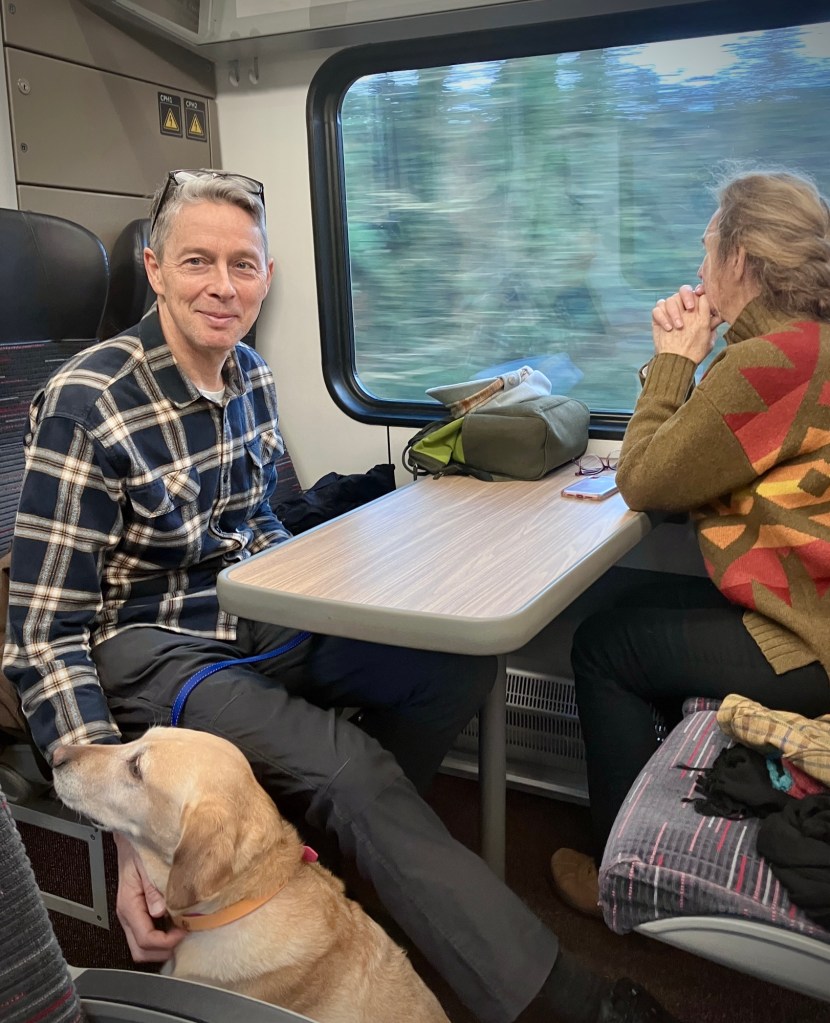
We had a nice warm cosy house and garden to call home for 3+ weeks, complete with the sweetest dog in the world. Our daily walks with her took us through the neighborhoods, parks, marshes, and rivers of the area, and certainly helped us feel at home over the holidays, especially in this dog crazy area, where dogs are welcome in almost all restaurants, pubs, and most stores. And our easy going golden lab was a popular addition to a few bus and train adventure as well, where she was welcomed and coddled by other passengers. 

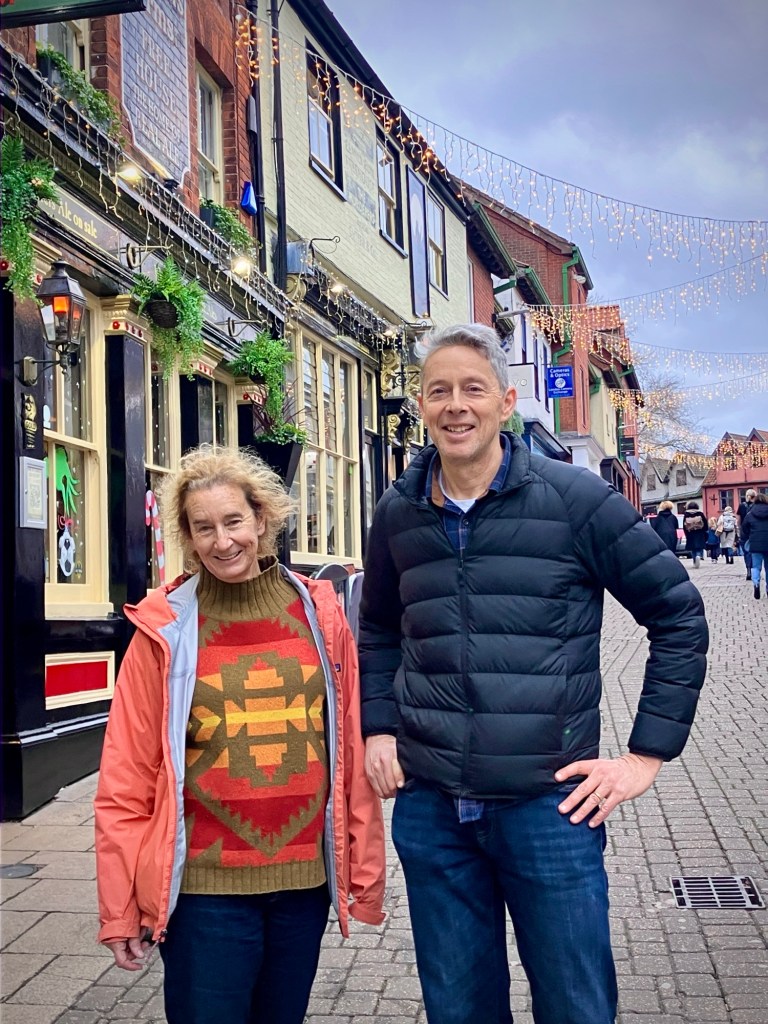
Kathy and I in busy central Norwich
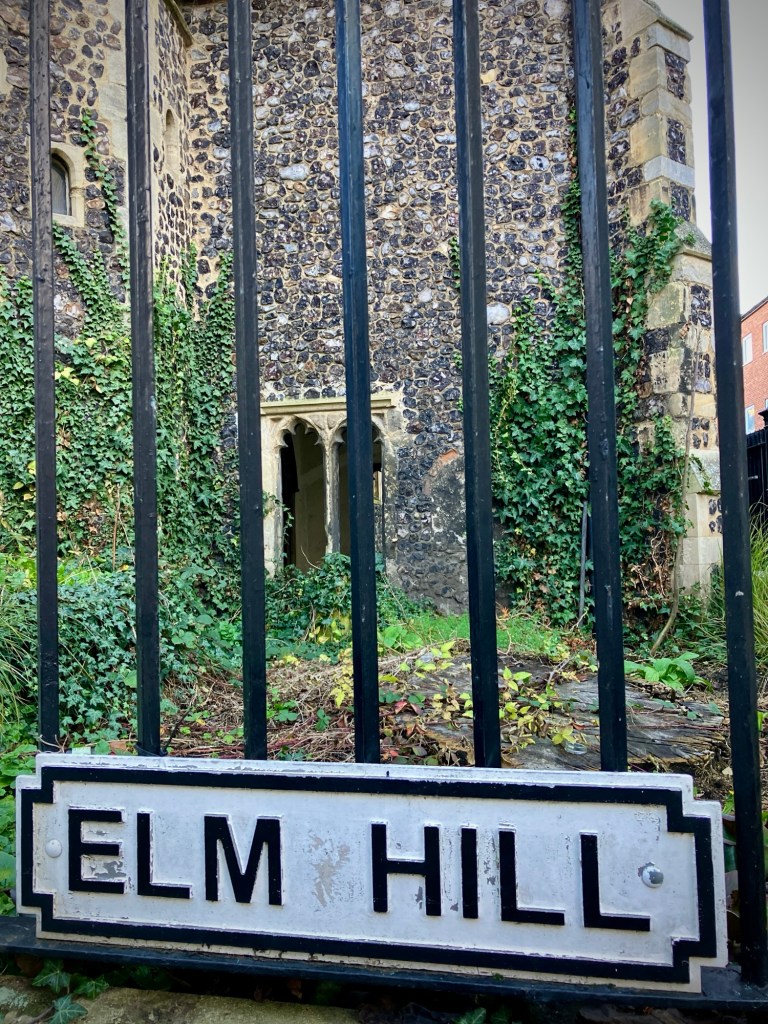
Elm Hill is a street in the oldest part of Old Norwich and has hundred of intact Tudor era buildings dating back to the 16th Century.
Lots of courtyards and alleys to explore in Norwich
Norwich has the highest concentration of Medieval churches in England, so many have been repurposed for other uses, including crafts, arts spaces, and this antiques and collectibles.
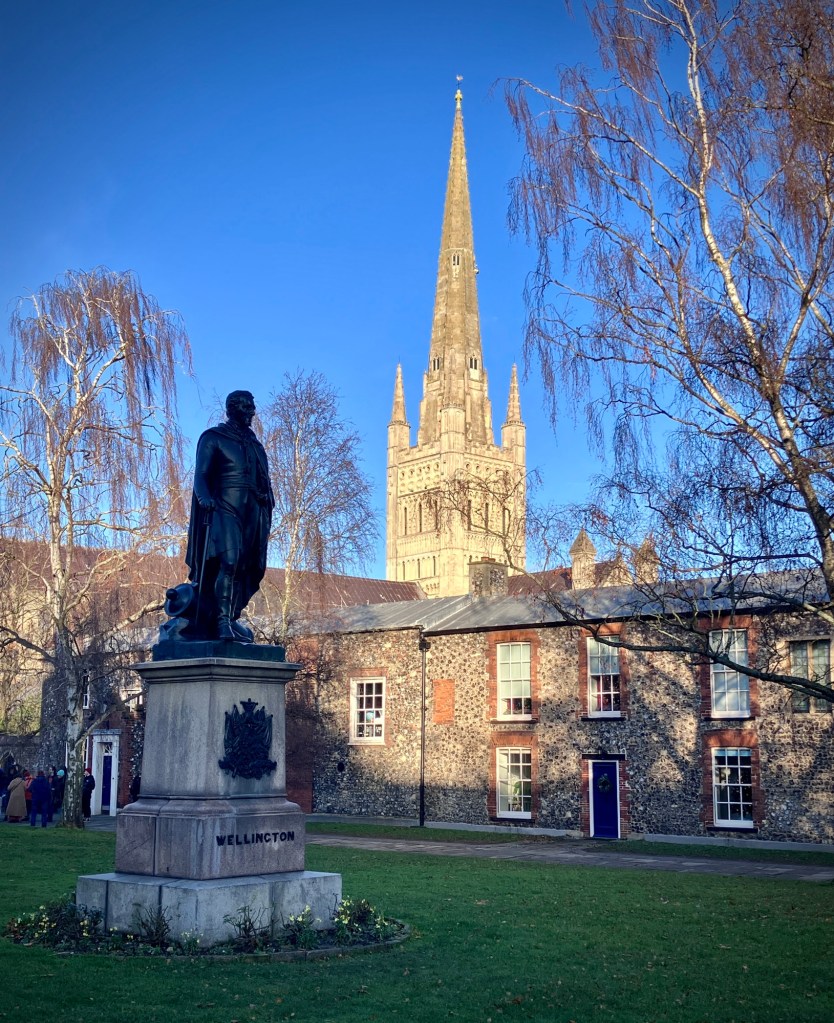
The spectacular Norwich Cathedral is over 900 years old at its core and sets the atmosphere in old Norwich.
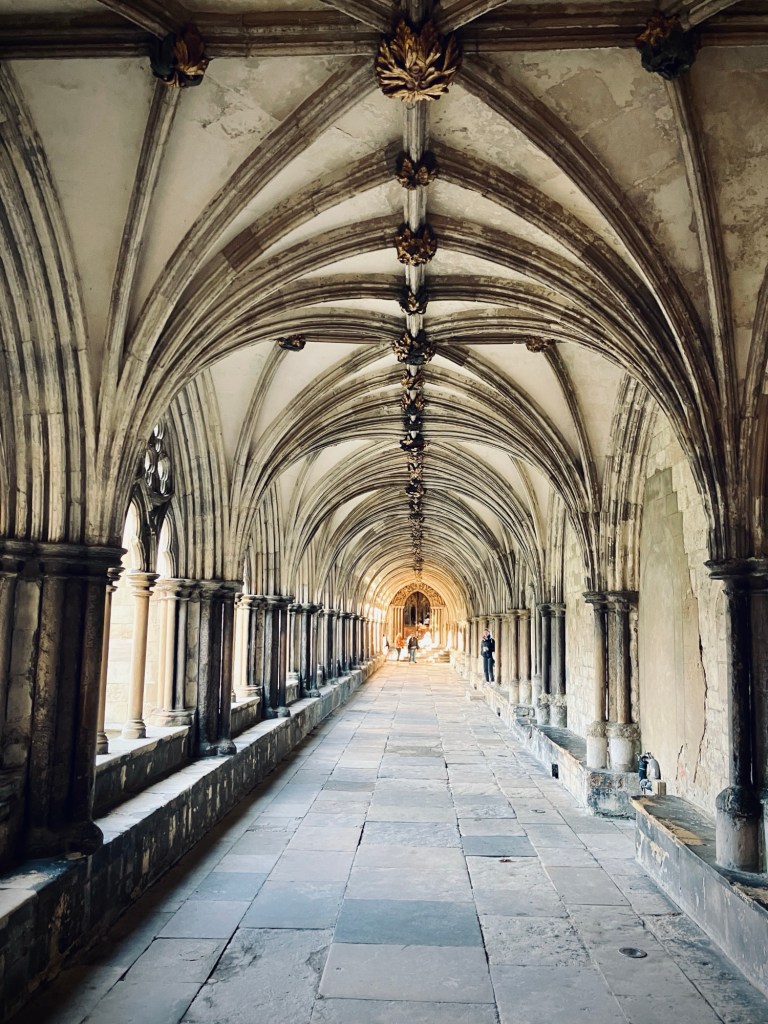
The Cloisters attached to the cathedral are the largest monastic cloisters in England.
Bindi on the train to Comer.
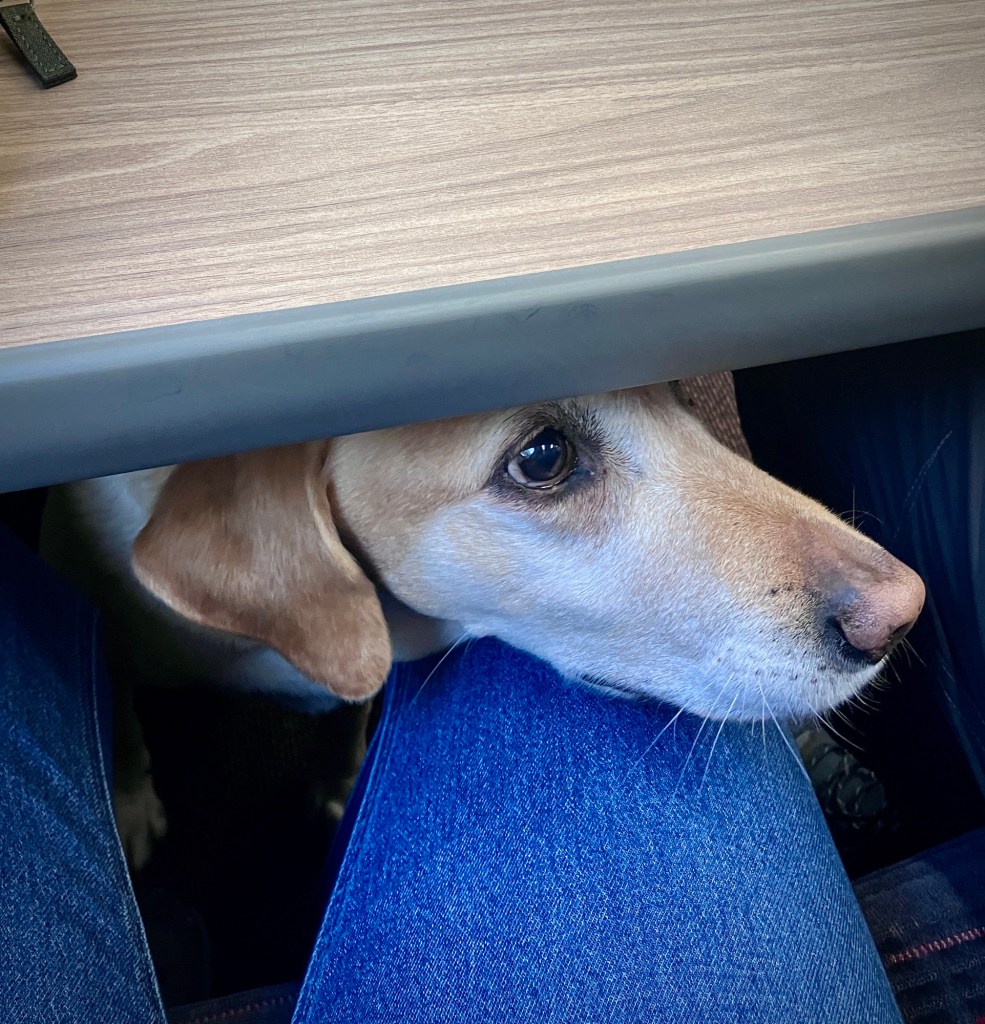
Bindi needed some reassurance on the train.
Cheryl loved having her sister here, and a day out at the Norfolk coast in Cromer.
Norwich is home to one of the best independent Department Stores in the UK , Jarrolds, which has three cafes, a massive gourmet food floor, and the more usual department store offerings.
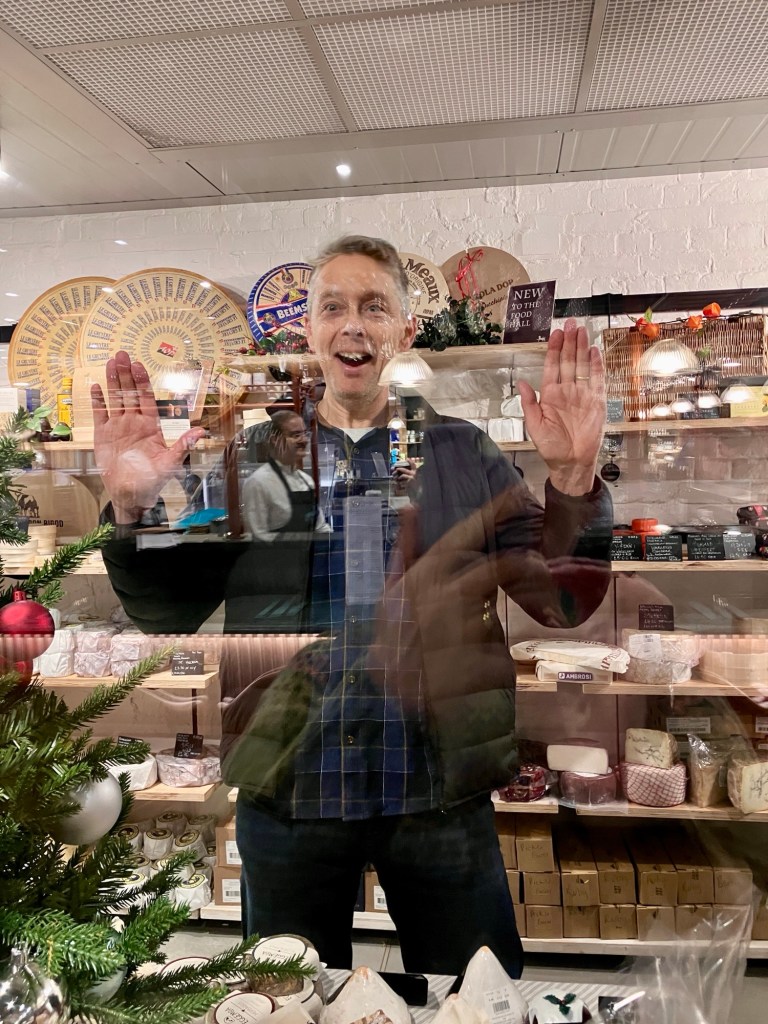
Trapped in the chilled cheese room at Jarrolds

We had a great time uncovering the layers of Norwich history and exploring the area. This is one of the joys of slow travel; diving deep into the history and culture of an area that most people from Abroad don’t even visit for a day. Norwich also has a few good small museums and we even took in a classic British holiday Pantomime performance at the impressive Art Deco Norwich Theater Royal, and almost felt like locals, as we met our friends there as well, and even understood some of the quirky local jokes and references. But not all.

Outside Holkham Hall in Wells Next to Sea.
Cheryl and Kathy enjoying a mince pie and Prosecco at Holkham Hall, during our candlelight walkthrough of the historic 18th century country club state home.
The ruins of St. Saviour’s Church in Surlingham date back to the 11th century, but many of the large flint stone materials were eventually pillaged for construction in the 17th century. Amazing any of it survives.
It seemed everyone in the village of Eaton (part of Norwich) headed to the pub on Christmas Day for a pint. Most pubs are open for a few hours in the afternoon just for this purpose.
Or a delicious gin&tonic.

With our dog, walking up a storm was easy; but our next goal of « a pub a day » took some dedication and admittedly we missed a few days. but fear not, we doubled up on other days to catch up. We also discovered that the pubs are popular throughout the Christmas period, when so much else is closed. So to the pubs we went. Do as the locals we say.

Happiness is proper tea and a scone, cheddar, and chutney plate at the Earsham Street Cafe in Bungay.
Delicious and worth a stop before or after a local walk.
Our 6 mile loop walk from Bungay.
Part of our walk included Bighods Way, named after the local 12th century Norman family and their castle.
Beautiful winter light on Bighod’s Way near Bungay.
It seemed Bungay residents knew how to brighten up the winter with paint.
At one of our favorite local pubs, The Alexandria, in Norwich’s Golden Triangle neighborhood
The St. Andrew’s Pub in Central Norwich. We were really working at our “pub a day” goal.
Pinot Gris and a pie.

The weather was mixed during our stay, but blessedly dry for the most part. But there were many days of gray (the grisaille!) with heavy low clouds and a bit of cold mist. But the pubs did their trick, and were a great respite on the dark sunsets (at 3:30!!). Friendly locals and lots of conversation…not to mention my favorite real ale cask bitters. 

We’ll have fond memories of our time in Norfolk

We highly recommend you go a bit out of your way to see Norwich. We plan to return, but perhaps in spring or summer when we can sail on the Broads and see another side of the beautiful area. Happy New Year and new adventures!

Warm Autumn Days in Lyon

We missed summer in Europe in 2024. Like really missed it. It was great to be in the US for the summer, but it’s been a relativley cold spring and fall in Europe. So we were thrilled to get a last gasp of pleasant fall weather in one of favorite French cities, Lyon. Some places we seek out, such as our return to Taiwan and further exploration of Malaysia earlier this year. Other places in Europe we seem to end up in more often due to their location, and Lyon is one of these places since it’s usually our train gateway to and from the Vallée Verte.

Soft autumn light on the Rhône.

This was actually our fourth visit to Lyon, and the second time this year, as we passed through for two nights in March on our spring bike tour along the Via Rhôna. In March, we caught up with some freinds staying in Lyon, and explored a few new places, but didn’t have time to dive in deeper. So we decided to return and spend a week this time, and it was really a joy, from the lovely autumn warth and sunshine (finally!) to the amazing food and friendly people.

Shorts and sandals! On the pedestrianized Montée de la Grande-Côte, which takes you up to the Croix-Rousse neighborhood.
img_7270-1
A snipet of the vast Mur Du Canuts. A huge building mural depicting the rebellion of the local silk workers from 1831-1848, some of the first labor revolts of the industrialized world.

Lyon is France’s third largest city, but for many French, it’s the best. As we found out, many Lyonnais wouldn’t consider living in Paris or Marseille. It reminds me of the rivalry between New York City and Boston growing up; one clearly the biggest and dominant in cultural icononography, but the other more livable and approachable, espcially as a tourist.

Along the Saône River, which has a more industrial and gritty feel than the Rhône promendaes.

What I really enjoy about Lyon is the geography, as it has some dramatic hills at it’s edges, and the confluence of two major rivers at it’s core. You even get views of the Alps when it’s clear. It’s also very walkable and easy to get around by bike and public transit, although pales to Paris in its extent of metro and trams. I imagine the access to the Alps, Massif Central, and Mediterranean is a huge benefit with those with the means to get away regulary. Oh, and the weather is a bit nicer than Paris.

Ready to explore the Lyon Bienalle’s largest installations at the former SNCF workshops known now as “Les Grands Locos”.

We also were lucky to time our visit with the large Biennale Art Show, which showcases about 75 artists in venues around the city. The 2024 theme of “Crossing the Water” invitied a wide array of interpretations and seemed especially pertinant to the migrations of people across the globe due to wars and economic opportunity, as well as animal life impacted by climate change.

The installations at the SNCF Railyards site were often extrememly large scale and experiential like Hans Schabus – 
Monument for People on the Move
img_6891-2-1
Mona Cara – The Cactus
Slightly Creepy carnival installation by Clément Courgeon – 
The Cart of the Clever
img_6913-2-1
Lorraine de Sagazan & Anouk Maugein – Monte di Pietà at the MAC. Labeled and recorded, the objects that compose it are linked to traumatic memories.
I have also crossed the water many times, but luckily by choice.
Grace Ndiritu – The Blue Room features around a hundred prehistoric, Roman, Egyptian, medieval, modern and contemporary pieces from various Lyon museums. It was part the Biennale at the Musée d’art contemporain de Lyon (MAC).

I really enjoyed the Biennale and it was well attended but did not have a crush of visitors, due to its long run and dispersed venues. The artists also seemed to represent a modern and diverse cross-section of Fench and foriegn artists, something often missing from all the classical art museums of Europe. The other musuem we really enjoyed was the recently renovated Musée Lumière. Dedicated to the cinematogorphy and the history of the Lumière family, the Musée Lumière looks back at the various technical creations of Louis and Auguste Lumière and their family. It’s well curated and has a great collection of early film equipment, as well as engaging and interactive elements, all set on the grounds of the historic building and workshops.

We reluctantly skipped the striking new Confluence Museum as the week we were in Lyon was one of the Autumn school holiday weeks and anything child and family friendly was very busy….saved for our next visit to Lyon.

The Place Des Jacobins dates back to the mid 16th Century is an important historic junction of 12 streets. The fountain was added later in 1885 after the start of the Third Republic and some disputes about content. Public art and monuments are taken seriously in France.
img_7302-3-1
Off the bikes and back on transit!
Paul Bocuse looks over the street nearby Les Halles. He is Lyon’s most famous chef and has a legacy 3 star Michelin restaurant and the new Les Halles is named in his honor.
The way the locals eat and drink in Les Halles.
img_6684-1
The food presentation at Les Halles is often like a museum installation.
We opted for a classic Moules marinière feast at Chez Lyon in Les Halles. Mussels are generally in season from August to January.
We probably could have shared a bucket, as they were huge! But sooo good.
I can do this…and I did, as well as about 1/3 of Cheryl’s bucket -;)
The typical chimneys of Lyon with Grafitti/Art?….how did the the street artists get up there?
The famous Frédéric Bartholdi fountain featuring Amphitrite looking over the four tributaries of the Garonne River….in Bordeaux?! It was his intention to sell this to the City of Bordeaux in 1892, but Lyon scooped it up instead.
We stayed in an apartment and a hotel for parts of our visit, but both were just a block from the Left Bank of the Rhone; a perfect location to access all the city and the river’s many cafes and 5km of paths, but out of the tourist zones.
img_6915-1
Lots of space for people, dogs, and bikes along the extensive Berges du Rhône.
Selfie on one of my frequent runs along the Rhône, with the Mussée de la Confluence in the distance.
Access in pedestrianized zones is generally controlled by retractable bollards activated by residents and delviery vehicles only. Why is this hard to transfer to US cities?

Besides the great variety of food in Lyon, we really were impressed by the lack of impactful car traffic in most nighborhoods. There are some busy main arterials, but in general, you can walk freely and cross small streets with ease. There are 7 tram and 4 underground metro lines that cover the ciy pretty well, and an extensive bike network. And as in much of France, they are investing more in public spaces for people with a huge project to expand car free space in the commercial core, not to mention a massive renovation of the always busy Lyon Part-Dieu train station. As always, the surface tram lines are a nice way to get around and sightsee as well.

Roman ruins are tucked into Lyon in surprising locations, such as the 19AD Amphitheater of the Three Gauls in the 1st Arrondisement.
Random Roman ruin fragmants yet to be pieced togther by a grad strudent, and cats…always!
This cat seemed to be in some sort of guardina role. We kept our distance.
Taking advantage of water collected in the ruins.

Cities with layers of history are always intriguing, and Lyon city along the Saône used to be the core of Lugdunum, a thriving Roman city dating back to 43 BC. It may have had up to 200,000 inhabitants at its peak, which is in incredible as Lyon today only has 500,000 inhabitants in the age of modern infrastructure. There is a large Gallo-Roman museum, two amphitheaters, and lots of other remnants to be seen if you want to dive deeper into this history.

Beyond the usual recycling and residential composting, we were surprised to see public compopsting bins in such a large city.
Delicious dumplings at Enginomo. The culinary scene in Lyon includes a good variety of food choices, not just French Gastronomie.
The “Pot Lyonnais” The usual French wine ‘pichet’ comes with a twist in Lyon as it has a thick glass bottom and only accomodates 46cl instead of the usual 50. Apparently the factory bosses used these bottles to take a little from each worker of their weekly wine rations.
Notice the thick glass bottom, which also makes a “Pot Lyonnais”very stable!
Beautiful architecture, trams, and sunshine.
Former 19th century hospital is now the Grand Hôtel-Dieu, as well as shops and gathering spaces.
Low morning autumn light on Les Célestins Theater.
img_6906-2-1
We used the last few minutes of our 24-hour transit pass to take the funicular up to the Basilica of Notre Dame of Fourvière. It’s impressive and one of Lyon’s top sights, with views of the city from the nearby terrace.
Remains of the Gier Aqueduct which brought water to Lugdunum from over 50 miles away. Parts are still fully intact while other sections are now one with later development. Amazing.
This streetscape reconstruction in Sainte-Foy-lès-Lyon was still in the archeolgical phase, as Lyon sits atop layers of history.
Enjoying the nice weather on our exploration of the hills.
Colorful liquor bottles caught Cheryl’s eye at a casual neighborhood bistro where we had lunch in Sainte-Foy-lès-Lyon.
Sunshine on the Saône looking toward Croix-Rousse.
Street Art and murals are a mainstay of Lyonnais life and there are websites dedicated to the various artists.
We feel the same way.
Nothing but smiles after a stimulating week in Lyon. But will this great weather last?

Lyon is not always a must see to most visitors to France, and I think it’s still a bit overlooked. Paris is amazing, but Lyon is a place you can really feel comfortable in quickly and will be rewarded by friendly people and a vibrant cultural scene. We were glad we came back for a longer look. Happy travels!

Cycling Bliss on the Alpe Adria

Apologies for the long gap in posts, but we’re now back in France and finally catching up on our past month of adventures. So how’d we get back to France from Salzburg? Cycling through the Alps and some trains of course!

Descending on the Alpe-Adria Route into Italy.

We really enjoyed our few days off the bikes in Salzburg, but as always, were eager to get back exploring. We find that more than two days off the bikes can put us off our game (like the Tour de France, eh?), so it felt good to roll out and head up the beautiful Salzach River towards the towering spires and massifs of the Alpes. Ok, maybe a little intimidating too.

Starting up the Alpe-Adria on the Salzach River.
Cows and sunshine!

The Alpe-Adria is a long distance cycling route that starts in Salzburg and covers 415 km over the Alps, all the way down to the Adriatic Sea at Grado, Italy. This spectacular route was (mostly) completed between 2006 and 2009.

I’m ready, let’s do this!
The beautiful Salzach river valley.
Leaving the river and approaching Route 159 and the gorge; all looks innocent.
It was too hectic to take photos, so a bit of the narrow section from Google street view. Somehow looks calmer and no 18-wheelers in their views! And there is the train if you’d like.
This look after the gorge sums up my feelings. « That kinda sucked! »

The first day was about 65km to the pleasant and somewhat upscale town of Sankt Johann im Pomgau. It was a tougher day than expected for a number of reasons. It was all upstream and uphill, although there were not many big climbs. Second, we had a good headwind, which made even the flat river sections tiring. Finally, there is a gap in the route that requires you to ride on a narrow two lane road through a gorge.

The route continues on route 159 to Bischofshofen, but there was now a shoulder.

The worst section is from Salzachlamm to Werfen, which has about 5km without any shoulder, lots of trucks, and a barrier hemming you in on both sides. Yes, it was a bit sketchy and we had to grit our teeth a few times as large trucks approached at good speed from both directions. But it was daytime and we were fairly confident that the regional truck and car drivers would be looking for cyclists on this stretch. 

Burg Honenwerfen loomed over us as we crested a small pass along the river. These valleys have been strategic trading routes for centuries.

So although we made it just fine, we asked ourselves, “would we ride it again?” No! So we have to recommend skipping it with a quick train train hop on the S3 (S-Bahn) from Golling to Werfen. It was the only traffic impacted gap in the otherwise enjoyable Alpe-Adria route, so we hope they figure out a solution in the gorge to make it a bit less stressful. It seemed that many cyclists rode to the restaurant near Pass Lueg and either turned around or perhaps got a shuttle as we saw no cyclists on the narrow and truck filled stretch. We now know why.  It would be better if you’re on fast road or bike packing setup, as you’d be narrower and faster. For now, we can add it to the many stretches of road around the world we will only ride once!

But all good in Sankt Johann with a nice meal and white wine.
Day 2 of the route brought peaceful and rolling climbs away from the main roads. Our favorite kind of touring.
Turning up the valley towards Bad Gastein, there a few long tunnels with protected bikeways. Noise cancelling earbuds are awesome for loud tunnel stretches!
Ah, this is more like it, a new and separate bike/ped tunnel! Overall, we were impressed with Austrian cycle infrastructure as it seemed to have more recent investment than Germany.
Bad Gastein.

Our next day to Bad Gastein was dramatic and all along quiet roads and paths. The profile was again mostly uphill as we continued towards the main spine of the Alps. But the long profile hid some of the up and down rolling terrain along the edge of the valley.  It was fun (roller coaster!) but the last stretch up to Bad Gastein was very steep so required some pushing and patience.

The mighty falls in Bad Gastein are a constant sight and sound in the lower part of the city.
The heated rooftop infinity pool at Bade Schloss felt so good. There’s a sauna too.
And great pizza refuel at Pizza Napoli, which seems to be run by one passionate chef/owner.
The rewards of swing season cycle touring.
The terrace at Bade Schloss looking across at their sister hotel, the Straubinger Grand. It was chilly but atmospheric.

The reward was the « discovery » of Bad Gastein, as we hadn’t ever heard of it prior to this journey. We highly recommend a stop here and staying at the Bade Schloss hotel if possible. (It was a bargain in late September) It just reopened in 2023 with a dramatic remodel to three historic buildings, as well as a new 14 story concrete tower. Ok, the tower is a bit of a sight from afar, but the rooms and rooftop pool are wonderful. And the setting next to the roaring falls incredible. It’s a faded spa town with belle epoque buildings and a bit of a Wes Anderson vibe. 

And an impressive breakfast.
Fueled up for the short ride to the pass in our well used rain gear.
Constant cascades to please the senses, a slight reward for all the rain.
Getting close, but don’t panic, that’s not OUR train!
Buying tickets for the Tauerbahn in Böckstein. Only 4 bikes on this rainy late September Day. It’s about €10 each, a bargain to avoid a 1000m climb (and snow.).
No question where the bikes go.

The nice thing about stopping in Bad Gastein for the night was that it was just a relatively easy 7km climb to the train portal. Yup, the official Alpe Adria does not go up and over the highest passes, but utilizes the hourly Tauernbahn shuttle between the Austrian States of Salzburg and Carinthia. The 10 minute train ride takes cars and bikes through the mountain and is a fun way to feel both the accomplishment of a pass without the reality of a high pass, including weather challenges in late September. (Note that the tunnel will be closed until July 2025 for engineering works.)

A chance to chat with some friendly Germans from Düsseldorf. Apparently in summer, there can be over 100 bikes jammed in this train car
We emerged on the Carinthian side of the tunnel to even heavier rain, so decided to try to wait it out a bit before heading down the next valley. But fun to watch the cars load on the next train.

Contrary to our hope for sunshine on the southern side of the train pass; the rain just got heavier as we headed down the fairly steep and relentless switchbacks on the other side. My disc brake pads even started to crystallize a bit trying to control my loaded tanks’ speed. But eventually the rain ended and the terrain flattened out and we made our way to Spittal am der Drau for the night. Another relatively short but memorable day.

The amazing works of vertical infrastructure in the Austrian Alps.
And nice rest stops.
Yup, this works…if it was only sunny!
And unlike most of Germany, plenty of public Trinkwasser
Rare spot to duck out of the rain on another mizzle-y day to Villach.
A welcome coffee stand for this coffee achiever.
The locals provided their own rest stops for cyclists on the Alpe-Adria. This sprawling one had lots of food, bike repair supplies and a guest book. All free with donation box -:).
The friendly but somewhat incongruous Hacienda Mexicana hotel and restaurant in Spittal am der Brau. The room was good, and I’d love to say we found good Mexican Food in the middle of Austria, but …

The next day was another relentlessly rainy day with few places to stop and escape the weather. This is definitely a challenge on many long distance cycle routes; there may be lots of nice benches and even tables, but there are rarely covered rest areas, so bridge underpasses or farmers barn overhangs become your best bets.

Lots of cool bridge and tunnel engineeing in Austria.
Overnight in Villach, an enjoyable stop at the recommended Palais 26 Hotel.
Typical picnic lunch near the Italian border. Focaccia with various toppings are the new go to quick snack at small stores and groceries Note my mini bottle of Serrano Hot Sauce -:).
Near the Italian border at the pass.

As we rode over the second pass into Italy, we could notice the terrain and vegetation changing somewhat from the north side of the Alps. The most popular and scenic part of the route is the downhill decent from Tarvisio to Venzone along the former Pontebba rail route. It’s a spectacular route of viaducts, tunnels, and waterfalls. 

The Italian Border…we think.
I was excited to be in Italy again.
Cruisin’ over the crest.
Also so close to Slovenia here…it was tempting!
Heading out for an all downhill day from the lovely AlBuondi B&B in Camparosso.
The stretch of former railway starts here and is perfect cycling bliss.
The Pontebba Railway was converted into this segment of the route in the 2000s. There is a newer (and straighter) rail line that now traverses the pass and valley.
And too many tunnels to count…
(ok there are 22)
17th c. Church = shady lunch spot
My intrepid tour client.
Did we mention the perfect pavement?
Always great to see a Critical Mass sticker elsewhere in the world. Not to mention an arty Woodstock -:)
This 40km descent was a treat!
Most of the original rail bridges were retrofitted for trail use.
And constant views of the Dolomites.

After a relaxing night at an apartment in the old town of Venzone, we took the recommendation of our cyclist host and rode an alternate route to Udine via the west side of the river valley and eventually back through San Gabriele del Fruili to Udine. The route was very nice and had some steep hills, a surprise pro bike race, and a chance to sample its famous prosciutto.

Vemzone is a tiny walled town that you can explore in a few hours.
Venzone suffered two devastating earthquakes in 1976, but showed amazing resiliency by rebuilding most historic buildings block by (numbered) block.
This rubble in the center of Venzone is a reminder that not everything got rebuilt from the quakes.
Renato, our friendly and helpful apartment host in Venzone.
The sign for bicycle friendly lodging in Italy.
A chance to do proper laundry!
Bike storage for the night protected by cats.
The area around Venzone is now a seismic and building engineering research center, with various reinforcement and repair designs being tested in real time on historic structures.
Chilly for October 1st but not raining!
The beautiful and broad Tagliamento River.
Off the Alpe Adria, but still nice regional routes.
On the Tagliamento regional routes.
The story of Ottavio Bottechia, the first Italian winner of the Tour De France was more intriguing than we imagined.
This giant roadside bicycle memorial in Girona del Fruili celebrated 100 years since his historic 1924 Tour win. His body was found injured and unconscious here in 1927 and he died shortly thereafter after. Was he murdered? Too liberal for Mussolini? The mystery remains.
It’s a nice reminder but we did notice that the Italian drivers were more agressive and less considerate than their Austrian counterparts.
Watching for the Eurasian Gryphons at the Riserva Naturale Regionale del Lago di Cornino
The gryphons have been successfully reintroduced and protected across southern Europe. We spotted a bunch with impressive wingspans up to 8 feet.
San Gabriele del Friuli is famous for its buttery and luscious prosciutto.
There was a bike race starting in the center of San Gabriele, so we got our prosciutto supplies and headed out of town a quiet way down into a steep river valley. Quiet, so we thought!
Suddenly not so quiet as the motorbikes cleared the way for the race.
Cheryl caught on a steep climb by the field. She was not amused but the spectators were.
Cheryl literally got overtaken by the peloton on her touring bike and we were still laughing about it.
Finally done with our Alpe-Adria adventure; the happy cyclists in Udine, Italy

So we almost did the entire Alpe-Adria route except the last flat stretch to Prado. We diverted west at Udine towards Milan as we had a hard deadline with our long distance train back to Geneva and hoped to find some more rolling hills. But more on that soon in our next post. Ciao!

It’s Different Up North

We continued our Northwest summer ramble out of Seattle and headed up I-5 about an hour and a half to Bellingham, WA.

Emerald or « Toad Lake » near Belingham, Washington.

Closer to Vancouver than Seattle, Bellingham frequently appears on “Best places to retire is the USA” lists or click bait, and for good reason. It’s a small city (90k) on Puget Sound in a beautiful natural setting, kept vibrant by the constant youthful churn of 14,000 students at Western Washington University.  This was our third visit to Bellingham, but the first time we had spent a week.

My summer bike at Clayton Beach, part of Larrabee State Park and the Chuckanut Mountains

Our house sit was across from a small lake at the edge of town, but amazingly secluded up in a steep vale in the local foothills of the Cascades. Our responsibilities included a very sweet outdoor dog and seven chickens. The dog was reportedly standoffish but we soon bonded with him and enjoyed some fun walks around the lake and woods. 

Lake loop with an enthusiastic leader
Our dog letting me know he was ready for a walk!
Our house sit included all the fresh eggs we could eat!

House sitting is great for really trying out new locales to see if it a place we may want to spend more time or even settle for a time. We really liked Bellingham in the summer and had considered settling here at one point, but think now that we still need a bit more city in our next home.

Downtown Bellingham is in the process of reimagining its industrial waterfront with popular interim uses as a wild bmx track, shipping container bars and restaurants, and summer festivals.

The Pacific Northwest and Seattle in particular are so different than the Bay Area we called home for most of the past 30 years. We are used to the pace and competition of dense SF living and you really notice the difference in the Seattle area. We are the angsty rushed city folk here. The massive amount of wealth and economic prosperity generated in San Francisco and Silicon Valley has put pressure on every aspect of living; cost, housing, services, transportation. We lived a great life in San Francisco by keeping our work and home close and cycling, walking, or transiting most places.

Riding the #40 bus in Seattle. It’s fairly extensive, clean and reliable, but can we live comfortably without a car here?

And our double income, no kids (DINKS) life kept us comfortable financially. But we could feel the strain the past 20 years on services and the vast gulf that was growing between “knowledge workers” and those in service or more traditional blue collar roles. San Francisco and California has tried to fight this trend with social programs (minimum wage, city health plans, affordable housing, etc) but it can’t keep up with the demand for housing. It’s a global problem in wealthier areas of the planet, but especially evident in California. 

Cycling the boardwalk to the Fairhaven neighborhood of Bellingham, arguably its most charming area.
The Bellingham area is unrivaled for mountain biking, including expert crazy bike only downhill runs

So back to Seattle. Seattle has a lot of the same challenges as the Bay Area, including tech wealth and escalating housing costs. But as we noted in our winter visit Seattle blogs, they ARE building more and have looser zoning laws near transit by right. (meaning NIMBYs can’t stop it) DADUs (Detached Accessory Housing Unit!), townhomes and condos are sprouting all over the city in almost every neighborhood.

Great to meet and chat with fellow nomads at a meetup in Edmunds, WA

All this fairly random looking new housing looks strange to us as we’ve hardly see any housing construction in San Francisco, except the thousands of units concentrated South of Market, Mid and Upper Market Street Areas, and a few other pockets and buildings. But they are often not in the areas where most people want to live.

Great Pho at Miss Pho in Crown Hill. The diversity and quality of the food in Seattle is first rate, but unlike SF, you may need to search for it in strip malls.

Seattle is building more where people want to live, as well as very dense high rise residential in First Hill, and the South Lake Union edge of downtown. Add to this an ever expanding light rail metro system (thanks to a $54B 2018 bond measure) and you have a fairly dynamic feel to the City.  It’s almost twice the size of SF, and feels more spread out, especially from north to south. It generally doesn’t have the magical density and intimate feeling walking from neighborhood to neighborhood as San Francisco and many more trips are by car. This is a big difference for us to adjust to if we settle in Seattle. 

Golden Gardens Beach Park; beautiful and swimable, if you don’t mind chilly water!
The Puget Sound beaches are more for exploration than swimming

SF is dense but could and should be denser, with more new buildings all over the western half of the city, where the weather and transit are great. But NIMBYs, Prop 13, and zoning keep the city at a relative standstill. It’s created a bit of a housing doom loop, since new housing construction is so expensive, that it’s not even affordable for developers selling condos for 1-2 million each. We’ve blogged on this on our past visits, but the issue just gets bigger and bigger and plays a big role in our decision on where we might settle down next in the World (if we do -;).

« Bruun Idon » at Lincoln Park, one of Thomas Dambu’s six troll sculptures in the region and made entirely of recycled/reused materials.
The wooden boat center on Lake Union.

But to be honest, the biggest difference we noticed in Seattle this stay was the pace of life and what I like to call the “expectation of goodness.”  People here are more patient and expect that you are, and are acting honestly and in the public good. A friend of mine in SF noted to me that Seattle today is what SF was like in the 80s and 90s. A bit slower, more provincial, and where everyone was not quite so full of themselves. It’s a cutthroat world in the Bay Area…not quite New York City levels yet, but noticeably more manic than the Pacific Northwest cities. Seattle’s slightly slower pace is attractive to us in our early retirement.

The Iconic Aurora Bridge built in 1932 connects Fremont to Queen Anne

So after a pleasant week exploring the trails and cycling paths of the beautiful Bellingham area, we headed back to Seattle for our final house sit of the trip in the Ballard/Sunset Hill neighborhood.  We loved the area as it’s very quiet traffic wise and has a nice grid of roads cut off on the western side edge by a bluff and Puget Sound. There are some views toward the Olympic Mountain Range that allows you to get out of the trees.

Cheryl tending our house sit Pea Patch, a community garden system throughout Seattle’s neighborhoods.
Garden fresh tomatoes and beans from the Pea Patch
Watch Kitten in Ballard
Sampling some beers at Lucky Envelope, one of over a dozen craft breweries in Ballard alone!
Another magnificent troll outside the National Nordic Museum in Ballard
Cheryl contemplates how to get some of the endless driftwood to our future garden.
Our house sit kitten testing breakfast table boundaries.

The grid layout of most of Seattle makes walking and biking very tenable, but the hills are a challenge, even coming from San Francisco!? Why? Because the large masses of each neighborhood often rise up and fall over long distances, meaning a trip back up to your house can mean climbing up gradual hills for 10, 20, or even 50 blocks! And much of the east-west geography is steep, so cross town journeys can be steep in places. 

The Neighborhood Greenways are a nice way to get around by bike in Seattle. The hills and rough pavement mean that wider tires and electric assist would be a great addition for getting around realistically by bike
Enjoying Ballard’s Scandinavian roots with good friends Cecily and Christine at Skål Beer Hall.

Oh but the trees, mountains, and water interplay are so nice! And there is a good bike network with some famous long distance rail trails, such as the 20 mile Burke Gilman, which links up much of the interior shoreline of North Seattle. I was able to do a 35 mile north Lake Washington loop from North Seattle almost entirely on separated paths…very nice.

Saying goodbye to Seattle summer for now with one final swim in Lake Washington….so nice and different from the always cold S.F. Bay.

So we loaded up the rental car and headed early out of Seattle for the 2 day drive back to San Francisco, again with an overnight in Ashland. The drive is possible in one long 13+ hour day, but we never like to drive more than half of that in a day. Heck, we don’t like to drive to the grocery store, but sometimes a car is the most convenient way and it is a chance to listen to some good podcasts and music!

Enjoying a road bike ride back in the Bay Area
And saying hello to some UK friends Frank and Liv in Alamo Square on a lovely fog-free evening.

Our four days back in the Bay Area were busy with sorting gear at the storage unit, haircuts, finances, Covid/flu shots, etc. but also some nice time with friends. But we now just arrived back to our euro-base in France after a successful and fairly pleasant one-way journey on Condor Airways. (SFO-FRA-GVA)

So happy to be back in the Vallée Verte

Now we’ll relax a bit, get over our jet lag, sort our gear, and get ready to head out on the bikes for another fall bike tour adventure in a few days. More on that soon. A Bientôt!