Dijon through the Alps

Even on long travels, the end of any travel segment can start to drain your enthusiasm as you start thinking about the next phase of your journey, or worse, the work waiting for you back home.
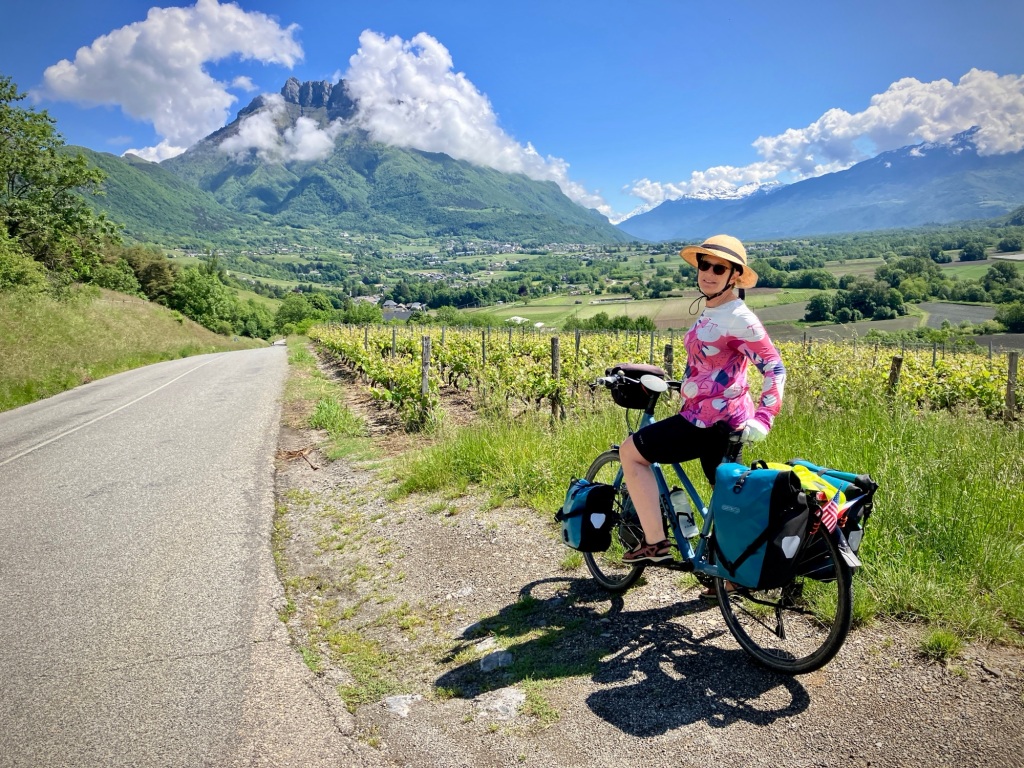
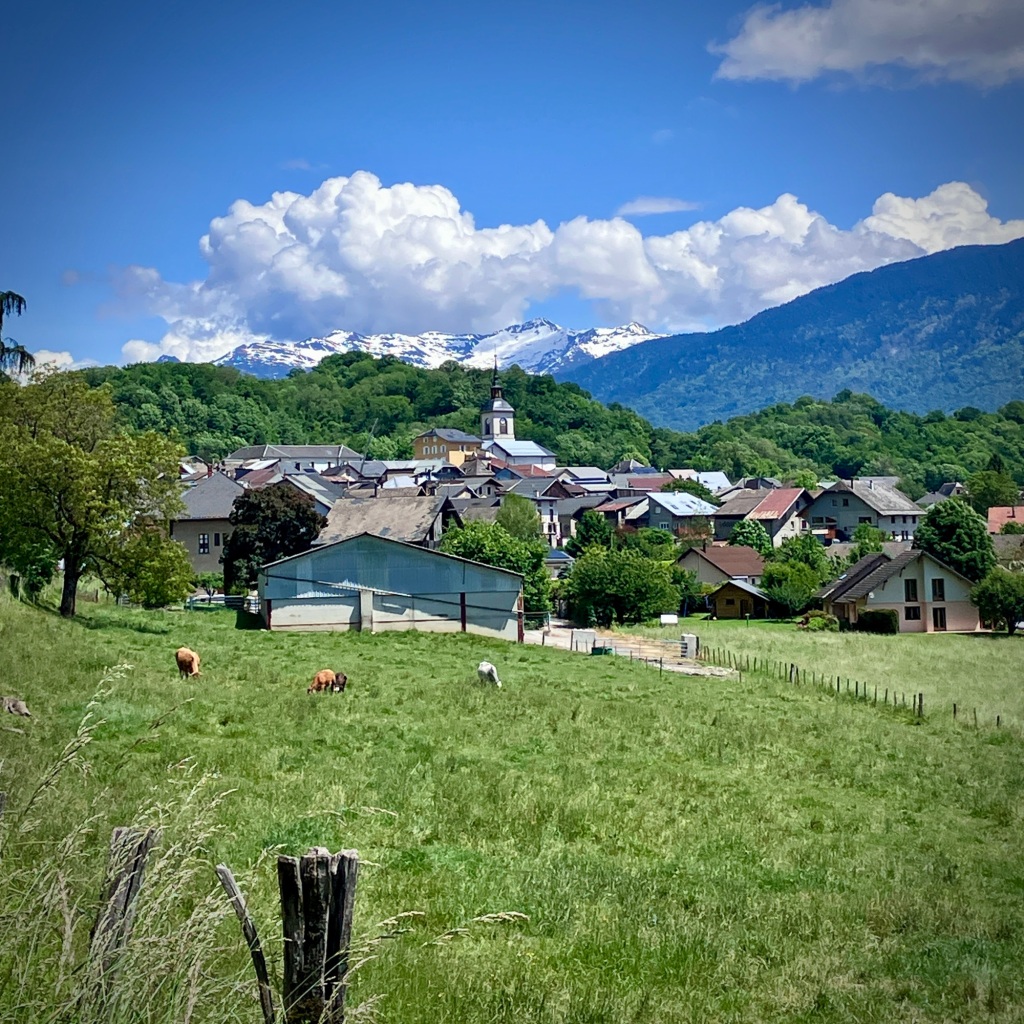
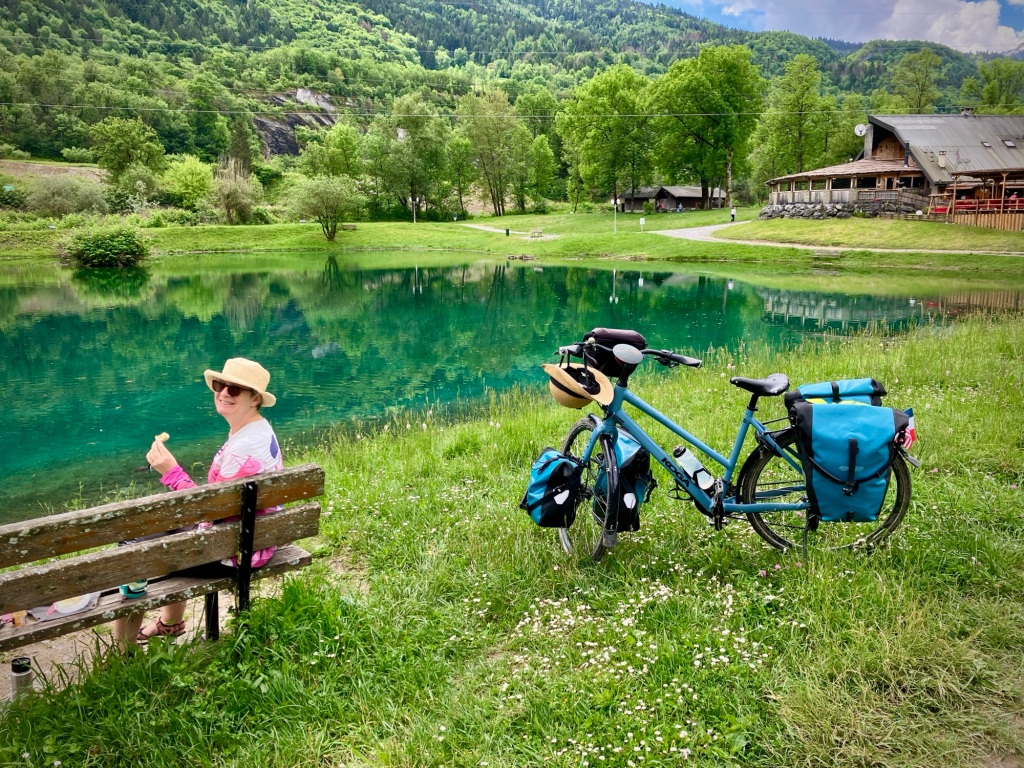
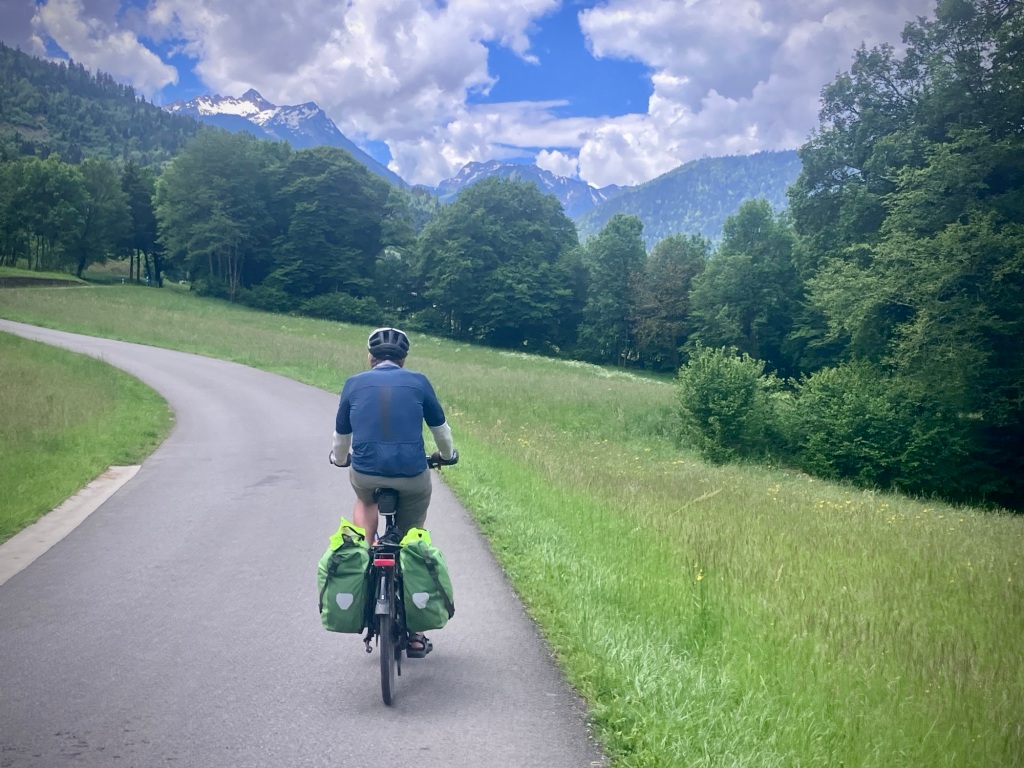
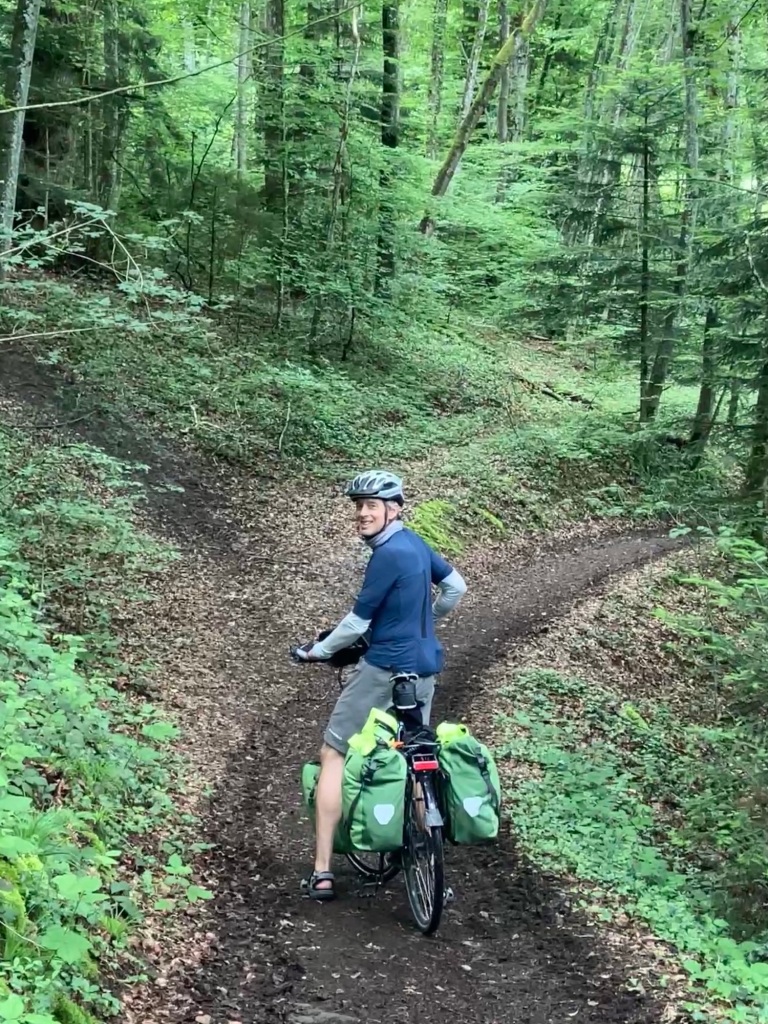
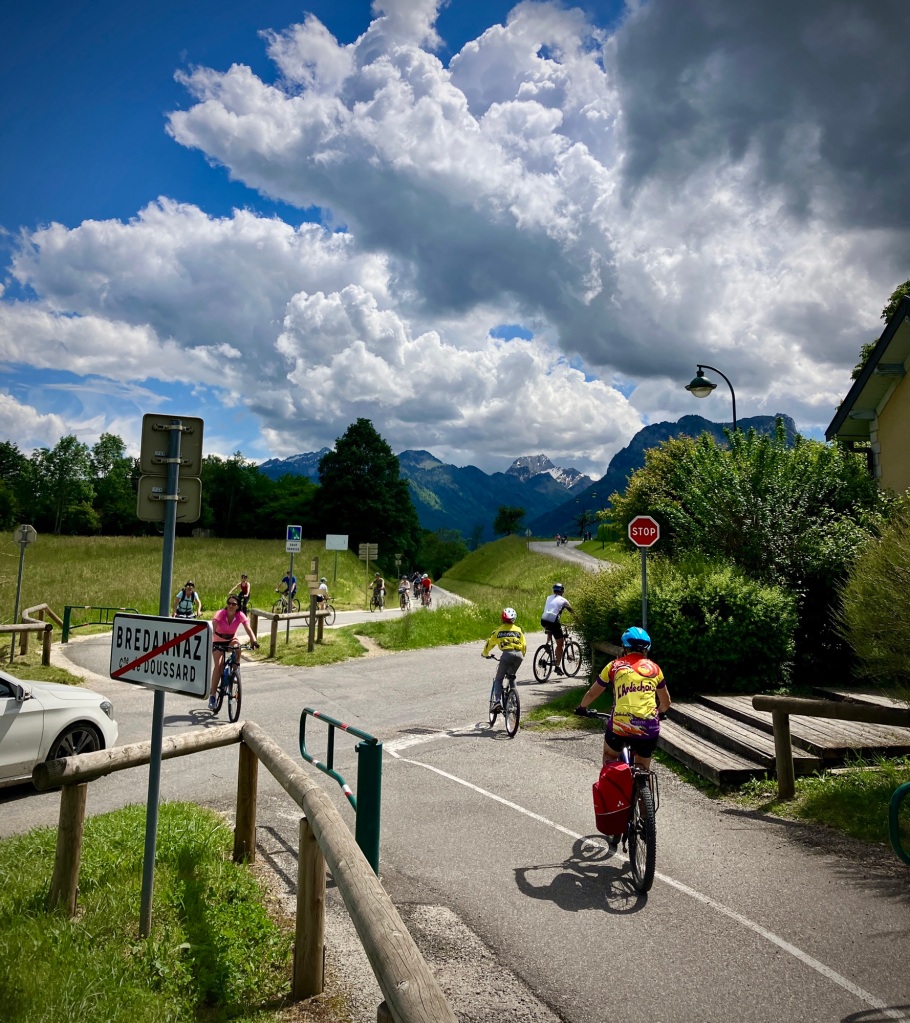
Heading to Albertville on a beautiful spring day in the Alps. Our minds are now addicted to new.

We’ve all had that end of vacation feeling or remember our childhood summers of freedom coming to a close in late August (Ugh!). But one of the reasons we gave up or locked up most of our material possessions three years ago was to experience the world without that constant end of trip deadline. No limits or boundaries. It’s a magical feeling and one I appreciate more and more as we traverse the world. We are lucky and know it. We recommend everyone tries it someday.
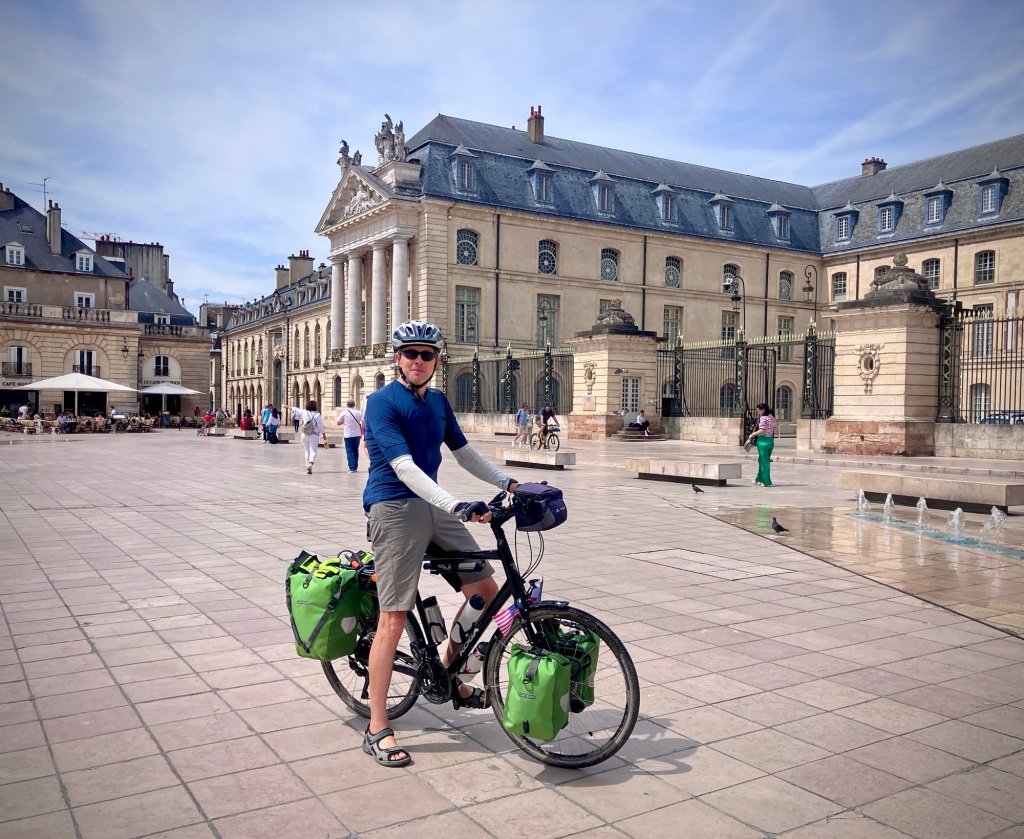
Spring in the Place de la Liberation of Dijon

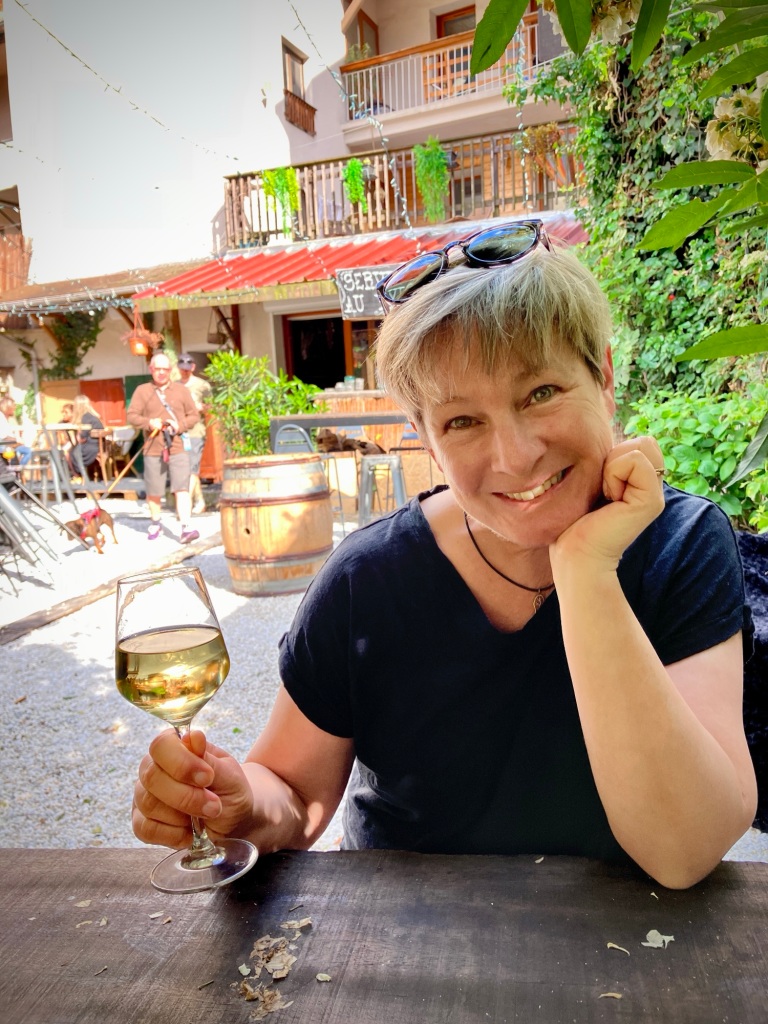
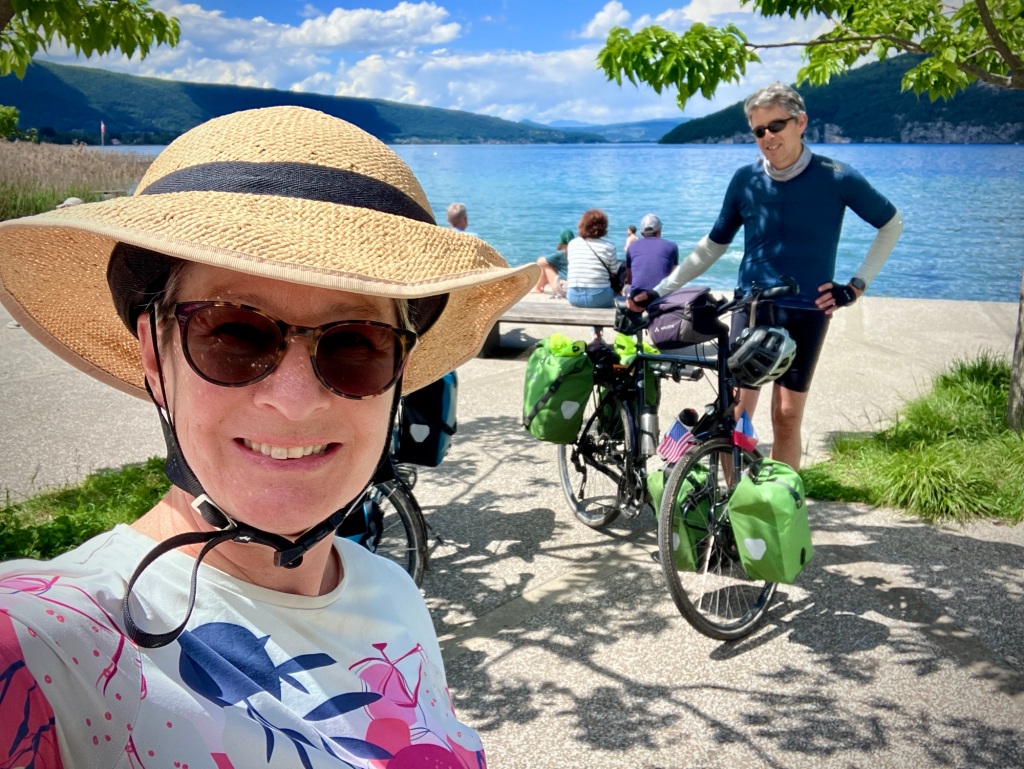
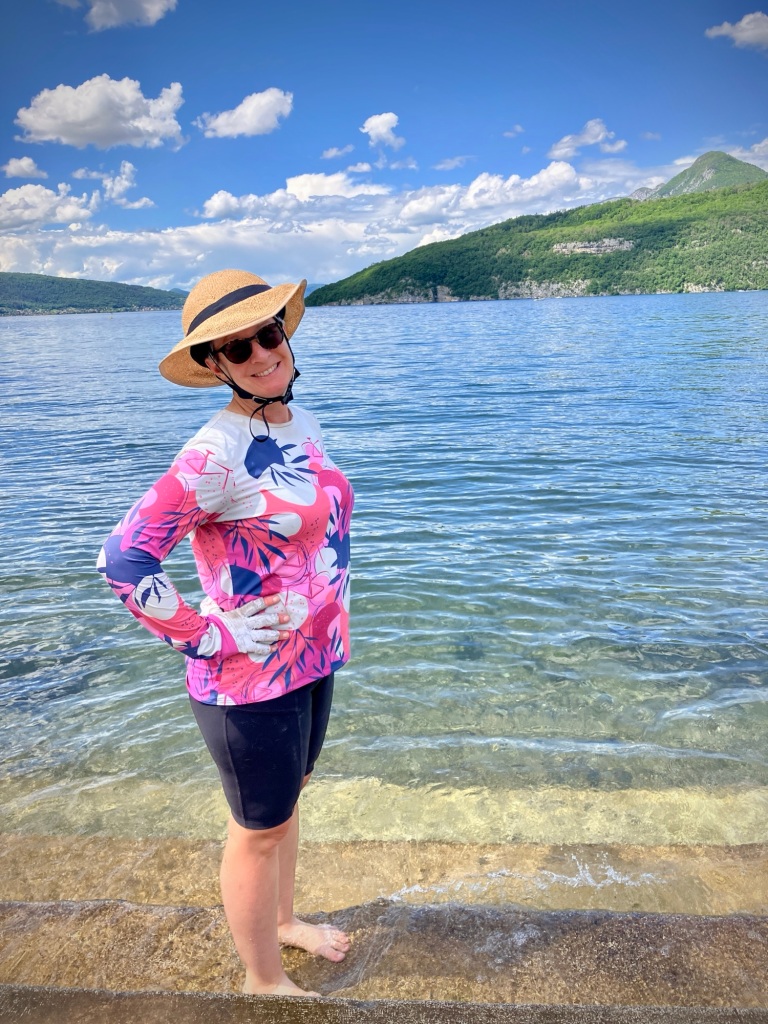
But our last few weeks of spring bike touring in France took a concerted effort to stay focused and motivated. Don’t get me wrong, parts of it were wonderful, and some warm spring (summer?) weather gave us a “vacation from our vacation” feeling in Annecy, a perfect cap to our recent journey.
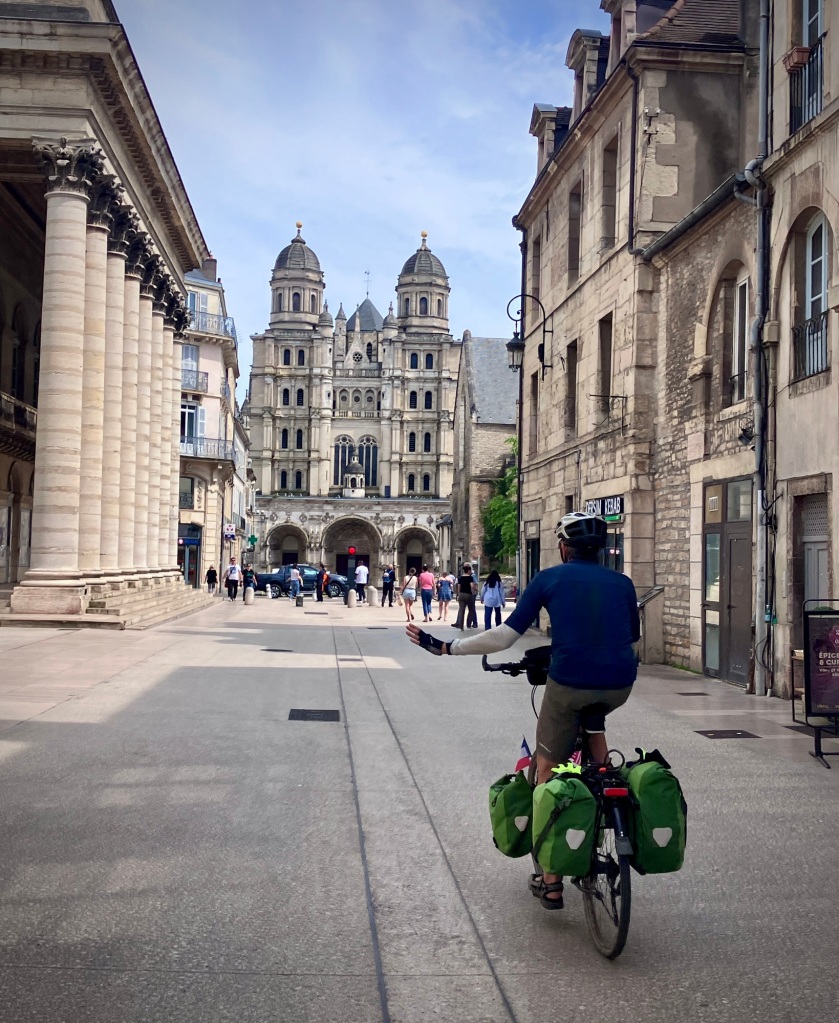
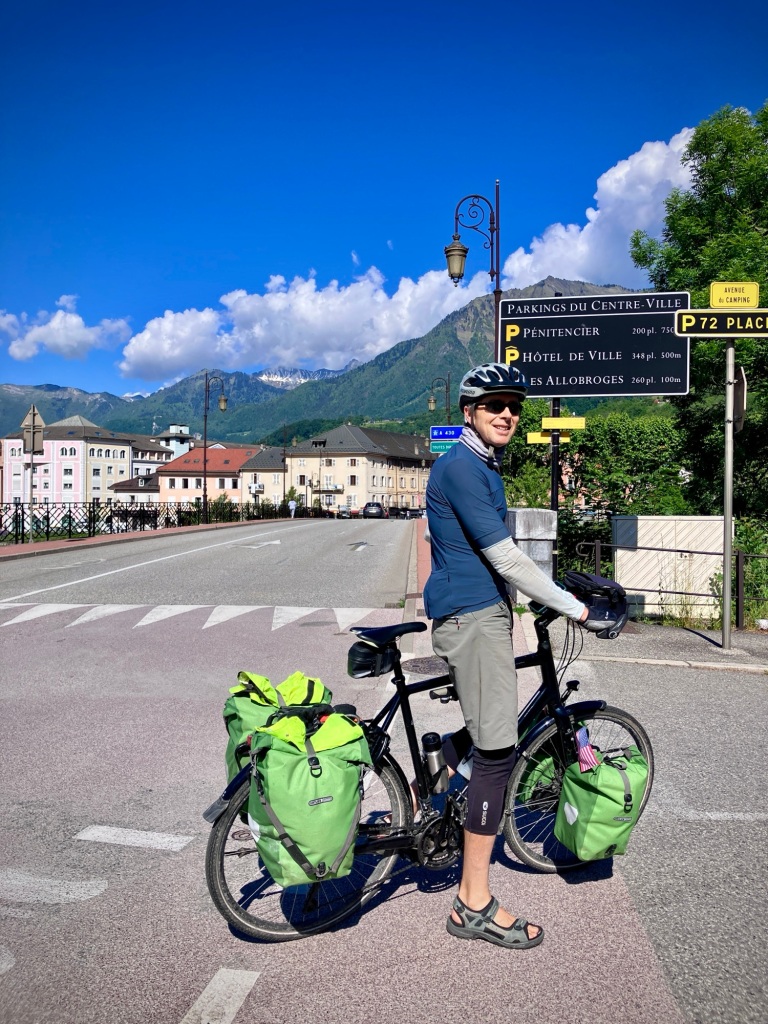
Signaling my intentions for Cheryl and the locals in Dijon. Église Saint-Michel in the distance. BTW, French cyclists don’t signal much, and seem to thrive on the organic flow familiar to the Dutch.

After a brisk morning cycle to our train hop from Les Laumes – Alésia on the Burgundy Canal, we rolled into Dijon Ville station mid-day. We were pleased to see a train platform ramp and the option of an at-grade exit to the street. Outside the station was a bikeway towards center ville. This abundance of bike infrastructure is one of the major reasons why we’ve been exploring France by bike for nearly 3 months!

Dijon Gare. We love platform access ramps; the best station solution for all when space permits.

This was our second visit to Dijon while cycle touring, but this time we planned to spend two nights to allow a bit more time to explore the beautiful city at the heart of Burgundy. It’s an extremely pleasant and lively city, with a bike and pedestrian oriented core, parks, and beautiful architecture. Free museums and a wide array of food options add to the draw. It’s also extremely well connected by train on the Paris-Lyon mainline.

History plaques add to the joy of wandering historic Dijon. Many stately buildings with grand courtyards were built by the wealthy in the mid 1700’s. Vive la Révolution!
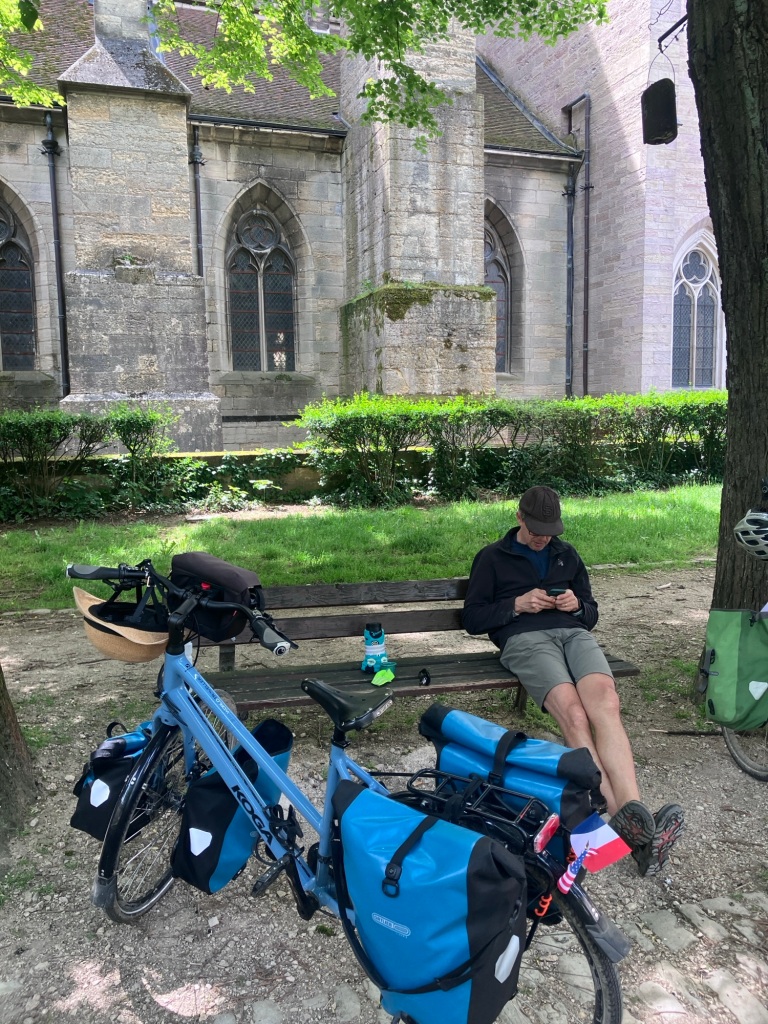
A few hours to kill before checking into our bike friendly hotel. Often nomadic life includes sitting on park benches; maybe travel planning, reading a book, or just watching the world go by.
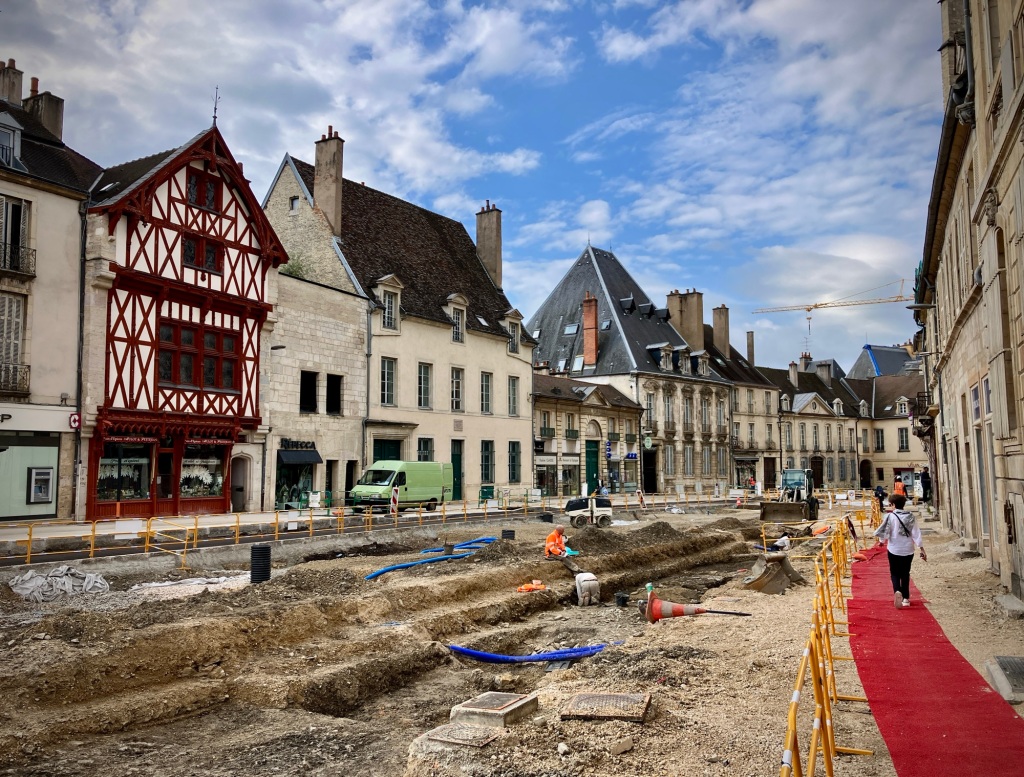
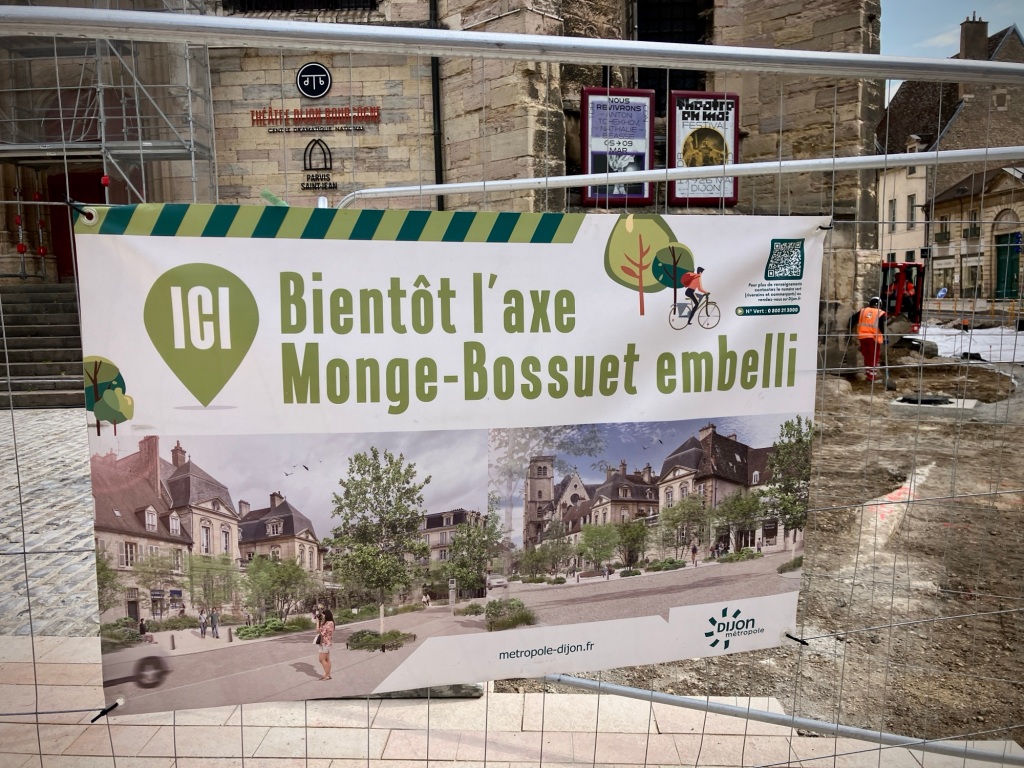
This area of Dijon was being upgraded this year to meet the Mayor’s goals for livability. We noticed a lot of new streetscape improvements and tree planting in urban areas of France.
Upgrading to City 2.0 – more walkable, more trees, and limited car traffic.
E-bike cargo and mail delivery is really put to the test in France and the perfect tool for compact urban centers.
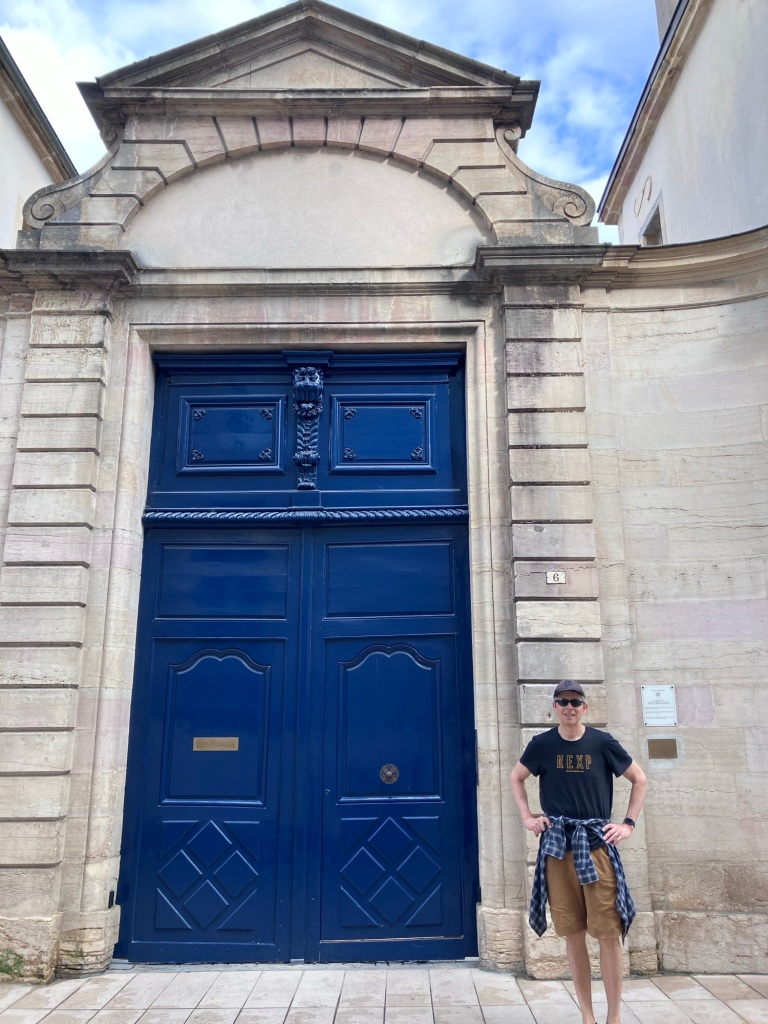
What is behind these beautiful blue doors?

After enjoying a day off the bikes in Dijon, we had planned to continue south and east towards the Jura mountains and Geneva. But as I looked into the details of our planned route, I was thinking maybe we needed a Plan B.

Jardin Darcy at sunset.
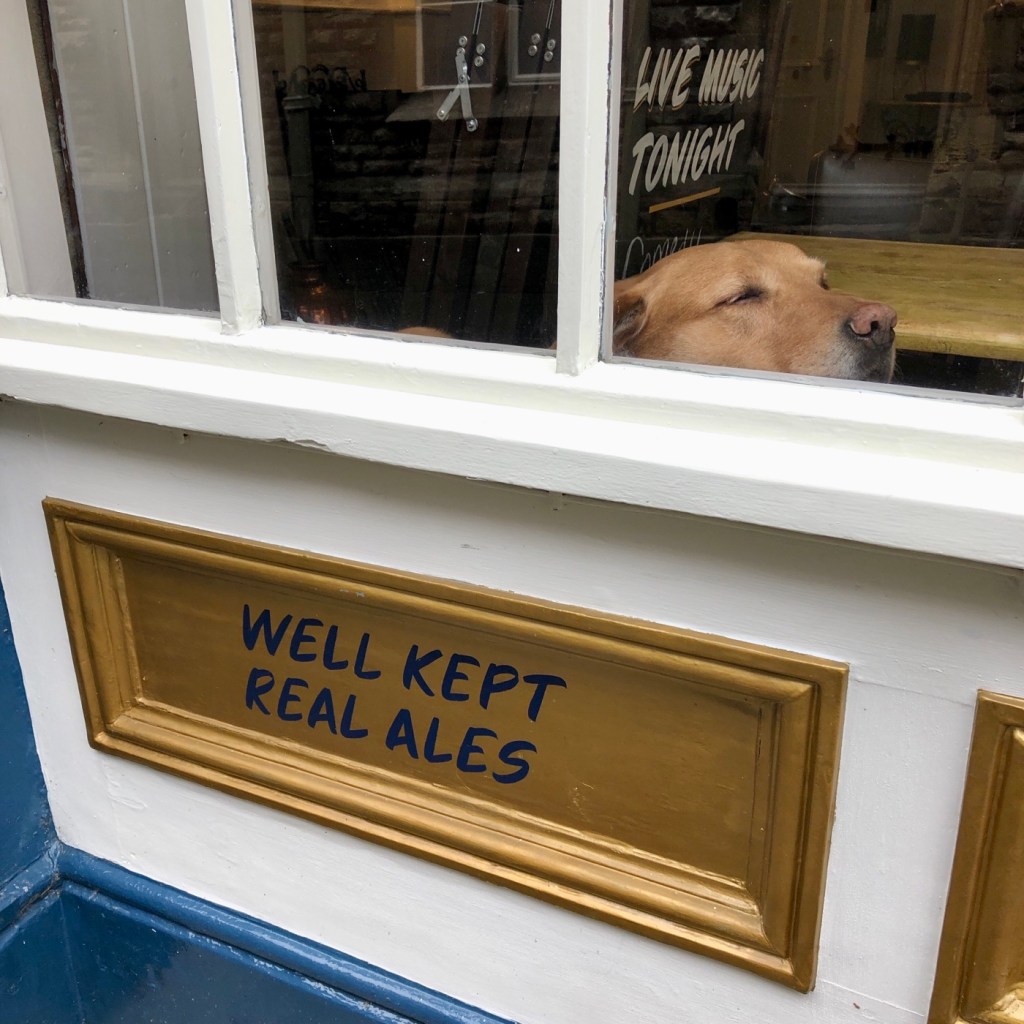
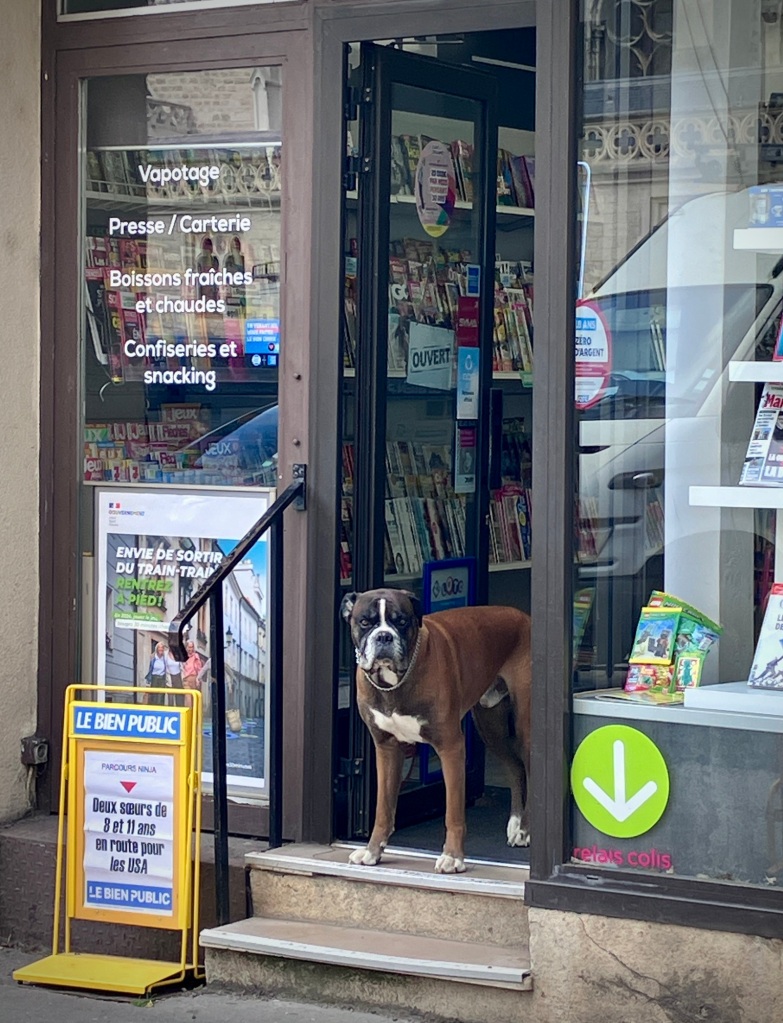
Le chien de la Tabac.
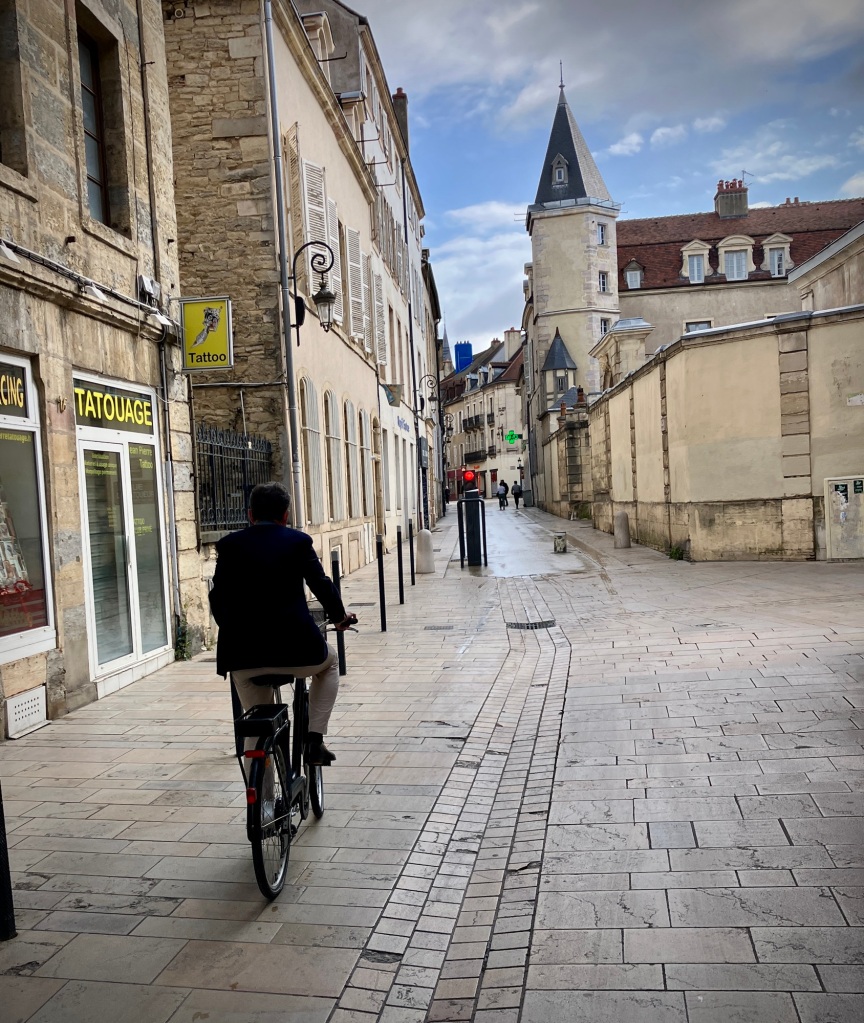
Access to the Dijon city center is controlled by retractable bollards, making it a pedestrian and bicycle oasis.

First, there was a lot of flat sections of the Burgundy canal and Doubs River to pass along with a likely headwind. Blah. Second, lodging with food in the Jura is very limited and I was challenged to find places to stay early season once we climbed up to the 3,000+ foot plateau. (Probably better to camp up there.) Third, more unseasonably cold weather and rain was predicted. No thank you.
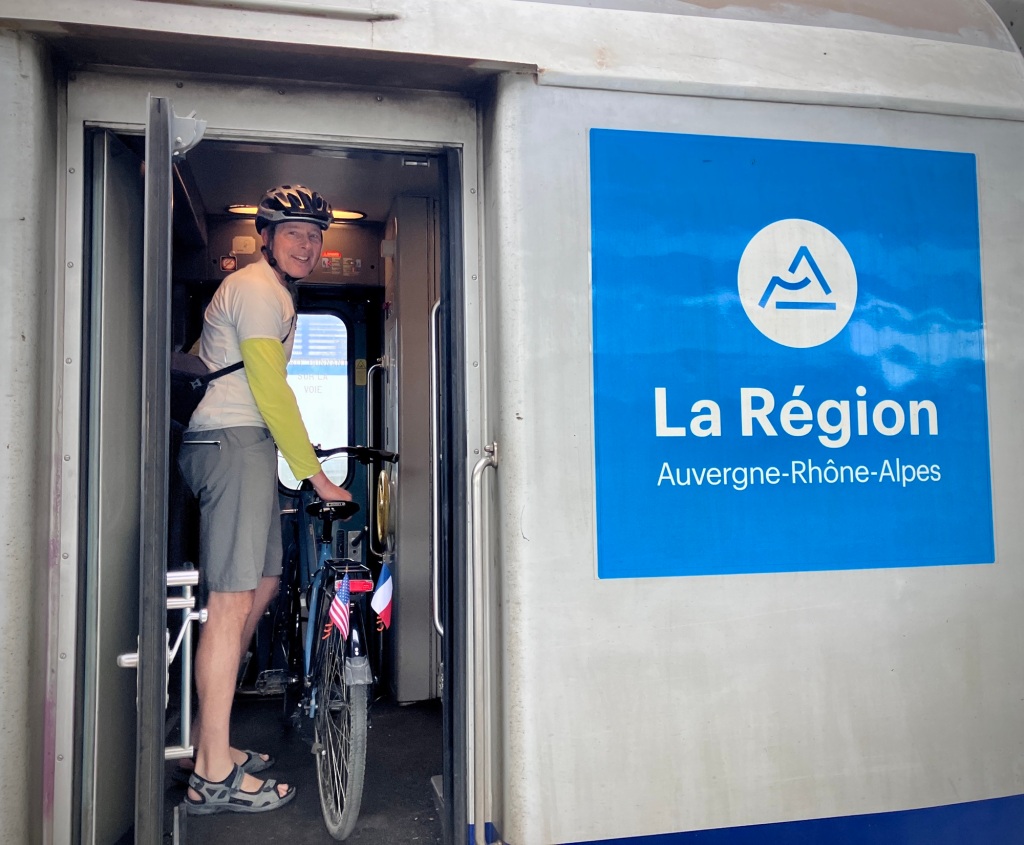
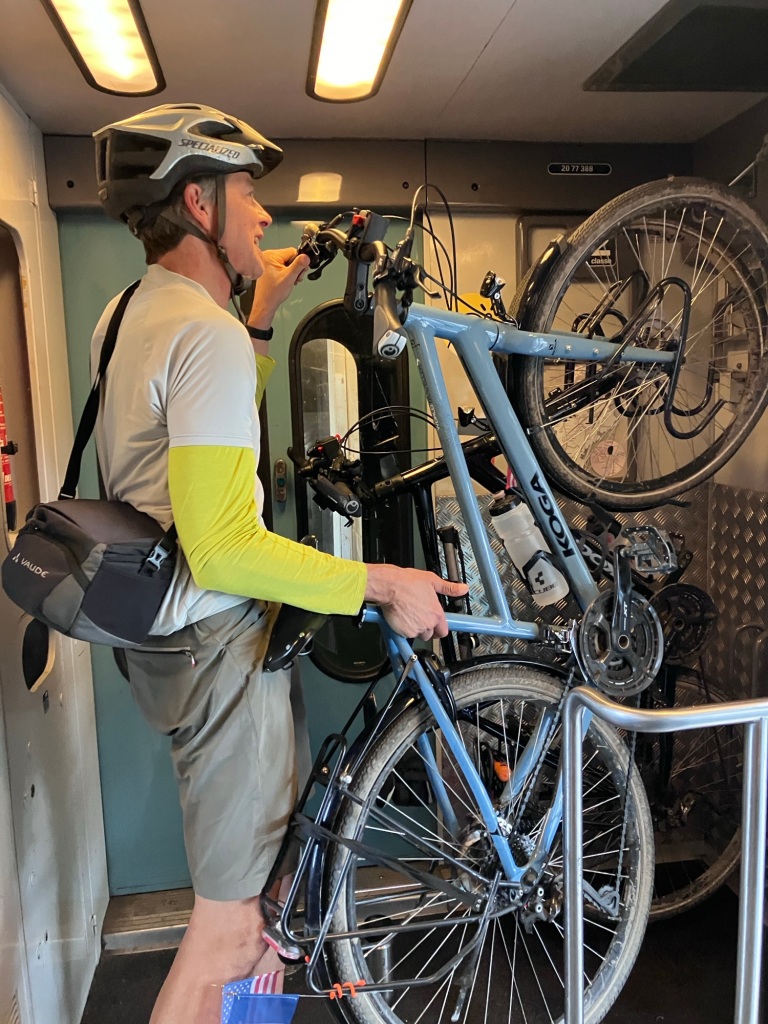
High boarding train to Lyon. Local TER trains are your best bet with bikes or IC trains with bike space reservation. TGVs also serve this corridor but have very limited bike space, so only work with advanced planning.
Two hooks with pretty easy access inside.

So we pivoted last minute and instead caught a train south to Valence via Lyon, and headed up the Isère River valley into the heart of the Alps. It was the route I had originally scoped for our return to the Vallée Verte. It has a lot more lodging options, lower elevations, and trains for backup. More importantly, we were excited by this new route, which is a key component of (nomadic) life. It’s good to suffer sometimes for the sake of a goal, but also ok to make sensible choices for yourself.
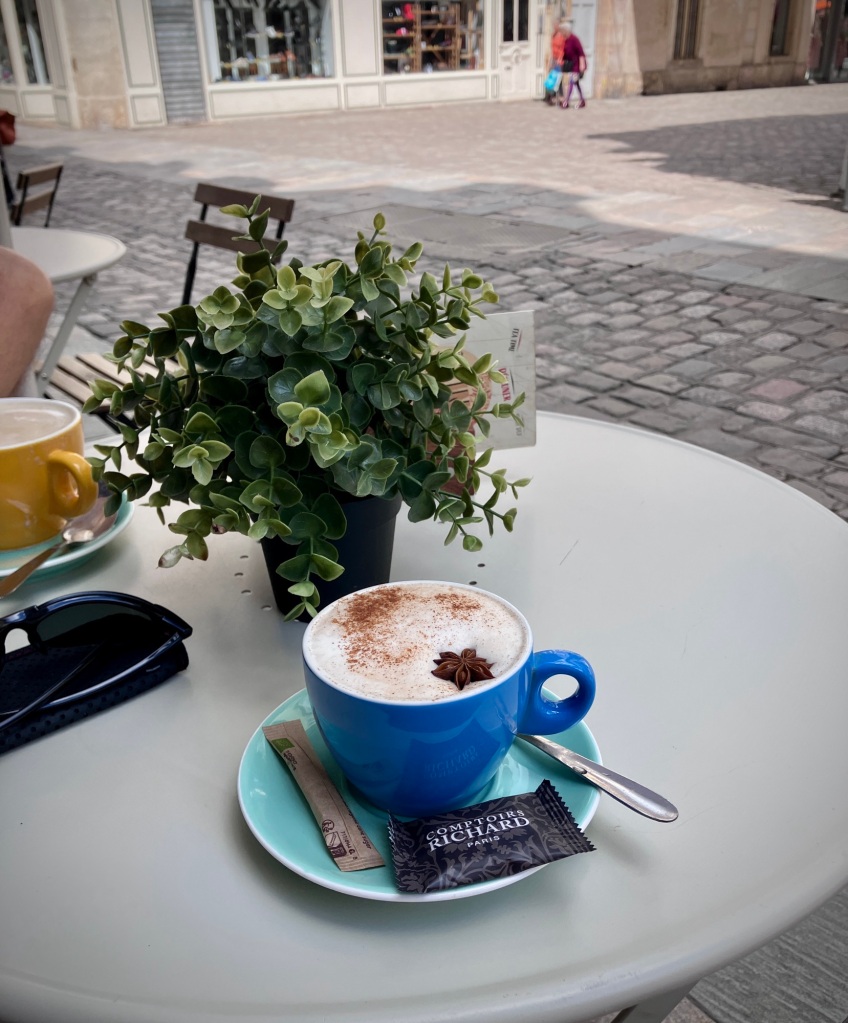
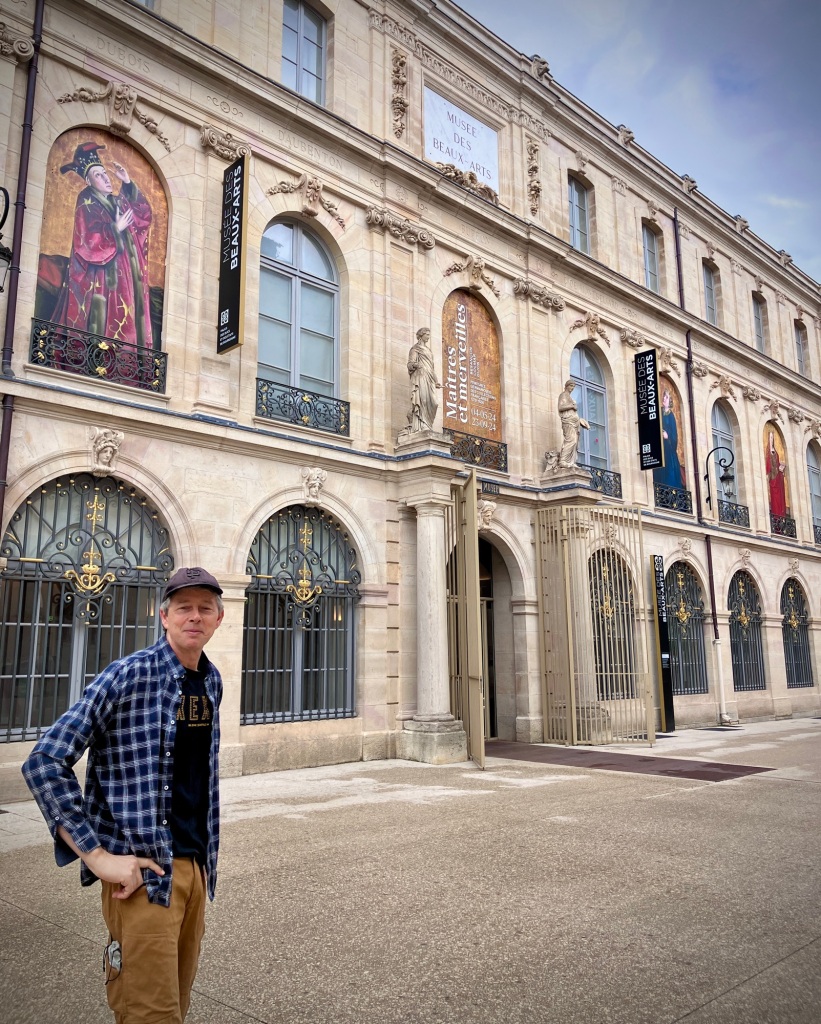
A perfect cafe to people watch in Dijon.
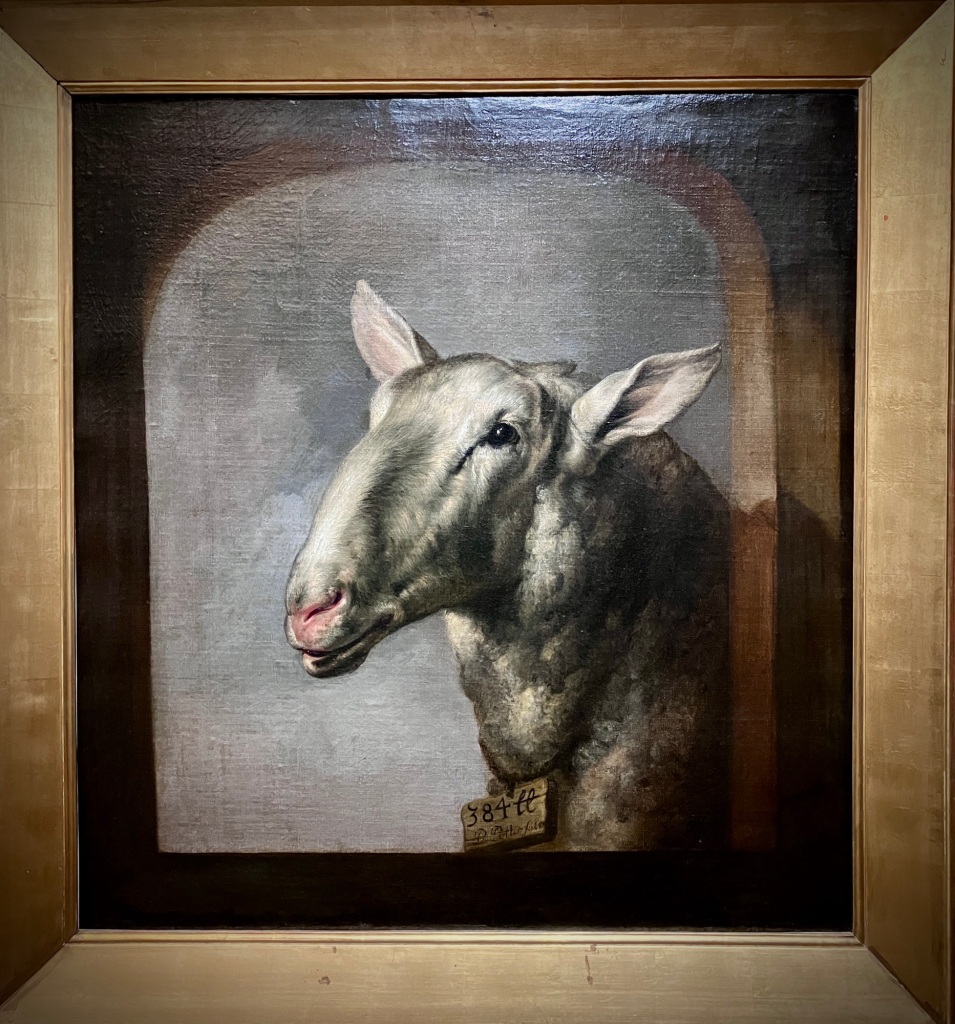
The Musée des Beux Arts permanent collections are free and it houses a wonderful collection of art, sculpture, and antiquities.
Paulus Potter’s “Head of a Sheep” at the Dijon Musée des Beaux-Arts.

The Isère River enters the Rhône north of Valence and is the namesake of the Department that is a part of the region of Rhône-Alps. We had actually passed through Valence in March on the Via Rhôna, so had to retrace a bit of our route upstream this time. Strangely, the lower part of the Isère River is actually still in the department of the Drôme.
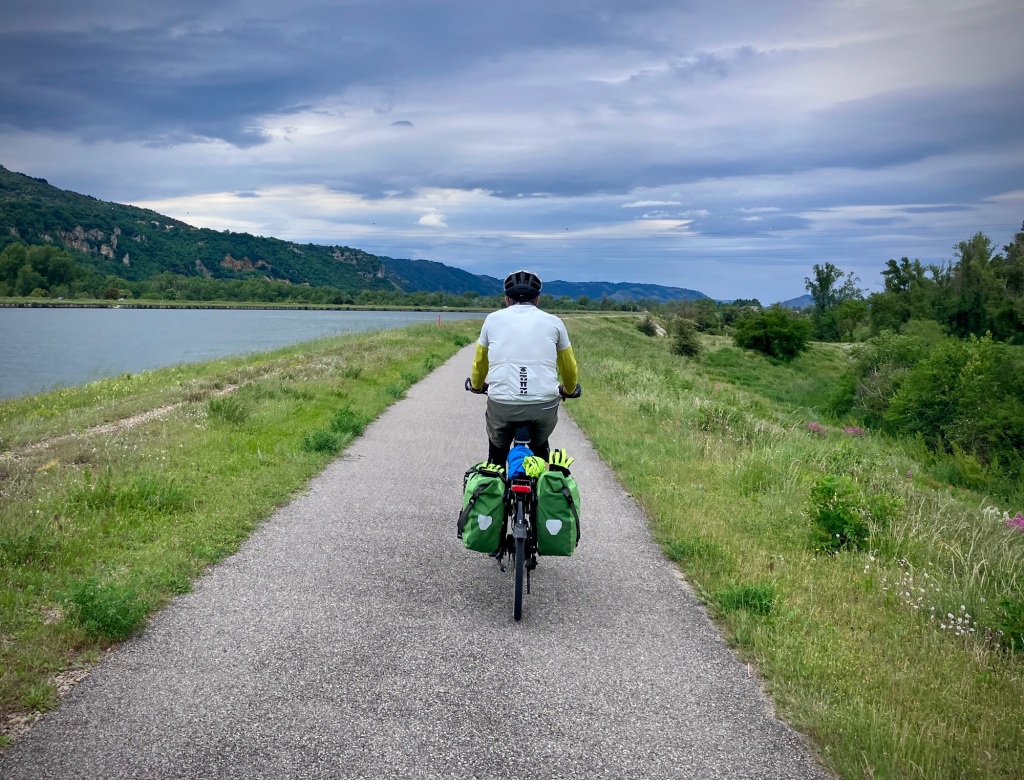
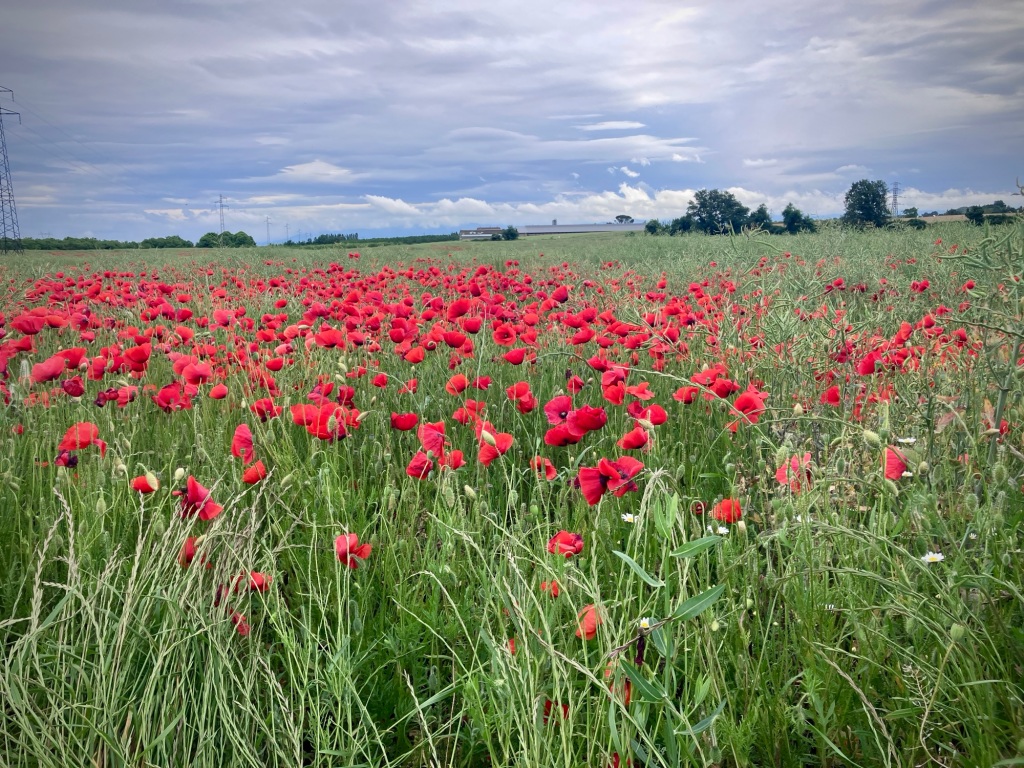
The skies are starting to look threatening as we head up the Rhône near Valence.
Spring really is here!
Great bike bridges on the Via Rhôna and Isère
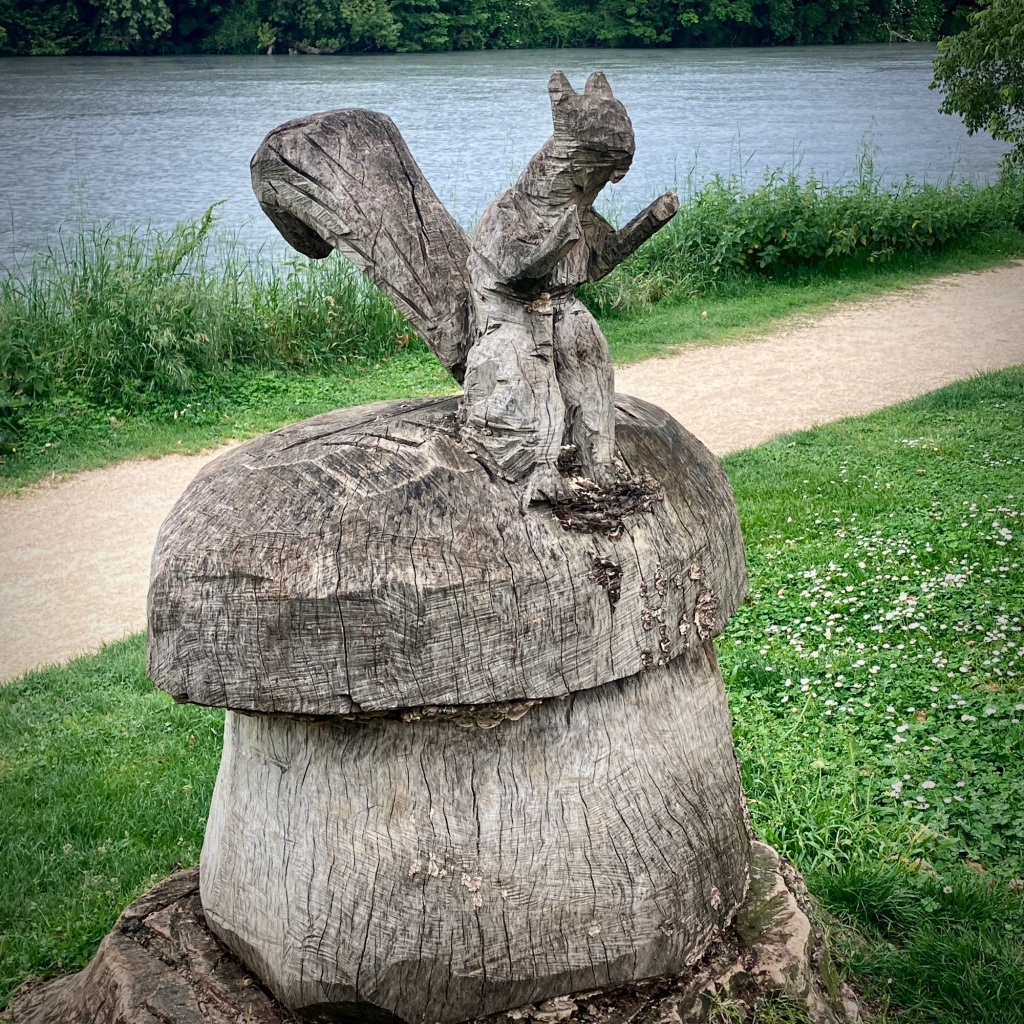
An homage to our favorite woodland creature.

We just beat the forecast rain to our first night stay in Romans-sur-Isère, but were a bit stunned by the somewhat incessant and gridlocked traffic through this old riverside industrial city. We slogged through to get to our surprisingly charming lodging on the edge of the city, and walked back into the center of the town in the rain for dinner. We did find a (the?) fun and friendly place to get a drink and dinner and everyone was very nice to the two noticeable American cycle tourists. The town clearly gets few cycle tourists, although sits on the recently developed V63/V62 cycle route know collectively as “La Belle Via”.
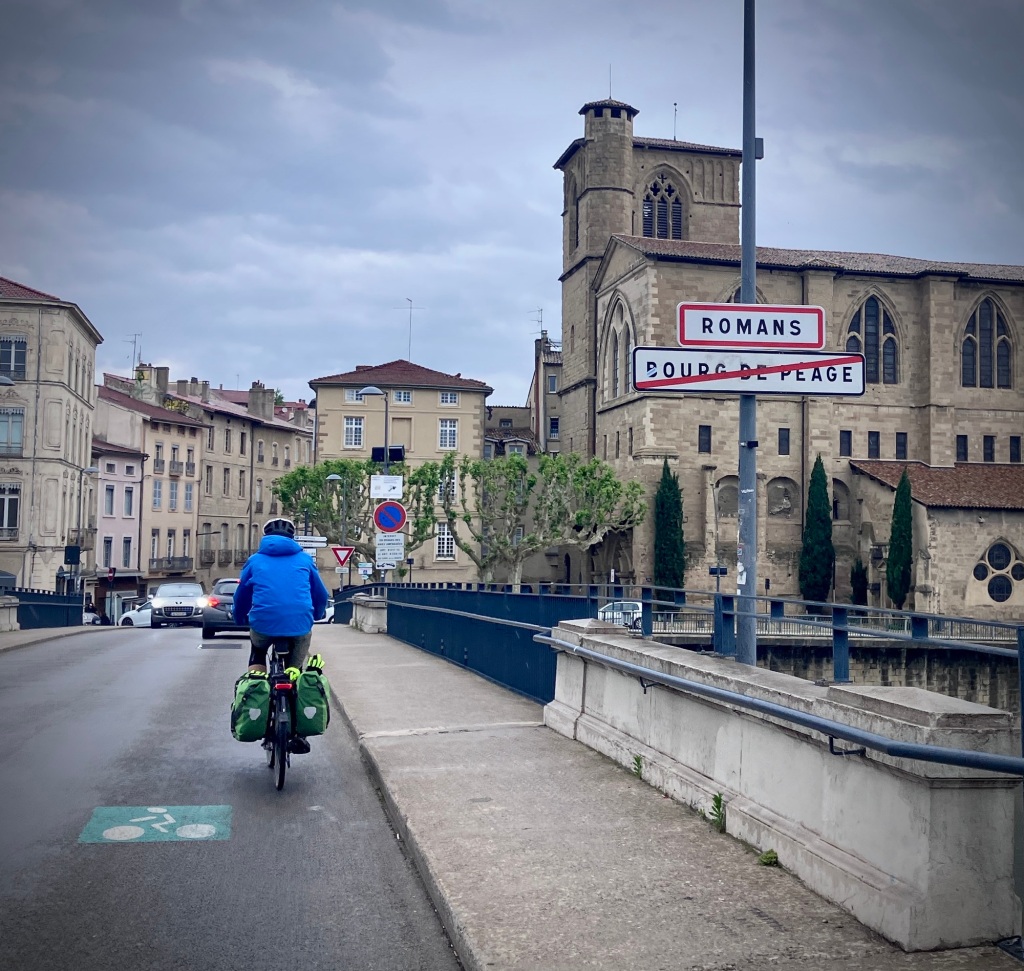
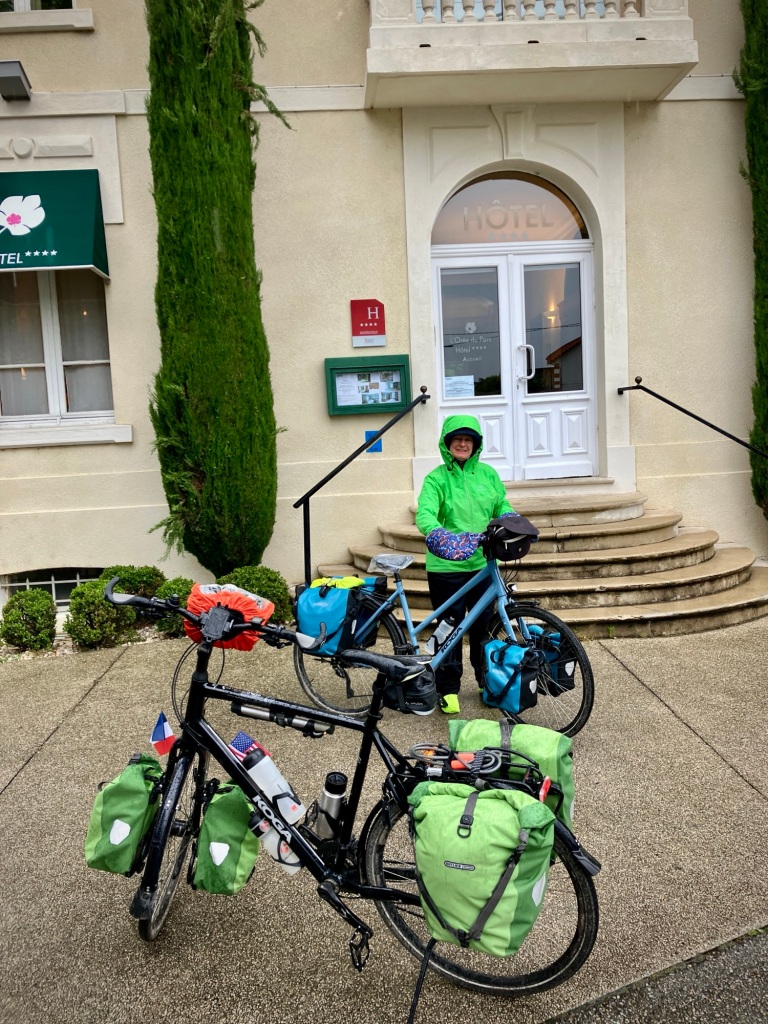
Heading into Romans-sur-Isère. We hadn’t hit the traffic jams yet.
Heading out in the rain the next day from the very nice Hôtel L’Orée du Parc.
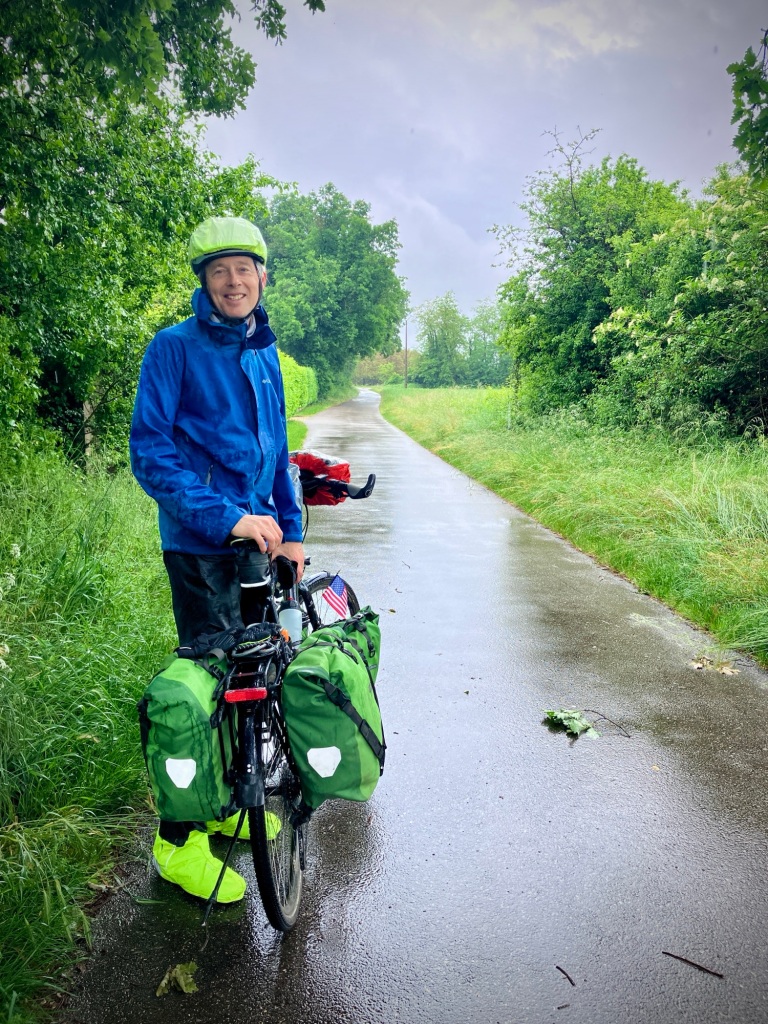
Full rain suit and a feigned smile during a slight rain break
We did manage a pastry rain break under a shop awning. Can’t let our French baked goods levels get too low.

We love to learn about the history of places, even for a one night stay, and Romans has been influenced by its strategic location on trading routes and a major river. Shoe manufacturing is still a business and there is a small museum dedicated to the industry that was unfortunately closed by the time we rolled into town. Further down river are abundant walnut orchards. On the way out of town, we learned another source of major traffic was a nuclear fuel manufacturing facility. But Romans is not a bicycle city and the bike infrastructure was sad or non-existant. There was a renovation of part of the Main Street in progress which may help the pedestrian environnement, but otherwise it seemed to be a bit overrun by cars and parking.
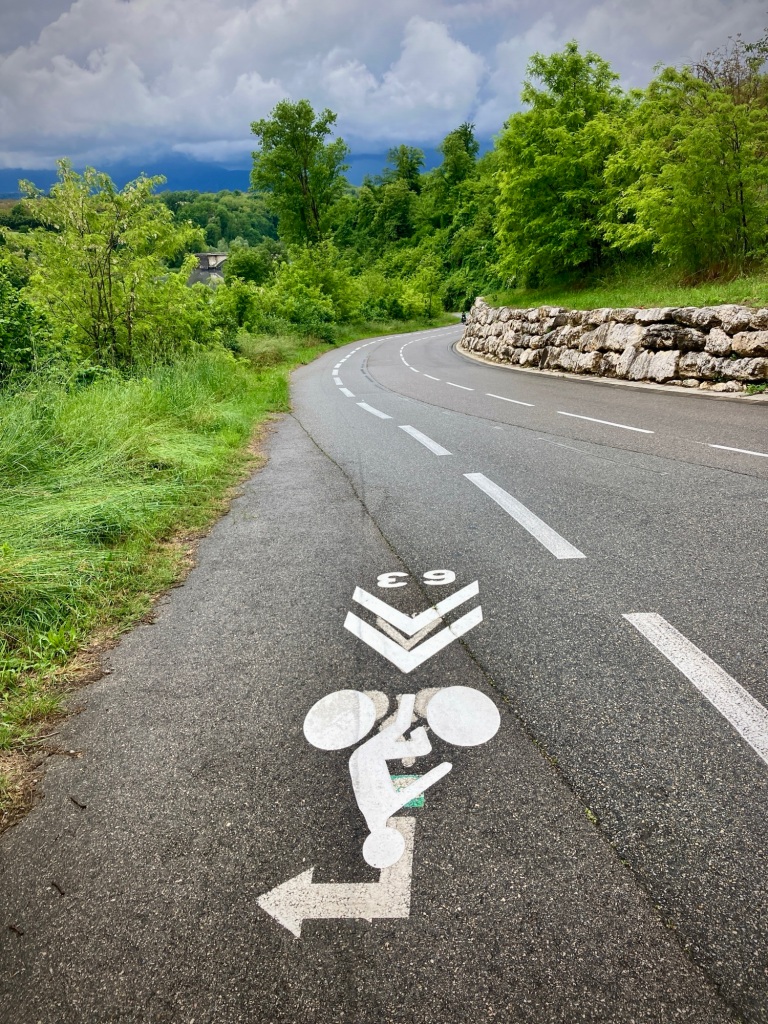
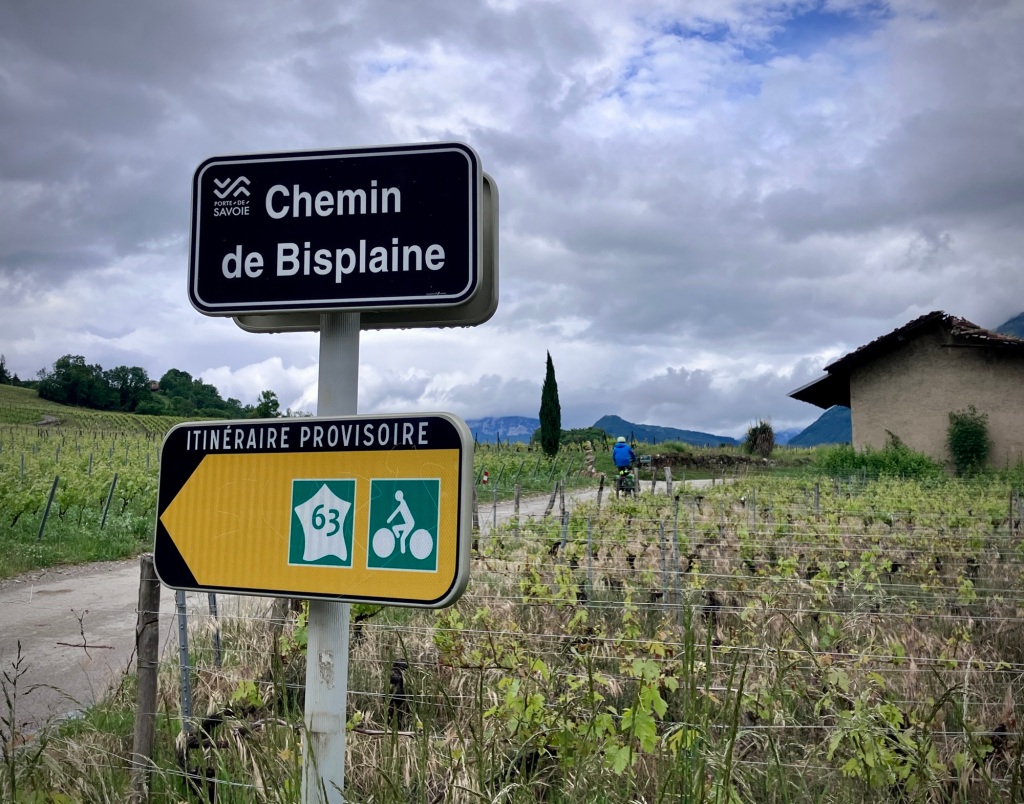
We were following the V63 cycle route up (and down) the Isère which includes some dedicated path sections, but mostly quiet roads.
Hills, rain, and another forced smile.

The challenge of the next day was 84km to Grenoble which would have been manageable except it was raining out the door and rarely stopped. We had a low point this day as the traffic getting out of Romans, steep hills, and incessant rain seemed to zap the energy and motivation of Cheryl, and I could sense it. We both have our bad days, but generally one of us keeps it mentally together. Today we were both just a bit over it. Travel, rain, eating out…all of it.
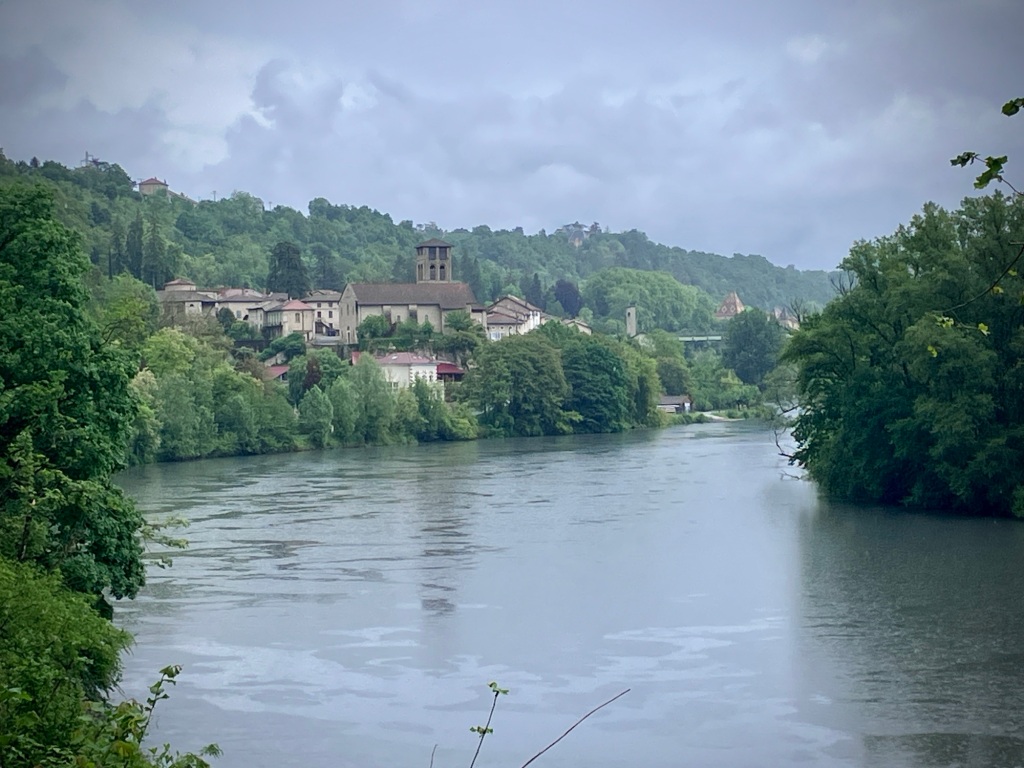
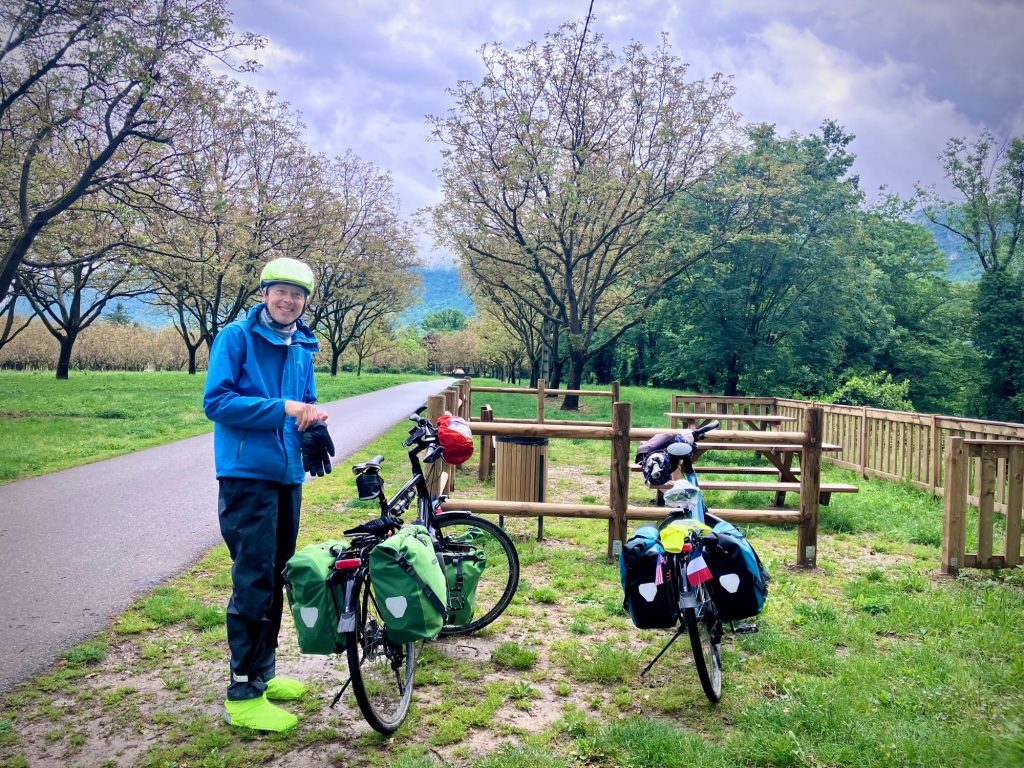
The Isère river valley was beautiful, even on this moody and stormy day
A lunch snack at a welcomed picnic area was cut short as we saw a massive thunderstorm front approaching. Ride fast!

We did manage to miss the worst of an epic thunderstorm and hail in a farmers shed. Cheryl is a travel trooper and rarely complians, but the ups and downs of 10 weeks of cycle touring was weighing us both down. (I generally complain first -;) We had a train bailout option in the small town of Vinay, but arrived to just miss a train prior to a 2 hour gap in service. The days lack of progress sent me into a travel tailspin too, and let’s just say, that afternoon was one of the low points of our France sojourn.
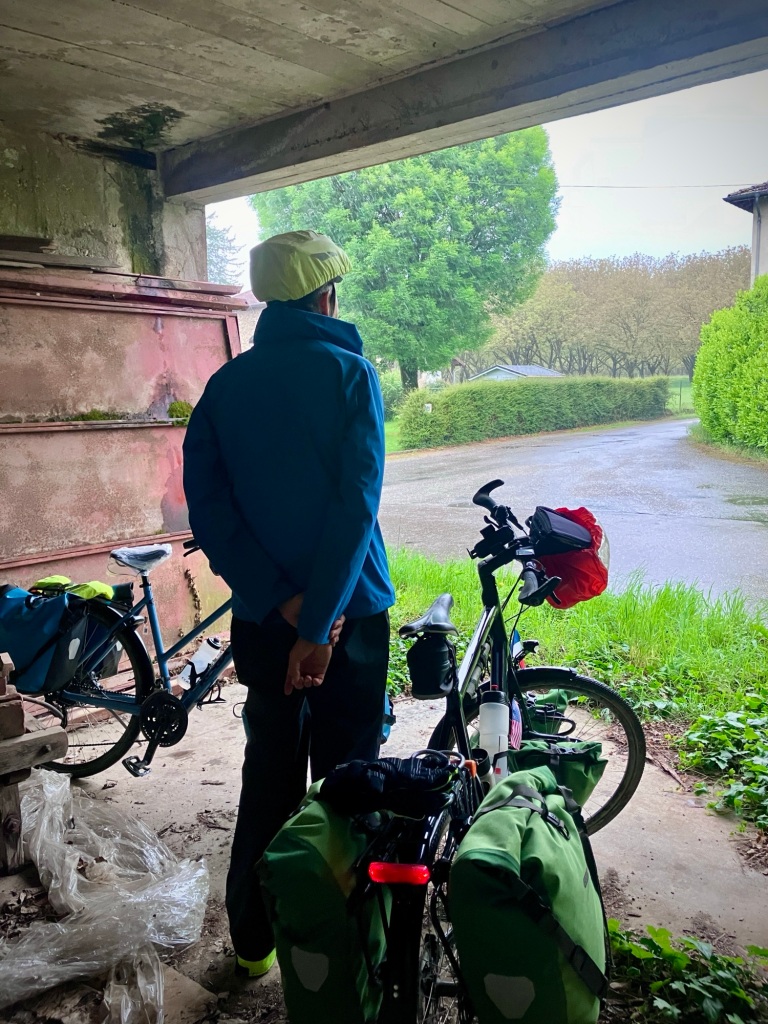
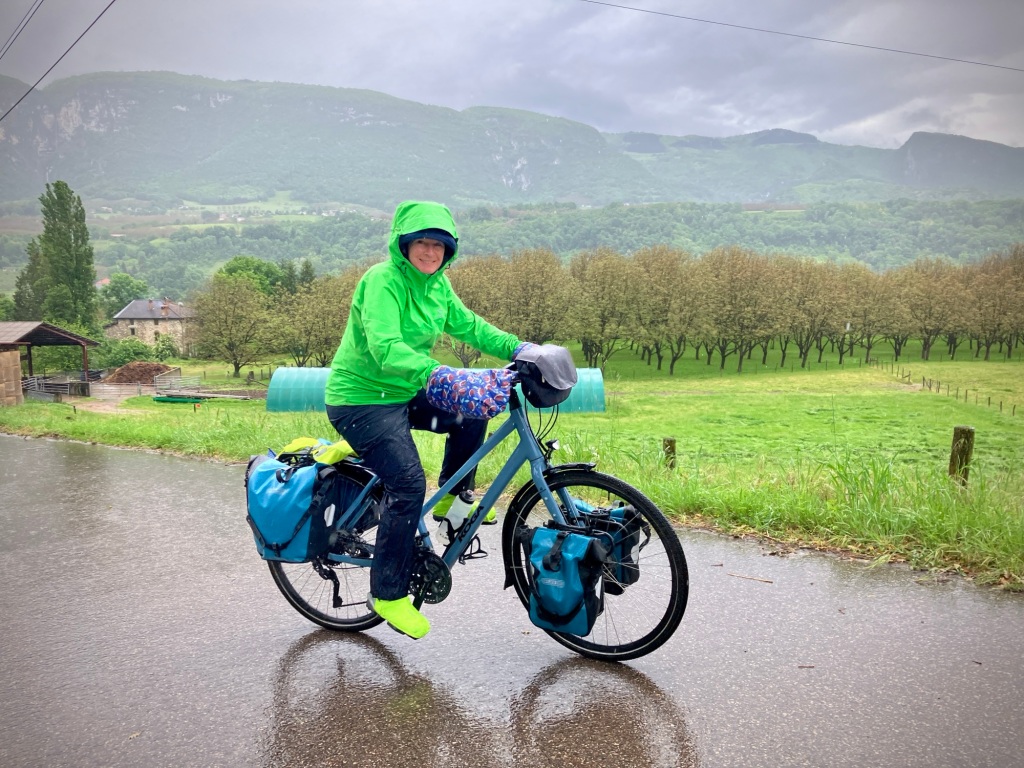
Made it to a farmers shed just in time for the skies to open up.
The rain and hail let up a bit finally so we headed back out.
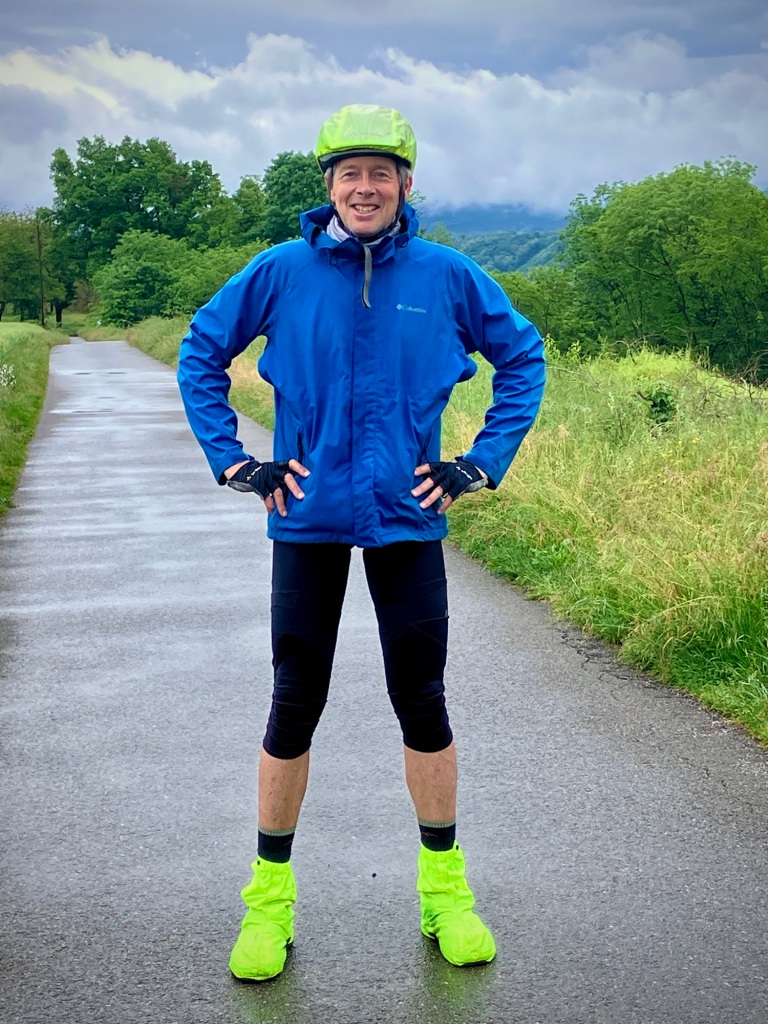
Rain booties on, trousers off. It’s a look.

But the sun came out as we waited for our train. and the short train hop to Grenoble was fine. The city was lively and green, and the next day was beautiful. Travel and cycle touring can propel you on a rollercoaster of emotions, but that is why we continue on. The next day IS generally better -:) .

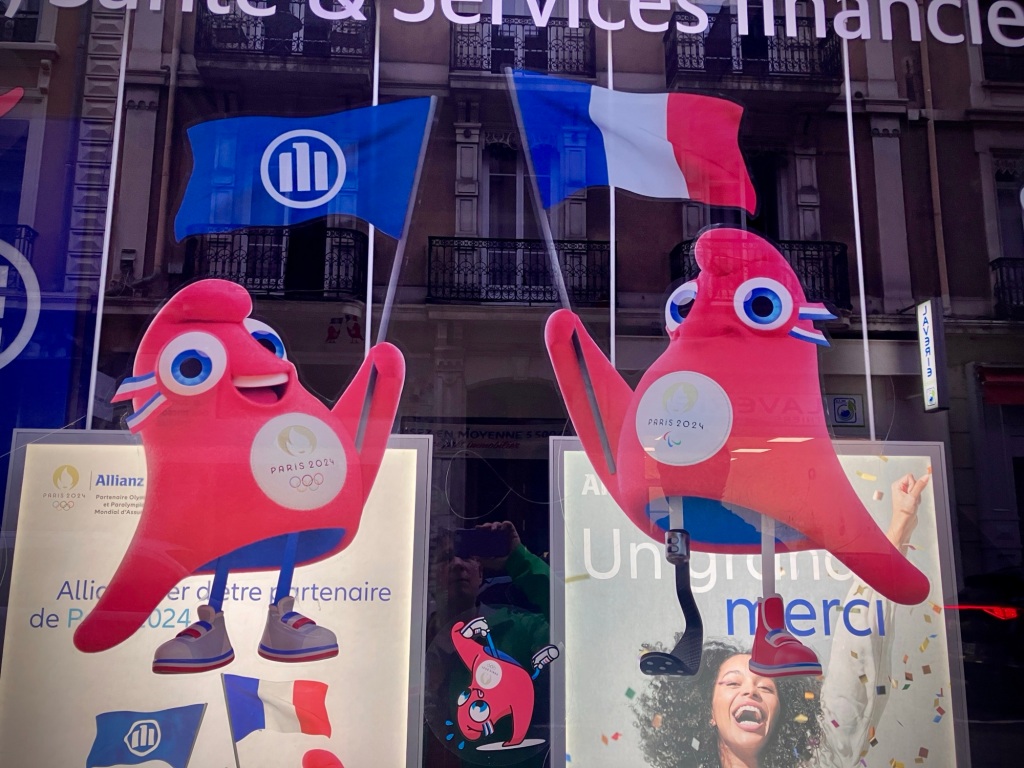
Grenoble was home to the 1968 Winter Olympics and now 700,000 people live in its region, making it the biggest metro region in the Alps.
Nope, not a cute animal, but the 2024 Paris Olympic mascot takes the shape and form of a Phrygian cap; a symbol of freedom and revolution! Love the theme and inclusion of a Paralympic prosthetic leg.
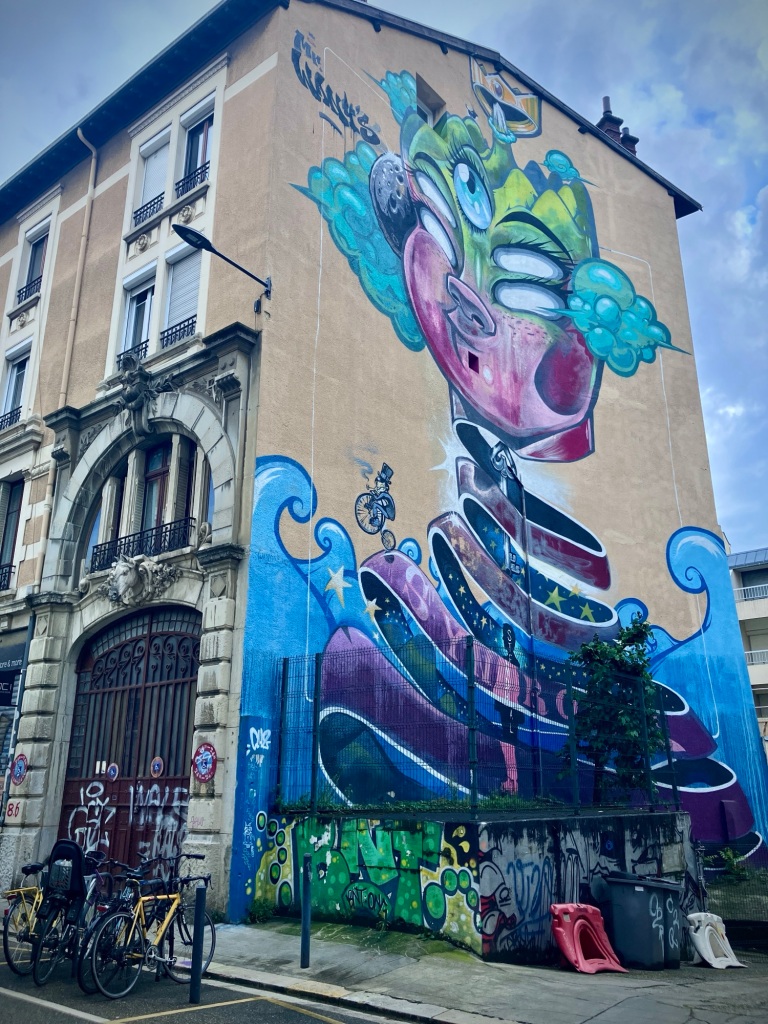
There was a surprising abundance of street art and murals in Grenoble.
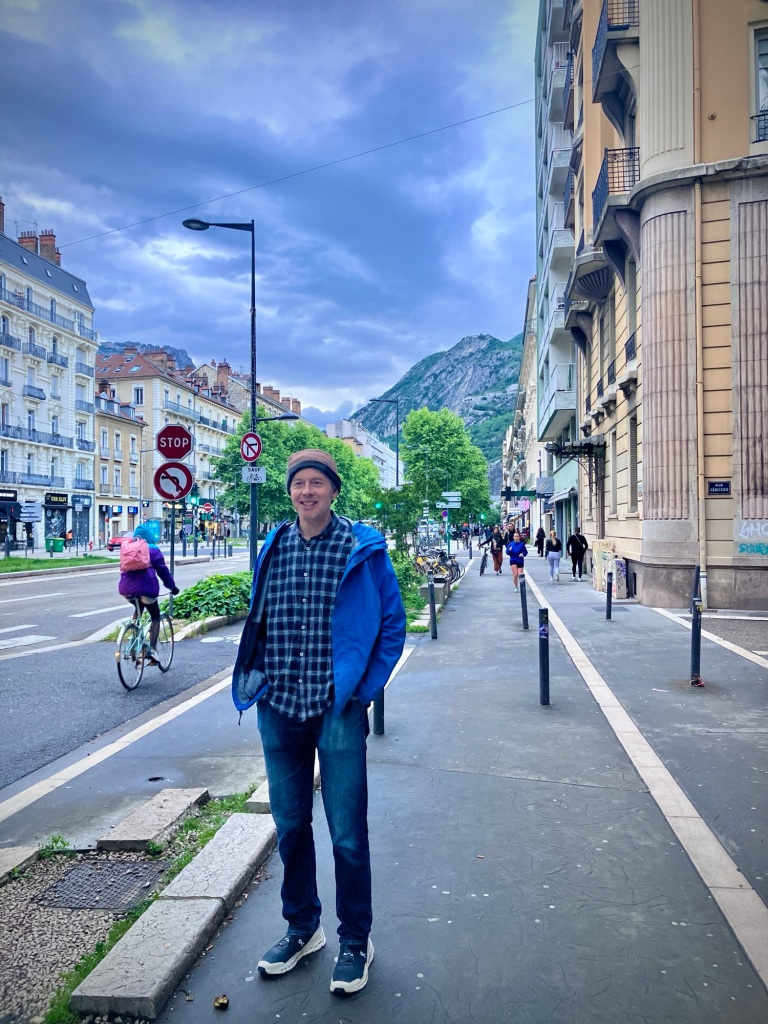
Hey, Grenoble is cool!
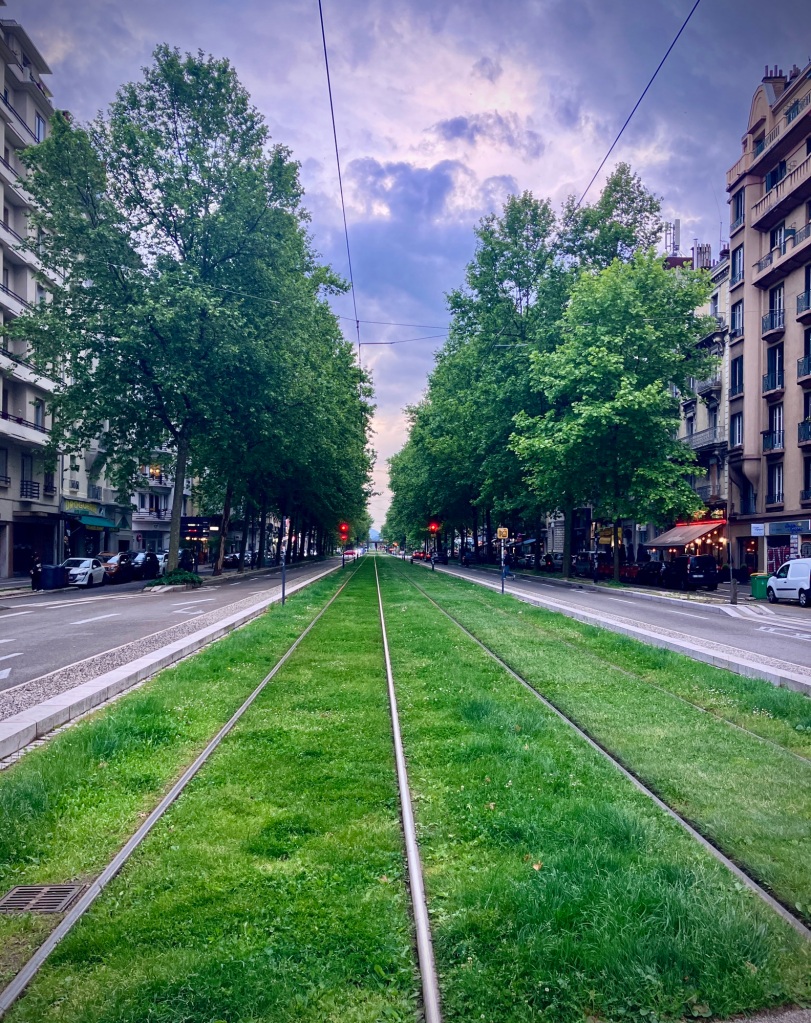
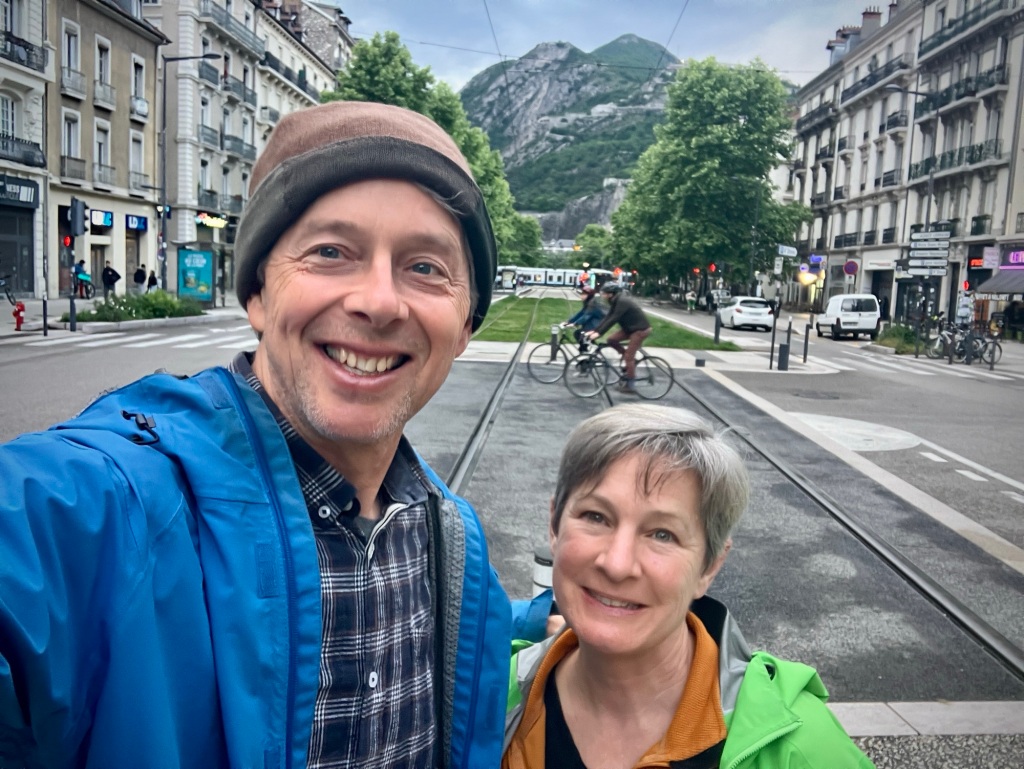
Love the green tram tracks (but not all the rain).
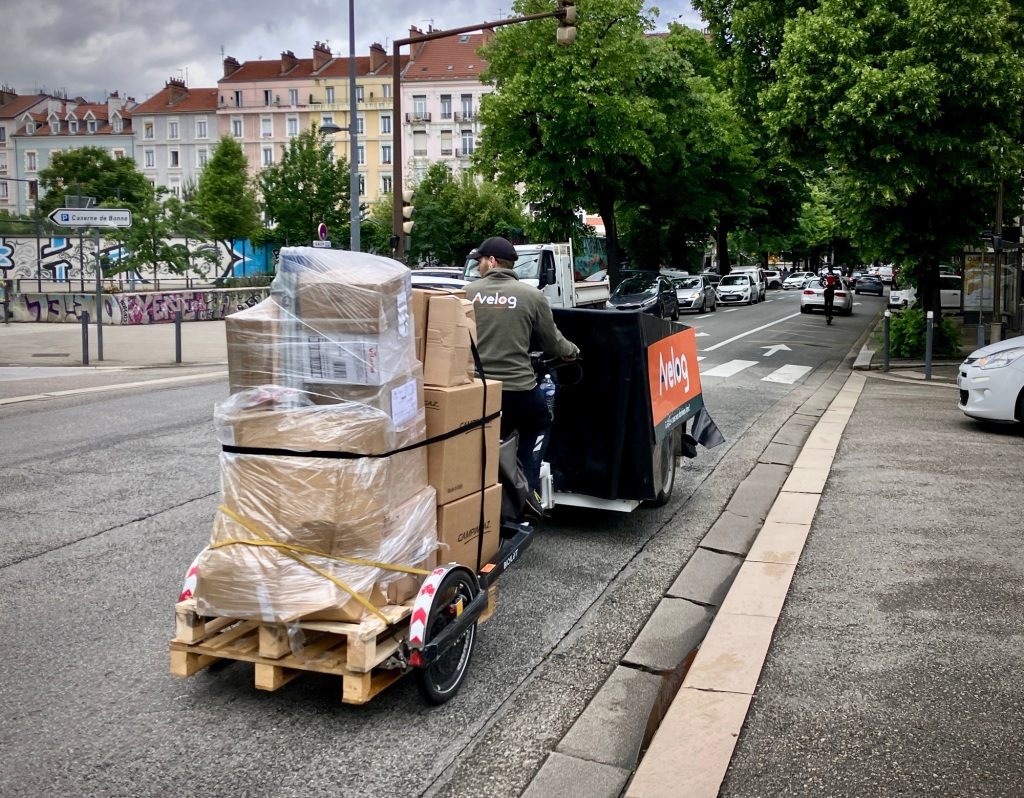
Next level cargo bikes in a seriously green city.
Trams and bikes, what’s not to love?!
The cranky travelers recovering in Grenoble and ready to explore another day.

We loved Grenoble but only stayed a night as hotels were unusually expensive due to a conference. We vowed to come back and explore more there soon as it’s nearby the Vallée Verte and has a lot of top museums, not to mention outdoor adventure in every direction. The next two days cycling further up the valley were inspiring and relatively short, so allowed for plenty of time to stop at sights, take photos, and bask in our positive attitude!
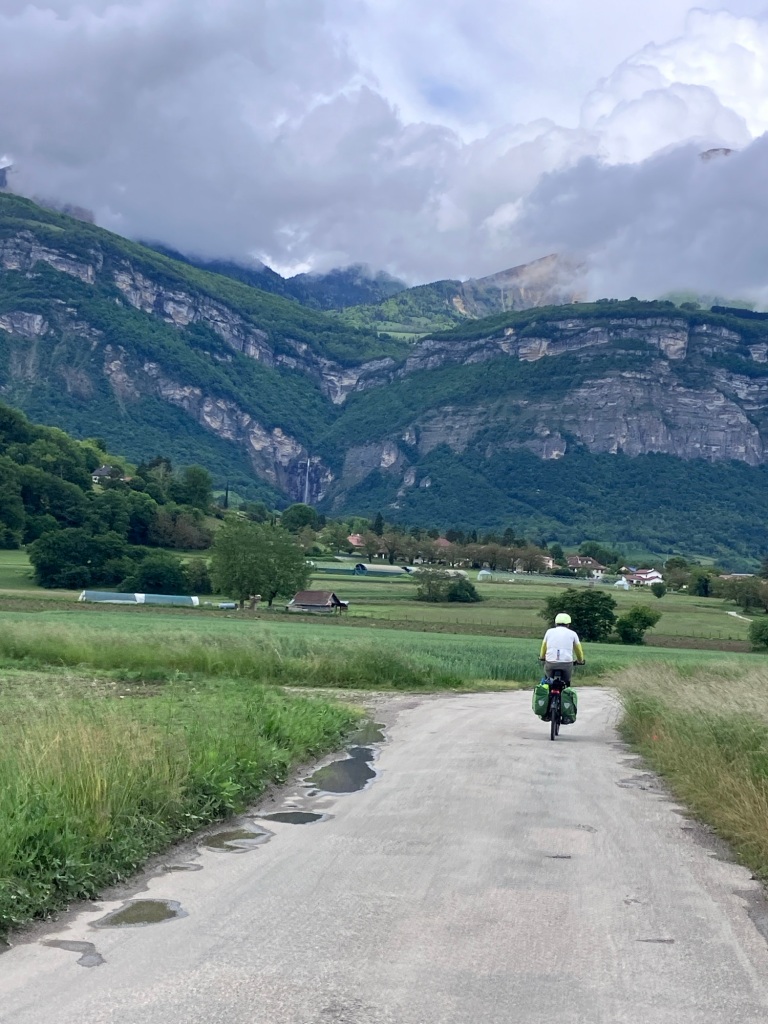
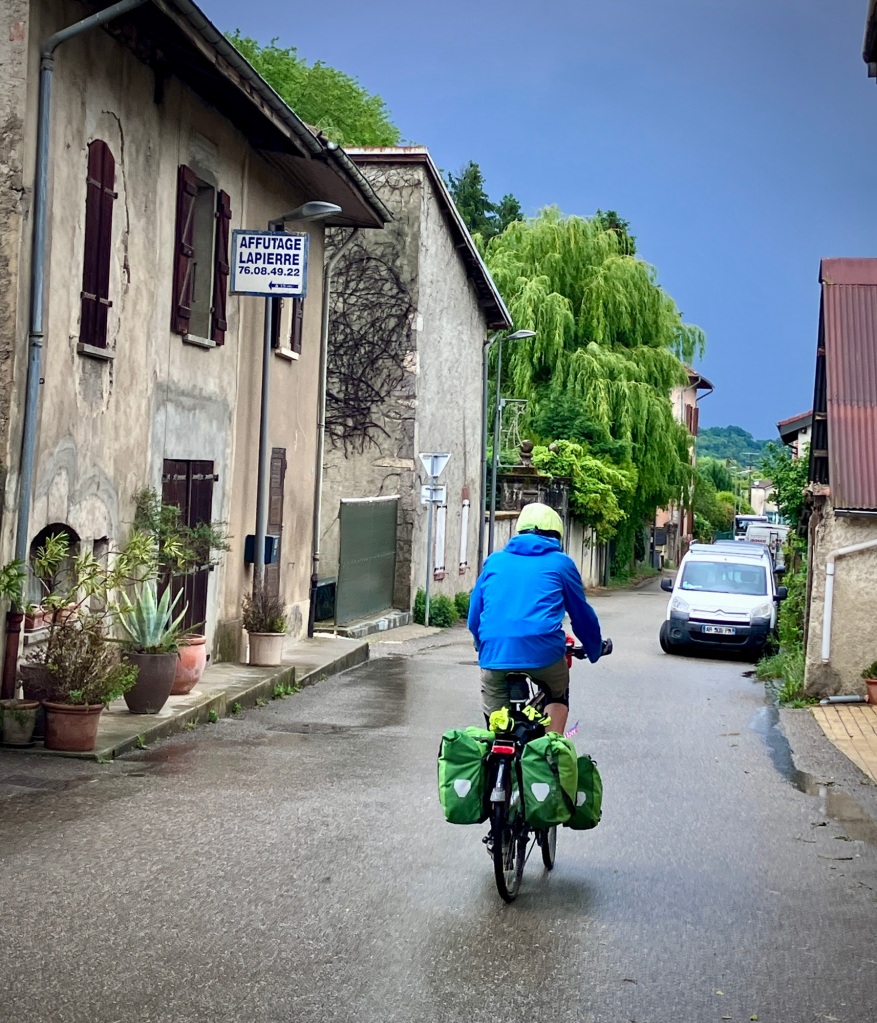
The ride out of Grenoble was flat but pleasant along the Isère River and valley.
But soon heads up some small hills into the Coeur de Savoie.
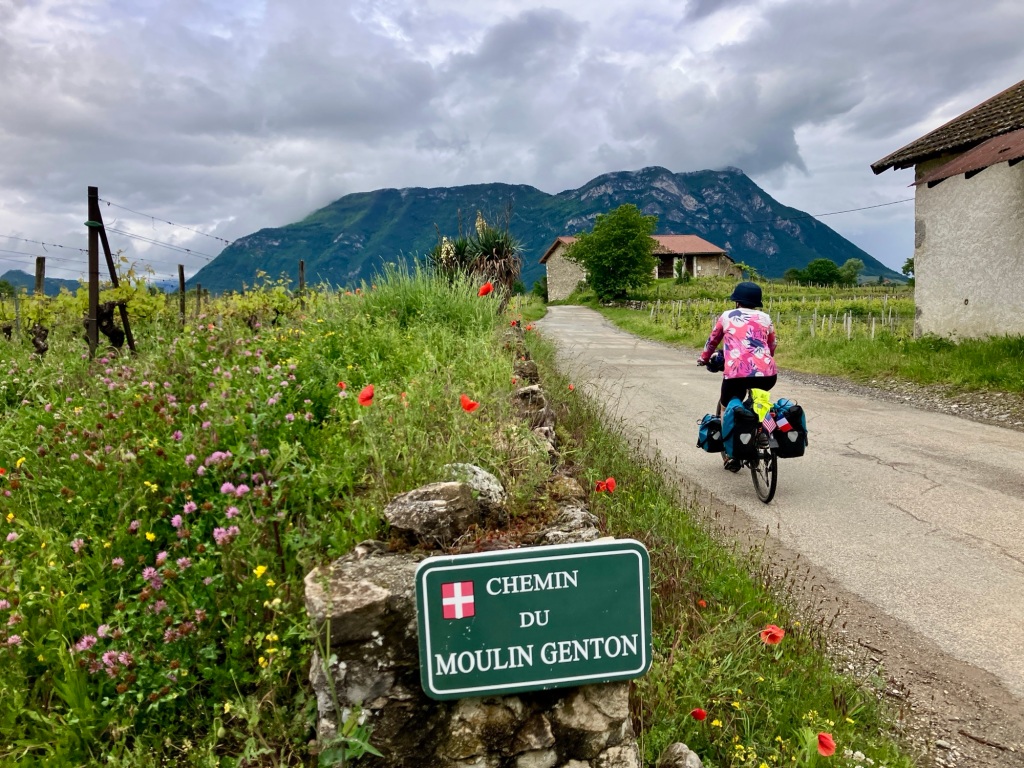
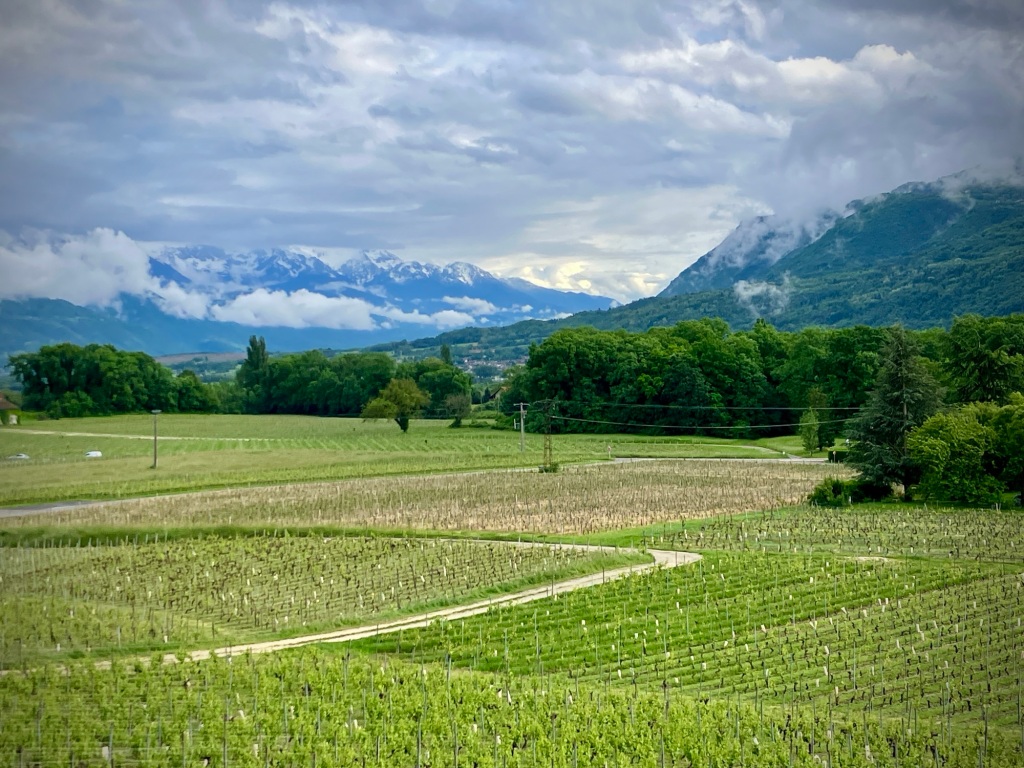
The Savoie wine production region near Chingin.
Cheryl heading to the wine!
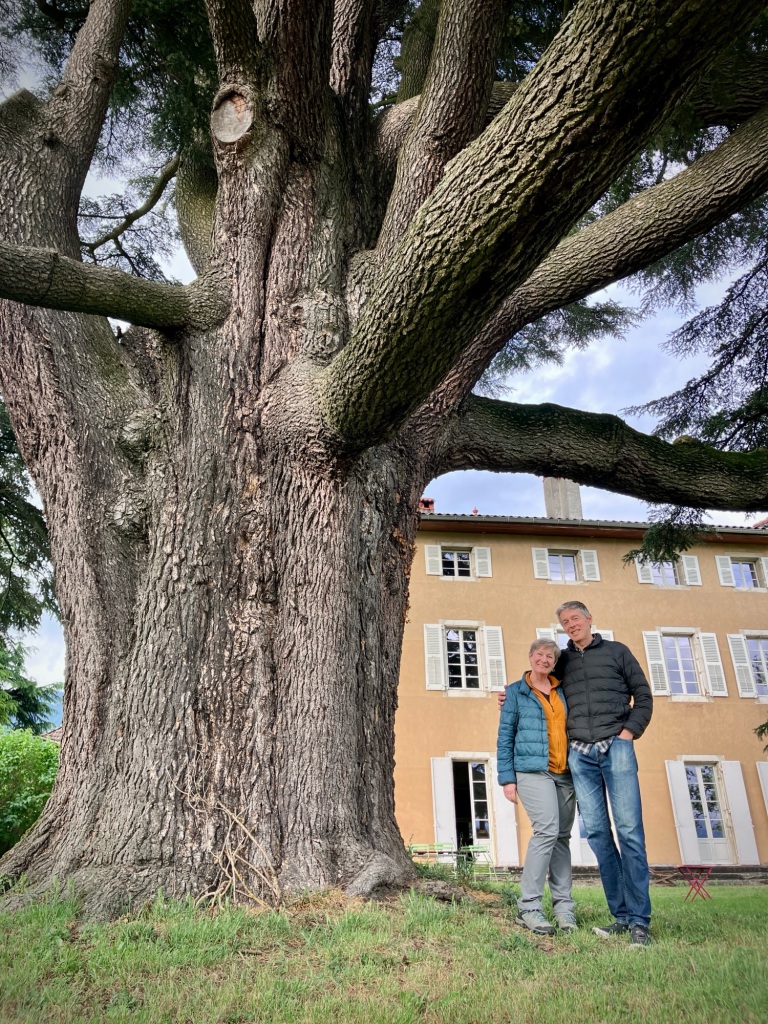
Views and history at Chateau LaViolette, a very friendly and lovingly restored B&B in the Porte-de-Savoie. This magnificent cypress tree was over 200 years old.
Views from LaViolette of vineyards famous for Mondeuse Noir and Jacquere. The infamous land sliding Mt Granier is obscured by clouds.
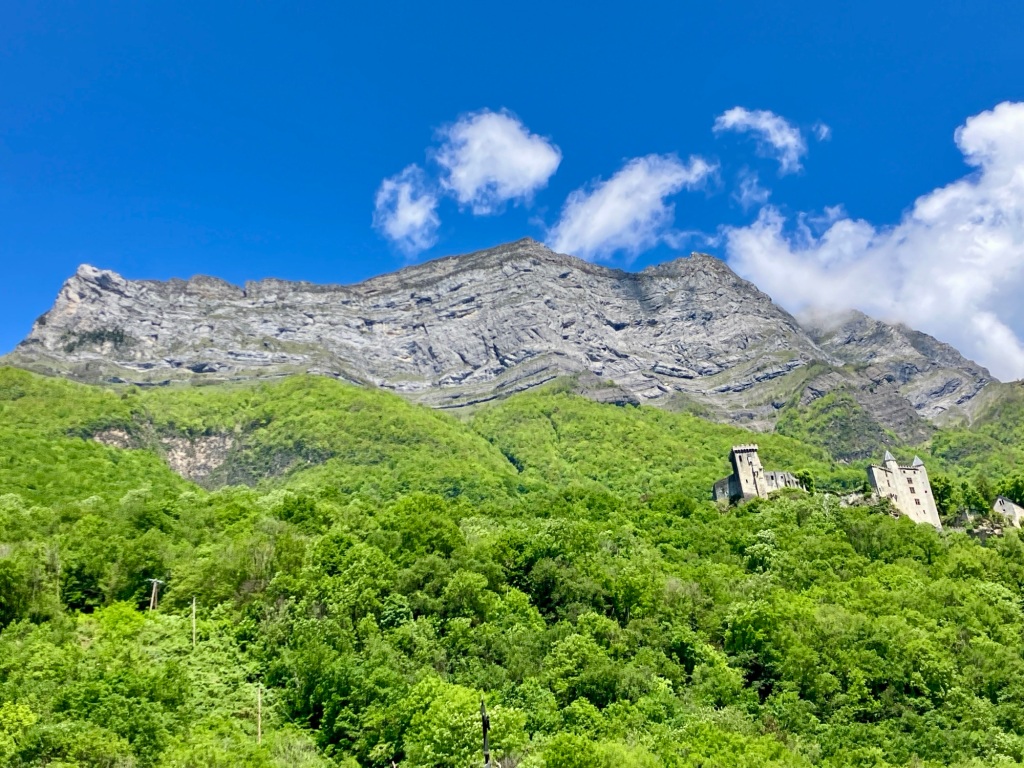
Our next day was greeted by spectacularly blue skies cycling the D201 road to Albertville. We passed on the steep climb to the historic Château de Miolans.
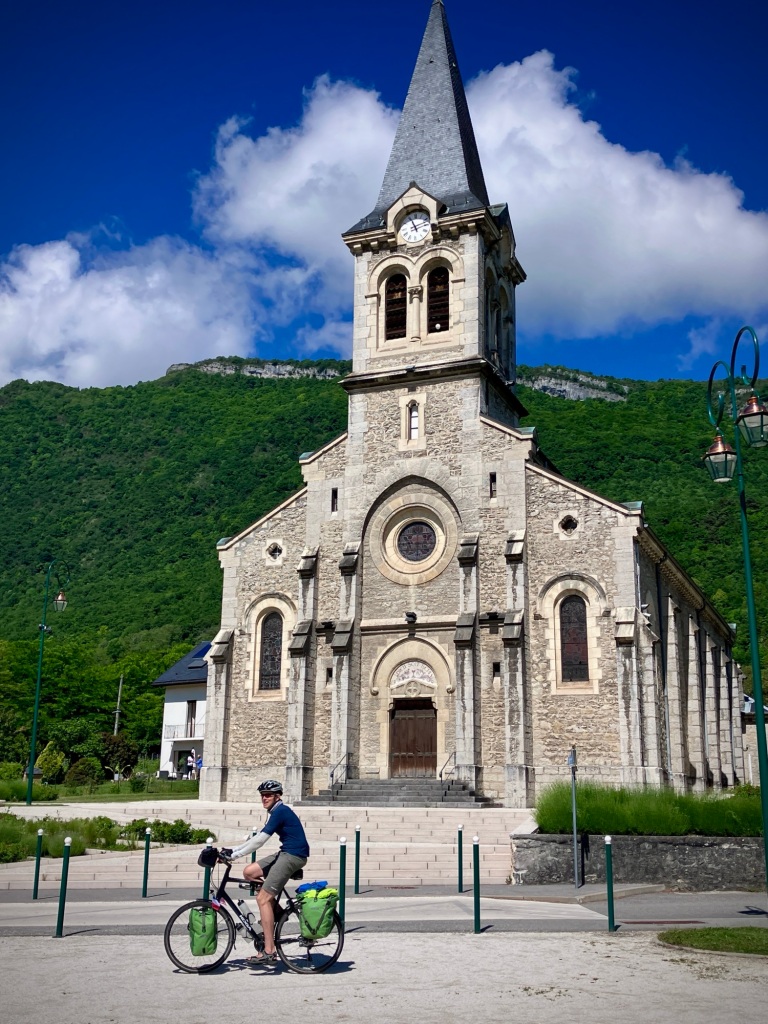
A wonderful day rolling through the tidy and historic villages of the Savoie.
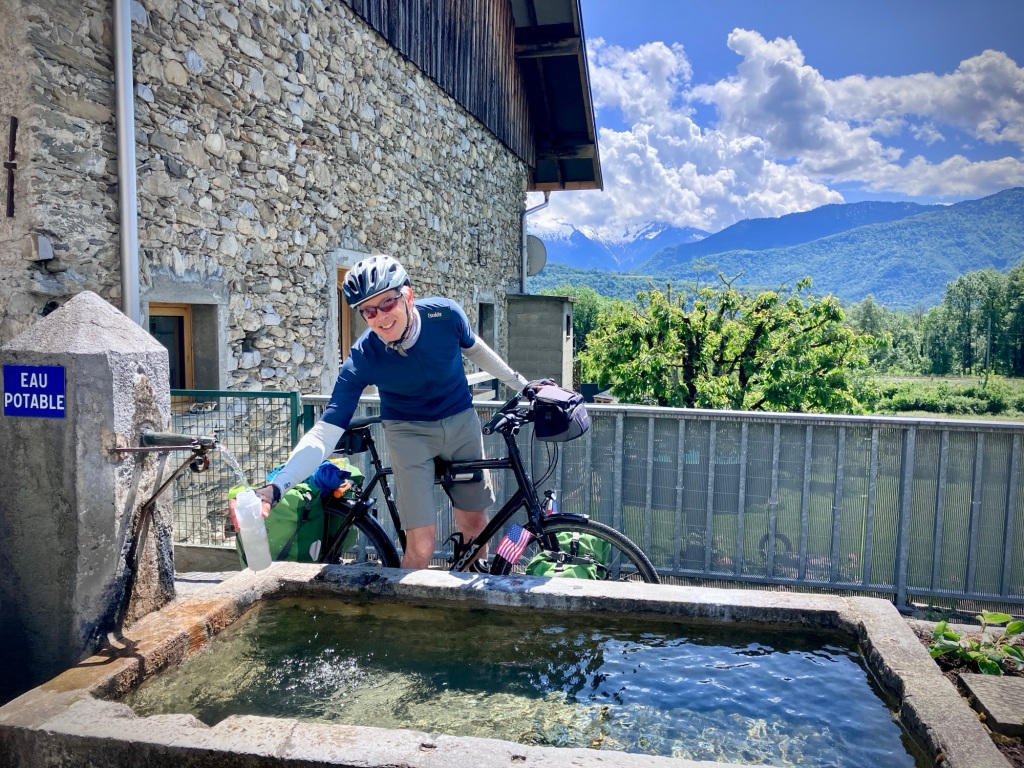
Usually there is a great water source in these mountains…just need to make sure you see the “Eau Potable” sign.
The D201 road rolls up and down along the edge of the valley towards Albertville and is a great alternative to the flat V62 route in the bottom of the valley.

We found a nice little apartment in Albertville to spend the first two nights of the long Corpus Christi holiday weekend, as Albertville is actually not much of a tourist town, despite hosting the 1992 Winter Olympics. It’s pleasant enough and was a good place to relax, do laundry, and explore a bit, but otherwise would recommend other places in the Alps for scenery and charm. It has the old Olympic park and a small medieval town, Conflans, on an adjacent bluff. We realized all the charming Olympic shots you saw in 1992 were probably of Conflans, not Albertville per se.
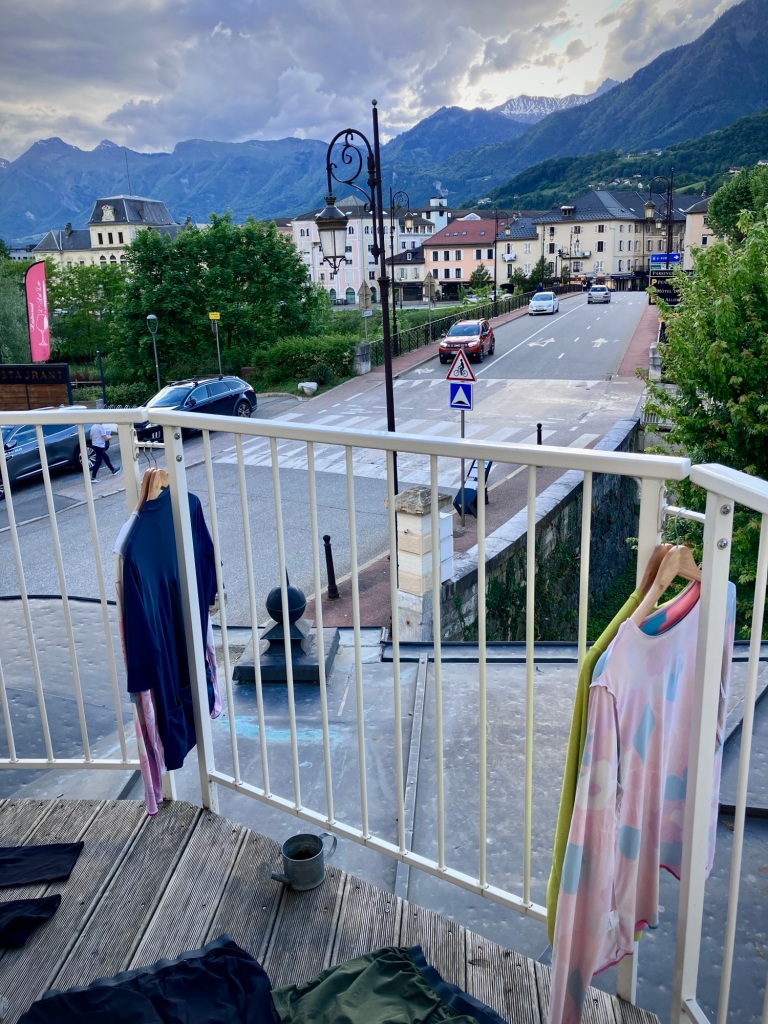
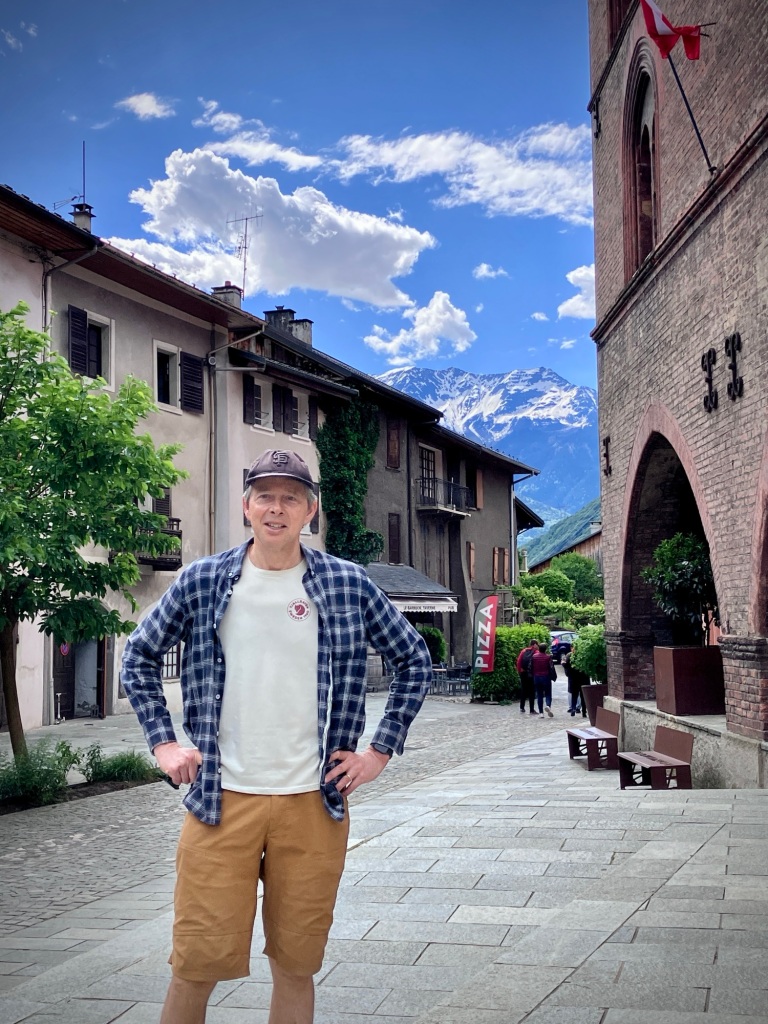
Our cozy apartment in Albertville had convenient balcony drying
The medieval village of Conflans is just a short walk up the hill from downtown Albertville. We really enjoyed learning more about life and history of the Savoie at the small museum.
Spring fragrance in Conflans.
La Bicyclette in Albertville is a great bike themed bar with craft beers, a very pleasant garden, and of course, wine -:) .
Heading out of Albertville for a short day to Annecy. How can we make this longer and more fun?
Taking the rolling side gravel and dirt paths instead of the paved cycle path.
Happy to snag a lunch bench on this busy holiday weekend.
Another side excursion to get some views and hills.
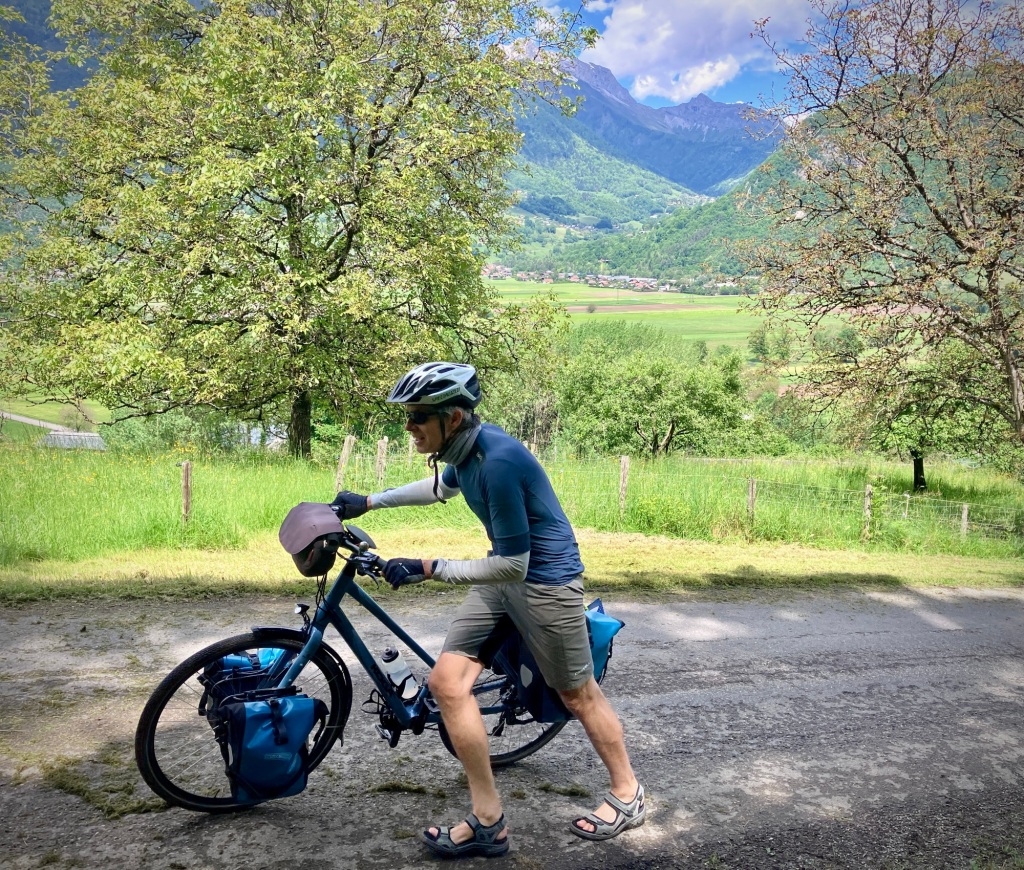
Oops, too much hill and wicked steep in parts! A bike push assist.
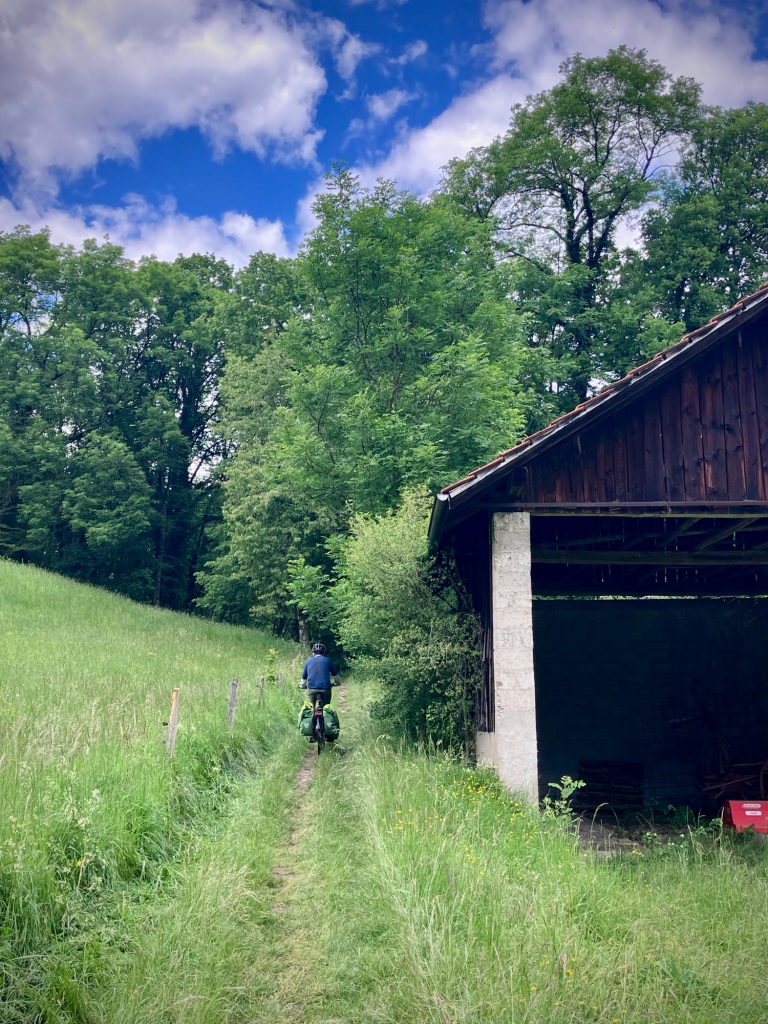
Yup, the trail goes through this farmhouse. We’ve learned that France is quite liberal with protecting historic rights-of-way and unless there is a clear Privé sign, we press on.
Cheryl enjoying the side excursion downhill.
Fun descent in a bit of mud. First one to fall down buys the wine!

After Albertville, we had an easy day to Annecy planned, but I did my best to make it a bit more challenging as we couldn’t get into our apartment there until 5:30. But the weather was spectacular and the route a joy, minus a few rough patches off road. We got to the south end of Lake Annecy just after lunch, where our route joined the 40km lake loop. It seemed that most of France was outside that day as the weather was finally warm. We merged into the pathway mix of fast and slow, families and dogs, and racers kitted out still thinking they might achieve their personal Strava best weaving around thousands of people. It was fun and the scene was memorable as we got closer to the center of Annecy.

You can circle Lake Annecy on cycle routes which is a very popular day trip.
The lake path was full on France the Sunday of a long holiday weekend (Corpus Christi).
We were waiting for a mishap in the Sunday spring fever and lakeside chaos, but it all seemed to work out.
So this is what cycle touring in warm weather is like! We felt the joy of everyone as well, since we’d been experiencing the same wet and cold spring across France.
Chillin in the lake on the hottest day of our spring trip.
Postcard shot, Annecy.
Annecy’s lakefront has the historic aire of a long visited and cherished place for relaxation.
The enchanting crystal waters of Le Thiou, a short river that flows out of Lake Annecy and is one of the clearest in the world. It eventually flows into the Fier and Rhône.

Annecy is a lovely French city with a great density, beautiful lake front, summer swimming, boating, and strolling. It benefits from easy access by train including daily direct TGVs to Paris. For our California friends…imagine a 2 hour train from San Francisco to North Lake Tahoe. We can only dream.
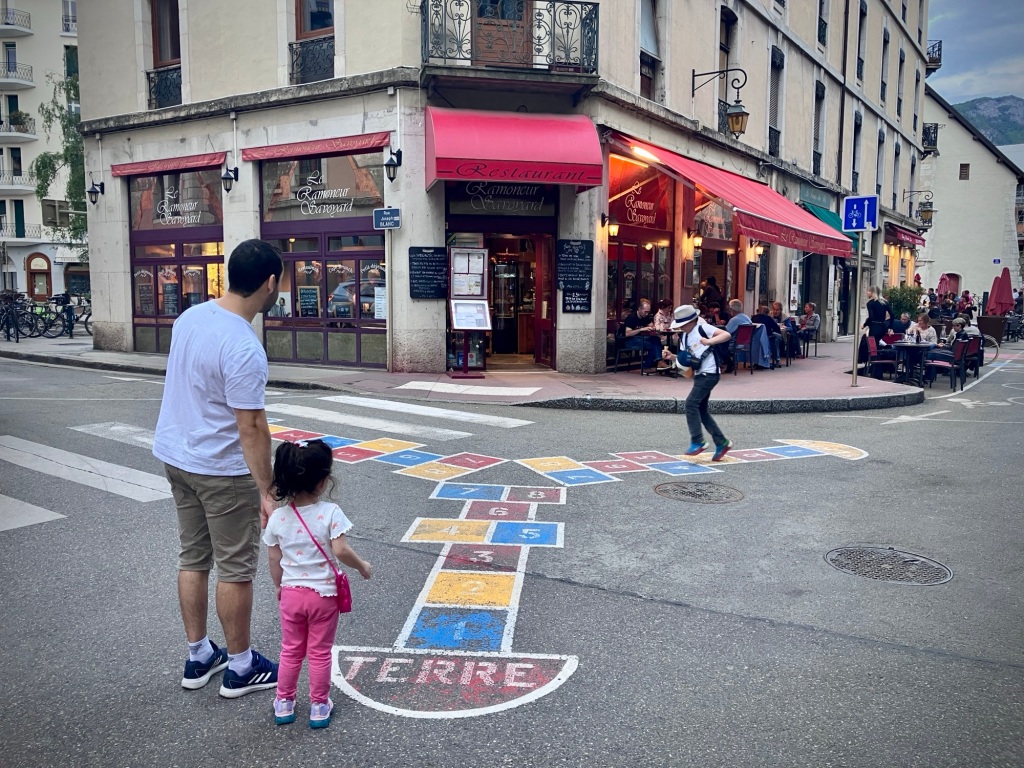
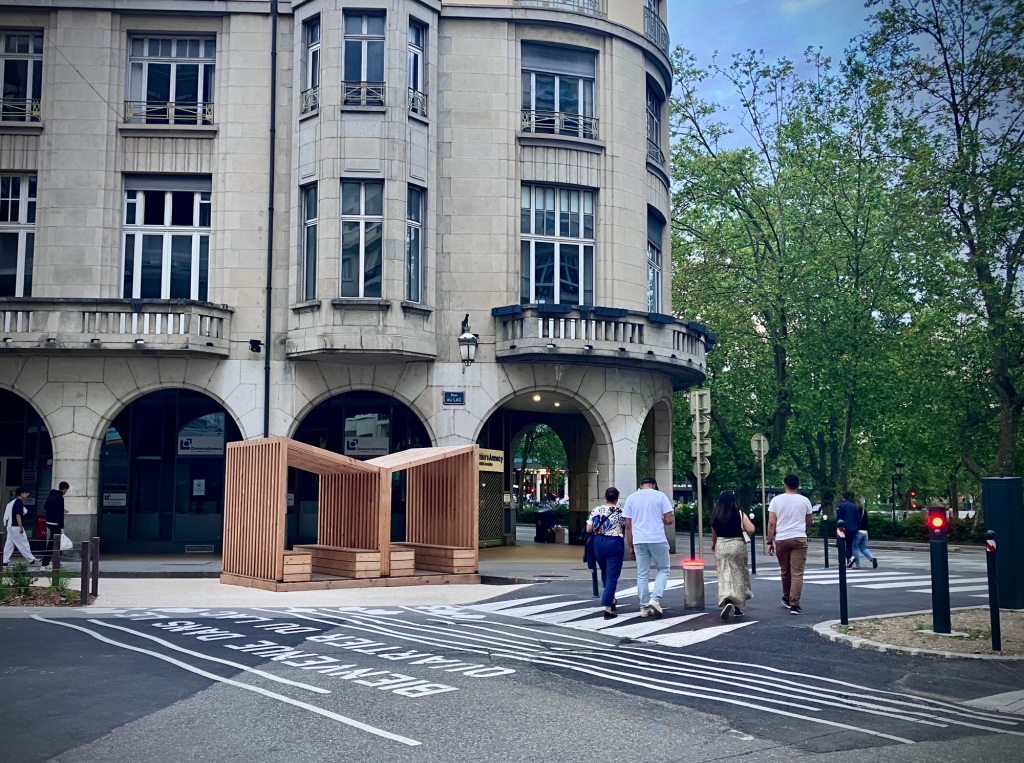
New play space for people as Annecy had recently expanded the car free core.
Bollard access again keeps the lakeside traffic out of old town core.
The lake and mountains are omnipresent.
We stayed another night in Annecy after the holiday rush to enjoy a more tranquil experience and more swimming!
Beers with friendly British cycle tourists we met on the path. Greetings Clive and Alan!
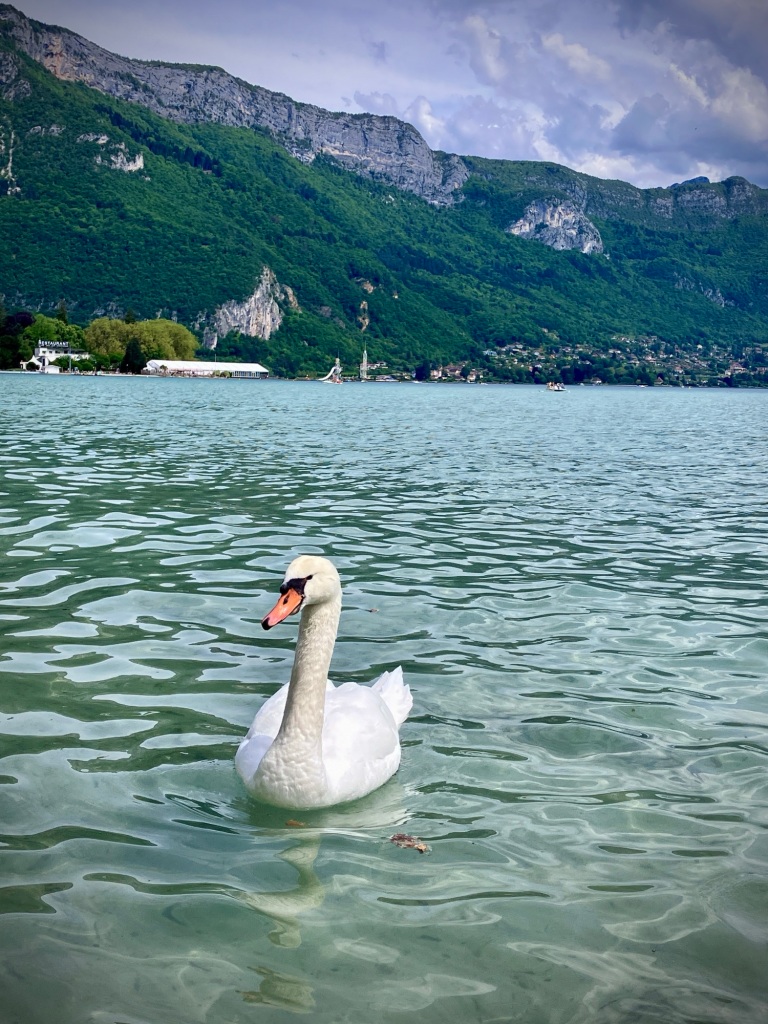
Swimming with the swans.
Big hair on Lake Annecy.

Our final route from Annecy to the Vallée Verte included a morning train hop as the V62 route is sadly incomplete and we’d been warned about the road near Cruseilles. The terrain is steep and rugged north of Annecy and it would be too long to do in one day as well. So we enjoyed a scenic hop on Line 2 of the recently upgraded and completed Léman Express system centered around Geneva. The trains are modern, frequent, and bike friendly. Bike space is somewhat limited, so we imagine at peak times it could be challenging, but we had a very peaceful ride on the 10am train which starts Annecy. Note that you need to buy a Swiss bike day pass if you stay on the system into Switzerland. (we did not.) The fixed price Swiss bike day pass (regardless of distance) is not a cycle friendly solution for short hops and really should be revised by SBB.
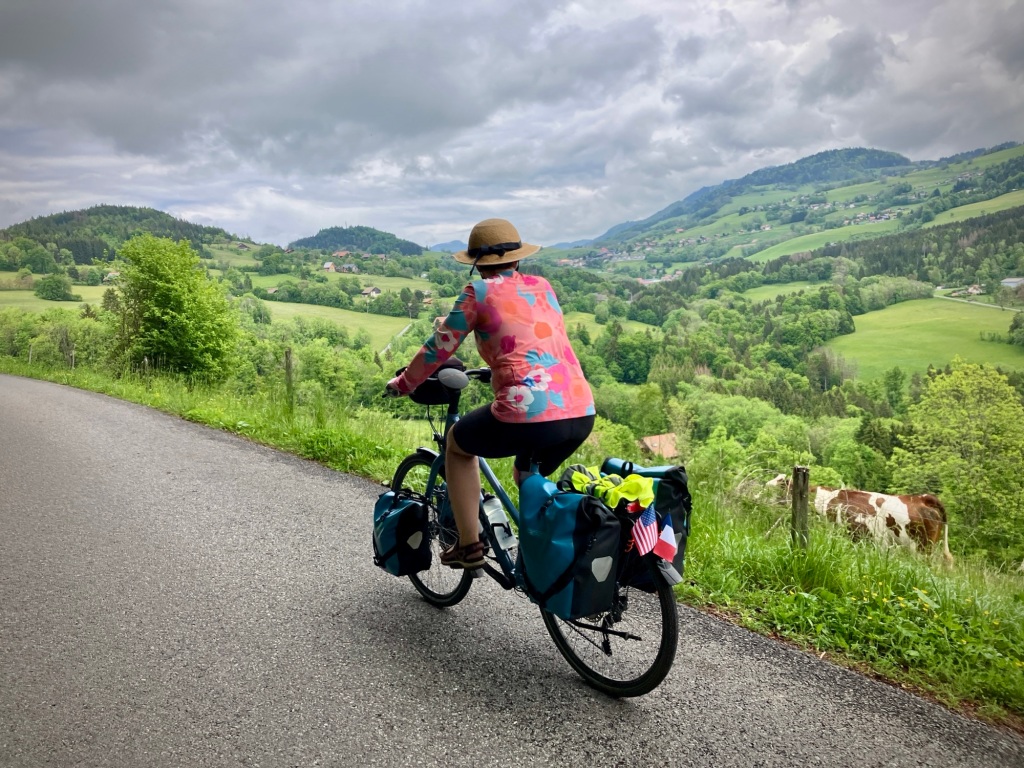
The final day push up the Col de Perret. Cheryl climbing with little effort and record speed; a testament to our almost 3 months on the bikes
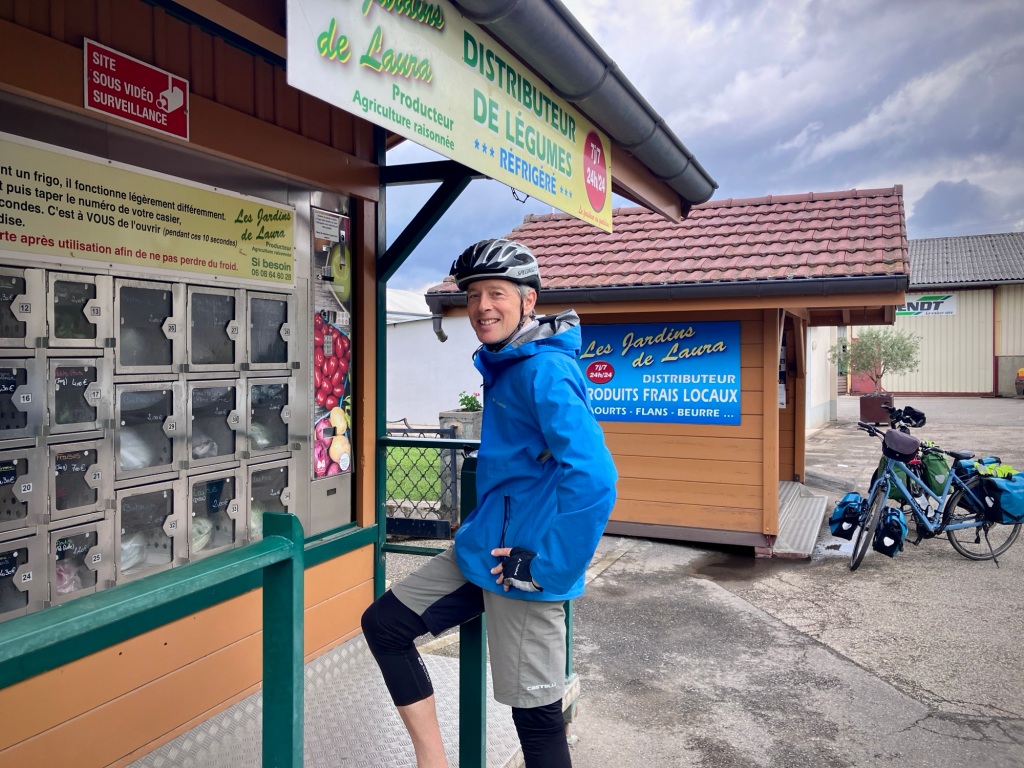
France does fresh vending like no others. This wonderful 24/7 farm shop had artisan yogurt, cheeses, eggs, and a wide variety of vegetables.
Biggest farm vending ever near Reignier. We got fresh broccoli and some yogurt. A great solution for staffing costs while still providing access to fresh foods.
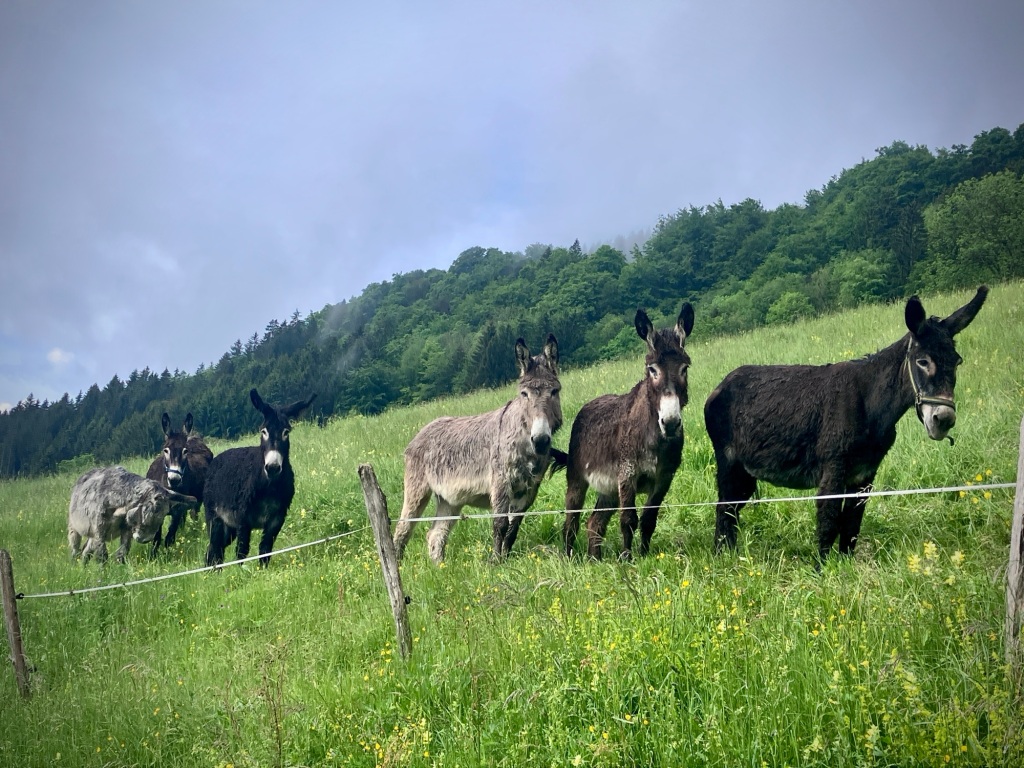
Vallée Verte welcome committee
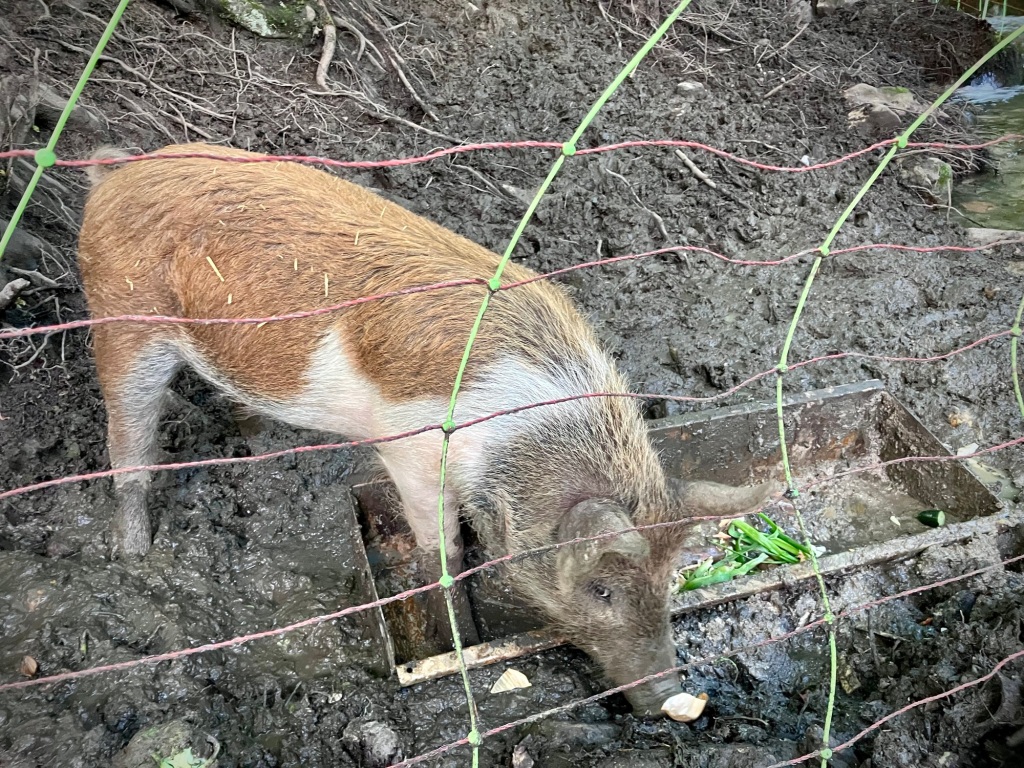
Feeding our kitchen scraps to the neighbors pig; strangely they don’t like cabbage.
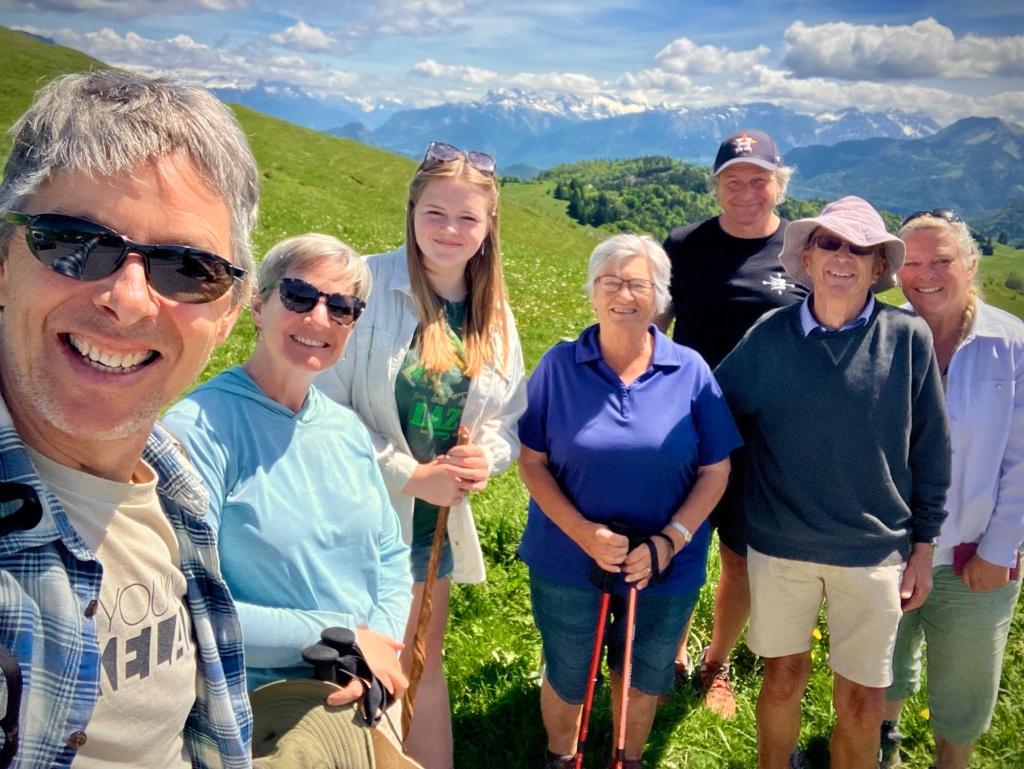
Reunited with our great friends and their visiting family for a spectacular day hike in the Alps.
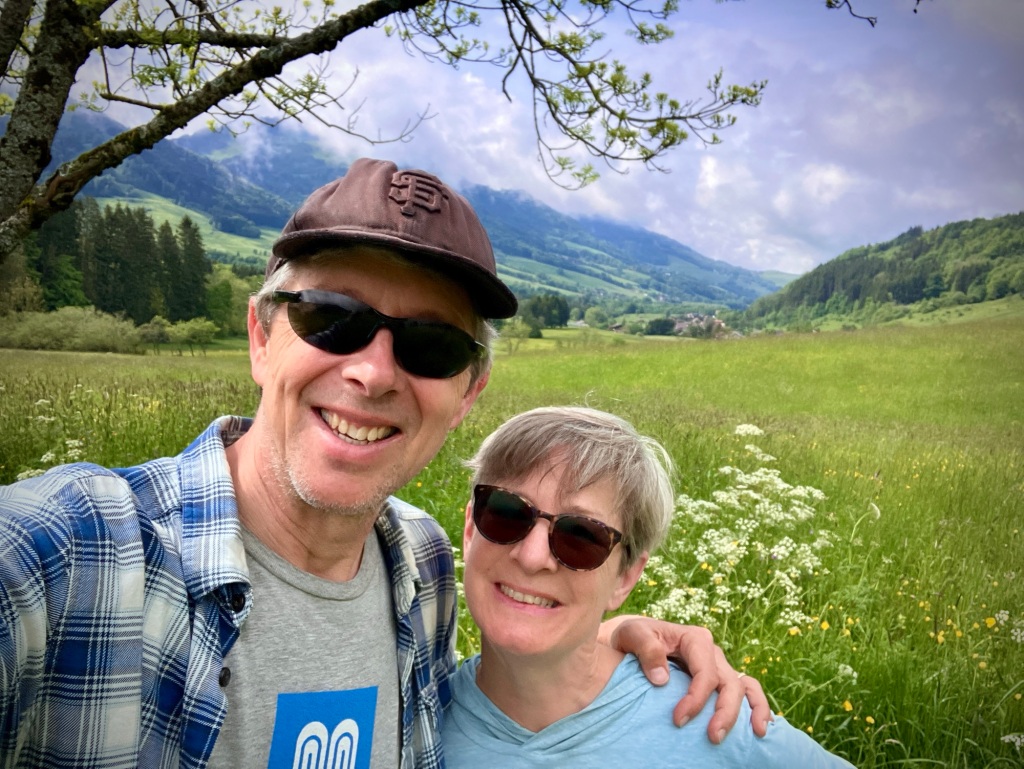
Happy to be back in the Vallée Verte after another successful bike tour.

We shaved over an hour off our last time climbing up the high valley route and felt a strong sense of accomplishment as we rolled into our friend’s house again. We appreciate everyday of our freedom. Happy travels!

A Rift in Our Travels

After three days of romping around Taipei and getting over our jet lag, we set off from the city on a big clockwise loop of Taiwan.

Rail is in my heart at the Hualien Railway Culture Park

We were excited to head out of Taipei Central to Hualien City, at the north end of the East Rift Valley. Hualien is a city reinventing itself with culture and art, and is now more than a gateway to the immensely popular Taroko Gorge.

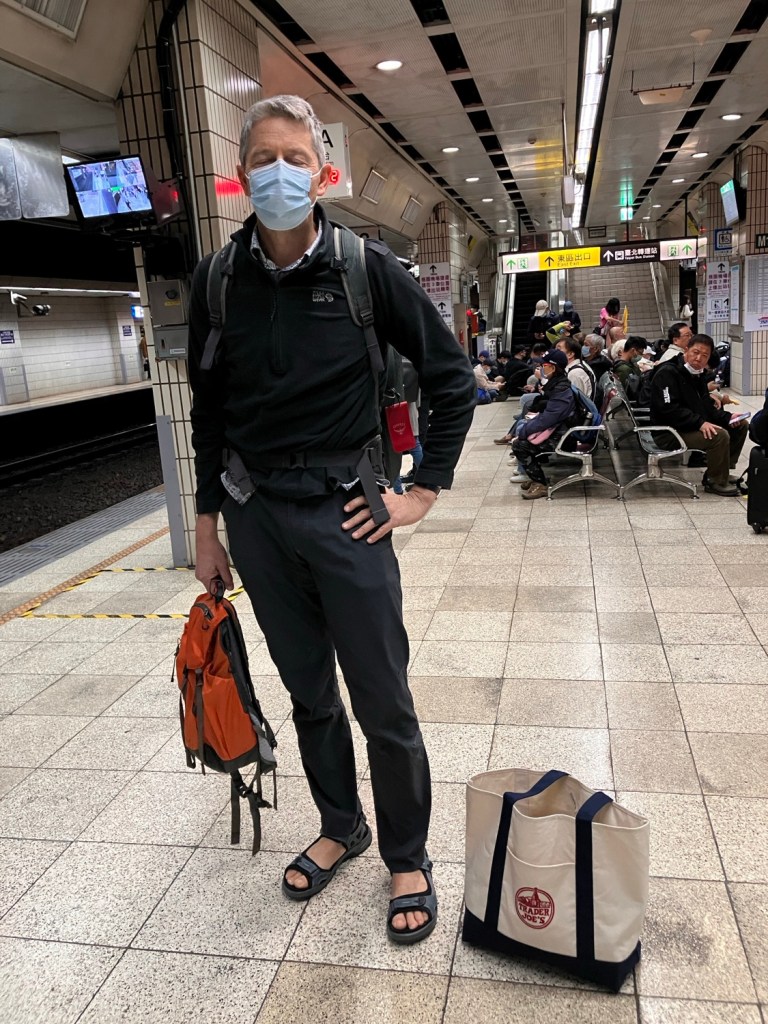
A bit too early on the platform at Taipei Central; Cheryl’s trendy TJs bag at my side
Ocean view from the TzeChiang Express train. Plenty of room in the standard seats

But first, a few train tips for the wonky planners out there. In addition to local and high speed rail on the west coast, the east is served by modern Tze Chiang limited express trains travelling up to 125mph. They are spotless, spacious, and punctual. And although we tried the business class on one segment, regular cars and seats are plenty roomy. If anything, we found the new trains a bit too clean and sterile, but certainly a pleasant and very low stress way to go.

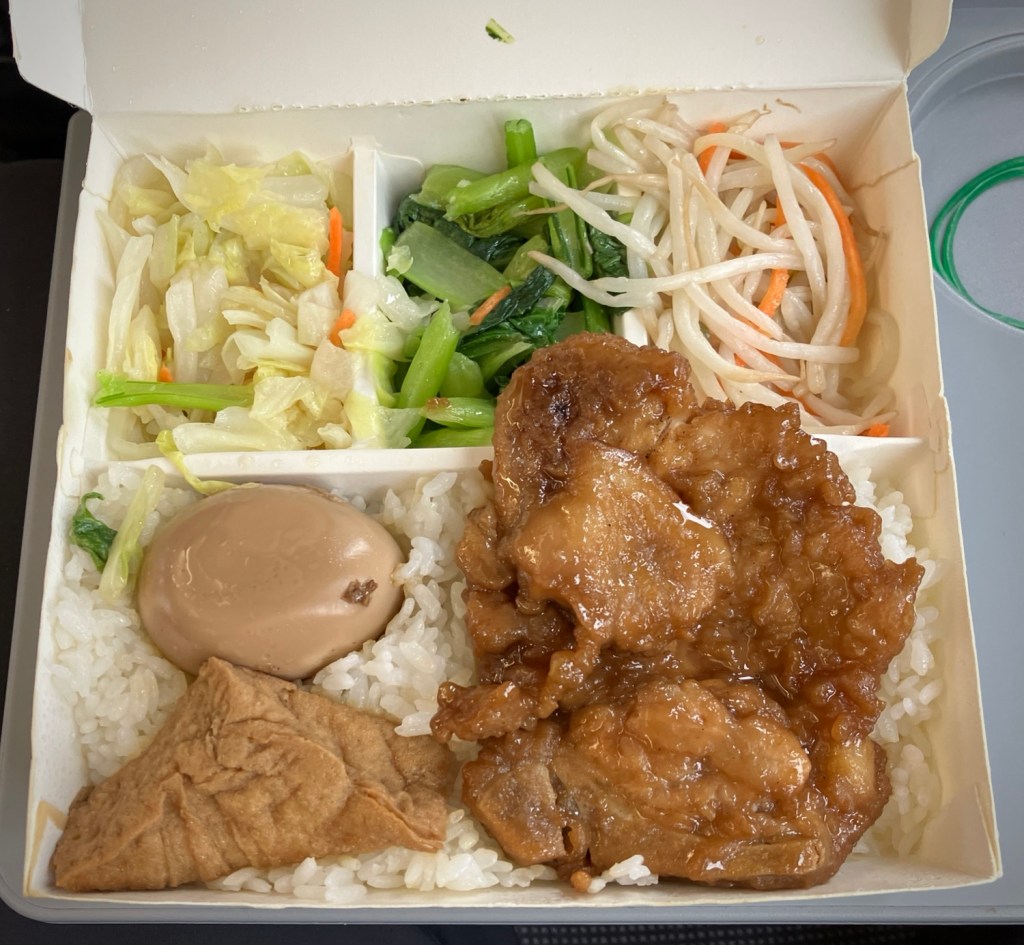
You can pre-order a train bento on the TRA App for less than $3 and it’s delivered to your seat

Taipei Central’s local platforms are not wide or particularly pleasant and there are not really any services beyond the pay gates, so I’d recommend getting to the platform no more than 10 minutes prior to departure as it’s easy to find the platforms and coach number sign. Hang out or get food in the adjacent shopping mezzanine. At some stations; they don’t let you onto the platforms until 10 minutes prior.

The regular meat bento was pretty good considering, although maybe not up to the hype of its somewhat cult following. Cheryl got the veggie version -:).
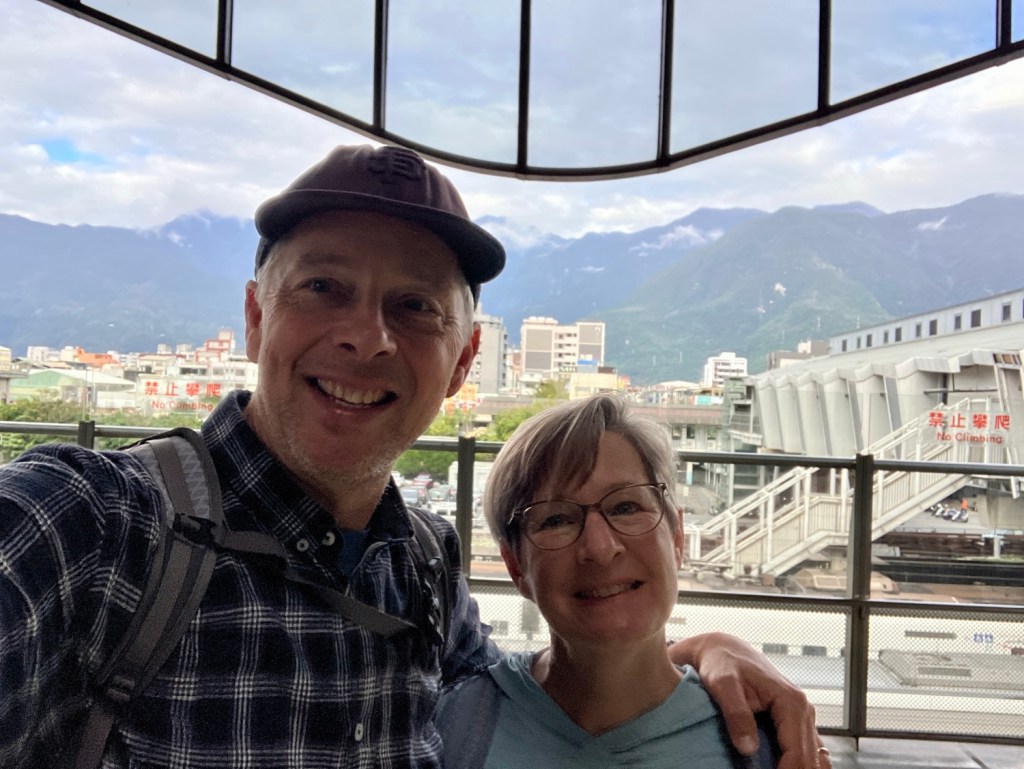
Happy arrival at Hualien Station.

You can buy tickets on the TRA App or at the stations, but I found the app pretty convenient for booking tickets once you get the hang of it. One person can buy tickets using their passport number for up to 5 people and pay by Credit card or Apple Pay. You then collect your ticket on your mobile and have the other passenger (s) download their ticket on their phone (in the App) as you provide the reservation # and a 3 digit collection code.

Back at the railway park
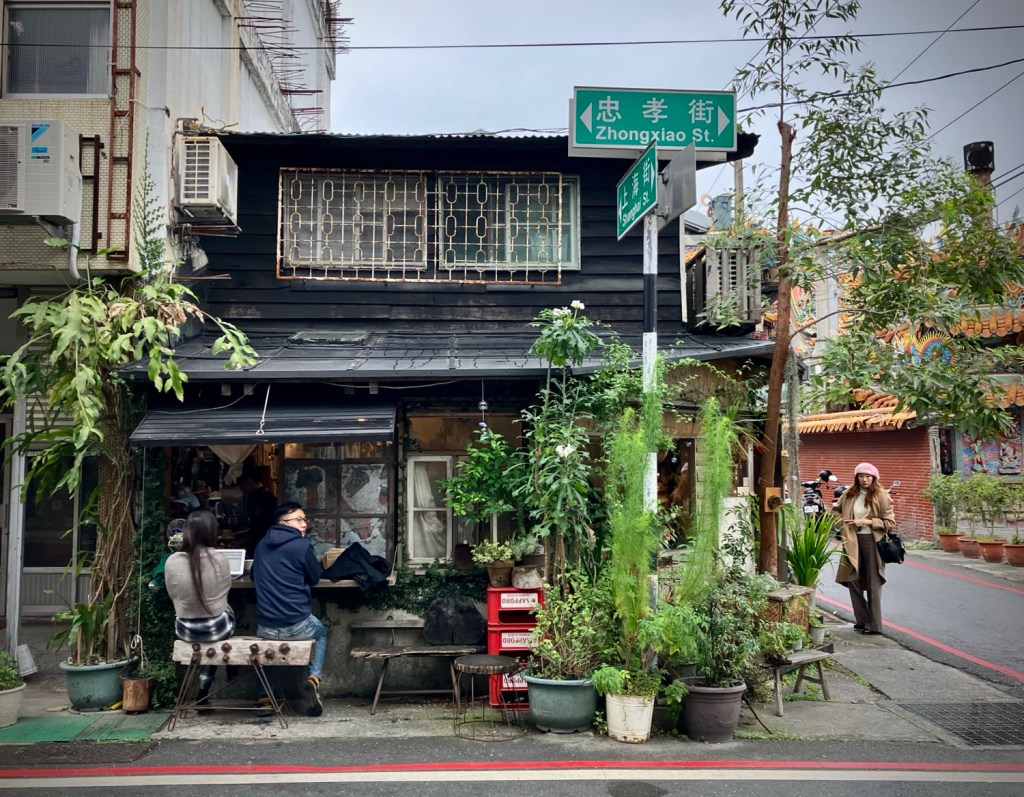
The charms of many smaller Taiwanese cities take awhile to reveal themselves in back alleys, converted old buildings and lots of plants.
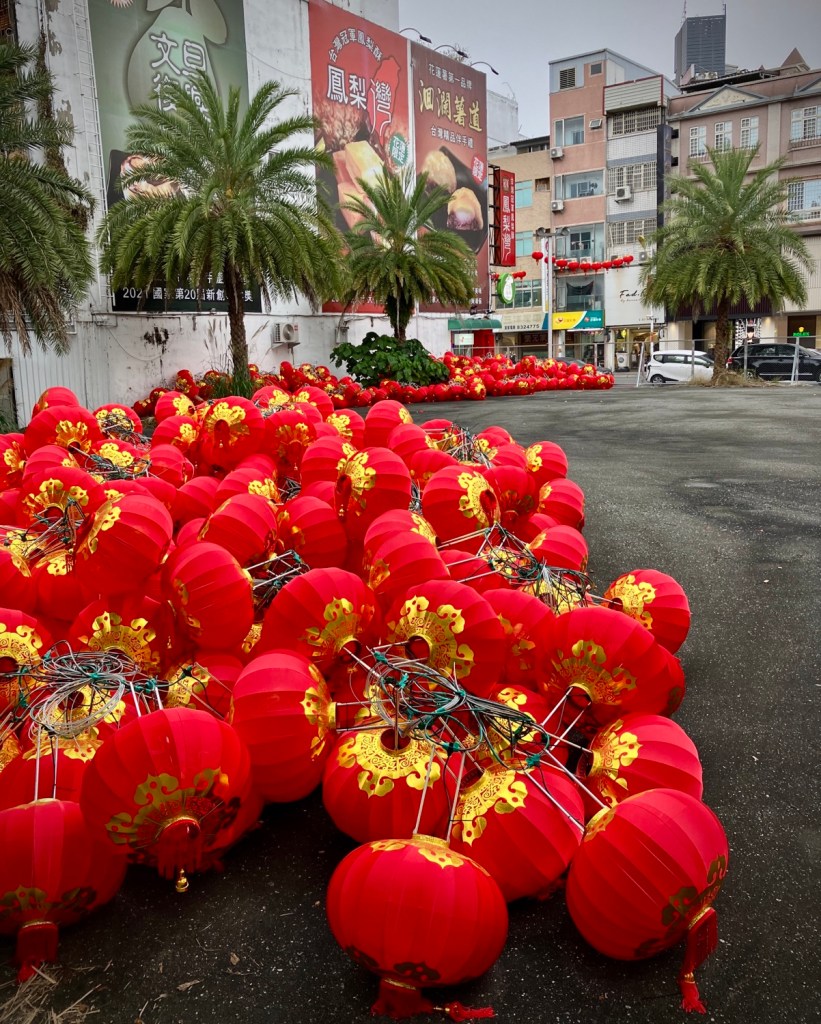
Red lanterns ready to be deployed in Hualien for the month+ long Lunar New Year celebrations.

Note that as soon as you click on a specific train after searching time and destination, a reservation and seats will be made immediately. You have a reservation and specific deadline shown to pay via credit card or Apple Pay (very convenient) or at the station. You can delay paying for tickets for a day or two (it gives you the deadline). This gives you an easy option to change or cancel tickets, but a word of warning, I did this a few too many times as I was learning the system and it locked my passport number for a month! I’m guessing the limit was about 4-5 incomplete/unpaid reservations. I could have called customer service and perhaps begged for tourist mercy, but we got around this by reversing our process and buying the tickets on Cheryl’s TRA app (and her passport number) and then I downloaded second ticket to my phone. You only need one ID to buy tickets via the App.

The hipster guide to Hualien

It also is smart to wait to collect the tickets on the App (or at the station) until you are sure that you want to take that specific train, as this allows you to change a ticket on the App, not just at the station. Apparently locals don’t “collect” tickets until the last minute for this reason.

Funky and green charm in Hualien.
Hip coffee shops abound and are generally only open after 11am or even later as the coffee cafe culture is an afternoon thing in Taiwan.

By the way, there are also local trains that you can see on the App timetables but you can’t buy reserved tickets. For those, you just show up and use your IC tap card to enter and exit the station and take any seat on those trains. They are also the easiest option with bikes.

Ready to scan my QR ticket at the turnstiles.
Taiwan is really promoting cycle tourism and these helpful signs are everywhere around cities, transfer areas, and stations.

Besides trains, I love to study the geography and geology of the very place we visit. It always shapes the history; culture, and economy. The geography of Taiwan is dominated by a central ridge of mountains, the remnants of the formation of the island from magma rising up between the junction of the Eurasian’s and Philippine tectonic plates. The central range reaches heights of over 3000m (10,000ft) and it does snow sometimes in the higher elevations in winter. So only 30% of the country is flat, and much of that is highly developed.

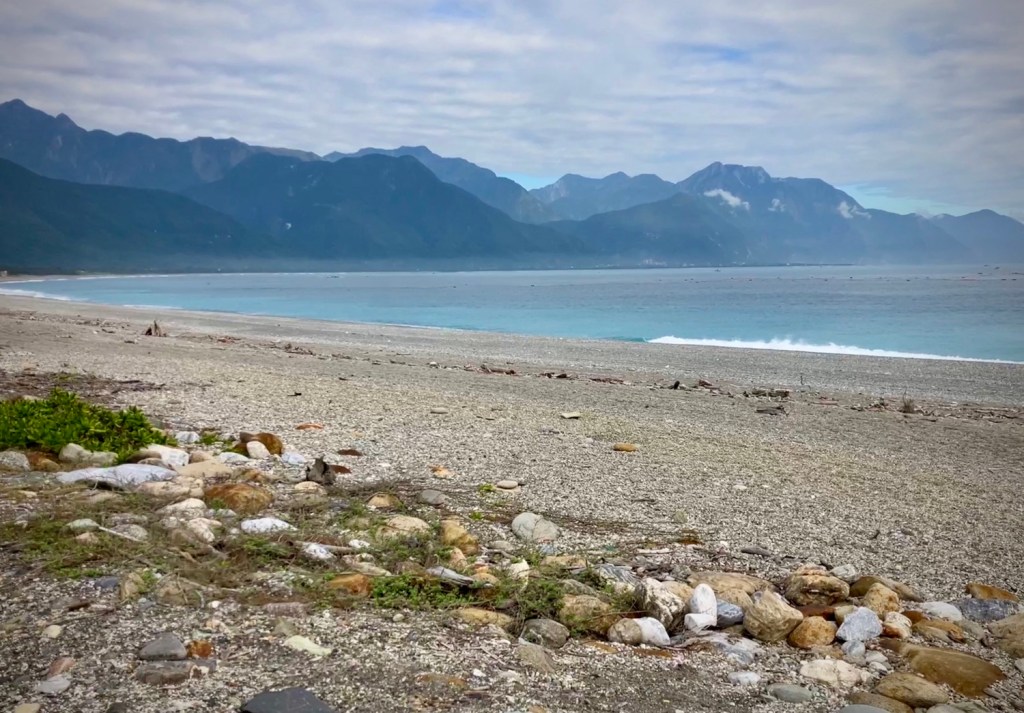
The coast north of Hualien.

A second smaller coastal mountain range hugs the east coast. These ranges are both actually rising as the Philippine plate continues to push against and under the Eurasian plate. The valley where the plates meet, the East Rift, is one of the only flat areas on the east side of the country. It’s also fertile for growing things year round and attractive for cycling. Most of the industry and population of Taiwan is concentrated on the north (Taipei valley) and west sides, so the east has always been considered a more wild and remote place.

We loaded up on veggies at the Azure Hotel’s amazing vegetarian breakfast buffet for three days and used it as an excuse for street food, night markets and other less healthy options the rest of the day -:).

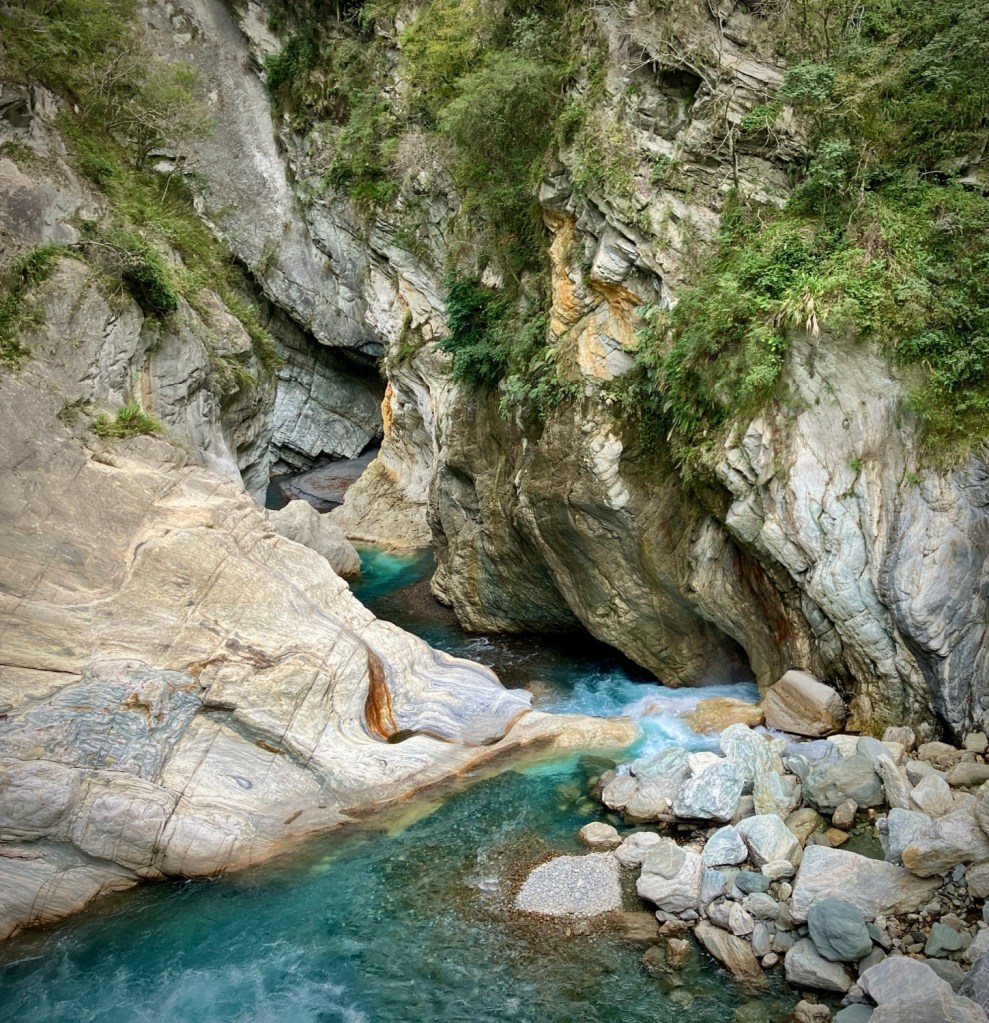
Ok, so onto our travels. We spent three days in Hualien and used it as a base to visit the famous Taroroko gorge and Taroko National Park for a full day by train, bus, and foot. The geography of the mountains is dramatic and consequently there are a lot of issues with rockfall, slides and road/trail closures. There are very limited bus services up and down the gorge now due to construction around a massive landslide that occurred in October 2023. There is single lane traffic controls and you can wait for up to an hour to get through each way, even if you hire a scooter or taxi for the day.

Ready to go to Taroko Gorge!

But we love buses and challenges, so decided that we would catch the earliest #302 bus from Xincheng Taroko station at 9am (the #310 bus is not currently running into the gorge) and ride it all the way to its end at Tianxiang. You can drive (or bike!) further than that and apparently it is much less visited beyond the reach of the buses.

Oops, our electric bus broke down half way to our destination in the park.

Our short train hop from Hualien arrived Xianming about 8:30 and there were about 30 tourists waiting for the bus, including some other Americans from Utah. After we boarded, the driver made a long speech in Mandarin that didn’t sound encouraging but somewhat surprisingly, our young pale Utah friend spoke Mandarin and translated for us. It turns out he was half Taiwanese! The driver was just preparing everyone for what we already knew, that there would be significant delays at the construction. So the half of us who were still on the bus at the construction were all patient for the 40 minute delay.

So we started walking
And enjoying the views
Light traffic due to the road closures

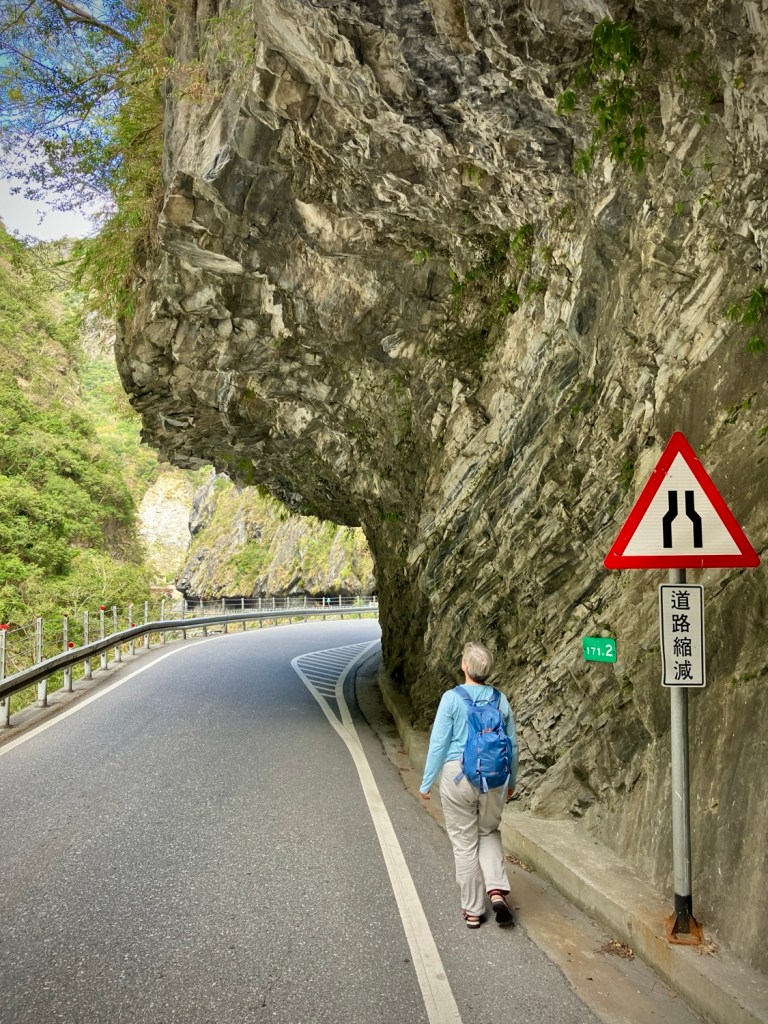
We were finally rolling again through the closure and spectacular gorge scenery, when suddenly the electric bus started to stall and sputter. The driver mumbled, stopped, and fixed (rebooted?) the batteries in the back, and we rolled on again slowly. But alas 500m onwards the bus finally died for good. So the remaining dozen or so of us got off and walked on the road. But we soon figured how nice it actually was walking the road, as the normal continuous two way traffic didn’t exist due to the long road closures all day. Roll with it and we’ll see what we see.

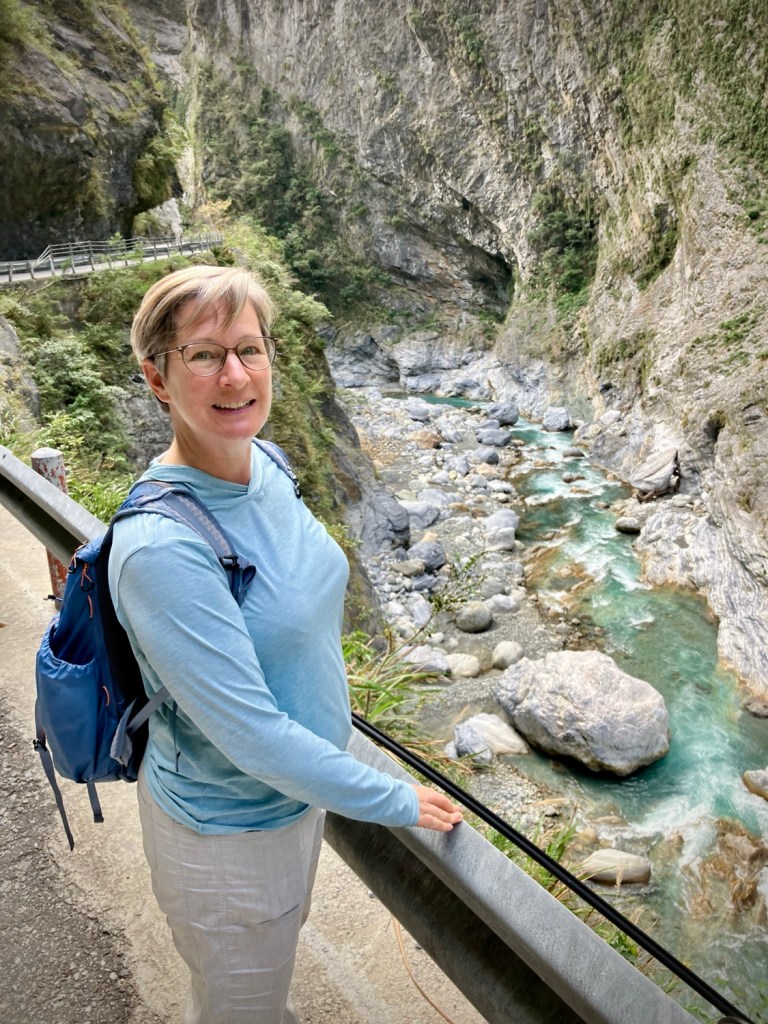
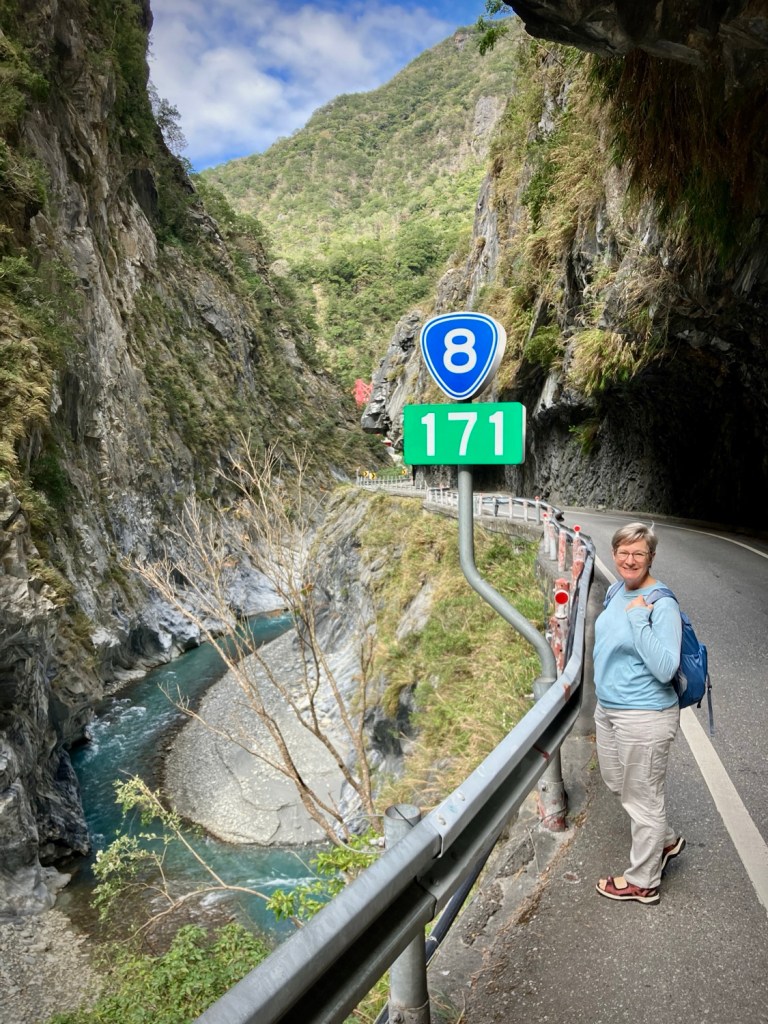
Happy travelers rolling with the bends in the road today
Plan B, walk the Lushui trail for a few kms
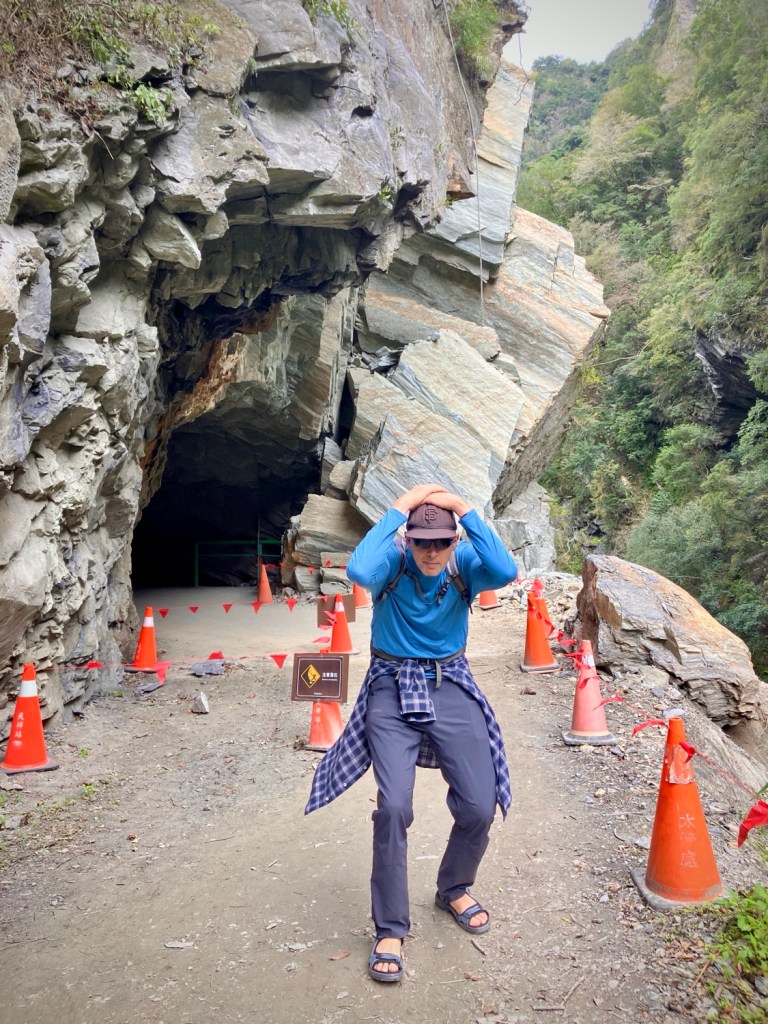
Oops; trail closed midway so back to the road
Cheryl resigned to wait for the next bus…at least she had some books on her phone…

It was peaceful and beautiful, and we walked to a campground area with bathrooms a few kilometers up the road. We then decided that we’d hike some of the Lushui trail which branched off the road above and then try to catch the next bus as it rolled by in about an hour. Well, the geologic gods had also closed that trail in its middle, so after a pleasant 30 minute out and back, we returned to the campground bus stop and resigned ourselves to wait up to an hour for the next bus. It was too far to walk (15km) and there were dark tunnels with no shoulders. But after about 10 minutes, a nice young Dutch couple in a little white car came by and offered us a ride to the end! Very nice and put our day back on track -:). They also were going to the Bayiang Trail, so we avoided another km+ of road walking.

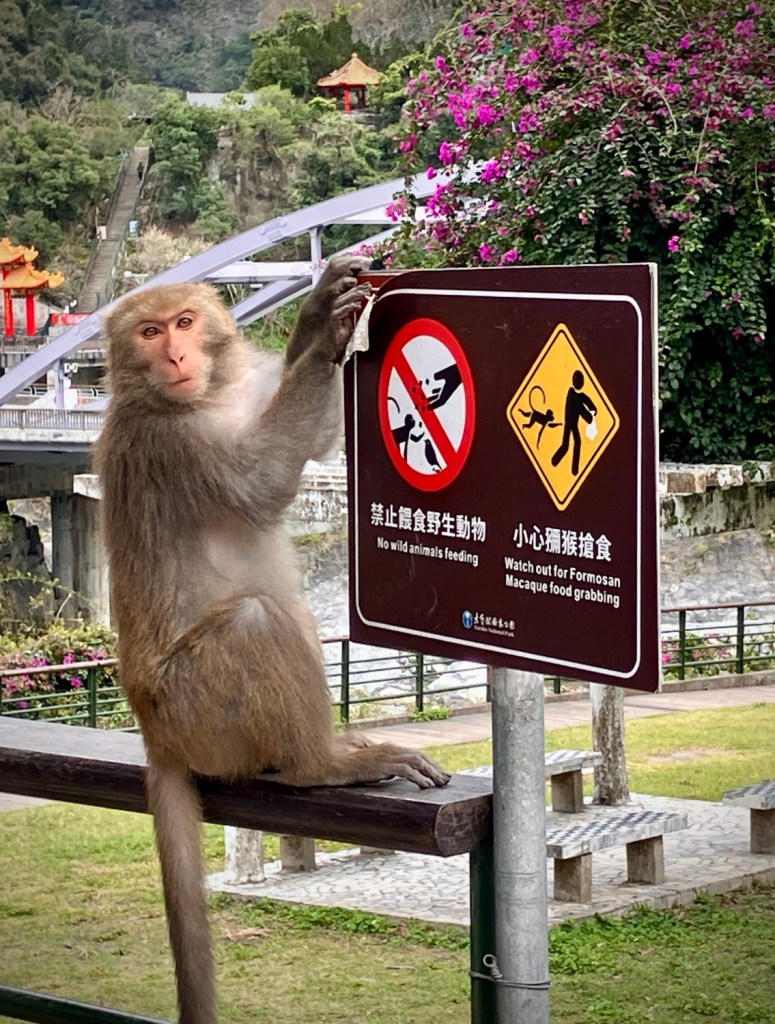
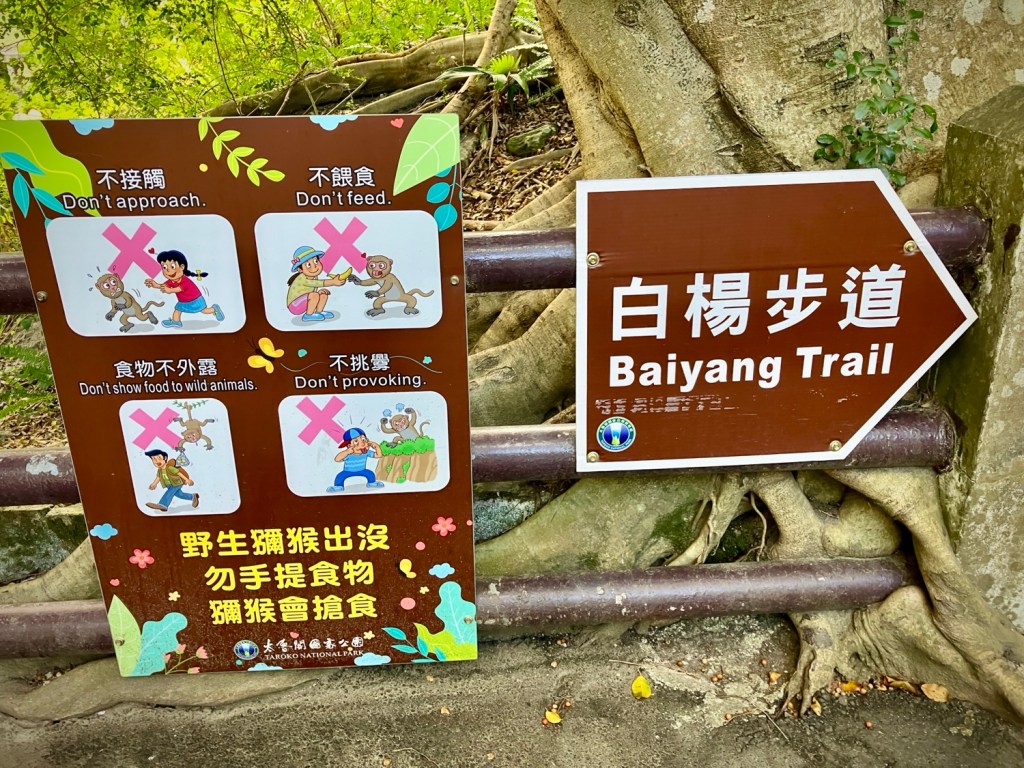
Made it to Baiyang Trail with time to review the rules of monkey engagement -;)
A mysterious start to the trail takes you through a mountain to another side gorge
We were lucky that the Baiyang trail had just reopened after its own landslide closures. We could see why.
Beauty is everywhere in Taroko.
After walking back to Tianxiang, we got some tasty food at one of the small cafes there.
This crazy territorial macaque grabbed food from unsuspecting people coming out of the only 7-11 in the national park and was hilariously peeling off the warning signs!

Taroko is a special place and we’re glad we made the effort, but can imagine with normal traffic and tour buses it may be a bit much. We also noticed that cycling is possible, as the lower climb is spread out over 30km or so. You would be rewarded with continuous views but do need to mind the many narrow tunnels.

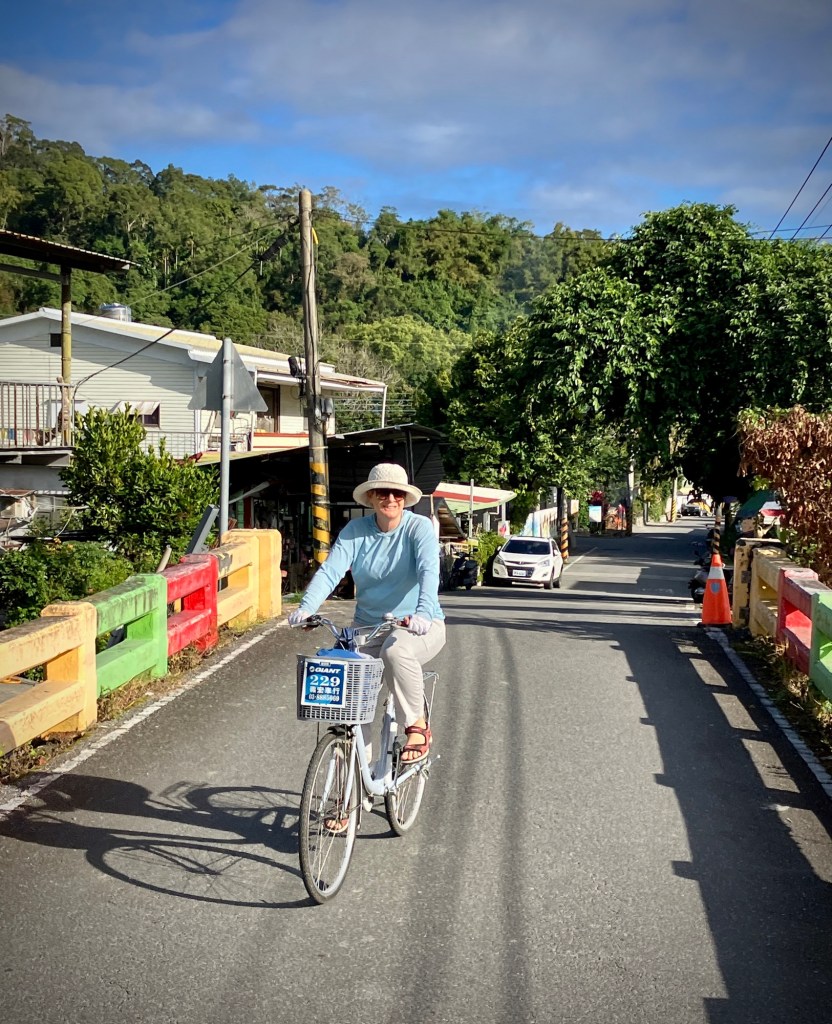
Exploring the East Rift valley on rental bikes (Giant of course).
A surprise stop at an old Japanese temple. There is a strong Japanese cultural legacy on Taiwan due to its 50 years of occupation.

Next up was a short train ride to Yuli, where we spent two nights in a small hotel. This allowed us a full day cycling up to and exploring YuShan National Park. Much less visited than Taroko and the jumping off point for the Walami trail.

Oh how nice to be out of the cities.
Destination reached at the pleasant Liyu Lake.
A delicious indigenous influenced meal at the Liyutan Tree House near the lake. The preservation of indigenous culture is a priority on the East Coast where it survived longer due to its isolation.
Cycling in Hualien was fun since we were really the only foreign tourists about.

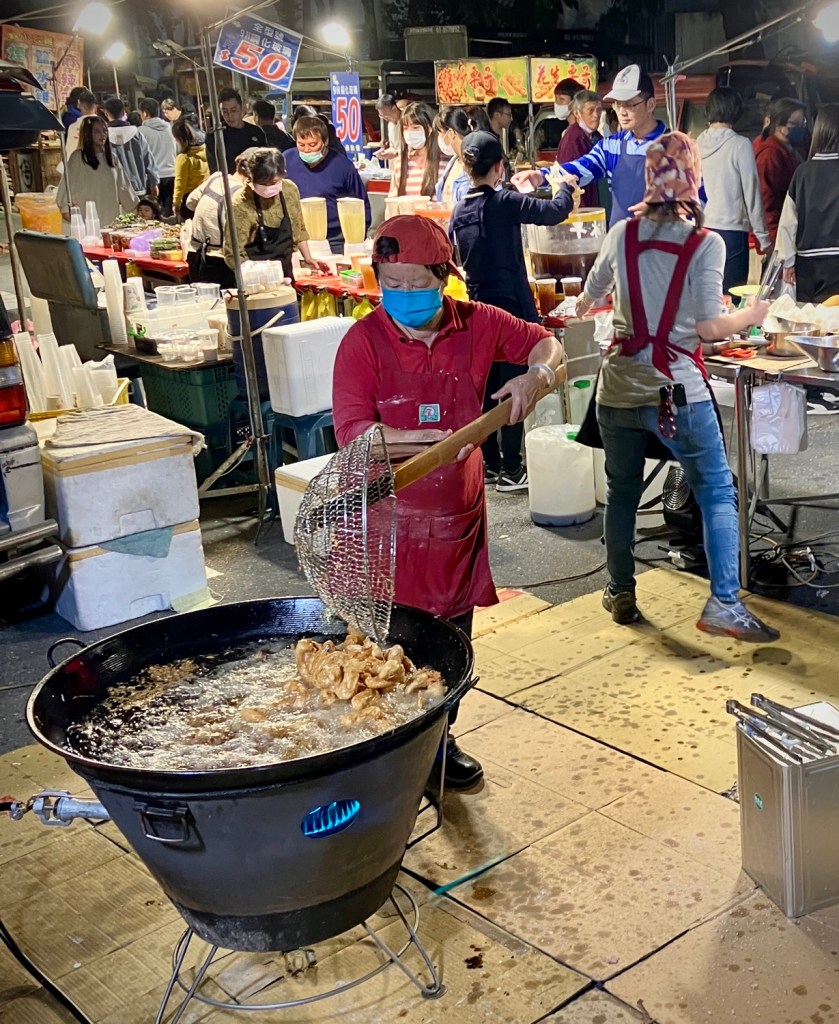
We’ve been eating well, but the food customs and timing can sometimes pose a problem. We have loaded up at some our breakfast buffets, which generally have many savory and healthy options. Lunch is a small restaurant/shophouse stand. Street and night markets are always an option but you need to be up for crowds and eating small things standing up at the edge of the road or against a building. We actually prefer food oriented streets to night markets. Oh, and good pizza is popular here, and a trusty traveler break from a lot of (excellent) Taiwanese food.

About our fifth beef noodle try, this one with the works of tripe and knuckle…mmmm!
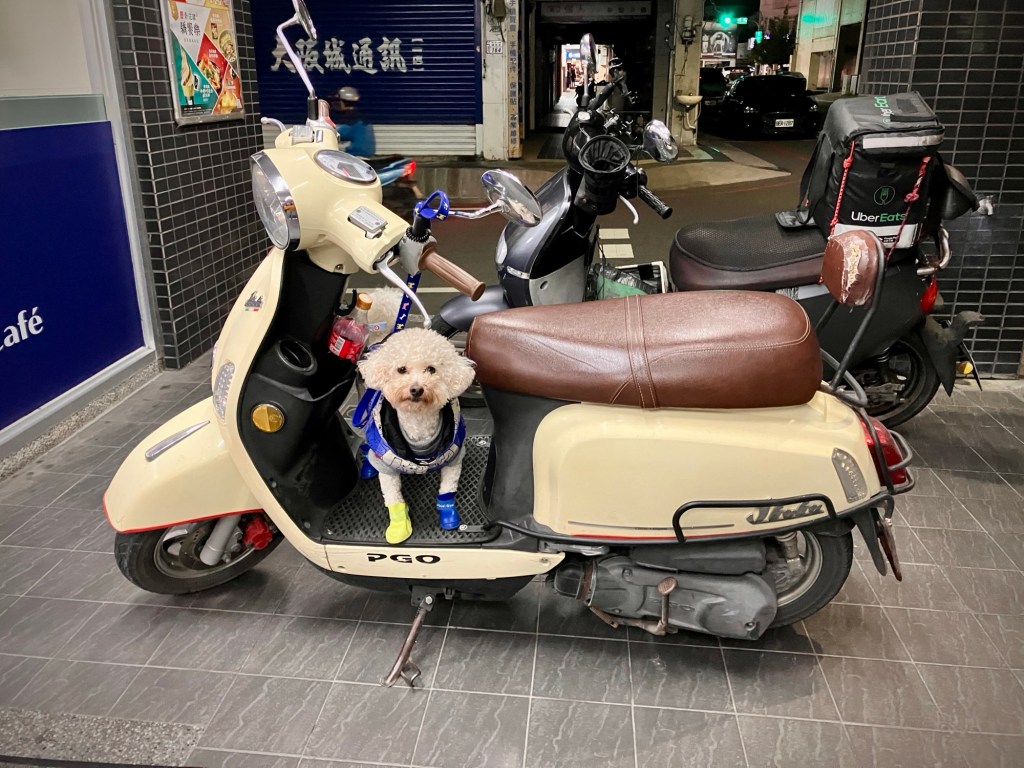
Even the dogs know that scooters are the way to go in Taiwan.
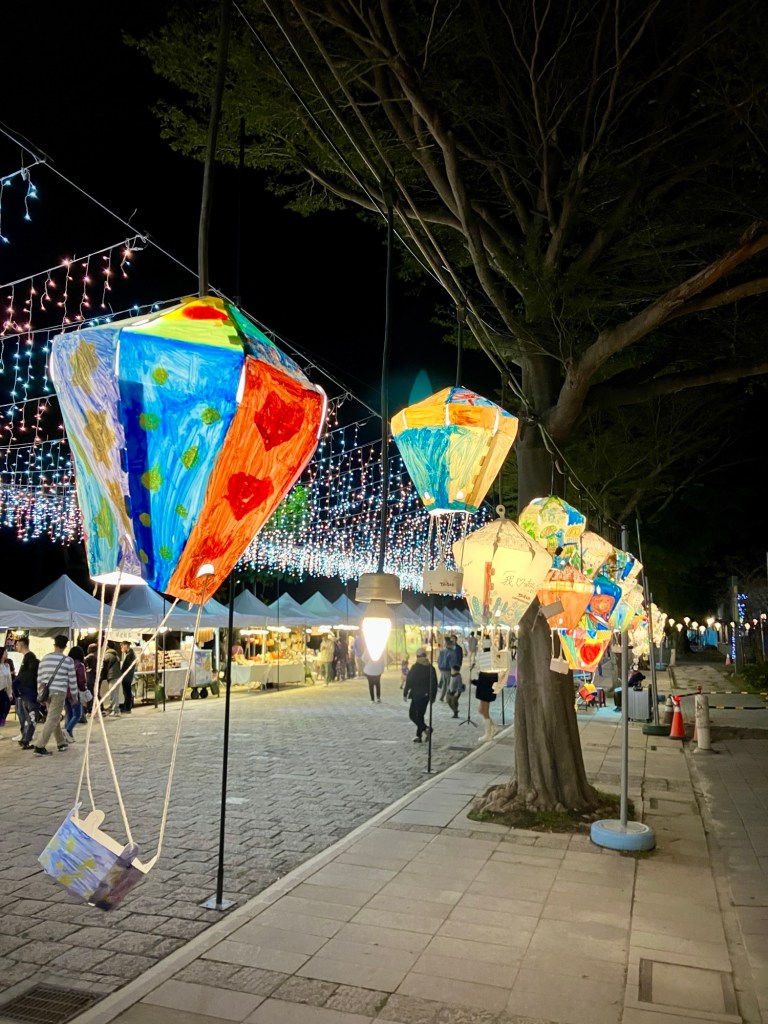
This giant fried chicken vat amazed us at the most popular stand at the Yuli Night Market (Fridays Only!) .

Yuli is a bit drab to be honest but the area around it is peaceful to cycle. Many of the Tawainese cities are spread out and walking not always the most pleasant as most locals use scooters to get from point A to B, they don’t consider long walking practical. We found it to be much better to bike from place to place and walk locally, especially when looking for restaurants. Small places on Google are often hard to locate, closed, or don’t seem to exist. But you’ll always find something and just need to stay flexible or pick a well established place with lots of reviews (including recent ones).

The area SW of Yuli is pleasant for cycling and a good way to get to YuShan.
Uphill, 5 speeds, AND falling rocks?’
Yea! we made it the official park boundary at El 1500 ft.
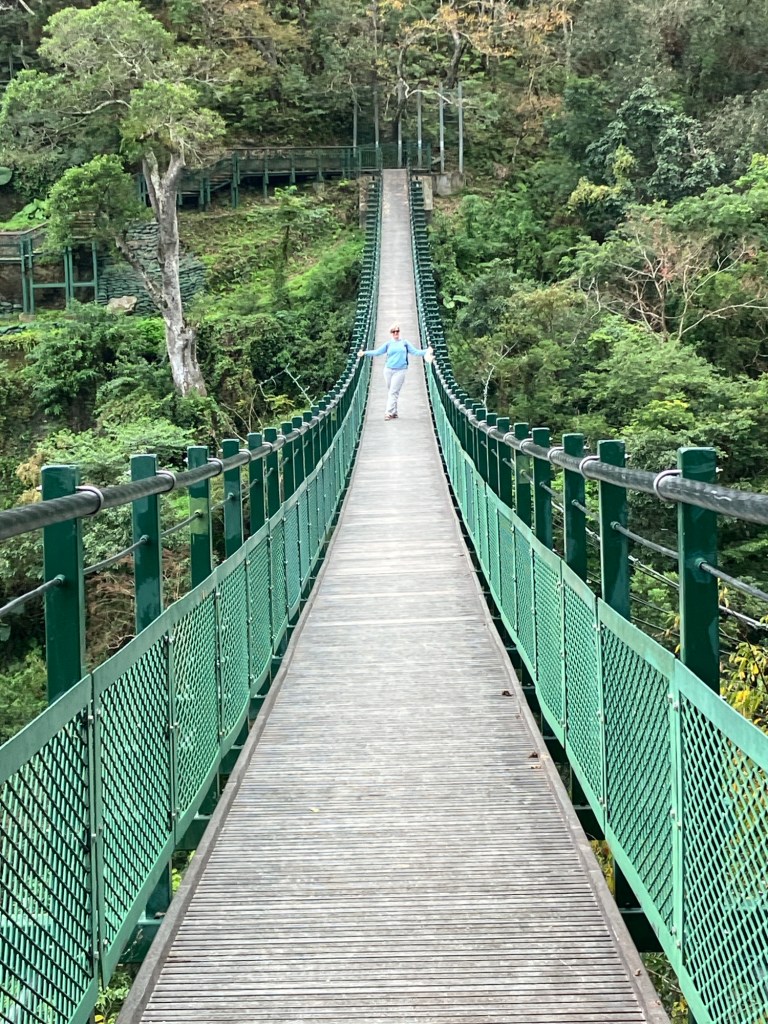
Suspension Bridge Number 1 and my number one travel companion -:).
Dizzying but stable.
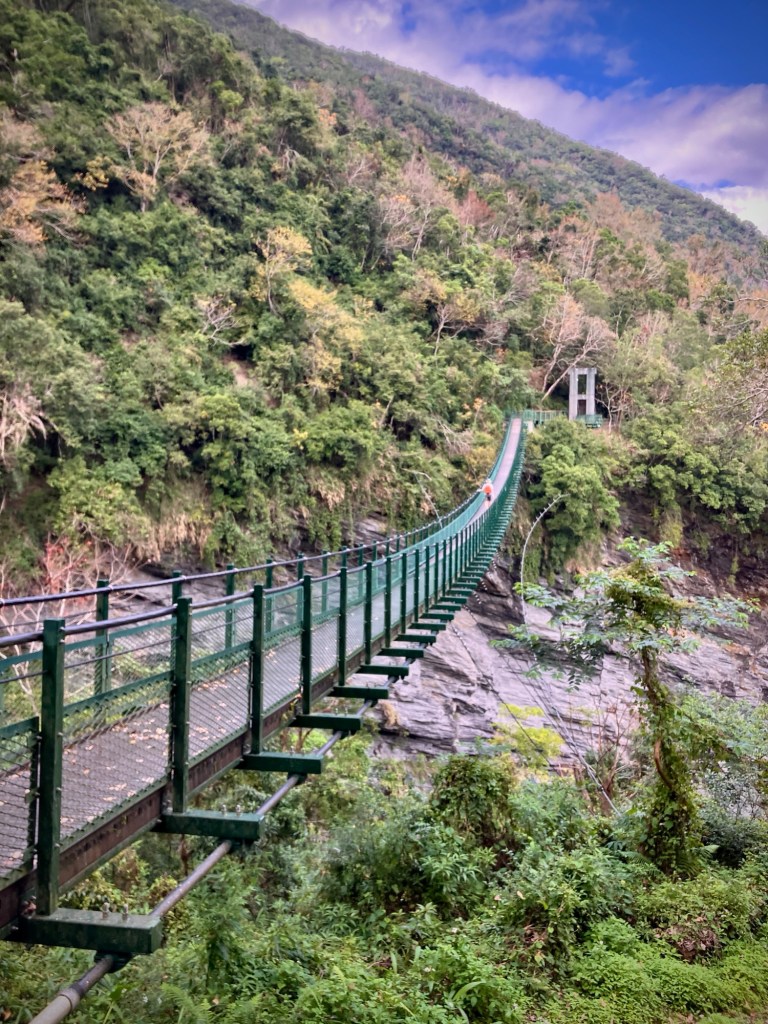
I hiked in to this beautiful waterfall complex and suspension bridge number two while Cheryl enjoyed promised reading time!
The dramatic sea near Taitung.

From Yuli, we had another short train ride to Taitung, where we spent another two nights. Taitung has a great museum of Prehistory on its outskirts that was worth a stop on its own. Although Taitung has a bit of an art scene by the old train station, if you are short of days, you might consider a stop at Taitung train station and storing your bags in the train station lockers to visit the museum (10-15 mins by taxi or bus, cafe or picnic on site) and then roll on to your next destination. Of course if you have your own wheels, then the areas north and south have lots of natural beauty and are certainly worth it exploring.

Taitung’s old railway station has been turned into a pleasant cultural area.

And alas that’s one of our limitations without a car or cycle touring here. We do miss a lot of the places in between, but we’ve balanced that by getting out of each region by bus or bike and seeing quite a bit. It really depends on what you like, and we do like cities. And we’re seeing enough, as experiences can be had anywhere.

Bye for now from Taiwan.

So we’re now on the west coast and heading back towards Taipei. The lunar new year buzz has started and we look forward to sharing more about our experiences soon. Happy travels!

Albania – A Snapshot in Time

It’s a travel cliche; you can read all you like, but until you touch the ground and meet the people, you’ll never get a true sense of a place. And some places feel particularly dynamic with extreme drama in their recent history or a promising future dawning. Albania is smack dab in the middle of a multi generational transformation. And we are here now.

A greener future for Albania and new opportunities to join the EU.
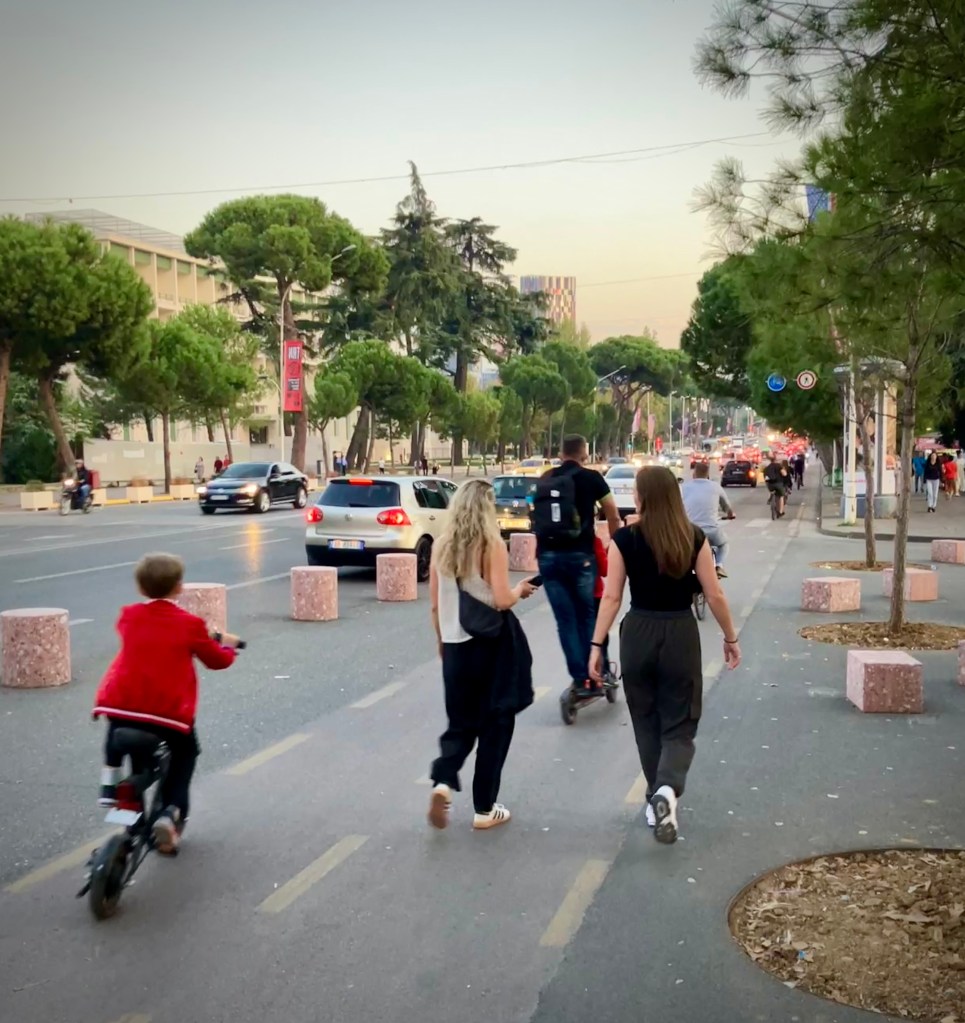
This was NOT how I pictured “chaotic and congested” Tirana.
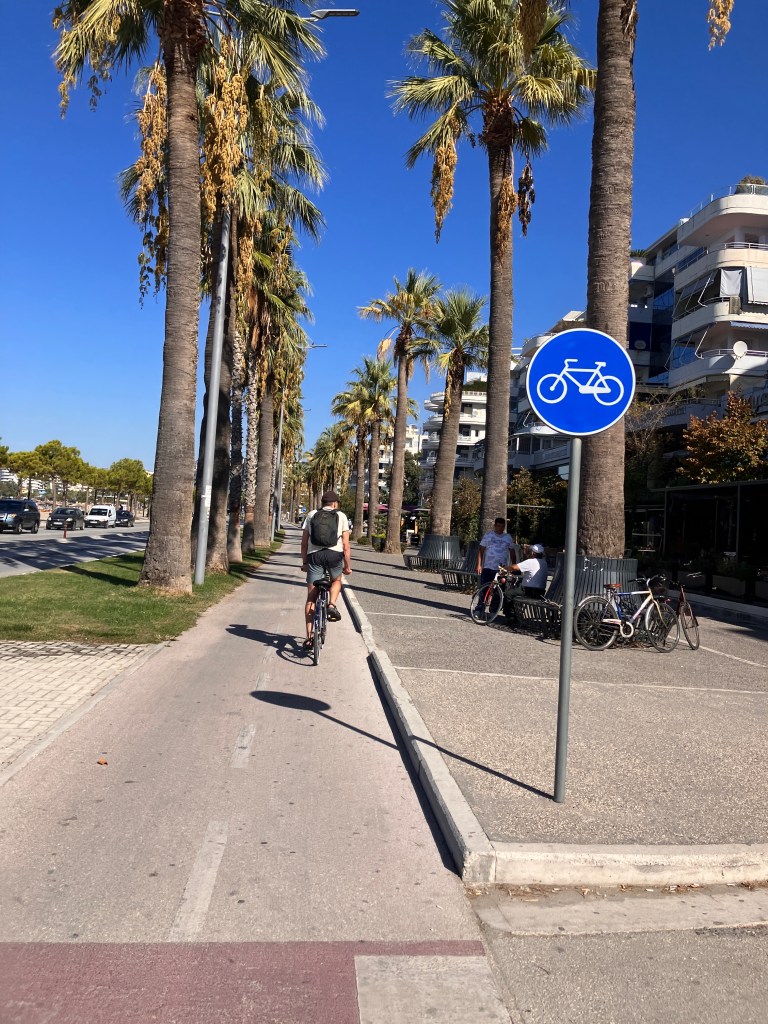
Bikeways now connect a lot of central Tirana. Some double as walkways…
We were lucky to enjoy the recent renovation of the Pyramid of Tirana by MVRDV Architects and Arup. You can now climb the stairs on all sides and enjoy a variety of public spaces and views of central Tirana. It’s cool.
It’s become quite a hang out space. Took some waiting to get a photo without young people climbing the stairs.
The stunning renovation of the Pyramid includes TUMO, an educational organization focused on teaching youth innovation skills such as software, robotics, and animation.

Albania’s history gives it a very unique character. It came out of the gates slowly from the years of a repressive and isolationist government with continued troubles in the 90’s and modest economic growth until recently. But now it’s now on a faster rise and you can sense the optimism here. But it still has a GDP per capita about 1/3 that of Croatia and Greece, and challenges remain.

A delicious first dinner at Era restaurant in Tirana, which does creative takes of Albanian classics like this meatballs with pistachio
Of course I had to try one of the signature micro brews of Albania, Birra e Gjyshit, in the name of global research. It’s good.

But why are people so chill? Why is car ownership so low and why are the drivers surprisingly considerate of pedestrians and bikes? We started observing the character of the people in line for our flight from Geneva. Pretty chill. The Tirana customs and immigration was chill. Getting a SIM card? Chill. Taxi? Fixed fare and you guessed it, chill! In fact, adapting to just how chill people can be here takes some adjustment. (Especially my Type A personality!) It’s clearly a legacy of the past, but defines the present here. The young people do have a more energetic and engaged vibe.

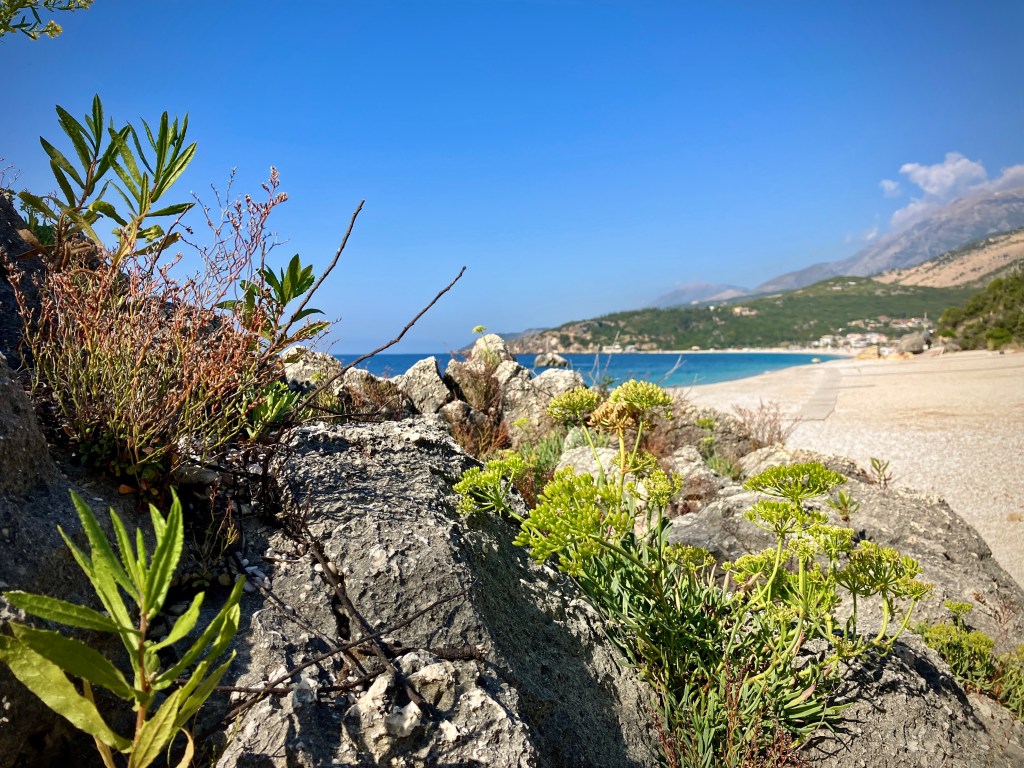
Many things are a work in progress, especially in the coastal areas; the view from a cafe where we stopped briefly for lunch and a swim after Buntrint.
Tirana’s underground BunkArt2 Museum was a good overview of Albania’s communist era.
Bike culture had been here a lot longer than the recent car culture, and Albania still has one of the lowest car ownership rates in Europe.

One thing travellers often refer to when describing a country is the “hassle factor”. How difficult is it to get around, complete transactions, order food, get money, etc? Albania scores well on this front as interactions tend to be straightforward and prices are generally clear. (Exception: some taxis…which really is a global problem!) It can also be little things like making change for large bills spit out by ATMs. No problem in Albania. Credit cards are also taken at some places, especially in bigger cities and everywhere in trendy neighborhoods of Tirana (like Blokku).

Heading to the “North-South Bus Station” in Tirana. Cracking the code for the bus and minibus system is one of the bigger challenges for travelers in Albania.
That look says; ok, where the heck is the bus to Vlorë?! But no worries as we just walked around a bit and were quickly pointed to the right bus. Take a seat and pay on board. Generally.

I would recommend bringing a healthy supply of Euros as this can make it easier and cheaper to pay at places priced in Euros (most lodging). And note that all ATMs charge $5-$8 per withdrawal, so withdraw as many Lek as you can per transaction to minimize fees.

The minibuses or “Furgón” also transport packages such as these giant boxes taking 6 seats on our run. We were worried for the guys in front of the boxes in case of a sudden stop 😬.
Vlorë comes alive in the evening with pleasant sidewalk dining and great people watching. We had a good chat with the nice guys at the next table who were from the UAE.

Our strategy for a mid October visit was to head to the coast first as many places do start to shut down, and by early November only the bigger coastal destinations (such as Sarandë) still have a lot of life. We’d then explore the inland cities and villages in the mountains and high interior.

Our hotel had a fleet of free bikes which was great for getting around cycle friendly Vlorë and to our favorite swimming spot.
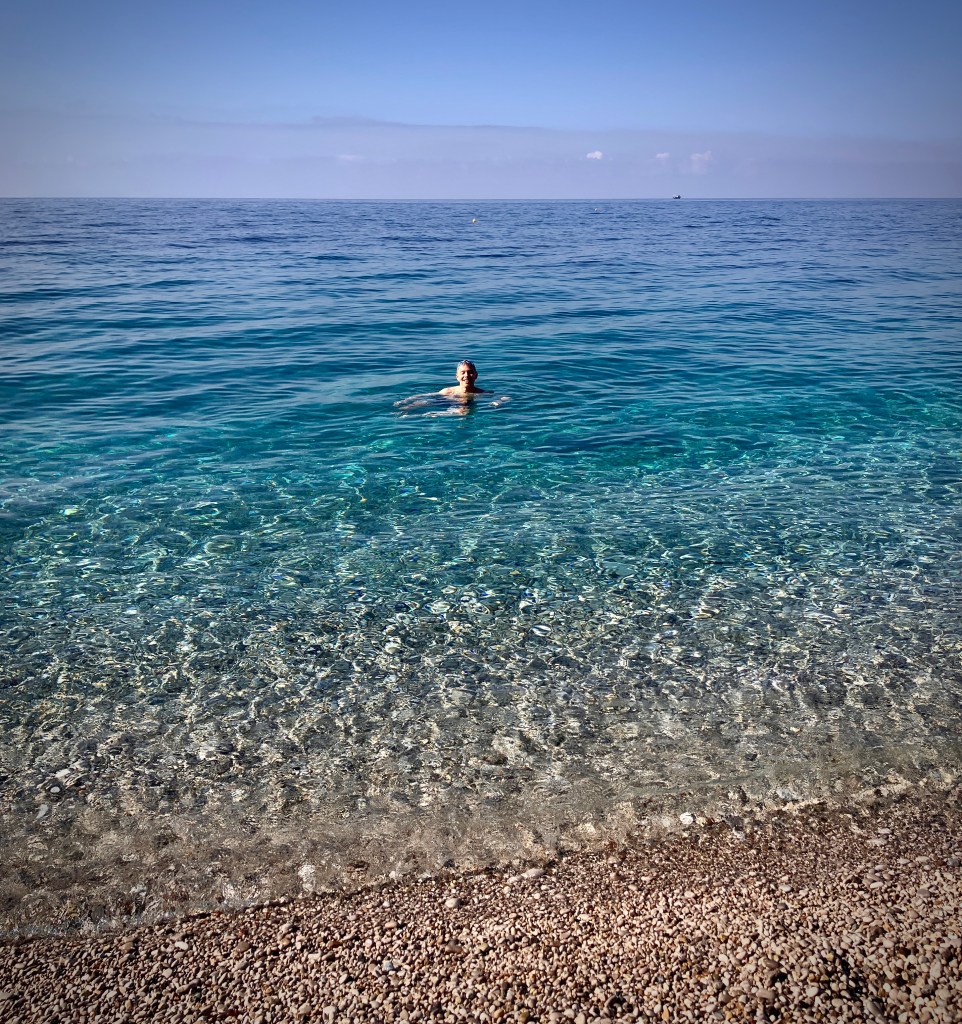
The promenade and small Azar Beach about 4 km south of central Vlorë offered turquoise water and better swimming than the main stretches of Lungomare.
Swimming near a Barrel Jellyfish (?) which just look beautiful and don’t have nasty stings (right?).

The strategy paid off as we still had nice weather, the beaches were still swimable, and enough was open to have a rewarding experience. We loved the chilled vibe of late season, and still met some nice fellow travelers, but if you want more of a scene, come earlier. If you want a full on party, packed nightclubs, and crazy beach scene, come in late July and August!

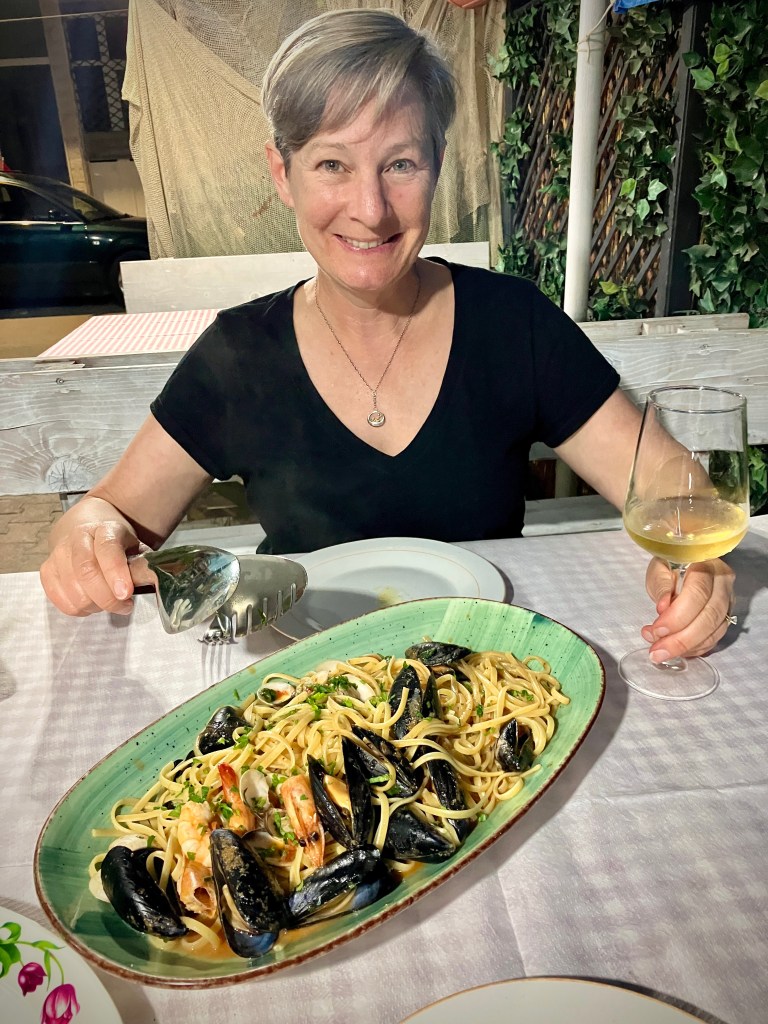
First course of seafood and perfect linguini at the wonderful little Skerdi Restaurant in Vlorë. The friendly owner/chef cooks amazing seafood and pastas.
Nothing but bones. A clean removal.
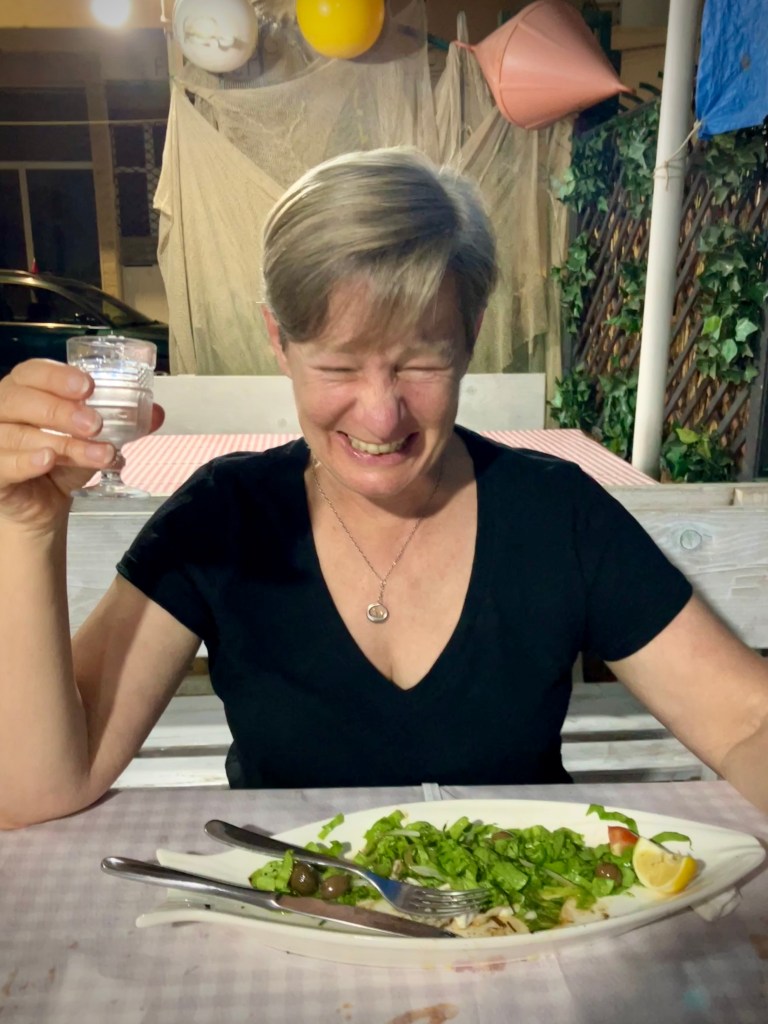
And this is what we call “Raki face”. We don’t seek out Raki in Albania, but with so many friendly restauranteurs, the Raki finds us.

We decided to stop in the small coastal city of Vlorë on the way to the more popular parts of the coast and were really glad we did. Vlorë is extremely pleasant and has a wonderful primary shopping and restaurant street as well as a long beach promenade, all with heavily used bikeways.

The public buses in Vlorë are easy and clean. You can board any door and just pay the fare collector who comes around, and makes change. (40 lek)
Vlorë’s bus station is a long curb lined with shady cafes. Waiting for our 10am minibus to Himarë…until we were told it actually leaves at 11:30. Another coffee, please.
The minibus station…finding out schedules can be tough. Ask around or stop by the day before about the time you want to leave. Hotels and guest houses can also help a lot.
Our Transbus to Hiramë left Vlorë at 11:30 and arrived at 2:20 with one 20 minute bathroom and cafe stop. The trip is spectacular/slightly scary over the coastal mountains.
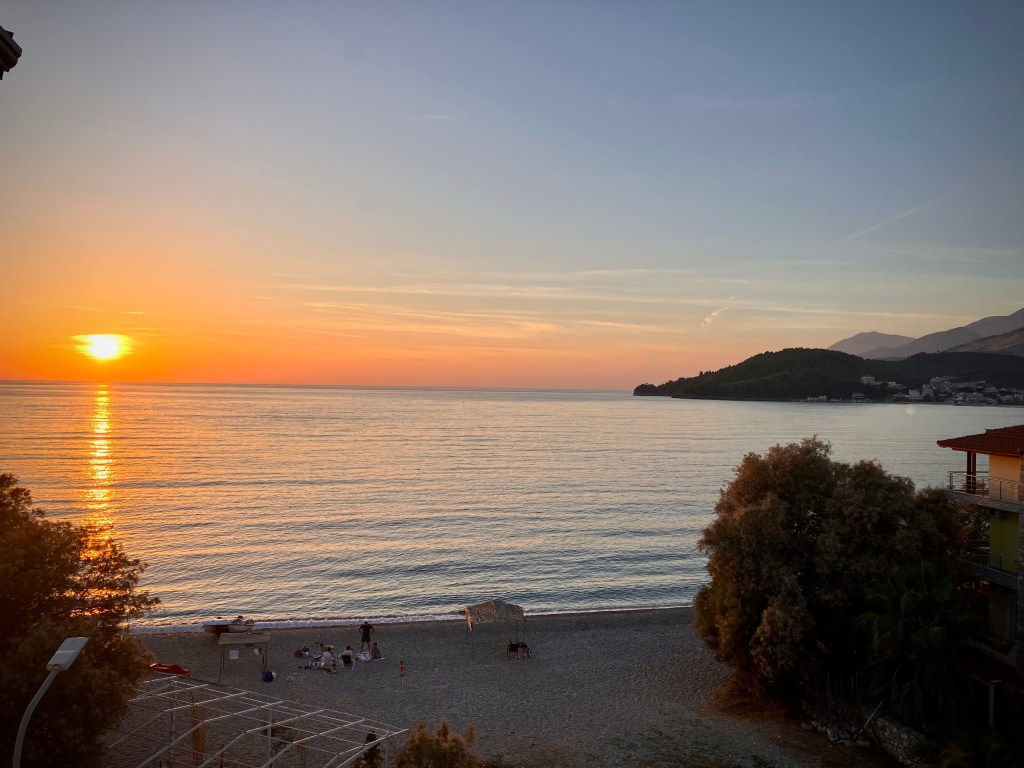
Sunset view from our apartment along Potami Beach in Himarë

The trip south from Vlorë heads over the Llogora Pass, with a stunning 3,000 foot decent towards the ocean. Traffic is still remarkably light and little towns dot the coast; some a bit charming and others more scruffy and modern. Himarë (or Himara) was very pleasant but it’s vibe was much more beach town than the real city scene of Vlorë. But it’s a spectacular setting and the 3 beaches around the bay of the City are pretty nice.

Sheep herder on the beachfront of Himarë.
Local markets abound with the ubiquitous cucumbers, peppers, tomatoes, onions, eggplant, and spices which make up most dishes.
Some longer trails such as the Albanian coastal trail have been established recently but in general, hiking is an adventure using partially mapped roads, fire roads, and foot paths.
Grapes and vines adorn many house; on the way to Livadi beach from Himarë
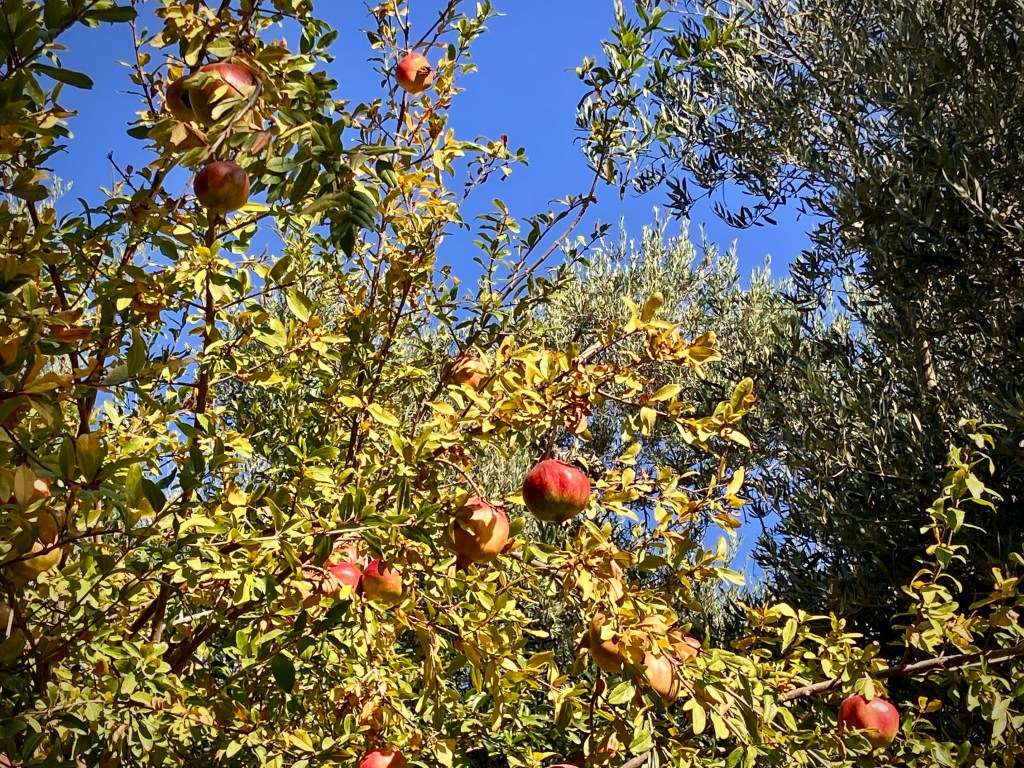
Pomegranates and citrus.
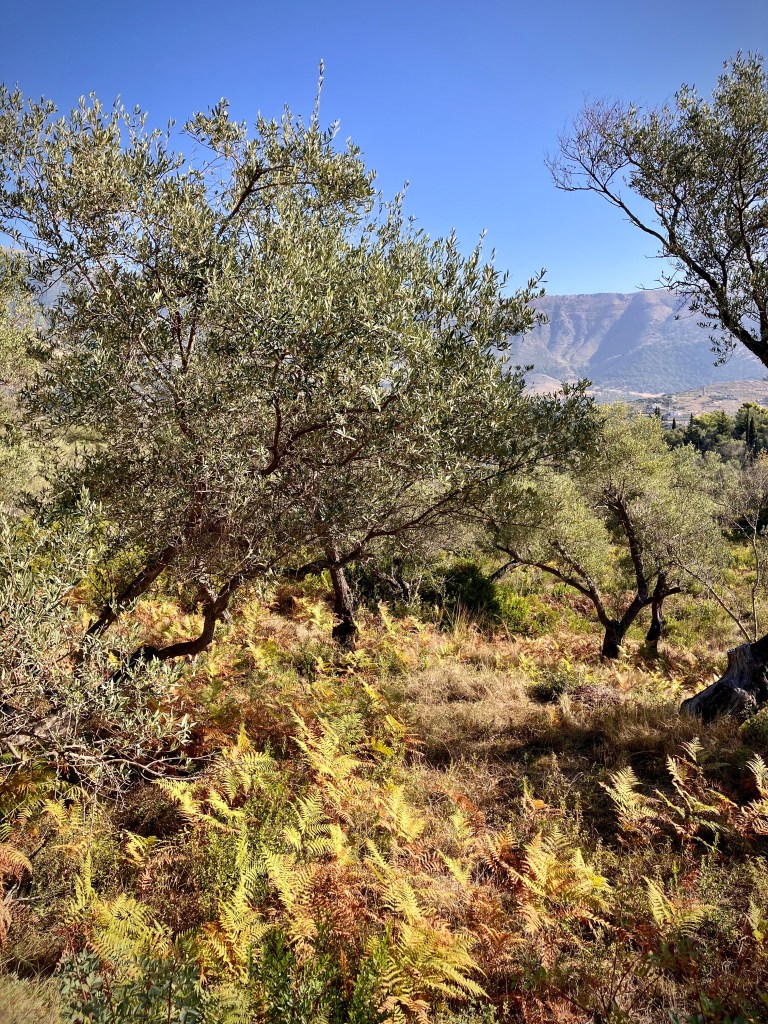
Olive trees were often mixed with ferns, which felt a bit out of place in the arid environment.
Olives and olive oil are a base of life in the region. And delicious.
Livadhi Beach…our favorite and a short hike from Himarë with some nice shade (at the undeveloped southern end).
Ionian Sea paradise at Livadhi.
By mid October many of the beach restaurants in our neighborhood had closed, so we made this friendly Taverna PiroΣia our home in Himarë as we preferred its vibe (and the walk) to main town.
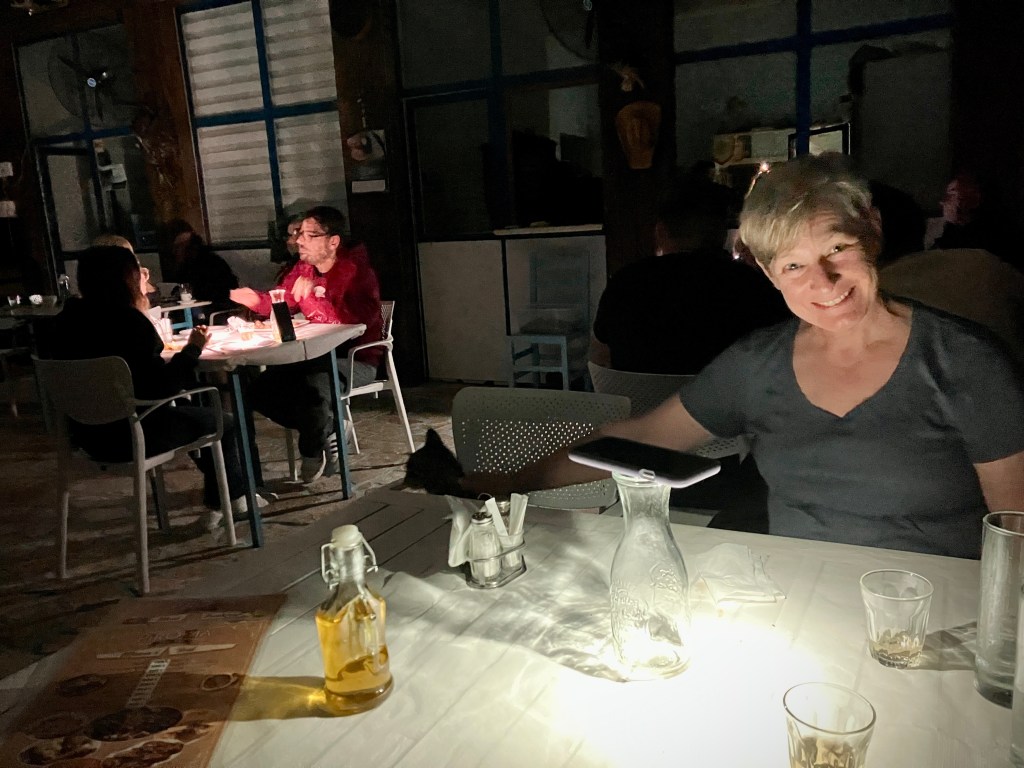
And then the power went out during a rain storm, making for a romantic IPhone candlelight setting. Power can still be a bit spotty in Albania.
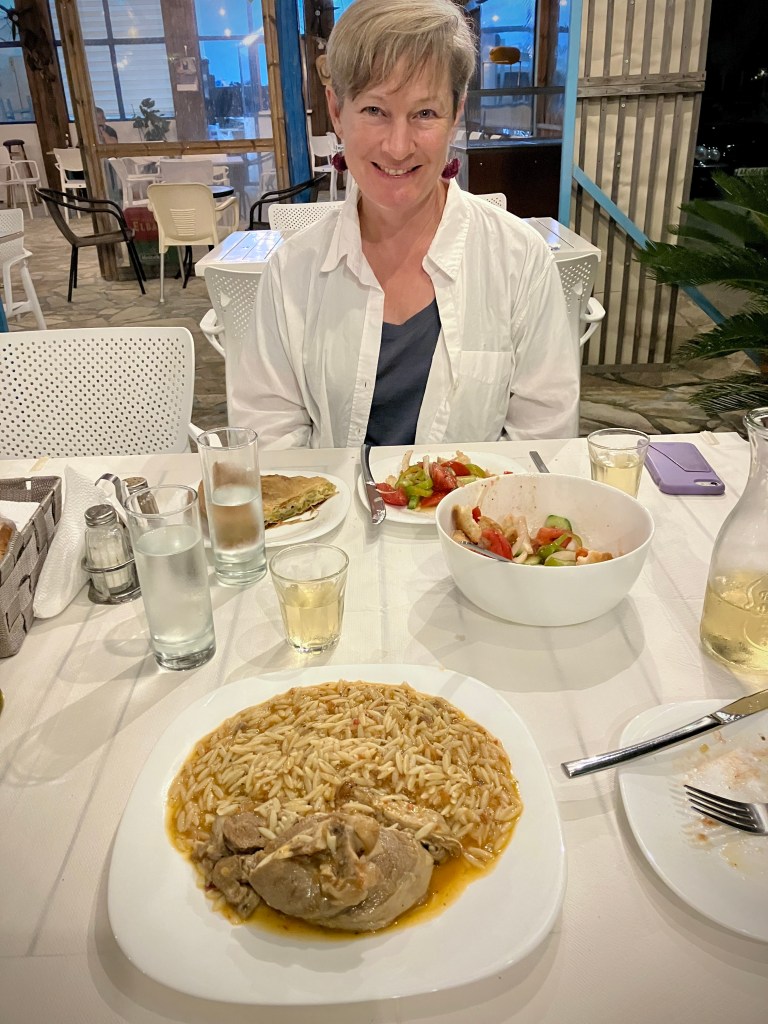
Zucchini pie, a Greek village salad, and Lamb “Juvetsi”. There are many Greek or Albanian-Greek restaurants in this coastal region.
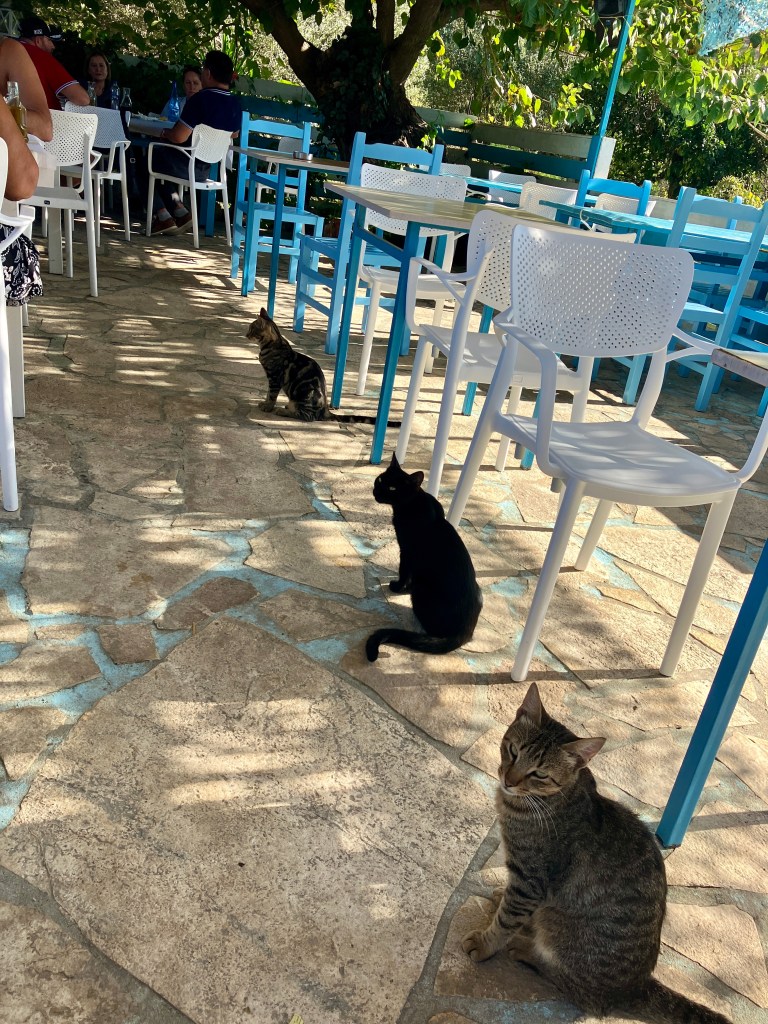
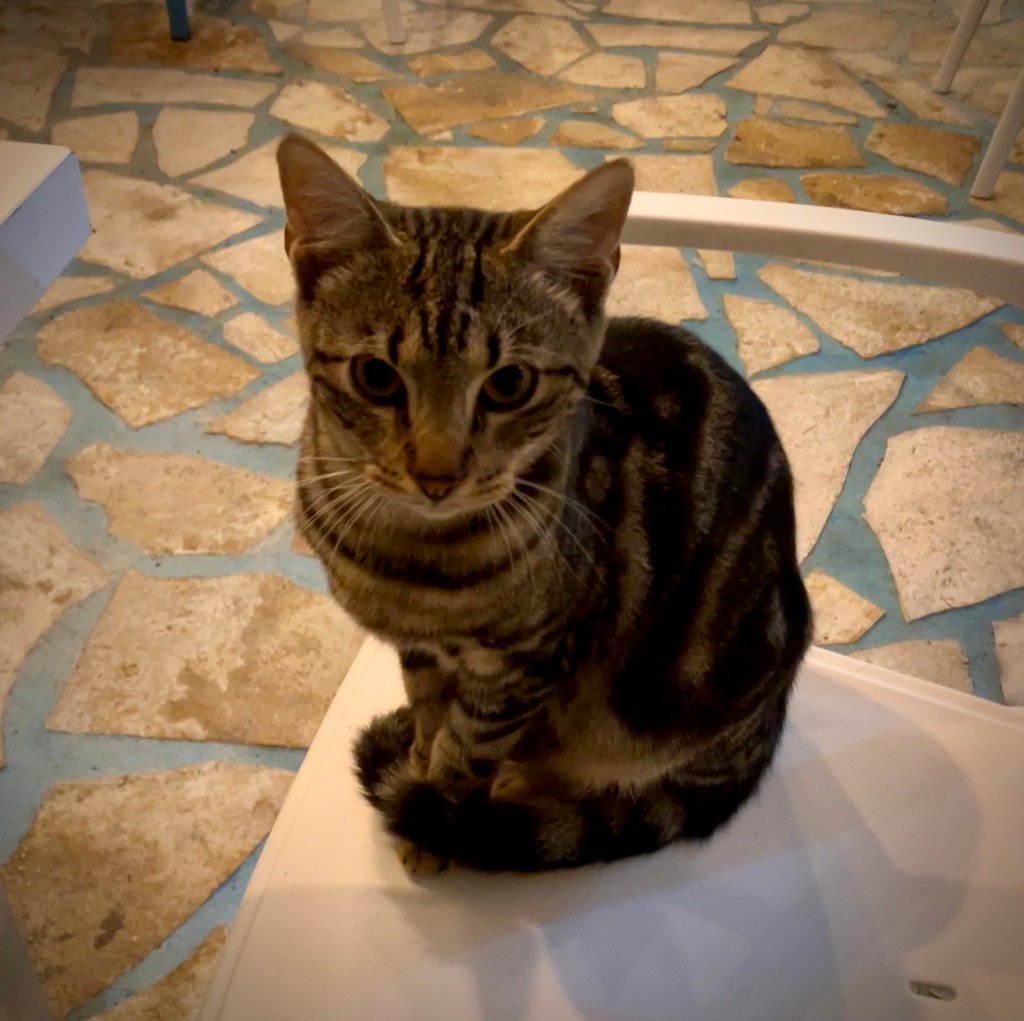
Did I mention the restaurant cats?
How can you say no?

Our next bus leg to Sarandë went well as the nice host of our apartment confirmed the minibus time and walked us to board (south of the main stop in Himara) where we found the driver had reserved two upfront seats for us based on her call to him. So nice. The Albanians we have met have been kind to a fault; but sometimes it takes a bit to draw them out from their extremely low-key nature. But it is really nice to travel here.

Central produce market in Sarandë
Café culture is strong here. Chilling in Sarandë

Since we were out of the main part of town in Himare, we decided to go for a centrally located family hotel in Sarandë. It was nice to enjoy the main pedestrian beachfront promenade in low season, and have access to more of the city’s less touristy restaurants. Yet we still could swim in the main beach with just a 5-10 minute walk. Just a few people still “beaching” at this time, but the water was still nice, with just a slight chill. (~20-22 deg C)

My dog buddy followed us to the bus stop in Sarandë and was determined to go to Butrint with us.
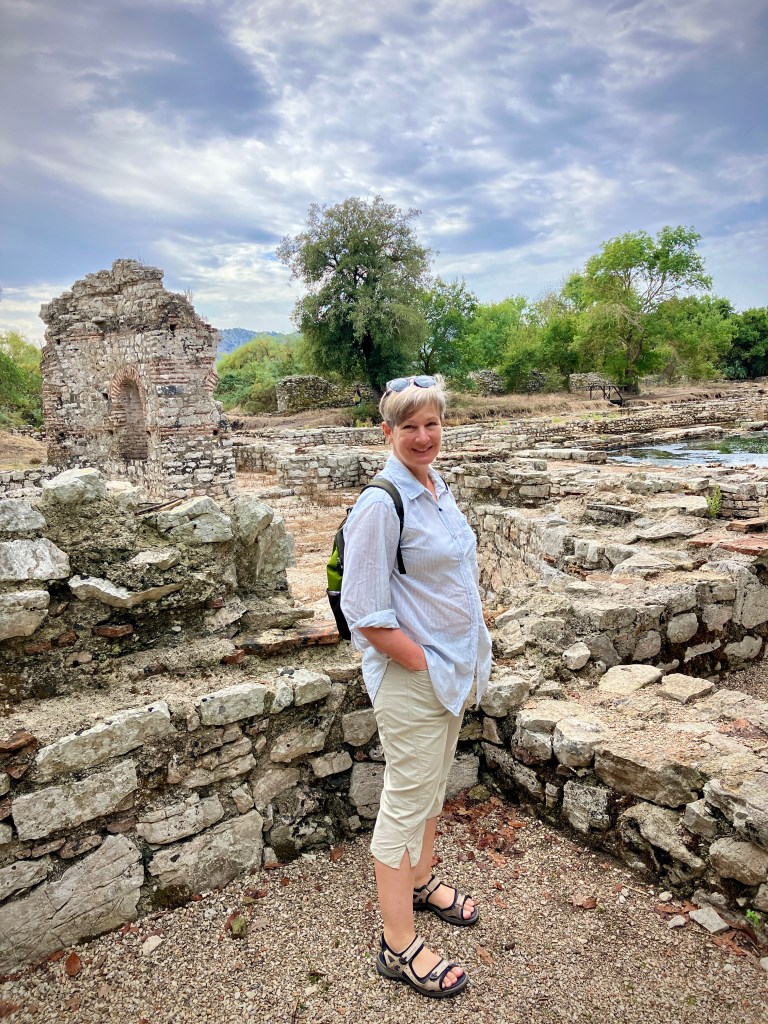
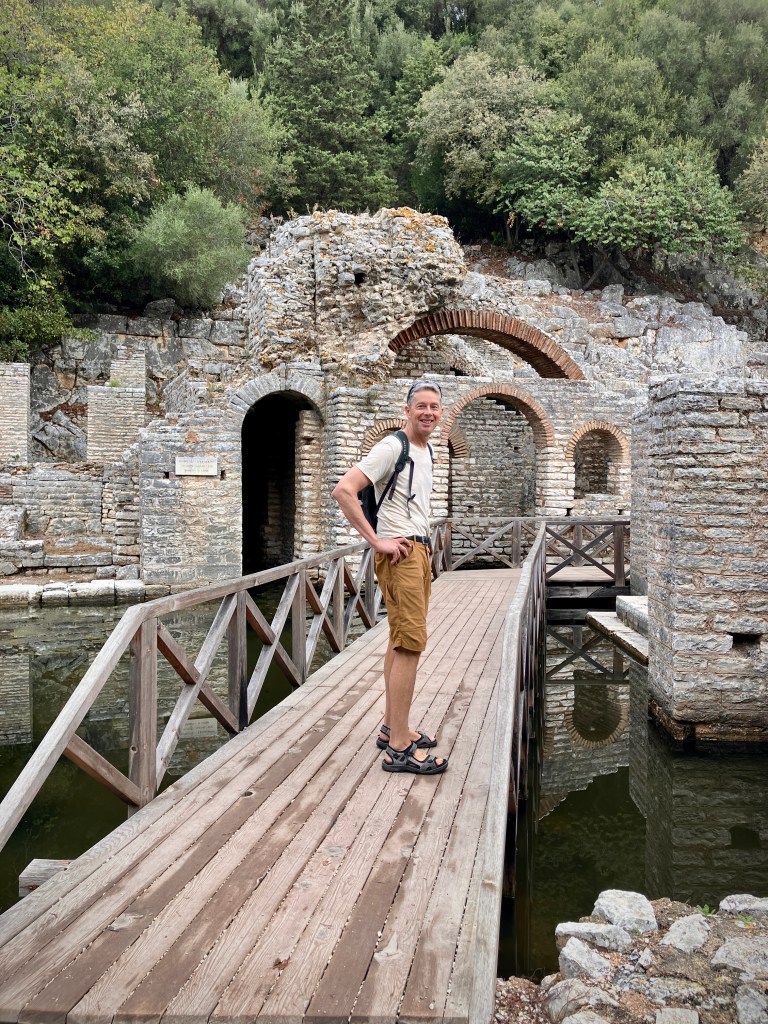
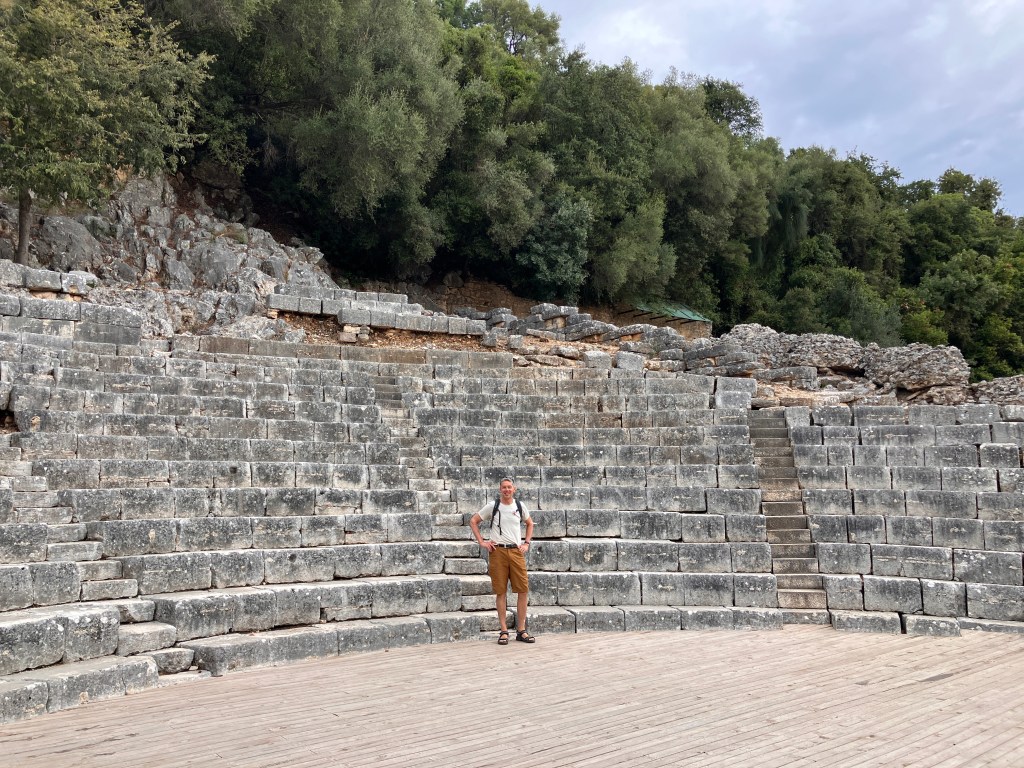
The forum at Butrint. Although not as intact as Pompei, Herculaneum, or Ephesus, we were able to fill in the structural and decorative gaps from our experiences there.
Exploring Butrint Archeological Park just before the big crowds. Sea level rise is a problem for the site.
Layers of history at Butrint include the Greeks, Romans, and Byzantine empires.
Much of the original city defensive walls are intact.
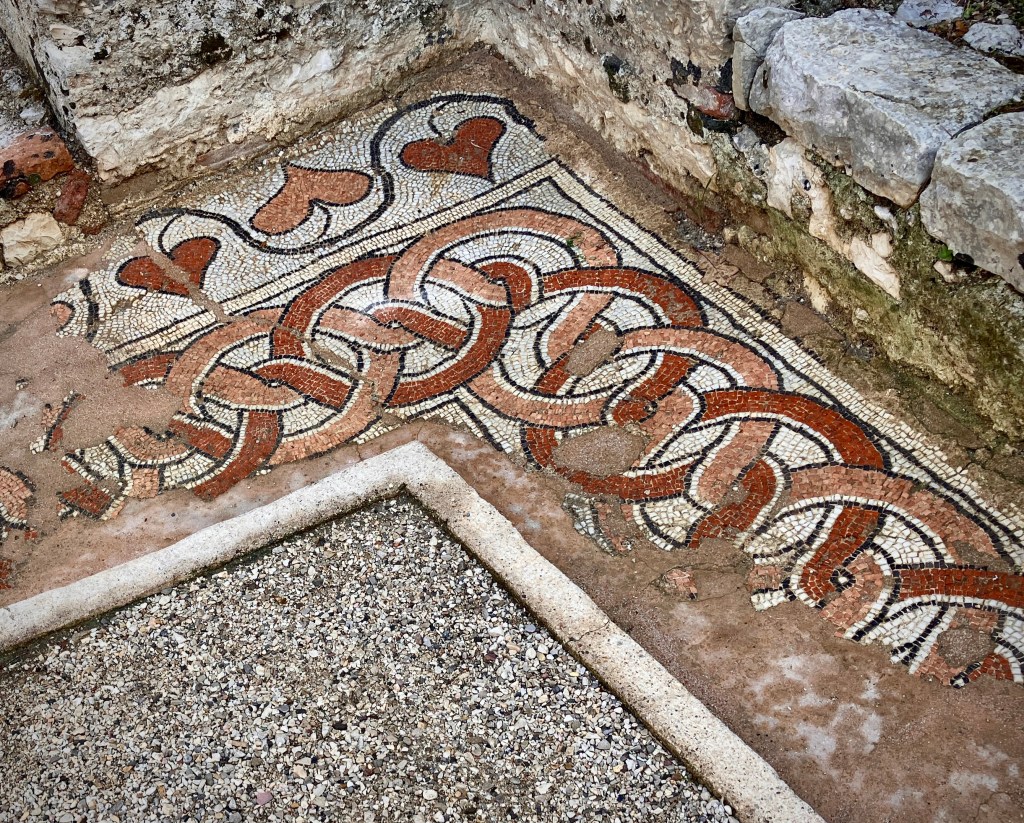
This is one of the few mosaics visible in Butrint as most are kept covered by sand to protect them from the elements.

Our central location in Sarandë also meant easy access to the municipal buses that run every 30 to 60 minutes right to Butrint National Park. (200 lek) However, the bus stops at 3 or 4 places along the main road out of Sarandë, so you can still catch the city bus a few km or more south of the city center, which is now an endless line of new boutique hotels, apartment buildings, and mostly seasonal businesses.

The springs and wells of Butrint were a reason for its early success.
The Butrint museum has some interesting artifacts and info but could use a refresh. Apparently a vastly expanded visitors center is in the works as visitation has grown quickly.
We loved the natural setting of Butrint.
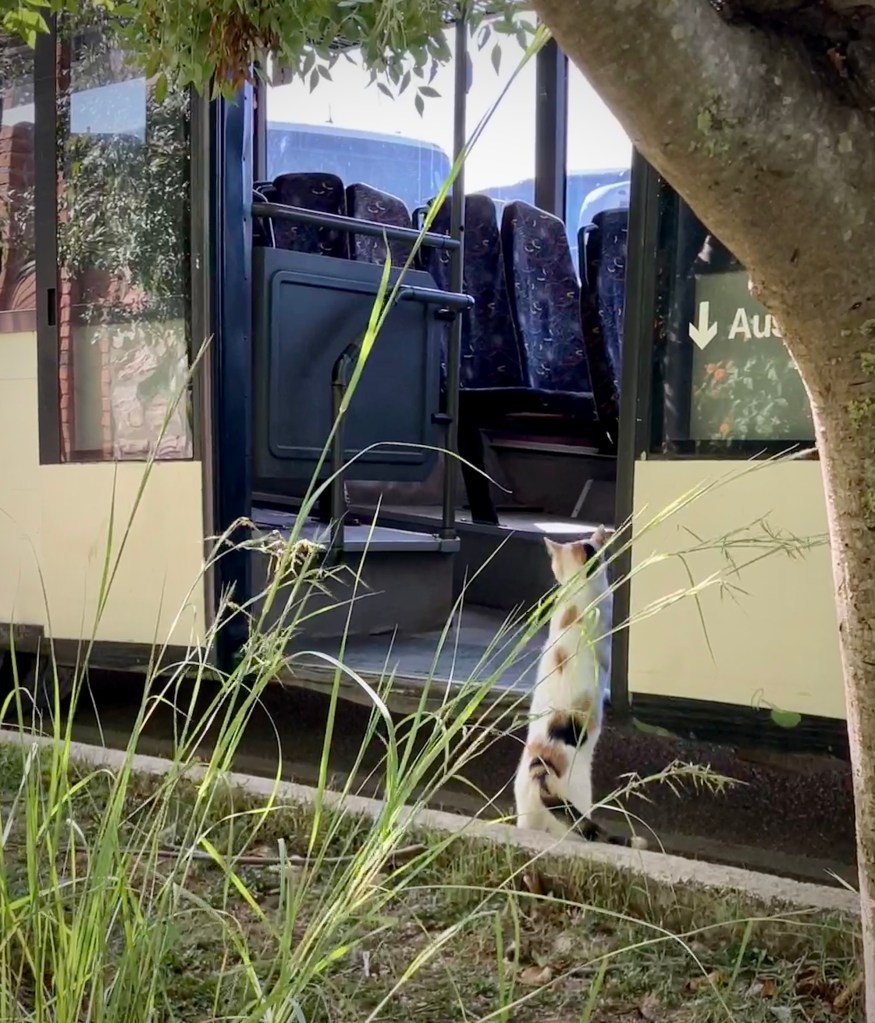
This cat was opting for back door boarding on the bus back to Sarandë.
But then changed their mind.
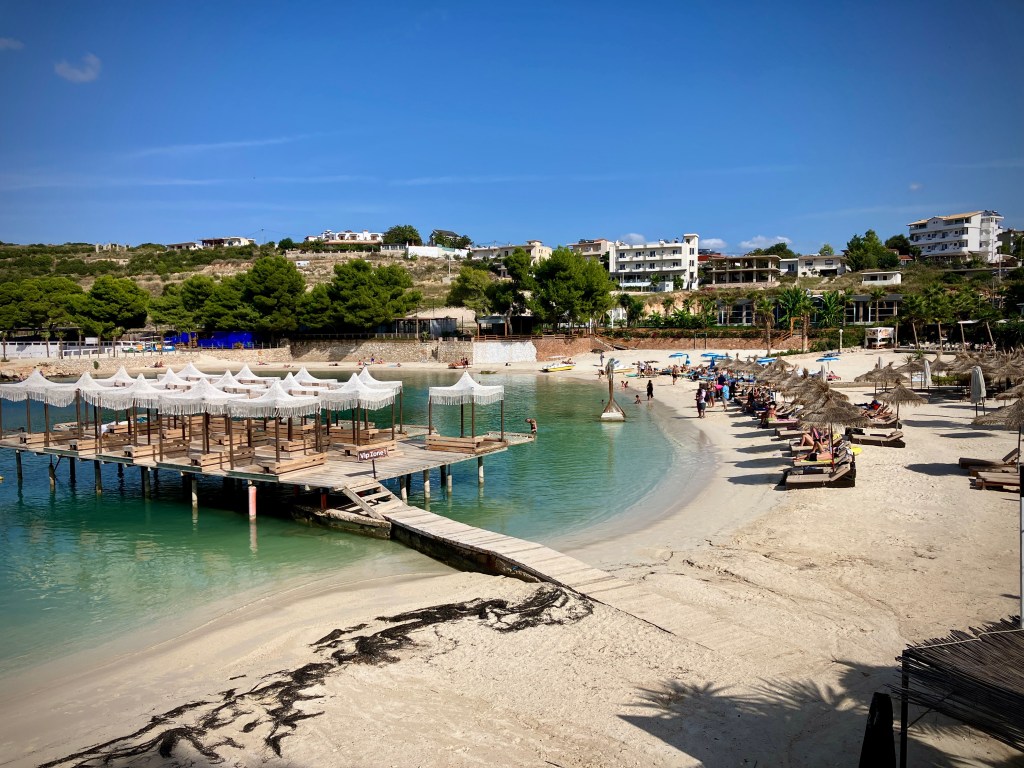
We stopped briefly for a swim at the main beach in Ksamil (pronounced “Sam-ill”) but it was not our scene. In summer, no part of the beach is free and you have to pay for a sunbed.
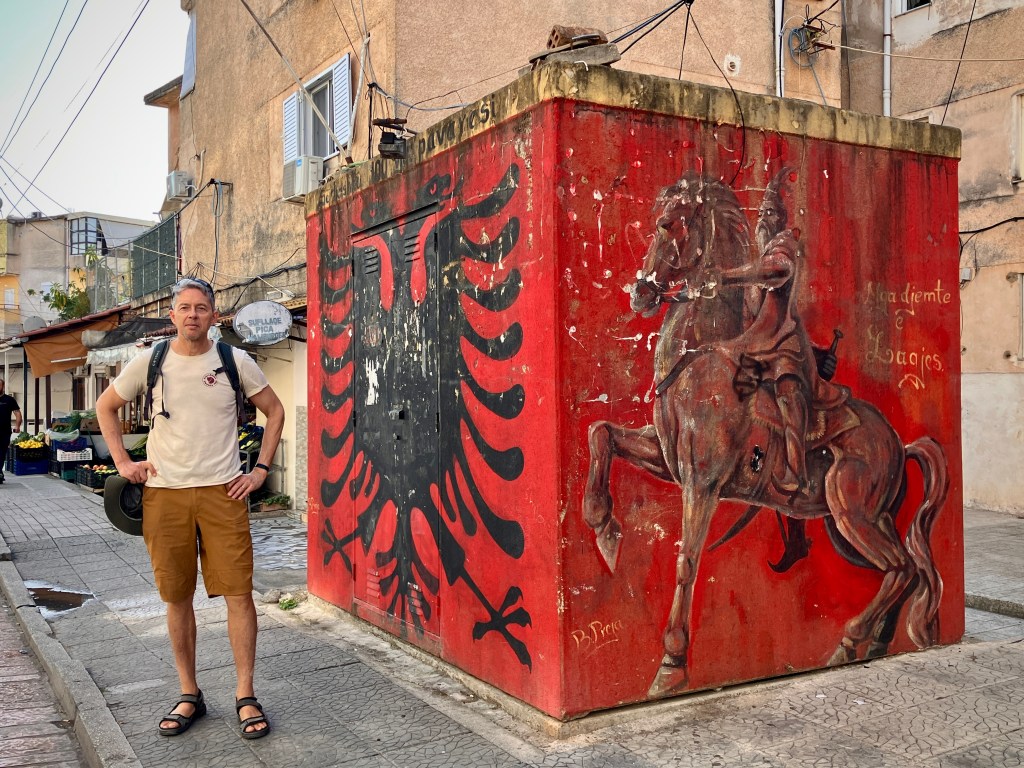
Nicely painted utility substation.
There are many unfinished/abandoned buildings on the fringes of Sarandë, and unfortunately a pretty serious garbage and sanitation problem.

It’s been an enlightening time so far in Albania, and we have been charmed by the pace of life here and optimism we are seeing for the future. We will be rooting for a positive trajectory in this complex world and region, and hopeful that more of their talented and educated youth stay to build a stronger future. But for now, we all get to enjoy this snapshot in time.

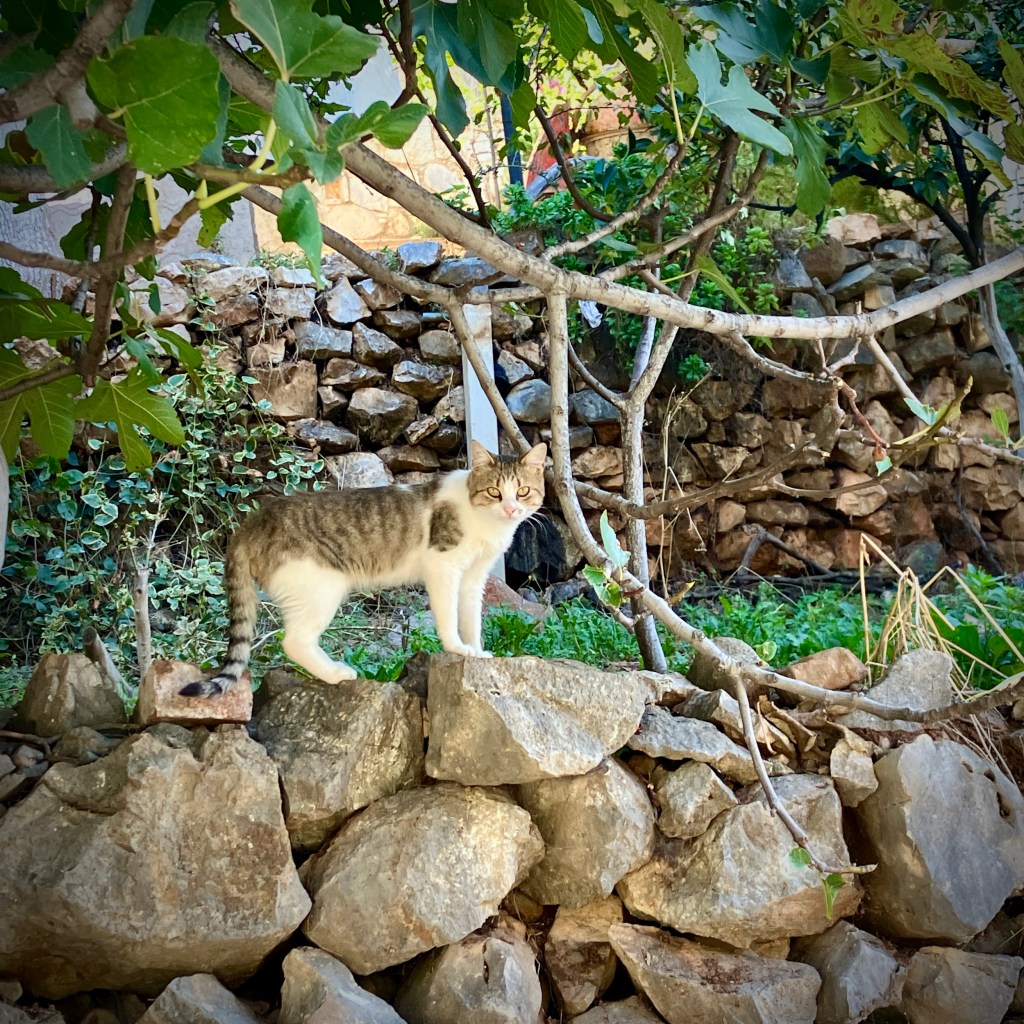
Cat curious why these tourists are wandering in his hill neighborhood above Sarandë.
A memorable visit to the Albanian Riviera, but ready to explore inland.

Happy travels!

New Wheels in Old Europe

We’re back. Back in Europe, back in France and Germany, and back on our bikes!

New blue and green camouflage on the Danube.

We spent two weeks after our return from Korea catching up with friends and family in Colorado, California, and then another week to relax and prep for cycle touring in lovely France. But flying through 17 time zones in 2 weeks was not easy. Our 12 hour flight in a packed cabin from Seoul to Dallas was a particular low point, and our circadian rhythms really took a hit. I’ve vowed from now on we’ll only fly West around the globe as it always seems easier that direction -;)

Rolling out of Ulm, Germany on Day 5. New bikes complete with matching panniers, a first for us in 20 years of cycle touring!
A spring boules game with our endlessly kind hosts in the Vallèe Verte

Luckily we had some relaxed days to get over our jet lag visiting family in Grand Junction, CO. It really is easier to return when not heading into the office the next day! We were also lucky to score two saver business class seats with miles on Swiss Air (booked months ago) for our trip back to Europe.

Our typical 20 minute walk to get bread in the Vallée Verte, France. Still a bit dazed from the jet lag.
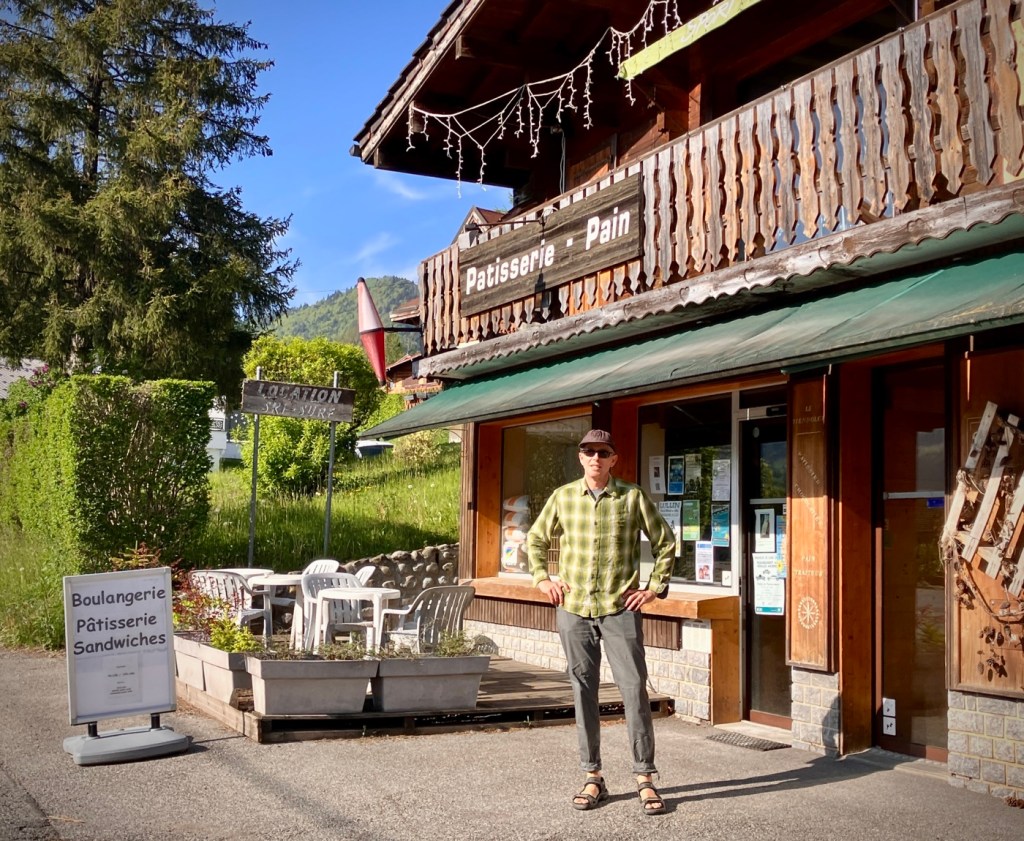
La Petite Boulangerie in Habère-Poche.
Baguette in hand, pastries in the pack.
Wisteria in full spring bloom in the lower alps.
Our hiking goal, the Pointe de Miribel.
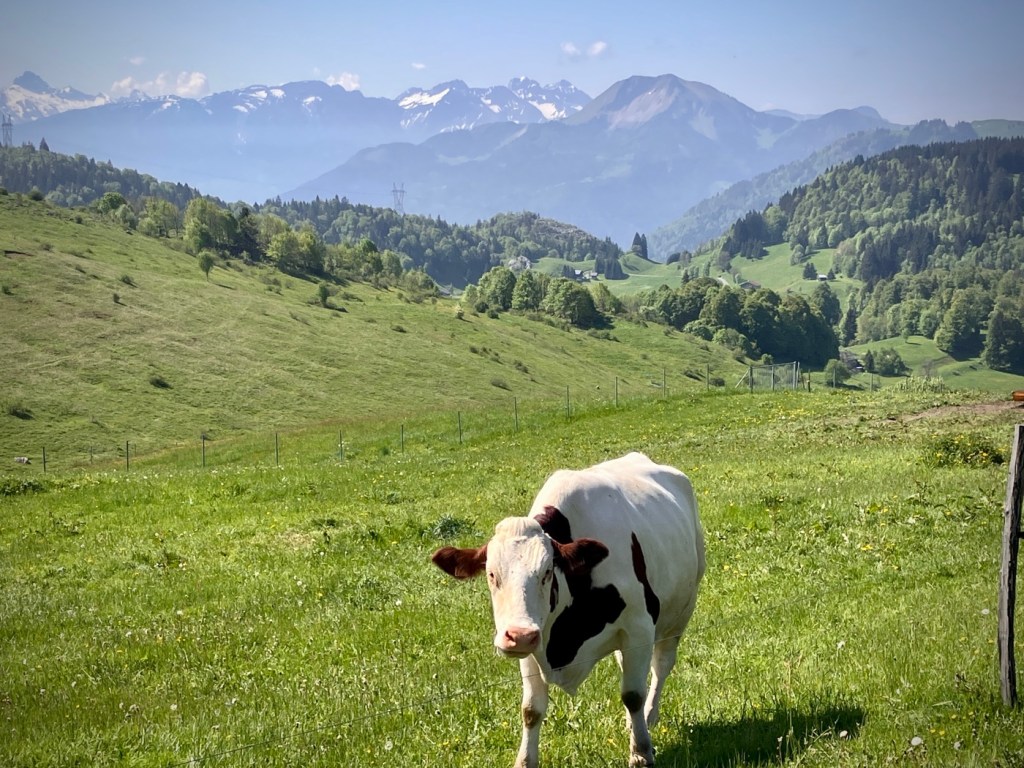
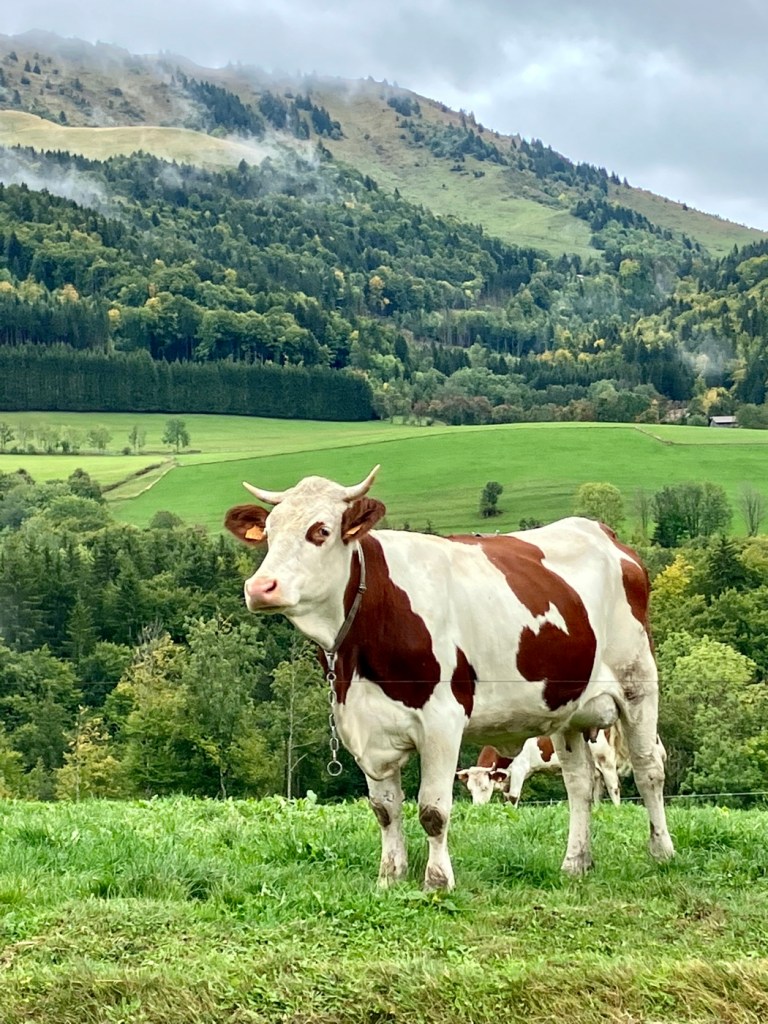
A cow posing in the Haute Savoie with Mount Blanc in the distance.
Contemplating a Julie Andrews moment.

We also recharged our social souls catching up with as many friends as possible in the Bay Area. And as always, many thanks to all our families and dear friends who hosted us during our stay, including so many delicious meals. We also managed to keep a constant supply of burritos in our blood stream, hopefully holding us for months overseas.

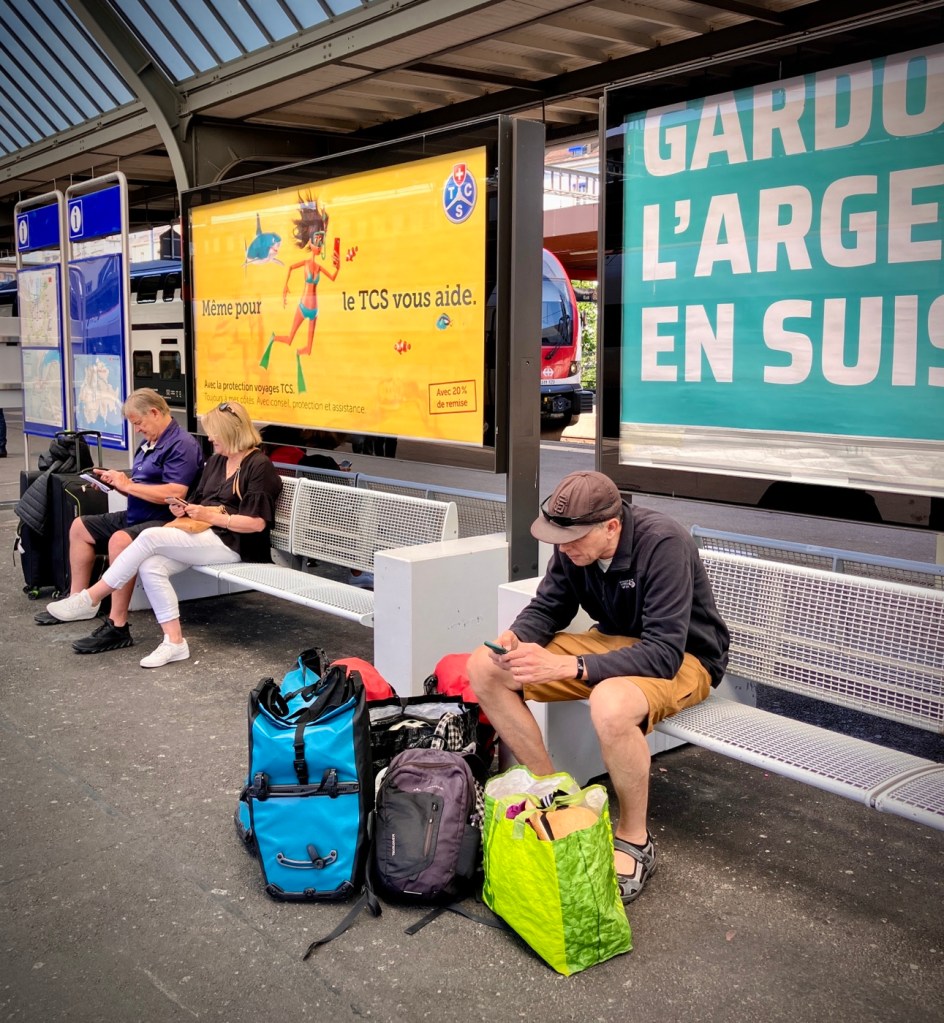
Waiting for our train at Genève Coravin Station with our very awkward bike luggage.
It took three trains to get to Freiburg from Geneva, but was seamless on Swiss and German Rail (and BTW, cheaper to book on DB than SBB App).
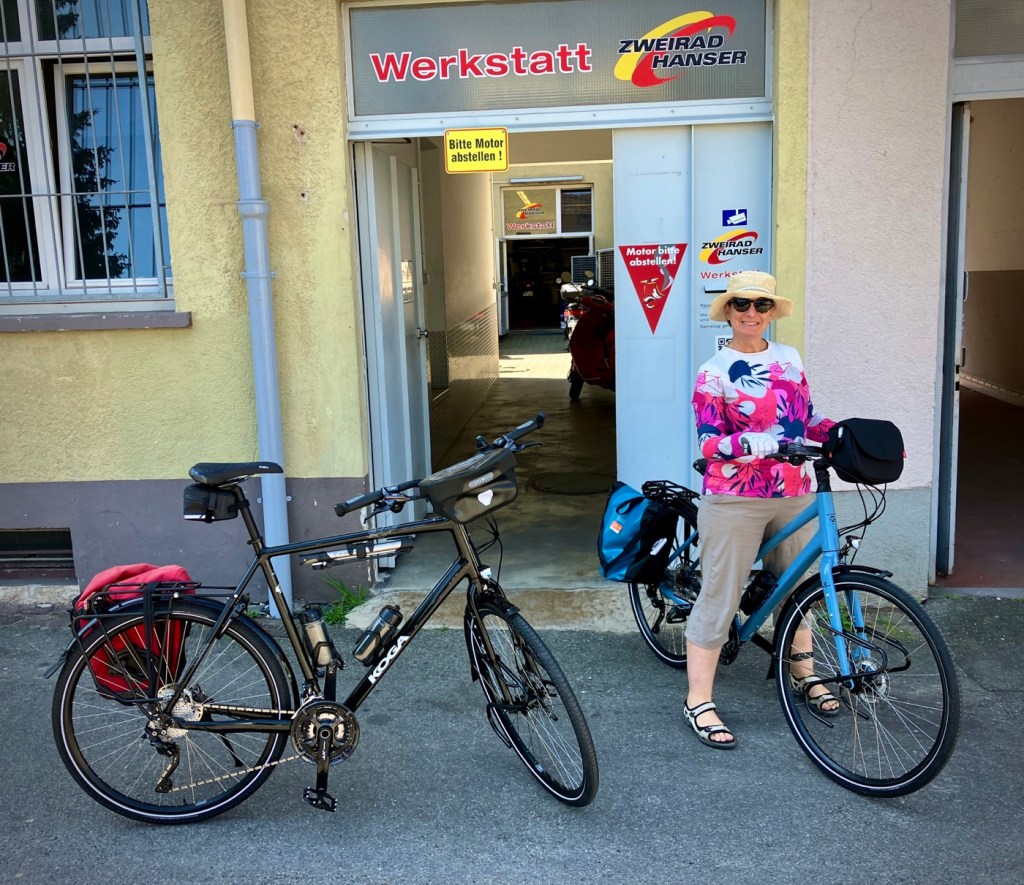
First test ride on our new Koga World Traveller-S Bikes at the friendly and efficient Zweirad Hanser in central Freiburg.

We set off in this leg of our nomadic wanderings with a very specific goal; picking up two new touring bikes that we decided to give each other for our 25th wedding anniversary last year. We picked Koga World Traveller-S bikes, since we tried them in a shop in Groningen last year. Luckily; we found a nice shop and Koga dealer in Freiburg, Germany who were willing to take our orders over 3 months ago from Sri Lanka.

Complementary estate wine bottled by our bike shop…one bottle for each new bike -:)
Freiburg is truly one of the greenest cities on earth, and our new apartment building had a massive bike garage and green roof, complete with bee hives.
First of two days at a bigger bike shop in Freiburg accessory shopping, eventually getting a new seat, front and tail packs, four panniers, phone holder, and cyclocomputer.

We spent 3 days in Freiburg getting the bikes configured and tweaked to our liking and then headed out to start another planned 4+ months with our bikes. We were both a bit nervous starting out on our new set ups and were relieved to finally get pedaling again.

Hanging out at Caffé Bicicletta in sunny Freiburg, but excited to get touring!
On the S-Bahn to Hinterzarten up in the Black Forest; are we touring yet??!!

The Koga signature bikes are nicely configured and allowed us a good amount of customization via their website. After some nervous days in France wondering if they’d be ready on time, we heard that they would likely be delivered to the shop in Freiburg on the day we planned to arrive! Perfect timing from the cycling gods (and Dutch Koga craftspeople). Koga strives to deliver in 12 weeks and they were pretty close as we had ordered about 13 1/2 weeks prior in Sri Lanka.

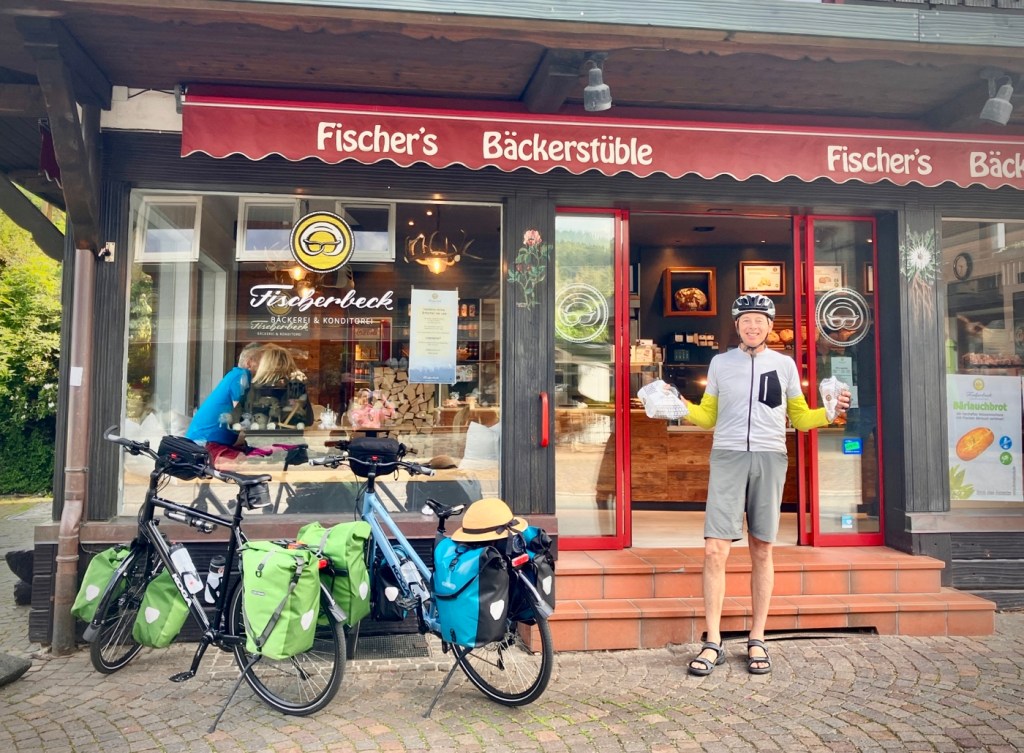
Off the train and ready to ride, but wait, first some critical provisions!
Taking a break on a long first day climb, again, why didn’t we get E-bikes?!
Some rough patches over the Schwarzwald on Day 1. We gave the bikes a full workout.
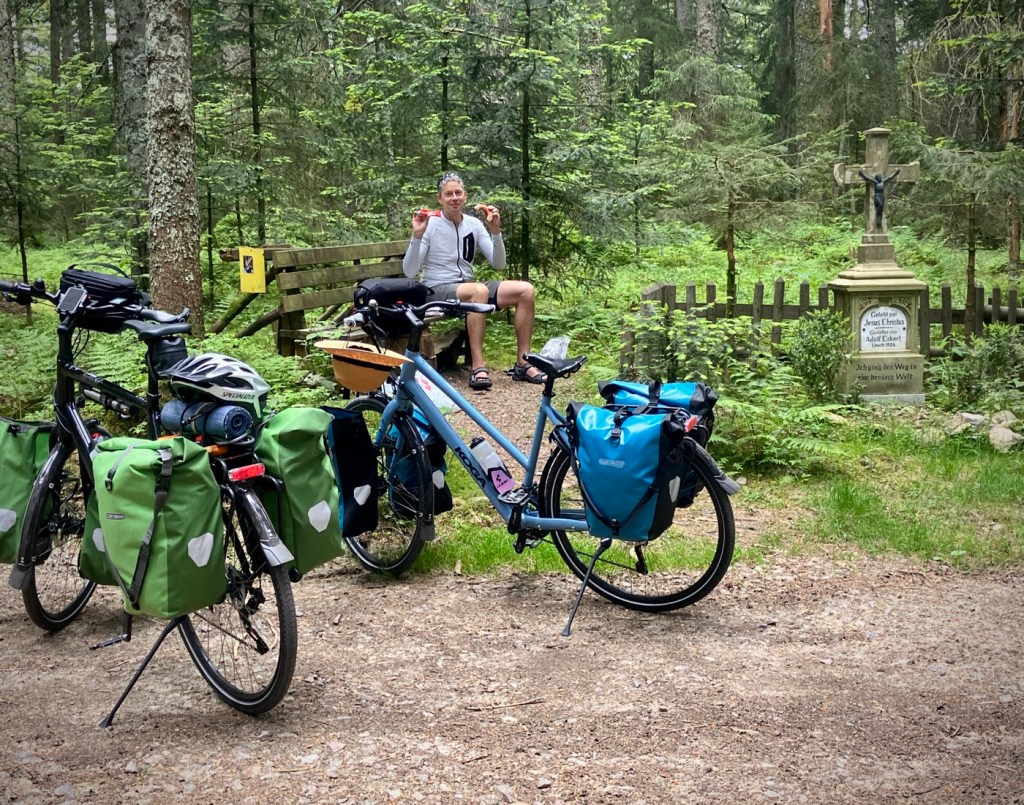
A break in the Black Forest at one of the ubiquitous small shrines (or as Cheryl likes to say, “Cheeses with Jesus” -:).

Our first day included a short link by train to bridge a busy main road (or super steep mountain option) up to the higher parts of Black Forest. This allowed us to ride nicer roads and trails onwards to Donaueschingen. It was still a hilly and varied 52k first day with 2,500 feet of climbing and lots of dirt sections.

At the source of the Danube in Donaueschingen. The Donauquelle is a bubbling clear spring, but fed by the upstream Breg and Furtwangen rivers.
EuroVelo 6 and the Danube cycle routes are a mix of buttery pavement, dirt, and gravel, but all in pretty good condition.
We have been greeted by unusually warm spring weather, so always happy to find some shade.
First gear quirk to resolve as my panniers both popped off the bike. Luckily, this kitty was ready to help.
Off the bikes enjoying early evening light near Beuron.

But it was beautiful and the new bikes are a joy. We love our old steel bikes, but these bikes are built to be loaded, handle wonderfully, and have geometries that make long days on dirt and old town cobbles so much nicer. We opted for a classic 3×10 Deore XT drivetrain, including fantastic hydraulic disc brakes. Koga includes nice built in racks, strong kickstand, fenders, and dynamo hub lights.

Smiles on Day 2…our seat bones still didn’t hurt too much…yet.
We exchanged many “Bonjours” with this nice French couple as our paces were nearly matched for a few days.
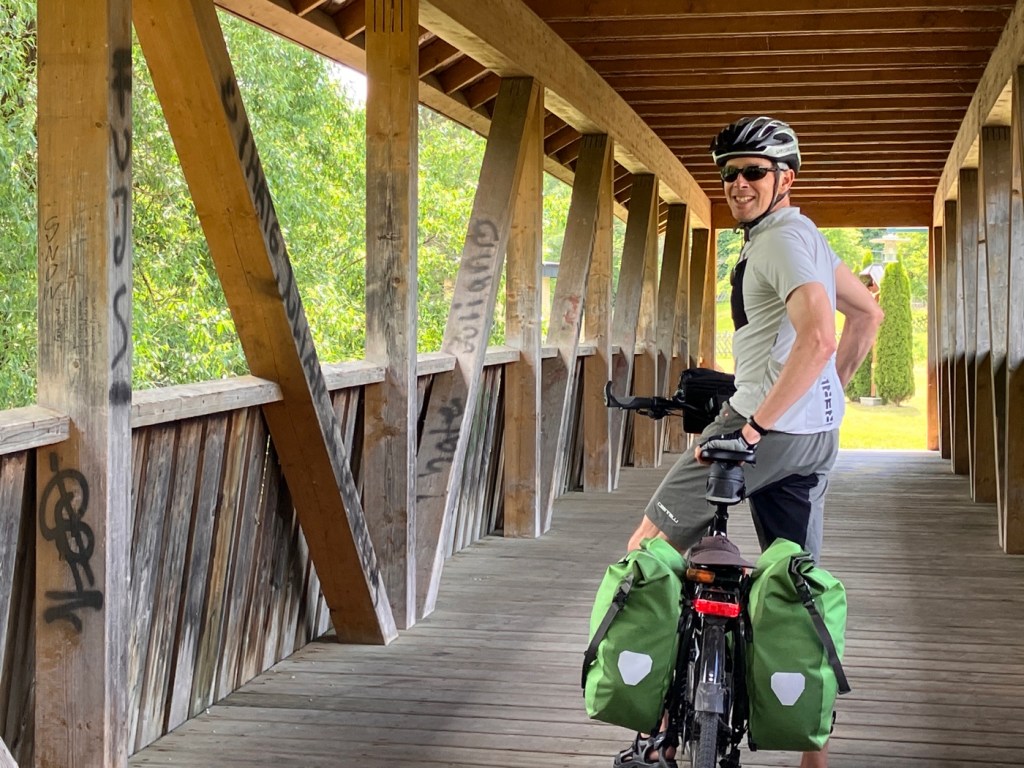
There are many covered bridges on the upper Danube since it’s still small enough to span with wood.
Loving my new bike.
We brought our ultralight camp chair on this tour, which means any pleasant patch of shade is a potential break spot.
Wishing this tunnel was open to bikes as our cycle trail went up and down and all around the first few days.
An emergency Chair Zero break at the side of trail. Sometime brush and the ubiquitous stinging nettles can make finding a break spot tough in spring time.
I haven’t lost Cheryl yet in her bright colors.
More artistic German bridge engineering.

After 4 beautiful days cycling in the Black Forest and upper Danube, we took a rest day (Ruhetag!). Ulm is a nice small city on the Danube with a cathedral famous for having the highest spire in Europe, easy to spot cycling into town. Our rest day coincided with a local holiday in Baden-Württemberg and Bavaria, Corpus Christi.

Mandatory 11 O’Clock pastry break. This was a divinely dense cheesecake like cherry treat.

We then spent the next two days along the more agricultural parts of the Danube Valley and are now enjoying another day off the bikes in Ingolstadt. We’ve mixed our routes up a bit to try to stay in woodland as it’s been warm and sunny, but primarily have followed Eurovelo 6, “Atlantic to the Black Sea”, which runs an incredible 4700km from eastern France via the Loire and Rhine, and then along the Danube to the Black Sea.

Always love the signage and choices cycling in Europe. It’s liberating on bicycles to know you can get anywhere relatively safely.

We head out tomorrow to do another 80km to Regensburg, but after that, the upcoming sections on the Danube, especially Donau to Vienna and Budapest are some of the most popular bike touring segments in the world. (And for good reason).

Paying homage to the Schwein farmers in the area, a German diet staple.
Late spring colors on the Danube

But thousands of bikes on each side of the river, with an awkward mix of the inexperienced and e-bikes thrown in, will make us a bit crazy and claustrophobic. So we plan to the explore that heart of the route more off-season, some early spring or late fall. We are always glad to trade some rain, cold weather and earlier darkness for a more peaceful experience.

A massive platter of tasty Greek food hit the spot in Riedlingen as our metabolisms started to fire up on Day 3.

But the upper segments of the Danube are much less toured, and have been generally blissful. As Cheryl knows, I’m a lot happier off the beaten track, at least a bit, and tend to break out in hives when in tourist clusters these days. Sometimes we lean in to being tourists, but other times it’s just life for us now, so we need to make our own adventure. After Regensburg, we may use our €49 monthly DeutschBahn tickets again to head east towards Czechia.

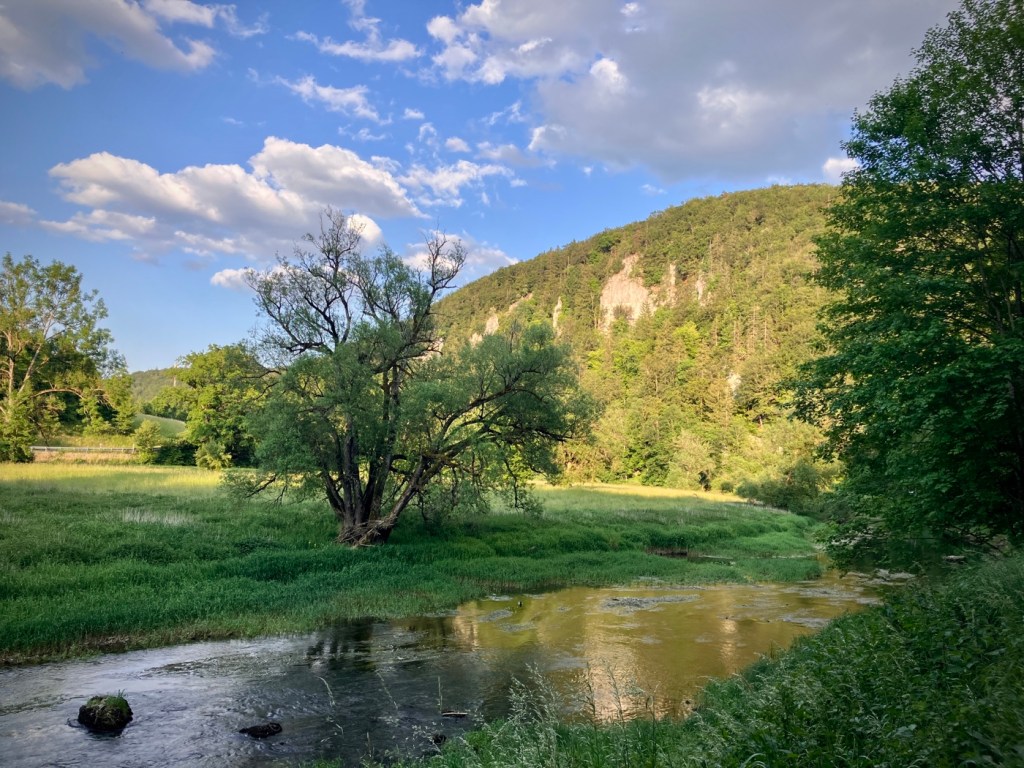
Cheryl loving her new bike in the limestone gorges of the Buchhalde-Oberes Donautal

But this is the magic of our third year of nomadic travels. We relish flexibility and the ability to change course on short notice. It’s also our third year in a row touring in Europe, and I definitely am seeing the landscape through slightly different eyes. We’ve seen hundreds of quaint squares, rivers, bridges, and old towns. Places are starting to look more normal, and a bit less exotic. But I also have a warm feeling of joy that we are able to control our destiny in life for now. Explore where we want, linger where we want. But we also have enough life experience and years of hard work to appreciate it all. And we know life can throw us all surprises at anytime, so for now, we roll on into the summer, thankful for everything.

Always a new surprise on the Eurovelo
Happy to be the two friendly American cycle tourists in a little German Town no one has heard of (Riedlingen)

Remember, the smaller places can be even more rewarding than fighting the crowds in the most popular cities. Happy summer travels all and hope to see a few of you along the way!

How to take a vacation from your travels. And on to the next adventure.

It’s been over a year since we’ve been nomading, vagabonding, wandering – whatever it is we’re doing. The transitions can be very challenging, city to county side, country to country, bike touring to backpack travel again. How do we do it without burning out, or driving each other bonkers? Our secret superpower is a home base in France, thanks to wonderful friends who hopefully know how much we appreciate it. There we can swap gear, relax in familiar and comfortable surroundings (Oh, comfy couch, we love you.), and actually be in different rooms from each other! For hours!

Those are the smiles of travelers who get to be somewhere familiar and cozy, and swap out some gear.

We are super fortunate to have a private home where we can recharge, but we also have places which are familiar and comfortable that provide the same mental break. Bristol, in the UK. A city we love and have been to three times. Hove/Brighton will be one of those places as well. Both have good public transit, lots to do and see and good for getting around the area. Izmir, Turkey is probably one of the places we’ll go back to again and feel happy knowing our way around, and what we like to do and eat. Our home town of San Francisco, of course. A place where you can navigate without a map and know the bus routes and bike routes. That feels great, wherever it is.

The relief felt when encountering French bike infrastructure again is massive.

But wait, how did we get here? As Rich mentioned in the previous post, Hove to the Haute Savior takes about 13 not always easy steps, with loaded touring bikes. Trains, a ferry, rides to and from hotels, to and from trains, trains to trains, and finally a lift the last few steep miles. We love the UK, but the French have really zoomed ahead of the British with safe, comfortable bike facilities, especially in urban areas and to connect town and cities. From getting off the ferry in the dark and rain, and directly on to a protected cycle way to our hotel, to the next morning riding the riverside path that led us into Caen for our train to Paris, it felt easy and relaxed. We both breathed a sigh of relief. Oh yeah, this is fun! Bike touring with no safe route is so stressful. Bike touring with lovely pathways and signage? A joy.

Headed from Ouistreham where the ferry docks, into Caen.
Arrived at Gare Paris Saint-Lazare via train. Tick off another step.
Rue de Rivoli in Paris at rush hour. Headed to our hotel in the 12 arrondissement.

Let’s take a moment to recognize what an amazing transformation Paris has undergone. 10k at rush hour with loaded touring bikes and it was not at all stressful. Even though we probably caused some near misses as we stopped at red lights and the cyclists behind us kept going – there was no cross traffic so they were being safe, just not expecting the big old loaded American touring bikes to actually stop! We got the hang of it. The quiet of Rue de Rivoli was like a forest bath. The sound of voices and bike tires. No loud engines. No car horns. Just the lovely sound of people. I’ll say it again, cities aren’t loud, internal combustion engines are loud.

Gare de Lyon, waiting for our TGV platform to be announced. One night in Paris is too short a stay, but still fun.
Three trains later, yada yada yada, we made it!

So, now that our legs, backs, and bottoms are totally adapted to bike touring, after four months of travel by and with bikes, let’s mix it up!

Load up that backpack, lace up the boots, and let’s Camino.

While down in town at the weekly market, where we walked with our packs which have scallop shell Camino patches on them, a young man said to us – you have a long way to go. And then after I used my one good French phrase “I’m sorry, I don’t speak French.”, he said it again in English. (Oh, to be bilingual.) Why thank you for thinking we could and would walk all the way from the French border with Switzerland to Santiago de Compostela, Spain, but no. We will actually fly to Bilbao.

My Camino pack. Getting some air.

We try quite hard to not fly places. This will be our first flight since returning from Turkey in May. Unfortunately, avoiding air travel means you must have time, and more money than the cheap flights cost. But, we do what we can, and sometimes our chosen lifestyle means airplanes.

Lunch break on our first training day out with our packs.
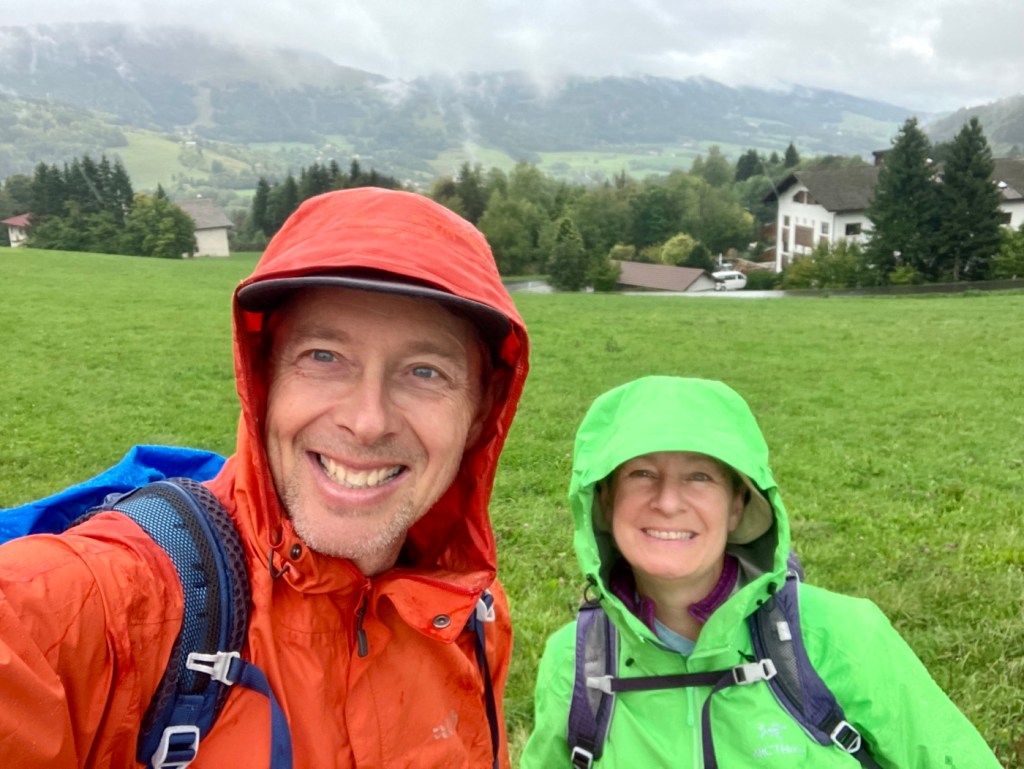
Second day hiking. Ready for the rain.
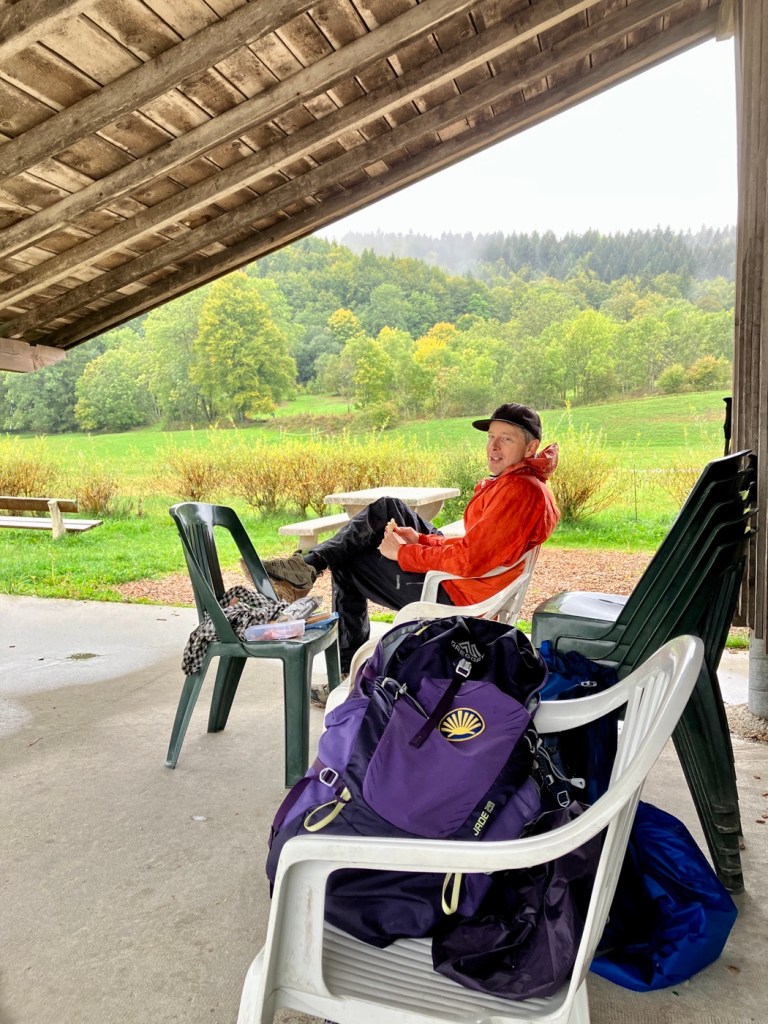
And rain it did. We were grateful to find this shelter by a glider field so we could enjoy our lunch.

With packs on and trekking poles in hands we started walking. And walking some more. Hopefully we’ll be in good enough hiking shape for the long Camino days.

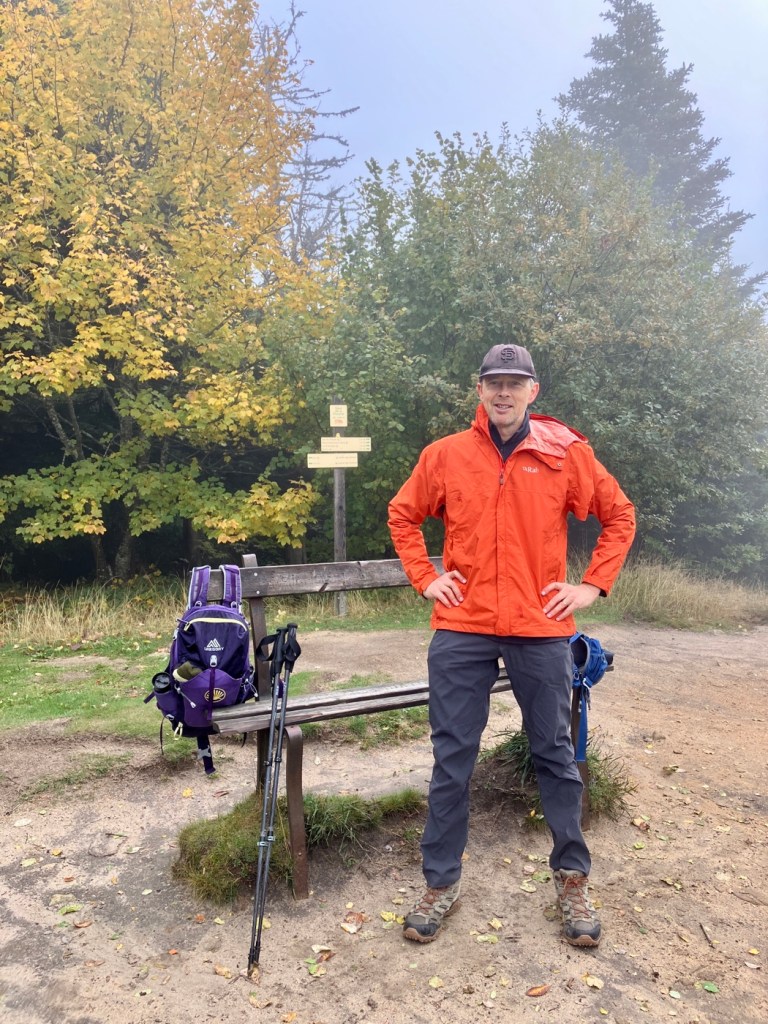
Third day. Up into to the fog we go.
A very helpful and beautiful orientation table at the peak of the climb. It did clear a bit on our way back.
He’s ready to Camino.
Practicing the Camino picnic. My Cleverhood rain cape doubles as a ground cloth for sitting.

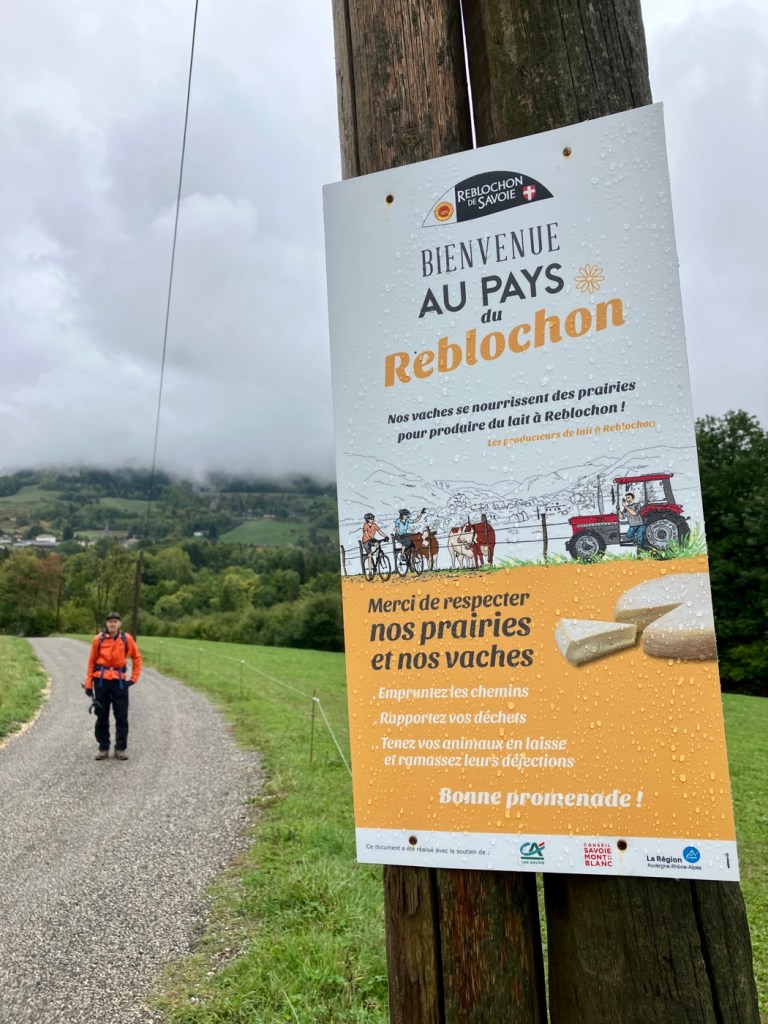
What a place to be able to train for the Camino. The Lower Alps are simply stunning. Varied terrain, nicely signposted routes, amazing views. And beautiful cows. Making all that delicious cheese.

Respect our cows. Words to live by.
Who could not respect you? Gorgeous.
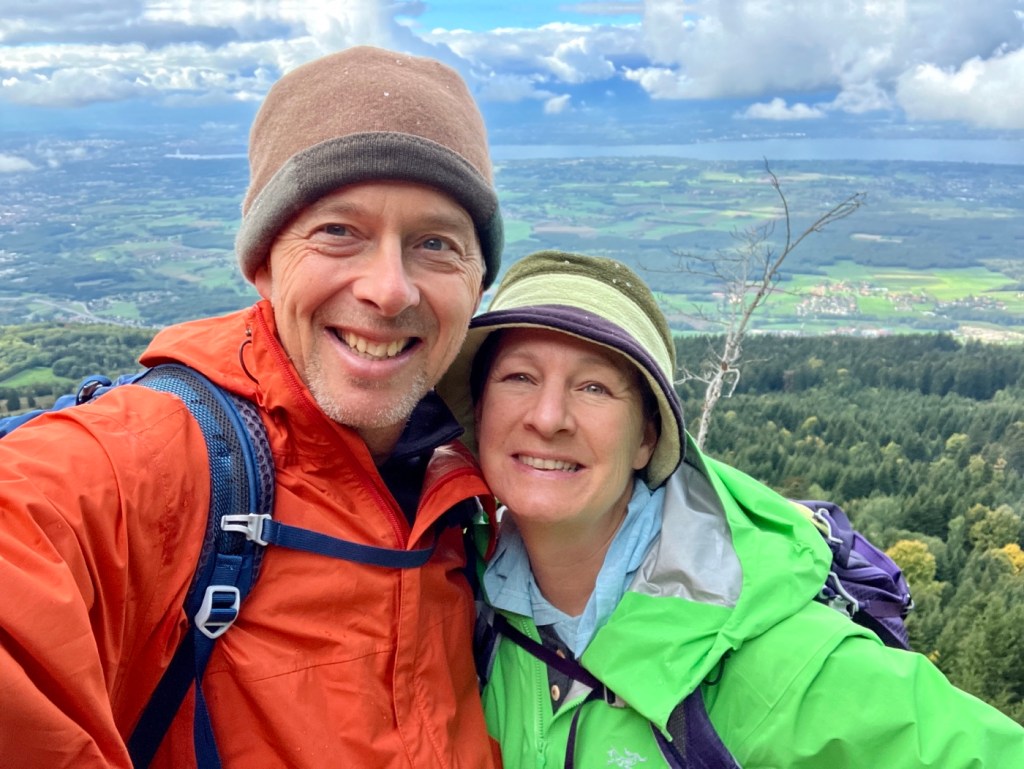
The Happy Travelers on our final training hike. The sun came out to bid us farewell.

By the time you read this we will be headed to Spain. We’re meeting dear friends from California to hike part of the Camino del Norte. Adiós y Buen Camino!

Cruising the Southwest Coast

We rolled into Plymouth by bus and train from Lyme Regis on a Friday eve after our day of (not enough for Cheryl) fossil hunting. We found a nice comfortable apartment east of downtown, which was on the edge of a redeveloped, light industrial area, but proved walkable enough, and close to the Mt Edgecombe ferry and nicely restored Royal William Naval Yard.

Pondering our next moves near Bosigran Castle, Cornwall

Hotels are always busier on weekends these days (still little business travel) so apartments are often a good solution, with the added bonus of being able to cook and avoid busy restaurant nights out.

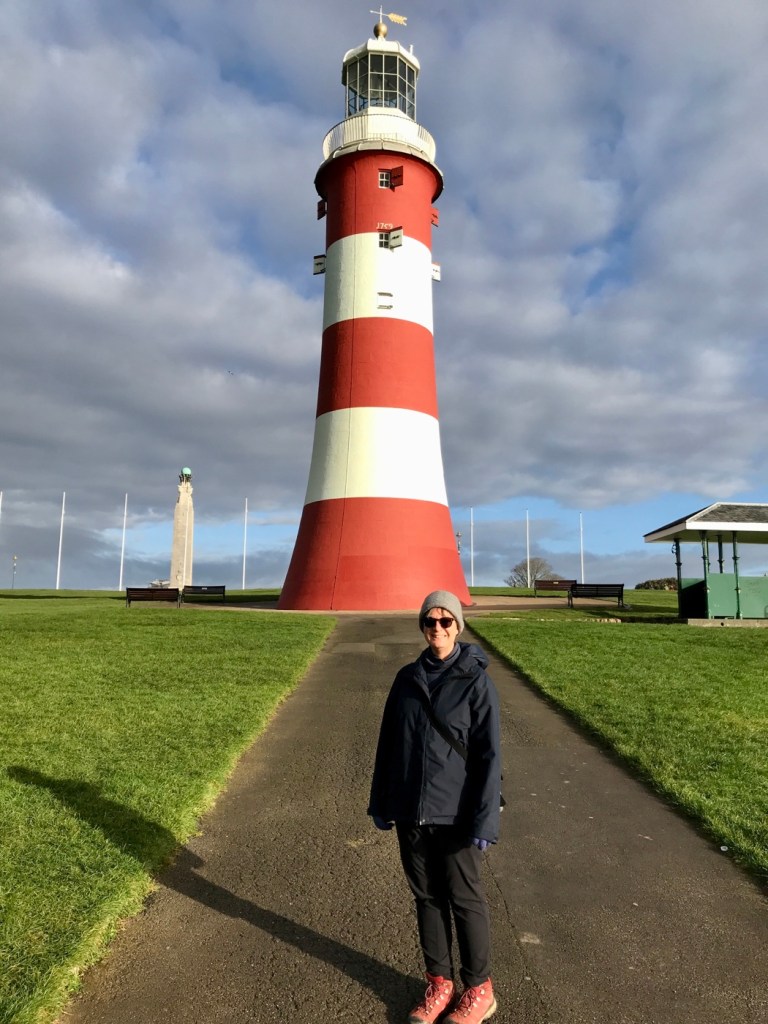
Smeaton’s Tower Lighthouse that used to mark the treacherous Eddystone reef near Plymouth.

We stayed 5 nights in Plymouth, as a bit of a breather, and to figure out our next moves. To be honest, 5 days was perhaps a day too long, even with side excursions; as Plymouth has a few interesting sights, but suffered badly from the Blitz.

Yes, the Fab Four were here!
Cheryl and our friendly local Greg on the Mt Edgecombe Ferry… hiking AFTER his morning swim off the “Hoe” of Plymouth.
Mt Edgcumbe wandering from Maker to Kingsand, just a 10 minute ferry ride from Plymouth

The core of downtown was rebuilt in the 50’s with a vast scale and the worst of minimalist/brutalist post-war “architecture” and urban planning. The cobbled Barbican and harbor areas are nice and certainly have charm, but the Mayflower Museum was disappointing. But we did enjoy some cosy pubs, the people were friendly, and the countryside nearby is beautiful.

So happy to get on a bike up the Plym River pathway…an easy bus day trip to trailhead rental (Plymouth Bike Hire).
Cycling up to a bakery in Yelverton – Dartmoor National Park
Wheal Martyn Clay Works in Devon…the outdoor museum is a hydro-mechanical playground, and the vast tailings mounds are known as the “Cornish Alps”.
One of many working water wheels that used to be used to process the clay; while the still very active clay mining business is now mostly mechanized.

One of the amazing aspects of long term travel is how much can change in a week. We’ve been enjoying the UK for two months now; but are both feeling the desire to move on to some new adventures. So while we waited somewhat nervously for our booster record and NHS registration to process, we decided we’d shake up our moods by changing modes for a week.

Mmm…freshly made veggie Cornish Pasty in artsy and charming St. Ives.
The Penrith peninsula of Cornwall; spring was in the air.

Yup, we’ve rented a car for the week to get into the nooks and crannies of Devon and Cornwall a bit more, as there are many places that are just impractical to get to by other means. It’s been a great brain challenge to drive a manual transmission left hand shifting while left side driving on the ubiquitous hedge rows of the region. Always ready to stop, and many snap decisions to back up and breathe in to let an on coming vehicle pass with inches to spare. Maybe not as fun for Cheryl as a passenger though!

About as far SW you can get in the UK, with shockingly turquoise waters and granite that feels sub-alpine.
The Merry Maidens stone circle near Mousehole, the rock sizes are tapered to account for the slope of the land…impressive Neolithic applied science.

We’ve also kept the driving to a minimum and always make sure to spend more time out the car walking and exploring. By the way, you can totally visit the region by train and bus, and see a lot…and we’d never consider renting a car in season, as the region is apparently overwhelmed. And we’ll definitely be ready to turn in our keys in a few more days!

What’s over that cliff Cheryl?
Ah yes, a colony of seals lounging on the pocket beach near The Lizard, the southernmost point in the mainland UK.
We walked to Lands End from Senner Cove…always better to approach the tourist hot spots from a distance and walk a few miles instead of a few yards from the car park.

And it’s been a fantastic week, as the coastline is truly stunning and few crowds until the school holidays start in the next few weeks. But alas, we have literally run out of England at Lands End and The Lizard, so we’ve decided to move onto new adventures on the continent. And yes, we’ve finally sorted our vaccine records (Thank you NHS!) so are headed to France this week by the slow boat. Stay tuned and happy travels!

Mousehole, Cornwall…memories of dinner here with my father 35+ years ago …. you don’t forget great travels, especially with family.

Leaning in to slow travel.

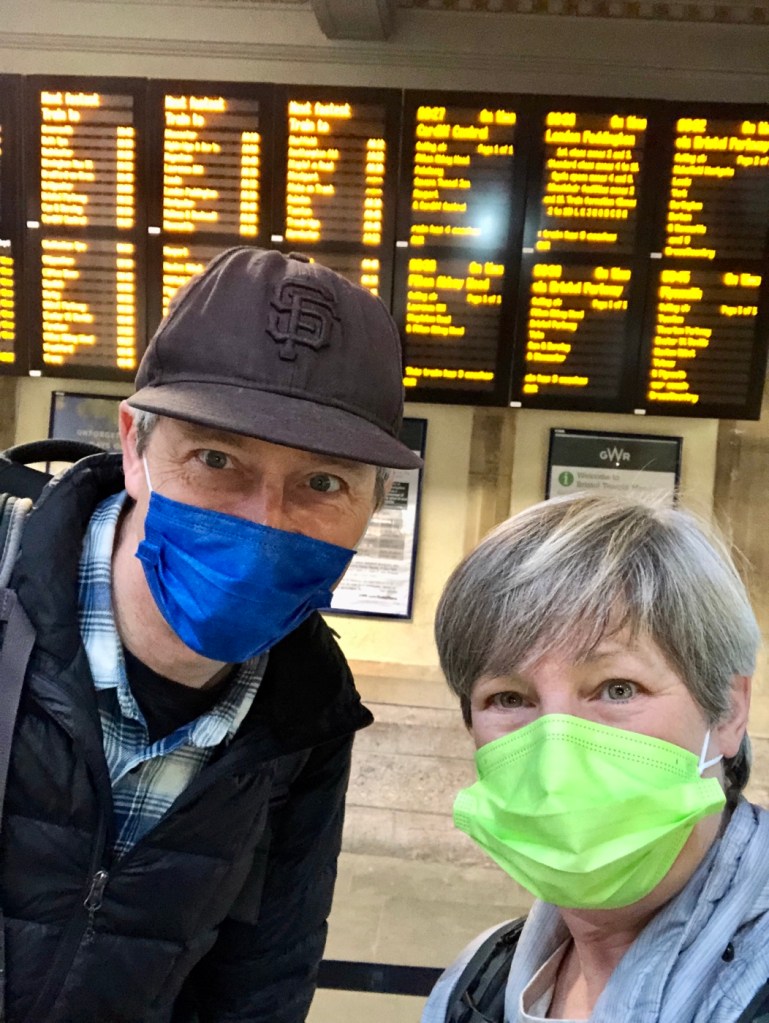
In front of the big board at Bristol Temple Mead Station.

As we wait to sort out our booster records we’ve really started to take delight in our snap travel decisions. Our last booked evening in Bristol Rich asked, where should we go next? My reply was “How easy to get to the Jurassic Coast? Looks fairly close.”

Stop for salads from the M&S fine foods. We try to never board a train without snacks or lunch.
Waiting for our train.

And the travel planner makes it happen. I’ve wanted to visit Lyme Regis since reading the novel Remarkable Creatures, about Mary Anning, the renowned fossilist.

At Axminster station, about to catch the bus to Lyme Regis.
Wheeling and walking from the bus to our guest house.

Lyme Regis is the heart of the Jurassic Coast. We had a lovely day and a half of hiking, which I now realize we could have spent fossil hunting. Oh yes, I caught the fossil bug. I caught it bad.

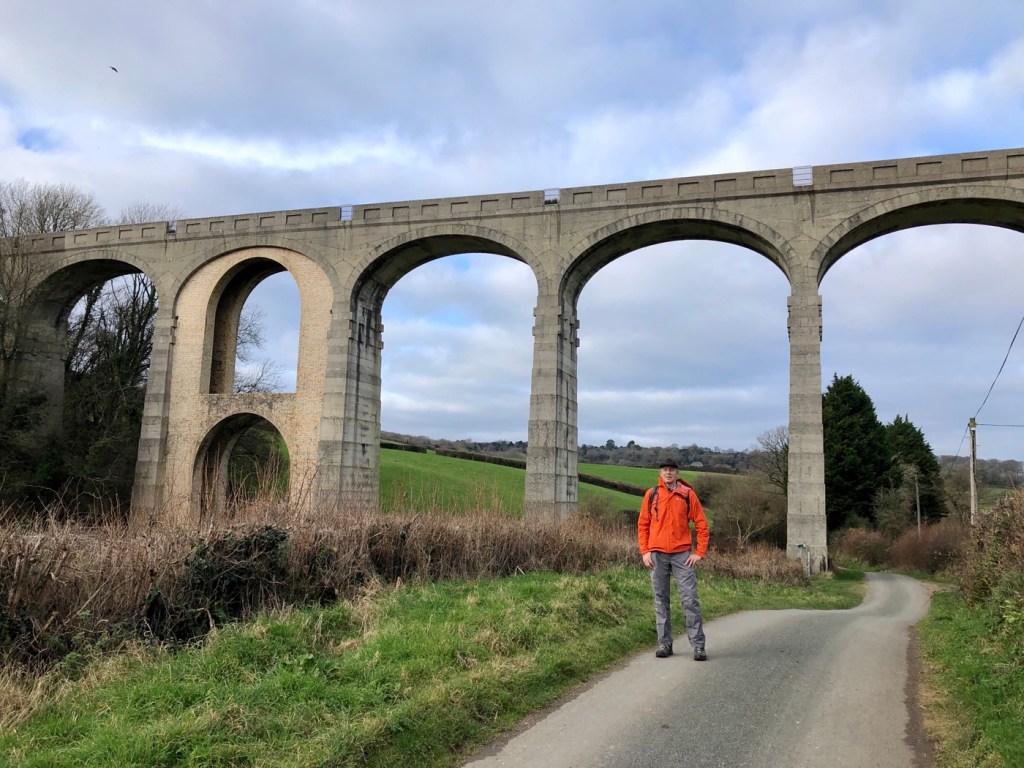
The old train viaduct at Uplyme. A lovely afternoon hike. Could have been hunting fossils.
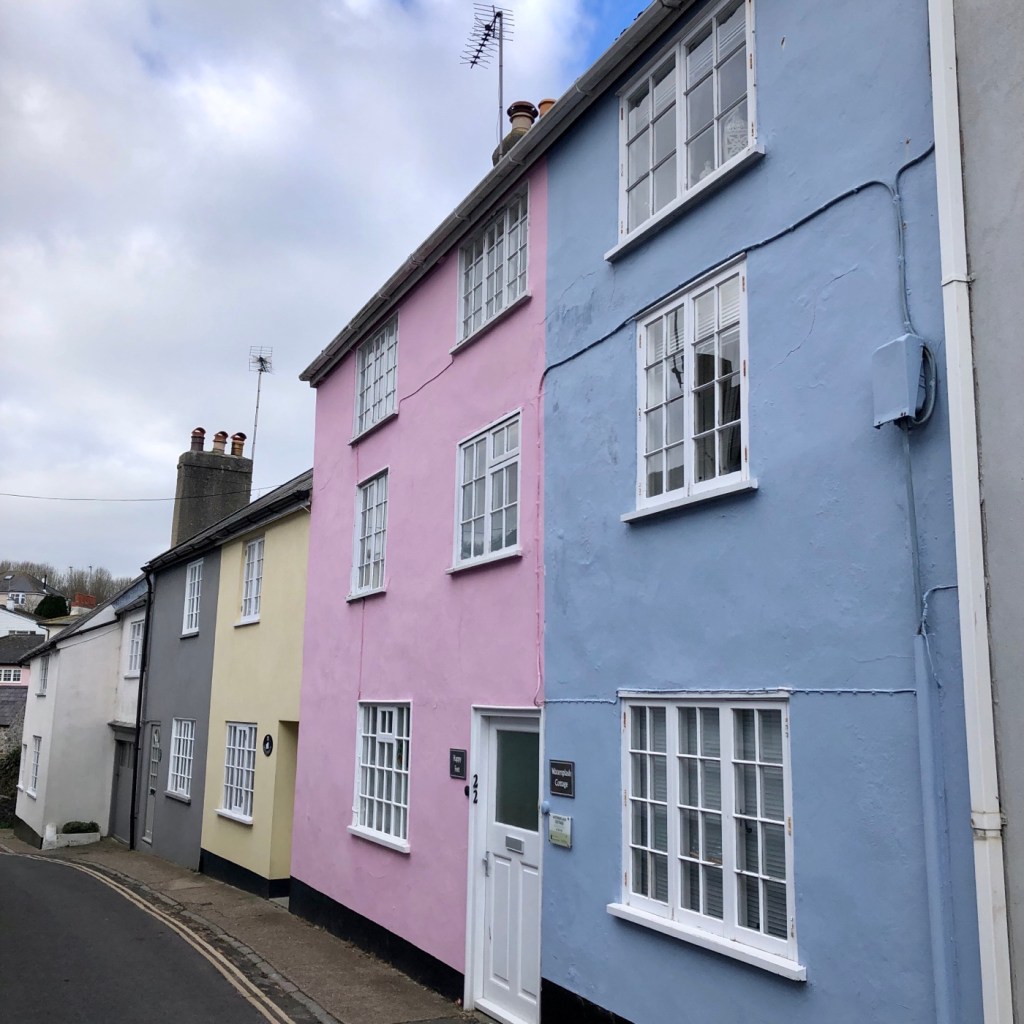
Beautiful houses in Lyme Regis on a street that slopes down to the fossil beach.
Goofing around on the Cobb, of French Lieutenant’s Woman and Jane Austin’s Persuasion fame – just up from the fossil beach.

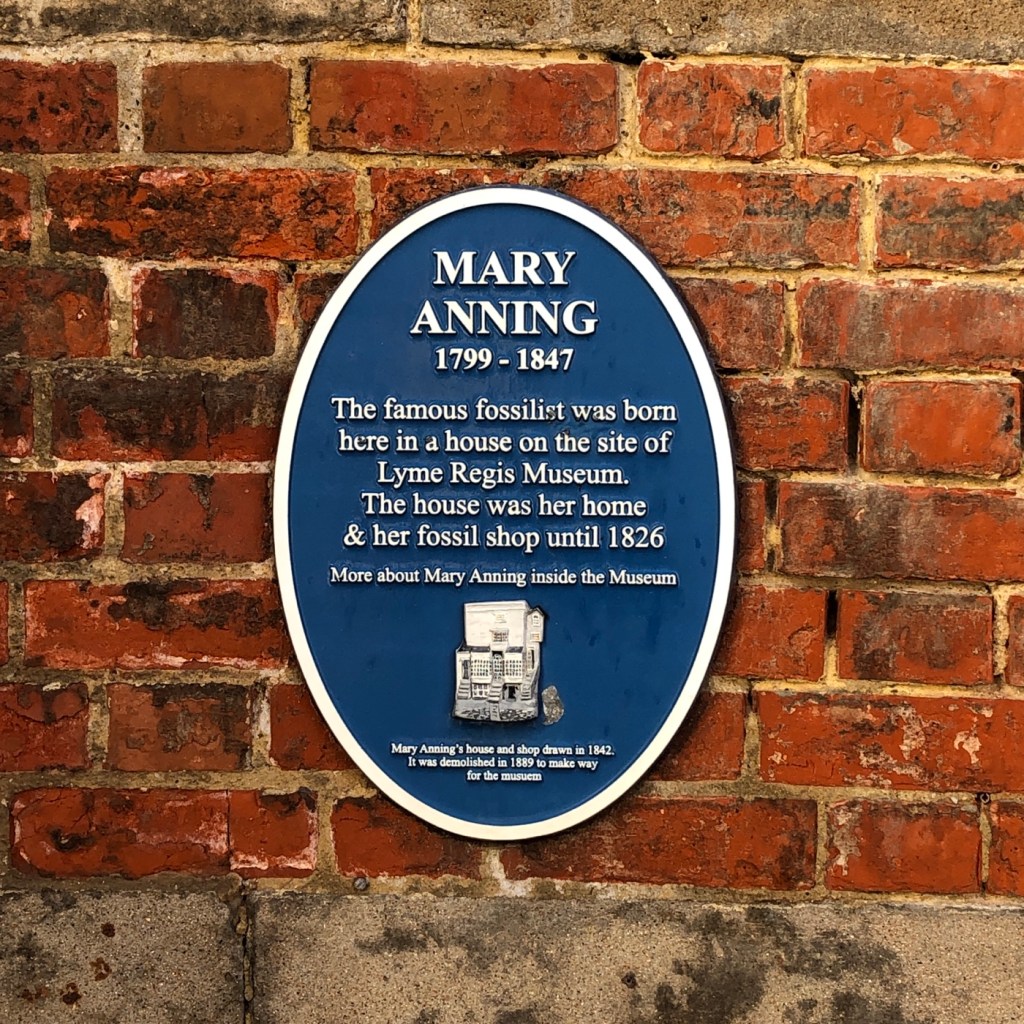
The Lyme Regis museum, built on the site of Mary Anning’s house, offers a fossil talk and walk. We bought tickets for Friday, our last day in town, thinking we had plenty of time to do that and catch our bus to the train station.

Apparently her house flooded with high tides and storms. A new sea wall changed that allowing the museum to be built.

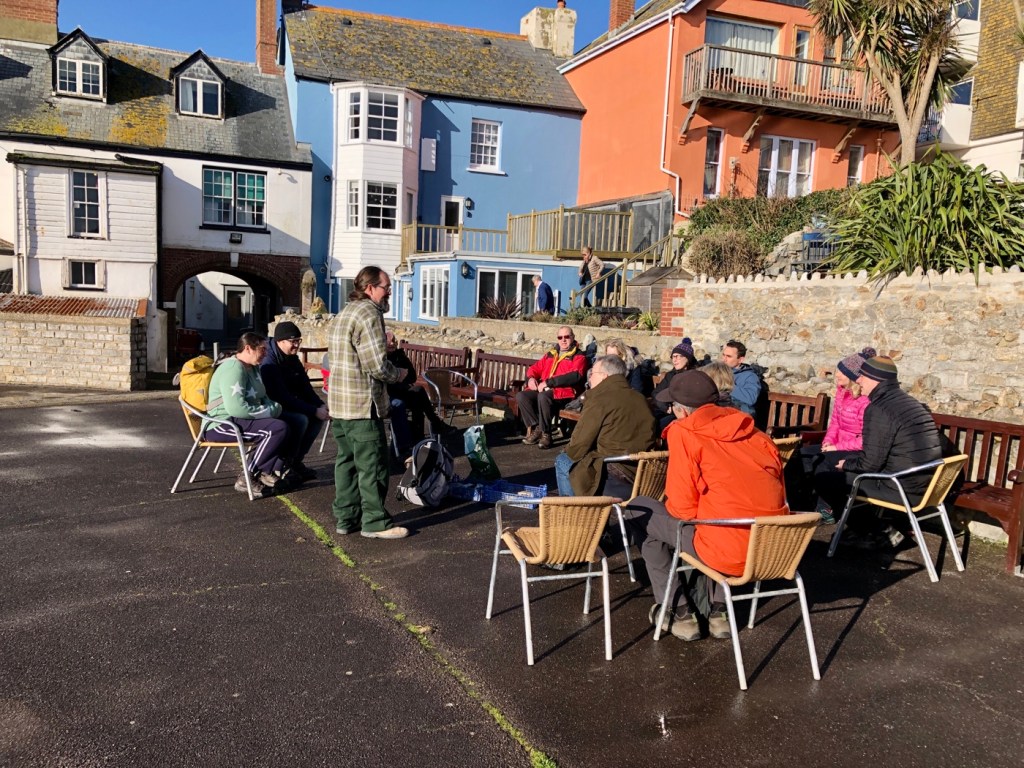
The fossil talk was amazing, we learned so much. I learned we didn’t leave enough time for actual fossil hunting.

The wonderful geologist who talked us through what to expect and look for. And answered all the whys of this area.
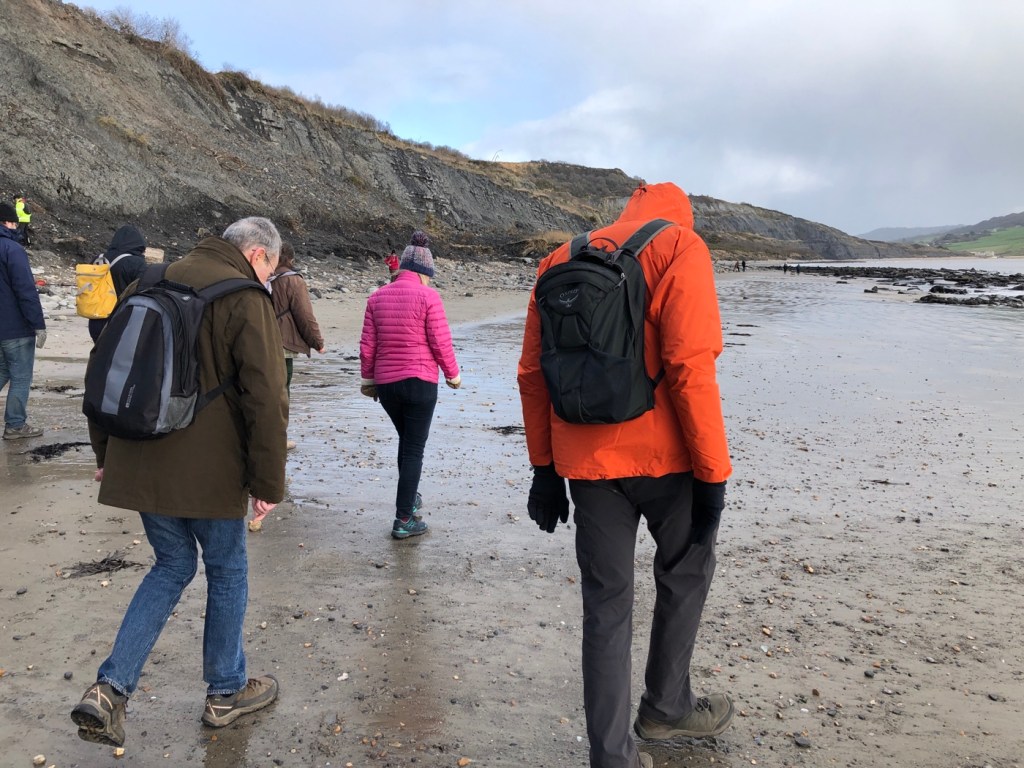
Fossil hunting. Everyone has their gaze turned towards the sand. There really are fossils just laying on the sand.
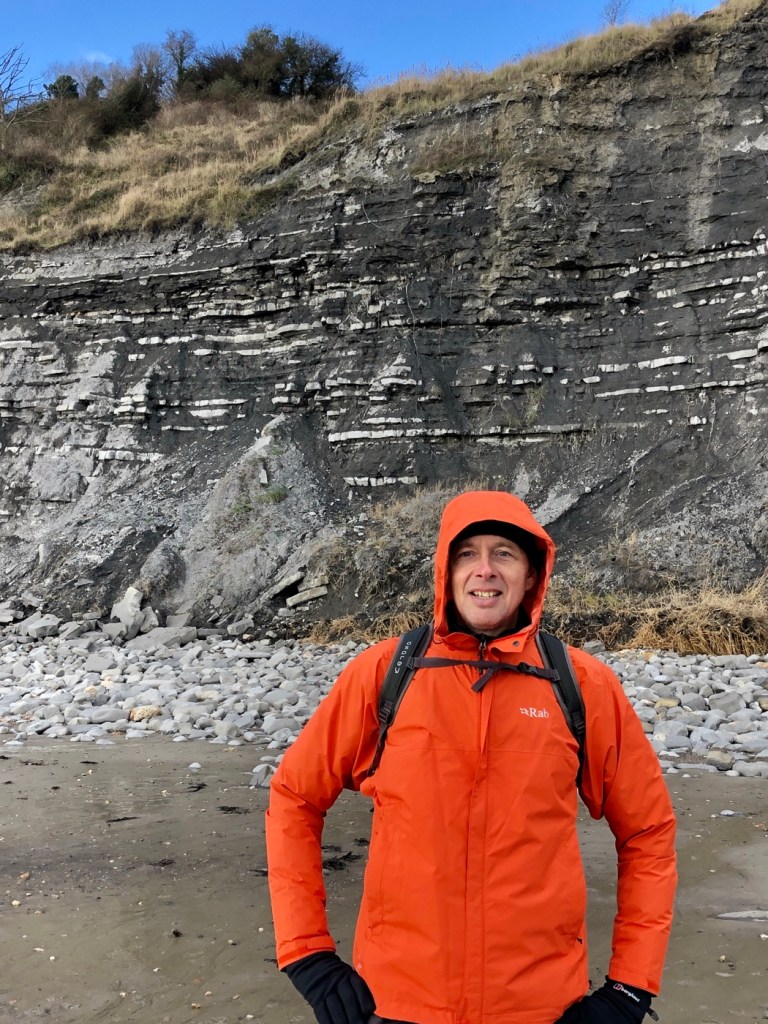
The limestone cliffs where the fossils are before they landslide onto the beach. And my intrepid fossil hunter.

The best time to fossil hunt is after a big storm has caused land slips and churned up the beach. We were on the beach after days of mild weather, so not prime fossil time. And it was still amazing. Apparently after a storm the professionals are at the beach before dawn with headlamps and hammers. There are no prohibitions about hunting, just warnings. As our geologist told us, if you don’t get the fossils the ocean will. But don’t let the cliffs get you. They let loose on a regular basis. He kept us away from the cliff bases and focused on the tidal zone.

Looking earthward for fossils.
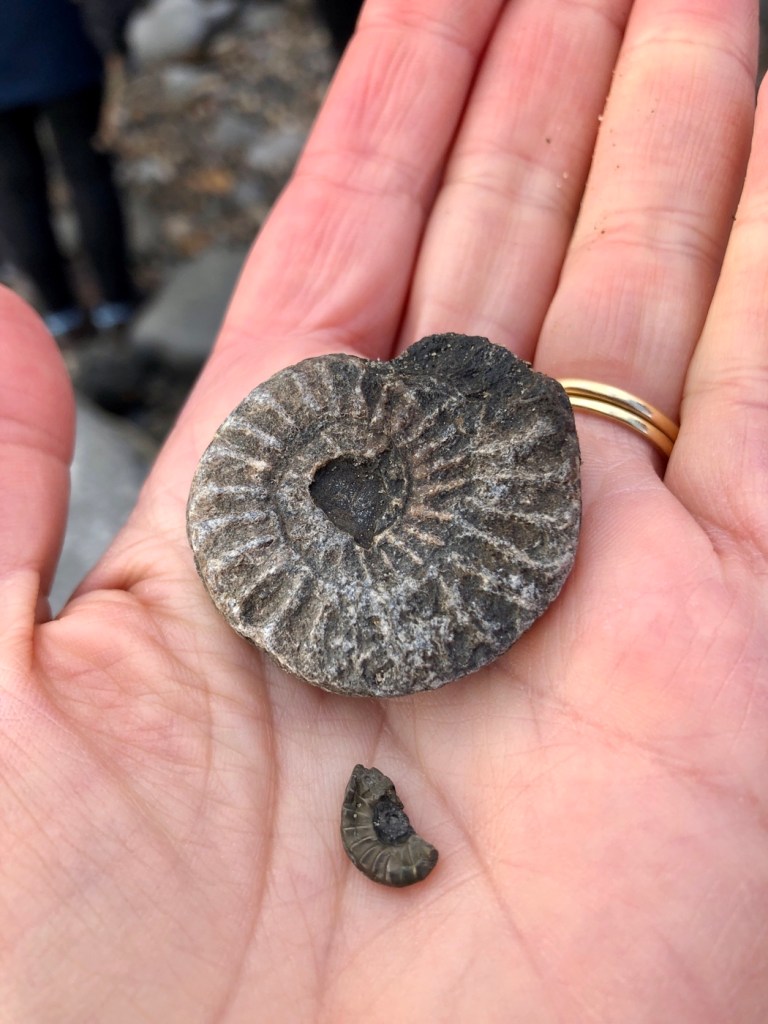
Two different versions of fossilized ammenonites. The small partial one is iron pyritized.

I’ll let wiki explain how these jewel like fossils happen: Organisms may become pyritized when they are in marine sediments saturated with iron sulfides. (Pyrite is iron sulfide.) As organic matter decays it releases sulfide which reacts with dissolved iron in the surrounding waters. … Some pyritized fossils include Precambrian microfossils, marine arthropods and plants.

A tribute to Mary Anning on the coast path. Her dog Tray and a Plesiosaurus skeleton in metal on a section of fence.

Sadly, we only had a short time on the beach before we had to leave to catch our bus to the train. But we will definitely be back to fossil hunt again.

The happy travelers take a sunset usie. Should have been fossil hunting.

Our next snap travel decision was to go on to Plymouth by train. Since we were so far down SW England, why not go farther? so we did. We’re in an apartment in Plymouth for a while. Where will we go next? And how will we get there? Stay tuned.

Doing the Booster Limbo

We left the beautiful and empty lake district via an easy one connection train trip to western Wales, and have been enjoying a lovely week in Tenby, courtesy again of our endlessly generous friends.

The moist and green footpaths around Tenby

The weather has been favorable as well, with little rain, and temperatures pushing 50 most days, as this is often one of the warmest locations in the UK.

Daffodils reminding us that spring is on the way!
The nicely renovated Manchester Piccadilly Station – our only transfer from Kendal to Carmarthen, Wales

We even had the opportunity to part ways for a few days, as Cheryl went to Cheltenham in the Cotswolds with our host, and another old friend for a ladies getaway, while the guys stayed behind in Tenby.

Cream Tea at the Ivy in Cheltenham

Although we almost always enjoy each other’s company, It was good for both of us to have some independent time for a change, and a bit of an odd sensation after so much intense time together the past 6 months.

The boys on a beautiful day on the Pembrokeshire Coast

Long term travel with a partner definitely requires a special relationship, and a lot of give and take. Luckily this comes naturally to Cheryl and I, but we still have to both respect each other’s personal space, independent desires, and known quirks (Just mine of course, Cheryl is perfect -;)

Watchful eyes in Cheltenham

Meanwhile the world continues to spin and adjust to Omicron, although we are happily past the early January peak in the UK. We certainly hope that the world gets to some endemic normalcy in 2022, but there are a lot of challenges, including proper global vaccination supply. As for us, we know we are lucky to be traveling at all and are still so thankful to the NHS for providing us a booster shot in December, as this allowed us to continue our travels with more protection and in a responsible manner.

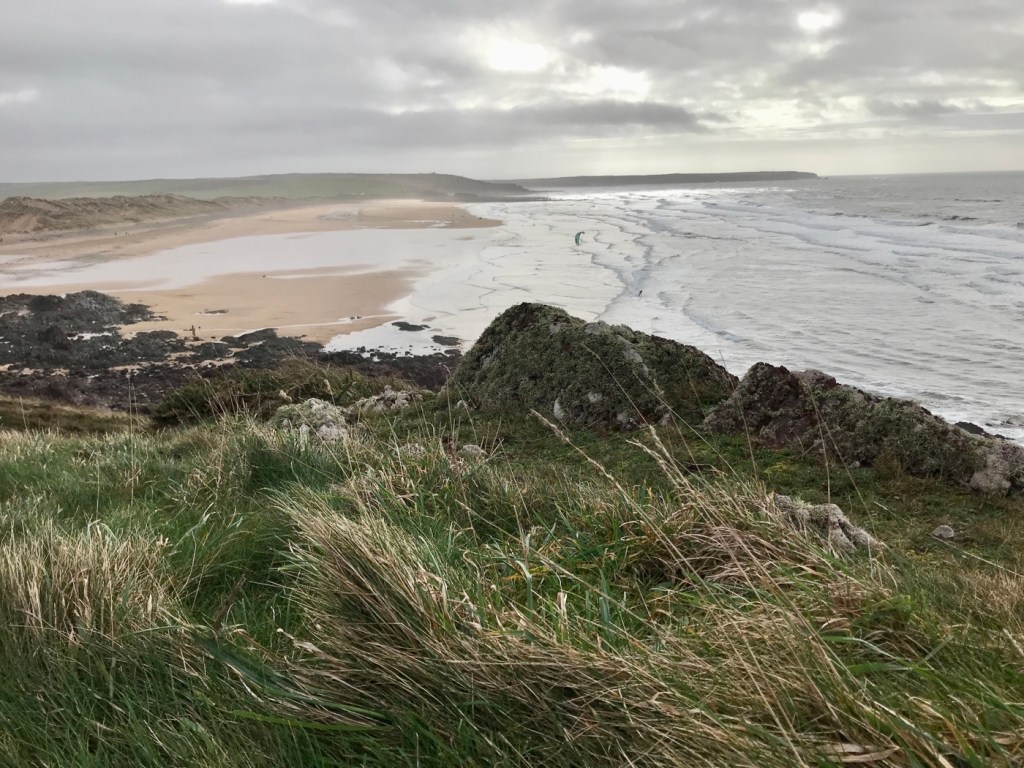
Freshwater West Beach – a favorite of surfers and kite surfers (yes, it’s often breezy)

However, since we weren’t registered in the NHS system, we only have small hand written vaccine cards recording our booster. We were given a heads up that this could be an issue going forward, especially for travel documentation, and indeed this month, we have found that our electronic (EU) COVID passports have now expired in most countries, as there has been a new standardization around a 270 day (9 month) validity from original vaccines without a booster.

Walking alone along the cliffs near Tenby reminded me not to get too lost in that podcast

So we need to get our booster vaccines we received in December into a more usable electronic format. We think we have found a solution as you can actually register with a local GP surgery in England as a non-resident, and access the record after being assigned an NHS number. We could have registered in Wales in theory, but the health systems are actually quite separate and we were warned that the transfer of the record from England could be fairly quick or take months…something that wouldn’t work for our desired onward travels to France and Italy.

The Fresh Ponds of the Stackpole Estate. Back when you just made ponds for your amusement, but now a perfect habitat for migratory bids

So we set off to Bristol, England yesterday to try to get registered in the area after some initial success online and with some phone calls to various practices that are still accepting new patients. Many are full or shut off due to COVID and/or ongoing GP shortage issues in the UK. Health systems are strained everywhere.

Up and down the coast path to Saundersfoot

As a bonus, we had a bit of an adventurous day getting to Bristol, England yesterday due to signaling issues disrupting a west wales Main line. When our first train leg was cancelled (and next train in 4 hours!) we quickly booked a taxi to the next transfer station, where our onward journey was still shown on time; however, then found out that the problem was still down the line. Doh!

Oh Oh, no trains going from Carmarthen!

Luckily, after some confusion, Transport for Wales did manage to rustle up a few small mini buses to get us past the issue. And in fact, the friendly driver offered to drive the 20 or so of us to a more convenient station for quicker connections and we ultimately got to Bristol an hour earlier than scheduled, by catching a connecting train with two minutes to spare. Small travel win!

Two full hands in Cardiff; happy transfer after making our trains to Bristol

But we are in a sort of limbo while we try to sort out our booster record, but we will try to make the best of it. And it’s interesting to return to the Bristol-Bath, an area that we really enjoyed in our first visit last fall. You so often say in travel life, “we should come back here some time to see more, etc….” But you rarely do. This is one revelation we discuss as we travel new places now; do you think we’ll come back here someday? Yes, no, maybe….but always realizing that regardless, travel to a place is always a snapshot in time, and a unique experience.

The Hanoi we fell in love with in 2007 was not the same Hanoi in our 2017 return. Of course, the UK does have many places that haven’t changed much 500 (or 5000) years, but the country is still a very different place than 5 years ago, as it has a whole different vibe post-Brexit, and mid-pandemic. The travel experience is a complex blend of a place’s physical infrastructure, social, political, and environmental influences, all filtered though the lens of your personal attitude and biases.

Back in cool Bristol, cool brew pubs and bike bridges included

So what next? Excellent question. On our 7 hour train ride last week from the Lake District, we had some time to think about 2022 and develop some broad scenarios. The challenge is to parse out our 90 allowed Schengen days in the prime spring/summer/fall. Some of the goals include more bike touring in Northern Europe, Scandinavia, and the Baltics….tied to the Grand Depart of the 2022 Tour de France in Denmark on July 1st. (Hotel reserved a year ago -:).

Our friend Gary’s dog Misty on the way to the pub lunch at the Stackpole Inn

In the nearer term, we are looking to do some more exploring in Italy, perhaps walking some of the beaten tourist routes more off-season, such as the Cinque Terre, or Venice. Then “home” to the US of a for a month to see as many friends and families as we can ( and consume as many burritos as humanly possible!)…..then back across the pond to explore Turkey for a month, a place we have long wanted to visit, before swapping out for our bikes again. Central and Southern Africa are also on the short list for later in the year, as well as the Camino Del Norte in the fall. Of course, these are all subject to quick pivot as needed based on the state of the world.

Colorful Tenby Harbour

So hopefully the blizzards are clearing and the sun is starting to shine a bit more wherever you are, as we emerge from a long dark winter, and the burdens of a pandemic. For now we move on in the UK with the uncertainty that has become a way of life.

Happy travels!
Beauty all around us.

Above Ambleside.

Nine days of hiking. And we haven’t even scratched the surface of the available trails. We’ve moved a bit south to the very lovely market town of Kendal, known as the gateway to the Lakes District. The terrain here is less craggy and peaky, more rolling hills and sweeping vistas, but just as beautiful as the Lake District proper and with just as much amazing hiking.

Stone circle of Castlerigg.

The stone walls, the farm animals, our interactions with friendly hikers, and of course the pints at the pub garden at the end of our hikes have been keeping us well entertained. I’m fascinated with the many different types of stiles that get us over fences and walls while keeping the sheep and cattle contained.

Ladder stile over a wall.
Classic wooden stile over a fence.
A narrow gap with a tiny gate.
A very narrow gap, requires even Rich to squeeze through. This is actually called a squeeze stile.
One of my favorites, stone steps up a stone wall.
More robust steps, usually there is a small gap at the top, and here, a metal bar across the gap.
A rather fancy ladder and platform stile, outside Cartmel.

Along with clamoring over stiles we’ve opened, and correctly closed and secured, many gates. Many many gates. So many gates we joke that we now have masters degrees in gate-ology.

The farmers depend on hikers properly closing gates. We make sure we do.
A kissing gate, it simply swings and requires no securing.
I appreciate these signs educating hikers about the animals in the fields.

We’ve had some lovely chats with other hikers. The fell runners and the one tarn (lake) swimmer we saw have impressed us with their hardiness. And, we’ve stopped to talk to hikers who are well into their 70s and 80s. We say to each other after those interactions, with luck that will be us, years from now, still happily hiking together.

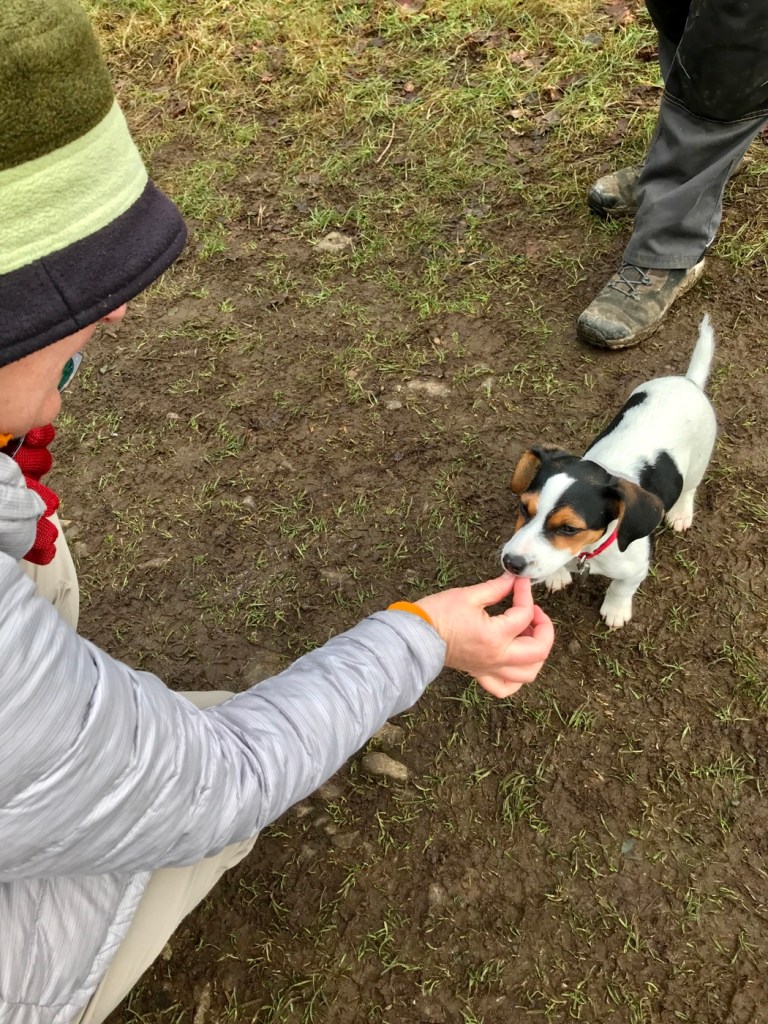
Zoe, a 4 month old Jack Russel terrier, accepting a treat supplied by her human.

As we’d hoped, the Covid curve seems to have peaked here in the UK. We’re glad we’ve stayed in apartments and kept out of crowded places as long as we have. Yes we’ve had some very chilly pints and cups of tea outside, but it’s been the right thing for us to do.

A foggy view on the River Eea.

We’ve seen so much stunning countryside. This time in the Lake District in winter was not something we planned on, but we’re enjoying it so much. Travel in the time of Covid is stressful, we think we’re doing a good job keeping ourselves relatively calm and certainly well exercised.

Muddy boots and the green green hills of Cumbria.
Sunrise over the River Kent with Kendal Castle ruins on the hill. This is the view from our apartment.

What’s next? Back to our good friends in Wales. After that, uncertain at this point. We need to get our COVID booster shots entered into the EU tracking system so we have the ability to abide by vaccination rules in France, as our current Pass Sanitaires are now invalid without the booster info being updated. It’s probably easiest to do this while in France. So, maybe France is next.

The happy travelers on the road to who knows where.

Car Free in the Lake District in Winter?…Why Yes!

We moved on from lovely Liverpool late last week and arrived Keswick by train and bus (locally pronounced Kehz-ick) on a spectacularly snowy day in the Lake District.

Dramatic winter skies ascending near Grasmere

We were very glad that our professional bus driver was plying the slushy mountain roads, especially on the sheer edges of deep lakes; nevertheless, we did take note of the emergency window systems on the bus! (avoiding what I called a double decker bus watery grave…-;)
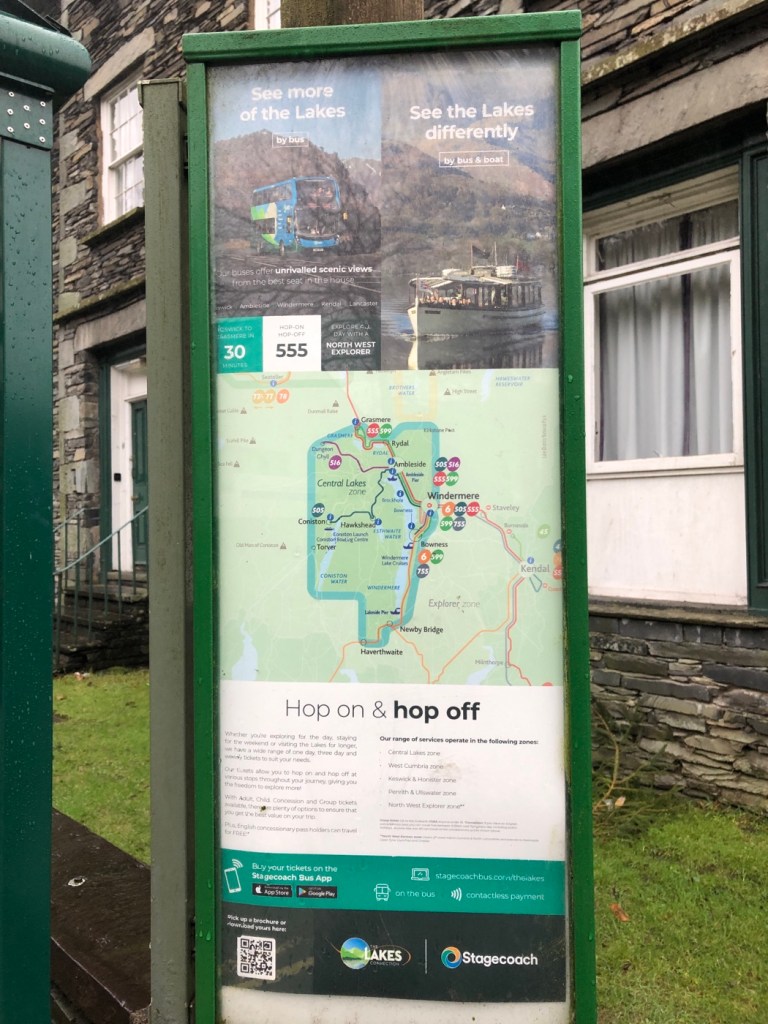
Can we do this without a car?

Our decision to base in Keswick was based on a number of factors, but primarily that we could get there by public transit, and numerous lines route from there to other parts of the National Park. It also has a few museums, nice shops, and many services in town, including a great regional supermarket, Booth’s.

Our row cottage in Keswick came with a friendly outdoor kitty neighbor no charge and a 5-10 minute walk to town or the bus
Cheryl trying to cajole an adorable Lake District sheep to follow her home

Oh, it also happens to be very quaint, with a lovely pedestrianized core and footpaths heading in every direction, including along the large Derwant Waters, what we in America might call a lake!

Morning light on Derwentwater in the Lake District NP

We actually wavered a bit about whether we “needed” to rent a car, but then read about many others visiting car-free and thriving with the great regional transit system. After 6 days here, we know it was 100% the right decision for us.

The 78 bus to the end of the line at Seatoller…schedules, a shelter, and multiple trailheads
Cheryl ready to hike…the other friendly passengers were day tripping photography buffs from Manchester

Our decision also considered the fact that this area is heavily impacted by car traffic, much like the National Parks in the US. Nevertheless, the car parks and road are still surprisingly busy here mid week in January, as driving is still seen as the easiest and best way for most to experience the park. Despite some pay parking in many of the towns and villages, the roads are still free and there is an abundance of free parking available.

Hey, there goes our bus!

But it’s not just about the carbon footprint of driving for us. We’ve seen the impacts automobile congestion, noise, and pollution have on communities. When practical, we don’t want to contribute unnecessarily to the problem. Although traffic is fairly light in the middle of winter now, it apparently is extremely congested most of the year, and a nightmare in holiday periods.

On the way to Styhead Tarn; did we mention there is water everywhere!

The typical scenic two lane roads barely fit two bus widths (they slow to pass) or even some large cars and trucks! Luckily most people in the UK still drive pretty small cars, but they still impact the safety and experience of the bikes and walkers that also use most roads. Many drivers here go too fast for conditions and it can be nerve wracking even on small unmarked country lanes.

Fragile sub-alpine tundra above 500m
The surprising alpine world of northwest England…Styhead Tarn near the Great Gable

National Parks and holiday areas have specific problems, and many have now taken to managing traffic through various methods, such as fees, closures, parking management, and shuttles/transit. The Lake District National Parks is no different and really is trying to address the problem by providing a really good bus system at fairly reasonable (but not cheap) prices.

Returning on the upper deck just before the early winter sun set
The backbone 555 bus runs throughout the core of the district and will connect you to the train in Windemere…closed double deck BTW

The buses are reliable, extensive, clean, and even a joy with double deck service on the some lines and 1/2 open top double deck service on two shorter lines through very scenic areas. So the buses really do double as sightseeing and transit for locals and visitors alike.

Yes, it WAS chilly on the open top bus, but the views will keep you warm

The other key is easy payment. The Stagecoach bus system offers payment by any tap cars/Apple Pay, etc for single/day trips or you can buy a loadable smart card right from the driver £1 fee for week or month passes.

Information is key! Most stops had schedules and route info.

We bought the 7 day gold pass form £29 each, which allows unlimited travel on the entire systems, which extends to the coast and all the gateway/border cities of the whole district.

Less sun, more dramatic colors
Walla Crag view on a misty winter day
But the sun was out today!

The only suggestion we would make to the Stagecoach bus system is to make the pass an 8-day or 7+1 trip pass, as many holiday rentals are 7-nights, so you generally have 8 days of travel. We are going to have to buy another day pass for our last day out of the park…. a minor annoyance. Let’s make this an even easier decision for people.

Gourmet Scotch Eggs from the Keswick farmers market are the ultimate winter hiking food

So we highly recommend coming to the Lake District in the winter. Although the transit system runs a little less frequently, and a few of the lines to very remote areas are peak season only, you will have a lot of the typically crowded places to yourself. Just make sure to always bring your waterproofs, and leave the car behind.

The intrepid travelers press on despite some serious hat head