Taipei 101 – An Introduction

I love the rush and excitement of flying into a new place. And since we transferred through Tokyo on ANA, we flew into the closer Songshan city airport (TSA) and had a window seat on a long double loop around the dramatic hills and skyscrapers of Taipei….a free aerial tour of the city where we would spend our next week!
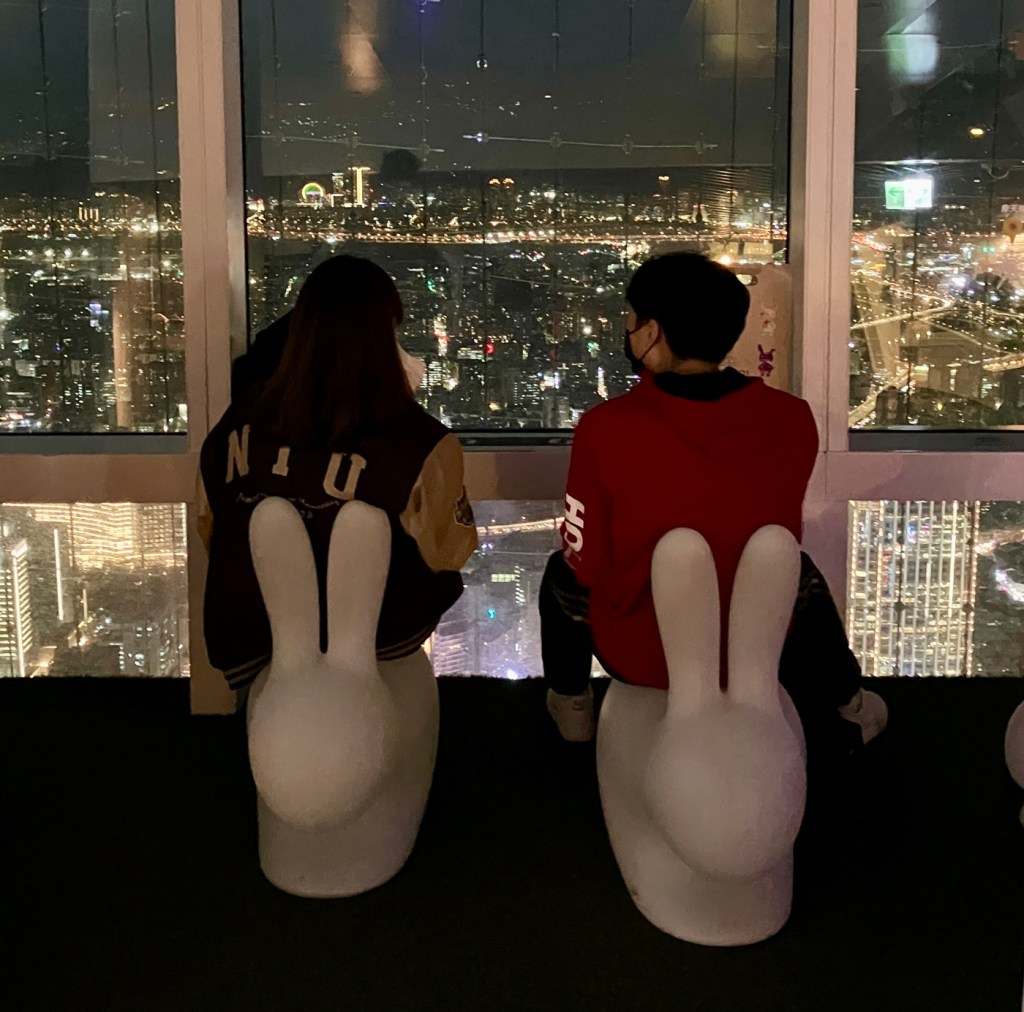
Lunar New Year Bunny Seats on the 89th Floor of Taipei 101
Lost? You can almost always spy Taipei 101 wherever you are.

Note that most longer flights go out of the much larger and more distant Taoyuan International Airport (TPE). But both have good rail connections right to the center, so no worries if you fly into or out of TPE.
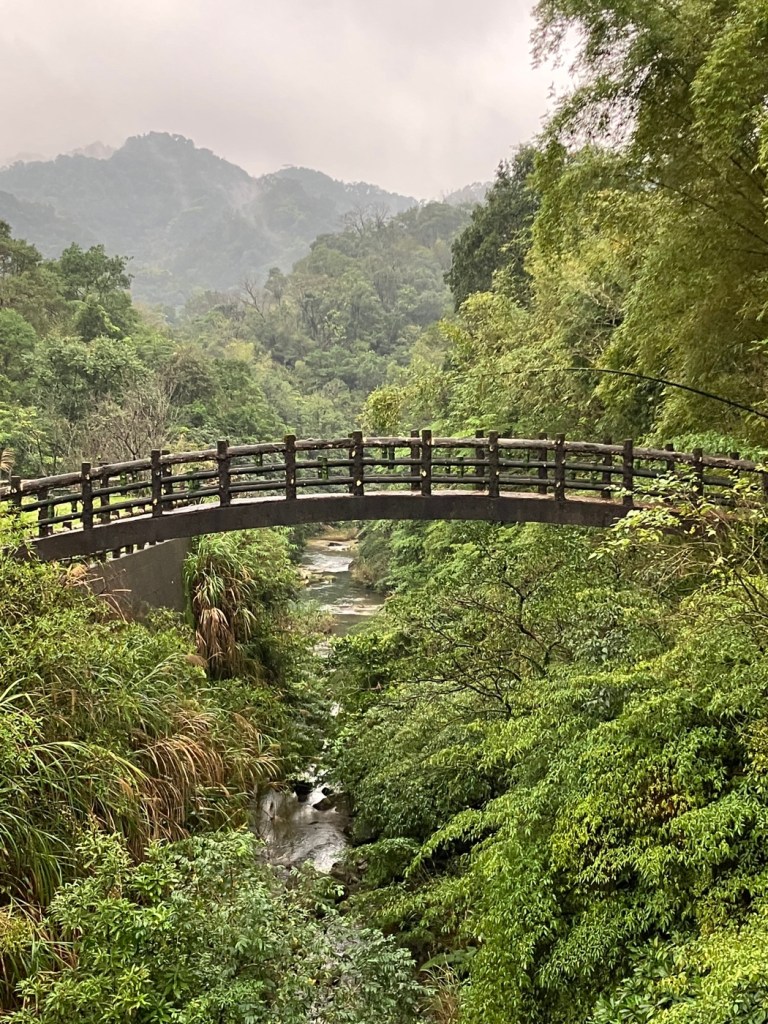
Waterfalls, mountains, and forest

Taipei is a world class city that just doesn’t rise to the top of most (western) tourists lists. But we think the Portuguese nailed it with the name “Formosa”, as it is a beautiful, prosperous, and free place.

Local Agriculture in the Pingxi District

It’s certainly a place that is receiving more attention in the global news due to the complex geo-politics associated with its status and ultra strategic location in the South China Sea. We enjoyed learning so much more about the history of Taiwan. It has left a unique legacy on the psyche of the country.

Ximen, The walkable downtown of Taipei

After the Qing Dynasty lost the Sino-Japanese War in 1895, they ceded Taiwan and the Japanese colonized and controlled Taiwan for over 50 years. When their occupation finally ended after World War II. a dictatorship initially led by Chiang Kai-Shek ruled for the next 40 years under the KMT party, with strict repression of free speech, detentions, and killings known as the “White Terror”.
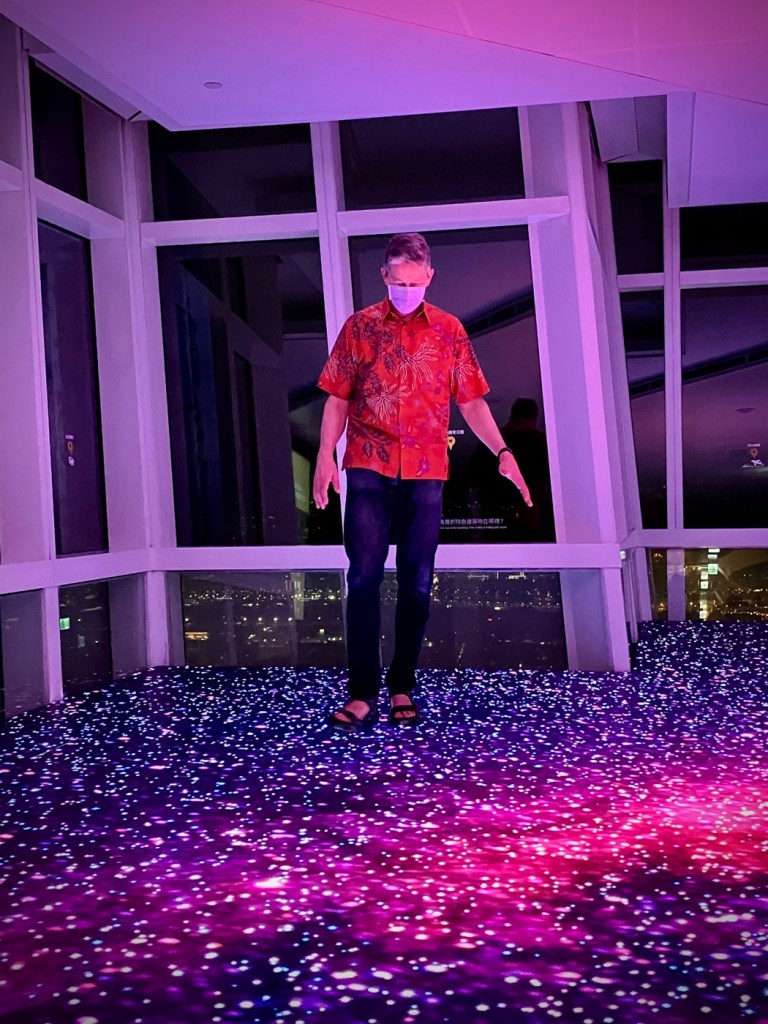
Getting dizzy in Taipei 101
The massive damper on the 88th floor of Taipei 101 has a series of cute damper babies…this one was my favorite. Way to make science cute.

By the late 80’s, a slow transition to a more open and democratic Taiwan started, and after the election of the Democratic Progressive Party (DPP) in 2016, it has solidified its place as a liberal and forward looking democracy.

The Pingxi train and Shifen suspension bridge

They were the first Asian state to legalize gay marriage in 2019 and have 42%+ representation of women in the parliament as well as a female president. The Scandinavia of Asia?! Almost, but there is still a huge gender wage gap and other legacy issues of a male dominated business world.
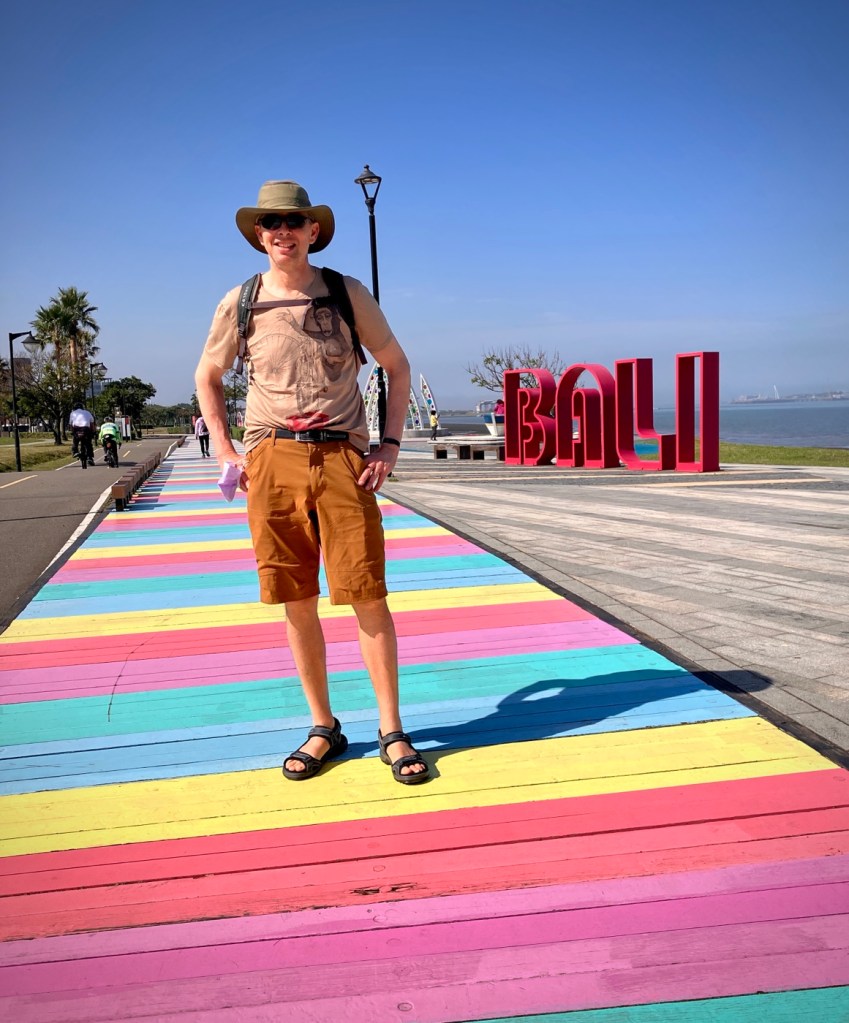
Bali and Tamsui are easily reachable by MRT and ferry for seaside strolling or cycling

However, we could feel the positive energy and openness in Taipei, although all within a society that still values social stability and conformity. It’s an interesting mix but definitely a positive one to experience, even as an outsider.
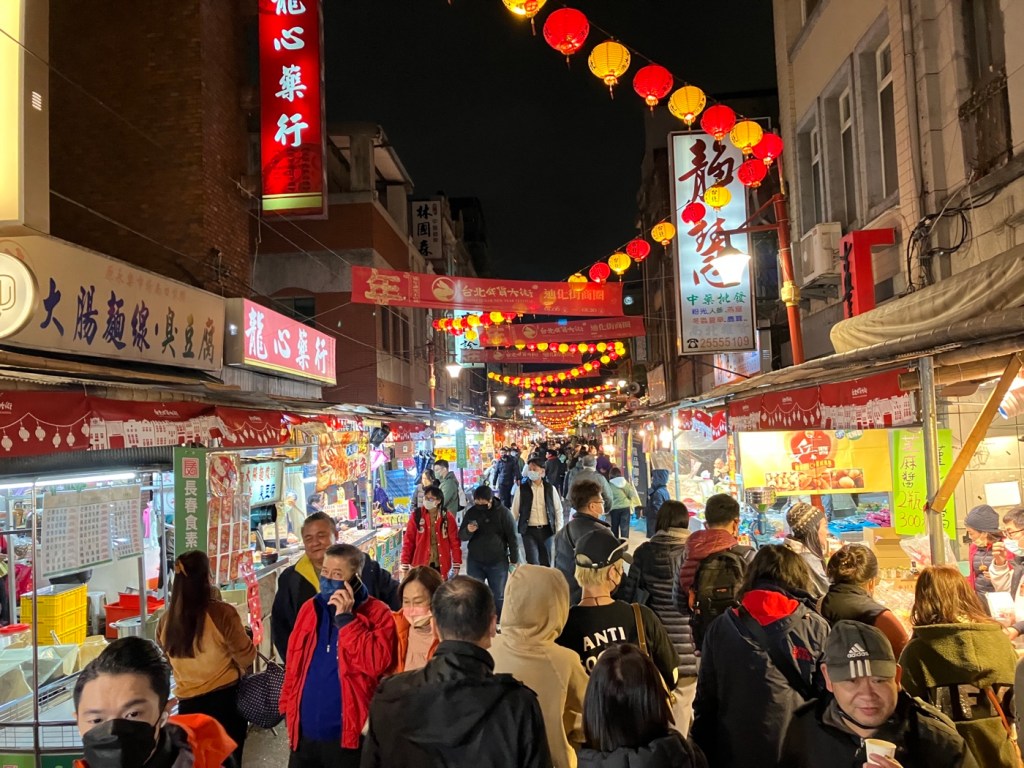
Run Up to the Lunar New Year on Dihua Street
Cutest local fire station ever, Tamsui

Here’s the Top 10 reasons we loved our week in Taipei and why you might too:

1. The Food – you can see Cheryl’s last two posts for lots of details on the food scene…great food everywhere, and the amazing and exciting night markets.
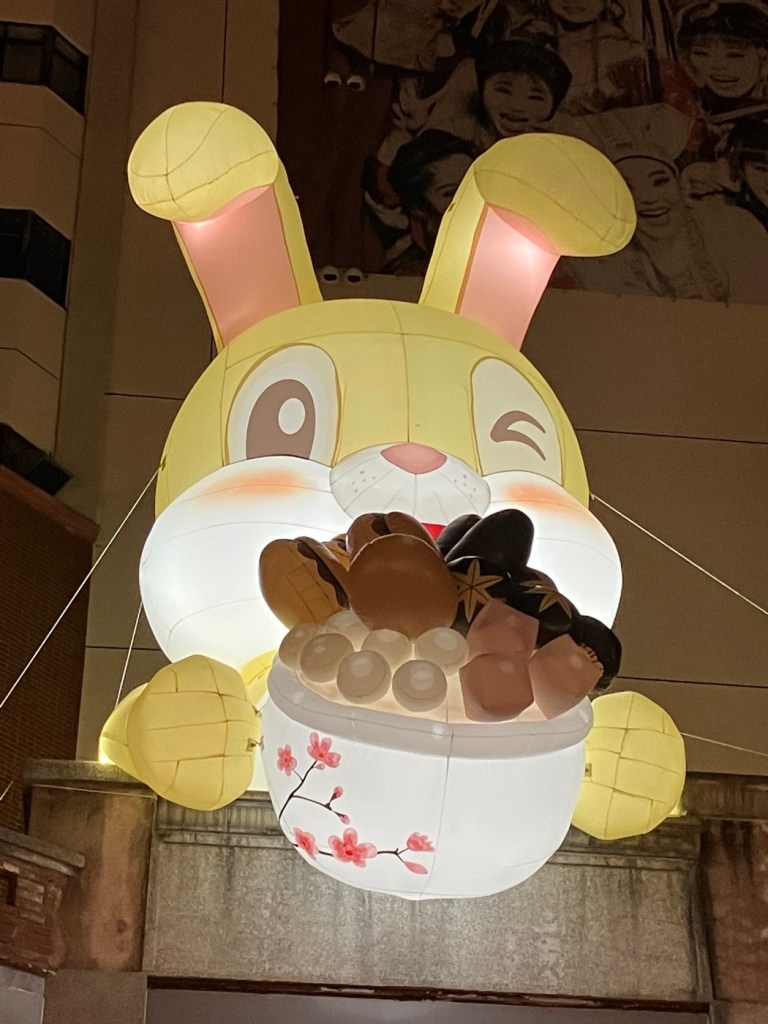
Ready for the year of the rabbit
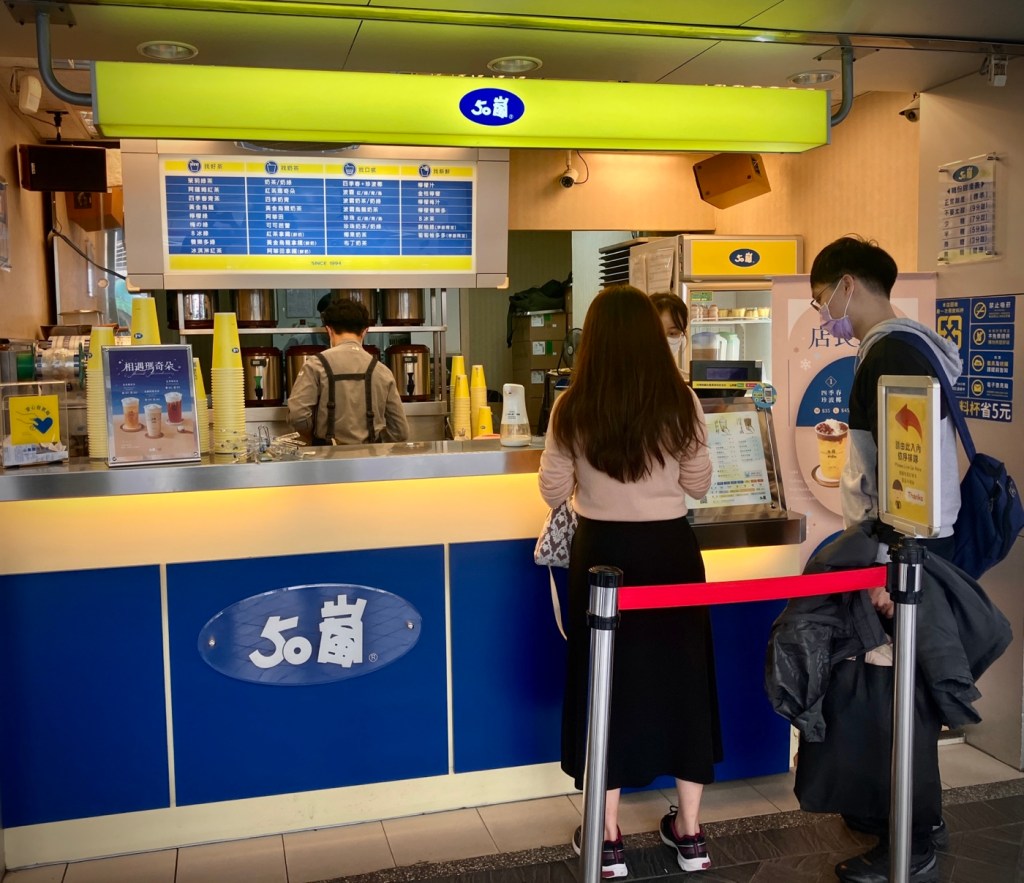
Food and SO many boba tea shops…Taiwan invented it and continues to reinvent it for the rest of the world.

2. Unique culture – fun and quirky with a rich history influenced by indigenous, Han Chinese, Japanese, and western culture. There is also a strong fascination with Korean pop culture and clothing. It’s not quite like anywhere else, it’s Taiwan.

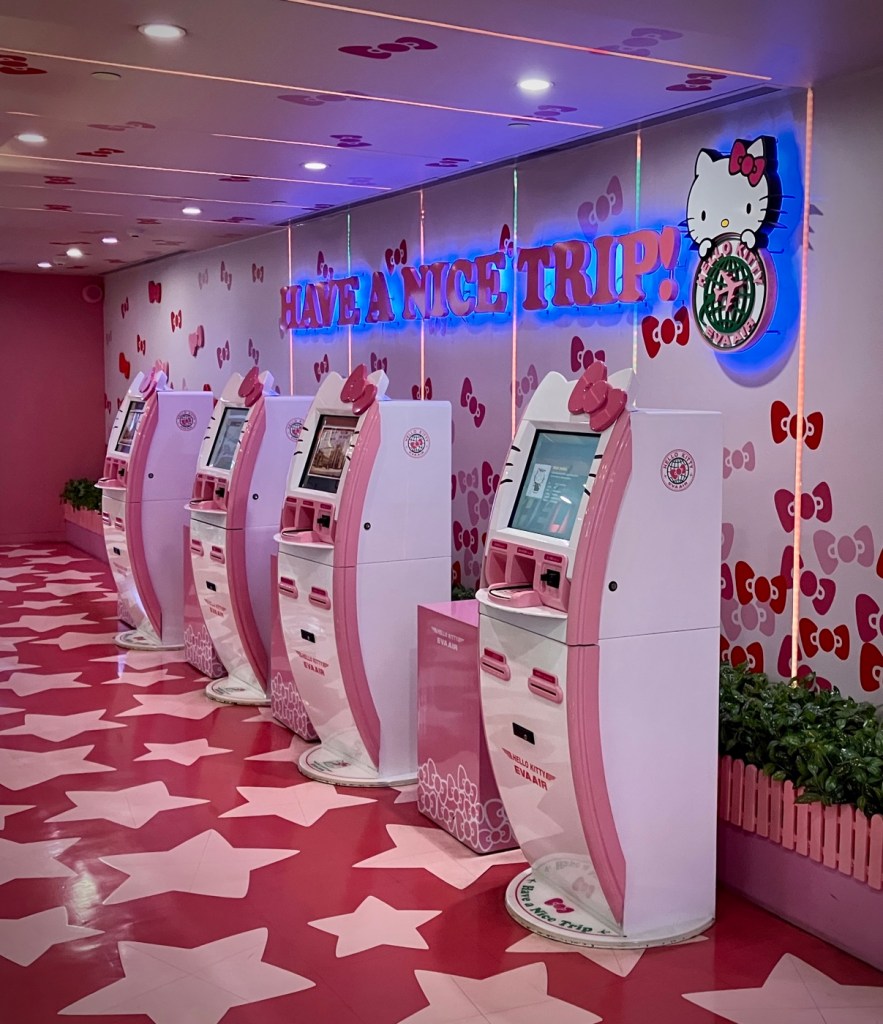
Cute = Taiwan
Check in option at Tinguan Airport…no takers?
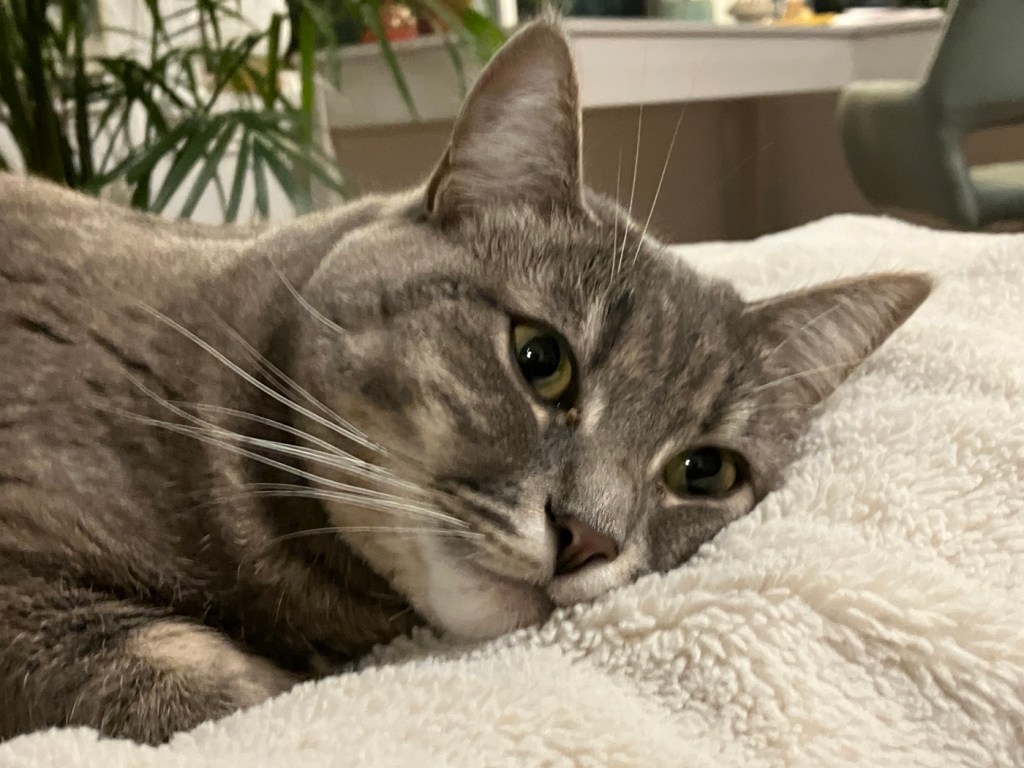
Cat/bartender at the Tipsy Dragon in Songshan

3. Efficiency AND Kindness – This is a neat and orderly city…people follow the rules and you will enjoy yourself more if you do too. Or at least make an effort. It’s an easy, extremely collaborative society, and everyone has built in empathy and spacial radar systems. You’ll never bump into someone or have them cut or push too much, even in crowds…it’s infectious and relaxing once you embrace the system.
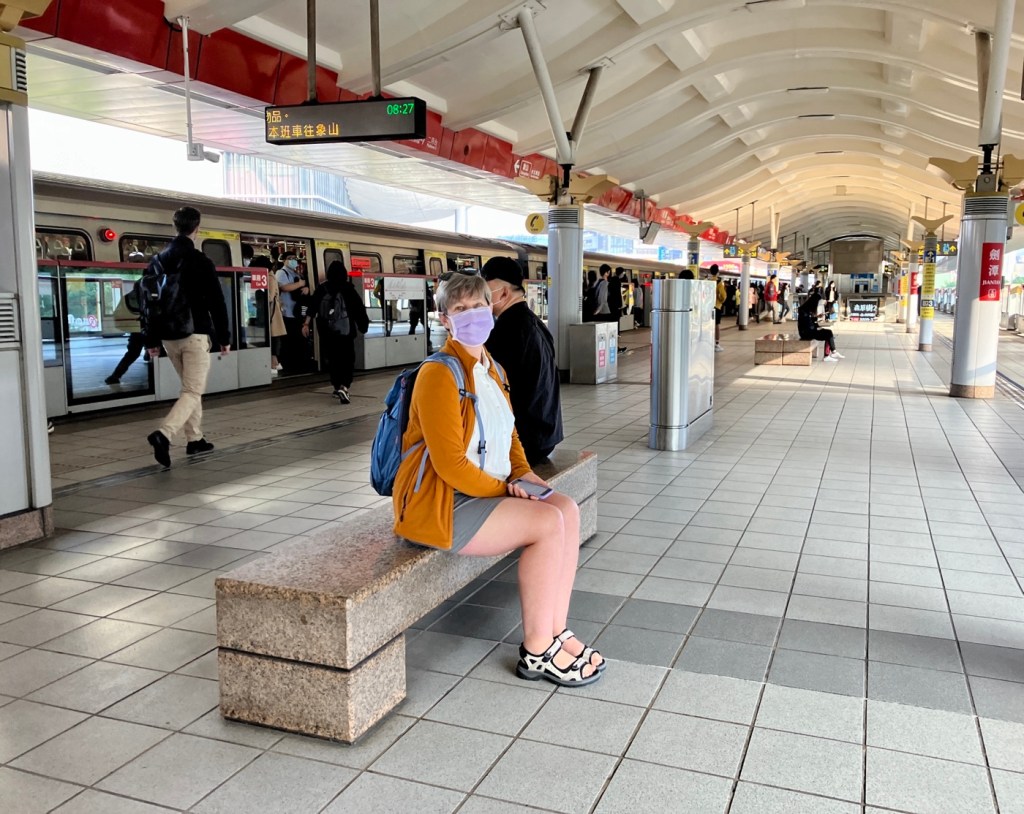
Graceful and spacious MRT stations, many outside the core are aerial with quiet platforms, views, and pleasant breezes. No center running freeway noise here.
Stand right, walk left…always!

4. The MRT! – a comprehensive and modern system that carries 2 Million passengers a day. Buy a EasyCard (IC Card) at either airport station for 100 NTD (New Taiwanese $, or about $3 US), load some fare and then tap in and out like the locals for 50c to $1 a trip. We had the airport station agent add 300 to each to start, so paid 800 NTD. If you get a funny beep or issue with your card, there is always a helpful staff person nearby.
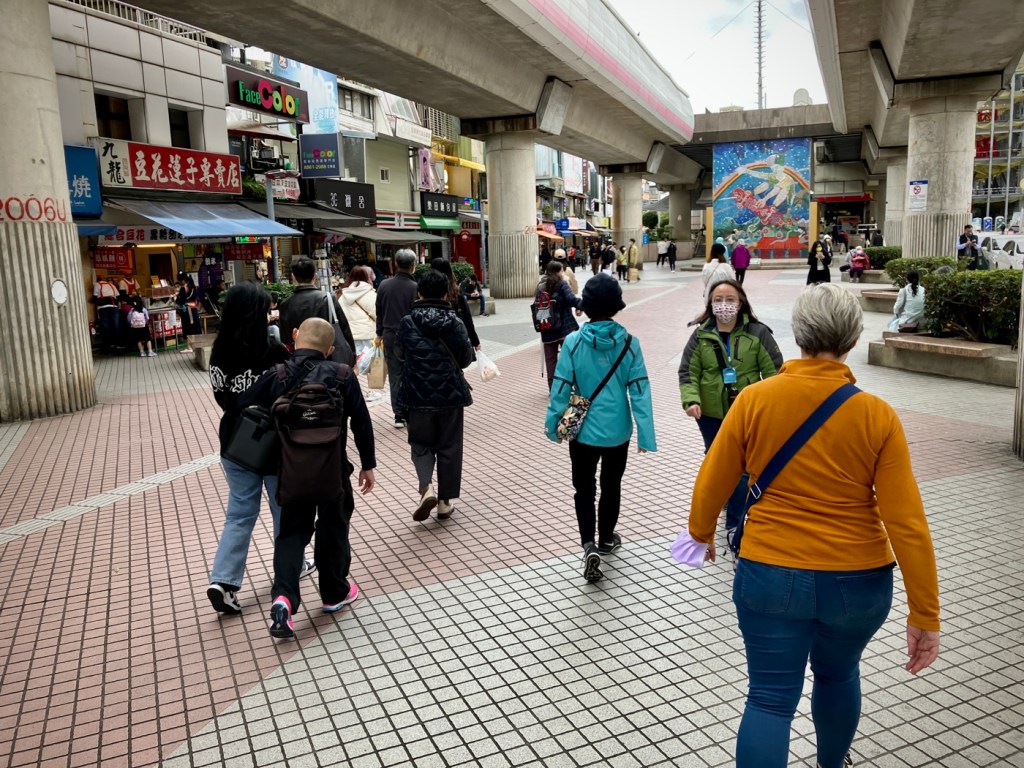
The MRT is integrated with neighborhoods, creating nice station area plazas such as this one in Shilin
Neighborhood pride in Shilin

There are also real time predictions at all MRT and most bus stops, so don’t be intimidated to use buses as well. Big numbers on the front…tap on and off with your IC card when you ride at the front or back doors. So easy.

Keeping an eye on train operations in Jintong

5. Bathrooms – Seriously, Taiwan is the most bathroomed place on the planet (interested to hear about others!?). Every station has one (or two), public parks, museums, attractions, malls, night markets, parking garages, busy neighborhoods….you get the idea. And all free and clean, which really does reduce travel stress and the need to go into “camel mode” walking about like in some counties.

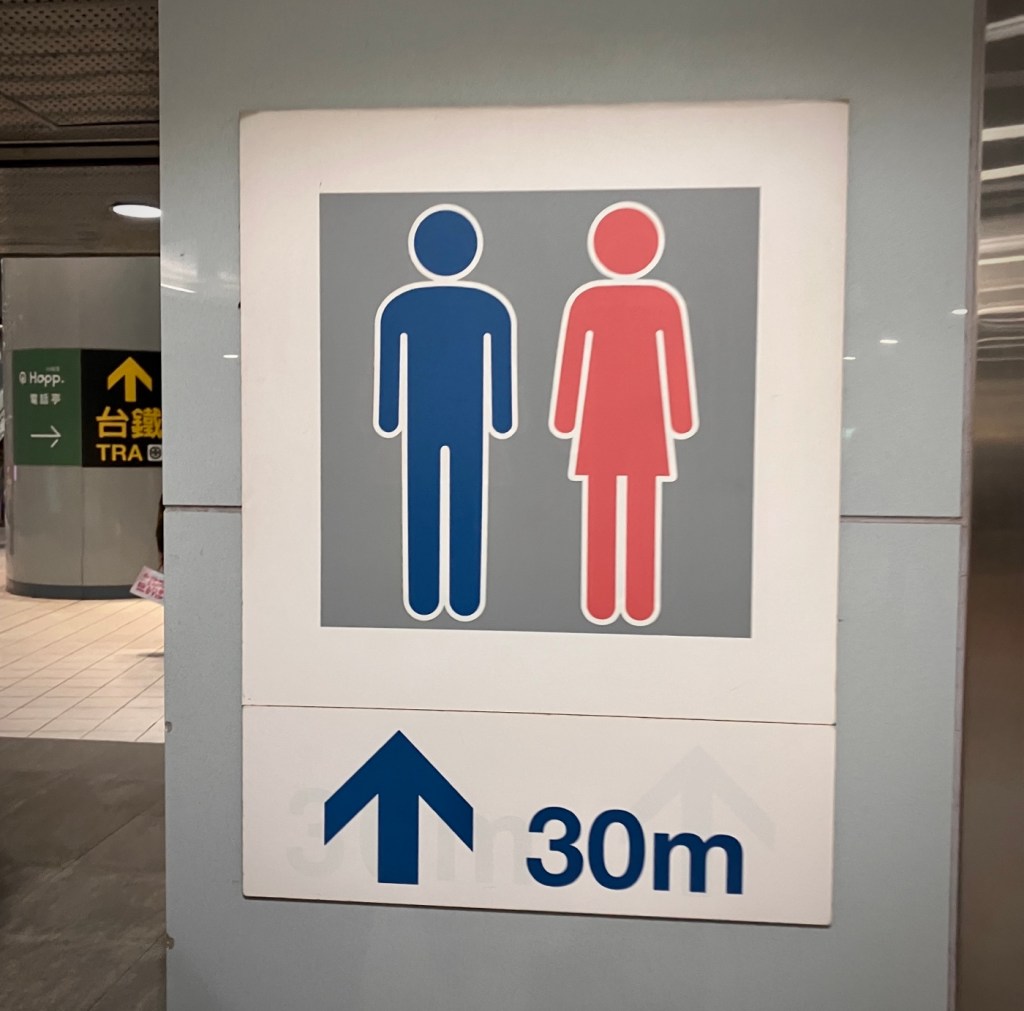
Fun, inviting, and yes, bathrooms in Pinxi District
Always so close

6. Greenery – Parks, long greenways (140km of bike paths!), and lush hills and mountains make for a pleasant backdrop, plus potted street plants liven up even the drabbest streets.
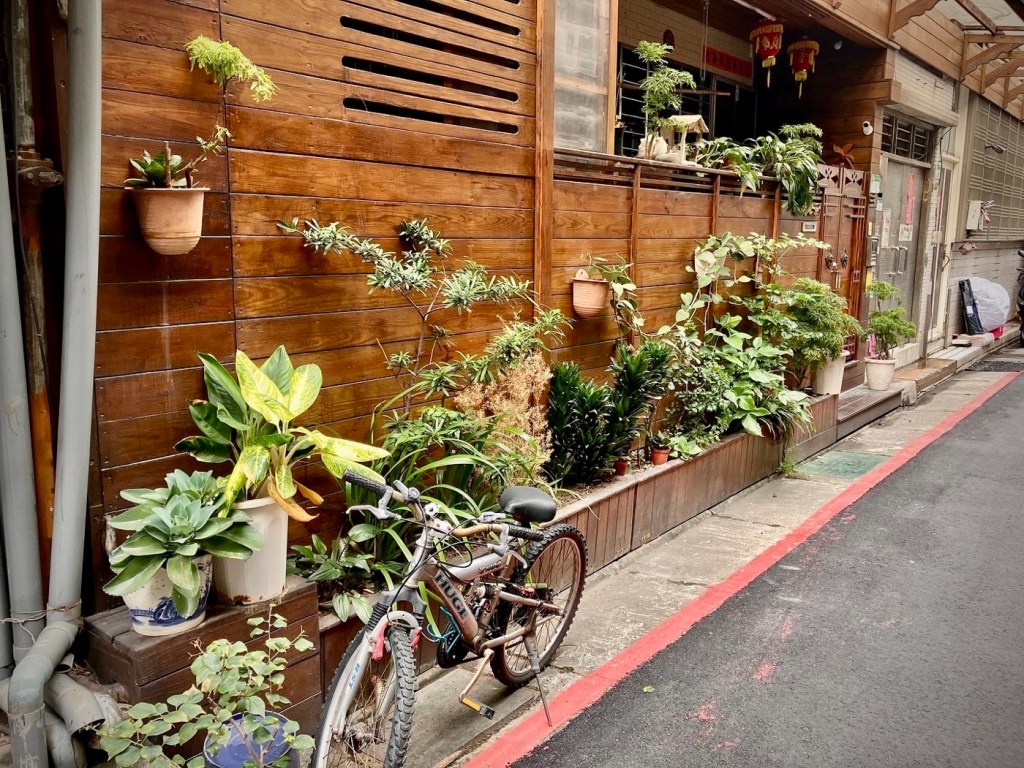
Street plants seem to be a craze in Taipei and make the vast downtown neighborhoods a bit more livable
Ahead of the curve…the cool interchangeable scooter batteries of the Gogoro energy system
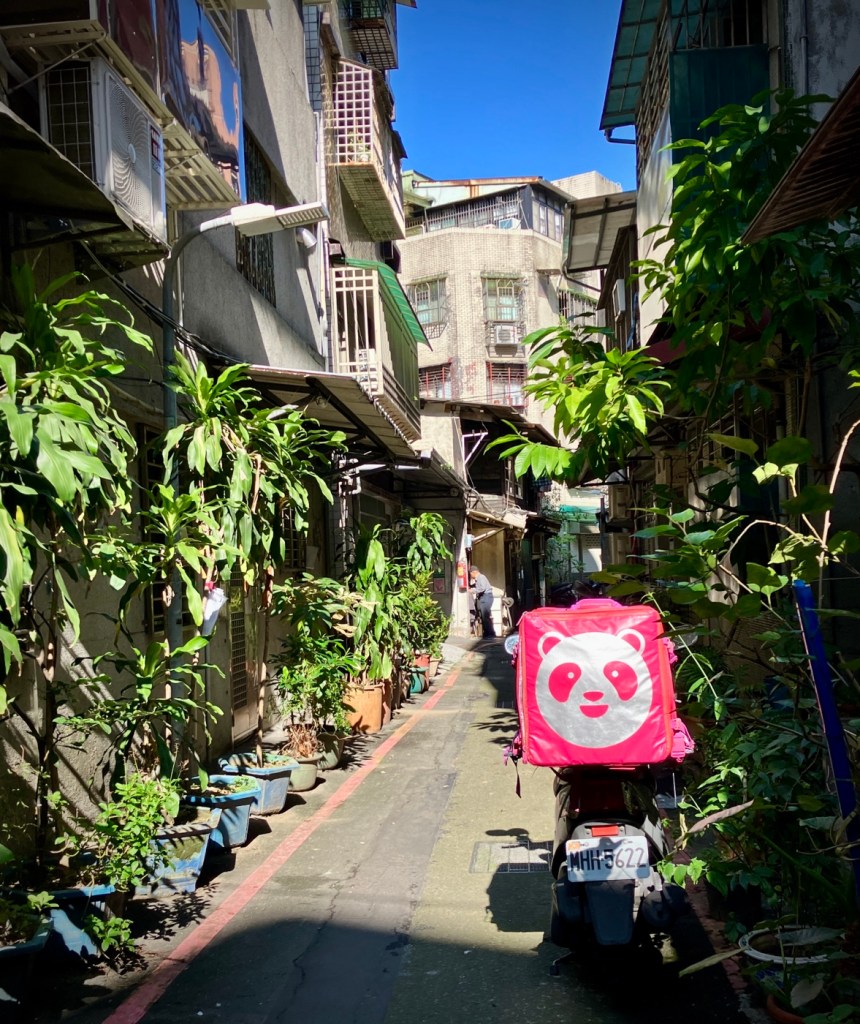
Alley greenery (and the ubiquitous Food Panda!)

7. Clean air – not perfect but good for such a large city due to great public transit, fairly clean vehicles, frequent coastal and island breezes, and the greenery noted above.
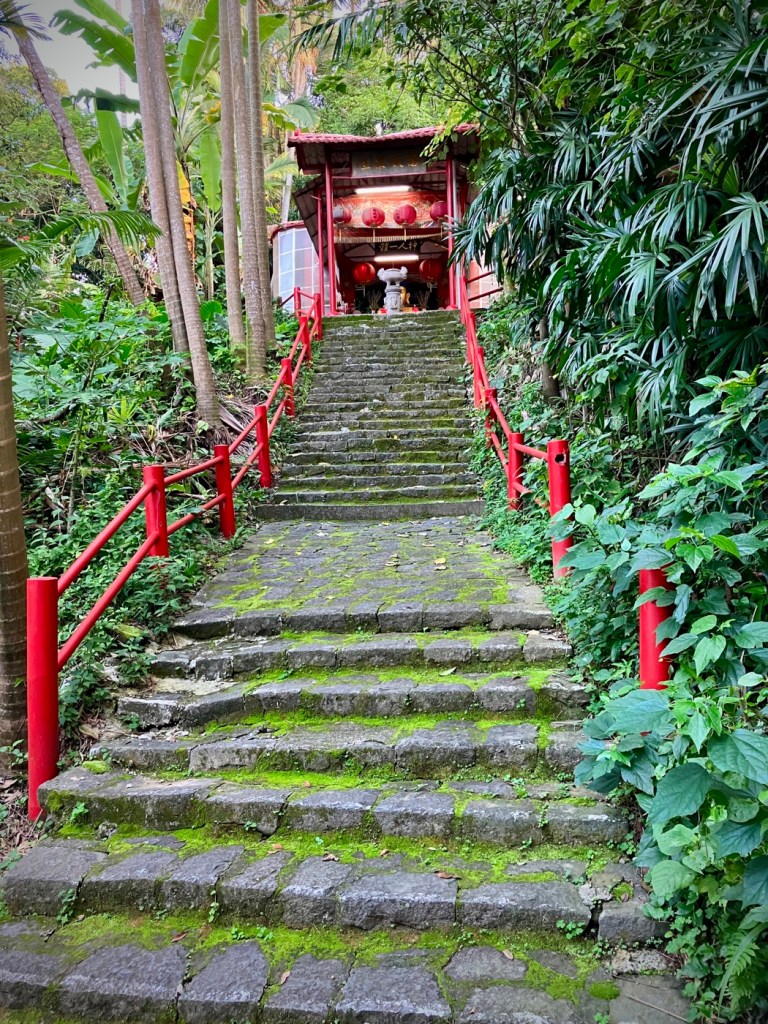
Spiritual moss on Jiantan Mountain
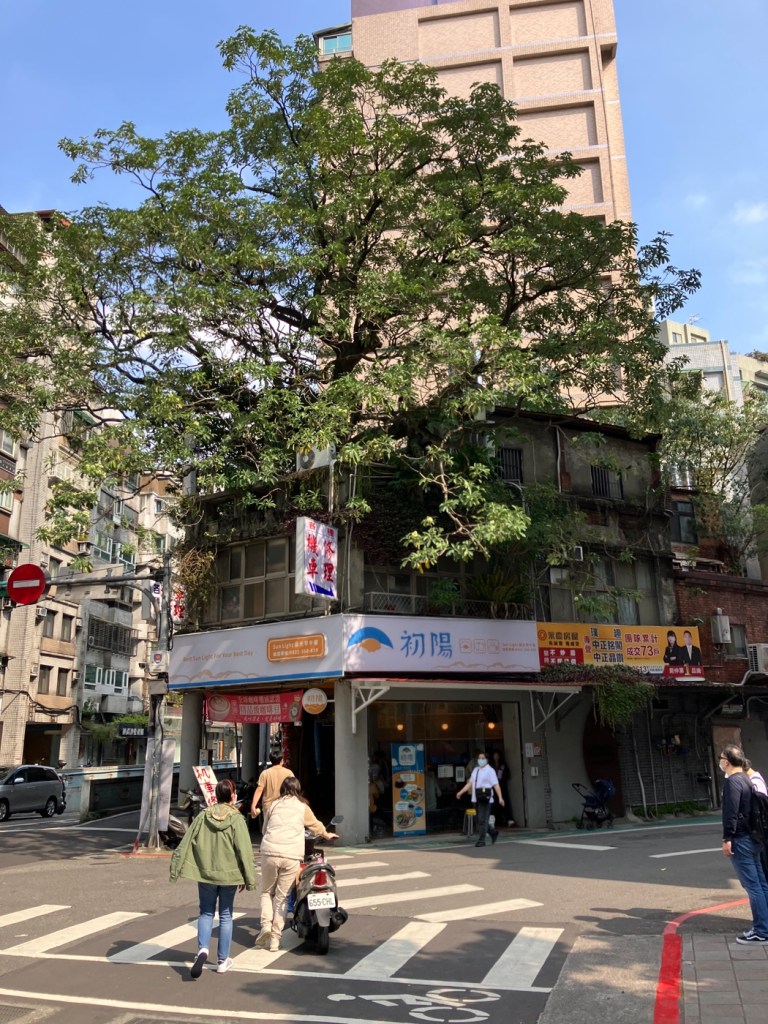
Building around tree or tree within building?

8. Safety – Traffic is pretty organized and street crime seems virtually non existent. One of our only social gaffs was inadvertently moving a women’s notepad/binder/IPad? from a back garden of a coffee shop…we thought it belonged to the shop, and she came out surprised to see us in her seat…we offered to move, but she refused and headed to another spot upstairs. Oops.

Pocket temple in Tamsui
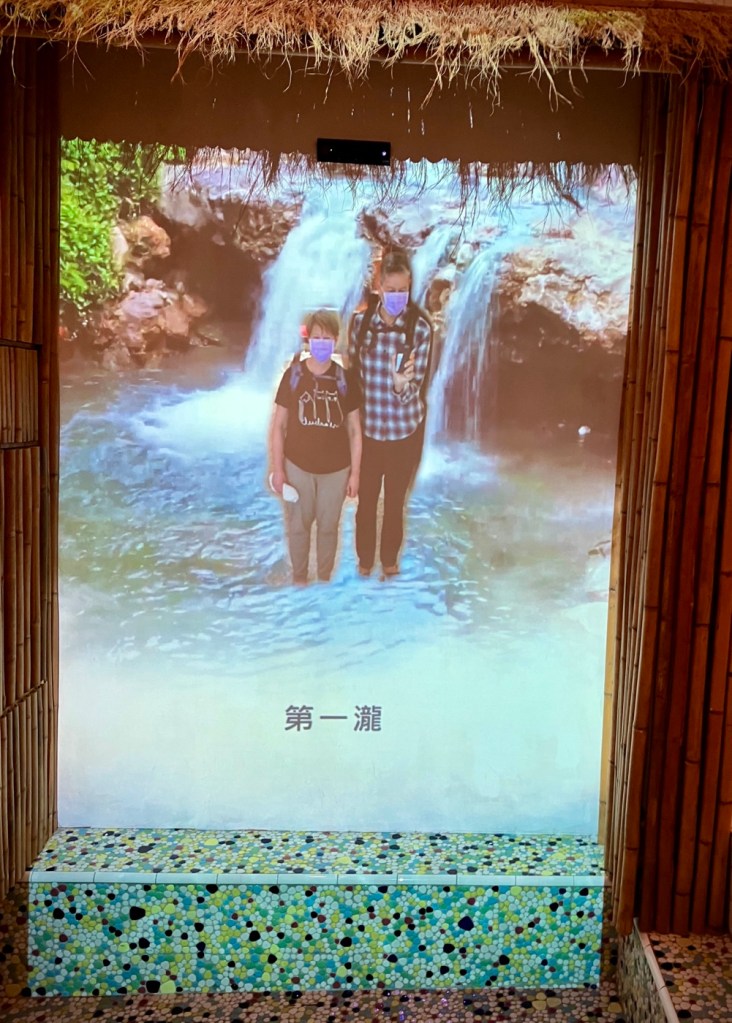
More fun at the Onsen Museum in the hot spring town of Beitou…via MRT of course.
The historic Pingxi Train line runs 13km from Sandiaoling to Jintong runs hourly, so you can hop off and on or walk between stations.

9. Hiking and cycling culture – a great proportion of the world’s quality bicycles are made here (not to mention 90% of the worlds fast semiconductors), and they actually push cycle touring as a key component of their tourist advertising. On this first “winter” visit, we only grazed the endless mountain and forest trails that crisscross the spine of Taiwan… with many accessible by public transit.

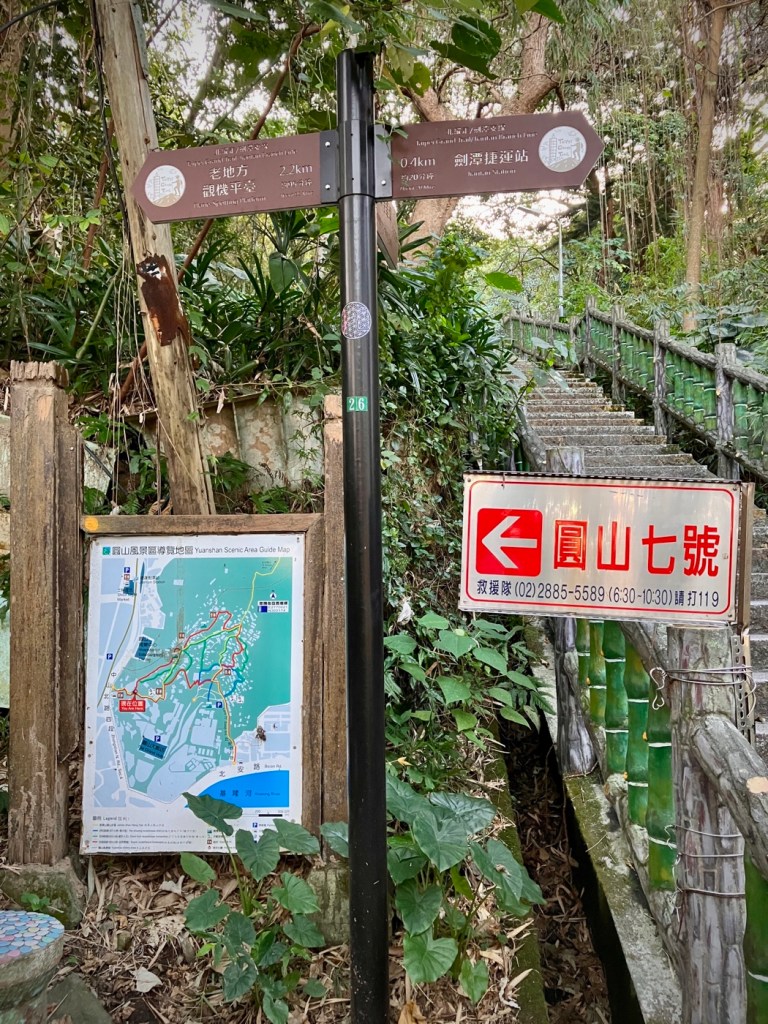
Morning walk up Jiantin Mountain
You can walk from the edges of the city far into the mountains and take a train or bus back.
E-bikes for Spaniels…so green

10. Mixing with the locals – not many western tourists makes for a more exotic feel. And at least some English in most places makes interactions more rewarding. We’ve discovered this cool Asian capital, right-:)
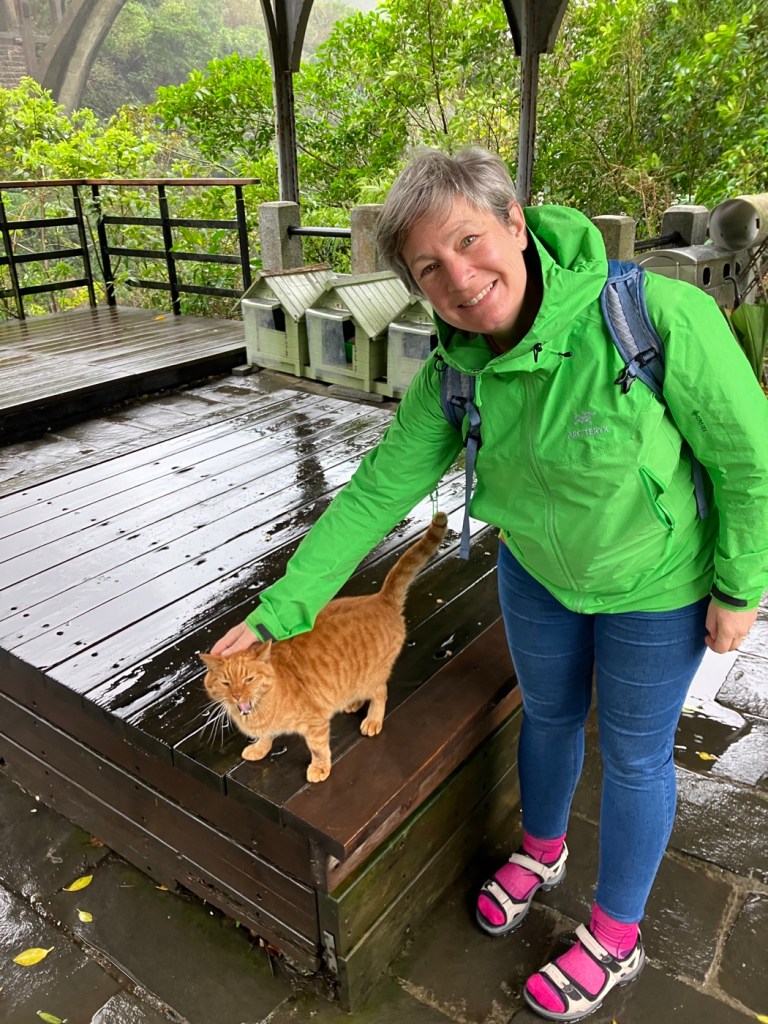
Cheryl drying out one of the many cats of Houtong Cat Village
Cats keeping an eye out on the purpose built cat bridge in Houtong
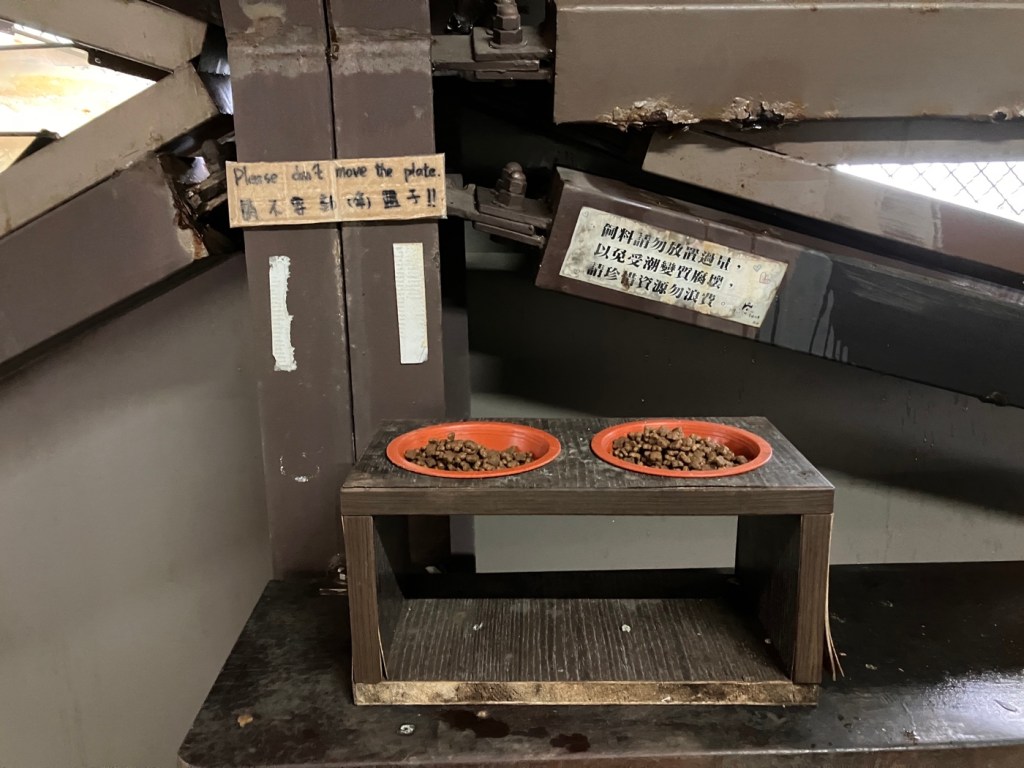
Cat food on the cat bridge

Maybe you’ve been here and are nodding along, but if not, consider at least a stopover in Taipei on your next travels to Asia, or better yet, spend a few weeks or a month traveling around the whole island. Rail circles the island and the more developed west coast has a high speed rail network that takes you all the way south in about 2 hours.

So much to explore outside of Taipei…Shifen village between trains.
We only dabbled on the local trains, but there is a whole island to explore!

The more you learn about the people, history and culture, the more you will understand the how complex the geo-political conundrum really is. Our hope is strong for a positive future for Taiwan and we definitely plan to come back soon to explore by bicycle.

🐇🎉Happy Year of the Rabbit! 🎉🐰

Peace to all and happy travels!

The amazing food city of Taipei, Taiwan.

Working up an appetite with a morning hike up Jiantan Mountain Park.

So much amazing food. So many fun places to go to eat good food: shopping malls, night markets, little hidden restaurants in office building basements.

We dove right in with Xiolongbao (soup dumplings) at Din Tai Fun, famous for this dish and with many locations around the city.

From our first meal we were captivated. We are so happy to be able to travel in Asia again. Taiwan only opened back up to tourists in October 2022 with no 14 day quarantine required. This is our first trip to Taiwan and yes, we are already talking about when we’ll come back. Hopefully for a bike tour. We mention that to everyone we chat with to get as many tips and recommendations as possible.

Elevenses here means iced coffee for Rich and an iced matcha milk for me. At Cho Cafe in the Wanhua District.

We’re walking and taking transit everywhere we go. Walk, museum, walk, snack. Walk, lunch, walk, bubble tea.

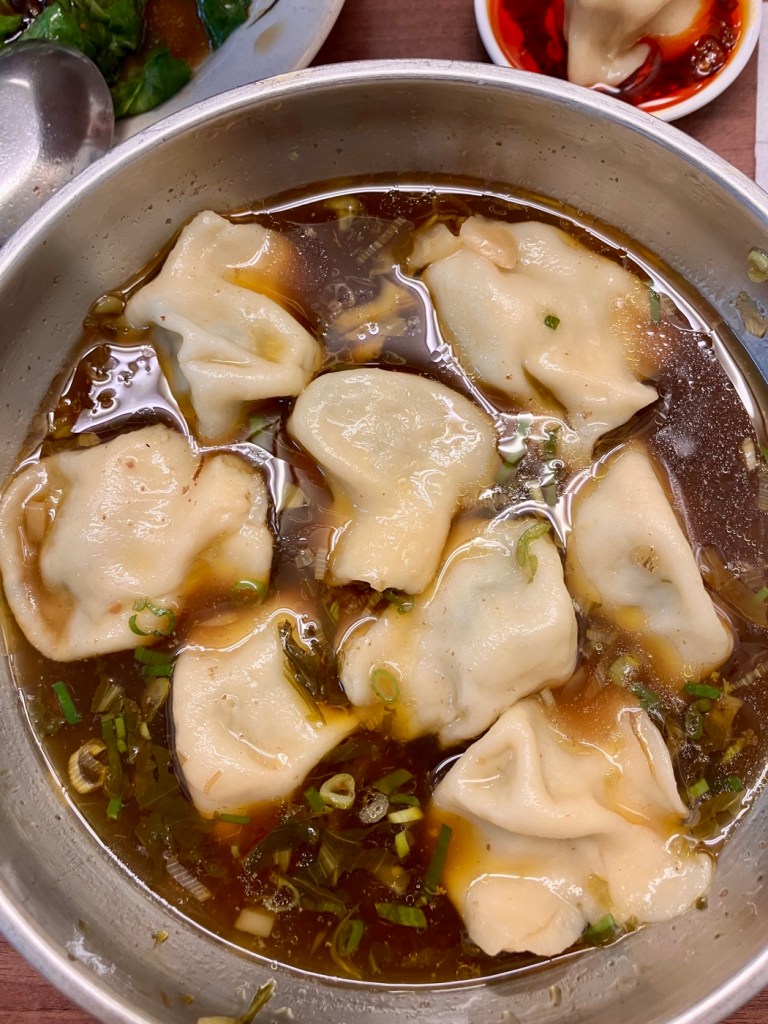
Hot and sour soup, greens, and pork leek dumplings in beef soup.
The beef soup was delicious. The dumplings devine. At Lao Shan Dong Homemade Noodles.
The workers were so nice to us at this place. They helped us order and the young man who brought my soup and dumplings asked if I liked spicy. Why yes, I do. He brought me a little dish of something spicy from the condiment bar.
Google translate is such a good addition to travel in countries where you don’t speak any of the language, this translates as spicy butter. Yes please.
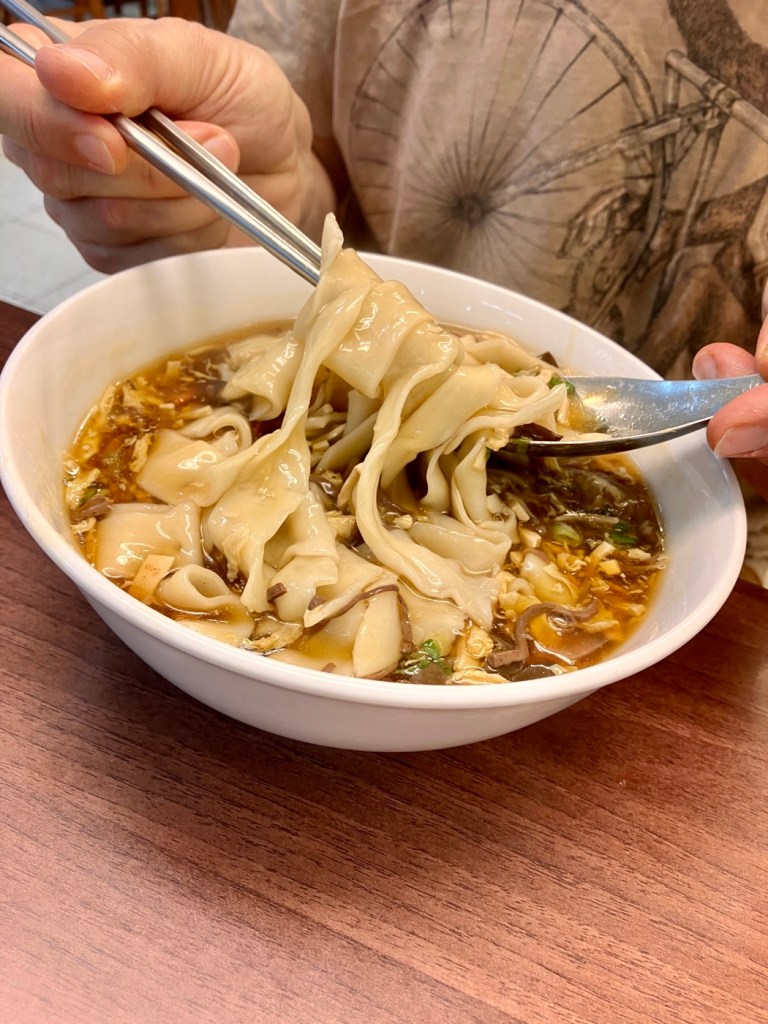
One more photo of the delicious hand cut noodles in Rich’s soup. I failed to get a photo of the chef making these noodles when we walked in, and of course when we left he wasn’t there.

Taipei is justly famous for its night markets. We’ve gotten to four so far, and the mix of food and goods for sale, families, groups of youngsters, bright lights, and divine smells is intoxicating. Ok, I admit that when passing a stinky tofu stand the aroma is a bit overwhelming, but we did try the stinky tofu with lunch one day. Not bad. The taste is milder then the scent.

Even with so many food opportunities at the markets, there are fan favorites. Look for the lines and join in. This line is for Gua bao, or the Taiwanese Hamburger (刈包)
Replenishing the bao supply.
Rich waiting and watching. The line moves quickly.

四兩刈包-台北創始總店/Si-liang Taiwanese Gua Bao, in the Zhongzheng District was our choice but many places make versions of this.

Here you can see the bao, the peanut powder, and the coriander. There is also pickled mustard greens.
The meat, pork belly. Fat, lean, or half and half. We got half and half.
The delicious result. Many customers were buying multiple bao and riding off on scooters. We found a small park and sat and enjoyed.
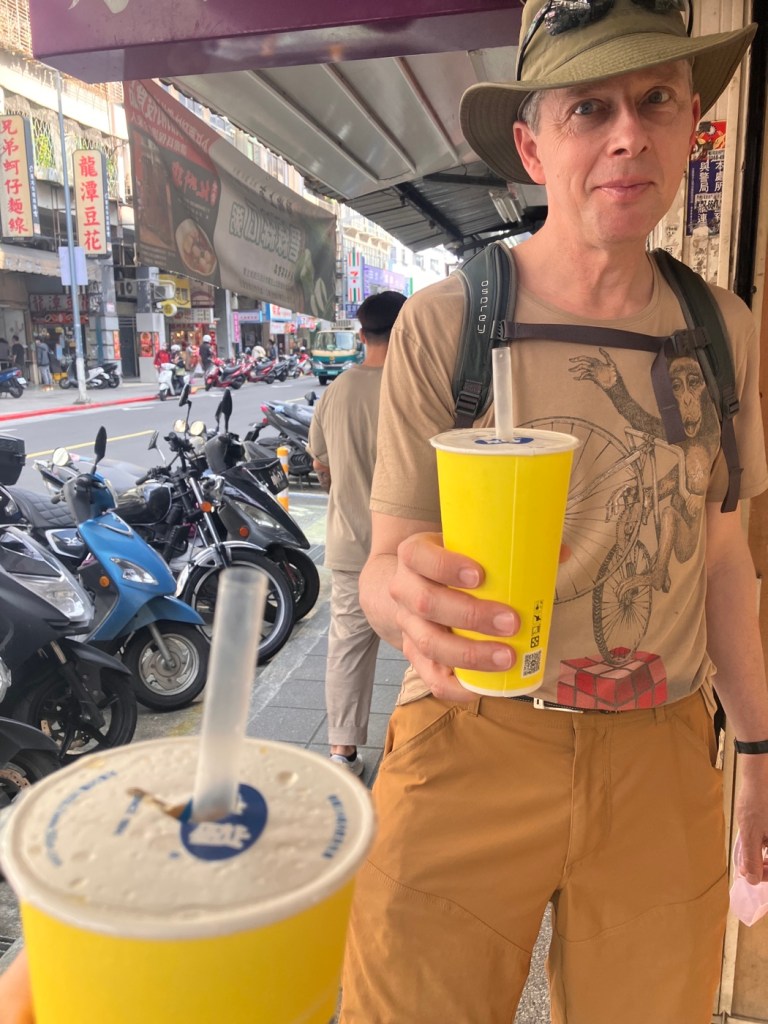
Boba tea break!

Taipei is also loaded with tea stands. Bubble tea. With boba. With jelly cubes. With any base tea or fruit juice you could hope for. Green tea, black tea, milk tea. Again, such patience from the staff. It’s nice to be in a place not overwhelmed with tourists. Type of tea, level of sweetness, quantity of ice. Be ready with those decisions.

Taiwan is working to get rid of single use plastics, so all the bubble teas we’ve gotten have been in paper cups, this one welcoming the upcoming lunar new year of the Rabbit. Yes, still plastic straws but we save ours and reuse them. Many customers have their own tea containers and places offer discounts if you bring your own container.

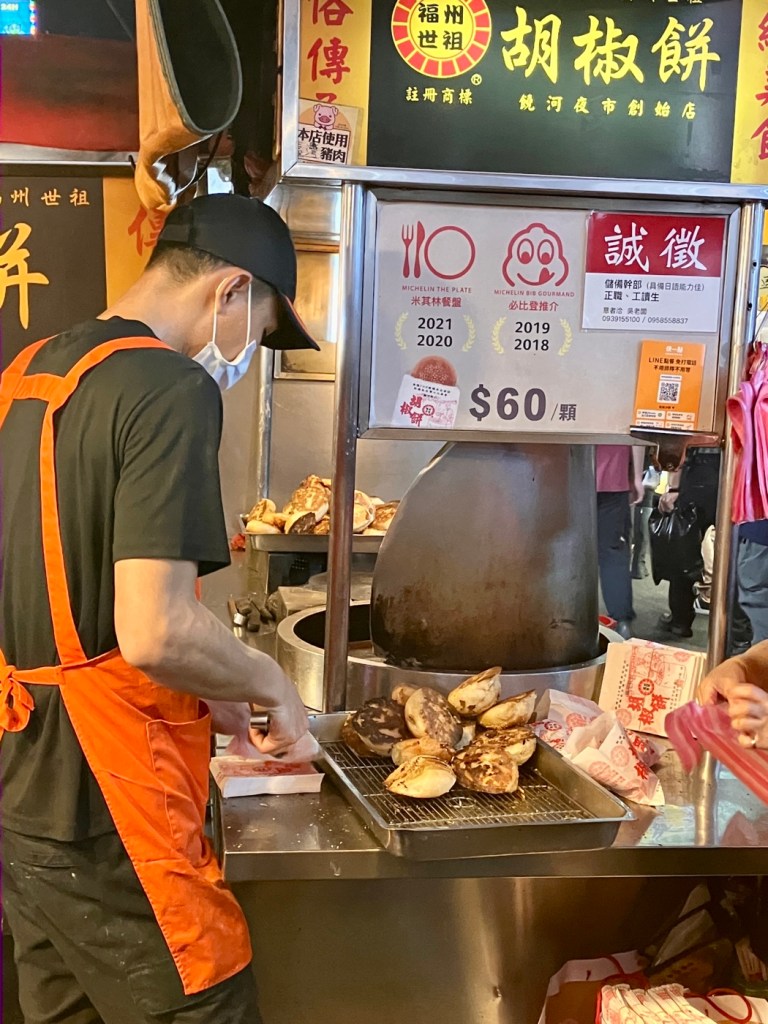
Ok, another night market – this one really at night. And a Saturday night to boot! We expected crowds, and crowds there were. It was a bit overwhelming, but we dove in and immediately got in line for Fuzhou Black Pepper Buns (福州胡椒餅). Don’t let the lines discourage you, they move quickly and the staff have this down to a science.

Rahoe Street Night Market.
The line for black pepper pepper buns.
The goal. Get those buns in your belly! Yes, those are Michelin notations you see in the sign. We’ve never been to a Michelin starred restaurant, these Michelin noted places are more our style.
These buns are cooked in a tandoori style oven, stuck to the edges.
Closer photo of the buns, clustered like bats in the oven.
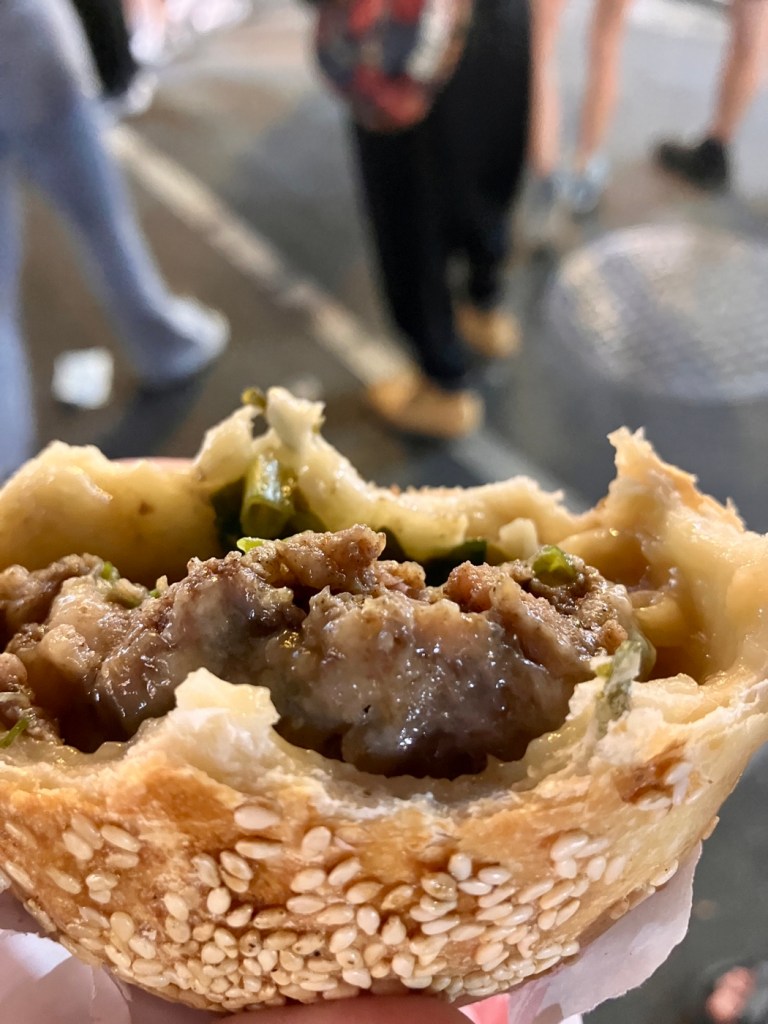
And halfway through this very hot, very delicious treat. The sesame encrusted bun did a good job of containing the filling.

Saturday at the night market was crowded. But people here are good with crowds, very collaborative.

If you saw something you wanted, you just pulled over to the side.
It was too crowded for this little dude, they got a lift up out of foot zone.

A note on all the masks, Taiwan lifted the outdoor mask mandate December 1st, 2022. Would you have guessed that from our photos? Probably not. People don’t seem all that eager to unmask outside yet. We mostly follow the crowds and mask when we’re in busy areas or in line for food, but when it’s just us walking around we go mask free.

One more fun food to share.

We have so many more photos and experiences to share, but I’m going to wrap up this post with one last food.

What are these little balls on skewers? So many possibilities. Octopus? Sweet potato and cheese? Meat? None of the above.
Fried milk.
Delicious. Halfway between a custard and ricotta cheese. The perfect end to an evening of snacking.

Eating our way through the markets reminded us of our recent time in the Basque area of Spain, and wandering the towns eating pinxtos. Similar ease of ordering, point and gesture if you don’t speak the language, hand over money, thank you and step away.

The well fed and Happy Travelers in front of the Chiang Kai-Shek Memorial Hall.

We’ll share more soon from amazing Taipei!

What’s so great about San Francisco?

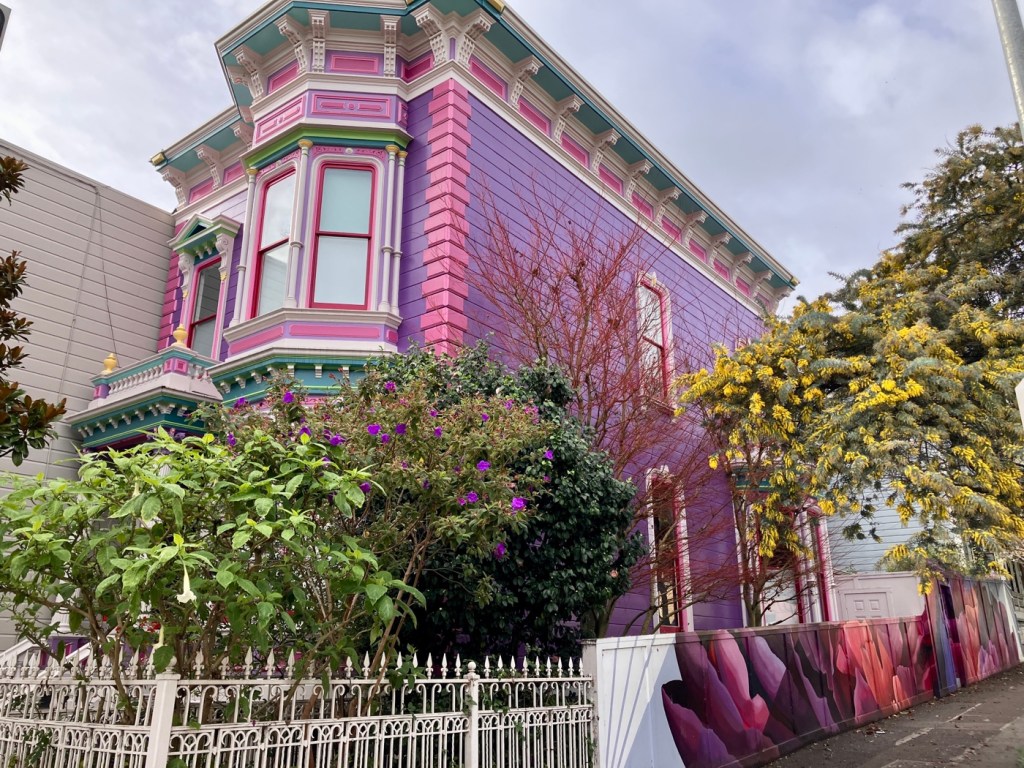
Gorgeous buildings with amazing paint jobs. A paint job like this is a gift to the city.
This deserves two photos. I’ve seen this house when that bare tree is exploding with bright fall leaves. Stunning.

Let’s start with the architecture. And the way folks paint their buildings. The four or five color paint jobs on the Victorians always take my breath away, this one in particular. So bold. And the fence! This is a tour de force of color and joy. I love this house.

A lovingly kept corner building. That awning. The color scheme.

I haven’t found a better city for just walking around and looking at buildings. It helps that since there is so much money in the City now, more people seem to be spending to spruce up the lovely old buildings. SF has a boom and bust history, a history of rising from the ashes, and the care for these exteriors you see must bear witness to a deep love for this City. With each brightly or carefully painted building the mosaic of the city is enhanced.

Even when clad in more subdued colors these buildings charm.
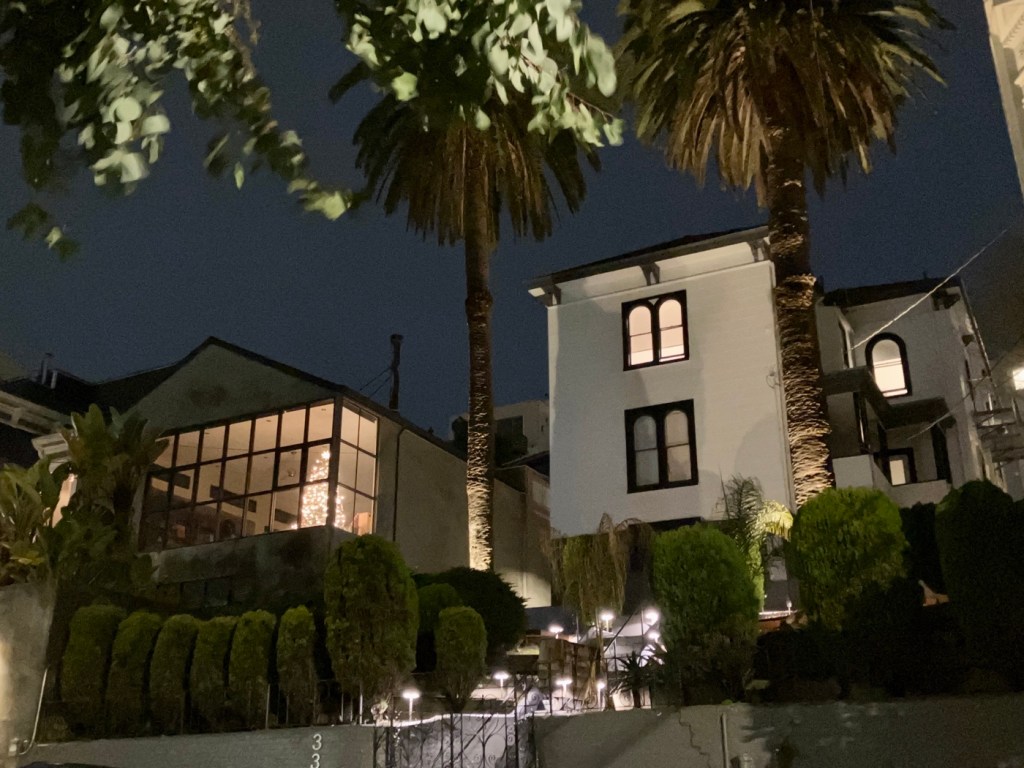
Nighttime glamour. I’m glad I got this photo, that huge Christmas tree in the window was gone the next day.

Great buildings- check. What else makes San Francisco amazing?

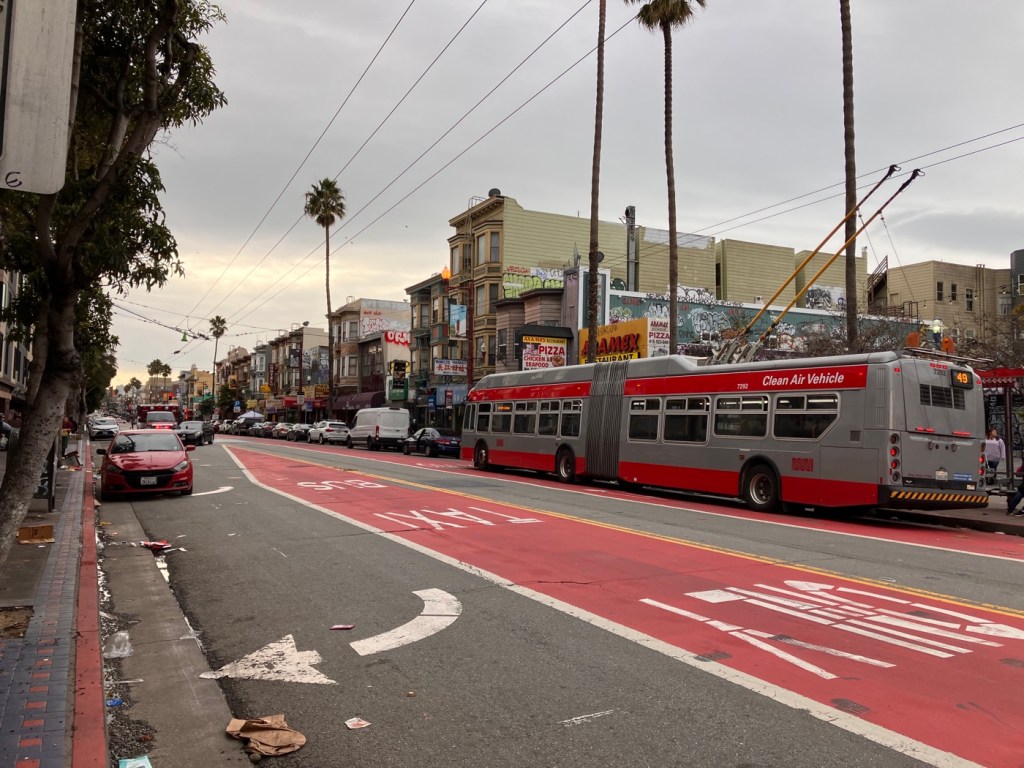
Transit! Oh the joy of traveling around while someone else drives and I can look out the window. A bus window. Perfectly situated to enjoy a nice high view.

Great transit. San Francisco has it. I admit that I have always lived quite central and in the northern part of San Francisco where the transit, biking, and walking are all good, and not every corner of the city is as accessible, but I have explored every corner of this city by transit. It’s better than many places we’ve visited in the US. It helps that SF is a small city, 7×7 Sq miles. With the help of MUNI you can explore all the neighborhoods.

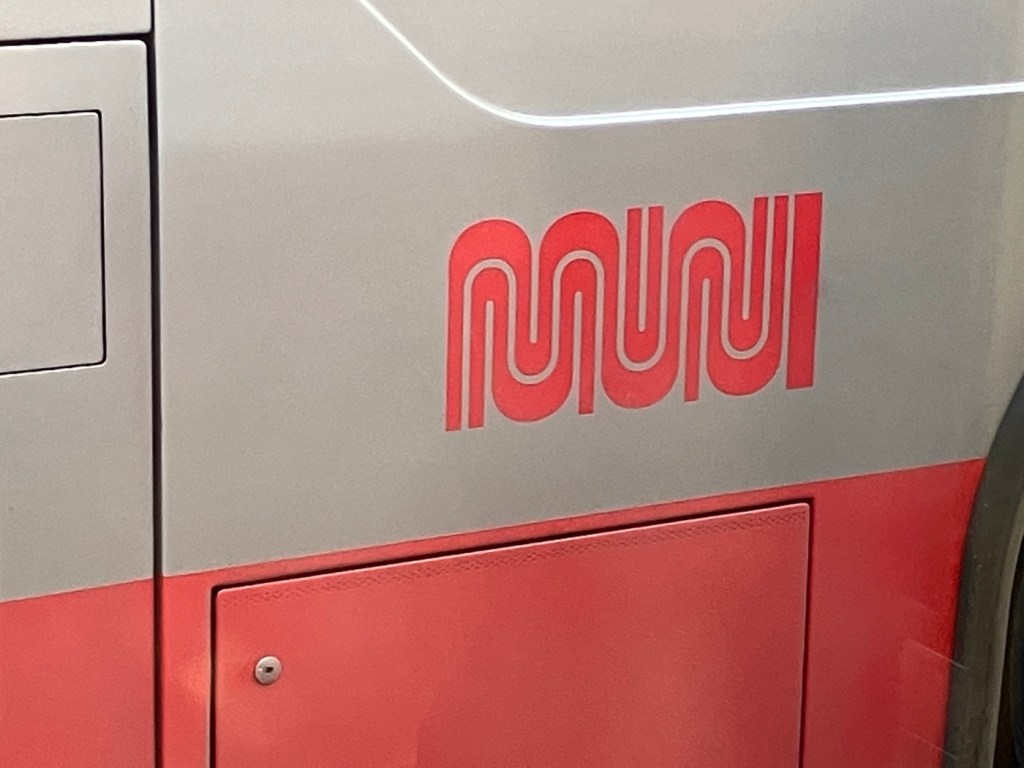
The MUNI worm logo. Best transit logo ever? Probably.
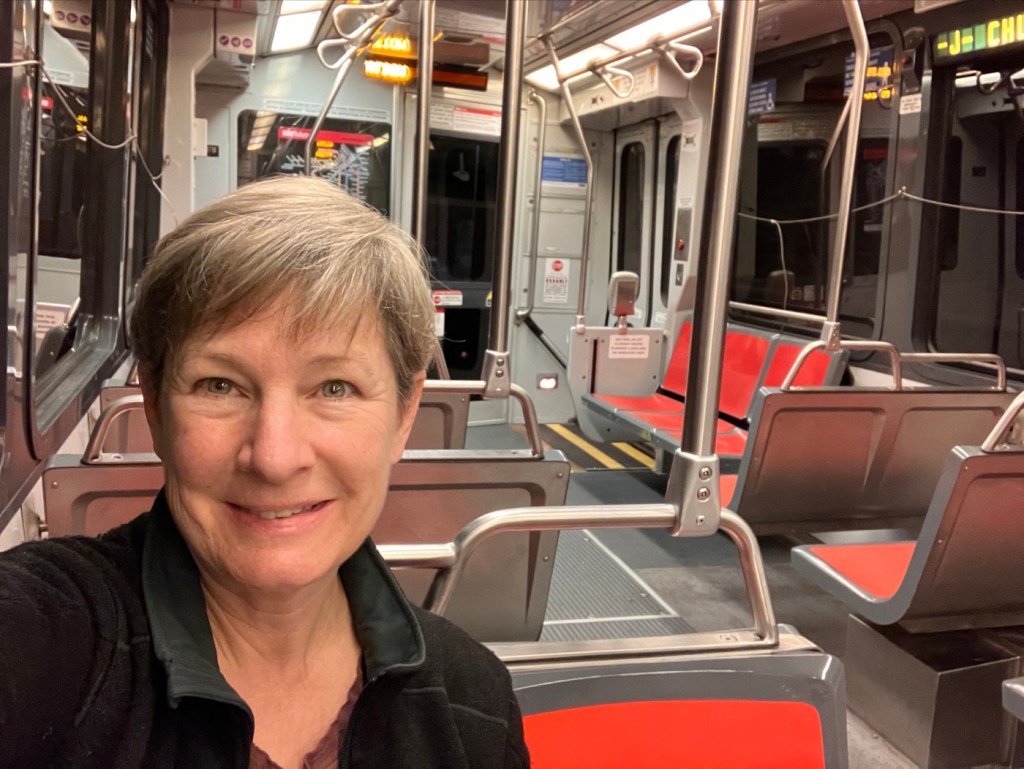
Mask free MUNI selfie. On the J Church.
This view. Top of Dolores Park from the J Church. Rivaled only by the view from the 33 bus line as it crosses Upper Market Street.

And what gives us the great views from MUNI? The hills. Tough by bike and even on foot, but a climb up a hill is well rewarded.

The roller coaster swoop of Dolores Street. You might not think of palm trees and SF together, but Dolores Street has an impressive line of palms.

Yes, I was that tourist standing in the middle of the intersection marveling at the hill. I love it when other pedestrians turn to look at what has me mesmerized. See! I want to say, look at that swoop of trees. So cool.

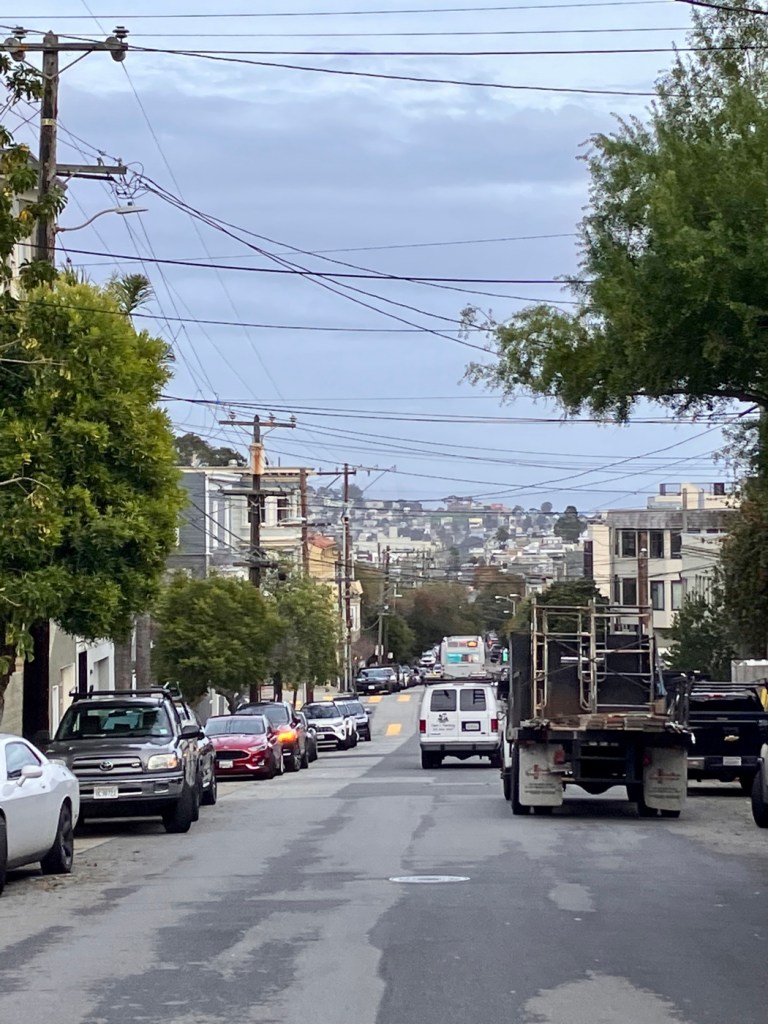
Not every view of hills is as glamorous, but something about seeing hills makes me happy. And those electrical wires are so SF.

We have been so fortunate to stay with different friends each time we come back to this city we love, and left. Each stay in a different neighborhood lets us experience a new to us neighborhood and see a part of the city with fresh eyes. A wise person wrote that you can’t hate San Francisco unless you love it first. (In response to one of those ‘I’m leaving because of…’ letters.) It’s not tolerated to hate this city if you haven’t first learned to love it.

The Golden Gate Bridge after the first big January storm. The road to Ft. Point took a beating.
And that old photo bombing bridge again, with Rich and his flat tire. Photo credit Rich1.

And love it we do. All the reasons I give above are nothing on the main reason why we love this City: so many good friends. We come back to recharge, to swap out stuff from our storage unit, and for Rich to get some bike rides in with his buddies. We come back to see how our city is doing, to find out if the continuing onslaught of wealth has chipped away at more of what makes this quirky city unique and lovable.

Another stunning view. The top of Dolores Park.

After Seattle our little City of hills seems so compact and charming. People are California nice, quick to smile and chat. It does make us wonder if we can settle anywhere else. So, a decision not to make that decision is made. We love SF, and we leave again. Houseless but not homeless.

The Happy Travelers waiting for a BART train to the airport, headed for Taiwan.

Packed up and on our way. Goodbye again San Francisco. See you in about five months. Until then, stay quirky.

Sitting Pretty in Seattle – 2022 in Review

Happy New Year! We’re just winding down our second house sit in Seattle and after almost 2 weeks, we’ve learned a lot about life during winter in Puget Sound. As expected, it is wetter, colder, and darker than the SF Bay Area winter. No real surprise there.

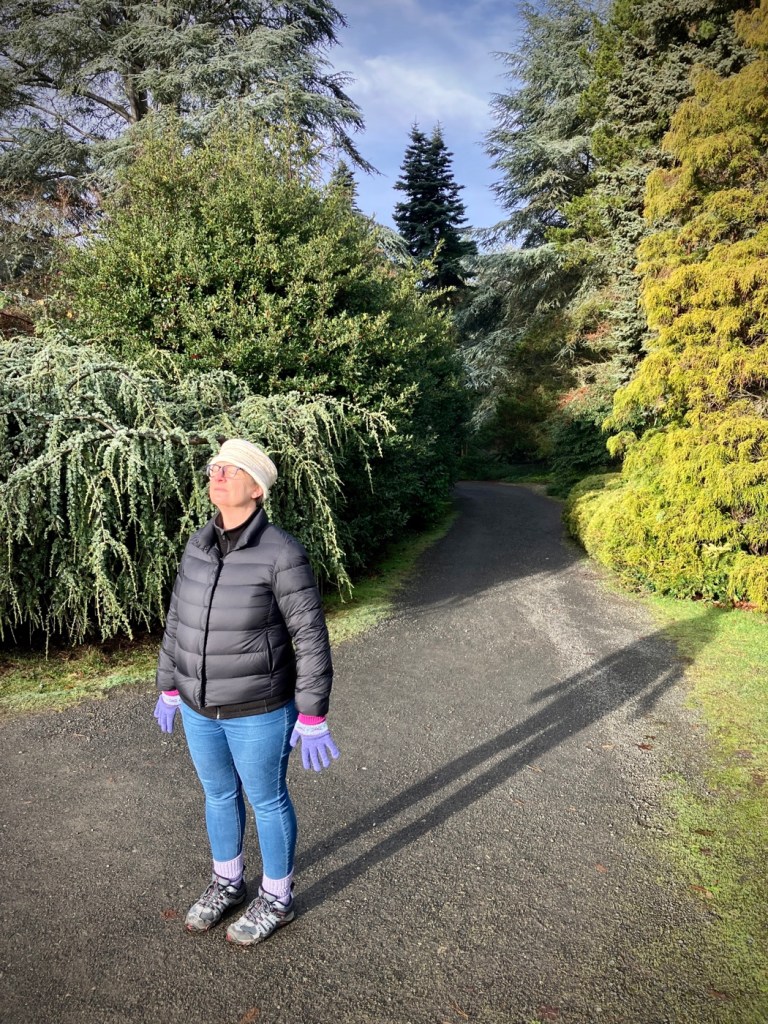
The amazing Cheryl and Seward Park along Lake Washington
Fully equipped kitchens, one of house sittings many perks

But “living” in two different untouristed residential neighborhoods has allowed us the opportunity to experience a bit more realistic perspective. We’ve walked to the parks, grocery stores, and restaurants that we might use if we lived here. We have to decide to walk, take a bus, or drive as yes, life in most of Seattle would be fairly limited without a car for some trips ( We’d also have bikes of course).

Cute cats, another perk
Not to mention security detail!
Kubota Garden – a Japanese garden oasis and one of Seattle’s 485 parks!

People are very laid back compared to SF and friendly if you engage them, but sidewalk or trail greetings are not a given. Just all a bit reserved here. Nordic roots maybe play a part in this. Or maybe it’s the fact that the area draws more introverts with the weather and open space of the Northwest. Where can I hide in the wet woods? Seattle for sure.

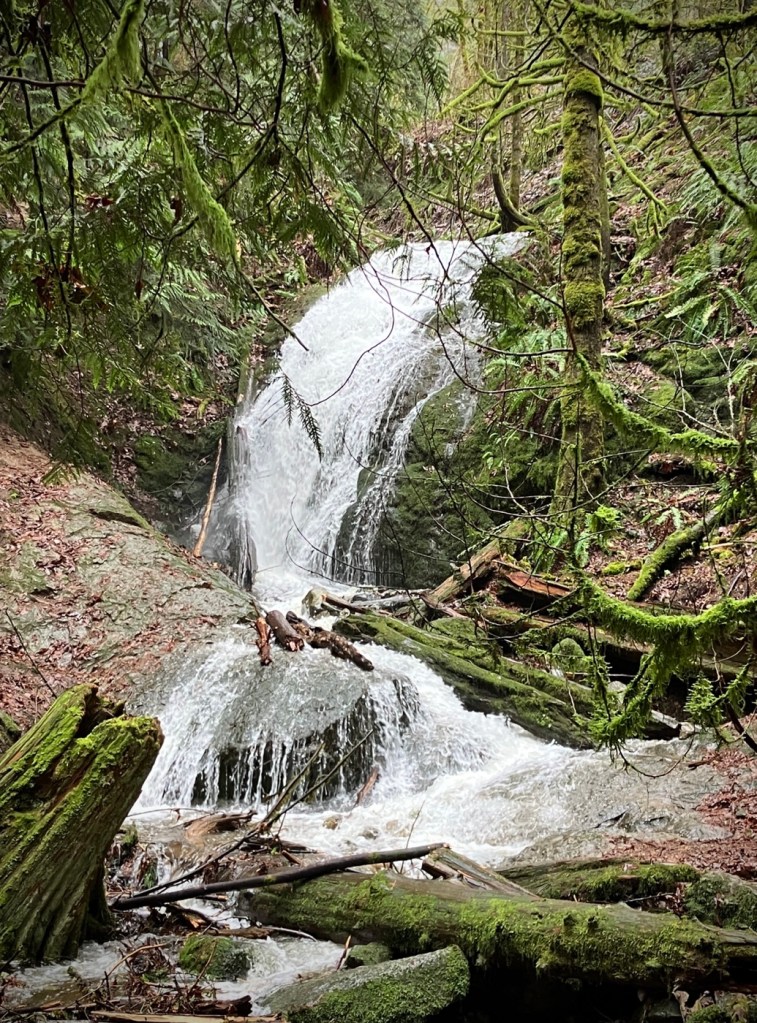
Coal Creek Falls in Cougar Mountain Regional Wildland Park
Cougar Mountain Reserve was previously an active coal mine…ferns hide the legacy pits!
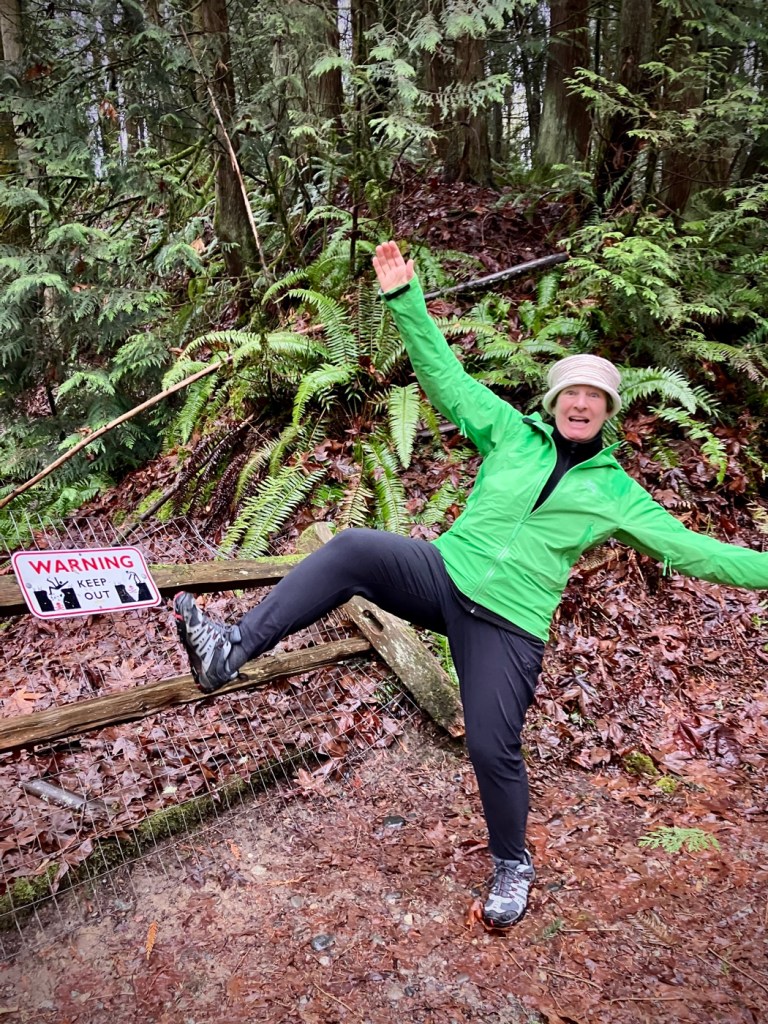
Cheryl never listens!

Seattle has been cool and intriguing to the nation for years, but especially since the rise of grunge and SubPop records in the late 80’s and early 90’s. We’ve been here many times, including multiple bike tours and I’ve been listening to the amazing KEXP for years on the web.

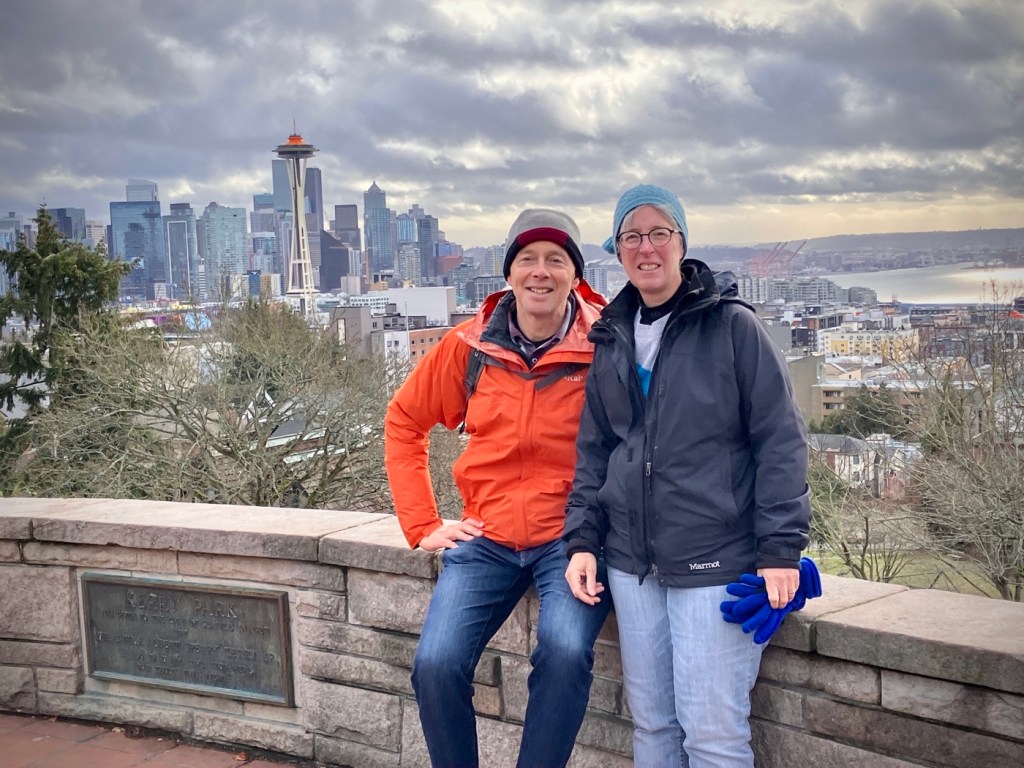
The glassy north side view of Seattle’s skyline with our friend Christine.

We always enjoy it, but how would it be in the dead of winter? Well, we still love it. The magnificent firs, cedars, and other evergreens are in frequent view and are so soothing along with the occasional spectacular Mountain View’s. But it IS cold and damp, and we’ve only had two doses of sunshine in two weeks. Other than an unusual ice storm our first few days, the rain has always been on and off.

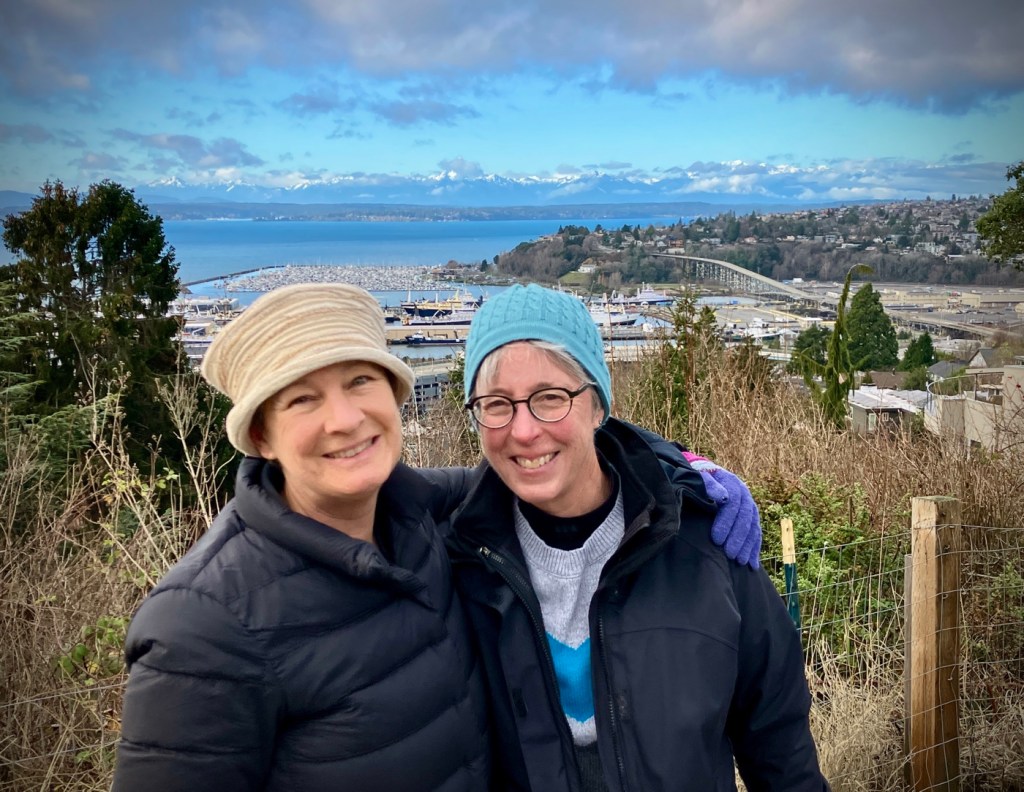
The mighty Olympic Mountains from Queen Anne near downtown Seattle. The core and inner neighborhoods are very walkable.

But like the locals, it’s really not an issue if you have decent gear or just ignore it and run or walk in the rain. It’s just water Californians, don’t freak out like a cat in a bathtub! We haven’t freaked out.

More cute cats to keep us warm in Seattle
What’s that thing on the ground behind Cheryl? Rare winter sun in Seattle.

So we’ve surmised that cozy and warm housing is a key to happiness here as there is no fallback to walk in regenerative sunshine in winter, like SF. Oh, and Vitamin D supplements left over from our last dark winter in the UK are just what the doctor ordered. And we’d also need to scale back our pace a bit…which is good.

A rite of passage in the PNW…drive thru Espresso near Mount Vernon.
Caffeine brightens the gray days

Another place we’ve been intrigued about, mostly from afar, is the City of Bellingham which is two counties and about 90 miles north of Seattle. Close, but a very separate place. We bike toured through the area during late summer many years ago and found it beautiful and it felt a bit undiscovered. It’s no longer undiscovered by any means after articles in the New York Times and appearances on endless “best places to retire” lists.

Lake Whatcom…drinking water and recreation source for Bellingham.

We only had two brief days to explore the city and environs but it is a very nice place. Funky but somewhat vibrant downtown, hills, views, forest, lakes, mountains and many parks. It’s also only about an hour by car to Vancouver, Canada, although the border crossing can slow things down.

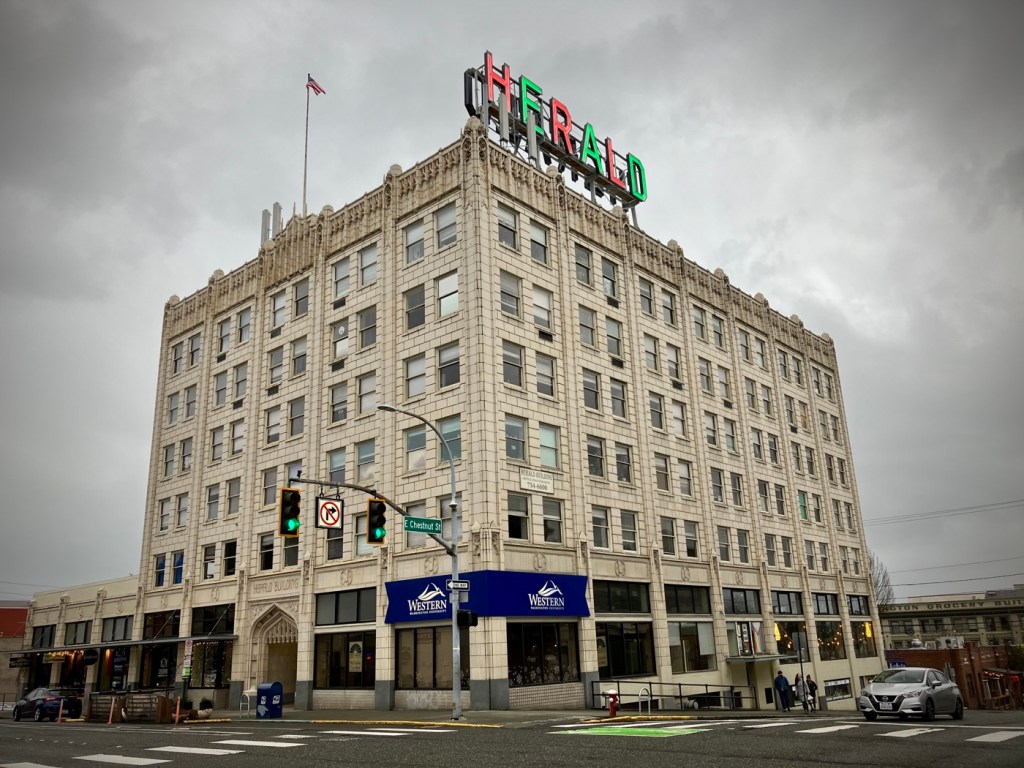
Downtown Bellingham is funky and hip boosted by 16,000 students at Western Washington University
Old building charm in Bellingham

Could we live here? Sure, it’s very cool. But at this point in our lives, we still crave a bit more urban density, diversity, and a variety of neighborhoods to explore. Seattle has this AND access to the outdoors, although maybe not as close or as as quickly to remote wilderness as Bellingham.

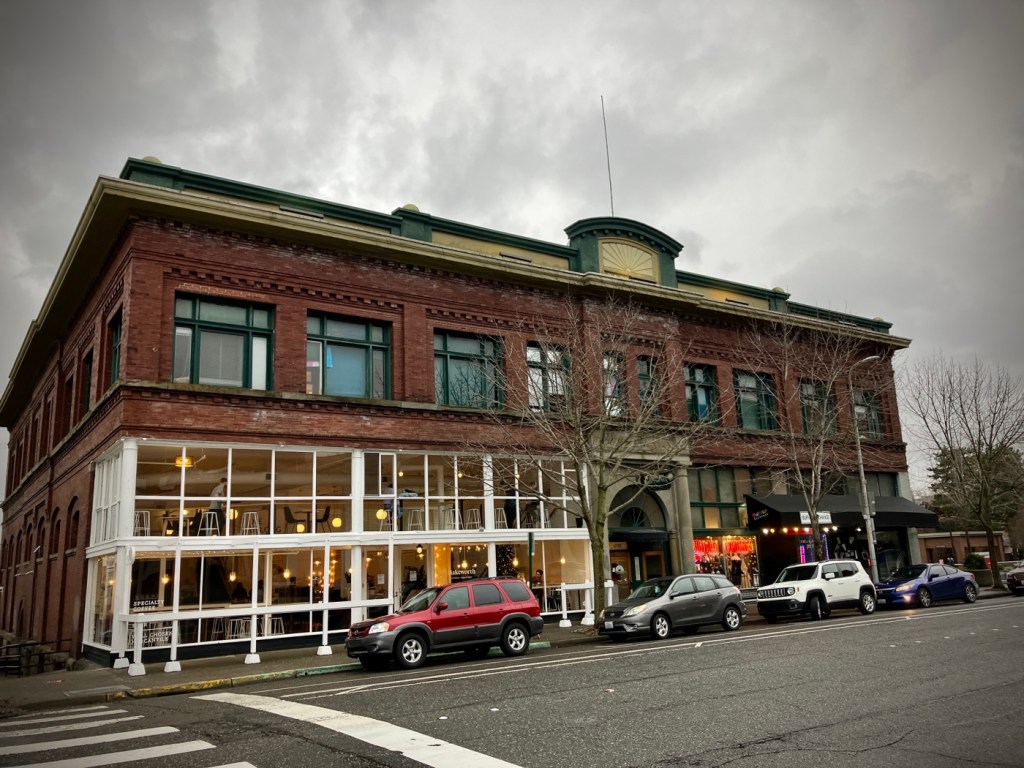
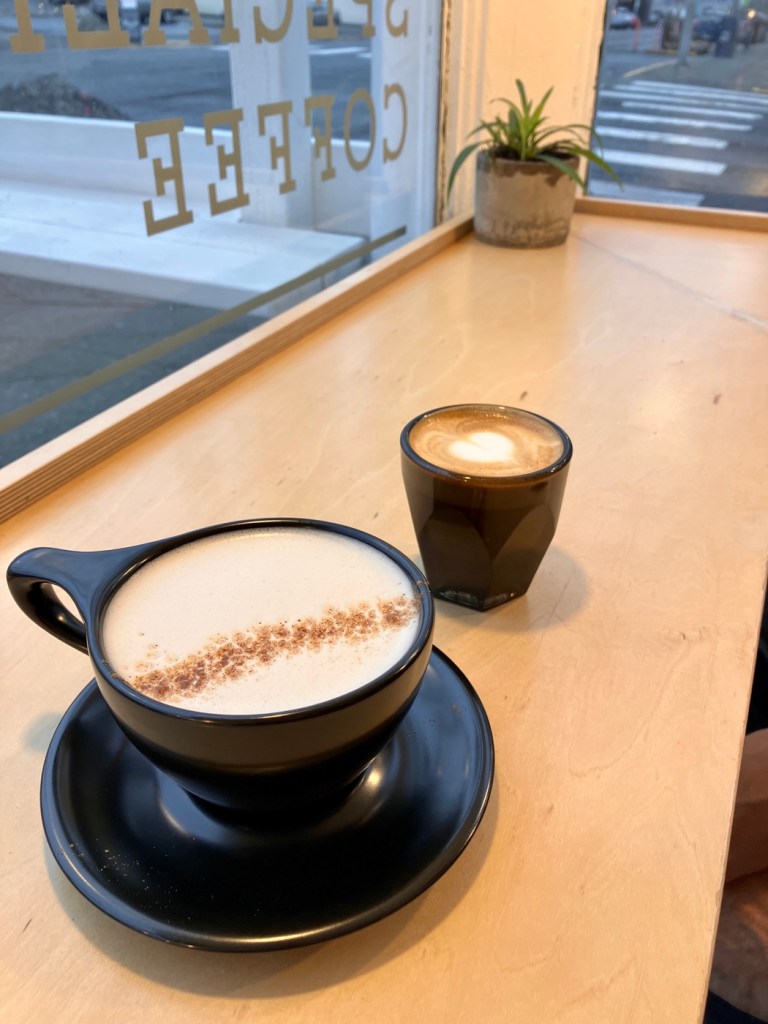
Afternoon Chai and a Cortado at Makeworth Coffee Roasters – Bellingham Chic.

So the decision to live somewhere else for awhile is not easy for us and is not easy when you’ve been in the blissful bubble of San Francisco, which is so eminently walkable, very bikeable, and still full of creative people, variable cultures, and amazing food. We always compare places to these high bars.

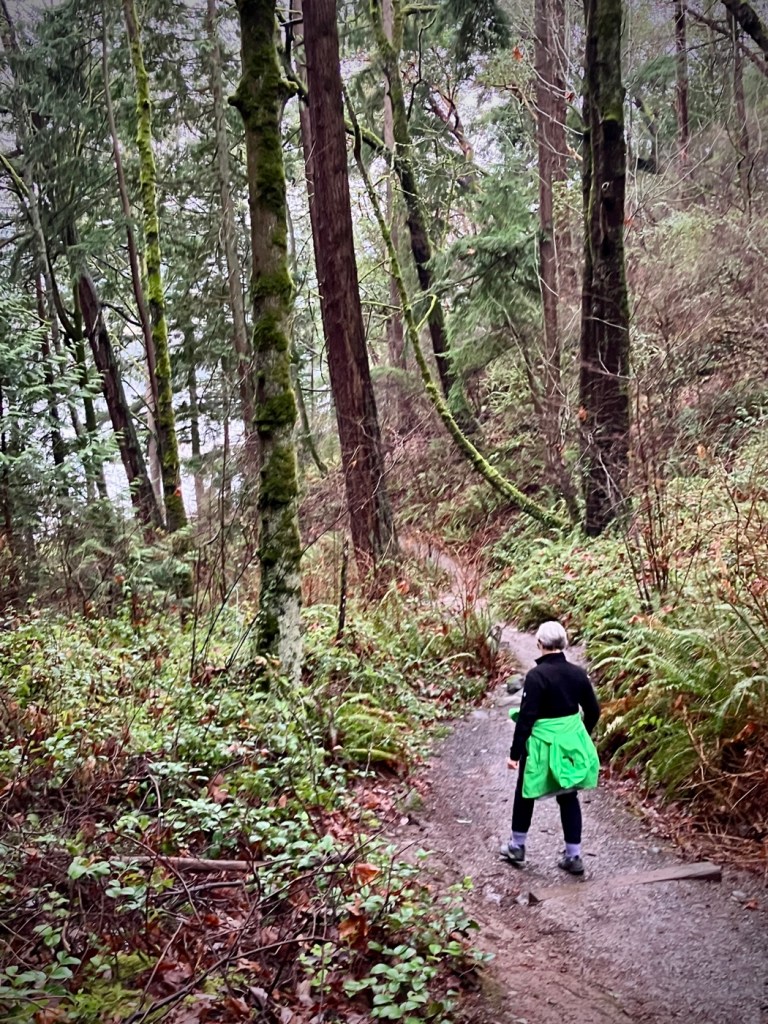
Whatcom Falls Park in Bellingham. Including a landmark WPA bridge.
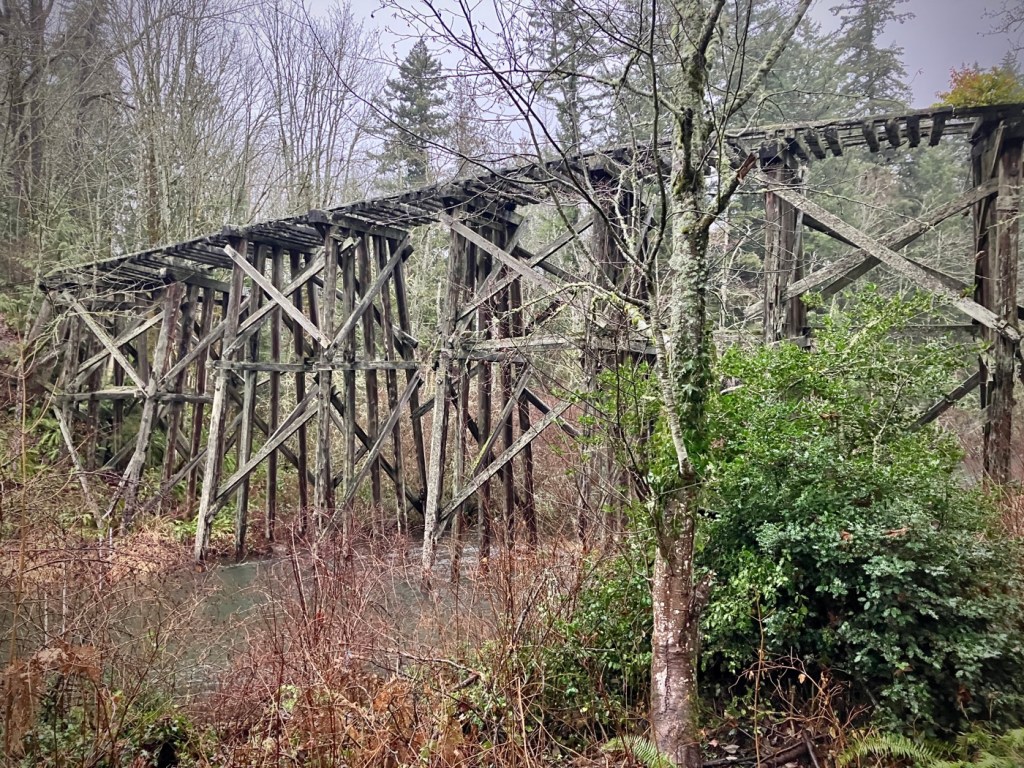
A legacy logging railroad trestle in Bellingham who’s days are unfortunately numbered due to collapse and flood risk.

But SF has its problems, especially affordability, exacerbated by a lack of new housing and stagnant neighborhood planning. The financial disparities are tough and strain everything. Seattle has similar issues, but has more of a relief valve in buildable area and housing options. But we also have deep roots and hundreds of friends and family in the Bay Area. We would miss them but are convinced we could find some good friends here too…we just might need to start the conversation!

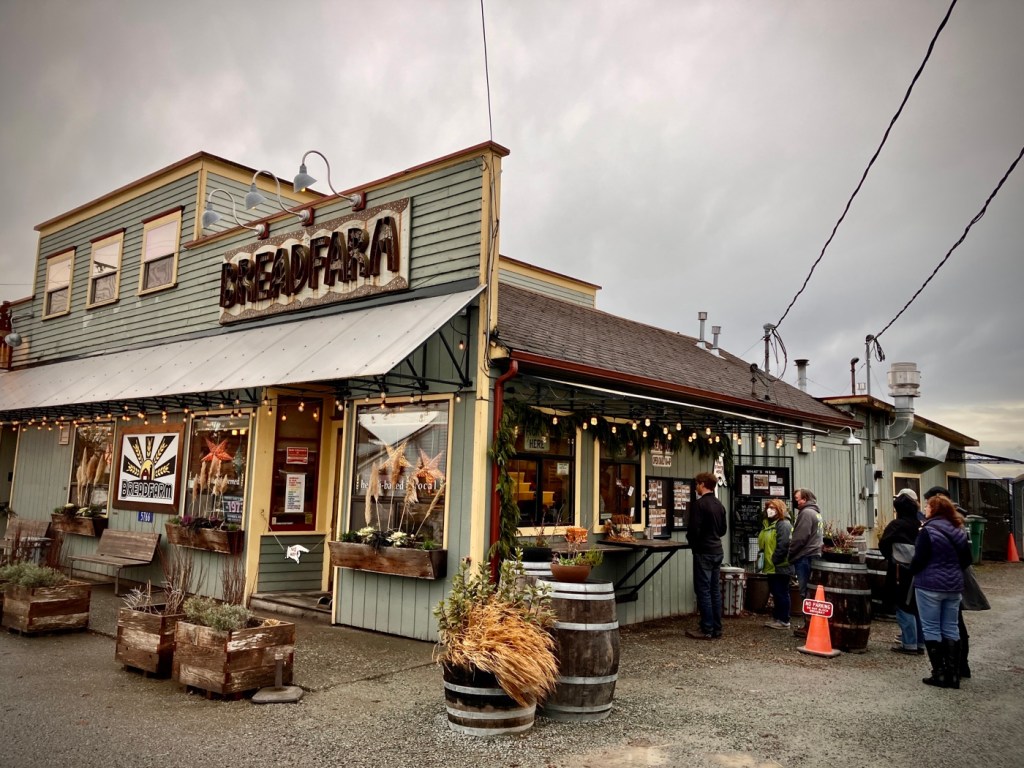
Breadfarm in the quirky artist hamlet of Bow…very picturesque but we didn’t think the bread lived up to the scene.
Enjoy your pastry and coffee by an inlet of Puget Sound
Unfortunately, the King tides and the lowlands around Samish Bay don’t always mix well.

But no need to fret about where we land yet as we have decided to wander the globe for another year. We stayed in 130 different places in 2022….yup, that is a lot, so settling down somewhere now would be a bit like hitting a travel brick wall at 100mph. Other stats for 2022 FYI: 45 days of house sitting (9 cats, 2 horses, 2 bunnies), 61 days in apartments, 146 days in hotels (apart hotels, B&Bs, Inns, and pensions), 3 nights on transport(planes, trains, and a ferry), and finally 110 days with friends and family (thank you all-:). Whew!

Where will we go in 2023?

So tomorrow we meander a few days back to the Bay Area for final prep and friend catch up before heading on our next big adventure in Asia…first stop, Taiwan. So excited!

Happy travelers ready for 2023!

Happy New Year and Happy Travels. Maybe we’ll see you out there!

Lisbon attitude adjustment.

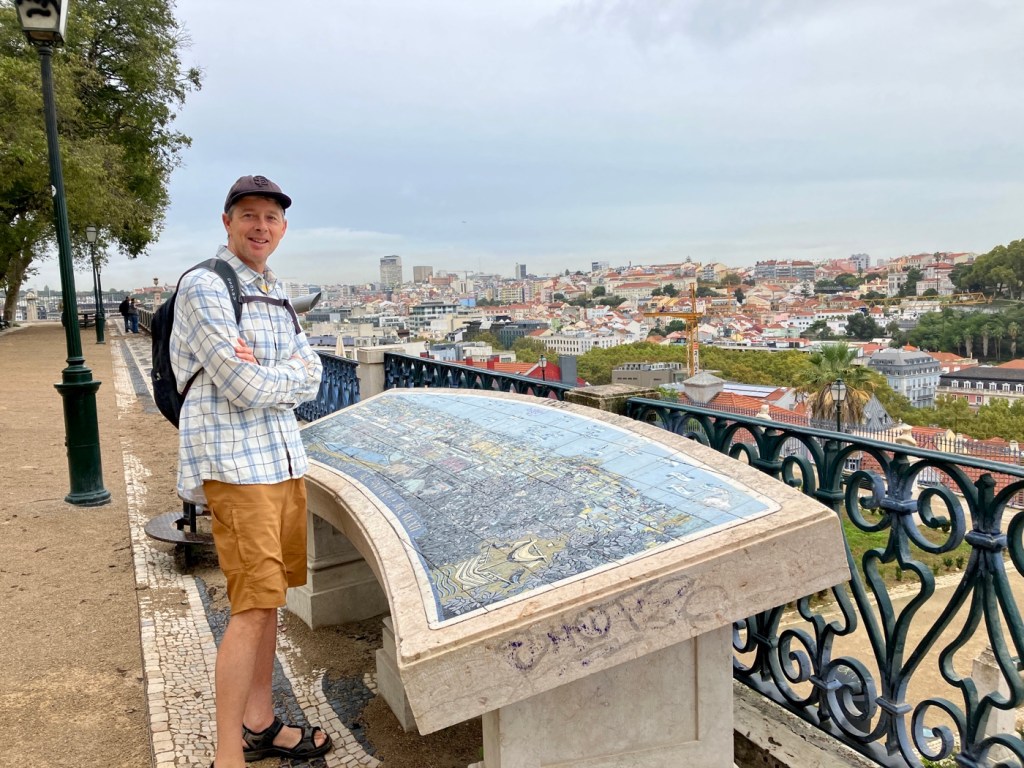
Rich surveying the city on our way to the train station.

How much does your mental state affect your enjoyment of a place? For us in Lisbon the answer was ‘a lot’. Our mental and physical states had taken a beating by the time we got to our apartment hotel and made an initial grocery run. The positive Covid tests the first morning certainly didn’t help. Sometimes when traveling you just have to give yourself a mental shake, a stern talking to, and push through an attitude adjustment.

The Citymapper city logos make me smile every time.

You head out looking for beauty. Shake off your negative attitude and stride out, well, kind of limp out in our case. Spending two or three days inside while we tested positive didn’t help. Thankfully the rain made it easier to just hang out. A short careful walk, a quick masked grocery store run, and more resting – that was the extent of our first few days in Lisbon.

A framed and borrowed view.
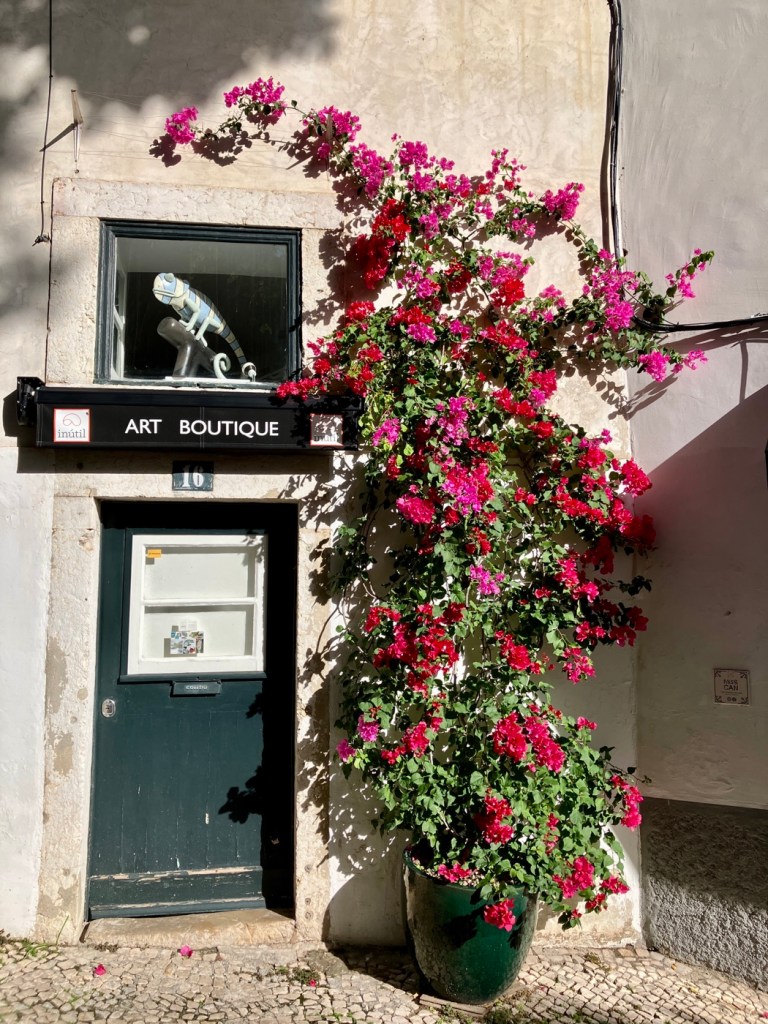
Starting to notice the white walls and colored flowers.
Oh yes, this is helping my beaten down Covid brain.
The small streets are quiet and charming.

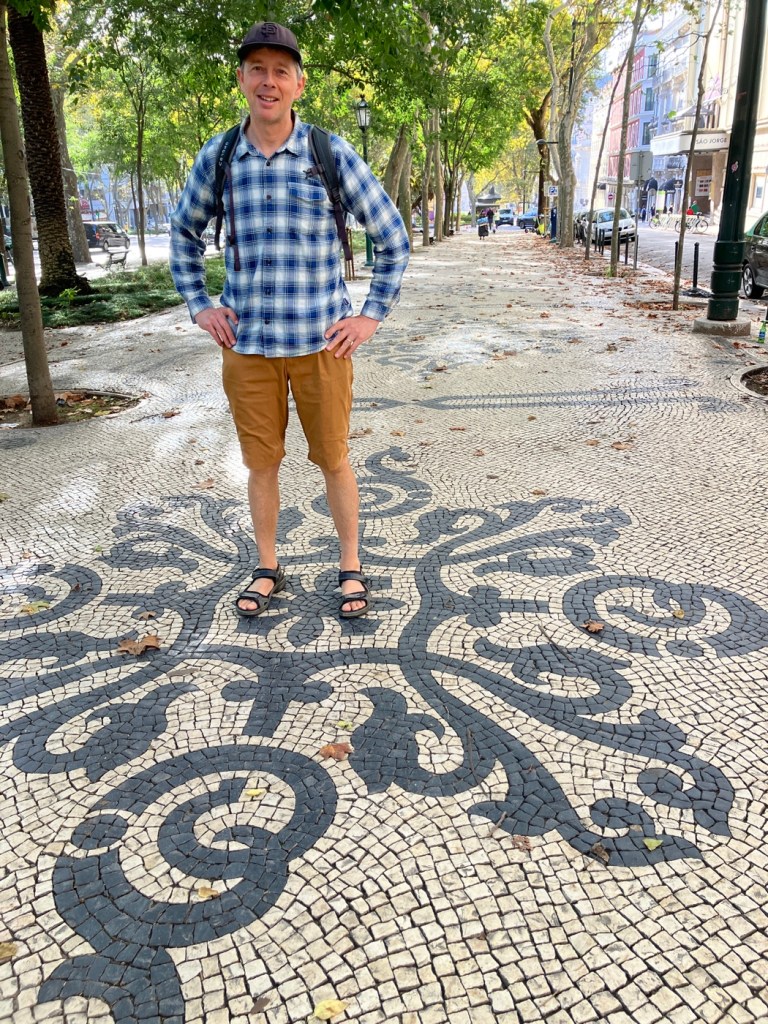
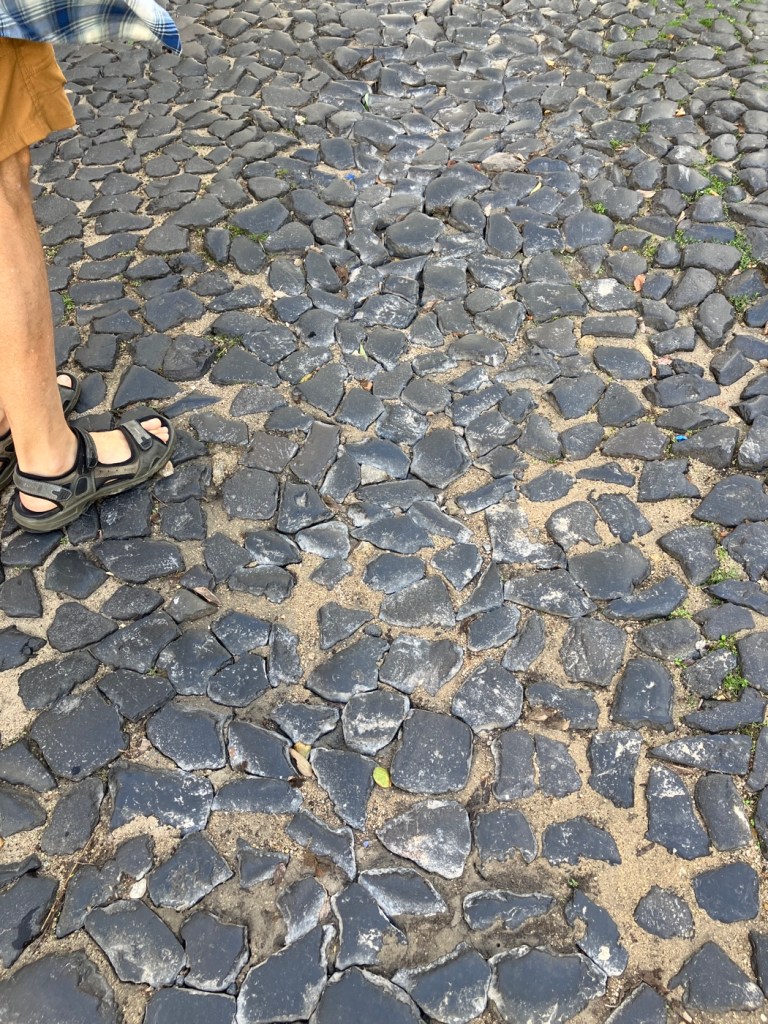
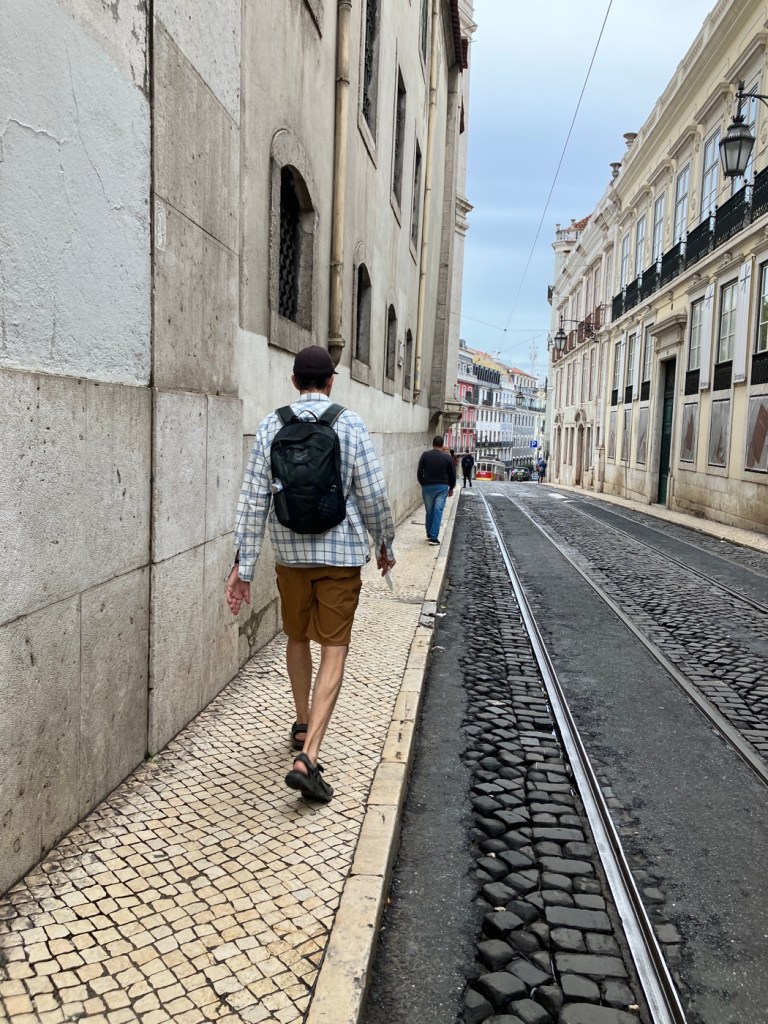
The mosaic sidewalks and plazas of Lisbon are beautiful. Under your feet is craftsmanship of a high quality.

The black basalt worked into the white limestone. Stunning.
It is called calçada portuguesa or simply calçada.

The calçada has a lot of positives, in addition to being beautiful it can adapt to uneven ground, or rise and fall with tree roots without cracking like concrete.

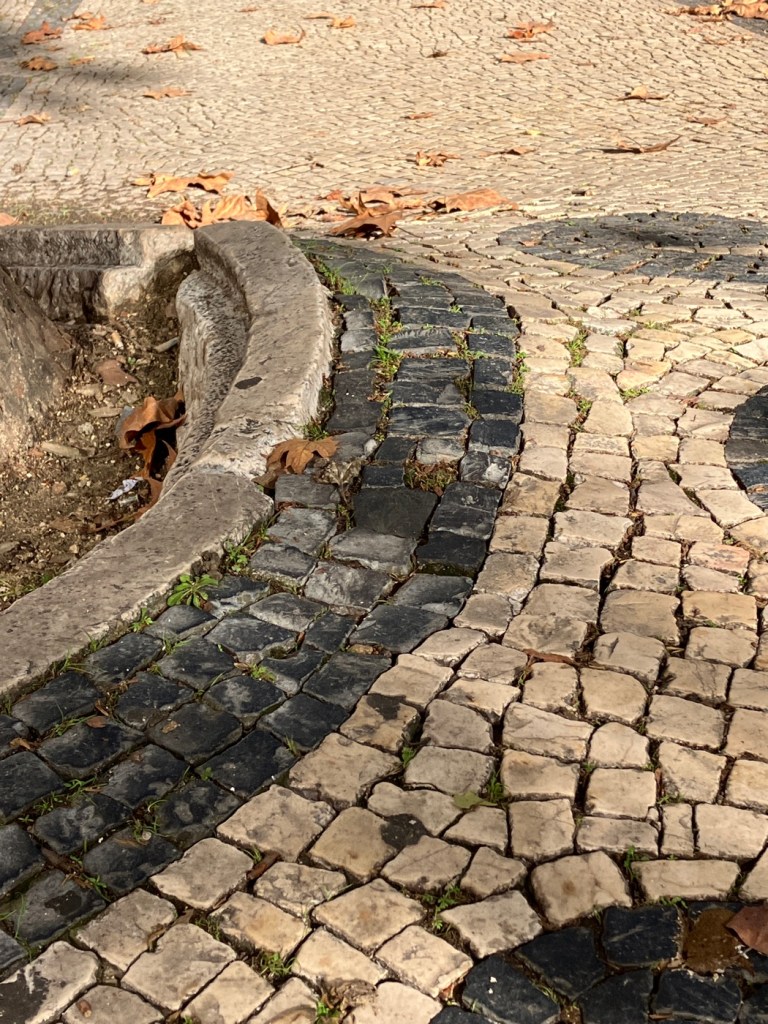
The calçada around the tree wells is not level., but still intact.
Tree roots becoming part of the paving.
Stopping to appreciate the work and imagine what a tough job this is, to piece together a mosaic sidewalk.

The slightly undulating calçada, and the diamond pattern made me feel as if I were walking on a giant snake. (Imaginative or Covid brain?)

You see the snakeskin pattern?
When this snakeskin gets wet – watch out!

We had some rain while in Lisbon, and that brought out the negative side of limestone snakeskin sidewalks- they get so slippery! We quickly learned to judge how slippery a stretch was likely to be based on how polished the white stones looked. The more shine, the higher your chance of losing your footing. If the sidewalks had the black basalt squares they were less slippery, or your foot wouldn’t slide as far since it would come into contact with a black stone and stop.

Slippery and in need of repair.

Apparently there just aren’t as many craftspeople available to keep the sidewalks in good shape, which means you have situations like the above photo. When it’s rainy people tend to walk in the street to stay upright. The car drivers seem quite used to it, but it’s still uncomfortable to have to watch out for cars while picking your way along the cobbled street.

Certainly not slippery. We didn’t get to see this street during a rainy period but I imagine it drains well.

Even with our positive mental attitude firmly in place we just could not enjoy walking around Lisbon. The sidewalks are simply too narrow, and not in great repair. In the more modern part of town, upslope, the traffic signals are set in favor of moving car traffic which means long long waits for pedestrians to get a crossing signal. The intersections can be huge, with so much extra pavement that car drivers have the ability to whip around corners at fairly high speed. We haven’t seen any of what we call Covid-era street improvements like we see in so many other cities, where street space has been reapportioned to give pedestrians and bikes more space, and increase safety.

That’s a narrow sidewalk. Not much that can be done here with the streetcar tracks.
A beautiful sidewalk. The more historic downtown area has sidewalks in better repair.
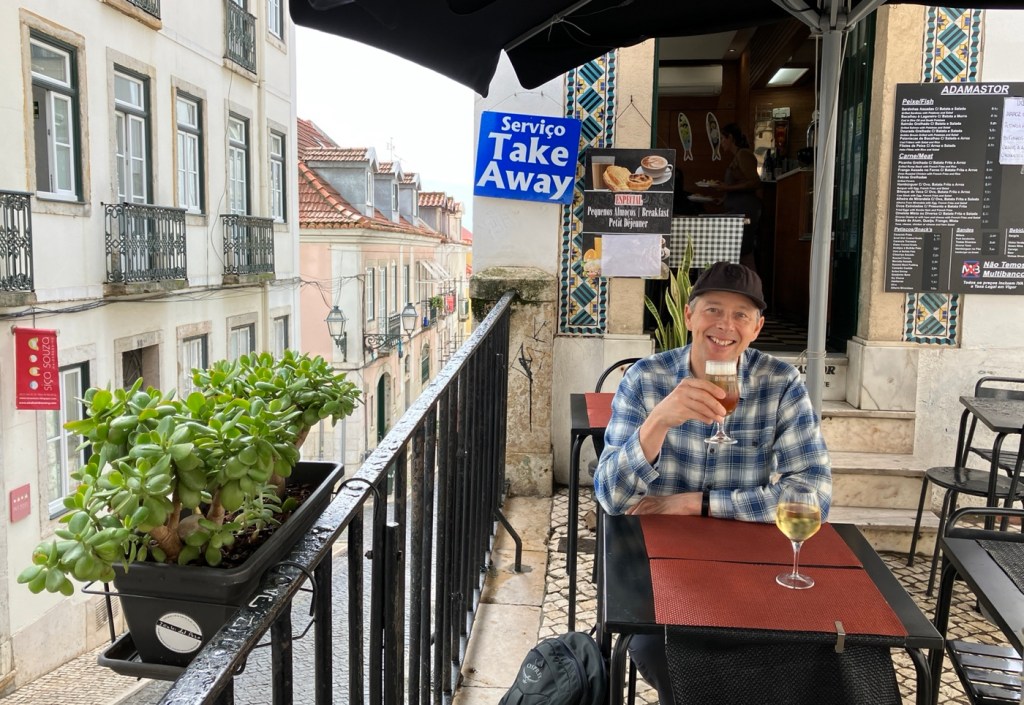
What can cheer up some slightly cranky post Covid travelers? A lovely lunch with adult beverages.
Lisbon really is beautiful. All those tourists can’t be wrong about that.

Part of our sour attitudes definitely came from the fact that a planned 3 night stay turned into 8 nights. Our positive Covid tests, coupled with the challenge of re-booking our flights on TAP airlines, kept us in town for the longest stretch we’ve spent in an A list tourist city since Copenhagen for the start of the Tour de France. We’re not always huge fans of A list cities, as they expose the negatives of concentrated tourism.

Keep that positive mental attitude going. A lovely almost 3 hour lunch in Cascais, a short train ride from Lisbon. We chatted for ages with a super nice Canadian/British couple at the next table.
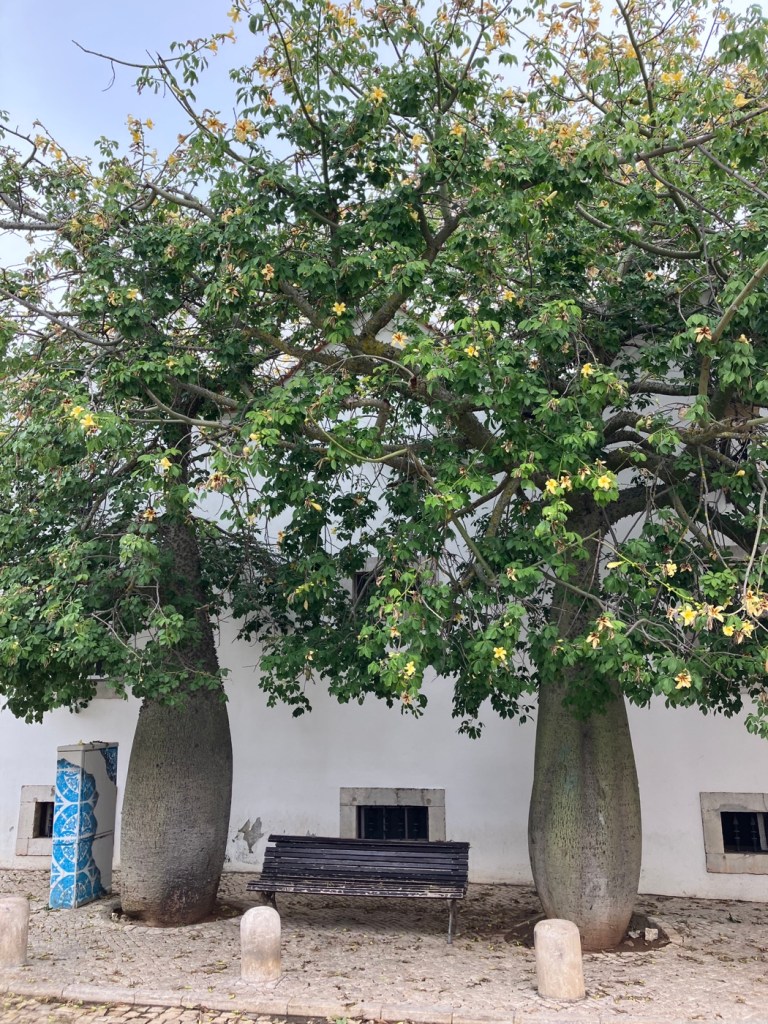
Symmetrical potbellied trees. I think they are Queensland Bottle trees. Whatever they are – cute!
Rooster joining our coffee break.

Since this was our second time in Lisbon we do know one place that is guaranteed to make us smile. Parque Infantil da praça das Flores. We first visited this park on a trip to Cervecta Lisboa, in search of craft beer. We walked here from our Covid hotel nest/room and sat and enjoyed the calm. After testing negative we came and sat in the park with beer from the Cervecta. The calm attitude towards alcohol in parks, with kiosks offering coffee, snacks and drinks, and the local cafes allowing you to take your drink out to the park, is wonderful. It ensures there are always people around enjoying the parks. I would always rather sit in a park.

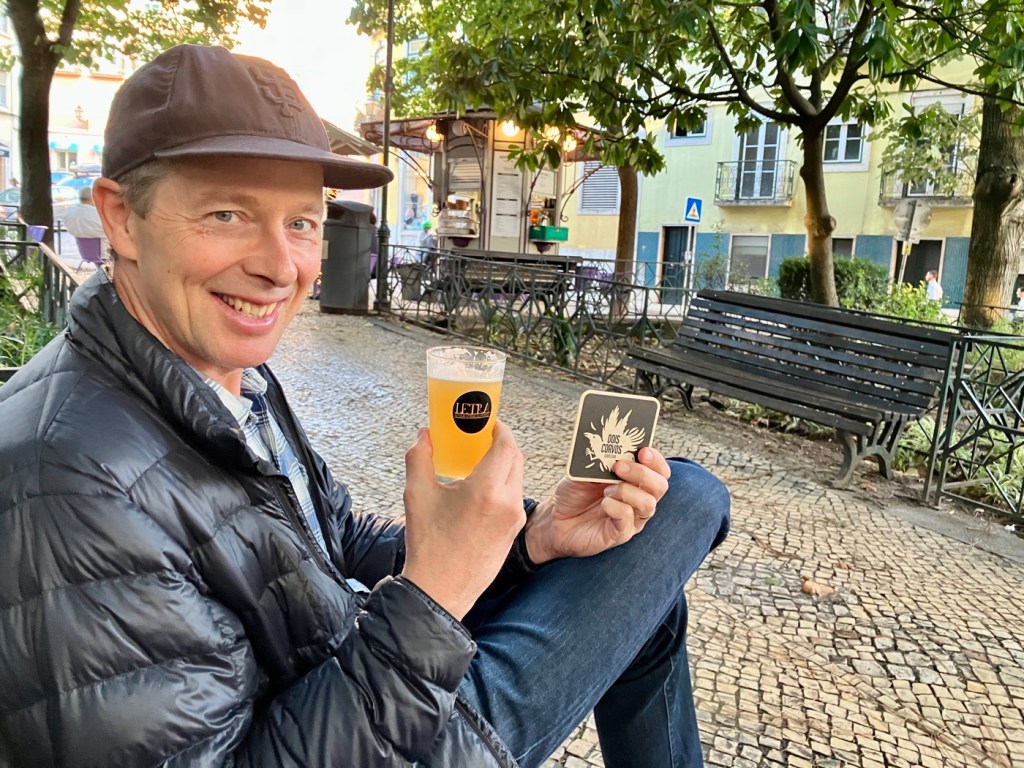
A happy traveler. You can see the kiosk in the background, and the beer place is to the left of the park.
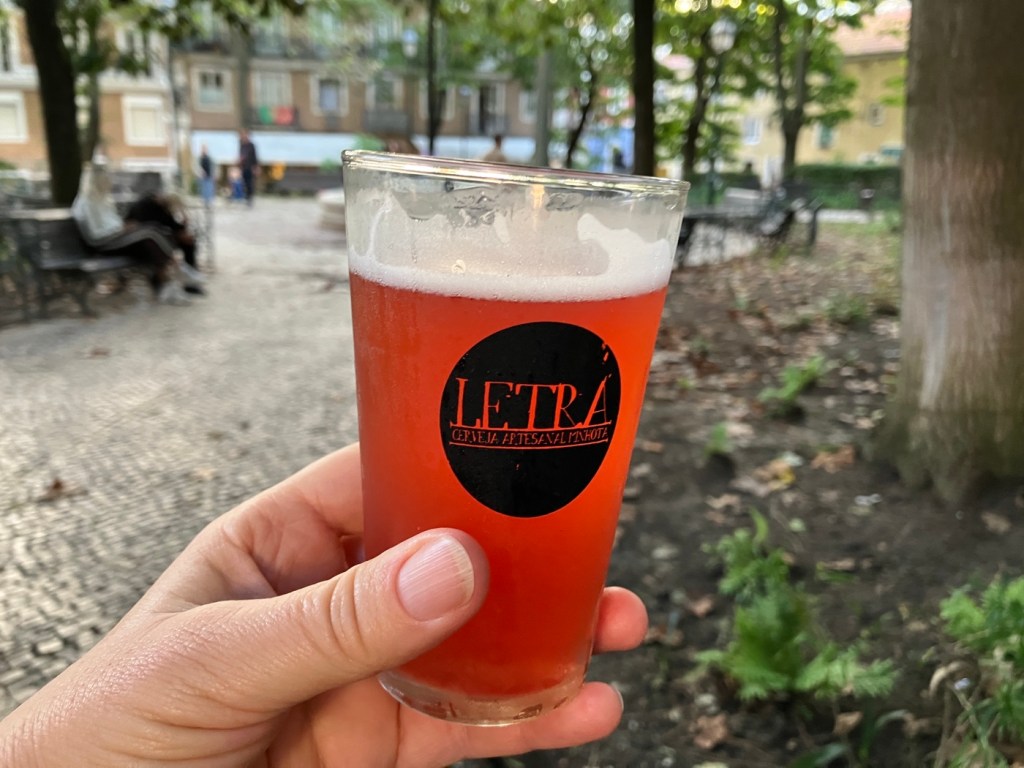
Cheers to our favorite park.
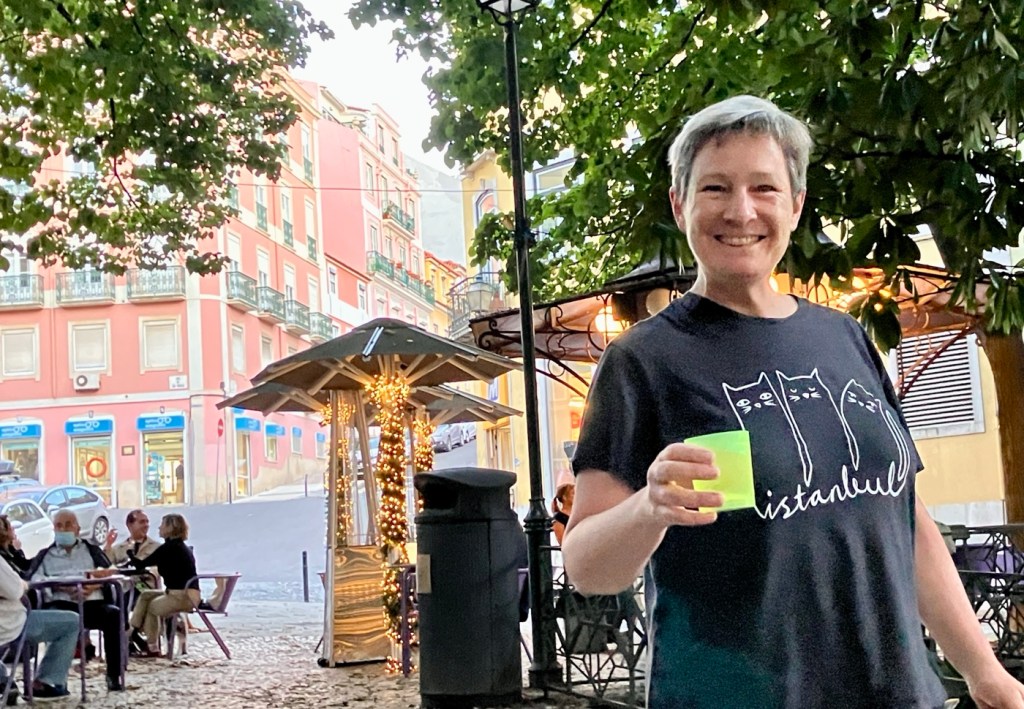
Tired of beer? The kiosk has wine in little reusable plastic cups.
The happy travelers. Negative tests and ready to move on.

Farewell Lisbon, we intend to come back to Portugal and explore the B and C places, get off the beaten track a bit and spread the tourist love. Our travel world was not done throwing us curveballs yet, though. More on that in the next post from Brooklyn, NY.

Zarutz to Bilbao on the Camino del Norte.

The view after climbing out of Deba.

Is the Camino del Norte tough? Yes! Yes it is. Long days and lots of up and down. Add to that some rocky, muddy, rain soaked trails and you have long days that feel even harder than 15 miles/24 kilometers should.

An ancient stone road out of Zarautz.
Looking back towards Zarautz.
Cecily making friends with calf number 2570.
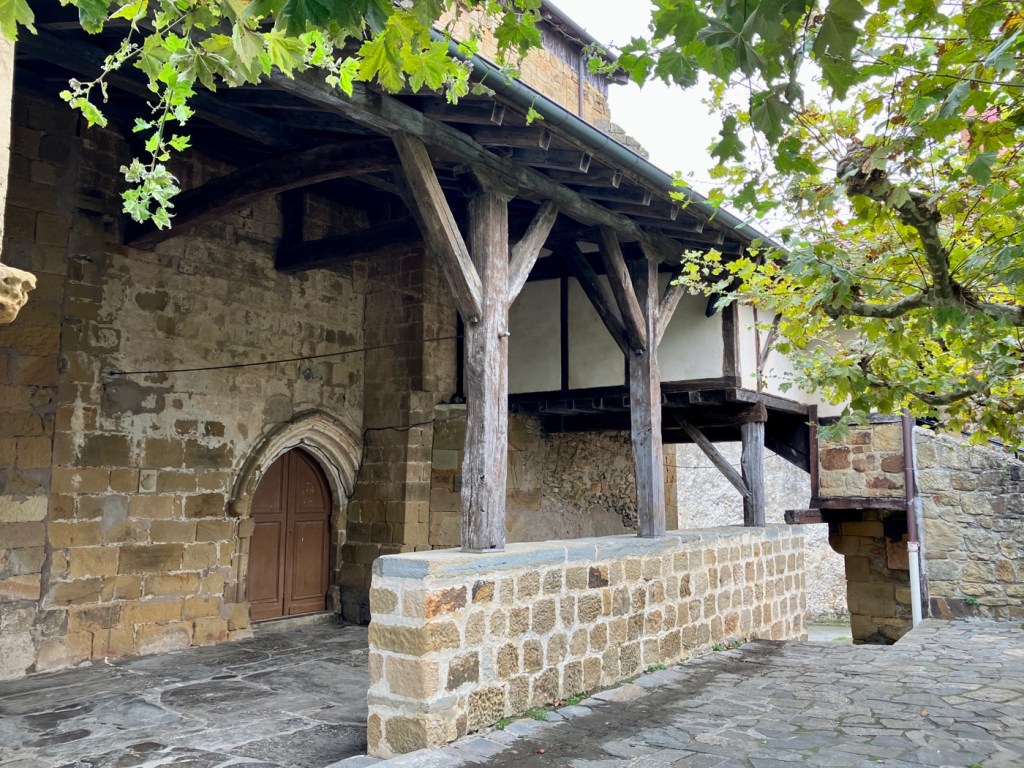
The churches with wide verandas made excellent places to stop and rest, this one is near Getaria.
A well placed vending machine was also a good place for a break.
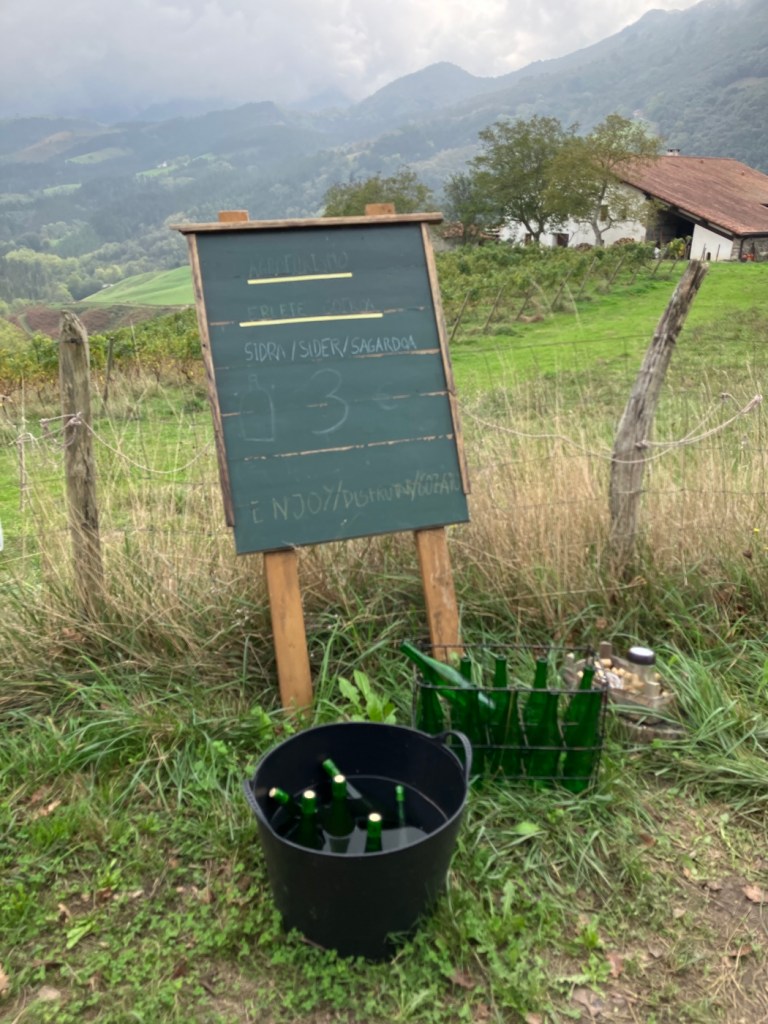
Taking advantage of a farm cider opportunity did not make the remaining distance to Deba any easier.
After so much up and down on steep slippery trails, the public elevators of Deba were a very welcome sight.
These boat owners must be very sure footed. Deba harbor.

We had cloudy weather, but still mild. We hiked in some light rain, and some nice sun. It warmed up as our week went on, and by the time some of us hiked all the way into Bilbao on Saturday, it was warm. 80f/26c

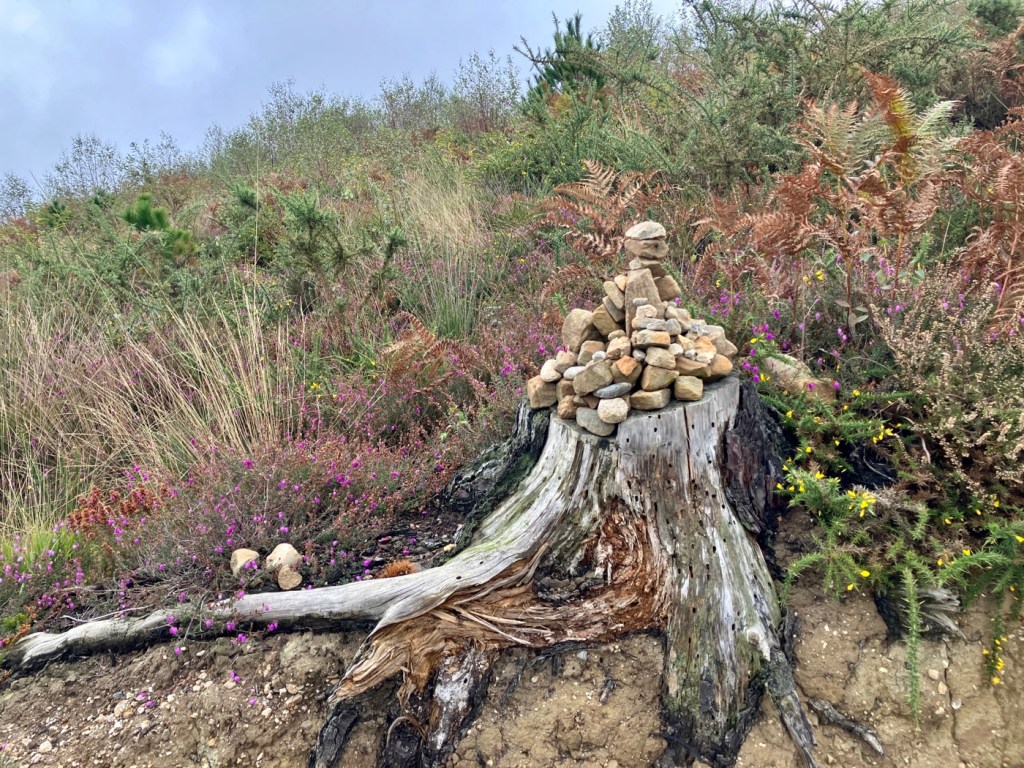
Rocks left in memory and honor of lost loved ones.
The mountains provide a stunning backdrop.

Wait, some of us hiked into Bilbao? Yes some of us. One of us, me, Cheryl, ended up with tendinitis in my left foot. The day from Guernica to Zamudio was increasingly painful so I took a train the last short day to Bilbao, with Cecily.

Happy travelers leaving Altzaa.
A classic Camino photo. Happy to have four pairs of feet on this journey.
The days can be very long, but the company is great.
You look up and see a postcard perfect scene.
Over old stone bridges.
And by historic churches. I was wishing for a suspension bridge across this valley, but what a view back to the church.
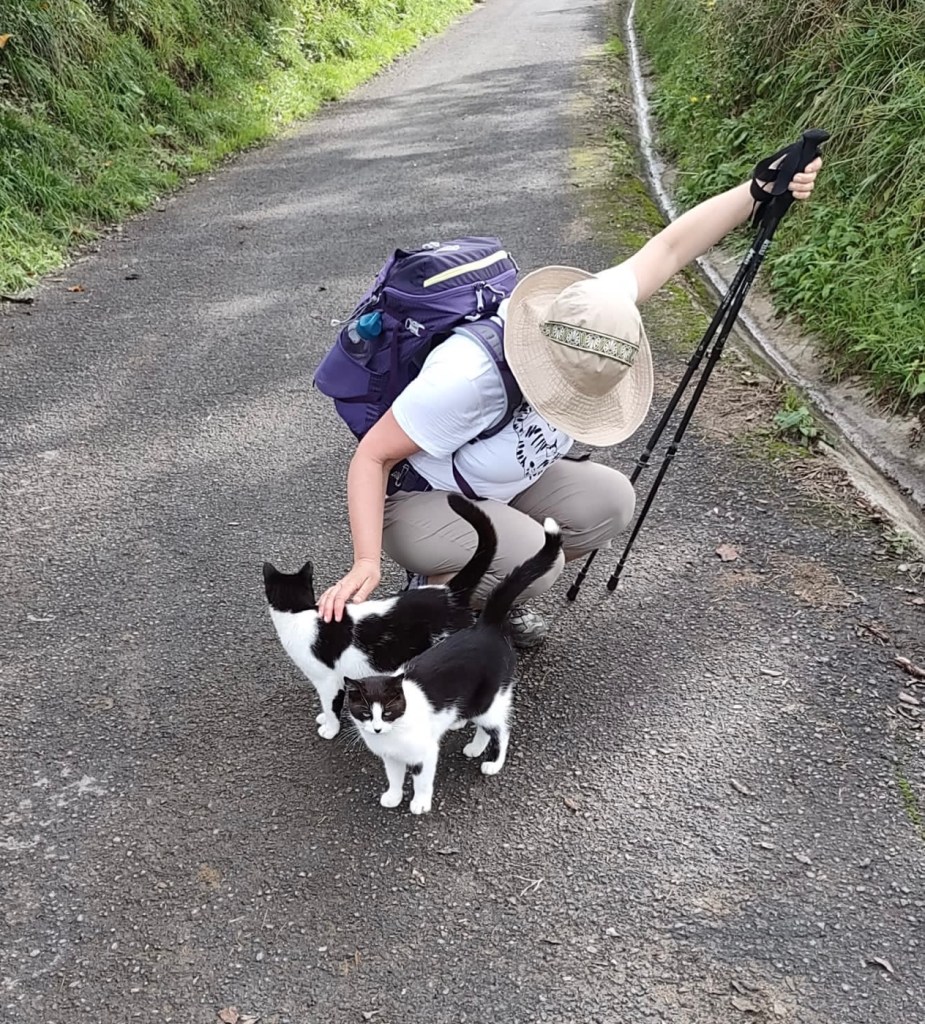
Some of the cats are petable. Thank you for the photo Christine.
Leaving Guernica with smiles all around.
Our fearless leader.
The downhill was really starting to hurt my foot. But still smiling.
Last morning in Zamudio. Two of us are smiling because we’re headed for the train! Cecily is feeling run down and joined me on the train. Rich and Christine are looking forward to the hike into Bilbao.
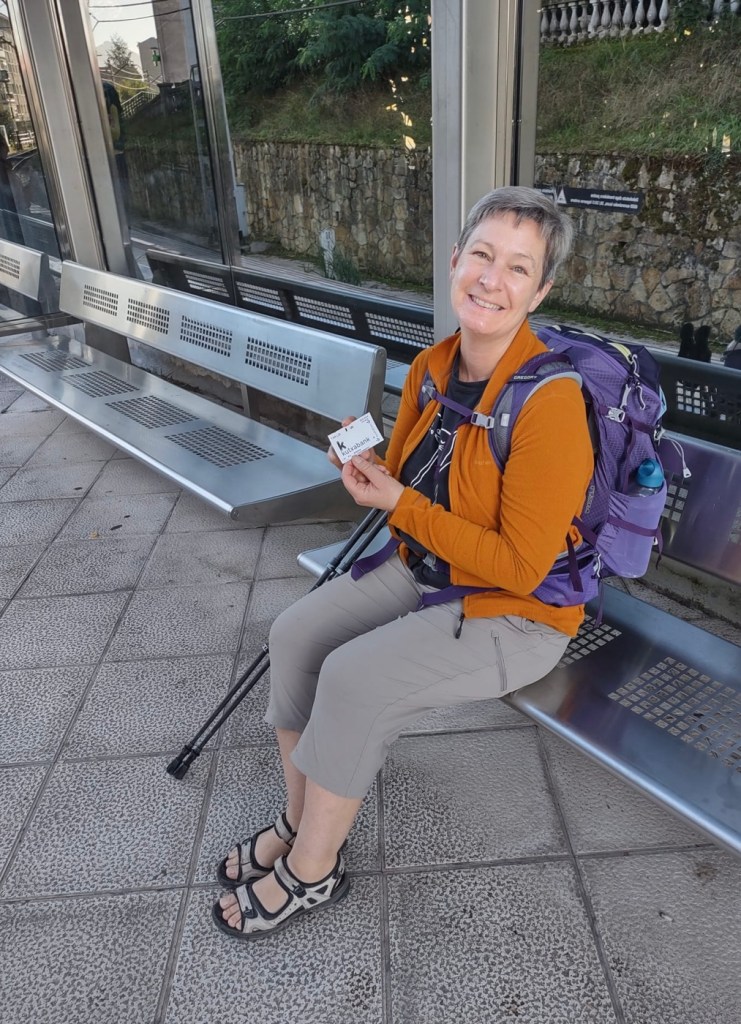
Ticket to ride. Me and my bad foot.
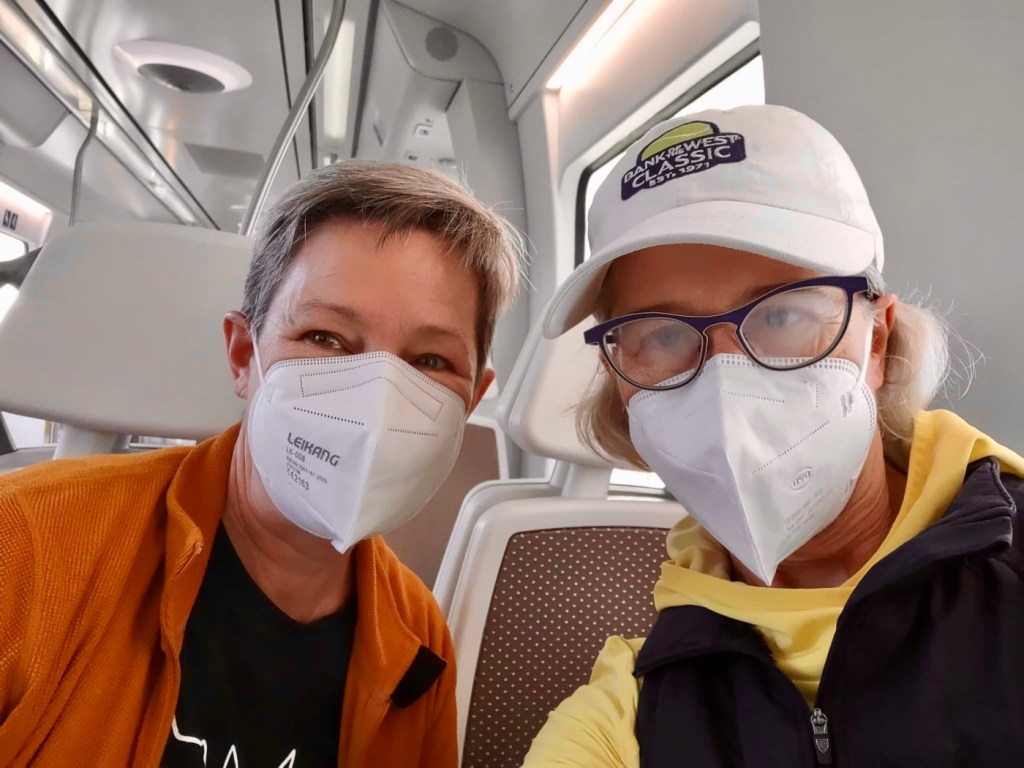
Masks still required on public transit in Spain. Enjoying moving but not hiking.
Cecily enjoying the view.
The Camino route comes right past our hotel so Cecily went out to meet our Pilgrims, Christine and Rich.
Recovering with tea and wine. Ibuprofen and ice and rest came next.
Thank you Cecily and Christine for the Camino time with us.

When we decided to leave San Francisco and travel it was our hope we would be able to meet up with friends and go on adventures together. This was an adventure, and we were so happy to share it with such good friends. Christine and I met the first day at University a good many years ago. The joy of long time friends.

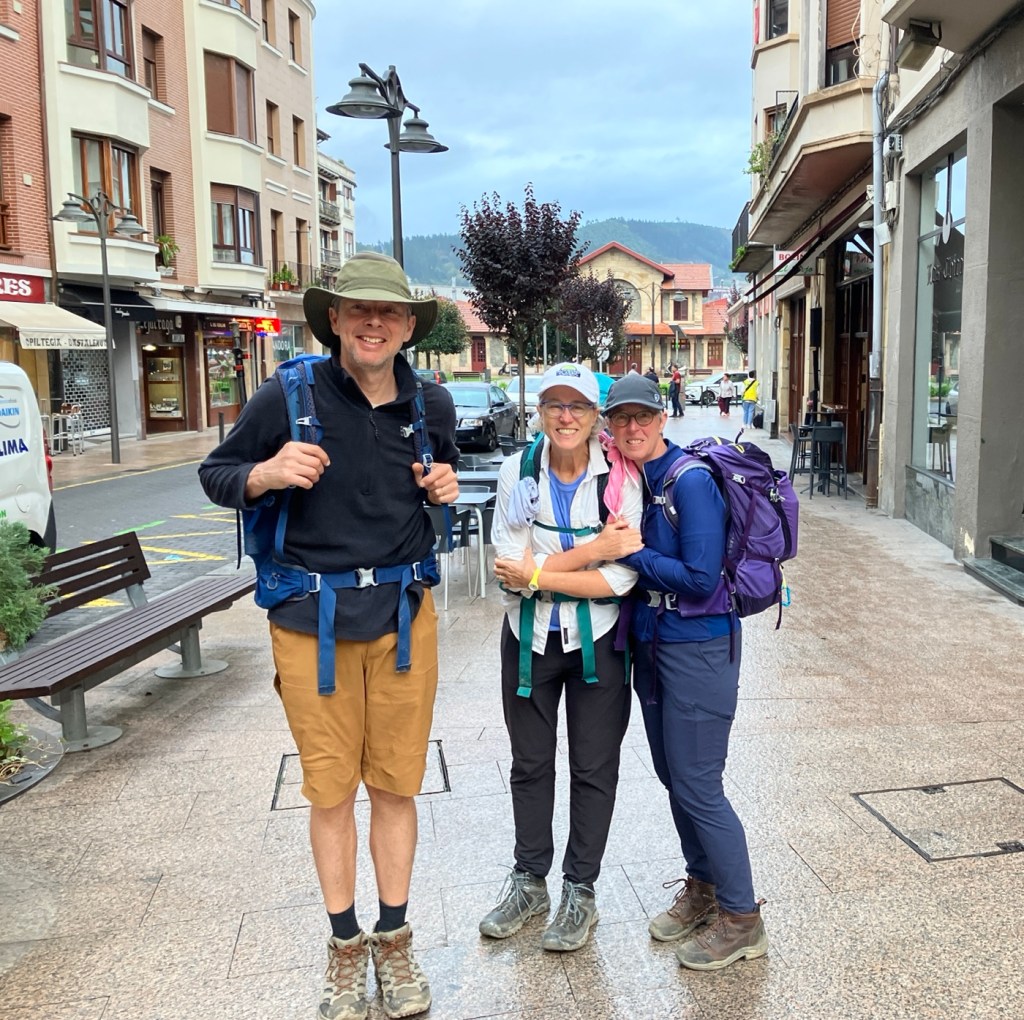
The happy travelers in Bilbao old town.

Rich and I will be in Lisbon next, after a few days enjoying Bilbao with Christine and Cecily, and on to New York City and New England. Visiting friends and family there and in Chicago, and then, Thanksgiving with family. Looking forward to that very much. Happy fall.

How to take a vacation from your travels. And on to the next adventure.

It’s been over a year since we’ve been nomading, vagabonding, wandering – whatever it is we’re doing. The transitions can be very challenging, city to county side, country to country, bike touring to backpack travel again. How do we do it without burning out, or driving each other bonkers? Our secret superpower is a home base in France, thanks to wonderful friends who hopefully know how much we appreciate it. There we can swap gear, relax in familiar and comfortable surroundings (Oh, comfy couch, we love you.), and actually be in different rooms from each other! For hours!

Those are the smiles of travelers who get to be somewhere familiar and cozy, and swap out some gear.

We are super fortunate to have a private home where we can recharge, but we also have places which are familiar and comfortable that provide the same mental break. Bristol, in the UK. A city we love and have been to three times. Hove/Brighton will be one of those places as well. Both have good public transit, lots to do and see and good for getting around the area. Izmir, Turkey is probably one of the places we’ll go back to again and feel happy knowing our way around, and what we like to do and eat. Our home town of San Francisco, of course. A place where you can navigate without a map and know the bus routes and bike routes. That feels great, wherever it is.

The relief felt when encountering French bike infrastructure again is massive.

But wait, how did we get here? As Rich mentioned in the previous post, Hove to the Haute Savior takes about 13 not always easy steps, with loaded touring bikes. Trains, a ferry, rides to and from hotels, to and from trains, trains to trains, and finally a lift the last few steep miles. We love the UK, but the French have really zoomed ahead of the British with safe, comfortable bike facilities, especially in urban areas and to connect town and cities. From getting off the ferry in the dark and rain, and directly on to a protected cycle way to our hotel, to the next morning riding the riverside path that led us into Caen for our train to Paris, it felt easy and relaxed. We both breathed a sigh of relief. Oh yeah, this is fun! Bike touring with no safe route is so stressful. Bike touring with lovely pathways and signage? A joy.

Headed from Ouistreham where the ferry docks, into Caen.
Arrived at Gare Paris Saint-Lazare via train. Tick off another step.
Rue de Rivoli in Paris at rush hour. Headed to our hotel in the 12 arrondissement.

Let’s take a moment to recognize what an amazing transformation Paris has undergone. 10k at rush hour with loaded touring bikes and it was not at all stressful. Even though we probably caused some near misses as we stopped at red lights and the cyclists behind us kept going – there was no cross traffic so they were being safe, just not expecting the big old loaded American touring bikes to actually stop! We got the hang of it. The quiet of Rue de Rivoli was like a forest bath. The sound of voices and bike tires. No loud engines. No car horns. Just the lovely sound of people. I’ll say it again, cities aren’t loud, internal combustion engines are loud.

Gare de Lyon, waiting for our TGV platform to be announced. One night in Paris is too short a stay, but still fun.
Three trains later, yada yada yada, we made it!

So, now that our legs, backs, and bottoms are totally adapted to bike touring, after four months of travel by and with bikes, let’s mix it up!

Load up that backpack, lace up the boots, and let’s Camino.

While down in town at the weekly market, where we walked with our packs which have scallop shell Camino patches on them, a young man said to us – you have a long way to go. And then after I used my one good French phrase “I’m sorry, I don’t speak French.”, he said it again in English. (Oh, to be bilingual.) Why thank you for thinking we could and would walk all the way from the French border with Switzerland to Santiago de Compostela, Spain, but no. We will actually fly to Bilbao.

My Camino pack. Getting some air.

We try quite hard to not fly places. This will be our first flight since returning from Turkey in May. Unfortunately, avoiding air travel means you must have time, and more money than the cheap flights cost. But, we do what we can, and sometimes our chosen lifestyle means airplanes.

Lunch break on our first training day out with our packs.
Second day hiking. Ready for the rain.
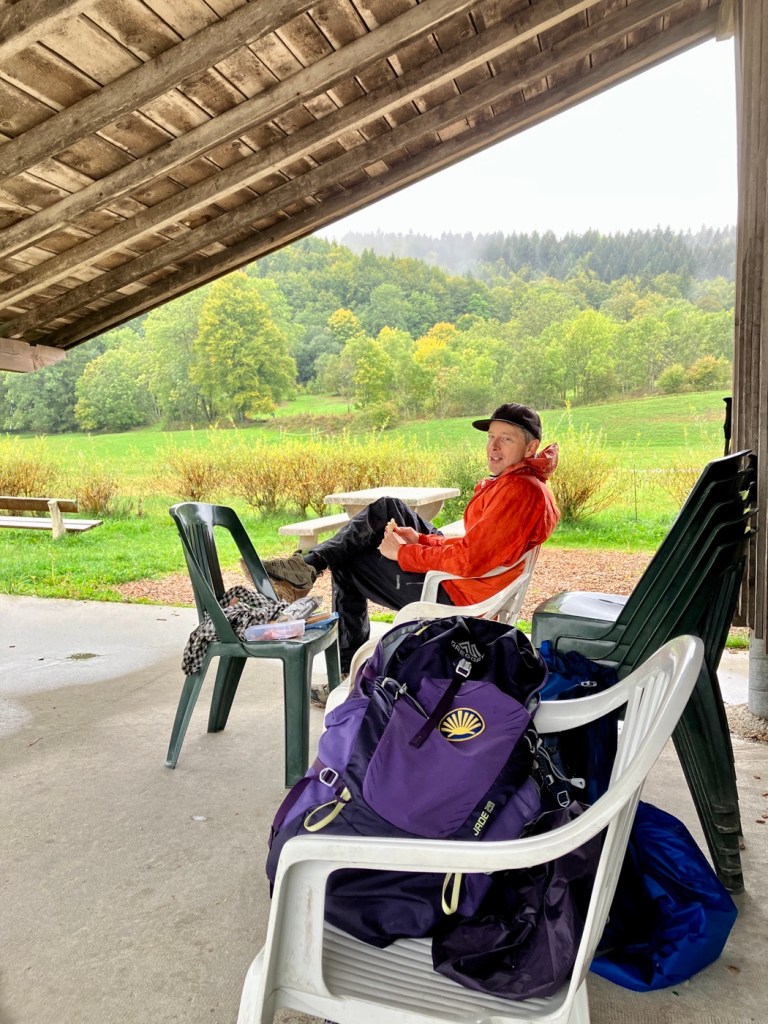
And rain it did. We were grateful to find this shelter by a glider field so we could enjoy our lunch.

With packs on and trekking poles in hands we started walking. And walking some more. Hopefully we’ll be in good enough hiking shape for the long Camino days.

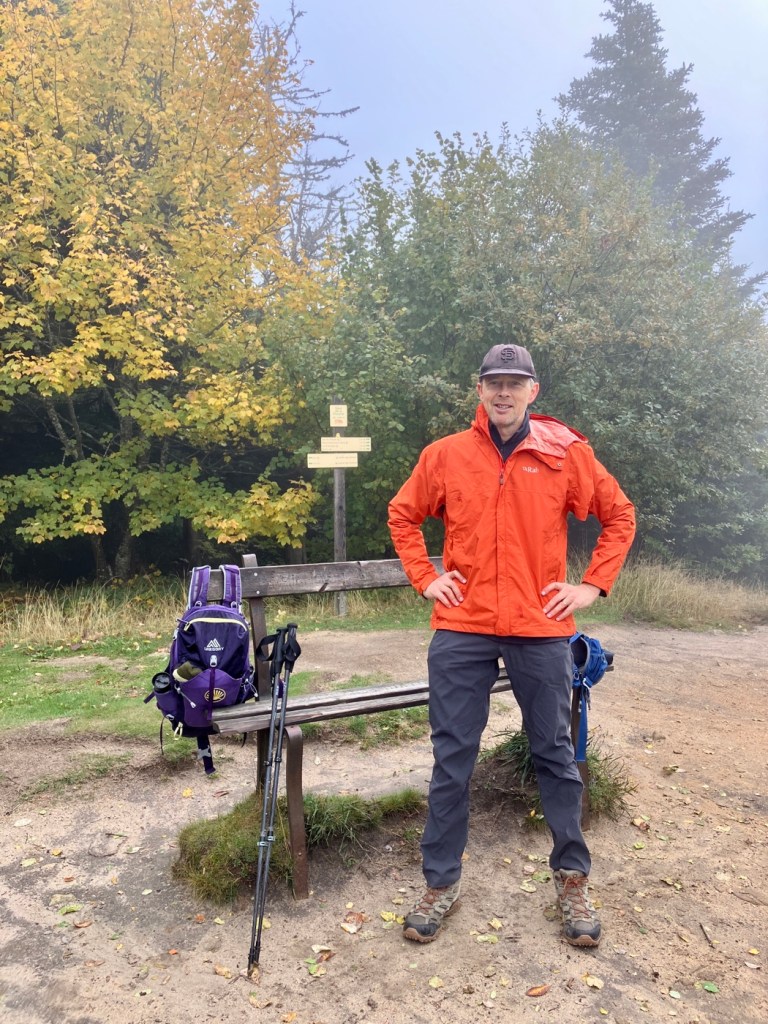
Third day. Up into to the fog we go.
A very helpful and beautiful orientation table at the peak of the climb. It did clear a bit on our way back.
He’s ready to Camino.
Practicing the Camino picnic. My Cleverhood rain cape doubles as a ground cloth for sitting.

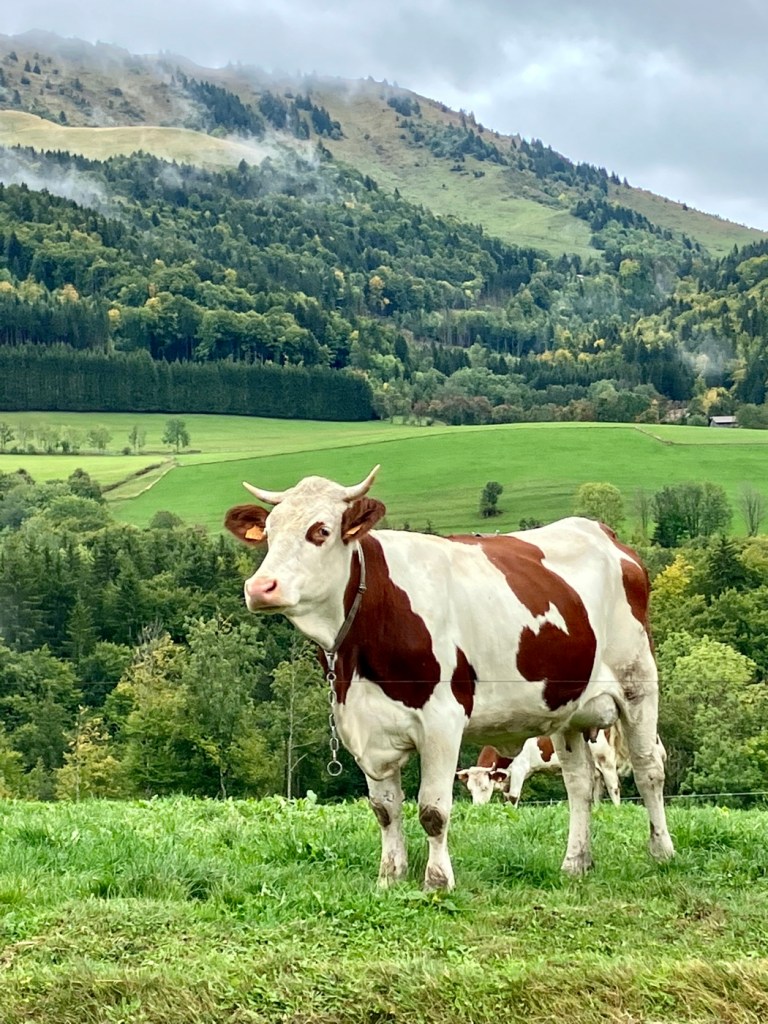
What a place to be able to train for the Camino. The Lower Alps are simply stunning. Varied terrain, nicely signposted routes, amazing views. And beautiful cows. Making all that delicious cheese.

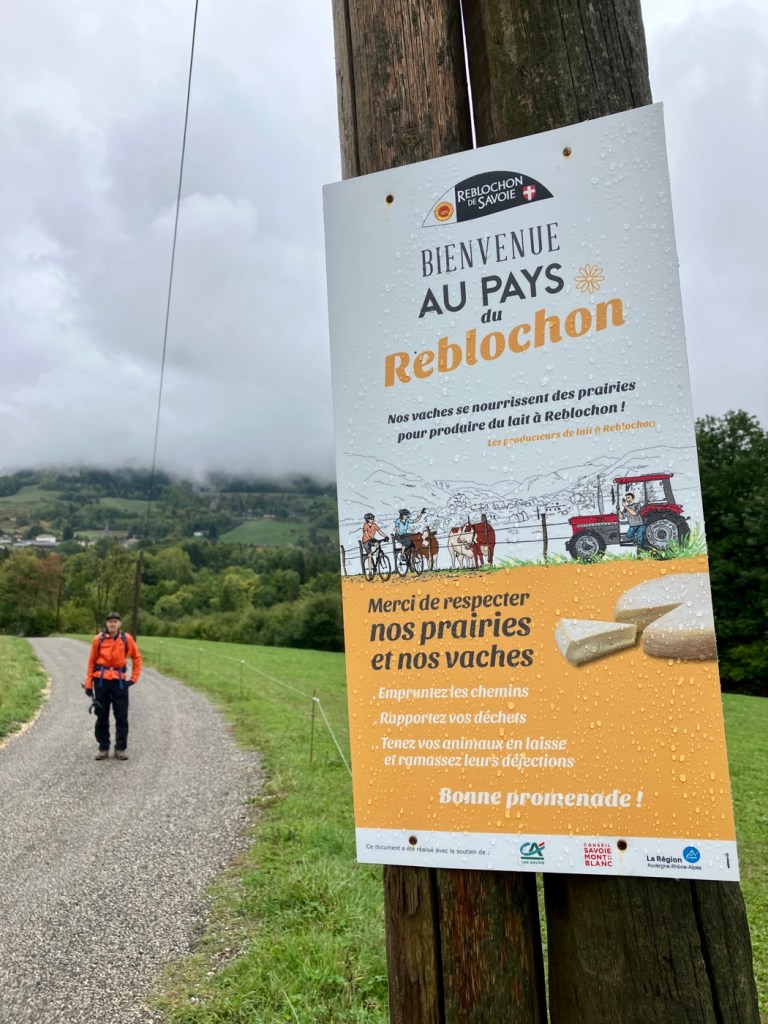
Respect our cows. Words to live by.
Who could not respect you? Gorgeous.
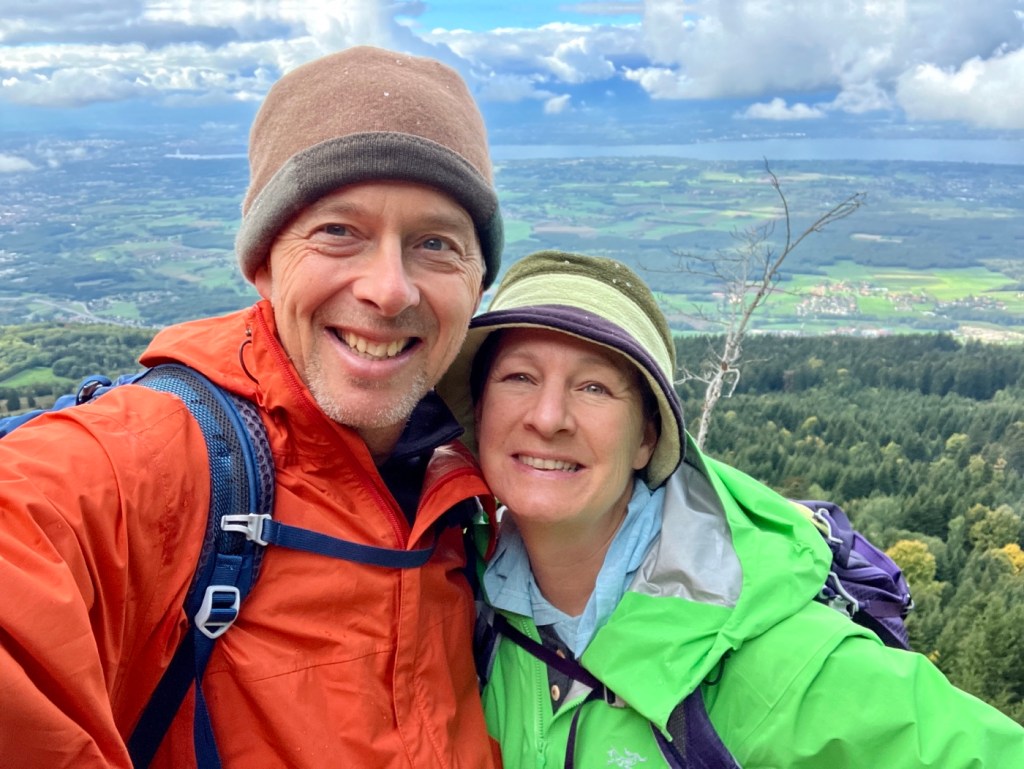
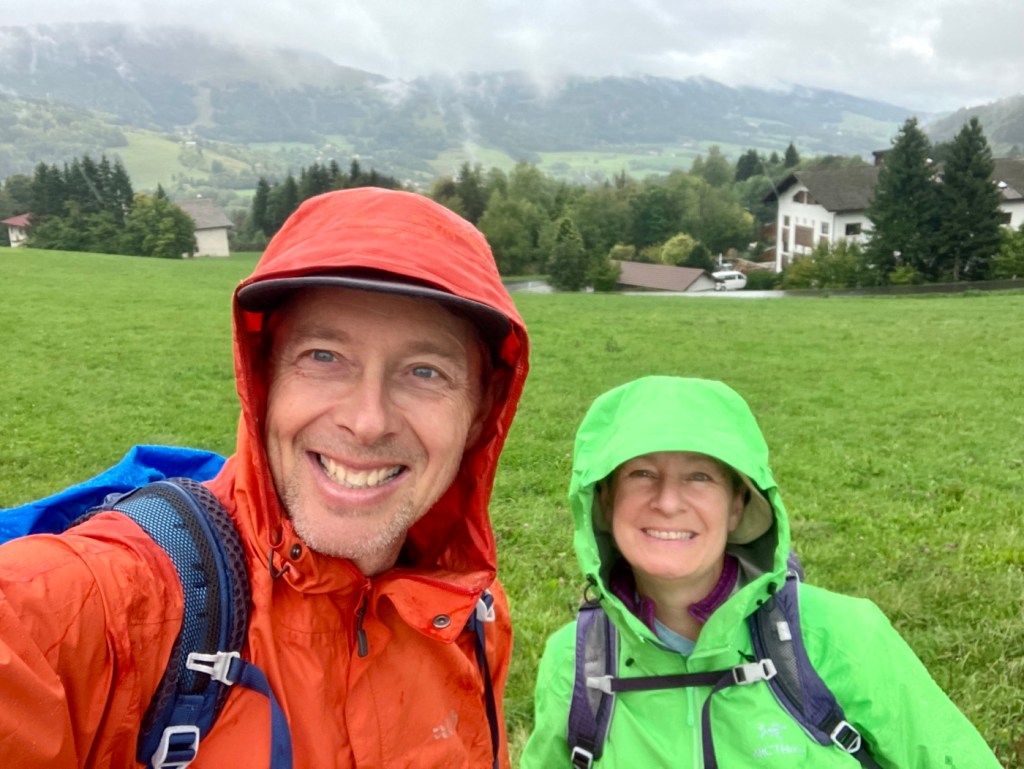
The Happy Travelers on our final training hike. The sun came out to bid us farewell.

By the time you read this we will be headed to Spain. We’re meeting dear friends from California to hike part of the Camino del Norte. Adiós y Buen Camino!

Ciao Italia!

This is the country where we are most likely to overeat, over indulge, and find ourselves over padded as a result.

Overlooking the town of Amalfi. We got to this height via an elevator.

How to avoid this? Move. Just keep moving. Take the stairs instead of the elevator. Have a hiking day. Walk the long way home after dinner out. Walking and biking are second nature to us, so that’s what we do when we get somewhere.

The hike from Sorrento to Massa Lubrense involved loads of up and down and stunning views.
It was fairly well signed, and took us through beautiful rural areas.
The green netting is enclosing lemon groves.
Chestnut poles hold up the netting and provide freeze and sunburn protection. So many lemons.
This view was well earned. Looking towards Sorrento.

If we have a train day, we make sure to have an active day next. Of course, some train days involve loads of walking too. We rarely take taxis, we walk to and from train stations or take a local bus. Being sensitive to the impact of car traffic on cities encourages us not to add to it. Walking gives you more time to notice things and grounds you geographically. I’m slightly directionally challenged, landmarks are how I navigate. That shop, this fountain, a row of green flower pots, all help me find my way though new places.

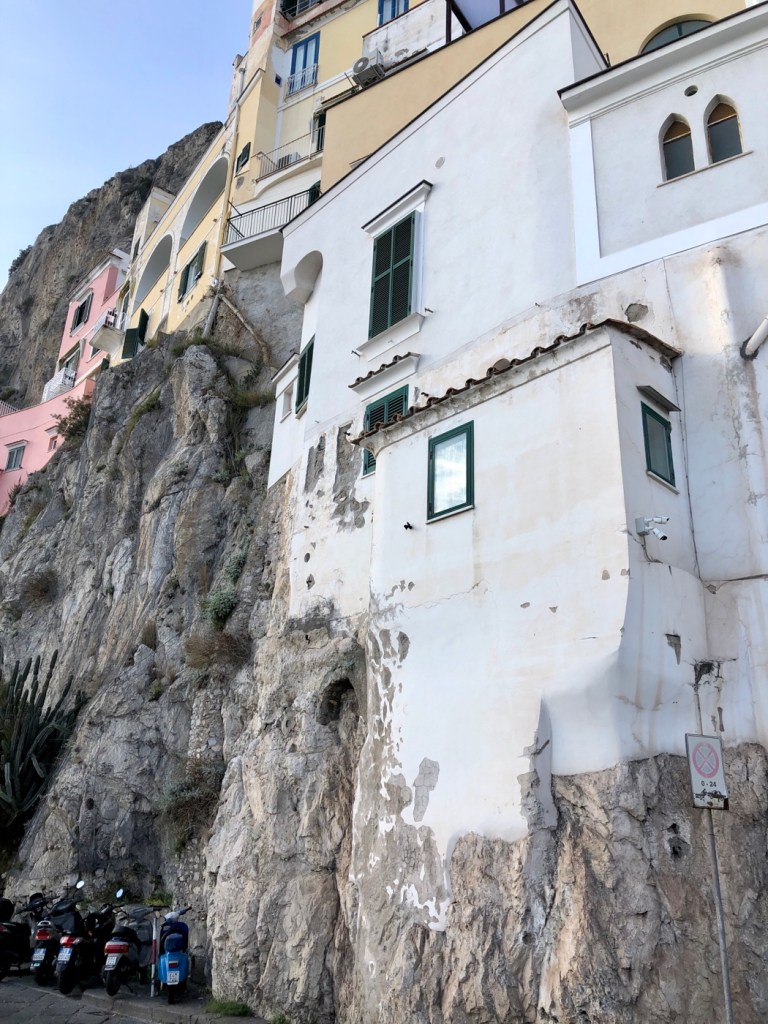
Above Amalfi, the town of Lone where some buildings rise out of rock.
Beautiful picnic spots of the world.

The Amalfi coast has so many trails, walkways and tiny roads to explore. And stairways. So many stairways. Our day hiking above Amalfi was one of the most memorable hikes we’ve done. The coast road is more famous, but the paths and small roads are what we love.

Donkey power in action.
Trail markers and water fountains. It was not at all hot when we were there, but in summer the water taps would be a very welcome sight.
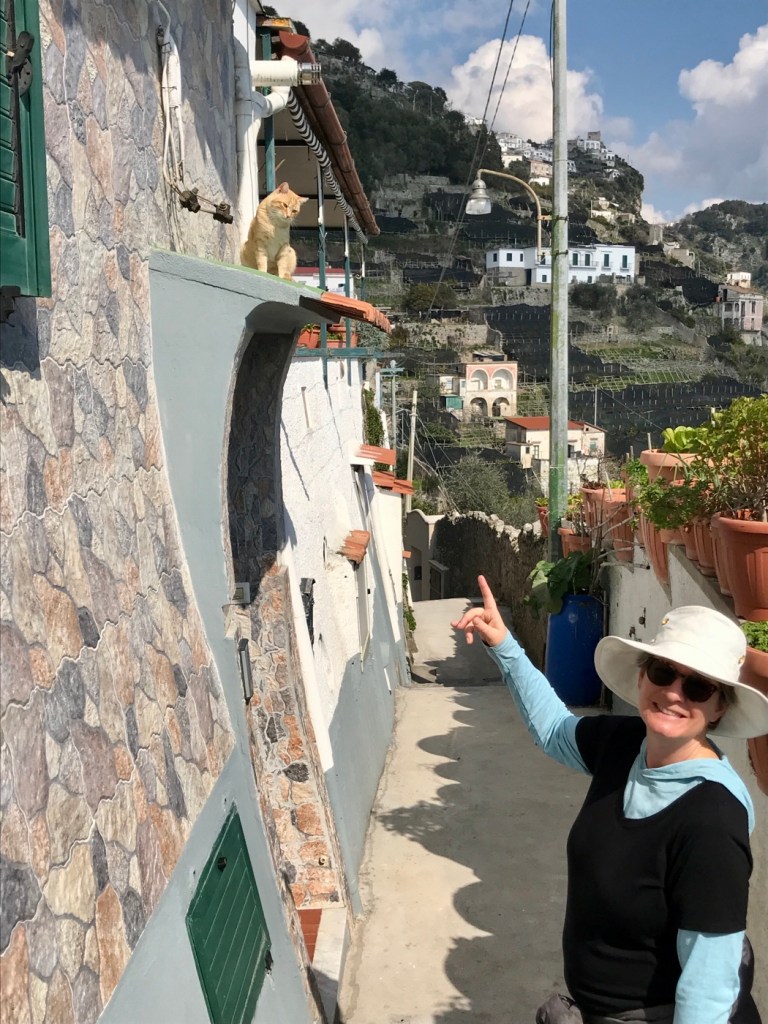
Cat spotting!

Are all of our hikes blissful and conflict free? No. We have very different paces and one of us, the tall one, hikes much faster than the other shorter one. In an attempt to get more of a work out Rich came bounding back down the first big staircase climb out of Amalfi as I was struggling up. Morale killer? Yes. Squabble? Yes. I demanded that he turn around and then after I passed him I insisted he go back down as far as he wanted as I hiked on – in the lead for once! Temporarily, but happily.

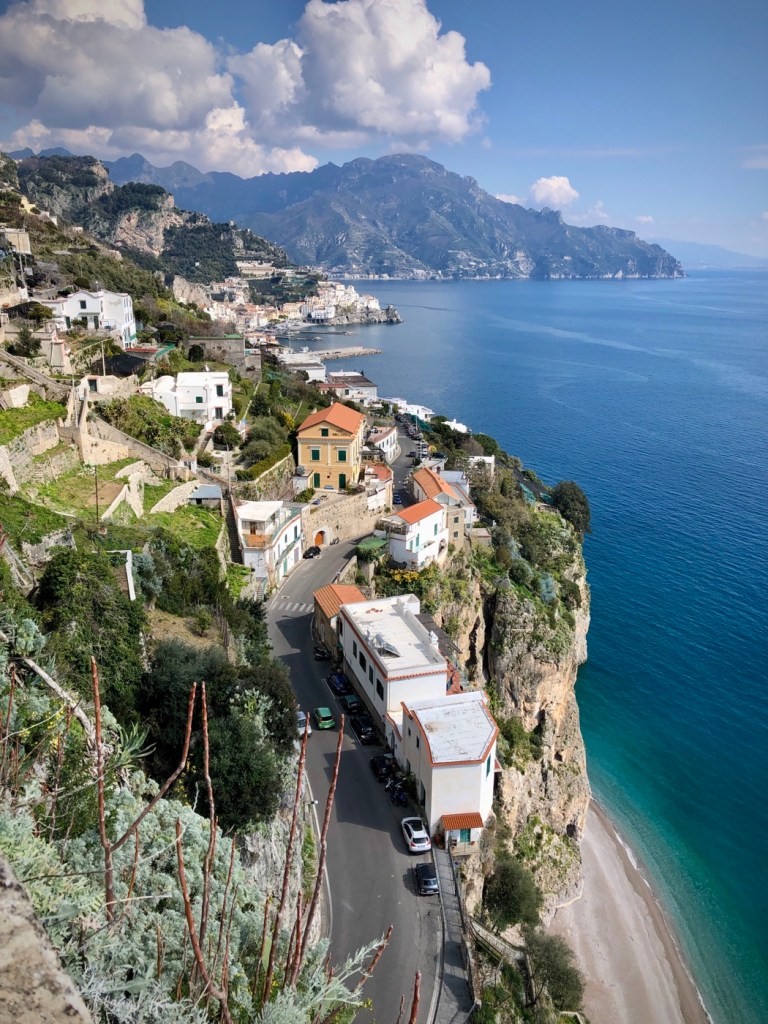
The stunning water color and a view of the famous coastal road.
Starting a travel day with an early bus from Amalfi. Not much view on a rainy day with the windows steaming up.
Second breakfast before catching a train to Bari.
The travel planner taking a break to enjoy the view. And mentally plot the next hike.
Trains are the best! Crossing from the west coast to the east took us through the Apennine Mountains. And snow.

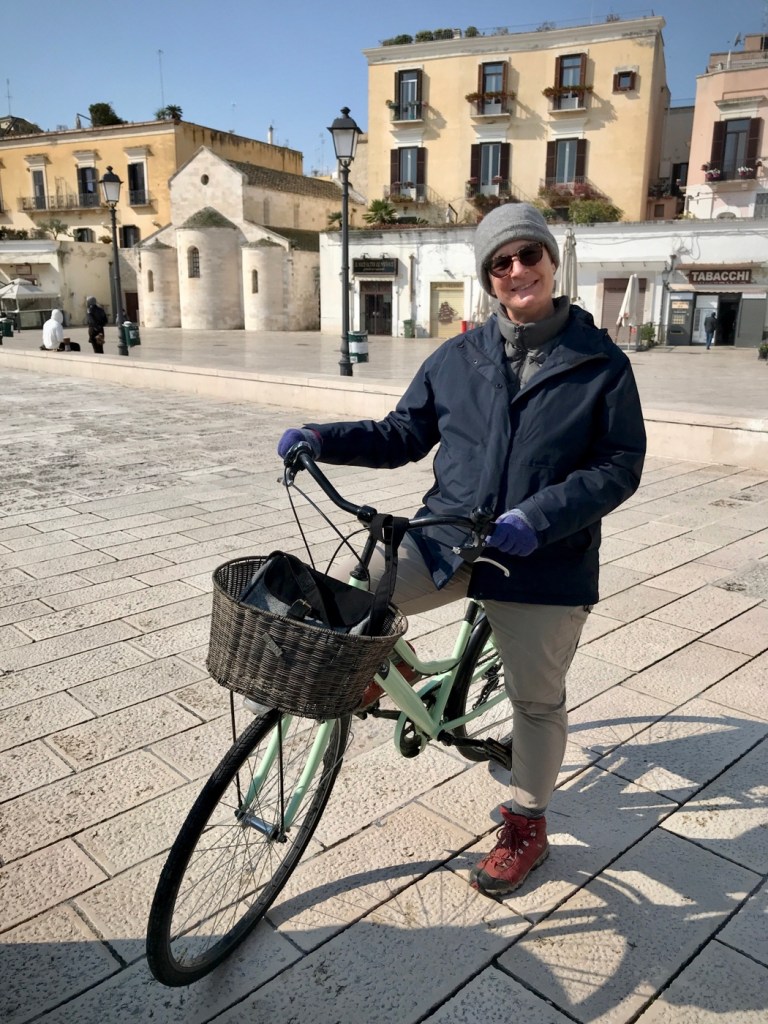
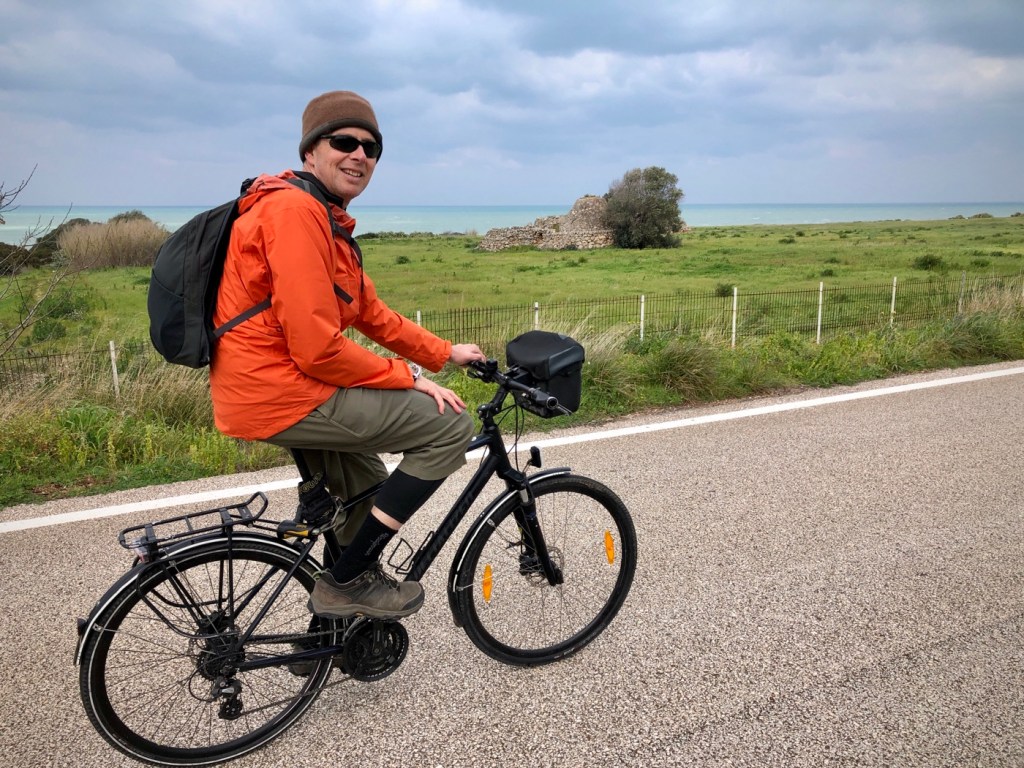
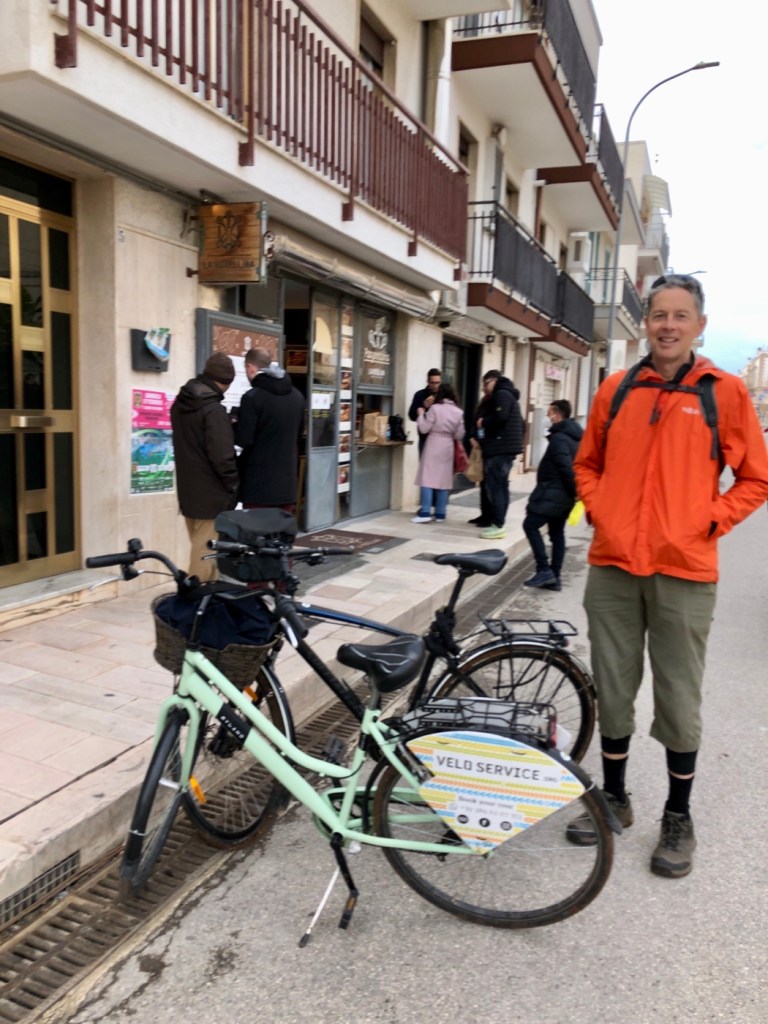
The weather cooperated for our first full day in Bari so we rented bikes and headed down the coast, knowing there was a train to take back and enjoying the tailwind.

Heading out of Bari in the sun with a smile.
Passing a field of abandoned Trullo, the stone buildings of the Puglia region.
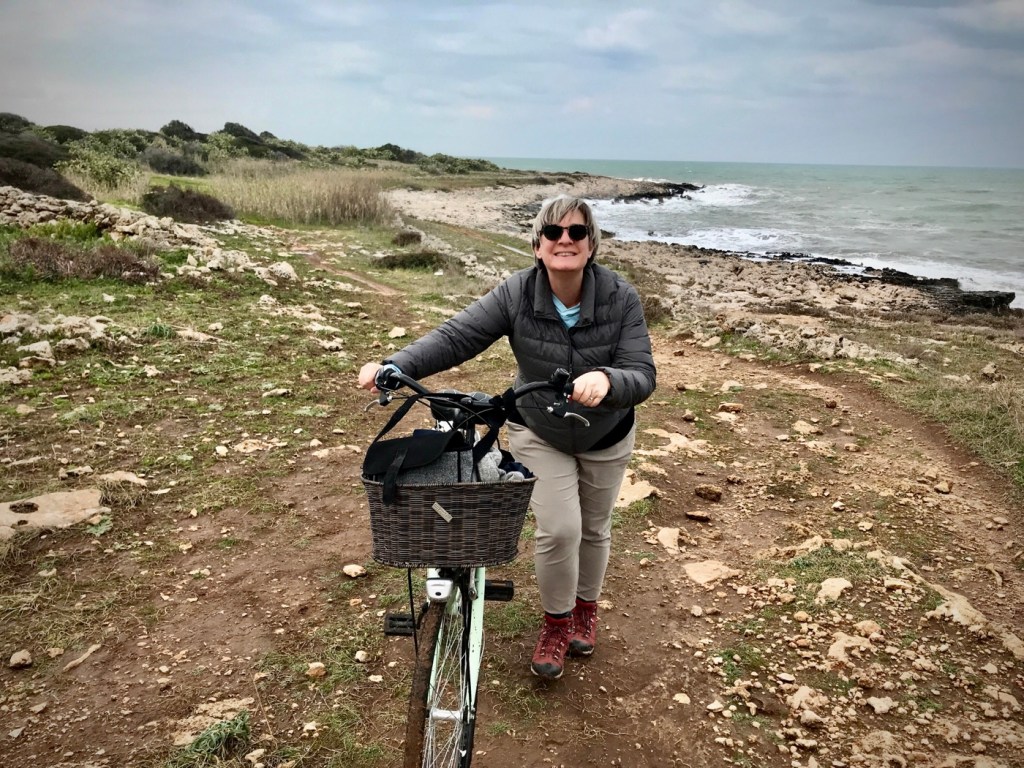
We had to go check them out. So off the road we went.
A bit muddier than expected.
Lunchtime in Polignano a Mare. Go right to the place with a line for take out panzerotti. Like a hot pocket sandwich, a cousin to calzone.
Lunch with a view.
And back to Bari on the train. While I’m always grateful for bike cars on trains, I hate bike hooks. I’m never confident that I can lift my bike up, and I certainly couldn’t lift the heavy rental bike up. If you ever wonder what the term “ableism” means – this is it.

So this is how we stay healthy and happy. But, six months in we have learned that Rich absolutely needs more exercise than me. He’ll be upgrading to a slightly larger travel backpack so he can add running shoes to his kit. And I’ll be better at not getting mad when he bounds back down a hill I’m still climbing so he can turn around and go up again. (Seriously, who does this?)

The happy travelers. Up next, Rome and the USA.

Car Free in the Lake District in Winter?…Why Yes!

We moved on from lovely Liverpool late last week and arrived Keswick by train and bus (locally pronounced Kehz-ick) on a spectacularly snowy day in the Lake District.

Dramatic winter skies ascending near Grasmere

We were very glad that our professional bus driver was plying the slushy mountain roads, especially on the sheer edges of deep lakes; nevertheless, we did take note of the emergency window systems on the bus! (avoiding what I called a double decker bus watery grave…-;)

Can we do this without a car?

Our decision to base in Keswick was based on a number of factors, but primarily that we could get there by public transit, and numerous lines route from there to other parts of the National Park. It also has a few museums, nice shops, and many services in town, including a great regional supermarket, Booth’s.

Our row cottage in Keswick came with a friendly outdoor kitty neighbor no charge and a 5-10 minute walk to town or the bus
Cheryl trying to cajole an adorable Lake District sheep to follow her home

Oh, it also happens to be very quaint, with a lovely pedestrianized core and footpaths heading in every direction, including along the large Derwant Waters, what we in America might call a lake!

Morning light on Derwentwater in the Lake District NP

We actually wavered a bit about whether we “needed” to rent a car, but then read about many others visiting car-free and thriving with the great regional transit system. After 6 days here, we know it was 100% the right decision for us.

The 78 bus to the end of the line at Seatoller…schedules, a shelter, and multiple trailheads
Cheryl ready to hike…the other friendly passengers were day tripping photography buffs from Manchester

Our decision also considered the fact that this area is heavily impacted by car traffic, much like the National Parks in the US. Nevertheless, the car parks and road are still surprisingly busy here mid week in January, as driving is still seen as the easiest and best way for most to experience the park. Despite some pay parking in many of the towns and villages, the roads are still free and there is an abundance of free parking available.

Hey, there goes our bus!

But it’s not just about the carbon footprint of driving for us. We’ve seen the impacts automobile congestion, noise, and pollution have on communities. When practical, we don’t want to contribute unnecessarily to the problem. Although traffic is fairly light in the middle of winter now, it apparently is extremely congested most of the year, and a nightmare in holiday periods.

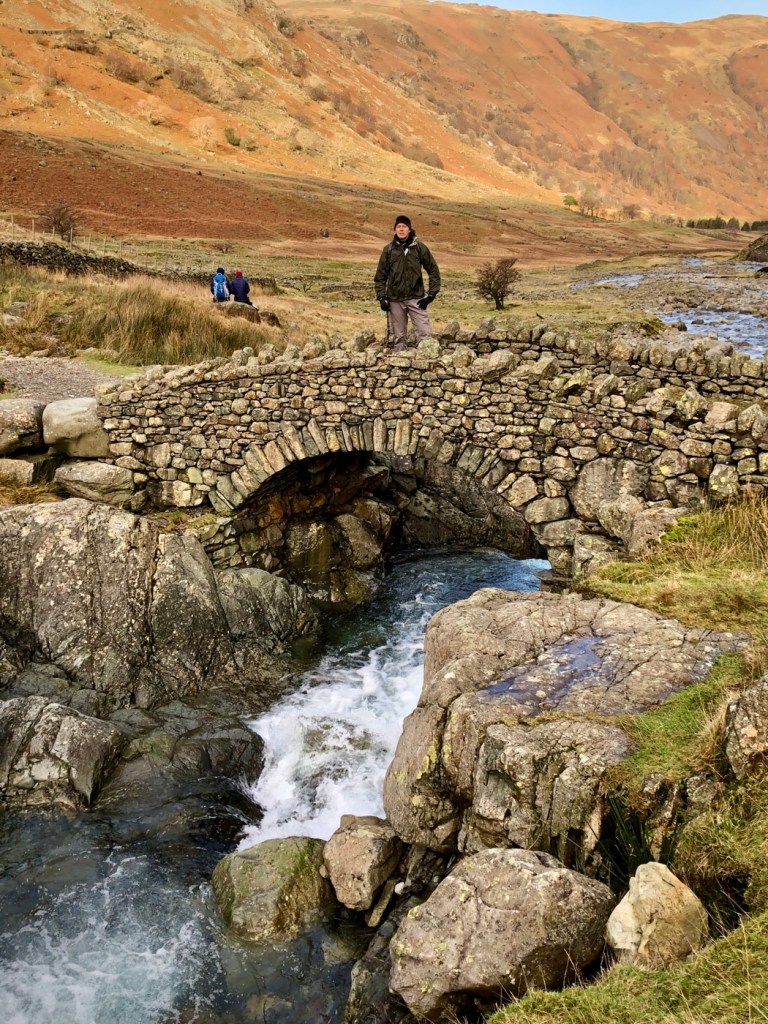
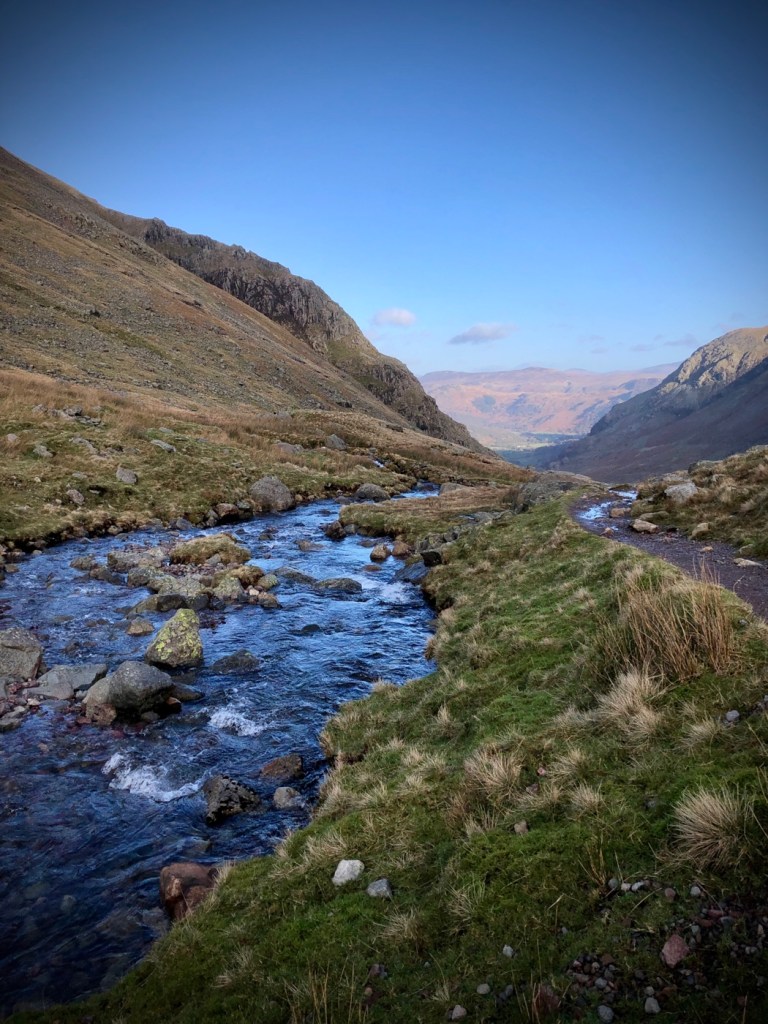
On the way to Styhead Tarn; did we mention there is water everywhere!

The typical scenic two lane roads barely fit two bus widths (they slow to pass) or even some large cars and trucks! Luckily most people in the UK still drive pretty small cars, but they still impact the safety and experience of the bikes and walkers that also use most roads. Many drivers here go too fast for conditions and it can be nerve wracking even on small unmarked country lanes.

Fragile sub-alpine tundra above 500m
The surprising alpine world of northwest England…Styhead Tarn near the Great Gable

National Parks and holiday areas have specific problems, and many have now taken to managing traffic through various methods, such as fees, closures, parking management, and shuttles/transit. The Lake District National Parks is no different and really is trying to address the problem by providing a really good bus system at fairly reasonable (but not cheap) prices.

Returning on the upper deck just before the early winter sun set
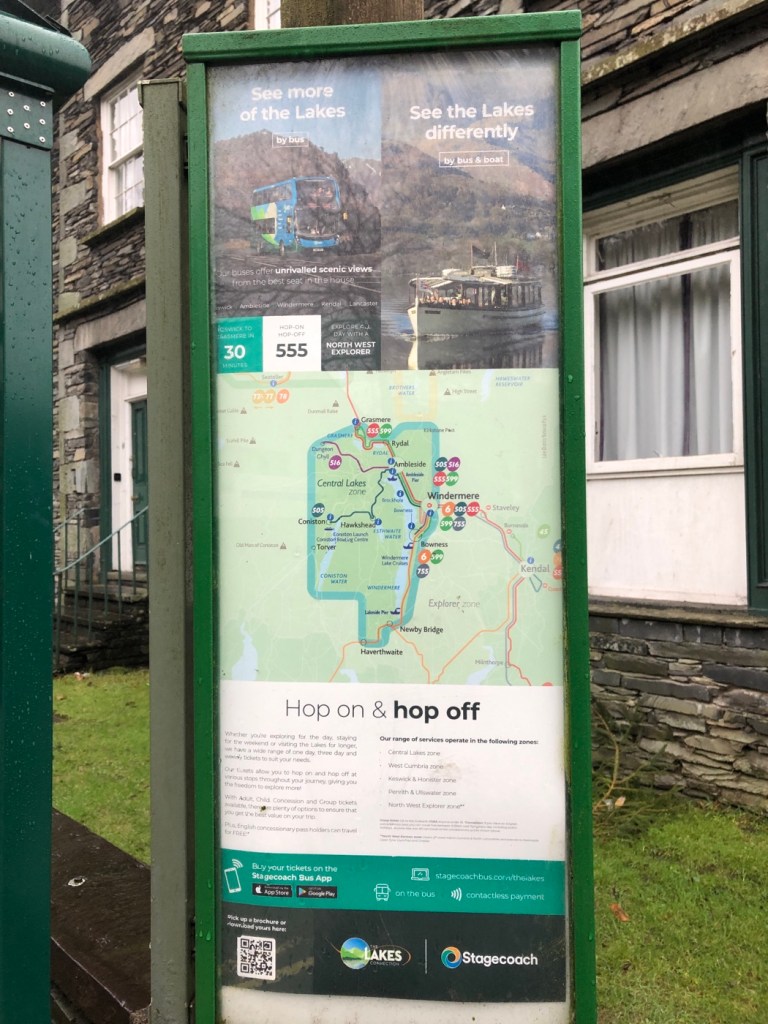
The backbone 555 bus runs throughout the core of the district and will connect you to the train in Windemere…closed double deck BTW

The buses are reliable, extensive, clean, and even a joy with double deck service on the some lines and 1/2 open top double deck service on two shorter lines through very scenic areas. So the buses really do double as sightseeing and transit for locals and visitors alike.

Yes, it WAS chilly on the open top bus, but the views will keep you warm

The other key is easy payment. The Stagecoach bus system offers payment by any tap cars/Apple Pay, etc for single/day trips or you can buy a loadable smart card right from the driver £1 fee for week or month passes.

Information is key! Most stops had schedules and route info.

We bought the 7 day gold pass form £29 each, which allows unlimited travel on the entire systems, which extends to the coast and all the gateway/border cities of the whole district.

Less sun, more dramatic colors
Walla Crag view on a misty winter day
But the sun was out today!

The only suggestion we would make to the Stagecoach bus system is to make the pass an 8-day or 7+1 trip pass, as many holiday rentals are 7-nights, so you generally have 8 days of travel. We are going to have to buy another day pass for our last day out of the park…. a minor annoyance. Let’s make this an even easier decision for people.

Gourmet Scotch Eggs from the Keswick farmers market are the ultimate winter hiking food

So we highly recommend coming to the Lake District in the winter. Although the transit system runs a little less frequently, and a few of the lines to very remote areas are peak season only, you will have a lot of the typically crowded places to yourself. Just make sure to always bring your waterproofs, and leave the car behind.

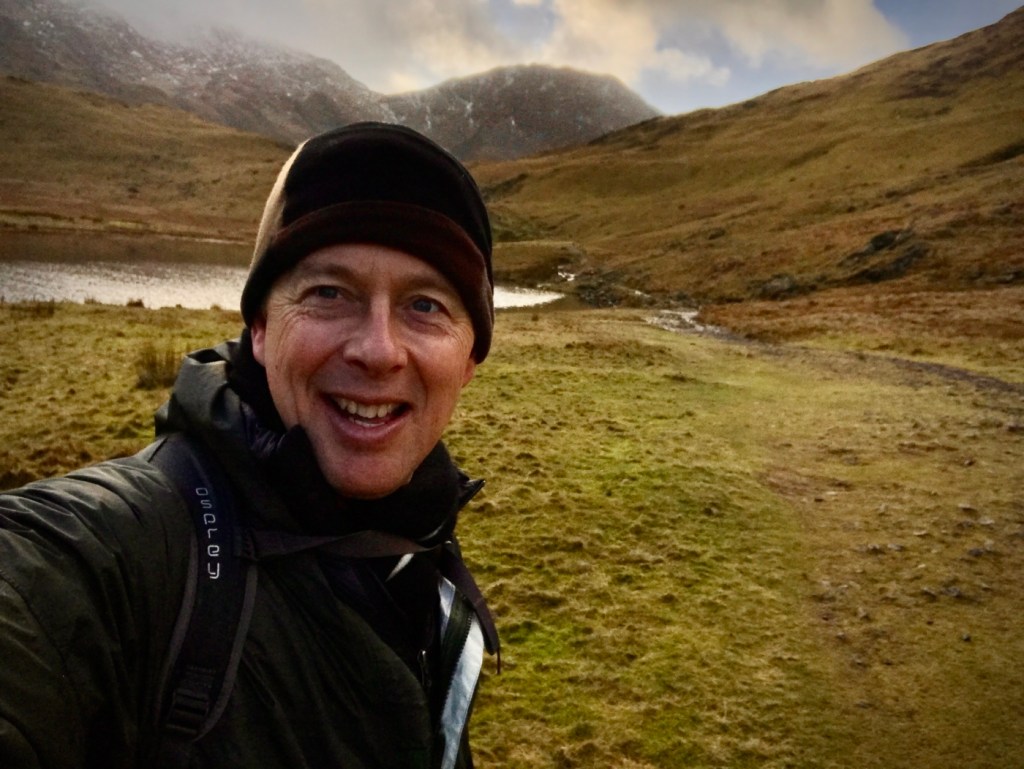
The intrepid travelers press on despite some serious hat head

The Engineer as Hero

Isambard Kingdom Brunel …a name hard to forget, especially in Bristol, England. As a professional Civil Engineer, it was so refreshing to see an engineer given their proper dues, as it’s usually the Architects that get (or take?!) all the credit for innovative projects. And boy did I K Brunel do it all: Paddington Station, the Great Western Railway, Thames Tunnel, SS Great Britain, and my personal favorite, the Clifton Suspension Bridge. His designs are credited with revolutionizing public transport and modern engineering.

Engineers are great, aren’t they….

We started our Brunel tour at the fantastic SS Great Britain, which is a magnificently preserved and restored steamship that Brunel designed in the 1830s and was the largest steamship in the world when it launched in 1843.

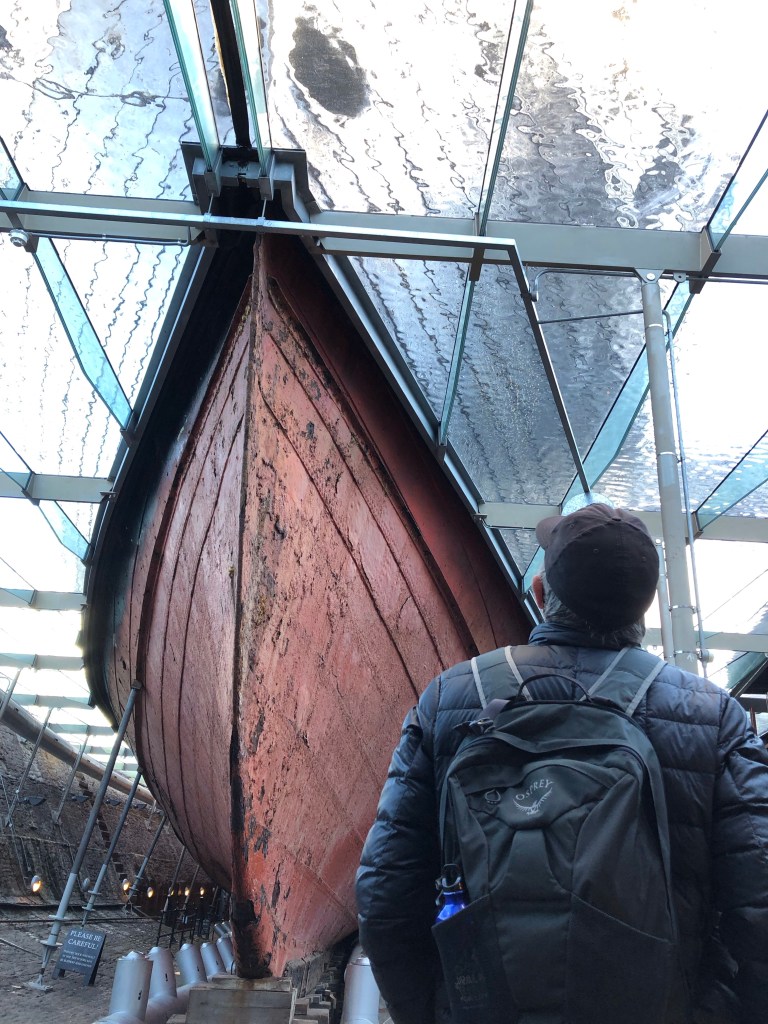
In the Dry Dock – that’s water up there!

I think the best way to see the ship is to start below the water in the dry dock. It allows you to appreciate the scale of the ship, as well as understand how the unique hull was constructed and is being preserved. It takes a massive array of dehumidifiers running 24/7 to keep any further corrosion of the steel hull at bay. The array keeps at about 20% relative humidity, similar conditions to “the deserts of Arizona”, and paralleling the path of millions of other retirees being preserved in the Sunbelt.

Brunel chose to use a new and highly efficient propeller for the SS Great Britain, shaving weeks off a Transatlantic journey

You also can see how they moved the ship from its near demise in the Falkland Islands in 1970 and dragged it all the way back home to Bristol on a special barge. But the dedication to restoration didn’t stop at the exterior of the ship. The cabins have been fully restored with the sights, sounds, and yes, smells of the ship when it served as a passenger ship to the US and Australia.

The Kitchen…spooky realism abounds, as even rats can be seen moving about the cupboards.

The Steerage class quarters are strikingly small, but as a docent pointed out, still offered those crammed in 4 1/2 foot bunks a chance at better conditions and more opportunity in the New World. Life in the early industrial revolution days of Britain was hard. The crew barely had it better, as had to toil all hours shoveling coal into the furnace and keeping the ship going over grueling 3 week to 6 month journeys. Of course first class was quite grand and the Titanic-like dining hall is now available as a wedding venue, minus the swells and nausea of the open seas. (As it turns out, Brunel’s hull design was a little unstable…until a later wood extension was added to to the keel)

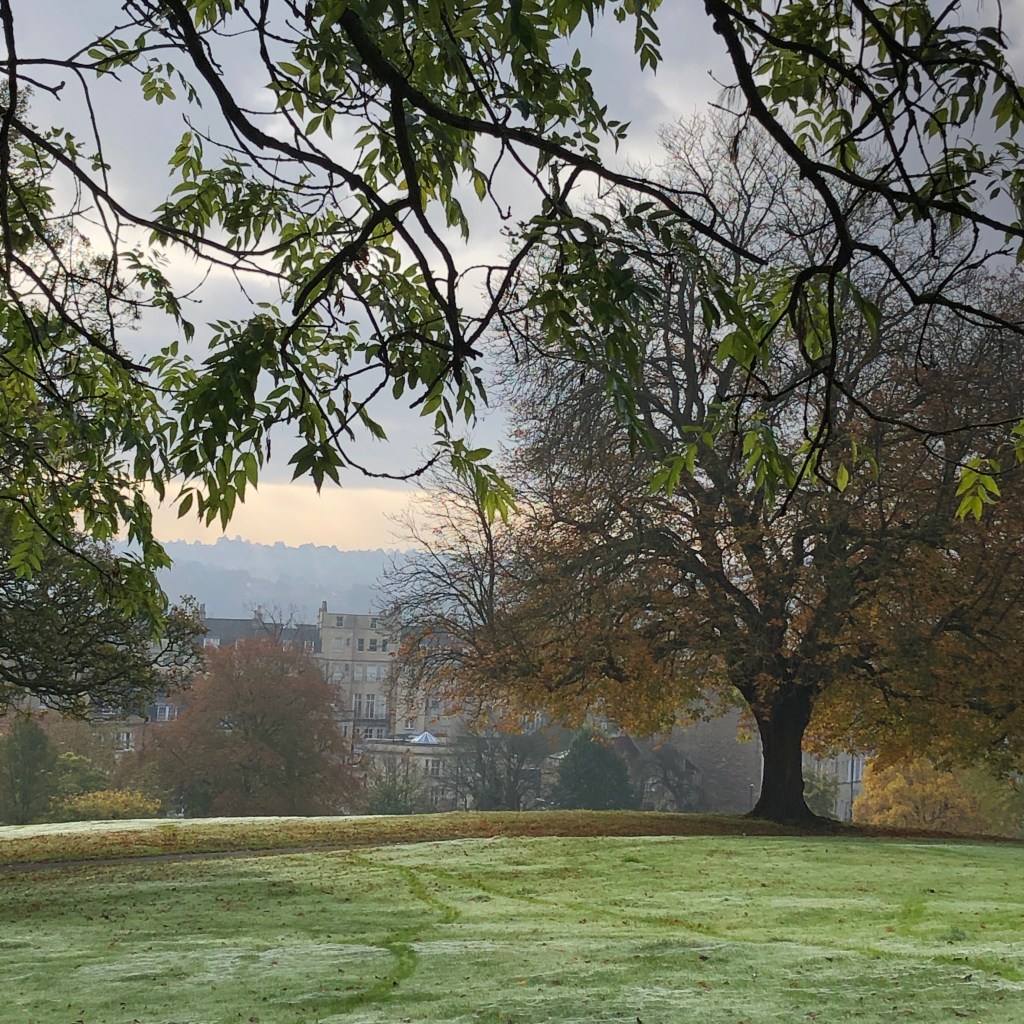
Morning dew on Brandon Hill, Bristol

Bristol and Bath were both a pleasant surprise. The crisp fall weather and foliage were perfect for exploring on foot and both cities offer fascinating sites, museums, culture, and vibrant food scenes.

Proper tea and a scone at the American Museum and Gardens in Bath

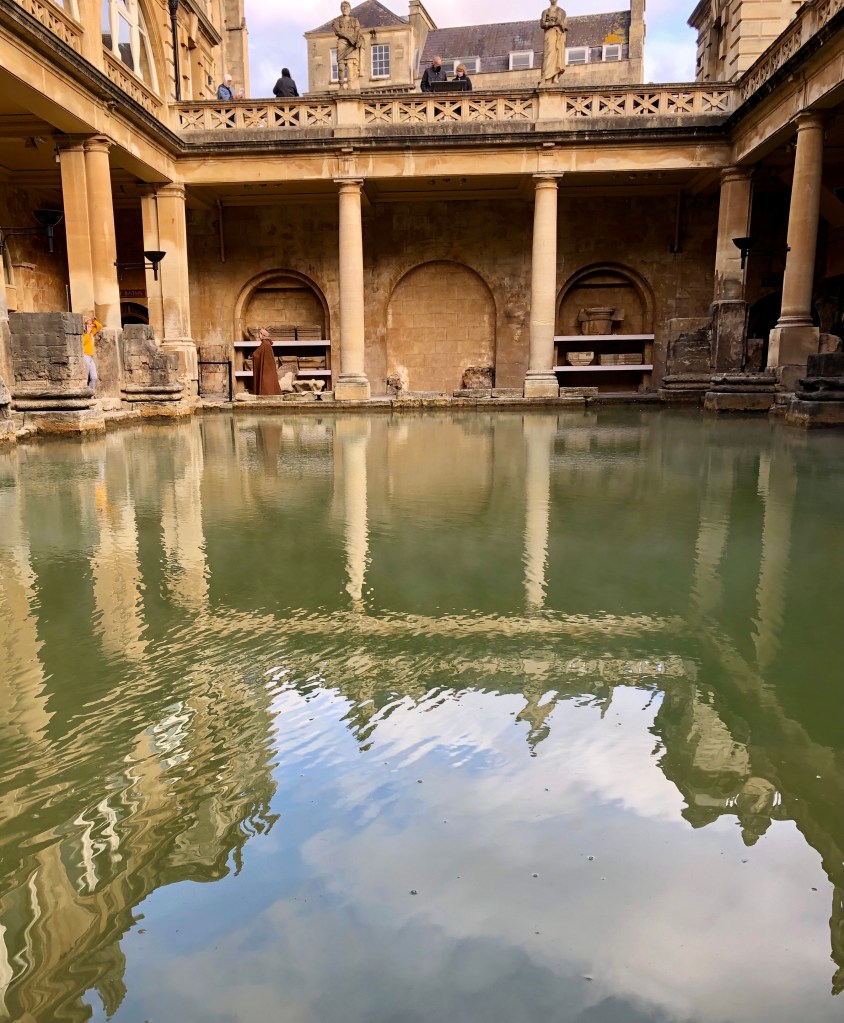
Bath is like a living Georgian museum, pleasantly frozen in the 1770’s, while Bristol offers a modern revitalized waterfront, lots of history, and more diversity, all supported by a large University population. The American Museum has beautiful views and a offers a unique British perspective on American history and culture. The Roman Baths are the big attraction and surprisingly engaging with brilliant holograms in each room and an audio tour featuring humor of Bill Bryson.

As much as you want to, you shouldn’t touch the water at the Roman Baths

After 3 nights up the hill in Bath near the Royal Crescent, we decided to stay just 7 minutes away from the Temple Meads station in Bristol. The Station itself is worth a look, and yes, I K Brunel provided the base design and inspiration for the main station as the terminus of his Great Western Railway from Paddington in London. How was he so many places? (4 hours of sleep helped apparently)

The Temple Gardens out the back door of our hotel

After a day on the waterfront and Brunel museum, we decided to explore more neighborhoods and walked out through the pleasant and upscale Clifton village. We walked back through the University and along Gloucester Road, which is full of an eclectic mix of shops, pubs, and restaurants. 8 miles overall and great walking up and down the undulating hills, with constant surprises and new views.

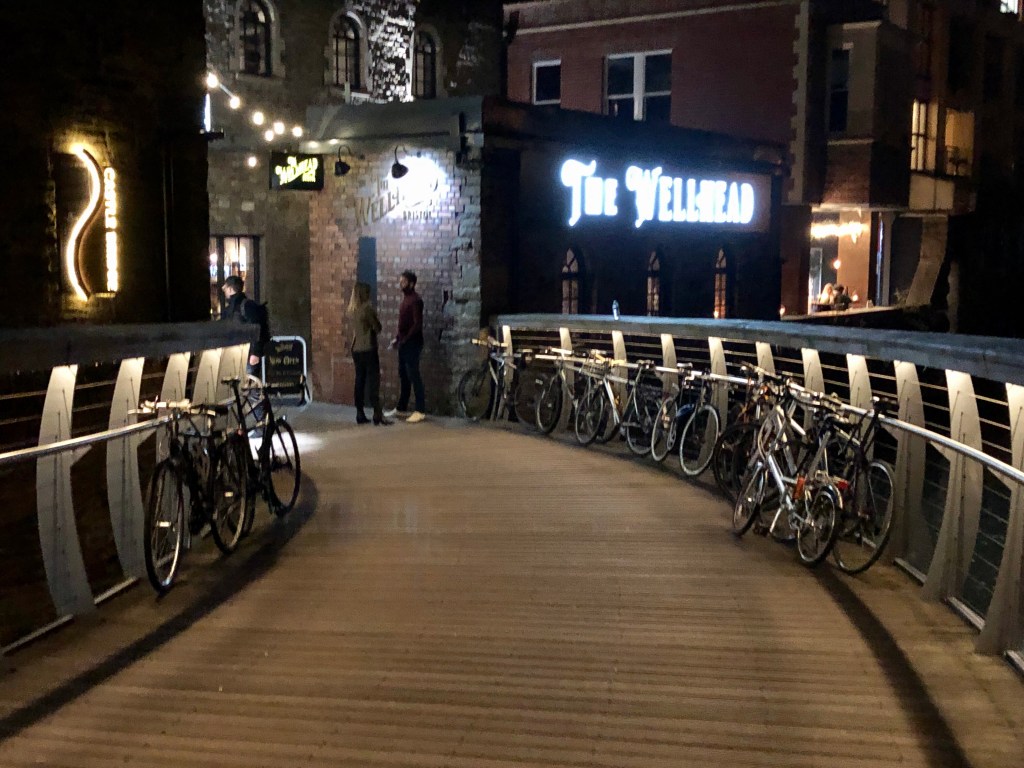
The Castle Bridge opened in 2017, offering an inspiring human powered crossing of the Bristol Harbour (but still not enough bike parking!)

But the hands-down thrill of the day was the Clifton Suspension Bridge. A structure that highlights the need for visionary technical leadership and perseverance. Brunel’s original design took over 35 years to be built. He succeeded in a design competition in 1830 with his proposed bold 700- foot steel chain suspension span. This span allowed a full span of the gorge, which was key to the intrinsic beauty of the structure in the unique context of the Avon River Gorge. But many, including his father, doubted that such a span could be built. Unfortunately, cost overruns and contractor financial trouble (sound familiar) put the half completed project on hold by 1843. Luckily, the bridge was finally completed in 1864 with the assistance of other designers, but sadly 5 years after Brunel died. And like many of his bold designs, the ultimate bridge required some design modifications to the deck to make it stiffer, as his original design would have likely failed in high winds. Engineering is a constant process of improvement and optimization.

The 1,300-foot long Clifton Suspension Bridge soars more than 300-feet above the Avon Gorge…so nice!

But his vision survives and his grand engineering projects are still serving millions of people today. So anytime someone doubts that a large infrastructure project can ever be finished or if a new design innovation can really work, just shout out the name of Isambard Kingdom Brunel. Or say it three times if you can!